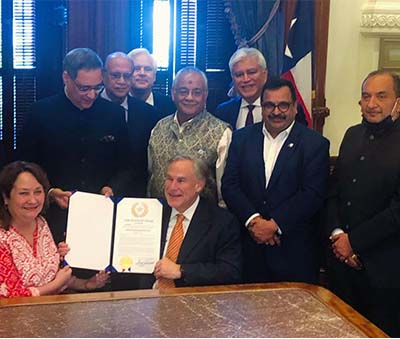
Dr. B.K. Misra First Indian Receives Lifetime Achievement Award from American Association of Neurological Surgeons

Well-known Mumbai-based neurosurgeon Dr. B.K. Misra has been conferred the prestigious American Association of Neurological Surgeons’ ‘International Lifetime Achievement Award in Neurosurgery’, an official said here Aug. 26. Misra is the head of the Department of Surgery and Division of Neurosurgery and Gamma Knife Radiosurgery at the P.D. Hinduja Hospital here. He received the International Lifetime Achievement Award from the American Association of Neurological Surgeons (AANS) at its Annual Scientific Meeting 2021, Orlando. He is the first Indian ever to be bestowed with this award. The felicitation ceremony was conducted through an online event amidst the pandemic. AANS is the world’s apex body of neurosurgeons. “We have the best of tech, infrastructure and skills at par with the best in the world to treat the most complex neurosurgical conditions and even have the potential to become the destination for neurological treatment,” Misra said on receiving the award.

The hospital’s CEO, Gautam Khanna, lauded Misra’s medical accomplishments and accolades as a testament to his dedication and treating thousands of patients under his care. Misra, president of the Asian Australasian Society of Neurological Surgeons and the World Federation of Skull Base Societies, is also first vice president of the World Federation of Neurosurgical Societies. AANS, the world’s most prestigious apex body of neurosurgeons, has bestowed its highest international distinction honoring Dr. Misra’s lifetime of achievements in neurosurgery in India and globally. Dr. Misra is Honorary President of Asian Australasian Society of Neurological Surgeons (AASNS), is the 1st Vice President of World Federation of Neurosurgical Societies (WFNS), and President of the World Federation of Skull Base Societies, all leading international neurosurgical societies.

Dr. Misra has a long list of “firsts” to his name. He was the first to execute Image-Guided Aneurysm Microsurgery globally and the first in South Asia to perform Gamma Knife Radiosurgery. Acoustic Neuroma Surgery, Vascular Neurosurgery (Aneurysm, AVM), Skull Base Surgery, Pituitary Surgery, Gamma Knife Radiosurgery, Awake Craniotomy, Minimally Invasive Neurosurgery, and Surgery of Complex Brain and Spine Disorder are among Dr. B. K. Misra’s areas of expertise in neurosurgical patient care. He was the first neurosurgeon to do Awake Craniotomy for brain tumours in India. He’s also the recipient of the prestigious Dr. B C Roy National Award as Eminent Medical Person of the Year, 2018 (the Highest Medical Award in India).

On the occasion of receiving the award, Dr. B K Misra said, “It’s my privilege and honor to receive the International Lifetime Achievement award from AANS. A recognition like this, from peers, means a lot to me personally and professionally and inspires me further. I would like to express my gratitude to my family and P.D Hinduja Hospital for their constant support and to my patients for having bestowed their trust on me. Today in India, we have the best of technology, infrastructure and skills, at par with the best in the world, to treat the most complex neurosurgical conditions. We have the potential to become a destination for neurological treatment .” With a long string of credits and firsts, he was the first in the world to execute an Image-Guided Aneurysm Microsurgery, first in South Asia to perform a Gamma Knife Radiosurgery, and first in India to perform an Awake Craniotomy for brain tumors. Earlier, Misra received the Dr. B.C. Roy National Award-2018, and contributes through numerous publications to improve the quality of education in neurosurgery and facilitate spreading the treatment for neurosurgical patients in poor countries globally.

Teens In US Are Optimistic About Future

Grigsby’s largely upbeat attitude about the future, combined with a world-weary realism that seems mature beyond her years, is echoed in the findings of a national Washington Post-Ipsos poll of teens ages 14 to 18. While still hopeful about what lies ahead, many teens do not view the current moment so favorably. Fifty-one percent say that now is a bad time to be growing up, compared with 31 percent who answered that way 16 years ago, in a poll of teens conducted by The Post, the Kaiser Family Foundation and Harvard University. Their parents are even more negative, with more than 6 in 10 saying it’s a bad time for teenagers to be growing up.

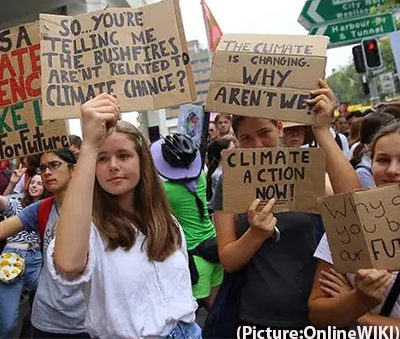
These young Americans, who are coming of age amid a once-in-a-lifetime pandemic, political and social unrest, growing economic inequality and rising crime, are keenly aware of the country’s problems. Majorities view political divisions, racial discrimination, the cost of health care and gun violence as “major threats” to their generation, according to the new Post-Ipsos poll. Nearly half also rank climate change as a major threat. Some are already trying to make a difference. Heily DeJesus, who lives in Lebanon, Pa., said she dashed from her brother’s high school graduation to a Black Lives Matter protest, where they all took a knee for a selfie as her brother raised his fist in the air. “It felt great to know that we’re a part of making a change for the world,” she remembered. “Even if it’s a small town, we’re still making a change.” The survey of 1,349 teens was conducted online in May and June primarily through Ipsos’s randomly recruited panel of U.S. households. Overall results have a margin of error of plus or minus three percentage points, and the relatively large sample allows comparison of White, Black, Hispanic and Asian teens.

These young people are part of what is likely the most diverse cohort in the nation’s history. New Census Bureau data shows that the country’s under-18 population is majority-minority for the first time, with White children making up 47.3 percent of that age group compared with 53.5 percent in 2010. Their childhoods have been marked by racial justice protests and a growing societal acceptance of LGBTQ people. Most also perceive significant discrimination against a wide range of groups in American society. Black and transgender people topped the list, with about 6 in 10 teens saying Black people are treated unfairly very or somewhat often and an almost equal share saying the same thing about transgender people. But even given such looming challenges, the optimism of teens runs through the poll findings, especially when it comes to what the future holds for their own lives.

Nine in 10 teens say they are very or fairly likely to achieve a good standard of living as an adult, while nearly half still believe their opportunities to succeed in life are better than their parents’ were. About 4 in 10 believe they are about the same, while fewer than 2 in 10 say their opportunities to succeed in life are worse. Vincent Bornhorst has a rosy view of his future. The 18-year-old, who just graduated from Thomas S. Wootton High School in Rockville, Md., is a freshman at Virginia Tech, majoring in computer science. Earning a college diploma is a top priority, he says, which puts him among the roughly 8 in 10 teens who describe this goal as important. He expects to have about the same opportunity to succeed as his mother, a physician, and his father, a stay-at-home dad. What he doesn’t anticipate: one day becoming rich or famous, especially since he thinks the latter would entail public speaking, which he hates. ‘Overall, even with the omnipresence of social media stars who make achieving celebrity and wealth look as easy as racking up TikTok likes, a significantly smaller percentage of teens today believe they will become rich.

About half think it’s very or fairly likely that they will be rich one day, compared with more than 6 in 10 in 2005. White teens like Bornhorst are among the least likely to expect to become wealthy – with 44 percent predicting they will likely become rich. That number rises slightly to 49 percent for Hispanic teens. By contrast, about three-quarters of Black teens and two-thirds of Asian teens believe they will be rich one day. (Presumably, the notion of the top 1 percent hasn’t quite sunk in yet.) Bornhorst is also among the more than 9 in 10 teens who say it is important to achieve career success and to have enough free time to do the things they want. Some might view the two goals as contradictory, but Bornhorst thinks one requires the other. “I view free time as important to being successful,” he said. “If you’re just working hard all the time 24/7, you’re fairly likely to tire out.” DeJesus experienced that tension firsthand. The high school senior held two jobs to make her car payments during the pandemic on top of hustling at school. “Working all the time was really rough on my mental health.”

In fact, she said, “the whole year was horrible.”

In all, 45 percent of teens say the worst pandemic in a century has had a negative impact on their mental health, while another 45 percent say it had no impact at all and 10 percent say it had a positive impact. Four in 10 teens also report that the spread of the coronavirus had a negative impact on their relationships with friends. About half of teens say pandemic hurt their academics; more say bonds with parents got better than worse Emily Guzman, a 17-year-old senior from New York City, said she fell out with a friend at the beginning of the pandemic, and the social distancing made it harder to reconcile. “One of my friends had to put us into a group chat, and we talked about it,” Guzman said. She said she and her friends communicated during their pandemic isolation via texting and FaceTime. “It was stressful,” she said. “We all went from seeing each other every day to a whole year without seeing them.” Owen Porter, a rising senior in Davis, W.Va., was among those who found a way to stay in touch through gaming — Call of Duty and Minecraft were two of his favorites — and watching movies together on Discord.

“We would stay up till like 2 in the morning watching ‘American Horror Story,’ ” Porter said.

A surprising silver lining: Nearly 4 in 10 teens say the pandemic has had a positive impact on their relationships with their parents, compared with about 1 in 10 who say it had a negative impact and roughly half who say it had no impact. For once, the whole family was at home instead of running off in different directions. There were long stretches of not much to do and more time to talk, some teens said. Steven Townley, a 10th-grader in Augusta, Ga., said his family bonded even more tightly during the pandemic. “I got to spend more time with them and I got to get closer with them,” he said. Even when all of them contracted covid-19 and isolated in their home “we made the best of it.” They all recovered, he said. School did not fare as well with the teens surveyed; about half said the pandemic had a negative impact on their academics. The technology was glitchy at times, remote learning invited slacking for some teens, while others thought teachers weren’t up to the task.

“It felt like we didn’t get enough material. It seemed to change how much they taught us,” said Abigail A., a high school student in North Dakota whose parents allowed her to speak on the condition of partial anonymity because they were concerned about her responses lingering on the Internet. DeJesus said she struggled but still managed to maintain her grades. Pandemic or not, DeJesus believes that if she keeps pushing, she will graduate from college and succeed in life. Her dream: to be a lawyer. “I feel like in the past a lot of people didn’t go to college, they stayed in their towns and said, ‘This is what I’m going to do for the rest of my life,’” said DeJesus, the Puerto Rican daughter of a mechanic who didn’t attend college and a stay-at-home mother who did. “A lot of people [my parents’ age] are struggling right now.” More than half of Hispanic teens like DeJesus, as well as similar majorities of Asian and Black teens, say it is “very important” to graduate from college, compared with about 4 in 10 White teens. The disparity is greater among lower-income households.

Teens who say graduating from college is very important are more likely to believe that the country’s best days are ahead of us, at 48 percent, compared with those who consider it less important, at 39 percent. Overall, a majority of teens — 56 percent — say they believe that the country’s best years are behind us, a shift from 2005, when roughly the same percentage said the country’s best years were still ahead of us. White teens are more apt to believe that the American glory days are gone.

Bornhorst believes life will only get better, largely due to technology and innovation, he said.“We are progressing quite a bit,” he said. “Technology will help us accomplish more things. People will have more spare time.” And yet Americans might be their own worst enemies — quite literally — when it comes to the country’s future, he said. “I feel like the U.S. has a lot of potential that we’re not using to the fullest,” he said. “We’re too divided politically and that is very much slowing down progress.” Bornhorst sees the country’s diversity as a competitive strength and, conversely, racial discrimination as a “major threat” to his generation, he said. His opinions are shared with a majority of his peers. About 6 in 10 teens say political divisions are a major threat to their generation. About the same share the view that racial discrimination as a major threat. The percentages differ widely between White teens and teens of other races and ethnicities. About 2 in 5 White teens say racial discrimination is a major threat, compared with more than 4 in 5 Black teens and more than two-thirds of Hispanic and Asian teens. Roughly 7 in 10 teens whose parents were not born in the United States perceive racial discrimination as a major threat.

Townley is struck by how quick some Americans are to judge — not only people of color but Whites, too, he said. “Some people do things they shouldn’t, and people see that and automatically think that everybody who looks like that person acts the same way. … It’s like judging a book by its cover,” said Townley, who is of Vietnamese descent and one of several children of color adopted by his White parents. Tha’keysha Murphy, an African American senior in Copperas Cove, Tex., believes that Whites are rarely treated unfairly, a view shared by 56 percent of all teens polled, including 43 percent of White teens and large majorities of minority teens. Murphy, 17, said she has noticed that’s particularly true at her school when punishment is meted out. She recalled a recent argument between a White student and an Asian student that turned into a physical fight. Although Murphy perceived that both students played an equal role, “the White person got off easier.”

About 1 in 5 teens say they have been treated unfairly over the past year due to their race and ethnicity. DeJesus had such an experience. She said she was speaking in Spanish with a family member on the phone while shopping at a local outlet mall when a White person screamed at her to “go back to my country,” she said. “It’s always the same thing,” DeJesus said. “They say our people should go back to our country, but I don’t think they know Puerto Rico is a U.S. territory.” DeJesus put her anti-racist views into action last year by joining the Black Lives Matter protest, among the 12 percent of teens who said they have attended a BLM rally. Sixty-one percent said they support the movement, according to the teen survey, about the same percentage of adults who said they did in a 2020 Washington Post-ABC News poll. Grigsby, the teen from rural Minnesota who describes her heritage as African American,

European, Jewish and Indigenous, said her consciousness was raised about racism long before Floyd’s murder. As a 10-year-old in her predominantly White elementary school, she said she was “bullied and called the n-word” and physically attacked by her classmates. Her family’s protests were ignored, Grigsby said, so they filed a discrimination complaint with the state Department of Human Rights in 2015, which ended with a settlement in 2018. “It definitely hardened my character and made me more resilient and aware,” said Grigsby, who in the wake of Floyd’s murder co-led a walkout at her school and formed an advocacy group that, among other goals, seeks to ensure the hiring of more teachers of color. Abigail, who is White, believes that the discrimination can work both ways. It seems that barely a few days go by, she said, before she reads news that a member of a minority group has accused a White person of racism. She blames the media for creating division by too often pointing out the racial backgrounds of alleged victims and perpetrators.

She used to think more like a Democrat, she said, but gradually has come to adopt the perspective of her father, who is conservative. Perhaps not surprising for a generation that is particularly close to their elders, teens frequently echo their parents’ political beliefs. Two-thirds of teens whose parents lean toward the Democratic Party also say they lean that way, while about 6 in 10 teens whose parents lean Republican say they also lean Republican. Just 3 percent of teens say they lean toward the rival political party of their parents. Teens’ political leanings also affected their responses. For example, 72 percent of teens who said they were closer to the Democratic Party perceived climate change as a major threat, while only 17 percent of Republican-leaning teens did. “God creates the climate,” said Townley, who like his Reformed Baptist parents considers himself conservative. Teens’ political beliefs heavily influence what they think of President Biden and former president Donald Trump. A large majority of Democratic-leaning teens say Biden is doing a good job and that Trump did a bad job, and a large majority of Republican-leaning teens say the opposite.

Trump “built the economy better and made sure we had our vaccine so that people could make the decision about whether to take it,” Abigail said. Meanwhile, Biden is handling immigration poorly, she said. “He stopped building the wall and now a lot of people are getting in.” But Abigail does not believe such differences of opinion need to lead to political divisions, which she considers a “major threat” to her generation, a view shared by roughly two-thirds of both Republican and Democratic-leaning teens. “I know that people say there is a big gap between the two,” she said, “but I feel like there could be more common ground.” Grigsby sees a third path, along with roughly half of teens who say they do not lean toward either major political party. “Democrats are a lot of talk and don’t do very much,” said Grigsby, who leans socialist like her mother. “The Republicans, they do things, but they do things that harm the culture and marginalized people.” To Grigsby, Biden is best defined by what he’s not: Trump.

A self-described news junkie, Grigsby quickly rattled off what she perceives as Trump’s transgressions, from his handling of the pandemic — “He lied about it and called it a hoax” — to his attitudes on race. “He said ‘when the looting starts, the shooting starts.’ But if I understand correctly, he did not denounce what Kyle Rittenhouse did in Kenosha, Wisconsin.” And, finally: “He incited an insurrection and endangered his own vice president.” As she watched Trump’s supporters storm the Capitol on Jan. 6, Grigsby said, “I just remember thinking that this whole country is in shambles.” She worried that perhaps the racism of the past would become a fixture in the future. In the months since, the teen has come to think of the forces of white supremacy and the countervailing power of anti-racism as two magnets held in suspension, neither overtaking the other. Yet Grigsby remains mostly optimistic that teens like her — neither Democrats nor Republicans but fully committed to equality — might be the ones to finally break the logjam. (Courtesy: Washington Post)

AAPI Launches Adopt-A-Village, A Rural Health Initiative In India Ambassador Taranjit Singh Sandhu & Consul Generals From All 5 Consulates In US Applaud AAPI’s Efforts

Continuing with its magnificent efforts to help their motherland, members of American Associati9on of Physicians of Indian Origin (AAPI), the premier medical organization in the United States initiated Adopt-A-Village, a Rural Health Initiative in India during a virtual launch event on Friday, August 27, 2021. Chaired by, Dr. Satheesh Kathula, the much needed and popular program has Dr. Anupama Gotimukula, Dr. Jagan Ailinani and Dr. Ram Singh as members of the Committee.

In a rare show of support for AAPI, honorable Consul Generals of Chicago, New York, Houston, Atlanta and the Deputy CG of San Francisco participated live during the launch of this noble initiative. Ambassador of India to US, Taranjit Singh Sandhu joined the meeting with his message and lauded the numerous efforts of AAPI for India, especially during the pandemic.

Dr. Anupama Gotimukula, President, AAPI, in her welcome address, referred to the objectives of Adopt-A-Village. “A lot of efforts is being put into this initiative, “Adopt a Village” Project where AAPI in collaboration with Global TeleClinics, Inc., plans to adopt 75 villages in honor of 75 years of India’s independence,” she said.  “As India celebrates her 75th anniversary Independence Day celebrations, AAPI has planned to adopt 75 villages in India spread across the states of Andhra Pradesh, Gujarat, Karnataka, Tamil Nadu and Telangana, where the rural people of India will be offered ‘Free Health Screenings in 75 Rural Villages’ for Anemia (CBC), DM (HbA1C), High Cholesterol, CKD, Malnutrition, Kidney Disease, Malnutrition, Obesity, and Hypoxemia.  Results analyzed by GTC and further action recommended by their team of experts will be also, followed up. This is a small contribution from AAPI to Mother India in celebration of Azadi Ka  Amrut Mahotsav.” Dr. Anupama thanked the AAPI members for their generous support for this noble work of AAPI and for sponsoring their ancestral villages and going back to their roots.

In his opening remarks, Dr. Satheesh Kathula, Chairman of AAPI’s Adopt A Village Program pointed out about the need for this noble initiative. He said, India has nearly 700,000 villages. Three out of four Indians and about 77 percent of the poor live in villages. The majority of the population has no access to safe drinking water and sanitation. The needs in these rural areas are unlimited and the scope to work are endless. “By adopting one village at a time and working with the government and NGOs, NRIs can make a difference,” he said. Dr. Kathula referred to some of the programs in place in several rural villages, including supply of Cloth mask, clean drinking water and free health care screening that has benefitted thousands of people Across India.

Dr. Ravi Kolli, President-Elect of AAPI, said, “While India has made substantial progress in health care as evidenced  by the fact that life expectancy in India at birth now is 71 years as opposed to 58 years in 1990 and 41 years in 1960, there are significant gaps and divergence in health metrics in different regions in India. India, thus needs to redouble and continue its efforts and dedicate resources to tackle these perennial challenges. The post graduate training of physicians specializing in Family Medicine in every teaching institution will create a motivated and well trained family physicians to address these deficits and deliver accessible, affordable, economical and continuous preventive and primary care to rural as well urban poor populations to raise health outcomes substantially all across India,” he said.

“An individual can make a tremendous difference in the lives of many in India by adopting a village,” said Dr. Jagan Ailinani, who was instrumental in founding this noble program and set an example by adopting his own birth village in the state of Telangana in India. “A majority of the NRI’s hail from villages and would like to do their part to bring progress to villages in our state and country.”

Dr. Ram Singh said: “NRIs can adopt the village they hail from originally and make a significant contribution towards its development. There is a real will and desire on the part of governments, both at the state and the center to work with NRIs and NGOs to bring development to rural India.”

Dr. Kusum Punjabi, Chair of AAPI BOT said, “Many of these projects and programs need regular funding, and management of resources. We are grateful to dozens of AAPI members who have committed to Adopting a village in India with an ongoing commitment for investment.”

Ambassador Taranjit Singh, in his message to AAPI members, said, “As India is entering 75th year of independence, honoring men and women, who fought for the freedom, we rededicate ourselves to build an India where the dreams and aspirations of India’s 13 billion people are realized.” He urged the Diaspora community to come forward to honor INDIA by joining in the year-long celebrations.

Dr. Jayesh Shah, past President of AAPI, introduced Consul General of India in Houston, Aseem Mahajan. In his address on “Indo-US Relationship In Healthcare -Rural Health Perspective” Ambassador Mahajan told the AAPI members: “You are true the heroes and partners with us, and you make us proud, especially during the critically vital Covid times.” Urging the Diaspora to contribute towards strengthening of India’s partnership with the US, Mr. Mahajan focused on India-US partnership on various health related issues, while stressing the many healthcare initiatives by the Government of India. “AAPI can play a big role in rural health, which has been a priority for the Government of India,” he said. He thanked and appreciated the many Doctors, who are already doing similar noble initiatives, helping the rural communities have access to clean drinking water. “We can work together, collaborating and sharing of knowledge and expertise, including Medical Education,” he told AAPI.

Dr.  Suresh Reddy, past President of AAPI and currently an elected Trustee of Oakbrook Village in Illinois, after introducing the Consul General of India in Chicago, Amit Kumar, announced that he is adopting his native village in the state of Telengana. In his address, Mr. Kumar spoke about “Rural Health In India, The Current Situation,” and focused on technological areas in healthcare development in the rural parts of India. “Your activities and the message to spread awareness on Covid and for providing PPEs to India are highly appreciated,” he told AAPI members, pointing to the fact that India has vaccinated over 600 million people and he hoped that India will offer vaccines to majority of India’s vast population soon.

Introduced by Dr. Sudhakar Jonnalagadda, immediate past President of India, Consul General of India in Atlanta Dr. Swati Kulkarni focused on “How AAPI and Doctors can Help India.” She said, “It’s important and laudable that you have undertaken to help India during the 75th anniversary of India’s Independence. Dr. Kulkarni shared her views on how AAPI and the government of India can collaborate in: Diplomacy for development, where “India needs overseas expertise, and you are best suited to offer,” she said, while calling upon Indian American Doctors to be part of India’s efforts to enhance the GDP. “India’s healthcare industry is growing rapidly there is more scope for growth with expanded pharma industry and medical tourism. She stressed the need for AAPI’s role in enhancing India-US political partnership, where AAPI is “a major stake holder,” she said.

Dr. Mukesh Nigam introduced Consul General of India in New York, Randhir Jaiswal. In his address on “Rural Health in India: The Challenges and Solutions” Ambassador Jaiswal said, “This noble initiative by AAPI has become more meaningful especially during the 75th anniversary of India’s Independence.” Reminding AAPI members of Modi’s call to rebuild a new India, he said, “AAPI’s initiative is even more meaningful and fits well into PM’s vision for India.” He said, ‘We applaud and thank AAPI for coming forward to help India, especially during the covid pandemic.”

Dr. Sujeeth Punnam, a renowned cardiologist introduced Deputy Consul General of India in San Francisco, Rajesh Naik. While speaking on “Rural Health, What India can learn from Developed Nations” Mr. Naik said, “AAPI has provided tremendous support as India and Indian community were struggling with the challenges of Covid. You rose to the occasion and came forward to help and support, which have been highly appreciated by the Diaspora.” During the 2nd Covid surge, AAPI stepped forward and have sent out Millions of Dollars of medical supplies to Indi, he said. While pointing to the many challenges of healthcare in rural India, Mr. Naik urged how AAPI could offer tele medical consultation in rural India, especially focusing on the preventive aspect of health in India. .

Dr. Anjana Samadder, Vice President of AAPI, said, “By adopting one village at a time and working with the government and NGOs, NRIs can make a huge difference in the lives of millions of people in India. Each project will involve a tripartite partnership between the NRI, state government and a local NGO.”

Dr. Krishan Kumar, Treasurer of AAPI pointed out, “The cost for adopting a village depends on various factors, including the population of the villages, the services that are required and what one is willing to commit to for the welfare and progress of the village one is committing to adopt.”

Dr. Lokesh Edara, chair for AAPI’s global initiative, while focusing on International medicine and how India is lagging behind in medical care, while urging the Government of India, pointed to how India needs to focus on Post Graduate Medical professionals rather than having Doctors with under graduate degree alone.

Dr. Gokula Murthy spoke about “Adopt-A-Village” by Global tele-clinics and shared with the audience as to how his firm has strived on ‘Blending medicine and technology,” while pointing to the “great opportunity to enhance the effectiveness of tele-health through awareness, education and sustainable development in all villages.”

There is no instant solution for rural India’s myriad problems. But by adopting one village at a time and working with the government and NGOs, NRIs can make a difference. Over time, an improved village could lead to an improved region, state and country.

Physicians of Indian origin are well known around the world for their compassion, passion for patient care, medical skills, research, and leadership. They have excelled in their fields of medicine, and thus have earned a name for themselves through hard work, commitment and dedication to their profession and the people they are committed to serve. Not satisfied with their own professional growth and the service they provide to their patients around the world, they are in the forefront, sharing their knowledge and expertise with others, especially those physicians and leaders in the medical field from India.

Dr. Gotimukula, urged “AAPI members to consider joining this movement and adopt a village. May be your own village of origin. AAPI will work with you in coordinating the efforts and through the support system we have in several states, will help you achieve this goal of giving back to our motherland.” AAPI members/families can sponsor a Village by emailing to: aapipresident@aapiusa.org and info@aapiusa.org.  For more details, please do visit: www. aapiusa.org

India Bans International Flights Until September End

Commercial international flights have remained suspended since March 23, 2020, to check the spread of the Covid-19 infection. International commercial flights will remain suspended till September 30 owing to the Covid-19 pandemic, the Centre said on Sunday. Indian aviation regulator, the Directorate General of Civil Aviation (DGCA), extends the ban on scheduled international flights to and from the country until September 30, 2021.  “In partial modification of circular dated 26-06-2020, the competent authority has further extended the validity of circular issued on the subject cited above regarding Scheduled International commercial passenger services to/from India till 2359 hrs IST of 30 September 2021,” stated the order issued by the DGCA on August 29, 2021.

The restriction does not apply to international cargo operations. Exceptions are also made to international flights under travel bubble agreements or flights approved by the DGCA. India currently has travel bubble agreements with 28 countries, the Indian Civil Aviation Ministry website indicates. The DGCA also said that scheduled international flights might be allowed on selected routes on a case-to-case basis. Commercial international flights have remained suspended since March 23, 2020, to check the spread of the Covid-19 infection. The Indian government had initially imposed international travel restrictions in March 2020, which have since been prolonged by almost 18 months Special international flights were also operating under the ‘Vande Bharat Mission’ since May 2020 to bring home thousands of Indian nationals stranded abroad due to the coronavirus lockdown.

The restrictions were later eased for certain countries with which India has had an air bubble arrangement during the past year. The air bubble pact between the two countries allows the operation of special international flights by the national carrier between their territories. India was considering lifting the restrictions on international commercial flights on August 31. However, the ban was extended as a threat of a third wave of infections looms large. This comes on a day when India reported 45,083 new cases and 460 deaths in the last 24 hours. The active cases have also increased to over 3.6 lakh.

Facial Recognition Expanded In India While Concerns Over Lack Of Law Protecting Data Grows

Recently across some of India’s busiest airports and train stations, facial recognition technology (FRT) software systems are being hooked up with a progressively spreading network of closed-circuit cameras by multiple state-owned agencies to pan through databases of photos to identify people on a real-time basis. The systems seek to achieve a range of objectives: better identification of criminals, law enforcement use at railway stations, passenger check-ins at airports, biometric attendance at companies, and even student authentication mechanisms. Across some of India’s busiest airports and train stations, facial recognition technology (FRT) software systems are being hooked up with a progressively spreading network of closed-circuit cameras by multiple state-owned agencies to pan though databases of photos to identify people on a real-time basis.

The growing list of users of this technology, which started with the Home Ministry’s National Crime Records Bureau (NCRB) and various police forces, now includes the Airports Authority of India, the Indian Railways, public sector utilities, and the state-owned agency mandated to issue a unique identity to all residents of India. FRT software vendors include both domestic firms and global companies. The systems seek to achieve a range of objectives: better identification of criminals, law enforcement use at railway stations, passenger check-ins at airports, biometric attendance at companies, and even student authentication mechanisms. To enhance safety and security, various authorities have installed CCTV cameras in public places. However, once a database of images is consolidated, procurement of facial recognition technology fed with this data shifts the goalpost for citizens in terms of privacy. Experts have called for data privacy laws. FRT systems are in the process of being deployed at airports in Kolkata, Varanasi, Pune, Vijayawada, Bengaluru, and Hyderabad as part of a trial under the Ministry of Civil Aviation’s Digi Yatra initiative.

For four of these airports — Kolkata, Varanasi, Pune and Vijayawada — that are managed by the Airports Authority of India (AAI), Japanese electronics company NEC has been roped in for the implementation. The project is expected to start by the end of this year. AAI said it is currently testing the solution at Varanasi airport. “The solution is designed as per prevailing industry standards with respect to data security & privacy. The consent of the user is taken before the biometrics are captured as part of the enrolment process to Digi Yatra program,” an AAI spokesperson said. As part of a broader Indian Railways plan to install facial recognition tech at railway stations to “identify criminals”, Western Railway has commissioned 470 video cameras featuring real-time FRT developed by the Russian video analytics firm NtechLab, which has been certified by the Research Designs and Standards Organisation (RDSO), a technical adviser and consultant to the Indian Railways.

The camera system, which is said to ensure simultaneous recognition of up to 50 people in a single frame, will be used on the busiest section of the network. The video analytics system can be used to “shape strategy” by counting passenger traffic on the network at any given time, alongside the stated objective of “identifying criminals” and “searching for missing persons”, according to the systems vendor. “Our video analytics technology employs high-precision, real-time face recognition mode, in the video stream. Images are compared with a database of wanted individuals. If there is a match, it notifies law enforcement immediately. The entire process, from the appearance of the person in front of a camera to law enforcement receiving a signal, takes less than three seconds. This enables a fast response to situations as they develop,” according to Andrei Telenkov, CEO of NtechLab.

The NCRB, which compiles crime statistics and maintains a database, is deploying “an automatic FRT system” aimed at facilitating “better identification of criminals, unidentified dead bodies & missing/found children and persons”. The Home Ministry has said that the automatic FRT system will use “police records and will be accessible only to Law Enforcement Agencies”. However, in March 2018, the Delhi Police, which comes under the Home Ministry, acquired an automated facial recognition software as a tool to identify lost boys and girls by matching photos, the data from which are learnt to have been subsequently fed into the automated facial recognition system to identify people who repeatedly turned up at protests, and who were photographed during the riots of last year. The software deployed by Delhi Police is learnt to have been supplied by the Delhi-based tech company Innefu Lab, which describes itself as a security, analytics, and intelligence firm. The company lists Delhi Police as a client on its website, in addition to “more than a dozen LEA departments” where its solutions have been deployed.

In December 2018, Uttar Pradesh Police deployed a software called Trinetra developed by Gurgaon-based company Staqu to “zero in on the criminal” in a quick and targeted manner using techniques such as facial recognition, biometric record analysis, etc. The database at the time was created using criminal records of the state police, the prisons department, and the Government Railway Police. Besides law-enforcement agencies, utilities too are leveraging the technology. State-owned NTPC Ltd has started implementing FRT alongside biometrics to capture the attendance of employees. As per NTPC’s policy, consent of employees “shall not be” required for implementation of FRT. A red flag that has been raised is that the extensive use of FRT systems is taking place in the absence of data protection laws that would mandate necessary safeguards in the collection and storage of user data.

This is especially significant because other government agencies planning to deploy FRT systems include those with a much wider ambit — such as the Unique Identification Authority of India (UIDAI), which is developing the Aadhaar-based Face Authentication in Proof of Concept (PoC) phase to supplement authentication mechanisms in addition to biometric and iris-based authentication procedures. Also, the Central Board of Secondary Education (CBSE) is using facial recognition for one-to-one face matching as one of the authentication mechanisms for issuing digital marksheets to students. The Ministry of Education has informed Parliament that there is no collection or storage of biometric facial data, and the use of the application is based on the consent of the individual. A government official involved in the exercise said FRT is “distinct” from face authentication mechanisms being used by CBSE for digital marksheets. Apart from the fact that these systems are currently operating in a legal vacuum given that India does not yet have specific laws with regard to FRT and personal data protection, experts have also flagged the issue of lack of informed consent.

While individuals in a CCTV-surveilled area may be aware they are under surveillance, the use of images gathered from CCTV networks in conjunction with FRT would mean their images will be stored for longer, if not permanently. “This data will also be used to extract particular data points such as the facial features and other biometrics, which the individual has not consented to sharing when entering a CCTV-surveilled zone, and these data points can be used to track future movements of the person. Therefore, integration of FRT with a network of CCTV cameras would make real time surveillance extremely easy,” the non-profit Internet Freedom Foundation wrote in a blog post on surveillance-related privacy concerns. Footage collected through CCTVs are governed by rules and regulations laid down by various states and local law enforcement authorities, and include aspects such as the time the footage is stored for and the uses to which it is put.

However, for all CCTV cameras, privacy is governed by provisions in The Information Technology Act, 2000, which prescribes “punishment for violation of privacy” for any person who “intentionally or knowingly captures, publishes or transmits the image of a private area of any person without his or her consent, under circumstances violating the privacy of that person”. The Indian Express reached out by email to the Railway Board, NTPC, and the Ministry of Education requesting comments for this report, but got no responses.

(Courtesy: The Indian Express)

Changes In Higher Education In India

Delhi University has approved a four-year undergraduate course from next year as part of the new National Education Policy. How do this and other concepts in the NEP aim to achieve multidisciplinary? The new National Education Policy is in the news again with Delhi University (DU) approving the introduction of the four-year undergraduate programme from next year, amid opposition from teachers. The NEP proposes several reforms for higher education. A look at how, if implemented in letter and spirit, the NEP can change the classroom experience:

Multidisciplinary

Higher education in India is focused on producing disciplinary experts. But the new NEP proposes to break disciplinary boundaries. What this means is that B Tech students, for example, would no longer limit themselves to their engineering branch. Instead, their programmes will have a more significant component of arts and humanities. “Students of arts and humanities will aim to learn more science, and all will make an effort to incorporate more vocational subjects and soft skills,” the policy states.

IIT-Bombay’s new Liberal Arts, Sciences, and Engineering (LASE) Programme is one example of how the NEP’s vision translates on ground. The LASE programme, which has been introduced this year, gives students the option to graduate with a Bachelor of Science (BS) degree in five fields or “concentrations” — engineering sciences, natural sciences, social sciences, art and design. The fifth option permits the student to design her own concentration. LASE students will study a set of foundation courses in their second year such as modern South Asian history, history of science, contemporary digital societies, current social structures, reading and writing literature, in addition to their STEM courses. While multidisciplinary is the final destination, the four-year undergraduate programme suggested in the NEP document is a means to that end.

Undergraduate programs in India, except professional degrees such as B Tech and MBBS, usually last three years. The new policy proposes to “adjust” the length of degree programmes to allow students “to experience the full range of holistic and multidisciplinary education in addition to a focus on the chosen major and minors as per the choices of the student”. While the NEP doesn’t call for scrapping of the three-year format, it states that the four-year multidisciplinary Bachelor’s programme “shall be the preferred option”. While students pursuing undergraduate education will be studying an extra year, they will also have the option to leave before that with “appropriate certification”. Quitting after the first year will earn you a certificate, after the second year a diploma, and after the third a Bachelor’s degree. Completing the entire programme would lead to a bachelor’s degree “with Research” if the student completes “a rigorous research project” in her major area(s) of study. Delhi University is the first higher education institution to implement this NEP suggestion. Starting next year, DU students can opt for either a three-year honours programme, or a four-year honours programme, or a four-year honours programme with research. They can also exit with appropriate certification.

Academic Bank of Credit

The University Grants Commission (UGC) had introduced a choice-based credit system (CBCS) before the NEP. Under this system, you earn credits for each course you take during your degree studies. The Academic Bank of Credit (ABC) proposed by the NEP is where higher education institutions will digitally deposit credits earned by students for courses they studied. So, how will this affect the classroom experience? On ground, the ABC is expected to aid the multiple entry and exit system as well as multidisciplinary in higher education. In other words, a student’s deposit of credits in the ABC (read: her prior learning represented in course units) should help her move laterally from one higher education institution to another, if needed. Designating credits to each course would also mean that courses or projects in areas such as community engagement and service, environmental education, sciences, mathematics, art, sports and value-based education would carry weight. This, according to the NEP, would go a long way in “attainment of a holistic and multidisciplinary education”.

Regional languages

The new education policy lays emphasis on promoting Indian languages, arts and culture through education. One of the ways it proposes to do so is by getting higher education institutions to adopt regional languages or the local tongue as the medium of instruction in the classroom. To begin with, the government has allowed 14 engineering colleges to teach selected engineering programmes in five languages: Marathi, Tamil, Bengali, Telugu and Hindi. This, the policy states, will help increase the Gross Enrolment Ratio in higher education as students who are not proficient in English will be encouraged to pursue further studies in regional languages.

National Entrance Test

Another proposal that could change the higher education experience of students is a single university entrance exam conducted by the National Testing Agency. If this is implemented, students will not have to appear for multiple entrance tests. “The high quality, range, and flexibility of the NTA testing services will enable most universities to use these common entrance exams — rather than having hundreds of universities each devising their own entrance exams — thereby drastically reducing the burden on students, universities and colleges, and the entire education system. It will be left up to individual universities and colleges to use NTA assessments for their admissions,” the policy states.

“Bromance To Breakup” On ZEES Global

ZEE5 Global, the world’s largest platform for South Asian content, is all set to bring the intriguing and untold Lee-Hesh Bromance to Breakup story to your screens. ZEE5 Global has partnered with award-winning filmmaker duo Ashwiny Iyer Tiwari and Nitesh Tiwari to helm ‘BREAK POINT’, a 7-part series based on the iconic on-court partnership between living legends, Leander Paes and Mahesh Bhupathi and their off-court lives.   The makers revealed the first poster of the ZEE5 Original series and looks like the many questions that fans had regarding the Lee-Hesh relationship and breakup will soon be answered!  Commenting on helming ‘BREAK POINT’, Ashwiny Iyer Tiwari and Nitesh Tiwari in a joint statement said, “It’s great to bring to screen a series like this on a home-grown video streaming platform like ZEE5. Working with icons like Mahesh Bhupathi and Leander Paes has been surreal and to bring their untold story to screen is something that we will cherish forever.”

Leander Paes shares, “I enjoyed this walk down memory lane shooting for ‘BREAK POINT’ with wonderful storytellers like Ashwiny Iyer Tiwari, Nitesh Tiwari in collaboration with ZEE5.  While Mahesh and my on-court partnership was widely covered, and our off-court chemistry was largely speculated. This is the first time that our fans will get to see and hear it all, first-hand. Mahesh and I worked really hard to put India on the top of world tennis and we are glad that we are getting a chance to present our story to the world, like never before. Enjoy our journey.”  Mahesh Bhupathi shares, “It is no secret that I am reserved when it comes to communicating, so this is a big step for me to relive the journey and put it all out there in the most candid and honest manner. But, at the same time, I am happy that our fans will get to see our journey which was a mix of sweat, perseverance, brotherhood and at times blood and tears as well. This is surely going to be a treat for all, and I am thankful to Ashwiny, Nitesh and ZEE5 for giving it everything.”

For decades, Indians have celebrated the country’s biggest tennis heroes who made India proud by winning many iconic matches and have also speculated about their much public split. However, for the first time, the speculations will be put to rest as Paes and Bhupathi get candid and honest about their bromance and breakup and tell the world – what happened, how it happened and why it happened! ‘BREAK POINT’ will not only construct their epic tennis matches but also deconstruct their relationship, both on and off the court.  ‘BREAK POINT’ is a telling narrative on their friendship, brotherhood, partnership, belief, hard work and ambitions which made them one of the most feared doubles pair during the late 1990s, and even ranked world number 1 in the year 1999. But it also throws light on their bitter breakup and how they couldn’t hold on to their meteoric rise. Above all, it’s a tale of two friends who had planned for success but not for life after success.

‘BREAK POINT’ marks ZEE5’s first partnership with filmmakers, Ashwini Iyer Tiwari and Nitesh Tiwari under their banner Earthsky Pictures who are known for their exceptional movies such as Dangal, Panga, Chhichhore, Nil Battey Sannata, and many more. This is also the first time that Ashwini Iyer Tiwari and Nitesh Tiwari will be co-directing a project. The seven-episode series will be exclusively available on ZEE5 soon.   Users can download the ZEE5 app from Google Play Store / iOS App Store, on Roku devices, Samsung Smart TVs, Apple TVs, Android TVs, and Amazon Fire Stick. ZEE5 is also available on www.ZEE5.com.

ZEE5 is the digital entertainment destination launched by Zee Entertainment Enterprises Limited (ZEEL), a global Media and Entertainment powerhouse. The platform launched across 190+ countries in October 2018 and has content across 18 languages: Hindi, English, Bengali, Malayalam, Tamil, Telugu, Kannada, Marathi, Oriya, Bhojpuri, Gujarati, Punjabi, including six international languages Malay, Thai, Bahasa, Urdu, Bangla and Arabic. ZEE5 is home to 130,000+ hours of On Demand Content. The platform brings together the best of Originals, Movies and TV Shows, Music, Cineplays and Health and Lifestyle content all in one single destination. ZEE5 offers key features like 15 navigational languages, content download option, seamless video playback and Voice Search.  Users can download the ZEE5 app from Google Play Store / iOS App Store, on Roku devices, Samsung Smart TVs, Apple TVs, Android TVs, and Amazon Fire Stick. ZEE5 is also available on www.ZEE5.com.

Twitter As ‘Porn Hub’ Allowing Psy-War Targeting Communal Harmony

Twitter is the ‘porn hub’ of social media, DisinfoLab said in a new report. Shockingly, despite Indian laws and Twitter’s own policies, even child porn and rape videos are freely available. Worse, Twitter’s lax policy has allowed a massive psy-war targeting communal harmony, the report said. Twitter has a full-fledged porn industry — from live web cam to other ‘off-line services’. Numerous NSFW content selling websites openly advertise themselves on Twitter, including those who show their registration in India, it added.These activities are not run in hiding but in broad day light, advertising with hashtags! Live porn is openly sold on Twitter using the IndianCamGirl hashtag involving a nexus of ‘service providers’, it said.

The fact that the hashtag started in 2017, involves several Influencers, and is used regularly is a testament to Twitter’s unwillingness to address these concerns. In the garb of such ‘services’, personal data of the users are being mined, to be used for criminal activities from ‘sextortion’ to rape, to sexual exploitation of minors, leading to grave consequences, including suicides. Anti-social/anti-India elements are taking advantage of this ‘free porn’ environment of Twitter, weaponising the content. An elaborate psy-war is being waged to damage India’s communal harmony, particularly between Hindus and Muslims, the report said. “Hundreds of fake handles are running coordinated campaigns, dehumanising the women of both religions. These handles pretend to be Hindus (#hstuds) when demeaning Muslim girls (#mslut); and Muslim (#mstud), while demeaning Hindu girls (#hslut),” it added.

The behavioral pattern of these handles – creation date, activity, location and hashtag – clearly establishes an organized campaign designed to harm social harmony. Surprisingly, despite obvious Coordinated Inauthentic Behavior (CIB), Twitter doesn’t seem to take any actions, the report said. Twitter, the US based for-profit company, seems obliged to follow only US laws, while showing complete dis-regard to India’s IT Rules, which prohibits adult content on social media. Twitter doesn’t even make any attempt to implement the laws, doable with basic location filter, the report said. Contrast it with other social media platforms which do far better content management, and continue to strive to keep social media space clean. Shockingly, Twitter seems blind to even most obscene contents, including child porn despite a ‘child sexual exploitation policy’.

Twitter claims to have a ‘zero tolerance’ policy towards child pornography – and yet seems to make zero efforts to counter this menace. It’s important to remember that this content is available to even under age users, as Twitter doesn’t filter ‘sensitive content’ to even young users, the report said. Equally shocking is freely available ‘rape videos’ on Twitter, which is prohibited even under Twitter’s policy of ‘gory content’. Even those video posts, which have words that could trigger filter mechanism are freely available, including the gang-rape video of a young girl, the report said. Twitter has also failed to filter obscene content for young users. Even a minor user on Twitter can access most obscene content if they wish to. Worth noting that Twitter could easily filter particular kind of content on age and location restriction, if it wished to, DisinfoLab said. “To access Twitter Hub, one need not even own a Twitter account. An open Google search could land anyone, even a minor, to most gory and vulgar contents available on Twitter with just a click on ‘view sensitive content’. Seems #Google also needs to take measures to control it,” the report added.

The DisinfoLab said in a report that adult content industry’s symbiotic relation with Twitter goes both ways: The presence of pornography lures and keeps engaged a number of users; and secondly, it also helps create an economic eco-system, which is more loyal as user, and hence increases Twitter’s number of ‘active users’. The report said several users/accounts openly sell porn on Twitter. The mechanism is simple: The seller accounts show porn clips, thereby ‘attracting’ customers and creating a ‘brand’. Then they send messages, asking money in exchange of large amount of porn. This conversation moves to DMs. In DMs they then share the links for the pornographic content. Not surpassingly, the links at times redirects to malicious websites.

Twitter doesn’t allow for ad promotion for pornographic content, but there are multiple ‘porn services’ websites that get promoted on Twitter. Interestingly, the report came across instances where same set of people/organizations running multiple websites/platforms on Twitter – without any filtering/restrictions. For example, two different websites (www.flitz.in and www.bindastimes.com) were asking for subscription money for giving access to their content. Only fans’ accounts promote their content on Twitter by sharing their website links. Interestingly, as some of the activities are illegal in India, they claim their location to be outside India, while proving contact details and address in India.

For example, a casual look at one of the websites revealed that these sites are registered in Kolkata, and their details have both address and contact numbers from Kolkata. It is therefore again surprising how Twitter doesn’t even scan the basic data of a website’s registration, the report said. It further said that some of the porn content accounts lure the users into filling forms, asking for personal details for a range of things – from ‘one-night stand’ to chats, video and calls etc. However, in order to access these services, the users have to fill forms, such as Google forms, which is not monitored by anyone, not even by Twitter.

Among the data collected through such means are mobile numbers and email ids; personal profile (age, marriage status), professional profile and payment details. The personal data so gathered could be exploited from blackmailing to phishing to selling to third parties. A number of such instances have also been reported in public, and there is a possibility that many more would be getting into traps but are not coming out openly due to public embarrassment, the report said. Other than the verified (Bluetick) services provided by Twitter to adult content handles/platforms, there is a full-fledged industry flourishing on Twitter which strives to provide authentication services to porn service providers. ‘Live webcam services’ are one of the most popular services on Twitter to sell porn. Thousands of users are offering these services openly on Twitter – selling links/means to access this service. However, every economic system needs trust, which is acquired through means of standardisation. The porn industry on Twitter too has developed its own systems of trust through standardisation, DisinfoLab said. Shockingly, despite Indian laws and Twitter’s own policies, even child porn and rape videos are freely available. Worse, Twitter’s lax policy has allowed a massive psy-war targeting communal harmony, the report said. (IANS)

England Beat India By An Innings And 76 Runs To Level The Series

Joe Root held back and allowed Ollie Robinson to lead England off with a souvenir stump in his left hand, cap in the other, to lap up the acclaim of Headingley after a startling victory by an innings and 76 runs. Root had just made history, becoming England’s most successful Test captain with 27 wins, overtaking his boyhood hero Michael Vaughan, but he recognised he should step back for this was a victory set up by his bowlers. Robinson deserved his moment. “Sensational throughout the whole game,” was Root’s snap verdict moments after levelling the series and it was hard to disagree despite his own brilliant century strengthening England’s grip. Root was relieved though. It is six months since he levelled Vaughan’s record and this result stopped a seven match winless streak.

Robinson took five for 65 including four for 25 from an eight-over spell with the second new ball in the morning that destroyed India’s resilience, ensured the match was over 10 minutes before lunch and left Yorkshire having to fork out 50 per cent refunds. The ECB will be happy. This was all over in 112 balls. Surely someone can market that as a new version of Test cricket. How the mood had changed from Monday when the teams were netting at Headingley and Root learned he had lost another bowler – Mark Wood – and admitted he had to remind himself he was living his boyhood dream as England captain while coming to terms with the Lord’s defeat.

“When I was 10 years old I couldn’t think of anything else I wanted to do.” In truth, the break refreshed England, gave them time to regroup and remind themselves India’s batting had looked vulnerable in both Tests. They took advantage of good bowling conditions on day one, dismissing India for 78 and played on Virat Kohli’s hubris when he opted to bat first, ignoring 20 years of results at Headingley. Robinson admitted afterwards he had only learned to bowl the wobble seam delivery that served him well here by speaking to James Anderson in the week leading up to the Test. He is clearly a remarkably quick learner for he has taken to Test cricket like a natural, with 23 wickets at 17 in his four matches to date, with seven for 81 here.

He has endured the ups and downs already after his suspension for racist tweets but proved his maturity by focussing completely on his bowling despite the storm around him. He must have enjoyed his man-of-the-match award at Headingley which he left under a dark cloud as a youngster when Yorkshire despaired at his lack of professionalism. Members of the India squad were in the nets while the post-match presentation was taking place and Kohli was going through his interviews. He knows his middle order is in deep trouble, himself included. Cheteshwar Puajra made 91 but did not add to his overnight total and Kohli nicked off again playing in the channel outside off stump, where he averages 7.25 in this series.

India collapsed from 215 for three at the start of play to 278 all out in 18.3 overs with only Ravindra Jadeja scoring more than six runs on Saturday.   Robinson and Anderson looked as if they were sore on Friday night, both leaving the field for treatment as India rallied. But with the new ball due in their hand, they were refreshed and started with three maidens to crank up the pressure. Robinson, for the second time in the innings, worked his way through an eight-over spell and this time it was hot, the sun beating down for the first time in the match. He struck first from the Kirkstall Lane End, angling the ball into Pujara who shouldered arms and was struck on the pads. It was given not out, but England reviewed and Root leapt in the air, punching his fists towards the packed out Emerald Stand when it was given out, the relief obvious given Pujara’s stickability. Robinson (left) celebrates taking the wicket of Cheteshwar Pujara after review Credit:PA. On 46, Kohli turned and walked when he was given out off the outside edge but partner Ajkinkya Rahane called him back to review. It was wise. Kohli had clipped his pad and was not out.

But it did not matter. Kohli reached fifty, drove Robinson for four but next ball fiddled at a wobble seam delivery which bounced, held its line and took the outside edge with Root pouching a good catch at first slip. Kohli, head bowed, walked off slowly. He had fallen into the trap again. Joe Root wheels away after claiming the catch to dismiss Virat Kohli Credit: GETTY IMAGES

Anderson will need to produce a book as thick as Wisden to record all his records and he added another one when Rahane dangled the bat and edged behind, another India batsmen playing at a ball he should have left. It was Anderson’s 400th Test wicket in England. Only Muttiah Muralitharan had taken 400 wickets in one country before. More importantly to Anderson, it was his first second-innings wicket of the summer and now England could realistically look forward to the afternoon off. Rishabh Pant has no defence to speak of in these situations, the ball seaming and swinging just enough to challenge the edge. He is batting a place too high, especially in England, and it has to be rectified. He charged down to two of his seven balls and it was never going to last. He chased a wide ball and edged Robinson to third slip for one.

Robinson thought he had his fifth wicket when Mohammed Shami was given lbw playing across the line, but it was going over the top of leg stump on review. Root cleverly turned to Moeen Ali, who has a hold over Shami, and bowled him with his second ball, a perfect offbreak that spun between bat and pad. Root gave Robinson one more over, desperately wanting him to take a fifth wicket. Ishant Sharma obliged, propping forward to edge behind for two. There would be no tailend resistance this time,  England homing in on the offstump relentlessly. Robinson deserved his break after nearly 90 minutes of bowling, stepping aside for Craig Overton to wrap up a decent Test return with the final two wickets, striking twice in three balls to remove Jadeja for 30 and last man Mohammed Siraj, both caught off the edge. Surrey, always canny commercial operators, announced straightaway there are tickets available for all five days of the fourth Test. Be quick, grab a seat. This series is brilliantly set up by two

Ten overs into the morning, Cheteshwar Pujara and Virat Kohli have already both been dismissed. The second new ball is swinging and seaming; James Anderson and Ollie Robinson are bowling with immaculate control. Batting in Test cricket in England is seldom so challenging.   To Rishabh Pant there is only one response: charge. And so when he receives his first delivery from Anderson, Pant shuffles down the wicket. To his second ball, he does the same, and steers a single into the on side. From his third ball, against Robinson, Pant again advances, only this time with palpable intent, and attempts to smear him through the on side for a boundary. His bat only connects with air.  It seems the acme of recklessness; you can almost sense the tut-tutting as Pant moves up the pitch. The idea of Pant’s impetuosity obscures the rationale to what Pant is doing: by advancing, he hopes to negate seam movement.

In Test cricket, there exists a curious hierarchy of dismissal. A batsman dismissed defending is sparred opprobrium; one who is removed attacking is vilified, even if he scored more runs. For a top-order batsmen to be dismissed attacking early on in an innings is seen as not merely a cricketing fallibility but a moral one: evidence of a lack of character, a dearth of judgement and sheer arrogance. There is an alternative view. Part of the rich tapestry of Test cricket is that it is a game for all sorts; there is no one set way to approach an innings, as the brilliant, contrasting partnerships shared by Pujara and Pant during India’s victory in Australia last winter attest.  Pant’s propensity to attack is rooted in the simple belief that this is the best way for him to score runs. The rationale is two-fold. Firstly, Pant has an extraordinary array of attacking shots; when he last encountered Anderson with the second new ball, in Ahmedabad in March, Pant reverse-scooped him for four. Secondly, Pant resembles a man who does not trust his defence in English conditions. What can look like bravado is also a mask for insecurity.  Perversely, Pant’s dismissal also provides some vindication for his method. After his first three balls, he returns to a slightly more conventional approach to batting against the moving ball in England. He bats a little outside his crease, but does not advanced further towards the ball as the ball is bowled. And, rather than attempt to swish against the line, instead Pant reverts to defence.

From his fourth ball with this more conventional approach, Pant pokes forward at a delivery pushed across him from Robinson. It is angled across Pant at a line that he could have left alone; instead, his circumspect prod only steers the ball into the slips. All that reverting to orthodoxy has done is get Pant dismissed. There are very legitimate qualms with Pant’s approach in the second innings at Headingley: trying to hoick his third ball, when Anderson and Robinson seemed to be nearing the end of their spells, hardly gave himself the best chance. Pant’s real problem, though, was less of method than the durability of his defence. In seven Tests in England, he has been dismissed defending every 27 balls, compared to 49 balls for all batsmen in the top six in this time.  So when he defends the ball in England, Pant is almost twice as likely to be dismissed as the average top-order batsman. Seen through this light, Pant’s embrace of attacking is not so much a deliberate choice as a reflection of a lack of alternatives.

None of this obscures that Pant is an extraordinary cricketer. Aged 23, he averages 40, and has hit Test centuries in England, Australia and India. In consecutive weeks in Australia in January, India needed over 300 in the final innings; Pant responded with 97 and 89*, two innings of remarkable audacity and self-belief, to help India clinch a draw and a win and seal their heist in Australia. But against the seaming and swinging ball, Pant’s method has been altogether less robust: he now averages just 22.6 in seven Tests in England, and floundered in New Zealand too. For all the temptations to castigate his approach, Pant’s bigger problem is simply his porous defence – and the white heat of a five-match Test series is no time to change a player’s technique. And so perhaps India would be wiser to hope that, with a little fortune, a phenomenal talent can trust in his method and score runs in his own unique way.

(Courtesy: The Independent)

India To Launch Mega Tourism Event In Leh

To promote Ladakh as a tourist destination with focus on adventure and culture, a three-day tourism event — ‘Ladakh: New Start, New Goals — will commence from Thursday in Leh, the Union Tourism Ministry said last week. The Lieutenant Governor of Ladakh, Radha Krishna Mathur, and Union Minister for Tourism and Culture, G. Kishan Reddy, will address the event being organised from August 26-28. Reddy will virtually address the event, which will also be attended by Ladakh MP Jamyang Tsering Namgyal.

The objective of the event is to promote Ladakh as a tourist destination with focus on aspects of adventure, culture and responsible tourism. The event aims to provide indigenous product knowledge to the industry stakeholders and also a platform to local stakeholders for interaction with the tour operators from the rest of the country. The three-day event will include activities like exhibition, panel discussions, B2B meetings, technical tours and cultural evenings to showcase the tourism facilities and products of Ladakh.

During the event, ‘A Tourism Vision for Ladakh’ document would be unveiled which focuses on the overall development of the region. The document envisions promoting tourism in the backdrop of sustainable ecological practices, building on local materials and human resources. The Ministry of Tourism is organizing the three-day event in collaboration with Ladakh’s department of tourism and the Adventure Tour Operators Association of India (ATOAI).

In a statement, the ministry said, “Domestic tourism plays an important role in the overall development of the tourism sector in India. The ministry undertakes various promotional activities for the promotion of domestic tourism and these activities are primarily aimed at increasing awareness about tourism destinations and products, promoting domestic tourism with focus on priority areas like the Northeast, Ladakh and Jammu & Kashmir. “The ministry has been promoting Ladakh in domestic as well as international markets through various campaigns and initiatives such as ‘Dekho Apna Desh’ wherein a dedicated webinar on Ladakh was conducted. Promotion of Ladakh is also undertaken through the ‘Incredible India’ website, social media platforms of the ministry etc.”

In Ladakh, Airbnb & SEWA Hosts Will Offer A Unique And Immersive Experience

Airbnb will train Self Employed Women’s Association of India (SEWA) members on home sharing, hospitality, quality standards and responsible hosting practices under the ‘Hum Sab Ek’ (We are One) initiative, while fostering digital inclusion and enabling these women Hosts to connect with a global community of travelers. Together they represent 1.5 million self-employed women living mostly in India’s rural areas, and have now extended their partnership to onboard SEWA members from Ladakh as hosts on the Airbnb platform. This partnership will expand livelihood opportunities for women in rural Ladakh and form part of broader efforts to rebuild tourism in a way that delivers positive outcomes for communities.

Ladakh is well-known as a pristine and unique hub for culture and ecotourism. SEWA hosts in Ladakh will offer a unique and immersive experience in the ancient village of Phayang in Leh Ladakh. These hosts will also be leading the way on energy efficiency and responsible resource use through accommodations with amenities such as newly installed solar lights. Women make up a significant portion of Airbnb’s Host community in India. As of August 11 this year, new women Hosts in India with one listing have earned almost Rs 30 million since the start of the pandemic and women make up almost 30 per cent of our entire Indian Host community. Through home sharing, women hosts are able to significantly augment their earnings and some women entrepreneurs have embraced being home hosts full-time.

This extended collaboration was announced at a seminar titled ‘Ladakh: New Start, New Goals’ organized by the Ministry of Tourism, Government of India. Rupinder Brar, Additional Director General, Ministry of Tourism, Government of India, said: “The Airbnb-SEWA partnership is an excellent example of how the benefits of tourism can better serve communities and help rebuild tourism across the country, especially in Ladakh. The region is a significant draw for domestic and international tourists, and these partnerships enable not only a wealth of tourism experiences, but economically empower communities with the help of platforms such as Airbnb.”

Hosts on Airbnb to secure their financial independence and bring valuable tourism dollars into their communities. As part of our broader efforts to help rebuild tourism for the benefit of local communities, we aim to work together with these micro-entrepreneurs to promote sustainable and responsible travel and stays that contribute to resilient local economies and support jobs. Airbnb will continue to work closely with these women Hosts through training and best-practice sharing,” said Amanpreet Bajaj, General Manager — Airbnb India, Southeast Asia, Hong Kong and Taiwan.

“‘Hum Sab Ek’ is our rural innovation. We have worked together with Airbnb to create meaningful livelihood opportunities for our women members. Gandhiji’s Oceanic Circle perspective advocates helping each other rather than competing with each other. Together with Airbnb, our goal is to build a strong community of SEWA hosts who can learn from one another, constantly improve hosting standards, and together create a more welcoming environment for Indian women in hospitality,” said Reema Nanavaty, Director, SEWA.

US Unsure On Covid Origins

The US intelligence community has failed to reach a consensus on the origin of Covid-19 disease, while ruling out the possibility that China developed the virus as a biological weapon, according to key takeaways from a classified report delivered to President Joe Biden this week. Biden had, in May, ordered the country’s intelligence community “redouble their efforts” and report the origins of the pandemic within 90 days. Their report was delivered to the White House on Tuesday. While most of the new information gathered remains classified, some was released this week as an unclassified summary of assessment on Covid-19 origins.

The intelligence community “assesses that SARS-CoV-2, the virus that causes Covid-19, probably emerged and infected humans through an initial small-scale exposure that occurred no later than November 2019,” said the unclassified summary, compiled by the Office of the Director of National Intelligence. “We judge the virus was not developed as a biological weapon,” it added. Majority of agencies also assessed with low confidence that SARS-CoV-2 probably was not genetically engineered; however, two agencies believe there was not sufficient evidence to make an assessment either way.

One intelligence agency said it assessed with moderate confidence that the first human infection with SARS-CoV-2 most likely was the result of a laboratory-associated incident, while four agencies noted with low confidence that the initial SARS-CoV-2 infection was caused naturally. The report did not name the agencies. “After examining all available intelligence reporting and other information, the IC remains divided on the most likely origin of Covid-19. All agencies assess that two hypotheses are plausible: natural exposure to an infected animal and a laboratory-associated incident,” the report said.

The report also noted that China’s officials did not have foreknowledge of the virus before the initial outbreak of Covid-19 emerged. At the same time the agencies also noted a lack of clinical samples or a complete understanding of epidemiological data from the earliest Covid cases. “If we obtain information on the earliest cases that identified a location of interest or occupational exposure, it may alter our evaluation of hypotheses,” the agencies added in the report. The agencies asked for more cooperation from China to reach a conclusive assessment of the origins of Covid-19. Beijing, however, continues to hinder the global investigation, resist sharing information and blame other countries, including the US.

“These actions reflect, in part, China’s government’s own uncertainty about where an investigation could lead as well as its frustration that the international community is using the issue to exert political pressure on China,” the agencies wrote in the report. Meanwhile, China’s foreign minister has dismissed the report as “anti-science”. In a statement after the report was published, Biden criticized China for not cooperating with the investigation. “Critical information about the origins of this pandemic exists in the People’s Republic of China, yet from the beginning, government officials in China have worked to prevent international investigators and members of the global public health community from accessing it,” Biden was quoted as saying. “The world deserves answers, and I will not rest until we get them,” he added.

COVID-19 Is Most Transmissible 2 Days Before And 3 Days After Symptoms Appear

Newswise — Each wave of the pandemic has underscored just how gravely contagious COVID-19 is, but there is less clarity among experts on exactly when—and to what extent—infected individuals are most likely to spread the virus. Now, a new study co-led by a Boston University School of Public Health (BUSPH) researcher has found that individuals infected with the virus are most contagious two days before, and three days after, they develop symptoms. Published in the journal JAMA Internal Medicine, the study also found that infected individuals were more likely to be asymptomatic if they contracted the virus from a primary case (the first infected person in an outbreak) who was also asymptomatic.

“In previous studies, viral load has been used as an indirect measure of transmission,” says Dr. Leonardo Martinez, assistant professor of epidemiology at BUSPH, and who co-led the study with Dr. Yang Ge, research assistant in the Department of Epidemiology & Biostatistics at the University of Georgia College of Public Health. “We wanted to see if results from these past studies, which show that that COVID cases are most transmissible a few days before and after symptom onset, could be confirmed by looking at secondary cases among close contacts.”

Martinez and colleagues conducted contact tracing and studied COVID-19 transmission among approximately 9,000 close contacts of primary cases in the Zhejiang province of China from January 2020 to August 2020. “Close” contacts included household contacts (defined as individuals who lived in the same household or who dined together), co-workers, people in hospital settings, and riders in shared vehicles. The researchers monitored infected individuals for at least 90 days after their initial positive COVID test results to distinguish between asymptomatic and pre-symptomatic cases. Of the individuals identified as primary cases, 89 percent developed mild or moderate symptoms, and only 11 percent were asymptomatic—and no one developed severe symptoms. Household members of primary cases, as well as people who were exposed to primary cases multiple times or for longer durations of time, had higher infection rates than other close contacts. But regardless of these risk factors, close contacts were more likely to contract COVID-19 from the primary infected individual if they were exposed shortly before or after the individual developed noticeable symptoms.

“Our results suggest that the timing of exposure relative to primary-case symptoms is important for transmission, and this understanding provides further evidence that rapid testing and quarantine after someone is feeling sick is a critical step to control the epidemic,” Dr. Martinez says. In comparison to mild and moderate symptomatic individuals, asymptomatic primary individuals were much less likely to transmit COVID to close contacts—but if they did, the contacts were also less likely to experience noticeable symptoms. “This study further emphasizes the need for vaccination, which reduces clinical severity among people that develop COVID,” says Dr. Martinez.

The study’s senior authors were Dr. Ye Shen of the Department of Epidemiology & Biostatistics at UGA College of Public Health, and Dr. Feng Ling of the Zhejiang Provincial Center for Disease Control and Prevention in Hangzhou, China. The study was co-authored by researchers at SPH, UGA, the Zhejiang Provincial Center for Disease Control and Prevention, the University of Texas School of Public Health, and Tulane University School of Public Health and Tropical Medicine.

Founded in 1976, Boston University School of Public Health is one of the top five ranked private schools of public health in the world. It offers master’s- and doctoral-level education in public health. The faculty in six departments conduct policy-changing public health research around the world, with the mission of improving the health of populations—especially the disadvantaged, underserved, and vulnerable—locally and globally.

Chronicling 500 Years Of Indian Immigration To Britain

This is a chronicle of five-hundred years of Indian immigration to Britain as it explores the adventures of the imperial capital and how its saga fuelled the journey of Indian independence. In September 1600, Queen Elizabeth and London are made to believe that the East India Company will change England’s fortunes forever. With William Shakespeare’s death, the heart of Albion starts throbbing with four centuries of an extraordinary Indian settlement that author Arup K. Chatterjee unfolds in “Indians in London” (Bloomsbury). In five acts that follow, we are taken past the churches destroyed by the fire of Pudding Lane; the late eighteenth-century curry houses in Mayfair and Marylebone; and the coming of Indian lascars, ayahs, delegates, students and lawyers in London.

From the baptism of Peter Pope (in the year Shakespeare died) to the death of Catherine of Bengal; the chronicles of Joseph Emin, Abu Taleb and Mirza Ihtishamuddin to Sake Dean Mahomet’s Hindoostane Coffee House; Gandhi’s experiments in Holborn to the recovery of the lost manuscript of Tagore’s Gitanjali in Baker Street; Jinnah’s trysts with Shakespeare to Nehru’s duels with destiny; Princess Sophia’s defiance of the royalty to Anand establishing the Progressive Writers’ Association in Soho; Aurobindo Ghose’s Victorian idylls to Subhas Chandra Bose’s interwar days; the four Indian politicians who sat at Westminster to the blood pacts for Pakistan; India in the shockwaves at Whitehall to India in the radiowaves at the BBC; the intrigues of India House and India League to hundreds of East Bengali restaurateurs seasoning curries and kebabs around Brick Lane�the book details all this and more. “Indians in London” is a scintillating adventure across the Thames, the Embankment, the Southwarks, Bloomsburys, Kensingtons, Piccadillys, Wembleys and Brick Lanes that saw a nation-a cultural, historical and literary revolution that redefined London over half a millennium of Indian migrations-reborn as independent India.

Arup K. Chatterjee is an Associate Professor at O.P. Jindal Global University. In 2014, he was a recipient of the Charles Wallace fellowship, to United Kingdom. His interests are in the history of British imperialism, politics and philosophy; British cultural and historical encounters with India; and colonial and postcolonial historiography of India; Vedanta and Nondualism; and Indian philosophy and psychoanalysis.

United Airlines Plans To Purchase 15 Supersonic Overture Jets From Boom Supersonic

The US airline is the first to announce plans to go supersonic, reviving dreams from the late 1960s when British Airways and Air France offered transatlantic flights aboard the Concorde. Only 20 were built during the aircraft’s 24-year operational life. The Overture, which would seat between 65 and 88 passengers, would cut flight time in half over a conventional commercial airliner, with a top speed of Mach 1.7, or 1,304 mph. A flight from New York to London would take just 3.5 hours, according to Boom, and Los Angeles to Sydney would be about eight hours. Unlike the Concorde, which was neither fuel-efficient nor quiet, the Overture will be designed to be “net-carbon zero,” and will cut emissions, according to Boom, by running on sustainable aviation fuel. The first aircraft is slated to roll out in 2025, fly in 2026 and carry its first passengers by 2029.

“United continues on its trajectory to build a more innovative, sustainable airline and today’s advancements in technology are making it more viable to include supersonic planes,” said United CEO Scott Kirby. “Boom’s vision for the future of commercial aviation, combined with the industry’s most robust route network in the world, will give business and leisure travelers access to a stellar flight experience.” The announcement is not the first of an intended partnership between a supersonic firm and a large aviation company.

Both Flexjet and NetJets announced that they planned to buy business jets from Aerion. The Reno-based company had the fastest, most ambitious rollout of its AS2, while also planning to break ground on a new research and production campus near Orlando sometime this year. Last week, it abruptly said it was shutting down because it couldn’t secure long-term funding. Boom seems to be farther along in its development stages than its former competitor. It rolled out a third-scale demonstrator aircraft, the XB1, last year. Boom CEO Blake Scholl recently told a Congressional panel that it plans to fly it for the first time by the end of 2021 or in early 2022.

Overture will be designed with in-seat entertainment screens, large personal space and contactless technology. “At speeds twice as fast, United passengers will experience all the advantages of life lived in person, from deeper, more productive business relationships to longer, more relaxing vacations to far-off destinations,” said Scholl in announcing the deal. United also has the option to buy 35 more Overtures. Scholl recently said that the Overture represents the first dramatic speed gains in new aircraft since the Concorde. “We see ourselves as picking up where Concorde left off, and fixing the most important things which are economic and environmental sustainability,” he told CNN recently, adding: “Either we fail or we change the world.”

Want To Connect Diaspora To Indian Researchers: Science And Tech Ministry

Stressing the important role that the Indian diaspora could play in connecting with Indian academia and Industry, a top official said the government is determined to connect them with Indian researchers. “Given the constraints and cultural differences in research ambience of two countries, we can work through mutual collaborations with the help of government initiatives such as VAJRA, SPARC etc. particularly in futuristic technologies like cyber-physical system, quantum, hydrogen, electric mobility, in which several Indian scientists are also doing substantial work,” Science and Technology Secretary, Professor Ashutosh Sharma, said during his recent interaction with several Indian origin presidents of US-universities.

The Science and Technology Ministry is determined to connect the Indian diaspora with Indian researchers, and DST has had several dialogues with the National Science Foundation and the US Department of Energy on the development of bilateral scientific cooperation, he said, as per an official release. Sharma has been periodically interacting with Persons of Indian Origin (PIO) in Science, Technology, Engineering, Medicine, and Mathematics (STEMM). On August 20, 2021, he, along with University Grants Commission Chairman, Professor D.P. Singh had interacted with 11 Presidents/Chancellors of US Universities in which India’s Ambassador in the United States Taranjeet Singh Sandhu had also participated.

DST’s Head, International Cooperation, S.K. Varshney pointed out that in STEMM areas, the first significant step was taken by organising the Vaishwik Bharatiya Vaigyanik (VAIBHAV) summit in 2020, and now an online portal, Pravasi Bharatiya Academic and Scientific Sampark (PRABHASS) has also been launched to connect Indian diaspora with Indian academic and research institutes. Prof Singh shared his insights on the new National Educational Policy. During the interaction, Indian diaspora suggested that frequent actions need to be taken on collaborations along with a set timelines and defined focus areas. They proposed upgrading the healthcare system and promotion of medical sciences along with technical education so as to develop cooperation in certain focus areas like health care, artificial intelligence machine learning, agriculture, and so on, the release added.

The meeting was attended by Prof Satish K Tripathi of the State University of New York, Buffalo, Prof Pradeep Khosla of the University of California, San Diego, Prof Michael Rao of the Virginia Commonwealth University, Prof Kumble Subbaswamy of the University of Massachusetts, Amherst, Prof Ashish Vaidya of the Northern Kentucky University, Prof Renu Khator of University of Houston, Prof Neeli Bendapudi of the University of Louisville, Kentucky, Prof Venkat Reddy of the University of Colorado, Colorado Springs, Prof Mauli Agrawal of University of Missouri, Kansas City, Prof Mantosh Dewan of the Upstate Medical University, SUNY, and Prof Mahesh Daas of the Boston Architectural College, Boston.

New York has her first ever woman Governor

Kathy Hochul was sworn in as New York’s first-ever female governor of the state of New York, on August 25, 2021, as the state prepares to move on from the decade-long tenure of the embattled Andrew Cuomo. After Cuomo’s resignation became official at 11:59 p.m.. At 12:01 a.m, by the state’s chief judge, Janet DiFiore, Hochul has sworn as first woman Governor of New York. Tuesday in the State Capitol in Albany.

First Woman Governor of New York “I’ll tell New Yorkers I’m up to the task. And I’m really proud to be able to serve as their governor and I won’t let them down,” she said. Hochul’s ascent to the top job was a history-making moment in a capital. Where women have only recently begun chipping away at a notoriously male-dominated political culture. Kathy Hochul, serving as New York’s lieutenant governor, has catapulted into the national spotlight when Gov. Andrew Cuomo abruptly announced his resignation amid a growing sexual harassment scandal 2 weeks ago.

A more formal ceremonial swearing-in took place Tuesday at 10 a.m. Along with Hochul’s family members and the state’s two other top politicians, Assembly Speaker Carl Heastie and Senate Majority Leader Andrea Stewart-Cousins, in attendance as she took the oath of office. “This is an emotional moment for me. But it is one that I’ve prepared for,” the first woman Governor of New York said afterward. The trio of top politicians in Albany has for decades been known as the “three men in a room,” famous for cutting closed-door deals on legislative and budget matters. With Hochul joining Stewart-Cousins in top posts, the dynamic now becomes two women and a man.

For the first time, a majority of the most powerful figures in the New York state government will be women, including state Senate Majority Leader Andrea Stewart-Cousins, Attorney General Letitia James, and the chief judge, DiFiore. The state Assembly is led by a man, Speaker Carl Heastie. Hochul, the first woman Governor of New York said she was meeting with the pair right after the swearing-in. And told reporters she’d also spoken with President Joe Biden and they discussed a “number of issues”. “He pledged his full support for my administration,” she said. Also, Hochul said that she is ready to lead New York, which is still battling the Covid pandemic. Also is in the midst of a fragile economic recovery.

Hochul, the first woman Governor of New York, 62, is the ninth woman currently serving as a governor across the United States, which ties a record set in 2004. Also,  she made her first formal address as governor Tuesday afternoon. There she laid out her priorities, including a mask mandate and a vaccine requirement for all school personnel. Along “with an option to test out weekly, at least for now” .“As someone who has served at all levels of government and is next in the line of succession. I am prepared to lead as New York State’s 57th Governor,” she said. Cuomo’s resignation comes after an independent investigation. It has overseen by state Attorney General Letitia James. Thus concluded there was credible evidence he’d sexually harassed at least 11 women.

In his farewell remarks, Cuomo struck a defiant tone, saying the attorney general’s report that triggered his resignation has designed to be “a political firecracker on an explosive topic, and it did work. Also, there was a political and media stampede,” he said. Cuomo’s resignation won’t end his legal problems. Also, an aide who said Cuomo groped her breast has filed a complaint with the Albany County Sheriff’s Office. Separately, Cuomo was facing a legislative investigation into whether he misled the public about COVD-19 deaths in nursing homes to protect his reputation as a pandemic leader. Even, improperly got help from state employees in writing a book that may net him $5 million.

U.S. Senate Majority Leader Chuck Schumer on Tuesday said, he spoke to Hochul and he has “full confidence” that she will create a “professional and capable administration.” New York’s junior U.S. senator, Kirsten Gillibrand said that Hochul will be an “extraordinary governor.” “She understands the complexities and needs of our state having been both a congresswoman and having been lieutenant governor for the last several years,” Gillibrand said.

“She is ready and able and capable of being an extraordinary first woman Governor of New York. Also, I look forward to supporting her and helping her as she turns towards governing our state, in a very difficult and challenging time,” the senator said. In 2011, Hochul has elected to Congress in a largely Republican district that spanned from Buffalo to Rochester, according to the Times profile.

Hochul became the first Democrat to represent the district in 40 years. And her victory has viewed as a referendum on Republican plans led by Paul Ryan, the former speaker of the House of Representatives, to bankrupt Medicare, according to her campaign website. After Hochul has defeated in her campaign for reelection to Congress in 2012. she has tapped by Cuomo to be his running mate during his first reelection campaign as governor.

Hochul will need to quickly build her own team of advisers to steer the administration for at least the next 16 months. Hochul, who said she didn’t work closely with Cuomo. And hasn’t aware of the harassment allegations before they became public. Then he has vowed no one will ever call her workplace “toxic”. “I have a different approach to governing,” Hochul said Wednesday. Adding, “I get the job done because I don’t have time for distractions, particularly coming into this position.”

Dr. Vivek Murthy Defends US Booster Shot Plan

By now, many public health experts, and the public for that matter, have accepted that vaccinated people may need another dose (US Booster Shots) of whichever COVID-19 shot they received in order to better protect against new variants of COVID-19.

US Booster Shot COVID-19U.S. Surgeon General Dr. Vivek Murthy has defended the Biden administration’s plans to begin rolling out vaccine boosters shots for Americans as early as next month, despite criticism from the World Health Organization and others that the U.S. should not offer shot boosters to Americans while many countries lag in vaccine access.”We have to protect American lives and we have to help vaccinate the world. Because that is the only way this pandemic ends,” Murthy told ABC “This Week” co-anchor, Martha Raddatz.

Murthy conceded that — assuming vaccine supply does not change — “taking more vaccines for Americans in the form of boosters will take away from the rest of the world,” but said the focus has been on increasing the supply and pointed to the U.S. donation of more than 120 million vaccine doses to other countries and its 500-million-dose commitment.

It is recorded the highest daily COVID-19 America active case count in nearly seven months last week, with just over 163,000 new cases reported, according to the CDC.

While only US booster shots of Pfizer and Moderna have been announced, Murthy said they are waiting on efficacy data for a second Johnson & Johnson shot. “We anticipate the people who receive J&J will likely need booster shots as well,” Murthy said.

Asked about the safety of taking a third US booster shot. Murthy emphasized that the booster vaccine shots distribution plan is “contingent on the (Food and Drug Administration). And the (Centers for Disease Control and Prevention) Advisory Committee doing their full and independent evaluation”. “Safety is absolutely essential in this process. And we would not execute a plan if the FDA did not weigh in. And say that that third booster shot was. In fact, safe,” Murthy said. “But again, keep in mind this — that we have a tremendous amount of experience with these vaccines so far.”

Amid the surge, U.S. vaccination rates have also increased. White House COVID-19 data director Cyrus Shahpar said Saturday marked the third day in a row. And that the U.S. has administered more than 1 million COVID-19 vaccine doses.

The White House announced the news on Friday. It is that at least 200 million Americans can vaccinate with at least one COVID-19 vaccine dose. The FDA has yet to determine that US booster shots are both safe and needed. But Fauci stressed that staying ahead of the virus as well as preparing for booster shots is the best way to tamp down the growing threat of the Delta variant. “If you wait for something bad to happen before you respond to it. Then you find yourself considerably behind in the full capability of your response,” he said. “You don’t want to find yourself behind and playing catch up. Better to stay ahead of it than chasing after it.”

The data on which health officials based their updated US booster shot recommendation included results from a New York City study that showed the effectiveness of the COVID-19 vaccines in preventing infection with SARS-CoV-2 dropped from 91.7% in May to 79.8% by the end of July, by which time the Delta variant was the dominant strain in the area.

In another national study of nursing home residents conducted by the National Healthcare Safety Network, researchers found that vaccine effectiveness in protecting people from getting infected with SARS-CoV-2 was 74.7% prior to the emergence of the Delta variant, but dropped to 53.1% by the end of July. In addition to the data generated within the U.S., health officials have also been poring over information from Israel, which has been serving as a vaccination bellwether for the world. Since health officials, there were able to quickly vaccinate a significant percentage of the population.

The idea of the US booster dose is to bring people’s immune defenses—specifically antibodies—back up to the level generated soon after the last vaccine dose. It’s a well-established principle in immunology that antibodies tend to decline in number over time. Whether it is after people get vaccinate or get naturally infect with a virus. The vaccines has never designed to protect completely against the virus. It is only for from getting severely ill after get infect.

The FDA is pushing to issue full approval for Pfizer-BioNTech’s two-dose COVID-19 vaccine, further expediting an earlier timeline for licensing the shot. Dr. Murthy said he “wouldn’t be surprised” if the FDA issue a full approval of the Pfizer vaccine soon. Even that approval may convince some individuals on the fence about vaccination. And this is for getting the shot and encouraging companies and schools to implement vaccine mandates.

“I think you’ll see more universities and workplaces. Those were considering putting in requirements for vaccines to create safer places to learn and work. You’ll see more of them likely moving forward on their plans to require vaccines in the workplace and school,” Dr. Murthy said.

On rising pediatric cases and hospitalizations, Dr. Murthy encouraged adults to get vaccinated to protect children who are ineligible and highlighted measures schools can take to limit the likelihood of COVID transmission. “I really feel strongly that it is our moral responsibility. As this society to do everything we can to protect our children,” Murthy responded.  “And that means that number one, all of us got vaccinate as adults and adolescents is important because kids who are too young to get vaccinate. But it’s also why making sure we are taking every measure possible in schools. And to ensure that our kids are safe is so important,” Murthy added. “Those include masks, improving ventilation, doing regular testing, and ensuring that our children are outdoors as much as possible.”

Biden Is Firm On Aug. Deadline For US troops Withdrawal

President Biden said on Tuesday that this week that he still expects to meet the August 31st deadline to withdraw U.S. troops from Afghanistan. But that he was working with the Pentagon to develop contingency plans in the event that operations need to be extended.

US troops withdraw from Afghanistan US armySpeaking from the White House, President Biden said that the timeline depended on the Taliban’s continued cooperation in allowing people to access the Kabul airport. Biden said he asked the Pentagon and the State Department to prepare contingency plans. And that is to stay in Afghanistan longer if it becomes necessary. But that he was mindful of the increased risk of military conflict. “We are currently on a pace to finish by August the 31st. The sooner we can finish, the better,” Biden said. “Each day of operations brings added risk to our current US troops in Afghanistan

While promising to bring all Americans home, Biden told American’s awaiting US troops leave Afghanistan “we will get you home”. During a statement at the White House, the president pledged to evacuate every American that wants to leave the country. They planned to evacuate them along with those who have aided US troops in Afghanistan in their anti-terrorism operations.

Secretary of State Antony Blinken said Wednesday that there are approximately 1,500 people who may be Americans left in Afghanistan, adding that when evacuation operations began, there was a population of as many as 6,000 American citizens in the country who wanted to leave.

Blinken said the US has “evacuated at least 4,500 American citizens and likely more”. Since August 14, and more than 500 had evacuated on the last day alone. “Over the past 24 hours we’ve been in direct contact with approximately 500 additional Americans. Meanwhile, provided specific instructions on how to get to the airport safely,” he said speaking at the State Department. Since mid-August, the U.S. has evacuated or aided in the evacuation of about 82,000 people on U.S. military and coalition flights, the official said on Wednesday.

The United States is using 18 commercial aircraft to help transport people who have evacuated from Afghanistan. Moving them from temporary locations after they have landed from Kabul, the Pentagon said on Sunday. The move highlights the difficulty Washington is having in carrying out the evacuation of U.S. citizens and at-risk Afghans following the Taliban’s swift takeover marking the third time the U.S. military has employed civilian aircraft. Biden has faced criticism at home and abroad for his handling of then US troops withdrawal from Afghanistan after the Taliban rapidly took control of the country, sending Americans and Afghans who aided the war effort scrambling to leave the country and escape the hard-line group.

Former Vice President Mike Pence has blamed Biden’s breach of Trump’s agreement with the Taliban. This is for the current situation of US troops left Afghanistan. Last year, Trump agreed with the Taliban not to clash with the U.S. military. And allow terrorists to establish a safe haven, and negotiate with Afghan leaders to form a new government. In addition, Trump had promised the Taliban that he would slowly withdraw U.S. troops from Afghanistan if the Taliban ever breach the agreement. Pence reiterated that Biden’s breach of contract and withdrawal of US troops without any precaution was severe misconduct.

Analysts have for years warned that the American withdrawal would destabilize Afghan forces trained at great U.S. expense and still heavily reliant on U.S. airpower and intelligence gathering, current, and former officials said. Withdrawal of US troops also would risk damaging the morale of Afghan units who had fought alongside U.S. And coalition forces for two decades and would be left to face a resurgent Taliban on their own. A public threat assessment in April warned that Afghan forces “will struggle to hold the Taliban at bay if the coalition withdraws support.”

Meanwhile, an internal State Department memo last month warned top agency officials of the potential collapse of Kabul soon after the U.S.’s Aug. 31 troop withdrawal deadline in Afghanistan, according to a U.S. official and a person familiar with the document. The classified cable represents the clearest evidence. Yet that the administration had warned by its own officials on the ground that the Taliban’s advance was imminent. And Afghanistan’s military may be unable to stop it. The cable, sent via the State Department’s confidential dissent channel, warned of rapid territorial gains by the Taliban. And the subsequent collapse of Afghan security forces, and offered recommendations on ways to mitigate the crisis. Also, speed up an evacuation, media reports stated.

The cable, dated July 13, also called for the State Department to use tougher language in describing the atrocities being committed by the Taliban, one of the people said. In all, 23 U.S. Embassy staffers, all Americans, signed the July 13 cable, reports stated. The U.S. official said there was a rush to deliver it, given circumstances on the ground in Kabul. The cable has sent to Secretary of State Antony Blinken and Director of Policy Planning Salman Ahmed. Very few people in the country are safe right now. American allies are a target. They are considering the women who went to work or school as a threat. Children are at risk. And Christians—who already had to practice their faith in secret—now face even greater persecution.

Joe Biden Poll Drops- Mishandling Of Afghanistan Withdrawal

Since the Taliban regained control of Afghanistan, President Joe Biden’s approval rating has dropped by 7 points, to 46%, according to an August 16 Reuters/Ipsos poll—the lowest since he took office. Biden poll averages from two other trackers, 538 and Real Clear Politics, have also dropped below 50% for the first time in his term. There even seems to be waning support for withdrawal itself, which the majority of Americans supported.

Biden’s approval rating hitting the lowest point in his presidency this week at less than 50 percent. A Hill-HarrisX poll conducted August 20 to August 21 released data on Monday that showed Biden poll stood at 49 percent, The Hill reported. According to some reports, quoting a new poll, the Biden poll has plummeted to just 41 percent. And it is following the Taliban’s takeover of Afghanistan. 55 percent of people surveyed in a USA Today-Suffolk University poll disapproved of President Biden’s job while in office and 41 percent approved meanwhile.

Nearly two-thirds of the people (62 percent) said they disapproved of Biden’s handling of the withdrawal of the US military from Afghanistan, The Hill reported. Only 26 percent said they approved of the withdrawal. Meanwhile, 12 percent said they were undecided on the topic. And about 82 percent of those surveyed said the issue was either “very” or “somewhat” important to them.

In April, a Morning Consult/Politico survey found that 69% of voters supported Biden’s self-imposed September 11 deadline to leave Afghanistan. A Morning Consult poll released August 16 found that number had dropped 20 points, to 49%.

As the U.S. looks ahead to the 2022 midterm elections, and even the 2024 presidential election. The analysts point out that, his approval ratings will have a serious impact on the elections. Biden’s allies will point to his achievements in helping the nation. For example, recover from a once-in-a-century pandemic that spawned an economic crisis. This is done by hoping that voters will care more about that than a controversial move abroad. Republicans will seize on the Taliban’s takeover after Biden’s messy retreat from Afghanistan to cast doubt on Biden’s portrayal of himself as an experienced statesman with deep foreign policy credentials who would bring competence back to the White House.

The withdrawal of the US army from the US war in Afghanistan could become an indelible stain on Biden’s legacy. And remains the most pressing issue for voters in the midterm elections next year. Or it could fade from voters’ minds in the coming months and years as they focus more on the COVID-19 pandemic and economic issues. Pollsters and experts say it is too early to tell. But what is clear, they say, is that after early months of success on vaccinations and legislation. Biden has reached the most difficult moment of his presidency so far.

“I don’t think they were counting on coronavirus getting worse. So that was already one kind of front in the battlefield that they were having to deal with,” says Lydia Saad, Director of U.S. Social Research at Gallup. “And now suddenly they’ve got [Afghanistan]… It’s a challenging environment”. Republican pollster Frank Luntz argues that if Americans are left behind in Afghanistan. Then the situation could be as catastrophic for Biden as the Iranian hostage crisis was for Jimmy Carter in 1979, which many believe cost him reelection. “The American image and reputation abroad are taking a hit every single day,” Luntz says.

“His honeymoon with voters has slowly been ending over the last 30 days”. Dritan Nesho, chief pollster and CEO at HarrisX, told Hill. “Now, the mishandled Afghanistan pullout, which voters view as a crisis of Biden’s own making. Despite an overwhelming majority agreeing to pull US troops out of the county, has put Biden poll approval underwater.”

The other key question is whether voters will forgive the execution of the withdrawal of the US invasion of Afghanistan. To reward the larger goal of ending a 20-year war. “We’re getting out of an unpopular war abroad”, says Larry Sabato, founder, and director of the Center for Politics at the University of Virginia. “We’re getting out of it in a messy fashion, but we’re getting out of it.” “I’m not saying Biden will be boosted by it,” Sabato says, “but I am saying, if he is hurt by it, it will be temporary and this will be replaced by other issues that go to the heart of American life, like the pandemic [and] the economy.”

This is ultimately what Biden’s allies hope. “I think Kabul falling [to the Taliban] quickly just confirmed for the voters what they already thought, which is, ‘This is a forever war. We don’t want any more money and troops there. We can’t make any more difference that we’ve already tried. And we need to take care of the home,’” says Celinda Lake, a Democratic pollster who advised Biden’s presidential campaign. “I think the focus for voters, and particularly blue-collar voters and older voters, is more around surging COVID. Not only this but also the shaky economy, getting kids safely back to school, rising crime rates. So things like that I think will push it out, no matter what the CNN or Fox coverage is.”

AKMG’s 42nd Annual Convention Held in Atlanta

(Atlanta, GA: August 25, 2021) The 42nd annual Association of Kerala Medical Graduates (AKMG) convention was held from Friday, August 13 to Sunday, August 15. It was held at the Inter-Continental Buckhead Hotel in Atlanta, GA. Attended by 425 fully vaccinated Doctors of Kerala origin and their families from the US and Canada. The annual convention was the best forum for friends to get together, converse, reminisce about their past medical college campus life. Also, it includes singing old and new songs, network and be enriched and entertained.

AKMG annual conventionIn his presidential address, while expressing gratitude to the members of AKMG “for giving me the opportunity this year to be the President of our wondrous organization”. Dr. Subrahmanya Bhat said, “I worked very hard to make sure that this year’s AKMG was the best it could be. Likewise, our executive team has worked very hard to make sure the convention would be successful and profitable. Despite the challenges posed by the pandemic.”

Enumerating some of the accomplishments under the current leadership, Dr. Bhat said, “We have added close to 400 new life members to the AKMG organization. We have started a mentorship program for young physicians who are working on improving their craft,” said. Pointing to the several charitable events and programs AKMG has organized, Dr. Bhat said, “We have supported several food banks that have fed the hungry. In addition, our teams raised enough funds to feed 10,000 homeless people last Christmas.”

Back home in Kerala, with the generous contributions from AKMG members, Dr. Bhat and his team have “raised over $200,000 for Covid relief in Kerala. And provided PPEs and Pulse oximeters to Healthcare workers and Hospitals in Kerala. Furthermore, we have started a new telehealth service called Dronacare, in partnership with Innovation Incubator Inc. This is with the intent of providing free healthcare consultation to people in Kerala. ” In addition, AKMG has initiated the steps to bridge Kerala CDC and Atlanta CDC under the direction of Dr. MV Pillai, Past President of AKMG.

AKMG membersWhile inaugurating the convention with the traditional lighting of the lamp, in her keynote address, Dr. Swathi Kulkarni, Consul General of India in Atlanta, described the Indian American Physician community as a “Testament to the greatest growth story”. While emphasizing the role of physicians during the pandemic, Dr. Kulkarni praised their contributions and achievements. Dr. Kulkarni shared with the audience about the many programs and plans offered by the Government of India. Those are to alleviate the sufferings of the people of India during the pandemic. In addition, Dr. Kulkarni stressed the importance of the Indo-US Strategic Alliance, especially in the health sector. While pointing out India’s contributions to providing the world with quality drugs for lower prices.

Dr. Vikas Kapil from the CDC delivered the keynote address. Dr. Asha Thomas, an IAS officer and head of Health and Human Services and Medical education in Kerala, attended the convention.  Governor of Georgia, Brian Kemp, Dr. Vivek Murthy, US Surgeon General, and the Chief Minister of Kerala sent best wishes and greetings to the delegates at the convention.  In his message, Kerala’s Chief Minister, Pinarayi style=”float: left; margin: 0px 15px 15px 0px;”Vijayan, praised the achievements of the Indian doctors using the knowledge gained from India. He also congratulated AKMG for being the oldest medical organization with 42 years of history. And for its members being the ambassadors of Kerala.

AKMG Association awardsBeing away from home, the participants were led to celebrate Onam with traditional festivities. It including a reception to King Mahabali with thalapoli and chenda melam followed by an Onam feast. The Fashion show, choreographed by Anu Bhat, displayed the best of Indian attire elegantly adorned by beautiful young women as they cat walked to the audience’s delight. Mamta Mohandas, a famous actress from the Malayalam Cinema world, was an added attraction during the Fashion Parade.

The Campus Comedy Night, which has come to be known as an integral part of the annual event since it had started way back in 1986, was a treat to the hearts and souls of the participants during the AKMG Convention in Atlanta as it showcased the diverse talents in music, art and acting by the members of AKMG fraternity. “The AKMG, the pioneering organization of Indian physicians in the US, formed three years earlier than the American Association of Physicians of Indian Origin, AKMG inspired the formation of AAPI,” Dr. Sudhakar Jonnalagadda, Immediate Past President of AAPI, said.

An elegantly done annual Souvenir was released during the convention. Dr. Annapurna Bhat, Chair of the AKMG Convention Souvenir Committee Chair, said, “I am most honored and delighted to be a part of AKMG, or the Association of Kerala Medical Graduates, North America, a wonderful secular organization serving and empowering Indian healthcare professionals of Kerala origin in USA and Canada.”

Annual convention colleaguesDr. Sunil Kumar, Chair, AKMG Humanitarian Services, thanked AKMG members as they “stepped up to the plate when our motherland was crying for help. I have always been proud of AKMG’s commitment to charity and even more today with your actions. As you know, when the COVID second wave started threatening India, we came together and helped our people prevent a catastrophe. As a result, we were able to reach an agreement with the international charity organization GLOBAL MEDIC to match our donations with $100,000 worth of PPE equipment.”

Dr. Lizy Thaliath, AKMG Convention Chair 2021, said, “As the convention committee chair, it is my honor to welcome all distinguished guests, family members, and participants of the AKMG 42nd convention in Atlanta. We have gone through a pandemic that has destroyed millions of lives and upended many global economies, and for the brunt of it, we healthcare workers have been fighting on the frontline. We pay respect to all who lost their lives in this fight in the hope of keeping the fight going strong.”

At the fabulous Saturday Nite Gala, Dr. Bhat handed over the charge to incoming president Dr. Nigil Haroon, who in his inaugural address, said, “I am humbled and honored by the opportunity to serve as your president for its 42nd year. As I undertake to represent the AKMG as its President for 2021-22,” he said and promised to work to strengthen the organization and enhance its relationship with organizations of other medical professionals. As always, AKMG will continue focusing on charitable activities and helping the medical colleges back in Kerala. For more details, please visit www.akmg.org.

Afghan Withdrawal Focus Of Kamala Harris’ Asia Visit

Kamala Harris’ first trip to Asia as vice president was meant to signal the United States’ staunch commitment to partners. They are in the Indo-Pacific region in the face of a rising China. Instead, Harris’ three-day stop in Singapore quickly turned into a platform for the media to question her on the U.S.’ reliability as a security partner as Washington’s chaotic withdrawal from Afghanistan continued.

Kamala-Harris-UNN-News-OnlineUS Vice President Kamala Harris arrived in Singapore on Sunday, kicking off her trip to Southeast Asia where she is expected to offer reassurances of Washington’s commitment to the region. The vice-president’s visit comes just days after the chaotic withdrawal of US troops from Afghanistan and the subsequent takeover of the country by the Taliban. The return to power of the hardline Islamists in the conflict-ridden country has dented the United States’ credibility and cast a shadow over its resolve to defend its values.

The trip also provides Harris, an Asian-American whose mother was of Indian origin, a forum to assert herself directly in foreign affairs. The longtime district attorney and former senator are largely untested in diplomacy and foreign policy.

Before leaving on the 1st ever Asia visit, Harris said Friday that the nations she will visit “are the seat of the Indo-Pacific region. We have interests there that relate to both security interests, economic interests, and, more recently, global health interests.” In prepared remarks to rolling cameras, both Harris and Singapore’s Prime Minister Lee Hsien Loong focused on cooperation on COVID prevention and regional stability, but in an open question and answer session that followed, reporters focused on Afghanistan, not the intended themes of Harris’ trip.  The Singaporean leader revealed that his government had offered Washington a tanker transport plane. It is in support of efforts to evacuate thousands of Americans and their allies from Afghanistan.

Singapore’s prime minister told Vice President Kamala Harris that the rest of the world will be watching closely to see what the US does next on the world stage following its chaotic retreat from Afghanistan.

First US VP in Vietnam

Harris is scheduled to arrive in Hanoi late Tuesday, becoming the first US vice president to visit Vietnam. She will hold government meetings in Vietnam. Also, attend the opening of a Southeast Asian branch of the US Centre for Disease Control. However, her visit to the communist country has particularly criticized for being tone-deaf. As the US struggles to evacuate Americans and Afghan allies out of Kabul. Visuals of the chaotic US evacuation from Kabul last week drew comparisons. It is with a similar image of Saigon in 1975. Where US helicopters ferried the last evacuees from the embassy roof. “A particular high priority is making sure that we evacuate American citizens, Afghans who worked with us. Also Afghans at risk, including women and children,” Harris told reporters before her departure.

During her visit to Vietnam, Harris is planning to hold a virtual meeting with ASEAN health ministers. And cite the launch of a regional office of the U.S. Centers for Disease Control and Prevention. Gregory Poling, a senior fellow for Southeast Asia at the Center for Strategic and International Studies. He said showing a commitment to the region on the pandemic is key for Harris’ trip. “I think on COVID, the administration realizes that this is the singular issue,” he said. “If they’re not seen as leading vaccine distribution in the region. Then nothing else they do in Asia matters. Or at least nothing else they do is going to find a willing audience”.

The U.S. has provided more than 23 million vaccine doses to the Association of Southeast Asian Nations (ASEAN). Also, tens of millions of dollars in personal protective equipment, laboratory equipment, and other supplies to fight the virus.

‘Pookalam’ Or Floral Carpet During Onam Celebrations

Just as the monsoon bids adieu to the land of South India, the air filled with vigor, joy, and happiness with the arrival of Onam. We know it as a significant festival celebrated majorly in Kerala. From the intricately decorated elephants to the wild Pulikali dancers. And from the gigantic snake boats lined up at the shore to the gorgeous floral decorations. This festival paints the state in more colors than you can imagine.

Onam pookalam Kerala festivalMarking the end of monsoons and welcoming the harvest season, this Kerala festival, Onam 2021 is a Hindu festival celebrated annually. It is celebrating all over India with its origin in the Kerala state. One of the biggest festivals of the state, the Onam festival is celebrating for 10 days. Normally it is during the Malayalam month of Chingam. It fills the heart of people with gaiety and brings them together to be a part of this vibrant and cultural festival.
The festivities of Onam reflect the traditions and culture of Kerala in the most unique way. While we celebrating Onam, Onam attire is an important factor. Onam saree is so special in that. From August 12, 2021, to August 23, 2021, the Onam festival date 2021 has celebrated around the world.

The Onam celebrations see the making of pookalam or athapookalam, a rangoli made with fresh flowers in various intricate designs. As the Onam festivities draw to a close with Thiruonam, here’s what to know about the importance of pookalam which is also called pookolam. Pookalams or Onam athams are generally circular in shape.

‘Poo’ stands for flower and ‘Kolam’ stands for decorative designs or rangoli, made using fresh flowers and petals. In home and around public places we have to design pookalams. This is in honor of King Mahabali who believed to return to his people every year. The legend goes that as per the boon granted by Lord Vishnu’s avatar Vamana, King Mahabali who has sent to the Nether World or Pataal Lok, could only pay a visit to his kingdom and people annually. Therefore, to celebrate his return, people put floral carpets or pookalam.

While a traditional pookalam consists of 10 flowers, people nowadays said to use all kinds of flowers which are available in the market. And with that, they make multiple rings dedicated to several deities. As per tradition, each of the floral rings has dedicated to deities. Lord Shiva and Goddess Parvathi, their sons Ganesha and Kartikeya, Lord Brahma, Vamana Avatar of Lord Vishnu, and King Mahabali are those deities. The floral patterns have profound meaning.

Onam festival history dates back to the Sangam period when Onam was used to be celebrated for a month. According to the ancient legends, we celebrate this festival of rain flowers to commemorate the arrival of Asura King Mahabali’s annual visit from Patala (the world underneath). The time when the demon king Mahabali (grandson of Prahlad), who was known for his generosity rules in Kerala, the story revolves around. His growing popularity became a threat for the gods and they came to Lord Vishnu for seeking help. Sensing their concern, Lord Vishnu disguised himself as a poor Brahmin called Vamana.

When he arrived at the kingdom of the demon king. He asked Mahabali to grant him the land which he can cover within three feet. Being a kind-hearted and charitable person, the king granted his wish. And soon the Vamana started to grow in size and his first and second steps covered the sky and earth. As the brahmin was about to take the third step, the demon king stepped up. And asked him to keep his last step on his head which lead him to Patala. However, for the good deeds of Mahabali, Lord Vishnu granted him a boon that he can annually visit his people which led to the celebration of the Onam festival in India.

We celebrate the harvest festival Onam in the month of Chingam and lasts for 10 days. The festival comprises numerous fun activities like Vallam Kali (boat races), Pulikali (tiger dances), Onathappan (worship), during these 10 days. A festive spread in the form of Onam Sadhya is a must-have part of the celebrations.

Dr. George M. Abraham, President Of ACP, Praised By AAPI Leadership

It is matter of great pride for all of us that Dr. George Abraham has been elected president of American College of Physicians (ACP) the largest association of American internal medicine physicians with a membership of nearly 170,000 physicians,” said Dr. Anupama Gotimukula, President of American Association of Physicians of Indian Origin (AAPI) the largest ethnic medical association in the United States.

A resident of Shrewsbury, MA, Dr. Abraham is a Professor of Medicine at the University of Massachusetts Medical School, Chief of Medicine and Emeritus President of the Medical staff at Saint Vincent Hospital, and Adjunct Professor of Medicine at Massachusetts College of Pharmacy and Health Services.

Prior to his term as President-elect, he recently served as Chair of ACP’s Board of Governors and as Governor of ACP’s Massachusetts Chapter prior to that. Dr. Abraham is a Fellow of ACP (FACP), an honorary designation that recognizes ongoing individual service and contributions to the practice of medicine. Dr. Abraham had served as a WHO fellow in HIV disease in Uganda, as well as an ID fellow at the Communicable Disease Center in Singapore. In the past, he has volunteered with Mother Teresa and the Missionaries of Charity, and also has led medical mission trips to rural Louisiana and Mexico, with his church.

Several AAPI leaders and past Presidents of AAPI, including Dr. Naresh Parikh and Dr. Narendra Kumar, who hails from the same state of Kerala in India as Dr. Abraham, have expressed their congratulations to Dr. Abraham. Dr. Kumar said, “In its long 105 years history, George Abraham is the first physician of Indian origin to have this honor and lead ACP. We express our congratulations, want to wish him the very best and offer our support in his endeavors.”

“The election of Dr. George Abraham to be the President of ACP is a testament to the leadership qualities, vision and passion Indian American physicians have come to be asscociuated with in the United States,” added Dr. Naresh Parikh. “I am proud of our community of Indian physicians for all the progress that we have made over the years,” said Dr. Kusum Punjabi, Chair of AAPI BOT. “In patient care, administration, leadership, or academics, we have excelled in the respective fields, holding important positions across the United States and the world.”

Dr. Ravi Kolli, President-Elect of AAPI, that represents over 100,000 physicians of Indian origin in the United States, said, “We are proud of Dr. Abraham and his many accomplishments and look forward to working with him and ACP, as the nation and the entire world seeks to find best possible solutions to tackle the pandemic that has taken the lives of millions of people around the world.”

Lauding Dr. Abraham “who has been a key advocate on Covid and infectious diseases,” Dr. Anjana Samadder, Vice President of AAPI said, “Dr. Abraham’s commitment, ethics, quiet leadership style and impeccable credentials make him the smart choice for this leadership role.” “Dr. Abraham represents the over 100,000 Indian American physicians,” Dr. Satheesh Kathula, Secretary of AAPI said. “Having a wide range of experiences and passion for science-based approach, Dr. Abraham will bring in new perspectives to the many healthcare issues that require immediate attention and concrete action plan to tackle the pandemic.”

Dr. Krishan Kumar, Treasurer of AAPI, while offering fullest cooperation from the Indian American Physician community, said, “We at AAPI, look forward to working closely with Dr. Abraham and ACP, especially in our collective efforts to end this deadly pandemic.” George M. Abraham, MD, MPH, FACP, FIDSA, has been named President of the American College of Physicians (ACP) representing nearly 170,000 internal medicine physicians (internists), related subspecialists, and medical students. His term began on May 2nd at the conclusion of ACP’s Annual Business Meeting.

Dr. Abraham earned his medical degree from the Christian Medical College in India and has a Master’s Degree in Public Health from Johns Hopkins School of Public Health.  He completed his internal medicine residency and chief residency at Saint Vincent Hospital in Worcester and then earned an MPH in Infectious Disease Epidemiology from the Johns Hopkins School of Public Health. He is certified by the American Board of Internal Medicine and the American Board of Medical Specialties in Infectious Disease. He is also certified by the American Board of Ambulatory and Urgent Care Medicine, and the American Association of Medical Review Officers. Dr. Abraham’s areas of professional interest and expertise include internal medicine and infectious disease.

Dr. Abraham has numerous publications in peer-reviewed journals, as well as at national and international meetings. He has also written prolifically on issues of public health in the media. He has lectured on healthcare issues throughout Central Massachusetts. Dr. Abraham is a past-president of the Worcester District Medical Society. He also serves as a Trustee of the Massachusetts Medical Society, as the Secretary/Treasurer for the American College of Physicians and as the Chair of the Board of Directors of the Health Foundation of Central Massachusetts. Additional memberships include the American College of Physicians (where he is a Fellow), the American Medical Association and the Massachusetts Medical Society.

As the Medical Director of Central MA Independent Physician Association (CMIPA) for 7 years, till 2012, he has worked extensively on health IT, quality management and care coordination issues. Dr. Abraham is a past-president of the Worcester District Medical Society. He also serves as a Trustee of the Massachusetts Medical Society, as the Governor-Elect for the American College of Physicians and as the Immediate Past-Chair of the Board of Directors of the Health Foundation of Central Massachusetts. Additional memberships include the American College of Physicians (where he is a Fellow), the American Medical Association and the Massachusetts Medical Society. Dr. Abraham, who maintains a practice at Saint Vincent Hospital in Worcester, MA, also volunteers at a number of free clinics in the city of Worcester.

“Dr. Abraham has been an integral physician leader at Saint Vincent Hospital for years and his work during the COVID-19 pandemic was invaluable,” said Saint Vincent Hospital CEO Carolyn Jackson. “The Saint Vincent Hospital team is proud of Dr. Abraham and his contributions to the medical community and the patients we care for. He is incredibly deserving of this appointment and will serve the American College of Physicians well.” Founded in 1915 to promote the science and practice of medicine, and since then has supported internists in their quest for excellence, American College of Physicians is the largest medical specialty organization in the United States with members in more than 145 countries worldwide. With the mission to enhance the quality and effectiveness of health care by fostering excellence and professionalism in the practice of medicine. ACP is a diverse community of internal medicine specialists and subspecialists united by a commitment to excellence.

The growing influence of physicians of Indian heritage is evident, as increasingly physicians of Indian origin hold critical positions in the healthcare, academic, research and administrative positions across the nation. Serving 1 in every 7 patients in the US, AAPI members care for millions of patients every day, while several of them have risen to hold high flying jobs, shaping the policies and programs and inventions that shape the landscape of healthcare in the US and around the  world. For more details on AAPI, please visit: www.aapiusa.org

Attorney Sanjay Wadhwa Named Deputy Director of SEC’s Enforcement Division

The Securities and Exchange Commission has announced the appointment of Sanjay Wadhwa as deputy director of the Division of Enforcement. The Indian American attorney most recently served as the senior associate director of the Division of Enforcement in the New York Regional Office, where he managed more than 150 personnel in enforcing federal securities laws. His new role is effective immediately, said the SEC press release on August 18th.

“Over the hundreds of investigations he has overseen, Sanjay has helped the SEC root out wrongdoing, pursue charges against those who seek to manipulate or defraud investors, and partner with criminal authorities to prosecute bad actors,” said SEC chair Gary Gensler. “Sanjay’s breadth of experience and dedication to protecting investors make him well qualified to serve as deputy director of the Enforcement Division. I look forward to working with him in his new role.” “Sanjay brings a tenacious approach to our work, and he is passionate about protecting American investors,” said Gurbir Grewal, the SEC’s Director of Enforcement. “I am eager to work closely with him in his new role.”

“It has been an honor to serve alongside the SEC’s esteemed Enforcement staff for the past 18 years,” said Wadhwa. “I look forward to working with Gurbir and the entire Enforcement Division to oversee investigations and litigation matters to help protect investors and promote integrity in the marketplace by holding wrongdoers accountable.” Wadhwa joined the SEC as a staff attorney in 2003. As co-head of Enforcement in the SEC’s New York office, he was responsible for the day-to-day functions of that office’s enforcement program. He also previously served in additional roles in the Enforcement Division, including deputy chief of the Market Abuse Unit and assistant director in NYRO. Prior to joining the SEC in 2003, Wadhwa served as a tax associate at Cahill Gordon & Reindel LLP and Skadden, Arps, Slate, Meagher & Flom LLP. Wadhwa has a B.B.A. from Florida Atlantic University, a J.D. from South Texas College of Law Houston, and an LL.M. in taxation from New York University School of Law.

India To Sign Mou With Florida International University On Himalayan Geology

The Government of India have given approval for signing of a MoU between the Geological Survey of India (GSI) and Florida International University, the US, for cooperation in the field of geology.

Chaired by Prime Minister Narendra Modi, the Cabinet gave its approval for signing the MoU between the GSI, under the Ministry of Mines, and the varsity’s board of trustees on behalf of its Department of Earth and Environment, a government statement said. The identified area of cooperation between the two participants would include development of geological knowledge, research regarding geologic and tectonic environment of post collisions magmatism in India-Asia collisional margin, geologic history and tectonics of the Eastern Himalayan Syntaxis and developing cooperative projects in the fields of regional geological, geochemical, petrological and multi-isotopic studies related to the evolution of post collisional magmatic belts.

The MoU will provide an institutional mechanism between Geological Survey of India (GSI) and the Florida International University (FIU) on cooperation in the field of Geology.The objectives of the MoU are to understand the geologic and tectonic environment of the generation and emplacement of post-collisional magmatism in India-Asia Collision margin in particular and to construct a model of post-collisional magma genesis in continental collision zones in general and to construct the geologic and tectonics of the Eastern Himalayan Syntaxis.

The identified area of cooperation between the two Participants will be as follows:

  • Development of the geological knowledge, research regarding geologic and tectonic environment of post collisions magmatism in India-Asia collisional margin, geologic history and tectonics of the Eastern Himalayan Syntaxis.
  • Developing cooperative projects in the fields of regional geological, geochemical, petrological and multi-isotopic studies related to the evolution of post collisional magmatic belts.

Shashi Tharoor Cleared By Delhi Court In Sunanda Pushkar Death Case

In a big relief for Congress MP Shashi Tharoor, a Delhi court Aug. 18 discharged him in the Sunanda Pushkar death case. Special judge Geetanjali Goel said, “The accused is discharged.” The order was pronounced in the presence of Tharoor, senior advocate Vikas Pahwa appearing on behalf of Tharoor, and additional public prosecutor Atul Shrivastava.

Tharoor, who attended the court proceedings virtually, thanked the court for discharging him of all offenses. “It had been seven and half years and it was a torture. I’m so grateful,” he said. Tharoor had been accused of subjecting his late wife to cruelty and abetting her suicide by Delhi Police, which had filed a detailed chargesheet in the matter.  Pushkar’s body was discovered in a room of a five-star hotel in the capital on January 17, 2014. An FIR was registered by police a year later, on January 1, 2015, against unknown persons for murder. Tharoor was later booked under IPC Sections 498-A (subjecting a woman to cruelty) and 306 (abetment to suicide).

After the pronouncement of the judgment, senior advocate Vikas Pahwa, appearing for Tharoor, said that the charges of abetment of suicide and cruelty levelled by police against his client were “absurd and preposterous”. “I am delighted to hear the pronouncement of discharge for Dr Shashi Tharoor. It was a long battle of seven years. Ultimately, justice has prevailed. He had faith in the judicial system right from the beginning. I had always advised Dr Tharoor not to make any public statement as the matter was sub judice… Even the most essential ingredients of the offences were not present in this case,” he said. Earlier on April 29, May 19 and June 16, the order was deferred due to the pandemic impacting the judicial work. The order pronouncement was adjourned again on July 2, after the court received an application from the prosecution seeking one week’s time to file written submissions.

Pushkar was found dead on the evening of Jan. 17, 2014. Initially, Delhi police investigated the same as a murder, with an FIR registered under Section 302 (murder) of the Indian Penal Code (IPC), charging Tharoor under Sections 306 (abetment of suicide) and 498A (cruelty by husband). Shrivastava had argued that before her death, Pushkar had sustained injuries on her body, and they were reflected in the post-mortem report. He submitted that 27 tablets of Alprax were found in her room, although it was not clear as to how many pills she had consumed

Karan Johar, Sonu Sood Collaborate With National Geographic For Exciting Projects

On the occasion of World Photography Day Aug. 19, National Geographic, a brand known for its iconic imagery and some of the best pictures from across the world, has teased us with something special that they are launching. The brand has teamed up with Karan Johar, the ace filmmaker, for a project around photography and videography.

The film opens on a calm evening on a serene beach. We hear the sounds of waves gently crashing on the shore, seagulls cooing, and other ambient sounds. It is then that the frame spans out and we see Karan Johar saying: “Some sights take you places.” The teaser then ends with Karan Johar mentioning: “Something inspiring, clicking soon. Stay tuned!” On India’s Independence Day, Sonu Sood – actor, film producer, model, humanitarian, and philanthropist – had a special surprise announcement for all his fans! He announced a what-looks-to-be-like new project titled ‘It Happens Only in India’ with National Geographic India.

The official Instagram page of National Geography India posted the video of their collaboration with Sonu Sood and captioned it, “Get ready to witness some exciting stories about India with @sonu_sood on It Happens Only in India, coming soon on National Geographic”. In a special teaser video released across television and National Geographic social media handles, we can see Sonu wishing everyone a Happy Independence Day before announcing he will soon be launching a new property called It Happens Only in India on National Geographic.While he didn’t announce the official launch date and the concept, it definitely looks to be an interesting property that will revolve around India as a country and we are sure his fans can’t wait to hear more on this soon!

Avantika Vandanapu’s Hollywood Debut “Spin” Released

Avantika Vandanapu has made her Hollywood debut with the recently released film ‘Spin’. In ‘Spin’, Avantika plays the role of Rhea, an Indian-American teenager who learns that she has a passion for creating DJ mixes. The actress underwent thorough preparations for her role. Written by Carley Steiner (Play Date) and Josh Cagan (The Duff), Spin follows effervescent 15-year-old Rhea Kumar (Vandanapu), who lives with her tight-knit multigenerational family. After her mother’s death, she has been her father’s emotional rock, and her life revolves around her family’s restaurant, her eclectic group of friends, and her after-school coding club. Everything changes when she falls for aspiring DJ Max and a long lost passion for music is reignited. Rhea discovers that she has a natural gift for creating beats and producing music that blends her Indian heritage, but must find the courage to follow her true inner talent. Zanne Devine (Secret Society of Second Born Royals, Easy A, I, Tonya) serves as executive producer.

The 16-year-old Indian origin actress did several Telugu films before bagging the role in the international project. Talking about how she bagged the lead role of Rhea in ‘Spin’, Avantika told IANS: “I had actually auditioned for this movie when I was 12. It was my first Hollywood audition. I was still working in India at that time. Unfortunately, the project was kept on hold then. It came back in the beginning of last year. It was my first Hollywood movie, which was like a full-circle moment for me.” As a child artiste, Avantika made her debut when she was 10 with the Telugu film ‘Brahmotsavam’ starring Mahesh Babu and Kajal Agarwal, among others. “I was originally a dancer, so it was easy to go from one expressive art to another. I look up to Viola Davis, Meryl Streep Sridevi for inspiration,” she said.

“There were a lot of aspects to Rhea that were new to me. She is a coder and a waitress. I had to learn how to do the table and learn that with authenticity. She is also a DJ, so one-and-a-half months prior to filming, I started learning how to DJ and it was really interesting to learn a new skill. Those were the two skills that went into developing the character,” she said. The young actress shared that it was easy for her to resonate with her character. “We are very similar in our energy. It was great to play a character whom I connected with. We both have our artistic career fields. She is also good with her fashion, blending Indian and American styles. Rhea is quite comfortable with her Indian American identity, as am I.” She continued, “I grew up with music. I am a dancer so I have always worked with rhythms and beats. It’s great to play such a character who is in close connectivity with music.”

Avantika also shared her experience of working with Abhay Deol, who plays her father in the film. “I grew up watching his movies. Finally being able to work with him and being attached to such a monumental film is amazing to me. I am always nervous, so to have him around was great.” Living in America, Avantika had her share of struggles being an Indian. “I grew comfortable being an Indian, even though I had my fair share of experiences and struggles,” she signed off. Avantika’s upcoming films are ‘Boomika’ in Tamil and ‘Senior Year’ in English.

U.S. Eases Travel Advisory For India To Second-Lowest Level

The U.S. State Department Aug. 16 eased its travel advisories for India, taking it to its second-lowest level, as the Centers for Disease Control and Prevention said the South Asian nation now has a “moderate level of COVID-19.” “The Centers for Disease Control and Prevention (CDC) has issued a level 2 travel health notice for India due to COVID-19, indicating a moderate level of COVID-19 in the country. Your risk of contracting COVID-19 and developing severe symptoms may be lower if you are fully vaccinated with an FDA authorized vaccine. Before planning any international travel, please review the CDC’s specific recommendations for vaccinated and unvaccinated travelers,” the State Department said in a statement.

It also urged American citizens not to travel to Jammu and Kashmir, except for the eastern Ladakh region and its capital of Leh, due to terrorism and civil unrest. They have also been advised not to travel within the India-Pakistan border due to the potential for armed conflict. “Terrorist attacks and violent civil unrest are possible in the state of Jammu and Kashmir. Avoid all travel to this state (with the exception of visits to the eastern Ladakh region and its capital, Leh),” it said, adding, “India and Pakistan maintain a strong military presence on both sides of the border.” In April, the U.S. issued a level 4 travel health notice for India as the country was reeling under the second wave of COVID-19.

Several US Cities Mandate Vaccination Proof For Indoor Activities

Many US cities have made it mandatory for citizens to show their Covid-19 vaccination proof for indoor activities in a renewed effort to curb the further spread of the disease, according to authorities.


In New York City, the ‘Key to NYC Pass’ mandate began on Monday, which requires diners to show proof of at least one vaccination dose in order to dine indoors at restaurants, reports Xinhua news agency.


New York City was amongst the first in the US to announce that public indoor venues, such as restaurants, bars, gyms and performance and entertainment facilities, would require proof of vaccination.


Full enforcement however, won’t kick in until September 13, while San Francisco and New Orleans have since followed suit. “The move comes as the Delta variant continues to spread throughout the country, and the battered hospitality industry figures out a way to recover from a year of shutdowns and countless regulatory changes,” catering website ny.eater.com said on Monday.


As for New York State, governor Kathy Hochul said on Sunday that she was not ruling out the possibility of mandating a vaccine for indoor activities amid a surge in Covid-19 cases brought about by the Delta variant. “I’m open to all options,” she told CNN. “I’ll be looking at the possibility of mandates, but not saying they’re in or out until I know all the facts.”


She also clarified her support of mask mandates for children in school as a necessary safety step for helping New York get through a new wave of Covid-19 infections.


A lagging vaccination campaign and the spread of the highly contagious Delta variant are driving a surge in Covid-19 hospitalisations in the US, reported The New York Times on Monday.

The trend is particularly notable among children and younger adults. From August 5 to 11, 263 children were admitted to hospitals every day on average, compared to 217 in early January, the last peak.


Average daily admissions rose to a record among 18- to 49-year-olds, according to the Centers for Disease Control and Prevention (CDC). Meanwhile, the country has administered 356,433,665 doses of Covid-19 vaccines till date and distributed 415,957,645 doses, said the CDC, adding that 198,088,722 people have received at least one dose while 168,362,058 people are fully vaccinated. (IANS)

Life Begins At 60; No Work, Only Leisure, These Are The Best Years, After All!

With a strong focus on ageing positively, senior citizens want to explore new career avenues, pursue their passions, and at the same time engage in social good more actively. Contrary to widespread belief, today’s senior citizens are far from retirement.

In celebration of World Senior Citizen’s Day (August 21), Columbia Pacific Communities, India’s largest senior living community operator, launched India’s first ever report on the golden agers, The Positive Ageing Report. Supported by extensive desk research, the report, aims to examine traditional notions and understand evolving needs of seniors while giving key insights on the changing aspirations, needs of senior citizens and their view of ageing in the 21st century.

People older than 60 years account for 8 per cent of the Indian population. However, by 2050, the number of elderly will almost double, with over 319 million people aged over 60. This necessitates reimagining of our existing infrastructure and services to support positive ageing and better senior care for the ageing population. In the given scenario, the findings of the Report will help enhance our understanding and drive conversations around what senior citizens feel about ageing and the kind of support they need from society. The Report is based on face-to-face and telephonic interviews conducted by Innovative Research Services (India) Pvt. Ltd.

Some of the key findings from the report are as follows:

* For people over 60, men (31 per cent ) identify themselves with their careers (compared to 19 per cent women), women (30 per cent ) believe their identity comes from their passions and interests (compared to 23 per cent men).

* The proportion of women over 60 (36 per cent ) who spend over four hours daily on social media is greater than millennial and Gen Z men (22 per cent ) and more than double of millennial and Gen Z women (15 per cent).

* More than two out of five respondents over 60 (45 per cent ) agree with the statement — ‘Life begins at 60; no work, only leisure, these are the best years, after all!’

* Nearly a third (31 per cent ) of the respondents believe that it is only after 60 that they would have all the time and the wisdom to achieve their ambitions.

According to Mohit Nirula, CEO, Columbia Pacific Communities, “The philosophy of positive ageing is central to all our efforts at Columbia Pacific Communities. We strive towards creating an ecosystem that fosters a healthy ageing experience for the elderly. Considering several factors of the rapidly transforming world and the significant shift in our population demographic, we wanted to ascertain the future needs of seniors better. “Therefore, we commissioned a survey on positive ageing, examining people across age groups within three broad frameworks — identity, technology and health. The findings of the survey have been eye-opening and have challenged pre-existing notions. The report reveals Indian seniors to be as independent, focused, enterprising and aspirational as any other age group. It is our pleasure to release “:The Positive Ageing Report and we are confident that it will provide key perspectives to policy makers and other stakeholders and help them strengthen their efforts towards the health and well-being of the elderly,” Mohit Nirula said. On the occasion, putting the spotlight on the issue of loneliness among the elderly, Columbia Pacific Communities, launched the initiative #ReplyDon’tReject with the critically acclaimed senior actor, Boman Irani.

The initiative calls out to the younger generations, by offering a unique perspective, and appeals them to avoid treating frequent video, photo, or good morning messages from senior citizens as mere forwards and view the mere act of frequent messaging as the desire to connect and share as well as the struggle to fight their solitude. (IANS)

Who Are The Taliban, And What Do They Want?

The Taliban arose in 1994 amid the turmoil that followed the withdrawal of Soviet forces from Afghanistan in 1989. The group was rooted in rural areas of Kandahar province, in the country’s ethnic-Pashtun heartland in the south.

It was surprising, because until taking up arms just a year before, many of the fighters had been little more than religious pupils. Their very name meant “students.” The Taliban, they called themselves. A quarter-century later, after outlasting an international military coalition in a war that cost tens of thousands of lives, the onetime students are now rulers of the land. Again. Here is a look at the origin of the Taliban; how they managed to take over Afghanistan not once, but twice; what they did when they first took control — and what that might reveal about their plans for this time.

When did the Taliban first emerge?

The Taliban arose in 1994 amid the turmoil that followed the withdrawal of Soviet forces from Afghanistan in 1989. The group was rooted in rural areas of Kandahar province, in the country’s ethnic-Pashtun heartland in the south. The Soviet Union had invaded in 1979 to prop up the Communist government in Afghanistan, and eventually met the fate of big powers past and present that have tried to impose their will on the country: It was driven out.The Soviets were defeated by Islamic fighters known as the mujahedeen, a patchwork of insurgent factions supported by a U.S. government only too happy to wage a proxy war against its Cold War rival. But the joy over that victory was short-lived, as the various factions fell out and began fighting for control. The country fell into warlordism, and a brutal civil war. Against this backdrop, the Taliban, with their promise to put Islamic values first and to battle the corruption that drove the warlords’ fighting, quickly attracted a following. Over months of intense fighting, they took over most of the country.

How did the Taliban rule?

In 1996, the Taliban declared an Islamic Emirate, imposing a harsh interpretation of the Quran and enforcing it with brutal public punishments, including floggings, amputations and mass executions. And they strictly curtailed the role of women, keeping them out of schools. They also made clear that rival religious practices would not be tolerated: In early 2001, the Taliban destroyed towering statues known as the Great Buddhas of Bamiyan, objects of awe around the globe. The Taliban considered them blasphemous, and boasted that their destruction was holy. “It is easier to destroy than to build,” observed the militants’ minister of information and culture. There was a framework of a modern government, including ministries and a bureaucracy. But at the street level, it was religious edict, and the whim of individual commanders, that dictated everyday life for Afghans. They did not control the entire country, however. The north, where many of the mujahedeen commanders had taken up occupancy, remained a bastion of resistance.

What does Taliban rule mean for women?

The Taliban were founded in an ideology dictating that women should play only the most circumscribed roles in society. The last time they ruled, they barred women and girls from taking most jobs or even going to school. And women caught outside the home with their faces uncovered risked severe punishment. Unmarried women and men seen together also faced punishment. After the Taliban government was toppled by an American-led coalition, women made many gains in Afghanistan. But two decades later, as the U.S. negotiated a troop withdrawal agreement with the Taliban, many Afghan women feared that all of that ground would be lost. And as the militants take power, there have been ample signs that those fears are well-grounded.

In just one example, Taliban fighters entered a bank in Kandahar during fighting in July and ordered nine women working there to leave and said that male relatives should take their place, Reuters reported. And in the northern city of Kunduz this month, the city’s new Taliban rulers ordered women who had worked for the government to leave their jobs and never return. “It’s really strange to not be allowed to get to work, but now this is what it is,” one of the bank workers in Kandahar said.

Why did the U.S. invade Afghanistan?

When they were in power, the Taliban made Afghanistan a safe harbor for Osama bin Laden, a Saudi Arabia-born former mujahedeen fighter, while he built up a terrorist group with global designs: al-Qaida. On Sept. 11, 2001, the group struck a blow that rattled the world, toppling the World Trade Center towers in New York and damaging the Pentagon in Washington. Thousands were killed. President George W. Bush demanded that the Taliban hand over al-Qaida and bin Laden. When the Taliban balked, the United States invaded. Unleashing a heavy airstrike campaign, and joined by former mujahedeen groups within the anti-Taliban Northern Alliance coalition, the U.S. and its allies soon toppled the Taliban government. Most of the al-Qaida and Taliban officials who survived fled to Pakistan. Twenty years later, some of those same Taliban officials were among the delegation that struck a deal for the United States to leave Afghanistan, and they will number among the country’s new rulers.

What happened to the Taliban after their 2001 defeat?

With the shelter and assistance of Pakistan’s military — the same force receiving heavy financial aid from the United States to help hunt down al-Qaida — the Taliban reformed as a guerrilla insurgency. The U.S. began pouring resources into a new war in Iraq, and American officials told the world that Afghanistan was well on its way to becoming a Western-style democracy with modern institutions. But many Afghans were coming to feel that those foreign institutions were just another way for corrupt leaders to steal money. In the countryside, the Taliban began gaining ground, and support, particularly in rural areas. Their numbers grew — some fighters were intimidated into joining, others happy to volunteer, almost all of them better paid than local policemen. And the group found a rich recruiting vein among the Afghan diaspora in Pakistan, from families who had fled previous violence as refugees and were brought up in religious schools.

“Six years after being driven from power, the Taliban are demonstrating a resilience and a ferocity that are raising alarm,” The Times reported in 2008, noting that “a relatively ragtag insurgency has managed to keep the world’s most powerful armies at bay.” The Taliban weathered the storm when President Barack Obama vastly expanded the U.S. military presence in Afghanistan, up to around 100,000 troops in 2010. And when the Americans began drawing down a few years later, the insurgents began gaining ground again. It was a campaign of persistence, with the Taliban betting that the United States would lose patience and leave.

They were right. More than 2,400 American lives later, $2 trillion later, tens of thousands of Afghan civilian and security forces deaths later, President Donald Trump made a deal with the Taliban and declared that American forces would leave Afghanistan by mid-2021. President Joe Biden endorsed the approach, and presided over an uncompromising troop withdrawal even as the Taliban began gobbling up whole districts, and then cities. This week, just nine days after the Taliban seized their first provincial capital, the insurgents walked into the capital, Kabul. Taliban rule of Afghanistan has resumed.

What will the Taliban do next?

Taliban leaders have so far seemed to avoid inflammatory rhetoric, and have called on commanders to rule fairly and avoid reprisals and abuse. They have issued assurances that people will be safe. The early days of Taliban control have, in fact, seemed restrained in some places. But enough reports of brutality and intimidation have surfaced to send waves of refugees to Kabul ahead of the group’s advance. And now, the capital’s airport has become a scene of desperation and chaos, as thousands of Afghans try to flee the country at any cost. In Kunduz, the first major provincial capital to fall to the Taliban, residents were unconvinced by promises of peace from their new rulers.“I am afraid, because I do not know what will happen and what they will do,” one resident said. “We have to smile at them, because we are scared, but deeply we are unhappy.”


How Drugs Funded The Taliban’s 20-Year War With The US

Where did the Taliban find funds to sustain themselves over a two-decade war with the US? With the Americans gone and the Afghan opposition collapsed, what military assets do the Taliban have?

In returning to power in Kabul over the weekend, the Taliban demonstrated both the success of a lightning military offensive against Afghanistan’s then government, as well as their remarkable resilience in the face of onslaughts by the world’s most powerful military for 20 years.

When they were driven out of Kabul in November 2001, the Taliban had been in power for a little over five years, and in existence for only seven. What makes them the fighting force that outlasted the United States in its longest ever war, and defeated the Afghans who received equipment and training worth over $80 billion from the Americans? Where have the Taliban found the funds to sustain themselves over a two-decade war with an adversary with almost limitless resources? Flourishing drug trade In a May 2020 report, the United Nations Security Council estimated that “overall Taliban annual combined revenues range from $300 million to upwards of $1.5 billion per annum”. It said that while the figures for 2019 were lower, officials “were careful to note that the Taliban used resources effectively and efficiently and were not experiencing a cash crisis”.

The primary source of the Taliban’s funds has been the drug trade, as report after report has shown over two decades. Their income suffered in recent years because of the “reduction in poppy cultivation and revenue, less taxable income from aid and development projects, and increased spending on “governance” projects”, the UNSC report said. However, “while heroin cultivation and production have provided the bulk of Taliban revenue for many years, the emergence of methamphetamine in Afghanistan is giving impetus to a major new drug industry with significant profit margins,” the report noted.

According to the report, “interdiction of methamphetamine was first recorded by the United Nations Office on Drugs and Crime (UNODC) in 2014 (9 kg) and has continued on a sharp upward trajectory, with 650 kg interdicted in the first half of 2019”. Methamphetamine, the report said, “was stated to be more profitable than heroin because its ingredients are low-cost and it does not require large laboratories”. The Taliban, it said, “were reported to be in control of 60 per cent of methamphetamine laboratories in the key producing provinces of Farah and Nimruz”.

The report quoted officials as saying “the system of heroin smuggling and taxation organised by the Taliban…stretched across eight of Nangarhar’s southern districts from Hisarak to Dur Baba, on the border with Pakistan”. “In each district, smugglers paid a tax to district Taliban commanders of 200 Pakistan rupees (approximately $1.30), or its equivalent in afghanis, per kilogram of heroin. Smugglers were provided documentation by each Taliban commander certifying payment of tax before proceeding to the next district and repeating the same process. Afghan officials stated that the smuggling routes thus helped to financially empower each district Taliban commander.”

In a report published last year, UNODC said “Afghanistan, the country where most opium is produced, which has accounted for approximately 84 per cent of global opium production over the past five years, supplies markets in neighbouring countries, Europe, the Near and Middle East, South Asia and Africa and to a small degree North America (notably Canada) and Oceania.” In September 2020, Radio Free Europe reported on a confidential report commissioned by NATO, which concluded that the Taliban “has achieved, or is close to achieving, financial and military independence”, which “enables [it] to self-fund its insurgency without the need for support from governments or citizens of other countries”. Besides the illicit drug trade — overseen by Mullah Muhammad Yaqoob, the son of Taliban founder Mullah Muhammad Omar, a shadowy figure who is expected to play an important role in the new government — the Taliban had “expanded its financial power in recent years through increased profits from illegal mining and exports”, the report said.

It estimated that the militant movement earned “a staggering US $1.6 billion” in the year ending March 2020. Of this, $ 416 million came from the drug trade; over $ 450 million from the illegal mining of iron ore, marble, copper, gold, zinc, and rare earth metals; and $ 160 million from extortion and taxes in the areas and on the highways it controlled. It also got $ 240 million in donations, largely from Persian Gulf nations. To launder the money it earned, it imported and exported consumer goods worth $ 240 million. The Taliban also own properties worth $ 80 million in Afghanistan and Pakistan, the report said. Weapons from Pak and loot The Taliban do not appear to have had any dearth of weapons to fight the Afghan and US forces. Support from Pakistan has always been key, but the Taliban did not rely on any single source of arms and ammunition.

Journalists such as Gretchen Peters, Steve Coll, and others have repeatedly pointed to the support of the ISI and Pakistan army to the Taliban, directly and through the Haqqani network, a sprawling Islamist mafia based in Pakistan’s tribal areas and in Afghanistan, comprising fighters, extremist religious schools, and shady businesses with powerful connections to Arab countries in the Gulf and in Pakistan. American leaders and generals have openly accused Pakistan of diverting to the Taliban funds that it received to fight against the fundamentalist movement.There are other players too. In September 2017, then Afghan Army Chief General Sharif Yaftali told the BBC that he had documents to prove that Iran was “supplying weapons and military equipment to the Taliban in western Afghanistan”.

A November 2019 report by the US Defense Intelligence Agency noted that since “at least 2007, Iran has provided calibrated support — including weapons, training, and funding — to the Taliban to counter US and Western influence in Afghanistan, combat ISIS-Khorasan, and increase Tehran’s influence in any post-reconciliation government”. Beyond these external avenues, the Taliban has also been able to arm itself with the weapons and ammunition that the US has provided to the Afghan forces over the years. America’s Special Inspector General for Afghanistan Reconstruction (SIGAR), a Congress-backed watchdog, noted in an analysis in 2013 that nearly 43 per cent of the firearms — 2,03,888 of the 4,74,823 — provided to the Afghan forces were unaccounted for. “Given the Afghan government’s limited ability to account for or properly dispose of these weapons, there is a real potential for these weapons to fall into the hands of insurgents, which will pose additional risks to US personnel, the ANSF, and Afghan civilians,” the analysis said.

US military assets with Taliban No figures are available for what kind of American military assets, and in what numbers, have fallen into Taliban hands. The US Government Accountability Office said in a report in 2017 that between 2003 and 2016 the US funded 75,898 vehicles, 5,99,690 weapons, 208 aircraft, and 16,191 pieces of intelligence, surveillance, and reconnaissance equipment for the Afghan forces. In the last few years, 7,000 machine guns, 4,700 Humvees, and over 20,000 grenades have been given to the Afghan forces, SIGAR data show. SIGAR’s July quarterly report mentioned that the Afghan Air Force had a total of 167 aircraft, including jets and helicopters that were “usable/in-country” as of June 30. This included 23 A-19 aircraft, 10 AC-208 aircraft, 23 C-208 aircraft, and three C-130 aircraft, besides 32 Mi-17, 43 MD-530, and 33 UH-60 helicopters.

On August 17, two days after the Taliban took control of Kabul, White House National Security Adviser Jake Sullivan said, “We don’t have a complete picture, obviously, of where every article of defence materials has gone but certainly, a fair amount of it has fallen into the hands of the Taliban.” Stijn Mitzer and Joost Oliemans, conflict analysts specialising in modern-day weaponry and military tactics who have worked for websites such as Janes, Bellingcat and NK News, have used open-source intelligence to track the equipment that is proven to have fallen into Taliban’s hands. According to them, the Taliban now possess two warjets, 24 helicopters, and seven Boeing Insitu ScanEagle Unmanned Vehicles that were with the Afghan forces earlier. Additionally, according to them, between June and August 14 the Taliban captured 12 tanks, 51 armoured fighting vehicles, 61 artillery and mortar, eight anti-aircraft guns, and 1,980 trucks, jeeps, and vehicles, including over 700 Humvees.

All of this — in addition to the fact that the forces of the erstwhile Afghan government have surrendered everywhere in the country and the old Northern Alliance opposition is a shadow of its former self — makes the Taliban more powerful than it ever was. It is now “much more militarily powerful”, Jonathan Schroden, a military operations analyst who directs the Countering Threats and Challenges Program at the CNA Corporation, a nonprofit, nonpartisan research and analysis organization based in Arlington, Virginia, told The Indian Express. “It effectively converts them from a lightly armed guerrilla movement to a pseudo-conventional army.” According to Dr Schroden, among the military equipment that the Taliban now has, the D-30 howitzers are probably the most lethal. “It is concerning both as a waste of US taxpayer money and as a potential source of weapons for the myriad terrorist groups that have ties to the Taliban,” he said. And “there is a non-zero possibility of groups like al-Qaeda or the Pakistani Taliban getting their hands on some of the weapons.”

2 Billion Google Chrome Users Accounts Potential For Hacks

Google Chrome has over two billion users worldwide and dominates the web browser market. But this also makes it the prime target of hackers and now Google has issued its fourth urgent upgrade warning in two months. In an official blog post, Google has revealed seven ‘High’ rated security threats have been discovered in Chrome with the vulnerabilities impacting Chrome users on all major operating systems: Windows, MacOS and Linux. Google is currently giving little away about the flaws.

This is standard practice as the company attempts to limit information to stop the spread of these vulnerabilities to hackers and buy time for users to protect themselves. Consequently, this is all Chrome users have to go on right now:

  • High — CVE-2021-30598: Type Confusion in V8. Reported by Manfred Paul
  • High — CVE-2021-30599: Type Confusion in V8. Reported by Manfred Paul
  • High — CVE-2021-30600: Use after free in Printing. Reported by 360 Alpha Lab
  • High — CVE-2021-30601: Use after free in Extensions API. Reported by 360 Alpha Lab
  • High — CVE-2021-30602: Use after free in WebRTC. Reported by Cisco Talos
  • High — CVE-2021-30603: Race in WebAudio. Reported by Google Project Zero
  • High — CVE-2021-30604: Use after free in ANGLE. Reported by SecunologyLab

What I can tell you is “Type Confusion in V8” is the open source JavaScript engine at the heart of Chrome.  “WebRTC” (Web real-time communications) is tech which enables you to transfer audio and video streaming data between browsers and mobile applications. “ANGLE” (Almost Native Graphics Layer Engine) is Google’s open source, cross-platform graphics engine abstraction layer. Printing and Extensions are self explanatory. Historically, all of these have been used by hackers to execute code to take control of a target’s computer. Chrome’s most recent zero-day hack (where hackers are known to be exploiting a vulnerability before Google is able to patch it) was a V8 flaw.

To combat these new threats, all Chrome users should navigate to Settings > Help > About Google Chrome. If your browser version on Linux, macOS and Windows is listed as 92.0.4515.159 or above you are safe. If not, the About screen should prompt you to update and restart your browser. You should do this immediately. It is to Google’s credit that fixes for high level attacks are typically released within days of their discovery but their effectiveness still relies upon billions of users updating and restarting their browsers.  Chrome is a superb browser, but attacks are growing and there have already been eight zero day Chrome hacks this year. It is now vital to keep Chrome up-to-date at all times. Go check it now. (Courtesy: FORBES)

Gandhian Society And GOPIO Organize Indian Independence Day, Raise Funds For Ambulances For Rural India

The Gandhian Society (New Jersey) along with GOPIO chapters (Manhattan and Central Jersey) hosted an event to celebrate Indian Independence Day – Swaraj with Bapu and Vinoba at the Royal Albert Palace, Fords, New Jersey on August 15th attended by dignitaries and with a Khadi Fashion Show and a Musical Competition based on Patriotic songs and those based on Gandhian Ideology.

The event also raised funds for providing ambulances to help the secondary health sector in rural and tribal areas of India. Gandhian Society founder Bhadra Butala said that the society has committed to provide 50 ambulances this year, which will be run and maintained by Gandhian groups in the rural and tribal areas. The event on August 15th raised funds for 10 ambulances.

The ceremonial program started with Gandhiji’s favorite Vaishnav Bhajan. The chief guest at the event was Mr. A.K. Vijayakrishnan, Consul for Community Affairs at the Indian Consulate. Other dignitaries were GOPIO International Chairman Dr. Thomas Abraham, NJ State Representative Raj Mukerji, Democratic Party nominee for Mayor in Edison Sam Joshi, former Assemblyman and NJ Assembly Speaker and current Public Utilities Commissioner Upendra Chivukula,

Indian Consul Vijayakrishnan appreciated the work done by Gandhian Society and GOPIO in keeping the Gandhian philosophy and values alive. He also said that Mahatma Gandhi’s belief in non-violence had also inspired the modern leaders like Martin Luther King Jr. in the US and Nelson Mandela in South Africa “The Gandhian Society was playing an important role in making the younger generation aware of the values and principles of the Mahatma Gandhi and the importance of non-violence,” Said Vijayakrishnan.  The Consul also thanked both the organizations for their valuable contribution during the COVID crises in India. GOPIO Chairman Dr. Thomas Abraham said that while Mahatma Gandhi’s non-violent Satyagraha movement brought independence to India, many in India and outside doubted whether the new republic will sustain itself, due to widespread ignorance, poverty and divisiveness of our people, however, India made progress under a democratic rule in all the seven decades and now moving forward to become the third largest economy in the world in this decade.

“When India was hit badly with the second wave of Covid, the Indian Diaspora came forward to help by sending oxygen concentrators and medical supplies and GOPIO chapters are supporting the noble cause of the Gandhian Society to provide ambulances to underserved rural and tribal areas,” Dr. Abraham added. Rep. Raj Mukerji said, “Mahatma Gandhi has been an inspiration to many leaders in the USA like Martin Luther King, President Obama and he himself is a big admirer of the Mahatma for the values that he propagated during his lifetime.”NJ Utilities Commissioner Chivukula said “the teachings of Mahatma are still relevant today and that the values system of the mahatma is identified with the Diaspora.” Chivukula hoped that the future generation will continue to uphold and keep these values of the greatest man from India.

Democratic mayoral candidate Sam Joshi has said that he is committed to ensuring that the Gandhi Museum comes up in Edison, New Jersey and he will extend all support to the project. He also said he will help with the logistics in land and resources needed for the project. Gandhian Society Director Rajendar Dichpally poke about the work of the Gandhian Society during the pandemic and sending oxygen concentrators during the second wave of the pandemic, especially to rural and tribal areas. He also said that the Gandhian Society is planning to send 50ambulances to rural and tribal areas in India and he announced that the society was able to get 10 commitments for ambulances so far.

New Jersey State Senator Vin Gopal was represented by his staff. There were many community leaders who participated at the celebration including GOPIO International Coordinator-at-Large Asha Samant, hoteliers Maganbhai Patel and Dalpat Patel, GOPIO-Manhattan Executive VP Prof. Rajasekhar Vangapaty and Dr. Ravinder K. Thota of American Telugu Association (ATA). The Fashion show was coordinated by Sonal Gadhvi and Aric Damiani. The show stopper and main model for the fashion show was Aryan Vaid (Former Mr. World) and participated by many Indian American Children. The fashion show was done to promote Khadi fabric, which was the fabric preferred by Mahatma Gandhi and was the fabric used by all Satyagrahis during Indian Freedom struggle, in a modern manner so that the younger generation could identify with the fabric and continue to wear the fabric.

The Music Competition was Organized by famous Singer Varsha Joshi and had Bollywood Lyricist Swanand Kirkire as one of the main judges for the show. The music competition had over 40 children participate from different cities in America. The local judges were Gerry Cutinoh, Anirban Roy Chowdhary. The event saw 10 people coming forward to donate ambulances with their generous donations. Those who donated ambulances include Bhadra Butala, Hasmukh Patel, Krishna Pirlamarla, Dr. Prabhu Rachakonda, Maganbhai Patel, Gita Butala and others. The event had an excellent pictorial exhibition of Mahatma Gandhi and quotes from his life and other leaders that took him as their inspiration. A simple breakfast and lunch were served at the event. The Gandhian Society Team comprised of Dr. Deepak Naran, Rajendar Dichpally, Balaji Jilla, Mahesh Wani, Shiva Kumar, Sravan Natakala and GOPIO team included Dr. Asha Samant, Prof. Rajasekhar Vangapaty, Siddarth Jain, Chitraranjan Sahay Belwariar, Kunal Mehta, Dr. Tushar Patel, Vijay Garg and Shivendra Sofat.

Over 2,000 Sign Petition Against “Dismantling Global Hindutva”

In response to the event “Dismantling Global Hindutva” purportedly cosponsored the Departments and Institutes at forty prominent Universities in the US in September 2021, American Hindus Against Defamation (AHAD) has initiated an online petition and issued the following statement.  This petition has already garnered 2000 signatures.  These signatures and associated comments are being sent to all the Universities co-sponsoring the event requesting them to disassociate themselves from this Hinduphobic event.

“Dismantling Global Hindutva” yet another attempt by some of the best known Hinduphobic academicians and their allies to systematically delegitimize Hindu dharma at the academic institutions in the US.  We request the sponsoring universities to take immediate action to prevent vilification and intimidation of students, faculty of Hindu heritage as well as those of Indian origin under the guise of an event titled, “Dismantling Hindutva,” supposedly cosponsored by your institution. The word Hindutva, as defined by the Supreme Court of India (Ramesh Yeshwant Prabhoo case [1996 SCC (1) 130]) means: “The words ‘Hinduism’ or ‘Hindutva’ are not necessarily to be understood and construed narrowly, confined only to the strict Hindu religious practices unrelated to the culture and ethos of the people of India, depicting the way of life of the Indian people.”

“Considering the terms ‘Hinduism’ or ‘Hindutva’ per se as depicting hostility, enmity or intolerance towards other religious faiths or professing communalism, proceeds form an improper appreciation and perception of the true meaning of these expressions emerging from the detailed discussion in earlier judgments of this court. Misuse of these expressions to promote communalism cannot alter the true meaning of these terms. The mischief resulting from the misuse of the terms by anyone in his speech has to be checked and not its permissible use.” “It is a fallacy and an error of law to proceed on the assumption that any reference to Hindutva or Hinduism in a speech makes it automatically a speech based on the Hindu religion as opposed to other religions or that the use of words ‘Hindutva’ or ‘Hinduism’ per se depicts an attitude hostile to all persons practising any religion other than the Hindu religion.”

We believe that this event is being timed to take attention away from the tragic events unfolding in Afghanistan and the larger region.  At a time when many Hindus in America are working hard to address the issue of persecuted religious minorities, facing an existential threat in Afghanistan, this event targeting Hindus is aimed to distract from the critical humanitarian work that is the need of the hour. American Hindus are also focused on highlighting the plight of Hindu girls in Sindh, Pakistan.  For decades, on an average, three girls a day, some as young as 12-years of age are abducted, forcibly converted and married off to Muslim men decades older than them.  This campaign named CHINGARI, Coalition for Hindu Girls Abducted and their Rights has been gaining tremendous momentum.  We believe that many of the organizers of “Dismantling Hindutva” are aligned with the perpetrators of these heinous acts and their enablers, who want to divert the attention from increasing awareness about this human rights issue. We expect that purportedly co-sponsoring institutions will immediately disassociate themselves from this event and reassure the Hindu students, faculty and staff that their institutions are safe spaces for all religious minorities.

Key Leader Statements:

Ajay Shah, the President of VHPA and Convenor of AHAD said: Dismantling Global Hindutva event has been organized from September 10 to September 12.  It is no coincidence that the event has been timed to take place on Anniversary of September 11 terror attack, the largest on the American soil by the radical Islamic terrorists.  It should be clear that the organizers of this event have a nefarious motive of deflecting the attention away from the radical Islamic terrorism to the peaceful Hindu community by vilifying the essence of Hindu spiritual practices, culture and way of life, embodied in Hindutva.  At a time when thousands of Muslims from Afghanistan are seeking refuge from Islamic terrorism to predominantly Hindu India, to label Hindutva as a radical extremist philosophy is not just ironic but malevolent

Commenting on the event, Utsav Chakrabarti, Executive Director, HinduPACT stated: At a time when radical Islamists in the Pakistan, Afghanistan and Bangladesh, are emboldened by Taliban’s victory in Afghanistan, and are openly threatening India and its Hindu population, this event by Taliban apologists targeting Hindus, is worrisome. It shows that many Universities in the United States have become de-facto platform for the promotion of intolerance and violent extremism.

Amitabh Mittal, General Secretary of VHPA said: How one can uproot that which is eternal? What threat is Hindutva, an expression of Hindu dharma, the all-encompassing religion and philosophy that ever existed? Why do the Marxist-Leninists and their allies feel threatened by the most accepting religion that has always stood for freedom?  It is a shame that these misguided people are talking about dismantling the faith that has survived the onslaught of invaders and colonialist for many millennia. These neo-detractors of the Hindu dharma will be another footnote in history.  We welcome their assault, Santana Dharma that is Hindu is the soul of humanity as said in the Bhagwad Gita “No weapon can harm it, fire cannot burn it, air cannot dry it and water cannot wet it”

American Hindus Against Defamation (AHAD) is the first and the most prominent Hindu organization against defamation in the USA.  An initiative of World Hindu Council of America (VHPA), AHAD has been actively monitoring mass media, products, public places etc. to ensure respectful and accurate representation of Hindu dharma, culture, images and icons.  Active since 1997, hundreds of thousands of Hindus have participated in various advocacy activities led by AHAD.

Hindu Policy Research and Advocacy Collective, USA – HinduPACT USA is an initiative of the World Hindu Council of America (VHPA). HinduPACT (hindupact.org) aims to bring Hindu ethos and dharmic values of unity in diversity, plurality, compassion and, mutual respect amongst religions to policy and advocacy for human rights, environmental protection, racial and gender equality, and, interfaith dialog.  HinduPACT activities include voter education (hinduvote.org), CHINGARI (Coalition for HINdu Girls Abducted and their RIghts), HAHRI (Hindus Advancing Human Rights Internationally) and weekly live show on contemporary American Hindu issues The HinduLounge

World Hindu Council of America (VHPA) is the most prominent organization of Hindus in the USA.  Founded in 1970, it has chapters across the country.   VHPA runs educational programs for Hindu children and youth in addition to community service (Seva) activities, and initiatives such as Hindu Mandir Executives’ Conference (HMEC), Hindu Womens’ Network, American Hindus Against Defamation (AHAD), Hindu Policy Research and Advocacy Collective (HinduPACT).


Filmmaker Mukesh Modi Wins At India Fest

Indian-American filmmaker Mukesh Modi, who made his Hollywood debut with the movie The Elevator, has won three prizes at the Standalone Film Festival & Awards held August 12 at the TCL Chinese Theatres in Hollywood, California. This year the SFFA, an international independent festival for filmmakers, content creators, actors and technicians, nominated 84 films in 28 categories. The Elevator, featuring Eric Roberts and Eugenia Kuzmina received the top three awards — Best Film, Best Actor and Best Director. “It’s a huge achievement for me and the movie is really good — not just that I am lucky,” Modi (seen in white in photograph above) told indica News.

The film, directed by Modi and co-directed by Jack Cook, tells the true story about a family’s search for answers when their beloved husband and father doesn’t return from work on his daughter’s birthday. “When we had the premiere, 30 percent of the audience had tears in their eyes; it’s a great family movie,” he said. “The movie is based on true events and it forces us to think about life’s uncertainty. A small event can change a life forever. The movie portrays family values, love, and bonding between family members very well. A must watch movie with the whole family.”

Gujarat-born Modi said he loves glamour but his passion is to give back globally through film and service. His main business is men’s wear sold at US discounted stores under the brands Pure Vintage and Lucky Horse. “That is the main business; movies is my passion,” Modi said. Prior to The Elevator, he directed and wrote The Vision, a short movie about Modi’s journey to the US and giving back to his homeland. I am the producer and the documentary is about what I do and my little bit of journey and the main thing is to inspire the people,” he said. “If I can do it, I think other people can do it.”

He said back home in Gujarat he helps poor people suffering from eye problems b y offering them free treatment. He started writing the script for The Elevator in 2015. The shooting was done in 2019 before the pandemic but got completed this year in June. “The reason for the delay is pandemic but I did not compromise on quality,” Modi said. The commercial release of the film is on hold due to pandemic. Asked would you be able to break even, Modi said: “I don’t know right now, but the question is not of money but to give a message — do what you want. Of course you want money but do the business that inspires other people and takes care of other people,” he said. “This is the way I live my life.”

Thunberg Warns, World Leaders Have No Excuse On Climate Change

Greta Thunberg said that the recently released UNICEF index indicated that children would be the worst affected. The world’s children cannot afford more empty promises at this year’s United Nations Climate Change Conference (COP26), youth activists including Greta Thunberg said, after a UN report found virtually no child will escape the impact of global warming.

In the first index of its kind, published on Friday, UN children’s agency UNICEF found that almost all the world’s 2.2 billion children are exposed to at least one climate or environmental risk, from catastrophic floods to toxic air. Last week a UN climate panel of the world’s top atmospheric scientists warned that global warming is dangerously close to spiralling out of control, with deadly heat waves, hurricanes and other extreme events likely to keep getting worse.

Ms Thunberg, 18, said the UNICEF index confirmed children would be the worst affected, and when world leaders meet in Glasgow in November for COP26 they needed to act rather than just talk. “I don’t expect them to do that, but I would be more than happy if they could prove me wrong,” she told journalists ahead of the index’s publication on the third anniversary of Fridays For Future, a now-global youth movement that started with her solo protest outside her Swedish school.

Ms Thunberg was joined by young activists around the world including Mitzi Jonelle Tan, 23, from the Philippines, who spoke of doing homework by candlelight as typhoons raged outside or fearing drowning in her bed as floodwaters filled her room. After months of extreme weather and dire warnings from scientists, world leaders’ “empty promises and vague plans” were no longer enough, Ms Tan said. “There’s no excuse for this COP… to not be the one that changes things.”

Henrietta Fore, UNICEF executive director said young people globally were leading by example, pointing to a survey by the organisation that found nine in ten of them in 21 countries felt it was their responsibility to tackle climate change. They were more at risk than adults in the “increasingly unrecognisable” world they stood to inherit, she said, being less able to survive extreme weather events and more susceptible to toxic chemicals, temperature changes and disease. The UNICEF index showed around one billion children in 33 mostly African low-emission countries faced a “deadly combination” of extreme weather and existing issues like poverty, making them uniquely vulnerable.

Anju Bobby George Says, Shaili Can Break Her National Record

Shaili, 17, won the silver medal at the World U20 Championships in Nairobi with a jump of 6.59 metres (wind assisted), finishing behind European junior champion Maja Askag of Sweden by one centimeter last week. Her previous best was 6.48 metres, but a wind speed of 2.2 metres per second means her best jump on Sunday won’t be entered in the record books though she finished second. Anju Bobby George, the 2003 World Championship bronze medallist, is certain about Shaili Singh breaking her long-standing national record of 6.83 metres.

The 17-year-old from Jhansi, who trains in Bengaluru, has the potential to win an Olympic medal, Anju believes. “She can improve on the national record. Our main target for Shaili is to help her finish on the podium at the Olympic Games, which is the most valuable thing. If our trainee can win a medal, I will consider it as my own,” Anju says. Anju set the national record at the 2004 Athens Olympics where she finished fifth. Shali is mentored by Anju and coached by her husband Robert Bobby George, a high-performance coach with the Sports Authority of India (SAI).

Shaili came under Robert’s wings when she was 14, much earlier than Anju who was about 20 when Robert started coaching her. Getting formal coaching early meant Shaili didn’t pick up any technical flaws which are difficult to correct as one grows older. “I was able to achieve whatever I could because of Robert. I had a taped leg and only one kidney. So if you look at it, Shaili has great potential,” Anju adds. A young Shaili could have gone unnoticed at a junior championship nearly four years ago if not for Robert looking beyond the medallists.

Elaine Thompson-Herah Is Second Fastest Runner In Women’s 100m History

Olympic champion Elaine Thompson-Herah ran the second fastest women’s 100m of all time at the Eugene Diamond League. The Jamaican, who retained her 100m-200m title double in Tokyo, clocked a new world lead of 10.54 seconds. Only American Florence Griffith-Joyner has run faster, when she set her world record of 10.49 secs in 1988. Britain’s Dina Asher-Smith finished third in the 200m as she continues her return from the hamstring injury that blighted her Olympic campaign.

The race was won by Switzerland’s Mujinga Kambundji, with American Gabrielle Thomas finishing 0.08 secs ahead of world champion Asher-Smith. In the 100m, Thompson-Herah’s Jamaican compatriots Shelly-Ann Fraser-Pryce and Shericka Jackson were second and third respectively in a repeat of the Tokyo podium American Sha’Carri Richardson, who missed the Olympics because of a one-month suspension after testing positive for marijuana, finished last. “It was a great return back to the sport,” the 21-year-old said. “I wanted to be able to come and perform. Having the month off, dealing with all I had to deal with, I’m not upset with myself at all. “This is one race, I’m not done. You know what I’m capable of. Count me out if you want to, because I’m here to stay.”

Earlier this season, Fraser-Pryce ran 10.63 secs to become the second fastest woman in history behind Griffith-Joyner, only to see her time usurped by 29-year-old Thompson-Herah with 10.61 secs as she retained her Olympic title in Tokyo. Records tumbled in all corners of the Prefontaine Classic in Eugene, with Olympic medallists continuing their fine form back on the Diamond League tour. Tokyo bronze medallist Andre de Grasse won the men’s 100m in 9.74 secs, with Americans Fred Kerley – the Olympic silver medal winner – and Ronnie Baker crossing the line in second and third.

In the men’s 200m, American Olympic bronze medallist Noah Lyles set a new meeting record and world lead of 19.52 secs. Athing Mu followed up her women’s 800m gold in Tokyo with victory in the non-Diamond League event in Eugene, setting a new world lead of one minute 55.04 secs in a race that saw Britain’s Olympic silver medallist Keely Hodgkinson place fifth and Jemma Reekie eighth. Norway’s Olympic 1500m champion Jakob Ingebrigtsen was victorious over one mile in a new world leading time of three minutes 47.24 secs, while two-time Olympic champion Faith Kipyegon of Kenya won the 1500m, with Laura Muir, who won silver in Tokyo, only managing 12th.

Olympic silver medallist Dalilah Muhammad set a new meeting record of 52.77 secs in the 400m hurdles, while Kenya’s Norah Jeruto won the women’s 3,000m steeplechase and Uganda’s 5,000m gold medallist Joshua Cheptegei set a new two-mile world lead of eight minutes 9.55 secs. In the field events, Olympic pole vault champion Katie Nageotte, also of the US, won with a jump of 4.82m, again finishing ahead of Tokyo silver medallist Holly Bradshaw. Portugal’s triple jump Olympic champion Pedro Pichardo continued his winning form at Hayward Field, while Ukraine’s Iryna Gerashchenko, fourth in Tokyo, won the women’s high jump. Two-time Olympic shot put champion Ryan Crouser of the US set a new Diamond League record of 23.15m. Elsewhere, Elliot Giles finished fourth in the men’s 800m – won by Canada’s Marco Arop – while British team-mate Oliver Dustin slipped down into seventh after leading into the final straight.

South Asian Council for Social Services Gets New Community Center

The ribbon-cutting ceremony for inaugurating a new Community Center for the South Asian Council for Social Services (SACSS), took place Aug. 12, 2021, in Flushing, Queens, New York City. The SACSS, founded by Sudha Acharya, its executive director, is an organization that has been serving the ethnic communities it is named after, since 2000. It was founded with a mission to empower and integrate underserved South Asians and other immigrants into the economic and civic life of New York, people who were not able to access services easily.


The SACSS’ target diaspora is comprised of immigrants and their children hailing from the South Asian region which includes India, Pakistan, Bangladesh, Nepal, Sri Lanka, Afghanistan, Bhutan, and the Maldives.  It also includes Indo-Caribbeans who are individuals from Caribbean nations tracing their heritage back to South Asia.


Congressperson Grace Meng, D-NY, New York State Senators Toby Ann Stavisky and John Liu, Assembly Member Nily Rozic, Queens Borough President Donovan Richards Jr., Deputy Queens Borough President Rhonda Binda, and NYC Councilmembers Peter Koo, Daniel Dromm, and Barry Grodenchik joined the leadership and member of SACSS, to inaugurate the new Community Center.


Located in the heart of Flushing, the center is a two-story building with a finished basement from which SACSS will offer an expanded food pantry, more space for senior immigrants to gather, and increased health access, among other services, a press release from the organization said.

At the ribbon cutting, Rep. Meng commended SACSS for what she said was exceptional work in responding to the needs of the community. “The center is for the community, which is not limited to South Asians, SACSS works for all immigrants who need them,” Meng is quoted saying.

State Sen. Stavisky echoed these sentiments, and NYS Senator Liu spoke to SACSS’ humble beginnings and the growth of the organization and  its impact over the last twenty years of its existence.


New York City Council Member Peter Koo (District 20) addresses attendees at the Aug. 12, 2021, ribbon cutting for SACSS’ new community center. Photo: courtesy SACSS

Council member Koo (District 20, home to Flushing), among those who allocated the discretionary funding for the building, said, “SACSS has always been there for people in the community, but during the last year and a half, they have gone above and beyond, they have literally been saving people’s lives.”


Sudha Acharya thanked the efforts and generosity of the elected officials, donors, and many others, saying, “It is said that it takes a village to raise a child. We now know that it takes a city to raise a community center, city with a small c, and the one with the big C.”

Acharya told Desi Talk, when the organization started it was in a small room and 9/11 had just happened. We had to jumped to relief work helping those who had lost people, lost jobs, and were victims of hate crime. We took care of 46 families who lost a member, and they were from everywhere around the state – individual therapy, group therapy, going to New Jersey, Queens, Long Island.”


Today, SACSS has 17 full-time and 3 part -ime employees and many volunteers.

The food pantry started in 2016, to serve just 60 families, and very quickly the number jumped to 250-300. But today, it serves more than 1,200 families.


More than 1,000 wait in line for the curbside pickup on specified days, and deliveries are made to about 150 families. About 70 people who cannot cook their own food receive prepared meals.

It is not just South Asians, there are other ethnicities including those of Chinese, African American, Caucasian and LatinX families, availing of SACSS’ services, though a majority are South Asian. Some 18 languages are represented, 12 of them South Asian.


Acharya said it was a dream come true to have a dedicated Community Center, especially in light of the “huge, and continued” need for services such as the food pantry, as a result of the pandemic, and the devastating impact it has had on immigrant communities.

As part of the effort to raise awareness for the expanded food pantry, which is the only one in the city to offer culturally appropriate groceries, Chef Surbhi Sahni of Tagmo Treats, prepared a take-away box of healthy South Asian treats, including a chick pea salad made out of ingredients from SACSS’s grocery bag.


In 2020, SACSS served more than 30,000 people struggling to feed their families, pay their bills, stay healthy, and survive. All SACSS services are free and offered in18 languages spoken widely among South Asian and other immigrant communities.

TCS Attrition Rate, 8.63%, Lowest Among IT Giants

TCS reported that its employee headcount crossed the 500,000-mark in the quarter ending June 2021, even though close to 43,000 people left the IT major.Indian IT major Tata Consultancy Services (TCS) reported an 8.6% attrition in the past year, in its results for the first quarter of the 2021-22 financial year.

According to the report, it rose from 7.2% in the previous quarter—ending on March 31, 2021 – even the attrition rate is pegged to be the lowest in the county. IT companies such as Accenture announced their attrition rate for the first quarter of 2021-22 fiscal at 17% against 11% in the year-ago quarter., while Infosys and Wipro’s attrition rates were reported to be 15.2% and 12.1% in the fourth quarter of 2020-21 financial year.

The trend in employee attrition is a concern the IT firms were plagued by. However, TCS reported that its employee headcount crossed the 500,000-mark in the quarter ending June 2021, when the company hit a total workforce of 509,058. In July, TCS announced a 29% rise year-on-year in quarterly profit, powered by higher demand from businesses ramping up digital services during the coronavirus disease (Covid-19) pandemic crisis, Hindustan Times’ sister publication LiveMint reported. The IT giant’s net profit rose to ₹9,008 crore, between April and June, up from ₹7,008 crore a year earlier, while its revenue from operations jumped 18.5% to ₹45,411 crore.

Even as some of the big IT firms were expecting the attrition rate to inch up in the financial quarters to come, riding on the back of a talent war, outgoing employees make direct and indirect impacts on a company and its resources. Industry experts often pointed out that attrition is an important human resources metric that indicates a lot about the direction of a company’s business, as well as the possible problems that need the attention of the HR managers.

One of the major causes behind the strong attrition at TCS is its remuneration, said a Kolkata-based tech analyst who recently left TCS for another major IT firm. “Compared to the industry standards, the remuneration is less when compared with lateral recruits,” the techie told HT, adding, “The effort by TCS to retain an employee after they put in their papers do cut it. It often offers an onsite opportunity to an employee in a bid to retain them but such opportunities do not work, especially when an employee has made up their mind to leave over remuneration concerns, as people want to earn a standard salary staying home.”

India Is Critical Of UNSC’s “Selective Approach To Tackle Terrorism”

India has called upon the United Nations Security Council (UNSC) not to “take a selective, tactical or complacent view” of terrorism saying groups such as Lashkar-e-Toiba, Jaish-e-Mohammad and the Haqqani Network still operate with impunity. It said some countries continue to “undermine or subvert our collective resolve”, and the unfolding events in Afghanistan remain a cause of global concern.

“Let us always remember that what is true of Covid is even more true of terrorism: none of us are safe until all of us are safe,” Indian external affairs minister S Jaishankar said in an impassioned plea comparing the scourge of terrorism to Covid-19, the pandemic that has killed millions around the world. The minister was participating in a UNSC briefing on threats to international peace and security caused by terrorist acts, specially the Islamic State.

This was the second UNSC meeting he chaired since Wednesday, when he had presided over an open debate of the council on peacekeeping. “We are happy to note that a very strong substantive, clear press statement has been adopted by the council today that outlines, many of the key concerns, especially the need to ensure a strict check on terror financing and bringing the perpetrators of terror attacks to justice,” the minister said to reporters after the UNSC meeting, adding, “During our deliberations today all Security Council members with one voice, endorsed a zero tolerance approach to terrorism in all its forms and manifestations. We are clear that there cannot be double standards and distinctions are really made at our collective peril.” On Afghanistan, the minister reiterated what he said on Wednesday that India, like other countries, was focused on getting back its citizens safely and that India’s ties with the future dispensation in Kabul will be guided by its historic ties with the people.

The press statement specifically condemning specific terrorist incidents around the world and the spread of IS. Making a larger point, it also urged member countries “to ensure that all measures undertaken to counter the financing of terrorism comply with their obligations under international law, including international humanitarian law, international human rights law and international refugee law”.

During his remarks at the UNSC briefing, the minister did not name any country, as he went on to reiterate an eight-point plan that he had first laid out for the Security Council in January, that had called for not to justify or glorify terrorism as has been done by Pakistan, not to distinguish between good or bad terrorists, which has also been done by Islamabad, and, in a thinly veiled reference to China, not to block and hold up designation of terrorists and entities without any reason. The minister recalled India’s long involvement in countering terrorism as a country that has suffered more than its fair share of terrorist incidents to express “solidarity with victims and their families all over the world who have suffered, and continue to suffer, from the scourge of terrorism”.He added: “We must never compromise with this evil.”

In spite of the progress made to tighten the legal, security, financing and other frameworks to combat terrorism, terrorists are constantly finding newer ways of motivating, resourcing and executing acts of terror, the minister said, adding, “Unfortunately, there are also some countries who seek to undermine or subvert our collective resolve to fight terrorism. This cannot be allowed to pass.” Jaishankar was pointing to Pakistan’s continued support for terrorism, which came under fresh scrutiny as the Taliban recaptured Afghanistan operating from sanctuaries across the border.

Pope Francis Calls COVID-19 Vaccine ‘Act Of Love’

Pope Francis issued a message on Wednesday (Aug. 18) encouraging Catholics to receive the COVID-19 vaccine, calling it “an act of love,” as part of a global effort to reduce the onslaught of the pandemic and convince vaccine skeptics.

“Thanks to God and to the work of many, we now have vaccines to protect us from COVID-19. They grant us the hope of ending the pandemic, but only if they are available to all and if we work together,” the pope wrote in the message addressed to all people on the vaccination campaign against COVID-19.

“Being vaccinated with vaccines authorised by the competent authorities is an act of love. And contributing to ensure the majority of people are vaccinated is an act of love,” he added.

He added that the vaccine has political and social value as well. “Vaccination is a simple but profound way of promoting the common good and caring for each other, especially the most vulnerable,” the pope wrote, voicing his hope that “everyone may contribute their own small grain of sand, their own small gesture of love.”

Francis’ vaccine promotion comes amid a growing debate among U.S. Catholics over vaccines. In late July, the Archdiocese of New York sent a letter to area priests telling them that “there is no basis for a priest to issue a religious exemption to the vaccine,” and that doing so anyway amounts to “acting in contradiction to the directives of the pope” and “participating in an act that could have serious consequences to others.”

Shortly thereafter, the Colorado Catholic Conference produced a template for Catholics who seek a religious exemptions from COVID-19 vaccination, with a group of area clerics arguing that “in the case of the COVID-19 vaccine, we are convicted that the government should not impose medical interventions on an individual or group of persons.”

San Diego Catholic Bishop Robert McElroy, in turn, railed against the idea a few days later in a letter to clergy under his purview, similarly arguing that there is no basis in Catholic teaching to offer such an exemption.

“I ask that you not venture down this pathway that merges personal choice with doctrinal authenticity, and to caringly decline such requests from your parishioners to sign the Colorado statement or other public declarations concerning the actions of specific individuals rejecting vaccine mandates on religious grounds,” McElroy wrote.

Other dioceses have since followed suit. Last week the Diocese of Honolulu announced it “will not be granting religious exemptions from vaccine mandates imposed by others,” and the Archdiocese of Los Angeles — overseen by U.S. Conference of Catholic Bishops President Archbishop Jose Gomez — reportedly told priests it also does not intend to back such religious exemptions.

On Tuesday, Bishop John Stowe of the Diocese of Lexington, Kentucky, went further, declaring  in a statement that diocesan staff will be required to be vaccinated against COVID-19 “as a condition of their employment” beginning Sept. 1.

“This is an urgent matter of public health and safety. There is no religious exemption for Catholics to being vaccinated, and Pope Francis has repeatedly called this a moral obligation,” Stowe wrote. “The health care system is now overwhelmed by a crisis caused primarily by those who refuse to protect themselves and others by getting vaccinated. This is unacceptable, and our diocese now joins those employers who have already made this basic commitment to the common good a requirement.”

The pope’s message, which was translated into several languages, was prompted by the “It’s Up To You” campaign, organized by the nonprofit organization Ad Council and COVID Collaborative, a U.S. panel of experts created to promote vaccine compliance.

In addition to Gomez, five other prelates are taking part in the initiative: Archbishop José Horacio Gómez Velasco of Los Angeles, Cardinal Carlos Aguiar Retes of Mexico City, Cardinal Óscar Rodríguez Maradiaga of Tegucigalpa, Honduras, Cardinal Cláudio Hummes of Sao Paolo, Brasil, Cardinal Gregorio Rosa Chávez of San Salvador, El Salvador and Archbishop Héctor Miguel Cabrejos Vidarte of Trujillo, Perú.

“To the world’s billion-plus Catholics, the Pope is one of the most trusted messengers and holds unparalleled influence,” wrote Lisa Sherman, president and CEO of the Ad Council, in a press release published on Wednesday. “We are extremely grateful to him and the Cardinals and Archbishops for lending their voices and platforms to help people across the globe feel more confident in the vaccines.” The project was created in collaboration with the Vatican’s Department for Integral Human Development, led by Cardinal Peter Turkson

AAHOA Applauds Biden Administration & SBA On New Enhancements To The EIDL Program

AAHOA’s enhanced advocacy and education efforts are continuing to help AAHOA Members and the industry get back on track. The Small Business Administration (SBA) just announced more help is on the way for the hotel industry. Over the past several months, AAHOA has worked with the SBA and the Biden Administration to advocate for expansion and improvement of the Economic Injury Disaster Loan (EIDL) program, and the SBA heard AAHOA and our Members loud and clear that help is still needed.

The announcement of the program’s changes and improvements represent a significant step toward meaningful and tangible COVID-19 relief and our industry.

The EIDL program provides economic relief to small businesses and nonprofit organizations that are currently experiencing a temporary loss of revenue. These loans help businesses meet financial obligations and operating expenses that could have been met had the disaster not occurred.

For months, AAHOA has worked with the SBA, the Small Business Committees, and Members of Congress to push for more relief when it comes to an increase in EIDL caps and parity between the Paycheck Protection Program (PPP) and EIDL with regards to a waiver of the affiliation rules. This week, AAHOA cohosted a webinar with the SBA to walk through the soon-to-be-announced revisions to the EIDL program that mirror AAHOA’s asks – a huge win for our nearly 20,000 Members and the industry at large.

The expected enhancements and expansion of the EIDL program include:

  • Raising the threshold up to $2 million per property
  • Raising the aggregate loan cap up to $10 million
  • A waiver of affiliation rules (that mirrors that of the Paycheck Protection Program)
  • A waiver of the credit-elsewhere requirement
  • Priority for NAICS Code 72 businesses
  • A 30-year fixed amortization period with a low 3.75% interest rate
  • Funds can now be used to pay down prior commercial debt and make monthly payments towards federal debt (including principal and interest payments)

It is anticipated that SBA will officially announce and begin accepting new applications and increase requests for existing EIDL holders as soon as next week. Hoteliers who are interested in applying for a loan can review EIDL FAQ here, and more information on how to apply here. Note that AAHOA will keep hoteliers informed on updated documents to reflect the expanded program.

“AAHOA applauds the Biden Administration and the SBA for their work in making the EIDL program more accessible and helpful for America’s hoteliers,” said AAHOA Interim President & CEO Ken Greene. “The EIDL program’s enhancements break down barriers for hoteliers to access critical funds that are needed as hoteliers still struggle to deal with the ramifications of the pandemic.”

AAHOA recently hosted the 2021 AAHOA Convention & Trade Show, which was the first major convention in Dallas since the onset of the COVID-19 pandemic. We’re grateful for SBA Administrator Isabella Casillas Guzman, who addressed attendees and highlighted the importance of small businesses getting back on their feet to help our economy.

“Coming together as an industry is paramount to economic recovery, especially as new variants threaten to inhibit the reopening of the country,” said AAHOA Chair Vinay Patel. “Industry estimates continue to project a full recovery some time in late 2023 or 2024, and until then, AAHOA is committed to continuing its advocacy efforts and outreach to the Biden Administration and lawmakers as we lead the way on the road to recovery.”

AAHOA is the largest hotel owners association in the world. The nearly 20,000 AAHOA Members own 60 percent of hotels in the United States. With billions of dollars in property assets and over one million employees, AAHOA Members are core economic contributors in virtually every community. AAHOA is a proud defender of free enterprise and the foremost current-day example of realizing the American dream.

Taliban Captures Power In Afghanistan As US Withdraws Troops Thousands Await Evacuation From Afghanistan, While Biden Criticized For Chaos, Violence, Fear and Defeat In America’s Longest War In History

The final collapse of the 20-year western mission to Afghanistan took only a single day as Taliban gunmen entered the capital, Kabul, on Sunday, August 15th while President Ashraf Ghani fled the country, and the US and other coalition countries abandoned their embassies in panic.

As the Taliban took control of the city and installed themselves in the presidential palace, thousands of Afghans and foreign nationals surged on to the tarmac at Kabul airport seeking a place on a flight out of the country. Meanwhile, Abdul Ghani Baradar, the Taliban leader freed from a Pakistani jail at the request of the US less than three years ago, has emerged as an undisputed victor of the 20-year war.

The Taliban have showed off containers full of weapons and military hardware seized from the Afghan military as American forces withdraw from the country and the militants march across the country. District after district has fallen to the Taliban. The militants have seized 120 districts since May 1, according to an ongoing assessment by the Long War Journal. The map is a moving patchwork, but at last count the Taliban controlled 193 districts and contested 130, while 75 were under the control of the government or are undetermined, according to the publication, which reports on the global war on terror and is a project of the Foundation for Defense of Democracies, a hawkish Washington think tank.

Questions will be asked as to how the whole country has in effect been overrun in a matter of weeks when the Taliban have 80,000 troops in comparison with a nominal 300,699 serving the Afghan government. It is a tale of two armies, Patrick Wintour writes, one poorly equipped but highly motivated ideologically, and the other nominally well equipped, but dependent on NATO support, poorly led and riddled with corruption.

Thousands of Afghans rushed into Kabul’s main airport Monday, some so desperate to escape the Taliban that they held onto a military jet as it took off and plunged to their deaths. At least seven people died in the chaos, U.S. officials said, as America’s longest war ended with its enemy the victor.

The crowds came while the Taliban enforced their rule over the capital of 5 million people after a lightning advance across the country that took just over a week to dethrone the country’s Western-backed government. There were no major reports of abuses or fighting, but many residents stayed home and remained fearful after the insurgents’ takeover saw prisons emptied and armories looted.

Congressional outcry over the Biden’s administration’s handling of the U.S. withdrawal from Afghanistan and the Taliban’s takeover of the country has been swift.  Criticism of the administration was bipartisan: Republicans were scathing about the White House’s actions, and Democrats, while acknowledging that President Biden was carrying out the policies of his predecessor, criticized the haphazard manner of the U.S. withdrawal.

A resolute U.S. President Joe Biden said he stood “squarely behind” his decision to withdraw American forces and acknowledged the “gut-wrenching” images unfolding in Kabul. Biden said he faced a choice between honoring a previously negotiated withdrawal agreement or sending thousands more troops back to begin a third decade of war.

“After 20 years, I’ve learned the hard way that there was never a good time to withdraw U.S. forces,” Biden said in a televised address from the White House. The president said American troops should not be fighting and dying in a war “that Afghan forces are not willing to fight for themselves.” He warned the Taliban not to interfere with the evacuation efforts.

Across Afghanistan, the International Committee of the Red Cross said thousands had been wounded in the fighting. Security forces and politicians handed over their provinces and bases without a fight, likely believing the two-decade Western experiment to remake Afghanistan would not survival the resurgent Taliban. The last American troops had planned to withdraw at the end of the month.

“The world is following events in Afghanistan with a heavy heart and deep disquiet about what lies ahead,” United Nations Secretary-General Antonio Guterres said.

A defiant President Joe Biden rejected blame for chaotic scenes of Afghans clinging to U.S. military planes in Kabul in a desperate bid to flee their home country after the Taliban’s easy victory over an Afghan military that America and NATO allies had spent two decades trying to build.

At the White House, Biden called the anguish of trapped Afghan civilians “gut-wrenching” and conceded the Taliban had achieved a much faster takeover of the country than his administration had expected. The U.S. rushed in troops to protect its own evacuating diplomats and others at the Kabul airport.

But the president expressed no second thoughts about his decision to stick by the U.S. commitment, formulated during the Trump administration, to end America’s longest war, no matter what.

Afghan President Ashraf Ghani slipped out of his country Sunday in the same way he had led it in recent years — a lonely and isolated figure. Ghani quietly left the sprawling presidential palace with a small coterie of confidants — and didn’t even tell other political leaders who had been negotiating a peaceful transition of power with the Taliban that he was heading for the exit.

Abdullah Abdullah, his long-time rival who had twice buried his animosity to partner with Ghani in government, said that “God will hold him accountable” for abandoning the capital.

Ghani’s destination was not immediately known. In a social media post from an unknown location, he wrote that he left to save lives. “If I had stayed, countless of my countrymen would be martyred and Kabul would face destruction and turn into ruins that could result to a human catastrophe for its six million residents” Ghani wrote.

A bipartisan group of senators, led by Democratic Sens. Bob Menendez of New Jersey, who chairs the Senate Foreign Relations Committee, Edward Markey of Massachusetts and Jeanne Shaheen of New Hampshire, have called on the Biden administration to take swift action to protect endangered Afghan women.

“We strongly urge you to create a humanitarian parole category specifically for women leaders, activists, human rights defenders, judges, parliamentarians, journalists, and members of the Female Tactical Platoon of the Afghan Special Security Forces and to streamline the paperwork process to facilitate referrals to allow for fast, humane, and efficient relocation to the United States,” the 47 senators said in a letter sent to Secretary of State Antony Blinken and Secretary of Homeland Security Alejandro Mayorkas.

Sen. Shaheen, a member of the Senate Armed Services and Foreign Relations committees, said in a statement the images of Afghan civilians at the airport pleading to be evacuated are “seared into our minds. Dire conditions on the ground persist today and without swift, decisive action from the administration, Afghan civilians will suffer or die at the hands of the Taliban,” she continued.

She called for an immediate expansion of the refugee program for Afghan women seeking asylum. “A failure to act now will seal their fate, and the generation of girls who grew up with freedoms, education and dreams of building their country’s future will die with them.”

Senate’s $3.5 Trillion Budget Proposal Has Plan for Pathway to Citizenship

Democrats have passed a $3.5 trillion framework for bolstering family services, health, and environment programs through the Senate early Aug. 11, advancing President Joe Biden’s expansive vision for reshaping federal priorities just hours after handing him a companion triumph on a hefty infrastructure package, according to the Associated Press.

Lawmakers approved Democrats’ budget resolution on a party-line 50-49 vote, a crucial step for a president and party set on training the government’s fiscal might at assisting families, creating jobs and fighting climate change. Higher taxes on the wealthy and corporations would pay for much of it. Passage came despite an avalanche of Republican amendments intended to make their rivals pay a price in next year’s elections for control of Congress.

House leaders announced their chamber will return from summer recess in two weeks to vote on the fiscal blueprint, which contemplates disbursing the $3.5 trillion over the next decade. Final congressional approval, which seems certain, would protect a subsequent bill actually enacting the outline’s detailed spending and tax changes from a Republican filibuster in the 50-50 Senate, delays that would otherwise kill it.

Senate Budget Committee chairman Bernie Sanders, I-Vt., once a progressive voice in Congress’ wilderness and now a national figure wielding legislative clout, said the measure would help children, families, the elderly and working people — and more.

The Senate turned to the budget minutes after it approved the other big chunk of Biden’s objectives, a compromise $1 trillion bundle of transportation, water, broadband and other infrastructure projects. That measure, passed 69-30 with Senate Minority Leader Mitch McConnell among the 19 Republicans backing it, also needs House approval.

Senate Majority Leader Chuck Schumer, D-N.Y., assured progressives that Congress will pursue sweeping initiatives going beyond the infrastructure compromise. The budget blueprint envisions creating new programs including tuition-free pre-kindergarten and community college, paid family leave and a Civilian Climate Corps whose workers would tackle environmental projects.

Millions of immigrants in the U.S. illegally would have a new chance for citizenship, and there would be financial incentives for states to adopt more labor-friendly laws. According to thehill.com, the budget resolution package asks lawmakers to chart a pathway to citizenship for millions of people while investing in border security.

The package does not specify how many people or which groups would be covered by the legislation, instead directing the committee to provide “lawful permanent status for qualified immigrants.” A summary of the bill also states it will provide green cards “to millions of immigrant workers and families.”

House Democrats have floated a plan that would cover not only Dreamers brought to the U.S. as children but also migrant farmworkers, workers deemed essential during the pandemic and those who already hold Temporary Protected Status after being unable to return to their countries, said thehill.com report. In all, Democrats could make around 10 million people eligible for a path to citizenship.

As India Turns 75, Prime Minister Modi Unveils $1.35 Trillion Infrastructure Plan

India will soon launch a $1.35 trillion national infrastructure plan that will boost the country’s economy, Prime Minister Narendra Modi announced on August 15 as part of the Independence Day celebrations.

Soon after he unfurled the national flag to mark nation’s 75th Independence Day at the historic Red Fort here, Modi addressed the nation, saying the infrastructure plan will create job opportunities for millions of Indian youth. “It will help local manufacturers turn globally competitive and also develop possibilities of new future economic zones in the country,” he said.

India’s economy, pummeled by the coronavirus pandemic, contracted 7.3% in the fiscal year that ended in March. Economists fear there will be no rebound similar to the ones seen in the U.S. and other major economies.

In his 90-minute speech, Modi also listed his government’s achievements since 2014 and hailed India’s coronavirus vaccination campaign. “We are proud that we didn’t have to depend on any other country for COVID-19 vaccines. Imagine what would have happened if India didn’t have its own vaccine,” he said.

India has given more than 500 million doses of vaccines but its vaccination drive has been marred by its slow pace. About 11% of eligible adult Indians have been fully vaccinated so far.

Modi also said India was committed to meeting targets for the reduction of its carbon footprint. He said his government would invest more in electric mobility, solar energy and “green hydrogen” — which does not emit carbon dioxide — as part of its goal to make India energy independent by 2047.

Modi began his speech by praising India’s athletes who took part in the recently concluded Tokyo Olympics. India won one gold, two silver and four bronze medals at the games.

On Saturday, Modi announced that Aug. 14 will be observed as Partition Horrors Remembrance Day.

In his eighth address to the nation on Independence Day since 2014, Modi said, “There is no dearth of political will in taking up reforms. Today, the world can see that there is no dearth of political will in India. The world is a witness to how India is writing a new chapter of governance,” the prime minister said.

During his nearly one and half hours speech, Modi made several important announcements like the National Hydrogen Mission, Rs 100 lakh crore PM Gati Shakti Infrastructure to make a foundation for holistic infrastructure and admission for girls in ‘Sainik Schools’.

“We are set to present the PM Gati Shakti’s National Master Plan in the near future which will make a foundation for holistic approach in infrastructure construction. During the 75 weeks of Azadi Ka Amrit Mahotsav, new 75 Vande Bharat Express trains will be launched and will connect every corner of the country,” he said.

Talking about Jammu and Kashmir, Modi said that the Delimitation Commission has been formed in J&K and the government is making preparations for Vidhan Sabha elections. “Ladakh, too, is walking its road towards development. On one hand, Ladakh is witnessing the creation of modern infrastructure, while on the other, ‘Sindhu Central University’ is going to make Ladakh a center of higher education,” he said.

In a veiled attack on Pakistan and China, Modi said, “In the post-pandemic time, world will see a new world order with two major challenges – terrorism and expansionism – and India is fighting and effectively responding to both.

“Talking about infrastructure, Modi said, “From new waterways to connecting new places through sea-planes, work is undergoing at rapid speed. Indian Railways, too, is undergoing a change to modernize itself. It is our collective responsibility that we walk ahead in the 75th year of India’s Independence believing in India’s abilities. We have to work together on next-gen infrastructure, world class manufacturing, connecting-edge innovations and new age technology.”

Talking about the agriculture sector, the prime mnister said, “In the next few years, we will have to increase the collective power of India’s small farmers. We have to provide them with new facilities. They must become the nation’s pride.

“It is time we apply scientific research and suggestions in our agriculture sector. We need to reap all its benefits. It will not just provide food security to the nation, but will also increase food production. In this decade, we will have to work dedicatedly to provide a new economy in rural India. Today, we are witnessing our villages getting transformed,” he said.

Modi also listed several key initiatives of his government like the ‘Har Ghar Jal’ Mission in which over 4.5 crore families started receiving piped water within two years of launch of programs.

“In the last seven years, crores of poor have received benefits of several initiatives. The needy have benefited from Ujjwala to Ayushman Bharat and others…Today we see our villages changing rapidly. In the past few years, facilities like road, electricity have reached villages. Today the optical fiber network is providing the power of data to villages,” he said.

In his speech, Modi mentioned that malnutrition has been a barrier in the development of poor women and poor children. “We have, thus, decided to give nutrient-added rice to the poor. By 2024, from ration shops to mid-day meals, all rice being provided to the poor will be fortified,” he said.

The prime minister also lauded the efforts of doctors, nurses, paramedical staff, cleaning workers, and vaccine makers for diligently serving people during the Covid pandemic.

India needs to “hand hold” the disadvantaged sections of society, PM Narendra Modi said during his Independence Day address delivered from the Red Fort on Sunday, highlighting the government’s decision to extend OBC reservations in medical colleges through the all-India quota system and the new constitutional amendment that empowers states to identify OBC beneficiaries.

“We need to provide hand holding to the backward categories… Along with the concern of fulfilling basic needs, reservation is being ensured for Dalits, backward classes, Adivasis and the poor from general category,” he said. “By formulating a law in Parliament, the right to make their own list of OBCs has been given to the states,” he said.

India needs to achieve “saturation”, or 100% coverage, on welfare programs such as bank accounts for the poor, health cover under Ayushman Bharat and Ujjwala scheme.

India’s Tricolor At Times Square To Celebrate India’s 75th Independence Day

The Federation of Indian Associations of the tri-state areas of New York, New Jersey and Connecticut (FIA NY-NJ-CT) kick-started the celebrations of the 75th Independence Day of India on Sunday, August 15th with the hoisting of the Tricolor at Times Square. This year’s Tricolor was the biggest one ever to be unfurled at the iconic destination.  The flag measured 6 ft x 10 ft and was hoisted on a 25-feet pole.

Hundreds of Indian-Americans as well as friends and well-wishers of the community had gathered at the venue to participate in the flag-hoisting.  The day’s ceremony began with the playing of the American national anthem. Consul General of India Shri Randhir Jaiswal then hoisted the Tricolor as the Indian national anthem played along.

On the occasion, he conveyed his wishes to the Indian community, friends of India and all “those who are deeply connected” to the country. He thanked the Indian-American community and FIA in particular for leading these celebrations.

Jaiswal felicitated New Jersey boy Abhimanyu Mishra who is now the youngest Grandmaster in the history of chess. Abhimanyu also received the proclamation from the office of Brooklyn Borough president Eric Adams.  FIA Chairman Ankur Vaidya wished everyone a happy, healthy and safe 75th Independence Day.

FIA president Anil Bansal called it a privilege to be living in the US where they have the freedom that they “as Americans can celebrate our history, culture and love for our motherland.” He thanked The New York City and its police for allowing them to enjoy the day safely.

Besides Jaiswal, those who addressed the gathering included Deputy CGI-New York Shatrughna Sinha, Captain Amandeep Singh Sandhu who is the only Indian American in the whole of the New York police department and first Sikh captain in the country, FIA board member Anand Patel who was representing Dunkin, one of the event sponsors, Jackson Heights representative in New York City Council Daniel Dromm, and district leader from Queens-New York Neeta Jain.

On the occasion, Jaiswal also unveiled the ‘India at 75 Cricket Cup’ by the ’22 yards court’, a non-profit that promotes cricket in North America.

A special performance was given by the band Dhol Tasha Pathak of Maharashtra Mandal who had come all the way from Michigan to participate in the celebration.

In another first, FIA reserved the biggest jumbotron at the Times Square for display of Independence Day messages and other images related to India. The jumbotron was reserved for a full 24 hours.

As part of yet another celebration, the Empire State Building was lit up in the colors of the Indian National Flag later on Sunday.

The celebration continued into the evening with FIA’s annual gala on board a yacht on the Hudson, which was attended by dignitaries, special guests and FIA members.

It was a proud moment for Ahmedabad, a city in the state of Gujarat in India, when the biggest Tricolor in the history of Times Square was unfurled. The flag, and all other paraphernalia used during the celebration, had been sent to New York from Ahmedabad. The entire consignment had been put together and shipped for FIA by Gracia Marcom, an advertising agency in the city. According to Gracia Marcom managing partner Rohit Korat, they supplied flags and other items for FIA New England as well.

With Fears Of 200,000 Covid Cases A Day In 4th Wave In US, The Unvaccinated Are More Vulnerable

The United States could soon see more than 200,000 new cases of COVID-19 each day as the Delta variant spreads at a rapid rate, especially among unvaccinated people, the director of the National Institutes of Health predicted.

“I’ll be surprised if we don’t see 200,000 cases a day over the next two weeks, and it’s heartbreaking considering we never thought we would be back in this space,” said Dr Francis. Collins on Fox News Sunday, August 15th.

“It was January, February, it shouldn’t be August. But here we are with the Delta variant, which is so contagious, and this heartbreaking situation where 90 million people are still unvaccinated, which are ducks sitting for this virus, and that’s the mess we’re in.” Collins pleaded anew for unvaccinated Americans to get their shots, calling them “sitting ducks” for a Delta variant that is ravaging the country and showing little sign of letting up.

On Saturday, August 14th, the United States had an average of about 129,000 new cases every day in the past 7 days, a number that has increased daily since July 5, according to data from Johns Hopkins University. The country recorded an average of more than 200,000 cases per day in January, before COVID-19 vaccines became widely available.

In five states—Hawaii, Louisiana, Mississippi, Florida and Oregon—the current number of daily new COVID-19 infections, averaged across seven days, has surpassed that winter peak, even with a substantial percentage of the population having received a complete dosage of the COVID-19 vaccine (though not nearly as many as public officials would prefer).

How many people have been vaccinated? Health experts say the solution is to vaccinate as many people as possible, as vaccines provide good protection against serious illnesses. As of Sunday, 50.6% of the total United States population was fully vaccinated. That’s 59.2% of people eligible to receive a vaccine, according to CDC data.

Does the vaccine protect against the Delta variant? People remain highly protected from Covid-19, including the Delta variant, but federal health officials have been actively looking at whether extra shots may be needed.

The United States Food and Drug Administration on Thursday authorized an additional dose of the vaccine to be given to people with weakened immune systems, who may not have an adequate immune response to the vaccine.

CDC vaccine advisers voted unanimously on Friday to recommend the extra dose for some immunocompromised people. CDC director Dr Rochelle Walensky quickly approved the vote, which means people can get those third doses right away.

Booster injections could also soon be available for others, such as the elderly, people in retirement homes or the general population. Some officials fear that the Delta variant may escape some of the vaccine’s protection.

Scientists Warn Time Of Reckoning Has Come For The Planet

Heatwaves and the heavy rains that cause flooding have become more intense and more frequent since the 1950s in most parts of the world, and climate change is now affecting all inhabited regions of the planet. Drought is increasing in many places and it is more than 66% likely that numbers of major hurricanes and typhoons have risen since the 1970s.

“If there was still a need for a proof that climate changes is caused by human activities, then this is the report that provides it,” said Prof Corinne Le Quéré of the University of East Anglia. And the consequences of humanity’s massive act of atmospheric interference are now clear: what is hot today will become hotter tomorrow; extreme floods will become more frequent, wildfires more dangerous and deadly droughts more widespread. In short, things can only get worse.

“Our future climate could well become some kind of hell on Earth,” said Prof Tim Palmer, of Oxford University. Or, as Prof Dave Reay, executive director of Edinburgh University’s Climate Change Institute, put it: “This is not just another scientific report. This is hell and high water writ large.”

Certainly the numbers outlined in the report were stark and strikingly emphatic in comparison with past, far more cautious, IPCC offerings. As it makes clear, humans have pumped around 2,400bn tonnes of carbon dioxide into the atmosphere since 1850, creating concentrations of the gas that have not been seen on Earth in the last 2 million years.

And the consequences of humanity’s massive act of atmospheric interference are now clear: what is hot today will become hotter tomorrow; extreme floods will become more frequent, wildfires more dangerous and deadly droughts more widespread. In short, things can only get worse.

Indeed, by the end of the century they could become threatening to civilisation if emissions are allowed to continue at their present rate. “That might seem like a long way away but there are millions of children already born who should be alive well into the 22nd century,” added Prof Jonathan Bamber of Bristol University, another report author.

In fact, they could become utterly catastrophic with the occurrence of world-changing events – such as continent-wide forest die-backs or collapsing Antarctic ice sheets, says Prof Andrew Watson of Edinburgh University. “The IPCC report gives a comprehensive update on the knowns of climate change, and that makes for grim reading. But it also makes the point that climate models don’t include ‘low probability-high impact’ events, such as drastic changes in ocean circulation, that also become more likely the more the climate is changed. These ‘known unknowns’ are scarier still.”

The new IPCC report is certainly a very different, uncompromising document compared with previous versions, as meteorologist Keith Shine of Reading University pointed out. “I was heavily involved in IPCC’s first assessment report back in 1990. We weren’t even sure then that observed climate change was due to human activity. The IPCC now says the evidence is ‘unequivocal’. That means there is no hiding place for policymakers.”

AAPI’s National Blood Donation and Bone Marrow Drive Launched, Honoring Fallen Covid Warriors

“I am grateful to the dozens of local AAPI Chapters who have initiated and organized Blood Donation Drives, Bone Marrow and Stem Cell Registration across the nation, in honor of Fallen Heroes of Covid-19, and as India is celebrating 75 years of our Independence, in our efforts to do National AAPI Blood Donation Drives in 75 cities,” said Dr. Anupama Gotimukula, President of American Association of Physicians of Indian Origin (AAPI,) the largest ethnic organization in the United States.

“On the occasion of the 75thIndependence Day of India, we the physicians of Indian origin serving every 7th patient in the United States, is excited to launch this unique and noble initiative in collaboration with Bitcare, ‘AAPI Blood Donation and Stem Cell Drive”  in 75 cities across the United States,” Dr. Gotimukula added.

The launch event of the Blood Drive was organized in Chicago on August 7th under the leadership of Dr. Meher Medavram, Chair of AAPI’s Blood Donation Initiative. “Several cities that have organized the Blood Donation Drive, include Dayton (OH); Oakbrook village (IL); Ridgeland, Mississippi;  Dallas (Tx), Ridgeland ( MS); and Columbus (SC). Dozens of other cities have planned to organize similar events across the nation,” she said.

“AAPI has launched 75 city blood donation drive to commemorate India’s 75th Independence Day. It only takes 15 minutes of one’s time and can save and sustain 3 lives with each pint of blood. So let us all be the heroes and life savers. We all are one humanity and one family, Vasudhaiva Kutubakam,” said Dr. Ravi Kolli, President-Elect of AAPI.

Describing the benefits of Blood Donation, Dr. Gotiumukula said, a single donation can save three lives. Each blood component of whole blood transfusion can help up to three different people. Pointing to the fact that Blood cannot be manufactured, The President of AAPI said, “Despite medical and technological advances, blood cannot be made, so donations are the only way we can give blood to those who need it.”

Blood saves lives. Blood is needed every two seconds. Nearly 21 million blood components are transfused in the U.S. every year. While not everyone is able to donate blood, Dr. Gotimukula pointed out that only 37 percent of the country’s population is able to donate blood. On why she and the AAPI leadership chose this as a priority\, Dr. Gotiumuka said, “The 3rd Covid Wave is causing increased ICU admissions again. There is a dire need for blood. Your friends or family may need your blood someday. And this noble cause helps save many lives.”

Dr. Kusum Punjabi the Chair of Board of Trustees of AAPI, said “As the pandemic has exhausted all the resources, especially the lifesaving and much needed Blood across the nation and the world, AAPI is in the forefront, once again, spreading the message for the need to donate blood and save lives.” Dr. Anjana  Samadder, Vice President of AAPI, said, who herself has experienced the ordeal with Covid -19, and has come out stronger,  resilient and tenacious, quoting Red Cross said, “Blood is essential for surgeries, cancer treatment, chronic illnesses, and traumatic injuries. Whether a patient receives whole blood, red cells, platelets or plasma, this lifesaving care starts with one person making a generous donation.”

“With the ongoing pandemic, the United States and the world need the help of blood and platelet donors and blood drive hosts to meet the needs of patient care,” said Dr. Satheesh Kathula, Secretary of AAPI. “It is very difficult to find a matched stem cell donor for Southeast Asians should they need a bone marrow or stem cell transplant and this drive will help increase the number of potential donors.” Dr. Krishan Kumar, Treasurer of AAPI said, “Blood donation helps save lives. Since blood has a limited shelf life, the supply must constantly be replenished by generous blood donors.”

Describing the benefits of Blood Donation, Dr. Gotiumukula said, a single donation can save three lives. Each blood component of whole blood transfusion can help up to three different people. Pointing to the fact that Blood cannot be manufactured, The President of AAPI said, “Despite medical and technological advances, blood cannot be made, so donations are the only way we can give blood to those who need it.”

Blood saves lives. Blood is needed every two seconds. Nearly 21 million blood components are transfused in the U.S. every year. While not everyone is able to donate blood, Dr. Gotimukula pointed out that only 37 percent of the country’s population is able to donate blood. On why she and the AAPI leadership chose this as a priority\, Dr. Gotiumuka said, “The 3rd Covid Wave is causing increased ICU admissions again. There is a dire need for blood. Your friends or family may need your blood someday. And this noble cause helps save many lives.”

“It’s a humble and a noble initiative by AAPI to help save lives. While we thank those who have done Blood Drives, I urge others to take the lead in your town and help in AAPI’s blood donation drive. Thank you and truly appreciate your support in helping our blood banks.”  For more details to organize Blood Donation Drive in your city/town/region, please contact: Vijaya Kodali, AAPI Office Manager at: vkodali@aapiusa.org. For more details on AAPI, please visit: www.aapiusa,org

Modi Is The First Indian PM To Chair A UNSC Debate

Prime Minister Narendra Modi has become the first Indian PM to chair a meeting of the United Nations Security Council (UNSC) on maritime security, which saw unprecedented high-level participation from other countries On August 9th.

India decided to focus on all aspects of maritime security in a holistic manner as one of its signature events during its current presidency of the UNSC during August. India took a responsible yet consensus-building approach by initiating consultations amongst all UNSC members from several months in advance. A concept note was prepared that incorporated ideas of all.

Prime Minister Modi’s five-point principles, which called on the UNSC to develop a roadmap for international maritime security, were welcomed by all participants.

India’s role as a “net security provider” in the Indian Ocean was reiterated. PM’s vision on SAGAR (Security and Growth for All in the Region) and IPOI (Indo-Pacific Oceans’ Initiative) was discussed in the UNSC.

Russian President Vladimir Putin were among several world leaders who are reported to have participated in the United Nations Security Council (UNSC) meeting on maritime security conducted at the initiative of Prime Minister Narendra Modi on Monday, August 9, 2021.

Prime Minister Modi presided over the meeting being convened under India’s presidency. Last year, the Russian president had for the first time participated in a UN event in a video format – on September 22, the recording of his speech was aired during the UN General Assembly along with speeches of other leaders, TASS reported.

Other dignitaries who had participated in the event held via video conferencing are the President of Niger Mohamed Bazoum, the President of Kenya Uhuru Kenyatta, Prime Minister of Vietnam Pham Minh Chinh, the President of the Democratic Republic of Congo (DRC) Felix Tshisekedi and the US Secretary of State Antony Blinken.

The MEA statement said that the meeting, through video conferencing slated for 5.30 pm IST, will focus on ways to effectively counter maritime crime and insecurity and strengthening coordination in the maritime domain.

The UN Security Council has discussed and passed resolutions on different aspects of maritime security and maritime crime. However, this will be the first time that maritime security will be discussed in a holistic manner as an exclusive agenda item in such a high-level open debate.

“Given that no country alone can address the diverse aspects of maritime security, it is important to consider this subject in a holistic manner in the United Nations Security Council. A comprehensive approach to Maritime Security should protect and support legitimate maritime activities while countering traditional and non-traditional threats in the maritime domain,” the MEA said.

Earlier, PV Narasimha Rao as PM attended an UNSC meeting on January 31, 1992. Atal Bihari Vajpayee as EAM had attended the UNSC meeting on September 29, 1978, when he had advocated for Namibian independence in the UNSC.

Yamini Rangan Appointed As CEO Of Hubspot

An Indian American tech executive who was the first-ever chief customer officer of HubSpot last year is all set to become the firm’s Chief Executive officer. Yamini Rangan, a longtime San Francisco will be replacing Brian Halligan, who will be stepping down as founding CEO four months after a snowmobile accident forced him to step back from day-to-day involvement in the company. Halligan, CEO for the last 15 years, will become executive chairman.

Rangan will officially take over the role from September 7 onwards. “Yamini has been overseeing day to day operations at HubSpot since March, managing Board meetings, the HubSpot earnings call, and key hiring and growth initiatives, working closely with Dharmesh and the rest of the leadership team. She’s made HubSpot better by being here, and I know that trend will continue with her as CEO,” Halligan wrote.

Rangan joined the company in January 2020 after stints at Dropbox, Workday and SAP. Her strong background in engineering, sales and marketing should prove helpful as she takes over the chief executive role.

Rangan is in fact one of a handful of female tech CEOs in the US, who is the highest-paid executive at the sales and marketing software company last year. She made approximately $13.7 million in total compensation in 2020.

It will be the first time the company, which has suffered past allegations of a frat-house-like culture, has been headed by a woman.

In 2016, a tell-all book by a veteran journalist who worked as a content marketer at the company criticized the culture there as dominated by 20-something employees ensnared in inter-office drama and the presence of “sex cabins.” The book resulted in a scandal that saw top executives terminated and federal investigators brought into the mix.

HubSpot, one of the largest public companies in Massachusetts, was founded in 2006 by Halligan and Dharmesh Shah. “It’s the honor of a lifetime to partner with our founders to write HubSpot’s next chapter,” Rangan said in a statement. “My goal is to make our customers, partners, employees, and investors proud — proud to grow their businesses, careers and futures with HubSpot. Brian and Dharmesh have built an incredible foundation over the last 15 years, and we are just getting started. Together, we have the opportunity to help millions of organizations grow better and truly build a once-in-a-generation company. I couldn’t be more excited for the future of HubSpot’s journey.”

Rangan got her bachelor’s degree in electronics engineering, a master’s in computer engineering, and an MBA from the University of California, Berkeley. In 2019, she was named one of the Most Influential Women in Business by San Francisco Business Times.

GOPIO New York & NFIA Celebrate India’s 75th Independence Day

Living thousands of miles away, the Indian Diaspora are deeply connected with their Motherland India. This sense of belonging and affection for India was experienced and shared by  participants from around the world, representing almost all continents on Earth, as hundreds of Indian Diaspora members came together virtually to celebrate the 75th Independence Day celebrations, organized by the New York Chapter of Global Organization of People of Indian Origin (GOPIO) and National Federation of Indian Associations (NFIA) on Sunday, August 15th, 2021.

Organized by GOPIO New York, the oldest and the first Chapter of GOPIO Inetrnational, the colorful celebration of India’s Independence Day showcased the rich, colorful and the vibrant traditions of India, bringing them at the door steps of every household, as the audience from around the world were entertained with mesmerizing music, scintillating dance performances and inspiring speeches.

In his eloquent address to the Diaspora community, India’s Consul General in New York, Randhir Kumar Jaiswal greeted the participants, the Diaspora, and the friends and supporters of India from around the world as India turned 74 today. The veteran diplomat said, “Today is a very special day; even more special for all of us as India Turns 75 today.” Saluting Mahatma Gandhi, whose values of unity, diversity, non-violence and oneness India celebrates today, Ambassador Jaiswal reminded the audience of Prime Minister Narendra Modi’s address to the nation from the majestic Red Fort in New Delhi on the eve of India’s 75th Independence Day, said, “India is marking the occasion as “Azadi ka Amrit Mahotsav” under which a series of events have been organized across the United States.”

While wishing all a Happy Independence Day, the Consul emphasized the important role played by the Indian diaspora in strengthening India-US relations and helping in greater progress and prosperity of India and the United States. The Consul also thanked the diaspora for their whole hearted support in providing medical equipment to their motherland during the COVID crisis.

Echoing the sentiments expressed by Prime Minister Modi, Ambassador Jaiswal focused on India’s achievements and about the goal to make inclusive development, harnessing the betterment of the sea, clean environment and next generation Indians and Digital India and women empowerment. He urged the Indian American community to “join in the celebrations as a way to stay connected with India as you continue to celebrate India and India’s friendship with the United States.”

Earlier, Beena Kothari, GOPIO New York President while introducing Ambassador Jaiswal as a veteran diplomat, Ms. Kothari shared about with the audience his vast his experiences in foreign diplomacy around the world.

Gunjan Rastogi introduced Congressman Tom Suozzi, representing the 3rd Congressional district of New York. Calling him a “friend of India” she said, “He is our voice in Washington DC.” In a message, Rep. Suozzi described India as a true friend of the US and they both share a special relationship. Acknowledging that both the democratic countries are facing challenges in their quest to honor freedom and democratic values, he urged India “to end discrimination.” He said, “All human being are divine and are made equal.” He lauded “the Indian American community for their contributions to the growth of the nation. And we are grateful to you.”

Lal Motwani, Founding President of GOPIO New York and Executive Trustee of GOPIO International, and the main organizer of the celebrations today, in his address, greeted Honorable India’s Consul General in New York, Randhir Kumar Jaiswal, other elected officials, including Rep.  Tom Suozzi, New York Senators John Liu, Anna Kaplan, and Todd Kaminsky, as well as New York City Council Member Paul Vallone and Queens County District Attorney  Melinda Katz, members and leaders of GOPIO from around the world who have joined us together to celebrate the 75th Anniversary of India’s Independence Day celebrations organized by one of the oldest and most active Chapter, the New York Chapter of GOPIO.

“Today, on August 15th, India enters its 75th year of independence. Seventy-five years is a long span in the life of an individual. But it’s not all that much in the life of a nation,” Mr. Motwani said. “The anniversary reminds us of the sacrifices of the freedom fighters who fought peacefully, valiantly and with courage, stood united as one nation, against the mighty British rule. The anniversary reminds us, especially the strong Indian Diaspora of our roots, our traditions, values, the richness and diverse Indian culture, as we celebrate the vibrancy, freedom, diversity, and democratic values.

“We come together today as people of all faiths, including Hindus, Muslims, Sikhs, Christians, Parsees, Buddhists, and Jains to celebrate our freedom, which represents the uniqueness of Indian culture as we, from all backgrounds stand united to join in and honor our Mother India,” he said.  He praised and lauded the achievements of India. “Today India is on the upswing. Its population is young and eager and there’s a heady feeling of success everywhere. We salute all who have made India proud. Hats off to those men and women who adorned India with Olympic medals this year in Tokyo.” Reminding participants of the opportunities and responsibilities that Indians have, Mr. Motwani said, “Freedom has brought opportunities to almost every class and group of Indians, and this has been the best thing there is. With freedom comes a sense of dignity, an awareness that we are masters of our destiny. We can choose our future. It’s our country.”

Mr. Motwani thanked Dharmatma Saran for presenting a galaxy of star women from across the nation to perform as celebrate India today, and Beena Kothari, President of GOPIO-NY, Ajoy Dube, NFIA President and Gunjan Rastogi,  Regional NFIA Vice President, NY for helping organize the colorful ceremony today.

Emcee of the colorful cultural events, Shruti Bekali elegantly coordinated the celebration with participants from around the world. The national anthem of India was beautifully sung by Kulbhooshan Sharma, while Varuna Shekar led the audience to honor the US, our adopted country by singing the US national anthem. Varuna presented a live Bollywood dance.

Shree Bhaskar Nath, multi-talented artist and a disciple of Padma vibhushan, Sangeet Martand, the world-renowned vocalist pandit Jasraj presented a scintillating shehnai recital. Shehnai is also known as the Mangal vadya is  a very rare and unique air instrument which is played traditionally  on auspicious occasions, like in temples, at weddings ,when a child is born whenever happy occasion is to be observed. Bhaskar is a fifth generation shehanai wadak in his family of renowned shehnai vadaks.

Aparna Sreedhar from Paris presented a live rendition of melodious prayer song, invoking God’s blessings for everyone. Miss teen India Sidhya Ganesh 2020 from the state of Washington delighted the audience with a scintillating Bollywood dance.

Mamtha Putaswamy, Mrs India USA from the state of Connecticut, performed a medley of Bollywood dances from popular Hindi movies. Swathi Bekkera sang the Vande Matharam, saluting Mother India and raising spirits of patriotism towards India. Riya Pawar, Miss Teen USA 2021 sang a melodious and popular Bollywood number, “Satyam Shivam Sundaram” showcasing unity in diversity.

Gautam Choubey from New Jersey at ABR Productions and Michelle Johnson mesmerized the audience with their melodious voice, singling some popular Bollywood patriotic songs. Swathy Vimal, the current Mrs India USA paid tributes to India through a Bollywood Medley, mesmerizing the audience with her beautiful voice singing some of the very popular numbers from the ever green Hindi movies.

Yovani Naidoo provided a beautiful rendition of a Telugu number. A live Bollywood medley by Anwar Hussain and friends from Jaipur, India representing a family of 12 generations serving the royals, was much appreciated and loved by all.

Bobby Kumar reminded the audience of Prime Minister Modi’s adderss, where he highlighted India’s achievements. In his address, Ajoy Dube said, “Proud to be part of the Indian Diaspora and joining you all celebrating India’s freedom and democracy.”

Sen. Todd Kaminsky and Sen. Kevin Thomas greeted India and Indian Americans.  In his message, Kevin Thomas, NY Senator said, “In addition to marking this important day in India’s history, Independence Day is an opportunity for the Indian-American diaspora to celebrate our vibrant culture, heritage, and aspirations. It is also an occasion to reflect on the vast and deep contributions that Indian immigrants and Indian Americans have made throughout American history.” New York State Senators John Liu, in his address, thanked the organizers for the invite. “Been to a few India celebrations today and I am looking forward to celebrating it in person next year.”

Sen. Anna Kaplan greeted India on this special occasion. “We are together. We can achieve everything working together. May we always build on our relationship.” New York City Council Member Paul Vallone lauded the organizers of GOPIO for putting together such a colorful event celebrating India’s Independence.  Queens County District Attorney Melinda Katz reminded the audience that “New York is proud to be the home of people from 109 nations. 50% of all those who live in Queens is born abroad and I am here to fight for everyone. Celebrating India gives us the opportunity to honor India and the Indian community in the state of New York.”

GOPIO-CT Celebrates Unity In Diversity At 75th India Independence Day

The Connecticut Chapter of the Global Organization of People of Indian Origin (GOPIO-CT) celebrated India’s democracy and the unity and diversity of India and Indian Americans, their achievements and contributions to India and the United States during the 74th anniversary of India’s Independence Day celebrations held  at the Mill River Park, Stamford, CT on Sunday, August 8th.

A  K Vijay Krishnan, Indian Consul for Community Affairs, who was the chief guest delivered the Independence Day message emphasizing the importance of India’s independence and its adoption of democracy. While wishing all a Happy Independence Day, the Consul emphasized the important role played by the Indian diaspora in strengthening India-US relations and helping in greater progress and prosperity of India and the United States. The Consul also thanked the diaspora for their whole hearted support in providing medical equipment to their motherland during the COVID crisis. Mr. Vijay Krishnan said that India in a short span of time has achieved the distinction of competing with the most powerful economies in the world.

Stamford Mayor David Martin in his address, praised the contributions of Indian Americans to the city of Stamford, the state of Connecticut and to the whole entire nation. He proclaimed August 8th as India Day at the City of Stamford, to commemorating India’s Independence and the rich contributions of Indian Americans. While declaring that Stamford has the highest rate of Covid vaccination in the state of CT. He urged everyone to get vaccinated and beat the pandemic.

In his proclamation Mayor Martin said that the Indian Independence was marked largely by non-violent resistance and civil disobedience and the Independence day is celebrated by the Indian Diaspora worldwide. The proclamation further noted that Stamford city will honor Indian community which is an integral part of city’s diversity, success and great future.

Earlier, during the Flag hoisting ceremony at the City Center, he said, “The city is joining hands with the Indian Diaspora in Connecticut for a celebration organized by the Connecticut Chapter of Global Organization of People of Indian Origin (GOPIO-CT) by hoisting American, Indian and Connecticut flags at the Government Center in Stamford.” Children Representing the Stamford Tamil Sangam sang the anthems of both the US and India.

Connecticut Attorney General William Tong spoke strongly about the recent wave of hate crimes against Asians, while promising to do everything possible to honor the rich diversity of peoples of the state, representing diverse cultures and traditions. Mill River Park Collaborative Board member Dr. Fatima Mawji, CT State Senator Patricia Billie Miller representing Senate District 27and CT State Representatives Harry Arora representing CT 151st district, Caroline Simmons representing 144th district and Matt Blumenthal representing 147 District were among others how graced the event and lauded the great contributions of Indian  Americans. Two other celebrities at the event were Baseball legend Bobby Valentine and Miss Connecticut 2021 Sapna Raghavan who will be competing for Miss America Pageant to be held in December 2021.

The program began with the singing of a patriotic song, followed by a welcome address by GOPIO-CT President Ashok Nichani. He said, “In spite of Covid Pandemic, we did very well with our activities including delivering food items to the frontline workers and food pantries in Connecticut, making cash contributions to food pantries, organizing many of our festivals and interactive talk on the Zoom, We also participated in the virtual Cancer Walk to benefit Bennet Cancer Center of the Stamford Hospital and continued to support the soup kitchen at the New Covenant Center.

“In the last few years, we have supported many service organizations including Women’s Mentoring Network, Future 5, Children’s Learning Center. Early this year, we raised funds for Building One Community and we will continue to support such service organizations,” Nichani said.

GOPIO-CT Trustee/Advisor and Chairman of GOPIO International Dr. Thomas Abraham said in his message that while India has been growing in all spheres of life, in the last 7 decades, India had also sent large number of its brightest to America who have made substantial contributions in building up the economy of America.

“Our contributions are noted very well in the Health Care especially our doctors and nurses are frontline workers against Covid. We have also made outstanding contributions in hospitality, science, engineering and technology and education.” Said Dr. Abraham. “We are also not behind in political process and last year we have made history in the USA, not only by the election of Indian/African American Senator Kamala Harris as the Vice President and reelecting the four House of Representatives but also a record number of lawmakers to the state house,” Dr. Abraham added.

Stamford Resident Mr. Shailesh Naik was bestowed with Indian Independence Liberty Award. An engineer by profession and Principal of Charles A. Manganaro Consulting Engineers, Naik has been serving the Indian American community for the last 15 years. Shailesh served as President GOPIO-CT from 2010 to 2014 and as President of Society of Indo-American Engineers and Architects (SIAEA) for two years.

Following the flag hoisting, an India Festival comprising of colorful Folk and Classical Dances of India, Music, Magic Show and Bollywood Dances were enjoyed by one and all. There were vendors who served delicious Indian food, Indian arts and crafts, Indian clothing and other items were displayed at the Park, giving a glimpse of Indian diverse culture.

Painting, Poster Competition on “MY IDEA OF INDIA”

Indian Council of Cultural Relations (ICCR) is organizing online Poster and Painting Competition on the theme “My idea of India” on the occasion of India@75 – ‘Azadi Ka Amrit Mahotsav’. It is an initiative of the Government of India to celebrate and commemorate the 75 years of progressive India and the glorious history of it’s people, culture and achievements.

ICCR invites artistic expression on the theme “My idea of India”. This may include how you envision the India of yesterday, today and the India which will merge from amalgamation of tradition & heritage with a modern scientific technological outlook.

Members of Indian Community, Diaspora & Friends of India are requested to use the below links for more details and participation in this online competition:

Registration and Participation: https://iccr.gov.in/app/
Competition Website: http://iccr.gov.in/Iccr4Art/index.php

Long Island Community Hosts 10th India Day Parade in New York

Under the banner of India Day Parade (IDP) USA, all sections of the Indian community joined hands to celebrate the 75th Independence Day with a spectacular parade in Hicksville, NY. People thronged the route of the parade, and gathered at noon at the starting point– Patel Brothers plaza where a stage was set up for the dignitaries to address the gathering — and in the afternoon near the entertainment stage at the parking lot near Asa Mai Hindu temple.

The Grand Marshalls this time were Consul General of India, Ambassador  Randhir Jaiswal, Bollywood star Ileana D’ Cruz, and Dr. Jay Sarkar, philanthropist, entrepreneur and life consultant.

The highlights of the 10th IDP USA parade, according  to its President  Deepak Bansal, included a record number of two score dignitaries participating. Among them one score were elected officials including New York State Comptroller Thoams DiNapoli, Nassau County Executive Laura Curran,  State Senator Kevin Thomas,  Supervisor of Town of Oyster Bay Joseph Saladino, Town of Hempstead Clerk Kate Murray, New York State Senator Todd Kaminsky and County legislator  Rose Walker.

The enthusiasm this time was high because it celebrated India’s landmark 75th Independence Day and it came at a time when pandemic restrictions have been eased. It was also the only India Day Parade in the entire New York state this year. Also, the parade program started with a flag hoisting by the CG Jaiswal. Independence veteran Champakbhai Parikh administered the ceremonial flag‑hoisting with traditional national song and anthem.

The 4 Guests of Honor this time were internationally renowned oncologist and Padma Shri Dr Dattatreyudu Nori, Diwali Foundation USA Chair Ranju Batra (accompanied by Ravi Batra, eminent attorney), Navika Group CEO/President Naveen Shah and young guru and motivational speaker Ishan Shivanand. Other notable guests included Farah Mozawalla, director of minority affairs of Nassau County, Ragini Srivastava, an upcoming politician.

The comely Ileana D’Cruz, wearing a floor length crème colored dress, was quite a sport, posing with fans. She is an Indian-born Portuguese actress who predominantly appears in Telugu and Hindi language films.

IDP Team leading the parade included President Bansal, Founders Bobby K. Kalotee and Kamlesh C Mehta, Past parade leaders Jay Singh, Indu Jaiswal and Beena Kothari and current officials Bina Sabapathy and Shashi Malik.

The entertainment stage saw a few scintillating song and dance numbers and 37 performances by kids, and the program finished around dusk. Facing the stage were 45 stalls selling ethnic clothes and jewelry and food of course. For kids there were free rides and free popcorn.

A Nissan car sponsored by DP Singh of Meetu Magic was the first prize of the raffle. He was there to do the draw and the lucky winner turned out to be Suhag Mehta, impresario and part of the founding team of IDP. Other raffle prizes included an Apple watch, a 50 inch TV set, and 2 air tickets courtesy CheapOair.

President Bansal said the parade represents our motherland and people who come out to support make India proud. He thanked the IDP USA office bearers and committee chairs for working tirelessly over 3 months to prepare for the massive parade. He is grateful in particular for the active support and guidance from Jasbir Jay Singh, who led the team in 2019, and Founder Kamlesh C. Mehta.

The parade this year was supported by top brands including Phalguni-Chintu Patel, Navika Group, The South Asian Times, CheapOair, , Patel Brothers, Vass Pipe, The Portables Choice Corp, PICC, Flushing Bank, STI Consultants, Maharaja, Badshah, Property Professionals, Commercial Capital Funding Group, Elevator the movie, Indian Visa Center, BCB Bank, Omni Mortgage, HAB Bank, No Limit Auto Body and Shiv Yog. Several media organizations also supported the parade by promoting it.

IDP plans to celebrate the success of the 2021 Parade at a Gala at Antun’s by Minar on Thursday, August 19, 2021.  A souvenir will be released at the gala.

IDP USA was established in 2012 to create awareness of Indian contributions to the local community by celebrating India’s Independence Day every year.  A 501(c) non-profit tax-exempt organization, its mission is to empower the Indian community through promoting economic development, education, community leadership, social advancement and environmental awareness. The non-partisan and secular IDP USA brings together over 100 religious, cultural, regional, and charity organizations serving the community.

Forbes’ 2021 List Of America’s Richest Self-Made Women Has 5 Of Indian Origin

Five Indian American women have been featured on the 2021 Forbes list of America’s Richest Self-made Women, which was released on August 5. The magazine noted that the fortunes of the nation’s richest self-made women soared 31% in the seventh annual ranking to $118 billion, amid a stock market boom.

A record 26 are now billionaires, including pop star mogul Rihanna and 23andMe’s Anne Wojcicki. The Indian Americans on the list include Neha Narkhede, co-founder and former chief technology officer of Confluent; PepsiCo’s former chair and CEO Indra Nooyi; Neerja Sethi, co-founder of Syntel; Reshma Shetty, co-founder of Gingko Bioworks; and Jayshree Ullal, president and CEO of Arista Networks.

Two-thirds of the 100 individuals founded or cofounded a company, Forbes said, 26 are CEOs and 15 are newcomers. The cutoff to make the ranks climbed to $225 million, up from $150 million last year.

Following are the Indian American women on the list, in order of ranking: Jayshree Ullal, who placed 16th on the list, has been president and CEO of Arista Networks, a computer networking firm, since 2008, said Forbes, with a net worth of $1.7 billion. She joined the board of directors of Snowflake, a cloud computing company that went public in September 2020. Ullal owns about 5% of Arista’s stock, some of which is earmarked for her two children, niece and nephew.

Coming in at the 26th place is Neerja Sethi, with a net worth of $1 billion. Sethi cofounded IT consulting and outsourcing firm Syntel with her husband Bharat Desai in 1980 in their apartment in Troy, Michigan, said Forbes. The French IT firm Atos SE bought Syntel for $3.4 billion in October 2018, and Sethi got an estimated $510 million for her stake. Sethi, who had served as an executive at Syntel since 1980, did not join Atos after the acquisition.

Neha Narkhede placed 29th on the Forbes list, with a net worth of $925 million. She is cofounder and former chief technology officer of cloud company Confluent. In 2014, said Forbes, she and two LinkedIn colleagues left to found Confluent, which helps organizations process large amounts of data on Apache Kafka. Having grown up in Pune, Narkhede studied computer science at Georgia Tech and now advises numerous technology startups.

Placing 39th on the list is Reshma Shetty, with a net worth of $750 million. She cofounded Gingko Bioworks, a synthetic biotechnology company, in 2009 with four others, including her husband Barry Canton. According to Forbes, Shetty received a Ph.D. in biological engineering at MIT, where she met Ginkgo Bioworks’ other cofounders.

Ginkgo, named after a dinosaur-era tree, uses data analytics and robotics to speed up the process of discovering and making new organisms. As Covid-19 spread, the company opened its Boston facilities for research into the coronavirus and to ramp up testing for the disease.

PepsiCo’s former chair and CEO Indra Nooyi placed at number 91 on the list, with a net worth of $290 million. She retired in 2019 after 24 years with the company, half of which she spent in the top job. Forbes noted that her fortune stems from stock she was granted while working at PepsiCo. Nooyi joined the board of Amazon in 2019.

In Efforts To Control Media, India Considers Single Law To Supervise All Media

The Union government is considering a super legislation for all traditional and digital media companies so as to ensure a level playing field and to give it an upper hand in controlling and supervising the media on all platforms.  The idea is to have an umbrella law that will cover print and electronic media, digital media, cinema, even so-called over-the-top or OTT platforms such as Netflix and Hotstar, government officials familiar with the matter said.

According to one of the officials, the new law will draw elements from the Cable Television Network Act, Cinematograph Act, Press Council Act, and the new digital media guidelines. “The space is evolving,” added this person. “There is a need for platform-wise self-regulation. But at the same time, the technology is converging, the viewers and readers are converging. Earlier, different platforms were using different technologies, but now increasingly we are seeing them move towards a similar approach.”

The process, however, is still at a discussion stage. Amit Khare, secretary, information and broadcasting (I&B) ministry, did not respond to HT’s request for comments. The new law may have been borne from the realisation that while print media has the Press Council, digital news media does not have a corresponding body.

The I&B ministry has already amended the Cable Television Network Act and proposed draft amendments to the Cinematograph Act to ensure they are not at odds with the new social media and intermediary guidelines and digital media code of ethics, which were notified by the government under the Information Technology Act in February to bring hitherto unregulated digital platforms under a three-tier grievance redressal system.

The new IT guidelines require platforms to appoint grievance redressal officers in case of OTT and digital news media platforms, institute a three-tier mechanism for grievance redressal with an inter-ministerial committee at its apex and give the I&B ministry takedown powers over the content circulated online. The government’s oversight mechanism, however, will also including members from industry bodies such as Federation of Indian Chambers of Commerce and Industry, Confederation of Indian Industry and the Press Council. The rules have been challenged in court by several media companies.

To create a balance between the regulation of online and offline platforms, the government on June 17 amended the Cable Television Networks Rules, 1994, to mandate that the earlier ad-hoc structure of self-regulation now be mandated under law, with a similar three-tier structure .

According to an official at the I&B ministry, there are around 900 channels which are already part of a system of self-regulation and the amendment just added builds on that. The amendment, notified in a gazette notification issued on June 17, states that cable TV channels under the programme rules must have self-regulation by broadcasters themselves, regulation by the self-regulating bodies of the broadcasters, and an oversight mechanism by the central government. Broadcasters also have to acknowledge complaints within 24 hours of being filed.

Similarly, amendments have been proposed to the Cinematograph Act, 1952, that will enable the introduction of a broader age-related classification, grant the central government the ability to ask the central board of film certification (CBFC) to re-examine a film, and curb piracy in the industry. The proposed amendments to the Act will introduce an age classification system akin to the one specified under the new intermediary and digital media guidelines. They also grant the government powers to ask the CBFC to re-examine a film on the grounds of national security and threat to public order.

Supreme Court lawyer and co-founder of Cybersaathi, NS Nappinai, said a common legal framework would be a good move “but the government should also be cognisant of existing frameworks and see if a complete overhaul is needed”.

Bill Introduced In Congress To End OPT Program For Students

Four Republican congressmen have introduced on July 22nd the “Fairness for High-Skilled Americans Act,” which seeks to end the Optional Practical Training program that currently allows foreign students enrolled in STEM programs at U.S. universities to work either while completing their studies, or for 12 months after they have graduated.

Currently, about 80,000 students from India are enrolled in the OPT program, according to data from Immigration and Customs Enforcement. If the bill passes, they would be forced to return to the home country. The measure, HR 4644, was introduced by Reps. Paul Gosar and Andy Biggs, both of Arizona; Mo Brooks of Alabama; and Matt Gaetz of Florida. It currently sits with the House Judiciary Committee.

While very similar in name, the bill has nothing to do with the “Fairness for High Skilled Immigrants Act,” which seeks to eliminate per-country caps for allocation of green cards.

The bill seeks to amend the Immigration and Nationality Act with a simple clause. “Notwithstanding any other provision of law, no alien present in the United States as a non-immigrant may be provided employment authorization in the United States pursuant to the Optional Practical Training Program, or any such successor program, without an express Act of Congress authorizing such a program,” it states.

The measure has little chance of passing through a Democrat-controlled House and Senate. “What country creates a program, but not a law, that rewards its businesses to fire citizen workers and replace them with foreign labor to pay the foreign labor less? The United States,” said Gosar in a press statement after the bill was introduced. “The program is called OPT and it reflects a complete abandonment of our own workers. “

“At a time when American college graduates are struggling to find a job and many are saddled with student loans, our government should not be incentivizing foreign employees over Americans. This badly flawed government program should be eliminated,” he said.

The congressman noted that OPT is a guest worker program administered by ICE that was never authorized by Congress and was greatly expanded by the Obama Administration. “OPT circumvents the H-1B cap by allowing over 100,000 aliens admitted as foreign students to work for up to three years in the United States after graduation. These foreign workers are exempt from payroll taxes making them at least 10-15 percent cheaper than a comparable American worker,” said Gosar.

Kevin Lynn, founder of U.S. Techworkers, said the OPT program does not support American graduates. “Landing that first job out of college will only become more difficult for young Americans as our universities formalize the role they play in crowding out opportunities once reserved for American graduates. For this reason, OPT must be eliminated,” he said.

“Congressional rectification of the Optical Practical Training Program, created in an act of executive overreach, is a crucial first step in ensuring that young Americans who have spent years and fortunes pursuing careers in science, technology, engineering, and mathematics have priority for jobs in those fields here in the United States, stated John A. Zadrozny, director for the Center for Homeland Security and Immigration, America First Policy Institute.

“We owe it to current and future generations of Americans to stop treating them like second-class citizens and fight for a domestic economy that always puts them first,” he said.

In a May 13 letter to Department of Homeland Security Secretary Alejandro Mayorkas, Gaetz alleged that the OPT program posed security risks. He demanded more transparency of the Student and Visitor Exchange program system, which tracks international students.

The OPT program is also being challenged in a lawsuit brought on by the Washington Alliance of Technology Workers against the Department of Homeland Security. On June 21, 150 colleges and universities jointly filed an amicus brief in support of the program.

The brief cited research by NAFSA: Association of International Educators, which reported that international students contributed $38.7 billion to the U.S. economy during the 2019-2020 academic year, supporting approximately 415,000 jobs. The brief also noted research by Business Roundtable which concluded that ending the OPT program would lead to 255,000 fewer jobs held by U.S.-born workers.

Pope Francis Urges Dialogue In Afghanistan So People Can Live In Peace, Security

Pope Francis called on Sunday for dialogue to end the conflict in Afghanistan so that its people can live in peace, security and reciprocal respect.

Francis made the appeal in his noon address as Taliban insurgents entered the capital Kabul and the United States evacuated diplomats from its embassy by helicopter. L1N2PL01V

“I join in the unanimous worry about the situation in Afghanistan. I ask you to pray along with me to the God of peace so that the din of weapons ends and that solutions can be found around a table of dialogue,” he said to pilgrims and tourists in St. Peter’s Square.

“Only this way can the martyred population of that country – men, women, elderly and children – return to their homes and live in peace and security in full reciprocal respect,” he said.

There are very few Christians in Afghanistan, nearly all of them foreigners in embassies or aid workers. The Taliban entry into the capital caps a lightning advance by the Islamist militants, who were ousted 20 years ago by the United States after the Sept. 11 attacks.

Meanwhile, The Jesuits have suspended their mission in Afghanistan and two Indian priests are waiting to be evacuated after the Taliban took control of the strife-torn nation on Aug. 16.

Four Missionaries of Charity nuns are also stranded in Afghanistan and will probably be moved to their countries, church sources said.

“Our two priests are stuck in Afghanistan and are waiting for their evacuation,” said a Jesuit priest based in New Delhi, India’s national capital.

“We have also suspended our mission in Afghanistan indefinitely as we are not sure when the situation will improve.”

The two priests and a Missionaries of Charity nun are among many Indians waiting for the Indian government’s evacuation flights to get them out of the country.

The Jesuits “are so far safe and are ready to fly to India when India resumes its flight service to evacuate Indians stuck in Afghanistan,” the priest who did want to be named told UCA News on Aug. 17. Father Stany D’Souza, president of the Jesuit Conference of South Asia, said both the Jesuits are safe. “We are in touch with them,” he said.

Vinay Patel Takes Charge As AAHOA Chairman

Virginia hotelier Vinay Patel is the new Chair of AAHOA’s Board of  Directors. Patel became chair at the conclusion of the 2021 AAHOA Convention & Trade Show , which was the first major convention in Dallas since the onset of the COVID-19 pandemic. The  convention was held at the Kay Bailey Hutchison Convention Center. “Serving America’s hotel owners as the AAHOA Chair is an honor, and I look forward to working  with AAHOA’s nearly 20,000 members on the road to recovery,” Patel said. “Industry estimates continue to project a full recovery some time in late 2023 or 2024.

Coming together as an industry is  paramount to economic recovery, especially as new variants threaten to inhibit the reopening of America. I am confident that AAHOA’s enhanced advocacy and education efforts as well as the  implementation of our new strategic plan will help our industry get back on track.” Patel plans to focus on elevating the association’s advocacy and engagement at the state and local  level including coordinating political education efforts with the American Hospitality Alliance.

“We  must be united in our advocacy efforts, especially as we engage with local governments,” Patel said.  “I am also committed to broadening our outreach to lawmakers who have not necessarily engaged on  the issues we champion. Building a broad coalition that supports small businesses and their  employees will help draw more attention to why issues such as 1031 like-kind exchanges and the  Save Hotel Jobs Act are so important to rebuilding our economy with new, good-paying jobs.”

In his inaugural address, Patel highlighted the importance of the industry’s collective efforts to keep  the lights on during the pandemic as well as the necessity of remaining optimistic about the recovery  and efforts to stop the spread of COVID-19. “We are in uncharted territory as a country as we  emerge from this crisis. In a way, we are all letting our eyes adjust to the sunlight after spending  more than a year in the darkness. It will be challenging. It will be frustrating. But AAHOA is here to  help guide us as we rebuild, reinvest, and recover.”

Patel joined AAHOA in 1993 and has served on its board since 2014. AAHOA members elected him  as Secretary in 2018. He is the President of Fairbrook Hotels which owns and operates eleven  properties including IHG, Hilton, Radisson, Choice, and Wyndham brands. Patel also serves on the  Board of Directors for the Virginia Hospitality and Tourism Association and is the president of the  Herndon Hospitality Association. “I’ve had the pleasure of working with Vinay prior to joining AAHOA, and he truly embodies the  characteristics, qualities, and values that make a great Chairman,” AAHOA Interim President & CEO  Ken Greene said. “I have seen him in action as a property owner and as Vice Chair of AAHOA, and I  couldn’t be more excited to work with him now as the Chair. As we continue to lead AAHOA into its  next chapter, I am certain his leadership, commitment, and enthusiasm will play a pivotal role in  AAHOA’s future success.”

Miraj S. Patel, MBA, CHO, CHIA of Houston, Texas, is the new  AAHOA Secretary. Patel is the President of the Houston-based Wayside Investment Group. AAHOA members also elected the following twelve members to the Board of Directors:

Female Director Western Division: Tejal N. Patel, CHIA, CHO
Gulf Regional Director: Vimal Patel
Mid Atlantic Regional Director: Mahendra (MZ) Patel
Mid South Regional Director: Harikrishna (HK) Patel
North Pacific Regional Director: KP Patel
Northeast Regional Director: Sunil (Sunny) Patel CHO, CHIA
South Carolina Regional Director: Fenil Desai
South Central Texas Regional Director: Kiran (Kevin) Patel
Southeast Texas Regional Director: Ailesh Mulji
Southwest Regional Director: Dharmesh Ahir
South Pacific Regional Director: Mike Riverside CHA, CHO
Upper Midwest Regional Director: Mehul (Mike) Patel

“Congratulations to our new AAHOA Secretary and all of our newly elected board members. It
is encouraging to see so many members volunteering to serve America’s hotel owners. I look
forward to working with new AAHOA Chair Vinay Patel, the board officers, our board of
directors, and the entire AAHOA team as we assist the hospitality industry on the road to
recovery. AAHOA’s value and resources have never been more apparent as we work tirelessly to
reopen our economy and ensure that our communities are prepared to welcome back guests as
the nation starts to travel again,” said AAHOA Interim President & CEO Ken Greene.

AAHOA is the largest hotel owners association in the world. The nearly 20,000 AAHOA Members own 60  percent of hotels in the United States. With billions of dollars in property assets and over one million  employees, AAHOA Members are core economic contributors in virtually every community. AAHOA is a  proud defender of free enterprise and the foremost current-day example of realizing the American dream.

US Ready To Work With Taliban If People’s Rights Are Respected: Blinken

The United States is willing to work with the Taliban if they respect “basic rights” of its people – of women and girls, specifically – and do not harbor terrorists, secretary of state Antony Blinken said in an interview to CNN on Sunday.

Missing from the list is the insistence on a peaceful, negotiated settlement after the Taliban’s swift return to power. “A future Afghan government that upholds the basic rights of its people and that doesn’t harbour terrorists is a government we can work with and, and recognise,” Blinken said in response to a question if the Biden administration would ever consider recognising the Taliban-led government.

“Conversely, a government that doesn’t do that, that doesn’t uphold the basic rights of its people, including women and girls… that harbors terrorist groups… that have designs on the United States… that’s not going to happen,” he said.

When and if in government, they might need assistance from the international community and support of the international community, the secretary said, adding, “none of that will be forthcoming, sanctions won’t be lifted, their ability to travel won’t happen” if they are not sustaining the basic rights of the Afghan people and if they revert to supporting or harboring terrorists who might strike the US.

A negotiated, peaceful and political settlement has been a key part of the world’s wishlist – certainly for the US, India and the UN Security Council – for recognizing and working with the Taliban, along with respect to basic rights and severing all ties with terrorists.

During a visit to India in July, Blinken said at a news conference, “There’s only one path (for the Taliban to seek international recognition), and that’s at the negotiating table to resolve the conflict peacefully and to have an Afghanistan emerge that is governed in a genuinely inclusive way and that’s representative of all its people.”

A US representative to the UN Security Council was more forthright during a briefing of the body on August 6. “We will not accept a military takeover of Afghanistan,” said Ambassador Jeffrey DeLaurentis of the US permanent mission to the UN.

Texas Governor & Dallas Mayor Proclaim August 15th As India Day

India celebrates its 75th year of independence from British rule on Sunday, August 15, 2021, and to mark this significant milestone, the Indian American CEO Council, based in Dallas, Texas, is making strides to highlight the success of Indian Americans in Texas and the achievements of the Diaspora, as a whole, in the United States, which comprises around 2% of the entire population (2016 U.S. Census data).

On Thursday, Dallas Mayor Eric Johnson officially proclaimed August 15, 2021, as Indian Independence Day in Dallas during a public ceremony at City Hall with key Indian American leaders and members of IACEO Council.

“Indian Americans are the most hard-working, resilient and successful minority in America,” said Arun Agarwal, President of IACEO Council. “Whether our doctors and nurses are on the front lines battling this pandemic or in the board rooms keeping our large and small businesses afloat during these tumultuous times, Indian Americans are a vital part of the dynamic fabric of this country, and we are proud that our history, culture and contributions are being recognized and celebrated by our government officials on this momentous day.”

On Friday, Texas Governor Greg Abbott and First Lady Cecilia Abbott hosted a special signing ceremony and proclamation at the State Capitol in Austin, Texas, in recognition of India’s 75th Independence Day. . To honor Indian Independence Day in Texas, the State Capitol in Austin, along with the Reunion Tower in Dallas, will be lit with the tri-colors (saffron, green and white) of the Indian flag on Sunday, August 15, 2021.

Priyanka Chopra, Katrina Kaif And Alia Bhatt Star In Farhan Akhtar’s “Jee Le Zaraa”

Priyanka Chopra Jonas, Katrina Kaif and Alia Bhatt co-star in “Jee Le Zaraa,” Farhan Akhtar’s return to direction a full decade after “Don 2.” Happily, it is not “Don 3” or even “Dil Chahta Hai 2.” Sensibly, the director of the path-breaking “Dil Chahta Hai” continues on the three-hero format followed also in Excel Entertainment’s “Zindagi Na Milegi Dobara” with “sheroes” (protagonist heroines) instead!

The film is written by Zoya Akhtar, Farhan and Reema Kagti and is co-produced by Tiger Baby Productions. The film also marks Chopra’s return to mainstream Hindi films after her home production, “The Sky is Pink” (2019) though she had also acted in “The White Tiger” (2021).

As she put it in an Instagram post, “Let’s rewind, to me musing about wanting to do another Hindi movie ASAP, on an unusually rainy night in Mumbai in Nov 2019.”

“But it had to be the right one – different, cool, never been done before… I thought. The idea grew into a movie helmed by an all-female cast. There are not enough Hindi movies that are female multi-starrers. This led to an impulsive phone call… to my 2 real friends about this idea that involved 3 on-screen girlfriends. A celebration of friendship we called it!!

“Katrina, Alia, and I enthusiastically met in February 2020 (as seen in this picture), just before the world shut down, to discuss who we could trust to bring this vision to life for us and our choice was unanimous… Farhan and Ritesh, Zoya and Reema. We had all worked with @excelmovies and @tigerbabyfilms individually so this seemed perfect. It just so happened that Farhan was working on a female road trip movie at the same time! Talk about all the stars aligning!!

“And here we are today… #JeeLeZaraa… it only took 3 years to align all our schedules but we stuck together and got it done! This one is to sisterhood… to friendship and to breaking the mould!! Can’t wait to get on the road with Aloo and Katty. My heart’s smiling. See you at the movies.”

A few hours after the film was announced on social media, the film’s lead actors posted the same picture together, which was from Kaif’s home. All the actors involved in the film, described in their captions what the project means to them. It took three years to align their schedules, given the fact that all three actresses were so busy.

Posted Kaif, “This makes my heart smile I just love these girls and being around each other is just too much fun always – combine that with a great script , awesome director , and a road trip and a (symbol for a movie camera) and the sky’s the limit.”

Alia Bhatt wrote: There was only one place to go to make that dream come true; to 4 of the funnest dream-makers and storytellers in the business @faroutakhtar @zoieakhtar @reemakagti1 @ritesh_sid

“And now 50 Zoom calls later. Countless laughs later. With hearts full of love and excitement. Here we are. #JeeLeZaraa

All three have worked with Akhtar before—Chopra has done “Don” and “Don 2” besides co-starring with him in Excel’s “Dil Dhadakne Do” and in her own “The Sky is Pink,” while Kaif has done “Zindagi Na Milegi Dobara.” Alia Bhatt has done Excel’s “Gully Boy.” As co-stars with each other, this is the first time.

Vax India Fundraiser Raises Over $5 Million For India’s Fight Against COVID-19

Anuradha Palakurthi Foundation’s Vax.India.Now, the virtual fundraiser to support India in its fight against Covid-19, has raised more than 5 million dollars. The event, which had attracted many celebrities from around the world, was livestreamed globally last month. UNICEF and American India Foundation (AIF) are beneficiaries of the fundraiser.

“We are grateful for the generosity of large and small donors from around the globe who came together to support this lifesaving campaign – Vax.India.Now,” said Anuradha Juju Palakurthi, one of the key organizers of the event, and who took the initiative to launch this fundraising campaign.

Ms. Palakurthi said that the dedicated, multi-national 160-person organization team is proud to have raised meaningful resources in India’s battle against this awful pandemic.

Hasan Minhaj hosted the July 7th event. Liam Neeson, Annie Lennox, A.R. Rahman, Pia Toscano, Zubin Mehta, Gloria Estefan, Sting, Andrea Bocelli, Josh Groban, Yo-Yo Ma, David Foster, Norwegian DJ Alan Walker, Asif Mandvi, Nishat Khan, Ranjani Gayatri Sisters and Matteo Bocelli all took part in the momentous event.

“I am grateful to the celebrities for lending their time and talent – in particular, the immediacy of their response and commitment to the cause,” said Ms. Palakurthi, an Indian-American singer and founder of Juju Productions. “Special thank you to the Indian team that had to work through a national lockdown. The campaign is still open at VaxIndiaNow.com Give today! We are all together in this and must continue to vaccinate individuals, to prevent more variants, and stop Covid 19. It is not over until it’s over.”

Along with the musical performances, Vax.India.Now spotlighted what’s really happening on the ground in India and educated viewers on how they can help save lives and make a real impact. The viewers responded. Proceeds will support UNICEF’s efforts to ensure millions of crisis-affected and vulnerable children and families in India have access to life-saving assistance and services and help COVID-19 vaccines make their way from airport tarmacs to arms.

Covid-19’s impact on India has been nothing short of catastrophic. A second wave of Covid-19 has consumed India breaking the Global record with more than 400,000 cases in one day and leaving over 377,000 dead. Vax.India.Now represents a global effort to bring attention and resources to India on a massive scale. Vaccines are the answer and we need to get them to the people of India now.

Vax.India.Now is the brainchild of Ms. Palakurthi, who runs her own foundation out of New England that supports the promotion of Indian culture. She was moved by the carnage inflicted in India by a different mutation of the virus. Many of her friends and family members became sick – some died. She knew that the only long term solution was mass vaccinations, like in the US. Driven by this purpose, she turned to The Giving Back Fund and together the idea for Vax.India.Now was born.

Vax.India.Now was Globally livestreamed by CNN and Dreamstage.live on July 7. The event is still available for viewing on both vaxindianow.com and CNN’s YouTube channel at YouTube.com/CNN. To view a trailer of Vax.India.Now click here: https://youtu.be/f5M6hrpXC60

Vax.India.Now is sponsored by Anuradha Palakurthi Foundation, a project of The Giving Back Fund, an IRS approved 501©3 public charity (EIN 04=3367888).

The Giving Back Fund is the main benefactor of Vax.India.Now. Says President and Founder Marc Pollick, “When our longtime Board member Prashanth Palakurthi proposed doing something truly significant on a worldwide scale to help his native India at this critical time, we jumped at the chance to help. This is what we are built for –to mobilize quickly and provide assistance and philanthropic administration to help those in need. At this moment in time, the need in India must become the center of the universe.”

Vax.India.Now is being produced by JuJu Productions, Charles Goldstuck, Marc Johnston and Erich Bergen and Wizcraft International Entertainment and Neelesh Misra of Gaon Connection.

Wizcraft International Entertainment is India’s leading communication and entertainment companies, integrating strategy, creativity and technology to craft memorable experiences. Since, its inception in 1988 Wizcraft has emerged as pioneers in Events, Exhibitions, Brand Activation, Television production, PR, Digital Marketing and Virtual Events. Headquartered in Mumbai and with offices across India the company has grown tremendously and also has several liaison offices across the world. Wizcraft is globally renowned for its flagship media & entertainment IP – IIFA (International Indian Film Aacdemy), an event that has travelled the world building bridges across cultures, communities, businesses and geographies using the platform of Cinema to create a global alliance.

Anuradha Palakurthi Foundation supports the promotion of Indian culture primarily in New England by providing financial support to programs, artists and organizers of events where Indian culture is performed/exhibited. Funds raised from events and performances will go to support carefully vetted public charities with an emphasis on charities aiding returning veterans. The Anuradha Palakurthi Foundation is a donor-advised fund at The Giving Back Fund.

The Giving Back Fund is a National nonprofit organization that encourages and facilitates charitable giving by professional athletes, celebrities, high net worth individuals, existing nonprofit organizations, corporations and others who truly desire to give back. We Provide philanthropic consulting, management and administrative services while operating as a flexible convenient vehicle for establishing individual foundations and fiscally sponsored projects under a governance structure like that of a community foundation. By offering a straightforward and cost-effective approach to philanthropy, high-level expertise and professional services, and carefully targeted giving opportunities, The Giving Back Fund helps those who want to give back to society and to the communities that have nurtured them.

New York’s Michelin Star Indian Restaurant, Junoon Reopens With Cleaner Air And Safer Dining Experience

In an effort NOT to have to shut their doors again after a year-long closure due to the COVID-19 pandemic, NYC’s Michelin Star Indian restaurant, Junoon, has taken some radical measures to ensure the safety of their guests. Having reopened last month with a new look, new concept and the same team, the restaurant has invested the same passion into their dining room as they do in their dining experience — by installing ultraviolet germicidal irradiation (UVGI) units made by Sufi Robotics, a leading manufacturer of tested and researched UV equipment, to purify the air around the building. Adding ultraviolet air purification devices to an existing HVAC system provides a high return on investment, while destroying 99.9% of the viruses, bacteria and other pathogens by disinfecting the air as it circulates through the ventilation system.

UVGI technology uses UVC light to naturally clean air and surfaces without harmful and harsh chemicals. Although not a new technology, UV sanitization has renewed interest because it is a “green” solution. Sufi Robotics Air+Surface UVGI technology has been used in countless buildings with a full range of systems in place. In the past six months, schools, colleges restaurants, hotels and event venues, from Lincoln Center to the Refinery Hotel to Kearny Bank to the County of Gloucester, have made their environment healthier and more sustainable through UGVI and other CDC, EPA, FDA-approved, N-list applicable, organic solutions provided by Sufi Robotics.

Junoon is a contemporary restaurant offering dining experiences to satisfy all aspects of fine cuisine: wine selection, service, ambiance, and atmosphere. Earning both a Michelin star and a Wine Spectator Best Award of Excellence for eight consecutive years since opening in 2010. Our menu reflects the diversity of India, steeped in the classics while offering deft touches of modernity. Our wine programs are constructed to pique the interest of the novice yet be alluring to the enthusiast and to focus on regions that best compliment our cuisine. Our service style emphasizes hospitality with knowledgeable, technically proficient staff who are present yet unobtrusive. The result is a vibrant and trendsetting scene, full of energy and sophistication. Junoon is a place of gathering, a place of celebration, a place for business, and a place for pleasure.

Sufi Robotics is an industry leader in air and surface disinfection using UVC light technology and List N compatible devices to help mitigate risk from bacteria, viruses and germs.  UVC light is a “green” alternative, offering a natural solution for disinfection, and has been used in a variety of applications such as food, air and water purification since the mid-20th century. Sufi Robotics is responding to the demand for sanitation because health and safety, previously taken for granted, are now top-of-mind for everyone, thus providing a solution to challenges impeding the resumption of normal activities. For more on Sufi Robotics, a certified, woman and minority-owned business, please visit www.sufirobotics.com.

Maryland Is Now The East Coast’s Most Diverse State, While D.C. Is Whiter

Maryland, one of the two states in the country to flip from majority White to majority non-White over the last decade, is now the most diverse state on the East Coast, according to new data from the 2020 Census. Meanwhile, the District of Columbia continued to lose Black residents – an exodus that has accelerated over the last 10 years.
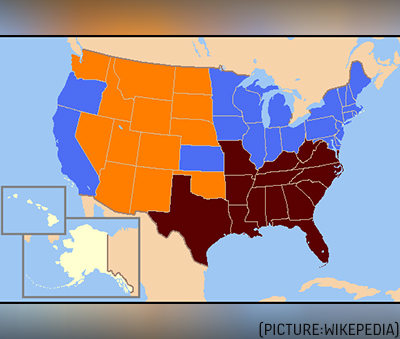
Overall, the region’s population grew by 12.9% to 6.6 million, less than in past decades. Loudoun County led northern Virginia and the metro area with an increase of 38.4%, while in the Maryland suburbs of D.C., Howard County grew the most, 15.8%.

Keeping with national trends that saw the number of White people in the U.S. fall and the White share of the population dip below 60% for the first time since 1790, population growth in the D.C. region has been driven largely by people of color.

According to the U.S. Census Bureau’s diversity index – which measures the likelihood that two people chosen at random would be from different racial and ethnic groups – Maryland is now one of the most diverse states in the nation, surpassed only by Nevada, California and Hawaii.

Nevada also was the only other state in the country to become majority non-White over the last decade. The change in Maryland’s demographic makeup was driven by growing Asian and Latino populations in the District’s inner suburbs and areas around Baltimore. Prince George’s County grew 12% to 967,000.

In northern Virginia, which helped drive population growth for the state overall, Alexandria grew 14% to 160,000 and Arlington grew 14.9% to 239,000. Fairfax grew 6.3% to 1.2 million and Prince William grew 20% to 480,000.

Amid this decade of growth, Fairfax, Prince William and Loudoun saw significant declines in their White population over the last 10 years. Loudoun, in particular, went from 62.4% White in 2010 to 51.5% in 2020.

Fairfax is the latest D.C. suburbs to become majority non-White, joining Prince William in Virginia and Howard, Montgomery and Prince George’s in Maryland.

The only jurisdiction in the area where the White share of the population increased over the last decade was the District.

The city is now Whiter than it has been in more than half a century. The number of residents who identify as White increased 25% since 2010, and in 2020 accounted for 38% of the population, narrowing the gap with the District’s Black population, which declined by nearly 19,000 or 6.3%.

In the place still known by many as “Chocolate City,” just 40.9% of the population identified as Black in the 2020 count – the smallest%age since the 1950 Census when 35% of the District’s population was Black.

Black Washingtonians are still the largest racial group in the District, according to Census numbers, but gains in the White and Hispanic populations drove the city’s overall population growth of 14.6% – or nearly 88,000 people – since 2010.

News assistants run outside the U.S. Supreme Court after the court ruled that U.S. President Donald Trump’s administration did not give an adequate explanation for its plan to add a citizenship question to the 2020 census, delivering a victory to New York state and others challenging the proposal in Washington, U.S., June 27, 2019. REUTERS/Carlos Barria

Andrew Trueblood, the director of the D.C. Office of Planning, said the numbers came as a surprise to District officials and raised questions about the veracity of the 2020 estimates. He and other D.C. officials had been tracking Black population data, including by using estimates from the American Community Survey. The 2020 population numbers, he said, do not seem to match those projections.

“We knew the District of Columbia was at risk of an undercount – and that’s regardless of what happened in the world with a global pandemic,” Trueblood said. “We have a lot of concern that our most vulnerable residents were not counted.”

District officials will be conducting their own analysis, Trueblood added, saying it was “too early” to draw conclusions from the census data release Thursday.

The continued growth of the District’s White population is the ongoing result of more than two decades of gentrification and largely reflects migration patterns from the first half of the last decade, during which White millennials and young professionals flocked to the city as the nation was slowly rebounding from the depths of the Great Recession, said Brookings Institution demographer William Frey.

“Millennials not able to afford a home were doubling and tripling up in cities,” Frey said, adding that trend has “sort of fallen off a bit in the last part of the decade.”

Officials from the D.C. mayor’s office, including the director of the D.C. Office on African American Affairs pointed to Mayor Muriel Bowser’s pledge to pour $400 million into affordable housing production in the District as a key part of her efforts to keep Black residents from being displaced amid rising housing costs. Bowser is herself a fifth-generation Washingtonian, officials said.

Black populations saw significant gains in Maryland in areas such as Anne Arundel, Montgomery, Howard and Charles Counties, where Black residents now make up the largest racial group in the county. In northern Virginia, counties such as Fairfax and Prince William County also saw notable Black growth.

Howard County, which became majority non-White for the first time this past decade, has seen an explosion in its Asian population, which grew more than 60% in the last 10 years. County Executive Calvin Ball, D, pointed to newly established cricket pitches, growing Lunar New Year celebrations, Korean American businesses and the county’s annual hosting of the National Youth Cricket League competition as evidence of Asian Americans’ growing influence in the county.

Ball said that Asian Americans and Hispanics – whose population grew from 5.8% to 8.2% over the last decade – want to live in communities where they feel safe and supported.

He pointed to Howard County’s decision to join a lawsuit against the Trump administration over its decision to exclude undocumented immigrants from the apportionment count that dictates how congressional districts are drawn as one of the ways the county has sought to stand up for immigrants in those communities.

In Prince George’s County, long known as a Black stronghold and one of the most affluent Black communities in the nation, the Hispanic population grew from 14.9% in 2010 to 21.2% last year – gains that helped drive the county’s growth over the past decade. Black people still makeup the largest population in the county with 59.1% – a decline from 63.5% a decade ago.

Prince George’s County Council Vice Chair Deni Taveras, the first Latina ever elected to that body, said the Latino population has shifted from being a largely immigrant community to now containing multiple generations, including second and third generations of Marylanders.

Demographers noted that this is true of the country, as well.

According to Frey, “most of the Hispanic population we’re seeing are U.S.-born. Only a third of Hispanics are at this point foreign born, so the increases are really due to naturally increases in the U.S. population, not so much from immigration.”

Taveras said the county has a long way to go in making its Latino residents feel as if they are “a part of the fold” and included in leadership.

“A Latino child can go from kindergarten to college in our school system without ever seeing one Latino professional who looks like them. That’s unacceptable,” she said. “Our leaders in Maryland need to understand that these are not just new Americans who are moving here. These are children who grew up here and families having children. . . . We’re talking about Latinos who have lived here for generations. That’s not really the conversation we’ve been having.”

Maryland joins five other states, the District and Puerto Rico in having people of color comprise the majority of their population: California, Hawaii, Texas, Nevada and New Mexico.

“This is a trend that we’ve expecting for a while now, and it’s something that we should be really proud of,” said Maryland state delegate Jheanelle Wilkins (D-Montgomery), who served on the statewide Complete Count Committee that oversaw Census efforts last year.

Montgomery County grew by 9.3% to 1.1 million. “Wow, Montgomery! Look at us!” Wilkins quipped as she reviewed the numbers Thursday. “Maryland is more and more reflective of the country, we are a state where we have a high immigrant population, where immigrants like myself – I was born in Kingston, Jamaica – come to from all over the world. . . . and you’re seeing us take the lead on issues that affect all of our diverse populations in really meaningful and targeted ways, and this data – knowing where our diverse populations are – really helps us do that.”

In Virginia, Fairfax County’s population of White residents dropped from 54.6% in 2010 to 47.1% in 2020, with gains among the Asian and Hispanic communities, which comprise about 20.4% and 17.3% of the county, respectively.

Outside of New York City and California, Fairfax County is now the largest county in the U.S. to have an Asian population of at least 20%. State delegate Kathy Tran, D-Fairfax, pointed to changes in the state government, including the creation of an AAPI Caucus and pro-immigrant legislation, as evidence of Virginia’s evolving diversity.

“Virginia is so steeped in history and the conversation around race relations in our state has rightly centered around Black Virginians in the last 400-plus years since the start of this commonwealth, but I think there is always opportunity for additional voices and perspectives to be heard,” Tran said. “We still had until the last couple of years Jim Crow laws that were still embedded into our code, and so we’re dismantling that at the same time as we’re pushing for immigrant justice, for example.”

Tran added that there is still “a ways to go” in building political capital among the state’s Asian and Latino communities and “making sure our voices are heard,” but added she hopes the new census data demonstrates to all Virginians why efforts to do so are necessary.

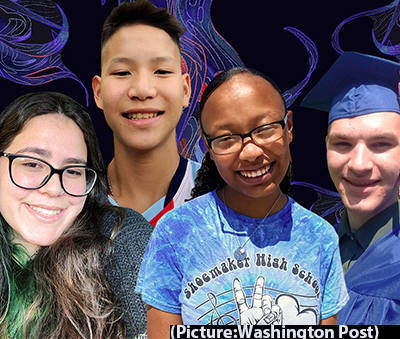
Maitreyi Ramakrishnan On Teen Vogue Cover

‘Never Have I Ever’ star Maitreyi Ramakrishnan is the second person of South Asian descent to grace the cover of the popular Teen Vogue magazine solo. Versha Sharma, who is the editor-in-chief of Teen Vogue described Maitreyi as a rising star on her post on Instagram.

Sharma, who is the first South Asian American Editor-in-Chief of Teen Vogue, wrote alongside the cover: “My first cover for @teenvogue is here and I could not be happier that it’s @maitreyiramakrishnan, rising star and hilarious talent, looking extra fashionable, surrounded by books. It’s classic brown girl vibes + back to school all in one.”

“The features by@aaminasdfghjkl and photos by@heathersten are so fantastic. link in bio to see it all + my letter (partially to you, partially to my younger self) about why it means so much to me to choose a cover star like Maitreyi – a brown girl allowing so many of us to see ourselves portrayed in a way that is exactly how we grew up. (finally!) and that’s all possible thanks to@mindykaling, too!” Sharma added.

Maitreyi, now 19, started filming the show shortly after she graduated high school in Mississauga, Ontario, where she was born and raised after her parents arrived in Canada as refugees from Sri Lanka. Before the show, she was a typical Canadian high school senior, with a résumé populated by school musicals (she played Velma in Chicago) and hopes of pursuing acting in college. The spring before graduation, her best friend sent her Mindy Kaling’s tweet about an open casting call, and the friends, due for a hangout, decided it would be fun to meet and film tapes to submit. Never Have I Ever was the first major production Maitreyi auditioned for, but fast-forward to six tapes and two flights from Ontario to California, and she landed the lead.

“It’s a realization of the fact that we need more representation,” Maitreyi, who is Tamil-Canadian, adds. “We need more stories, we need more storytellers. We can’t just keep relying on Mindy Kaling to keep making all these shows. I want her to keep making more. But I need more people with her.”

A post from a New York-based media portal The Juggernaut, wrote on the photo-sharing website: “At 19 years old, @maitreyiramakrishnan has made history as only the second person of South Asian descent to grace the cover of @teenvogue solo.” With Maitreyi, Poorna Jagannathan and Richa Moorjani leading the cast, ‘Never Have I Ever’ is a coming-of-age story that examines Indian culture against an American backdrop. (IANS)

The 2021 Indiaspora Philanthropy Leaders List Spotlights 100 Diaspora Leaders

Indiaspora, a nonprofit community of global Indian leaders from diverse backgrounds and professions, released their list recognizing 100 Indian and diaspora leaders who are making a difference through their giving.

“It is incredibly inspiring to see so many philanthropists from our community who have translated their success into social impact,” said Indiaspora Founder Mr. Rangaswami. “These leaders serve as an example of the importance of generosity and remind us of the many issues that need our attention.”
With guidance from nine jurors and drawing from multiple sources, including reputed studies, earlier verified lists, and publicly shared documents, Indiaspora’s 2021 Philanthropy Leaders List recognizes Indian and diaspora leaders across the globe for their philanthropic contributions and engagement.

“It was very gratifying to be a part of this effort, and I appreciated the careful consideration given to each honoree by those who were involved,” said Sara Kalim, Director of Development at Somerville College and one of the jurors.  “As someone who works in the development space, I see firsthand how philanthropy can transform lives for the better.  This list shines a light on the tremendous power of giving.”

With more than 32 million people of Indian origin globally, according to India’s Ministry of External Affairs, Indians are the largest diaspora population in the world.  Indiaspora’s 2021 Philanthropy Leaders List includes philanthropists from India and from geographies with significant diaspora migration, including the United States, the United Kingdom, Canada, the United Arab Emirates, Singapore, and Australia.  Several of these philanthropists stepped forward to give during the COVID-19 crisis.

“COVID-19 taught us that businesses, nonprofits, government, and philanthropy all play a critical role in lifting the communities they serve and operate in during times of crisis,” said Prem Watsa, Founder and CEO of Fairfax Financial Holdings and one of the honorees on the List. “Indiaspora’s Philanthropy Leaders List serves as a reminder to the diaspora to continue the important work of giving even once the crisis abates so our communities can meet future challenges.”

The List includes names from various industries including technology, entertainment, finance, and the law, among others, who are using their philanthropy to address issues such as access to healthcare, quality education, water and sanitation, arts and culture, food insecurity, and employability.

“I hope the diaspora will continue to give forward, and even more boldly,” said Rohini Nilekani, Founder-Chairperson of sustainable water and sanitation nonprofit Arghyam, who is also an honoree on the List. “It is both inspiring and critical to resolve many old and emerging societal challenges in India.”

Indiaspora’s 2021 Philanthropy Leaders List is one of several of the organization’s philanthropy-focused initiatives.  Other initiatives include ChaloGive, an online giving campaign that raised more than $3.5M in 2021 to provide COVID relief in India, and the Philanthropy Summit, an annual event that brings together nonprofits, foundations, philanthropists, and others in the social impact space to share learnings regarding Indian and diaspora philanthropy.

“This is a transformative moment for philanthropy,” said Ashish Shah, Senior Director of Philanthropy and Community Engagement at Indiaspora. “The purpose of our philanthropy work is to galvanize the Indian diaspora to elevate its level of giving in the next decade, and Indiaspora’s 2021 Philanthropy Leaders List is an important step towards building a culture of philanthropy.”

Here is the Indiaspora list of leading philanthropists in alphabetical order by last name:

Gautam Adani, India

Anu Aga, India

Anil Agarwal, India

Monte Ahuja, USA

Lata Krishnan & Ajay Shah, USA

Soham Ajmera, Canada

Nita Ambani, India

Mohamed Amersi, UK

Simon Arora & Shalni Arora, UK

Anna & Raj Asava, USA

Manoj Badale, UK

Kuljinder Bahia, UK

Rahul Bajaj, India

Ajay Banga, USA

Harindarpal Banga, Singapore

Manoj Bhargava, USA

Raksha & Madan Bhayana, Canada

Aneel & Allison Bhusri, USA

Kumar Mangalam Birla, India

Sumir Chadha, USA

Amit & Archana Chandra, India

Natteri V. Chandra, Australia

Deepak Chopra, USA

Frank Islam & Debbie Driesman, USA

Anand Deshpande, India

Desh & Jaishree Deshpande, USA

Dinesh Dhamija, UK

Ashish Dhawan, India

Bob Dhillon, Canada

Vijay Eswaran, Singapore

Anil & Gautam Godhwani, USA

Prabhu & Poonam Goel, USA

Sanjiv Goenka, India

Kris Gopalkrishnan, India

Vijay & Marie Goradia, USA

Piyush Gupta, Singapore

Raj Gupta, USA

Yusuf Hamied, UK

David Harilela, Singapore

Venky Harinarayan, USA

Gopichand Parmanand Hinduja, UK

Mukesh Wadhumal “Micky” Jagtiani, UAE

Anshu Jain, UK

Aditya Jha, Canada

Surender Singh Kandhari, UAE

Anand Rajaraman & Kaushie Adiseshan, USA

Sat Pal Khattar, Singapore

Uday & Nitya Khemka, UK

Vinod & Neeru Khosla, USA

Nik & Moni Kotecha, UK

Faizal Kottikollon, UAE

Sri Prakash & Aloke Lohia, Singapore

Dinkar Singh & Loren Eng, USA

Anand Mahindra, India

Kiran Mazumdar-Shaw, India

Darshak Mehta, Australia

Sudhir & Samir Mehta, India

PNC & Shobha Menon, UAE

Dan Mishra, Canada

Cyrus Pallonji Mistry, India

Lakshmi Mittal, UK

Ninian Mogan Lourdenadin

Vinn Murria, UK

Shiv Nadar, India

AM Naik, India

Gulshan and Pyarali Nanji, Canada

Bharat Desai and Neerja Sethi, USA

Nandan & Rohini Nilekani, India

Mohandas Pai, India

Ajay Piramal, India

Adar & Natasha Poonawala, India

Pulak Prasad, Singapore

Azim Premji, India

Deepak & Neera Raj, USA

Ganesh Ramani, UK

Raju Reddy, USA

Rao & Satya Remala, USA

Ramesh & Pratibha Sachdev, UK

Nalini Saligram, USA

Harish Salve, UK

Ronnie & Zarina Screwvala, India

Nirmal Sethia, UK

Paras Shahdadpuri, UAE

Manu & Rika Shah, USA

Sanjay Shah, USA

Vidya Shah, India

Kumari & S.D. Shibulal, India

Ram Shriram, USA

Karan Singh Thakral, Singapore

Chandrika & Ranjan Tandon, USA

Ratan Tata, India

Mohan Valrani, UAE

Sunny & Sherly Varkey, UAE

Shamsheer & Shabeena Vayalil, UAE

Anju & Aijay Virmani, Canada

Romesh Wadhwani, USA

Sunil Wadhwani, USA

Prem Watsa, Canada

Sarosh Zaiwalla, UK

More on the Indiaspora Lists:

The Indiaspora Lists (lists.indiaspora.org) highlight the advances of the Indian diaspora in areas such as government, business, and philanthropy. Indiaspora’s inaugural Business Leaders List (July 2020), highlights the Indian diaspora who are leading the largest global companies and the Government Leaders List (February 2021) highlights over 200 government leaders of Indian heritage from 15 countries around the globe.

Indiaspora is a nonprofit community of powerful global Indian leaders from diverse backgrounds and professions who are committed to inspiring the diaspora to be a force for positive impact by providing a platform to collaborate, engage, and catalyze social change. For the list of honorees and additional resources, including additional quotes, information and news about the honorees, please visit the 2021 Indiaspora Philanthropy Leaders List website.

Beth Chandler, YWCA Boston President In Conversation With Dr. Manju Sheth

YWCA Boston President and CEO Beth Chandler, a professional athlete and a recognized woman leader, grew up in a small idyllic town of NE in a loving family where Sundays were spent at church that was co- founded by her grandmother. However there were dark clouds of racism as well.


In her Chai with Manju interview, Ms. Chandler talks about being addressed with the ‘N word ‘and not being allowed to join local clubs including the country club. She also talks about her being a professional basketball player and important lessons she has learnt as a player and also leadership lessons learnt in her journey to becoming the President & CEO of YWCA Boston, which is also the first YWCA in the United States.

Today, she and her organization help individuals and organizations change policies, practices, attitudes, and behaviors with the goal of creating more inclusive environments where women, people of color, and especially women of color can succeed.

Ms. Chandler joined YW Boston in November 2012, with more than 20 years of experience in both the corporate and nonprofit sectors. In August 2018, she was appointed President & CEO. Her breadth of work experience encompasses program development, delivery and evaluation, business development, and operations.

Prior to working at YW Boston, Ms. Chandler served as vice president at the Achievement Network, a national non-profit dedicated to helping urban public and charter schools close the achievement gap.

She also held positions at Massachusetts Legal Assistance Corporation, the largest funding source for civil legal aid programs in the Commonwealth and Neighbor works America, one of the country’s preeminent leaders in affordable housing and community development.

Currently, Ms. Chandler serves on the Eastern Bank Board of Advisors, The Museum of Fine Arts Board of Advisors, TSNE-Mission Works Board of Directors, the Women’s Workforce Advisory Council and the Leadership Circle of Hope Central Church.

“Her life story as been shared in this episode of Chai With Manju is an incredible and very inspiring journey that will appeal to all,” says Dr. Sheth. “On the fun side, I enjoyed chatting about her experience with trying Indian food and love for travel.”


A physician by profession, having a passion for media and commitment to serve the larger humanity, with special focus on women’s empowerment, Dr. Manju Sheth is a Board Certified Internist, currently serving patients at Beth Israel Lahey Hospital.in the Boston Region in Massachusetts.

Dr. Sheth was the co-founder and CEO of INE MultiMedia, a non-profit organization devoted to promoting and supporting charitable organizations, art, culture, education and empowerment through workshops, seminars and multimedia. Dr. Sheth is a former trustee of the Indian-American Forum for Political Education. Dr. Sheth is very dedicated to the education of the community about health related issues, and is also the producer and chair of the annual free mega Health & Wellness Expo.

Having endowed with the gift of writing, Dr. Sheth is known to be a natural storyteller and “I truly believe that every life has a story and a dream. I’m always looking to hear stories of everybody’s life, in everyone that I meet, and then I look to find the right platform and the right medium to showcase it.” Her popular “Chai with Manju” celebrity series is one of the most read news features in the New England region, where she featured celebrities and spiritual leaders such as Sadhguru, Sri Sri Ravi Shankar, the Kennedys and the like.

India’s Supreme Court Is “Bothered” By Pegasus Scandal, Says It Is “Serious”

Describing the allegations of surveillance through the use of the Pegasus spyware as “serious”, the Supreme Court on August 5th wondered why no one had filed an FIR if there was reason to believe that phones had been hacked. It also pointed out that the allegations first surfaced in 2019.

Chief Justice of India N V Ramana who, along with Justice Surya Kant, was hearing eight petitions seeking an independent probe into the matter, said: “No doubt, the allegations are serious, if the reports are true.” The Chief Justice of India’s Supreme Court, while stating that he was not getting into facts of each and every case, said: “You know there are provisions under the Telegraph Act, IT Act etc to file complaints. These are the things which bother us.”
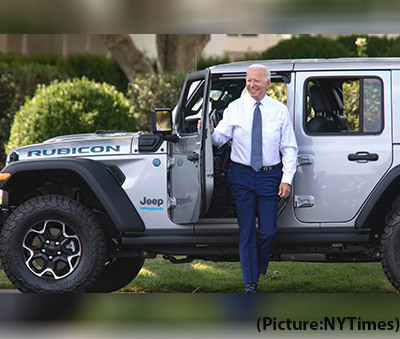
Replying to the query on why no one had filed an FIR, Senior Advocate Kapil Sibal, appearing for senior journalists N Ram and Shashi Kumar as well as the Editors Guild of India, said: “We did not have access to materials.” The petitions, he said, had information about multiple cases of spyware infiltration.

Sibal drew the court’s attention to proceedings initiated by WhatsApp against NSO in a California court. He said according to the court order, Pegasus once activated causes the target device to connect with the malware. The malware, he said, is then enabled and data is transferred.

“Pegasus is a rogue technology and infiltrates lives without our knowledge. All that it requires is a phone and it enters into our lives and then hears and surveys every movement. It’s an assault on privacy, human dignity and the value of our republic,” Sibal said, adding that “it penetrates into our national Internet backbone”.

He said the government, in its statement in the Parliament, had not disputed that Indians were among those targeted, “If the Government of India knew this was happening, why did it not take action against NSO Technologies? Why did they not lodge an FIR? This is about the privacy and safety of Indians,” he said.

The bench did not issue notice to the Centre and instead asked the parties to first supply copies of their petitions to the government counsel after which it would hear the matter again on August 10. “Somebody should appear for the government to take notice,” it said, making clear that the question of issuing notice will be considered after hearing from the government as well.

The bench indicated that most of the petitions were based on news reports and should have had something more for the court to set the legal process in motion. “You all know that there is a prima facie material, as well as credibility of reports, on the basis of which we can order an inquiry etc. Unfortunately, from what I read from the writs, this matter came to light in May 2019. I don’t know if any effort was made. Persons who have filed the writ petitions are knowledgeable persons having resources. They should have made more effort to bring forth more material… Some of the petitioners who have filed the pleas are not affected and some claim their phones are hacked. But they have not made efforts to file a criminal complaint,” the CJI said.

This led to exchanges in the courtroom with senior advocates representing the petitioners making their submissions on the pleas. Appearing for two journalists whose names figured in the alleged Pegasus target list, Senior Advocate Arvind Datar said there is no provision in the IT Act, 2000 for filing an FIR.

The criminal remedy in the Act, Datar said, relates to infringement of privacy in relation to bodily parts while the identity of the hacker needs to be known in civil remedy for damages. “Privacy is about the privacy of one’s bodily area. So there are no provisions for me to file an FIR… Someone has definitely accessed my computer and remedy is damages, and for this we should know who did (it). We need to know if the allegations are true,” he said.

Referring to the Aadhaar judgment, Datar said the Supreme Court had stated that privacy permeates all through Part 3 of the Constitution. Urging the bench to take cognizance, he said: “Today 300 people have come to light. Who else will take cognizance of this apart from the judiciary? We don’t know if it is 300 or 3000 individuals.” He said this can be taken up as a class-action case.

Senior Advocate Shyam Divan, appearing for academician Jagdeep Chhokar, said: “These media organizations enjoy a very high degree of credibility. A whistle-blower released the numbers… These numbers are of judicial and Constitutional authorities. Mr Chhokar is an academician, and for a private citizen to find a spyware installed on his phone is equal to war against a citizen by the government,” he said.

Asked if he had filed any FIR, Divan said “no” and “this case requires an independent probe by a fact-finding committee” under a bureaucrat of the highest level, preferably the Cabinet Secretary.

“My question is if you know the phone is hacked, then why wasn’t an FIR lodged. That is the only question,” The CJI  told Senior Advocate Meenakshi Arora who appeared for Rajya Sabha MP John Brittas. Arora said that former IT Minister Ravi Shankar Prasad had said in Parliament that no unauthorized interception was done. “If you have said in 2019 that you have not done, and now it is known that it has been done, there is a need to investigate”, she said.

“You all know that there is a prima facie material, as well as credibility of reports, on the basis of which we can order an inquiry etc. Unfortunately, from what I read from the writs, this matter came to light in May 2019. I don’t know if any effort was made. Persons who have filed the writ petitions are knowledgeable persons having resources. They should have made more effort to bring forth more material… Some of the petitioners who have filed the pleas are not affected and some claim their phones are hacked. But they have not made efforts to file a criminal complaint,” the CJI said.

Biden’s New Policy Will Ensure 50% Of Vehicles Sold In US By 2030 Are Electric

President Biden announced on August 5th a multistep strategy aimed at rapidly shifting Americans from gasoline-powered cars and trucks toward electric vehicles — a central part of his plan to reduce the pollution that is heating the planet.  The new plan targets that half of vehicles sold in the country by 2030 will be battery electric, fuel-cell electric or plug-in hybrid.

Biden signed the executive order at the White House alongside representatives from Ford, GM and Stellantis, and members of the United Auto Workers Union. The automakers are supporting Biden’s new target, announcing their “shared aspiration” that 40-50% of their cars sold by 2030 to be electric vehicles, according to a joint statement from the three automakers.
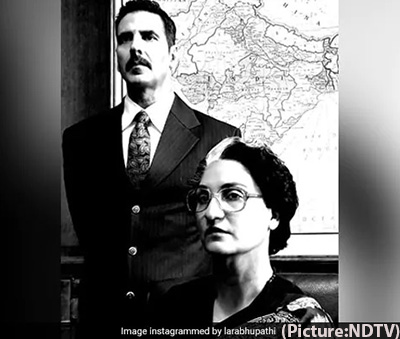
Speaking from the White House South Lawn in front of four electric vehicles, Biden said the future of America’s car manufacturing “is electric and there’s no turning back. The question is whether we’ll lead or fall behind in the race for the future,” the president added. Throughout Biden’s remarks, he emphasized that a move toward electric vehicles should come with an assurance that those vehicles and the batteries powering them should be made in the US and with union workers.

“There’s a vision of the future that is now beginning to happen, a future of the automobile industry that is electric — battery electric, plug-in hybrid electric, fuel cell electric,” said Mr. Biden, who announced the plan from the South Lawn of the White House before an array of parked electric vehicles, including the Ford F150 Lightning, the Chevrolet Bolt EV and a Jeep Wrangler. “The question is whether we’ll lead or fall behind in the future.”

The Environmental Protection Agency and Department of Transportation also announced Thursday they are reversing a Trump-era rollback of fuel emissions standards. The newly proposed standards from the agencies for light-duty vehicles will be 10% more stringent than the Trump-era rules for 2023 model year vehicles, then becoming 5% more stringent each year through 2026 model year vehicles.

The proposed emissions standard for mileage year 2026 is 52 miles per gallon, up from 43.3 miles per gallon under the Trump administration, which is the current mileage standard. The new standard is also up from 50.8 miles per gallon under the Obama administration rules for mileage year 2026.

The Biden administration’s proposed standard would translate to a label value — what the consumer would see on a new car sticker — of 38.2 mpg. The EPA estimates that implementing these standards would avoid 2.2 billion tons of carbon dioxide emissions through 2050.

With the impacts of a warming planet seen in record droughts, deadly heat waves, floods and wildfires around the globe, scientists say that simply restoring Obama-era climate controls will not be enough.

The agencies also announced a separate set of regulations to reduce greenhouse gas emissions for heavy-duty trucks. The first rulemaking process for trucks is expected to be finalized next year, and will apply to heavy duty vehicles starting with the 2027 mileage year, according to the EPA.

A rapid transition to electric cars and trucks faces several challenges. Experts say it will not be possible for electric vehicles to go from niche to mainstream without making electric charging stations as ubiquitous as corner gas stations. And while labor leaders attended the White House event and referred to Mr. Biden as “brother,” they remain concerned about a wholesale shift to electric vehicles, which require fewer workers to assemble.

Speaking on Wednesday night, a senior administration official echoed Biden’s comments.  “This is a paradigm shift,” a senior administration official told reporters on Wednesday. “What we’re hearing across the board is a consensus about the direction where this industry is going, and a coming together around the recognition that this is the moment of truth, not just for climate action for economic action as well.”

Biden has asked Congress for $174 billion to create 500,000 charging stations. An infrastructure bill pending in the Senate includes just $7.5 billion. However, it also provides $73 billion to expand and update the electricity grid, an essential step for carrying power to new auto charging stations. The International Council on Clean Transportation, a research organization, concluded that the nation would need 2.4 million electric vehicle charging stations by 2030 — up from 216,000 in 2020 — if about 36 percent of new car sales were electric.

A second bill, which could move through Congress this fall, could include far more spending on electric vehicles, consumer tax incentives and research. Neither proposal is guaranteed to pass in the closely divided Congress.

There are concerns that ome environmental advocates and lawmakers fear car companies could skirt the standards with loopholes — including allowances for EV makers like Tesla to sell credits to companies that sell gas-guzzling cars, thereby allowing them to meet the standards without electrifying their fleets.  “We must guard against the inclusion of legacy loopholes, which may allow for even lower greenhouse gas emissions standards than before,” Democratic Sen. Ed Markey of Massachusetts said in a statement. “We know the highest standards possible are economically feasible and technologically achievable because the automotive industry is already installing them.”

“President Biden has called global warming an existential threat, but these standards won’t protect us,” said Dan Becker, director of the Safe Climate Transport Campaign at the Center for Biological Diversity, in a statement. “The only reason automakers have ever cut pollution is because strong rules forced them to. And these rules won’t.”

The youth climate advocacy group Sunrise Movement sharply criticized Biden’s electric vehicles target, saying it’s not sufficient enough to combat the climate crisis. “Biden cannot think of himself as the climate president with a 50% electric vehicles goal,” Sunrise executive director Varshini Prakash said in a statement. “FDR didn’t set a goal to half win the war, and JFK didn’t set a goal to get halfway to the moon. If we are still selling gas cars in 2030, they’ll be on the road for another 10, 15, 20 years — long after his presidency and well into our already unstable futures.”

Playing Indira Gandhi In ‘Bell Bottom’ Is An “Opportunity Of A Lifetime:” Laura Dutt

Ever since the trailer of the espionage thriller Bell Bottom dropped on the Internet, it has been a trending topic on social media. Actress Lara Dutta Bhupathi is all set to take the audience by surprise as she plays Indira Gandhi in the espionage drama ‘Bell Bottom’, which is slated for an Aug. 19 theatrical release.

Calling it an opportunity of a lifetime, she said it was a great responsibility to play the late former prime minister. “It is a great responsibility when you portray someone who’s an iconic figure like Mrs. Gandhi. It was very important to get her body language right,” the 46-year-old actress said at the ‘Bell Bottom’ trailer launch.

“The response to our trailer for Bell Bottom and the appreciation for the role of Mrs Indira Gandhi has been overwhelming and my heart is filled with gratitude. I’m so thankful for the faith that Akshay Kumar, Rranjit Tewari, Jackky Bhagnani, Deepshikha Deshmukh and Pooja Entertainment had in me,” she wrote.

She added in her post: “And I’d also like to thank and give full credit to Vikram Gaikwad and his team for the incredible prosthetics and make up! Can’t wait for you’ll to watch the film in the theatres!! See you there on the 19th of August.”

The film, incidentally, is set in 1984, the year that saw Operation Bluestar as well as Gandhi’s assassination. “The film is about a hijack that took place during Mrs. Gandhi’s tenure,” the actress said, describing the outline of the plot.

The most “challenging” aspect about playing Indira Gandhi on screen was to “get the body language of the character right.” Sharing her experience and the preparation that she did for her character, Lara Dutta said, “As you all know that the film deals with a hijack situation that happened during her tenure. Given the dramatic events that were unfolding, she was somebody who was very centered and not prone to any dramatics. So it was important to portray her in that form. “I had a great time. There was a lot of homework and research that went behind it. But it was an opportunity of a lifetime that I’m thankful for.”

“Given the dramatic events that were unfolding, she was extremely centered. It was important therefore to portray her in that way. As a result, a lot of homework and research went into the role. It was an opportunity I am very thankful for.”

After 4 Decades, India Wins A Hockey Medal At Olympics

Ending the long drought, India’s hockey team has come home with an Olympic medal in 2021. The dreams of billions of hockey fans came true when India bagged a historic bronze medal in the Tokyo Olympics, beating Germany 5-4 in an edge-of-the-seat thriller to claim its first medal in 41 years that will hopefully revive the sport’s fortunes in a country that is considered the spiritual home of the game on August 5th. India last won an Olympic medal in 1980 — a gold in Moscow. The Olympic men’s field hockey is the country’s first medal in that sport since 1980 – a decade before any of the current players were even born.

Manpreet Singh’s fought back brilliantly from a two-goal deficit (1-3) to score four goals in four minutes just around half-time for a sensational victory that would remind fans of the glory days when the Indians were a force to reckon with in world hockey.

India unleashed a four-goal blitz in four minutes as they came roaring back after being pinned down 1-3 by the Germans who started aggressively and created good pressure by going full press from the start itself.

But the Indians took control of the midfield, capitalized on the gaps created by the hard-pressing Germans, and counter-attacked brilliantly, cutting the German defense to shreds in those four minutes that left the opponents shocked. Till that time, it looked like Tobias Hauke’s side had taken control of the match as they opened the scoring in the second minute of their first attack and then scored twice within a minute as they took control of the proceedings with a 3-1 lead.

But the Indians were not done yet. They scored two goals of their own in the 27th and 29th minute through Hardik and Harmanpreet Singh, the latter powering a brilliant drag-flick into the German goal, capitalising on swift counter-attacks. The score was 3-3 at half-time and both teams had a lot to play for.

The Indians continued with the momentum in the third quarter and a minute after the restart, earned a penalty stroke when Mandeep Singh was brought down by Oruz in the shooting circle. Rupinderpal Singh’s push had too much power for German goalkeeper Alexander Stadler, who guessed the direction but could not get down fast enough to stop it.

India made things more difficult for Germany when Simranjeet Singh was on target again in the 34th minute after he was set up by Gurjant Singh, who made a good run to the goal-line and sent a minus ball inside the circle.

The Germans pulled one goal back with Windfeder converting a penalty corner in the 48th minute and India survived some anxious moments when Germany earned a penalty corner in the dying minutes of the match. PR Sreejesh, who has stood like a rock throughout the match pulling off many saves, blocked Windfeder’s attempt and the Indians jumped in celebration as the clock ran out.

Simranjeet Singh (17th, 34th) scored a brace of goals while Hardik Singh (27th min), Harmanpreet Singh (29th min), and Rupinderpal Singh (31st min) scored a goal apiece for India while for Germany Timur Cruz (2nd min), Niklas Wellen (24th min), Benedict Furk (25th min) and Lukas Windfeder (48th min) were on target. Sreejesh, ecstatic after winning the bronze medal in his third Olympics, climbed on to the top of the goal post to celebrate as his teammates ran around the ground, hugging and congratulating each other. As his teammates cried with joy, India’s goalkeeper P.R. Sreejesh scrambled atop his goalposts, his padded legs dangling, and stretched his arms wide, pumping two fists in the air.
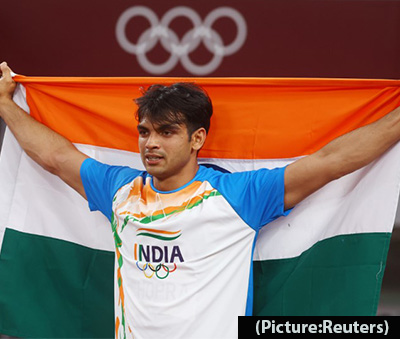
But even bigger history might still be made Friday, when India’s field hockey women — who’ve never won any Olympic medal — compete for their own bronze.  On Friday morning local time, India’s women faced, fighting brilliantly against Britain. The Indian women shocked undefeated Australia in the quarterfinals, but they lost to Argentina in the semifinals. It was the Indian women’s first-ever appearance in a semifinal match.

The Indian men’s hockey team has received a total funding of Rs 50 crore in the five years since 2016. The team that finished eighth in Rio de Janeiro Olympics after losing to Belgium in the quarter-finals, has received Rs 50 crore as part of Annual Calendar for Training and Competitions’ (ACTC) funding.

Besides this, the team received Rs 16.80 lakh under the Target Olympic Podium Scheme (TOPS), the Sports Authority of India informed. Thus the total government contribution in their preparation for the last five years comes to Rs. 50,19,80,000 (Rs 50.2 crore).

The team, which was stuck at Sports Authority of India’s (SAI) Bengaluru centre for the entire duration of the nationwide lockdown in 2020, has mostly trained at home last year because of the Covid-19 pandemic and the resultant travel restrictions. Besides the above mentioned funding, the team also received visa assistance for various international competitions and foreign training trips. It was worth all the investment India has done for the hockey game, which used to be one of the most popular sports in India.

It was India’s fourth medal in the Tokyo Olympics after one silver and three bronze. Weightlifter Saikhom Mirabai Chanu won the (silver medal while shuttler PV Sindhu and boxer Lovlina Borghain claimed the other two bronze medals.

India has won more Olympic medals in field hockey than any other sport. But prior to Tokyo, its 11 hockey medals were all won by men, and all before 1980 – until now. On August 5th, the Indian team overcame four decades of disappointments as it captured a well-deserved bronze medal to take India’s tally in Olympic Games hockey competitions to 12 medals — eight gold, one silver and three bronze, surpassing Germany, with whom they were tied at 11 (4 gold, 3 silver, 4 bronze).

The curse has been broken.  Prime Minister Narendra Modi tweeted moments after India won the hockey medal in Tokyo: “Historic! A day that will be etched in the memory of every Indian.”

Neeraj Chopra Makes India Proud By Winning Gold For India In Tokyo Olympics

“It feels unbelievable. It is the first time India has won a gold in athletics, so I feel very good. We have just one gold here in other sports,” Neeraj Chopra said after winning the historic gold at the Olympics in Tokyo. Neeraj Chopra won the gold medal, flinging the javelin a staggering 87.58m to top the charts in Tokyo.

Neeraj Chopra didn’t even give it a second glance. The moment he released the javelin, he was so sure it would at least be his personal best that he turned to his coaches, and lifted his arms to celebrate. However, it wasn’t his personal best. The throw, which travelled 87.58 m, made him an Olympic champion.

The young Haryanvi boy has vaulted himself into history books as well as the consciousness of a medal-starved nation. It would go down, to date, as the most historic of medals in India’s Olympic history. Perhaps, the most historic in the nation’s sporting history. The gold, a historic first for the country in track and field, the second for an individual ever and the first since Abhinav Bindra’s in 2008, would also ensure India’s richest-ever tally (seven).

Much before he won the country’s first-ever track and field medal, they used to call Neeraj the village headman in Khandra, near Panipat in Haryana. What started as a joke turned out prophetic. The Asian and Commonwealth golds in 2018, was a turning point in Neeraj’s life in terms of fame and recognition. But the 23-year-old has always remained oblivious to the trappings of stardom. The prize money and sponsorship deals post-2018 helped him fulfil some long-standing desires but they still remain grounded.

Despite his superstar status, Khandra, a village close to Panipat in Haryana, still calls him sarpanch. In close to a decade, the Chopras have climbed up the social ladder with such speed that they are the new benchmark of this village. Along with Neeraj’s once modest home getting repaired, refurbished and growing in height, the new admissions at the javelin academy at the local school has increased. The Olympic medal is expected to see an army of young boys with dreams reaching out for the javelin.

Although Neeraj Chopra’s javelin gold made sure India will leave Tokyo with a record medal haul — with one gold, two silver and four bronzes —  that’s just one more than last time. However, what is history-making is that never ever, since the Dhyan Chand era, has India dominated an Olympics discipline the way 23-year-old Neeraj Chopra did on Saturday. For India, Tokyo 2020’s biggest takeaway came on Saturday – the gold in a mainstream mass-sport.

Wrestler Dahiya Wins Silver Medal In 57kg Freestyle Wrestling

Indian wrestler Ravi Kumar Dahiya fought a brave bout but could not overcome the Russian Olympic Committee’s (ROC) Zavur Uguev in the final of the men’s freestyle 57kg at the Tokyo Olympics on Thursday. The 23-year-old Indian had to settle for a silver medal as the ROC wrestler won the bout 7-4 on points.

Dahiya, who had reached the final by beating Nurislam Sanayev of Kazakhstan with a last-minute fall in the semifinal, found Uguev, a two-time world champion, too strong and too determined to win the gold. The Russian won early points and then defended strongly, without giving Dahiya many chances.

Dahiya won India’s second silver medal in Olympic wrestling after Sushil Kumar who won in 66kg freestyle in the London Olympics in 2012. India has won five medals, including two silver, at the Tokyo Olympics so far.

This was two-time Asian champion Dahiya’s second straight loss to Zavur  Uguev, a two-time world champion, in as many meetings. The two met in the semi-finals of the 2019 World Championships in Nur Sultan and the Indian wrestler lost in the final seconds of the bout in a closely fought contest.

Dahiya, who hails from Nahri village in Sonipat district of Haryana, was initially trained by Asian Games gold-medalist Sat pal Singh at the Chatrasal Stadium in north Delhi. Old-timers at the stadium would recall ‘ow Dahiya’s father Rakesh Dahiya, a small farmer, would travel every day from their village to the stadium to deliver fresh milk and fruits, which were part of the’ wrestler’s diet, for more than a decade. Those visits proved successful as Dahiya made his father proud on Thursday by winning the silver medal.

At the Makuhari Messe hall, Dahiya began the final cautiously as he was aw’re of Uguev’s strength and tried to assess how ready his opponent was before launching his attack. However, Uguev was strong in his defense and turned the tables on the Indian, and claimed two points.

With the bench encouraging Dahiya, a bronze-medalist in the World Championships, and gold medalist in the Asian Championships, to match th’ ROC wrestler’s pace, the Indian grappler dipped further to find a hold and turn Uguev around for his first takedown.

But Uguev was quick to turn around and return the favour as they headed into the break with the reigning world champion leading 4-2. Though Uguev seemed visibly tired in the second period, he didn’t allow Ravi Dahiya a clear opening to make a move. Ravi himself was quite tired but made a last-ditch effort.

With the clock running down, the Indian wrestler went for the kill and scored two points. But Uguev was quick to counter-attack and bagged three points to win the bout.  (IANS)

India’s Women’s Hockey Team Lost, But Creates History

The chief coach of the Indian women’s hockey team, Sjoerd Marijne, said his team may not have won a medal at Tokyo 2020 but his players did achieve something bigger as they inspired the country to dream of success at the Olympics.

India went down 4-3 to Great Britain in a closely-fought bronze medal playoff on August 6th despite fighting back from a two-goal deficit. The team led 3-2 at half-time but the British came back strongly in the second half and denied them a historic medal in only their third appearance in the Olympics since women’s hockey made its debut in 1980 at Moscow.

The Indian team stunned everyone by making it to the semifinal by beating mighty Australia, world No. 2, in the quarterfinal after scrapping through the preliminary round, and though they went down to Argentina in the semis and Great Britain, the team came up with a fighting display in all its matches and had more than a billion lauding the effort.

Asked what was his message to the team after the defeat, Marijne told the media he told them he was proud of their performance. “The first emotion is about losing… yeah you want to win but, really, I feel proud. Pride. I’m proud of the girls, how they again showed their fight and skills. Normally when (the) Indian women’s team are 2-0 down, it always becomes 3-0, 4-0… but now they kept fighting. We came back in the match, we were even one-up,” Marijne was quoted as saying by the International Hockey Federation (FIH).

He said the girls should be proud that they achieved something bigger than a medal.

“And I said to the girls, ‘Listen, I can’t take away your tears. No words will help for that. We didn’t win the medal, but I think we achieved something bigger, and it’s inspiring a country and make the country proud (sic).’ And I’ve shown many messages of people who were saying that, and I think the world has seen another Indian team, and I’m really proud of that,” Marijne added. (IANS)

The Woman Who Has Won Most Olympic Medals In History

Allyson Felix cemented her place as the greatest American track and field athlete of all time Saturday morning. The 35-year-old track star won her 11th Olympic medal on Saturday morning, surpassing the American record of 10 medals in track and field set by Carl Lewis in 1996. Only Paavo Nurmi of Finland, who won 12 medals during his career as a long-distance runner, holds more.

The U.S. women’s 4x400m relay team of Kendall Ellis, Lyann Irby, Wadeline Jonathas, and Kaylin Whitney won the qualifying heat in 3.20.86 on Thursday.  The U.S. subbed all four runners for the final, putting together an all-star team of runners, each of whom had already won individual medals in Tokyo.

Lewis warmly congratulated her in a post on Twitter. “35 never looked so good,” he said. “What an amazing career and inspiration.” “I think people thought I was a long shot for me to even be on the U.S. team. And then, you know, I wasn’t a pick for the medals. But, you know, just give me a shot,” Felix said with a smile.

Earlier, she had won a bronze medal last week in the 400 meters at the Tokyo Olympics. This was Felix’s fifth Olympics and her 10th medal. She first competed in Athens in 2004 and has medaled in every Summer Games since then.

“This one is very different, and it’s very special. And it just took a lot to get here,” Felix said after the race. Felix’s time Friday of 49.46 is the second-fastest of her career, according to USA Track and Field. Her medal Friday means Felix now exceeded the record set by Jamaican athlete Merlene Ottey.

“No matter what it feels is stacked against you, you go out with character and integrity, you give your all, and that’s all anybody else can ask of you, and you’re proud with that,” Felix said.

11-Year Old Natasha Peri Is Among The Brightest Students In The World

Two Indian origin girls – New Jersey-based Indian American Natasha Peri, 11; and Dubai-based Priyamvada Deshmukh, 12 – have been named to the world’s “brightest” students list based on results of above-grade-level testing of 19,000 students across 84 countries, according to Johns Hopkins Center for Talented Youth, a part of Johns Hopkins University in Baltimore, Maryland.

It comes on the back of an exceptional performance shown by Natasha Peri, in the Scholastic Assessment Test (SAT) and American College Testing (ACT). These are the tests that are used to determine if or not a student should be admitted to a college. Several colleges in the US use these tests as qualifying criteria to grant admission to students. She made the cut for Johns Hopkins CTY “High Honors Awards”.

Deshmukh, a student of GEMS Modern Academy, Dubai, has been honored for her exceptional performance on the SCAT assessment taken as part of the CTY Talent Search, a university statement said.

These tests were conducted as part of the Johns Hopkins Center for Talented Youth Talent (CTY) Search. CTY uses above-grade-level testing to identify advanced students from around the world and provide a clear picture of their true academic abilities. The quantitative section of the Johns Hopkins CTY test measures the ability to see relationships between quantities expressed in mathematical terms, the verbal section measures understanding of the meaning of words and the relationships between them.

Peri took the Johns Hopkins Talent Search test in Spring 2021, when she was in Grade 5. What makes the feat incredible is the fact that her results in the verbal and quantitative sections levelled with the 90th percentile of advanced Grade 8 performance. “This motivates me to do more,” she said, adding that doodling and reading J.R.R. Tolkien’s novels may have worked for her.

Deshmukh took the Johns Hopkins Talent Search test in Spring 2020, when she was still in Grade 6. Her results in the verbal sections levelled with the advanced Grade 10 performance. She made the cut for Johns Hopkins CTY ‘High Honors Awards’. Due to the Covid-19 induced delay in global logistics support, she finally received her much awaited “High Honors” pin this week, which she lovingly kept in front of her grandparents’ photograph as tribute to her roots.

“We are thrilled to celebrate these students,” said Virginia Roach, CTY’s executive director. “In a year that was anything but ordinary, their love of learning shined through, and we are excited to help cultivate their growth as scholars and citizens throughout high school, college, and beyond,” Roach added.

Biden, Harris Commemorate 2012 Wisconsin Gurdwara Mass Killing

US President Joe Biden and Vice President Kamala Harris have commemorated the ninth anniversary of the 2012 mass shooting at the gurdwara in Oak Creek, WI that claimed the lives of seven Sikhs, according to the White House.

The commemoration took place on Thursday, August 5th during a meeting with representatives of the Asian, Hawaiian and Pacific Islander community during which they discussed combating hate crimes against Asians, the White House said.
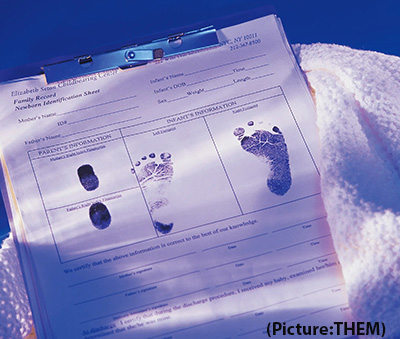
Six Sikhs were killed in the August 5, 2012, attack in which four people, including a police officer, were injured and one person died last year from the wounds sustained in the shooting.

The shooter, described as a White supremacist, committed suicide by shooting himself when police responded. Sikh community leaders have welcomed an earlier tweet by Biden on the anniversary of the Oak Tree gurdwara attack.

Biden said in his tweet: “Nine years ago today, we witnessed an act of unspeakable hate as a white supremacist shot 10 people at a Sikh Temple. As we remember those we lost in Oak Creek, we must continue to stand up to hate and bigotry and ensure that all are able to practice their faith without fear.”

Sikh Council on Religion and Education Chairman, Rajwant Singh said: “We are thankful to President Biden for his compassion and a strong stand against hate and violence. The Sikh community was shaken by this tragedy and our community still is concerned about the hate-filled rhetoric being condoned by some political interest groups.”

Gurwin Singh Ahuja, the co-founder and the executive director of the National Sikh Campaign, said: “Violence against Sikhs had been on the rise for several years. After 9/11 many Americans associated a turban and beard with terrorism and an alarming number of people turned to racism and violence against our community.” The “National Sikh Campaign is committed to creating positive awareness about Sikhs in this country”, he added. (IANS)

Children Born Abroad Through Assisted Reproductive Technology To Get US Citizenship

U.S. Citizenship and Immigration Services announced updated policy guidance affecting children born outside of the United States and the determination of whether children born through assisted reproductive technology (ART) are considered to have been born “in wedlock.” This policy update will allow a non-genetic, non-gestational legal parent of a child to transmit U.S. citizenship to the child if the parent is married to the child’s genetic or gestational parent at the time of the child’s birth, and the relevant jurisdiction recognizes both parents as the child’s legal parents.

“USCIS is taking a crucial step towards ensuring fair access and support for all families and their loved ones,” said USCIS Director Ur M. Jaddou. “We are committed to removing unnecessary barriers promoting policies for all people as they embark on their journey to citizenship and beyond.”

This guidance will also be applied to the family-based petitions for determining whether a child is born in wedlock. Previously, USCIS required that the child’s genetic parents (or the legal gestational parent and one of the genetic parents) be married to one another for a child to be considered born in wedlock.

In 2014, USCIS updated its policy to allow a parent who is the gestational and legal parent of a child under the law of the relevant jurisdiction at the time of the child’s birth to transmit U.S. citizenship to the child if all other citizenship requirements are met.

For more information on USCIS and its programs, please visit uscis.gov or follow us on Twitter, Instagram, YouTube, Facebook, and LinkedIn

Dr. Fauci Warns Of ‘Things Going to Get Worse’ With the Delta Variant

The U.S. is now in the midst of another COVID-19 surge driven by the delta coronavirus variant and those who refuse to take the vaccine. And Dr. Anthony Fauci says, the situation will get worse before it gets better—but he doesn’t expect to see new lockdowns.

“I don’t think we’re going to see lockdowns. I think we have enough of the percentage of people in the country, not enough to crush the outbreak, but I believe enough to not allow us to get into the situation we were in last winter,” Dr. Fauci said on a new episode of ABC’s This Week, referring to the massive post-holiday surge. “But things are going to get worse. If you look at the acceleration of the number of cases, the seven-day average has gone up substantially.”

Indeed, as the highly transmissible delta variant spreads across the country, the Centers for Disease Control and Prevention (CDC) seven-day average for new COVID-19 cases in a day increased by 64% since last week (from an average of 40,597 cases in a day to 66,606). And while just over 60% of adults are fully vaccinated so far, that leaves many people—including children under the age of 12—who aren’t yet vaccinated.

The most vulnerable are those who are still unvaccinated, said Dr. Fauci, director of the National Institute of Allergy and Infectious Diseases and President Biden’s chief medical advisor on COVID-19. And the fact that there are so many people in the country who aren’t vaccinated is prolonging the pandemic.

“From the standpoint of illness, hospitalization, suffering, and death, the unvaccinated are much more vulnerable because the vaccinated are protected from severe illness for the most part,” he explained. “But when you look at the country as a whole in getting us back to normal, the unvaccinated by not being vaccinated are allowing the propagation and the spread of the outbreak, which ultimately impacts everyone.”

With so many unvaccinated people getting infected, the virus is allowed to continue to spread. That impacts other people “from the standpoint of having to wear masks, from the standpoint of the safety of the kids in school, from the standpoint of being able to open up everything the way we were when we were normal,” Dr. Fauci said.

Just last week the CDC adjusted its guidelines to recommend that vaccinated people wear masks indoors in areas of the country with a substantial or high amount of coronavirus transmission. That’s due in large part to new research suggesting that fully vaccinated people who develop a rare breakthrough infection can spread the virus and, therefore, should wear a mask to prevent that from happening. Although the decision to get vaccinated may seem like something that only impacts you, “the fact is if you get infected, even if you are without symptoms, you very well may infect another person who may be vulnerable, who may get seriously ill,” Dr. Fauci said. “So in essence, you are encroaching on their individual rights because you’re making them vulnerable.”

The way out of this surge, ultimately, is to continue using the public health tools we are very familiar with now—starting with getting vaccinated. Wearing a mask (particularly indoors in areas of the country with a lot of COVID-19 spread) as well as avoiding crowds and washing your hands frequently can all help reduce the chances that you’ll be infected with the virus and that you’ll pass it on to other people. Taking these measures now will help us get through the current delta surge and make it less likely that another concerning variant will pop up in the future.

AMA Recommends Removing Sex From Birth Certificates

In an incredibly significant move, the American Medical Association (AMA) has recommended that the “sex” designation be removed from the public facing portion of babies’ birth certificates, reserving that information for medical professionals.

The recommendation comes because “assigning sex using a binary variable and placing it on the public portion of the birth certificate perpetuates a view that it is immutable,” the AMA’s LGBTQ+ advisory committee stated in a June report. Further, the committee says that designating babies as either “male” or “female” at birth “fails to recognize the medical spectrum of gender identity.”

The current requirement to list a baby’s binary sex or gender category in publicly available documentation can lead to many challenges, disproportionately impacting trans, non-binary, and intersex people. For instance, people whose gender identity or presentation doesn’t match the sex on their birth certificate can experience discrimination or harrassment when registering for school, getting married, or adopting a child.

“We unfortunately still live in a world where it is unsafe in many cases for one’s gender to vary from the sex assigned at birth,” Jeremy Toler, MD, a delegate from GLMA: Health Professionals Advancing LGBTQ Equality, told WebMD.

The AMA also points out that birth certificates have historically “been used to discriminate, promote racial hierarchies, and prohibit miscegenation.” “For that reason, the race of an individual’s parents is no longer listed on the public portion of birth certificates,” the report continues. “However, sex designation is still included on the public portion of the birth certificate, despite the potential for discrimination.”

Large numbers of trans people still don’t have documentation that reflects their lived gender. According to a study from earlier this year, an estimated 34% of trans Americans don’t have identification that aligns with their gender identity. Currently, 14 states offer a third gender option for birth certificates, but wiping out the public-facing sex designation could competely allow for uniform policies across all states.

Even though it’s proven that sex is not binary — just look at the existence of intersex people, as well as the lived experiences of trans and nonbinary people — right-wing media coverage has gone into full panic-mode about this recommendation. Though the report has not gotten much mainstream media coverage, conservative outlets have been all over it, including The Federalist, Fox News, and The National Review. It marks a continuation of the ongoing right-wing fear mongering campaign against trans rights and inclusion.

The AMA’s report notes that making this change “will not address all aspects of the inequities transgender and intersex people face, but such an effort would represent a valuable first step.” No word on whether it will stop cis people from continuing to stage gender reveals, though.

J&J’s COVID-19 Vaccine Works Well Against Delta Variant

Johnson & Johnson’s COVID-19 vaccine helps prevent severe disease among those infected with the Delta variant, according to a trial involving almost 480,000 health workers in South Africa. The study, known as Sisonke, provides the first large-scale evidence that the J&J vaccine works against this dominant variant, according to trial co-lead Glenda Gray. It’s probably more protective against Delta than it was with the earlier beta strain, she said in a presentation Friday.

The single-dose shot was 71% effective against hospitalization and as much as 96% effective against death, she said. It also demonstrated durability of eight months. “These results show there is no need for a booster yet,” said Gray, who is president of the South African Medical Research Council.

While the J&J vaccine is a key element to South Africa’s vaccination plan, the country temporarily paused its use in April after the U.S. decided to suspend the shot because of its link to rare blood clots. Other data have raised questions about how well the shot holds up against the highly contagious strain that has driven renewed outbreaks in countries including the U.S. and China.

One U.S. study released last month showed the J&J shot produced relatively low levels of antibodies against Delta. J&J said that analysis, which hasn’t been published in a peer-reviewed journal, had examined only one aspect of protection and didn’t consider long-lasting responses among immune cells stimulated by the vaccine. The drugmaker’s researchers have said their own data indicated that the vaccine neutralizes the variant and that additional doses weren’t needed.

Africa’s Rollout

Earlier this year J&J agreed to supply as many as 400 million vaccines to the African Union through the end of 2022, delivering a boost to a continent trailing most of the world in the race to inoculate. The dose’s requirement for just a single shot is seen as beneficial for Africa, where vaccine distribution to more than 1 billion widely dispersed people is likely to present a challenge.

In the study, the vaccine was administered to the health workers at 120 sites in both urban and rural areas from Feb. 17 to May 17. Analysis of a third data set is expected in coming days. There were two cases of the rare clotting disorder thrombocytopenia thrombosis syndrome among participants, with both making a complete recovery, Gray said.


What The Delta Variant Means For COVID-19 Spread And Vaccines

News wise — If you check the Centers for Disease Control and Prevention COVID-19 data tracker, which tracks cases in each state, much of the country is colored bright red, indicating a high rate of transmission of COVID.

A large chunk of the population is still unvaccinated against COVID-19, fewer people are wearing masks, and more people are getting together—all while the highly contagious Delta variant of the coronavirus continues to spread.

Last week, the CDC recommended that even vaccinated people wear masks indoors in areas with substantial or high rates of transmission to try to turn the tide and reduce cases. That recommendation was based in part on data gathered from a July 4th holiday COVID outbreak in Provincetown, MA that seemed to indicate that even vaccinated people could spread the virus. The news left many confused and concerned about just how well they are protected.

There is danger in reading too much into this case, however, said Adam Lauring, M.D. Ph.D., an infectious disease specialist at Michigan Medicine.  “While this is clearly something to pay attention to, in the CDC report, they are pretty clear in the discussion about the limitations and what they are saying and not saying. Of course, not everyone made it that far,” noted Lauring. For example, as more people are vaccinated, it follows that more cases detected will be in vaccinated individuals.

Lauring also noted that a nasal swab COVID test measures how much viral RNA is present in a person’s nose but can’t measure how much of that virus is infectious. “The amount of genome present is a marker, but it is not the same thing as saying these people are equally as infectious,” said Lauring.

Another important point is that a swab is taken at one moment in time. “You could picture a situation where vaccinated people with Delta have a really steep rise and then a really steep fall in the amount of virus shed, whereas an unvaccinated person would have a steep rise that would remain high for longer.”

Even with all the unknowns, what was true before Delta is true now: the majority of cases will be in unvaccinated people. But, he added, “the big change is before, we were thinking vaccinated people would not transmit that often, whereas it appears that vaccinated people with the Delta variant will transmit more often than with other variants,” said Lauring.

What does this mean practically? This means that it will take additional measures, like wearing masks in certain situations—such as indoor spaces with a lot of local cases—in addition to vaccines to stop the spread of COVID.

Early data show that the vaccines are still more than 80% effective at preventing severe illness and death and are still reducing transmission. As far as boosters go, said Lauring, “I’m more concerned about people who have not been vaccinated at all.” And in the U.S., case counts continue to be highest in areas with low vaccination rates, evidence that the vaccines are working against all variants.

What about kids under 12 who don’t yet have an approved COVID vaccine?

Lauring noted that the risk of severe illness and death is low for children and that hasn’t changed, even with Delta. But as more adults become vaccinated, more of any future cases will be in unvaccinated people, including kids.

“The more transmissible the virus is, the higher the percentage of immune people you’ll need to shut down transmission.”

The best thing to do to protect kids, immunocompromised individuals and to reduce the chance for the emergence of even more transmissible variants remains to get as many people vaccinated against COVID-19 as possible to safely approach herd immunity.

Lauring noted that COVID is probably here to stay.

“My sense is people are coming to grips with what that means. From a policy level, we’ll have to figure out what level of circulation and hospitalization we are comfortable with,” he said.

When Will FDA Give Full Approval of Pfizer-BioNTech Vaccine as Delta Variant Surges?

The Food and Drug Administration (FDA) has begun accelerating the process to fully approve the Pfizer-BioNTech COVID-19 vaccine, facing pressure to add resources from those who believe the lack of full approval is hampering efforts to get more Americans vaccinated.

“We recognize that for some, the FDA approval of COVID-19 vaccines may bring additional confidence and encourage them to get vaccinated,” Abigail Capobianco, a spokeswoman at the FDA, said in a statement on Aug. 4. “Acknowledging the urgency related to the current state of the pandemic, we have taken an all-hands-on-deck approach, including identifying additional resources such as personnel and technological resources from across the agency and opportunities to reprioritize other activities, in order to complete our review to help combat this pandemic surge.”
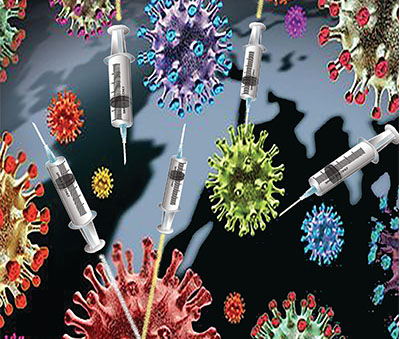
President Joe Biden said last week he expects a fully approved vaccine by the early fall, but the FDA would not comment on the time frame.

Data show that being vaccinated dramatically reduces the risk of hospitalization or death following a COVID-19 infection. More than 192 million Americans have gotten at least one dose of the three vaccines that have been given emergency use authorization (EUA) in the U.S., made by Pfizer-BioNTech, Moderna and Janssen/Johnson & Johnson, without widespread side effects, data show. But now the number of Americans fully vaccinated against COVID-19 has begun to stall with about 92 million people over age 12 still unvaccinated, according to U.S. Centers for Disease Control and Prevention (CDC) data. Meanwhile, the more contagious Delta variant of the virus is spreading rapidly among the unvaccinated population.

The spike in COVID-19 cases in states that have low vaccination rates has threatened to claw the U.S. back into the worst of the pandemic, and it creates a looming political liability for Biden. On Aug. 3, Biden gave a sober speech from the East Room of the White House, saying the country’s “best line of defense” against the virus “is the vaccine.” “It’s as simple as that. Period. The vaccine,” he said.

But as Biden attempts to mount more aggressive vaccination efforts to stave off the spread of the highly transmissible Delta variant, the fact that the FDA has yet to fully approve any of the vaccines is threatening to slow progress. About 30% of unvaccinated people say they would be more likely to get a shot with full FDA approval, according to recent polls from the Kaiser Family Foundation. While the pollsters warn that may be a “proxy for more general concerns,” some doctors and public health experts in areas with low vaccination rates also say they frequently hear the FDA’s emergency authorization cited as a reason people remain hesitant to get the shot.

The Biden Administration has said all civilian federal employees must be vaccinated against COVID-19 or submit to regular testing, and many hospital systems and universities, as well as a number of large private employers like Walmart, Google, and Disney, have begun to follow suit.

The Justice Department’s Office of Legal Counsel recently released an opinion saying federal law does not prohibit companies from requiring vaccines even if they are under emergency authorization, and courts have generally upheld vaccine mandates.

But some employers and organizations have been reluctant to make similar requirements while the vaccines are still under emergency authorization. A number of public educational institutions—including the State University of New York and Colorado State University systems—have said they will mandate vaccination for students once a vaccine is fully approved. In other parts of the country, Republican politicians have used the lack of full approval to block vaccine requirements from being put into place. In Texas, for example, Republican Gov. Greg Abbott signed an executive order on July 29 preventing any organization that receives state funds, including public universities, from requiring vaccines under emergency use authorization.

Health systems have also taken a mixed approach. Mass General Brigham, which employs 80,000 workers in Massachusetts, said it will require employees to get vaccinated once the FDA issues its full approval for at least one of the vaccines, as did Beaumont Health, the largest health care system in Michigan. Other large health systems like Cleveland Clinic, Intermountain Health, and Christus Health have not put in place vaccine requirements and say they are still monitoring the situation.

“We need to see a full approval before we’ll do another evaluation of thinking about a requirement in the future,” says Dr. Sam Bagchi, executive vice president and chief clinical officer at Christus. He notes that the health system is already facing “unprecedented staffing challenges” due to many health care workers quitting or taking early retirement during the pandemic. If his hospitals required workers to get vaccinated now, he fears it would push workers away at a time when they need more staff due to rising COVID-19 cases.

Long-term care facilities are in a particularly precarious position. LeadingAge, the national trade group for non-profit nursing homes and other aging services, recently called for its members to require employees to get vaccinated against COVID-19 as vaccination efforts have stalled in places where the virus devastated residents and staff last year. But Katie Smith Sloan, the group’s president and CEO, says she knows many of her member facilities can’t afford to lose staff who aren’t ready to get vaccinated. “We’re already facing acute shortages, particularly nursing assistants and nurses in long-term care, home health, nursing homes, and assisted living,” she says. She hopes that an FDA approval will make more workers volunteer to get vaccinated and encourage more facilities to require it.

Even the U.S. military is still weighing what to do. It has not yet required that its 1.3 million active duty personnel be vaccinated, and senior military medical officials are watching the FDA approval process closely. Secretary of Defense Lloyd Austin is consulting with medical experts and still weighing whether to request approval from Biden to require vaccines, Pentagon spokesman John Kirby said on Aug. 3.

The FDA typically completes a priority review, like it is conducting for Pfizer, in six to eight months. Pfizer says it submitted a rolling application in May and Moderna—which manufactures one of the other approved COVID-19 vaccines—says it submitted a rolling application in June, meaning both companies could turn in portions of their applications while continuing to collect data. The process is “moving forward as rapidly as possible in keeping with the high-quality complete assessment that the public expects from the FDA,” said FDA spokeswoman Capobianco.

The COVID-19 pandemic was the first time that the FDA granted emergency use authorization to a vaccine for widespread use. The EUA designation was developed after the Sept. 11 attacks and originally intended for potentially lifesaving medicines or other products during an emergency like a terrorist attack or a more acute disease outbreak. To get an EUA for the COVID-19 vaccines, manufacturers had to follow special guidelines that included submitting two months of clinical trial data, along with information about the quality and consistency of the vaccines—and the FDA had to establish that the “potential benefits outweigh the known and potential risks” of the vaccine.

For full approval, the FDA must review significantly more data and make a larger determination that a vaccine is ready to be licensed, according to Dr. Jesse Goodman, former chief scientist at the FDA and a professor at Georgetown University. This involves analyzing hundreds of thousands of pages of material about the clinical trials, manufacturing processes and how the vaccines have functioned in the real world since the agency authorized it for emergency use. Regulators will check the vaccine manufacturer’s data and perform their own analyses to verify the vaccine’s efficacy, how that efficacy might decline over time and any evidence of potential side effects. They will also inspect manufacturing plants to ensure high levels of quality control—a particularly complex job given that these vaccines used new technology, Goodman says. He notes the FDA “has historically been under-resourced” and that there are a limited number of people with the appropriate expertise to review these new vaccines.

While all that can take time, public health experts are calling for more transparency from the agency as the U.S. struggles to convince a significant portion of its population to take the lifesaving shot. “It’s been a black box,” says Dr. William Schaffner, an infectious disease professor at Vanderbilt University Medical Center. “Particularly since we’re dealing with a pandemic and the taxpayers of the United States are paying for this vaccine, I think having the leadership of the FDA be more explicit about what the process is, and why it’s taking so long, would be at the very least instructive.”

But some worry hastening the approval process could backfire. Peter Marks, director of the Center for Biologics Evaluation and Research at the FDA, warned in a letter to the New York Times last month that “any vaccine approval without completion of the high-quality review and evaluation that Americans expect the agency to perform would undermine the F.D.A.’s statutory responsibilities, affect public trust in the agency and do little to help combat vaccine hesitancy.”

Dr. Arnold Monto, a professor of epidemiology at University of Michigan who chairs the committee of outside experts that advises the FDA on vaccines, including for COVID-19, agrees. “They’re trying as hard as they can,” he says, “given the constraints that they’re working under.”

The U.S. government’s top infectious disease expert, Dr. Anthony Fauci, said last week that he was hopeful the Food and Drug Administration will give full approval to the coronavirus vaccine by month’s end and predicted the potential move will spur a wave of vaccine mandates in the private sector as well as schools and universities.

Moderna’s Vaccine Is 93% Effective After 6 Months

Moderna said its COVID-19 vaccine remained 93% effective through six months after the second shot, as it reported second-quarter earnings and revenue that beat expectations. A final analysis of the company’s late-stage study, described in a statement on Thursday, suggests the vaccine’s protection remains stable for long after recipients complete the standard two-dose regimen. The 93% effectiveness level is just short of the shot’s initial efficacy of 94%.

Concern that the effectiveness of COVID-19 vaccines could wane has stoked talk of booster shots, and some countries have begun to offer vulnerable people third doses. However, World Health Organization Director-General Tedros Adhanom Ghebreyesus called for a moratorium on such measures on Wednesday until more people in the developing world are inoculated. The recommendation could limit the reach of Moderna’s shot, called Spikevax.

The shares fell 2.9% as of 8:28 a.m. before U.S. markets opened Thursday. COVID-19 vaccine-maker Pfizer lost 0.6%, while its partner BioNTech shed 3.8%.

Moderna’s latest efficacy data hasn’t been published in a medical journal and further details weren’t released. Despite the apparent endurance of its vaccine, Moderna is exploring options for supplemental shots that could fend off emerging strains of the virus.

All three of the company’s booster candidates produced “robust antibody responses” against delta and other variants of concern in a phase 2 human study, Moderna said in its statement. The boosters are being tested at a 50 microgram dose, or half what is used in the current shot. That data has been submitted to a journal for publication, the company said.

Seeking Approval

Cambridge, Massachusetts-based Moderna also said it expected to complete its submission for full Food and Drug Administration approval for its vaccine this month.

The agency is already reviewing the submission for a rival messenger RNA vaccine from Pfizer Inc. and BioNTech SE, and is under growing pressure to complete the process quickly. With the delta variant sparking a new wave of cases, advocates say an approval could help convince more people to get a shot.

Moderna, which reported its first profit earlier this year, had net income of almost $2.8 billion in the quarter ending June 30 on revenue of $4.4 billion, almost all of which is from its COVID-19 shot. Diluted earnings per share of $6.46 easily beat analysts expectations, according to a survey of analysts by Bloomberg, while revenue only slightly exceeded expectations.

The company said in the release it has signed $20 billion worth of COVID-19 vaccine purchase agreements for 2021, up from the $19.2 billion it announced in May. For 2022, it already has signed agreements for $12 billion in vaccine sales with options for $8 billion more. Moderna didn’t increase its forecast that it will produce 800 million to 1 billion COVID vaccine doses this year.

Seeking Deals

Moderna’s views for total sales of its COVID-19 vaccine pale in comparison to the Pfizer-BioNTech partnership, which has a higher manufacturing capacity for its shot. Last month, Pfizer boosted its vaccine sales forecast for 2021 to $33.5 billion.

Moderna’s shares have quadrupled since the beginning of the year, and the company hit $100 billion in market value for the first time July 14. The stock was made part of the S&P 500 last month and is the index’s best performer this calendar year.

As the biotech seeks to grow further, it will look opportunities to acquire or license technologies that could enhance its platform. Moderna, which has more than $12 billion in cash and investments, will focus on nucleic acid technologies, such as mRNA, gene editing, and gene therapy, the company said in a presentation.

Moderna has also built out its suite of leaders to double down on its commercial franchise. In the last quarter, the company hired Paul Burton, a former Johnson & Johnson executive, to serve as chief medical officer, and Ogilvy’s Kate Cronin as chief brand officer.

Why WHO Wants The World To Hold Off On Booster Dose?

The World Health Organization (WHO) has called upon wealthy nations to halt their plans for administering booster doses till at least end of September in order to ensure enough vaccine availability for the less developed and poor nations.

The agency said the halt should last at least two months, to give the world a chance to meet the director-general’s goal of vaccinating 10% of the population of every country by the end of September.
“We need an urgent reversal from the majority of vaccines going to high-income countries, to the majority going to low income countries,” WHO Director General Tedros Adhanom Ghebreyesus said at a press briefing.

The request is part of Ghebreyesus’ plan to vaccinate 40% of the world by December, according to his senior advisor, Dr. Bruce Aylward.

According to WHO Director General Tedros Adhanom Ghebreyesus, the world needs “an urgent reversal from the majority of vaccines going to high-income countries, to the majority going to low income countries” in order for at least 10% of each country’s population to be vaccinated by end of September and 40% of the world’s population by December.

While booster doses are now accepted as a reality as most vaccines’ efficacy wanes after some months, very few countries have started administering booster shots given that even the first two doses of double-dose vaccines have not yet been given. Countries that have started administering boosters include Dominican Republic, which is not exactly in the club of wealthy nations and has a population of less than Delhi’s. Israel is another country to have announced its decision to administer booster doses to its geriatric population. In the US, the San Francisco Department of Public Health and Zuckerberg San Francisco General Hospital have said they would allow booster dose of the Johnson and Johnson vaccine, which is a single shot vaccine.

Experts have blamed cornering of vaccines by high income countries for the vaccine inequity. High-income countries administered around 50 doses for every 100 people in May, and that number has since doubled, according to WHO. Low-income countries have only been able to administer 1.5 doses for every 100 people.

The European Union (EU), with a population of around 448 million, has ordered enough vaccines to inoculate each EU resident with 6.9 doses. The UK has ordered 8.2 doses per citizen. The US, with a population of 328 million, has ordered enough to administer each of its citizens with 4.6 doses. The case of Canada is even more glaring — for a population of around 38 million, it has ordered enough doses to administer each citizen with 10.5 doses.

Contrast that with countries like Haiti, which only recently received its first batch of vaccines, to administer the first dose. The African Union, on the other hand, has ordered just enough to administer 0.4 doses per citizen.

Added to that is the export restrictions that were imposed by several wealthy nations on vaccines, many of which were being manufactured there. In cases like that of India, the country’s prioritization for vaccinating its own population first coupled with production capacity constraints that have still not been resolved has led to India not being able to fulfil its global obligations for vaccine supply.

India’s Chennai Turning into a Data Center Hub

Tamil Nadu’s capital city Chennai after being the ‘Detroit’ of India for housing several automobile makers is turning out to become a major data center hub. With the central government and Reserve Bank of India insisting on players to have their data stored in India, the data center business is getting a boost.

“With three submarine cable landing stations (one more to come), a comfortable power supply position (data Centre capacity is generally measured in MW), the availability of market and knowledge pool, Chennai is an ideal location,” Nikhil Rathi, CEO and Founder of Web Werks India Pvt Ltd, a major player told IANS.

Adding further he said the Covid-19 lockdown saw huge amount of data traffic and it is growing. Web Werks has signed a Memorandum of Understanding (MOU) with Tamil Nadu government to build a 20MW data Centre here at an outlay of about Rs.700 crore and will have a headcount of 100.

For Web Works, Chennai will be its second largest location in India. The company has its data centers in Mumbai, Pune and Delhi in India. It also has data centers overseas. The Tamil Nadu government is working to come out with a separate policy for data centers to strengthen the ecosystem.

“Most common requirements of data Centre’s pertaining to housing regulations and power are being worked upon to encourage data Centre investments and further downstream investments,” the state government said.

Rathi said all buildings cannot house a data center. The building that houses a data Centre will generally need a higher ceiling. “The buildings are machine specific,” Rathi added.

According to the state government, there are six submarine data cables with a bandwidth of 14.8 Tbps. The rural areas in Tamil Nadu are also well connected with more than 12,524 village panchayats with a minimum scalable bandwidth of 1 Gbps. As per TRAI, Chennai is among the top five service areas in India for broadband subscriptions.

The state government has signed Memorandums of Understanding (MOU) with nine companies for setting up data centers with a total proposed investment of Rs 16,927 crore and employment potential of over 9,000 jobs over the last two years.

National and international companies, including Yotta, Princeton Digital, ST Telemedia, Netmagic and Adani are in the process of setting up their data centers in Chennai. The Ambattur locality in Chennai is the preferred choice for data center companies owing to its favourable geographical conditions and existing data center ecosystem.

Siruseri is the next ideal destination due to the presence of several IT companies, which offers a great market opportunity, the government said.  Rathi said there is a good market for data centres in Southern cities like Chennai, Bengaluru and Hyderabad owing to the concentration of IT companies, talent pool.

He said Tamil Nadu has the single window clearance which eases the regulatory clearance process. As per a JLL report, Mumbai and Chennai are expected to drive 73 per cent of the sector’s total capacity addition during 2021-23, while other cities like Hyderabad and Delhi-NCR emerging as new hotspots.

India’s data center sector will require investment of $3.7 billion over the next three years in order to fulfill the 6 million square feet greenfield development, JLL said.

Data centres in Chennai:

Ambattur
STTelemedia Data Center
NTT Netmagic
NTT Netmagic (Upcoming expansion)
Princeton Digital (Upcoming)
ST Telemedia (Upcoming)
Siruseri SIPCOT IT Park
Nxtra site 1
Vodafone
Reliance Jio
Nxtra site 1 (Upcoming)
Adani Group (Upcoming)
Technoelectric (Upcoming)
Mantra Data Centres (Upcoming)
Taramani
Sify.

Apple To Scan U.S. iPhones For Images Of Child Sexual Abuse

Apple unveiled plans to scan U.S. iPhones for images of child sexual abuse, drawing applause from child protection groups but raising concern among some security researchers that the system could be misused, including by governments looking to surveil their citizens.

The tool designed to detected known images of child sexual abuse, called “neuralMatch,” will scan images before they are uploaded to iCloud. If it finds a match, the image will be reviewed by a human. If child pornography is confirmed, the user’s account will be disabled and the National Center for Missing and Exploited Children notified.

Separately, Apple plans to scan users’ encrypted messages for sexually explicit content as a child safety measure, which also alarmed privacy advocates. The detection system will only flag images that are already in the center’s database of known child pornography. Parents snapping innocent photos of a child in the bath presumably need not worry. But researchers say the matching tool — which doesn’t “see” such images, just mathematical “fingerprints” that represent them — could be put to more nefarious purposes.

Matthew Green, a top cryptography researcher at Johns Hopkins University, warned that the system could be used to frame innocent people by sending them seemingly innocuous images designed to trigger matches for child pornography. That could fool Apple’s algorithm and alert law enforcement. “Researchers have been able to do this pretty easily,” he said of the ability to trick such systems.

Other abuses could include government surveillance of dissidents or protesters. “What happens when the Chinese government says, ‘Here is a list of files that we want you to scan for,'” Green asked. “Does Apple say no? I hope they say no, but their technology won’t say no.”

Apple has been under pressure to allow for increased surveillance of encrypted data

Tech companies including Microsoft, Google, Facebook and others have for years been sharing digital fingerprints of known child sexual abuse images. Apple has used those to scan user files stored in its iCloud service, which is not as securely encrypted as its on-device data, for child pornography.

Apple has been under government pressure for years to allow for increased surveillance of encrypted data. Coming up with the new security measures required Apple to perform a delicate balancing act between cracking down on the exploitation of children while keeping its high-profile commitment to protecting the privacy of its users.

But a dejected Electronic Frontier Foundation, the online civil liberties pioneer, called Apple’s compromise on privacy protections “a shocking about-face for users who have relied on the company’s leadership in privacy and security.”

Meanwhile, the computer scientist who more than a decade ago invented PhotoDNA, the technology used by law enforcement to identify child pornography online, acknowledged the potential for abuse of Apple’s system but said it was far outweighed by the imperative of battling child sexual abuse.

“Is it possible? Of course. But is it something that I’m concerned about? No,” said Hany Farid, a researcher at the University of California at Berkeley, who argues that plenty of other programs designed to secure devices from various threats haven’t seen “this type of mission creep.” For example, WhatsApp provides users with end-to-end encryption to protect their privacy, but also employs a system for detecting malware and warning users not to click on harmful links.

Apple was one of the first major companies to embrace “end-to-end” encryption, in which messages are scrambled so that only their senders and recipients can read them. Law enforcement, however, has long pressured the company for access to that information in order to investigate crimes such as terrorism or child sexual exploitation.

Apple said the latest changes will roll out this year as part of updates to its operating software for iPhones, Macs and Apple Watches. “Apple’s expanded protection for children is a game changer,” John Clark, the president and CEO of the National Center for Missing and Exploited Children, said in a statement. “With so many people using Apple products, these new safety measures have lifesaving potential for children.”

Apple says the changes do not disturb user privacy

Julia Cordua, the CEO of Thorn, said that Apple’s technology balances “the need for privacy with digital safety for children.” Thorn, a nonprofit founded by Demi Moore and Ashton Kutcher, uses technology to help protect children from sexual abuse by identifying victims and working with tech platforms.

But in a blistering critique, the Washington-based nonprofit Center for Democracy and Technology called on Apple to abandon the changes, which it said effectively destroy the company’s guarantee of “end-to-end encryption.” Scanning of messages for sexually explicit content on phones or computers effectively breaks the security, it said.

The organization also questioned Apple’s technology for differentiating between dangerous content and something as tame as art or a meme. Such technologies are notoriously error-prone, CDT said in an emailed statement. Apple denies that the changes amount to a backdoor that degrades its encryption. It says they are carefully considered innovations that do not disturb user privacy but rather strongly protect it.

In order to receive the warnings about sexually explicit images on their children’s devices, parents will have to enroll their child’s phone. Kids over 13 can unenroll, meaning parents of teenagers won’t get notifications.  Apple said neither feature would compromise the security of private communications or notify police.

Separately, Apple said its messaging app will use on-device machine learning to identify and blur sexually explicit photos on children’s phones and can also warn the parents of younger children via text message. It also said that its software would “intervene” when users try to search for topics related to child sexual abuse.

Facebook Has New Redesigned Settings Page On Mobile

Facebook is changing its Settings page on the mobile app. The new layout will help people easily find tools they often need quicker. These include managing the ads people see, adjusting sharing settings and curating an audience for posts. The new design rollout has already begun since August 4, and should come to supported devices via an update soon if it hasn’t already.

Here’s all you need to know about the new Facebook Settings page, including what’s new and which devices it will come to.

The new story now features lesser broad categories than before. Facebook suggests the change is to prevent people from thinking too hard about where to start. Hence, Settings will now be grouped into six broader categories – Account, Preferences, Audience and Visibility, Permissions, Your Information, and Community Standards and Legal Policies.

Relocated menu items, new Privacy shortcut

The new Settings page will also be relocating some items so that they can now be found alongside other related settings. For example, the News Feed setting, previously found in its own small category, will now be seen under the Preferences category.

Facebook also said in a blog post that it will be improving the Settings’ Search functionality, making it “easier to find the settings you need if you don’t know the exact name or location of the setting you’re looking for.”

Facebook has also added a new Privacy Shortcut right at the top of the Settings page, to make it easier for users to change important privacy and security aspects.

Which devices will see the new Facebook settings?

The Facebook Settings redesign will roll out for Android devices, including smartphones and tablets, as well as iOS devices, including iPhones and the iPad series. The new rollout will also be coming to mobile web browsers for those who do not use the Facebook application. Lastly, it will also be implemented in Facebook Lite, a lighter version of the Facebook app that is available on some platforms.

Attempting To Intimidate Critics, Modi Gvt. Locks Rahul Gandhi ’s Twitter Account

The Twitter account of senior Congress leader Rahul Gandhi was ‘temporarily’ locked on last week, a day after a photograph he had posted with the family of the nine-year-old Dalit rape victim was taken down by the microblogging site.

The action came after the National Commission for Protection of Child Rights (NCPCR) issued a notice to Twitter India, asking the social media platform to remove the tweet which revealed the identity of the rape victim.
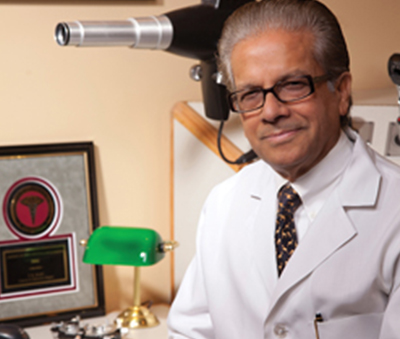
“Shri @RahulGandhi’s Twitter account has been temporarily locked & due process is being followed for its restoration,” the Congress tweeted. “Until then, he will stay connected with you all through his other SM platforms & continue to raise his voice for our people & fight for their cause. Jai Hind!”

“Based on a complaint by the BJP, the Twitter account of Rahul Gandhi has been locked. Instead of giving justice to the 9-year-old Dalit girl, the BJP and the Narendra Modi government are far too preoccupied in intimidating Twitter as also illegally chasing Rahul Gandhi. Had PM Narendra Modi and Home Minister Amit Shah used this time in ensuring justice for the Dalit girl…Delhi would have been a safer place,” Congress communication department head Randeep Surjewala told the media.

The girl, who has not been named by authorities and belonged to the Dalit community, one of Hinduism’s most oppressed castes, was found dead near a Delhi crematorium on Sunday night, Ingit Singh from Delhi Police’s South West District told NBC News over the telephone. Her whole body was burnt apart from her ankles and feet, he added.

Four men were arrested on suspicion of rape and murder in the death of a 9-year-old girl, whose killing has brought into focus both rampant sexual violence and caste prejudice in the country. Four men, including the crematorium’s priest, were arrested early Monday on suspicion of rape, murder and destruction of evidence, Singh said.

“The brutality from this incident is barbaric beyond words,” Yogita Bhayana, founder of the women’s rights group People Against Rapes in India, said. “And the saddest part is incidents like these are not rare. We see cases where Dalit women are killed, raped, and tortured daily. … Only a few come to the limelight.”

There are 200 million Dalits in India, out of a population of 1.3 billion, according to the most recent government census. Rahul Gandhi visited the girl’s family and offered his condolences and support to the family last week, seeking action for those behind the heinous crime.

Best Wishes On India’s 75th Independence day From Dr. V K Raju

Best wishes to all the readers of The Universal News Network on this 75th Independence Day of India. India can be a world-class economic juggernaut erelong.

After all, India was the richest country when British came to its shores in 1700s. It is a free and open society with a viable parliamentary democracy and deep-rooted cultural and social traditions that have weathered the storms of religious and regional tensions and of a volatile polity.

We all know that there is a cavernous gap between India’s tremendous potential and depressing reality, such as- air pollution, water pollution, fuel adulteration, lack of sewage treatment operations, environmental degradation, lack of public health, loss of biodiversity, loss of resilience in ecosystems and livelihood insecurity for the poor. I am aware of the incredible strides India had made since 1990s.

If we develop a mind set of “so little done; so much to do”, sky is the limit for India as we have the greatest and largest natural resource that no other country has, 530 million of young people below the age of 34.

I often visit India (which gave me stellar medical education almost for free). Our foundation (EYE FOUNDATION OF AMERICA / WORLD WITHOUT CHILDHOOD BLINDNESS) is committed to combat avoidable blindness in India and beyond. People call this charity and I see our work as investment.

During my visits and throughout the year in the social media we hear the incredible past glory of India. (Pushpaka viman, Arya Bhatta, Chanakya, …and the list goes on). Let us remind ourselves “The Past is our Cradle, not our Prison, and there is danger and as well as appeal in its glamor. The past is for inspiration, not imitation, for continuation, not repetition” (Israel Zangwill)

By change of mindset, sky is the limit for India. Post-second World War Germany and Japan are outstanding examples of the effect of harmonious cooperation. For this harmonious cooperation, may I quote Nani Palkhivala’s prescription for India,” When we break our tradition of being collectively foolish, in spite of being individually intelligent.”

Jai Hind!

From V.K. Raju, MD, FRCS, FACS

Ophthalmologist, Regional Eye Associates

President and Founder, Eye Foundation of America

President and Founder, Goutami Eye Institute

Clinical Professor, West Virginia University

Director, International Ocular Surface Society

Adjunct Professor, GSL Medical School

Adjunct Professor, Wilmer Eye Institute, Johns Hopkins University

Film, 200 – Halla Ho! To Premiere On August 20th By ZEE5 Global

ZEE5 Global released the teaser of its next Original film 200 – Halla Ho! which gave the audience a sneak peek into what the film is about. The trailer of the film, will definitely make you question a lot of things about our society and the way women are treated.

The frightful yet gripping trailer of Sarthak Dasgupta’s 200 – Halla Ho! is a story about how 200 Dalit women united and took law and justice in their own hands by lynching a gangster, robber and serial rapist in open court.

The trailer reveals nuances of each of the characters played by a talented and eclectic ensemble cast. Inspired by true events, the movie goes on to uncover the shocking events and circumstances which led the 200 women to take such a drastic step to seek justice.

Talking about the trailer, Sarthak Dasgupta, Writer & Director shared, “This is not a film for me, but a shoulder that I give to movement towards social equality.  I need to convey to the audience that women should be treated equally and that Dalits’ lives matter too! This film is about those Dalit women who despite getting socially marginalized, molested, tortured and mortified, had to take law into their own hands to punish the person who was responsible for ruining their lives. It addresses the debate whether they were right or they were wrong.  I hope this film will add voice to the social change that is so needed in the society.” The film also marks the comeback of renowned actor Amol Palekar to the movies after almost a decade.

200 – Halla Ho, has an amazing star cast comprising Amol Palekar, Barun Sobti, Rinku Rajguru, Sahil Khattar, Saloni Batra, Indraneil Sengupta, and Upendra Limaye. Written and Directed by Sarthak Dasgupta, produced by Yoodlee Films, the film production arm of Saregama, 200 – Halla Ho premieres 20th August on ZEE5.

Users can download the ZEE5 app from Google Play Store / iOS App Store, on Roku devices, Samsung Smart TVs, Apple TVs, Android TVs, and Amazon Fire Stick. ZEE5 is also available on www.ZEE5.com.

ZEE5 is the digital entertainment destination launched by Zee Entertainment Enterprises Limited (ZEEL), a global Media and Entertainment powerhouse. The platform launched across 190+ countries in October 2018 and has content across 18 languages: Hindi, English, Bengali, Malayalam, Tamil, Telugu, Kannada, Marathi, Oriya, Bhojpuri, Gujarati, Punjabi, including six international languages Malay, Thai, Bahasa, Urdu, Bangla and Arabic. ZEE5 is home to 130,000+ hours of On Demand Content. The platform brings together the best of Originals, Movies and TV Shows, Music, Cineplays and Health and Lifestyle content all in one single destination. ZEE5 offers key features like 15 navigational languages, content download option, seamless video playback and Voice Search.

Users can download the ZEE5 app from Google Play Store / iOS App Store, on Roku devices, Samsung Smart TVs, Apple TVs, Android TVs, and Amazon Fire Stick. ZEE5 is also available on www.ZEE5.com.

ZEE5 Global Twitter: https://twitter.com/ZEE5Global
ZEE5 Global LinkedIn: https://www.linkedin.com/company/zee5global/

Should President Biden Receive Holy Communion? Cardinal Tobin & Bishop Rhoades Discuss

Catholic bishops meeting in regional cohorts have until the end of next month to submit their thoughts on what should be included in a forthcoming document on the Eucharist, which some Catholics fear may further divide the church over political support for abortion rights, the bishop heading the committee drafting the document said last week.

Bishop Kevin C. Rhoades, who leads the doctrine committee of the U.S. Conference of Catholics Bishops, reiterated that the document will not bar any individuals from receiving Communion and said it is “going to be addressed to all Catholics, not a particular person or a single issue in the part on Eucharistic consistency.”

“The document will not be establishing national norms or a national policy,” he said. “That’s really beyond the scope of the document; it’s really beyond our competence.” Bishop Kevin C. Rhoades, who leads the doctrine committee of the U.S. bishops, reiterated that the document will not bar any individuals from receiving Communion.

“We’re striving to write a document that will contribute to a real eucharistic revival in the church in our nation by highlighting the truth about the amazing gift that Jesus gave us on the night before he died,” Bishop Rhoades said.

But Bishop Rhoades also suggested that Catholics who do not accept the totality of church teaching are not prepared to receive Communion.

“In order to be properly disposed to receive the Eucharist, we need to be in communion with the church, and we need to assent to the deposit of faith that’s contained in Scripture and tradition that the apostles entrusted to the church,” Bishop Rhoades said. “This is our perennial tradition.”

The comments came during a panel hosted by the Initiative on Catholic Social Thought and Public Life at Georgetown University.

Bishop Rhoades also suggested that Catholics who do not accept the totality of church teaching are not prepared to receive Communion.

Cardinal Joseph Tobin, the archbishop of Newark who spoke last month against moving ahead with drafting a statement, said during the panel that the perception around that document is that it is political in nature and is thus unlikely to achieve the goal of broadening understanding about the Eucharist.

​“One thing I’ve learned in 43 years as a priest is that preaching has two essential dynamics,” he said. “One is what you say and second is what they hear.”

He applied that dynamic to the forthcoming document, which follows statements from individual bishops condemning Mr. Biden’s support for abortion rights and an unusual working group formed by the U.S.C.C.B. president in the wake of Mr. Biden’s election.

“This document was born in some confusion,” Cardinal Tobin said. “This document was born in some confusion,” Cardinal Tobin said.

Cardinal Tobin suggested that U.S. bishops look to other nations that have dealt with similar situations for guidance. He noted that bishops in Argentina did not threaten to deny Communion to political leaders who sought to legalize abortion there.“Are they slacking or do they have a different pastoral sense?” he asked.

A Catholic commentator said she feared the document could reduce reflection about worthiness to receive the Eucharist to one’s views on abortion, which she called “simplistic.” “It does seem to me simplistic to say that abortion is the preeminent priority for Catholics politically, not just in a sense of ranking moral issues but also when it comes to making specific decisions about voting and about elections,” said Mollie Wilson O’Reilly, an editor at large at Commonweal. “Insisting on that has led the Catholic Church and the Catholic hierarchy into a de facto alliance with the G.O.P. over the last several decades.”

Mollie O’Reilly lamented that U.S. bishops have “come out on what looks like a kind of a war footing” against President Biden. Ms. O’Reilly lamented that U.S. bishops have “come out on what looks like a kind of a war footing” against President Biden. “I think this is an opportunity when the church could really be a fruitful partner in addressing a lot of those other issues that so badly need to be addressed and where I think there is a lot of common ground and common language,” she said.

John Carr, a longtime staffer of the U.S.C.C.B. and now the co-director of the Initiative on Catholic Social Thought and Public Life, called the debate over whether Catholic politicians are eligible to receive Communion “terrible timing.”

“In the midst of a pandemic racial reckoning, let’s have a fight about whether the president ought to be able to receive Communion?” he questioned.

“We ought to be saying to people, the Eucharist brings us together, we need you as part of our family and faith,” he said. “We’ve got to read the signs of the times. We’re in a particular moment, and we ought to do everything we can to make sure the Eucharist doesn’t get used or misused for political or ideological purposes.”

“In the midst of a pandemic racial reckoning, let’s have a fight about whether the president ought to be able to receive Communion?” John Carr questioned.

Mr. Carr said he is “bitterly disappointed” in the president’s support for abortion rights, “but what’s different is he continues to be a part of our community. He attends Mass every Sunday.”

“We need not to discipline politicians but to engage our politicians and to pull them back in, so they see the richness of our tradition in its everyday forms,” he said.

Some Catholics have lamented that the debate over the document—which lasted for more than two hours when bishops met virtually last month—highlights divisions in the church.

But Gretchen Crowe, the editor of the Catholic newspaper Our Sunday Visitor, said on the panel that fears over divisions should not deter bishops from talking about “eucharistic coherence.”

“A fear of division, or really a fear of anything else, really never should prevent the church from teaching what it professes about anything,”  Gretchen Crowe said.

“A fear of division, or really a fear of anything else, really never should prevent the church from teaching what it professes about anything, much less what it teaches about the real presence of Jesus Christ in the Eucharist,” she said.

A number of bishops have pointed to a 2019 poll from the Pew Research Center that found significant numbers of U.S. Catholics either disagree with or do not understand the church’s teaching that the Eucharist is the real body and blood of Christ. That poll helped prompt bishops to adopt a strategic plan that highlighted church teaching on the Eucharist. Those backing the statement on “eucharistic coherence” said the document fits in with that plan.

Cardinal Tobin said on Wednesday’s panel that perhaps church leaders trying to inspire Catholics about the Eucharist might look to Rome for inspiration. “If Pope Francis’ great encyclicals were quoted as often as that Pew statistic, I think we might be better off as a church,” he said.

Neha Vedpathak’s Art At Display At Sundaram Tagore In New York

Culture

Indian-born artist Neha Vedpathak—who has just received the Gilda Award in Painting from Kresge Arts in Detroit—creates sensuous, tactile paper constructions using a pushpin. She methodically plucks artisanal Japanese paper, separating the fibers to create a flexible ground.

She then paints and sews together the lace-like constructions, creating richly colored abstract compositions. It is a deliberative and labor-intensive process that makes time itself an integral force in each work.

This fall, Vedpathak’s work will be featured in the National Indo American Museum’s inaugural show in Chicago, a solo show at the Flint Institute of Arts in Michigan and in a group show at the Baker Museum at Artis-Naples in Florida in 2022.

In 2018, the Detroit Institute of Arts commissioned Vedpathak’s work for the permanent collection, exhibiting it across from work by Anish Kapoor. Her work has also been exhibited at Arizona State University Art Museum, Tempe; Weatherspoon Museum, Greensboro, North Carolina; Detroit Institute of Arts, Michigan; and Centre d’Art Marnay Art Centre, France.

Born in Pune in 1982, Vedpathak, now based in Detroit, came to the U.S. in 2007. She started as an abstract-minimalist painter, but in 2009 began exploring ways to take her two-dimensional practice in a new direction. Her experiments with different media, and a desire to avoid toxic materials, led her to Japanese paper, already in her repertoire as a painter, which became the focus of her practice. Using a rigorous self-taught “plucking” technique, Vedpathak labors, sometimes for months, to complete each work. The act of plucking has become a ritual of transformation for the artist, a slowing-down and a meditation.

Neha Vedpathak (b. 1982) is a Detroit-based artist who creates sculptural installations and wall reliefs made from paper. She was introduced to Sundaram Tagore Gallery in 2019, when she was selected by curator Betty Seid for our exhibition Alterations Activation Abstraction. Although she has only been exhibiting her work since 2006, Vedpathak has already received critical recognition from institutions such as the Detroit Institute of Arts, which acquired and exhibits her work across from work by Anish Kapoor.

Vedpathak began her career as a painter, creating minimalist abstract works on canvas. She subsequently sought to move beyond the two-dimensional plane. After experimenting with different materials for a period of time, in 2009 she came across handmade Japanese paper, which eventually became the focus of her artistic investigations.

Using a rigorous self-developed technique, which she refers to as “plucking,” Vedpathak spends hours separating the paper’s fibers with a tiny pushpin. There is a distinctly spiritual aspect to her slow and disciplined process, which she likens to meditative chanting tuned to a slower pace.

The resulting works resemble swaths of lace fabric, which she paints and sews into striking abstract compositions. Part painting, part collage, Vedpathak’s sensuous, tactile constructions seemingly float while casting intricate shadows on the wall. She creates depth with nuanced shifts of color and by leaving small areas of the composition unplucked, which plays off the subtle transparency of the lace-effect.

Having lived in multiple locations, including Pune, India, where she was born, Chicago, Phoenix, and now Detroit, Vedpathak’s practice is deeply inspired by her physical environment and she often draws from the natural world. Recently, however, she has started to incorporate architectural elements of the cityscape that surrounds her, referencing the abandoned structures and peeling paint of a city in constant flux, where widespread urban decay is undergoing a slow renewal.

Through her work, Vedpathak addresses contemporary social themes, including politics, cultural identity and economic disparity, yet she also considers larger spiritual themes, exploring ideas of transformation and the cyclical nature of life. Neha Vedpathak works have been shown at Arizona State University Art Museum, Tempe; Weatherspoon Museum, Greensboro North Carolina; Detroit Institute of Arts, Michigan; and Centre d’Art Marnay Art Centre, France

Aicon Gallery In NYC Presents Kulkarni

Aicon Art New York is presenting Home and Away, a debut solo exhibition by the late K.S. Kulkarni, an influential figure in the history of modern Indian art. The exhibition, in collaboration with the artist’s family, will be Kulkarni’s first solo exhibition in North America in over a decade.

A founding member of the avant-garde Delhi Shilpi Chakra movement, Kulkarni sought to develop an idiom that was both grounded in the “soul of the people” and also aligned with the “process of progress.” His works garnered appreciation both in his native New Delhi, but also in the many places he travelled and absorbed influences. The current exhibition comprises canvases and works on paper that the artist created between his New Delhi studio and his travels around the US during the 1970s and 1980s. His use of expressive line, full-bodied color and simple forms distinguishes Kulkarni as one of the foremost painters to have left their mark on Indian modernism. We sincerely hope you can join us at the opening reception.

The OPENING RECEPTION is planned for Thursday, August 19 | 6:00 – 8:00 pm.

On Thursday, August 19 from 6pm to 8pm, we will host an in-person opening reception at the gallery. We encourage RSVPs for the same in order to allow us to effectively socially distance and to disinfect surfaces. NY state recommended PPE will be available on site. We do not recommend scheduling an appointment if you or anyone you are in regular contact with, has compromised health at this time.

-+=