Beth Chandler, YWCA Boston President In Conversation With Dr. Manju Sheth

YWCA Boston President and CEO Beth Chandler, a professional athlete and a recognized woman leader, grew up in a small idyllic town of NE in a loving family where Sundays were spent at church that was co- founded by her grandmother. However there were dark clouds of racism as well.


In her Chai with Manju interview, Ms. Chandler talks about being addressed with the ‘N word ‘and not being allowed to join local clubs including the country club. She also talks about her being a professional basketball player and important lessons she has learnt as a player and also leadership lessons learnt in her journey to becoming the President & CEO of YWCA Boston, which is also the first YWCA in the United States.

Today, she and her organization help individuals and organizations change policies, practices, attitudes, and behaviors with the goal of creating more inclusive environments where women, people of color, and especially women of color can succeed.

Ms. Chandler joined YW Boston in November 2012, with more than 20 years of experience in both the corporate and nonprofit sectors. In August 2018, she was appointed President & CEO. Her breadth of work experience encompasses program development, delivery and evaluation, business development, and operations.

Prior to working at YW Boston, Ms. Chandler served as vice president at the Achievement Network, a national non-profit dedicated to helping urban public and charter schools close the achievement gap.

She also held positions at Massachusetts Legal Assistance Corporation, the largest funding source for civil legal aid programs in the Commonwealth and Neighbor works America, one of the country’s preeminent leaders in affordable housing and community development.

Currently, Ms. Chandler serves on the Eastern Bank Board of Advisors, The Museum of Fine Arts Board of Advisors, TSNE-Mission Works Board of Directors, the Women’s Workforce Advisory Council and the Leadership Circle of Hope Central Church.

“Her life story as been shared in this episode of Chai With Manju is an incredible and very inspiring journey that will appeal to all,” says Dr. Sheth. “On the fun side, I enjoyed chatting about her experience with trying Indian food and love for travel.”


A physician by profession, having a passion for media and commitment to serve the larger humanity, with special focus on women’s empowerment, Dr. Manju Sheth is a Board Certified Internist, currently serving patients at Beth Israel Lahey Hospital.in the Boston Region in Massachusetts.

Dr. Sheth was the co-founder and CEO of INE MultiMedia, a non-profit organization devoted to promoting and supporting charitable organizations, art, culture, education and empowerment through workshops, seminars and multimedia. Dr. Sheth is a former trustee of the Indian-American Forum for Political Education. Dr. Sheth is very dedicated to the education of the community about health related issues, and is also the producer and chair of the annual free mega Health & Wellness Expo.

Having endowed with the gift of writing, Dr. Sheth is known to be a natural storyteller and “I truly believe that every life has a story and a dream. I’m always looking to hear stories of everybody’s life, in everyone that I meet, and then I look to find the right platform and the right medium to showcase it.” Her popular “Chai with Manju” celebrity series is one of the most read news features in the New England region, where she featured celebrities and spiritual leaders such as Sadhguru, Sri Sri Ravi Shankar, the Kennedys and the like.

India’s Supreme Court Is “Bothered” By Pegasus Scandal, Says It Is “Serious”

Describing the allegations of surveillance through the use of the Pegasus spyware as “serious”, the Supreme Court on August 5th wondered why no one had filed an FIR if there was reason to believe that phones had been hacked. It also pointed out that the allegations first surfaced in 2019.

Chief Justice of India N V Ramana who, along with Justice Surya Kant, was hearing eight petitions seeking an independent probe into the matter, said: “No doubt, the allegations are serious, if the reports are true.” The Chief Justice of India’s Supreme Court, while stating that he was not getting into facts of each and every case, said: “You know there are provisions under the Telegraph Act, IT Act etc to file complaints. These are the things which bother us.”

Replying to the query on why no one had filed an FIR, Senior Advocate Kapil Sibal, appearing for senior journalists N Ram and Shashi Kumar as well as the Editors Guild of India, said: “We did not have access to materials.” The petitions, he said, had information about multiple cases of spyware infiltration.

Sibal drew the court’s attention to proceedings initiated by WhatsApp against NSO in a California court. He said according to the court order, Pegasus once activated causes the target device to connect with the malware. The malware, he said, is then enabled and data is transferred.

“Pegasus is a rogue technology and infiltrates lives without our knowledge. All that it requires is a phone and it enters into our lives and then hears and surveys every movement. It’s an assault on privacy, human dignity and the value of our republic,” Sibal said, adding that “it penetrates into our national Internet backbone”.

He said the government, in its statement in the Parliament, had not disputed that Indians were among those targeted, “If the Government of India knew this was happening, why did it not take action against NSO Technologies? Why did they not lodge an FIR? This is about the privacy and safety of Indians,” he said.

The bench did not issue notice to the Centre and instead asked the parties to first supply copies of their petitions to the government counsel after which it would hear the matter again on August 10. “Somebody should appear for the government to take notice,” it said, making clear that the question of issuing notice will be considered after hearing from the government as well.

The bench indicated that most of the petitions were based on news reports and should have had something more for the court to set the legal process in motion. “You all know that there is a prima facie material, as well as credibility of reports, on the basis of which we can order an inquiry etc. Unfortunately, from what I read from the writs, this matter came to light in May 2019. I don’t know if any effort was made. Persons who have filed the writ petitions are knowledgeable persons having resources. They should have made more effort to bring forth more material… Some of the petitioners who have filed the pleas are not affected and some claim their phones are hacked. But they have not made efforts to file a criminal complaint,” the CJI said.

This led to exchanges in the courtroom with senior advocates representing the petitioners making their submissions on the pleas. Appearing for two journalists whose names figured in the alleged Pegasus target list, Senior Advocate Arvind Datar said there is no provision in the IT Act, 2000 for filing an FIR.

The criminal remedy in the Act, Datar said, relates to infringement of privacy in relation to bodily parts while the identity of the hacker needs to be known in civil remedy for damages. “Privacy is about the privacy of one’s bodily area. So there are no provisions for me to file an FIR… Someone has definitely accessed my computer and remedy is damages, and for this we should know who did (it). We need to know if the allegations are true,” he said.

Referring to the Aadhaar judgment, Datar said the Supreme Court had stated that privacy permeates all through Part 3 of the Constitution. Urging the bench to take cognizance, he said: “Today 300 people have come to light. Who else will take cognizance of this apart from the judiciary? We don’t know if it is 300 or 3000 individuals.” He said this can be taken up as a class-action case.

Senior Advocate Shyam Divan, appearing for academician Jagdeep Chhokar, said: “These media organizations enjoy a very high degree of credibility. A whistle-blower released the numbers… These numbers are of judicial and Constitutional authorities. Mr Chhokar is an academician, and for a private citizen to find a spyware installed on his phone is equal to war against a citizen by the government,” he said.

Asked if he had filed any FIR, Divan said “no” and “this case requires an independent probe by a fact-finding committee” under a bureaucrat of the highest level, preferably the Cabinet Secretary.

“My question is if you know the phone is hacked, then why wasn’t an FIR lodged. That is the only question,” The CJI  told Senior Advocate Meenakshi Arora who appeared for Rajya Sabha MP John Brittas. Arora said that former IT Minister Ravi Shankar Prasad had said in Parliament that no unauthorized interception was done. “If you have said in 2019 that you have not done, and now it is known that it has been done, there is a need to investigate”, she said.

“You all know that there is a prima facie material, as well as credibility of reports, on the basis of which we can order an inquiry etc. Unfortunately, from what I read from the writs, this matter came to light in May 2019. I don’t know if any effort was made. Persons who have filed the writ petitions are knowledgeable persons having resources. They should have made more effort to bring forth more material… Some of the petitioners who have filed the pleas are not affected and some claim their phones are hacked. But they have not made efforts to file a criminal complaint,” the CJI said.

Biden’s New Policy Will Ensure 50% Of Vehicles Sold In US By 2030 Are Electric

President Biden announced on August 5th a multistep strategy aimed at rapidly shifting Americans from gasoline-powered cars and trucks toward electric vehicles — a central part of his plan to reduce the pollution that is heating the planet.  The new plan targets that half of vehicles sold in the country by 2030 will be battery electric, fuel-cell electric or plug-in hybrid.

Biden signed the executive order at the White House alongside representatives from Ford, GM and Stellantis, and members of the United Auto Workers Union. The automakers are supporting Biden’s new target, announcing their “shared aspiration” that 40-50% of their cars sold by 2030 to be electric vehicles, according to a joint statement from the three automakers.

Speaking from the White House South Lawn in front of four electric vehicles, Biden said the future of America’s car manufacturing “is electric and there’s no turning back. The question is whether we’ll lead or fall behind in the race for the future,” the president added. Throughout Biden’s remarks, he emphasized that a move toward electric vehicles should come with an assurance that those vehicles and the batteries powering them should be made in the US and with union workers.

“There’s a vision of the future that is now beginning to happen, a future of the automobile industry that is electric — battery electric, plug-in hybrid electric, fuel cell electric,” said Mr. Biden, who announced the plan from the South Lawn of the White House before an array of parked electric vehicles, including the Ford F150 Lightning, the Chevrolet Bolt EV and a Jeep Wrangler. “The question is whether we’ll lead or fall behind in the future.”

The Environmental Protection Agency and Department of Transportation also announced Thursday they are reversing a Trump-era rollback of fuel emissions standards. The newly proposed standards from the agencies for light-duty vehicles will be 10% more stringent than the Trump-era rules for 2023 model year vehicles, then becoming 5% more stringent each year through 2026 model year vehicles.

The proposed emissions standard for mileage year 2026 is 52 miles per gallon, up from 43.3 miles per gallon under the Trump administration, which is the current mileage standard. The new standard is also up from 50.8 miles per gallon under the Obama administration rules for mileage year 2026.

The Biden administration’s proposed standard would translate to a label value — what the consumer would see on a new car sticker — of 38.2 mpg. The EPA estimates that implementing these standards would avoid 2.2 billion tons of carbon dioxide emissions through 2050.

With the impacts of a warming planet seen in record droughts, deadly heat waves, floods and wildfires around the globe, scientists say that simply restoring Obama-era climate controls will not be enough.

The agencies also announced a separate set of regulations to reduce greenhouse gas emissions for heavy-duty trucks. The first rulemaking process for trucks is expected to be finalized next year, and will apply to heavy duty vehicles starting with the 2027 mileage year, according to the EPA.

A rapid transition to electric cars and trucks faces several challenges. Experts say it will not be possible for electric vehicles to go from niche to mainstream without making electric charging stations as ubiquitous as corner gas stations. And while labor leaders attended the White House event and referred to Mr. Biden as “brother,” they remain concerned about a wholesale shift to electric vehicles, which require fewer workers to assemble.

Speaking on Wednesday night, a senior administration official echoed Biden’s comments.  “This is a paradigm shift,” a senior administration official told reporters on Wednesday. “What we’re hearing across the board is a consensus about the direction where this industry is going, and a coming together around the recognition that this is the moment of truth, not just for climate action for economic action as well.”

Biden has asked Congress for $174 billion to create 500,000 charging stations. An infrastructure bill pending in the Senate includes just $7.5 billion. However, it also provides $73 billion to expand and update the electricity grid, an essential step for carrying power to new auto charging stations. The International Council on Clean Transportation, a research organization, concluded that the nation would need 2.4 million electric vehicle charging stations by 2030 — up from 216,000 in 2020 — if about 36 percent of new car sales were electric.

A second bill, which could move through Congress this fall, could include far more spending on electric vehicles, consumer tax incentives and research. Neither proposal is guaranteed to pass in the closely divided Congress.

There are concerns that ome environmental advocates and lawmakers fear car companies could skirt the standards with loopholes — including allowances for EV makers like Tesla to sell credits to companies that sell gas-guzzling cars, thereby allowing them to meet the standards without electrifying their fleets.  “We must guard against the inclusion of legacy loopholes, which may allow for even lower greenhouse gas emissions standards than before,” Democratic Sen. Ed Markey of Massachusetts said in a statement. “We know the highest standards possible are economically feasible and technologically achievable because the automotive industry is already installing them.”

“President Biden has called global warming an existential threat, but these standards won’t protect us,” said Dan Becker, director of the Safe Climate Transport Campaign at the Center for Biological Diversity, in a statement. “The only reason automakers have ever cut pollution is because strong rules forced them to. And these rules won’t.”

The youth climate advocacy group Sunrise Movement sharply criticized Biden’s electric vehicles target, saying it’s not sufficient enough to combat the climate crisis. “Biden cannot think of himself as the climate president with a 50% electric vehicles goal,” Sunrise executive director Varshini Prakash said in a statement. “FDR didn’t set a goal to half win the war, and JFK didn’t set a goal to get halfway to the moon. If we are still selling gas cars in 2030, they’ll be on the road for another 10, 15, 20 years — long after his presidency and well into our already unstable futures.”

Playing Indira Gandhi In ‘Bell Bottom’ Is An “Opportunity Of A Lifetime:” Laura Dutt

Ever since the trailer of the espionage thriller Bell Bottom dropped on the Internet, it has been a trending topic on social media. Actress Lara Dutta Bhupathi is all set to take the audience by surprise as she plays Indira Gandhi in the espionage drama ‘Bell Bottom’, which is slated for an Aug. 19 theatrical release.

Calling it an opportunity of a lifetime, she said it was a great responsibility to play the late former prime minister. “It is a great responsibility when you portray someone who’s an iconic figure like Mrs. Gandhi. It was very important to get her body language right,” the 46-year-old actress said at the ‘Bell Bottom’ trailer launch.

“The response to our trailer for Bell Bottom and the appreciation for the role of Mrs Indira Gandhi has been overwhelming and my heart is filled with gratitude. I’m so thankful for the faith that Akshay Kumar, Rranjit Tewari, Jackky Bhagnani, Deepshikha Deshmukh and Pooja Entertainment had in me,” she wrote.

She added in her post: “And I’d also like to thank and give full credit to Vikram Gaikwad and his team for the incredible prosthetics and make up! Can’t wait for you’ll to watch the film in the theatres!! See you there on the 19th of August.”

The film, incidentally, is set in 1984, the year that saw Operation Bluestar as well as Gandhi’s assassination. “The film is about a hijack that took place during Mrs. Gandhi’s tenure,” the actress said, describing the outline of the plot.

The most “challenging” aspect about playing Indira Gandhi on screen was to “get the body language of the character right.” Sharing her experience and the preparation that she did for her character, Lara Dutta said, “As you all know that the film deals with a hijack situation that happened during her tenure. Given the dramatic events that were unfolding, she was somebody who was very centered and not prone to any dramatics. So it was important to portray her in that form. “I had a great time. There was a lot of homework and research that went behind it. But it was an opportunity of a lifetime that I’m thankful for.”

“Given the dramatic events that were unfolding, she was extremely centered. It was important therefore to portray her in that way. As a result, a lot of homework and research went into the role. It was an opportunity I am very thankful for.”

After 4 Decades, India Wins A Hockey Medal At Olympics

Ending the long drought, India’s hockey team has come home with an Olympic medal in 2021. The dreams of billions of hockey fans came true when India bagged a historic bronze medal in the Tokyo Olympics, beating Germany 5-4 in an edge-of-the-seat thriller to claim its first medal in 41 years that will hopefully revive the sport’s fortunes in a country that is considered the spiritual home of the game on August 5th. India last won an Olympic medal in 1980 — a gold in Moscow. The Olympic men’s field hockey is the country’s first medal in that sport since 1980 – a decade before any of the current players were even born.

Manpreet Singh’s fought back brilliantly from a two-goal deficit (1-3) to score four goals in four minutes just around half-time for a sensational victory that would remind fans of the glory days when the Indians were a force to reckon with in world hockey.

India unleashed a four-goal blitz in four minutes as they came roaring back after being pinned down 1-3 by the Germans who started aggressively and created good pressure by going full press from the start itself.

But the Indians took control of the midfield, capitalized on the gaps created by the hard-pressing Germans, and counter-attacked brilliantly, cutting the German defense to shreds in those four minutes that left the opponents shocked. Till that time, it looked like Tobias Hauke’s side had taken control of the match as they opened the scoring in the second minute of their first attack and then scored twice within a minute as they took control of the proceedings with a 3-1 lead.

But the Indians were not done yet. They scored two goals of their own in the 27th and 29th minute through Hardik and Harmanpreet Singh, the latter powering a brilliant drag-flick into the German goal, capitalising on swift counter-attacks. The score was 3-3 at half-time and both teams had a lot to play for.

The Indians continued with the momentum in the third quarter and a minute after the restart, earned a penalty stroke when Mandeep Singh was brought down by Oruz in the shooting circle. Rupinderpal Singh’s push had too much power for German goalkeeper Alexander Stadler, who guessed the direction but could not get down fast enough to stop it.

India made things more difficult for Germany when Simranjeet Singh was on target again in the 34th minute after he was set up by Gurjant Singh, who made a good run to the goal-line and sent a minus ball inside the circle.

The Germans pulled one goal back with Windfeder converting a penalty corner in the 48th minute and India survived some anxious moments when Germany earned a penalty corner in the dying minutes of the match. PR Sreejesh, who has stood like a rock throughout the match pulling off many saves, blocked Windfeder’s attempt and the Indians jumped in celebration as the clock ran out.

Simranjeet Singh (17th, 34th) scored a brace of goals while Hardik Singh (27th min), Harmanpreet Singh (29th min), and Rupinderpal Singh (31st min) scored a goal apiece for India while for Germany Timur Cruz (2nd min), Niklas Wellen (24th min), Benedict Furk (25th min) and Lukas Windfeder (48th min) were on target. Sreejesh, ecstatic after winning the bronze medal in his third Olympics, climbed on to the top of the goal post to celebrate as his teammates ran around the ground, hugging and congratulating each other. As his teammates cried with joy, India’s goalkeeper P.R. Sreejesh scrambled atop his goalposts, his padded legs dangling, and stretched his arms wide, pumping two fists in the air.

But even bigger history might still be made Friday, when India’s field hockey women — who’ve never won any Olympic medal — compete for their own bronze.  On Friday morning local time, India’s women faced, fighting brilliantly against Britain. The Indian women shocked undefeated Australia in the quarterfinals, but they lost to Argentina in the semifinals. It was the Indian women’s first-ever appearance in a semifinal match.

The Indian men’s hockey team has received a total funding of Rs 50 crore in the five years since 2016. The team that finished eighth in Rio de Janeiro Olympics after losing to Belgium in the quarter-finals, has received Rs 50 crore as part of Annual Calendar for Training and Competitions’ (ACTC) funding.

Besides this, the team received Rs 16.80 lakh under the Target Olympic Podium Scheme (TOPS), the Sports Authority of India informed. Thus the total government contribution in their preparation for the last five years comes to Rs. 50,19,80,000 (Rs 50.2 crore).

The team, which was stuck at Sports Authority of India’s (SAI) Bengaluru centre for the entire duration of the nationwide lockdown in 2020, has mostly trained at home last year because of the Covid-19 pandemic and the resultant travel restrictions. Besides the above mentioned funding, the team also received visa assistance for various international competitions and foreign training trips. It was worth all the investment India has done for the hockey game, which used to be one of the most popular sports in India.

It was India’s fourth medal in the Tokyo Olympics after one silver and three bronze. Weightlifter Saikhom Mirabai Chanu won the (silver medal while shuttler PV Sindhu and boxer Lovlina Borghain claimed the other two bronze medals.

India has won more Olympic medals in field hockey than any other sport. But prior to Tokyo, its 11 hockey medals were all won by men, and all before 1980 – until now. On August 5th, the Indian team overcame four decades of disappointments as it captured a well-deserved bronze medal to take India’s tally in Olympic Games hockey competitions to 12 medals — eight gold, one silver and three bronze, surpassing Germany, with whom they were tied at 11 (4 gold, 3 silver, 4 bronze).

The curse has been broken.  Prime Minister Narendra Modi tweeted moments after India won the hockey medal in Tokyo: “Historic! A day that will be etched in the memory of every Indian.”

Neeraj Chopra Makes India Proud By Winning Gold For India In Tokyo Olympics

“It feels unbelievable. It is the first time India has won a gold in athletics, so I feel very good. We have just one gold here in other sports,” Neeraj Chopra said after winning the historic gold at the Olympics in Tokyo. Neeraj Chopra won the gold medal, flinging the javelin a staggering 87.58m to top the charts in Tokyo.

Neeraj Chopra didn’t even give it a second glance. The moment he released the javelin, he was so sure it would at least be his personal best that he turned to his coaches, and lifted his arms to celebrate. However, it wasn’t his personal best. The throw, which travelled 87.58 m, made him an Olympic champion.

The young Haryanvi boy has vaulted himself into history books as well as the consciousness of a medal-starved nation. It would go down, to date, as the most historic of medals in India’s Olympic history. Perhaps, the most historic in the nation’s sporting history. The gold, a historic first for the country in track and field, the second for an individual ever and the first since Abhinav Bindra’s in 2008, would also ensure India’s richest-ever tally (seven).

Much before he won the country’s first-ever track and field medal, they used to call Neeraj the village headman in Khandra, near Panipat in Haryana. What started as a joke turned out prophetic. The Asian and Commonwealth golds in 2018, was a turning point in Neeraj’s life in terms of fame and recognition. But the 23-year-old has always remained oblivious to the trappings of stardom. The prize money and sponsorship deals post-2018 helped him fulfil some long-standing desires but they still remain grounded.

Despite his superstar status, Khandra, a village close to Panipat in Haryana, still calls him sarpanch. In close to a decade, the Chopras have climbed up the social ladder with such speed that they are the new benchmark of this village. Along with Neeraj’s once modest home getting repaired, refurbished and growing in height, the new admissions at the javelin academy at the local school has increased. The Olympic medal is expected to see an army of young boys with dreams reaching out for the javelin.

Although Neeraj Chopra’s javelin gold made sure India will leave Tokyo with a record medal haul — with one gold, two silver and four bronzes —  that’s just one more than last time. However, what is history-making is that never ever, since the Dhyan Chand era, has India dominated an Olympics discipline the way 23-year-old Neeraj Chopra did on Saturday. For India, Tokyo 2020’s biggest takeaway came on Saturday – the gold in a mainstream mass-sport.

Wrestler Dahiya Wins Silver Medal In 57kg Freestyle Wrestling

Indian wrestler Ravi Kumar Dahiya fought a brave bout but could not overcome the Russian Olympic Committee’s (ROC) Zavur Uguev in the final of the men’s freestyle 57kg at the Tokyo Olympics on Thursday. The 23-year-old Indian had to settle for a silver medal as the ROC wrestler won the bout 7-4 on points.

Dahiya, who had reached the final by beating Nurislam Sanayev of Kazakhstan with a last-minute fall in the semifinal, found Uguev, a two-time world champion, too strong and too determined to win the gold. The Russian won early points and then defended strongly, without giving Dahiya many chances.

Dahiya won India’s second silver medal in Olympic wrestling after Sushil Kumar who won in 66kg freestyle in the London Olympics in 2012. India has won five medals, including two silver, at the Tokyo Olympics so far.

This was two-time Asian champion Dahiya’s second straight loss to Zavur  Uguev, a two-time world champion, in as many meetings. The two met in the semi-finals of the 2019 World Championships in Nur Sultan and the Indian wrestler lost in the final seconds of the bout in a closely fought contest.

Dahiya, who hails from Nahri village in Sonipat district of Haryana, was initially trained by Asian Games gold-medalist Sat pal Singh at the Chatrasal Stadium in north Delhi. Old-timers at the stadium would recall ‘ow Dahiya’s father Rakesh Dahiya, a small farmer, would travel every day from their village to the stadium to deliver fresh milk and fruits, which were part of the’ wrestler’s diet, for more than a decade. Those visits proved successful as Dahiya made his father proud on Thursday by winning the silver medal.

At the Makuhari Messe hall, Dahiya began the final cautiously as he was aw’re of Uguev’s strength and tried to assess how ready his opponent was before launching his attack. However, Uguev was strong in his defense and turned the tables on the Indian, and claimed two points.

With the bench encouraging Dahiya, a bronze-medalist in the World Championships, and gold medalist in the Asian Championships, to match th’ ROC wrestler’s pace, the Indian grappler dipped further to find a hold and turn Uguev around for his first takedown.

But Uguev was quick to turn around and return the favour as they headed into the break with the reigning world champion leading 4-2. Though Uguev seemed visibly tired in the second period, he didn’t allow Ravi Dahiya a clear opening to make a move. Ravi himself was quite tired but made a last-ditch effort.

With the clock running down, the Indian wrestler went for the kill and scored two points. But Uguev was quick to counter-attack and bagged three points to win the bout.  (IANS)

India’s Women’s Hockey Team Lost, But Creates History

The chief coach of the Indian women’s hockey team, Sjoerd Marijne, said his team may not have won a medal at Tokyo 2020 but his players did achieve something bigger as they inspired the country to dream of success at the Olympics.

India went down 4-3 to Great Britain in a closely-fought bronze medal playoff on August 6th despite fighting back from a two-goal deficit. The team led 3-2 at half-time but the British came back strongly in the second half and denied them a historic medal in only their third appearance in the Olympics since women’s hockey made its debut in 1980 at Moscow.

The Indian team stunned everyone by making it to the semifinal by beating mighty Australia, world No. 2, in the quarterfinal after scrapping through the preliminary round, and though they went down to Argentina in the semis and Great Britain, the team came up with a fighting display in all its matches and had more than a billion lauding the effort.

Asked what was his message to the team after the defeat, Marijne told the media he told them he was proud of their performance. “The first emotion is about losing… yeah you want to win but, really, I feel proud. Pride. I’m proud of the girls, how they again showed their fight and skills. Normally when (the) Indian women’s team are 2-0 down, it always becomes 3-0, 4-0… but now they kept fighting. We came back in the match, we were even one-up,” Marijne was quoted as saying by the International Hockey Federation (FIH).

He said the girls should be proud that they achieved something bigger than a medal.

“And I said to the girls, ‘Listen, I can’t take away your tears. No words will help for that. We didn’t win the medal, but I think we achieved something bigger, and it’s inspiring a country and make the country proud (sic).’ And I’ve shown many messages of people who were saying that, and I think the world has seen another Indian team, and I’m really proud of that,” Marijne added. (IANS)

The Woman Who Has Won Most Olympic Medals In History

Allyson Felix cemented her place as the greatest American track and field athlete of all time Saturday morning. The 35-year-old track star won her 11th Olympic medal on Saturday morning, surpassing the American record of 10 medals in track and field set by Carl Lewis in 1996. Only Paavo Nurmi of Finland, who won 12 medals during his career as a long-distance runner, holds more.

The U.S. women’s 4x400m relay team of Kendall Ellis, Lyann Irby, Wadeline Jonathas, and Kaylin Whitney won the qualifying heat in 3.20.86 on Thursday.  The U.S. subbed all four runners for the final, putting together an all-star team of runners, each of whom had already won individual medals in Tokyo.

Lewis warmly congratulated her in a post on Twitter. “35 never looked so good,” he said. “What an amazing career and inspiration.” “I think people thought I was a long shot for me to even be on the U.S. team. And then, you know, I wasn’t a pick for the medals. But, you know, just give me a shot,” Felix said with a smile.

Earlier, she had won a bronze medal last week in the 400 meters at the Tokyo Olympics. This was Felix’s fifth Olympics and her 10th medal. She first competed in Athens in 2004 and has medaled in every Summer Games since then.

“This one is very different, and it’s very special. And it just took a lot to get here,” Felix said after the race. Felix’s time Friday of 49.46 is the second-fastest of her career, according to USA Track and Field. Her medal Friday means Felix now exceeded the record set by Jamaican athlete Merlene Ottey.

“No matter what it feels is stacked against you, you go out with character and integrity, you give your all, and that’s all anybody else can ask of you, and you’re proud with that,” Felix said.

11-Year Old Natasha Peri Is Among The Brightest Students In The World

Two Indian origin girls – New Jersey-based Indian American Natasha Peri, 11; and Dubai-based Priyamvada Deshmukh, 12 – have been named to the world’s “brightest” students list based on results of above-grade-level testing of 19,000 students across 84 countries, according to Johns Hopkins Center for Talented Youth, a part of Johns Hopkins University in Baltimore, Maryland.

It comes on the back of an exceptional performance shown by Natasha Peri, in the Scholastic Assessment Test (SAT) and American College Testing (ACT). These are the tests that are used to determine if or not a student should be admitted to a college. Several colleges in the US use these tests as qualifying criteria to grant admission to students. She made the cut for Johns Hopkins CTY “High Honors Awards”.

Deshmukh, a student of GEMS Modern Academy, Dubai, has been honored for her exceptional performance on the SCAT assessment taken as part of the CTY Talent Search, a university statement said.

These tests were conducted as part of the Johns Hopkins Center for Talented Youth Talent (CTY) Search. CTY uses above-grade-level testing to identify advanced students from around the world and provide a clear picture of their true academic abilities. The quantitative section of the Johns Hopkins CTY test measures the ability to see relationships between quantities expressed in mathematical terms, the verbal section measures understanding of the meaning of words and the relationships between them.

Peri took the Johns Hopkins Talent Search test in Spring 2021, when she was in Grade 5. What makes the feat incredible is the fact that her results in the verbal and quantitative sections levelled with the 90th percentile of advanced Grade 8 performance. “This motivates me to do more,” she said, adding that doodling and reading J.R.R. Tolkien’s novels may have worked for her.

Deshmukh took the Johns Hopkins Talent Search test in Spring 2020, when she was still in Grade 6. Her results in the verbal sections levelled with the advanced Grade 10 performance. She made the cut for Johns Hopkins CTY ‘High Honors Awards’. Due to the Covid-19 induced delay in global logistics support, she finally received her much awaited “High Honors” pin this week, which she lovingly kept in front of her grandparents’ photograph as tribute to her roots.

“We are thrilled to celebrate these students,” said Virginia Roach, CTY’s executive director. “In a year that was anything but ordinary, their love of learning shined through, and we are excited to help cultivate their growth as scholars and citizens throughout high school, college, and beyond,” Roach added.

Biden, Harris Commemorate 2012 Wisconsin Gurdwara Mass Killing

US President Joe Biden and Vice President Kamala Harris have commemorated the ninth anniversary of the 2012 mass shooting at the gurdwara in Oak Creek, WI that claimed the lives of seven Sikhs, according to the White House.

The commemoration took place on Thursday, August 5th during a meeting with representatives of the Asian, Hawaiian and Pacific Islander community during which they discussed combating hate crimes against Asians, the White House said.

Six Sikhs were killed in the August 5, 2012, attack in which four people, including a police officer, were injured and one person died last year from the wounds sustained in the shooting.

The shooter, described as a White supremacist, committed suicide by shooting himself when police responded. Sikh community leaders have welcomed an earlier tweet by Biden on the anniversary of the Oak Tree gurdwara attack.

Biden said in his tweet: “Nine years ago today, we witnessed an act of unspeakable hate as a white supremacist shot 10 people at a Sikh Temple. As we remember those we lost in Oak Creek, we must continue to stand up to hate and bigotry and ensure that all are able to practice their faith without fear.”

Sikh Council on Religion and Education Chairman, Rajwant Singh said: “We are thankful to President Biden for his compassion and a strong stand against hate and violence. The Sikh community was shaken by this tragedy and our community still is concerned about the hate-filled rhetoric being condoned by some political interest groups.”

Gurwin Singh Ahuja, the co-founder and the executive director of the National Sikh Campaign, said: “Violence against Sikhs had been on the rise for several years. After 9/11 many Americans associated a turban and beard with terrorism and an alarming number of people turned to racism and violence against our community.” The “National Sikh Campaign is committed to creating positive awareness about Sikhs in this country”, he added. (IANS)

Children Born Abroad Through Assisted Reproductive Technology To Get US Citizenship

U.S. Citizenship and Immigration Services announced updated policy guidance affecting children born outside of the United States and the determination of whether children born through assisted reproductive technology (ART) are considered to have been born “in wedlock.” This policy update will allow a non-genetic, non-gestational legal parent of a child to transmit U.S. citizenship to the child if the parent is married to the child’s genetic or gestational parent at the time of the child’s birth, and the relevant jurisdiction recognizes both parents as the child’s legal parents.

“USCIS is taking a crucial step towards ensuring fair access and support for all families and their loved ones,” said USCIS Director Ur M. Jaddou. “We are committed to removing unnecessary barriers promoting policies for all people as they embark on their journey to citizenship and beyond.”

This guidance will also be applied to the family-based petitions for determining whether a child is born in wedlock. Previously, USCIS required that the child’s genetic parents (or the legal gestational parent and one of the genetic parents) be married to one another for a child to be considered born in wedlock.

In 2014, USCIS updated its policy to allow a parent who is the gestational and legal parent of a child under the law of the relevant jurisdiction at the time of the child’s birth to transmit U.S. citizenship to the child if all other citizenship requirements are met.

For more information on USCIS and its programs, please visit uscis.gov or follow us on Twitter, Instagram, YouTube, Facebook, and LinkedIn

Dr. Fauci Warns Of ‘Things Going to Get Worse’ With the Delta Variant

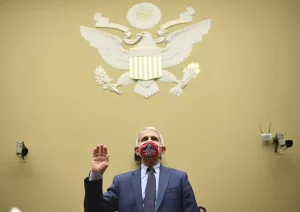
The U.S. is now in the midst of another COVID-19 surge driven by the delta coronavirus variant and those who refuse to take the vaccine. And Dr. Anthony Fauci says, the situation will get worse before it gets better—but he doesn’t expect to see new lockdowns.

“I don’t think we’re going to see lockdowns. I think we have enough of the percentage of people in the country, not enough to crush the outbreak, but I believe enough to not allow us to get into the situation we were in last winter,” Dr. Fauci said on a new episode of ABC’s This Week, referring to the massive post-holiday surge. “But things are going to get worse. If you look at the acceleration of the number of cases, the seven-day average has gone up substantially.”

Indeed, as the highly transmissible delta variant spreads across the country, the Centers for Disease Control and Prevention (CDC) seven-day average for new COVID-19 cases in a day increased by 64% since last week (from an average of 40,597 cases in a day to 66,606). And while just over 60% of adults are fully vaccinated so far, that leaves many people—including children under the age of 12—who aren’t yet vaccinated.

The most vulnerable are those who are still unvaccinated, said Dr. Fauci, director of the National Institute of Allergy and Infectious Diseases and President Biden’s chief medical advisor on COVID-19. And the fact that there are so many people in the country who aren’t vaccinated is prolonging the pandemic.

“From the standpoint of illness, hospitalization, suffering, and death, the unvaccinated are much more vulnerable because the vaccinated are protected from severe illness for the most part,” he explained. “But when you look at the country as a whole in getting us back to normal, the unvaccinated by not being vaccinated are allowing the propagation and the spread of the outbreak, which ultimately impacts everyone.”

With so many unvaccinated people getting infected, the virus is allowed to continue to spread. That impacts other people “from the standpoint of having to wear masks, from the standpoint of the safety of the kids in school, from the standpoint of being able to open up everything the way we were when we were normal,” Dr. Fauci said.

Just last week the CDC adjusted its guidelines to recommend that vaccinated people wear masks indoors in areas of the country with a substantial or high amount of coronavirus transmission. That’s due in large part to new research suggesting that fully vaccinated people who develop a rare breakthrough infection can spread the virus and, therefore, should wear a mask to prevent that from happening. Although the decision to get vaccinated may seem like something that only impacts you, “the fact is if you get infected, even if you are without symptoms, you very well may infect another person who may be vulnerable, who may get seriously ill,” Dr. Fauci said. “So in essence, you are encroaching on their individual rights because you’re making them vulnerable.”

The way out of this surge, ultimately, is to continue using the public health tools we are very familiar with now—starting with getting vaccinated. Wearing a mask (particularly indoors in areas of the country with a lot of COVID-19 spread) as well as avoiding crowds and washing your hands frequently can all help reduce the chances that you’ll be infected with the virus and that you’ll pass it on to other people. Taking these measures now will help us get through the current delta surge and make it less likely that another concerning variant will pop up in the future.

AMA Recommends Removing Sex From Birth Certificates

In an incredibly significant move, the American Medical Association (AMA) has recommended that the “sex” designation be removed from the public facing portion of babies’ birth certificates, reserving that information for medical professionals.

The recommendation comes because “assigning sex using a binary variable and placing it on the public portion of the birth certificate perpetuates a view that it is immutable,” the AMA’s LGBTQ+ advisory committee stated in a June report. Further, the committee says that designating babies as either “male” or “female” at birth “fails to recognize the medical spectrum of gender identity.”

The current requirement to list a baby’s binary sex or gender category in publicly available documentation can lead to many challenges, disproportionately impacting trans, non-binary, and intersex people. For instance, people whose gender identity or presentation doesn’t match the sex on their birth certificate can experience discrimination or harrassment when registering for school, getting married, or adopting a child.

“We unfortunately still live in a world where it is unsafe in many cases for one’s gender to vary from the sex assigned at birth,” Jeremy Toler, MD, a delegate from GLMA: Health Professionals Advancing LGBTQ Equality, told WebMD.

The AMA also points out that birth certificates have historically “been used to discriminate, promote racial hierarchies, and prohibit miscegenation.” “For that reason, the race of an individual’s parents is no longer listed on the public portion of birth certificates,” the report continues. “However, sex designation is still included on the public portion of the birth certificate, despite the potential for discrimination.”

Large numbers of trans people still don’t have documentation that reflects their lived gender. According to a study from earlier this year, an estimated 34% of trans Americans don’t have identification that aligns with their gender identity. Currently, 14 states offer a third gender option for birth certificates, but wiping out the public-facing sex designation could competely allow for uniform policies across all states.

Even though it’s proven that sex is not binary — just look at the existence of intersex people, as well as the lived experiences of trans and nonbinary people — right-wing media coverage has gone into full panic-mode about this recommendation. Though the report has not gotten much mainstream media coverage, conservative outlets have been all over it, including The Federalist, Fox News, and The National Review. It marks a continuation of the ongoing right-wing fear mongering campaign against trans rights and inclusion.

The AMA’s report notes that making this change “will not address all aspects of the inequities transgender and intersex people face, but such an effort would represent a valuable first step.” No word on whether it will stop cis people from continuing to stage gender reveals, though.

J&J’s COVID-19 Vaccine Works Well Against Delta Variant

Johnson & Johnson’s COVID-19 vaccine helps prevent severe disease among those infected with the Delta variant, according to a trial involving almost 480,000 health workers in South Africa. The study, known as Sisonke, provides the first large-scale evidence that the J&J vaccine works against this dominant variant, according to trial co-lead Glenda Gray. It’s probably more protective against Delta than it was with the earlier beta strain, she said in a presentation Friday.

The single-dose shot was 71% effective against hospitalization and as much as 96% effective against death, she said. It also demonstrated durability of eight months. “These results show there is no need for a booster yet,” said Gray, who is president of the South African Medical Research Council.

While the J&J vaccine is a key element to South Africa’s vaccination plan, the country temporarily paused its use in April after the U.S. decided to suspend the shot because of its link to rare blood clots. Other data have raised questions about how well the shot holds up against the highly contagious strain that has driven renewed outbreaks in countries including the U.S. and China.

One U.S. study released last month showed the J&J shot produced relatively low levels of antibodies against Delta. J&J said that analysis, which hasn’t been published in a peer-reviewed journal, had examined only one aspect of protection and didn’t consider long-lasting responses among immune cells stimulated by the vaccine. The drugmaker’s researchers have said their own data indicated that the vaccine neutralizes the variant and that additional doses weren’t needed.

Africa’s Rollout

Earlier this year J&J agreed to supply as many as 400 million vaccines to the African Union through the end of 2022, delivering a boost to a continent trailing most of the world in the race to inoculate. The dose’s requirement for just a single shot is seen as beneficial for Africa, where vaccine distribution to more than 1 billion widely dispersed people is likely to present a challenge.

In the study, the vaccine was administered to the health workers at 120 sites in both urban and rural areas from Feb. 17 to May 17. Analysis of a third data set is expected in coming days. There were two cases of the rare clotting disorder thrombocytopenia thrombosis syndrome among participants, with both making a complete recovery, Gray said.


What The Delta Variant Means For COVID-19 Spread And Vaccines

News wise — If you check the Centers for Disease Control and Prevention COVID-19 data tracker, which tracks cases in each state, much of the country is colored bright red, indicating a high rate of transmission of COVID.

A large chunk of the population is still unvaccinated against COVID-19, fewer people are wearing masks, and more people are getting together—all while the highly contagious Delta variant of the coronavirus continues to spread.

Last week, the CDC recommended that even vaccinated people wear masks indoors in areas with substantial or high rates of transmission to try to turn the tide and reduce cases. That recommendation was based in part on data gathered from a July 4th holiday COVID outbreak in Provincetown, MA that seemed to indicate that even vaccinated people could spread the virus. The news left many confused and concerned about just how well they are protected.

There is danger in reading too much into this case, however, said Adam Lauring, M.D. Ph.D., an infectious disease specialist at Michigan Medicine.  “While this is clearly something to pay attention to, in the CDC report, they are pretty clear in the discussion about the limitations and what they are saying and not saying. Of course, not everyone made it that far,” noted Lauring. For example, as more people are vaccinated, it follows that more cases detected will be in vaccinated individuals.

Lauring also noted that a nasal swab COVID test measures how much viral RNA is present in a person’s nose but can’t measure how much of that virus is infectious. “The amount of genome present is a marker, but it is not the same thing as saying these people are equally as infectious,” said Lauring.

Another important point is that a swab is taken at one moment in time. “You could picture a situation where vaccinated people with Delta have a really steep rise and then a really steep fall in the amount of virus shed, whereas an unvaccinated person would have a steep rise that would remain high for longer.”

Even with all the unknowns, what was true before Delta is true now: the majority of cases will be in unvaccinated people. But, he added, “the big change is before, we were thinking vaccinated people would not transmit that often, whereas it appears that vaccinated people with the Delta variant will transmit more often than with other variants,” said Lauring.

What does this mean practically? This means that it will take additional measures, like wearing masks in certain situations—such as indoor spaces with a lot of local cases—in addition to vaccines to stop the spread of COVID.

Early data show that the vaccines are still more than 80% effective at preventing severe illness and death and are still reducing transmission. As far as boosters go, said Lauring, “I’m more concerned about people who have not been vaccinated at all.” And in the U.S., case counts continue to be highest in areas with low vaccination rates, evidence that the vaccines are working against all variants.

What about kids under 12 who don’t yet have an approved COVID vaccine?

Lauring noted that the risk of severe illness and death is low for children and that hasn’t changed, even with Delta. But as more adults become vaccinated, more of any future cases will be in unvaccinated people, including kids.

“The more transmissible the virus is, the higher the percentage of immune people you’ll need to shut down transmission.”

The best thing to do to protect kids, immunocompromised individuals and to reduce the chance for the emergence of even more transmissible variants remains to get as many people vaccinated against COVID-19 as possible to safely approach herd immunity.

Lauring noted that COVID is probably here to stay.

“My sense is people are coming to grips with what that means. From a policy level, we’ll have to figure out what level of circulation and hospitalization we are comfortable with,” he said.

When Will FDA Give Full Approval of Pfizer-BioNTech Vaccine as Delta Variant Surges?

The Food and Drug Administration (FDA) has begun accelerating the process to fully approve the Pfizer-BioNTech COVID-19 vaccine, facing pressure to add resources from those who believe the lack of full approval is hampering efforts to get more Americans vaccinated.

“We recognize that for some, the FDA approval of COVID-19 vaccines may bring additional confidence and encourage them to get vaccinated,” Abigail Capobianco, a spokeswoman at the FDA, said in a statement on Aug. 4. “Acknowledging the urgency related to the current state of the pandemic, we have taken an all-hands-on-deck approach, including identifying additional resources such as personnel and technological resources from across the agency and opportunities to reprioritize other activities, in order to complete our review to help combat this pandemic surge.”

President Joe Biden said last week he expects a fully approved vaccine by the early fall, but the FDA would not comment on the time frame.

Data show that being vaccinated dramatically reduces the risk of hospitalization or death following a COVID-19 infection. More than 192 million Americans have gotten at least one dose of the three vaccines that have been given emergency use authorization (EUA) in the U.S., made by Pfizer-BioNTech, Moderna and Janssen/Johnson & Johnson, without widespread side effects, data show. But now the number of Americans fully vaccinated against COVID-19 has begun to stall with about 92 million people over age 12 still unvaccinated, according to U.S. Centers for Disease Control and Prevention (CDC) data. Meanwhile, the more contagious Delta variant of the virus is spreading rapidly among the unvaccinated population.

The spike in COVID-19 cases in states that have low vaccination rates has threatened to claw the U.S. back into the worst of the pandemic, and it creates a looming political liability for Biden. On Aug. 3, Biden gave a sober speech from the East Room of the White House, saying the country’s “best line of defense” against the virus “is the vaccine.” “It’s as simple as that. Period. The vaccine,” he said.

But as Biden attempts to mount more aggressive vaccination efforts to stave off the spread of the highly transmissible Delta variant, the fact that the FDA has yet to fully approve any of the vaccines is threatening to slow progress. About 30% of unvaccinated people say they would be more likely to get a shot with full FDA approval, according to recent polls from the Kaiser Family Foundation. While the pollsters warn that may be a “proxy for more general concerns,” some doctors and public health experts in areas with low vaccination rates also say they frequently hear the FDA’s emergency authorization cited as a reason people remain hesitant to get the shot.

The Biden Administration has said all civilian federal employees must be vaccinated against COVID-19 or submit to regular testing, and many hospital systems and universities, as well as a number of large private employers like Walmart, Google, and Disney, have begun to follow suit.

The Justice Department’s Office of Legal Counsel recently released an opinion saying federal law does not prohibit companies from requiring vaccines even if they are under emergency authorization, and courts have generally upheld vaccine mandates.

But some employers and organizations have been reluctant to make similar requirements while the vaccines are still under emergency authorization. A number of public educational institutions—including the State University of New York and Colorado State University systems—have said they will mandate vaccination for students once a vaccine is fully approved. In other parts of the country, Republican politicians have used the lack of full approval to block vaccine requirements from being put into place. In Texas, for example, Republican Gov. Greg Abbott signed an executive order on July 29 preventing any organization that receives state funds, including public universities, from requiring vaccines under emergency use authorization.

Health systems have also taken a mixed approach. Mass General Brigham, which employs 80,000 workers in Massachusetts, said it will require employees to get vaccinated once the FDA issues its full approval for at least one of the vaccines, as did Beaumont Health, the largest health care system in Michigan. Other large health systems like Cleveland Clinic, Intermountain Health, and Christus Health have not put in place vaccine requirements and say they are still monitoring the situation.

“We need to see a full approval before we’ll do another evaluation of thinking about a requirement in the future,” says Dr. Sam Bagchi, executive vice president and chief clinical officer at Christus. He notes that the health system is already facing “unprecedented staffing challenges” due to many health care workers quitting or taking early retirement during the pandemic. If his hospitals required workers to get vaccinated now, he fears it would push workers away at a time when they need more staff due to rising COVID-19 cases.

Long-term care facilities are in a particularly precarious position. LeadingAge, the national trade group for non-profit nursing homes and other aging services, recently called for its members to require employees to get vaccinated against COVID-19 as vaccination efforts have stalled in places where the virus devastated residents and staff last year. But Katie Smith Sloan, the group’s president and CEO, says she knows many of her member facilities can’t afford to lose staff who aren’t ready to get vaccinated. “We’re already facing acute shortages, particularly nursing assistants and nurses in long-term care, home health, nursing homes, and assisted living,” she says. She hopes that an FDA approval will make more workers volunteer to get vaccinated and encourage more facilities to require it.

Even the U.S. military is still weighing what to do. It has not yet required that its 1.3 million active duty personnel be vaccinated, and senior military medical officials are watching the FDA approval process closely. Secretary of Defense Lloyd Austin is consulting with medical experts and still weighing whether to request approval from Biden to require vaccines, Pentagon spokesman John Kirby said on Aug. 3.

The FDA typically completes a priority review, like it is conducting for Pfizer, in six to eight months. Pfizer says it submitted a rolling application in May and Moderna—which manufactures one of the other approved COVID-19 vaccines—says it submitted a rolling application in June, meaning both companies could turn in portions of their applications while continuing to collect data. The process is “moving forward as rapidly as possible in keeping with the high-quality complete assessment that the public expects from the FDA,” said FDA spokeswoman Capobianco.

The COVID-19 pandemic was the first time that the FDA granted emergency use authorization to a vaccine for widespread use. The EUA designation was developed after the Sept. 11 attacks and originally intended for potentially lifesaving medicines or other products during an emergency like a terrorist attack or a more acute disease outbreak. To get an EUA for the COVID-19 vaccines, manufacturers had to follow special guidelines that included submitting two months of clinical trial data, along with information about the quality and consistency of the vaccines—and the FDA had to establish that the “potential benefits outweigh the known and potential risks” of the vaccine.

For full approval, the FDA must review significantly more data and make a larger determination that a vaccine is ready to be licensed, according to Dr. Jesse Goodman, former chief scientist at the FDA and a professor at Georgetown University. This involves analyzing hundreds of thousands of pages of material about the clinical trials, manufacturing processes and how the vaccines have functioned in the real world since the agency authorized it for emergency use. Regulators will check the vaccine manufacturer’s data and perform their own analyses to verify the vaccine’s efficacy, how that efficacy might decline over time and any evidence of potential side effects. They will also inspect manufacturing plants to ensure high levels of quality control—a particularly complex job given that these vaccines used new technology, Goodman says. He notes the FDA “has historically been under-resourced” and that there are a limited number of people with the appropriate expertise to review these new vaccines.

While all that can take time, public health experts are calling for more transparency from the agency as the U.S. struggles to convince a significant portion of its population to take the lifesaving shot. “It’s been a black box,” says Dr. William Schaffner, an infectious disease professor at Vanderbilt University Medical Center. “Particularly since we’re dealing with a pandemic and the taxpayers of the United States are paying for this vaccine, I think having the leadership of the FDA be more explicit about what the process is, and why it’s taking so long, would be at the very least instructive.”

But some worry hastening the approval process could backfire. Peter Marks, director of the Center for Biologics Evaluation and Research at the FDA, warned in a letter to the New York Times last month that “any vaccine approval without completion of the high-quality review and evaluation that Americans expect the agency to perform would undermine the F.D.A.’s statutory responsibilities, affect public trust in the agency and do little to help combat vaccine hesitancy.”

Dr. Arnold Monto, a professor of epidemiology at University of Michigan who chairs the committee of outside experts that advises the FDA on vaccines, including for COVID-19, agrees. “They’re trying as hard as they can,” he says, “given the constraints that they’re working under.”

The U.S. government’s top infectious disease expert, Dr. Anthony Fauci, said last week that he was hopeful the Food and Drug Administration will give full approval to the coronavirus vaccine by month’s end and predicted the potential move will spur a wave of vaccine mandates in the private sector as well as schools and universities.

Moderna’s Vaccine Is 93% Effective After 6 Months

Moderna said its COVID-19 vaccine remained 93% effective through six months after the second shot, as it reported second-quarter earnings and revenue that beat expectations. A final analysis of the company’s late-stage study, described in a statement on Thursday, suggests the vaccine’s protection remains stable for long after recipients complete the standard two-dose regimen. The 93% effectiveness level is just short of the shot’s initial efficacy of 94%.

Concern that the effectiveness of COVID-19 vaccines could wane has stoked talk of booster shots, and some countries have begun to offer vulnerable people third doses. However, World Health Organization Director-General Tedros Adhanom Ghebreyesus called for a moratorium on such measures on Wednesday until more people in the developing world are inoculated. The recommendation could limit the reach of Moderna’s shot, called Spikevax.

The shares fell 2.9% as of 8:28 a.m. before U.S. markets opened Thursday. COVID-19 vaccine-maker Pfizer lost 0.6%, while its partner BioNTech shed 3.8%.

Moderna’s latest efficacy data hasn’t been published in a medical journal and further details weren’t released. Despite the apparent endurance of its vaccine, Moderna is exploring options for supplemental shots that could fend off emerging strains of the virus.

All three of the company’s booster candidates produced “robust antibody responses” against delta and other variants of concern in a phase 2 human study, Moderna said in its statement. The boosters are being tested at a 50 microgram dose, or half what is used in the current shot. That data has been submitted to a journal for publication, the company said.

Seeking Approval

Cambridge, Massachusetts-based Moderna also said it expected to complete its submission for full Food and Drug Administration approval for its vaccine this month.

The agency is already reviewing the submission for a rival messenger RNA vaccine from Pfizer Inc. and BioNTech SE, and is under growing pressure to complete the process quickly. With the delta variant sparking a new wave of cases, advocates say an approval could help convince more people to get a shot.

Moderna, which reported its first profit earlier this year, had net income of almost $2.8 billion in the quarter ending June 30 on revenue of $4.4 billion, almost all of which is from its COVID-19 shot. Diluted earnings per share of $6.46 easily beat analysts expectations, according to a survey of analysts by Bloomberg, while revenue only slightly exceeded expectations.

The company said in the release it has signed $20 billion worth of COVID-19 vaccine purchase agreements for 2021, up from the $19.2 billion it announced in May. For 2022, it already has signed agreements for $12 billion in vaccine sales with options for $8 billion more. Moderna didn’t increase its forecast that it will produce 800 million to 1 billion COVID vaccine doses this year.

Seeking Deals

Moderna’s views for total sales of its COVID-19 vaccine pale in comparison to the Pfizer-BioNTech partnership, which has a higher manufacturing capacity for its shot. Last month, Pfizer boosted its vaccine sales forecast for 2021 to $33.5 billion.

Moderna’s shares have quadrupled since the beginning of the year, and the company hit $100 billion in market value for the first time July 14. The stock was made part of the S&P 500 last month and is the index’s best performer this calendar year.

As the biotech seeks to grow further, it will look opportunities to acquire or license technologies that could enhance its platform. Moderna, which has more than $12 billion in cash and investments, will focus on nucleic acid technologies, such as mRNA, gene editing, and gene therapy, the company said in a presentation.

Moderna has also built out its suite of leaders to double down on its commercial franchise. In the last quarter, the company hired Paul Burton, a former Johnson & Johnson executive, to serve as chief medical officer, and Ogilvy’s Kate Cronin as chief brand officer.

Why WHO Wants The World To Hold Off On Booster Dose?

The World Health Organization (WHO) has called upon wealthy nations to halt their plans for administering booster doses till at least end of September in order to ensure enough vaccine availability for the less developed and poor nations.

The agency said the halt should last at least two months, to give the world a chance to meet the director-general’s goal of vaccinating 10% of the population of every country by the end of September.

“We need an urgent reversal from the majority of vaccines going to high-income countries, to the majority going to low income countries,” WHO Director General Tedros Adhanom Ghebreyesus said at a press briefing.

The request is part of Ghebreyesus’ plan to vaccinate 40% of the world by December, according to his senior advisor, Dr. Bruce Aylward.

According to WHO Director General Tedros Adhanom Ghebreyesus, the world needs “an urgent reversal from the majority of vaccines going to high-income countries, to the majority going to low income countries” in order for at least 10% of each country’s population to be vaccinated by end of September and 40% of the world’s population by December.

While booster doses are now accepted as a reality as most vaccines’ efficacy wanes after some months, very few countries have started administering booster shots given that even the first two doses of double-dose vaccines have not yet been given. Countries that have started administering boosters include Dominican Republic, which is not exactly in the club of wealthy nations and has a population of less than Delhi’s. Israel is another country to have announced its decision to administer booster doses to its geriatric population. In the US, the San Francisco Department of Public Health and Zuckerberg San Francisco General Hospital have said they would allow booster dose of the Johnson and Johnson vaccine, which is a single shot vaccine.

Experts have blamed cornering of vaccines by high income countries for the vaccine inequity. High-income countries administered around 50 doses for every 100 people in May, and that number has since doubled, according to WHO. Low-income countries have only been able to administer 1.5 doses for every 100 people.

The European Union (EU), with a population of around 448 million, has ordered enough vaccines to inoculate each EU resident with 6.9 doses. The UK has ordered 8.2 doses per citizen. The US, with a population of 328 million, has ordered enough to administer each of its citizens with 4.6 doses. The case of Canada is even more glaring — for a population of around 38 million, it has ordered enough doses to administer each citizen with 10.5 doses.

Contrast that with countries like Haiti, which only recently received its first batch of vaccines, to administer the first dose. The African Union, on the other hand, has ordered just enough to administer 0.4 doses per citizen.

Added to that is the export restrictions that were imposed by several wealthy nations on vaccines, many of which were being manufactured there. In cases like that of India, the country’s prioritization for vaccinating its own population first coupled with production capacity constraints that have still not been resolved has led to India not being able to fulfil its global obligations for vaccine supply.

India’s Chennai Turning into a Data Center Hub

Tamil Nadu’s capital city Chennai after being the ‘Detroit’ of India for housing several automobile makers is turning out to become a major data center hub. With the central government and Reserve Bank of India insisting on players to have their data stored in India, the data center business is getting a boost.

“With three submarine cable landing stations (one more to come), a comfortable power supply position (data Centre capacity is generally measured in MW), the availability of market and knowledge pool, Chennai is an ideal location,” Nikhil Rathi, CEO and Founder of Web Werks India Pvt Ltd, a major player told IANS.

Adding further he said the Covid-19 lockdown saw huge amount of data traffic and it is growing. Web Werks has signed a Memorandum of Understanding (MOU) with Tamil Nadu government to build a 20MW data Centre here at an outlay of about Rs.700 crore and will have a headcount of 100.

For Web Works, Chennai will be its second largest location in India. The company has its data centers in Mumbai, Pune and Delhi in India. It also has data centers overseas. The Tamil Nadu government is working to come out with a separate policy for data centers to strengthen the ecosystem.

“Most common requirements of data Centre’s pertaining to housing regulations and power are being worked upon to encourage data Centre investments and further downstream investments,” the state government said.

Rathi said all buildings cannot house a data center. The building that houses a data Centre will generally need a higher ceiling. “The buildings are machine specific,” Rathi added.

According to the state government, there are six submarine data cables with a bandwidth of 14.8 Tbps. The rural areas in Tamil Nadu are also well connected with more than 12,524 village panchayats with a minimum scalable bandwidth of 1 Gbps. As per TRAI, Chennai is among the top five service areas in India for broadband subscriptions.

The state government has signed Memorandums of Understanding (MOU) with nine companies for setting up data centers with a total proposed investment of Rs 16,927 crore and employment potential of over 9,000 jobs over the last two years.

National and international companies, including Yotta, Princeton Digital, ST Telemedia, Netmagic and Adani are in the process of setting up their data centers in Chennai. The Ambattur locality in Chennai is the preferred choice for data center companies owing to its favourable geographical conditions and existing data center ecosystem.

Siruseri is the next ideal destination due to the presence of several IT companies, which offers a great market opportunity, the government said.  Rathi said there is a good market for data centres in Southern cities like Chennai, Bengaluru and Hyderabad owing to the concentration of IT companies, talent pool.

He said Tamil Nadu has the single window clearance which eases the regulatory clearance process. As per a JLL report, Mumbai and Chennai are expected to drive 73 per cent of the sector’s total capacity addition during 2021-23, while other cities like Hyderabad and Delhi-NCR emerging as new hotspots.

India’s data center sector will require investment of $3.7 billion over the next three years in order to fulfill the 6 million square feet greenfield development, JLL said.

Data centres in Chennai:

Ambattur
STTelemedia Data Center
NTT Netmagic
NTT Netmagic (Upcoming expansion)
Princeton Digital (Upcoming)
ST Telemedia (Upcoming)
Siruseri SIPCOT IT Park
Nxtra site 1
Vodafone
Reliance Jio
Nxtra site 1 (Upcoming)
Adani Group (Upcoming)
Technoelectric (Upcoming)
Mantra Data Centres (Upcoming)
Taramani
Sify.

Apple To Scan U.S. iPhones For Images Of Child Sexual Abuse

Apple unveiled plans to scan U.S. iPhones for images of child sexual abuse, drawing applause from child protection groups but raising concern among some security researchers that the system could be misused, including by governments looking to surveil their citizens.

The tool designed to detected known images of child sexual abuse, called “neuralMatch,” will scan images before they are uploaded to iCloud. If it finds a match, the image will be reviewed by a human. If child pornography is confirmed, the user’s account will be disabled and the National Center for Missing and Exploited Children notified.

Separately, Apple plans to scan users’ encrypted messages for sexually explicit content as a child safety measure, which also alarmed privacy advocates. The detection system will only flag images that are already in the center’s database of known child pornography. Parents snapping innocent photos of a child in the bath presumably need not worry. But researchers say the matching tool — which doesn’t “see” such images, just mathematical “fingerprints” that represent them — could be put to more nefarious purposes.

Matthew Green, a top cryptography researcher at Johns Hopkins University, warned that the system could be used to frame innocent people by sending them seemingly innocuous images designed to trigger matches for child pornography. That could fool Apple’s algorithm and alert law enforcement. “Researchers have been able to do this pretty easily,” he said of the ability to trick such systems.

Other abuses could include government surveillance of dissidents or protesters. “What happens when the Chinese government says, ‘Here is a list of files that we want you to scan for,'” Green asked. “Does Apple say no? I hope they say no, but their technology won’t say no.”

Apple has been under pressure to allow for increased surveillance of encrypted data

Tech companies including Microsoft, Google, Facebook and others have for years been sharing digital fingerprints of known child sexual abuse images. Apple has used those to scan user files stored in its iCloud service, which is not as securely encrypted as its on-device data, for child pornography.

Apple has been under government pressure for years to allow for increased surveillance of encrypted data. Coming up with the new security measures required Apple to perform a delicate balancing act between cracking down on the exploitation of children while keeping its high-profile commitment to protecting the privacy of its users.

But a dejected Electronic Frontier Foundation, the online civil liberties pioneer, called Apple’s compromise on privacy protections “a shocking about-face for users who have relied on the company’s leadership in privacy and security.”

Meanwhile, the computer scientist who more than a decade ago invented PhotoDNA, the technology used by law enforcement to identify child pornography online, acknowledged the potential for abuse of Apple’s system but said it was far outweighed by the imperative of battling child sexual abuse.

“Is it possible? Of course. But is it something that I’m concerned about? No,” said Hany Farid, a researcher at the University of California at Berkeley, who argues that plenty of other programs designed to secure devices from various threats haven’t seen “this type of mission creep.” For example, WhatsApp provides users with end-to-end encryption to protect their privacy, but also employs a system for detecting malware and warning users not to click on harmful links.

Apple was one of the first major companies to embrace “end-to-end” encryption, in which messages are scrambled so that only their senders and recipients can read them. Law enforcement, however, has long pressured the company for access to that information in order to investigate crimes such as terrorism or child sexual exploitation.

Apple said the latest changes will roll out this year as part of updates to its operating software for iPhones, Macs and Apple Watches. “Apple’s expanded protection for children is a game changer,” John Clark, the president and CEO of the National Center for Missing and Exploited Children, said in a statement. “With so many people using Apple products, these new safety measures have lifesaving potential for children.”

Apple says the changes do not disturb user privacy

Julia Cordua, the CEO of Thorn, said that Apple’s technology balances “the need for privacy with digital safety for children.” Thorn, a nonprofit founded by Demi Moore and Ashton Kutcher, uses technology to help protect children from sexual abuse by identifying victims and working with tech platforms.

But in a blistering critique, the Washington-based nonprofit Center for Democracy and Technology called on Apple to abandon the changes, which it said effectively destroy the company’s guarantee of “end-to-end encryption.” Scanning of messages for sexually explicit content on phones or computers effectively breaks the security, it said.

The organization also questioned Apple’s technology for differentiating between dangerous content and something as tame as art or a meme. Such technologies are notoriously error-prone, CDT said in an emailed statement. Apple denies that the changes amount to a backdoor that degrades its encryption. It says they are carefully considered innovations that do not disturb user privacy but rather strongly protect it.

In order to receive the warnings about sexually explicit images on their children’s devices, parents will have to enroll their child’s phone. Kids over 13 can unenroll, meaning parents of teenagers won’t get notifications.  Apple said neither feature would compromise the security of private communications or notify police.

Separately, Apple said its messaging app will use on-device machine learning to identify and blur sexually explicit photos on children’s phones and can also warn the parents of younger children via text message. It also said that its software would “intervene” when users try to search for topics related to child sexual abuse.

Facebook Has New Redesigned Settings Page On Mobile

Facebook is changing its Settings page on the mobile app. The new layout will help people easily find tools they often need quicker. These include managing the ads people see, adjusting sharing settings and curating an audience for posts. The new design rollout has already begun since August 4, and should come to supported devices via an update soon if it hasn’t already.

Here’s all you need to know about the new Facebook Settings page, including what’s new and which devices it will come to.

The new story now features lesser broad categories than before. Facebook suggests the change is to prevent people from thinking too hard about where to start. Hence, Settings will now be grouped into six broader categories – Account, Preferences, Audience and Visibility, Permissions, Your Information, and Community Standards and Legal Policies.

Relocated menu items, new Privacy shortcut

The new Settings page will also be relocating some items so that they can now be found alongside other related settings. For example, the News Feed setting, previously found in its own small category, will now be seen under the Preferences category.

Facebook also said in a blog post that it will be improving the Settings’ Search functionality, making it “easier to find the settings you need if you don’t know the exact name or location of the setting you’re looking for.”

Facebook has also added a new Privacy Shortcut right at the top of the Settings page, to make it easier for users to change important privacy and security aspects.

Which devices will see the new Facebook settings?

The Facebook Settings redesign will roll out for Android devices, including smartphones and tablets, as well as iOS devices, including iPhones and the iPad series. The new rollout will also be coming to mobile web browsers for those who do not use the Facebook application. Lastly, it will also be implemented in Facebook Lite, a lighter version of the Facebook app that is available on some platforms.

Attempting To Intimidate Critics, Modi Gvt. Locks Rahul Gandhi ’s Twitter Account

The Twitter account of senior Congress leader Rahul Gandhi was ‘temporarily’ locked on last week, a day after a photograph he had posted with the family of the nine-year-old Dalit rape victim was taken down by the microblogging site.

The action came after the National Commission for Protection of Child Rights (NCPCR) issued a notice to Twitter India, asking the social media platform to remove the tweet which revealed the identity of the rape victim.

“Shri @RahulGandhi’s Twitter account has been temporarily locked & due process is being followed for its restoration,” the Congress tweeted. “Until then, he will stay connected with you all through his other SM platforms & continue to raise his voice for our people & fight for their cause. Jai Hind!”

“Based on a complaint by the BJP, the Twitter account of Rahul Gandhi has been locked. Instead of giving justice to the 9-year-old Dalit girl, the BJP and the Narendra Modi government are far too preoccupied in intimidating Twitter as also illegally chasing Rahul Gandhi. Had PM Narendra Modi and Home Minister Amit Shah used this time in ensuring justice for the Dalit girl…Delhi would have been a safer place,” Congress communication department head Randeep Surjewala told the media.

The girl, who has not been named by authorities and belonged to the Dalit community, one of Hinduism’s most oppressed castes, was found dead near a Delhi crematorium on Sunday night, Ingit Singh from Delhi Police’s South West District told NBC News over the telephone. Her whole body was burnt apart from her ankles and feet, he added.

Four men were arrested on suspicion of rape and murder in the death of a 9-year-old girl, whose killing has brought into focus both rampant sexual violence and caste prejudice in the country. Four men, including the crematorium’s priest, were arrested early Monday on suspicion of rape, murder and destruction of evidence, Singh said.

“The brutality from this incident is barbaric beyond words,” Yogita Bhayana, founder of the women’s rights group People Against Rapes in India, said. “And the saddest part is incidents like these are not rare. We see cases where Dalit women are killed, raped, and tortured daily. … Only a few come to the limelight.”

There are 200 million Dalits in India, out of a population of 1.3 billion, according to the most recent government census. Rahul Gandhi visited the girl’s family and offered his condolences and support to the family last week, seeking action for those behind the heinous crime.

Best Wishes On India’s 75th Independence day From Dr. V K Raju

Best wishes to all the readers of The Universal News Network on this 75th Independence Day of India. India can be a world-class economic juggernaut erelong.

After all, India was the richest country when British came to its shores in 1700s. It is a free and open society with a viable parliamentary democracy and deep-rooted cultural and social traditions that have weathered the storms of religious and regional tensions and of a volatile polity.

We all know that there is a cavernous gap between India’s tremendous potential and depressing reality, such as- air pollution, water pollution, fuel adulteration, lack of sewage treatment operations, environmental degradation, lack of public health, loss of biodiversity, loss of resilience in ecosystems and livelihood insecurity for the poor. I am aware of the incredible strides India had made since 1990s.

If we develop a mind set of “so little done; so much to do”, sky is the limit for India as we have the greatest and largest natural resource that no other country has, 530 million of young people below the age of 34.

I often visit India (which gave me stellar medical education almost for free). Our foundation (EYE FOUNDATION OF AMERICA / WORLD WITHOUT CHILDHOOD BLINDNESS) is committed to combat avoidable blindness in India and beyond. People call this charity and I see our work as investment.

During my visits and throughout the year in the social media we hear the incredible past glory of India. (Pushpaka viman, Arya Bhatta, Chanakya, …and the list goes on). Let us remind ourselves “The Past is our Cradle, not our Prison, and there is danger and as well as appeal in its glamor. The past is for inspiration, not imitation, for continuation, not repetition” (Israel Zangwill)

By change of mindset, sky is the limit for India. Post-second World War Germany and Japan are outstanding examples of the effect of harmonious cooperation. For this harmonious cooperation, may I quote Nani Palkhivala’s prescription for India,” When we break our tradition of being collectively foolish, in spite of being individually intelligent.”

Jai Hind!

From V.K. Raju, MD, FRCS, FACS

Ophthalmologist, Regional Eye Associates

President and Founder, Eye Foundation of America

President and Founder, Goutami Eye Institute

Clinical Professor, West Virginia University

Director, International Ocular Surface Society

Adjunct Professor, GSL Medical School

Adjunct Professor, Wilmer Eye Institute, Johns Hopkins University

Film, 200 – Halla Ho! To Premiere On August 20th By ZEE5 Global

ZEE5 Global released the teaser of its next Original film 200 – Halla Ho! which gave the audience a sneak peek into what the film is about. The trailer of the film, will definitely make you question a lot of things about our society and the way women are treated.

The frightful yet gripping trailer of Sarthak Dasgupta’s 200 – Halla Ho! is a story about how 200 Dalit women united and took law and justice in their own hands by lynching a gangster, robber and serial rapist in open court.

The trailer reveals nuances of each of the characters played by a talented and eclectic ensemble cast. Inspired by true events, the movie goes on to uncover the shocking events and circumstances which led the 200 women to take such a drastic step to seek justice.

Talking about the trailer, Sarthak Dasgupta, Writer & Director shared, “This is not a film for me, but a shoulder that I give to movement towards social equality.  I need to convey to the audience that women should be treated equally and that Dalits’ lives matter too! This film is about those Dalit women who despite getting socially marginalized, molested, tortured and mortified, had to take law into their own hands to punish the person who was responsible for ruining their lives. It addresses the debate whether they were right or they were wrong.  I hope this film will add voice to the social change that is so needed in the society.” The film also marks the comeback of renowned actor Amol Palekar to the movies after almost a decade.

200 – Halla Ho, has an amazing star cast comprising Amol Palekar, Barun Sobti, Rinku Rajguru, Sahil Khattar, Saloni Batra, Indraneil Sengupta, and Upendra Limaye. Written and Directed by Sarthak Dasgupta, produced by Yoodlee Films, the film production arm of Saregama, 200 – Halla Ho premieres 20th August on ZEE5.

Users can download the ZEE5 app from Google Play Store / iOS App Store, on Roku devices, Samsung Smart TVs, Apple TVs, Android TVs, and Amazon Fire Stick. ZEE5 is also available on www.ZEE5.com.

ZEE5 is the digital entertainment destination launched by Zee Entertainment Enterprises Limited (ZEEL), a global Media and Entertainment powerhouse. The platform launched across 190+ countries in October 2018 and has content across 18 languages: Hindi, English, Bengali, Malayalam, Tamil, Telugu, Kannada, Marathi, Oriya, Bhojpuri, Gujarati, Punjabi, including six international languages Malay, Thai, Bahasa, Urdu, Bangla and Arabic. ZEE5 is home to 130,000+ hours of On Demand Content. The platform brings together the best of Originals, Movies and TV Shows, Music, Cineplays and Health and Lifestyle content all in one single destination. ZEE5 offers key features like 15 navigational languages, content download option, seamless video playback and Voice Search.

Users can download the ZEE5 app from Google Play Store / iOS App Store, on Roku devices, Samsung Smart TVs, Apple TVs, Android TVs, and Amazon Fire Stick. ZEE5 is also available on www.ZEE5.com.

ZEE5 Global Twitter: https://twitter.com/ZEE5Global
ZEE5 Global LinkedIn: https://www.linkedin.com/company/zee5global/

Should President Biden Receive Holy Communion? Cardinal Tobin & Bishop Rhoades Discuss

Catholic bishops meeting in regional cohorts have until the end of next month to submit their thoughts on what should be included in a forthcoming document on the Eucharist, which some Catholics fear may further divide the church over political support for abortion rights, the bishop heading the committee drafting the document said last week.

Bishop Kevin C. Rhoades, who leads the doctrine committee of the U.S. Conference of Catholics Bishops, reiterated that the document will not bar any individuals from receiving Communion and said it is “going to be addressed to all Catholics, not a particular person or a single issue in the part on Eucharistic consistency.”

“The document will not be establishing national norms or a national policy,” he said. “That’s really beyond the scope of the document; it’s really beyond our competence.” Bishop Kevin C. Rhoades, who leads the doctrine committee of the U.S. bishops, reiterated that the document will not bar any individuals from receiving Communion.

“We’re striving to write a document that will contribute to a real eucharistic revival in the church in our nation by highlighting the truth about the amazing gift that Jesus gave us on the night before he died,” Bishop Rhoades said.

But Bishop Rhoades also suggested that Catholics who do not accept the totality of church teaching are not prepared to receive Communion.

“In order to be properly disposed to receive the Eucharist, we need to be in communion with the church, and we need to assent to the deposit of faith that’s contained in Scripture and tradition that the apostles entrusted to the church,” Bishop Rhoades said. “This is our perennial tradition.”

The comments came during a panel hosted by the Initiative on Catholic Social Thought and Public Life at Georgetown University.

Bishop Rhoades also suggested that Catholics who do not accept the totality of church teaching are not prepared to receive Communion.

Cardinal Joseph Tobin, the archbishop of Newark who spoke last month against moving ahead with drafting a statement, said during the panel that the perception around that document is that it is political in nature and is thus unlikely to achieve the goal of broadening understanding about the Eucharist.

​“One thing I’ve learned in 43 years as a priest is that preaching has two essential dynamics,” he said. “One is what you say and second is what they hear.”

He applied that dynamic to the forthcoming document, which follows statements from individual bishops condemning Mr. Biden’s support for abortion rights and an unusual working group formed by the U.S.C.C.B. president in the wake of Mr. Biden’s election.

“This document was born in some confusion,” Cardinal Tobin said. “This document was born in some confusion,” Cardinal Tobin said.

Cardinal Tobin suggested that U.S. bishops look to other nations that have dealt with similar situations for guidance. He noted that bishops in Argentina did not threaten to deny Communion to political leaders who sought to legalize abortion there.“Are they slacking or do they have a different pastoral sense?” he asked.

A Catholic commentator said she feared the document could reduce reflection about worthiness to receive the Eucharist to one’s views on abortion, which she called “simplistic.” “It does seem to me simplistic to say that abortion is the preeminent priority for Catholics politically, not just in a sense of ranking moral issues but also when it comes to making specific decisions about voting and about elections,” said Mollie Wilson O’Reilly, an editor at large at Commonweal. “Insisting on that has led the Catholic Church and the Catholic hierarchy into a de facto alliance with the G.O.P. over the last several decades.”

Mollie O’Reilly lamented that U.S. bishops have “come out on what looks like a kind of a war footing” against President Biden. Ms. O’Reilly lamented that U.S. bishops have “come out on what looks like a kind of a war footing” against President Biden. “I think this is an opportunity when the church could really be a fruitful partner in addressing a lot of those other issues that so badly need to be addressed and where I think there is a lot of common ground and common language,” she said.

John Carr, a longtime staffer of the U.S.C.C.B. and now the co-director of the Initiative on Catholic Social Thought and Public Life, called the debate over whether Catholic politicians are eligible to receive Communion “terrible timing.”

“In the midst of a pandemic racial reckoning, let’s have a fight about whether the president ought to be able to receive Communion?” he questioned.

“We ought to be saying to people, the Eucharist brings us together, we need you as part of our family and faith,” he said. “We’ve got to read the signs of the times. We’re in a particular moment, and we ought to do everything we can to make sure the Eucharist doesn’t get used or misused for political or ideological purposes.”

“In the midst of a pandemic racial reckoning, let’s have a fight about whether the president ought to be able to receive Communion?” John Carr questioned.

Mr. Carr said he is “bitterly disappointed” in the president’s support for abortion rights, “but what’s different is he continues to be a part of our community. He attends Mass every Sunday.”

“We need not to discipline politicians but to engage our politicians and to pull them back in, so they see the richness of our tradition in its everyday forms,” he said.

Some Catholics have lamented that the debate over the document—which lasted for more than two hours when bishops met virtually last month—highlights divisions in the church.

But Gretchen Crowe, the editor of the Catholic newspaper Our Sunday Visitor, said on the panel that fears over divisions should not deter bishops from talking about “eucharistic coherence.”

“A fear of division, or really a fear of anything else, really never should prevent the church from teaching what it professes about anything,”  Gretchen Crowe said.

“A fear of division, or really a fear of anything else, really never should prevent the church from teaching what it professes about anything, much less what it teaches about the real presence of Jesus Christ in the Eucharist,” she said.

A number of bishops have pointed to a 2019 poll from the Pew Research Center that found significant numbers of U.S. Catholics either disagree with or do not understand the church’s teaching that the Eucharist is the real body and blood of Christ. That poll helped prompt bishops to adopt a strategic plan that highlighted church teaching on the Eucharist. Those backing the statement on “eucharistic coherence” said the document fits in with that plan.

Cardinal Tobin said on Wednesday’s panel that perhaps church leaders trying to inspire Catholics about the Eucharist might look to Rome for inspiration. “If Pope Francis’ great encyclicals were quoted as often as that Pew statistic, I think we might be better off as a church,” he said.

Neha Vedpathak’s Art At Display At Sundaram Tagore In New York

Culture

Indian-born artist Neha Vedpathak—who has just received the Gilda Award in Painting from Kresge Arts in Detroit—creates sensuous, tactile paper constructions using a pushpin. She methodically plucks artisanal Japanese paper, separating the fibers to create a flexible ground.

She then paints and sews together the lace-like constructions, creating richly colored abstract compositions. It is a deliberative and labor-intensive process that makes time itself an integral force in each work.

This fall, Vedpathak’s work will be featured in the National Indo American Museum’s inaugural show in Chicago, a solo show at the Flint Institute of Arts in Michigan and in a group show at the Baker Museum at Artis-Naples in Florida in 2022.

In 2018, the Detroit Institute of Arts commissioned Vedpathak’s work for the permanent collection, exhibiting it across from work by Anish Kapoor. Her work has also been exhibited at Arizona State University Art Museum, Tempe; Weatherspoon Museum, Greensboro, North Carolina; Detroit Institute of Arts, Michigan; and Centre d’Art Marnay Art Centre, France.

Born in Pune in 1982, Vedpathak, now based in Detroit, came to the U.S. in 2007. She started as an abstract-minimalist painter, but in 2009 began exploring ways to take her two-dimensional practice in a new direction. Her experiments with different media, and a desire to avoid toxic materials, led her to Japanese paper, already in her repertoire as a painter, which became the focus of her practice. Using a rigorous self-taught “plucking” technique, Vedpathak labors, sometimes for months, to complete each work. The act of plucking has become a ritual of transformation for the artist, a slowing-down and a meditation.

Neha Vedpathak (b. 1982) is a Detroit-based artist who creates sculptural installations and wall reliefs made from paper. She was introduced to Sundaram Tagore Gallery in 2019, when she was selected by curator Betty Seid for our exhibition Alterations Activation Abstraction. Although she has only been exhibiting her work since 2006, Vedpathak has already received critical recognition from institutions such as the Detroit Institute of Arts, which acquired and exhibits her work across from work by Anish Kapoor.

Vedpathak began her career as a painter, creating minimalist abstract works on canvas. She subsequently sought to move beyond the two-dimensional plane. After experimenting with different materials for a period of time, in 2009 she came across handmade Japanese paper, which eventually became the focus of her artistic investigations.

Using a rigorous self-developed technique, which she refers to as “plucking,” Vedpathak spends hours separating the paper’s fibers with a tiny pushpin. There is a distinctly spiritual aspect to her slow and disciplined process, which she likens to meditative chanting tuned to a slower pace.

The resulting works resemble swaths of lace fabric, which she paints and sews into striking abstract compositions. Part painting, part collage, Vedpathak’s sensuous, tactile constructions seemingly float while casting intricate shadows on the wall. She creates depth with nuanced shifts of color and by leaving small areas of the composition unplucked, which plays off the subtle transparency of the lace-effect.

Having lived in multiple locations, including Pune, India, where she was born, Chicago, Phoenix, and now Detroit, Vedpathak’s practice is deeply inspired by her physical environment and she often draws from the natural world. Recently, however, she has started to incorporate architectural elements of the cityscape that surrounds her, referencing the abandoned structures and peeling paint of a city in constant flux, where widespread urban decay is undergoing a slow renewal.

Through her work, Vedpathak addresses contemporary social themes, including politics, cultural identity and economic disparity, yet she also considers larger spiritual themes, exploring ideas of transformation and the cyclical nature of life. Neha Vedpathak works have been shown at Arizona State University Art Museum, Tempe; Weatherspoon Museum, Greensboro North Carolina; Detroit Institute of Arts, Michigan; and Centre d’Art Marnay Art Centre, France

Aicon Gallery In NYC Presents Kulkarni

Aicon Art New York is presenting Home and Away, a debut solo exhibition by the late K.S. Kulkarni, an influential figure in the history of modern Indian art. The exhibition, in collaboration with the artist’s family, will be Kulkarni’s first solo exhibition in North America in over a decade.

A founding member of the avant-garde Delhi Shilpi Chakra movement, Kulkarni sought to develop an idiom that was both grounded in the “soul of the people” and also aligned with the “process of progress.” His works garnered appreciation both in his native New Delhi, but also in the many places he travelled and absorbed influences. The current exhibition comprises canvases and works on paper that the artist created between his New Delhi studio and his travels around the US during the 1970s and 1980s. His use of expressive line, full-bodied color and simple forms distinguishes Kulkarni as one of the foremost painters to have left their mark on Indian modernism. We sincerely hope you can join us at the opening reception.

The OPENING RECEPTION is planned for Thursday, August 19 | 6:00 – 8:00 pm.

On Thursday, August 19 from 6pm to 8pm, we will host an in-person opening reception at the gallery. We encourage RSVPs for the same in order to allow us to effectively socially distance and to disinfect surfaces. NY state recommended PPE will be available on site. We do not recommend scheduling an appointment if you or anyone you are in regular contact with, has compromised health at this time.

On 75th Independence Anniversary, India Elected President of UN Security Council

“It is a singular honor for us to be presiding over the Security Council the same month when we are celebrating our 75th Independence Day,” India’s Permanent Representative to the UN Ambassador T S Tirumurti said here on August 1st.

India on Sunday assumed the presidency of the United Nations Security Council for the month of August and is set to organize key events in three major areas of maritime security, peacekeeping and counter-terrorism.

Tirumurti, who will preside over the Council this month, said in a tweet that during its presidency India will organize three high-level meetings focusing on maritime security, peacekeeping, and counterterrorism.

“India has just assumed the presidency of The UN Security Council on 1st August. India and France enjoy historical and close relations. I thank France for all the support which they’ve given us during our stint in the Security Council,” he further added.

As part of its new role, India will decide the UN body’s agenda for the month and coordinate important meetings on a range of issues. “Security Council will also have on its agenda several important meetings including Syria, Iraq, Somalia, Yemen, and the Middle East. Security Council will also be adopting important resolutions on Somalia, Mali, & UN Interim Force in Lebanon,” TS Tirumurti said.

Meanwehile, Pakistan has expressed concerns about India holding such an important role on the most important and powerful body of the United Nations.  India will obviously use its SC Presidency to promote its own narrative on various issues, including terrorism and UN reform,” Ambassador Munir Akram told Dawn. “We will watch its conduct carefully and ensure that no moves that are against Pakistan’s core interests are allowed to succeed,” he said.

According to The Hindu, India will organize a ministerial-level meeting titled “threats to international peace and security caused by terrorist acts” at the end of August. India is seeking to enhance coordination between the UN and the Financial Action Task Force (FATF), the money laundering and terror financial watchdog which has kept Pakistan on its increased monitoring list.

The FATF had announced on June 25 that Pakistan would continue to remain on its increased monitoring list till it addressed the single remaining item on the original action plan agreed to in June 2018 as well as all items on a parallel action plan handed out by the watchdog’s regional partner — the Asia Pacific Group — in 2019.

India’s External Affairs Minister S Jaishankar said that at the Council “India will keep the international spotlight firmly focused on the task of combatting” terrorism, the pandemic and climate change, which are global challenges that transcend national boundaries.

S Jaishankar took to Twitter to mark the occasion, and said that India will always be “voice of moderation, an advocate of dialogue and a proponent of international law.” Apart from meeting on maritime security, peacekeeping and counter-terrorism, India will also be organizing a solemn event in memory of peacekeepers.

Prime Minister Narendra Modi will be the first Indian PM to preside over a meeting of the UNSC, Former permanent representative of India to the United Nations, Syed Akbaruddin said.

“In 75 plus yrs, this is the first time our political leadership has invested in presiding over an event of UNSC. It shows that leadership wants to lead from the front. It also shows that India&its political leadership are invested in our foreign policy ventures. Although this is a virtual meeting, it’s still a first meeting of the sort for us. So, it is historic. The last time an Indian PM was engaged in this effort was the then PM PV Narasimha Rao in 1992 when he attended a UNSC meeting,” Syed Akbaruddin added.

Flagging concern over ‘a dangerous and worrying trend in global terrorism’ as increasing number of children are being recruited for terrorism-related activities’, India at a UNSC debate on children and armed conflict in June had said there is a need for a more coordinated approach in implementing the child protection and counter-terrorism agendas.

In January at a UNSC meeting, India had pointed out that preventing terrorists from accessing financial resources was crucial to successfully countering the threat of terrorism. Earlier at the debate on ‘Threats to International Peace and Security Caused by Terrorist Acts’ hosted by Tunisia to mark 20 years of the landmark resolution in the global fight against terrorism after the 9/11 terror attacks, India had proposed an eight-point Action Plan for an effective response to international terrorism.

Anchored in its non-aligned and independent foreign policy guided by values of democracy, respect of law and its mission to build a fair and equitable international system, India’s tenure as a non-permanent member of the UNSC is much awaited among the international community.

Guided by the “Five S’s”, as set out by Prime Minister Narendra Modi viz. Samman (Respect), Samvad (Dialogue), Sahyog (Cooperation) and Shanti (Peace), and Samriddhi (Prosperity), India’s overall objective during its tenure in the UN SC has been the achievement of N.O.R.M.S: a New Orientation for a Reformed Multilateral System.

India’s Foreign Secretary Harsh Vardhan Shringla in his meeting with UN Secretary General Antonio Guterres earlier this month had listed maritime security, peacekeeping and counter-terrorism as India’s priorities during its upcoming presidency.

This will be the country’s first presidency during its 2021-22 tenure as a non-permanent member of the Security Council. India began its two-year tenure as a non-permanent member of the UNSC on January 1, this year.

Bipartisan Infrastructure Bill Moves Forward in US Senate

The US Senate has voted to move forward on a bipartisan infrastructure bill after weeks of negotiations last week, clearing a key procedural hurdle on a bill that includes $550 billion in new spending for infrastructure projects around the country, media reports here said.

In the 67 to 32 vote, 17 Republicans including Senate Minority Leader Mitch McConnell joined Democrats to advance the bill. The proposal includes some of President Biden’s top domestic priorities and provides billions of dollars in funding for bridges, roads, broadband internet, clean water, public transit and more over the next five years. It encapsulates so-called “hard” infrastructure and is separate from Democratic efforts to pass a $3.5 trillion package for so-called “soft” infrastructure, which includes policies like Medicare expansion and universal child care.

“This deal signals to the world that our democracy can function, deliver, and do big things,” President Biden said in a statement before the vote. “As we did with the transcontinental railroad and the interstate highway, we will once again transform America and propel us into the future.”

The long-awaited text of a nearly $1 trillion bipartisan infrastructure package has come to be realized after several months of negotiations and a month after President Biden and a bipartisan group of senators first announced such a deal.

The Infrastructure Investment and Jobs Act focuses on investments in roads, railways, bridges and broadband internet, but it does not include investments that Biden has referred to as “human infrastructure,” including money allocated for child care and tax credits for families. Democrats are looking to address those priorities separately. The package calls for $550 billion in new spending over five years.

The bipartisan bill would be funded by unspent emergency relief funds, corporate user fees and strengthened tax enforcement for crypto currencies, among “other bipartisan measures,” the White House said. The bill would also use roughly $53 billion from states that returned unused enhanced federal unemployment money.

Former President Trump has termed the “so-called bipartisan bill” terrible, and vowed to primary GOP Senators who vote for it.

Sen. Rob Portman, R-Ohio, said the final product, just over 2,700 pages long, will be “great for the American people.” Senate Majority Leader Chuck Schumer said the Senate will consider amendments this week and a final vote could be held “in a matter of days.”

“It’s been decades since Congress passed such a significant standalone investment,” the New York Democrat said, “and I salute the hard work done that was here by everybody.”

Here’s a look at what’s included in the agreement:

Transportation

Roads, bridges, major projects: $110 billion

Passenger and freight rail: $66 billion

Public transit: $39 billion

Airports: $25 billion

Port infrastructure: $17 billion

Transportation safety programs: $11 billion

Electric vehicles: $7.5 billion

Zero and low-emission buses and ferries: $7.5 billion

Reconnect communities: $1 billion

Other infrastructure

Broadband: $65 billion

Power infrastructure: $73 billion

Clean drinking water: $55 billion

Resilience and Western water storage: $50 billion

Environmental remediation: $21 billion

How would they pay for it?

According to a recent fact sheet from the White House released a few days before the final legislation was unveiled, the package will be financed through a combination of funds, including repurposing unspent emergency relief funds from the COVID-19 pandemic and strengthening tax enforcement for cryptocurrencies.

Goals of the plan

Back in June, the White House shared a fact sheet with the aims of the package: Improve healthy, sustainable transportation options for millions of Americans by modernizing and expanding transit and rail networks across the country while reducing greenhouse gas emissions.

Repair and rebuild roads and bridges with a focus on climate change mitigation, resilience, equity and safety for all users, including cyclists and pedestrians.

Build a national network of electric vehicle chargers along highways and in rural and disadvantaged communities.

Electrify thousands of school and transit buses across the country to reduce harmful emissions and drive domestic manufacturing of zero emission vehicles and components.

Eliminate the nation’s lead service lines and pipes, delivering clean drinking water to up to 10 million American families and more than 400,000 schools and child care facilities that currently don’t have it, including in tribal nations and disadvantaged communities.

Connect every American to reliable high-speed internet.

Upgrade the power infrastructure, including by building thousands of miles of new, resilient transmission lines to facilitate the expansion of renewable energy, including through a new grid authority.

Create a first-of-its-kind Infrastructure Financing Authority that will leverage billions of dollars into clean transportation and clean energy.

Make the largest investment in addressing legacy pollution in American history.

Prepare more infrastructure for impacts of climate change, cyberattacks and extreme weather events.

Indiaspora Launches New Book, “Kamala Harris And The Rise Of Indian-Americans”

Indiaspora, a nonprofit “network of global Indian origin leaders,” hosted a virtual event July 29 to formally celebrate the launch of the book, “Kamala Harris and the Rise of Indian-Americans,” a perhaps first-of-its-kind anthology on the Indian American community in the US.

Published in India and available on Amazon around the world, the book, laid out in leisurely 341 pages, chronicles the progress and accomplishments of Indian Americans in 16 essays — from politics, entrepreneurship, technology, medicine, to science, business, entertainment, social activism, etc.

Several contributors to the book spoke at the event organized virtually and attended by hundreds of participants from India, the US and several other parts of the world.  “Kamala Harris and the Rise of Indian Americans” (released July 15th) was inspired by the US Vice-President and evidences the progress and accomplishments of the Indian-American diaspora, according to an Indiaspora press release.

Rajiv L. Gupta, chairman of Aptiv PLC and Avantor Inc., and former executive with Rohm and Haas, (and even more well-known as the father of Vanita Gupta, the Associate Attorney General of the United States,) discussed the traits that make Indians natural business leaders.

Rangaswami, a tech entrepreneur — his original claim to fame — focused on the evolution of Indians’ success in Silicon Valley, and Maina Chawla Singh, wife of former Indian ambassador to the U.S. Arun K. Singh, chronicled the political trajectory of Indian Americans. Editor Basu, who ‘Zoom’ed in from India deferred to its time zone by guzzling what seemed like liters of morning tea, managed to speak about his decades-long association with and coverage of the Indian American community. “Success as it is defined and celebrated in the diasporic community of Indians in the US—economic and individualistic— is narrow and elitist.”

Other contributors who spoke included the venerable Deepak Raj, founder and managing director of Raj Associates, a private investment firm, and more importantly, chairman of Pratham USA, and Bijal Patel, the young chairman of the California Hotel & Lodging Association (CHLA).

Raj’s response to a question about how Indian Americans can inspire other minority communities to channel their philanthropic energies was spot on. He took the cue implied in the question and confessed that Indian Americans must also focus their charity efforts on marginalized communities here in the United States. As for Patel, while he admirably portrayed California’s Indian American hoteliers’ contributions during the pandemic — turning over their properties to house the Covid infected and the homeless — it was not lost on the audience that our enterprising hoteliers managed to profit even during the crisis. Who said, “never let a serious crisis go to waste,” again?


Among those who were not the featured speakers at the book launch were authors of a couple of essays that stood out in the book. Mayank Chhaya, an alumnus of India Abroad, wrote the informative chapter titled, “At the Center of Excellence: Seminal Contributions in the World of Science.” It was fascinating to learn about the scores of Indian American scientists who are involved in cutting-edge scientific research, particularly in frontier disciplines like space science. Some of them will certainly cross the bounds of the “Chandrasekhar Limit,” making the case for another anthology.

It would have also been interesting to hear from Vikrum Mathur who wrote the chapter “From Stereotypes to Household Names: A Cultural Shift and New Role Models,” about Indian Americans in entertainment who are making an impact on the cultural front. Their foray into arguably the most competitive arena in America has been truly remarkable. The acceptance of Indian faces in entertainment may be greater evidence of Indians blending into the great American melting pot.

The most interesting speaker at the launch, however, was Shamita Das Dasgupta, social activist and co-founder of Manavi, “the first organization of its kind that focuses on violence against South Asian women in the United States.” Her presence and presentation were as interesting and incongruous as was her essay in the book. Incongruous, by her admission in different words, is because she challenges the very notion of “success” that the Indian American community’s glory is premised on.

Her gentle demeanor and soft voice made no effort to hide the ‘contradiction’ in her definition of the community’s “rise” that is very different from that of the co-panelists and coauthors. She reiterates, but in kinder and gentler words, her central argument in her co-authored essay, which, incidentally, appears at the end of the tome — not as an afterthought, but probably as an involuntary admission.

The book includes a chapter on Indian American philanthropy, an area that has not evolved enough to write home about. Its inclusion must have been at the nudging of M.R. Rangaswami, the founder of Indiaspora and a philanthropist himself, who helped in corralling many of the book’s contributors. The panel discussions, moderated by Indiaspora’s executive director Sanjeev Joshipura and Indiaspora’s founder MR Rangaswami, was followed by Q&A.

Dasgupta writes “that success as it is defined and celebrated in the diasporic community of Indians in the US—economic and individualistic— is narrow and elitist. This limited version of success deliberately excludes activists and changemakers who work at the margins of the community. While individualistic successes have certainly brought fame and recognition to the community, they have not instigated internal changes or fundamental modifications to the community’s inequitable culture.” Boom.

While it cannot be said that the book has not looked beyond the surface littered with shiny objects, a chapter chronicling the remarkable work of Indian American activists would have been a testimony to how far the community has come from a racist portrayal of a ‘model minority to becoming consequential agents of social change. There are young Indian American idealists, activists, change makers in almost every field of human endeavor — not the ones who are in it to pad their resumes to get into top schools or corporations, but the real ones.

In the final analysis, however, what the book lacks in scholarship and academic rigor is adequately made up by anecdotal perspectives of worthy participant-observers, making the story of an ethnic community that is resplendently diverse and full of contradictions come to life. The title, notwithstanding.

The anthology, compiled by veteran editor Tarun Basu and published by award-winning Wisdom Tree, explores the story behind these advancements through 16 essays written by influential Indian Americans. From politics to the new administration, entrepreneurship to technology, medicine to hospitality, science to academia, business to entertainment, philanthropy to social activism, leaders from various arenas detail their own paths to success and offer their perspectives on diasporic progress.

These stories culminate in a larger narrative of the Indian-American community’s coming-of-age in the US. “A fascinating and inspiring story of how an immigrant population from a developing country, with low education levels, became the most educated, highest-earning ethnic community in the world’s most advanced nation in almost a single generation.” says editor Tarun Basu.

Tarun Basu, veteran editor, media commentator, policy analyst and head of the Society for Policy Studies, a think tank running the South Asia Monitor, and author of the chapter, “From Struggling Immigrants to Political Influencers: How a Community Came of Age” is the Chief Editor of the book.

“A fascinating and inspiring story of how an immigrant population from a developing country, with low education levels, became the most educated, highest-earning ethnic community in the world’s most advanced nation in almost a single generation,” says Basu.

India Launches E-RUPI Digital Payment Platform

(E-RUPI Digital Payment Solution is a cashless and contactless instrument for digital payment. It is a QR code or SMS string-based e-Voucher, which is delivered to the mobile of the beneficiaries)

Prime Minister Narendra Modi launched digital payment solution e-RUPI, a person and purpose specific cashless digital payment solution, via videoconference on Monday, August 2, 2021. Speaking on the occasion, he said the eRUPI voucher was a symbol of how India was progressing by connecting people’s lives with technology. He expressed happiness that this futuristic reform initiative had come at a time when the country was celebrating the Amrit Mahotsav on the 75th anniversary of Independence.

e-RUPI is a cashless and contactless instrument for digital payment. It gets delivered to the mobile phones of beneficiaries through a QR code or SMS string. The users of this new one-time payment mechanism will be able to redeem the voucher without a card, digital payments app or internet banking access, at the service provider.

The platform has been developed by the National Payments Corporation of India (NPCI) on its unified payments interface (UPI) platform, in collaboration with the Department of Financial Services, Ministry of Health and Family Welfare (MoHFW) and the National Health Authority.

The PMO in a recent statement said that e-RUPI can be used for delivering services under schemes meant for providing drugs and nutritional support under Mother and Child welfare schemes, TB eradication programs, drugs and diagnostics under schemes like Ayushman Bharat Pradhan Mantri Jan Arogya Yojana, fertilizer subsidies etc. It added that even the private sector can leverage these digital vouchers as part of their employee welfare and corporate social responsibility programs.

Speaking at the launch of the new platform, Modi said that the e-RUPI voucher is going to play a major role in strengthening the direct benefit transfer (DBT) scheme by the government. He further said e-RUPI will help in assuring targeted, transparent and leakage-free delivery for all.

Modi said that e-RUPI is a person as well as a purpose-specific payment platform. The prime minister further noted that technology is being seen as a tool to help the poor. He added that technology is bringing transparency in DBT. Speaking on the adoption of technology, Modi said that India is showing the world it is not behind in adopting new technology. Be it in terms of innovations or usage of technology in the delivery of services, India is capable of being a global leader.

He said that the work done in the field of digital infrastructure and digital transactions across the country during the past 6-7 years is being applauded by the world today. He added that the government is using direct benefit transfer to provide benefits of 300 schemes ranging from LPG to ration to pension directly to beneficiaries.

In addition to the government, he stated, if any organization wanted to help someone in their treatment, education or for any other work, then they would be able to give an eRUPI voucher instead of cash. This would ensure that the money given by him was used for the work for which the amount had been given.

The Prime Minister observed, “eRUPI will ensure that the money is being used for the purpose for which any help or any benefit is being provided’’. There was a time when technology was considered a domain of the rich people and there was no scope for technology in a poor country like India. “Today we are seeing technology as a tool to help the poor, a tool for their progress,’’ he pointed out.

Modi asserted how technology was bringing in transparency and integrity in transactions and creating new opportunities and making them available to the poor. For reaching today’s unique product, the foundation was prepared over the years by creating the JAM system, which connected mobile and Aadhaar. “Benefits of JAM took some time to be visible to people and we saw how we could help the needy during the lockdown period while other countries were struggling to help their people,’’ he stressed.

The development of digital transactions had empowered the poor and deprived, small businesses, farmers and tribal population. This could be felt in the record 300 crore UPI transactions in July, amounting to ₹6 lakh crore, he highlighted.

India was proving to the world that “we are second to none in adopting technology and adapting to it” through innovations and use of technology in service delivery. The country had the ability to give global leadership alongside major countries of the world, he added.

Marcell Jacobs Is The Fastest Man Winning Men’s 100 Meter Title Elaine Thompson-Herah Is The Fastest Woman In The World

Elaine Thompson-Herah of Jamaica has been crowned officially the fastest woman in the world — again — after winning the 100 meters at the Tokyo Games in Olympic record time. She was the defending gold medalist in this event.

“I knew I had it in me, but obviously, I’ve had my ups and downs with injuries,” she said Saturday, referring to a persistent ailment in 2018 and 2019. “I’ve been keeping faith all this time. It is amazing.”

Marcell Jacobs of Italy is the surprise victor of the fastest track race at the Tokyo Olympics, the men’s 100 meter. Jacobs beat his personal best time and put his star solidly on the map in the blazing fast race. He was not well-known in the track world before today, making it to the semi-finals of this event in the 2019 World Athletics Championships. After his victory, he gleefully hugged his teammate, high jumper Gianmarco Tamberi.

The other medalists also broke their personal records. The U.S.’s Fred Kerley, a 26-year-old from San Antonio, Texas, took silver with a time of 9.84, four hundredths of a second behind Jacobs. Canada’s Andre de Grasse won bronze.

Legendary retired Jamaican sprinter Usain Bolt has owned this event, winning gold in the 2008 Beijing Games, the 2012 London Games and the 2016 Rio de Janeiro Olympics. U.S. sprinter Ronnie Baker, 27, came back from a hamstring injury that kept him out of competition for much of 2019. He placed fifth in the final.

Fraser-Pryce, who won the event at the Olympics in Beijing and London, came into the event trying to become the first woman to win three gold medals at this distance. The 34-year-old clocked the fastest time in the heats to qualify for the final, with a time quicker than her gold medal races.

But Thompson-Herah took control of the final race right off the blocks and straight through the finish line. At the end, she screamed in joy and jumped up and down before collapsing on the track. “I couldn’t find the words. I screamed so loud because I was so happy,” she said.

It was a sweep for Jamaica, with Shelly-Ann Fraser-Pryce taking silver and Shericka Jackson taking bronze. About a minute after the race finished, the other Jamaican medalists came over and gave her a quick pat on the back.

Besides Thompson-Herah and Fraser-Pryce, just two other women have won two golds in this event — Wyomia Tyus, who competed for the U.S. in the 1960s, and Gail Devers, a U.S. athlete who won her golds in the 1990s. U.S. runner Teahna Daniels, 24, ran a personal best time to make it into the race. She placed seventh.

PV Sindhu Makes History By Winning Medal At Tokyo Olympics

Badminton star Pusarla Venkata (PV) Sindhu scripted history by becoming the first Indian woman to collect two medals at the Olympics after defeating China’s He Bingjiao 21-13, 21-15 in the bronze medal match on Sunday, August 1st. The Indian athlete won a Bronze Medal against China in Tokyo this year, and became the only Indian woman to win 2 medals at the Olympics.

Sindhu, who won India’s historic silver at Rio Olympics in 2016, lost the semi-finals to Chinese Taipei’s Tai Tzu Ying on Saturday but defeated China’s He Bing Jiao the next day to secure the third spot at the podium.


With this win, Sindhu becomes the second Indian after Sushil Kumar to win two individual Olympic medals. She had won a silver in the last Olympics in Rio after losing in the final to Carolina Marin.

Sindhu didn’t drop a single game at this year’s Olympics in the five matches that she won and her ten match wins at the Olympics are the most for an Indian badminton player. Saina Nehwal, who won bronze at the London Olympics in 2012 and the only other Indian badminton player to medal at the Olympics, is second with nine.

This is India’s third medal at this Olympics. Mirabai Chanu had earlier won a bronze in weightlifting, while Lovlina Borgohain is also assured of a medal in boxing after reaching the semifinals. India had won two medals at the previous Olympics in Rio. This is also the first time that three Indian women have medaled at a single edition of the Olympics.

Sindhu began earning global recognition for India when she entered the international circuit in 2009 at age 14, winning bronze at the 2009 Sub-Junior Asian Badminton Championships and then silver at the 2010 Iran Fajr International Badminton Challenge.

Over the years, Sindhu has been winning multiple medals in different international tournaments, including the Asian Championships, the Commonwealth Games, the Asian Games and the World Championships.

Sindhu became the first Indian to win the historic gold medal at the World Championships in 2019. It was Sindhu’s fifth World Championships medal.

Sindhu has also become the most marketable female athlete in India, earning lucrative sponsorship deals over the years. She placed 7th in Forbes’ Highest-Paid Female Athletes List in 2018 and 13th in 2019.

AAPI Raises Over $5 Million Towards Covid Relief Efforts In India

Provides 2300 Oxygen Concentrators, 100 Ventilators And 100 High Flow Nasal Canula Machines To 45 Hospitals In India

(Chicago, IL: August 1, 2021) The deadly Corona virus has claimed millions of lives and it has placed the entire healthcare sector both in India and the United States under tremendous stress. While the Indian American medical fraternity has been at the frontlines of the fight against the pandemic, American Association of physicians of Indian origin (AAPI), the largest ethnic medical organization in the USA representing the interest of more than 100,000 physicians in the USA, has stepped up to the plate to deal with the crisis of India during its second deadly wave.

“The generosity of the members of AAPI and Indian community has been unprecedented,” says Dr. Anupama Gotimukula, President of AAPI. “I want to thank the AAPI fraternity, for not only contributing $5 Million towards Covid Relief Funds, but has spent hundreds of hours in coordinating and disbursing the vital medical supplies to the most needed hospitals across India.”

“Thanks to the overwhelming support of its members that AAPI has raised almost $5 million in the past few months,” said Dr. Kusum Punjabi, Chair of AAPI BOT, who has dedicated her services at the Emergency Department, serving thousands of Covid patients in the New Jersey.

“During my entire year of presidency, impacted by the deadly pandemic, AAPI has initiated several efforts to help our Mother India,” recalls Dr. Sudhakar Jonnalagadda, Immediate past-president of AAPI. “Aptly so, the annual Convention last month in Atlanta was a tribute to frontline healthcare professionals who have devoted their lives and work serving humanity during the COVID-19 pandemic,” he added.

Many parts of India continue to face the deadly second wave of COVID-19. Number of reported Covid positive cases seems to be on the rise and thousands reportedly die daily. Hospitals and medical facilities face shortage of oxygen and ICU beds, with patients lacking in adequate care.

“We have been working very diligently  in sending oxygen concentrators and ventilators to India, to deal with the calamity in India and are in the process of helping to set up oxygen generator plants in different hospitals in India,” added, Dr. Ravi Kolli, President-Elect of AAPI.

Dr. Sujeeth Punnam, AAPI’s Regionasl Director, who has been one of the many AAPI leaders who has been coordinating the efforts said, “Thus far, AAPI has provided 2300 Concentrators, 100 Ventilators and 100 High Flow Nasal Canula Machines To 45 Hospitals In India as part of the Covid Pandemic Relief Efforts.”

As some predict a 3rd wave of the pandemic in India, AAPI has been planning and collaborating with several agencies and the government of India to help reach the much needed care and supplies to the remotest places in India.  “AAPI will continue to use the remaining funds in preparation of the impending Covid 3rd wave,” said Dr. Anjana Samadder,” Vice-President  of AAPI.


Dr. Satheesh Kathula, Secretary of AAPI said, “AAPI has been coordinating several efforts, including tele-health to patients and Doctors in India. Thanks to the overwhelming support of its members that AAPI has raised over $5 million.” “The outbreak of Covid 19 has caused significant health-related social, political and economic consequences worldwide. AAPI members have  been working very hard in sending medical equipment to India,” Dr. Krishan Kumar, Treasurer of AAPI pointed out.

“We are discussing about coordinating efforts to make available the much needed vaccines in the Slum areas in Delhi And Hyderabad where compliance is very low and apart from life saving equipment for severe Covid patients management in ICUs,” said Dr. Anil Tibrewal, who has been in the forefront leading AAPI’s efforts to help India during the Covid.

As AAPI cannot direct its resources to specific areas and relies on government of India to distribute its supplies, Dr. Amit Chakrabarty, past Secretary of AAPI and several other AAPI leaders have been working outside of the umbrella of AAPI for direct transfer of the essential material, focusing mainly on the peripheral hospitals who do not get aid readily.  HELP INDIA BREATHE is a part of ApShiNi ventures’ endeavor by a group of Doctors in helping individuals to donate Oxygen related supplies to India during this unprecedented calamity.

“The past year, while posing major challenges have also provided opportunities for AAPI to continue to work together in helping realize the mission of AAPI,” said Dr. Gotimukula. “We are proud that several Indian American physicians are recognized globally for their contributions to combat the deadly pandemic. We will continue our efforts and give our best to our Motherland in her fight against the deadly pandemic.” For more information on AAPI, please visit: www.aapiusa.org

As Amazon Stocks Stumble, Jeff Bezos Loses Title As Richest Person On The Planet

Jeff Bezos, the multibillionaire has lost the title as the richest person on earth as his net worth actually tumbled — by $13.9 billion in one day, August 2nd.   Bezos’ net worth fell because Amazon’s AMZN, +0.12% stock price took a hit last week, sliding 7% after the company reported less-than-anticipated second-quarter growth.

The drop in Bezos’ net worth allowed for French tycoon Bernard Arnault to claim the No. 1 spot of the ultra-wealthy. Arnault heads the luxury goods conglomerate LVMH LVMH, +1.49%,  whose subsidiaries include Louis Vuitton, Sephora, Moët & Chandon and Tiffany & Co.

It might seem that a global pandemic and economic recession would set the luxury goods market back a bit, but Arnault remarkably grew his wealth by nearly $100 billion during the first year of the pandemic.

Arnault’s net worth sat at $195.8 billion as of Monday, while Bezos’ hovered at $192.6 billion.  Bezos made history in 2020 as the first person ever to be worth $200 billion, as Amazon enjoyed big gains from pandemic lockdowns.

The two billionaires had jockeyed for the top spot throughout May and June of this year, but the recent toss up put an end to Bezos’ 50-day streak at the top of the heap, according to Forbes.

In total, there are 2,755 billionaires worldwide, 86% of which are richer than they were a year ago for a combined $5 trillion increase in wealth in 2020.  Meanwhile, the median net worth for American families is $121,700.

Was US Money Used To Fund Risky Research Lab In China That Supposedly Is The Origin Of Coronavirus?

As the debate continues over the origins of the coronavirus, a heated political battle is taking place over virus research carried out in China using US funds. It’s linked to the unproven theory that the virus could have leaked from a lab in Wuhan, the Chinese city where it was first detected.

A report released by Republican lawmakers cites “ample evidence” that the lab was working to modify coronaviruses to infect humans and calls for a bipartisan investigation into its origins.

Republican Senator Rand Paul also alleges that US money was used to fund research there that made some viruses more infectious and more deadly, a process known as “gain-of-function”.

But this has been firmly rejected by Dr Anthony Fauci, the US infectious diseases chief. What is ‘gain-of-function’ research? “Gain-of-function” is when an organism develops new abilities (or “functions”).

This can happen in nature, or it can be achieved in a lab, when scientists modify the genetic code or place organisms in different environments, to change them in some way.

For example, this might involve scientists trying to create drought-resistant plants or modify disease vectors in mosquitoes to make them less likely to pass on infections.

With viruses that could pose a risk to human health, it means developing viruses that are potentially more transmissible and dangerous.

Scientists justify the potential risks by saying the research can help prepare for future outbreaks and pandemics by understanding how viruses evolve, and therefore develop better treatments and vaccines.

Did the US fund virus research in China?

Yes, it did contribute some funds. Dr. Fauci, as well as being an adviser to President Biden, is the director of the US National Institute of Allergy and Infectious Diseases (NIAID), part of the US government’s National Institutes of Health (NIH).

This body did give money to an organization that collaborated with the Wuhan Institute of Virology. That organization – the US-based Eco Health Alliance – was awarded a grant in 2014 to look into possible coronaviruses from bats.

Eco Health received $3.7m from the NIH, $600,000 of which was given to the Wuhan Institute of Virology. In 2019, its project was renewed for another five years, but then pulled by the Trump administration in April 2020 following the outbreak of the coronavirus pandemic.

In May, Dr Fauci stated that the National Institutes of Health (NIH) “has not ever and does not now fund gain-of-function research in the Wuhan Institute of Virology”.

Senator Rand Paul asked Dr Fauci if he wanted to retract that statement, saying: “As you are aware it is a crime to lie to Congress.” Senator Paul believes the research did qualify as “gain-of-function” research, and referred to two academic papers by the Chinese institute, one from 2015 (written together with the University of North Carolina), and another from 2017. One prominent scientist supporting this view – and quoted by Senator Paul – is Prof Richard Ebright of Rutgers University.

He told the BBC that the research in both papers showed that new viruses (that did not already exist naturally) were created, and these “risked creating new potential pathogens” that were more infectious. “The research in both papers was gain-of-function research”, he said.

He added that it met the official definition of such research outlined in 2014 when the US government halted funding for such activities due to biosafety concerns. The funding was paused to allow a new framework to be drawn up for such research.

Why does Dr Fauci reject this charge?

Dr Fauci told the Senate hearing the research in question “has been evaluated multiple times by qualified people to not fall under the gain-of-function definition”. He also said it was “molecularly impossible” for these viruses to have resulted in the coronavirus, although he did not elaborate.

The NIH and Eco Health Alliance have also rejected suggestions they supported or funded “gain-of-function” research in China. They say they funded a project to examine “at the molecular level” newly-discovered bat viruses and their spike proteins (which help the virus bind to living cells) “without affecting the environment or development or physiological state of the organism”.

One of the US scientists who collaborated on the 2015 research on bat viruses with the Wuhan institute, Dr Ralph Baric from the University of North Carolina, gave a detailed statement to the Washington Post.

He said the work they did was reviewed by both the NIH and the university’s own biosafety committee “for potential of gain-of-function research and were deemed not to be gain-of-function”. He also says that none of the viruses which were the subject of the 2015 study are related to Sars-Cov-2, which caused the pandemic in 2020.

CDC Adds 16 Destinations To ‘Very High’ Covid-19 Travel Risk List

The US Centers for Disease Control and Prevention added 16 destinations to its “very high” Covid-19 risk level on Monday, August 2nd including Greece, Ireland and the US Virgin Islands.

According to the CDC, a risk designation of “Level 4: Covid-19 Very High” means people should avoid travel to these locations. Those who must travel should be fully vaccinated first.

In its overarching guidance, the CDC recommends against all international travel until you are fully vaccinated.

“Fully vaccinated travelers are less likely to get and spread Covid-19. However, international travel poses additional risks, and even fully vaccinated travelers might be at increased risk for getting and possibly spreading some Covid-19 variants,” the agency says.

Destinations that fall into the “very high” risk category have had more than 500 cases per 100,000 residents in the past 28 days, according to CDC parameters.

The Caribbean during Covid-19: What you need to know before you go

Direct travel of noncitizens from Ireland and Greece to the United States has been suspended since January 25, 2021, under an executive order limiting travel from multiple countries. The White House recently said those restrictions would remain in place amid surging cases from the Delta variant

The following 16 destinations moved to the CDC’s “Level 4: COVID-19 Very High” category on August 2: Andorra, Curaçao, Gibraltar, Greece, Guadeloupe, Iran, Ireland, Isle of Man, Kazakhstan, Lesotho, Libya, Malta, Martinique, Saint Barthelemy, Saint Martin and US Virgin Islands.

The new list is in addition to several others, including India placed on the list to avoid to travel. On India, CDC suggests,“Make sure you are fully vaccinated before traveling to India. Unvaccinated travelers should avoid nonessential travel to India. Because of the current situation in India, all travelers may be at risk for getting and spreading COVID-19 variants.”

You can look up the CDC’s risk level of any destination on its travel recommendations page.

After Ruthlessly Killing Protesters For Months, Myanmar’s Military Leader Crowns Himself Prime Minister

Six months after seizing power from the elected government, Myanmar’s military leader on Sunday, August 1st declared himself prime minister and said he would lead the country under the extended state of emergency until elections are held in about two years.

“We must create conditions to hold a free and fair multiparty general election,” Senior Gen. Min Aung Hlaing said during a recorded televised address. “We have to make preparations. I pledge to hold the multiparty general election without fail.”

He said the state of emergency will achieve its objectives by August 2023. In a separate announcement, the military government named itself “the caretaker government” and Min Aung Hlaing the prime minister.

The state of emergency was declared when troops moved against the elected government of Aung San Suu Kyi on Feb. 1, an action the generals said was permitted under the military-authored 2008 constitution. The military claimed her landslide victory in last year’s national elections was achieved through massive voter fraud but offered no credible evidence.

The military government officially annulled the election results last Tuesday and appointed a new election commission to take charge of the polls.

The military takeover was met with massive public protests that has resulted in a lethal crackdown by security forces, who routinely fire live ammunition into crowds. As of Sunday, 939 people have been killed by the authorities since Feb. 1, according to a tally kept by the independent Assistance Association for Political Prisoners. Casualties are also rising among the military and police as armed resistance grows in both urban and rural areas.

Moves by The Association of Southeast Asian Nations to broker a dialogue between the military government and its opponents have stalled after an agreement at an April summit in Jakarta to appoint a special envoy for Myanmar.

Min Aung Hlaing said that among the three nominees, Thailand’s former Deputy Foreign Minister Virasakdi Futrakul was selected as the envoy.

“But for various reasons, new proposals were released and we could not keep moving onwards. I would like to say that Myanmar is ready to work on ASEAN cooperation within the ASEAN framework, including the dialogue with the ASEAN special envoy in Myanmar,” he said. ASEAN foreign ministers were expected to discuss Myanmar in virtual meetings this week hosted by Brunei, the current chair of the 10-nation bloc. Myanmar is also struggling with its worst COVID-19 outbreak that has overwhelmed its already crippled health care system. Limitations on oxygen sales have led to widespread allegations that the military is directing supplies to government supporters and military-run hospitals.

At the same time, medical workers have been targeted by authorities after spearheading a civil disobedience movement that urged professionals and civil servants not to cooperate with the government.

Min Aung Hlaing blamed the public’s mistrust in the military’s efforts to control the outbreak on “fake news and misinformation via social networks,” and accused those behind it of using COVID-19 “as a tool of bioterrorism.”

India Has 52,391 Startups And 53 Unicorns

India’s startup ecosystem, which is widely considered as the third largest globally, has a total of 52,391 recognised entities as of July 14, 2021, Parliament was informed last week. The startups are recognized by Department for Promotion of Industry and Internal Trade (DPIIT) and as of July 14, more than 5.7 lakh jobs have been reported by more than 50,000 startups, Minister of State for Commerce and Industry, Som Parkash, told the Lok Sabha in a written reply.

As per industry estimates, there are 53 unicorns currently in India, with a tentative valuation of Rs. 1.4 lakh crore, he said, adding that valuation of a company is a market driven exercise and the data of individual companies is not maintained by the DPIIT.

He said that the Startup India initiative is a flagship initiative of the Centre which aims to build a strong ecosystem for nurturing innovation and startups in the country. A 19-point Startup India Action Plan was launched in January 2016 which paved the way for the introduction of a number of policy initiatives to build a strong, conducive, growth-oriented environment for Indian startups.

The Prime Minister unveiled Startup India: The Way Ahead at 5 years celebration of Startup India on January 16, 2021 which includes actionable plans for promotion of ease of doing business for startups, greater role of technology in executing various reforms, building capacities of stakeholders and enabling a digital Aatmanirbhar Bharat, the Minister added. (IANS)

Sikh Coalition Announces Leadership Transition

After twelve exceptional years at the organization, the Sikh Coalition’s Executive Director, Satjeet Kaur, will be stepping down in January 2022. Accordingly, the Sikh Coalition is formally launching a national search for our next Executive Director.

“Working at this organization and on behalf of the Sikh community has been one of the most rewarding experiences of my life,” said Satjeet. “I have worked with incredible people who have labored tirelessly to improve civil rights for Sikhs and so many others here in America. While leaving a place that I love is extremely difficult, I will depart knowing that the organization has never been better prepared for the extraordinary challenges and opportunities that lie ahead.”

Satjeet started at the Sikh Coalition in 2009 as an intern and joined the team full-time in 2010. During her early years, she contributed to nearly every facet of the organization’s work. By 2015, as the Senior Director of Development and Finance, she helped double financial resources, refined organizational branding, incorporated game-changing technology, and installed new processes that resulted in the Sikh Coalition routinely receiving recognition as one of the top U.S. nonprofits for transparency and governance.

In 2018, Satjeet became the Sikh Coalition’s Executive Director and immediately managed the largest staff growth transition in the organization’s history. She also led and supported a team of colleagues who have continued delivering lasting results on behalf of the Sikh community. Under her stewardship, the Sikh Coalition passed hate crime laws at the state and federal level, successfully fought back against attempts to roll back policies that protected Sikhs from discrimination, improved how Sikhism is taught in four new states, and oversaw the development of classroom-ready resources.

Satjeet also drove efforts to deepen partnerships with other organizations, led the U.S.-based response to the farmers’ protest in India, and provided direct crisis response support after the mass shooting in Indianapolis. This recent work was done while navigating the tumultuous COVID-19 pandemic, where she ensured the team met immediate community needs while effectively experimenting with new ways to organize at the grassroots level.

“Satjeet has been an exceptional leader for the organization. While we always knew her tenure as Executive Director would come to an end, it is still a sad day for everybody who has had the joy of working with her,” said Sikh Coalition Executive Board Chairman Narinder Singh. “The massive shoes Satjeet leaves are made easier to fill by her diligence in strengthening every pillar of the organization. She has furthered the vision of creating an institution that lasts beyond all of our lifetimes, and her efforts as the longest standing full-time staff member leave all of us in a better position to realize that vision.”

Reporting to the Board of Directors, the Executive Director serves as the hands-on manager for senior staff and will be responsible for further developing and implementing the strategies that lead the organization into its next phase of growth and development. To learn more about the executive director position, qualifications, and how to apply, click here.

We are grateful to have Satjeet fully committed to the Executive Director position for another six months to oversee this transition, but the Sikh Coalition staff and board preemptively thank her for her unwavering dedication and service to the organization and the Sikh community, and we look forward to continuing this important work of protecting and advancing Sikh rights in America.

Women Who Win Launches Free Mentorship & Career Guidance Program Across Industries

The Women Who Win team has announced its kick-off of its Mentorship & Career Exploration Program. “This fall, they will bring together leading women across industries to mentor the next generation of women leaders,” a press release issed here stated. “ The program will pair mentees with women leaders in their respective industries. They have mentors in the following fields – law & policy, healthcare, business & entrepreneurship, finance, and academia and college guidance.” Open to women of the ages 17, the program is available to all mentees who live in the U.S or internationally.

Urging women to join the Women Who Win in empowering the next generation of Women Leaders, its co-founder Dr. Manju Sheth states, “We are excited to launch a free Mentorship/ Career Exploration program with six very successful women who have given their gift of time to empower other women. I have always believed that we learn from each other and grow together. My sincere gratitude to our mentors for making this dream a reality for us at Women Who Win platform.”

Mentors and mentees will come together for conversations and guidance on important career topics such as resume and interview help, essential skill sets needed in the field, industry trends to know, as well as sharing own personal journeys in the field. Co-founder Shaleen Sheth states, “The goal of the program is for the mentee to gain the guidance and insights they need to better position themselves for success and find the career that is the right fit for them. The best way to learn what is right for you is from a conversation with someone who has lived the experience.

The mentors we have this fall are truly incredible people that I as a young professional truly admire” See the list of Fall 2021 mentors below! Dr Rollie Lal – Associate Professor at the Elliott School of International Affairs at George Washington University Anusha Ramachandran – Portfolio Manager and Vice President in the Asset Management industry.

In her current role, she works on asset allocation, portfolio management and implementation strategies for clients. Anusha has held various roles covering Equity Research and Trading both in both domestic U.S. as well as international stock markets Kiran Uppuluri – A thought leader in the industry, she built verteXD based on years of leadership experience at some of the most innovative companies such as Deloitte Consulting, Fidelity Investments and most recently as Senior Vice President of Customer Experience at Citizens Bank prior to founding verteXD. Kiran is a passionate advocate for Economic Empowerment.

She serves as an Advisor and Entrepreneurial Business Mentor at the M.I.T. Venture Mentoring Services. Dr. Madhavi Reddy – a board certified ophthalmologist in the United States and India, and has been practicing ophthalmology and co-managing the eye clinic in Brownsville, TX for the last twenty two years. She attended Gandhi Medical College and completed a residency in ophthalmology at Sarojini Devi eye hospital, Hyderabad, India. after a short stint at Indian Council of Medical Research, she relocated to Houston, TX.

She completed a master’s degree in vision sciences at University of Houston and went on to do a two year residency in internal medicine followed by a residency in ophthalmology at Texas Tech University. She received the 2019 humanitarian award by see international, a global eye-care organization for her work in Africa, Asia, The Americas and Oceania Vaishnavi Kondapalli – a senior software engineer at Imprivata, and has been a software engineer at various companies across Boston such as Carbon Black, Drager, and Carbonite.

She has a master’s in computer science and engineering from the University of Massachusetts: Lowell. Dr Mandy Pant – Academic Research Director and Principal Engineer at Intel, Dr. Mondira (Mandy) Deb Pant leads Intel’s Corporate Research Council which is Intel’s Strategic University Investment Body, filling the Intel technology pipeline with new promising ideas and future talent works.

In her role, she works with leading academic researchers worldwide and technical experts at Intel to seed and drive research The platform is unique in creating a mentorship program for women that offers opportunities across various industries, from Law & Policy to Entrepreneurship and Healthcare to name a few. The Women Who Win team believes the first step to success in any industry is to find the right mentor, find someone in the field who inspires you and learn from them.

Co-founder Dr. Deepa Jhaveri states, “In medical school we were always told, “See one, do one, teach one” and I now know this quote stands true across industries. Truly excited to roll out our Women Who Win mentorship program as knowledge is best when its shared. Thank you to our fabulous mentors for giving your valuable time to empower the next generation of women!” They are now accepting applications for the Fall Cohort! Please submit applications by 8/15 Visit the link below to apply to be a mentee and for more information! https://www.womenwhowin100.com/mentorship?rq=mentorship

Ayurveda Tech Platform Nirogstreet Secures Funding Of $2.5 Million

NirogStreet, India’s first technology-led Ayurveda doctor platform, has secured $2.5 million in Series A funding from a series of investors including DoorDash executive Gokul Rajaram, Raj Mishra of Indea Capital, former Morgan Stanley CEO Ashutosh Sinha and Anuj Srivastava, founder of Livspace, among others.

Ram N Kumar, the founder of NirogStreet, has told the media that he was fortunate to find a clutch of investors from the US, who could not just invest but guide. “For me, if you get a person like Gokul to help you while building a company, it is a once in a lifetime opportunity,” Kumar said.

The firm plans to use the funds to strengthen its technology offering for doctors and to start operations in more States. The start-up intends to create an engaging technology platform that will allow ease of access to Ayurvedic healthcare through technological interventions, while creating easy access to high quality medicines, avenues for income generation for doctors, and also helping SME medicine manufacturers to reach out to a larger base of doctors.

“Ayurveda has demonstrated its leadership in the time of Covid-19 and we played an important role in making Ayurveda mainstream. The focus of NirogStreet is to create tech-oriented data and solutions to create better opportunities for both doctors, manufacturers and customers,” NirogStreet founder Ram N Kumar, said in a statement.

“As a B2B2C technology-enabled and doctor-led platform, we are consistently focusing on identifying best practices to improve the supply chain of Ayurvedic services and medicine, giving Ayurveda its due share and the recognition that it deserves by empowering those at the centre of this universe – Ayurveda doctors – to create an experience that patients can trust,” he said.

Gokul Rajaram, top executive at Doordash and currently on the Pinterest and Coinbase boards as member said, “I’m incredibly excited to support Ram and the NirogStreet team in their mission to enable people globally to access and benefit from Ayurveda. He is doing a commendable job in nurturing the Ayurvedic fraternity in India as well as the sustainable healthcare ecosystem by capacity and knowledge building. We’re proud to back Ram and his team at NirogStreet.”

NirogStreet claims to work with over 50,000 doctors on its peer-to-peer learning, Electronic Health Record and B2B e-commerce platform, with a focus on strategic deployment of technology. Since the beginning of the pandemic, NirogStreet’s unique tech platform has also empowered ayurvedic doctors to consult patients across the globe via Tele-Ayurveda and offer solutions that were previously not available to them. It has also enabled doctors to dispatch medicines on time to their patients using NirogStreet.


Rajaram reportedly said that he was inspired by Kumar’s journey and compelling founding story. “He contracted hepatitis C and got cured through Ayurvedic treatments,” Rajaram said about Kumar. “As he started researching the space, he learned that there are more than 1.1 million non-allopathic practitioners in India alone, and many more globally. These doctors were poorly served by existing infrastructure, which led him to start NirogStreet, a B2B platform to help non-allopathic doctors order medicines, connect with patients, and overall run their business more effectively and serve their patients better.

“The company is doing well and growing rapidly,” Rajaram said. “What is interesting is how much interest they get from practitioners outside India. They have decided to stay focused on India in the near-term, but this is a global opportunity.”

According to the Confederation of Indian Industry, the Ayurveda product market is at was at $3.5 billion at the end of FY18, pegged to grow at 16 percent compound annual growth rate (CAGR).

NirogStreet [https://nirogstreet.com/], Kumar said, is the only company in India that has brought in 50,000 Ayurvedic practitioners globally to its platform and each doctor associated has the Bachelor of Ayurvedic Medicine and Surgery (BAMS) degree. On top of this, the doctors who follow NirogSteet’s protocols and digital practice are also certified by NirogSteet.

“I come from a low middle class family, and so had to leave studies when I was in Grade 11 to look for work,” said Kumar, who traces his roots to Muzzaffarpur in the eastern Indian state of Bihar.

In 2000, he founded his first business Techlus, that helped promote information about computers to people in the smaller towns of India. “I was 15-16 years old and was not even aware what entrepreneur means,” Kumar said over the phone with a hearty laugh.

He said was fascinated with the computer and he approached the computer center in town that had just one PC in a small room. Kumar offered to work there in exchange of lessons in JAVA. He eventually graduated in Computer Science from Sikkim Manipal University.

Kumar said he realized that “Ayurveda in India is an unorganized sector…. Also, what I observed was people have trust in Ayurveda but they don’t trust the medicines. There is no knowledge sharing.” He said that the Ayurvedic doctors are like small entrepreneurs but they are not tech savvy. They are legally allowed to sell medicines but there is no knowledge-sharing platform. Kumar said he saw a business model in that.

“Just an idea that I can create something where doctors can engage among themselves because a knowledge platform is not happening in Ayurveda like it is in western medicine,” Kumar said. He said the Ayurveda market was unorganized but vast. “India has close to 9000 licensed pharmacies but the challenge is enforcement [of rules and quality control] is very weak,” he said.

“When the threat to life is immediate people will go to allopathy and when threat to life is long they go to Ayurveda,” said Kumar. Asked about the impact of the Covid-19 pandemic on Ayurveda, he said: “Pandemic boosted the business, doctors are more open to technology … and actually it was a boost to us. Just in 12 months we grew 300 percent.”

He said: “What we are seeing with the Ayurveda is that at least it brings down the cost of treatment and Ayurveda makes you healthy, wealthy and wise. For better quality of life, Ayurveda is the only answer.”

Kamala Harris Project Initiated

A group of scholars from universities across the US has taken up the Kamala Harris Project, which aims to study the term of America’s first black/South Asian woman vice president Kamala Harris. The project is comprised of scholars of US politics, history, & public policy.

Based at the University of Southern California’s Dornsife Center for Leadership by Women of Color, This collective study of academics will track all aspects of Harris’ vice presidency.

Vice President Kamala Harris is known for her encouragement and support for the Asian American community to which she belongs, being the first Indian-American to become the second-in-command in the Biden administration. Harris has also tried to infuse her close-knit team of advisors and assistants with a diversity rarely matched before this.

Kamala Harris was born to Indian-origin Shyamala Gopalan, a biomedical scientist, and Jamaican-origin Donald J. Harris, an economist and professor emeritus at Stanford University. Kamala and her sister were primarily raised by her mother after the couple parted ways.

While remembering her mother, the Democratic leader says,” My mother would tell me often that Kamala you would be first to do many things but make sure you are not the last. One of us gets to the door, leave the door open and others will come through and follow.”

She became the first African American to represent California in the United States Senate on January 3, 2017. Born in Oakland, California, she graduated from Howard University and the University of California, Hastings College of Law.

She was elected vice president after a lifetime of public service, having been elected District Attorney of San Francisco, California Attorney General, and the United States Senator.

Growing up, VP Harris was surrounded by a diverse community and extended family. In 2014, she married Douglas Emhoff. In 2017, Harris was sworn into the United States Senate. In her first speech, she spoke out on behalf of immigrants and refugees who were then under attack.

On August 11, 2020, the vice president accepted President Joe Biden’s invitation to become his running mate. In November 2020, she created history by becoming the first woman and the first African American and Asian American vice president of the US.

Harris and Biden were sworn into office on January 20, 2021.

“Major areas of analysis include media coverage of Harris, her policy leadership within the Biden administration, the influence of her electoral success on girls and women as potential candidates for office, and the international impact of a woman of color holding such a high-profile executive position in the US”, read Ohio’s College of Arts and Sciences press release.

Members of the advisory board of the Kamala Harris Project include Sangay Mishra of Drew University, Nadia Brown of Georgetown University, Pearl Dowe of Emory University, Brooklyne Gipson of the University of Illinois, Sara Sadhwani of Pomona College, Duchess Harris of Macalester College, Angela Lewis Maddox of the University of Alabama-Birmingham and Wendy Smooth of Ohio State University.

“I am excited to be a part of a group of scholars who have done tremendous work in the field of race, gender, and politics, and this project is taking off at a time when issues of race and gender are at the center of politics in the US,” Drew University quoted Mishra as saying.

“I am particularly interested in following how the South Asian and Asian American identity of vice president Harris is going to shape the conversations in these communities and the extent to which her presence is going to create connections and conversations between Black and South Asian and Asian American communities”, Drew University quoted Mishra as saying.

In June, the distinguished scholars from the University of Illinois, UCLA, and the USC Dornsife College of Letters, Arts and Sciences had a roundtable discussion regarding Kamala Harris’ first 100 days in office in this session of the “Woman of Color Leads: Kamala Harris’ First 100 Days Symposium,” which was hosted by the Kamala Harris Project.

Lorrie Frasure, UCLA, Brooklyne Gipson of The University of Illinois, Jane Junn of USC Dornsife, and Oneka La Bennett of USC Dornsife participated in the event.

A dedicated Facebook page has also been set up to encourage civil dialogue among scholars to analyze the influence of Harris while in office.

References:

*The Kamala Harris Project *Drew University *Ohio’s College of Arts and Sciences *United States Senate *The White House

Immunovant Receives $200 Million Strategic Investment from Roivant Sciences Proceeds will fund continued development of IMVT-1401 in multiple indications

Immunovant, Inc. (Nasdaq: IMVT), a clinical-stage biopharmaceutical company focused on enabling normal lives for people with autoimmune diseases, today announced that it has received a $200 million strategic investment from Roivant Sciences. Immunovant intends to use the proceeds from this investment to advance the development of IMVT-1401 in multiple indications.

Roivant has purchased 17,021,276 shares of Immunovant’s common stock at a price of $11.75 per share, which purchase has been approved by a special committee of Immunovant directors not affiliated with Roivant. This represents approximately a 15% premium to Immunovant’s 20 trading day volume weighted average price. After giving effect to the investment, Immunovant has a pro forma cash balance of approximately $600 million and Roivant has increased its ownership stake in Immunovant from 57.5% to 63.8%, based on Immunovant’s cash balance and share count as of March 31, 2021.

“We are excited to announce this significant investment by Roivant, which will expedite our development of IMVT-1401 for a wide range of autoimmune disorders,” said Dr. Pete Salzmann, Chief Executive Officer of Immunovant. “Over the next 12 months, we plan to initiate a pivotal trial for myasthenia gravis, resume our trials in WAIHA and TED and initiate at least two additional clinical studies, including another pivotal trial in 2022.”

“Roivant and Immunovant explored a range of possible transactions over the past few months, including a potential acquisition by Roivant of the minority interest in Immunovant, and ultimately agreed on this significant investment in order to support a robust development plan for IMVT-1401 and increase our stake in the company,” said Matt Gline, Chief Executive Officer of Roivant Sciences. “We are incredibly excited about the prospects for IMVT-1401, and we are eager to support Immunovant through this investment. We look forward to continuing to work closely with Dr. Salzmann and the Immunovant management team to help develop IMVT-1401 to maximize benefit for patients with high levels of unmet medical need.”

Immunovant is a clinical-stage biopharmaceutical company focused on enabling normal lives for patients with autoimmune diseases. Immunovant is developing IMVT-1401, a novel, fully human anti-FcRn monoclonal antibody, as a subcutaneous injection for the treatment of autoimmune diseases mediated by pathogenic IgG antibodies. For more information, visit www.immunovant.com.

Roivant’s mission is to improve the delivery of healthcare to patients by treating every inefficiency as an opportunity. Roivant develops transformative medicines faster by building technologies and developing talent in creative ways, leveraging the Roivant platform to launch ‘Vants’ – nimble and focused biopharmaceutical and health technology companies. For more information, visit www.roivant.com.

‘Easter Sunday,’ Jay Chandrasekhar-Directed Family Comedy, Featuring Asif Ali To Be Released By Universal Pictures

Jay Chandrasekhar, the Indian American director of the cult comedy, “Super Troopers,” is returning to the big screen with “Easter Sunday,” a family comedy based on the stand-up comedy and life experiences of Jo Koy. “Easter Sunday” is set to be released by Universal Pictures April 1, 2022.

Chandrasekhar will also star in the film alongside Indian American actor Asif Ali, Jimmy O. Yang, Tia Carrere, Brandon Wardell, Tony nominee Eva Noblezada, Lydia Gaston, Rodney To, and Eugene Cordero, among others.

According to Deadline, in the film, stand-up comedian Koy stars as a man returning home for an Easter celebration with “his riotous, bickering, eating, drinking, laughing, loving family, in this love letter to his Filipino American community.”

Chandrasekhar has had a thriving career as a television director, too, helming episodes of shows such as “Fresh Off the Boat,” “The Goldbergs,” “New Girl,” “Royal Pains,” and “Community,” among others.

In 2019, he directed a bunch of TV shows, including three episodes of “Schooled” and several others like “Single Parents,” “Lethal Weapon” and “Speechless.”

Ali appeared in Marvel’s “WandaVision” and also has a role in Olivia Wilde’s psychological thriller, “Don’t Worry Darling,” with Chris Pine and Harry Styles.

Indian American Students Inspire Love For STEM Studies

It seems that there could be no better time to introduce your students to Science, Technology, Engineering and Maths (STEM) subjects, and luckily there are plenty of places across the country to help you do just that.

With the Department of Education releasing new findings which have shown that girls in England are less likely than boys to consider studying STEM subjects, and another study published by the Social Market Foundation and EDF stating that there will be 150,000 more jobs in the STEM field by 2023, now is the time to get your students involved in the world of Science, Technology, Engineering and Maths.

To help create love for STEM, a California-based Indian American student-run organization is inspiring young minds across the globe to the powerful impact of STEM-based studies. We Love STEM, a 501(c)(3) nonprofit founded by Ishani Das, the organization’s president, and Anusha Singhai, its vice president, provides free STEM education — science, technology, engineering and mathematics — to middle schoolers internationally, and seeks to inspire and foster a love of STEM, particularly in under-resourced communities.

Das and Singhai, currently juniors in high school, first met in the winter of 2017, in seventh-grade science class, and immediately became best friends. “In middle school, I discovered a love for STEM through my first hands-on Arduino project, a wearable device created to aid people with visual impairment and offer real-time assistance,” Das told India-West. “It was very motivating to win several awards for this product in the 2019 Synopsys Science Championship,” she said, adding that through this project, she discovered she really enjoyed building hands-on tools and coding them to perform whatever she wanted.

Das said this is what inspired her to offer a learning opportunity to any student who may find this application of STEM skills fun, and that may even spark a life-long interest. “The summer after I graduated 8th grade, I held an Arduino workshop for a few 5th graders I knew. This later turned into teaching a year-round Arduino class for middle schoolers at the Cupertino Library in the 2019-20 school year with my friend, Anusha Singhai,” Das added. The two founders attended a Girls Who Code class together, where they used to meet every week in the very library that they began teaching We Love STEM classes in.

We Love STEM was born in the summer of 2019 with only three students in Das’ living room. The organization officially took off in fall 2019 when they taught their first course, Arduino, in the 2019-20 school year at their local library, the Cupertino Library.

“Since then, our organization has flourished beyond our wildest dreams and seeing our tangible impact on our community has been inspiring, leading us to continue branching out internationally,” Das said. “In the future, we hope to be able to continue spreading our mission and to help as many students as possible,” she added.

The program offers summer camps, year-round classes and guest speaker events. It also raises money through fundraisers to help social organizations.

As recently as May, We Love STEM raised over $700 for oxygen charities in India to fight the COVID-19 global pandemic. In the future, the duo hopes to reach more students who are under-resourced and may not be offered the same STEM learning opportunities at their local schools and afterschool programs, especially internationally.

In addition to Das and Singhai, We Love STEM has a volunteer team of Indian and Asian American young women from all over the U.S. Since its founding in 2019, the organization has grown from a simple summer Arduino workshop with three students in a living room into an international organization with more than 190 students, and seven chapters all over the world, the organization notes.

“All high school students passionate about STEM are welcome to join our team and contribute as a chapter director to teach whatever they feel most confident in,” Das said. “Adults can help us recruit middle school students or present as guest speakers. Needless to say, all middle schoolers are welcome to sign up for our program,” she said.

“I really love it. It’s a fun learning experience, which in distance learning can be hard to find sometimes. I think that you get to do something you really love, and I love coding and I’m having a great time with this,” Vivaan Garg, a recent We Love STEM student, said. More information about the organization can be found by visiting https://www.welovestem.org/.

Indian-American Nominated By Biden As Envoy For Religious Freedom

President Joe Biden has nominated an Indian-American, Rashad Hussain, as the Ambassador-at-Large for International Religious Freedom, and if approved by the Senate he will be the first Muslim to head US diplomacy for advancing religious liberties.

Making the announcement on Friday, the White House said that Biden is appointing a Pakistani American Khizr Khan to be a member of the US Commission on International Religious Freedom (USICRF), along with two others.

The USICRF publishes the annual report of religious freedom around the world as it advocates for religious freedom around the world and designates violators of religious liberties.

Hussain is the Director for Partnerships and Global Engagement at the National Security Council has worked as a Senior Counsel in the Justice Department’s National Security Division.

Like many Biden appointees, Hussain is an alumnus of President Barack Obama’s administration in which he served as the US special envoy to the Organization of Islamic Cooperation (OIC) and the US special envoy for Strategic Counterterrorism Communications.

“Rashad also spearheaded efforts on countering antisemitism and protecting religious minorities in Muslim-majority countries,” the White House said.

Hussain, who has a law degree from Yale University and a master’s in Arabic and Islamic Studies from Harvard University, has also worked with the House of Representatives Judiciary Committee.

The position of Ambassador-at-Large for International Religious Freedom was set up by the Congress within the State Department with the mandate to “advance the right to freedom of religion abroad, to denounce the violation of that right, and to recommend appropriate responses by the US Government when this right is violated.”

Khan is a lawyer who is the founder of the Constitution Literacy and National Unity Project. His son, US Army Captain Humayun Khan, was killed in action in Iraq.

As one of the speakers at the Democratic Party’s National Convention that nominated Hillary Clinton as the party’s nominee for president in 2016, Khan criticised the Republican Party candidate Donald Trump saying he “consistently smears the character of Muslims.”

Trump made a snide comment suggesting that because of that religion, the captain’s mother did not speak at the convention and it evoked strong criticism for attacking “Gold Star” parents � as the parents of military personnel killed in action are reverentially called in the US.

An Indian American, Anurima Bhargava, is a member of the USICRF as one of the three members appointed by Speaker Nancy Pelosi. Three others are appointed by the leader of the Senate.

The Indian American Muslim Council (IAMC), a Washington, D.C. based advocacy group dedicated to safeguarding India’s pluralist and tolerant ethos today commended President Biden’s administration for nominating Mr. Rashad Hussain to serve in key religious freedom role at the U.S. Department of State. “IAMC also welcomes the appointment of Mr. Khizr Khan and Rabbi Sharon Kleinbaum to the U.S. Commission on International Religious Freedom (USCIRF)” a statement issued by the group stated.

Welcoming the nomination and new appointments, Syed Afzal Ali, President of IAMC said: “The deep experience of Mr. Rashad Hussain and Mr. Khizr Khan in advocating for rights of minorities will further bolster religious freedom for all people, especially in India, where Muslims and Christians are facing continuous persecution due to their faith.”

“While IAMC welcomes the latest nominations and appointments,  more needs to be done by President Biden’s administration to ensure that  human rights and religious freedom is part of its broader diplomacy. It is in the US interest to have geopolitical stability around the world, and especially in South Asia. IAMC is eager to help the incoming Ambassador and the two USCIRF appointees in addressing the issues of minorities in India.”

Dr. Manisha Juthani Appointed As Commissioner Of Public Health In Connecticut State

Connecticut Governor Ned Lamont announced that he is nominating Dr. Manisha Juthani to serve as commissioner of the Connecticut Department of Public Health July 26, 2021. Dr. Juthani will begin at the Department of Public Health on Monday, September 20, 2021, and becomes the first Indian-American ever to hold that post.

Dr. Juthani is an infectious diseases physician at Yale School of Medicine in New Haven, where she specializes in the diagnosis, management, and prevention of infections in older adults. Her most recent area of interest is at the interface of infectious diseases and palliative care, including the role of antibiotics at the end of life, the press release from the Governor noted.

A graduate of University of Pennsylvania, Dr. Juthani attended Cornell University Medical College, completed residency training at New York-Presbyterian Hospital/Weill Cornell Campus, and was a chief resident at Memorial-Sloan Kettering Cancer Center.

She joined Yale School of Medicine in 2002 for infectious diseases fellowship training and joined the faculty full-time in 2006. She assumed the role of infectious diseases fellowship program director in 2012.

“Dr. Juthani’s background in infectious diseases will be a tremendous benefit to the people of Connecticut as we continue to respond to the COVID-19 pandemic and strengthen our vaccination efforts,” Governor Lamont is quoted saying in the press release. “When seeking candidates to serve in this role, Dr. Juthani came recommended by many top experts in this field, and I am thrilled to have her join our administration.”

“I am grateful to the civil servants at the Connecticut Department of Public Health, Dr. Gifford, and Governor Lamont for leading us through this pandemic to date,” Dr. Juthani said. “Under Dr. Gifford’s leadership, I look forward to continuing their efforts related to COVID-19, mental health, health equity, health disparities, and access to healthcare going forward.”

Dr. Juthani will succeed Dr. Deidre Gifford as head of the state’s public health agency. When she takes over (Sept. 20), Dr. Gifford will transition back to solely leading the Department of Social Services, while maintaining a close connection with Dr. Juthani to provide counsel as the response to the pandemic continues, the press release said.

“I welcome Dr. Juthani to our team, and I am delighted to pass the reins of the Department of Public Health into her capable hands,” Dr. Gifford said. “She joins a dedicated and skilled group of leaders at the department, whose work and dedication to public health over the last year have been exemplary.”

Jainey Bavishi Nominated By Biden To Key Environmental Job

The Biden administration has nominated, a leading expert on responding to the challenges of climate change, Jainey Bavishi to a top leadership position at the National Oceanic and Atmospheric Administration.

Bavishi will serve as one of the two top deputies to NOAA administrator Rick Spinrad, an ocean scientist, who was confirmed by the Senate last month after being nominated by President Joe Biden in April.

The Biden administration has made confronting climate change one of its top priorities, and the appointment of Bavishi is fitting at an agency responsible for environmental prediction and monitoring and protecting the nation’s coasts, oceans and fisheries.

Bavishi most recently served as the director of the New York Mayor’s Office of Climate Resiliency, where she led a team that prepares the city for impacts of climate change. The office is working on several initiatives to protect the city’s structures and inhabitants, including installing a 2.4-mile flood protection system consisting of flood walls and floodgates and improving underground interior drainage systems in Manhattan.

“The Biden administration has picked a tremendous climate champion to serve the American people,” said Mayor Bill de Blasio in an emailed statement. “Jainey’s leadership and vision has transformed New York City’s coastline and has helped to protect New Yorkers from destructive flooding and deadly heat waves.”

Her official title within the administration, if confirmed by the Senate, will be assistant secretary for oceans and atmosphere at the Department of Commerce. But, in practice, she will work at NOAA, which is housed in the Commerce Department, and serve as assistant secretary for conservation and management.

Bavishi “brings to the post a powerful combination of top-notch management skills, knowledge of Federal government and on-the-ground experience with environmental conservation and resilience,” wrote Kathy Sullivan, who served as NOAA administrator under President Obama, in an email.

Before Bavishi’s post in the New York Mayor’s office, she served in the Obama administration as the associate director for climate preparedness at the White House Council on Environmental Quality and as director of external affairs and senior policy adviser at NOAA. While at the Council on Environmental Quality, she was responsible for institutionalizing climate resilience considerations across Federal programs and policies.

Prior to that, Bavishi was the executive director of R3ADY Asia-Pacific, a Hawaii-based public-private partnership to reduce the risk of natural disasters in the Asia-Pacific region. There she worked with David Lassner, president of the University of Hawaii.

“Jainey has spent her entire career in service to people and the planet,” Lassner wrote in an email. “[S]he developed a deep understanding and appreciation of the interactions and interrelationships among the land, seas, and atmosphere with human behavior as well as proven skills in collaboration on complex matters across public and private sectors to achieve outcomes.”

Her background in working across organizations will probably be relied on by Spinrad, who listed developing services to support climate change work within NOAA and with its partners as one of his top priorities.

Bavishi may also get pulled into efforts to explore the development of a “National Climate Service,” which makes climate data, forecasts, and decision support tools available to the public akin to the National Weather Service’s efforts with weather information.

NOAA faces numerous additional challenges that Bavishi will probably join Spinrad in attempting to address, which include:

– addressing illegal, unreported and unregulated fishing, marine litter and ocean plastics, the health of corals, and keeping fisheries sustainable, while advancing the nation’s “blue economy” of goods and services the oceans provide to coastal communities;

– restoring the agency’s reputation and staff morale in the wake of “Sharpiegate,” involving President Trump’s false claim that Hurricane Dorian was going to strike Alabama, as well as the appointment of two climate science skeptics to senior positions in the waning days of his administration;

– increasing gender and racial diversity at the agency, where women and African Americans are deeply underrepresented.

“Jainey has been prepared for this opportunity to: represent the interests of communities across America who are struggling with disparate impacts of climate disasters,” wrote Flozell Daniels, Jr., president of the Foundation for Louisiana, where Bavishi also worked previously. The foundation is a social justice grant maker that aims to address long-standing inequities for Louisianans.

While Bavishi’s portfolio at NOAA will probably focus on climate adaptation and resource management, the White House has yet to nominate a second deputy to Spinrad who would concentrate on environmental prediction and observations, including weather forecasting. The agency faces several additional challenges in these areas, which include:

– improving the agency’s flagship weather prediction system, which lags behind its counterparts in Europe;

– launching a new generation of weather satellites;

– upgrading the National Weather Service’s aging and declining information technology infrastructure.

The Biden administration has signaled supporting NOAA’s activities is a clear priority by proposing a $7 billion budget for the agency, the most in its history.

As director of the New York City Mayor’s Office of Resiliency, Jainey Bavishi has been overseeing a $20 billion plan to prepare the Big Apple and its 520 miles of coastline for climate change impacts. She leads a cross-disciplinary team at Resiliency which uses a science-based approach in its analysis, policymaking, programs, and project development, as well as capacity building, the White House said.

US Economy Grows At 6.5% In 2nd Quarter

The US economy grew at a lower-than-anticipated annual rate of 6.5 per cent in the second quarter, marking the return to an above pre-pandemic level of overall economic activity, the Commerce Department reported. However, the 6.5 per cent gain was considerably less than the 8.4 per cent Dow Jones estimate, Xinhua news agency reported.

In terms of real gross domestic product — the broadest measure of economic activity — the economy has now recovered in that has grown bigger than its pre-pandemic size. Earlier this month, the National Bureau of Economic Research designated the pandemic recession as the shortest on record, lasting just two months: March and April 2020.

In the first quarter, real GDP increased by 6.3 per cent, 0.1 percentage point less than previously reported, according to the latest data issued by the Department on Thursday. The increase in real GDP in the second quarter reflected increases in personal consumption expenditures (PCE), non-residential fixed investment, exports, and state and local government spending that were partly offset by decreases in private inventory investment, residential fixed investment, and federal government spending, the Commerce Department report showed.

Imports, which are a subtraction in the calculation of GDP, increased. The GDP data was released a day after the Federal Reserve signaled that it was inching closer to tapering its asset purchases amid concerns over surging inflation and the rapid spread of the Covid-19 Delta variant.

In the latest update to its World Economic Outlook, the International Monetary Fund (IMF) on Tuesday projected the US economy would grow by 7.0 per cent this year, up 0.6 percentage point from its April projection.

The upward revision reflects the anticipated legislation of additional fiscal support in the second half of 2021 and improved health metrics. In 2022, the US economy is expected to grow by 4.9 per cent, according to the IMF.


Next-Generation Antibodies Could Neutralize Any COVID-19 Variant And Help Prevent Future Pandemics

In late May, The US Food and Drug Administration (FDA) allowed for Emergency Use Authorization (EUA) to combat the COVID-19 pandemic, resulting in the investigational monoclonal antibody therapy sotrovimab. This new therapeutic weapon allows for the treatment of mild-to-moderate COVID-19 in patients over 12 years of age with positive outcomes. Its widespread use includes patients who are at a higher risk of more severe symptoms of COVID-19 such as individuals who are over 65 years old or those with certain medical conditions.

With a lead over the first-generation monoclonal antibody (mAb) therapies for COVID-19, Sotrovimab is reportedly referred to as super-antibodies due to their broad neutralization capacity when encountered with viral pathogen variants.

Sequencing each version of the virus the patients are suffering from would not only be overly meticulous but also equally painstaking. Therefore, Sotrovimab’s large range in capabilities is enticing to physicians as stated by analysts and researchers.


When a person is infected with COVID-19, antibodies are typically produced to fight against the invading disease. These antibodies are unique to each individual, meaning that some antibodies are better than others at combating the virus. Thus, pharmaceutical companies study thousands of these antibodies to take advantage of the most effective ones with the highest barrier to resistance.

Out of these pharmaceutical companies, Vir Biotechnology and GlaxoSmithKline derived the monoclonal antibody sotrovimab from patients who had SARS in 2003, which targets parts of the COVID-19 virus that it shares with the original SARS virus. By targeting these areas, it lowers the chance for the virus to mutate and should allow for the antibody to work against new variants.

According to data from clinical trials, sotrovimab showed positive results with a 79% reduction in risk of hospitalization or death, appearing to yield activity against the currently known problematic variants of COVID-19.

Sales for these antibody therapies were expected to diminish as vaccination rates continuously rose, however, analysts predict that the market for COVID-19 mAbs will endure to assist in treatments for those who are unable to receive their vaccination shots for medical reasons.


India, UK To Conduct Clinical Trials On ‘Ashwagandha’ For Covid Recovery

The Ayush ministry’s All India Institute of Ayurveda in collaboration with the United Kingdom’s London School of Hygiene and Tropical Medicine will conduct a study on ‘Ashwagandha’ for promoting recovery from Covid-19 in a boost to the traditional Indian medicine system.

Both the institutions signed a Memorandum of Understanding to conduct the clinical trials of Ashwagandha on 2,000 people in three UK cities — Leicester, Birmingham, and London (Southall and Wembley), said the ministry in a statement.

Ashwagandha (Withania Somnifera), commonly known as ‘Indian winter cherry’, is a traditional Indian herb that boosts energy, reduces stress, and makes the immune system stronger.

It is an easily accessible, over-the-counter nutritional supplement in the UK and has a proven safety profile. The positive effects of Ashwagandha have been observed in Covid, which is a multi-system disease with no evidence of its effective treatment or management.

The successful completion of the trial can be a major breakthrough and give scientific validity to India’s traditional medicinal system. While there have been several studies on Ashwagandha to understand its benefits in various ailments, this is the first time the Ministry has collaborated with a foreign institution to investigate its efficacy on Covid-19 patients.

AIIA director Dr Tanuja Manoj Nesari, who is also a co-investigator in the project along with Dr Rajgopalan, Coordinator – International Projects, said that the participants have been randomly selected. Dr Sanjay Kinra of LSHTM is the principal investigator of the study.

The participants will have to take the 500mg tablets twice a day. A monthly follow-up of self-reported quality of life, impairment to activities of daily living, mental and physical health symptoms, supplement use and adverse events will be carried out.

“For three months, one group of 1,000 participants will be administered Ashwagandha (AG) tablets while the second group of 1,000 participants will be assigned a placebo, which is indistinguishable from AG in looks and taste. Both patients and the doctors will be unaware of the group’s treatment in a double-blind trial,” Dr Nesari


Johnny Lever Is Smiling Because Comedy Is Now Serious Business

In recent times, one of the renowned Marathi comedian-actor-mimicry artists Madhav Moghe passed away and Bollywood veteran Johnny Lever paid tribute to him. Looking back at this whole transformation of how the presence of comedians used to be quite elementary back in the day in cinema to now, as youngsters are making it a full-time profession and counted as ‘artists’ by society, Johnny tries to analyse the change.

In conversation with IANS, Johnny said, “I remember back in the day, when I was a youngster, doing a full-time job and in the free time looking for platforms to perform as a comedian, all the so-called elite clubs in Colaba wouldn’t entertain a comedian. This used to be so ‘unsophisticated’ for them. I wondered why? Was is it our jokes that weren’t relatable for them or were differences in sense of humour that created the barrier? I went to the Radio Club, Colaba and tried to observe people over there. Their coffee-table conversation, their sense of humour and realised it is a combination of both. Every joke has an audience, we have to serve it to the right place.”

He went on adding, “But it is also true that for the longest time, the business of comedy was never taken seriously. That is why perhaps we, the stand-up comedians, the mimicry artists were neither taken seriously nor given the respect and money we deserved. You see, we would travel with big celebrated artists and would get a small stage time, just for comic relief. Now, when I see all the youngsters, including my daughter Jamie (Lever) doing a whole show I realised the progressive change has come!”

While Johnny believes that his popularity in Bollywood films also helped him to flourish and gathered more crowds he recalls how earlier especially in cinema, there was a dearth of good comic writers.

“The whole process of structured writing was not existing for the longest time and for comedy scenes, it has to be 30 per cent writing and 70 per cent improvisation. I remember how in ‘Baazigar’ I was told to include my moments in the scene while acting. Those moments were quite improvised…” recalled the actor who is known for his performances in films like ‘Raja Hindustani’, ‘Dulhe Raja’, ‘Kuch Kuch Hota Hai’, ‘Total Dhamaal’, ‘Coolie No.1’ among many others.

However, he believes that there is a clear distinction between comedy that is happening in the regional scene like in Marathi, Tamil, Telugu and in Hindi. He also pointed out how some content is quite westernised whereas some are pure entertainment.

“Since the new culture of ‘stand-up comedy’ is coming from western culture, the style and the humour is also urban at times. But it is good to see how some Indian comedians are creating content that is very local, fun and adding various elements including mimicry! Making the voice of another famous person, adding a dash of humour to that and the amount of practice it requires for right voice modulation – trust me it is a task. Mimicry is an art, those who are doing it are artists,” said Johnny.

He also shared how late Madhav Moghe, who appeared in Hindi films like ‘Damini’, ‘Ghatak’ and some of the popular Marathi films, used to do mimicry of Sanjeev Kumar from ‘Sholay’ – and it inspired Johnny. Moghe was also associated with Melody Makers Orchestra and travelled the world with various artists. Johnny paid tribute to the late actor as president of MAAM (Mimicry Artist Association Mumbai).

“I was a youngster who would go to watch his live performances whenever I got a chance and he was an inspiration to me. He would make many sounds including planes, trains, animals as well as of famous actors. It was a moment for me when I told myself, ‘Mujhe inke jaisa banna hai’. Back then, I had to prove to my father before quitting my job that I can run our kitchen by doing small roles in films and comedies. Today, my daughter Jamie who is also a budding comedian doesn’t have to prove that to me!” Johnny signed off.

28-year Old Shrina Kurani To Run For US Congress

Shrina Kurani, an engineer by qualification, and an entrepreneur in Riverside, California, is running for the U.S. Congress from District 42. She announced her intent July 22, 2021. Ken Calvert, a Republican, has been a long time incumbent Congressman from that district first elected in 1992. Ballotpedia notes the Cook Political Report identifies the District as ‘Solid Republican’ as does the Sabato’s Crystal Ball and Inside Elections. Even in the nonpartisan primaries, Calvert won more than 60 percent of the vote back in 2018.

On her LinkedIn profile, Kurani describes herself as a designer of “technologies to work for people and the planet.” She adds, “I’m an engineer turned sustainability scientist, scraping the world to build solutions. I thrive leading and working in teams, with international experience in Europe, Asia, and the U.S. and a background ranging from research, engineering consultancy, and systems design to venture capital, social entrepreneurship, and business development. Constantly finding ways to improve and be more inclusive!”

Currently the Vice President Business for the company Republic, Kurani was a board member of New Leaders Council, and has been in the field of sustainable technology for many years. With a Master’s degree in Sustainable Science from Lund University in Sweden, and Bachelors degree from University of California, Riverside, in mechanical engineering, Kurani was born and raised in Riverside.

A first-generation American, Kurani recalls her parents went through hard times when they immigrated to the U.S. Her father, who had a chemistry degree from India ended up working in pool maintenance, and that her brother and she had to share a bed until her parents bought a pool supply store. She credits her entrepreneurial spirit to watching her parents grow the pool supplies business to 14 locations around California.

A product of public schools, Kurani looks to bring long-term solutions in sustainable technology and to use science to inform policy, including at the various start-ups she worked in based in California.

Most recently, she has been involved in building a company “to increase opportunities by focusing on addressing disparities in the funding of startup businesses founded by women and people of color, her website shrinakurani.com says.

She is running for Congress, “to bring her approach to making things work better to Washington to put people first, develop a sustainable future, and build an Inland Empire where people feel safe, healthy, and have opportunities to succeed in fulfilling jobs.”

Ajay Ghosh Chronicles Journey Of Indian American Physicians In A Book Charting Success Story/Rise Of Indian Americans

WhileIndian American physicians play a critical role, serving millions of patients in the United States, leading the policies and programs that impact the lives of millions today, it has been a long and arduous journey of struggles and hard work to be on the top of the pyramid,” writes Ajay Ghosh, Editor of the www.theunn.com and the Media Coordinator of American Association of Physicians of Indian Origin (AAPI) in a new book, released in New Delhi last month and is due for release in the United States next month.

Edited by the Delhi-based veteran journalist and foreign policy analystTarunBasu, the evocative collection titled, “Kamala Harris and the Rise of Indian Americans,” captures the rise of the Indians in the US across domains by exceptional achievers like Shashi Tharoor, a former UN public servant-turned Indian politician, and top diplomats like TP Sreenivasan and Arun K Singh. Sixteen eminent journalists, business leaders and scholars have contributed essays to the timely and priceless volume, which charts the community’s growing and influential political engagement. The book was released July 15 by New Delhi-based publisher Wisdom Tree and is available in the U.S. via Amazon. Basu describes the book as an “eclectic amalgam of perspectives on the emerging Indian-American story.”

This evocative collection—of the kind perhaps not attempted before—captures the rise of Indian-Americans across domains, by exceptional achievers themselves, like Shashi Tharoor, the ones who have been and continue to be a part of the “rise,” like MR Rangaswami and Deepak Raj, top Indian diplomats like TP Sreenivasan and Arun K Singh, scholars like Pradeep K Khosla and Maina Chawla Singh, and others who were part of, associated with, or keenly followed their stories. “With 100,000 Indian American doctors; over 20,000 Indian American hoteliers; with a growing number of Indian American CEOs employing an estimated 3.5 million people worldwide; with one in three tech startups having an Indian American founder, and one is ten tech workers being of Indian origin, only sky is the limit for the enterprising community,” writes Basu, who is now the president of New Delhi-based think tank Society for Policy Studies, said.

A collector’s item, this eye-opening saga of a diaspora, which is possibly amongst the most successful and enterprising globally, would not only prove to be highly readable and insightful for a wide readership, but also immensely substantive for scholars and people in governance. As a long-time analyst of India’s foreign policy, Basu has tracked international relations across multiple Indian governments, having traveled widely with eight Indian prime ministers.

Basu has maintained a keen interest in the accomplishments of Indians abroad and has kept close touch with the community. The purpose of this anthology of essays edited by him is to bring to the global eye the unfolding saga of four million Indians in the United States. Indian Americans currently are just 1% of the US population but are expected to rise to 2% by 2030. Portraying the rise of the Indian American physicians as a strong and influential force in the United States, Ajay Ghosh chronicling their long journey to the United States and their success story, in a Chapter titled, “Physicians of Indian Heritage: America’s Healers” takes the readers to the times of Dr. AnandibaiJoshi, the first documented physician of Indian origin who had landed on the shores of the United States in 1883.

The arrival of Dr. YellapragadaSubbarow in the early 20th century, who has been credited with some of the biggest contributions in more than one basic field of science—biochemistry, pharmacology, microbiology, oncology, and nutritional science, portrays the discrimination and injusticesinflicted by the mainstream Medical professionals in the US. The story of the present day “Covid Warriors” who work as frontline healthcare workers treating millions of patients across the nation during the current Covid pandemic, and the thousands of others who lead the cutting-edge research and pioneer modern medical technology to save the lives of critically ill patients around the world, shows to the world, how through hard work, dedication and vision, they have earned a name for themselves as “healers of the world.”

Through the lens of AAPI and its remarkable growth in the past 40 years, Ajay Ghosh, a veteran journalist in the US, who has seen and experienced how the Indian-American physicians have gone beyond their call of duty to meet the diverse needs of the larger American community, by dedicating their time, resources and skills during national disasters and family crises, says, “The importance and high esteem with which physicians of Indian heritage are held by their patients is self-evident, as they occupy critical positions in the healthcare, research and administrative policy positions across America.” Their contributions to the US, to India and to the entire world is priceless, he writes, as “they have made their mark in institutions from Harvard Medical School to Memorial Sloane Kettering Cancer Center to the Mayo Medical Center.”

The Indian American community is the most educated with the highest median income in the US and has excelled in almost every area it has touched―from politics to administration, entrepreneurship to technology, medicine to hospitality, science to academia, business to entertainment, philanthropy to social activism. The election of Vice President Kamala Harris has put the global spotlight like never before on the small but high-achieving Indian-American diaspora.

Highlighting the achievements of Indians in America, Basu, who is the founder-editor of news agency IANS, saidthat the community’s success serves as a ‘model’ for other nations. “A community that has made its mark with its culture of hard work, risk-taking, inclusive attitude, and passion for excellence can only be rising to greater prominence, making them a global diasporic “model community” for other nations whose governments are studying the success stories of the Indian American community with great interest.

“Indian Americans are most talked about because they live in the world’s most powerful and richest nation, a shining exemplar of meritocracy, and yet Indians have excelled in almost every area they touched – public affairs to administration, entrepreneurship to technology, medicine to hospitality, science to academia, business to entertainment, philanthropy to social activism,” Basu explained, highlighting the achievements of Surgeon-General DrVivek Murthy, Virgin Galactic’s SirishaBandla, and Samir Banerjee, who lifted the Wimbledon boys’ singles title recently.

“The nomination — and subsequent election — of the U.S.-born Indian origin Kamala Harris put the media spotlight on the small, but respected and high-achieving Indian American community,” writes Basu in his preface. “It is a fascinating and inspiring story of how an immigrant population from a developing country, with low education levels, became the most educated, highest-earning ethnic community in the world’s most advanced nation in almost a single generation,” he said, noting that Indian Americans have made their mark in almost every field, from the traditional trifecta of science, engineering and medicine, to the arts, academia, philanthropy, and, increasingly, politics.

Veteran journalist Aziz Haniffa wrote a preface, noting that Harris had initially bypassed the radar of the Indian American community at the start of her political career. Shashi Tharoor wrote, noting Harris’s multiple identities. “For the thousands of little Black girls who made ‘My VP Looks Like Me’ T-shirts go viral over the next few days, Harris represented an expansion of their horizons.” “Over the past decade, I watched as, one by one, the world’s most powerful technology titans announced an Indian would be their new CEO,” wrote Rangaswami, a venture capitalist and founder of the Sand Hill Group.

Other contributors for the include: former Indian ambassadors TP Sreenivasan and Arun K. Singh; Deepak Raj, chairman of Pratham USA; businessman Raj Gupta; hotelier Bijal Patel; Pradeep Khosla, Chancellor of UC San Diego; scholar-professor Maina Chawla Singh; Sujata Warrier, Chief Strategy Officer for the Battered Women’s Justice Project; Shamita Das Dasgupta, co-founder of Manavi; and journalists Arun Kumar, MayankChhaya, Suman GuhaMozumder, Ajay Ghosh, VikrumMathur, and LaxmiParthasarathy.

The book is now available at: https://bit.ly/HarrisIA – Amazon India book link, and at https://bit.ly/HarrisIndAm – Amazon USA link

The 9/11 Era To End As US Combat Forces To Leave Iraq By 2021 End

President Joe Biden has decided to formally conclude the US combat mission in Iraq by the end of the year, another step toward winding down the two prolonged military engagements that began in the years following the September 11 terror attacks. Biden told reporters in the Oval Office alongside Iraqi Prime Minister Mustafa al-Kadhimi that the US mission in Iraq will shift.  “I think things are going well. Our role in Iraq will be … to be available to continue to train, to assist, to help, and to deal with ISIS — as it arrives. But we’re not going to be, by the end of the year, in a combat mission,” the President later said.

“We support strengthening Iraq’s democracy and we’re anxious to make sure the election goes forward in October,” Biden added alongside the politically embattled prime minister. “And we’re also committed to our security cooperation, our shared fight against ISIS. It’s critical for the stability of the region and our counter-terrorism cooperation will continue, even as we shift to this new phase we’re going to be talking about.” Unlike Biden’s decision to withdraw all American troops from Afghanistan, the end of the combat mission comes at Iraq’s urging. The country is caught in a balancing act between anti-American factions in the country, Iranian-backed militias and the stabilizing presence of the American military.

It will also not result in the withdrawal of US troops from the country, as has happened in Afghanistan. There are currently 2,500 US troops in Iraq, and officials declined to say how that number would change following Monday’s announcement. The US and Iraq are expected to announce the US mission will fully shift to an advisory role by year’s end — meaning some of the changes to the current levels could come on paper only. Still, the two decisions are the best illustrations of Biden’s effort to shift American foreign policy away from decisions made nearly two decades ago. Instead, he wants to focus on threats from China, where a top American diplomat traveled this week for a tense set of meetings.

American troops and their coalition allies first invaded Iraq in 2003 on the premise the government led by Saddam Hussein had developed weapons of mass destruction. The weapons were never found. Biden voted to authorize force against Iraq as a senator, and even joined then-President George W. Bush in the White House East Room when he signed the resolution. He later criticized how the Bush administration handled the war. Then-President Barack Obama announced a withdrawal of troops from the country in 2011. But they returned in 2014 to help combat Islamic State terrorists. Biden was largely responsible for the Iraq portfolio as vice president, traveling to the country at multiple points and engaging its various political factions.

His own son Beau served as a reservist in the country before his death from brain cancer in 2015. Biden has said he suspects that exposure to toxins produced in military waste burn bits led to his son’s condition. Ahead of the first meeting between the two leaders, their governments held technical talks on Thursday and Friday as part of the strategic dialogue between the two countries. As part of Monday’s meeting, Biden will stress continued diplomatic and humanitarian support for Iraq, including a plan to provide the country 500,000 doses of Pfizer’s Covid-19 vaccine.

The shift away from the combat mission is not a major adjustment for the US presence in the region, which already focuses much of its effort on advising and assisting the Iraqi military.  In recent months, US troops in Iraq have been targeted by Iranian drone strikes, prompting back-and-forth retaliatory action. The tensions were dramatically escalated when then-President Donald Trump ordered a strike killing QasemSoleimani, Iran’s top commander, during a visit to a Baghdad airport. While not marking a significant change in troop levels, the symbolic shift away from Iraq is still a notable one for the President. In defending his decision to withdraw from Afghanistan, Biden has repeatedly said it is time to focus on threats from today and not from 20 years ago.

Like in Afghanistan, the results of the 18-year US presence in Iraq are mixed. “Nobody is going to declare ‘mission accomplished,'” a senior administration official said, a reference to the enormous banner unfurled behind Bush on the USS Abraham Lincoln aircraft carrier when he declared combat operations in Iraq over three months after US troops first entered the country. “The goal is the enduring defeat of ISIS,” the official said. “We recognize you have to keep pressure on these networks as they seek to reconstitute, but the role for US forces and coalition forces can very much recede, you know, deep into the background where we are training, advising, sharing intelligence, helping with logistics.”

For the US president, the announcement marks the end of another war that began under former President George W Bush. This year he said US troops would leave Afghanistan.  Speaking at the White House, Biden told his Iraqi counterpart “our counter-terrorism co-operation will continue even as we shift to this new phase.”  Kadhimi responded: “Today our relationship is stronger than ever. Our co-operation is for the economy, the environment, health, education, culture and more.” He has insisted no foreign combat troops are needed in Iraq.

US-led forces invaded Iraq in 2003 to overthrow President Saddam Hussein and eliminate weapons of mass destruction that turned out not to exist. Then President George W Bush promised a “free and peaceful Iraq”, but it was engulfed by a bloody sectarian insurgency. US combat troops eventually withdrew in 2011. However, they returned at the request of the Iraqi government three years later, when IS militants overran large parts of the country.

US Congress Begins Investigation Into January 6th Capitol Attack

The centerpiece of the hearing opening a congressional investigation into the Capitol insurrection on July 27th was the emotional testimony given by four front-line police officers who were protecting lawmakers, staff members and visitors at the Capitol complex on Jan. 6 when an angry mob threatened their lives. It’s been nearly seven months since the US Capitol building was breached by hundreds of Donald Trump supporters to reject Joe Biden’s 2020 presidential victory. Since the 6 January attack, Trump has been impeached by the House of Representatives, put on trial in the Senate and acquitted for his role in inspiring the event.

The officers painted a bleak and disturbing picture of not only the hate and violence they faced that day, but also of how Republicans actually view law enforcement. Members of the GOP are willing to trample — quite literally, in some cases — on one of the last remaining pillars of the party they purport to support rather than acknowledge the truth that Donald Trump lost the election fair and square. The appalling display Tuesday goes to show just how comprehensive is the revisionism party leaders are engaging in, while Trump continues to tout these deceitful views.

More than 535 people who entered the Capitol have been arrested on charges like assaulting police officers, impeding an official proceeding and trespassing. More than 300 suspected participants are still unidentified. This week marks the beginning of the first full congressional inquiry into the attack, held by a select committee of the US House of Representatives. The select committee – a temporary panel formed for this specific purpose – will aim to provide a complete and authoritative account of the attack.

Originally, Democrats wanted a special independent commission like the one that investigated the 11 September 2001 attack on the World Trade Center and Pentagon. Such a panel would have had an equal number of former officeholders chosen from both parties. Legislation to form this commission passed the House of Representatives in May with unanimous backing from Democrats and 35 of 211 Republicans. But the proposal died in the Senate, despite support from six Republicans. Opponents – such as Minority Leader Mitch McConnell – warned that a commission would become a “purely political exercise” and would not “promote healing”.

In response, Speaker of the House Nancy Pelosi formed the select committee. It has hand-picked members and, as with an independent commission, has subpoena power. Unlike a commission, however, it has mostly Democrats because they are in the majority. Only two Republicans – Liz Cheney of Wyoming and Adam Kinzinger of Illinois – voted to form the committee.  The set-up is akin to what happened in 2014, when Republicans, then in control of the House, created the select committee to investigate the 11 September 2012 attack on the US consulate in Benghazi, Libya.

That committee called dozens of witnesses over more than a year – including an eight-hour questioning of former Secretary of State Hillary Clinton in October 2015 – and became a sharply partisan affair, with Democrats arguing that Republicans were primarily intent on damaging Mrs Clinton during her presidential campaign. Arguably, it worked: the hearings revealed the existence of her private email server, which became a flashpoint in the 2016 election.

The hearings are set to begin with testimony from two Capitol Hill and two Washington, DC police officers who were on duty during the attack. Democrats may hope that their first-hand account of the violence will provide a visceral punch to begin proceedings that, as of yet, have little in the way of detail or organisation. Rumours have swirled that the committee could subpoena senior members of the Trump administration and the Republican leadership in Congress in an attempt to learn more information about the president’s activities as the Capitol assault was unfolding.

The committee could also delve into some of the right-wing groups that planned the demonstrations and whose members took part in breaching the Capitol. But there’s no guarantee that Democrats will be able to compel testimony if witnesses don’t cooperate. There’s also no clear timeline for how long the hearings will take. Few believe congressional Democrats will want this to stretch into next year, when the entire House of Representatives and a third of the Senate’s seats are up for election.

Membership controversy

Shortly after the House approved the select committee, Pelosi named eight of its members – including Adam Schiff of California and Jamie Raskin of Maryland, who served as the managers of Trump’s first and second impeachment trials. Bennie Thompson of Mississippi – who had helped craft the original bipartisan commission proposal – chairs the committee. She also appointed Republican Cheney, who had been stripped of her Republican House leadership position earlier in the year because of her outspoken criticism of Trump.

Last week, House Minority Leader Kevin McCarthy announced the names of the five members he had selected for the committee, which included Jim Jordan, the Ohio congressman known for his theatrical speeches defending Trump during his two impeachment hearings. In a surprise move, Pelosi rejected Jordan and Jim Banks, the Indiana congressman chosen to be the committee’s most senior Republican. She said she made the move “with respect for the integrity of the investigation” and “concern about statements made and actions taken” by the Republicans picked.

McCarthy quickly suggested this was a sign that the real purpose of the committee was to attack Trump and damage Republicans. Pelosi has since added Republican Kinzinger, bringing its total membership to 10 – with more names possible before committee opens Tuesday. McCarthy, for his part, has threatened to sanction any Republicans who join the committee.

Political fallout

Pelosi’s decision to block Jordan and Banks from the committee may end up being a high risk-reward manoeuvre. Republicans have howled their objection, and Jordan is already sending out fundraising emails saying he was unjustly targeted by the Speaker. If the Democrats become too aggressive in their attacks, it could help drive up Republican turnout in next year’s elections – and, perhaps cost them their House majority. Many on the left, however, welcomed the decision to side-line the bombastic Jordan and celebrated Pelosi’s exhibition of the kind of raw political muscle they’ve yearned for.

Pelosi may also end up highlighting the divide between the majority of Republican officeholders who support Trump and the handful of holdouts who have criticised the former president for his post-election actions. These hearings will give the latter a high-profile platform to make the case that their party is better off without Trump. A final verdict will be delivered in the 2022.

US Lawmakers Urge Action on Pegagus

In the context of Modi government snooping on diplomats, activists, political opponents and the media, U.S. lawmakers are growing increasingly alarmed by reports that the Israeli firm NSO Group leased military-grade spyware to authoritarian regimes around the world, who allegedly used it to hack the phones of politicians, journalists, human rights activists and business executives.

Rep. Tom Malinowski, who has been at the forefront of demands that Saudi Arabia be held accountable over the murder of Jamal Khashoggi, told Haaretz that he is considering legislation aimed at regulating the private spyware industry. “I’ve been following this for a while, so I’m not at all surprised that the reporting has uncovered evidence of what any rational person would have assumed to be true given the NSO Group’s client list and potential uses of sensitive technology,” the New Jersey Democrat said.

“I’m glad it’s getting the attention it deserves because this is an industry that is currently completely unregulated — which is a scandal in itself. This kind of sensitive hacking and surveillance technology should not be sold by private companies to the highest bidder on the open market,” Malinowski added. “The problem goes well beyond one company. There’s an industry that has been created to meet a demand for this technology and it’s enabled by the lack of regulation. What they are doing is technically legal; the point is it should not be,” he noted.

Malinowski, who serves on the House Foreign Affairs and Homeland Security Committees, said NSO Group needs to come clean following the company’s firm rejection of the revelations. “The categorical denials, combined with a refusal to provide any information about who their clients are, should be unacceptable to the U.S. government and other governments seeking to prevent the proliferation of this technology,” he said, adding that “their denials suggest either unbelievable credulity or arrogant dishonesty. “A fundamental principle should be that authoritarian governments cannot receive this kind of technology. What NSO Group is saying right now is equivalent to saying ‘we sold silencers to the mafia, but don’t worry, they’re only using it for target practice,” Malinowski continued. “I don’t care what promises are signed on a piece of paper, these are governments that do not distinguish between dissent and terrorism.

When they say they will use the technology against terrorists, they are saying they will use it against journalists.” “I do think responsibility is first and foremost with the United States government. I’d love to see Israel work with the U.S. and other democratic countries to establish some rules governing this trade, but I wouldn’t expect the Israeli government to do this alone,” said Malinowski, who also previously served as Assistant Secretary of State for Democracy, Human Rights, and Labor. “The U.S. should lead this effort, and I expect this to be the case moving forward.” While Malinowski is calling for the swift development of rules that would enable companies like NSO Group to be held accountable, he notes there are already tools that can be implemented — namely the Khashoggi Ban, a sanction and visa restriction established by the Biden administration that would target anyone believed to have targeted dissidents outside the borders of their country on behalf of a foreign government.

“The U.S. does have tools to prohibit companies and investors from doing business with entities like NSO Group. Sanctions should be explored and possibly implemented. We can’t deal with this on a case-by-case basis, however,” Malinowski said. “We need much more clear rules for the industry that signal that people cannot be monetizing their talents by selling sensitive technology to authoritarian states. Malinowski is not the only U.S. lawmaker to call for action following the reporting on NSO Group. Sen. Ron Wyden, who has previously called for investigations into whether technology sold by NSO Group and other foreign surveillance companies was involved in the hacking of U.S. citizens, raised the topic during a Senate Intelligence Committee hearing this week.

“There’s got to be some accountability for spies for hire. And that is going to be a central part of this discussion,” Wyden said, echoing his comments to the Washington Post that “these spy-for-hire firms are a threat to U.S. national security, and the administration should consider all options to ensure that federal employees are not targeted.” A U.S. State Department official told Haaretz that they have no announcements concerning visa restrictions. “The United States condemns the harassment or extrajudicial surveillance of journalists, human rights activists, or other perceived regime critics,” the official said.

“Just as states have the duty to protect human rights, businesses have a responsibility to respect human rights. Thus, they should ensure that their products or services are not being used by end users to abuse fundamental freedoms,” the official added. Rep. Joaquin Castro, a member of the Permanent Select Committee on Intelligence and vice chair of the House Foreign Affairs Committee, called on Congress to investigate “this threat to democracy,” adding that his office is working with the San Antonio-based family of Paul Rusesabagina, currently imprisoned in Rwanda. His daughter’s phone was among those hacked by NSO Group’s Pegasus spyware, according to The Guardian.

He said he did not want to speculate without evidence regarding linkage between NSO Group‘s client list and countries with whom Israel improved diplomatic ties under former Prime Minister Benjamin Netanyahu, but noted that he “would assume if the Israeli government assumes export licenses, that it knows where products are being exported to.” Democratic lawmakers have called on the Biden administration to consider placing NSO Group on an export blacklist, saying that recent revelations of misuse reinforced their conviction that the “hacking-for-hire industry must be brought under control”.

The statement by four members of Congress followed reports by the Pegasus project, a collaboration of 17 media organisations including the Guardian, which investigated NSO, the Israeli company that sells its powerful surveillance software to government clients around the world. The leak at the heart of the Pegasus project contained tens of thousands of phone numbers of individuals who are believed to have been selected as candidates for possible surveillance by clients of NSO. The numbers included those of heads of state such as the French president, Emmanuel Macron, government ministers, diplomats, activists, journalists, human rights defenders and lawyers.

NSO has also said the data has “no relevance” to the company, and has rejected the reporting by the Pegasus project as “full of wrong assumptions and uncorroborated theories”. It denied that the leaked data represented those targeted for surveillance by the Pegasus software. NSO has said the 50,000 number is exaggerated and said it was too large to represent individuals targeted by Pegasus. The company has also said that its government clients are contractually mandated to use Pegasus to target suspected criminals and terrorists and has said it would investigate any allegations of abuse.

US Going In ‘Wrong Direction’ On Covid-19 Cases

As Covid-19 cases, deaths and hospitalizations continue to increase among the unvaccinated across the US, top infectious disease expert Anthony Fauci said that the country is “going in the wrong direction”, the media reported.
“If you look at the inflection of the curve of new cases, that it is among the unvaccinated. And since we have 50 per cent of the country is not fully vaccinated, that’s a problem,” Fauci was quoted as saying to CNN on Sunday. The majority of deaths could be, thus, among the unvaccinated, Fauci said.

“So it really is, as (Rochelle) Walensky (Director of the Centers for Disease Control and Prevention) has said many times and I have said, it is really a pandemic among the unvaccinated, so this is an issue predominantly among the unvaccinated, which is the reason why we’re out there, practically pleading with the unvaccinated people to go out and get vaccinated,” said the chief medical adviser to President Joe Biden.

The warning from Fauci comes as the dangerous Delta variant of Covid-19, which has spread to 124 countries, is now sweeping across the US. Health officials are urging Americans to get vaccinated to help curb its spread.

Every state in the US reported more Covid-19 cases in the week ending on July 23 than the week prior, data from the Johns Hopkins University revealed. Thirty states have yet to fully vaccinate at least half of their residents, according to the US Centers for Disease Control and Prevention (CDC).

And as of July 23, the daily average of people becoming fully vaccinated was the lowest it had been since the end of January, the report said. Meanwhile, the CDC is also weighing the option of revising its Covid-19 guidelines to recommend that even fully vaccinated people wear masks in public, Fauci said.

He noted that some local areas where infection rates are surging are already urging individuals to wear masks in public regardless of their vaccination status.

The US continues to be the worst-hit country with the world’s highest number of cases and deaths at 34,443,064 and 610,891, respectively, according to the latest update on Monday by Johns Hopkins University. Health experts have blamed the recent surges on the low vaccination rates and the accelerating Delta variant transmission.

Will US Follow France That Made Coronavirus Health Pass Required For Dining And Travel?

France’s parliament approved a law last week requiring special virus passes for all restaurants and domestic travel and mandating vaccinations for all health workers. Both measures have prompted protests and political tensions. President Emmanuel Macron and his government say they are needed to protect vulnerable populations and hospitals as infections rebound and to avoid new lockdowns.

The law requires all workers in the health care sector to start getting vaccinated by Sept. 15, or risk suspension. It also requires a “health pass” to enter all restaurants, trains, planes and some other public venues. It initially applies to all adults, but will apply to everyone 12 and older starting Sept. 30. To get the pass, people must have proof they are fully vaccinated, recently tested negative or recently recovered from the virus. Paper or digital documents will be accepted. The law says a government decree will outline how to handle vaccination documents from other countries.

The bill was unveiled just six days ago. Lawmakers worked through the night and the weekend to reach a compromise version approved by the Senate on Sunday night and by the National Assembly after midnight. The rules can be applied through Nov. 15, depending on the virus situation. Macron appealed for national unity and mass vaccination to fight the resurgent virus, and lashed out at those fueling anti-vaccine sentiment and protests.

About 160,000 people protested around France on Saturday against a special COVID-19 pass for restaurants and mandatory vaccinations for health workers. Many marchers shouted “liberty!” and said the government shouldn’t tell them what to do. Visiting a hospital in French Polynesia afterward, Macron urged national unity and asked, “What is your freedom worth if you say to me ‘I don’t want to be vaccinated,’ but tomorrow you infect your father, your mother or myself?”

While he said protesters are “free to express themselves in a calm and respectful manner,” he said demonstrations won’t make the coronavirus go away. He criticized “people who are in the business of irrational, sometimes cynical, manipulative mobilization” against vaccination. Among those organizing the protests have been far-right politicians and extremist members of France’s yellow vest movement tapping into anger at Macron’s government. More than 111,000 people with the virus have died in France, which is registering about 20,000 new infections daily compared to just a few thousand earlier this month. Concerns for hospitals are resurfacing.

AP-NORC Poll Finds, Many Republicans Uneasy About GOP’s Future

Most Republicans want former President Donald Trump to have at least some influence over their party’s direction even as many who side with the GOP say they are uneasy about its future. A new poll from The Associated Press-NORC Center for Public Affairs Research captures widespread unease among Republicans over everything from the direction of the country to the state of American democracy and, in particular, President Joe Biden. Just 15% approve of the way Biden is handling his job, and 66% continue to say the Democrat was illegitimately elected, a lie perpetuated by Trump that underscores his persistent grip on GOP voters.

Republicans have plenty of concern about their own party, too. Fewer than half of Republicans, 41%, say they are optimistic about the GOP’s future. Just 13% say they are “very” optimistic. And one third, 33%, say they are pessimistic. Just a few seats shy of majorities in the House and the Senate, Republican leaders hope they are within striking distance of retaking control of Congress in next year’s midterm elections. But the findings about the party’s lukewarm optimism could be an early warning sign of lagging enthusiasm among Republican voters, particularly without Trump on the ballot after he helped lift congressional candidates in 2020.

That’s despite the fact history has shown the president’s party almost always loses seats in the midterm elections and despite the general enthusiasm about the party’s long list of potential 2024 candidates. Some Republicans in especially competitive states said they are increasingly disillusioned with the political process. “It’s frustrating,” said Dennis Herzog, 36, a contractor who lives in Reedsville, Wisconsin, of the constant bickering between the parties. While he describes himself as a staunch Republican, he said he’s disenchanted by “the whole system in general.” “It’s nonstop,” he said. “I don’t care who is in office. Just do what’s right for the people and stop picking certain sides.”

Republican leaders have spent much of this year trying to rile up voters, pointing to concerns about inflation and stoking culture wars over issues including immigration, election conspiracy theories and critical race theory, an academic framework that examines history through the lens of racism.  That’s doing little to appeal to people like 28-year-old Nicholas Blethrow, a Republican who lives in Orange County, California, and described the state of his party as “pretty much a disaster.” Blethrow, who did not vote for Trump in 2016 or 2020, said he was frustrated by his party’s ongoing efforts to overturn the results of the 2020 election, which he calls “ridiculous,” along with some of its members’ opposition to COVID-19 vaccinations and continued embrace of the former president. “Clearly there’s a lot of people that enjoy him. But I don’t think it’s good,” he said.

Other Republicans disagree. The poll shows that Trump remains a commanding figure in the party. While most former presidents tend to cede the spotlight after leaving office, Trump has continued to assert his power, holding rallies, making endorsements and teasing a 2024 comeback run. While 60% of the public overall has an unfavorable view of Trump, 76% of Republicans view him favorably. And most would like to see him maintain at least some degree of influence over the GOP going forward.

Nearly half of Republicans, 47%, say that Trump should exert “a lot” of influence over the future of the party, and another 34% say he should have “a little” influence. Just 18% say Trump should have none at all. “I think he did a lot of good for the party,” said George Hunter, 61, who lives in Washington state outside Seattle and runs an online store. Hunter was among the minority of Republicans who said he felt optimistic about the party’s future given what he sees as Democrats’ failures on crime, foreign policy and the economy and his expectation that Republicans will sweep contests next November. “After the next election, I think things will be better. I think the Democrats will lose their majorities. That way Biden will get less done than he wants,” he said.

For Herzog, who describes the current political situation as “quite the mess,” pessimism is driven, in part, by concerns about the economy, especially inflation, and the rising cost of his supplies. He said he knows of businesses that are talking about closing their doors because they can’t find workers and he doesn’t understand why the government keeps sending out additional relief payments. But he’d also like to see his party embark on a new direction. “I think there needs to be a switch in the Republican Party,” he said. “There’s got to be a happy medium between the old schoolers,” he said, and a new generation. “You have to find some middle ground.”

As for the 2020 election, the poll shows that 62% of Republicans say it’s “extremely” or “very” important that investigations into the election continue, even though no substantiated evidence has emerged to support Trump’s claims of mass election fraud, which have been dismissed by numerous judges, including some he appointed, state election officials and his own attorney general. Just 38%, in contrast, say it’s “extremely” or “very” important to continue investigations into the events of Jan. 6, when a group of Trump’s supporters violently stormed the Capitol building, trying to halt the transition of power.

Like Democrats, few Republicans, only 10%, say democracy is working “extremely” or “very” well in the country today. But Republicans are more negative than Democrats; 63% of Republicans say democracy is not working well. Just 17% say they think the nation is headed in the right direction. As for other Republican leaders, Senate Minority Leader Mitch McConnell faces mixed reviews from his party, viewed favorably by only about 4 in 10 Republicans; roughly as many dislike him. House Minority Leader Kevin McCarthy is more popular than not with Republicans, though about half say they don’t know enough about him to form an opinion.

Rep. Liz Cheney, R-Wyo., who voted for Trump’s second impeachment and has since emerged as one of his top Republican critics, has the inauspicious distinction of being rated favorably by more Democrats than Republicans, 47% versus 21%. Rep. Marjorie Taylor Greene, R-Ga., who has drawn headlines with her incendiary comments and conspiracy peddling, remains largely an unknown, even within her own party. While 29% of Republicans have a favorable opinion, 48% say they don’t know enough about her to say.

Canada’s Family Reunification Program To Benefit Indians

A record number of 40,000 immigrant families will be allowed to sponsor their parents and grandparents to bring them to Canada in 2021. This means 30,000 additional applications will be accepted as against the annual intake of 10,000 under the Parents and Grandparents Program (PGP), which is aimed at family reunification.

Since Indo-Canadians are one of the fastest growing communities in Canada, they will be the major beneficiaries of the program. Applications can be submitted online over a two-week period, starting September 20.

Using the random selection process, those whose applications are accepted would be allowed to bring their parents and grandparents to Canada.

Since the sponsors have to show a certain minimum income requirement, the Canadian government has allowed them to include state benefits received during the Covid lockdown towards their income. This will ensure that applicants are not penalized for lost income during the pandemic.

Unveiling the program, Canadian Immigration Minister Marco E.L. Mendicino said, “The importance of family has never been clearer than during the pandemic. That is why we are delivering on our commitment to help more families reunite in Canada. “By strengthening the Parents and Grandparents Programme, inviting a record number of sponsors to apply, and by adjusting our requirements to adapt to the current times, we are once again proving our commitment to helping Canadian families stay together, and thrive together.” (IANS)

US Consul General In Chennai Makes Memorable Visit In Kerala

The U.S. General Consul in Chennai Judith Ravin celebrated the United States’ strong ties with Kerala during a virtual tour of Thiruvananthapuram, the capital city of Kerala on July 13th. During her visit, the Consul General virtually interacted with local organizations and important community leaders to discuss cooperation between America and Kerala on a wide range of key issues of mutual interest, from global warming to the Covid-19 pandemic.

She then met with civil society leaders to discuss the contribution of youth and women to the growth and development of Kerala. CG Ravin also met with members of the former royal family of Travancore. This virtual trip was modeled after similar tours organized in Canada, Mexico, and Kenya for Anthony Blinken- the U.S. Secretary of State. The Consul General feels it important to promote the United States’ relationship with Kerala despite the challenges posed by pandemic travel restrictions. She noted Kerala’s cultural heritage, socio-economic development, pluralistic ethos, and strong tradition of tolerance and inclusion saying, “I am richer today with more ideas for promoting people-to-people and institutional partnerships between Kerala and the United States.”

She was welcomed to the city by C.V. Ranvindra, a leading economist and the director of Thiruvananthapuram’s International airport. In his discussion with the Consul General, he explained the Kerala Model of Development, which emphasizes both the traditional and modern sectors like IT, tourism, space technology, and coastal infrastructure. She was also led on a virtual tour of the Government of Kerala’s Technopark by its CEO John M. Thomas. Technopark is the largest IT Park in India. Representatives from 7 major Indian and U.S. IT companies met with the General Consul to discuss Kerala’s current business environment.

A “virtual” walk of Thiruvananthapuram like never before! Thanks to historian Dr. Gopakumaran Nair who explained how Kerala’s impressive social development, pluralistic ethos, & tradition of tolerance are rooted in rich cultural heritage. #AmericaWithKerala#CGChennai#USIndiapic.twitter.com/exARgrw1Sq After the visit to the Technopark, CG Ravin had a moderated discussion with the trainers and alumni of the Consulate’s English Access Microscholarship Program. This program is run in partnership with Loyola College Society and the Women’s Muslim Association.  It is intended to provide a foundation-level knowledge of the English language to students between the ages of 13 to 20.

She also met with leading women from various fields like academia, entertainment, business, and the NGO sector and they discussed a variety of women’s issues including government initiatives to promote the empowerment of women and the growth of women’s movements in Kerala. Gender equity and equality were also a few topics covered during the discussion.

The Consul General was provided with a presentation by Dr. Gopakumaran Nair explaining the prominent historical landmarks of the Thiruvananthapuram, along with their implications for the current-day city and Kerala as a whole. Dr. Nair is the head of the History department in the Government Arts College. Consul General Ravin’s tour of the state capital culminated with a cultural show displaying the classical performing art forms of Kerala. Various famous Keralite dance forms like Moohiniyattam, Kathakali, and Koodiyattam were performed by Artists from Margi Centre, a theatrical arts school.

Thank you to the Margi Center for #Kathakali and #Kutiyattam and the Dasyam Center for #Mohiniyattam for your amazing performances of Kerala’s traditional dances to round out my virtual trip to Thiruvananthapuram. What a wonderful day we had! #AmericaWithKerala#USIndiapic.twitter.com/CzajL7qLgM— US Consulate Chennai (@USAndChennai) July 14, 2021

Elon Musk Blames India’s High Import Duties As A Challenge To Bring Tesla

Tesla CEO Elon Musk said that its electric vehicle (EV) company wants to launch cars in India, but the country’s import duties on EVs are “highest in the world by far”. Replying to an Indian YouTuber on Twitter, who asked him to launch Tesla cars ASAP in India, Musk blamed high import rates in the country.

“We want to do so, but import duties are the highest in the world by far of any large country!” he wrote. “Moreover, clean energy vehicles are treated the same as diesel or petrol, which does not seem entirely consistent with the climate goals of India,” he added.

Last year, a report said that India has taken a slew of measures to promote the use of electric cars in the country. The government slashed Goods and Services Tax (GST) on electric vehicles to five per cent from earlier 12 per cent but to protect domestic automakers, it levies 125 per cent duty on imported vehicles.

“I’m told import duties are extremely high (up to 100 per cent), even for electric cars. This would make our cars unaffordable,” Musk earlier said while responding to a tweet from an Indian follower.

Close on the heels of Union Budget providing tax relief for buying electric vehicles, the GST Council in its meeting last year in July cut the tax on electric vehicles (EV) from 12 per cent to 5 per cent, effective August 1, 2019. The twin rate cuts are set to further boost the EV sector. The Budget, last year, had proposed an Income Tax deduction of Rs 1.5 lakh on the interest paid on the loans taken to purchase electric vehicles.

ATA Holds DC Conference Grand Kick Off Event

American Telugu Association, a burgeoning Telugu association catering to the needs of Telugu People across North America announced on Saturday that it is ready to conduct its first ever national Conference in Washington DC Area. In an event held on July 24th Saturday at Crowne Plaza hotel in Herndon, VA with much fervor and pomp, ATA announced that it will conduct its flagship event  ATA 17th Conference and Youth Convention at Walter E Convention Centre in Washington, DC on July 1-3rd, 2022 and unveiled the Conference Theme song & Logo.

ATA Jt. Secretary Ramakrishna Ala welcomed the audiences and guests onto the stage. Sr. Counsellor (Economic)  Embassy of India, Washington DC Mr. Anshul Sharma graced the occasion as chief guest and carried out the ceremonial lamp lighting ceremony to kick start the convention amidst nadaswaram music. Mr.Sharma applauded the efforts of ATA over the past 30 years and being a key integral part of Indian diaspora.

ATA President Boojala announced that this will be the major Telugu event in the post COVID world and was ecstatic to announce that Washington DC will host its first convention ever in capital area. Mr. Boojala quoted that all the Telugu  people are a single family and invited one and all to this festival of Telugu’s. ATA President Elect MadhuBommineni encouraged all the women to come forward and play a pivotal role in making the conference a huge success.

Conference Committees were announced and the 17th ATA Conference & Youth Convention will be held under the leadership of Convener SudheerBandaru, Coordinator Kiran Pasham, Conference Director KK Reddy, Co-Convener Sai Sudini, Co-Coordinator Ravi Challa, Co-Director Ravi Bojja along with the support from CATS President SudhaKondapu. Capital Area Telugu Sangam, CATS, is the co-host of the convention. A total of 70 Conference Committees were announced and several prominent Telugu community members from the area adorned various key roles.

17th ATA Conference Convener SudheerBandaru requested the support of DC area Telugu’s to come forward in scores, volunteer and make this event a huge success. CATS President SudhaKondapu promised full fledged support of their entire team for the event from the bottom of their heart. Conference Coordinator Kiran Pasham announced that all the safety protocols were followed to conduct the event and appraised audiences that ATA in spite of being torch bearer of Telugu culture also is involved in a lot of SEVA activities.

Conference Director KK Reddy announced that 800 people attending the kick off meet itself conveys the enthusiasm within the Telugu community about this convention. Advisory committee chair Jay Challa pledged his full support and advised the committee to be always positive in their path towards the convention to make it a huge success. TANA, NATA,TDF,NATS, TATA, GWTCS, Varadhi, TAM, Ujwala, and several other organizations pledged their whole  hearted support for the event.

Festivities kickstarted with a plethora of ATA leaders from various parts of US descending upon DC metro area to participate in the event. Event Days Proceedings started with a strong contingent of  100 volunteers from ATA Executive board, Trustees, Adhoc, Standing Committees and local committees visiting Walter E Convention Center for a site visit and to plan the logistics. Fun filled evening programs included a medley of cultural and Bollywood dances.

Young Talented singers enthralled the audiences with their mesmerizing renditions of the popular Telugu songs. Fundraising event was held and $750K was raised towards the convention. Sumptuous food was provided. Saree clad Indian women and kids in ethnic attire adorned the halls of the meeting center and were witnessed having a great time. ATA Past Presidents ParmeshBheemreddy, KarunakarAsireddy congratulated the local teams and media for their outstanding support to ATA.

Amazon India Is Shopping To Acquire Inox, Others

In A move aimed at diversifying its entertainment business, Amazon India is learnt to be in discussions with multiple players in the film and media distribution segment, including Mumbai-based movie theatre chain Inox Leisure Ltd, for potentially picking up stakes in them, sources told The Indian Express. With its over-the-top (OTT) content business not growing as fast as the company expected — Amazon India launched its OTT platform Prime Video in 2016 — and with movie theatre chains impacted by lockdowns over the last year-and-a-half, Amazon India is said to be looking at acquiring interest in some of these businesses. Inox, a source said, is a likely candidate.

“After the initial growth of the first six months last year, the OTT content business has not grown as fast as the company expected. There are three to four deals in this space being evaluated currently, including some distressed assets. Amazon India is in advanced talks with some of them,” a source close to the development said. Inox Leisure, one of the largest movie theatre chains in the country with 153 multiplexes and 648 screens, has been hit by the pandemic-induced lockdowns across the country. To a specific query on the issue, a spokesperson for Amazon India said, “We do not comment on speculations about what we may or may not do in future”.

Inox Leisure did not respond to a request for comment. On Monday, the movie exhibition company’s share on the BSE ended trading at Rs 302.90, 1.87% higher than its previous close. Inox Leisure, one of the largest movie theatre chains in the country with 153 multiplexes and 648 screens, has been hit by the pandemic-induced lockdowns across the country. For the year ended March 2021, the company posted a net loss of Rs 257 crore, against a profit of Rs 141 crore for 2019-20 (April-March). Around 40 per cent of Inox Leisure’s screens are present in the western part of the country, followed by north, south and east. As of June 30, Inox Leisure’s promoters held 43.63% stake, while 56.23% is public-owned.

The biggest player in the space, PVR Ltd, reported a net loss of Rs 665.64 crore for 2020-21 as against a profit of Rs 131.04 crore in the previous year. PVR has 176 cinemas and 842 screens across the country. Shares of Inox Leisure were at Rs 328.5 on January 28 and traded in the Rs 305-335 range till March 18, after which it started declining and reached a low of Rs 251 on April 19 — when the second surge of Covid-19 peaked. Shares of PVR followed almost a similar trajectory over the period, trading at levels of Rs 1,450 on January 28, and then slipping to Rs 1,015.25 on April 19. As of Monday, PVR’s scrip ended trading at Rs 1,329.90.

In 2019-20, US-based Amazon is learnt to have invested $1.5 billion in its Indian business, bulk of which was pumped into the e-commerce business. Experts tracking the sector pointed out that a major deal by Amazon in the entertainment space could see the company increasing its focus on this side of its business, away from e-commerce, where the company is battling policy changes and large players such as Walmart-backed Flipkart and Reliance Retail. Last year, Amazon began discussions to acquire ailing US-based theatre chain AMC, but the talks reportedly fell through. “In India, the film exhibition market is quite different from the US because the average revenue generated by movie theatres in the US per customer is much higher than in India,” a Gurgaon-based consultant said.

Indian Parliament Hails Olympic Medallist Mirabai Chanu

Both the Houses of Indian Parliament have  congratulated Olympic silver medallistSaikhomMirabaiChanu. Parliament hailed the performance of the athlete. Indian weightlifter MirabaiChanu bagged a historic silver medal in the women’s 49kg weightlifting at the Tokyo.

Lok Sabha Speaker Om Birla said: “I am extremely happy to inform you that MirabaiChanu won a silver medal in the Olympics. I congratulate her on behalf of the House and myself. I hope that other athletes will also perform well in their respective games and bring laurels for the country.” Vice President M Venkaiah Naidu lauded MirabaiChanu’s achievement of securing a silver medal in the weightlifting event in the ongoing Tokyo Olympics. Indian Weightlifter MirabaiChanu created history as she opened India’s medal tally.

“With her spectacular performance, Mirabai not only opened medal tally for the country in this Olympics but also ended a long wait of 21years. An epitome of hard work, grit, and determination, I’m sure that Chanu’s achievement will not only boost the morale of the Indian spokesperson taking part in the Olympic games but also inspire our budding sportsperson to emulate her achievement and improve upon their performances,” Naidu said.

MirabaiChanu scripted history as she won silver in the weightlifting event in the ongoing Tokyo Olympics on Saturday. Chanu won the silver medal in the Women’s 49kg category and finished the event with a total lift of 202 kg. The weightlifter started the competition by lifting 84kg in her first attempt during the snatch event. On the other hand, her competitor, Jourdan Delacruz of the USA lifted 83kg in her first attempt. However, MirabaiChanu in her second attempt stepped up her ante and lifted 87kg while Delacruz in her second attempt lifted 86kg.

On July 26, MirabaiChanu in a video posted on her official Twitter handle, said, “Yesterday, I won a medal at the Tokyo Olympics, and therefore, I wish to dedicate this to all the citizens of India and am also thankful to the entire nation for their prayers and good wishes. It is because of them that I could win a medal. I wish to thank them all. Jai Hind!”.

Scientists Urge Local Mask Mandates As Delta Sweeps The U.S.

Few places are considering renewals of the policy, but experts suggest it’s wise for everyone—including the vaccinated—to wear masks in public indoor spaces. Despite the predictions of an early fall surge, infections from the Delta variant have soared throughout the country and spread faster than health experts anticipated. In the past few weeks, every state except Vermont has seen a sudden steep climb in cases.

In response to the surge, Los Angeles County has led the way in reinstating a mask requirement for indoor spaces, even for vaccinated people, and the Centers for Disease Control and Prevention has recommended that unvaccinated students—which includes all those under the age of 12 — wear a mask in school. On the state level, the California Department of Public Health has not changed its current guidance, which doesn’t require masks for vaccinated people, and a representative did not indicate whether an update was likely. So for now it’s unclear how many communities may follow L.A.’s example, even as local surges appear around the country.

“We’re seeing it pretty much hit everywhere all at once, which was a bit unexpected,” says Tara Smith, a professor of epidemiology at Kent State University in Ohio. She expected cases to emerge in the South, where people spend more time in air conditioning during the hot months, before moving northward. “That’s the tricky thing about exponential growth,” says Dominique Heinke, a postdoctoral epidemiologist in North Carolina. “It looks like a whole lot of nothing, and then out of nowhere, seemingly it just skyrockets, and getting it under control is going to be that much harder.”

This is especially true as states pour their energies into vaccination outreach while leaving mask mandates behind. Many public health experts believe the CDC jumped the gun in loosening its mask recommendations. The nation’s largest nurses union sent a letter on July 12 to CDC director Rochelle Walensky asking the agency to reinstate the recommendation for everyone to wear masks in public or when physically near people outside their household. During a recent webinar for health journalists, Eric Topol, professor of molecular medicine and director of Scripps Research Institute, and Vaughn Cooper, an evolutionary biologist at the University of Pittsburgh, both said they thought the relaxed guidance was premature.

Smith agrees. “I think the CDC rescinded that too early,” she says. The evidence base conclusively shows that masks substantially reduce the risk of transmitting SARS-CoV-2 to others and reduce the risk of contracting it.

Mask fatigue

“There is a real COVID fatigue, so it’s harder to sell [mask-wearing] today than it was a year ago,” says George Turabelidze, the state epidemiologist for Missouri, which in June became the first state to see a surge hit. He says Missouri, which has never had a statewide mask requirement during the pandemic, is unlikely to issue one because the governor supports decision-making at the local level. Missouri’s cases continue to rise, particularly in rural areas, with a 20 percent increase from last week to this week. “We do not anticipate any improvement anytime soon,” Turabelidze says, adding that it’s hard to justify mandates for everyone.

“There is no scientific evidence proving that someone who is vaccinated and infected could transmit the infection to others,” he says. He explains that there have been indications suggesting it’s possible for vaccinated people to infect others, but no studies so far have clearly shown it’s happening. Without clear evidence that vaccinated people who develop a breakthrough infection can transmit the virus to others, he believes the science doesn’t justify requiring vaccinated people to wear masks. “But because nobody can rule it out, [transmission from vaccinated people] is still possible, probably at much lower level.”

He suspects that such a possibility is L.A. County’s rationale, but it may not be enough for other cities or regions. Still, he says it’s wise for vaccinated people to mask up when around higher-risk people, such as those who are immune-compromised or have underlying medical conditions. Turabelidze and his colleagues have been working hard to counter disinformation about COVID-19 vaccines to increase vaccination rates. Missouri had been lagging most of the country in vaccination rates, but recently surpassed 40 percent of all vaccine-eligible people.

Experts encourage masking, but states won’t require it

In some states, counties can’t require masking, even if they want to. For example, eight states so far have made it illegal to require masks in school, even in lower grades where students are too young to be vaccinated—and even though the CDC has advised all unvaccinated students to wear masks. One of those states is Arkansas, which currently has the second highest cases per 100,000 people in the U.S.

While recent Arkansas legislation prohibits requiring masks in any government spaces, “we are still recommending and strongly encouraging it for people who are not vaccinated, and many people who are fully vaccinated are choosing to wear masks,” says Jennifer Dillaha, the Arkansas state epidemiologist and medical director for Immunizations and Outbreak Response at the Arkansas Department of Health.

Arkansas is making a big push for vaccinations, but it’s difficult in such a rural state. Pharmacies are the only vaccine sites in most communities, but the state will soon offer vaccines at Dollar General stores. One barrier is that many people still don’t know where to get vaccinated, and many lack internet access, so the state is advertising the number 1-800-985-6030 for finding a site. “We’re strongly encouraging people to get vaccinated now, because with the Pfizer and Moderna vaccines, it takes five to six weeks to become fully protected, and they need both doses to be well protected from the Delta variant,” she says.

In Florida, another state seeing a rapid rise in cases, Governor Ron DeSantis is not considering any mask mandates or lockdowns, according to Christina Pushaw, the governor’s press secretary. She says DeSantis predicted a rise in summer cases for months, but he “emphasized that we are in a much better place than we were last summer, with a high rate of immunization among the most vulnerable population—senior citizens—which is reflected in lower hospitalization rates compared to last summer,” Pushaw says.

Instead, the state is focused on increasing immunizations through the state’s online vaccine locator and multiple synchronized messaging campaigns in several languages with statewide billboards and radio, digital, social media, and streaming media, according to WeesamKhoury, the communications director for the Florida Department of Health.

The Delta variant 

The higher transmissibility of Delta and its ability to evade some antibody protection means more opportunities for breakthrough infections, Heinke says. “If you’ve got this variant sending out so many more viral particles, proper mask wearing becomes more important,” she says. While breakthrough cases are rare, they do happen, Smith says, which is particularly concerning for those worried about potentially transmitting the disease to unvaccinated family members.

“I think it’s wise for many of us to continue to mask for those just-in-case scenarios, especially with unknowns about vaccine effectiveness with the Delta variant and others that may emerge,” she says. “At least until everyone in the population has had a chance to get vaccinated, which includes children who aren’t even eligible for the vaccines yet.” Although she doesn’t expect many places to implement mask mandates, she says it’s important to call for them, if only for the historical record. “We need to know some of the places where we erred, and I think this is going to be one of them,” Smith says. “Masks are such a simple intervention that not using them more definitively to protect individuals has been a misstep.”

Mixed mask messaging

As an epidemiologist, Heinke would like to see more places require indoor masking. “I think we’ve let our guard down too quickly,” she says. The CDC’s guidance was that vaccinated people can remove masks indoors. “But with no way to verify that, it pretty much gave permission for everyone to take off their masks indoors, so that means you have a good number of unvaccinated people unmasked in these spaces where SARS-CoV-2 spreads incredibly efficiently.”

6 Factors That Will Determine The Severity Of The COVID-19 Surge In The U.S This Fall

Here we go again. The United States is now experiencing a fourth wave of COVID-19, with very rapidly rising infections. The surge in new daily cases is driven by the Delta variant, which makes up 83% of sequenced samples in the U.S. and which is estimated to be twice as transmissible as the original strain. One of the reasons that Delta spreads more easily is that a person infected with this variant has a viral load 1,000 times higher than someone infected with the original version of SARS-CoV-2.

Hospitalizations and deaths are also rising, though more slowly than cases, reflecting the fact that 49% of all Americans are fully vaccinated. Even with Delta, COVID-19 vaccines are extremely effective at preventing severe illness and death. Anthony Fauci, President Joe Biden’s chief medical advisor on COVID-19, estimates that over 99% of people dying in the U.S. from the illness are unvaccinated. But the levels of vaccination are not high enough in some areas to prevent new surges among those who are not inoculated. And with growing infections among the unvaccinated, some vaccinated people are not surprisingly getting breakthrough infections because no vaccines are 100% effective. So, what happens next? How is the pandemic likely to play out into the fall and winter? Here are six factors that are likely to drive the shape of the pandemic in the coming months.

First, local vaccination rates will continue to be the most important factor in determining what will happen

The U.S. now has a patchwork pandemic, in which communities with low vaccination rates are likeliest to see surges in infection. One recent analysis found that 463 U.S. counties now have high rates of new infection—at least 100 new cases per 100,000 residents in the past week, which is over five times the overall U.S. rate. In 80% of these counties, less than 40% of residents are fully vaccinated. The five states with the lowest rates of full vaccination—Alabama (34%), Arkansas (35%), Louisiana (36%), Mississippi (34%), and Wyoming (36%)—are all experiencing major surges.

In these five states, while 4 out of 5 people aged over 65 have had at least one shot, the vaccination rate is much lower in the 18-65 age group, and lower still in adolescents (those aged 12-17). Few adolescents in these states have had at least one dose: just 24% in Arkansas, 16% in Alabama, 17% in Louisiana, 15% in Mississippi, and 19% in Wyoming. This leaves young people highly vulnerable to the fast-spreading Delta variant. Compare these numbers with a highly vaccinated state like Vermont, where almost 100% of those aged over 65 and 68% of those aged 12-17 have had at least one dose—and cases and hospitalizations are less than 3 and 1 per 100, 000, respectively.

It is also clear that the uptake of vaccines has slowed down and in some places almost stagnated, particularly in the southern states. The U.S. went from administering more than 3 million doses a day in mid-April to only around 500,000 doses a day right now. If you live in a poorly vaccinated community—and especially if vaccination rates are stagnant or barely rising—your community is at an elevated risk of a surge. Data from this week suggest that in some states affected by surges the rate of vaccinations is increasing, but it is unclear if this trend will continue.

In highly vaccinated states, an influx of unvaccinated visitors can also create a potential set up for local outbreaks. We saw this in Provincetown, Mass., where a super-spreader event presumed to be from a large influx of unvaccinated visitors led to a major cluster (430 confirmed cases as of July 23, 2021). Of the Massachusetts residents affected in this outbreak, 69% reported that they were fully vaccinated. And it would have been much worse had the vaccination levels of the Provincetown community not been so high. But the secondary impact of these types of clusters on pockets of unvaccinated children and on high risk or immunocompromised adults will in part depend on the amount of transmission from vaccinated people who have breakthrough infections.

Moving forward, we think a few policy and social aspects will have a huge impact on whether vaccination rates increase in this country—in particular, whether there is a concerted effort to depoliticize vaccines (political affiliation appears to be driving differences in vaccination uptake) and whether more businesses and schools start to require vaccinations for participation and employment.

Second, whether public health measures are reinstated will affect how long those surges continue

In communities facing a surge related to the Delta variant, the right public health response is to restore control measures such as community-wide indoor mask mandates, social distancing rules, scaling up test and trace, and intensifying workplace and school mitigations (including improved ventilation) until vaccination rates increase. Los Angeles county, for example, recently reinstated an indoor mask mandate for everyone, regardless of vaccination status, to help curb its rapid spread of the Delta variant. Similarly, last week San Francisco Bay Area health officials urged residents of seven counties and the city of Berkeley to resume wearing masks indoors. Sound pandemic management requires tailoring measures to the local situation on the ground.

The U.S. Centers for Disease Control and Prevention (CDC) placed a significant roadblock to such tailored management when it changed its mask guidance in May, saying vaccinated people no longer need to wear masks indoors—this guidance had no nuance to account for community transmission levels or outbreak status. The guidance basically gave local governments and businesses the cover to drop mask mandates and indoor limits for both vaccinated and unvaccinated, leading both to change their behavior and putting other unvaccinated people, including children under 12, at risk. We agree with former Surgeon General Jerome Adams when he says, “the CDC urgently needs to revise its guidance to vaccinate and mask in places where cases are rising yet vaccination rates remain low.” CDC should consider releasing specific metrics for on-ramping and off-ramping public health measures that local and state public health bodies can take into consideration. Such guidance would lead to less confusion and build more public trust. Many schools are reopening in five weeks, and we think there is an urgency for the CDC to provide more specific guidance on masks, testing, and other mitigations against COVID-19 in schools. The American Academy of Pediatrics now recommends that all students over 2 years old, and all teachers and staff, wear masks, regardless of whether they have been vaccinated against COVID-19—that could help, though the need for masking should be tailored to local community transmission levels.

University and college campuses will also need to grapple with the challenges that Delta brings. A new study by Yale University researchers David Paltiel and Jason Schwartz found that colleges where over 90% of all students, faculty and staff are fully vaccinated can safely return to normalcy, but campuses below this vaccine coverage may need measures such as distancing and frequent testing of the unvaccinated.

Third, the local pattern of COVID-19 could be influenced by how much protection is provided by past infection.

Research suggests that if you have had COVID-19, you acquire some degree of immunity. In theory this might mean that if your community has low vaccination rates but a high proportion of people were previously infected, the chances of a surge from the Delta variant are lower. But we need to be careful about jumping to any conclusions. The science suggests that the immunity from past infection may be partial and short term, which is why the World Health Organization, CDC, and other public health agencies recommend that people who have been infected by SARS-CoV-2 still get vaccinated. Additionally, a new analysis from Public Health England found that reinfection is more likely with the Delta variant compared to the Alpha variant—further argument for even those who have had and recovered from COVID-19 to get vaccinated.

A fourth factor is whether vulnerable Americans will need booster shots and if some decrease in immunity will lead to seasonal increases in cases, similar to the way influenza rates rise every winter

Last week, Israel’s health ministry released data raising the possibility that the protection that the Pfizer vaccine provides against infection may wane over time. We need to be very cautious about the data: they are preliminary and based on small numbers, and other nations have not seen a similar waning. There are also supportive data based on lab studies that say that for most people, vaccine-induced immunity may last years (at least against the current variants), although such immunity may wane for those who are more advanced in age or have weakened immune systems.

After previously ruling out the need for boosters, the Biden Administration has now signaled that it is looking into recommending a booster (a third shot of either the Pfizer/BioNTech or Moderna vaccine) for people 65 and older or those with weakened immune systems. Experts are also considering whether those who received the single-shot Johnson & Johnson vaccine should get a booster shot of Pfizer/BioNTech or Moderna. At a recent senate hearing, CDC Director Rochelle Walensky said that her agency is following large cohorts of vaccinated residents in nursing homes as well as cohorts of vaccinated frontline health workers with weekly testing to understand how efficacy against vaccines may be changing over time. Such data will likely help determine whether and when boosters are needed.

Some infectious disease experts, such as the German virologist Christian Drosten, believe that COVID-19 could become a “seasonal epidemic,” with an annual rise in cases in the winter. If it turns out that immunity from the vaccine does decline over time among the elderly and immune compromised and that COVID-19 is seasonal, this combination would provide a strong case for giving these vulnerable people boosters ahead of winter.

Fifth, we don’t know exactly how common it is for vaccinated people to become infected and transmit SARS-CoV-2 to others, though so far it appears to be relatively uncommon

The good news is that all the authorized vaccines greatly reduce your chances of becoming infected (e.g. the Pfizer/BioNTech and Moderna vaccines reduce this risk by 91%)—and reduce the risk of becoming severely ill, hospitalized, or dying from COVID-19 at an even higher rate. But no vaccine is 100% effective. So we would still expect a small proportion of fully vaccinated people to get infected and sometimes transmit the virus to others.

Research is underway to try and determine just how common it is for vaccinated people to transmit SARS-CoV-2 to others and how the Delta variant impacts this risk, and the results will have a bearing on the next phase of the pandemic.

Sixth, another new variant of concern could arise

All viruses change (mutate) over time, and such mutations are more likely when a virus is circulating widely. Most mutations don’t change the ability of the virus to cause infections and disease, but some canThat means that, as long as SARS-CoV-2 is spreading, there’s a possibility that new variants of concern could arise, which could again change the trajectory of the pandemic.

The good news is that COVID-19 vaccines are highly effective against all known variants. Scientists are also confident that if a new variant arises that evades the protection of current vaccines, vaccine manufacturers will be able to quickly reformulate and test vaccines against these new variants. But currently, half of America and most parts of the rest of the world are not vaccinated; in Africa, for example, just 2% of people have received at least one dose of the vaccine. Globally, cases and deaths have gone up by 25% over the last two weeks and these continued surges are giving the virus ample opportunity to evolve. As new variants evolve, it won’t be our ability to create reformulated vaccines that will limit us. Instead, the main hurdle will be to turn those new vaccines into vaccinations here in the U.S. and worldwide.

During the 1918 influenza pandemic, one third of the world’s population was infected and society was vulnerable to consecutive waves with minimal number of tools to combat them. In 2021, we have extremely powerful vaccines in addition to tried and true non-pharmaceutical measures such as masks that can help us shape our destinies to a greater measure than was possible a century ago. But the COVID-19 pandemic has revealed that even with these tools, there are significant social and political challenges that are delaying our recovery.

2 Doses Of Pfizer,Astrazeneca Vaccines Effective Against Delta Variant

A full course of two of the most widely available coronavirus vaccines is about as effective against the more contagious delta variant as it was against a previously dominant version of the virus, according to a study published in the New England Journal of Medicine.

Two doses of the Pfizer-BioNTech vaccine offer 88 percent protection against symptomatic disease caused by the delta variant, compared to 94 percent against the alpha variant that was first discovered in Britain and became dominant across the globe earlier this year, the study said.

A double dose of the Oxford-AstraZeneca vaccine was 67 percent effective against delta, according to the British researchers, down slightly from an efficacy rate of 75 percent against the alpha variant.

Here are some significant developments:

  • China said Thursday that it will not accept the World Health Organization’s suggested plan for the second phase of investigation into the origins of the coronavirus. A senior Chinese health official criticized the agency’s proposal to include the lab-leak hypothesis as a research priority.
  • Officials announced that some 200 million people or more than half of all adults in the European Union have now been fully vaccinated.
  • The United States has extended restrictions on nonessential travel at the borders with Canada and Mexico until Aug. 21. The Department of Homeland Security said the decision was made because of the “continued transmission and spread of [the virus] within the United States and globally.”
  • Australia’s most populous state Thursday reported its highest number of new, locally transmitted cases for the year, even as much of the country remained under lockdown to stem an outbreak of the more contagious delta variant. New South Wales, which includes Sydney, recorded 124 new infections, health authorities said.
  • Tunisia’s president has ordered the military to oversee the country’s coronavirus response as the North African nation battles its worst outbreak of the pandemic. Earlier this week, the health minister was fired for bungling Tunisia’s vaccine rollout as the virus spread.
  • The Tokyo 2020 Organizing Committee announced 12 new coronavirus cases among accreditation holders, including two unnamed athletes who were living in the Olympic Village. Eight athletes have tested positive since arriving in Tokyo for the Games.

The authors of the new study said a single dose of either the Pfizer-BioNTech or the Oxford-AstraZeneca vaccine was significantly less effective against the delta variant than two doses. One dose of the vaccine developed by U.S. firm Pfizer with German partner BioNTech was just 36 percent effective, the study found, while a single shot of the vaccine from Oxford University and British-Swedish company AstraZeneca offered 30 percent protection.

“Absolute differences in vaccine effectiveness were more marked after the receipt of the first dose,” the authors wrote. The research confirmed earlier data released by Public Health England that suggested the two vaccines offered similar levels of protection against the delta variant when administered as a full course. It also offered some hope to those nations struggling to beat back outbreaks caused by the delta variant, which the World Health Organization says has reached at least 124 countries.

The study stood in contrast to preliminary data made public by Israel’s Health Ministry earlier this month that said the Pfizer-BioNTech vaccine was only 64 percent effective in preventing symptomatic infection caused by the delta variant. Some public health experts warned that the data from Israel was observational and not the result of a controlled study.

In $412m Vatican Fraud Case, Cardinal Becciu Stands On Trial

A Roman Catholic cardinal who was once a close ally of Pope Francis has gone on trial in the Vatican, accused of misusing Church funds in a ruinous London property venture.Cardinal Angelo Becciu, 73, is the most senior cleric in modern times to face trial for alleged financial crimes. He is charged with spending €350m (£299m; $412m) of church money on a botched deal to buy a property in Chelsea that incurred huge losses. He denies wrongdoing. Cardinal Becciu was sacked by the Pope in September, as reports of financial misdeeds emerged.

A two-year investigation exposed how the Vatican lost millions of euros, including donations from worshippers, after buying a former Harrods warehouse in Sloane Avenue, Chelsea, in 2014. The cardinal was formerly in charge of donations at the secretariat which handles Vatican funds. The charges against him include allegedly channeling money to businesses run by his brothers in their native Sardinia. Nine other defendants are also accused of crimes including extortion, embezzlement, money-laundering and abuse of office.

The Vatican’s new finance chief, Juan Antonio Guerrero, says it is now being more transparent about its affairs. The special courtroom is in the Vatican Museums – not the usual courtroom, as more space was required because of Covid rules and the numbers attending. The trial is expected to last for months. The two hearings this week – on technical matters – are likely to be adjourned until October. The nine others accused include:

  • Swiss lawyer René Brülhart, who previously headed the Vatican’s financial regulation body, the former Financial Information Authority, and his ex-deputy Tomasso di Ruzza
  • Monsignor Mauro Carlino, who was Cardinal Becciu’s private secretary
  • Enrico Crasso, a former Vatican investment manager
  • Cecilia Marogna, accused of buying luxury goods with funds authorised by the cardinal for Vatican intelligence work, including efforts to free clergy held hostage in various countries.

The defendants deny wrongdoing. If found guilty, they could face jail terms or fines, or both. Prosecutors allege that a London-based broker, Gianluigi Torzi, defrauded the Vatican while using its money to buy shares in the Chelsea building, which was to be converted into luxury apartments. MrTorzi calls the allegations a misunderstanding.  Last week, the Vatican published details of its holdings, including more than 4,000 properties in Italy and 1,120 in other European cities.

India Among Top 10 Countries In Pharma, Healthcare

India is among the top 10 countries in pharma and healthcare sector with exponential growth recorded in the last five years, according to a report by Sagacious IP, a global IP research and consulting firm. The report stated that patents with Indian publication having Indian priority grew from 2,548 in 2015 to 7,399 in 2020. Such numbers are indicative of increased patent filing activity by Indian companies and MNCs with research centers based in India. The pharma and healthcare sector has also seen massive growth in global patent filings in the last five years, from over 24,000 in 2015 to over 1,50,000 in 2020.

In terms of the origin of patent applications in the pharma sector globally, India is among the top 10 countries, followed by Italy, Australia, Taiwan and Sweden. The applications originating from India are majorly filed in the US, European Parliament and APAC region. The top Indian filers who filed patents in India during the last five years (2015-2020) include the Council of Scientific and Industrial Research (CSIR), ITC Life Sciences, Lovely Professional University, Colgate Palmolive (India), Tata Consultancy Services (TCS) Limited, IIT Bombay, Cadila Healthcare, Lupin, Amity University, and Wockhardt Limited, the report said.

CSIR, a research institute, leads in these filings. Among companies, ITC (ITC Life Sciences and Technology Centre) is on top. The report stated that pharmaceutical companies face major challenges dealing with IP rights and the competition provided by the generics. Further, the biggest challenge in developing approved drugs is the long time spent in research and the investments required for the same.

Also, due to increased awareness and digital connectivity, self-medication has been rampant, which does not go down well in terms of returns on R&D and IP investments in drug discovery. Recently, the industry has shown a focus shift towards preventive healthcare and therefore the players must align with this shift. Lastly, stringent guidelines by governments globally and low returns on generics are the other few limiting factors to R&D in this sector.

On a positive side, India is notably a preferred destination and market for healthcare innovation as is evident by global companies securing many of their global patents in India, it said. India is one of the largest manufacturers of generic medicines and vaccines, holding 20 per cent and 62 per cent volume share, respectively. (IANS)

Veena Reddy Becomes USAID Mission Director

Veena Reddy made history by becoming the first Indian-American mission director for the United States Agency for International Development (USAID).“Best wishes, Veena. India USAID partnership has the potential to make a difference to the lives of people not only in India and the US but across the world.” tweeted Taranjit Singh Sandhu, Ambassador of India to the United States. “Veena’s journey from Andhra Pradesh to Ireland, then to the United States embodies the best of what we––a nation of immigrants––has to offer. A determined sense of possibility. A bold vision that paves the way for sustainable and inclusive development around the world.” said Samantha Power, USAID Administrator in a Press release.

The U.S. Agency for International Development has announced the swearing in of Veena Reddy as the first Indian American to become its Mission Director on July 26th.”Today, Veena Reddy was sworn-in as our new Mission Director. She will be the first Indian American to lead USAID-India, representing the best of both countries, and aims to bolster U.S.-India development partnership leveraging her unique experiences and leadership,” tweeted USAID.

“Best wishes, Veena USAID-India. India-USAID partnership has the potential to make a difference to the lives of people not only in India and U.S., but across the world!” tweeted Ambassador of India to the United States Taranjit Singh Sandhu. Reddy, a Foreign Service Officer with the organization, is USAID/Cambodia’s Mission Director. She arrived in Cambodia in August 2017 and currently oversees a staff of 75 as well as USAID programs in the food security, environment, health, education, child protection, and democracy and governance sectors.

She has served as Deputy Mission Director in Haiti, where she oversaw post-earthquake reconstruction efforts, elections support, economic growth, food security interventions, hurricane response, and the development of a new strategy. Prior to this posting, Reddy served in Washington as an Assistant General Counsel, covering legal matters for USAID’s programs in Asia, Middle East, and Afghanistan and Pakistan. The Indian American attorney has also served in USAID missions in Pakistan, the Central Asian Republics and Central America.

Prior to her government service, Reddy was a corporate attorney at Rogers & Wells in New York and at Akin Gump Strauss Hauer and Feld in London and Los Angeles. Reddy holds a Juris Doctorate from Columbia University School of Law and an MA and BA from the University of Chicago. She is a member of the New York and California bars.

Nisha Ramachandran Appointed As Executive Director Of CAPAC

The Congressional Asian Pacific American Caucus has announced that Indian American Nisha Ramachandran will assume the position of executive director. Ramachandran, the first South Asian American to serve in this role, took over the post effective July 22. Ramachandran most recently managed her own consulting business that focused on AAPI advocacy. Prior to that, she served as policy director for the National Council of Asian Pacific Americans and as an APAICS fellow in the office of Congressman Ami Bera, D-California.

Several CAPAC members voiced their support of the appointment. “I’m very excited to welcome Nisha Ramachandran as the new Executive Director of CAPAC. Nisha comes to CAPAC after nearly a decade of experience working with the AAPI community on a national scale,” CAPAC chair U.S. Rep. Judy Chu said in a statement. “Her breadth of knowledge on the issues important to the community – from civil rights to healthcare – make Nisha the perfect leader to help guide CAPAC in this critical moment as we address the continuing problem of anti-Asian violence and work to rebuild after the coronavirus pandemic in a way that ensures AAPIs are included. I am looking forward to working with Nisha to advance AAPI priorities and am eager to see her succeed,” Chu added.

Vice chair and U.S. Rep. Grace Meng, D-New York, said: “I am thrilled to congratulate and welcome Nisha Ramachandran as the new Executive Director of CAPAC. She has worked within the national Asian American and Pacific Islander community and brings a wealth of knowledge, expertise and experience to our caucus. I look forward to working with her on addressing the many critical issues impacting AAPIs.”

“Congratulations to Nisha Ramachandran on being selected to serve as the next Executive Director of CAPAC. With her appointment, Nisha becomes the first South Asian to fill this important leadership position. Nisha has nearly a decade of experience working within the AAPI community, including serving as an APAICS fellow with my office,” Bera said. “I’m confident Nisha will be a great Executive Director and will play a valuable role in uplifting the AAPI community during this critical moment in our nation’s history. As a proud CAPAC Member, I look forward to working with Nisha to advance the important work of our organization.”

OCA-Asian Pacific American Advocates and its executive director Thu Nguyen also congratulated Ramachandran. “Nisha is a friend and phenomenal leader for Asian Americans and Pacific Islanders. Her strong community ties give us great confidence in her ability to advocate for and with AAPIs,” Nguyen stated. “Nisha’s historic appointment as the first South Asian American executive director of CAPAC is well-deserved and we are thrilled that she will bring her expertise to Congress at this critical moment. We look forward to strengthening OCA’s work with CAPAC on anti-Asian violence, voting rights, and other shared priorities in the years ahead,” she said. Ramachandran replaces Krystal Ka’ai, who left CAPAC earlier this month to lead the White House’s expanded Initiative on Asian Americans, Native Hawaiians, and Pacific Islanders.

Shilpa Shetty Distances From Husband’s Pornography Company

In a latest development in the controversial porn case involving Shilpa Shetty’s husband Raj Kundra, the Bollywood actress has denied her involvement with his company or its nature of content and has pointed fingers at Kundra’s brother-in-law. After a court hearing July 23, the Crime Branch team raided the Juhu residence of Shilpa and Raj. The investigative team is looking for money trail and corresponding emails, which will incriminate the accused and his alleged involvement in pornographic content.

According to police sources, Crime Branch officials recorded Shilpa Shetty’s statement in the case. The actress has denied her involvement in the company, claiming she was not aware of the exact content of HotShots. She also mentioned that erotica is different from porn, for which her husband has been accused of, and he is not involved in producing porn content. Sources claim that Shilpa Shetty named Raj Kundra’s brother-in-law Pradeep Bakshi for running the functioning of the app and its operations.

After the case came to fore, Shilpa Shetty Kundra resigned from her husband’s Viaan Industries, and stepped away from her active entertainment projects involvement, which included a television reality show and her current film. Years after a cricket betting fiasco, Raj Kundra has been again named in a controversy and arrested by Mumbai Crime Branch in the alleged pornography case. The court has extended Raj’s police custody till July 27, along with his IT Head Ryan Thorpe.

According to reports, Shilpa Shetty told police that ‘erotica’ is not ‘porn and maintained that her husband Kundra was not involved in producing pornographic content. The actress has denied her involvement in the company. She also said that she was unaware of the exact nature of content on ‘Hotshots’ app. According to reports, Shetty said it was Kundra’s brother-in-law, London-based Pradeep Bakshi, who was involved with the app.

Earlier, after a court hearing on Friday, the Crime Branch team raided the Juhu residence of Shilpa Shetty and Raj Kundra. Kundra has been arrested by Mumbai Crime Branch in the alleged pornography case and the court has extended his police custody till July 27, along with his IT Head Ryan. An Indian court extended the custody of Raj Kundra, a businessman married to popular Bollywood actress Shilpa Shetty, police said, in a pornography case that has stunned the country’s film industry.

Local media reports said police questioned Shetty about her involvement in the case, but Chaitanya refused to comment on that. Shetty, a leading actress of the 1990s, is a familiar face on television and social media. She married Kundra in 2009, and the couple have two children.

Rahul Gandhi Accuses Modi Of ‘Treason,’ Demands Home Minister’s Resignation

Congress leader Rahul Gandhi has accused Prime Minister Narendra Modi of “treason”, called for the resignation of Union Home Minister Amit Shah, and demanded a judicial probe into allegations of surveillance using Pegasus spyware. Gandhi’s name has been featured in the list of potential targets. On Friday, Gandhi claimed all his phones were being tapped. “Pegasus is classified by the Israeli state as a weapon, and that weapon is supposed to be used against terrorists. The Prime Minister and the Home Minister have used this weapon against the Indian state and our institutions. They have used it politically, they have used it in Karnataka,” Gandhi told reporters. “The only word for this is treason.”

Pegasus took center stage in Parliament, leading to repeated adjournments of both Houses Gandhi’s name has been featured in the list of potential targets. Phones of at least five of Gandhi’s close friends and aides, including AlankarSawai and Sachin Rao, were also identified as potential targets using the spyware.

Two numbers belonging to Gandhi were picked as candidates for possible surveillance, media reports said. Gandhi claimed all his phones were being tapped. Responding to Gandhi’s remarks, the Bharatiya Janata Party said the Congress leader should “submit his phone to a probe agency if he thinks it was tapped”. BJP spokesperson RajyavardhanRathore claimed the Congress was using the issue to stall Parliament.


The government has maintained that the media reports around the Pegasus spyware are intended to malign the country, as part of an “international conspiracy.” Whereas, several Opposition leaders have ramped up their protests against the alleged surveillance, leading to the adjournment of the monsoon session multiple times and the suspension of TMC MP Shantanu Sen. A list of 300 Indians and 50,000 people worldwide was released in a global collaborative investigation, spearheaded by French journalism nonprofit Forbidden Stories and Amnesty International. The presence of an individual’s phone number in the data set accessed by the group, however, is not evidence of hacking, which can only proved by a forensic analysis of the corresponding device.

Iranian Railway, Ancient Chinese City Among New UNESCO World Heritage Sites

This year’s World Heritage sites include an ancient Chinese port city, an iconic boulevard in Spain, an eight-century-old Indian temple, the great spa towns of Europe, an archeological site in Turkey that dates back more than seven thousand years, and many more. So far, UNESCO has announced more than a dozen sites, and says it will continue to make announcements through July 28.

Every year since 1978, UNESCO has picked a number of World Heritage Sites for their “outstanding universal value” and to help preserve places threatened by neglect, climate change and overdevelopment. Over the years, more than a thousand sites, both natural and cultural, have been added to the list, ranging from the Galapagos Islands and Yellowstone National Park (which were among the very first sites chosen) to this year’s entries. This year’s natural sites include the Korean Tidal Flats, the mountainous KaengKrachan forest in Thailand (where elephant poaching has been an ongoing problem), and the Colchic Rainforests and Wetlands that lie along the Black Sea in western Georgia, the last remains of a landscape belt that stretched across Eurasia nearly ten million years ago.

Cultural sites include a Chinese city once known as “the emporium of the world.” An important stop on the Silk Road, Quanzhou’s tapestry of ancient bridges and pagodas also includes one of the oldest mosques in China and other glimmers of the workings of a vibrant 10th-century city. The selection puts China near the top of the list of countries with the most World Heritage sites — right after Italy, which was granted another World Heritage site this year for a series of 14th century frescos in Padua.

Spain has been trying to get Madrid’s Paseo del Prado and Retiro Park officially recognized for nearly three decades; it’s the capital city’s first World Heritage site. Dotted with major museums and fountains, the avenue and park have been used recreationally since at least the 15th century. Other new sites include the “Colonies of Benevolence” in what’s now Belgium and the Netherlands. They were an agricultural experiment against poverty during the Industrial Revolution where indigent people were sometimes forced against their wills to farm. And the Dutch Water Line is a series of 17th-centrury defenses against flooding that has now been elevated to World Heritage status.

In India, Telangana’s beautifully decorated Ramappa Temple has made the list — it dates back to the 13th century and is thought to have taken 40 years to complete. And in Iran, the UN recognized the Trans-Iranian Railway, which started construction in 1929, linking the Persian Gulf and the Caspian Sea. A Pathé film clip from the 1942 shows Allied supplies being shipped to Russia on the Trans-Iranian Railway.

The ancient Ḥimā Cultural Area in Saudi Arabia includes rock art, pictures of flowers and animals drawn by people 7000 years ago up until fairly recently. Located up in the mountains on an old caravan route where the wells still produce fresh water, there are inscriptions in multiple languages, including Musnad, Aramaic-Nabatean, South-Arabian, Thamudic, Greek and Arabic. And an important archeological site in Turkey may be even older. The area around the Arslantepe Mound was settled around 8000 years ago and remains an invaluable resource to Mesopotamian scholars.

The site was added to the list even as the World Heritage committee has put public pressure on Turkey over another World Heritage site, the Hagia Sophia in Istanbul, which the government last year announced would be converted into a mosque.

Telangana’s Ramappa Temple Is On UNESCO’s World Heritage List

Ramappa temple, a 13th century Hindu temple named after its architect, Ramappa, was proposed by the government as its only nomination for the UNESCO World Heritage site tag for the year 2019. Even so, the temple has been in UNESCO’s tentative list since 2014.

Rudreswara Temple also known as Ramappa temple, located at Palampet, Mulugu district, near Warangal in the state of Telangana has made it to UNESCO’s World Heritage list. The decision was taken at the 44th session of the World Heritage Committee of UNESCO held on Sunday in China. Apart from the Ramappa temple, the World Heritage Committee inscribed Quanzhou: Emporium of the World in Song-Yuan China (China), the Trans-Iranian Railway (Iran), and Paseo del Prado and BuenRetiro, a landscape of Arts and Sciences (Spain), on UNESCO’s World Heritage.

What is a World Heritage Site tag?

A World Heritage Site is a location with an “outstanding universal value”. This signifies “cultural and/or natural significance which is so exceptional as to transcend national boundaries and to be of common importance for present and future generations of all humanity”. To be included, sites must meet at least one of the ten selection criteria.

These include the site representing a masterpiece of human creative genius, exhibiting an important interchange of human values over a span of time or within a cultural area of the world, bearing a unique or exceptional testimony to cultural tradition or to be an outstanding example of a traditional human settlement. The UNESCO website notes that until the end of 2004, World Heritage sites were selected on the basis of six cultural and four natural criteria. But with the adoption of the revised Operational Guidelines for the Implementation of the World Heritage Convention, only one set of ten criteria exists.

After UNESCO’s announcement, prime minister Narendra Modi tweeted, “Excellent! Congratulations to everyone, specially the people of Telangana. The iconic Ramappa Temple showcases the outstanding craftsmanship of great Kakatiya dynasty. I would urge you all to visit this majestic Temple complex and get a first-hand experience of it’s grandness.”

How are sites recognized?

Ramappa temple, a 13th century temple named after its architect, Ramappa, was proposed by the government as its only nomination for the UNESCO World Heritage site tag for the year 2019. Even so, the temple has been in UNESCO’s tentative list since 2014.

The World Heritage Convention’s operational guidelines say that a tentative list is like an inventory of properties a country thinks should be on the World Heritage Site. After UNESCO includes a property in the Tentative List, the country prepares a nomination document that will be considered by the UNESCO World Heritage Committee. The temple is located in the village of Palampet, which is about 200 km north of Telangana’s capital Hyderabad. (Twitter/@narendramodi)

In May, the Maharashtra government submitted a tentative “serial” nomination seeking the World Heritage Site tag for 14 forts from the era of 17th century Maratha king ChhatrapatiShivajiMaharaj on the theme of Maratha Military Architecture in Maharashtra. The serial nomination was forwarded by the Archaeological Survey of India to UNESCO through the Ministry of Culture. UNESCO accepted the nomination and added the proposed sites in its Tentative Lists.

Why is the Ramappa temple special?

On Sunday, over 17 of the 21 member nations supported the inscription. With this, India now has 39 sites on the UNESCO’s World Heritage List, and Archaeological Survey of India (ASI) is now the custodian of 23 world heritage sites. The temple is located in the village of Palampet, which is about 200 km north of Telangana’s capital Hyderabad. The temple complex was built by RacherlaRudra Reddy during the period of the Kakatiya ruler Ganapati Deva. It was built using sandstone and its construction, which began in 1213 CE, is believed to have continued for over four decades.

UNESCO notes on its website that, “The building features decorated beams and pillars of carved granite and dolerite with a distinctive and pyramidal Vimana (horizontally stepped tower) made of lightweight porous bricks, so-called ‘floating bricks’, which reduced the weight of the roof structures. The temple’s sculptures of high artistic quality illustrate regional dance customs and Kakatiyan culture.”

Academic Freedom In India Under Threat

A group ofacademicnsia in the United States — scholars, activists and students of South Asian studies and adjacent fields — have formed the South Asia Scholar Activist Collective to fight back against what they called the threat to academic freedom from Hindutva groups. The homepage of the SASAC includes a “Hindutva Harassment Field Manual,” which is the Collective’s first project.

“The Hindu right has attacked U.S.-based scholars for the past few decades, attempting to dissuade and discredit academic research, and the assaults have intensified recently,” says an article explaining the rationale behind the Collective. “In the past year, one historian of South Asia here had his parents “swatted”; another scholar battles a lawsuit by a Hindu group that is a subject of her current research. Others in the field have received violent threats, sometimes prompting police involvement,” it goes on to add.

“Such hate seeks to undermine our genuine, nuanced research, which presents a vision of South Asian history, religions and cultures as multifaceted and pluralistic. In so doing our scholarship undercuts Hindutva’s project to remake India and Indian history.” “…The manual defines Hindutva and explains how its political ideology is distinct from the broad-based faith tradition of Hinduism. It covers common features of Hindutva attacks, including how such assaults are often coordinated and how Hindutva hate frequently intersects with other prejudices, including misogyny and casteism.”

Audrey Truschke, associate professor of History at Rutgers University, New Jersey, told indica News that she took the initiative to form the SASAC in the early spring on 2021. “Many of us have been targets of harassment by the Hindu Right for years; some of our colleagues have been targets for decades. Many of us have long provided support in individual cases and on an informal basis. The acceleration in Hindu Right attacks on academics over the past several years inspired me to participate in a more formal collective,” Truschke said.

“In some cases, I am aware of individuals who have orchestrated harassment campaigns against me, including ones that resulted in threats of violence against me and my family,” she said. “I have reported such individuals to law enforcement. Often, however, Hindutva attacks rely on anonymity and the illusion of widespread outrage that is manufactured, as the Hindu Harassment Field Manual covers in the Organized Harassment section,” she added. Another professor who is part of the collective is Rohit Chopra, who teaches at Santa Clara University in California. He said he used to have over 75,000 followers on Twitter but has been blocked for his free speech.

Chopra has written several books, including The Virtual Hindu Rashtra: Saffron Nationalism and New Media; Inter-religious Marriages Among Muslims: Negotiating Religious and Social Identity in Family and Community; and Technology and Nationalism in India: Cultural Negotiations from Colonialism to Cyberspace. He told indica News: “I used to get a lot of attacks from the Hindu Right; spam and Twitter trolling — such as ‘this person is anti-Hindu’, and far right propaganda. So, I have experienced this in a small way.”

He said that many non-Indian scholars get a lot of the far more vicious attacks. “What is happening now is completely one-sided,” he said when asked why he joined the Collective. “On the other side there are hundreds of individuals who write and give you death threats.” He cited the murders of journalist Gauri Lankesh and activists such as MM Kalburgi, Govind Pansare by far right groups in India.  Chopra took aim at the Hindu American Foundation, accusing it of claiming monopoly over the Hinduism. “This is deeply troubling, They are policing who can talk about Hinduism, they are policing what can be said. But who gave them the authority?” Chopra said.

“In that sense having this kind of a resource is a really important thing. It’s really welcoming,” said Chopra on the formation of the SASAC. He said, “I am not saying what scholars write should not be criticized, in fact freedom of expression is the heart of the university. If you look at the debates of the scholars they really get into the nitty gritty.” On the Indian-American support to right-wing groups, he said: “The hypocrisy is amazing if you want to vote for Joe Biden who supports secularism and minority rights, the right to freedom of worship in the American context and In the Indian context you want to deny religious and caste minorities those rights.”

He added: “So, resources offered at SASAC are going to help to combat well-orchestrated attacks that need some kind of organizational basis… These threats are every cleverly worded they’ll tweet: Hey if a professor has to die tomorrow, I won’t feel sorry.’ Not directly saying, ‘we will kill you’.”

Mat McDermott, senior director, communications, Hindu American Foundation defending on ‘claiming a monopoly on Hindu thoughts’ told the media, “HAF does not at all claim a monopoly on Hindu thought, nor believe we are the gatekeepers on who gets to comment on Hindusim. While we do take issue with the acdemic conclusions and interpretations of some of the work done by members of the SASAC, that is the nature of academic freedom and free speech — both of which we support.” “Expressing differences of opinion is not the same as attempting to stifle academic inquiry and is certainly not harassment, which is something HAF has never taken part in not has encouraged any of our supporters to do. Any accusation or insinuation that we have done so is categorically false,” McDermott said.

NRI Appointed As Vice-Chairman Of Abu Dhabi Chamber Of Commerce

The crown prince of Abu Dhabi & deputy supreme commander of the UAE Armed Forces, Sheikh Mohamed Bin Zayed Al Nahyan appointed Indian-origin businessman Yusuffali MA as the vice-chairman of Abu Dhabi Chamber of Commerce and Industry (ADCCI). The 65-year-old businessman is the only Indian among the 29-member board. Yusuffali is the chairman and managing director of Lulu Group International,  a chain of hypermarkets and retail companies which is headquartered in Abu Dhabi, UAE. It was founded in 2000 by Yusuffali in Thrissur district of India’s Kerala.

This is indeed a very proud and emotional moment for me. I am very happy to receive Abu Dhabi’s highest civilian award from the blessed hands of HH Sheikh @MohamedBinZayed, Crown Prince & Deputy Supreme Commander of the UAE Armed Forces. (1/3) pic.twitter.com/G2CmupCDfn Sheikh Mohamed issued a resolution to form a new board of directors for ADCCI, chaired by Abdullah Mohamed Al Mazrouei and prominent Indian businessman Yusuffali MA as the vice-chairman.

ADCCI is the apex government body of all businesses established in Abu Dhabi and functions as a bridge between the government and the business sector. The mission of this governing body is to contribute towards developing and organize the commercial and trade activities in the Emirate of Abu Dhabi, increase the competitiveness capabilities of the companies of the private sector, and expand their opportunities through providing high world-class services which would contribute to realizing sustainable development in the Emirate.

“It is truly a very humbling and proud moment in my life. My sincere gratitude to the visionary leadership of this great country and I will strive to do my best towards justifying the great responsibility entrusted upon me. Apart from working for the growth of Abu Dhabi economy and the larger business community, I will sincerely work towards further boosting the Indo-UAE trade relations”, news reports quoted him as saying. Yusuffali arrived in Abu Dhabi 47 years ago and in April 2021, Sheikh Mohamed honored Yusuffali with ‘Abu Dhabi Awards 2021’, the highest civilian honor for his almost five-decade-long contributions in the fields of economic development and philanthropy.

Two 13-Year-Old Skateboarders Are Stars Of Japan Olympics

Japan’s MomijiNishiya, 13, made history on Monday when she took home the first women’s street skateboarding Olympic gold medal at the Tokyo 2020 Games. Standing next to her on the Olympic podium was Rayssa Leal from Brazil, also 13, who earned silver in the event. Japanese skater Funa Nakayama, 16, took bronze. Nishiya’s win comes one day after 22-year-old Japanese skater YutoHorigome won gold in the men’s event, and it cements Japan’s status as a skateboarding powerhouse. The women’s skateboarding final was a huge moment for these Games—as some of the Olympics’ youngest competitors offered up impressive tricks and brutal wipeouts on an international stage.

Half of the skaters in the finals lineup were under 18, and in Tokyo’s scorching heat, they were determined to land their best tricks. They managed to fill the mostly empty skatepark with joy as hip-hop thumped in the background. The skaters were generous with hugs and applause after impressive runs. MargielynDidal of the Philippines gave Japan’s Aori Nishimura fist pumps. Nakayama and Nishiya chatted with each other while waiting for their turns. Leal would sometimes skate near the spectator area, where the press and athletes were sitting to celebrate her high scores.

The few spectators at the Ariake Urban Sports Park witnessed some big surprises on Monday. World No. 1-ranked Pamela Rosa, 22, was seen as Brazil’s most likely medal hopeful, but she didn’t even make it to the final. Nishimura, 19, the No. 3-ranked female street skateboarder after claiming a world title in June at the Street Skateboarding World Championships, came in eighth after falling several times.

After winning gold, Nishiya was asked what she wanted to tell young skaters. “Skateboarding is fun and interesting, I hope everyone can give it a try,” she told TIME. And this young field is already offering powerful inspiration for a new generation of skaters. Outside of Ariake Urban Sports Park, 9-year-old Keito Ota and 8-year-old Ayane Nakamura were eagerly waiting to catch a glimpse of the newly minted Japanese medalists. The two friends had started skateboarding about a year ago and arrived at the park wearing Team Japan skateboarding shirts. Every time a bus left the venue, they would press themselves against the metal fences holding pieces of paper that said “Thank you for your hard work” and “Congratulations on your gold medal.”

Ota said he was already a fan of Horigome as well as Nishimura. But now he’s adding Nishiya and Nakayama to his list of favorite skateboarders. “I am their fan now,” Ota said as he slid around on his skateboard. In August, Ota will enter his first competition at a local skateboarding student cup. Nishiya, 13 years and 330 days, is Japan’s youngest ever gold medalist, and one of the youngest in Olympics history. That record, though, goes to American diver Marjorie Gestring, who took the gold medal at the 1936 Berlin Games at the age of 13 years and 267 days. Leal, age 13 years and 203 days, would have set a new record had she finished first.

Japan’s big wins in the first two skateboarding events should hopefully change the nation’s perception about skateboarders and further cultivate its skating culture. Many Japanese still view skateboarding negatively. A “skating-banned” sign hangs just outside the Olympic skating venue in Tokyo. Skateboarders across Japan are likely to have another big moment when the women’s park skateboarding event takes place Aug. 4. Japan’s Misugu Okamoto and Sakura Yosozumi, the world’s two top-ranked female park skaters, are strong contenders. KokonaHiraki, Japan’s youngest Olympian who landed solid attempts at a Dew Tour event in May, could rewrite history at 12 years old. As for Nishiya, who always gets rewards from her mother after competitions, told reporters she now just looks forward to getting yakiniku, Japanese-style grilled meat.

Gandhian Philosophy Courses Offered Online

Four day Online certificate course on Mahatma Gandhi’s Philosophy for the Indian diaspora and international participants will start in a dozen of European countries from next month. The course attempts to promote the Gandhian vision of peace and non-violence.  This program is a part of India’s 75th independence anniversary celebrations in collaboration with Indian Mission facilitated by the Indian Council for Cultural Relations (ICCR).

Online certification course on Mahatma Gandhi’s Philosophy(Global pursuit of truth and non- violence) hosted by Indian Embassy is scheduled to be conducted in Hungary, Malta, Norway, Poland, Serbia, Sweden, Slovak Republic, Switzerland, Bulgaria, Finland, Greece and Romania. After completion of the course, participants will be given a digitally signed certificate. The online course will be spread over a period of four weeks (60-90 minutes once a week every Saturday on a virtual platform).

The online classes will be conducted by Smt. ShobhanaRadhakrishna. She is an internationally acclaimed expert on Gandhian Philosophy. This program is supported by Indian council for cultural relations, India. The course aims to give its participants orientation in the theoretical and practical dimensions of Gandhi’s life and his philosophy, Gandhi ji’s legacy, his ideas to comprehend the concept like Swaraj, Swadeshi, Satyagraha, Spirituality and trusteeship as explained and applied by Mahatma Gandhi in his personal and public life.

According to Indian Embassy in Sweden, broad topics to be covered in four courses: equip Gandhian Philosophy of Truth, Non- violence, Sarvodaya, Satyagraha and Swaraj themselves. The talk attempts to provide some principles, ideas, and alternatives that can help us in our quest for more excellent substance. These lessons gleaned from Mahatma Gandhi’s life offer us invaluable advice on leading an enlightened life, a more meaningful, self-aware, socially responsible and saner life.

A veteran Indian journalist and author of the book Ba – Bapu, Arvind Mohan said Indians are losing much of their cultural identity. Similarly, the new generation does not know much about Gandhi. They only know what they have heard from people. But there are many such inspiring incidents from the life of Gandhi which can prove to be helpful in improving our lives. The sad thing is that the diaspora is forgetting the ideals and heroic stories of our great leaders. Hope such programs will inspire them and they will pass it on to the generations to come.

DrShobhanaRadhakrishna is an internationally acclaimed expert on Gandhian Philosophy. During the commemoration of the 150th Birth Anniversary of Mahatma Gandhi, she travelled to 33 countries and presented 148 lectures and Gandhi Katha. ShobhanaRadhakrishna was born in Sewagram Ashram in Wardha, India. Radhakrishna has cultivated a strong ideological connection with Gandhi’s ideals since childhood. She has established many organizations to work for Sarvodaya, Gramswaraj and constructive programs. She is the founder of the SCOPE Gandhian Forum for Ethical Corporate Governance in India. This course will further enhance the understanding of the participants to get acquainted with the philosophy of Mahatma Gandhi and their relevance in the contemporary world.

Maldives’ Tourist Arrivals This Year Surpass 2020

The Maldives has received more tourist arrivals between January and July 2021 than that for the whole year of 2020, according to data from the Ministry of Tourism released last week. Tourism Ministry data showed that the Maldives received 559,000 tourists as of July 17, 2021, the same number of tourists it received for the whole of 2020, reports Xinhua news agency. Minister of Tourism Abdulla Mausoom was quoted by state-owned PSM News as saying that the government was targeting 1.3 million tourist arrivals by the end of the year.

Mausoom said that the Maldives is currently receiving an average of 5,000 tourists per day and 23 per cent of arrivals are from neighbouring South Asian countries. Tourist arrivals to the Maldives declined significantly in 2020 due to border closures amid the Covid-19 pandemic. The Maldives must maintain an average of 4000 daily arrivals throughout the year or experience a significant influx of tourists during holiday periods in order to reach the set target of 1.5 million tourists in 2021.

At present, 148 resorts and 364 guesthouses are known to be fully operational in Maldives.Maldives reopened borders to all nationalities from 15th July 2020. All visitors are granted a 30-day free on-arrival visa with a confirmed booking for a stay at any registered tourist facility in the country.

While there is no mandatory quarantine or testing on arrival, tourists traveling to Maldives are required to complete an online health declaration form and provide a negative PCR test result taken at least 96 hours prior to their departure. The negative PCR test result must be attached while completing Traveler Health Declaration form, which has to be submitted online via IMUGA (www.imuga.immigration.gov.mv), by all arriving passengers before arrival (but not exceeding 24 hours before arrival time).

Southeast Asia Struggles With Fast-Spreading Delta Variant

Growing concerns become alarming with the ever-increasing spread of the delta variant of Covid-19 in the Southeast Asia region, leading to record levels of infections and deaths.

When accounting for the slow administration of vaccines along with a population of more than twice the US, Southeast Asia’s outbreak was to be expected. The devastating third wave of the coronavirus pandemic is challenging regions like Indonesia and Myanmar, which are countries struggling with low vaccination rates, overcrowded hospitals and limited oxygen supplies. These countries in Southeast Asia surpassed the previously concentrated epidemic centers such as Latin America and India, largely due to their low testing capacities and low vaccination rates. According to the CSIS (Center for Strategic & International Studies) Southeast Asia Covid-19 Tracker, Indonesia alone has jumped to 33,772 cases in the last 24 hours, ranking fifth in the world, with Thailand and Malaysia following behind with 13,002 and 11,985 new cases respectively.


Source: CSIS (Center for Strategic & International Studies), Southeast Asia Covid-19 Tracker

Note: Data as of Jul 21, 2021

Overall, Southeast Asia has jumped to 69,884 cases in the past day, with deaths increasing at a concerning rate of 39% in the past week, marking the quickest pace globally and is expected to rise even further as spikes in deaths are commonly followed by surging cases. As shown in CSIS Covid-19 Tracker, vaccination rates in Southeast Asia are lagging far behind the US, with the exception of Singapore. Southeast Asia’s overall vaccination rate of 9% is concerning when compared to regions like North America and Western Europe, where more than half the population is fully vaccinated. Fed up with how certain officers controlled the pandemic, places like Thailand have had recent protests in hopes of change. On Sunday, more than 1,000 protesters marched to Thai Prime Minister General Prayut Chan-o-cha’s office, in anger at how the pandemic was poorly handled.

According to CNN, the police used tear gas, water cannon, and rubber bullets to disperse the crowd, resulting in eight officers and at least one reporter injured, along with 13 protesters arrested.  Multiple provinces in Thailand are now consolidating lockdown measures in concentrated zones to help reduce the spread of the virus and will be enforced until at least August 2nd.

Job Advertisement


Consulate General of India, Atlanta (USA)                

Required:
(1) Clerk
(1) Marketing Assistant
(1) Messenger
                

Consulate General of India (CGI), Atlanta requires the services of qualified young persons to fill up the following posts at the Consulate.

For Clerk: 

Required Skills:

  • Bachelor’s degree from an accredited university;
  • Strong written and verbal communication skills in English ;
  • Proficiency with MS Word, Excel, PowerPoint, and Outlook, etc;
  • Dependable, organized, problem-solver;
  • Great Typing skills;
  • Keenness to learn and willingness to work hard.

Experience: 1-2 years of similar experience in an administrative role

For Marketing Assistant:

Required Skills:

  • A University Degree or equivalent qualification, preferably in Business & Marketing. Masters preferred;
  • Knowledge of International Trade Issues, including Intellectual Property Rights;
  • Adequate experience in the interdisciplinary analysis of trade and commerce vis-à-vis international political developments;
  • Proficiency in English language, communication skills, teamwork, Computer Operation – including Microsoft Word, Excel, PowerPoint, etc.
  • Knowledge of US Government functioning, rules & regulations, and Policies;
  • Organizational skills to plan promotional events;
  • Keenness to learn and willingness to work hard.

Experience: 1-2 years of similar experience in Marketing Assistant Role

For Messenger:

Required Skills:

  • A High School degree is a must and, a bachelor’s degree is preferred;
  • Strong written and verbal communication skills ;
  • Knowledge of Computer Skills, if any, preferred. (applicant may have to perform the clerical job as and when required);
  • Dependable, organized, problem-solver;
  • Keenness to learn and willingness to work hard.

Experience: 1-2 years of similar experience.

Head of Chancery

Consulate General of India, Atlanta

5549 Glenridge Drive

Atlanta GA 30342

Email: hoc.atlanta@mea.gov.in and adm.atlanta@mea.gov.in

Please Note: Position(s) are only for applicants who are either US citizens or permanent residents. Deadline of Submission: 10/07/2021

Modi Govt. Comes Under Fire For ‘Extrajudicial Surveillance’ Of Journalists, Activists, Regime Critics

The Pegasus report kicked up a storm on the first day of the Monsoon Session of Indian Parliament as several Opposition leaders condemned the Prime Minister Narendra Modi government, stating the spyware was being used to snoop on journalists and politicians in the country. India’s main Oppoision party Leader Rahul Gandhi is among dozens of Indian politicians, journalists, activists and government critics who were identified as potential targets of an Israeli-made spyware, media reports say.

More than 1,000 phone numbers in India were among tens of thousands worldwide selected as possibly of interest to clients of NSO Group, maker of the Pegasus spyware, according to a group of media outlets. The leaked list was shared with the news outlets by Forbidden Stories, a Paris-based journalism nonprofit, and Amnesty International. The identities behind around 300 of the Indian phone numbers were verified by the media outlets.

The Biden administration has condemned the harassment and ‘extrajudicial surveillance’ of journalists and others in reaction to reports published by a consortium of news websites that Israeli company NSO Group’s spyware, Pegasus, was used for illegal hacking and surveillance of individuals, including in India. “The United States condemns the harassment or extrajudicial surveillance of journalists, human rights activists, or other perceived regime critics,” a White House spokesperson said in response to a question on what U.S. President Joe Biden’s position on the issue was.

The news reports on Pegasus say that in addition to actually or potentially targeting journalists, leaders of the opposition in India, and others, a database of phone numbers that allegedly belonged to the NSO Group contained the numbers of two U.S. Centers for Disease Control and Prevention (CDC) officials in New Delhi and employees of the Bill and Melinda Gates Foundation. “Just as states have the duty to protect human rights, businesses have a responsibility to respect human rights, including by ensuring that their products or services are not being used by end-users to abuse fundamental freedoms,” the spokesperson said.

While reports of Indian politicians and journalists being targets of surveillance operations carried out with the help of Pegasus spyware took centre-stage on Monday, French newspaper Le Monde reported that several Delhi-based diplomats were also on the list of potential targets for phone hacking from 2017-2021, along with a phone associated with Pakistan Prime Minister Imran Khan. Media organizations in the 17-member consortium published more details of the leaked database allegedly belonging to Israeli technology company, the NSO group, that developed Pegasus. U.S.-based Washington Post, UK-based The Guardian and The Wire in India reported that the telephone numbers of a British High Commission official and two officials of the American Centers for Disease Control and Prevention (CDC), and employees of international NGOs like the Bill and Melinda Gates Foundation were also in the database of those targeted.

New Delhi has hostile relations with China and Pakistan at present, and their diplomats are under close watch, but it is significant that the list included several countries that India has very friendly ties with as well. They include a woman who made sexual harassment allegations against India’s former chief justice, as well as Tibetan Buddhist clerics, Pakistani diplomats and Chinese journalists, the reports said. More than 50,000 phone numbers of citizens clustered mainly in Azerbaijan, Bahrain, Hungary, India, Kazakhstan, Mexico, Morocco, Rwanda, Saudi Arabia and the United Arab Emirates have been studied as a part of the international collaboration by NGOs and media organisations investigating phone surveillance using Pegasus.

The government has denied any wrong doing or carrying out any unauthorized surveillance, but has not confirmed or denied whether it has purchased or deployed Pegasus spyware. The Indian government reiterated in a statement to the Washington Post that “allegations regarding government surveillance on specific people has no concrete basis or truth associated with it whatsoever”. India’s Home Minister Amit Shah said the reports aimed to “humiliate India at the world stage, peddle the same old narratives about our nation and derail India’s development trajectory.”Critics say that the world’s largest democracy has become increasingly authoritarian under Prime Minister Modi, with the government accused of seeking to silence dissent. Rahul Gandhi, from the main opposition Congress party, told the media that if the allegations were correct, it was “an attack on the democratic foundations of our country.”

Dr. Sreeni R. Gangasani Appointed To The Georgia Composite Medical Board

Dr. Sreeni R. Gangasani,  a practicing Cardiologist in Lawrenceville, Georgia for over 20 years, has been appointed to the Georgia Composite Medical Board by the Governor of Georgia Hon. Brain Kemp. The Georgia Composite Medical Board protects the health of Georgians through the proper licensing of physicians and enforcement of the Medical Practice Act. The Georgia Composite Medical Board is comprised of sixteen members (15 voting members and one ex-officio) appointed by the Governor and confirmed by the State Senate.

Dr. Gangasani is Board Certified in Cardiovascular disease, Echocardiography, Nuclear cardiology, Heart failure and transplantation.  He is a founding partner of Cardiovascular Group based in metro Atlanta. He was past president of Georgia Association of physicians of Indian heritage (GAPI), past board of trustee and Vice Chair of American Association of Physicians of Indian origin (AAPI), Chair of 37th and 39th AAPI convention in Atlanta in 2019 and 2021, Chair of AAPI Global Health Summit, 2019-20 in Hyderabad, India.

Born in Andhra Pradesh, India, Dr. Gangasani attended Kurnool Medical College (AP University of Health Sciences) from where he graduated in 1991. He was awarded State and National Merit Scholarships as well as Gold Medals and Merit Certificates in Pharmacology, Forensic Medicine, Social and Preventive Medicine and Internal Medicine for being a top- of- the- class student. He went on to win first place in Indian Academy of Pediatrics Quiz Competition. Later, in the U.S. he won Internal Medicine Quiz Competition as first year resident for internal residency program in 1994. He was also recognized Outstanding Resident in 1995. He won the first place in 1997 for presentation (Scientific paper Award) at Annual meeting of Michigan Association of Physicians from India.

Despite busy schedule, Dr. Gangasani has contributed research papers to various Medical publications. An active and hard working member of several Medical Associations, he is committed to serve the community beyond his medical practice, devoting time to help the needy here in the US and in India. Imbued with a ‘Giving back to the community’ spirit, Dr.Sreeni’s compassionate heart has helped many worthy causes in both India and the U.S. In India, he has conducted a Health Fair in Hyderabad, India as secretary of APNA (Andhra Pradesh Physicians of North America) Foundation. He has donated stents and balloon catheters worth about $250,000 to hospitals and free pacemakers for needy people in Hyderabad. In the U.S. he has participated in various Health Fairs; volunteered at Gwinnett Community Clinic; and performed physical examinations for student athletes.

Dr. Gangasani was the past chair of Department of internal medicine at Northside Gwinnett Hospital, past board member of Gwinnett Medical Center foundation and current director of GAPI Volunteer clinic, immediate past Chair of Board of directors, ATMGUSA (Association of Telugu Medical graduates of USA). He served as the Chair of AAPI Awards committee for year 2020-2021. He is a graduate of Physician leadership academy. As the Covid pandemic ravaged India, Dr. Gangasani, with his wife Madhavi’s help, has been working with other volunteer doctors from the American Association of Physicians of Indian Origin (AAPI) and the non-profit Sewa International, providing virtual house calls for COVID-19 patients through the new online platform eGlobalDoctors, which Gangasani co-founded.

The hope, he says, is to shift some of the burdens away from overwhelmed physicians and hospitals in India. “The system is not set up to take care of so many patients at one time,” Gangasani says. “So, the goal was to get patients treated at home, if possible, to avoid the hospitalizations. The doctors volunteer to take calls for 4 or 5 hours at a time, many of them working after they have finished their regular work hours. The consultations are free and open to anyone who needs help. Since they launched the online platform in May, Dr. Gangasani estimated they have helped about 2,000 COVID-19 patients in India.

Dr. SreeniGangasani is a gifted physician with caring, healing hands and a tender heart who strives unceasingly to help others. “In the past two decvades, working as a cardiologist in Metro Atlanta, I have met many nice people and cherish many wonderful experiences with them. Its heart-warming to receive ‘Thank you’ notes from patients and their families. I am planning on participating in health camps/eye camps in India and the US whenever I can and inspire others with a ‘Can do’ spirit.”

RathYatra, Celebrating Lord Jagannath’s ‘Unfinished Hands’ At Puri Temple

Much like last year, this time around too administration has taken caution to ensure safety measures are in place. It is a 15-day long affair that is attended by millions of devotees who throng the temple town of Puri, Odisha to seek the blessings of the Lord. However, due to the second wave of deadly novel coronavirus pandemic, the temple is not open for devotees.  JagannathPuriRathYatra, world’s most revered Chariot festival, dedicated to Lord Jagannath is being held this week amid COVID-19 restrictions, without any devotees being present in person to worship and honor Lord Jagannath.

JagannathRathYatra, the Hindu festival dedicated to Lord Jagannath has been celebrated for centuries in Puri, Odisha. It falls during Shukla Paksha of Ashada month (June-July) every year. Said to be the oldest chariot festival of the world, the yatra began on July 12th amid the coronavirus pandemic. This year, the yatra is being held exclusively around Puri in a small radius, as per Supreme Court’s ruling. Every year the festival is being celebrated with Temple chariot procession where millions of people come together to pull the temple chariots with the belief that the act earns them a passage to heaven. This spectacular event takes place at the Jagannatha temple in Puri in the eastern Indian state of Odisha, which is considered to be one of the Hindu pilgrimage centers called as Char Dham.

At the JagannathPuri shrine, Shri Jagannathji, Subhadraji, and Balabhadraji are revered and they ride in separate chariots during the RathYatra to their aunt’s residence, the Gundicha temple. After an eight-day visit, they return to Puri temple. For the unversed, the distance between Jagannath temple and Gundicha temple is around three kilometres. The idols of Lord Jagannath depict the Lord embodying features of a large, square-shaped head, big eyes, and unfinished limbs. Considered as a unique type and are not made out of any metal or stone, the idols are made of Neem wood this special material is used to carve the idols beautifully.

The Jagannath Temple holds huge religious importance and is among the four most important pilgrimages of Hinduism. In the 12th century, King Chodagan Dev erected the current temple in Kalinga style. There are several legends related to the origin of how the lord came to reside at the Puri temple in Bhubaneswar. One of the popular stories which is associated with it reveals why the hands and limbs of the lord’s idols are unfinished. It is believed that once there was a King named Indradyumna, who wanted to build a temple of god Vishnu but wasn’t certain about the shape of the idol that would represent the Lord. He was then asked by Lord Brahma to meditate and pray to Lord Vishnu himself as to what form would he like to embody.

After deep meditation, God appeared in his dream and spoke about a particular floating wood log near Bankamuhana in Puri and his image would be made out of that log. After this dream, Indradyumna rushed to the spot and found the wooden log. However, to his surprise, he couldn’t get his artists to make the idols out of it – no matter what. The tools of the artisans broke every time when they tried to cut the log. This was the point when Ananta Maharana (carpenter Bishwakarma/Vishwakarma) appeared and offered to help.

However, Bishwakarma had one condition.  He said that he shouldn’t be disturbed while carving out the idol until it is finished. So, for two weeks, he employed himself in the divine task in locked podium without anyone’s interruption. But after two weeks, suddenly the sound of work stopped coming from inside the podium to which the wife of Indradyumna – Gundicha said that they must go in and check if he is fine. Although the King didn’t want it, he had no option but to enter inside. However, to their surprise, when they got in, they found no carpenter and only unfinished idols. He immediately repented his act. But a divine voice – probably of Lord Vishnu himself, told the King that he shouldn’t regret and install the unfinished idols as it is and Lord shall make himself visible to the devotees in this form.

Ever since, the idols of Lord Jagannath, his brother Balabhadra and sister Subhadra are worshipped in unfinished form. In the month of Asadha (June or July), the idols are brought out onto the BadaDanda and travel all the way to the Shri Gundicha Temple in huge chariots. Devotees in lakhs throng the streets to get a glimpse of the lord and seek their blessings. The temple town of Puri is adorned beautifully during this festive time as thousands of devotees turn out to visit the divine abode of the lord and seek the blessings of god Jagannath, Balabhadra and Devi Subhadra. The event is considered to be a living example of unity in diversity, where people from all parts of the society come together, through devotion to their faith, celebrating art forms that proclaims the socio-cultural-religious ethos of the Indian civilization.

Diaspora Broadcasting Network NewsX & iTV Launch VaKu

Diaspora Broadcasting Network, a dedicated community-based ecosystem to connect India’s enterprising and brilliant diaspora with the large Indian audience. VaKurecognises go-getters and achievers from the Indian diaspora and amplifies their success stories to the world. We have devoted a special bi-weekly primetime broadcast on NewsX conducting interviews, award shows, Hall of Fame, Diaspora Top 100, podcasts, hangouts, and more. We are on a mission to create a community of 10,000 diaspora.

VaKuDispora Broadcasting Network launched to a roaring start on Saturday, July 10, 2021 at 7 pm on NewsX with some of the most successful members of the Indian diaspora flanking the show. Author, columnist and diplomat Amish Tripathi, U.S Republican politician Rik Mehta, world renowned Indian-American fashion designer Naeem Khan, chief executive at General Atomics Global Corporation VivekLall and New York-based fashion designer Babi Ahluwalia were among the top-notch guests profiled during VaKu launch.

Naeem Khan spoke about how the Indian fashion designers have come of age. ‘India is poised to become one of the biggest fashion countries in the world. We are a great country with such diversification,’ he said. VivekLall mentioned about the renewed vigour with with the Indo-US defence ties are shaping up. ‘One of the biggest shifts have been the confluence of the congress of India and USA with common objectives and goals,’ he said. ‘People resonated with the immigrant story, the one where you have to work hard to live in that country, the one where I’ve achieved the Amercian dream,’ Rik Mehta said who is contesting the 11th Congressional district from New Jersery for the up coming 2022 election.

Author Amish Tripathi talked about how the West was looking eastwards to find some meaning to their hollow, lonely lives. ‘There is an epidemic of loneliness in the West. If you destroy all communities, families, all you are left with us yourself,’ he observed. Some other promiment personalities from the Indian diaspora that have already been profiled on VaKu include PreityUpala, geo-political expert and a global citizen, NileshVed, founder & chairman Apparel Group, Gautam Ahuja, co-founder, Blue Scorpion Investments, NYC, BalaSwaminathan, former WESTPAC Asia CEO, Singapore, Drone Chowdry, MD & Head of global markets Europe &AMericas, First Abu Dhabi Bank, DrNiviManchanda, senior lecturer, Cambridge alumnus, Professor Arvind Mahajan, associate dean at Texas A&M University, BhavitaWalia, post-doctoral fellow, Icahn School of Medicine at Mount Sinai, Sanjeev Joshipura, executive director, Indiaspora and Professor Ranjay Gulati, faculty and research, Havard Business School.

The VaKu show launch also saw some of the most eminent members of the Indian diaspora discussing the relevance of the VaKu platform at a time when the world was keenly eyeing the India success story. SreeIyer, PGurus founder based out Washington, Ambassador Pradeep Kapur and professor at University of Maryland, U.S, Dr Joseph Chalil, chair of Indo-American Press Club, Ambassador Deepak Vohra and KritiUpadhyaya of CSIS in Washinton DC pledged their support and best wishes to the VaKu initiative.

VaKu is an apolitical, not-for-profit model, which has tied up with Memboro, a platform for content creators to make multiple subscription tiers and accept one time payments as a token of appreciation. The VaKu show launch also saw Memboro co-founder UtsavSingla explaining how anyone can sign up on Memboro and subscribe to VaKu on the platform. Watch VaKu – Diaspora Broadcasting Network on Wednesdays and Saturdays 7.30 pm IST only on NewsX. You can catch the repeat telecasts on Saturdays and Sundays at 8.30 am IST only on NewsX. VaKuMemboro subscription is available at Rs 100 per month and offers its members exclusive content, among other perks. To become VaKu patrons, sign up on Memboro.com/vaku. Come, join VaKu in our mission to create a community of 10,000 diaspora. Become VaKu patrons on Memboro.com/vaku.

Losing 10 Family Members To Covid, US Surgeon General Warns Against Health Misinformation

Surgeon General Vivek Murthy revealed during the White House news briefing on July 5th that he’s lost 10 family members to the coronavirus. Murthy, who joined the briefing in an effort to urge Americans to get their shots amid lagging vaccination rates, was candid about his own experience during the pandemic. His family members who died were in both the U.S. and India. He said it was “painful” to know that “nearly every death we are seeing now” from Covid-19 in the U.S. could have been prevented with vaccines.

Murthy said misinformation has been a significant contributor to vaccine hesitancy. He said roughly two-thirds of people who haven’t gotten the vaccination believe, to some degree, common myths about the shots. Some of this misinformation has been amplified by social media, he said. He warned against health misinformation saying that falsehoods spreading quickly online have subjected large numbers of Americans to avoidable illness and death. Murthy called on social media companies to step up their efforts on the issue, arguing that technology firms “have enabled misinformation to poison our information environment with little accountability to their users.”

“They’ve allowed people who intentionally spread misinformation – what we call disinformation – to have extraordinary reach,” Murthy said of tech companies. “They’ve designed product features such as ‘like’ buttons that reward us for sharing emotionally-charged content, not accurate content. And their algorithms tend to give us more of what we click on, pulling us deeper and deeper into a well of misinformation.” The surgeon general’s advisory Murthy issued comes amid a rise in coronavirus cases, as some Americans resist getting inoculated against the coronavirus despite the widespread availability of vaccinations in the United States.

The advisory is the most high-profile action the Biden administration has taken to date to stem the tide of falsehoods spreading on social media. It’s a major reversal from the Trump administration, when the former president’s own baseless claims about the virus often tested the social networks’ covid-19 misinformation policies. Murthy’s advisory calls for the tech platforms to make investments to address disinformation, including building in more suggestions and warnings to make it harder for people to spread false information about vaccines or the virus. He also recommends that the companies make greater investments in content moderation, especially in languages other than English.

Murthy also called on the platforms to prioritize the detection of “super spreaders” and repeat policy offenders. The advisory Murthy issued on Thursday has a broad list of recommendations. It advises Americans to check whether a source is trustworthy before forwarding information. It also recommends that health and educational institutions work to improve information literacy and calls on media organizations not to give a platform to newsmakers who spread misinformation.

IIT Bombay Heritage Foundation Celebrates Silver Jubilee

IIT Bombay Heritage Foundation “IITBHF”, the US based alumni support group for Indian Institute of Technology, Bombay celebrated 25Years of giving and supporting its alma mater with over $50 million in donations, at a virtual event attended by hundreds of leading alumni and past and current IITB Directors.

IIT Bombay Director Subhasis Chaudhuri lauded the Heritage Foundation’s efforts for its far-reaching contributions over the last 25 years. He said, “Our success as the top ranked Indian Institute would not have been possible without the heartfelt and far-reaching support of IIT Bombay Heritage Foundation and the alumni donors.”  He requested the alumni to continue their efforts in supporting IIT Bombay’s vision to enhance its teaching and research standards so that it ranks among the top 50 World Institutes by IITB @75.

Distinguished Alumni and Past Chairs of IITBHF Raj Mashruwala, Victor Menezes, Bharat Desai, and KanwalRekhi and Directors Phatak and Sukhatme also spoke at the event. Current Chair Raj Mashruwala said, “What IITBHF has achieved over the last 25 years would not have been possible without the generous support of over 3300 alumni donors.” The establishment of the IIT Bombay Heritage Foundation as the first US based IIT alumni group has helped meet Director Sukhatme’s vision of an IIT that has a “Tryst with Excellence”.

In his welcoming remarks, Mr. D. C. Agrawal President IITB Heritage Foundation said, “this is an occasion to remember our founding, rejoice in our achievements and renew ourselves for the future.” The program detailed the many achievements of IIT Bombay Heritage Foundation over the last 25 years:


  • Raised over $50 million in donations from over 3300 unique donors.
  • Helped establish the most recognizable “IIT” and “IIT Bombay” brand in US and elsewhere.
  • Supported 575 named scholarships benefiting nearly 5000 students.
  • Funded construction and establishment of 25 Major Centers, Schools and Laboratories.
  • Established Faculty Alumni Network to connect IITB faculty with Alumni faculty at other Universities.
  • Funded “Young Faculty Awards” and “Teaching and Research Excellence Awards”.
  • Established 19 Chair Professorships.

IIT Bombay Heritage Foundation is a US based non-profit charity organization established to support students, alumni, faculty, and research at IIT Bombay. It is an all-volunteer organization established in 1996. IITBHF has a Platinum ranking with Guidestar, which rates US non-profit charitable organizations.  Indian Institute of Technology Bombay, the second IIT to be set up in 1958, is recognized worldwide as a leader in the field of engineering education and research. The Institute was granted the status of ‘Institution of Eminence’ by the Ministry of Education (the then Ministry of Human Resources Development) on July 9, 2018. IIT Bombay is reputed for the quality of its faculty and the outstanding caliber of students graduating from its undergraduate and postgraduate programs.

The Institute has 15 academic departments, 32 centers, two schools and four Interdisciplinary programs. Over the last six decades, more than 60,000 engineers and scientists have graduated from the Institute. It is served by more than 681 faculty members considered not only amongst the best within the country, but are also highly recognized in the world for achievements in the field of education and research. The Institute is recognized as one of the top centers of academic excellence in the country as well as internationally. Over the years, there has been dynamic and rapid progress at IIT Bombay in both academic and research activities, with a parallel improvement in facilities and infrastructure to match with the best institutions in the world.

A R Rahman & Ananya Create India’s Olympics Anthem

Oscar, BAFTA and Grammy winning composer, A.R. Rahman and multi-platinum singer-songwriter Ananya Birla have joined forces for “Hindustani Way”, a song to cheer on the more than one hundred athletes representing India at this year’s Olympic Games. ‘Hindustani Way’ encapsulates the Games’ go-big-or-go-home ethos with rousing verses that shift between Hindi and English.

With less than a month to go before the delayed games in Tokyo, and heralding the end of what has been an immensely challenging year in India, the track aims at uplifting spirits, and infusing optimism with its percussive ramp up, to the chant of  We are here to fight. If we fall, we get back up. We are born to win, we never stop.”

The official cheer song was produced by A.R. Rahman and was jointly written by Ananya, Bollywood composer ShishirSamant, and Nirmika Singh, editor of Rolling Stone India, and aims to carry the sentiment of Indian fans unable to attend the games who have high hopes for their star athletes, at the biggest sporting event in the world, the press release from IRM said.

“It’s been amazing to collaborate with my role model AR on this song which we hope does justice to the collective energy and support of all Indians cheering on our amazing athletes at this year’s Olympics,” Ananya is quoted saying in the press release, adding, “The grit and fortitude of our Olympic team in the face of such a difficult year is inspiring, We are here cheering  the Hindustani Way!”

Speaking about his involvement in the project, A.R. Rahman said: “All of us are really excited to have made this special song and hope our athletes can feel the entire nation rooting for them, the Hindustani way, when they hear it. It was a pleasure working with Ananya on this project and we hope to convey all our support and best wishes to Team India through it! Jai Hind.” The accompanying music video will have archival Olympic footage from Atlanta (1996), Athens (2004), Beijing (2002, 2008), Rio (2016), London (2012) as well as exclusive training footage of this year’s contingent.

India Bans Mastercard From Issuing New Cards In Data Storage Row

MUMBAI (Credit/Reuters) -The Reserve Bank of India (RBI) on Wednesday indefinitely barred MastercardInc from issuing new debit or credit cards to domestic customers for violating data storage rules, dealing a blow to the U.S. company in a key market. In a notification, the RBI said Mastercard had not complied with data storage rules from 2018 that require foreign card networks to store Indian payments data “only in India” so the regulator can have “unfettered supervisory access”.

“Notwithstanding lapse of considerable time and adequate opportunities being given, the entity (Mastercard) has been found to be non-compliant with the directions,” the RBI said. Mastercard said it was “disappointed” with the RBI’s decision and that it had provided regular updates on its compliance with the rules since 2018. “We will continue to work with them to provide any additional details required to resolve their concerns,” it said in a statement late Wednesday. The ban takes effect on July 22. The move comes less than three months after India’s central bank barred American Express and Diners Club International, owned by Discover Financial Services, from issuing new cards due to similar violations.

But unlike American Express, which is a relatively small player in India, companies such as Mastercard and Visa have partnered with many Indian banks that offer cards using the U.S. firms’ payments network. In 2019, Mastercard said it was “bullish on India”, announcing $1 billion in investment over the next five years, in addition to its earlier investment of $1 billion from 2014-2019. “It does leave a big vacuum in credit cards and can come as a good opportunity for Visa … Banks will have to start re-negotiating the deals and this will be a blow for Mastercard,” said Ashvin Parekh, an independent financial services consultant.

The RBI’s decision will not impact existing customers of Mastercard, and the company should advise all card issuing banks in India to comply with the order, the RBI added. The RBI directive in 2018 sparked an aggressive lobbying effort from U.S. companies, which said the rules would increase their infrastructure costs and hit their global fraud detection platforms, but the central bank did not relent. The order comes as companies such as Mastercard and Visa also face growing competition from domestic payments network Rupay, which has been promoted by Prime Minister Narendra Modi. In 2018, Mastercard told the U.S. government that New Delhi’s protectionist policies were hurting foreign payment companies, Reuters has previously reported.

Manisha Bharti Is CEO Of Pratham USA And Global Executive

Pratham, one of India’s largest and most respected education NGOs, announces the appointment of Manisha Bharti as the first Chief Executive Officer of Pratham USA and Global Executive. The organization made the announcement July 15, 2021. Bharti, who will start in September, brings more than 25 years of professional experience in global development, having held senior leadership positions at FHI 360 and the Bill & Melinda Gates Foundation. She is currently Chief of Strategy and Programs at GHR Foundation, one of Minnesota’s largest philanthropic organizations, where she oversees a grant portfolio within health, education and international development, Pratham-USA said in a July 15, 2021 press release.

“The position of Chief Executive Officer and Global Executive has been established to unify Pratham’s business development, strategy and communications,” Deepak Raj, chairman of Pratham USA is quoted saying in the press release. “Manisha’s appointment marks a significant commitment by the organization to strengthen our US chapters while enhancing our brand globally and improving alignment across regions.”  “Manisha is ideally suited for this role,” said MadhavChavan, co-founder and president of Pratham. “Throughout her career, she has driven change, scaled organizations and displayed a talent for bringing people together—invaluable assets for helping shape Pratham’s future.”

Pratham CEO Dr. Rukmini Banerji welcomed Bharti’s induction and said, “Our India and US teams have always worked very closely with one another, but this was particularly true during COVID. Together, we can go from strength to strength while at the same time supporting the growth of our international work. With her background and experience, Manisha will be an integral part of this next phase of Pratham.” “There is such a need for the kind of grassroots, high-quality education Pratham provides with its community-based and digital platforms that are increasingly global in scope,” Bharti said. “I’m excited and humbled by this opportunity to help shepherd and co-author Pratham’s next chapter. I look forward to working with the global team to deepen Pratham’s impact in India and share its learnings to improve education around the world.” Executive Director Bala Venkatachalam will remain in his position until the transition is complete, at which time he will assume a new global role within the organization.

Widespread Persecution Of Religious Minorities In India Highlighted At International Religious Freedom Summit

Speakers at the International Religious Freedom summit here this week detailed how the Indian government is intentionally stoking Hindu nationalism, which has caused widespread persecution of religious minorities, enactment or reactivation of laws designed to curtail or deny citizenship, control or prohibit interfaith marriages, silence NGOs by freezing their bank accounts, and state-sponsored Islamophobia campaigns that encourage mob violence against non-Hindus.

They were speaking at a panel discussion on “Religious Freedom in India: Challenges & Opportunities,” organized by the Indian American Muslim Council (IAMC), a Washington, DC-based nonprofit that advocates for human rights, religious freedom and civil liberties in both the US and India.Click here to see their presentations. (Note: Presentations by U.S. Senator Markey and Reps. Newman and Levin were the subject of a separate news release.) Anurima Bhargava, a commissioner with theU.S. Commission on International Religious Freedom, said that for the past two years, the commission has recommended the U.S. State Department designate India as a Country of Particular Concern (CPC), like Pakistan and Burma, because of the systematic, ongoing, and egregious violations of religious freedom in India.

IAMC this week led an initiative to have a Joint Resolution approved at the summit that also calls for the State Department to designate India a CPC. The resolution was supported by more than 30 signatories and is being transmitted to the office of Secretary of State Antony Blinken. Ms. Bhargava pointed out that the Citizenship Amendment Act and the National Register of Citizens are limiting or eliminating pathways for Muslims to be able to demonstrate their citizenship, which can lead to them being wrongfully detained, deported, or worse, rendered stateless. With those laws, India is acting much like Myanmar, in how the latter systematically discriminated against the Rohingyas leading up to their genocide.

Further, the Unlawful Activities Prevention Act is designed to limit or eliminate dissent, while the Foreign Contributions Regulation Act can freeze the bank accounts of NGOs and religious organizations that traditionally have worked to promote unity, harmony and understanding in India. “The other area that is of concern, which we have documented in our reports, are the anti-conversion laws,” she said. “Essentially how I describe this is an attack on any kind of interfaith, interreligious engagement. A third of Indian states have these kinds of laws that limit or prohibit religious conversion to protect the dominant religion from any perceived threats from religious communities and religious minorities.”

“And so we’re seeing a situation the UAPA (Unlawful Activities Prevention Act) doesn’t really allow dissent and it is very high standard for someone to get bail or to be able to come out of being incarcerated, so people can be detained and held for quite a long time without being charged, as in the case of 84-year-oldFather Stan Swamy, who lost his life last week in an Indian prison because of Parkinson’s and COVID,” she said. In addition to naming India a CPC, the USCIRF has also recommended that individuals at the state and the national level who have fomented hate, but also have implemented policies that are targeting religious communities, be sanctioned, whether in economic or in visa actions.

Joanne Lin, National Director ofAmnesty International USA, detailed how the Indian government used the Foreign Contributions Regulation Act and other means to essentially shut down Amnesty International’s offices in India by freezing its bank account. “The shuttering of Amnesty India is just one example of the Indian government activating an overbroad legal framework to crush human rights defenders who dare to challenge grave abuses of state authorities,” she declared. “The Indian government has leveraged financial and other institutions to strip human rights from religious minorities, to crush dissent and to silence advocates for freedom of religion and expression.

“The U.S. government should call for the release of human rights defenders and other critics, many of whom have been held for over a year without being charged,” she said. “In addition, Amnesty calls for the investigation and prosecution of those responsible for attacks carried out by vigilante mobs, and police officers against Muslims during the February March 2020 violence in Delhi, which occurred in the context of protests against the Citizenship Amendment Act.  These steps are necessary to ensure that religious freedom is a reality for all people in India regardless of their religion.”

State-sponsored Islamophobia in India is anti-Muslim racism and a tool of oppression, declared Tabassum Haleem, CEO,Islamic Networks Group. In her presentation, Ms. Haleem pointed out tropes used to denigrate and motivate hatred of Muslims include, “Muslims don’t belong” in India, and “Muslims are terrorists,” with some Hindu nationalists calling for a Trump-like Muslim ban, and others declaring “Muslims did no favor by staying here,” and “very few Muslims are patriotic.” It was even widely alleged that Muslims were intentionally spreading COVID-19, an enormous lie that resulted in discrimination, repression, persecution and violence against Muslims. And sadly, interfaith marriages have been criminalized clearly as a means of ensuring racial and ethnic “purity,” of the majority.

The Rev. Evangeline Anderson-Rajkumar of theEvangelical Lutheran Church in America, who is a Dalit (the lowest class), referring to the ruling Hindu class, declared, “In this class hierarchy, to consider oneself upper class is such a myth. There is nothing upper about the upper class.” She lamented that because freedoms for religious minorities are being so eroded, and in many cases eliminated, the Indian Constitution is becoming increasingly irrelevant. “We know that for people to have dignity and worth is a God-given reality. But we have a situation in India where the prominent Hindutva forces can actually challenge that and deny whole peoples of their ability to reflect the image of God, and the possibility of them even being considered as a worthy human, of being human. And this is the crux of the whole problem of caste consciousness.”

Explained AnantanandRambachan, professor of religion,St. Olaf Collegein Minnesota, “Because the Hindu condition is so internally diverse, it generally exemplifies an open and hospitable attitude toward religious diversity. One of the pillars of Hinduism is the belief in the unity of the oneness of God, even though this God is spoken of in many ways. God’s oneness implies the oneness of the human community.”

He also made these salient points:

  • “All beings are part of a single human community, and must be treated with dignity, justice and compassion, and be accorded equal rights.”
  • “Hindutva betrays the core theological commitment of Hinduism by ascribing unequal worth on the basis of religious identity and by seeking to deprive them of equal rights in the civic sphere.”
  • “There is an ancient and a powerful tradition of hospitality to religious diversity in the Hindu tradition, which made it possible to accommodate a wide diversity of religious beliefs and practices, and to offer shelter to persecuted religious groups for centuries.”
  • “There are teachings in the Hindu tradition that offer solid ground for diversity, for justice, for dignity, and for the equal worth of all human beings. We must lift up these Hindu teachings.”

The Indian American Muslim Council has welcomed the news about the Biden administration’s imminent announcement of an ambassador-at-large of international religious freedom. The post has been vacant since January 20 of this year, and is a requirement of the 1998 International Religious Freedom Act.

Monthly Child Tax Credit Payments Begin

The Internal Revenue Service and the Treasury Department announced today that millions of American families have started receiving monthly Child Tax Credit payments as direct deposits begin posting in bank accounts and checks arrive in mailboxes. This first batch of advance monthly payments worth roughly $15 billion reached about 35 million families today across the country. About 86% were sent by direct deposit.

The payments will continue each month. The IRS urged people who normally aren’t required to file a tax return to explore the tools available on IRS.gov. These tools can help determine eligibility for the advance Child Tax Credit or help people file a simplified tax return to sign up for these payments as well as Economic Impact Payments, and other credits you may be eligible to receive.

Under the American Rescue Plan, each payment is up to $300 per month for each child under age 6 and up to $250 per month for each child ages 6 through 17. Normally, anyone who receives a payment this month will also receive a payment each month for the rest of 2021 unless they unenroll. Besides the July 15 payment, payment dates are: Aug. 13, Sept. 15, Oct. 15, Nov. 15 and Dec. 15.

Here are further details on these payments:

  • Families will see the direct deposit payments in their accounts starting today, July 15. For those receiving payment by paper check, they should remember to take into consideration the time it takes to receive it by mail.
  • Payments went to eligible families who filed 2019 or 2020 income tax returns.
  • Tax returns processed by June 28 are reflected in these payments. This includes people who don’t typically file a return, but during 2020 successfully registered for Economic Impact Payments using the IRS Non-Filers tool or in 2021 successfully used the Non-filer Sign-up Tool for Advance CTC, also on IRS.gov.
  • Payments are automatic. Aside from filing a tax return, including a simplified return from the Non-Filer Sign-Up tool, families don’t have to do anything if they are eligible to receive monthly payments.

Additional information is available on a special Advance Child Tax Credit 2021 page, designed to provide the most up-to-date information about the credit and the advance payments.

Navatman Presents Drive East 2021, An Indian Dance and Music Festival

Navatman completes one decade of Drive East, a festival that brings various artists of different Indian performing arts genres into the most ambitious—and lauded—congregations of Indian classical music and dance outside of India. In this tenth year of the festival, Drive East delves deep to understand ‘What it actually means to be a conscious artist’. We will be hosting 14 performances that showcase the diverse arts of India and the diaspora, from BharataNatyam inspired by 21st century novels to Carnatic theater in the tradition of Shakespearean plays, and from veena to sufi vocals to piano.

Drive East 2021 will be held in a hybrid format blending live theater with an online broadcast to allow for a global artist line-up and audience amid the COVID-19 pandemic. Artists evolve as we move forward in our careers; this year, we ask our artists to consider what it means to be a “conscious artist.” There is no universal answer, as each artist focuses on a myriad of aspects related to their performing art, such as sharing their choreography process to new artists, preserving lineage and traditions, opening up traditions that are normally closed off. What is consistent, however, is that conscious artists are always thinking about how they will impact the field around them, and why their contribution to the tradition of the form is valuable. Drive East 2021 explores what becoming a conscious artist looks like, poses myriad questions of artists and audiences, and explores the many paths artists can take to distill the vision of growth and sustainability into action. (Pictured above: KalaisanKalaichelvan.

Some of the highlights include Mumbai-based VaibhavArekar, one of the leading male BharataNatyam soloists today, who will be presenting “Upanishads.” New York based Michael Harrison, a composer and pianist who performs original and traditional North Indian classical music on the piano. Harrison earned international recognition when “Revelation,” his 75-minute work for piano, was selected as one of the Best Classical Recordings of the Year by The New York Times, The Boston Globe and TimeOut New York, and “Just Constellations” was selected in NPR’s Best 100 SONGS OF 2020.

Harrison will be accompanied by the dynamic tabla artist Nittin Mitta, whose tabla playing is featured in Oscar award-winning short films and who has joined forces with Grammy nominated Indian and Western artists. Bay Area-based premier Odissi institution and company Guru Shradha, established by NiharikaMohanty, a disciple of the legendary Padma Vibhushan KelucharanMohapatra, from whose blessing Guru Shadha was born. A number of rare art forms are featured at Drive East this year, including concerts by Palo Alto-based GuhanVenkataraman accompanied by his brother VigneshVenkataraman, who will present the veena, a highly specialized musical art form performed by a select group of artists around the world.

The Chennai based Madras Players, the old English theater company in India with a track record of 220+ productions over 65 years, have been among the pioneers in showcasing Indian writing on stage. Here, they will present “Trinity,” a first-of-its kind musical play that leverages live Carnatic music to weave a story about three legendary music composers: Saint Thyagaraja, MuthuswamiDikshitar and ShyamaSastri. Arjun T.V. and team, based in Kerala, India, will take audiences into the rare world of kalaripayattu martial arts, while narrating the history of the form along with contemporary significance and showing martial arts choreographies involving various weapons.

Additional artists and performers for Drive East include: BharataNatyam solo by AishwaryaBalasubramanian (New Hampshire), sufi vocals by Sarvpreet Singh (Mumbai), a BharataNatyam group performance by Navatman Dance Company (New York City), a Koodiyattam solo by KalamandalamPrasanthi (Kerala), BharataNatyam solo by KalaisanKalaichelvan (Canada), sitar by RishabRikhiram Sharma (New York City), and BharataNatyam drama by Ganesh Vasudeva & Dancers (San Francisco), and Hindustani vocals showcasing Rabindrasangeet by SmitaGuha and team (New York City). Drive East is produced through Navatman, Inc. inpartnership with APEtech.

Navatman, Inc., led by Co- Artistic Directors Sridhar Shanmugam and SahasraSambamoorthi, is a performing arts organization that empowers the individual to nurture his or her personal evolution through interactions with the Indian classical arts. Founded with an eye towards creating a home for the Indian classical performing arts in NYC, Navatman is best known for our Manhattan-based and online classes, critically acclaimed productions, dynamic dance company, stellar music ensemble, multi-year live and online Mahabharata production, and Drive East – a week long collaborative festival celebrating our mission.

Co-Director Sridhar Shanmugam received training at the Kalakshetra School of Dance — one of the most prestigious schools of dance in India — and his later training in Rangoli painting, modern and post-modern dance, acting, choreography, stage lighting, theatre and stage technique. For many years he toured internationally as the legendary dancer choreographer Chandralekha’s primary male artist and later worked with such famous artists as Pina Bausch, Suzanna Linke, Philip Glass and countless others, earning awards and accolades from the governments of India, Great Britain and Italy. He has taught extensively and conducted workshops at several leading institutions including Columbia University, New York University and the Brooklyn Museum of Arts.

He maintains relationships with many of the top arts foundations such as Carnegie Hall and Lincoln Center by serving on their boards and panels. As choreographer, teacher, dancer and director, Co-Director SahasraSambamoorthi’s experience being born and raised in the diaspora only serves to widen her ability to connect with both Indian and non-Indian audiences. She has earned accolades and scholarships from the New Jersey State Council of the Arts Folk Arts Apprenticeship, and is seen by many as a trailblazer forging a new understanding of South Asian arts in the United States. Sambamoorthi is the artistic director of Navatman Dance, an internationally touring Indian classical dance company Celebrating Indian Culture, Miss/Mrs/Teen India USA Held IN New Jersey

Canada To Open Its Borders To USA On August 9th

The long wait will soon be over for foreigners who have been banned from entering Canada for nearly 16 months.  Beginning August 9, fully vaccinated citizens and permanent residents of the United States currently residing in the US will be permitted to enter Canada.Non-essential travel into Canada has been banned since March 2020, something the Canadian government said was necessary to mitigate the spread of Covid-19. International travelers may also be allowed to enter Canada beginning September 7, provided the “COVID-19 epidemiology remains favorable,” the Canadian government said in a statement Monday.

Entry to Canada will continue to be prohibited for all foreign travelers who are not fully vaccinated.  All fully vaccinated American citizens and permanent residents must have received the full series of a vaccine — or combination of vaccines — accepted by the Canadian government at least 14 days prior to entering Canada, according to the statement. Currently, those vaccines are manufactured by Pfizer/BioNTech, Moderna, AstraZeneca and Johnson & Johnson. Other vaccines, including those from China or Russia, will not be recognized by Canada. Officials say they are continuing to “look into it” and will announce policy changes accordingly.

Travelers must provide proof they have been vaccinated. In a significant concession, unvaccinated minors younger than 12 entering Canada with vaccinated parents or guardians will not have to quarantine for 14 days. In another change to policy, fully vaccinated travelers will not need a post-arrival test unless they have been randomly selected at the port of entry to complete a Covid-19 molecular test. All travelers coming into Canada, regardless of vaccine status, will need a negative PCR or molecular test within 72 hours of requesting entry.The White House declined to commit to reopening its northern border to Canadians, though.

“We are continuing to review our travel restrictions and any decisions about reopening travel will by guided by our public health and medical experts,” White House press secretary Jen Psaki told reporters. “We take this incredibly seriously, but we look and are guided by our own medical experts. I wouldn’t look at it through a reciprocal intention,” Psaki said. The United States has set up working groups with allies in the United Kingdom and the European Union on reopening travel, but the results of those discussions haven’t been clear. The EU lifted travel restrictions for US citizens last month.

U.S. Accuses China Of A Massive Cyber attack On Microsoft

The White House is publicly blaming China for an attack on Microsoft’s Exchange email server software that compromised tens of thousands of computers worldwide, allowing hackers to gain access to troves of sensitive data. Separately, the Department of Justice announced Monday that a federal grand jury in May had indicted Chinese nationals accused of working with official sanction from Beijing to break into computer systems belonging to U.S. companies, universities and governments.

The cyberattack on Microsoft, which is believed to have begun in January, reportedly injectedcomputers with malwarethat secretly monitored systems belonging to small businesses, local and state governments and some military contractors. As part of the attack, an unidentified American company was also hit with a high-dollar ransom demand, according to a senior Biden administration official.

U.S. allies are also blaming China for cyber attacks

The official, who briefed reporters late Sunday, said the U.S. would be joined by the European Union, the United Kingdom, Australia, Canada, New Zealand, Japan and NATO in condemning Beijing’s Ministry of State Security for the malicious cyberattacks. EU policy chief JosepBorrell in a statement on Monday said the hacking was “conducted from the territory of China for the purpose of intellectual property theft and espionage.” U.K. Foreign Secretary Dominic Raab said China’s actions represent “a reckless but familiar pattern of behavior. The Chinese Government must end this systematic cyber sabotage and can expect to be held [to] account if it does not,” Raab said in a statement.

In a tweet, NATO Secretary General Jens Stoltenberg said that the alliance “stands in solidarity with all those affected by malicious cyber activities, including the Microsoft Exchange Server compromise. We call on all states, including China, to uphold their international obligations & act responsibly.” The announcements follow heightened concern over ransomware attacks that the White House has blamed on Russian hackers and highlights how the West’s traditional Cold War rivals have stepped up pressure in cyberspace in recent years.

The Biden administration official said that China’s Ministry of State Security employed criminal contract hackers “to conduct unsanctioned cyber operations globally, including for their own personal profit.” Although the U.S. says criminal gangs of hackers with links to Russian intelligence carried out such audacious ransomware attacks as the one that caused Colonial Pipeline – a major U.S. petroleum distribution network – to shut down temporarily, China’s outright hiring of contract hackers is “distinct,” the official said.

“The United States has long been concerned about the People’s Republic of China’s irresponsible and destabilizing behavior in cyberspace,” the official said. Such hacks pose a serious economic and national security threat to the U.S. and its allies, the official said. “Their operations include criminal activities, such as cyber-enabled extortion, crypto-jacking and theft from victims around the world for financial gain. In some cases, we’re aware of reports that PRC government-affiliated cyber operators have conducted ransomware operations against private companies that have included ransom demands of millions of dollars,” the official said.

Although no sanctions against China have been announced, the U.S. has “raised its concerns” with Beijing, the official said. “The first important piece is the publicly calling out the pattern of irresponsible malicious cyberactivity, and doing it with allies and partners.” Previously, a spokesperson for China’s Foreign Ministry has said that Beijing “firmly opposes and combats cyber-attacks and cyber theft in all forms” and cautioned against “groundless accusations” that China is involved in such attacks, according to The Associated Press.

The Department of Justice said in a statement that a federal grand jury in San Diego had indicted four nationals and residents of China with “a campaign to hack into the computer systems of dozens of victim companies, universities and government entities in the United States and abroad between 2011 and 2018.” The indictment, unsealed Friday, alleges a conspiracy to steal data with a “significant economic benefit to China’s companies and commercial sectors, including information that would allow the circumvention of lengthy and resource-intensive research and development processes.”

The four individuals worked with China’s Hainan State Security Department “to obfuscate the Chinese government’s role in such theft by establishing a front company, Hainan Xiandun Technology Development Co., Ltd.,” which has since been dismantled, the Justice Department said. The FBI, National Security Agency and the U.S. Cybersecurity and Infrastructure Security Agency issued a joint advisory Monday laying out ways that government agencies and businesses could protect themselves from such attacks.

-+=