
Promises of ‘better connectivity, more jobs and more tourists’ sound more like threats to some locals and conservationists.
The ancient, ornately carved Hindu and Jain temples outside this central Indian city have been a UNESCO World Heritage Site since 1986, and they are on the Archaeological Survey of India’s list of national treasures.
Now, Indian Prime Minister Narendra Modi’s government is moving toward designating the Khajuraho group of Hindu and Jain temples an “iconic tourist destination,” causing many in this area to despair for their future.
V.D. Sharma, a local member of Parliament who belongs to Modi’s Bharatiya Janata Party, recently proclaimed that Khajuraho is on its way to becoming “a world-class tourist destination” with “better connectivity, more jobs and more tourists” — prospects that sound more like threats to some locals and conservationists.
Built over more than a century beginning about 850 A.D. by the warrior kings of the Chandela dynasty, these monuments stand out as the pinnacle of temple architecture in northern India.
Sitting atop ornate terraced platforms, the 25 surviving buildings rise abruptly from their environs in imitation, some say, of Mount Kailash — the Himalayan peak known as the abode of the gods. The structures are carved with numerous scenes from their faiths’ mythological repertoires — both sacred and profane, contributing to India’s reputation as the land of Kama Sutra.
According to news reports, the Modi government has greenlighted more than $6 million for projects in and around Khajuraho. A $4.5 million convention center was launched last year.
“The ‘iconic city’ label is a flawed concept,” said Chinmay Mishra, a cultural activist based in Indore. “Profiteers with no vision are turning spiritual centers into amusement parks.”
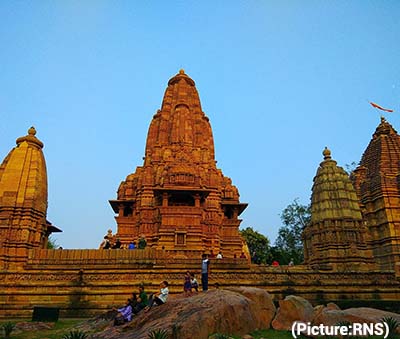 Brijendra Singh, a 77-year-old tour guide, has shown visitors around the famed Khajuraho group of Hindu and Jain temples for 52 years.
Singh weaves stories around the profusely carved sculptures depicting acts of worship, human emotions, domestic scenes, amorous couples. He worries that insensitive development could threaten the material remains of Khajuraho culture, while admitting that “sustaining outstanding universal value of heritage is critical.”
Locals are also concerned that a four-lane highway now being built to deliver tourists much closer to Khajuraho will destroy the traditional fabric of Indigenous communities.
“Many houses and temples have been demolished and thousands of trees have been uprooted to widen this highway,” said Devendra Chaturvedi, a local journalist.
Another issue is the possibly destructive effect of increased air traffic. The Khajuraho airport — located a few miles from the main group of temples — has been spruced up with a new terminal building and infrastructure to accommodate more flights. Two flying training academies are being set up on the premises for training aspiring pilots.
The director of the Khajuraho airport, Pradeepta Bej, said no heritage impact assessment has been ordered, to his knowledge. In the late 1990s, a report by the National Physical Laboratory of New Delhi noted occasional higher levels of acoustic excitation around the various temples of Khajuraho.
A former chief scientist of the Delhi-based laboratory, Mahavir Singh, said, “Vibrations above five millimeters per second for a single event could cause cracks in the monuments and heritage properties, so the situation should be monitored at the airport and surrounding areas.”
Others worry that with tourists will come increased encroachments outside the temple grounds.
“Tourism isn’t the only economy,” said Nagvendra Singh, a lawyer who plans to start a grassroots organization aimed at saving the temple town. “What is the government doing about urban encroachments, vehicular pollution, dust pollution and upkeep of monuments?”
Conservationists say the government restoration is a threat in itself. Shoring up temples with plain stones, they worry, and the use of abrasive cleaning techniques could also hasten their deterioration.
A monument attendant said that the temples are being cleaned by unskilled workers who are mostly unsupervised. Further, he noted there are no scientific or chemical restoration plans for their upkeep, posing a threat that they could become piles of plain stones.
Mrudula Mane, a conservation architect based in Ahmedabad, said monuments can’t be frozen in time but proper mitigation measures would arrest their speed of decline. “Chemical treatment has to be done under close supervision,” said Mane. “Abrasive cleaning techniques could exfoliate the sandstone monuments too much and cause erosion.”
According to Mishra, similar government rebuilding efforts elsewhere have harmed their aesthetic value. He pointed to a major refurbishment of Varanasi, on the banks of the Ganges; Jallianwala Bagh; and Mahatma Gandhi’s ashram in Gujarat.
Residents say Hindu nationalists are also pushing for more rituals at the temples that would misrepresent the Hindu thought and practice the temples stood for. “We can’t change people’s approach to religion,” said Anurag Shukla, a local historian, “but opening up these sites to more rituals or pujas may severely impact heritage.”
According to Shukla, the government’s primary aim is not preservation but to whip up Hindu pride.
In 2018, the Indian Parliament passed the Ancient Monuments and Archaeological Sites and Remains (Amendment) Bill, allowing the government in New Delhi to finance and carry out “urgent” public works within 100 meters of monuments protected by the Archaeological Survey of India. The original act prohibited any construction around the 100-meter radius.
Shivakant Bajpai, a superintending archaeologist at the Archaeological Survey of India’s Jabalpur circle, under which Khajuraho falls, said the current development scheme would not interfere with conservation, but he deferred questions about an impact assessment at the airport.
“The airport is far away from the protected area,” he said. “We are custodians of cultural heritage, so the airport authorities should be contacted for the fallouts of development.”
Nearby residents said the government has kept them in the dark about what the “iconic” designation means or its implications.
“We are being treated like outsiders in our own lands,” said Om Dubey, who works for a grassroots civil rights group in Khajuraho.
Conservationists said the protection of sacred sites must involve both government agencies and people. Shared responsibility, they say, would spark better dialogues on developing sites versus preserving heritage.
“Preserving Khajuraho’s sacred roots is critical,” said Brijendra Singh. “If development gets precedence over our faith traditions and monuments, what will remain iconic here?”
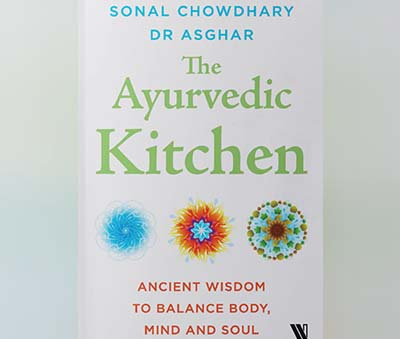 They say the book is for anyone who is looking to reset their food habits which are in sync with their own body, mind and health.
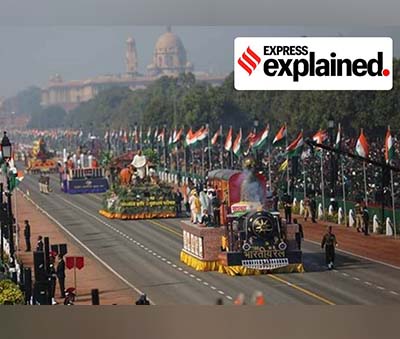 At a time when several Opposition-ruled states complained that their tableaux were not selected for the Republic Day parade, even as the government insisted that the decision was taken by an expert committee and there is no political intervention, the tableaux of four of the five poll-bound states made it to Rajpath on Republic Day.
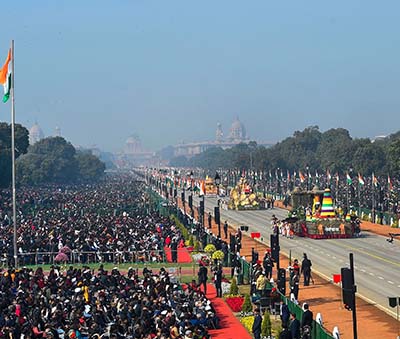 The Air Force tableau paid homage to the victory over Pakistan in the 1971 War, with models of MiG 21, Gnat — both of which were used in the war — and the Light Combat Helicopters. DRDO showcased major weapon platforms developed by it, including the Light Combat Aircraft Tejas and an Air Independent Propulsion system it is working on for the submarines.
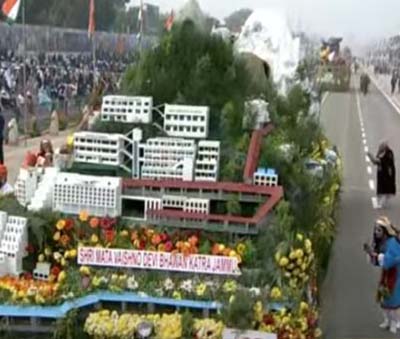 Meanwhile, Goa showed symbols of its heritage and Haryana had a simplistic tableau with several sportsmen from the state on a “victory chariot” carrying the national flag. The idea was to highlight that although it occupies only 1.3 per cent of the country’s landmass and 2.09 per cent of the population, sportsmen from the state have brought maximum medals for the country in various international sporting events, including the Olympics.
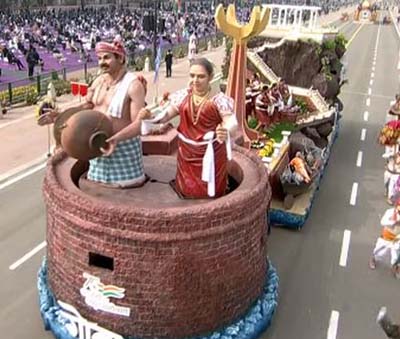 Maharashtra showed the rich biodiversity of the state, with 15 animals and 22 plants as a part of the tableau, including large models of the Blue Mormon Butterfly and more.
 “When I first wrote this book of my heart, I wasn’t sure whether anyone else would want to read it or care about it. Seeing it recognized in this way is so incredible and humbling. The world needs all kinds of stories!” LaRocca says on her eponymous website rajanilarocca.com. “This story was inspired by aspects of my own life and childhood, and is dedicated to my parents, who are my heroes,” she adds.
 The President of FIACONA, Mr. Koshi George said, “The Modi government has sunk to a new low, just when you thought it could not possibly sink any further. The act of removing the hymn from India’s Republic Day Parade to be held this Wednesday (Jan 26), shows the silliness and deep-rooted hatred of this party against anything that resembles the Christian faith”.
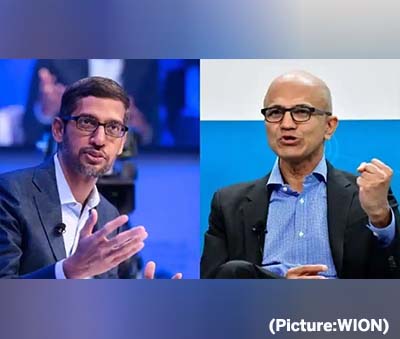 Rev. Peter Cook, the Executive Director of the NY State Council of Churches, a part of the National Council of Churches (NCC-USA) said that, “The action of the Modi government is not only an insult to the sentiments of over 100 million people who follow the faith in India but also to millions of other people from all faith backgrounds. With this kind of open hostilities against people of faith in India, it’s no wonder people like Dr. Gregory Stanton of Genocide Watch warn that India would be where the next genocide takes place”.
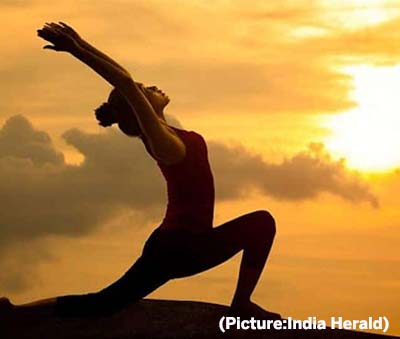 Thirteen rounds were conducted on the DD National channel between 7 and 7:30 am. Many leading Yoga gurus and institutes like the Indian Yoga Association, National Yoga Sports Federation participated. In his address, Sonowal highlighted the advantages, “Scientifically, the Surya Namaskar has been known to develop immunity and improve vitality, which is significant to our health during the pandemic conditions.”
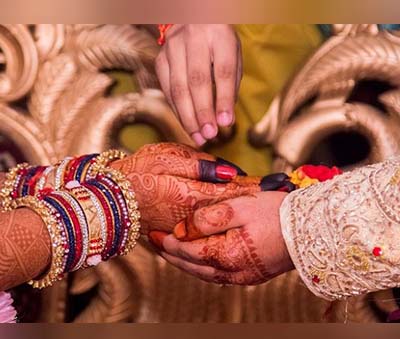 My family traces its lineage to the Southern Indian state of Tamil Nadu, where our faith was shaped by thousands of years of rituals and rites of worship, some of them germane only to Tamils.
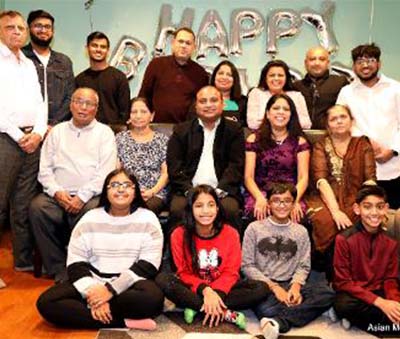 Born in the historical year of India’s Independence, 1947, to Shri Govind Lal Kothari and Smt. Sharda Kothari, in a small town of Gujarat called Kadi, Hasmukh finished his education with a degree in Civil Engineering, after which he procured a job as an assistant lecturer in Mumbai. In 1968, Hasmukh married Usha to start a blissful family life.
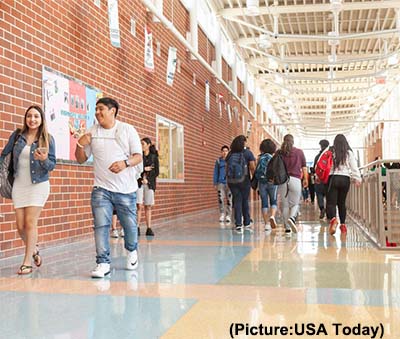 This reformative initiative requires the schools to display language outside of restrooms, informing students, whether male or female, that they may use the restroom that aligns with their gender identity. CPS prompted others, “We require all schools to adopt new signage to make our restrooms more inclusive. This is a big step forward for gender equity for our students and staff.” Is it going to influence the schooling practices themselves, or will it just be ignored?
 While COVID-19 clearly played a role in this near-zero population growth, that growth had begun to plummet even before the pandemic. The 2020 census showed that from 2010 to 2020, the U.S. registered the
 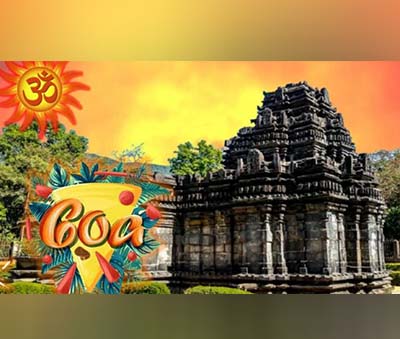 According to India Tourism Statistics 2019, a government of India publication, in 2017, Goa had 68,95,234 domestic and 8,42,220 foreign tourists while in 2018, the respective number of 70,81,559 and 9,33,841 showing a growth rate of 2.70 per cent and 10.88 per cent, respectively. Of course, the pandemic changed the situation, and the tourism sector was the hardest hit. In 2021, even when the domestic sector has picked up slowly, foreign tourists’ numbers are no match.
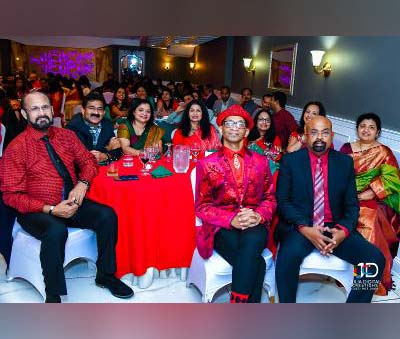 “Life is better with friends,” Jacob Abraham told the participants in his welcome address, providing insight into the objectives of creating the Hedge Social Club. “Friends are the ones who know you and are always there when you need them most. During the pandemic times, a sense of community is more important now than ever before. People near you are looking to form connections and find support.”
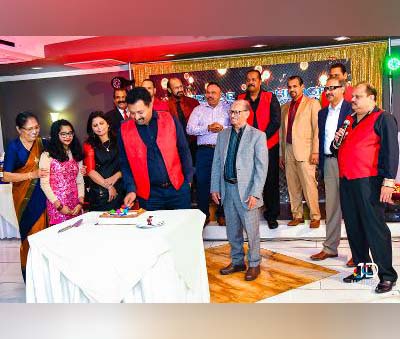 Senator Kevin Thomas of the New York State greeted the audience. Guest of Honor was Dr. Freemu Varghese, Founder and CEO of Freedia Media. Minos Abraham served eloquently as the Emcee for the program. Biju Chacko, a BOD member of IAPC introduced Jacob Abraham to the audience.
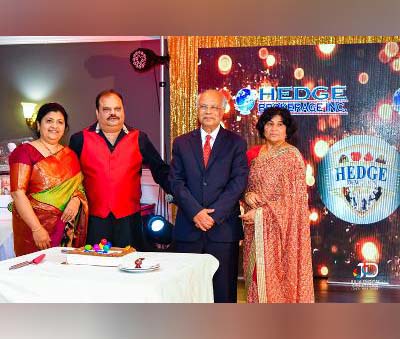 Stating that Hedge Club is a forum to “Meet new people at the Hedge Club, which is the ultimate group” Jacob Abraham said, “HEDGE CLUB is the one you always wanted to be part of. A group that you feel you belong to, and you believe it to be an integral part of who you are.” The Club members meet every month and celebrate and enhance their fellowship and joy. To join the Group and expand one’s friends circle and spend quality time with people, please call Saji Abraham at: 516. 606.3268.
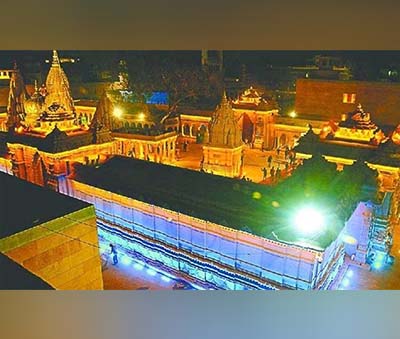 ‘Kashi and Ganga belong to all. The invaders attacked this city, tried to destroy it. The history of Aurangzeb’s atrocities, his terror tried to change civilization by the sword.
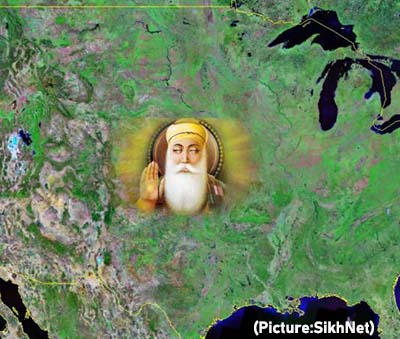 The documentary, which will air in the early evening, is one piece of a campaign launched by NSC to bring more awareness to the Sikh faith, the world’s fifth-largest religion, and to garner acknowledgement of key dates in the life of the faith’s founder. The film is set to be broadcast in 15 of America’s largest metropolitan areas including Houston, San Francisco and Washington, D.C.
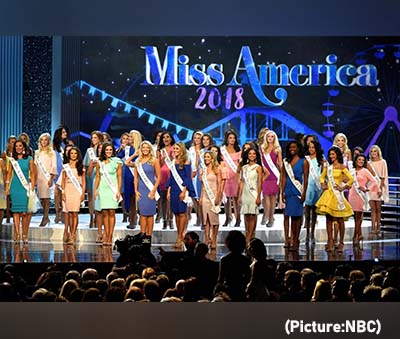 Faithful Miss America organizers and enthusiasts contend the annual ritual is here to stay and will keep changing with the times. And even though they may not have indeed devised a plan for world peace, many participants say the organization — a large provider of scholarship assistance to young women — has been life-altering, opening doors for them professionally and personally. Others should have the same opportunities, they say.
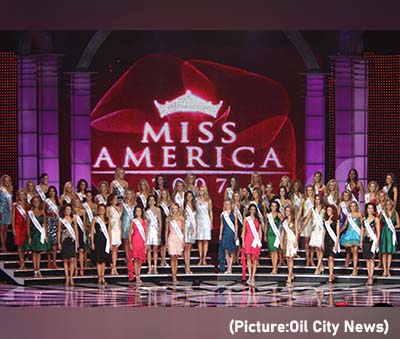 Miss America President and CEO Shantel Krebs, a former South Dakota secretary of state who does not take a salary, contends the Miss America organization is “committed to diversity, equity and inclusion.”
 The need for Democrats to manage resources between federal and state races could create some uncomfortable conversations over the coming months.
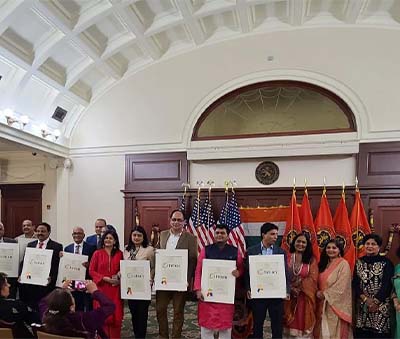 The tireless efforts of the county and founding members along with a dedicated Hosts committee of Dr. Bobby K. Kalotee, Chairperson Indu Jaiswal, Beena Kothari, Flora Parekh, Jasbir (Jay) Singh, Mukesh Modi, Shashi Malik, Sunita Manjrekar, Deepak Bansal, Indu Gajwani, Anju Sharma and several volunteers and supporters, contributed to the success of the event keeping up the spirit of Diwali.
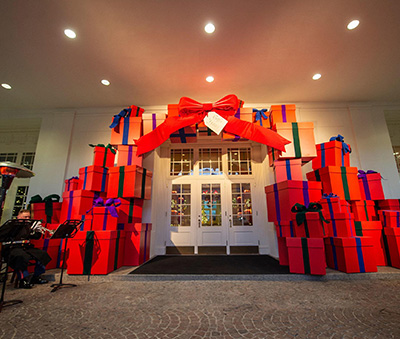 “The things we hold sacred unite us and transcend distance, time, and even the constraints of a pandemic: faith, family, and friendship; a love of the arts, learning, and nature; gratitude, service, and community; unity and peace. These are the gifts that tie together the heart strings of our lives.”
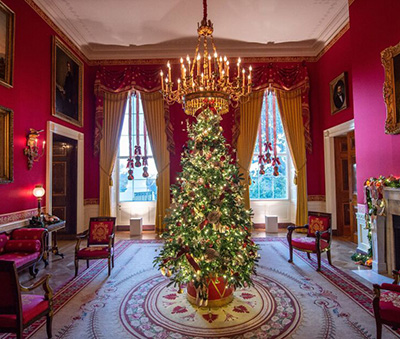 The Red Room, decorated to represent the gift of the performing arts, includes brass instruments hanging from the mantel. Ballet slippers, tap shoes and musical notes are strung around the tree.
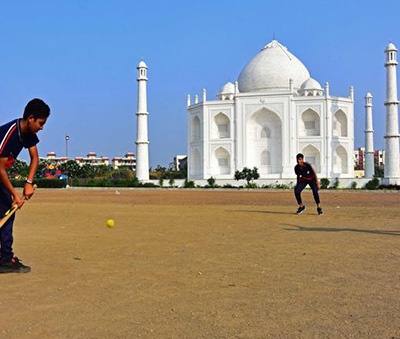 Mr Chouksey’s replica – nestled deep inside his sprawling 50-acre property, which includes a hospital, has also been attracting a steady stream of visitors.
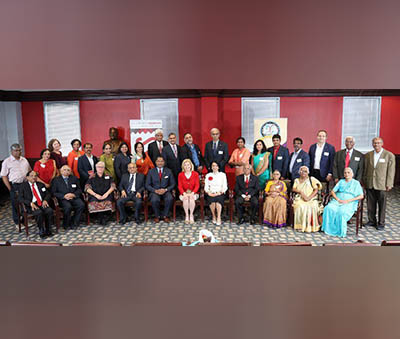 The initial $1 million pledge will create The Houston Tamil Studies Chair, Inc. Research Endowment in the UH College of Liberal Arts and Social Sciences. These funds will support research program costs, equipment and seminars with invited scholars who are experts on Tamil societies and the Tamil diaspora in the United States.
 Directed by TJ Gnanavel, the film stars actors
 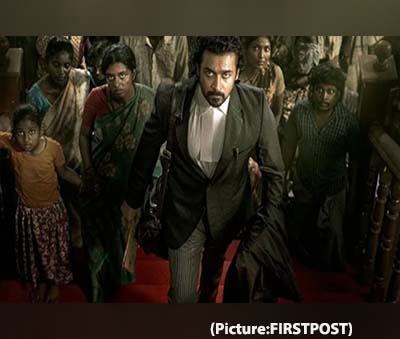 A man named Rajakannu from the Irular tribe was falsely framed in a theft case. The horrific death of Rajakannu due to the custodial torture was a challenging and landmark legal battle for K Chandru when the victim’s wife Sengani (real name Parvathi) came to the lawyer for help.
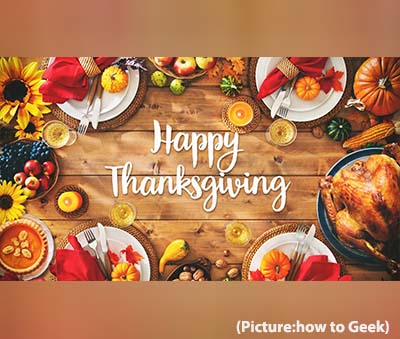 Americans are known the world over for saying “thank you”
  In American English, many of the expressions of gratitude are couched in transactional language that involves expressions of
 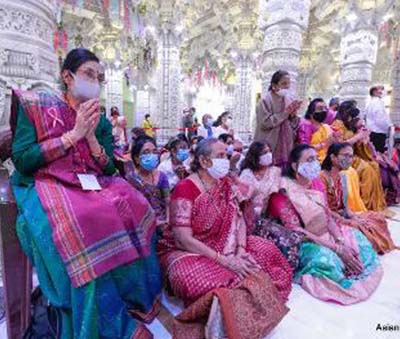 The celebrations offered attendees an opportunity for darshan of the annakut and divine murtis of God while arti and thaal were sung throughout the day. Visitors were also inspired through an exhibition on with informational posters and decorations describing different traditions and stories behind the multi-day festival. In expressing the warmth and goodwill of Diwali, prasad in the form of sweets was distributed to all those joining in the celebrations. The festivities were open to all members of the local community.
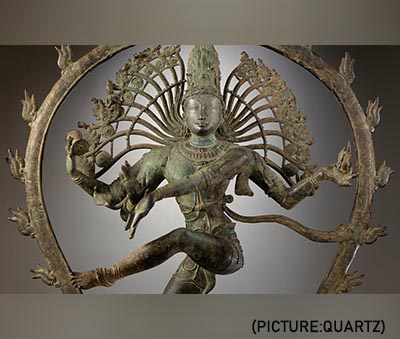 For 16 years he has been working to repatriate gods and goddesses looted from India over the years, and the challenges remain huge, he tells us in today’s episode. For example, in 2020, police seized 19,000 stolen artefacts in an international art trafficking crackdown. 101 suspects were arrested with treasures from around the world, including Colombian and Roman antiquities. One activist estimates that in France alone there are 116,000 African objects that should be returned.
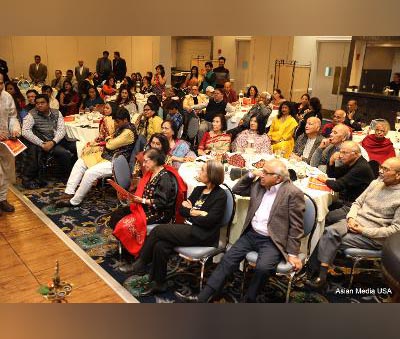 The event started with a Diya lighting ceremony by executive committee and board of trustees members led by Dr. Subhash Pandey and Chief Guest, Mr. PK Mishra, and was followed by a beautiful sitar instrumental presentation of bhajan medley by Mr. Paneesh Rao. The program was organized and coordinated by Mr. Sunish Mittal and Mr. Raj Kumar Upadhyay, treasurer and president of the UP Association, respectively.
 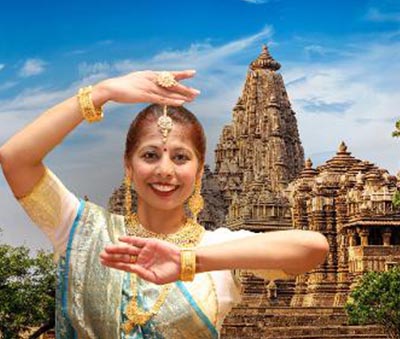 The Association brought in several renowned artists from Chicago who presented a range of traditional, modern, and contemporary Indian performances, including an outstanding dance (Ganesh Vandana and Shri Ram stuti) by Mrs. Gauri Jog, director & teacher, India dance school. This was followed by several melodious songs by two well-known singers, Mrs. Ananya Ghosh and Mr. Sreepathy that were accompanied by an outstanding musician team. This was followed by a program called “Saaz aur Alfaaz” by Mr. Rakesh Malhotra, a famous poet, and Mr. Sunish Mittal, a well accomplished singer. Two children’s performers, Mr. Shlok Jaiswal and Ms. Anavi Ghosh also sang melodious songs for this occasion. The program ended with a presentation of a colorful group dance to a Bollywood movie song.
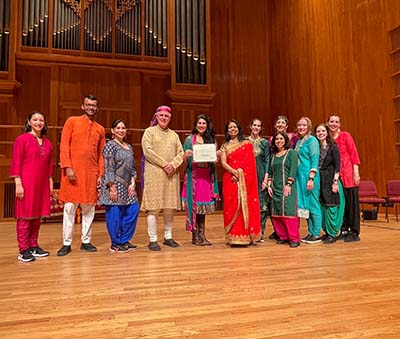 Diwali – known as the festival of lights – is one of the major festivals celebrated by Hindus, Jains, Sikhs and even some Buddhists. Each religion has its own historical narrative behind the holiday. Diwali is widely observed among more than a billion people from a variety of faiths across India and its diaspora. The five days of Diwali are marked by prayer, feasts, fireworks, family gatherings, and charitable giving.
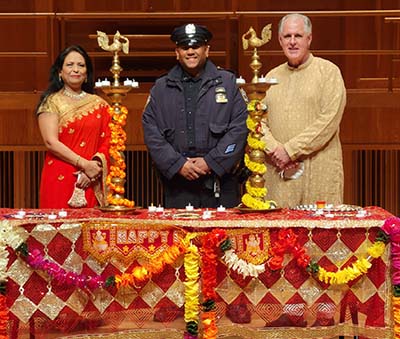 “May the lamps (Diya) of Diwali (Deepavali) illuminate everyone’s life with happiness, peace and good health. Wish you and your family a very prosperous Diwali and a happy new year! On this Diwali, let’s make a promise to bring lights in people lives who suffered during this pandemic, and also pray to God for a good health and fortune for everyone! Looking forward to celebrate Diwali back again at City Hall next year with more joy of having it as NYC public school’s holiday!,” said Dr. Neeta Jain District Leader and co-organizer.
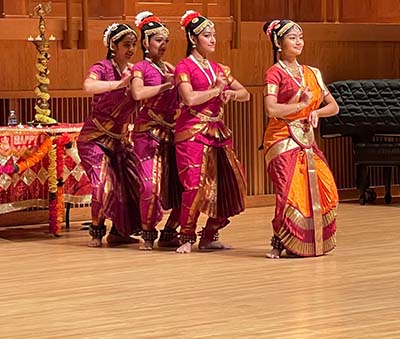 “New York is no stranger to Diwali and its symbolic relevance. It is very heartening to see the festival of lights being celebrated here with great joy and fervor – not only by the South-Asian community, but also by members of diverse ethnicities and nationalities just like the Indian-American community celebrates Christmas and other festivals passionately and with great merriments,” said Deputy Consul General of India, Dr. Varun Jeph, who was in attendance at Saturday’s festival. “It truly reflects the American and Indian values of celebrating diversity and of embracing different cultures. May the festival of lights bring joy, love, peace, prosperity and good health to everyone.”
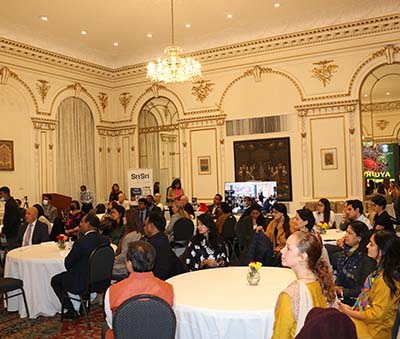 In this regard, he highlighted some data points from the WHO Global Report on Traditional and Complementary Medicine 2019 – number of countries with national policy on traditional and complementary medicine has increased from 25 in 1998 to 98 in 2019 and countries with health insurance cover for traditional and complementary medicine has increased from 37 in 2012 to 45 in 2018. Consul General underlined the vast network of scientific studies being undertaken on Ayurveda in universities in the United States and in research ecosystems across the world including in India.
 Lion Hina Trivedi spoke about the selfless efforts by Chicago Indo Us lions club in helping families and kids by donating school supplies, backpacks, coat drive and food drive. The club recently helped many patients in India with ventilators as well.
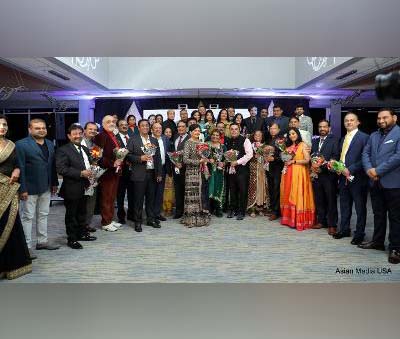 The event featured some very well-known vocalists of Chicagoland Rita Shah, Rajesh Chelam, Jitendra Bulsara, Pratibha Jairath and Mir Ali along with the live orchestra by Orchestra Sa Re Ga Ma led by Hitesh Master Nayak and his team accompanied by Nupur Sound. The musical team kept the guests entertained with a beautiful line up of evergreen melodies. The guests celebrated Sunil Shah’s birthday with a surprise cake cutting ceremony organized by daughter in law Nikki Shah. Mr Shah brought the entire audience on the floor with his excellent singing performance. Sunil and Rita were accompanied by their family and friends who wholeheartedly worked towards the cause behind the evening.
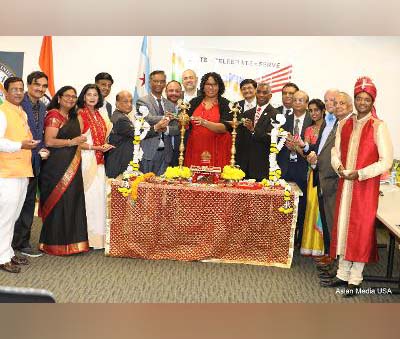 The celebrations encompassed the ceremonious crowning of Chicago’s City Treasurer Hon. Melissa Conyears-Ervin with a silk colorful headgear symbolizing the crowning appreciation from NCAIA for hosting a grand Diwali in the magnificent iconic City Hall building that was led by Event Convener & Vice President Ajeet Singh joined by NCAIA officers: Harish Kolasani, Dr. Suresh Reddy, Vinesh Virani, Neelam Dwivedi Singh, Keerthi Kumar Ravoori, Shekhar Misra, Iftekhar Shareef & Nag Jaiswal. NCAIA National President Harish Kolasani welcomed the guests and outlined the mission of National Council of Asian Indian Associations and how it impacted lives especially in recent times contributing towards the goal of eradication of the pandemic.
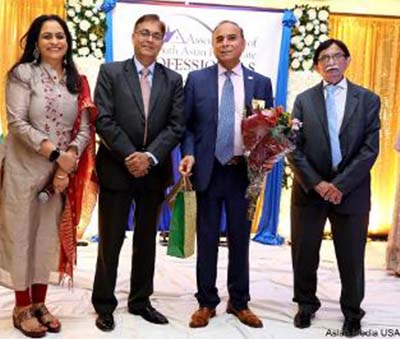 The gala had a variety dance performance by very well-known artists from Chicagoland that included Chicago Kala Kshetra, Sonali Shani and Rewa Shani, Swati Pandey, Aanya and Usha Kabra.
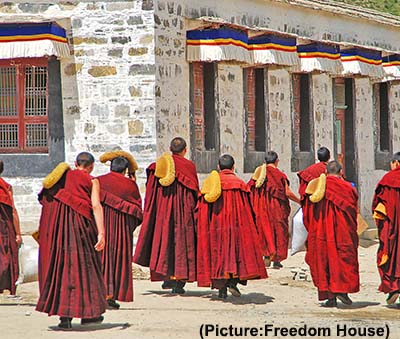 She also said that the Chinese want everything to be melted into the communist style. “So be it Buddhism or anything they want everything to be changed into them.” Speaking over the so-called freedom in Tibet, the Deputy Speaker said: “If there is any freedom in Tibet, why don’t the Chinese let world media go there and see for themselves. “When they shy away from world media that shows that they are hiding something. Why do they have to give all the time white paper on Tibet? This shows that all is not well there,” she said.
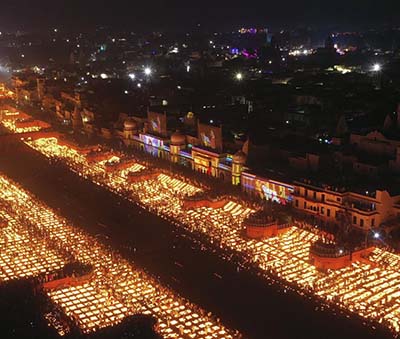 Indians across the country began celebrating Diwali, the Hindu festival of lights, the triumphant return of Lord ram to Ayodhya after rescuing Sita from Sri Lanka. Diwali is typically celebrated by socializing and exchanging gifts with family and friends. Many light oil lamps or candles to symbolize a victory of light over darkness, and fireworks are set off as part of the celebrations.
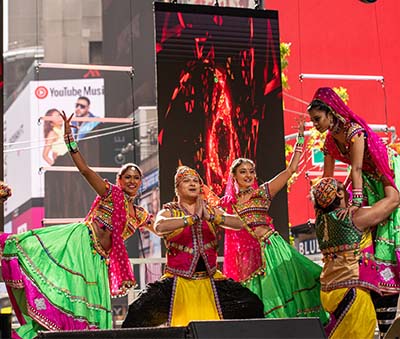
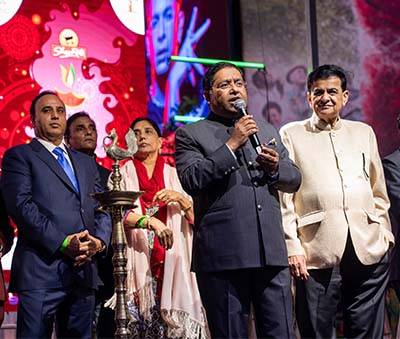 The President of EventGuru Inc. Neeta Bhasin said ‘We are sharing the message of Deepavali – Knowledge over Ignorance, Light over Darkness, Peace, Love, Unity and Togetherness and inclusion in diversity to the World from the biggest crossroads of the world, Times Square. Even the universe responded in appreciation by keeping the weather conducive to the event despite forecasts of rain throughout the day.’
 This was followed by the dignitaries speaking on the Times Square stage which included some of the most affluent people of New York. List of speakers included Consulate General of India in New York, Randhir Jaiswal, New York State Governor Kathleen Courtney Hochul U.S. Senator Charles Ellis “Chuck” Schumer, U.S. Rep. Carolyn Maloney (D-NY), NY State Senator John Liu, Gajendra Suri and Beena Kothari from Samman for All , ShopRite’s Ranjana Choudhry, Thomas Rajan from American Airlines, Harry Singh Bolla of Bolla Oil Corp, Padma Shri Mr. H R Shah – Chairman of TV Asia and other sponsors of the festival.
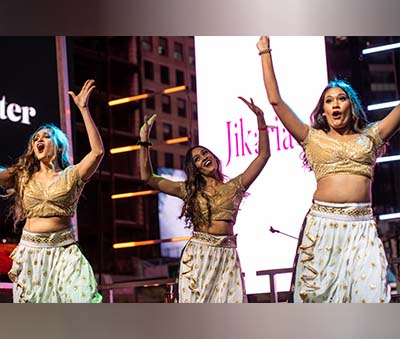 NY State Senator, John Liu was very excited to see the huge crowd at Times Square ‘It is great to see everybody in person. No better place to celebrate Diwali than the crossroads of the world right here in Times Square, NY City. With Neeta’s advocacy and esteem journalism and many others, in NYC a long time ago we were able to make a parking holiday, you do not change the car from one side of the street to another’.
 This year for the first time, the
 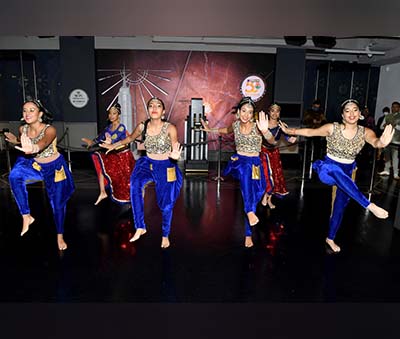 FIA Chairman Ankur Vaidya, President Elect Kenny Desai, Past President Alok Kumar and Executive members Parveen Bansal and Saurin Parikh participated in the event as well. In follow up to a spectacular dance performance by the students of Aum Dance Creations the Empire State Building ceremonial lighting was turned on together by Jay Sean, Thara Natalie and Hon. Consul General Jaiswal. H.E. Randhir Jaiswal conveyed Diwali wishes and thanked the American community for accepting and embracing diversity.
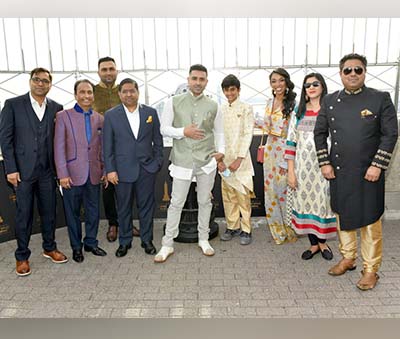 The FIA believes that such gestures by ESRT help in spreading the ancient Indian philosophy of ‘Vasudeva Kutumbakam’ (the world is one family) and also demonstrates a great harmony in spirit and deeds between people of the world’s largest and oldest democracies, the organization stated in a press release. Despite the challenges and changes due to the Covid-19 pandemic, FIA has not deterred from its goal of serving the community, it said.
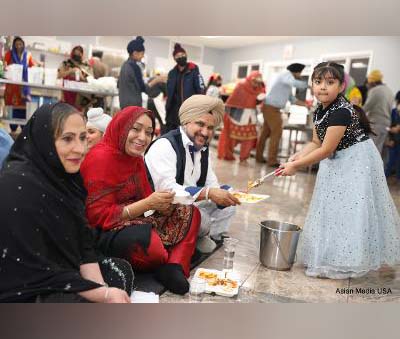 The events included deepmala as well as katha and kirtan by Bhai Rajinder Singh and Jatha, Bhai Parminderjit Singh and bhai Inderjit Singh Khalsa.
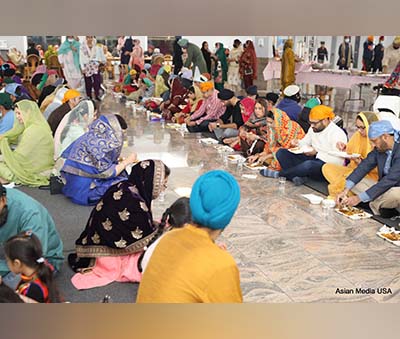 Sikh Religious Society, a non-profit organization, in Palatine, Illinois was formed in 1974 and its first formal Prakash Divas (the ceremonial acceptance of Guru GRANTH Sahib {Sikh’s holy scripture/book} at this new place of worship was celebrated in 1975. The organization focuses on Sikh religious services, Punjabi language/ Kirtan classes. Another focus of this society is on the community service, charity and other Non Profit endeavors to promote the Punjabi culture and heritage.
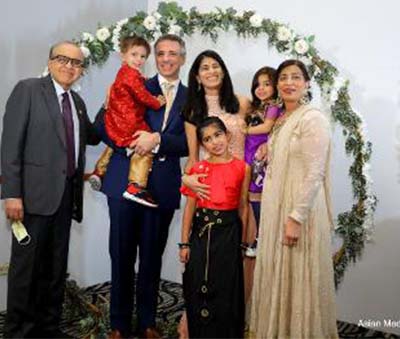 Another board member Nand Balani elaborated on the initiative called, Alliance of Global Sindhi Association that connects Sindhis all over to the world. The three aims of the alliance focus on matrimonial services, romanized script for sindhi language, and a global sindhi directory.
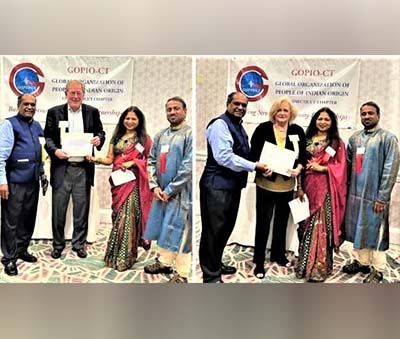 Future 5 helps underprivileged students in the Stamford High School system. Future 5 envisions a world where all students can be part of a vibrant and supportive community and access the people and resources they need for college, career and life success.
 The event was attended in-person by several dignitaries, including United States Sen. Charles E. Schumer, U.S. Rep. Carolyn Maloney, India’s Consul General in New York Randhir Jaiswal, New York State Sen. John Liu, Padma Shri Sudhir Parikh, chairman of Parikh Worldwide Media and ITV Gold, H.R. Shah of TV Asia, representatives of the Indian Police Officers Society from the New York Police Department, and several other special guests who spoke on stage about the meaning of Diwali and the joy of celebrating it after Covid.
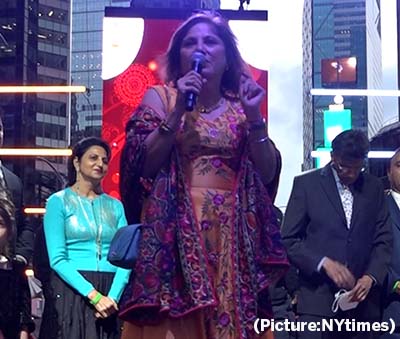 This year in contrast to last year, Liu said, the number of Diwali celebrations has risen, “in our schools, in our mandirs, and City Hall,” he said, a tradition he started when he was a New York City Councilor. “There’s no better place to celebrate Diwali than at the ‘Crossroads of the World’, right here in Times Square, New York City. Because this is such an important holiday for billions of people around the world symbolizing the victory of good over evil, light over darkness …”
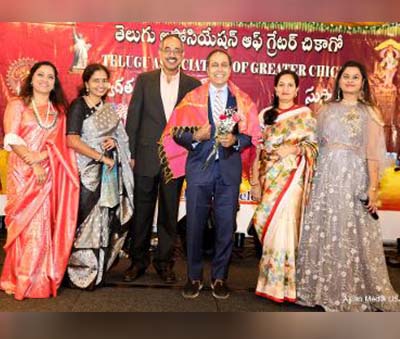 The event was described as a grand success with an overwhelming response from the Telugu community with 2000+ guests in attendance over 2 days. Multiple guests from Community, National and Local Telugu organizations, long time Sponsors PMSI Ashok Lakshmanan, NYLife Krishna Rangaraju joined along with Chief Guest U.S Congressman Raja Krishnamoorthy, Dr. Sreenivas Reddy, a member of the National council on White House History and Indian Consulate General’s office represented by Consul Gopal Bhagath.
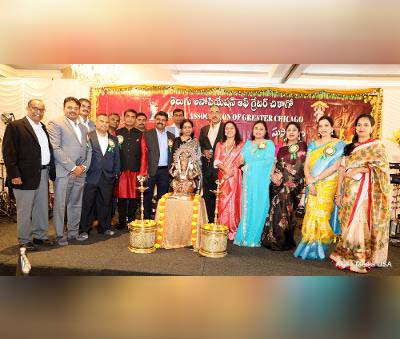 As part of the 50th year celebrations second day “Joruga Husharuga – Dasara and Diwali celebrations”, 250+ participants including kids, youth, couples and senior members of TAGC entertained guests with their performances. Event brought a true festive atmosphere where all the seniors, youth and kids came together under one roof to celebrate the 50-year history of the Telugu community in America and the importance of perseverance.
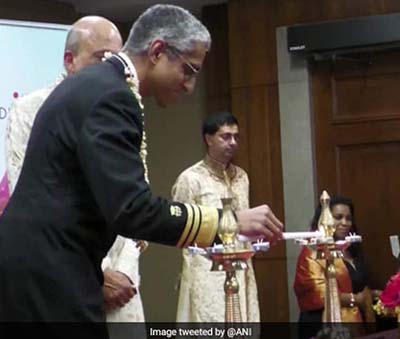 “But one of the things that concern me most about the last few years is another type of pandemic, the invisible pandemic that we are in the midst of. That’s a pandemic of polarization where it feels increasingly people have turned against each other, where they have demonized one another, called each other evil and treated each other as so. That’s a particular kind of darkness,” he said.
 The event was attended by Congressmen Raja Krishnamoorthy, Illinois; Tim Ryan, Ohio; Greg Stanton, Arizona; Danny Davis, Illinois; Mike Quigley, Illinois; and, Audrey Kitawaga, Ambassador of Religions for Peace. Ambassador Sandhu emphasized critical points regarding the element of solidarity, the unity and partnership between the two nations, the importance of science and spiritual and extending happiness and kindness to all in these unprecedented times.
 The virtual conference showcased the diversity of views within the Hindu world, feature friends of the Hindu community, and address a troubling trend of anti-Hindu sentiment (Hindudvesha or Hinduphobia) which has more recently plagued the Hindu diaspora in the United States, Canada and other parts of the world.
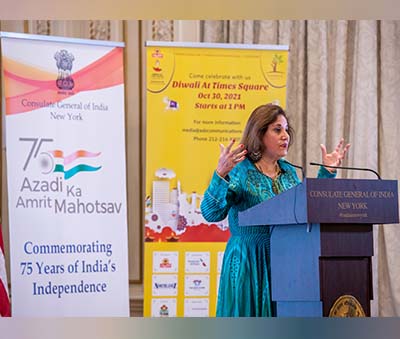 The event was attended by Media Houses, Performers and the Sponsors of Diwali at Times Square. The program started with Ganesh Pooja followed by Diya Lighting Ceremony and Presentation by Neeta Bhasin, Founder of Diwali at Times Square where she shared the details of the upcoming festival. Sponsors like Shoprite and American Airlines spoke of the significance and importance of cultural event as big as Diwali at Times Square and its impact on the community.
 The latter is found mostly in Eastern Himalayas and China and used in naturopathy and certain food preparations like meat dishes, stews and barbecue sauces, owing to its bolder flavor. And, it is now one of the much soiught after spices India exports around the world.
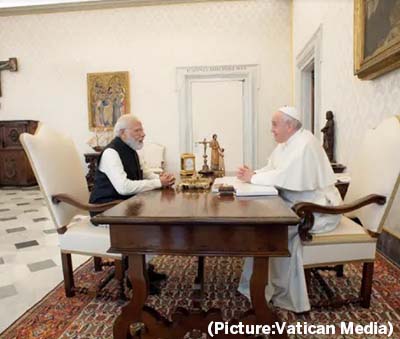 The two leaders discussed with Pope Francis issues covering a range of areas of interest, including COVID-19, general global perspectives and maintaining peace and tranquility. After the meeting, Modi tweeted, with pictures of him embracing the Pope, “Had a very warm meeting with Pope Francis. I had the opportunity to discuss a wide range of issues with him and also invited him to visit India.”
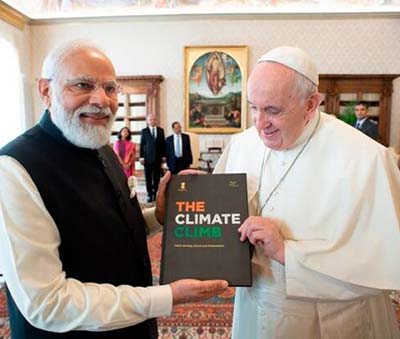 Pope Francis and the Prime Minister then exchanged gifts. Modi gave the Pope a silver candlestick and a copy of The Climate Climb. Pope Francis gave Modi a bronze plaque with the inscription “the desert will become a garden,” and copies of the pope’s writings, including his encyclicals “Laudato Si’” and “Fratelli Tutti,” as well as the “
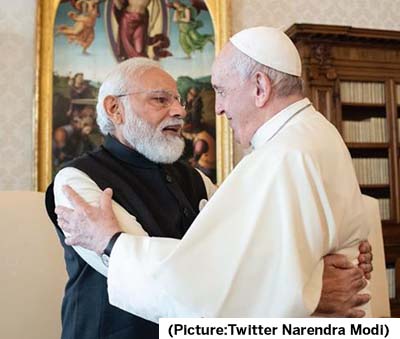 “The meeting should not be seen merely as the one between two country heads, rather it was the head of the largest democracy and an ancient culture of the world meeting the head of the largest religious community in the world. This brings in hope for enhancing human fraternity and caring for the poor, because that’s what Christianity stands for. It would bring in positive efforts in India for a mutual trust and collaboration between people of different religious groups. It would also contribute to the very need for dialogues. We are very delighted that the Prime Minister has opened ways for a Papal visit to India,” the Cardinal Cleemis told the media.
 The event was organized by Manoj Rathod and Tanmay Patel featured two very well-known versatile vocalists Badal Parmar and Bharti Desai who kept the atmosphere upbeat and devotional and had everyone dancing throughout the entire event. Badal Parmar performed traditional Kathiawadi style garba as well as popular Hindi songs. His style of performance reflects an immense amount of Gujarati garba as well as modern beats. This unique style of singing is what makes him such a versatile performer. Garba Queen of United State of America Desai who is an award-winning singer in Chicago enthralled the audience with her charming personality. She continued amazing Garbas in Two Taali. In Raas everybody enjoyed Disco Dandia, Sanedo, Amu Kaka Bapa Na, Bhai-Bhai, Hitch..
 “Navaratri Garba is very special as it honors Shakti in very rhythmic ways. We all love the whole atmosphere of colors, the clothes and of course, the music and then there is always the fun of dressing traditionally. Western dresses are replaced by Lengha-Choli, matching jewelry and foot wear”, said one of the participants. The evening was followed by traditional garba music and concluded in the wee hours of morning highlighted by devotional Arti of Mataji.
 In addition to three days of Puja and all its special features, they also had an array of cultural programs with some legendary artists from both the USA as well as from India. Last two years, BAGC through its strong tech committee has continued connecting with the community virtually due to the challenges posed by Covid-19 Pandemic through BAGC Live YouTube channel and BAGC Radio in showcasing its virtual events to the entire community across the globe.
 The number of Catholics in the world grew by more than 15 million from 2018 to 2019, according to a census by the Vatican news agency Fides published on Thursday (Oct. 21). “The increase applies to all continents, except Europe,” which saw the number of Catholic faithful decrease by almost 300,000, the survey found.
 The first female governor of the great state of New York thanbked the organiZers and leaders of the Indian American community: “I want to just thank Uma SenGupta for all you’ve done for us, and to your family, your mother, and the influence of your late father – you are the reason why we celebrate today, people like you who came to this country humbly, not sure of what the future would bring, but you always had that deep rooted faith in your traditions and to know that Diwali followed you to this country, that you had this light within your heart that you could bring to America and let shine and let all of us gather here in honor of the Goddess Lakshmi. Many of the traditions honor the male gods but this is one that’s dedicated to women so I think this is particularly special as well. Dr. Sumita Sengupta, I want to thank you as well. Randhir Jaiswal, the Consul General, is here as well. Dr. Hari Shukla, I want to thank him for making me feel so welcome, the founder of South Asians of New York.”
 It has been reported that President Biden will meet with Francis on October 29th. While serving as the U.S. Vice President, Biden had met with Pope Francis for the first time in September 2015, when the pope visited the United States to attend the World Meeting of Families in Philadelphia.
 Francis’ private meeting with Pelosi, a Catholic and a defender of abortion rights, came as American Catholic bishops consider how to press the church’s teaching against abortion while the country’s second Catholic president, Joe Biden, heads an avowedly pro-choice Democratic administration
 The speaker, in her statement on the meeting, emphasized the pontiff’s support for measures to combat climate change. “His Holiness’s encyclical Laudato Si’ is a powerful challenge to the global community to act decisively on the climate crisis with special attention to the most vulnerable communities.” She went on to praise “the immense moral clarity and urgency that His Holiness continues to bring to the climate crisis.”
 Rep. Krishnamoorthi, said he joins the many Hindu faithful in the United States in recognizing October as Hindu Heritage Month. Several Hindu organizations in the U.S., including Vishwa Hindu Parishad of America (VHPA), have declared October as Hindu Heritage Month, and several states including New Jersey, Delaware, Ohio, Texas, Florida, Nevada, North Carolina, Minnesota, Virginia and Massachusetts have proclaimed October as Hindu Heritage Month, according to the website hindumonth.org, as have several cities like Dallas, TX, and La Palma, CA.
 Since then, Pandher, who lives in a remote cabin in the Yukon, has become an international YouTube sensation. He views the dance videos as a way to spread positivity and cross-cultural understanding — a calling he’s especially taken seriously since March 2020. A March 2, 2021, video of Pandher, with his signature animated grin, dancing on a frozen lake after getting his first dose of the COVID vaccine has more than 3 million views on Twitter. Collectively, his videos have been watched more than 50 million times. In September, he was featured on YouTube billboards across Canada that read, “Taught people to dance. Moved the whole country.”
 According to the Library of Congress, Jefferson’s Quran will be the “first object on display after guests emerge from a sound and light experience that showcases the U.S. founding principles, particularly its innovations. Jefferson and the Quran are the first example of those goals.” The pavilion will also feature a SpaceX rocket and rock taken from the Moon during a NASA mission.
 A young Dalit girl, with the dream of becoming a dancer in her eyes, and her soul mate Bheem leave their caste-ridden existence behind and relocate to Bombay. They have learnt the hard way that the preaching of oneness by their religion does not work in the real world. Drawing its title, “Two and a half Rivers” (Niyogi Books), from the historicity of the Partition which has left in its wake only half the rivers to India from the land of the five rivers, Anirudh Kala’s novel offers a poignant commentary on the turbulent connection between religion and terrorism.
 Also on this episode,
 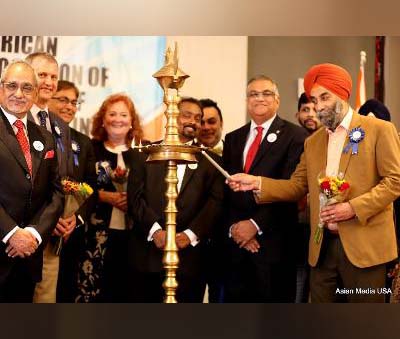 The event started with national Anthems and lamp lighting followed by the inaugural dance performance by the students of SR Dance Academy. The master of ceremony Madhura Sane kickstarted the event by welcoming all the board of directors and the distinguished guest on to the stage. The President Gladson Varghese delivered his speech to elaborate on the vision behind the initiative of launching AAEIO. He talked about how the organization aims at supporting engineers across the globe by providing them a voice and guidance by the experienced leadership of the organization. Vice President Nitin Maheshweri presented the Vision and 4 pillars of the organization. Chief Guest Consul General of India Mr. Amit Kumar along with Congressman Sean Casten officially Inaugurated the AAEIO by lighting the Lamp. AAEIO also presented the awards to Dr. Deepak Kant Vyas, Mr. Gulzar Singh and Mr. Brij Sharma for their contributionsto the community and becoming successful Engineering Entrepreneurs.
 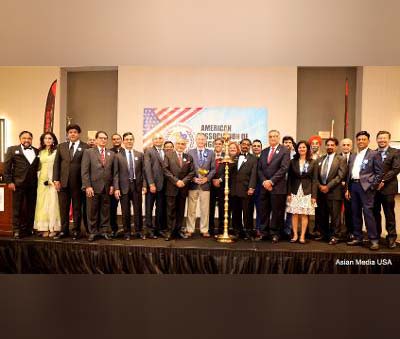 Dr. Mohanbir Sawhney, Associate Dean, (Northwestern University, Kellogg) delivered an inspirational and informative keynote speech elaborating on his experience and the roles and future of organizations like AAEIO. The speech by the Vice President 2021 Nitin Maheshwari included the plans for the upcoming initiatives taken by AAEIO and how the organization aims at supporting small businesses, fresh graduates as well as the fellow engineers from all across the globe. The president elect 2021 Ajit Pant talked about how AAEIO will act as an umbrella organization for the engineers from all streams of engineering like civil, mechanical, IT, electronics, Electrical and so on. Nag Jaiswal did the Vote of Thanks and he thanked all the sponsors, Dignitaries, AAEO Board and all the Guests for their help and support.
 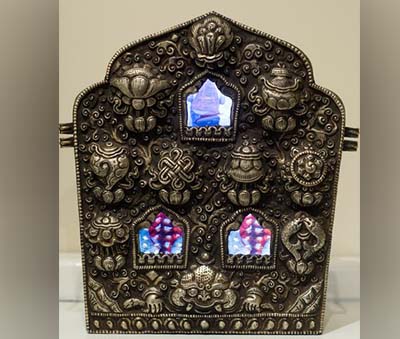 Aharoni’s work is also on view at
  “I wanted to start the foundation so that we could raise awareness so that we could increase funding on a federal level, so that we could lobby insurance companies to pay for women getting checked out properly,” she was quoted as saying by Variety. “I don’t want any young woman in the next generation to go through what I and millions of women have gone through.”
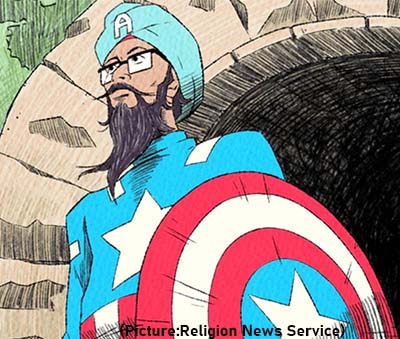 Now, an animated feature, “American Sikh,” is set to chronicle his life, from his time in India, where his family survived the
 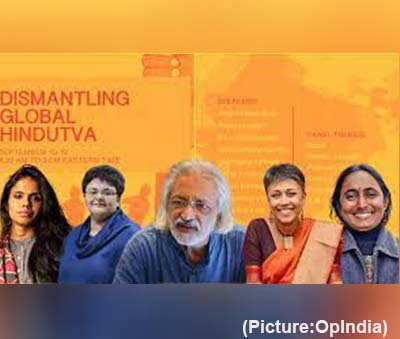 The organizers claim, Hindutva Is Not Hinduism. In a statement signed by nearly 1,000 leading professionals and academicians stated: “As scholars and members of academic communities around the world, we strongly condemn the campaign of harassment and intimidation against the Dismantling Global Hindutva conference, and stand in solidarity with the 49+ universities and 60+ departments and centers sponsoring the event.” They opposed the “besieging of cosponsoring institutions by political extremists who have disingenuously sought to smear the conference as “Hinduphobic” or “anti-Hindu.” We firmly reject these misleading attempts to conflate Hindutva and Hinduism.”
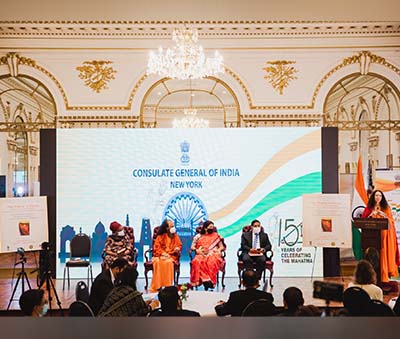 The event was attended, among others, by the Secretary-General, Religions for Peace Prof. Azza Karam; secretary-general, Global Interfaith WASH Alliance, Parmarth Niketan; Special Adviser to the Secretary-General of the UN and head of the United Nations Office of Genocide Prevention, Alice Nderitu; President of Parmarth Niketan and founder and chair of Global Interfaith WASH Alliance, Swami Chidanand Saraswati; India’s Minister of State for External Affairs & Culture, Meenakshi Lekhi; Consul General of India to New York Randhir Jaiswal; President/Founder of the International Academy for Multicultural Cooperation, President of the Light of Awareness International Spiritual Family Audrey Kitagawa, JD; Padma Shri Dr. Sudhir Parikh, chairman of Parikh Worldwide Media and ITV Gold; and Jonathan Granoff, president, Global Security Institute.
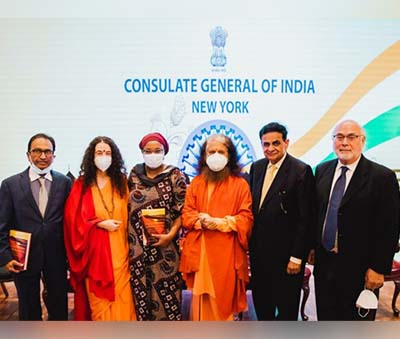 After the ceremonial lighting of the lamp and recitation of auspicious prayers, Sadhvi Bhagawatiji presented each of the dignitaries on the dais a copy of Hollywood to the Himalayas. Minister of State for External Affairs and Culture Meenakshi Lekhi praised the Indian-American community for its devotion to the well-being of India. “Let me say at the outset how proud I am of all of you. We, in India, are extremely grateful to our diaspora which carries on all the traditional functions and are the ‘Ambassadors of India’ while the formal Ambassadors have formal jobs to do. But the ‘informal ambassadors’ carry the job far, far, far better and reach out to people,” Lekhi said. “The values that India stands for are exhibited by people who are away from their homes, but carry their hearts on their sleeves and always believe in and stand up for Mother India,,” she added.
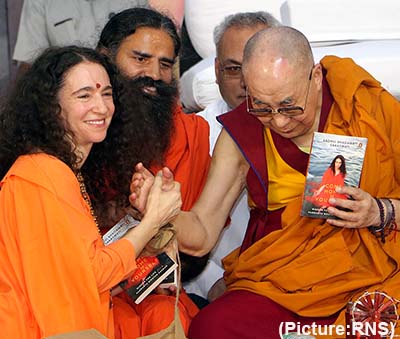 Sadhvi Bhagawati Saraswati,
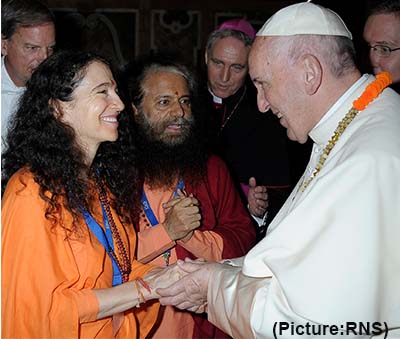 When you talk about grace, a lot of people might think you mean the Christian concept of grace, a free gift usually associated with belief in Jesus. What do you mean by grace?
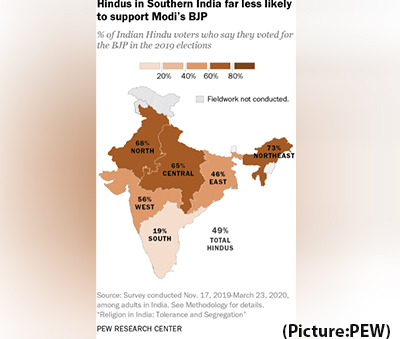 How we did this In 2019, roughly half of Hindu voters (49%) supported the BJP, giving the party a majority in the Lok Sabha – India’s lower house of parliament – and allowing Prime Minister Narendra Modi a
 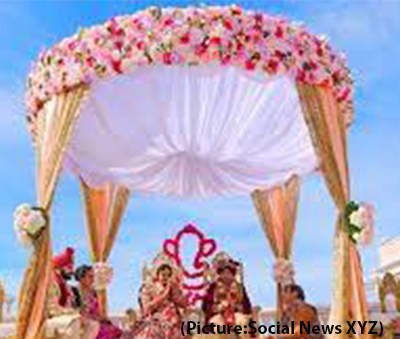 “In spite of
 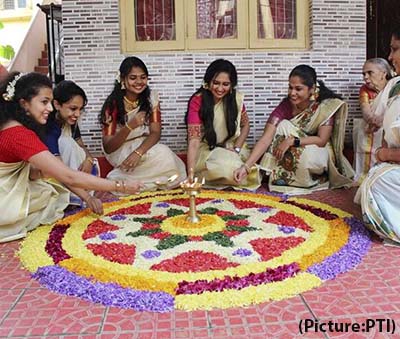 Marking the end of monsoons and welcoming the harvest season, this Kerala festival, Onam 2021 is a Hindu festival celebrated annually. It is celebrating all over India with its origin in the Kerala state. One of the biggest festivals of the state, the Onam festival is celebrating for 10 days. Normally it is during the Malayalam month of Chingam. It fills the heart of people with gaiety and brings them together to be a part of this vibrant and cultural festival.
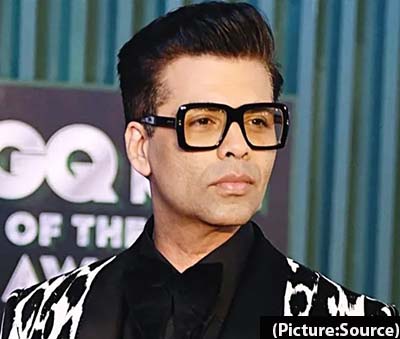 The film opens on a calm evening on a serene beach. We hear the sounds of waves gently crashing on the shore, seagulls cooing, and other ambient sounds. It is then that the frame spans out and we see Karan Johar saying: “Some sights take you places.” The teaser then ends with Karan Johar mentioning: “Something inspiring, clicking soon. Stay tuned!” On India’s Independence Day, Sonu Sood – actor, film producer, model, humanitarian, and philanthropist – had a special surprise announcement for all his fans! He announced a what-looks-to-be-like new project titled ‘It Happens Only in India’ with National Geographic India.
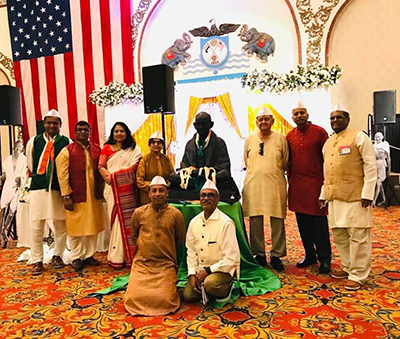 The event also raised funds for providing ambulances to help the secondary health sector in rural and tribal areas of India. Gandhian Society founder Bhadra Butala said that the society has committed to provide 50 ambulances this year, which will be run and maintained by Gandhian groups in the rural and tribal areas. The event on August 15th raised funds for 10 ambulances.
 “When India was hit badly with the second wave of Covid, the Indian Diaspora came forward to help by sending oxygen concentrators and medical supplies and GOPIO chapters are supporting the noble cause of the Gandhian Society to provide ambulances to underserved rural and tribal areas,” Dr. Abraham added. Rep. Raj Mukerji said, “Mahatma Gandhi has been an inspiration to many leaders in the USA like Martin Luther King, President Obama and he himself is a big admirer of the Mahatma for the values that he propagated during his lifetime.”NJ Utilities Commissioner Chivukula said “the teachings of Mahatma are still relevant today and that the values system of the mahatma is identified with the Diaspora.” Chivukula hoped that the future generation will continue to uphold and keep these values of the greatest man from India.
 The traditions of Jainism were largely carried forward by a succession of 24 tirthankaras, or teachers, most notably Vardhamana Mahavira, the last of the tirthankaras and likely a contemporary of Gautama Buddha. Both Mahavira and Buddha emphasized the importance of self-discipline, meditation and ascetic life as the key to salvation. Their teachings often stood in contrast to those of
 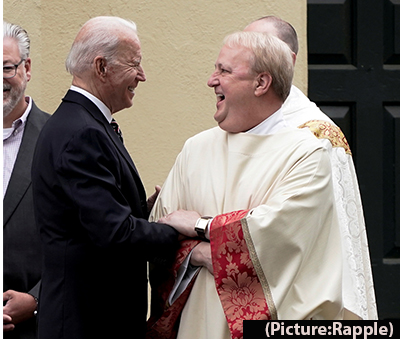 Bishop Kevin C. Rhoades, who leads the doctrine committee of the U.S. Conference of Catholics Bishops, reiterated that the document will not bar any individuals from receiving Communion and said it is “going to be addressed to all Catholics, not a particular person or a single issue in the part on Eucharistic consistency.”
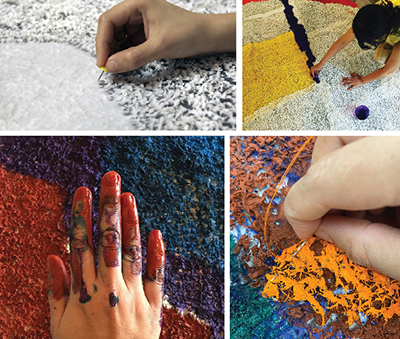 She then paints and sews together the lace-like constructions, creating richly colored abstract compositions. It is a deliberative and labor-intensive process that makes time itself an integral force in each work.
 Published in India and available on Amazon around the world, the book, laid out in leisurely 341 pages, chronicles the progress and accomplishments of Indian Americans in 16 essays — from politics, entrepreneurship, technology, medicine, to science, business, entertainment, social activism, etc.
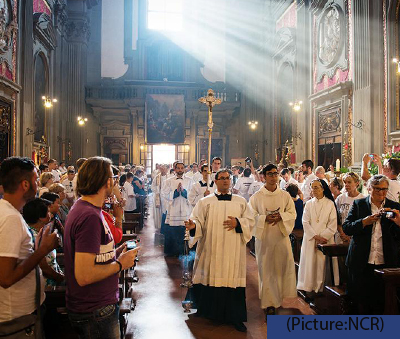 Since it did not fall under the “I disobeyed my parents and fought with my siblings” script of kids’ confessions, I never brought it up in confession. (What does an orphaned only child confess?)
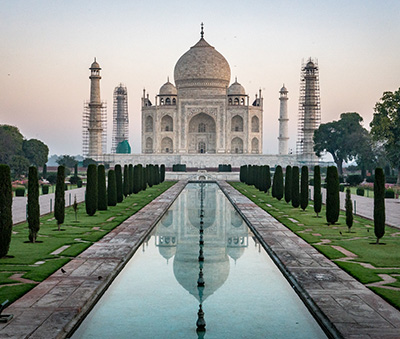 Nations work hard to get their wilderness areas, archaeological treasures, and cultural sites on the list, which includes some 1,153 properties around the world. Inscription brings prestige and public awareness, and it can lead to all sorts of good things: tourism revenue, renewed commitments to preserve irreplaceable assets, and public and private funding for restoration work. (Pictured below, this Russian Orthodox chapel and pavilion is part of another selection, the Darmstadt Artists’ Colony on Mathildenhöhe, in Germany.)
 Ashwagandha (Withania Somnifera), commonly known as ‘Indian winter cherry’, is a traditional Indian herb that boosts energy, reduces stress, and makes the immune system stronger.
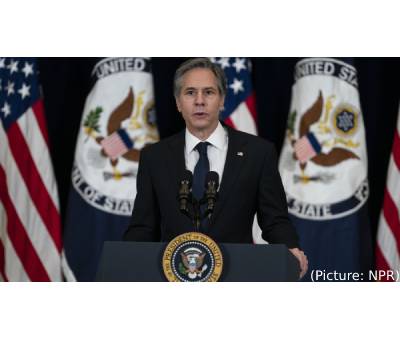 Blinken arrived in India on July 27th to discuss strengthening Indo-Pacific engagement, seen as a counter to China, as well as New Delhi’s recent human rights record and other issues. Blinken’s visit included meetings with Prime Minister Narendra Modi and senior officials on Wednesday, and was held just days after his No. 2 diplomat, Wendy Sherman, was in China for
 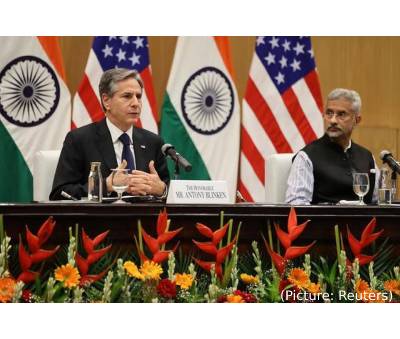 Jaishankar said he made three points to Blinken, including the fact that the “quest for a more perfect union applies as much to the Indian democracy as it does to the American one”.Ahead of Blinken’s visit, India’s
 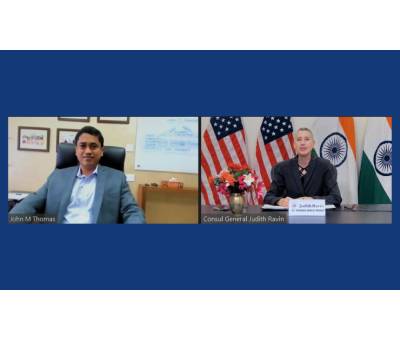 She was welcomed to the city by C.V. Ranvindra, a leading economist and the director of Thiruvananthapuram’s International airport. In his discussion with the Consul General, he explained the Kerala Model of Development, which emphasizes both the traditional and modern sectors like IT, tourism, space technology, and coastal infrastructure. She was also led on a virtual tour of the Government of Kerala’s Technopark by its CEO John M. Thomas. Technopark is the largest IT Park in India. Representatives from 7 major Indian and U.S. IT companies met with the General Consul to discuss Kerala’s current business environment.
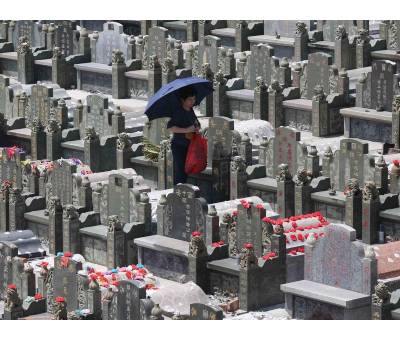 Cultural sites include a Chinese city once known as “the emporium of the world.” An important stop on the Silk Road, Quanzhou’s tapestry of ancient bridges and pagodas also includes one of the oldest mosques in China and other glimmers of the workings of a vibrant 10th-century city. The selection puts China near the top of the list of countries with the most World Heritage sites — right after Italy, which was granted another World Heritage site this year for
 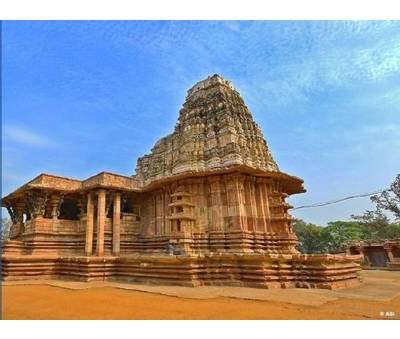 A World Heritage Site is a location with an “outstanding universal value”. This signifies “cultural and/or natural significance which is so exceptional as to transcend national boundaries and to be of common importance for present and future generations of all humanity”. To be included, sites must meet at least one of the ten selection criteria.