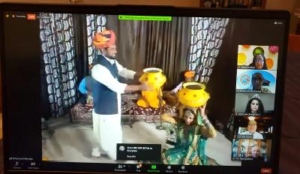
Re-dedication Puno-Pratistha Puja Celebration of Ghosh-Dastidar Family

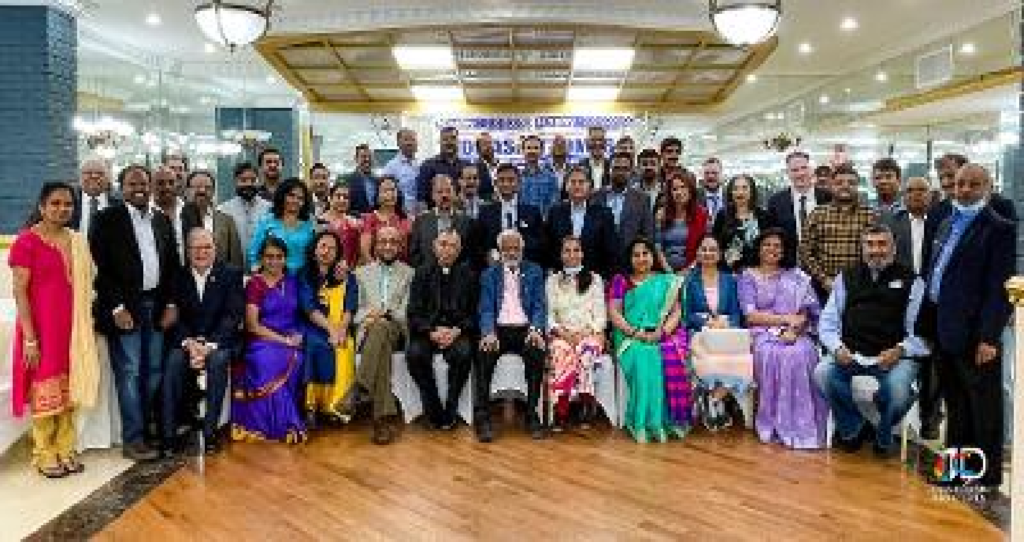
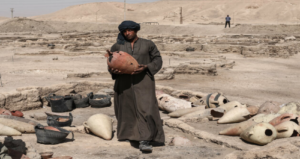
On the auspicious hour of 10 AM in the spring morning of 20 Falgun of the Bengali year 1427, Friday March 5, 2021, a celebration began among the evergreen beauty of rural interior of Barisal district, Bangladesh. The event of re-dedication puja service of Sri Bishnu was conducted by monk Rev. Swami Jiban Maharaj, monk Rev. Swami Dayamoy Sadhu, pujarini (priestess) Mrs. Karmakar and by local village residents. Sri Bishnu or Sri Vishnu is the Lord of Creation. It seems that from the late First Millennia to mid-Second Millennia it became a tradition in Bengal in India to dedicate villages to Lord Bishnu.

As deltaic and plains Bengal is devoid of mountains and stones, the deities must either have been built in mountainous northern or northeastern India and transported to Bengal, or the stones and artisans were brought in Bengal via Ganga or Brahmaputra Rivers, much like the stone structures in ancient Egyptian civilization based on transportation of stones via Nile River. The black granite statue of Sri Bishnu (Vishnu) Murti (Deity) was dedicated by Ghosh-Dastidar Family ancestors in the 15th Century at Lakhsmankathi Village of Barisal District, in coastal east Bengal in India, now Bangladesh. The shrine was established in the 15th Century by the “Ghosh-Dastidar Family” when they established the village. The murti (statue) was erected in the Sri Bishnu Bari Mandir (Temple). Incidentally, the term Dastidar, a word of Persian origin, was given by the non-native Muslim ruler of Bengal region of India as an honorific title by foreign Islamic rulers who used Persian as the official language during their rule from the 14th Century. They depended on the family for governing the region. Islamic rulers were a small non-native minority ruling over a vast non-Muslim population.

Many locals called this Puno-Pratistha Re-dedication Ceremony as an unparalleled and ground breaking event since the Partition of India and Partition of Bengal in 1947. The temple was repaired in 2019 through 2020, but the celebration of re-dedication was postponed because of Covid crisis. Only after Bangladesh removed restriction on travel, the celebration took place.

The March 5, 2021 celebration started during the auspicious moment according to Hindu calendar, with glorious Surya, the Sun God showed the event with His blessing. Men, women and children were dressed in their best to make the event joyous and celebratory. Vast majority of the people were from poor and oppressed groups in the Muslim-majority nation. After the end of the first puja service, a reading from the Holy Bhagabat Gita was conducted by Monk Dayamoy Sadhu, with a question and answer session. This was followed by a second puja offering and arati – service with lit pradip (lamp) – by Monk Jiban Maharaj, followed by puja by pujarini (priestess) Karmakar.

The service was followed by a music session conducted by monk Jiban Maharaj, joined by attendees, followed by a philosophical homily. Rev. Jiban Maharaj said in his sermon, “I especially thank Baba (Father, Sabyasachi), Ma (Mother, Shefali), Shuvo, Sumedha, Shriya-Lakshmi and Joyeeta Ghosh-Dastidars of America for their dedication to improve the life of all Bangladeshis. I also thank Anirban of Singapore for helping us. I wish them a very long and productive life and of others all over the world. Om Shanti.” At the end of puja-arati prayer-lite-lamp service keynote speech was given by Mr. Swapan Kumar Mondol, a local luminary, followed by congratulatory addresses by other individuals. At the end of the service Prasad, blessed fruits and sweets offered to God, and bhog, the blessed cooked food offered to Lord Bishnu, were distributed to all the attendees, between 100 and 150 guests, both Hindu minority and Muslim majority. This follows a long tradition of joint celebration during peaceful times.

The process of reconstruction of the mandir (temple) began after this writer’s visit in early 2019 when the poor, oppressed villagers requested visitors’ help to repair the structure. In 1987 the new mandir was built by Amitabha Ghosh Dastidar of Kolkata (Calcutta). The original temple structure was destroyed during 1950s pogrom, when terrorists also demolished the other 18th Century mandir (temple) of Black Mother Kali, called Kali Bari or the Home of Mother Kali.

It is worth mentioning that after partition of India in 1947 into secular India and Islamic Pakistan, today’s Bangladesh became East Pakistan, and immediately began attacks on Hindu minorities, their shrines, ashrams, schools, libraries, homes and businesses. Dastidars, like other Hindus, especially educated families, wanted to stay in their homes, but after successive pogroms they were forced to flee from their homeland becoming homeless refugees in India. Since early 1980s Dastidars have been going back to their homeland regularly, though they were unable to enter their home. They have established many schools and hostels (dormitories) for the poor and the orphaned in Bangladesh, and in the Indian States of West Bengal, Assam and Mizoram, with the help of many Americans – Hindu, Christian, Jewish, Muslim, Buddhist, white, black, brown, yellow and of other colors.

I thank Mr. Mithun Biswas of Madaripur, Bangladesh for providing live video coverage through Facebook page. At times live broadcast was difficult because of WI-Fi connection in that remote rural corner of Bangladesh. In 2021 it takes between six to eight hours to cover a distance of 160 to 250 kilometers, from the Bangladesh capital Dhaka to Lakshmankati in the south depending on which ferry one takes to cross either mighty Padma or Meghna Rivers.

We welcome you to visit the shrine. On your way please visit Mahilara Mott, a historic place with a 350-year old shrine included in a book by UNESCO of historic mandirs of Bangladesh. This writer’s effort saved the historic 110 feet tall shrine. Check https://empireslastcasualty.blogspot.com/2019/01/mahilara-gour-nodi-barisal-bangladesh.html. It is just 400 meters north of Lakshmankathi on the main Dhaka-Barisal National Highway. Please email us for direction. If one wants, one can rent a room at Guest House of Madaripur Ashram, in Pathak-kandi neighborhood of Madaripur City for overnight stay, a short distance from both Mahilara and Lakshmankathi villages. One can use various modes of transportation to visit those sites.

If one wants to contact us, please email either at ispad1947@gmail.com or at probini@hotmail.com.  If one wants to donate for our work, please donate via Facebook page of the Indian Subcontinent Partition Documentation Project, or donate via www.ispad1947.org web. Any donation is greatly appreciated.

A Brighter Side Of Black History Month

Years back, while reading the book ‘Roots,’ I had only a faint idea of the background of African slaves in America. That time, my thoughts could compare life only with scheduled castes and tribes in India.

“In all of us, there is a hunger, marrow-deep to know our heritage,” says Alex Haley, the author of the said book- which is one of the most extraordinary and influential books of our time. The story is about Kinta Kinte, a young man taken from The Gambia when he was seventeen and sold as a slave and transported to North America, following his life and the lives of his six generations of slaves, farmers, blacksmiths, porters, etc. in the United States. In reality, even now, inequality between white and Black Americans persists in almost every aspect of society and the economy.

During my early school days, I knew only the name of Abraham Lincoln, who abolished slavery in America in February 1865. But later, the name of Martin Luther King Jr. was much inspiring to me while I heard about his assassination in 1968, while I was a college student.

The only celebration during every February I heard earlier was Valentines’ Day in western countries. Later my readings revealed much about the struggles of the Black Community to bring this great nation to this level. The hatred, the disrespect of the whites and other superior-minded communities in America is being hidden under the declaration “no discrimination”. Those words guarantee that human rights are exercised without discrimination of any kind based on race, color, sex, language, religion, political or other opinions, national or social origin, etc.,

Every February, America celebrates Black History Month, showing respect and recognition for the hard work and sacrifices made by African Americans. Of late Black History Month is significant as the social unrest of 2020 has illuminated the active presence of institutionalized racism in America and its impact on the Black community.


Black History Month is now the inseparable part and parcel of our combined American history. The racial significance somehow just boiled down to a compilation of greatest events from the March on Washington DC, or from some of our sports heroes, or to the renamed BLM street, in Washington DC.


History describes that Black History Month is an annual observance originating in the United States, also known as African-American History Month. Since it is officially recognized by governments in the United States and Canada, and more recently has been observed in Ireland, the Netherlands, and the United Kingdom.


During these observations, we take the time to remember and honor greats such as Martin Luther King Jr., James BaldwinMaya Angelou, and renowned Oprah Winfrey. Congress enacted an Act in 1986 that commemorates February as “National Black (Afro-American) History Month.” Both presidents Ronald Reagan and Bill Clinton issued their own proclamations recognizing it as a national observance, added many decorations during Barack Obama’s presidency.


Even though our great country is known for its vistas of equal opportunities, inequality between White and Black Americans prevails in almost every aspect of society and the economy. Various study reports on the disparities expose how the so-called Black Community is struggling for its existence.

“Fight for your rights” is the basic advice given by black mothers to their children even before going to school.

While white pregnant women have a better surviving, black women are susceptible to three to four times likely to die.

At the College level, at least fifty percent or more white students go through graduation. Only about one-third or less of the Black students attain bachelor’s degree or post-graduate studies.

Black undergraduate students owe about $7,000 or more than their friends of other categories, even in  student loans. Black adults received almost 20% longer federal jail lives. It is evident that Black adults are 1.5 times less likely to have health insurance coverage than others.

Black families on retirement may have only a median saving of about $30,000, whereas whites may have $120,000 or more. Even on the life expectancies, white men may enjoy till 76.6 years, whereas Black men run below an average of 72.2 years.

Black families are 50% less than White households in owning their homes. Thus these two maintain a wide gap in their lives and lifestyles.

Black is an intense color; I admire it for so many many reasons. But most Oriental or Asian immigrants do not have an affinity towards the Black color; as they usually classify themselves as “Brown.”

2020 happened to make yet another history, for the first time in US a Black Woman Kamala Harris, decorates the throne of American Vice President. Off late, many have leaned towards Black and demonstrating some courage to say that we are also Black. Maybe they have realized that Whites will never accept them, or perhaps they are black to the extent of the hair dye they are used to!

In Pope Francis, Biden Has A Potential Ally — Who Shares The Same Catholic Detractors

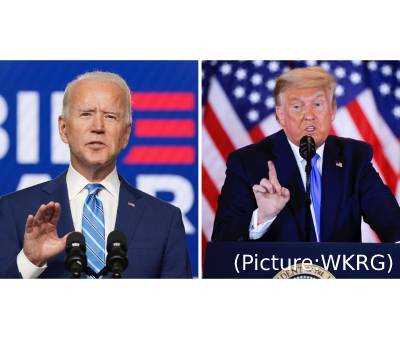
The second Roman Catholic president in American history is a devout man who makes no secret of the importance of faith in his life. President Joe Biden is a regular churchgoer, often quotes St. Augustine and carries a rosary that belonged to his late son Beau. In one of the first images released of him in the Oval Office, a photo was visible behind his desk showing him with Pope Francis.

The Argentine-born pope and the new American president have both staked out liberal stances on issues like climate change and economic disparity, and have taken different positions from their “culture warrior” predecessors.

Biden diametrically differs from former President Donald Trump in his support for a more inclusive society, on issues ranging from immigration and health care to LGBTQ equality. Francis has moved away from Pope John Paul II’s and Benedict XVI’s emphasis on sexual morality, preferring to focus on social justice and the rights of the poor and marginalized. He has repeatedly lashed out at what he describes as the destructive effects of laissez-faire capitalism on society and the environment.

The pope and the president have a lot in common, says Paul Elie, a scholar of Catholicism at Georgetown University.

“Their informality, the fact that they were elected late in life, the fact that they seem to take issues as they come, listening, discerning and then acting,” he says. “And both of them, I think, have surprised their people by turning out to be more progressive than was expected.”

In the November election, just over half of American Catholics voted against Biden, in great part because of his support for laws such as those guaranteeing abortion rights that run contrary to Church doctrine.

Nevertheless, the new president has a friend — and potential ally — at the Vatican. On Inauguration Day, Pope Francis sent Biden a warm note saying, “Grave crises facing our human family call for farsighted and united responses.”

Relations between Pope Francis and Trump were at best chilly. When Trump was still a candidate in 2016, Pope Francis suggested he was “not a Christian” for his campaign vow to deport more immigrants and build a wall along the border with Mexico. A year later, the pope wondered how Trump could claim to be “pro-life” while ordering policies that broke up the families of immigrants and asylum seekers.

Biden’s election was welcomed by the Vatican — but without mention of his support for abortion rights, says Villanova University theology professor Massimo Faggioli.

“It’s clear that they see this moment as a return to some sanity. This is what the Vatican really holds dear,” says Faggioli, “so that that there is a predictability in the relations between countries and leaders.”

Faggioli, the author of Joe Biden and Catholicism in the United States, argues that under the influence of the previous two papacies, the U.S. Catholic Church leadership became increasingly traditionalist, ignoring any discourse on racism, rule of law or voting rights — and has thus become more closely allied with the political right.

He points out that Biden and the pope share the same detractors among American Catholic leaders — the United States Conference of Catholic Bishops, which he says “is dominated by ultraconservative Catholic bishops whose political sympathies lie very clearly with the Republican Party, and not just on the abortion issue.”

The Vatican was reportedly annoyed by a bishops’ conference statement on Inauguration Day. Signed by the group’s leader, Archbishop José H. Gomez, the statement lamented that “our new President has pledged to pursue certain policies that would advance moral evils and threaten human life and dignity, most seriously in the areas of abortion, contraception, marriage, and gender.” It added that “for the nation’s bishops, the continued injustice of abortion remains the preeminent priority.”

An unnamed senior Vatican official told the Catholic publication America, “It is most unfortunate and is likely to create even greater divisions within the Church in the United States.”

“So, there is an extremist wing of the Catholic Church,” says Faggioli, “which is a handful of bishops, but a bigger chunk of the clergy.”

For example, last August, the Rev. James Altman of La Crosse, Wisc., posted a video to YouTube in which he proclaimed, “You cannot be Catholic and be a Democrat, period. Their party platform absolutely is against everything the Catholic Church teaches. Repent of your support of that party and its platform or face the fires of hell.” It has been viewed more than a million times.

Not all conservative Catholics strike such an apocalyptic tone toward Democrats. But many share a message of condemnation.

In a podcast last month with the Ethics and Public Policy Center, a conservative think tank, George Weigel, an author and political analyst who has written extensively about the Catholic Church, said the new president seems quite sincere in his personal piety. But he went on to attack Biden, saying he “facilitates grave moral evils. Mr. Biden is an incoherent Catholic and incoherent Catholics should not be presenting themselves for Holy Communion as if they were living in full communion with the church.”

As both Francis and Biden ignore their Catholic critics, presidential historian Timothy Naftali sees potential parallels now with a period at the peak of the Cold War six decades ago.

Six months after the Cuban Missile Crisis brought the world to the precipice of nuclear annihilation in 1962, Pope John XXIII issued the Pacem in Terris encyclical. Addressed not just to Catholics but to all people “of good will,” it called for peacemaking through negotiation.

A week later, President John F. Kennedy cited the document in a major speech, and was subsequently able to win domestic support for a nuclear test ban treaty with the Soviet Union.

Naftali believes the pope and Biden could join forces against climate change — the great threat facing humanity today.

“Given the prominence of Pope Francis on this issue, the fact that he has identified climate change as an existential threat,” says Naftali, “there is a natural partnership with a secular leader who has also identified climate change as an existential threat. These are two leaders powerful in different realms. That’s an opportunity. And it’s not an opportunity that comes every generation.”

Naftali is convinced that amid so much disinformation on the coronavirus pandemic and vaccines, these two prominent Catholics could also work together to convince more people that science and faith are not mutually exclusive.

Global Encyclopedia On Ramayana To Release On Saturday

The government in Uttar Pradesh is going to give a unique gift to Ram devotees across the world. The first edition of the Global Encyclopaedia of the Ramayana is ready for publication.

Chief minister Yogi Adityanath will release the historical edition on the occasion of Janaki Navami on Saturday.

The version of the Global Encyclopaedia of the Ramayana, prepared by the Ayodhya Research Institute, will also be launched as an e-book.

The first edition of the Encyclopaedia will be released in the English language. A month later, the first edition in Hindi and Tamil languages will be published.

The Uttar Pradesh Department of Culture, in collaboration with the Ministry of External Affairs, is involved in this mega project by combining the tangible and intangible legacy of the Ramayana from 205 countries of the world.

For this, a workshop was organised by the department which included 70 scholars from West Bengal, Assam, Kerala, Karnataka, Chhattisgarh, Tripura, Andhra Pradesh, Telangana and Delhi.

According to Shishir, Director of Culture, Uttar Pradesh, there is a plan to publish the Ramayana Encyclopaedia in 200 volumes.

For this, the Ayodhya Research Institute has set up a board of editors and advisors around the country and the world. The first edition has been designed by the Indian Institute of Technology, Kharagpur.

The publication of Ramayana will also be released in Oriya, Malayalam, Urdu and Assamese languages along with the first edition of the Global Ramayan Encyclopaedia.

Also, the oldest and authentic book about Ayodhya, ‘Ayodhya Mahatma’ will be released in the English language to expand it globally.

It was in May 2018, that the chief minister had directed to conduct a survey and publication of all the Ramayana sites of the world at the review meeting of Ayodhya Research Institute, Ayodhya.

Globally, evidence of the Ramayana’s tangible heritage, architecture, sculpture and painting is found in countries around the world including Pakistan, Iran, Iraq and Europe since about 5000 years ago.

According to the scholars, almost all countries of Europe accepted Ram as their first ancestor.

Scholars claim that ‘Ram Takht’ was received in Gandhara region in 2500 BC and many villages in Gandhar have their names on Ram and Sita.

Taxila is named after the elder son of Bharat, Taksh.

The entire Gandhara region of Pakistan is rich in Ramayana culture.

According to scholars, there is evidence of a Ramayana civilisation in Italy before the Roman civilization in Europe. Vatican City, France, Germany, Netherlands also have elements of this culture. (IANS)

What It Will Take to Get Life Back to Normal

At last, Covid vaccine shots are going into arms in significant numbers, but too many people could still fall through the cracks. Vaccines have brought the United States tantalizingly close to crushing the coronavirus within its borders. After months of hiccups, some 1.4 million people are now being vaccinated every day, and many more shots are coming through the pipeline. The Food and Drug Administration has just authorized a third vaccine — a single-dose shot made by Johnson & Johnson — while Pfizer and Moderna are promising to greatly expand the supply of their shots, to roughly 100 million total doses per month, by early spring.

If those vaccines make their way into arms quickly, the nation could be on its way to a relatively pleasant summer and something approaching normal by autumn. Imagine schools running at full capacity in September and families gathering for Thanksgiving.

But turning that “if” into a “when” will require clearing additional hurdles so that everyone who needs to be vaccinated gets vaccinated. This is especially true for racial minorities, who are being disproportionately missed by the vaccination effort.

There’s plenty of disagreement among experts as to why America is still having problems with vaccine uptake. Some officials have suggested that the main cause is that too many people are hesitant to get the vaccine. Others point the finger at overcautious public health officials who they say have undersold the promise of the vaccines. Still others point to long lines at clinics as proof that far more people want the vaccine than can actually get it.

There is probably some truth to all of these hypotheses, and the underlying problems are not new. Vaccine hesitancy had been growing steadily in America long before the current pandemic, so much so that in 2019 the World Health Organization ranked it as one of the leading global health threats. At the same time, poor health care access and other logistical constraints, such as a lack of public transportation and limited internet access, have long impeded public health efforts in low-income communities.

To maximize the number of Americans getting vaccinations, policymakers need to tackle each of these crises with greater urgency than they have so far.

As supply increases, health officials should mount ambitious vaccination campaigns modeled on ones that have worked to curb diseases in other countries. That will mean not relying solely on web portals for scheduling vaccine appointments. It will mean going block by block and door to door, through high-risk communities especially. It will mean setting up employee vaccination sites at schools, grocery stores, transit hubs and meatpacking plants, and community clinics at houses of worship, with local leaders promoting and running them.

“The easier you can make it for people to get vaccinated, the more likely your program will be to succeed,” said Dr. Walter Orenstein, a former director of the national immunization program at the Centers for Disease Control and Prevention. “It’s really that simple.”

Outreach efforts cost money. But they’re far less expensive than allowing the pandemic to fester. Congress has appropriated some money to help states with vaccine rollout. It should offer more, and states should put as much of those resources as possible toward vaccination efforts that meet people where they are.

Health officials should also recognize that vaccine hesitancy has many root causes — deliberate disinformation campaigns, mistrust of medical authorities in marginalized communities, ill-considered messaging by health officials. The best way to counter that is with campaigns that are locally led, that clearly outline the benefits of vaccination and that frame getting the shot as not just a personal choice but a collective responsibility.

Doctors and scientists can help those pro-vaccine messages stick by minding their own public communications. It’s crucial to be transparent about what vaccines will and won’t do for society — overselling now will only sow more mistrust later.

That said, underselling is its own problem. It’s true that these vaccines will not immediately restore the world to total normalcy. But they will eventually allow people to hug their loved ones, to return to their offices — and to be protected from dying from or becoming seriously ill with Covid-19. Health officials should be clear about that.

Policymakers at the highest levels of government should press social media companies and e-commerce sites to curb the most aggressive purveyors of vaccine disinformation.

To not only quell this pandemic but to try to prevent the next one, America will need to improve its health system and its public health apparatus, both of which have significant holes. “The problem with a lot of the response is that it was predicated on the idea that we have a good system in place for doing adult immunizations across the country,” said Dr. Peter Hotez, a vaccine expert at Baylor College of Medicine. “The fact is, we really don’t.”

In the end, lawmakers and the people who vote them into office will have to address the much broader problems that this pandemic has exposed.


Why Christo-Racist Nationalism and Anti-Muslim Rhetoric Are Gaining Ground in Kerala

The solo Indian flag that made an appearance among the vast swathe of Trump supporters storming the Capitol building in Washington D.C. recently, caught the attention of many. It was even more of a surprise when it was revealed that a Malayali Christian named Vinson Palathingal was responsible for it.

However, truth be told, Palathingal is just one of the many Malayali Christians who are fervent advocates of the Christo-racist nationalism represented and championed by Donald Trump and his band of supporters. For those wondering how an exclusivist White supremacist anti-Muslim ideology and rhetoric that underpins Trumpian politics appeals to these migrants and their ilk from the Global South, the answer may be found in the latter’s own social location within the Kerala society in India.

Syrian Christians and Kerala’s caste hierarchy

Beyond the general term Christian, there lies a more nuanced identifier for the community that people like Palathingal hail from – Syrian Christians. A traditionally privileged and landed community, they claim their origin from the proselytisation mission of Jesus Christ’s disciple St. Thomas in the first century CE. There are visible tendencies among the Syrians, who are also called St. Thomas Christians, to go back and revive what they imagine to be their Syriac liturgical tradition.

The most popular myth about their origin is that they hail from Brahmins who were proselytised by St. Thomas. While inquiring into the veracity of these claims is not what I intend to do in this article, I think it is indeed an indication of the “superior” status that they seek to utilise to distinguish themselves from their fellow Christians who are mostly from “lower” castes.

Cambridge historian Susan Bayly, in her book, Saints, Goddesses and Kings, points out that in the pre-colonial era, Syrian Christians were very much incorporated into the savarna sections of the caste hierarchy within the Kerala society. Although the tectonic changes brought into the social organisation of Kerala by the colonialists altered this position, and Syrian Christians switched from being mostly a martial and trading group to one of land-owning agriculturalists, they were still able to retain their traditional privileges.

  1. C. Zachariah points out in his book, The Syrian Christians of Kerala: Demographic and Socio-Economic Transition in the 20th Century (2006), that the community is the largest per household landholder in the state. They also lead other prominent groups in terms of housing. They also do relatively well in terms of access to both government jobs and educational institutions. Citing the Kerala Migration Study (1998) conducted by the Centre for Development Studies, Zachariah concludes that “Syrian Christians are the most advanced community in Kerala (p197)” with respect to overall socio-economic indices.

A simplistic application of the category of caste in the case of Syrian Christians might blunt the analytical edge. However, for the purposes of this article, I will stick to the notion of caste, for want of a better terminology, as it is still used as a method of social stratification.

For instance, Syrian Christians practice strict endogamy, which is central to preserving hereditary socio-economic capital. This practice is so strongly adhered to that Syrian denominations that are in communion with the Catholic Church still do not enter into matrimonial relationships with their fellow Latin Catholics who are mostly considered “lower” castes, belonging to fisherman or Dalit communities.

The tropes of ‘love jihad’, halal food, and minority benefits

However, despite being amongst the most privileged in Kerala society, recently, the Syro-Malabar Catholic Church (the largest denomination among the Syrians) kicked up a public frenzy claiming that ‘Christians’ are being systematically discriminated against, by the two mainstream political parties who come to power in Kerala alternatively. The major accusation is that the state governments favour Muslims over Christians, when it comes to resource allocation through minority benefits.

This rhetoric is clearly based on a reductionist understanding of ‘minority’ as a purely numerical category, rather than as one referring to a community that is vulnerable or threatened by the majority power structure. This tendency is also witnessed in the hype over the imagined ‘love jihad’ campaigns by Muslims to ‘snatch’ (Syrian) Christian women, even after central and state law enforcement agencies repeatedly found no evidence to prove the same. Priests and laity leaders constantly issue advisories to parents to protect their daughters from falling for such non-existent ‘love jihad’ traps.

As surprising as it would seem, this has also spilt into campaigns various Syrian Christian groups calling for a boycott of restaurants and shops selling halal food items. The recent decision by Turkish President Erdogan to turn Hagia Sophia into a mosque is portrayed as another instance of a global Muslim scheme against Christians, conveniently hiding the fact that 13th-century crusaders were the first to ransack Hagia Sophia. The Orthodox Patriarch had to run for his life while the marauding Catholics converted Hagia Sofia into a Catholic place of worship.

Just like Vinson Palathingal in the US, there were community groups in Kerala that put up billboards professing their unflinching support for Trump and prayed for his return to power. Moreover, Syrian Christian family WhatsApp groups and social media are teeming with conspiracy theories targeting Muslims. In many of the cases, this communal vitriol is led by Syrian Catholic priests themselves, like Noble Parackal, who is also a popular face on social media. It suffices to say that these conspiracy theories and victim narratives have found legitimacy and a life independent of reality.

Mainstream political parties in Kerala are all wary of this reality, especially with state assembly elections just around the corner. Through various ways, the community has also started publicly positioning BJP as a potential ally and political alternative. On its part, the BJP, which is struggling to establish a foothold in the state with 47% of the population comprising minorities, has been trying to woo Syrian Christians in a major way. The fact also remains that the first and last MP to win for NDA from Kerala was P. C. Thomas from the Syrian Catholic community, in 2004.

Syrian Christians’ appropriation of ‘Christianity’

Among all the various Syrian Christian denominations, why is it that the Syrian Catholic church is expressly, and almost exclusively, the proponent of this anti-Islam campaign? Further, what are the repressed insecurities of the community that has manifested in such a phenomenon?

Most importantly, at a time when Hindu majoritarianism is extending its grip over India, why is it that the Kerala Christian group has chosen to target another fellow minority group, instead of the Hindu nationalists? Studies need to address this deep-seated insecurity of the community to unpack the unconscious and underlying reasons manifesting in the current public outburst of anger aimed at Muslims.

Antagonism towards Muslims is not new and has been a popular, but private, sentiment among the members of the community majorly in the erstwhile central Travancore region. As such, one needs to ask why, suddenly, this made its entry into the public sphere with such fervour. For one, it is clear that ‘love jihad’, the conversion of Hagia Sophia into a mosque, halal food controversy, terrorism etc, have been used instrumentally to plug the local antagonism towards Muslims into the global discourse, adding much-needed legitimacy to the anti-Muslim social imagination. This also helps in rhetorically translating the antagonism in such popularly recognised ‘common sense’ terms that would look normal and legitimate.

‘Entirety of Christianity’

One last and most important facet of this phenomenon I wish to highlight is how the Syrian Christians, championing this narrative, always mobilise the entirety of ‘Christianity’ in their rhetoric. This is contradictory. This calls for critical attention, considering how Syrians have always fervently tried to distinguish themselves from the rest of the Christians in everything else that matters. Their exceptionalism and savarna mindset clearly point to a Christianity-caste nexus that actively facilitates the maintenance of caste privileges.

Even their origin stories, related to the first century CE proselytisation mission of St. Thomas, is itself used to distinguish them from those mostly ‘lower’ caste faithful, who are pejoratively called ‘converted Christians’ referring to their more recent turn to the faith. The extent of this caste distinction and discrimination becomes amply clear while considering the fact that Syrian Catholics, with full approval and encouragement of the clergy, refuse to even marry Latin Catholics.

To avoid appearing explicitly casteist, myths like family ‘cultural differences’ which are pitched as monolithic and hereditary, are cited. Moreover, this caste blinded-ness is also a reason why the self-proclaimed protectors of ‘Christianity’, fighting against a so-called global Muslim conspiracy, choose to ignore the long history of violence inflicted by Hindutva organisations on Dalit and other ‘lower’ caste Christians in other parts of India. As such, it is imperative that we need to make visible the caste violence being furthered by ‘savarna‘ Syrian Christians, as they pitch the fiction of unified Christianity in their rhetoric against Muslims.

Bipin Sebastian is a PhD student at Northwestern University, Evanston, Illinois. He studies discursive formations on religion, caste and secularism in India and can be reached at bipinsebastian@u.northwestern.edu

Art/CultureWorks By Indian Artists At Upcoming New York Auction Series

Over 750 objects from 5,000 years of art spanning all epochs and categories of Asian art from Chinese archaic bronzes through Japanese and Korean art to modern and contemporary Indian painting, will go under the hammer in a series of auctions at the Asian Art Week by auction house Christie’s in March in New York.

Of the seven auctions, at least three include Indian works of art, including a significant painting by the pioneer of Indian modernism Tyeb Mehta, titled ‘Confidant’ and painted in 1962 (estimated to fetch between Rs 4.34 crore – Rs 5.79 crore).

According to the auction house, important Gandharan sculptures from a private Japanese collection, including a magnificent 3rd to 4th-century gray schist figure of Buddha Shakyamuni among the highlights. “From rare huanghuali furniture to a collection of works by respected artist and teacher Benodebehari Mukherjee, treasures from every category of Asian art wait to be discovered.”

In the ‘South Asian Modern + Contemporary Art’ auction on March 17, early works of Tyeb Mehta (Confidant, 1962) and Francis Newton Souza (Family, 1946) are included. Also included are exceptional examples by modern masters Maqbool Fida Husain, Sayed Haider Raza and Narayan Shridhar Bendre. Also featured is a fine group of paintings by Krishen Khanna from the collection of Arthur and Lilly Banwell.

A diverse contemporary section includes impressive prints and a sculpture by Zarina, and significant works by the region’s most renowned practitioners like Atul Dodiya, Anju Dodiya, Ranjani Shettar, Jitish Kallat and Subodh Gupta, to name a few.

Part two of the same auction includes a significant collection of works by Benodebehari Mukherjee (1904-1980) from the Mrinalini Mukherjee Foundation. Ethereal landscapes by this pioneer of modern Indian art are complemented by a group of figurative works and nature studies representing every phase of his career. Particularly important are collages, sketches and prints from the final stage of his life, executed after the artist’s complete loss of eyesight.

On the same date, the ‘Indian, Himalayan and Southeast Asian Works of Art’ sale will present 58 lots featuring works from across India, the Himalayas, and Southeast Asia. Highlights include a rare Chola-period bronze figure of the Shaivite saint Sambandar and a well-published folio from the dispersed ‘Lambagraon’ Gita Govinda series attributed to the Kangra court artist Purkhu.

Christie’s also says that it continues to leverage digital tools to extend access to key bidding areas and provide global audiences with opportunities to view auctions.

The ‘South Asian Modern + Contemporary Art Online’ auction from March 4-18, also aims to “celebrate a wide variety of artistic practices from the South Asian subcontinent and its diaspora across the 20th and 21st centuries”, says Christie’s.

The online sale includes excellent modern works on paper by artists Maqbool Fida Husain, Francis Newton Souza, Manjit Bawa, Prabhakar Barwe and Jogen Chowdhury, alongside those by their mentors and pioneers of regional schools like Abdul Rahman Chughtai, Walter Langhammer, Nek Chand, Kamrul Hasan and Chittaprosad Bhattacharya. Rounding out the catalogue is a section of exceptional works by modern Pakistani artists and contemporary works by artists including Surendran Nair, Nilima Sheikh, Arpana Caur and Paresh Maity. (IANS)

The Surprising Link Between Marriage and Heart Health

People in marriages that steadily get sweeter have lower cholesterol and healthier weight than marriages that stay the same, according to a new 16-year study. But both were preferable to marriages that got worse: couples in them were more likely to develop high blood pressure later in life.

The study, published in the Journal of Epidemiology & Community Health, isn’t the first to suggest a link between marital quality and heart health. But most research has only looked at relationship satisfaction at one point in time, which makes it tough to determine whether marriage really has a protective effect on health, or if healthier people simply tend to be in happier marriages.

The new research measured marital ups and downs over the years to see if they went along with changes in heart health. To do so, researchers analyzed data from a long-running study of parents and children in Britain, in which fathers were surveyed about their marriage quality when their children were about 3, and again at about age 9.

Bottom of Form

More than 2,000 people completed the survey once at the start of the study and again six years later, and 620 completed a follow-up analysis about a decade after the study’s start. At that time, the men had their blood pressure, resting heart rate, body mass index (BMI), cholesterol and fasting glucose levels measured, all of which indicate heart-disease risk factors.

Interestingly, there was very little difference in cardiovascular risk profiles between men who had consistently good relationships and those who had consistently bad ones during the study. But after adjusting for several influencing factors, including age, education, height and household income, the researchers noticed small but distinct patterns for men whose marriages had either improved or deteriorated during that time.

Men who said their marriage got better over the years had lower LDL—or “bad”—cholesterol and healthier weights (about 1 BMI unit less) at the end of the study, compared to those whose relationship satisfaction was consistently good for those years.

Meanwhile, those whose relationships got worse ended up with blood pressure an average of 2.74 points higher than those with consistently good marriages.

The researchers write in the paper that it makes sense that changes in marital quality could trigger these types of changes in cardiovascular health, and that they may not become obvious until after a “latency period” of several years.

The fact that people in consistently good marriages fared no better than those in bad ones is contradictory to other research, but the researchers say their data about marital quality over time may paint a more complete picture. People in unchanging relationships may become habituated to their circumstances, the authors hypothesize, which may keep them from benefiting as much as those whose relationships steadily improve.

The study, however, can’t draw cause-and-effect conclusions. The authors point out that a large number of people dropped out before the final measurements were taken and that those who remained were more likely to report better marriage quality and fewer health and financial problems.

Because the people in the study are still relatively young, it’s also unclear whether more risk factors will actually lead to more heart disease. The researchers also don’t know if their findings would apply to women—but in the paper, they refer to a 2014 study in which worsening relationships were linked to worsening cardiovascular health more strongly for wives than for husbands. (Men “may be less likely to internalize a poor relationship than women,” the authors of that study speculated.)

There are still a lot of unknowns about the link between marital quality and heart health. But in their paper, the authors raise the possibility that working to improve the former may help improve the latter. “Further research needs to determine if effective marriage counseling, or when appropriate, abandoning a deteriorating relationship, has longer term physical health benefits over and above psychological well-being,” they write.

Indian Culture Vs. Same Sex Marriage

“It is against Indian culture” that is what the Supreme Court says now, when activists are debating that it is the right time to push for legalizing homosexuality. Two years back, the government ruled out that same-sex marriages cannot be legalized. But Indian government affirms that according to our culture, “Marriage is the unity of a man and woman.”

Now the question is, what is so specific about Indian culture.

Hinduism is against Homosexuality and is unacceptable to most Hindus. Hinduism teaches that the ‘natural’ thing is for men and women to marry and have children. On the contrary, those who go against this natural relationship are violating their own dharma.Joys

In Sikhism, The Guru Granth Sahib only mentions marriage in relation to a man and a woman forming a spiritual union.

The Quran mentions sex between men several times, in the context of the story of Sodom and Gomorrah, in which some city inhabitants demand sexual access to the messengers sent by God to the prophet Lot. God destroyed Sodom and Gomorrah for their sin and perversions; hence it is ‘Haram,’ Islam has for centuries been much more tolerant than Christianity.

The biblical emphasis upon the loving union of male and female, as an integral part of God’s creation ordinance, establishing family only by a man and woman.

Even Rituparna Borah, co-director of Nazariya Queer Feminist Resource Group, remarked, “There are so many differences in how people live across the country.”

Indian Supreme Court has made it clear that it is neither possible nor practical to call one person a husband and the other a wife in same-sex marriage. India’s solicitor general is staunchly against the legalization of same-sex marriage. As per Delhi High Court in September, “our laws, our legal system, our society, and our values do not recognize the marriage, which is a sacrament, between same-sex couples.”

When the Indian government talks about our culture, they are definitely referring to the good old Hindu upper-caste culture. This particular petition is not challenging Hinduism. In fact, it helps to glorify the fact that Hinduism allows so many weird relationships according to Hindu mythology. The sculptures at Ellora caves, Khajuraho, and Konarak temples may be exceptions, but they reveal so much of the erotic relationships of Indian community in the ancestral days!

On the issue of same sex marriages Wikipedia clarifies with a bit of history “Same-sex marriages are not legally recognized in India nor are same-sex couples offered limited rights such as a civil union or a domestic partnership. On the contrary in 2011, a Haryana court granted legal recognition to a same-sex marriage involving two women. After marrying, the couple began to receive threats from friends and relatives in their village. The couple eventually won family approval”.


Off late in October 2020, two women, Kavita Arora and Ankita Khanna submitted a petition in a Delhi court for their constitutional right to marry. They arguing that without official recognition, they are “strangers in law.”

Several same-sex marriage petitions are pending with different levels of judiciary courts. Whereas On 12 June 2020, the Uttarakhand High Court acknowledged that even though same-sex marriage may be illegal, cohabitation and “live-in relationships” are protected by the law.

Yet in approval to a petition filed in the Delhi High Court by a same sex couple requesting to legalize gay marriage, Solicitor General Tushar Mehta representing the Indian Government affirmed that same sex marriage is against Indian culture – that is the latest update on the same sex marriage issues in India.


The government has affirmed that it is neither possible nor practical to call one person a husband and the other a wife in same-sex marriage. The affidavit states that this will lead to many legal issues.


The affidavit was filed by the Central Government in a High Court notice seeking permission for same-sex marriage under the Hindu Marriage Act. The court will reconsider the petition in April. “Living together as partners and having sex with a person of the same sex cannot be compared to the Indian family concept of husband, wife and children, ”the Center said.


Plaintiffs cannot claim same-sex marriage as a fundamental right. The Center also said that registering same-sex marriages violates existing legal provisions .’ Parliament has designed and framed marriage laws in a country governed by individual laws relating to different religions’ customs. These laws only acknowledge a man’s unity with a woman that provides legal permission through religious permission. Any intervention in this regard will completely upset the delicate balance of individual laws in the country,” the affidavit said. India’s solicitor general has taken a stance against the legalization of same-sex marriage.

“There are so many notable LGBTQ personalities in India. The acronym LGBTQ describes the lesbian, gay, bisexual, transgender, queer community.

India’s LGBTQ community is not focused on marriage equality right now. What they want is acceptance from their families, communities, and society. It is not their fault or decision, but they are born like that; others should not discriminate against them.

Hence the case and the counter affidavit by the government attracted much relevance now. The plaintiffs cannot claim same-sex marriage as a fundamental right. The Center also said that registering same-sex marriages violates existing legal provisions .’’Indian Parliament has designed and framed marriage laws in a country governed by individual laws relating to different religions’ customs. Any intervention in this regard will completely upset the delicate balance of particular rules in the country,” the affidavit said.

In a country with so many religions of very conservative customs and faith prevail, the court has a Herculean task to manage the already sensitive issue of same-sex marriage and redressing the grievances of the LGBTQ activists in the long run.

A Brighter Side Of Black History Month

Years back, while reading the book ‘Roots,’ I had only a faint idea of the background of African slaves in America. That time, my thoughts could compare life only with scheduled castes and tribes in India.


“In all of us, there is a hunger, marrow-deep to know our heritage,” says Alex Haley, the author of the said book- which is one of the most extraordinary and influential books of our time. The story is about Kinta Kinte, a young man taken from The Gambia when he was seventeen and sold as a slave and transported to North America, following his life and the lives of his six generations of slaves, farmers, blacksmiths, porters, etc. in the United States. In reality, even now, inequality between white and Black Americans persists in almost every aspect of society and the economy.

During my early school days, I knew only the name of Abraham Lincoln, who abolished slavery in America in February 1865. But later, the name of Martin Luther King Jr. was much inspiring to me while I heard about his assassination in 1968, while I was a college student.


The only celebration during every February I heard earlier was Valentines’ Day in western countries. Later my readings revealed much about the struggles of the Black Community to bring this great nation to this level. The hatred, the disrespect of the whites and other superior-minded communities in America is being hidden under the declaration “no discrimination”. Those words guarantee that human rights are exercised without discrimination of any kind based on race, color, sex, language, religion, political or other opinions, national or social origin, etc.,


Every February, America celebrates Black History Month, showing respect and recognition for the hard work and sacrifices made by African Americans. Of late Black History Month is significant as the social unrest of 2020 has illuminated the active presence of institutionalized racism in America and its impact on the Black community.


Black History Month is now the inseparable part and parcel of our combined American history. The racial significance somehow just boiled down to a compilation of greatest events from the March on Washington DC, or from some of our sports heroes, or to the renamed BLM street, in Washington DC.


History describes that Black History Month is an annual observance originating in the United States, also known as African-American History Month. Since it is officially recognized by governments in the United States and Canada, and more recently has been observed in Ireland, the Netherlands, and the United Kingdom.


During these observations, we take the time to remember and honor greats such as Martin Luther King Jr., James BaldwinMaya Angelou, and renowned Oprah Winfrey. Congress enacted an Act in 1986 that commemorates February as “National Black (Afro-American) History Month.” Both presidents Ronald Reagan and Bill Clinton issued their own proclamations recognizing it as a national observance, added many decorations during Barack Obama’s presidency.


Even though our great country is known for its vistas of equal opportunities, inequality between White and Black Americans prevails in almost every aspect of society and the economy. Various study reports on the disparities expose how the so-called Black Community is struggling for its existence.

“Fight for your rights” is the basic advice given by black mothers to their children even before going to school.


While white pregnant women have a better surviving, black women are susceptible to three to four times likely to die.

At the College level, at least fifty percent or more white students go through graduation. Only about one-third or less of the Black students attain bachelor’s degree or post-graduate studies.


Black undergraduate students owe about $7,000 or more than their friends of other categories, even in  student loans. Black adults received almost 20% longer federal jail lives. It is evident that Black adults are 1.5 times less likely to have health insurance coverage than others.


Black families on retirement may have only a median saving of about $30,000, whereas whites may have $120,000 or more. Even on the life expectancies, white men may enjoy till 76.6 years, whereas Black men run below an average of 72.2 years.

Black families are 50% less than White households in owning their homes. Thus these two maintain a wide gap in their lives and lifestyles.


Black is an intense color; I admire it for so many many reasons. But most Oriental or Asian immigrants do not have an affinity towards the Black color; as they usually classify themselves as “Brown.”


2020 happened to make yet another history, for the first time in US a Black Woman Kamala Harris, decorates the throne of American Vice President. Off late, many have leaned towards Black and demonstrating some courage to say that we are also Black. Maybe they have realized that Whites will never accept them, or perhaps they are black to the extent of the hair dye they are used to!

WHO-AYUSH Ministry Of India Sign Deal On Traditional Medicine

The Ministry of AYUSH and the World Health Organization’s South East Asian Regional Office (WHO-SEARO) signed a Letter of Exchange on Monday for the deputation of an AYUSH expert to WHO’s regional traditional medicine programme in New Delhi.

Vaidya Rajesh Kotecha, Secretary, Ministry of AYUSH and Dr Poonam Khetrapal Singh, Regional Director of WHO South-East Asia Region, signed the agreement.

The initiative has been taken to support the WHO-SEARO implementing the regional traditional medicine action plan, with particular emphasis on the safe and effective use of traditional medicine service including Ayurveda and other Indian traditional systems of medicine and its appropriate integration into national health care systems.

Efforts will also be made to strengthen capacities of SEAR countries in the area of traditional medicine, said ministry officials in a statement.

This partnership will be part of joint efforts of Ministry of AYUSH and WHO in helping countries in the South-East Asia Region to develop policies and to implement action plans to strengthen the role of traditional medicine.

At the ceremony to mark the start of this partnership, WHO South East Asia Regional Director, Dr Poonam Khetrapal Singh said, “The close collaboration of WHO and the Government of India goes back many decades, to the Basic Agreement both parties concluded on July 16, 1952, to fulfil mutual responsibilities in a spirit of friendly cooperation. Today’s agreement will formally extend this cooperation into the area of traditional medicine, which is a valuable tool in our shared quest to achieve universal health coverage.”

Secretary Kotecha said that AYUSH has already had various interactions with WHO in the field of Ayurveda, Yoga and other Indian traditional systems of medicine and these Indian systems are getting more popular and being accepted as medicinal systems in South-East Asian countries, Africa, Europe, Latin America and others.

As a major outcome of this partnership, Ministry of AYUSH and WHO would be working to identify various challenges faced by the member states of SEAR (region) in regulating, integrating and further promoting traditional systems of medicine in the respective countries.

Ministry of AYUSH and WHO will assist member states to develop appropriate policy, regulation framework, exchange of information, activities performed for integration of traditional medicine in public health and dissemination of information to the community, said the AYUSH secretary.

The Ministry of AYUSH and the WHO SEAR office also agreed to launch a public health research project on COVID-19. The project is jointly supported by WHO-SEARO and the Ministry of AYUSH.

Mirchi USA Connects You With “Desigiri”

The consciousness is nothing short of a cauldron where inhabitants in this part of the world, with their hearts beating to Bollywood tunes, add liberal doses of desiness, for the want of a better word, and what we get it is a strange, yet delightful mixture called “Desigiri” coined by Radio Mirchi south Asia’s number on Radio Station now in America.

While the word hasn’t yet found its way into a proper dictionary, it is definitely a part of the urban understanding. Desigiri, quite unfortunately, cannot be described in words. Much like the bullet-dodging, slow mo-punching flick The Matrix, you will have to experience it for yourself. Desigir is that inexplicable urge that makes you ask for an extra from a roadside burger stall, because you’re too conditioned to ask for an extra from a gol-gappewala back home. Or it is that recurring grief that rears its head whenever a Desi, much to her or his dismay, finds a roll of paper instead of jet-spray at a public toilet. Not to forget the smoke scare that pegs them back from baking a good paratha…. According to how to do it Desi handbook, honking is not a crime, it is a trigger caused by an itch each time the palm grips the steering wheel.

Desigiri isn’t easy to handle. There’s the threat of causing grave offence to another person. For instance, the food with heavy doses of oil, butter and motherly love can feel aggrieved if turned down by a quest for fitness. But it doesn’t come without its fair share of gains… something that leads one to institute a special Maggie counter (a Indian brand name almost tailormade for hunger pangs) at functions. 

The strangest bit is how it complicates relatively simple things. There are rumors of a Desi in Portland who suddenly felt he had to do something for the environment and was immensely impressed by the concept of Earth Hour: 28th March, switch off the lights for an hour, save the planet… all of us have walked that path. Now the Desi hunk suddenly bought a heavy-duty generator to dispel the fear of power-cuts. On being asked he said he came from the tiny alleys of Ludhiana in Punjab, where power-cuts were frequent. Now he didn’t want destiny to play spoilsport in his bid to save the planet. If that spoilsport was a power-cut, he’d simply switch on the lights with the help of his newly purchased generator, and then switch them off!

Radio Mirchi felt that such traits are only a handful in probably a zillion! To the naked eye it may come across as a eccentricities! But then that’s the trick, go beyond it and then there are colors, probably more than one could fathom. This Republic day, Radio Mirchi salutes the Desiness despite the distance from the roots! Oh by the way, according to Desigiri, it is almost criminal to forget roots entrenched in desiness! And much like Radio Mirchi’s mission statement: it’s hot! Show you Desigiri by downloading the Radio Mirchi USA app, available on Android and Appstore.

Rep. Meeks Commits Continued Strategic Relationship With India At GOPIO Event

“My participation in the celebration of India’s Republic Day today is a testament to the value I place on the friendship United States has with India,” including continued collaboration in all the possible sectors, while stating that the US -India strategic partnership, based on mutual values and commitment will continue under the new Biden – Harris administration. Rep. Gregory Meeks said on Sunday, Jan. 24th. 

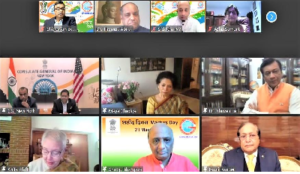
 Referring to the COVID pandemic, Rep. Gregory Meeks said, “We stand together, shoulder to shoulder” in combating the virus and the impact it has on humanity. Ranking Democrat Congressman Gregory Meeks, Chairman of House Foreign Relations Committee was the Chief Guest at the celebration of India’s 72nd Republic Day, organized by GOPIO New York. The virtual celebrations began with the virtual flag hoisting and with the singing of the Indian and American national anthems by Manik Malhotra and Mathy Pillai. 


Beena Kothari, GOPIO-NY President Beena Kothari welcomed the participants from across the globe to the celebration. While serving as the emcee for the event, she said, “We are gathered here to celebrate the 72nd India’s Republic Day.”


Rep. Meeks of New York was introduced by Lal Motwani, Honorary Chairman of GOPIO-NY. Mr. Motwani shared with the audience about the close relationship Rep. Meeks has with GOPIO and the larger Indian American community. “He is a true friend of the Indian American community,” Mr. Motwani said.  Rep. Meeks in his address, said he has known Mr. Motwani for over two decades. While recognizing the contributions of Mr. Lal Motvani and the leaders of the Indian American community, he thanked GOPIO leaders for inviting him to the celebrations of India’s Republic Day.  


Emphasizing the need to work together, Rep. Meeks said, diversity has given us the strength to support each other. He lauded the sacrifices of the front-line workers and the healthcare professionals in helping the community and the nation affected by the deadly COVID19 virus. Rep. Meeks was “appreciative of the partnership of the leadership of the largest democracies in the world.” He praised the influence of Mahatma Gandhi and the power of nonviolence. Praising the contributions of Indian Americans, Rep. Meeks said, “I want to say to all today: You have made USA a better and peaceful place.”


Rep. Meeks pointed to the Bill passed with bipartisan support by the US House of Representatives, that would establish an exchange initiative between the USA and India to study the work and legacies of Mahatma Gandhi and Martin Luther King Jr. “Written by civil rights icon John Lewis, who died early this year, the Gandhi-King Scholarly Exchange Initiative Act authorizes the State Department, in cooperation with the Indian government, to establish an annual educational forum for scholars from both countries that focuses on the legacies of Mahatma Gandhi and Martin Luther King Jr.” This legislation honors the long-standing relationship between the USA and people of India and advance his teachings and establish a development foundation that would allow India and the US to work together to address pressing issues like climate change, education and public health,” Rep. Meeks, who as the Chair of the powerful Congressional Foreign Relation Committee expects such cooperation between Indi and the US.


On his inaugural address, Indian Consul General, H.E. Randhir Kumar Jaiswal, a career diplomat with over two decades of diplomatic career serving in Portugal, Cuba, South Africa and at the Permanent Mission of India in New York, greeted the Diaspora in the United States as well as those around the world connected online to the event on the occasion of India’s 72nd Republic Day celebration.  Calling it an important occasion and a milestone for India and the people of Indian origin, he said, “This is a time when we reflect on the past and the present and ways to go forward.” Describing the current period as “difficult times,” he referred to the health and the economic challenges India and the world is facing today. He expressed hope that the arrival of the vaccination will help make a new beginning. 


Promising that India is on way to provide vaccination to 300 million people in India, Ambassador spoke about India’s plans “to share the fruits of science” with in our regional countries and across the globe by supplying vaccines to the needy, thus living India’s philosophy of “The whole world is one family.” 


Ambassador Jaiswal also mentioned that “we look forward to collaborate with the new Biden administration” contributing to peace and stability around the world. Describing Congressman Meeks as a pillar of support, Ambassador Jaiswal said, “We continue to rely on your support” as the Chair of the US Congress Committee on Foreign Affairs. He said, the month of January is very special, when we celebrate Marin Luther King Day, India’s Republic Day and commemorate the death anniversary of Mahatma Gandhi.” Calling both Gandhi and King as global icons, Ambassador said, “As we honor these two global icons, we continue to seek guidance and inspiration from both.”


NY State Senator Kevin Thomas was introduced by Dr. Thomas Abraham, as a friend and part of the Indian American community. Dr. Abraham conveyed Republic Day greetings from all GOPIO International officers including President Sunny Kulathakal from Bahrain, Executive VP Ishwar Ram Lutchman from South Africa, Vice President Ram Gandhi from the USA and all other International Coordinators from all over the world present at the Zoom celebrations. 


In his address, Senator Thomas, who is chairman of the Consumer Protection Committee, conveyed his greetings to the Indian Diaspora and read out the Preamble of the Indian Constitution, reminding all of the high ideals of unity and diversity, urging the nation to live up to the high ideals enshrined in the constitution of India.


Senator Thomas said that “India is not only an emerging power but today India contributes globally”. Pointing to the many seminaries between India and the USA he said, “We stand united for the progress of the world. As we move forward, let us remember the preamble, and make this our guiding principle.” He promised to introduce a resolution in the New York State Senate honoring India on Jan 26th. 


NY State Representative Jenifer Rajkumar from the 28th District thanked GOPIO and the Indian American community for the inspiration she has had in her life,  “I stand on your shoulders as GOPIO has played a great role in helping me get elected to the State Assembly” .Referring the “Samosa Coccus” formed in the State of New York with a record three Indian Americans elected to the state, she said, “We made history this year and I want to thank the community leaders who have made this possible.”  


Rajkumar shared with the audience as to how growing up in a family that emphasized the teachings of Gandhian principles has helped her to appreciate diversity, justice and equality for all. During this difficult COVID times, “My office is doing everything possible to make distribution of vaccine equitably to all.” 


City Council Candidate, Deborah Kleinert in her greetings on the occasion of Republic Day mentioned that “as we celebrate liberty, diversity and equality. I vow to create a Round Table to honor and celebrate diversity”.  


Vimal Goyal, a successful businessman spoke on the history of freedom struggle and the significance of India’s Republic Day. Through a colorful video presentation, Suhag Mehta took the participants down the memory-line of the history making events that helped India become a Republic. 


Leela and Asha Bahadkar, two children of age 5 and 7 from the community gave a beautiful rendition of Vande Mataram song. Jyothi Gupta, Gautam Chopra and Kulbhooshan Sharma rendered their voices to some melodious patriotic Bollywood songs. Aparna Shreedar from Paris led the participants with a prayer song seeking God’s blessings in the year.  Mayuri Pataliaia from India presented popular songs such as Vande Mataram and Jai Ho with her beautiful voice. Pandit SN Charka, Director EW School of Dance presented two items, Mere Vatan My Country: Duet dance Performed by Vishaki Miryapalli and Varsha Jegan and a group dance celebrating Rama returns from 14 years exile to Ayodhya to be crowned as King. The program ended last song was sung by singer Pradip Parikh.


Technical support was provided by Balaji and the Indus TV (New Jersey) was the Media Sponsor which also livestreamed the program. 


GOPIO-NY is a chapter of GOPIO International which is a non-partisan, not-for-profit, secular organization with Individual Life Members and over 100 chapters in 35 countries. GOPIO’s volunteers are committed to enhancing cooperation and communication between NRIs/PIOs and the local communities, building networks, bonds, friendships, alliances, and the camaraderie of citizens and colleagues alike.  GOPIO volunteers believe that when they help network the global Indian community, they facilitate making tomorrow a better world for the Indian Diaspora and the countries they live in

From Shyamala Gopalan To Kamala Devi Harris: A Timeline Of Two Audacious Journeys


When Kamala Harris takes oath as America’s Vice President, it will be a moment without equal in the country’s history. Harris will be the first Indian and Black American, first woman and first woman of colour to ever win election to America’s highest political office.

Her journey was made possible by another audacious traveller – her mother Shyamala Gopalan, who arrived in America as a 19-year-old, in 1958. Below is a timeline that traces the two women’s paths — starting with Gopalan’s arrival in America — that finally culminated in Harris’ barrier-shattering triumph.

1958: Shyamala Gopalan wins the Hilgard scholarship to study at University of California, Berkeley.

1960: Shyamala Gopalan finishes her Masters degree at theA University of California, Berkeley.

1962: Shyamala Gopalan meets Donald Harris, her future husband, who was speaking at a meeting of the Afro American Association.

July 5, 1963: Shyamala Gopalan marries Donald Harris.

1964: Shyamala Gopalan earns a PhD in nutrition and endocrinology at UC Berkeley.

Oct 20, 1964: Kamala Harris is born at the Kaiser Foundation Hospital in Oakland, California.

1966: Shyamala Gopalan and Donald Harris move to Urbana Champaign. Donald Harris begins teaching economics at the University of Illinois.

1967: On January 30, Kamala Harris’ sister Maya is born.

1970: Shyamala Gopalan moves back from Illinois to Berkeley. The relationship between Gopalan and Donald Harris goes downhill.

1971: Shyamala Gopalan and Donald Harris divorce.

1976: Shyamala moves with her girls to Montreal, Canada. She begins teaching at McGill University and doing research at the Jewish General Hospital.

1981: Kamala Harris graduates from Westmount High School, Montreal.

1982: Kamala Harris joins Howard University, a famous historically Black university in Washington, D.C.

1986: Kamala Harris earns undergraduate degree in political science, Howard University.

1989: Kamala Harris earns a law degree from Hastings College, California.

1990: Kamala Harris begins working as deputy district attorney in Alameda County, California.

2000: Kamala Harris joins San Francisco City Hall. She runs the Family and Children’s Services Division representing child abuse and neglect cases.

2003: Kamala Harris elected as the first woman District Attorney in San Francisco’s history. She ran and won in a runoff against her former boss in the DA office.

2004-2010: For six long years, Kamala Harris serves as the first Indian and Black American woman District Attorney in California.

Feb 11, 2009: Shyamala Gopalan Harris passes away, after battling cancer. She was 70.

2010: Kamala Harris is elected attorney general of California, becoming the first woman and the first Indian and Black American to hold the post.

2012: Harris delivers a speech at the Democratic National Convention, raising her profile.

Aug 22, 2014: Harris marries Doug Emhoff in Santa Barbara, California. Kamala’s sister Maya Harris officiates.

2016: Kamala Harris is elected to the US Senate from California after defeating Loretta Sanchez. She replaces retiring Senator Barbara Boxer.

Jan 8, 2019: Harris’ memoir, The Truths We Hold: An American Journey, is published.

Jan 21, 2019: Harris launches her presidential run, with an announcement on Good Morning America.

Dec 3, 2019: Citing lack of funds, Harris shutters her presidential campaign.

Aug 11, 2020: Joe Biden announces Kamala Harris as his running mate on the presidential ticket.

Nov 7, 2020: Kamala Harris elected vice president of the United States on the Joe Biden ticket.

Nov 7, 2020: On a chilly Fall evening, Kamala Harris delivers a rousing victory speech, taking the stage before President-elect Joe Biden.

Jan 20, 2021: Kamala Harris will take her oath as America’s Vice President. She is the first woman of color, first Indian and Black American to have ever held this position. (IANS)

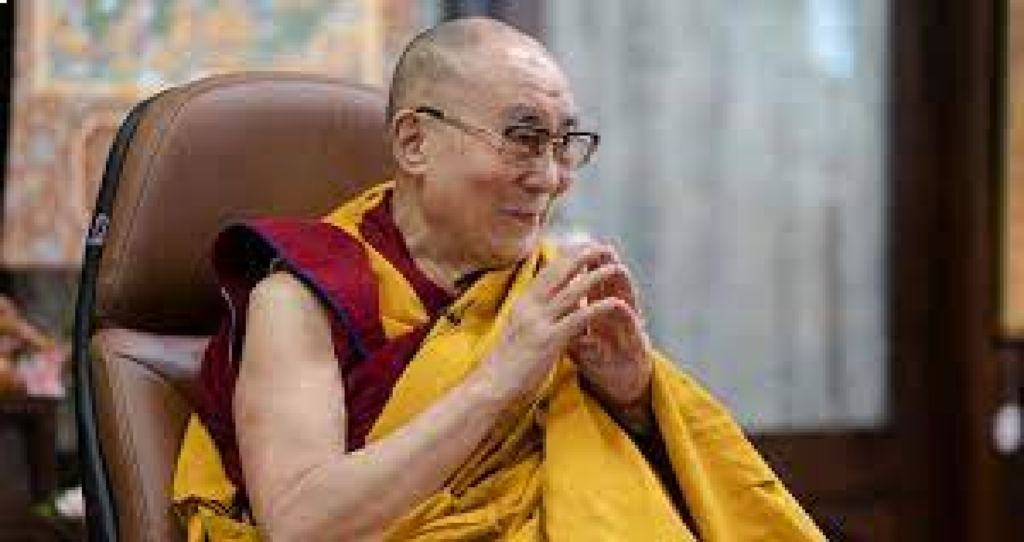
Dalai Lama: ‘We Can No Longer Say “My Nation” … We Should Say “My Planet”

In this time of COVID-19 and civil unrest in America, happiness often seems increasingly elusive. Yet that may not have to be so, and, in fact, such turmoil can offer opportunities for both personal and professional fulfillment.

That was the theme of an online conversation Saturday night between the Dalai Lama and Professor Arthur C. Brooks of Harvard Business School (HBS) and Harvard Kennedy School (HKS). Speaking from his home in Dharamshala, India, the Dalai Lama, longtime leader of Tibetan Buddhism, spoke with Brooks, HKS professor of the practice of public leadership and HBS professor of management practice, for 90 minutes in a live segment of Brooks’ HBS class called “Leadership and Happiness.” The Dalai Lama answered questions from students about their concerns and their duties in a troubled world.

Connection — even as people are usually now forced to work and study separately — is the key to happiness, he said. “We need a sense of oneness. We are each one of 7 billion human beings.” Occasionally aided by an interpreter, the 85-year-old religious leader stressed that point repeatedly. Especially when faced with global crises such as the pandemic and climate change, he said, people must engage as a global community.

“We can no longer say ‘my nation, my country,’ ” he said. “We should say ‘my planet.’ We have to live on this planet together.”

The potential for happiness is in that connectivity. “Happiness is in the mind,” the Dalai Lama said. As individuals and as leaders, when we reach out to others, lifting them up, we experience that connection, and the resulting fulfillment brings us happiness.

Even during a pandemic, he advised, we can find peace. Science and intellectual analysis, he stressed, are vital. If health professionals advise that it is not safe to gather, we need to respect that. He said he personally has found solitude useful for meditation. But being alone should be a choice: “With technology, the oneness of people becomes more clear,” he added. “We can communicate with each other.”

Isolation, he pointed out, can be largely a state of mind. “Tibet, in ancient times, was lonely but happy.” Even in the sparsely populated, mountainous country, “When one family needed some help, they could ask,” he said, relying on a strong sense of community.

Now, people are clustered in big cities but often without a sense of their interdependency.  “Instead of trust, there is fear and distrust,” he said. Focusing on material wealth or competition rather than on interdependency and the general good “eventually creates anger, so the person will not be happy.”

Countering this outlook is within our power. He described his own travels and how, as a stateless person, he could have felt isolated and alone. Instead, wherever he was, he saw himself as part of a larger community, anywhere in the world.

Pushing further for being in the world, the Dalai Lama promoted what Brooks called “the sanctity of the intellectual life.” He repeatedly returned to the need for academic rigor, even at the expense of religious doctrine. Following discussions with scientists, for example, he has let go of centuries-old Buddhist concepts, “like Mount Meru and the sun and the moon being the same size,” he said, referring to the sacred peak considered the center of the universe. “You must be realistic and analyze,” he said.

“What kind of future depends on the present, the younger generation — you are the key people who can create a happier future,” the Dalai Lama told a Harvard Business School class on Saturday night.

“We’re not like other animals,” he said, simply seeking sustenance or safety. “A lot of our problems are our own mental creations.” The solution, he stressed, comes in improving our educational systems to teach community and equality rather than division and difference. Science, he added, can further our understanding of our emotions and the human mind. “A lot of problems were created by the human mind itself, so the remedy also, you see, lies within the human mind. Investigate.”

He concluded his talk by speaking directly to the student audience. Referring to his own status as a refugee and to the problems that his generation has left the world, he became, once again, philosophical. “Time is always moving,” he said. “We cannot change the past. The future is not yet come. What kind of future depends on the present, the younger generation — you are the key people who can create a happier future. So, please, you should not just copy what has happened. New thinking is very necessary. Please think more.”

(Courtesy: the Harvard Gazette)

From Madras To The White House: Idlis Come Full Circle

When was the last time we took the names of fluffy, white idlis, sambar, okra fry and the White House in the same sentence? On January 20, we’ll get there.

Seen through a culinary perspective, the travels of US Vice President-elect Kamala Harris’ mother Shyamala Gopalan from Madras (now Chennai) and father Donald Harris from Jamaica nearly 60 years ago set in motion a blended kitchen culture that Kamala Harris brings with her to the Vice President’s home in Washington D.C.

With it come idlis, sambar, okra, roast chicken, tuna melt sandwiches and a Veep who’s an unapologetic food connoisseur, for Kamala Harris the act of cooking is meditative and joyful in equal measure.

Kamala Harris writes in her memoir: “My mother cooked like a scientist.”

She describes the “giant Chinese-style cleaver that she chopped with, and a cupboard full of spices” and loved that “okra could be soul food or Indian food, depending on what spices you chose”.

As a young girl, Harris began by loving okra either fried to a crisp with a seasoning of oil and mustard seeds or floating in tamarind stew, in her mother’s kitchen in a yellow stucco house in Oakland, California.

Later, among a diverse group of friends and family came new ways to cook the vegetable and an appreciation for soul food, a term that swept into America’s collective vocabulary right around the time that Harris’ parents met and later married.

In an ask me anything session on Twitter, Kamala talks about how idlis “with like, really good sambar” are among her favourite South Indian foods. Harris recalls how her mother, during trips to India, sparked a “love for good idli”.

Harris is both indulgent and minimal, depending on the context. The idli fits neatly within that construct, it’s survivalist cuisine or heavenly, depending on your approach.

Idli is a traditional fermented rice and black gram-based food which originated in South India and makes an important contribution to diet as a source of protein, calories and vitamins, especially B complex vitamins.

The idli and its cousin the dosa are as much about Shyamala Gopalan’s roots as they are about Kamala Harris’.

Long before the Kamala connection transported Chennai’s Besant Nagar into international fame, the neighbourhood has been a go-to for the city’s prime real estate, the softest idlis and famous Hindu temples dedicated to Lord Ganesha, the elephant headed god of good luck and Lakshmi, the goddess of wealth – from where Kamala gets her first name.

The location of Kamala Harris’ grandfather home in Chennai, in Besant Nagar, is dotted with plenty of big and small idli shops, with Murugan Idli being among the most popular. An idli is an idli, wherever you go – soft, round, white and fluffy but like Kamala Harris says, “with like, really good sambar” is the secret.

In Indian homes, this round, white rice cake is staple fare, it’s available for a few rupees at food carts on street corners, it’s the first thing that goes on the stove in millions of Indian homes every morning, it’s now firmly on the all-time favourites menu of the first Indian American Vice President of the US.

Plenty from Kamala Harris’ network have vouched for the straight A student quality she brings to almost everything she does. She took it seriously when her mother told her not to do anything “half-assed”.

In the kitchen too, her joy and involvement with the particulars of what she puts on the table has served to define Indian American-ness in more granular terms, the way things show up in recipes. It’s no longer generic curry or Indian food. The idli has come full circle. (IANS)

(Picture: Onmanorama)

Jesuit Fr. Leo O’Donovan to deliver invocation at Biden inauguration

Jesuit Fr. Leo O’Donovan, former president of Georgetown University, will deliver the invocation at Joe Biden’s presidential inauguration on Jan. 20.

O’Donovan confirmed to NCR that Biden had personally called him and invited him to offer the prayer at the inauguration, which will mark the election of the nation’s second Catholic president, and that he had accepted.

O’Donovan is a longtime friend of the Biden family. In 2015, he presided at the funeral Mass for Biden’s oldest son, Beau, after he died of brain cancer at the age of 46.

Biden is known to be close with a number of Jesuit priests, and while he was vice president, he occasionally attended Mass at Holy Trinity Catholic Church in Georgetown. In 1992, when Biden’s son Hunter was a senior at Georgetown, O’Donovan invited the then-senator from Delaware to give a lecture at the Jesuit university on his faith and public life. Biden told O’Donovan at the time it was the “toughest assignment he’s ever had.”

More recently, just days after his presidential election, on Nov. 12, Biden appeared at a virtual fundraiser for Jesuit Refugee Service, where O’Donovan now serves as director of mission. On that occasion, Biden announced that he would raise the annual admission target of new refugees into the United States to 125,000, marking a sharp increase to the Trump administration’s cap of 15,000 individuals. 

Previously, in 2018, Biden penned the foreward to O’Donovan’s book Blessed Are the Refugees: Beatitudes of Immigrant Children.

Catholics have a long history of participating in prayers for inaugural events. In 1937, Fr. John Ryan offered the benediction at President Franklin D. Roosevelt’s inauguration. Cardinal Richard Cushing of Boston offered the invocation at the inauguration of the nation’s first Catholic president, John F. Kennedy, in 1961. More recently, in 2017, New York’s Cardinal Timothy Dolan provided a Scripture reading at the inauguration for President Donald Trump.

While other specific details of the inauguration lineup of speakers have yet to be announced, the Biden-Harris transition team announced last month that on the eve of the inauguration, there will be a memorial to honor lives lost to COVID-19, which will include the ringing of church bells throughout Washington, D.C.

The Devil Is A Better Loser Than Donald Trump

US bishops who pandered to Trump have failed to guide Catholics to be a discerning, peaceful, loving community. 

The legendary Faust’s desire for power led him into a pact with Mephistopheles, the agent of Satan. The deal was straightforward. In exchange for the fulfillment of all his desires in this life, hell would get Faust’s soul after death.

There are variations on the story. Goethe’s version differs from the tradition in having Faust saved in the end.

An American variation, Stephen Vincent Benét’s The Devil and Daniel Webster, has the devil bested in a trial over the contract. The devil is a better loser than Donald Trump.

But overall, those who contract with the devil are eventually told, “Go to hell!”

The attack by Trump’s partisans upon the verification of the American presidential election was no surprise to those who had paid attention to that man’s actions, the manipulation of his followers and the enabling by the Republican Party over four years. The only surprise for me was that the mob did not burn down the Capitol building.


This is the fruition of a pact with the devil that the Republican Party made in the 1960s. As civil rights legislation empowered Black Americans and threatened the political supremacy of Whites, especially in the South, the Republicans played upon the prejudices of those people to wean them from the Democratic Party. It was called the Southern Strategy.

Had that strategy included plans for guiding new supporters to openness toward other races and ethnic groups, it might have been good for the party and the nation. Instead, prejudices were nurtured and encouraged. In 2005, the chairman of the Republican National Committee finally apologized to Blacks in a de facto admission of his party’s use of racism as a means to draw voters.

But it was too late. Increasingly, the racist, xenophobic and anti-Semitic stream that had been channeled into the Republican Party took control. The presidency of Donald Trump is the result. His rallies are festivals of racism and anti-Semitism with Confederate flags, swastikas and sweatshirts emblazoned with anti-Semitic slogans like 6MWNE (six million was not enough) or Camp Auschwitz.

The attack on the Capitol and democracy may mark the beginning of a “Go to hell!” period for Republicans as their pact with evil bears fruit.

The Republican Party must repent, reform and recover from that pact. But that is not the only institution that succumbed to the Faustian allure of power.

What of the American Catholic Church?

Traditionally, Catholics tended to support the Democratic Party. They were often city dwellers, immigrants and industrial workers. Their concerns differed from those of the business-oriented Republicans. However, their children and grandchildren prospered and began to find the Republicans attractive, overlooking the Faustian bargain the party had made.

But there is more to the Catholic story than a semi-natural migration to the Republicans. There has been a Faustian bargain on the part of some in the Church who for their own ends have allied themselves within the larger bargain with racism, xenophobia and anti-Semitism, though they might not admit that they have become fellows of those attitudes.

Their situation is like that of Germans who did not like what the Nazis were doing but went along for the sake of what that party might do for them. However, guilt by association is real and saying one does not like the way a ship is going does not change the fact that one has booked passage or even become a crew member.

Can we see that in the US Catholic Church? Yes.

Half of Catholics who voted in the November presidential election voted for Trump even after four years of blatant lies, hypocrisy, racism, nepotism, corruption, narcissism, bullying, boorishness, sexual abuse, defiance of the law, divisiveness, pettiness, general incompetence and childish petulance. Is there nothing in that list that repels those Catholics? Why not?

One reason may be that men who are supposed to guide Catholics in their lives as Christians told them to overlook those failings. Bishop Joseph Strickland said, “As the bishop of Tyler [Texas] I endorse” a priest’s message that said, “Repent of your support of that [Democratic] party and its platform or face the fires of hell.”

Bishop Strickland later took part virtually in one of the “Stop the Steal” rallies that denied Trump’s loss and was a precursor to the invasion of the Capitol. After that terrorist attack, he spoke of “a sad day” and that “we have to turn to God.” He did not say that the turn to God would include repentance for his part in laying the groundwork, nor anything about hell for terrorists.

He is only one of several bishops and priests who pandered to Trump and Trumpism. The question is, where are the US bishops who disagree? The episcopal code of omertà that allowed the scandal of Theodore McCarrick to fester remains an indictment of the whole pack.

The bishops and their clerical underlings have failed to guide America’s Catholics to be a discerning, peaceful, loving community shaped by the Gospel. But that’s their job!

They are failures who have decided to rely upon the political system to do what they failed to do, for example, regarding abortion. If they had done their job and led society to a vision of life that would make abortion as unthinkable as public hanging, drawing and quartering, they might not have resorted to supporting a fascist movement marked by racism, anti-Semitism and injustice.

Calling the bishops and not a few pastors of the Catholic Church in the United States “leaders” is a violation of truth and language. And so, to the managers of the United States Catholic Church: “Go to hell!”

(Father William Grimm is the publisher of UCA News based in Tokyo, Japan. The views expressed in this article are those of the author and do not necessarily reflect the official editorial position of UCA News.)

(picture courtesy: Tulsa World)

Tibetans in Exile Vote to Elect New Government

Even after 70 years of Tibet’s occupation by China, ethnic Tibetans across the globe, who mostly follow Lamaism, are determined to maintain their independence.

Based in neighboring India, the Tibetan government in exile has started the election process for its new Tibetan parliament-in-exile, called the Central Tibetan Administration (CTA) scheduled to be sworn in on May 30.

The first round of elections, in which Tibetans across the world participated, ended on Jan. 3 and the results are expected on Feb. 8. According to the election commission, the final list of candidates is expected on March 21 and the general elections are scheduled for April 11.

Braving the pandemic, thousands of diaspora Tibetans took part in the ongoing polls to elect the next Sikyong (president) and new members of parliament.

Tibetans in countries including Belgium, the Netherlands, France and Spain also cast their votes on Jan. 3. According to the Central Tibetan Administration (CTA) election commission, of the total 80,000 voters, 56,000 reside in India, Nepal and Bhutan, while 24,000 live in other countries.

Eight candidates are in fray for Sikyong, including representative of the Dalai Lama in New Delhi and former CTA home minister Kasur Dongchung Ngodup, former representative of Dalai Lama to North America Kelsang Dorjee Aukatsang, former speaker of the Parliament-in-exile Penpa Tsering and incumbent deputy speaker Acharya Yeshi Phuntosok.

Incumbent Sikyong Lobsang Sangay was the first elected political leader of exiled Tibetans. An individual can serve only two terms as a Sikyong.

Around 150 candidates are vying for 45 seats of members of parliament—10 representatives from each of the traditional provinces of Tibet – U-Tsang, Dhotoe and Dhomey; two from each of the four schools of Tibetan Buddhism and the pre-Buddhist Bon religion.

Tibet, called “the roof of the world” occupies a vast area of plateaus and mountains in Central Asia, including Mount Everest. Tibet is on a high plateau—the Plateau of Tibet—surrounded by enormous mountain masses. The relatively level northern part of the plateau is called the Qiangtang; it extends more than 800 miles (1,300 km) from west to east at an average elevation of 16,500 feet (5,000 metres) above sea level.

Before the 1950s Tibet was largely isolated from the rest of the world. It constituted a unique cultural and religious community, marked by the Tibetan language and Tibetan Buddhism. Tibet’s incorporation into the People’s Republic of China began in 1950 and has remained a highly charged and controversial issue, both within Tibet and worldwide. Many Tibetans (especially those outside China) consider China’s action to be an invasion of a sovereign country, and the continued Chinese presence in Tibet is deemed an occupation by a foreign power.

“A Culture of Care as a Path to Peace:” Pope’s 54th World Day of Peace Message

In his message for the 54th World Day of Peace, which will be celebrated on Jan. 1, 2021, Pope Francis offers the Church’s social doctrine as a compass to foster a culture of care for peace in the world.
Pope Francis appeals to the international community and every individual to foster a “culture of care” by advancing on the “path of fraternity, justice and peace between individuals, communities, peoples and nations.”
“There can be no peace without a culture of care,” the pope stresses in his message for World Day of Peace, which will be held on Jan. 1, 2021. The message was released by the Vatican on Dec. 17.
The Holy Father calls for “a common, supportive and inclusive commitment to protecting and promoting the dignity and good of all, a willingness to show care and compassion, to work for reconciliation and healing, and to advance mutual respect and acceptance.” In this task, Pope Francis offers the principles of the Church’s social doctrine as a compass on the path to peace.
Established by Pope St. Paul VI in 1967, the first World Day of Peace was observed on Jan. 1, 1968. On New Year’s Day, the Church also celebrates the solemn feast of Mary, Mother of God.
“A Culture of Care as a Path to Peace” is the theme of the Pope Francis’ message, addressed to heads of state and government, leaders of international organizations, spiritual leaders and followers of the different religions, and to men and women of good will.
Lessons from the pandemic
Pope Francis begins his message noting how the “massive COVID-19 health crisis” has aggravated deeply interrelated crises such as those of the climate, food, the economy and migration, causing great sorrow and suffering to many. He makes it an occasion to appeal to political leaders and the private sector to spare no effort to ensure access to Covid-19 vaccines and to the essential technologies needed to care for the sick, the poor and those who are most vulnerable.
Alongside the pandemic, the pope also notes a surge in various forms of nationalism, racism and xenophobia, and wars and conflicts that bring only death and destruction in their wake. These and other events of 2020, he says, have underscored the importance of caring for one another and for creation in our efforts to build a more fraternal society. Hence, “A Culture of Care as a Path to Peace” is a “way to combat the culture of indifference, waste and confrontation so prevalent in our time,” he states.
Evolution of the Church’s ‘Culture of Care’
The Holy Father traces the evolution of the Church’s Culture of Care from the first book of the Bible to Jesus, through the early Church down to our times.
After the creation of the world, God entrusts it to Adam to “till it and keep it”. Cain’s response to God – “Am I my brother’s keeper?” – after killing his brother, Abel, is a reminder that all of us are keepers of one another. God’s protection of Cain, despite his crime, confirms the inviolable dignity of the person created in God’s image and likeness. Later, the institution of the Sabbath aimed to restore the social order and concern for the poor, while the Jubilee year provided a respite for the land, slaves and those in debt. All this, the pope says, shows that “everything is interconnected, and that genuine care for our own lives and our relationship with nature is inseparable from fraternity, justice and faithfulness to others.”
The Father’s love for humanity, the pope says, finds its supreme revelation in Jesus, who asks His disciples to do likewise. The early Christians followed Jesus by sharing what they had and caring for the needy, thus making their community a welcoming home.
Today, the Church has “many institutions for the relief of every human need: hospitals, poor houses, orphanages, foundling homes, shelters for travellers” and more.
Church’s social doctrine – a ‘grammar’ of care
This culture of care of the Church, enriched by the reflection of the Fathers and the charity of luminous witnesses to the faith, Pope Francis continues, became the “beating heart of the Church’s social doctrine.” This, he says, can serve as a “grammar’ of care: commitment to promoting the dignity of each human person, solidarity with the poor and vulnerable, the pursuit of the common good and concern for the protection of creation.”
The Christian concept of the person, the pontiff says, fosters the pursuit of a fully human development. “Person always signifies relationship, not individualism; it affirms inclusion, not exclusion; unique and inviolable dignity, not exploitation. … Each human person is an end in himself or herself, and never simply a means to be valued only for his or her usefulness.”
According to the “compass” of social principles of the Church, every aspect of social, political and economic life achieves its fullest end when placed at the service of the common good, which allows people to reach their fulfilment more fully and easily.
In this regard, the pope says, the pandemic has revealed that all of us, fragile and disoriented, are in the same boat. “All of us are called to row together [since] no one reaches salvation by themselves.”
The Church’s social principles also urge us to concrete solidarity for others because we are all responsible for all. It also stresses the interconnectedness of all creation, as his Encyclical Laudato si’ points out.
This highlights the need to listen to the cry of our brothers and sisters in need, and the cry of the earth, our common home, and care for them.
“A sense of deep communion with the rest of nature cannot be authentic if our hearts lack tenderness, compassion and concern for our fellow human beings,” Pope Francis states, citing his encyclical.
“Peace, justice and care for creation are three inherently connected questions, which cannot be separated.”
Church’s social doctrine – a “compass” 
In the face of our throw-away culture, with its growing inequalities both within and between nations, Pope Francis urges government leaders, and those of international organizations, business leaders, scientists, communicators and educators, to take up the principles of the Church’s social doctrine as a “compass”. It is capable of pointing out a common direction and ensuring “a more humane future” in the process of globalization. He also calls on everyone to take this compass in hand and work to overcome the many existing social inequalities.
Humanitarian law needs to be respected, especially in situations of conflict and war, which cause enormous suffering to children, men and women. Instead of regarding conflicts as something normal, the pope says, we need to convert our hearts and ways of thinking in order to work for true peace in solidarity and fraternity.
Weapons and peace
In this regard, Pope Francis calls for resources spent on arms, especially nuclear weapons, to be used for priorities such as safety of individuals, the promotion of peace and integral human development, the fight against poverty, and the provision of health care.
He says it would be a courageous decision to “establish a ‘Global Fund’ with the money spent on weapons and other military expenditures, in order to permanently eliminate hunger and contribute to the development of the poorest countries!”
Educating to peace
The promotion of a culture of care also calls for a process of education, the pontiff says.
This begins in the family where we learn how to live and relate to others in a spirit of mutual respect. Schools and universities, the communications media, and also religions and religious leaders are called to pass on a system of values based on the recognition of the dignity of each person, each linguistic, ethnic and religious community, and each people.
“At a time like this, when the barque of humanity, tossed by the storm of the current crisis, struggles to advance towards a calmer and more serene horizon,” he says, “the rudder of human dignity and the compass of fundamental social principles can enable us together to steer a sure course.”
Pope Francis concludes his message, urging “We never yield to the temptation to disregard others, especially those in greatest need, and to look the other way … Instead, may we strive daily, in concrete and practical ways, to form a community composed of brothers and sisters who accept and care for one another.”

GOPIO-CT Raises Funds For Local Charity, And Elects New Team At Annual Christmas Party

GOPIO-CT organized its General Body Meeting (GBM) elected a new team. In its report to the GBM, President Ashok Nichani said that in spite of the Corona Virus pandemic and subsequent lockdown, GOPIO-CT did some outstanding work in helping local food pantries and providing KN95 masks for frontline workers.
 Secretary Rajneesh listed all major activities for the year which included major initiatives for serving the local community and institutions during the pandemic and lockdown. These included delivering food items to frontline healthcare workers at the Stamford Hospital, donating cash and replenishing food items for the homeless and needy at the New Covenant House in Stamford, Lower Fairfield County Food Pantry and Food Bank of Lower Fairfield. In addition, the chapter imported KN95 masks and donated to Wilton Meadow Healthcare facility in Wilton, Connecticut and Stamford Hospital.
 Many of the regular programs were held using Zoom meetings. The chapter participated in the annual walkathon fundraiser for Bennet Cancer Center at the Stamford Hospital. Taking the lockdown and the social isolation as a challenge, the organizing committee of GOIO-CT put together a grand celebration of India’s 74th Independence Day Celebration, connecting the people of Indian origin, community leaders and elected officials virtually, honoring and celebrating the freedom and democratic values of India and the United States. The chapter also held its annual Diwali celebration on Zoom, an interactive meeting with Congressman Jim Himes and a webinar on major changes on US Taxes and financial/retirement planning.
 The GBM also conducted its annual election for 2021. Mr. Ashok Nichani was re-elected as the President for one more term. Other elected officials are Mr. Prasad Chintalapudi as Executive Vice President, Dr. Jaya Daptadar as Vice President, Ms. Prachi Narayan as Secretary, Ms. Meera Banta as Joint Secretary and Mr. Viresh Sharma as Treasurer.  GBM also reelected two trustees, Dr. Thomas Abraham and Ms. Neelam Narang.
 Following the GBM, Annual Holiday Party was held. attended by India’s Consul General in New York Randhir Kumar Jaiswal as Chief Guest, who praised GOPIO-CT for its work helping local service organizations. Stamford Mayor David Martin complimented GOPIO-CT for its work helping the local food pantries during the lockdown.
 The fundraiser netted $5,000 to give to the local service organization Building One Community of Stamford which helps new immigrants in Connecticut.
 Dr. Thomas Abraham, Chairman of GOPIO International said that GOPIO-CT is the most active chapter among over one hundred GOPIO chapters worldwide.
 GOPIO-CT Vice President Prasad Chintalapudi coordinated and chaired the program while Nandita Suvarna conclude the program, and thanked everyone for making the Zoom program a success.
Over the last 14 years, GOPIO-CT, a chapter of GOPIO International has become an active and dynamic organization hosting interactive sessions with policy makers and academicians, community events, youth mentoring and networking workshops, and working with other area organizations to help create a better future. GOPIO-CT – Global Organization of People of Indian Origin – serves as a non-partisan, secular, civic and community service organization – promoting awareness of Indian culture, customs and contributions of PIOs through community programs, forums, events and youth activities. It seeks to strengthen partnerships and create an ongoing dialogue with local communities.

Endowed Chair in Hindu and Jain Studies Established at University of California

Since antiquity, according to religious studies scholars, two of the world’s oldest traditions, Hinduism and Jainism, co-existed on the Indian subcontinent. They share many spiritual practices, philosophical paradigms and ethical principles while simultaneously maintaining their unique, independent identities.
Over two dozen families, individuals and foundations have come together to create the Endowed Chair in Jain and Hindu Dharma at Fresno State. The groundbreaking partnership between the Jain and Hindu communities and the University underscores a mutual commitment to educating current and future generations of students about the principles of nonviolence, dharma (virtue, duty), justice, pluralist philosophy, the interconnectedness of all beings and care for the environment through Hindu-Jain texts, philosophies and traditions.
Fresno State President Joseph I. Castro called the partnership historic. “The California State University has never seen a partnership like this one with the Jain and Hindu communities. I’m very pleased that this has happened at Fresno State. It establishes a model for other campuses in the CSU and around the country to do the same.”
“Because of the beautiful Peace Garden and what it represents here, we feel California State University, Fresno is the rightful place for this endowed chair. How beautiful and remarkable it is that both traditions will now be represented, taught and researched at Fresno State,” said Dr. Sulekh Jain, of Las Vegas, who has a prominent role in developing Jain education in the United States. “This is the first joint chair in the two traditions, not only in North America, but most probably in the whole world. This is historic.”
“Like two rivers running parallel and at times intertwined create a rich ecosystem, Hinduism (traditionally known as Sanatana Dharma) and Jainism (Jain Dharma), originated on the Indian subcontinent, for over three millennia serve as a model to building pluralistic and peaceful relations,” explained Dr. Veena Howard, a Fresno State religious studies professor. “Mahatma Gandhi was a product of both Jain and Hindu traditions and teachings. Gandhi was born in a Hindu family but was strongly influenced and molded by Jain friends, monks and Jain vows.”
Dr. Jasvant Modi, of Los Angeles, a prominent Jain philanthropist and supporter of this chair, added, “We hope that the younger generation, when they come to the college, they’re exposed to this philosophy as we know that Mahatma Gandhi, Martin Luther King and others followed a nonviolent way of solving the countries and the world’s problems.”
Monika Joshi, of Clovis, who collaborated with other local Hindu community members, expressed her enthusiasm. “In today’s world with conflict, fear and division, it becomes essential to explore and share the teachings of Hindu Dharma that have existed for thousands of years. Mutual respect, truth within and working towards eternal happiness are the core values of Hinduism that can pave the way for unity as a common goal for all.”
Dr. Harsh Saigal, a Hindu leader in Fresno, added, “We are proud to give back to the Valley that has given us so much.”
The Endowed Chair in Jain and Hindu Dharma will be housed in the Department of Philosophy in the College of Arts and Humanities and will be an integral part of the University’s religious studies program. A professor who is an expert in both the Jain and Hindu Dharma traditions will be appointed as interim chair in 2021.
“The chair will teach Jainism and Hinduism, furthering Fresno State’s efforts to promote understanding of religions and communities. The teaching of these ancient traditions reflects our community’s diversity and our donors’ trust in the value and impact of Fresno State’s programs,” said Dr. Saúl Jiménez-Sandoval, Fresno State provost and vice president for Academic Affairs.
Additionally, the endowed chair also will support Jain and Hindu scholarly endeavors for students, including scholarships, stipends and research funds. For the professor who holds the chair, the funds may support research and academic publications, conference travel and campus-sponsored events.
“We are so grateful to the unprecedented number of generous donors who have collaborated to create this remarkable gift,” said Dr. Honora Chapman, interim dean of the College of Arts and Humanities. “This new chair represents an enhanced opportunity for Fresno State’s students to learn how they can change their own lives and the world through pursuing Jain and Hindu enlightenment in their studies while putting nonviolence and peace into action.”
The Jain and Hindu community leaders and organizations that generously donated include J.P. Sethi, the Ravi & Naina Patel Foundation, Dr. Harsh Saigal, Anil Mehta, Dr. Vinod K. Gupta, Dina Bahl, Bankim Dalal, Dr. Girish Patel, Vardhaman Charitable Foundation, Andy Chhikara, Dr. Prem Kamboj, Dr. Madhav Suri, Dr. Krish Rajani, Monika Joshi, Ela and Bhavesh Muni, Rama Ambati, Dr. Shashi Sharma, Dr. Dinesh Sharma, Dilbagh Ghilawat, Sangita and Yogesh Shah, Rita and Narendra Parson, Komal and Prashant Desai, Kala and Surendra Jain, the Wadher Family Foundation, Dr. Sulekh Jain, Ronak and Mitul Shah, and Pinal and Hardik Modi.

Classical Musicians From India & North America Perform At The Chaar Prahar Indian Classical Music Festival For A Global Audience

Bharatiya Vidya Bhavan USA, Sneh Arts, Kolkata Sitar School & Viewcy in association with the Consulate General of India & Dhwani Academy of Percussion Music presented the 2nd Annual Chaar Prahar Indian Classical Music Festival. Adapting to the challenges of the global pandemic, the festival was held online on November 29th & December 5th on the digital platform Viewcy, which enabled us to reach audiences in Asia, Europe & North America. The artist lineup included some of the most recognized names in Indian Classical music as well as rising stars. The concert was streamed in several time zones to accommodate audiences from around the world on both days. The festival was supported by our media partners : TV Asia, World BBTV, Radio Zindagi, Divya Bhaskar & The Indian EYE.


Viewers were treated to soul stirring music at this 2 day, 12 hour – festival, which featured 26 musicians from both the Hindustani & Carnatic styles of music. Community of artists & music lovers gathered to enjoy instrumentalists & vocalists from various gharanas (school of music) showcasing their talents & mastery on the sitar, tabla, sarod, esraj, santoor, violin, veena, mridangam, harmonium & vocals. The festival team was particularly enthusiastic about giving a platform to the younger generation of Indian American artists who work very hard to pursue this art form alongside those based in India.
Dignitaries from the music world & the community graced the occasion online to bestow their blessings, not only to the young artists, but also to the organizers for continuing this special initiative. The Consul General of India in New York Amb. Randhir Jaiswal & Deputy Consul General Amb. Shatrughna Sinha, who graced the occasion, appreciated the work & effort put into presenting the rich music of India through this festival. Bhavan Chairman, Dr. Navin C. Mehta, joined the festival on both days, commending the music community for coming together for such a special marathon of music. He was thrilled to see such a fantastic line up & engaging audiences that were enjoying this online festival.

There were countless comments of support & appreciation pouring in during the live streaming of the festival, which encouraged the artists & the organizers. Dibyarka Chatterjee wrote, “What a treat these past 6 hours have been! Congratulations once again to the organizers, not only for being able to continue the festival despite these trying circumstances, but for such a high-quality production. Deepest gratitude to all the performers for bringing light & joy into our homes!” Vineeta Khanna wrote, “Much gratitude to Bharatiya Vidya Bhavan, Sneh Arts, the brilliant artists & all the folks instrumental in making this event happen! You all are doing great service to the Arts!”

This year’s festival had a very special significance to the organizing team of Chaar Prahar, which consists of Minesh Patel, Managing Director of Bhavan USA, Indro Roy Choudhury, Bhavan Sitar guru & Director of Chaar Prahar Festival, and Sunny Thakkar, Founder of Sneh Arts.  It was dedicated to the former Executive Director of Bhavan USA, Shri Deepak Dave, who left this world too soon; it was his vision that motivated the team to continue this festival. It was also dedicated to one of the board members, Megha Bhouraskar’s father, Shri Digambar Bhouraskar. He was a long time Bhavan supporter & an ardent lover of Indian Classical Music. Long time vocal guru at Bhavan, Smt. Sanjukta Sen & her daughter Shruti Sen, performed the opening invocation for the festival.

The Chaar Prahar Music Festival team is extremely grateful to the artists, community partners, media partners, team members & everyone who worked tirelessly behind the scenes to make this festival possible. They look forward to even more support from the musicians & music lovers so they can continue to present such special events & give a continuous platform to local talent. The team has announced that the next Chaar Prahar Festival will be in November 2021. More info on bhavanusa.viewcy.com

Amidst Pandemic, Poverty, Indian PM Lays Foundation For New Parliament Building

Prime Minister Narendra Modi on Thursday laid the foundation stone of the new Parliament building which will be equipped with all modern audio visual communication facilities and data network systems — making it a symbol of Atmanirbhar Bharat.

Modi also performed ‘Bhoomi Poojan’ for the construction of the four-storied new Parliament building, one of the most magnificent buildings in the country, would be built in an area of 64,500 square meter at an estimated cost of Rs. 971 crore.

While laying the foundation stone for the new Parliament Building for India, Modi said the new Parliament building, for which the ground-breaking ceremony was held, would channel and reflect the aspirations of 21st century India.

Each Member of Parliament would also be provided with a 40 square metre office space in the redeveloped Shram Shakti Bhawan, construction for which is slated to be completed by 2024. The new Parliament building has been designed by HCP Design and Management Pvt Ltd Ahmedabad and the construction would be carried out by Tata Projects Ltd, keeping the needs and requirements for the next 100 years in mind.

Critics say the 200 billion rupees ($2.7bn) that the Hindu-nationalist government is reportedly spending on the vast project could be better directed to fighting COVID-19 and repairing the pandemic-battered economy. The project has also run into legal trouble with several petitions in India’s top court questioning its validity on the grounds of land and environmental rules. The Supreme Court on Monday expressed unhappiness over the government’s rush to inaugurate the project before it had considered the pleas.

The ceremony was attended by Lok Sabha Speaker Om Birla, Deputy Chairman of the Rajya Sabha Harivansh, Union Minister Hardeep Puri and Pralhad Joshi along with senior members of the Union Cabinet, diplomats, and Members of Parliament. The ceremony included an all-faith prayer as well, while priests from the Sringeri Math, Karnataka, did the rituals.

“The new building will be the amalgamation of the new and the ancient, and reflects also the spirit of fostering change in oneself adapting to changing circumstances,” said Modi. “Our Constitution was framed and given to us in the current parliament building and it is the repository of much of our democratic legacy but it is important to be realistic as well. Over the last 100 years, several modifications have been made to the current building to the point where even the building requires rest. Which is why the decision was taken to construct a new Parliament building”.

The Prime Minister spoke of some of the new features added to the new building, including a space where people from constituencies could meet their MPs on visiting the building, something lacking in the current building.

The building will have a seating capacity for 888 members in the Lok Sabha chamber with an option to increase to 1,224 members during Joint Sessions. Similarly, the Rajya Sabha Chamber would have a seating capacity for 384 members.

India’s glorious heritage too will find a place in the building. Artisans and sculptors from all over the country would contribute to and showcase India’s cultural diversity in the building.

Modi called upon MPs to keep the spirit of optimism alive around democracy by being always accountable to people and the Constitution. He spoke of the spirit of conversation and dialogue, quoting the first Guru of the Sikhs, Guru Nanak Devji: “as long as the world exists, conversations must continue”, noting that it was the spirit of democracy, a comment significant with regard to the stalled negotiations between his own government and agitating farmers groups over three farmer-specific laws passed by Parliament in the last session. While there could be disagreements, there cannot be space for disconnect, he pointed out.

While pointing out that many nations felt Indian democracy would not last, the country had proven naysayers wrong, especially because of the ancient roots of democracy in India as elaborated in the concept of the 12th century Anubhava Mantapam set up by Basaveshwara; a 10th century stone inscription in a village near Chennai, describing a panchayat mahasabha and its elaborate rules, including the need for members to disclose their income; and the ancient republics of the Lichchavis and Shakyas.

“As a nation we must pledge to keep the spirit of democracy and public service alive,” he observed. “The day isn’t far when the world acknowledges that India is the mother of democracy,” he added.

Due for completion in 2022, when India marks 75 years of independence from Britain, the much larger new parliament will replace an old building that the government says is showing signs of “distress”. Designed by British architect Edwin Lutyens in the early 20th century, the current Parliament building is the commanding centerpiece of the British Raj, with the adjoining grand Rajpath boulevard, the president’s residence, government offices, the national museum and the India Gate war memorial.

First Ever ‘Decolonized’ English Translation Of Famous Ancient Indian Scripture

Ten years in the making, a new English version of the world’s most translated – and mistranslated – ancient Indian scripture could be the purest because it does not include colonial, western or Christian distortions.

Written more than 5,000 years ago – some calculate 7,500 years ago – the Bhagavad Gita is considered the ultimate guide on how to navigate life’s struggles and dilemmas and find meaning within existence. It is the central and enduring sacred text of Hindu and other eastern cultures that can be found in households worldwide.

The book also has prevailing global influence as a “leading book of yoga,” and a following that includes Arianna Huffington who recently wrote: “The Bhagavad Gita is a source of wisdom in this crucible time.”

Translated hundreds of times

Considered a literary masterpiece with universal appeal, the Gita has been translated hundreds of times in 75 languages since 1785. It even provided the premise of the multi-star Hollywood movie, The Legend of Bagger Vance.

When local Vedic (Hindu) scholar and linguist Jeffrey Armstrong embarked on being the first Canadian to translate the Gita into English, he thought he was doing a straight Sanskrit-to-English translation. Through his research, he discovered that previous western versions had distorted the Gita with concepts, words and theories that do not exist in Sanskrit or Indian cultures.

Armstrong spent 10 years “decolonizing” the text to capture it accurately. The Bhagavad Gita Comes Alive: A Radical Translation released this week on Amazon, timed with Diwali celebrations. Armstrong says the book’s teachings are more relevant than ever.

“As we navigate a changing world amidst a global pandemic, climate change, and universal calls for social justice, the Gita offers guidance and lessons that are timely, including about ethical and moral dilemmas, politics, and cooperating with nature,” said Armstrong, vice-chair of the Vedic Friends Association and scholar with the British Board of Dharmic Scholars.

A few of the Christian words and concepts that Armstrong avoids in his translation include: God, heaven, hell, soul, and sin. “These words and concepts cannot be used as synonyms for Vedic and yogic words and philosophies. I offer the Gita in its true essence where I keep key Sanskrit words and use English to support their true meaning and intent.”

For example, the word “soul” originated with the Greeks and is defined as the essence of a human being who has one lifetime followed by consequences. The Bhagavad Gita Comes Alive replaces “soul” with the correct and intended Sanskrit word, “atma,” which means “the invisible, immortal being with no beginning or end.”

Testimonials

Dr. David Frawley – American Hindu scholar who was awarded India’s third highest civilian honour, Padma Bhushan, by the Indian government:

“There has long been demand for a version of the Gita that corrects distortions. With this translation by Jeffrey Armstrong, who deeply understands the connotations and subtle connections of the Sanskrit terms around which the Gita revolves, we finally have an extensive and profound English version of the Bhagavad Gita.”

Professor Ved P. Nanda: Head of Hindu Swayamsevak Sangh (HSS), a North American non-profit organization that aims to preserve and promote Hindu ideals and values. The University of Denver’s international law department is named after Nanda, who is an awarded adjunct professor at the university. The Indian government awarded Nanda its third highest civilian honour, Padma Bhushan:

“Jeffrey Armstrong has produced a master translation, carefully preserving its intended meaning. The Bhagavad Gita Comes Alive: A Radical Translation enables the reader to unlock the profound messages which are obscured by other versions.”

\Jeffrey Armstrong is an award-winning author, linguist, and poet. He has been teaching the Vedas for more than 40 years. He also had a successful 15-year career as an executive in Silicon Valley and public speaker addressing Fortune 500 companies. His other books include Spiritual Teachings of the Avatar, and Karma: The Ancient Secret of Cause & Effect.

Has Mount Everest Grown? Nepal Will Tell Us

Well known around the globe, Everest as the tallest mountain with 29,029 feet, from sea level to summit may not be the actual height– or at least not for long. Because the mountain is changing.  Scientists say Everest is getting taller, over time, because of plate tectonics. As the Indian plate slips under the Eurasian plate, it uplifts the Himalayas. But earthquakes can reduce their height in an instant.

After a 7.8-magnitude quake in 2015 killed thousands, including climbers on Everest, scientists suspect the mountain got shorter. So China and Nepal, on whose borders Everest stands, decided it’s time to re-measure Everest.

This spring, with the climbing season canceled for COVID-19, China sent a survey team up to Everest’s summit, carrying GPS receivers. Last year, Nepal did the same. The two countries have been analyzing their findings for months, and are expected to release them any day now – possibly as early as this weekend. Calculating that number has evolved as our technology has, but the science remains complicated.

As per reports, Nepal is going to announce the new height of Mt Everest, the world’s tallest peak, very soon. A Cabinet meeting gave nod to Nepal’s Ministry of Land Management to announce the height of Everest and according to some media reports, as the peak has appeared taller than it was but no official confirmation yet.

Minister for Land Management of Nepal, Padma Kumari Aryal said that with our own resources, we have completed the measurement of the Everest and are going to announce it very soon. Nepal had started the remeasurement of the world’s tallest peak in 2017 of its own resources as a lot of concerns were emerging about the height of Mt Everest after the 2015 earthquake.

As agreed with Chinese side, during the visit of Chinese President Xi Jinping last year, Nepal and China will jointly announce the height of the Everest in Kathmandu and Beijing simultaneously, according to Nepal’s Ministry of Land Management.

Although Nepal had planned and announced the remeasurement of the Everest height, believed to be altered by the 2015 earthquake, on its own, the two countries made an agreement in October last year to announce the height jointly. Following that, China measured the height of Everest from the northern side in May this year from Tibetan face.

Nepal and China have been at odds over the height of Everest after China unilaterally declared the height of Everest as 8,844.04 meter in 2015 against globally accepted 8,848 meter. Over the differences about the height of Everest, Nepal and China also could not sign the boundary protocol since then. The present height of Everest was declared after the Survey of India in 1954 and has been considered the same since then. After Nepal declared to remeasurement of the height of Everest, India had also put interest but Nepal rejected the offer saying that it will measure of its own resources.

As China came up with the rock height of Everest in 2015 against the globally accepted snow height, now according to Padma Kumari Aryal, Minister for Land Management, now Beijing has agreed to consider the snow height of Everest. (IANS)

-+=