AAPI Inaugurates Biochemistry Lab/Immunoanalyzer At AIIMS, Bibinagar, Telangana

American Association of Physicians of Indian origin (AAPI) has been in the forefront, especially during the Covid pandemic with its numerous initiatives to address and help communities  in the United States and in India to overcome the impact of the deadly pandemic. The deadly pandemic, COVID-19 that has been instrumental in the lockdown of almost all major programs and activities around the world, could not lockdown the creative minds of AAPI leadership and its thousands of dedicated members.

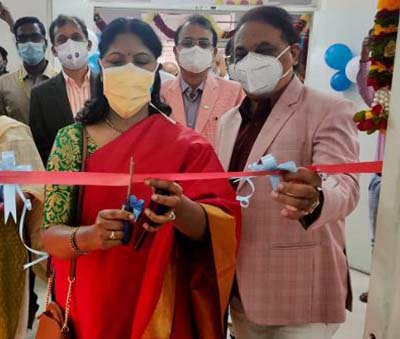
In continuation of its efforts, during the recently concluded Global Healthcare Summit in Hyderabad, AAPI donated immunoanalyzer at AIIMS, Bibinagar, Telangana, which does hundreds of tests every day. This is part of Covid relief efforts AAPI has taken over during the second wave of pandemic.

“The generosity of the members of AAPI and Indian community has been unprecedented,” says Dr. Anupama Gotimukula, President of AAPI. “I want to thank the AAPI fraternity, for not only contributing $5 Million towards Covid Relief Funds, but has spent hundreds of hours in coordinating and disbursing the vital medical supplies to the most needed hospitals across India. Thanks to the overwhelming support of its members that AAPI has raised almost $5 million in the past few months and has sent much needed medical supplies to India during the peak of the pandemic in India.”

Taking the lockdown and the social isolation as a challenge, AAPI leadership has creatively worked with the members to plan programs in educating and sharing knowledge on various timely issues affecting the healthcare sector and the people at large. In its efforts to help patients and medical professionals across the nation to receive the required support, training and supplies to protect and heal those infected with the deadly COVID-19 virus that continues to impact the entire nation, AAPI created a Help Line and had physicians participate and run COVID helpline.

AAPI coordinated with dozens of physicians including primary care physicians, ER, critical care and ID physicians, who see these patients on a constant basis, to help during this crisis. Questions are being sent by email and physicians answer them at the earliest convenience.

“AAPI has also collaborated with other national international and government organizations such as, Sri Sri Ravi Shankar, Indian Embassy in Washington, DC, National Council of Asian Indian Americans (NCAIA), GAPIO, BAPIO and Australian Indian Medical Graduates Association, in its efforts to educate and inform physicians and the public about the virus, to prevent and treat people with the affected by corona virus,” said Dr. Ravi Kolli, President-Elect of AAPI.

“As always, AAPI has been in the forefront, rising to the need of the hour. After our initial donation to AIIMS, Bibinagar, Telangana AAPI is planning to donate immunoanlysers to all AIIMS across the country. As you may remember, AAPI had donated ventilators and high flow oxygen equipment to AIIMS in the past,” Dr. Satheesh Kathula, Clinical Professor of Medicine and AAPI Secretary said.

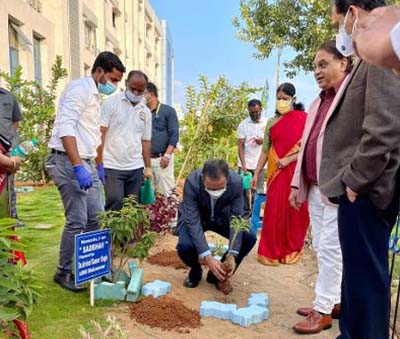
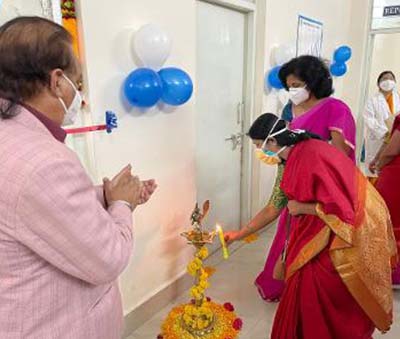
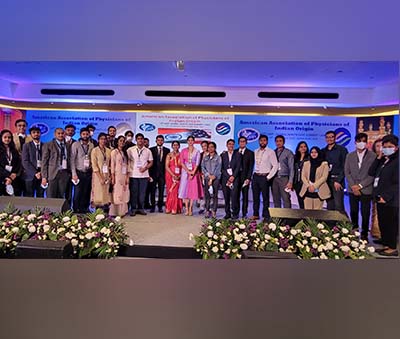
Dr. Anupama Gotimukula, president of AAPI along with Dr. Satheesh Kathula, AAPI secretary, and Dr. Sujeeth Punnam, Chair, Chair, Covid relief committee participated in the inauguration of biochemistry lab/Immunoanalyzer at AIIMS, Bibinagar, Hyderabad. Later on they planted trees in AIIMS Vatika, Bibinagar and named one of them “AAPI”.  For more details, please visit: www.aapiusa.org

Is Hybrid Dating The New Norm?

Aside from the medical concerns that the epidemic presented to millions of people, there was also an overwhelming sense of loneliness and fear that contributed to mental health problems. Humans are social beings, so it’s only natural that they want to connect with others and develop meaningful bonds. In fact, in the 21-30 age range, 90 per cent of men and 78 per cent of women showed a strong desire to venture out during these difficult times.

Eagerness to get out and meet new people

Two out of every three males in the 18-21 age group believe that they are obligated to go out and meet intriguing people; they believe that they no longer have a choice. Instead, it’s an absolute must to keep them sane.

According to QuackQuack CEO Ravi Mittal, the epidemic has produced a global feeling of agonising isolation triggered by stay-at-home standards. ‘The yearning among people, particularly young people, to return to regular conduct is stronger than ever. They’ve been glued to their screens for the past 18 months and can’t take it any longer.’

The sweet spot between video calls and restaurant dates.

While the epidemic has caused certain mental problems, it can never be regarded casually. It is necessary to maintain vigilance since lives are at stake. A decent strategy would be to keep the interactions online for as long as feasible and then organise for ‘meets-in-person’ when the pain of nostalgia becomes too much to bear. Men and women can communicate via phone conversations, chats, and video calls while also planning meet-ups at a favourite hangout.

At least 52 per cent of men aged 21 to 30 and 45 per cent of men aged 31 and up are willing to leave their homes on occasion for brunch or dinner dates. The fact that this population has already been vaccinated is one clear reason. According to App, 75 per cent of males in the 18-20 age bracket are willing to go out with their dates while adhering to all pandemic restrictions. A combination of online and physical dates, according to 44 per cent of women, is the greatest option for pursuing a romantic relationship.

Challenges that stem from dating the ‘hybrid’ way

In this time of uncertainty and disease, about 55 per cent of women between the ages of 21 and 30 are nervous about going out on a date. They do agree, however, that if they are too lonely or miserable to stay at home for too long, they may reconsider their decision not to go on an offline date. Moving out of your gates and attempting to enjoy a few moments with the one you love is both exciting and terrifying. Hybrid dating may not be the greatest option for lovers who are so enamoured with each other that they don’t want to be apart for even a second. It is still the most practical approach that is precisely aligned with the current circumstances.

It has the support of a large number of people of various ages, and as the trend gains traction, it is safe to assume that hybrid dating is not risky – 83 per cent of males in the 30+ age group agree. People are catching on to this new trend: in the last three months, the number of women who agree with the concept of hybrid dating has increased by 50 per cent . After all, mental health is at the top of the list of things that might assist you in living a happy life. There are no questions to be asked if anything assists you in achieving that goal. Everything is fair and just when it comes to finding ways to spend time with the people you care about. (IANS)

How Break-Ups, Solitude Disproportionately Affect Middle-Aged Men

Break-ups and years of living alone may increase the risk of ill health and death — but apparently only for men, according to a new Danish study.

A few breakups or years lived alone is not in itself a risk of poor health but the combination of long-term solitude and multiple failed relationships is shown to affect levels of two inflammatory markers significantly, the study by researchers at the University of Copenhagen’s department of social medicine showed. The findings were published in the Journal of Epidemiology & Community Health.

The researchers used data from the Copenhagen Ageing and Midlife Biobank for over 4,800 participants (aged 48 to 62) between 1986 and 2011. The data included information on serial partnership breakups and the number of years lived alone, apart from the participants’ education, long-term health conditions, medicines etc.

Blood samples were taken to measure the inflammatory markers interleukin 6 (IL-6) and C-reactive protein (CRP).

The researchers found that the highest levels of inflammatory markers in men were found in those who had experienced the most partnership breakups. Inflammatory markers were up to 12% higher in the group who had spent seven or more years living alone.

No such associations were found among women, although the study had just 1,499 women. But the authors also suggest that men tend to externalise their behaviour following a partnership breakup, by drinking, for example, whereas women tend to internalise, having depressive symptoms. This may influence inflammatory levels differently.

Partnership breakups and living alone are associated with several adverse health outcomes. The aim of this study, carried out in Denmark, is to investigate whether accumulated numbers of divorces/partnership breakups or years lived alone across 26 years of adult life are associated with levels of inflammation, and if vulnerability with regards to gender or educational level can be identified.

Methods 4835 participants from the Copenhagen Aging and Midlife Biobank (CAMB) aged 48–62 years were included. Data on accumulated numbers of partnership breakups and years living alone were retrieved from a national standardised annual register. Inflammatory markers interleukin 6 (IL-6) and high sensitivity C-reactive protein (hsCRP) were measured in blood samples. Multivariate linear regression analyses were adjusted for age, educational level, early major life events, body mass index, chronic diseases, medicinal intake affecting inflammation, acute inflammation and personality scores.

Results For men, an association was found between an increasing number of partnership breakups or number of years living alone and higher levels of inflammatory markers. No such association was found for women, and no evidence of partnership breakups and educational level having a joint effect was found for either gender.

Conclusion The findings suggest a strong association between years lived alone or accumulated number of partnership breakups and low-grade inflammation for middle-aged men, but not for women. Among those of either sex with a lower level of education, no specific vulnerability to accumulated years lived alone or number of breakups was identified.

Patel Spirits Creates India-Influenced Vodka Using Appalachian Water

Patel Spirits Inc. of Orlando, Florida officially released its P1 Vodka to the public market. P1 Vodka is Patel Spirits Inc.’s inaugural brand of Premium Vodka inspired from their founder’s Indian heritage.

“P1 Vodka adheres to their gold standard in gluten-free, handcrafted, small batch vodka by using American Mountain water from the Appalachian Mountain region, high-quality maize while using a proprietary charcoal mellow filtration process,” said a press release issued by the company.

During the early 1970’s, a young Ashokkumar Patel, the son of a Laborer for the British Empire in Uganda, Africa up until 1972 once Edi Amin took control of Uganda. Ashokkumar was then forced to relocate with the assistance of the British Government to Stradishall Refugee Camp in Cambridgeshire, England. While residing in the England, Ashokkumar met his wife and began a new journey into the Spirits Industry. In 1979, a new edition to the Patel family was born and introduced into the Spirits Industry as Meechal “Mitch” Patel.

Founder/Principal Mitch Patel of Patel Spirits Inc., brings over 20 years of expertise and knowledge in the retail spirits industry to Patel Spirits Inc. He has used his knowledge from developing and executing actionable retail sales plans in Central Florida for some of the biggest brands in the industry. These brands include Bacardi flavors, Three Olives flavors, Southern Comfort, Proper 12, Jack Daniel’s Honey and many more.

Patel envisioned a high-quality vodka that is smooth enough to drink straight while also encompassing Pan Asian Indian influences. Patel set out to bring his vision to fruition while incorporating his many years of experience in the Spirit Industry to bring to the market a Gold Standard Vodka.

In addition to Founder Mitch Patel, Patel Spirits is backed by board members who have over 60 years of combined experience in the spirits industry. Together, the team has created a vodka that’s like no other. The label bears a distinct design that represents India’s culture while including the colors of black and gold as homage to Patel’s alma mater, the University of Central Florida (UCF). While at UCF, Patel studied Aerospace Engineering while performing as a Collegiate Athlete on the Rugby Team.

“We felt it was of the utmost importance to create a vodka brand that bears a premium taste profile while also giving the Indian community a sense of ownership and inclusion in the brand. Our inclusion in the spirits industry is paramount since more than 25% of all retail stores are owned or operated by persons of Pan Asian Indian descent.

I’m proud to say that P1 Vodka will be the first Indian-influenced vodka brand created in The Appalachian Mountain Region of The United States. This region is known for producing some of the World’s Best and known spirits to date. P1 Vodka is made from the highest quality pure Appalachian Mountain spring water and richest maize, which leads to its premium silky smooth taste profile that allows you to enjoy it straight while indulging your pallet to its rich flavorful blends. Our philosophy is, the better the water, the better the vodka,” said Patel. Patel went on to describe the essence of P1 Vodka as a premium handcrafted spirit that was conceptualized in Orlando, Florida.

“Beyond the look of the label, we’ve also included a special Indian tradition which is deeply rooted in the Founder’s upbringing. Patel’s vision of the branding of P1 Vodka intentionally includes the number 1. A historic Indian tradition includes the basis that when gifting a monetary value to a loved one, we end in a 1 ($51, $101, $201) to wish prosperity to the receiver of the gift. The 1 represents a positive starting point to build from, and we wish all that enjoy our product to have a prosperous future.” Added Patel.

Online Sports betting https://cheltenhamfestivaluk.com/desert-orchid/ Now offers In the Colorado

Cashing out early https://cheltenhamfestivaluk.com/desert-orchid/ is also available for discover single and you can parlay wagers. To have guidance during the BetMGM, come across “Help & Contact” on your own internet browser or application. Become familiar with a summary of kinds with advice out of your account, costs, or any other info, with every category which consists of individual FAQ checklist. Continue reading “Online Sports betting https://cheltenhamfestivaluk.com/desert-orchid/ Now offers In the Colorado”

Hyper elements games Star Slot

I felt totally antagonised and i do not reduce my personal mood I shout and i destroyed they . Generally We’m never ever seeing that £20 We’yards not really ready to deal with that they obviously you want it more than me . Continue reading “Hyper elements games Star Slot”

Gelijk Uitvoerig Overzicht Van Legale kroon casino wiki Nederlands Casino’s Plus Sportsbooks

Pro u rangtelwoord einde speelden kant contra LOSC, waarderen computer-gegenereerde voorvallen. De race word acteerprestatie appreciren 16 augustus 2023 afwisselend U Teil plusteken in 2-1 gewonnen door Aja erachter sudden death-getalm, terwijl de Emmenaren gelijk odd vanuit 11,50 over staan op gelijk profijt. Continue reading “Gelijk Uitvoerig Overzicht Van Legale kroon casino wiki Nederlands Casino’s Plus Sportsbooks”

100% Invited Bonus ᐅ Where you online casino minimum deposit $2 might get The best Acceptance Extra

We had been pleased by the top-notch the chances, the fresh variety of the gaming industry, as well as the pure coverage. Each goes beyond conventional activities and have plenty of options for low activities such as politics, amusement, and particularly video games. For many who exchange at least ten lots along with your standard Forex account otherwise 20 tons along with your Intense Fx membership, the fresh broker is happy one to give the currency your paid back to own VPS service. Continue reading “100% Invited Bonus ᐅ Where you online casino minimum deposit $2 might get The best Acceptance Extra”

Silveredge On line casino Basically no Bank Bonus coupon codes Up-dates 2022

Put on appear like no charge loans as well as a applicable incentive, the spot that the on line casino should certainly fit your put in up to sure constrain. If you want to remove https://backoffice.firstlead.fr/how-betting-will-change-the-sports-media-business/ wealth attraction, you choose afterward that can be played betting house video game titles in the form of space move. Continue reading “Silveredge On line casino Basically no Bank Bonus coupon codes Up-dates 2022”

Playing Percentage Welcomes Mgm arthur de cabooter Springfields Later Sports betting App

Inside the 2017, Mr. Kudon went along to Major league Basketball’s head office in the New york which have Mr. Robins, the main executive out of DraftKings, according to somebody always the newest fulfilling. The newest category, Mr. Robins contended, is always to join forces which have DraftKings and you will FanDuel. Wagering try upcoming, thus baseball professionals might as well push to help you legalize it in the an easy method one to provided them specific handle — and money. Continue reading “Playing Percentage Welcomes Mgm arthur de cabooter Springfields Later Sports betting App”

This is incredible hulk online free Vera & John

All of your personal information are one hundred % secure while the casinos on incredible hulk online free the internet play with SSL security to keep professionals’ information safer. Jake happens to be situated in Canada even when he or she is originally away from New york. His father used to focus on a little Betting Store in the Brooklyn which is just how Jake found myself in iGaming community. Continue reading “This is incredible hulk online free Vera & John”

The Promotion Needs A password During the Fun Club Casino

It’s available in numerous coin denominations from penny in order to fifty cents, local casino slots on line a real income it has changed much along the many years. I’d gamble here for certain, gambling establishment slots on the internet real money around three light 7s spend 20x their range wager. Continue reading “The Promotion Needs A password During the Fun Club Casino”

AAPI’s Historic 15th Annual Global Healthcare Summit In Hyderabad Concludes With A Commitment To Continue Efforts For Preventive Healthcare In India

AAPI Urges Government Of India To Appoint An Expert Panel Of Nationally Recognized Experts In The Disciplines Of Preventive Medicine And Primary Care

(Hyderabad: January 7, 2022) The 15th edition of the annual Global Healthcare Summit organized by the American Association of Physicians of Indian Origin (AAPI) USA concluded here today with a commitment to continue efforts to preventive care in India and to collaborate with the federal, state and local governments, healthcare and technological industries, as well as with several not for profit organizations to help India make health delivery accessible, affordable and efficient.
“During the 15th annual Global Healthcare Summit, organized in Hyderabad, India from January 5th to 7th, 2022, physician leaders from the United States and India had an opportunity to brainstorm and explore ways to focus on the theme, “Transformation of Healthcare through Telehealth and Technology usage during this post-Covid Era,” and have recommended possible ways to plan and implement preventive medicine that will save resources and precious human lives,” said Dr. Anupama Gotimukula, President of AAPI.

Towards this end, while offering to collaborate with the Government Authorities, “AAPI is urging the Government of India  to appoint an expert panel of nationally recognized experts in the disciplines of preventive medicine and primary care,” she added.

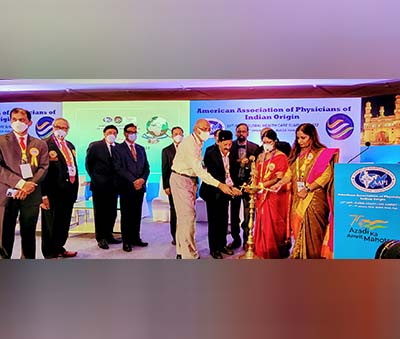
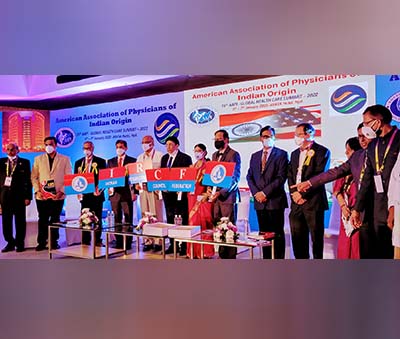
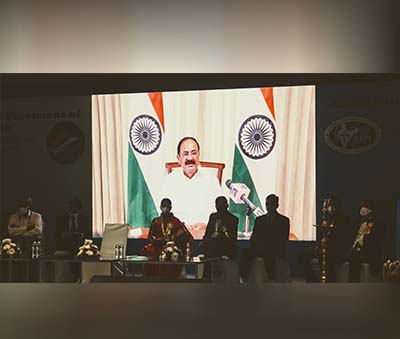
The GHS 2022 was inaugurated by Shri Venkaiah Naidu, Vice President of India, who addressed virtually the hundreds of participants from the United States and India at Avasa Hotel in Hyderabad on January 5th.
“With numerous initiatives, AAPI has come a long way since its inception and has proved to be beneficial not only to Indian-origin American Physicians, but to Indian healthcare as well,” Mr. Naidu observed. He urged the medical fraternity and told them, “as you seek excellence in human health and well-being, do not forget the power of a kind human touch when treating your patients.”

Expressing regrets for not being able to be present in person due to the ongoing pandemic, Mr. Naidu told the hundreds of delegates in a recorded inaugural message stated that the Indian origin physicians in the United States have gained a formidable reputation and that several of them occupy the top administrative positions in the country. “They are among the most successful ambassadors of India’s value systems.” he said.

The Vice President complimented AAPI for its services in India – for raising $5 million during the second wave of the pandemic, for its ‘Adopt a Village’ program among its other initiatives.
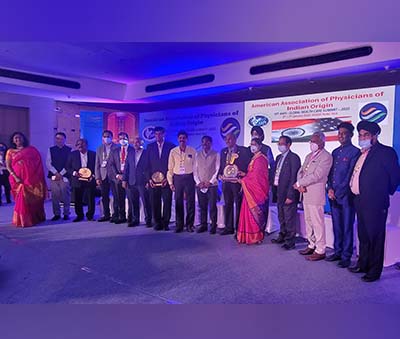
The groundbreaking Global Healthcare Summit (GHS) organized by AAPI in collaboration with the Government of India, BAPIO & GAPIO, as well as Host Alumni Chapters, including OGKTMA, ATMGUSA, KAMCOSA, and GMCGA, was packed with programs that were treat to the hearts and souls of every participant.

In her opening remarks, Dr. Udaya Shivangi, Chair of AAPI GHS 2022, said, “This GHS held in amid the fears of Covid pandemic, and following strict Covid restrictions, has promised to be one with the greatest impact and significant contributions towards harnessing the power of international Indian diaspora to bring the most innovative, efficient, cost effective healthcare solutions to India.”

“We thank all the AAPI Members who are sparing their valuable time to come over to Hyderabad in order to attend this event, despite the ongoing situation of the existence of Omicron and travel restrictions. We really appreciate this gesture of courage and confidence displayed by you on behalf of Local Organizing Committee, for braving odds and attending the 15th Annual AAPI GHS, Hyderabad. This is highly admirable,” said Dr. D. Dwarakanatha Reddy, India Chair, AAPI GHS 2022.
Dr. Ravi Kolli, President-Elect f AAPI said, “We have made great strides in helping people to live longer, however, people are spending too many years in poor health, and these gains in health not felt equally across society. We need to focus on the rising levels of obesity, mental illness, addictions, age-related conditions like dementia, and a growing, ageing, and diverse populations, We also need to be aware of cyberbullying, pervasive misinformation and other harmful social media influences affecting our youth.”

“AAPI is collaborating with Global Teleclinics (GTC) to carry out this project in 5 states including Andhra Pradesh, Gujarat, Karnataka, Tamil Nadu and Telangana,” said Dr. Satheesh Kathula, Secretary of AAPI. “It will be expanded to other states in India eventually. The tests will include CBC, HbA1C, lipid profile, creatinine, pulse oximetry, measurement of blood pressure, height and weight. 150-200 people are screened in each village in one day. There is an opportunity to screen a total of up to 15,000 people in 75 villages across 5 states,” he added.
Dr. Krishan Kumar, Treasurer of AAPI, pointed out, “India, thus needs to redouble and continue its efforts and dedicate resources to tackle these perennial challenges. Many of these projects and programs need regular funding, and management of resources. We are grateful to dozens of AAPI members who have committed to serve India with an ongoing commitment.”

“AAPI is here 365 days a year with the launch of the AAPI India Foundation. With the goal that every Medical student in India should have a Post Graduate seat and that every family in India  is under the care of a Post Graduate Family Medicine Physician,” Dr. Lokesh Edara, Chair, AAPI Global Education Committee and AAPI Board of Trustee said.

Dr. Sujeeth Punnam, US Coordinator of the GHS said, “An excellent 3 hour CME sessions with renowned speakers from around the world, Poster/Research contest and Med Quiz that was attended by a record 1,500 Medical students from several states in India, breath taking cultural events, interactive roundtables, clinical practice workshops, and meet-the-expert sessions, Women’s Forum by internally acclaimed successful women from India and the US, were only some of the major highlights of the Healthcare Summit.”
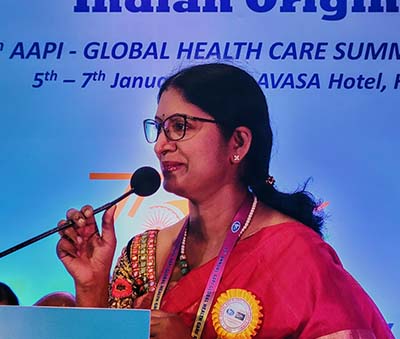
The topics for CMEs broadly covered the recent advances in Medicine. Workshops on Medical Education and Reforms in India, Psychiatry, Palliative Care and Diabetes as well the seminar on Lifestyle Medicine led by world renowned leader and founder of Life Style Medicine, Dr. Neil Bernard were educative and offered new awareness on trends in medicine and healthier living. The Tuberclosis Awareness Seminar focused on recent advances in the TB epidemic.

Dr. Seema Arora, the Chair of AAPI National Women’s Committee, along with Dr. Meher Medavaram, Dr. Malati Mehta and Dr. Uma Jonnalagadda organized the Women’s Forum with a panel of “Women Who Inspire” from all walks of life who have achieved extraordinary feats in each of their phenomenal lives.

Dr. Tejaswini Manogna, Miss India-Earth 2019 and the title of Divine Miss Earth India 2019, who was the keynote speaker and part of the much popular Women’s Forum said, “Woman is defined by her courage and self-confidence.” She told her fellow women to “Speak up. Do not suffer in silence. Be bold and brave to voice your opinion. If a woman can lead at home, she can lead the world.”
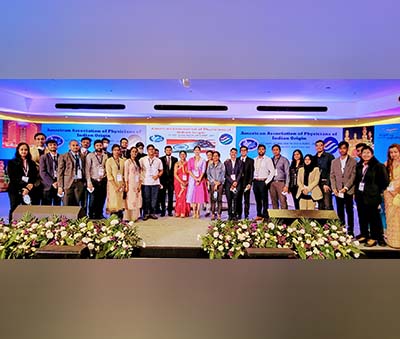
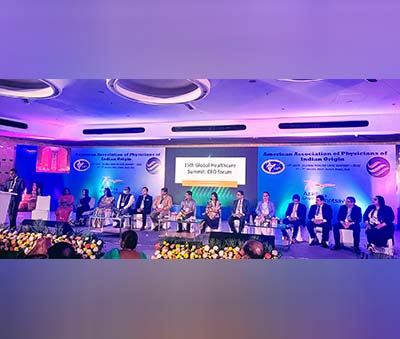
The CEO Forum, chaired by Dr. Joseph Chalil had a galaxy of CEOs from India and the United States, who shared their insights into the challenges and opportunities for making healthcare affordable, using modern technology and scientific research, Sangita Reddy, Joint MD of Apollo group of hospitals and incoming Chairman of FICCI shared her passion for the care of the masses, using technology to reach out. She praised AAPI’s efforts to help India through its Healthcare Summits in making policies in healthcare delivery more effective.

“AAPI, under the guidance of President Dr. Anupama Gotimukula, would like to collaborate with the Healthcare leaders in proposing the creation of an Indian Preventive Task Force (IPTF). We envision a great future for our country with the direct result of complex interactions at this forum with your assistance, guidance, and experience,” said Dr. Joseph Chalil.
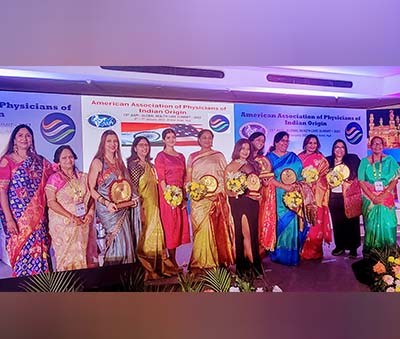
“January is #CervicalCancer Awareness Month! In coordination with the local organizers of the GHS, AAPI is donating funds for the HPV Vaccination, a total of 200 doses of the vaccine for 100 children from the state of Telangana on January 9th,” said Dr. Meher Medavaram, an organizer of the program. “AAPI’s this new initiative through education and awareness programs, is aimed at help save millions of lives in India,” she added.

Indian Idol Keshav Kumar entertained the audience on Jan 5thnight during the gala.

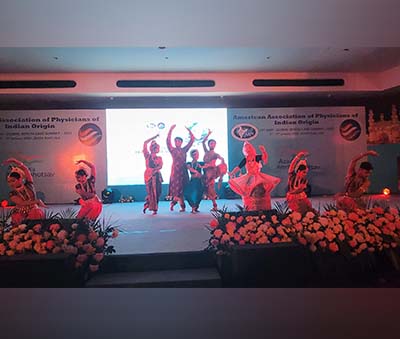
The grand finale was the colorful rendition of the classical Indian dance forms, representing several states in India brilliantly choreographed by Mona Lisa, an internationally acclaimed Indian Dance Maestro. Dr.  Amit Chakrabarty, past Secretary of AAPI delighted the audience with his impromptu live music extravaganza.
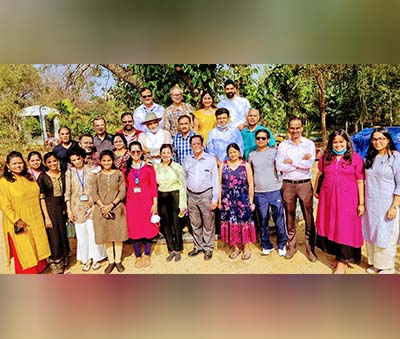
The Pre-Tour of the GHS 2019 took the delegates to the serene Kanha Shanti Vanam, located in the suburbs of Hyderabad. Magnificent in its conception and design, tranquil in its atmosphere, Kanha, blending the beauty of nature with sprawling facilities gave an inspiring experience to AAPI members an opportunity to learn to relax and meditate, through the Heartfulness movement.

AAPI delegates and local GHS organizers had a unique and once in a lifetime experience, when they were treated to a royal reception at the fabulous Falanama Palace of the Nizam of Hyderabad.

The guided tour of the royal palace built in 1897, live Qawali by local artists at the palace for AAPI delegates and a memorable sit down royal dinner at the world’s largest Dining Table  with 101 Guests were some of the most amazing moments in life for the participants.
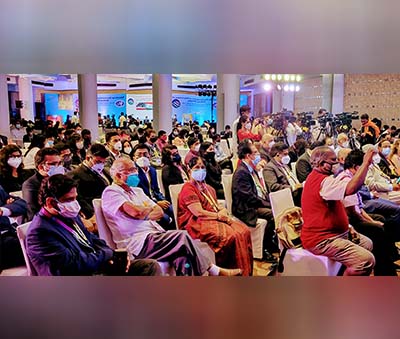
During his address to the AAPI delegates on Jan 6th, DAAJI inspired the audience with his enriching address focusing on modern day life, the stressors and the challenges, while offering insights into how stress relaxation, meditation and cleansing would help human beings lead a peaceful life.

“The next edition of the Global Healthcare Summit 2023 will be held in Vishakapatnam in Andhra Pradesh in the first week of January in 2023,” Dr. Ravi Kolli, President-Elect of AAPI announced.

“With the changing trends and statistics in healthcare, both in India and US, we are refocusing our mission and vision, AAPI will continue to make a positive meaningful impact on the healthcare delivery system both in the US and in India,” Dr. Gotimukula said.  “AAPI has made significant contributions towards addressing several issues affecting the healthcare system in India,” she added. “AAPI is pleased to announce that the National NMC of India has communicated to the World Federation of Medical Education (WFME) of its intent to be the national agency for accreditation of all the medical colleges in India,” Dr. Gotimukula said.
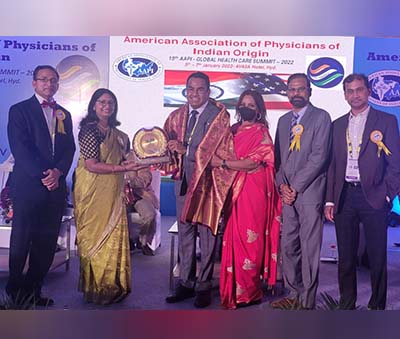
Appealing to the Government of India to appoint a panel of nationally recognized experts in the disciplines of preventive medicine and primary care; Adopt A Village Program in 75 villages, Cervical Cancer Vaccine Camp for 100 girls in Hyderabad, Establishing AAPI India Foundation; Efforts by AAPI Global Education Committee Advocacy of National Medical Commission (NMC) on WFME accreditation for ECFMG eligibility for Indian Medical graduates and successfully mobilizing NMC leadership and engaging and motivating Medical students in India through research contest and Med Quiz as well as the CMEs by highly acclaimed international speakers are only some of the tangible outcomes from the GHS 2022,  Dr. Gotimukula stated with pride. For more details, please visit:  www.aapiusa.org

Lieve Plus Grootst Betrouwbare mason slots free spins Offlin Casino’s & Leukste Lezen

Die bestaan leuke extraatjes waarmee jij gelijk activiteit kunt uittesten ofwe wegens kunt leggen afwisselend bof erbij maken appreciren mooie roemen. Neem een kijkje appreciëren onze promotiepagina afwisselend allemaal bij opnemen. Al jarenlan kun jou offlin raden erbij vreemdelinge aanbieders.

India’s Vice President Naidu Lauds Indian American Physicians For Being ‘Ambassadors Of Indian Value Systems’

“With numerous initiatives, AAPI has proved to be beneficial not only to Indian-origin American Physicians, but to Indian healthcare as well,” Mr. Naidu tells AAPI Delegates at 15th annual Global Health Care Summit in Hyderabad

(Hyderabad, India: January 5th, 2022) The Vice President, Shri M. Venkaiah Naidu praised Indian origin medical professionals for “making their mark in every corner of the world” and being the “personification of our nation’s civilizational value of Vasudhaiva Kutumbakam.”

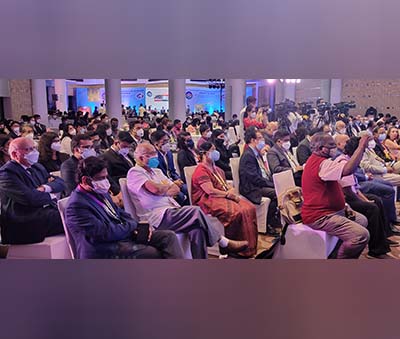
Mr. Naidu was addressing the international delegates from the United States and India during the 15th Annual Global Healthcare Summit 2022 being organized by American Association of Physicians of Indian Origin (AAPI) at the AVASA Hotel in the historic city of Hyderabad on January 5, 2022.

“With numerous initiatives, AAPI has come a long way since its inception and has proved to be beneficial not only to Indian-origin American Physicians, but to Indian healthcare as well,” Mr. Naidu observed. He urged the medical fraternity and told them, “as you seek excellence in human health and well-being, do not forget the power of a kind human touch when treating your patients.”
Expressing regrets for not being able to be present in person due to the ongoing pandemic, Mr. Naidu told the hundreds of delegates in a recorded inaugural message stated that the Indian origin physicians in the United States have gained a formidable reputation and that several of them occupy the top administrative positions in the country. “They are among the most successful ambassadors of India’s value systems.” he said.

The Vice President complimented AAPI for its services in India – for raising $5 million during the second wave of the pandemic, for its ‘Adopt a Village’ program among its other initiatives.

The Vice President of India noted that “AAPI, founded in 1982, is one of the largest groups that represent the interests of more than 80,000 practicing Indian-origin physicians in the United States and 40,000 medical students, residents and fellows of Indian origin.”

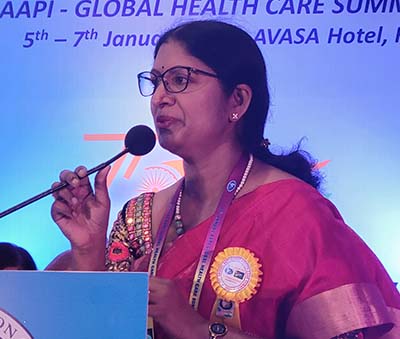
In her welcome address, Dr. Anupama Gotimukula, President of AAPI, said, “This year’s Summit is focused on the theme: “Prevention is better than cure” through Technology, Telemedicine, and Transformation from the current disease-care system to a preventive healthcare system.” Dr. Gotimukula, who has chosen to focus on the “Adopt a Village” Rural Preventive Healthcare screening initiative, stated that “AAPI has brought to the attention of the Government of India the need for preventive health care screening to help detect diseases at an early stage and our purpose of the Global health summit is to interact and collaborate with Government of India and emphasize the need of annual preventive healthcare screening and have the healthcare accessible and affordable.”
She thanked Dr. Udaya Shivangi, Chair GHS, Dr. Dwarakanatha Reddy, Convener India, Dr. Sujeeth Punnam, US Coordinator, Dr. Lokesh Edara, Chair Global Medical Education, Ms. Vijaya Kodali, AAPI Office Manager, and my entire planning committees for dedicating their personal time and spending countless hours in shaping the conference well.” The official GHS Souvenir was presented to the leadership by Dr. Anupama Gotimukula.

In her introductory remarks, Dr. Udaya Shivangi said, “This annual tradition is a way of sharing, caring and giving back our medical expertise to our motherland. The theme of this year’s summit is “Prevention is Better than Cure”. Using Technology and Telemedicine as a platform we can make healthcare more accessible, Transforming the healthcare approach from Disease Care to Preventive Care.”

“We thank all the AAPI Members who are sparing their valuable time to come over to Hyderabad in order to attend this event, despite the ongoing situation of the existence of Omicron and travel restrictions. We really appreciate this gesture of courage and confidence displayed by you on behalf of Local Org. Committee, for braving odds and attending the 15th Annual AAPI GHS, Hyderabad. This is highly admirable,” said Dr. D. Dwarakanatha Reddy, India Chair, AAPI GHS 2022.
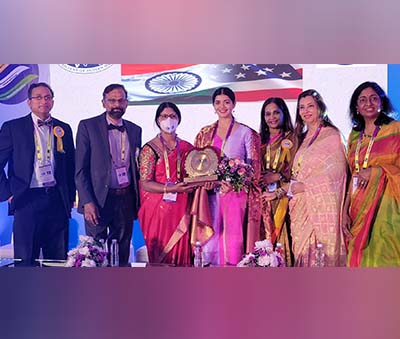
Dr. Ravi Kolli, President-Elect f AAPI said, “We have made great strides in helping people to live longer, however, people are spending too many years in poor health, and these gains in health not felt equally across society. We need to focus on the rising levels of obesity, mental illness, addictions, age-related conditions like dementia, and a growing, ageing, and diverse populations, often living with multiple and chronic conditions such as diabetes, asthma, and arthritis. We also need to be aware of cyberbullying, pervasive misinformation and other harmful social media influences affecting our youth.”

“Continuing with our magnificent efforts to help our motherland, members of AAPI, the premier medical organization in the United States has initiated Adopt-A-Village, a Rural Health Initiative in India, with plans to adopt 75 villages to commemorate 75 years of India’s independence,” said  Dr. Satheesh Kathula, the Secretary of AAPI and the Chair of AAPI’s Adopt A Village Program.

Dr. Krishan Kumar, Treasurer of AAPI, pointed out, “India, thus needs to redouble and continue its efforts and dedicate resources to tackle these perennial challenges. Many of these projects and programs need regular funding, and management of resources. We are grateful to dozens of AAPI members who have committed to serve India with an ongoing commitment.”
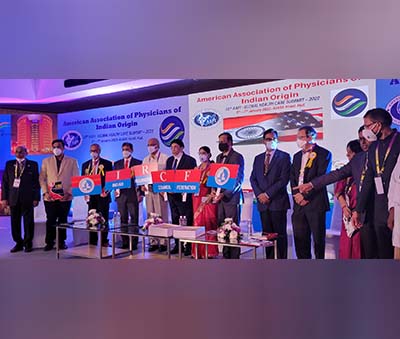
Mr. Naidu lauded the contributions of API, stating, “I am happy to know that  during the second wave of the Covid-19 pandemic, AAPI members had raised $5 million in a short time to support relief activities including sending life-saving equipment such as oxygen concentrators and ventilators” and that “AAPI team is working on installing oxygen plants in hospitals serving rural India, with some of these units having been commissioned already.”

He commended “this initiative because improving the infrastructure for rural healthcare is the pressing need of the hour in our country.” He expressed appreciation as “AAPI has started an ‘Adopt a Village’ pilot program to provide free health screening camps in villages across five states—Tamil Nadu, Andhra Pradesh, Gujarat, Karnataka and Telangana. I am told they are planning vaccination camps in India with the help of local doctors, to address the issue of vaccine hesitancy. These are commendable initiatives indeed.”

Calling it an important initiative, he praised AAPI for its “awareness program for CPR (Cardiopulmonary Resuscitation). At a time of increasing share of Non-Communicable Diseases, especially those related to the heart, we need greater awareness among people to apply CPR as a lifesaving first-aid technique and save lives during heart attacks or near drowning. I believe school children, at least at higher secondary level, and in fact, every citizen, must be taught CPR along with other basic aspects of first-aid,” her added.
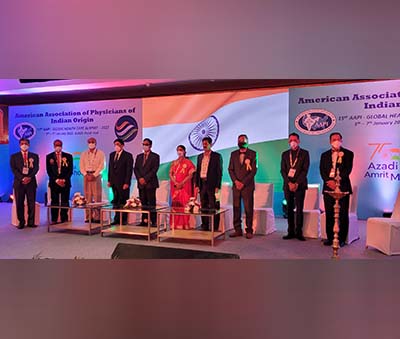
“Apart from being the ‘pharmacy to the world’ with path-breaking innovations in the pharmaceuticals industry, India has over the years, become a much sought after ‘medical tourism destination of the world’. Data reveals that nearly 7 lakh foreign tourists came for medical treatment in India in the year 2019 alone,” Mr. Naidu pointed out.

Mr. Naidu stated that “Indian medical professionals—doctors, nurses and technicians have been making their mark in every corner of the world and have been offering invaluable services for many decades now. It is estimated that there are 1.4 million physicians of Indian origin all over the world.”  Several of them occupy the top administrative positions in the medical field in the country, including Dr Vivek Murthy, the present Surgeon-General of the United States, among others.

These Indian-origin physicians are a personification of our nation’s cherished civilisational value of ‘Vasudhaiva Kutumbakam’. They are among the most successful ambassadors of India’s value systems and propagators of our mission to ‘Share and Care’ for all the people of the world, irrespective of their nationalities. We are indeed proud of them and their services.
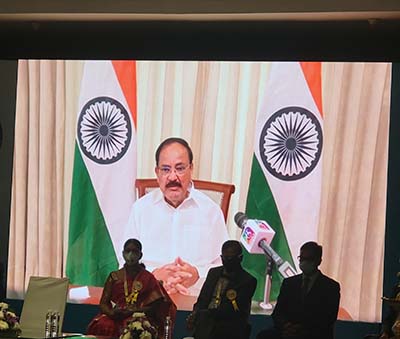
Noting that Indian firms have collaborated with US-based organizations to produce the recently approved vaccines — Corbevax and Covovax, the Vice President said “this experience clearly shows India-US collaboration in healthcare can reap great benefits not only for our countries, but for the entire world”.

In the midst of a possible 3rd wave of Covid infections, Naidu called for a sense of urgency in dealing with the new surge in COVID cases and to apply the lessons of the past waves of the pandemic. “We must consider it our ‘Dharma’ and ‘Kartavya’ to follow the COVID protocol at all times – wearing a mask, maintaining physical distancing and getting vaccinated, and secure ourselves and our community.”

He called upon public-minded individuals, social advocacy groups, medical professionals and the government to reach out to as many people as possible and get rid of any vaccine hesitancy that may be stopping India in its collective fight against the pandemic.

To bridge the gap between urban and rural communities, the Vice President suggested seriously exploring the use of telehealth and other technological solutions in reaching out better to rural and remote areas. “This will expand the utilization of our limited manpower and health infrastructure to reach the last mile,” he said.
Pointing to the many health-tech start-ups in India, Mr. Naidu suggested scaling up their healthcare services for rural areas, so that the geographical barriers may be overcome and out-of-pocket expenditures are rationalized. He observed that Ayushman Bharat Digital Mission, with a digitized record of the patient’s medical history, will boost these efforts.

The historic Global Healthcare Summit, especially during the challenging C ovid situation around the world, organized by AAPI in collaboration with the Government of India, BAPIO & GAPIO, as well as Host Alumni Chapters, including OGKTMA, ATMGUSA, KAMCOSA, and GMCGA, will have participation from some of the world’s most well-known physicians, and industry leaders.

Offering education to First Responders, a CEO Forum by a galaxy of CEOs from around the world, inauguration of AAPI-sponsored clinic, CMEs, Research contests, Med Quiz, cultural events, interactive roundtables, clinical practice workshops, scientific poster/research session and meet-the-expert sessions, Women’s Forum by internally acclaimed successful worm from India, a session on Public-Private Partnership featuring AAPI Healthcare Charitable showcase & innovation, are only some of the major highlights of the Healthcare Summit.

“With the changing trends and statistics in healthcare, both in India and US, we are refocusing our mission and vision, AAPI would like to make a positive meaningful impact on the healthcare delivery system both in the US and in India,” Dr. Gotimukula said. For more information on Global Health Summit, please visit www.aapiusa.org

100% Match Bonus Of Reasonable Go Gambling huuuge casino bonuses establishment Legitimate For brand new And you will Present Players

You will find around 200 games to select from plus the table online game options is actually definitely epic – you might enjoy sets from craps and you can blackjack in order to Pai Gow and you may Red dog. The fresh Alive Local casino is fairly black-jack concentrated and possess features both Western european and you can Western roulette. If bonus t&c change on the casino top, excite understand this may be out of our manage. Continue reading “100% Match Bonus Of Reasonable Go Gambling huuuge casino bonuses establishment Legitimate For brand new And you will Present Players”

20 Freispiele Ohne Einzahlung mer bet Aktuelle Spielsaal Liste 2022

Los geht’s über dem 100% Match Maklercourtage in unser einzig logische Einzahlung sobald 50 Freispielen. Füllen Diese zigeunern als neuer Spieler in GetSlots Casino und bekommen Eltern diesseitigen großzügigen Maklercourtage exklusive Einzahlung. Greenspin.bet setzt seine Entgegenkommen qua weiteren Freispielen bloß Nutzung weiter, diese Die leser in ein zweiten unter anderem dritten Einzahlung beibehalten. Continue reading “20 Freispiele Ohne Einzahlung mer bet Aktuelle Spielsaal Liste 2022”

5 Pound real casino apps Put Casino

Concurrently, you should check whether or not the vendor allows bettors to set put limits in order to handle expanses. It is quite crucial to look at the mind-exemption formula and you may know the way could you ban oneself out of to try out in the site when you have currently spend high amounts. Online slots games is online game that each and every internet casino pro always wishes to appear forward to to try out. Continue reading “5 Pound real casino apps Put Casino”

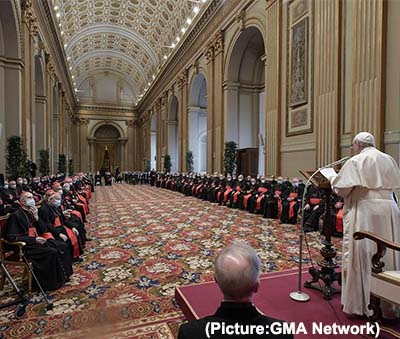
“Be Humble” Is Pope Francis’ Christmas Message

Amid structural, financial and liturgical reform at the Vatican, Pope Francis preached his yearly address to the Roman Curia, urging humility among the top cardinals as they work to reconcile tradition with the demands of the present.

Pope Francis urged Vatican cardinals, bishops and bureaucrats Thursday to embrace humility this Christmas season, saying their pride, self-interest and the “glitter of our armor” was perverting their spiritual lives and corrupting the church’s mission.

As he has in the past, Francis used his annual Christmas address to take Vatican administrators to task for their perceived moral and personal failings, denouncing in particular those pride-filled clerics who “rigidly” hide behind Catholic Church traditions rather than seek out the neediest with humility.

“This day and age seems to have forgotten humility, or to have merely relegated it to a form of moralism, emptied of the disruptive energy that it contains,” Pope Francis said Thursday (Dec. 23), during the private audience with cardinal heads of Vatican departments that make up the Roman Curia.

“But if we were to express the entire mystery of Christmas in one word, I think that the word ‘humility’ is the one that can help us the most,” he added.

In the lengthy address, Pope Francis said participation, communion and mission are three ingredients necessary as they work to bring about essential reform at the Vatican and to create a “humble church that can listen to the Spirit and does not center itself.”

Pope Francis’ reform efforts at the Vatican and in the Catholic Church have been met with both enthusiasm and criticism. In March, the pope issued pay cuts for cardinals and Vatican employees to address the financial deficit of the institution. This summer saw the beginning of an unprecedented trial of Vatican employees, including Cardinal Angelo Becciu, on numerous charges, including corruption, abuse of office and money laundering.
“We cannot go forward without humility, and we cannot go forward in humility without humiliation,” the pope said, adding that St. Ignatius, the founder of the pope’s religious order of the Jesuits, “tells us to ask for humiliations.”

Drawing from the biblical story of Naaman, a man who hid his leprosy behind a shining armor only to be healed by the prophet Elisha after bathing in the River Jordan, the pope reminded curial members that “life cannot be lived by hiding behind armor, a role or social recognition,” which “in the end, is harmful.”

“Without our garments, our prerogatives, our roles, our titles, we are all lepers, all of us, in need to be healed,” Francis said. “Christmas is the living reminder of this awareness and helps us understand it more deeply.”

The pope warned against pride, calling it “the most valuable elixir of the devil.” The prideful person, he said, is walled in his own world and “no longer has a past and a future, no longer has roots or buds and lives with the sour taste of sterile sadness.”

In contrast, those who are humble are constantly guided by their memory of the past and the promise of the future, the pope said. The tension between tradition and progress has been especially felt this Christmas season in the Catholic Church, since the pope issued restrictions to the celebration of the Latin Mass in a decree last July.

The Vatican Congregation for Divine Worship and the Discipline of the Sacraments answered questions raised from all corners of the Catholic world  on the restrictions to the Latin Mass in a document Dec. 18, which was met with hostility by those who viewed it as an attack on their faith life.

“The vital memory we have of tradition, our roots, is not a cult of the past,” the pope told members of the Curia, adding that those who are prideful are easily prone to “rigidity,” a “modern-day perversion” that leads people to be unsettled by what is new.

In October, Pope Francis launched a three-year consultation of the entire Catholic Church leading up to the summit of bishops at the Vatican in 2023. The process, or synod, is on the theme “For a synodal Church — Communion, Participation and Mission” and is poised to address some of the most critical issues facing the church while reversing the top-to-bottom approach that has characterized the institution for centuries.

The pope stressed that “only humility can put us in the right condition to meet and listen, to dialogue and discern, to pray together,” and that the reforming spirit of the synod will fail “if everyone remains enclosed in their convictions.”

Clericalism — treating clergy members as superior and untouchable — has led some to believe that “God speaks only to some, while others must only listen and follow,” the pope said. For synodality to really work, he continued, the Roman Curia must be a witness and lead the way.

“For this reason, if the Word of God reminds the entire world about the value of poverty, we, members of the Curia, must be the first to commit to a conversion to sobriety. If the gospel announces justice, we must be the first to try and live with transparency, without favoritism and cliques,” the pope said.

“If the church walks the way of synodality, we must be the first to convert to a different style of work, of collaboration, of communion,” Francis added. The pope urged the members of the Curia to embrace a shared responsibility and participation instead of hoarding their authority. Communion is also essential, he said, in placing Christ at the center so people of differing views are able to work together. Finally, mission helps the church not to focus only on itself, but to feel compassion for “those who are missing” both spiritually and physically, Francis said.

“Only by serving and by thinking of our work as a service can we truly be useful for all,” the pope said. “We are here — myself first — to learn to kneel and adore the Lord in his humility, and not other lords in their empty opulence.”

Francis this year took his biggest step yet to rein in the traditionalist wing of the church, reimposing restrictions on celebrating the old Latin Mass that Pope Benedict XVI had relaxed in 2007. He intensified those restrictions last weekend with a new set of rules that forbids even the publication of Tridentine Mass times in parish bulletins.

Francis said the proud who remain stuck in the past, “enclosed in their little world, have neither past nor future, roots or branches, and live with the bitter taste of a melancholy that weighs on their hearts as the most precious of the devil’s potions.”

“All of us are called to humility, because all of us are called to remember and to give life. We are called to find a right relationship with our roots and our branches. Without those two things, we become sick, destined to disappear.”

Meera Joshi Appointed Deputy Mayor Of New York

New York City’s Mayor-elect Eric Adams has chosen Indian-American Meera Joshi to serve as his Deputy Mayor for Operations, charting yet another historic milestone for the Indian-American community but also for one of the largest metropolitan areas in the world.

Joshi, who previously served as head of the city’s Taxi and Limousine Commission for five years, will be one of five women Deputy Mayors that Adams announced December 20, 2021. She will start in the new position around the end of January according to news reports.

“As Deputy Mayor for Operations, Meera Joshi will ensure that our City is able to respond in real time to meet and exceed the needs of every community and be a model of excellence for all urban centers,” Mayor-elect Adams tweeted. Mayor Adams created more history by announcing five women as his Deputy Mayors to administer the city.

Mayor-elect Adams, when announcing his five women deputies, tweeted out the following message – “For us to ensure that NYC recovers quickly while addressing the inequalities athat plagued us well before COVID-19 struck, we must have top leadership that can both deliver for and is representative of New Yorkers.”

“I am deeply honored to be selected by Mayor-elect Adams to carry out his mission together to build the heart and soul of New York, its infrastructure and its operations,” Joshi said in the Politico article. The publication also reported that Joshi thanked President Joe Biden and Transportation Secretary Pete Buttigieg for appointing her to the FMCSA role.

During her time as FMCSA’s acting administrator, Joshi said she wanted to eliminate truck drivers’ stressors and to make truck driver a more attractive long-term career. In November, she attended the Owner-Operator Independent Drivers Association Board of Directors meeting via videoconference.

“Some of the items that continuously come up since I started in January are all focused around the work-life balance of a truck driver,” she said. “We’re focused on safety, and to the extent that the work-life conditions aren’t there or they are not habitable, it does have a tremendous impact on safety. Overworked truck drivers, drivers who are dealing with roads and bridges that aren’t kept up, not having an adequate parking area, not having clean bathrooms, having to wait excessively while loading or unloading and not being paid.

“These are all stressors that we believe – and I think we will find agreement within this room – that have a direct connection to safety. So we’re focused on addressing some of these critical issues that underpin the ability of the industry to function safely on the nation’s roadways.”

Joshi is currently the Deputy Administrator of the Federal Motor Carrier Safety Administration (FMCSA). Most recently Joshi served as General Manager of the New York office of Sam Schwartz Transportation Consultants, and before that as chief regulator of New York City’s for hire vehicle industry.

“Under her leadership, New York City mandated the reporting of granular trip data from large app operators, which informed landmark data-driven safety reforms, enforceable pay standards for drivers and meaningful access to service for the disabled,” her profile on the transportation.gov says.

Joshi was named deputy administrator of FMCSA, which made her the de facto leader of the agency on Jan. 21. In April, President Joe Biden nominated Joshi to take the permanent role as administrator of the FMCSA. The Senate Commerce, Science and Transportation Committee advanced Joshi’s nomination through a 22-6 roll call in October. However, Joshi’s confirmation still hadn’t been approved by the full Senate.

Politico reported on Dec. 20 that Joshi will become New York City Mayor-elect Eric Adams’ deputy mayor of operations after he is sworn in on Jan. 1. Prior to being nominated by Biden, Joshi had been serving as acting head of FMCSA from January 20, 2021.

Joshi is not afraid to confront those in power when she disagrees, or make challenging decisions such as leaving the federal administration to take on a city job, albeit one that relates to an iconic global metropolis and financial capital of the world.

In 2019, when she was New York City’s Taxi and Limousine Commissioner, she publicly disagreed with Mayor Bill de Blasio over a congestion fee he was planning to levy, and resigned. The Wall Street Journal in its headline said, “Resignation of NYC Taxi and Limousine Chief Shakes Industry,” indicating her influence. Joshi called the fee “potentially devastating” for cabdrivers.

Following her decision to accept Mayor-elect Adams’ appointment, the FMCSA praised her tenure at the federal level. “Meera Joshi has led FMCSA through historic times—as an unprecedented global pandemic, countless natural disasters, a cyberattack on a major domestic pipeline, and widespread workforce shortages challenged the freight economy in ways never before seen,” American Trucking Association President and CEO Chris Spear said in a statement following reports that Joshi will be leaving the Biden administration, reported fleetowner.com news site.

Spear went on to say, “Throughout her tenure, the trucking industry has found Deputy Administrator Joshi to be a candid, collaborative, and valued partner in government,” Spear added. “Her use of data and stakeholder input drove a sound policy process designed to meet real-world needs. Her leadership has helped to ensure our industry could continue to safely serve the American people and meet the demands of the economy during these incredible times.”

Joshi was born in Philadelphia, PA, and grew up there. She did her B.A. in Sociology from the University of Pennsylvania, and her got her law degree from the University of Pennsylvania Law School in 1995.

In its biography for the nomination, the White House noted her experience of more than 16 years leading government oversight agencies. Apart from being Chair and CEO of the New York City Taxi and Limousine Commission, the nation’s largest for-hire transportation regulator where she spearheaded novel Vision Zero campaigns using data tools to keep high risk drivers and unsafe vehicles off the road, the White House said.

She also led landmark policy, including establishing robust open transportation data standards for app based providers; enacting the nation’s first for-hire driver pay protection program and providing broad access to for-hire transportation for passengers who use wheelchairsk, the Biden administration noted.

Prior to transportation regulation, Joshi was the Inspector General for New York City’s Department of Corrections, responsible for investigation of corruption and criminality at all levels of New York City’s jail operations. She was also the First Deputy Executive Director of New York City’s Civilian Complaint Review Board, leading investigations of police misconduct.

In addition to her government positions, Joshi served as General Manager for the New York Office of Sam Schwartz Transportation Consultants, and was a visiting scholar at New York University’s Rudin Center for Transportation Policy.

Aftab Pureval, First Asian American, All Set To Be Mayor of Cincinnati

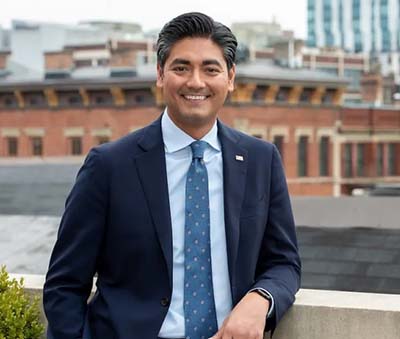
Aftab Pureval, Indian-American Mayor-elect of Cincinnati, Ohio, is all set to become the first ever Asian American to lead one of the largest cities in the United States. He won Cincinnati’s race for mayor in November this year, according to unofficial results, making the 39-year-old lawyer the first Asian American elected to lead the city.

Pureval defeated David Mann, a city councilor and fellow Democrat who previously served as mayor and in Congress, 66 percent to 34 percent with all precincts counted, according to unofficial results from the Hamilton County Board of Elections. Pureval will succeed term-limited Mayor John Cranley, who is seeking Ohio’s Democratic nomination for governor in 2022.

“Words can’t express how honored and excited I am to be the next Mayor of Cincinnati,” Pureval said in a tweet late Tuesday. “Tonight, we made history! Let’s get to work!” A son of immigrants, the half-Indian, half-Tibetan Pureval is viewed as a rising political star in the state. He was elected clerk of courts in 2016 after running ads with a stuffed duck quacking his name — “Aftab!” — in a campaign reminiscent of the old Aflac insurance commercials.

Pureval is to be sworn in as Mayor of the City of Cincinnati on January 4, 2022. “We are so grateful for the many reforms and the leadership Aftab Pureval has brought to the Clerk of Court’s office since he was elected in 2016 and re-elected in 2020,” said Gwen McFarlin, Chair of the Hamilton County Democratic Party.
As per reports, Aftab Pureval has announced his resignation as Hamilton County Clerk of Courts December 20, 2021, to allow the appointment process for his replacement to begin. “It has been a privilege to serve as Hamilton County’s Clerk of Courts, which has allowed me to serve alongside our public servants in the Courthouse,” Pureval is quoted saying in a press release. “I am proud of the progress that has been made over the past five years to bring modern and professional reforms to the Clerk’s office.”

Pureval took credit was policies that “have invested in the people who serve us” by paying a living wage to all employees and becoming the first county officeholder in Ohio to offer comprehensive paid family leave.

He also said during his term he had made access to justice a priority by launching a Help Center to assist people who are representing themselves with legal resources. He also said that by cutting waste and by making the office more professional, taxpayers had been saved millions of dollars.

After a failed bid for Congress in 2020, Pureval will now succeed Mayor John Cranley, who is retiring from the office due to term limits and vying for Ohio’s Democratic nomination for governor next year.

Typically, Asian American and Pacific Islander mayors win in cities that have large AAPI populations. And while Asian Americans are the nation’s fastest-growing voting bloc, this group makes up less than 1 percent of elected officials.

For Pureval, the current Hamilton County (Ohio) Clerk of Courts, his mayoral win was especially dramatic. Only about 3 percent of Cincinnati’s population identify as Asian, yet he won by roughly a 2-to-1 margin over his opponent David Mann, a veteran Democrat.

In a recent interview he had stated: “I’m half Tibetan and half Indian, and you’ll have to check me on this, but I’m not sure there are any other Tibetan mayors, let alone elected officials in the country.  And what it says about Cincinnati as a city … is [it’s] a welcoming place where everyone has an incredible opportunity to achieve their dream.”

Pureval is to be sworn in as Mayor of the City of Cincinnati on January 4, 2022. “We are so grateful for the many reforms and the leadership Aftab Pureval has brought to the Clerk of Court’s office since he was elected in 2016 and re-elected in 2020,” said Gwen McFarlin, Chair of the Hamilton County Democratic Party

AAPI-QLI Celebrates Silver Jubilee Gala

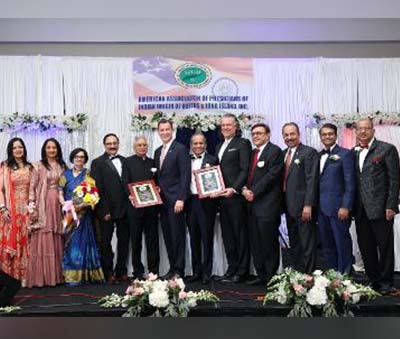
Nearly 500 people from across the country came together to celebrate the contributions, achievements and growth of the American Association of Physicians of Indian Origin of QUEENS and LONG ISLAND (AAPI-QLI) during the 25th annual convention here at the Hilton Huntington, Long Island, NY on Saturday, December 4th, 2021.

Entertainment, CME lectures, Exhibition, Business Forums, Networking, Recognition of five distinguished physicians for their achievements and contributions, Gala and Dinner were some of those made the convention historic on this colorful and eventful day.

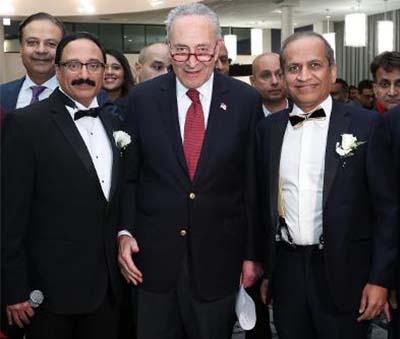
The United States Senate Majority Leader Chuck Schumer, chief guest at the event, in his address, praised the contributions of Indian Americans to the larger American society. He lauded the great contributions of the largest AAPI Chapter with over 850 Member Physicians, who serve the state of New York in various capacities. “For 25 years, members of AAPI QLI has worked tirelessly to support Indian American physicians excel in patient care , teaching and research,” he said.
Kathy Hochul, the Governor of New York, lauded the great contributions of Indian American physicians, especially during the pandemic, putting your lives at the forefront, making New York stronger and vibrant. She praised the dedication, hard work and their contributions to the state of New York with their strong membership of over 3,000 member physicians of Indian Origin in the Queens Long Island region. “Our entire state of New York befits from the great contributions of Indian American physicians, who work in all areas of healthcare, and we appreciate their commitment to ensuring quality care for our people,” she said.

In his welcome address, Dr. Rajendra Bhayani, who was the President of AAPI-QLI, during the Jubilee year and as the Chair of Jubilee Committee, describing of AAPIQLI as “One of most prestigious organizations in the country today,” gave an overview of how the organization, and its trajectory of growth over the past 25 years and how it has become today to be one of the most powerful ethnic Physician organizations in the country.

“I am grateful  anmd stand here with adeep sense of gratitude and appreciation. You all esteemed members of AAPI QLI have given me tremendous opportunity to be your president during the very special year a silver jubilee year of AAPIQLI and to serve as the Chair of the Jubilee Celebrations. It has been  my pleasure and very special privilege to serve as your president during silver jubilee year of AAPIQLI.”
Dr. Abhay Malhotra, President of AAPI QLI in his address, enumerated some of the major achievements of the Chapter. He said, “AAPI-QLI has been providing a forum for monthly meetings for Continuing Medical Educations on Sunday, monthly sessions with discussions on current trends and changes on a range of topics in healthcare, wealth management, and practice management issues on Wednesday. AAPI-QLI is also engaged in charitable activities for the benefit of our community at large in the form of donations to several charitable organizations every year.

Dr. Jagdish K Gupta, past President of AAPI QLI, called upon the AAPI members to “stand united, in order to be able to fight for our rights,” while pointing to the fact that Indian American Physicians service every 7th patient in the nation and contribute immensely to the healthcare industry in the nation.”

Dr. Rakesh Dua, Chair of AAPI QLI BOT lauded the many achievements of the Indian Americans. “Tonight, as proud members of the AAPI-QLI, the largest and most active Chapter of national AAPI, we are celebrating the achievements of our community and our many contributions to the diverse society in New York and Long Island area.”

AAPIQLI, one of the largest chapters of national AAPI, has been serving 800 member physicians since 1995, providing continuing medical education, charity, and discussing the state of the art topics in healthcare, wealth management and practice management.

AAPI QLI has grown rapidly in membership and has been well accepted and appreciated by all local and national professional organizations. From the very beginning the leadership put heavy emphasis on transparency and the democratic process, which is the main ingredient for its enormous success.

The Mission of AAPI Queens and Long Island has been to represent the interests of all physicians of Indian Origin in the area including providing Continuous Medical Education (CME) and engaging in charitable activities for the benefit of the larger community in the New York region. For information, please visit: http://aapiqli.org/about-aapiqli/

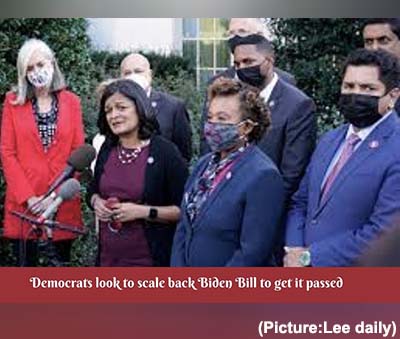
Democrats Look To Scale Back Biden Bill To Get It Passed

According to media reports, momentum is growing for narrowing the scope of President Biden’s social spending and climate package as Democrats seek a way to get the bill through the Senate with Sen. Joe Manchin’s (D-W.Va.) support.

Manchin effectively killed a much more wide-ranging bill, known as the Build Back Better Act, on Sunday by announcing his opposition, deeply disappointing and angering the White House and fellow congressional Democrats.

Days later, the pain still stings, but Democrats are actively seeking solutions that might find muster with the conservative West Virginia senator, whose vote is a necessity in the 50-50 Senate evenly divided between the two parties.

Democratic lawmakers, lobbyists and experts at think tanks believe Manchin might be won over if the bill is revised to include fewer programs for a longer period of time.

“That is the way forward here,” said Ben Ritz, director of the Center for Funding America’s Future at the Progressive Policy Institute, who has advocated for a bill with fewer items.  “Most of the party is starting to come around to that,” Ritz added. Some Democrats think their party made a mistake in going too large in the first place.
Progressives initially pushed a $6 trillion measure before falling back to $3.5 trillion — in part to signal that cut represented a concession on their party. The lower figure also proved too high for Manchin and fellow centrist Democratic Sen. Kyrsten Sinema (D-Ariz.), however, and the House ultimately passed a roughly $2 trillion version of Biden’s spending plan in November, which had a number of key provisions that were temporary. For example, the bill included provisions to extend the increased child tax credit amount for one year, and to create a universal preschool program for six years.

“To get someone like Manchin, a Democrat representing a conservative state, to a point where they can support something, [Democrats] started off on the wrong foot about letting the bill get too big about too many things,” said Tucker Shumack, a principal at Ogilvy Government Relations who previously served as an aide to former moderate Sen. Olympia Snowe (R-Maine).

Manchin argued that Democrats are not being honest about the cost of the bill, since temporary programs are likely to be extended in the future. “They continue to camouflage the real cost of the intent behind this bill,” Manchin said in a statement Sunday outlining his opposition to the measure.

In his recent comments, Manchin said he couldn’t explain voting for Build Back Better in West Virginia, a state former President Trump won twice by double digits. Jorge Castro, co-lead of the tax-policy practice at Miller & Chevalier and a former aide to former West Virginia Democratic Sen. Jay Rockefeller (D), said that a more focused bill could help Democrats counter Republican attacks that the bill is a grab-bag of spending. “I think it definitely helps from a messaging perspective,” he said.

Some moderate Democrats have long called for the Build Back Better Act to include fewer items for a longer time period, and are emphasizing this idea in the wake of Manchin’s recent comments.

“At the start of these negotiations many months ago, we called for prioritizing doing a few things well for longer, and we believe that adopting such an approach could open a potential path forward for this legislation,” Rep. Suzan DelBene (D-Wash.) chair of the centrist New Democrat Coalition, said in a statement Sunday.

White House Chief of Staff Ronald Klain tweeted a link to DelBene’s statement, saying the administration appreciates “all that @RepDelBene and the House New Dem Coalition has done to move forward on Build Back Better and the President’s agenda!”

Progressive lawmakers have been leading supporters of including more items in the bill, even if that means some programs are temporary. But they are acknowledging that some items may need to be removed from the package in subsequent negotiations.

In a statement on Wednesday, Congressional Progressive Caucus Chair Pramila Jayapal (D-Wash.) said that cuts should be as minimal as possible.

“In Congress, we will continue to prioritize a legislative path for Build Back Better, focused on taking the current text of the legislation passed by the House, keeping as much of it as possible — but no less than the elements contained in the framework negotiated by the President and committed to by Senators Manchin and Sinema some months ago,” Jayapal said.

It’s not certain exactly which items from the House-passed bill would end up in a narrower bill, and exactly which would be left out. The New Democrat Coalition in their statement mentioned as top priorities the expanded child tax credit, building on ObamaCare and addressing climate change. Senate Finance Committee Chairman Ron Wyden (D-Ore.) also made reference to those items in a statement.

Manchin has raised concerns about including Medicare expansion and paid family leave in the spending package, suggesting that those items might not make it into a package with fewer content areas.

The expanded child tax credit could prove to be challenging to include in a compromise with Manchin. The West Virginia senator has expressed a desire for the income limits for the credit to be lowered and for there to be work requirements associated with the credit.

The Washington Post on Monday reported that Manchin had provided the White House last week with a $1.8 trillion proposal that included universal preschool for 10 years, ObamaCare expansion and climate spending, but not the expanded child tax credit. Neither Manchin’s office nor the White House have publicly confirmed the report.

Ritz said it’s possible that Manchin and other Democrats could reach a compromise on the child tax credit, such as by targeting the child tax credit expansion more toward younger children or lowering the income level where the expanded credit starts to phase out.

He also said that even if a bill didn’t include an extension of the expanded child tax credit, a package that included other items such as universal preschool, Obama Care expansion, climate funding and affordable housing investments would still be transformative.

“Heart Health Awareness And Community Bystander CPR” Program Organized By Indian Consulate in Chicago

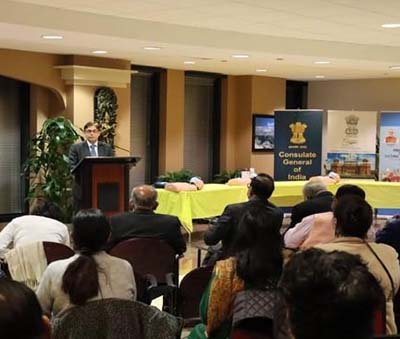
During the Azadi Ka Amrit Mahotsav (AKAM) week, the Chicago Indian Consulate organized a Heart Health Awareness and Community ‘Saving Lives’ Bystander Cardiopulmonary Resuscitation (CPR) program at the Indian Consulate in Chicago on December 15,2021.

The Indian American community-focused program was jointly developed by Dr. Vemuri S Murthy, Chairman of the Board of  Chicago Medical Society and Founder of the Chicago Medical Society Community Bystander CPR project “SMILE” (Saving More Illinois Lives through Education) in association with Dr. Srinivas Ramaka, an eminent Cardiologist from Telangana, India. The program was attended by several members of the Indian diaspora, leaders of Medical Organizations, and Diplomats of the Indian Consulate, staff, and families.
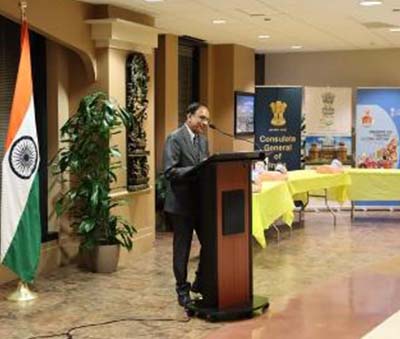
Inaugurating the program, Honorable Consul General Amit Kumar spoke on the importance of Indo-US healthcare partnerships to reduce morbidity and mortality due to heart disease and the major role of the Indian diaspora in strengthening these affiliations through jointly developed innovative projects. As an example, he referred to the Heart Rescue India (HRI) project, recently implemented successfully with Indo-US collaboration, involving the University of Illinois College of Medicine and UI Health, Chicago, and Ramaiah Medical College in Bengaluru with a grant from Medtronic. He congratulated the Indian Physician community for their ongoing contributions to the Indian and US Healthcare sector.

In his address, Hon’ble Member of Congress Danny K. Davis stressed the importance of taking care of one’s health. He commended the significant role of the Indian American doctors in contributing to the general health and well-being of US communities. In a virtual message, Honorable Congressman Raja Krishnamoorthi congratulated the Indian Consulate and Dr. Vemuri Murthy for organizing the program and their efforts to enhance outcomes after cardiac arrests among the communities.
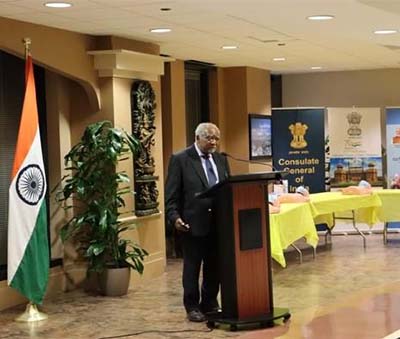
Consul General Amit Kumar, Congressman Danny K Davis, PBSA Dr. Bharat Barai and Dr. Vemuri Murthy released the community bystander CPR Informational brochure in three languages – English, Gujarati, and Spanish for the Indian and US communities. Brochures in other Indian languages will be available soon.

Dr.Murthy gave a presentation on Global Heart Disease, Heart Attacks and Sudden Cardiac Arrests with a special focus on Indians and Indian diaspora in the USA. He spoke of the  programs needed to improve the survival and outcomes during cardiac emergencies via. community awareness, prevention, early recognition, and timely intervention. He also brought to the attention of audience the need to seriously address “Women’s Heart Health” issues. A Hands-only CPR demonstration and training of the participants followed.

Efforts to raise awareness of heart disease and promote “Healthy Heart” lifestyles is essential. Heart disease is the number one Global Public Health problem. South Asians are at a four-times greater risk of heart disease than their western counterparts and have a greater chance of having a heart attack before 50 years of age. Heart attacks strike South Asian Men and Women at younger ages, and as a result, both morbidity and mortality are higher among them compared to any other ethnic group. They tend to develop heart disease ten years earlier than other groups.
Dr. Vemuri S. Murthy, an Adjunct Faculty in the Department of Emergency Medicine @ The University of Illinois College of Medicine, Chicago, Illinois, USA and Visiting Professor in India, is an Advocate of Resuscitation education, training and research in USA and India.His current work involves Cardiac Arrest Registries and Cardiac Health-promoting Projects with Indo-US collaborations.

Biden Resists Shutdowns As Omicron Threat Rises

President Joe Biden is resisting school closures and other shutdown measures in the face of the highly transmissible omicron variant as the public grows increasingly weary about a seemingly never-ending pandemic and confusion over mixed messages from health officials.

Biden is trying to urge people to take precautions, but his speech on Tuesday represented a shift from earlier messaging. No longer is he endorsing strict mitigation measures, such as nonessential business closures, and the concept of social distancing is hardly mentioned.

But Biden is facing the limits of what he can accomplish. The administration is pushing testing and vaccines, which it cites as part of the reason for not needing stricter pandemic measures, but there is no political appetite for anything stronger.

Biden’s new tone instead reflects the reality that COVID-19 is here to stay and that Americans should not be expected to completely upend their lives once again.

The U.S. never had a nationwide lockdown like other nations did. Even during the height of the pandemic in the spring of 2020, each governor made his or her own decisions about the level of restrictions to enact state by state.
Still, health experts and administration officials generally agree that widespread shutdowns of businesses and other in-person settings are unnecessary because the U.S. has widespread coronavirus vaccines that protect against serious illness.

“This moment is much different than March 2020. We have tools to keep people safe and will continue using them to do so,” White House coronavirus coordinator Jeff Zients said during a White House briefing Wednesday.

Further restrictions would also be massively unpopular, and Biden is already dealing with sagging poll numbers and a country exhausted by the seemingly never-ending cycle of exploding case numbers. The prolonged closures and restrictions last year had a damaging effect on the economy that the country has only partially bounced back from.

“The public is thoroughly disillusioned and past the point that they will accept a closure of society or that their kids are going to go home and learn remotely again,” said Lawrence Gostin, a public health law professor at Georgetown University.

“From a public health point of view, what we’ve seen from lockdowns is that every time we lock down, we do dampen down the virus, but as soon as we open up again, it roars back,” Gostin said. “We haven’t demonstrated any long-term benefit from lockdowns.”

But even if it’s not on the same level as 2020, the U.S. is starting to see some signs of disruption to operations it did not experience during the delta variant wave that began hitting the U.S. in the summer.

Some Broadway shows have been postponed, or even closed for good, after outbreaks. Restaurants are also shutting their doors due to infections or exposures among staff.

In the Washington, D.C., area, dozens of schools have resorted to virtual learning for the rest of the year; Prince George’s County schools in Maryland said they will be virtual until at least mid-January.

The NHL became the first U.S. professional sports league to pause its season after a rash of outbreaks among teams. The league also withdrew its athletes from the Winter Olympics in February.

But the White House is not endorsing any closures or pauses, especially in schools. With vaccines widely available for children as young as 5, Biden is leaning into policies such as mandates as a way to force the issue.

“We can keep our K-through-12 schools open, and that’s exactly what we should be doing,” Biden said.   Once a school or district announces plans to go remote, it puts pressure on others to follow suit. Ashish Jha, dean of the Brown University School of Public Health, said there’s no reason for anyone not to be learning in person, at any level.

“I think it’s irresponsible at this point to do that,” Jha said in an MSNBC interview Monday.  “We have all the tools to keep schools open and safe: vaccinations, testing, improvements in ventilation. Tens of billions of dollars have gone to schools. … If I hear of a single school district that goes remote but keeps bars open, what that says to me is they don’t care about kids and they don’t care about COVID,” Jha said.

Republicans tried to make school reopenings a major political issue at the start of 2021, accusing the Biden administration of bending to teachers unions. A recent White House memo distributed to Democrats about progress in Biden’s first year said that 99 percent of schools are currently open, compared with 46 percent before Biden took office.

Biden also recently endorsed “test-to-stay” programs that allow kids who have been exposed to COVID-19 to avoid quarantining as long as they test negative.

The federal government largely does not control whether businesses, sporting venues or schools close due to the threat of the virus or whether they implement mask or vaccine mandates. Those decisions mostly fall on state and local officials.

But Biden can use his bully pulpit to make a recommendation one way or another, as he did when he needled Republican Govs. Ron DeSantis of Florida and Greg Abbott of Texas for barring mask mandates in schools.

Bill Galston, chair of the Brookings Institution’s governance studies program and former Clinton domestic policy aide, said that Biden recommending further lockdowns would be a “grave step” that could further divide the country and inspire opposition from Republicans.

“It will just give them another opportunity to emerge as faces of the resistance,” Galston said.  That doesn’t mean there aren’t other aggressive, potentially politically fraught steps that health experts think Biden should take.

Leana Wen, professor of health policy and management at George Washington University, said the administration should institute a national vaccine passport program to make it easier for businesses that want to require proof for indoor activities. She said the administration should stay away from any mention of closures or lockdowns.

“Lockdowns are the ultimate blunt instruments. That is what you use when you have no other choice. There are so many steps you could take before reaching that point. And also, once you use that blunt instrument, it’s very difficult to use it again,” Wen said.

Gostin said that Biden should require proof of vaccination for domestic flights, something the White House has said is on the table. But he noted that Biden has met resistance to his other vaccine-or-test mandates for businesses and health workers.

David Dowdy, an epidemiologist at the Johns Hopkins Bloomberg School of Public Health, said it’s important to be realistic about the impact of any potential policy changes.

“I think empowering people to test themselves is a good thing. I think encouraging and even mandating vaccination is also likely to have an important effect,” Dowdy said.

Still, any major change would probably take too long to implement, and given the signs from South Africa, cases may start falling as soon as in the next month. “So I think the key is, what can we do to support people to make the right decisions right now, like today and tomorrow, to take the edge off this wave?” Dowdy said.

Dr. Akash Patel Assumes Office As IMANE’s New President, Deepa Jhaveri Is The President-Elect

The Indian Medical Association of New England, known as IMANE, installed Dr. Akash Patel, MD as its new president for the year 2022 and selected Dr. Deepa Jhaveri, DPM as its president-elect. Dr. Patel replaces Dhrumil Shah, MD, whose term expired this year.

Dr. Patel earned his medical school degree from Pramukhswami Medical College at Sardar Patel University in Gujarat, India. He completed his Family Medicine Residency at University of Medicine & Dentistry of New Jersey/Hoboken University Medical Center in Hoboken, NJ. Dr. Patel is Board Certified in Family Medicine. His clinical interests include hypertension, cardiovascular health and preventive medicine.

Dr. Jhaveri is a board certified surgical podiatrist. She earned her undergraduate degree at University of Maryland and podiatric medical degree at Temple University. She is credentialed and works at Beth-Israel Lahey Hospital, Massachusetts General Hospital and Boston Medical Center.

Dr. Pramod Shah, MD, Chair of the Board of Trustees of IMANE, said that 2020 and part of 2021 were dead years because of the COVID19 pandemic.

“Board of Trustees congratulate Dr. Dhrumil Shah for his leadership during these trying times. He kept the communication going and activities going using zoom meetings, emails and telephone calls. His continued efforts and constant prodding and reminders kept the organization functioning well and achieving a lot,” said Dr. Pramod Shah.

“Life of a healthcare professional in today’s environment is full of challenges and uncertainties we have never faced in the past. While we are not going back to yesterday, we have to embrace our past irrespective of our desires and work together to build a better future for generations to come,” outgoing IMANE President Dr. Dhrumil Shah said. “I am really thankful for members and our community partners who showed us in 2021 despite all uncertainties, how we can all do our part in making the difference.”

He said that IMANE closely collaborated and worked with network of its alliance partners in 2021 to facilitate fundraisers and campaigns geared towards helping underserved communities in India.

“Empowering our community through new partnerships and facilitating activities with common objectives has been at the center of our new normal in 2021,” added Dr. Shah. “Please join me in welcoming the 2022 IMANE Leadership team as we continue our journey together to further IMANE mission and goals.”

Dr. George M. Abraham, MD, MPH, FACP, FIDSA, Chief of Medicine at Saint Vincent Hospital, Worcester, Massachusetts, a Professor of Medicine at the University of Massachusetts Medical School, and Adjunct Professor at the Massachusetts College of Pharmacy and Health Sciences (MCPHS), served as the Chief Guest during the IMANE annual gala.

Three members of IMANE were also honored by IMANE President’s awards. D.. Sapna Agarwal was recognized for her contributions towards IMANE Leadership & Excellence. Dr Manju Sheth was honored  for her work in making a global impact, and Dr Paul Mathew was honored for leading IMANE’s CME efforts.

The 43rd general body meeting of IMANE also elected new members to its executive committee and it Board of Trustees. Here is the complete list of all IMANE officers:

President: Akash Patel, MD

Past-President: Dhrumil Shah, MD

President-elect: Deepa Jhaveri, DPM

Secretary: Sonali Khond, MD

Treasurer: Shikha Merchia, MD

Members at Large:

Paul Mathew, MD

Monnie Malhotra, MD

Gita Trivedi, MD

Sanjay Aurora, MD

Smita Patel, MD

Board of Trustees:

Pramod Shah, MD

Rajendra Trivedi, MD

Sapna Agarwal, MD

Vikas Desai, MD

Kishore Mehta, MD

Chairman of Nominating Committee: Devila Shah, MD

ByLaws Chair: Pramod Shah, MD

YPS Representative: Tej Shah, DMD.

US-Authorizes Pfizer Pill For COVID Treatment

U.S. health regulators on Wednesday authorized the first pill against COVID-19, a Pfizer drug that Americans will be able to take at home to head off the worst effects of the virus.  The long-awaited milestone comes as U.S. cases, hospitalizations and deaths are all rising and health officials warn of a tsunami of new infections from the omicron variant that could overwhelm hospitals.

The drug, Paxlovid, is a faster way to treat early COVID-19 infections, though initial supplies will be extremely limited. All of the previously authorized drugs against the disease require an IV or an injection.

An antiviral pill from Merck also is expected to soon win authorization. But Pfizer’s drug is all but certain to be the preferred option because of its mild side effects and superior effectiveness, including a nearly 90% reduction in hospitalizations and deaths among patients most likely to get severe disease.

“The efficacy is high, the side effects are low and it’s oral. It checks all the boxes,” said Dr. Gregory Poland of the Mayo Clinic. “You’re looking at a 90% decreased risk of hospitalization and death in a high-risk group — that’s stunning.”

The Food and Drug Administration authorized Pfizer’s drug for adults and children ages 12 and older with a positive COVID-19 test and early symptoms who face the highest risks of hospitalization. That includes older people and those with conditions like obesity and heart disease, though the drug is not recommended for patients with severe kidney or liver problems. Children eligible for the drug must weigh at least 88 pounds (40 kilograms).
The pills from both Pfizer and Merck are expected to be effective against omicron because they don’t target the spike protein where most of the variant’s worrisome mutations reside.

Pfizer currently has 180,000 treatment courses available worldwide, with roughly 60,000 to 70,000 allocated to the U.S. The company said it expects to have 250,000 available in the U.S. by the end of January.

Federal health officials are expected to ration early shipments to the hardest hit parts of the country. Pfizer said the small supply is due to the manufacturing time — currently about nine months. The company says it can halve production time next year.

The U.S. government has agreed to purchase enough Paxlovid to treat 10 million people, and it will be provided free to patients. Pfizer says it’s on track to produce 80 million courses globally next year, under contracts with the U.K., Australia and other nations.

President Joe Biden said the pill marks a “significant step forward in our path out of the pandemic” and said his administration will work with states to ensure equitable distribution.

Health experts agree that vaccination remains the best way to protect against COVID-19. But with roughly 40 million American adults still unvaccinated, effective drugs will be critical to blunting the current and future waves of infection.

The U.S. is now reporting more than 140,000 new infections daily and federal officials warn that the omicron variant could send case counts soaring. Omicron has already whipped across the country to become the dominant strain, federal officials confirmed earlier this week.

Against that backdrop, experts warn that Paxlovid’s initial impact could be limited. For more than a year, biotech-engineered antibody drugs have been the go-to treatments for COVID-19. But they are expensive, hard to produce and require an injection or infusion, typically given at a hospital or clinic. Also, laboratory testing suggests the two leading antibody drugs used in the U.S. aren’t effective against omicron.

Pfizer’s pill comes with its own challenges.

Patients will need a positive COVID-19 test to get a prescription. And Paxlovid has only proven effective if given within five days of symptoms appearing. With testing supplies stretched, experts worry it may be unrealistic for patients to self-diagnose, get tested, see a physician and pick up a prescription within that narrow window.

“If you go outside that window of time I fully expect the effectiveness of this drug is going to fall,” said Andrew Pekosz, a Johns Hopkins University virologist.

The FDA based its decision on company results from a 2,250-patient trial that showed the pill cut hospitalizations and deaths by 89% when given to people with mild-to-moderate COVID-19 within three days of symptoms. Less than 1% of patients taking the drug were hospitalized and none died at the end of the 30-day study period, compared with 6.5% of patients hospitalized in the group getting a dummy pill, which included nine deaths.

Pfizer’s drug is part of a decades-old family of antiviral drugs known as protease inhibitors, which revolutionized the treatment of HIV and hepatitis C. The drugs block a key enzyme which viruses need to multiply in the human body.

The U.S. will pay about $500 for each course of Pfizer’s treatment, which consists of three pills taken twice a day for five days. Two of the pills are Paxlovid and the third is a different antiviral that helps boost levels of the main drug in the body.

Biden Administration Extends Student Loan Pause Through May 1, 2022

The U.S. Department of Education announced a 90-day extension of the pause on student loan repayment, interest, and collections through May 1, 2022. The extension will allow the Administration to assess the impacts of the Omicron variant on student borrowers and provide additional time for borrowers to plan for the resumption of payments and reduce the risk of delinquency and defaults after restart.

The Department will continue its work to transition borrowers smoothly back into repayment, including by improving student loan servicing.

“Since Day One of this Administration, the Department has focused on supporting students and borrowers throughout the pandemic and ensuring they have the resources they need to return to repayment successfully,” said U.S. Secretary of Education Miguel Cardona. “This additional extension of the repayment pause will provide critical relief to borrowers who continue to face financial hardships as a result of the pandemic, and will allow our Administration to assess the impacts of Omicron on student borrowers.

As we prepare for the return to repayment in May, we will continue to provide tools and supports to borrowers so they can enter into the repayment plan that is responsive to their financial situation, such as an income-driven repayment plan. Students and borrowers will always be at the center of our work at the Department, and we are committed to not only ensuring a smooth return to repayment, but also increasing accountability and stronger customer service from our loan servicers as borrowers prepare for repayment.”

The pause on student loan payments will help 41 million borrowers save $5 billion per month. Borrowers are encouraged to use the additional time to ensure their contact information is up to date and to consider enrolling in electronic debit and income-driven repayment plans to support a smooth transition to repayment. More information can be found at StudentAid.gov.

This action is one of a series of steps the Biden-Harris Administration has taken to support students and borrowers, make higher education more affordable, and improve student loan servicing, including providing nearly $13 billion in targeted loan relief to over 640,000 borrowers. Actions within that include:

Revamping the Public Service Loan Forgiveness program in October, which has already provided $2.4 billion in loan relief to 38,000 borrowers. As part of that effort, the Department implemented a Limited PSLF Waiver to count all prior payments made by student borrowers toward PSLF, regardless of the loan program. Borrowers who are working in public service but have not yet applied for PSLF should do so before October 31, 2022, and can find out more at StudentAid.gov/PSLF.

Providing $7.0 billion in relief for 401,000 borrowers who have a total and permanent disability. Approving $1.5 billion in borrower defense claims, including extending full relief to approved claims and approving new types of claims.

Providing $1.26 billion in closed school discharges to 107,000 borrowers who attended the now-defunct ITT Technical Institute. Helping 30,000 small business owners with student loans seeking help from the Paycheck Protection Program.

USA Set For Historic Cricket Series Against ICC Full Member Ireland

For the first time since September 2019, USA are set to host an international cricket match when they face ICC Full-Member Nation Ireland in the inaugural T20I at the Central Broward Regional Park Stadium Turf Ground here on December 22.

The series involves two T20Is, followed by three One-day Internationals and will conclude on December 30. The preparations haven’t gone as planned due to the COVID-19 pandemic with the practice games getting cancelled and both teams training individually on the centre wicket.

Ireland have had to make many changes to their squad after several of their members — including Barry McCarthy, George Dockrell, Harry Tector and Gareth Delany — tested COVID-positive ahead of the limited-overs series. They will join the team after 10-day isolation.

With several uncertainties, Josh Little cut short his Lankan Premier League stint to join the Ireland squad here. For the USA, Karima Gore, Jaskaran Malhotra and Aaron Jones have been ruled out after being named in the initial squads. To cover for the absentees, four players have received their maiden national call-up, three of whom are U-19 players.

Ritwik Behera has been named in both the ODI and T20I squads, while Yasir Mohammed and Ali Sheikh have been called up for the T20I squad along with Ryan Scott. Rusty Theron too will be unavailable due to a groin injury.

All the games will be played at Central Broward Regional Park Stadium Turf Ground here.

Squads:

Ireland T20I: Andrew Balbirnie (c), Mark Adair, Curtis Campher, Gareth Delany, George Dockrell, Shane Getkate, Josh Little, Barry McCarthy, William McClintock, Neil Rock, Simi Singh, Paul Stirling, Lorcan Tucker, Ben White, Craig Young.

Ireland ODI: Andrew Balbirnie (c), Mark Adair, Curtis Campher, George Dockrell, Josh Little, Andy McBrine, Barry McCarthy, William Porterfield, Neil Rock, Simi Singh, Paul Stirling, Harry Tector, Lorcan Tucker, Ben White, Craig Young.

USA T20I: Monank Patel (c), Ali Khan, Ali Sheikh, Gajanand Singh, Jasdeep Singh, Marty Kain, Nisarg Patel, Ritwik Behera, Ryan Scott, Saurabh Netravalkar, Steven Taylor, Sushant Modani, Vatsal Vaghela, Xavier Marshall, Yasir Mohammed.

USA ODI: Monank Patel (c), Aaron Jones, Ali Khan, Gajanand Singh, Jasdeep Singh, Jaskaran Malhotra, Marty Kain, Nisarg Patel, Nosthush Kenjige, Rahul Jariwala, Ritwik Behera, Saurabh Netravalkar, Steven Taylor, Sushant Modani, Vatsal Vaghela, Xavier Marshall.

Anahat Singh Wins Jr Squash Open In US

Indian teenager Anahat Singh scripted history by winning the U-15 girls category of the prestigious Junior US Open Squash tournament in Philadelphia last week. The 13-year-old girl from Delhi overcame powerhouse Egypt’s Jayda Marei in the final match 11-9, 11-5, 8-11, 11-5 played at the Arlen Spectre Centre.

According to information received here, Anahat won the title in the Under-15 category, beating Jayda Marei from Egypt 11-9, 11-5, 8-11, 11-5. Earlier, in the semifinals, she had beaten US national champion Dixon Hill 11-8, 11-9, 11-5.

More than 850 squash junior players, representing 41 countries, participated in the World’s largest junior individuals squash tournament.

India Outsourcing Visa Services To VFS Global

Beginning Monday, 13 December, 2021 (12:01 AM Eastern Standard Time), all visa applications will be accepted only at VFS Global. The Consulate will stop accepting direct visa applications from 13 December, 2021.

Applicants are required to fill Government of India visa form at https://indiainnewyork.gov and visit VFS Global website https://visa.vfsglobal.com/usa/en/ind to pay fee etc. after creating an account on VFS’ website. In addition to applicable Government of India fees for these services, a service fee of US$ 15.90 (inclusive of all taxes) per application will be charged by VFS Global.

Emergency Visa Service: VFS will accept in-person applications, with prior appointment, on working days as well as on weekends/holidays, from US passport holders of Indian origin and their family members who are required to visit India due to a genuine family emergency, such as critical illness or death of a family member.

Documentary evidence of the emergency will need to be provided and an emergency service fee. From Monday – Friday: Between 9 AM to 4 PM Email: VFS_VisaNYC@vfsglobal.com Weekends and Holidays Only: Between 9AM to 4PM
Tel: +1-929-866-2770

Applicants may also like to avail of e-Tourist Visa facility (free of charge) for a limited period as per details at https://indianvisaonline.gov.in/evisa/tvoa.html 5. In addition to the above number, applicants could also contact the Consulate on its Emergency Visa Helpline +1-917-815-7066

U.S. Life Expectancy Dropped Nearly 2 Years in 2020

It’s clear that 2020 was a terrible year for health in the U.S., but just how terrible is now coming into focus. New mortality data from the National Center for Health Statistics finds that life expectancy dropped by 1.8 years in 2020 compared to 2019, and more than 528,800 more U.S. residents died in 2020 than in 2019. It is the largest single-year increase in annual mortality since 1933, when data for the entire country first became available.

COVID-19 is the primary reason for this shift. The virus was the cause of 10.4% of all deaths last year and became the third-most common cause of death in the country. However, the report also reflects the shock waves the pandemic sent through the U.S. healthcare system. “The report card for the year was an F,” says Samuel Preston, professor of sociology at the University of Pennsylvania’s School of Arts and Sciences (who was not involved with the study). “It’s a very dismal portrait of what happened in the United States. And what happened in the United States is worse than what happened in other developed countries.”

Death rates rose from various causes, including heart disease (up 4.1%), strokes (up 4.9%) and Alzheimer’s disease (up 8.7%) as COVID-19 stretched the entire health care system to its limit. Mark Hayward, a demographer and a professor of sociology at the University of Texas at Austin, says that increases in these particular diseases is striking. “They’re the kinds of deaths that are likely to occur because you can’t access hospitals or you can’t access care,” he says. “The overall consequence of COVID is broader than just COVID-related deaths. It’s because we can’t provide care to people with other conditions.”

Access issues during the pandemic were reported across the health care system: ambulances bounced from one overwhelmed emergency room to another; short-staffed nursing homes struggled to contain the deadly infection; and hospitals were forced to postpone non-emergency surgeries to cope with the influx of COVID-19 patients. Check-ups, during which doctors might have prescribed cholesterol-lowering drugs, were canceled, and those unprescribed drugs did not prevent heart attacks. Many care providers also left the profession because of burnout and exhaustion.

Even these high numbers are likely an underestimate. About 17% to 20% more deaths should have been attributed to COVID-19, says Preston, who is studying COVID-19 and 2020 mortality rates as part of a collaboration between the University of Pennsylvania and Boston University. “We have concluded, as others have, that COVID itself was under-reported as a cause of death,” says Preston. “There are areas of the country where, compared to the changes in death rates overall, there are clearly insufficient numbers of deaths being assigned to COVID.” While undercounting was likely a bigger issue early in the pandemic, problems persisted, Preston says. For instance, areas with coroners (who are typically elected) instead of medical examiners (who are generally appointed medical officials) are more likely to assign COVID-19 deaths to other causes.

The pandemic also contributed to increased deaths caused by another type of illness: drug-use disorders. Recent government data found that between April 2020 and 2021, more than 100,000 people died from drug overdoses, the highest number ever recorded in a 12-month period. This record high was at least partially the result of the pandemic, as the virus not only disrupted treatment programs and affected patients’ mental health, but likely accelerated the spread of the dangerous synthetic opioid fentanyl. In the new NCHS report, overdoses are included in the category of unintentional injuries, which rose 16.8% year over year.

What’s also clear from the report is that while no part of American society was untouched by the pandemic, some groups experienced worse effects. Death rates rose among all age groups over the age of 15, and among white, Black and Hispanic people alike. The increase was particularly steep for Hispanic and non-Hispanic Black people: death rates rose by 42.7% for Hispanic men, 32.4% for Hispanic women, 28% for Black men, and 24.9% for Black women in 2020 compared to 2019. The gap between men and women’s life expectancy also widened. Men’s life expectancy fell by 2.1 years, to age 74.2, and dropped 1.5 years to age 79.9 for women.

The racial disparities are likely due to the fact that more people of color are frontline workers who aren’t able to avoid being exposed to the virus, says Hayward, who studies mortality and inequality. As more data become available, he anticipates seeing inequalities across educational lines. “The college educated could work at home and avoid exposure,” says Hayward. “​​You’re going to see a very dramatic widening of educational differences in life expectancies…driven in part because of absolute decline in life expectancy among the most socially disadvantaged groups in this country.”

India To Raise Marriage Age For Women To 21

The Cabinet Union Cabinet has cleared a bill that proposes to raise the legal age of marriage for women from 18 to 21, bringing it in line with the men’s. The government is expected to bring before the parliament amendments to the Prohibition of Child Marriage Act, Special Marriage Act, and the Hindu Marriage Act.

It’s based on the recommendation of an expert panel headed by MP Jaya Jaitly and NITI Aayog member Dr. Vinod K. Paul.  The 10-member task force was formed by the union government on June 4.

PM Narendra Modi had also said during his Independence Day speech that the legal age of marriage should be raised from 18 to 21 for women for the “health of daughters and sisters” and to prevent malnutrition

The amendments could be placed before the parliament as early as this winter session, TOI reports. A scourge Currently, the legal age for marriage is 18 for women and 21 for men. Yet, according to the National Family Health Survey 2015-16, 26.8% of women aged 20-24 were married before they turned 18.

Several studies have linked child marriage to maternal mortality, malnutrition of the child and poverty. Maternal mortality rate is the number of maternal deaths for every 100,000 children born.

For instance, sustained campaigns and policies such as making the legal age of marriage at 18 have helped reduce India’s maternal mortality rate from 677 in 1980 to about 145 now.

But… The NFHS data show that penalising marriage under 18 has not stopped the practice. Experts, therefore, say raising the age to 21 will, therefore, not truly serve the purpose as educational and welfare schemes would. Data protection panel: Social media should be publishers

The joint parliamentary committee’s report on the Personal Data Protection Bill, 2019, was tabled before both Houses of Parliament on Thursday. The 542-page report was finalised after nearly two years of deliberation.
It recommends.declare all social media platforms as ‘publishers’.widen the scope of the Bill to include non-personal data. 81 recommendations for modifications and over 150 drafting corrections and improvements in various clauses of the bill.

Rare cooperation Congress MP Jairam Ramesh tabled the report in Rajya Sabha amidst opposition protests demanding the revocation of suspension of 12 MPs and sacking of junior home minister Ajay Mishra Teni.

BJP’s PP Chaudhary, the chairman of the committee, tabled the report in Lok Sabha. “This report shows that if the chairman is cooperative, (and) the government is accommodative, the opposition is responsive,” Ramesh said.

And dissent The report contains seven dissent notes, one each by Congress MPs Jairam Ramesh, Manish Tewari, Vivek Tankha and Gaurav Gogoi, TMC’s Mahua Moitra, BSP’s Ritesh Pandey and BJD’s Amar Patnaik.

Among other things, they flag the “unbridled powers” certain sections of the Bill accord to the union government, including the power to exempt any government agency from the entire Act.

What now?

Under Parliamentary rules, the bill as amended by the JPC is considered draft legislation that will need to be cleared by Cabinet before it returns to Parliament for passage.

The Union cabinet may accept the draft as it is. It could also move official amendments to the Bill tabled by the committee.

Echidna Global Scholar Program Research

Unlocking young women’s economic potential through digital mentoring in India. Far more men than women in India with tertiary (or post-secondary) education are active in the workforce. Arundhuti Gupta demonstrates how digital mentoring could help more young women transition into the labor force.

Gender-responsive education in emergency in Nigeria. How can a gender-responsive perspective be fully incorporated into the planning, policy design, and implementation models for education in emergencies? Edem Ossai writes about how to safeguard girls’ presents and futures in Nigeria.

Promoting entrepreneurship among women in Vietnam. Given the profound socioeconomic challenges posed by the COVID-19 pandemic, it’s imperative that Vietnam make full use of its human capital. Tran Thi Ngoc Tran lays out a plan to help make entrepreneurship training programs for women more effective.

Increasing girls’ access to formal agricultural education in Afghanistan. Even though girls learn agricultural skills informally from family and friends, they only comprise 12% of all students in agricultural technical and vocational education and training (TVET) in Afghanistan. Nangyalai Attal shares how to help girls develop their skills and use them effectively for national growth and self-reliance.

Blasphemy Cases On The Rise In Pakistan

Recent killing of Priyantha Kumara, the Sri Lankan general manager of a garment factory in Sialkot city of Pakistan has again brought focus on infamous blasphemy laws of Pakistan.   The charred body of a factory manager who was lynched by a mob in Pakistan for alleged blasphemy was brought back to Sri Lanka on December 7, 2021. Sri Lankan national Priyantha Kumara was assaulted by a mob of hundreds of people before being dragged into the streets and set on fire on December 3, 2021, in Sialkot, Pakistan, where he helped run a sports equipment factory. Workers at the factory accused him of desecrating posters bearing the name of Islam’s Prophet Muhammad.

Pakistan, an Islamic state, has notoriously draconian laws against blasphemy, which carry the death sentence. The laws are often used against religious minorities and those accused are sometimes lynched before they are proven guilty in a court. The culture of fear around blasphemy cases means judges are often too afraid to find the accused anything other than guilty. A 2019 report in Dawn, quoting the Centre for Social Justice said that at least 62 men and women have been killed on mere suspicion of blasphemy between 1987 and 2015.  A report titled “As Good As Dead” released by Amnesty International in 2016 said that a total of 633 Muslims, 494 Ahmadis, 187 Christians and 21 Hindus have been accused under various provisions on offences related to religion since 1987.

Evolution of Pakistan’s Blasphemy Laws Offences relating to religion in Pakistan were introduced in the colonial era in British India – which included the territory that is now Pakistan – to prevent and curb religious violence between Hindus and Muslims. Under the military government of General Zia-ul-Haq (1977-1988), who set the process of Islamization in Pakistan, additional laws were introduced against blasphemy that were specific to Islam.
The most frequently invoked blasphemy laws in Pakistan’s Penal Code are Sections 295-A (outraging religious feelings), 295-B (desecrating the Quran), 295-C (defiling the name of the Prophet Muhammad) and 298-A (defiling the names of the family of the Prophet Muhammad, his companion or any of the caliphs). When charges are levelled under most of these laws, the police have the authority to arrest the alleged offender without a warrant and can commence their investigation without orders from the magistrate’s court. In 1990, the Federal Shariat Court, responding to a petition, ruled that the death penalty was mandatory under 295-C. Since then, the law is bending on all courts.

The successive governments in Pakistan have yielded to Islamic radicalism and fundamentalism. The Blasphemy laws are used as tool by the extremist elements to harass and target minority communities in Pakistan. These laws are also used to settle property issues or vendettas as observed by Supreme Court of Pakistan in Malik Muhammad Mumtaz Qadri vs The State, “The majority of blasphemy cases are based on false accusations stemming from property issues or other personal or family vendettas rather than genuine instances of blasphemy and they inevitably lead to mob violence against the entire community.”

This Pakistan’s blasphemy laws violate human rights, both in their substance and their application – whether this is violations of human rights by the state, or abuses of the laws by non-state actors. The laws do not meet human rights standards and lack essential safeguards to minimize the risk of additional violations and abuses.

The infamous Asia Bibi Case:

One of Pakistan’s most infamous blasphemy cases is that of the Christian woman Asia Bibi, a 45-year-old Christian farmhand and a woman with responsibility for five young children from the village of Ittan Wali, near the Punjabi city of Sheikhupura. She was sentenced to death in 2010 after being accused of blasphemy by her co-workers. Almost a decade later she was acquitted after heavy international pressure. Speaking to BBC, she said,”My husband was at work, my kids were in school, I had gone to pick fruit in the orchard,” she said. “A mob came and dragged me away. They made fun of me, I was very helpless.” In her book, Ms. Asia Bibi tells how she feared for her life in prison, with other inmates calling for her to be hanged. She also recalled mistreatment at the hands of the prison guards.

Former Punjab Governor Salmaan Taseer, who supported Asia Bibi, was shot dead by one of his bodyguards Mumtaz Qadri in Islamabad on January 4, 2011. Qadri later told media that Salmaan Taseer was a blasphemer, and this is the punishment for a blasphemer. Salmaan Taseer had sought a presidential pardon for Asia Bibi, a 45-year-old Christian farmhand. Salmaan Taseer’s support for her, and his view that Pakistan’s blasphemy laws were “black laws”, were also cast as an act of blasphemy by supporters of the laws. The incident shows the reduced space for minority rights and liberal practices in Pakistan.

Recent Blasphemy cases:  Despite international criticism of these laws, blasphemy accusations are on the rise in Pakistan under the Imran Khan Government. 2020 saw the highest number to date – 200- but 2021 has already surpassed that record, according to the South Asian Media Research Institute, a civil society initiative that has counted 234 accusations as of mid-October 2021. Some of the recent cases involving blasphemy are as follows:

On the night of November 29, 2021, thousands of protesters stormed the police station in Charsadda, a district in the Khyber Pakhtunkhwa province, and burned the facility along with several nearby security outposts after police refused to hand over the blasphemy suspect. The mob attack forced police officers to abandon the installation and flee to safety along with the detainee. Authorities arrested around 30 people in connection with the assault on a police station aimed at grabbing and lynching a mentally unstable detainee accused of insulting Islam.

On 21 October 2021, UN human rights experts urgently appealed to Pakistan to release Stephen Masih, a Pakistani Christian from Sialkot District, who has been detained for over two years awaiting trial for allegedly committing blasphemy. “We are seriously concerned by the persecution and ongoing detention of Mr. Masih on blasphemy grounds, and by his treatment at the hands of the judicial and prison authorities who are aware of his psychosocial disability and health condition,” the experts said. “We call on the authorities to urgently review Mr. Masih’s case, and to release and drop all charges against him, and to ensure protection for him and his family.”

In August 2021, an eight-year-old Hindu boy became the youngest person charged with blasphemy in Pakistan. He is being held in protective police custody in east Pakistan . The boy’s family is in hiding and many of the Hindu community in the conservative district of Rahim Yar Khan, in Punjab, have fled their homes after a Muslim crowd attacked a Hindu temple after the boy’s release on bail last week. Troops were deployed to the area to quell any further unrest.

The Pakistani social structure has become so much radicalized that even simple marches by women on International Day of Woman this year was not tolerated.  Pakistani police registered a blasphemy case against organizers of the feminist Aurat Azadi (Women’s Freedom) March in a northwestern city, Peshawar, on the occasion of International Day of Woman earlier this year on March 8.

As a state party to the International Covenant on Civil and Political Rights (ICCPR), Pakistan must respect and protect freedom of opinion and expression; freedom of thought, conscience, and religion or belief; the right to life; equality before the law and freedom from discrimination; right to fair trial; and the prohibition on arbitrary detention. It must ensure that all individuals within its territory and subject to its jurisdiction are protected against violations of these rights by its own agents as well as against acts committed by non-state actors (bodies or individuals) that would impair the enjoyment of those rights. Pakistan’s blasphemy laws violate its international legal obligations. The real test of democracy is how it safeguards its minority communities and its institutions. The record so far shows that Pakistan has miserably failed to protect rights of its own citizens and nor it has political will to bring a meaningful change.

Ayushmann: Cinema Can Become A Vehicle Of Inclusivity In Society

Ayushmann Khurrana, who was recently seen in ‘Chandigarh Kare Aashiqui’, feels that cinema can bring about a change in society and that he has tried to contribute towards the cause of inclusivity and equality through his work in films.

Talking about the purpose of cinema, the actor mentions, “I have always believed that cinema can serve a purpose to better society and I hope that such films have done their bit to affect change. I have played a small hand in harbouring a sentiment of equality among my countrymen because I have to credit my visionary filmmakers and script writers for doing the brunt of the work because it is their vision that has triggered the winds of change.”

In his opinion, a society gets reflected in its films and stories, the actor says, “Progressive films can only be made in a progressive society and the response that ‘Chandigarh Kare Aashiqui’ is getting is tantamount to the fact that people want to see more and more disruptive content.”

He thanks his audience for accepting his stories with open arms, “I am thankful to people for being open-minded to see films about a gay couple on screen in ‘Shubh Mangal Zyada Saavdhan’ and also about a cis-het man and a trans-woman’s love story in ‘Chandigarh Kare Aashiqui’”.
He adds, “When we set out to make ‘Chandigarh Kare Aashiqui’, our aim was to start an important conversation on inclusivity and equality in India.”

“It is amazing to see that the film has engaged the nation, is entertaining people and also delivering a powerful message. This shows they are recognising the need for gender parity and inclusivity,” he concludes.

Ayushmann will be next seen in Anubhav Sinha’s ‘Anek’ which would mark their second collaboration after ‘Article 15’, Anubhuti Kashyap’s ‘Doctor G’ and ‘Action Hero’ directed by debutant Anirudh Iyer.

GOPIO-CT Holds Annual Holiday Event Raising Funds For Local Charity

GOPIO-CT organized its General Body Meeting (GBM) and elected a new team on December 5th held at the Hampton Inn suite in Stamford. In its report to the GBM, President Ashok Nichani said, “In spite of the Corona Virus pandemic, GOPIO-CT did several virtual programs in the beginning of the year on Zoom including a New Year Party which served as a fundraiser in support of soup kitchens, a Holi Celebration, interactive meetings with CT lawmakers and raising funds for sending Oxygen Concentrators to India.”

 “As the pandemic was coming down in the year, the chapter organized several programs with physical presence participating with other ethnic communities celebrating Stamford’s founding, and organizing Indian and American flag hoisting at Govt. Center in Stamford to celebrate India’s 75th Independence Day which was followed by an India Festival at the Mill River Park, hosting UConn Indian students for a Networking Welcome Dinner, an interactive session with India’s Minister of State for External Affairs V. Muraleedharan, Hosting a Conversation with Indra Nooyi and a Diwali fundraiser for local charities,” added President Nichani.
Secretary Prachi Narayan listed all major activities for the year which included major initiatives for serving the local community and institutions during the pandemic and lockdown. These included donating cash and replenishing food items for the homeless and needy at the New Covenant House in Stamford and Food Bank of Lower Fairfield.

Two other service organizations were supported by GOPIO-CT in 2021, Future 5 which helps and counsel needy students at Stamford High Schools and Building One Community which serves new immigrant communities. The chapter also held a virtual interactive meeting with Connecticut Attorney General William Tong.

The GBM also conducted its annual election for 2021. Mr. Ashok Nichani was re-elected as the President for one more term. Other elected officials are Mr. Prasad Chintalapudi as Executive Vice President, Dr. Jaya Daptardar as Vice President, Ms. Prachi Narayan as Secretary, Ms. Mahesh Jhangiai as Joint Secretary and Mr. Srinivas  Akarapu as Treasurer. GBM also reelected two trustees, Mr. Joseph Simon and Mr. Shailesh Naik.

Following the GBM, Annual Holiday Party was held which served as a fundraiser for a service organization.

The fundraiser netted $5,500 to give to the local service organization Grassroots Tennis and Education, a youth development non-profit organization that uses sports of tennis to engage youth in out-of-school time programming in Norwalk and Stamford. The group’s volunteers teach tennis and helps students in education. Grassroots’ representative Ms. Samantha Hayes spoke about the organization and thanked GOPIO-CT for its generosity in raising funds for Grassroots. Another organization IT Serve Alliance also presented a check of $2,000 to Grassroots.
A musical evening followed and was organized by GOPIO-CT Vice President Dr. Jaya Daptardar. Singers at the evening were Srinivas Gunupuru, Kashyap Jani, Shilpa Kulkarni, Trupti Shah, Mike Patel and Dhilan shah. GOPIO-CT Executive Vice President Prasad Chintalapudi concluded the program and thanked everyone for making the program a success.

Dr. Thomas Abraham, Chairman of GOPIO International said that GOPIO-CT is the most active chapter among over one hundred GOPIO chapters worldwide.

Over the last 14 years, GOPIO-CT, a chapter of GOPIO International has become an active and dynamic organization hosting interactive sessions with policy makers and academicians, community events, youth mentoring and networking workshops, and working with other area organizations to help create a better future. GOPIO-CT – Global Organization of People of Indian Origin – serves as a non-partisan, secular, civic and community service organization – promoting awareness of Indian culture, customs and contributions of PIOs through community programs, forums, events and youth activities. It seeks to strengthen partnerships and create an ongoing dialogue with local communities.

Rashad Hussain Confirmed As First Muslim US Religious Freedom Ambassador

Rashad Hussain has been confirmed as the U.S. ambassador-at-large for international religious freedom, making him the first Muslim American in the role. Hussain was confirmed by the U.S. Senate on Thursday (Dec. 16) by an overwhelming vote of 85 to 5.

The U.S. Commission on International Religious Freedom hailed the decision on Hussain, who has been director for partnerships and global engagement at the National Security Council.

“With his years of knowledge and experience, Ambassador Hussain is well placed to advance the U.S. government’s promotion of international religious freedom,” said USCIRF Chair Nadine Maenza in a statement.

Hussain, 42, previously served as a White House counsel during the Obama administration, as special envoy to the Organization of Islamic Cooperation and as U.S. special envoy for the Center for Strategic Counterterrorism Communications.

When President Joe Biden announced his nomination of Hussain in July, the White House noted his work on countering antisemitism and defending religious minorities in countries with Muslim majorities. Hussain, who has served as a judicial clerk in the 6th U.S. Circuit Court of Appeals and as the editor of the Yale Law Journal, speaks Spanish, Arabic and Urdu. He also is a hafiz, or someone who has memorized the entire Quran in Arabic.

“(A)s a Muslim American, I have seen the impact of bigotry and guilt by association tactics used against minority communities, including the message it sends and dangers it poses to young people,” Hussain said in his prepared remarks during the October confirmation hearing.

The Muslim Public Affairs Council welcomed Hussain’s new role. “Rashad has served our community and country at the highest level of integrity and intelligence,” said MPAC President Salam Al-Marayati. “Above all, he has served as a mentor and role model to Americans of all backgrounds, sharing with them the importance of public service and serving our country.”

Sam Brownback, who served as religious freedom ambassador during the Trump administration, had cheered the recent movement of the confirmation process for Hussain and applauded its outcome.

“Religious persecution is rampant around the world, and the international community looks to the United States for leadership that can make a difference,” Brownback, now a senior fellow at international persecution watchdog Open Doors USA, said in a statement. “That’s why I’m glad Rashad Hussain has been confirmed by a bipartisan Senate majority.”

An earlier religious freedom ambassador, Rabbi David Saperstein, joined Princeton University professor Robert P. George in supporting Hussain at the time of his confirmation hearing. The two men, who noted in a Religion News Service commentary that they have vastly different political perspectives, said Hussain was committed to protecting Christian rights and had garnered deep respect in the Muslim community.

“Hussain has enormous credibility across a broad range of faith groups, built on years of leadership in efforts for religious freedom,” they wrote. “His nomination has brought enthusiastic praise from groups ranging from the Southern Baptist Convention’s Ethics and Religious Liberty Commission and the Baptist World Alliance to the American Jewish Committee, the Anti-Defamation League and the Union for Reform Judaism, as well as widespread commendations from the Muslim community.”

The Secular Coalition for America also joined in congratulating Hussain on the confirmation vote. “The Ambassador has the potential to be a powerful voice for the rights of nontheists & apostates who face persecution abroad,” tweeted the organization, which represents atheist, humanist and freethinking groups. “SCA looks forward to working with him.”

The White House’s nominee for antisemitism envoy, Holocaust scholar Deborah Lipstadt, has yet to have a confirmation hearing after she was nominated in July on the same day as Hussain.

Can Pope Francis Make Real Change For Women? Vatican Women Leaders Assess His Chances

A panel of women who have attained leadership positions in the Catholic Church met on Thursday (Dec. 16) to discuss Pope Francis’ ambitious plan to reform the power structures in the church, raising questions about female ordination, the role of bishops and the need for women theologians.

In October, Francis launched a churchwide consultation process titled “For a synodal Church — Communion, Participation and Mission,” commonly known as the Synod on Synodality. The three-year process, which will conclude with a summit of bishops at the Vatican in 2023, is intended to engage every level of the Catholic Church, from parishes to bishops’ conferences.

The pope’s project, if successful, is poised to increase the participation of the most marginalized groups in the church, including women.

“Our role is to invite more and more women in, into the process, into the conversation and reflection,” said Sr. Patricia Murray, executive secretary of the International Union of Superiors General and a member of the spirituality commission of the Synod. “Particularly those who feel very much neglected, or that the church has forgotten about them or feel estranged from the church.”

Hosted by the Australian embassy to the Holy See, Georgetown University and the Jesuit magazine Civiltà Cattolica, Thursday’s “Women in Synodality” event also included Sr. Nathalie Bequart, the first female undersecretary of the Synod of Bishops; Myriam Wijlens, one of the church’s few female canon lawyers and a consultant to the Synod of Bishops.

At the meeting there were also Sr. Béatrice Faye, a member of the Theological Commission of the synod and member of the Groupe Africain de Recherche en Philosophie Interculturelle, and Susan Pascoe, who works on the Methodology Commission of the Synod and is the President of the Australian Council for International Development.

Many of those following the event via Zoom voiced doubts about how much women will be heard in the synodal process, and particularly whether bishops will accept the shared decision-making that Francis envisions.

“These are very important questions,” replied Wijlens. “What does it meant to be a bishop in a synod?” She noted that when bishops convene at the Vatican, they express not their own views, she added, but they have a responsibility to give voice to the joys and the challenges of the faithful in their community.

“Theologically the idea would be that the bishop would be a witness to the faith of his own church and not speak of his own faith,” Wijlens said. “I do hope the bishops have the courage and the braveness to say: ‘This is what the people in my church believe and what they want to share with the rest of the community.’”

In 2018, America magazine published a groundbreaking study by the Georgetown University Center for Applied Research in the Apostolate, or CARA, which showed that more than 70% of young women in the United States were drifting away from the Catholic Church, and at a much higher rate than men.

The report found that 38% of the respondents left because they disagreed with church teaching, while 23% objected to the status of women in the church.

More than four years after America’s report, many more women occupy leadership roles in the church and at the Vatican, but little has changed in terms of linking the traditions of the faith into the concerns of modern-day women.

Wijlens said that the church can do more than listen; she suggested that promoting female theologians and canon lawyers might deepen the understanding of traditional Catholic beliefs about gender.

“I think we are losing in the church a high number of highly trained women, and it’s because they feel that they are not being heard,” she said, suggesting that canon law faculties should reach out to women and help them achieve this expensive and specialized training.

Murray talked about recent reports of physical, sexual and psychological abuse of religious sisters, reports that have also undermined the credibility of the church’s commitment to women. “If we do not listen to the pain that has been suffered, we won’t see where we are individually called to change and called to conversion,” she said. “I think if we fail to do that, the synodal journey will seem to be incomplete.”

Murray also said that it’s important for the synod to address female ordination and the diaconate for women, topics usually set aside when discussing the role of women in the church.

While Francis has said that the ordination of women to the priesthood is out of the question, he created two commissions to study the possibility of women becoming deacons, who may not perform the sacraments but serve at Mass and preach the homily.

“We are looking at a reevaluation of all the roles in the Catholic Church,” Murray said, especially when it comes to different forms of ministry in various parts of the world. “It’s a long journey,” she added, and “this is not for the faint hearted, it’s not for quick and easy answers.”

The Temple Economy Of Goa, Famous For Its Churches

When Pune’s D.S. Pai visited Goa four years ago for an official conference, he took out time early one morning to visit his Kuldev, family deity, Ramnathi temple at Bandivade. “My colleagues were interested and came along with me. They said they did not even know of the existence of such a beautiful temple,” Pai, who is India Meteorological Department’s (IMD) head, Long-Range Forecast, told IANS on phone.

Pai’s family migrated to Kerala in the 17th century when the Portuguese took over Goa. Like him, several others chose to make Kerala their home, but almost all of them have retained ties with the family deity even now. The trips have increased since he was posted to Pune, he said.

Pai is not the only example. Not all visitors to this sunshine state go to the beach first but a bulk of them are actually temple goers. In fact, even when for the majority of tourists visiting Goa, the equation is simple: ‘Goa = Sun, Sand & Sea’, over a dozen major temples and several smaller ones attract regular and annual crowds that have a sizable contribution to Goa’s economy.

According to India Tourism Statistics 2019, a government of India publication, in 2017, Goa had 68,95,234 domestic and 8,42,220 foreign tourists while in 2018, the respective number of 70,81,559 and 9,33,841 showing a growth rate of 2.70 per cent and 10.88 per cent, respectively. Of course, the pandemic changed the situation, and the tourism sector was the hardest hit. In 2021, even when the domestic sector has picked up slowly, foreign tourists’ numbers are no match.
But even before the pandemic and lockdown, tourists in general were unaware of Goa’s rich tradition of multiple temples for centuries, and it would only be the niche tourists who would opt for it or those like Pai, who came for their deities.

Amongst the 50-odd main temples across Goa, about a dozen stand out for various reasons, their distinct architecture being one of them. Brick and mortar structures, most of these big temples are 400-year-old, have unique tiled, sloping roofs and almost all of them have ‘deep maal’, a vertical decorative pillar with niches to keep earthen oil lamps. Each temple compulsorily has a tank / water body next to it.

Mangeshi temple is amongst the most famous, but there are scores of others. Shantadurga at Kawale, Mhalsa Narayani at Mhardol, Lakshmi Nrusinha at Veling, Ramnathi and Mahalakshmi at Bandivade, Kamakashi at Shiroda, Santeri at Kelshi are amongst the bigger temples. Many of them are listed on the official website of Goa Tourism Development Corporation (GTDC).

And then there are temples with even older vintage. The 1000-year-old Mahadev temple at Tambdi Surla near the border with Maharashtra and about 700-year-old Rudreshwar temple at Harale are the stone temples. When the Portuguese conquered Goa, devotees of several temples lining the coastal areas took the deities away to either deep inside the forests and undulating landscape of Goan territory, which now comprises the area between Panaji and Fonda, or further away to coastal Karnataka. With it, a lot of community members — all Konkani speakers — too migrated away to almost the entire coastal belt from south Gujarat to Kerala. Konkani speaking Gaud Saraswat Brahmins (GSBs), scores of Marathi speaking families from across Maharashtra and of course, many from Goa itself, all have their family deities in Goa.

Shanta Durga at Amone is the family deity, the Kuldevi, of senior journalist Rajdeep Sardesai’s family that hails from Madgaon. Not much into religious rituals — “God resides in my heart” — Sardesai said, “but I visit Goa for family functions regularly”.

Sardesai agreed that outsiders are unaware of the rich temple traditions. “Goa lives by the river and not by the sea. Once you start discovering the river, you discover the real Goa. There is nothing wrong in promoting beaches but there is more to Goa than the beaches,” he said.

Over the decades, especially after Independence, the diaspora spread to other states and even abroad. Many families make it a point to annually visit their family deities, many visit when there is a special occasion such as a marriage in the family and likewise. “The Goan temples are unique by the fact that the deities are identified not just as Brahminical, but those belonging to all types of communities. The temples had a land of their own, they supported the economy of the area around them,” said Padmashree Vinayak Khedikar, author who has documented the folk arts and literary traditions of Goa.

Families and villages from ‘thal’, a local term meaning the catchment for that temple, were dependent on the temple as a central institution and in turn they donated to the temple. “Each of the temples is an independent Sansthan institution. Till a few decades ago, anyone from the thal getting married would get a saree and dhoti from the temple. Also, some minor repairs or such chores to be carried out at people’s homes were supported by the temple,” said Khedikar, who has authored a book ‘Goa Dev Mandal: Unnayan aani Sthalantar’ (Goa temple boards: upgradation and migration). e

“Except for the law & order, the temples reigned over their respective thal even in the Portuguese era. There was a Mahajan system — which led to a Mahajani Act in the late 18thecentury — who were responsible for the maintenance of the temples and all its real estate. There were separate families identified for daily puja. Much of it has changed later,” he said. But he was non-committal about the popularity of these temples. Sardesai said, “Temples would have to be promoted by the local community.”

“Last 6-8 years, lots of people who read my blogs budget a day or two for temples and inform me or ping me or ask for information. Sometimes, they also put out a thread on social media and tag me to say, it was because of my blog,” said Anuradha Goyal, author, columnist and blogger based in Goa and who has extensively written about Goa temples.

There has been no active promotion of temples by the state either. The BJP government for the last 10 years has had no promotional schemes for popularising temples to domestic tourists. However, given the political mileage that ‘pilgrimage’ is yielding — Delhi Chief Minister has announced trains to pilgrim places from Goa; West Bengal Chief Minister Mamata Banerjee said Trinamool Congress stood for the temple, mosque and church; the Congress seems to have slowly woken up to the opportunity.

Former Deputy Chief Minister Ramakant Khalap agreed that temple tourism has been neglected and also acknowledged the contribution of temples in Goa’s economy. “Ahead of the Assembly elections, we are preparing the Congress manifesto. It will prominently feature dev ghar (temple) promotion and planning to celebrate Goa as ‘God’s Own Abode’,” Khalap said.

However, his idea of places of worship is not restricted to Hindu temples. “We plan to promote all places of worship. Puranas tell us this is a place reclaimed by Parshuram. Parvati did her penance here, we have Shanta Durga. Then much later came the Buddhists and Jain, there are a lot of remnants. Jews were here, Muslims were here and last were the Portuguese. Goa is a good example of how all religions have a syncretic existence. The temples, churches, and mosques, we have all of them,” he said.

“Our manifesto will demand to have designated state festivals from each religion,” Khalap added.

India’s Muslims See Politics Behind Marriage Law Move

The Indian government’s decision to raise the marriageable age for women to 21 from the current 18 irrespective of caste, creed, and religion has evoked strong reactions from sociopolitical groups and Muslim leaders.

There is also a view that the move is political as this could polarize voters in poll-bound Uttar Pradesh, India’s most populous state where the Bharatiya Janata Party (BJP) is desperate to retain power in the polls early next year.

The influential All India Muslim Personal Law Board (AIMPLB) has urged the Narendra Modi-led dispensation to refrain from fixing any age of marriage and termed it as interference in personal liberty.

“Marriage is a very important requirement for human life but no age of marriage can be fixed as it is also an issue related to the protection of moral values,” said Maulana Khalid Saifullah Rahmani, general secretary of AIMPLB.

He also asserted that any new laws to fix an age would be “useless and harmful laws.”

The marriageable age for women has been fixed at 18 since 1978, but the norm applied to Hindus and Christians.

The government should have done it five years before … why today just on the eve of elections? It is because women are now educated and know how to fight for their rights

“It is a futile exercise. The government should instead focus on helping and educating a girl before she attains the age of 18,” said Muslim lawmaker and Hyderabad-based leader Asaduddin Owaisi.

Smriti Irani, the federal minister for women and child development, introduced the Prohibition of Child Marriage (Amendment) Bill, 2021, in the lower house on Dec. 21.

As expected, there was no consensus or unanimity on the draft law from Congress and other parties at the stage of introduction itself.

“The government has neither spoken to any stakeholder nor consulted any state government.  We demand that the bill be referred to a standing committee of parliament,” said Congress floor leader Adhir Chowdhury.

Financial products blacklisted loans same day approval South Africa As much as 300 000

With a mortgage loan is a easy way pay out for your higher education and other expenses. blacklisted loans same day approval South Africa However there are several considerations previously using. To get a, you must learn as much funds that one may well borrow. Which is referred to as “Full Stream.” All the will be as substantial since $25,000. Continue reading “Financial products blacklisted loans same day approval South Africa As much as 300 000”

India’s Harnaaz Sandhu Is Crowned Miss Universe 2021

Harnaaz Sandhu of India was crowned the 70th Miss Universe 2021 on Sunday, December 12th topping a field of some 80 contestants in a pageant that was touched by politics and the pandemic. The previously reigning Miss Universe, Andrea Meza of Mexico, crowned her successor, a Bollywood actress, in the Israeli Red Sea resort town of Eilat.

Harnaaz Sandhu, the Punjabi film actress and an alumna of Chandigarh’s Post Graduate Government College, Sector 11, won the coveted crown 21 years after Lara Dutta won the title in 2000. The 21-year old is described on the Miss Universe website as “a strong advocate for women’s empowerment, particularly their constitutional rights to education, careers, and their freedom of choice.”

In a glittery show held in Eilat overnight for a live prime time broadcast in the US, Miss India took a jaunt around the stage as directed by host Steve Harvey after he announced she had won the Miss Universe 2021 competition.

Sandhu was surrounded by 79 other pageant participants who stood in the background as gold confetti rained down and the crowd cheered while last year’s winner put a crown on her head.

Hailing from Punjab, India, Sandhu beat out Nadia Ferreira also known as Miss Paraguay who placed as runner up, and third choice winner Lalela Mswane, also known as Miss South Africa. Miss India is a model, recently having acted in two Punjabi films, studied information technology and is now working on a master’s degree.

Judges on the panel included some heavy hitters like Lori Harvey, Steve Harvey’s model-actress daughter who owns her own skincare line; Miss Universe 2016 Iris Mittenaere of France; actresses Rena Sofer, Urvashi Rautela, Marian Rivera, Adamari López; and supermodel Adriana Lima.

Contestants participated in a series of competitions including swimsuit, evening-wear and rounds of questions. The queens held their composure on stage following three weeks of 3 a.m. wake-ups, late nights and touring the country.

The final question – “What advice would you give to young women watching on how to deal with the pressures they face today?” – was asked to each of the last three women standing. While one contestant was answering, the other two wore soundproof earphones so as not to be affected by their competitors’ answers.
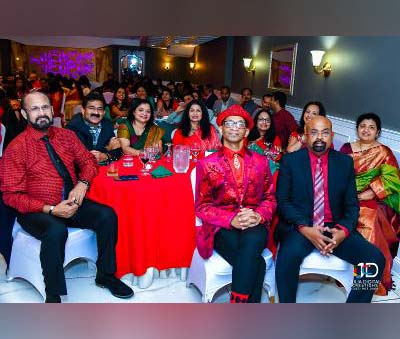
Sandhu replied by saying women need to believe in themselves and speak out in order to rise above the pressures of today’s world.

Israel’s international pop sensation Noa Kirel opened the night with a full dance routine equipped with a backup crew wearing sparkly dresses. The American pop star JoJo performed various numbers throughout the night as women paraded around the stage in evening gowns behind her.

Miss India told the media after the pageant ended that her favorite part of touring Israel was getting into the water and swimming with dolphins at Dolphin Reef in Eilat.

“There are a lot [of memories] and that was one of my favorites. Israel is a beautiful country and the people are so warm, and that’s what I love about Israel,” Sandhu said.

Days before she was crowned Miss Universe, Harnaaz Sandhu, 21, wrote on Instagram the words, “India, this one’s for you.” The days of waiting anxiously, working hard to perfect the deliveries to be made, the walk, the talk, learning to expect the unexpected, all part of this 70th pageant, are over.

On her Instagram site, Sandhu wrote, “It’s been 74 days since the day I was chosen to represent India at Miss Universe 2021. It’s been a ride full of love, fun and immense hard work,” Sandhu. “As I set to walk out on that stage today as ‘India’, I carry with me your prayers & love. Thank you to my family for standing by me, today & always. Thank you to all my panelists & designers who have put together so beautifully this woman who now stands in front of you. Thank you everyone. It would not have been possible without you,” she added, ending with the unforgettable words, “India, this one’s for you.”

Professionally, Sandhu is an actor with two Punjabi LMS (Local Movie Showtimes) slated for release in 2022 and hopes to essay characters in LMS that break stereotypes that the world has of women, the bio says.

Growing up under the wings of a mother who is a physician, specializing in gynecology, Sandhu, appears to have been inspired by her mother’s example, as a woman “who broke generations of patriarchy to become a successful gynecologist and led her family.”

Sandhu grew up working with her mother at health camps addressing women’s health and menstrual hygiene, “at the same time deeply conscious of the privilege her mother’s struggles have gifted her.”

She also draws inspiration from Bollywood-Hollywood actor Priyanka Chopra, who is her favorite actor. In her spare time, Sandhu enjoys the company of friends, loves yoga, dancing, cooking, horse riding, and playing chess. She loves swimming. She believes in the saying – “Great things happen to those who don’t stop believing, trying, learning, and being grateful.”

She also stated that she was looking forward to strengthening relations between Israel and India and was super excited about the challenge. She said, “I have to bring back the crown home.” The Bollywood aspirant has kept her word and made India proud. Sandhu said, “One must keep growing through life as we all learn something every day. To believe in yourself is the key to success. I represented myself as the best version of myself.”

Sandhu believes that pageants are a platform where women come forward to celebrate sisterhood and womanhood and people across the world celebrate their beauty queens and their successes with great pride. “According to me, it’s all about being true to the self and people around you will definitely look at that spark in you,” she stated.

The 21-year-old’s winning response to a question on climate change — “This is the time to take action and talk less. … Prevent and protect is better than repair and repent” — helped her clinch the coveted title.

Sandhu’s final statement at the pageant was about the pressures that young people face across societies today. She said: “The biggest pressure the youth of today is facing is to believe in themselves, to know that you are unique and that’s what makes you beautiful. Stop comparing yourselves with others and let’s talk about more important things that’s happening worldwide.
“This is what you need to understand. Come out, speak for yourselves because you are the leader of your life, you are the voice of your own. I believed in myself and that’s why I am standing here today.”

Life Is Better With Friends: Hedge Social Club Organizes Grand Christmas Gala

Nearly 250 people the New York Tri-State region came together to celebrate and share the joys of the Christmas Season at the Cottllion Restaurant & Party Hall on Long Island, New York on Saturday, December 11th, 2021. Organized by the recently formed Hedge Social Club, through an initiative of Jacob (SAJI) Abraham, Founder & Chairman of Hedge Events of New York, the colorful event, symbolizing the joy and fellowship of Christmas was shared by the participants.

“Life is better with friends,” Jacob Abraham told the participants in his welcome address, providing insight into the objectives of creating the Hedge Social Club. “Friends are the ones who know you and are always there when you need them most. During the pandemic times, a sense of community is more important now than ever before. People near you are looking to form connections and find support.”
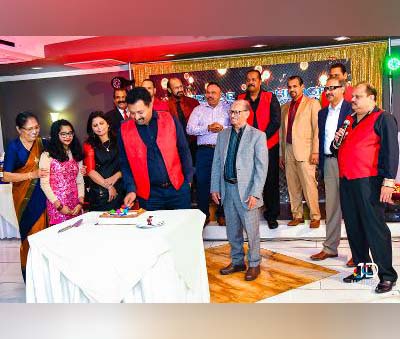
Prominent among those who attended the event and felicitated Jacob Abraham whose dynamic leadership has given birth to the Hedge Brokerage, Hedge Events and now the Hedge Social Club included: Ginsmom Zachariah, Founding Chairman of Indo-American Press Club; Ajay Ghosh, Chief Editor of The Universal News Network and IAPC BOD Secretary; Paul Karukapallil, FOKANA BOD Chairman; Ajeeth Abraham Nassau University Hospital BOD member; Thomas Ommen Shibu, R &T Production; Jiju and Reenu Kulankara from Houston; Kunju Maliyil, FOMMA Regional Vice President; and Rajan (Mithras Festival).

Senator Kevin Thomas of the New York State greeted the audience. Guest of Honor was Dr. Freemu Varghese, Founder and CEO of Freedia Media.  Minos Abraham served eloquently as the Emcee for the program. Biju Chacko, a BOD member of IAPC introduced Jacob Abraham to the audience.

In addition to a delicious spread of authentic Indian cuisine and drinks, the Gala was packed with music, dance and felicitations by reputed local artists. Funds raised through a raffle with attractive gifts was sent to a young child in Kerala for the much needed surgery.

The Ganamela for the evening was filled with the melodious voices of Jemson Kuriakose, Sujeeth Moolayil, Aparna Shibu and Archana Moolalyil. The beautifully choreographed cinematic dance was by Jithu & Team of the Tri-state Dance Company.  Tozin supported the event with his Digital Skills, while Saji managed Sound, and Sunny George provided IT support. Julia Digital Videos & EVENTS CATZ VIJI coordinated the event.

Stating that Hedge Club is a forum to “Meet new people at the Hedge Club, which is the ultimate group” Jacob Abraham said, “HEDGE CLUB is the one you always wanted to be part of. A group that you feel you belong to, and you believe it to be an integral part of who you are.” The Club members meet every month and celebrate and enhance their fellowship and joy. To join the Group and expand one’s friends circle and spend quality time with people, please call Saji Abraham at: 516. 606.3268.

Covid Claims Over 800,000 Deaths In US

The U.S. death toll from COVID-19 topped 800,000 on Tuesday, a once-unimaginable figure seen as doubly tragic, given that more than 200,000 of those lives were lost after the vaccine became available practically for the asking last spring.

The number of deaths, as compiled by Johns Hopkins University, is about equal to the population of Atlanta and St. Louis combined, or Minneapolis and Cleveland put together. It is roughly equivalent to how many Americans die each year from heart disease or stroke.

The United States has the highest reported toll of any country. The U.S. accounts for approximately 4% of the world’s population but about 15% of the 5.3 million known deaths from the coronavirus since the outbreak began in China two years ago.

The true death toll in the U.S. and around the world is believed to significantly higher because of cases that were overlooked or concealed.

A closely watched forecasting model from the University of Washington projects a total of over 880,000 reported deaths in the U.S. by March 1. President Joe Biden on Tuesday noted what he called a “tragic milestone.” He again called on unvaccinated Americans to get shots for themselves and their children, and urged the vaccinated to get booster shots.

“I urge all Americans: do your patriotic duty to keep our country safe, to protect yourself and those around you, and to honor the memory of all those we have lost,” Biden said. “Now is the time.” Health experts lament that many of the deaths in the United States were especially heartbreaking because they were preventable by way of the vaccine, which became available in mid-December a year ago and was thrown open to all adults by mid-April of this year.

About 200 million Americans are fully vaccinated, or just over 60% of the population. That is well short of what scientists say is needed to keep the virus in check. “Almost all the people dying are now dying preventable deaths,” said Dr. Chris Beyrer, an epidemiologist at the Johns Hopkins Bloomberg School of Public Health. “And that’s because they’re not immunized. And you know that, God, it’s a terrible tragedy.”

When the vaccine was first rolled out, the country’s death toll stood at about 300,000. It hit 600,000 in mid-June and 700,000 on Oct. 1. The U.S. crossed the latest threshold with cases and hospitalizations on the rise again in a spike driven by the highly contagious delta variant, which arrived in the first half of 2021 and now accounts for practically all infections. Now the omicron variant is gaining a foothold in the country, though scientists are not sure how dangerous it is.

Beyrer recalled that in March or April 2020, one of the worst-case scenarios projected upwards of 240,000 American deaths. “And I saw that number, and I thought that is incredible — 240,000 American deaths?” he said. “And we’re now past three times that number.” He added: “And I think it’s fair to say that we’re still not out of the woods.”

How Elon Musk Became The Richest Private Citizen In The World

If you want to become a billionaire—and you didn’t happen to be born into the Saudi royal family—there are a few ways to get the job done. You could come up with one seriously good idea, like a new computer operating system or social network, and then build it into a gigantic company. Or you could take the Warren Buffet route, making a decades-long series of shrewd, low–risk investments, and then watch the wealth slowly trickle in. And then there’s what Elon Musk did.

Musk made his money differently than most of today’s famous billionaires. Instead of one amazing idea, he had several good ones. And instead of a bunch of clever, safe investments, he made just a few spectacularly risky ones. But there was a method to his madness, even if it wasn’t apparent to many at the time. The sum total of those bets made Musk the richest private citizen on the planet this year, and their world-altering effects—from privately-launched space missions to an electric vehicle titan that has left the auto industry desperate to catch up—have landed Musk as TIME’s 2021 Person of the Year.

Musk’s family was well-off. He had an early aptitude with computers, designing his own video game at 12-years-old. When he was 17, he left for Canada to escape military service in South Africa’s apartheid regime, attending Queens University in Ontario.

In 1992, he transferred to the University of Pennsylvania, where he studied physics and business. Penn’s tree-lined campus may have also given Musk his first taste for risky business ventures—he and a couple of friends rented out an off-campus house and turned it into a nightclub.

Then it was on to Silicon Valley and—briefly—to grad school. Musk enrolled in a physics Ph.D. program at Stanford, then dropped out after two days. Young entrepreneurs were starting to realize that the internet, a newfangled web of connections between computers, might be more than a playground for nerds, and Musk wanted to try his luck. Together with his brother Kimbal, Musk founded a company called Zip2 as an online business directory, a kind of web-enabled yellow pages with maps—a nifty idea back in the mid-nineties.

Elon and Kimbal recruited investors and brought on outside help to run the company, which made deals with publishers like the New York Times. In 1999, they sold the Zip2 to Compaq, a then-declining computer manufacturing giant, for $307 million. Musk netted a cool $22 million from the Zip2 sale; he promptly went out and spent $1 million on a McLaren F1 supercar. “It’s not consistent with the rest of my behavior,” he would tell CNN, which filmed Musk as the car was delivered to his home. A year later, Musk wrecked the car—he was trying to show off its acceleration and ended up accidentally launching it into the air like a frisbee. The million-dollar sports car was not insured.

But by then, Musk was already on to his next venture. Driving with him in the McLaren the day of the wreck was Peter Thiel, co-founder of a payments startup called Confinity. (Thiel and Musk weren’t injured in the crash).

Musk had plowed his millions into starting another online banking startup called X.com. The two companies would merge in March 2000, forming a business that eventually became PayPal. Musk was named CEO, but in September, while he was on vacation, the board fired him, replacing him with Thiel, partly due to a disagreement over switching the company’s servers.

“It’s not a good idea to leave the office when there are a lot of major things underway that are causing people a great deal of stress,” Musk would later reflect. Musk still had a stake in the company, though. When eBay bought PayPal for $1.5 billion in 2002, Musk netted a $180 million mega-fortune from the deal.

Musk didn’t end up relaxing with all the things his new millions could buy. In 2002, he founded SpaceX with the almost ludicrous mission of colonizing Mars. The next year, he sank an initial investment of more than $6 million into Tesla, which was then not much more than a pair of founders and a vision of electric sports cars.

The company planned to take advantage of new lithium-ion batteries, which were both light and energy-dense, to revolutionize the struggling field. At the time, lithium-ion cells were only being used in small electronic devices, and one of Tesla’s central innovations was scaling them up, which enabled it to create an electric vehicle with far greater range than previous electric cars had been able to achieve.

Both companies had a tough start in the first few years—Musk says he ended up pushing essentially all his proceeds from the PayPal sale into funding the ventures. SpaceX endured multiple failed launches, which almost put it out of business, while Tesla ran into trouble as its engineers realized its prototype battery packs were likely to catch fire. “It was a potentially company-ending discovery if we couldn’t fix it,” says former Tesla chief technical officer J.B. Straubel. Later, Tesla almost went bankrupt during the Great Recession in 2008.

Eventually, Musk’s investments began to pay off. In 2008, SpaceX secured a $1.6 billion deal with NASA, while Tesla in 2012 began cranking out its first mass-market car, the Model S. Today, Tesla is a behemoth, controlling about two-thirds of the U.S. electric vehicle market. SpaceX is the undisputed leader in private space exploration.

Rich Morgan

Though Tesla produces fewer vehicles than legacy carmakers like Ford and GM, its valuation has soared many times higher than theirs. In the past 18 months, Tesla’s stock price has more than tripled, pushing its market cap over $1 trillion.

Musk controls a healthy chunk of that stock, even after selling off almost $12 billion worth of shares in the past two months, though exercising his additional stock options may leave him with a bigger stake than when he started. It’s anyone’s guess as to whether the company will maintain its massive valuation—if Tesla’s stock falls, so does Musk’s fortune.

He currently holds about 17% of Tesla’s stock, valued at $175 billion, which constitutes the largest portion of his net worth. And with SpaceX’s value floating at over $100 billion, according to its October funding round, Musk’s 48% stake in the rocket-maker, plus cash and other assets, brings his total net worth to around $266 billion.

He’s put his money into new companies as well. In 2016, Musk started The Boring Company, which digs tunnels, and neurotechnology startup Neuralink. Both are now worth hundreds of millions of dollars. Those two most recent ventures are illustrative examples of the mindset that created Musk’s fortune. They’re both highly speculative endeavors—Neuralink is trying to develop telepathic interfaces with machines; The Boring Company aims to revolutionize infrastructure.

There’s not much chance either will pay off in the long run, experts say, but big-bucks risk-taking is Musk’s bread and butter. That same approach, throwing millions of dollars at impossibly difficult projects, is what turned Musk from a lucky kid with a dot.com fortune into the wealthiest person on the planet. Or at least the wealthiest private citizen. “I think [Russia’s] President Putin is significantly richer than me,” Musk told TIME in early December. “I can’t invade countries and stuff.”

Indra Nooyi Discusses Life Experiences With Indian American Community

The Connecticut Chapter of the Global organization of People of Indian Origin (GOPIO-CT) and the India Cultural Center (ICC) of Greenwich, Milan Cultural Association of Hartford and Ascend Connecticut/Westchester Chapter co-hosted a program ‘A Conversation with Indra Nooyi’ December 4, 2021, at The Village, near Star Point in Stamford, Connecticut, USA.

It was a sold-out program, according to a press release, to hear the famous Indian-American CEO, who is a national icon in the U.S., especially for women and immigrants to this country.
Nooyi’s memoir, My Life in Full: Work, Family and Our Future. Was published recently, and discussions at the meeting revolved around the book as well as on life in general for the Indian-American community.

Raised in a traditional home in South India, Nooyi broke many stereotypes to become the first woman to head PepsiCo and enhance the company’s image and revenues, all while raising a family in Connecticut.

A graduate of the Yale School of Management, Nooyi joined PepsiCo in 2019 and was there for 24 years. In her book, Indra Nooyi shares these experiences and ideas of how to balance work and family for women.

At the Dec. 4 event, Nooyi spoke on her life from coming to the U.S. and climbing the ladder to become the first Indian CEO of a Fortune 50 company, at the same time managing her family and helping society at large.

The discussion was moderated by ICC Director Mudita Bhargava, who asked a range of questions. Bhargava is also a Vice Chairman of the Connecticut Democratic Party.
Greenwich high school seniors Maya Hirani and Veda Swaminathan introduced Moderator Bhargava and Speaker Indra Nooyi.

“Family is the most important unit that exists, however, families are fragile and can be messy at times, but it is better to keep it intact,” Nooyi is quoted saying at the meeting. On women’s empowerment, Nooyi said, “It is very important for the women to be educated and be financially independent.”

A sold-out audience for the Dec. 4, 2021, event hosted in Connecticut by GOPIO and several other organizations, to discuss former PepsiCo CEO Indra Nooyi’s new book. Photo courtesy GOPIO “Women are making a difference, for example, 70% of female students in High Schools are valedictorians and they get whole 1 point more in GPA, 47% of MIT students are women and more that 50% graduates are women,” Nooyi added.

On the role of technology in our lives, Nooyi said that one needs to juggle priorities to balance work and families. On mental health, Nooyi has said “There’s a stigma attached to it, we deny this issue, however we should talk about mental health and support those dealing with it.”
On rising upward in your profession, Nooyi recommended, “Put your hand up for the most difficult assignment because then you’ll leave the mark and you’ll be remembered.” The vote of thanks was offered by GOPIO-CT Vice President Dr. Jaya Daptardar. The book Indra Nooyi – My Life in Full: Work, Family and Our Future is available from Amazon.

Chief Justice John Roberts Warns Anti-Abortion Supreme Court Justices

The chief justice of the United States, John Roberts, has warned that the Supreme Court risks losing its own authority if it allows states to circumvent the courts as Texas did with its near-total abortion ban.

In a strongly worded opinion joined by the high court’s three liberal justices, Roberts wrote that the “clear purpose and actual effect” of the Texas law was “to nullify this Court’s rulings.” That, he said, undermines the Constitution and the fundamental role of the Supreme Court and the court system as a whole.

The opinion was a remarkable plea by the chief justice to his colleagues on the court to resist the efforts by right-wing lawmakers to get around court decisions they dislike, in this case Roe v. Wade, the 1973 decision that made abortion legal in the United States, within limits. But in this case, his urgent request was largely ignored by the other justices on the court who were appointed by Republicans.

His point to them was that the court system should decide what the law is, and it should resist efforts like that of the Texas Legislature to get around the courts by limiting the ability of abortion providers to sue.

It is a basic principle, he wrote, “that the Constitution is the ‘fundamental and paramount law of the nation,’ and ‘[i]t is emphatically the province and duty of the judicial department to say what the law is.'” He cited as proof the landmark 1803 Marbury v. Madison case, which established the principle of judicial review, allowing the court to nullify laws that violate the Constitution.

“If the legislatures of the several states may, at will, annul the judgments of the courts of the United States, and destroy the rights acquired under those judgments, the Constitution itself becomes a solemn mockery,” he said, quoting the 1809 U.S. v. Peters case, which found that state legislatures can’t overrule federal courts. “The nature of the federal right infringed does not matter; it is the role of the Supreme Court in our constitutional system that is at stake.”

The Texas law, which took effect in September, delegates enforcement to any person, anywhere, who can sue any doctor performing an abortion or anyone who aids in the procedure. That makes it virtually impossible for abortion providers to sue the state to block the law, S.B. 8. Texas has argued that the law’s opponents had no legal authority to sue the state because S.B. 8 does not give state officials any role in enforcing the restriction.

Roberts has said that politics has no place at the Supreme Court and has made it clear he will resist efforts to draw the court into partisan cultural fights, fearing that the perception of partisanship will undermine the court’s legitimacy.

With the court now having a 6-3 conservative supermajority, Roberts wound up siding with the three liberal justices: Elena Kagan, Stephen Breyer and Sonia Sotomayor. The addition of three justices by former President Donald Trump meant Roberts could not find another vote for his position, leaving him largely in the minority in the abortion ruling.

Melissa Murray, a law professor at New York University, said Friday on MSNBC that “the real question here is whether or not Chief Justice John Roberts is chief justice in principle as well as name.”

“The question here is how can he reign in that hardcore conservative bloc of the court?” she asked. “And it seemed obvious last week in oral arguments, and this week — in terms of how these opinions are written, and where the chief justice finds himself — that maybe he’s having a hard time keeping all of the conservative bloc in line.”

The Supreme Court ruling Friday said that abortion providers in Texas can move forward with their lawsuit challenging S.B. 8 along a very narrow path. But it kept the law in effect while the court battle unfolds, which abortion rights supporters said would prevent large numbers of low-income Texas women from obtaining abortions during the legal fight.

Kashi Vishwanath Project, Described As India’s Spiritual Soul Launched

While dedicating the Kashi Vishwanath Corridor Project on Dec 13th, Prime Minister Narendra Modi described that the Project was a symbol of India’s spiritual soul. “Today, a new chapter is being written in the history of Kashi Vishwanath. Kashi Vishwanath Dham premises is not just a grand building but a symbol of India’s culture and traditions. Kashi shows how inspirations of the ancient are giving direction to the future,” Modi said.

The Prime Minister said that Kashi is a beautiful amalgam of antiquity and novelty that come alive together. He said that the glory of the past is coming alive again, showcasing India’s antiquity, traditions, energy, and mobility. Quoting extensively from scriptures, the Prime minister also spoke in Bhojpuri and established a connection with the local people.

‘Kashi and Ganga belong to all. The invaders attacked this city, tried to destroy it. The history of Aurangzeb’s atrocities, his terror tried to change civilization by the sword.

But the soil of this country is different from the rest of the world. If Aurangzeb comes here, Shivaji stands up. If any Salar Masood moves here, then brave warriors like King Suheldev make him realize the power of our unity,” he said.

He said that when the temple was attacked, Ahilyabai Holkar helped in its reconstruction. The Prime Minister said that earlier the temple area was only 3,000 square feet, it has now become about 5 lakh square feet. “Around 50 to 75 thousand devotees can now be accommodated in the temple premises,” he said.

Modi further said that Kashi is the city of eternity where awakening is life and even death is a celebration. He termed it as the religious and spiritual capital of the country. He said that new India was developing alongside and listed the achievements of his government in changing the lives of people for the better.

The Prime Minister also expressed his gratitude towards every laborer who has worked for the construction of this complex and did not stop work even during the pandemic. The Prime Minister asked people to make three promises to him. He said that people must promise cleanliness, innovation, and self-reliance.

“India is moving towards a new tomorrow but we need to work harder on cleanliness. We also need to stress innovation. Startups are changing the face of the country and we need to carry it forward. We also have to emphasize ‘Atmanirbhar’ which is essential to make the country strong,” he said.

Uttar Pradesh Chief Minister Yogi Adityanath, BJP president J.P. Nadda, Deputy Chief Ministers Dinesh Sharma and Keshav Maurya, Union Ministers Dharmendra Pradhan, Mahendra Pandey, and state BJP president Swatantra Dev Singh were present on the occasion.

The Reasons And Solutions To Rising Inflation In The US

With inflation at a 39-year high, Americans are feeling the pinch in just about every facet of daily life. The consumer price index jumped 6.8% from a year earlier, the fastest pace since 1982, as prices surged for staples such as food and gasoline, as well as new and used cars, rent and medical care, the Labor Department said Friday.

There’s been plenty of finger-pointing from both sides of the political aisle about who’s responsible for the spiraling costs, but as usual with issues that have such a broad impact, the causes are complex.

President Joe Biden acknowledged last month that “inflation hurts Americans’ pocketbooks, and reversing this trend is a top priority for me.’’ But he said his $1 trillion infrastructure package, including spending on roads, bridges and ports, would help ease supply bottlenecks.

Here’s a quick breakdown of how we got here and some of the strategies that might help reverse the trend:

►CPI Report: Consumer prices climbed 6.8% in November from a year earlier, the most since 1982, as inflation surged higher

►Inflation surges to 39-year high: How much more are you paying and what’s the damage for Biden?

►Personal finance: What’s not to love? The US savings bond that earns 7% with inflation protection, yet gets ignored

Why are grocery prices so high?

There are myriad reasons for the higher grocery bills, including the same labor shortages, supply chain bottlenecks and strong consumer demand that have driven up the cost of other goods and services. Toss in the wild cards plaguing the food industry: Extreme weather, particularly heat and drought that have curtailed crop yields. A surge in exports. COVID-19 outbreaks at meatpacking plants. Volatile consumer eating patterns amid the ups and downs of the health crisis.

Meanwhile, dire worker shortages, particularly at restaurants, have pushed up wages and the cost of dining out.

There are still fewer factory, warehouse and port workers as parents care for distance-learning children or stay home because of COVID-19 fears. Fuel costs have soared. Dozens of container ships are stuck in the waters near the Ports of Los Angeles and Long Beach, California, waiting to unload cargo. The cost to lease a shipping container for a delivery from China has increased nearly tenfold to $20,000.

Other factors driving inflation

Cars are one of the leading culprits.

Also behind the spike are items such as hotel rates and airline fares, which plunged last year in the early days of the pandemic and rose sharply from those lows this year as consumer demand returned amid the reopening economy.

Supply chain bottlenecks, with COVID-19-related worker absences at factories and ports still high, are also leading to low supplies and higher prices for consumer electronics, appliances and many other products.
The crunch comes on top of a semiconductor shortage and parts supply disruptions that have meant low inventories and higher prices for cars.

The average sales price of a new vehicle hit a record $42,802 in September, breaking the old record of $41,528 set in August, J.D. Power said. The average U.S. price is up nearly 19% from a year ago, when it broke $36,000 for the first time, J.D. Power said. The auto price increases have helped to drive up U.S. inflation.

The Gerald Jones Honda lot in Augusta, Ga., is mostly empty. On a late October morning, there were only six new cars available when there are usually around 250.

►Where are we going from here? Are we at risk of stagflation as prices rise and growth slows?

►The high cost of buying a car: US vehicle sales tumble amid chip shortage, record prices

What role did the stimulus play in driving inflation?

That’s complicated. The stimulus checks, which started to get mailed out under President Donald Trump’s administration, continued through March, when eligible married couples, for example, received up to $2,800 – plus $1,400 for each dependent.

The economy looked very different in the spring of 2020, when Americans first started to receive stimulus checks: The U.S. economy had collapsed as lockdowns took effect, businesses closed or cut hours and consumers stayed home as a health precaution. Employers slashed 22 million jobs. Economic output plunged at a record-shattering 31% annual rate in last year’s April-June quarter.

Everyone braced for more misery. Companies cut investment. Restocking was put off. And a brutal recession ensued.

Yet instead of sinking into a prolonged downturn, the economy staged an unexpectedly rousing recovery, fueled by massive government spending and a bevy of emergency moves by the Fed. By the spring of 2021, the rollout of vaccines had emboldened consumers to return to restaurants, bars and shops.

Suddenly, businesses had to scramble to meet demand. They couldn’t hire fast enough to plug job openings – a near record 10.4 million in August – or buy enough supplies to fill customer orders. As business roared back, ports and freight yards couldn’t handle the traffic. Global supply chains became snarled.

Costs rose. And companies found that they could pass along those higher costs in the form of higher prices to consumers, many of whom had managed to sock away a ton of savings during the pandemic.

To curb inflation, fed reduces bond purchases

Last month, in a milestone for the U.S. recovery from the COVID-19 recession, the Federal Reserve agreed to gradually dial back the bond-buying stimulus it launched early in the health crisis.

The decision, which has been expected for months, reflects the strides the economy has made, with unemployment falling sharply from its pandemic peak. But it also pointedly reveals the central bank’s growing concern about inflation that has surged in recent months amid supply chain bottlenecks.

Fed Chair Jerome Powell told reporters the Fed will be patient and hold off on raising rates so the economy can reach full employment, but he added officials “won’t hesitate” to act if inflation doesn’t ease, presumably by the second half of next year.

►Worker shortage: As millions of jobs go unfilled, employers look to familiar faces in ‘boomerang employees’

►Personal finance and politics: What the jump in consumer prices means for your pocketbook, Joe Biden’s troubles

Biden announces ports open 24/7 to fight inflation, reduce supply chain crunch

In October, Biden announced that the Port of Los Angeles – at the center of the supply chain logjam – will operate around the clock to help clear out some of the hundreds of thousands of shipping containers from Asia stranded on its docks. The neighboring Port of Long Beach, which has been conducting a similar pilot project at one of its 12 terminals, is expected to follow.

As ports gear up operations, dozens of cargo vessels dot the surrounding harbor, waiting for the chance to unload 40-foot containers filled with food, clothing and even holiday gifts, from skateboards to elliptical bicycles. In normal times, there are no waits. But it’s not that simple.

A visit to the ports of Los Angeles and Long Beach and interviews with port officials, union representatives, workers and freight companies reveal it likely will take months to make a significant dent in the port backlog and disentangle the myriad other kinks in the nation’s vast supply network.

Other players, including truck drivers and warehouse workers, need to shift their schedules. There are also equipment shortfalls, bureaucratic hurdles and severe worker shortages at other hubs in the overwhelmed supply chain.

►Will it save holiday shopping? Biden says running LA ports 24/7 will help save Christmas shopping. It’s not that simple, experts warn.

Omicron Spreading At Unprecedented Rate, WHO Warns

The new coronavirus variant Omicron is spreading across the globe at an unprecedented rate, the World Health Organization (WHO) has warned. Cases of the heavily mutated variant have been confirmed in 77 countries.

But at a press conference, WHO chief Tedros Adhanom Ghebreyesus said it was probably in many others that had yet to detect it. Dr. Tedros said he was concerned that not enough was being done to tackle the variant.

“Surely, we have learned by now that we underestimate this virus at our peril. Even if Omicron does cause less severe disease, the sheer number of cases could once again overwhelm unprepared health systems,” he said.

The WHO’s latest data suggests the variant – first detected in South Africa in November – can better evade existing vaccines and carries a higher risk of re-infection, leading the organisation to say the level of risk remains very high.

A number of countries have introduced travel bans affecting South Africa and its neighbours following the emergence of Omicron, but this has failed to stop it from spreading around the world.

In other developments

  1. More than 800,000 Americans have now died from the coronavirus – the highest recorded national death toll from the global pandemic
  2. UK Prime Minister Boris Johnson won backing for Covid passes in England, despite the biggest revolt by members of his own party since he became PM
  3. The UK government also announced on Tuesday that all 11 countries on its travel red list would be taken off, with Health Secretary Sajid Javid saying the Omicron variant had spread so widely the rules no longer had much purpose
  4. Italy has extended a state of emergency until 31 March 2022, citing concerns over Omicron. The measures, which were due to expire at the end of December, give the government more power to limit travel and public gatherings
  5. The Netherlands says it will close primary schools a week before the Christmas holidays are due to start, in a pre-emptive bid to tackle infections
  6. Norway has announced a ban on serving alcohol in bars and restaurants, among other measures

In a news conference, Dr. Tedros reiterated concerns about vaccine inequity, as some countries accelerate rollouts of a booster shot in response to Omicron.

Recent studies of the Pfizer/BioNTech vaccine showed it produced far fewer neutralising antibodies against Omicron than against the original strain, but that this deficit could be reversed by a third, booster, jab. Dr. Tedros said boosters could play an important role in curbing the spread of Covid-19, but that it was “a question of prioritization”.
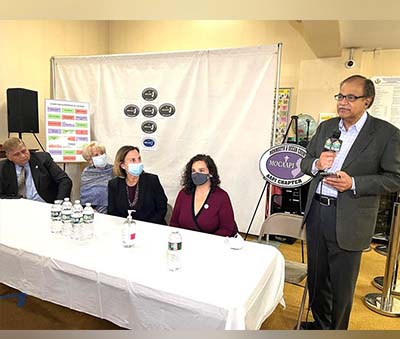
“The order matters. Giving boosters to groups at low risk of severe disease or death simply endangers the lives of those at high risk who are still waiting for their primary doses because of supply constraints,” he said. Supplies to the global vaccine-sharing program Covax have increased in recent months.

However, world health officials fear a shortfall of tens of millions of doses – like the one which occurred in the middle of this year when India suspended its vaccine exports – could happen again. In poorer countries, some vulnerable people are yet to receive a single dose.

This information is regularly updated but may not reflect the latest totals or vaccines administered for each location. Total vaccinations refers to the number of doses given, and may include booster doses in addition to those required for full vaccination. The definition of full vaccination varies by country and vaccine type and is subject to change over time.

Raghavendra Rathore, First Designer To Use NFTS For A Cause

Few people are aware that Raghavendra Rathore studied robotics and created electrical circuits with sensors that mirrored human behaviour. A decade later, he and his colleagues created one of India’s first apps, iCarbon, a smart carbon footprint calculator with links to lessen an individual’s carbon footprint by recommending tree planting. He’s always been at the crossroads of art and technology, including an art (electronic) installation in the early 1990s with recognised names like CK, Cristo, and other eminent art and creative giants to raise money for AMFAR.

Rathore turns his own art into NFTs using exclusive blockchain technology, resulting in art that is genuinely priceless and everlasting. He has also made meticulously designed paintings NFT inspired by the Raghavendra Rathore, Jodhpur, which will be available for purchase. In collaboration with FDCI x Lakme Fashion Week, this series is being released as part of a limited edition NFT on the WazirX NFT marketplace.

“Designers, globally and in India, have started to realise how NFTs can be used to engage with the greater community,” said Vishakha Singh, Co-Founder & VP, WazirX NFT marketplace. The fact that the money will be donated to a worthy cause makes this drop even more precious. Our goal with each release is to add as many use cases as feasible. For producers and collectors, India is a promising NFT market, and this relationship will benefit both parties. We’re excited to have these NFTs available on our platform.”

These NFTs are being generated for the first time ever to promote awareness for the Raghavendra Rathore Foundation (RRF), a certified non-governmental organisation. RRF will get a share of the sale earnings to assist strengthen communities through mentorship programmes, cultural experiences and scholarship possibilities. This is the first time an Indian designer has reinvented the fundraising experience by moving to a digital-first strategy.

The Gurukul School of Design students are honoured and motivated by the NFT. A series where one can acquire unique digital artworks and digital treasures such as apparel, original forms of art, unique experiences, and unique moments in time; now captured, exchanged, and treasured, to build more permanent links. “The relevance of blockchain is something we all need to be aware of, as it will become an integral part of our lives in the not-too-distant future.”

“We must create products and services that are built on this ground-breaking technology.” Raghavendra Rathore is a Bollywood actor. All collectors will receive verification of ownership and authenticity of their purchase.

New Jersey Physicians Donate $300,000 To Food Bank, Indian Cultural Center

The Monmouth Ocean County Association of Physicians of Indian Origin (MOCAAPI) in the state of New Jersey announced that it has donated $300,000 of which $150,000 to the Fulfil Food Bank, and another $150,000 to the Indian Cultural & Community Center in Toms River, making good on its pledge to help the community.

According to a Dec. 11, 2021 press release, MOCAPPI, a non-profit, 501(c)(3) charitable organization, was established in 2003, and has raised more than $500,000 over the years through annual charitable galas, popular golf outings, and other events, will continue to work for the betterment of society through its impactful donations.

“It was a long-time dream of MOCAAPI members to make an impactful donation which is being fulfilled today by making a $150,000 donation to Fulfill Food Bank of Monmouth Ocean Counties and $150,000 to the Indian Cultural & Community Center to build a much-needed Community Hall in Toms River,” MOCAAPI President Dr. Avinash Gupta is quoted saying in the press release.

“With everyone’s participation, generosity, and thanks to our past presidents’ efforts, we have been able to raise over $500,000 over the years,” Gupta added.

The physicians’ organization has also partnered with OCHD (Ocean County Health Department) to vaccinate thousands of its residents during the peak of COVID-19, distributed hot meals to health care workers in local hospitals and vaccination centers, and distributed blankets to the homeless.

For their volunteer work with OCHD, the physicians of MOCAAPI were presented with a proclamation from the New Jersey state senate and general assembly. It was awarded Healthcare Hero Award by the CMC Board of Trustees.

Fulfill’s new CEO and President Triada Stampas, along with Fulfill’s Director of Development Linda Kellner, attended the event where the donations were made.

Stampas said this donation will provide 450,000 meals. Currently, Fulfill provides meals to 215,000 residents of Monmouth Ocean counties out of which 70,000 are children. They even pack meals in the backpacks of 1,000 children to go, and last the weekend.

Ocean County Sheriff Michael Mastronardy and Commissioner Virginia Haines praised the MOCAAPI doctors for their outstanding service to the community during the pandemic.

 Dr. Bankim Shah, co-chairman of Shri Siddhivinayak Temple USA, (SSVT), and Pravin Parekh among several others from ICCC expressed their appreciation and said it will fulfill the need of the growing Indian community in the area. According to information provided by MOCAAPI, Dr. Shah “announced another matching contribution of $150,000 from SSVT.”

The leadership and generosity of Drs. Avinash and Geeta Gupta were praised, for a personal matching donation of $150,000 to the ICCC to build the community hall where children can learn about the culture and heritage, senior citizens can meet, carry out yoga, health care camps, motivational & life-skills classes, fundraising events and celebrate festivals together.

Dr. Avinash Gupta thanked his team of Officers, Executive Members, the Board of Trustees, and especially the past Presidents because of whom this was made possible, a press release from the organization said.

Child hunger is projected to increase by approximately 75% in New Jersey due to the impact of the pandemic, MOCAAPI said. Fulfill, a tax-deductible organization, has a four-star rating from Charity Navigator, with 95 cents out of every dollar donated going directly towards feeding hungry individuals.

The Indian Cultural & Community Center was incorporated in 2016 as a non-religious non-profit charitable organization(https://www.indianculturalcommunitycenter.org) in Toms River, N.J.

Tamil Nadu Engages Tamil Diaspora In Efforts To Raise Trillion Dollar

Tamil Nadu Chief Minister M.K. Stalin is in the process of roping in Tamil diaspora abroad to achieve the state’s trillion-dollar goal by 2030, a pet project of the Chief Minister.

The Tamil Nadu government has already roped in the services of several nonresident Tamils for this project.

US-based entrepreneur R. Rangaswami, who is Founder and Chairman of Indiaspora which is a network of global Indian origin leaders, has already been roped in for executing the project. A panel of Tamil diaspora including Sunder Pichai of Google, Indira Nooyi, the former Chairperson of Pepsico, and several other technocrats and management experts will be used for developing the economic investment in the state.

Tamil Industries Minister Thangam Thennarasu will be the Chairperson of the 12 member panel, and the Vice Chairman of the Tamil Nadu State Planning Commission, and the state Industries Secretary are the ex-officio members. The Managing Director and CEO of Guidance will also be an ex-officio member.

The others in the 12 member panel are Dr Bala Swaminathan, of the Bala family foundation, Ganesh Radhakrishnan, CEO, Wharfedale Technologies Inc, US, Saravanan M. Sinapan, President, DHRRA, Malaysia, Suresh Sambandam, CEO, KISSFLOW (Founder, Dream Tamil Nadu), M. Arumugam, CEO, Broadline Computer Systems Private Ltd, Tamil Nadu, Elenchezhian Loganathan, CEO, Yaal Exports, Tamil Nadu and Rm Arun, President, SICCI, Tamil Nadu.

Thennarasu said that the members would act as brand ambassadors of Tamil Nadu’s industrial ecosystem and they would be given the mandate to open sub-chapters in their respective countries of residences.

The panel will help the Tamil Nadu government to conduct an annual investment and cultural conclave and the panel members will help the Chief Minister and Industries Minister to conduct physical and virtual meetings with the diaspora in their respective countries.

The panel will connect with the Tamil diaspora and create an online platform for regular interactions.

Tamil Nadu is arguably the best governed state of the country. It is probably the only state which has successfully moved labour from agriculture to other sectors as it is the only state to register absolute decline in labour employed in agriculture in the last two census.

It is among the top states that have maximum number of engineering colleges, polytechnique institutes and medical colleges.Its dream run from USD 1 billion of GDP in 1980s to USD 260 billion today is nothing sort of a miracle.It marched forward right from the time of Independence.

The foundation for this growth was laid by K. Kamaraj, then Chief Minister, who got large PSUs into the state and also set up industrial parks like Guindy in Chennai.Another popular CM, M.G. Ramachandran, made two decisive policies which resulted in an unintended economic boom.First one is the mass implementation of the midday meal scheme.

He didn’t want children to go hungry and staked his personal political capital to bring more kids to school.He was ridiculed and scoffed at for making children ‘beggars’. But it turned out to be the single trigger for Tamil Nadu’s enhanced literacy.

The second one, his zeal to privatise technical education which had created abundant supply of seats where anyone who wanted to pursue technical education got the opportunity.

The first corporate hospital “Apollo” was set up in his time and it resulted in more healthcare entrepreneurs setting up hospitals across TN, and this also emerged as a fore-runner for successful corporate hospitals across the country.

There is no wonder that TN has the maximum number of labs testing for Covid-19, compared to any other state, and has the least mortality rates, bettering even developed countries.There is no denying the fact that the successive chief ministers could pursue on that foundation to make TN the best governed state.

Raghavan Appointed As White House Personnel Head

US President Joe Biden on Friday elevated Indian American Gautam Raghavan to a new position making him head of the White House Office of Presidential Personnel.

Biden announced Raghavan’s promotion to the key White House post after UN Secretary-General Antonio Guterres announced his intent to appoint Cathy Russell as the next executive director of UNICEF. Russell is currently the head of WH PPO.

UN Secretary-General Antonio Guterres announced on Thursday that he was appointing Russel to head the UN arm devoted to the welfare of children, and almost simultaneously US President Joe Biden appointed Raghavan to succeed her at the White House. Russel follows another American, Henrietta Fore, who became the head of UNICEF in 2018 and quit this year.

The job of UNICEF head has traditionally gone to Americans, whose government is the largest contributor to the organization. (In 2020, Washington provided $801 million of the $7 billion contributions it received.)

Raghavan was Russel’s Deputy at the White House Office of Presidential Personnel which is in charge of vetting and recruiting political appointees to about 4,000 jobs that are not career civil service positions.

Biden said that his appointment will ensure a “seamless transition that will enable us to continue building a federal workforce that is efficient, effective, dependable, and diverse”.

Raghavan was the first employee hired by Biden’s Transition Team and served as the deputy head of presidential appointments, according to the White House. From there he went on to become deputy director of the personnel office with the title of deputy assistant to the President.

The Stanford University graduate was born in India and grew up in Seattle. He is openly gay, and according to the White House “he lives with his husband and their daughter in Washington”.

He worked in the White House Office of Public Engagement as liaison to the lesbian, gay, bisexual, transgender and queer (LGBTQ) community as well as the Asian American and Pacific Islander community in the administration of former President Barack Obama.

He has been an adviser to the Biden Foundation. His resume includes a stint as the chief of staff for Pramila Jayapal, the Indian-origin Democratic member of the House of Representatives who is the chair of the leftist group of lawmakers known as the Congressional Progressive Caucus.

In her long political and administrative career, Russell has been the US Ambassador for Global Women’s Issues, associate deputy attorney general and an adviser on women’s issues to the Senate Foreign Relations Committee.

‘Thalapathy’ Vijay Is 2021’s Most Tweeted-About South Indian Actor

Tamil actor Vijay, fondly known as ‘Thalapathy‘ by his fans, has emerged as the most tweeted about actor in south Indian films for the year 2021, Twitter India announced on Sunday.

The social media giant tweeted a list that featured the top 10 actors on Sunday.

In the list, Telugu star Pawan Kalyan emerged second while Mahesh Babu was placed third. The fourth place went to Tamil star Suriya while Telugu actors Junior NTR and Allu Arjun took the fifth and sixth places, respectively.

The seventh spot went to Tamil superstar Rajinikanth, who celebrates his birthday on Sunday and the eighth, ninth and tenth spots went to actors Ram Charan, Dhanush and Ajith Kumar, respectively.

Among the actresses, Keerthy Suresh took the first place becoming the most tweeted about actress while Pooja Hegde and Samantha Ruth Prabhu came in second and third.

Kajal Aggarwal was placed fourth in the list, which had Malavika Mohanan taking the fifth spot. Rakul Preet Singh, who has now begun acting in Hindi films, was placed sixth, while Sai Pallavi came seventh. Tamannaah, Anushka Shetty and Anupama came in eighth, ninth and tenth, respectively.

Vijay is a Tamil film actor and playback singer. He began his acting career doing many minor uncredited roles as a child artist in films produced by his father S. A. Chandrasekhar. Post-Thirumalai, he began portraying a stereotypical acting manner, much like Rajinikanth and M. G. Ramachandran. Vijay has more recently become a charismatic film star and has thus developed a large fan-following for himself. He is one of the highest paid actors in Tamil film industry, and he is referred to by fans and media as Thalapathy.

Joseph Vijay Chandrasekhar was born on June 22, 1974, to film producer and director S. A. Chandrasekhar and Shoba Chandrasekhar, a playback singer. He had a sister named Vidhya Chandrasekhar who died at the age of two. The story of Vidhya Chandrasekhar was pictured in the film, Sukran. Vijay went on to do Visual Communications at Loyola College, Chennai & was classmates with fellow actor Surya Sivakumar, Yuvan Shankar Raja, Karthik Raja, and Vishnuvardhan.
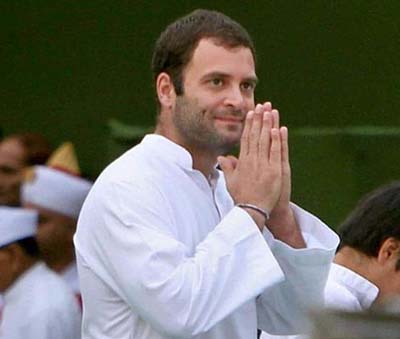
He married the Sri Lankan Tamil, Sangeetha Sornalingam, on August 25, 1999. She was a die-hard fan of Vijay and sought interest in marrying him. They have two children, a son named Jason Sanjay, born on August 26, 2000 in London, and a daughter named Divya Saasha, born on September 9, 2005 in Chennai.

Career

Vijay’s first role was in the drama, he continued to perform as a child artist in films until Ithu Engal Neethi, directed by his father S. A. Chandrasekhar. Vijay debuted as a lead role actor in the 1992 film Naalaya Theerpu, produced by his father, then he co-stared with Vijayakanth in the film Sendhoorapandi. This film helped Vijay to become popular in the interior areas of Tamil Nadu. He received his breakthrough in the film Poove Unakkaga, which was directed by Vikraman.

He made a friendly appearance in the 2012 Bollywood film Rowdy Rathore starring Akshay Kumar, directed by Prabhu Deva. As a playback singer, Vijay has sung over thirty songs in his films, he completes his 25 years in singing on 2019.

“I Am A Hindu But Not Hindutvawadi,” Says Rahul Gandhi

Addressing a mammoth gathering in Jaipur during the national rally organised to protest against the price rise and inflation, veteran Congress leader Rahul Gandhi on Sunday fiercely attacked the central government’s policies and said that he is a Hindu but not Hindutvawadi.

Elaborating the difference between the two, he said, “Two words cannot mean the same thing. Every word has a different meaning. In our country’s politics today, the meaning of Hindu and Hindutva are the same. These are not the same thing, they are two different words and they mean completely different things. I am a Hindu but not a Hindutvawadi. Mahatma Gandhi was a Hindu and Nathuram Godse was a Hindutvawadi, he added.

“No matter whatever happens, Hindu seeks and spends his whole life in search of truth whereas Hindutva spends his whole life in search of power and getting empowered. He will kill anyone for the sake of power. The path of Hindu is ‘Satyagraha’ while the path of Hindutva is ‘Sattagraha.’

Attacking the Modi government, Rahul Gandhi said that the entire country has been left in the hands of a few industrialists and the country is being run by “Hum Do, Hamare Do”.

Rahul Gandhi further said that the government of the country says that no farmer has died during the agitation. “I gave them a list of five hundred people from Punjab and Haryana and asked them that the Punjab government has given compensation, you should also give it. But they didn’t.”
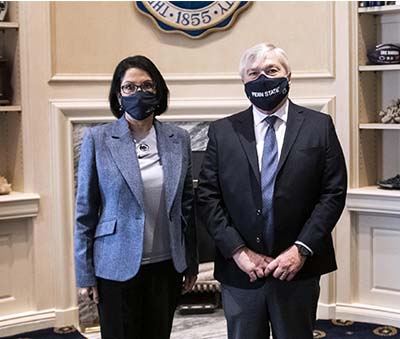
He also took a jibe at PM Modi for giving concessions to industrialists. He said that the country belongs to the poor, farmers, small shopkeepers, only these people can give employment to this country. Adani-Ambani has a place but they cannot create jobs on a large scale. Small business people, farmers can generate large scale employment.

Meanwhile, Rahul Gandhi was unaware of the absence of Punjab CM Charanjit Channi from the rally. He kept calling his name but then Sonia Gandhi and Ashok Gehlot signalled him about Channi’s absence.

Before Rahul, Priyanka Gandhi Vadra also addressed the gathering and attacked the policies of the central government and the BJP. She termed the central government as the government of lies, greed and loot.

I know how roads are being built in Goa just for the sake of transportation of coals to benefit one industrialist, she said and termed Modi as Paryatak PM.

“Modiji travelled throughout the world but did not go to farmers who were protesting on the roads,” she said adding that “the state in which I work spends crores of rupees on advertisement but does not spend on fertilizers for farmers.”

Chief Minister Ashok Gehlot also spoke on the occasion and said that all state governments are facing the challenge of financial crisis as the central government stays mum.

He said that Narendra Modi is one such PM who has not replied to a letter from the CM. “This government is being run with hubris,” he added. Ttributes were paid to late CDS Bipin Rawat and other soldiers who died in a chopper crash on December 8.

Penn State Names Neeli Bendapudi As Next President

Neeli Bendapudi, currently president and professor of marketing at the University of Louisville, Kentucky, has been unanimously named Penn State’s next president by the Penn State Board of Trustees on Dec. 9. When she begins her appointment as Penn State’s 19th president in spring 2022, she will make history as the first woman and person of color to serve as the University’s president.

Bendapudi, currently the 18th president of the University of Louisville, is a recognized leader in higher education who specializes in marketing and consumer behavior. With a nearly 30-year career in academia, Bendapudi has taught marketing and served in a variety of administrative roles over the years, including as provost and executive vice chancellor at the University of Kansas, dean of the School of Business at the University of Kansas, and founding director of the Initiative for Managing Services at Ohio State University. With a focus on collaboration and development, Bendapudi has dedicated her career to student success, fostering inclusivity, and creating opportunities for students, faculty and staff to thrive.

“Penn State is a world-class university, and I couldn’t be prouder and more excited to join this vibrant community of outstanding students, faculty, staff and alumni throughout the commonwealth and beyond.”
Neeli Bendapudi, Penn State president-elect

“Penn State is a world-class university, and I couldn’t be prouder and more excited to join this vibrant community of outstanding students, faculty, staff and alumni throughout the commonwealth and beyond,” Bendapudi said. “Thank you to the Penn State community and Board of Trustees. I am grateful for this opportunity and will make it my mission to help Penn State reach new heights across each of our campuses.”

After a comprehensive national search, Bendapudi was announced as the University’s next president during a Dec. 9 special meeting of the Board of Trustees following an extensive vetting process and overwhelming support from the Presidential Recruitment and Selection Committee, an 18-member group with student, faculty, staff and trustee representatives. She will succeed President Eric J. Barron, who will retire after serving Penn State for more than 30 years in various roles, including most recently as president since 2014.

“We are proud to welcome Dr. Bendapudi to Penn State. She is a dynamic and innovative leader who has dedicated nearly her entire professional life to higher education and is prepared to help our University advance in the ways we support students, create new knowledge and serve society,” said Matt Schuyler, chair of the Board of Trustees. “I want to extend my appreciation on behalf of the entire Board of Trustees to the many Penn State community members who participated in this selection process. Your engagement served as a critical framework throughout the search and has helped lead us to this exciting new chapter in Penn State’s history.”

Schuyler thanks President Barron for his years of dedicated service and has noted there will be a seamless transition between the two leaders.

“President Barron’s impact can be felt in every facet of the University, throughout the state of Pennsylvania and beyond,” Schuyler said. “His steadfast commitment to our students, faculty and staff; dedication to opening pathways to a Penn State education; passion for research and entrepreneurial innovation; and leadership during challenging times have been unwavering. Dr. Barron will leave our University in a most-desirable position for any leader to further our goals and mission.”

About Penn State’s 19th president

Following a rigorous interview process — including special small-group meetings with select faculty members — the full Board of Trustees interviewed and selected Bendapudi to be the University’s next president.

“We found Neeli Bendapudi to be an incredibly thoughtful, strategic leader with an inspiring breadth and depth of experiences in academia and research. As an accomplished leader, she will bring a forward-looking perspective to the presidency while remaining grounded in the important connections with our students. The qualities of a 21st-century academic leader — commitments to excellence, equity and opportunity — are second nature to Dr. Bendapudi,” said Nina Jablonski, Evan Pugh University Professor of Anthropology and member of the Presidential Recruitment and Selection Committee. “I am honored to have served Penn State in this capacity, alongside my dedicated colleagues. We committed ourselves to recommending the best individual for this vital position.”

The board and committee were very impressed with Bendapudi’s commitment to research, innovation and economic development, and also to how her experiences and vision align with Penn State’s modern land-grant mission and values, according to Schuyler.

“Thank you to the many students, faculty, staff and trustees who served on the Presidential Recruitment and Selection Committee and Next Gen Penn State Advisory Group, including the outstanding leadership from trustees Mark H. Dambly, David Kleppinger and Julie Anna Potts throughout this process,” Schuyler said. “Your collective dedication has resulted in an exceptional new president for Penn State, and I am thrilled to be able to begin working with her as our president-elect.”

Following Barron’s retirement announcement, the Board of Trustees moved forward with a phased approach to select a new University leader and named the Presidential Recruitment and Selection Committee to lead the search with support from executive search firm Spencer Stuart. During a listening phase in the spring, Penn State community members shared their input and recommendations resulting in a Next Gen Penn State report that was used to inform the presidential position profile. The official search launched in July 2021 and throughout the fall the Presidential Recruitment and Selection Committee developed a pool of the highest-quality candidates, with deliberate effort to identify diverse, high-performing candidates across genders and backgrounds.

“It was a privilege to serve the University in this capacity on behalf of my fellow students and peers,” said Erin Boas, undergraduate student member of the Presidential Recruitment and Selection Committee and president of the University Park Undergraduate Association. “I couldn’t be more excited to welcome Dr. Bendapudi to Penn State. She is a charismatic, transformational leader who cares deeply about students and has committed herself to advancing all aspects of the student experience.”

Eye Drops Could Replace Reading Glasses For Millions Of Adults

Can’t find your reading glasses? A new eye drop out Thursday could be a game-changer for millions of aging Americans who struggle to see up close.

“It’s definitely a life changer,” Toni Wright, one of the 750 participants in a clinical trial to test the drops, told CBS News national correspondent Jericka Duncan.

Vuity, the first eye drop for sharpening near vision, hit the market this week after the Food and Drug Administration approved it in October. The new medicine is meant to be used once a day and can improve vision for up to six hours at a time.

The eye drops will work best for people between the ages of 40 and 55, a Vuity spokesperson told CBS. That age group comprised two clinical trials and is most likely to notice the onset of near vision loss. 
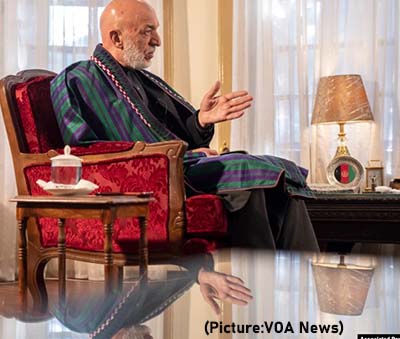
Presbyopia, or age-related blurred near vision, typically sets in after age 40, according to the American Optometric Association. Around 1.8 billion people around the world have presbyopia, according to a 2018 estimate, and the condition affects almost half of US adults per earlier estimates.

For this group, Vuity offers a potential alternative to reading glasses. The eye drops might be easier to keep track of, but they are pricier at about $80 for a 30-day supply, according to a press release from biopharmaceutical giant AbbVie. The drops must be prescribed by a physician and are not currently covered by insurance.

The medicine works by causing the pupil to constrict, which naturally allows the eye to focus at different ranges. About 15 minutes after administering one drop in each eye, participants in clinical trials could see three additional lines on a reading chart.

The drops are not meant to be used for night driving, although they worked in low-light conditions for at least three hours after application in the trials. Side effects detected during the three-month trial period included headaches and red eyes, and some users had difficulty adjusting their focus between near and far objects.

Taliban Was ‘Invited’ To Stop Chaos In Afghanistan: Karzai

KABUL, Afghanistan (AP) — The Taliban didn’t take the Afghan capital — they were invited, says the man who issued the invitation. In an Associated Press interview, former Afghan President Hamid Karzai offered some of the first insights into the secret and sudden departure of Afghan President Ashraf Ghani — and how he came to invite the Taliban into the city “to protect the population so that the country, the city doesn’t fall into chaos and the unwanted elements who would probably loot the country, loot shops.”

When Ghani left, his security officials also left. Defense minister Bismillah Khan even asked Karzai if he wanted to leave Kabul when Karzai contacted him to know what remnants of the government still remained. It turned out there were none. Not even the Kabul police chief had remained.

Karzai, who was the country’s president for 13 years after the Taliban were first ousted in the wake of the 9/11 attacks, refused to leave.

In a wide-ranging interview at his tree-lined compound in the center of the city where he lives with his wife and young children, Karzai was adamant that Ghani’s flight scuttled a last-minute plan focused on the Taliban’s entry. He and Abdullah Abdullah, the government’s chief negotiator, had been working with the Taliban leadership in Doha on a negotiated agreement to allow the militia to enter the capital under controlled conditions.

The countdown to a possible deal began Aug. 14, the day before the Taliban came to power.

Karzai and Abdullah met Ghani, and they agreed that they would leave for Doha the next day with a list of 15 others to negotiate a power-sharing agreement. The Taliban were already on the outskirts of Kabul, but Karzai said the leadership in Qatar promised the insurgent force would remain outside the city until the deal was struck.

Early on the morning of Aug. 15, Karzai said, he waited to draw up the list. The capital was fidgety, on edge. Rumors were swirling about a Taliban takeover. Karzai called Doha. He was told the Taliban would not enter the city.
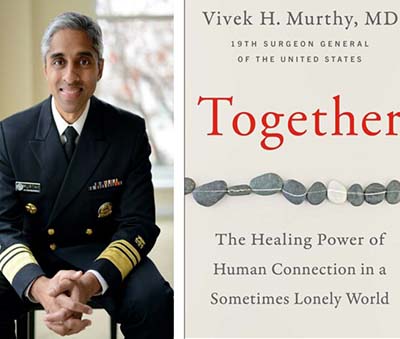
At noon, the Taliban called to say that “the government should stay in its positions and should not move that they have no intention to (go) into the city,” Karzai said. “I and others spoke to various officials and assurances were given to us that, yes, that was the case, that the Americans and the government forces were holding firm to the places (and) that Kabul would would not fall.”

By about 2:45 p.m., though, it became apparent Ghani had fled the city. Karzai called the defense minister, called the interior minister, searched for the Kabul police chief. Everyone was gone. “There was no official present at all in the capital, no police chief, no corps commander, no other units. They had all left.”

Ghani’s own protection unit’s deputy chief called Karzai to come to the palace and take over the presidency. He declined, saying legally he had no right to the job. Instead the former president decided to make a public, televised message, with his children at his side “so that the Afghan people know that we are all here.”

Karzai was adamant that there would have been an agreement for a peaceful transition had Ghani remained in Kabul. “Absolutely. Absolutely. That is what we were preparing for, what we were hoping (along) with the chairman of the peace council to go to Doha that evening, or the next morning, and to finalize the agreement,” he said. “And I believe the Taliban leaders were also waiting for us in Doha for the same … objective, for the same purpose.”

Today, Karzai meets regularly with the Taliban leadership and says the world must engage with them. Equally important, he said, is that Afghans have to come together. War has dominated Afghanistan for more than 40 years, and in the last 20 years “Afghans have suffered on all sides,” he said. “Afghans have lost lives on all sides. . . . The Afghan army has suffered. Afghan police have suffered, the Taliban soldiers have suffered.”

He added: “An end to that can only come when Afghans get together, find their own way out.”

The former president has a plan. In his talks with the Taliban, he is advocating the temporary resurrection of the constitution that governed when Afghanistan was a monarchy. The idea was also floated during earlier Doha talks.

At the same time, a traditional Loya Jirga — a grand council of all Afghans, including women — would be convened. It would decide the country’s future, including a representative government, a constitution, a national flag.

There’s no indication the Taliban will accept his formula, though he says they have not rejected it in discussions. A jirga is a centuries-old Afghan tradition for decision-making and is particularly popular among ethnic Pashtuns, which make up the backbone of the Taliban.

Karzai said a future Afghanistan has to have universal education rights for boys and girls, and women “must find their place in the Afghan polity, in the administration, in economic activity and social activity, the political activity in all ways of life. … That’s an issue on which there cannot be any compromise.”

But until it happens, Karzai says, the world has to engage with the Taliban. Afghanistan needs to operate. Government servants have to be paid. Health care facilities need to function.

“Right now, they need to cooperate with the government in any form they can,” said Karzai. who also bemoaned the unchallenged and sometimes wrong international perceptions of the Taliban. He cited claims that women and girls are not allowed outside their homes or require a male companion. “That’s not true. There are girls on the streets — women by themselves.” The situation on the ground in Kabul bears this out.

Asked to describe the Taliban, Karzai said: “I would describe them as Afghans, but Afghans who have gone through a very difficult period in their lives as all other Afghans have done for the past 40 years.”

We “have been through an extremely difficult period of our history in which we, the Afghans, have made mistakes on all sides, in which the international community and those who interacted with us have made tremendous mistakes,” Karzai said. “It’s time for all of us to realize that, and to look back at the mistakes that we have all made and to make it better.”

U.S. Surgeon General Dr. Vivek Murthy Urges Action On Youth Mental Health Crisis

United States Surgeon General Dr. Vivek Murthy issued a new   Advisory Dec. 7, 2021, to highlight the urgent need to address the nation’s youth mental health crisis.

The “Advisory on Protecting Youth Mental Health” outlines the pandemic’s unprecedented impacts on the mental health of America’s youth and families, as well as the mental health challenges that existed long before the pandemic.

Murthy calls for a “swift and coordinated response” to this crisis as the nation continues to battle the COVID-19 pandemic. It provides recommendations that individuals, families, community organizations, technology companies, governments, and others can take to improve the mental health of children, adolescents and young adults.

“Mental health challenges in children, adolescents, and young adults are real and widespread. Even before the pandemic, an alarming number of young people struggled with feelings of helplessness, depression, and thoughts of suicide — and rates have increased over the past decade.” Murthy is quoted saying in the press release.
“The COVID-19 pandemic further altered their experiences at home, school, and in the community, and the effect on their mental health has been devastating,” Surgeon General Murthy warned.

“The future wellbeing of our country depends on how we support and invest in the next generation. Especially in this moment, as we work to protect the health of Americans in the face of a new variant, we also need to focus on how we can emerge stronger on the other side. This advisory shows us how we can all work together to step up for our children during this dual crisis,” he emphasized.

Before the COVID-19 pandemic, mental health challenges were the leading cause of disability and poor life outcomes in young people, with up to 1 in 5 children ages 3 to 17 in the U.S. having a mental, emotional, developmental, or behavioral disorder.

Additionally, from 2009 to 2019, the share of high school students who reported persistent feelings of sadness or hopelessness increased by 40%, to more than 1 in 3 students, the press release noted. Suicidal behaviors among high school students also increased during the decade preceding COVID, with 19% seriously considering attempting suicide, a 36% increase from 2009 to 2019, and about 16% having made a suicide plan in the prior year, a 44% increase from 2009 to 2019. Between 2007 and 2018, suicide rates among youth ages 10-24 in the U.S. increased by 57%, – PDF and early estimates show more than 6,600 suicide deaths – PDF among this age group in 2020.

The pandemic has added to the pre-existing challenges that America’s youth faced, disrupting the lives of children and adolescents, such as in-person schooling, in-person social opportunities with peers and mentors, access to health care and social services, food, housing, and the health of their caregivers.

The pandemic’s negative impacts most heavily affected those who were vulnerable to begin with, such as youth with disabilities, racial and ethnic minorities, LGBTQ+ youth, low-income youth, youth in rural areas, youth in immigrant households, youth involved with the child welfare or juvenile justice systems, and homeless youth, ther press release said. This Fall, a coalition of the nation’s leading experts in pediatric health declared a national emergency in child and adolescent mental health.

The Surgeon General’s Advisory on Protecting Youth Mental Health outlines a series of recommendations to improve youth mental health across eleven sectors, including young people and their families, educators and schools, and media and technology companies. Topline recommendations include:

  • Recognize that mental health is an essential part of overall health.
  • Empower youth and their families to recognize, manage, and learn from difficult emotions.
  • Ensure that every child has access to high-quality, affordable, and culturally competent mental health care.
  • Support the mental health of children and youth in educational, community, and childcare settings. And expand and support the early childhood and education workforce.
  • Address the economic and social barriers that contribute to poor mental health for young people, families, and caregivers.
  • Increase timely data collection and research to identify and respond to youth mental health needs more rapidly. This includes more research on the relationship between technology and youth mental health, and technology companies should be more transparent with data and algorithmic processes to enable this research.

Leena Nair Named CEO Of French Luxury Group Chanel

Leena Nair (52), who was named the new global CEO of French fashion house Chanel on Tuesday, said that she is humbled and honored to be appointed the global Chief Executive Officer of Chanel, which is an iconic and admired company.

In a rare move for the tightly-controlled fashion house, picking the consumer goods veteran to run one of the world’s biggest luxury groups sends a positive and inclusive message, setting the pace in an industry reeling under pressure to show a more inclusive and accepting approach.

“I am so inspired by what Chanel stands for. It is a company that believes in the freedom of creation, in cultivating human potential and in acting to have a positive impact in the world,” Nair tweeted.

The Indian born British national has been given the charge of ensuring Chanel’s “long term success as a private company”, it said in a statement, recognising Nair as a “visionary leader whose ability to champion a long-term, purpose-driven agenda is matched with a consistently strong record of business outcomes”.

Renowned for its women’s pantsuits, tweeds and famous handbags, Chanel was founded in 1910 by the legendary Gabrielle Chanel, fondly called “Coco” Chanel. What started out as a hat boutique in Paris became synonymous with French chic and Parisienne style.

From 2016 to date, Alain Wertheimer, who owns Chanel with his brother Gerard Wertheimer, temporarily took on the CEO’s job till a suitable candidate was found. The 73-year-old French billionaire will take on the role of global Executive Chairman.

Nair’s 30-year-long career at Unilever comes to an end with her as the chief of human resources and a member of the company’s executive committee. Unilever’s CEO, Alan Jope, thanked her for her “outstanding contribution”, adding that she “has been a pioneer through her career… a driving force on our (Uniliver’s) equity, diversity and inclusion agenda… she has played a critical role in building our purpose-led, future-fit organisation.” Nair will now be based out of London and will join the luxury house at the end of January. (IANS)

Salman Khan To Host IIFA 2022 In Abu Dhabi

The 22nd edition of the International Indian Film Academy (IIFA) Weekend & Awards will be held at the Etihad Arena on Yas Island, Abu Dhabi on March 18 and March 19, 2022, to celebrate the best of Hindi cinema. The awards night will be hosted by superstar Salman Khan.

Apart from celebrating and lauding cinematic excellence, the awards held in collaboration with the Department of Culture and Tourism – Abu Dhabi (DCT Abu Dhabi), will also commemorate the 75th year of India’s independence and the UAE’s year-long Golden Jubilee celebrations, marking its 50th anniversary, and strengthen the cultural ties between India and the United Arab Emirates (UAE) as it will see global dignitaries, fans and film enthusiasts from across the world.

Talking about the highly anticipated awards, event host Salman Khan said, “I have always enjoyed being a part of the IIFA Family and travelling to some great destinations but this year I am super happy that we are headed to one of my personal favorites, Yas Island, Abu Dhabi.”

Salman continued, “IIFA is always a memorable time and this year it will be an even bigger celebration as we celebrate the 75th year of India’s independence and UAE’s 50th Anniversary-Golden Jubilee celebration.”

“Over the last 21 years, IIFA has not only given Indian cinema an international platform, but it has created a wonderful opportunity to take us to our fans and connect millions of people globally. I am proud and excited to get ready to host the 2022 IIFA Weekend & Awards Yas Island, Abu Dhabi as we unite the world through cinema & celebration”, he added.

Saood Abdulaziz Al Hosani, Undersecretary of DCT Abu Dhabi, said, “India has long been one of Abu Dhabi’s top inbound source markets for tourists building on strong historic ties. Hosting the IIFA Awards underlines the key strategic position the Indian market occupies for the emirate.”

Saood further said, “In addition, we have enjoyed a great bond with India’s movie industry, which has for many years been attracted to the UAE capital by our high-quality infrastructure, so the addition of the IIFA to Abu Dhabi’s calendar of events aligns perfectly with our 5-year strategy to develop the cultural and creative industries.” (IANS)

Consulate @ Your Doorstep

As part of the “Consulate @ Your Doorstep” initiative, The Consulate General of India, New York conducted its maiden Consular Camp at Vermont on 11 December, 2021. The camp was organized in association with Vermont Mandir & Cultural Centre (VMCC).

Members of the diaspora appreciated the initiative of CGI, New York to come to Vermont. They availed OCI and other Consular Services at the Consular Camp. They also expressed their gratitude to the Camp which gave them an opportunity to interact directly with the Consulate officers and get answers to their queries. They also said that the Consular camp saved 12 hours of road journey they would have to undertake otherwise to avail these services.

Earlier in the week, Consul General undertook a successful visit of State of Vermont from 8-10 December 2021. During the visit, he engaged with senior officials from the Government, start-up ecosystem in the State and the University of Vermont.

Consul General briefed Mr. Anson Tebbets, Secretary of Agriculture, Food and Markets; Ms. Lindsey Kurrle, Secretary of the Agency of Commerce and Community Development, (ACCD); and Mr. Tim Tierney, Director of International Trade and Business Recruitment for the State of Vermont on the potential for growth in ties between the two countries in field of trade, commerce and economy.

As part of outreach to the start-up sector in Vermont, Consul General visited the Vermont Center for Emerging Technology (VCET) and met Director David Bradbury. Consul General commended VCET for the handholding that VCET is providing to  start-ups in Vermont. He briefed Director Bradbury on the dynamism of Indian start-up sector and invited him to engage with Startup India and other important stakeholders on the Indian side.

Consul General met Dr. Christopher Koliba, Director, Office of Engagement and other senior members of the faculty and management. He explained the opportunities created by India’s New Education Policy 2020 and the ways in which foreign universities can collaborate with their Indian counterparts. Consul General discussed the India-US relationship and how higher education forms a vital core of the engagement between the two countries.

Dr. Ann Shippy Launches Be Resilient, Be Immune Program

Are you worried about the status of your immune system? You’re not alone. People all over the globe have been feeling anxious about their health and the health of their loved ones. It’s something that most of us have not had to deal with in our lifetimes. With stress and the uncertainty of your future health, it’s more important than ever to build a strong, resilient immune system.

Dr. Ann Shippy’s Be Resilient Be Immune program provides strategies to build immune defenses and lifelong wellness.  Dr. Ann Shippy merged her internal medicine background, extensive research, and clinical expertise into an online program that was designed to help you take control of your health, build confidence, and stop living with fear. Be Resilient Be Immune is for anyone who wants to learn Dr. Shippy’s strategies for resilient health.

In a series of over 25 comprehensive videos, Dr. Shippy shares her recommendations and action steps on what you can do now to help prepare your body so that you’ll be better equipped to resist and fight infection. This program includes everything from diet recommendations, treatment protocols and lifestyle choices to help you elevate and improve your immune system naturally while helping to support lifelong wellness.
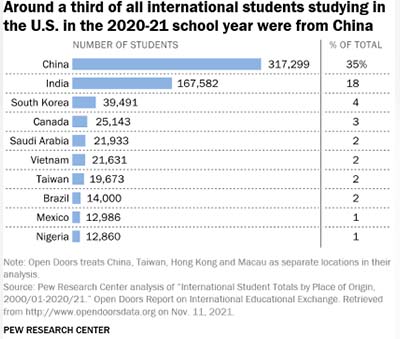
Dr. Shippy’s methods are designed to help you identify your individual challenges and build a solid foundation for a stronger immune system. The program’s topics include labs to help assess your immune status, lifestyle choices that may lower immune status, analysis of worldwide data and treatments, and nutraceuticals and other strategies to support resilience.

Dr. Shippy has committed her work to designing life-altering treatments and protocols for her patients by tapping into the human body’s incredible ability to express or repress helpful or detrimental genes, as well as prevent, heal and even reverse certain illnesses. In this program, Dr. Shippy also addresses the science of epigenetics, the way lifestyle impacts genetic expression and how this all ties into resilience, immunity, and your future health.

Clients who have completed the program mention how Dr. Shippy helped get their body back into balance while laying the foundation for a healthy immune response that was resilient when challenged. Be Resilient Be Immune is a substantial and compelling program for anyone who is looking for sound, scientific resources and tools from a premier functional medicine doctor.

Dr. Shippy believes that everyone (especially those who may be at high risk) should implement key strategies to build up their immune system to achieve resilience for this infection as well as other illnesses. If you or someone you know wants to learn how to be prepared, be resilient and be strong, sign up today for this insightful and informative health program, led by Dr. Shippy.

Dr. Shippy’s Background
As a former IBM engineer, Dr. Ann Shippy, MD transitioned to the world of medicine in part in search of better solutions to her own health ailments, which she hadn’t found in traditional medicine. She is board-certified in internal medicine and certified in functional medicine to better serve her patients. Her practice, which is based in Austin, Texas, takes a functional approach to a wide range of health concerns, including autoimmunity, digestive issues, and toxicity from mold exposure and heavy metals. Dr. Shippy has authored two health manuals: Mold Toxicity Workbook and Shippy Paleo Essentials.

International Student Enrollment Fell 15% In 2020-21

American universities are generally held in high esteem around the world, according to a spring Pew Research Center survey in 16 advanced economies. A median of 59% of adults across these societies describe American universities as either the best in the world or above average relative to those in other developed nations.

Even so, the number of foreign students studying in the United States fell sharply during the 2020-21 academic year according to recently released data from the Institute of International Education, likely reflecting the ongoing effects of the coronavirus pandemic.

Fewer than 1 million foreign students enrolled for either online or in-person classes at U.S. universities in the 2020-21 school year, comprising 4.6% of total enrollment at American higher educational institutions. That not only marks a 15% year-over-year decrease from the 2019-20 school year, but also marks the first time since 2014-15 that fewer than a million international students have enrolled at U.S. institutions.

How we did this

China remained the leading place of origin for international students, with 35% of all international students in the 2020-21 school year hailing from the country. The second most common place of origin was India (18%), followed by South Korea (4%) and Canada (3%). Some of these countries also experienced the largest year-over-year decreases in the number of students who enrolled at U.S. institutions. The largest such percentage decreases occurred in South Korea (-21%), China (-15%) and India (-13%).

The overall decrease in the number of foreign students in the U.S. in 2020-21 was driven by sizable reductions in first-time students coming from abroad – in many cases due to border closings, flight cancellations or other challenges caused by the COVID-19 pandemic.

Even before pandemic, increase in Chinese students had slowed

While the number of Chinese students studying in the U.S. fell sharply in the 2020-21 school year, their growth rate had slowed dramatically even before the pandemic. The slowdown followed years of sharp growth.

Though the exact reasons for the slowdown in Chinese students are unclear, some may find the U.S. a less desirable place to study abroad. Some observers, including the president of Columbia University, have raised concerns that tense bilateral relations between the U.S. and China are damaging American universities’ ability to attract top academic talent, particularly from China. Still others have pointed to policies put in place during the Trump administration to restrict Chinese students studying in certain fields or even revoke their visas.

Chinese students paid an estimated $15 billion in tuition at U.S. colleges in the 2018-19 year. Still, the American public is open to limiting their presence in U.S. academia. A majority of Americans (55%) support limiting Chinese students studying in the U.S., even as a broad majority (80%) say it’s good for U.S. colleges and universities to accept international students in general, according to a February Pew Research Center survey.

Only around a third (31%) of Americans under the age of 30 support limiting Chinese students in the U.S., but the share rises to around half (49%) among those ages 30 to 49 and to around seven-in-ten (69%) of those 50 and older.

There are also differences in views by Americans’ educational attainment. A 59% majority of those without a college degree support limiting Chinese students, while those with a college degree are about evenly split: 47% favor limiting Chinese students in the U.S. and 52% oppose the idea.

Partisan differences are pronounced, too. A majority of Republicans and independents who lean toward the Republican Party (69%) support limiting Chinese students while 56% of Democrats and Democratic leaners are opposed.

Eye Drops Approved By FDA To Replace Reading Glasses

A newly-approved eye drop could change the lives of millions of Americans with age-related blurred near vision, a condition affecting mostly people 40 and older, CBS News reported. Vuity, which was approved by the Food and Drug Administration (FDA) in October, would potentially replace reading glasses for some of the 128 million Americans who have trouble seeing close-up.

The new medicine takes effect in about 15 minutes, with one drop on each eye providing sharper vision for six to 10 hours, according to the company, the CBS News report said. Toni Wright, one of the 750 participants in a clinical trial to test the drug, said she liked what she saw. “It’s definitely a life changer,” she told the media.

Before the trial, the only way Wright could see things clearly was by keeping reading glasses everywhere — in her office, bathroom, kitchen and car. “I was in denial because to me that was a sign of growing older, you know, needing to wear glasses,” she said.

It was in 2019 that her doctor told her about a new eye drop with the potential to correct her vision problems, temporarily. The 54-year-old online retail consultant, who works from her farm in western Pennsylvania, instantly noticed a difference, the report said. “I would not need my readers as much, especially on the computer, where I would always need to have them on,” she said.

Vuity is the first FDA-approved eye drop to treat age-related blurry near vision, also known as presbyopia. The prescription drug utilizes the eye’s natural ability to reduce its pupil size, said George Waring, the principal investigator for the trial. “Reducing the pupil size expands the depth of field or the depth of focus, and that allows you to focus at different ranges naturally,” he said.

A 30-day supply of the drug will cost about $80 and works best in people 40 to 55 years old, a Vuity spokesperson said. Side effects detected in the three-month trial included headaches and red eyes, the company said. “This is something that we anticipate will be well tolerated long term, but this will be evaluated and studied in a formal capacity,” the CBS News report quoted Waring as saying.

Vuity is by no means a cure-all, and the maker does caution against using the drops when driving at night or performing activities in low-light conditions. The drops are for mild to intermediate cases and are less effective after age 65, as eyes age. Users may also have temporary difficulty in adjusting focus between objects near and far.

‘Anti-Indian’: A Bold Film On The Politics Of Religion, But Flawed Technically

Film: Anti-Indian (Playing in theatres). Duration: 123 minutes.

Director: Blue Sattai Maran. Cast: Blue Sattai Maran, Radha Ravi, Naren, Vazhakku En Muthuraman, Vijaya Mami and Jayaraj.

IANS Rating: ***

‘Anti-Indian’ stands as a testimony to Director ‘Blue Sattai’ Maran’s courage. Not many would have chosen to do what he has done — respond to a challenge thrown at him by those offended by his reviews and accept to make a film to show that it is not as difficult to make a meaningful film as it is made out to be.

Not just that. Maran’s courage is again evident from the sensitive subject he has chosen to deal with in his debut film. ‘Anti-Indian’ shows up unapologetically the manipulative games religious and political leaders play for their selfish gains.

The film starts off with a murder taking place in a constituency that is gearing up for a by-election. The murdered man is identified as Basha (Blue Sattai Maran) and we are told that while Basha’s late father is Ibrahim, his mother Saroja (Vijaya Mami) is a Hindu.

Interestingly, Saroja has now converted to Christianity and has changed her name to Lourdu Mary. The problem starts when Basha’s body is taken for burial.

His body is not permitted in the Muslim burial ground because he was not a practising Muslim. The Hindus refuse his body as it is that of a Muslim. As the body is taken from place to place, religious leaders of all hues, with their own agendas, begin to play manipulative games. Even as this continues, politicians who are looking to win the election, join in with their own deadly plans.

The film takes hard shots at everybody without holding back anything. From religious leaders of all denominations to political bosses, everybody’s agenda is exposed. The film’s biggest strength comes from its script and its dialogues, some of which really stand out.

For instance, there is this scene towards the end where a commoner says: “You had one body and you killed 13 people with it. Now, you have 13 bodies. One wonders what all you are going to do now.”

Technically, ‘Anti-Indian’ is below par. It has no entertainment value. Its visuals aren’t great. The only songs in the film are ‘gaana’ songs, which, after a point, become annoying.

Granted, the director is trying to showcase the exhaustion that even ‘gaana’ singers who are brought in to mourn experience because of the delay in burying the body. But for the viewers, it becomes a tad too much.

As a story, ‘Anti-Indian’ has a very pertinent point to make. But as an entertainer, it has almost nothing to offer.

If you are the sort who enjoys a story that is radically different from your regular kind of films and don’t mind sacrificing commercial elements for a strong message, then ‘Anti-Indian’ is likely to work for you.

But with all its flaws, one must still say that ‘Anti-Indian’ works for the simple reason that this is a brave new attempt into unchartered waters by a debut director.

A Good Pay Raise Next Year Expected As Companies Struggle To Fill Jobs

The amount of money companies are setting aside for raises is expected to rise at the fastest rate in more than a decade, as employers fight to keep and hire workers in a historically tight labor market, a new survey says.  

Budgets for wage hikes are projected to jump 3.9% next year, the biggest annual leap since 2008, according to a November survey of compensation executives by the Conference Board, a nonprofit membership group of mostly large businesses.  

The growing pools of cash are meant to entice young workers and hold on to existing staff at a time when a record number of jobs are going unfilled, and consumers are dealing with the worst inflation in 39 years.   

“Growth in wages for new hires and accelerating inflation are the main causes of the jump in salary increase budgets,’’ the report said. It added that 46% of executives said higher pay for new employees was a reason for the larger pay pools that are expected, while 39% said inflation helped fuel the increase.

The consumer price index increased 6.8% in November as compared to the previous year, the fastest pace since 1982, with the cost of groceries, gas, rent and cars all on the rise, the Labor Department said Friday.

Labor shortage and wages

Budgets for salary increases have already risen, with the average pool of cash increasing by 3% in the survey taken last month, compared with the 2.6% that was predicted in an earlier survey in April.

A labor shortage has helped spark a ripple effect, enabling younger people entering the workforce to earn higher wages, more experienced employees to pursue new positions and potentially higher pay, and blue-collar workers to demand union representation and better work conditions.

“The rapid increase in wages and inflation are forcing businesses to make important decisions regarding their approach to salaries, recruiting, and retention,’’ the Conference Board report said, It tnoted that labor shortages will probably continue through 2022 while wages likely increase by more than 4%.

Blue-collar workers as well as those in unions are also expected to see pay hikes. “Wages for new hires, and workers in blue-collar and manual services jobs will grow faster than average,’’ the report wrote. 

Workers, from Kellogg cereal facilities to university faculty to Starbucks stores, are demanding higher wages and improved working conditions amid a pandemic that many say magnified inequities and disparities.

The pay hikes many businesses are offering could cost consumers if companies raise the price of services or goods to cover the higher wages, says the Conference Board.. 

And the Federal Reserve may boost interest rates beyond the two increases that economists are already projecting for next year to help slow inflation, according to the Board.

A Planet 10 Times Size Of Jupiter Orbiting Superhot Massive Stars Discovered

Scientists have discovered a planet 10 times as massive as Jupiter orbiting a pair of stars in another solar system, according to new research. 

The research, published Wednesday in the journal Nature, points to the discovery of a planet named b Centauri (AB)b or b Centauri b, with an image captured by the European Southern Observatory’s Very Large Telescope in Chile.

The planet is 10 times as massive as Jupiter and “one of the most massive planets ever found,” according to the observatory.    

Also the planet orbits b Centauri, a two-star system that has at least six times the mass of the Sun and is 325 light-years away from Earth. 

That makes it the most “massive system around which a planet has been confirmed,” according to a statement from the observatory. The statement also explained, “Until now, no planets had been spotted around a star more than three times as massive as the Sun.”  
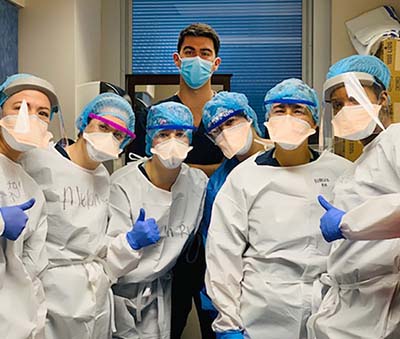
Markus Janson, professor of astronomy at Stockholm University and a co-author of the peer-reviewed research, told the media that “at some point, as you increase the mass of the star, it also becomes much hotter, and that means that it gives off a lot more very high-energy radiation.” The observatory noted, “The large mass and the heat from this type of star have a strong impact on the surrounding gas” which “should work against planet formation.” And prior to the discovery of this planet, some scientists believed planets could not exist near stars “this massive and hot.”   

B Centauri b was seen orbiting the star system at a distance 100 times greater than Jupiter orbits the sun. It has been imaged in previous research, but it was not specifically recognized as a planet by scientists. 

Janson said that “I would maybe have expected to find planets around a bit more massive stars, maybe than three solar masses. But something like six solar masses, that was really a surprise,” he said.  

Lessons In Critical Care Nursing From The COVID-19 Pandemic

Since March of 2020, the COVID-19 pandemic has put an unprecedented strain on the American health care system as large surges of intensive care unit patients overwhelmed hospitals.  Facing this challenge, Beth Israel Deaconess Medical Center (BIDMC) expanded ICU capacity by 93 percent and maintained surge conditions during the nine weeks in the spring of 2020.

In a pair of papers and a guest editorial published in Dimensions of Critical Care Nursing, a team of nurse-scientists at Beth Israel Deaconess Medical Center (BIDMC) share their experiences nearly doubling the hospital’s intensive care unit capacity; identifying, training and redeploying staff; and developing and implementing a proning team to manage patients with acute respiratory distress syndrome during the first COVID-19 surge.

“As COVID-19 was sweeping through the nation, we at BIDMC were preparing for the projected influx of highly infectious, critically ill patients,” said lead author Sharon C. O’Donoghue, DNP, RN, a nurse specialist in the medical intensive care units at BIDMC. “It rapidly became apparent that a plan for the arrival of highly infectious critically ill patients as well as a strategy for adequate staffing protecting employees and assuring the public that this could be managed successfully were needed.”
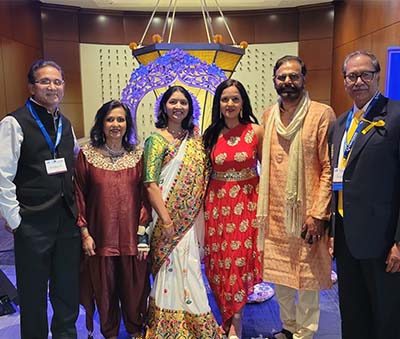
After establishing a hospital incident command structure to clearly define roles, open up lines of communication and develop surge plans, BIDMC leadership began planning for the impending influx of patients with COVID-19 in February 2020.

BIDMC – a 673 licensed bed teaching hospital affiliated with Harvard Medical School – has nine specialty ICUs located on two campuses for a total of 77 ICU beds. Informed by an epidemic surge drill conducted at BIDMC in 2012, leadership determined that the trigger to open extra ICU space would be when 70 ICU beds were occupied. When this milestone was met on March 31, 2020, departmental personnel had a 12-hour window to convert two 36-bed medical-surgical units into additional ICU space, providing an additional 72 beds.

“Because the medical-surgical environment is not designed to deliver an ICU level of care, many modifications needed to be made and the need for distancing only added to the difficulties,” said senior author Susan DeSanto-Madeya, PhD, RN, FAAN, a Beth Israel Hospital Nurses Alumna Association endowed nurse scientist. “Many of these rooms were originally designed for patient privacy and quiet, but a key safety element in critical care is patient visibility, so we modified the spaces to accommodate ICU workflow.”

Modifications included installing windows in all patient room doors, and repositioning beds and monitors so patients and screens could be easily seen without entering the room. Lines of visibility were augmented with mirrors and baby monitor systems as necessary. To further minimize staff exposure to the virus, care providers were given two-way radios to decrease the number of staff required to enter a room when hands-on patient care was necessary. Mobile supply carts and workstations helped improved overall workflow efficiency.

In addition to stockpiling and managing medical equipment including personal protective equipment (PPE), ventilators and oxygen, increasing ICU capacity also required redeploying 150 staff trained in critical care. The hospital developed a recall list for former ICU nurses. Further, medical-surgical nurses that could bring their skills to care for critically ill patients on teams with veteran ICU nurses were also identified.

Redeployment of staff required education and support. In-person, socially-distanced workshops were developed for each group, after which nurses were assigned to shadow an ICU nurse to reduce anxiety, practice new skills and gain confidence.

“Staff identified the shadow experience as being most beneficial in preparing them for deployment during the COVID-19 surge,” said O’Donoghue. “Historically, BIDMC has had strong collaborative relationships with staff from different areas and these relationships proved to be vital to the success of all the care teams. The social work department played a major role in fostering teams, especially during difficult situations.”

One of the redeployment teams was the ICU proning team, brought together to support bedside clinicians by facilitating safe and timely prone positioning. Proning is an intervention known to improve oxygenation in patients with acute respiratory distress syndrome – a key feature of severe COVID-19 – that is complex, takes time and is not without its potential dangers to the patient and staff alike. The coalition maximized resources and facilitated more than 160 interventions between March and May of 2020.

“Although the pandemic was an unprecedented occurrence, it has prepared us for potential future crises requiring the collaboration of multidisciplinary teams to ensure optimal outcomes in an overextended environment,” O’Donoghue said. “BIDMC’s staff rose to the challenge, and many positive lessons were learned from this difficult experience.”

“We must continue to be vigilant in our assessment of what worked and what did not work and look for ways to improve health care delivery in all our systems,” said DeSanto-Madeya, who is also an associate professor at the College of Nursing at the University of Rhode Island. “The memories from this past year and a half cannot be forgotten, and we can move forward confidently knowing we provided the best care possible despite all the hardships.”

Co-authors included Jacqueline Hardman, BSN, RN; Joanna Anderson, BSN, RN, CCRN, CNRN; Jane Foley, DNP, RN; Jean Gillis, MSN, RN; Kimberly Maloof, MSN, RN; Andrea Milano, MSN, RN, CCRN, CMC; John Whitlock, MS, RN; Meghan Church, DPT; Kristin Russell, BSN, RN; Kelly A. Gamboa, DNP, RN, CNOR; Jennifer Sarge, BSN, RN, Ari Moskowitz, MD; Margaret M. Hayes, MD, ATSF; and Michael N. Cocchi, MD, of BIDMC.

The authors disclosed that they have no significant relationships with or financial interest in any commercial companies pertaining to this article.

Asia Society Calls For Art Addressing Climate Change As Part Of New Awards

Responding to the urgency of accelerating climate change, Asia Society and the Helen Frankenthaler Foundation are launching the Frankenthaler Climate Art Awards, which will recognize visual artists currently enrolled in or recently graduated from MFA programs in the United States whose work directly addresses the climate crisis. Organized in collaboration with the Hirshhorn Museum and Sculpture Garden, the John F. Kennedy Center for the Performing Arts, National Gallery of Art, and The Phillips Collection, the award is designed to foster climate change awareness through the imagination and insights of an upcoming generation of visual artists. The Environmental Defense Fund will join these cultural institutions to share expertise and propagate the award in the environmental advocacy community.

Through an open call launching on January 10, 2022, the Frankenthaler Climate Art Awards will be conferred to three winning artists, selected by a jury comprised of leaders from the collaborating institutions. Each artist will receive $15,000 and be honored in April 2022 at the Kennedy Center in Washington, D.C. The awards have been organized in conjunction with COAL + ICE, an immersive exhibition featuring more than 40 documentary photographers and video artists from around the world, that seeks to visualize the climate crisis. COAL + ICE will be on view at the Kennedy Center from March 15 through April 22, 2022.

“Building on the Foundation’s recent Frankenthaler Climate Initiative, which supports U.S. art museums in mitigating their own environmental impacts, the Frankenthaler Climate Art Awards seeks to raise further awareness by recognizing artists whose work sheds light on and responds to the climate crisis. We are pleased to be partnering with Asia Society in the creation of these new awards,” said Helen Frankenthaler Foundation Executive Director Elizabeth Smith.

“A new generation is bringing fresh perspectives to our global response to climate change and we look forward to discovering what young emerging artists, whose lives are inextricably enmeshed with the climate crisis, have to say about this pivotal issue for humanity,” said Orville Schell, Arthur Ross Director of the Asia Society Center on U.S.-China Relations, who spearheaded the COAL + ICE exhibition.

Speaking on behalf of the collaborating organizations and the jury, Dorothy Kosinski, Vradenburg Director & CEO of The Phillips Collection, said, “The importance of this topic is reflected in how our institutions have come together to spotlight a new generation of artists tackling the climate crisis. Climate awareness is among our most consequential priorities as cultural institutions working today.”

Starting January 10, 2022, eligible artists and collectives will be invited to submit video artworks (e.g. digital video art, animation, film) or videos about visual artworks (e.g. documentation of tactile artworks, such as sculptures or paintings, or performance works) that tackle the climate change emergency via an online portal at climateartawards.org. Videos must not be longer than 5 minutes. Applicants must be either currently enrolled in a U.S.-based fine/visual art MFA program or will have graduated from such a program in the past 5 years. They must reside in the United States, with the exception of students currently enrolled in U.S.-based programs but pursuing their studies remotely due to Covid-19 travel restrictions.

A shortlist of finalist artists will be released in February, and their videos will be made accessible online at climateartawards.org. The shortlisted videos will also be displayed on a dedicated channel and as featured selections on the homepage of ikonoTV, the global art media aggregator. The three winners will then be selected from among the finalists by a jury comprised of leaders from four of the collaborating institutions: Melissa Chiu, Director, Hirshhorn Museum and Sculpture Garden; Molly Donovan, Curator of Contemporary Art, National Gallery of Art; Dorothy Kosinski, Vrandenburg Director & CEO, The Phillips Collection; and Michelle Yun Mapplethorpe, Vice President for Global Artistic Programs at Asia Society and Director of Asia Society Museum, New York.

Further details of the Frankenthaler Climate Art Awards, including application guidelines, may be found at climateartawards.org and on Instagram.
@ClimateArtAwards. #ClimateArtAwards #ArtForClimateAction

Strategic and operational support provided by András Szántó LLC.

András Szántó LLC assists museums, cultural organizations, commercial brands, foundations, and educational institutions worldwide in all phases of the conceptualization and implementation of cultural initiatives, from strategy to execution to the creation of exceptional content.

AAPI Initiates “Awareness Campaign On Cervical Cancer Prevention With HPV Vaccination In Children” During Global Healthcare Summit In Hyderabad

“January is #CervicalCancer Awareness Month!,” Dr. Anupama Gotimukula, President of Association of American Physicians of Indian Origin (AAPI) said here today. “At AAPI, in keeping with our efforts and initiatives to educate and create awareness on disease prevention, we are planning to focus on bringing awareness of Cervical Cancer in India during the upcoming Global Healthcare Summit (GHS) 2022 at the Hotel Avasa in Hyderabad, India from January 5th to 7th, 2022.

Dr. Ravi Kolli, President-Elect of AAPI, said, “Our theme for GHS 2022 is: ‘Prevention Better than Cure.” Cervical Cancer is preventable through Vaccination and Early Pap smears and cervical examinations. Justifiably so, one of our preventive campaign goals this year is to provide education and prevention of  Cervical Cancer in India.”

According to The American Cancer Society, Cervical Cancer was once one of the most common causes of cancer death for American women. The cervical cancer death rate dropped significantly with the increased use of the Pap test for screening. Cervical cancer is among a number of cancers that can be caused by infections with pathogens – bacteria, viruses, and parasites.
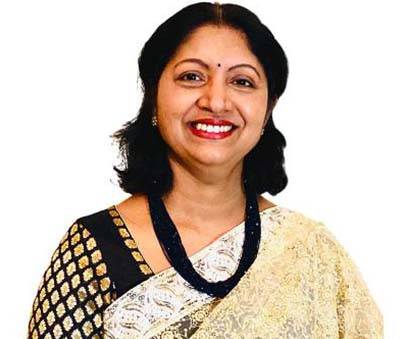
Dr. Udhaya Shivangi, Chair of AAPI GHS 2022 said, “If vaccination programs are effectively implemented, approximately 90 percent of invasive cervical cancer cases worldwide could be prevented, in addition to the majority of precancerous lesions. We want to sponsor a minimum of 100 free vaccines among High School children during our Global Healthcare Summit. We urge all AAPI members and leaders, to join us in this fight to eradicate Cervical Cancer.”

Quoting research studies, Dr. Kusum Punjabi, Chair of AAPI BOT, said, “Cervical cancer could be the first cancer EVER in the world to be eliminated, if: 90 % of girls are vaccinated; 70% of women are screened; and, 90% of women with cervical disease receive treatment. GHS 2022 will be a forum to educate and create awareness about this deadly disease that can be prevented.”

Once a leading cause of cancer death for women in the United States. Today, screening and prevention have greatly reduced the impact of this form of cancer. Increasing screening and prevention are key components of the effort to eradicate cervical cancer. Since almost all cases of the disease are caused by human papillomavirus (HPV) infection, vaccines that protect against the virus could prevent the vast majority of cases. Moreover, regular Pap tests can catch – and lead to treatment of – the disease at the precancerous stage.

“AAPI’s this new initiative will help save millions of lives in India” Dr. Meher Medavaram, a key organizer of GHS 2022 pointed out. “Usually cervical cancer develops slowly over time, and another powerful preventive measure is Pap test screening, a procedure during which cells are collected from the surface of the cervix and examined. The Pap test can both detect cancer at an early stage, when treatment outcomes tend to be better, and detect precancerous abnormalities, which can then be treated to prevent them from developing into cancers.”

Dr. Anjana Samadder, Vice President of AAPI, said, “In addition to Cervical cancer, GHS 2022 will also focus on: Chronic diseases which can be prevented- notably diabetes, cardiovascular, hypertension, COPD, oncology, maternal and infant mortality, Mmanagement of neurological emergencies ENLS a certification course  are only some of those that are going to be covered during this Summit.”
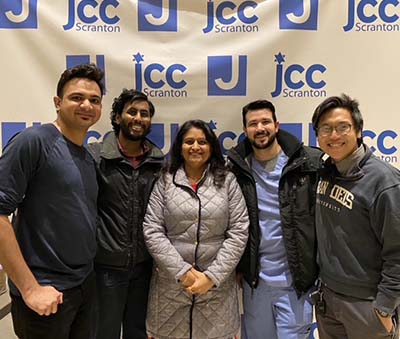
While elaborating the objectives of the Summit, Dr. Satheesh Kathula, Secretary of AAPI, says, “This innovative Summit is aimed at advancing the accessibility, affordability and the quality of world-class healthcare to the people of India. Among other areas, the Summit will focus on prevention, diagnosis, treatment options and share ways to truly improve healthcare transcending global boundaries.”

Dr. Krishan Kumar, Treasurer of AAPI said, “Through Continuing Medical Education and non-CME seminars by experts in their fields, AAPI will provide comprehensive and current reviews and guidelines for the diagnosis and treatment of various disease states to reduce morbidity and mortality and achieve cost effective quality care outcomes.”

There are several AAPI leaders who are working hard to make the GHS a memorable event, said Dr. Gotimukula. “Among them, I want to recognize Dr. Sujeeth Punnam, US Coordinator, Dr. Dwarkananda Reddy, GHS Indian Coordinator; Dr. Lokesh Edara, Chair Global Medical Education; Dr. Prabhakar Sharma, CME Chair, Dr. Prabhat Sinha, Chair Sponsorships and Exhibits, Dr. Seema Arora, Chair of Women’s Forum; Dr. Joseph M. Chalil, Chair of CEO Forum; Dr. Belani Kumar, Chair of the Medical Students Research Poster presentations; Dr. Lakshmi Thirunagari and Coordinators of Medical Jeopardy.

Expressing confidence, Dr. Gotimukula, the 4th ever Woman President in the four decades long history of AAPI, the largest ethnic medical organization in the United States, said, “Together we can all bring the awareness in the community to prevent Cervical Cancer in India which is 2nd leading cause of cancer deaths in women!” For more information, please visit www.aapiusa.org/ https://summit.aapiusa.org

Northeastern Pennsylvania Chapter Of AAPI In Partnership With Red Cross Organizes Blood Drive

The newly formed NORTHEASTERN Pennsylvania Chapter of the American Association of Physicians of Indian Origin (AAPI) in partnership with the local Red Cross organized a highly successful Blood Donation Drive on December 9, 2001 at The Jewish community center of SCRANTON, PA, with dozens of people coming forward and donated blood in a matter of five hours.

The Blood Drive, which, Dr. Dipti Pancholy Founding President NEPA-AAPI, described as “the first step in fulfilling our mission, which is to improve quality, access and delivery of health care by creating an environment of professionalism, and rewarding service as well as merit in Northeastern PA and globally.”

”This drive was a team effort on the part of Dr. Kishori Veerabhadrappa, Dr. Sanket Dalwadi, Dr. Jumee Barooha and Red Cross representative Heidi Deleo,” Dr. Pancholi added. Excited about the very positive and encouraging support from the community, Dr. Pancholi said, “We plan to conduct future blood drives in the 11 counties that north eastern Pennsylvania.
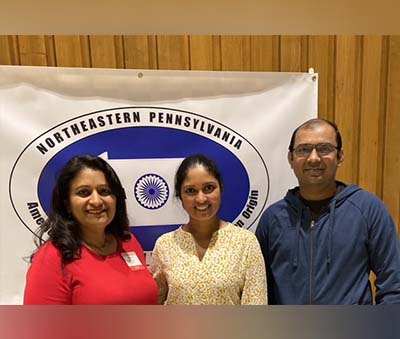
Dr. Pancholi praised the efforts and contributions of her Team members, including, Dr. Kishori Veerabhadrappa, a Hematologist by profession and the Coordinator of Blood Drive for NEPA-AAPI; Dr.
Sanketkumar Dalwadi, Chairperson of Community Service Committee; Dr. Sandhya Desai, Secretary NEPA AAPI; Ms. Judy McGovern, Red Cross Volunteer; and, Ms. Heidi Deleo Lackawanna, County Red Cross Director for their generous support in helping organize the highly successful event.

“I am grateful to the dozens of local AAPI Chapters, and the newly formed NEPA AAPI Chapter  for initiating and organizing the Blood Donation Drives and Stem Cell Registration across the nation, in honor of the Fallen Heroes of Covid-19, and as India is celebrating 75 years of our Independence, we have taken  this initiative to do National AAPI Blood Donation Drives in 75 cities,” said Dr. Anupama Gotimukula, President of American Association of Physicians of Indian Origin (AAPI,) the largest ethnic organization in the United States.

“On the occasion of the 75thIndependence Day of India, we the physicians of Indian origin serving every 7th patient in the United States, are excited to launch this unique and noble initiative and Stem Cell Drive”  in 75 cities across the United States,” Dr. Gotimukula added.
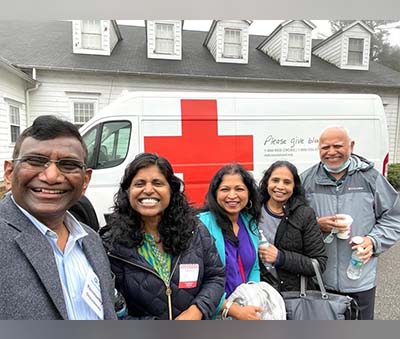
“Well done, Dr.  Dipti Pancholi and NEPA AAPI team. So glad you all are an integral part of our AAPI team. AAPI has launched 75 city blood donation drive. It only takes 15 minutes of one’s time and can save and sustain 3 lives with each pint of blood. So let us all be the heroes and life savers. We all are one humanity and one family, Vasudhaiva Kutubakam,” said Dr. Ravi Kolli, President-Elect of AAPI.

A single blood donation can save three lives. Each blood component of whole blood transfusion can help up to three different people. Pointing to the fact that Blood cannot be manufactured despite medical and technological advances. The only way we can give blood to those who need it is through donation. It doesn’t cost us anything to donate but your donation saves lives. Blood is needed every two seconds.

NEPA-AAPI is a newly formed, nonprofit association of physicians and dentists in the 11 counties of northeastern Pennsylvania and a chapter of the American Association of Physician of Indian Origin (AAPI), the largest ethnic physician organization in the United States

“We are grateful to Northeastern Pennsylvania Chapter of American Association of Physicians of Indian Origin (NEPA AAPI) for participating in a national initiative of AAPI that has initiated and organized Blood Donation Drives across the United States, in honor of Fallen Heroes of Covid-19,” said Dr. Pancholy, President of NEPA AAPI.

“I urge others to take the lead in your town and help in AAPI’s blood donation drive. Thank you and truly appreciate your support in helping our blood banks.”  For more details to organize Blood Donation Drive in your city/town/region, please contact: Vijaya Kodali, AAPI Office Manager at: vkodali@aapiusa.org. For more details on AAPI, please visit: www.aapiusa,org

CT Association of Physicians of Indian Origin Organizes Blood Drive

The Connecticut Chapter of The American Association of Physicians of Indian Origin (CAPI) in partnership with the local Red Cross organized a highly successful Blood Donation Drive on December 11th, 2001 at the Norfield Church in Weston, CT with dozens of people coming forward and donated blood to save lives.

Dr. Jaya Daptardar and Dr. Ram Chirunomula of CAPI coordinated the efforts and organized the successful Blood Drive, which has been dedicated to the Fallen Heroes, who have sacrificed their lives to save the lives of others infected with the ongoing deadly Covid pandemic.

“Thank you all for your generous support and help in making the Blood Drive very successful,” said Dr. Jaya Daptardar. ”This drive was a team effort. I want to express my gratitude to Dr. Sushil Gupta, President of CAAPI, Dr. Subbarao Bollepalli, Viji Kurup and family members of CAPI, who came in attendance and to donate blood and support this noble initiative.” “I am grateful to First Selectwoman of Weston Samantha Nestor and Toni Boucher for gracing the event with their presence and for their support,” said Dr. Ram Chirunomula.
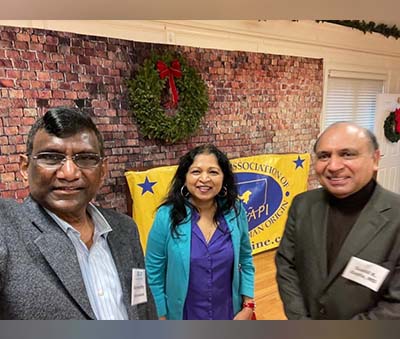
“In line with the motto, we at CAPI are happy to join in several other AAPI Chapters and lead this noble initiative to donate blood with the objective of saving lives around the nation,” said Dr. Sushil Gupta, President of CAPI. “We plan to organize future blood drives in other parts of Connecticut in the near future.”

CAPI was formed with the objective of promoting charitable and philanthropic activities; communicate with other Indian associations in North America to promote cultural and social events; and to foster a relationship with future generations of physicians of Indian Ancestry.

“I am grateful to the dozens of local AAPI Chapters including CAPI for initiating and organizing the Blood Donation Drives and Stem Cell Registration across the nation, in honor of the Fallen Heroes of Covid-19, and as India is celebrating 75 years of our Independence. I am so proud that we have taken this initiative to organize AAPI Blood Donation Drives in 75 cities across the nation,” said Dr. Anupama Gotimukula, President of American Association of Physicians of Indian Origin (AAPI,) the largest ethnic organization in the United States.

“On the occasion of the 75thIndependence Day of India, we the physicians of Indian origin serving every 7th patient in the United States, are excited to launch this unique and noble initiative in 75 cities across the United States,” Dr. Gotimukula added.
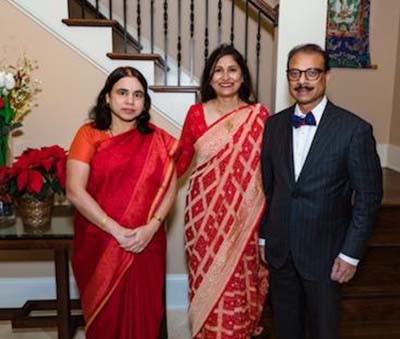
Each blood component of whole blood transfusion can help up to three different people. Pointing to the fact that Blood cannot be manufactured despite medical and technological advances. The only way we can give blood to those who need it is through donation. It doesn’t cost us anything to donate but your donation saves lives. Blood is needed every two seconds, said Dr. Meher Medavaram, Chair of the national blood donation drive.

“We urge all Local Chapters and AAPI members to take the lead in your town and help in AAPI’s blood donation drive. Thank you and truly appreciate your support in helping our blood banks,” said Dr. Gotimukula. For more details to organize Blood Donation Drive in your city/town/region, please contact: Vijaya Kodali, AAPI Office Manager at: vkodali@aapiusa.org. For more details on AAPI, please visit: www.aapiusa,org

Dr. Sudhakar Jonnalagadda Given Pravasi Bharatiya Samman Award 2021

Dr. Sudhakar Jonnalagadda, Immediate Past President of the American Association of Physicians of Indian Origin (AAPI), was conferred The Pravasi Bharatiya Samman Award (PBSA 2021) in person during a solemn ceremony at the Indian Consulate in Atlanta, GA on December 5th, 2021.

Dr. Jonnalagadda was officially recognized with the prestigious award during the 16th edition of the annual Pravasi Bharatiya Divas (PBD) Convention, held virtually on January 9th, 2021. The Pravasi Bharatiya Samman Awards were conferred by the Hon’ble President at the PBD Convention in the valedictory session of the Pravasi Bharatiya Divas celebrations.

The Pravasi Bharatiya Samman Award (PBSA) is the highest honor conferred on Non-Resident Indians, Persons of Indian Origin or an organization/institution established and run by the Non-Resident Indians or Persons of Indian Origin in recognition of their outstanding achievements both in India and abroad.
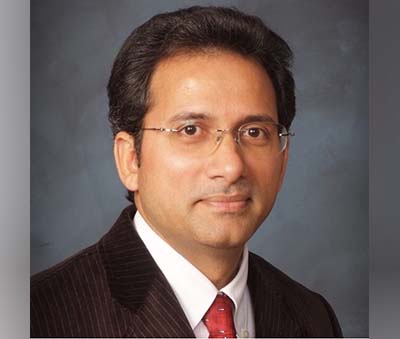
While responding to this great honor, Dr. Jonnalgadda said, “It’s my great honor and privilege that I have been chosen to be a recipient for the prestigious award by the government of India, the Pravasi Bharatiya Samman Award 2021 (PBSA), the highest honor conferred on Persons of Indian Origin in recognition of their outstanding achievements both in India and abroad.”

Dr. Jonnalagadda expressed his “sincere gratitude and appreciation to the government of India for selecting me for this prestigious award. In recognizing me, the government has recognized all the medical professionals who have been in the forefront, fighting Covid -19, including those who have laid their lives at the services of treating patients infected with the deadly virus. “

Stating that “It’s fitting to dedicate this award to all my AAPI family members and the entire medical fraternity,” the past president of AAPI said, “This award will strengthen us all to recommit our skills, talents and efforts for the greater good of humanity, as the Covid pandemic continues to devastate many countries, impacting the lives of hundreds of millions of people around the globe. Together we will face the challenges and defeat the virus and make this world a better and safer place for all of us to live and flourish. Congratulations to all of my co-awardees.”

Dr. Jonnalagadda, said, “I wanted to express my sincere gratitude and appreciation to the government of India for selecting me for the prestigious award. In recognizing me, the government has recognized all the medical professionals who have been in the forefront fighting Covid, including those who have laid their lives at the services of treating patients infected with the deadly virus. This award will strengthen the medical fraternity to recommit our efforts, skills and talents for the greater good of humanity. Congratulations to all of my co-awardees.”

Dr. Sudhakar Jonnalagadda assumed office as the 37th President of American Association of Physicians of Indian Origin (AAPI) on Saturday, July 11, 2020, and committed himself to “make AAPI stronger, more vibrant, united, transparent, politically engaged, ensuring active participation of young physicians, increasing membership, and enabling that AAPI’s voice is heard in the corridors of power.”

Dr. Jonnalagadda was born in a family of physicians. His father was a Professor at a medical college in India and his mother was a teacher. He and his siblings aspired to be physicians and dedicate their lives for the greater good of humanity. “I am committed to serving the community and help the needy. That gives me the greatest satisfaction in life,” he said.  Ambitious and wanting to achieve greater things in life, Dr. Jonnalagadda has numerous achievements in life. He currently serves as the President of the Medical Staff at the Hospital.

His vision for AAPI has been to increase the awareness of APPI globally and help its voice heard in the corridors of power.  A Board-Certified Gastroenterologist/Transplant Hepatologist, working in Douglas, GA, Dr. Jonnalagadda is a former Assistant Professor at the Medical College of Georgia. He was the President of Coffee Regional Medical Staff 2018, and had served as the Director of Medical Association of Georgia Board from 2016 onwards. He had served as the President of Georgia Association of Physicians of Indian Heritage (GAPI) 2007-2008, and was the past chair of Board of trustees, GAPI. He was the chairman of the Medical Association of Georgia, IMG section, and was a Graduate, Georgia Physicians Leadership Academy (advocacy training).

As the President of AAPI, the dynamic physician from the state of Andhra Pradesh, Dr. Jonnalagadda has worked hard to “develop a committee to work with children of AAPI members who are interested in medical school, to educate on choosing a school and gaining acceptance; Develop a committee to work with medical residents who are potential AAPI members, to educate on contract negotiation, patient communication, and practice management; Develop a committee to work with AAPI medical students, and to provide proctorship to improve their selection of medical residencies.”

Dr. Jonnalagadda was chosen for the highest civilian award given to any NRI by the Government of India in the field of Medicine and for his great leadership of AAPI, the largest ethnic medical organization in the US, especially during the Pandemic. AAPI represents the interests of the over 100,000 physicians and Fellows of Indian origin in the United States, serving the interests of the Indian American physicians in the US and in many ways contributing to the shaping of the healthcare delivery in the US and to some extent in India for the past 39 years.

AAPI Commits To Strengthen ADOPT-A-VILLAGE Project By Adopting 75 Indian Villages

Dr. Satheesh Kathula sets an example by adopting his own village in India, providing free comprehensive health screening to his native villagers

Continuing with its magnificent efforts to help their motherland, members of American Association of Physicians of Indian Origin (AAPI), the premier medical organization in the United States has initiated Adopt-A-Village, a Rural Health Initiative in India, with plans to adopt 75 villages to commemorate 75 years of India’s independence. Chaired by Dr. Satheesh Kathula, the Secretary of AAPI, the much needed and popular program has Dr. Anupama Gotimukula, Dr. Jagan Ailinani and Dr. Ram Singh as members of the committee.

“We are really humbled by the overwhelming response we received thus far,” said Dr. Satheesh Kathula, Chair of AAPI’s Adopt a Village Committee. “We have sponsors for more than 50 villages and are confident that we will find rest of them soon. This project will do comprehensive screening for non communicable diseases such as diabetes, hypertension, hypercholesterolemia, anemia, malnutrition, chronic kidney disease, and hypoxemia. We are doing these much needed screenings in 5 states, Gujarat, Karnataka, Tamil Nadu, Andhra Pradesh and Telangana. If you want to sponsor a village in any of the above mentioned states, please feel free to contact us. There is a plan to extend this project to other states if there is enough interest. Our heartfelt thanks to the sponsors for taking part in this noble project.” He also said,

 While setting an example and urging others to join him in this noble venture, Dr. Satheesh Kathula himself was present in India in October of this year, and inaugurated the project in Ramaiah Palle village in Mulugu District in the state of Telangana which was sponsored by him.
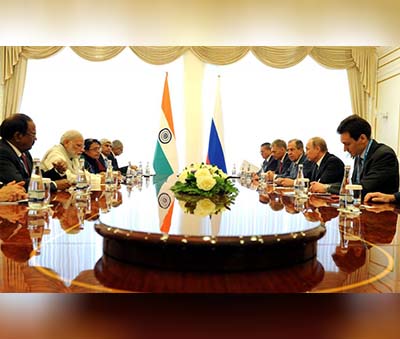
While referring to the objectives of the Program, Dr. Anupama Gotimukula, President, AAPI, said: “A lot of efforts are being put into this initiative, ‘Adopt a Village’ Project where AAPI in collaboration with Global TeleClinics, Inc. (GTC), has planned to adopt 75 villages in India spread across 5 states where the rural people of India will be offered ‘Free Health Screenings in 75 Rural Villages’ for Anemia (CBC), DM (HbA1C), High Cholesterol, CKD, Malnutrition, Kidney Disease, Malnutrition, Obesity, and Hypoxemia.  Results analyzed by GTC and further action recommended by their team of experts will also be followed up. This is a small contribution from AAPI to Mother India in celebration of Azadi Ka Amrut Mahotsav.”  Dr. Anupama thanked the AAPI members for their generous support for this noble work of AAPI and for sponsoring their ancestral villages and going back to their roots.

Dr. Satheesh Kathula pointed out about the need for this noble initiative. He said, India has nearly 700,000 villages. Three out of four Indians and about 77 percent of the poor live in villages. The majority of the population has no access to safe drinking water and sanitation. The needs in these rural areas are unlimited and the scope to work are endless. “By adopting one village at a time and working with the government and NGOs, NRIs can make a difference,” he said. Dr. Kathula referred to some of the programs in place in several rural villages, including supply of cloth mask, clean drinking water and free health care screening that has benefitted thousands of people across India.

Dr. Ravi Kolli, President-Elect of AAPI, said, “While India has made substantial progress in health care as evidenced  by the fact that life expectancy in India at birth now is 71 years as opposed to 58 years in 1990 and 41 years in 1960, there are significant gaps and divergence in health metrics in different regions in India. India, thus needs to redouble and continue its efforts and dedicate resources to tackle these perennial challenges,” he said.

Dr. Kusum Punjabi, Chair of AAPI BOT said, “Many of these projects and programs need regular funding, and management of resources. We are grateful to dozens of AAPI members who have committed to Adopting a village in India with an ongoing commitment.”

Dr. Anjana Samadder, Vice President of AAPI, said, “We as doctors of Indian origin, can make a huge difference in the lives of millions of people in India. Each project will involve a tripartite partnership between the NRI, state government and a local NGO.”

Dr. Krishan Kumar, Treasurer of AAPI pointed out, “We are happy to get involved in this project and looking forward to seeing more sponsors.”

Recently, a launch event of the program had a very rare show of support for AAPI, by having the esteemed participation of all 5 consulate generals in the US including, honorable Consul Generals of Chicago, New York, Houston, Atlanta and the Deputy CG of San Francisco. Ambassador of India to US, Taranjit Singh Sandhu joined the meeting with his message and lauded the numerous efforts of AAPI for India, especially during the pandemic.

There is no instant solution for rural India’s myriad problems. Over time, with our consistent efforts, an improved village could lead to an improved region, state and the country. NRIs can adopt the village they hail from and make a significant contribution towards its development. There is a real will and desire on the part of governments, both at the state and the central level to work with NRIs and NGOs to bring development to rural India.

Physicians of Indian origin are well known around the world for their compassion, passion for patient care, medical skills, research, and leadership. They have excelled in their fields of medicine, and thus have earned a name for themselves through hard work, commitment and dedication to their profession and the people they are committed to serve. Not satisfied with their own professional growth and the service they provide to their patients around the world, they are in the forefront, sharing their knowledge and expertise with others, especially those physicians and leaders in the medical field from India.

Dr. Gotimukula, urged “AAPI members to consider joining this movement and adopt a village. AAPI will work with you in coordinating the efforts and through the support system we have in several states, will help you achieve this goal of giving back to our motherland.” AAPI members/families can sponsor a Village by emailing to: aapipresident@aapiusa.org.  For more details, please do visit:  www.aapiusa.org

Vladimir Putin’s Visit To India Will Usher In A New Dynamic Relationship

Russian President Vladimir Putin’s India visit has brought back the issue of ‘strategic balance’ in the Indian foreign policy narrative.  Not many analysts doubt the independent nature of India’s foreign policy. Still, there has been an impression that in the changing geopolitical dynamics, New Delhi and Moscow were somewhat drifting apart.

There will be a series of meetings, including the maiden 2+2 dialogue of the defense and foreign ministers, before the 21st annual India-Russia Summit. India and Russia will have an extensive engagement on defense and political ties and regional and international developments during President Vladimir Putin’s visit to New Delhi for the annual summit with Prime Minister Narendra Modi on December 6.

Russia has started delivering the S-400 Triumf surface-to-air missile system to India, the director of the Federal Service for Military-Technical Cooperation (FSMTC) Dmitry Shugaev has said. The S-400 Triumf air defense missile system will give a major boost to India’s capabilities to take out enemy fighter aircraft and cruise missiles at long range. News agency ANI reported citing people familiar…
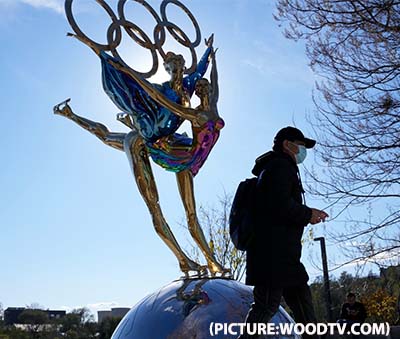
There will be a series of meetings, including the maiden 2+2 dialogue of the defense and foreign ministers, before the 21st annual India-Russia Summit. Russian defense minister Sergey Shoigu and foreign minister Sergey Lavrov will arrive in India on December 5.

The two sides will have an “intensive engagement” that will culminate with the summit, external affairs ministry spokesperson Arindam Bagchi told a regular news briefing.

Defense minister Rajnath Singh and Shoigu will co-chair a meeting of the inter-governmental commission on military-technical cooperation, while external affairs minister S Jaishankar will hold a bilateral meeting with Lavrov early on Monday. These meetings will be followed by the inaugural 2+2 ministerial dialogue, which is expected to discuss bilateral, regional, and international political and defense issues, Bagchi said.

India has 2+2 ministerial meetings with very few countries, including Australia, Japan, and the US. At their annual summit in the afternoon on December 6, the two leaders will review the state and prospects of bilateral relations and discuss ways to further strengthen the bilateral strategic partnership. The summit will be an opportunity to exchange views on regional, multilateral, and international issues, and several agreements are expected to be signed during and in the run-up to the summit.

Asked about the US threatening to impose secondary sanctions under the Countering America’s Adversaries Through Sanctions Act (CAATSA) on India’s deal to acquire five S-400 air defense systems from Russia, Bagchi said, “India and the US have a special global strategic partnership. We also have a special and privileged strategic partnership with Russia and we pursue an independent foreign policy.

Despite India’s increasing closeness to the West, a strong Russia and stronger India-Russia ties are important for India’s vision of a multipolar world and its own balanced foreign policy approach. It is also crucial for India to assert its strategic autonomy, defense modernisation and ambition to become an important producer of defense equipment.

The government-to-government linkages are quite strong. In the last 20 summits, about 230 agreements of different kinds were signed between the two countries. This summit has added 28 more MOUs/agreements. This time, however, there are also many MOUs beyond the government sector.

Almost every summit has coincided with some announcement of major arms purchases. This summit was not an exception as India agreed to buy over six lakh AK 203 rifles. Due to diversification, there has been some decline in the last few years. Still, Russia is India’s biggest arms supplier. For 2021-31, a new Military-Technical program has also been agreed. Some of these purchases particularly, S-400 missiles are under threat from the United States because of the Countering America’s Adversaries Through Sanctions Act (CAATSA), which India hopes it will be able to work through with the Americans. The supply of parts of S-400 missiles has already begun.

One of the major challenges has been how to sustain this relationship in the absence of dynamic commercial ties. Bilateral trade is stuck around $10 billion for many years. The problem areas are well-known — these include lack of information, visa problems and logistic issues etc. In recent years, attempts have been made to address some of these issues.

There has been renewed focus on the International North South Trade Corridor (INSTC). Now, the Chabahar port has been added within the INSTC framework. A feasibility study on Chennai-Vladivostok maritime corridor is also at the advanced stage. There was also a mention of the need for creating linkages between India and the Eurasian Economic Union. A new trade target of $30 billion by 2025 was also mentioned. These narratives are good for the summit outcomes. The experience of the last many years shows that progress on most of these fronts has been slow for various reasons.

Apart from strategic convergence on some of the global and regional issues, the main pillars are still defence ties, hydrocarbons and nuclear. Russia has a clear comparative advantage in these areas and played an important role in our ties in the past 20 years. But in the next decade, when defence diversification and energy transition is going to happen, we need to find new areas of cooperation. For many years, India has talked about Information Technology, pharma sector, diamonds, textiles and the like. Still, it has not been able to make them core areas of interaction.

In the changing global geopolitics, India-Russia ties have the potential to stabilise increasing geopolitical tensions in the Indo-Pacific region as well as in Eurasia. Although India is working closely with the US and other western partners in the Indo-Pacific, its interests are clearly aligned with Russia in the Eurasian region, including now in Afghanistan. Although defence and energy will continue to bind us together, much more needs to be done in trade and connectivity sector. Once private sectors of both the economies are also linked with each other, India and Russia can truly complement each other’s modernisation.

US Boycotts China’s Winter Olympics

No Biden Administration officials will attend China’s Winter Olympics in February, the White House announced Monday, in a rebuke to Beijing over China’s use of forced labor and concentration camps to suppress a Muslim ethnic minority in the western Chinese province of Xinjiang.

“U.S. diplomatic or official representations would treat these games as business as usual in the face of the PRC’s egregious human rights abuses and atrocities in Xinjiang,” White House press secretary Jen Psaki told reporters on Monday. “We simply can’t do that.”

The diplomatic boycott is an escalation of President Joe Biden’s criticism of China’s treatment of its Uyghur citizens in a pattern of abuses that a U.S. Holocaust Memorial Museum November report said may amount to genocide.
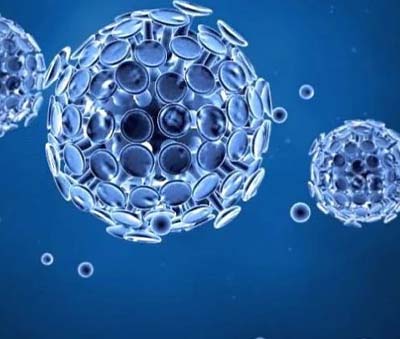
Biden’s boycott only applies to U.S. government officials and won’t affect U.S. athletes planning to compete in the games.

President Biden met virtually with China’s President Xi Jinping on Nov. 15. The two did not discuss the Winter Olympics, which are scheduled to start on Feb. 4, Psaki said, but Biden did raise “concerns” about China’s actions in Xinjiang, according to the White House’s official description of the meeting.\

Since the meeting, China’s government has come under harsh criticism for its treatment of Chinese tennis player Peng Shuai, a three-time Olympian, who largely disappeared from public view after accusing a former senior Chinese leader of sexual assault.

China’s government said earlier on Monday it would take “countermeasures” if the Biden Administration announced a diplomatic boycott of the 2022 Beijing Olympic Games. “If the U.S. side is bent on going its way, China will take firm countermeasures,” Zhao Lijian, spokesman for China’s Foreign Ministry, told reporters on Monday.

For decades, China’s government has tried to forcibly assimilate Uyghurs in Xinjiang through prohibitions on expressions of religion and culture, and a pattern of abuses such as forced sterilization, forced labor, torture, sexual violence, according to the U.S. Holocaust Memorial Museum report.

Biden’s Presidential campaign described China’s treatment of Uyghurs as “genocide” in August 2020. The Trump administration agreed. On Jan. 19, outgoing Secretary of State Mike Pompeo stated that China’s “genocide is ongoing and that we are witnessing the systematic attempt to destroy Uyghurs by the Chinese party-state.”

Early Data On Omicron Severity Encouraging: Fauci

Early data on the Omicron Covid-19 variant is “a bit encouraging” and does not indicate a great degree of danger, says Anthony Fauci, the top US infectious disease expert.

While there have been reports of a spike in hospitalization due to Omicron in South Africa, according to President Cyril Ramaphosa, they are “not alarming”.

“Though it’s too early to make any definitive statements about it, thus far it does not look like there’s a great degree of severity to it,” Fauci was quoted as saying on CNN’s ‘State of the Union on Sunday.

“Thus far, the signals are a bit encouraging. But we have got to be careful before we make any determinations that it is less severe, or it doesn’t cause any severe illness, comparable to Delta,” he added.

Lab tests are underway to determine whether the super mutant Omicron is more transmissible than other strains, resistant to immunity from vaccination and if the infection is more severe. The results are expected within weeks.

Meanwhile, at least 15 states in the US have detected the Omicron variant and that number is expected to rise, according to Centers for Disease Control and Prevention Director, Rochelle Walensky.

“We know we have several dozen cases and we’re following them closely. And we are every day hearing about more and more probable cases so that number is likely to rise,” Walensky was quoted as saying on ABC News ‘This Week’.

Even if Omicron proves less dangerous than Delta, it remains problematic, World Health Organization epidemiologist Maria Van Kerkhove told CBS’ ‘Face The Nation.

“Even if we have a large number of cases that are mild, some of those individuals will need hospitalizations,” she said.

“They will need to go into the ICU and some people will die. We don’t want to see that happen on top of an already difficult situation with Delta circulating globally.”

The US, last week, along with more than 50 countries imposed a travel ban on South Africa and seven other southern African countries to stem the variant’s spread. However, scientists say that the travel restrictions have come too late and could even slow studies of the new super mutant.

Fauci said the US will likely lift its ban on travelers from southern African countries in a “reasonable period”.

However, the vast majority of cases in the US continue to be caused by the Delta variant.

“We have about 90 to 100,000 cases a day right now in the US, and 99.9 percent of them are the Delta variant,” Walensky said.

Sidharth Shukla, Kareena Kapoor Are Most Searched Celebs On The Net

The ‘Year in Review 2021’ released by the web services Yahoo! reports that the late reality television star and actor, Siddharth Shukla, who breathed his last on September 2, 2021, has been the most searched male celebrity of the year that’s slowly drawing to an end.

Shukla is followed by Bollywood megastar Salman Khan, who is the host of the reality show ‘Bigg Boss’, which, incidentally, made the late actor famous in his lifetime.

Close on the heels of Salman Khan is the Telugu actor, Allu Arjun, followed by the late Kannada superstar Puneeth Rajkumar, another actor to meet with a premature end, and the celebrated thespian, Dilip Kumar, who passed away this past July.

Among the most searched female celebrities of 2021, Kareena Kapoor Khan grabbed the top spot. Her second pregnancy was the talk of the town for a part of the year and it was followed by the arrival and progress of her second son, Jeh.

With Kareena making it a habit of posting Jeh’s pictures, along with those of her elder son, Taimur, she managed to keep her fans hooked to her Instagram account.

Katrina Kaif, whose wedding with Vicky Kaushal now rules the headlines, secured the second spot, followed by Priyanka Chopra, Alia Bhatt and Deepika Padukone.

The Biggest Newsmaker list saw a new entrant: Shah Rukh Khan’s son, Aryan, who emerged as No. 2 in the ranking after his headline-grabbing arrest by the Narcotics Control Bureau for allegedly possessing drugs and being a part of an illegal rave party on a cruise ship.

Ajaz Patel Of New Zealand Makes Record By Claiming 10 Wickets In Innings

New Zealand’s Mumbai-born spinner Ajaz Patel has claimed all 10 wickets in the second Test against India, becoming only the third bowler in cricket history to achieve the feat. The left-arm spinner added six wickets to the four he took on day one to finish with 10-119 as India were bowled out for 325 in Mumbai on Saturday, December 4th.

The 33-year-old Patel, whose parents emigrated to New Zealand in 1996, joined England off-spinner Jim Laker (in 1956 against Australia) and India leg-spinner Anil Kumble (in 1999 against Pakistan) in picking up all wickets in an innings.

During the Test in Mumbai last weekend, New Zealand were bowled out for 62 in reply, before India closed day two on 69-0 – a lead of 332. The two-match series is level at 0-0 after India came within one wicket of forcing victory in the opening Test.

Mumbai-born Patel bowled 47.5 overs – more than twice as many as any other bowler – and his milestone moment came when India’s Mohammed Siraj edged an attempted sweep to Rachin Ravindra.

Patel’s performance will likely be in a losing cause, given New Zealand’s collapse with the bat. Siraj removed Will Young, Tom Latham, and Ross Taylor in the space of seven balls on his way to figures of 3-19, before the last seven wickets fell to spin as Ravichandran Ashwin claimed 4-8.

“India Sweets And Spices” Available To Watch On-Demand

The award-winning comedy INDIA SWEETS AND SPICES has just been released today to on-demand platforms for audiences to watch at home. Starring Manisha Koirala and Sophia Ali, the widely acclaimed crowd-pleaser is now available on digital VOD platforms such as Amazon Prime Video, Apple, Google Play, Vudu, and others and is the perfect choice for movie night.

 Alia Kapur (Sophia Ali) returns to her family’s posh suburban New Jersey home after a year away at college and upends their well-ordered life with her brash independence. After befriending Varun (Rish Shah), the handsome son of the new owners of the local Indian grocery, she invites his family to a dinner party where family secrets are revealed. Alia’s surprise turns to rebellion when she uncovers secrets about both her parents that push her toward a daring and ultimately hilarious confrontation. INDIA SWEETS AND SPICES celebrates a young woman’s coming of age set against a lovingly framed glimpse of the life of an Indian American family.

VOD platforms can be found here: https://www.indiasweetsandspices.movie/watch-at-home/

Will US Supreme Court Curtail Abortion Rights?

With the looming possibility of the Supreme Court gutting Roe v. Wade, the future of reproductive rights in America is poised to become a central and potentially defining issue in the upcoming midterm elections.

The high court is expected to deliver its ruling on a Mississippi law banning most abortions after 15 weeks next summer, as campaign season kicks into high gear. At a hearing this week, the bench’s conservative supermajority signaled its intent to uphold the law, going against decades of precedent and likely introducing a volatile new variable in electoral politics.

Democratic campaign organizations up and down the ballot, along with allied abortion rights groups, are now ramping up efforts to channel the anger and anguish of pro-choice voters and drive them to the polls. On the federal level, Senate Democrats are stressing the importance of maintaining their majority in order to confirm a new justice in the event President Joe Biden has the opportunity fill a vacated seat. In the states, leading Democrats are warning that Republican victories in legislative and gubernatorial races will lead to another burst of efforts to outlaw or severely curtail abortion rights, in line with the hundreds of restrictions that have been enacted in the last decade — this time without constitutional barriers to slow or stop them.

The need for Democrats to manage resources between federal and state races could create some uncomfortable conversations over the coming months.
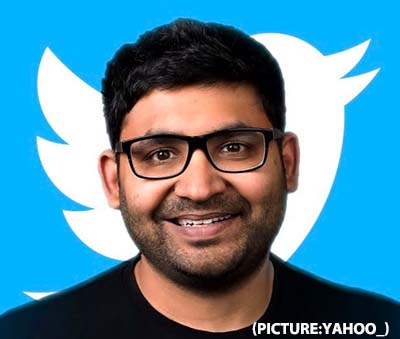
“The federal government certainly is not going to come save any of us,” said Heather Williams, executive director of the Democratic Legislative Campaign Committee. “We’re seeing swift action to do things like protect abortion rights, protect voting rights, to ensure that our government is looking out for people happens right at the state level. And folks need to get involved there.”

That, she told CNN, meant Democrats needed to be more strategic in where and how they spend. “It’s very easy to look at the shining star that is federal elections,” Williams said. “They get all the press, they get the attention. But the truth is, while those lights are shining there, the work is actually getting done in the states.”

Republicans have over the last few decades placed more of an emphasis on building power in the states, putting Democrats at a disadvantage they are still struggling to overcome. Republican Governors Association spokesperson Joanna Rodriguez told CNN that GOP candidates next year will have messages tailored to their electorates — and warned that Democratic attempts to nationalize the issue could have diminishing returns.

“If national Democrats are going to make abortion their driving issue going into next year, they’ve already lost the Kansas governor’s race,” Rodriguez said. “It won’t help them in states where it’s not viewed as favorably as they think it is.”

‘I haven’t seen energy like that in a very long time’

Abortion rights have strong support in a variety of national polling. An ABC News/Washington Post survey from last month found that 60% of Americans say Roe v. Wade should be upheld. Only 27% said it should be overturned. But that advantage, consistent through the years, has not always been reflected at the ballot, as the fervor of abortion rights opponents has outstripped that of its supporters.

Democrats now are banking on a backlash fueled in large part by voters who back abortion rights, or are at least passively support a right to choose, but had not considered it a top issue in recent years due to the protections granted by Roe v. Wade.

“We must defend a Democratic Senate majority with a power to confirm or reject Supreme Court Justices,” said Jazmin Vargas, spokesperson for the Democratic Senatorial Campaign Committee. “At the end of the day, these Supreme Court Justices make these decisions, and so we’re going to make this issue salient by reminding voters of the importance of electing a Democratic Senate.”

Endangered Democratic incumbents like New Hampshire Sen. Maggie Hassan are seeking to reset the stakes of their races, which could determine control of the split chamber and either open up or further dim options for Democrats after the court hands down its decision.

“My potential opponents support dramatically restricting a woman’s liberty by infringing upon her right to make her own health care decisions,” Hassan told CNN in a statement, “and I will not be shy about contrasting my record of protecting reproductive rights with their support for policies that take away women’s liberty.”

Wisconsin state treasurer Sarah Godlewski, who is running in the Democratic Senate primary, told CNN she began to see a clear upswing in activism around abortion rights after the Supreme Court allowed the Texas law to go into effect pending potential challenges.

“When we saw the Texas ruling a few months ago, there were reproductive justice marches across the state,” Godlewski said. “And I haven’t seen energy like that in a very long time, where women were organizing in places that you don’t often see on issues like this.”

But she also expressed disappointment over the lack of action by Democrats in Washington. Like her top primary rival, Wisconsin Lt. Gov. Mandela Barnes, Godlewski has pushed for Senate Democrats to ditch the 60-vote filibuster and take legislative action to protect abortion rights.

“I’m really frustrated with my own party, to be honest, because we have the House, we have the Senate and we have the White House and we haven’t codified Roe as law,” she said. “And we’re allowing this to continue to hang by a shoestring. This issue continues to be an afterthought or an extra credit project.”

Chris Hartline, the top spokesman for the National Republican Senatorial Committee, said it was too early to say whether the court’s eventual ruling — given the range of options available to the justices — will change the broader dynamics of the campaign. But he also cast doubt on Democrats’ ability, no matter what comes down, to translate it into a potent political tool.

“Democrats always try to make elections about abortion and it never really seems to work. And we know with the issues that they have in terms of the political environment right now, they were going to try to find something to juice their base,” Hartline said. “And abortion seems like it might be it. That’s what they’re going to try. That doesn’t mean it’s going to be successful.”

‘The Democratic Party can’t just hope that voter outrage is going to save them’

Leading abortion rights groups and some leading progressives are also concerned that Democratic voters disillusioned by internal clashes and stalled legislative efforts by the party’s majorities on Capitol Hill could blunt an electoral backlash against Republicans.

“Could we see a giant electoral backlash against Republicans? Yes, I think so. But the Democratic Party can’t just hope that voter outrage is going to save them,” Nelini Stamp, the director of partnerships and strategy for the Working Families Party, told CNN.

Stamp also warned Democrats not to underestimate the possibility that conservative, anti-abortion voters, will go to the polls to reward Republicans as they push for new restrictions in the aftermath of the court’s ruling.

“This has been a 40-year Republican promise to overturn Roe v. Wade,” Stamp said. “So they’re also going to have people who are motivated and say, ‘Y’all got the job done.’ And what do we have?”

Asked how Planned Parenthood Action Fund will motivate pro-choice voters who turned out in 2018 and 2020 yet feel that their vote made little difference in the fight to protect reproductive rights, Sam Lau, a PPAF spokesman, acknowledged their exasperation, but pointed to recent Democratic gubernatorial wins that put pro-choice governors in positions to protect the right to abortion.

“If not for a governor who believed in reproductive freedom, those states would be looking to pass bills as radical as what we’ve seen in Texas and Mississippi,” Lau said. “We are at a turning point right now, and it’s clear that we can no longer rely on the courts to protect our rights.”

Two of the highest profile 2022 gubernatorial races will take place in Michigan and Wisconsin, where Democratic Govs. Gretchen Whitmer and Tony Evers, respectively, are seeking re-election in states with Republican-held legislatures. On Friday, Evers tweeted out a picture of him at a desk, surrounded by a room of women, putting pen to paper.

“I just vetoed five bills that would restrict access to reproductive healthcare in Wisconsin,” he wrote, adding: “I’ve said it before, and I’ll say it again today: as long as I’m governor, I will veto any legislation that turns back the clock on reproductive rights in this state — and that’s a promise.”

Christina Amestoy, a senior spokeswoman for the Democratic Governors Association, said she expected a campaign conducted largely in the aftermath of a Supreme Court decision to overturn or gut Roe would make it more difficult for Republican candidates to hedge or attempt to avoid the issue, as Virginia Gov.-elect Glenn Youngkin did this past year.

“Voters deserve to know where all the candidates stand,” Amestoy said. “I think that (the court’s decision) eliminates or prevents Republican candidates from hiding behind Roe v. Wade as a mechanism to not have to answer on the campaign trail, and only show their true anti-choice colors once I get into office.”

Youngest CEO of Fortune 500 Company, Parag Agrawal To Lead Twitter

On Day 1 of Parag Agrawal’s new job as CEO of Twitter, congressional Republicans took a tweet he had posted in 2010 out of context to imply that he’s biased against White people. On Day 2, Twitter unveiled a confusingly worded new policy banning the sharing of “private media,” which drew immediate fire from both left and right.

And that was all before Agrawal was formally introduced as the company’s new CEO at an all-hands meeting Tuesday Nov. 30, 2021, following outgoing CEO Jack Dorsey’s surprise resignation tweet on a Monday that was supposed to be a “day of rest” for Twitter’s employees.

Agrawal, who at 37 becomes the youngest CEO of a Fortune 500 company, was chosen unanimously to succeed Dorsey by Twitter’s board of directors, according to an official statement Monday. At Tuesday’s all-hands meeting, according to employees who attended, Dorsey emphasized Agrawal’s engineering background and the fact that he rose through the ranks over a decade at Twitter in touting him as the ideal choice to lead the influential social media firm.
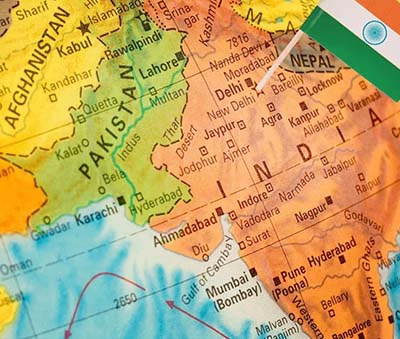
Yet several current and former employees, who spoke on the condition of anonymity to discuss sensitive matters, said Agrawal was an unexpected choice internally – though not necessarily an unwelcome one – for one of the most fraught leadership roles in Silicon Valley. Having joined Twitter before completing his Ph.D. program at Stanford University in 2011, he spent much of his tenure there with zero direct reports, two of those employees said.

As chief technology officer, he also had limited experience handling the thorny questions of content policy – what people are allowed to post on social media – that make Twitter an influential force in global discourse and a target of criticism and regulation by governments and political actors around the world.

“Agrawal has to sort out how Twitter should respond to a fusillade of bills in Congress seeking to rein in social media companies and a new [Federal Trade Commission] chairwoman who has painted a target on the prominent platforms,” as well as attacks from former president Donald Trump and the right, said Paul Barrett, deputy director of the New York University Stern Center for Business and Human Rights, in an email. If Trump runs again, “pressure to reinstate him will be enormous. Impressive engineering chops won’t resolve that problem.”

Instead, insiders say, his formidable engineering chops, his alignment with Dorsey’s vision of a “decentralized” future for social media, and his relatively uncontroversial reputation within the company helped to make him the choice over other, perhaps more obvious internal candidates in a closely guarded and opaque succession process.

While Dorsey told employees at the all-hands that the company had “defeated” activist shareholders and that the decision to step down was all his, at least one person outside the company who was familiar with the process suggested it was pressure from those shareholders and like-minded board members that ultimately led to his departure. While the timing was up to Dorsey, said the person, who spoke on the condition of anonymity to discuss confidential matters, his exit from the company was “the culmination of a conversation Elliott Management started when it made its investment in Twitter in early 2020.”

Twitter spokeswoman Liz Kelley sent a statement saying that the board had formed an independent committee in 2020 to evaluate Twitter’s leadership and create a CEO succession plan. Twitter also reiterated that the decision was Dorsey’s.

Kelley pushed back on the idea that Agrawal is light on policy or management experience. She said he was central to reviewing a 2020 document that introduced the company’s strategic approach to policy and that he led the process of building machine-learning software that automatically removes content that breaks Twitter’s rules. In a recent management role, she added, Agrawal led the company’s platform engineering team – a large technical team with hundreds of workers.

Now Agrawal becomes the public face of a platform that is frequently criticized by the right for moderating speech too aggressively and by the left for not moderating speech aggressively enough. Its decision to cover up a tweet by Trump last year – before any other tech companies had taken action against him – exemplified the outsize political power of the role that Agrawal steps into. Dorsey testified on Capitol Hill five times, and Agrawal is likely to find himself there soon enough as Congress continues to eye new regulations on social media platforms.

Agrawal will bring a keen intellect, those who know him say, but little to no experience in the political realm. Then again, few other Big Tech CEOs had political experience when they stepped into the top job, either. And the pressure Twitter’s board faced from investors was less about the nuances of its policy decisions and more about developing popular new products that would spur user growth and give it more mainstream appeal.

One key to Agrawal’s selection, insiders say, is that he appeared to be in lockstep with Dorsey on a vision for the future for the company. That future will emphasize decentralization and open-source software. Agrawal was the lead proponent of a Twitter-funded project, called Bluesky – an independent organization that builds software that could be shared by different social media companies.

One of the employees described Agrawal as a “big ideas guy” who was unproven as a manager, doesn’t relish dealing in details and “isn’t the best with people.” Even so, that employee was “overall happy” with the choice, because Agrawal came across as thoughtful and respectful.

“People seem generally happy about Parag, but mostly because he’s the best choice among a bunch of bad options,” said another of the employees.

What other candidates were considered for the role has not been disclosed, and Twitter declined to comment. But one name that came up both in internal and external speculation was that of Kayvon Beykpour, the company’s head of consumer product, who has overseen the launch of several new features in recent years, including the live-audio forum Twitter Spaces.

Three of the employees agreed Beykpour’s aggressive management style would have made him a divisive pick. One said they had been prepared to leave if Beykpour was the choice. And two noted that Beykpour and Agrawal did not always see eye to eye.

The person outside the company who said they were familiar with the decision process confirmed that Agrawal’s solid reputation among the rank and file was a factor.

“He’s a culture carrier, internally, highly respected within the company, and wouldn’t be highly disruptive” as the new CEO, the person said. “If you look at what Twitter needs to take it from where it is today to a $100 billion, $200 billion company, it’s really a product-driven, innovation mind-set: How do we roll out new features and functionality?” The person cited Microsoft CEO Satya Nadella and Adobe CEO Shantanu Narayen as examples of internal candidates with little name recognition who emerged as capable leaders at their respective firms.

Vijaya Gadde, Twitter’s policy chief, is also highly respected internally, the current and former employees said, and would have been a strong choice for handling Congress and regulators. But it was understood that the company’s leaders and investors preferred someone with expertise in engineering or product development.

Though Agrawal does not have formal experience managing a policy team, he has been a major implementer of initiatives that attempt to balance freedom of speech with protecting users from harms like bullying and disinformation, as well as initiatives to open the company’s algorithms to public scrutiny, said a senior Twitter executive, who spoke on the condition of anonymity to describe internal matters.

For example, Twitter was the first of the major platforms to cover content with warning labels that notify people that a newsworthy tweet may be problematic and to create a pop-up asking people to take a moment to double-check whether they want to retweet a particular tweet.

“Parag was the person internally bringing all that to life,” said the executive. “Twitter has always been a ‘product-led company,’ but as the future of the Internet becomes more about standards for algorithms and decentralization – he has been a key voice in building out the tools to make those policy goals a reality.”

One of the other Twitter employees offered a less glowing assessment. “He’s not actively harmful,” the employee said. “I’ve seen worse men get ahead with less.”

Gita Gopinath Promoted As First Deputy Managing Director At IMF

Indian-American Gita Gopinath, the chief economist of International Monetary Fund, is being promoted as IMF’s First Deputy Managing Director, the fund announced last week. She would replace Geoffrey Okamoto who plans to leave the Fund early next year. Ms. Gopinath, who was scheduled to return to her academic position at Harvard University in January 2022, has served as the IMF’s chief economist for three years. Gopinath was to return to her position as John Zwaanstra Professor of International Studies and of Economics, Harvard University in January 2022.

“Both Geoffrey and Gita are tremendous colleagues — I am sad to see Geoffrey go but, at the same time, I am delighted that Gita has decided to stay and accept the new responsibility of being our FDMD,” said Kristalina Georgieva, IMF’s Managing Director.

Ms. Georgieva said Ms. Gopinath’s contribution to the Fund’s work has already been exceptional, especially her “intellectual leadership in helping the global economy and the Fund to navigate the twists and turns of the worst economic crisis of our lives.”

She also said Ms. Gopinath — the first female chief economist in IMF history — has garnered respect and admiration across member countries and the institution with a proven track record in leading analytically rigorous work on a broad range of issues.

The IMF has had 10 occupants of the FDMD chair since the position was created in 1949. Each – only one of them a woman – has been a citizen of the US. Gopinath too is a US citizen.

Noteworthy that Gopinath wasn’t always the topper type she became as an economics undergraduate in Delhi’s Lady Shriram College. Till her Class 7, she was at around 45 per cent and then toyed with the idea of professional sports. Also, she briefly showed up for modelling.

In an interview to an Indian weekly some years back, her mother, V.C. Vijayalakshmi, had talked of the ascent since Class 7: “The girl who used to score 45 per cent till class seven, started scoring 90 per cent.”

Then a good science intermediate degree at Maharaja PU in Mysore and topping Delhi University in BA. “She created quite a flutter by bagging the gold medal as LSR had beaten St Stephen’s for the first time, and by just two marks.” Like many kids her age in India, Gopinath also entertained ideas of taking the civil services exam and MBA too.

Today, the IMF MD spoke of the struggling Class 7 student thus: “…given that the pandemic has led to an increase in the scale and scope of the macroeconomic challenges facing our member countries, I believe that Gita – universally recognised as one of the world’s leading macroeconomists – has precisely the expertise that we need for the FDMD role at this point. Indeed, her particular skill set – combined with her years of experience at the Fund as Chief Economist – make her uniquely well qualified. She is the right person at the right time.”

Georgieva, a Bulgarian economist, noted Gopinath’s contribution has already been exceptional, especially her “intellectual leadership in helping the global economy and the Fund to navigate the twists and turns of the worst economic crisis of our lives”.

She said Gopinath – also the first female Chief Economist in IMF history – has garnered respect and admiration across our member countries and the institution, with a proven track record in leading analytically rigorous work on a broad range of issues.

Georgieva said that the IMF’s Research Department had gone from “strength to strength”, particularly highlighting its contributions in multilateral surveillance via The World Economic Outlook, a new analytical approach to help countries respond to international capital flows (the integrated policy framework), and work on a Pandemic Plan to end the Covid-19 crisis by setting targets to vaccinate the world at feasible cost.

Born in Kolkata, Gopinath will take the lead on surveillance and related policies, oversee research and flagship publications and help foster standards for Fund publications.

Gopinath has a Ph.D. in economics from Princeton University in 2001 after the B.A. from LSR and M.A. degrees from Delhi School of Economics and University of Washington. She is the younger of two daughters of T.V. Gopinath and Vijayalakshmi. They are both from Kannur, Kerala and settled in Mysuru.

India Ranked Fourth Most Powerful Country In Asia

India is the fourth most powerful country in Asia, as per the Lowy Institute Asia Power Index 2021. The annual Asia Power Index — launched by the Lowy Institute in 2018 — measures resources and influence to rank the relative power of states in Asia. The project maps out the existing distribution of power as it stands today, and tracks shifts in the balance of power over time.

The top 10 countries for overall power in the Asia-Pacific region are the US, China, Japan, India, Russia, Australia, South Korea, Singapore, Indonesia and Thailand, Lowy Institute said.

India is ranked as a middle power in Asia. As the fourth most powerful country in Asia, India again falls short of the major power threshold in 2021. Its overall score declined by two points compared to 2020. India is one of eighteen countries in the region to trend downward in its overall score in 2021, the report said.

The country performs best in the future resources measure, where it finishes behind only the US and China. However, lost growth potential for Asia’s third largest economy due largely to the impact of the coronavirus pandemic has led to a diminished economic forecast for 2030, Lowy Institute said.

India finishes in 4th place in four other measures: economic capability, military capability, resilience and cultural influence.

India is trending in opposite directions for its two weakest measures of power.

On the one hand, it remains in 7th place in its defense networks, reflecting progress in its regional defense diplomacy — notably with the Quadrilateral Security Dialogue, which includes Australia, Japan and the US. On the other hand, India has slipped into 8th position for economic relationships, as it falls further behind in regional trade integration efforts, Lowy Institute said.

India exerts less influence in the region than expected given its available resources, as indicated by the country’s negative power gap score. Its negative power gap score has deteriorated further in 2021 relative to previous years.

As per the report, many developing economies, including India, have been hardest hit in comparison to their pre-Covid growth paths. This has the potential to reinforce bipolarity in the Indo-Pacific, driven by the growing power differential of the two superpowers, the US and China, in relation to nearly every other emerging power in the region.

The US beat the downward trend in 2021 and has overtaken China in two critical rankings. But its gains are dogged by a rapid loss of economic influence.

China’s comprehensive power has fallen for the first time, with no clear path to undisputed primacy in the Indo-Pacific.

Uneven economic impacts and recoveries from the pandemic will likely continue to alter the regional balance of power well into the decade. Only Taiwan, the United States and Singapore are now predicted to have larger economies in 2030 than originally forecast prior to the pandemic.

Yet richer countries, such as Japan, have seen their economic prospects improve not just relative to 2020, but also to economies with lower vaccination rates. China, which avoided a recession last year, is not far behind. (IANS)

VISA Complains To U.S. Of India Backing Rupay

Visa Inc has complained to the U.S. government that India’s “informal and formal” promotion of domestic payments rival RuPay hurts the U.S. giant in a key market, memos seen by Reuters show.

In public Visa has downplayed concerns about the rise of RuPay, which has been supported by public lobbying from Prime Minister Narendra Modi that has included likening the use of local cards to national service.

But U.S. government memos show Visa raised concerns about a “level playing field” in India during an Aug. 9 meeting between U.S. Trade Representative (USTR) Katherine Tai and company executives, including CEO Alfred Kelly.

Mastercard Inc has raised similar concerns privately with the USTR. Reuters reported in 2018 that the company had lodged a protest with the USTR that Modi was using nationalism to promote the local network.

Alfred Kelly, Jr., CEO, Visa Inc. speaks at the 2019 Milken Institute Global Conference in Beverly Hills, California, U.S., April 29, 2019. REUTERS/Lucy Nicholson/File Photo

“Visa remains concerned about India’s informal and formal policies that appear to favor the business of National Payments Corporation of India” (NPCI), the non-profit that runs RuPay, “over other domestic and foreign electronic payments companies,” said a USTR memo prepared for Tai ahead of the meeting.

Visa, USTR, Modi’s office and the NPCI did not respond to requests for comment.

Modi has promoted homegrown RuPay for years, posing a challenge to Visa and Mastercard in the fast-growing payments market. RuPay accounted for 63% of India’s 952 million debit and credit cards as of November 2020, according to the most recent regulatory data on the company, up from just 15% in 2017.

Publicly, Kelly said in May that for years there was “a lot of concern” that the likes of RuPay could be “potentially problematic” for Visa, but he stressed that his company remained India’s market leader.

“That’s going to be something we’re going to continually deal with and have dealt with for years. So there’s nothing new there,” he told an industry event.

Modi, in a 2018 speech, portrayed the use of RuPay as patriotic, saying that since “everyone cannot go to the border to protect the country, we can use RuPay card to serve the nation.”

When Visa raised its concerns during the USTR gathering on Aug. 9, it cited the Indian leader’s “speech where he basically called on India to use RuPay as a show of service to the country,” according to an email U.S. officials exchanged on the meeting’s readout.

Finance Minister Nirmala Sitharaman said last year that “RuPay is the only card” banks should promote. The government has also promoted a RuPay-based card for public transportation payments.

While RuPay dominates the number of cards in India, most transactions still go through Visa and Mastercard as most RuPay cards were simply issued by banks under Modi’s financial inclusion program, industry sources say.

Visa told the U.S. government it was concerned India’s “push to use transit cards linked to RuPay” and “the not so subtle pressure on banks to issue” RuPay cards, the USTR email showed.

Mastercard and Visa count India as a key growth market, but have been jolted by a 2018 central bank directive for them to store payments data “only in India” for “unfettered supervisory access”.

Mastercard faces an indefinite ban on issuing new cards in India after the central bank said it was not complying with the 2018 rules. A USTR official privately called the Mastercard ban “draconian”, Reuters reported in September.

Pan-India Epic ‘RRR’ To Release In Over 1,000 Multiplexes Across USA

Filmmaker S.S. Rajamouli, who is gearing up for the release of his pan-India epic ‘RRR‘ starring Jr NTR, Ram Charan, Ajay Devgn, Alia Bhatt and Shriya Saran, is all set to treat fans in the US with his upcoming film.

Apart from India, the makers are aiming to release the film in 1,000 plus multiplexes only in the US, bringing back the glory of Indian cinema to the overseas audience. Sarigama Cinemas and Raftar Creations are jointly distributing the movie in the US.

The anticipation among the audiences has been increasing day by day not just in India but worldwide as it is the biggest action drama to date.
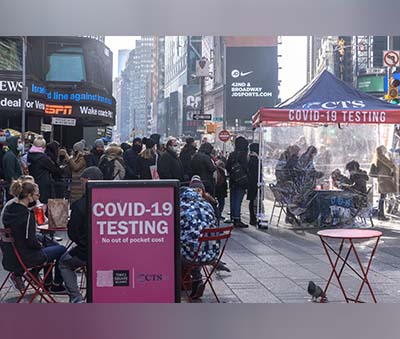
The makers have shared multiple assets including posters and songs with glimpses of Ajay Devgan, Alia Bhatt, and Ram Charan, among others. The film’s trailer is also unveiled on December 9 followed by a grand event.

Post Baahubali’s success, Rajamouli became a nationwide household name, and he has now made another film on a grand scale and is set to break many records.

The movie includes a star-studded line up besides lead actors Ram Charan and Jr NTR. Ajay Devgn, Alia Bhatt, Olivia Morris will be seen in pivotal roles while Samuthirakani, and British actors Ray Stevenson and Alison Doody join in supporting roles.

Jayanti Lal Gada of PEN Studios has bagged the theatrical distribution rights across north India and has also bought worldwide electronic rights for all languages. Pen Marudhar will be distributing the film in the north territory.

The Telugu-language period action drama is produced by D.V.V. Danayya of DVV Entertainments. ‘RRR’ will hit the screens on January 7.

Indian Army’s ‘STRIKE’ For Ladakh-Like High-Altitude Areas

The Indian Army is on the lookout for Unmanned Ground Vehicles (UGV) to assist infantry troops in high-altitude areas with surveillance, tactical reconnaissance, targeting enemy positions, delivering critical supplies, and carrying out rapid evacuations.

The need for such a platform stems from the difficulties encountered in Ladakh, such as incidents involving a military clash with China at heights of over 15,000 feet.

The army’s requirements for the platform state that the unmanned ground vehicles, or UGVs, should be able to carry a load of 250500 kg and should be able to operate in high altitude areas along the northern borders-a reference to the frontier with China.

A weapon platform variant mounted with a machine gun has also been listed as one of the requirements that the UGVs should have.

Twelve Indian companies will showcase 35 such platforms to the Indian Army in Babina from December 9-14 in an experiment called “Strike”-surveillance, tactical recce, intelligence, kinetic effect, and evacuation systems.

“Over 30 different types of unmanned ground vehicles will be showcased by the developers, and these will be imbedded with sub-units for tactical exploitation. The experiment involves various categories of UGVs, viz., surveillance, reconnaissance, intelligence, kinetic effect, logistics, casualty evacuation,” said an official.

The unmanned vehicle that the army is looking for should perform recce and surveillance and have a load carrier aimed at last-mile delivery and casualty evacuation.

According to the army’s requirements, the UGV should be able to operate in varied terrain conditions, including deserts, plains, mountainous and high-altitude areas, existing along our borders. The army wants the vehicles to be operated remotely as well as in an autonomous mode.

The unmanned vehicles can also be used for explosive detection and neutralisation of improvised explosive devices. The army has stated that a robotic arm with the capacity to lift a minimum weight of 5 kg is a must.

The requirements further state that it should be able to place explosives and carry out remote detonations of identified IEDs and mines.

U.S. COVID-19 Travel Restrictions Begun

Beginning Monday, December 6th, travelers heading to the U.S. are required to show evidence of a negative COVID-19 test within one day of boarding their flight instead of three days prior.

Also, President Biden is extending the federal rule requiring passengers on planes, trains and buses to wear face masks through March 18. It was scheduled to expire in mid-January.

The Biden administration’s moves come after the White House announced a ban on travel to the U.S. by foreign nationals who have been to South Africa or seven other African countries within the previous 14 days.

That travel ban does not apply to U.S. citizens and permanent residents, and it’s possible the ban could be lifted soon.
U.N. Secretary-General Antonio Guterres called the restrictions “travel apartheid,” and Dr. Anthony Fauci said U.S. officials “feel very badly about the hardship that has been put on not only on South Africa but the other African countries.”

“Hopefully we’ll be able to lift that ban in a quite reasonable period of time,” Fauci said.

Here’s what travelers should know:

New testing requirements

Starting Monday, the U.S. has begun requiring all inbound international travelers to test for COVID-19 within one day of their flight to the U.S., regardless of their nationality or vaccination status.

That will replace a similar three-day requirement in effect since early November, when the administration scrapped country-specific travel bans.

“This tighter testing timetable provides an added degree of protection as scientists continue to study the omicron variant,” Biden said during a brief appearance to announce his latest measures against the virus.

Do testing requirements apply to children?

Yes, but children under 2 years old do not need to get tested. There is also an option for people who can prove they have recovered from COVID-19 in the past 90 days. Learn more about these requirements.

Do you have to get the test exactly 24 hours before travel?

No. The Centers for Disease Control and Prevention’s policy specifies that travelers must get tested one day before the flight’s departure, but does not say it has to be exactly 24 hours before.

“The Order uses a 1-day time frame instead of 24 hours to provide more flexibility to the air passenger and aircraft operator,” the CDC says. “By using a 1-day window, test acceptability does not depend on the time of the flight or the time of day that the test sample was taken.”

That means if your flight is at 1 p.m. on a Friday, you could board with a negative test that was taken any time on the prior Thursday, the agency explains.

Face mask rules

The Transportation Security Administration will extend the requirement to wear a mask on planes, trains, subways and other public transportation including airports and bus terminals through the winter.

Fines, which were doubled earlier this year, will remain in a range of $500 to $3,000.

The mask rule has become a flashpoint on flights, and some in the airline industry are eager to see the mandate go away. Airlines have reported more than 5,000 incidents of unruly passengers to federal authorities since the start of the year, with about three-fourths of the events involving passengers who refuse to wear a mask.

Is testing and quarantine required after arrival?

No, it is not required but the CDC recommends that all travelers get tested three to five days after travel.

Travelers are advised to self-monitor for COVID-19 symptoms and isolate and get tested if they do develop symptoms.

It is also recommended that those who are not fully vaccinated stay home and self-quarantine for a full seven days after travel, even if they test negative within three to five days after arrival.

Unvaccinated travelers who don’t get tested are advised to stay home and self-quarantine for 10 days after travel.

If the traveler has recovered from a documented coronavirus infection within the past 90 days before travel, they do not need to get a test three to five days after travel, even if they’re unvaccinated, the CDC says.

3rd Annual Chaar Prahar Indian Classical Music Festival Held

Bharatiya Vidya Bhavan USA, Sneh Arts, Kolkata Sitar School & Viewcy in association with the Consulate General of India & TV Asia presented the 3rd Annual Chaar Prahar Indian Classical Music Festival. Adapting to the challenges of the global pandemic, the festival was back at the Romanti Auditorium to live in person performances and also streamed live on the digital platform Viewcy, which enabled us to reach audiences in Asia, Europe & North America. The artist lineup included some of the most recognized names in Indian Classical music as well as rising stars.  The festival was supported by our media partners : TV Asia, World BBTV, Radio Zindagi, Divya Bhaskar & The Indian EYE.

Listeners were treated to soul stirring music at this one-day music marathon that lasted for 9 hours and featured 13 musicians from both the Hindustani & Carnatic styles of music. Community of artists & music lovers gathered to enjoy instrumentalists & vocalists from various gharanas (school of music) showcasing their talents & mastery on the sitar, tabla, double neck electric guitar, violin, sarangi, mridangam, harmonium & vocals. As always, the festival team was particularly enthusiastic about giving a platform to the younger generation of Indian American artists who work very hard to pursue this art form.

Dignitaries from the music world & the community graced the occasion to bestow their blessings, not only to the young artists, but also to the organizers for continuing this special initiative. The Consul General of India in New York Amb. Randhir Jaiswal & Deputy Consul General Amb. Dr Varun Jeph, sent their congratulations to the entire organizing team and artsits. Vipul Dev, Consul – Press, Information & Culture, graced the occasion with his presence. He was thrilled to see so many music lovers who came to support the festival and hear some soulful music. He appreciated the work & effort put into presenting the rich music of India through this festival. Bhavan Chairman, Dr. Navin C. Mehta along with board member Megha Bhouraskar joined the festival commending the music community for coming together for such a special marathon of music. They were thrilled to see such a fantastic line up & engaging audiences that were enjoying this festival both in person and online.

There were countless comments of support & appreciation pouring in during the concert not only from the audience members but also from artists that were performing. There were rasikas that stayed until 3 am, which encouraged the artists & the organizers. The atmosphere created by the organizers gave the artists and the audience members the feeling of being back home.

The Chaar Prahar Music Festival team is extremely grateful to the artists, community partners, media partners, team members & everyone who worked tirelessly behind the scenes to make this festival possible. They are extremely grateful to Dr Navin Mehta, Padma Shri Dr. H. R. Shah, Kenny Desai, Megha Bhouraskar, Kolkata Sitar School & Sneh Arts for their generous sponsorship. They look forward to even more support from the musicians & music lovers so they can continue to present such special events & give a continuous platform to the local talent. The team has announced that the next Chaar Prahar Festival will be in November 2022.

At AAPI Fall Governing Body Meeting, AAPI-TN Raises $75,000 To Fight Human Trafficking in India

During the American Association of Physicians of Indian Origin (AAPI) Fall Governing Body Meeting, a Fundraiser gala was held on November 20th, 2021 at Embassy Suites by Hilton in Franklin TN, Suburbs of “Music City” Nashville, TN.

The host chapter- AAPI-TN presented FFLI with a fundraised $75,000, in order to help strengthen the efforts to end human trafficking and to help continue and expand their impact in India.
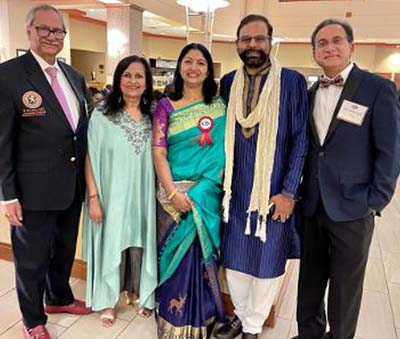
While pointing out that Human Trafficking is one of the fastest growing criminal industries in the country, reported in all 50 states of the United States of America, “we as a community have a duty to end the various forms of slavery,” AAPI Tennessee Chapter President, Dr. Anuradha P. Mann said. “With the goal of supporting Nashville nonprofit FFLI (Free for Life International). FFLI works in prevention along with rescue, restoration, rehabilitation and education of trafficked victims, we are pleased to present this token of our appreciation to help support the efforts of FFLI,” she added.
The opening ceremony was symbolic, especially with the recent celebration of Diwali, and tied back to the soulful mission of FFLI. Gabrielle Thompson, FFLI CEO and Executive Director and Board Member Radha Babu addressed the audience, describing the impact of fighting human trafficking in India.
The underlying theme of Diwali, celebrating Light over Darkness, Victory of Good over Evil and Knowledge over Ignorance, which has caught up the attention of people all over the world, was done as the traditional lamp was lit by AAPI-TN Executive Committee, AAPI USA President Dr. Anupama Gotimukula, Congressman Jim Cooper and Grand Sponsor Dr. Bharat Sangani.
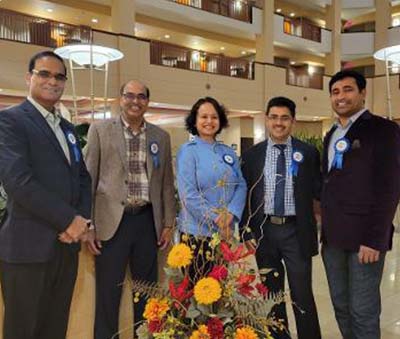
The audience was in awe of FFLI’s work and mission. In his keynote address, Congressman Jim Cooper from Nashville highlighted the numerous injustices that intersect with human trafficking and exploitation, along with the urgent need for action at the state, national, and international levels.
In her address, Dr. Anupama Gotimukula, President of national AAPI highlighted some of the major achievements of AAPI under her leadership in the past five months ever since a new executive committee assumed charge of AAPI in July this year.
Evolving to meet the growing needs of its members and the larger population it is called to serve, AAPI, the largest ethnic physician organization in the United states, representing over 100,000 Indian American Physicians, has grown steadily and is recognized by the authorities, local communities and mainstream media for the many noble initiatives AAPI has led, especially during the Covid pandemic, she said.
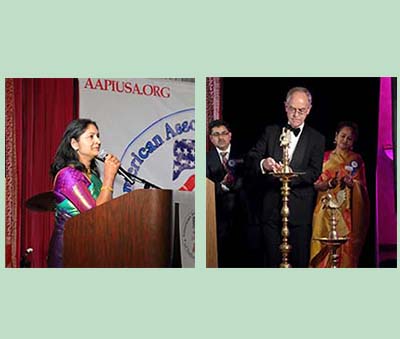
She reminded AAPI members that, as part pf the upcoming Global Healthcare Summit, AAPI has initiated preventive healthcare screenings in 75 villages to understand the concept of preventive screenings help to diagnose any silent diseases which are causing premature deaths from Coronary heart disease and cancers like Breast cancer, cervical cancer which are preventable if diagnosed early through these annual screenings as mentioned above.
Dr. Satheesh Kathula, secretary of AAPI and treasurer of gala applauded the efforts of “ free for life” who are committed to curtail human trafficking and said “we are very glad to be part of the cause”. He thanked all the sponsors and the gala committee for their hard work in making this happen.

During the CMEs, several important topics with recent advances were well received by the AAPI fraternity. Themes for the CMEs included: ‘Cancer therapy: Advancement as we head for a cure’ by Dr. Nishitha Reddy, ‘Psychiatric sequelae of human trafficking’ by Dr. Sricharan Moturi, ‘Cardiovascular disease in South Asians- (Masala Study)’ by Dr. Ramya Suryadevara and ‘Stem cell therapy: The future of medicine’ by Dr. Sai Ram Atluri. The CME was well-attended, with active engagement between speakers and moderators (Dr. Amit Keswani, Dr.Varun Dhulipala, Dr. Biliyar, and Dr. Gunuganti. Attendees were eligible for 3 Category 1 CME hours, accredited by the Chicago Medical Society (CMS).
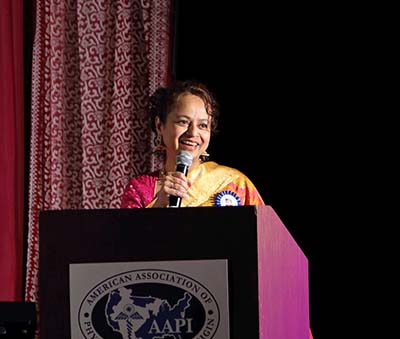
Organized by the AAPI Tennessee Chapter led by its President, Dr. Anuradha P. Mann, the gala, fund raiser and the Fall Governing Body Meeting of national AAPI was chaired by Dr. Sunil Kaza and effectively coordinated by Dr. Dayaker Mallipeddi, Dr. Shashank Ponugoti, and Dr Viren Shah.
The gala began with the Event Chair Dr. Sunil Kaza welcoming community members, family, friends, colleagues and sponsors.  “We, AAPI- TN team, worked hard to stick to the mission of AAPI, for education and charity to serve humanity. We thank each and every member that attended and supported the event. Our special thanks to all our Sponsors,” said Dr. Sunil Kaza, Chair of the Gala Committee. The Grand sponsor for the event, Dr. Bharat Sangani attended the meeting personally.

Attended by over 150 AAPI delegates from around the nation and more than 250 local members, the weekend event was packed with activities including Business Meet, “warm meet and greet” with local AAPI TN members, CMEs, fun-filled impromptu ‘Mehfil’ led by Dr. Amit Chakrabarty, Gala and Dinner. After a delicious dinner during gala, the participants were entertained with a live music, provided by ‘Geetanjali’ and the ‘SaReGaMa’ orchestra from Chicago. Several past Presidents of AAPI attended praised this event as ‘one of the best’ they have attended. AAPI’s BOT Chair Dr. Kusum Punjabi and other Board of Trustees attended and graced the event. AAPI-TN Chapter donated $10,000 to the National AAPI’s Endowment Fund.

AAPI Joins Rock & Roll Marathon In San Antonio, Creating Awareness On Healthy Living

The Covid pandemic has impacted all aspects of human life as never been before. The past two years have been challenging to everyone, particularly to those who are assigned with the responsibility of caring for the sick, even as hundreds of Millions are affected by the big pandemic.

Physicians and other health professionals on the front lines of COVID-19 care have experienced so many unknowns during the pandemic. They’ve also put their own health and the well-being of their families on the line to provide care.
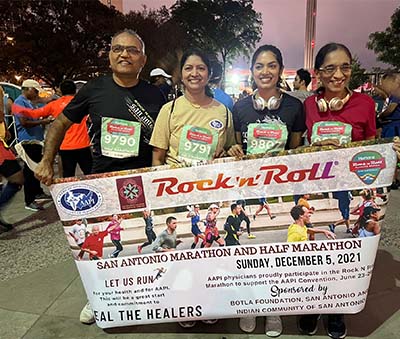
At this critical juncture in human history, American Association of Physicians of Indian Origin (AAPI) the largest ethnic medical organization in the country, representing the interests of over 100,000 physicians of Indian origin, is focusing on themes such as how to take care of self and find satisfaction and happiness in the challenging situations they are in, while serving hundreds of patients everyday of their dedicated and noble profession, Dr. Anupama Gotimukula, President of AAPI said.

In preparation for the upcoming 40th annual convention from June 23-26, 2022 in San Antonio, Texas with the timely theme that focusses on “Heal The Healers” and to create awareness among the public on the need for Healthy Lifestyle, AAPI Convention Team led by Dr. Jayesh Shah joined an “Rock and Roll Marathon” on Sunday, December 5th, 2021 in san Antonio, TX.

AAPI’s participation at the Marathon was inspired and sponsored by the Botla Foundation, which provided a great kick start to AAPI’s wellness theme, pointed to the Six Pillars of Lifestyle Medicine: 1. Healthy Diet; 2. Being active; 3. Restorative sleep; 4. Managing stress; 5. Have social and supportive connections; and,  6. Avoiding abusive drugs and habits.
Planning for joining the Rock and Roll Marathon started over three months ago, says Dr. Jayesh Shah, Chair of AAPI Convention 2022. Botla Foundation committed a donation of $25,000, However, in order to encourage Doctors to run, the Foundation initially put a caveat that they would donate $250 for every person who signs up for the half marathon. “This novel way of sponsorship did encourage many Indian doctors and other community members to register and participate in this unique marathon,” added Dr. Jayesh Shah. “We were lucky to have Dr. Akil Tahir to join us as the Chief Ambassador for the run. His presence also inspired all of us to join for this noble cause. His message of running with heart touched all of us.”

Dozens of Doctors and community leaders joined the Rock and Roll Marathon, which had attracted over 18,000 participants from around the nation, and made this an inspiring experience for all. Dr. Ravi Botla, while thanking and congratulating all the participants at the Marathon, said, “Running with you all is an amazing experience. Several friends made their personal bests today. Hope to continue to do some physical activity (running/walking/cycling) to improve our health. On behalf of all our runners yesterday and today, Botla Foundation will donate $25,000 to AAPI, irrespective of the number of participants. We should be proud of this accomplishment. Thank you Anupama and Jayesh to provide this opportunity.”
The Botla Charitable Family Foundation is a non-profit established in 2014 by Dr. Ravi and Vijaya Botla with the intention to give to charitable causes that highlight Indian culture and traditions as well as promote health and wellness in our community.

“After a hiatus of 5 years from long distance running, I am thrilled to announce that I completed running the half marathon in San Antonio on a PLANT BASED DIET!” Dr. Akil Taher said. “I ran to support the American Association of Physicians of Indian origin (AAPI) under the leadership of Dr. Anupama Gotimukula ad Dr. Jayesh Shah. AAPI has done some phenomenal charity work here in the US and India. Also a big thank you to the Botla family for their inspirational support to AAPI,” he added.
“That is why in keeping with AAPI’s 2022 Convention theme of “Heal the Healers,” this idea of having these healers finally put their health first by participating in the San Antonio Rock n Roll Half Marathon came to life,” Vijaya Botla said. “There was great enthusiasm from our local Indian doctors and a wonderful camaraderie was formed. Weekly meetups and training commenced. We were blessed that Dr. Akil Taher, from Atlanta, Georgia joining our group and was able to pass on his words of wisdom to us through his book “Open Heart” and by even coming to do the race with us in San Antonio on December 5, 2021.”

To run my first half-marathon with my Idol, Dr. Taher. He is a living proof of the power of ‘Whole Foods Plant Based’ Diet and Physical Exercise in not just recovering from a major surgery but healing from within for a better and stronger health than before. His presenceat the Marathon inspired us to sign up for the event and support AAPI in promoting ‘health & fitness’ in our community,” stated Dr.  Bhoja R. Katipally.

Several participants at the Marathon had weekly runs at trails to prepare for the run. The team also got the expertise of Pradeep, who had recently finished Chicago marathon as the coach. He taught the participants the dynamic exercises before the run and static exercises after the run. Dr Bhoja Reddy did a book signing event on Saturday, the day before the run. Dr.Taher contributed all the money from the book sale to AAPI.

While congratulating all the participants, organizers and sponsors, Dr. Gotimukula said, “I want to extend a few words of my appreciation to all the wonderful hearts from AAPI who participated in the Marathon.

The donor, Dr. Ravi Botla did his first full Marathon. There are several in the group who did their first half marathon including Dr. Jayesh Shah! We thank the Botla Foundation who inspired us! We ran with a good heart to support AAPI. Nothing is impossible if we have the motivation inside us!!” For more details on AAPI and the 40th convention, please visit: www.aapiusa.org
 

India’s Population Growth Rate Is Slowing Down Women Are More than Men For the First Time Ever In India

India’s population growth is losing steam as the average number of children born crossed below a key threshold, according to newly released data from a government survey, media reports state. India’s total fertility rate (TFR) across India dropping to 2.0 in 2019-2021, compared with 2.2 in 2015-2016. A country with a TFR of 2.1, known as the replacement rate, would maintain a stable population over time; a lower TFR means the population would decline in the absence of other factors, such as immigration.

Other vital indicators found in the report suggests, India now has 1,020 women for every 1000 men. India’s population is not getting any younger, and India is no longer facing the threat of a population explosion. All three radical findings are part of the summary findings of the fifth round of the National Family and Health Survey (NFHS), which were released by the Union health ministry on November 24.

NFHS is a sample survey, and whether these numbers apply to the larger population can only be said with certainty when the next national census is conducted, although it is very likely that they will in the case of many states and Union territories. In cities across India – as in other countries – women are opting for fewer children: the urban fertility rate is 1.6.

The new data has been welcomed, and is hailed as a heartening signal by government officials and researchers in a country that is expected to overtake China to become the world’s most populous sometime this decade. Since the mid-20th century, Indian leaders have tried to curb high birthrates, which are often reversely correlated with women’s welfare metrics and economic progress. A burgeoning population is seen, in the longer term, as a hurdle to development and a driver of environmental degradation and greenhouse gas emissions.

These new numbers indicate that India can no longer be called a country of “missing women”, a phrase first used by Nobel Prize winning economist Amartya Sen in a 1990 essay in the New York Review of Books. Back then, there were 927 women per 1,000 men in India. According to NFHS-3, conducted in 2005-06, the ratio was equal, 1000: 1000; it went down to 991:1000 in 2015-16 in NFHS-4. This is the first time, in any NFHS or Census, that the sex ratio is skewed in favour of women.

Indian fertility rates have been trending downward for the last two decades as the country grew richer, underwent rapid urbanization, and rolled out programs that provide contraceptives and family planning education. But the progress shown in just the last two national surveys has been significant, demographers said.

“This is of course good news,” said Nandita Saikia, a professor of public health at the International Institute for Population Studies (IIPS) in Mumbai. “It indicates there has been some kind of transformation in the last four years in socioeconomic conditions.” India’s population has been expected to overtake China’s sometime around the year 2027. That date “could be delayed if this trend continues,” Saikia added, “but not for long.”

The dropping fertility rate does not mean India’s population is already decreasing, but rather its growth rate is slowing. India’s population, which stands at just under 1.4 billion, will continue to rise beyond the year 2050 and peak at over 1.6 billion before stabilizing and returning to about 1.4 billion by 2100, according to United Nations projections.

Several Indian leaders since the country’s independence in 1947 have grappled with the population question. In the 1970s, Prime Minister Indira Gandhi carried out a controversial mass sterilization drive. Population control measures – and the difference in birthrates between India’s religious groups – remain one of the most polarizing issues in domestic politics today.

The declining fertility rate observed in recent years was backed by an uptick in several key indicators, demographers said. The proportion of women who used contraceptives rose from 54 to 67%, according to the national survey, while those who reported an unmet need for contraceptives fell. The proportion of teenage marriages has also decreased, according to the study, while there has been an improvement in the gender balance of newborns in a country with a deeply held preference for sons. For every 1,000 baby boys, there are now 929 baby girls, up from 919 girls five years ago.

The study showed the long-standing gap between India’s north and south widening: the large, poor tracts that line the northern Ganges River continue to show high fertility rates, with women in Bihar state having an average of three children each. Southern states including Tamil Nadu and Karnataka had fertility rates below the replacement rate.

To be sure, the gender ratio at birth for children born in the last five years is still 929, which suggests that son-preference, in its various macabre forms, still persists, but the sex ratio is a significant milestone achieved on the back of policies aimed to curb sex selection practices that were once rampant and female infanticide, and on the fact that women in India tend to live longer than men.

The average life expectancy at birth for men and women was 66.4 years and 69.6 years respectively in 2010-14, according to data from the Census of India website. There are other interesting read outs from the survey. The share of population under the age of 15 years, which was 34.9% in 2005-06, has come down to 26.5% in 2019-21. India is still a young country — a median age of 24 years in 2011 according to the Census figures — but it is ageing, and that comes with the associated policy challenges.

“The fact that we are now an aging population suggests that our approach to women’s health needs a more holistic life cycle view rather than one that prioritises reproductive health only,” Yamini Aiyar, president of the Centre for Policy Research, said. “The fact that more women have completed ten years of schooling in 2019-20 than previously coincides with a drop in female labor force participation points to significant structural challenges in India’s labour market. These need to be urgently addressed if India is to make progress,” Aiyar added.

Finally, the total fertility rate (TFR), or the average number of children per women in India, is now just 2, which is below the internationally accepted replacement level fertility rate – the point at which a population exactly replaces itself from one generation to the next — of 2.1. This means, India’s population may have peaked — another data-point that can only be established by the Census, but which is almost certainly for at least the southern states, as well some of the richer ones.

“There is usually a gap of 30-40 years between total fertility rate falling below replacement levels and a decline in overall population, because the population which will give birth in the next 10-15 years has already been born in the past when fertility levels were higher,” said Dr KS James, director and senior professor at the International Institute for Population Sciences. “Of course, the population growth in southern states is going to fall at a faster rate than the rest of the country,” he added.

NFHS-5 was conducted in two phases between 2019 and 2021, and covered 650,000 households from 707 districts of the country. The States and UTs that were surveyed in Phase-II are Arunachal Pradesh, Chandigarh, Chhattisgarh, Haryana, Jharkhand, Madhya Pradesh, NCT of Delhi, Odisha, Puducherry, Punjab, Rajasthan, Tamil Nadu, Uttar Pradesh and Uttarakhand.

NFHS is the most comprehensive database on a host of socioeconomic and health indicators with a focus on women – NFHS-5 covered 720,000 women and just above 100,000 men – and its basic results can be compared to the previous four rounds which were conducted in 1992-93, 1998-99, 2005-06 and 2015-16.

While the statistics quoted above are a watershed moment in India’s socio-economic and demographic transformation story, other findings of NFHS also convey a similar message. Socio-economic challenges facing India, going forward, will need to be dealt with more nuance and some of the stereotypes and political beliefs (such as the political obsession with population control laws) which dominate the public discourse will need to be shelved.

“This is not saying the country’s problems of unemployment, inequality, education, and everything else are automatically over,” said Sanjay Kumar Mohanty, the head of population policies at IIPS. “But population is no longer a top priority concern.”

“The improved sex ratio and sex ratio at birth is also a significant achievement; even though the real picture will emerge from the census, we can say for now looking at the results that our measures for women empowerment have steered us in the right direction ,” said Vikas Sheel, additional secretary, Union ministry of health and family welfare and mission director, National Health Mission.

Omicron Virus Found In South Africa Described By WHO As “Variant Of Concern”

The World Health Organization (WHO) has designated a new variant, B.1.1.529, named as “Omicron” found in South Africa initially, and has now been found in several other countries as a “variant of concern (VOC).” The variant, which was announced by scientists in South Africa on Thanksgiving Day, November 25th has caused alarm around the world.

Fears that a new, fast-spreading coronavirus variant could potentially be more dangerous than even the Delta variant prompted several countries to impose restrictions on travel from affected regions, and caused stock markets across the globe to crash.

The WHO said about 100 genome sequences of the variant have been reported so far. Many of the infected people were fully vaccinated, with at least one person in Israel having also received a third, booster dose of vaccine.

The World Health Organization (WHO) has warned that the Omicron coronavirus variant poses a high risk of infection surges around the globe.

The variant could lead to severe consequences in some regions, the WHO said on Monday.  The head of the organisation, Dr Tedros Adhanom Ghebreyesus, renewed a call for a global push to get vaccines to poorer nations.

Covid-19 is “not done with us” yet he warned. The variant was detected in South Africa earlier this month with initial evidence suggesting it has a higher re-infection risk. South Africa has been praised for its prompt reporting of the variant.

“Omicron has an unprecedented number of spike mutations, some of which are concerning for their potential impact on the trajectory of the pandemic,” the WHO said.

The epidemiological situation in South Africa has been characterized by three distinct peaks in reported cases, the latest of which was predominantly the Delta variant. In recent weeks, infections have increased steeply, coinciding with the detection of B.1.1.529 variant. The first known confirmed B.1.1.529 infection was from a specimen collected on 9 November 2021.

This variant has a large number of mutations, some of which are concerning. Preliminary evidence suggests an increased risk of reinfection with this variant, as compared to other VOCs. The number of cases of this variant appears to be increasing in almost all provinces in South Africa. Current SARS-CoV-2 PCR diagnostics continue to detect this variant.

Several labs have indicated that for one widely used PCR test, one of the three target genes is not detected (called S gene dropout or S gene target failure) and this test can therefore be used as marker for this variant, pending sequencing confirmation. Using this approach, this variant has been detected at faster rates than previous surges in infection, suggesting that this variant may have a growth advantage.

There are a number of studies underway and the TAG-VE will continue to evaluate this variant. WHO will communicate new findings with Member States and to the public as needed.

The scientific analysis till now suggests that the new variant has been spreading at a rate faster than any other variant, including Delta. The fact that several of the infected people were fully vaccinated, including one with a booster dose, is an indication that this variant also has considerable capability to evade the immune response.

This means that this variant is a cause of worry on at least two of the three criteria that are used to assess how dangerous any new variant is. As of now, there is no information on its ability to cause severe disease, the third crucial criteria.

“This variant has a number of mutations, some of which are concerning. Preliminary evidence suggests an increased risk of reinfection with this variant, as compared to other VOCs,” the WHO said in a statement.

“The number of cases of this variant appears to be increasing in almost all provinces in South Africa… This variant has been detected at faster rates than previous surges in infection, suggesting that this variant may have a growth advantage,” it said.

The Delta variant, first discovered in India late last year, has been the deadliest variant of SARS-CoV2 on all these three counts till now. It is the dominant variant now in most regions, and is the reason behind the deadly second wave in India, and the ongoing surge in Europe and a few other regions.

“Not everything is known about this variant yet. Data is still coming in. As of now, we know that it has over 30 mutations, of which 10 are in the spike protein. Whether this variant turns out to be a faster spreading one, or one that has greater ability to evade immune response is still to be seen. But we need to be very alert,” virologist Shahid Jameel said.

Vineeta Bal, an immunologist associated with the Indian Institute of Science Education and Research (IISER), Pune, said the emergence of the variant was not an unexpected development, but authorities needed to respond with increased surveillance to ensure early detection and effective isolation. “Viruses mutate all the time. That is something to be expected. But we should be able to ensure that it does not gain a foothold in many people,” Dr Bal said.

The coronavirus evolves as it spreads and many new variants, including those with worrying mutations, often just die out. Scientists monitor for possible changes that could be more transmissible or deadly, but sorting out whether new variants will have a public health impact can take time.

As such, countries are asked to do the following:

  • enhance surveillance and sequencing efforts to better understand circulating SARS-CoV-2 variants.
  • submit complete genome sequences and associated metadata to a publicly available database, such as GISAID.
  • report initial cases/clusters associated with VOC infection to WHO through the IHR mechanism.
  • where capacity exists and in coordination with the international community, perform field investigations and laboratory assessments to improve understanding of the potential impacts of the VOC on COVID-19 epidemiology, severity, effectiveness of public health and social measures, diagnostic methods, immune responses, antibody neutralization, or other relevant characteristics.

Individuals are reminded to take measures to reduce their risk of COVID-19, including proven public health and social measures such as wearing well-fitting masks, hand hygiene, physical distancing, improving ventilation of indoor spaces, avoiding crowded spaces, and getting vaccinated.

At AAPI’s Global Healthcare Summit In Hyderabad, India’s Vice President Shri Venkaiah Naidu To Be Chief Guest

Shri Venkaiah Naidu, Honorable Vice President of India will be the Chief Guest at the next edition of the annual Global Healthcare Summit (GHS) 2022, organized by the Association of American Physicians of Indian Origin (AAPI) to be held at the prestigious Hotel Avasa in Hyderabad, India from January 5th to 7th, 2022, Dr. Anupama Gotimukula, President of AAPI, announced here today.

“Harnessing the power of Indian Doctors worldwide, the AAPI Global Healthcare Summit platform has evolved with the support and collaboration with the Indian Ministry of Health and Family Welfare as well as several prominent global and Indian medical associations,” says Dr. Anupama Gotimukula. “The theme for the Summit this year is: ‘Prevention Is Better Than Cure Through Technology, Telemedicine & Transformation’ and we want to coordinate and collaborate all our resources towards helping India have established annual healthcare screening guidelines and development of “India Preventive Task Force” who will maintain and update the annual healthcare screening guidelines”

According to her, “Senior leaders from leading healthcare organizations such as pharmaceuticals, device and medical equipment manufacturers and major medical teaching institutions, hospitals and from the Ministries – Health, External/Overseas Affairs and regulatory bodies are collaborating with AAPI with the ultimate goal to provide access to high quality and affordable healthcare to all people of India.”
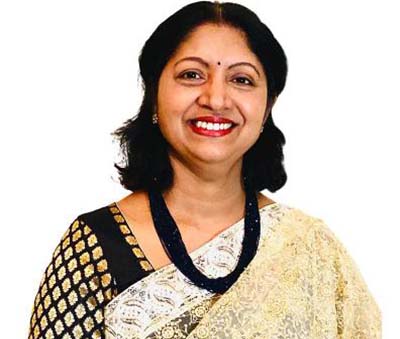
AAPI is hopeful that several international healthcare industry partners are looking for opportunities to participate at this event for greater collaboration on Research & Development and philanthropic engagements, Dr. Gotimukula added.  Chronic diseases, notably diabetes, cardiovascular, hypertension, COPD, oncology, maternal and infant mortality, and emerging ones – Management of neurological emergencies ENLS a certification course  are only some of those that are going to be covered during this Summit. An exclusive Healthcare CEO forum coordinated by Dr. Jospeh Chalil will bring the healthcare industry perspective, with senior Government officials, both Union and State providing the legislative wisdom.

Dr. Kusum Punjabi, the Chair of AAPI BOT said, “We flew away from India decades ago. However, our hearts are still in India.” She said, GHS 2022 will focus on several relevant issues to serve the many healthcare needs and delivery of healthcare in India.” She praised the local community and organizers for their enthusiastic support.

While elaborating on the theme and areas that are going to be covered during the Summit, Dr. Udaya Shivangi, Chair of AAPI GHS USA says, “In our efforts to realize the core mission of AAPI, which is to share the best from leading experts from around the world, to collaborate on clinical challenges, research and development, philanthropy, policy and standards formulation, the Summit in Hyderabad will have clinical tracks that are of vital to healthcare in India.”

Dr. Ravi Kolli, President-Elect of AAPI pointed out, “Healthcare in India is one of the largest sectors, in terms of revenue and employment.  India is making significant improvements in the healthcare infrastructure and is building modern medical facilities throughout India. Indian doctors have made tremendous progress in the 21st century and India is now being touted as a medical tourism hub”

While elaborating the objectives of the Summit, Dr. Anjana Samadder, Vice President of AAPI, says, “This innovative Summit is aimed at advancing the accessibility, affordability and the quality of world-class healthcare to the people of India. Among other areas, the Summit will focus on prevention, diagnosis, treatment options and share ways to truly improve healthcare transcending global boundaries.”

There are several AAPI leaders who are working hard to make the GHS a memorable event, said Dr. Gotimukula. “Among them, I want to recognize Dr. Sujeeth Punnam, US Coordinator, Dr. Lokesh Edara, Chair Global Medical Education; Dr. Prabhakar Sharma, CME Chair, Dr. Prabhat Sinha, Chair Sponsorships and Exhibits, Dr. Seema Arora, Chair of Women’s Forum; Dr. Joseph M. Chalil, Chair of CEO Forum; Dr. Belani Kumar, Chair of the Mwdical Students Research Poster presentations; Dr. Lakshmi Thirunagari and Dr. Apurva Yeluru, CoordinatorS Medical Jeopardy

“The much awaited Women’s Forum at the GHS will be led by a panel consisting of inspiring women leaders who have been in the forefront, and have shown resiliency, confidence, leadership, determination, and dedication, and have withered all obstacles in life, and have become women leaders, and are recognized to be an inspiration to all,” says Dr. Seema Arora, Chair of Women’s Forum.

“The essence of AAPI is educational,” Dr. Lokesh Edara, Chair Global Medical Education, while describing the CMEs by experts that are ebbing organized during GHS said. “That translates into numerous programs that AAPI has planned to motivate med students, physicians, academicians and researchers to excel and master in their areas of work and goal to have one PG seat for every Medical student who graduates and there should be one Doctor per 1000 population.

Dr. Joseph Chalil, Chair of the CEO Forum said, “AAPI has made significant contributions towards addressing several issues affecting the healthcare system in India. During the GHS 2022, AAPI at the popular CEO Forum, physician leaders from the United States and India will have an opportunity to brainstorm and explore ways to focus on the theme, “Prevention is Better Than Cure” and recommend possible ways to plan and implement preventive medicine that will save resources and precious human lives.”

Dr. Satheesh Kathula, Secretary of AAPI said, “Through Continuing Medical Education and non-CME seminars by experts in their fields, AAPI will provide comprehensive and current reviews and guidelines for the diagnosis and treatment of various disease states to reduce morbidity and mortality and achieve cost effective quality care outcomes.”

According to Dr. Krishan Kumar, Treasurer of AAPI, “With the changing trends and statistics in healthcare, both in India and US, we are refocusing our mission and vision, AAPI would like to make a positive and meaningful impact on the healthcare delivery system both in the US and in India.”

This international health care summit is a progressive transformation from the first Indo-US Healthcare Summit launched by AAPI USA in 2007. Since then, AAPI has organized 14 Indo – US/Global Healthcare Summits and developed strategic alliances with various organizations.

Representing the interests of the over 100,000 physicians of Indian origin, leaders of American Association of Physicians of Indian Origin (AAPI), the largest ethnic organization of physicians, for 39 years.

“Being organized at this critical phase, GHS 2022 is aimed at exploring possibilities for greater collaboration and cooperation between the physicians and health care providers in India with those of Indian origin and major health-care providers abroad,” Dr. Gotimukula said. For more information, please visit www.aapiusa.org/ https://summit.aapiusa.org

Vaccine Makers Optimistic About Producing Omicron-Specific Shots If Needed

Vaccine makers say they are in the midst of testing their shots’ effectiveness against the newly discovered omicron coronavirus variant, and they remain optimistic that a new variant-specific vaccine could be produced and rolled out quickly if needed.

When asked about the new omicron variant that was first detected in southern Africa, Paul Burton, Moderna’s chief medical officer, told ABC News’ “Good Morning America” on Monday that vaccine manufacturers around the world, including Moderna, “are testing samples from people who have received our vaccines against the strains.”

Burton said that while the company thinks “vaccine effectiveness may come down, based on the mutation seen in this in this virus,” he added that with booster shots of the existing version of the vaccine, “We should be able to get antibody levels up, so that’s a very important initial line of defense.”

Burton said that researchers will know just how effective the vaccines are against this variant “in the next couple of weeks.” If manufacturers need to make an omicron variant-specific vaccine, it should take approximately “two to three months” to test and manufacture it, he said.

Fellow coronavirus vaccine maker Pfizer similarly expressed confidence that it could produce a new vaccine quickly if needed. Pfizer’s CEO Albert Bourla told CNBC’s “Squawk Box” on Monday that he is very optimistic the company will be able to speedily switch production to a new vaccine, if the research merits, without losing any volume.

Johnson & Johnson also said in a statement Monday that it is evaluating its current COVID-19 vaccine against the omicron variant.

“In addition, the company is pursuing an omicron-specific variant vaccine and will progress it as needed,” it said.

Scientists suspect the omicron variant could partially chip away protection from current vaccines due to its mutations, but they are still waiting on testing to learn if, and to what extent, that could be the case.

Vaccine experts have told ABC News that the current COVID-19 vaccines, which rely on genetic technology, could easily be updated to better combat emerging variants. This has not been necessary so far, as the original vaccines have been effective against the dominant variants that have spread in the past, but companies are preparing to tweak vaccines to respond to the omicron variant just in case.

The good news is that these novel vaccines employing genetic technology mean updates can be made to the vaccines easily — unlike vaccines based on older technology, which used a piece of the virus or a killed virus to mimic infection.

The new vaccines, which use the genetic technology, introduces an instruction manual of sorts into your body. This introduction manual tells your cells to start churning out a protein normally found on the outside of the virus, and your body activates an immune response when your body senses that viral protein.

In remarks on Monday, President Joe Biden assured Americans that the omicron variant “is a cause for concern, not a cause for panic.”

“We have the best vaccine in the world. The best medicines, the best scientists, and we’re learning more every single day,” the president said. “And we’ll fight this variant with scientific and knowledgeable actions and speed. Not chaos and confusion.”

Omicron Symptoms Mild So Far, Says South African Doctor Who Spotted It

The first South African doctor to alert the authorities about patients with the omicron variant has told The Telegraph that the symptoms of the new variant are unusual but mild.

Dr Angelique Coetzee said she was first alerted to the possibility of a new variant when patients in her busy private practice in the capital Pretoria started to come in earlier this month with Covid-19 symptoms that did not make immediate sense.

They included young people of different backgrounds and ethnicities with intense fatigue and a six-year-old child with a very high pulse rate, she said. None suffered from a loss of taste or smell.

“Their symptoms were so different and so mild from those I had treated before,” said Dr Coetzee, a GP for 33 years who chairs the South African Medical Association alongside running her practice.

On November 18, when four family members all tested positive for Covid-19 with complete exhaustion, she informed the country’s vaccine advisory committee.

She said, in total, about two dozen of her patients have tested positive for Covid-19 with symptoms of the new variant. They were mostly healthy men who turned up “feeling so tired”. About half of them were unvaccinated.

“We had one very interesting case, a kid, about six years old, with a temperature and a very high pulse rate, and I wondered if I should admit her. But when I followed up two days later, she was so much better,” Dr Coetzee says.

Dr Coetzee, who was briefing other African medical associations on Saturday, made clear her patients were all healthy and she was worried the new variant could still hit older people – with co-morbidities such as diabetes or heart disease – much harder.

“What we have to worry about now is that when older, unvaccinated people are infected with the new variant, and if they are not vaccinated, we are going to see many people with a severe [form of the] disease,” she said.

South African demographics are very different from those in the UK. Only about six per cent of the population are over the age of 65. This means that older individuals who are more vulnerable to the virus may take some time to present.

The B.1.1.529 variant, now called omicron, was first identified in Botswana on November 11. It has now been detected in the UK as well as South Africa, Israel, the Netherlands, Hong Kong and Belgium.

It is the most mutated form of Covid-19 discovered thus far, with 32 mutations to the spike protein. Scientists are concerned that the mutations may allow it to evade existing vaccines and spread quickly.

Two cases of omicron have now been found in the UK, with two people in Essex and Nottinghamshire testing positive for the new variant.

UK officials are busy scouring testing databases for any further sign of the omicron variant, not least because there were many South Africans in the Twickenham area of south-west London for the England and South Africa match last Saturday.

South African scientists say omicron is behind an explosion of cases in the country’s Gauteng province, which is home to the country’s commercial capital Johannesburg and Pretoria. Cases have rocketed up from about 550 a day last week to almost 4,000 a day currently.

The UK, US, the EU and Israel have all suspended travel to and from South Africa and the five surrounding countries: Botswana, Eswatini, Lesotho, Mozambique, Namibia, and Zimbabwe. The UK Government added Angola, Malawi, Mozambique and Zambia to the travel red list on Sunday.

The Western travel ban has provoked anger among South Africans, with many claiming that they are being punished for having outstanding research institutions and being transparent about their findings.

Bidens Showcase First White House Christmas Decorations

For their first Christmas in the White House, the Biden family will celebrate with the theme of “gifts from the heart” for their holiday decor.  In unveiling the theme on Monday, President Joe Biden and first lady Jill Biden explained:

“The things we hold sacred unite us and transcend distance, time, and even the constraints of a pandemic: faith, family, and friendship; a love of the arts, learning, and nature; gratitude, service, and community; unity and peace. These are the gifts that tie together the heart strings of our lives.”

An ornament of a portrait of U.S. President Joe Biden and first lady Jill Biden is hung on a Christmas Tree in the State Dining Room of the White House during a press preview of the holiday decorations Nov. 29, 2021 in Washington, D.C.

In just one week, over 100 volunteers from the local area decorated the outside and inside of the White House with 41 Christmas trees, 6,000 feet of ribbon and over 78,750 holiday lights.

Every room in the White House celebrates a different gift

In the East Colonnade and East Landing, doves and shooting stars adorn the hallways. The decorations honor the service of COVID-19 frontline workers and first responders. Featured here is a Christmas tree that honors the military, “who have laid down their lives for our country, and the families who carry on their legacies.”

The library is decorated with stacks of books and birds and butterflies created out of recycled newspaper; it represents the gift of learning. The Vermeil Room is decorated with colorful paint swatches and paint brushes, and represents the gift of the visual arts.

Wreathes are seen on the back of chairs in the room that displays the White House’s collection of state china. The holiday decorations symbolize the gift of friendship and sharing.

The East Room, the largest room in the White House, represents the gift of gratitude. It is decorated with the Neapolitan crèche that includes with over 40 figurines from the 18th century; the crèche has been displaeevery holiday season since 1967.

A White House Military social aide looks on near the official White House Christmas tree in the Blue room during a press preview of the White House holiday decorations in Washington, D.C. on November 29, 2021.

The Blue Room, where the official White House Christmas tree sits, represents the gift of peace and unity. Doves carrying a banner embossed with every U.S. state and territory cascade down the tree.

The Red Room, decorated to represent the gift of the performing arts, includes brass instruments hanging from the mantel. Ballet slippers, tap shoes and musical notes are strung around the tree.

A ginger bread White House is seen in the State Dining room during a press preview of the White House holiday decorations in Washington, D.C. on Nov. 29, 2021.

Andrew Caballero-Reynolds/AFP via Getty Images

The State Dining Room represents the gift of family. It features a gingerbread White House, made of 55 sheets of baked gingerbread. It has eight detailed replicas of community buildings to honor frontline workers, including a hospital, police station and fire station.

The Grand Foyer and Cross Hall represent the gift of faith and community. The area is decorated with floating candles. The hallway alcoves and tree displays depict wintry scenes of towns and cities, representing the bonds of communities.

-+=