Tamil Actor Vijay Launches Political Party

With the launch of his political party Tamizhaga Vetri Kazhagam earlier this week, ‘Thalapathy’ Vijay has joined the long list of Tamil actors joining politics. In a letter, he said that the party would contest the 2026 Tamil Nadu State Assembly elections.

Vijay’s entry into active politics was announced with the clarification that his target is the 2026 state election. He said that he wouldn’t be participating in the upcoming national election in any way. Given how often his characters win on screen, it wasn’t entirely a surprise his political party will be called ‘Tamilaka Vetri Kazhagam’ (TVK), which roughly translates to Tamil Nadu Victory Association.

Fans of ‘Thalapathy (General)’, as Vijay is known to them, celebrated in the streets and on social media. The ruling DMK and the opposition BJP conveyed their best wishes to the actor on his new career path.

A bumpy road for stars

  • Tamil Nadu has a long history of cinema stars in politics. MGR, K Karunanidhi and Jayalalithaa ruled state politics for about 50 years.
  • However, several stars tried their hands in recent times but not with great success.
  • Kamal Haasan started the Makkal Needhi Maiam. Rajinikanth formed the Rajini Makkal Mandram in the previous decade.
  • While Kamal Haasan is still politically active, Rajinikanth abandoned politics due to health issues.
  • Vijayakanth, who passed away in December, formed the Desiya Murpokku Dravida Kazhagam (DMDK) in 2005, became MLA twice and served as LoP during 2011-16 but power eluded him.
  • Tamil Nadu CM Stalin’s son Udaynidhi has starred in films and is a sports minister who isn’t averse to raking up controversy. He’s also the heir apparentin the DMK.

Can Vijay be the disrupter?

  • Vijay, currently doing a film titled ‘GOAT’ and will do one more before he retiresfrom films for a full-time role in politics, enters politics when the AIADMK seems divided, the BJP is trying to make inroads and the DMK is attempting to cement its hold.
  • The question is whether he gets a starring role or will have to settle for a guest role.
  • The actor said administrative malpractices, corrupt political culture and a divisive political culture were obstacles to the state’s unity and progress.

A statement issued by the new political party stated: “You are all aware of the current political climate. Administrative malpractices and corrupt political culture on the one hand, and a divisive political culture which strives to divide our people on the lines of caste and religion on the other hand. Everyone, especially, in Tamil Nadu is yearning for a fundamental political change that can lead to a selfless, transparent, caste-free, visionary, corruption-free and efficient administration.”
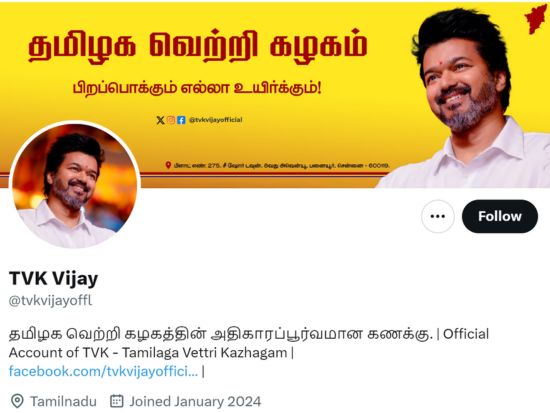
Tamil Actor Vijay Launches Political Party (MInt)
Picture: Mint

Joseph Vijay Chandrasekhar, known as Vijay, is an Indian actor, dancer, playback singer and philanthropist who works predominantly in Tamil cinema and also appeared in other Indian languages films. Referred to by fans and media as “Thalapathy” (commander), Vijay is the highest paid actor in Tamil cinema. He has significant fan following globally. He has won numerous awards, including eight Vijay Awards by Star India, three Tamil Nadu State Film Awards by Government of Tamil Nadu, and a SIIMA Award. He has been included several times in the Forbes India Celebrity 100 list, based on the earnings of Indian celebrities.

Vijay said, “As far as I am concerned, politics is not just another profession; it is a sacred service to the people… I wish to fully immerse myself in politics for public service after completing my commitments to another film I have already committed to, without causing any disruption to party activities. This is what I consider my gratitude and duty to the people of Tamil Nadu.”
China Faces Economic Crisis as Record Defaults Signal Deepening Financial Strain Amidst Pandemic Fallout and Political Tensions

China is grappling with a significant economic downturn reminiscent of the 2008 global financial crisis, with a record number of borrowers facing defaults.

“Defaults by Chinese borrowers have surged to an unprecedented level since the Covid pandemic as the country faces huge economic challenges.”

According to official records, an alarming 8.54 million individuals in China, predominantly aged between 18 and 59, are now officially blacklisted due to missed payments on various financial obligations, spanning from home mortgages to business loans.

“This figure has sharply risen from 5.7 million defaulters in early 2020, as lockdowns and economic restrictions stemming from the pandemic significantly impacted economic growth and household incomes.”

The surge in defaults, representing approximately one percent of working-age Chinese adults, poses a substantial risk not only to China’s economy but also to the global economy.

“Making the situation worse for individuals, China also does not have any personal bankruptcy laws, intensifying the financial and social repercussions of escalating debt.”

Under Chinese law, defaulters on the blacklist encounter restrictions on various economic activities, including purchasing plane tickets and conducting transactions via popular mobile apps such as Alipay and WeChat Pay.

“The economic strain is also visible in the surge of household debt, which almost doubled over the past decade to 64 percent of the Gross Domestic Product (GDP) in September.”

Wage growth has stagnated or even turned negative amid the economic downturn, exacerbating the challenge of meeting financial obligations for many Chinese consumers.

“The economic challenges extend to the job market, with youth unemployment reaching a record 21.3 percent in June. Authorities have even stopped reporting this data.”

Financial institutions are feeling the squeeze as well, with China Merchants Bank reporting a 26 percent uptick in bad loans from credit card payments that were 90 days overdue in 2022 compared to the previous year.

“As the number of defaults rises, legal experts have proposed introducing personal bankruptcy laws to provide relief for individual insolvencies.”

However, the lack of transparency surrounding personal finances renders the implementation of such measures nearly impossible. Government officials and other interest groups are likely to oppose these policies, fearing exposure of corruption.

“Adding to China’s challenges, a recent pneumonia outbreak further strains the nation. The Department of Health recorded 182,721 cases as of November 11, surpassing the 158,307 cases reported from January to October last year.”

This economic crisis unfolds against a backdrop of escalating tensions in the region, particularly with Taiwan gearing up for a new presidential election, which adds complexity to the geopolitical dynamics in the Asia-Pacific region.

Indian American Community Rallies Behind Tom Suozzi’s Return to Politics, Advocating for Common-Sense Solutions

The recent gathering of Indian Americans at the Santoor Restaurant in Floral Park, Queens, New York, radiated enthusiasm and energy, signaling their excitement over Tom Suozzi’s return to the political arena. According to Mr. Koshy Thomas, a key organizer of the event, “The Indian Community has always admired Mr. Suozzi for standing up for issues that our community has cared for, and this gathering strongly reflects those feelings.” The attendees, hailing from diverse backgrounds rooted in South Asia, came together to show their support.

In his speech, Mr. Suozzi expressed gratitude to the Indian community for their backing and emphasized the significance of voting, particularly in the context of the special election. He pledged to continue his efforts in uniting people to address various challenges, including the border crisis.

Recognized as a moderate politician, Mr. Suozzi is deeply attuned to the concerns of the average citizen, such as rising crime, inflation, the quality of education, and job creation. Despite these pressing issues, the political discourse often veers towards extremes, sidelining the priorities of the majority. Mr. Suozzi advocates for a return to pragmatic policies that benefit the broader population, echoing the sentiments of many voters who feel sidelined in the current political landscape.

Raju Abraham, another event organizer, commended Mr. Suozzi’s commitment to principled leadership, stating, “Tom is a strong advocate for consensus-building and is capable of bringing together diverse factions for necessary compromises, ending the gridlock in Washington and propelling the nation forward.”

George Abraham, a fervent supporter of Mr. Suozzi, urged the community to exercise their right to vote and send a clear message to Washington. He emphasized the need for policies that enhance people’s lives rather than disrupt them, whether addressing rising crime rates or combating inflation. Mr. Suozzi’s emphasis on common-sense solutions resonates with voters who believe in upholding the American dream of life, liberty, and the pursuit of happiness. According to George, those who seek to undermine this dream must be held accountable.

Zuckerberg’s Wealth Soars as Meta Beats Expectations: Billionaire’s Net Worth Surges by $29 Billion in One Day

Mark Zuckerberg’s financial status is once again making headlines following a significant victory for Meta, the parent company of Facebook, which he co-founded and leads as CEO. The billionaire is poised to see a substantial increase in his wealth as Meta surpassed expectations with its latest quarterly earnings report.

According to Forbes, Zuckerberg’s net worth surged by a staggering $29 billion in just one day due to the remarkable rise in Meta’s stock price. As of the latest update, his total net worth stands at $167.9 billion on Forbes’ continuously updated billionaires list, a notable jump from the estimated $139 billion in January.

Meanwhile, Bloomberg’s real-time list places Zuckerberg’s net worth at $142 billion, although it’s yet to reflect the impact of the recent earnings report. Discrepancies in estimated net worth figures among different outlets are not uncommon, as they factor in Meta’s share values along with evaluations of his other assets like real estate holdings.

Currently, Zuckerberg holds the fourth position among the wealthiest individuals globally according to Forbes, while Bloomberg ranks him as the fifth richest.

Together with his wife Priscilla Chan, Zuckerberg has committed to donating 99% of their wealth throughout their lifetimes via the Chan Zuckerberg Initiative, which has already pledged over $4.9 billion in grants since its establishment in 2015.

This week has been monumental for Zuckerberg. Alongside Meta’s soaring stock, he also faced questioning before the Senate, alongside other prominent tech CEOs, addressing concerns about the proliferation of sexually explicit content involving minors on social media platforms.

US and UK Conduct Joint Strikes on Houthi Targets in Yemen, Escalating Regional Tensions

The United States and the United Kingdom have executed strikes against Houthi targets in Yemen utilizing aerial and surface platforms, including fighter jets, backed by several other nations. According to two US officials, a minimum of 30 targets were hit across at least 10 locations.

The targeted sites encompassed command and control infrastructure, an underground depot for storing weapons, and other armaments utilized by the Houthis to threaten international shipping routes, as stated by an official.

The coalition, comprising the US, UK, Australia, Bahrain, Canada, Denmark, the Netherlands, and New Zealand, issued a joint statement reaffirming their commitment to de-escalate tensions and restore stability in the Red Sea while issuing a warning to the Houthi leadership regarding their actions. The statement emphasized their determination to safeguard lives and ensure the unhindered flow of commerce through one of the world’s vital waterways.

In the operation against Houthi targets in Yemen, two US destroyers, the USS Gravely and USS Carney, fired Tomahawk missiles, serving as a component of the offensive, as per a US official. Additionally, F/A-18 fighter jets from the USS Dwight D. Eisenhower aircraft carrier were engaged in the strikes.

Preceding these strikes, the US intercepted six Houthi anti-ship cruise missiles before they could be launched towards the Red Sea, as confirmed by US Central Command.

These successive strikes come in response to a drone attack that claimed the lives of three US service members and injured many more, prompting the Biden administration to adopt a nuanced approach. Instead of targeting Iran directly, the US is focusing on influential proxies supported by Tehran, signaling a message to Iran’s leadership through indirect means.

While the strikes in Yemen are distinct from those in Iraq and Syria, both operations target Iranian-backed groups in the Middle East. US Defense Secretary Lloyd Austin asserted that the recent strikes aim to disrupt and degrade the capabilities of the Houthi militia, emphasizing a collective resolve to impose consequences if the Houthi attacks on international shipping and naval vessels persist.

President Joe Biden authorized Saturday’s strikes earlier in the week, emphasizing that they are a direct response to Houthi actions and not indicative of a desire for escalation.

Mohammed Al Bukhaiti, a prominent figure in the Houthi Political Council, reiterated the group’s determination in the face of coalition strikes, emphasizing their commitment to ongoing military operations against Israel until certain conditions are met.

Separately, the US conducted unilateral strikes against sites in Syria and Iraq, hitting over 85 targets, including command centers and weapons facilities. While the administration deemed these strikes successful, it pledged further action against Iranian-backed groups in the region.

Austin characterized Friday’s strikes as the beginning of a broader response, without specifying the timeline for subsequent actions.

Approximately 24 hours after the initial strikes in Iraq and Syria, the US carried out additional strikes in Yemen. These strikes mark the third instance in recent weeks of joint US-UK operations targeting Houthi sites. In previous rounds, the coalition targeted weapons storage facilities and radar sites to impede Houthi attacks on critical waterways.

Despite these efforts, the Houthis have remained resolute, expressing defiance towards the US and UK, reaffirming their determination to confront what they perceive as aggression.

In addition to major strikes, the US has undertaken smaller-scale operations targeting Houthi drones. Recent actions included intercepting drones deemed an imminent threat to shipping lanes and US warships in the Red Sea and the Gulf of Aden.

Journalists and Activists Detained in Moscow Crackdown Amidst Protest for Ukraine War Returnees

Numerous individuals, including reporters from international media outlets, have been apprehended in Moscow following a crackdown on demonstrators at the election headquarters of Russian President Vladimir Putin, according to reports from independent sources on Saturday.

The demonstration was orchestrated by the spouses of deployed men amidst a growing movement of women demanding the return of their husbands and sons from Ukraine. Video footage reviewed by CNN depicts Russian authorities arresting several individuals wearing “Press” vests in the vicinity of Red Square.

The protest, dubbed “500 days of mobilization,” attracted women to the Kremlin walls before progressing to Putin’s nearby election headquarters, as per reports. SOTAvision, an independent Russian news source, shared on their Telegram channel that a correspondent witnessed security forces “grabbing random individuals from the crowd, targeting only men.”

OVD-info, a watchdog group monitoring Russian repression, stated that at least 27 people, with only one identified as a protester, were transported in a police van to Kitay-Gorod station, where they are presently detained. Despite OVD-info’s attempts to send a lawyer to visit the detainees, access was denied.

Mediazona, an independent Russian media organization, reported on Saturday that among those detained are journalists employed by Kommersant, France Press, and Spiegel, as well as human rights activists. Furthermore, OVD-info mentioned that seven journalists covering the rally were taken to the Basmanny police station, including Andrei Zaiko from the Japanese television company “Fuji.”

According to OVD-info’s Telegram update, one employee from state media has been released from Kitay-Gorod along with three minors. The update stated, “Police officers informed them that they intend to release the remaining federal and foreign media personnel soon, but will retain ‘foreign agents’ media representatives at the police station. All detainees also had their phones confiscated.”

Russia’s foreign agents law, expanded in late 2022 to encompass individuals or groups deemed to “receive support and/or be under foreign influence,” has drawn criticism as a Kremlin maneuver to silence critics of its actions in Ukraine, including journalists.

How To Have Sex” delves into the less glamorous aspects of Gen Z’s party culture

Molly Manning Walker received the news of her double BAFTA nomination while at the Sundance Film Festival in Park City, Utah. Her film, “How To Have Sex,” was being showcased at the festival, portraying the misadventures of teenagers during a summer holiday. Despite the film’s portrayal of wild partying, Manning Walker celebrated her nomination with a simple cup of tea in the quiet of the mountains.

Reflecting on her own experiences, Manning Walker acknowledged that some of her fondest memories were from similar holidays. Inspired by her time in Magaluf, Spain, the film is set in Malia, Greece, capturing the essence of youthful abandon and the consequences that follow.

One of the central themes of the film is the exploration of consent and its complexities, particularly in the context of teenage experiences. Manning Walker’s portrayal of Tara’s coerced sexual encounter prompts a deeper discussion about consent and its implications.

Following its success at the Cannes Film Festival, where it won a top prize, “How To Have Sex” has garnered BAFTA nominations and sparked conversations about consent in the UK. Manning Walker noted its unexpected resonance globally, with audiences from different countries relating to their own versions of similar coming-of-age experiences.

In an interview, Manning Walker discussed the film’s universal appeal and the societal pressures young people face regarding sex. She emphasized the importance of acknowledging the anxieties and pressures inherent in such experiences and advocating for more open and honest discussions about consent.

The film’s approach to intimacy scenes was carefully managed, with intimacy coordinators on set to ensure the well-being of the cast. Manning Walker emphasized creating a supportive environment where cast members felt comfortable expressing any concerns.

Regarding the portrayal of drunkenness in the film, Manning Walker highlighted the challenge of realistic drunk acting and the rigorous audition process to find actors who could authentically portray intoxication.

Reflecting on the impact of the film, Manning Walker shared emotional moments, including bringing the film into schools to teach consent. Witnessing students engage in discussions about consent and sexual assault was particularly moving, highlighting the potential for films to spark important conversations and empower young people.

As “How To Have Sex” prepares for its US release, Manning Walker hopes the film will continue to foster dialogue and promote understanding about consent and the complexities of sexual experiences.

Imran Khan and Wife Sentenced to Seven Years in Jail, Marriage Voided

A Pakistani court has sentenced former Prime Minister Imran Khan and his wife to seven years in jail, declaring their marriage invalid due to religious reasons.

Khan, already incarcerated for corruption, faced another blow when the court deemed his 2018 marriage to Bushra Bibi, a spiritual healer, as un-Islamic and illegal.

The ruling comes amid a series of legal woes for the 71-year-old politician, who claims the charges against him are politically motivated. Khan, a former cricket star turned politician, was ousted from his position as prime minister in 2022.

The court, located within the Adiala Jail where Khan is serving previous sentences, acted on a complaint filed by Bibi’s ex-husband, alleging fraud in her marriage to Khan.

According to Muslim family law, women are barred from remarrying for a specified period after divorce or the death of their spouse. The court found Bibi had remarried before the mandated waiting period following her divorce, hence deeming her marriage to Khan invalid.

In addition to the seven-year prison term, the court levied a fine of 500,000 rupees on Khan and Bibi.

Their union in 2018, months before Khan’s election as prime minister, marked his third marriage. Bibi, believed to be in her 40s and known for her veiled public appearances, followed Khan’s previous marriages to Jemima Goldsmith in 1995 and Reham Khan in 2015.

Khan, known for his playboy image during his cricketing years, transitioned to a more conventional married life before facing a string of legal and political challenges.

Since his arrest in August, Khan has faced multiple convictions, with the latest sentencing being his third within a week. Earlier, he received a 10-year jail term for leaking classified documents.

The recent case revolved around allegations of Khan and his wife profiting from state gifts received during his tenure, including jewelry from the Saudi Crown Prince. Both were handed 14-year prison sentences, with Bibi allowed to serve hers under house arrest.

Khan’s political party, Pakistan Tehreek-e-Insaf (PTI), denounced the legal proceedings as unjust, labeling them as “kangaroo courts.”

Critics have raised concerns about the fairness of the upcoming elections, as Khan and his party face marginalization, with many leaders either imprisoned or defecting. The authorities deny any crackdown, but the detention of thousands of PTI supporters following protests during Khan’s arrest has raised eyebrows.

Meanwhile, Nawaz Sharif, a three-time former prime minister who was jailed for corruption ahead of the 2018 election, is tipped to win, with analysts suggesting he enjoys favor from Pakistan’s powerful military establishment.

Empowering Dreams: Inside India’s Rural Wrestling School Shaping Future Olympians

Just a few hours away from the bustling streets of New Delhi, Anushree Fadnavis, a photojournalist with Reuters, delved into the world of young female wrestlers undergoing training in the rustic countryside of Sisai, a village nestled in the Indian state of Haryana.

Her lens captured the aspirations of these girls as they aimed to emulate the success of trailblazers like Sakshi Malik, who etched her name in history books as the first Indian woman wrestler to clinch an Olympic medal in 2016.

Traditionally a male-dominated sport in India, wrestling has witnessed a surge in interest among female athletes in recent times, with institutions like the Altius school playing a pivotal role in nurturing this emerging talent.

“I wanted to capture their hopes, dreams, ambitions, and their drive to succeed,” expressed Fadnavis, reflecting on her motivation behind the project.

Established in 2009 by Usha Sharma, India’s pioneering female wrestling coach, along with her husband, Sanjay Sihag, the Altius school stands as a beacon of empowerment, driven by Sharma’s firsthand experiences of navigating the constraints of a patriarchal society.

“In a village, an animal has more value to it than a woman, as an animal gives milk and there is a cost attached to it,” Sharma lamented, shedding light on the prevailing gender dynamics in rural settings.

Fadnavis spent two immersive days at the school, witnessing firsthand the camaraderie among the students as they supported each other in their modest training facilities.

“What surprised me was the grit and determination of the girls to train themselves for a sport that requires a lot of physical strength,” she remarked, noting the shifting societal attitudes reflected in parents’ willingness to send their daughters to a residential school far from home.

Except for Sundays, the students adhere to a rigorous schedule, commencing their day at 4 a.m. with fitness routines and training sessions, punctuated by academic lessons and self-prepared meals—a routine embraced by all, fostering independence and self-reliance.

“Women in the villages in Haryana have very little to no agency in their lives and hence are very dependent on their families and especially men in their lives,” Fadnavis observed, underscoring the transformative impact of the school on its students.

The stories of alumni like Sonu Kaliraman, who transitioned from a farm laborer to an international wrestler under the tutelage of Altius, serve as testament to the profound influence of female mentors in providing a nurturing environment for aspiring athletes.

“Most of them told me that having a woman coach really helps them, as they can be themselves and don’t have to overexplain things to anyone,” Fadnavis relayed, highlighting the significance of representation and mentorship.

A poignant moment during Kaliraman’s home visit, where her mother expressed pride in her achievements, resonated deeply with Fadnavis, evoking memories of her own journey from a career in software engineering to photography, inspired by a close friend.

“It felt great to see the girls have so many different opportunities and someone who could guide them on the right path,” she remarked, emphasizing the role of belief and encouragement in fostering success.

While not all students may ascend to podiums or lucrative contracts, their tenure at Altius equips them with a support network, lifelong friendships, and invaluable lessons for their journey ahead.

“When I opened the academy and we started getting medals, it felt nice to know that the same girls who used to graze cows and buffaloes are now being favored by the men in the family,” Sharma reflected, encapsulating the transformative impact of the school in reshaping societal perceptions and fostering empowerment among its students.

Unveiling the Future: How AI Revolutionizes Astrology and Predictions in 2024

The allure of peering into the unknown future has captivated humanity for ages, from consulting tarot cards to scanning daily horoscopes. However, the landscape of divination shifted dramatically in November 2022 with the emergence of ChatGpt by OpenAI, ushering in a new era of AI-powered astrology that revolutionized predictive practices.

Before the advent of AI, generating astrological charts required inputting birth details into various programs, a process primarily driven by mathematical algorithms. However, the interpretation of these charts and the provision of remedies for potential adverse events remained within the realm of human expertise.

AI has seamlessly integrated into astrology, offering a plethora of applications:

Automated Horoscope Generation: AI algorithms utilize birth data to craft personalized horoscopes, leveraging vast datasets to enhance reliability and efficiency.

Data Analysis and Pattern Recognition: Through machine learning techniques, AI systems analyze astrological data to discern trends and patterns, potentially refining astrological interpretations.

Personalized Recommendations: AI-powered recommendation systems merge horoscope data with user preferences to offer tailored insights and suggestions, spanning various astrological services and applications.

Matchmaking: AI-powered software expedites the process of matching horoscopes, a crucial facet in cultures like India, where astrological compatibility often dictates relationships.

Several AI astrology tools have garnered attention in 2024:

KundliGPT: Integrating ancient wisdom with advanced AI/ML technology, KundliGPT offers personalized horoscope insights and responses, streamlining the acquisition of astrological knowledge.

Melooha: Employing AI-driven algorithms, Melooha provides hyper-personalized interpretations and real-time insights, catering to individual life trajectories.

Aistro: Offering comprehensive astrological insights, Aistro blends tradition with innovation to facilitate self-exploration and decision-making.

Vedic AstroGPT: Merging Vedic astrology with contemporary AI capabilities, Vedic AstroGPT delivers real-time astrological readings tailored to individual life circumstances.

AstroGuide AI: Powered by OpenAI’s GPT-3.5 Turbo, AstroGuide AI offers a range of astrological services, aiming to foster self-awareness and exploration.

While AI in astrology offers more concrete results compared to human-led interpretations, the latter retains value due to its nuanced understanding and subjective approach. Integrating AI predictive analytics with human expertise can enhance the accuracy of astrological predictions, bridging science and tradition to unravel life’s mysteries synergistically.

In essence, the marriage of AI and astrology represents not a replacement but a collaboration, propelling humanity’s quest to decipher the complexities of existence.

Karnataka Congress Leader Warns of Southern Secession Over Alleged Central Fund Diversion

A Karnataka Congress leader, immediately following the unveiling of the interim budget today, accused the Central government of diverting developmental funds from south India to bolster the northern regions. DK Suresh Kumar, a Congress MP, warned that if this issue remains unaddressed, it might necessitate the southern states to seek autonomy, stating, “If we don’t condemn this in the upcoming days, we will have to place a demand for a separate country as a result of the situation the Hindi-speaking region has forced on us.”

The Bharatiya Janata Party (BJP) responded by accusing the Congress of promoting divisive sentiments. Chaluvadi Narayanaswamy of the BJP criticized the Congress’s stance, suggesting that instead of fostering unity (“Bharat Jodo”), they seem to advocate for division (“Bharat Todo”). He condemned the Congress mindset, drawing parallels to the partition of India in 1947, and questioned the party’s commitment to upholding the nation’s unity despite Rahul Gandhi’s calls for integration.

This discontent echoes Mamata Banerjee’s grievances in West Bengal, where the Congress, newly in power in Karnataka, aligns itself with her narrative of inadequate central funding. DK Suresh Kumar emphasized the perceived injustice faced by southern states, asserting, “We want to receive our money. Whether it is the GST, Custom or Direct taxes, we want to receive our rightful share… our share of money for development is getting distributed to north India.”

Recently, the Karnataka Congress administration released a white paper highlighting the disparity between the state’s contributions to the national economy and the funds it receives from the Centre. M. Lakshmana, a spokesperson for the state Congress, cited figures indicating that Karnataka’s tax contributions far exceed the returns it receives. Despite contributing significantly to corporate and other taxes, as well as GST, Karnataka is reportedly receiving disproportionately low allocations from the Centre.

The grievances are not limited to Karnataka alone. Similar concerns have been raised by Kerala and the DMK-led government in Tamil Nadu. This discontent culminated in Karnataka’s Congress government contemplating the formation of a coalition to challenge what they perceive as biased tax devolution by the Central government. Officials noted a decrease in Karnataka’s share of taxes from 4.71% to 3.64% under the current Finance Commission, further exacerbating the perceived imbalance in resource allocation.

Polls Signal Peril for Trump: Conviction Could Cost Him 2024 Election, Survey Shows

Former President Trump has managed to sidestep numerous controversies that might have been detrimental to other political candidates. However, recent developments suggest that he may not be entirely impervious to the consequences of his actions, especially in the eyes of voters.

A new survey, released by Bloomberg and Morning Consult, indicates that the outcome of the four criminal trials Trump is currently embroiled in could dramatically influence his political future. According to the poll, a significant majority of voters in crucial swing states would be disinclined to support Trump if he were to be convicted of a criminal offense or sentenced to prison.

The poll, conducted in seven pivotal states including Arizona, Georgia, Michigan, Nevada, North Carolina, Pennsylvania, and Wisconsin, revealed that a conviction could sway the decisions of a substantial portion of voters, potentially impacting the outcome of the election. GOP strategist Doug Heye emphasized the significance of this, noting that a conviction could serve as a decisive factor in an election where either Trump or President Biden could emerge victorious.

The survey also highlighted a noteworthy shift among Trump’s own voter base. Approximately 20 percent of voters in the surveyed states who had previously supported Trump expressed reluctance to vote for him again if he were to face conviction. GOP strategist Dan Judy commented on this trend, suggesting that while Trump might still retain a significant portion of Republican support, any erosion of this base could significantly impact the election outcome.

However, it remains uncertain whether the polling figures accurately reflect potential outcomes in a general election. At present, in the absence of any criminal convictions, Trump maintains a lead of six points among registered voters in battleground states, as indicated by the Bloomberg poll.

Historically, dissatisfied voters have sometimes compromised their reservations and supported candidates who align most closely with their beliefs, regardless of misgivings. For instance, in 2016, despite controversies such as the release of the Access Hollywood tape, Trump managed to secure victory with the backing of his party faithful.

Despite facing four indictments comprising a total of 91 criminal charges last year, Trump’s grip on the Republican nomination appeared to strengthen, with his supporters rallying around him amidst allegations of unfair targeting.

While Trump has emerged victorious in the initial contests of this year’s primary process, a significant disparity exists between the sentiments of the GOP electorate and the broader public. A recent Economist/YouGov poll revealed that while Trump enjoys favorable ratings from 79 percent of Republicans, only 40 percent of the general public view him favorably.

Moreover, Trump faces relentless attacks from the Biden campaign and its supporters, who argue that his reelection would jeopardize democracy itself. Trump maintains his innocence regarding all charges against him, while his legal team continues to seek delays in proceedings.

Currently, Trump faces impending trials in New York, Georgia, and federal courts, with charges ranging from hush money payments to alleged conspiracies to overturn the 2020 election. The timing of these trials presents a challenge, particularly as Trump seeks to secure the GOP nomination and mount a reelection campaign.

Should Trump emerge victorious in the GOP primary cycle, he would be officially nominated at the Republican National Convention in mid-July. However, the possibility of a federal trial relating to events surrounding the 2020 election looms, pending court decisions regarding presidential immunity from prosecution.

Aside from the question of guilt or acquittal, Trump faces the practical dilemma of allocating his time between campaign efforts and legal defense. GOP strategist Dan Judy noted the inherent challenge in balancing these priorities, emphasizing the importance of time as a candidate’s most valuable resource.

Nonetheless, predicting Trump’s future remains uncertain, as his political trajectory has defied conventional wisdom time and again. Despite skepticism, observers acknowledge the absence of historical precedent to guide assessments of Trump’s prospects.

“In many ways, predicting Trump’s fate has been a futile endeavor,” Judy conceded. “There’s no precedent to rely on here, no past events to draw parallels from. It’s impossible to say for certain what lies ahead.”

Paytm Plummets: Regulatory Woes and Market Turmoil Lead to Sharp Stock Decline

The once-thriving Paytm, a leading startup in India, has experienced a dramatic decline in the stock market this week, marking a continued plummet since its massive initial public offering (IPO) in 2021. Shares of the digital payment giant have undergone a staggering decline, hitting the maximum allowable decrease in Mumbai for two consecutive days, despite India’s stock markets reaching new highs. Since Wednesday’s closing, Paytm has tumbled by 36%, with a nearly 25% drop this year alone.

The company has faced significant challenges since its turbulent market debut in November 2021, failing to persuade investors of its potential profitability amid intensifying competition from domestic and international tech companies. Compounding its woes, regulatory issues emerged when the central bank prohibited its banking division from onboarding new customers two years ago.

With shares now trading at a mere 487 rupees (approximately $6) per share, the recent nosedive has erased a staggering $2 billion in market capitalization, leaving the company with a diminished valuation of only $3.7 billion. The latest downturn was triggered by additional regulatory actions from India’s central bank.

The Reserve Bank of India (RBI) recently instructed Paytm Payments Bank to cease accepting deposits and suspend other essential services due to “persistent non-compliances.” This directive, which caught the Indian tech community off guard, prompted Paytm to adopt damage control measures in an attempt to reassure investors and its vast user base of over 300 million.

However, despite pledges to swiftly address regulatory concerns and a subsequent conference call held after trading hours on Thursday, investor confidence continued to erode. According to Manish Chowdhury, head of research at brokerage firm StoxBox, the RBI’s directive poses a significant “reputational risk” to Paytm’s overall business and raises uncertainties about its future performance.

Founded in 2017 as a joint venture with founder Vijay Shekhar Sharma, Paytm initially operated as a payments bank, allowing deposits but not extending loans to customers. During Thursday’s conference call, Sharma downplayed the central bank’s actions as a temporary setback, asserting that Paytm will henceforth collaborate solely with other banks.

Paytm gained widespread recognition in 2016 when Indian Prime Minister Narendra Modi invalidated the nation’s two largest currency denominations, constituting approximately 86% of the country’s cash supply, as part of efforts to combat tax evasion and illicit wealth accumulation. Although the move caused significant disruptions to the economy, it fueled Paytm’s rapid expansion, attracting 10 million new users within a month and cementing its status as a household name in India.

BRICS Welcomes Saudi Arabia, Sparking Interest from 34 Developing Nations in Alliance

Saudi Arabia has officially joined BRICS, the alliance of emerging economies, a move that has piqued the interest of numerous developing nations. This development has sparked discussions about the potential ramifications for global trade dynamics, particularly regarding the dominance of the US dollar.

The inclusion of Saudi Arabia has led to a surge in interest from other developing countries to become part of the BRICS alliance. The reasons behind this growing attraction towards BRICS lie in concerns over mounting U.S. dollar debt and the imposition of sanctions by the White House on emerging economies.

The prospect of more countries settling trade in their local currencies, as advocated by BRICS, poses a significant threat to the supremacy of the US dollar. A shift of this nature would have profound implications for various sectors in the United States.

According to CNN, a total of 34 countries have expressed their desire to join BRICS as of February 1, 2024. South Africa’s Foreign Minister, Naledi Pandor, confirmed this development during a recent press conference. However, specific details regarding the identities of these countries were not disclosed during the joint press briefing.

The mounting interest from developing nations to align with BRICS reflects their eagerness to adapt to evolving financial landscapes. BRICS is leading a global transition away from reliance on the US dollar towards prioritizing transactions in local currencies. This paradigm shift poses a direct challenge to the established financial order traditionally dominated by Western powers.

The overarching goal of the BRICS bloc is to establish a new world order characterized by multipolarity, effectively sidelining the US dollar. Consequently, the forthcoming years will be crucial in determining the fate of the US dollar, with developing countries increasingly prioritizing their own currencies. The next decade could witness a significant struggle as the US dollar fights to maintain its status as the global reserve currency.

US Approves $4 Billion Sale of Drones to India Amidst Allegations, Strengthening Military Ties in Face of China

The United States gave its approval on Thursday for a significant $4 billion transaction involving cutting-edge drones destined for India, a move aimed at bolstering India’s military capabilities vis-à-vis China. This approval comes after a delay attributed to an alleged plot to assassinate a Sikh separatist leader on US soil.

This sale signifies a notable shift in India’s procurement strategy from its traditional reliance on Russian arms, which have increasingly faced scrutiny due to sanctions stemming from Russia’s actions in Ukraine.

The discussions regarding the drones began during Prime Minister Narendra Modi’s state visit last year, at the invitation of President Joe Biden. These talks gained urgency against the backdrop of skirmishes between India and both China and Pakistan.

Following extensive deliberations with US lawmakers and Indian authorities, the State Department formally notified Congress about the sale, comprising 31 MQ-9B Sky Guardians, the most advanced variant of General Atomics’ Predator drones.

According to a statement from the State Department, “The proposed sale will improve India’s capability to meet current and future threats by enabling unmanned surveillance and reconnaissance patrols in sea lanes of operation.” It further asserted, “India has demonstrated a commitment to modernizing its military and will have no difficulty absorbing these articles and services into its armed forces.”

While India has historically enjoyed bipartisan support in the US Congress, the sale encountered a setback following allegations by US prosecutors of a plot to assassinate a Sikh separatist leader with US citizenship on American soil. The Justice Department went as far as to allege remote direction of the plan by an Indian government official.

India responded to these allegations with a more measured approach compared to its vehement reaction to similar accusations by Canada in the past. However, some US lawmakers questioned the seriousness with which both the Modi government and the Biden administration addressed these allegations, leading to a temporary halt in the informal approval of the sale.

Despite this, observers anticipate that Congress will not obstruct the sale within the 30-day window it has to do so. Michael Kugelman, director of the Wilson Center’s South Asia Institute, commented, “The notification gets the sale back on track, but it could still encounter some choppy seas in Congress. The assassination allegations against India continue to cast a shadow over US-India relations.” He added, “Strategic imperatives tend to carry the day in this partnership, and that will likely ensure the sale eventually goes through, but one can’t rule out the possibility of some hiccups during the finalization process.”

Regarding the approval process, Randhir Jaiswal, a spokesman for India’s foreign ministry, stated that the United States was following its “internal processes,” refraining from further elaboration.

The drones in question, Sea Guardians, possess the capability to monitor seas, submarines, and remain airborne for up to 35 hours, equipped to fire Hellfire missiles and carry approximately 1,000 pounds (450 kilograms) of bombs.

India’s navy has been operating two Predator drones on lease, utilizing them to monitor the Arabian Sea, safeguarding ships from potential threats posed by Yemen’s Huthi rebels and Somali pirates.

In 2019, India made headlines by conducting airstrikes in Pakistani airspace, marking a departure from past precedents. Additionally, tensions along the Himalayan frontier between India and China, the two most populous nations globally, have been escalating, highlighted by a deadly clash in 2020 that claimed the lives of 20 Indian troops and at least four Chinese soldiers.

Despite concerns expressed by some US lawmakers regarding Modi’s human rights record, US policymakers generally view India as a strategic partner due to shared apprehensions about China.

Catholic Bishops of India Launch Innovative Mobile App to Revolutionize Digital Engagement

The Conference of Catholic Bishops of India (CCBI, Latin Rite) has introduced a mobile application aimed at offering a comprehensive range of services and resources to the Catholic community across the nation. Unveiled on January 30 during the plenary assembly at St John’s National Academy of Health Sciences in Bengaluru by CCBI president Cardinal Filipe Neri Ferrão, the Catholic Connect App seeks to revolutionize the digital landscape within the global Catholic community, with a specific focus on India, as stated by Father Stephen Alathara, CCBI deputy secretary general.

Described as a tool poised to seamlessly blend technology with faith, the app is anticipated to instigate positive changes within the Catholic sphere, promoting a sense of unity, communication, and enhanced user experience both locally and internationally. It is projected to cater to diverse needs by providing access to Church services such as health insurance, education, employment opportunities, and emergency aid, in addition to aiding users in locating nearby churches and accessing various Church services within India.

The app’s innovative approach is expected to mark the dawn of a new era, facilitating efficient communication, resource allocation, and community management. By acting as a hub for information regarding Catholic institutions, entities, and associations, alongside delivering timely news updates from the conference’s 14 regions, the app underscores its commitment to keeping users abreast of local developments, thus fostering a deeper sense of community and connection among users, irrespective of their geographical location.

Moreover, the app is anticipated to serve as a vital link for Catholics to connect with their parishes and dioceses, offering dedicated sections for “My Parish” and “My Diocese,” which encompass information, event updates, notice boards, announcements, and obituaries. During the registration process, users can select their respective parishes and dioceses, further enhancing their engagement with their local Catholic communities.

Additionally, the app features a designated space for CCBI Commissions, where their activities, training sessions, and programs are showcased. This interactive platform empowers commission secretaries to directly showcase their initiatives, thereby amplifying the reach and impact of CCBI’s diverse programs.

The inception of the app traces back to the decision made by CCBI’s 88th executive committee in May 2022 to develop a database application to foster connectivity within the Catholic community in India. Following this decision, the trial version of the app was launched on September 21, 2023, during the CCBI 92nd executive committee meeting.

https://mattersindia.com/2024/01/indias-latin-church-set-to-usher-digital-revolution/

CIA Chief Warns: China Poses Greater Long-Term Threat Than Russia, Agency Ramps Up Resources

The head of the CIA, William J. Burns, emphasized the escalating concerns regarding China’s threat to the United States, surpassing that of Russia, and the agency’s heightened efforts to counter it. Burns, in an op-ed for Foreign Affairs, underscored the shifting dynamics of global security, stating, “While Russia may pose the most immediate challenge, China is the bigger long-term threat.”

He disclosed that the CIA has significantly increased its allocation of resources towards intelligence gathering, operations, and analysis pertaining to China. Burns noted, “The CIA has committed substantially more resources toward China-related intelligence collection, operations, and analysis around the world — more than doubling the percentage of our overall budget focused on China over just the last two years.”

In response to this strategic pivot, the CIA has prioritized recruiting and training individuals proficient in Mandarin. Burns elucidated that the agency is intensifying its activities globally to rival China, extending from Latin America to Africa and across the Indo-Pacific region.

Burns’ sentiments regarding China echo those expressed by Richard Moore, the head of MI6, the British intelligence agency. Moore highlighted the increasing significance of China on the global stage, affirming, “We now devote more resources to China than any other mission.” He emphasized the critical necessity of comprehending both the intentions and capabilities of the Chinese government.

The apprehension towards Chinese espionage has mounted in the West, evident in various incidents. Last February, the US military intercepted a Chinese surveillance balloon that had penetrated the airspace over the continental US. Subsequently, in June, The Wall Street Journal reported China’s purported plans to establish a spy base in Cuba. The alleged objective of the base would be to intercept signals from military installations in the southeastern US, raising concerns about China’s expanding espionage activities.

Despite the significance of Burns’ assertions, representatives for the CIA did not provide immediate comments in response to inquiries from Business Insider submitted beyond standard business hours.

https://www.businessinsider.in/politics/world/news/china-is-a-greater-threat-to-the-us-than-russia-and-thats-why-the-cia-doubled-its-budget-for-it-agency-chief-says/articleshow/107280838.cms

Madras High Court Orders Signage Restricting Non-Hindus in Temples to Uphold Hindu Rights

The Madras High Court has issued a directive to the Tamil Nadu HR&CE department, instructing them to place signage in all Hindu temples, clearly stating that non-Hindus are restricted beyond the ‘Kodimaram’ area within the premises. Justice S Srimathy of the Madurai Bench emphasized the fundamental right of Hindus to practice and profess their religion. This ruling came in response to a petition from D Senthilkumar, seeking exclusive access for Hindus to the Arulmigu Palani Dhandayuthapani Swamy temple and its sub-temples, along with the installation of display boards to enforce this regulation at all entrances.

The notable Palani Murugan temple, situated in Dindigul district, was specifically mentioned in this context.

The respondents in the case included the Tamil Nadu government, represented by the Principal Secretary of the Department of Tourism, Culture and Religious Endowments, The Commissioner of the HR&CE Department, and the Executive Officer of the Palani temple. The HR&CE department oversees the administration of Hindu temples across Tamil Nadu.

In response to the petition, the court ordered the installation of boards stating “non-Hindus are not allowed inside the temple after Kodimaram” at the temple entrances, near the flagpole, and at prominent locations within the shrine. The court also mandated that non-Hindus seeking access to specific deities within the temple must provide an undertaking affirming their faith in the deity and willingness to adhere to Hindu customs and practices. Entries for such visits would be maintained in a register by the temple authorities.

Furthermore, the court stressed the importance of maintaining temple premises in accordance with temple rules, customs, and practices outlined in the agamas.

Although the respondents suggested confining the order to the Palani temple alone, the court dismissed this plea, asserting that the issue raised was of broader significance. The court highlighted that these restrictions aim to promote communal harmony among different religions and maintain peace in society. Therefore, the court directed the State Government, HR&CE department, and all involved in temple administration to adhere to these directives in all Hindu temples.

The court reiterated the fundamental rights of Hindus to practice and profess their faith, emphasizing that while individuals of other religions also have these rights, they should not interfere with Hindu customs and practices. Temples are not intended as tourist or picnic spots, and must be respected accordingly.

The court referenced specific incidents of non-Hindus allegedly misusing temple premises, such as consuming non-vegetarian food within temple grounds or attempting to conduct prayers with their sacred texts near sanctums. Such incidents, the court asserted, infringe upon the fundamental rights of Hindus as guaranteed by the Constitution.

Consequently, the court held that it is the duty of the HR&CE department to safeguard temples from such unwanted occurrences and ensure the protection of Hindu fundamental rights. Failure to do so, as evidenced by past incidents, is a neglect of constitutional duty.

The Madras High Court’s ruling underscores the importance of respecting Hindu customs and practices within temple premises, ensuring the fundamental rights of Hindus are upheld, and maintaining the sanctity of these religious spaces.

https://www.ndtv.com/tamil-nadu-news/madras-high-court-to-tamil-nadu-cant-allow-non-hindus-beyond-flagpole-in-temples-4962278#pfrom=home-ndtv_bigstory

Emergence of Assertive Hindu American Politics: Candidates Proudly Represent Faith in U.S. Political Arena

Vivek Ramaswamy expressed his pride in his Hindu identity while campaigning in New Hampshire, stating, “I’m Hindu, and I’m proud of that.” He emphasized his commitment to defending religious liberty without apology. Although his presidential bid faltered in Iowa, his presence underscored a significant emergence: the visibility of assertive Hinduism in American politics.

The burgeoning influence of Hindu American politics was vividly demonstrated in 2019 during the “Howdy, Modi!” event in Houston’s NRG Stadium, where around 50,000 people gathered to witness then-President Trump and Indian Prime Minister Narendra Modi share the stage.Emergence of Assertive Hindu American Politics Candidates Proudly Represent Faith in U S Political Arena

In late 2019, a dispute over an anti-caste discrimination bill in California showcased the increasing political acumen of Hindus in pursuing their interests. With representatives from across the country on opposing sides, proponents and opponents of the bill showcased their ability to mobilize support and shape public opinion. Governor Gavin Newsom’s subsequent veto of the bill marked a victory for those who argued it would unfairly stereotype Hindus.

Rishi Bhutada, treasurer of the 12-year-old Hindu American PAC, noted that Hindus, traditionally leaning towards the Democratic Party, are now more focused on supporting candidates who understand their specific concerns, from addressing Hinduphobia to advocating for immigration policies aligned with their interests.

Reflecting on this evolution, Bhutada remarked, “The community is getting way more discerning about candidates now.” Over the past decade, Hindu Americans have seen an increasing array of candidates from their community vying for positions at various levels of government, including the U.S. Congress.

Tulsi Gabbard’s historic election as the first Hindu congressperson in 2013 marked a turning point, signaling to the community that electoral success was achievable. Subsequently, Democrats like Raja Krishnamoorthi from Illinois and Ro Khanna from California were elected to Congress, further validating the potential for Hindu candidates to succeed nationwide.

Looking ahead, three more Hindu Americans, all Democrats, are currently running for Congress, each with unique backgrounds and platforms:

Emergence of Assertive Hindu American Politics Candidates Proudly Represent Faith in U S Political Arena

Rishi Kumar, a Silicon Valley tech executive and former mechanical engineer, emphasizes his “fiscally moderate” Democratic stance. His successful tenure on Saratoga’s city council, where he received the highest number of votes in history, propelled him into the political arena. Kumar has been vocal in opposing misrepresentations of Hinduism and advocating against anti-Hindu prejudice.

Emergence of Assertive Hindu American Politics Candidates Proudly Represent Faith in U S Political Arena

Bhavini Patel, raised by a single mother in Pennsylvania, draws upon her upbringing working on an Indian food truck to connect with working-class families. She attributes her values of kindness and authenticity to her Hindu upbringing, aiming to represent her faith proudly while addressing issues such as education, small business support, and public safety.

Suhas Subramanyam, currently serving as a delegate in the Virginia Legislature, made history as the first Hindu and Indian American elected in Virginia. Inspired by his Hindu faith, Subramanyam seeks to address issues such as gun violence, clean energy, and immigration reform while ensuring that his community’s concerns are heard and acted upon.

The rise of Hindu American politicians reflects a growing engagement and sophistication within the community, as they navigate political landscapes while staying true to their religious and cultural identities.

https://religionnews.com/2024/01/26/meet-three-hindu-democrats-running-for-congress-this-season/

UN Court Urges Israel to Prevent Genocide in Gaza, Halts Short of Ceasefire Mandate

The highest court of the United Nations on Friday issued a directive to Israel, urging it to take all possible measures to prevent fatalities, devastation, and any acts of genocide in Gaza. However, the panel refrained from mandating an end to the military offensive devastating the Palestinian territory.

Court President Joan E. Donoghue expressed profound concern over the ongoing loss of life and human suffering in the region. This ruling, arising from a genocide case initiated by South Africa, constitutes a significant censure of Israel’s conduct during wartime, escalating international pressure to cease the nearly four-month-long offensive that has resulted in over 26,000 Palestinian casualties and displaced around 85% of Gaza’s population.

Israeli Prime Minister Benjamin Netanyahu denounced the court’s willingness to address genocide charges as a lasting disgrace, vowing to persist with the war effort. The timing of the ruling, coinciding with International Holocaust Remembrance Day, amplified its impact.

U.N. Secretary-General Antonio Guterres emphasized the legally binding nature of the court’s decisions, expressing trust in Israel’s compliance. Former Israeli Defense Minister Benny Gantz urged a focus on prosecuting Hamas militants responsible for deadly attacks on Israeli civilians.

The court also called for the release of hostages still held by Hamas and urged international pressure on Israel to adhere to its directives. While most measures received overwhelming judicial support, Israeli Judge Aharon Barak endorsed two orders, emphasizing their potential to mitigate tensions and alleviate suffering.

Although legally binding, compliance with these provisional measures remains uncertain. Netanyahu affirmed Israel’s determination to defend itself, employing a more defiant tone in Hebrew for domestic audiences.

The court mandated Israel to prevent genocide and refrain from harming Palestinians, facilitate urgent humanitarian aid to Gaza, and address any incitement to genocide, among other measures. Israel is required tosubmit a report on its actions within a month, with potential consequences for non-compliance.

Legal experts anticipate years of proceedings to address South Africa’s genocide allegations fully. The U.N. Security Council is slated to convene to discuss the ruling’s implications.

In Israel, commentators expressed relief over the absence of a cease-fire mandate, which could have led to a clash with the U.N. Palestinians and their supporters welcomed the court’s decision as a step towards holding Israel accountable.

The U.S. reiterated its stance on minimizing harm to civilians, increasing humanitarian aid, and curtailing dehumanizing rhetoric but maintained that allegations of genocide are baseless.

The South African government hailed the ruling as implicating Israel in potentially genocidal actions, refuting Israel’s claims of compliance with international law.

While Israel often boycotts international tribunals, it sent a high-level legal team in recognition of the case’s gravity. The Health Ministry in Gaza, under Hamas control, reports a death toll without distinguishing between combatants and civilians, with a significant proportion being women and children.

Israeli military sources assert that a substantial number of casualties were Hamas militants. U.N. officials fear further loss of life due to disease and malnutrition, with a significant portion of Gaza’s population facing starvation.

Law professor Yuval Shany opined that the court’s decision, though concerning, falls short of Israel’s worst fears and is unlikely to significantly alter military operations.

The court’s ruling represents a significant condemnation of Israel’s actions in Gaza, adding pressure to cease hostilities and address humanitarian concerns, while legal proceedings are expected to continue in the coming years.

https://religionnews.com/2024/01/27/un-court-orders-israel-to-prevent-genocide-in-gaza-but-stops-short-of-ordering-cease-fire/

India’s Population Dynamics: Religious Growth, Caste Challenges, and Demographic Projections

India has experienced a significant population surge since Partition, with numbers skyrocketing from 361 million in 1951 to over 1.2 billion in 2011. The United Nations Population Division predicts that India’s monthly population growth of about 1 million individuals could lead it to surpass China as the world’s most populous nation by 2030.India's Population Dynamics Religious Growth Caste Challenges and Demographic Projections

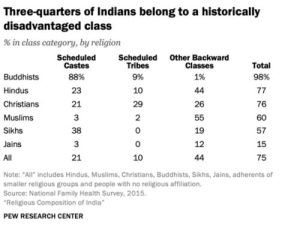
During the period from 1951 to 2011, all major religious groups in India witnessed growth. Hindus increased from 304 million to 966 million, Muslims from 35 million to 172 million, and Christians from 8 million to 28 million. However, there are indications that Christians might be undercounted in census data. This discrepancy arises from individuals identifying as Hindu to access government benefits meant for Scheduled Castes, which Christians are not typically eligible for. The 2015 National Family Health Survey showed that 21% of Christians interviewed identified as Scheduled Castes.

India’s caste system, a hierarchical social structure, has historically influenced societal roles and opportunities. Affirmative action programs, known as “reservations,” aim to mitigate caste-based disparities by allocating government jobs and educational seats for Scheduled Castes, Scheduled Tribes, and Other Backward Classes. However, these reservations are not extended to Muslims and Christians, prompting debate over their exclusion from poverty-alleviation programs.

India's Population Dynamics Religious Growth Caste Challenges and Demographic Projections

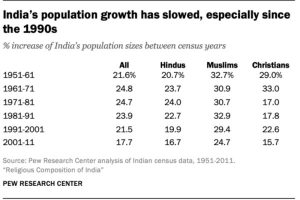
India has implemented various measures to control population growth, including contraceptive promotion and penalties for large families. These efforts have led to a slowdown in population expansion since the 1990s, with growth rates declining for all religious groups. While Hindus remain the majority, the growth rate of religious minorities has tapered off, particularly among Muslims and Christians.

India's Population Dynamics Religious Growth Caste Challenges and Demographic Projections


Despite slower growth rates, India’s major religious groups continue to gain millions of followers. Hindus added 138 million people between 2001 and 2011, while Muslims increased by 34 million. Christians, however, experienced the slowest growth rate among the three largest groups.


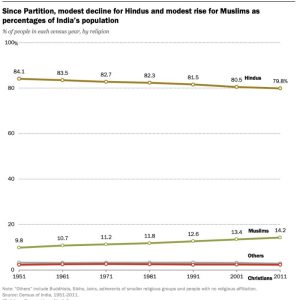
India’s religious composition has remained relatively stable since Partition, with Muslims experiencing a modest increase in percentage share while Hindus declined slightly. Christians have consistently comprised 2-3% of the population since 1951.

India's Population Dynamics Religious Growth Caste Challenges and Demographic Projections

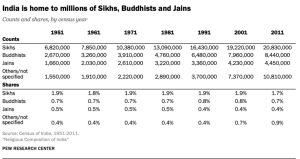
Minor religious groups, including Sikhs, Buddhists, and Jains, have seen their numbers double or triple over the decades. Geographically, Christians are concentrated in Southern states like Kerala and Tamil Nadu, while Sikhs are prevalent in Punjab.


The 2011 census revealed about 8 million people identifying with smaller religious groups, with over 80 lakh claiming no affiliation with the six largest religions. The census allows for an open-ended response to religion, with over 83 smaller religious groups represented.

India's Population Dynamics Religious Growth Caste Challenges and Demographic Projections

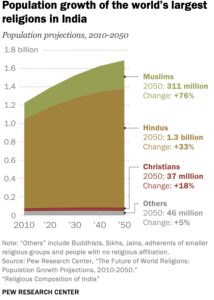
Looking ahead to 2050, demographic projections suggest continued growth for Muslims and Hindus, with Muslims expected to comprise around 18% of the population. Buddhists, Sikhs, and Jains, however, are projected to decline as a share of the population due to lower fertility rates.

India's Population Dynamics Religious Growth Caste Challenges and Demographic Projections

India’s population dynamics, influenced by religious demographics, continue to shape its societal landscape, with implications for policies and societal inclusion.


Unveiling Trump’s Triumph: The Reign of Extrinsic Values in American Society

Numerous analyses attempt to comprehend the ongoing ascent of Donald Trump and the unwavering support he commands, despite the accumulating controversies and legal allegations. While many of these explanations hold weight, there’s one factor, largely overlooked, which could arguably be paramount: Trump reigns supreme in the realm of extrinsics.

Psychologists posit that our values tend to gravitate towards distinct poles termed “intrinsic” and “extrinsic.” Those inclined towards intrinsic values prioritize empathy, intimacy, and self-acceptance, alongside a receptiveness to change and challenge, a commitment to universal rights, equality, and a protective stance towards others and the environment.

On the other hand, individuals leaning towards extrinsic values exhibit a keen attraction to prestige, status, image, fame, power, and wealth. Their motivations revolve around individual rewards and accolades, often manifesting in objectification and exploitation of others, alongside a propensity for rudeness, aggression, and disregard for societal and environmental welfare.

Donald Trump epitomizes extrinsic values in myriad ways, from the ostentatious towers bearing his name to exaggerated claims of wealth, incessant rhetoric about winners and losers, and reported instances of cheating at golf. His objectification of women, including his daughter, his fixation on physical attributes like hand size, and his disdain for public service, human rights, and environmental concerns further underscore his allegiance to extrinsic values.

Unveiling Trump's Triumph The Reign of Extrinsic Values in American Society

Our values aren’t innate; they’re shaped by societal cues and norms, and the political landscape we inhabit plays a crucial role. Under oppressive political systems, individuals tend to internalize extrinsic values, perpetuating a cycle of insecurity and unmet needs, fostering a breeding ground for further exploitation.

Since Ronald Reagan’s tenure, marked by societal divisions and a lack of public support mechanisms, U.S. politics has increasingly embraced extrinsic values. Even Democratic administrations, influenced by neoliberal principles, have struggled to reverse this trend, inadvertently bolstering support for right-wing ideologies.

Beyond politics, the U.S. has long championed extrinsic values, epitomized by the American dream of wealth acquisition and conspicuous consumption. Cultural narratives promoting success at any cost, alongside rampant consumerism and media fixation on fame, further entrench extrinsic values in society.

Blaming individuals for their misfortunes has become a hallmark of this shift, exemplified by punitive measures against rough sleepers, who are criminalized for their destitution, often exacerbated by government policies.

Beneath societal polarization and the mental health crisis lies a fundamental shift in values, wherein the pursuit of status, wealth, and dominance engenders widespread frustration and resentment. In a culture glorifying winners, the blame for societal discontent often falls on those advocating for a more equitable world.

Trump’s potential reelection hinges not only on factors like racial resentment or culture wars but also on deeply entrenched values that shape individuals’ perceptions and choices.

Trump’s appeal lies in his embodiment of extrinsic values, perpetuated by societal norms and political dynamics, which fuel resentment and division. Understanding this phenomenon is crucial in navigating and addressing the underlying causes of societal dysfunction.

https://www.theguardian.com/commentisfree/2024/jan/29/donald-trump-americans-us-culture-republican

U.S. Troop Deaths in Jordan Drone Strike Escalate Tensions with Iran, Prompting Delicate Response from Biden Administration

The recent drone strike in Jordan, resulting in the deaths of three U.S. soldiers and allegedly carried out by Iranian-backed militant factions, has intensified tensions in the already volatile Middle East region. This incident has placed additional pressure on President Biden to address the situation and send a clear message to leaders in Tehran.

The White House now faces the delicate task of formulating a response to Iran that deters future attacks while avoiding a broader conflict, a stance the Biden administration has been steadfast about since the outset of the Israel-Hamas conflict. This attack represents the first instance of U.S. military personnel fatalities in the Middle East since the onset of the Gaza conflict in October, further complicating matters for the White House.

In response to the attack, National Security Spokesperson John Kirby stated, “We do not seek another war. We do not seek to escalate. But we will absolutely do what is required to protect ourselves… and to respond appropriately to these attacks.” President Biden has committed to addressing these recent attacks at a time and in a manner of the administration’s choosing.

Following the incident, President Biden convened with his national security team, including National Security Adviser Jake Sullivan and Defense Secretary Lloyd Austin, who returned to his duties at the Pentagon following surgery for prostate cancer. While Kirby emphasized that the U.S. does not seek war with Iran, he refrained from confirming whether a strike within Iran was under consideration, stating, “I will not get ahead of the president’s decision-making.”

Since late October, American troops have faced more than 160 attacks from Iranian-backed groups. The White House has responded with precision strikes on militia targets and retaliatory actions against the Iranian-backed Houthis in Yemen following attacks on commercial vessels in the Red Sea. However, the deaths of U.S. troops elevate the stakes for Biden, especially among Republican defense hawks in Congress who are advocating for retaliatory measures, potentially including strikes within Iran.

Ali Vaez, director of the Iran Project at the International Crisis Group, suggested that if the U.S. aims to hold Iran accountable, it may target sites or facilities in Iraq or Syria utilized by the Islamic Revolutionary Guard Corps, Iran’s military wing. However, he believes the U.S. is unlikely to target Iranian territory directly, presenting a complex challenge for the Biden administration.

The deaths of U.S. soldiers have sparked outrage in Washington, with some GOP figures criticizing the administration’s response to Iran. Former President Trump accused Biden of “weakness” and warned of the risk of escalating to “World War 3.” Republican lawmakers echoed these sentiments, urging decisive action against Iran.

Iran has denied involvement in the Jordan attack, asserting it does not issue direct orders to militia groups. However, the U.S. holds Iran broadly responsible for attacks carried out by its proxies. Pentagon Deputy Press Secretary Sabrina Singh indicated that the attack bore the hallmarks of an Iranian-backed group in Iraq, Kata’ib Hezbollah, though a definitive attribution has not been made.

Any U.S. retaliation against Iran is likely to provoke further responses from Iranian-backed groups, perpetuating a cycle of violence until the Gaza conflict subsides. These groups claim to be acting in solidarity with Palestinians against American forces.

Barbara Slavin, a Middle East expert at the Stimson Center, described the Jordan attacks as a “dangerous escalation” and anticipated a robust U.S. response. However, she noted that previous U.S. actions have not deterred further attacks, suggesting that a cease-fire in Gaza may be the only effective means of reducing such incidents.

Despite concerns about the effectiveness of deterrence, the Pentagon remains committed to its current strategy against Iranian-backed militants, with Singh affirming that the U.S. will respond at an appropriate time and location.

With expectations of Iranian retaliation to any U.S. strikes, the risk to American troops could escalate, particularly considering past incidents where troops narrowly avoided fatalities. Slavin emphasized that the frequency of attacks by Iranian-backed groups made such casualties inevitable in the long run.

https://thehill.com/homenews/administration/4436080-biden-iran-us-troops-killed-jordan/

Unlocking Happiness: Three Science-Backed Strategies for Personal Fulfillment and Success

Prioritizing your happiness holds immense significance for several reasons, each carrying its own set of advantages that warrant careful consideration. The article highlights the pivotal role happiness plays in enhancing both physical and mental well-being, fostering engagement, focus, and resilience, particularly in challenging circumstances, and ultimately contributing to professional success.

The piece delves into three scientifically proven strategies aimed at bolstering happiness:

1.Strategic Downtime: In today’s tech-driven world, while technology has undoubtedly revolutionized convenience, it has also introduced new challenges. The incessant need to stay connected and productive, even during unconventional hours, adversely affects brain function. Research indicates that this addiction to constant stimulation leads to a loss of focus and mental clarity. Understanding the necessity of rest and rejuvenation is crucial for maintainingoptimal brain function throughout the day. Just as our sleeping brains undergo 90-minute cycles, transitioning from light to deep sleep and back again, a similar pattern repeats during waking hours. It is recommended to incorporate 10-minute breaks after every 80 to 120 minutes to calm brain activity. Creating intentional gaps in your schedule, free from meetings or work-related discussions, allows for uninterrupted time to think, meditate, take a nature walk, or engage in casual conversations. Guarding this precious downtime is vital and requires deliberate allocation.

2.Gratitude through Giving: The adage “It’s better to give than to receive” finds scientific validation in the realm of happiness. Generosity, particularly when tied to social connections, significantly enhances one’s sense of well-being. Research emphasizes the importance of “social giving,” where the act of giving benefits another individual, thereby fostering positive emotions in the donor. Whetherit’s supporting a friend’s GoFundMe campaign or contributing to a grassroots charity, the social connection amplifies the psychological rewards of altruism.

3.Optimism as a Mindset Shift: Embracing change with optimism is pivotal for navigating life’s uncertainties. Optimistic individuals approach challenges with hope, blending realism with a positive outlook. Despite the prevailing stressors, cultivating optimism allows individuals to sidestep unnecessary drama, set ambitious goals, and celebrate achievements with enthusiasm. Harvard-trained happiness researcher Shawn Achor advocates for a daily practice to cultivate optimism: sending a positive email or text to a different person each day, expressing gratitude or praise. This simple activity, when repeated for 21 days,facilitatesa lasting shift towards a more positive and optimistic mindset.

In essence, fostering happiness transcends mere transient gratification; it emerges as a strategic imperative for personal fulfillment and success.

https://www.inc.com/marcel-schwantes/science-says-your-overall-happiness-comes-down-to-3-timeless-strategies.html

The Unlikely Beginnings of Life on Earth

The precise genesis of life on our planet remains a profound mystery, with numerous uncertainties surrounding its how, where, and why. The lack of a universally accepted definition for “life” exacerbates this challenge. While most life forms are unmistakably alive, the study of life’s origins necessitates an exploration of a process that transforms non-living matter into living entities, blurring the delineation between mere chemical reactions and the emergence of vitality.

To delve into the origins of life, it becomes imperative to establish a basic working definition of life. Life, in essence, is defined as that which undergoes Darwinian evolution. This entails the experience of natural selection, wherein traits conducive to survival and reproduction are perpetuated across generations, while those less advantageous are discarded or carried along without significance.

Earth stands as the sole known site in the universe where Darwinian evolution operates. To thrive under evolutionary pressures and distinguish itself from mere chemical processes, life must fulfill three fundamental criteria.

Firstly, life must possess the capacity to store information, encompassing the encoding of various processes, traits, and chracteristics essential for survival and reproduction.

Secondly, life must exhibit self-replication, enabling the faithful reproduction of its molecular structure to perpetuate its encoded information across successive generations.

Lastly, life must catalyze reactions within its environment, facilitating functions such as movement, energy acquisition, growth, and other vital activities.

Through the interplay of information storage, self-replication, and catalytic reactions, life evolves, gradually advancing in complexity and specialization over vast expanses of time, culminating in conscious beings capable of contemplating their own origins.

In the modern era, life on Earth has evolved an intricate array of chemical and molecular mechanisms to propagate itself. DNA, RNA, and proteins constitute the triad of molecular tools fundamental to life’s functioning and evolution.

DNA serves as the primary repository of genetic information, utilizing combinations of four molecules—adenine, guanine, cytosine, and thymine—to encode vast amounts of data. The information density of DNA rivals that of digital systems, far surpassing natural languages in efficiency.

RNA, akin to DNA but with subtle distinctions such as uracil substitution for thymine and the presence of ribose sugar, acts as an intermediary in gene expression, translating genetic instructions from DNA to synthesize proteins.

Proteins, encompassing a diverse array of molecular machines, undertake a multitude of tasks vital for life, including molecular manipulation, structural support, energy transformation, and DNA replication. Crucially, proteins facilitate the unraveling of DNA and the faithful reproduction of its genetic code, thereby perpetuating the cycle of life and enabling evolutionary adaptation.

The intricate interdependence of DNA, RNA, and proteins underscores the complexity of life’s molecular machinery, a product of billions of years of evolutionary refinement. This interconnectivity precludes the spontaneous emergence of life from primordial conditions, as the absence of any component would disrupt the entire system, akin to a three-legged table collapsing without one leg.

Thequest to unravel the origins of life on Earth remains a compelling scientific endeavor, necessitating a nuanced understanding of life’s defining characteristics and the intricate molecular mechanisms underlying its evolution.

https://www.universetoday.com/165381/the-improbable-origins-of-life-on-earth/#google_vignette

US Economy Surges Ahead While China Falters: Expert Insights and Corporate Shakeups Dominate Headlines

The United States economy is surpassing expectations, with markets soaring and inflation inching closer to the Federal Reserve’s target of 2%. There’s optimism for a soft landing, a scenario where inflation is controlled, and recession is avoided. On the flip side, China is facing economic challenges: markets are sluggish, consumer confidence is waning, growth is slowing, and there’s a demographic decline. Evergrande’s winding-up, mandated by a court, adds uncertainty to China’s real estate crisis.

In light of these economic dynamics, questions arise about the relationship between the world’s two largest economies. Eswar Prasad, a trade policy professor at Cornell University and former head of the IMF’s China division, sheds light on the matter.

Prasad observes the US solidifying its global growth leadership while other nations struggle. He attributes this to the US economy’s resilience compared to China’s, which grapples with labor force decline, a faltering property market, and dwindling confidence in governmental policies.

Regarding US-China tensions, Prasad suggests China’s weak economy fuels its desire to ease trade tensions with the US, especially with the approaching US election season and escalating anti-China rhetoric.

Investors monitoring China should note the government’s efforts to stimulate the economy through increased spending, interest rate cuts, and market interventions. However, these measures have limited efficacy in addressing fundamental issues like low consumer and business confidence.

Transition planning at JPMorgan Chase, led by CEO Jamie Dimon, is in the spotlight. With Dimon nearing 68, speculation mounts about his successor. Marianne Lake’s appointment as the sole CEO of the consumer division, alongside Jennifer Piepszak’s new role leading the commercial and investment bank, signals a potential leadership shift.

Dimon, an influential figure in global banking, has expressed contentment in his current role but hasn’t ruled out a future in politics, citing his love for the country.

In a concerning revelation, it’sdisclosed that the NSA has been purchasing Americans’ web browsing data from commercial brokers without warrants. Oregon Senator Ron Wyden revealed unclassified documents confirming these transactions, highlighting the routine acquisition of sensitive citizen information by government agencies.

These disclosures coincide with fears of foreign governments engaging in similar data purchases, prompting the Biden administration to consider measures to safeguard US citizens’ personal data from foreign exploitation.

https://edition.cnn.com/2024/01/29/investing/premarket-stocks-trading/index.html

Healthcare Revolution: Startups Reshape America’s Medical Landscape with Innovative Approaches and Virtual Solutions

In the various permanent establishments of Cityblock Health scattered throughout the mid-Atlantic and Midwest regions of the United States, one can find sleek waiting areas adorned with a royal-blue theme, mirroring the company’s branding. Additionally, in certain cities, the company employs mobile units, large motor caravans retrofitted for medical purposes and painted in the same distinctive hue. Originally conceived as part of Sidewalk Labs, Google’s Urban Innovation division, Cityblock Health aims to enhance accessibility in healthcare by providing medical, mental health, and social services. Its aesthetic resonates with the polished ambiance often associated with Silicon Valley startups, resembling a trendy urban coffee shop.

Cityblock Health is just one of the many startups, both physical and digital, that have emerged within the American healthcare landscape, striving to revolutionize the sector. These ventures aspire to replace the conventional, sterile, and often labyrinthine healthcare systems with something more welcoming and efficient, occasionally even resembling a spa-like experience. While similar initiatives are emerging globally, the United States presents a unique opportunity due to the complexity and opacity of its private insurance system.

These companies endeavor to tackle some of the fundamental challenges in the American healthcare domain, primarily revolving around cost and accessibility. They streamline appointment scheduling, reduce waiting times to see healthcare professionals, and facilitate access to previously restricted medical technologies. Moreover, many of these entities engage directly with private and government insurers, simplifying administrative processes for patients as an integral component of their business strategies.Healthcare Revolution Startups Reshape America's Medical Landscape with Innovative Approaches and Virtual Solutions

In adopting this approach, these startups not only aim to dismantle barriers within the healthcare sector but also seek to attract a new, younger demographic of consumers through familiar and frictionless experiences. The success of such endeavors remains to be seen.

The Healthcare Market Landscape

Many of these emerging healthcare players boast physical establishments characterized by curated, minimalist designs across various areas of healthcare provision. Dental franchise Tend operatesnumerous storefronts across the United States, all featuring warm wood accents and cool green tiling. Utilizing an app for appointment scheduling, Tend emphasizes transparent pricing and offers amenities such as noise-canceling headphones for patients to enjoy television during treatments. Furthermore, they feature “The Brushery,” a designated area designed for capturing “selfie moments,” according to Tend. One Medical, a membership-based chain of urgent-care centers, prioritizes same-day appointments and hosts an on-site laboratory. In February 2023, Amazon finalized an all-cash acquisition of the chain for $3.9 billion, subsequently introducing discounted memberships for Prime subscribers at an annual rate of $99 in November.

Virtual startups, guided by similar principles, play a significant role in the healthcare landscape. These digital platforms echo the minimalist aesthetics of brick-and-mortar clinics while offering services through modern, highly functional web interfaces. Maven Clinic, a virtual women’s healthcare platform, earned recognition as one of Time magazine’s 100 Most Influential Companies of 2023. Meanwhile, BetterHelp, connecting patients directly with mental health professionals online, surpassed $1 billion in profits in 2022.

Additionally, certain companies aim to deliver healthcare hardware directly to consumers’ homes. TytoCare markets a thermometer-otoscope-stethoscope device branded as a “smart clinic,” available for purchase at national retailer Best Buy. Mosie Baby offers an at-home insemination kit priced at $129 and recently obtained approval from the US Food and Drug Administration (FDA).

Healthcare Revolution Startups Reshape America's Medical Landscape with Innovative Approaches and Virtual Solutions

According to Dan D’Orazio, CEO of healthcare research and consulting firm Sage Growth Partners, the surge in privately-funded healthcare startups can be attributed to the substantial scale of healthcare spending in the United States. D’Orazio highlights that if US healthcare were treated as an independent entity, its GDP would amount to $4.3 trillion, ranking it as the fourth-largest in the world. This vast financial landscape presents fertile ground for innovation and potential profit.

Addressing Pain Points in Healthcare

Helen Zhang, head of communications at Tend, acknowledges the widespread aversion to dental visits. She notes that not only do customers often rate the experience poorly on metrics such as the net promoter score, but dental visits are also associated with surprise bills, lengthy wait times, judgmental attitudes from clinicians, and unwelcoming environments. Zhang emphasizes Tend’s mission to eliminate these deterrents, aiming to create a dental visit experience so comfortable and inviting that patients perceive it as a joyful occasion, thereby encouraging regular attendance and prioritization of oral health.


Optimal Timing

The proliferation of healthcare startups, particularly in the realm of virtual health services, owes much to timing. While many of these companies had been in existence since the 2010s or earlier, the exponential growth in telehealth utilization during the pandemic accelerated consumer acceptance and demand for digital services.Healthcare Revolution Startups Reshape America's Medical Landscape with Innovative Approaches and Virtual Solutions

Dan D’Orazio underscores the significance of this shift, noting that prior to COVID-19, telemedicine adoption rates stood at around 2 to 3%. The pandemic catalyzed a transformation in attitudes toward virtual care, condensing what would have taken years into a matter of weeks. This newfound openness to telehealth facilitated the expansion of medical technology startups, including physical franchises offering specialized services in aesthetically appealing environments. While catering to patients of all ages, younger generations have been particularly receptive to these innovations.

A Path Forward?

While the proliferation of startups has undoubtedly improved accessibility to primary and specialist care, Dan D’Orazio cautions against equating these achievements with overall success and sustainability. Numerous health tech startups, especially those reliant on private investment, have faltered, with notable examples including Theranos, founded by Elizabeth Holmes, which was exposed as fraudulent. Other ventures, like Smile Direct Club, have faced abrupt closures, leaving customers in uncertain situations.

D’Orazio attributes the challenges faced by many startups to a fundamental misalignment between their identity as tech companies and the complexities of the healthcare industry. He stresses the importance of collaboration between traditional medical establishments and startup ventures, emphasizing the need for integration to navigate regulatory hurdles and workforce shortages effectively.

While the emergence of startups heralds a potential shift in the landscape of American healthcare, it is unlikely to supplant traditional models entirely. However, these innovative ventures may serve as catalysts for incremental changes within the broader healthcare system.

ICJ Directive Puts Pressure on Israel: U.S. Support Tested Amid Calls for Gaza Ceasefire

The International Court of Justice (ICJ) has issued a directive to Israel, compelling it to enhance its protection of civilians within the Gaza Strip amidst its conflict with Hamas. The court has granted Prime Minister Netanyahu’s administration a one-month window to furnish a comprehensive plan in response to this mandate.

This deadline presents a significant challenge to President Biden’s backing of Israel’s offensive, especially in light of escalating global pressure for a cessation of hostilities. The United States has been a vocal advocate for respecting decisions emanating from international judicial bodies, adding weight to the ICJ’s verdict.

Stephen Rapp, former U.S. Ambassador-at-Large for War Crimes Issues, emphasized the significance of this decision for Israel, stressing that compliance holds substantial consequences in international relations. He noted that key U.S. allies would anticipate Israel’s adherence to the ICJ’s directives, cautioning that defiance could isolate the Israeli government diplomatically.

Despite South Africa’s plea for a ceasefire, which was part of its accusations against Israel presented to the ICJ, the court’s ruling did not explicitly demand one. However, South Africa’s Foreign Minister, Naledi Pandor, asserted that implementing a ceasefire is imperative to fulfill the court’s stipulations, emphasizing the need to mitigate harm to innocent civilians.

The Biden administration has expressed concerns about the humanitarian toll of the conflict, urging Israel to take greater measures to safeguard civilians. While the U.S. acknowledges Israel’s right to self-defense, it advocates for actions aimed at minimizing civilian casualties and facilitating humanitarian aid to Gaza.

The administration’s stance aligns with the ICJ’s ruling, albeit it has rebuffed efforts to impose direct action against Israel, notably at the United Nations Security Council. The U.S. favors “humanitarian pauses” over a blanket ceasefire, aiming to balance Israel’s security concerns with the urgent humanitarian needs of Gaza’s population.

Critics contend that Israel’s military operations have inflicted extensive damage, necessitating an immediate ceasefire to alleviate the humanitarian crisis in Gaza. They also oppose U.S. military aid to Israel, citing the ICJ’s acknowledgment of potential violations of the Convention on the Prevention and Punishment of the Crime of Genocide.

The ICJ’s ruling has prompted reactions within the United States, with some calling for a reassessment of military aid to Israel to avoid complicity in potential violations of international law. Calls for a ceasefire have resonated among Democratic lawmakers, with proposals for increased congressional oversight on arms sales and aid to Israel gaining traction.

While the majority of Congress opposes compelling Israel into a ceasefire, there’s growing concern among Democrats regarding Israel’s conduct of the conflict. Senators are exploring avenues to enhance congressional oversight and ensure that U.S. military assistance aligns with international humanitarian standards.

The ICJ’s comprehensive ruling on the allegation of genocide against Palestinians is anticipated to unfold over several years. Proponents of Israel’s right to self-defense view the initial verdict as a cautionary signal, acknowledging the mounting concern over civilian casualties and humanitarian conditions.

Robert Satloff, Executive Director of the Washington Institute for Near East Policy, cautioned against complacency, emphasizing the real political implications of the international community’s concerns regarding civilian casualties and the humanitarian crisis in Gaza.

Jury Awards E. Jean Carroll $83.3 Million in Defamation Suit Against Donald Trump

A jury rendered a substantial verdict of $83.3 million to E. Jean Carroll on Friday, serving as a resounding rebuke to former President Donald Trump for his persistent attacks against the veteran advice columnist on social media, stemming from her allegations of sexual assault against him in a Manhattan store.

This latest award, combined with a prior $5 million verdict for sexual assault and defamation last year from a separate jury in Carroll’s case, brings the total amount Trump owes her to $88.3 million. Trump, vehemently protesting the decision, declared his intention to appeal.

The 80-year-old Carroll, visibly moved, held her lawyers’ hands tightly and smiled upon hearing the verdict delivered by the anonymous jury comprised of seven men and two women. Following the decision, she shared an emotional embrace with her legal team.

While Carroll declined to comment upon leaving the Manhattan federal courthouse, she later released a statement through her publicist, celebrating the victory as not just her own but as a triumph for all women who refuse to be silenced in the face of adversity: “This is a great victory for every woman who stands up when she’s been knocked down, and a huge defeat for every bully who has tried to keep a woman down.”

Trump had attended the trial earlier in the day but stormed out during the closing arguments made by Carroll’s attorney. He returned for his attorney’s closing argument and part of the deliberations but departed the courthouse half an hour before the verdict was announced. Expressing his outrage shortly after the decision, he criticized the legal system, branding it as “out of control” and manipulated for political ends.

His lawyer, Alina Habba, attributed the verdict to strategic forum-shopping by Trump’s adversaries, stating, “It will not deter us. We will keep fighting. And, I assure you, we didn’t win today, but we will win.”

The trial’s conclusion coincides with Trump’s continued pursuit of the Republican presidential nomination for the third consecutive time. Throughout, he has sought to portray his legal battles and vulnerabilities as evidence of a biased political system, resonating with his steadfast supporters.

Despite Trump’s efforts to deflect attention from the verdict, his former rival in the Republican primaries, Nikki Haley, highlighted the financial implications of the decision, diverting focus from pressing national issues.

With the civil case brought by Carroll concluded, Trump still faces 91 criminal charges across four indictments, including allegations of attempting to overturn the 2020 presidential election, mishandling classified documents, and orchestrating hush payments to a porn star.

This marks the second time in less than a year that a civil jury has ruled on Carroll’s allegations stemming from a 1996 encounter with Trump at a Manhattan department store. In May, a jury awarded Carroll $5 million, finding Trump liable for sexual abuse and defamation, albeit not for rape. Trump is appealing that decision as well.

Trump’s legal challenges extend beyond the Carroll case; he awaits a verdict in a New York civil fraud trial, where state prosecutors seek the return of $370 million in alleged ill-gotten gains.

Regarding Trump’s financial capacity to meet the mounting legal obligations, he has claimed assets of approximately $294 million in cash or equivalents, as reported in his most recent financial statement.

Trump’s absence from the initial Carroll trial was followed by his insistence on testifying in the second trial, although the judge limited his testimony, citing missed opportunities to contest Carroll’s allegations. During his brief appearance on the witness stand, Trump denied assaulting Carroll, subsequently lamenting the proceedings, asserting, “this is not America.”

In this recent trial, the jury was tasked solely with determining the damages owed by Trump for two statements he made as president regarding Carroll’s allegations. They were not asked to reevaluate the veracity of the assault claim itself.

In her closing argument, Carroll’s attorney, Roberta Kaplan, sought substantial compensatory and punitive damages, urging the jury to penalize Trump sufficiently to deter future defamation. The jury awarded $18.3 million in compensatory damages and an additional $65 million in punitive damages, aimed at curbing Trump’s disparaging behavior.

Kaplan highlighted Trump’s vast wealth and the need to hold him accountable for his actions, emphasizing the significance of punitive damages in restoring Carroll’s reputation and protecting her from ongoing harassment.

Trump, visibly agitated during Kaplan’s address, abruptly left the courtroom, prompting a rebuke from the judge. Throughout the trial, Trump tested the judge’s patience, leading to warnings of expulsion for disruptive behavior.

Carroll testified to the detrimental impact of Trump’s statements on her life, citing death threats and the need for increased security measures. She emphasized her quest to restore her reputation tarnished by Trump’s allegations.

In contrast, Trump’s lawyer argued that Carroll had profited from her accusations and achieved the fame she desired, suggesting no damages were warranted.

Ultimately, the jury’s verdict stands as a significant legal blow to Trump, underscoring the consequences of his actions and the importance of accountability in matters of defamation and assault.

Study Reveals Exceeding Exercise Guidelines Linked to Lower Mortality Risk

Consistent physical activity is widely acknowledged as beneficial for health and well-being. However, determining the optimal duration and intensity of exercise necessary to decrease mortality risk has remained a topic of interest. A study recently published in the Circulation journal sheds light on this matter.

The study’s findings challenge the current 2018 physical activity guidelines, which suggest that adults should aim for 150 to 300 minutes per week of moderate exercise or 75 to 150 minutes of vigorous activity, or a combination of both. Surprisingly, exceeding these recommendations appears to confer even greater benefits in terms of reducing mortality risk.

Moderate physical activity encompasses activities like walking and weightlifting, while vigorous exercise includes running, biking, and swimming. The study drew data from two large prospective U.S. cohorts, involving 116,221 adults who self-reported their leisure-time physical activity over three decades.

Participants who engaged in two to four times more than the recommended amount of vigorous physical activity saw a significant decrease in cardiovascular disease mortality risk. Similarly, those exceeding the moderate physical activity guidelines by the same margin, roughly 300 to 599 minutes weekly, experienced the most substantial benefits.

The study revealed that individuals who surpassed the recommended levels of moderate physical activity by two to four times had a notable reduction in all-cause mortality (26% to 31%), cardiovascular disease mortality (28% to 38%), and non-cardiovascular disease mortality (25% to 27%).

Likewise, adults who exceeded the recommended vigorous physical activity levels by two to four times (approximately 150 to 299 minutes per week) showed a decreased risk of all-cause mortality (21% to 23%), cardiovascular disease mortality (27% to 33%), and non-cardiovascular disease mortality (19%).

The study emphasizes the importance of combining moderate and vigorous physical activity for optimal results. Individuals who maintained adequate levels of both types of activity experienced significantly lower mortality risks. Furthermore, higher levels of vigorous activity were particularly beneficial for individuals with insufficient moderate activity levels.

However, for individuals already engaging in high levels of moderate physical activity (over 300 minutes weekly), additional vigorous activity didn’t yield further mortality reduction benefits.

Moreover, those who were inadequately active—engaging in less than 75 minutes of vigorous or 150 minutes of moderate physical activity weekly—could significantly reduce mortality risks by incorporating modest levels of either type of exercise.

A separate study published in JAMA Oncology suggests that even small amounts of vigorous intermittent lifestyle physical activity, such as short bursts of fast walking or stair climbing, are associated with decreased cancer risk.

Contrary to common assumptions, age did not appear to influence the impact of exercise intensity on mortality reduction. Both younger individuals, who typically opt for vigorous activities, and older adults, who often prefer moderate exercise, experienced similar benefits from long-term physical activity.

Furthermore, the study found no evidence to suggest that high levels of long-term vigorous physical activity had adverse effects on cardiovascular health, contrary to previous concerns. However, further research is warranted to confirm these findings conclusively.

Medical Experts Urge Supreme Court Action to Combat Vaccine Misinformation

Vaccines play a vital role in saving lives, preventing diseases, and easing the strain on healthcare systems. Recognizing this, various medical organizations, including the AMA, American Academy of Pediatrics, American Academy of Family Physicians, American College of Physicians, and American Geriatrics Society, have jointly submitted an amicus brief to the U.S. Supreme Court in the case Murthy v. Missouri. This document emphasizes the crucial need to counter vaccine misinformation to safeguard public health.

The brief highlights the collective experience of hundreds of thousands of medical professionals who have witnessed both the life-saving potential of vaccines and the damaging impact of misinformation. Drawing on decades of research and practice, these organizations stress the unparalleled benefits of vaccines as a cornerstone of public health.

On the legal front, Missouri and Louisiana’s attorneys general have filed suits against social media platforms, alleging coercion in censoring individuals critical of COVID-19 policies, masks, and vaccine mandates. Conversely, the Biden administration argues that its engagement with these platforms aimed to curb online misinformation, particularly by flagging content violating platform policies.

A central point of the brief is the detrimental effect of misinformation on COVID-19 vaccine uptake, which undermines the vaccines’ effectiveness in saving lives and controlling the spread of the virus. The government’s intervention, therefore, becomes imperative in combating falsehoods that endanger public health.

The brief underscores the safety of FDA-approved vaccines, emphasizing the rigorous process of clinical trials and ongoing monitoring by regulatory agencies. In contrast, it highlights baseless claims circulating widely, such as individuals becoming “magnetized” post-vaccination or being implanted with tracking microchips, which lack credible evidence.

Moreover, the decline in vaccination rates due to misinformation has led to the resurgence of diseases like measles, once on the brink of eradication. Legal proceedings surrounding the case have seen a district court ruling in July 2023 limiting governmental communication with social media companies, partially upheld by the 5th U.S. Circuit Court of Appeals. The Supreme Court’s intervention in October temporarily halted the district court order until its own ruling, expected in June.

In a related case, the Litigation Center of the American Medical Association and State Medical Societies has filed an amicus brief with the 9th U.S. Circuit Court of Appeals, urging the upholding of a permanent injunction against a 2021 Montana law barring physicians from accessing vaccination status information of employees or patients who decline to disclose it.

ACA Urges Caution in Integrating AI into Mental Health Counseling, Emphasizing Human Expertise

Artificial intelligence (AI) exhibits potential as a valuable aid in mental health services, educational counseling, and career guidance. However, the American Counseling Association (ACA), the primary body representing counseling professionals, emphasizes the importance of not substituting AI for human counselors.

The ACA’s AI Working Group has released guidelines to assist counselors and their clients in comprehending the benefits and limitations of integrating chatbots, robotics, and other emerging AI tools into mental health services. Russell Fulmer, PhD, LPC, chair of the working group and professor at Husson University, Bangor, Maine, stresses the necessity for clients to grasp the technical limitations, unresolved biases, and security risks associated with AI before incorporating it into counseling.

“While AI may present promising advantages, its assertions can occasionally be overly ambitious, unsupported by evidence, or even incorrect and potentially harmful,” the panel emphasizes in its recommendations.

AI technologies are engineered to replicate human-like reasoning, decision-making, and language comprehension. Counselors currently utilize them to streamline administrative tasks, such as progress reports for clients, according to Olivia Uwamahoro Williams, PhD, NCC, LPC, a clinical assistant professor at the College of William & Mary and an ACA working group member. Some counselors are encouraging clients to utilize AI chatbots to aid in understanding and managing their thoughts and emotions between therapy sessions, Fulmer notes.

However, as highlighted by the ACA panel, these algorithms inherit the fallibilities and biases of their human creators. There’s a risk that AI tools may rely on data that overlooks specific communities, particularly marginalized groups, potentially resulting in culturally insensitive care. Additionally, there’s a possibility of disseminating false claims or inaccurate information. Despite their potential as diagnostic aids, AI tools cannot replicate the professional judgment and expertise necessary to accurately assess an individual’s mental health requirements.

“Unlike human counselors, AI lacks the ability to comprehensively consider a client’s intricate personal history, cultural background, and diverse symptoms and factors,” the guidelines underscore. “Hence, while AI can be a supportive tool, it should not supplant the professional judgment of professional counselors. It is advisable to utilize AI as a supplement to, rather than a substitute for, the expertise provided by professional counselors.”

The ACA panel recommends that clients take the following into consideration:

  1. Ensure your provider educates you on what AI can and cannot provide so you can make informed decisions regarding its use in your counseling.
  2. To safeguard confidentiality, confirm that the AI tools you utilize comply with federal and state privacy laws and regulations.
  3. Discuss with your counselor strategies to mitigate the risks of AI tools providing misinformation or factual errors that could jeopardize your well-being.
  4. Refrain from utilizing AI for crisis response; instead, seek assistance from crisis hotlines, emergency services, and other qualified professionals.

Providers are urged by the working group to develop a comprehensive understanding of AI technologies, their applications in counseling services, and their implications for confidentiality and privacy. Fulmer stresses the necessity for counselors to undergo thorough and ongoing training in the evolving applications of AI.

“We have an ethical obligation to ensure our competence in anything we utilize,” he asserts. “Thus, one of our recommendations is to enhance our understanding of AI.”

The panel also calls upon technology developers to involve clients and counselors in the design of pertinent AI tools. This inclusion of users will ensure that AI tools are client-centered and address practical needs.

ACA assumes a leadership role in ensuring the responsible use of AI in mental health services, according to Shawn Boynes, FASAE, CAE, the organization’s chief executive officer.

“The integration of AI and its impact on mental health is expanding rapidly in various ways that we are still exploring,” Boynes remarks. “As one of numerous mental health organizations dedicated to well-being, we aim to lead by offering solutions to help address future concerns.”

Women with Fatty Liver Disease from Alcohol Consumption Face Higher Mortality Risk Than Men, Study Find

A recent study conducted by researchers from the Smidt Heart Institute at Cedars-Sinai and their colleagues has revealed that women diagnosed with fatty liver disease due to alcohol consumption are at nearly double the risk of mortality within a specific timeframe compared to men with the same condition.

The study, published in the esteemed Journal of Hepatology, underscores the imperative for women at risk of liver disease to abstain from excessive alcohol consumption.

Also termed steatotic liver disease, fatty liver disease develops when an excess of fat accumulates in the liver, potentially leading to enduring liver damage. This condition is also associated with an elevated risk of heart disease.

Dr. Susan Cheng, MD, MPH, the director of the Institute for Research on Healthy Aging in the Department of Cardiology at the Smidt Heart Institute and the lead author of the study, emphasized, “Steatotic liver disease is a significant and increasingly prevalent ailment, likely serving as an underlying precursor to numerous conditions, including those affecting the heart. We are increasingly concerned about steatotic liver disease as we observe its close correlation with established cardiovascular risk factors such as hypertension, high cholesterol, and diabetes.”

Recent medical discourse has introduced new terminology to classify distinct types of steatotic liver disease, including metabolic dysfunction-associated steatotic liver disease (MASLD), alcohol-related liver disease (ALD), and metabolic dysfunction-associated and alcohol-related liver disease (MetALD).

The investigators from Cedars-Sinai endeavored to investigate how these variants of steatotic liver disease might manifest differently in men and women.

Data spanning from 1988 to 1994, sourced from the National Health and Nutrition Examination Survey III, were scrutinized by the investigators. The study participants underwent comprehensive medical assessments, including questionnaires, physical examinations, and liver imaging scans, providing insights into alcohol consumption patterns, cardiometabolic risk factors, and liver health.

The analysis encompassed over 10,000 individuals aged 21 and above residing in the United States, with accessible data from liver scans and other medical evaluations. Approximately one-fifth of the cohort, totaling 1,971 individuals, exhibited steatotic liver disease, with MetALD accounting for over 75% of cases. While all forms of steatotic liver disease were approximately twice as prevalent in men compared to women, the data unveiled a significantly elevated risk of mortality among women over a median duration of 26.7 years. For instance, women diagnosed with MetALD faced an 83% higher risk of mortality compared to men without liver disease. Moreover, women afflicted with ALD confronted a mortality risk 160% greater than their male counterparts with ALD.

Dr. Alan Kwan, MD, a research instructor in the Department of Cardiology at Cedars-Sinai and a collaborator on the study, remarked, “These findings are particularly alarming against the backdrop of the COVID-19 pandemic, during which alcohol consumption and associated mortality, particularly among women, have surged.”

Indicators of underlying metabolic liver disease include being overweight or obese, prediabetes or diabetes, high blood pressure, or abnormal blood cholesterol levels. The investigators caution that women exhibiting these risk factors should be particularly vigilant regarding excessive alcohol consumption.

The Centers for Disease Control and Prevention defines moderate alcohol consumption for women as one drink per day or less.

The researchers intend to further explore why alcohol exerts a more pronounced impact on the female liver than the male liver and identify lifestyle modifications, beyond curtailing alcohol intake, that may mitigate a woman’s susceptibility to fatty liver disease.

They underscore that since the study relied on data collected between 1988 and 1994, additional research is imperative to ascertain how the prevalence of liver disease and alcohol consumption patterns may have evolved over time.

Dr. Yee Hui Yeo, MD, and Dr. Hirsh Trivedi, MD, both affiliated with Cedars-Sinai, also contributed to the study.

Study Reveals Challenges Faced by Foreign-Trained Doctors in US, Highlighting Barriers to Medical Practice Integration

A recent study reveals a concerning trend among foreign-trained doctors immigrating to the United States, indicating significant barriers to entering comparable medical roles despite their qualifications and experience. The study, conducted jointly by the Federal Reserve Bank of Minneapolis and the nonprofit Upwardly Global, examined the experiences of 300 physicians who migrated to the US between 2004 and 2022.

While a majority of these international medical graduates (IMGs), around 85%, managed to secure employment, only a third of them were able to transition into medical residency or practicing as physicians. This disparity underscores the formidable challenges faced by IMGs, who often find themselves compelled to navigate arduous educational and licensing processes anew upon reaching the US.

Despite possessing medical degrees and substantial clinical backgrounds from their home countries, IMGs encounter a daunting set of prerequisites in the US, including passing the rigorous United States Medical Licensing Examination (USMLE), accumulating clinical hours, and securing coveted residency positions. Failing to surmount these hurdles, many IMGs are forced to settle for healthcare roles for which they are overqualified and underpaid, exacerbating their professional frustrations and financial strains.

The study unveils some disheartening statistics regarding the alternative career paths pursued by IMGs who are unable to progress in traditional medical roles. Notably, 23% of IMGs found themselves working as medical assistants, while others gravitated towards roles such as clinical research, medical interpretation, and case management, indicative of their diverse skill sets and adaptability.

Maxim Nikolaevskiy, an obstetrician/gynecologist from Russia who relocated to the US in 2018, empathizes with fellow IMGs who opt for career diversions. Sharing his own experience, Nikolaevskiy reveals how the exigencies of resettlement compelled his wife, also a trained physician, to enroll in a respiratory therapy program, while he himself embarked on a career as a research coordinator. He emphasizes the formidable challenges faced by IMGs in securing residency positions tailored to their unique trajectories, often encountering skepticism and administrative hurdles from residency programs unfamiliar with their backgrounds.

“Multiple residency programs refuse IMGs’ applications, saying they graduated too long ago, without understanding they worked as a physician before,” Nikolaevskiy elucidates, shedding light on the systemic barriers impeding the professional advancement of immigrant doctors in the US.

In response to these challenges, both federal and state-level initiatives have been proposed to alleviate practice barriers for IMGs and address physician shortages, particularly in underserved areas. The Conrad State 30 and Physician Access Reauthorization Act, backed by the American Medical Association, seeks to overhaul the J-1 visa waiver program, enabling more immigrant physicians to practice in medically underserved regions rather than being compelled to return to their home countries.

Furthermore, several states, including Alabama and Washington, have implemented legislative reforms aimed at expediting the licensure process for foreign-trained doctors. These measures include provisions allowing IMGs to bypass residency requirements and obtain temporary medical licenses upon meeting specific criteria, such as completing postgraduate training abroad or fulfilling physician duties outside the US.

In addition to legislative efforts, community-based initiatives have emerged to provide support and guidance to IMGs navigating the complexities of the US healthcare system. Dr. Daniel Weber, for instance, established the International Healthcare Professionals Program in Lancaster, Pennsylvania, with the aim of offering essential assistance to immigrant doctors.

“It is daunting to master a new language and pass medical licensing and English proficiency exams while working full time to support themselves and their families,” Dr. Weber acknowledges, underscoring the multifaceted challenges confronting IMGs in their pursuit of professional integration.

Despite the formidable obstacles, some IMGs have managed to make significant strides towards resuming their medical careers in the US. Maxim Nikolaevskiy, for instance, recently completed the Bridge to Residency for Immigrant International Doctor Graduates (BRIIDGE) program at the University of Minnesota Medical School, which has paved the way for him to pursue family medicine residency and potentially secure a position in the current cycle.

Reflecting on his journey, Nikolaevskiy expresses gratitude for the opportunities afforded by the BRIIDGE program, which has enabled him to acquire invaluable clinical experience and reignite his aspirations of practicing medicine in the US.

“If not for the BRIIDGE program, I would still be [doing] medical monitoring in clinical trials or pharmacovigilance jobs. I’m grateful for the clinical experience and the people and institutions ready to give me a second chance,” Nikolaevskiy reflects, embodying the resilience and determination of IMGs striving to overcome formidable barriers in pursuit of their professional dreams.

Eminent Indian Physician Leaders in USA organize a FAREWELL for MR. AMBASSADOR!

Hon. Ambassador Taranjit S. Sandhu is retiring at the end of the month as an Ambassador to USA after 4 years. He has had an illustrious career having served as Ambassador to Sri Lanka and DCM as well as other    Prestigious positions in USA

Eminenet physician leaders joined  on Zoom on Jan 17th Wednesday

Organised by

Dr Sudhir Sekhsaria, Dr Raj Bhayani

Dr Manbir Takhar

Dr Hemant Dhingra

Dr Narendra Kumar

About 30 physician leaders from USA joined the meeting

Meeting was initiated by Dr Sudhir Sekhseria with warm welcome and introduction of all participants and greetings to hnorable ambassador.

Dr Raj Bhayani expressed gratitude to Ambassador for his amazing leadership in making Indo-US leadership stronger and applauded his role in making Prime Minister Modi ji historic visit to white house.a grand success.

Dr Narednra Kumar emphasized the role of Ambassador in uniting all different factions of Indian communities in USA.

image0 (3)Dr Hemant Dhingra said in his remarks how the economic ties between two countries have reached a new high under leadership of Ambassador

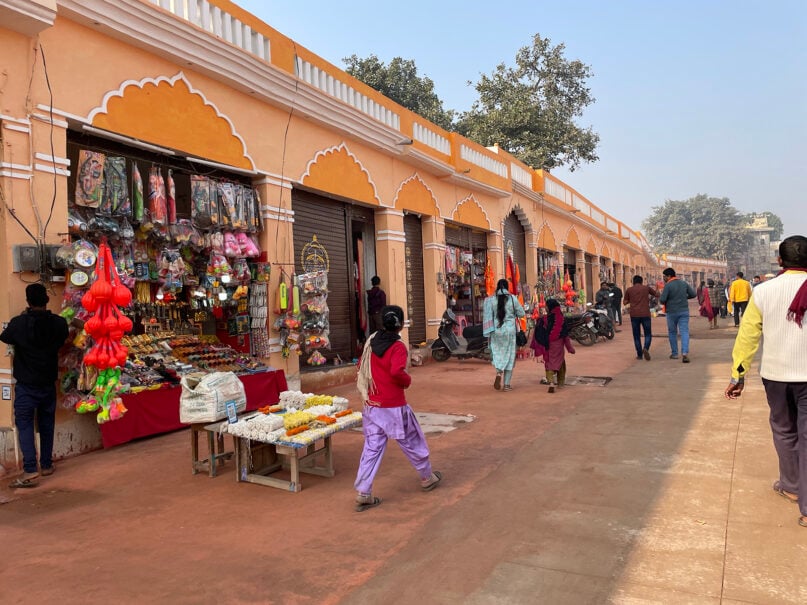
Dr Manbir Thakkar elaborated how Indian community had warm reception at India House in Washington DC and bond between India House and community has been strongest ever during the last four years..

Dr Vinod Shah appreciated the services of Ambassador to Indian Physicians in USA.

Dr Harbhajan Ajrawat who knows Ambassador for a long time gave a historical perspective of life of Ambassador

As Taranjit Singh Sandhu is finishing his current assignment as the Ambassador of India to the United States of America, I would like to take this opportunity to wish him farewell and success in any future endeavor he may choose to undertake.  It is no secret and much has been said about his illustrious career in the Indian Foreign Service. This was his second appointment as Ambassador, his first being Ambassador to Sri Lanka. He was posted to the United States four times, three times with the Indian Embassy in Washington DC.  During his tenure in Washington, he was not only instrumental in bringing the Indian Diaspora in the United States together but also bringing the two great democracies together as well.  Due to his untiring efforts, and his diplomatic acumen he was able to mitigate and thwart quite a few obstacles that threatened the relationship of the two countries. At present India continues to enjoy a very good relationship with the United States. That he was able to make this meaningful contribution is no small task and is easy to understand once one is familiar with his rich family legacy and heritage.

Taranjit Singh Sandhu belongs to a prominent Sikh family with deep roots in Punjab, India. He is the grandson of Sardar Teja Singh Samundri.  Sardar Teja Singh Samundri was a prominent leader and visionary who played a key role in the Gurdwara Reform Movement (GRM) which returned the Sikh religious institutions to their democratic roots and brought  the sikh community into the freedom struggle and thereby altered the perception of Sikhs in Colonial India. In honor of his work and contribution to the sikh community, he is the only non-guru in whose honor a building inside the sacred Golden Temple complex has been named The Teja Singh Samundri Hall. Besides his role in the GRM movement, Sardar Teja Singh Samundri was very much involved in bringing education, knowledge and information to the common man. Even though he had limited education himself, he opened several schools to educate the masses and was instrumental in launching the newspaper Hindustan Times which was later acquired by M.M.Malaviya and later GD Birla. Much of this was through personal sacrifice and putting up his own funds. This promising young life came to a tragic end, under mysterious circumstances, at the young age of 44, while imprisoned by the British in a Lahore jail.  Nevertheless, his legacy continued through his son, Sardar Bishan Singh Samundri who was awarded a scholarship to study at Ohio State University. After acquiring his Masters degree, he returned to India and became the Principal of Khalsa College Amritsar, Punjab. He eventually became the founding Vice Chancellor of Guru Nanak Dev University, Punjab. Sardar Bishan Singh was the father of Taranjit Singh Sandhu. Taranjit’s mother, Jagjit Sandhu, also having studied abroad, retired as Principal of Government College for Women in Amritsar, Punjab.

Mr Gary Sikka president of American Punjabi Association emphasized the role of Ambassador in uniting the Hindu Sikh community and his visit to New York Gurudwara.

In concluding remarks Ambassador expressed his gratitude to Indian community in USA. He applauded the strength of the Indian diaspora. It is the bond of Indian diaspora which has been very powerful in making the Indo us relationship stronger. He highlighted the role and sacrifice  of Indian physicians during covid in serving humanity. He emphasised the strength of Indian physician community in USA which has helped him to create closer ties between INdia and USA.

Dr Sudhir Sekhseria thanked Ambassador and all eminent physicians for joining the farewell for Ambassador and everyone expressed that they all are in solidarity and supportive of next endeavour of Ambassador in serving our motherland

Pope Francis’ Unyielding Commitment to Social Justice and Global Issues

Pope Francis is known for his outspoken stance on critical global issues, ranging from war and migration to climate change. According to Cardinal Michael Czerny, who leads a Vatican department focused on social justice, the Pope’s motive is to caution world leaders against making “suicidal” decisions. Czerny emphasized the moral obligation Pope Francis feels to speak on behalf of Catholics, acknowledging potential criticism but asserting that the Pope is driven by the commitment of the faithful.

Cardinal Czerny explained, “I speak out because there are millions of Catholics and other Christians and other believers and other people of goodwill for whom or in whose voice I’m speaking. And we’re trying to say to the world’s decision-makers that their decisions are anti-human, short-sighted, suicidal” (original quote).

The Pope’s dedication to responsible journalism was underscored during a meeting with reporters at the Vatican on January 22. Pope Francis likened journalism to a vocation, akin to that of a doctor choosing to heal humanity. He expressed the journalist’s role in addressing societal wounds and the importance of their work in today’s world.

Since his election almost 11 years ago, Pope Francis has been a prominent figure, gaining attention not only for his modest lifestyle in the Vatican but also for addressing pressing global issues. His willingness to discuss topics ranging from the death penalty to Artificial Intelligence has solidified his position as a Pope with a significant voice on the international stage.

In an interview on Nove, owned by CNN’s parent company, Warner Bros. Discovery, Pope Francis addressed concerns about his health. Despite recent health challenges, he asserted his commitment to remaining in office “as long as (he has) the ability to serve.”

Pope Francis’ impactful communication extends to the core of his papacy, notably his consistent support for migrants. His first visit outside of Rome was to the Italian island of Lampedusa, where he decried “global indifference” to refugees. Cardinal Czerny, working closely with the Pope, emphasized their efforts to galvanize Catholics to welcome and support migrants in their communities.

Cardinal Czerny, echoing Pope Francis’ perspective, emphasized that migration is about individuals, not just numbers. He shared his personal connection to the issue, recounting his family’s migration from Czechoslovakia to Canada when he was four years old. Highlighting the importance of sponsorship, he noted, “I wouldn’t be here talking to you if a family in Canada had not sponsored us.”

The migrant crisis is a crucial test of humanity, according to Pope Francis, and he views the developed world as largely failing in this regard. Cardinal Czerny urged the Church in the United States to address the issue, evaluate the validity of anti-immigration rhetoric, and guide their community in making informed decisions.

Another significant concern for Pope Francis and Cardinal Czerny is the rapid evolution of Artificial Intelligence. Pope Francis has called for a treaty to regulate its use, emphasizing the need for global collaboration to prevent it from becoming a new risk for human life.

Despite the Pope’s commitment to addressing pressing issues, he faces criticism, especially regarding his critiques of capitalism and his stance on climate change. Cardinal Czerny acknowledged this resistance, attributing it to the Pope challenging the interests of both financial and political elites. He drew a parallel to Jesus, noting that criticism is inevitable when the core message goes against prevailing interests.

The Pope’s recent move to authorize the blessings of same-sex couples intensified internal opposition, particularly in Africa. Despite potential criticisms, Cardinal Czerny highlighted Pope Francis’ priority to include, console, bless, and reconcile those who are suffering.

Pope Francis, despite his age and recent health challenges, remains resolute in his commitment to addressing global issues and advocating for social justice. His dedication to speaking on behalf of the faithful and challenging powerful interests continues to shape his papacy.

Affordable Excellence: A Guide to 10 Outstanding Scotch Whiskies Under $60

Scotch whisky enthusiasts understand the magic that unfolds in the $50 to $60 price range. This sweet spot offers a more refined and special experience, with a tantalizing depth in oak, craftsmanship, and flavor diversity. In this entry-level arena for most Scotch whisky brands, we’ve curated a list of 10 exceptional bottles, all under $60, readily available at most liquor stores. Keep in mind that Scotch whisky prices can fluctuate due to factors such as import tariffs and shipping fees, and regional variations may also play a role in pricing.

  1. Glenfiddich Single Malt Scotch Whisky Aged 12 Years

ABV: 40%

Average Price: $50

Tasting Notes:

Nose: Creamy like vanilla pudding, bright pear orchard vibe, mild toffee, sweetgrass, and hints of oak.

Palate: Soft woodiness, candied pear, vanilla cream, soft cinnamon spice, and gentle malts.

Finish: Light and approachable with lingering pear, vanilla cream, mild spice, and a silken mouthfeel.

This entry-level Speyside whisky, aged in a blend of American and European oak, boasts a creamy vanilla pudding nose with notes of pear, toffee, and mild oak. The palate offers soft woodiness, candied pear, and a touch of cinnamon spice, leading to a light and approachable finish with a silken mouthfeel.

  1. Laphroaig Islay Single Malt Scotch Whisky Select

ABV: 40%

Average Price: $56

Tasting Notes:

Nose: Red fruit, plums, nuts, and peated maltiness.

Palate: Fruity with mild spice, Ace bandages, smoked salts, and malt.

Finish: Lingering fruit and wood with a distant wisp of smoke and Band-Aid.

Crafted by Master Distiller John Campbell, this Laphroaig whisky showcases the diversity of casking processes, with a nose featuring red fruit, plums, and peated maltiness. The palate offers a fruity, mildly spicy experience, with a finish marrying fruit, wood, and a subtle smokiness.

  1. Bruichladdich The Classic Laddie Scottish Barley Unpeated Islay Single Malt Scotch Whisky

ABV: 50%

Average Price: $53

Tasting Notes:

Nose: Wildflowers, granola bars, brine, salted caramel, orange oils, and softwood.

Palate: Seaspray, tart apples, Caro syrup mid-palate sweetness.

Finish: Sweet oak dominates, fading into a spicy malt with sea salt.

Bruichladdich’s unique philosophy shines in this unpeated whisky with a nose of wildflowers, brine, and salted caramel. The palate delivers seaspray, tart apples, and a sweet oak finish with a touch of spice, making it a great choice on the rocks or in whisky-forward cocktails.

  1. Highland Park Single Malt Scotch Whisky 12 Years Old

ABV: 40%

Average Price: $53

Tasting Notes:

– Nose: Rich holiday cake with dark spices, dried fruits, candied citrus, nuts, and a hint of smoke.

– Palate: Fragrant honey, sweet texture, and a touch of sweetness.

– Finish: Chimney smoke on a snowy day, connecting peated malt and dark bourbon.

– Hailing from Scotland’s far north Orkney Islands, this unique whisky offers a nose of rich holiday cake and a palate with fragrant honey and sweet texture. The finish, reminiscent of chimney smoke on a snowy day, bridges the gap between peated malt and dark bourbon.

  1. The Balvenie Single Malt Scotch Whisky DoubleWood Aged 12 Years

ABV: 43%

Average Price: $59

Tasting Notes:

– Nose: Soft and floral honey, vanilla extract, red berries, and wine-soaked oak.

– Palate: Marzipan, cinnamon, plum trees, tree bark, and leather.

– Finish: Spicy malt, hot cinnamon, and honey tobacco.

– Pioneering the “double aging” trend, this unpeated single malt offers a nose of floral honey and red berries. The palate meanders through marzipan, cinnamon, and plum trees, culminating in a finish with spicy malt and honey tobacco.

  1. Chivas XV Blended Scotch Whisky

ABV: 40%

Average Price: $50

Tasting Notes:

– Nose: Orange marmalade, cinnamon, clove, and mincemeat pies.

– Palate: Dark dried fruits, soft berries, butterscotch, and caramel-laced toffees.

– Finish: Lush and creamy with vanilla, mincemeat pie, brandy-soaked dates, and Christmas pudding.

– A classic Chivas blend aged for 15 years, this whisky delights with a nose of orange marmalade and mincemeat pies. The palate unfolds with dark dried fruits, soft berries, and a creamy, lush finish, making it perfect for sipping on the rocks or in cocktails.

  1. Aberlour Speyside Single Malt Scotch Whisky Double Cask Matured Aged 12 Years

– ABV: 40%

– Average Price: $59

– *Original Tasting Notes:*

– Nose: Brandy-soaked orange peels, almonds, sweet sherry, vanilla creaminess, and a hint of chocolate.

– Palate: Bitter and creamy chocolate, brandy-soaked orange, pear, cherry, and marzipan nuttiness.

– Finish: Stewed fruits, soft tobacco, and vanilla creaminess.

– *Paraphrased:*

– A cornerstone whisky for brands like Chivas, this soft unpeated single malt offers a nose of brandy-soaked orange peels and almonds. The palate features bitter chocolate, brandy-soaked fruit, and a finish with stewed fruits and vanilla creaminess.

  1. Ardbeg An Oa Islay Single Malt Scotch Whisky

– ABV: 46.6%

– Average Price: $54

Tasting Notes:

– Nose: Slow-smoked peaches, cherrywood, smoky savory herbs, and black licorice.

– Palate: Butteriness, burnt toffee, nutmeg, walnut, Earl Grey, and woody maple syrup.

– Finish: Salted black licorice, florals, singed savory herbs, and black-pepper-covered brisket fat.

– A quintessential Islay peated whisky, this Ardbeg expression features slow-smoked peaches and savory herbs on the nose. The palate is buttery with burnt toffee and nutmeg, leading to a finish with black licorice, florals, and a hint of smoked brisket fat.


  1. Glenmorangie Highland Single Malt Scotch Whisky “The Lasanta” Aged 12 Years

– ABV: 43%

– Average Price: $52

-Tasting Notes:

– Nose: Subtle spice, creamy toffee malts, honey, brandied berries, and vanilla tobacco.

– Palate: Dried fruit, leather, nuttiness, spicy orange, and dark chocolate.

– Finish: Creamy vanilla, marzipan, brandied pear, and dark dried berries.

– Glenmorangie’s 12-year-old expression boasts a nose of subtle spice and creamy toffee malts. The palate offers dried fruit and nuttiness, with a finish highlighting creamy vanilla and brandied pear, creating an easygoing sipper.

  1. Oban Little Bay Single Malt Scotch Whisky Small Cask

– ABV: 43%

– Average Price: $57

– Tasting Notes:

– Nose: Smoked prunes, plums, dates, creamy malts, walnut bread, and orange saltwater taffy.

– Palate: Clove-studded oranges, malted vanilla, saltwater taffy, stewed pear, brandy, and spiced nutty apple cake.

– Finish: Spiced nutty apple cake with a buttery crumble along a damp wooden pier.

– This Highland whisky from Oban, aged in small casks, presents a nose of smoked prunes and creamy malts. The palate features clove-studded oranges, saltwater taffy, and a finish reminiscent of spiced nutty apple cake along a damp wooden pier.


These 10 outstanding Scotch whiskies under $60 offer a diverse range of flavors and profiles, making them accessible to both novices and seasoned enthusiasts. Whether you prefer the bold peatiness of Islay or the refined sweetness of Speyside, this selection provides a delightful journey through the world of Scotch whisky without breaking the bank.

Boxing Legend Mary Kom Announces Retirement, Leaves Legacy of Six World Titles

Six-time World Champion and 2012 Olympic medalist Mangte Chungneijang Mary Kom announced her retirement from boxing on Wednesday. Mary Kom, 41, decided to hang up her boxing gloves due to the age restrictions set by the International Boxing Association (IBA), which allows male and female boxers to compete in elite-level competitions only until the age of 40.

Expressing her desire to continue competing at the elite level, Mary stated, “I have the hunger still but unfortunately because of the age limit it is over I cannot compete in any competition. I want to play more but I am being forced to quit (due to the age limit). I have to retire. I have achieved everything in my life.”

Mary Kom holds a remarkable legacy in the sport, being the first female boxer in history to secure six world titles. Her illustrious career includes notable milestones such as being the first female boxer from India to claim a gold medal at the 2014 Asian Games and winning a bronze medal in the London 2012 Olympic Games.

Her journey in boxing began at the age of 18 when she made her mark on the world stage at the inaugural world meet in Scranton, Pennsylvania. Despite falling short in the final of the 48kg category, her exceptional talent and near-flawless boxing style left a lasting impression on spectators.

Over the years, Mary Kom’s dominance in the sport became evident as she continuously raised the bar of excellence. She became the first Indian to clinch a gold medal at the AIBA Women’s World Boxing Championships, triumphing in 2005, 2006, 2008, and 2010 editions. Following her victory in 2008, she took a break from boxing after giving birth to twins.

After her remarkable performance in the 2012 Olympics, where she won a bronze medal, Mary Kom once again took a hiatus following the birth of her third child. However, she made a triumphant return to the ring, securing her sixth world title at the 2018 World Championships held in Delhi. Her victory over Ukraine’s Hanna Okhota showcased her unwavering determination and skill, solidifying her status as one of the greatest boxers of all time.

Mary Kom’s achievements extend beyond her world titles, as she holds the record for the most world medals by any male or female boxer, with a total of eight. Her retirement marks the end of an era in boxing, leaving behind a legacy that will inspire generations to come.

Arnold Schwarzenegger’s Airport Mishap Highlights 8 Travel Pitfalls: A Guide to Smooth Journeys

The actor and former politician appeared unperturbed by the delay, even taking a photo in the tax bureau office. It transpired that he intended to auction it off to support a climate charity.

In certain circumstances, any individual could find themselves in a situation akin to Arnold’s. When preparing for significant journeys, it’s easy to overlook travel regulations amidst the preparations. Yet, it’s crucial to recognize that airport personnel enforce a multitude of local and international regulations concerning security, customs, agriculture, health, and more. Certain slip-ups could result in detainment, delays, or worse. Here are eight things to steer clear of if you want your airport experience to be swift and hassle-free.

1.Ensuring Valid Travel Documents

Travel document regulations vary depending on the airline and country. To avoid complications when boarding a plane, your travel documents must be current, and in many cases, valid for a specific duration beyond the expiration date. This requirement aims to ensure that in the event of a delayed return flight, travelers can still board a later flight. It’s prudent to thoroughly review passport and visa validity guidelines before heading to the airport. For instance, countries such as Thailand, Nepal, and Turkey mandate six months of passport validity upon entry, while most European Union countries require three months, and New Zealand necessitates one month beyond the intended departure date. Additionally, ensure that your photo and biographical data are clear and visible, as any damage to these documents could result in grounding until replacements are obtained.

  1. Avoiding Prohibited Items in Luggage

Many travelers assume that as long as they’re not carrying illegal substances, their luggage will pass through without issue. However, prohibited items encompass a wide range, from pornography (restricted in many Asian and Middle Eastern countries) to firearms. Each country maintains a designated list of prohibited and restricted items, some of which might be surprising. For example, India prohibits materials portraying its external boundaries inaccurately, while Japan prohibits items that may compromise public safety or morals. In Dubai, cooked or homemade foods, three-layer fishing nets, crude ivory, and rhino horns are banned. Travelers can consult the Transportation Security Administration (TSA) website in the US to ascertain whether specific items are forbidden. It’s advisable to check the customs websites of each country for the latest information, as items legal in your country of departure might be illegal at your destination. Failure to comply could result in confiscation, detainment, or denial of entry into the country.

  1. Declaring Excessive Cash or Valuables

In most countries, including the US, travelers must declare or notify government officials when entering or leaving with large sums of money, typically exceeding $10,000, or valuable items exceeding that value. Jewelry, luxury goods, and electronics may fall under this category. Some countries, like South Africa and Canada, allow travelers to complete declaration forms before departure to avoid fines and delays at the airport.

  1. Managing Prescription Medication

Travelers carrying medications must confirm that the ingredients are permissible in their destination country. Some medications may require a doctor’s note for authorization, while others might be entirely banned. For instance, pseudoephedrine, found in over-the-counter Sudafed, is considered a controlled substance in Mexico. To avoid legal repercussions, travelers should consult the embassies of all countries along their route, including transit stops, to ensure their medications comply with local regulations. It’s advisable to discuss alternative options with a healthcare provider if traveling with restricted medications.

  1. Declaring Living Creatures

Restrictions apply to bringing living organisms into foreign countries, including plants, pets, and exotic animals. Travelers can refer to resources like the US Customs and Border Protection website for guidelines on declaring plants, seeds, and flowers. Regulations concerning domesticated animals vary by airline, country, and time of year. Some countries impose breed-specific restrictions on pets; for example, Jamaica prohibits the import of pit bull terriers.

  1. Avoiding Flammable or Explosive Items

Items that pose fire or explosion hazards, such as cigarettes, lighters, and fireworks, are generally prohibited on airlines. Violating these regulations can lead to flight cancellations and hefty fines. It’s crucial to refrain from traveling with any items intended for ignition, particularly on celebratory occasions like birthdays or weddings.

  1. Refraining from Flying Under the Influence

Consuming alcohol excessively before or during a flight is prohibited by federal regulations. Ground crew are tasked with preventing intoxicated passengers from boarding, and onboard, passengers are only permitted to consume alcoholic beverages served by flight attendants. The Federal Aviation Administration (FAA) maintains a zero-tolerance policy towards unruly behavior, which may result in fines, placement on a no-fly list, or referral to law enforcement.

  1. Resolving Legal Obligations

Unresolved legal matters, such as outstanding fines, warrants, or child support payments, can disrupt travel plans. Many countries empower airport security and immigration officials to access databases containing information on individuals with criminal records or outstanding warrants. It’s imperative to address any legal issues before attempting to board a plane, as failure to do so could lead to detention or denial of entry. Travelers should seek legal advice to confirm they are free to travel without restrictions and carry documentation verifying the resolution of any legal obligations.

Arnold’s inadvertent detention underscores the importance of adhering to travel regulations to ensure seamless airport experiences. By avoiding common pitfalls and staying informed about relevant regulations, travelers can minimize disruptions and enjoy stress-free journeys.

Trump and Biden Face Uphill Battles Beyond Primary Victories

Donald J. Trump has been cruising through the primaries in Iowa and New Hampshire, dominating his Republican rivals and basking in the adoration of his supporters who are convinced of his inevitable victory in the presidential race. However, as Trump edges closer to securing the Republican nomination, he faces daunting challenges beyond the party faithful.

Outside the insular world of Republican primaries, Trump’s campaign is grappling with persistent weaknesses that could pose significant risks for his party. These vulnerabilities came to the fore in New Hampshire, where a significant portion of independents, college-educated voters, and Republicans hesitant to overlook his legal troubles threw their support behind his rival, Nikki Haley.

While Trump emerged victorious in New Hampshire, the sizable turnout against him signaled trouble ahead as the presidential race transitions from the realm of die-hard Trump supporters to a broader electorate, many of whom rejected him in the past. Governor Ron DeSantis of Florida acknowledged the issue, stating that Trump must find a way to address the concerns of lifelong conservatives who are reluctant to support him again.

On the other side, President Biden also faces challenges in a potential rematch of the 2020 contest. Despite his victory then, Biden, now 81, grapples with widespread disapproval and skepticism regarding his age and leadership. He seeks to rally his base, independents, and even moderate Republicans around issues such as abortion rights and democracy, although his stance on immigration, inflation, and the conflict in Gaza has alienated some within his party.

Republican pollster Neil Newhouse highlighted the upcoming election as a choice between two unpopular leaders, characterizing it as a “lesser-of-two-evils” scenario.

Trump’s difficulties extend back to his 2016 takeover of the Republican Party, which alienated suburban moderates and independents. His struggles with independent voters were evident in the Iowa caucuses as well, where a majority supported his opponents.

While Trump is expected to regain many of these voters in the general election, a significant portion of Haley supporters in New Hampshire expressed willingness to vote for Biden, indicating a potential fracture within the Republican base.

However, caution is advised in interpreting the New Hampshire results, given the state’s left-leaning tendencies. Nonetheless, the GOP must ensure the election does not become solely a referendum on Trump.

Ruth Axtell, a New Hampshire independent who voted for Haley, expressed her desire to see Trump defeated, even if it meant a victory for a female candidate. Yet, she remains undecided for the general election, reflecting the uncertainty among voters.

New Hampshire’s results underscored Trump’s struggles with college-educated and affluent voters, demographics that once formed the core of his support base.

Even in Iowa, Trump faced challenges in affluent suburbs, indicating potential vulnerabilities in traditionally Republican strongholds.

Despite concerns about winning back Republicans who have turned away from him, Trump remains confident in his ability to secure their support. However, his victory speech in New Hampshire, marked by attacks on Haley rather than calls for party unity, raises questions about his approach.

Both Trump’s aides and super PAC officials view Biden as a formidable opponent, with the latter expressing concerns about Biden’s substantial spending on advertising.

While DeSantis and Haley refrained from directly confronting Trump, Biden’s campaign is expected to vigorously challenge him, countering his attacks with clips of his verbal missteps.

As Trump faces intensifying scrutiny over his role in the Capitol riot and legal troubles, his fixation on the 2020 election and divisive rhetoric could further erode his support among independents and swing voters.

Even in conservative Iowa, a significant portion of Trump’s supporters expressed reservations about voting for him if he were convicted of a crime, underscoring the potential repercussions of his legal battles on his electoral prospects.

Overcoming Envy: The Power of Positive Self-Talk and Personal Definition of Success

“What am I doing wrong?” This nagging question echoed persistently in my mind. A recent revelation about a friend’s thriving business left me pondering. Their numbers dwarfed mine in every aspect.

“My newsletter had tens of thousands of subscribers. His had a hundred thousand. My podcast got thousands of downloads. His got millions.”

Comparing our material possessions exacerbated the situation. He flaunted a larger house, a swankier car, seemingly more success. But this fixation on his apparent triumphs was eroding my contentment, albeit temporarily. I realized I was ensnared by envy.

However, this wasn’t an isolated incident. I found myself repeatedly ensnared in the same trap. Hence, I devised a straightforward mental framework to extricate myself whenever these feelings resurfaced.

In these moments of envy, I uttered a concise two-word mantra to myself: “Don’t compare.”

The simplicity of this phrase belies its effectiveness. It draws from principles of psychology and emotional intelligence, offering a means to navigate and manage emotions effectively.

“Why is this phrase so effective? And how can it help you manage your feelings and emotions, when you start to feed the envy animal? Here’s a breakdown.”

Decades of scholarly research underscore the potential benefits of self-talk, the internal dialogue shaping one’s thoughts, emotions, and actions. The key lies in fostering a positive self-narrative.

While critical self-talk may be inevitable, its duration is within our control. By infusing positivity into our inner dialogue, we can reshape our perceptions and responses. This shift in mindset is crucial, a concept I refer to as the blue dolphin rule.

The mantra “don’t compare” proves invaluable in curbing envy. It serves as a poignant reminder:

“No matter how good things are going, there will always be someone who ‘appears’ to be doing better.”

These appearances can be deceptive, concealing unseen challenges and adversities. Moreover, others’ achievements hold no sway over our happiness.

In tandem with this mantra, I employ a two-pronged framework:

  1. Define success.

It is incumbent upon us to delineate our own metrics of success, independent of others’ benchmarks.

By discerning our goals and priorities, we avoid the perennial pursuit of others’ ideals. This pursuit not only breeds dissatisfaction but also tempts us to compromise our values.

  1. Strive to be the best you can be.

Embrace your uniqueness; it sets you apart.

Your distinct strengths, experiences, and style are your assets. Embrace them wholeheartedly, for they attract those aligned with your vision.

In essence, the next time envy rears its head, remember the tenets of positive self-talk and affirm to yourself:

“Don’t compare.”

This practice not only propels you towards your vision of success but also cultivates enduring happiness along the way.

Divine Artistry Unveiled: Arun Yogiraj’s Masterpiece Brings Lord Ram’s Smile to Life in Ayodhya

Prime Minister Narendra Modi spearheaded the ‘Pran Pratishtha’ ceremony marking Lord Ram’s long-awaited return to Ayodhya after a span of 500 years. The unveiling of Ram Lalla’s visage, sculpted by Arun Yogiraj from Mysuru, left onlookers captivated, particularly by the innocence reflected in the eyes and the smile of the infant Lord Ram.

The smile on Ram Lalla’s face evoked varied descriptions, ranging from expressions of beauty and divinity to terms like ‘mandahasa’ and enchanting.

The inauguration of the Ram Mandir was a momentous occasion, accompanied by jubilant festivities. Yogiraj expressed profound gratitude, attributing the opportunity to divine selection by Lord Ram himself.

Crafting the Idol:

Vijetha outlined the criteria provided by the temple trust for Arun Yogiraj and two other contestants, GL Bhat and Satyanarayana Panday, which included a smiling face, a divine countenance, a depiction resembling a five-year-old, and a princely appearance.

She explained the initial step involved in sculpting, which entails sketching the design on paper.

Designing Facial Features:

Vijetha elaborated that the proportions of facial features were meticulously crafted in accordance with the Shilpa Shastra, an ancient Indian scripture governing traditional arts and architecture.

Yogiraj extensively studied human anatomy to ensure realism, consulting both Shilpa Shastra and anatomy books. He even observed children to capture the innocence and naturalness of their smiles.

The Captivating Smile:

Experts noted the roundish shape of the idol’s face, a characteristic common in South Indian sculptures, contrasting with sharper features prevalent in northern sculptures.

Historian and author Vikram Sampath lauded the beauty of Ram Lalla, praising the curls, rosy cheeks, mystic smile, and divine aura, attributing the accomplishment to the skilled craftsmanship of Arun Yogiraj.

Emotional Journey:

Reflecting on the arduous seven-month journey, Yogiraj revealed the emotional investment he had made, seeking feedback even from his own daughter, who likened the idol’s appearance to that of a child.

Significance of Idol’s Dimensions:

Vijetha elucidated that the height of 51 inches for the Ram Lalla idol was chosen for its scientific significance. This height ensures that the Sun’s rays fall precisely on Ramlalla’s forehead every year at noon on Ram Navami day, lending a unique feature to the Ram Mandir in Ayodhya.

Choice of Krishnashila Stone:

Krishnashila stone was selected for its chemical composition, which renders it inert to acid, heat, and adverse weather conditions. This feature allows for the safe consumption of milk used during Abhishekam as ‘prasad’ without any detrimental effects on health.

Furthermore, the durability of Krishnashila stone ensures the idol’s longevity, capable of withstanding over a thousand years without deterioration. This high-quality stone is found predominantly in regions like HD Kote near Mysuru and Karkala in Uttar Kannada district, thereby establishing Mysuru as a hub for sculpting.

Traditional Craftsmanship:

Despite utilizing modern software for visualization, Yogiraj relied on traditional methods, employing manual sculpting techniques involving hammers and chisels to bring the idol to life.

India Surpasses Hong Kong to Become Fourth-Largest Stock Market Globally: Bloomberg Report

India’s stock market has achieved a significant milestone, surpassing Hong Kong to claim the title of the fourth-largest equity market globally, as per a report by Bloomberg.

As of January 22, the combined value of shares listed on Indian exchanges reached $4.33 trillion, edging past Hong Kong’s $4.29 trillion. This development highlights India’s growth trajectory, positioning it prominently within the global financial arena. Notably, the United States, China, and Japan hold the top three spots in the world’s largest stock markets hierarchy.

The Bloomberg report underscores the significance of India’s achievement, stating, “India’s stock market overtakes Hong Kong’s for the first time in another feat for the South Asian nation whose growth prospects and policy reforms have made it an investor darling.”

The journey leading to India’s ascent as the fourth-largest stock market globally can be attributed to various factors, including investor-friendly policy reforms and the sustained economic growth of the nation.

The market crossed the $4 trillion mark on December 5, 2023, and continued its upward trajectory owing to several contributing factors. These include a burgeoning retail investor base, consistent inflows from foreign institutional investors (FIIs), strong corporate earnings, and a consumption-driven macroeconomic landscape.

India’s stock market landscape is characterized by the presence of seven official operating stock and commodity exchanges, all regulated by the Securities and Exchange Board of India (SEBI). However, the Bombay Stock Exchange (BSE) and the National Stock Exchange of India (NSE) emerge as the two primary authorities in the country’s stock market arena.

The BSE, headquartered in Mumbai, has contributed significantly to the Indian stock market with a market cap of $3.3 trillion. Meanwhile, the NSE boasts a market cap of $3.27 trillion, further solidifying India’s position as a major player in the global equity landscape.


Hindu American Community Holds Grand Car Rally in Greater Boston to Celebrate Ram Mandir Inauguration

Over the weekend, Greater Boston witnessed a spectacular display of unity and celebration as the Hindu American Community organized one of the largest car rallies in the region. With an impressive turnout of over 250 cars and more than 500 attendees, the rally covered a total distance of 70+ miles, making stops at five prominent temples along the route. This event, which took place in frigid temperatures of 16 degrees Fahrenheit (minus 10 Celsius), stands out as one of the longest car rallies in the United States, as affirmed by the organizers.

The participants, undeterred by the chilly weather and biting winds, embarked on the rally to mark the inauguration of the Ram Mandir in Ayodhya, the birthplace of Lord Rama. The rally commenced at 7:30 AM following a Puja ceremony at the Sri Chinmaya Maruti Mandir in Andover, Massachusetts, and continued on to include stops at the ISSO Swaminarayan Mandir in Lowell, Shri Radha Damodar Mandir in Shrewsbury, Sri Radha Krishna Mandir in Northborough, and concluded at the Sri Lakshmi Temple in Ashland.

Devotees from various other mandirs, including BAPS in Lowell, Satsang in Woburn, Dwarkamai Temple in Billerica, Sarv Dev Mandir in Oxford, and Sri Raghavendra Swami Matha, Shri Gita Mandir in Shrewsbury, joined the main rally at different stopping points, contributing to the overall enthusiasm of the participants.

During each stop, young representatives from the rally extended invitations to the temples to partake in the festivities related to the inauguration of the Ram Mandir. Temples and Hindu Americans were encouraged to perform puja-archana to the temple deity, light five diyas in celebration of Diwali, engage in kirtan-bhajan, recite the Hanuman Chalisa, ring bells, and watch the online broadcast of the Pran Pratishta (consecration) at the newly constructed Ram Mandir in Ayodhya at 12:30 PM IST on January 22nd, 2024.

The youths also shared brief statements about the divine qualities of Bhagwan Ram, emphasizing virtues such as courage, sacrifice, justice, compassion, ideal behavior, and good governance (Ram Rajya). They highlighted how the exemplary life of Lord Rama has influenced the culture in numerous Southeast Asian countries. As a gesture of goodwill, the participants carried small gift packages containing Jap Malas, the Hanuman Chalisa, and a token cash offering. The temples warmly received them, extending welcomes with kirtan, tilak, and Prasad.

The participating temples reciprocated the rally participants’ warmth with open hearts and lively festivities. At ISSO, Vivek Swami, the resident, blessed the participants and spoke about the importance of incorporating the core qualities of Shree Ram into one’s life. The India Heritage Foundation in Shrewsbury presented all rally participants with a copy of the Gita and other relevant books. Additionally, at the Sri Lakshmi Temple, everyone received a Jap Mala to take home for their Japa of “Shri Ram Jai Ram Jai Jai Ram.”

The cars that formed the caravan were adorned with vibrant orange flags and signs, proudly displaying the message “Jai Shri Ram,” which translates to “victory to the virtues” as Lord Ram is considered a symbol of virtues. The cooperation and warm welcome from the police departments in the four towns through which the rally passed reflected the excellent reputation the Indian community holds with law enforcement authorities.

This grand rally, a celebration of unity and devotion, was made possible through the collaborative efforts of volunteers from various dharmic organizations, including the Vishwa Hindu Parishad of America (VHPA), Hindu Swayamsevak Sangh (HSS), and numerous Hindu temples.

96th Academy Awards Nominations Unveiled: Surprises, Snubs, and Diversity Rule Take Center Stage

The nominations for the 96th Academy Awards have been unveiled, and there are a couple of glaring omissions that caught the attention of many. Notably, actress Margot Robbie and director Greta Gerwig were left out of the list for their contributions to “Barbie.” Additionally, the star of “Killers Of The Flower Moon,” Leonardo DiCaprio, was notably absent from the Best Actor category. Despite these surprises, “Oppenheimer” dominated the nominations with an impressive 13 nods, alongside “Poor Things” and “Killers Of The Flower Moon” (minus its male lead) with 11 and 10 nominations, respectively.

Lily Gladstone, Leonardo DiCaprio’s co-star in “Killers Of The Flower Moon,” made history earlier this year by becoming the first indigenous actress to win a Golden Globe. Now, she is in the running for an Oscar. On the other hand, Team Barbie faced heartbreak with its star and director missing out on nominations. However, America Ferrera’s name did make the cut among the Best Supporting Actress contenders. Ryan Gosling, who sang “I’m Just Ken,” earned a nomination for Best Supporting Actor, and the song itself got a nod for Best Original Song.

The acting nominations for “Oppenheimer” were as expected, with Cillian Murphy, Robert Downey Jr, and Emily Blunt earning nods for Best Actor, Best Supporting Actor, and Best Supporting Actress. It’s worth noting that the first two actors secured victories at the Golden Globes in their respective categories. The nominee list also included other Golden Globe winners from the year, such as Emma Stone and Da’Vine Joy Randolph.

This year, the Academy, responsible for presenting the Oscars, introduced a diversity rule for Best Picture nominees. To compete in this category, films must meet at least two out of four “representation and inclusion standards.” The aim of this rule is to enhance the portrayal on screen and, subsequently, increase employment opportunities for traditionally under-represented communities, including women, LGBTQ+, and various racial, ethnic, and disabled groups.

The Oscar nominations were announced by actors Zazie Beetz and Jack Quaid. The highly anticipated award ceremony is scheduled to take place in Los Angeles on March 10 (early morning of March 11 for India), with Jimmy Kimmel returning as the host.

Now, let’s take a closer look at the list of nominees for the various categories:

BEST PICTURE

– Oppenheimer

– Barbie

– Killers Of The Flower Moon

– Poor Things

– The Holdovers

– American Fiction

– Maestro

– Past Lives

– The Zone Of Interest

– Anatomy Of A Fall

BEST DIRECTOR

– Christopher Nolan (Oppenheimer)

– Martin Scorsese (Killers Of The Flower Moon)

– Yorgos Lanthimos (Poor Things)

– Jonathan Glazer (Zone Of Interest)

– Justine Triet (Anatomy Of A Fall)

BEST ACTRESS

– Lily Gladstone (Killers Of The Flower Moon)

– Emma Stone (Poor Things)

– Carey Mulligan (Maestro)

– Sandra Huller (Anatomy Of A Fall)

– Annette Bening (Nyad)

BEST ACTOR

– Cillian Murphy (Oppenheimer)

– Bradley Cooper (Maestro)

– Jeffrey Wright (American Fiction)

– Paul Giamatti (The Holdovers)

– Colman Domingo (Rustin)

BEST SUPPORTING ACTRESS

– Da’Vine Joy Randolph (The Holdovers)

– Emily Blunt (Oppenheimer)

– Jodie Foster (Nyad)

– America Ferrera (Barbie)

– Danielle Brooks (The Color Purple)

BEST SUPPORTING ACTOR

– Robert Downey Jr (Oppenheimer)

– Ryan Gosling (Barbie)

– Robert De Niro (Killers Of The Flower Moon)

– Sterling K Brown (American Fiction)

– Mark Ruffalo (Poor Things)

BEST ORIGINAL SCREENPLAY

– Anatomy Of A Fall

– The Holdovers

– Maestro

– May December

– Past Lives

BEST ADAPTED SCREENPLAY

– American Fiction

– Barbie

– Oppenheimer

– Poor Things

– The Zone Of Interest

BEST INTERNATIONAL FEATURE FILM

– Io Capitano (Italy)

– Perfect Days (Japan)

– Society Of The Snow (Spain)

– The Teachers’ Lounge (Germany)

– The Zone Of Interest (UK)

BEST ANIMATED FEATURE

– The Boy And The Heron

– Elemental

– Nimona

– Robot Dreams

– Spider-Man: Across The Spider-Verse

BEST DOCUMENTARY FEATURE

– Bobi Wine: The People’s President

– Four Daughters

– Eternal Memory

– To Kill A Tiger

– 20 Days In Mariupol

In addition to the major categories, there are nominations in various technical and artistic categories:

BEST DOCUMENTARY SHORT

– The ABCs Of Book Banning

– Island In Between

– The Barber Of Little Rock

– The Last Repair Shop

– Nai Nai & Wai Po

BEST LIVE ACTION SHORT

– The After

– Invincible

– Knight Of Fortune

– Red, White And Blue

– The Wonderful Story Of Henry Sugar

BEST ANIMATED SHORT

– Letter To A Pig

– 95 Senses

– Our Uniform

– Pachyderme

– War Is Over! Inspired By The Music Of John & Yoko

BEST ORIGINAL SCORE

– American Fiction

– Indiana Jones And The Dial Of Destiny

– Oppenheimer

– Killers Of The Flower Moon

– Poor Things

BEST ORIGINAL SONG

– I’m Just Ken (Barbie)

– What Was I Made For (Barbie)

– The Fire Inside (Flamin’ Hot)

– It Never Went Away (American Symphony)

– Wahzhazhe (Killers Of The Flower Moon)

BEST SOUND

– The Creator

– Maestro

– Mission: Impossible – Dead Reckoning Part One

– Oppenheimer

– The Zone Of Interest

BEST PRODUCTION DESIGN

– Oppenheimer

– Poor Things

– Killers Of The Flower Moon

– Napoleon

– Barbie

BEST CINEMATOGRAPHY

– El Conde

– Maestro

– Oppenheimer

– Killers Of The Flower Moon

– Poor Things

BEST HAIR AND MAKEUP

– Golda

– Maestro

– Oppenheimer

– Poor Things

– Society Of The Snow

BEST COSTUME DESIGN

– Barbie

– Killers Of The Flower Moon

– Napoleon

– Oppenheimer

– Poor Things

BEST FILM EDITING

– Anatomy Of A Fall

– The Holdovers

– Killers Of The Flower Moon

– Oppenheimer

– Poor Things

BEST VISUAL EFFECTS

– The Creator

– Godzilla Minus One

– Guardians Of The Galaxy Vol 3

– Mission: Impossible – Dead Reckoning Part One

– Napoleon

The excitement builds as the cinematic world eagerly awaits the outcome of the 96th Academy Awards, set to unfold in March.

Addressing Loneliness and Social Isolation Could Mitigate Health Risks for Individuals with Obesity

Loneliness and social isolation, prevalent global issues, may play a significant role in mitigating health risks associated with obesity, according to a recent study. The findings are particularly noteworthy as individuals classified as obese tend to experience higher levels of loneliness, according to the report.

Dr. Lu Qi, the lead author of the study published in JAMA Network Open, emphasized the current focus on dietary and lifestyle factors in preventing obesity-related illnesses. However, he highlighted the importance of considering social and mental health to improve the well-being of individuals with obesity. Dr. Qi, a professor and interim chair of the department of epidemiology at Tulane University School of Public Health and Tropical Medicine in New Orleans, conveyed this message via email.

The research, drawing data from nearly 400,000 individuals in the UK BioBank, a comprehensive biomedical database, explored the long-term impact of loneliness on health. Participants initially did not have cardiovascular disease when data collection commenced, and the study followed up between March 2006 and November 2021.

The results revealed a notable 36% lower rate of all-cause mortality for individuals classified as obese who reported lower levels of loneliness and social isolation over the study period. Dr. Qi suggested integrating social and psychological factors into intervention strategies to prevent obesity-related complications.

Surprisingly, social isolation emerged as a greater risk factor for all-cause mortality, including cancer and cardiovascular disease, compared to depression, anxiety, and lifestyle risk factors such as alcohol consumption, exercise, and diet.

Dr. Philipp Scherer, a professor of internal medicine at the University of Texas Southwestern Medical School, expressed that while the findings weren’t surprising, they underscored the potential of improving social isolation as a remedy to reduce mortality.

Loneliness, often overshadowed by discussions on diet and exercise, has gained recognition as a major risk factor for poor health outcomes. A study from June 2023 found that socially isolated individuals were 32% more likely to experience premature death than their socially connected counterparts. Chronic loneliness can act as a form of stress, adversely affecting the body through stress hormones, as explained by Turhan Canli, a professor of integrative neuroscience at Stony Brook University.

Canli suggested that the link between loneliness and poor health outcomes might also be tied to socially isolated individuals having reduced access to medical care or engaging in other unhealthy habits, such as smoking and excessive alcohol use. He emphasized the importance of maintaining a social network as a health-promoting activity, akin to regular exercise and a balanced diet.

Rachael Benjamin, a licensed clinical social worker based in New York City, highlighted that despite the plethora of online connections available, individuals might still feel lonely. Feeling known by others and integrated into the community is crucial for combating loneliness. Benjamin pointed out that fatphobia could make it challenging for people with obesity to feel understood and accepted within their communities.

Addressing bias on an individual level may be challenging, but Benjamin outlined steps to foster quality relationships. She defined a quality relationship as one where individuals can be themselves without the pressure to pretend. Benjamin encouraged self-reflection to identify self-imposed isolation habits and recommended making an effort to connect with people regularly, even if it feels uncomfortable initially. Building quality connections, she noted, takes time, effort, and patience.

The study sheds light on the interconnectedness of social well-being and physical health, particularly for individuals classified as obese. Integrating strategies to alleviate loneliness and social isolation alongside traditional approaches may contribute to more comprehensive efforts in preventing obesity-related complications.

Chinese Stock Market Faces Ongoing Turmoil: Economic Challenges and Policy Concerns Spark Investor Anxiety

Chinese stocks have experienced a challenging start to 2024, extending the rough period that began in February 2021, marked by a steady decline since their most recent peak. Over the past three years, approximately $6 trillion, roughly twice the annual economic output of Britain, has been wiped off the value of Chinese and Hong Kong stocks.

The Hang Seng index has plummeted by 10% in the current year alone, accompanied by declines of 7% and 10% in the Shanghai Composite and Shenzhen Component indexes, respectively. These staggering losses, reminiscent of the 2015-2016 Chinese stock market crash, underscore a crisis of confidence among investors who harbor concerns about the country’s future.

Goldman Sachs analysts expressed the challenges faced by investors in Chinese equities over the past three years, stating, “China … [is] currently trading at suppressed valuations and decade-low allocations across [investment] fund mandates.”

China’s economic landscape is marred by a myriad of problems, including a record downturn in real estate, deflation, escalating debt, a declining birthrate, a shrinking workforce, and a shift towards ideology-driven policies that have unsettled the private sector and deterred foreign firms.

Amid a global stock market rally led by Wall Street and Japan, Chinese markets have emerged as the worst performers in 2024, prompting concerns from the Chinese government. Reports suggest that Beijing has taken measures such as requesting banks to sell dollars to support the yuan and preparing for direct intervention to stabilize stocks. Chinese Premier Li Qiang has ordered officials to implement “forceful and effective measures” to stabilize the markets, raising questions about the restoration of investor confidence.

Investors’ apprehensions stem from the perceived lack of effective policies from Beijing to stimulate a sustainable economic recovery. China’s economy, which grew at 5.2% in 2023, experienced its slowest pace of expansion since 1990, with expectations of further slowdown to around 4.5% this year and dropping below 4% in the medium term. This deceleration, considered structural and challenging to reverse, raises concerns about potential decades of stagnation.

Nomura analysts highlighted the confusion surrounding Beijing’s economic policy stance, citing the central bank’s failure to cut its benchmark lending rates and officials’ reluctance to pursue short-term growth at the expense of long-term risks.

The People’s Bank of China’s decision to maintain its medium-term lending facility rate and Loan Prime Rate, contrary to market expectations, has further dampened hopes for a policy shift. Goldman Sachs analysts assert that conventional macro policy easing has fallen short, advocating for a more aggressive, big-bang approach to overturn the negative market narrative.

The real estate crisis, a central driver of China’s economic challenges, necessitates an “effective government backstop” to support failing property developers and stimulate housing demand, according to Goldman Sachs analysts. Additionally, concerns about China’s commitment to reform have intensified due to the crackdown on Big Tech, emphasis on national security, and the increasing dominance of the state sector in key industries, all of which have discouraged investment.

US-China tensions have further prompted US investors to significantly reduce their exposures to and ownership of Chinese equities, contributing to the ongoing market downturn.

In response to the stock market crash, Premier Li has pledged to take action to boost the stock market and improve liquidity. However, the specifics of these measures remain undisclosed. State-owned banks have reportedly supported the Chinese yuan to prevent rapid depreciation, while authorities are considering a direct intervention by mobilizing a stock market stabilization fund of 2 trillion yuan ($282 billion). The fund would purchase mainland China-listed shares through the Hong Kong stock exchange, with an additional 300 billion yuan ($42 billion) earmarked for local funds to invest in mainland Chinese shares.

The Tuesday Bloomberg report suggesting these potential interventions temporarily halted further declines, with the Hang Seng index closing 2.6% higher and the Shanghai Composite up 0.5%.

The stock market rout has triggered public anger on Chinese social media, where over 220 million individuals, accounting for 99% of the total investor base, are invested in China’s stock markets. Topics related to the “market plunge” and “China’s stock market rescue” were trending on Weibo on Tuesday, even prompting influential figures to call on regulators to take effective measures to stem the decline.

Former editor-in-chief for the state newspaper Global Times, Hu Xijin, expressed concern about the continuous decline in the stock market, emphasizing its impact beyond the capital market. He urged Beijing to take immediate action to rescue small investors, citing a personal loss of more than 70,000 yuan ($9,857) since he began investing in the stock market last June.

Shades of Divinity: Debating the Complexion of Lord Ram in Contemporary Politics

“He possesses a voice reminiscent of the resonating tones of a dundubhi (kettledrum). His skin exudes a radiant glow, brimming with splendor. His physique is robust and square-built, with symmetrically proportioned limbs. He is adorned with a dark complexion.”

In the Sundara Kanda of Valmiki Ramayan, when Sita challenges Hanuman to demonstrate his knowledge of Ram and Lakshman, this is his eloquent reply. The repetitive emphasis on Ram’s dark skin appears consistently in various versions of the Ramayana. However, scriptures don’t always mirror the lived reality. In a world marked by diversities, where the struggle between great and little traditions persists, Ram is at times portrayed in blue, black, and occasionally even in white or green.

The question of Ram’s skin color becomes pertinent in a country predominantly inhabited by people labeled as ‘brown’ by the West. In the case of the most politically active deity of the century, who himself engaged in a legal battle to secure rights over his birthplace, the debate over his depiction takes on broader political implications.

The controversy emerged when three renowned sculptors from different regions were commissioned to create a 51-inch idol of five-year-old Ram lalla for the sanctum sanctorum of the Ram Mandir. Ganesh Bhatt and Arun Yogiraj sculpted the idol from bluish-grey stone known as Shyam-Shila, sourced from Karnataka. On the other hand, Satyanarayan Pandey fashioned a white idol from the makrana marble of Rajasthan.

Union Minister Prahlad Joshi announced on January 1, through a tweet, that Yogiraj’s idol would be installed in the consecration ceremony. However, reports suggested that during a meeting on December 22, a few senior trust members favored Pandey’s ‘Shweta’ version, despite 11 members supporting Yogiraj’s idol. Does the color of the idol hold significance in contemporary politics? Hindu saints and scholars argue that diverse interpretations lead to varied perceptions and, consequently, multiple depictions.

This isn’t the first instance of Ram being portrayed as white. Various television adaptations, including the widely popular one by Ramanand Sagar, depict Ram as anything but dark. Even when depicted differently, he is often shown in blue. Mythologist and author Devdutt Pattanaik points out the preference for blue over black, stating, “We had gods who were always pink, demons who were always brown, and dark gods who were always blue. Indra, Brahma, and Durga were pink, Asuras and Rakshasas were brown. Vishnu, Ram, and Krishna were blue.” He attributes this preference to the symbolism of blue representing the sky, ether, and divinity.

Discussing the blue depiction of Ram, Deepam Chatterjee, author of The Millennial Yogi, notes, “Blue depicts the infinite. It is the color of the clear day sky and of the deep sea. Divinity is often depicted as infinity. Hence, depictions of Lord Rama as blue are symbolic of his divine nature.” Referring to the Bhakti literature tradition, Chatterjee adds that Ram is called “Nīlameghashyama”—the one with the complexion.

Nikki Haley Questions Trump’s Mental Fitness Amidst Confusion Over Capitol Riot Remarks, Campaign Rhetoric Heats Up in New Hampshire

Republican presidential hopeful Nikki Haley raised concerns about Donald Trump’s mental acuity on Saturday, following an incident where he seemingly confused her with former House Speaker Nancy Pelosi while discussing the January 6, 2021, assault on the US Capitol.

Haley addressed the issue, stating, “Last night, Trump is at a rally and he’s going on and on mentioning me several times as to why I didn’t take security during the Capitol riots. Why I didn’t handle January 6 better. I wasn’t even in DC on January 6. I wasn’t in office then.”

There were claims that Trump had been mistaken and was referring to Pelosi instead of Haley. However, Haley dismissed these assertions, saying, “They’re saying he got confused. That he was talking about something else. That he was talking about Nancy Pelosi. He mentioned me multiples times in that scenario.”

Expressing her concerns about Trump’s fitness for the presidency, she told voters in Keene, New Hampshire, “The concern I have is – I’m not saying anything derogatory, but when you’re dealing with the pressures of a presidency, we can’t have someone else that we question whether they’re mentally fit to do it.”

This comes in the wake of Trump’s remarks at a campaign rally in New Hampshire, where he stated, “By the way, they never report the crowd on January 6. You know, Nikki Haley, Nikki Haley, Nikki Haley … did you know they destroyed all of the information, all of the evidence, everything, deleted and destroyed all of it? All of it, because of lots of things, like Nikki Haley is in charge of security, we offered her 10,000 people, soldiers, national guards, whatever they want. They turned it down.”

Later on the same day, Trump asserted his cognitive abilities, stating, “A few months ago I took a cognitive test my doctor gave me … and I aced it.” He added, “I’ll let you know when I go bad; I really think I’ll be able to tell you. Because someday we go bad. I feel my mind is stronger now than it was 25 years ago.”

A senior Trump campaign adviser, Chris LaCivita, downplayed the confusion, posting on X, “Nancy ….Nikki ….its a distinction without a difference.”

Despite the mix-up between Haley and Pelosi, Trump’s claim that the speaker of the House is responsible for US Capitol security is inaccurate, as previously fact-checked by CNN.

Haley further emphasized the need for top-tier individuals in leadership roles, stating in a Fox News interview, “We need people at the top of their game. I’m not saying that this is a Joe Biden situation, but I’m saying, are we really going to go and have two eighty-year-olds running for president?”

In the lead-up to the New Hampshire primary, Haley, aged 52, has been highlighting the age gap between herself and Trump, who is 77, as well as President Joe Biden, who is 81. She has also been advocating for term limits and mental competency tests for politicians over the age of 75.

Since the beginning of 2023, Haley and her supporters have invested nearly $28.6 million in advertising in New Hampshire, surpassing Trump and his allies who have spent about $14.4 million. However, in recent weeks, the margin between their advertising expenditures has narrowed. Since the start of the new year, Haley and her allies have spent around $9 million in New Hampshire, while Trump and his allies have spent approximately $8.5 million.

Trump’s campaign has treated Haley as a formidable contender in New Hampshire, evident in a series of attacks on social media and during a rally in the state.

Trump’s 2024 VP Pick: Behind the Scenes of the Shortlist Amidst Speculation and Strategy

In the unfolding narrative of Donald Trump’s potential bid for the 2024 presidential race, the former president claims to have a clear understanding of who his running mate will be. However, sources within his campaign reveal a more deliberative approach, as senior officials consider various candidates and compile a “short list” for potential vice-presidential contenders, according to insights obtained by Fox Business.

Following a significant triumph in the Iowa caucuses, Trump is positioned to secure victory in the upcoming New Hampshire primary, unless there is an unexpected surge by his primary rivals—former South Carolina Governor Nikki Haley and Florida Governor Ron DeSantis.

A victory for Trump in New Hampshire could prompt one or both of his competitors to exit the race, potentially paving the way for an uncontested GOP nomination and setting the stage for a faceoff against Joe Biden in the November elections.

Despite Trump’s success in Iowa and the anticipated win in New Hampshire, insiders close to the Trump campaign assert that neither Haley nor DeSantis currently feature on Trump’s shortlist for a running mate. Instead, the list prominently includes Ohio GOP Senator JD Vance and Arkansas Governor Sarah Huckabee Sanders, both regarded as rising stars within the GOP and affiliated with the party’s Trump-centric MAGA wing.

New York Congresswoman Elise Stefanik, who recently gained attention for her assertive questioning of Ivy League college chiefs during a hearing on campus antisemitism, is also listed as a potential candidate, albeit with the caveat that she is considered a “long shot,” according to a source familiar with the campaign’s discussions.

Trump is more personally acquainted with Huckabee Sanders, his former White House spokesperson, who valiantly defended him against the press. Similarly, Vance, a former venture capitalist and author, secured his Senate seat in 2022 by adopting the MAGA platform, which deviates from traditional Republican stances on trade and foreign engagement, according to GOP advisers.

Despite the speculation surrounding Trump’s potential running mate, one GOP political strategist cautions against expecting immediate announcements, noting, “I doubt we hear anything anytime soon.” The internal discussions within the Trump campaign continue as they consider various options.

Notably absent from the shortlist is Vivek Ramaswamy, a former Wall Street executive turned author and Trump-styled populist. Ramaswamy, who endorsed Trump for the GOP nomination after his loss in Iowa, faced criticism for his flamboyant campaigning style and once drew the ire of Trump himself for suggesting that the former president might struggle to navigate legal challenges, including five criminal indictments that could potentially result in a prison sentence while in office.

Despite attempts to seek clarification on the matter, a Trump campaign official has not responded to requests for comments on the ongoing considerations for the vice-presidential candidate.

The level of interest from Huckabee Sanders and Vance in the vice-presidential position remains uncertain, as both have not returned calls for comments. On the other hand, Stefanik has expressed her willingness, stating, “I would be honored to serve in the Trump administration in any capacity,” as reported by the Wall Street Journal. Trump, in turn, has praised Stefanik, who has actively championed the MAGA agenda while representing her upstate New York congressional district since 2015.

GOP strategists emphasize that the VP shortlist is dynamic and subject to change, underscoring the fluid nature of the decision-making process within the Trump campaign. Additionally, they caution against taking Trump’s assertion of already knowing his VP choice too seriously, attributing it to his strategic knack for garnering attention and generating substantial free publicity, especially during a Fox News Town Hall. Furthermore, they suggest that Trump may be aiming to solidify his nomination as an inevitable outcome while simultaneously seeking to reduce voter turnout for competitors Haley and DeSantis in New Hampshire.

IIT Dropout Thomas Kurian Surpasses Sundar Pichai as Google’s Wealthiest Indian Executive

In the realm of Indian executives at Google, the spotlight has traditionally been on Sundar Pichai, the IIT graduate who currently serves as the CEO of Alphabet, Google’s parent company. Pichai is often lauded as the highest-paid Indian employee, commanding a staggering compensation of $226 million in 2022, with an estimated net worth of Rs 10,215 crore. However, in a surprising turn of events, it appears that a lesser-known figure has overtaken Pichai in terms of wealth within the Google ecosystem – Thomas Kurian, an IIT dropout who now holds the reins as the CEO of Google Cloud.

As of 2022, Sundar Pichai’s financial prowess has placed him at the helm of a $1.17 trillion company, with a compensation package that turns heads. Nevertheless, the unassuming Thomas Kurian, a native of Kerala and the identical twin brother of George Kurian, the CEO of NetApp since 2015, has quietly amassed a reported net worth exceeding Rs 15,000 crore. Kurian’s journey from an IIT dropout to the helm of Google Cloud marks him as one of the most successful Indian executives globally, challenging the conventional narrative surrounding educational pedigrees.

Both Thomas and George Kurian commenced their academic journey in Bengaluru’s St Joseph’s Boys High School before securing coveted spots at IIT Madras. However, the brothers made a pivotal decision to relocate to the United States after gaining admission to Princeton University. This move laid the foundation for their distinguished careers in the corporate world.

Thomas Kurian kickstarted his professional journey after completing his bachelor’s degree in electrical engineering and obtaining an MBA from the Stanford Graduate School of Business. His initial foray into the professional landscape led him to McKinsey and Company, where he contributed his skills for six years. Following this, Kurian made a significant move to Oracle, a tech giant, where he spent an impressive 22 years holding various positions.

At Oracle, Kurian’s tenure was marked by leading a colossal team of 35,000 individuals spread across 32 countries. His multifaceted role showcased his prowess in navigating the intricate landscape of a global tech corporation. However, despite his long-standing commitment, Kurian decided to part ways with Oracle in 2018. Reports suggest that differences with Larry Ellison, the company’s co-founder, prompted Kurian’s departure.

Thomas Kurian’s subsequent journey led him to Google, where he assumed the role of CEO. His impact on Google Cloud has been widely acknowledged, with Kurian credited for revitalizing the subsidiary. Implementing strategic shifts and a renewed focus on customer service, Kurian steered Google Cloud towards a trajectory of success. A notable move was the elevation of salaries for Google Cloud salespersons, a decision aimed at boosting motivation within the workforce.

The transition from Oracle to Google marked a significant chapter in Kurian’s career, showcasing his ability to adapt and bring about transformative changes within the tech industry. His leadership style, characterized by strategic vision and a commitment to employee welfare, has played a pivotal role in reshaping Google Cloud’s narrative.

In retrospect, Sundar Pichai’s commendable achievements as an IIT graduate and the CEO of Alphabet continue to be celebrated. However, the rise of Thomas Kurian, an IIT dropout, to become the wealthiest Indian executive within Google’s sphere serves as a testament to the unpredictable nature of success. As the landscape of corporate leadership evolves, individuals like Kurian challenge conventional norms and redefine the narrative, proving that success is not confined to a predetermined path.

Enhancements Planned for Batu Caves Accessibility: Escalator and Multipurpose Hall in the Works

The stewards of a historic Hindu religious enclave in Malaysia are gearing up to introduce an escalator as an alternative for visitors who may find it challenging to ascend the 272 steps leading to the temple and cave shrines at the Batu Caves. Nestled a short distance north of the capital city, Kuala Lumpur, this site, believed to be around 400 million years old, stands out with its iconic rainbow-colored staircase, a favorite backdrop for Instagram enthusiasts.

The Batu Caves are not only a prominent tourist hotspot but also serve as a sacred space for Hindu devotees, hosting the annual Thaipusam festival. Currently, reaching the temple nestled within a limestone cave at the summit requires climbing the aforementioned 272 steps. Recognizing the potential challenges this poses, the site’s management committee has expressed their intention to enhance accessibility by installing an escalator.

A spokesperson for the committee highlighted the motivation behind this initiative, stating, “Adding an escalator would make the site more accessible. We hope the government will assist us since this (escalator) will allow the disabled and elderly who are unable to climb the steps to reach the main temple.” These sentiments were echoed by temple committee chairman R. Nadarajah during a recent press conference. He further disclosed plans for the construction of the escalator and a new multipurpose hall, scheduled to commence post the upcoming Thaipusam festival on January 25.

Addressing concerns over the cost of these improvements, Nadarajah shared that the estimated expense for the multipurpose hall stands at approximately 35 million Malaysian Ringgit ($7.5 million), although he did not provide specific details regarding the cost of the escalator.

The Batu Caves, renowned for their captivating rainbow stairs, have become a must-visit destination for tourists in Malaysia. These stairs were meticulously painted as part of an initiative by the temple’s organizing committee to attract a larger audience to the site. This strategic move has indeed proven successful, with the colorful stairs gaining popularity, particularly among Instagram users.

While the rejuvenation of the Batu Caves has undoubtedly increased its allure, it has not been without controversy. The Malaysian heritage board has raised objections, contending that the stairs were painted before receiving official approval for the makeover. This adds a layer of complexity to the ongoing efforts to enhance the site’s accessibility, as the managing committee navigates both the demands of modern tourism and the preservation of historical and cultural integrity.

The custodians of the Batu Caves are embarking on a transformative journey to make this ancient religious site more inclusive. The planned escalator, alongside the multipurpose hall, aims to address the accessibility challenges faced by individuals with disabilities and the elderly. As the project unfolds after the Thaipusam festival, it will be interesting to observe how these enhancements contribute to the continued popularity of the Batu Caves while respecting the historical and cultural significance embedded in this iconic Malaysian landmark.

Millennials Navigate Economic Challenges: Reevaluating the American Dream Amidst Soaring Prices, Housing Dilemmas, and Shifting Priorities

Rachael Gambino and Garrett Mazzeo meticulously followed the financial playbook: education, debt reduction, aggressive savings, marriage, homeownership, and starting a family—a quintessential American dream. However, seated at the kitchen table of their suburban Pennsylvania home, a property they both appreciate and feel somewhat ensnared by, they reflect on their journey, expressing reservations about doing it all over again the same way.

The couple, parents to nine-month-old Miles, has a different perspective for their son. Rachael, 33, observes, “I think a lot of Millennials were forced into saying, ‘you need a four-year degree in order to be successful,’” emphasizing the burden of significant student loan debt taken on at a young age. Concerned about this narrative, she adds, “At 18, you’re signing up to be $100,000 in debt before you even really know how to make the best decisions for yourself. I think we need to change that narrative.”

Rachael and Garrett acknowledge their fortune, both maintaining steady employment and temporarily residing with Rachael’s sister, Kristen Gambino, who helps with the mortgage. Despite these advantages, the couple feels precarious, managing their daily lives meticulously through a budget where Garrett, 35, monitors every dollar flowing in and out. Rachael questions, “This is the American Dream. But at what cost? What are we paying for the American Dream now?”

The Vibecession

In post-Covid America, an odd paradox exists: the economy appears robust, yet a pervasive sense of discontent prevails. A recent CNN poll revealed that a staggering 71% of Americans deemed economic conditions “poor,” with 38% describing them as “very poor.” This sentiment has improved marginally since the summer of 2022 when 82% perceived the economy as poor.

Various factors contribute to this economic dissatisfaction, including soaring prices, a challenging housing market, persistent inequality, and escalating debt. While inflation, reaching decades-high levels, is gradually receding, the aftermath is a landscape of elevated prices for essentials and indulgences deferred during the pandemic, such as concert tickets and vacations.

Despite Millennials making significant strides in wealth accumulation over the past four years, they endured over a decade of stagnant wages and relatively flat wealth growth. Brendan Duke, senior director for economic policy at the Center for American Progress, highlights that Millennials are the most educated generation in U.S. history, but this education came at a substantial cost. Between 1987 and 2017, the cost of attending a public four-year college surged by over 200%, leaving the average student debt for those aged 25 to 34 at $32,000.

Generational Wealth Gap

Millennials, now aged 27 to 42, have struggled to match the wealth accumulation of their Baby Boomer parents and Gen X counterparts. Raised during the economic boom of the 1990s, they entered adulthood during the Great Recession, a period that scarred their early professional lives. The recession not only made entry-level jobs scarce but also delayed the retirement plans of older workers, hindering career progression for the younger generation.

By 2016, families led by Millennials born in the 1980s were approximately 34% below their “wealth expectations.” While this gap has diminished, with Millennials now only 11% below these expectations, they face the highest debt burden across demographics, making them particularly susceptible to economic shocks, such as a pandemic.

The Myth of the Nest Egg

The quintessential American Dream often centers around homeownership as the key to wealth building. However, in the Covid-era economy, this dream has transformed into more of a fantasy. Low housing inventory, a lingering effect of the 2007 housing bubble collapse, combined with remote work trends, led to a surge in home prices between 2021 and 2022.

For Rachael and Garrett, who aimed for a 20% down payment to secure a home in 2022, the rapidly rising home prices and interest rates dealt a painful blow. Missing the low-rate window, they find themselves with a monthly mortgage payment consuming 40% of their take-home income. While interest rates are anticipated to decrease, offering a chance to refinance, the couple currently navigates a challenging financial landscape.

Renting, once seen as less favorable than buying, is now a more financially viable option. A report from Attom, a real estate data company, indicates that renting a three-bedroom home is more affordable than owning a similarly sized unit in nearly 90% of local markets in the U.S. Despite this, homeownership remains a priority for many Millennials, ingrained in them as a fundamental part of the American Dream.

Rachael and Garrett, though acknowledging their relative fortune, harbor concerns about potential financial instability. The fear of job loss or unexpected medical bills looms large, and the eventual departure of Rachael’s sister, currently a tenant, adds another layer of uncertainty to their financial planning.

Silver Linings

The economic challenges faced by consumers in the previous year, marked by rapidly rising prices and interest rates, have been taxing. However, some relief is on the horizon. Wages have outpaced prices since 2019, with Millennials experiencing an average wage increase of 14%, adjusted for inflation, between ages 29 and 38.

While this wage growth is a positive development, Brendan Duke notes that it may not fully alleviate the financial strain on workers who have become parents during the same period. The high cost of childcare often offsets wage increases, emphasizing the need for societal investments in areas like parental leave and affordable housing.

For Rachael and Garrett, the reality of childcare costs prompted a reassessment of their family planning timeline. Rachael expresses the desire to have children close in age, but financial constraints dictate a delay of at least four years before expanding their family.

Rachael and Garrett’s story reflects the broader struggles of Millennials as they navigate the complex economic landscape. The American Dream, once a straightforward path to prosperity, now demands a nuanced approach and a critical examination of the traditional narratives surrounding education, homeownership, and financial stability.

CISA Investigates Cybersecurity Threats Targeting U.S. Federal Agencies

In a recent development, the Cybersecurity and Infrastructure Security Agency (CISA) has initiated an investigation into a hacking campaign that bears striking similarities to a previous incident in 2021. Back then, CISA disclosed a vulnerability in an earlier version of a program, known at the time as Pulse Secure, which allowed hackers to infiltrate several federal U.S. agencies. Mandiant, a cybersecurity company now under Google’s ownership, identified the perpetrators as members of a Chinese intelligence service engaged in espionage.

According to a spokesperson from China’s embassy in Washington, the Chinese government maintains a consistent and clear stance on cybersecurity, opposing and cracking down on all forms of cyber hacking in accordance with the law. The spokesperson disputed the U.S. claims, stating, “The remarks by the U.S. side are completely distorting the truth.”

In response to these allegations, the embassy did not immediately provide comments when contacted regarding CISA’s ongoing investigation. This aligns with China’s historical tendency to deflect such claims and challenge accusations of cyberespionage from U.S. and other Western officials, as well as Western cybersecurity companies.

CISA’s Brandon Goldstein refrained from directly attributing the recent hacking attempts to China but noted that the observed activities “would be consistent with what we have seen from PRC actors,” using the acronym for the People’s Republic of China. Goldstein clarified that, as of now, there is no concrete evidence suggesting that Chinese actors have exploited these vulnerabilities to target federal agencies. Nevertheless, the agency remains vigilant, focusing on urgent mitigation measures to ensure the security of federal networks and critical infrastructure.

The parallels between the current cybersecurity concerns and the 2021 incident raise questions about the persistence of vulnerabilities within these programs. The 2021 breach revealed a weakness in the Pulse Secure system, enabling unauthorized access to sensitive information held by multiple federal agencies. Mandiant’s findings, linking the intrusion to Chinese intelligence, underscored the global nature of cyber threats and the need for robust cybersecurity measures.

As the investigation unfolds, the Chinese embassy’s denial of involvement aligns with its consistent position on cybersecurity matters. The spokesperson’s assertion that the U.S. side is distorting the truth echoes previous responses to similar accusations, reflecting the ongoing tension between the two nations in the realm of cybersecurity.

The reluctance of the Chinese embassy to immediately respond to CISA’s investigation suggests a diplomatic standoff regarding cybersecurity issues. China’s history of disputing cyberespionage claims and avoiding direct engagement with accusations reflects a broader challenge in establishing international norms and agreements on cybersecurity.

Brandon Goldstein’s careful choice of words indicates a measured approach by CISA, avoiding direct blame while acknowledging the potential involvement of Chinese actors. This diplomatic nuance is essential in the context of U.S.-China relations, where allegations of cyberespionage can quickly escalate tensions.

Goldstein’s emphasis on lacking evidence connecting the vulnerabilities to actual exploitation by PRC actors highlights the need for a thorough and evidence-based investigation. The urgency in implementing mitigation measures underscores the seriousness of the situation and the commitment to safeguarding federal networks and critical infrastructure.

The evolving nature of cybersecurity threats necessitates continuous monitoring and adaptation of security measures. The fact that a similar vulnerability resurfaced in the current hacking campaign raises concerns about the resilience of the systems in place. It underscores the importance of proactive measures to identify and address vulnerabilities promptly, preventing unauthorized access and potential exploitation by malicious actors.

As the investigation progresses, international cooperation and dialogue on cybersecurity become crucial. The global interconnectedness of cyberspace demands collaborative efforts to establish norms, regulations, and mechanisms for addressing cyber threats. The challenges posed by state-sponsored cyber activities require a unified approach to mitigate risks and enhance the overall resilience of digital infrastructure.

CISA’s investigation into the recent hacking campaign targeting U.S. federal agencies mirrors the events of 2021, revealing vulnerabilities within the program, formerly known as Pulse Secure. While China’s embassy in Washington denies any involvement, the historical pattern of deflecting such claims persists. CISA, led by Brandon Goldstein, carefully navigates diplomatic complexities, refraining from direct accusations but acknowledging the consistency of observed activities with those of Chinese actors. The ongoing investigation underscores the need for international collaboration to address cybersecurity challenges and establish a more secure digital landscape.

The Global Dance of Currencies: Forbes Unveils Top 10 Strongest Currencies and Their Economic Significance

Currency, often described as the lifeblood of global trade, serves as a pivotal indicator of a country’s economic vitality. The strength of a nation’s currency not only reflects its stability but also showcases a robust financial health that resonates internationally, attracting investments and fostering crucial global partnerships. In essence, a strong currency becomes a shield, enabling nations to weather economic storms and fortify their positions in the intricate web of global commerce. Officially recognized by the United Nations, there are 180 legal tender currencies worldwide. However, the popularity and widespread use of certain currencies don’t necessarily correlate with their actual value or strength.

The delicate dance of currency strength is orchestrated by the interplay of supply and demand, with influences ranging from interest rates and inflation to geopolitical stability.

“A robust currency not only enhances a country’s purchasing power but also underlines its credibility on the world stage,” states a report. Investors seek refuge in currencies that stand firm, setting off a ripple effect that molds financial markets worldwide.

Forbes recently unveiled a list detailing the 10 strongest currencies globally, comparing them with the Indian Rupee and USD, shedding light on the factors contributing to their prominence.

Topping the list is the Kuwaiti Dinar, with one Kuwaiti Dinar equivalent to ₹ 270.23 and $3.25. Following closely is The Bahraini Dinar, valued at ₹ 220.4 and $2.65. The Omani Rial (Rs 215.84 and $2.60), Jordanian Dinar (Rs 117.10 and $1.141), Gibraltar Pound (Rs 105.52 and $1.27), British Pound (Rs 105.54 and $1.27), Cayman Island Dollar (Rs 99.76 and $1.20), Swiss Franc (Rs 97.54 and $1.17), and the Euro (Rs 90.80 and $1.09) make up the rest of the prestigious list.

Notably, the US Dollar, despite its global popularity and status as the most widely traded currency, finds itself at the bottom of the list, with one USD valued at ₹ 83.10. Forbes explains that the US Dollar, while holding the position of the primary reserve currency globally, ranks 10th among the world’s strongest currencies.

According to the exchange rates published on the International Monetary Fund’s (IMF) website as of Wednesday, India holds the 15th position with a value of 82.9 per US Dollar.

The Kuwaiti Dinar, which claims the top spot, has consistently been recognized as the world’s most valuable currency since its introduction in 1960. The success of this currency is attributed to Kuwait’s economic stability, driven by its abundant oil reserves and a tax-free system.

Forbes also highlights the Swiss Franc, the official currency of Switzerland and Liechtenstein, as widely regarded as the most stable currency globally.

It’s crucial to note that the list is based on currency values as of January 10, 2024, and comes with a disclaimer acknowledging the potential for fluctuations in these values.

The unveiling of Forbes’ list not only provides insight into the current strength of global currencies but also emphasizes the intricate relationship between economic stability, natural resources, and taxation systems in determining the strength of a nation’s currency. As the world continues to navigate the complex landscape of international trade, these currency dynamics play a pivotal role in shaping the interconnected web of global commerce.

Global Voting Trends Expats’ Influence on Home Elections

In this pivotal year for global politics, over 60 countries, representing more than half of the world’s population, are gearing up for elections at various levels—presidential, legislative, and local. From the vast scale of the United States to the more modest dimensions of North Macedonia, political landscapes are evolving. The impact of these elections extends beyond borders, particularly with the significant influence of diaspora populations.

Last year, India surpassed China as the most populous country, reaching a population of 1,425,775,850, with an additional 29 million Indians residing outside their homeland. Kathleen Newland, co-founder of the Migration Policy Institute, notes the increasing desire of diaspora populations to actively participate in their home countries’ affairs, stating, “They want to have a say in what happens there.” The evolution of voting rights for overseas nationals is evident, growing from 21 nations in 1980 to 141 in 2020.

The manner in which expats cast their votes varies widely across countries. While some, like El Salvador and Moldova, facilitate electronic voting or voting at consulates and embassies, others, such as India, require in-person voting, demanding expatriates to return to their home country. Arvind Panagariya, a Columbia University Economics professor, residing in New York, shares his expectation to vote in person during India’s upcoming elections.

Navigating the complex electoral landscape in India falls largely on individuals, as Newland observes, highlighting the need for initiative. India, with its vast and intricate election process, will witness a monumental undertaking between April and May, involving up to 630 million voters out of its 900 million eligible citizens. The elections, spanning six phases, require the deployment of 11 million election workers and officials, including security forces.

India’s parliamentary system designates executive powers to the Prime Minister, who is appointed based on the political party or coalition securing an absolute majority in the Lok Sabha. With approximately 500 political parties vying for 543 seats in the lower house, electoral workers must navigate challenging terrains, resorting to various modes of transport, including helicopters, trains, boats, walking, and even elephants, to ensure all eligible voters can cast their ballots.

Despite the active engagement of the Indian diaspora on social media platforms, Panagariya and Newland argue that its impact on the election outcome may be limited. Panagariya emphasizes that most electoral battles in India are still fought in physical spaces, downplaying the influence of overseas votes. However, in closely contested elections, the diaspora’s voice could potentially sway the results.

Communication professor Rohit Chopra suggests that narratives circulating in the international space, such as discussions on COVID-19 and the deep state, may find their way into Indian political conversations. Intriguingly, the perception of India as a strong state and Prime Minister Modi as a robust leader may have originated within the Indian diaspora.

Eligibility criteria for overseas voters in India include being an Indian citizen living abroad for education or employment, not having acquired foreign citizenship, and being 18 years old on January 1 of the election year. Registration involves filling out Form 6A, available from the Election Commission of India. This form must be submitted to the Electoral Registration Officer of the constituency where the applicant’s residence in India falls, either in person or by post.

As the world watches these elections unfold, the influence of diaspora populations, their voting methods, and their engagement in shaping narratives will undoubtedly play a crucial role in the democratic processes of their home countries.

White House Proposes Overdraft Fee Reduction to Alleviate Financial Strain on Consumers

The White House has unveiled a proposal aimed at significantly lowering the cost of overdrawing a bank account, potentially reducing it to as little as $3. This move, announced by the Consumer Financial Protection Bureau (CFPB), is part of the Biden administration’s ongoing efforts to tackle what it perceives as excessive fees burdening American consumers, especially those living paycheck to paycheck.

President Joe Biden expressed his concerns, stating, “For too long, some banks have charged exorbitant overdraft fees — sometimes $30 or more — that often hit the most vulnerable Americans the hardest, all while banks pad their bottom lines. Banks call it a service — I call it exploitation.”

The proposed rule from the CFPB suggests that banks should only charge customers an amount equal to their cost of providing overdraft services. This would necessitate banks to disclose the operational costs associated with their overdraft services, a requirement that many financial institutions may find challenging.

Alternatively, banks could opt for a benchmark fee applicable across all affected financial institutions. The proposed benchmark fees range from $3 to $14, with the CFPB seeking industry and public input to determine the most suitable amount. The suggested figures are derived from an analysis of the costs incurred by banks in recovering losses from accounts with negative balances that were never repaid.

Another option presented in the proposal is for banks to offer small lines of credit, functioning similarly to credit cards, to allow customers to overdraft. Some banks, such as Truist Bank, already provide such services.

The average overdraft fee, according to Bankrate’s research in August, was $26.61, with certain banks charging as much as $39. Despite various changes made by banks in recent years, the largest banks in the nation still generate around $8 billion annually from overdraft fees, disproportionately impacting low-income households and communities of color.

President Biden, in line with his economic agenda leading into the 2024 election, aims to eliminate what he terms as “junk fees,” with overdraft fees being a major focus. The regulations proposed by the CFPB would exclusively apply to banks with assets exceeding $10 billion, approximately 175 banks that constitute the majority of financial institutions Americans engage with. Smaller banks and credit unions, which often rely more heavily on overdraft fees, would be exempt.

The roots of overdraft services trace back to decades ago when banks initially offered a niche service to allow certain checking account customers to go negative to avoid bouncing paper checks. However, with the surge in popularity of debit cards, overdraft fees became a substantial profit center for banks.

Despite industry changes in response to public and political pressure, the proposed regulations are expected to face strong opposition from the banking sector. The regulations could potentially lead to a prolonged legal battle, with the Supreme Court being the final arbiter. If adopted and successfully navigates political and legal challenges, the new rules are anticipated to take effect in the autumn of 2025.

Acknowledging industry concerns, Lindsey Johnson, President and CEO of the Consumer Bankers Association, warned that the proposal might have unintended consequences, stating, “If enacted, this proposal could deprive millions of Americans of a deeply valued emergency safety net while simultaneously pushing more consumers out of the banking system.”

Despite some banks having introduced measures like reducing fees and adding safeguards to prevent overdrafts, concerns persist that increased regulations might prompt banks to eliminate the service altogether. The fate of the proposal will likely have significant implications for both consumers and the banking industry, setting the stage for a contentious debate on financial regulations and consumer protection.

Sundance Film Festival Celebrates 40th Anniversary with Diverse Lineup of Films

Anna Boden and Ryan Fleck reflect on their early days at the Sundance Film Festival, recalling the excitement of being newcomers in 2004. Their short film, “Gowanus, Brooklyn,” not only won an award but also garnered enough support to develop the feature version, “Half Nelson,” which later earned Ryan Gosling an Oscar nomination.

“I remember being like, oh my God, this festival has been around 20 years, it’s such an old festival,” Boden reminisced. “Now it’s 20 years later, and we’re the old people.”

In an interview with The Associated Press, Boden expressed the relativity of the term “old” at Sundance, a discovery festival where emerging directors have the opportunity to make a breakthrough. Boden and Fleck, like many other Sundance alumni, have moved on to larger projects, such as their work on “Captain Marvel.”

Their latest film, “Freaky Tales,” a tribute to Fleck’s hometown, Oakland, in the 1980s, is set to debut on the opening night of the 40th edition of the festival at the Eccles Theater. Featuring Pedro Pascal, Jay Ellis, Dominique Thorne, and Ben Mendelsohn, the film is described by Boden as a “movie lover’s movie” with a blend of reality and fantasy.

The festival’s first day also premieres several high-profile documentaries, including Jesse Moss and Amanda McBaine’s “Girls State,” Yance Ford’s “Power,” and “Frida,” directed by Carla Gutiérrez. In “Frida,” Gutiérrez utilizes Kahlo’s own words from her diary and letters to provide an intimate and raw portrayal of the iconic artist.

Gutiérrez, an immigrant and former art student, expressed her admiration for Frida Kahlo, stating, “Uncovering her own words and her own voice, I think what we’re presenting is a new way of getting into her world and in her mind and her heart and really understanding the art in a more intimate, raw way.”

The festival lineup includes a variety of anticipated documentaries, such as “Daughters,” “Gaucho Gaucho,” “Sue Bird: In the Clutch,” “DEVO,” “Super/Man: The Christopher Reeve Story,” “Seeking Mavis Beacon,” and “The Greatest Night in Pop.”

Celebrities expected to attend Sundance this year include Kristen Stewart, Saoirse Ronan, Kieran Culkin, Sebastian Stan, Glen Powell, Woody Harrelson, Steven Yeun, Lucy Liu, Danielle Deadwyler, Aubrey Plaza, Melissa Barrera, and Laura Linney.

Chiwetel Ejiofor will present his sophomore feature, “Rob Peace,” a biographical drama about the short life of a brilliant kid from East Orange, New Jersey. Ejiofor expressed his excitement, saying, “It’s a dream to take this film there as well. It’s an American story, it’s an independent film, and it wants to sit in that world.”

Sundance programmers meticulously selected 83 feature films from 17,435 submissions, showcasing a diverse mix of behind-the-camera talent. The lineup includes new episodic projects from Debra Granik and Richard Linklater, along with 31 feature debuts.

First-time director Carla Gutiérrez and acclaimed contemporary artist Titus Kaphar, making his narrative debut with “Exhibiting Forgiveness,” are among those presenting their work. Kaphar, expressing his gratitude, said, “My favorite films are Sundance films. To be allowed into this new community of artists, a community of directors and filmmakers… it’s pretty extraordinary.”

Jesse Eisenberg, a Sundance regular since “The Squid and the Whale,” brings his film, “A Real Pain,” which explores modern pain versus historical pain. Eisenberg wrote and directed the film, emphasizing its humor and lightness.

Sundance, founded by Robert Redford, is celebrating its 40th anniversary by honoring the art that has emerged over the decades. The “all-time top 10” list includes classics like Joel and Ethan Coen’s “Blood Simple,” Soderbergh’s “sex, lies and videotape,” Jordan Peele’s “Get Out,” and Damien Chazelle’s “Whiplash.”

Festival director Eugene Hernandez acknowledged the vibrancy in this year’s lineup, reminiscent of the festival’s early days in the 1990s. “It’s such a rich, rich combination of films that I think exhibit some really wild and adventurous creativity,” Hernandez commented. “That is really nourishing in a year when we’re acknowledging and marking this 40th edition of Sundance.”

The Sundance Film Festival will run from Jan. 18 through Jan. 28, offering audiences a diverse array of films and celebrating four decades of groundbreaking cinema.

Vatican’s Tech Ethicist, Friar Paolo Benanti, Advocates for Ethical AI Governance

In his humble brown robes, Friar Paolo Benanti, a member of the Franciscan order, takes on the profound challenge of our times – navigating the ethical governance of artificial intelligence (AI). Serving as the Vatican’s technology advisor, Benanti, with a background in engineering and a doctorate in moral theology, is on a mission to ensure AI enriches lives without exploitation. His urgency aligns with Pope Francis’s call for an international treaty addressing the ethical use of AI, as highlighted in his 2024 peace message.

In an interview with The Associated Press, Benanti pondered, “What is the difference between a man who exists and a machine that functions?” Expressing the gravity of the issue, he emphasized the growing complexity of a machine that seems to be increasingly humanizing. His expertise extends beyond the Vatican, making him a crucial figure in international AI discussions.

Benanti, at 50, wears multiple hats. He serves on the United Nations’ Advisory Body on Artificial Intelligence, heads an Italian government commission safeguarding journalism from disinformation, and consults for the Vatican’s Pontifical Academy for Life. His role involves translating technical terms for the Holy Father, a duty that proved invaluable during a 2023 meeting between Pope Francis and Microsoft President Brad Smith, focused on the ethical dimensions of AI.

Pope Francis, with a commitment to those on society’s margins, fears AI’s potential to infringe on human rights. The concern centers around discriminatory impacts on issues like mortgage applications, asylum bids, or assessing an offender’s likelihood to reoffend. Benanti concurs, warning about the dangers of insufficiently inclusive data leading to non-inclusive choices.

Microsoft, recognizing the friar’s unique expertise, sought Benanti’s insights several years ago. In 2023, Smith and Benanti collaborated on a podcast in Rome, where Smith lauded the friar for his extraordinary blend of engineering, ethics, and technology, making him a vital contributor to the AI debate.

One year away from completing his engineering degree at Rome’s Sapienza University, Benanti chose a different path, forsaking both his degree and his girlfriend to join the Franciscans in his 20s. He envisions AI as a potent tool, capable of reducing medical costs and empowering doctors to serve more people. However, he stresses the ethical quandaries posed by AI, which, with human-like capabilities, demand meticulous governance.

Benanti acknowledges that much of AI’s data is sourced from low-wage workers, often in developing countries marked by a history of colonialism and exploitation. Concerned about extracting cognitive resources from the global South, he states, “I don’t want this to be remembered as the season in which we extract from the global South cognitive resources.” He sheds light on the irony that the best AI tools in the West are trained using underpaid workers from English-speaking former colonies.

In addressing the ethical dilemma, the friar emphasizes, “It is a problem not of using (AI) but it is a problem of governance, and here is where ethics come in — finding the right level of use inside a social context.” Benanti’s advocacy resonates with those striving to strike a delicate balance between harnessing AI’s potential and ensuring it serves the collective good, embodying the timeless values of his Franciscan order founded by St. Francis of Assisi.

Escalating Tensions: Pakistan Conducts Retaliatory Strikes on Militant Hideouts in Iran

In an unexpected turn of events, Pakistan’s military executed targeted strikes against alleged militant hideouts in Iran, marking a rare escalation of tensions between the two neighboring countries. This move came in response to Iran’s strikes against Jaish al-Adl, a separatist group reportedly based in Pakistan’s Balochistan province.

According to Pakistan’s Foreign Ministry, the morning strikes were aimed at “terrorist hideouts” in Iran’s Sistan and Baluchestan province. The Foreign Ministry justified the action, stating, “This action is a manifestation of Pakistan’s unflinching resolve to protect and defend its national security against all threats.” However, the consequences were severe, as Iran’s semi-official Tasnim news agency reported the death of as many as nine foreigners, including four children, in the retaliatory strike.

The tit-for-tat response represents a significant escalation between Pakistan and Iran, both of whom are allies of China, with a history of strained relations. This incident occurred amidst heightened turmoil in the Middle East due to the Israel-Hamas conflict. Despite the tensions, officials from both countries expressed a desire to prevent further escalation.

Iranian Foreign Minister Hossein Amir-Abdollahian took the initiative to ease tensions by reaching out to his Pakistani counterpart on Wednesday. Simultaneously, Pakistan maintained its stance, asserting its right to respond to what it deemed an “illegal act” by Tehran. Analysts speculate that China, being closely tied to both Pakistan and Iran, might play a role in mediating the situation.

“Pakistan has also always emphasized dialogue and cooperation,” stated Mumtaz Zahra Baloch, the foreign ministry spokeswoman, adding, “We will continue to engage with our neighbor Iran to ensure that peace prevails.” Baloch highlighted the existing communication channels between the two nations to discuss the unfolding events.

Even Pakistan’s military, which employed various military technologies such as “killer drones, rockets, loitering munitions, and stand-off weapons” in its strikes, acknowledged the importance of dialogue and cooperation in resolving bilateral issues. The army emphasized that moving forward, a prudent approach would involve diplomatic measures to address concerns between the two neighboring nations.

China, another key player in the region, expressed its concern over the situation. China’s Foreign Ministry spokeswoman, Mao Ning, stated, “We hope both parties can exercise restraint and calmness, and can avoid escalation.” The global impact of the rising tensions was reflected in the oil market, with prices surging as concerns grew over potential disruptions to crude production.

The developments unfolded during a sensitive period for Pakistan, scheduled to hold delayed national elections early next month. The situation also coincided with Iranian-backed proxies engaging in conflicts in Israel and the Red Sea, heightening fears of a broader regional conflagration. Iran, in a separate development, carried out limited strikes in Iraq, targeting what they claimed was an “Israeli spy base.”

Iran clarified that its strikes in Pakistan were specifically aimed at Jaish al-Adl, a separatist group designated as a foreign terrorist organization by the U.S. The group operates along Iran’s porous border with Pakistan, predominantly inhabited by Shiites. Jaish al-Adl has been responsible for multiple attacks on Iranian security forces, including a December assault on a police station that resulted in the death of 11 people.

The retaliatory attack by Pakistan resulted in the death of as many as nine people, occurring in two locations around the border city of Saravan at approximately 4:30 a.m., as reported by AFP citing Iranian media. The situation remains fluid, with diplomatic efforts underway to de-escalate tensions between the two neighboring nations and mitigate the potential for further conflict.

Streamlined Visa Processes to Boost Business and Professional Travel Between the US and India

In a significant development for business and professional travelers, the United States is set to implement a faster visa approval system, expected to take effect from April. The announcement was made during the US-India Trade Policy Forum meeting held in New Delhi last Friday, led by Commerce and Industry Minister Piyush Goyal and US Ambassador Katharina Tai.

During the meeting, Goyal emphasized the need to expedite the processing of E-1 and E-2 visas, commonly sought by businessmen involved in import-export and those working in the US on an investment basis, respectively. Goyal stated, “It takes a lot of time to get E-1 and E-2 visas, a demand to reduce the time was put before America.”

According to Goyal, the revised visa procedures will come into effect in April, resulting in a quicker turnaround time for visa applications. This change is anticipated to ease the challenges faced by professionals seeking these specific visas. He also addressed a longstanding concern regarding the visa renewal process for families of H1B visa professionals working in the US.

Goyal mentioned that while H1B visa professionals will no longer need to return to India for visa renewal, their families had not been granted the same convenience. India had formally requested the extension of this facility to the families of H1B visa holders, and Goyal revealed that the US has provided a positive assurance regarding this demand.

The streamlined visa processes will particularly benefit businessmen involved in import-export activities, as they commonly require E-1 visas. Similarly, individuals engaged in investment activities in the US, who apply for E-2 visas, will also experience a reduction in the visa application processing time. Currently, obtaining these visas involves a lengthy process that can span several months.

Commerce Secretary Sunil Barthwal highlighted the discussions that took place during the forum meeting, emphasizing the mutual interest in increasing participation in government procurement between the two countries. Barthwal stated, “In the forum meeting, increasing each other’s participation in government procurement of both the countries was seriously discussed.”

He further elaborated on the potential benefits of enhancing India’s involvement in US government procurement, noting that it could significantly boost Indian exports. However, Barthwal also emphasized the need for reciprocity, indicating that the US would need to provide opportunities for Indian businesses in its government procurement processes.

The move to expedite visa processes aligns with the broader goal of fostering stronger economic ties and facilitating smoother business interactions between the US and India. The positive assurance from the US government regarding the extension of visa renewal facilities to the families of H1B visa professionals is a noteworthy step toward addressing concerns within the Indian professional community working in the US.

As the implementation of these changes is expected to begin in April, businesses and professionals can anticipate a more efficient and streamlined visa application process, ultimately promoting increased collaboration and economic exchanges between the two nations.

Stunning Transformation: World’s Largest Iceberg Reveals Spectacular Erosion as It Drifts from Antarctica, Highlighting Climate Change Impact

Erosion has sculpted massive arches and cavernous hollows into the world’s largest iceberg as it drifts away from Antarctica, as evidenced by stunning new photographs. The captivating images were taken by photographers aboard a vessel operated by EYOS Expeditions, navigating a section of the colossal A23a iceberg. The photos vividly depict the immense scale of the iceberg, surpassing twice the size of London, as it extends into the distant horizon.

The captured images showcase profound surface cracks and intricately carved caves on the iceberg’s surface. The A23a iceberg is undergoing a gradual erosion process as it travels northward from Antarctica, encountering milder air and warmer ocean temperatures. According to a spokesperson from EYOS Expeditions, the expedition team observed chunks of the iceberg breaking off and plunging into the sea.

After nearly three decades grounded on the seafloor in Antarctica, the A23a iceberg is now on the move. Originating from the Filchner-Ronne ice shelf in 1986, the massive ice mass calved and promptly grounded on the Weddell Sea floor in Antarctica. Measuring about 400 meters (1,312 feet) thick and covering an area of nearly 4,000 square kilometers (1,544 square miles), the iceberg is more than three times the size of Los Angeles.

A23a has held the title of the “largest current iceberg” multiple times since the 1980s, occasionally being surpassed by larger but shorter-lived icebergs such as A68 in 2017 and A76 in 2021. The colossal iceberg is destined to eventually vanish completely.

Scientists assert that while the detachment of this particular iceberg likely occurred as part of the natural growth cycle of the ice shelf, climate change is inducing alarming transformations in this expansive and secluded continent, potentially leading to catastrophic consequences for global sea level rise. In February of the previous year, Antarctic sea ice reached its lowest extent since records began, measuring at 691,000 square miles.

The photographs taken during the EYOS Expeditions showcase the dynamic nature of the A23a iceberg as it undergoes erosion and fragmentation. The deep surface cracks and hollowed-out caves on the iceberg’s surface are testament to the transformative effects of its journey away from Antarctica.

The A23a iceberg’s movement is a significant development after nearly thirty years of being grounded on the Antarctic seafloor. Having broken away from the Filchner-Ronne ice shelf in 1986, the iceberg has undergone a prolonged period of stability before its recent drift. The vast thickness of the iceberg, measuring at 400 meters (1,312 feet), adds to its impressive dimensions, making it a formidable presence in the ocean.

EYOS Expeditions, responsible for the captivating photographs, has been actively engaged in exploring the A23a iceberg’s trajectory. The expedition team, witnessing chunks of the iceberg breaking off and entering the sea, provides valuable insights into the ongoing process of erosion. The visual documentation of the iceberg’s transformation serves as a unique contribution to understanding the dynamics of such colossal ice masses.

The A23a iceberg, covering an expansive area of almost 4,000 square kilometers (1,544 square miles), has consistently claimed the title of the “largest current iceberg” since the 1980s. Despite occasional challenges from larger but short-lived icebergs like A68 in 2017 and A76 in 2021, A23a has maintained its position as a prominent feature in the Antarctic landscape.

The inevitable disappearance of the A23a iceberg is a natural progression, considering its detached status and the ongoing erosive forces at play. The iceberg’s journey away from Antarctica, encountering milder air and warmer ocean temperatures, accelerates its deterioration. The visual documentation of chunks breaking off into the sea serves as a poignant reminder of the transient nature of these colossal ice masses.

Scientists emphasize that while the detachment of the A23a iceberg aligns with the natural growth cycle of ice shelves, the broader context of climate change raises concerns for Antarctica. The continent’s isolation and vast expanse make it a critical indicator of climate-related shifts, with potential repercussions for global sea level rise. The visible impact on the A23a iceberg underscores the urgency of addressing climate change to mitigate its far-reaching consequences.

In a broader environmental context, the Antarctic sea ice’s record-low extent in February of the previous year serves as a troubling indicator of changing climate patterns. The extent, measured at 691,000 square miles, marks a historic low point since records began. This alarming trend further underscores the need for concerted efforts to address climate change and its cascading effects on polar regions and, consequently, global sea levels.

The captivating photographs of the A23a iceberg taken by EYOS Expeditions offer a visual narrative of its dynamic transformation as it journeys away from Antarctica. The erosion, surface cracks, and cavernous hollows captured in the images provide a unique perspective on the natural processes shaping these colossal ice masses. As the A23a iceberg continues its drift, scientists emphasize the broader implications of climate change on Antarctica, underscoring the urgent need for global efforts to address and mitigate environmental challenges. The visual documentation of the iceberg’s evolution serves as a poignant reminder of the delicate balance in polar ecosystems and the interconnectedness of climate-related changes on a global scale.

Experts Call for Congressional Hearing on State Department’s Exclusion of Nigeria and India from Religious Freedom Violations List

A coalition of international religious freedom experts is urging Secretary of State Antony Blinken to testify before a congressional hearing regarding the exclusion of Nigeria and India from a list of nations with severe violations of religious freedom. The group, comprising more than 40 religious freedom experts and organizations, sent a letter on Wednesday, expressing concern over the omission of these countries despite alarming instances of religious violence and persecution.

The letter, initially obtained by The Daily Signal, emphasizes the urgent need for accountability and transparency in the decision-making process. The experts cited significant data, stating that since 2009, over 50,000 Christians have been killed in Nigeria, with 18,000 churches and 2,500 Christian schools attacked. In the case of India, they reported that between May of the previous year and the present, 200 to 400 churches and 3,500 Christian homes have been targeted.

In the letter, the religious freedom advocates declared their support for the United States Commission on International Religious Freedom (USCIRF) and its call for a congressional hearing into the State Department’s exclusion of Nigeria and India from the Countries of Particular Concern (CPC) list.

“Nigeria and India have been rocked by alarming instances of religious violence and persecution,” the letter states. “Pursuant to the International Religious Freedom Act, both countries meet the statutory definition of ‘engaging in or tolerating particularly severe violations of religious freedom’ to be designated as CPC. They should be designated as such.”

The designation of a “Country of Particular Concern” is made by the secretary of state if a nation is found to be involved in severe violations of religious freedom under the International Religious Freedom Act (IRFA) of 1998. Under the administration of former President Donald Trump, Nigeria was designated as a CPC, but the Biden administration subsequently removed that designation, and the reasons for this decision remain unclear.

The experts stress the importance of the United States taking an active role in addressing these issues and ensuring that the principles of religious freedom are upheld globally. They call for hearings by both the House Foreign Affairs Committee and the Senate Foreign Relations Committee to thoroughly examine the rationale behind excluding Nigeria and India from the CPC list.

“Accountability and transparency are essential to understanding the State Department’s rationale for declining to designate Nigeria and India as CPCs,” the letter continues. “We urge the House Foreign Affairs Committee and the Senate Foreign Relations Committee to convene hearings to thoroughly examine the reasons behind the exclusion of Nigeria and India from the CPC list. Secretary of State Antony Blinken must answer to Congress and the American people.”

Prominent signatories of the letter include McKenna Wendt from the International Christian Concern, former Representatives Frank Wolf of Virginia and Dan Burton of Indiana, Nadine Maenza, President of the International Religious Freedom Secretariat, Lela Gilbert from the Family Research Council, and William Murray, Chairman of the Religious Freedom Coalition, among others.

Despite the request for comment, the State Department has not responded to inquiries from The Daily Signal at this time. The urgency and gravity of the situation, as highlighted by the religious freedom experts, underscore the need for a thorough examination of the decision-making process and a clear understanding of why Nigeria and India were excluded from the CPC list.

House Approves Short-Term Funding Measure, Averting Government Shutdown

In a decisive move, the House of Representatives endorsed a short-term spending bill on Thursday to maintain government operations until March, successfully avoiding a partial shutdown just one day before the looming deadline. The Senate had previously greenlit the two-step continuing resolution (CR), with a vote of 314-108, allowing lawmakers more time until March 1 and March 8 to finalize the formal appropriations process. This marks the third short-term spending bill ratified by Congress in fiscal 2024.

The successful passage of the stopgap represents a notable achievement for Speaker Mike Johnson (R-La.), who navigated negotiations with congressional leaders to prevent a shutdown. Johnson managed to garner enough support within his conference to secure approval, albeit relying heavily on Democratic backing, as conservatives voiced concerns about the absence of spending cuts and insufficient border security policies. Notably, only two Democrats, Representatives Jake Auchincloss (Mass.) and Mike Quigley (Ill.), dissented against the measure.

Johnson employed a fast-track approach by bringing the legislation to the floor under the suspension of rules, bypassing the need for an initial rule approval. However, this approach necessitated two-thirds support for passage, demanding a bipartisan effort. Former Speaker Kevin McCarthy (R-Calif.) faced consequences for a similar decision in October.

Looking ahead, Speaker Johnson faces challenges, particularly in his commitment to include conservative policy riders in the 12 annual appropriations bills. Achieving this goal seems formidable given the Democratic majority in the Senate and the White House. Despite his optimism, Johnson, who has held the position for only 85 days, also grapples with discontent from conservative Republicans dissatisfied with his approach to government funding and the issue of additional aid to Ukraine.

While Johnson rejected calls from conservatives to backtrack on the bipartisan top-line spending deal and dismissed the idea of a long-term continuing resolution, there are murmurs of potential challenges to his Speakership. Representatives Chip Roy (R-Texas) and Marjorie Taylor Greene (R-Ga.) have hinted at forcing a motion to vacate, the same mechanism used to oust McCarthy, although the threat to Johnson’s leadership seems limited.

The legislative journey on Thursday was not without last-minute drama. The House Republican leadership advanced the vote on the two-step stopgap bill from Friday morning to Thursday afternoon, with the Senate having already approved it. Notably, Representatives Bob Good (R-Va.) and Andy Harris (R-Md.) proposed adding an amendment vote on border and migration policy, a suggestion rejected by Speaker Johnson, further straining relations with conservatives.

Despite some opposition from conservatives, the two-step framework was embraced by a segment of the right-flank, offering a strategic alternative to a year-end omnibus bill. The measure extends funding for four of the 12 annual spending bills until March 1, preventing a lapse for critical departments. Additionally, it postpones the Feb. 2 deadline for other government agencies to March 8, allowing more time for negotiations.

While spending cardinals emphasize the necessity of extra time to craft all 12 funding bills, concerns about the pace of negotiations persist. Some worry about the potential need for another stopgap bill in March, which would mark the fourth in the current session, underscoring deep partisan divides over spending. Capitol Hill is also apprehensive about the looming April deadline for automatic spending cuts if Congress fails to conclude its work promptly.

Senator Jon Tester (D-Mont.), chair of the subcommittee overseeing Department of Defense funding, expressed concern over the lack of urgency, while acknowledging ongoing efforts by top negotiators to finalize allocations for the 12 spending measures. As lawmakers tread cautiously in the coming weeks, the delicate balance between bipartisan cooperation and ideological discord will play a crucial role in determining the fate of future funding measures.

NASA and Lockheed Martin Unveil X-59: Revolutionary Supersonic Aircraft Marks Milestone in Quiet Commercial Air Travel

In a groundbreaking development poised to revolutionize civilian air travel, NASA and Lockheed Martin have unveiled the X-59, an ultra-sleek aircraft designed to reintroduce supersonic flight for civilians. The unique experimental aircraft, resembling a stretched-out arrowhead, was presented to the public in a joint ceremony held in Palmdale, California. Developed by Lockheed Martin Skunk Works and funded by NASA since 2018, the X-59 marks a remarkable transition from concept to reality in just a few years.

Pam Melroy, NASA deputy administrator, expressed the significance of this achievement in a press release, stating, “In just a few short years we’ve gone from an ambitious concept to reality. NASA’s X-59 will help change the way we travel, bringing us closer together in much less time.”

Measuring 30.4 meters in length and just under 9 meters in width, the X-59 is hailed as a “quiet supersonic” aircraft. It is designed to attain speeds 1.4 times the speed of sound, approximately 925 mph, all while avoiding the disruptive explosive sonic boom typically associated with supersonic flight. The unique shape of the aircraft plays a crucial role in achieving this feat, featuring a thin, tapered nose that constitutes nearly one-third of its total length. This design helps disperse the shock waves responsible for sonic booms, with engineers confident that the resulting sound will be reduced to a mere “sonic thump” devoid of destructive effects.

An additional distinctive feature of the X-59 is the placement of its cockpit, situated near the center of the aircraft. Unlike traditional supersonic jets, this one lacks forward-facing windows. Instead, it incorporates a high-resolution camera system and an internal screen, enabling pilots to navigate the aircraft. Pam Melroy highlighted the innovation, stating, “[With the] huge challenge [of] limited visibility in the cockpit, the team developed the external vision system, which really is a marvel of high-resolution cameras feeding an ultra-high-resolution monitor.”

The reintroduction of supersonic civilian air travel in the United States faces a historical challenge, as commercial supersonic flights over land have been prohibited for over five decades. Bob Pearce from NASA emphasized the goal of demonstrating the possibility of quiet commercial supersonic travel over land. He said, “By demonstrating the possibility of quiet commercial supersonic travel over land, we seek to open new commercial markets for U.S. companies and benefit travelers around the world.”

The X-59 is anticipated to make its inaugural flight later this year, followed by its first quiet supersonic flight. After completing test flights, NASA plans to fly the X-59 over various cities across the United States to gather public feedback on the noise it generates. According to Pearce, the agency will then analyze the collected data to assess the acceptability of the resulting sonic thump. Subsequently, the information will be submitted to both U.S. and international regulatory authorities with the hope of lifting the longstanding ban on commercial supersonic travel over land.

In the words of Pearce, “The X-59 is an experimental aircraft that might help shape the future of civilian air travel and also military jets.” The successful implementation of this project holds the potential to not only transform civilian air travel but also influence advancements in military aviation.

Google Pay and NPCI Collaborate to Propel India’s UPI onto the Global Stage, Streamlining International Payments and Redefining Digital Payment Infrastructures Worldwide

Alphabet Inc.’s Google Pay is teaming up with the National Payments Corporation of India (NPCI) to propel India’s innovative mobile payment system, the Unified Payments Interface (UPI), onto the global stage.

The collaboration between Google India Digital Services and NPCI aims to streamline international payments for Indian travelers and contribute to the establishment of UPI-like digital payment infrastructures in other countries. This aligns with NPCI’s goal to elevate India’s standing in the global digital payment arena and simplify remittances by reducing reliance on traditional money transfer systems.

Ritesh Shukla, CEO of NIPL, expressed excitement about the potential of this partnership, stating, “UPI has demonstrated to the world the change that happens in economies with the introduction of interoperable, population-scale digital infrastructure, and each economy that joins such networks will create an impact beyond the sum of parts.”

Under the leadership of Prime Minister Narendra Modi, the Indian government has actively promoted the international expansion of UPI. In a significant move last year, India and Singapore merged their systems, enabling real-time monetary transfers. Ongoing explorations for collaborations with countries like Sri Lanka and the United Arab Emirates are indicative of India’s commitment to expanding UPI’s global reach.

According to recent statistics from India’s central bank, in November alone, UPI processed transactions worth approximately $209 billion. The new partnership with Google Pay is expected to further amplify UPI’s reach and influence in the international digital payments sphere.

Google Pay’s alliance with NPCI marks a strategic move to propel UPI onto the global stage, benefiting Indian travelers with simplified international payments and aiding the development of similar digital payment infrastructures worldwide. The enthusiasm expressed by NIPL’s CEO underscores the transformative potential of interoperable digital infrastructure, while the Indian government’s initiatives, under Prime Minister Modi’s leadership, continue to drive UPI’s international expansion. The impressive transaction volumes in November highlight UPI’s current significance, with the collaboration set to enhance its impact in the global digital payments landscape.

 India Takes Center Stage at Davos: Showcasing Innovation, Growth, and Global Business Potential

Along the Davos Promenade, participants of the World Economic Forum encounter the WeLead Lounge, a repurposed storefront highlighting India’s female leadership and talent, and the India Engagement Center, showcasing the country’s growth story, digital infrastructure, and burgeoning startup ecosystem.

In another part of the forum, technology and consulting giants from India, including Wipro, Infosys, Tata, and HCLTech, are making a significant presence to exhibit the country’s prowess in crucial technologies, particularly artificial intelligence, a topic at the forefront of discussions.

The heightened visibility of India at Davos comes after it surpassed China as the world’s most populous country last year. India is now keen on showcasing its evolving strength as an innovative nation and a global business hub, attracting the attention of some of the world’s wealthiest and most influential figures.

Ravi Agrawal, editor-in-chief of Foreign Policy and former CNN India bureau chief, emphasized the significance of India’s presence, stating, “India’s presence is certainly sizable — it has some of the most sought-after spots on the main promenade for tech companies.” He added, “As China’s economy slows down, India’s relatively rapid growth stands out as a clear opportunity for investors in Davos looking for bright spots.

China’s GDP increased by 5.2% last year, a significant improvement from 3% in 2022 but a decline from the 8.1% recorded the year before. In contrast, India achieved a growth rate of 7.2% in the last fiscal year, slightly lower than the just over 9% recorded a year earlier.

India has been actively positioning itself on the global stage, especially in the realms of technology and business. States such as Maharashtra, Tamil Nadu, Telangana, and Karnataka have established their presence at Davos, positioning themselves as leading tech hubs for manufacturing and AI.

“In that sense, the separate state pavilions send a message — that various regions in India are competing with each other to offer global companies the best access,” said Agrawal, an experienced Davos attendee and author of “India Connected,” which explores how smartphones led to a more connected and democratic India.

However, India faces several challenges, including a consistent net migration out of the country and a weakened rupee against the dollar, influenced by high U.S. interest rates and volatile oil prices. The International Trade Administration identifies “price sensitivity” among consumers and businesses as a key risk for doing business in India.

Agrawal raised concerns, stating, “The challenge, as always, is whether India can actually make it easier to do business there, and whether India’s domestic consumers can spend enough to make continued global investment worth it.”

Despite these challenges, foreign direct investment in India has surged, rising from $36 billion in 2014, when Prime Minister Narendra Modi first took office, to $70.9 billion in 2023. Major international manufacturers like Dell, HP, Lenovo, and others are committing to local production in India under the country’s production-linked incentive scheme.

Apple, a notable example, has shifted its production from China to India, opening its first store, Apple BKC, in Mumbai last year. Apple CEO Tim Cook highlighted India’s significance, stating, “We had an all-time revenue record in India. It’s an incredibly exciting market for us and a major focus of ours.”

India is actively courting U.S. chipmakers, hosting the SemiconIndia event last year to showcase investments and announce new ones. AMD plans to invest around $400 million in India over the next five years, including a new campus in Bangalore. Micron also announced plans to invest up to $825 million in setting up a semiconductor assembly and testing facility in Gujarat.

Jack Hidary, CEO of SandboxAQ, emphasized the accelerating adoption of technology in India, particularly in areas like healthcare, due to inefficiencies in public services. He sees AI as an opportunity for India to distinguish itself, noting, “This is a transformation that is well beyond even the mobile phone.” Hidary believes that Mukesh Ambani’s smartphone company, Jio, will bridge the digital gap for about 600 million people in India through a $12 device.

As India positions itself at Davos, 2024 is set to be a crucial year for the country, with general elections scheduled between April and May. During Modi’s tenure, major U.S. tech companies, including Alphabet, Meta, and Amazon, have made substantial investments in India. The country’s stability, popular leadership, and strong growth make it an attractive prospect.

Ian Bremmer, president and founder of Eurasia Group, highlighted India’s positive prospects, saying, “The good thing about India is the fact that it’s a stable country, with a very popular leader.” He contrasted India with the U.S., noting its decentralized nature and predicting individual U.S. states adopting a similar approach in the future.

“It’s not inconceivable to me that in five years time at Davos, you would see individual U.S. states deciding to do the same thing,” Bremmer said. “Texas would be mopping up on fossil fuels and sustainable energy if they had a storefront in Davos this year. And you know, California, frankly, would, too.”

Nurturing a Balanced Childhood: Addressing the Rise of ‘iPad Kids’

In an era dominated by technology, children are becoming increasingly reliant on phones, tablets, televisions, and computers. Research reveals that, on average, schoolchildren spend a staggering seven and a half hours a day in front of screens, transforming them into what is now termed “iPad Kids.”

The allure of gadgets and their potential as parenting aids has inadvertently led to a generation glued to screens. The implications of such unrestricted access to screen time and how parents can navigate this digital addiction for a more balanced upbringing are critical considerations. Psychological research highlights how easily a child can become a screen addict and how the damage of extensive screen time can be reversed.

What Turns A Child Into An ‘iPad Kid’?

A study published in the journal Pediatrics sheds light on the prevalence of technology in households and early exposure of children to screens. By age 4, half of the children in the sample had their own television, and around three-fourths possessed their own mobile devices. Most concerning was the finding that most children started using mobile devices for entertainment before the age of 1.

Parents attribute their extensive allowance of screen time to keeping children occupied during household chores, facilitating smoother bedtime routines, and maintaining calmness. This trend appears fueled by a societal shift in parenting norms, where screens become a convenient tool for managing children’s behavior and occupying their time. The ease with which a tablet can pacify a restless child might be causing parents to overlook the long-term impact of excessive screen time.

“When screens become the default solution to boredom, tantrums, or moments of unrest, children risk losing touch with the world around them,” warns the article.

The Effects Of Excessive Screen Time On Children

A study from the Australasian Journal of Early Childhood underscores the importance of distinguishing between active and passive screen time when evaluating technology’s impact on children. Active screen time, involving physically or cognitively engaging activities, has positive effects, improving fitness, academic performance, attention regulation, problem-solving, and socialization.

On the contrary, passive screen time, involving sedentary screen-based activities or media consumption, can be detrimental, linked to issues like childhood obesity, attentional problems, cognitive development issues, and language skill deficits. While not all screen-based activities are necessarily harmful, signs of an unhealthy obsession with passive screen time, such as persistent resistance to non-screen activities, difficulty transitioning, and increasing preoccupation with digital content, should prompt a reassessment of screen habits.

How To Regulate Your Child’s Screen Time

Parenting in the digital age requires an empathetic, understanding, and patient approach to regulating a child’s screen time. Research emphasizes the benefits of a “screen-free week” as a transformative starting point for parents attempting to balance technology use in their children’s lives.

During a screen-free week, parents can reflect on the impact of reduced screen time on their child’s behavior, mood, and family dynamics. Based on observations, age-appropriate limits for screen time can be set, considering the developmental needs of the child. Key recommendations for regulating screen time include:

1.Establish clear boundaries:Introduce unsupervised screen time only after age two, prioritizing high-quality educational content. As the child grows, set age-appropriate daily screen time limits and use parental controls to ensure content aligns with values and age suitability.

2.Lead by example:Demonstrate healthy screen habits by modeling limited and purposeful screen use. Actively engage in non-screen activities to emphasize the importance of balance.

  1. Engage in joint activities:Encourage face-to-face interactions through activities like board games, outdoor play, or family outings. Using technology with the child when necessary allows modeling healthy screen time while spending quality time together.

4.Empower your child:Encourage the child to take an active role in managing their screen time by using technology itself. Teach them to set timers for daily screen sessions, instilling valuable time-management skills and a sense of responsibility.

5.Create screen-free zones:Designate specific areas in the home where screens are not allowed, promoting a balance between tech and non-tech environments.

Conclusion

Raising an “iPad Kid” may seem like an unintended consequence of the digital age, but it’s never too late to reshape their relationship with technology. Understanding the impact of excessive screen time and implementing practical strategies to regulate it can nurture a more balanced childhood. Prioritizing family interactions, outdoor play, and shared experiences paves the way for a future generation that is not only tech-savvy but also emotionally resilient and socially adept.

Inside the Staggering Wealth of the World’s Richest Family: The Al Nahyan Dynasty

The Al Nahyan royal family, rulers of the Emirate of Abu Dhabi, has secured its position as the wealthiest family globally, boasting a staggering fortune of $305 billion (Rs 25,38,667 crore) as of 2023. This places them ahead of the heirs of Walmart Inc., whose net worth totals $232.2 billion (Rs 19,31,374 crore), according to a report by Bloomberg.

Led by the influential United Arab Emirates (UAE) President Sheikh Mohamed bin Zayed Al Nahyan, commonly known as MBZ, the Al Nahyan family holds approximately six percent of the world’s oil reserves. Their strategic investments span various industries, from Rihanna’s lingerie line Savage X Fenty to Elon Musk’s SpaceX, as highlighted in The New Yorker.

One of the key figures in their financial empire is UAE National Security Adviser Sheikh Tahnoon, also known as Tahnoun bin Zayed Al Nahyan. He heads the International Holding Co., an investment company whose value has surged almost 28,000 percent in the last five years, reaching a market value estimated at around $235 billion, making it one of the largest firms in the Middle East. The company boasts a diverse portfolio, with interests in agriculture, energy, entertainment, and maritime, employing tens of thousands of individuals worldwide.

Presidential Palace and Luxurious Properties

The Al Nahyan family’s opulent property portfolio includes a collection of magnificent palaces. Foremost among these is the Qaṣr Al-Waṭan, a presidential palace in Abu Dhabi valued at $475 million (Rs 4078 crore). Spanning an expansive 380,000 square meters, the palace features a 37-meter-wide dome and a chandelier adorned with 350,000 crystal pieces. Divided into eastern and western wings, it houses a “House of Knowledge” with prized historical artifacts and halls used for official functions. Opened to the public in 2019, the palace stands as a symbol of the Middle East’s grandeur.

In addition to Qaṣr Al-Waṭan, the Al Nahyan family owns other lavish properties worldwide, including the Chateau de Baillon in northern Paris and several residences in the UK. Former family head Sheikh Khalifa bin Zayed Al Nahyan earned the moniker “landlord of London” for his extensive property holdings in affluent neighborhoods, rivaling even the British royal family’s London assets in 2015.

World’s Biggest Megayachts

The Al Nahyan dynasty’s fleet extends to some of the world’s most luxurious megayachts, surpassing even the possessions of Amazon founder Jeff Bezos. Notable yachts include the Azzam and the Blue superyachts, each valued at $600 million (Rs 4992 crores). Azzam, the world’s longest yacht at 591 feet, boasts accommodation for over 100 people and features a golf training room, overshadowing Jeff Bezos’ 417-foot superyacht, nicknamed ‘Koru.’ The $597 million (Rs 4967 crore) Blue, measuring 525 feet, ranks as the fourth-largest yacht globally, while the $660 million (Rs 5490 crore) A+ was even borrowed by actor Leonardo DiCaprio.

Eight Private Jets

The Al Nahyan family’s presidential fleet comprises eight aircraft, including the Airbus A320-200 and three Boeing 787-9s. Notably, Sheikh Mohamed bin Zayed Al Nahyan’s personal collection includes the $478 million (Rs 3977 crore) Boeing 747 and the $176 million (Rs 1464 crore) Boeing 787, reflecting the family’s commitment to a lavish lifestyle.

Uber-Expensive Fleet of Cars

Sheikh Hamad bin Hamdan al Nahyan’s car collection is museum-worthy, with over 700 vehicles, including the world’s largest SUV and the coveted Willys Jeep. Meanwhile, Sheikh Mansour bin Zayed bin Sultan Al Nahyan’s impressive collection features five Bugatti Veyrons, a Ferrari 599XX, McLaren MC12, Mercedes-Benz CLK GTR, and a Lamborghini Reventon, as detailed by The New Yorker.

Premier League Football Club

Beyond the realms of luxury, the Al Nahyan family has left its mark in the sporting world. The Abu Dhabi United Group, under Sheikh Mohamed bin Zayed Al Nahyan’s ownership, acquired the English football team Manchester City for $255 million (Rs 2122 crore) in September 2008. Moreover, the investment company holds an 81 percent majority stake in the City Football Group, managing football clubs like Manchester City, Mumbai City, Melbourne City, and New York City.

The wealth of the Al Nahyan royal family transcends conventional boundaries, reflecting not only in their financial holdings but also in their ownership of iconic properties, megayachts, private jets, luxury cars, and a prominent presence in the world of sports. As the world’s wealthiest family, the Al Nahyan dynasty continues to shape global investments and redefine opulence on an unprecedented scale.

In new temple to Lord Ram, the Indian city of Ayodhya hopes to shed a disturbing history

AYODHYA, India (RNS) — Once a quaint, if historically and religiously significant, village, this 2,500-year-old city in northern India has been transformed into a global pilgrimage site befitting the birthplace of the Hindu god Ram.

Cobbled streets are being widened to hold tourist buses and VIP vehicles. Storefronts are uniformly being painted with the saffron emblem of Lord Ram. At worksites blaring Hindu-nationalist-themed pop music, laborers from across the country are building throughout the night. At the center of the face-lift is a long-anticipated temple honoring Ram, one of Hinduism’s most treasured deities, said in the Sanskrit epic the Ramayama to have been born here.

“This is a gift for Hindus of this nation and all around the world,” said Manmeet Gupta, a local TV news reporter. “Because after 500 years of struggle, they can finally see Ram lalla (infant) installed in his rightful birthplace.”

But the new temple, which will be the third-largest Hindu place of worship in the world, is a triumph too for the Hindu nationalist movement that in many ways was born in Ayodhya 30 years ago, when a Hindu mob tore down a mosque that occupied the site.

Hindutva, a Hindu-Sanskrit compound that translates to Hindu-ness, has existed for a century, but tensions in Ayodhya began in the 1980s, when Hindus belonging to Vishwa Hindu Parishad, which the CIA identified as a “religious militant organization,” began a campaign to replace the Babri Masjid, or Babri mosque, with a temple to Ram. Pointing to a finding by the government’s Indian Archaeological Survey that remnants of a “non-Islamic structure” and objects with ancient Hindu imagery were discernible beneath the mosque, the group argued that the land rightfully belonged to the god.

Rallies calling for a temple on the site were organized by the Hindu nationalist Bharatiya Janata Party, contributing to its rising political power, which in turn emboldened Hindus with a strong nationalist tilt and a distaste for Muslim imperialism. It was a BJP rally in December 1992 that turned violent and resulted in the destruction of the masjid. The demolition sparked riots across India, Pakistan and Bangladesh, where more than 2,000 were killed in retaliatory violence.

Murari Kumar Pandey, a Hindu who grew up “500 meters from Ram’s birthplace,” recalls playing in Shaheed Galli, or Martyr’s Alley, where dozens of Hindu volunteers, known as kar sevaks, died at the hands of police. “Our parents and grandparents couldn’t see it. All they saw was the Babri Masjid.”

Apart from the riots, the mosque’s destruction spawned a legal case that raged on through all levels of the Indian justice system for two decades, ending only in 2019. At one point the infant Ram made an appearance as a litigant. Construction on the temple began in 2020, when the land was blessed with water from India’s sacred rivers. Since then, Hindus from Ayodhya’s Uttar Pradesh and neighboring states have come to work on the temple to be part of history.

In the meantime, in 2014, the BJP, running on the promise of restoring the temple site, took power in Congress, led by now Prime Minister Narendra Modi.

Modi and BJP have a comfortable lead in elections that will be held this spring, thanks to Hindus such as Pandey, who takes great pride in the new temple and credits Modi and Yogi Adityanath, a Hindu monk and chief minister of Uttar Pradesh, for making it happen.

Many local residents, such as Chandramal Mishra, a 38-year-old supervisor on the project, have come to work on the temple and other new buildings. Some had never worked in construction before. A native of a village less than 10 miles from Ayodhya, he had juggled several jobs before landing a role as the head of an electrical team at the temple site. For the last eight months, he has slept in a makeshift dorm with 500 beds and 35 bathrooms. “There are times when I’m needed even at 2 a.m. for work on site,” he said.

Far from complaining, Mishra said that the camaraderie among the volunteers is enough to sustain him. “I’m a Brahmin” — considered the highest of India’s social castes — “but no one asks me why I am working on a construction site. To use a shovel on the land of Ram Mandir is a matter of pride for me.”

Many workers, such as Sapna Sahu, tirelessly polish blocks of intricate marble with sandpaper, chanting “Jai Shri Ram” as they work, which they consider seva, or service, to their beloved Lord. Though each block takes two weeks to polish, she said, “I haven’t counted the stones I polished so far in two years.”

In the past year, luxury hotels, an international airport and major clothing brands have established outposts in Ayodhya, offering not only employment opportunities but shiny attractions for outsiders. But as part of the massive revamp to host millions of expected tourists, some residents have been dispossessed of their homes and land and claim that they were compensated poorly. These residents are now questioning the price of the Ram temple.

webRNS Ayodhya Opening16 011124 807x538
Construction crews work on Ram Mandir, a Hindu temple dedicated to Lord Ram, being built at the site of the demolished Babri Masjid mosque in Ayodhya, India, Friday, Dec. 29, 2023. The 16th century mosque was destroyed by Hindu radicals in December 1992, sparking massive Hindu-Muslim violence that left some 2,000 people dead. The Supreme Court’s verdict allowed a temple to be built in place of the demolished mosque. (AP Photo/Rajesh Kumar Singh)

Sahu’s friend and fellow stone polisher Snehlata watched as her in-laws’ house was demolished by district authorities. “Ayodhya is our home,” said the 28-year-old. “That’s why we are sad. It is a very sad feeling to lose our home. But if they are well compensated for this, then it is better for all.”

An economic boom, it is hoped, will erase Ayodhya’s political notoriety. The inauguration of the temple “is the day we all have waited for,” Snehlata said. “Until the Mandir exists, this stone will be etched in there. … Our kids will remember that I worked on this.

“A person can earn a living anywhere, but this is beyond belief. An opportunity of a lifetime.”

The area’s Muslims are taking less satisfaction from the city’s growth. In 2019, the Indian government, having awarded the disputed site to the temple, allocated 5 acres in a nearby village for a new mosque, barely 150 meters from the highway to the state’s capital, Lucknow. The trust responsible for the mosque construction, the Indo-Islamic Cultural Foundation, still awaits funds, an official said.

Mohsin Khan, who grew up near the mosque site, was elated to hear that a “grand mosque” would be built in his neighborhood. “But it has been a long time since then and there has been no work,” he said. “It is saddening and cruel.”

As the sun went down and children finished their prayers at the existing mosque and ran toward the open field where the Ayodhya Mosque is to be built, local women looked after their grazing buffaloes in the field. “Children play here. Sometimes we even join them for a bit. That’s all that happens here,” said Khan. “What’s the point of keeping looking at this land otherwise?”

With little time left until the inauguration date for the temple, roads remain unpaved, stones remain uncarved and the temple is still unfinished. The murti, or idol, of Ram Lalla will be consecrated on Jan. 22, but Mishra suggested that the temple complex will not be fully ready until 2028.

The rush to meet deadlines has triggered political divisions, with opposition leaders declining an invitation to the ceremony. “The inauguration of the incomplete temple by the leaders of the BJP and the RSS has been obviously brought forward for electoral gain,” the Congress Party said in a statement on Jan. 10, referring to both their political opponents and the RSS, the religious and social organization that fostered the BJP.

webRNS Ayodhya Opening08 011124 807x605
Construction crews work on the entrance to the new Ram Mandir, a Hindu temple dedicated to Lord Ram, in Ayodhya, India. (RNS photo/Richa Karmarkar)

Still, tourists are already beginning to arrive, some sneaking construction debris into their pockets to bring home. Others stack rocks to make little “homes” in a spiritual tradition similar to tossing coins in a wishing well.

Nitish Yadav, a 30-year-old pilgrim from central India, traveled with his family for 48 hours to reach Ayodhya. “No one can stop it now,” he said regarding the construction site, as tears welled in his eyes. “Ram has returned home.”

“We have also made a home for Ram lalla on this land,” added Yadav’s wife, Rajni, as she watched her son stack up rocks near the fence. “We couldn’t wait till the opening to see this.”

Yadav has an added sense of pride from having a hand in the event. “After waiting for 500 years, a Hindu of Modi’s stature has come to realize this dream,” he said. “I voted for the BJP in 2014 so that this day can come.”

webRNS Ayodhya Opening03 011124 807x605
A pedestrian avenue will connect an established Hanuman temple to the new Ram Mandir in Ayodhya, India. (RNS photo/Richa Karmarkar)

Grand Celebrations and Global Enthusiasm Surrounding Ayodhya’s Ram Temple Inauguration

As anticipation grows in India for the opening of the Ram Temple in Ayodhya later this month, Indians residing in the United States have displayed their enthusiasm through a grand car rally organized in Edison, New Jersey. More than 350 cars, adorned with flags depicting images of Lord Ram, participated in the event, as captured in visuals accessed by ANI.

Simultaneously, preparations for the ‘Pran Pratishtha’ ceremony at the Ram Temple on January 22 have taken on a global scale. Giant billboards featuring Lord Ram and the majestic shrine have been erected in over 10 states in the United States, thousands of miles away from Ayodhya. The Vishwa Hindu Parishad (VHP), US chapter, in collaboration with Hindus from across the country, has installed over 40 billboards, conveying the significance of the grand ceremony at the birthplace of Shri Ram Lalla.

These billboards are prominently displayed in states such as Texas, Illinois, New York, New Jersey, and Georgia. Additionally, Arizona and the State of Missouri are scheduled to join this visual celebration from January 15 onwards, according to the VHP, American chapter.

Amitabh VW Mittal, the general secretary of the Hindu Parishad of America, emphasized the joy and excitement of Hindu Americans, stating, “The resounding message conveyed by these billboards is that Hindu Americans are elated and joyously participating in this once-in-a-lifetime event. Their emotions overflow as they eagerly await the auspicious day of the consecration ceremony.”

Teja A Shah, joint general secretary of the Vishwa Hindu Parishad, America chapter, echoed this sentiment, expressing the palpable enthusiasm within the Hindu community in New Jersey. He mentioned the various events leading up to the ceremony, including a car rally, exhibition, curtain raiser, and billboards across New York and New Jersey, culminating in a grand celebration on the 21st night.

To mark the inauguration of the Ram Temple, the Hindu American community in the US has organized several car rallies, with more events planned in the lead-up to the ‘Pran Pratishtha’ in Ayodhya.

Meanwhile, President Bhojraj Ghoorbin of the Mauritius Sanatan Dharm Temples Federation shared the preparations in Mauritius. Temples across the country will organize Ramayan Chanting and celebrations on January 22, commemorating the Pran Pratishtha of Lord Ram in Ayodhya. Ghoorbin highlighted the festive atmosphere, revealing that all Hindu brothers and sisters in Mauritius are actively participating in the celebrations, with special events planned, resembling the fervor of Diwali.

“In Mauritius, we are celebrating two Diwalis. The first Diwali is on January 22, and the second Diwali is on October 31. We will do it the same as we all know: after 14 years of Vanwas (exile), Prabhu Shri Ram is coming to Ayodhya. So this time, not after 14 years, Prabhu Ram is coming after 500 years,” added President Ghoorbin. He also announced a cultural program a day before the inauguration of the Ram Mandir in Ayodhya, with Mauritius Prime Minister Pravind Kumar Jugnauth attending as the chief guest.

On the Indian front, Prime Minister Narendra Modi is scheduled to attend the ceremonial installation of the idol of Shri Ram Lalla inside the sanctum sanctorum of the grand temple on January 22. Leaders and dignitaries from various fields have been invited to the grand temple opening, which will span seven days starting January 16. The Shri Ram Janmabhoomi Teerth Kshetra Trust has set the date for the enthronement of Ram Lalla at noon on January 22, with Vedic rituals for the Pran-Pratishtha ceremony beginning on January 16, a week prior to the main event.

Reflecting on the cultural significance of the Ramayan, the Indian envoy to the US, Taranjit Singh Sandhu, highlighted its universal appeal and timeless lessons. Speaking at an event titled ‘Ramayana across Asia and Beyond’ at the US Capitol Hill, Sandhu stated, “The epic gives insights into the complexities of human relationships, governance and spirituality, dharma or duty, justice, sacrifice, loyalty, and the eternal struggle between good and evil.

He emphasized the global reach of the Ramayan, serving as a bridge across geographies and influencing diverse cultures in the Indo-Pacific region. Ambassador Sandhu shared his personal observations of the epic’s impact across boundaries, showcasing its adaptability in various artistic, literary, and religious traditions.

The fervor surrounding the inauguration of the Ram Temple in Ayodhya is not confined to the borders of India. The global Hindu community, especially in the United States and Mauritius, is actively participating in and celebrating this historic event, showcasing the universal appeal and cultural significance of the Ramayan.

Businessman Vivek Ramaswamy Exits 2024 Presidential Race, Throws Support Behind Trump After Disappointing Iowa Results

Business magnate Vivek Ramaswamy withdrew from the 2024 presidential race on Monday evening, following a lackluster performance in the Iowa caucuses. Ramaswamy, who secured the fourth position in Iowa, offered his endorsement to former President Donald Trump. According to NBC News projections, Ramaswamy trailed behind Trump, Florida Governor Ron DeSantis, and former U.N. Ambassador Nikki Haley, holding only 8% of the GOP caucus vote with over 90% of precincts reporting late on Monday.

In a gracious move, Ramaswamy personally congratulated Trump on his triumph and announced his intention to join the former president at a rally in New Hampshire on the following day. Expressing his support for Trump, Ramaswamy emphasized the need for an “America First” candidate in the presidential race, affirming, “Going forward, he will have my full endorsement for the presidency.”

The 38-year-old entrepreneur, relatively unknown when he entered the political arena in February 2023, rapidly gained traction among Republican voters. His campaign strategy closely aligned with Trump’s in both tone and policy substance, presenting himself as a successor to the MAGA (Make America Great Again) movement.

Despite his efforts to differentiate himself, Ramaswamy struggled to siphon support away from Trump, who maintained a strong grip on Republican voters. The anticipated wave of first-time caucusgoers that Ramaswamy had hoped would boost his campaign in Iowa failed to materialize.

As the Iowa caucuses approached, Ramaswamy’s rhetoric took a more conspiratorial turn, urging supporters to “wake up” and alluding to plots and forces influencing the election. His pitch to Trump enthusiasts became convoluted, discouraging them from voting for Trump due to alleged external interference preventing him from reaching the White House. Ramaswamy cited criminal cases against Trump and legal battles challenging his candidacy on 14th Amendment grounds in Colorado and Maine as reasons to reconsider their support.

Three days prior to the Iowa caucuses, Trump directly addressed Ramaswamy’s characterization of him as “wounded.” On Truth Social, Trump criticized Ramaswamy, stating, “Vivek started his campaign as a great supporter, ‘the best President in generations,’ etc. Unfortunately now all he does is disguise his support in the form of deceitful campaign tricks.”

Ramaswamy’s presidential campaign centered on the promise to extend Trump’s policies if elected. He advocated for the shutdown of several government agencies, including the FBI, the Bureau of Alcohol, Tobacco, Firearms and Explosives, and the Department of Education.

Additionally, he proposed a substantial reduction in the number of federal workers and pledged to deploy the U.S. military to secure both the southern and northern borders.

Another controversial proposal by Ramaswamy involved ending birthright citizenship for American-born children of undocumented immigrants. He argued that the 14th Amendment, which guarantees citizenship to those born or naturalized in the United States, was not intended to apply to this demographic.

Throughout the Republican presidential debates, Ramaswamy positioned himself as an adversary to other candidates, particularly former New Jersey Governor Chris Christie and Nikki Haley. He engaged in repeated clashes with Haley, even going so far as to label her a “puppet” for the “deep state” in the latter stages of his campaign.

While maintaining some rivalry with other candidates, Ramaswamy closely aligned himself with Trump, prompting suggestions from supporters to vie for the vice presidential slot on Trump’s ticket. However, Ramaswamy consistently asserted that he was not a “Plan B” person.

Funding his campaign with millions of dollars from his personal wealth, Ramaswamy held the highest number of public events among his GOP rivals. His extensive campaign efforts included over 300 events in Iowa, covering all 99 counties in the state twice. In a last-ditch effort to bolster his primary chances, Ramaswamy relocated his campaign staff to the early voting states of Iowa and New Hampshire in November.

https://www.nbcnews.com/politics/2024-election/vivek-ramaswamy-dropping-2024-presidential-race-rcna133875

Hindu Americans Celebrate Ayodhya’s Grand ‘Pran Pratishtha’ Across the US with Billboards and Rallies

Amidst the ongoing global events and celebrations leading up to the ‘Pran Pratishtha’ ceremony at the Ram Temple in Ayodhya on January 22, massive billboards featuring Lord Ram and the majestic shrine in the temple town of Uttar Pradesh have been erected in more than 10 states, extending thousands of miles away in the United States.

The Vishwa Hindu Parishad (VHP) US chapter, in collaboration with Hindus from various parts of the US, has installed over 40 billboards across 10 states, showcasing the message surrounding the grand ‘Pran Pratishtha’ ceremony at the birthplace of Shri Ram Lalla in Ayodhya on January 22. The billboards adorn prominent locations in states such as Texas, Illinois, New York, New Jersey, and Georgia, with Arizona and the State of Missouri joining this visual celebration from Monday, January 15, as per the VHP American chapter.

Amitabh VW Mittal, the general secretary of Hindu Parishad of America, emphasized the sentiment conveyed by these billboards, stating, “The resounding message conveyed by these billboards is that Hindu Americans are elated and joyously participating in this once-in-a-lifetime event. Their emotions overflow as they eagerly await the auspicious day of the consecration ceremony,” as reported by ANI.

In commemoration of the inauguration of the Ram Temple in Ayodhya, the Hindu American community across the US has arranged numerous car rallies and has scheduled additional events leading up to the ‘Pran Pratishtha’ in Ayodhya.

The ceremonial installation of the idol of Shri Ram Lalla inside the sanctum sanctorum of the grand temple on January 22 will be attended by Prime Minister Narendra Modi. A multitude of leaders and dignitaries from various walks of life have been invited to witness the grand opening of the temple in Ayodhya.

According to temple officials, the ceremony is planned over a seven-day span, commencing on January 16. The Shri Ram Janmabhoomi Teerth Kshetra Trust has finalized the enthronement of Ram Lalla at the sanctum-sanctorum of the Ram Temple at noon on January 22.

To mark the Pran-Pratishtha ceremony of Ram Lalla in Ayodhya, Vedic rituals will commence on January 16, a week before the main ceremony.

The Indian envoy to the US, Taranjit Singh Sandhu, highlighted the cultural significance of the Ramayan during an event at the US Capitol Hill in Washington, DC, titled ‘Ramayana across Asia and Beyond’. He expressed, “Ramayan is a bridge across geographies and teaches people about the complexities of human relationships and the eternal struggle between good and evil.”

Sandhu further emphasized the widespread influence of Ramayan across the Indo-Pacific region, stating, “The lessons and tales from Ramayan are passed down from generations, and it is hard to say exactly when one learns them. The epic gives insights into the complexities of human relationships, governance and spirituality, dharma or duty, justice, sacrifice, loyalty, and the eternal struggle between good and evil.”

In response to the growing anticipation in India regarding the opening of the Ram Temple in Ayodhya, the Mauritian government announced a special break for Hindu public officers on January 22. The Mauritian Cabinet, led by Prime Minister Pravind Kumar Jugnauth, granted a two-hour special leave for Hindu public officers to participate in local events marking the ‘Pran Pratishtha’ of Shri Ram Lalla in the Indian temple town.

The official statement from the Mauritian Cabinet read, “(The) Cabinet has agreed to the grant of a one-off special leave of two hours on Monday, 22 January 2024, as from 1400 hours to public officers of Hindu faith, subject to exigencies of service, in the context of the inauguration of the Ayodhya Ram Mandir in India, which is a landmark event as it symbolizes the return of Lord Ram in Ayodhya.”

Trump Secures Dominant Victory in Iowa Caucuses, Sets Stage for New Hampshire Showdown in 2024 Republican Primary

Former President Trump was anticipated to secure a decisive victory in the Iowa caucuses, marking the initial significant trial of the 2024 Republican primary race, as reported by Decision Desk HQ.

In the lead-up to the Hawkeye State’s caucuses, Trump maintained a substantial lead in polling averages over his closest rival, with signs suggesting that he was garnering increased support and drawing backing from evangelical Iowans. Expressing confidence in his success, Trump declared at a rally in the weeks leading to the caucuses, “We’re going to win the Iowa caucuses and then we’re going to crush crooked Joe Biden next November.”

Fox News featured this statement in the introduction to a recent town hall broadcast with Trump, coinciding with a debate between rivals Nikki Haley and Ron DeSantis on CNN. Decision Desk HQ officially declared Trump the winner just before 9 p.m. Eastern, leaving the second-place position in suspense, with Haley and DeSantis in a tight race.

Despite DeSantis’ significant investment in Iowa and securing the endorsement of Gov. Kim Reynolds (R), his projected loss to Trump poses a substantial obstacle for his campaign going forward.

“The people of Iowa sent a clear message tonight: Donald Trump will be the next Republican nominee for President. It’s now time to make him the next President of the United States,” asserted Alex Pfeiffer, communications director for the pro-Trump super PAC Make America Great Again Inc., following the Iowa race announcement.

With the focus now shifting to New Hampshire, which is set to host its first-in-the-nation Republican primary on Jan. 23, attention is drawn to the competition between Trump and Haley. Despite her Iowa setback, Haley has been narrowing the gap in New Hampshire, although Trump maintains a considerable lead in the state.

Political strategists posit that a dual triumph for Trump in both Iowa and New Hampshire could be a game-changer for the rest of the election cycle, making it exceedingly challenging for another GOP candidate to catch up before the general election.

In Trump’s 2016 presidential bid, he faced a setback in Iowa, losing to then-candidate Sen. Ted Cruz (R-Texas), but subsequently rebounded by winning in New Hampshire and securing the nomination. In the current race, Trump positions himself as a de facto incumbent, striving to return to the White House. However, he confronts significant hurdles, including multiple criminal indictments and ongoing legal battles nationwide.

Trump’s eligibility to run is further complicated by efforts in some states to remove him from the ballot. Last month, Colorado’s Supreme Court ruled that Trump is disqualified from the race under the 14th Amendment’s insurrection clause, citing his actions around Jan. 6, 2021. Similarly, Maine’s Secretary of State also disqualified Trump under the 14th Amendment.

Despite these legal challenges, Trump portrays them as politically motivated attacks, characterizing himself as the victim of a “witch hunt” as he seeks another term. Meanwhile, fellow Republican candidates find themselves in a delicate position as they strive to campaign against Trump without alienating his supporters, crucial for gaining ground in the race.

During a CNN debate in Iowa, both Haley and DeSantis voiced reservations about another Trump term but predominantly directed their criticism at each other. The unexpected withdrawal of former New Jersey Gov. Chris Christie from the race last week added an element of surprise. Although Christie used the opportunity to caution against another Trump presidency, he was inadvertently captured on a hot mic disparaging both Haley and DeSantis.

Trump, unfazed by speculation that Haley could benefit from Christie’s exit, dismissed concerns during his Fox News town hall, stating, “I have polls that show me leading by a tremendous amount in New Hampshire and a lot in Iowa. And nationwide, we’re leading by almost 60 points. So, I’m not exactly worried about it. I think we’re going to do very well in New Hampshire.”

As the primary spotlight shifts to New Hampshire, the unfolding dynamics will reveal whether Trump can maintain his lead and solidify his position as the frontrunner in the Republican primary race.

Entrepreneur Vivek Ramaswamy Withdraws from Republican Presidential Race, Throws Support Behind Trump

Vivek Ramaswamy, a 38-year-old entrepreneur and political novice, who had initially gained attention for his bold policy proposals and self-assured demeanor, has exited the competition for the Republican White House nomination following a disappointing fourth-place finish in the Iowa caucuses.

Expressing his disappointment in Des Moines on Monday night, Ramaswamy acknowledged, “We did not achieve the surprise that we wanted to deliver tonight.”

Despite initially being an unlikely contender, Ramaswamy, who financed much of his campaign through his personal fortune amassed in biotechnology and finance, aligned himself closely with former President Donald J. Trump. He pledged unwavering support for Trump, even in the face of potential felony convictions, promising a pardon if elected to the White House. Additionally, he vowed to remove his name voluntarily from states that succeeded in disqualifying Trump from the ballot as an “insurrectionist” under the Constitution.

However, just two days before the Iowa caucuses, the tables turned as Trump’s campaign labeled Ramaswamy a fraud. The former president, who had previously shown warmth toward his would-be rival, urged voters to reject Ramaswamy and vote for him.

At that point, Ramaswamy, a Harvard-educated individual, had embraced increasingly apocalyptic conspiracy theories. He spoke of a “system” plotting against Trump’s return to office, insinuating the installation of a “puppet,” Nikki Haley. He also labeled the January 6, 2021, Capitol attack as an “inside job” orchestrated by federal law enforcement, and began propagating the unfounded and racist theory of “replacement,” falsely claiming that Democrats were importing immigrants of color to replace white people.

During a Republican primary debate, Ramaswamy defended this theory, stating, “is not some grand right-wing conspiracy theory but a basic statement of the Democratic Party’s platform.”

Initially positioning himself as someone with superior knowledge of the Constitution and civil service laws, Ramaswamy promised to take Trump’s America First agenda further. This included immediate executive orders to eliminate the Department of Education, F.B.I., and Internal Revenue Service, cut the federal workforce by 75 percent through mass layoffs without congressional approval, and withdraw from foreign military commitments, beginning with Ukraine and extending to Israel and Taiwan.

While his isolationist foreign policy drew criticism, his bleak portrayal of millennial and Generation Z voters resonated surprisingly well with older voters. Despite clashes with Republican rivals, where he mocked Governor Ron DeSantis and labeled Nikki Haley a China stooge, Ramaswamy gained traction initially, securing third place in national polling, just behind DeSantis, after the first Republican debate.

However, as his attempts to gain attention continued and a penchant for stretching the truth became apparent, Ramaswamy slipped back in the polls. The September debate featured a sharp exchange with Haley, who expressed feeling “a little bit dumber” every time she heard him. By the November debate, Haley went further, calling him “just scum” after he accused her of hypocrisy regarding China due to her daughter’s use of TikTok.

Despite initially holding second place in New Hampshire during late summer, Ramaswamy’s momentum dwindled, and his extensive campaigning in Iowa failed to restore his standing. Privately, he had shared a strategy with backers to align with Trump in the hope that Trump’s legal battles would force him out, making Ramaswamy the logical choice for Trump’s ardent supporters. However, with Trump firmly staying in the race, Ramaswamy’s strategy and self-funding of nearly $17 million proved unsustainable by the end of September.

Former Kenyan Prime Minister’s Daughter Praises Ayurveda’s Healing Touch, Vows to Introduce it to Kenya

Ayurveda, an ancient healing system originating from the Indian subcontinent, has garnered acclaim from Rosemary, the daughter of Raila Odinga, the former Prime Minister of Kenya. In 2019, Rosemary regained her eyesight through Ayurvedic treatment in India and now expresses her intention to introduce Ayurveda to Kenya, believing it can benefit millions.

Rosemary conveyed her gratitude, stating, “Earlier I couldn’t see, now I can. PM mentioning my treatment shows close relations b/w our countries. I’ll take Ayurveda to my country, it can help millions of people,” as reported by news agency ANI on Wednesday.

This development coincides with the recent inauguration of the Global Centre for Traditional Medicine (GCTM) by the World Health Organization (WHO) in Jamnagar, Gujarat. Dr. Tedros Ghebreyesus, the Director-General of WHO, attended the ceremony alongside Prime Minister Narendra Modi. The WHO center in Gujarat aims to harness the potential of Ayurveda by integrating ancient practices with modern science, making it the world’s first and only global outpost center for traditional medicine.

Raila Odinga himself had lauded Ayurveda and expressed his intent to bring it to Kenya. In February, he discussed with PM Modi the possibility of establishing a branch of the hospital where his daughter underwent treatment in Kenya. Odinga stated, “I have suggested to them that they should come and set up a branch in Nairobi, Kenya, and I am going to work with them to set up this center,” as reported by ANI.

Odinga was referring to the Sreedhareeyam Ayurvedic Eye Hospital and Research Centre in Kerala. Following a diagnosis of a brain tumor in 2017, Rosemary underwent surgery in Nairobi. However, during the post-operative period, she experienced a severe loss of eyesight. In 2019, she traveled to India and received treatment at Shreedhareeyam Ayurvedic Eye Hospital in Koothattukulam, Kerala, which successfully restored her vision.

Trump Secures Resounding Victory in Iowa Caucuses, Tightening Grip on 2024 GOP Nomination

Former President Donald Trump has clinched a historic win in the Iowa caucuses, affirming his dominance in the race for the 2024 Republican presidential nomination. Despite facing extreme weather conditions and the lowest turnout in 25 years, Trump secured a staggering 30-point lead, surpassing the previous record set by Bob Dole in 1988.

In the bitterly cold and hazardous conditions, participants gathered across schools, churches, and community centers statewide to cast their votes. The victory margin exceeded expectations, leaving Florida Gov. Ron DeSantis in a distant second place, closely followed by former U.N. Ambassador Nikki Haley.

Trump’s commanding win has reinforced his hold on the GOP nomination, raising questions about the viability of his competitors. While DeSantis and Haley show no immediate signs of exiting the race, the enormity of Trump’s victory has put them on the defensive, struggling to position themselves as the strongest challengers.Trump Secures Resounding Victory in Iowa Caucuses Tightening Grip on 2024 GOP Nomination

Despite Trump’s recent vows of vengeance against political opponents, his victory speech struck a tone of unity. “We want to come together, whether it’s Republican or Democrat or liberal or conservative,” he declared. “We’re going to come together. It’s going to happen soon.”

The GOP contest now shifts to New Hampshire for the first-in-the-nation primary on Jan. 23. Conservative entrepreneur Vivek Ramaswamy suspended his campaign after a disappointing fourth-place finish in Iowa, endorsing Trump. This move further narrows the field, setting the stage for a showdown between Trump, DeSantis, and Haley.

Trump Secures Resounding Victory in Iowa Caucuses Tightening Grip on 2024 GOP Nomination

DeSantis, acknowledging the support from his backers, expressed gratitude, saying, “Because of your support, in spite of all they threw at us, we got our ticket punched out of Iowa.” He is set to focus on South Carolina, a conservative stronghold, before heading to New Hampshire later in the day.

Haley, undeterred by the Iowa setback, plans to vigorously compete in New Hampshire, targeting the state’s independent voters. She asserted, “When you look at how well we’re doing in New Hampshire and in South Carolina and beyond, I can safely say tonight Iowa made this Republican primary a two-person race.”

In a remarkable balancing act, Trump faces legal challenges as he campaigns. On Tuesday, he is expected in a New York court to address potential additional damages in a defamation case against him. Trump has strategically used court appearances to portray himself as a victim of a politicized legal system, a tactic resonating with Republican voters.

Trump Secures Resounding Victory in Iowa Caucuses Tightening Grip on 2024 GOP Nomination

The Associated Press declared Trump the winner at 7:31 p.m. CST, based on early returns and the results of AP VoteCast from over 1,500 voters planning to participate in the caucuses. Trump’s significant lead was evident in initial results from eight counties, covering urban, small-town, and rural communities. While he showed strength among evangelicals and non-college-educated voters, suburban support remained a relative weakness.

The results highlight Iowa’s historical inconsistency in predicting the eventual Republican nominee, with George W. Bush in 2000 being the last candidate to win Iowa and secure the nomination. Trump’s success underscores the party’s reluctance to move on from a controversial figure, despite his tumultuous term in office and the Capitol attack on January 6, 2021.

Trump faces an array of legal challenges, including 91 felony charges across four criminal cases. The U.S. Supreme Court is deliberating whether states can block him from the ballot due to his role in the Capitol insurrection. Despite these legal hurdles, Trump’s base remains steadfast, viewing the charges as politically motivated attempts to undermine him.

About three-quarters of Iowans, responding to AP VoteCast, dismissed the charges against Trump as politically driven. David Lage, a 64-year-old Trump supporter, expressed this sentiment at Trump’s victory party, stating, “God called us to do that to support Trump.”

https://apnews.com/article/trump-iowa-caucus-haley-desantis-cold-voting-begins-0af10f1ba21d488af54776b2c8d4028c

Lotus Temple  

The incredible architectural marvel of Lotus Temple located in New Delhi, is a Baha’I House of Worship. The teachings of the Baha’i faith hold that there is only one God, one religion, and one human race. The prominent lotus-like structure transcends all religious boundaries and welcomes humanity without any significant qualifications. The lotus temple is manifestation of Baha’iFaith’s principles, emphasizing unity, peace, and spiritual harmony.

History and Architecture

The lotus temple was designed by the Iranian architect Fariborz Sahba. The architecture is a merged design inspired from both Eastern and Western styles. The structure consisted of 27 free-standing marble-clad petals. The petals were arranged in clusters of three to form nine sides. The aesthetic appeal of the temple serves as a metaphor to the interconnectedness of all religions. The foundation for the temple was laid by Ruhiyyih Khanum and dedicated the temple on 24t December 1986. The Lotus Temple was built with marble that came in over 10,000 distinct sizes.

Things to do

  • Tourist Attraction

The Lotus Temple is now a popular tourist destination in Delhi, drawing millions of people each year. Part of what makes it so popular is its unique architecture and calm atmosphere.

  • Spiritual Retreat

The Lotus Temple provides a striking contrast to the chaotic urban environment outside its gates with its surrounding verdant gardens and reflecting pools. The serene atmosphere encourages introspection and contemplation, making it a haven for anyone looking for comfort in the middle of a busy metropolis. With its serene surroundings, the Lotus Temple turns into a haven for people looking for spiritual renewal and inner serenity.

  • Architectural Excellence

The Lotus Temple is renowned for its brilliant architecture and has received many honours and awards. The creative combination of artistic imagination and technical perfection is demonstrated by the inventive design and material selection.

Daulatabad fort

Daultabad fort is also known as Deogiri fort. “Hill of the Gods,” originally known as Devagiri, is situated atop a conical hill in the state of Maharashtra in the Daulatabad village near Aurangabad. This mediaeval Indian architecture is known for the steep slopes of history woven into its mighty walls.

History and architecture

The fort reached its glory during the Tughlaq dynasty, when Sultan Muhammad bin Tughlaq shifted his capital reign from Delhi to Devagiri.

Daulatabad is marked with a series of gates. The Maha Darwaza, or Grand Entrance, is a creation of military construction with a convoluted, maze-like layout to avert invaders. The clever use of defensive features like hidden traps and spiked gates demonstrates the fort’s designers’ strategic intelligence.

Tales

The fort was the seat of the Yadava dynasty for over a century, until Ala-ud-din Khilji, the Sultan of Delhi, conquered it. Ramachandradeva, the Yadava king, was permitted to rule as a vassal from this fort. However, the consequences of Ramachandradeva’s action orders given by the Delhi sultanate at the time led to the assault by Ala-ud-din Khilji’s army. Harpaladeva, who was battling for the sultanate, gained control after the Yadavas lost all of their authority. Daulatabad was renamed Deogiri by Muhammad bin Tuqhlaq. He forcibly moved all of Delhi’s residents from Delhi to Daulatabad because he believed Daulatabad was in a superior location than Delhi. However, due to a severe water shortage, the residents had to travel all the way back to Delhi once more. This incident is well-known in Indian history as a quintessential act of stupidity.

Things to do

  • Chini Mahal and Royal Residences

Within the remains of the fort is Chini Mahal, a building with appealing Persian tiles that used to be the royal family’s pleasure palace. An exciting look into the lifestyles of the monarchs who once called Daulatabad home could be observed through seeing the ruins of the royal apartments inside the fort.

  • Explore the entrance.
  • Sarawati Bawdi

Step-well, a set of stone steps descends to the water’s surface built inside a well.

  • Chand Minar

Persian blue tiles adorn the four storey exterior of the Chand Minar. The minar is closed to outside visitors.

  • Sunset Panorama

When the sun sets, it offers a breathtaking spectacle. The views from the fort’s panoramic position create a captivating scene as the sun sets. It is observed that the fort’s shape contrasts with the evening sky’s golden tones, creating a scenic moment in the viewer’s life.

New Beginnings, New Content: Here’s What’s Coming up on ZEE5 Global Add-ons!

Kicking off 2024 with an electrifying lineup of new content for viewers in the US on ZEE5 Global Add-ons! From gripping mysteries to heartwarming tales, we have it all to get you hooked to your screens this January! Here’s what you should not miss watching.

Video Cam Scam on Epic On

A thriller that will keep you on the edge of your seat. Epic On web series Video Cam Scam, premieres from 12th January onwards on the platform. With an ensemble cast including Rajniesh Duggal, Amruta Khanvilkar, Farnaz Shetty, Kunj Anand, Aradhana Sharma, Rahul Singh, Pritam Singh, and Hansika Jangid Vaibhav Khisti, this Hindi series follows Sub Inspector Vinay Kumar as he unknowingly falls into the trap of a video calling app by Sonu, Titu & Sweety, leading to a thrilling and dramatic situation.

Gaddi Jaandi Ae Chalaangaan Maardi on Chaupal

Chaupal is bringing Gaddi Jaandi Ae Chalaangaan Maardi, a Punjabi movie filled with laughter and mischief. Streaming now on the platform, with a star-studded cast including Ammy Virk, Binnu Dhillon, Jaswinder Bhalla, and BN Sharma, this rollercoaster of hilarity takes you on a journey adorned with rib-tickling moments and uproarious escapades. The film centres on comical chaos as the protagonist attempts to marry his ladylove Pooja amidst his family’s long list of dowry demands, further complicated by a smashed car.

Parinda Paar Geyaa on Chaupal

Another Chaupal addition is Parinda Paar Geyaa a Punjabi drama that narrates the story of courage and determination. Streaming on the platform from 25th January the film witnesses individuals soaring beyond their limits, breaking free from societal constraints, and spreading their wings to reach new heights. Starring Gurnam Bhullar and Roopi Gill, the plot revolves around Jassi, a village boy with musical dreams and a torn heart, overcoming challenges in love and career to become a rockstar and win the girl of his dreams.

Swathi Mutthina Male Haniye on Simply South

Swathi Mutthina Male Haniye streaming now, brought to you by Simply South is a Kannada movie that revolves around Prerana, a hospice counselor, who finds new meaning in her life as she befriends Aniketh, a terminally ill patient. Their bond challenges conventional notions of love, life, and humanity, with a cast featuring Raj B. Shetty, Siri Ravikumar, Balaji Manohar, and Surya Vasishta.

Users can download the ZEE5 Global app from Google Play Store / iOS App Store. It is available on Roku devices, Apple TVs, Android TVs, Amazon Fire TV and Samsung Smart TVs. Users can also access ZEE5 Global on www.ZEE5.com

About ZEE5 Global

ZEE5 Global is the digital entertainment destination launched by Zee Entertainment Enterprises Limited (ZEEL), a global Media and Entertainment powerhouse. The platform launched across 190+ countries in October 2018 and has content across 18 languages: Hindi, English, Bengali, Malayalam, Tamil, Telugu, Kannada, Marathi, Oriya, Bhojpuri, Gujarati, Punjabi, including six international languages Malay, Thai, Bahasa, Urdu, Bangla and Arabic. ZEE5 Global is home to 200,000+ hours of on-demand content. The platform brings together the best of Originals, Movies and TV Shows, Music, Health and Lifestyle content in one destination. In addition, ZEE5 Global offers features like 15 navigational languages, content download options, seamless video playback and Voice Search.

ZEE5 Global Twitter: https://twitter.com/ZEE5GlobalCorp

ZEE5 Global LinkedIn: https://www.linkedin.com/company/ZEE5 Global/

Media Contacts

Srabani Sen

srabani.sen@zee.com

Surabhi Deshpande

Surabhi.deshpande@rfthunder.in

Dr. Thomas Abraham on LinkedIn: GOPIO-CT CHAPTER RAISES FUNDS FOR CIRI, FUTURE 5 AND WOMEN’S MENTORING NETWORK

GOPIO-CT chapter organized a fundraiser at its Holiday Party on December 15th to benefit Connecticut Institute for Refugees and Immigrants (CIRI), a statewide nonprofit organization that assists refugees and immigrants. It was one of most successful Holiday Party and fundraising for charities. With a full house and overflowing, the chapter raised $5,000 and the check was presented to CIRI President and CEO Susan Schnitzer. GOPIO-CT also presented checks to two other charities with similar amounts, Future 5 and Women’s Mentoring Network. These two later groups have been supported by GOPIO-CT since 2016. The Holiday Party started with President Dr. Jaya Daptardar with a welcome speech. GOPIO-CT Board Member Prof. Sujatha Gadkar-Wilcox, who is a professor Quinnipiac University, was recognized for being appointed by Governor Ned Lamont as a Commissioner at Connecticut Human Rights Commission. constitution and international law. GOPIO-CT honored its Past President Anita Bhat at the Holiday Party with Liberty Award 2023 for community leadership and for her services to GOPIO for over a dozen years. This was to be presented earlier at the India Independence Day Celebrations in August but she was not available at that time. Anita said that GOPIO-CT is doing a great job in community service. GOPIO-CT has reelected the team for 2024 at the General Body Meeting held before the Holiday Party. The new team members are President Dr. Jaya Daptardar, Executive Vice President Mahesh Jhangiani, Vice President Prachi Narayan, Secretary Sushanth Krishnamurthy, Associate Secretary Ashvini Persaud and Treasurer Srinivas Akarapu. The General Body also elected Dr. Thomas Abraham and Totty Narang to the two open positions of Trustees. Continuing Trustees are Shelly Nichani (Chair), Joe Simon, Shailesh Naik and Prasad Chintalapudi. Up to 11 new Board Members will be appointed by the Executive Council. A musical evening followed and was organized by GOPIO-CT President Daptardar and was compered by Board Member Sonali Gannu. Singers at the evening were Raashmi Sathe, Anant Nimkarde, Sachin and Shilpa Kulkarni, Leena Damle, along with DJ Ryan Persaud. A sumptuous Indian dinner followed.

Dr. Thomas Abraham on LinkedIn: GLOBAL ORGANIZATION OF PEOPLE OF INDIAN ORIGIN (GOPIO) INC.

A Tribute to the Late Prod. Ved Prakash Nanda By Dr. Thomas Abraham, Chairman, GOPIO International Prof. Nanda was a good friend. He was a patriotic Indian. I have had an opportunity to work with him closely since 1981 when I took up a job at the University of Denver where Prof. Nanda was already working at the law school. Since then, we worked together on many community campaigns. We jointly did a couple Indian-American fundraising campaigns for candidates running for elections in Colorado in the 1980s.        Other than his professional contribution as a professor of law and a leading legal expert, he stood out for his contribution to the Indian Diaspora community for the last five decades.   Other than what others spoke earlier, Prof. Nanda’s had made major contribution to the mainstream Indian community organizations. At our First Global Convention of People of Indian Origin in 1989 in New York City, Prof. Nanda was entrusted to come up with a structure for a global Indian Diaspora organization. He helped to draft the constitution and bylaws of the Global Organization of People Indian Origin (GOPIO). He had attended many of our early steering committee meetings and conventions in the USA, Europe and India.   He was also a frequent speaker at the conventions organized by the National Federation of Indian American Associations (NFIA) held in different US cities.   After our First GOPIO Convention in 1989 in New York, he had chaired GOPIO Human Rights Council and successfully campaigned on the human rights violation of Indo-Sri Lankans and Indo-Fijians at the UN Human Rights Commission in 1991 and 1992 in Geneva.   He made substantial contribution to build Indian American community’s infrastructure through national organizations for the last five decades. His passing away is a great loss for our community.   GOPIO International and its chapters convey our heartfelt condolences to Nanda family and particularly Anjali and her family. We will miss him in our midst. May his soul rest in peace. Like a bird singing in the rain, let grateful thoughts prevail at this time. In fact, we are now celebrating his life for his contribution to Indian Diaspora, India and society at large.

https://lnkd.in/e4pkY-bT

In Iowa and beyond, evangelical Christian voters follow their party more than their faith

(RNS) — The drive between Eastern Illinois University, where Ryan Burge teaches political science, and Mt. Vernon, Illinois, where he is pastor of a small Baptist church, takes a little more than an hour and a half. Given his two professions, Burge spends a lot of time while commuting across downstate Illinois’ flat, green expanse thinking about religion and elections.

Among the things Burge says he has learned: Faith for most people matters in the pews and, for some, in day-to-day life. But in the voting booth, politics is king.

“Partisanship is the strongest predictor of vote choice,” said Burge. “It was that way in the 1950s, and it’s that way today. Religion does not matter nearly as much as people think it does.”

As an example, Burge pointed out that when the 2024 presidential campaign season begins in earnest with the Iowa caucuses on Monday (Jan. 15), evangelical Christians are likely to be as faithful to the Republican Party as they have for the past few decades. But with evangelical leaders wielding less influence than they have in the past, their choices are going to be driven primarily by their identification as Republicans, not their faith connections.

Evangelical support in Iowa has played a key role in boosting past candidates, notably George W. Bush in 2000. But Bush was the last Republican launched by Iowa Republicans all the way to the White House. Mike Huckabee, the former Arkansas governor and Southern Baptist preacher, won in 2008. Rick Santorum, a conservative Catholic favored by evangelicals, won in 2012, as did Ted Cruz, son of an evangelical pastor. But Ron DeSantis, the candidate backed this year by the leader of a prominent evangelical group, is trailing badly in the polls.

Michael Wear, a former official in the Obama faith-based office and author of the forthcoming “The Spirit of Our Politics,” while past Republican presidential candidates would come to events seeking the approval of evangelical leaders, evangelicals are now seeking the approval of conservatives.

Wear pointed to a 2023 candidate forum hosted by The Family Leader, a prominent Christian group in the state. Rather than have an evangelical leader or pastor interview candidates at its Family Leadership Summit, organizers invited former Fox News host Tucker Carlson to play that role. “It shows evangelicals playing for conservative acceptance, as opposed to Republicans playing for evangelical acceptance,” Wear said.

Bob Vander Plaats, president of The Family Leader, long described as Iowa’s evangelical kingmaker for his role in backing Huckabee, Santorum and Cruz, is backing Ron DeSantis this year. The Florida governor trails Trump by more than 35 percentage points, according to FiveThirtyEight.

In a recent op-ed for the Des Moines Register, Vander Plaats argued that while Trump is a friend, his candidacy is doomed. “While Trump could very well win the primary, the system and the sheer number of Trump haters will never allow him to win the presidency,” he wrote. Iowans, evangelical or not, don’t seem to be convinced.

Evangelicals in Iowa and beyond may simply be seeing the downside of their alliance with the Republican Party. In the late 1990s, legendary religious right leaders Paul Weyrich, a co-founder of the Council for National Policy, Gary Bauer, then president of the Family Research Council, and Southern Baptist ethicist and activist Richard Land pushed Republican leaders to deliver on promises made to evangelicals when they came on board as the moral majority in the late 1970s.

These ’90s leaders were angry that their support for Republicans hadn’t led to many results on issues like abortion. “The go-along, get-along strategy is dead,” Land, then president of the Ethics and Religious Liberty Commission of the Southern Baptist Convention, told The New York Times in 1998. “No more engagement. We want a wedding ring, we want a ceremony, we want a consummation of the marriage.”

Those promises would eventually be cinched by Trump, who as president delivered the Supreme Court conservative majority that spelled the end of Roe v. Wade, long an evangelical goal. Some evangelicals thought the cost was too high. Trump, a twice-divorced reality TV star, shared few of their beliefs, and they bridled at his caustic rhetoric.

Bob Vander Plaats speaks at the 2015 Presidential Family Forum, hosted by the Family Leader, at the Iowa Events Center in Des Moines, Iowa. (Photo by Gage Skidmore/Flickr/Creative Commons)

Bob Vander Plaats speaks at the 2015 Presidential Family Forum, hosted by The Family Leader, at the Iowa Events Center in Des Moines, Iowa. (Photo by Gage Skidmore/Flickr/Creative Commons)

But by 2023, faith-based politicos like Vander Plaats are finding the wished-for marriage didn’t put them in charge. Christian leaders who oppose Trump on ethical grounds now often find themselves exiled from fellow believers who more than ever want to vote for their man, not their spirituality.

Burge speculated that many evangelical leaders treat Trump as some mainstream Republicans in Congress do: back him in public, afraid of the consequences of opposing him, while griping about him behind the scenes.

“A lot of pastors are publicly saying nothing or giving tacit approval of Trump, and then going home to their wives and saying, ‘This is stupid. I don’t want this,’” said Burge. “They are in a terrible spot.”

Ryan Burge. (Courtesy photo)

Ryan Burge. (Courtesy photo)

Evangelicals, however, may determine the race for second place. Former South Carolina Governor Nikki Haley, who served as Trump’s ambassador to the United Nations, “needs to get DeSantis out of this race,” said Wear. “If she comes second in Iowa, I think that will do it, and if she’s going to do that, she needs to at least hold her own among evangelicals.”

Complicating the picture further is the statistical difficulty in separating voters’ religion from their political allegiance. Some white evangelicals, especially those who aren’t churchgoers, appear to be less motivated by faith than fear about their declining influence in America, driven by demographics and cultural change, said Burge.

“In some ways what you’re seeing is the death throes of a majority religion in its final days,” he said. “And it’s not pretty.”

Brent Leatherwood, president of the ERLC, the public policy entity of the Southern Baptist Convention, suspects that Trump will win the Iowa caucuses and go on to win the Republican nomination, setting up “a replay” of the 2020 election.

“What’s ironic,” he said, “is that it seems no one really wants that.”

Leatherwood, a former executive director of the Tennessee Republican Party, said that when he became ERLC president, he pledged not to try to tell people who to vote for. Instead, he’s focused on the ethical principles that should guide Christians in politics.

He believes that voters are tired of the political, social and economic chaos and polarization of recent years and would like to see some stability in the nation’s leadership.

“They want some peace and quiet on the political arena,” he said. “Think about all the political, social, and cultural upheavals that we’ve seen over the last 15 years. The Great Recession. Obergefell. The drama of the 2016 election. COVID. Jan. 6. The end of Roe. Historic levels of inflation. That’s not even accounting for what we are seeing on the international stage.”

Brent Leatherwood speaks during the Southern Baptist Convention annual meeting in Anaheim, California, on Wednesday, June 15, 2022. RNS photo by Justin L. Stewart

It’s unlikely, he added, that any candidate will be able to deliver that, no matter their party. “I’m not sure that it is reasonable to expect calm, and no candidate has a magic wand or a set of principles or a group of advisers that he or she can call upon, to set the world at ease.”

Leatherwood said Christians ought to be wary of being closely tied to political parties or the temptation to ignore principles in favor of political gains. Instead, he said, candidates should be evaluated on their ethics and their policies.

If no candidate is fit for office, he added, evangelicals and other Christians should consider withholding their vote. “A principled abstention by a sizable enough group of voters,” he said, “would send an important message.”

Grand Celebrations and Global Enthusiasm Surrounding Ayodhya’s Ram Temple Inauguration

As anticipation grows in India for the opening of the Ram Temple in Ayodhya later this month, Indians residing in the United States have displayed their enthusiasm through a grand car rally organized in Edison, New Jersey. More than 350 cars, adorned with flags depicting images of Lord Ram, participated in the event, as captured in visuals accessed by ANI.

Simultaneously, preparations for the ‘Pran Pratishtha’ ceremony at the Ram Temple on January 22 have taken on a global scale. Giant billboards featuring Lord Ram and the majestic shrine have been erected in over 10 states in the United States, thousands of miles away from Ayodhya. The Vishwa Hindu Parishad (VHP), US chapter, in collaboration with Hindus from across the country, has installed over 40 billboards, conveying the significance of the grand ceremony at the birthplace of Shri Ram Lalla.

These billboards are prominently displayed in states such as Texas, Illinois, New York, New Jersey, and Georgia. Additionally, Arizona and the State of Missouri are scheduled to join this visual celebration from January 15 onwards, according to the VHP, American chapter.

Amitabh VW Mittal, the general secretary of the Hindu Parishad of America, emphasized the joy and excitement of Hindu Americans, stating, “The resounding message conveyed by these billboards is that Hindu Americans are elated and joyously participating in this once-in-a-lifetime event. Their emotions overflow as they eagerly await the auspicious day of the consecration ceremony.”

Teja A Shah, joint general secretary of the Vishwa Hindu Parishad, America chapter, echoed this sentiment, expressing the palpable enthusiasm within the Hindu community in New Jersey. He mentioned the various events leading up to the ceremony, including a car rally, exhibition, curtain raiser, and billboards across New York and New Jersey, culminating in a grand celebration on the 21st night.

To mark the inauguration of the Ram Temple, the Hindu American community in the US has organized several car rallies, with more events planned in the lead-up to the ‘Pran Pratishtha’ in Ayodhya.

Meanwhile, President Bhojraj Ghoorbin of the Mauritius Sanatan Dharm Temples Federation shared the preparations in Mauritius. Temples across the country will organize Ramayan Chanting and celebrations on January 22, commemorating the Pran Pratishtha of Lord Ram in Ayodhya. Ghoorbin highlighted the festive atmosphere, revealing that all Hindu brothers and sisters in Mauritius are actively participating in the celebrations, with special events planned, resembling the fervor of Diwali.

“In Mauritius, we are celebrating two Diwalis. The first Diwali is on January 22, and the second Diwali is on October 31. We will do it the same as we all know: after 14 years of Vanwas (exile), Prabhu Shri Ram is coming to Ayodhya. So this time, not after 14 years, Prabhu Ram is coming after 500 years,” added President Ghoorbin. He also announced a cultural program a day before the inauguration of the Ram Mandir in Ayodhya, with Mauritius Prime Minister Pravind Kumar Jugnauth attending as the chief guest.

On the Indian front, Prime Minister Narendra Modi is scheduled to attend the ceremonial installation of the idol of Shri Ram Lalla inside the sanctum sanctorum of the grand temple on January 22. Leaders and dignitaries from various fields have been invited to the grand temple opening, which will span seven days starting January 16. The Shri Ram Janmabhoomi Teerth Kshetra Trust has set the date for the enthronement of Ram Lalla at noon on January 22, with Vedic rituals for the Pran-Pratishtha ceremony beginning on January 16, a week prior to the main event.

Reflecting on the cultural significance of the Ramayan, the Indian envoy to the US, Taranjit Singh Sandhu, highlighted its universal appeal and timeless lessons. Speaking at an event titled ‘Ramayana across Asia and Beyond’ at the US Capitol Hill, Sandhu stated, “The epic gives insights into the complexities of human relationships, governance and spirituality, dharma or duty, justice, sacrifice, loyalty, and the eternal struggle between good and evil.”

He emphasized the global reach of the Ramayan, serving as a bridge across geographies and influencing diverse cultures in the Indo-Pacific region. Ambassador Sandhu shared his personal observations of the epic’s impact across boundaries, showcasing its adaptability in various artistic, literary, and religious traditions.

https://www.ndtv.com/indians-abroad/watch-indians-in-us-organise-car-rally-ahead-of-ram-temple-consecration-4858644

Transformation in India-US Relations: A Shift Towards Equality and Collaboration

In a significant revelation, External Affairs Minister (EAM) S Jaishankar emphasized a perceptible change in the way America perceives India today, highlighting that the two countries now engage on a more equal footing. Speaking at the Manthan: Townhall meeting in Nagpur, Maharashtra, Jaishankar shared his observations from the visit to the United States in June, accompanying Prime Minister Modi.

“Last June, when I went to the US with PM Modi, I felt there is a difference in the way in which America views India today. The level of how we deal with each other is more equal,” noted Jaishankar during the townhall meeting.

This shift in dynamics, according to Jaishankar, is underpinned by the acknowledgment of India’s crucial role in the global technology landscape. Furthermore, he highlighted the evolving enthusiasm among American businesses for India, signifying a positive change in bilateral interactions.

“The level of how we deal with each other is more equal,” reiterated Jaishankar, emphasizing the growing parity between the two nations.

On the historical context of India-US relations, Jaishankar remarked on the transformation from a challenging and somewhat negative relationship post-Independence in 1947. He credited the beginning of this shift to Atal Bihari Vajpayee’s tenure as the Indian Prime Minister, particularly citing the nuclear deal as a pivotal moment.

Speaking on India-US relations, he said: “What was a very difficult, almost negative relationship from 1947 till the next 50 years, started changing under Atal ji and the change continued thereafter. We saw the nuclear deal.”

Atal Bihari Vajpayee, serving three terms as the Indian Prime Minister, played a crucial role in reshaping the narrative, with a notable period from 1998 to 2004.

The Indo-US nuclear agreement, initiated in July 2005 during Prime Minister Manmohan Singh’s visit to the US, focused on non-proliferation of weapons of mass destruction. This agreement laid the foundation for enhanced cooperation between the two nations in subsequent years.

The recent statements by President Joe Biden underscore the significance of the friendship between the United States and India, deeming it among the most consequential globally. The two countries have signed several major deals aimed at elevating their strategic technology partnership.

Earlier, the United States expressed support for India’s emergence as a leading global power and a vital partner in promoting a peaceful, stable, and prosperous Indo-Pacific region. The US-India relationship is characterized as one of the most strategic and consequential of the 21st century, according to a fact sheet released by the US State Department.

Key highlights from the fact sheet include the establishment of strong defense industrial cooperation, with a focus on co-development and co-production of essential military capabilities for both countries. In a significant move in 2023, the US approved a groundbreaking manufacturing license for the co-production of GE F414 engines in India.

Furthermore, both nations launched an educational series aimed at preparing startups and young innovators to contribute to the defense industries in both countries. Cooperation extends to the bilateral US-India Counterterrorism Joint Working Group and the Defence Policy Group, as outlined in the fact sheet.

The United States and India share a common vision for deploying clean energy at scale, evident in both countries’ ambitious 2030 targets for climate action and clean energy. Exploring avenues for increased mineral security cooperation, they aim to advance their clean energy goals through initiatives like the Minerals Security Partnership.

Collaboration extends to the Strategic Clean Energy Partnership and the Climate Action and Finance Mobilisation Dialogue. India’s signing of the Artemis Accords in June signals a common vision for the future of space exploration for the benefit of humanity, as stated by the US State Department.

Multilateral cooperation is evident in their engagement through various organizations and fora, including the United Nations, G20, Association of Southeast Asian Nations (ASEAN)-related fora, International Monetary Fund, World Bank, and World Trade Organization.

“The vibrant people-to-people ties between our countries are a tremendous source of strength for the strategic partnership,” states the fact sheet. Highlighting the Indian community of over 4 million in the United States as a vital driver of collaboration, innovation, and job creation in both countries.

In essence, the evolving dynamics between the United States and India signify a paradigm shift towards a more equal and collaborative relationship. The acknowledgment of India’s significance on the global stage, coupled with joint initiatives across various sectors, paints a picture of a robust and mutually beneficial partnership poised for further growth and development.

https://www.ndtv.com/india-news/theres-difference-in-the-way-us-views-india-today-s-jaishankar-4857711

Atal Setu: India’s Longest Sea Bridge Inaugurated by Prime Minister Modi, Stands as Engineering Marvel with Earthquake-Resistant Technology

The momentous Atal Setu, slated for inauguration by Prime Minister Modi in Mumbai today, stands as not just India’s lengthiest sea bridge but also one of the sturdiest, boasting earthquake-resistant technology, as revealed by an expert from IIT Bombay in a discussion with NDTV on Friday.

According to Professor Deepankar Choudhury, the Head of Civil Engineering at IIT Bombay, the 21-kilometer long bridge has been meticulously designed, taking into consideration its strategic location in Mumbai, falling under a moderate earthquake damage risk zone. He emphasized the significance of considering seismic activity’s impact on the soil beneath the majority of the bridge, which spans over the sea. Choudhury affirmed, “It has been designed to withstand four different types of earthquakes of up to 6.5 magnitude.”Atal Setu India's Longest Sea Bridge Inaugurated by Prime Minister Modi Stands as Engineering Marvel with Earthquake Resistant Technology

Highlighting the collaborative effort behind this engineering feat, Choudhury revealed that a dedicated team of over six scholars from IIT Bombay had been engaged in designing the bridge since 2018, following the institute’s involvement in the project. The team successfully submitted a comprehensive report within six months, outlining support systems crucial for fortifying the bridge’s foundation.

Choudhury expressed pride in contributing to a project that had been conceived as far back as 1963, stating, “A bridge to connect Mumbai and Navi Mumbai has been envisioned since 1963, so we are proud to be a part of this project.”

Known as the Mumbai Trans Harbour Link (MTHL), this colossal bridge comes with a hefty price tag of ₹17,840 crore. Experts laud it as an “engineering marvel” that is set to drastically reduce travel time between Mumbai and Navi Mumbai from a cumbersome 2 hours to a mere 20 minutes.

Atal Setu India's Longest Sea Bridge Inaugurated by Prime Minister Modi Stands as Engineering Marvel with Earthquake Resistant Technology

Anticipation surrounds the official inauguration by Prime Minister Narendra Modi, scheduled for today, coinciding with the launch of over ₹30,500 crore worth of projects across Maharashtra. While a substantial 95% of the construction work is already complete, the finalization of remaining tasks, including road laying, electrical work, and the implementation of an intelligent transport system, will take place after the bridge’s connection to the mainland on January 12.

Upon completion, the Atal Setu is expected to accommodate around 70,000 vehicles, playing a pivotal role in alleviating the burgeoning traffic congestion in the region. The bridge emerges not only as a symbol of connectivity but also as a testament to India’s engineering prowess, positioning itself as a transformative force in the realm of infrastructure development.

https://www.ndtv.com/india-news/atal-setu-indias-longest-sea-bridge-built-with-quake-resistant-tech-iit-expert-4847506

Navigating the Swings of American Favorability: A Historical Perspective

If we examine the trajectory of American favorability on the global stage since World War II, two significant troughs emerge: the invasion of Iraq in 2003 and the election of Donald Trump thirteen years later.

These moments, though seemingly disparate, share a common thread, portraying an America characterized by testosterone-driven decisions, bluster, xenophobia, and nativism—a nation that adheres to a “my way or the highway” ethos. In essence, theyrepresent 21st-century incarnations of the Ugly American stereotype from the 1950s.

During the Trump Administration from 2017 to 2020, U.S. favorability witnessed a decline across major global regions, especially among key security and trade partners. The country’s favorability ratings plummeted from the 70s to the 20s and 30s. Under Joe Biden’s leadership, there was a significant effort to rebuild international credibility, bringing the median favorability rating to 62%. However, recent events, particularly America’s stance on the Israel-Hamas conflict, have reignited anti-American sentiments worldwide.

President Biden acknowledged concerns about diminishing global support for the U.S. and Israel during a campaign event in December. Subsequently, a UN General Assembly vote in favor of a ceasefire in Gaza, with only 10 states, including the U.S., opposing, signaled a potential resurgence of global anti-Americanism.

The apprehension about America’s image globally is deeply ingrained in the nation’s history. Dating back to 1630, John Winthrop envisioned America as a “city on a hill,” emphasizing the scrutiny of the world’s eyes. The Founders, cognizant of the opinions of mankind, meticulously crafted a narrative that projected America as both a revolutionary force and a model for the existing world order.

Over the centuries, America’s global reputation has fluctuated, from a revolutionary upstart to a global superpower. The Cold War era cast a shadow on America’s image, characterized by perceived brutishness and heavy-handedness, diverging from the ideals it purportedly stood for. The post-Soviet era marked the U.S. as the lone superpower, promoting the “Washington Consensus” of democratic free-market capitalism for global prosperity and security.

However, the goodwill garnered from this era waned after the invasion of Iraq post-9/11. The present echoes of global disapproval surrounding America’s unwavering support for Israel parallel the aftermath of the Iraq invasion.

Public Diplomacy, as defined by Harvard professor Joe Nye, embodies “soft power”—influence through culture, music, movies, and ideas. The author, having served as President Obama’s Under Secretary of State for Public Diplomacy, emphasizes the impact of cultural influence on international perceptions. Yet, during times of controversial policy decisions, such as the Iraq invasion or the Trump administration’s “Muslim ban,” American soft power loses ground.

The author cites an example of declining Coca-Cola sales after the Iraq invasion, highlighting a Pew survey noting global dislike for the spread of U.S. ideas and customs. Presently, social media depicts Arab boycotts of American companies, symbolized by images of empty McDonald’s, Starbucks, and Domino’s outlets across the Middle East.

Navigating the Swings of American Favorability A Historical Perspective


The Obama administration brought a shift in Brand America, aligning it with innovation and technological prowess. However, the election of Donald Trump reversed this trend, contributing to a decline in global favorability. The U.S. experienced a notable hit during the COVID-19 pandemic, revealing a lack of manufacturing capabilities despite being the birthplace of technological innovations like the iPhone.

Biden’s presidency saw a gradual recovery in global favorability, yet challenges persist. The author underscores the indelible global image of the Capitol attack on January 6th, characterizing it as a negative-Statue of Liberty. While U.S. favorability has improved to a median of 62% across 12 nations, it no longer resonates as a model for democracy. Only 17% consider the U.S. a good example, a significant drop from the previous 57%.

The Israel-Hamas conflict has further complicated America’s image, with Israel perceived as an oppressor and the U.S. as its enabler. The strategy of normalizing relations with Sunni nations while marginalizing Palestinians has backfired, and America is losing ground in the messaging battlespace, particularly in Arab nations.

The global landscape is witnessing an existential struggle between the Western rules-based order and the Chinese/Russian might-makes-right approach. China and Russia advocate for a sphere-of-influence diplomacy, challenging the democratic ideals upheld by the U.S. This shift is part of a broader global decline in democracy, as evidenced by the decrease in the number of democratic countries over the last fifteen years.

The author highlights the contrast between the Enlightenment principles of democratic self-government and individual rights and the 21st-century authoritarianism of China and Russia. As the world grapples with this ideological struggle, the U.S. faces internal challenges, with a significant minority supporting an authoritarian leader and a growing appetite for an American “strongman.”

The article concludes by acknowledging America’s unique foundation based on uncommon ideas rather than common blood or religion. The nation’s commitment to universal human rights, even in the face of difficult choices, remains a defining aspect. However, the global narrative surrounding American exceptionalism is evolving, and the U.S. must confront the current reality where hard power choices overshadow its historical advantage in soft power.

This adaptation is derived from a speech given to the Virginia Civil Rights Law Institute.

https://time.com/6553202/resurgence-global-anti-americanism-essay/?utm_medium=email&utm_source=sfmc&utm_campaign=newsletter+brief+default+ac&utm_content=+++20240113+++body&et_rid=207017761&lctg=207017761

Escalation in Yemen: U.S. and U.K. Launch Strikes Against Houthi Rebels

In a significant escalation of the Middle East conflict, both the U.S. and U.K. conducted strikes against multiple Houthi rebel targets in Yemen on Thursday, January 11. This action follows the Houthis’ missile attacks on cargo ships passing through the Red Sea towards Israeli ports, initiated shortly after the commencement of the Israel-Hamas war in October.

Understanding the roots of the conflict involves delving into the Houthis’ resentment towards perceived corruption and mismanagement within the Yemeni government during the 2000s. This discontent manifested in several insurgencies against the government from 2004 to 2010. The Arab Spring in 2011 saw mass protests demanding the resignation of President Ali Abdullah Saleh, who had ruled for over three decades. After Saleh’s resignation, Saudi Arabia supported Abdrabbuh Mansur Hadi as the new leader, leading to Houthi opposition and the onset of an ongoing civil war.

The Houthi rebels’ conflict with the Saudi-backed government strengthened their alignment with Iran, from which they receive some support. However, experts caution against labeling them as a direct proxy of Iranian interests.

“They do have a relationship with and support from Iran, but are not a straightforward proxy of Iranian interests. They have their own locally defined interests, and so I think that their actions in the past two months have reflected that,” remarked Philbrick Yadav to TIME in December.

The Houthi rebels’ recent attacks on ships in the Red Sea are strategic moves influenced by regional dynamics. In the Arab world, the Palestinian cause holds significant appeal, often symbolizing progressive values. By targeting Israeli ships, the Houthis aim to broaden their support base across Yemen and the Arab world. Additionally, the group seeks to disrupt the Saudi normalization with Israel, a diplomatic process that was in progress.

The involvement of the U.S. and U.K. in striking Yemen is rooted in the economic ramifications of the Houthi attacks on international maritime vessels. More than 80% of globally traded goods rely on cargo ships for transportation, given the cost-effectiveness compared to air travel for large items and bulk goods. The Red Sea serves as a crucial passage for ships accessing the Suez Canal, the sole waterway facilitating direct transit between Europe and Asia.

The Houthi attacks have led to a substantial increase in insurance prices for ships, prompting many shipping companies to opt for longer routes around the African continent as a safety measure. This adjustment is anticipated to elevate the prices of various consumer goods, from clothing to coffee.

President Biden underscored the necessity of the strikes in response to what he characterized as unprecedented Houthi attacks on international maritime vessels, including the deployment of anti-ship ballistic missiles. In a statement, he affirmed, “These strikes are in direct response to unprecedented Houthi attacks against international maritime vessels in the Red Sea—including the use of anti-ship ballistic missiles for the first time in history. I will not hesitate to direct further measures to protect our people and the free flow of international commerce as necessary.”

This recent military intervention by the U.S. and U.K. signals a heightened involvement in the Middle East conflict and underscores the geopolitical complexities that continue to unfold in the region. As the situation develops, global attention remains focused on the evolving dynamics between the Houthi rebels, regional powers, and international actors.

https://time.com/6554861/yemen-houthi-rebels-history-cause-israel-hamas-war/?utm_medium=email&utm_source=sfmc&utm_campaign=newsletter+brief+default+ac&utm_content=+++20240113+++body&et_rid=207017761&lctg=207017761

Puri Shankaracharya Addresses Concerns on Political Interference in Religious Affairs

Reaffirming his stance against participating in the ‘Pran Pratishtha’ of the Ram Temple in Ayodhya on January 22, Puri Shankaracharya Swami Nischalananda Saraswati emphasized the undesirability of political interference in religious and spiritual matters. He asserted that even the Constitution does not permit such intrusion. The Shankaracharya spoke out against the encroachment of politicians into realms governed by religious and spiritual regulations, labeling it as both irrational and a violation of constitutional principles.

In a statement made at the Ganga Sagar Mela in West Bengal, where he attended the annual ritualistic bath for Makar Sankranti, Swami Nischalananda Saraswati elaborated on the need for politicians to respect their constitutional limits. He stressed, “Politicians have their limits and they have responsibility under the Constitution. There are rules and restrictions in religious and spiritual domain and these rules should be followed. Interfering in every area by politicians is insanity. This is also a heinous crime according to the Constitution.”

Acknowledging his own limitations as a Shankaracharya, he explained the boundaries that dictate where he can go, what he can involve himself in, and even what he can eat. He specifically addressed the ‘murti pratishtha’ (consecration of idols) and underscored that established rules based on scriptures should be adhered to, especially by the head of state or the Prime Minister.

“Overstepping these rules for propagating one’s name is an act of rebellion against God… and going down the path of destruction,” Puri Shankaracharya warned. Despite clarifying that he harbors no resentment towards Ayodhya and occasionally visits, he firmly stated his decision not to partake in the ‘Pran Pratishtha’ of the Ram Mandir on January 22.

Swami Nischalananda Saraswati emphasized that there exists unanimity among the four Shankaracharyas regarding attending the inauguration ceremony of the Ram Mandir on August 22. He clarified that he does not dissuade anyone from participating in the event.

While expressing his lack of displeasure with the central government, the religious leader did express regret over the invitation to the inauguration ceremony of the Ram Temple. He revealed that he was asked to attend with a colleague, a condition he found disagreeable. The Shankaracharya lamented the fact that despite the religious and spiritual eminence of the Shankaracharyas, they were not granted access to the ‘garbhgriha sanctum sanctorum’ of the temple but were instructed to stay outside. “This is not acceptable to me. I do not like the prospect of watching the inauguration of the Ram Temple by sitting at the event and clapping,” he asserted.

Swami Nischalananda Saraswati also drew attention to certain irregularities within the country’s political system, highlighting how politicians often seek votes by capitalizing on the distress of the population.

When asked about the Ganga Sagar Mela potentially receiving the status of a ‘National Mela,’ the religious leader responded humorously, suggesting that West Bengal Chief Minister Mamata Banerjee’s habit of gifting kurtas to the Prime Minister might influence such a decision. He remarked, “If she makes the requests while offering these gifts, the Prime Minister might agree and declare the Ganga Sagar Mela a National Mela.”

https://www.thehindu.com/news/national/political-interference-not-desirable-in-religious-events-says-puri-shankaracharya/article67738571.ece

Congress Launches Bharat Jodo Nyay Yatra, Decrying ‘Era of Injustice’ under Modi’s Rule

In a bid to underscore what they term the “anyay kaal [era of injustice]” during the past decade of the Narendra Modi-led government, the Congress party officially announced the commencement of the Bharat Jodo Nyay Yatra from Manipur to Mumbai. Speaking at a press conference in Manipur’s capital, Jairam Ramesh, the chief of Congress communications, emphasized that the primary challenge facing the nation is an ideology characterized by polarization, economic disparities, and political authoritarianism.

Ramesh clarified that the purpose of the yatra is not electoral but rather focused on safeguarding and upholding Constitutional values. He criticized Prime Minister Modi’s portrayal of a utopian ‘amrit kaal’ (golden era), contrasting it with the harsh reality of the last decade, which he labeled as ‘anyay kaal’ (era of injustice). Ramesh stated, “The Prime Minister shows the golden dreams of ‘amrit kaal,’ but what is the reality of the last 10 years — ‘anyay kaal.’ No mention of ‘anyay kaal’ is made while big boasts of ‘amrit kaal’ are projected.”

The press conference also featured the presence of former Manipur Chief Minister OkramIbobi Singh, State party chief KeishamMeghachandra Singh, and Congress Working Committee member Gaikhangam.

Ramesh emphasized that the Bharat Jodo Nyay Yatra is an “ideological yatra” focused on highlighting the political, economic, and social injustices of the past decade. The yatra is set to cover a distance exceeding 6,500 km, passing through 100 Lok Sabha constituencies across 15 states. These states collectively account for 355 of the 543 Lok Sabha seats. Congress chief Mallikarjun Kharge will flag off the yatra from a private ground in Manipur’s Thoubal district, deviating from the initial plan to start from Imphal. The yatra is scheduled to conclude in Mumbai on March 20, following a 67-day journey primarily on a customized bus, with occasional foot marches covering five to seven km stretches.

The Congress party justified the initiation of the Bharat Jodo Nyay Yatra by pointing out that the government had not provided opportunities to raise critical issues in Parliament. According to the party, the yatra aims to re-establish the fundamental principles of justice, liberty, equality, and fraternity enshrined in the Constitution.

https://www.thehindu.com/news/national/bharat-jodo-nyay-yatra-is-to-highlight-the-anyay-kaal-of-the-modi-led-government-congress/article67738774.ece

2023 Emerges as Earth’s Warmest Year on Record, Signaling Accelerated Warming

In a conclusive declaration, scientists affirm that Earth experienced its warmest year in 150 years, providing irrefutable evidence of the escalating global temperature crisis. The relentless surge in temperatures began gaining momentum midway through the year, shattering records month after month.

Quoting the European Union’s Copernicus Climate Change Service, last year’s global temperatures averaged 1.48 degrees Celsius (2.66 Fahrenheit) higher than the second half of the 19th century, surpassing the previous record-holder, 2016. NASA and the National Oceanic and Atmospheric Administration (NOAA) concurred, with NASA reporting a 1.37-degree Celsius rise from preindustrial levels and NOAA indicating a 1.34-degree Celsius increase over the preindustrial average.

Despite variations in methodology, the consensus is unanimous: 2023 stands out as the hottest year on record by a considerable margin. Russell Vose, Chief of Climate Monitoring and Assessment at NOAA National Centers for Environmental Information, remarked, “This is a big jump,” underscoring the gravity of the situation during the announcement of the agency’s findings.

The link between unrestrained greenhouse gas emissions and the surge in global temperatures comes as no surprise to climate scientists. The burning question now is whether 2023 signifies the onset of a trend where heat records are not just broken but obliterated, suggesting an acceleration in the planet’s warming.

Carlo Buontempo, Director of the European Union climate monitor, added a historical perspective, noting that when combining satellite readings with geological evidence, 2023 ranks among the warmest years in at least 100,000 years. “There were simply no cities, no books, agriculture, or domesticated animals on this planet the last time the temperature was so high,” he emphasized.

Each tenth of a degree in global warming amplifies thermodynamic fuel, intensifying heatwaves, storms, and contributing to rising seas, along with hastening the melting of glaciers and ice sheets. The repercussions were vividly apparent in 2023, with scorching temperatures affecting Iran, China, Greece, Spain, Texas, and the American South. Canada bore witness to its most devastating wildfire season on record, consuming over 45 million acres. Additionally, less sea ice formed around the coasts of Antarctica, both in summer and winter, than ever before.

NOAA’s Chief Scientist, Sarah Kapnick, stressed the need for preparedness in the face of climate change impacts, urging communities, businesses, and individuals to utilize the released data to build resilience for the future.

Under the 2015 Paris Agreement, nations pledged to restrict long-term global warming to 2 degrees Celsius, with an aspirational goal of 1.5 degrees. However, current greenhouse gas emission rates are on track to render the 1.5-degree target unattainable in the near future.

2023 Emerges as Earth's Warmest Year on Record Signaling Accelerated Warming

While carbon dioxide and other greenhouse gases remain the primary drivers of global warming, 2023 saw additional natural and human-induced factors contributing to the temperature surge. The underwater volcano eruption near Tonga in 2022 released substantial water vapor into the atmosphere, trapping more heat. Limits on sulfur pollution from ships also reduced aerosol levels, tiny particles that reflect solar radiation and aid in cooling the planet.

Another significant factor was El Niño, a cyclical shift in tropical Pacific weather patterns, often associated with global heat records. However, the unusual timing of last year’s El Niño, starting midyear, suggests it was not the primary driver of the abnormal warmth, leaving scientists wary of potentially higher temperatures in 2024.

Climate scientists caution against drawing sweeping conclusions from a single exceptional year like 2023. Nonetheless, other indicators point to an accelerated pace of global warming. Approximately 90 percent of the energy trapped by greenhouse gases accumulates in the oceans, and recent data indicates a significant acceleration in the oceans’ heat uptake since the 1990s.

Sarah Purkey, an oceanographer at the Scripps Institution of Oceanography, highlighted the non-linear nature of this acceleration, suggesting a rapid increase. In France, a group of researchers found that Earth’s overall heating across oceans, land, air, and ice had been accelerating since 1960, aligning with the trends of increased carbon emissions and reduced aerosols in recent decades.

However, scientists acknowledge the need for continued research to comprehend potential additional factors at play, emphasizing that “something unusual is happening that we don’t understand,” according to Karina von Schuckmann, an oceanographer at Mercator Ocean International in Toulouse, France.

https://www.nytimes.com/2024/01/09/climate/2023-warmest-year-record.html?smid=nytcore-android-share

Holy See’s Global Diplomatic Network Flourishes: Establishes New Ties, Ratifies Agreements, and Navigates a Robust International Landscape

In the context of the customary audience extended by the Pope to the Diplomatic Corps accredited to the Holy See, the Secretary of State of the Vatican has disseminated updated information regarding the countries maintaining diplomatic ties with the Holy See.

As of the commencement of the year 2024, the Holy See boasts diplomatic relations with 184 countries. This tally includes not only individual nations but also encompasses the European Union and the Sovereign Military Order of Malta. The collective presence of embassies headquartered in Rome, inclusive of those representing the European Union and the Sovereign Military Order of Malta, amounts to a total of 91. Additionally, Rome serves as the base for the offices of significant international entities such as the League of Arab States, the International Organization for Migration, and the United Nations High Commissioner for Refugees.

In a significant diplomatic development during the course of 2023, the Holy See officially established full-fledged diplomatic relations with the Sultanate of Oman on February 23. Subsequently, on July 19, the “Supplementary Agreement to the Agreement between the Holy See and the Republic of Kazakhstan on Mutual Relations of September 24, 1998,” pertaining to the issuance of visas and residence permits to ecclesiastical and religious personnel from abroad, was ratified. This agreement, initially signed on September 14, 2022, underscores the evolving nature of the Holy See’s diplomatic engagements. Furthermore, on July 27, the Holy See concluded the “Agreement on the Status of the Pontifical Representative Resident and the Office of the Pontifical Representative Resident in Vietnam” with Vietnam. The culmination of this agreement was marked by the subsequent appointment of a Pontifical Representative Resident on December 23.

As of the conclusion of 2023, the United Nations officially recognizes a total of 195 countries.In light of this, it is noteworthy that the Holy See maintains diplomatic relations with 184 countries, leaving 11 nations with which it does not have established diplomatic ties. This positioning underscores the Holy See’s standing as one of the nations boasting one of the most extensive networks of diplomatic relations globally. The historical trajectory of the Holy See’s diplomatic engagements is marked by Spain being the first country ever with which the Holy See established diplomatic relations, while the Sultanate of Oman represents the latest addition to this distinguished list.

It is important to underscore the significance of the Holy See’s diplomatic reach, encompassing a broad spectrum of nations and international entities. The European Union and the Sovereign Military Order of Malta are emblematic of the diverse range of entities with which the Holy See cultivates diplomatic ties. Additionally, the concentration of embassies in Rome, including those representing the European Union and the Sovereign Military Order of Malta, highlights the city’s pivotal role as a hub for diplomatic activities.

The diplomatic developments of 2023, particularly the establishment of diplomatic relations with the Sultanate of Oman, exemplify the Holy See’s ongoing commitment to fostering international dialogue and cooperation. The ratification of the “Supplementary Agreement” with the Republic of Kazakhstan reflects the Holy See’s proactive approach in addressing specific aspects of diplomatic relations. Similarly, the conclusion of the “Agreement on the Status of the Pontifical Representative Resident and the Office of the Pontifical Representative Resident in Vietnam” signifies the Holy See’s concerted efforts to formalize and structure its diplomatic engagements with individual nations.

The Holy See’s expansive diplomatic network is particularly noteworthy in the context of the United Nations’ recognition of 195 countries. With diplomatic relations established with 184 nations, the Holy See has positioned itself as a key player in international diplomacy. The absence of diplomatic ties with only 11 countries further underscores the comprehensiveness of the Holy See’s diplomatic outreach.

The historical perspective of the Holy See’s diplomatic relations adds depth to its contemporary engagements. Spain holds a special place in the Holy See’s diplomatic history as the first nation with which it established diplomatic relations. This historical connection serves as a testament to the enduring nature of diplomatic ties between the Holy See and individual countries. The recent addition of the Sultanate of Oman to the list of nations with diplomatic relations further underscores the Holy See’s commitment to expanding its global diplomatic footprint.

https://zenit.org/2024/01/08/with-how-many-countries-does-the-vatican-have-diplomatic-relations-in-2024/?eti=12970

Challenging the Conventional Wisdom: Are Fingerprints Truly Unique?

In a serendipitous turn of events during the Covid-19 lockdowns, Gabe Guo, an undergraduate senior at Columbia University, found himself contemplating the uniqueness of fingerprints. This seemingly innocuous question sparked a three-year-long exploration that ultimately led to a paradigm-shifting study challenging the long-accepted belief that every fingerprint is distinct. Guo, along with his coauthor, Professor Wenyao Xu from the University of Buffalo, recently published their findings in the journal Science Advances, raising eyebrows and generating both excitement and skepticism within the forensic community.

The journey to these groundbreaking results involved overcoming numerous rejections from academic journals, with the forensics community initially pushing back against the unconventional findings. Guo, who had no prior background in forensics, noted the initial resistance: “For the first iteration or two of our paper, they said it’s a well-known fact that no two fingerprints are alike. I guess that really helped to improve our study because we just kept putting more data into it until eventually the evidence was incontrovertible.”

The study employed an artificial intelligence model called a deep contrastive network, commonly used for tasks such as facial recognition. Adding their unique twist, the researchers fed the AI system a US government database containing 60,000 pairs of fingerprints, some from the same person but different fingers and others from distinct individuals. The AI system, focused on angles and curvatures at the center of fingerprints, revealed surprising similarities between prints from different fingers of the same individual, challenging the established belief in fingerprint distinctiveness.

Guo explained the departure from traditional minutiae analysis, stating, “They are great for fingerprint matching, but not reliable for finding correlations among fingerprints from the same person.” The team acknowledged potential biases in their data, emphasizing the need for further validation across diverse demographics for the AI system to be considered reliable in actual forensic applications.

Despite skepticism from some experts, Guo expressed confidence in the potential impact on criminal investigations: “The most immediate application is it can help generate new leads for cold cases, where the fingerprints left at the crime scene are from different fingers than those on file.” He also highlighted the potential to spare innocent individuals from unnecessary investigations.

Challenging the Conventional Wisdom Are Fingerprints Truly Unique


Notable forensic science professor Christophe Champod, while finding the use of deep learning on fingerprint images interesting, questioned the novelty of the study, stating, “Their argument that these shapes are somewhat correlated between fingers has been known from the early start of fingerprinting.” In response, Guo asserted that their study systematically quantified and utilized the similarities between fingerprints from different fingers to an unprecedented degree.

Simon Cole, a professor at the University of California, Irvine, echoed Champod’s sentiments, emphasizing that the unproven claim that no two fingerprints are ‘exactly alike’ remains intact. Cole questioned the practical utility of the study, particularly in cases where all ten fingerprints are routinely recorded during standard procedures.

The study authors, confident in their results, have open-sourced the AI code for public scrutiny. Guo sees the study’s significance extending beyond forensics, emphasizing the transformative role of AI in revealing hidden patterns: “This isn’t just about forensics, it’s about AI. Humans have been looking at fingerprints since we existed, but nobody ever noticed this similarity until we had our AI analyze it.”

The groundbreaking study challenges the conventional wisdom surrounding fingerprint uniqueness, offering potential implications for criminal investigations. The debate continues within the forensic community, with some experts praising the study’s novelty and others expressing skepticism about its practical applicability. Only time will tell whether this discovery proves to be a tempest in a teacup or a catalyst for reevaluating long-standing beliefs in the world of forensic science and artificial intelligence.

https://edition.cnn.com/2024/01/12/world/fingerprints-ai-based-study-scn/index.html

Navigating the Ongoing COVID-19 Landscape: Balancing Normalcy and Caution in 2024

In recent times, a substantial portion of the U.S. population has found themselves grappling with respiratory illnesses, constituting 7% of all outpatient healthcare visits during the week ending December 30, as per data from the U.S. Centers for Disease Control and Prevention (CDC). While flu, RSV, and other routine winter viruses contribute to this surge, the highly contagious JN.1 variant of COVID-19 is playing a significant role, presenting a challenging start to the year. Epidemiologist Katelyn Jetelina, author of the Your Local Epidemiologist newsletter, asserts that Americans are witnessing a potential glimpse into their “new normal.”

Jetelina laments, “Unfortunately, signs are pointing to this [being] the level of disruption and disease we’re going to be faced with in years to come.”

The absence of active COVID-19 case tracking by the CDC complicates the assessment of the virus’s spread. Wastewater analysis, while not a perfect substitute, currently serves as a real-time signal, and its data indicate that the ongoing surge may only be surpassed by the initial Omicron wave in early 2022. Some projections suggest that over a million individuals in the U.S. could be contracting the virus daily at the peak of this surge.

Hospitalizations due to COVID-19 have seen an increase, with almost 35,000 recorded during the week ending December 30, a 20% rise from the previous week in 2023. Deaths, typically lagging behind hospitalizations, are already at around 1,000 per week in the U.S.

Despite these concerning trends, everyday activities such as working in offices, attending schools, dining in restaurants, and sitting in crowded movie theaters continue with minimal masking. Dr. Ashish Jha, dean of the Brown University School of Public Health, and former COVID-19 response coordinator for the Biden Administration, emphasizes that the changing landscape is influenced by factors such as widespread immunity, available treatments like Paxlovid, and the general population’s familiarity with mitigation measures.

Jha states, “COVID is not gone, it’s not irrelevant, but it’s not the risk it was four years ago, or even two years ago.” He advocates for a balanced approach, acknowledging the persistent risks for certain groups while asserting that vaccines and treatments should instill confidence in resuming normalcy.

Dr. Robert Wachter, chair of medicine at the University of California, San Francisco, acknowledges the challenge of adjusting to this new reality after years of heightened vigilance. Wachter advises adapting behavior based on individual risk tolerance and vulnerability to severe disease, recommending additional precautions during surges.

With precise COVID-19 data less available, Jetelina suggests aligning behavior with specific objectives. For example, individuals aiming to protect vulnerable family members may choose to avoid crowded places before visits. Dr. Peter Hotez of the Texas Children’s Hospital Center for Vaccine Development emphasizes the need for more people to receive updated vaccines targeting newer variants to enhance overall protection.

Despite vaccination efforts, Long COVID remains a challenging risk to address. Jetelina notes that staying up-to-date on vaccines reduces the risk but does not eliminate it entirely. Hannah Davis from the Patient-Led Research Collaborative for Long COVID advocates for adopting precautionary measures such as wearing quality masks, improving ventilation, and testing before gatherings.

Davis contends that the government should do more to inform the public about the persistent risks of Long COVID and reinfections. She suggests policy measures, such as ventilation requirements for public places and mask mandates on public transportation, to supplement individual efforts.

While some mask mandates have been reinstated in certain healthcare facilities and nursing homes, Jha argues against widespread mandates, asserting that with the current array of tools available, they are less crucial. Jetelina anticipates a potential relaxation of COVID-19 guidance in 2024, speculating on changes to isolation guidelines by the CDC.

Looking ahead, Wachter predicts that the threat of COVID-19 will become integrated into background risks, similar to other potential health hazards. Jha emphasizes the need to move forward rather than attempting to revert to pre-pandemic norms. He expresses hope that lessons learned during the pandemic will lead to a comprehensive approach to respiratory diseases, standardizing guidance on vaccines, masks, ventilation, and sick-leave policies for all infectious diseases, not just COVID-19.

https://time.com/6554340/covid-19-surge-2024/?utm_medium=email&utm_source=sfmc&utm_campaign=newsletter+health+default+ac&utm_content=+++20240112+++body&et_rid=207017761&lctg=207017761

Taiwanese Vice President Lai Ching-te Elected President Amidst Heightened Tensions with China

Taiwanese Vice President Lai Ching te Elected President Amidst Heightened Tensions with ChinaIn a surprising turn of events, Taiwanese politician Lai Ching-te, long criticized by China’s Communist Party as a potential catalyst for conflict due to his support for full independence for Taiwan, secured victory in the presidential election. Despite Beijing’s warnings and months of tension, Mr. Lai, currently Taiwan’s vice president, garnered 40 percent of the votes, securing a third consecutive term for his Democratic Progressive Party (D.P.P.), marking a historic achievement since Taiwan began direct democratic elections in 1996.
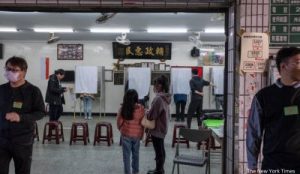
The official Beijing news outlet had cautioned that Lai’s presidency could lead Taiwan “on a path of no return,” but the Taiwanese people, with a robust voter turnout of 72 percent, voiced their support for him. Addressing his enthusiastic supporters outside the D.P.P. headquarters in Taipei, Lai emphasized unity and his commitment to defending Taiwan’s identity in the face of increasing external pressures.

Taiwanese Vice President Lai Ching te Elected President Amidst Heightened Tensions with China“I voted for Lai Ching-te because I think he can handle the relationship with China wisely,” expressed Hsu Ya-hsuan, a 28-year-old technology company product manager in Taipei. Many share her sentiment, hopeful that Lai will navigate the delicate balance between protecting Taiwan’s sovereignty and avoiding deliberate provocations against China.

As the newly elected president, Lai faces formidable challenges, both domestically and internationally. Despite the victory, his party lost its legislative majority, posing obstacles to advancing his political agenda. Externally, China’s response to his election remains a critical concern, with expectations of increased pressure and aggression, both militarily and economically.

According to Jason Hsu, a former legislator and current Mason Fellow at Harvard Kennedy School, Lai will encounter a challenging and divided political landscape domestically, lacking the honeymoon period enjoyed by his predecessor. The loss of the legislative majority adds another layer of complexity to governing during a precarious time for Taiwan.

Taiwanese Vice President Lai Ching te Elected President Amidst Heightened Tensions with ChinaContrary to the reckless firebrand image projected by Beijing, those who know Lai affirm that he campaigned on continuity with the policies of the outgoing president, Tsai Ing-wen. Lai’s commitment to building Taiwan’s military defenses, strengthening relations with democratic allies, and avoiding a complete rupture with China echoes Tsai’s approach. However, the intensifying pressure from China and the potential for military action create a testing ground for Lai’s political and diplomatic skills.

In response to Lai’s victory, the Chinese government office for Taiwan affairs dismissed the D.P.P. as not representing mainstream opinion on the island. The U.S. Secretary of State, Antony J. Blinken, issued a congratulatory statement, expressing eagerness to work with the new Taiwanese leader. However, Lai’s tenure will be closely scrutinized by China, which may employ tactics such as trade restrictions, diplomatic maneuvers, or military exercises to assert its influence.

Taiwanese Vice President Lai Ching te Elected President Amidst Heightened Tensions with ChinaKuo Yu-jen, a political science professor, warns that even if Lai adheres to Tsai’s policies, China’s President Xi Jinping is unlikely to alter the trajectory of solving the “Taiwan problem” at an accelerated pace. The pressure on Lai’s government is anticipated to surpass that experienced during Tsai’s eight years in office.

Taiwan’s relations with the United States also hang in the balance, with continued U.S. support promised in the face of Chinese pressure. However, the U.S. is entangled in global conflicts, and the outcome of the upcoming presidential election in November could introduce further uncertainties for Taiwan.

Taiwanese Vice President Lai Ching te Elected President Amidst Heightened Tensions with ChinaIn addition to external challenges, Lai must grapple with a divided domestic political landscape. His chief rivals garnered significant shares of the vote, posing a potential threat to his authority. Ko Wen-je of the Taiwan People’s Party, in particular, tapped into public dissatisfaction with rising housing costs, limited career prospects, and slow income growth, especially among young supporters. With his party losing its majority in the Legislative Yuan, Lai recognizes the need for collaboration with opposition parties to address Taiwan’s challenges. Acknowledging the people’s desire for a capable government and effective checks and balances, Lai pledges to respect this new public sentiment.
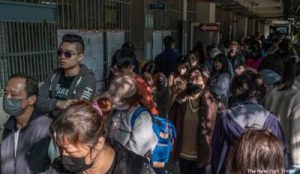

Despite the complexity of these challenges, Lai’s election victory culminated in a week of spirited campaign events and vibrant gatherings across Taiwan, emphasizing the island’s commitment to democracy and separate identity from the mainland. The election’s festive atmosphere showcased the significance of the democratic process for the Taiwanese people, even as they navigate uncertain times and external pressures.

As Lai assumes office in May, the world watches closely to see how he manages the delicate balance between safeguarding Taiwan’s interests and navigating the complex geopolitical landscape in the region.

Taiwanese Vice President Lai Ching te Elected President Amidst Heightened Tensions with China

https://www.nytimes.com/2024/01/13/world/asia/taiwan-election-china-us.html?smid=nytcore-android-share

Will Also Introduce Online Filing for I-129 H-1B Petitions and H-1B I-907 Premium Processing Service

WASHINGTON—U.S. Citizenship and Immigration Services today announced the upcoming launch of a package of customer experience improvements for H-1B cap season. The measures are expected to increase efficiency and ease collaboration for organizations and their legal representatives.

USCIS will launch organizational accounts for non-cap filings and the fiscal year (FY) 2025 H-1B cap season. The introduction of organizational accounts will allow multiple individuals within an organization, such as a company or other business entity, and their legal representatives to collaborate on and prepare H-1B registrations, Form I-129, Petition for a Nonimmigrant Worker, and associated Form I-907, Request for Premium Processing Service.

“USCIS is always striving to improve and streamline our processes, and this is a big step forward,” said USCIS Director Ur M. Jaddou. “Once we launch the organizational accounts and online filing of I-129 H-1B petitions, the entire H-1B lifecycle becomes fully electronic — from registration, if applicable, to our final decision and transmission to the Department of State.”

USCIS expects to launch the organizational accounts in February 2024, with online filing of Forms I-129 and I-907 following shortly thereafter. In addition to streamlining the Form I-129 H-1B petition process, these changes should help reduce duplicate H-1B registrations and other common errors.

USCIS will also transition the paper filing location for Forms I-129 and I-907 from service centers to the USCIS lockbox as part of our efforts to increase efficiency by standardizing processes and reducing costs.

USCIS will host two national engagements on organizational accounts on Jan. 23 and 24 as well as several smaller sessions leading up to the H-1B registration period to help guide organizations and legal representatives through the process. During these sessions individuals will have the opportunity to ask questions about the organizational accounts in preparation for the FY 2025 H-1B electronic registration process and launch of online filing of Form I-129 for H-1B petitions. USCIS encourages all individuals involved in the H-1B registration and petition filing process to attend these engagements. Invitations to these engagements will be sent later this month. Visit our Contact Public Engagement page to subscribe to notifications about upcoming engagements. Additional details regarding organizational accounts will be available on the H-1B Electronic Registration Process page.

For more information about which forms are eligible for online filing, visit our Forms Available to File Online page.

For more information on USCIS and its programs, please visit uscis.gov or follow us on Twitter (@uscis), Instagram (/uscis), YouTube (/uscis), Facebook (/uscis), and LinkedIn (/uscis).

– USCIS –

Affordable Fitness: Building a Thrifty Workout Routine

If budget constraints have kept you from achieving your fitness goals, you’re not alone. While the dream of a personal gym with top-notch equipment may seem out of reach, there are cost-effective ways to get in shape without breaking the bank. Milo F. Bryant, a San Diego-based trainer, highlights the simplicity of free outdoor activities: “I can go to the beach for free. I can pick up some hundred-pound rocks and carry them.” Bryant also recommends bear crawls, emphasizing their effectiveness on steps.

Creating a home gym doesn’t have to drain your wallet. The classic jump rope, priced at just $10, offers an incredible workout. Gwen Gates, a coach at the Logan Health Medical Fitness Center, suggests a Tabata-style routine, utilizing 20 seconds on and 10 seconds off intervals for 10 to 20 minutes. For those uncomfortable with jumping, letting the rope hit the ground and stepping over it still elevates the heart rate.Affordable Fitness Building a Thrifty Workout Routine

Battle ropes are another budget-friendly option for working the arms and incorporating cardio. While commercial ones may start at $50, a homemade version using supplies from a hardware store can be just as effective. For those interested in strength training without barbells, exercise bands, costing no more than $20 for a full set, offer versatile options. Bryant recommends placing bands around ankles or knees while walking sideways, providing an effective workout.

Kettlebell workouts are popular, but the weights can be expensive. Brad Roy, the editor of the American College of Sports Medicine’s Health & Fitness Journal, suggests using medicine balls instead, starting at around $20. Gwen Gates advises incorporating them into squats, progressively adding difficulty by raising the ball above your head.

For a back-to-basics approach, consider rucking, or walking with weight on your back. This age-old practice builds strength, stamina, and muscular endurance. While specialized rucking backpacks start at $100, you can achieve the same effect by loading your current backpack with a few books or water bottles. Utilizing pull-up bars or exercise tools found during your walk adds an extra dimension to your routine. Playground exercises, from step-ups to tricep dips, provide a diverse set of options.

Bird-watching, disc golf, and shadowboxing can also be incorporated into your walks. Bird-watching, in particular, can extend the duration of your walk as you seek out new species. If you’re not a bird enthusiast, try disc golf, a budget-friendly activity with approximately 9,000 courses across the United States. Shadowboxing routines or walking with poles, starting at $25, provide effective arm and shoulder workouts. Trekking poles, suggested by Dr. Roy, encourage better posture than traditional canes, making them an excellent option for those considering walking aids.

For a more dynamic workout, consider pickleball on a tennis court. Paddle and ball sets start at $30, offering not only physical benefits but also improving hand-eye coordination and balance, especially beneficial for older adults. Dr. Roy describes pickleball as an “awesome activity” for overall fitness.

Achieving fitness goalsdoesn’t have to come with a hefty price tag. By incorporating affordable tools and outdoor activities into your routine, you can build strength, improve endurance, and enhance your overall well-being without burning a hole in your pocket. As Milo F. Bryant aptly puts it, “You want to be able to move,” and these budget-friendly optionsprovide the perfect opportunity to do just that.

https://www.nytimes.com/2024/01/02/well/move/cheap-workouts-fitness-exercise.html?smid=nytcore-android-share

Empowering Ladakhi Women: A Journey from Tragedy to Cervical Cancer Awareness

In the early stages of his medical career in southern India, Nordan Otzer, an ENT surgeon now in his mid-40s, received a life-altering call from his home in the Ladakh Himalayas. This call sparked his commitment to cervical cancer awareness, a cause that became deeply personal.

Otzer recounts the distressing moment when his mother’s health deteriorated, revealing a silent battle with cervical cancer. Despite experiencing persistent spotting and abdominal pain, she only sought medical help when the pain became intolerable. This delay, unfortunately, proved fatal. Otzer reflects, “My mother’s death due to cancer altered the course of my career, leading me to make the choice to remain and contribute to my own community.”

The World Health Organization (WHO) highlights that over 95% of cervical cancers are caused by the human papillomavirus (HPV), emphasizing the importance of early detection and prevention. The WHO recommends screening for HPV infection starting at 30 years of age, with regular screenings every 5 to 10 years.

Cervical cancer stands as the fourth most common cancer among women globally, with a substantial burden in low- and middle-income countries. In 2020, an estimated 90% of the 604,000 new cases and deaths occurred in these regions, emphasizing the urgency of addressing this issue on a global scale.

Otzer’s personal tragedy fueled his determination to make a difference in Ladakh, a remote mountainous region at an altitude exceeding 14,000 feet. Since 2009, he, along with local supporter Stanzin Dawa and visiting doctors from Singapore, has organized over 140 awareness and screening events, reaching out to women in villages scattered across challenging terrains.

“We have conducted screenings for 12,400 women thus far, among whom one out of every 10 women has precancerous lesions,” Otzer reports, underscoring the critical need for timely treatment to prevent the progression to full-blown cancer.

Beyond the logistical challenges of reaching remote areas, Otzer encountered cultural barriers. Ladakhi women, initially reticent about discussing women’s health openly, hesitated to undergo checkups. Otzer recalls, “Women in Ladakh tend to be reticent about discussing women’s health matters openly, not even with their own family members.”

However, with persistence, the community became more receptive over time. Initially avoiding eye contact and refraining from asking questions, Ladakhi women gradually started attending screening camps, breaking down the stigma surrounding cervical cancer.

In the context of India, cervical cancer ranks as the second most common cancer in women, contributing significantly to the global burden. The Indian Ministry of Health and Family Welfare aims to vaccinate 68 million girls against HPV by the end of 2025, followed by an annual vaccination of 11.2 million girls aged 9 and older.

A December 2021 study published in Springer reveals that cervical cancer accounted for 9.4% of all cancers and 18.3% (123,907) of new cases in India in 2020. It remains a leading cause of cancer-related deaths in women, particularly in low- and middle-income countries.

The study emphasizes the alarming situation in rural areas where women, often illiterate and unaware of cervical cancer hazards, face scarce healthcare resources. The availability of medical infrastructure and awareness play pivotal roles in preventing cervical cancer, as confirmed by a study in the Asian Pacific Journal of Cancer Prevention.A Lancet study from October 2023 exposes disparities in cervical cancer survival across India, with higher rates in urban areas boasting better healthcare facilities. The study calls attention to the importance of addressing inequities in the healthcare system, highlighting the need for awareness, early detection, and improvements in healthcare infrastructure.

Otzer’s journey from personal tragedy to community empowerment illustrates the transformative impact of raising awareness about cervical cancer. By breaking down cultural barriers and overcoming logistical challenges, Otzer and his team have made significant strides in Ladakh, offering hope for a future where cervical cancer is detected early, treated effectively, and lives are saved.

https://www.ipsnews.net/2023/11/this-doctor-helps-himalayan-women-ward-off-cervical-cancer/

Narayana Murthy Advocates Reciprocity in Government Services at Bengaluru Tech Summit 2023, Urges Responsibility and Draws Inspiration from China’s Economic Success

Infosys co-founder N R Narayana Murthy, speaking at the 26th edition of Bengaluru Tech Summit 2023, emphasized the importance of reciprocity in availing government services. He expressed his disapproval of freebies and urged individuals to contribute back to society after benefiting from government services at subsidized rates. The event, held in the Karnataka capital, provided a platform for Murthy to share his insights on the role of “compassionate capitalism” in India’s path to prosperity.

Murthy highlighted the need for a symbiotic relationship between citizens and the government when it comes to subsidized services. He articulated his perspective, stating, “When you provide those services, when you provide those subsidies, there must be something in return that they’re willing to do. For example, if you say — I will give you free electricity, then it would have been a very nice thing for the government to have said, but we want to see the percentage attendance in primary schools and middle schools go up by 20 per cent, then only we will give you that.”

While acknowledging the importance of free services, Murthy underscored the necessity for recipients to shoulder a greater responsibility in return. Drawing from his own humble background, he empathized with those who have benefited from subsidies and advocated for a commitment to improving the prospects of future generations. He stated, “I am not against free services being provided. I fully understand, as I also came from a poor background once upon a time. But I think we should expect something in return from those people who received those free subsidies to take a slightly bigger responsibility towards making their own future generation, their own children and grandchildren, better in terms of going to school, you know, performing better. That’s what I mean.”

In the pursuit of creating efficient, corruption-free, and effective public goods in the country, Murthy acknowledged that taxation would inevitably need to be higher than what is observed in developed nations. Expressing his willingness to accept a higher level of taxation for the greater good, he stated, “In order to create efficient, corruption-free and effective public goods in our country, the taxation will have to be obviously higher than what you see in developed countries. So, I personally would not at all grudge if I have to pay a higher level of taxation.

Narayana Murthy Advocates Reciprocity in Government Services at Bengaluru Tech Summit 2023 Urges Responsibility and Draws Inspiration from China's Economic Success

Murthy also drew attention to the economic progress of China, emphasizing the need for Indian political leaders to study and learn from China’s successes. Despite facing similar challenges, China has achieved a GDP five or six times that of India. Murthy urged political leaders to carefully analyze China’s strategies and implement measures that would enable India to advance at a comparable pace. He expressed his vision for India to become a nation that effectively addresses poverty and uplifts its people. “So all that I would humbly request our political leaders is to study China very very carefully, and then see what are the good things that we can learn from China and implement here, so that India too advances at the same pace as China and becomes a nation that has reduced the poverty of its people,” he said.

Narayana Murthy’s address at the Bengaluru Tech Summit 2023 underscored the importance of reciprocity in the utilization of government services, advocated for a sense of responsibility among beneficiaries of subsidies, and encouraged political leaders to draw insights from China’s economic development to propel India towards greater prosperity.

https://fogdawn.com/2023/12/12/narayana-murthy-said-about-solution-for-indians-to-become-prosperous/?external_id=GiAu50FnAJaLiAHQzMoEZjLBtwA-0YPAHnFLfSl0HsmpsiDtzGMogpe-l7aP4azgAQ&utm_content=3887457533&utm_campaign=My+Campaign+New-M&utm_term=yahoo-android-news&tblci=GiAu50FnAJaLiAHQzMoEZjLBtwA-0YPAHnFLfSl0HsmpsiDtzGMogpe-l7aP4azgAQ#tblciGiAu50FnAJaLiAHQzMoEZjLBtwA-0YPAHnFLfSl0HsmpsiDtzGMogpe-l7aP4azgAQ

Israel Defends Actions in Gaza Amid Genocide Accusations at the International Court

Accused of committing genocide against Palestinians, Israel staunchly defended its military operations in Gaza at the United Nations’ highest court on Friday. A day prior, Prime Minister Benjamin Netanyahu vehemently dismissed the allegations as hypocritical, decrying them as an “upside-down world” while facing charges of genocide. Israel, established in the aftermath of the Holocaust, faced the accusations brought by South Africa in one of the largest cases before an international court, drawing global attention and protesters from both sides.

South African lawyers urged the court on Thursday to immediately halt Israeli military operations in Gaza, home to 2.3 million Palestinians. While a decision on this request is expected in the coming weeks, the full case may extend over several years.

“We live at a time when words are cheap in an age of social media and identity politics. The temptation to reach for the most outrageous term to vilify and demonize has become, for many, irresistible,” expressed Israeli legal advisor Tal Becker at the Palace of Peace in The Hague.

Becker highlighted, “South Africa has regrettably put before the court a profoundly distorted, factual, and legal picture. The entirety of its case hinges on a deliberately curated, decontextualized, and manipulative description of the reality of current hostilities.”

While Israel commonly boycotts international tribunals, citing unfairness and bias, it has taken the unusual step of sending a high-level legal team to address the gravity of the accusations.

At the core of the case are Israel’s actions in Gaza, where a massive air and ground assault followed the crossing of Hamas militants into Israel on Oct. 7. The assailants killed around 1,200 people, mostly civilians, and abducted over 250 individuals, with more than half still in captivity. According to Gaza’s Health Ministry, over 23,000 people have been killed during the military campaign, with nearly 85% of Gaza’s population displaced, a quarter facing starvation, and significant areas reduced to rubble.

South Africa contends that Israel’s actions amount to genocide and are part of decades of oppression against Palestinians. Lawyer TembekaNgcukaitobi asserted, “The scale of destruction in Gaza, the targeting of family homes and civilians, the war being a war on children — all make clear that genocidal intent is both understood and has been put into practice. The articulated intent is the destruction of Palestinian life.”

Netanyahu rejected these claims, stating, “This is an upside-down world — the state of Israel is accused of genocide while it is fighting genocide. The hypocrisy of South Africa screams to the heavens.”

Contrary to South Africa’s allegations, Israel argues that it is acting in legitimate self-defense. The court must assess whether Israel’s operations comply with international agreements governing the conduct of war, even in response to severe attacks.

While the court’s findings are binding, it remains uncertain if Israel would comply with any order to halt military operations. Non-compliance could lead to U.N. sanctions, potentially vetoed by the United States, Israel’s steadfast ally. The White House refrained from commenting on potential responses if the court determines Israel committed genocide, with National Security Council spokesperson John Kirby dismissing the allegations as “unfounded.”

The case delves into one of the world’s most intractable conflicts, prompting protests for a second consecutive day outside the court. Pro-Israeli demonstrators commemorated hostages held by Hamas, while over 100 pro-Palestinian protesters voiced their concerns.

This case strikes at the core of Israel’s national identity, founded as a Jewish state in the aftermath of the Nazi Holocaust. Israel contends it is combating a formidable enemy responsible for the deadliest attack on its territory since its establishment in 1948. The nation asserts adherence to international law and efforts to minimize harm to civilians, attributing the high death toll to Hamas militants operating in residential areas.

South Africa seeks to broaden the case beyond the Israel-Hamas war, highlighting a history of systematic oppression and violence against Palestinians over the last 76 years. Justice Minister Ronald Lamola emphasized, “Mothers, fathers, children, siblings, grandparents, aunts, cousins are often all killed together. This killing is nothing short of destruction of Palestinian life. It is inflicted deliberately. No one is spared. Not even newborn babies.”

Approximately two-thirds of the casualties in Gaza are women and children, according to health officials. The case, unprecedented in its scope, raises questions about the responsibilities of nations in situations resembling genocide. The world court, which adjudicates disputes between nations, has never previously held a country responsible for genocide, with the closest instance being in 2007 when it ruled that Serbia “violated the obligation to prevent genocide” during the Bosnian enclave massacre in Srebrenica.

https://www.npr.org/2024/01/12/1224360624/israel-defends-itself-at-the-u-n-s-top-court-against-allegations-of-genocide

-+=