
Big Tech Firms Seek Creative Ways To Deal With Hybrid Work Paradox

Admitting that hybrid work paradox is here to stay amid the pandemic, Microsoft CEO Satya Nadella has outlined a detailed approach about how his company is going to tackle the biggest shift to global workplace that requires a new operating model, spanning people, places and processes.

As some countries open and others like India and Brazil face their worst pandemic days, Nadella said that every organization’s approach will need to be different to meet the unique needs of their people. “According to our research, the vast majority of employees say they want more flexible remote work options, but at the same time also say they want more in-person collaboration, post-pandemic. This is the hybrid work paradox,” Nadella said in a blog post.He outlined three areas for Microsoft for hybrid work.

“First, we are moving all employees off corporate networks and taking an internet-first approach. An internet-first approach reduces exposure and gives employees a consistent experience whether they are at home or in the office,” Nadella informed.

“Second, at home, we are asking all employees who continue to work remotely, either full or part time, to run a test of their home networks to ensure they are secure”.

He then emphasized on device security. “All corporate resources will be managed so that you have secure, trusted access. Whether employees are at home or in the office, we will require that every mobile device that needs to access corporate resources is managed. This includes a company-wide rollout of Microsoft Defender for Endpoint,” Nadella noted.
On people, Microsoft said it is prioritizing three things: social capital, knowledge capital and human capital. “The second area that will undergo transformation is places. In this new era of hybrid work, we will no longer rely solely on shared physical location or a campus to collaborate, connect, or build social capital. But that doesn’t mean physical places and spaces aren’t important. They will just need to be re-imagined,” the Microsoft CEO explained.
Every business process will be impacted by the move to hybrid, and every business function will need to transform. “From product development and manufacturing, to marketing, sales, customer service, and facilities, HR, and IT, every business process will need to be adjusted,” he added.

Reiterating that his home country India as well as Brazil are going through their most difficult moments of the pandemic, Alphabet and Google CEO SundarPichai has laid down a detailed roadmap on how the future of work will unfold for millions across the globe.Kicking off the I/O Developers Conference from the Mountain View campus late on Tuesday, Pichai said that Covid-19 has deeply affected the entire global community over the past year and continues to take a toll.

“Places such as Brazil, and my home country of India, are now going through their most difficult moments of the pandemic yet. Our thoughts are with everyone who has been affected by COVID and we are all hoping for better days ahead,” he stressed.Pichai said that the company continues to build a more helpful Google, for everyone.
“One of the biggest ways we can help is by reimagining the future of work. Over the last year, we’ve seen work transform in unprecedented ways, as offices and coworkers have been replaced by kitchen countertops and pets,” he noted.

“Many companies, including ours, will continue to offer flexibility even when it’s safe to be in the same office again. Collaboration tools have never been more critical, and today we announced a new smart canvas experience in Google Workspace that enables even richer collaboration,” Pichai told the virtual audience of over 2,00,000 people.
He informed that there are 150 million students and educators learning virtually over the last year with Google Classroom.“Other times it’s about helping in little moments that add up to big changes for everyone. For example, we’re introducing safer routing in Maps. This AI-powered capability in Maps can identify road, weather and traffic conditions where you are likely to brake suddenly; our aim is to reduce up to 100 million events like this every year,” he said.

Stressing on the role of AI, Pichai said the company has used the technology to improve the core Search experience for billions of people by taking a huge leap forward in a computer’s ability to process natural language. “Yet, there are still moments when computers just don’t understand us. That’s because language is endlessly complex: We use it to tell stories, crack jokes and share ideas � weaving in concepts we’ve learned over the course of our lives. The richness and flexibility of language make it one of humanity’s greatest tools and one of computer science’s greatest challenges,” Pichai elaborated.He then introduced latest research in natural language understanding: LaMDA.

LaMDA is a language model for dialogue applications. It’s open domain, which means it is designed to converse on any topic.“We’re focused on ensuring LaMDA meets our incredibly high standards on fairness, accuracy, safety and privacy, and that it is developed consistently with our AI Principles,” he added.

Several years ago, Google kicked off a project called Project Starline to use technology to explore what’s possible.Using high-resolution cameras and custom-built depth sensors, it captures your shape and appearance from multiple perspectives, and then fuses them together to create an extremely detailed, real-time 3D model.

“The resulting data is many gigabits per second, so to send an image this size over existing networks, we developed novel compression and streaming algorithms that reduce the data by a factor of more than 100,” said Pichai. (IANS)
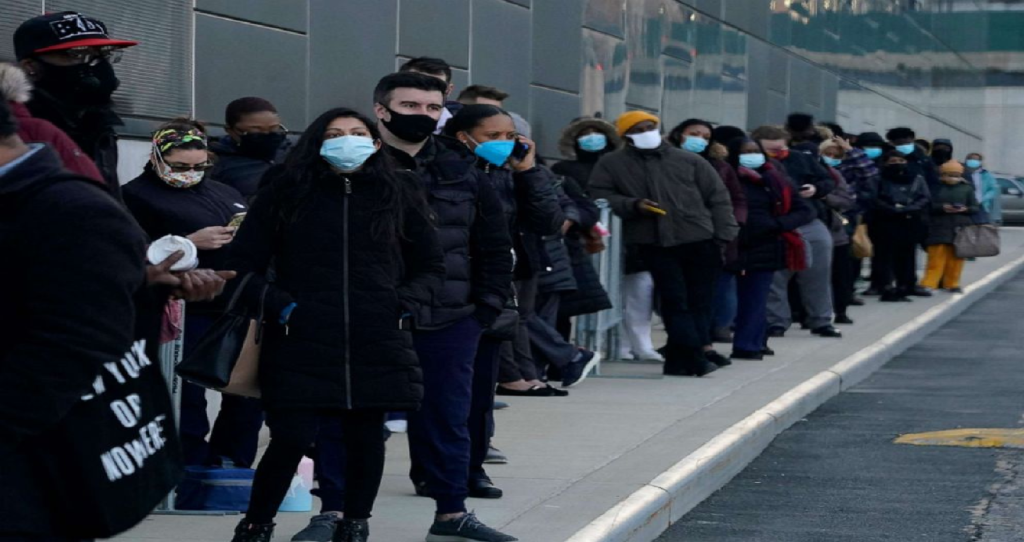
Rep. Krishnamoorthi Announces The NOVID Act To Protect US From Risk Of New Coronavirus Strains By Defeating The Virus Abroad

Following new CDC guidance that fully vaccinated Americans can remove masks and resume normal activities, Congressman Raja Krishnamoorthi announced the Nullifying Opportunities for Variants to Infect and Decimate  (NOVID) Act, an expansive coronavirus prevention program that will ensure Americans are not subject to another deadly surge of COVID-19 domestically.

Inspired by the Lend-Lease Act the United States used to provide vital supplies to allies during the Second World War and based on the President’s Emergency Plan For AIDS Relief (PEPFAR) program which has helped save 20 million lives since 2003, the bill would limit the emergence of COVID variants which could threaten outbreaks in the United States by helping to end outbreaks abroad which enable such mutations.

According to a recent survey by Oxfam, 88% of international epidemiologists report that persistent low vaccine coverage in many countries would make it more likely for vaccine resistant mutations to appear, while 66% said we had a year or less before the virus mutates to the extent that the majority of first-generation vaccines will become ineffective. Notably, the threat posed by these mutations can be reduced by expanded American efforts to combat the pandemic abroad which will reduce the virus’ capacity to develop these mutations.

“While we’ve made excellent progress in countering the COVID-19 pandemic here at home as evident by the CDC’s new mask guidance, the coronavirus outbreaks devastating other parts of the world continue to represent an enormous threat to our domestic progress as those surges dramatically increase the risk of double and triple mutation variants which our current vaccines may not be able to stop,” said Congressman Raja Krishnamoorthi.

“Because of that, it’s essential that we end these outbreaks now to drastically reduce the risk and range of these mutations forming and threatening the success of our pandemic response. That’s why I’m introducing legislation to protect Americans from new variants of the coronavirus by helping our partners abroad defeat COVID outbreaks and limit the development of vaccine-resistant strains. Just as the Lend-Lease Act helped us win the Second World War by providing our allies with resources to help us defeat fascism far from our shores, this legislation will help us win the battle against new strains of coronavirus by reducing the risk of their reaching the United States.”

Under the NOVID Act, the United States would establish the $19 billion Pandemic Preparedness and Response Program (PanPReP) through the State Department, modelled on PEPFAR, to oversee and coordinate the U.S. global strategy for the COVID-19 pandemic. The PanPReP would work with international partners and host countries to procure enough vaccines to inoculate 60% of the populations of the 92 low- and middle-income countries eligible to receive COVID-19 vaccines through the COVID-19 Vaccines Global Access (COVAX) program in order to drastically reduce the emergence of dangerous new virus variants.

Legislation would dramatically expand American aid to India, Argentina, and other nations to end COVID surges through vaccination, reducing risk of dangerous new variants.

To ensure effective administration of the vaccines, the program would include ensuring their end-to-end delivery. PanPReP would also work with manufacturers to rapidly scale up production capacity of vaccines and their components in order to secure sufficient supply to achieve herd immunity in COVAX nations and to prepare for any subsequent production of second-generation vaccines necessary to counter new virus strains in the United States and abroad.

India Denies State-Owned Banks Will Withdraw Funds From Foreign Currency Accounts

The Indian government has denied reports that it has asked state-owned banks to withdraw funds from foreign currency accounts abroad in anticipation of their potential seizure with regard to the Cairn legal dispute, terming such information as “false and baseless”.

“Condemning all such source-based reports as false, the Government of India said that these are totally incorrect reports which were not based on true facts. Certain vested parties appear to have orchestrated such misleading reporting, which often relies upon unnamed sources and presents a lopsided picture of factual and legal developments in the case,” said an official statement.

It said that the India is “vigorously” defending its case in this legal dispute, and has filed an application on March 22 to set aside the “highly flawed” December 2020 international arbitral award in The Hague Court of Appeal.“The government has raised several arguments that warrant setting aside the award. This proceeding is pending,” the government said, adding that it is committed to pursuing all legal avenues to defend its case in this dispute worldwide.

It was also stated that the CEO and the representatives of Cairns have approached the government for discussions to resolve the matter. “Constructive discussions have been held and the Government remains open for an amicable solution to the dispute within the country’s legal framework,” the Finance Ministry statement said. (IANS)

Indian Couple Holds Mid-Air Wedding ‘To Escape CovidRestrictions’

An Indian couple reportedly chartered a plane and held a mid-air wedding with more than 160 guests in an effort to escape coronavirus restrictions.Video footage posted on social media appeared to show the couple and their guests packed into the hired jet.The state of Tamil Nadu, where the flight was said to have originated, recently imposed tougher restrictions, limiting weddings to 50 guests.India’s aviation authority has launched an investigation, reports said.

An official from the Directorate General of Civil Aviation (DGCA) told the Times of India that the SpiceJet staff aboard the flight had been taken off duty.A SpiceJet spokesperson told the media that the Boeing 737 was booked from Madurai to Bangalore by a travel agent for a trip after a wedding.The spokesperson said the client was “clearly briefed on Covid guidelines to be followed and denied permission for any activity to be performed on board”.

India is suffering a devastating second wave of coronavirus that has killed at least 300,000 people, according to official figures. Experts estimate that the real death toll is far higher.Hospitals and crematoriums in the country have been overwhelmed in recent weeks, leading to severe oxygen shortages and bodies being burned around the clock.

Many families unable to afford the costs of cremation have illegally buried their loved ones on the banks of the river Ganges or pushed their bodies into the river’s waters, raising fears that the death toll is being significantly under-counted.


Candles Help Ease And De-Stress Your Body And Mind

Considering the amount of time we’ve been spending indoors, our homes have truly become our havens. As we battle out several things and our homes still serve as refuge, a beautiful way to nourish your space is by stocking up on beautiful, mood-lifting candles.

Home grown artisanal green perfumer, NasoProfumi, brings you an array of pure soy wax candles which contain healing powers that help ease and de-stress your body and mind. The healing properties of these natural ingredients are very effective for revival and rejuvenation.

Pick from an array of candles to freshen and brighten your home this season. While the candle burns creating a soothing aroma, dip your fingertips and use the pure soy on the back of your wrist and side of your neck for healing properties.

SAFFRON INFUSED IN MUSK & AMBER

The hearty saffron releases serotonin in the body and helps fight depression and anxiety. Sweet Amber opens the throat centre, treating goiters and other throat problems. It also improves self-esteem and confidence. The hearty saffron with musk and amber, helps fight anxiety and depression. It lures you to the bright side. A soothing musk infused in hearty saffron makes the atmosphere calm, warm and soothing, eases your mind. Helps in focus and concentration.

Price – 4,000.00, Pure Soy Wax Candle, Burns: 50 Hours, 610g/21.5oz

MUD INFUSED IN OUD

An Instant mood booster for your everyday work from home schedule to renew and replenish the mind body and soul.

Price – 4,000.00, Pure Soy Wax Candle, Burns: 50 Hours, 610g/21.5oz

BASIL INFUSED IN SAMBAC

Derived from the Persian word Yasmin, Jasmine literally translates to “Gift of God.” From time immemorial, it has represented magic and mystery in the Indian folklore.

Healing Powers: A mild aphrodisiac, with intoxicating properties, that dissolve emotional barriers and promote intimacy, while soothing the senses and calming anxiety.

Price – 2,000.00, Pure Soy Wax Candle, Burns: 50 Hours, 610g/21.5oz

MINT INFUSED IN ROSE & LEMON

MINT INFUSED IN ROSE & LEMON

The refreshing aura of fresh citrus and mint leaves meets the eternal romance of the rose to make a happiness inducing blend. Crowned as the king of flowers, the scent of the rose is a distinctly familiar olfactory sensation. Exude a passionate intensity and vivacity when you wear this lively fragrance.

Healing Power: Lures you to the bright side with increased energy levels and gives your mood a gentle upliftment.

Price – 2,000.00, Pure Soy Wax Candle, Burns: 50 Hours, 610g/21.5oz

TAMARIND INFUSED IN BERGAMOT

An exotic amalgamation of Italian and Indian scents come together for the creation of this deliciously fruity fragrance. Combining diverse odors ranging from mildly spicy Ielements, rich and succulent smells, to bittersweet aromas, this nuanced layering of flavours makes an indelible statement.

Healing Powers: Aids in relieving stress and known to induce great sleep!

Price – 4,000.00, Pure Soy Wax Candle, Burns: 50 Hours, 610g/21.5oz

BLACKCURRANT INFUSED IN LILAC

The fruity blackcurrant is fused with the winey aroma of red grapes and pomegranate seeds, creating a sweet and comforting fragrance that is exceptional. The fruitiness is combined with the warmth of the cedar-wood at the base, resembling pine-trees in the winter, curating a robust experience.

Healing powers: Emotionally uplifting Improves blood circulation Helps balance hormones and skin tone

Price – 2,000.00, Pure Soy Wax Candle, Burns: 50 Hours, 610g/21.5oz (IANS)

Drinking Alcohol Causes Damage To The Brain

There is no such thing as a “safe” level of drinking, with increased consumption of alcohol associated with poorer brain health, according to a new study.In an observational study, which has not yet been peer-reviewed, researchers from the University of Oxford studied the relationship between the self-reported alcohol intake of some 25,000 people in the UK, and their brain scans.

The researchers noted that drinking had an effect on the brain’s gray matter — regions in the brain that make up “important bits where information is processed,” according to lead author Anya Topiwala, a senior clinical researcher at Oxford.”The more people drank, the less the volume of their gray matter,” Topiwala said via email.

“Brain volume reduces with age and more severely with dementia. Smaller brain volume also predicts worse performance on memory testing,” she explained.

“Whilst alcohol only made a small contribution to this (0.8%), it was a greater contribution than other ‘modifiable’ risk factors,” she said, explaining that modifiable risk factors are “ones you can do something about, in contrast to aging.”

Type of alcohol doesn’t matter

The team also investigated whether certain drinking patterns, beverage types and other health conditions made a difference to the impact of alcohol on brain health.

They found that there was no “safe” level of drinking — meaning that consuming any amount of alcohol was worse than not drinking it. They also found no evidence that the type of drink — such as wine, spirits or beer — affected the harm done to the brain.

However, certain characteristics, such as high blood pressure, obesity or binge-drinking, could put people at higher risk, researchers added.”So many people drink ‘moderately,’ and think this is either harmless or even protective,” Topiwala told the media.

“As we have yet to find a ‘cure’ for neurodegenerative diseases like dementia, knowing about factors that can prevent brain harm is important for public health,” she added.

No safe limit

The risks of alcohol have long been known: Previous studies have found that there’s no amount of liquor, wine or beer that is safe for your overall health. Alcohol was the leading risk factor for disease and premature death in men and women between the ages of 15 and 49 worldwide in 2016, accounting for nearly one in 10 deaths, according to a study published in The Lancet in 2018.

“While we can’t yet say for sure whether there is ‘no safe level’ of alcohol regarding brain health at the moment, it has been known for decades that heavy drinking is bad for brain health,”Sadie Boniface, head of research at the UK’s Institute of Alcohol Studies, told CNN via email.

“We also shouldn’t forget alcohol affects all parts of the body and there are multiple health risks,” said Boniface, who was not associated with the University of Oxford study.

Tony Rao, a visiting clinical fellow in Old Age Psychiatry at King’s College London, told CNN that given the large sample size, it was unlikely the study’s findings could have arisen by chance.Rao said the study replicates previous research that has shown there is no safe limit in the level of alcohol consumption for its role in damage to the structure and function of the human brain.

“Previous research has found that subtle changes which demonstrate damage to the brain can present in ways that are not immediately detectable on routine testing of intellectual function and can progress unchecked until they present with more noticeable changes in memory,” he said.

“Even at levels of low-risk drinking,” he said, “there is evidence that alcohol consumption plays a larger role in damage to the brain than previously thought. The (Oxford) studyfound that this role was greater than many other modifiable risk factors, such as smoking.””The interaction with high blood pressure and obesity on increasing the damage done by alcohol to the brain emphasizes the wider role of diet and lifestyle in maintaining brain health,” he added. (Courtesy: TIME)


US Urges ‘Transparent’ WHO Inquiry Into Covid Origins

The US health secretary has urged the World Health Organization to ensure the next phase of investigation into Covid-19’s origins is “transparent”.Speaking to a ministerial-level WHO meeting, Xavier Becerra said international experts should be allowed to evaluate the source of coronavirus.US media reports suggest growing evidence the virus could have emerged from a laboratory in China.

Covid-19 was first detected in 2019 in Wuhan, in central Hubei province.Since then, more than 167 million cases and 3.4 million deaths have been reported worldwide.In March this year, the WHO issued a report written jointly with Chinese scientists on the origins of Covid-19, saying the chances of it having started in a lab were “extremely unlikely”. The WHO acknowledged further study was needed.

But questions have persisted and reports attributed to US intelligence sources say three members of the Wuhan Institute of Virology were admitted to hospital in November 2019, several weeks before China acknowledged the first case of the new disease in the community.

Beijing has angrily rejected the reports, repeatedly suggesting the virus may have come from a US laboratory instead. Speaking to the WHO on Tuesday, US Secretary for Health and Human Services Xavier Becerra did not mention China by name. But he made it clear the US expected more rigour from the next stage of any investigation.

“The Covid-19 pandemic not only stole a year from our lives, it stole millions of lives,” Mr Becerra said in an address to the World Health Assembly, a conference organised by the WHO.He added: “Phase 2 of the Covid origins study must be launched with terms of reference that are transparent, science-based and give international experts the independence to fully assess the source of the virus and the early days of the outbreak.”

The White House said on Tuesday that it expected from the WHO an “expert-driven evaluation of the pandemic’s origins that is free from interference or politicisation”.

Anthony Fauci, the director of the National Institute of Allergy and Infectious Diseases and US President Joe Biden’s chief medical adviser, has maintained he believes the virus was passed from animals to humans, though he conceded this month he was no longer confident Covid-19 had developed naturally.

The lab leak claims were widely dismissed last year as a fringe conspiracy theory, after then-President Donald Trump said Covid-19 had originated from the Wuhan Institute of Virology. Many US media outlets described such claims as debunked or false.

On Tuesday, Mr Trump sought to take credit in an emailed statement to the New York Post. “To me it was obvious from the beginning but I was badly criticized, as usual,” he said. “Now they are all saying: ‘He was right.'”(Courtesy: BBC News)

Does Indian PM Narendra Modi Really Need A New House?

Rajpath (King’s Avenue), in the centre of the Indian capital, is to Delhi’ites what Central Park is to New Yorkers, or the Champs-Elysees to Parisians.The manicured lawns on either side of the wide ceremonial boulevard are a place for thousands to gather to soak up the winter sun or have an ice-cream on summer evenings.But the 3km (1.8 mile)-long road, stretching from RashtrapatiBhavan, the presidential palace, at one end to the India Gate war memorial at the other, now resembles a massive dust bowl.

The area is dotted with craters and mounds of earth – barricades stop people from getting close to men in reflective vests and yellow hard hats who are laying sewage pipes and tiled footpaths. A sign warns against taking photos and videos.The work is part of the Central Vista project – a vast redevelopment plan that includes a new parliament, new homes for the vice-president and prime minister and multi-storey office blocks. It’s expected to cost upwards of 200bn rupees ($2.7bn; £2bn).

The project has been mired in controversy since it was announced in September 2019, with critics saying the money could be better spent on people’s welfare or cleaning up Delhi’s air, which is among the filthiest in the world.The government rejects those arguments, saying Central Vista will be a major boost to the economy. Urban Development Minister Hardeep Singh Puri has said it will generate “large-scale direct and indirect employment” and make all Indians “proud”.

Construction work is continuing even as India battles a devastating second wave of Covid-19, which has fuelled further public resentment. Critics have questioned Prime Minister Narendra Modi’s priorities, comparing him to “Nero fiddling while Rome burns“.

Opposition leader Rahul Gandhi has called it a “criminal waste” and urged Mr Modi to focus instead on dealing with the pandemic. In an open letter to Mr Modi, scholars criticised the project as an extravagant waste of resources “that could be used to save lives”.Much scorn has been reserved in particular for the PM’s new house, due for completion by December 2022.

“This is pure escapism,” historian Narayani Gupta told the BBC. “At a time when the pandemic is killing thousands, crematoria are full and graveyards have run out of space, the government is building castles in the air.”

Where does the PM live now?

By all accounts, Mr Modi’s current accommodation is pretty fancy.The 12-acre complex on LokKalyan Marg (formerly Race Course Road), with five bungalows and sprawling lawns, is some 3km from the presidential palace and parliament.

Besides the PM’s residential quarters, the complex has accommodation for guests, offices, meeting rooms, a theatre and a helipad. A few years ago, an underground tunnel was built to connect it to nearby Safdarjung airport.”The Indian PM occupies an entire street – in Britain, 10 Downing Street is just a door with a number,” says Delhi-based architect Gautam Bhatia.

The property was chosen by Rajiv Gandhi in 1984. Intended to be temporary, it has been home to all Indian prime ministers ever since.”Gandhi used three bungalows, the fourth and the fifth were added later on as the requirement to host more staff and security personnel grew,” says political analyst Mohan Guruswamy, a regular visitor over the years.”It’s a relatively new construction,” says Gautam Bhatia. However, it has been repeatedly refurbished “at a great deal of expense”.

In recent years, Indians have had glimpses inside the closely-guarded complex as Mr Modi’s office released videos of him feeding peacocks, doing yoga or pushing his mother’s wheelchair.

What do we know about the new house?

It will be centrally located in Delhi’s power corridor – between the RashtrapatiBhavan at one end and the Supreme Court at the other, with parliament just across from the PM’s house.

According to government documents, the prime minister will occupy 10 four-storey buildings on a 15-acre plot between the president’s house and South Block, where offices of the PM and defence ministry are currently located. Rows of barracks built by the British in the 1940s and currently used as temporary offices will be demolished.

But further details about the residence are scarce. In an email to the BBC, project architect Bimal Patel’s office said “for security reasons we cannot share the details/blueprints with you”, refusing to say how much it would cost.Architects, conservationists and environmentalists have criticised the authorities for a “lack of transparency”.

“There have been no proper public hearings and the project details keep evolving so there is no clarity,” said one architect, Anuj Srivastava.Another, Madhav Raman, said building “such a massive structure” so close to South Block – a protected monument designed by leading 20th Century British architects Edwin Lutyens and Herbert Baker – was a cause for concern.

“The Archaeological Survey of India rules stipulate that there should be a minimum distance of 300m from a heritage structure but the new PM house will be just 30m away. There are also lots of trees on the plot, what will happen to them?”

So why does Mr Modi want to move?

Authorities say the PM’s present home is “not well-located”, is “difficult to secure” and needs “better infrastructure that is comfortable, efficient, easy to maintain and cost-effective”.They say it should be located in “close proximity” to his office since road closures during his travels “cause major disruptions to city traffic”.But Mohan Guruswamy believes the new house has more to do with Mr Modi’s ambition.

“All real decision-making takes place in the PM’s house. He has a staff of hundreds and they clear 300 files a day. “He has centralised power in his hands. He is creating a presidential form of government and he needs a bigger building – a White House or a Kremlin.”

MrGuruswamy says Indian prime ministers have always lived in “buildings at the back”. But with his new home, Mr Modi wants to put himself in the centre of Delhi’s power corridor.”But separation of power has to be physical too. He’s not just making a new home, he’s rearranging the institutions of government. Architecture changes the nature of power.”

What will happen to the Rajpath area?

Rajpath is a public space popular for recreation and also for protests and candle-light marches.And even though the government insists that it will remain a public space, critics say it’s unlikely that large gatherings would be allowed because of the proximity to the PM’s house.

Historian Narayani Gupta says the multi-storey office buildings, which will replace popular cultural centres like the Indira Gandhi National Centre for the Arts, the National Museum and the repository of our modern history, the National Archives, would overshadow India Gate and drive away people.

“They are moving rare manuscripts and fragile objects to temporary locations. How do we know that there won’t be any damage?”KanchiKohli, of the think tank Centre for Policy Research, says land in Delhi is designated for specific purposes – such as recreational, semi-public or government – and authorities can’t just take over an area and change its use.”This is a land grab.”

What is the government saying?

Minister for Urban Development Hardeep Singh Puri has defended the project.Rejecting criticism of government priorities during the pandemic, he said the project cost was 200bn rupees over several years “while the government has allocated nearly twice that amount for vaccination”.In a series of recent tweets, he asked people to “not believe in fake photos and canards about ongoing work at Central Vista Avenue”.

“The transformed Central Vista will be a world class public space,” he said, adding “it will eventually be something every Indian will be proud of”.A senior bureaucrat who did not want to be named said MrPuri was trying to “defend the indefensible”.

“I do not doubt that the end result will be something every Indian will be proud of, but I do believe that the timing is completely wrong. What is the tearing hurry to erect yet another building when all around us people are dying?” (Courtesy: BBC News)

Farewell To Microsoft’s Internet Explorer

Microsoft’s Internet Explorer will finally be retired next year after more than 26 years of service, the tech giant says.The veteran web browser was released with Windows 95.It will no longer appear on consumer versions of Windows 10 after June 2022, Microsoft wrote in a blog.

The tech giant has been phasing out the old browser for several years – but in 2019 it had to issue an emergency patch for it, for security reasons.At that point it was estimated that around 8% of people were still using it.Its replacement, Microsoft Edge, has an Internet Explorer compatibility mode, which will continue to function.

‘Faster, more secure’

Some very old websites – and crucially, internal company web-based tools – were built on older web technology, which modern browsers have trouble processing. In a blog, Microsoft Edge programme manager Sean Lyndersay wrote that the newer browser was “a faster, more secure and more modern browsing experience”, and was also now better able to handle older applications.In a separate post dealing with questions, Microsoft clarified that there would be some exceptions to the retirement, including on older versions of Windows.

Between 2000 and 2005, Internet Explorer enjoyed a 90% market share (Google Chrome is the most used browser today). But in 2013 Microsoft was fined €561m ($731m; £484m at the time) for failing to promote alternative browsers within its Windows operating system.It had introduced a “browser choice” pop-up in 2010, but the feature was dropped in an update the following year. Microsoft said this had happened by mistake.

The tech giant is also tinkering with another bit of history: in April this year it announced that it is planning to change its default font, which has been Calibri across all of its products since 2007. It is inviting users to vote on their favorite from five contenders, and says the most popular will form its new look.

A Crypto Crash Wiped Out $1 Trillion This Week

Wild, stomach-churning moments are part of the experience when you buy a ticket to the crypto circus. But the past week’s volatility was enough to make some of the crypto faithful wonder whether they’ve been bamboozled.

On Wednesday, a broad crypto crash wiped out about $1 trillion in market value — a staggering drop from $2.5 trillion just a week ago. Bitcoin, which accounts for more than 40% of the global crypto market, nosedived 30% to $30,000 on Wednesday, its lowest point since January.By Friday, bitcoin had rebounded slightly, to around $37,000 — bruised by continued regulatory concerns, and far off its all time high above $64,000 that it hit a month ago.

Volatility is baked into the nascent cryptocurrency market, but the digital assets’ explosive growth in the past year has attracted hordes of amateur and professional investors looking for a quick profit. Many of them ride an upswing and get out, or panic sell when things turn sour, exacerbating gains or losses.

What happened?

The crypto market had been especially shaky for about a week before the crash on Wednesday.

On May 12, bitcoin fell 12% after Elon Musk walked back Tesla’s commitment to accept bitcoin as payment, citing concerns over the crytocurrency’s massive carbon footprint. Musk added to investor anxiety last weekend with a pair of seemingly contradictory tweets about bitcoin that left investors scratching their heads.

Then the big crash came Wednesday, after Chinese officials signaled a crackdown on crypto use in the country. The central bank issued a warning to Chinese financial institutions and businesses not to accept digital currencies as payment or offer services using them.The threat of increased regulation triggered a panic, and bitcoin plunged before rebounding slightly and leveling off. Other cryptocurrencies also tanked: Ethereum fell more than 40%, while dogecoin and binance lost around 30%.

By Thursday, bitcoin had recouped some losses and was back above $41,000. But a Friday statement from Chinese officials reiterating the need to crack down on cryptos beat bitcoin back down. It was trading around $37,000 on Friday afternoon. Other cryptos were also in the red.

Regulatory concerns

China has long had limits around crypto trading within its borders. Officials declared in 2013 that bitcoin was not a real currency and banned financial and payment institutions from using it. Individuals can hold or trade cryptocurrencies, but major exchanges in mainland China have been shut down.

On the surface, this week’s statements simply underscored China’s suspicion of cryptocurrencies generally. But they sent a clear signal that Beijing is not loosening its grip on the market anytime soon. Authorities are also launching a state-backed digital yuan that would keep money flows under strict oversight.

And it’s not just China. On Thursday, Federal Reserve Chairman Jerome Powell warned about potential risks cryptocurrencies pose to the financial system. Powell also said the central bank would publish a paper this summer that will explore the implications of the US government developing a digital currency of its own.

A potential central bank digital currency “could serve as a complement to, and not a replacement of, cash and current private-sector digital forms of the dollar, such as deposits at commercial banks,” Powell said. The Treasury Department is also turning its attention to the crypto space. On Thursday officials said any transfer of digital currency valued at $10,000 or more must be reported to the Internal Revenue Service.

“Cryptocurrency already poses a significant detection problem by facilitating illegal activity broadly including tax evasion,” the Treasury said in a statement. “Despite constituting a relatively small portion of business income today, cryptocurrency transactions are likely to rise in importance in the next decade, especially in the presence of a broad-based financial account reporting regime.”

Bitcoin had been up nearly 6% Thursday but pared its gains after the statements from US officials, according to Bloomberg.

The future of cryptos

The week’s wild swings were a test for cryptocurrency fans. True believers tend to take the long view: At the start of 2020, bitcoin was trading around $7,000 a coin, which means it’s still up more than 400% in that time, even after crashing this week.

“We all tend to focus on day-by-day, week-by-week,” said William Quigley, managing director at crypto-focused investment fund on Wednesday. “But that’s not how most people buy cryptocurrencies, or even stocks.

Is it a bubble? Probably, according to ethereum co-creator VitalikButerin. In an interview with CNN Business this week, Buterin said he wasn’t surprised by the crash, because he’s seen it all before.

“We’ve had at least three of these big crypto bubbles so far,” he said. “And often enough, the reason the bubbles end up stopping is because some event happens that just makes it clear that the technology isn’t there yet.” (Courtesy: CNN Business)

Home Prices Across US Hit High

Home prices in the US continued to climb in April, reaching new highs and rising at the fastest pace on record.  The median sale price was a record $341,600 in April, according to a report from the National Association of Realtors. It was the highest median price since NAR began tracking this data in 1999. The median price, which includes existing single-family homes, townhomes, condominiums and co-ops, was up a record 19% from a year ago.

Looking only at single family homes, prices were up 20% from last year, the fastest price appreciation since NAR began tracking those prices in the early 1970s. Homes are selling in a record fast 17 days, according to NAR, and an overwhelming 88% of homes sold in April were on the market for less than a month. Stiffer competition, especially from a growing number of all-cash buyers, is squeezing many first-time buyers out of the market.

“First-time buyers in particular are having trouble securing that first home for a multitude of reasons, including not enough affordable properties, competition with cash buyers and properties leaving the market at such a rapid pace,” said Lawrence Yun, NAR’s chief economist.

Much of that price gain was propelled by competition. For every listing, there were an average of five offers, according to Yun. And a quarter of all buyers are making all cash offers, up from 23% in March and just 15% a year ago. The price gain and increase in all-cash offers is no surprise given the imbalance of supply and demand, said Joel Kan, Mortgage Bankers Association’s associate vice president of economic and industry forecasting.”In the short-term, inventory shortages will persist,” he said. “The insufficient level of inventory amidst fierce competition is putting upward pressure on home prices in most parts of the country.”

Low inventory is limiting sales

While more inventory came on the market in April compared to March, by the end of April total housing inventory was down 21% from one year ago, and still sits at near-record lows.The low inventory of homes continues to not only push prices higher but is also bringing the number of sales down, according to the report.Sales dropped 2.7% in April from March, the third straight month of decline.But don’t start thinking the market is cooling off, said Yun. Demand is still strong.

“Despite the decline, housing demand is still strong compared to one year ago, evidenced by home sales from this January to April, which are up 20% compared to 2020,” said Yun.Sales were up 34% from a year ago, but comparing last month with April 2020 is a bit distorted. By April of last year, many parts of the country were shut down because of the pandemic and real estate transactions came to a near standstill.But the seasonally-adjusted annual rate of 5.85 million homes sold in April is 11% above the annualized rate for April of 2019.

Yun said that if there were 20% more homes available, real estate agents could sell 20% more homes, it is the low inventory that is holding sales back.

“Bringing supply and demand into a better balance is still months away, and perhaps several years away, due to high prices and a reluctance to move by some homeowners due to Covid 19,” said Robert Frick, corporate economist at Navy Federal Credit Union.

“High prices not only slow sales, but they make downsizing difficult for many older Americans who were looking forward to making a big profit on the sale of their existing home and moving into a cheaper, downsized home,” Frick said. “High housing prices have spread to many more cities around the country, and that’s making downsizing to a smaller home not the financial slam-dunk it was even a couple years ago.”

Buyers getting squeezed out

Yun anticipates the housing market will normalize a bit as the year progresses, especially as more supply becomes available.”We’ll see more inventory come to the market later this year as further Covid-19 vaccinations are administered and potential home sellers become more comfortable listing and showing their homes,” said Yun. “The falling number of homeowners in mortgage forbearance will also bring about more inventory.”

In addition, home builders are building, although US Census Bureau data from earlier this week showed residential housing starts have begun to slow because of challenges in the cost and availability of building materials.But even as more supply comes in to meet the high demand, that demand may cool as some buyers become frustrated.”Some of the buyers will be squeezed out because high home prices are hurting affordability,” said Yun.

In addition, mortgage rates, which have been at record lows, are trending up, with Yun forecasting rates will reach 3.5% by year’s end.”The general direction is toward more claiming of the market from its current frenzy,” said Yun.

Moderna’s COVID-19 Vaccine Is Said To Be Safe And Effective For Teens

Moderna has stated in a statement issued on May 25th that its vaccine is safe and efficacious among 12- to 18-year olds.The company reported results from its combined Phase 2 and 3 study involving more than 3,700 teens who were randomly assigned to receive either two doses of its COVID-19 vaccine or two doses of placebo. The study was designed to compare results among the teens to those among adults, which led to the company’s current emergency use authorization for its vaccine. Researchers are looking to see if the results among teens are at least as good, and not worse, than those among adults.

And that’s what the company reported. There were no cases of COVID-19 reported 14 days after the teenage study participants received two doses of the shot, compared to four cases among those receiving a placebo, meaning the vaccine was 100% efficacious in protecting against disease. The company said that the vaccine was also 93% efficacious in protecting against even one symptom of COVID-19 disease after one dose.

Moderna is the second company to report COVID-19 vaccine results among teens; in March, Pfizer-BioNTechreported similar safety and efficacy of 100% in its study and received authorization from the FDA for its two-dose shot among teens in May. Both Moderna and Pfizer-BioNTech vaccines are built on mRNA technology, which involves using genetic material from the COVID-19 virus to train the immune system to fight it.

Moderna plans to submit the latest data from the teens to the U.S. Food and Drug Administration to expand the current authorization for its vaccine to children as young as 12 years old.


States Across India Extend Lockdowns

India has been battling a severe second wave of the coronavirus pandemic, and in order to stop the rapid spread of the virus, several states in the country are announcing either lockdowns or restrictions on movement of people. Across India, several states have placed curbs, with West Bengal on Saturday becoming the largest state in the country to impose a lockdown, according to media reports.

Here is a look at the states that have extended restrictions to curb the spread of the virus:

Delhi: The ongoing lockdown in Delhi has been extended till the morning of May 31. CM Kejriwal stated that they will begin the unlock procedure in a phased manner thereon if Covid-19 cases continue to decrease.

Uttar Pradesh: The statewide curfew in UP has been extended till 7 am on May 31, which was earlier to set to end on May 24. Coronavirus vaccination drive, industrial activities and other essential services have been exempted, according to the official statement.

Kerala: The ongoing lockdown in the state has been extended till May 30, Chief Minister PinarayiVijayan announced on Friday. While a triple lockdown will continue in Malappuram district, the strict restrictions have been relaxed in Thiruvananthapuram, Ernakulam and Thrissur.

Tamil Nadu: The state government extended the ongoing lockdown for another week, starting May 24, with more stringent measures. E-commerce will be allowed to function from 8 am to 6 pm, and vegetables and fruits will be distributed to the public on vehicles through Tamil Nadu’s Horticulture department.

Karnataka: The state government has extended the lockdown till 6 am on June 7. Chief Minister B S Yediyurappa clarified that there are no changes in the current restrictions and the lockdown would continue as it had been since April 27.

Jammu and Kashmir: The corona curfew has been extended till 7 am on May 31, the Department of Information and Public Relations tweeted on Saturday. Essential services have been exempted.

Gujarat: Chief Minister Vijay Rupani announced that night curfew will be enforced in 36 cities from 8 pm to 6 am till May 28th. All essential services will continue during these restrictions.

Goa: Chief Minister PramodSawant on Friday announced the extension of a statewide curfew till May 31, prohibiting a gathering of five or more persons in public.

Maharashtra: Maharashtra’s lockdown-like restrictions will continue to be in place till 7 am on June 1, as per the latest announcement. The new restrictions include a mandatory negative RT-PCR test report for those entering the state.

Haryana:  The state government on Sunday extended the statewide lockdown till May 31. Standalone shops are allowed to open during the day when the night curfew is not in operation and other shops are allowed to open from 7 am to 12 pm on odd-even basis. However, shopping malls will continue to remain shut till 5 am on May 31.

Jharkhand: The partial lockdown imposed in Jharkhand will continue to be in place till May 27 with some additional restrictions. Movement of inter-state and intra-state buses were restricted while private vehicles are allowed to move only with e-passes issued by the district administration.

Chhattisgarh: The state will remain under lockdown till May 31 until further announcement.

Rajasthan: The Covid-19 triggered lockdown imposed in the state has been extended till June 8.

West Bengal: West Bengal government announced that a complete lockdown would remain in place throughout the state, beginning from 6 am ending at 6 pm on May 30, meaning that the residents would be placed under a state of complete lockdown for about 15 days. Apart from this, a night curfew would also remain in place from 9 pm to 5 am in the state.

Himachal Pradesh has also announced an extension of curfew restrictions across the state till May 26.

Maharashtra: The state would remain under lockdown-like restrictions till the morning of June 1, and under the new rules, people entering the state would have to have a mandatory negative RT-PCR test. Apart from this, the state has also placed curbs on people arriving from “sensitive origins”.

AIR INDIA’s 4.5 Million Customers’ Personal Data Hacked

Air India has admitted to a massive data breach that compromised the personal data of about 4.5 million passengers. The hackers were able to access 10 years’ worth of data including names, passport and credit card details from the Atlanta-based SITA Passenger Service System, Air India said in a statement on May 21.It disclosed the scale of the breach nearly three months after it was first informed by the IT provider.The breach that happened in late February had compromised the data of some major global airlines, too. SITA at that time had said that Singapore Airlines, New Zealand Air and Lufthansa were among those affected.

Air India said almost 4.5 million passengers globally were affected in the “highly sophisticated” attack but did not specify how many of them were its travelers. It said no password data was breached during the attack and that the company was investigating.The breach, confirmation of which comes two months after SITA’s Passenger Service System (PSS) was hacked, affected customers who registered between August 2011 and late February 2021, Air India said in a statement. Compromised data includes customers’ name, data of birth, contact information, passport information, frequent flyer data and credit card data, although CVV/CVC numbers weren’t included.
Password weren’t accessed by the hackers, Air India added, although it’s urging all customers to change their passwords as a precaution.

The airline said it first learned of the incident on February 25, but only learned the identities of affected passengers on March 25 and May 4.The company said it recommended in an email to its customers that they should change their account passwords as a precaution.

Air India started as a mail carrier in 1932 before gaining commercial popularity. It has been incurring losses since its 2007 merger with a state-owned domestic carrier, Indian Airlines. The debt-laden carrier is currently in the process of finding new buyers.

Fully Vaccinated Need Not Wear Masks, Social Distancing Not Required

The US Centers for Disease Control and Prevention has eased mask-wearing guidance for fully vaccinated people, allowing them to stop wearing masks outdoors in crowds and in most indoor settings.

In a major step toward returning to pre-pandemic life, the Centers for Disease Control and Prevention has eased mask-wearing guidance for fully vaccinated people, allowing them to stop wearing masks outdoors in crowds and in most indoor settings.

“Today is a great day for America,” President Joe Biden said Thursday during a Rose Garden address heralding the new guidance, an event where he and his staff went without masks. Hours earlier in the Oval Office, where Biden was meeting with vaccinated Republican lawmakers, he led the group in removing their masks when the guidance was announced.“If you are fully vaccinated, you no longer need to wear a mask,” he said, summarizing the new guidance and encouraging more Americans to roll up their sleeves. “Get vaccinated — or wear a mask until you do.”

The guidance still calls for wearing masks in crowded indoor settings like buses, planes, hospitals, prisons and homeless shelters, but it will help clear the way for reopening workplaces, schools and other venues — even removing the need for social distancing for those who are fully vaccinated.“We have all longed for this moment — when we can get back to some sense of normalcy,” Rochelle Walensky, director of the CDC, said at an earlier White House briefing.

In light of the CDC guidance, the Pentagon announced on Friday that fully vaccinated Defense Department personnel no longer need to wear masks indoors or outdoors at Defense facilities.The CDC and the Biden administration have faced pressure to ease restrictions on fully vaccinated people — those who are two weeks past their last required COVID-19 vaccine dose — in part to highlight the benefits of getting the shots. The country’s aggressive vaccination campaign has paid off: U.S. virus cases are at their lowest rate since September, deaths are at their lowest point since last April and the test positivity rate is at the lowest point since the pandemic began.

Walensky said the long-awaited change is thanks to the millions of people who have gotten vaccinated and is based on the latest science about how well those shots are working.“Anyone who is fully vaccinated can participate in indoor and outdoor activities — large or small — without wearing a mask or physically distancing,” Walensky said. “If you are fully vaccinated, you can start doing the things that you had stopped doing because of the pandemic.”

The new guidance is likely to open the door to confusion, since there is no surefire way for businesses or others to distinguish between those who are fully vaccinated and those who are not.“Millions of Americans are doing the right thing and getting vaccinated, but essential workers are still forced to play mask police for shoppers who are unvaccinated and refuse to follow local COVID safety measures,” said Marc Perrone, president of the United Food and Commercial Workers International Union. “Are they now supposed to become the vaccination police?”

Walensky and Biden said people who are not fully vaccinated should continue to wear masks indoors.“We’ve gotten this far — please protect yourself until you get to the finish line,” Biden said, noting that most Americans under 65 are not yet fully vaccinated. He said the government was not going to enforce the mask wearing guidance on those not yet fully vaccinated.

“We’re not going to go out and arrest people,” added Biden, who said he believes the American people want to take care of their neighbors. “If you haven’t been vaccinated, wear your mask for your own protection and the protection of the people who also have not been vaccinated yet.”To date more than 154 million Americans, nearly 47% of the population, have received at least one dose of COVID-19 vaccine, and nearly 119 million are fully vaccinated. The rate of new vaccinations has slowed in recent weeks, but with the authorization Wednesday of the Pfizer shot for children ages 12 to 15, a new burst of doses is expected in the coming days.

“All of us, let’s be patient, be patient with one another,” Biden said, acknowledging some Americans might be hesitant about removing their masks after more than a year of living in a pandemic that has killed more than 584,000 people in the U.S. and more than 3.3 million people worldwide.

The CDC’s announcement that Americans could begin to shed one of the most visible symbols of the pandemic stood in stark contrast to other nations, with much of the world still struggling to contain the virus amid global disparities in vaccinations.There are some caveats. Walensky encouraged people who have weak immune systems, such as from organ transplants or cancer treatment, to talk with their doctors before shedding their masks. That’s because of continued uncertainty about whether the vaccines can rev up a weakened immune system as well as they do normal, healthy ones.

How My Family Dynamics Gave Me a New Path

“My son was attached to my stepmother and my daughter enjoyed the attention from my mother. This camaraderie, unity and selfless teamwork was and is uncommon amongst divorced couples: Eshani ShahShares Her Fascinating Journey Growing Up in The Taarak Mehta Family

Today’s woman dreamer, Eshani Shah, the daughter of Taarak Mehta, one of India’s most famous writers, fondly known for the famous show, Taarak Mehta KaOoltahChashmah, shares her incredible journey growing up in this creative, artistic celebrity family, and how being immensely loved and nurtured by both her mothers (birth-mother and step-mother) helped her grow into the woman she is today.

Eshani, a very talented artist, shares how effective co-parenting changed her life in this heartwarming story. An inspiring story for all generations on the power of great parenting and putting children first! Enjoy her story below!

A healthy relationship between separated parents leaves a very positive impact. Honest, straightforward co-parenting is the best way to raise a content child. They should never have to make choices of time and lifestyle between parents. For an only child this can become challenging but my family dynamics made a profound impact on who I am today.

My childhood was mostly normal with one main exception: Since both my parents did theater, I spent a lot of evenings alone at home with domestic help or at the rehearsals with one of them. The weekends again would be spent backstage or dozing in the auditorium. Living in an apartment complex eventually introduced me to lots of friends, whose houses became another good option for weekends. When they toured for plays, I spent a lot of time with my maternal grandparents. While I didn’t see my parents often, being surrounded by people 24/7 definitely gave me a supportive environment to grow up in. Although I grew up in a vibrant theater background, the theater bug did not really bite till much later in life after I met my Husband Chandu Shah, who is also from a similar background.

My parent’s marriage was a love marriage which always comes with higher expectations. You have already put your partner on a pedestal and believe that they are your soulmate or your dream partner. When these presumptions start shattering, it becomes difficult to save a relationship. Giving time to each other, shouldering responsibilities equally or respecting each other’s ambitions are some of the key elements of a happy marriage; when these somehow started diminishing from their marriage, they mutually decided to part ways.

I was 11 and a bit young to understand what was going on, but a decision was made to put me in boarding school. I went to a boarding school in Panchgani, the most memorable time of my life. My parents used to visit but never came together. I was 13 when they officially divorced. I was a very mature child at 13 so they did not fight for custody but gave me a choice of who I would stay with. I chose to stay with my dad primarily because it was an environment I grew up in. My mom eventually remarried. I came back to Mumbai when I was 16. after graduating high school. Whenever I visited during vacations, both my parents always presented a unified front spending some quality time together with me. Even my step father joined at times. My transitions spending time with both my parents were peaceful. The time at boarding school helped to build my high-spirited personality, which has helped me all my life.

I have seen my mom struggle in the initial years of marriage trying to balance work and personal life. She was fiercely independent and worked very hard to fulfill her dreams. Divorce in the 70s was very uncommon and most of my maternal family, including my grandmother, broke ties with her. She was heartbroken, but with her resilience, continued her journey of theater. By then, she had taken a job with a bank and was multitasking. She never let her personal struggles influence me. My step father passed away when I was 19 and it was devastating. As now she was alone all over again, I started staying with her. In all those years, what I learnt from her is to be independent. She taught me that emotional dependency and financial dependency can lead to disappointments. This holds true for partners, friends, family and children. She had excellent taste in clothes and jewelry and was always very presentable. She was a good singer, dancer and an artist and always the life of a party. I think I have inherited most of her traits.

After I came to Mumbai, I stayed with my father but he was as busy as I had seen him growing up. I was then going to college and busy with my life. It was around then that my step mother Induben used to visit. Dad first introduced her as a friend. But whenever she visited, she cooked for us and did errands for my dad. That’s when I told my father that if he feels that she is the right life partner for him, I am with him. That’s when they got married and my step mother became a bigger part of my life. I did not need much parenting at that point, so she became more of a friend… She was very lovable and took such good care of my dad. Her struggles were similar to my moms, due to my fathers lifestyle, but she took it in her stride. She gave up her ambitions and became a homemaker. Starting the 1980s, my father had become a household name with his column “ Duniya ne UndhaChasma “ in a Gujarati magazine Chitralekha and my step mother was his PR. With all his popularity, he was shy and a bit of an introvert, but my step mother responded to his fans and made them feel special. Her reverence for my father is what kept her going. When I got married, both my mothers did my “Kanyadan” (gave me away). They were a team from the start. I came to the USA in 1984 and my relationship with both my moms became long distance – despite this, they were unified looking after my needs. Whenever either visited, there would be goodies from both of them.

This tradition continued after my twins were born. It looked like God had created a miracle so they each had a bundle of joy they could pamper. My son was attached to my stepmother and my daughter enjoyed the attention from my mother. This camaraderie, unity and selfless teamwork was and is uncommon amongst divorced couples. As for me, because I did not have to make any difficult choices and there was so much harmony in the relationship with both of them , I did not grow up with any emotional baggage.

My stepmother and my father even after achieving celebrity status was not abashed about his divorce and supported/ took care of my mother through thick and thin till her last days. Their solidarity gave me a lot of peace of mind. These days, divorces are common and custody cases can get nasty, creating a negative impact on the child. Fighting parents is not an uncommon sight for children and if things just don’t work out then I think a seamless separation and giving the child a guilt free upbringing is the key. I was blessed that I did not have to choose and balance my affections, so in turn they were never competing for my attention.

I have fulfilled most of my dreams and now just want to support my children and whatever they do and live their dreams. I want to travel. I love planning events but with this pandemic the dynamics have changed so hoping to find a new avenue…I want to thank the Women Who Win team for inviting me to share my personal journey that I am blessed with. First by love of 2 mothers and now love of twins….

(Eshani Shah is an accomplished entrepreneur, award winning actor, event planner and a community leader combined with experience in two very distinct fields, Entertainment and National Security. Eshani’s leadership contribution includes organizing various theatrical as well as cultural events in the New England Area and helped non-profit organizations to raise funds for educational, cultural and religious purposes. She has volunteered her services and skills to many local Boston and National organizations. As a part of the executive team at S4, Eshani helped S4, Inc. growth over 700% in last 10 years which has been in top five growing companies of Boston Business Journal Pacesetter and fastest growing small business as rated by Inc 500. Being an award winning actress dancer herself she is also the owner of a very successful Entertainment/Event management company called Dhoom Entertainment which arranges programs all over USA.)

Founded in 2020 in the midst of the pandemic, Women Who Win was born with the belief that every woman has a dream and a story to tell.  Created by three South-Asian women based in Boston, Dr. Manju Sheth, Dr. Deepa Jhaveri, and ShaleenSheth, Women Who Win is the platform that brings women of all cultures, industries, and age groups together. Their global network of contributors share inspiring, relatable, and relevant original stories, educating and empowering the everyday woman dreamer.  Through education, empowerment, and a global community, they equip women with the tools and motivation to make their dreams a reality.  Their platform covers all topics from women’s health, women in the workplace, women in tech, arts & lifestyle, wellness & workouts, and global recipes. With a global network of women in over 80 countries, their members learn from and inspire each other in their personal and professional careers, they invite you to join their leading women’s community here.


For more details on Women Who Win, and other brave and pioneering women featured,  please visit: https://www.womenwhowin100.com/blog/how-my-family-dynamics-gave-me-a-new-path-eshani-shah-taarak-mehta

Share Your Dreams with Us By Joining Our Empowered Women’s Facebook Group ; Follow our Facebook Page; Connect on LinkedIn; Follow Us on Instagram; Explore our Website at: https://www.womenwhowin100.com

BAPS Temple In New Jersey Alleged To Have Exploited Workers

A lawsuit filed in federal court alleges that more than 200 workers — many or all of whom don’t speak English — were coerced into signing employment agreements in India to build expansion of the largest Hindu Temple by BAPS in the US on the 100-acre site in New Jersey

A lawsuit filed in federal court last week alleges the builders of a New Jersey Hindu temple — considered to be one the largest in the United States — lured workers from India, worked them nearly 90 hours per week and paid them around $1.20 per hour.

The lawsuit accuses the leaders of the Hindu organization known as BochasanwasiAksharPurushottam Swaminarayan Sanstha, or a Hindu sect known as BAPS, and the leaders who run the Robbinsville temple and its construction. The temple opened in 2014 and is constructed entirely of Italian marble that was sculpted in India and completed on site off Route 130 in Robbinsville. The ongoing construction on the BAPS Temple in Robbinsville began in 2010, and the site has caught the attention of state and federal authorities in recent years.

BAPS has been accused of human trafficking and wage law violations. An FBI spokesperson confirmed that agents were at the temple on “court-authorized law enforcement activity,” but wouldn’t elaborate. One of the attorneys who filed the suit said some workers had been removed from the site May 11.The lawsuit has been filed a month after New Jersey labor authorities halted work by a contractor at the Robbinsville temple and at a BAPS temple in Edison. The new lawsuit is a proposed class action complaint, alleging around 200 workers on religious immigration visas endured forced manual labor for the ongoing construction and expansion of the religious property on the 100-acre site.

The lawsuit says more than 200 workers — many or all of whom don’t speak English — were coerced into signing employment agreements in India. They traveled to New Jersey under R-1 visas, which are meant for “those who minister, or work in religious vocations or occupations,” according to the lawsuit.When they arrived, the lawsuit says, their passports were taken away and they were forced to work at the temple from 6:30 a.m. to 7:30 p.m. with few days off, for about $450 per month, a rate that the suit said came out to around $1.20 per hour. Of that, the workers allegedly only received $50 in cash per month, with the rest deposited into their accounts in India.

The lawsuit said workers lived in a fenced-in compound where their movements were monitored by cameras and guards. They were told that if they left, police would arrest them because they didn’t have their passports, the suit said. The lawsuit names Patel and several individuals described as having supervised the workers. It seeks unpaid wages and unspecified compensatory and punitive damages

According to the lawsuit, the exploited workers were Dalits — members of the lowest step of South Asia’s caste hierarchy. D.B. Sagar, president of the Washington-based International Commission for Dalit Rights, told The Associated Press that Dalits are an easy target for exploitation because they’re the poorest people in India. “They need something to survive, to protect their family,” Sagar — a Dalit himself — said, adding that if the allegations in the lawsuit are true, they amount to “modern-day slavery.”

BAPS CEO Kanu Patel, who is named as a defendant in the lawsuit, told The New York Times, “I respectfully disagree with the wage claim.” A spokesperson for the organization, Matthew Frankel, told The Associated Press that BAPS was first made aware of the accusations early Tuesday morning. “We are taking them very seriously and thoroughly reviewing the issues raised,” he said.

BAPS is a global sect of Hinduism founded in the early 20th century and aims to “preserve Indian culture and the Hindu ideals of faith, unity, and selfless service,” according to its website. The organization says it has built more than 1,100 mandirs — often large complexes that essentially function as community centers. BAPS is known for community service and philanthropy, taking an active role in the diaspora’s initiative to help India amid the current COVID-19 surge. According to the website for the Robbinsville mandir, its construction “is the epitome of volunteerism.”“Volunteers of all ages have devoted their time and resources from the beginning: assisting in the construction work, cleaning up around the site, preparing food for all the artisans on a daily basis and helping with other tasks,” the website says. “A total of 4.7 million man hours were required by craftsman and volunteers to complete the Mandir.”

The case was filed on behalf of five men described in the court papers as Dalits from Rajasthan, who had worked at the Shri Swaminarayan Mandir in Robbinsville.Their 42-page case document, alleges that they were made to work at the temple for more than 12 hours a day, seven days a week with days off only occasionally for which they were paid less than $1.20 an hour – an amount far less than the state minimum wage that was $10 in 2019 and $11 in 2020.Their court papers, however, say that they were instructed while applying for their visa to tell the U.S. embassy staff that they were going to the U.S. for “volunteer work at the temple” and “would be performing the work as a service to the deities” even though they assert that they were not members of BAPS.

According to the court document, although they came to the U.S. with an R-1 visa, which is granted to missionaries and religious workers, they did not perform any religious work and instead were made to do “dangerous” manual work at the temple. The men filing the case are Mukesh Kumar, Keshav Kumar, Devi Laal, Niranjan, Pappu, and Brajendra.The New York Times reported that BAPS spokesperson Lenin Joshi said, “We are naturally shaken by this turn of events and are sure that once the full facts come out, we will be able to provide answers and show that these accusations and allegations are without merit.”

Modi Government Accused Of Hampering Relief Efforts By Christian Charities With Mandating More Red Tape

Federation of Indian Christian Association of North America (FIACONA), an advocacy organization working to defend the religious freedom of Christians and other minorities in India accused the Government of India of hampering the efforts of non-governmental agencies (NGOs). The government of India implemented a set of bureaucratic regulations by amending a law called Foreign Contribution Regulation Act (FCRA) in the middle of the pandemic. Christian charities and other non-governmental organizations (NGOs) across India are required to have permission under this law to receive any donations from overseas.

The new amendment put in place last September mandates the charities to open a new bank account at a particular New Delhi branch of the State Bank of India before March 31, 2021, regardless of where the charity is located or operating from. Though many charities have managed to open this account in New Delhi, they have run into bottlenecks and red tape. As a result they are unable to receive much needed funds to help the suffering  people in the middle of this pandemic.

“The current stringent FCRA rules that were put in place by the Government are jeopardizing many donor’s plans to provide equipment like oxygen concentrators and other essential supplies from around the world in providing needed help to hospitals especially in rural areas” said Koshy George, President of FIACONA. “Unless the Modi Government shows more flexibility towards charitable donations from abroad by suspending some of these bureaucratic provisions of the FCRA, more lives would be lost as a result” Mr. George cautioned.

These FCRA regulations were put in place for the purpose of monitoring and controlling minority charitable and educational institutions as part of the Hindutva agenda to minimize their appeal and reduce their influence on the society at-large.  The secular NGOs who would not toe the government  line also paid a price.  However, NGOs affiliated with Hindu nationalist groups continue to collect money from unsuspecting donors in Western Countries and channel their funds mostly towards sectarian work without any hindrance from authorities.

FIACONA appeals to the Government to suspend these rules that created the current impediments and submit them later for a panel review to ease the restrictions on a permanent basis so that the needy will not suffer in a future crisis.

Indian American Business Leaders Named To Global Task Force OnPandemic

The U.S. Chamber of Commerce May 5 announced the formation of the Global Task Force on Pandemic Response, which includes numerous Indian American company executives. The public-private partnership will provide immediate assistance to India and will assist in coordinating relief to respond to COVID-19 surges, according to the news release.

Among the members of the taskforce include Alphabet Inc. chief executive SundarPichai, Adobe Systems CEO Shantanu Narayan, Deloitte CEO PunitRenjen, FedEx chief operating officer and director Raj Subramaniam, IBM chair and CEO Arvind Krishna, and VMware chief operating officer Sanjay Poonen.The group also includes Apple CEO Tim Cook, PepsiCo CEO Ramon Laguarta and Mastercard CEO Michael Miebach, among others. The Task Force will coordinate a coalition of corporations, non-profits and individual efforts to organize relief where it is needed most.

The task force is working with the Chamber’s U.S.-India Business Council and the U.S.-India Strategic Partnership Forum to take three immediate actions to help address the COVID-19 surge in India.Sourcing, shipping and delivering 1,000 Puritan Bennett ventilators desperately needed by healthcare facilities across India. The first ventilators procured by the U.S. Chamber of Commerce Foundation have arrived, with all remaining ventilators expected to arrive by June 3. Medtronic will manufacture the ventilators and handle end-to-end shipping, installation and ongoing and virtual training, the release said.

It is also delivering 25,000 oxygen concentrators to India by the end of May, with transportation support from FedEx, it said. Additionally, it is creating the chief human resources officer India Action Group to provide ideas and practical information to CHROs to help their people in India.

The Global Task Force on Pandemic Response was launched to provide a unified platform for businesses to mobilize and deliver resources to assist COVID-19 efforts in areas of the highest need around the world, the release said.Initial efforts will focus on the pressing need for support in India, with more than 400,000 cases reported on May 1 alone. Through its Steering Committee, the Task Force will work to concentrate efforts where corporate support will be most beneficial, with additional countries to be determined in consultation with the U.S. government, the chamber adds.

The Global Task Force is working in close collaboration with U.S. and Indian government officials to share information and coordinate efforts. This includes regular briefings with the Modi and Biden Administrations, U.S. Congress, U.S. State Department and the U.S. Agency for International Development.

The coalition of leading companies, non-profits and associations that have come together to support these actions include Accenture, Adobe, Amazon, American Express, Amway, Apple, Applied Materials Foundation, Bank of America, BCG, Citi, David & Carol Van Andel Family Foundation, Dell, Deloitte, Dow, Ernst & Young, Emerson, Facebook, FedEx, Goldman Sachs, IBM, Intel, Johnson & Johnson, John Chambers Foundation, Johnson Controls, JP Morgan Chase & Co, KKR, Lockheed Martin, Mastercard, McCormick & Company, McKinsey & Company, Medtronic, Merck, Microsoft, Nasdaq, Newsweek, PepsiCo, Pfizer, Qualcomm Foundation, Raytheon Technologies, the U.S. Chamber of Commerce Foundation, VIAVI Solutions, VMware, Walmart and Zoom.

Neera Tanden Appointed As Senior Adviser To President Biden

President Joe Biden’s lone Cabinet choice who was rebuffed by Congress has landed a job as a White House senior adviser, Associated Press reported. Neera Tanden had been Biden’s pick to lead the Office of Management and Budget but withdrew her nomination in March after it was clear that she would not garner enough Republican support to be confirmed. Several GOP senators objected to her previous tweeted criticisms of her political rivals.

Tanden will now be a senior advisor to Biden, the White House said May 14. She will launch a review of the US Digital Service and begin planning for possible policy changes that could result from the forthcoming Supreme Court decision on GOP legal challenges to the Affordable Care Act. Tanden worked in former President Barack Obama’s administration as the act was designed and implemented.

Tanden, a close ally of White House chief of staff Ron Klain, will depart the think tank Center for American Progress. Its founder, John Podesta, said that “Neera’s intellect, tenacity, and political savvy will be an asset to the Biden administration.”Podesta added, “While we will be sorry to lose her considerable policy expertise and leadership at the Center for American Progress—an organization which we founded together in 2003—I am exceptionally thrilled to see her step into a new position serving this White House and the American people.” He further said that many of the policy solutions under the Biden administration were developed and led by Tanden at CAP over many years.

“The administration’s efforts will be magnified with Neera Tanden on the team, and I am excited to see what she will achieve in the role of senior adviser and in the years to come,” he added. Tanden serves as president and CEO of CAP and has served as the CEO of the Center for American Progress Action Fund.

A loyal Democrat with decades of senior policy-making experience, Tanden was a close ally of former secretary of state Hillary Clinton and served as a senior adviser to President Obama’s Department of Health and Human Services, where she helped draft the Affordable Care Act. She most recently served as president of the Center for American Progress (CAP), a left-leaning think tank with deep ties to Democratic policy-makers.

The daughter of Indian immigrants, Tanden was raised by a single mother who relied on government assistance programs before attending the University of California at Los Angeles and Yale University’s law school.“After my parents were divorced when I was young, my mother relied on public food and housing programs to get by,” Tanden tweeted Monday. “Now, I’m being nominated to help ensure those programs are secure, and ensure families like mine can live with dignity. I am beyond honored.”

Tanden held prominent policy positions in the administrations of Presidents Bill Clinton and Barack Obama, and her resume played a role in her selection to lead the OMB. She has denied playing a role in Clinton’s welfare policy, which many Democrats now view as a mistake. At the Center for American Progress, Tanden also helped push the party left on budget and spending issues, though she initially expressed openness to cutting Social Security and Medicare along with many other Washington liberals at the time.

A Yale law graduate, Tanden had earlier worked for former President Bill Clinton’s campaign and went on to work at the White House as an associate director for domestic policy and as an adviser to Hillary Clinton. When Hillary Clinton ran successfully for senator, Tanden was her deputy campaign manager and became her legislative director after her election.

Several Bollywood Celebrities Lead Relief Activities For COVID-19 Crisis In India

Veteran actor AnupamKher has joined hands with Global Cancer Foundation, USA – headed by Indian American doctor AshutoshTewari –and India’s Bharat Forge to start an initiative called ‘Project Heal India,’ which aims to help in the current fight against COVID-19 across India by providing medical aid and other relief.

Through the project, the organization will provide critical equipment and other life-supporting devices to needy institutions and hospitals across India. The first consignment of CrossVent Ventilators (ICU critical care), Medtronic Ventilators, ResMed non-invasive ventilation devices and oxygen concentrators is expected to arrive in India this week.

Sharing his take on the initiative, Kher shared, “Dr. AshutoshTewari (Global Cancer Foundation) was one of the first to come up with a concrete plan. This gave me the needed impetus to take this forward and be of service to our nation. It is people and humanitarians like Mr. Baba Kalyani (Bharat Forge) and Dr. AshutoshTewari that help make the world a better place and restore our faith time and again in humanity. I am honored and pleased to be joining hands with them.”

Tewari also ensured that people in India are not alone, saying: “We may be 10,000 miles away, but we continue to keep you close in our hearts and thoughts. The supplies we are sending are a kind of symbolic gesture and a sign of solidarity.”

In response to the overwhelming need, Project Heal India will do its best to address the needs created by the pandemic, said Kher. The contributors believe that to control this virus, it is extremely important to work together and ensure the health and safety of citizens and do our part in this ever-changing situation. Project Heal India has also pledged to raise funds, medicines, and other necessary relief material to help people of the Indian community at large, according to an official release.

Actress Lara Dutta and Sports Scientist ShayamalVallabhjee joined hands with The Indus Entrepreneurs (TIE), a non-profit headquartered in Silicon Valley for ‘I Breathe For India Campaign: Covid Crisis Relief’, a virtual fundraising campaign to help India battle the Covid-19 crisis.

The campaign, which runs until May 20, brings together Indian luminaries, actors and sports personalities, including Amitabh Bachchan, Sri Sri Ravi Shankar, H.H. Radhanath Swami, Karan Johar, Rishabh Pant, Anil Kapoor, AnupamKher, Samantha Prabhu, TarunTahliani, and many more, who appeared in a live special two-hour fundraising drive for Give India — India’s largest non-profit working actively with 2200 NGOs on the ground in the fight against Covid-19.

During the drive, the stars appeared reciting poetry, singing songs and delivering heartfelt messages, as part of a specially curated showcase, never before seen in India, which was streamed live across Facebook, Instagram, and YouTube.Funds from the campaign will go towards essential life-saving medical supplies, humanitarian aid for families under the poverty line that have been affected by the crisis, and manpower support for setting up vaccination and isolation centres to strengthen the nations’ efforts to combat the spread of Covid-19.

“The ‘I Breathe for India’ campaign was more than a fundraiser. It represented the collective consciousness off many people whose only desire was to India and its citizens in its hour of need. In many ways it helped redefine what is possible as we move towards the ‘new normal’. Thanks to the unwavering dedication of the Encompass team and its partners, we more than doubled our initial goal of $1 million and now as a result, have extended our deadline to allow us to shatter the proverbial glass ceiling. Both Lara and I, and the teams from TIE Global and Give India are eternally grateful to the entire unit that made this possible,” said ShayamalVallabhjee.

Lara Dutta added, “The success of the #IBreatheForIndia fundraiser would not have been possible without the individual efforts behind the scenes. My heartfelt thanks and gratitude to each and every one for selflessly giving your time and talents. God Bless and keep you all and your families safe until we are able to overcome this crisis together.”

‘I Breathe for India: Covid Crisis Relief’ was produced by global creative commerce agency, VMLY&R COMMERCE ENCOMPASS with platform partners including YouTube, Facebook, Twitter, Sony Liv, Voot, Eros Now and Glance, helping to amplify and restream the event.Actress Priyanka Chopra Jonas shared that over 14,000 contributors have helped raise $1 million, to help India amid the second wave of Covid-19. Priyanka shared a video on Instagram May 12, featuring a world map and the countries from where donations have poured in to help India.

“Through some of the darkest days in our history, humanity has once again proven that we are better together. Nick Jonas and I are so humbled by your support and by the outpouring of help for India from so many parts of the world,” she wrote alongside the video, referring to her husband.”We can all continue to help so let’s not stop here. We’re raising the fundraising target to $3 Million and we know that with your help and support, we can achieve this too. Thank you all for your support and thank you Give India for the incredible work you are doing on ground.”


Shiv Kapuria Passes Away At 82

Shiv Kapuria, Air India’s Sales Manager for the Northeast USA passed away peacefully near Boston, MA on Friday, May 14th, surrounded by his loved ones. He was 82.“It is with great sadness that we announce the death of Shiv Kapuria (Watertown, Massachusetts), who passed away on May 14, 2021, at the age of 82, leaving to mourn family and friends. Family and friends are welcome to leave their condolences on this memorial page and share them with the family,” a note from the family stated.

He was loved and cherished by many people including: his wife Sarita; his children, Samir (EneryKapuria) and Aarti (Manu Goel); and his grandchildren, Ishaan, Rohan Kapuria and SimrenGoel.Visitation was held on Sunday, May 16th 2021 from 2:00 PM to 5:00 PM at the Devito Funeral Home – Watertown (761 Mt Auburn St, Watertown, MA 02472).

Mr. Kapuria was born on Oct. 28, 1938. Through a maze of history, circumstance, and ambition, Mr. Kapuria went from Delhi to Srinagar to New York to London and then to Massachusetts.His story can be written as a resume: Shiv, an ambassador of his country and its rich heritage, who came to a new country with a young wife to the Air India office in New York, and later established himself in New England, while covering the region for advancing travel and tourism to India.

He went on to having the longest tenure in the company when he retired 57 years later. One could add, he was the founding member of the Pacific Asian Travel Association, New England and received several global awards from the industry. His friends and colleagues recognized Mr. Kapuria as a person with the highest integrity who always respected the dignity of others and would offer his hand to help anyone.

A stalwart of the Indian community in the Boston area, Mr. Kapuria was a founding member of the Indian American Forum for Political Education. He took as his personal mission to connect friends and newcomers across the span of industries to show the power of having a single voice. He worked tirelessly to establish a strong sense of Indian identity in Massachusetts.

The true legacy of Mr. Kapuria is his compassion towards all and his generous personality. His mantra of life was: “Cherish every moment, together.”

“It is so shocking that my dearest friend, Shiv Kapuria, is no more with us. About 45 years ago, Shiv and Sarita moved from England to New York and soon after to Boston. Shiv did not know anybody and wanted to talk to an Indian family settled here. Somebody suggested that he should contact me,” said Puran Dang, an Indian-American community leader and a resident of Lexington, MA. “I was the fortunate one he contacted. He came to our home in Lexington and the rest is history. We became dear friends for life. Because of their exceptional genial nature, Shiv and Sarita became part of our family. Shiv was a master of creating genuine and loving relationships.”

Mr. Dang said that Mr. Kapuria was a rare personality and both he and his wife, Sarita, became the most popular couple in inner circle of friends.“Shiv was a great Community Leader and served the community on various levels. I have a very sweet memory of those years when Shiv and I led the United India Association of North India for two years,” recalled Mr. Dang. “It was such a joy for me. He always thought the best for our community. In Shiv, Kamlesh and I have lost a dear brother. We will miss his love, smile and loving hugs all our life. Shiv and Sarita’s life has been a model of love and mutual respect.”

Sushil Tuli, Chairman and CEO of Leader Bank said he was saddened with the loss of Mr. Kapuria who was like a big brother to him.

“He was greatly loved, respected and admired. Our community has lost a humble member and wonderful friend. While our hearts are heavy today, they are also filled with gratitude for the service and affection he has show towards everyone he knew,” said Mr. Tuli. “Throughout his life, he devoted himself to worthy causes and to others. He represented the Indian community in the Boston area with dignity. We are fortunate that we enjoyed the charm and wit of his company and we know how much he will be missed. I offer my heartfelt condolences to his family and pray the his soul rest in eternal peace.”

Upendra Mishra, publisher of INDIA New England News and the Managing Partner of the The Mishra Group, said that the newspaper has lost a big supporter.“Mr. Kapuria was a man with a golden heart and, and was always trying to promote Air India, travel to India, tourism and–of course, INDIA New England News,” said Mr. Mishra. “We will miss him and his smile deeply and so will the Indian-American community in New England and the travel industry.”

Mr. Andy Bhatia, acolleague and friend of Mr. Kapuria, and had led the AIR India’s Sales Initiatives in North America said, “I  have no adequate words to describe how  I  feel about losing  my Air India colleague and   dear friend, Shiv.He was a very special person . Very thoughtful and caring  . People admired him for his knowledge and consul in developing new tour products    to India and around the world.”

According to Mr. Bhatia, “Mr. Kapuria had “served with Air India for more that 50 Years and his last position was Area Sales Manager North East USA.  He worked in India, London, Nairobi, and in the North American market.He had a sterling reputation in the travel industry and helped one and all. His passing is heart breaking but we all take comfort in knowing that he is no longer suffering and  he is in peace with God.May his soul rest in peace.”

In lieu of flowers, donations can be made to Akshaya Patra, using this link: https://apusa.givingfuel.com/in-honor-of-kapuriaFurther details for the service can be found here: https://www.devitofuneralhomes.com/memorials/shiv-kapuria/4620992/index.php

On Madhuri Dixit’s 54th Birthday Bollywood Lauds Her Contributions To Cinema

Bollywood star Madhuri Dixit Nene celebrated her 54th birthday on Saturday, May 15thand the entire Bollywood world took to social media to wish her on her special day.Among the first to wish was veteran actor Anil Kapoor, Madhuri’s co-star in numerous hits including “Tezaab” (1988), “Ram Lakhan” (1989), “Parinda” (1989), “KishenKanhaiya” (1990), “Beta” (1992), Pukar (2000) and “Total Dhamaal” (2019).

“Happy Birthday, @MADHURIDIXITNENE! As actors I feel all of us are the happiest on the sets, especially if you are working with friends… so I’m looking forward to being on set with you again! Wishing you all the health and happiness always!!” wrote Anil.

Actress-politician Urmila Matondkar described Madhuri as “graceful” and “gorgeous” while wishing her.“Wishing a very Happy Birthday to the most gracious, graceful n gorgeous @MadhuriDixitji..lots of love n best wishes always,” wrote Urmila.Actress RaveenaTandon wrote: “Happy Birthday Beautiful! @MadhuriDixitloadsa love and happiness!”Actor Abhishek Bachchan tweeted: “@MadhuriDixit wishing you a very happy, healthy and safe birthday. Lots of love and respect.”

Actor Riteish Deshmukh, who shared screen space with Madhuri in “Total Dhamaal”, says working with her was “a dream come true”.“Happy Birthday to the most beautiful @MadhuriDixit mam. Working with you was my absolute dream come true… I wish you happiness, love, best of health and may god fulfil your wish to work with me (again) real soon. Have a great great day,” wrote Riteish.Riteish’s wife, actress Genelia, tweeted: “Happy Birthday @MadhuriDixitji.. Wishing you the best of health and warmest regards.”Actress EnaSaha tweeted: “Wishing you a very happy birthday maam! Big time inspiration.”

Actress Sonali Kulkarni tweeted: “Happy Birthday dear dear @MadhuriDixit. You prove that passion, talent and genuine beauty is absolutely timeless. 365 days of added awe and truck loads of love..best wishes.”Actress PallaviiShirke tweeted: “Wishing the charming and timeless beauty @MadhuriDixit ma’am a very Happy Birthday! May you always be blessed with good health &happiness. #HappyBirthdayMadhuriDixit”

Husband Shriram Nene posted a special message for his star wife Madhuri Dixit Nene birthday on Saturday, along with a throwback picture.“Happy Birthday to my soulmate, Madhuri Dixit Nene. Life has been an amazing journey for us together and I look forward to the road ahead. Much love and many happy returns of the day,” he wrote on his verified Instagram page, drneneofficial, and tagged it with #HappyBirthdayMadhuriDixit and #DrNene.The throwback image he posted with the note was a photo of the couple clicked on October 16, 1999. The couple got married a day later, on October 17 that year.Madhuri and Shriram Nene have two sons, Arin and Ryan.

Modi’s Actions In Attempting To Stifle Criticism During Crisis Inexcusable

At times, Prime Minister Narendra Modis government has seemed more intent on removing criticism on Twitter than trying to control the Covid-19 pandemic, medical journal The Lancet has said in an editorial. “Modi’s actions in attempting to stifle criticism and open discussion during the crisis are inexcusable,” Lancet said.

The editorial published in the world’s most renowned medical journal said the Institute for Health Metrics and Evaluation (IHME) estimates that India will see a staggering 1 million deaths from Covid-19 by August 1.“If that outcome was to happen, Modi’s government would be responsible for presiding over a self-inflicted national catastrophe,” Lancet said in a scathing criticism of the government.

Lancet said India squandered its early successes in controlling Covid-19. Until April, the government’s Covid-19 taskforce had not met in months, it said.“The consequences of that decision are clear before us, and India must now restructure its response while the crisis rages. The success of that effort will depend on the government owning up to its mistakes, providing responsible leadership and transparency, and implementing a public health response that has science at its heart,” Lancet said.

In the suggested course of action, Lancet said India must reduce SARS-CoV-2 transmission as much as possible while the vaccine is rolled out.“As cases continue to mount, the government must publish accurate data in a timely manner, and forthrightly explain to the public what is happening and what is needed to bend the epidemic curve, including the possibility of a new federal lockdown,” it said.

Genome sequencing needs to be expanded to better track, understand and control emerging and more transmissible SARS-CoV-2 variants, it said.“Local governments have begun taking disease containment measures, but the federal government has an essential role in explaining to the public the necessity of masking, social distancing, halting mass gatherings, voluntary quarantine, and testing,” it added.

Lancet said the botched vaccination campaign must be rationalised and implemented with all due speed. There are two immediate bottlenecks to overcome: increasing vaccine supply (some of which should come from abroad) and setting up a distribution campaign that can cover not just urban but also rural and poorer citizens, who constitute more than 65 per cent of the population (over 800 million people) but face a desperate scarcity of public health and primary care facilities, the editorial said.

The government must work with local and primary healthcare centres that know their communities and create an equitable distribution system for the vaccine, it added.Lancet said the scenes of suffering in India are hard to comprehend. As of May 4, more than 20.2 million cases of Covid-19 had been reported, with a rolling average of 3,78,000 cases a day, together with more than 2,22,000 deaths, which experts believe are likely to be substantial underestimated, Lancet said.

Hospitals are overwhelmed, and health workers are exhausted and becoming infected. Social media is full of desperate people (doctors and the public) seeking medical oxygen, hospital beds, and other necessities, it said.Lancet said that yet before the second wave of cases of Covid-19 began to mount in early March, Minister of Health Harsh Vardhan declared that India was in the “endgame” of the epidemic.

The impression from the government was that India had beaten Covid-19 after several months of low case counts, despite repeated warnings of the dangers of a second wave and the emergence of a new strain, it added.“Despite warnings about the risks of superspreader events, the government allowed religious festivals to go ahead, drawing millions of people from around the country, along with huge political rallies —conspicuous for their lack of Covid-19 mitigation measures,” the editorial said.

The message that Covid-19 was essentially over also slowed the start of India’s Covid-19 vaccination campaign, which has vaccinated less than 2 per cent of the population, it said.

“At the federal level, India’s vaccination plan soon fell apart. The government abruptly shifted course without discussing the change in policy with states, expanding vaccination to everyone older than 18 years, draining supplies, and creating mass confusion and a market for vaccine doses in which states and hospital systems competed,” it added.

The crisis has not been equally distributed, with states such as Uttar Pradesh and Maharashtra unprepared for the sudden spike in cases, quickly running out of medical oxygen, hospital space, and overwhelming the capacity of cremation sites, and with some state governments threatening those asking for oxygen or a hospital bed with national security laws, Lancet said.

Others, such as Kerala and Odisha, were better prepared, and have been able to produce enough medical oxygen in this second wave to export it to other states, it said. (IANS)

US Immigration Announces Continuation of International Entrepreneur Parole Program USCIS Announces Open Application Period for Citizenship and Integration Grant Program

U.S. Citizenship and Immigration Services is accepting applications for two funding opportunities under the Citizenship and Integration Grant Program. The grant opportunities will provide up to $10 million in grants for citizenship preparation programs in communities across the country.

These competitive grant opportunities are open to organizations that prepare lawful permanent residents for naturalization and promote civic integration through increased knowledge of English, U.S. history, and civics. USCIS received support from Congress through appropriations to make these funding opportunities available to communities.

“It is critical that we provide immigrants pursuing citizenship and the organizations who help support their efforts with the tools to be successful,” said Secretary Alejandro Mayorkas. “The Citizenship and Integration Grant Program helps those preparing to become U.S. citizens to successfully integrate into American society. This administration recognizes that naturalization is an important milestone in the civic integration of immigrants, and we will continue to provide support for individuals hoping to establish new citizenship in our country.”

“USCIS is committed to empowering immigrants to pursue citizenship and the privileges that accompany it,” said Acting USCIS Director Tracy Renaud. “The Citizenship and Integration Grant Program equips immigrants with the tools they need to be successful throughout their journey to become new U.S. citizens and beyond. This year, USCIS is reaching out to more organizations that provide services to underserved communities to ensure that all who are eligible to apply for these grants—or to pursue naturalization—are able to do so.”

USCIS seeks to expand availability of high-quality citizenship and integration services throughout the country under the Citizenship and Integration Grant Program:

  • Citizenship Instruction and Naturalization Application Services:This opportunity will fund public or nonprofit organizations that offer both citizenship instruction and naturalization application services to lawful permanent residents. USCIS expects to award 33 organizations up to $250,000 each for two years through this opportunity. Applications are due by July 16, 2021.
  • Refugee and Asylee Integration Services Program:This grant opportunity will provide extended integration services with a focus on individualized programming to former refugees and asylees to attain the skills and knowledge required for successful citizenship. It will also provide other services that foster a sense of belonging and attachment to the United States. The program has expanded eligibility to include lawful permanent residents who were admitted or entered the United States as Cuban or Haitian entrants or individuals admitted on a Special Immigrant Visa. USCIS expects to award six public or nonprofit organizations with experience in serving refugees up to $300,000 each for a period of two years through this opportunity. Applicants must design an integration support program that provides a suite of services to program beneficiaries to promote long-term civic integration and citizenship. Applications are due by July 16, 2021.

USCIS expects to announce award recipients in September 2021.Since 2009, the USCIS Citizenship and Integration Grant Program has awarded about $102 million through 473 grants to immigrant-serving organizations. These grant recipients have provided citizenship preparation services to more than 279,000 lawful permanent residents in 39 states and the District of Columbia.

To apply for these funding opportunities, visit www.grants.gov. USCIS encourages applicants to visit www.grants.gov before the application deadline to obtain registration information needed to complete the application process.

For additional information on the Citizenship and Integration Grant Program for fiscal year 2021, visit www.uscis.gov/grants or email the USCIS Office of Citizenship at citizenshipgrantprogram@uscis.dhs.gov.For more information on USCIS and its programs, please visit uscis.gov or follow us on TwitterInstagramYouTubeFacebook, and LinkedIn.

USCIS Temporarily Suspends Biometrics Requirement For Certain Form I-539 Applicants

Effective May 17, 2021, U.S. Citizenship and Immigration Services will temporarily suspend the biometrics submission requirement for certain applicants filing Form I-539, Application To Extend/Change Nonimmigrant Status, requesting an extension of stay in or change of status to H-4, L-2, and E nonimmigrant status.

In a May 13, 2021, notification (uscis.gov), the agency said it will allow adjudications for those specific categories to proceed based on biographic information and related background checks, without capturing fingerprints and a photograph.This suspension will apply through May 17, 2023, subject to affirmative extension or revocation of the suspension period by the USCIS director.

This temporary suspension will apply to applicants filing Form I-539 requesting the following:

  • Extension of stay in or change of status to H-4 nonimmigrant status;
  • Extension of stay in or change of status to L-2 nonimmigrant status;
  • Extension of stay in or change of status to E-1 nonimmigrant status;
  • Extension of stay in or change of status to E-2 nonimmigrant status (including E-2C (E-2 CNMI Investor)); or
  • Extension of stay in or change of status to E-3 nonimmigrant status (including those selecting E-3D).
  • This suspension will apply only to the above categories of Form I-539 applications that are either:
  • Pending as of May 17, 2021, and have not yet received a biometric services appointment notice; or
  • New applications postmarked or submitted electronically on or after May 17, 2021.

However, the agency clarified that it retains discretion on a case-by-case basis to require biometrics for applicants who meet the criteria above, and any applicant may be scheduled for an application support center (ASC) appointment to submit biometrics.Nevertheless, it said that Form I-539 applicants who have already received a biometric services appointment notice should still attend their scheduled appointment.

Effective May 17, 2021, Form I-539 applicants meeting the criteria above are not required to submit the $85 biometric services fee for Form I-539 during the suspension period. USCIS will return a biometric services fee if submitted separately from the base fee. For more details visit uscis.gov/news/In another notification, U.S. Citizenship and Immigration Services announced that the Department of Homeland Security is withdrawing a 2018 notice of proposed rulemaking that proposed to remove the International Entrepreneur program from DHS regulations.

The International Entrepreneur (IE) parole program, first introduced in 2017, will remain a viable program for foreign entrepreneurs to create and develop start-up entities with high growth potential in the United States. The program will help to strengthen and grow our nation’s economy through increased capital spending, innovation, and job creation.

Today’s announcement is consistent with President Biden’s Executive Order 14012: “Restoring Faith in Our Legal Immigration Systems and Strengthening Integration and Inclusion Efforts for New Americans.” The executive order requires the secretary of homeland security to “identify any agency actions that fail to promote access to the legal immigration system.”

“Immigrants in the United States have a long history of entrepreneurship, hard work, and creativity, and their contributions to this nation are incredibly valuable,” said Acting USCIS Director Tracy Renaud. “The International Entrepreneur parole program goes hand-in-hand with our nation’s spirit of welcoming entrepreneurship and USCIS encourages those who are eligible to take advantage of the program.”

The initial IE final rule was published on Jan. 17, 2017, and was scheduled to take effect on July 17, 2017. This final rule guided DHS in the use of its parole authority to grant a period of authorized stay, on a case-by-case basis, to foreign entrepreneurs who demonstrate that their stay in the United States would provide a significant public benefit through the potential for rapid business growth and job creation.

Prior to the effective date, DHS published a final rule to delay the implementation date of the IE final rule to March 14, 2018. This allowed DHS additional time to draft and seek public comments on a proposal to rescind the IE final rule. However, in December 2017, a federal court vacated the delay, requiring USCIS to begin accepting international entrepreneur parole applications consistent with the IE final rule. Since then, the program has been up and running, and USCIS continues to accept and adjudicate applications consistent with existing DHS regulations.

Under the IE program, parole may be granted to up to three entrepreneurs per start-up entity, as well as their spouses and children. Entrepreneurs granted parole are eligible to work only for their start-up business. Their spouses may apply for employment authorization in the United States, but their children are not eligible for such authorization based on this parole. Additional information on eligibility and how to apply is available on the International Entrepreneur Parole page. USCIS will plan information sessions and other outreach activities to ensure foreign entrepreneurs are aware of this opportunity and how to pursue it.

Colonial Pipeline Paid Hackers $5M In Ransom

Colonial, a major US fuel pipeline has reportedly paid cyber-criminal gang DarkSide nearly $5m (£3.6m) in ransom, following a cyber-attack.Colonial Pipeline suffered a ransomware cyber-attack over the weekend and took its service down for five days, causing supplies to tighten across the US.CNN, the New York Times, Bloomberg and the Wall Street Journal all reported a ransom was paid, citing sources. Colonial said last week that it would not comment on the issue. Japanese consumer tech giant Toshiba also reported its European division in France had been hit by the same cyber-criminal gang.

Following the cyber-attack, Colonial announced it would resume operations on Wednesday evening, but warned that it could take several days for the delivery supply chain to return to normal.The 5,500-mile (8,900km) pipeline usually carries 2.5 million barrels a day on the East Coast. The closure saw supplies of diesel, petrol and jet fuel tighten across the US, with prices rising, an emergency waiver passed on Monday and a number of states declaring an emergency.

The average price per gallon hit $3.008 (£2.14) – the highest level seen since October 2014, according to the Automobile Association of America.US President Joe Biden reassured motorists that fuel supplies should start returning to normal this weekend, even as more filling stations ran out of gasoline across the Southeast. According to reports, Colonial had said initially it would not be paying the ransom demanded by the hackers.

Toshiba Tec France Imaging System, which is part of Toshiba, said it was hit by a similar cyber-attack by DarkSide on May 4th. However, the firm emphasized that no leaks of data had been detected and that only a minimal amount of work data was lost during the event.

It said it had put protective measures in place immediately after the attack.In light of a sharp increase in ransomware cyber-attacks during the pandemic, on Thursday President Biden signed an executive order to improve US cyber-defences. Earlier in the week, he said that although there was no evidence that the Kremlin was involved, there was evidence to suggest that the DarkSide gang of hackers was based in Russia.

The news that Colonial Pipeline paid these criminals is a major blow to President Biden. Only this week he signed a long-awaited executive order to beef up federal cyber-security and, in turn, make the US more secure from future attacks. These efforts have, in the view of some in the cyber-security world, been completely undermined.How can the Biden administration encourage corporations to spend millions securing their computer networks from attack when they’ve just witnessed Colonial, under the glare of the public eye, cave in to criminal demands and pay their way out of trouble?

The news will swell the ranks of those in the security world who want ransomware payments banned. But with companies, jobs and sometimes lives put at risk when ransomware hits, it is a tough call for policymakers.The potential silver-lining in this case comes from reports that even after Colonial paid the hackers, the criminals were so slow to help the company that pipeline staff got to work on recovery themselves.

The DarkSide hacker crew can no longer claim that they can restore victims services quickly and this may make others question whether or not to give in to their demands.’Our goal is to make money’

Cyber-security firms told the BBC that DarkSide operates by infiltrating an organisation’s computer network and stealing sensitive data.Typically, a day later the hackers will make themselves known, announcing that they have encrypted all the data in the network and are prepared to leak it onto the internet and delete it, if they are not paid a ransom by a certain deadline.

DarkSide operates by making the software used to execute this attack and then training affiliates to use it, who then give the gang a cut of the ransoms they take.Following concerns the Colonial cyber-attack was caused by nation-state hackers with a political motive, DarkSide posted on its website: “Our goal is to make money and not creating problems for society.”

The group also indicated it had not been aware that Colonial was being targeted by one of its affiliates and intended to “introduce moderation and check each company” its partners want to encrypt, “to avoid social consequences in the future”.On Friday, Reuters reported that DarkSide’s website on the dark web was no longer accessible.Colonial Pipeline’s website also continues to be offline.

After Ouster, Liz Cheney Says She Will “Lead The Fight”

Republican Party leader Liz Cheney says she will “lead the fight” for a Republican party based on conservatism after being removed from the party’s leadership. Wyoming congresswoman Liz Cheney remained defiant after being ousted from her post as the No 3 House Republican on Wednesday for her criticism of Donald Trump.

She said America needed a Republican party “based upon fundamental principles of conservatism” and vowed: “I plan to lead the fight to do that.” Her removal was widely expected after she refused to stop blaming the former president for inciting the 6 January attack on the US Capitol.

Before the vote, seen as a bellwether for the future of the Republican party, she addressed the caucus and was even booed by some of her colleagues. “If you want leaders who will enable and spread his destructive lies, I’m not your person,” she said.The battle to unseat Republican congresswoman Elizabeth Cheney from her leadership position in the party was a dispute that went far beyond simple jockeying for power by politicians.

It was widely seen as a litmus test for the direction of the Republican party as it grapples with the enduring power of Donald Trump, the former president who remains hugely popular with its base and thus a force to be reckoned with by party leaders.Cheney had emerged as a vocal critic of Trump, especially since the attack on the Capitol on 6 January by Trump supporters. But her price for her outspokenness was being ousted from party leadership – and may still cost her her congressional seat to a Republican challenger.

Who is Liz Cheney?

Cheney is a congresswoman from Wyoming and a staunch conservative who is also the daughter of the former vice-president Dick Cheney – a man who previously occupied the position of “liberal hate figure” before Trump appeared. She is also one of the most senior women in a party with few in top positions.

Why did the party oust her?

Cheney has angered Trump, and by extension his base and other Trump-supporting politicians, by slamming the former president for the attack on the Capitol on 6 January. She also been critical of Trump’s propagating of false claims that the 2020 election that Joe Biden won was somehow carried out fraudulently. After her ouster she said she would dedicate herself to ensuring Trump never returns to the Oval Office.

So what happened?

Congressional Republicans held a secret ballot to vote Cheney out from her leadership position in the House of Representatives, saying she is out of touch with the grassroots of the party. She is also being challenged in her Wyoming congressional seat.

What does it mean?

Bluntly, Cheney should have been untouchable on paper. She’s a high-profile woman in a party that desperately needs them. She’s a true conservative and daughter of a powerful party elder. On policy, she is widely seen as more conservative than the woman many now tip to succeed her, the New York congresswoman Elise Stefanik.

But in the post-Trump Republican party none of that mattered. Policy and networking fell prey to one thing: a Trump loyalty test. And with her outspoken criticism of the former president, Cheney failed that exam spectacularly.

What next?

The few other prominent anti-Trump voices will see Cheney’s ouster as a chastening moment that will keep their already weak movement even more in the background of Republican politics. It sends a message that to thrive in the next few years in the current incarnation of the party, loyalty to Trump is the be all and end all as the US looks to the 2022 midterm elections and the 2024 presidential contest.

Elon Musk Says, Tesla Will Not Accept Bitcoin For Transactions

Tesla has suspended customers’ use of bitcoin to purchase its vehicles, Tesla’s billionaire CEO said last week, citing concerns about the use of fossil fuel for bitcoin mining.Elon Musk said the company had suspended use of bitcoin for purchase of its electric vehicles, citing fears about the world’s biggest cryptocurrency’s “rapidly increasing use of fossil fuels”.

The company started accepting bitcoin in March. Musk tweeted that they plan to start using it again “as soon as mining transitions to more sustainable energy”. Following the tweet, bitcoin fell nearly 17% – its lowest point since the beginning of March. “We are also looking at other cryptocurrencies that use <1% of bitcoin’s energy/transaction,” Musk said.

How does bitcoin use fossil fuels? Bitcoin mining – the process by which the currency is created using high powered computers that compete to solve complex mathematical puzzles – is powered by electricity generated by fossil fuels, especially coal. At current rates, it is using approximately the equivalent amount of energy each year as the Netherlands did in 2019.

At current rates, such bitcoin “mining” devours about the same amount of energy annually as the Netherlands did in 2019, the latest available data from the University of Cambridge and the International Energy Agency shows.

Edward Moya, a senior market analyst at currency trading firm OANDA, said that Musk was getting ahead of investors focused on sustainability.

“The environmental impact from mining bitcoins was one of the biggest risks for the entire crypto market,” Moya said. “Over the past couple of months, everyone disregarded news that bitcoin uses more electricity than Argentina and Norway.”

Chris Weston, head of research at broker Pepperstone in Melbourne, said Musk’s reaction was a blow to bitcoin but an acknowledgement of the currency’s carbon footprint. “Tesla has got an image of being environmentally friendly and bitcoin clearly is the opposite of that,” Weston said.

Study Finds, More Nurses Lead To Fewer Patient Deaths, Shorter Hospital Stays

A minimum ratio of one nurse to four patients for day shifts can successfully improve patient care, with a 7 per cent drop in the chance of death and readmission, and 3 per cent reduction in length of stay for every one less patient a nurse has on their workload, according to a study across 55 hospitals in Queensland, Australia.

In 2016, 27 public hospitals in Queensland were required to instate a minimum of one dedicated nurse for every four patients during day shifts and one for every seven patients for night shifts on medical-surgical wards.The study, published in The Lancet, examined more than 400,000 patients and 17,000 nurses in 27 hospitals that implemented the policy and compared with 28 hospitals that did not. The comparison hospitals had no change in staffing, with six patients per nurse in 2016 and the same ratio (1:6) in the follow-up period in 2018.

The findings showed that the chance of death rose between 2016 and 2018 by 7 per cent in hospitals that did not implement the policy, and fell by 11 per cent in hospitals that did implement the policy.The chances of being re-admitted increased by 6 per cent in the comparison hospitals over time, but stayed the same in hospitals that implemented the policy. Between 2016 and 2018, the length of stay fell by 5 per cent in the hospitals that did not implement the policy, and by 9 per cent in hospitals that did.
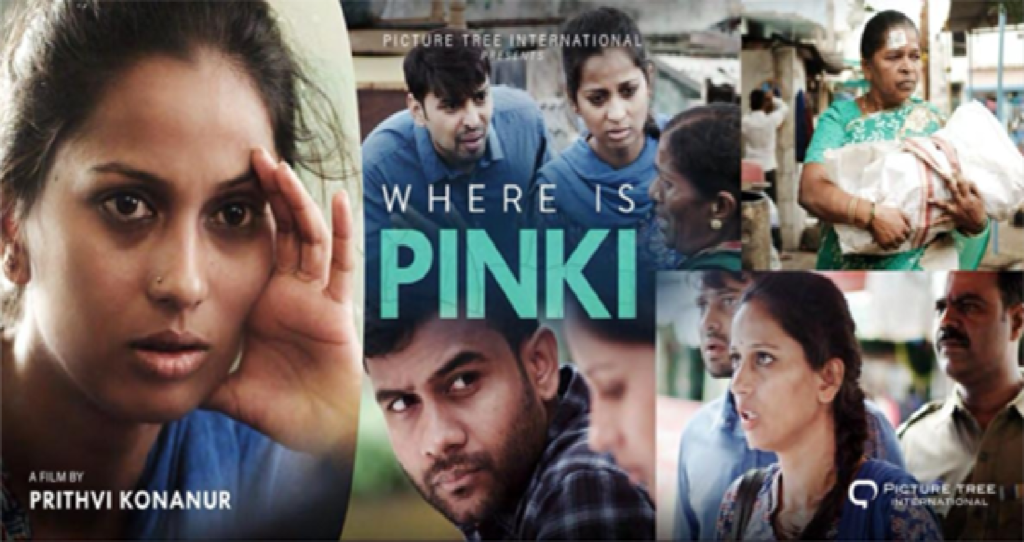
Further analyses found that when nurse workloads improved by one less patient per nurse, the chance of death and readmissions fell by 7 per cent, and the length of hospital stay dropped by 3 per cent.“Our findings plug a crucial data gap that has delayed a widespread roll-out of nurse staffing mandates. Opponents of these policies often raise concerns that there is no clear evaluation of policy, so we hope that our data convinces people of the need for minimum nurse-to-patient ratios by clearly demonstrating that quality nursing is vital to patient safety and care,” said lead author, Matthew McHugh from the University of Pennsylvania School of Nursing, US. (IANS)

Nikhita Gandhi Is Excited To Be Part Of New Wave Of Indie Releases

Singer Nikhita Gandhi is making sure that she continues making music during the pandemic, and says the Indie genre excites her. “I am excited to be part of this new wave of Indie releases. I have another single dropping soon, where you get to hear the female version of ‘Mawaalidil’. All in all, a lot of self-written melodies,” she told IANS.

Nikhita added: “I’m excited because the spectrum is so global right now, and to be a part of this movement is a dream come true. I got to collaborate with the American RnB artiste Pink Sweats for the song ‘At my worst’ and be on playlists with Rihanna and Kehlani. I don’t think if I went back to 13-year-old me and told her all this would happen, she would ever believe me!”

Talking about her recent number “Karobaardilka”, she says that musician KushalMangal came to her with the idea. “Kushal has been my bandmate and he’s been playing the keys with me for the past couple of years. He’s an extremely talented musician, and more importantly, a wonderful person. He started releasing his own compositions in 2020 and he came to me with ‘Karobaardilka’ saying that he really wanted me to sing the last stanza. I agreed even without hearing the song because I know how great he is. And when I did listen to it, I fell in love with the simple, yet resonating melody of the song. It’s so mature and gorgeous and I really hope people listen to it,” she says. (IANS)

Born into a mixed Bengali and Punjabi family in Kolkata, Nikita relocated to Chennai in 2010 to pursue a degree in dentistry. A former student of A. R. Rahman’s K. M. College of Music and Technology, Nikhita’s first association with Rahman was during an Indo-German exchange, where she was a part of a choir which performed with the German orchestra. Rahman then individually auditioned her for a commercial project titled ‘Qyuki’ with ShekharKapur, the duo were working on. In 2012, she cut a Bengali album titled Kotha, a re-arrangement of NazrulGeeti, songs written by renowned poet KaziNazrul Islam.

After having worked on her personal studio album and sung as a part of songs in regional films, Nikhita got a breakthrough by performing the song “Ladio” from Shankar’s film, I (2015). Composed by A. R. Rahman, she managed to record the song within four hours after translating it into Hindi. She then also subsequently recorded the Telugu and Hindi versions of the song, earning critical acclaim for her work. Other projects she worked for in 2015 include Rahman’s O KadhalKanmani and Anirudh’s ThangaMagan.

New York Indian Film Festival To Showcase Top Indian Movies

The annual New York Indian Film Festival (NYIFF), North America’s longest-running Indian film festival recently announced its list of films for opening night, centerpiece and closing night.

The festival, virtual this year, starts from June 4 and goes on till 13, 2021, according to a press release from the Indo-American Arts Council (IAAC).

The film lineup includes Where is Pinki/ Pinki Elli (Kannada) directed by PrithviKonanur as the opening film; Ahimsa Gandhi: The Power of the Powerless (English), dir. Ramesh Sharma as the first centerpiece; WOMB: Women of my Billion (English, Hindi, Tamil, Telugu), dir. Ajitesh Sharma as the second centerpiece and Fire in the Mountains (Hindi), dir. Ajitpal Singh as the closing film.

The festival will also feature a virtual event with exclusive Q&A sessions with filmmakers and talent, the release said.

Aseem Chhabra, NYIFF festival director offered his thoughts and prayers to the lives lost in the covid-19 crisis in India. “But we made a promise to our audience in the United States and elsewhere. The show must go on. We present the best of Indian cinema from 2020 and 2021,” he was quoted saying in the press release.
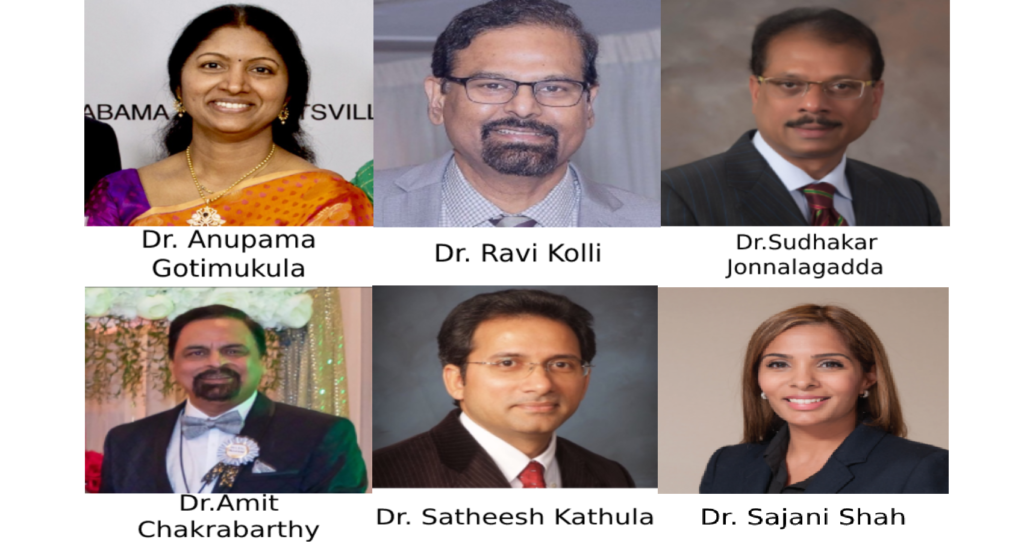
NYIFF will also celebrate birth anniversaries of Mahatma Gandhi, Satyajit Ray and Netaji Subhash Chandra Bose.

Suman Gollamudi, IAAC executive director said NYIFF has showcased the some of the most impactful and esteemed films and documentaries celebrating India, its people and its heritage, for the past 21 years. “The caliber of films on the 2021 lineup includes notable works by award-winning filmmakers, which aim to capture stories that have a truly profound message about our world today. These films have received exceptional praise from critics and audiences around the globe,” he added.

According to Rakesh Kaul, vice chairman, IAAC, NYIFF is partnering with MovieSaints for a second straight year to reach a wider audience virtually.

“For the first time, the 2021 lineup truly reflects the incredible diversity of Indian cinematic creativity,” said Dr. NirmalMattoo, Chairman IAAC. “This standout collection of films introduces new voices, fresh perspectives and original storytelling, which enhances the NYIFF curatorial legacy of spotlighting movies that go on to receive critical global acclaim.”

“In addition, we will be unveiling a newly designed award in 2021,” continued Mattoo.  “Conceived and created by IAAC Board Member and sculptor, Raj Shahani, this iconic award will epitomize the excellence that NYIFF seeks to foster with its annual awards presentation.”

Each of these films along with the complete collection of NYIFF-recognized titles will be available for viewing starting June 4, 2021 at nyiff.us and nyiff.moviesaints.com. The cost to view each film ranges from US$4.99 for feature films (narrative and documentaries) and US$0.99 for shorts. Audiences outside the U.S., excluding India, can pay in their local currencies. In India, the cost will be Rs.150 for features and shorts starting at Rs. 50. There are also discount packages available

Featured Movies Include:

Awakash (Marathi), dir. ChittaranjanGiri, 77 mins, 2020

Biryaani (Malayalam), dir. Sajin Baabu, 96 mins, 2020

Blue Bird (Kannada), dir. Ganesh Hegde, 106 mins, 2020

Fire in the Mountains (Hindi), dir. Ajitpal Singh, 82 mins, 2020

First Night (Tamil), dir. Jack Prabhu, Santoshh KK, 106 mins, 2020

Freddie’s Piano (English), dir. AakashPrabhakar, Sudharshan Narayanan, 110 mins, 2020

God on the Balcony (Assamese), dir. Biswajeet Bora, 89 mins, 2020

Habaddi (Marathi), dir. NachiketSamant, 110 mins, 2020

House of Orange Trees (Malayalam), dir. Dr. Biju Damodaran, 110 mins, 2020

June (Marathi), dir. VaibhavKhisti, SuhrudGodbole, 94 mins, 2020

Mail (Telugu), dir. UdayGurrala, 116 mins, 2020

Nasir (Tamil), dir. ArunKarthick, 78 mins, 2019

Nazarband (Captive) (Hindi), dir. Suman Mukhopadhyay, 85 mins, 2020

Parallel Lines (KayamaiKadakka) (Tamil), dir. Kiran R, 104 mins, 2020

Parcel (Bengali), dir. Indrasis Acharya, 123 mins, 2020

Pinki Elli? (Where’s Pinki?) (Kannada), dir. PrithviKonanur, 108 mins, 2020

Searching for Happiness (Bengali) dir. Suman Ghosh, 63 mins, 2021

Songs for Rain (Boroxun) (Assamese), dir. Krrishna Kt. Borah, 86 mins, 2020

Sthalpuran (Marathi), dir. AkshayIndikar, 85 mins, 2020

The Chicken Curry (KoliTaal) (Kannada), dir. Abhilash Shetty, 84 mins, 2020

The Tenant (English, Hindi), dir. Sushrat Jain, 112 mins, 2020

The Knot (Uljhan) (Hindi), dir. Ashish Pant, 113 mins, 2020

Zollywood, (Marathi), dir. Trushant Ingle, 95 mins, 2019

Documentaries:

Ahimsa Gandhi: The Power of the Powerless, (English), dir. Ramesh Sharma, 92 mins, 2020

Borderlands (Punjabi, Bengali, Nepali, Manipuri), dir. Samarth Mahajan, 67 mins, 2021

GharKaPata (Home Address) (English, Hindi, Kashmiri), dir. MadhulikaJalali, 67 mins, 2020

Shut UpSona (English, Hindi, Oriya), dir. Deepti Gupta, 85 mins. 2019

Talking Head (English, Bengali), dir. Spandan Banerjee, 94 mins, 2021

The Music of Satyajit Ray (English, Bengali), dir. Utpalendu Chakrabarty, 51 mins, 1984

The Space Between the Notes (English, Hindi), dir. SumantraGhosal, 52 mins, 2018

WOMB: Women of my Billions, dir. Ajitesh Sharma (English, Hindi, Tamil, Telugu), 103 mins, 2021

At the Altar of India’s Freedom – INA Veterans in Malaysia (English) dir. ChoodieShivaram, 30 mins, 2018

Baluji (English), dir. Cécile Embleton, 22 mins, 2020

Seva (English), dir. RippinSindher, 16 mins, 2019

The Hero Within (Hindi), dir. Stanley Hector, 7 mins, 2021

What’s Your Story? (English), dir. O.P. Srivastava, 51 mins, 2020


Short Films:

Adhura (Unfinished) (Hindi), dir. Arjun Lal, 19 mins, 2020

Annual Day (SalanaJalsa) (Marathi), dir. Pratik Thakare, 30 mins, 2020

Appa’s Seasons (Tamil), dir. Radhika Prasidhha, 22 mins, 2020

  1. Selvi& Daughters (Tamil), dir. Drishya, 25 mins, 2020

Checking Out (English), dir. Vick Krishna, 15 mins, 2020

Happy Birthday (Hindi), dir. Ajay Kishore Shaw, 20 mins, 2020

KhayaliPulao (Hindi), dir.TarunDudeja, 26 mins, 2020

Khisa (Pocket) (Marathi), dir. Raj Pritam More, 16 mins, 2020

Kurma (English, Hindi), dir. Ramsee Chand, 18 mins, 2020

Laali (Hindi), dir. AbhiroopBasu, 30 mins, 2020

Loose Long Shirt (English), dir. Mitali Joshi, 6 mins, 2020

My Brother (Mera Bhai) (Hindi), dir. Shreela Agarwal, 22 mins, 2020

Naap (Hindi), dir. Harshit Acharya, 18 mins, 2020

Now That We’ve Met (English), dir. NityaTuraga, 5 mins, 2020

Pilibhit (Hindi), dir. AshutoshChaturvedi, Pankaj Mavchi, 23 mins, 2020

Pinni (Kannada), dir.BhuvanSathya, 20 mins, 2020

Sonsi (Shadow Bird) (Hindi) dir. Savita Singh, 26 mins, 2020

Sunday (Hindi), dir. ArunFulara, 10 mins, 2020

TasherGhawr (English), dir. Sudipto Roy, 47 mins, 2020

The Miniaturist of Junagarh (Hindi, Urdu), dir. Kaushal Oza, 29 mins, 2020

Untouchability (Theetu) (Tamil), dir. Haresh Narayanan, 7 mins, 2020

Vulture (Xogun) (Assamese), dir. UtpalBorpujari, 16 mins, 2020

More information at: nyiff.us and nyiff.moviesaints.com. For frequently asked technology questions visit https://nyiff.moviesaints.com/faq/nyiff.

AAPI Urges President Biden, Vice President Harris & US Senators For The Release Of Astra Zeneca Vaccines to India

AAPI has been in the forefront, pioneering efforts both here in the US and back home in India, spearheading numerous initiatives to help, guide and support the people and the physician community in India

India is struggling with an unprecedented second wave of the COVID-19 pandemic with more than 400,000 daily new coronavirus cases being reported in the past few days. The spread of COVID-19 in India is escalating and the associated morbidity and mortality is causing havoc and panic in the society. The critical shortage of essential supplies of medication, oxygen, ventilators and physicians burn out have a further catastrophic consequence in the survival of hundreds of millions of Indian citizens.

The American Association of Physicians of Indian-Origin (AAPI), which represents nearly 100,000 thousands of Indian-origin Doctors in the US, has been in the forefront, pioneering efforts both here in the US and back home in India, spearheading numerous initiatives to help, guide and support the people and the physician community in India on ways to combat and overcome the deadly virus.

While describing the current situation in India as “heart wrenching,” Dr. Sudhakar Jonnalagadda, President of AAPI said, “We at AAPI are determined to mobilize the massive medical help and support, that India needs at this hour.  Any further spread of such toxic material around the globe can only be apocalyptical, a specter that could be prevented now.”

Dr. Jonnalagadda said, “AAPI, the second largest Medical Association in USA after the AMA, has been galvanized extensively, and AAPI has immediately shipped over a thousand Oxygen generators, masks, PPPs and essential supplies, and our pipeline will continue until the pandemic is overcome. As with anyone else, our doctors believe that they can best carry out our service to God through our service to our fellow humans.”

While providing all possible help and support that is essential at this critical period, AAPI recognizes that “In the long term, vaccination is the still the best therapy and hope. At present, India is experiencing acute and severe shortages of the Covid-19 vaccines. Astra Zeneca is releasing 60 million vaccines after due FDA approval this month.  We urge the US government to release send at least 30 million doses of the vaccine to India,” said  Dr. Sampat Shivangi, Member National Advisory Council, SAMHSA, Center for National Mental Health Services, Washington DC and currently serving as AAPI’s Legislative Wing Chairman.

AAPI has been working with the White House officials to have an in person meeting arranged for the AAPI leadership to meet with President Joe Biden,  Vice President Kamala Harris and other top US administration leaders, urging the importance and the need to send the much needed vaccines to India to prevent and contain the spread of the virus.

In the letters sent to the 100 US Senators, while acknowledging the respect and influence each of them command on Capitol Hill, Dr. Shivangi said, “we seek your strongest effort to convince the White House to permit more vaccine raw material to be released immediately for local vaccine production, as well as increasing all types of assistance, in a catastrophe of such magnitude.”
AAPI has urged the Indian American community “to be the spokespersons for humanity, and convince our President, Mr. Joseph Biden, our Vice – President, Mrs. Kamala Harris, along with the Chief of White House Mr. Ron Klain, and not the least, your colleagues in the US Senate. We are delighted that President has declared America’s return to world affairs, and he should be at the helm of this emergency response.”

Dr. Sajani Shah, Chair of AAPI BOT, said, “We have a team of volunteers and support and guidance of experienced leaders, who have come forward to enable and empower our efforts to curtail this crisis.”

Meanwhile, AAPI has sought blanket immunity and indemnification from the Indian government for offering their voluntary services to COVID-19 patients either virtually or in-person by flying to their home country amidst an unprecedented second wave of the deadly coronavirus pandemic. AAPI has urged the Government of Indian in letters to Vice President Venkaiah Naidu and Union Health Minister Harsh Vardhan. “We request the Government of India through an emergency declaration (to) provide a blanket immunity and indemnification for volunteering physicians from the USA, providing COVID related medical care in India,” Dr. Anupama Gotimukula, President-Elect of AAPI said.

“We are continuing to interact with the physicians back in India to answer their questions. AAPI as a group and individual physicians are reaching out almost on a daily basis with doctors on ground in India,” Dr. Ravi Kolli, Vice President of AAPI said, adding that it is in addition to the calls being received from their friends and families back home.
“Indeed a proud moment for AAPI,” said Dr. Amit Chakrabarthy, Secretary of AAPI. “The prestigious New York Times as the second most prominent international organization in this effort (after UNICEF)!!! This is a proud moment for all of us.  Please continue to support and donate at aapiusa.org.”

Dr. Sathesh Kathula, Treasurer of AAPI said, “In less than a week, AAPI has raised USD 2.6 million. AAPI has so far sent 1,000 oxygen concentrators and is in the process of sending another 1,000. We have tied up with UNICEF, Sewa International USA, and several other non-profit bodies to secure and coordinate efforts to reach help to the suffering in India.”

It’s devastating to see millions of people are being impacted by Covid in India, especially many of the friends and families of AAPI members are suffering from Covid disease and dying now. In this context, AAPI would like to help India big way, said Dr. Jonnalagadda. AAPI is also urging all Community leaders to educate their members to be on Alert to avoid spread of the virus.” For more information on AAPI and its efforts to coordinate services for India, please visit: www.aapiusa.org

Kamala Harris Describes India’s Covid Situation As Heartbreaking

“The surge of Covid-19 infections and deaths in India is nothing short of heartbreaking. To those of you who have lost loved ones, I send my deepest condolences,” Vice President Kamala Harris Says

In an address to the Indian diaspora in the US, Vice President Kamala Harris lamented over the deteriorating Covidd-19 situation India, saying it was “nothing short of heartbreaking”.

“Generations of my family come from India. My mother (Shyamala Gopalan) was born and raised in India. And I have family members who live in India today. The welfare of India is critically important to the US,” Harris said in her pre-recorded message played at a diaspora event hosted by the State Department’s Bureau of South and Central Asian Affairs (SCA) on Friday.

“The surge of Covid-19 infections and deaths in India is nothing short of heartbreaking. To those of you who have lost loved ones, I send my deepest condolences. As soon as the dire nature of the situation became apparent, our administration took action.

“On Monday, April 26, President Joe Biden spoke with the Prime Minister (Narendra Modi) to offer our support. By Friday, April 30, US military members and civilians were delivering relief on the ground.

“Already, we have delivered refillable oxygen cylinders, with more to come. We have delivered oxygen concentrators, with more to come. We have delivered N95 masks, and have more ready to send. We have delivered doses of Remdesivir to treat Covid patients.

“At the beginning of the pandemic, when our hospital beds were stretched, India sent assistance. And today, we are determined to help India in its hour of need.

“We do this as friends of India, as members of the Asian Quad, and as part of the global community. I believe that if we continue to work together, across nations and sectors, we will all get through this,” the Vice President added.

In her address, she also acknowledged diaspora groups like Indiaspora and the American India Foundation that “have built bridges between the US and India”.

“And this past year, you have provided vital contributions to Covid-19 relief efforts.”

Harris’ remarks come as India is battling the devastating second wave of the pandemic that have triggered record number of new Covid-19 cases and deaths, leading to a shortage in oxygen supplies across the country, including in the national capital of New Delhi.

On Sunday, India reported 4,03,738 new cases, which took the overall tally to 2,22,96,414, the second highest in the world after the US.

Meanwhile, the country’s death toll, currently the third largest after the us and Brazil, increased to 2,42,362.

Sunday’s figure is the fifth highest since India crossed the four-lakh-mark of new Covid cases, while over 3,000 casualties have been reported for the last 11 days. (IANS)

Sadiq Khan Re-elected As Mayor Of London

Sadiq Khan has been re-elected as Mayor of London for a second term after beating his closest rival with a vote share of 55.2 per cent versus 44.8 per cent in an election that was closer than expected.

Labor Party candidate Khan, 51, defeated his Conservative Party rival, Shaun Bailey, after winning a total of 1,206,034 votes as against 977,601 when both first and second preference votes from Thursday’s mayoral election were fully counted overnight on Saturday.

The Pakistani-origin former Labor member of Parliament was the first Muslim mayor of a European capital city when he was first elected in 2016. The mayoral poll was due last year but was postponed by a year at the peak of the coronavirus pandemic in 2020.

“I am deeply humbled by the trust Londoners have placed in me to continue leading the greatest city on earth,” said Khan. “I promise to strain every sinew, help build a better and brighter future for London, after the dark days of the pandemic and to create a greener, fairer and safer city for all Londoners, to get the opportunities they need to fulfil their potential. I am proud to have won an overwhelming mandate today,” he said, speaking at his City Hall office.

“The results of the elections around the UK shows our country, and even our city, remains deeply divided. The scars of Brexit have yet to heal. A crude culture war is pushing us further apart,” he added.
“Economic inequality is getting worse both within London and in different parts of our country. “As we seek to confront the enormity of the challenge ahead, and as we endeavour to rebuild from this pandemic, we must use this moment of national recovery to heal those damaging divisions,” Khan, also the first Muslim mayor of an European capital city, added.

Labor continues its dominance in the capital, remaining the largest party on the London Assembly. Labor took nine constituency seats, with the Conservatives winning the remaining five.

His victory is one of the few positives for the Labour Party as the party held on to its dominance in the London Assembly as well. Labour also kept hold of its mayoralty in Greater Manchester, where Andy Burnham was re-elected in a landslide win.

However, overall the local election performance has been largely dismal for the Opposition party as it lost many of its strongholds. The Conservatives have gained control of around 12 councils and the Labour has lost control of seven and the Labour failed in its attempt to oust Conservative Andy Street as the popular mayor of the West Midlands.

UK Environment Secretary George Eustice said the Labour had been punished in Leave-voting areas by “wrangling” over Brexit in recent years. The Boris Johnson led Conservatives are also seen to have benefitted from the successful roll-out of vaccines against COVID-19.

WHO Hails ‘Monumental Moment’ as US Backs Patent Waiver

President joe Biden has supported the waiver proposal, drafted by India and South Africa, winning praise from the World Health Organization which called it “a monumental moment.”

It seems patently obvious. But for the first time U.S. President Joe Biden has said he supports lifting intellectual property rights on coronavirus vaccines in order to increase production and make them more accessible to developing nations. Biden  threw his backing behind the waiver proposal, drafted by India and South Africa, winning praise from the World Health Organization which called it “a monumental moment.” However, the drug industry is not happy, with shares in BioNTech, Moderna and Novavax down after the news broke. The E.U. is now set to hold talks on whether to follow America’s lead.

The Biden administration announced last week it will support waiver of intellectual property protection on Covid-19 vaccines to help end the global coronavirus pandemic, citing “extraordinary times and circumstances call for extraordinary measures”.

US Trade Representative Katherine Tai made the announcement after pressure from developing countries and liberal and progressive lawmakers in the US while disclosing that Washington will actively participate in WTO negotiations to make that happen.

India and South Africa were among the lead countries that had campaigned for the IP waiver. More than 100 US lawmakers had written to President Biden supporting the demand even though an equal number, many bankrolled by the pharma lobby, had opposed it.

“As our vaccine supply for the American people is secured, the Administration will continue to ramp up its efforts – working with the private sector and all possible partners – to expand vaccine manufacturing and distribution. It will also work to increase the raw materials needed to produce those vaccines,” Tai said in a statement.

The Biden administration’s backing for talks on Agreement on Trade-Related Aspects of Intellectual Property Rights (TRIPS) flexibility for vaccines at WTO has prodded others such as the European Union, a key opponent, out of its waiver hesitancy, but trade negotiators are treading with caution.

“The EU is also ready to discuss any proposal that addresses the crisis in an effective and pragmatic manner,” European Commission president Ursula von der Leyen said Thursday. “And that’s why we are ready to discuss how the US proposal for waiver on intellectual property protection for covered vaccines could help achieve that objective,” she told an online conference, weeks after the trading bloc had told WTO members that this was a no-go area.

The Indian government appeared pleased with the progress after months of deadlock. “We welcome the US government supporting this initiative and joining 120 other countries working towards affordable Covid-19 vaccines,” commerce and industry minister Piyush Goyal said on Twitter.

For now, Indian negotiators are keeping their fingers crossed, waiting to see how the other traditional naysayers – Switzerland, the UK, Japan, Canada and Brazil – react, and acknowledge that the statements from the US and the EU only signal a start of some tough negotiations in Geneva over the coming weeks.

Significantly, the dilution of US’ traditional resistance, following intense pressure from civil society, was limited to talks on vaccines, while India and South Africa’s joint proposal at WTO had sought to extend the flexibility to Covid-19 related medicines as well.

The Joe Biden administration’s about-turn to endorse patent waiver for Covid-19 vaccine during the pandemic has put the European Union in the dock, just days ahead of a meeting with India.

  • India and South Africa had been pushing for a waiver of the intellectual property rights of Covid-19 vaccines at the World Trade Organization so that other vaccine makers can make the jabs developed in the West.
  • Biden administration on Wednesday endorsed the patent waiver, a significant departure from its earlier stand.
  • But a WTO-level waiver, under the Trade-Related Aspects of Intellectual Property (TRIPS) agreement, needs a consensus by all 164 members — and could take months.

The European Union is now under pressure to shed its opposition to a waiver.

  • There aredifferences within the EU. France’s Emmanuel Macron said he was “absolutely in favour” of a waiver and a transfer of technology. Italy, Belgium, and some members of the European parliament, too, have backed the idea.
  • European commission president Ursula von der Leyen Thursday said the bloc is “ready to discuss” the proposal.
  • But the EU is not alone. A waiver is also opposed by the UK, Switzerland, and Canada. Australia is non-committal.
  • The 27 national leaders of the EU are to hold a virtual summit with Prime Minister Narendra Modi on Saturday to discuss a long-delayed free trade agreementand more.

Even as India pushes for a waiver at WTO, the central government hasn’t enforced compulsory sharing of license on Bharat Biotech’s Covaxin, which was co-developed by public-funded ICMR and NIV.

“We’re Helping India Significantly,” President Biden Says

President Joe Biden has said that the US was “doing a lot for India” by sending it oxygen and materials to make anti-COVID-19 vaccines. He said last week that he had spoken to Prime Minister Narendra Modi and “what he needs most is, he needs the material and the parts to be able to have his machines that can make the vaccine work. We’re sending them that.

“We’re sending them a lot of the precursors,” he added, referring to the ingredients needed for making the vaccines. He said the US was also sending oxygen, which is in short supply in the nation in the throes of a COVID-19 resurgence. “We’re helping India significantly,” he said.

Secretary of State Anthony Blinken has acknowledged assistance last year from India when the US was facing its deep crisis while speaking of the aid the US is now sending it. “India came to our assistance early on in our hour of need when we were having real struggles with COVID-19, providing millions and millions, for example, of protective masks. We remember that, and we’re determined to do everything we can to help now,” he told the Financial Express according to the interview transcript provided by the State Department.

He said, “What I’ve seen really is an amazing mobilisation not just of the United States government, but of our private sector, and of Indian Americans as well. I was on a call a week ago with virtually every leading CEO — it was a who’s who — all wanting to help. And the government, our government, is coordinating those efforts. So we are doing everything we can.”

Biden’s Spokesperson Jen Psaki, who gave a rundown of the assistance to India, said that the US government was sending ingredients for making 20 million doses AstraZeneca (Covishield) vaccine from supplies that it had ordered.

These were ingredients had been ordered on a priority basis by invoking the Defence Production Act to supply to companies under contract to make vaccines for it.

The US is unlikely to need the 300 million doses of the AstraZeneca vaccine that it had contracted because it has adequate supplies of the Moderna, Pfizer and Johnson & Johnson vaccines. She said that the total value of the COVID-19 aid will exceed $100 million.

Psaki said that six air shipments funded by the US Agency for International Development (USAID) with oxygen and oxygen supplies, N95 masks, rapid diagnostic tests, medicines and components requested by the Indian government have already been sent.

“At the request of the government of India, USAID provided these urgently needed supplies to the Indian Red Cross to ensure they reach those most in need as quickly as possible,” she said.

India is in dire need of oxygen and USAID sent about 1,500 oxygen cylinders that will remain in India and can repeatedly be refilled locally, 550 concentrators to obtain oxygen from ambient air and a large-scale unit to support up to 20 patients, she said.

She said that 2.5 million N95 masks have been sent and an additional 12.5 million are available if the Indian government asked for them, she said. One million rapid diagnostic tests and 20,000 treatment courses of the anti-viral dug Remdesivir have also been sent, she said.

White House officials said Sunday, May 2, 2021, that they are doing all they can to help India cope with the country’s escalating coronavirus crisis, pushing back against criticism that the United States should be moving faster on actions such as waiving patent rights on vaccines.

In interviews on several political shows Sunday, Biden administration officials emphasized the aid the U.S. has already delivered to its South Asian ally, including the first planeloads of medical supplies and supplemental oxygen to the country on Friday. The United States has also diverted raw materials for vaccines to India.

“In a crisis of this speed and ferocity, we always wish we could move faster and do more. And we’re proud of what we’ve done so far,” national security adviser Jake Sullivan said on ABC’s “This Week.” “We are continuing to work to source additional critical materials to move them as fast as we can, both directly from the United States and also galvanizing partners around the world.”

A recent surge in coronavirus cases has sent the pandemic spiraling anew in India, which reported more than 400,000 new coronavirus cases Saturday, a new global record. People being treated for covid-19, the illness that can be caused by the novel coronavirus, have overwhelmed hospitals there, while images of mass cremations and funeral pyres burning overnight have spread worldwide.

“We are concerned about variants. We’re concerned about spread,” Sullivan said. “We’re concerned about the loss of life, and also all of the secondary effects that emerge as this pandemic rages out of control in India.”

On Monday, April 26, 2021, President Joe Biden spoke with Indian Prime Minister Narendra Modi and pledged to provide supplemental oxygen, personal protective equipment and other medical supplies to the country.

Modi and other world officials have called on the United States to go a step further and waive vaccine patent protections, saying that would let other countries and companies speed up production of generics and expedite the vaccination effort worldwide.

“If a temporary waiver to patents cannot be issued now, during these unprecedented times, when will be the right time?” Tedros Adhanom Ghebreyesus, the director general of the World Health Organization, tweeted in March. “Solidarity is the only way out.”

The administration has also vowed to share up to 60 million doses of the AstraZeneca vaccine with other countries, prompted in large part by the crisis in India. Officials made that announcement several days ago, adding assurances here that the United States does not need the AstraZeneca vaccine to continue inoculating the U.S. population.

Anita Dunn, a senior adviser to Biden, said that the 60 million AstraZeneca doses the U.S. has promised to other countries have been ordered but that not all have been produced. The AstraZeneca vaccine is undergoing a safety review by the Food and Drug Administration.

“To be clear, there isn’t some huge warehouse filled with AstraZeneca vaccines that we can just release at a moment’s notice,” Dunn said on CNN’s “State of the Union.” “As soon as it is ready to be shared with the world, we plan to share it.”

White House Chief of Staff Ron Klain said on CBS’s “Face the Nation” that despite the calls by Modi and others, vaccine patents were only part of the problem, and that manufacturing limits would still hinder production.

“India has its own vaccine, the Covishield vaccine,” Klain said. “Production is slow there because they don’t have the scarce raw materials to make that. We sent enough raw materials to make 20 million doses immediately. Intellectual property rights is part of the problem, but manufacturing is the biggest problem.”

Sen. Bernie Sanders, I-Vt., said on NBC’s “Meet the Press” that the United States had an obligation to share vaccines with the rest of the world faster, particularly in poorer countries. “Not only do we have a moral responsibility to help the rest of the world, it’s in our own self-interest, because if this pandemic continues to spread in other countries, it’s going to come back and bite us at one point or another,” Sanders said.

Sanders and other Democratic senators last month sent a letter to Biden, urging him to support a temporary patent waiver for coronavirus vaccines, one of several efforts to advocate what some have taken to calling “vaccine diplomacy.” China and Russia, some critics note, have been aggressive about distributing their vaccines to developing countries, a move that could help them earn goodwill.

A temporary patent waiver would let the Biden administration not only “reverse the damage done by the Trump administration” to U.S. reputation but bring the global pandemic to an end more quickly, the senators wrote.

“What we have got to say right now to the drug companies, when millions of lives are at stake around the world, is, ‘Yes, allow other countries to have these intellectual property rights so that they can produce the vaccines that are desperately needed in poor countries,’ ” Sanders said Sunday.

Sullivan said Katherine Tai, the U.S. trade representative, has been engaged in “intensive consultations” at the World Trade Organization to work through the issue of waiving vaccine patents. “We should have a way forward in the coming days,” Sullivan said on “This Week.”

Dr. Lakshmi Devy Is Winning Laurels In US

Dr. Lakshmi Devy has  won the prestigious Gold Remy award for direction at the 54th World Houston International Film festival for her movie — “When the Music Changes.”

Dr. Lakshmi Devy, a doctor by profession has always been passionate about acting and filmmaking and her dreams have come true after she won the prestigious Gold Remy award for direction at the 54th World Houston International Film festival for her movie — “When the Music Changes.”

It is to be noted that other famous winners of the Gold Remy awards are the who’s who of the global film industry including Spielberg, Lucas, Ang Lee, The Coen brothers, Ridley Scott and several famous directors of Hollywood.

Worldfest is one of the oldest and largest film and video competitions in the world.

Dr Lakshmi Devy while speaking to IANS said, “This has been a great honour for a filmmaker like me and I am proud to represent my Indian roots in this manner.”

Lakshmi shuttles between US and Chennai and after the lockdown and mounting Covid cases she has preferred to stay back in India and is currently in discussions with several Hollywood production companies for her new venture.

She has a production house in New York, FiDi talkies which has produced “When the Music Changes” and Hollywood actor and director, John Turturro is the executive producer for this project.

On her new ventures, the doctor turned filmmaker told IANS, “I am speaking to several big names in the global film industry however, I am bound by certain contracts in not revealing the names of these companies. Once we sign the agreement, I will definitely inform you on the production companies.”

Her movie, “When the Music Changes”, which is scripted, directed and produced by her, has her playing the role of the protagonist. The movie is based on the Indian rape scenario as studies point out that in every 16 minutes a girl is raped in the country.

Lakshmi while speaking on the movie said, “The movie speaks on the rape in India and that it is not the woman who is raped loses the honour, instead it is the man who loses it because of the dastardly act.”

The medical doctor also said that she is planning to do several charity shows across the globe including a movie on the current medical emergency after the emergence of Covid and how humanity has to stay together to overcome this pandemic which is taking away the precious lives of many in the most unfortunate of conditions.

She was the screenwriter for the national award winning actor Bobby Sinha, Mirchi Shiva movie “Masala Padam”, which is the story of how tough it is to make a hot movie. The film has won major accolades across Tamil Nadu. Lakshmi also played the role of a protagonist in the movie.

This medical doctor also had done a short film, “Daro Mat” made in both Tamil and Hindi. It was critically acclaimed in many international film festivals across the world and is now released on YouTube with over 3.5 million views.

Tim Van Petten, Ten Time Emmy award nominated director, Edie Falco, Emmy award winning Hollywood actress, Aida Turturro, two time Emmy award nominated actress were all praises for the movie made by Dr Lakshmi Devy.

Dr Lakshmi Devy while speaking to IANS said, “As I said earlier, I am now finalizing the scripts for a couple of movies which will definitely have renowned production houses and I have to keep my fingers crossed for now as I am not permitted to speak on them now.”

Over 40 Aligarh Muslim University Faculty Members Succumb To Covid-19

More than 40 serving and retired faculty members, plus several non-teaching staffers of the Aligarh Muslim University have succumbed to Covid-19. Each day, the graph is going up.

Vice Chancellor Tariq Mansoor lost his elder brother a few days ago. On Saturday, the dean of the Law faculty died.A large number of staffers are under treatment at the Jawahar Lal Nehru Medical College hospital of the AMU.Social activist Prof Jasim Mohammad told IANS, “The university administration had failed, the medical college system has collapsed. The VC has not even bothered to ask for Oxygen. He has not sought help from any quarters. May be a hundred have already died and in another one month, there could be another 100 deaths, if conditions do not improve.”The number of deaths could be much higher, but the university officials could not give the exact numbers.

The campus is deserted and there are no classes. Most hostellers have justify, said Zeeshan, an official of the university.Several faculty members have justify Aligarh. One member, now in Tamil Nadu, told IANS, “In addition to the pandemic spreading its wings wide, there was a total psychological breakdown, despair and also a degree of disgust.”Quite a few retired faculty members who justify Aligarh have died in their home towns like Bhopal, Hyderabad.

Jasim has sought critical information from the VC through an RTI. He has asked the VC about the shortages of medicines, Oxygen, ambulances etc.Locals allege that the university administration despite all the resources, has been caught napping.
No special mechanism or arrangements have been put in place. Due to the fear of infection, people are shunning going to the medical college for vaccination.

“Fear is rampant. The winds of despair and gloom sweep the campus. The central government should step in and control the worsening situation,” says a local student.
So far it is not clear how many of the deceased were vaccinated, though it is widely accepted that there have been a few deaths due to Covid-morbidities and age.

According to the district administration, on May 8, there were 417 fresh cases, 295 were discharged. Local medical circles confirmed the situation was really alarming. (IANS)

Covid-19 Infection Is Transmitted Via Air, Says US Centers For Disease Control

Exposure to respiratory fluids — very fine respiratory droplets and aerosol particles — present in air and which carry viruses are the main reason for contracting Covid-19 infection, the US Centers for Disease Control and Prevention (CDC) said.

People release respiratory fluids during exhalation — quiet breathing, speaking, singing, exercise, coughing, sneezing in the form of droplets. While large droplets settle out of the air within seconds to minutes, very fine droplets can remain suspended in the air for minutes to hours. These droplets carry viruses and transmit infection, said the agency’s latest science brief as part of its public guidelines on Covid-19.

Exposure to these droplets occurs in three principal ways: inhalation of very fine respiratory droplets and aerosol particles, deposition of respiratory droplets on exposed mucous membranes in the mouth, nose, or eye by direct splashes and sprays, and touching mucous membranes with hands that have been soiled either directly by virus-containing respiratory fluids or indirectly by touching surfaces with virus on them.

Further, “the risk of SARS-CoV-2 infection varies according to the amount of virus to which a person is exposed,” the CDC said.

Infections through inhalation at distances greater than six feet from an infectious source are less likely than at closer distances. But, when an infectious person exhales virus indoors for an extended time (more than 15 minutes and in some cases hours), it can lead to virus concentrations in the air space.

It can be sufficient to transmit infections to people more than 6 feet away, and in some cases to people who have passed through that space soon after the infectious person justify. The risk in this case is more in enclosed spaces with inadequate ventilation, the agency said.

While there remains many knowledge gaps about Covid, the available evidence continues to demonstrate that existing recommendations to prevent SARS-CoV-2 transmission remain effective. This includes physical distancing, community use of well-fitting masks (e.g., barrier face coverings, procedure/surgical masks), adequate ventilation, and avoidance of crowded indoor spaces.

“These methods will reduce transmission both from inhalation of virus and deposition of virus on exposed mucous membranes. Transmission through soiled hands and surfaces can be prevented by practicing good hand hygiene and by environmental cleaning,” the CDC suggested.

Since the beginning of the Covid-19 pandemic last year, researchers have argued that Covid-19 was not airborne. However, the view has been changing.

The World Health Organisation (WHO), in a recent brief, said, “Current evidence suggests that the virus spreads mainly between people who are in close contact with each other, typically within 1 metre (short-range). A person can be infected when aerosols or droplets containing the virus are inhaled or come directly into contact with the eyes, nose, or mouth.”

The Lancet had, in April claimed in a new assessment that there is consistent, strong evidence to prove that the SARS-CoV-2 virus is predominantly transmitted through the air. (IANS)

Reliance Is One Of The Fastest Growing Retailer In The World

Reliance Retail ranks 53rd in the list of Global Powers of Retailing by Deloitte, improves from 56th earlier. It remains the 2nd fastest growing retailer in the world despite the base effect of being No.1 last year.

Reliance Retail features consecutively for the 4th time in the list of Global Powers of Retailing and World’s Fastest Retailers. Reliance Retail, last year’s Fastest 50 leader, dropped to second place. The company recorded YoY growth of 41.8%, driven primarily by a 13.1% increase in the number of stores in its consumer electronics, fashion and lifestyle and grocery retail chains, to 11,784 stores across 7,000 plus towns and cities in India at fiscal year end.

E-commerce is a second growth driver, through both digital commerce (B2C) and B2B. The company is partnering with WhatsApp to further accelerate Reliance Retail’s digital commerce business on the JioMart platform using WhatsApp and to support small businesses on WhatsApp.

Reliance Retail acquired the 29 stores of Shri Kannan Departmental Store at the end of FY2019 and in August 2020 announced it would acquire Future Group’s retail, wholesale and logistics units for $3.4 billion.

When fully approved, the deal will almost double Reliance Retail’s store space.82 Reliance Retail also made two e-commerce acquisitions in 2020, buying Vitalic Health and its online pharmacy platform Netmeds in August, and a 96% stake in online home decor company UrbanLadder in November.

Walmart has led the list of the world’s Top 250 global retailers for over 20 years. The company registered YoY FY2019 retail revenue growth of 1.9%, fueled mainly by growth in comparable store sales in the United States.

Amazon becomes the number two global retailer, pushing Costco down to third place. Top 10 retailers focus on core markets, withdrawing from some international markets There were no new entrants to the Top 10 list in FY2019, which continues to be dominated by players based in the United States. The only mover was Amazon, which has risen in the rankings every year since its entry in tenth place in FY2015. (IANS)

Dark Chocolate, Fish, Eggs, Yoga To Build Immunity Against Covid

In the pandemic, there has been a lot of emphasis on healthy eating. Experts have always insisted that your health and immunity are directly dependent on the food you eat. As such, the government has listed some food items on its mygovindia Twitter handle, which it recommends you consume to boost your natural immunity amid the Covid crisis. Read on.

The general measures state that the main focus for a Covid patient would be to consume foods that would help rebuild muscle, immunity and energy levels.

It advises the consumption of whole grains like ragi, oats and amaranth. Sources of protein such as chicken, fish, eggs, soy, nuts and seeds are recommended, as are healthy fats like walnuts, olive oil and mustard oil.

Among other things, it suggests that since the loss of taste, smell, and difficulty in swallowing is commonly experienced, it is important to eat soft food at small intervals. Adding amchoor to the food is also advisable.

Take turmeric milk once a day to boost immunity. Also, have dark chocolate with at least 70 per cent cocoa — in small amounts — to get rid of anxiety.

Additionally, make sure you get five servings of coloured fruits and vegetables to get adequate vitamins and minerals into your system.

Moderna Says, Booster Shots of Its COVID-19 Vaccine Is Effective Against Virus Variants

In a press release on May 5, Moderna reported the first results of any vaccine maker from studies on booster doses of COVID-19 vaccines, which some experts believe might be necessary in a year or so to keep COVID-19 under control. Based on current research, people vaccinated with the existing, authorized shot from Moderna appear to have a diminished response to the variant viruses—although it’s still sufficient to protect against serious COVID-19 illness. Still, public health experts are concerned that the variant viruses could break through that vaccine protection and start causing more infections.

The company is testing three ways to add a third dose to its current two-dose regimen to potentially increase protection against new variants of the SARS-CoV-2 virus. In its recent press release, Moderna reports on two of those strategies: adding a third dose of the existing vaccine, at half the dosage of the shots currently in use, and adding to the current two-shot regimen a third dose of a new vaccine the company developed specifically against the variant B.1.351 first identified in South Africa. Moderna is also investigating a combined vaccine booster that includes doses of both the existing vaccine and the new variant one—no results from that study are available yet.

Both of the two strategies included in the recent press release are aimed at enhancing the body’s immune response to the South African variant, as well as to another one that was detected in Brazil, called P.1. Moderna reports that both approaches appear to boost immune responses. Two weeks after receiving either the halved dose of the existing vaccine or the dose of the new variant vaccine, serum taken from vaccinated people in the study was able to neutralize lab versions of the mutated version of the SARS-CoV-2 virus at levels similar to or higher than against the non-variant strain.

Moderna says that the boost with the new vaccine, which was designed to target the South African variant—perhaps unsurprisingly generated higher virus-neutralizing activity against the B.1.351 variant compared to the approach that used a third dose of the original vaccine. The Phase 2 study is ongoing, so final Phase 3 data will be available in coming months.

Harish Thakkar Re-Elected President Of Association Of Indians In America-NY

The Associations of Indians In America (AIA) NY, the oldest and association of Indians living in this country, unanimously re-elected its current President, Harish Thakkar for a second term. It also elected a new board for the year 2021-2022.

For the year 2021-2022, President-elect Harish Thakkar will spearhead the team which includes Executive Vice Presidents Dr. Satish Anand, Dr. Bal Gilja, Dr. Jagdish Gupta, Usha Kapoor, Secretary Beena Kothari and Treasurer Dr. Pushpa Shah, as well as Members-at-Large Dipika Modi, Divya Shah, Gitanjali Anand, Nishant Garg, Beenu Sabharwal, Rene Mehra, Joyti Gupta, Vimal Goyal, Govind Bhatija, Swati Vaishnav and Sunny Thakkar

Advisors named include Dr. Shahi Shah, Asmita Bhatia, Rohit Vyas and
Sushma Kotahwala. The AIA held a number of events/projects last year including the
February 2020 Family Bowling event; COVID-19 community help projects, as well as distributing groceries to needy families.

Seema Govil Spreads Earth Day Messages Via PodCast

In my podcast, Fablife360 I have been trying to covers positive stories from celebrities and philanthropists,” says Seema Govil, founder and manager of Podcast, Fablife360. “I want to spread this incredible knowledge with the maximum number of people.” Declaring her love for a safer and cleaner environment, Govil says, “Earth day might be over. However, every day should be earth day.”

On Earth Day this year, she interviewed Swati and Mark in an engaging Podcast, “Let’s Talk Climate Change,” about the various facets of this challenging topic. They discussed the Texas governance debacle that led to the disastrous power failures during the winter storm in February. “We also talked about the biggest culprits of climate change, common myths on this issue, and provided information on the solutions at hand & what actions individuals can take TODAY to make a REAL impact,” Govil adds.

Govil’s Fab guests Swati Srivastava and Mark Bartosik, are engineers, filmmakers, environmentalists, and early adopters. As a testament to their passion for climate change, they retrofitted their 1960s suburban home to Net Zero Energy in the early 2010s. They have appeared in various radio and TV interviews, including NBC, written articles on the urgency of this vast challenge.  They are currently working on a docu-series & podcast on the topic.  Now, this episode is loaded with information and would surely energize you and inspire you.

Govil interviewed Swati and Mark in an engaging Podcast, “Let’s Talk Climate Change,” about the various facets of this challenging topic. They discussed the Texas governance debacle that led to the disastrous power failures during the winter storm in February. “We also talked about the biggest culprits of climate change, common myths on this issue, and provided information on the solutions at hand & what actions individuals can take TODAY to make a REAL impact.”

Podcast can be found on all podcasts platforms under Fablife360

Here are the Spotify, apple and Google  links:

https://open.spotify.com/episode/4DSPWSNab7GmK0J80dP6LC?si=JomtzeK0Sp6EOqIrVSrjDQ

On Apple: https://podcasts.apple.com/us/podcast/fablife-360/id1531588738

Google:https://podcasts.google.com/feed=aHR0cHM6Ly9mZWVkcy50cmFuc2lzdG9yLmZtL2ZhYmxpZmUtMzYw&episode=ZWJjNmI4ZjEtZjcyYy00NTM4LWFmOWEtOTI3NGFjZDE3MTg3

Pls find Seema Govil on @fablife360 on Instagram, Facebook, YouTube, Spotify, Apple and Google.

India’s Largest Online Workshop, “AI-for-India,” Breaking Guinness World Record!

An IIT-M incubated startup, coordinating the largest online workshop the country has ever witnessed to form a Guinness world record. An estimated 10 Lakh people reportedly joined the online workshop through a series of 90-minutes slots beginning from April 24th, 6 PM to April 25th, 6 PM.

The event was open for anyone aged between 08-80 with a zeal for learning, be it a schoolkid, fresh graduate, or an experienced professional. The platform urges everyone to participate and become part of this great initiative. AI-FOR-INDIA aims to upskill 1 Billion Indians with the concept of Artificial Intelligence and to embark our country onto a path to become a global AI innovator.

In this one-day workshop, the participants were taught to build & deploy a face recognition application using Python Language from top industry experts. All the participants gained free access to GUVI‘s professionally curated course to know the basic intricacies of Python Programming. Python is an in-demand programming skill that has grown by 456% as compared to last year. The attendees learnt how to spin up Image-processing and will be able to create thumbnails, formats, filters, and apply various digital image processing techniques primarily for Face Recognition App. The event also featured free certificates of participation & additional access to GItHub’s resources worth $200.

The event collaborated with AICTE, national-level council for technical education, under the Department of Higher Education and co-sponsored by BUDDI.AI, the leading revenue and clinical automation platform based on deep learning. AI-For-India has primarily met with a positive reaction, and more than 1 Lakh people have already registered with the online event. To register, one has to go to GUVI’s official website and pick a slot of their convenience. This event is also going to be the Official Attempt of Guinness World Record for Most users to take an online computer programming lesson in 24 hours.

Highlighting the initiative’s objective, Mr. Arun Prakash, Chief Operating Officer of GUVI, quoted, “This initiative is in memory of GUVI‘s Co-founder Sridevi Arun Prakash, who firmly believed that the only way to advance a nation is through education. Through every age, the world experiences different revolutions. Currently, we are on the brink of the coding or AI revolution. You do not need to be a developer, but you need to understand what is happening.”

Ram Swaminathan, Co-Founder & CEO of Buddi.ai said “We are excited to collaborate with GUVI on this initiative as we firmly believe that the future prospects for the healthcare, or any industry is very bright when powered by AI. We urge everyone to learn AI technologies and skill themselves to have an exciting future. After the unprecedented breakthroughs in space and medicine, we are sure that our country can become a cradle for AI Zeitgeist, especially the youth who are fascinated by its capability.” Let’s welcome this initiative and join GUVI’s cause to impart AI in every nook and corner of India. Winning a Guinness World Record for the country is like a cherry on top!

Oversight Board Upholds Facebook’s Decision To Ban Trump

In a significant development, the independent Oversight Board on Wednesday upheld Facebook’s decision on January 7 to suspend then US President Donald Trump from its main platform and Instagram.

The Board found that Trump’s posts severely violated Facebook’s rules, and his words of support for those involved in the attack on the US Capitol building legitimised violence in a situation where there was an immediate risk to people’s lives.

While the Board concluded that Trump should have been suspended from Facebook and Instagram, it also found that Facebook failed to impose a proper penalty. The decision came as the former US President launched a new so-called social media platform, which is actually a WordPress blog on his own website.

“President Trump’s actions on social media encouraged and legitimised violence and were a severe violation of Facebook’s rules,” said Thomas Hughes, Director of the Oversight Board Administration.

“By maintaining an unfounded narrative of electoral fraud and persistent calls to action, Mr Trump created an environment where a serious risk of violence was possible. Facebook’s decision to suspend the President on January 7 was the right one,” Hughes added.

However, it said that instead of applying one of its established account-level penalties for severe violations, Facebook devised an “indefinite” suspension which is not included in their content policies.

“This arbitrary penalty gave Facebook total discretion over whether to lift or maintain the suspension, with no criteria that can be scrutinised by users or external observers,” the Board observed.

“The Board rejects Facebook’s request for it to endorse indefinite suspension, which gives the company total discretion over when to lift or impose and isn’t supported by their content policies,” said Hughes. “Anyone concerned about the power of Facebook should be concerned with the company making decisions outside of its own rules.”

The Board stated that within six months of the decision, Facebook must reexamine this arbitrary penalty and impose one consistent with its own rules.

“In the future, if a head of state or high government official repeatedly posts messages that pose a risk of harm, Facebook should either suspend the account for a definitive period or delete the account,” it recommended.

Facebook’s rules should ensure that when it imposes a time-bound suspension on an influential user, the company should assess the risk of inciting harm before the suspension ends.

“Influential users who pose a risk of harm should not be reinstated. Facebook should publish a full report on its potential contribution to the narrative of electoral fraud and political tensions that led to the events of January 6,” as per the decision.

The board, constituted by Facebook with 20 members from across the world last year, last month said it was reviewing more than 9,000 responses before it delivers the verdict on Trump’s ban on the social media.

Banned on Facebook and Twitter, former President Donald Trump has launched a new so-called social media platform, which is actually just a WordPress blog on his own website.

His followers can sign up for posts alerts on the platforms via their email and phone numbers. The new platform is designed like a generic version of Twitter but is hosted as a running blog.

A Twitter spokesperson told The Verge on Tuesday that “Generally, sharing content from the website reference is permitted as long as the material does not otherwise the Twitter Rules”. Trump has posted content dating back to March 24 on the new ‘platform’.

The latest post is a video advertising his new platform, calling it “a place to speak freely and safely, straight from the desk of Donald J. Trump.” The platform appears to have been built by Campaign Nucleus, a digital services company founded by Trump’s former campaign manager Brad Parscale.

The Trump’s ‘platform’ went live just ahead of ruling by the independent Oversight Board on the ban concerning Trump, who was banned on Facebook following the Capitol attack on January 6.

On January 21, the Oversight Board accepted a case referral from Facebook to examine its decision to indefinitely suspend Trump’s access to post content on Facebook and Instagram, as well as provide policy recommendations on suspensions when the user is a political leader. Trump is still banned from using Facebook and its other platforms like Twitter.

Pfizer Hopeful, FDA Will Soon Authorize COVID-19 Vaccine For 12-15 Age Group

The U.S. Food and Drug Administration is expected to authorize the Pfizer-BioNTech COVID-19 vaccine for children 12 to 15 years old, a decision that could come by some time early next week. The vaccine is currently authorized only for people age 16 and older.

A ruling should come “shortly,” Pfizer Chairman and CEO Albert Bourla told investors in a conference call Tuesday morning. The company announced in late March that it would ask the FDA to expand its emergency use authorization to allow younger people to receive the vaccine, citing clinical trials that showed the vaccine elicits “100% efficacy and robust antibody responses” in adolescents from 12 to 15 years old.
News of the pending authorization comes as children now represent a rising proportion of new coronavirus cases in the U.S., where more than 100 million adults have been fully vaccinated against COVID-19.

Pfizer is conducting pediatric studies to determine the safety and benefits of administering its vaccine to young children. The company plans to submit two new emergency use authorization requests in September, with one request covering children from 2 to 5 years old and a second applying to ages 5 to 11. A separate batch of results and a possible request, for children who are from 6 months to 2 years old, are expected in the fourth quarter. “We also expect to have Phase 2 safety data from our ongoing study in pregnant women by late July/early August,” Bourla said, according to his prepared remarks.

Looking further into the future, Bourla said he anticipates “durable demand” for the COVID-19 vaccine, similar to that for flu vaccines. And he said that later this month, Pfizer will ask the FDA to give full approval — not just emergency authorization — for administering its vaccine to people ages 16 and up. The company is also studying how a third booster shot could help protect people who have already undergone the two-dose regimen.

Pfizer and BioNTech, its partner in developing the vaccine, expect to be able to produce at least 3 billion doses in 2022, the Pfizer chief said.
The COVID-19 vaccine has already brought billions of dollars to Pfizer; Bourla said that in the first quarter of 2021 alone, the vaccine added $3.5 billion in global revenue. For the year overall, he said, Pfizer expects to bring in around $26 billion based on the vaccine. The company and BioNTech have shipped some 430 million doses to 91 countries and territories, Bourla said.

Amidst Deadly Pandemic, Work At Delhi’s Rajpath As Central Vista Redevelopment Project Takes Shape

Over the past several weeks, New Delhi’s iconic Rajpath stretch that has India Gate as the backdrop has witnessed drastic changes as the ambitious Central Vista redevelopment project takes shape. Trenches dug on the sides of the road and red road blockers have replaced the iconic chain link fence and lamp posts. The path leading up to the Rashtrapati Bhavan too is fenced with yellow boards set up by the Central Public Works Department (CPWD), which read: ‘Development/ Redevelopment of Central Vista Avenue’.

Officials from HCP Design, Planning and Management, the architectural consultant of the Central Vista project, have said the original design elements of the area will be kept intact to a large extent after work is complete.

Media reports say, barring a few construction workers, Rajpath wore a deserted look. Officials from the Central Public Works Department (CPWD) said they are trying to meet the initial deadlines despite fewer workers showing up in the past few days.

Against the backdrop of a Covid-induced lockdown, workers said they have been issued e-passes and are being paid daily wages since the lockdown. Sanjay (27), a contractual worker with MTNL, said he has been coming every day so that he has some savings in case they are barred from working in the near future. The men travel to work and back home in a rented two-wheeler.

“Earlier, there were eight of us. But now only four of us can come to work in a vehicle. When the others tried to come, we were issued a challan so they don’t come any more,” said Sanjay, who lives in Bhatti Mines with his family of five. He said they will have to sustain on the meagre amount his wife earns from tailoring work, in case his work stops.

The four men dug a trench to bury existing underground wires further underground, saying this was being done since sewerage work will begin soon and some public amenities might be underground. According to a CPWD official, digging of an underground passageway is about to begin.

The redevelopment at Rajpath, under Phase I of the project, is aimed at making the area pedestrian friendly and providing better amenities for visitors and tourists. This includes refurbishing the lawns, creating underpasses at Janpath and C Hexagon crossing with Rajpath, building wide walkways or footpaths parallel to the avenue, and constructing low-level bridges at 12 selected locations.

Other amenities include toilets, drinking water facilities, vending areas, parking spaces, signages, lighting and CCTV cameras.

More trees will also line the lawn, with the plan envisaging increasing green cover from 3,50,000 sq mts to 3,90,000 sq mts. Also under Phase 1, a sewerage treatment plant will be set up for recycling of waste water along with rainwater harvesting systems and water supply systems.

REAL ID Deadline Pushed Back To 2023 Due To Pandemic

Most U.S. fliers only think of travel documents when checking their passport is valid before an international flight. But as Real ID, a new federal law mandating which forms of identification will get passengers through airport security, takes effect, that mentality will need to shift.

New rules set strict regulations on what identification will be accepted by the Transportation Security Administration (TSA) at security checkpoints—even for flights within the U.S. In many cases, this means using a standard driver’s license will no longer get you onboard a plane. (The deadline for travelers to have a Real ID has been pushed back to 2023 due to COVID-19 delays.)

The deadline for Americans to obtain a REAL ID card has been pushed back once again due to the COVID-19 pandemic, the Department of Homeland Security announced last week. Here’s everything you need to know to ensure you have the right up-to-date identification for your travels.

What is the new Real ID rule?

The regulation is part of a law passed by Congress in 2005, which set new federal security standards for driver’s licenses and other forms of identification used to board planes in the U.S. The new standards apply to all states and territories. After the rules go into effect, driver’s licenses and other IDs that don’t meet the new requirements will not be accepted by the Transportation Security Administration for passing through airport security checkpoints.

Even if you have a TSA PreCheck or a Clear membership, you will need a Real ID-compliant form of identification to make it past airport security. A Global Entry card is considered Real ID–compliant and will be accepted under the new rules. Children under 18 get some leeway, as TSA does not require them to present identification when traveling with a companion within the U.S. As always, on an international trip, passports or other documents may be required by the airline or other agencies.

When does the rule change happen?

The new rules will go into effect on May 3, 2023—this deadline was pushed back three years due to coronavirus concerns. That’s the date that all U.S. residents need to have a Real ID-compliant driver’s license or other approved identification in hand to make it past airport security.

How do I get a Real ID driver’s license?

The majority of states are now issuing driver’s licenses that are accepted under the new rules. You simply need to visit your DMV to renew or replace your old license with a Real ID version. (This usually takes more documentation—and sometimes more money—than obtaining a driver’s license did in the past, and your state’s DMV website should have a list of the required paperwork.)

Advertisement

The Department of Homeland security also announced in February 2020 that individuals applying for a Real ID can now electronically submit the numerous documents required before arriving at the DMV. The move is an effort to help states and residents streamline the process to meet the May 2023 deadline. According to the U.S. Travel Association, an industry lobbying organization, “tens of millions of Americans do not yet possess REAL ID-compliant identification,” so the electronic document submission is a good step forward. The application process for a Real ID driver’s license includes showing documents such as a social security card, multiple proofs of address, and a birth certificate or passport, among others.

What other forms of identification work to board a plane under the new rules?

Valid passports or passport cards will still work to get you through security for domestic flights, and passengers will still need them to board international flights. Global Entry membership cards are also valid under the new regulations, as are various forms of military ID and other government-issued IDs. You can see a full list of accepted documents on the TSA’s website.

How do I know if my current driver’s license is acceptable under Real ID rules?

Real ID driver’s licenses are marked with a star in the top corner. (It’s worth noting one confusing state policy: Ohio. Its old licenses have a gold star, while its Real IDs have a black star.) Enhanced driver’s licenses—which are slightly different, but are issued by some states in addition to Real IDs and are also acceptable under the new rules—have a flag in the corner.

What happens if I show up at the airport without an acceptable ID under the new rules?

TSA says you will not be let through security, and you will not be able to fly. In rare occasions in the past, if a flier forgot their ID for a domestic trip, TSA might have worked with them to verify their identity in a different way—like by asking them certain questions about their personal information. But the agency says that after Real ID is implemented, those days are over. “TSA has no plans to provide an alternate verification process to confirm a traveler’s identity,” says TSA spokesperson Lisa Farbstein. “Counting on TSA to provide that option to travelers who do not have a Real ID-compliant driver license or identification card is not a good strategy.”

Indian-American Triplets Raise Over $280,000 For Covid Help In India

Three Indian-American siblings raised more than USD280,000 to send essential oxygen supplies for COVID-19 patients in India. Gia, Karina and Armaan Gupta, who are the founders of a non-profit organization, Little Mentors, have raised $280,000 to help India will essential oxygen supplies. The 15-year-old triplets said they reached out to their school friends and families for funds so that they could arrange life-saving equipment like oxygen concentrators and ventilators for needy patients in the country.

Founders of a non-profit organization, Little Mentors, said they reached out to their school friends and families for funds so that they could arrange life-saving equipment like oxygen concentrators and ventilators for needy patients and hospitals in and around Delhi.

“Our only request is to return it (the equipment) when it’s not further needed as the next patient can use it, said 15-year-old triplets Gia, Karina and Armaan Gupta.  “This is important as supply of this equipment is very scarce and the affected population is enormous,” they said. The triplets said they also plan to keep a database of the needy population so that supply could be properly directed.

We need everybody’s help in this as such an enormous task can only be accomplished by teamwork. We are very fortunate to work with an excellent team of physicians, both in the US and India. We are further working on getting vaccine supplies, they said.

Previously, the triplets worked to reach out to senators and congressmen, requesting to lift the critical supply embargo.

“Although we hope and pray that this second wave of the coronavirus will go away soon, we are getting ready for the worst and asking people to be careful and help each other in this major crisis,” they said. Besides, the group plans to open distribution centres in major cities.

NOAA’s Observed Warming Trend A Sign Of Global Climate Change

A new report released this week by the National Oceanic and Atmospheric Administration (NOAA) shows that the United States is getting warmer and parts of it are getting wetter.

NOAA’s “new normals” set of data tracks changes in the U.S. climate over a 30-year period. The latest report is based on data from 1991 to 2020 and replaces the 1981 to 2010 report. It shows a small, but noticeable warming trend across much of the country, which is consistent with the majority of NOAA’s previous reports over the last 100 years.

“The changes in NOAA’s new report are only a degree or less but can still have a big impact, especially when much of the past century has seen steadily increasing temperatures, with the most pronounced changes occurring in the past several decades,” said Nick Bassill, a meteorologist at the University at Albany. “The unfortunate thing is that this does not make a bigger splash, even though it’s almost universally accepted that the new climate normals were going to come in warmer than the last report.”

“While some may dispute the exact amount the change is related to climate change vs. natural variability, it’s likely that this trend is driven in large part by climate change on a global scale.”

Bassill is the director of UAlbany’s Center of Excellence in Weather & Climate Analytics. He also works closely with the NYS Mesonet, which is headquartered at UAlbany, and includes a network of 126 standard weather observation stations across the state.
This new report will have a direct impact on New York’s weather and climate projections, according to Bassill.

“It’s likely that our NYS Mesonet stations will see a subtle, yet consistent, increase in expected average temperatures. Warmer temperatures, along with precipitation increases, are generally expected for the northeast U.S.”

About UAlbany’s Weather-Climate Enterprise: With close to 120 faculty, researchers and staff, UAlbany hosts the largest concentration of atmospheric, climate and environmental scientists in New York State, and one of the largest in the nation. Led by its Department of Atmospheric and Environmental Sciences and Atmospheric Sciences Research Center, UAlbany is also home to the NYS Center of Excellence Weather-Climate Business Analytics, the xCITE R&D laboratory, and the New York State Mesonet – the most advanced mesoscale weather observation system in the nation.

Telemedicine Market to Reach US$ 202.8 Billion by 2027 Globally

A comprehensive overview of the Telemedicine market is recently added by UnivDatos Market Insights to its humongous database. The Telemedicine market report has been aggregated by collecting informative data of various dynamics such as market drivers, restraints, and opportunities. This innovative report makes use of several analyses to get a closer outlook on the Telemedicine market. The Telemedicine market report offers a detailed analysis of the latest industry developments and trending factors in the market that are influencing the market growth. Furthermore, this statistical market research repository examines and estimates the Telemedicine market at the global and regional level. Global Telemedicine Market is expected to grow at a CAGR of 18.5% during the forecast period of 2021-27.
Market Overview

Telemedicine is the distribution of healthcare facilities, anywhere distance is a perilous aspect. It is provided by health care professionals via technologies. This information is converted for the diagnosis, treatment, prevention of disease or injuries through research and evaluation, and at last, the results are provided to patients. For instance, in 2016, Maryland, Frederick Memorial Hospital’s virtual healthcare podium amplified the rate of patient care by 50%. Also, as per the Virtual Care blog, Telemedicine contributes almost one-fourth of the health IT market, which was about USD 15.6 billion in 2014 and it upsurged to nearly USD 20 billion by 2019. Moreover, the patients and healthcare professionals are shifting towards telemedicine due to their ease of operations, cost and time savings, etc.

Telemedicine gives a progressive outlook for the preservation of records and documentation of patient’s health. It minimizes the possibility of missing out on any advice from doctors or other healthcare professionals. Owing to this, the doctors have an exact document of the advice provided by them through teleconsultation. This provides legal protection to both the parties including the patient and healthcare professionals. Furthermore, according to the American Journal of Accountable Care, the routine of telemedicine permits improved long-term care of administration and patient gratification. In addition, the Geisinger Health-Plan study stated that the execution of a telemedicine program produced about 11% in cost savings. This directs the arrival of more investment in telemedicine.
COVID-19 Impact

The sudden outburst of the COVID-19 pandemic has fetched the entire world to a stoppage. As hospitals are getting occupied with COVID-19 cases, the burden on healthcare staff witnessed a significant rise. Currently, Telemedicine has appeared as a defendant in the combat against the COVID-19 pandemic. The majority of the patients are using virtual visit facilities for their safety. For instance, Teladoc Health Inc. reported a 60% intensification in the number of virtual sessions and reached 2 million in just three months from January to March 2020, compared to the fourth quarter of 2019. Also, according to the Vidyo Telehealth Adoption Survey 2019, 46% of surveyed health care benefactors (hospitals and clinics) practice live videoconferencing, and 41% practice Remote Patient Monitoring for medical care. The Store-and-Forward province is third with 26%.  These statistics indicate that virtual assessments are likely to become a more promising part of patient care.

Telemedicine Market report is studied thoroughly with several aspects that would help stakeholders in making their decisions more curated.
The Tele-consulting segment generated more than 45% revenue in 2020. The market is expected to grow at a significant rate during the forecast period as it allows patients to have an appointment with experts at any time, without any waiting period.
Competitive Landscape

The degree of competition among prominent global companies has been elaborated by analyzing several leading key players operating worldwide. The specialist team of research analysts sheds light on various traits such as global market competition, market share, most recent industry advancements, innovative product launches, partnerships, mergers, or acquisitions by leading companies in the Telemedicine market. The major players have been analyzed by using research methodologies for getting insight views on global competition.

Key questions resolved through this analytical market research report include:
What are the latest trends, new patterns, and technological advancements in the Telemedicine market?
Which factors are influencing the Telemedicine market over the forecast period?
What are the global challenges, threats, and risks in the Telemedicine market?
Which factors are propelling and restraining the Telemedicine market?
What are the demanding global regions of the Telemedicine market?
What will be the global market size in the upcoming years?
What are the crucial market acquisition strategies and policies applied by global companies?

We understand the requirement of different businesses, regions, and countries, we offer customized reports as per your requirements of business nature and geography. Please let us know If you have any custom needs
For more informative information, please visit us @ https://univdatos.com/report/telemedicine-market-current-analysis-and-forecast-2021-2027

About UnivDatos Market Insights
UnivDatos Market Insights (UMI) is a passionate market research firm and a subsidiary of Universal Data Solutions. We believe in delivering insights through Market Intelligence Reports, Customized Business Research, and Primary Research. Our research studies are spread across topics across the world, we cover markets in over 100 countries using smart research techniques and agile methodologies. We offer in-depth studies, detailed analysis, and customized reports that help shape winning business strategies for our clients.

While Harvard Introduces Covid-19 Vax Requirement For Students, Will Others Follow Soon?

Students at the Harvard University in the US will be required to be vaccinated against Covid-19 at the start of the new term later this year. “To reach the high levels of vaccination needed to protect our community, Harvard will require Covid vaccination for all students who will be on campus this fall,” the elite university in Cambridge, Massachusetts, announced on Wednesday.

According to the statement, exceptions would only be granted for medical or religious reasons. Previously, a number of other Ivy League universities such as Yale, Columbia and Princeton had already introduced such a vaccination requirement.

Before returning to campus, students must have completed their vaccination with a vaccine approved by the Food and Drug Administration (FDA) or the World Health Organization (WHO).

This means at least two weeks must have passed since the last vaccine dose was administered, the statement added. International students and others who do not have access to a vaccine before the autumn will be offered vaccination by the university upon their arrival.

Founded in 1636, Harvard University is considered one of the elite schools in the US, producing several presidents and dozens of Nobel laureates, among others.

More than 23,000 students are currently enrolled at the private university, which is known for its rigorous admissions standards.

Indian Students To Benefit As Canada Offers Residency To 90,000

Indian students will be the major beneficiaries of Canada’s new one-time immigration program which opened for applications last week. Under the program, over 90,000 international students and temporary essential workers, already in Canada, will be given permanent residence (PR).

Under it, 40,000 international students, 30,000 temporary workers in selected essential occupations and 20,000 temporary workers in health care will get permanent residence. To be eligible, international students must have completed a post-secondary programme in Canada in the last four years.

Foreign workers must have at least one year of Canadian work experience in a health care profession or another pre-approved essential occupation. Indian students will benefit proportionately more than others as they – numbering 220,000 last year – make up more than a third of all foreign students currently in Canada. Before the pandemic closed international travel, Canada had planned to admit 341,000 immigrants in 2020.

The new PR program aims at making up for the shortfall in immigration numbers in 2020 by prioritizing those already in Canada. Moreover, a record 401,000 new immigrants will be admitted in 2021.

Highlighting the significance of Wednesday’s programme, Immigration minister Marco Mendicino said, “The pandemic has shone a bright light on the contributions of newcomers in essential jobs, as we have recognized the caregivers, cooks and cashiers as our everyday heroes. With this new pathway, we are recognizing their key role in our economic recovery, allowing them to set down roots in Canada and help us build back better. Our message to them is simple: your status may be temporary, but your contributions are lasting-and we want you to stay.” (IANS)

Dalai Lama Holds Dialogue With Russian Scientists On Research Into Buddhist Thukdam Meditation

His Holiness the Dalai Lama last week conducted an in-depth online dialogue with Russian neuroscientists to discuss their ongoing research into the Buddhist phenomenon and practice of thukdam meditation (Tib: ཐུགས་དམ་).

The term thukdam, derived from the Tibetan words thuk, meaning mind, and dam, meaning samadhi, describes an advanced type of tantric meditation in the Vajrayana tradition practiced by a Buddhist adept during the intermediate or transitional state of death known as bardo. During this period, when biological signs of life have ceased yet the body remains fresh and intact for several days, the master is described as being absorbed in the primordial “clear light stage,” a process of inner dissolution. In 2018, the Dalai Lama initiated a scientific inquiry into the neurophysiological mechanisms of thukdam.

“We need to undertake more research and investigate more cases of thukdam to establish whether the visions are associated with dissolution of the coarser elements,” His Holiness said during the dialogue on 5 May. “Since it is observed that the body of a person going through this process can remain warm, it may be that the dissolution of the earth, water, and fire elements do not coincide with the three visions.” (His Holiness the 14th Dalai Lama of Tibet)

Meanwhile, reports suggest, in a first scientific evidence, Russian scientists have demonstrated that the body of a person in the rare spiritual meditative state of ‘thukdam’ is in a quite different state from the body of someone undergoing the ordinary process of death.

The scientists have established research laboratories in the Tibetan settlements in Bylakuppe and Mundgod in Karnataka where they have examined 104 monks in meditation. They are carrying out a project of research into ‘thukdam’, the phenomenon that sometimes occurs when an accomplished meditator dies and their subtle consciousness remains in the body, even after clinical death.

Recently the scientists were able to observe a monk who was in ‘thukdam’ for 37 days at Gyuto Monastery. They invited a forensic physician to examine the physical body at various stages after death.

These facts came to light in a virtual conversation between Tibetan spiritual leader, the Dalai Lama, and Professor Svyatoslav Medvedev of the Russian Academy of Sciences and founder of the Institute of the Human Brain on Wednesday.

On query of Professor Medvedev that what value the study of ‘thukdam’ could have for humanity in general. The spiritual leader replied Tibetan Buddhists believe that people go through a process of dissolution in the course of death.
Once some accomplished meditators cease breathing, the process of dissolution they go through includes three visions — whitish appearance, reddish increase and black near attainment.

In the course of these three stages 80 different conceptions dissolve, 33 during the vision of whitish appearance, 40 during reddish increase and finally seven during the stage of black near attainment.

“We need to undertake more research and investigate more cases of ‘thukdam’ to establish whether the visions are associated with dissolution of the coarser elements.

“Since it is observed that the body of a person going through this process can remain warm, it may be that the dissolution of the earth, water and fire elements do not coincide with the three visions.

“When an ordinary person dies, there is a dissolution of the elements. Buddhists believe that beings go through past and future lives, so there is some bearing on this too. My own senior tutor Ling Rinpoche remained in ‘thukdam’ for 13 days. Recently, a monk at Kirti Monastery remained in this state for 37 days. “This is an observable reality, which we need to be able to explain.

“There is evidence to see and measure. We can also find a detailed explanation of the inner subjective experience of the process of death in the Guhyasamaja Tantra texts. I hope scientists can take all this into account and come up with an explanation,” His Holiness said.

Professor Alexander Kaplan, Head of the Laboratory for Neurophysiology and Neuro-Computer Interfaces, Moscow State University (MSU), asked what Buddhist ideas could help Western scientists to understand the workings of the brain?

At this, the elderly Buddhist monk replied that in the past, modern science as it had developed in the West had tended to focus on external phenomena, things that can be seen and measured.

“Gradually people have begun to recognize that peace of mind has an important role to play in our day-to-day lives. Consequently, scientists have also begun to show an interest in how to develop peace of mind. Mental afflictions like anger, fear and frustration detract from our good health, so, never mind about our next life or our reaching enlightenment, all seven billion human beings alive today need peace of mind here and now.

“In order to achieve and maintain peace of mind, we need to understand the workings of the mind and the whole system of emotions. Buddhism outlines 51 mental factors in six categories: five ever-functioning mental factors; five ascertaining ones; 11 constructive emotions; six root disturbing emotions and attitudes; 20 auxiliary disturbing emotions and four changeable mental factors.

“On the basis of understanding these we can learn to tackle destructive emotions as they arise, even under difficult circumstances. Peace of mind is within our reach.” Konstantin Anokhin, Director of the Institute for Advanced Brain Studies, MSU, wanted to know about evidence for the existence of past lives.

The spiritual leader told him that he has heard of cases of children who belong to communities that give past and future lives no credence, who apparently describe memories of past lives. Among Indians and Tibetans, people who accept the idea of past and future lives, children with such recollections are not unusual.

“There was a boy born in Tibet, who, once he could talk, insisted to his parents ‘This isn’t where I belong, I want to go to India’. They brought him to India and came to Dharamsala. But even here he said, ‘This isn’t my place’. So, they took him to Mundgod Tibetan Settlement in South India.

“When they reached Ganden Monastery, the boy told them, ‘This is where I belong’ and led them to one of the houses. They went inside and pointing to a drawer, he said, ‘My glasses are in there’. They looked and they were.

“In my own case, as a small boy, I recognised monks in the party searching for the Dalai Lama’s reincarnation. I was able to remember their names. One of the principal procedures employed when seeking to recognize the reincarnation of a Lama is to show the candidate a number of possessions.

“If a child is able to recognize and select those items that had ‘belonged to them before’, it is taken as a positive indication. However, these memories fade as the children grow up.

“Something else that could be regarded as significant is that some children are able to study and learn much more readily than others. This is taken to imply that they are already familiar with the material from their studies in their previous lives.

“In my case I learned easily, which could be a sign of revising what I had learned before.” His Holiness the 14th Dalai Lama, Tenzin Gyatso, describes himself as a simple Buddhist monk.

In 1989, the Dalai Lama won the Nobel Peace Prize for his non-violent struggle for Tibet. He was awarded the US Congressional Gold Medal in October 2007, even in the face of protests by China.

The Dalai Lama now lives in exile in this northern Indian hill station along with some 140,000 Tibetans, over 100,000 of them in different parts of India. Over six million Tibetans live in Tibet.

US Mortgage Rates Down Slightly; 30-Year At 2.96%

Mortgage rates fell slightly this week, marking their third straight week below 3% amid signs of the recovering economy’s strength.  Mortgage buyer Freddie Mac reported Thursday that the average for the benchmark 30-year home-loan rate eased to 2.96% from 2.98% last week. At this time last year, the long-term rate was 3.26%. The rate for a 15-year loan, popular among those seeking to refinance, slipped to 2.30% from 2.31% last week.

Lower rates are always good news for potential homebuyers and homeowners looking to refinance. But just how much is a .1% drop worth if you’re in the market for a new mortgage?

About $16 a month — that’s how much you could save for every reduction of .1% in the mortgage rate, according to data from NextAdvisor’s home affordability calculator. For a 30-year fixed rate $300,000 mortgage, each .1% drop would save about $6,000 in interest over the life of the loan.

These can be helpful figures to keep in mind, especially as rates continue to be volatile. Mortgage rates have gone up or down by 0.05% or more in 7 of 15 weeks so far in 2021, according to Freddie Mac’s weekly rate survey. Rates are just one factor to consider when deciding if it makes sense to buy a home or refinance a current mortgage, but it’s good to know the numbers when you follow the movement week to week.

Experts expect mortgage rates will increase this year. If you delay refinancing, or are in the market for a new home, steadily increasing rates can make a big impact to your bottom line over time.

Let’s say you’re considering a 30-year $300,000 mortgage. As of this week, 30-year mortgage rates are averaging 3.04%. Here’s what it would cost if we saw four increases of at least 0.05%, which we’ve already seen five times this year:

Loan Term Loan Amount Mortgage Rate Payment Total Interest
30 Years $300,000 2.99% $1,263 $154,793
30 Years $300,000 3.04% $1,271 $157,732
30 Years $300,000 3.09% $1,279 $160,689
30 Years $300,000 3.14% $1,287 $163,664
30 Years $300,000 3.19% $1,295 $166,658
30 Years $300,000 3.24% $1,303 $169,671

Each 0.05% interest rate uptick increases your monthly payment by approximately $8 and adds nearly $3,000 in interest over the full 30-year loan term. You can run these numbers on a new mortgage of any amount using our mortgage calculator, by changing the rate in increments of .05%.

Of course, any decrease of .05% or more will decrease your payment and interest with a new mortgage, though that’s only happened in 2 of 15 weeks so far this year. While experts don’t expect to see a long-term trend of decreases, every .05% drop saves you $8 per payment, and nearly $3,000 interest over the life of the loan.

When mortgage rates go up or down, it typically has a bigger impact on whether or not it makes sense to refinance. Lower rates make it easier to save money by lowering your monthly payment without extending your mortgage’s repayment term. As interest rates rise, it makes sense for fewer people to refinance because it’s harder to offset the upfront costs if you’re saving less month to month.

For a homebuyer, there are more considerations that impact the cost of purchasing a home than just your mortgage rate. As rates increase, buyers are more likely to offer less or look for lower-priced homes. And the opposite is true when mortgage rates drop. We’ve seen historically low mortgage rates, along with low housing inventory, combine to create a surge in home prices in recent months.

3 Things to Know, Regardless of Where Mortgage Rates Are

You may not have any control over the market forces that influence mortgage rates, but regardless of where rates move there are a few things you should always do before you apply for any type of mortgage, whether to buy or refinance.

1. Do the math

When you refinance an existing mortgage, the main goal is typically to save money, usually by securing a smaller monthly payment or saving on interest with a shorter loan term or lower interest rate. But a mortgage refinance costs money, usually 3% to 6% in upfront closing costs. So you should be sure you’ll be in the house long enough to offset those fees. For example, if your refinance fees are $9,000 and you’re saving $200 a month, it will take 45 months – almost 4 years – to save enough to offset the cost of refinancing.

With a home purchase, you need to make sure the monthly payment you’re committing to is affordable. The bank might be willing to lend you far more than what can comfortably fit into your budget. Depending on the type of mortgage, a lender may allow you to have a debt-to-income ratio (DTI) of over 50%. But your DTI doesn’t factor in every monthly expense and it’s also based on your gross monthly income, or what you make before taxes. So groceries, gas, and taxes won’t increase your DTI, but you still have to pay them every month. A good rule of thumb is your total debts shouldn’t account for more than 36% of your pre-tax monthly income.

2. Don’t try to time the market

Mortgage rates vary from one moment to the next and from lender to lender. Even if economic indicators can give us a good idea of the prevailing mortgage rate trends, there is no way to accurately know where they’ll move from day to day or week to week.

So don’t bother stressing about whether or not you’re getting the best rate ever. If now is the right time to buy a house and the payments will be affordable in the long-term, then go for. And if the numbers make sense for you to refinance, then don’t hesitate because you’re concerned that rates might decrease tomorrow.

3. Do look at your overall financial situation

Refinancing or buying a home aren’t decisions made in a bubble. So you need to take a broad view of your finances. Refinancing may save you hundreds a month, but would it be better to take the money you’re putting toward the closing costs and pay off your high-interest credit card debt? If you’re looking to buy your own place, how long do you plan to live there? If you need to move cities in two or three years, purchasing a home may not be the best move. The cost of taking out a mortgage and moving into a new home are likely to outweigh the potential gains in equity, which are typically small the first few years of home ownership.

Book, “India And Asian Geopolitics: The Past, Present” By Shivshankar Menon Shows Light At Modern India’s Role In Asia’s And The Broader World

One of India’s most distinguished foreign policy thinkers addresses the many questions facing India as it seeks to find its way in the increasingly complex world of Asian geopolitics. A former Indian foreign secretary and national security adviser, Shivshankar Menon traces India’s approach to the shifting regional landscape since its independence in 1947. From its leading role in the “nonaligned” movement during the cold war to its current status as a perceived counterweight to China, India often has been an after-thought for global leaders—until they realize how much they needed it.

Examining India’s own policy choices throughout its history, Menon focuses in particular on India’s responses to the rise of China, as well as other regional powers. Menon also looks to the future and analyzes how India’s policies are likely to evolve in response to current and new challenges.

As India grows economically and gains new stature across the globe, both its domestic preoccupations and international choices become more significant. India itself will become more affected by what happens in the world around it. Menon makes a powerful geopolitical case for an India increasingly and positively engaged in Asia and the broader world in pursuit of a pluralistic, open, and inclusive world order.

Shivshankar Menon is a Distinguished Fellow at CSEP and a Visiting Professor at Ashoka University. His long career in public service spans diplomacy, national security, atomic energy, disarmament policy, and India’s relations with its neighbours and major global powers. Menon served as national security advisor to the Indian Prime Minister from January 2010 to May 2014. He currently serves as chairman of the advisory board of the Institute of Chinese Studies in New Delhi. He was also a Distinguished Fellow with Brookings India. He is the author of “Choices: Inside the Making of Indian Foreign Policy” published by the Brookings Press and Penguin Random House in 2016. His new book, “India and Asian Geopolitics; The Past, Present” is likely to be out in 2021.

Menon has previously served as foreign secretary of India from October 2006 to August 2009 and as ambassador and high commissioner of India to Israel (1995-1997), Sri Lanka (1997-2000), China (2000-2003) and Pakistan (2003-2006). From 2008 to 2014, he was also a member of India’s Atomic Energy Commission. A career diplomat, he also served in India’s missions to the International Atomic Energy Agency in Geneva and the United Nations in New York.

As high commissioner of India to Pakistan, Menon restored high commissioner level relations after a gap of a year and a half and initiated what is so far the best period in the two countries’ relationship. He also served as India’s ambassador to China, restoring relations following the India nuclear weapons tests of 1998. During his work as high commissioner of India to Sri Lanka, he was responsible for the free trade agreement with Sri Lanka. Menon was the second Indian ambassador to Israel and oversaw the beginning of the now flourishing India-Israel defence and intelligence relationship.

During his service in the Ministry of External Affairs from 1992 to 1995, Menon negotiated the first boundary related agreement between the Republic of India and the People’s Republic of China, the root of the subsequent series of agreements that have maintained peace on the border despite ongoing boundary disputes. He also served as special representative of the prime minister of India on the boundary issue from 2010 to 2014, and has dealt with the India-China boundary and India-China relations since 1974.

Menon has been a Richard Wilhelm Fellow at the Center for International Studies at MIT and Fisher Family Fellow at the Belfer Center, Harvard University. In 2010, he was chosen by Foreign Policy magazine as one of the world’s “Top 100 Global Thinkers.” He attended the Scindia School, Gwalior and St. Stephens College of the University of Delhi, where he studied ancient Indian history and Chinese. He speaks Chinese and some German.

Praise of India and Asian Geopolitics

“In this brilliant examination of India’s recent past as an Asian power, the distinguished Indian diplomat Shivshankar Menon gives us much to consider about its future as well. His evocation of India as central to Asia’s geopolitics and yet also set apart from it is a major contribution to our understanding of this great, rising power in this Asian century.”
—Nicholas Burns, former U.S. under secretary of state; professor, Harvard University

“This book is a tour de force by one of today’s most perceptive strategic thinkers. Menon deftly surveys how India has navigated its geopolitical environment in the past, while illuminating the international landscape and challenges it faces today. Anyone interested in Asia’s future should read this book.”
—M. Taylor Fravel, Arthur and Ruth Sloan Professor of Political Science, and director, Security Studies Program, Massachusetts Institute of Technology

“An important work that restores India into the Asian story, and a timely reminder that active engagement with Asia and the world will not just be a choice, but also a necessity for New Delhi.”
—Tanvi Madan, senior fellow and director of the India Project, the Brookings Institution

“Shivshankar Menon is one of the most distinguished diplomats in the world. In his latest book, he has brilliantly laid out the stages of India from independence to the rise of Modi. When he looks to history, he focuses on Asian geopolitics. But when he turns to the future, he opens the aperture to the global trend of illiberality. He believes India, with no existential outside threat and a vast diversity in its populace, can afford expansive rights of all its citizens.”
—Strobe Talbott, distinguished fellow, the Brookings Institution; U.S. deputy secretary of state (1994–2001)

India and Asian Geopolitics: The past, present by Shivshankar Menon (Brookings Institution Press, Washington DC, 2021) may, at first glance, appear to be primarily on India. But it is about Asia as a whole, its past, present and future in the context of global developments.”
Eurasia Review

Narendra Modi’s Attempts To Stifle Criticism During Covid Pandemic ‘Inexcusable’: Lancet

A hard-hitting editorial published in medical journal The Lancet has said that Prime Minister Narendra Modi’s government seemed more intent in removing criticism on Twitter than trying to control the Covid pandemic.

PM Modi’s actions in attempting to stifle criticism and open discussion during the crisis are “inexcusable”, it has said.

The editorial quoting The Institute for Health Metrics and Evaluation estimates that India will see a staggering 1 million deaths from COVID-19 by August 1. “If that outcome were to happen, Modi’s Government would be responsible for presiding over a self-inflicted national catastrophe.”

Despite warnings about the risks of superspreader events, the government allowed religious festivals to go ahead, drawing millions of people from around the country, along with huge political rallies — conspicuous for their lack of COVID-19 mitigation measures, the editorial has said.

Throwing light on the near-collapse of health infrastructure, it also criticises the government’s complacency in tackling the crisis.

“The scenes of suffering in India are hard to comprehend… hospitals are overwhelmed, and health workers are exhausted and becoming infected. Social media is full of desperate people (doctors and the public) seeking medical oxygen, hospital beds, and other necessities. Yet before the second wave of cases of COVID-19 began to mount in early March, Indian Minister of Health Harsh Vardhan declared that India was in the “endgame” of the epidemic.

“The impression from the government was that India had beaten COVID-19 after several months of low case counts, despite repeated warnings of the dangers of a second wave and the emergence of new strains. Modelling suggested falsely that India had reached herd immunity, encouraging complacency and insufficient preparation, but a serosurvey by the Indian Council of Medical Research in January suggested that only 21% of the population had antibodies against SARS-CoV.”

The editorial also said that India squandered its early successes in controlling COVID-19 and that until April, the government’s COVID-19 taskforce had not met in months.

India’s vaccination programme, too, has come under scathing criticism. The Lancet pointed out that the message that COVID-19 was essentially over also slowed the start of India’s COVID-19 vaccination campaign, which has vaccinated less than 2% of the population. At the federal level, India’s vaccination plan soon fell apart. The government abruptly shifted course without discussing the change in policy with states, expanding vaccination to everyone older than 18 years, draining supplies, and creating mass confusion and a market for vaccine doses in which states and hospital systems competed.

The crisis has not been equally distributed, with states such as Uttar Pradesh and Maharashtra unprepared for the sudden spike in cases, quickly running out of medical oxygen, hospital space, and overwhelming the capacity of cremation sites. Others, such as Kerala and Odisha, were better prepared, and have been able to produce enough medical oxygen in this second wave to export it to other states.

The journal has said that India must now restructure its response while the crisis rages. The success of that effort will depend on the government owning up to its mistakes, providing responsible leadership and transparency, and implementing a public health response that has science at its heart.

The editorial has further suggested a two-pronged strategy — first, a botched vaccination campaign must be rationalised and implemented with all due speed. There are two immediate bottlenecks to overcome: increasing vaccine supply (some of which should come from abroad) and setting up a distribution campaign that can cover not just urban but also rural and poorer citizens, who constitute more than 65% of the population (over 800 million people) but face a desperate scarcity of public health and primary care facilities..

The government must work with local and primary health-care centres that know their communities and create an equitable distribution system for the vaccine. The government must publish accurate data in a timely manner, and forthrightly explain to the public what is happening and what is needed to bend the epidemic curve, including the possibility of a new federal lockdown, the editorial has said.

Modi-Led BJP Trounced In 3 Key Indian State Polls. Mamata Emerges As Contender On National Political Stage

In the state Assembly elections held last month, Prime Minister Narendra Modi’s BJP has been defeated by regional parties, in spite of major efforts by Modi and leaders from the Hindutva party that is in power in India for the past 7 years.

In the state Assembly elections held last month, Prime Minister Narendra Modi’s BJP had sought to expand its footprint in the country’s east and south, where it has struggled to gain traction. The long awaited elections results in the five states that went to the polls have come as a huge shock to Modi and his Hindutva ideology-led party that is governing India for the past seven years.

India held its biggest democratic exercise in two years over the past month, with 175 million people eligible to vote in five regional elections. But the marathon polls involved huge rallies where many attendees were maskless, and a record-breaking coronavirus spike coincided with the final phases of voting.

In West Bengal, incumbent Chief Minister Mamata Banerjee’s All India Trinamool Congress won around 72% of 292 seats up for grabs, while Modi’s Bharatiya Janata Party took 77, according to results posted on the Election Commission of India. Last month, the prime minister predicted his party would win more than 200 seats in the state, which held voting over eight phases starting on March 27.
Modi’s opponents won in the southern states of Tamil Nadu and Kerala, while his party kept power in the northeastern state of Assam and gained the federally-controlled territory of Puducherry, where it contested in alliance with a regional party.

In Puducherry, a small former French colony previously known as Pondicherry, the BJP was expected to come to power through an alliance amid efforts to increase its presence in the country’s south, where it has been traditionally weak.

In the southern state of Tamil Nadu, M.K. Stalin returned his DMK party to power after a decade by defeating an incumbent coalition that has the BJP as its national partner.

In Kerala in the south, where the BJP until now has played only a bit part, a justify-wing alliance retained power with a comfortable victory over a Congress-led coalition. It was the first time a government in the state had been re-elected since 1977.

The Congress party, which was expected to win at least two states but could not do, failing to wrest Assam from the BJP and Kerala from the justify, still insists that it is the only option to BJP.

Congress chief spokesperson Randeep Surjewala said: “Congress is the sole national party which is alternative to the BJP as it is fighting BJP in all the states.”

But the messages from the leaders of regional parties indicate that Banerjee, whose Trinamool which was once part of the UPA, has shown her mettle by single-handedly defeating the BJP and in a convincing manner.

In a victory speech later Sunday, 66-year-old Banerjee said West Bengal’s “immediate challenge is to combat the Covid-19 and we are confident that we will win This victory has saved the humanity, the people of India. It’s the victory of India,” Banerjee, a fierce critic of Modi, added.
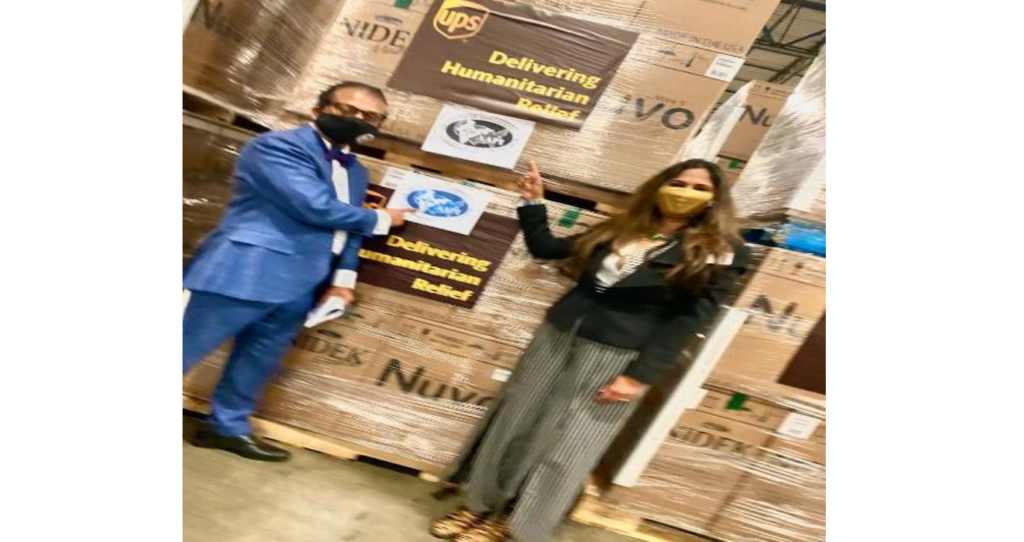
After winning a bitterly-fought battle with the BJP to record her third successive victory in the West Bengal Assembly elections, Trinamool Congress supremo Mamata Banerjee seems to have emerged as a formidable challenge to the Centre’s ruling party.

With almost all the results counted, the Trinamool Congress party (TMC) led by the state’s Chief Minister Mamata Banerjee has won more than 200 seats in the 294-seat assembly. The results are set to make Ms Banerjee the leader of West Bengal for a third time. She is also India’s only female chief minister.

With leaders of different regional parties, including NCP chief Sharad Pawar, sending her congratulatory massages, the message from the Assembly election is clear that Banerjee is capable of taking the challenge of Prime Minister Narendra Modi and Home Minister Amit Shah, and combating it successfully.

The BJP targeted West Bengal heavily during campaigning but the state was comfortably held by the incumbent, Mamata Banerjee, a fierce Modi critic.  Her win came as a surprise to political observers, who noted how much time and money the BJP invested in the state.

The poll results show that people of West Bengal have rejected the Bharatiya Janata Party’s attempt to polarise the elections. The BJP, which had justify no stone unturned to dislodge the Banerjee government, could not cross three-digit figure despite its claims of getting 200-plus seats out of the state’s 294.

The reason behind Banerjee’s masterful performance was admitted by a BJP leader, who said that their leadership “failed to understand the pulse of Bengal and its culture”. “And that is the reason despite leading in 121 Assembly constituencies in the 2019 Lok Sabha polls, we are facing difficulties in winning over 100 seats in less than a two-year period.”

“People rejected politics of polarization or communal politics. Muslim votes polarized in favor of the Trinamool while the Bengali Hindu also rejected communal politics and voted for the Trinamool,” the BJP leader said.

The alleged gross failures of Modi’s administrative management of the second wave of Covid were reflected in the West Bengal mandate. The BJP could win only 24 of the 114 seats that went to the polls in the last three phases, when the pandemic had turned traumatic.

With thousands of Modi critics campaigning for his resignation, and the BJP’s electoral debacle adding fuel to their demands, the pro-Hindu party is indeed at a crossroads in its history. “The BJP has met its match and lost,” says Congress lawmaker Shashi Tharoor, praising the success of Mamata Banerjee, the leader of Trinamool (Grassroots) Congress, a party based in West Bengal.

Here lay the folly. This aggrandizement — a characteristic of Modi’s politics — epitomized the sloppiness and errors in electoral strategy. The BJP underestimated the influence of Banerjee in the state and ignored the Minorities, who are known for voting against Modi’s party.

“As three strongly anti-BJP regional leaders have emerged victorious, they are likely to be the nucleus of the opposition challenge to Modi in the months ahead as he battles the backlash to his mismanagement of the Covid crisis,” said Arati Jerath, a New Delhi-based author and political analyst who has written about Indian politics for nearly three decades. The results weaken the government and indicate there are “huge political and constitutional challenges ahead for Modi.”

AAPI Coordinates Efforts to Help India As Covid Ravages Communities

As AAPI is leading several efforts to support, coordinate and reach the much needed help in this hour of need, leading international media, including the Washington Post, The New York Times and CNN have recognized AAPI among the major resource groups to reach help India as people are impacted by Covid as never been in human history.

India has seen a cataclysmic coronavirus surge over the past week, reporting nearly 350,000 new coronavirus cases per day, with the real figure probably much higher. The spike in infections has led to deadly shortages of oxygen, ambulances and hospital beds. Countries around the world have pledged to send aid in the form of medical supplies and vaccine doses, but urgent requests for ventilators and intensive care unit beds continue to flood social media.

“Thanks to you, the generous and compassionate members, and others as well, AAPI has been able and continues to make progress in its efforts to deal with an unfolding and out of control COVID 19 crises in India,” said Dr. Sudhakar Jonnalagadda, President, AAPI here today.  “As we pledged, we are able to very quickly secure the much needed and in demand O2 concentrators through our reliable and committed partner (SEWA International). We have shipped by air freight, the first batch of 1,000 of the O2 Concentrators on 4/29/21.”

Stating that AAPI in collaboration with its partners on ground in India “have identified destinations based on urgency and acute need for the medical equipment to be able to serve and save as many lives as quickly, and to prevent avoidable catastrophe for the simple lack of O2,” Dr. Jonnalagadda said, “We have no doubt, this is just the beginning of a long road ahead. We are assessing the situation on the ground constantly and coordinating with various local task forces and teams.”

Dr. Sajani Shah, Chair of AAPI BOT, said, “We have a team of volunteers and support and guidance of experienced leaders, who have come forward to enable and empower our efforts to curtail this crisis. We urge all of you to stay engaged and connect with us whenever you have any good suggestions and feedback to help us understand the ground realities quickly and fully. So, we can be more effective and efficient to tackle the problems.”

Educating the public and the physicians in India is vital to combat the virus,” says Dr. Anupama Gotimukula, President-Elect of AAPI. She has reached out to the Indian media across the platform offering regular series of educational materials to be published in India for the use and implementation of effective ways to treat patients who are mpacted by Covid.

“On behalf of AAPI leadership, we would like to have a series of educational messages to the communities on Covid to address the concerns of the public and medical community during the pandemic time as we recognize our role is to educate communities. Through this voluntary project from our members, we can help educate the people first. Allay their fears. Explain and educate them about the disease and on ways to combat the virus.”
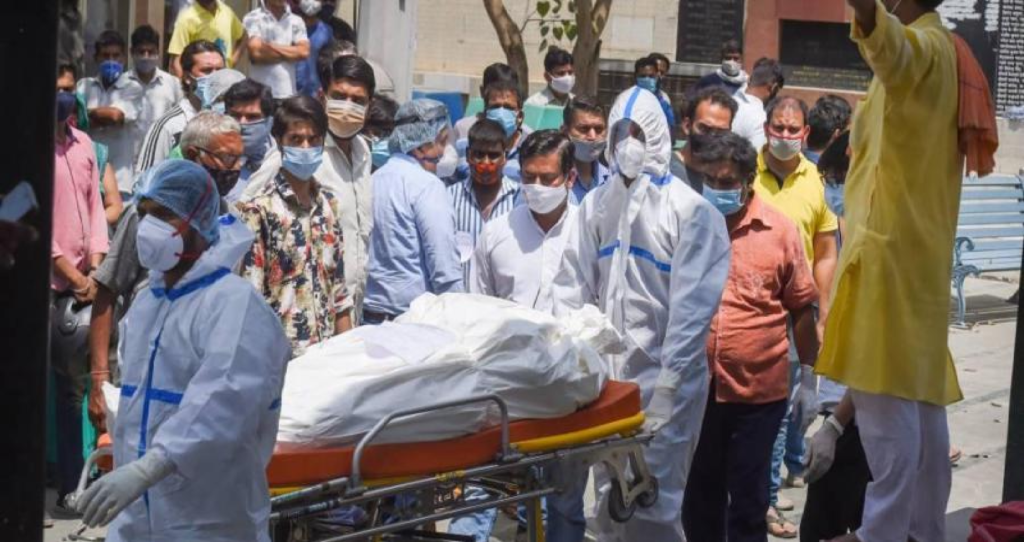
Dr. Ravi Kolli, Vice President of AAPI, while expressing gratitude to AAPI members, “request you to continue your support and contributions to take our activities to the next level of helping secure much needed ventilators, which will also be critically scarce as the morbidity and hospitalization surge, out matching the supplies.  Again, we want to reiterate that all of you, the members of AAPI inspire and motivate us and you are the true wind beneath our wings in this movement. We will leave no stone unturned to seek solutions and rise to the occasion. Let us all do our duty and be a beacon of hope and resolve to maintain the momentum to conquer the Himalayan challenge ahead of us.”

As India’s health-care system buckles under pressure, American Association of Physicians of Indian Origin (AAPI), the largest ethnic medical organization in the United States , representing the over 80,000 strong Indian American physician community in the US, has risen to the occasion and is leading several efforts to support, coordinate and reach the much needed help in this hour of need. Some of the leading international media, including the Washington Post, The New York Times and CNN have recognized AAPI and have urged AAPI among some of the major resource groups to reach help to the communities across India as they are impacted by Covid as never been in human history.

“Indeed a proud moment for AAPI,” said Dr. Amit Chakrabarthy, Secretary of AAPI. “The tireless efforts of the AAPI leadership and members, who have spent sleepless nights coordinating relief efforts for  India has been recognized by the prestigious New York Times as the second most prominent international organization in this effort (after UNICEF)!!! This is a proud moment for all of us.  Please continue to support and donate at aapiusa.org.”

Dr. Jonnalagadda announced that “AAPI is facilitating interaction between US and Indian doctors to advise them about the evidence based protocols to treat COVID-19 patients. We evaluated 3 HIPPA compliant telehealth platforms to treat patients in India. AAPI is also working on relaxing the restrictions on US physicians to treat patients in India. I want to thank Dr. Anupama Gotiumukaua, Dr. Ravi Kolli, Dr. Amit Chakrabarthy and Dr. Satiheesh Kathula for their efforts in coordinating various sources and resources in this fight against the pandemic.”

In its efforts to serve as a physician on humanitarian grounds to help patients in India, AAPI has identified and facilitates the following platforms/links to those who want the Telehealth established platforms: http://Mdtok.com/dr/Covid and www.eGobalDoctors.com

AAPI encourages using this route because they give global malpractice coverage: They offer free service for 1-3 months for our physicians to help Indian patients, as  these platforms serve and help become every Indian American physician to be a registered physician in India, by renewing your India licenses ASAP and can start your services; Getting more info from different resources as well to get our services reach Indian patients  as every resource is being tapped to help India in this crisis situation.

AAPI is in constant touch with Indian Embassy, Indian Health Minister Dr. Harsh Vardhan to see how best “we can help our motherland during this horrific pandemic. AAPI has written to a letter Prime Minister of India, Shri. Narendra Modi to lock down the country to contain the spread of the virus, and to ramp up the vaccinations.”

“AAPI has been in the forefront to help India to combat the pandemic,” said Dr. Satheesh Kathula, Treasurer of India. “Thousands of people, both members of AAPI and non-members have come forward to donate money by putting trust in AAPI. We will try our best to be transparent and make sure that your donations will make some impact. I really want to thank all the donors who supported us unconditionally.”

It’s devastating to see millions of people are being impacted by Covid in India, especially many of the friends and families of AAPI members are suffering from Covid disease and dying now. In this context, AAPI would like to help India big way, said Dr. Jonnalagadda: “AAPI is collaborating with UNICEF, SEWA International and other like minded organizations.  AAPI is also urging all Community leaders to educate their members to be on Alert to avoid spread of the virus.” For more information on AAPI and its efforts to coordinate services for the people of India, please visit: www.aapiusa.org

India Sets Record As Covid Cases Cross 400,000 Daily

India has recorded more than 19 million cases of coronavirus – second only to the US. It has also confirmed more than 215,000 deaths, though the real toll is thought to be far higher. Experts have cited low testing rates and the number of people dying at home, especially in rural areas, as contributing factors to under-reported figures.

India became the first country in the world to report over 4 lakh COVID cases in a single day. Country reported of 4,01,993 new COVID-19 cases and 3,523 deaths on May 1st. Total caseload of the country stood at 1,91,64,969. Death toll of India mounted to 2,11,853. Currently there are 32,68,710 active cases in country. According to Indian Council of Medical Research, up to April 30, 28,83,37,385 samples have been tested for COVID-19. Vaccination drive for citizens between 18-44 years age bracket will begin from today. So far, 15,49,89,635 vaccine doses have been inoculated.

Maharashtra reported 62,919 infections, followed by Karnataka (48,296), and Kerala (37,199). Maharashtra also recorded 828 casualties, followed by Delhi (375) and Uttar Pradesh (332). The country has so far reported a total of 1,91,63,488 cases and 2,11,778 deaths.

As many as 19,20,107 samples were tested on April 29 (results of which were made available on April 30). This is the first instance when daily tests have crossed the 19 lakh-mark. On April 28, 17.68 lakh samples were tested. A total of 28.64 crore tests have been conducted in the country from the beginning of the pandemic until April 29.

Around 22.24 lakh vaccination shots were given in the 24 hours ending 7 a.m. on April 30, which is only 31,267 doses more than what was recorded in the previous 24 hours. The daily vaccination rate has decreased significantly in the second half of April compared to the first. Between April 1 and 14, India administered 35.26 lakh doses on an average every day. However, between April 15-29, the average daily doses given fell to just 25.16 lakh. Cumulatively, 15,00,20,648 vaccine doses had been administered until 7 a.m. on April 30.
India continues to register the highest number of average daily cases in the world, according to Our World in Data. Until April 28, the country recorded 3.49 lakh daily cases. With 52,679 average daily cases, the U.S. was a distant second. Three other countries in the list included France (27,250), Germany (20,788) and Canada (7,980).

Several nations, including the United States, the United Kingdom, China, Japan, have pledged sustained support to India as hospitals in the country scramble for resources. The country received the first batch of Covid supplies from the US on Friday.
India crossed the grim milestone of 1.50 crore on April 19. According to the Indian Council of Medical Research (ICMR), 28,83,37,385 samples have been tested up to April 30, of which 19,45,299 were done on Friday.
India’s coronavirus cases may peak in the next 2 two weeks, according to a mathematical model of a team of scientists advising the government, news agency Reuters reported. “Our belief is that by next week, the daily new cases nationwide would have peaked,” M Vidyasagar, head of a government-appointed group of scientists modelling the trajectory of infections, told Reuters.

U.S. Restricts Travel To & From India

The U.S Embassy in India encourages U.S. citizens who wish to depart India to take advantage of currently available commercial flights. Airlines continue to operate multiple direct flights weekly from India to the United States; additional flight options remain available via transfers in Paris, Frankfurt, and Doha.

President Joe Biden has issued a proclamation restricting entry into the United States of certain nonimmigrant travelers who have been physically present in India. These restrictions will go into effect on Tuesday, May 4, 2021 at 12:01 AM EDT. The full text of the proclamation is available here.

The U.S Embassy in India encourages U.S. citizens who wish to depart India to take advantage of currently available commercial flights. Airlines continue to operate multiple direct flights weekly from India to the United States; additional flight options remain available via transfers in Paris, Frankfurt, and Doha.

The policy will not apply to American citizens, lawful permanent residents (LPR), or other people with these specific exceptions:

  • Any immigrant who has an unused or unexpired immigrant visa;
  • Any non-U.S. citizen spouse of a U.S. citizen or LPR;
  • Any non-U.S. citizen who is the parent or legal guardian of a U.S. citizen or LPR, provided that the U.S. citizen or LPR child is unmarried and under the age of 21;
  • Any non-U.S. citizen who is the sibling of a U.S. citizen or LPR, provided that both the non-U.S. citizen and the U.S. citizen or LPR sibling are unmarried and under the age of 21;
  • Any non-U.S. citizen who is the child, foster child, or ward of a U.S. citizen or LPR, or who is a prospective adoptee seeking to enter the United States pursuant to the IR-4 or IH-4 visa classifications;
  • Any holders of nonimmigrant visas in the following categories: C-1, D, C-1/D air and sea crew, A-1, A-2, C-2, C-3, E-1, G-1, G-2, G-3, G-4, NATO-1 through NATO-4, or NATO-6; or
  • Students who already possess a valid student (F or M) visa and who will begin their studies on or after August 1, 2021. (Note that direct travel to the United States from India with a student visa may begin no more than 30 days prior to the start date of a student’s classes.)

Visa holders with definite plans to travel who can demonstrate qualification for a National Interest Exception (NIE) may contact the U.S Embassy or  Consulate that issued their visa to request a national interest exception prior to travel. (The contact email for the Embassy in New Delhi is NewDelhiNIE@State.gov.) Your request must include the following information to seek an exception: last name, first name, date of birth, place of birth, country of citizenship, passport number, visa Number and category, travel dates, travel purpose, and national interest category–including a clear justification for receipt of a NIE.

Qualifying family members do not need a NIE or any pre-approval from the embassy or consulates. Travelers should bring proof of relationship when initiating travel to the United States. More details on NIEs are available here.

If you currently have a flight booked, or plans to travel to the United States but do not fall into an exception category, contact the embassy or consulate that issued your visa before departing, as you may not be allowed to travel at this time. General travel information between India and the U.S as well as information about COVID-19 within India, is available via the U.S. Embassy here.

This proclamation will remain in effect until terminated by President Biden. Thirty days after the proclamation, and then at the end of every calendar month, Secretary of Health and Human Services Xavier Becerra will recommend whether the president should continue, modify, or terminate this proclamation.

Note that the Centers for Disease Control and Prevention (CDC) has issued a Level 4 Travel Health Notice and the Department of State has issued a Level 4 Travel Advisory recommending against all travel to India. Level 4 is the highest advisory level due to greater likelihood of life-threatening risks. U.S. citizens who must travel to India are strongly urged to get fully vaccinated before travel and to continue to take personal health safety measures to protect themselves, including practicing social and physical distancing, cleaning hands with soap/hand sanitizer frequently, wearing masks, and avoiding crowded areas with poor ventilation.

The CDC’s broader guidance for fully vaccinated people–including information about when you should still wear masks and maintain social and physical distancing–is here; be sure to review our other vaccine availability and safety resources as well.

The U.S. told its citizens to get out of India as soon as possible as the country’s covid-19 crisis worsens at an astonishing pace.

In a Level 4 travel advisory — the highest of its kind issued by the State Department — U.S. citizens were told “not to travel to India or to leave as soon as it is safe to do so.” There are 14 direct daily flights between India and the U.S. and other services that connect through Europe, the department said.

Indian authorities and hospitals are struggling to cope with unprecedented covid infections and deaths. Official data on Thursday showed new cases rose by a staggering 379,257 over the prior 24 hours, another record, while 3,645 additional lives were lost. More than 204,800 people have died.

“U.S. citizens are reporting being denied admittance to hospitals in some cities due to a lack of space,” the website of the U.S. Embassy and Consulates in India said in a health alert. “U.S. citizens who wish to depart India should take advantage of available commercial transportation options now.” All routine U.S. citizen services and visa services at the U.S. Consulate General Chennai have been canceled.

According to the U.S. Centers for Disease Control and Prevention, anyone returning to the U.S. from overseas must have a viral Covid-19 test between three and five days after travel. Individuals who haven’t been vaccinated should also stay at home and self-quarantine for a week.

The South Asian nation now has the world’s fastest-growing caseload with 18.4 million confirmed instances. The virus has gripped India’s populace with a severity not seen in its first wave. Mass funeral pyres, lines of ambulances outside overcrowded hospitals and desperate pleas on social media for oxygen underscore how unprepared India’s federal and state governments are to tackle the latest outbreak.

The unfolding tragedy is prompting some of the world’s biggest corporations to organize aid. Amazon.com is harnessing its global logistics supply chain to airlift 100 ICU ventilator units from the U.S., and the equipment will reach India in the next two weeks. Microsoft Chief Executive Officer Satya Nadella said he was “heartbroken” by the situation and the tech behemoth is using its voice, resources and technology to aid relief efforts and help buy oxygen concentrators.

Blackstone Group Chairman Stephen Schwarzman said his private equity firm is committing $5 million to support India’s covid relief and vaccination services to “marginalized communities.” Local companies, too, are wading in, with the philanthropic arm of India’s most valuable company — Reliance Industries Ltd., controlled by Asia’s richest man Mukesh Ambani — pledging to create, commission and manage 100 ICU beds that will become operational mid next month.

As thousands of doctors, nurses and non-medical professionals work around-the-clock to save what patients they can, countries around the rest of the world are drawing up their bridges.

Within Asia, Hong Kong banned flights from India, as well as Pakistan and the Philippines, for 14 days from April 20. Singapore has barred long-term pass holders and short-term visitors who have recently been in India from entering. Indonesia is also denying entry to people traveling from India.

Further afield, the U.K. has added India to its travel ban list, and the United Arab Emirates and Kuwait have halted passenger flights from India. Canada last week banned flights from India and Pakistan for 30 days. Australia banned flights from India this week.

India Restricts Flights Until May 31st

India has extended the suspension on international commercial flight operations till May 31, 2021. However, international passenger flights under air travel bubble arrangements will continue.

“In partial modification of circular dated 26-06-2020, the competent authority has further extended the validity of circular issued on the above subject… regarding scheduled international commercial passenger services to/from India till 2359 hrs IST of 31st May, 2021,” the circular issued by the Directorate General of Civil Aviation (DGCA) said.

The circular said that the restriction shall not apply to international all-cargo operations and flights specifically approved by DGCA. Passenger air services were suspended on March 25, 2020 due to the nationwide lockdown to check the spread of Covid-19. Domestic flight services, however, resumed from May 25, 2020.

Meanwhile, the US has announced that starting May 4th, on the advice of the CDC (Centers for Disease Control,  COVID-19 experts, medical experts and national security advisors — travel restrictions will come into force for India,” Vice President Kmla Harris announced last week.

Harris, who was visiting Cincinnati, said, “There is no question that it (COVID surge in India) is a great tragedy, in terms of the loss of life, and as I have said before, and I will say again, we as a country have made a commitment to the people of India to support them.”

“And we’ve made already a commitment in terms of a dollar amount that will go to PPE (personal protective equipment) and a number of other things. But it is tragic. And, you know, my prayers go to the people on the suffering, the blatant suffering that is happening,” she added. President Joe Biden’s Spokesperson Jen Psaki said the restrictions were being imposed because “of extraordinarily high COVID-19 caseloads and multiple variants circulating in India.”

The restrictions cover South Africa, China, Iran, Brazil, Ireland, Britain and the 29 countries belonging to the common visa zone known as the Schengen Area. US citizens and legal residents and their immediate family members are exempt from the restrictions, as also are diplomats, but they are advised to follow precautions. They are asked to test themselves for COVID-19 between three and five days after arrival.
If those who are vaccinated test positive, they have to isolate themselves for seven days. Those who are not vaccinated are asked to self-isolate for seven days, regardless of the test results. At a news conference on Friday before the restriction was announced, White House Coronavirus Response Co-ordinator Jeffrey Zientsin said, “In terms of travel from India, we remain in very close contact with our foreign counterparts and are continuously monitoring the situation.”

“Our current inbound travel precautions and mandatory testing before travel — the quarantine for unvaccinated individuals and the retesting during that quarantine period — those are all in place for all international travel and have been effective,” he added.

World Press Freedom Day 2021

World Press Freedom Day was proclaimed by the UN General Assembly in December 1993, following the recommendation of UNESCO’s General Conference. Since then, 3 May, the anniversary of the Declaration of Windhoek is celebrated worldwide as World Press Freedom Day.

After 30 years, the historic connection made between the freedom to seek, impart and receive information and the public good remains as relevant as it was at the time of its signing.

According to United Nations, May 3rd acts as a reminder to governments of the need to respect their commitment to press freedom. It is also a day of reflection among media professionals about issues of press freedom and professional ethics. It is an opportunity to: celebrate the fundamental principles of press freedom; assess the state of press freedom throughout the world; defend the media from attacks on their independence; and pay tribute to journalists who have lost their lives in the line of duty.

World Press Day is a reminder to governments of their commitment to press freedom. This year’s World Press Freedom Day theme: “Information as a Public Good.”

It serves as a call to affirm the importance of cherishing information as a public good.

It is vital to have access to reliable information – especially in an era of misinformation.

Today, journalism is restricted in well over two thirds of the globe.

The 2021 World Press Freedom Index: journalism is “totally blocked or seriously impeded” in 73 nations.

“The pandemic has been used as grounds to block journalists’ access to information sources, and reporting in the field,” Reporters Without Borders (RSF) Secretary-General Christophe Deloire

According to RSF, authoritarian regimes have used the pandemic to “perfect their methods of totalitarian control of information.”

‘Dictatorial democracies’ have used coronavirus as a pretext for imposing especially repressive legislation combining propaganda with suppression of dissent.

In Egypt, the government banned publication of non-government pandemic figures and arrested people for circulating figures larger than the official numbers.

In Zimbabwe, an investigative reporter was arrested after exposing a scandal related to the procurement of COVID- 19 supplies.

Tanzania, the former president imposed an information blackout on the pandemic before he died in March 2021. Even in Norway, journalists have faced difficulty accessing pandemic-related government information.

Thailand, the Philippines, Cambodia and Indonesia adopted extremely draconian laws in the spring of 2020 criminalizing any criticism of the government’s actions.

Press freedom in Myanmar has also become increasingly strained since the military deposed its democratically elected government in February.

Despite Africa being the most violent continent for journalists, but several countries showed significant improvements in press freedom, according to RSF.

Europe and the Americas are the most favorable regions for press freedom, according to RSF.

India Pursued Assertive Foreign Policy In 2020, Says US Defense Intelligence Agency

India, under Prime Minister Narendra Modi, pursued an assertive foreign policy in 2020 aimed at demonstrating the country’s strength and its perception as a net provider of security in the strategically vital Indian Ocean Region, a top American intelligence agency has said.

The Defense Intelligence Agency also told lawmakers adding that New Delhi also hardened its approach towards an aggressive China. “Throughout 2020, Prime Minister of India Narendra Modi’s government pursued an assertive foreign policy aimed at demonstrating India’s strength and its perception as a net provider of security in the Indian Ocean Region,” Scott Berrier, Gen Director of Defense Intelligence Agency told members of the Senate Armed Services Committee during a Congressional hearing on worldwide threats.

In the first months of the COVID-19 pandemic, New Delhi played a leading role in delivering medical equipment to countries throughout South Asia, Africa, and the Middle East, facilitating the evacuation of Indians and other South Asians from virus hotspots, he said on Friday.

“India hardened its approach towards China following a deterioration in bilateral relations that followed Chinese efforts to take Indian-claimed territory along the disputed Line of Actual Control border beginning in the summer of 2020,” Berrier said.

In response to the June clash between Indian and Chinese troops, and the deaths of 20 Indian and four Chinese soldiers, New Delhi responded by deploying an additional 40,000 troops, artillery, tanks, and aircraft to the disputed border, occupying strategic mountain passes in disputed territory, and sending Indian Navy ships to shadow Chinese ships in the Gulf of Aden, it said.

India also implemented economic measures meant to signal its resolve against China, including banning Chinese mobile phone apps and taking steps to use trustworthy vendors of telecommunications, he told the lawmakers.

According to Berrier, India also maintained an assertive approach on its border with Pakistan, refusing to engage in diplomatic dialogue in the absence of Pakistani action to end support to anti-Indian militant groups.

Tensions remain high in the aftermath of the 2019 Pulwama terrorist attack and subsequent military reactions, and the Modi government’s August 2019 action ‘to curtail Jammu and Kashmir’s autonomy by revising the Indian Constitution’.

The Indian Army units along the Line of Control border periodically conducted artillery strikes targeting suspected militant camps and Pakistan Army positions throughout the year.

India and Pakistan announced a ceasefire agreement in late February 2021, but any high-profile militant attacks by suspected Pakistan-based groups will likely elicit an Indian military response that could escalate to military confrontation, he said.

“New Delhi is continuing to pursue a wide-ranging military modernisation effort encompassing air, ground, naval, and strategic nuclear forces with an emphasis on domestic defence production.

‘It will continue its longstanding defence relationship with Russia because of the large amount of Russian-origin equipment in India’s inventory and Moscow’s willingness to assist New Delhi in strengthening its domestic defence industry,” Berrier said.

India continued to develop its own hypersonic, ballistic, cruise, and air defence missile capabilities, conducting approximately a dozen tests since September.

India has a growing number of satellites in orbit and is expanding its use of space assets, likely pursuing offensive space capabilities to boost the role space assets play in its military strategy.

It conducted a successful ASAT (anti-satellite) missile test in March 2019, and has since announced plans to define further the role of ASAT weapons in its National Security Strategy.

New Delhi also seeks to build space expertise with the formation of its Defence Space Agency and through space warfare exercises, such as IndSpaceEx held in July 2019.

Berrier also told lawmakers that the Pakistan military continues to execute counterterrorism operations against militant groups that pose a threat to it. These efforts have been successful in reducing violence from some anti-Pakistan militant, terrorist, and sectarian groups in Pakistan.

“However, we assess these groups remain capable of conducting mostly small-scale attacks and occasional high-profile attacks. Tehrik-e-Taliban Pakistan—an anti-Pakistan militant group—was weakened by leadership losses, but recently announced its reunification with two splinter groups to bolster its capabilities,” he said.

“While Pakistani intelligence continues to provide material support and safe haven to the Taliban, Islamabad continues to support Afghan peace efforts, encouraging the Taliban to engage in dialogue with the Afghan Government,” he added.

Berrier said that Pakistan’s relations with India continue to remain tense since New Delhi’s August 2019 revocation of Kashmir’s semiautonomous status.

During the year, tensions with India probably will remain elevated, and concerted efforts by both sides to fully implement the February 25, 2021 ceasefire will be necessary to reduce tension along the Line of Control.

Pakistan perceives nuclear weapons as key to its national survival, specifically to counter the threat from India’s growing conventional force superiority, and likely will increase its nuclear stockpile in 2021.

To that end, Pakistan continues to modernise and expand its nuclear capabilities by conducting training with its deployed weapons and testing developmental missiles.  (Courtesy: The Council for Strategic Affairs)

Pfizer Says, Covid Oral Pill Could Be Ready By Year-End

US-based pharmaceutical major Pfizer’s Chief Executive Officer Albert Bourla said that the company’s Covid-19 oral antiviral pill, which is in early-stage trials, could be ready by the end of the year, the media reported.

According to CNBC, the company, which developed the first authorised Covid-19 vaccine in the US with German drugmaker BioNTech, began an early-stage clinical trial for testing a new antiviral therapy for Covid-19 in March.

The drug is part of a class of medicines called protease inhibitors and works by inhibiting an enzyme that the virus needs to replicate in human cells.

“If clinical trials go well and the Food and Drug Administration (FDA) approves it, the drug could be distributed across the US by the end of the year,” Bourla told CNBC.

Protease inhibitors are used to treat other viral pathogens such as HIV and hepatitis C, the report said.

Last month, the pharmaceutical giant asked the US Food and Drug Administration (FDA) to expand the Emergency Use Authorisation (EUA) for its Covid-19 vaccine to include children ages 12 to 15.

The request to expand emergency use comes just days after Pfizer released data demonstrating its vaccine was 100 per cent effective and well-tolerated by the younger group.

Pfizer is also working on its vaccine for 6-month to 11-year-old children.

A recent study, published in the journal Science, showed that a single dose of Pfizer-BioNTech vaccines against Covid may boost immunity against the Covid-19 variants, only in people who were previously infected with the deadly virus.

In people who have not previously been infected and have so far only received one dose of vaccine, the immune response to variants of concern may be insufficient, the study indicated. (IANS)

Dr. Himanshu Pandya Honored By World Peace & Diplomacy Organization

(Long Island, NY: May 1st, 2021) “It gives me tremendous pleasure to share the good news of getting one of the most prestigious awards on April 30: World Peace & Diplomacy Organization, an organization, working towards the agenda of The United Nations, has honored me with “ILLUSTRIOUS HUMANITARIAN SERVICE HONOR,” Dr. Himnashu Pandya announced here.

Past President at American association of physicians of Indian Origin, Queens Long Island. (AAPIQLI), Dr. Pandya is an internist in Floral Park, New York and is affiliated with North Shore University Hospital. He received his medical degree from B. J. Medical College Ahmedabad and has been in practice between 11-20 years.

“We are honored to share the title of ‘Illustrious Humanitarian Service Honor’ with Dr. Himanshu Pandya, who would take forward the initiative of spreading Peace and Harmony for promoting humanity through sustainable leadership,” World Peace & Diplomacy Organization stated on its web portal about the honor bestowed on Dr. Pamdya.

Dr. Pandya in his response said: “Considering my Work in the US and India since March 2020 due to the Covid pandemic, including COVID and blood tests at patients’ homes, a concept of the home hospital to treat Covid patients at home in the US and India, vaccination help, and providing free of the cost telehealth in the rural areas in India. The award was given at a virtual ceremony on the auspicious day of World Peace and Humanitarian Summit 2021 with several International dignitaries, including Princess Sanyogita Atres,  Friederike Irina Bruning, Apostle Victoria Samusongha, etc.  My journey and fight against Covid will continue.”

WPDO is a not-for-profit organization, working diligently towards United Nations prime agenda of maintaining global peace by humanitarian means. United Nations – Economic & Social Council (ECOSOC) has recently Granted its parent organization, Confederation of Indian Healthcare Foundation (CIHF) “Special Consultative Status” which enables it to become the voice of various non-member NGOs.

Deepika Shares Mental Health Helpline Contacts To Deal With Crisis

Bollywood star Deepika Padukone on Sunday shared a list of verified mental health helplines on Instagram, highlighting the significance of strong mental and emotional health in the time of surging Covid pandemic.

“As millions of us (me and my family included) strive to stay afloat, let us not forget that our emotional well-being in this current crisis, is equally important! Remember, You Are Not Alone. We are in this together. And most importantly, there is HOPE! #YouAreNotAlone @tlllfoundation,” she wrote, along with 12 slides in varied shades of pink that contain the essential numbers.

Several Bollywood stars have been using their social media platforms to pitch in with assistance for the Covid-affected over the past few days. These include Alia Bhatt, John Abraham, Katrina Kaif, Vicky Kaushal, Taapsee Pannu and Bhumi Pednekar among others.

Almost every B-Town celebrity has also been appealing on social media to encourage fans to help in whatever way possible, not to pay heed to rumours and stay safe. (IANS)

Roivant Sciences & MAAC to Combine and Create Publicly Traded Leader in Biopharma and Health Technology

Roivant Sciences, a biopharmaceutical and healthcare technology company, and Montes Archimedes Acquisition Corp. (Nasdaq: MAAC), a special purpose acquisition company sponsored by Patient Square Capital, today announced that they have entered into a definitive business combination agreement. Upon closing of the transaction, outstanding shares and warrants of MAAC will be exchanged for newly issued shares and warrants of Roivant Sciences, which is expected to be listed on Nasdaq under the new ticker symbol “ROIV.”

The transaction is expected to deliver up to $611 million of gross proceeds to fund discovery and development programs. This includes up to $411 million currently held in MAAC’s trust account, as well as a concurrent $200 million common stock private investment in public equity (“PIPE”) priced at $10.00 per share. New institutional and strategic investors and existing Roivant shareholders have committed to participate in the PIPE, including Fidelity Management & Research Company LLC, Eventide Asset Management, Suvretta Capital, Palantir Technologies, RTW Investments, LP, Viking Global Investors, Sumitomo Dainippon Pharma, and SB Management, a subsidiary of SoftBank Group Corp. Proceeds are expected to extend the company’s operating runway through mid-2024.

Patient Square Capital and key Roivant equity holders and management have agreed to long-term lockups, with at least 50% of their holdings locked up for three years. In addition, Patient Square Capital has agreed to convert an additional 30% of its shares of MAAC to earn-out shares subject to performance vesting thresholds: 20% of its shares will vest at $15.00 per share and 10% will vest at $20.00 per share for 20 of 30 trading days within five years of closing.

Jim Momtazee, Managing Partner of Patient Square Capital, will join Roivant’s board of directors. Prior to founding Patient Square Capital, Mr. Momtazee was a 21-year veteran of KKR where he helped form its health care investment team 20 years ago and ran that team for over a decade.

“Roivant is at the cutting edge of using technology to discover and develop transformative medicines for a wide range of serious diseases, and in a very short time they have established a remarkable track record of building subsidiaries that have run successful registrational clinical trials for approved medicines,” said Mr. Momtazee. “I first met the company in 2015 and have watched its growth over the last 6 years with admiration. Based on our extensive due diligence spanning the last 5 months, I look forward to a long-lasting partnership with one of the most exciting and innovative companies in the life sciences industry.”

Roivant will continue to operate under its current management team led by Chief Executive Officer Matthew Gline. Roivant founder Vivek Ramaswamy will continue to serve as Executive Chairman.

“I look forward to the next chapter of Roivant’s growth by beginning our life as a public company with an exceptionally strong and diverse base of long-term investors,” said Mr. Gline. “We look forward to continuing to deliver important medicines to patients through our development engine and our rapidly growing drug discovery capabilities spanning multiple therapeutic areas and modalities.”

The boards of directors of both Roivant and MAAC have unanimously approved the proposed transaction. Completion of the transaction, which is expected in the third quarter of 2021, is subject to approval of MAAC shareholders and the satisfaction or waiver of certain other customary closing conditions. A link to investor presentation materials is included below.

Pope Francis Decrees Strict Financial Rules For Church Leaders

Pope Francis has issued a decree aimed at financial transparency in the church, requiring a strict limit on the value of gifts that cardinals and managers can receive and requiring them to disclose their investments to ensure they are in line with Catholic doctrine.

The new mandate, which comes in the form of an apostolic letter, comes amid a major ongoing investigation into alleged financial corruption in the Vatican, something Francis has preached about cleaning up since becoming pontiff in 2013.

The new rules are aimed at ending what some refer to as the Vatican’s “envelope” culture.

“[A]ccording to Scripture, fidelity in small things is related to fidelity in important ones,” Francis wrote in the letter, referencing Luke 16:10 that “just as being dishonest in matters of little consequence is also related to being dishonest in important matters.”

Among the pope’s new provisions are a prohibition on Vatican employees receiving “work-related gifts” with a value of over 40 euros ($49) — a move aimed at limiting the practice of cardinals and Vatican monsignors receiving checks from fellow clerics to supplement their relatively modest salaries.

The National Catholic Register writes: “These gifts have been blamed for contributing to corruption in the Church when they were used between high-level Church officials to seek favors, most notably in cases like that of ex-cardinal Theodore McCarrick.”

McCarrick, the former archbishop of Washington, D.C., was dismissed by Francis in 2019 after a church tribunal found him guilty of “solicitation in the Sacrament of Confession and sins against the Sixth Commandment with minors and with adults, with the aggravating factor of the abuse of power.”

McCarrick was known for giving checks to Vatican officials, leading to speculation on whether it affected the handling of allegations against him, which were known at the top levels of the church for decades. However, an internal Vatican investigation in 2020 found that in the case of McCarrick, there was no evidence that “customary gift-giving and donations impacted significant decisions made by the Holy See.”

In another case, a 2019 investigation by the U.S. church found that Bishop Michael J. Bransfield of West Virginia — who had been the subject of “credible” accounts of sexual misconduct involving adults — sent checks totaling hundreds of thousands of dollars over more than a decade to fellow clerics, including two U.S. cardinals. He then repaid himself out of church funds. Bransfield later repaid the money and offered a public apology.

The latest Vatican regulations also stipulate that cardinals, as well as senior managers and administrators whose jobs require handling money, must affirm in writing that they have never been convicted of a crime and they are not under investigation for such offenses as money laundering, corruption, fraud, exploitation of minors or tax evasion.

In the declaration, managers and cardinals must also affirm that they are not holding funds in offshore tax havens nor have investments that run counter to church doctrine. The declaration must be reaffirmed every two years.

US Catholic Bishops May Ask Joe Biden Not to Receive Holy Communion

When U.S. Catholic bishops hold their next national meeting in June, they’ll be deciding whether to send a tougher-than-ever message to President Joe Biden and other Catholic politicians: Don’t receive Communion if you persist in public advocacy of abortion rights, Associated Press Reported last week.

At issue is a document that will be prepared for the U.S. Conference of Catholic Bishops by its Committee on Doctrine, with the aim of clarifying the church’s stance on an issue that has repeatedly vexed the bishops in recent decades. It’s taken on new urgency now, in the eyes of many bishops, because Biden, only the second Catholic president, is the first to hold that office while espousing clear-cut support for abortion rights.

This month the Biden administration lifted restrictions on federal funding for research involving human fetal tissue. It also rescinded a Trump administration policy barring organizations such as Planned Parenthood from receiving federal family planning grants if they also refer women for abortions. And it said women seeking an abortion pill will not be required to visit a doctor’s office or clinic during the COVID-19 pandemic.

“Because President Biden is Catholic, it presents a unique problem for us,” said Archbishop Joseph Naumann of Kansas City, Kansas, who chairs the USCCB’s Committee on Pro-Life Activities. “It can create confusion. … How can he say he’s a devout Catholic and he’s doing these things that are contrary to the church’s teaching?”

The document, if approved, would make clear the USCCB’s view that Biden and other Catholic public figures with similar viewpoints should not present themselves for Communion, Naumann said.

In accordance with existing USCCB policy, it would still leave decisions on withholding Communion up to individual bishops. In Biden’s case, the top prelates of the jurisdictions where he frequently worships — Bishop W. Francis Malooly of Wilmington, Delaware, and Cardinal Wilton Gregory of Washington, D.C. — have made clear that he may receive Communion at churches they oversee.

The document results from a decision in November by the USCCB’s president, Archbishop José Gomez of Los Angeles, to form a working group to address the “complex and difficult situation” posed by Biden’s stances on abortion and other issues that differ from official church teaching.

Indians Reach Out With Helping Hands As COVID Spirals

Even the darkest cloud, it is said, has a silver lining. And because most oft-quoted cliches are rooted in reality, myriad acts of kindness, be it home-cooked meals for the ill or arranging an oxygen cylinder, are shining through India’s gravest health emergency.

As India reports upwards of 3.5 lakh fresh Covid cases a day, people infected and isolated find that succour is close at hand sometimes neighbours and other times a faceless name on social media reaching out to help in any which way. Just so they can, without any motive in mind.

From people offering to run errands and home kitchens delivering meals to organisations and individuals stepping in to supply oxygen cylinders, oximeters and the like, the goodness runs like an undercurrent through the tragic times.

And so, realising that entire families are in quarantine in many homes in her city and there is no one to cook nourishing meals for them, Chennai’s Rama Parthasarathy opened up her kitchen on April 14, Tamil New Year Day. The 61-year-old dishes out healthy preparations all vegetarian and sends the food through portals like Dunzo or Porter for a nominal fee.

The inspiration for Rama’s Kitchen, she said, came when her son Aravindh’s friend asked if she could food to the home quarantined as they are not in a position to cook at home.

The story is replicated in umpteen localities across the length and breadth of the country from Chennai to Chandigarh. Lists of home kitchens and thali meals, sometimes at a nominal price and other times free, have been circulating on WhatsApp groups, Twitter and other social media platforms.

Community kitchens have opened up in gated communities. In many places, including Mumbai and Gurgaon, neighbours have set up a roster system to ensure that all quarantined families in their complexes are provided food.

Help comes in many shapes and sizes. Gopi’s e-rickshaw in Lucknow is one of them. With cases rising in the Uttar Pradesh capital, the 45-year-old hasn’t been getting much business but is busy helping those in Shivaji Nagar locality. He gets milk, newspapers and vegetables for those who can’t move out from their homes, and often medicines and even X-Ray reports and the like.

Raja and Shakeel, who run a cycle shop in Lucknow, are also doing their bit, helping people in Sarojinidevi Dharamshala lane with their daily errands. Sometimes, they also go to the nearest post office and banks either to withdraw or deposit money or update the passbook of residents in their area.

They have a kindred spirit in Noida-based activist Kiran Verma who earlier this month posted on Twitter and Facebook that he owned “a humble Maruti Suzuki Esteem in good condition and completely sanitised”.

“If any person, (willing to #DonateBlood or plasma) is finding it difficult to travel around NCR for blood donation. OR don’t have access to good food, I promise to drop you safe (with a smiling face) at a blood bank or provide food at your doorstep,” said the founder of blood donation initiative ‘Simply Blood’.

“The motivation is simply that these are very difficult times and I just wanted to encourage more people to come forward and show that we all are together in this tough time,” he told PTI earlier this month.

Several people are working through their organizations.

In Hyderabad, Azhar Maqsusi, who formed the Sani Welfare Association in 2012, arranges for cooked food to the poor as well as rations and medicines for them.

“The food distribution is continuing daily and is being distributed to 1,000 people. We are also arranging for medicines for those who cannot afford them,” Maqsusi told PTI.

Given the rising number of COVID-19 cases, he has also started the ‘Wall of Face Mask’ at the Dabeerpura flyover to provide free face masks to the people.

And in Chandigarh, H S Sabharwal, a trustee of the Guru Ka Langar Eye hospital, said home quarantined corona patients are being given oxygen cylinders, oxygen concentration machines and oximeters free of charge.

We wanted to serve people who are in need of help during COVID-19 pandemic, said Sabharwal.

Hundreds of miles away, in Kolkata, mountaineer Satyarup Siddhanta and climber and model Madhabilata Mitra are among those who have been working to help COVID-19 patients in West Bengal.

Their Covid Care Network has over 400 members, including several doctors, across the state. The helpline number (1800-889-1819) raises awareness about the disease, counsels people and gives information on how and where to get admitted if the need arises.

Besides, Siddhantha and his colleagues also operate an ambulance, with aid from the state government, to ferry patients from home to hospitals.

We have been doing this since last June and there has been a massive response. And now with this surge, there are at least 40-50 calls daily,” Siddhantha told PTI.

The Rajasthani Health Foundation in Chennai is similarly helping with a dedicated team of doctors and nurses at a quarantine facility.

The facility, for those who are asymptomatic or have mild symptoms without comorbidities, is meant mostly for economically weaker sections in one-room homes. Food, medicines, oximeters, masks and sanitisers are part of the deal.

“We get about 500 calls per day now on an average. Where are the facilities for so many,” asked Jagadish Prasad Sharma, chairperson of the Foundation.

In Rajasthan, the Narayan Seva Sansthan in Udaipur is among the NGOs working to help people with masks and food.

The NSS Mitra task force’ will be at the forefront in case of any crisis or calamity, said Prashant Agarwal, president of the NGO.

The outreach, sometimes from random strangers, is of huge help. Ask Atreyee Das, a fashion designer by profession, who lives alone in Gurgaon.

After I tested positive for COVID-19, I was feeling really helpless and scared, being away from home and living alone. At one point, my oxygen saturation level dropped to 94-95, which frightened me and forced e to think of consulting a doctor, said Das, who hails from Kolkata.

I reached out to a friend who asked for help on Twitter. Several people, including doctors, responded. Finally, I was able to speak to a doctor from Lucknow, Dr Saurabh Kumar Singh. Even though I am an absolute stranger, Dr Singh helped me in every possible way by prescribing medicines, diet and informing me of the Dos and Don’ts for a COVID patient, she said.

Good samaritans all, whether working in their individual capacities or through their organisations. As COVID continues its relentless march, they are also India’s Covid heroes.

On Wednesday, India saw a record single-day rise of 3,60,960 coronavirus cases, which pushed the total tally to 1,79,97,267 (17.9 million/1.79 crores), while the death toll crossed two lakh following 3,293 fresh fatalities, according to Union health ministry data.

(Courtesy:https://www.eastmojo.com/national-news/2021/04/29/the-good-people-do-indians-reach-out-with-helping-hands-as-covid-spirals/)

With Strong Support From Communities, Koshy Thomas’ Candidacy for District 23 of NYC Council Gaining momentum

Koshy Thomas, a strong and committed Indian American leader’s candidacy is gaining momentum as the Asian Americans Queens community gathered to throw their full support to him in his efforts to become the first New York City Council member in the upcoming Democratic party Primaries on June 22nd. The meeting took place in Santoor Restaurant in Floral Park, NY and was attended by community leaders and activists. The meeting was convened in light of increasing endorsements and enthusiastic reception from voters for his candidacy. The challenge for Koshy Thomas is to translate the newly created enthusiasm into votes in the days ahead!

Koshy Thomas, in his speech, talked about his involvement with the community for the last 27 years and said he knows the community well and their concerns and aspirations. “ I consider this upcoming election as a great opportunity to serve the people in the District. There is so much to be done in terms of helping the community and the small business in these COVID times. “If you walk around this District, you may see so many small businesses are closing down, and they are truly hurting. They need help with tax breaks and other financial incentives to survive in this economic downturn”, he said.

Dr. Annie Paul, Legislator from Rockland county, called for unity among us and encouraged everyone present at the meeting to get involved.  “when I ran for the election, people from all over the country extended help. I am expecting the same for Koshy’s campaign. This District has so many Asian Indians, and if we come together, victory is certain”. She said.  She also offered whatever assistance in this effort and urged the community to join her in this great endeavor to elect the first Asian Indian to the NYC Council.

Aniayan George, President of FOMAA (Federation Of Malayalee Associations of Americas), characterized Koshy Thomas as someone who identifies with the community regardless of their background and someone who has the energy, willingness, and capacity to elevate his contributions further as an NYC Councilman. “ I believe Koshy Thomas can win this election, and he will be our first Asian Indian representation in the City Council,” he added.

Father John Thomas, Vicar of the Orthodox Church in Jackson Heights, reminded the people of our duty as responsible citizens to participate in the elections and especially to vote.  He cited “the issue of non-participation in voting as one of the serious concerns involving our community.” He also urged the participants to discharge our constitutional responsibility as new citizens of this great country. Mr. Denzel George, President of the North Hempstead Malayalee Association, reiterated the basic principle of faith and said, ‘we ought to believe in the candidacy of Koshy as the first step towards winning this great challenge. If we do, it is achievable ”.

George Abraham, Vice-Chairman of the Indian overseas Congress, encouraged the community to take advantage of this historic opportunity to place Koshy Thomas in the City Council. He lauded him for his work in the community in the last several decades as an indication of his commitment and dedication to serving the people. ‘Undoubtedly, for anyone to succeed in an election, it requires financial resources and manpower. There is no shortage of that in our community; the question is whether we are willing to help in the next two months to attain our goal,” he asked.

Robin Singh, representing the Caribbean community, said, “Koshy’s candidacy is appealing to all  sectors of the community, and having known him over the years, I wholeheartedly endorse his candidacy and assure you of our support for his campaign.”

V.M. Chacko, a leading community activist in Queens over four decades, pointed out the potential the community has in this upcoming election and said, “this is not the time to be lackadaisical, and please get involved for the sake of the safety and wellbeing of our community.” Mr. V. Abraham (Raju) described the success the campaign has had in terms of timely submission of the nomination forms and increased awareness of Koshy’s candidacy across the District. Mr. George Parampil, who has been urging Koshy Thomas to run over the years, applauded his dedication to the community and threw his full support behind him.

Mary Philip, Thressiamma Sebastian, Dr. Anna George, George Kottarathil, Leelamma Appukuttan, Lizzy Kochupura,  also spoke. Ajit Abraham emceed the event.

In his reponse, Koshy Tomas told the leaders of the community, introducing himself, said: “Hello, my name is Koshy O. Thomas, as you know, I am running for New York City Council from District 23, Queens, NY. I am a husband, father, a resident of Queens and Equal Opportunity for ALL Activist for over 27 years, small business associate, and with your support, I will be working efficiently to rebuild our district and neighborhood. “

Enumerating his key ideas and vision, Koshy Thomas said: “Along while improving healthcare, housing, education, employee protection, public transit and justice for all, I will fight to implement a tax rebate of a minimum of THOUSAND DOLLARS for all homeowners and NYC Residents and a TWO THOUSAND DOLLAR TAX REBATE for all small business owners and those who are self-employed. We will accomplish this by enacting stricter enforcement on tax evading large corporations by enforcing them to pay their fair share. We will continue to fight for those who have lost their loved ones, for those who are still suffering, and we look on to a future of hope and prosperity. The journey may not be easy, but the fight is worth it for a better tomorrow. To join or host our campaign via virtual media or to share your concerns call/text me at 347-867-1200. Let’s Unite for Peace and Prosperity.”

Ayurveda For Modern Day Beauty

The world’s oldest documented body of medical knowledge for physical, spiritual and psychological wellbeing, Ayurveda, expounds a way-of-life. Focusing on the balance between the governing forces of all Life, or the Doshas (mind, body and soul) this science is codified in the text, ‘Charaka Sa?hita’.

Empowering us with a framework to understand the natural shifts in our bodies, with day-to-day guidance to maintain the balance of doshas, Ayurveda enables the maintenance of good health — the key to the highest state of beauty.

As the world rediscovers the potency of natural healing today, the ancient science is emerging as a system of choice for many. Where true beauty comes from within, Ayurveda speaks highly of skincare rituals, using natural ingredients to maintain and improve health of the skin, hair and body.

Using rich, natural ingredients, beauty brand Kama Ayurveda curates ranges of authentic Ayurvedic treatments, as modern skincare solutions. With the promise to provide unmatched purity, the brand researches each product, to give consumers the truest time-tested Ayurvedic formulations, containing unadulterated ingredients selected for their efficacy.

Bringing Ayurvedic products suitable for different hair and skin types to the front, the brands Ayurvedic treatments are gentle, yet highly effective. The quality and authenticity of ingredients such as handpicked Saffron from Kashmir, Bhringraj from Western Ghats, Roses from Kannauj and Jasmine from Madurai, strengthen the efficacy of each formulation.
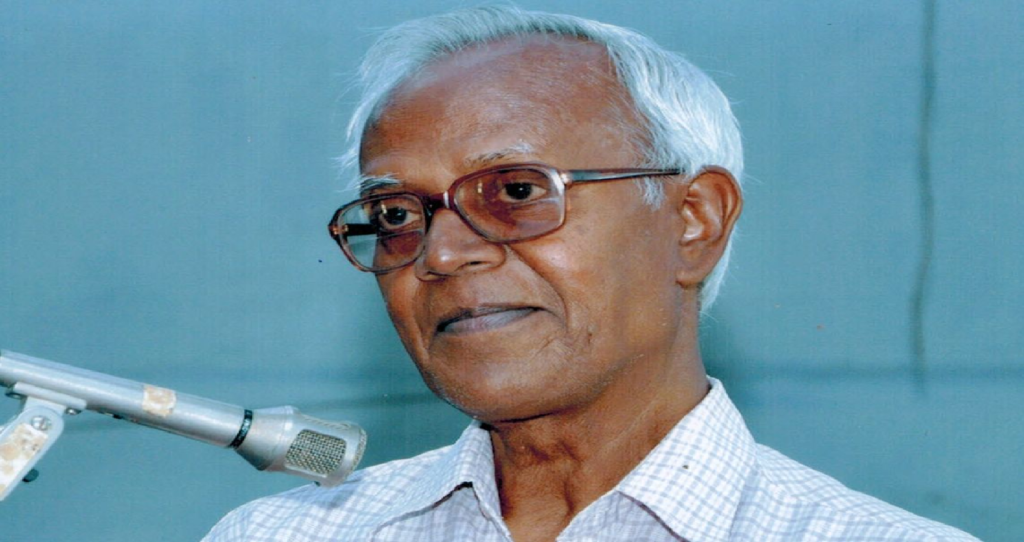
Following the principles of Ayurveda, the brand believes that your skin and hair are a reflection of your overall health. To help consumers understand and better use their products, it has a wide network of ayurvedic doctors present at their stores and website.

In a bid to quantify the efficacy of their Ayurvedic beauty solutions, the brand has been conducting clinical trials via an internationally recognised third party. Some of their findings include the Kumkumadi Serum proven to brighten by 2.5 times, reduce pigmentation by 20 per cent in 4 weeks; the Rejuvenating and Brightening Night Cream brightening skin by 2.5 times, reduces dark spots and blemishes by 20 per cent; the Kumkumadi Brightening Ayurvedic Face Scrub proven to smoothen skin by 34 per cent and reduce pores and firm skin by 24 per cent.

As a brand deep rooted in the learnings of Ayurvedic beauty, Kama Ayurveda continues to conduct trials on an increased portfolio of products, thereby strengthening and affirming the modern day beauty buyer of the power of natural beauty.

Socialite Mira Rajput Kapoor, a patron, has chosen to share her experience stating, ”A few months after delivering my second child, my skin started losing its luminosity. It looked dull and I started getting dark spots. This is a common concern as our bodies change. Around this time, I discovered and started using Kama Ayurveda’s Rejuvenating Night Cream. Every night after cleansing and toning, I started to apply this luxurious cream on my face and neck. After a few weeks, my skin was glowing, and dark spots had visibly reduced. My skin also felt super supple.” (IANS)

Report Finds Additional Evidence In Case Against Indian Activists Accused Of Terrorism, Was Planted

An unknown hacker planted more than 30 documents that investigators deemed incriminating on a laptop belonging to an Indian activist accused of terrorism, a new forensic analysis finds, indicating a more extensive use of malicious software than previously revealed, Niha Masih and Joanna Slater at The Washington Post wrote last week.

The WP says, these findings will heighten concerns about the controversial prosecution of a group of government critics under Prime Minister Narendra Modi. Arsenal Consulting, a Massachusetts-based digital forensics firm, examined an electronic copy of the laptop at the request of defense lawyers. The Washington Post reviewed a copy of the report.

A previous analysis by Arsenal, which The Washington Post reported in February, found that 10 letters had been deposited on the laptop, including one that discussed an alleged plot to assassinate Modi. The latest report by Arsenal finds that 22 additional documents were also delivered to the computer by the same attacker.

The documents – now totaling 32 – have been cited by law enforcement as evidence against a group of activists accused of working with a banned Maoist militant group that has waged a decades-old insurgency against the Indian state.

Known as the Bhima Koregaon case, the prosecution is considered a bellwether for the rule of law in India. Human rights groups and legal experts view the case as an effort by the government to clamp down on critics.

The space for dissent has diminished in Modi’s India, where journalists, activists and members of nongovernmental organizations have faced arrest and harassment.

The activists accused in the case deny the charges against them. They include a prominent academic, a labor lawyer, a justifyist poet, a Jesuit priest and two singers. All are advocates for the rights of the country’s most disadvantaged communities and vocal opponents of the ruling party. Many of them have been jailed for nearly three years as they await trial.

The two reports by Arsenal focus on a laptop belonging to Rona Wilson, a Delhi-based activist. In February, lawyers for Wilson submitted the first report to a court in Mumbai and urged the judges to dismiss the charges against their client. The court is expected to hold a hearing on the petition.

Jaya Roy, a spokeswoman for the National Investigation Agency (NIA), the anti-terrorism authority overseeing the case against the activists, said an analysis by a government forensic laboratory did not indicate that the laptop had been compromised by malware. She did not provide details on how the laboratory reached that conclusion.

“Our investigation is complete,” Roy said. The NIA cannot revisit “any evidence based on a private lab’s report.” The Washington Post asked three experts on malware and digital forensics in North America to review Arsenal’s initial report, and they found its findings valid. A fourth expert reviewed both reports and said the conclusions were sound.

In its latest report, Arsenal includes data it recovered from the laptop showing the attacker typing commands to deliver documents to a hidden folder. It’s the equivalent of a “videotape of someone committing the crime,” said Mark Spencer, Arsenal’s president.

Arsenal has so far conducted its work on the reports on a pro bono basis, Spencer said. Founded in 2009, Arsenal performs computer forensic analysis for companies, law firms and government agencies, and it has provided expert testimony in cases such as the Boston Marathon bombing.

In the Indian case, an attacker used NetWire, a commercially available form of malware, to compromise Wilson’s laptop for nearly two years starting in 2016, Arsenal said.

The latest report shows that 22 additional documents were placed in a hidden folder on Wilson’s computer. They include details of purported meetings of Maoist militants, alleged correspondence with Maoist leaders and details of funds received by the banned group.

Two other files were stored in a folder on the Windows drive of the laptop. Unlike the other 22 files, Arsenal could not confirm they were delivered specifically by NetWire. But it found no evidence of any legitimate interaction with the documents and called their location in an unrelated application folder “suspicious.”

Arsenal’s “step-by-step” explanation of how the 22 documents were delivered is very clear and experts in the field “would draw all the same conclusions” based on that data, said Kevin Ripa, president of the Grayson Group of Companies and an expert in digital forensics.

The compromising of Wilson’s computer was just one element of a larger malware campaign. The same attacker also targeted his co-defendants, Arsenal said. Eight people seeking to help the activists, too, received emails with malicious links that deployed NetWire, according to a report from Amnesty International.

Several of the same domain names and internet protocol addresses were used to target both the activists and their associates.

Most of the IP addresses are assigned to HostSailor, a web-hosting and virtual private server company whose website indicates it is based in the United Arab Emirates. HostSailor declined to respond to requests for comment on whether it was aware of the reports or had taken any action in response to them.

The case against the activists has its origins in a clash that unfolded on Jan. 1, 2018, in a village known as Bhima Koregaon following a memorial event celebrated by Dalits, who occupy the lowest rung in India’s caste hierarchy. The investigation into the violence, which justify one dead, rapidly expanded into a wider probe of conspiracy against the Indian state.

The authorities alleged that the clash was linked to the Communist Party of India (Maoist), a banned militant group based primarily in the forests of central India. Earlier this month, 22 security personnel were killed in an apparent ambush by militants, the worst such incident in nearly four years.

The most recent activist to be jailed in the Bhima Koregaon case is an 83-year-old Jesuit priest named Stan Swamy. He is the oldest person in India to be arrested on terrorism charges. Swamy suffers from Parkinson’s disease and requires help to bathe and write letters, said Joseph Xavier, a priest and close friend. Swamy has spent more than six months in jail during the coronavirus pandemic.

Rev. Swamy lived in Jharkhand, one of the poorest states in India, where he worked for the rights of Indigenous tribal communities. He has spearheaded campaigns challenging the acquisition of tribal land and the detentions of tribal youths on flimsy or no evidence. In a video recorded before he was arrested, Swamy said he and other activists were being targeted because they had “expressed their dissent or raised questions” about India’s ruling party.

On a recent phone call from jail, Swamy’s chief concern was the well-being of his colleagues and the organization he ran, Xavier said. Even in moments of hardship or pain, Swamy “will not complain,” his friend said. “That is the kind of person he is.”

Salman Khan’s ‘Radhe’ To Be Released On Eid

Keeping up with the promise of an Eid release, Bollywood superstar Salman Khan’s movie ‘Radhe: Your Most Wanted Bhai’ is all set to make it to the theatres and digital platforms on May 13. The trailer of the film is slated to drop tomorrow.
The digital release of ‘Radhe: Your Most Wanted Bhai’, however, won’t be available for free.

The makers have taken the pay-per-view route, which means that the audience will have to pay a certain amount to watch the movie at their homes. This would not be a part of their subscription to OTT platforms. The makers of the film, on Wednesday, shared the mega release plan on their Instagram handle, along with a poster of the upcoming movie. They wrote, “The perfect Eid celebration! #Radhe: Your Most Wanted Bhai, releasing simultaneously on multiple platforms worldwide. #RadheThisEid.”

Film critic and movie trade analyst Taran Adarsh also confirmed the same on his Twitter handle by tweeting, “#RADHE IN CINEMAS AND DIGITAL MEDIUMS ON SAME DAY… #SalmanKhan’s #Radhe will release simultaneously in cinemas and digital mediums [pay per view] on 13 May 2021… Trailer drops tomorrow.”

ZEE Studios will be the first studio in India to be adopting a multi-format release worldwide. Speaking on this Shariq Patel, CBO, Zee Studios shared, “The ongoing pandemic forced us to innovate, and we are proud to be the first to embark upon this new distribution strategy. While we all love to catch the latest movies at the nearest theatres, we realized we’d be doing a disservice to Salman’s fans nationwide if we aren’t able to release theatrically in all Indian states. We sensed the need for a pay-per-view solution along with theatres, which gives the consumers flexibility and convenience of viewing the film.”

He further continued, “There cannot be a better film than Radhe to offer the audiences who’ve been waiting for an out and out entertainer for over a year now. Radhe continues our network’s deep relationship with Salman Khan and we are looking to release the film in over 40 countries including theatrical release in major overseas markets.”

Salman Khan Films’ spokesperson added, “It’s imperative that we all come together and think of out-of-the-box solutions for cinema as an industry during the current pandemic situation. We will support the theatre owners by releasing the film in as many theatres as we can, keeping in line with the rules and protocols laid down by the government. But, considering the guidelines and safety measures, we also need to devise ways to ensure that the film reaches all of our audience. We don’t want to deny the audience the choice of entertainment in the comfort of their homes during these times.”

The film will be released on ZEE’s pay-per-view service ZEEPlex which rests on India’s leading OTT platform ZEE5 and also on all leading DTH operators. The actor, along with his studio partner Zee Studios, have opted for this hybrid release model given the rise in coronavirus cases across the country.

‘Radhe: Your Most Wanted Bhai’ will also have a theatrical release and will be available in theaters in all Indian states where the theaters are operational as per COVID protocols. A wide international theatrical release targeting 40 countries across all international territories is also being planned. It will be the first Bollywood film to release theatrically in the UK since the lockdown last year.

The action flick by the Yash Raj Films banner, directed by Prabhudeva, was earlier scheduled to release on Eid 2020, but it could not see the light of the day due to the closing of film theatres owing to coronavirus-induced lockdown.
The movie will see Salman Khan romancing Disha Patani. The flick also features Jackie Shroff and Randeep Hooda.

‘Radhe’ is co-produced by Salman Khan, Sohail Khan, and Atul Agnihotri under the banners Salman Khan Films, in association with Zee Studios, Sohail Khan Productions, and Reel Life Production.

US Lifts Ban On Exports Of Key Ingredients To Manufacture Covid Vaccine To India

With the Covid-19 surge crippling the healthcare system in India, the US, which had earlier said its primacy was for its citizens, changed its stance and has lifted export controls on raw materials for vaccines that were put in place in February.

With the Covid-19 surge crippling the healthcare system, hectic diplomacy is on with major countries for urgent supply of vaccines, oxygen-related equipment such as tankers, ventilators and other critical life-saving devices. The US, which had earlier said its primacy was for its citizens, changed its stance on lifting export controls on raw materials for vaccines that were put in place in February, following repeated requests from Indian officials and the Serum Institute of India.

A lethal, fast-paced second wave of the coronavirus pandemic has brought India’s health care systems to the verge of collapse and is putting millions of lives and livelihoods at risk, wrote Ramanan Laxminarayan, an economist and epidemiologist, in The New York Times. According to The Wall Street Journal, hospitals in New Delhi and other hard-hit cities have been turning away patients and running low on oxygen, beds, and other medical supplies.

After declining, the Biden-Harris administration has finally agreed to provide it raw materials for vaccines that had previously been under export controls, as well as other key material. A White House statement said that National Security Advisor Jake Sullivan spoke by phone on Sunday with his Indian counterpart, Ajit Doval, and expressed “deep sympathy for the people of India following the recent spike in Covid-19 cases”, and affirmed America’s solidarity with India.

“Just as India sent assistance to the United States as our hospitals were strained early in the pandemic, the United States is determined to help India in its time of need. To this end, the United States is working around the clock to deploy available resources and supplies, it said.

“The United States has identified sources of specific raw material urgently required for Indian manufacture of the Covishield vaccine that will immediately be made available for India. To help treat Covid-19 patients and protect front-line health workers in India, the United States has identified supplies of therapeutics, rapid diagnostic test kits, ventilators, and Personal Protective Equipment (PPE) that will immediately be made available for India,” it read.

Many in Washington DC’s political and business elite are in favor of helping India, sources said. On Saturday, the US Chamber of Commerce made a vocal pitch, calling on the White House to release “the millions of AstraZeneca vaccine doses in storage” — apart from life-saving equipment — to India, Brazil, and other nations hit hard by the pandemic.

Several US lawmakers have expressed concern over the sudden spike in COVID-19 cases in India and have urged the Biden administration to provide all necessary help to the country. “We have the resources to help, and other people need it; that makes it our moral obligation to do so,” Democratic Senator Edward Markey said in a tweet.

Congressman Gregory Meeks, Chairman of House Foreign Affairs Committee, said he was concerned about the situation in India. “Sending my thoughts and support to our friends in India fighting this terrible second wave of the COVID19 pandemic,” he said Congresswoman Haley Stevens said that her thoughts are with the people of India during this devastating COVID-19 surge.

Indian American Congressman Ro Khanna, while sharing a tweet from eminent public health expert Ashish K Jha, said, “India is in the throes of a horrendous COVID surge.
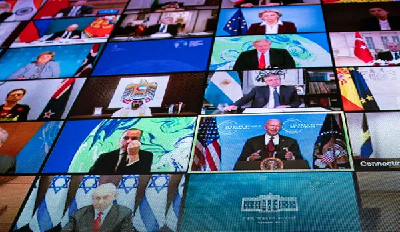
Horrendous. They are struggling to get more people vaccinated. We are sitting on 35-40 million doses of AstraZeneca vaccine Americans will never use. Can we please give or lend them to India? Like, maybe now? It’ll help. A lot,” Jha had said.

On Friday, US Health Secretary Matt Hancock tweeted, “Heartbreaking scenes from India… We stand ready to help fight this awful virus.” Top medical advisor to the US President Dr Anthony Fauci also said the CDC (Centers for Disease Control and Prevention) was in talks with Indian counterparts for technical assistance, adding, “we’re trying to help in any way we can”. “Obviously they need to get their people vaccinated because that’s the only way we’re going to turn that around,” Dr Fauci said.

White House spokesperson Jen Psaki said the US is “working closely with Indian officials at political and experts’ level for ways to help address the crisis”. For a month now, vaccine manufacturers and upstream suppliers have been reporting shortage of raw and packaging materials, critical consumables and equipment. Over time, such shortages can lead to shortage of vaccines and impact delivery commitments, as well as delay regulatory clearances for some products, experts said.

UK to Send Raw Materials to India

The UK will be sending more than 600 pieces of vital medical equipment to India to support it in fight against Covid-19, the UK government announced. The assistance package, funded by the Foreign, Commonwealth & Development Office, includes ventilators and oxygen concentrators from surplus stocks. The Department of Health and Social Care have worked closely with the NHS, as well as suppliers and manufacturers in the UK to identify reserve life-saving equipment that can be sent to India.

Recently, India has been reporting high number of Covid-19 cases and deaths while several reports of shortage of oxygen are also coming. The first shipment of equipment has already justify the UK and it will be arriving to India in the early hours of Tuesday. Further shipments are due to follow later this week.

In total, nine airline container loads of supplies, including 495 oxygen concentrators, 120 non-invasive ventilators and 20 manual ventilators, will be sent to the country this week. This equipment will be crucial in helping to save the lives of the most vulnerable in India. The oxygen concentrators, for example, can extract oxygen from the air in the atmosphere so that it can be provided to patients, taking the strain off hospital oxygen systems and allowing oxygen to be provided in situations where hospital oxygen supplies have run out.

Indian American Groups Offer Help to India

Several Indian-American groups have started raising funds to urgently airlift medical supplies including oxygen to help India in its fight against coronavirus.

“In the past week, we have been receiving nothing but mind numbing news from many countries around the world, particularly in India, the land of our birth,” stated Dr. Sudhakar Jonnalgadda, President of American Association of Physicians of Indian Origin (APPI) the largest ethnic medical organization in the country. Pointing to the fact that the statistics are chilling,

Dr. Sudhakar Jonnalagadda, while referring to the several proactive steps in educating their members and the general public about the disease, the preventive steps that needs to be taken at this time and most importantly, they are using all their contacts and resources at the hospital administrative and government levels to facilitate treatment protocols to be in place at the various hospitals in the US and in India, urged AAPI members and the general public to step up and donate generously as India, our motherland is facing one of the most serious health crisis in decades. “This is the time for immediate AAPI action. As doctors, we all share a visceral urge to do something about it,” he added.

“This is truly a humanitarian crisis of apocalyptic proportions which needs an immediate response,” wrote Indian-American Mike Sikand, chairman Oceanport Democratic Committee in New Jersey to Senator Robert Menendez, Chairman of the Senate Foreign Relations Committee. “Another step that you could take is to help increase hospital bed capacity in India by providing equipment and financial assistance to set up makeshift hospitals or even sending USS Mercy to help India deal with this crisis,” Sikand said in the letter to Menendez.

GOPIO Thanks President Biden and Appeals to Release AstraZeneca Vaccines to India

Global Organization of People of Indian Origin (GOPIO) thanked US President Joe Biden for his announcement of USA sending raw materials for COVID-19 vaccines, medical equipment and protective gear to help India respond to a massive surge in coronavirus infections.  India is going through a grim situation now in Covid Pandemic infection and deaths. The latest report says that the new infections are about 350,000 and deaths about 3,000 per day.

GOPIO Chairman Dr. Thomas Abraham said that in the last three months, India acted as a global leader in sending vaccines to many countries. However, with the sudden unexpected Covid-19 outbreak, India needs an enormous quantity of vaccines for its 1.3 billion population. As a close ally of India, our country must help India in this grave situation.

“We appeal to you to send AstraZeneca vaccines which are stored by US manufacturers in their warehouses since the US is yet to authorize its use here while it has been used in India,” Dr. Abraham appealed in his letter to President Biden. GOPIO also requested President Biden to facilitate manufacturing of other vaccines in India so that the global demand can be met sooner.

For Biden’s Climate Summit To Make Progress, There Is Need to Involve the World

The United States convened 40 heads of state in a virtual climate summit last week, with the goal of eliciting commitments from attendees for radical reductions in carbon emissions.

The United States convened 40 heads of state in a virtual climate summit last week, with the goal of eliciting commitments from attendees for radical reductions in carbon emissions. The Biden administration has pledged 50% reduction below 2005 levels by 2030, and others announced their own new targets — with the overall goal of putting the planet on track to carbon neutrality by 2050, the minimum needed to avert catastrophic climate change.

But before patting themselves on the back for a job well done, the leaders of those 40 nations, many of them advanced economies, might want to take a look at some of the countries that didn’t make the guest list. Several developing and less stable nations are going in the opposite direction, building fossil-fuel energy infrastructure at this moment that will increase emissions for decades to come. Without their buy-in, the world going net-zero by 2050 is an unattainable goal. And environmentalists and climate finance experts say the wealthiest nations need to be doing more to bring the rest with them.

Just a few days before the summit, on April 11, the presidents of Uganda and Tanzania, along with the heads of French oil giant Total and the China National Offshore Oil Corporation, signed an agreement to start construction on a multi-billion-dollar pipeline project connecting the oil fields of Uganda to the Tanzanian coast some 1,400 km (850 miles) away.

When completed in 2025, the East Africa Crude Oil Pipeline [EACOP] will turn Uganda into sub-Saharan Africa’s fifth biggest oil producer, while increasing its CO2 emissions by 34 million tons a year — more than six times the country’s current output of 5.5 million tons.

Ugandan President Yoweri Museveni has called the project an “economic victory,” bringing thousands of jobs while funding Uganda’s transition to affluence. The pipeline, he says, could do the same for neighbors South Sudan and the Democratic Republic of Congo, becoming the “core of bigger developments,” should they choose to exploit and export their own vast oil resources.

It’s true that EACOP’s total emissions pale in comparison to the output of most countries attending Biden’s climate summit. But the project still underscores how vulnerable global net-zero pledges are to competing demands for economic growth, says Landry Ninteretse, the Kenya-based Africa Regional Director for the climate advocacy group 350.org. “You can’t say ‘yeah we’re going to meet this net-zero target by 2050, but at the same time let’s allow a couple of projects to move forward.’”

In addition to reduction pledges, he says he would like to see the summit’s attendees start providing real climate solutions for smaller or less wealthy nations. “That starts with a commitment to stop any new fossil fuel development project, whether it’s coal, gas or oil, while prioritizing investments that will help transition away from fossil fuels.”

It is disingenuous, Ninteretse says, for countries like China or France to commit to reducing emissions at home, while allowing private or public companies to build fossil fuel projects abroad. A dozen coal-generated power plants are currently under construction in Africa, and another 20 have been announced, according to the Global Coal Plant Tracker.

Those investments, says Ninteretse, “are coming from the very fossil fuel corporations that are no longer authorized to operate in most of the global north context, so they are seeking new ventures in the global south, where maybe the issue of transparency, accountability, and environmental regulations are not so well enforced. They’re just shifting the burden to a continent that is already suffering the most from the impact of climate change.”

How to grow while staying green

Right now, the countries of Africa are together responsible for less than 4% of global carbon emissions. But their population is set to double by 2050, to 2.5 billion people. The need for jobs, and for energy to power those jobs, is paramount. Yet development aid and private investment into green energy is significantly lower than in traditional fossil fuels. Coal, oil and gas will account for up to two thirds of the continent’s electricity generation by 2030, according to a January report from the University of Oxford published in the journal Nature Energy. While some African nations, such as Kenya and Ethiopia, have set ambitious “green growth” targets, other governments argue that the cost of renewable energy is simply too high for their developing economies.

The only way to flip Africa’s energy balance is if there is significant investment, says Mark Carney, the United Nations special envoy for climate action and finance. “Of course the objective here is to rapidly grow the these [African] economies alongside decarbonization. That puts a huge emphasis on the availability of finance.”

As part of the 2015 Paris Agreement, wealthy nations agreed to set aside $100 billion a year in climate financing to help developing nations adapt to climate change and transition to renewable sources of power. But it is still underfunded—in 2018, the latest information available, countries had only committed a total of $78.9 billion—and does nothing to stop the dozens of fossil fuel projects already in progress on the continent.

Another challenge for the international community will be convincing people from emerging countries that a green transition will benefit them. Ugandans themselves largely support the East Africa oil pipeline, says Ugandan climate activist Vanessa Nakate. “They are seeing this oil like a blessing, something that is going to bring lots of money and jobs to the country. They do not have the awareness of the destruction that is going to happen to our country, to the planet.”

Better education is vital, she says. So too is holding the private sector to account. Total’s 72% ownership share in the project flies in the face of its stated commitment to become carbon neutral by 2050, says Nakate. “My question is, how is Total achieving net-zero by leading the construction of the East African crude oil pipeline? Because constructing this pipeline means that we won’t be able to limit the global temperature rise. Net zero does not mean that you allow more decades of environmental destruction.”

Total, the China National Offshore Oil Corporation and the Ugandan and Tanzanian national oil companies still have to secure insurance and raise $2.5 billion in debt financing for the project to move forward. She is hoping that a global awareness campaign could make investment banks think twice before committing funds. “This fight is not something for activists in Uganda alone,” she says. “If the African continent really wants to go net zero, it has to opt for more sustainable ways of development. Our future is not on fossil fuels, our future is on renewables. And this is something that our leaders, and our companies, have to understand.”

Developing countries will have an opportunity to address those issues in just a few months, at the United Nations Climate Change conference in Glasgow in November. Carbon emission reductions will still be a hot topic, but net-zero pledges alone won’t be enough: with all 197 signatories to the Paris Agreement hoping to be in attendance, discussions will focus on a more equitable approach — where countries with the lowest emissions can negotiate for greater assistance to stay that way.

Modi Announces US-India Partnership To Fight Climate Change

Prime Minister Narendra Modi has announced a global initiative in cooperation with the US to mobilize investments for the greening of the world and promote collaboration to fight global warming.

Warning that the Covid-19 pandemic is a grim reminder of the dangers of climate change, Prime Minister Narendra Modi has announced a global initiative in cooperation with the US to mobilize investments for the greening of the world and promote collaboration to fight global warming.

“Humanity is battling a global pandemic right now and this event is a timely reminder that the grave threat of climate change has not disappeared,” he said at the Leaders Summit on Climate Change convened by President Joe Biden.

“President Biden and I are launching the India-US Climate and Clean Energy Agenda 2030 Partnership. Together we will help mobilise investments, demonstrate clean technology and enable green collaboration.”

Leaders of 40 countries are participating in the summit. They include Presidents Xi Jinping of China and Vladimir Putin of Russia, with whom Biden has an increasingly hostile relationship, but they have put aside their difference in the climate cause.

Biden said: “The signs are unmistakable (of climate change dangers). The science is undeniable. The cost of inaction keeps mounting. The United States isn’t waiting. We are resolving to take action.” Biden said that the US would cut its greenhouse emissions from the 2005 level by half by 2030.

He announced the first US Climate Finance Plan to promote public sector “to increase the quality and quantity of climate financing” and spur the private sector to contribute to developing countries’ programs. He said that the global goal was mobilising $100 billion per year for developing countries to meet the climate challenge.

To help meet this goal, he said that the US will double by 2024 “our annual public climate development finance to developing countries compared to what we were providing during the second half of Obama-Biden administration”.

The US will also “triple our financing for climate application for developing countries by 2024”. Calling for an end to fossil fuel subsidies, he said he said that it was important to “help developing countries leapfrog to the clean technologies of tomorrow”.

In a subtle dig at the hypocrisy of Western leaders, media and activists who paint India as the third-largest greenhouse gas emitter and demand it cut down emissions, Modi pointed out that each Indian’s greenhouse gas footprint is 60 per cent lower than the world average.

“It is because of our lifestyle is still rooted in sustainable, traditional practices,” he said. “Today I want to emphasize the importance of lifestyle change in climate action, sustainable lifestyle changes and guiding philosophy of back to basics,” he added.

Modi said that India was doing its part to fight climate change. “Our ambitious renewable energy target of 450 gigawatts by 2030 shows our commitment. Despite our development challenges we have taken many bold steps on clean energy, energy efficiency, afforestation and biodiversity.”

“That is why we are among the few countries whose NDCs (nationally determined contributions to the Paris Climate Agreement goals) are 2 degrees Celsius compatible,” Modi said. “Climate change is a lived reality for millions around the world. Their lives, their livelihoods are already facing its adverse consequences,” he said.

India has encouraged global initiatives like the International Solar Alliance and the Coalition for Disaster Resilient Infrastructure, Modi added. “As climate resposnsible developing country, India welcomes partners to create templates of sustainable development in India. This can also help other development countries who need affordable acess to green finance and clean technology,” he said.

Modi was the second non-US leader to speak after Xi at the virtual conference. Xi said that China was making extraordinary efforts like ending coal power generation in order to reach its cimate change goals. (IANS)

Address by Prime Minister at the Leaders’ Summit on Climate 2021

April 22, 2021

Your Excellency President Biden,
Distinguished colleagues,
My fellow Citizens of this Planet,

Namaskar!

I would like to thank President Biden for taking this initiative.Humanity is battling a global pandemic right now.And, this event is a timely reminder that the grave threat of Climate Change has not disappeared.

In fact, Climate Change is a lived reality for millions around the world.Their lives and livelihoods are already facing its adverse consequences.

Friends,

For humanity to combat Climate Change, concrete action is needed.We need such action at a high speed, on a large scale, and with a global scope.We, in India, are doing our part.Our ambitious renewable energy target of 450 Gigawatts by 2030 shows our commitment.

Despite our development challenges, we have taken many bold steps on clean energy, energy efficiency, afforestation and bio-diversity.That is why we are among the few countries whose NDCs are 2-degree-Celsius compatible.

We have also encouraged global initiatives like International Solar Alliance, LeadIT, and the Coalition for Disaster Resilient Infrastructure.

Friends,

As a climate-responsible developing country, India welcomes partners to create templates of sustainable development in India.These can also help other developing countries, who need affordable access to green finance and clean technologies.

That is why, President Biden and I are launching the “India-US climate and clean energy Agenda 2030 partnership”. Together, we will help mobilise investments, demonstrate clean technologies, and enable green collaborations.

Friends,

Today, as we discuss global climate action, I want to leave one thought with you.India’s per capita carbon footprint is 60% lower than the global average.It is because our lifestyle is still rooted in sustainable traditional practices.

So today, I want to emphasise the importance of lifestyle change in climate action.Sustainable lifestyles and a guiding philosophy of “Back to Basics” must be an important pillar of our economic strategy for the post-Covid era.

Friends,

I recall the words of the great Indian monk Swami Vivekananda.He called on us to “Arise, awake and stop not until the goal is reached”.Let us make this a Decade of Action against climate change.

Thank you. Thank you very much.

***

‘Nomadland’ Wins Best Picture At Oscars

Chloé Zhao’s “Nomadland,” won best picture at the 93rd Academy Awards, where the China-born Zhao became the first woman of color to win best director and a historically diverse group of winners took home awards.

Chloé Zhao’s “Nomadland,” a wistful portrait of itinerant lives on open roads across the American West, won best picture on Sunday, April 25th at the 93rd Academy Awards, where the China-born Zhao became the first woman of color to win best director and a historically diverse group of winners took home awards, Associate Press reported.

“I have always found goodness in the people I’ve met everywhere I went in the world,” said Zhao when accepting best director, which Kathryn Bigelow (“The Hurt Locker”) was the only previous woman to win. “This is for anyone who has the faith and the courage to hold on to the goodness in themselves and to hold on the goodness in other no matter how difficult it is to do that.”

With a howl, “Nomadland” star Frances McDormand implored people to seek out her film and others on the big screen. Released by the Disney-owned Searchlight Pictures, “Nomadland” premiered at a drive in and debuted in theaters, but found its largest audience on Hulu.  “Please watch our movie on the largest screen possible,” McDormand said. “And one day very, very soon, take everyone you know into a theater, shoulder to shoulder in that dark space, and watch every film that’s represented here tonight.”

The best actor award went to Anthony Hopkins for his performance in the dementia drama “The Father.” The award had been widely expected to go to Chadwick Boseman for his final performance in “Ma Rainey’s Black Bottom.” McDormand won best actress, too — her third such win. Only Katharine Hepburn, a four-time winner, has won best actress more times.

The most ambitious award show held during the pandemic, the Oscars rolled out a red carpet and tried to restore some glamour to a grim year. For the first time ever, this year’s nominees were overwhelmingly seen in the home during a pandemic year that forced theaters to close and prompted radical change in Hollywood.

The ceremony — fashioned as a movie of its own and styled as a laid back party — kicked off with opening credits and a slinky Regina King entrance, as the camera followed the actress and “One Night in Miami” director in one take as she strode with an Oscar in hand into Los Angeles’ Union Station and onto the stage. Inside the transit hub (trains kept running), nominees sat at cozy, lamp-lit tables around an intimate amphitheater. Some moments — like Glenn Close getting down to “Da Butt” — were more relaxed, but the ceremony couldn’t just shake off the past 14 months.  “It has been quite a year and we are still smack dab in the middle of it,” King said.
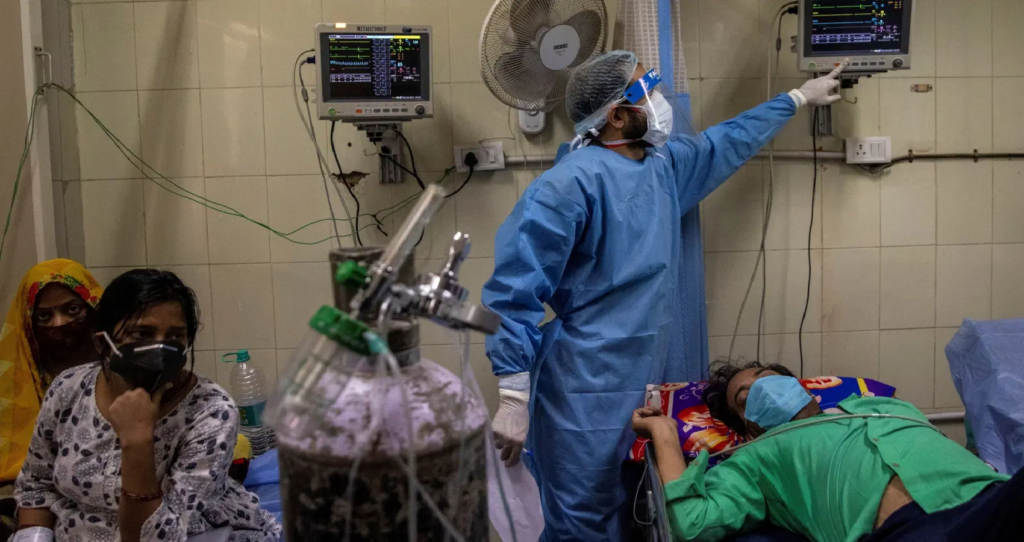
Daniel Kaluuya won best supporting actor for “Judas and the Black Messiah.” The win for the 32-year-old British actor who was previously nominated for “Get Out,” was widely expected. Kaluuya won for his fiery performance as the Black Panther leader Fred Hampton, whom Kaluuya thanked for showing him “how to love myself.”

“You’ve got to celebrate life, man. We’re breathing. We’re walking. It’s incredible. My mum met my dad, they had sex. It’s amazing. I’m here. I’m so happy to be alive,” Kaluuya said, while cameras caught his mother’s confused reaction.

Pixar notched its 11th best animated feature Oscar with “Soul,” the studio’s first feature with a Black protagonist. Peter Docter’s film, about a about middle-school music teacher (Jamie Foxx), was one of the few big-budget movies in the running at the Academy Awards. (It also won best score, making Jon Batiste the second Black composer win the award, which he shared with Trent Reznor and Atticus Ross.) Another was Christopher Nolan’s “Tenet,” which last September attempted to resuscitate moviegoing during the pandemic. It took best visual effects.

David Fincher’s “Mank,” a lavishly crafted drama of 1940s Hollywood made for Netflix, came in the lead nominee with 10 nods and went home with awards for cinematography and for production design. Netflix led all studios with seven Oscars but again — after close calls with “The Irishman” and “Roma,” again missed out on the top award.

“My Octopus Teacher,” a film that found a passionate following on Netflix, won best documentary. Danish director Thomas Vinterberg’s “Another Round” won best international film, an award he dedicated to his daughter, Ida, who in 2019 was killed in a car crash at age 19.  The biggest ticket-seller of the best picture nominees was “Promising Young Woman,” with $6.4 million in box office.

The night’s first award went to Emerald Fennell, the writer-director of the provocative revenge thriller “Promising Young Woman,” for best screenplay. Fennell, winning for her feature debut, is the first woman win solo in the category since Diablo Cody (“Juno”) in 2007.

More women and more actors of color were nominated than ever before, and Sunday brought a litany of records and firsts across many categories, spanning everything from hairstyling to composing to acting. It was, some observers said, a sea change for an awards harshly criticized as “OscarsSoWhite” in recent years, leading the film academy to greatly expand membership.

The telecast, produced by a team led by filmmaker Steven Soderbergh, moved out of the awards’ usual home, the Dolby Theatre, for Union Station. With Zoom ruled out for nominees, the telecast included satellite feeds from around the world. Performances of the song nominees were pre-taped and aired during the preshow.

Nikki Haley Says She’ll Support Trump, Stand Down If He Runs in 2024

Indian American former U.N. Ambassador and South Carolina Gov. Nikki Haley, often mentioned as a possible 2024 GOP presidential contender, has said that she would not seek her party’s nomination if former President Donald Trump opts to run a second time. “Yes,” Haley said, when asked if she would support a second bid by Trump, in whose Cabinet she served for the first half of his administration.

“I would not run if President Trump ran, and I would talk to him about it,” Haley said, asked by The Associated Press if a possible Trump bid could preclude her own effort, were he to announce first. “That’s something that we’ll have a conversation about at some point, if that decision is something that has to be made.”

Haley spoke after touring the campus of South Carolina State University, an HBCU in Orangeburg where current President James E. Clark showed her campus improvements including a revamped student center and state-of-the-art cancer research and cybersecurity facilities.

The visit was one of Haley’s first public events in months in her home state. Since her 2016 resignation as South Carolina governor to join Trump’s Cabinet, Haley has maintained a delicate balancing act among Republicans who have in some ways been sharply split on the now-former president. In two years at the United Nations, Haley treaded a path of speaking out against Trump while not directly drawing his ire. She justify the office on her own terms in 2018, a rarity then during a wave of staffing turmoil.

Haley has made several moves in recent years to fuel speculation her sights are on higher office. In 2019, she and her family moved back to South Carolina, purchasing a home in the Kiawah Island community. She also launched a political action committee, published a memoir and commanded as much as $200,000 for speaking appearances.

Republicans had already been grappling with the party’s future following Trump’s tumultuous term. But after the Jan. 6 Capitol Hill violence as lawmakers gathered to certify Joe Biden’s election victory, Haley said Trump had been “badly wrong” in stoking the crowd before the riot, telling an audience at the Republican National Committee winter meeting that Trump’s “actions since Election Day will be judged harshly by history.”

Haley also said the whole notion was “deeply disappointing” because of the effect it will have on the legacy of the Trump administration, echoing remarks by some including fellow South Carolinian Sen. Lindsey Graham, who called the melee Trump’s “self-inflicted wound.”

On Monday, Haley defended her former boss, who this past weekend lit into fellow Republicans including his own vice president, saying he was “disappointed” in Mike Pence and calling Senate Minority Leader Mitch McConnell a “stone-cold loser.”

We Know More As To How The Vaccines Work

COVID-19 vaccines teach our immune systems how to recognize and fight the virus that causes COVID-19. It typically takes two weeks after vaccination for the body to build protection (immunity) against the virus that causes COVID-19. That means it is possible a person could still get COVID-19 before or just after vaccination and then get sick because the vaccine did not have enough time to provide protection.  People are considered fully protected two weeks after their second dose of the Pfizer-BioNTech or Moderna COVID-19 vaccine, or two weeks after the single-dose Johnson & Johnson’s Janssen COVID-19 vaccine, CDC has stated.

Studies have shown that several vaccines are highly effective in preventing people getting seriously ill from Covid-19. Now, early results from a survey in the UK suggest two commonly used vaccines — the Pfizer-BioNTech and AstraZeneca shots — can significantly reduce infections.

Twenty-one days after the first vaccine, odds of a new Covid-19 infection were reduced by 65%, according to results from the COVID-19 Infection Survey, coordinated by the University of Oxford, the Office of National Statistics and the Department for Health and Social Care. The largest reductions in odds were seen after a second dose, it said.

The numbers appeared more promising for the prevention of symptomatic infections. The odds of testing positive and self-reporting symptoms were reduced by 90% after the second dose. And vaccination was just as effective in the vulnerable over-75 age group as it was in younger people.

Two studies highlighting the results were posted as pre-prints and have not been peer-reviewed. They analysed 1.6 million test results from nose and throat swabs taken from more than 373,000 people between December and the start of April.

But experts advise people to continue with Covid prevention measures, as some infections will still be transmitted, particularly when large numbers of the population have had just one dose in a two-dose regimen or haven’t been vaccinated at all. Although infections are at a record high, lives are being saved in countries with effective immunization programs.

Although COVID-19 vaccines are effective at keeping you from getting sick, scientists are still learning how well vaccines prevent you from spreading the virus that causes COVID-19 to others, even if you do not have symptoms. Early data show the vaccines do help keep people with no symptoms from spreading COVID-19, but we are learning more as more people get vaccinated.

We’re also still learning how long COVID-19 vaccines protect people. For these reasons, people who have been fully vaccinated against COVID-19 should keep taking precautions in public places, until we know more, like wearing a mask, staying 6 feet apart from others, avoiding crowds and poorly ventilated spaces, and washing your hands often.

New Restrictions For Travel To And From India

Once thought to be nearing ‘herd immunity’ with rapidly declining case numbers, India is now the latest hotspot experiencing a rapid surge of COVID-19 cases. This time around, the country is seeing cases linked to a “double mutant” coronavirus variant – which has been shown to be even more contagious than the initial virus. With the benefit of hindsight, countries around the world are taking swift action to cut off international travel to try and stop or at least slow the spread of this new variant. Let’s take a look at the countries now taking action, as well as what specific measures are being taken.

The UK, Singapore, New Zealand, Oman, Kuwait, the UAE, Iran, Hong Kong and Canada have imposed restrictions on passengers arriving from India by allowing only citizens to enter their borders. With Iran and Kuwait also suspending flights from India on account of the Covid-19 surge here, a dozen countries have now imposed some form of fresh restriction on travellers from India to protect their jurisdictions from the virus spread.

Which countries have imposed restrictions?

The UK, Singapore, New Zealand, Oman, Kuwait, the UAE, Iran, Hong Kong and Canada have imposed restrictions on passengers arriving from India by allowing only citizens to enter their borders. Even passengers who have been to India in the previous 14 days or are transiting through an airport in India are not allowed to enter.

Other countries like France have imposed a strict quarantine routine for passengers arriving from India, while the US has issued an advisory asking people not to travel to India, even if fully vaccinated. Australia, on the other hand, has said that it will restrict the number of its citizens that can enter its borders from India.

Why did United Airlines cancel its flights out of Delhi?

US-based United Airlines has canceled its flights out of Delhi to destinations such as Newark, San Francisco and Chicago citing “ongoing Covid-19 travel requirement discussions with local authorities” that were impacting its ability to operate the flights. However, the airline later said that it was resuming its flights from Sunday. Also, its Mumbai flights continued to operate as per schedule.

Has the US restricted travel from India?

No, the US has not yet announced any fresh restrictions on travelers from India. But the US Centre for Disease Control and Prevention issued a non-binding advisory asking people to not go to India even if fully vaccinated. The US State Department has echoed this advisory. It must be noted though that the US Embassy in New Delhi has cancelled in-person visa appointments and interview-waiver appointments from April 26 till May 9 in light of “current pandemic conditions”. Emergency services for American citizens will continue and consulates in Chennai, Hyderabad and Kolkata will continue to offer limited visa appointments.

Air India cancels UK flights from April 24 to 30

National carrier Air India has decided to cancel flights between India and the UK from April 24 to 30. The move comes after Britain recently announced travel restrictions on non-UK and non-Irish citizens.

“Passengers who were to travel between India and UK, may kindly note that in view of recent restrictions announced by UK, flts from and to UK stand cancelled from 24th to 30th April ’21. Further updates regarding rescheduling, refunds & waivers will be informed shortly.”

“Between 24th to 30th April ’21 we are in a process to schedule once a week flight to UK from Delhi & Mumbai. Information regarding the same will also be updated on our Website and Social Media Channels.”

Recently, the UK said it will impose travel restrictions on air passengers coming from India due to the fast-spreading coronavirus variant in the South Asian country.

India was added in the ‘Red List’ of countries, or those countries whose citizens cannot freely travel to the UK. Reports had quoted UK Health Secretary Matt Hancock terming the decision as a difficult but a vital one to make.

As per norms, non-UK or Irish citizens will not be allowed to enter the European country post early morning on Friday. Presently, Vistara, Air India, Virgin Atlantic and British Airways operate flights between the two countries.

Last year, India had suspended all flights to and from the UK from December 23 in the wake of the new mutant strain of novel coronavirus found in the European country. (IANS)

Emirates suspends flight services to India from April 24

Dubai-based airline Emirates will suspend flight services to India from 11.59 p.m. of April 24. “Effective 24 April 2021 Saturday, 2359 local time Dubai and for the next 10 days, Emirates flights from India to the UAE will be suspended.”

“Furthermore, passengers who have transited through India in the last 14 days will not be accepted to travel from any other point to the UAE.”

Recently, the gulf country announced travel restriction on non-UAE citizens travelling from India. Non-UAE citizens will not be allowed entry into the country from April 25, for 10 days until May 4. The ban comes at a time when India is facing a massive surge in Covid-19 cases.

The Biden Has Stronger Support As He Nears 100-Days In Office

U.S. President Joe Biden marks his 100th day in office this week with a relatively strong job approval rating and the public continuing to express positive views of the coronavirus aid package passed by Congress last month. Moreover, nearly three-quarters of Americans (72%) say the Biden administration has done an excellent or good job managing the manufacture and distribution of COVID-19 vaccines to Americans.

A national survey by Pew Research Center was conducted on the Center’s nationally representative American Trends Panel from April 5-11, 2021 among 5,109 adults. It finds that the administration gets high marks for handling the manufacture and distribution of the COVID-19 vaccines.

Currently, 59% approve of the way Biden is handling his job as president, while 39% disapprove. Biden’s job approval rating has increased modestly from 54% in March. Biden’s job approval is comparable to several of his predecessors – including Barack Obama and George H. W. Bush – and much higher than Donald Trump’s in April 2017.

Views of Biden and his administration highlight several stark contrasts with opinions of his predecessor. Far more Americans say they like the way Biden conducts himself as president (46%) than say they don’t (27%), while another 27% have mixed feelings about his conduct. Similarly, 44% say he has changed the tone of political debate for the better, while 29% say he has made the tone of debate worse (27% say he has not changed it much).

In another report, ABC has found that Intense partisanship is holding Joe Biden to a tepid job approval rating — the third-lowest for any president at 100 days in office since Harry Truman — along with continued economic dislocation, pandemic impacts and questions about Biden’s view of the size and role of government.

All told, 52% of Americans in the latest ABC News/Washington Post poll approve of Biden’s work in office, lower than any president at 100 days in office since 1945, save Gerald Ford in 1974 (48%, after his unpopular pardon of Richard Nixon) and Donald Trump at 42% in 2017. For the 14 presidents from Truman to Biden, the 100-day average is 66%.

Behind Biden’s overall rating is a range of varying assessments in this poll, produced for ABC News by Langer Research Associates. The president wins broad approval for his pandemic relief package, 65%; for his handling of the pandemic, 64%; and for his proposal to raise corporate taxes, 58%. But support for his $2 trillion infrastructure package slips to 52%, as does his rating for handling the economy; and he has just 37% approval for his work on the immigration situation at the U.S.-Mexico border.

More broadly, 53% express concern that Biden will do too much to increase the size and role of government in U.S. society. Relatedly, 40% see him as “too liberal,” more than either of his most recent Democratic predecessors at 100 days – Barack Obama, 33%, and Bill Clinton, 26%. (This rose for Obama later in his presidency.)

At the same time, public preference for smaller government with fewer services, at 48%, is its lowest in ABC/Post polls dating back nearly 30 years. Virtually as many, 45%, now favor larger government with more services — an opening, if not broad endorsement, for Biden’s call for a greater role for government in addressing social ills.

Overall, preference for larger government with more services is up 7 percentage points since last asked in August 2012, driven by increases among Democrats (+17 points), college graduates (+17), liberals (+15) and men (+8). It’s essentially unchanged among their counterparts.

Notably, too, while Biden’s overall rating lags in historical terms, it surpasses his immediate predecessor. Trump, the first president on record never to achieve majority approval, left office with a 38% job approval rating, 14 points below Biden’s today. Trump had the same 38% approval for his handling of the coronavirus — 26 points below Biden’s now.

By contrast, Biden’s rating for handling the economy is essentially the same as Trump’s in January, marking this as a clear challenge. Indeed, just 42% of Americans rate the economy positively, far below its pre-pandemic level; 58% instead say it’s in not-so-good or poor shape. Presidential fortunes often are closely linked to economic conditions.

Biden’s approval peaks among those who were most apt to support him in the presidential election: Democrats (90%), liberals (86%) and Black people (82%). It’s 12 points higher among college graduates than those without college degrees (60% versus 48%), and 8 points higher among women than men (56% versus 48%), again reflecting familiar patterns from November.

On both questions, there are sizable differences in views of Biden and Trump. Last year, just 15% said they liked the way Trump conducted himself as president, which was little changed from telephone surveys dating to 2017. In both 2020 and 2019, majorities (55% on each occasion) said Trump had changed political debate in the U.S. for the worse.

However, the share of the public saying they agree with Biden on important issues is little different from the share saying that about Trump last year. Fewer than half of Americans (44%) say they agree with Biden on all or nearly all (13%) or on many (31%) of the important issues facing the country; 25% say they agree with Biden on a few issues, while 29% say they agree with him on almost no issues. Last year, 42% of Americans said they agreed with Trump on nearly all (19%) or many issues (23%).

While an overwhelming share of Democrats and Democratic-leaning independents (88%) say the administration has done an excellent or good job in managing the vaccine rollout, so too does a much smaller majority (55%) of Republicans and Republican leaners. Public support for the coronavirus aid package, which Biden signed into law a little more than a month ago, remains robust. More than twice as many Americans approve (67%) than disapprove (32%) of the $1.9 trillion aid bill. That is little different from the 70% who favored the economic aid package in March, shortly before it was enacted.

The Pew survey finds that, for the most part, the public’s views of major problems facing the U.S. are little changed from about a year ago. However, the share of Americans saying the coronavirus is a very big problem has declined 11 percentage points since last June (from 58% to 47%), while the share citing illegal immigration has increased 20 points (from 28% to 48%).

While views of most national problems are divided along partisan lines, including illegal immigration, increasing shares of both Republicans and Democrats rate illegal immigration as a very big problem. Nearly three-quarters of Republicans (72%) say illegal immigration is a major problem, up 29 points since last June. The share of Democrats who say this is a major problem is now 29%, compared with 15% nearly a year ago.

Over this period, Republicans and Democrats have moved in opposite directions in concerns about the federal budget deficit. Currently, 71% of Republicans say the budget deficit is a very big problem; about half of Republicans (49%) said this in June 2020. By contrast, just 31% of Democrats rate the deficit as a major problem, down from 45% last year.

CDC Panel Allows J&J Vaccine for COVID-19 To Resume

A committee of the U.S. Centers for Disease Control (CDC) has decided to lift the temporary hold on using the COVID-19 vaccine made by Johnson & Johnson/Janssen as of April 23rd. The U.S. Food and Drug Administration (FDA) and CDC had temporarily halted vaccination with the J&J shot on April 13 after six reports of unusual blood clots in the brain occurred among nearly 7 million people vaccinated with the shot in the U.S.

Within hours, CDC director Dr. Rochelle Walensky accepted the panel’s recommendation and FDA officials said vaccinations could resume immediately. “The American public should feel reassured by the safety protocols we have in place for COVID-19 vaccines,” said Walensky at a briefing following the committee’s decision.

The panel of 15 independent experts was under some pressure to make a decision about the safety of the vaccine, which is the only single-shot vaccine for COVID-19 currently authorized in the U.S. But after an initial meeting on April 14, the group decided it needed more information.

Over the past week, an additional nine cases of unusual blood clots, called cerebral venous sinus thrombosis (CVST) were reported, bringing the total so far to 15 cases. All 15 have occurred in women, and most were in their 30s. However, since that’s still among several million people who had recently been vaccinated with the shot, CDC vaccine-safety experts still felt the overall risk is very small.

To put those 15 cases in context, Dr. Sara Oliver, from the CDC’s National Center for Immunization and Respiratory Diseases, and her team presented data from models they constructed to estimate how the 11-day pause in using the J&J vaccine affected COVID-19 cases, hospitalizations and death. The models showed that if the vaccine were reinstated for all adults over age 18 years, there would be 26 to 45 additional cases of the rare blood clots side effects over the next six months, but 800 to 3,500 fewer admissions to the ICU and anywhere from 600 to 1,400 fewer deaths. If officials restricted the vaccine only to people over age 50—which might make sense given that younger people are more at risk of the clotting side effect— they would expect two to three additional cases of clotting compared to 300 to 1,000 fewer ICU admissions and 40 to 250 fewer deaths.

J&J representatives at the meeting reiterated that the vaccine starts protecting people against disease within days of administration, and that data from the company’s clinical trials showed it was 85% efficacious in protecting people from severe COVID-19, including against new variants of the virus. The company favored adding a warning label about the risk of clotting, similar to the way the risk of anaphylaxis is now included in the label for the mRNA vaccines from Pfizer-BioNTech and Moderna.

Nearly 286.1 million doses of the COVID-19 vaccine have been shipped to various U.S. states as of this afternoon, of which 222.3 million doses have been administered thus far, according to TIME’s vaccine tracker. About 27.5% of Americans have been completely vaccinated. A single dose of either the AstraZeneca-Oxford University or Pfizer-BioNTech vaccine may provide protection against COVID-19 for at least 10 weeks, Oxford researchers reported during a press briefing.

As Pandemic Surges, World Anger Rises Over U.S. Vaccine Abundance

A long-simmering debate over the glaring gap in vaccine access — largely between rich and poor countries, but among some developed nations, too — is now boiling over, with global figures and national leaders decrying the vaccine plenty in a few nations and the relative drought almost everywhere else.

African nations such as Namibia and Kenya are denouncing a “vaccine apartheid,” while others are calling for policy changes in Washington and a broader rethink of the intellectual property and trademark laws that govern vaccine manufacturing in global pandemics. “It’s outrageous ethically, morally, scientifically,” said Maria Van Kerkhove, an epidemiologist with the World Health Organization, on global vaccine inequities. “We have all the kindling to start fires everywhere,” she said in an interview. “We’re sitting on a powder keg.”

It is happening at a demarcation point in the pandemic. In some countries with high vaccination rates — including the United States, Britain and Israel — coronavirus numbers are decreasing or plateauing. But globally, the number of new cases per week has nearly doubled since February, according to the WHO, particularly as some nations in the developing world witness their highest infection rates yet.

“Many countries still have no vaccines whatsoever,” said Rob Yates, executive director of the Center for Universal Health at Chatham House, a London-based think tank. “You’re seeing much anger, and I think it’s justified.” The surging numbers come as a chain reaction of vaccine nationalism is hindering the flow of doses to poorer nations through Covax, a WHO-backed effort to distribute vaccines around the world.

India, a massive vaccine maker — mostly producing the AstraZeneca formula — has largely stopped exporting as its own surge worsens, dealing a major setback to the slow Covax rollout. The global initiative had expected 71 percent of its initial doses to come from India’s Serum Institute, the country’s largest vaccine maker. But so far, Covax has delivered 43 million doses of its 2 billion-dose goal this year.

As an organization that works with South Asians in the United States, SAALT calls upon the Biden Harris Administration and Congress to take immediate action to address the global health crisis unfolding in India and across South Asia as a result of the COVID–19 pandemic.  India has been averaging over 2,000 reported COVID-19 related deaths daily since late March.

The head of the World Health Organization is calling India’s surge in coronavirus cases “beyond heartbreaking” and says the U.N. agency has dispatched critical supplies to the subcontinent, including thousands of portable oxygen machines that help patients breathe.

WHO director-general Tedros Adhanom Ghebreyesus said the agency has redeployed more than 2,000 staff to support India’s response. Among the supplies the agency has sent are pre-made mobile field hospitals and lab supplies, he said.

US Population Rises To 331,449,281 With 7.4% Increase, 2nd Slowest Ever

The US Census Bureau says the population of the United States is 331,449,281. The 7.4% increase over the last decade is the second slowest ever. The Census Bureau is releasing the first data from its 2020 headcount.

The release marks the official beginning of the once-a-decade redistricting battles. The numbers released Monday, April 26th, along with more detailed data expected later this year, will be used by state legislatures or independent commissions to redraw political maps to account for shifts in population.

Colorado, Montana and Oregon all added residents and gained Congressional seats. Texas was the biggest winner — the second-most populous state added two congressional seats, while Florida and North Carolina gained one. States losing seats included Illinois, Michigan, Pennsylvania and West Virginia.

The reshuffling of the congressional map moved seats from blue states to red ones, giving Republicans a clear, immediate advantage. The party will have complete control of drawing the congressional maps in Texas, Florida and North Carolina — states that are adding four seats.

In contrast, though Democrats control the process in Oregon, Democratic lawmakers there have agreed to give Republicans an equal say in redistricting in exchange for a commitment to stop blocking bills. In Democratic Colorado, a nonpartisan commission will draw the lines, meaning the party won’t have total control in a single expanding state’s redistricting.

The numbers chart familiar American migration patterns, and confirm one historic marker: For the first time in 170 years of statehood, California is losing a congressional seat, a result of slowed migration to the nation’s most populous state, which was once a symbol of the country’s expansive frontier.

The 2020 census faced a once-in-a-century coronavirus pandemic, wildfires, hurricanes, allegations of political interference with the Trump administration’s failed effort to add a citizenship question, fluctuating deadlines and lawsuits. Division of federal money to the states is also a stake.

The trends include an unprecedented stagnation in population growth, a continued decrease in Americans’ geographical mobility, more pronounced population aging, a first-time decline in the size of the white population, and rising racial and ethnic diversity among millennials, Gen Z, and younger groups, which now comprise a majority of the nation’s residents. Below, I recap those trends and conclude by examining alternative Census Bureau projections that reinforce the crucial role immigration will play in future population growth.

More detailed figures will be released later this year showing populations by race, Hispanic origin, gender and housing at geographic levels as small as neighborhoods. This redistricting data will be used for redrawing precise congressional and legislative districts.

Bal Ashram Students In Jaipur, India Learning AI Virtually From US During Pandemic

Nobel Peace Prize Laureate Kailash Satyarthi’s Bal Ashram students, 4-6 grades, in Jaipur India are learning Scratch Coding and Games virtually, with donated classes by TechnogenesisGlobal, Inc., an edu-tech non-profit based in Princeton-New Jersey, during the pandemic.

The classes are led by Bal Ashram’s Kinsu Kumar, who recently was awarded the Billion Acts of Peace Award by Peace Jam.

Billion Acts of Peace, initiative of the PeaceJam Foundation, a global movement led by fourteen Nobel Peace Prize Winners and youth around the world with the ambitious goal of creating One Billion Acts of Peace by 2021, and in doing so, inspiring everyday people to change the world – one Act of Peace at a time.

The one month pilot program was taught by American teachers skilled in technology. The future classes will explore robotics, 3D printing, other topics, and aligned with ILO 2025 goals and UN’s SDG 2030.

Bal Ashram formed in 1998, is the rehabilitation and training center of Bachpan Bachao Andolan (Save the Childhood Movement) catering for the special needs of victims of child labour. It provides rescued children with the compassion, education and vocational training they so desperately need.

“I am grateful to TechnogenesisGlobal for generous donation of their time and expertise and for not giving up on my persistent request about these wonderful angels ” said Kumu Gupta, who has been working with Nobel Laureate Kailash Satyarthi on child labor issues for some time.

2021 being marked as International Year of Elimination of Child Labor by ILO (International Labor Organization) , a U.N. body, Kumu sent in a proposal to U.N. Stamps to issue a stamp commomerating the occassion and is working with her Congressman to pass legislation for US companies to buy child labor free goods in US and globally. Kumu also sent in a proposal to Mayor of Boston, Marty Walsh, now US Labor Secretary for commorating 2021 as Elimination of Child Labor year once he took office.

https://m.facebook.com/story.php?story_fbid=224842329150488&id=617880854938564&m_entstream_source=video_home&player_suborigin=entry_point&player_format=permalink

Responding To Wave Of Violence Against Asian Americans, US Senate Passes Bill

The US Senate voted overwhelmingly to pass a bill combating surging hate crimes against Asian Americans during the Covid-19 pandemic. The Senate approved the bill in a 94-1 vote and sent it to the House on Thursday, April 22nd which will soon take up their version of the legislation. The lone nay vote was cast by Missouri GOP senator Josh Hawley, news agencies reported.

“By passing this bill we say to the Asian American community that the government is paying attention to them, has heard their concerns and will respond to protect them,” said Senate Majority Leader Chuck Schumer, Democrat from New York, where anti-Asian violence has especially been running high.

Sponsored by Hawaii’s Democratic senator Mazie Hirono and New York’s Democratic congresswoman Grace Meng, the bill requires the Department of Justice (DOJ) to designate an official to review coronavirus-related hate crimes. Hirono and Meng are both Asian Americans.

The bill also directs the DOJ and the Department of Health and Human Services to issue guidance raising awareness of hate crimes amid the pandemic, and work with other agencies to establish an online platform for reporting those crimes.

Hirono said that the bill’s passage “sends a clear and unmistakable message of solidarity” to the Asian American and Pacific Islander community. The bill gained momentum after six women of Asian descent were killed in mass shootings in the Atlanta area in March.

Senators locked in a final deal on the bill late Wednesday night, allowing for several GOP-proposed amendments to get a vote. All of those changes would need 60 votes in favour in the now evenly-divided Senate, and it turned out none of them got added.

Susan Collins, GOP senator from Maine who managed to work with Hirono to change the language of the bill over the administration’s guidance, said that with the passage of the bill, “we can send an unmistakably strong signal that crimes targeting Asian Americans and Pacific Islanders in our country will not be tolerated.” (IANS)

Vanita Gupta Confirmed as Associate Attorney General, the Third-Highest Position at the US Department of Justice

Indian-American civil rights lawyer Vanita Gupta has been confirmed as the US Associate Attorney-General with the help of a breakaway Republican Senator overcoming stiff opposition from her fellow party members who accused the nominee of espousing “radical” policies. She makes history becoming the first Indian American and first woman of color to hold the position.

Senator Lisa Murkowski gave her the crucial vote on Wednesday, April 21st in the 100-member Senate, which is evenly divided between the Republican and Democratic parties, to assume the third-highest position in the Justice Department.

Gupta is a legendary figure in the US civil rights movement having as a newly-minted lawyer won the release of 38 people, most of them African-Americans, who had been wrongly convicted by all-White juries on drug charges in a Texas town and also got them $6 million in compensation.

IMPACT congratulated Vanita Gupta on her historic confirmation as Associate Attorney General of the United States, the third-highest ranking position at the Department of Justice.  “Vanita Gupta is the daughter of Indian immigrants who came to the U.S. with only eight dollars and a dream. She has become one of the foremost civil rights advocates in the country and will effectuate our highest ideals of justice as Associate Attorney General,” said Neil Makhija, Executive Director of IMPACT.

“We are deeply proud of Vanita Gupta, knowing that she will be a stalwart champion for all Americans and in particular communities that have been marginalized. At a time when we see assaults on our voting rights and a rise in hate crimes, our country needs a champion for civil rights like Vanita Gupta at the highest levels of the Justice Department.”

Born and raised in the Philadelphia area to Indian immigrants, Ms. Gupta received her BA from Yale and her JD from NYU and has had a long and illustrious career of fighting for civil rights. She started her legal career in the ACLU and then became an Assistant Attorney General for Civil Rights under President Obama. She went on to become the Principal Deputy Associate Attorney-General and head of the Civil Rights Division during former President Barack Obama’s administration.

Gupta overcame a campaign against her estimated to have run close to a million dollars by conservative and right-wing groups portraying as a “radical” who was against law enforcement. But she also received the support of other conservative Republicans and law enforcement groups.

The Senate Judiciary Committee, which has to give preliminary approval for Gupta’s confirmation, was deadlocked on her nomination for more than a month and the Senate bypassed it. Gupta was the second Indian-American nominee of President Joe Biden to run into difficulties in the Senate, which must approve all senior appointments, because of previous policy stances as well as divisive tweets.

Neera Tandon, who was nominated to the important cabinet position of the director of the Office of Management and Budget, withdrew herself from consideration after it became clear that she would face opposition from Democrats in addition to all the 50 Republicans making her confirmation impossible.

But Gupta was able to keep the support of all the Democrats and get one crucial Republican vote in the full Senate. Vice President Kamala Harris was at the ready to cast a tie-breaking vote as the Senate president if the votes had been split 50-50.

Murkowsi, who represents Alaska, said that Gupta “has demonstrated throughout her professional career to be deeply, deeply committed to matters of justice.” Democratic Party Senator Leader Chuck Schumer said: “Not only is Gupta the first woman of colour to ever be nominated to the position, she is the first civil rights attorney ever to be nominated to the position.”

But Republican Party Senate Leader Mitch McConnell called her “way outside the mainstream” and “an activist for justify-wing causes” who had attacked Senators. Appearing before the Senate Judiciary Committee last month, Gupta had apologised for some of her tweets saying that she had “fallen prey” to “the rhetoric (that) has gotten quite harsh over the last several years”.

The campaign against her was spearheaded by the right-wing Judicial Crisis Network which launched an ad campaign accusing her of being soft on crime. Five Republican Attorneys-General circulated a petition against her confirmation.

Defending Democracy Together (DDT), an organisation of conservatives who had opposed former President Donald Trump, countered with a campaign supporting Gupta, saying that she “has been building bridges across partisan divides, she has the broad backing of law enforcement”. Three groups of law enforcement officials, Fraternal Order of Police, Major County Sheriffs of America and Federal Law Enforcement Officials Association, also supported her. (IANS)

India Censoring Criticism Of Its Pandemic Response Shows Misplaced Priorities

The Indian American Muslim Council (IAMC – www.iamc.com), an advocacy group dedicated to safeguarding India’s pluralist and tolerant ethos, today expressed dismay over the government of India’s continued obsession with managing the news coverage of the pandemic instead of the pandemic itself.

As the pandemic rages across India accounting for almost half of all new cases globally, the government ordered Twitter to block over 50 tweets that criticized its complete mismanagement of the pandemic. Among them was a tweet by Indian American Muslim Council, comparing the rabid Islamophobia targeting the Tablighi Jamaat and all Indian Muslims in the early days of the pandemic with the near silence over government support for the massive Kumbh Mela, that has endangered the lives of millions of Hindu devotees and their fellow citizens.

Today hundreds of thousands of Indians belonging to all faiths are literally gasping for breath, afflicted by a virus that makes no distinction on the basis of religion or caste. In this horrifying scenario, the government’s alacrity in pressuring Twitter to block tweets critical of its handling of the crisis shows the administration’s moral compass continues to point in a direction that is shamelessly self-serving.

“The catastrophic surge in Covid-19 cases across India and the collapse of the country’s healthcare system is a monumental albeit avoidable tragedy for which the responsibility lies squarely on the government’s misplaced priorities,” said Mr. Khalid Ansari, Vice-President of IAMC.  “Many precious lives lost to the pandemic might have been saved had the government not been obsessed with advancing the Hindutva agenda of subjugating minorities, and focused instead on governing for all Indians,” added Mr. Ansari.

Far from leading by example to overcome the crisis, the Modi administration promoted the spread of the virus by organizing countless super spreader events in the form of election rallies where masking was not enforced and where Mr. Modi as well as Home Minister Amit Shah addressed massive crowds.

IAMC has urged Indian Muslims, especially Muslim healthcare workers and relief organizations to rise to the occasion by serving their fellow citizens. Observance of civic duties, a commitment to defending the country and selfless service towards people of all faiths is the need of the hour.

Saudi Arabia Includes Ramayana, Mahabharata In New Curriculum For Students

The students of Saudi Arabia will now learn the details of Hindu epics like Ramayana and Mahabharata under the new curriculum. As part of Prince Mohammed bin Salman’s new vision for the education sector in Saudi Arabia, Vision 2030, the history and culture of other countries are being studied to provide students with more knowledge about different cultures.

As part of this, it is reported that students will be taught Ramayana and Mahabharata. It is reported that the study will focus on globally significant Indian cultures such as yoga and Ayurveda, to expand the students’ cultural knowledge and exposure.

Apart from the introduction of Ramayana and Mahabharata in the curriculum of Saudi Arabian students, the English language has been made mandatory in the new Vision 2030.

Saudi’s Vision 2030 explained

To dismiss all the confusion regarding the changes in the education sector, Saudi users’ vision has been clarified by sharing a screenshot by a Twitter user named Nouf-al-Marwai.

He wrote, “Saudi Arabia’s new vision-2030 and syllabus will help build a future that is inclusive, liberal, and tolerant. “The Twitter user also shared a screenshot of his son’s syllabus, which contained a wide array of cultures.

“The screenshot of my son’s school exam today in the book of social studies includes concepts and history of Hinduism, Buddhism, Ramayana, Karma, Mahabharata, and Dharma. I enjoyed helping her study,” he added in his tweet.

Affan Baghpati’s Solo Exhibition, Anatomy Of A Horny Heart In New York

Aicon Contemporary in New York is presenting an exhibition of works by Affan Baghpati starting on May 1st, 2021. Affan Baghpati’s work has been described by Arushi Vats, distinguished contemporary art writer, who states, “In Affan Baghpati’s ‘objets terrible’-hybrid assemblages of metal, stone, plastic that stir memories and invite interpretations-the order which governs human sensing is profoundly troubled…These admixtures trick the eye into a search for convention as domestic objects, popular keepsakes, and memorabilia are encountered; then swiftly denies it such appeasement.”

In Affan Baghpati’s “objets terrible”—hybrid assemblages of metal, stone, plastic that stir memories and invite interpretations—the order which governs human sensing is profoundly troubled. Anatomies are disassembled as the plastic limbs of a doll are affixed to a metal dani (container) sprouting the head of a European composer, a small foetus emblem is bezeled on the side. Disparate parts of a constellation of unrelated yet proximate objects connect to make provisional the very notion of a stable whole. These admixtures trick the eye into a search for convention as domestic objects, popular keepsakes and memorabilia are encountered; then swiftly denies it such appeasement.

The composite is spliced to reveal divergent energies: a cat figurine looks sideways, quite literally, as its body is angulated, copper plates smoothening its messy innards; elsewhere the comforting figure of a pug is separated in two, connected by a glinting brass pipe. These are found objects, sourced by Baghpati from the local markets and tradespersons of Karachi, Lahore, Hyderabad, Gujrawala, Rawalpindi and Multan which makes these akin as commodities, things holding value, revolving in circuits of exchange. Yet these objects have tread variant paths, and are vehicles for distinct if not distant histories. A surmedani, a kohl container and applique, is a common if disused accoutrement in South Asian homes.

In Baghpati’s assemblages, you are as likely to encounter the elaborate head of a suramchi (the applique stick) carved with intricate patterns and symbols of national identity, as the opulent dani, the small pot that stores kohl or surma. A brass sarota (nutcracker) would rest in the paan dan (betel leaf box), often found in the hands of matriarchs such as Mumani in Ismat Chughtai’s short story Kallu, who is fastidiously cleaning it when a confrontation erupts.

Declining in usage and vanishing from material culture, these objects radiate a belated nostalgia, functional enough to not be saved as heirlooms, deeply entwined with the personality of their custodians. Baghpati remembers his grandmothers and their relationship with these objects, that enveloped within them many gestures, tehzeeb, dispositions of these women. It is the nature of traces to urge contact, a sabundani (soap box) implores you to bend forward and take a sniff; you can hear a snap in your head as you gaze upon a dog’s head attached to a brass clipper.

These objects enjoin with mass-produced “readymades” and European memorabilia to create humoredly, a statement on the asymmetrical networks of production, circulation and discarding that shape economies of consumption and waste: a doll manufactured in China is sold in Europe, and disposed to South Asia, where it blends with a “Made in Pakistan” surmedani, all this while travelling routes old and new, transforming in meaning and form.

Affan Baghpati is currently a lecturer at the Indus Valley School of Art and Architecture in Karachi. The artist is based in Karachi, Pakistan.  The exhibition is on view through May 29th. To view the works online, visit our exhibition exhibition page.

EEOC Announces Opening Of 2019 And 2020 Eeo-1 Component 1 Data Collection

After delaying the opening of the 2019 EEO-1 Component 1 Data Collection on May 8, 2020 in light of the COVID-19 public health emergency, the U.S. Equal Employment Opportunity Commission (EEOC) announced today that the 2019 and 2020 EEO-1 Component 1 data collection is now open.

The deadline for submitting both the 2019 and 2020 EEO-1 Component 1 data is Monday, July 19, 2021.  Recognizing the continuing differential impacts of the pandemic on workplaces nationwide and the requirement to submit two years of EEO-1 Component 1 data, the EEOC is extending the data collection period this year from 10 weeks to 12 weeks to provide employers additional time to file.  Employers should begin preparing to submit data in anticipation of the July 19th filing deadline.

The EEO-1 Component 1 report is a mandatory annual data collection that requires all private sector employers with 100 or more employees, and federal contractors with 50 or more employees meeting certain criteria, to submit demographic workforce data, including data by race/ethnicity, sex and job categories.  The filing by eligible employers of the EEO-1 Component 1 Report is required under section 709(c) of Title VII of the Civil Rights Act of 1964, as amended, 42 U.S.C. § 2000e-8(c), and 29 CFR 1602.7-.14 and 41 CFR 60-1.7(a).  Employers can find additional eligibility information at https://eeocdata.org/eeo1.  This year, the annual filing deadline for both the 2019 and 2020 EEO-1 Component 1 report(s) is July 19, 2021.

Eligible employers that have not received a 2019 and 2020 EEO-1 Component 1 notification letter via U.S. mail should contact the EEOC’s Filer Support Team at FilerSupport@eeocdata.org for assistance.  Employers that have received the notification letter, may now create user accounts using the “Company ID” and “Passcode” provided in the notification letter.

Once a user account is created, there are two different ways to file the 2019 and 2020 EEO-1 Component 1 Report(s):

  • ONLINE FORM (available beginning Monday, April 26, 2021)

Filers may enter their data into a secure data entry form via the EEO-1 Component 1 Online Filing System at EEOCdata.org/eeo1/signin.

  • DATA FILE UPLOAD (available beginning Wednesday, May 26, 2021)

Filers may upload data files through the EEO-1 Component 1 Online Filing System. The format of the uploaded data file(s) must follow the file layout(s) set forth in the EEOC-approved specifications available beginning Wednesday, May 26, 2021 at EEOCdata.org/eeo1.

Employers should visit the newly launched EEO-1 Component 1 website at EEOCdata.org/eeo1 for the latest filing updates and additional information.  By visiting the Filer Support Center located at EEOCdata.org/eeo1/support, employers can request assistance as well as find helpful resources, including fact sheets and FAQs.

The EEOC advances opportunity in the workplace by enforcing federal laws prohibiting employment discrimination. More information is available at www.eeoc.gov. Stay connected with the latest EEOC news by subscribing to our email updates.

What’s The Deal With FemTech?

It seems like the tech industry is always delivering exciting new innovations. However, it often seems like women are either forgotten about or just a side thought for many of these innovations. Solutions are usually one-size-fits-all for both genders or solutions lean toward meeting the needs of men.

While we are not near a landscape that offers perfect equality and representation, there is a movement that aims to address some of the issues. This movement is called FemTech.

What is FemTech?

As you may have noticed, FemTech is a term that combines the words “female” and “technology”. The idea is to solve issues for women using technology. It could be healthcare software development, connected wearables for women, tech-based subscription services or any other product that uses technology to support or improve health or well-being for women.

This movement in women’s health tech is largely credited to Ida Tin. She created the Clue reproductive health app and she coined the term FemTech. That was back in 2013, but FemTech companies have come a long way since then.

Why does it matter?

As you might be aware, about half of the world’s population is female. They have needs that are different from those of men. This is especially true when you consider the areas of health and well-being.

Unfortunately, the needs of women are often overlooked when designing tech solutions. While there have been great strides in female leadership in tech, it is still an industry that is mostly male. When men make design decisions or decisions on what to fund, it is often hard for them to consider the important differences between men and women. FemTech helps to make up for this.

With smart technology solutions meeting the needs of women, they can expect better health outcomes, get services that are more convenient and live happier, healthier lives. Along with that, FemTech is an opportunity for businesses. With half the population being female, it is a large market that needs to be served.

A Look at FemTech in Action

FemTech has a lot to offer women as consumers and the businesses that may choose to offer services. As an example of FemTech, consider the previously mentioned Clue app. With this, a FemTech company created an app that can help women manage their reproductive health in a way that is more convenient and more useful. By tracking things like a woman’s period and ovulation, it helps women take more control over their health.

Elvie is another great company that focuses on women’s health tech. This company looks to create a range of tech solutions for women. This includes their range of breast pumps that can be managed from an app and an app and accessories focused on pelvic floor exercises.

While FemTech is growing, there is still a lot of potential to offer new solutions that are just for women. Healthcare software development for women has tons of room to meet needs that are still going unmet. The businesses that identify these problems and deliver solutions could do a lot of good while also turning a nice profit.

8 Expenses to Factor Into Your Home Budget 

Your home budget, also known as your household budget, is the money you set aside that will go toward essential living expenses. It’s critical to budget your finances to only spend what you can afford and reach your savings goals.

You can guess what kind of things go into a home budget: rent or mortgage, groceries, savings, debt repayment, utilities, etc. However, people sometimes forget to factor the following expenses into their budgets, which catches them by surprise and forces them to reallocate their spending. Keep these costs in mind when figuring out how to budget your monthly paycheck and savings:

Transportation & Parking

You know you’ll need to pay for your vehicle each month if you own or lease one, but what about gas? Parking? If you don’t own a car, then how much does public transportation cost in your area?

According to Student Loan Hero, the United States’ median household income was $61,937 in 2018. Households that earned this amount spend an average of $763 per month on transportation, including gasoline and car payments. Public transportation is cheaper, but again, it depends on where you live — you still might spend as much as $160 per month if you exclusively use Bay Area Rapid Transit in San Francisco.

Insurance Premiums

Insurance premiums are a significant hit on your wallet, but they’re necessary to have. Health and car insurance go without saying, but you may owe mortgage insurance if you put less than 20% down when purchasing your home. There’s also life insurance, personal insurance, contributions to social security, and more.

It’s difficult to calculate how much the average person in the U.S. spends on insurance because people’s situations vary tremendously. You might be lucky and only spend a few hundred dollars a month if you live in an inexpensive state and only need the basics. If you need more, then you could spend well over a thousand. Other factors affect your insurance premiums, too, such as your age, marital status, job, and education level, so combine all kinds of insurance you need to pay for when calculating your monthly household budget.

Out-of-Pocket Costs and Emergencies

Insurance doesn’t cover everything, though. Medical care is notoriously expensive in the U.S., so you should be prepared to pay out-of-pocket costs that exceed the scope of your health plan.

Disasters strike in other ways, too. Hopefully, it’s small — maybe you spilled coffee on your only nice shirt and need to buy a new one for work — but it might be an outright emergency, such as someone robs you or a natural disaster impacts your home. It’s crucial to have emergency money set aside to cover an irregular or unforeseen circumstance.

Pet Care

You budgeted to feed yourself, but what about your pet? These costs might be low if all you need to buy is food every month and a few toys that last you a year, but vet bills can be expensive if your animal friend has health issues. If you prefer to outsource much of your pet care, you should budget much more to account for sitters, boarding, and walks. Of course, pet care expenses depend on the kind of animal you have, so anticipate how much financial TLC your pet will need.

Subscriptions and Memberships

Subscriptions and membership fees on auto-renewal can sneak up on you. Don’t fall into the trap of thinking you’ve planned your budget for the month perfectly, only to be hit with a $15 Netflix bill you forgot to account for. These costs shouldn’t be out-of-sight, out-of-mind, so keep track of streaming services, subscription boxes, or shopping memberships you pay for.

Fees, Fees, and More Fees

Fees are everywhere. They’re like pests you can’t seem to get rid of, but you forget about them when they’re not in the room. Make a list of all the fees you might need to pay throughout the month, including:

  • Bank account maintenance fees;
  • ATM fees;
  • Overdraft fees;
  • HOA dues;
  • Credit card fees;
  • Late fees;
  • Monthly service fees.

And more. There are ways to avoid or reduce many of these, but don’t buy something you don’t need if a fee will hit you later and you’re living paycheck to paycheck.

Home & Vehicle Maintenance

It’s rare for everything to work as it should, especially if you can’t afford high-quality goods that last longer. Expect to pay for vehicle upkeep, appliances that stop functioning, and fixing potential damage. These costs are related to your emergency funds, but paying for regular maintenance will (hopefully) prevent actual emergencies from happening in the first place.

Different Kinds of Savings

Save as much as you can. Don’t forgo leisure entirely — it’s important to your mental health to have fun, and you deserve to — but besides general savings accounts, remember to save to buy a house, pay for college (or someone else’s education), emergencies, retirement, and more. Your monthly contribution to each may vary, but having substantial savings will set you up for major purchases later in life.

Budgeting is an essential skill. You can use a budget finance app if you need assistance, but remember to factor in every possible expense to avoid tight situations.

This article originally appeared on Earnin.  Please note, the material collected in this blog is for informational purposes only and is not intended to be relied upon as or construed as advice regarding any specific circumstances. Nor is it an endorsement of any organization or Services.

Pandit Rajan Mishra Dies Of Covid-19 Related Complications

Renowned Hindustani classical vocalist Pt Rajan Mishra died of Covid-19 complications at a hospital in Delhi on Sunday evening, shortly after friends and well-wishers put out SOS messages on social media looking for a ventilator for him. He was 70. Mishra, one of the foremost exponents of khayal gayaki along with his brother Sajan Mishra, had been at the St Stephen’s Hospital for the last three days, his son Rajnish said.

“Pandit Rajan Mishra had been battling the coronavirus for the last four-five days,” a family source told media. “He suffered a heart attack in the morning, which worsened his health. By the time we could arrange for a ventilator, the second heart attack happened in the evening and he couldn’t survive that. He passed away around 6.30-7 pm. He had no other health issues. We are yet to accept that he is no more.” The family will take a call on the last rites tomorrow morning, the source said.

Prime Minister Narendra Modi has condoled his demise. “I am saddened by the death of Pandit Rajan Mishra ji, who justify his indelible mark in the world of classical singing. Mishraji demise, who was associated with the Banaras Gharana, is an irreparable loss to the art and music world. My condolences to his family and fans in this hour of mourning. Om Shanti!,” the PM wrote in Hindi.

Veteran singer Lata Mangeshkar also paid a tribute to him. “I came to know that the highly talented classical singer Padma Bhushan Sangeet Natak Akademi award winner Pandit Rajan Mishra ji has passed away. I am very sorry to hear this. My condolences to his family,” she wrote on Twitter.

Mishra is survived by his wife and three children, daughter Anju and sons Ritesh and Rajnish, who like their father and uncle, are singers. The family had tried to shift Mishra to a hospital with a ventilator with well-wishers sending out messages on Twitter but to no avail. The musician’s condition worsened and he could not be shifted. Mishra’s nephew Amit told PTI that the musician, who was suffering from COVID-19, had taken the first dose of the vaccine about 15-20 days ago.

Their ancestral home is in Varanasi’s Kabir Chaura area, home to other musicians as well. The brothers began their music career early when Rajan Mishra was around 10 and younger brother Sajan was around eight. They began by singing in the temples of Varanasi, with their first performance in Varanasi’s famous Sankat Mochan temple.

They were trained in music by their father Pt. Hanuman Prasad Mishra and uncle Pt. Gopal Mishra. They also trained with Pandit Bade Ramdas Mishra. Soon the brothers found fame and started touring and performing across the world with well attended concerts in places such as Germany, Switzerland, the UK, Qatar and the US. There were awards and accolades aplenty. These included the Sangeet Natak Academy Award, the Sanskrit Award, Sangeet Ratna (Allahabad), Sangeet Bhushan, the Kumar Gandharva Award and the Kashi Gaurav Award (Varanasi) and the Padma Bhushan.

India’s Second Wave Of Covid-19 Crisis Is Catastrophic

India reported 273,810 new Covid-19 infections and 1,619 deaths—both highest single-day spikes. That takes the active Covid-19 caseload tally up to nearly 2 million.

India, which was reporting less than 15,000 cases a day just last month, has been seeing over 200,000 Covid-19 infections a day since April 15. On April 19th alone, India reported 273,810 new Covid-19 infections and 1,619 deaths—both highest single-day spikes. That takes the active Covid-19 caseload tally up to nearly 2 million.

The current wave started in the western states of Maharashtra and Gujarat and has now engulfed almost the entire country. Delhi, for instance, had only around 2,800 new infections on April 1, and active infections stood at 10,498. Yesterday, it recorded 25,462 infections and an active caseload of 74,941. That amounts to a 900% increase in new infections and a 700% increase in active cases in just 18 days.

India has now recorded more than 15 million infections and more than 178,000 deaths. Experts agree that even these figures are likely undercounts. New Delhi imposed a weeklong lockdown Monday night to prevent the collapse of the Indian capital’s health system, which authorities said had been pushed to its limit amid an explosive surge in coronavirus cases.

In scenes familiar from surges elsewhere, ambulances catapulted from one hospital to another, trying to find an empty bed over the weekend, while patients lined up outside of medical facilities waiting to be let in. Ambulances also idled outside of crematoriums, carrying half a dozen dead bodies each. In an effort to combat crisis, India announced that it would soon expand its vaccination campaign to all adults. “People keep arriving, in an almost collapsing situation,” said Dr. Suresh Kumar, who heads Lok Nayak Jai Prakash Narayan Hospital, one of New Delhi’s largest hospitals for treating COVID-19 patients.

Meanwhile, election campaigns are continuing in West Bengal state in eastern India, amid an alarming increase there as well, and experts fear that crowded rallies could fuel the spread of the virus. Top leaders of the ruling Bhartiya Janta Party, including Prime Minister Narendra Modi, have campaigned heavily to win polls in the region.

By contrast, in New Delhi, officials have begun to impose stringent measures again. The Indian capital was shut down over the weekend, but now authorities are extending that for a week: All shops and factories will close, except for those that provide essential services, like grocery stores. People are not supposed to leave their homes, except for a handful of reasons, like seeking medical care. They will be allowed to travel to airports or train stations — a difference from the last lockdown when thousands of migrant workers were forced to walk to their home villages.

That harsh lockdown last year, which lasted months, justify deep scars. Politicians have since been reticent to even mention the word. When similar measures were imposed in Mahrashtra state, home to the financial capital of Mumbai, in recent days, officials refused to call it a lockdown. Those restrictions are to last 15 days.

India is not alone. Several places in the world are seeing deepening crises, including Brazil and France, spurred in part by new variants. More than a year into the pandemic, deaths are on the rise again worldwide, running at nearly 12,000 per day on average, and new cases are climbing, too. Over the weekend, the global death toll passed a staggering 3 million people.

Kamala Harris Advocates American Jobs Plan At 1st Economic Speech Since Becoming VP

“Help is here and hope is here — and things are looking up. Schools are reopening. Businesses are reopening. Grandparents are seeing their grandchildren in person. We are delivering real, real relief:” Said Kmala Harris

Kamala Harris delivered her first extended economic speech since becoming vice president, making a pitch for the Biden administration’s infrastructure plan and touting the White House’s accomplishments since President Joe Biden was sworn in.

“Help is here and hope is here — and things are looking up. Schools are reopening. Businesses are reopening. Grandparents are seeing their grandchildren in person. We are delivering real, real relief,” Harris told an audience at Guilford Technical Community College in North Carolina.

The vice president specifically discussed what the administration’s roughly $2 trillion infrastructure package — the President’s top legislative priority — would do for infrastructure jobs, water infrastructure, child and home care businesses broadband and job training. She called the plan “a once in a lifetime, once in a generation investment in America’s infrastructure — in America’s future. It is what the American people deserve.” Harris said the plan “is not just about fixing what has been. It is about building what can be.”

Harris has become increasingly involved in promoting the Biden administration’s infrastructure proposal currently being considered by Congress, known as the American Jobs Plan. She’s taken part in meetings with the Congressional Black Caucus as well as with members of Congress on both sides of the aisle to discuss it and last week, USA Today published her op-ed calling on Congress to pass the plan.

According to the White House, after her speech in North Carolina on Monday, Harris “will continue traveling the country to promote the plan in the weeks to come” — serving in an outreach role similar to the one she played in promoting the passage of the American Rescue Plan.

“In the 21st century in America, I believe you should not have to work more than one job to be able to pay your bills and feed your family. One good job should be enough. At a good job, you shouldn’t have to worry about your safety. You shouldn’t have to worry about whether you have the ability to get a good life, because you might have to go in debt for a diploma that promises a decent paycheck,” she argued.

“A good job allows people the freedom to build the life you want. To reach as high as you want, to aspire. That’s what a good job does. And good jobs are what the President and I will create with the American Jobs Plan.”

The speech comes on the same day Biden hosts his second bipartisan gathering in as many weeks in the Oval Office.  The White House has launched a massive legislative outreach effort to sway key members of Congress to buy into the proposal, but Republicans appear to have not yet reached consensus on a potential counter-proposal with a lower price tag. And no comprehensive GOP plan has been released so far.

-+=