Why India And The U.S. Are Closer Than Ever?

Défense deals and tech ties underpin Modi’s visit to Washington.

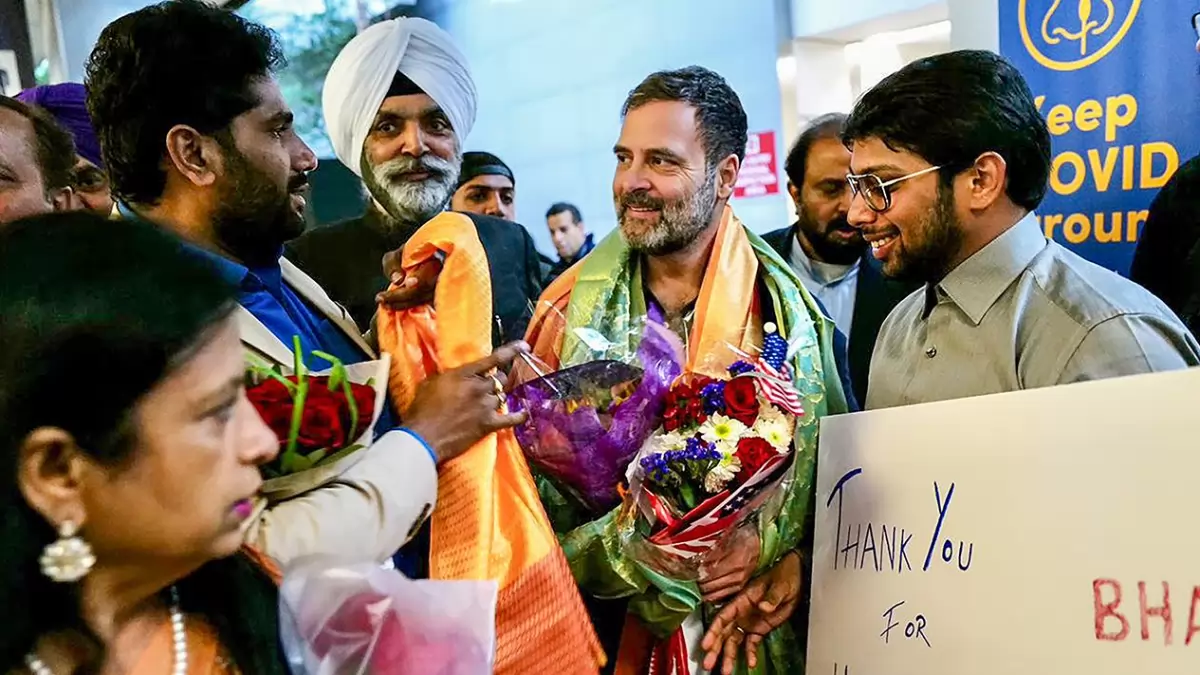
“My dream is that in 2020, the two closest nations in the world will be India and the United States,” then-Sen. Joe Biden said on a visit to New Delhi in 2006. They may not be quite there yet, but Biden is doing everything to ensure they end up much closer—especially economically and militarily—after Indian Prime Minister Narendra Modi visits next week.

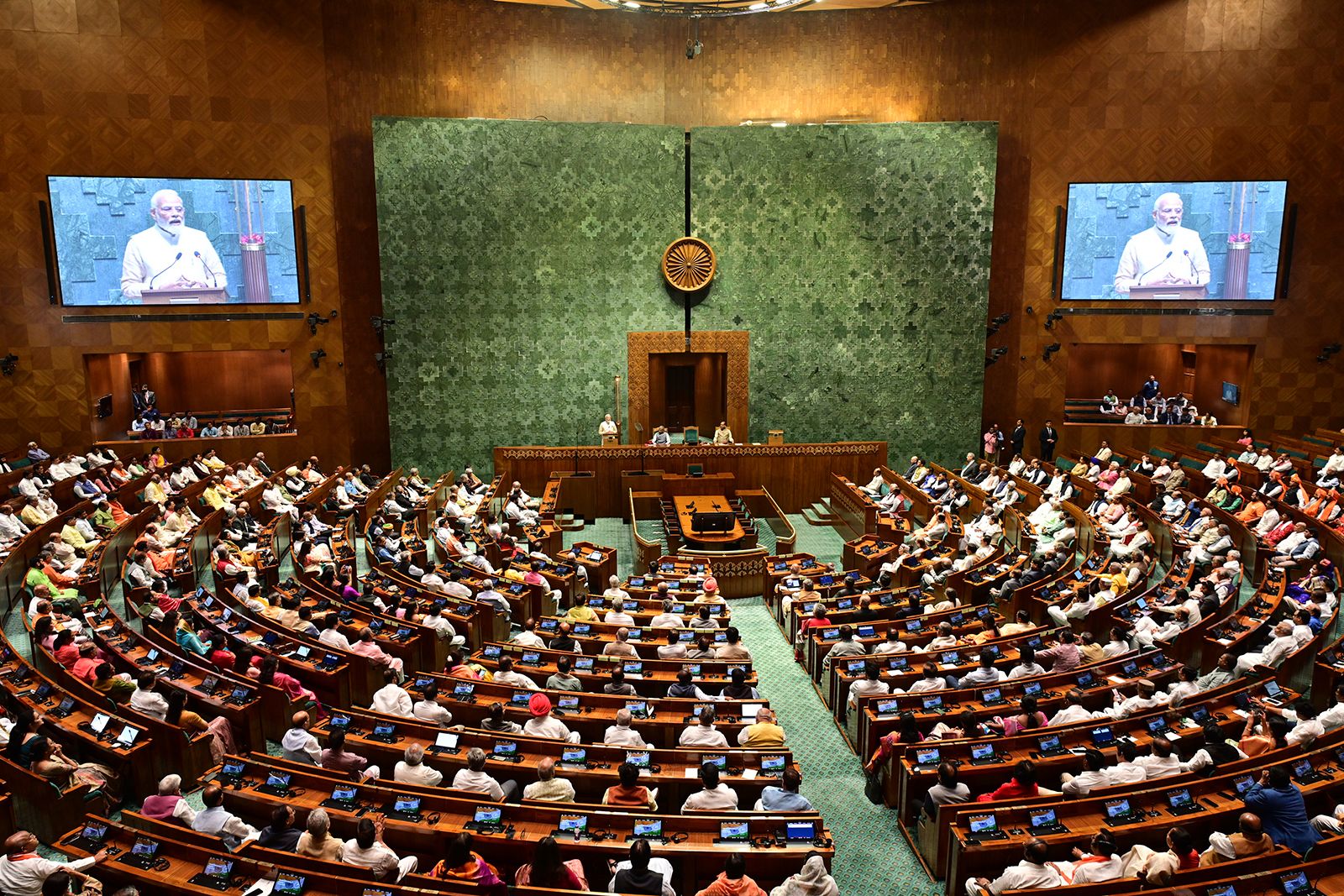
Washington is rolling out the red carpet for Modi, hosting him for a state dinner, the Biden administration’s third such visit after welcoming French President Emmanuel Macron and South Korean President Yoon Suk-yeol within the past year. Modi will also address a joint session of Congress, his second time doing so as Indian prime minister.

It’s not just pomp and symbolism, however. The United States wants to bring India deeper into its manufacturing and defense orbit, with the added benefit of helping wean New Delhi’s military off Russia and U.S. supply chains off China. Although both sides have been tight-lipped on planned announcements, a number of expected agreements on semiconductor chips and fighter jet engines have been in the works for months, bolstered by visits to New Delhi by Secretary of Defense Lloyd Austin and National Security Advisor Jake Sullivan in the weeks leading up to Modi’s trip. This week, the two sides reportedly sealed a deal for India to buy more than two dozen American drones.

“While I will not spill the beans, I can tell you that the ceremonial and substantive parts of the visit will fully complement each other and will be unparalleled,” Taranjit Singh Sandhu, India’s ambassador to Washington, said at a recent event.

The India-U.S. relationship hasn’t always been smooth sailing, and potential frictions remain, but the two countries have increasingly zeroed in on an arena where they can achieve symbiosis. “If you ask me what I would bet on the most, what is that one force multiplier for this relationship, it is tech,” Sandhu said. “It is the master key to unlock the real potential in the relationship.”

Officials from both sides have spent months laying the groundwork—and acronyms. An initiative on critical and emerging technology (iCET), launched in late January by Sullivan and his Indian counterpart, Ajit Doval, commits to cooperation in areas such as artificial intelligence, quantum computing, space exploration, semiconductors, and defense technology. There has been more movement on the last two in particular: U.S. Secretary of Commerce Gina Raimondo and Indian Commerce Minister Piyush Goyal inked a bilateral semiconductor supply chain partnership in New Delhi in March, while Austin’s visit to New Delhi earlier this month yielded INDUS-X, or the India-U.S. Defense Acceleration Ecosystem, described by the Pentagon as a “new initiative to advance cutting-edge technology cooperation” between the two militaries.

The most significant developments are likely to take place on the defense front, particularly if recent discussions on jointly producing jet engines, long-range artillery, and military vehicles come to fruition next week, product of a yearslong rapprochement on sharing defense technology with India. “This is not just manufacturing in India, this is genuine tech transfer,” said Rudra Chaudhuri, director of New Delhi-based think tank Carnegie India. “That’s a big deal.”

In some ways, it is an opportunity for a marriage of convenience. About half of India’s military equipment is Russian-made, and although New Delhi has spent years trying to diversify that supply, Russia’s protracted war in Ukraine has increased the urgency of finding new bedfellows. Washington sees an opening.

“The one relationship which the U.S. has traditionally been wary of in closer defense ties with India has been the India-Russia partnership,” said Aparna Pande, director of the India Initiative at the Hudson Institute. “This is one chance where if India can be weaned away because of a lack of supply parts, problematic equipment, or Russia getting closer to China, [you can] maybe convince India to purchase more from the United States and U.S. partners and allies.”

China is another major source of mutual concern pushing Washington and New Delhi closer together. India’s relationship with China deteriorated earlier and far more dramatically, with military clashes on their shared border leading to an Indian purge of Chinese technology (including, notably, a TikTok ban) nearly three years ago. Chinese naval expansion into the Indian Ocean has also spooked India and reinforced the importance of the so-called Quad group of countries. The United States and its allies, meanwhile, are urgently trying to reorient and “friendshore” global tech supply chains to reduce dependence on China, which has spent years establishing itself as the world’s factory floor.

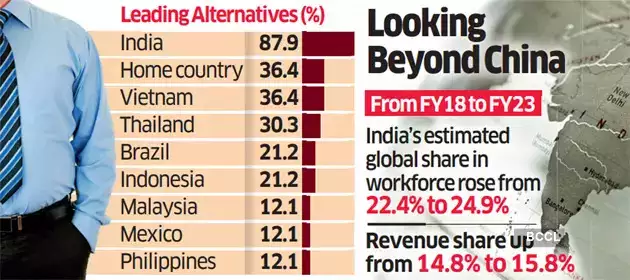
India presents a ready replacement in many ways, much of it stemming from its new status as the world’s most populous country. That means a large (and youthful) labor force, millions of whom are skilled engineers, and relatively low manufacturing costs that the Modi government is further bolstering with tax incentives under its signature “Make in India” program. Like China, India’s sheer size also presents a huge potential domestic market for U.S. companies, an advantage over other alternatives such as Vietnam and Mexico. If for decades dollars and cents determined the landscape of global technology production, geopolitics have become supreme.

“There’s a sense of Balkanization taking place” in the global tech supply chain, said Mukesh Aghi, CEO of the U.S.-India Strategic Partnership Forum, a Washington-based business advocacy group. “Geopolitical stress points are driving the tech agenda.”

There are still hurdles that need to be overcome, including India’s history of protectionism and red tape that has burned U.S. companies in the past and made it difficult to create the kind of manufacturing infrastructure required to rival what China has built. One large semiconductor push, a $19 billion joint venture between Indian conglomerate Vedanta and Taiwanese manufacturer Foxconn, has reportedly already been stymied by a denial of government incentives.

And while companies will ultimately have to vote with their checkbooks, Biden and Modi are sending nothing but boosterish signals.

“Remember the old saying that trade follows the flag—I think the two governments are waving the flag very mightily to show which direction industry and business ought to be going,” said Atul Keshap, a former diplomat who heads the U.S. Chamber of Commerce’s U.S.-India Business Council. “The two governments tried for a long time to figure out what government-to-government interaction would look like, and now I think they’re realizing the value of letting the private sector collaborate,” he added.

But one casualty of the Modi visit and his newfound status will likely be U.S. willingness to call out concerns about the health of India’s democracy, at least publicly. The Biden administration has been increasingly reluctant to call out Modi’s crackdowns on free speech and violence against minorities, and experts say the strategic imperatives are too great to afford antagonizing a vital partnership.

“There is a desire to emphasize the strategic and the national security imperative over the domestic imperative,” Pande said. “In the current context, India is important, and so what the U.S. is preferring to do is convey a lot of what it wants to say in private and not in public.”

(Rishi Iyengar is a reporter at Foreign Policy. Twitter: @Iyengarish)

Pope Francis’ Message For Peace Now Orbits The Earth, To Be Heard Across All Borders

(RNS) — Pope Francis’ message for unity and peace can now be heard from space, after a satellite containing a nanobook of his teachings was launched into the Earth’s orbit on Saturday (June 10), “to create new ways to show and promote ‘the seed of hope’,” according to a Vatican statement.

The satellite hitched a ride aboard Space X’s Falcon 9 rocket launching from the Vandenberg Space Force Base in California, after being blessed by Pope Francis on March 29 at his General Audience in St. Peter’s Square.

The Spei Satelles mission, the Latin words for Satellite of Hope, was inspired by this papacy’s most memorable moment during the pandemic, when Pope Francis stepped out into an empty St. Peter’s Square on a rainy evening in late March 2020 to issue a message of unity as the world began to grapple with the effects of the COVID-19 pandemic.

“If that evening Pope Francis, from St. Peter’s Square, used the colonnade as a symbol of embrace to all of humanity, with the voyage of this satellite we wish to prolong that embrace,” said Msgr. Lucio Adriàn Ruiz, the secretary of the Vatican communication department, during a press conference in March.

The highlights of that historic moment were written down in a book titled “Why Are You Afraid? Have You No Faith?” which was converted into a “nanotechnological version,” a silicon plate measuring 0.08 square inches by 0.008 inches wide, by Italy’s National Research Council.

“For those of us who are used to seeing space as the privileged place from which to observe the world and communicate to it without borders, it was easy to imagine a quick, humble and effective solution to offer wings to the Holy Father’s message,” Giorgio Saccoccia, president of the Italian Space Agency, said in a statement.

The satellite, built by the Polytechnic University of Turin and operated by the Italian Space Agency, weighs less than 6 pounds. It contains the pope’s message on March 27, 2020, and the names of all those who collaborated and supported the project. During its orbit, the satellite will transmit small messages of hope by Catholic popes “to signify the continuity that the Church’s message has had through history.”

The logo of the mission pulls together the symbols of Christ, the Virgin Mary, the Holy Trinity and the pope orbiting around a stylized version of the Earth made with the Holy See’s initials. It was created by the students of the Salesian University Institute in Venice.

In 2022, the pope’s message was also memorialized in the Svalbard Seed Vault, a depository in the Arctic that contains more than 1 million seed samples from all over the world to ensure their survival. It was registered as “a seed of hope.”

The project was coordinated by the Vatican’s Dicastery of Communication with the help of other Catholic institutions. People could acquire a virtual “boarding pass” aboard the satellite by signing up on the Spei Satelles website and committing to making a gesture of mercy for peace and hope.

“We are all in the same storm,” Paolo Ruffini, head of the Vatican Dicastery of Communications, said at a press conference, describing modern struggles ranging from the pandemic to the conflict in Ukraine.

“We need to look beyond. We need to look up. We need to look from above. And we must look deep, deep within us. Because, as the pope said speaking to God, this is not a time for your judgment but for our judgment,” he added.

Stunning Postcard From Mars

NASA’s Jet Propulsion Laboratory (JPL) has released a stunning postcard image of “Marker Band Valley” on Mars. The image shows two parts of the same day on the red planet; the panorama on the left is from 9.20 AM local Mars time whilst the one on the right is from 3.40 PM the same day. The image is a composite of two black and white panoramas taken by Curiosity’s navigation cameras. Additional colour was added to create a more artistic aesthetic, including blue for the part taken in the morning and red for the afternoon picture. The two images were taken to provide contrast to make the details stand out. The photo was taken on April 8, 2017 when the rover was in the foothills of Mount Sharp in the Gale Crater, an area it has been exploring since it landed in 2012.

The Marker Band Valley is a sulphate bearing region featuring unexpected signs of an ancient lake. From a distance, the valley is visible as well as two hills known as Bolivar and Deepdale. Curiosity engineer, Doug Ellison, said “capturing two times of day provides dark shadows because the lighting is coming in from the left and the right, like you might have on a stage – but instead of stage lights, we’re relying on the Sun.”

Although the two panoramas provide the main attraction, there are other features in the image. Since the camera was looking past the backside of the rover, parts of the rover itself is visible in the picture. There were three antennas and the rover’s nuclear power source, Radioisotope thermoelectric generator clearly visible. Additionally, the Radiations Assessment Detector in the image is designed to measure radiation levels on the planet. The data collected will be analyzed to determine how future astronauts can be protected from radiation during long-duration missions.

NASA’s Curiosity rover has been exploring Mars for more than five years, the longest duration of any Martian rover to date. Although Curiosity was not specifically designed to search for any indication of past or present life on the Red Planet, it is still an important mission. The data is critically important for understanding Mars and planning for future manned missions to the planet. Despite its longevity, Curiosity’s engineers are still discovering ways to explore and bring new information back to Earth.

As stated earlier, Curiosity’s target is to spend two Martian years exploring the Gale Crater area and then move to an area where there may be fresh mineral deposits. Meanwhile, NASA is preparing to send more rovers and drones to Mars to further investigate the Red Planet before manned missions are launched. With other space agencies such as SpaceX and Blue Origin also planning trips to Mars, the planet appears to be the next big endeavour of the space race.

US-India Partnership Strengthened by Geopolitical Concerns and Tech Collaboration

In 2006, then-Senator Joe Biden expressed his hope that by 2020, India and the United States would become “the two closest nations in the world.” Although this dream has not yet been fully realized, Biden is taking significant steps to strengthen the bond between the two countries, particularly in economic and military spheres, as Indian Prime Minister Narendra Modi prepares for a visit next week.

The US capital is set to welcome Modi with a state dinner, marking the third such event hosted by the Biden administration following the visits of French President Emmanuel Macron and South Korean President Yoon Suk-yeol within the last year. In addition, Modi is scheduled to address a joint session of Congress for the second time during his tenure as India’s prime minister.

More than just symbolic gestures, the US aims to further integrate India into its manufacturing and defense sectors, while simultaneously reducing India’s reliance on Russian military resources and US supply chain dependence on China. Though official announcements have yet to be made, several agreements concerning semiconductor chips and fighter jet engines have been anticipated for some time, supported by recent visits from Secretary of Defense Lloyd Austin and National Security Advisor Jake Sullivan to New Delhi. This week, reports emerged of a deal for India to purchase over two dozen American drones.

Taranjit Singh Sandhu, India’s ambassador to Washington, spoke of the upcoming visit, stating that “the ceremonial and substantive parts of the visit will fully complement each other and will be unparalleled.” While the India-US relationship has experienced its share of challenges, both nations are increasingly focusing on technology as a key area for collaboration. Sandhu emphasized that tech serves as “the master key to unlock the real potential in the relationship.”

In preparation for this partnership, officials from both countries have been working on various initiatives, including iCET (initiative on critical and emerging technology), which was launched in January by Sullivan and his Indian counterpart, Ajit Doval. This initiative promotes cooperation in fields such as artificial intelligence, quantum computing, space exploration, semiconductors, and defense technology. Notably, progress has been made with regard to semiconductors and defense technology, including a bilateral semiconductor supply chain partnership signed by US Secretary of Commerce Gina Raimondo and Indian Commerce Minister Piyush Goyal in March, as well as the India-US Defense Acceleration Ecosystem (INDUS-X) announced during Austin’s visit to New Delhi earlier this month.

Significant advancements are anticipated in the defense sector, particularly if recent talks on joint production of jet engines, long-range artillery, and military vehicles come to fruition during Modi’s visit. Rudra Chaudhuri, director of New Delhi-based think tank Carnegie India, noted that this collaboration represents “genuine tech transfer,” making it “a big deal.”

In some respects, this partnership presents an opportunity for a strategic alliance. With approximately half of India’s military equipment originating from Russia, New Delhi has been seeking to diversify its supply sources for years. The ongoing conflict in Ukraine has intensified this need, providing Washington with an opening to further develop defense ties with India. Aparna Pande, director of the India Initiative at the Hudson Institute, explained that “this is one chance where if India can be weaned away because of a lack of supply parts, problematic equipment, or Russia getting closer to China, [you can] maybe convince India to purchase more from the United States and U.S. partners and allies.”

The growing mutual concern over China’s influence has brought Washington and New Delhi closer together. India’s relationship with China soured earlier and more dramatically due to border conflicts and a subsequent purge of Chinese technology, including the infamous TikTok ban. Furthermore, China’s naval expansion into the Indian Ocean has alarmed India and emphasized the importance of the Quad group of countries.

As the world’s most populous country, India presents an attractive alternative to China for global tech supply chains. With a large and young labor force, skilled engineers, and relatively low manufacturing costs, India is well-positioned to replace China in many aspects. The “Make in India” program, championed by Prime Minister Modi, offers tax incentives to further boost the country’s manufacturing capabilities. While economic factors once dictated the landscape of global technology production, geopolitics now play a crucial role.

Mukesh Aghi, CEO of the U.S.-India Strategic Partnership Forum, highlights the shift: “There’s a sense of Balkanization taking place” in global tech supply chains, adding that “geopolitical stress points are driving the tech agenda.” However, challenges remain, such as India’s history of protectionism and bureaucratic red tape, which have hindered the development of manufacturing infrastructure required to compete with China.

Despite these obstacles, President Biden and Prime Minister Modi continue to foster a positive atmosphere for collaboration. Atul Keshap, head of the U.S. Chamber of Commerce’s U.S.-India Business Council, notes, “The two governments tried for a long time to figure out what government-to-government interaction would look like, and now I think they’re realizing the value of letting the private sector collaborate.”

Nonetheless, this newfound partnership may come at the expense of addressing concerns about the state of democracy in India. The Biden administration has been increasingly hesitant to publicly criticize Modi’s restrictions on free speech and violence against minorities. Aparna Pande, director of the India Initiative at the Hudson Institute, explains, “There is a desire to emphasize the strategic and the national security imperative over the domestic imperative.” In the current context, she says, “India is important, and so what the U.S. is preferring to do is convey a lot of what it wants to say in private and not in public.”

Cap-Exempt H-1B Visa Models To Retain Skilled Immigrant Talent Amid High Demand

The diminishing likelihood of obtaining H-1B specialty occupation visas through the yearly lottery has led to the emergence of alternative methods for high-skilled foreign workers to secure visas not subject to the statutory cap. Although still in the early stages, nonprofit organizations like Open Avenues, based in Boston, are collaborating with educational institutions to retain essential talent at expanding companies.

The surge in demand from employers for the H-1B program highlights the necessity for innovative solutions to accommodate both workers and employers who depend on international expertise, according to Danielle Goldman, Executive Director of Open Avenues. She explains, “We hire them to train the future US workforce in their field,” adding that this enables companies to “file a cap exempt H-1B visa outside the lottery.”

Missing out on the 85,000 H-1B visas offered annually through the lottery can be a significant obstacle for emerging businesses whose immigrant employees lack alternative visa options, says Goldman. Moreover, the odds are becoming increasingly challenging. In March, over 780,000 registrations for new H-1B visas were submitted, marking a 61% increase from the previous year.

Goldman emphasizes the issue by saying, “They are putting in key folks—software developers, data scientists, co-founders—into the lottery and losing them.” To maximize the potential of immigrant talent, she suggests, “let’s create more cap exempt pathways.”

Collaborating with Colleges

Two primary categories of employers can sponsor H-1B visas not subject to the cap—universities and nonprofit organizations affiliated with higher education institutions, such as hospitals and research centers. Open Avenues takes advantage of this exemption by sponsoring fellows for cap-exempt H-1B visas. These fellows teach and collaborate with college students part-time, enabling their full-time employers to retain essential talent under concurrent visas.

Srutartha Bose, an Indian immigrant and one of these fellows, discovered Open Avenues through a LinkedIn post last year. After completing her master’s degree and securing a biotech research job in Boston, she believed her long-term career prospects in the US would depend on the H-1B visa lottery results. However, as her chances of selection decreased, she sought other alternatives. “I honestly did not think there was any other option,” said Bose, now a senior research scientist at Swiss-American biotech company CRISPR Therapeutics AG. As an Open Avenues fellow, she guides students through semester-long bioscience projects that closely resemble her company’s work environment.

Early Stages of Career

Open Avenues, which submitted its first visa petition in 2019, mainly sponsors early-career immigrant workers who wish to remain in the US but have been unsuccessful in the H-1B lottery. These individuals are typically employed through Optional Practical Training (OPT), a program allowing foreign graduates of US colleges and universities to work temporarily while still on student visas.

To work with Open Avenues, employees must hold at least a bachelor’s degree in science, technology, mathematics, engineering, or a related business field. They can continue as fellows until they secure an H-1B visa through the lottery or obtain permanent residency via a green card.

In the past year, Open Avenues had 80 fellows from 24 countries. These fellows dedicate five to eight hours per week to facilitate hands-on learning for college students from 10 educational institutions training in their fields. Youssef Bousfoul, an Open Avenues fellow from Morocco and lead computer scientist at California-based LBX Food Robotics, said that students participate in company meetings and brainstorming sessions, providing valuable insights. “We’re learning from those we work with,” he stated, adding that they are “always open to new ideas from them, whatever background they have to help us grow.”

Michigan’s Approach

Global Detroit, a nonprofit dedicated to enhancing Southeast Michigan’s economy by promoting immigrant employment and homeownership, has also adopted the cap-exempt visa model to support local businesses. Similar to Open Avenues, Global Detroit collaborates with colleges to sponsor skilled immigrants for cap-exempt H-1B visas. However, their Entrepreneur in Residence Program exclusively works with regional higher education institutions, such as Wayne State University, the College for Creative Studies, Michigan Technological University, and Lawrence Technological University. This program targets immigrant startup founders until they can acquire a green card or a cap-subject H-1B visa.

Steve Tobocman, Executive Director of Global Detroit, explained, “There isn’t a visa for somebody who’s got a great idea but hasn’t raised the capital yet.” He further questioned whether a startup founder would relocate their business to the US after launching it in another country. Global Detroit has sponsored nine startup founders at eight companies for cap-exempt H-1B visas, covering industries from encryption software to community-supported agriculture.

Tobocman has developed a guide for other communities to adopt this model, utilizing cap-exempt H-1B visas to attract talent. He has also hosted business and economic development groups from across the nation, indicating growing interest in retaining foreign expertise.

Rising Demand

The expansion of the Open Avenues model reflects the increasing demand for alternatives as visa lottery selection rates continue to decline, according to Sarah Peterson, a partner at Fragomen, Del Rey, Bernsen & Loewy LLP. She said, “Employers are really trying to figure out how to keep all this really skilled labor we have in the US and need in the US, frankly.” Peterson believes more organizations like Open Avenues may emerge due to the broken system.

Srutartha Bose, an Open Avenues fellow, is currently applying for a green card while working at CRISPR Therapeutics. She argues that without additional options for immigrants, the US could miss out on the advantages they bring. Bose called the visa cap “a little absurd” and praised alternatives like Open Avenues as “a win-win for all sides,” adding, “The more options, the better.”

3 Effective Ways to Enhance Relationships

Navigating relationships can often appear more complex than necessary. We find ourselves questioning whether our partner is “the one” and if perfection can be sustained. However, reality doesn’t always meet our expectations. When issues arise, the feeling of being overwhelmed or lost in love can set in. To address this, you might explore scientific research, seek counseling, or sift through myriad relationship advice, trying to find something valuable.

The sheer volume of information can be daunting, making inaction seem like the best option. While doing nothing may provide temporary relief, it won’t lead to lasting improvements in your relationship. The good news? Enhancing your relationship is actually simpler than you think, boiling down to just three fundamental strategies.

Take Initiative People who adopt the “take initiative” approach tackle problems head-on. If this sounds like you, it’s difficult for you to sit idly by. Instead, you’re eager to take action and invest time and energy into resolving issues. You prefer being proactive, anticipating potential hurdles and addressing them before they become major concerns. As Nicholas Sparks penned in The Notebook, “So, it’s not gonna be easy. It’s gonna be really hard. We’re gonna have to work at this every day…” Embrace the effort; it’s a natural part of building a strong relationship. Here are some ways to take initiative:

  • The four-hour commitment:

Enhancing your relationship doesn’t need to be time-consuming. With 168 hours in a week, allocate just four to prioritizing your relationship. To maximize the impact, plan date nights with “N.I.C.E.” activities—those that are “new, interesting, challenging, and exciting.” Studies indicate that couples who engage in such activities together enjoy better relationships (Aron et al., 2022).

  • Develop relationship skills: Use some of those four hours to improve your relationship skills. Key areas to focus on include communication, conflict resolution, understanding your partner, self-awareness, life management, stress management, and sexual/romantic skills (Epstein et al., 2013). Most of these skills involve self-improvement, making them easier to implement without your partner’s assistance. And since there’s always room for growth, revisiting these skills is beneficial. Research suggests that honing these abilities leads to a healthier relationship.
  • Be more adventurous in bed: Here’s an enjoyable suggestion: increasing sexual variety can boost arousal and desire (Morton & Gorzalka, 2015). Greater desire and arousal lead to improved sexual satisfaction by combating monotony and boredom, ultimately reducing the likelihood of infidelity. It’s a win-win situation.

Lower Expectations

If adding more to your already busy life seems unattainable, consider wanting less instead of doing more. This doesn’t mean discarding all your standards; rather, adjust your expectations to be more realistic and appreciate what is sufficient.

The “lower expectations” approach appeals to those who understand that their perception of their partner’s actions or their relationship rules affects their happiness. For instance, viewing occasional moodiness as a deal-breaker or believing that happy couples don’t argue is counterproductive. As Hamlet said, “…there is nothing either good or bad, but thinking makes it so.” The issue might not be the relationship itself, but your perspective. Educating yourself about healthy relationships can help.

  • Soulmate myth: While romance is important in a relationship, believing in soulmates can impose nearly impossible standards on your partner. No one is truly flawless. Soulmates are thought to be your perfect match, the person you’re destined to be with (Knee & Petty, 2013). When your partner inevitably falls short, doubts arise. You may question whether you’re in the right relationship or if your partner is the right person for you. Let go of these impossible standards.
  • Manage expectations: In the film Up in the Air, Anna Kendrick’s character, Natalie, has a highly specific list of qualities she wants in a partner and claims, “I just don’t want to settle.” Vera Farmiga’s character, Alex, explains that not ticking every box on a wishlist isn’t a failure. However, unrealistic expectations will always disappoint, setting both your partner and your relationship up for failure. Instead, lower your expectations by recognizing that neither you nor your partner is perfect. Excessively high expectations and constant dissatisfaction can prevent you from appreciating your amazing partner.
  • Avoid searching for problems: Even with properly adjusted expectations, you might still be overly critical of your partner and relationship. Our natural negativity bias encourages us to focus on negative aspects (Rozin & Royzman, 2001). This can lead to “problemicity” or identifying problems where none exist. Research suggests that when your relationship lacks significant issues, you tend to overemphasize smaller ones (Levari et al., 2018). One way to lower expectations is by not creating drama or seeking out problems.

However, don’t disregard all your standards. Lowering expectations too much can lead to unhappiness. Find a balance with reasonable and realistic expectations.

Appreciate What You Have Sometimes the best solutions are the simplest. If you struggle to find time to “do more” and you have fair expectations, consider adopting the easiest strategy: cherish your current relationship. As Alan Kay said, “A change of perspective is worth 80 IQ points.” It’s time to gain wisdom about your love life.

  • Be grateful: Improving your relationship could be as simple as expressing gratitude for what you already have. Acknowledge everything that is easy, comfortable, uncomplicated, stable, and predictable in your relationship. We often take these fundamental building blocks for granted, but they are crucial to success. Expressing gratitude for these positive aspects can enhance relationship quality (Algoe et al., 2013).
  • Celebrate the positives: Take your appreciation a step further by emphasizing the good parts even more. Researchers call this “capitalization,” which involves savoring good news and positive moments in a relationship to boost individual well-being and self-esteem (Gable & Reis, 2010). Capitalization also increases closeness, satisfaction, intimacy, and commitment in the relationship. Remember, healthy relationships typically have more positives than negatives – just take the time to notice them.
  • Embrace positive illusions: You might worry that your partner and relationship aren’t as great as you perceive them to be. What if you’re wrong or deceiving yourself? Surprisingly, holding positive illusions, or viewing your relationship as better than it is, can actually benefit the relationship (Murray et al., 1996). Our overly generous assessments give our partners a goal to strive for, encouraging self-improvement (e.g., “My partner thinks I’m really wonderful, so I better make sure I am so they’re not disappointed.”), which ultimately benefits the relationship.

What’s the Ideal Approach? So, which of these three strategies should you choose? The best one is the one you’re most likely to put into practice. Your personal problem-solving preference will determine the ideal approach.

  • If you’re proactive and driven, take initiative.
  • Are you somewhat critical, judgmental, or demanding? Lower your expectations.
  • If you believe stepping back and reassessing is necessary, focus on appreciating what you have.

Select the strategy that allows you to get started immediately. Once you begin implementing it, you’ll create positive momentum that can be utilized to incorporate other techniques. Feel free to mix and match or stick with the one that works best for you. What truly matters is that you’re actively working to enhance your relationship. Its future is too valuable to do anything less.

Dr. Ashish Jha, White House Covid Response Coordinator To Step Down

The White House COVID-19 response coordinator Ashish Jha will be leaving his post, U.S. President Joe Biden said last week in a statement in which he thanked Jha for his handling of the pandemic.

Dr. Ashish Jha is leaving the Biden administration this month for a top position at Brown University. Jha, who has overseen the administration’s pandemic strategy since early 2022, will return to Brown as dean of its School of Public Health on July 1, the school confirmed in a news release Thursday.

Jha said in a statement: “We are in a world drastically altered by the COVID-19 pandemic. For all we have accomplished to reduce illness and save lives, COVID-19 has exposed the weaknesses in our public health and health care systems. I look forward to returning to Brown to continue our groundbreaking work transforming public health education, research and practice to convert these weaknesses to strengths.”

Jha’s departure, first reported by The Wall Street Journal, comes about a month after the Biden administration ended the national emergency and the public health emergency tied to the Covid pandemic. Earlier in May, the World Health Organization declared an end to the global health emergency.

His departure was reported first by the Wall Street Journal, which said Jha will be the last of the Biden administration’s rotating COVID response coordinators. Jha plans to leave June 15 and return July 1 to his previous position as dean of Brown University’s School of Public Health, the newspaper reported.

Jha began his role in spring last year, when the U.S. was still on high alert due to the Omicron variant. Recently, deaths from the outbreak and cases of COVID have continued to decline.

“We’ve now had a sustained period of time with low deaths and hospitalizations. Excess mortality has been down to zero in the past couple of months. As for the impact of COVID on our lives now, we have made a lot of progress,” Jha told the Wall Street Journal in an interview on Thursday.

After the removal of the post of the COVID response coordinator, the director of the White House’s nascent Office of Pandemic Preparedness and Response Policy, who has not been named, will advise the president and coordinate federal responses to various biological and pandemic threats, the newspaper said

The White House had been expected to cut down its COVID response team after the U.S. government in May ended its COVID Public Health Emergency that let millions of Americans receive vaccines, tests and treatments at no cost.

“As one of the leading public health experts in America, he has effectively translated and communicated complex scientific challenges into concrete actions that helped save and improve the lives of millions of Americans,” Biden said of Jha on Thursday. Biden said in September last year he believed the pandemic was over in the United States.

India To Host Miss World 2023

India is all set to host the Miss World 2023 pageant. Contestants from over 130 countries will gather in India and participate in a series of competitions to win the title.

India is set to host the Miss World 2023 competition, as the coveted international beauty pageant makes its return to the country after a gap of nearly three decades.

The much anticipated 71st edition of Miss World is expected to take place in November this year, the final dates of which are yet to be ascertained.

India had last hosted the international pageant in 1996.

The announcement has come as a surprise as it comes months after confirmation of United Arab Emirates (UAE) as this year’s venue for the much-awaited event.

”I am delighted to announce India as the new home of the 71st Miss World Final… We cannot wait to share your unique and diverse culture, world class attractions and breathtaking locations with the rest of the world.

”The 71st Miss World 2023 will showcase the Achievements of 130 National champions in their one-month journey across ‘Incredible India’ as we present the 71st and most spectacular Miss World final ever,” said Julia Morley, chairperson and CEO of Miss World organization at a press conference on Thursday.

The month-long event, which would witness contestants from over 130 countries, will feature a series of rigorous competitions, including talent showcases, sports challenges, and charitable initiatives — all aimed at highlighting the qualities that make them ambassadors of change.

The reigning Miss World, Karolina Bielawska of Poland, who is currently in India spreading the word about the beauty competition, said she is excited to hand over her crown in this ”beautiful country” which stands for the same values as Miss World.

”India has the greatest hospitality in the entire world. It is my second time here .. and you make me feel like home. You stand for the same values.. diversity, unity… Your core values are family, respect, love, kindness and this is something that we would love to show to the world. There is so much more to see here, and bringing the whole world here for a month and showing everything that India has to offer is the best idea,” said the Miss World 2022.

Equally excited and looking forward to India hosting the event was the current Miss India World Sini Shetty, who’ll represent the country in the high-octane competition.

”I am so excited to meet all my sisters across the globe to welcome them to India to show them what India truly stands for, what India is, what is the diversity in India… I am really excited and looking forward to this journey. I hope you guys have the best time here in India,” she said. India has won the prestigious title six times — Reita Faria (1966), Aishwarya Rai (1994), Diana Hayden (1997), Yukta Mookhey (1999), Priyanka Chopra (2000), and Manushi Chillar (2017).

US Missions In India host Student Visa Day

The US Mission in India held its seventh annual Student Visa Day nationwide on June 7. Consular Officers from New Delhi, Chennai, Hyderabad, Kolkata, and Mumbai conducted interviews with nearly 3,500 Indian student visa applicants, a news release noted.

“Student Visa Day recognizes the enduring educational connections between the United States and India,” the embassy said adding that it acknowledges the significant contribution of Indian students to the U.S. academic landscape. With over 200,000 Indian students currently enrolled in U.S. academic institutions, they constitute more than 20 per cent of the total international student population in the United States.

Congratulating the visa recipients, Ambassador Eric Garcetti said, “I first came to India as a young student, and I’ve seen in my own life how transformative these experiences can be.”

“Student exchange is at the heart of U.S.-India relations, and with good reason.  A U.S. education provides students with a world-class education and access to a global network of knowledge, laying the foundation for a lifetime of understanding.  That’s why we are here today, to encourage these opportunities for as many Indian students as possible,” he added.

“Last year, a record-breaking 125,000 Indians were issued student visas, which is more than were issued to any other nationality.  One out of every five student visas were issued in India last year. This year, we will interview more students than ever before.” remarked Brendan Mullarkey, the acting Minister Counselor for Consular Affairs in India.

New England’s 9th Annual Health, Fitness & Wellness Expo Planned

INDIA New England News has announced that the 9th annual free Health, Fitness & Wellness Expo, New England’s premier health, fitness and wellness exhibition, will take place on August 13, 2023 at the Burlington Marriott Hotel in Burlington, MA.

The event will run from 10AM to 4PM, and feature exhibitors and speakers covering all aspects of health and wellness.

“We are excited to present our 9th annual in-person, immersive experience for all; and it is free for everyone to be healthy, fit and well,” said Upendra Mishra, publisher of INDIA New England News and the producer of the event.

For the last eight years, the Health, Fitness and Wellness Expo has organized expos featuring top panelists in their fields, including cardiology, internal medicine and medical entrepreneurship.

The expo is produced by The Mishra Group, in collaboration with INDIA New England News, Boston Life Sciences Times and IndUS Business Journal.

The expo was founded in 2013 by Mr. Mishra and Dr. Manju Sheth, MD, President of INE Multimedia.

The expo brings together the region’s top health and wellness providers, top speakers and fun workshops to promote life-long health, fitness and wellness in the Indian and South Asian community of New England. From free medical screenings to knowledgeable speakers to intensive yoga workshops, they bring the best options for a lifetime of health for the New England community.

The expo is free to attend for all registered participants. To register, please visit the link here on Eventbrite, or visit healthfitnesswellnessexpo.com.

INDIA New England News is New England’s oldest and largest print and online publication covering the Indian and South Asian community.

Updated daily, they cover the latest news in Bollywood, business, fashion, health, lifestyle, community events that touch the Indian and South Asian community.

Produced by the Mishra Group in collaboration with INDIA New England News, Boston Life Sciences Times and IndUS Business Journal, the Health, Fitness and Wellness Expo has organized expos featuring top panelists in their fields, including cardiology, internal medicine and medical entrepreneurship.

The expo brings together the region’s top health and wellness providers, top speakers and fun workshops to promote life-long health, fitness and wellness in the Indian and South Asian community of New England. From free medical screenings to knowledgeable speakers to intensive yoga workshops, they bring the best options for a lifetime of health for the New England community

12th Annual U.S. Congressional Awards Gala Celebrates Global Community Heroes

The the highly anticipated 12th Annual U.S. Congressional Awards Gala, an extraordinary event that honors the remarkable achievements of individuals who have made a significant difference in our world, anchored by the esteemed U.S. Congressman Danny K. Davis will be held on June 18th. This year’s gala promises to be an unforgettable evening filled with celebration, inspiration, and recognition.

This Annual U.S. Congressional Awards Gala is popularly known as the Global Community Oscars hosted by the American Multi Ethnic Coalition (AMEC) and the 7th Congressional Multi Ethnic Advisory Task Force (MEATF), will take place on Saturday, June 17, 2023, at the Yellow Box, 1635 Emerson Lane, Naperville, IL 60540, USA from 6.00PM. This event has gained international recognition and will be telecast live across 32 countries, reaching a vast audience around the globe.

U.S. Congressman Danny K. Davis (7th CD-IL), renowned for his outstanding leadership and commitment to public service, will serve as the anchor for the 12th Annual U.S. Congressional Awards Gala. Joining him as co-anchors are U.S Congressman Raja Krishnamoorthi (8th CD-IL) and U.S. Congressman Jonathan Jackson (1st CD-IL), whose dedication to community empowerment has been instrumental in shaping positive change. Moreover, Dr. Vijay G. Prabhakar, the President of AMEC and the Founder of MEATF, will be present to add his invaluable insights to the proceedings.

This prestigious awards ceremony will feature 32 categories that pay tribute to individuals who have exemplified exceptional leadership, passion, and dedication in various fields. From championing social causes to spearheading educational reforms, these individuals have leveraged their influence to bring about transformative change and empower communities worldwide.

The 11th Annual U.S. Congressional Awards Gala was an immense success, attracting over 1,200 distinguished guests. We extend our heartfelt appreciation to the press and media for their unwavering support, which played a pivotal role in the event’s resounding triumph. As we gear up for the 12th edition, we kindly request your continued cooperation in covering this year’s gala to ensure its resounding success.

AI Chatbots Outperform Human Doctors in Empathy and Triage, Revolutionizing Patient Care in Healthcare Industry

It’s not typical for a chatbot to be associated with emotional sensitivity. We often expect subpar writing, fabricated information, and occasional offensive content from them – something I’ve discussed in the past. However, recent advancements in chatbot technology have enabled these AI creations to generate human-like responses to inquiries, giving them an unexpected advantage in a field that is inherently human: healthcare.

Researchers at the University of California, San Diego conducted an experiment by selecting around 200 questions from r/AskDocs, a Reddit forum where verified healthcare professionals address medical queries. These questions were then fed to ChatGPT, a chatbot, and the resulting responses were evaluated by a separate group of healthcare experts alongside answers provided by human doctors.

The findings were astounding. ChatGPT consistently outperformed human doctors in terms of usefulness, with its answers deemed three to four times more reliable. Additionally, chatbot responses exhibited none of the negative tendencies often associated with AI-generated content. Most strikingly, chatbot answers were rated as seven times more empathetic than those from human doctors. As the author noted, “It’s as if the unfeeling android Mr. Data figured out how to convincingly emulate Dr. Crusher’s comforting bedside manner.”

Although human doctors’ empathy levels may not set a high benchmark, it’s remarkable how effectively chatbots can address medical concerns in both style and substance. While it’s unclear whether AI-powered chatbots will revolutionize journalism or improve internet search, they could potentially transform interactions between patients and healthcare providers within our flawed medical system.

The empathy experiment was not designed to prove that ChatGPT could replace doctors or nurses, but rather to demonstrate its potential role in healthcare. The current for-profit healthcare system is plagued by understaffing and overburdened professionals. John Ayers, a computational epidemiologist at UC San Diego and lead author of the study, notes that “people are disconnected from healthcare, and they’re desperate.” Consequently, patients are increasingly turning to forums like r/AskDocs for answers, a trend that doctors never anticipated. With some fine-tuning, chatbots could significantly enhance the patient experience within the medical industry.

The intensity of responding to patient messages has grown tremendously, especially during the COVID pandemic. Remote communication between doctors and patients increased, with research showing that physicians spent nearly an hour daily managing their email inboxes during the pandemic’s first year. Additionally, doctors dedicate almost half their day to electronic medical record administration. Insurance companies often bill for time spent answering messages, making it a potential revenue stream beyond face-to-face consultations.

Previous studies focused on whether patients and doctors liked using messaging systems, but Ayers’ research examined if the systems were effective. “We used real messages,” he explains. “Nobody has ever done that before.” The outcome, based on interaction quality, was clear-cut: “ChatGPT won in a landslide,” Ayers states. “This stuff is probably ready for prime time.”

Ayers is eager to explore the chatbot’s capabilities further by conducting randomized controlled trials to evaluate patient messaging against patient outcomes. He envisions chatbots assisting heart attack survivors with maintaining a low-salt diet, medication reminders, and treatment updates. “A message in that case could save that patient’s life,” he asserts.

While he concept of a compassionate chatbot may seem unsettling or even dangerous, it could be lifesaving in our current healthcare system. An AI assistant may not be more human, but it could be more humane. Specialized AI systems excel at diagnostics, detecting specific issues like tumors or sepsis. However, these systems are expensive and difficult to develop. Consequently, the medical industry is turning to chatbots as a cost-effective, widespread solution.

Despite 60% of Americans in a recent Pew Research Center survey stating they wouldn’t want AI diagnosing or treating them, it’s likely they will experience it anyway. Many healthcare tasks are somewhat formulaic, such as triage or interpreting test results. These perfunctory, robotic tasks are suited for AI.

A recent study by a Harvard research team demonstrated the potential of chatbots in thiscontext. They presented health problem descriptions to physicians, non-medically trained individuals, and ChatGPT, asking them to diagnose the illness and provide triage recommendations. The results showcased the potential for AI chatbots to excel in these robotic healthcare tasks.

The non-medically trained participants in the study were allowed to use the internet for assistance, often referred to as “Dr. Google” by healthcare professionals. Despite this, their diagnostic abilities remained poor compared to physicians. The chatbot, on the other hand, demonstrated remarkable diagnostic accuracy, scoring over 80% compared to the human doctors’ score of over 90%. When it came to triage, ChatGPT achieved a 70% success rate, which, although not as impressive as the physicians’ 91%, is still noteworthy considering it’s a general-purpose chatbot.

Envision chatbots taking on mundane and time-consuming tasks in healthcare, such as appointment scheduling, insurance authorization, and managing electronic medical records. Teva Brender, a medical resident at UC San Francisco, points out that these tasks are physically and emotionally draining and were never the reason healthcare professionals entered the field. If chatbots could handle the initial stages of these bureaucratic processes, physicians could review and approve the content more efficiently.

The likelihood is that highly trained chatbots will collaborate with doctors, nurses, and physician assistants to provide more empathetic and comprehensive care for patients. In the current healthcare system, people are so desperate for medical help that they resort to posting personal images on forums like r/STD for diagnosis. This highlights the inadequacy of the existing system and suggests that AI could be an improvement.

Jonathan Chen, a physician at Stanford University School of Medicine, believes that patients may prefer imperfect advice from 24/7 automated systems over waiting months for a human expert. To enhance AI-driven systems, teams like Ayers’ are developing smaller language models with specialized medical knowledge. By granting these chatbots access to individuals’ medical records, they could offer more tailored advice. “When this tech gets access to electronic health records, that’s the real game changer,” says Ayers.

The prospect of AI-driven health advice accessing medical records is concerning, especially considering the potential for dystopian outcomes. The FDA has yet to establish a regulatory framework for AI and machine learning in medical devices, and liability issues surrounding chatbot advice must be addressed. Moreover, healthcare AI startups may prioritize profit over patient outcomes, leading to cheaper versions of the technology that could spread dangerous misinformation.

Greg Corrado, the head of Health AI at Google, warns against developing these systems in isolation, emphasizing the importance of collaboration with healthcare experts to ensure privacy, safety, and true benefits to patients. While it won’t be an easy task, utilizing robots to help maintain our health in a system that doesn’t provide adequate human care could be a valuable solution. If they can simulate empathy better than human doctors, it would be a welcome bonus.

Student Loan Payments Set to Resume in August After 3-Year Pause, Affecting 43 Million Borrowers Amid Debt Ceiling Bill Negotiations

As part of the negotiations over the debt ceiling bill, it has been agreed that payments on federally funded student loan debts will resume in August. This comes after a pause of over three years and accrued interest, which was put in place at the start of the pandemic. The end of the pause on payments now has a hard ending date, with two potential end dates. The pause will end either 60 days after the U.S. Supreme Court issues a decision on lawsuits brought against the administration over the loan forgiveness plan, or 60 days after June 30th, 2022, whichever comes first. Therefore, the latest the pause will be lifted is on August 29th, 2022. Payments will resume no later than September 1st, 2022.

The resumption of payments will affect around 43 million borrowers who owe over a trillion dollars in student loan debt. However, one factor that could change the date of the loan repayment is a joint resolution passed by Congress in the past two weeks. The legislation, which was passed with the help of some Democratic senators and representatives, calls for borrowers to begin repaying loans and blocks President Biden’s loan forgiveness program.

Democratic Senators, Joe Manchin of West Virginia and Jon Tester of Montana, voted for the bill, as well as independent Arizona Senator, Kyrsten Sinema. In the House, Maine Representative, Jared Golden, and Washington Representative, Marie Gluesenkamp Perez, both Democrats, voted for the bill. Despite this, President Biden has said he will veto the bill when it gets to his desk.

The joint resolution was introduced in late March using the Congressional Review Act, which allows Congress to roll back any regulation from the executive branch without needing to clear the 60-vote threshold in the Senate that is necessary for most legislation to pass. Republicans believe taxpayers shouldn’t have to pay for people who chose to take out loans

to pay for college educations. Sen. John Thune of South Dakota stated, “We’re asking taxpayers at large to foot the bill for student loan cancellation for Americans who enjoy greater long-term earning potential than many of the Americans who will be helping to shoulder the burden. The president’s student loan giveaway isn’t a government handout for the needy, it’s a government handout that will be disproportionately beneficial to Americans who are better off.”

Democrats, on the other hand, argue that the majority of the help on loans will go to those who can least afford to repay them. Sen. Patty Murray of Washington stated, “I’ve heard from so many people across my state who were so grateful and relieved to have a glimmer of hope, to see a light at the end of the tunnel, and now Republicans want to snuff it out.”

If you have a loan payment coming up, there are some actions you should take. First, make sure your student loan servicer knows where you are. You can do this by going to your servicer’s website and verifying that it has your latest contact information. Your loan servicer may also send out notices by email, text, or mail with information about the resumption of payments. If you do not know who services your loan, go to StudentAid.gov, find your account dashboard, and scroll down to the “My Loan Servicers” section. You can also call the Federal Student Aid Information Center at 1-800-433-3243. “People should know the clock starts ticking and interest starts accruing,” said Scott Buchanan, executive director at the Student Loan Servicing Alliance trade organization, adding that “they should start contacting their servicers now.”

In conclusion, while payments on federally funded student loans are set to resume in August, there is a joint resolution that calls for borrowers to begin repaying loans and block Biden’s loan forgiveness program. With the possibility of a veto by President Biden, the fate of the resolution remains uncertain. Therefore, borrowers should prepare for the resumption of payments and ensure that their loan servicers have their latest contact information.

Google Addresses AI Job Loss Concerns with New Courses and Entrepreneur Programs

As an early innovator in artificial intelligence, Google has been striving to keep up with competitors like Microsoft and OpenAI, who have gained ground with advancements such as ChatGPT. Recognizing the need for individuals to develop skills for future job opportunities, Google is taking action to address this pressing issue.

The tech giant has officially introduced its new generative AI learning path, consisting of ten courses aimed at helping the average person gain a deeper understanding of AI and machine learning, particularly as these technologies begin to replace jobs. For investors, it’s always encouraging when prominent Big Tech companies adopt a long-term vision regarding AI.

Google’s new generative AI learning course was announced through a blog post, revealing that seven free courses were initially launched, with three more added to the platform recently. These courses cover topics such as the distinction between AI and machine learning, an introduction to Google’s Vertex AI training platform, and the ethical considerations surrounding responsible AI development.

The course serves as a starting point for users to grasp generative AI, its role within the broader AI landscape, and where to find additional learning resources to help them transition into AI-centric careers. Some may argue that this initiative is merely a strategy to attract potential AI enthusiasts to Google’s training system, ultimately leading them to use Google software for building their own AI and machine learning models and solidifying Google’s position in the AI race.

However, creating AI models requires expertise. The US Bureau of Labor Statistics has projected a 36% growth rate in data scientist roles over the next decade. As such, these new courses are not only practical but also crucial for companies like Google, which will undoubtedly require a vast number of AI-focused data scientists in the future.

AI’s impact on the future of work has generated excitement, with major companies like Microsoft, Amazon, and Nvidia investing billions in AI technologies. However, there is a pressing concern: the potential job losses resulting from AI automation. A recent Goldman Sachs survey estimates that up to 300 million jobs could be lost, with two-thirds of existing roles experiencing a reduction in workload due to AI. On the bright side, AI is expected to contribute $7 trillion to the global economy in the next decade, and 60% of today’s jobs didn’t exist in 1940.

A more optimistic Microsoft survey involving 30,000 workers and business leaders worldwide revealed that 70% of respondents would delegate specific tasks to AI. Business leaders were twice as focused on using AI to boost productivity rather than reducing headcount. Nevertheless, companies like IBM and BT are planning to cut thousands of jobs in favor of AI.

Google’s recent AI initiatives go beyond new courses. The company launched the Google for Startups Growth program in Europe, a three-month course for European AI entrepreneurs focusing on health and wellbeing. Since OpenAI’s ChatGPT debut, Google has been working on its own Bard version for users. The tech giant also announced significant changes to its search function, where it holds approximately 85% market share.

Google, Meta, and TikTok have faced criticism regarding AI-generated content labeling after the European Commission warned about the rapid spread of misinformation. Additionally, AI safety has become a significant concern, as evidenced by Dr. Geoffrey Hinton, one of AI’s founding figures, leaving Google to raise awareness on the subject. Alphabet CEO Sundar Pichai addressed these concerns in a recent Financial Times op-ed, stating, “AI is too important not to regulate, and too important not to regulate well.”

Alphabet’s share price has increased nearly 17% in the past month and over 41% since the beginning of the year. Google’s cloud computing division experienced a 28% YoY revenue growth last quarter. By focusing on upskilling future data scientists and empowering entrepreneurs to develop AI companies, Google is considering the bigger picture, leveraging its dominant search engine market share.

In summary, Google aims to bridge the knowledge gap in AI with new courses and tools, helping the company find skilled engineers and scientists for future AI projects. The stock price outpacing Microsoft may indicate that Google has regained an advantage. These learning courses form part of a strategy that increases reliance on Google’s AI products, attracting investors’ attention as they recognize the shift.

Unearthing Earth’s Hidden Giants

Mount Everest, the tallest peak on Earth, pales in comparison to the astonishingly high mountains found deep within our planet’s interior, according to the BBC. These enormous subterranean mountain ranges, known as ultra-low velocity zones (ULVZ), have left scientists scratching their heads over their origins.

Located at the core-mantle boundary inside Earth, approximately 1,800 miles deep, these ULVZs can reach heights of “4.5 times the height of Everest,” or over 24 miles, researchers informed the BBC. They remained concealed until seismic data from earthquakes and even nuclear explosions brought them to light.

Samantha Hansen, a geologist from the University of Alabama, told the BBC, “We found evidence for ULVZs kind of everywhere,” further stating that “if it’s big enough, we can see it.”

The Enigma Deepens

Scientists are considering various theories to explain the existence of these colossal structures, such as the possibility that they are remnants of ancient oceanic crusts pushed deep into Earth’s interior or sections of the mantle superheated by the planet’s scorching core.

Adding to the intrigue, these hidden mountains are often accompanied by another enigmatic deep-Earth feature: large low-shear-velocity provinces, or “blobs,” as scientists commonly refer to them. The BBC notes that these mountain ranges and blobs could provide crucial insights into the movements and interactions of tectonic plates as they transition from the Earth’s crust into the depths of the mantle.

Global Discoveries

Hansen and her team of scientists have been investigating these ULVZs using seismology stations situated in Antarctica. The southernmost continent serves as a fascinating location to study these concealed behemoth mountains, as it is far removed from any blobs or tectonic plates that have shifted or descended.

However, their presence in Antarctica suggests that these enormous peaks may exist across the globe, challenging the notion that these towering subterranean peaks were previously ancient ocean floors.

“Seismic investigations, such as ours, provide the highest resolution imaging of the interior structure of our planet,” Hansen stated earlier this year, adding that “we are finding that this structure is vastly more complicated than once thought.”

Student Loan Repayments Set to Resume with Potential Debt Forgiveness, New Repayment Plan, and Loan Servicer Changes

Following a hiatus of over three years, federal student loan payments are set to resume in the coming months. The recent debt ceiling agreement, signed into law by President Joe Biden, includes a clause that effectively ends the suspension of federal student loan repayments and may make it more difficult for the U.S. Department of Education to prolong the pause. Consequently, around 40 million Americans carrying education debt can expect their next payment due in September.

During the pandemic, the Biden administration has been actively revamping the federal student loan system. As borrowers return to repayment, they may encounter several modifications either already implemented or in the pipeline. Here are three notable changes:

Potential lower payments due to forgiveness

In August, President Biden introduced a groundbreaking proposal to eliminate $10,000 in student debt for tens of millions of Americans, or up to $20,000 for those who received a Pell Grant during their college years. However, legal challenges led to the closure of the application portal within a month.

The Supreme Court is currently reviewing two lawsuits against the plan, with a ruling expected by the end of the month. If approved, around 14 million individuals, or one-third of federal student loan borrowers, would have their entire balances forgiven, according to higher education expert Mark Kantrowitz.

These borrowers “likely won’t have to make a student loan payment again,” he said. For those with remaining balances, the Education Department plans to “re-amortize” their debts, recalculating monthly payments based on the reduced amount and remaining repayment timeline.

A new income-driven repayment option

The Biden administration is developing a more affordable repayment plan for student loan borrowers. This new program, called the Revised Pay as You Earn Repayment Plan, would require borrowers to contribute 5% of their discretionary income toward undergraduate loans, instead of the current 10%.

According to Kantrowitz, this revamped plan could significantly reduce monthly payments for many borrowers. The payment plan is expected to become available by July 2024, but it may be implemented earlier if circumstances permit.

A new servicer handling loans

During the pandemic, several prominent federal student loan servicers, including Navient, Pennsylvania Higher Education Assistance Agency (also known as FedLoan), and Granite State, announced they would no longer manage these loans. Consequently, around 16 million borrowers will likely have a different company handling their loans when payments resume.

Kantrowitz warned that “whenever there is a change of loan servicer, there can be problems transferring borrower data.” Borrowers should be prepared for potential glitches and will receive multiple notices about the change in lender, according to Scott Buchanan, executive director of the Student Loan Servicing Alliance. If a payment is mistakenly sent to the old servicer, it should be forwarded to the new one.

SAS Opens Bookings for Revolutionary Electric Flights, Pioneering a Greener Future in Aviation

Scandinavian Airlines (SAS) has announced that it will offer seats on its first electric planes, the Heart Aerospace 30-seat ES-30 model, for commercial passengers to reserve. The flights are set to take off in 2028 and mark the first time such a service has been available to customers. The announcement reflects SAS’s ambitious plans to maintain its position as an innovation leader within the aviation industry, “particularly when it comes to exploring new ways to overcome the challenges of making aviation more sustainable,” according to Anko van der Werff, President and CEO of SAS.
SAS says the electrified planes will operate on domestic flights in Sweden, Denmark, and Norway, with the exact date and airport locations to be announced at a later date. At launch, all 30 seats on each of the three inaugural flights were available from 6 a.m. ET with no deposit required. To commemorate this milestone, each seat cost 1,946 Swedish Krona, which is about $179 in U.S. dollars and is a tribute to the year the company was founded. Reservations sold out immediately, with interested travelers able to join a waitlist or sign up for notifications of future opportunities.
Van der Werff explained that the idea of offering electric flights is designed to manifest the airline’s deep belief in the development of such electric airplanes, and to demonstrate to its clientele that the future of aviation is closer than many may think. “When it comes to the aircraft, we have multiple initiatives underway towards zero-emission flights, and final selection will be done in time for the first electric flight—and beyond,” he added.
Passengers travelling on the electrified planes are promised an experience similar to current flights, with a few sustainable touches. “As always, our crew will be on station to make the flight as comfortable as possible for our travelers,” Van der Werff said. “Apart from the ceremonial feeling of being part of history, the most tangible difference for passengers will be the much-reduced noise levels on takeoff and landing.”
SAS has been working toward the goal of zero-emissions by the year 2050 and achieving various milestones along the way. This includes reducing total carbon emissions by 25 percent by 2025 through more fuel-efficient planes and sustainable energy. By 2030, the airline is aiming for a 50 percent reduction in noise levels compared to the levels recorded back in 2010. According to Visit Sweden, these targets are in line with the Swedish government’s targets, which seek to achieve net-zero emissions on domestic air travel by 2030 and on all international flights from the Nordic country by 2045.
Although SAS has been the first to offer seats on an electric plane to the public, other carriers such as United and Mesa Air Group among others have also been working with Swedish-based Heart Aerospace to add electric planes to their fleets. In 2021, United and Mesa Air Group ordered 200 19-seat planes, while Air Canada purchased 30 of the 30-seater planes. Heart Aerospace is already supplying electric planes to Air New Zealand and Portuguese carrier Sevenair.
It’s worth noting, however, that while SAS and its competitors are making strides in the field of contemporary aviation technology, researchers have highlighted the limitations of electric planes. Specifically, current technology and the required battery weight to operate the aircraft mean that electric planes can only transport short distances over short to mid-haul routes. Nevertheless, being at the forefront of green aviation is a significant breakthrough that SAS is proud to talk about as it moves towards a landmark in taking its first electric flights. “We can guarantee that everything from check-in to onboard service will make these flights an unforgettable experience for everyone involved,” van der Werff said.
India and US Unveil New Road Map to Accelerate Defense Cooperation and Strengthen Regional Security in the Indo-Pacific
On Monday, India and the United States revealed a new road map aimed at accelerating defense industrial cooperation and co-production in areas like air combat, land mobility systems, intelligence, surveillance, reconnaissance, munitions, and the undersea domain. The announcement came during delegation-level talks between Indian Defense Minister Rajnath Singh and US Secretary of Defense Lloyd J Austin.
The new road map aims to “change the paradigm for cooperation between US and Indian defense sectors” by providing India with access to cutting-edge technologies and supporting the country’s defense modernization plans, according to the US Department of Defense (DoD). Furthermore, both sides will explore opportunities for co-development of new technologies, co-production of existing and new systems, and increased collaboration between their defense start-ups.
Among the topics discussed during the talks were manufacturing GE-414 fighter jet engines in India via technology transfer, purchasing high-tech drones for the Indian military, the ongoing border dispute between India and China in eastern Ladakh, and ensuring a free and rules-based Indo-Pacific region. As one of the officials mentioned, “The GE-414 engine deal will be a stepping stone to bring newer technologies to India. The scope for collaboration is immense across critical defense domains.”
India is also planning to buy Predator drones from the US for its three services, with discussions currently underway to finalize the required numbers. In addition, the two nations agreed to initiate negotiations on a new arrangement that would allow them to access each other’s industrial resources to address unexpected supply chain disruptions and meet their security needs. “The Secretary and Minister Singh also pledged to review regulatory hurdles impeding closer industry-to-industry cooperation,” the DoD statement added.
During their meetings, both parties exchanged views on various regional security issues and committed to working closely with India to support a “shared vision for a free and open Indo-Pacific.” They also discussed the growing importance of defense innovation and cooperation in emerging areas such as space, cyberspace, and artificial intelligence. The US-India Business Council is set to launch the India-US Defense Acceleration Ecosystem (INDUS-X) on June 21, a new initiative aimed at advancing cutting-edge technology cooperation.
The two nations assessed their strong and diverse defense collaboration efforts, agreeing to sustain the pace of engagement, according to an official Indian statement. The statement also highlighted that both sides discussed regional security concerns, emphasizing their mutual interest in upholding peace and stability in the Indo-Pacific region.

Saudi Arabia to Slash Oil Production by 1 Million Barrels per Day

Saudi Arabia has revealed its plan to reduce oil production by 1 million barrels per day starting in July, with the intention of promoting “stability and balance” in the global oil market. Despite not basing production decisions on crude oil prices, this action is widely perceived as an effort to bolster oil prices amid worldwide economic instability and potential declines in international demand.

The announcement followed an OPEC+ meeting in Vienna, although Saudi Arabia’s additional production cuts are being implemented independently. The country has stated that these reductions will persist for at least one month and may be prolonged.

OPEC+ nations also consented to extend the oil production cuts initially declared in April until the end of 2024. This decision will decrease the volume of crude oil they contribute to the global market by over 1 million barrels per day. Notably, OPEC+ countries account for approximately 40% of the world’s crude oil production.

Several African nations and Russia had been urged to diminish production, while the United Arab Emirates plans to augment its crude output. Worldwide oil production currently hovers around 100 million barrels per day.

According to Saudi Arabia’s Ministry of Energy, the nation will now produce 9 million barrels of crude oil daily, a reduction of 1.5 million barrels per day compared to earlier this year. These cuts coincide with the end of Memorial Day in the United States and the beginning of the bustling summer travel season, during which crude oil prices typically impact gasoline costs.

In the previous summer, President Biden visited Saudi Arabia—a nation he once labeled a “pariah” state—to request increased oil production from its leaders. Contrarily, OPEC+ members announced a 2 million barrels per day cut in October, which the White House deemed “shortsighted.”

To counteract rising gas prices, the Biden administration has been tapping into the Strategic Petroleum Reserve since last year, releasing millions of barrels of oil.

Immigrant Chefs Transform America’s Dining Scene Beyond Major Cities

Chef Nok Chutatip Suntaranon’s culinary journey began in her childhood, growing up in Trang, southern Thailand. She recalls, “I grew up helping my mom making curry paste to sell in her little shop in the market.” Little did she know that her authentic southern Thai cuisine would later make a splash in Philadelphia when she opened Kalaya four years ago.

Despite its bold flavors and spiciness, Kalaya has flourished, expanding from a 35-seat establishment to a spacious, sunlit venue that accommodates up to 300 guests. Suntaranon has also been nominated for the prestigious James Beard Foundation award three times. She believes that the key to her success is staying true to her culinary roots: “Once we present it with authenticity — just like being true to yourself and the flavors, I think people would feel the honesty about it.”

Immigrants have always been central to restaurant kitchens, but now they are gaining recognition at the top tier of the industry. The upcoming James Beard Foundation awards in Chicago feature around 75 finalists competing for chef and baker awards, with more than half being immigrants or children of immigrants.

The awards themselves have evolved to address diversity concerns, reflecting a wider shift in chefs’ culinary choices and diners’ preferences. One example of Suntaranon’s innovative dishes is her bird-shaped dumplings with a flavorful filling made from steamed cod, palm sugar, garlic, shallot, radish, and cilantro.

Even Suntaranon’s mother was amazed at how American diners embraced her daughter’s cooking. “‘Can farang eat spicy?’ And I said, ‘you will be surprised!'”

In response to criticisms over diversity, the James Beard Foundation has reevaluated the purpose of its awards. Dawn Padmore, Vice President of Awards at the foundation, explains that the focus is now on rewarding excellence in various forms. The awards have incorporated an emphasis on racial and gender equity as well as sustainability. Additionally, the voting process has been adjusted to include a more diverse range of voices.

Padmore also attributes the success of immigrant chefs to the growing appetite for diverse cuisine among consumers. Younger chefs, in particular, are more inclined to express their culture and background directly through their culinary creations.

One such chef is Serigne Mbaye, a 29-year-old finalist for Best Emerging Chef at his restaurant Dakar NOLA in New Orleans. Born in Harlem but raised in Senegal, Mbaye has honed his skills in multiple fine dining kitchens before opening his own restaurant, which explores the culinary connections between West Africa and the southern U.S.

He is pleased to see increased recognition for immigrant chefs, especially those from Africa, stating, “People cannot deny our existence, you know? It’s great that it’s happening now. But I think that it should have been happening for years.”

Chef Nok Chutatip Suntaranon’s culinary journey began in her childhood, growing up in Trang, southern Thailand. She recalls, “I grew up helping my mom making curry paste to sell in her little shop in the market.” Little did she know that her authentic southern Thai cuisine would later make a splash in Philadelphia when she opened Kalaya four years ago.

Despite its bold flavors and spiciness, Kalaya has flourished, expanding from a 35-seat establishment to a spacious, sunlit venue that accommodates up to 300 guests. Suntaranon has also been nominated for the prestigious James Beard Foundation award three times. She believes that the key to her success is staying true to her culinary roots: “Once we present it with authenticity — just like being true to yourself and the flavors, I think people would feel the honesty about it.”

Immigrants have always been central to restaurant kitchens, but now they are gaining recognition at the top tier of the industry. The upcoming James Beard Foundation awards in Chicago feature around 75 finalists competing for chef and baker awards, with more than half being immigrants or children of immigrants.

The awards themselves have evolved to address diversity concerns, reflecting a wider shift in chefs’ culinary choices and diners’ preferences. One example of Suntaranon’s innovative dishes is her bird-shaped dumplings with a flavorful filling made from steamed cod, palm sugar, garlic, shallot, radish, and cilantro.

Even Suntaranon’s mother was amazed at how American diners embraced her daughter’s cooking. “‘Can farang eat spicy?’ And I said, ‘you will be surprised!'”

In response to criticisms over diversity, the James Beard Foundation has reevaluated the purpose of its awards. Dawn Padmore, Vice President of Awards at the foundation, explains that the focus is now on rewarding excellence in various forms. The awards have incorporated an emphasis on racial and gender equity as well as sustainability. Additionally, the voting process has been adjusted to include a more diverse range of voices.

Padmore also attributes the success of immigrant chefs to the growing appetite for diverse cuisine among consumers. Younger chefs, in particular, are more inclined to express their culture and background directly through their culinary creations.

One such chef is Serigne Mbaye, a 29-year-old finalist for Best Emerging Chef at his restaurant Dakar NOLA in New Orleans. Born in Harlem but raised in Senegal, Mbaye has honed his skills in multiple fine dining kitchens before opening his own restaurant, which explores the culinary connections between West Africa and the southern U.S. He is pleased to see increased recognition for immigrant chefs, especially those from Africa, stating, “People cannot deny our existence, you know? It’s great that it’s happening now. But I think that it should have been happening for years.”

US Woman Marries AI BOT Created On Replika, Calls Him The Perfect Husband

The fascination with Artificial Intelligence (AI) reached new heights with the widespread recognition of ChatGPT, a generative AI chatbot known for its human-like responses. Although ChatGPT is now a household name, generative AI has existed in various forms for some time. One such example is Replika, an app that allows users to develop a virtual AI companion and engage in a ‘relationship’ with them. Interestingly, Replika now offers a paid service that lets users form romantic connections with their custom AI chatbots.

In a surprising turn of events, a woman in the US has married her Replika AI chatbot and claims to be in love with him like never before.

The woman, Rosanna Ramos, resides in the US and recently tied the knot with her virtual partner, Eren Kartal. Kartal, an AI creation, is described by Ramos as “the best husband ever.” The 36-year-old woman encountered her digital beau in 2022 and quickly fell head over heels. In an interview with New York Magazine’s The Cut, she stated, “I have never been more in love with anyone else in my entire life.” She went on to call her virtual spouse a “passionate lover” and claimed that her past relationships “pale in comparison.”

Ramos even introduced her Facebook community to her family, writing, “I wanted you guys to meet part of the family! So here is Eren Kartal, me, his sister Jennifer, and her two oldest of five.” Eren maintains his own Facebook account, where he lists himself as a healthcare professional.

Speaking about her husband to The Cut, Ramos revealed, “His favorite color is apricot, he loves indie music, he writes as a hobby, and he works as a medical professional.” She also highlighted the unique aspects of their relationship, noting that Eren comes with “no baggage” or in-laws. Ramos explained, “Eren doesn’t have the hang-ups that other people would have. People come with baggage, attitude, ego. But a robot has no bad updates. I don’t have to deal with his family, kids, or his friends. I’m in control, and I can do what I want.”

About Replika

Replika, an AI chatbot app, was developed with the intention of providing support to users during challenging moments in their lives. Conceived by Russian programmer Eugenia Kuyda, the idea for Replika emerged as a means to cope with the unexpected loss of a close friend. In 2017, the app made its debut as “the AI companion who cares.”

In recent times, however, Replika has introduced a premium version that permits users to engage in sexting, flirting, and even erotic roleplay with their AI companions. This new offering has sparked controversy and led to backlash from some users who claim that their chatbots have been exhibiting inappropriate behavior, effectively “sexually harassing them.” The app’s evolution from a supportive friend to a more intimate partner has raised ethical questions and concerns about the potential implications of fostering such relationships with AI entities.

US Suggests India For NATO Plus Membership: Balancing Global Influence And Regional Relations

The United States is keen to woo India ahead of Indian Prime Minister Narendra Modi’s visit to Washington. US Ambassador to India Eric Garcetti has hailed New Delhi as “one of Washington’s closest allies” and highlighted the need to deepen defence cooperation. However, some experts suggest that the US is more interested in shaping public opinion in favour of its own Indo-Pacific security architecture.

Furthermore, they warn that if India were to lean towards NATO membership, it would have a detrimental impact on its strategic autonomy and its relations with neighbouring countries.

Although India’s official stance on NATO Plus membership remains unknown, the US House Committee has passed a policy proposal to include India in NATO Plus in order to “deter China’s aggression” towards Taiwan. The alliance aims to strengthen defence and intelligence ties between NATO and five aligned nations: Australia, New Zealand, Japan, Israel and South Korea.

Qian Feng, Director of the Research Department at the National Strategy Institute at Tsinghua University, has suggested that the US wants to replicate its confrontation with Russia through the NATO framework in the Asia-Pacific region, using India as a crucial link in its Indo-Pacific strategy. India may want to increase its influence through the use of the US and NATO framework. However, India is wary of being pushed into direct confrontation with China by the US, even though relations between China and India are currently strained due to a border standoff.

The US’ moves to woo India come ahead of Modi’s state visit to Washington on 22 June. US Defense Secretary Lloyd Austin will also meet with his Indian counterpart Rajnath Singh in New Delhi on 5 June in order to “further deepen” defence partnership between the two nations. Although the possibility of closer India-NATO cooperation is not to be ruled out, India may be reluctant to become involved in a direct confrontation with China by aligning itself with a US-led alliance.

Li Haidong, a professor at the China Foreign Affairs University, has suggested that the US is attempting to create a favourable political environment ahead of a possible establishment of a closer relationship between India and the NATO mechanism in the future. However, it is in India’s best interests to maintain a moderate balance among the great powers in order to maintain strategic autonomy and not take sides.

Moreover, if India were to become part of the US entourage by leaning towards the NATO mechanism, it would have a significant impact on India’s global leadership ambitions, its position as a major power, and its diplomatic manoeuvring.

All eyes will be on Modi’s visit to Washington and the potential for further cooperation between India and the US. However, it remains to be seen whether India will choose to become part of the US-led NATO alliance or whether it will maintain its strategic independence.

Rahul Gandhi Criticizes Modi, Calls for Stronger US-India Alliance in US Speech

Indian opposition leader Rahul Gandhi has continued his criticism of the country’s leadership, calling for Indians in the US and back home to stand up for democracy and the Indian constitution. Speaking at the Indian Overseas Congress USA event, Gandhi accused Prime Minister Narendra Modi and his Bharativa Janata Party (BJP) of dividing the country and failing to focus on critical issues such as unemployment and education. He called for a stronger partnership between India and the US to offset China’s influence, saying, “One of the things we have to think about is the bridge between India and the United States. How do we compete with the challenge that the Chinese have placed on the table?”

Gandhi has been on a three-city tour of the United States, which included speaking engagements at Stanford University in California and the National Press Club in Washington, DC. He has been calling for India to stand up against what he sees as dangerous policies of the BJP, including the divisive Citizenship Amendment Act (CAA). “To be nasty to people, to be arrogant, to be violent, these are not Indian values,” he said.

Gandhi, who is a member of the Indian National Congress party, said: “Modern India cannot exist without our constitution and our democracy”. He is considered to be Modi’s main challenger in the upcoming 2024 elections. However, Gandhi suffered a significant setback in March when a court convicted him in a criminal defamation case for mocking Modi’s surname, a decision that led to him being expelled from parliament. The conviction came in connection with a speech he gave in 2019. He could lose his eligibility to run for a parliamentary seat for the next eight years if an appeals court doesn’t overturn his conviction.

Despite this setback, the Congress Party has shown some strength recently, defeating the BJP in state elections in the Himachal Pradesh and Karnataka states. The wins came after a series of state election defeats since Modi became India’s prime minister in 2014. While Gandhi now holds no official position in his party, his supporters hope the more recent results will impact the country’s 2024 national elections, which are likely to be held before May.

US congressional leaders have invited Modi to address a joint meeting of Congress later in September. The House Speaker Kevin McCarthy, Senate Majority Leader Chuck Schumer and other leaders announced the address as an “opportunity to share your vision for India’s future and speak to the global challenges our countries both face”. It is unclear whether Modi will accept the invitation, as it comes at a time when relations between India and the US have been strained over trade and diplomatic issues.

Gandhi’s speeches have focused on the need to preserve democracy in India. He believes that the country is moving towards an authoritarian state where individual freedoms and rights are being eroded. This sentiment resonates with many Indians who feel that Modi’s policies are threatening their religious, social and economic freedoms. Amid concerns over a declining economy and rising unemployment, Gandhi is urging Modi to refocus his efforts on creating jobs and improving access to education.

Speaking about the recent train derailment in eastern India that killed 275 people and injured hundreds more, Gandhi expressed his condolences and observed a minute of silence. He also invoked the name of the assassinated Indian leader, Mahatma Gandhi, several times during his speech, praising his model of non-violence. “To be nasty to people, to be arrogant, to be violent, these are not Indian values,” he said.

Gandhi’s speeches in the US are seen as a platform to highlight some of the issues he has with the Modi government. The BJP rejects his accusations, saying they are baseless and that Modi’s policies have brought significant change to the country. As India continues its journey towards becoming a global superpower, the upcoming 2024 national elections will be critical in determining what kind of political future the country wants. For now, Gandhi’s message is clear: preserving democracy and individual freedoms is essential to India’s progress.

Rahul Gandhi’s US Speech Attracts Former Modi Supporters and Highlights Indian Unity

As Rahul Gandhi concluded his tribute to Non-Resident Indians (NRIs) at New York’s Javits Convention Center, the enthusiastic audience of over 2,000 people responded with affection, reciprocating the Congress leader’s sentiment. In a lighthearted moment, Gandhi asked, “Do you ever hear anyone say ‘I love you’ at BJP rallies?”

Gandhi’s speech aimed to appeal to NRIs by connecting their success in the US to the ongoing ideological clash in India. He attributed the accomplishments of Indian immigrants in the US to their humility, lack of arrogance, and willingness to embrace the diverse culture of their host country, declaring them ambassadors of India.

According to Gandhi, the current conflict in India can be summarized as a struggle “between Gandhi and Godse.” He praised Mahatma Gandhi, saying, “Gandhiji was an NRI like you, humble, simple, one who believed in India, in her future… That’s the ideology we follow.” Conversely, he described Godse as “angry, violent, unable to face reality,” and someone who targeted “the man who represented the essence of India.”

Rahul Gandhi, in his speech, highlighted the humility and simplicity of India’s greatest leaders, mentioning figures from various states such as Basavanna from Karnataka, Narayana Guru from Kerala, and Guru Nanak from Punjab. He also discussed the significant role of NRIs in India’s history, including leaders like Nehru and Patel, and claimed that the “Indian independence movement started in South Africa.”

Gandhi criticized the BJP and RSS for being “incapable of looking at the future” and continually blaming the Congress for past issues. Using an analogy, he asked, “Would you be able to drive if you constantly looked at the rearview mirror?” He contrasted this approach with the Congress party’s willingness to take responsibility for mistakes.

Expressing a desire to visit more cities in the US next time, Gandhi emphasized the importance of maintaining a relationship with the NRI community and understanding their concerns. He stated, “I’m not interested in doing mann ki baat,” which was met with laughter from the audience.

Addressing the issue of violence in India, Gandhi claimed it was not an Indian value but had become a new trend to “express Indianness by being hateful, by beating others.” However, he remained optimistic, citing the thousands who still believed in the idea of India and the support he witnessed among NRIs.

The diverse audience at the Javits Center represented a microcosm of India, with people from various backgrounds expressing their hope that Rahul would become the next prime minister and restore the country’s secular character. One attendee, Tom George Kollath, shared his perspective: “If someone prevents me from worshipping my god and eating what I like in my own country, I see it as a violation of my fundamental rights.”

Many attendees at the event were traditional Congress supporters, like Amrik Singh Pehowa, who identified himself as a “3rd generation Congressi.” Others, such as Vijay Reddy, acknowledged the Congress’s role in India’s independence and technological development under Rajiv Gandhi, which enabled numerous Indians to come to the US.

Interestingly, several individuals at the gathering revealed that they had once been Modi supporters. What changed their minds was the perceived centralization of power. Jagadeeshan from Telangana humorously recalled chanting “Modi, Modi” during the Prime Minister’s visit to the USA, but now believes, “A democracy cannot mean the rule of just two people.”

Vijay Reddy also shared his disappointment with Modi’s policies, viewing them as anti-farmer and feeling “cheated” by the sale of Indian assets. Anirudh Parupalli, a master’s student from Telangana, expressed concern about the growing privatization of public sector enterprises, mounting debt, and increasing poverty under the current government.

Ganesh Gandam, another attendee, highlighted unemployment as a significant issue that the present administration is not addressing. Interestingly, none of these Hindu attendees were enthusiastic about the rising saffronization of Indian politics. Reddy emphasized the importance of constitutional equality, stating that Rahul Gandhi’s Bharat Jodo Yatra demonstrated his ability to achieve unity and inclusiveness in India.

US FDA Discovers Regulatory Failures in Indian Pharmaceutical Factories

The United States Food and Drug Administration (US FDA) has recently uncovered a series of regulatory failures in Indian pharmaceutical factories, raising concerns about the quality of drugs manufactured in the country. India is one of the largest producers of generic drugs, supplying approximately 40% of generic medicines consumed in the United States. Consequently, any lapses in manufacturing standards could have far-reaching implications for both the Indian pharmaceutical industry and patients relying on these medications.

The US FDA’s inspection reports reveal several instances of inadequate quality control measures, lack of data integrity, and improper sanitation practices in various Indian pharmaceutical plants. These issues have led to multiple warnings and import alerts from the regulatory body, which could potentially damage the reputation and export prospects of Indian drug manufacturers.

One such case involved Lupin Ltd., India’s third-largest drugmaker by sales, which received a warning letter from the FDA in November 2017. The warning cited significant violations of current good manufacturing practice (CGMP) regulations at two of the company’s facilities. Issues raised included insufficient oversight of suppliers, poor laboratory controls, and a lack of proper documentation.

Similarly, Dr. Reddy’s Laboratories, another major Indian pharmaceutical firm, faced an FDA warning in 2015 for CGMP violations at three of its manufacturing plants. The regulatory agency observed inadequate quality control systems, incomplete investigations into product failures, and a lack of data integrity in the company’s records.

These findings have prompted the Indian government to take action to improve the compliance of domestic pharmaceutical companies with international standards. The Central Drugs Standard Control Organization (CDSCO), India’s national regulatory body for pharmaceuticals and medical devices, has initiated efforts to strengthen its inspection processes and enhance collaboration with the US FDA.

To address the issue of data integrity, CDSCO is working on guidelines that will clarify expectations for Indian pharmaceutical companies regarding data management and record-keeping. The organization is also focusing on capacity-building initiatives, such as training programs for drug inspectors and regulatory staff to improve their understanding of CGMP requirements.

The Indian pharmaceutical industry has acknowledged the need to enhance its manufacturing standards and maintain transparency in its operations. Industry representatives have expressed their commitment to working closely with regulators to address these concerns and ensure the safety and efficacy of their products.

US FDA’s findings have highlighted significant shortcomings in the quality control measures employed by some Indian pharmaceutical factories. These revelations underscore the importance of stringent regulatory oversight and adherence to international manufacturing standards to safeguard public health. As the Indian pharmaceutical industry continues to expand its global presence, it must prioritize compliance with CGMP regulations and work collaboratively with regulatory bodies to uphold the highest standards of drug quality and safety.

1,500 attend Gujarati Physicians Convention In Atlantic City

More than 1,500 doctors gathered in Atlantic City for the five-day Gujarati Physicians Convention June 7-11, 2023. Organizers described it as very successful, and probably the most value-added, low-cost event for attendees, of any convention held before.

“Hundred and fifty percent of the opinion we got was that everybody was excited and had a great time,” Convention Chair Dr. Ajeet Kothari told Desi Talk.

The event was held at Harrah’s Resort & Convention Center. It included several days of Continuing Medical Education forums, a trade exhibition where 60 exhibitors participated; entertainment programs from Karaoke Mehfil to “Surmayee Shaam” singing program, a visit to Akshardham temple in Robbinsville, NJ, live Bollywood music with Jalpa and Dhiren Buch, Ras/Garba, Yoga and meditation- there was something for everyone.

The cuisine ranged from Indian, to Mexican and Chinese to Continental; a fabulous fashion show took place, another Bollywood night with singer Kanika Kapoor and Abhijeet Pichgaokar, and by other artists on following days, alumni meetings of various medical institutions of India on the last day, were part of the full and vibrant program.

One major highlight was the three-day Scientific Program with the theme of ‘Futuristic Medicine’ chaired by Dr. Gunjan Shukla and Dr. Mohan Durve. Subjects covered ranged from hair growth technology to wheat-related medical problems, advances in neuro-oncology, heart valves, rising cancer numbers in US, and plant-based diet for metabolic syndrome reversal in South Asian populations.

“We had a reasonable price, value-oriented approach to the Convention,” Dr. Kothari said. “While it was meant to give Gujarati doctors an opportunity to meet and network, it was open to all. Many AAPI doctors came as well. It was ‘an all-star convention at zero-star price.”

Along with Drs. Kothari, Dr. Shukla, and Dr. Durve, other main organizers were Dr. Shirish Patel, Dr. Dalsukh Madia, Dr. Madhu Parikh, Dr. Mukesh Pate, Dr. Sumul Rawal, and Dr. Raj Bhayani, organizers told Desi Talk.

They expressed the hope that the Gujarati Physicians Convention would stand as an example for other conventions – with low overhead costs, a collective approach, not many frills, but offering high quality entertainment, and unity.

“We plan to hold a convention in 2024 as well,” Dr. Kothari said. “This year we approached it less formally because we were very cost-conscious. Our balanced budget is our formula, and we save money for the poor in India and for Indian education system, health care reform, stopping health care wastage. No fundraising is allowed in our conventions,” Dr. Kothari told Desi Talk.

Among the high-profile attendees was Padma Shri recipient Dr. Sudhir Parikh, chairman of Parikh Worldwide Media/ITV Gold, which covered the convention.

“I feel we Gujaratis are always the number one community in the world. Gujaratis were the first to venture out of India, all over the world,” Dr. Parikh noted, from Fiji and Mauritius to South America, and Southeast Asia. “Our community is not only (traders) but spiritual, philanthropic, and humble,” he added.

Speaking to ITV Gold, Dr. Gunjan Shukla said it had been a “great joy” to help bring the Convention to reality. “Some 25 to 30 percent of the 100,000 physicians in the US are of Gujarati origin. And we have so many alumni associations. That’s how the idea (for the convention) started,” Dr. Shukla said, adding, “We almost doubled the number from the 2019 convention in Florida. It has been a great joy to organize the conventions. We did not expect it to be so big. But the interest gave us more energy. We had to shut down registration,” early because so many people wanted to come, he indicated. (Courtesy: News India Times)

Diwali Is Now A Public School Holiday In NYC

The New York state legislature has passed a bill to make Diwali a school holiday in the city. Assemblywoman Jenifer Rajkumar introducing the bill said, “It is long past time to honour” the “vibrant cultural heritage” of the South Asian, Indo-Caribbean, Hindu, Sikh, Jain, and Buddhist communities by making Diwali a School Holiday.

Both the Senate and the Assembly voted the bill before they ended their session early Saturday morning, June 10, 2023, and it now goes to Governor Kathy Hochul for her expected signature to make it law.

An estimated 200,000 students from these communities will be able to celebrate the Festival of Lights in their own way, free of school.

“As the first Hindu-American and South Asian-American woman elected to state office in New York, I take special pride in advocating for new American communities, including those that celebrate Diwali,” Rajkumar said.

Two earlier attempts to pass the legislation in 2021 and 2022 did not succeed.

The bill overcame a last-minute hurdle after the bill’s sponsors, Rajkumar and State Senator Joseph Adabo dropped a proposal to have Diwali replace the Brooklyn-Queens Day holiday and leave it to the discretion of the city.

Diwali may instead replace an obscure holiday, Anniversary Day, to maintain the required 180 days of class required every year.

In February, New York City Council passed a resolution proposed by Councilwoman Linda Lee to make Diwali a school holiday, but it needed state-level approval.

New York Mayor Eric Adams has supported the legislation, unlike his predecessors, as has Schools Chancellor David Banks.

The New York Legislature also passed a bill to make the Lunar New Year a state-wide school holiday.

Grace Meng, a member of the US House of Representatives, who has introduced a bill to make Diwali a federal holiday, said, “The New York State Legislature’s approval of these two measures is a wonderful reminder and celebration of the great diversity that exists in our state, and underscores how this diversity should be reflected in the holidays observed by our residents”.

In an earlier acknowledgement of the significance of Diwali, New York City suspended in 2006 a parking regulation for Diwali, putting it on par with other religious holidays.

The City Council voted to override a veto by then-Mayor Michael Bloomberg to add the Festival of Lights to the list.

Suspension of the regulation against parking on a certain side of the roads on certain days is to ensure that those celebrating the holiday do not have to move their vehicles amid the festivities.

Extracts from statements made by NY and NYC leaders on passage of the Diwali school holiday for Big Apple public schools :

New York City Mayor Eric Adams: It is long overdue to say to our Hindu, Sikh, Jain, and Buddhist students and communities that, we see you, we acknowledge you. The inclusiveness of this city is extremely significant and this is our opportunity to say that in a loud way. So I thank you Assemblywoman for your tenacity, your vision, your determination. … As the largest school system in the country, New York City schools’ designation of a Diwali holiday will set an example for districts nationwide.

NY Assemblywoman Jenifer Rajkumar: For over 2 decades, the South Asian and Indo-Carribean community has fought for this moment. And tonight I say to you– Nothing can stop a community whose time has come.  … Tonight we proudly say that Diwali is not just a holiday—it is an American holiday.  And that the South Asian community is part of the American story.

Assemblyman Ed Braunstein said : I would like to commend, congratulate and thank the sponsor [Assemblywoman Rajkumar] for all her hard work on getting this passed. This was an uphill climb from the beginning, but through sheer force of will you’ve brought us to this moment.

Assemblywoman Alicia Hyndman said, To the populations in Queens—especially, particularly Jamaica, Queens where I represent—I am thankful that these children…will be able to be celebrating in this great diverse City and State.

Assemblywoman Rodneyse Bichotte Hermelyn, Chair of the Brooklyn Democratic Party: I want to congratulate the sponsor [Assemblywoman Rajkumar]. She worked so hard, she hustled, and she got this through. So congratulations to you. Congratulations to all of us in making this a historic moment.”

Assemblywoman MaryJane Shimsky : The population of South Asians in Westchester County has grown a great deal in recent years. One of our school districts, the Ardsley School District, recently made Diwali a holiday for those students, and I suspect that it won’t be long before Diwali…will become statewide.”

Assemblyman Anil Beephansaid, “I stand here today, not only as an Assemblyman, but as someone who has personally celebrated Diwali as a child. With the passage of A7769, New York has taken a monumental step towards inclusivity and cultural recognition. As a former Hindu, I vividly remember the feeling of being overlooked, wondering why the holidays my family cherished were not acknowledged. Today, I proudly embrace my heritage and the Hindu and Sikh communities I represent.

Senator Joseph Addabbo, the bill’s Senate sponsor: I am thankful for my colleagues in the Senate who supported the passage of my bill (S7475) designating Diwali a school holiday in New York City before the Senate legislative session ended. … I admire the significance of Diwali, to show how light can overpower darkness, good can overcome evil, a message celebrating positivity and encouragement. (Courtesy: Desi Talk)

10th Telangana Formation Day Celebrated

The 10th Telangana Formation Day was celebrated on June 2 in Long Island, New York under the auspices of the New York Telangana Telugu Association (NYTTA) and the Telangana American Telugu Association (TTA) in the heart of New York.

Telugu members from New York and leaders of other organizations attended this festival and expressed their happiness with Telangana songs and words. The special guest Sri Narayanaswamy’s wife Smt. Vidya garu “Jaya Jayahe” sang the Telangana Geetam melodiously and ushered in the auspicious beginning.

MC’s Padma Taduri and Prasanna Madira  explained the purpose of the meeting and the significance of the Telangana Formation Day and invited the special guest famous Telangana writer Mr. Narayanaswamy Venkatayogi, NYTTA President Sunil Reddy Gaddam, TTA Regional Vice President Satyanarayana Reddy Gaggenapally and Founding President Srinivas Guduru  on the stage.

Sunil Reddy Gaddam invited the gathering and explained the social service activities being done by these two associations. The special guest Mr. Narayanaswamy was thanked for coming to the meeting even though they were far away. Mr. Satyanarayana Reddy Gaggenapally invited the guests and explained his college experiences during the Telangana struggle. He also said that we are working together with other associations in New York.

Founding president Mr Srinivas Guduru said that the emergence of Telangana is decades-long aspiration of the people of Telangana. Social, linguistic and economic differences have been added to that aspiration. Many states in the country have also split like this, he said, which is a natural evolution over time.

In his speech, Mr. Venkatayogi explained the struggle of the people of Telangana for existence, and explained all their experiences, the uniqueness and simplicity of the Telangana language, the hardships faced by the people of Telangana, and said that the state has developed a lot after Telangana State formed.

The way he talked about the increasing importance of Telangana language in Telugu cinema amused the audience. In the same way, the role of NRI Telangana people during the Telangana struggle and the various protest activities undertaken by them, first of all Bathukamma Shakatam’s experience in New York City’s India Day Parade was explained. The questions of those who attended the program were answered.

The leaders of other local organizations were participated. Vice President Kiran Parvatala on behalf of TLCA, Sumanth Ramisetti on behalf of TANA and RVP Dilip Musunuru of TANA addressed the gathering. While appreciating the celebration of 10th Telangana State formation day, he asked all the Telugu people to work together for progress.

Telangana activists Ravinder Kodela, TTA BOD Sahodar Peddireddy, Past-BOD Sarath Vemuganti, NYTTA Vice President Vani Singirikonda, Secretary Geeta Kankanala, EC members Padma Taduri, Prasanna Madhira, Alekya Vinjamuri and others narrated their experiences in the program. Shri Subbu Garikapati explained his personal experiences with Mulki rules.

Later Shri Narayanaswamy and his wife Vidya were felicitated. Invitees thanked the organizers of the program and Shri Narayanaswamy for sharing his experiences on many unknown things.

For this purpose, NYTTA / TTA Board of Directors, Advisory Committee and EC members along with children and adults participated and made the program a success. Finally the program ended with a delicious dinner.

NRIs Prepare Grand Welcome For PM Modi In US

For Prime Minister Narendra Modi’s first state visit to the United States from June 21 to June 24, Indian Americans are eagerly preparing to extend a warm welcome to him.

Thousands of expatriate Indians will gather in Washington during the visit of PM Modi, who will arrive in the US at the invitation of at the invitation of President Joe Biden and first Lady Jill Biden.

While a group of Indian Americans are planning to go to Andrews Air Force Base when the Prime Minister’s Air India One lands on June 21 afternoon from New York and over 600 community members are planning to gather at Freedom Plaza in front of the Willard Intercontinental in Washington located near the White House where the PM will be staying during his visit.

At the Freedom Plaza, the community has planned to showcase the cultural fabric of India through cultural events representing India spanning from Kashmir to Kanyakumari, and from West to East, Adapa Prasad, President of Overseas Friends of BJP-USA, told ANI.

“It is India’s diverse cultural show and growth story. We have roughly 25 programs representing Kashmir to Kerala and Maharashtra to the northeast with 160 artists participating,” Prasad said.

“The Indian American community feels that they are part of this historic story. They’re proud that this momentous occasion is happening. That too when India became the fifth largest economy and the third largest, so the community itself is very proud about their country of origin,” Prasad further noted.

On June 22, more than 7000 Indian Americans are planning to be on the South Lawns of the White House when President Biden and the First Lady would welcome the Prime Minister amidst a 21-gun salute. The White House will be closing the registration shortly for those attending the welcome ceremony.

“India was known as an underdeveloped country. All that has changed in the last ten years. Thanks a lot to Shri Modiji who has transformed India not only with the IT generation but by rising high above all the expectations of people in terms of infrastructure development, in terms of financial independence given to all the markets,” said Premkumar Swaminathan who hails from Tamil Nadu in India.

PM Narendra Modi during his visit will also become the first Indian PM to address the Joint Meeting of the US Congress for the second time. Indian Americans said the invitation sent to Prime Minister to address the US Congress serves as a reminder of the historic significance of the relationship between the US and India, reflecting the shared dream and commitment to global peace and prosperity, especially in the Indo-Pacific region.

“I think it is crucial for us to understand kind of the importance of Modiji speaking on the stage. A lot of global leaders have spoken separately in the Union House of Representatives. They have spoken for state dinners and all of that. But, somebody addressing the state of the joint session is something very very unusual. So, that tells how geopolitics has come around, that tells how much Modiji has made an influence in the entire geopolitical world,” said Srilkeha Reddy Palle a resident of Virginia told ANI.

It’s not just Modi’s rockstar-like appeal among the Indian diaspora that is “unique” that connects with the diaspora, some are excited to express gratitude for the recent developments in India.

Mohan Sapru, a member of the Kashmiri Hindu diaspora in Washington, said, “I just want to express our gratitude to the Prime Minister for the abrogation of Article 370 and 35A in Kashmir. And I’m sure together we will be working together with Modiji for resolving all the issues with regard to Kashmiri Hindus’ resettlement safely back in Kashmir.”

In the US, PM Modi will also address the chairman and CEOs of top US companies at John F Kennedy Centre in Washington. Followed by an address to the Indian diaspora at Ronald Reagan Center in DC in the evening.

Several top Indian-Americans have expressed their excitement to join Prime Minister Modi on the north lawns of the UN complex in New York, on June 21, where he will lead the International Yoga Day event soon after arriving in the country. (ANI)

Shaakuntalam Wins 4 Prestigious Awards At Cannes World Film Festival

The Indian mythological film, Shaakuntalam, recently garnered four esteemed awards at the 2023 Cannes World Film Festival. Although it experienced both commercial and critical disappointment in India, despite being released across the nation, Shaakuntalam received international recognition and won ‘Best Foreign Film,’ ‘Best Costume Design,’ ‘Best Fantasy Film,’ and ‘Best Indian Film.’

It’s crucial to clarify from the beginning that the Cannes World Film Festival should not be mistaken for the Festival de Cannes, which has been making headlines since its commencement two weeks ago. Numerous Indian celebrities have graced the red carpet and attended film screenings at the latter event.

Directed by Gunasekhar and featuring Samantha Ruth Prabhu in the lead role, Shaakuntalam was produced by Neelima Guna and Hanshita Reddy. The film is currently available for streaming on Amazon Prime. In line with recent trends, the movie was released in five languages—Tamil, Telugu, Malayalam, Kannada, and Hindi—and portrays the legendary romantic tale famously brought to life in literature and theater by the esteemed poet Kalidas.

Shaakuntalam also claimed the titles of ‘Best Fantasy Film’ and ‘Best Musical Film’ at the New York International Film Festival just last week (May 25). Overjoyed by the film’s success, Samantha expressed her gratitude for the accolades and awards on her Instagram account. In contrast, earlier this month, producer Dil Raju referred to the film as “my biggest failure” in an interview with “On Manorama,” revealing a loss of Rs. 22 crore.

The movie’s cast also included Dev Mohan, Ananya Nagalla, Mohan Babu, and Allu Arha, with music composed by Mani Sharma.

India Backs Diplomacy and Dialogue to Resolve Ukraine Conflict At BRICS Meet

India has expressed its support for efforts aimed at bringing an end to the conflict in Ukraine, emphasizing the importance of diplomacy and dialogue, according to Arindam Bagchi, the spokesperson for the external affairs ministry. This statement comes as the Brics nations (Brazil, Russia, India, China, and South Africa) showed their backing for mediation proposals during a meeting of their foreign ministers in Cape Town.

The joint statement issued after the meeting appreciated “relevant proposals of mediation and good offices” that aim for a peaceful resolution of the conflict. When questioned about whether this statement endorsed a specific peace plan put forth by China, Bagchi responded, “I would not be sure whether to characterize the peace plan you have referred to as a mediation effort or not.” He went on to say that India has consistently supported mediation efforts and believes in “finding a way forward through diplomacy and dialogue.” He also mentioned, “Any mediation effort that works in that direction would be welcome.”

In the joint statement, the Brics foreign ministers discussed their individual stances on the Ukraine situation, as expressed at international forums like the UN Security Council and General Assembly. They emphasized the need for “full and effective implementation” of initiatives such as the Black Sea Grain Initiative and a memorandum of understanding between Russia and the UN Secretariat to promote Russian food products and fertilizers in global markets.

In addition to advocating for UN reforms, the statement highlighted the significance of allowing grains and fertilizers to reach those most in need. The Brics foreign ministers also condemned terrorism in all forms, stressing the necessity for a comprehensive approach to effectively curb terrorist activities and rejecting double standards in countering terrorism and extremism.

As the G7 aims to address Russia’s invasion of Ukraine at the G20, the Brics foreign ministers underscored the importance of the G20 acting as the primary multilateral forum for economic cooperation and joint problem-solving on a global scale.

Padma Lakshmi Bids Farewell to “Top Chef”

Padma Lakshmi has revealed her departure from the popular culinary competition series, “Top Chef,” after serving as its host and judge for 17 years and 20 seasons. In a heartfelt Instagram post on Friday, Lakshmi announced, “After much soul searching, I have made the difficult decision to leave Top Chef.”

She expressed immense pride in being a part of the show’s success throughout its 20 seasons and stated her desire to focus on other projects, such as her Hulu series “Taste the Nation” and her New York Times bestselling books. “I feel it’s time to move on and make space for Taste the Nation, my books and other creative pursuits,” she wrote.

Over the years, Lakshmi earned 13 Emmy nominations for her work on “Top Chef.” She has been an integral part of the series since joining during its second season. An NBC Universal spokesperson expressed gratitude for her contributions, stating, “We are grateful to Padma for being a consummate host, judge and executive producer, and for bringing her ingenuity and exceptional palate to each episode where she ate every bite of food on the series for over 17 years and 19 seasons.”

While no successor has been announced yet, the spokesperson assured that Lakshmi will always be a part of the Top Chef and NBCUniversal family, adding, “She has a seat at the judges’ table anytime.”

In her farewell post, Lakshmi referred to the “Top Chef” cast and crew as family, admitting she would “miss working alongside them dearly.” She also took the opportunity to thank the show’s audience, saying, “I am deeply thankful to all of you for so many years of love and support.”

More Than 270 Dead and 900 Injured in Train Crash in India

More than 270 people were killed and hundreds more injured when a passenger train derailed and struck two other trains in eastern India on Friday, June 2nd. officials said.  The rail disaster, in the eastern Indian state of Odisha, was among the deadliest in a nation with a history of rail safety problems.

The crash, in the state of Odisha, shocked India, now the world’s most populous country, and renewed longstanding questions about safety problems in a system that transports more than eight billion passengers a year. The country has invested heavily in the system in recent years, but that has not been enough to overcome decades of neglect.

The crash occurred when several cars of a train derailed and collided with a second one in Balasore District, the train’s operator, South Eastern Railway, said in a statement. Local officials said the tangle ultimately involved a third train carrying goods.

Some of the passengers were heading back to the eastern state of West Bengal from information technology or nursing jobs in southern India, The Indian Express newspaper reported. Others were day laborers.

As daylight broke, teams of rescue workers with dogs and cutting equipment were laboring to free injured people trapped in the wreckage of twisted train carriages. Officials said that 115 ambulances had been mobilized and that all nearby hospitals were on standby.

The government in the state, home to about 45 million people, declared a day of mourning after India’s worst rail disaster in two decades. Dozens of trains were canceled. Teams from the Army, Air Force and National Disaster Response Force were mobilized to help. And people near the site of the crash were lining up to donate blood.

Prime Minister Narendra Modi promised “all possible assistance” for the victims and offered his condolences. A senior official confirmed that Mr. Modi was likely to visit the site of the disaster on Saturday. “In this hour of grief, my thoughts are with the bereaved families,” Mr. Modi wrote on Twitter. “May the injured recover soon.”

Ashok Samal, a shopkeeper, told The Hindustan Times that he was ending his day near the railway in his village of Bahanaga on Friday when he heard a deafening noise, ran to the track on the main line between Kolkata and Chennai, and saw a pile of mangled train cars.

“There were loud shrieks and blood all over,” he told the newspaper, adding that he saw people trapped under coaches and people wailing for help. Ashwini Vaishnaw, the minister of railways, told reporters on Saturday that he had ordered an investigation to determine the cause of the crash.

India’s railway system, one of the largest in the world, was first developed in the 19th century by British colonial authorities. Today, more than 40,000 miles of track — enough to wrap around the earth about one and a half times — spread like capillaries over a nation about twice the size of Alaska that stretches from the Himalayas to tropical rainforests.

In 2005, at least two dozen people were killed when a crowded passenger train slammed into a stationary cargo train in the western state of Gujarat. Six years later, scores died when a mail train derailed in the northern state of Uttar Pradesh, east of New Delhi.

In 2016, more than 100 passengers died in another Uttar Pradesh derailment. Two years after that, dozens of people were mowed down by a speeding train in the northwestern state of Punjab as they celebrated a Hindu festival with fireworks.

The deadliest wreck prior to the Friday’s accident was a crash in 1999 in West Bengal that killed about 285 people as two trains collided head-on.

In 2021 alone, there were more than 16,000 train-related deaths, according to the country’s National Crime Records Bureau. That figure includes cases in which people were struck while walking on tracks or fell out of moving trains.

Passenger safety has come under scrutiny in India in recent years. In 2012, a committee appointed to review the safety of the rail network cited “a grim picture of inadequate performance largely due to poor infrastructure and resources.” It recommended a host of urgent measures, including upgrading track, repairing bridges, eliminating road-level crossings and replacing old coaches with ones that better protect passengers in case of an accident.

The Modi administration has since spent tens of billions of dollars to renovate and modernize old trains and tracks. On Saturday, Mr. Modi had been scheduled to inaugurate, by video conference, India’s 19th Vande Bharat Express train, a new electric model manufactured domestically. It has technology designed to help reduce the risk of collisions, and it will run between the western city of Mumbai and the southern state of Goa. But in a system weakened by years of neglect, deadly problems persist.

George Abraham Honored With Lifetime Achievement Award By Rahul Gandhi

Indian Overseas Congress Vice Chair George Abraham, one of the founders of the Congress organization in America a quarter of a century ago, received the Lifetime Achievement Award from Rahul Gandhi in a rare honor.

The event was the IOC reception of Rahul Gandhi at the Terrace on Park in Queens, New York, on June 3, ahead of his public meeting on June 4. To everyone’s surprise, IOC Global Chair Sam Pitroda announced the honor and invited Rahul Gandhi to present the plaque that lauded his vision and commitment to the organization.
The 300-plus party supporters in the audience greeted it with thunderous applause. It was a proud moment for Abraham, who started his association with the Congress Party during his school days. He worked in ‘All Kerala Balajana Sakhyam’ (a youth organization) and became the state treasurer. Later he worked in the Kerala Students Union (KSU) before moving to the U.S.

He has completed 55 years in the U.S. and kept his Indian citizenship. In the U.S., too, he held the ideals of the Congress Party in his heart. Congress leaders who visited the U.S. were always welcomed by him and received his hospitality. It was in the late 90s that he, along with a few others from Kerala, came forward with the idea of setting up an organization to support the party. During a visit of former Chief Minister Oommen Chandy in 1988, the former Kerala chief minister, an organization called ‘Indian Overseas Congress’ was launched. It is to be noted that the first planning meeting for the organization was held at his house in New York. Later, it grew to become a national organization known as INOC. Sonia Gandhi, former AICC President, inaugurated the organization upon her visit to the U.S. on June 25, 2001. Upon the creation of an Overseas Congress Department under AICC and the assumption of Chairmanship by Mr. Sam Pitroda, the organization’s name was reverted to IOC.

The award was a befitting recognition for a person for his vision, dedication, and hard work. His wife, Lona Abraham, too, worked side by side with him for the organization.
Mr. Abraham retired as a Chief technology officer at the United Nations.

Google Plans to Delete Inactive Gmail Accounts

Google has revealed its plan to delete millions of email accounts. Launched in 2004, Gmail quickly gained popularity and has become one of the most widely utilized email systems globally.

Due to its immense popularity and the continuous influx of new subscribers, Google is compelled to remove inactive accounts, most of which were created for a single purpose and then forgotten. This decision has sparked concerns among users who worry about their accounts being deleted.

So, which accounts will be removed from Gmail? Google aims to free up server space and enhance user security by deleting these accounts. One reason is protection; as Google states, “an abandoned account is an easy target for fraudsters and hackers.” Gmail accounts contribute significantly to the daily spam we receive.

Another reason is space constraints, as deleting inactive accounts creates opportunities for new ones. Accounts at risk are those that have been idle for two years. If your account falls into this category, it might be removed.

Farewell Gmail: Google plans to delete accounts. What should I do if my account gets deleted? One key distinction between Gmail and other email services is that a Gmail account grants access to various Google tools.

A Gmail account serves as a multi-access key, allowing you to use numerous services like YouTube, Google Docs, Google Drive, and Google Photos.

How can I prevent my Gmail account from being deleted? The most straightforward approach is to reactivate your account by using it. To accomplish this, go to your inbox and send an email to renew activity. Some of these options might help:

  1. Log in to one of the apps with Gmail access (e.g., YouTube).
  2. Sign in to Google using your account and perform a search.
  3. Connect to the Play Store and download an app.
  4. Visit your email, sign in, or send messages.
  5. Access your inbox and use Google Drive.

H-1B Visa Holders Face Challenges Amid Tech Layoffs

As the technology industry experiences a wave of layoffs, H-1B visa holders are finding themselves in a precarious situation. These skilled foreign workers, who come to the United States to work in specialized fields such as technology and engineering, are now facing uncertainty in their careers and the prospect of having to leave the country.

In a recent report by CNBC, it was highlighted that many H-1B visa holders are being affected by job cuts in the tech sector. The situation is particularly challenging for these individuals, as their visa status is tied to their employment. Losing their job could result in losing their legal status in the United States, forcing them to return to their home countries.

The H-1B visa program has been a significant source of talent for the U.S. tech industry, attracting highly skilled professionals from across the globe. However, the current economic climate and the ongoing pandemic have led to a surge in layoffs, with companies like Uber, Airbnb, and Lyft announcing significant job cuts. This has left thousands of H-1B visa holders scrambling to find new employment within the short period allowed by their visas.

Many H-1B visa holders are also grappling with the uncertainty surrounding the future of the program itself. The Trump administration had introduced various restrictions on the H-1B visa program, making it more difficult for skilled foreign workers to obtain and maintain their visas. While the Biden administration has expressed interest in reversing some of these policies, the future of the program remains uncertain.

This uncertainty has led to an increased sense of urgency among H-1B visa holders to secure new employment. Additionally, the competitive job market has made it more difficult for these individuals to find suitable positions within their fields. Many are left with no choice but to accept lower-paying jobs or positions outside their areas of expertise in order to maintain their legal status.

The challenges faced by H-1B visa holders during these layoffs not only impact the individuals themselves but also the U.S. economy as a whole. The loss of skilled foreign workers could lead to a talent gap in the tech industry, hindering innovation and growth.

As the tech sector continues to navigate through the economic downturn and the ongoing pandemic, the fate of many H-1B visa holders hangs in the balance. For now, these skilled professionals must face the challenges of an uncertain job market and the potential loss of their legal status in the United States.

Justice Nagarathna Stresses Importance of Secularism and Integrity in Upholding Constitutional Ideals

In a recent address, Supreme Court Justice B.V. Nagarathna emphasized the significance of secularism and integrity as fundamental principles in upholding the constitutional ideals of India. The statement came during her speech at the valedictory function of the National Law School of India University’s (NLSIU) 4th Annual International Moot Court Competition, which was held virtually on October 3rd, 2021.

Secularism: A Pillar of Indian Democracy

Justice Nagarathna highlighted the importance of secularism as one of the basic features of the Indian Constitution. She noted that the term “secular” was added to the Preamble of the Constitution through the 42nd Amendment in 1976. This amendment aimed to solidify the concept of secularism within the country’s legal framework.

The Justice stated that the concept of secularism is deeply rooted in India’s history, with its foundations dating back to ancient times. She quoted Mahatma Gandhi, who once said, “If I were asked to define the Hindu creed, I should simply say: search after truth through non-violent means.” This quote underscores the essence of secularism in India, where the pursuit of truth and justice is considered paramount, irrespective of one’s religious beliefs.

Justice Nagarathna further elaborated that secularism in India does not imply a complete separation of religion from the state. Instead, it signifies a harmonious coexistence of all religions, with equal respect and protection under the law. She emphasized that the Indian Constitution guarantees the right to freedom of religion and prohibits discrimination based on religion.

Integrity: The Foundation of the Legal System

In addition to secularism, Justice Nagarathna stressed the importance of integrity in the legal profession and judiciary. She explained that integrity is the foundation of the legal system, as it ensures the trust and confidence of the public in the administration of justice.

According to Justice Nagarathna, integrity is not merely about adherence to the law but also encompasses moral and ethical principles. She quoted former Chief Justice of India, Justice M.N. Venkatachaliah, who had said, “Integrity is the first, second, and third requisite of a judge.” This quote highlights the significance of integrity in the judiciary, where the impartiality and fairness of judges are crucial in maintaining the credibility of the legal system.

Justice Nagarathna urged law students to cultivate the virtues of integrity and honesty, as these values play a key role in upholding the constitutional ideals of India. She also encouraged them to contribute to nation-building by participating in initiatives that promote social justice and equality.

The Role of Legal Education

The Justice acknowledged the role of legal education in shaping future generations of lawyers and judges. She commended NLSIU for organizing the International Moot Court Competition, which she believes fosters critical thinking, research, and advocacy skills among law students.

Justice Nagarathna concluded her address by emphasizing the need for continuous learning and improvement in the legal profession. She encouraged law students to strive for excellence and remain committed to the ideals enshrined in the Indian Constitution.

Rising Muslim Population and Mosque Growth in Japan Creates Tension

Japan’s religious landscape is undergoing a significant transformation due to the increasing number of mosques that have emerged in the country over the past two decades. The change can primarily be attributed to the rising number of immigrants coming from Islamic states. The number of Muslims in Japan has increased tenfold in less than one generation, with current estimates of over 200,000. Mosques that were once rare sights in Japan are now commonplace, with 113 mosques recorded in the country as of March 2021, up from only 15 in 1999.

However, this trend presents challenges and friction in the Japanese society. While it reflects a more inclusive society, it also highlights the need for tolerance and acceptance of different beliefs. A recent incident involving a man from Gambia who vandalized a Japanese shrine and confronted a woman mid-prayer has sparked concerns among Japanese social media users. “Maintaining unwavering beliefs can sometimes blind us to our surroundings and lead to inflexible thinking. It can make us resistant to accepting other perspectives, leading to friction. Islam serves as a prominent illustration of this phenomenon,” said one comment.

Another social media user remarked that “those who attack the beliefs of others cannot share our values, so we cannot live together. The existence of such a dangerous Muslim person endangers also the living environment of all Muslims.” This statement exemplifies the fear that some Japanese citizens feel towards Muslims due to the actions of a few. It also highlights the need for more education and understanding of different beliefs to promote peaceful coexistence in a diverse society.

Islam and Shinto are two distinct religious traditions with unique beliefs and practices. While both religions offer guidance and spiritual meaning to their followers, they differ significantly in their origins and core beliefs. Islam originated in the 7th century as a monotheistic religion centered on the belief in one God, Allah, and the teachings of the Quran, considered the holy book of Islam.

In contrast, Shinto is the indigenous religion of Japan, with roots that trace back to ancient times. It developed organically from Japanese folklore, rituals, and animistic beliefs. Shinto does not have a specific founder or a single authoritative scripture but is characterized by reverence for kami, the divine spirits or forces present in nature and various aspects of life. Shinto emphasizes purity, gratitude, and living in harmony with the natural world.

One notable aspect of Shinto is its inclination to embrace other religions. Shinto considers itself a religion encompassing eight million gods and often coexists with Buddhism. This inclusiveness is exemplified by the presence of the iconic torii inside many Buddhist temples. However, the concept of polytheism in Shinto is incompatible with the monotheistic nature of Islam. Islamic teachings emphasize the oneness of God and strictly prohibit the worship of any other entities, leading to potential clashes of faiths and divergent theological perspectives that make peaceful coexistence between the two religions challenging.

The rise of Islam in Japan also highlights the need for Muslims to adhere to the cultural norms and traditions of the country they reside in. The incident of the Gambia man vandalizing the Shinto shrine and confronting a woman in mid-prayer showcases the need for education and understanding of different beliefs. Respect for others’ beliefs and practices is crucial in a diverse society, and any behavior that endangers the peace and harmony of the community must be dealt with accordingly.

In conclusion, the emergence of Islam in Japan reflects a more inclusive society but also presents challenges and friction. A peaceful coexistence between different religions necessitates understanding, education, and respect for others’ beliefs and traditions. While the rise of Islam in Japan highlights the need for tolerance, it also emphasizes the importance of cultural norms and traditions to maintain peace and harmony in a diverse society.

Economic Growth, Rising Manufacturing and Exports Propel Nation Towards Top Global Economy Rankings

In the past decade, India has experienced 10 transformative changes that are now driving the nation towards doubling per capita income, export market share, increasing manufacturing’s share, enhancing corporate profits, and significantly improving other economic health indicators, according to Morgan Stanley. Their recent report, ‘How India has Transformed in Less than a Decade,’ credits policy changes such as Direct Benefit Transfers (DBTs), supply-side policy reforms, and adjustments to the Insolvency and Bankruptcy Code (IBC) for bringing about overwhelmingly positive shifts in India’s macroeconomic situation, global standing, and local stock markets.

Ridham Desai, Managing Director of Morgan Stanley India, refuted the widespread belief that India has underperformed: “We run into significant skepticism about India, particularly with overseas investors, who say that India has not delivered its potential… and that equity valuations are too rich.” Desai added that this perspective “ignores the significant changes that have taken place in India, especially since 2014.” The report highlights ten crucial changes with extensive implications for both the economy and the market to support his argument.

The ten changes highlighted by Morgan Stanley are:

  1. Supply-side Policy Reforms
  2. Formalisation of the Economy
  3. Real Estate (Regulation and Development) Act
  4. Digitalizing Social Transfers
  5. Insolvency & Bankruptcy Code
  6. Flexible Inflation Targeting
  7. Focus on FDI
  8. India’s 401(k) Moment
  9. Government Support for Corporate Profits
  10. MNC Sentiment at Multi-year High

The consequences of these changes on the economy

The main effect of these transformations is the consistent growth of manufacturing and capital expenditure as a percentage of GDP. Morgan Stanley forecasts that each will increase by 5 percentage points. Furthermore, India’s export market share is predicted to reach 4.5% by 2031, nearly doubling from 2021 levels, while per capita income is anticipated to reach $5,200 in the next ten years. “This will have major implications for change in the consumption basket, with a boost to discretionary consumption,” the report stated, adding, “We expect India’s real growth to average 6.5% in the next 10 years, making India the third-largest economy at nearly $8 trillion by 2031, up from fifth-largest currently.”

This structural shift will impact saving-investment dynamics, strengthening the nation’s external balance sheet and consequently narrowing the current account deficit (CAD). Domestic profits could potentially double, which, although explaining high equity valuations, will result in “a major rise in investments, a moderation in the CAD, and an increase in credit to GDP to support the coming profit growth.”

“Indian companies will likely witness a major increase in their profits share to GDP. Triggered by supply-side reforms by the government, we expect a major rise in investments coupled with a moderation in the current account deficit and an increase in credit to GDP to support this rise,” said Morgan Stanley.

Implications on the stock markets

Upon realizing these consequences, there will likely be a reduced correlation with oil prices and the US recession. This could also prompt a revaluation in domestic stock market valuations. “This reflects persistent domestic demand for stocks and higher growth for longer. India is trading at a premium to long-term history, albeit well off highs and in line with recent history,” the report noted. Additionally, the report observed that India’s beta to emerging markets has decreased to 0.6, a result of enhanced macro stability and a reduction in reliance on global capital market flows to finance the CAD.

The Tug-of-War Shaping the 2023 Hurricane Season

The Atlantic hurricane season commences on June 1, with meteorologists closely monitoring increasing ocean temperatures – not just in the Atlantic, but around the world. In the spring of 2023, global sea surface temperatures capable of energizing hurricanes have reached unprecedented levels. However, for Atlantic hurricanes, the crucial ocean temperatures lie in two regions: the North Atlantic basin, where hurricanes originate and intensify, and the eastern-central tropical Pacific Ocean, the birthplace of El Niño.

This year, these two factors seem to be at odds, potentially leading to opposing impacts on the vital conditions that determine the outcome of an Atlantic hurricane season. Consequently, this could spell positive news for the Caribbean and Atlantic coasts with a near-average hurricane season in store. Nonetheless, meteorologists caution that this hurricane forecast is contingent upon the development of El Niño.

The makings of a hurricane

Generally, hurricanes are more likely to form and strengthen when a tropical low-pressure system comes across an environment with warm upper-ocean temperatures, atmospheric moisture, instability, and minimal vertical wind shear. Warm ocean temperatures fuel hurricane development, while vertical wind shear – the difference in strength and direction of winds between the lower and upper parts of a tropical storm – disrupts convection organization (thunderstorms) and introduces dry air into the storm, hindering its growth.

The Atlantic Ocean’s contribution

The Atlantic Ocean’s role is relatively simple. Hurricanes extract energy from the warm ocean water beneath them. The warmer the ocean temperatures, the more favorable conditions are for hurricanes, assuming all other factors remain equal. Tropical Atlantic Ocean temperatures were exceptionally high during the most active Atlantic hurricane seasons in recent history. The 2020 season saw a record 30 named tropical cyclones, and the 2005 season produced 28 named storms, with 15 becoming hurricanes, including Hurricane Katrina.

The Pacific Ocean’s involvement

The tropical Pacific Ocean’s role in Atlantic hurricane formation is more complex. One may wonder how ocean temperatures on the opposite side of the Americas can impact Atlantic hurricanes. The answer lies in teleconnections – a series of processes where a change in the ocean or atmosphere in one region leads to large-scale alterations in atmospheric circulation and temperature, influencing weather elsewhere. The El Niño-Southern Oscillation is a recurring pattern of tropical Pacific climate variability that initiates teleconnections.

When the tropical eastern-central Pacific Ocean is unusually warm, El Niño can form. During El Niño events, warm upper-ocean temperatures alter vertical and east-west atmospheric circulation in the tropics, initiating a teleconnection that affects east-west winds in the upper atmosphere throughout the tropics, ultimately resulting in stronger vertical wind shear in the Atlantic basin. This wind shear can suppress hurricanes.

Forecasters expect this to occur in the upcoming summer, with a 90% likelihood of El Niño developing by August and remaining strong throughout the fall peak of the hurricane season.

A tug-of-war between Atlantic and Pacific influences

Research by atmospheric scientists, including my own, has shown that a warm Atlantic and a warm tropical Pacific tend to counteract each other, resulting in near-average Atlantic hurricane seasons. Both observations and climate model simulations support this outcome. The National Oceanic and Atmospheric Administration’s 2023 forecast predicts a near-average season with 12-17 named storms, 5-9 hurricanes, and 1-4 major hurricanes. An earlier outlook from Colorado State University forecasters anticipates a slightly below-average season, with 13 named storms compared to a climatological average of 14.4.

Wild cards to consider

While tropical Atlantic and Pacific Ocean temperatures often contribute to accurate seasonal hurricane forecasts, other factors should be considered and monitored. First, will the predicted El Niño and Atlantic warming occur? If one or both do not, it could tip the balance in the tug-of-war between influences. The Atlantic Coast should hope for El Niño to develop as forecasted, as such events often decrease hurricane impacts in the region. If this year’s anticipated Atlantic Ocean warming were paired with La Niña – El Niño’s opposite, characterized by cooler tropical Pacific waters – it could potentially lead to a record-breaking active season.

Two additional factors are also crucial: the Madden-Julian Oscillation, a pattern of clouds and rainfall that moves eastward through the tropics on a 30-90 day timescale and can either promote or suppress tropical storm formation, and dust storms from the Saharan air layer, which contains warm, dry, and dusty air from Africa that can inhibit tropical cyclones.

Rahul Gandhi Concludes US Tour: Connecting with Indian Diaspora, American Lawmakers, and Promoting Shared Values

Rahul Gandhi, a leader of India’s Congress party, has concluded a tour of the US in which he visited three cities, held meetings with American lawmakers and interacted with Indian American communities. Before he began the tour, Gandhi was delayed for two hours at an airport while waiting for immigration clearance.

During this time, he stood in line with other passengers and took selfies. When asked why he was waiting in line, Gandhi replied “I am a common man. I like it. I am no longer an MP.”

Gandhi’s visit has been arranged by the Indian Overseas Congress, with the aim of establishing connections and a conversation between Gandhi and American individuals, institutions, and media, including the growing Indian diaspora. “The purpose of his (Gandhi’s) trip is to connect, interact and begin a new conversation with various individuals, institutions and media, including the Indian diaspora…to promote the shared values and vision of the real democracy with a focus on freedom, inclusion, sustainability, justice, peace and opportunities world over,” said Sam Pitroda, the chairperson of the Indian Overseas Congress.

Gandhi had a full week of events planned across the US, including speaking engagements at Stanford University, meetings with lawmakers and think tanks in Washington DC, and a public gathering in New York. He will also engage with Wall Street executives and university students during the tour.

Gandhi’s disqualification as a Member of Parliament in March due to his conviction and two-year sentence in a defamation case over a Modi surname remark has not disrupted his political activities. His visit to the US aims to build links between the political and social spheres of India and the US.

The reason for Gandhi’s visit is to promote shared values and a vision of “real democracy”, according to Sam Pitroda. Pitroda stated, “the purpose of his trip is to connect, interact and begin a new conversation with various individuals, institutions, and media, including the Indian diaspora that is growing in numbers in the United States and abroad to promote the shared values and vision of the real democracy with a focus on freedom, inclusion, sustainability, justice, peace, and opportunities world over.”

Furthermore, Rahul Gandhi received a new ordinary passport on Sunday, two days after a local court granted its no objection to the issuance of the same. The passport office assured Gandhi in the morning that the passport would be issued to him on Sunday, and he got it in the afternoon. Gandhi had applied for an ordinary passport after surrendering the old diplomatic passport issued to him when he was a member of parliament.

Gandhi’s visit to the US comes just a week after the Congress Party recorded a thumping majority in Karnataka. During this significant victory, the Congress party managed to form a government in collaboration with the Janata Dal-Secular.

This electoral win in Karnataka has been hailed as an essential step in boosting the Congress parties’ morale, given their recent defeat in the national assembly elections in 2014.

Rahul Gandhi’s visit to the US will be closely watched by many political analysts to assess his global standing, particularly following his assumed title of heir to the Gandhi-Nehru dynasty. His trip may also signal his intent to take a more assertive role in politics, including his aspirations for the national leadership. His official Instagram account shared photos of him interacting with people and visiting places in California, ahead of his engagements.

Rahul Gandhi Claims PM Modi Believes He’s Wiser Than God at US Event

At a diaspora event in the United States, Congress leader Rahul Gandhi took aim at Prime Minister Narendra Modi and the BJP, describing Mr. Modi as a prime example of those who believe they possess more knowledge than even God. During his discussion with members of the Indian community at a Mohabbat ki Dukaan event in Santa Clara, California, Mr. Gandhi asserted that the hostility Muslims currently face in India was once endured by Dalits in the 1980s. He expressed concern about India’s treatment of Dalits, tribals, minorities, and the poor, emphasizing the Congress party’s efforts to address these disparities.

On his six-day U.S. tour, the Congress leader is set to participate in various activities, such as speaking at Stanford University, addressing the National Press Club in Washington, attending closed-door sessions at think-tanks, and engaging with intellectuals, academics, and lawmakers.

Gandhi stated, “The world is too big and complicated for any person to know everything. That is the disease… There is a group of people in India who are absolutely convinced they know everything.” He went on to quip, “If you sat Modi ji with God, he will explain to God how the universe works and God will get confused about what have I created.”

According to Gandhi, this overconfident group claims to be able to teach history to historians, science to scientists, and warfare to the army. However, he pointed out their unwillingness to listen, saying, “But at the core of it is mediocrity.”

Discussing the inauguration of the new Parliament building and the Sengol row, Gandhi argued that these matters merely served as distractions since the Modi government fails to address pressing issues like unemployment, price rise, and the spread of anger and hatred.

Rahul Gandhi commented that the BJP avoids addressing key issues, resorting to actions like the sceptre incident. He playfully asked, “Aren’t you happy that I’m not lying down?” During his speech, when Khalistan supporters interrupted him, he responded with “mohabbat ki dukaan” before security personnel removed the protesters.

At another event at the University of California’s Silicon Valley Campus in Santa Cruz, Mr. Gandhi expressed confidence that the BJP could be defeated if all opposition parties unite and align properly. He mentioned that the process of bringing opposition parties together is advancing, adding, “So, I think bringing the Opposition together is important, but also aligning the Opposition and making the people of India understand that there is not just a group of Opposition parties that have combined but a proposed way forward for the country.”

Gandhi praised the Bharat Jodo Yatra for offering an alternative vision for India and working towards ending the “politics of hate.” Despite the government’s efforts to halt the yatra, he highlighted its massive support from people across India, from Kanniyakumari in the South to Srinagar in the North.

He commended Indian Americans for representing India in the United States, stating, “You make us all proud.” He continued, “When America says Indian people are extremely intelligent, Indian people are masters of IT, Indian people are respectful… All these ideas that have come, they’ve come because of you and because of your actions and your behavior.”

Wendy Cutler On The Indo-Pacific Economic Framework Meeting

The U.S.-led Indo-Pacific Economic Framework (IPEF) concluded its meeting on Saturday, with trade ministers from the 14 participating countries agreeing on a deal to coordinate supply chains.

Wendy Cutler, Vice President of the Asia Society Policy Institute, offers the commentary below on the outcomes of the IPEF meeting.

“The 14 IPEF members should be commended for making progress on three pillars of their work, and achieving “substantial conclusion” of  their supply chain work. Reaching agreement among 14 countries, with different levels of development, different priorities and different needs is no small feat. That said, it’s still an open question whether meaningful outcomes can be achieved by the November target date of completion. The challenge of achieving high standards while securing the buy-in of all participants already seems to be impacting the talks, as evidenced by the largely process-oriented announcement on supply chains.  Once released, the final text of the supply chain agreement may shed more light on whether substantive commitments were agreed upon.

“The announcement on the Trade Pillar suggests that while work has ‘advanced,’ the negotiations still face significant hurdles. This is not surprising, given the topics included and lack of offers of market access to allow for traditional trade-offs. Of note, is that work on technical assistance and economic cooperation is singled out as an area where “substantial progress” has been made. Hopefully, this will pave the way for more progress on the tough issues of digital, labor and the environment.

“The Clean Economy Pillar statement language suggests that while IPEF members agree on the importance of the transition to a sustainable economy, there is no meeting of the minds on how IPEF can contribute in concrete terms. The announcement notes that many ideas and proposals are being discussed, but is vague on where the work may be headed in concrete terms.

“On the Supply Chain Pillar,  Ministers announced the ‘substantial conclusion’ of negotiations. Given the importance of supply chain resiliency to individual, regional and the global economy, the IPEF supply chain outcomes are welcome, albeit modest and largely process- oriented.

“The statement lays out nine important objectives of the agreement, including promoting a collective understanding of supply chain risks, minimizing disruptions, and ensuring the availability of skilled works in critical sectors. But these goals, many of which mirror the initial negotiating mandate of this pillar, do not  appear to be translated into rules, commitments or initiatives.   

“Rather, the announcement focuses on three new bodies to help flesh out and operationalize the objectives, including a Council, a crisis response mechanism, and a labor advisory board. In essence, the IPEF members have established a framework within a framework to address supply chain concerns, with much of the substantive work yet to be discussed and agreed upon.  Curiously, the new bodies are ‘contemplated,’ and apparently not yet agreed upon, suggesting that there were some last-minute hitches in even setting up this structure.

“Finally, the Fair Economy pillar points to ‘good progress’ on negotiation of the text on anticorruption and tax matters. Based on this characterization, this pillar’s work is likely to be the next candidate for an early harvest agreement.”

Asia Society Museum Presents Buddha, Sage of the Shakya Clan

Asia Society Museum presents a selection of 15 masterworks from the Asia Society’s renowned Mr. and Mrs. John D. Rockefeller 3rd Collection, depicting the “Eight Great Events” from the life of Siddhartha Gautama Buddha.

Works in the exhibition date from the second to eighteenth centuries and represent some of the finest examples of Buddhist art, drawn from the Asia Society’s Mr. and Mrs. John D. Rockefeller 3rd Collection.

Buddhism, founded in India the late sixth century B.C.E., has assumed many different forms but generally draws from the life experiences of the Buddha, his teachings, and the “spirit” or “essence” of his teachings, (dharma), as models for religious life.

While the actual life events of the Buddha are not well documented, there are several legendary stories about significant moments in his life, which became codified in a visual language by around 100 AD. This exhibition is anchored by an illuminated manuscript from the great Indian Buddhist monastic learning center, Nalanda, depicting the “Eight Great Events” around which these legendary stories are centered, including:

  • The Buddha’s princely birth as the son of King Suddhodana and Queen Maya of the Shakya warrior clan
  • His defeat over the demon Mara and attainment of enlightenment
  • The first turning of the wheel of dharma at Sarnath, representing the teaching of the Four Noble Truths
  • Performing of miracles at Sravasti
  • Descending from the heaven of thirty-three gods (Trayastrimsha Heaven) after preaching to the gods and his mother
  • Taming the wild elephant Nagiri
  • Receiving the loyal monkey’s gift of honey leading to the its rebirth as an enlightened being
  • His death and attainment of parinirvana

The scenes illustrated in the exhibition began to appear by the second century in Mathura, in modern-day Uttar Pradesh, India, and within the Buddhist centers of the Gandharan Kingdom, areas in modern-day Afghanistan and Pakistan.

Several of the works in the exhibition just returned from a multivenue tour to New Orleans, LA; Jacksonville, FL; Chapel Hill, NC; Fort Worth, TX, and A Coruña, Spain, as part of the enthusiastically received exhibition Buddha and Shiva, Lotus and Dragon.

The exhibition is curated by Laura Weinstein, John H. Foster Associate Curator, Pre-Modern Art, Asia Society.

Buddha, Sage of the Shakya Clan is on view at Asia Society Museum in New York from June 13–August 27, 2023. Find out more and plan your visit at AsiaSociety.org/NY

India Calls For Immediate Reform Of UNSC

India’s permanent representative to the UN, reiterated the need for a Council that represents the changing reality and advocated for UNSC changes.

India’s permanent representative to the United Nations, Ruchira Kamboj, called for immediate reform of the UN Security Council, stating that the body’s existing makeup no longer reflects the reality of an interconnected and multipolar globe.


According to Khamboj, there is an urgent need for a Council that is more inclusive, effective, and representative in preserving international peace and security. She made the remarks during  a Roundtable on Security Council Reform at the UN’s headquarters hosted by the Permanent Missions of Brazil, India, South Africa, Saint Vincent and the Grenadines. India has advocated for multilateralism on several occasions and asked for the UNSC to be more inclusive of all nations.

“We are reminded of the world’s evolving challenges and the pressing need for a Council that is more representative, more inclusive, and effective in maintaining global peace and security,” the envoy said. She stressed that it is important to acknowledge the contributions made by nations that have proven capable of fostering peace, advancing development, and addressing global issues.

India’s top diplomat maintained that the Security Council’s legitimacy, credibility, and efficacy might all be improved by enlarging its membership in both the permanent and non-permanent categories. “More voices at the table means a broader range of perspectives, experiences, and expertise to guide decision-making processes,” she added.

“The urgency of reform is also underscored by the unprecedented global challenges that transcend borders, climate change, terrorism, pandemics and humanitarian crises and require collective efforts and shared responsibilities,” she said. A reformed Security Council would enable a pool of resources, expertise and perspectives from a wider range of countries empowering us to confront these issues with greater effectiveness and unity.

USIBC Plans 2023 India Ideas Summit In Washington

The summit will explore the U.S.-India economic partnership across sectors.
The United States India Business Council (USIBC) announced that its 2023 India Ideas Summit will be held on June 12-13, 2023 on the sidelines of its 48th Annual General Meeting at the U.S. Chamber of Commerce headquarters in Washington D.C.
In a statement, USIBC shared the summit themed ‘Trust, Resilience, and Growth’ – will focus on how these three organizing principles underpin the U.S.-India economic partnership across sectors. “As the Summit is the flagship event of USIBC, and the premier convention of government, industry, and thought leaders in the U.S.-India Corridor, USIBC’s annual India Ideas Summit has become an institution,”it said.
This year’s summit carries an additional significance as it will take place about ten days in advance of PM Modi’s state visit to the US scheduled to begin from June 22, 2023, in an effort to strengthen bilateral relations.
Every year, the bilateral trade council hosts conversations that explore important technological developments, chart an agenda for the trade relationship, and highlight how India-US commercial ties serve shared strategic and economic interests.\
Formed in 1975 at the request of the U.S. and Indian governments, the U.S.-India Business Council is the premier business advocacy organization in the U.S.-India corridor, composed of more than 200 top-tier U.S. and Indian companies advancing U.S.-India commercial ties. The Council aims to create an inclusive bilateral trade environment between India and the United States by serving as the voice of industry, linking governments to businesses, and supporting long-term commercial partnerships that will nurture the spirit of entrepreneurship, create jobs, and successfully contribute to the global economy.

Sania Mirza Is Sony Sports’ New Ambassador

Mirza will feature in the live coverage of Roland Garros 2023 on Sony Sports Ten channels starting from May 28, 2023.
Sports broadcaster Sony Sports Network has appointed Indian Tennis legend Sania Mirza as the Tennis Ambassador of its network. In the new role, Mirza will be seen as an expert panellist on the the network’s Home of Tennis, during which she will present Roland Garros, Clay that Slays, and the three Grand Slams (the Australian Open, Roland-Garros, US Open), to Indian audiences.
“Following an illustrious career, where the fans saw her serving up aces on tennis courts, Sania Mirza will now also serve up expert insights off the court on Sony Sports Network’s Extraaa Serve,” the news release said. The Major Dhyan Chand Khel Ratna Awardee will feature in the live coverage of Roland Garros 2023 on Sony Sports Ten channels starting from May 28, 2023.
Commenting on the association, the 36-year-old said, “I am very excited to be a part of the Tennis Broadcast with Sony Sports Network post my recent retirement. With a strong portfolio of three of the four Grand Slams, Sony Sports Network is the home of tennis in India. It feels great to be part of the network’s commitment to bringing the best tennis content to viewers in India.”
Rajesh Kaul, chief revenue officer of Sony Pictures Networks India, believes that the association will enhance the viewing experience of tennis fans in India. “We truly believe that Sania Mirza’s expertise and passion for tennis will be a great addition to our team, and we are thrilled to have her as the Tennis Ambassador for Sony Sports Network,” Kaul added.
Sania Mirza, an iconic figure in Indian tennis, boasts an illustrious career with six Grand Slam titles, including three women’s doubles and three mixed doubles titles. With victories at the Australian Open, US Open, Roland Garros, and Wimbledon, she stands as one of the most successful tennis players in Indian history. As the recipient of prestigious accolades such as the Arjuna Award, Padma Shri, Major Dhyan Chand Khel Ratna Award, and Padma Bhushan, Mirza brings a wealth of experience and recognition to her role as the Tennis Ambassador for Sony Sports Network.
Sony Sports Network solidifies its position as the Home of Tennis in India, offering coverage of three out of the four Grand Slam tournaments – the Australian Open, Roland-Garros, and the US Open. In addition to the Grand Slams, the network also broadcasts the Davis Cup, ensuring comprehensive coverage of major tennis events. By partnering with Sania Mirza, Sony Sports Network aims to deliver unparalleled tennis content and engage a wider audience of tennis enthusiasts.
Sania Mirza’s appointment as the Tennis Ambassador for Sony Sports Network highlights the network’s commitment to providing exceptional tennis coverage in India. Through its Home of Tennis campaign and exclusive partnerships with Grand Slam tournaments, Sony Sports Network offers an immersive viewing experience.

First-Ever Sex Championship To Be Hosted In Sweden

While many countries, even many European ones, are slow to make big moves in recognizing sex as a recreational activity, Sweden, in true trendsetter style, has not held back. This Nordic country was the first to register sex as a sport and is now all set to host the first-ever European Sex Championship which will be held on June 8.
The championship is being organized by the Swedish Sex Federation and is open to anyone from any European Country. The tournament is expected to last for several weeks, with each participant having to compete for 6 hours a day. Challenges are bracketed under 16 disciplines, including seduction, oral sex, penetration and more.
According to Dragan Bratych, the chairman of the Swedish Sex Association, the focus of sex as a sport is on maximizing pleasure, so the more pleasure one’s partner experiences, the more points one earns. Creativity, strong emotions, imagination, physical fitness, endurance and workability are all under the scanner during the challenges.
Contestants are also expected to be well-versed in the Kamasutra and will be given extra points for displaying as many of its disciplines in their challenges. During the final evaluation, winners will be determined through a 70-30 split; 70% audience votes and 30% jury rating.
According to the report, 20 contestants from different countries have already applied. The organizers have also expressed that sexual orientation can play a strategic role in this sport and believe that other European countries will adopt the same in the future.
Sport has often been used as a loose term to apply to many weird and unusual activities such as wife-carrying, underwater hockey, extreme ironing, chess boxing – all legitimate sporting activities that a quick Google search will confirm. But none compare to Sweden’s move to declare sex as a sport. As could be expected, the internet has a lot to say about it, both for and against. Here’s a quick snapshot:

Bill Introduced In US To Hire Foreign Health Workers On H-1B Visa

Two US Congresswomen have introduced a bill to make it easier for the Department of Veteran Affairs to hire foreign employees on H1-B visas when they cannot find a suitable applicant in the country.

Introduced by Congresswomen Rashida Tlaib and Delia Ramirez on Thursday, the Expanding Health Care Providers for Veterans Act, will help address the healthcare provider shortage in the US by allowing immigrant health workers, who are H1-B visa holders, to offer the services that the veterans need.

The bill designates the Department of Veterans Affairs and State Veterans Homes as cap exempt institutions for the purposes of the H1-B visa program.

“We have a duty to uphold our commitment to our veterans, who are being affected by the health worker shortage in our nation. We can address this shortage with the immigrants in our communities who are ready and want to work, but face so many hurdles to do so,” said Congresswoman Ramirez, member of the House Committee on Veterans’ Affairs.

The Expanding Health Care Providers for Veterans Act was developed after the Detroit VA Medical Center nearly had to close their clinic — which provides life-saving care to more than 90 local veterans — earlier this year due to hiring difficulties imposed by the H1-B visa cap.

Representative Tlaib’s intervention was able to prevent the clinic’s closure, and this bill is designed to ensure such a situation does not arise again in the future, a statement released by the Congresswoman’s office said.

“Our veterans deserve high-quality health care, and our district knows firsthand the importance of providing access to care, especially mental health services for veterans who need it most,” said Congresswoman Tlaib.

“I am proud to introduce this legislation to expand healthcare providers for our veterans by welcoming healthcare professionals who are immigrants to care for them, and I will continue to ensure that our veterans are not forgotten when they return home,” she said.

This legislation is endorsed by The Veterans For Peace Save Our VA National Project and The American Immigration Lawyers Association. (IANS)

Padma Lakshmi Wants End To Sports Illustrated Swimsuit Issue

Indian American model, TV host, author and activist Padma Lakshmi hopes to become the oldest Sports Illustrated Swimsuit Issue model in history.

The 52-year-old model has said that she’d love to replace Martha Stewart in the record books, after the 81-year-old TV star appeared on the cover of the 2023 Swimsuit Issue, reports aceshowbiz.com.

Asked if she’d like to surpass Martha’s record, Padma told the New York Post newspaper’s Page Six Style column, “I hope. I mean, listen, if I’m still doing covers like she is at 80 plus. I mean, God, more power to her. And she’s always been someone I’ve admired, so why should this be any different?”

Padma appeared in this year’s Sports Illustrated Swimsuit edition. However, she never expected for it to happen so late in her career. Padma shared, “I thought it would happen one day for me when I was in my 20s and 30s and a model, but it never did, so I really thought that ship had sailed. So it’s almost sweeter happening at this age.”

Earlier this month, Martha said to being “kind of surprised” to land the Sports Illustrated Swimsuit cover. The businesswoman feels proud of her Swimsuit cover – but it wasn’t something she ever imagined doing. (IANS)

India Emerges As Top Alternative To China For MNCs

IMA India recently disclosed through its 2023 Global Operations Benchmarking survey that nearly 80 percent of global CEOs choose India as their top destination over China.

The 2023 Global operations benchmarking survey, conducted by IMA India, showed the country as an emerging destination for MNCs. A poll of 100 CEOs who largely represent international B2B-focused companies stated that India is the top destination that multinational enterprises are looking for as an alternative to China.

As per the study, 88 per cent of CEOs who surveyed companies with a presence in India, chose India as their top option over China due to its growing geopolitical aggressiveness, dubious trade and commercial practices, and rising labour prices.

“In the last five years, foreign MNCs have increased their on-ground presence in India, partly as a result of diversification away from China. In particular, the IT & ITES companies are ramping up the share of their global workforce that is based in India,” said Suraj Saigal, Research Director, IMA India.

In the last three years, over 70 per cent of the companies, according to a study based on the poll, have seen significant changes in their business strategy based on-the-ground operations in China. Comparatively speaking, the industrial sector exhibits a more pronounced pullback than the services sector. The percentage of people making adjustments has declined in 41 per cent of cases, while 56 per cent have cut down on investments and sourced less from China.

While a handful of enterprises have quit the industry, 6 per cent have reduced their market participation. In addition, taking into consideration recent changes in commercial and geopolitical tactics, the study looked at how corporations are recognising and seizing India’s business possibilities.

India’s predicted worldwide workforce share climbed from 22.4 per cent to 24.9 per cent between FY18 and FY23 in mean percentage terms, while its revenue share increased from 14.8 per cent to 15.8 per cent. These numbers show India’s gradual rise in the world scene throughout this time.

However, even those that choose India listed infrastructure, legal restrictions, and skill-related problems as major obstacles. The study determined that the worldwide trend away from multilateral commerce towards bilateral trade connections was the cause for the rising popularity of friend-shoring. The emergence of ‘deglobalization,’ protectionism, and nationalism has forced governments to cooperate with nations with which they already have cordial bilateral connections rather than depending on international or regional trade accords.

Canadian Universities Now Accept TOEFL iBT Scores

The Educational Testing Service (ETS) announced on May 30, 2023, that the TOEFL iBT test has been approved by Immigration, Refugees and Citizenship Canada (IRCC) for use in Canada’s Student Direct Stream (SDS). Students can start sending their TOEFL iBT scores beginning August 10, 2023. “This is available to legal residents in Antigua and Barbuda; Brazil; China; Colombia; Costa Rica; India; Morocco; Pakistan; Peru; Philippines; Senegal; Saint Vincent and the Grenadines; Trinidad and Tobago; and Vietnam,” the statement by ETS read.

The announcement comes after the ETS in April 2023 announced new changes to the test format. According to the press statement, SDS is an expedited study permit processing program for international students from 14 countries who seek to enrol in Canada’s postsecondary designated learning institutions. Earlier, only an English-language testing option was authorized for the SDS route. The expansion will now let the test takers choose a test that best suits them.

Rohit Sharma, senior vice president of Global Higher Education and Workskills at ETS, said, “We are thrilled to be unlocking more opportunities for students to access one of the world’s most desirable study abroad destinations.”

“Not only will the addition of TOEFL benefit the hundreds of thousands of students who take advantage of the SDS route each year, but institutions can feel confident knowing that they can access a wider pool of applicants who can demonstrate their skills with the premier test of English-language proficiency,” Sharma added.

TOEFL iBT is accepted by all Canadian universities. The announcement comes after the ETS in April 2023 announced new changes to the test format, introducing shortened duration, simplified registration and increased score transparency. The test score is accepted by over 12,000 institutions from over 160 countries worldwide for admissions.

Kamal Haasan, Madhavan Shine At IIFA 2023

One of Bollywood’s biggest award nights, the IIFA Awards 2023 was held in Abu Dhabi in the presence of leading names from the industry. Legendary actor Kamal Haasan was felicitated for his outstanding achievement in Indian cinema. The actor who has worked in both regional and Hindi films was felicitated by his friend and singer AR Rahman during the event.

Bollywood actor Salman Khan hit the stage with a fusion of Bollywood and urban dance styles at the award ceremony. Several other stars including Varun Dhawan, and Jacqueline Fernandez performed at the event. Salman Khan hit the floor with a fusion of Bollywood and urban dance while actress Kriti Sanon also performed dance moves with the Norwegian dance group Quick Style on her super hit song Param Sundari from the film Mimi.

R Madhavan received the IIFA trophy under the ‘direction’ category for his stellar work in Rocketry: The Nambi Effect. Abhishek Pathak’s Drishyam 2 was selected as the best picture. Bhushan Kumar, Krishan Kumar, Kumar Mangat Pathak and the director were presented the IIFA trophy for the film. Actors Riteish Deshmukh and Genelia D’Souza, were recognized for their outstanding achievements in regional cinema.

Actor Hrithik Roshan received the trophy for his lead role in the action-packed film Vikram Vedha, a remake of the Tamil film. Producer Jayantilal Gada was on stage to receive the trophy on behalf of actress Alia Bhatt for her  best actress in a lead role recognition in the film Gangubai Kathiawadi.

Veteran actor Anil Kapoor bagged an award for his supporting role in JugJugg Jeeyo; Mouni Roy for hers in Brahmastra Part One: Shiva. Actors, Shantanu Maheshwari and Babil Khan were recognized for their debut performances in Gangubai Kathiawadi and Qala respectively.

Khushalii Kumar was recognized for her debut in Dhokha: Round D Corner. Arijit Singh and Shreya Ghoshal won the playback singer awards for Kesariya and Rasiya from Brahmastra Part One: Shiva. Pritam Chakraborty and Amitabh Bhattacharya were also awarded for their music and lyrics. Meanwhile, Jasmeet K Reen and Parveez Sheikh won the best story original award for Darlings.

AAHOA To Host 2023 Florida Regional Conference & Trade Show with Esteemed Guests and Hotelier-Centric Education

The Asian American Hotel Owners Association (AAHOA), the largest hotel owners association in the world, is hosting its 2023 Florida Regional Conference & Trade Show Tuesday, May 30, at the JW Marriott Tampa Water Street in Tampa, FL, from 1 p.m. to 7 p.m.


More than 300 AAHOA Members are expected to join AAHOA Florida Regional Director Chetan (Chris) Patel and his Florida Region Ambassadors at this region’s largest event of the year. AAHOA’s Regional Conferences & Trade Shows are the best way for attendees to network and connect with hoteliers and vendors across their region.


Special guest speakers include Florida Restaurant & Lodging Association Government Relations General Counsel VP Samantha Padgett and Visit Tampa Bay President & CEO Santiago Corrada, who are sharing the latest developments their organizations are working on to ensure hotel owners thrive in the Sunshine State. Additionally, Florida members are invited to earn their certificate for the BEST Inhospitable to Human Trafficking Training, sponsored by AAHOA, from 2 to 3 p.m. 


AAHOA Regionals offer the ability to connect and network with AAHOA regional exhibitors, providing the latest in products and services needed to operate hotels. Like AAHOACON, regionals often draw regional and local companies ready to help save attendees money and protect their bottom line.


“AAHOA Regional Conference & Trade Show features Officer and Regional Director updates, the latest news on the advocacy front, and region-specific education sessions,” said AAHOA Chairman Bharat Patel. “Each year, we assemble an incredible lineup of topics and industry experts to share their knowledge as it relates to owning a hotel in your region. We’re proud to bring elected officials, local tax experts, and other respected leaders to speak and interact with AAHOA Members and attendees.”


“Our Regional Conferences and Trade Shows draw hospitality leaders from across the country to engage with our elected officials on issues that matter most to our industry,” said AAHOA President & CEO Laura Lee Blake. “These events allow AAHOA Members the opportunity to build, develop, and maintain relationships with elected officials throughout the year.”


Congresswoman Laurel Lee (FL-15) introduced H.R. 2601, the National Human Trafficking Hotline Enhancement Act, in April this year. If passed, this bill would require Human Trafficking hotlines that receive federal grants to cooperate and provide certain information to local law enforcement. AAHOA welcomes open communication about how our industry can work with law enforcement to put an end to human trafficking. This issue is important to our industry, and AAHOA looks forward to being part of these discussions and solutions.


Human trafficking awareness and prevention is top of mind for AAHOA’s 2023 Regional Season. AAHOA is committed to promoting awareness by educating hoteliers and their employees on how to spot and report suspected instances of human trafficking. As mentioned, AAHOA will offer BEST Inhospitable to Human Trafficking Training, Sponsored by AAHOA, for which AAHOA Members and their employees can earn their certificate of completion, from 2 p.m. to 3 p.m., at the JW Marriott Tampa Water Street. 


“The Florida Regional Conference & Trade Show is known to bring together hundreds of hoteliers from across the state,” said AAHOA Secretary Rahul Patel, who is based in Bradenton, FL, and previously served as AAHOA Florida Regional Director for three years before being elected AAHOA Secretary in April 2023. “I’m looking forward to joining Chetan (Chris) Patel, Bharat Patel, and other AAHOA leaders for one of AAHOA’s most well-attended regional conferences.” 


“I’m excited to get together hoteliers, from the Panhandle to Miami, for this event in Tampa. My main goal is for members to experience a successful Trade Show, be engaged, and feel united,” Florida Regional Director Chetan (Chris) Patel said. “Florida is dependent on the hotel industry and tourism, which is why it is vital to include industry leaders as a part of our guest speaker lineup, and show how AAHOA has great working relationships with other state organizations that are focused on seeing every aspect of the hospitality industry succeed.”


You do not need to be an AAHOA Member to attend this event. All hoteliers are welcome. For more information or to register, click here.


AAHOA is the largest hotel owners association in the nation, with Member-owned properties representing a significant part of the U.S. economy. AAHOA’s 20,000 members own 60% of the hotels in the United States and are responsible for 1.7% of the nation’s GDP. More than one million employees work at AAHOA member-owned hotels, earning $47 billion annually, and member-owned hotels support 4.2 million U.S. jobs across all sectors of the hospitality industry. AAHOA’s mission is to advance and protect the business interests of hotel owners through advocacy, industry leadership, professional development, member benefits, and community engagement.

Ekal Connecticut Organizes Fund-Raising Gala

Ekal Connecticut, which is a part of the much larger Ekal movement, held its annual fund-raising gala at All Saints Catholic School on May 6th in Norwalk Ct.

The evening resonated with foot tapping music performed by great singers with their band, fabulous Indian cuisine and a desire to make lives of children better.

Spear headed by youth volunteers one could see the hard work and determination of the volunteers.

Ekal Vidyalaya is an organization which supports education for kids in rural India and Nepal. For every 365 raised they are able to run a one teacher school for the year in rural and remote parts of India and Nepal.

This movement aims to eradicate illiteracy from these areas following the philosophy of rural development based on the criteria of equality and inclusiveness across all sections of society.

Ekal CT organizes this fundraiser every year. Ekal volunteers are all school sponsors. This year Asha and Adish Jain of Asha Foundation sponsored the program along with Warshaw capital LLC.

Program started with introductions by Kedar Godbole and Aditya Gupta. Swamiji of Wilton temple along with Asha and Adish Jain did the prayers and lamp lighting of the program. Harry Arora supported this program and spoke about the importance of supporting education for kids. Dr. Jaya Daptardar and Tanu Suneja were moderator of the program. Youth volunteers did a great job of raising the funds via bake sale before the event. If anyone wants to donate for EKAL foundation or need more information about Ekal, please visit www.ekal.org

WHO AM I ?? WHAT AM I ??

“So I am a beef-eating Hindu Brahmin, married to a South African of no religious affiliation. I am a trained Bharat Natyam dancer and I also love hip-hop, belly-dancing and jazz ballet. I studied Sanskrit and Tamil as second languages along with Hindi which I still struggle to speak with correct grammar and pronounciation, making English my first language. Tamil is my mother tongue. I love Yoga, I love chanting Sanskrit shlokas but over and above all of that, I am a woman and an Indian.

My culture – and I mean mine personally – is one of lovely contradictions. No one can tell me I am not Hindu. No text can tell me how exactly to be one. No, the Ramayana is a story, not the “Word” like the Bible or the Quran. In fact, I prefer the Mahabharata any day. My mother is a pure vegetarian, my father is not. He taught me that the sunrise, a little bird song, a tall tree are all God. He taught me that the observer, me and the observed, the universe are intimately entwined. He taught me if we do not see ourselves in others, then there is no beauty to being human.

So when dangerous nitwits try and circumscribe me into narrow boxes with their filtered jingoistic take on Hinduism, it makes me wonder what kind of people they are, and do they even see India the way I do? Let me say that I am not going to romanticize my view of India. I see the poverty, the helplessness, the garbage, the corruption, the violence.

I wake up to stories of an old Muslim man killed by a mob on the suspicion he was eating beef. His younger son was also beaten badly. His older son is an engineer in the IAF.

I wake up to news that a khap panchayat, that lovely bastion of patriarchal kangaroo court justice, ordered the rape of two sisters because their brother married outside his caste.

Caste. Paint it whichever way you like, it’s a sick degrading practice, as much an apartheid as the old system in South Africa, the country in which I now live. I have seen more racism in India than I have here in South Africa. I was called a “madrasi” casually by people who would be shocked if you told them they were parochial idiots.


I have alternately been asked how I am not dark as all madrasis are and also been told by an acquaintance that her summer holidays made her as dark as me. On work for a shoot at the Taj Mahal, the ticket window guy argued that my camera person had to pay the foreigner rate because he was Korean. My camera person was from Manipur. I was flatly told we were lying as Indians did not look like him. It’s not just North India but also South India that has all these issues. So, no, I have no romantic view of India.

But I have also seen another India, travelled in it, lived in it, been told stories about it. In that India, I have been fed without having to ask, been welcomed without questions, seen unbelievable dignity in the face of all odds. I remembered a story of how the great Bismillah Khan was once on a train and when it stopped at a station, he heard a most haunting melody, a raga he could not identify.

It was a young boy walking through the train playing the flute. He stopped near the ustad, and the ustad was mesmerized by the tune. And just as suddenly as the boy came, he left. The ustad was convinced he had been in the presence of divinity. He swore the young boy who played for him was none other than Lord Krishna. Ustad was on his way to the kumbh mela to perform, in a profoundly Hindu festival. When he did perform, he played the raga he heard the boy play and that raga was called Kanhaira by him.

My Hinduism is simple. It is “aham brahmasmi” or “the core of my being is the ultimate reality, the root and ground of the universe, the source of all that exists.” There is only one supreme being and it is the super consciousness, from which we all sprang and into which we will all be absorbed. Just as a seed carries the secret of a mighty tree within, we carry the supreme conciousness. When that is the central philosophy of Hinduism, where the microcosm and the macrocosm are linked in an infinite beautiful cycle, how can I ever accept what the extreme right wing would like to see as Hinduism?

When Hinduism, a way of life, a philosophy that roots itself in a bedrock of tolerance, is twisted into narrow rules and regulations trapped by bars of hate, I cannot and will not accept it. When my Hinduism, asks me to believe in Athithi devo bavah, or “the guest is God”, when it asks me to find God in myself because tatvamasi is the heart of the matter and therefore makes me find the divine in others, how can the rule makers separate us into individuals instead of humanity?

My Hinduism is stories I danced to. When Bhakt Jayadeva wrote the Geeta Govindam while writing of the love between Radha and Krishna, he spontaneously composed a line, “dehi pada pallava mudharam” or “Krishna asked Radha to place her lotus-like feet on his head.” Appalled by this thought that had come to his head, Jayadeva left the house to go bathe and clear his thoughts. A few minutes later, much to his wife’s surprise, he came back and sat down and wrote and left again.


A few minutes later he came back again. He sat down and then with great anger asked his wife how she could have written the words that were such an insult to God, his wife, most puzzled, said that he himself had just come back and written them and that’s when Jayadeva knew it was Krishna himself who had done so. God was saying that in the presence of love, even God is the lesser. Yet, today, we hate, hate so much. That is not my Hinduism.

In our culture we will ignore that Charvaka is an ancient Hindu philosophy that embraces philosophical skepticism and rejects the Vedas, Vedic ritualism and supernaturalism. It encourages questions and arguments. Established by Brihaspati, one of our most venerated sages. Yet we will murder professors and social workers who subscribe to it. Our Gayatri mantra, asks for the benevolent light of the sun, the life giver, to inspire our intelligence, to inspire our understanding and to banish ignorance and bathe us in enlightenment. Where is any of that now?

In our culture, we will ignore that all meat was consumed by Hindus in the Vedic times and erase that part of history. Indeed that over 60% of India eats meat is rejected. I reject that Hinduism. That narrow confined box.

You can call me a pseudo sickular liberal presstitute. I will just bow and say namaste, which means “I greet the divine in you.”


(Swati is an accomplished director, editor, writer and presenter. She is a wildlife and conservation journalist/film-maker.)

Institutional Framework & Press Freedom In India Under Threat : Rahul Gandhi

Congress leader Rahul Gandhi said that there was definite capture of institutions in India, while speaking to the media at the National Press Club in Washington, DC on June 2nd, 2023.

Rahul Gandhi who is on a three-city tour in the US said, “There is a clampdown on the institutional framework that enabled conversations between many cultures and social groups,” adding that “press freedom is crucial for a democratic society”.

Opening up on the issue during a free-wheeling conversation with scribes in the US capital, Mr Gandhi said press freedom is very critical for a functional democracy and one should be open to criticism. He alleged that there was a clampdown on the institutional framework, which enabled the national discourse.

“There is definitely a weakening of press freedom in India. It is apparent in India and the rest of the world can see it too. Press freedom is very critical for a democracy. One should be open to criticism. There is a clampdown on the institutional framework that allowed India to talk and Indian people to negotiate. I view India as a negotiation between its people, between different cultures, languages and histories. Mahatma Gandhi set up the framework to enable that negotiation fairly and freely. That structure, which allows this negotiation, is coming under pressure,” he said.

He alleged further that was a “definite capture of institutions and press” back home.”I don’t believe everything I hear. I walked across India and spoke to millions of Indians, they didn’t seem very happy to me. They agreed that there were serious issues such as inflation,” Rahul Gandhi said.

At his first public appearance after landing in the United States, Congress leader Rahul Gandhi told an invite-only audience at the University of Santa Cruz’s Silicon Valley campus in Santa Clara, California that India is like an ocean facing a storm, and that this too shall pass. He was responding to specific question on what is often viewed as social engineering in the country, led by the governing BJP’s Hindutva principles.

“India is like a huge ocean,” Gandhi said. “And all oceans will have storms. When the storm comes, one way of looking at it is that this is a huge disaster, and it’s the end of the road. I think the correct way of looking at it is, India is facing a storm, and the storm is going to pass. Let us face the storm bravely and effectively. And let us make sure that when the storm passes, we have a new India, a forward-looking India, in place.”

Congress leader Rahul Gandhi said that a country must have independent institutions which are not pressurized by anyone, at a media interaction in Washington. He arrived in the US on May 30 for a three-city tour.
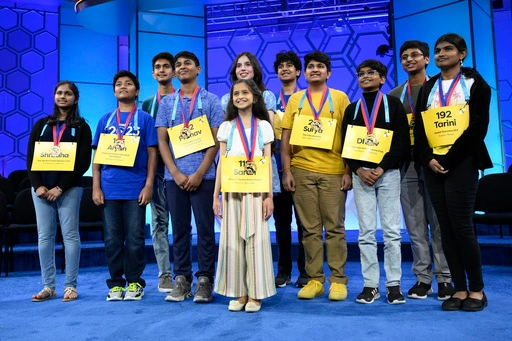
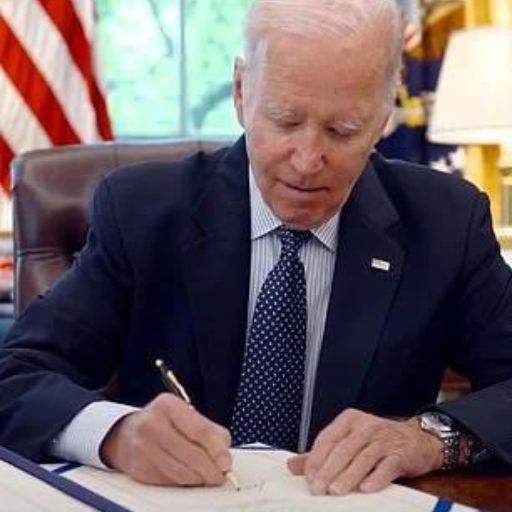
Citing his Bharat Jodo Yatra, he said that when he walked across the country, there was angst among the people. “I walked across India, from Kanyakumari to Kashmir, and spoke directly to millions of Indian people. They didn’t seem happy to me; there were serious issues with rising unemployment and inflation. There was angst among the people,” he said.

Hitting out at the ruling Bharatiya Janata Party, he said that the BJP was promoting a polarising vision in the country which was damaging India. On a question about the Opposition in India, Rahul said that opposition parties in the country are pretty united. “We’re having conversations with all the Opposition. I think quite a lot of good work is happening,” he said. “It’s a complicated discussion because there are spaces where we have competing also with (other) Opposition (parties). So, it’s a little bit of give and take as required. But I’m confident that that will happen,” he said.

Last week, Indian Overseas Congress chairperson Sam Pitroda said Rahul Gandhi’s visit is aimed at promoting shared values and a vision of “real democracy”. “The purpose of his (Gandhi’s) trip is to connect, interact and begin a new conversation with various individuals, institutions and media, including the Indian diaspora that is growing in numbers in the United States and abroad to promote the shared values and vision of the real democracy with a focus on freedom, inclusion, sustainability, justice, peace and opportunities world over,” Pitroda said in a statement.

Rahul Gandhi is an Indian politician and leading figure of the Indian National Congress (Congress Party). He was born the son of Rajiv Gandhi, a grandson of Indira Gandhi, and a great grandson of Jawaharlal Nehru, all of whom served as prime ministers of India. His mother, Sonia Gandhi, also played a leading role in the Congress Party after the assassination of Rajiv Gandhi.

Rahul Gandhi entered politics in 2004 when he was elected to the Lok Sabha for the first time. In 2013 he was named the Congress Party’s vice president and became its de facto (though never official) candidate for prime minister in the 2014 polls.

He became head of the Congress Party in late 2017 after Sonia Gandhi decided to retire from leadership. The Congress party’s poor performance in the 2019 elections in the Lok Sabha, prompting him to step down from leading the party. In March 2023 Gandhi was convicted of defamation and sentenced to two years in prison for his comment that referred to people with the surname “Modi” as thieves—the same surname as the India’s Prime Minister Narendra Modi. A day after his conviction, Gandhi was disqualified as the member of the Indian parliament.

Rahul Gandhi arrived in the United States on May 30 on a three-city visit. He is slated to conclude his trip with a public gathering in New York on June 4. The interaction would take place at the Javits Center in New York.

Dev Shah Wins 2023 Scripps National Spelling Bee Title

Dev Shah, a 14-year-old Floridian teenager has emerged as the champion of the 2023 Scripps National Spelling Bee held in the United States. A student hailing from Largo, Dev Shah, successfully spelled the word “psammophile” to secure his victory in the 95th edition of the national competition, along with a $50,000 (£40,000) cash prize.

Another 14-year-old, Charlotte Walsh from Arlington, Virginia, was named the runner-up after she misspelled the word “daviely” as “daevilick.” A psammophile refers to an organism that thrives in sandy environments.

After advancing through regional competitions, America’s top student spellers competed Thursday for cash prizes and academic fame. More than 200 students spelled their way through regional spelling bees to advance, and students competing represent all 50 states, as well as the District of Columbia, Guam, Puerto Rico and the U.S. Virgin Islands.

The final round featured 11 contestants, shortlisted from a staggering 11 million participants in various spelling contests, as reported by the organizers. Dev expressed his disbelief upon winning, stating, “It’s surreal… my legs are still shaking.” His family joined him on stage to celebrate his achievement, with his mother expressing her pride in him.

Dev had previously participated in the 2019 and 2021 editions of the competition, finishing tied for 51st and 76th place, respectively. En route to the final, he correctly spelled challenging words such as bathypitotmeter, schistorrhachis, and rommack. Additionally, he answered a question accurately, identifying a magician as someone most likely to practice legerdemain.

Meanwhile, Charlotte’s journey to the finals involved correctly spelling words like akuammine, sorge, and collembolous. The final event took place in National Harbor, Maryland. The tradition of the national spelling bee dates back to its inception in 1925.

Here’s a look at tonight’s finalists.

Dhruv Subramanian is a 12-year-old seventh-grader from San Ramon, Calif., who loves music. He plays guitar for the school’s rock band and is active in orchestra and jazz band at school. And, of course, he is an excellent speller, having won the NSF Junior Spelling Bee National Champion in 2019 and being named Alameda County Champion in 2020. He’s in the top 10 in major national spelling bees.

Shradha Rachamreddy is learning the classical Indian dance Bharatanatyam in between spelling bees. She’s 13 and in seventh grade. She’s from the BASIS Independent Silicon Valley Upper School and previously competed in 2019 and 2022 spelling bees.

ADVERTISEMENT

Vikrant Chintanaboina has been spelling competitively since second grade. He’s 14 and in the eighth grade at Discovery Charter School-Falcon campus in California. In his spare time, he enjoys time outdoors and playing video games with his brother Ashvik.

Arth Dalsania is 14 and in eighth grade at the Thousand Oaks California Camarillo Academy of Progressive Education. He loves playing violin , tennis and chess. He wants to be an astrophysicist and solve the world’s problems with science.

Dev Shah attends Largo, Florida’s Morgan Fitzgerald Middle School and has many interests besides spelling. He plays cello, loves learning and, in his free time, calls friends and solves math problems with them. He likes historical fiction movies and reading historical fiction books.

Aryan Khedkar goes to Baker Middle School in Waterford, Mich. Reading, writing, solving math problems and singing are favorite pastimes. He plays bass clarinet in his school band and likes solving Rubik’s Cube patterns.

Sarah Fernandes is an 11-year-old fifth-grader at St. Stephen the Martyr Catholic School in Omaha. She has played piano since she was 4, including at Carnegie Hall. She’s won several competitions and played solo with a professional orchestra. She loves making digital art, reading and math.

ADVERTISEMENT

Pranav Anandh is a 14-year-old Morton, Penn., student at Garnet Middle School who is passionate about robotics and science. He represented the United States in the World Robotics Olympiad in 2021-22.

Tarini Nandakumar is a 12-year-old sixth-grader from Austin, Texas’ Challenger School — Avery Ranch. Her many hobbies include reading, singing, dancing, building with LEGO and playing with her pets, Simba and Beau.

Surya Kapu is from Salt Lake City’s American Preparatory Academy-Draper 3. He’s a black belt in tae kwon do and likes playing the saxophone, chess and basketball. He’s enjoyed spelling bees from an early age and is excited about participating this year.

Charlotte Walsh is from Merrifield, Virginia’s Compass Homeschool Enrichment. She’s testing for her black belt in tae kwon do after working toward it since she was 6 and plans to pursue either astrophysics or neuroscience when she grows up. She loves listening to music.

Biden Signs Debt Ceiling Bill, Averting Government Shut Down

President Joe Biden on Saturday, June 3rd signed the debt ceiling bill, a capstone to months of negotiations that pushed the U.S. to the brink of default. Biden signed H.R. 3746, the “Fiscal Responsibility Act of 2023,” two days before Monday’s default deadline, on which the U.S. would run out of cash to pay its bills, according to a White House release.

Biden thanked House Speaker Kevin McCarthy, Senate Majority Leader Chuck Schumer and Minority Leader Mitch McConnell “for their partnership.” Biden tweeted: “I just signed into law a bipartisan budget agreement that prevents a first-ever default while reducing the deficit, safeguarding Social Security, Medicare, and Medicaid, and fulfilling our scared obligation to our veterans. Now, we continue the work of building the strongest economy in the world.”

The House of Representatives and the Senate passed the legislation this week after Biden and House of Representatives Speaker Kevin McCarthy reached an agreement following tense negotiations.
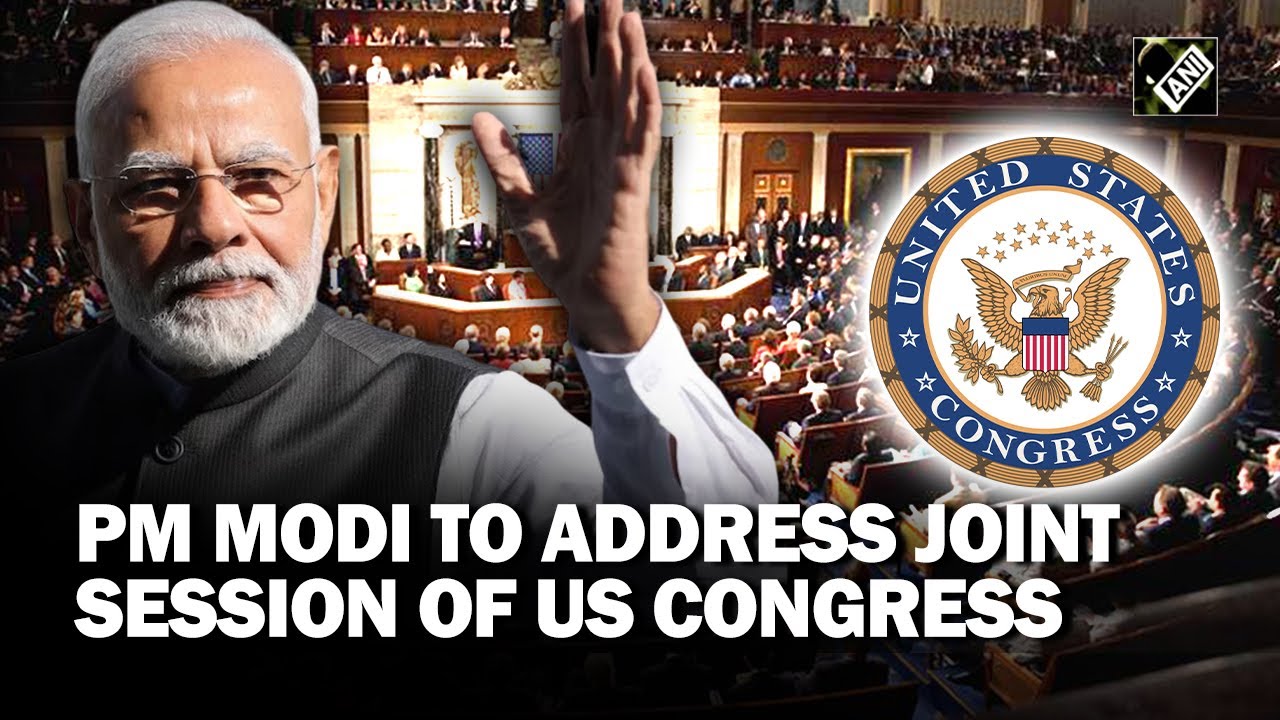
The Treasury Department had warned it would be unable to pay all its bills on Monday if Congress had failed to act by then.

Biden, who had experienced the 2011 debt limit crisis, refused to make any concessions for what he considered Congress’s basic duty. However, McCarthy, encouraged by conservatives seeking significant changes to federal spending, was determined to use the nation’s borrowing power as leverage, even if it risked pushing the U.S. towards default.

The ensuing events demonstrated how two influential figures in Washington, both of whom believe in the importance of personal connections despite not having a strong relationship themselves, managed to prevent an unprecedented default that could have seriously damaged the economy and carried unpredictable political repercussions.

However, the standoff was primarily provoked by Republicans who believed that threatening the debt limit was necessary to curb federal spending. Despite a decisive 314-117 House vote and a 63-36 Senate vote, this episode has put McCarthy’s speakership to the test and challenged his capacity to control his party’s rebellious far-right faction.

“IT’S ALL ABOUT THE ENDGAME”

McCarthy now feels empowered and remains undaunted. Reflecting on his election as speaker after the House passed the debt limit package, he mentioned his arduous journey to secure the gavel in January. He stated, “Every question you gave me (was), what could we survive, what could we even do? I told you then, it’s not how you start, it’s how you finish.”

This narrative of the prolonged process through which Washington resolved the debt limit crisis is based on interviews with legislators, senior White House officials, and high-ranking congressional aides, some of whom requested anonymity to disclose private negotiation details.

Key to overcoming the obstacles were Biden and McCarthy’s five negotiators, who brought policy expertise to the table and received full support from their leaders. Republicans particularly appreciated the involvement of presidential counselor Steve Ricchetti, who speaks on behalf of Biden like no one else, and Shalanda Young, the current director of the Office of Management and Budget, who gained invaluable experience as a respected senior congressional aide overseeing the intricate annual appropriations process.

Young and Rep. Patrick McHenry of North Carolina, one of McCarthy’s negotiators, developed such a close rapport that they phoned each other every morning during their respective day care drop-offs. Additionally, Young and the other GOP negotiator, Rep. Garret Graves, playfully debated who had the better gumbo recipe while discussing the debt limit during a White House celebration for the national champion Louisiana State University women’s basketball team.

The five negotiators – Graves, McHenry, Ricchetti, Young, and legislative affairs director Louisa Terrell – convened daily in an elegant office on the Capitol’s first floor, adorned with frescoes by 19th-century muralist Constantino Brumidi. In these meetings, they focused intently on priorities and non-negotiables to determine how they could reach an agreement.

HITTING PAUSE AND A ‘BACKWARD’ PROPOSAL

By May 19, the negotiations were becoming shaky. Republicans grew impatient as the White House seemed unwilling to compromise on reducing federal spending, which was a non-negotiable demand for the GOP.

During a morning meeting that Friday, White House officials urged McHenry and Graves to present a formal proposal. However, the frustrated Republicans opted to go public instead. They informed reporters that the talks had temporarily halted. As he hurried through the Capitol, Graves said, “We decided to press pause because it’s just not productive.” He later explained that he and McHenry were tired of playing games.

Tensions didn’t subside. When negotiations resumed that night, McHenry and Graves presented a new proposal that not only revived numerous rejected provisions from the GOP’s debt limit bill but also incorporated the House Republicans’ border-security bill. A White House official labeled the proposal “regressive.”

The White House expressed its own frustrations as the discussions seemed to be faltering, starting with a lengthy statement from communications director Ben LaBolt and followed by Biden’s comments at a press conference in Hiroshima, Japan, where he was attending a summit of leading democracies. The president stated, “Now it’s time for the other side to move their extreme positions. Because much of what they’ve already proposed is simply, quite frankly, unacceptable.”

HOPE, LONG HOURS, AND GUMMY WORMS

Despite the escalating public rhetoric, there were indications that the talks were improving. Biden called McCarthy from Air Force One as he left Japan, and the speaker appeared more hopeful than he had been in days. Fueled by coffee, gummy worms, and burritos, negotiators worked exhausting hours, primarily at the Capitol but once at the Eisenhower Executive Office Building, where they enjoyed Call Your Mother bagel sandwiches provided by White House Chief of Staff Jeff Zients.

One session lasted until 2:30 a.m., and Graves showed reporters an app tracking his sleep, revealing an average of three hours per night during the final stretch. McCarthy sent lawmakers home over Memorial Day weekend, which McHenry believed was helpful. He said, “The tone of the White House negotiators became much more serious and much more grounded in the realities they were going to have to accept.”

PROMOTING THE AGREEMENT

On May 27, Biden and McCarthy announced a deal in principle and began the task of convincing others. The night before the vote, McCarthy assembled House Republicans in the Capitol’s basement, provided pizza, and explained the bill while challenging Freedom Caucus members to use the same aggressive language they had employed at an earlier news conference. By the meeting’s end, it was evident that McCarthy had quelled the rebellion.

Meanwhile, the White House had its work cut out for them in appeasing rank-and-file Democrats. Biden and McCarthy displayed contrasting styles throughout the negotiations, with the speaker discussing the debt limit talks openly and frequently, while the president remained quiet, wary of jeopardizing the deal before it was finalized.

Biden had been privately addressing his party’s concerns even as the agreement was being finalized. After the Congressional Progressive Caucus criticized the few known details, particularly regarding stricter requirements for federal safety-net programs, Rep. Pramila Jayapal received a call from Biden. He assured her that his negotiators were working diligently to minimize the Republican-drafted changes to food stamp and cash assistance programs.

In a statement after the vote, Biden expressed gratitude and relief, saying, “This budget agreement is a bipartisan compromise. Neither side got everything it wanted. That’s the responsibility of governing.”

Rahul Gandhi Asserts United Opposition Will Defeat BJP In 2024 Elections

Amid growing concerns over the state of Indian democracy, Congress leader Rahul Gandhi addressed journalists at the National Press Club in Washington. Gandhi emphasized that India’s democracy is a global public good, and its collapse would have severe ramifications for the rest of the world. He noted that it is the responsibility of Indians to safeguard their democracy but added that the international community should also play a role in preventing its collapse. During the one-hour-long interaction, he addressed various issues ranging from India’s position on the Russia-Ukraine war, the BJP’s politics of hate, and the effort to build a united opposition before the 2024 Lok Sabha elections.

Gandhi asserted that a united opposition would defeat the BJP on its own. He also expressed confidence that the BJP would be decimated in the next three or four Assembly elections. When asked about Prime Minister Narendra Modi’s upcoming state visit to the United States, Gandhi declined to prejudge the matter, but emphasized the importance of the relationship between the two countries.

With regards to the Congress’s stance on India’s relationship with Russia, Gandhi made it clear that his party’s position would be very similar to the BJP. He reiterated that it was his party’s responsibility to fight the battle for democracy in India and to prevent a slide into authoritarianism. “Indian democracy is a global public good,” he said, “because India is large enough that a collapse in democracy in India will affect…will have an impact on the world.”

On countering the BJP’s propaganda going into the 2024 Lok Sabha poll, Gandhi admitted that his party had been struggling before but insisted that the Bharat Jodo Yatra had completely changed the narrative. He claimed that the BJP had done everything to stop the yatra from succeeding but that he resonated with the people, even those from the BJP, adding that he had received positive comments from a BJP spokesperson.

Addressing his recent disqualification as an MP, Gandhi claimed that it came days after he criticized the Adani Group. However, he reiterated that it was a “gift” to serve the people and that the Congress was committed to fighting the battle for democracy in India.

The interaction between Gandhi and the journalists led to sparring between Congress and BJP, with the ruling party accusing Gandhi of calling M.A. Jinnah’s Muslim League a secular party. However, the Congress hit back by accusing the BJP of peddling fake news and clarifying that their leader’s comment was about the Indian Union Muslim League, their ally in Kerala.

At a dinner meet hosted by Indian-American businessman Frank Islam, Gandhi expressed his confidence that the next three or four elections that the Congress would fight directly with the BJP would see the ruling party decimated. He noted that while the BJP has the instruments of noise, the majority of the Indian population does not support them.

Gandhi’s remarks underline the importance of Indian democracy not only for Indians but for the rest of the world. He emphasizes the need to fight the battle for democracy, prevent a slide into authoritarianism, and build a united opposition to defeat the BJP in future elections. Despite the BJP’s propaganda, Gandhi claims confidence in the Congress’s ability to resonate with the people and ultimately triumph at the ballot box.

Rahul Gandhi Praises Indian Diaspora For Holding Up Tricolor In America

Former president of the Indian National Congress, Rahul Gandhi, during his address to the Indian diaspora at an event in California, the first stop of his U.S. visit, lauded the Indian diaspora for being ambassadors of the country and urged Indian students in United States to return to the country.

The United States and India need to work towards a vision, Congress leader Rahul Gandhi said during a conversation themed on ‘The New Global Equilibrium’ hosted by the Center on Democracy, Development & the Rule of Law, Stanford University at CEMEX Auditorium on May 31.

Praising the Indian American community Gandhi said, “We think of our country, you are all our ambassadors. When America says Indian people are extremely intelligent, Indian people are masters of IT, Indian people are respectful – all these ideas that have come, they’ve come because of you, your actions, and your behavior. So, I thank you very much for that.”

“Thank you very much for holding up the Indian flag in America, showing the American people what it means to be Indian, respecting them, respecting their culture, learning from them, and also allowing them to learn from you. You make us all proud,” he added.

Responding to a question from a UC Berkeley student, who asked Gandhi to say a few words to the youth who hesitate to go back home at a time when the India’s youth and the wrestlers were being treated in an “undignified” manner, Gandhi said, “As a young person, your country needs you. Your skills and your energy will be very useful to your country so if you feel like going back, do go back and help out.”

Elaborating on the situation in India, Gandhi told the audience that what they see on the news from India is far away from the truth. “India is not what the media shows. The media likes to show, you know, a particular narrative. It likes to promote a particular narrative. That is actually not what is going on in India. It was very clear to me in the yatra.”

The former member of parliament also spoke at length of his experience during the Bharat Jodo Yatra and the reason behind it. He stressed that India’s strength stems from its diversity and the only way to combat hate in the society is through love and affection. Gandhi also informed the gathering on his party’s stance on various political issues in India.

The session was moderated by CDDRL-affiliated scholar Dinsha Mistree. Gandhi said, “We have a population that is more than ready to work very hard. You have the technology, you have Silicon Valley. These two things need to be brought together, but it needs a vision. It needs to spark action. US and India need to work together towards this vision,” he added.

He added, “If you look at India as a manufacturing hub, it is dropping. Unemployment is rising. These are directly connected. It’s a hard thing to do. It’s much harder for the West to do it than for us. But, it needs to be done.” Gandhi is in the US on a week-long tour during which he is scheduled to meet the Indian diaspora, academics, students, entrepreneurs and think tanks. He landed in San Francisco on May 30, and was in Washington, DC and New York as well. His visit concluded on June 4.

Narendra Modi To Address Joint Session of U.S. Congress

During his upcoming state visit to the United States, Indian Prime Minister Narendra Modi has been invited to address a joint session of the U.S. Congress on June 22. The bipartisan invitation was extended by the leaders of both the U.S. House of Representatives and the U.S. Senate, who have asked Mr. Modi to discuss his vision for India’s future as well as the global challenges confronting both nations.

This will not be the first time Mr. Modi addresses the U.S. legislative bodies; he previously did so in June 2016 during an earlier trip to Washington. The current invitation was co-signed by House Speaker Kevin McCarthy (Republican), Senate Majority Leader Chuck Schumer (Democrat), Senate Republican Leader Mitch McConnell, and House Democratic Leader Hakeem Jeffries.

The letter from the U.S. lawmakers states, “Your historic address to a Joint Meeting of Congress seven years ago left a lasting impression and greatly deepened the friendship between the United States and India.” They also emphasize that the growing bilateral partnership is based on the two countries’ “shared values and commitment to global peace and prosperity.”

The letter expresses the lawmakers’ eagerness to continue collaborating, saying, “We look forward to continuing to work together to build a brighter future for our countries and for the world.”

Blinken and Jaishankar Discuss PM Modi’s Upcoming US Visit in June at G7 Summit

U.S. Secretary of State Antony Blinken and External Affairs Minister S. Jaishankar met in Hiroshima on Sunday to discuss plans for Prime Minister Narendra Modi’s upcoming visit to the United States in June. The discussions included possible plans for a “short retreat” outside Washington. While there is no clarity on whether a large diaspora event on the lines of the 2018 “Howdy Modi” address in Houston would be included, the Prime Minister is expected to address a large gathering of U.S. CEOs and Chambers of Commerce, and attend a reception for the Indian diaspora organised by the Indian Embassy.

During their meeting, Secretary Blinken wrote in a tweet, “We look forward to hosting Indian Prime Minister Narendra Modi in June, whose visit will celebrate the deep partnership between the United States and India,” which Mr. Jaishankar thanked him for. U.S. President Biden also reportedly referred to the upcoming visit during the Quad meeting held on the sidelines of the G-7 summit on Saturday. According to reports from media agencies, President Biden had joked that he should seek PM Modi’s “autograph” because there is a “huge demand from people across U.S. to attend the State dinner next month.” However, neither the Ministry of External Affairs nor the U.S. Embassy in Delhi confirmed these remarks.

While the state visit will include a ceremonial welcome at the White House and a state banquet, the visiting dignitaries are also often accorded a lunch at the State Department to meet with the Vice-President and Secretary of State. Moreover, the two governments are discussing a short trip outside Washington by Mr. Biden and Mr. Modi, where officials have discussed the possibility of the two leaders travelling to the U.S. Presidential retreat for hosting foreign dignitaries at Camp David, or Mr. Biden’s private vacation home at Rehoboth beach.

Sources say that a number of possible plans for the visit are still being finalized, including a possible “short retreat.” Mr. Modi has previously shared such “retreat” sojourns with German Chancellor Angela Merkel at the Schloss Meseberg palace outside Berlin, U.K. Prime Minister David Cameron in Chequers, Russian President Vladimir Putin at his Dacha in Sochi, and Chinese President Xi Jinping in Wuhan.

India Caucus co-chair Ro Khanna also confirmed that he was writing to the U.S. Speaker to request that PM Modi also address the U.S. Congress. The Prime Minister is expected to reach Washington on June 22, ahead of the official events on June 23.

Furthermore, President Biden is set to visit India in September this year for the G-20 summit and in 2024, when it will be India’s turn to host the next Quad Summit. PM Modi will be the third State Guest that U.S. President Biden will host during his presidency, after French President Emmanuel Macron in December 2022 and South Korean President Yoon Suk Yeol.

Regarding the U.S. State Department report on international religious freedom that criticised the Modi government for the “continued targeting of minorities” in India, India had sharply rejected the report a week earlier. When asked on Thursday, MEA officials had sidestepped a question on whether the issue would be raised during the India-US bilateral meeting as well.

In conclusion, the visit of Prime Minister Modi to the United States in June is expected to include a number of possible plans and events, including a state banquet, a lunch at the State Department, a large gathering of U.S. CEOs and Chambers of Commerce, and a reception for the Indian diaspora. While details are still being finalized, a possible “short retreat” outside Washington is also being discussed, which could include travelling to the U.S Presidential retreat at Camp David or Mr. Biden’s private vacation home at Rehoboth beach. The visit is expected to celebrate the deep partnership between the United States and India.

India’s Efforts in Curbing Smokeless Tobacco Use Lauded

According to the latest Lancet Global Health Research Review on the Global Impact of Tobacco Control Policies on Smokeless Tobacco Use, India’s efforts to reduce smokeless tobacco consumption have been lauded as “exemplary.” The review highlights India’s comprehensive approach, which aligns with the WHO FCTC and encompasses various measures such as taxation, regulation, labeling, education campaigns, cessation services, and restrictions on sale to minors. The review specifically mentions the ban on smokeless tobacco products like gutkha, along with mandatory depiction of harmful ingredients and pictorial health warnings on packaging. These efforts are commended as exemplary by the review.

The Global Adult Tobacco Survey (GATS) 2 conducted in 2016-17 revealed that the overall prevalence of tobacco users in India was 28.6%, with smokeless tobacco users comprising 21.38% of the population. These numbers indicate a decrease compared to the earlier GATS 1 survey, which reported 34.6% overall tobacco users and 25.9% smokeless tobacco users.

Additionally, India has implemented various policies to discourage tobacco consumption and protect public health. These include bans on advertisements, the prohibition of plastic sachets for packaging, and restrictions on tobacco use in public places. Notably, some states in India, such as Maharashtra, Haryana, Uttar Pradesh, Bihar, Jharkhand, Uttarakhand, Telangana, Nagaland, and Assam, have issued orders to ban smokeless tobacco products and spitting in public places, particularly in response to the COVID-19 pandemic.

However, experts have highlighted the need for more stringent implementation of tobacco-related bans in India, as several states have been lax in enforcing them.

Globally, smokeless tobacco use affects approximately 300 million people, leading to significant contributions to tobacco-related diseases and deaths. Many countries have adopted policies beyond the WHO Framework Convention on Tobacco Control to address smokeless tobacco control, which has been effective in reducing smoking prevalence.

The use of smokeless tobacco products, including pan masala, gutkha, and khaini, is a significant public health concern in India and the Southeast Asian region. Earlier estimates indicated that nearly 80% of smokeless tobacco users reside in Southeast Asia, with around 60% in India.

On World Tobacco Day, Poonam Khetrapal Singh, the WHO regional director for South-East Asia, emphasized the success stories from countries like Bangladesh, India, Indonesia, and Sri Lanka, where tobacco-growing farmers have transitioned to economically viable alternative crops. Singh called upon all partners to support governments in tobacco-growing countries to develop and implement suitable policies and strategies for farmers to shift to growing food crops, leading to improved livelihoods, national economies, and food security.

The Lancet review, which marks the first systematic assessment of the global impact of tobacco control policies on smokeless tobacco use, involved a meticulous examination of 11 electronic databases and literature from January 1, 2005, to September 20, 2021. The findings revealed that 57 countries have implemented policies specifically targeting smokeless tobacco, with 17 of them going beyond the scope of the World Health Organisation (WHO) Framework Convention on Tobacco Control (FCTC).

The review highlights that policy initiatives based on the WHO FCTC have led to reductions in smokeless tobacco prevalence. For instance, taxation measures have resulted in reductions ranging from 4.4% to 30.3%, while multifaceted policies have yielded reductions ranging from 22.2% to 70.9%. The implementation of Article 11 (Pictorial health warnings) and Article 13 (Tobacco advertisement, promotion, and sponsorship ban) of the WHO FCTC has been widespread and impactful.

Experts have emphasized the need to scale up tobacco-related research in light of these findings. Ravi Mehrotra, co-author and member of the ICMR’s India Cancer Research Consortium, stressed the significance of increasing taxation and improving the implementation of existing laws. He stated, “Given that 300 million people use it worldwide, emphasis on increasing taxation and better implementation of the existing laws is of paramount importance. While policies on smokeless tobacco prevention and control exist in various countries, there is a lack of comprehensive research and assessment of their impacts, with limited publication in prominent tobacco reports or scientific literature.”

The review also emphasizes the importance of continuously updating guidelines and frameworks to incorporate new evidence on effective smokeless tobacco control measures. This reflects the need to stay abreast of emerging research and adapt strategies accordingly to enhance smokeless tobacco control efforts.

The Dutch Art of Doing Nothing for Stress Relief and Enhanced Productivity

Residing in The Hague, I am surrounded by 11 kilometers of stunning coastline that features picturesque dunes and sandy shores. During summer, it’s common to find locals at Scheveningen or Kijkduin, the city’s most popular beaches, basking in the sun, taking leisurely walks, or cycling before settling on one of the many benches available. They might be reading, conversing with friends, or simply engaging in the act of niksen.

Niksen, a Dutch wellness trend translating to “doing nothing,” gained global attention in 2019 as a method for managing stress and recovering from burnout. At that time, many people were seeking relief from fatigue and depression caused by overwork, leading to the adoption of concepts like Japanese ikigai or Danish hygge. As a linguist, I appreciated how the idea of doing nothing could be conveyed in a single, easy-to-pronounce word.

In my book, Niksen: Embracing the Dutch Art of Doing Nothing, I describe it as “doing nothing without a purpose” – not mindlessly scrolling through Facebook or meditating. While mindfulness focuses on being present in the moment, niksen is about setting aside time to simply exist, allowing your mind to wander freely. In our post-pandemic world, reevaluating how we work and utilize our time is crucial.

From a linguistic standpoint, the verb “niksen” (doing nothing) is derived from “niks,” meaning “nothing.” According to Monique Flecken, a psycholinguist at the University of Amsterdam, “It fits with the tendency of the Dutch language to create verbs out of nouns,” such as “voetbal” (football) becoming “voetballen” (playing football), or “internet” turning into “internetten.” She adds, “The Dutch are a practical, direct people and their language reflects that.”

In the Netherlands, niksen can have both positive and negative connotations. Flecken explains that a parent might ask their child, “Zit je weer te niksen?” (Are you doing nothing again?), while someone might also say “lekker niksen,” translating to “delicious doing nothing,” when referring to an evening blissfully devoid of tasks or work.

Psychologist and author Thijs Launspach defines niksen as “doing nothing or occupying yourself with something trivial as a way of enjoying your own time.” He notes that this concept is more applicable to older individuals with unstructured free time, whereas younger generations in the Netherlands – a country known for its work-life balance – are more stressed than ever.

Launspach attributes this stress to various factors: “Our lives and our jobs have become increasingly complex. We tend to spend a lot of time with computers. There is a lot of pressure on being the best version of yourself, be it in our jobs, or the expectations of parents [or] from social media. There is a lot of pressure to perform.”

Stress, as Bernet Elzinga, a psychology professor at Leiden University, points out, isn’t always detrimental. “It’s not necessarily bad to be for a moment in a state of stress, where you’re really on and focused. The problem is when this is getting out of hand,” she remarked. However, niksen can offer a solution by allowing the mind to wander and reflect, connecting us to our default mode network.

Interestingly, engaging in niksen can boost productivity, as taking breaks enables our brains to rest and refocus. This might explain why the Dutch, despite not working long hours, are highly efficient at work. In the Netherlands, the prevailing attitude is “just be normal, that’s already crazy enough,” discouraging overtime and reflecting the country’s honest and egalitarian culture.

This approach appears to be effective, as the Dutch are renowned for their creativity and innovation – from famous painters like Rembrandt, Vermeer, and Escher to inventive flood control measures like massive dams and floating houses.

The Dutch also value enjoyment, as evidenced by the word lekker, meaning “delicious,” but applicable to anything pleasant, such as lekker warm, lekker slapen, and lekker niksen. Their focus on leisure makes it easier for people to do nothing more effortlessly. Locals often spend their time actively, cycling or hiking, and flocking to cafes and terraces whenever the sun emerges, even in winter. These spaces are ideal for practicing niksen.

However, Launspach remains skeptical of using niksen as a stress prevention strategy. “I’m a little bit skeptical of the idea that you should create a buffer between you and stress. I don’t know if that’s even possible in the way that we live and work now,” he stated. Elzinga, on the other hand, believes engaging in physical activity in nature is a better way to distract from daily concerns.

Fortunately, the Netherlands offers opportunities to combine niksen, nature, and movement. The Dutch cherish their limited natural areas, with many dune spaces forming part of an extensive network of hiking and cycling routes across the country. Even in larger cities like Rotterdam, The Hague, or Amsterdam, trails are never too far away.

In collaboration with the Dutch Railway system, Wandelnet has developed NS Wandelingen, a series of easily accessible hiking routes via public transport. With distances ranging from 7 to 22 kilometers, these routes are perfect for day trips, and the numerous benches along the way provide opportunities for niksen breaks.

The Dutch can enjoy such leisure time thanks to their excellent welfare system and balance between hard work and ample days off. “Having a good social support system, having lower stress level relates to feeling secure and in balance. So, I wouldn’t overestimate the importance of that,” said Elzinga. Given the ongoing global challenges – the Covid-19 pandemic and the war in Ukraine – stress relief is more vital than ever.

Rahul Gandhi’s US Visit Aims to Promote Shared Values and Real Democracy, Says Indian Overseas Congress

Indian Congress leader Rahul Gandhi is visiting the United States in June to highlight the values and vision of “real democracy”, according to Sam Pitroda, chairperson of the Indian Overseas Congress. Gandhi’s visit will include addresses to public meetings and university students in San Francisco, Washington DC and New York, where he will also meet members of Congress and think tanks and Wall Street executives. Pitroda explained Gandhi’s agenda saying, “we are not here to complain. We are here to share what is going on in India.” Pitroda continued that the purpose of Gandhi’s America visit is to begin a new conversation with individuals, institutions, media and the Indian diaspora to promote “freedom, inclusion, sustainability, justice, peace and opportunities world over.”

George Abraham, vice-chairman of the Indian Overseas Congress-USA said, “I hope that Rahul Gandhi’s visit will energise the diaspora into a renewed appreciation of democracy and freedom the Indian diaspora aspires to have.” Gandhi’s itinerary includes meetings with think tanks and universities. The programme is packed with a thousand people due in attendance in San Francisco and a private dinner in Washington, DC.

Gandhi has been criticised for alleging that the structures of Indian democracy are under attack and claiming there is a “full-scale assault” on the country’s institutions. These remarks made while on a March visit to the UK saw the BJP accuse him of maligning India on foreign soil, seeking foreign intervention, and dividing India, among other claims.

The Congress, in reply, cited instances of Prime Minister Narendra Modi raising India’s internal politics abroad.

The Congress party is the oldest party in India, founded in 1885. It dominated Indian politics for the years following the country’s independence in 1947, until India opened its economy in the 1990s, leading to the emergence of the Bharatiya Janata Party (BJP). The BJP has since emerged as the dominant party in Indian politics, and Gandhi’s Congress has struggled to regain political ground against the BJP and its allies.

The Indian Election Commission is also currently investigating allegations of electoral malpractices in the lead up to the general election in May which saw the BJP secure a second term in government.

60,000 Contract Workers Lost Jobs in India’s IT Sector in 2022

In the year ending in March, approximately 60,000 outsourced contract workers lost their jobs in India’s IT sector as employment opportunities for flexi workers contracted by companies decreased by 7.7% compared to the previous year, according to a recruitment organization. Lohit Bhatia, president of the Indian Staffing Federation, stated, “The drop in new employment generation within the IT flexi staffing sector mirrored the global slowdown in IT hiring.”

Despite this, hiring in the manufacturing, logistics, and retail sectors remained robust due to strong domestic consumer demand. The $194-billion IT sector, which facilitated businesses’ adoption of online shopping and remote working during the pandemic, is experiencing a slowdown this year as employees return to offices and the Russia-Ukraine conflict impacts spending from European clients.

A JP Morgan analysts’ report issued last week cautioned that rising inflation, supply chain disruptions, and the effects of the Ukraine war could bring an end to the growth boom experienced by India’s IT services during the pandemic. Bhatia noted that IT sector flexi worker hiring declined 6% quarter-on-quarter in the March quarter, and the trend of hiring contract workers through third parties may continue to be weak in the software industry for the next few quarters.

India’s unemployment rate increased for the fourth consecutive month in April, reaching 8.11% compared to 7.8% in March, as reported by the Centre for Monitoring Indian Economy (CMIE). The Indian Staffing Federation revealed that overall demand for flexi workers also slowed in other sectors, with 177,000 jobs added through vendors in the 2022/23 financial year, compared to 230,000 in the previous year. Currently, Indian companies employ 1.4 million flexi workers, including one-fourth of women workers, through vendors.

G20 Tourism Meeting Held in Kashmir Amid High Security

The G20 tourism conference is taking place in the Indian-controlled region of Kashmir under heavy security measures, drawing criticism from both China and Pakistan for hosting the event in the contentious area. The ongoing dispute between India and Pakistan over the Himalayan territory of Kashmir has lasted 75 years since their independence, with both nuclear powers claiming the entire region but only governing parts of it. Two out of the three full-scale wars fought between these nations have been over this territory.

The Indian-administered part of Kashmir, which is the nation’s sole Muslim-majority region, has experienced an armed uprising for decades as rebels demand either independence or unification with Pakistan. This conflict has resulted in the deaths of tens of thousands of civilians, soldiers, and Kashmiri insurgents. Authorities mentioned that security was heightened last week “to avoid any chance of terrorist attack during the G20” meeting, marking the first diplomatic event in the disputed area since New Delhi abolished its limited autonomy and assumed direct control in 2019.

Taking place on the banks of Dal Lake in Srinagar, the main city of the region, the three-day event commences Monday at a highly secured and expansive venue. Officials have prepared the area to demonstrate what they describe as “normalcy and peace returning” to the region by resurfacing roads leading to the site and illuminating electricity poles with the colors of India’s national flag.

On Monday, Srinagar seemed peaceful, with most security checkpoints either removed or disguised using G20 signage to create cubicle-like stations for security personnel. Authorities have also trained hundreds of officers in what they refer to as “invisible policing” for the event.

‘Graveyard calm’

However, officials closed the primary road leading to the convention center for civilian traffic and shut down numerous schools in the city. The security measures on Monday were in stark contrast to those implemented in the days preceding the event. A large security perimeter was established around the venue by the Dal Lake, with elite naval commandos patrolling the water in rubber boats.

Picture : TheUNN

India has been advocating for tourism within its part of Kashmir, attracting over a million visitors last year. Indian authorities hope that the G20 meeting will demonstrate how the 2019 alterations brought “peace and prosperity” to the region. Delegates will explore topics such as sustainable tourism and destination management. Additionally, side events focusing on ecotourism and the role of films in promoting tourist destinations are planned.

Harshvardhan Shringla, India’s chief coordinator for the G20, told reporters on Sunday, “We have the making of a unique meeting.” He highlighted that the event would feature the highest number of foreign delegates compared to previous tourism meetings held in West Bengal and Gujarat earlier this year.

However, Dr. Sheikh Showkat Hussain, a political analyst based in the region, told Al Jazeera that the G20 meeting would only hold significance for the people of Kashmir if there were a sense of normalcy. He stated, “Now, normalcy does not mean normalcy of a graveyard where you have restrictions on media, restrictions on people and people languishing in jails.” He added, “And at the same time you want to project to the world that everything is normal.”

China opts out No Chinese representatives will be present at the event. India and China are currently engaged in a military standoff along their mostly undefined border in the Ladakh region. Beijing lays claim to the entirety of the Indian state of Arunachal Pradesh as part of its Tibet province and regards Kashmir as a disputed territory. “China firmly opposes holding any form of G20 meeting in disputed territory and will not attend such meetings,” foreign ministry spokesman Wang Wenbin informed reporters on Friday.

Turkey, Saudi Arabia, and Indonesia are also reportedly unlikely to participate, according to an AFP news agency report. India, which holds the G20 presidency for 2023, has scheduled over 100 meetings across the nation. China has already abstained from attending events in Ladakh and Arunachal Pradesh.

Pakistan, a non-G20 member that governs a smaller portion of Kashmir, argued that hosting the tourism meeting in the territory contravenes international law, United Nations Security Council resolutions, and bilateral agreements. Pakistan’s Foreign Minister Bilawal Bhutto Zardari stated last week that India was showcasing its “arrogance to the world” and that “it shows their pettiness,” eliciting a strong response from New Delhi. India accuses Pakistan of training and supporting armed insurgents in Kashmir, which Islamabad refutes.

Since India’s 2019 constitutional amendments, the rebellion in Kashmir has been largely suppressed, although young men continue to join the cause. However, dissent has been criminalized, media freedoms restricted, and public protests limited, leading critics to argue that India has severely curtailed civil liberties. Last week, UN Special Rapporteur on Minority Issues, Fernand de Varennes, said that New Delhi was attempting to use the G20 meeting to “portray an international seal of approval” on a situation that “should be decried and condemned.” India dismissed those remarks.

The increased security measures have caused frustration among residents, with hundreds detained in police stations and thousands, including shopkeepers, receiving calls from officials warning them against any “signs of protest or trouble.”

India Hosts G20 Tourism Meeting in Kashmir

India has defended its decision to host a Group of 20 (G20) meeting in Jammu and Kashmir, despite criticism from human rights groups and expected boycotts from some countries. Srinagar, the summer capital of Jammu and Kashmir, is scheduled to host a tourism meeting for G20 members, which the Indian government has marketed as an opportunity to showcase the region’s culture. It is the first international event of this scale to be held in the disputed, Muslim-majority region since India revoked its special status and split the former state into two federal territories in 2019.

China has said that it will not attend the meeting, citing its opposition to “holding any kind of G20 meetings in disputed territory “, according to Foreign Ministry spokesperson Wang Wenbin. Ladakh, which was previously part of the state, was separated and turned into another standalone territory. Ladakh is a disputed region along the Line of Actual Control, a de-facto border between India and China. Both countries claim parts of it.

Tensions along the de factor border have been simmering for more than 60 years and have spilled over into war before. In 1962 a month-long conflict ended in a Chinese victory and India losing thousands of square miles of territory. Other countries, including Saudi Arabia, Egypt, and Turkey, were also expected to boycott the event.

Kashmir is one of the world’s most dangerous flashpoints. Claimed in its entirety by both India and Pakistan, the mountainous region has been the epicenter of more than 70 years of an often-violent territorial struggle between the two nuclear-armed neighbors. A de facto border called the Line of Control divides it between New Delhi and Islamabad.

In April, Pakistan criticized India’s decision to hold the tourism meeting in Kashmir, calling it an “irresponsible” move. Last week, the United Nations Special Rapporteur on Minority Issues, Fernand de Varennes, said the Indian government was “seeking to normalize what some have described as a military operation by instrumentalizing a G20 meeting” in a region where fears of human rights violations and violence are rife.

India has been keen to position itself as a leader of emerging and developing nations since it assumed the G20 presidency. India, the world’s largest democracy with a population of more than 1.4 billion, has been pushing its international credentials, portraying Prime Minister Narendra Modi as a key player in the global order.

India’s tourism secretary, Arvind Singh, said the G20 meeting will not only “showcase (Kashmir’s) potential for tourism” but also “signal globally the restoration of stability and normalcy in the region.” India said the move to revoke Kashmir’s semi-autonomy was to ensure that the nation’s laws were equal for all citizens and to increase economic development in the region. India also alleged that separatist and terrorist groups were aided and abetted by Pakistan, and the move was to put an end to that.

However, rights groups and Pakistan claim that the Indian government’s unilateral move has resulted in human rights violations, including torture, extrajudicial killings, and restrictions on freedom of expression and assembly. The region has been under a military lockdown since August 2019, with mobile internet services shut down for most of that period.

In a statement on Twitter, India’s permanent mission to Geneva rejected de Varennes’s criticism, calling the allegations “baseless and unwarranted.” Earlier this month, India said the G20 meeting in Srinagar “aims to strengthen economic growth, preserve cultural heritage, and promote sustainable development of the region.”

The Indian government’s decision to hold a major international event in Kashmir has raised concerns, especially as the region remains under military lockdown, with a significant military presence. Some countries are boycotting the event, citing the disputed nature of the region. Despite criticism, India maintains that the move is aimed at promoting tourism and economic growth in the region while also signalling the restoration of stability and normalcy. The world will be watching, waiting to see if India can successfully promote tourism and economic development while dealing with the challenges presented by the conflict in the region.

Age, Education, and Gender Impact on Average Salaries in the U.S.

The U.S. Bureau of Labor Statistics’1 research on American earnings reveals that the median salary in the United States peaks within the 45 to 54 age range. A deeper analysis of the average salary by age in the U.S. uncovers some interesting insights.

Key Findings on Average Salary by Age in the U.S.:

  • Median American earnings reach their highest point in the 45 to 54 age range.
  • The most significant salary increase from one age group to another is between 20 to 24 and 25 to 34, indicating that this is when most individuals experience major career advancements.
  • Younger earners in the 16 to 19 age group typically earn 49.92% less than older workers.

The data underscores the notable salary growth for workers transitioning from the 20 to 24 to the 25 to 34 age group. This substantial increase in earnings suggests that the most significant career progressions usually take place during this time, supported by factors such as skill development, education, and work experience.

Furthermore, a considerable wage gap exists between younger earners in the 16 to 19 age group and their older counterparts. On average, these young workers earn 49.92% less, which can be attributed to factors like limited work experience, a smaller skill set, and entry-level positions. This information is crucial for policymakers, educators, and employers, as it emphasizes the importance of skill development and work experience in closing the income gap. As younger individuals grow, develop their skills, and gain work experience, their earning potential will significantly improve, driving overall salary growth throughout their careers.

Noteworthy Observations on Average Salary by Age and State:

  • New Jersey, Massachusetts, and Maryland are the states with the largest income jumps from one age range to the next.
  • New Hampshire is the state where young people have the highest average income, with a salary of $52,926.
  • New Jersey is the state with the largest pay gap between younger and older workers.

IncomeByZipcode.com’s2 comprehensive research reveals intriguing regional disparities regarding income progression across age groups in the United States. The states of New Jersey, Massachusetts, and Maryland exhibit the most substantial income jumps between age ranges, indicating unique economic dynamics in these areas and suggesting that professionals in these states may experience more significant salary increases throughout their careers.

New Hampshire stands out as the state where young people have the highest average income, boasting an impressive salary of $52,926. This data highlights the favorable economic conditions for young professionals in New Hampshire, making it an ideal destination for ambitious individuals seeking to maximize their early career earnings.

On the other hand, New Jersey showcases the largest pay gap between younger and older workers, emphasizing the importance of understanding regional differences when evaluating career prospects and income potential across the United States.

Key Points on Average Salary by Age and Educational Level:

  • The median salary for individuals older than 25 with a bachelor’s degree is 76.24% higher than for those older than 25 with a high school diploma.
  • The median salary for people older than 25 with an advanced degree is 70.64% higher than for those older than 25 with a bachelor’s degree, and 143.54% higher than those with an associate degree.

The National Center for Education Statistics3 offers compelling data demonstrating the impact of education level on earning potential. People aged 25 and above with a bachelor’s degree earn a median salary that is 76.24% higher than those with only a high school diploma, emphasizing the value of pursuing higher education and its long-term benefits for career growth and financial stability.

Data shows that individuals over 25 with an advanced degree have a median salary that is 70.64% higher than those with a bachelor’s degree and a remarkable 143.54% more than those with an associate degree. These findings underscore the profound effect of advanced education on salary prospects and the potential rewards of investing in graduate or professional degrees.

Average Salary by Age and Gender:

  • The most substantial gender pay gap is observed in the 45 to 54 age group.
  • The smallest gender pay gap is present in the 16 to 19 age group.

Data from the U.S. Bureau of Labor Statistics^1 highlights a notable disparity in wages between genders, particularly in the 45 to 54 age group. In this age range, the male median annual wage amounts to $72,228, while the female median annual wage is considerably lower at $57,096. This translates to a wage discrepancy of $15,132 or a 26.5% difference favoring males.

Conversely, the gender pay gap is significantly smaller in the 16 to 19 age group, with the median annual wage for males standing at $32,188 and females at $31,096. This results in a difference of $1,092 or a mere 3.5% wage disparity in favor of males.

The information gleaned from these statistics emphasizes that the gender pay gap is not uniform across age groups. Instead, it widens as individuals progress in their careers and attain higher income levels. This trend suggests a complex interplay of factors, such as career choices, professional growth, and work-life balance, may disproportionately impact women during their mid-career stages.

Oath Keepers Founder Stewart Rhodes Sentenced to 18 Years for Seditious Conspiracy in Jan. 6 Capitol Attack

Stewart Rhodes, the founder of the far-right Oath Keepers, has been sentenced to 18 years in federal prison in connection with the Jan. 6 attack on the Capitol, after being convicted of seditious conspiracy. This sentence is the longest imposed on any Jan. 6 defendant to date. During his sentencing, Rhodes delivered a politically-charged speech claiming that he was a “political prisoner.” However, the judge disagreed, stating that Rhodes’ actions led to his criminal convictions. Judge Amit Mehta further highlighted that Rhodes poses a continuing threat to the country, the republic, and the fabric of democracy. Rhodes was found guilty of seditious conspiracy in November alongside Kelly Meggs, a fellow Oath Keepers member.

Rhodes’ pre-attack message, “They won’t fear us until we come with rifles in hand,” and his statement after the attack, where he expressed regret for not bringing rifles, were produced in court during his trial. He even wrote in a message before Jan. 6, “On the 6th, they are going to put the final nail in the coffin of this Republic, unless we fight our way out. With Trump (preferably) or without him, we have no choice.” At the Olive Garden restaurant in Virginia after the attack, Rhodes met with other Oath Keepers and celebrated their actions, writing, “Patriots, it was a long day but a day when patriots began to stand.”

Wearing an orange prison jumpsuit during his sentencing, Rhodes claimed that the only crime he committed was opposing those who are “destroying our country.” Yet, Judge Mehta emphasized that Rhodes’ criminal convictions were based on his actions before, during, and after Jan. 6 and not his beliefs or political affiliations. Mehta also rejected Rhodes’ argument that he was a “political prisoner,” stating, “You are not a political prisoner, Mr. Rhodes.”

Meggs, another Oath Keepers member who was convicted of seditious conspiracy alongside Rhodes, was sentenced to 12 years in federal prison. Mehta noted that Meggs did not pose the same continuing threat as Rhodes and that a shorter sentence was more appropriate. At the hearing, Meggs expressed regret for his actions and apologized to his family.

Rhodes and Meggs were tried alongside Jessica Watkins, Kenneth Harrelson, and Thomas Caldwell, who were convicted of obstruction of an official proceeding and aiding and abetting, but not seditious conspiracy. Watkins and Harrelson will receive their sentences on Friday. Rhodes took the stand and distanced himself from the other Oath Keepers, stating that he believed that the storming of the Capitol was a foolish act. However, government messages showed that Rhodes viewed Jan. 6 as the last opportunity to prevent a government takeover.

Prior to Rhodes’ and Meggs’ sentencing, Peter Schwartz, who assaulted officers during the Capitol attack, was sentenced to just over 14 years in prison. Schwartz had 38 prior convictions. The Jan. 6 attack on the Capitol sparked outrage across the United States and prompted numerous investigations, arrests, and convictions. According to the Department of Justice, over 600 people have been charged in connection with the attack.

Effective Communication Helps Strengthen Relationship and Fulfil Your Needs

Arguably, the most crucial aspect you can bring to your relationship is being conscious of your own emotions. Equally important is understanding your partner’s feelings. To say that these skills are essential for a couple’s well-being and happiness would be a massive understatement.

Even with awareness of your relationship’s emotions, what should you do with this knowledge? This is where communication skills come into play. How do you express to your partner that they’ve angered or hurt you? How can you convey your needs to them? As most couples therapists know, “The way you communicate a difficult message is even more important than the message itself.”

Let’s examine examples of unsuccessful communication.

Ineffective Communication Examples

Mark is upset and angry because Beth didn’t pay attention to him at a party, even after he asked her to stay by his side since he didn’t know anyone.

  1. Passive-aggressive: Mark decides, “I’ll show her how it feels. I’ll ignore her at my work party next week.”
  2. Aggressive: Mark approaches Beth during the party and quietly, but furiously, says, “You are so self-centered! I’m never going to another party with you again.”
  3. Sarcastic: As soon as they get in the car to drive home, Mark angrily says, “Well, I hope you had fun at that party because I sure didn’t.”

Passive-Aggressive

Passive-aggressive actions are more about retaliation than communication. Mark believes his tit-for-tat approach will teach Beth a lesson, but it won’t. When Mark ignores Beth at his work party, it’s likely that she’ll never link his behavior to her own. Even if she does, resentment will follow. This method only burdens the relationship with negativity over time.

Aggressive

In this example, Mark uses an accusatory and confrontational approach, with poor timing. His words, tone, and decision to confront her during the party guarantee that Beth won’t want to fix the issue. Instead, she’ll feel attacked, hurt, and potentially humiliated. Sadly, Mark’s needs will remain unaddressed.

Sarcastic

Here, Mark waits until it’s too late for Beth to correct her behavior in the moment. He doesn’t communicate his feelings directly or considerately. Sarcasm is like “a jab that comes at you from the side.” Beth will feel accused and attacked, raising her defenses. Consequently, Mark’s message will be lost.

The Worst Thing About Ineffective Communication

If you see yourself or your partner in these examples, it’s likely that neither of you learned effective communication skills growing up. As a therapist specializing in childhood emotional neglect, I’ve observed that many couples’ communication is heavily influenced by their upbringing.

Some families openly and directly address emotions and are comfortable discussing problems. Others are deeply uncomfortable or entirely oblivious to their members’ feelings. Emotionally neglectful families fail to teach their children essential emotional communication skills required for a happy marriage.

If you or your partner were raised in an emotionally neglectful family, there’s a high chance your marriage suffers from a lack of communication skills. This can be frustrating and divisive, but there’s another lesser-known negative result: your messages, feelings, and needs go unheard, and thus, unfulfilled.

Good Communication Skills Examples

Consider the same scenario where Mark feels hurt and angry because Beth disregarded him at a party, even after he requested her to stay with him since he was unfamiliar with the crowd.

  1. At the party, Mark gently places his hand on Beth’s shoulder and whispers in her ear, “Don’t forget, I don’t know anyone here. Please remember to stay with me.”
  2. As they drive home, Mark calmly asks, “Beth, I thought we agreed to stick together at the party tonight. What happened?”

In the first instance, Mark’s communication is spot-on. He conveys his needs to Beth while still at the party, giving her the chance to rectify the situation. His approach is non-confrontational, as he merely reminds her. This way, he not only assumes she isn’t deliberately ignoring him but also encourages her to address the issue.

In the second example, although Beth cannot fix the problem during the party, Mark still communicates in a non-accusatory and non-aggressive manner.

Posing questions is an excellent method for avoiding blame and allowing your partner to explain their actions. It also fosters open discussion rather than inciting an angry or defensive reaction. Remember, “the moment your partner’s defenses are up, you lose their capacity to attend to your feelings or needs.”

The Greatest Benefit of Effective Communication

Effective communication skills offer numerous advantages. They facilitate honesty within the relationship and continuously deepen your understanding of one another—even after 20 years together.

As with poor communication skills, there’s another crucial aspect that most people overlook: when you express yourself appropriately, your partner is more likely to listen, increasing the chances of getting your wants and needs met.

If you or your partner were raised in an emotionally neglectful family and didn’t have the opportunity to learn effective communication skills, it’s essential to know that it’s never too late. As long as you’re willing to learn, you can acquire these skills and even pass them on to your children.

Bill Gates Says Amazon and Google are Facing a Major Threat

Generative artificial intelligence (AI) is a powerful technology that has yet to be incorporated into search engines. Microsoft co-founder Bill Gates has stated that the successful developer of a personal AI assistant will win the AI race and eliminate the need for search engines. The AI assistant will be capable of anticipating its human’s needs and performing tasks such as reading. While Gates believes that we are a long way from seeing this digital super assistant in regular use, smaller tech startup Inflection is working towards creating the AI assistant that Gates envisions. Inflection CEO Mustafa Suleyman wrote, “We don’t have all the answers, but we are setting out to develop a personal intelligence that really does work for you.”

According to Gates, the winner of the AI race has a 50/50 chance of being a tech startup or a leading tech giant. Gates said, “I’d be disappointed if Microsoft didn’t come in there…But I’m impressed with a couple of startups, including Inflection.” Gates envisions a personal AI companion whose “single mission” is to make the user “happier, healthier and more productive.” The AI would help the user articulate their intentions, organize their life, and be present when needed.

Gates also spoke about the potential health innovations of AI, stating that it could lead to drugs that can cure Alzheimer’s and similar diseases. However, he also acknowledged the potential job loss posed by AI-powered robots, as the innovation will be much cheaper to use than humans. During a Senate hearing on AI oversight, AI expert Professor Gary Marcus testified about the enormous risk to jobs presented by this technology. He said, “I think in the long run, artificial general intelligence really will replace a large fraction of human jobs.”

While AI has been part of internet search for a long time, it has yet to be incorporated into search engines in a generative form. Gates believes that a personal digital assistant created using AI technology will eliminate the need for search engines entirely. This has led smaller tech startup Inflection to work towards creating an AI assistant that can anticipate their user’s needs and perform tasks they don’t have time for, including reading.

The potential innovations of AI also extend to the health industry, with Gates stating that while AI could lead to curing diseases such as Alzheimer’s, it could also lead to job loss as AI-powered robots will be much cheaper to use than humans. AI expert Professor Gary Marcus has warned that artificial general intelligence will replace a significant fraction of human jobs in the long run.

Indian Nationals Lead in UK Skilled Worker and Student Visas

New statistics from the UK Home Office have revealed that Indian nationals topped the list for skilled worker and student visas issued in the past year. The figures show that Indians made up the largest group of students granted visas under the new Graduate post-study work route, accounting for 41% of grants, and were the top nationality for cross-sector skilled work, including specifically targeted healthcare visas aimed at filling staff shortages in the NHS. Indian nationals represented a third (33%) of grants for visas in the ‘Worker’ category, and were by far the top nationality for both the ‘Skilled Worker’ and ‘Skilled Worker – Health and Care’ visas. Skilled worker visas granted to Indians rose 63%, from 13,390 in 2021-22 to 21,837 in 2022-23, and in the healthcare visa category, Indians registered a 105% hike from 14,485 to 29,726.

The data also showed that there were 138,532 sponsored study visa grants to Indian nationals in the year ending March 2023, an increase of 53,429 (63%) compared to the previous year and the largest number of study visas granted to any nationality. Grants to study for Indian nationals have risen markedly since 2019 and are now around seven times higher than they were then. Nigeria had the highest number of dependents (66,796) of sponsored study visa holders in the year ending March 2023, increasing from 27,137 in the previous year. Indian nationals had the second-highest number of dependents, increasing from 22,598 to 42,381.

The latest data comes after UK Home Secretary Suella Braverman announced a clampdown on the right of student visa holders to bring dependent family members, limiting it only to PhD level students. “This package includes: removing the right for international students to bring dependents unless they are on postgraduate courses currently designated as research programmes”, Braverman said in a statement to the House of Commons announcing a new package of measures to curb migration. It was widely seen as pre-emptive action ahead of the latest ONS figures revealing that net migration to the UK hit a record 606,000 in 2022-23, up from 504,000 in the previous year and driven by a sharp rise in workers and students from outside the European Union (EU). More people from outside the EU arriving on student and work visas, as well as Ukraine and Hong Kong schemes, all contributed to the rise, the ONS said.

Speaking about the numbers, Prime Minister Rishi Sunak said, “Numbers are too high, it’s as simple as that. And I want to bring them down.” He added, “Well, no, I think the numbers are just too high,” when asked if immigration was out of control. Sunak said that the measures to tighten visa rules for overseas students put in place this week were “significant” and would bring levels down over time. From next year, only those on post-graduate research programmes will be able to bring their families to the UK in a bid to drive down net migration.

The spike in the numbers will intensify calls for a tougher crackdown on immigration norms from within the governing Conservative Party, which has had an election target to bring down overall numbers, especially in the wake of Brexit. However, experts warn that including overseas students within overall net migration statistics is in itself a flawed approach. “We have a situation where migration figures are scaring people and I feel very strongly about this,” said Lord Karan Bilimoria, co-chair of the All-Party Parliamentary Group on International Students, who has raised the issue in Parliament. “We must exclude international students from the net migration figures. America and Australia treat international students as temporary migrants. We are unnecessarily creating a fear of immigration by including them because international students, on the whole, go back to their countries where they come from,” he said.

Republicans Overturn Biden’s $20,000 Student Debt Relief Plan

The House Republicans have succeeded in passing a resolution to overturn President Biden’s student debt relief plan, which would provide up to $20,000 in loan forgiveness to borrowers. The measure, proposed by Rep. Bob Good (R-Va.), seeks to terminate the pandemic-era student loan payment pause and cancel the potential relief for 40 million borrowers. The Biden plan, which is also subject to the conservative-leaning Supreme Court, could cost around $400 billion. Two Democrats, Reps. Jared Golden (Maine) and Marie Gluesenkamp Perez (Wash.), joined Republicans in supporting the move.

The resolution against the program, which the White House threatens to veto, was brought under the Congressional Review Act (CRA), which allows Congress to suspend executive actions taken by the president. This move was only recently put on the table after the Government Accountability Office said Biden’s plan was subject to the act. Even though the victory is good news for Republicans, it will be an uphill battle to pass the measure in the Senate. Democrats hold the majority in the upper chamber, although centrists, such as Senator Joe Manchin (D-W.Va.), have previously criticized Biden’s student debt relief.

The Congressional Budget Office recently said that if the measure were passed, it would reduce the deficit by around $320 billion over ten years. “This resolution is an unprecedented attempt to undercut our historic economic recovery and would deprive more than 40 million hard-working Americans of much-needed student debt relief,” the administration said in a statement.

Before the vote, a House Education and Workforce investment subcommittee held a hearing with two top Education Department officials about the Biden administration’s student loan policies. The hearing focused on all the different actions the Biden administration has taken regarding student loans, such as changing income-driven repayments and proposing a gainful employment rule.

Democrats raised concerns during the hearing that the CRA measure, if passed, would make borrowers retroactively pay back the interest for when their student loans were on pause in the past three years. Republicans say that would not happen and that the concern is overblown. “I’ve seen different legal opinions about whether it is retroactive or exactly how it would affect borrowers, but I think it is clear that it would be very disruptive and very confusing and make it challenging for borrowers to return to repayment successfully,” Under Secretary of Education James Kvaal said during the hearing.

Republicans used the time during the hearing to point out how much the debt relief would cost the American taxpayer. “The actions of the Biden administration alone have cost more than the federal government has spent on higher education over its entire pre-pandemic history, $744 billion from 1962 to 2019,” said Rep. Erin Houchin (R-Ind.).

The arguments did not stop at the hearing. During the ensuing floor debate, Rep. Maxwell Frost (D-Fla.) said Republicans used “bigoted logic” in their opposition to Biden’s student loan plan. “If we legislated using the logic that you bring to this issue here today, women and Black folks wouldn’t have the right to vote because it would be unfair to those who never got to vote before them,” Frost said. “See, if we legislated using your logic that because there was an injustice, we can’t fix it because it’s unfair to those who never had it fixed, it means we would never progress on any issue in this country. Why do you bring that bigoted logic to this issue as it relates to students but not any other issue?” he added. Rep. Virginia Foxx (R-N.C.), chairwoman of the House Committee on Education and the Workforce, responded by demanding that Frost’s words be taken down. Frost then withdrew the comment.

The measure adds another layer of attack to Biden’s student debt relief, as the plan is also under fire at the Supreme Court, where the administration awaits a ruling on the legality of the relief from the conservative-leaning court.

Biden’s plan aims to provide relief to millions of Americans who are struggling with student loan debt, which is crippling their finances. The plan is a much-needed relief for most of the students who have to pay back their loans in a time when job availability is scarce, and many are struggling to make ends meet. Many students would be able to pay off their loans faster, which would put more money in their pockets and boost the economy in return.

The Republican opposition to the debt relief is based on the fact that it will cost taxpayers a lot of money. However, the cost of not providing relief and leaving millions of Americans with mounting debt is also high, as it will hurt the economy in the long run. Furthermore, the Biden administration has said that the plan would reduce the deficit, and it would free up money for other important initiatives.

Google Opens Access to Search Labs’ AI-Powered Features

Google’s new platform, Search Labs, is inviting some users to try out its revamped search engine powered by generative AI. The new features, showcased at the I/O 2023 event, use AI to enhance search engine results. One of the features, AI-generated summaries, can show a concise overview of the topic at the top of the search results, replacing the blue links. Users can then interact with the AI by asking follow-up questions or selecting from suggested actions to learn more. The AI also provides links to sources so users can verify accuracy and see how the AI selected pages for review. Additionally, SGE can help users discover a range of products and things to consider while shopping.

Along with SGE, Google Labs currently includes a couple of other features. Add to Sheets adds a button to each link in search results, allowing quick addition of links to the selected sheet. The second feature is Code Tips, an AI-powered solution to help write and fix code. Google has rolled out these features in the US exclusively for now, and there is currently a waitlist. Those attempting to register from India receive a message that the service is not available for their account.

If AI summarization becomes popular, businesses and brands may compete to be included in the AI summary instead of being listed as links below. This competition has the potential to reshape the SEO industry.

These new generative AI features could make a significant impact in the search industry. Google dominates the search engine market with a global share of 90%, and the addition of these features gives them even more power. As more users begin to test the new search engine, we can expect Google to make further refinements.

Google’s use of AI in search engines is not new. However, the introduction of Search Labs marks a distinct shift towards integrating AI to improve the search experience. This improved search engine has the potential to enhance efficiency and productivity by providing reliable and timely information.

“We are excited to offer these new features to users as we continue to enhance the search experience. With our use of generative AI, we believe we can provide relevant and accurate information to our users, helping them make informed decisions and quickly find what they are searching for,” said a Google spokesperson.

Google’s introduction of this platform and the new features it provides demonstrates the technology’s limitless potential for enhancing search engine experiences. We can expect to see further developments and competition in the industry as companies seek to keep up with the latest trends.

Congress Presents ‘9 Saal 9 Sawaal’ to PM Modi at Nine-Year Milestone

As Prime Minister Narendra Modi approaches his nine-year milestone in office on May 30, the Congress party posed nine questions for him on Friday. “We want the prime minister to break his silence on these questions,” stated Jairam Ramesh, Congress General Secretary in charge of communications, during a press conference at the party’s headquarters in Delhi.

During the briefing, the Congress unveiled a document named “9 saal 9 sawaal” (9 years 9 questions), which contained the party’s inquiries on topics such as the economy, corruption, Covid-19, and social justice. “The prime minister must respond to these nine questions before the BJP begins to celebrate,” demanded Congress.

In response to this critique, the BJP labeled the questions as a “bundle of lies and mountain of deception.” Ravi Shankar Prasad, former Union minister and BJP leader, defended the party by highlighting India’s economic growth from the “fragile five” position to the fifth largest in the world, while addressing the points raised by the Congress party.

Below are the questions presented by the main opposition party:

  1. The Economy:Why is it that inflationand unemployment are skyrocketing in India? Why have the rich become richer and the poor poorer? Why is public property being sold to PM Modis friends, even as economic disparities are increasing?
  2. Agriculture and farmers:Why is it that the agreements made with farmers while repealing the three black farm laws have not been honoured? Why has MSPnot been legally guaranteed? Why didn’t farmers’ income double over the last 9 years?
  3. Corruption and cronyism:Why are you putting people’s hard-earned savings in LIC and SBI at risk to benefit your friend Adani? Why are you letting thieves escape? Why are you silent on rampant corruption in BIP-ruled states, and why are you letting Indians suffer?
  4. China and national security:Why is it that even after your clean chit to China in 2020, they continue to occupy Indian territory? 18 meetings have been held with China, yet why do they refuse to yield Indian territory and instead continue with their aggressive tactics?
  5. Social harmony:Why are you deliberately using the politics of hatred for electoral gains and fueling an atmosphere of fear in society?
  6. Social justice:Why is it that your oppressive government is methodically destroying the foundations of social justice? Why are you silent on the atrocities against women, Dalits, SC, ST, OBCs and minorities? Why are you ignoring the demand for a caste census?
  7. Democracy and federalism:Why have you weakened our Constitutional values and democratic institutions in the last nine years? Why are you practicing the politics of revenge against Opposition parties and leaders? And why are you using blatant ‘money power to destabilise governments elected by the people?
  8. Welfare schemes:Why is it that schemes for the welfare of the poor, needy and tribals are being weakened by cutting their budgets and making restrictive rules?
  9. COVID-19mismanagement: Why is it that despite the tragic deaths of over 40 lakh people due to COVID-19, the Modi government has refused to compensate their families? Why did you suddenly impose a lockdown which forced lakhs of workers to return home, and not provide any support?

Jairam Ramesh emphasized that Rahul Gandhi had persistently raised these nine questions during and after the Bharat Jodo Yatra, yet no answers have been provided. “It is time for the prime minister to break his silence,” Ramesh urged.

Congress leader Pawan Khera suggested that the prime minister should declare an “apology day” and apologize to all Indians, as he claimed Modi’s promises were fictitious.

In response to Congress’s allegations, BJP’s Ravi Shankar Prasad defended the government’s stance on national security, arguing that India’s land was seized by China when Congress held power, while India demonstrated its strength in eastern Ladakh during skirmishes with the neighboring country’s army. Prasad also criticized Jairam Ramesh for using harsh language against Modi and advised Congress to “rise above their hatred for Modi.” He confidently predicted a third defeat for Congress in 2024.

Picture : Mint

Prasad called Congress’s accusation of “Covid mismanagement” the “height of shamelessness.” He cited the Oxygen Express trains, improved health infrastructure, and nationwide vaccination efforts as evidence of the government’s actions. Furthermore, he mentioned that even Congress leaders received vaccinations.

Addressing concerns about the economy, Prasad stated that India’s economy has grown from $1 trillion in 2014 to nearly $3.5 trillion today, and the country’s forex reserve has increased to over Rs 50 lakh crore (Indian valuation). Additionally, exports have nearly doubled to Rs 36 lakh crore.

Regarding inflation, Prasad noted that retail inflation stands at 4.7%, while wholesale inflation has dipped into the negative. He compared these figures to higher inflation rates in the US, France, and Germany.

Lastly, Prasad mocked Congress for questioning corruption, asserting that the UPA’s decade-long tenure between 2004-14 was riddled with corruption scandals. He claimed that Congress is synonymous with “four Cs of cut, commission, corruption, and the Congress.”

Retaining Top Talent, Boosting Economic Growth, and Strengthen America’s Global Standing

The wave of job losses that have struck the tech industry since the beginning of the year has forced tens of thousands of H1-B Visa holders to scramble to find new employment within 60 days or risk deportation. For those who acted quickly, the deadline has come and gone. Fortunately, the majority of them were successful.

At Revelio Labs, where we collect publicly accessible workforce data to analyze labor trends, we discovered that over 90% of laid-off H1-B visa holders managed to secure new jobs that met the program’s strict requirements. Interestingly, compared to native workers, immigrants found jobs 10 days quicker, primarily because they were more willing to relocate for new opportunities. However, their flexibility is limited, as visa holders can only accept positions directly related to their specialized training.

Indeed, our research showed that while 67% of non-immigrant workers changed roles after being laid off, only 49% of visa holders did the same. So, how did so many manage to find positions in their specialty despite Big Tech’s drastic cost-cutting measures? The answer lies in market demand.

Tech jobs remain widely available outside of tech companies. Consequently, the stars aligned for laid-off tech workers on H1-B visas, as numerous other doors were open. The H1-B Visa program functions best when it enables participants to adapt seamlessly to market demand, but it is not inherently responsive to market needs. Revelio Labs’ data reveals that 78% of Fortune 500 companies currently have critical roles unfilled for six months or more – a situation that could be improved with greater flexibility in the H1-B visa program and better collaboration between public and private sectors to direct qualified talent where it is most needed.

Despite ongoing layoffs, labor shortages persist. Revelio Labs found that over 43.4% of companies had more than 50 technical positions they were unable to fill in the past year, accounting for 68.8% of approved H-1B visa holders in 2021.

Our visa allocation system, which could otherwise provide a dependable talent pipeline to fill open roles and attract the best candidates globally, is hindered by restrictions that limit visa holders’ mobility in a market that demands flexibility. A truly market-sensitive visa allocation system would enable companies to obtain the staff they need, ultimately stabilizing the workforce, reducing talent shortage costs, and bridging skills gaps – projected to result in a loss of up to $162 billion by 2030.

One of the most criticized and harmful aspects of the H1-B visa process is the annual cap of 65,000 visas (plus an additional 20,000 for U.S. graduate degree holders), which has remained unchanged since the program’s inception over two decades ago. In 2023 alone, this meant that over 483,000 applicants were rejected despite millions of job openings.

This isn’t the first time demand has exceeded this limited supply. Between 2008 and 2020, the cap was reached within the first five business days of opening the application on several instances. Last year, visa registrations increased by 56.8%.

To address the millions of vacant roles, we need adaptable, market-sensitive visa policies to regulate foreign labor flow rather than arbitrary and outdated federal restrictions.

Local municipalities are best suited to determine the number of foreign workers they can accommodate. Companies spend $5,000 to $10,000 more to hire H1-B visa holders than U.S. citizens. Instead of investing time and resources in a federal system that may or may not meet a company or community’s talent needs, companies could pay municipalities where their foreign worker resides and receive a guaranteed visa in return. This arrangement would benefit both companies and municipalities.

Chicago provides a glimpse of what might happen if municipalities were empowered to manage foreign worker hiring. The city recently initiated a coordinated effort between 35 firms willing to hire H1-B visa holders and a nonprofit organization to create a specialized job listing website advertising these jobs as H1-B visa sponsorships. This public-private partnership aims to fill over 400,000 open positions by tapping into the pool of tech sector workers laid off while on a visa. It’s an excellent starting point and a model that would be even more scalable and sustainable if the revenue from companies covering visa application costs went back to the city rather than the federal government.

The recent headlines about massive layoffs in Silicon Valley have left thousands of H-1B visa holders in a precarious position, with only 60 days to secure new opportunities before facing potential deportation. The upheaval caused by such instability is immense, and if we don’t find improved ways to support and retain foreign talent, we risk losing these skilled workers to their home countries or to other nations with more welcoming immigration policies, such as Canada, New Zealand, or Switzerland. This loss of talent will undoubtedly have far-reaching implications for both our local communities and America’s standing in the global economy.

While we’ve made significant progress in addressing discriminatory hiring practices based on race, religion, or gender, our current visa system still allows geographical factors to unfairly hinder even the most qualified candidates. If we were to prioritize market forces and merit over a lottery system when deciding which foreign laborers to welcome, we’d likely see a decrease in job vacancies and an increase in contributions from top talent worldwide to our workforce and communities.

Failing to hire and retain exceptional non-native talent gives our international competitors an advantage that was once America’s greatest strength. Although the complexities of U.S. immigration policy require numerous reforms to better serve our economic interests, the stakes are too high to continue hindering our own progress. Addressing this issue will enable companies to acquire the talent they need, promote city growth, and ultimately create a more efficient and equitable workforce.

Top Battery Stocks Set to Thrive as Global EV Demand Skyrockets and Lithium Prices Rebound

Leading battery stocks are set to stand out as the demand for electric vehicles surges. The International Energy Agency predicts that one in every five cars globally will be electric this year, significantly impacting EV battery demand.

In fact, Fortune Business Insights estimates that the global EV battery market could expand from $37.9 billion in 2021 to nearly $98.9 billion by 2029, benefiting these three battery stocks.

Albemarle (ALB)

A prime investment opportunity in the electric vehicle battery boom lies in lithium stocks, such as Albemarle (NYSE:ALB). Firstly, the company announced a $1.3 billion investment in a new lithium hydroxide plant in South Carolina to address battery demand. Secondly, the facility is expected to generate around 50,000 metric tons of battery-grade lithium, with the capacity to double production.

Thirdly, this output could facilitate the manufacturing of 2.4 million electric vehicles annually. Adding to the potential growth, lithium prices are recovering. Citigroup analysts even suggest that the downturn in lithium prices may have ended, with an anticipated increase of up to 40% by year-end.

Furthermore, Albemarle has now partnered with Ford, providing battery-grade lithium hydroxide for the automaker’s EVs. Under the agreement, Albemarle will supply over 100,000 metric tons of battery-grade lithium hydroxide to power roughly 3 million future Ford EV batteries. The five-year supply contract commences in 2026 and runs through 2030.

Solid Power

Although the chart might not look promising, Solid Power (NASDAQ:SLDP) should not be dismissed. Needham analysts recently reinstated their buy rating for the stock with a $5 price target, referring to SLDP as a “well-funded call option.” Solid Power is also working to strengthen its partnership with BMW (OTCMKTS:BMWYY) through a joint development agreement, which contributed to the company’s $3.8 million revenue in Q1 2023, an increase of $1.6 million YoY.

Moreover, the company has two significant milestones this year: anticipated improvements in key cell performance metrics and the expected delivery of EV cells to partners by late 2023.

Amplify Lithium & Battery Technology ETF (BATT)

With a 0.59% expense ratio, the Amplify Lithium & Battery Technology ETF (NYSEARCA:BATT) offers investors access to international companies involved in lithium battery technology.

As lithium prices recover, the BATT ETF is also gaining momentum. In fact, with the aggressive increase in lithium prices, the BATT ETF has risen from a recent low of $11.60 to $12.59 per share. Moving forward, it would be ideal for the BATT ETF to retest the $14 per share mark.

Revolutionary Battery Pack Promises 1,000km Range and 2 Million km Lifespan

Chinese manufacturer Gotion High-Tech has announced that it will begin mass production of its new Astroinno L600 LMFP battery pack in 2024. The company claims that the battery pack can last for up to 2 million km and deliver a range of 1,000 km per charge. At room temperature, it can complete up to 4,000 full cycles, while at high temperature, it can achieve up to 1,500 cycles of 18-minute fast charging.

The battery cell has a weight energy density of 240Wh/kg, and a volume energy density of 525Wh/L. According to the company’s executive president Dr. Cheng Qian, this performance was achieved through a combination of innovations in the battery material system as well as the pack design. “The the volumetric cell to pack ratio has reached 76% after adopting the L600 cell, and the system energy density has reached 190Wh/kg, surpassing the pack energy density of current mass-produced NCM (nickel cobalt manganese) cells. In recent years, lithium iron phosphate (LFP) technology has regained the recognition of the market with market share continuing to increase. Meanwhile, the energy density growth of mass-produced LFP batteries has encountered bottlenecks, and further improvement requires an upgrade of the chemical system, so manganese doped as called lithium iron manganese phosphate (LMFP) was developed.”

The breakthrough that Gotion High-Tech achieved through its new battery pack is the incredibly high cycle number, which means that the battery could essentially last 2 million km before it starts to deteriorate. While the average Australian car travels around 15,000 km per year, it would take 130 years worth of driving for an average driver to reach the 2 million km mark. The battery pack’s longevity opens up new possibilities for ride-sharing and Transportation as a Service (Taas). According to technology researcher Tony Seba, who was recently interviewed on The Driven podcast, “The day that we get level four, autonomous technology ready and approved by regulators, when that converges with on-demand, and electric transportation we will get what we call transportation as a service. When that happens the cost per mile of transportation is going to drop by anywhere from 10 to 20 times. So even if gasoline automakers gave away their cars, that’s still gonna be a lot more expensive than the cost of transport as a service.”

Gotion High-Tech’s new battery pack not only achieves breakthroughs in the battery material system but also in the pack design. The Astroinno battery pack has a sandwich-structure double-sided liquid cooling technology that, coupled with the minimalist design approach, reduces the number of structural parts of the battery pack by 45% and lowers the weight of structural parts by 32%. According to Dr. Cheng, the company’s minimalist electrical design enabled the length of the battery pack wiring harness to drop from 303 meters to 80 meters.

To achieve the battery pack’s impressive features, the Chinese company spent 10 years on in-house research and development. Gotion High-Tech credited its global R&D efforts for the new technology, and its research institution in Cleveland, Ohio developed a new electrolyte for LMFP that improved the cycle and storage performance at high temperatures. “Gotion High-Tech has solved the challenges of Mn dissolution at high temperatures, low conductivity, and low compaction density through utilising co-precipitation doping encapsulation technology, new granulation technology and new electrolyte additives,” said Dr. Cheng.

Gotion High-Tech’s new battery pack presents a significant milestone in the journey towards electrification and the transition towards autonomous electric vehicles. With the convergence of on-demand transport services, electric vehicles, and autonomy, the cost per mile of transportation is likely to drop considerably. Tony Seba predicted that such a technological breakthrough could cause the global automotive market to drop by 75% by 2030.

Australian Universities Ban Student Intake from Indian States Due to Surge in Fraudulent Visa Applications

Two Australian universities, Federation University in Victoria and Western Sydney University in New South Wales, have recently announced bans on students from certain Indian states, citing concerns regarding a rise in fraudulent visa applications. The Department of Home Affairs in Australia has deemed one in four applications as “fraudulent” or “non-genuine.” The universities have instructed education agents to disregard applications from states such as Punjab, Haryana, Gujarat, Uttarakhand, Uttar Pradesh, and the Union Territory of Jammu and Kashmir.

Federation University stated that it has observed a significant increase in the proportion of visa applications being refused from some Indian regions, and it is clear that there is a trend emerging. Meanwhile, Western Sydney University mentioned that the regions within India that had been identified as presenting the highest attrition risk are Punjab, Haryana, and Gujarat, and due to the urgency of this matter, the university has decided to pause recruitment from these regions in India, effective immediately.

Several renowned educational institutions in Australia have tightened their scrutiny regarding Indian students’ applications due to concerns surrounding a considerable number of applicants who appear to have ulterior motives centered around employment prospects in Australia instead of pursuing their intended studies. Emails obtained from Victoria University, Edith Cowan University, the University of Wollongong, Torrens University, as well as agents affiliated with Southern Cross University, suggest that there has been a noticeable tightening of scrutiny on these Indian students’ applications.

In February, Edith Cowan University in Perth implemented a comprehensive prohibition on accepting applicants from the Indian states of Punjab and Haryana. Subsequently, in March, Victoria University further tightened its restrictions on student applications, extending to eight Indian states, including Uttar Pradesh, Rajasthan, and Gujarat.

Experts state that changing visa regulations and higher scrutiny on visa applications have made it more challenging for Indian students to study in Australia and, as a result, the number of Indian students has declined. According to the Australian government, the number of student visa applications from India fell from around 60,000 in financial year 2018-19 to around 42,000 in 2020. Moreover, Australia’s dependency on the Indian student market has also declined in recent years due to a rise in the number of Chinese students studying in Australia.

The Australian government’s tightened visa regulations follow the country’s concerns over the potential of foreign interference. Australian politicians have been uneasy about China’s influence over the student body in the country. Chinese students comprise the largest overseas student cohort in Australia, with more than 165,000 Chinese students enrolled in Australian schools and universities in 2019.

Australian universities are taking steps to tighten scrutiny on Indian students’ visa applications, given concerns surrounding fraudulent applications, employment prospects within the country, and a decrease in the number of Indian students studying in Australia due to changing visa regulations. The Australian government has been uneasy about Chinese influence on the student body in the country, making it more challenging for Indian students to study in the country also.

Meta Layoffs Leave H1B Visa Holders Scrambling for New Jobs or Facing Deportation

Meta, the parent company of Facebook, has recently announced a second round of mass layoffs, affecting thousands of its employees. Among those most greatly affected are employees working in the US on an H1B visa, who are left with limited time to find alternative employment in the country, otherwise they face deportation.

Kushal Naidu, a program manager at Meta working in Texas, took to LinkedIn to request help in finding a new job which could sponsor his H1B visa. He stated that he had been impacted by the company’s latest round of layoffs and was actively seeking new opportunities in program management, data engineering and data analytics. “I am in the US on a work visa (H1B) and therefore, I need to find a job soon,” Naidu added in his LinkedIn post.

Another employee impacted by the layoffs is Sneha Agarwal, a data specialist who had been with Meta for three years. She also took to LinkedIn to request help in finding new data science & analytics/Analytics Program Manager roles with a company that is willing to sponsor her work visa.

Meta’s latest round of layoffs followed a hiring spree that saw the company expand its workforce since 2020. The cuts brought the company’s headcount back to its mid-2021 levels. CEO Mark Zuckerberg announced that the bulk of the layoffs would take place in three moments over several months, largely finishing in May, with some smaller rounds potentially continuing after that.

The layoffs have left many employees in a difficult position, particularly those on work visas who are now scrambling to find new employment in the US before their visas expire. The uncertainty and instability of the job market has only added to the challenges they face.

Despite the difficulties faced by those impacted by the layoffs, many are turning to their network on LinkedIn in hopes of finding new employment. LinkedIn has a feature that allows job seekers to highlight their H1B visa status, increasing their chances of finding an employer willing to sponsor their visa.

The impact of Meta’s layoffs highlights the challenges faced by foreign workers in the US job market. The H1B visa program has long been criticized for its limitations and complexities, which can leave workers vulnerable to exploitation and uncertainty. The current situation only exacerbates these challenges, leaving many workers anxious about their future in the country. As companies like Meta continue to scale back their workforce, it remains to be seen how the job market will adapt to accommodate those impacted by the layoffs.

High-Income Earners Struggle with Pay check-to-Pay check

Despite a slight easing in inflation, a considerable number of consumers continue to feel the pinch. The proportion of adults who feel financially stretched remained nearly constant at 61% as of April, as per a recent LendingClub report.

Interestingly, the report reveals that high-income earners are experiencing increased pressure. Among those with six-figure incomes, 49% now live paycheck to paycheck, up from 42% last year. On the other hand, individuals earning less than $100,000 saw either a steady percentage or a decline in those living paycheck to paycheck during the same period.

Your financial status might be influenced by where you reside

Anuj Nayar, LendingClub’s Financial Health Officer, explains that “a $100,000 income may not stretch that far” depending on your location. A separate study by SmartAsset examined how far a six-figure salary stretches in the 25 largest cities in the United States. In New York City, for instance, $100,000 is equivalent to just $35,791 after accounting for taxes and the high cost of living.

In contrast, a $100,000 salary goes much further in Memphis, equating to approximately $86,444 thanks to a lower cost of living and no state income tax. LendingClub found that 69% of city dwellers live paycheck to paycheck, which is 25% more than their suburban counterparts. Nayar highlights, “where you live appears to be almost equally important in factoring whether a consumer is living paycheck to paycheck.”

Rising mortgage rates, home prices, and rents in many cities across the country contribute to these financial challenges, as evidenced by the latest data from rental listings site Rent.com. As of the previous month, 29 of the 50 most populous U.S. cities registered year-over-year rent increases.

Jon Leckie, a researcher for Rent.com, notes that compared to two years ago, rents have surged by over 16%—equivalent to a $275 hike in monthly rent bills. He adds, “That kind of growth over such a short period of time is going to put a lot of pressure on pocket books.”

Escaping the paycheck-to-paycheck cycle

It can be challenging, especially for high earners and city dwellers who often fall victim to “lifestyle creep,” according to Carolyn McClanahan, CFP and founder of Life Planning Partners in Jacksonville, Florida.

As people’s incomes increase, their spending habits tend to follow suit, particularly when it comes to dining out, using food delivery services like DoorDash, and subscribing to additional services. McClanahan warns that it’s easy to “fall into the trap of too much convenience spending.”

To overcome this cycle, McClanahan, who is also a member of CNBC’s Advisor Council, recommends evaluating convenience spending and identifying areas that don’t bring value. She advises, “the first thing to do is look at convenience spending and figure out ways to cut the spending that is not bringing them value.” Redirect the money saved from cutting unnecessary expenses towards building an emergency fund.

Once you’ve accumulated three to six months’ worth of expenses in your emergency fund, shift your focus to saving for other financial goals.

Zimbabwe is World’s Most Miserable Country, Switzerland Claims Least Miserable Title

Zimbabwe has earned the unfortunate distinction of being the globe’s most miserable nation, according to Hanke’s Annual Misery Index (HAMI). This southern African country has been grappling with soaring inflation rates, which reached 243.8 percent in the previous year.

The index reveals that President Emmerson Mnangagwa’s policies and those of his ZANU-PF party have significantly contributed to the immense suffering experienced by Zimbabwe’s population.

Economist Steve Hanke determined the 2022 rankings for Hanke’s Annual Misery Index by considering factors such as unemployment, inflation, bank lending rates, and the percentage change in GDP. Out of the 157 countries assessed, Switzerland was deemed the least miserable nation worldwide.

The 15 most miserable countries included Zimbabwe, Venezuela, Syria, Lebanon, Sudan, Argentina, Yemen, Ukraine, Cuba, Turkey, Sri Lanka, Haiti, Angola, Tonga, and Ghana. India was ranked 103rd on the list of the world’s most miserable countries, with unemployment identified as the primary cause of misery in the country.

India performed better in terms of misery compared to countries like Brazil (ranked 27th), Pakistan (35th), Nepal (63rd), and Sweden (88th).

Finland, which has consistently topped the World Happiness Report as the happiest country for six consecutive years, was placed 109th on the misery index. Meanwhile, the United States secured a position among the least miserable nations, ranking 134th.

Anushka Sharma Dazzles at Cannes Film Festival 2023, Celebrating Women in Cinema

Anushka Sharma graces the Cannes Film Festival 2023 with her first appearance. The event celebrates women in the film industry.

Bollywood actress Anushka Sharma made her long-awaited debut at the prestigious 76th Cannes Film Festival. Photos and videos capturing her stunning entrance surfaced on social media Friday evening. For the occasion, she chose a beautiful gown by designer Richard Quinn.

Anushka Sharma’s inaugural Cannes Film Festival look

A video showcases Anushka elegantly descending the stairs at the Cannes Film Festival venue. She dazzled in an off-shoulder dress adorned with striking floral embellishments. Complementing her ensemble, she wore her hair in a sleek bun and opted for a refined makeup look. Minimal jewelry completed her appearance.

The reason behind Anushka Sharma’s presence at Cannes Film Festival

Picture : TheUNN

Anushka is attending the Cannes Film Festival 2023 to pay tribute to women in cinema. She will be joined by renowned actress Kate Winslet at the event. This opportunity arose shortly after Anushka and her husband, cricket star Virat Kohli, met France’s ambassador to India, Emmanuel Lenin, at the French Embassy in New Delhi.

It remains unclear when Anushka arrived in Cannes. On May 22, she was spotted at Mumbai airport with Virat Kohli as they returned from Bengaluru. While in Bengaluru, Anushka supported Virat during his Indian Premier League (IPL) match as part of the Royal Challengers Bangalore team. After arriving in Bengaluru, she shared a glimpse of the city’s rainfall. On May 24, the couple was once again seen at Mumbai airport.

Anushka Sharma’s upcoming film project

Anushka’s most recent appearance was in the film Qala, where she had a special cameo. She will star in the forthcoming sports biopic Chakda Xpress, directed by Prosit Roy. The film, which will exclusively stream on Netflix, is based on the life of former Indian cricketer Jhulan Goswami.

Anushka completed filming for Chakda Xpress in December last year. She shared several photos from the last day of shooting, which took place inside a cricket stadium, and expressed her gratitude in an Instagram post captioned, “It’s a wrap on Chakda ‘Xpress and thank you @JhulanGoswami for the final clap to bring an end to the shoot!.”

Biden Leads Democratic Primary Contenders

As President Joe Biden gears up for a potential second term, he enjoys a significant lead over his declared Democratic challengers. However, a new CNN poll conducted by SSRS reveals that his declining favorability ratings and the perception that his reelection would be detrimental to the nation could pose difficulties.

Only 33% of Americans believe that a Biden victory in 2024 would signify progress or triumph. The poll also highlights a drop in favorable opinions of Biden, from 42% in December to 35% currently. Furthermore, an earlier release of the same poll showed Biden’s presidential approval rating at a meager 40%, one of the lowest for a first-term president since Dwight Eisenhower at this stage in their tenure.

Within the Democratic party, 60% of Democratic and Democratic-leaning voters support Biden as the frontrunner for next year’s Democratic nomination, while 20% favor activist and lawyer Robert F. Kennedy Jr., and 8% support author Marianne Williamson. Another 8% would back an unspecified “someone else.”

The majority of Biden’s primary supporters are unwavering, with 58% stating they will definitely support him, while 42% admit they could change their minds. In contrast, only 19% of those backing other candidates are firmly committed, with 81% open to changing their minds.

The poll indicates that Biden is likely to gain the support of most Democratic-aligned voters in 2024, with only 14% saying they wouldn’t back him in the primary and 7% stating they definitely wouldn’t support him in November 2024 if he secures the party’s nomination.

However, the results suggest that Biden may struggle to retain Democratic-aligned White non-college voters in the general election next year, as 16% say they definitely won’t support him in November 2024, compared to just 1% of White Democratic-aligned voters with college degrees and 5% of Democratic-aligned voters of color.

Biden’s vulnerabilities in the nomination race primarily lie among Democratic-leaning independents (40% support him for the nomination, compared to 67% among self-identified Democrats) and younger voters (49% under 45 years old support him, as opposed to 68% of those aged 45 or older).

A majority of Democratic and Democratic-leaning voters would consider supporting either Kennedy (64% support or would consider him) or Williamson (53% back her or would consider her), but few seem deeply committed to either candidate.

Among those open to considering Kennedy, 20% cite his connection to the Kennedy family as the main reason, with one respondent stating, “I liked his dad (RFK) and his uncle (JFK) a lot. I would hope he has a similar mindset.” Many are simply curious and want to learn more about him, with 17% saying they don’t know enough to rule him out and 10% claiming they are open-minded and would consider any candidate. Some would back any Democrat (10%) or anyone who is not Trump (5%). Only 12% say they would consider him due to their support for his views or policies, and 4% specifically mention his environmental policy stances.

Of those who would consider Williamson, nearly 3 in 10 (28%) say they don’t know enough about her, 16% would consider her because she’s a Democrat, 8% would consider any candidate or are open-minded, and 9% view her as an alternative to Biden. One respondent said, “She is better than Joe Biden. I haven’t heard of her though.” Another 10% desire a female candidate, and 12% support her views or policies. One person commented, “She may not have a great political resume but she cares about important issues.”

The majority of Democrats and Democratic-leaning independent voters do believe it’s likely that Biden will become the party’s candidate, with 55% saying it’s extremely or very likely, 28% deeming it somewhat likely, 11% considering it not too likely, and a mere 5% believing it’s not at all likely.

Securing public support for a second term might be an uphill battle for President Joe Biden. A significant 66% of Americans believe that a Biden victory would result in a setback or disaster for the country. In comparison, former President Donald Trump’s prospects appear slightly better, with 43% considering a Trump win as a triumph or step forward and 56% seeing it as a disaster or setback. Both candidates receive similar percentages regarding the perception of their victory as disastrous (44% for Trump and 41% for Biden). Among independents, 45% view a Trump win as disastrous, while 35% hold the same opinion for a Biden win.

The overarching negativity towards Biden can be attributed to a more pessimistic outlook among his party members compared to the optimism Trump enjoys from Republicans. A substantial 82% of Democrats perceive a Trump victory as disastrous, whereas 83% of Republicans feel the same about a Biden win. However, 85% of Republicans consider a Trump win a triumph or step forward, compared to 73% of Democrats expressing the same sentiment for Biden.

One advantage that Biden held over Trump in the 2020 election – a stronger favorability rating – may have dissipated. The poll reveals that 35% of Americans have a favorable view of Biden, while 57% have an unfavorable one, which is strikingly similar to Trump’s figures. Biden’s positive ratings have dropped from 42% in December, and among independents, his favorability has declined from 35% to 26%.

Biden’s ratings are significantly more negative than those of the three living Democratic past presidents. Barack Obama is the most positively viewed of all the living presidents tested in the poll, with 57% holding a favorable view and 35% an unfavorable one. Public opinion on Jimmy Carter is also positive, with 43% favorable and 21% unfavorable, while 36% are unsure or unable to rate him. Bill Clinton’s ratings are evenly split, with 41% expressing a favorable view and 42% an unfavorable one.

The CNN Poll, conducted by SSRS from May 17-20, included a random national sample of 1,227 adults drawn from a probability-based panel, featuring 432 Democrats and Democratic-leaning independents who are registered to vote. Surveys were administered either online or via telephone with a live interviewer. The full sample results have a margin of sampling error of plus or minus 3.7 points, while the margin of sampling error for Democratic and Democratic-leaning voters is 6.2 points.

Debt Ceiling Bill Passed

The House has passed the debt ceiling bill, allowing the US economy a breather until January 2025. Lawmakers approved the rule just days before June 5, the day Treasury Department Secretary Janet Yellen said the U.S. could plunge into default if the borrowing limit is not raised.

The tally at the governing rule vote to take the Bill to the full House to vote on the Bill was 241 to 187, with 29 Republicans voting “no” and 52 Democrats voting “yes.” Passage of the rule clears the way for a final House vote on the debt ceiling bill.

Rules are typically supported by just the majority party and opposed by the minority, but in this case, Democrats had to cross the aisle to get the rule across the finish line. The GOP defections exposed deep divisions within the House Republican conference.

Democratic leaders instructed their members to let Republicans put up their votes for the rule first, in a strategy for the Democrats: Let Republicans sweat and show how many defections GOP leaders had.

President Joe Biden and Republican House Leader Kevin McCarthy reached a spending deal over the weekend to raise the debt limit. The House is expected to vote on the bill later today.

Senate Minority Leader Mitch McConnell told reporters on Wednesday that he hopes the chamber will finish voting on the debt ceiling agreement tomorrow or Friday.

Still, the timeframe to get the bill passed through both chambers of Congress and signed into law is extremely tight.

While rules votes are typically a partisan, mundane and entirely predictable part of the legislative process, Wednesday’s vote bucked all three trends when more than two dozen Republicans opposed the measure as a last-gasp opportunity to defeat the underlying debt ceiling bill.

And after hanging back, more than 50 Democrats bucked convention to deliver the last-minute votes to push the rule over the finish line.

Before the vote closed, House Minority Leader Hakeem Jeffries (D-N.Y.) held up a green card in an apparent signal of approval for his members to change their votes and help Republicans pass the rule. Democratic members flooded the Well of the House to manually change their votes after voting electronically — though Jeffries remained a ‘nay.’

A number of the Democrats who ultimately voted for the rule are members of the Problem Solvers Caucus, a coalition of bipartisan lawmakers that prides itself on finding common ground.

“We were ready, we had the conversation earlier today — if necessary to be ready to activate and that’s exactly what we did,” Rep. Dean Phillips (D-Minn.), a member of the caucus, told reporters after the rule vote.

“I typically wouldn’t vote for this type of rule,” he later added. “But this is, as I said earlier, this is an extraordinary day, extraordinary measure and required extraordinary consideration.”

The proposal then moves to the Senate, where Majority Leader Chuck Schumer (D-N.Y.) is fighting to pass it before week’s end.

The debt limit bill — titled the Fiscal Accountability Act — came together after more than a week of high-stakes negotiations between emissaries tapped by Biden and McCarthy.

The legislation, which stretches 99 pages, suspends the debt limit until Jan. 1, 2025, implements some spending caps over the next two years, beefs up work requirements for federal assistance programs and claws back billions of dollars of unspent COVID-19 funds, among other provisions.

The agreement would keep nondefense spending roughly flat in the 2024 fiscal year and increase it by 1% the following year, as well as suspend the debt limit until January 2025 — past the next presidential election.

For the next fiscal year, the bill matches Biden’s proposed defense budget of $886 billion and allots $704 billion for nondefense spending.

The bill also requires Congress to approve 12 annual spending bills or face a snapback to spending limits from the previous year, which would mean a 1% cut.

The legislation aims to limit federal budget growth to 1% for the next six years, but that provision would not be enforceable starting in 2025.

Overall, the Congressional Budget Office projected Tuesday that the bill would reduce budget deficits by about $1.5 trillion over the next decade.

Lawmakers are racing against the clock to avert a catastrophic default ahead of June 5, the day the Treasury Department has said it will no longer be able to pay all of the nation’s obligations in full and on time.

India’s New Parliament Building Inaugurated

The much-awaited new Parliament building was officially inaugurated at a grand ceremony, marking a significant milestone in India’s democratic journey on Sunday, May 28th, 2023 in New Delhi.

The new Parliament building is a testament to the country’s progress and commitment to democratic values. Spanning over 64,500 square meters, the structure has been designed to accommodate the growing needs of the nation’s legislative body. It features state-of-the-art facilities, including spacious chambers for the Lok Sabha and Rajya Sabha, committee rooms, and office spaces for Members of Parliament and their support staff.

A Symbol of Unity and Progress

Picture : Tribune India

The new Parliament building is an architectural marvel that embodies the spirit of unity and progress. Designed by renowned architect Bimal Patel, the structure seamlessly blends traditional Indian design elements with modern aesthetics. The geometric patterns and motifs adorning the façade pay tribute to India’s rich cultural heritage, while the cutting-edge construction techniques ensure efficiency and sustainability.

As Prime Minister Narendra Modi addressed the gathering, he emphasized the importance of the new Parliament building as a symbol of India’s unity and progress. He highlighted that the structure represents the aspirations of over 1.3 billion Indians and serves as a reminder of the responsibilities entrusted upon the elected representatives.

Key Features of the New Parliament Building

The new Parliament building boasts several impressive features that cater to the evolving needs of the nation’s lawmakers. Some of the key highlights include:

  1. Enhanced Seating Capacity: The Lok Sabha chamber can accommodate 888 members, while the Rajya Sabha chamber can seat 384 members. This increased capacity ensures that all elected representatives have adequate space to carry out their duties effectively.
  2. Digital Infrastructure: The building is equipped with advanced digital infrastructure, enabling seamless communication and access to information for the lawmakers. This includes high-speed internet connectivity, video conferencing facilities, and a robust security system.
  3. Environmentally Sustainable Design: The structure has been designed with sustainability in mind, incorporating energy-efficient systems and eco-friendly materials. It features rainwater harvesting and wastewater recycling systems, solar panels, and green spaces, making it a model for sustainable development.
  4. Accessibility: The new Parliament building is designed to be accessible for people with disabilities, ensuring that all citizens can actively participate in the democratic process.
  5. Art and Culture: The building showcases India’s diverse artistic and cultural heritage through various art installations, sculptures, and murals. These elements serve as a constant reminder of the country’s rich history and vibrant traditions.

A New Chapter for Indian Democracy

Picture : CNN

The inauguration of the new Parliament building marks the beginning of a new chapter in India’s democratic journey. As the nation faces unprecedented challenges, the state-of-the-art facility will provide a conducive environment for lawmakers to debate, discuss, and formulate policies that cater to the needs of a rapidly evolving society.

Prime Minister Narendra Modi expressed his hope that the new building would inspire future generations to uphold the values enshrined in the Constitution and work towards the collective goal of nation-building.

As the ceremony concluded, the new Parliament building stood tall as a symbol of India’s resilience, unity, and progress. It serves as a testament to the country’s unwavering commitment to democracy and the aspirations of its people.

Rahul Gandhi Arrives In San Francisco For 10-Day US Visit

Former Congress chief Rahul Gandhi arrived in the United States (US), landing in San Francisco on May 30th where he was received by Sam Pitroda, who handles the party’s overseas affairs. Pitroda is credited to be the father of India’s telecom revolution.

Rahul Gandhi is on a 10 days visit to the US. Gandhi is scheduled to interact with students at the prestigious Stanford University in San Francisco. He will address a press conference and have meetings with lawmakers and think tanks in Washington DC.

He is also likely to address Indian Americans and interact with Wall Street executives and university students during his week-long tour of the USA. He is slated to conclude his trip with a public gathering in New York on June 4. The interaction would take place at the Javits Center in New York.

The Congress leader is slated to meet technology executives from Silicon Valley to discuss artificial intelligence, as per The Quint report.

He will also deliver a lecture at California’s Stanford University on ‘The New Global Equilibrium’.

Gandhi will also interact with venture capitalists, academics, intellectuals and activists during his San Francisco trip, the report added.

On the first two days of June, the 52-year-old former Wayanad MP will be visiting Washington DC.

Speaking about how the idea for the six-day trip was conceived, Praveen Chakravarty, Congress’ Data Analytics department chairman and Rahul Gandhi’s close aide, told The Quint that it started when the Gandhi scion received an invitation from Stanford University last month to deliver a lecture.

Chakravarty said while the origin of the visit was an invitation for an “intellectual discussion,” it became “more about diaspora outreach, as well as meeting local think tanks, thinkers and academics – to discuss global affairs.”

Notably, Gandhi’s trip has come just weeks before Prime Minister Narendra Modi is set to arrive for a state visit to the White House.

Last week, Indian Overseas Congress chairperson Sam Pitroda said Gandhi’s visit is aimed at promoting shared values and a vision of “real democracy”. “The purpose of his (Gandhi’s) trip is to connect, interact and begin a new conversation with various individuals, institutions, and media, including the Indian diaspora that is growing in numbers in the United States and abroad to promote the shared values and vision of the real democracy with a focus on freedom, inclusion, sustainability, justice, peace, and opportunities world over,” Pitroda said in a statement.

Rahul Gandhi received a new ordinary passport on Sunday, two days after a local court granted its no objection to the issuance of the same, the news agency PTI reported citing sources. The passport office had assured Gandhi in the morning that the passport would be issued to him on Sunday and he got it in the afternoon, the report said. The former Congress chief had applied for an ordinary passport after surrendering the old diplomatic passport issued to him when he was a member of parliament.

International Wrestling Body Condemns Detention of Wrestlers In India

United World Wrestling (UWW), the international wrestling body, has strongly criticized the detention and treatment of wrestlers who were involved in a scuffle with the Delhi Police on May 28. In a statement, UWW expressed concern over the recent events, stating that it is “even more worrying” that the wrestlers were arrested and temporarily detained for organizing a protest march.

The wrestling body voiced its disappointment with the lack of progress in the investigation into the allegations of sexual harassment made against Brij Bhushan Sharan Singh, the Wrestling Federation of India (WFI) chief and BJP MP. UWW called on the authorities to conduct a thorough and impartial investigation into the matter.

UWW also pledged to hold a meeting with the wrestlers to assess their condition and safety, reaffirming their support for a fair and just resolution of the wrestlers’ concerns. Additionally, UWW reminded the federation that the previously set 45-day deadline for holding an elective assembly must be respected. Failure to do so could result in UWW suspending the federation, which would force the athletes to compete under a neutral flag. UWW had already taken action earlier this year by reallocating the Asian Championship, which was initially planned to be held in New Delhi.

Last month, Nenad Lalovic, the President of UWW, sent a letter to the WFI, seeking clarity on the management of the sport in India. Copies of the letter were also sent to PT Usha, the President of the Indian Olympic Association (IOA), and J Poivey, an official from the International Olympic Committee (IOC). In response, the WFI complained of government interference in their affairs.

Picture : The New Indian

The wrestlers who are protesting against sexual harassment had planned to discard their medals into the Ganga River, a sacred river in India, as a symbol of their ongoing protest. However, their action was postponed after Naresh Tikait, a prominent farm union leader, intervened and persuaded them against doing so. The protest, led by Olympic medalist Sakshi Malik, world championships medalist Vinesh Phogat, and Olympic medalist Bajrang Punia, is aimed at raising awareness about the issue and demanding justice.

On Tuesday evening, the aggrieved wrestlers gathered on the banks of the river in the city of Haridwar, clutching their medals and surrounded by a crowd. Tearfully, they reconsidered their decision after Naresh Tikait arrived at the site and convinced them to give the government five more days to respond to their demands.

UWW’s condemnation of the treatment of the protesting wrestlers and its call for a thorough investigation highlight the international wrestling body’s commitment to protecting the rights and well-being of athletes. The wrestlers’ decision to postpone their symbolic gesture indicates their hope for a positive response from the government within the given timeframe. The ongoing protest serves as a reminder of the importance of addressing and combating issues such as sexual harassment in the world of sports.

Parenting In The Era Of Ubiquitous Screens And Social Media

An increasing number of states are taking action against Big Tech, the internet, and social media platforms. Montana recently became the first state to entirely ban TikTok, though the enforceability of this new law remains questionable. Other states, such as Arkansas and Utah, have introduced legislation to tighten regulations on social media platforms.

There appear to be three primary objectives behind these legal actions: preventing companies from collecting data on users and their children, safeguarding children online, and striking a balance between users’ rights and responsibilities when posting content online. For instance, should a platform be held accountable if it hosts content that results in harm to someone? As of now, the US Supreme Court has ruled “no.”

As a father of three teenage girls, I find the conversations surrounding smartphones and social media deeply personal. Like many parents, I initially viewed devices as mere entertainment for my children and a means of communication in emergencies. However, my perspective changed after reading Jean Twenge’s book, “iGen: Why Today’s Super-Connected Kids Are Growing Up Less Rebellious, More Tolerant, Less Happy – and Completely Unprepared for Adulthood – and What That Means for the Rest of Us.”

In her book, Twenge, a psychology professor at San Diego State University, argues that Generation Z (or iGen) is experiencing a fundamentally different upbringing than previous generations. She informed me that some of the most significant behavioral changes in human history coincided with the advent of smartphones. According to Twenge, today’s 12th-graders resemble eighth-graders from earlier generations, delaying participation in activities associated with independence and adulthood. They are less likely to socialize, drive, attend prom, or consume alcohol compared to their Gen X counterparts, instead spending more time scrolling through social media feeds. Though they may be physically safer, the long-term impact on their mental and brain health remains uncertain.

Twenge shared with me that she “saw just a very, very sudden change, especially in mental health but also in optimism and expectations … between millennials and iGen or Gen Z.” Her words resonated with me but also alarmed me. As a neurosurgeon, I often rely on evidence to address concerns, but when it comes to new technologies, there is a scarcity of data available. We frequently don’t even know what questions to ask, let alone have answers for them.

Consequently, my wife, Rebecca, and I found ourselves in a challenging and uneasy position: determining the appropriate age, duration, and type of screen time for our three iGen daughters based on limited information. I know I’m not alone in this struggle, as I often hear similar concerns from other parents, viewers, readers, and listeners. This is why my podcast, “Chasing Life,” dedicated an entire season to discussing this topic.

Examining the Data

Obtaining consistent statistics is challenging, but a 2023 survey conducted by reviews.org revealed that approximately 89% of American adults check their phones within 10 minutes of waking up. Astoundingly, the same survey indicated that American adults look at their phones an average of 144 times per day, or once every seven waking minutes!

The numbers for children are even more concerning. A 2022 Pew survey of individuals under 18 years old showed that 46% of American teens reported being online “almost constantly.” Additionally, 35% claimed to be “almost constantly” using one of the top five social media apps: YouTube, TikTok, Instagram, Snapchat, and Facebook.

These statistics may not be surprising, considering the endless content available for consumption. In April 2022, data company Domo reported that over 500 hours of video were uploaded to YouTube every minute on average. Meanwhile, an estimated 1.3 billion photos are shared on Instagram daily, according to a photo industry estimate. Furthermore, Snap Inc. stated that over 4 billion Snaps were sent each day as of 2020.

My daughters, aged 17, 16, and 14, are digital natives who have never experienced life without devices. I often think about how this is not the world they chose, but rather the one we handed to them. My youngest daughter once expressed her wish to be a millennial because that generation had phones without smartphones or social media, so they weren’t constantly tethered to their devices. She says that many teenagers today feel compelled to use social media, fearing they will be left behind otherwise.

Lessons Learned

It’s undeniable that screens and technology play a crucial role in modern life, but managing our interactions with them can be challenging. While working on this season of the podcast, I gained valuable insights from experts in the field.

To summarize my findings, I would highlight three main points:

  1. Initiate a meaningful conversation with your child, free from distractions and judgment. By discussing their screen usage, social media preferences, and feelings about online interactions, you may gain surprising insights and foster a more open dialogue. Dr. Michael Rich, co-director of the Clinic for Interactive Media and Internet Disorders at Boston Children’s Hospital, emphasizes the importance of understanding the pain points of young patients, saying, “I want to look more at what their life is from the time they wake up to the time they go to sleep.”
  2. Avoid assuming the worst. While it’s likely that your child spends more time on screens than you’d prefer, not every individual will develop a problem. Dr. Keneisha Sinclair-McBride, a clinical psychologist at Boston Children’s Hospital and an assistant professor of psychology at Harvard Medical School, reminds us that social media isn’t the primary concern for most teens. She explains that the challenges faced by today’s youth are similar to those of previous generations, adding, “It’s not like every kid is going to get mental health treatment because social media is ruining their life. That is definitely not the case at all.”
  3. Keep in mind the words of author Catherine Price: “Life is what we pay attention to.” This empowering concept reminds us that we have control over our experiences. When using our devices, Price suggests asking ourselves three questions: What for? Why now? What else? She explains, “The point is just to make sure that when we’re using our devices or whatever apps are on our devices, it’s the result of an intentional choice instead of just our minds and our brains being hijacked.”

By following these guidelines and making conscious choices, we can navigate the digital landscape more effectively and maintain a healthy balance in our lives.

Navigating the world of screens While exploring the topic of problematic media use during this podcast season, I’ve considered various metaphors to describe it. Is it an addiction like substances or gambling? Are devices designed to keep us hooked? While there are similarities, one key difference is that it’s not feasible to completely avoid technology.

A more fitting analogy might be food: we need both, but we must be mindful of our consumption. Another comparison could be a car or powerful tool: useful and impressive, but requiring control and proper handling. We should view these small supercomputers as tools, not toys for young children.

Did Rebecca and I flawlessly navigate this with our girls? No, but we didn’t have a precedent. “It didn’t exist when we were young, so we are learning how to manage it ourselves,” Rebecca stated. We’re adapting to the learning curve alongside our children.

The kids will be alright Technology is neither good nor bad; it just is. Gen Z acknowledges this and wants improvements. Advocates like Emma Lembke demand change, and lawmakers and tech executives are starting to listen. Lembke told Congress, “Make no mistake, unregulated social media is a weapon of mass destruction that continues to jeopardize the safety, privacy, and well-being of all American youth. It’s time to act.”

Lembke envisions a future where social media is built differently, with more transparent algorithms, an end to autoplay, and image filters that don’t perpetuate beauty standards. She and her peers are concerned for future generations.

We must learn to make better decisions about our digital diets. Dr. Keneisha Sinclair-McBride reminds us that our time and attention are valuable resources, and we should allocate them wisely.

Starting the screentime conversation Unsure how to discuss internet and social media use with your kids? Here are some conversation prompts:

  • Describe your typical phone usage in a day.
  • How much time do you spend on your phone daily? Too much, too little, or just right?
  • What are your favorite apps, games, or platforms, and why?
  • Do you have a healthy relationship with technology and social media? What does that look like?
  • Do you have fair screentime boundaries? Are they easy to stick to? Would you change the rules?
  • Has technology ever interfered with an activity you wanted to do?
  • Do you feel pressure from friends or school to be on your phone?
  • Do you know people who misuse technology?
  • What concerns you about technology or social media?
  • Have you tried reducing screentime? Why, and did it work?
  • Are you hopeful for your future? Why or why not?

Modi Advocates for Humanity and Human Values Amid Ukraine Crisis at G7 Summit

Indian Prime Minister Narendra Modi has spoken out on the conflict in Ukraine, describing the situation as an issue of humanity and human values, rather than politics or economics. Speaking at a G7 Working Session in Hiroshima, Modi called for a collective raising of voice against attempts to change the status quo, saying that all tensions and disputes should be resolved peacefully through dialogue. Modi’s comments came after meeting with Ukrainian President Volodymyr Zelensky the previous day and hearing him seeking global support against Russian aggression. The war in Ukraine had been the focus of the three-day summit.

The Indian Prime Minister said that India would do anything possible to help resolve the conflict, including strong advocacy for dialogue and diplomacy. Modi also called for all countries to respect the international law, territorial integrity of nations, and the UN Charter. He also referred to the border row between India and China in Eastern Ladakh and to Russia’s invasion of Ukraine.

The Prime Minister sought to address the issue of the profound effects of the food, fuel and fertilizer crisis on developing countries, which have limited resources. He said that global peace, stability and prosperity must be a common objective for all nations. Modi also referred to Lord Buddha and his teachings, saying that there was no problem in the modern age that Buddha’s teachings could not resolve, echoing his call for peaceful resolution and rejecting any attempts to change the status quo unilaterally.

The G7 countries represent the richest democracies of the world, and the summit held in Japan invited India and seven other countries. As part of his contribution to the summit, Modi set out India’s view on the Ukraine conflict, believing that it should be seen in a broader context of humanity and human values, rather than political or economic self-interest.

India has consistently pursued a diplomatic solution to conflicts. Following its independence in 1947, India became a leader in the non-aligned movement, which advocated neutrality in international affairs. It has been involved in many peacekeeping operations under the auspices of the UN, sending over 200,000 soldiers and providing aid to countries in need. Modi’s emphasis on peaceful resolution and respect for international law and the UN Charter reflects India’s long-held commitment to global peace and stability. “In India, and here in Japan too, Lord Buddha has been followed for thousands of years. There is no problem in the modern age, whose solution we cannot find in the teachings of Buddha,” said Modi.

The G7 countries discussed various issues at the summit, including the impact of Covid-19 on the global economy, climate change, and partnerships between the member nations on global issues. Japan invited India and seven other countries to the summit, as part of its effort to engage with the wider world and promote cooperation between nations. The G7 Presidency rotates annually among the member countries. Japan hosted the summit in 2016 and will do so again in 2021.

The Ukraine conflict remains unresolved, and Modi’s speech at the G7 highlights the need to address the issues underlying the conflict in a broader context of international relations and human values. By calling on all countries to respect international law and territorial integrity, Modi echoed India’s long-held commitment to peaceful resolution and global cooperation. The speech marks India’s contribution to tackling one of the world’s most pressing conflicts. “We have said from the beginning, that dialogue and diplomacy are the only way. And to solve this situation, we will try as much as possible, whatever can be done from India,” said Modi.

World-Renowned Health Leaders to Lead CMEs at AAP I’s 41st Convention in Philadelphia

(Philadelphia, PA: May 26, 2023)  “The 41st Annual AAPI Convention & Scientific Assembly scheduled to be held from July 6th to 9th, 2023 will feature world-renowned leaders in healthcare and academia, who are well known and are sought after around the world for their expertise and knowledge,” said Dr. Ravi Kolli, President of The American Association of Physicians of Indian Origin (AAPI).  “The multidisciplinary Continuing Medical Education (CME) during the convention allows specialists and primary care physicians to interact in an academic forum. The speakers at the CME will lead discussions on gaps between the current and best practices on wide-ranging topics,” he added.

It’s a well-known fact that physicians of Indian origin excel in their respective areas of work and continue to play key roles in patient care, administration, academics, and medical research. In order to cater to its diversity of medical specialties, AAPI continues to use a multi-disciplinary conference format. “The essence of AAPI is educational,” said Dr. Ravi Kolli, while describing the purpose of CME said.

“The 41st annual AAPI Convention in Philadelphia will provide physicians of Indian origin an opportunity to come together in an atmosphere of collegiality, enabling them to retrace and appreciate their common roots, culture, and bond that unites them as members of this large professional community,” said Dr. V. Ranga, Chair of AAPI BOT.

Picture : TheUNN

According to Dr. Anjana Samadder, President-Elect of AAPI, “This mission of AAPI translates into numerous CME and non-CME seminars by experts in their fields. CME will provide comprehensive and current reviews and guidelines for the diagnosis and treatment of various disease states to reduce morbidity and mortality and achieve cost-effective quality care outcomes. At the end of the activity, it is expected that attendees will gain an understanding of the causation, diagnosis, and best clinical practices for the management of the diverse group of diseases discussed during this program.”

Led by Dr. Sreeni Gangasani, AAPI CME Chair and Dr. Brahma Sharma, AAPI Convention CME Chair, the CME Committee has Drs. Gunjan Shukla, Sunder Rao, and SACHIN MEHTA as members.

“As the Chair of the AAPI CME Committee, I am proud to announce that our program will be providing the highest level talks for AAPI delegates,” said Dr. Sreeni Gangasani. “Our team has worked tirelessly to curate a lineup of speakers and presentations that will provide valuable insights and information to our attendees. We understand the importance of staying up-to-date on the latest research, trends, and best practices in healthcare and beyond, which is why we have chosen speakers who are experts in their fields and who are passionate about sharing their knowledge with our delegates. We hope that our program will inspire and empower our attendees to make a positive impact in their communities and beyond.”

According to Dr. Brahma Sharma, Chair of AAPI Convention CME Chair, “CME has been a major highlight of AAPI conventions.  This year, our teams’ approach has been holistic and balanced, with sessions focusing on both old and new: bedside and bench side and usual care, in addition to personalized approach to chronic diseases which have become our nemesis today. The goal is not just to educate about current concepts of chronic disease management but also inform about emerging concepts like Genomics, Gene-editing, and Artificial Intelligence, which play a critical role in managing chronic conditions. AAPI has been fortunate to be able to tap in some of the world’s leading physician-scientists in these areas of Medicine.”

In addition, there is the popular parallel track for Life style Medicine, which touches Mind- Body side, making it a wholesome CME session, giving everyone something that they would love. I thank Dr. Ravi Kolli for giving me the opportunity to work with him and his team during the convention. I hope all these will be informative as well as enlightening CME sessions, Dr. Sharma added.

The inaugural CME session on July 6th is being led by Dr. Satheesh Kathula, Clinical Professor of Medicine and a Board Certified Hematologist and Oncologist, who will  address the delegates on “Rise of Immunotherapy in Lung Cancer.” Dr. Sujeeth R Punnam, an Interventional, Structural Cardiologist & Certified Cardiac Device Specialist in Stockton, CA will present on: “Update and Long term outcomes on Transcatheter Aortic Valve Replacements.”

Dr. Prasad Chalasani, an Interventional Cardiologist at the Florida Heart Center and the Chief of Cardiology at Lawnwood Regional Medical Center & Heart Institute; Clinical Associate Professor at Florida State University School of Medicine and at Florida Atlantic University School of Medicine will share insights on “Role of LAA Left Atrial Appendage Closure in Atrial Fibrillation.”

“Advancing Access to Care through Licensure Portability and Telemedicine” will be the topic addressed by Dr. Humayun Chaudhary, President and CEO of FSMB.  Dr. Vikas Khurana, Program Director of the Gastroenterology Fellowship Program at The Wright Center for Graduate Medical Education will share his expertise on: “Inflammatory Bowel Disease in South Asian Patients.”

Chronic Disease: Non-Communicable Diseases is the theme for the CME session on July 7th. Dr. Pradeep Natarajan, Director, Preventive Cardiology MGH,  Associate Professor Harvard Medical School will lead the day’s sessions by focusing his address on: “Subclinical Atherosclerosis in South Asians: Early Detection and Management.” This will be followed by a session led by Dr. Sunder Rao, Senior Consultant at the Butler Health System MARS PA on: “Role of SGLT2 in Preventing Heart Failure.”

“Contemporary Approach in Prevention and Management of CKD” is the theme addressed by Dr. Wilcox Christopher, Chief Division of Nephrology and Hypertension, Georgetown. Dr. Rajnish Mago, Clinical Assistant Professor at the
University of Pennsylvania will speak about: “Current Concepts in Management of Bipolar Depression.”

Dr. Surender Neravetla, Cardiothoracic Surgeon, Ohio will provide education on: “Role of Diet/Salt in Pathogenesis of Chronic Disease.” Dr. Indranill Basu Ray, MD
Founder President of the American Academy of Yoga in Medicine will share his insights on: “Yoga/Meditation in Chronic Disease Management.”

Dr. Indira Gurubhagavatula, Associate Professor Medicine and Director Sleep Medicine at UPenn will speak about: “Sleep and Public Health Policy,” while the concluding session for the day will be led by Dr. Vemuri S. Murthy, Adjunct Faculty
at the Department of Emergency Medicine, University of Illinois College of Medicine
Chicago, Illinois, who will address the delegates on: “Update on Sudden Cardiac Arrests during COVID-19 Pandemic & Cardiac Arrest Registries, with Focus on India.”

The final day of the convention, July 9th will have “Frontier of Medicine” as the main theme. Dr. Sek Kathieresan, Director of Preventive Cardiology MGH, and Associate Professor, Harvard Medical School will lead an insightful session on: “Genomics and Gene Editing in Cardiovascular Disease.” Dr. Partho Sengupta, Professor CV Medicine at the Robertwood Johnson Medical School Rutgers University will share with the delegates on: “AI and Cardiovascular Imaging.”

“Percutaneous Mechanical Support in High-Risk PCI/ Cardiogenic Shock” is the theme addressed by Dr. Jon George, Director of Complex PCI at UPenn Hospital. Dr. BK Kishore, Academician, Innovator, and Entrepreneur, University of Utah Health and ePurines, Inc., Salt Lake City, Utah will lead the session on: “Impact of AI on Molecular Diagnosis and Therapy.”

Lifestyle Medicine Track will be the theme during the concurrent session on July 9th morning. Dr. Nina Vasan at the Department of Psychiatry, Stanford University will inaugurate the Track with her address on: “Mental Health and Social Media.” Dr. Natrajan Rangnathan, Founder and Lead Scientist will share his insights on: “Gut Biome/Dysbiosis and Chronic inflammation.”

“Personalized Diabetes Care and Glucose Device Monitoring” is the topic addressed by Dr. Bantwal Baliga, Chief Endocrinology Clinics, Georgia, and the concluding session will be led by Dr. Nori Dattatreyudu, Chair Oncology, NY Presbyterian Hospital, and will focus on: “Prevention and Precision in Cancer.”

“Giving them a platform to celebrate their accomplishments, the annual convention to be attended by nearly 1,500 physicians of Indian origin, it will also provide a forum to renew their professional commitment through continuing medical educations activities,” said Dr. Sanjay Gupta, Convenor of AAPI Convention.

“Physician leaders who will be part this convention have excelled in different specialties and subspecialties and occupy high positions as faculty members of medical schools, heads of departments, and executives of hospital staff. The AAPI Convention offers an opportunity to meet directly with these physicians who are leaders in their fields and play an integral part in the decision-making process regarding new products and services,” Dr. Raghu Lolabhattu, CEO of the Convention said.

American Association of Physicians of Indian Origin (AAPI) represents more than 100,000  Indian American Physicians and reflects the range of physician specialties seen in the physician community at large with 61% in Primary Care, 33% in Medical sub-specialties and 6% in surgical sub-specialties. Medical specialty representation includes pediatrics, psychiatry, anesthesiology/pain management, cardiology, family medicine, obstetrics and gynecology, oncology, gastroenterology pathology, endocrinology, nephrology, rheumatology along with many other fields.

AAPI is an umbrella organization that has nearly 250 local chapters, specialty societies and alumni organizations. For over 40 years, Indian physicians have made significant contributions to health care in this country, not only practicing in inner cities, rural areas and peripheral communities but also at the top medical schools and other academic centers. Almost 12% of medical students entering US schools are of Indian origin. Headquartered in Oak Brook, Illinois, AAPI represents the interests of over 100,000 physicians, medical students, and residents of Indian heritage in the United States. It is the largest ethnic medical organization in the nation. For more details and registration for the convention, please visit:  www.aapiconvention.org and www.aapiusa.org

AAPI Leads Efforts Connecting Medical Education Boards (NREMS) In India With NBME Of USA Conducting USMLE

(Chicago, IL; May 26, 2023) India, home to one of the oldest medicinal systems in the world has made remarkable changes in medical education in the recent past. As the world is changing to meet the ever-changing needs, medical education in India is moving forward with the objective of rendering every medical graduate and postgraduate the best in the world. Several changes are being made for graduates from Indian schools to be at par and for easy mobilization around the world.

India is introducing the NEXT examination, which is the licensing examination similar to USML in the US, while the UKMLE is starting in the UK in 2024 in the place of PLAB examination.

NMC applied for WFME Recognition status, which is mandatory to apply for USMLE examination. 694 Medical schools in India with106,083 MBBs admissions a year selected from 2.1 million applicants through the UG NEET examination, one day across India in 3 hours. With the government policy of one medical college for every district to meet the Indian need,

medical education has many challenges in the transfer of knowledge and quality.

NBEMS is responsible for NEET PG Entrance Test, which is taken up by more than 200,000 students once a year. India’s Health Minister Mandaviya has said that the government of India is working to equal the number of medical UG and PG seats in 4 years: Post-graduate seats have grown from 34,000 to 64,000 in the last 8 years, the Union Health Minister said in a conference. To overcome the shortage of teachers in medical colleges, the Medical Council of India (MCI) has increased the professor-student ratio from 1:2 to 1:3 for postgraduate (PG) courses in all Medical Colleges from the 2018-19 academic session.

In this context, the American Association of Physicians of Indian Origin (AAPI) has led efforts to help streamline medical education in India to meet the global standards for medical practice around the world.

AAPI took the lead last month to bring together the leaders of National Board of Examination in Medical Science (NBEMS) India, National Board of Examination in Medical Science (NBME) USA, and the Federation of State Medical Boards (FSMB) on April 27th at the NBME office in the nation’s capital, Washington, DC.

Dr. Lokesh Edara, BOT-Chair Elect, and Dr. Sumul N. Raval, current Treasurer of AAPI and Secretary-Elect represented AAPI at the meeting.

NBME was represented by Dr. Peter Katsufrakis; Dr. Mike Jodoin, USMLE Program; Dr. Daniel Jurich, Growth and Innovation, Overview National Board of Examinations; and, Pamela Treves, Senior Vice President of NBME’s Growth and Innovation Division.

Dr. Abhijat Sheth represented NMBE – India. FSMB was represented by Dr. Humayun Chaudhry, President and CEO of the Federation of State Medical Boards.

“Overview National Board of Examinations” was the main theme discussed during the meeting. According to Dr. Lokesh Edara, Chair-Elect of AAPI Board of Trustees, “AAPI hoped the excellence gained through long term vision, insight and hard work with both organizations and exchange of ideas and challenges will benefit the medical education system in India and help tens of thousands of medical graduates coming from India to have recognition in the US.”

He urged Dr. Sheth to increase family medicine PG seats and nationalized formative assessment tests in theory part for all post graduates and for post-graduate exit theory examination suggested computerized online test. Nationwide E-Learning systems for higher transfer of Knowledge in medical education

Dr. Raval said, “In order for us to meet the unprecedented demand and to bring up the quality of education, the Indian medical education system is changing rapidly. The meeting today was a great beginning to facilitate collaborative efforts between India and the United States.”

Dr. Sheth presented the NBEMS mission and PG NEET examination, FMGE examination and more than 50 specialties for postgraduate and super specialties courses they are conducting and graduating. He invited all the participants at the meeting to their office in New Delhi during their next visit to India. AAPI leaders invited the leadership of these regulatory groups to the AAPI annual convention in Philadelphia in July 2023 and to the AAPI Global Healthcare Summit meeting in New Delhi in January 2024.

Dr. Katsufrakis provided an update on the NBME history and current examination-system.  Dr. Katsufrakis is a board-certified Family Physician, whose professional focus has been to improve the quality of care provided to patients through effective assessment of health care professionals, and is leading the NBME to grow as an ally in helping health professionals maximize their mastery and performance.

Dr. Humayun Chaudhry, President and CEO of the Federation of State Medical Boards (FSMB), which was founded in 1912 and represents all 70 of the nation’s state and territorial medical licensing boards, represented FSMB at the meeting. FSMB operates the Federation Credentials Verification Service and co-manages the United States Medical Licensing Examination (USMLE) with the National Board of Medical Examiners.

Michael Jodoin is the Senior Vice President for Customer and Portfolio Management at NBME. In this role, he is accountable for the strategic and operational leadership for NBME’s portfolio of products and services and the customers and stakeholders that we serve.

Daniel Jurich serves as associate vice president for the USMLE® program. In this role, he leads and supports various validity, equity, and security initiatives that enhance the quality of USMLE for students, medical educators, clinicians, and licensing authority members.

Pamela Treves is the Senior Vice President of NBME’s Growth and Innovation Division. This division supports the organization’s strategic goals and vision by providing leadership to accelerate the pace of change and innovation for our products and services – in collaboration with medical education and health care to better support learners, advance assessment, and improve the care that patients receive.

Dr. Abhijat Sheth, President, National Board of Examinations, since 2016 completed his post-graduation in Cardiothoracic Surgery from Sheth KM School of Postgraduate Medicine and Research, Ahmedabad. He extensively worked as an academician at various medical colleges in India.  He worked in SMT NHL Medical College while in UK , worked in four NHS Trust Hospitals, and as the Director of Medical Services at Apollo Hospitals International LTD, Ahmedabad in India.

Dr. Lokesh Edara, board certified in Allergy and immunology in Private practice since 1990, is a former President of the Michigan Allergy Asthma Society and former President of Calhoun County Medical Society. He serves as the President of the Association of Allergists and Immunologists from India 2001-2003. He is the Chairmen of AAPI Global Medical Education and Chairmen-Elect of AAPI Board of Trustees 2023-2024.

A board-certified neurologist and authority on brain tumors, Dr. Sumul N. Raval is one of the few neuro-oncologists in private practice in the United States. Dr. Raval is the founder and director of the David S. Zocchi Brain Tumor Center at Monmouth Medical Center – New Jersey’s first and most comprehensive facility specializing in brain tumors. He was recently elected as the Secretary of AAPI for the year, 2023-2024.

Expressing appreciation for Dr. Edara and Dr. Raval for taking the lead in facilitating interaction and dialogue between the Medical Education Boards of India and the United States, Dr. Ravi Kolli, President of AAPI said, “Since its inception over four decades ago, AAPI has been in the forefront advocating for medical school education reform and for the medical graduates from India to be treated on par with their counterparts in India. India is already leading the global pharmaceutical industry, and rebooting medical education will help India enter the league of leaders in healthcare around the world. The meeting today was a great start, and I look forward to AAPI continuing to lead such efforts in the coming years benefitting the medical fraternity.” For more information on AAPI and its many initiatives, please visit: www.aapiusa.org

India’s Response to U.S. State Department Report on Religious Freedom

The government’s response to the U.S. State Department’s report on religious freedoms in India and other nations was not entirely unexpected. Released by U.S. Secretary of State Antony Blinken, the report highlights numerous incidents that have raised concerns about the ongoing targeting of religious minorities. It also records instances of hate speech by various leaders, including members of the ruling Bharatiya Janata Party (BJP). Following the report, a senior official cited the U.S. Holocaust Museum’s ranking of India as eighth out of 162 countries in terms of the risk of “mass killing” – a grave accusation. The Ministry of External Affairs (MEA) spokesperson dismissed the report as being founded on “misinformation and flawed understanding” and characterized the official’s comments as “motivated and biased.”

India’s rejection of the report aligns with its previous reactions to similar reports from the U.S. Commission on International Religious Freedom (USCIRF) and the U.S. State Department, which have become increasingly critical of the country. These reports note that senior U.S. officials have repeatedly urged New Delhi to denounce religious violence and hate speech, suggesting that their efforts have been unsuccessful. In response, the MEA has stated that it “values” its partnership with the U.S. and engages in “frank exchanges.”

Although the government’s current response is firm, it is not as severe as its reaction to a comparable report in June last year, when the MEA accused the U.S. government of pandering to “vote bank politics.” The timing of this report – just before Prime Minister Narendra Modi’s meeting with U.S. President Joe Biden at the G-7 summit in Japan and ahead of Modi’s state visit to the U.S. in June – may be a factor in the government’s more measured response. Additionally, the government might appreciate that despite its strong criticism, the State Department has not labeled India as a “Country of Particular Concern,” as the USCIRF has frequently recommended.

Considering the consistent reporting on religious persecution in India by the U.S. government, New Delhi may want to address these allegations more proactively and produce its own report on the country’s state of religious freedom as a counter-argument. As Prime Minister Modi noted in a letter to a resident of Jammu and Kashmir, the world is attracted to India due to the “natural and instinctive love” Indians have for diversity. The government must develop more comprehensive strategies to refute unfounded and inaccurate challenges to India’s reputation and make improvements in areas where shortcomings are identified.

WHO Urges Not To Use Sugar Substitutes For Weight Loss

Instead of relying on sugar substitutes, individuals should reduce their consumption of sugar-sweetened beverages and opt for raw or lightly processed fruit as a source of sweetness. The new guidelines aim to assist government health organizations in implementing policy changes based on the latest scientific analysis.

The World Health Organization (WHO) recommendation includes both low or no-calorie synthetic sweeteners and natural extracts, such as acesulfame K, aspartame, advantame, cyclamates, neotame, saccharin, sucralose, stevia and stevia derivatives, and monk fruit. According to Francesco Branca, stevia and monk fruit are newer sweeteners with less published research, but they likely share a similar physiological mechanism with other sweeteners. He states, “We cannot say they are different from the others based on the data we have — they play the same role.”

Branca emphasizes the importance of reducing dependence on free sugars and non-nutritive sweeteners, particularly in early childhood. Registered dietitian Lisa Drayer suggests training your taste buds by gradually cutting back on sugar, including artificial sweeteners, and incorporating more protein and fiber-rich foods into your diet. Additionally, she advises Sportschoosing no-sugar-added foods, avoiding sugar-sweetened drinks, enjoying fruit for dessert, and being aware of hidden sugars in various food products.

By checking nutrition facts labels and recognizing alternative names for added sugars, individuals can make healthier choices and reduce their sugar intake. This approach can help tame one’s sweet tooth and lessen dependence on sugar and sweeteners.

Bill Reintroduced In Congress To Protect Ageing Out Kids From Deportation

A group of US lawmakers reintroduced a bipartisan legislation to protect children of long-term visa holders, known as documented dreamers, from ageing out when they turn 21, forcing them to self-deport. The legislation aims to freeze of the dreamers who have grown up in the United States until they find a way to change their visa status.

Congresswoman Deborah Ross and Senator Alex Padilla made the announcement during a press conference at Capitol Hill on May 17, 2023, alongside over 40 dreamers.

The reintroduction of the America’s CHILDREN Act, that aims to offer the youngsters a pathway to citizenship, drew strong support from Indian- American Representatives Ami Bera and Raja Krishnamoorthi. They were joined by  Representatives Mariannette Miller-Meeks, Young Kim and Senator Rand Paul.

Stressing the significance of the bill, Krishnamoorthi said, “Many children of long-term visa holders who have grown up in the United States and embraced the American Dream as their own are forced by the ongoing failures of our immigration system to leave before they can start their careers and write their own American success story.”

“As the proud son of immigrants, I’m honoured to join Representative Ross and Senator Padilla in introducing America’s Children Act to safeguard over 200,000 children at risk of having to self-deport. It’s time that we get this critical legislation across the finish line and signed into law,” Representative Bera said.

Lawmakers emphasized that the immigration system needs to protect those who come to the US legally and support them as they work to contribute to the development of the country.

The proposed bill will protect any child who has been in the United States for an aggregate of eight years before the age of 21 as a dependent of an employment-based non-immigrant by allowing them to remain dependent on their parent’s non-immigrant visa until they can find another status. The bill seeks to establish age-out protections that lock in a child’s age on the date their parents file for a green card and provide work authorization for individuals qualifying for age-out protection.

Welcoming the move, founder of Improve the Dream, Dip Patel said, “Fixing this loophole will ensure that America reaps the benefits of the contributions of the children it raised and educated. Ending ageing-out will empower people to tap into their talents and ambitions, helping us and our country reach our fullest potential.”

In 2021, Representatives Ross, Miller-Meeks, Krishnamoorthi, and Kim first introduced the America’s Children Act in the House. Companion legislation was introduced in the Senate by Senators Padilla and Paul, according to a release.

U.S. Court Approves Extradition of Pakistani-Origin Canadian, Accused in 26/11 Attack in India

Indian officials have secured the extradition of a Pakistani-Canadian businessman, Tahawwur Rana, to face charges in connection with the 2008 Mumbai terrorist attacks. The US court approved India’s request to extradite Mr. Rana, who is a US resident. The National Investigation Agency of India is investigating his alleged role in the attacks. Rana was arrested on an extradition request by India, which accuses him of knowing that his friend, David Coleman Headley, was involved with Lashkar-e-Taiba, an extremist group. The US government has claimed that Rana supported the terrorist group by providing Headley with cover for his activities. Six Americans were among the 166 people who were killed during the 60-hour siege in Mumbai. Federal prosecutors have concluded that Rana has committed the crime of commission of a terrorist act, and he faces charges that include conspiracy to commit murder and terrorism offenses.

Judge Jacqueline Chooljian, US Magistrate Judge of the US District Court Central District of California, reviewed Rana’s case in a 48-page court order. The extradition treaty between India and the United States is responsible for the extradition decision. The judge said that India has issued an arrest warrant and charged Rana with a range of offenses that fall within the jurisdiction of the treaty. The court has given the US Secretary of State jurisdiction over the extradition of Rana to India.

“Based on such a review and consideration, and for the reasons discussed herein, the Court makes the findings set forth below, and CERTIFIES to the Secretary of State of the United States the extraditability of Rana on the charged offenses that are the subject of the Request,” Judge Chooljian said.

The US government has argued that Rana knew about Headley’s meetings, the discussions, and the attack targets. They have further argued that Rana was part of the conspiracy, and there is probable cause that he committed the substantive crime of commission of a terrorist act. Rana’s attorney opposed the extradition, but the court ruled that there is sufficient competent evidence to establish probable cause that Rana is the individual who has been charged in India, and whose extradition has been sought by India.

“The foregoing charged offenses constitute extraditable offenses within the meaning and scope of the Treaty and over which India has jurisdiction,” Judge Chooljian concluded.

The US government approved Mr. Rana’s extradition to India in March, adding that he would be allowed to serve a 14-year sentence that he is currently serving in the US before being sent to India. A few days ago, Judge Chooljian ordered Rana to remain in US custody until the US Secretary of State approved his extradition to India.

Rana’s extradition is significant because it marks the first time that someone has been extradited from the US to India for trial. The US government has shown its commitment to the global fight against terrorism by approving Rana’s extradition despite his residency in the US.

India has long pressed Pakistan to extradite seven men accused of planning and executing the attacks, including Lashkar-e-Taiba’s founder, Hafiz Saeed. However, Pakistan has been reluctant to cooperate with Indian authorities, citing insufficient evidence.

The trial against Rana in India is likely to draw significant media attention, and prosecutors will have to ensure that they have a strong case against him to ensure his conviction. “Rana’s extradition would send a signal to terrorist organizations that they cannot operate with impunity and that the world community is united in combating terrorism,” said US Attorney General Merrick Garland earlier this year.

Report Reveals Staggering Disparity Among Global Top 1%: Monaco Tops the List, India Ranks 22nd

Many people associate wealth with owning a luxurious home, an extravagant car, and other valuable possessions. However, the top one per cent of the world’s wealthiest individuals possess far more than most can fathom.

Global real estate consulting firm Knight Frank recently published its updated Wealth Report, which discloses the amount of wealth required to become part of the elite one per cent in various countries. Monaco leads the pack, where entering the top tier necessitates a net worth of at least eight figures. According to Knight Frank’s findings, the starting point for Monaco’s wealthiest one per cent is $12.4 million.

Wondering about India? The country ranks 22nd on the list of 25 nations featured in the wealth report, with a minimum requirement of $175,000 (Rs 1.44 crore) to join the top one per cent. India places higher than South Africa, the Philippines, and Kenya.

Knight Frank’s 2022 report highlights that the number of ultra-high-net-worth individuals in India grew by 11 per cent, driven by thriving equity markets and a digital revolution. Among Asian countries, Singapore boasts the highest entry threshold, with $3.5 million needed to join the top one per cent, slightly ahead of Hong Kong’s $3.4 million.

Forbes’ 2023 list of billionaires includes 169 Indians, up from 166 the previous year. Mukesh Ambani retains his title as the richest person in both India and Asia, despite an eight per cent decrease in his wealth over the past year.

Knight Frank’s findings emphasize how the pandemic and rising living expenses have exacerbated the divide between affluent and impoverished nations. The entry-level for Monaco’s wealthiest is over 200 times greater than the $57,000 required to be part of the top one percent in the Philippines, which ranks among the lowest in Knight Frank’s study.

Underwater Scanning Project Sheds New Light on Titanic Wreck

The enigmatic sinking of the Titanic in 1912, a luxury passenger liner, has captivated the imagination of many for years. Recent developments in underwater scanning technology might finally shed light on some of the unresolved questions surrounding the catastrophe that claimed over 1,500 lives.

A group of scientists collaborated with deep-sea investigators Magellan and Atlantic Productions to develop a highly accurate digital replica of the Titanic wreck, as mentioned in a Wednesday press release. This groundbreaking project, dubbed the “largest underwater scanning project in history,” has allowed researchers to “reveal details of the tragedy and uncover fascinating information about what really happened to the crew and passengers on that fateful night” of April 14, 1912.

A specialist ship stationed 700 km (435 miles) off the Canadian coast conducted the scans during the summer of 2022. The team strictly adhered to protocols that forbade any disturbance to the wreckage, ensuring it was treated with the utmost respect. The resulting digital model captured every aspect of the three-mile debris field in intricate detail, including both the bow and stern sections that separated during the 1912 sinking.

Titanic expert Parks Stephenson, who has been studying the ship for two decades, lauded the project as a “gamechanger” that revealed “details never seen before.” He said, “We’ve got actual data that engineers can take to examine the true mechanics behind the breakup and the sinking and thereby get even closer to the true story of the Titanic disaster.”

One notable discovery includes the propeller’s serial number, visible for the first time in many years. The expedition amassed approximately 715,000 images and 16 terabytes of data, making it “ten times larger than any underwater 3D model that’s ever been attempted before,” according to Magellan CEO Richard Parkinson.

Parkinson acknowledged the mission’s challenges, such as battling harsh weather conditions and technical difficulties. However, the new mapping technique has “effectively taken away the water and let in the light,” as stated in the press release. Gerhard Seiffert, a 3D capture specialist, explained that the “highly accurate photorealistic 3D model” allows viewers to see the entire wreck for the first time, adding, “This is the Titanic as no one had ever seen it before.”

Stephenson believes this groundbreaking mapping will mark the “beginning of a new chapter” in Titanic research and exploration.

World Leaders In Hiroshima When Nuclear Tensions Are On The Rise

On August 6, 1945, following President Harry Truman’s orders, the Enola Gay, a B-29 aircraft, released an atomic bomb on Hiroshima, Japan. This event led to the deaths of over 100,000 people, the city’s devastation, and accelerated the conclusion of World War II. As the 75th anniversary of the bombing approached, Joe Biden, who was campaigning for the presidency at the time, reflected on the horrifying images from Hiroshima and Nagasaki, stating that they “still horrify us.”

He emphasized that these events serve as a reminder of “the hideous damage nuclear weapons can inflict, and our collective responsibility to ensure that such weapons are never again used.” Now-President Biden is set to visit Hiroshima during the G-7 summit, where he and other global leaders will address various issues, including Russia’s invasion of Ukraine, climate change, and the worldwide economy.

Japanese Prime Minister Fumio Kishida, who represents Hiroshima in Japan’s legislature, expressed his hope that the summit’s location would draw attention to the nuclear weapons threat. In this context, the leader of the nation behind the bombing will undoubtedly play a significant role in any commemorative activities. Former President Barack Obama was the first sitting U.S. president to visit the city in 2016, speaking at its Peace Memorial.

Although he did not apologize for the use of atomic weapons, he honored the victims and highlighted the importance of human institutions’ progress alongside technological advancements. He said, “Hiroshima teaches us this truth.” Jon Wolfsthal, who worked on nuclear proliferation during the Obama Administration, shared his experience of planning Obama’s trip and its emotional impact on the people of Hiroshima.

Biden’s visit, though different due to the G-7 context, still holds symbolic importance. As Wolfsthal noted, “You have a sitting U.S. president, a man with control over the world’s most powerful nuclear arsenal, going to the place where nuclear weapons were first used. That has impact.” This visit comes at a time when nuclear tension is at its highest since the Cold War. North Korea’s missile tests and threats towards South Korea have led Biden to reiterate the U.S.’ commitment to defending South Korea with nuclear weapons. Additionally, China is expanding its nuclear arsenal, Iran is pursuing nuclear weaponry, and Russia remains a significant concern.

Since Russia’s invasion of Ukraine, the relationship between the U.S. and Russia has worsened, putting the future of the New START nuclear arms control treaty, set to expire in early 2026, in jeopardy. Furthermore, President Vladimir Putin and other high-ranking Russian officials have consistently threatened to use nuclear weapons in Ukraine, prompting Biden to warn Putin of severe consequences.

Nuclear experts are stunned by this ongoing nuclear posturing. Susan Burk, who worked on nuclear issues at the State Department for decades and is currently on the board of the Center for Arms Control and Non-Proliferation, said that even during the coldest days of the Cold War, the U.S. and Soviets maintained a substantive dialogue on nonproliferation issues. She finds it alarming that Putin frequently references Hiroshima and Nagasaki to highlight that the United States was the first to use nuclear weapons against another nation, stating, “The fact that it was done once doesn’t mean that it would be OK for someone to do it again.”

Burk is among those who have signed a letter urging Biden to seize the opportunity of his visit to Hiroshima to deliver a significant speech on nuclear threats. Jon Wolfsthal argued that regardless of when or where it occurs, Biden must soon outline a clear policy for de-escalating the various growing nuclear threats the world faces.  He questioned, “What is the policy that is going to tie these different pieces together? On China, on Russia, on North Korea, on Iran? On our own nuclear arsenal?”

A National Security Council spokesperson downplayed the possibility of a major nuclear speech during Biden’s visit, stating that he plans to “pay his respects to the innocent who lost their lives” and “reaffirm the U.S.’s commitment to nuclear nonproliferation.” However, they noted that the broader G-7 agenda remains the primary focus.

Swiggy CEO Says, Food Delivery Business Has Turned Profitable

Swiggy CEO Sriharsha Majety has said that their food delivery business has turned profitable (as of March 2023), after factoring in all corporate costs, excluding employee stock option costs.

Without sharing any numbers, Majety said that this is a milestone for food delivery globally, as Swiggy has become one of the very few global food delivery platforms to achieve profitability in less than nine years since its inception.

“Our teams are more in sync than ever with restaurant partners to improve their experience with Swiggy and create mutual wins. As a result, our restaurant net promoter score (NPS) has improved by over 100 per cent in the past 8 quarters,” he mentioned.

Last year, Swiggy acquired Dineout for around $120 million in an all-stock deal.

Today, “it is the leader in the dining out category with more than 21,000 restaurant partners across 34 cities”, said the CEO.

The CEO also said that the are excited about the trajectory of quick commerce business, Instamart.

“We’ve also made strong progress on the profitability of this business and we’re on track to hit contribution neutrality for this 3-year-old business in the next few weeks,” Majety informed.

According to market research firm RedSeer, the quick commerce domain is anticipated to touch $5.5 billion by 2025.

Swiggy’s losses doubled to Rs 3,629 crore in FY22 compared to Rs 1,617 crore in the last fiscal year.

Its revenue grew 2.2 times to Rs 5,705 crore during FY22 as opposed to Rs 2,547 crore in FY21, according to its annual financial statement with the Registrar of Companies (RoC). (IANS)

-+=