S&P Reaffirms India’s Long-Term Sovereign Credit Rating, Outlook

Global rating agency Sta­ndard and Poor’s has affirmed India’s sovereign rating at “BBB-” and maintained a stable outlook on gradual recovery in the economy. India’s recovery will gather pace through the second half of FY22 and into the following year, helping to stabilise the country’s overall credit profile, S&P said in a statement. It, however, warned the country’s fiscal settings were weak, and the deficits would remain elevated over the coming years even as the government undertook some consolidation.

India’s strong external settings help to buffer the risks associated with the government’s high deficits and debt stock. India’s economy is recovering from a deep contraction in FY21 and a subsequent severe second wave of Covid. “We ex­pect real GDP growth to rebo­und to 9.5 per cent in FY22 on continued. India’s long-term rating was affirmed at ‘BBB-‘ with a stable outlook while the short-term rating was held at ‘A-3’. The stable outlook reflects our expectation that India’s economy will recover following the resolution of the COVID-19 pandemic,” analysts at the rating agency wrote. “And that the country’s strong external settings will act as a buffer against financial strains despite elevated government funding needs over the next 24 months”.

S&P said, however, it may lower the country’s ratings if the economy recovers significantly slower than expected from fiscal year 2021/22, or if the general government deficits and associated indebtedness materially exceeds its forecasts. The rating agency said India continued to outperform its peers and it expected economic activity to begin to normalise throughout the rest of the year and the economy to grow 9.5% for the full year after a contraction of 7.3% in 2020/21. “The pace of India’s ambitious COVID-19 vaccination campaign will be crucial to the mitigation of adverse outcomes from future pandemic waves,” analysts wrote.

The agency, however, expects the country’s fiscal position to remain weak and only sees a gradual deficit consolidation over the next three years. S&P said there was a risk that some damage to the real economy from India’s deep economic downturn last year, and the more recent coronavirus outbreak, could be enduring but implementation and acceleration of key reforms could help to address this risk over the next few years.

“The government’s ability to deliver and execute additional economic reforms, especially those that spur investment and job creation, will be important for India’s ability to recover from the economic slowdown,” it said. “Existing vulnerabilities, including a relatively weak financial sector, rigid labour markets, and sluggish private investment, could hamper the economic recovery if not meaningfully addressed”.

Kottakkal Arya Vaidya Sala – An Unparalleled Legacy

Arya Vaidyan P. K. Warrier, who led Arya Vaidya Sala (AVS) at Kottakkal to heights of fame and glory over the last six decades, turned 100 last month. Arya Vaidya Sala will conduct Dr. Warrier’s centenary celebrations in a limited way, adhering strictly to Covid protocols.

Established in 1902 at Kottakkal in Malappuram district by the late physician and philanthropist, Vaidyaratnam P. S. Varier, Arya Vaidya Sala has grown into one of the pioneering institutions of Ayurveda in the country. The 119-year-old institution has branches in nearly all the main cities and towns in the country, and has more than 1,600 authorised dealers. It offers Ayurvedic treatments, medicines and therapies to patients from across the globe. The healthcare centre runs Ayurvedic hospitals at Kottakkal, Kochi and Delhi. The charitable institution has its drug-manufacturing units at Kottakkal, Kanjikode and Nanjangud, churning out more than 550 Ayurvedic medicines.

Apart from engaging in research activities, the centre publishes periodicals and books on Ayurveda, cultivates medicinal plants and organizes educational programmes. The founder, Dr P. S. Varier, started the Ayurveda Pathasala in 1917 which later became Vaidyaratnam P. S. Varier Ayurveda College. AVS also runs a Kathakali academy, named P. S. V. Natyasangham, where the classical dance form is taught and performed.  P. S. V. Natyasangham is known for its strict adherence to the classical tenets of performance and meticulous training, and has produced talented artistes.  A museum that preserves the personal belongings of Dr. Varier and documents the milestones in the history of Arya Vaidya Sala was established in 2002. It also chronicles the renaissance in the field of Ayurveda and its history.

Dr. Varier also consecrated a temple for Lord Viswambhara in 1932. The idol installed at the temple was specially made at Agra, and is carved in white marble. The seven-day annual festival at the temple is known for its cultural importance, and renowned Kathakali artistes and musicians perform during the festival.

Getting there
Nearest railway station: Tirur, about 16 km away
Nearest airport: Kozhikode, about 28 km away

Contact
Arya Vaidya Sala
Kottakkal, Malappuram
Kerala – 676 503
Phone: +91 483 2742216, 2808000
E-mail: mail@aryavaidyasala.com

Thoovanam Waterfalls In Kerala – A Hidden Attraction

A waterfall that reveals itself to only those willing to undertake a 4 km long trek through a verdant jungle – that is Thoovanam waterfalls in Idukki district. Nestled inside Chinnar Wildlife Sanctuary, it cascades from a height of 84 feet and fascinates Nature lovers and trekkers alike.

The trekking to the waterfalls, which is around 8 km from Marayoor near Alampetty on Marayoor-Udumalpet state highway, is arranged by the forest department. The guided trek from Alampetty checkpost offers a perfect opportunity to witness rare wildlife amid the lush green forests of Chinnar. If you are lucky enough, you can spot elephants, langurs, giant grizzled squirrels (Chinnar is famous for them) and numerous types of butterflies and birds. This part of the sanctuary is a rain-shadow region with a climate that is different from that what is experienced in the other parts of the state.

As you reach near the end of the trekking trail, you will hear the rumblings of the waterfalls. The sight of the waterfalls from a distance itself takes away the fatigue from the long trek. Originating from the Pambar River, the waterfalls amid captivating surroundings offer one of the most beautiful sights of Nature. The view is so stunning that many travellers prefer to slouch there for hours, enjoying the natural beauty and soaking in the serenity of the place.

If you are planning to spend one or two days in the sanctuary, there are accommodation options at tree houses, jungle cottages and dormitories. In association with eco-development committees formed by tribal communities, the forest department offers various other treks at Chinnar. To have a preview of the waterfalls, check the following video https://www.keralatourism.org/ecotourism/video-gallery/thoovanam-falls-chinnar/814

Getting there:
Nearest railway station: Ernakulam, about 130 km away; Aluva, about 110 km away
Nearest airport: Cochin, about 150 km away; Coimbatore, about 110 km away

Contact
The Wildlife Warden
Munnar P.O, Idukki – 685 612
Phone: +91 4865 231587
Email: info@dtpcthiruvananthapuram.com

Samir Banerjee Wins Wimbledon Boys’ Singles Title

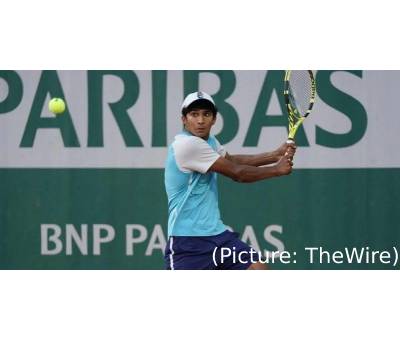
Indian American Samir Banerjee from New Jersey has won the boys’ singles title, beating Viktor Lilov 7-5, 6-3 in an all-American final at the Wimbledon championships on July 11. Banerjee, who reached the final by beating France’s Sascha Gueymard Wayenburg in the semi-finals, is the first American junior champion at Wimbledon since Reilly Opelka in 2015, and 12th overall.

Banerjee, Lilov traded serves in the first set in the clash of two 17-year-olds before the Indian American won two consecutive games from 5-5 to take the set. In the second set, Banerjee broke his opponent’s serve in the sixth game and went on to win it 6-3, completing his triumph in one hour and 21 minutes, when Lilov made a backhand error. Banerjee is committed to playing for Columbia University in the fall and draws inspiration from several players who took the college tennis route to success before.

“Growing up, I think college was always in the picture, I was going to use tennis to get to college. Obviously trying to play at the highest level I could and then go to college and maybe after college try to go pro. I think I didn’t really expect this,” he told the Wimbledon official website after his semi-final victory.

“I’m really happy with my commitment to Columbia, the coaches there I’m really buying into their vision. I think it’s a really good stepping stone. Obviously, with Indian parents, they definitely want me to go to college and not just skip the whole…and just go right to pros. And I think it would be a good character-building kind of thing, because I’m not sure if I’m fully ready to just fully go pro yet, so as of right now, I’m still probably going to go to college,” he had said. The 17-year-old right-hander from New Jersey beat Wayenburg 7-6(3), 4-6, 6-2 in two minutes short of two hours in their semi-final encounter.

It was superb performance from Banerjee, who is 19th in the ITF junior rankings as of July 5, 2021, as he sent down seven aces as compared to three by Wayenburg, and earned 67% points on first serve compared to 57% by his French rival. Banerjee, who started playing tennis at the age of six, made 27 unforced errors as compared to 33 by Wayenburg, who struggled with his serve and sent down 11 double faults. Banerjee had just four double faults. And what was impressive was that Banerjee, who is from Basking Ridge in New Jersey, could produce such a performance on Court No. 1, one of the show courts at the All-England Club.

“It was crazy, that’s definitely the biggest crowd I’ve played in front of. And I think I had the crowd support for the most part, so that was an amazing experience, and then to win on top of that is something I’ll remember forever,” Banerjee told the official website. Legendary Indian tennis player Vijay Amritraj congratulated Banerjee. “Wonderful win for Indian American 17 yr old Samir Bannerjee in the boys singles at Wimbledon 2021. Wish him well for a great future,” the 67-year old who reached singles quarterfinals at Wimbledon and US Open tweeted.

Banerjee’s father Kunal was born in Assam, and his mother Usha was brought up in Andhra Pradesh before both migrated to the USA in the mid-1980s and got married there. The youngster, reportedly, will take a break from the tour to enroll for a degree in either economics or political science at the Columbia University in the coming months. While Banerjee’s victory is a testament to the system that US Tennis Association has put in place, India has been struggling to field a worthy contender at junior Grand Slams for some time now. Due to the lack of a robust domestic circuit and not having enough competitions at home to earn world ranking points, India has been struggling to create the next crop of youngsters.

Yuki Bhambri was the last Indian to win a junior singles title when he triumphed at the Australian Open in 2009 while Sumit Nagal won the Wimbledon boys’ doubles event in 2015 with Vietnam’s Ly Hoang Nam. Ramanathan Krishnan was the first Indian to win a junior major when he won the 1954 Junior Wimbledon championship. His son Ramesh Krishnan won the 1970 junior Wimbledon and junior French Open titles while Leander Paes won the 1990 junior Wimbledon and junior US Open. Paes was also a runner-up at the junior Australian Open.

Chaitra Thummala Is Runner Up In Scripps National Spelling Bee

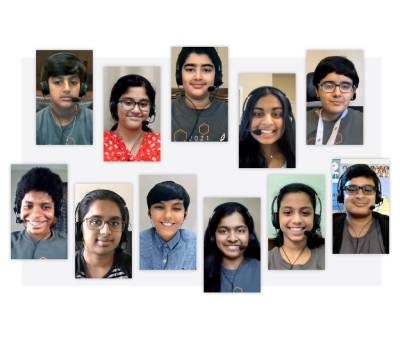
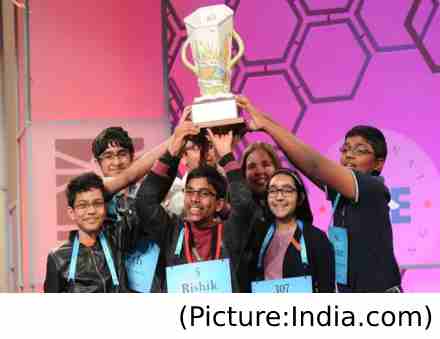
Chaitra Thummala, 12, sixth grader from San Francisco, California’s Gale Ranch Middle School, and Zaila Avant-garde, 14, from New Orleans fought it out, though in a friendly fashion, high-fiving each other as they battled for the crown. But it was Zaila Avant-garde who won the top prize. Zaila won it by spelling ‘murraya’ correctly, a word that refers to a tropical Asiatic and Australian tree species. For the first time in the Scripps National Spelling Bee’s 96-year history, an African American has taken home the top prize.

In the round just before the last, Thummala incorrectly spelt the word neroli oil (an essential oil from flowers, mainly the sour orange, which is used in cologne and as a flavoring), leaving the field open for Avant-garde. In all. There were nine Indian-Americans were among the finalists at the Scripps National Spelling Bee July 8, 2021, which also saw a visit from First Lady Jill Biden. The winner receives numerous prizes including $50,000 in cash;the official championship trophy, a cash prize and reference library from Merriam-Webster; more reference works valued at $2,500; and a 3-year membership to the Britannica Online Premium.

According to her bio on the National Spelling Bee website,”Thummala Chaitra loves music and traveling. She recently got a baby brother who she loves playing with along with her little sister. She wants to go to Santorini, Greece. Her favorite books are Dancing at the Pity Party by Tyler Feder and The Vanishing Stair by Maureen Johnson. She has won awards at her local Science Olympiad and Math Olympiad.”

A spelling bee is a contest in which participants must spell aloud words announced by a judge. The high-profile Scripps National Spelling Bee is closely followed by students and their parents across the US and the finals are broadcast on prime-time television. This year, the winner got a cash prize of $50,000. Of the 11 finalists of the Scripps spelling bee held in the ESPN Sports Complex in Florida’s Orlando, Florida, nine were Indian-Americans. In the final round, Avant-garde was pitted against Chaitra Thummula from California, who dropped out after being unable to spell “neroli oil” correctly. Avant-garde scored her victory after spelling the word “Murraya”, a genus of tropical Australian trees.

First lady Jill Biden, an educator herself, was there to witness the drama. The competition this year was fierce, with new rules to raise the bar. Each level had an additional “word meaning” round to test vocabulary. The threat of a “spell-off” loomed over the finalists. Past years ended in ties — a record eight spellers won in 2019 — but this year, a new rule said that spellers who remain at the end of the allotted time have 90 seconds to spell as many words as they can from a predetermined spell-off list of words. But there was no need for a tie-breaker, to the chagrin of some rapt spectators: Avant-garde handily out spelled the competition.

As it turns out, Avant-garde excels at much more than spelling. She holds three Guinness World Records for her skills in dribbling six basketballs simultaneously, the most basketball bounces and bounce juggles. The teenager is a champion basketball player and has said that she hopes to compete in the Women’s National Basketball Association when she grows up. Ahead of the spelling bee finals, ESPN shared a video of Avant-garde playing basketball. Since members of the Indian-American community have been winning the competition since 2008, Avant-garde’s win stood out. There has been only one Black winner of the competition so far, a student from Jamaica in 1998.

Avant-garde – whose father changed her last name from Heard as a mark of respect to jazz musician John Coltrane – said she hoped that more members of the African-American community will be inspired to participate in the competition. “Maybe they don’t have the money to pay $600 for a spelling program, they don’t have access to that,” she said told the Associated Press. After her victory, Avant-garde said that had taken up competitive spelling only two years ago. “Spelling is really a side thing I do,” she told the Associated Press. “It’s like a little hors d’ouevre. But basketball’s like the main dish.”

The finalists included –

Roy Seligman, 12, from Nassau, The Bahamas. Sponsored by The Ministry of Education.

Bhavana Madini, 13, from New York. Sponsored by NYC Regional Spelling Bee.

Sreethan Gajula, 14, from Charlotte, North Carolina. Sponsored by the Carolina Panthers.

Ashrita Gandhari, 14, from Leesburg, Virginia. Sponsored by Loudoun County Public Schools.

Avani Joshi, 13, from Loves Park, Illinois. Sponsored by Boone-Winnebago Regional Office of Education.

Zaila Avant-garde, 14, from New Orleans. Sponsored by New Orleans Chapter of The Links.

Vivinsha Veduru, 10, from Fort Worth, Texas. Sponsored by Texas Christian University.

Dhroov Bharatia, 12, from Dallas. Sponsored by Dallas Sports Commission.

Vihaan Sibal, 12, from Waco, Texas. Sponsored by Rapoport Holdings, LLC.

Akshainie Kamma, 13, from Austin, Texas. Sponsored by West Austin Chamber of Commerce.

Chaitra Thummala, 12, from San Francisco. Sponsored by Bay Area Regional Spelling Bee.

Indian Overseas Congress, USA Getting Ready To Face A Critical National Election

“The Congress party is getting ready to face a critical national election and tackle pressing issues of national concern” – Praveen Chakravarthy.

“India is facing enormous problems from pandemic to farmer’s protests and alarming inequality, failing healthcare, and border tensions and the Modi government’s response to these challenges have been very disappointing’ said Praveen Chakravarthy, the Chairman of the Data Analytics Department of the Indian national congress. “The havoc wreaked by the novel coronavirus pandemic on people’s lives and livelihoods have been deep and enormous. The impact of the Covid-19 induced lockdown cannot be understood merely through headline marc-economic numbers of GDP. It has also ruptured our social fabric. It has exacerbated the inequality between the haves and the havenots. The country needs new leadership with a vision that can tackle these pressing issues, and the Congress party is ready and willing to take up that challenge,” said Mr. Chakravarthy.

Indian Overseas Congress, USA, gave an enthusiastic reception to  Mr. Chakravarty on Thursday, July 1, 2021, at the Jassis restaurant in Queen, New York. It was the first physical gathering by the organization in 18 months as the country is slowly coming out of the impact of the coronavirus pandemic.

The meeting was opened by Dr. Sam Pitroda, who lauded the contributions of Mr. Chakravarthy to the Indian National Congress party. He urged all those enthusiastic supporters of the Congress party who have gathered at the meeting to work hard to convey the party’s vision to the Diaspora that includes Democracy, freedom, inclusiveness, and bottom-up development. These ideals are the hallmarks of the Congress party and are sorely needed in these politically and economically challenging times more than ever, Mr. Pitroda added.

Mr. Chakravarthy also inaugurated the new membership portal of the Indian Overseas Congress, USA (www.iocusa.org) that would make it easier for Congress loyalists across the country to become members and active participants promoting the organization. Mr. Mohinder Singh Gilzian expressed hope that members of the Diaspora concerned about India’s current situation will get involved and be a part of this great endeavor.

President Mohinder Singh Gilzian extended his special greetings on the special guest by placing a shawl on him as a token of honor and respect and thanked Mr. Chakravarthy for his significant work on behalf of the party. Some of the IOCUSA leaders who spoke on that day include George Abraham, Vice-Chairman, Harbachan Singh, Secretary-General, Vice President Pradeep Samala, Vice President John Joseph, Vice President Gurmeet Buttar, Vice President Rajesh Allahdad, General Secretary Rajender Dichpally, General Secretary Sophia Sharma, President Telangana Chapter Rajeshwar Reddy, President Kerala Chapter Leela Maret, Chairman Punjab Chapter Satish Sharma, President Haryana Chapter Gulshan Ghotra, and President Andhra Pradesh Chaapter Pavan Darsi.

Akshay Kumar’s ‘Filhaal 2 Mohabbat’ Creates History with Over 100M Views in 3 Days

After teasing fans and netizens with the motion poster image of much awaited music video sequel Filhaal 2 Mohabbat a few days back and now the awaited song sequel is finally out now so nevertheless, Akshay Kumar’s Filhaal 2 Mohobbat yet again has created history. After 2 years, the magical foursome of JaaniB PraakAkshay Kumar and Nupur Sanon have successfully made all their fans and audiences fall in love again with this new song which is a sequel to the smashing hit song of 2019 Filhaal and an amazing update is that Akshay Kumar’s Filhaal 2 Mohobbat yet again has created history.

For fans who had been waiting to see their superstar Akshay Kumar on screens ever since his last film Laxmii, its a really thrilling news that Akshay Kumar’s Filhaal 2 Mohobbat yet again has created history. After breaking multiple records with the first part of the song Filhaal which became most loved and also a superhit romantic song of the year 2019, its much awaited sequel and second part, Akshay Kumar’s Filhaal 2 Mohobbat yet again has created history.

We also know how Akshay Kumar’s Filhaal had created multiple records when it released in 2019, it recently became one of the first songs in India to cross a Billion mark on YouTube and now creating a new benchmark and breaking its own previous milestones, Filhaal 2 Mohobbat has created new record by crossing 100 million views within three days since it has released with fans and netizens also listening to it on loop and content creators creating reels on it.

After the huge success of Filhaal that released in 2019, its sequel Filhaal 2 Mohabbat featuring Akshay Kumar and Nupur Sanon has already broken records. The song was dropped online on Tuesday and in no time it became a rage on social media and netizens started trending it. As numbers don’t lie, Filhaal 2 Mohobbat has already garnered close to 100M views in just 3 days, which is a new record. It was also the most viewed Indian song in the first 24 hours in the history of Youtube. and has even surpassed the figures of what its prequel achieved on its first day. Also there’s no denial in this fact that whenever B Praak and Jaani come together with the mellifluous vocals and heartfelt lyrics the result is a blockbuster hit song and this has proven true yet again as this newly launched heart-wrenching song sung by B Praak and written by Jaani is shattering music charts and has struck a chord with its listeners.

“Filhaal 2 Mohabbat,” featuring Akshay Kumar and Nupur Sanon, has already broken records. The song dropped online July 6, and has became a rage on social media, with netizens trending it. As numbers never lie, “Filhall 2…” has already garnered close to 100M views in just three days, which is a new record. It was also the most viewed Indian song in the first 24 hours in the history of YouTube, and has thus surpassed the figures of what its prequel achieved on its first day.

There is no denying the fact that this newly-launched and heart-wrenching song sung by B. Praak and written by Jaani is shattering music charts and has struck a chord with its listeners. For Nupur Sanon, Kriti Sanon’s younger sister, this is her second blast in entertainment, and that, too, with Numero Uno leading man Akshay Kumar.

Shreya Ghoshal Celebrates 19 Years In Bollywood

Shreya Ghoshal is one of the most popular playback singers in India. She has recorded songs for films, albums in various languages and has also won prestigious awards for her work. The singer completed 19 years in Bollywood on July 12 with her debut film Devdas. She shared a post remembering how she started her professional career at the age of 16. She has completed 19 years in Bollywood. The singer took to Instagram and shared about her journey in Hindi films that began with “Devdas”.

“19 years ago on this day I made my debut in Hindi Films in the iconic film #Devdas. It’s still vivid in my memories the magical years of the making of the music,” wrote Shreya, with a poster of “Devdas” on her Instagram page. The singer thanked the director of the film Sanjay Leela Bhansali for launching her in “Devdas”.

“Always grateful to#SanjayLeelaBhansali sir for believing in that 16 year old girl.. And my parents for being there days and nights with me to make me into what I am today,” wrote Shreya. She tagged the team of Devdas — Aishwarya Rai Bachchan, Madhuri Dixit Nene, Jackie Shroff, director Sanjay Leela Bhansali and music director Ismail Darbar in the post. At the age of 16 , Shreya was spotted by the mother of filmmaker Sanjay Leela Bhansali at the singing reality show “Sa Re Ga Ma” where she emerged a winner. Following this, she made her playback singing debut with the film Devdas in 2002.

Shreya rose to prominence with “Dola re dola” and “Bairi piya” for “Devdas” and went on to deliver award-winning hits like “Yeh ishq haaye” in “Jab We Met”,”Jaadu hai nasha hai” in “Jism”, “Barso re” in “Guru”, “Teri ore” in “Singh Is Kinng”, “Deewani mastani” in “Bajirao Mastani”, and “Ghoomar” in “Padmaavat” among numerous other songs. She made her digital debut in “The Family Man”, as lead singer with “Kiske liye tu marega” and “Dega jaan”.

Shreya recently became a proud mother to her baby boy who the singer has named Devyaan. Sharing the good news with her fans, she had shared a sweet post along with a picture of herself and her husband holding their bundle of joy.

Vikrant Massey Lays Ethnic Fashion Goals For Men In ₹14k Bandi,Cream Kurta Set

Men take fashion cues as Haseen Dilruba star Vikrant Massey flaunts his effortlessly dapper style at Jio Mami Film Festival Panel in an elegant off-white kurta and trousers teamed with blue floral prints bandi from Anita Dongre and Christian Louboutin footwear

Men looking for a break from the regular daily outfits and in a quest of out of the box and yet sophisticated style need to search no further as Haseen Dilruba star Vikrant Massey is here to sort your fashion woes. While a regular men’s kurta with a traditional print is in vogue this season, Vikrant laid fashion goals as he flaunted his effortlessly dapper style at Jio Mami Film Festival Panel in an elegant off-white kurta and a pair of cream trousers teamed with a floral print bandi.

The pictures surfacing from the event are enough to raise the bar of ethnic style goals for men this summer. Putting the fashion police on immediate alert while fans took cues to slay at the next traditional outing, the pictures feature Vikrant donning a plain cream-coloured silk kurta which he wore with sleeves rolled up and paired with similar coloured trousers.

To frame the style around traditions with a contemporary accent, Vikrant layered the simple look with an elegant bandi that sported blue floral prints and booti detailing all over. The bandi came with a breast pocket and two at the bottom while sealing a sophisticated aesthetic. Accessorising his look with a pair of reading glasses, Vikrant completed his attire with a pair of blue footwear from Christian Louboutin. Striking a chic pose in the backdrop of an exotic seaside location lined with palm trees, Vikrant showed how to look classy and stylish while embracing the cultural side.

Heart Risk ‘Calculators’ Overlook Increased Risk For People Of South Asian Ancestry

Newswise — DALLAS, July 12, 2021 — People of South Asian ancestry have more than double the risk of developing heart disease compared to people of European ancestry, yet clinical risk assessment calculators used to guide decisions about preventing or treating heart disease may fail to account for the increased risk, according to new research published today in the American Heart Association’s flagship journal Circulation. About a quarter of the world’s population (1.8 billion people) are of South Asian descent, and prior research has shown South Asians experience higher rates of heart disease compared to people of most other ethnicities.

To better understand the variables surrounding the heart disease risk for people of South Asian ancestry, researchers evaluated data from a subset of participants in the UK Biobank study who did not have atherosclerotic cardiovascular disease when they enrolled in the study between 2006 and 2010. There were 8,124 participants of South Asian Ancestry and 449,349 of European ancestry included in this analysis. Their average age was 57 and they were followed an average of 11 years. People in the South Asian ancestry group were defined as those who self-reported being of Indian, Pakistani or Bangladeshi origin, or who reported other South Asian heritage, such as their country of birth as Bhutan, Maldives, Nepal or Sri Lanka. European ancestry was based on self-identification as being white British, white Irish, or any other white European background.

Researchers compared the rates of developing cardiovascular disease (heart attack, stroke, or a procedure to restore normal blood supply to the heart) among people of South Asian ancestry to the rate among people of European ancestry. They found that 6.8% of participants of South Asian ancestry had a cardiovascular disease event, compared to 4.4% of those who reported having European ancestry. After adjustment for age and sex, this represents a more than two-fold higher risk for people of South Asian descent. The higher relative risk was largely consistent across a variety of age, sex and clinical subgroups. However, this increased risk was not captured by the clinical estimators used in the United States or Europe.

“Based on previous studies, we expected South Asians would have higher rates of heart disease – in fact, the American Heart Association now considers South Asian ethnicity a ‘risk enhancer’ beyond the standard risk calculator,” said senior study author Amit V. Khera, M.D., M.Sc., a cardiologist in the Corrigan Minehan Heart Center and leader of a research group within the Center for Genomic Medicine, both at Massachusetts General Hospital in Boston.

“We were surprised by the magnitude of the increased risk — even within contemporary clinical practice, it was more than double — and how much of it remains unexplained by traditional clinical or lifestyle risk factors,” he said. “Our current tools do not help us predict this extra risk in the South Asian population, likely because no South Asians were included in developing the U.S. tool, so we may be missing opportunities to prevent heart attacks and strokes in this group. Intensive control of risk factors like high cholesterol and Type 2 diabetes are even more important in this population.”

A higher percentage of people in the South Asian study group did have more risk factors for heart disease, including Type 2 diabetes (even in the absence of obesity), high blood pressure and increased central adiposity (belly fat). However, even when researchers accounted for the known risks, the risk for people of South Asian ancestry was still 45% higher than for people of European ancestry.

“We need to dig deeper to better understand why South Asians are having heart attacks and strokes at higher rates even after accounting for these risk factors,” said Aniruddh P. Patel, M.D., lead author of the study and a cardiology fellow at Massachusetts General Hospital. “Our ability to study South Asian and other populations in general in the United States using public databases has been limited because individuals are grouped together by race rather than ancestry. This makes recognizing and addressing these disparities among a fast-growing South Asian population in the U.S. more difficult. In addition to recruiting more South Asians in clinical trials and cohort studies, better reporting of ancestry in addition to race in hospital data systems and electronic medical records would help us better understand and target these disparities.”

The research does have some limitations. The study included adults between the ages of 40 and 69 living in the United Kingdom, thus the results may not be generalizable to younger individuals or those who live in other countries. Additionally, based upon the data, people who volunteered for the UK Biobank study were known to be healthier compared to the general population, thus, there were potentially reduced rates of heart disease in both ancestry groups. Further, medical records of study participants were reviewed electronically rather than manually, so underreporting may have occurred.

Khera and colleagues have assembled a team of international investigators to aggregate data and expertise needed to develop new genetic risk estimators for South Asian individuals as part of an NIH-funded consortium. As for the clinical risk estimator tools, South Asians have been severely under-represented to-date, accounting for only about 1% of studied individuals.

Two-Thirds Of Romantic Couples Start Out As Friends, Study Finds

Newswise — Movies and television often show romance sparking when two strangers meet. Real-life couples, however, are far more likely to begin as friends. Two-thirds of romantic relationships start out platonically, a new study in Social Psychological and Personality Science finds. This friends-first initiation of romance is often overlooked by researchers. Examining a sample of previous studies on how relationships begin, the authors found that nearly 75 percent focused on the spark of romance between strangers. Only eight percent centered on romance that develops among friends over time.

“There are a lot of people who would feel very confident saying that we know why and how people choose partners and become a couple and fall in love, but our research suggests that is not the case,” says lead author Danu Anthony Stinson, a psychology professor at the University of Victoria, Canada. “We might have a good understanding of how strangers become attracted to each other and start dating, but that’s simply not how most relationships begin.” The team analyzed data from nearly 1,900 university students and crowdsourced adults, with 68 percent reporting that their current or most recent romantic relationship began as a friendship. There was little variation across gender, level of education, or ethnic groups, but the rate of friends-first initiation was even higher among 20-somethings and within LGBTQ+ communities, with 85 percent of such couples beginning as friendships.

Among university students, “friends-first initiators” were friends for one-to-two years before beginning a romantic relationship. Researchers noted that the vast majority of these participants reported that they did not enter their friendships with romantic intentions or attraction. Stinson also noted that the average length of pre-romance friendships means it is likely that the couples were genuine, platonic friends before transitioning to romance. Nearly half of the students reported that starting as friends was their preferred way of developing a romantic relationship, making it far and away more popular than other options presented, such as meeting at a party or online.

Given the prevalence of romantic relationships that begin platonically, Stinson would like to see further studies examining this kind of relationship initiation. She also hopes that this research will push people to revisit their preconceived notions about love and friendship. Stinson notes that we are often taught that romance and friendship are dissimilar types of relationships that form in different ways and meet distinct needs.

“Our research suggests that the lines between friendship and romance are blurry,” says Stinson, “and I think that forces us to rethink our assumptions about what makes a good friendship but also what makes a good romantic relationship.”

Social Psychological and Personality Science (SPPS) is an official journal of the Society for Personality and Social Psychology (SPSP), the Association for Research in Personality (ARP), the European Association of Social Psychology (EASP), and the Society for Experimental Social Psychology (SESP). Social Psychological and Personality Science publishes innovative and rigorous short reports of empirical research on the latest advances in personality and social psychology.

Fashion Superstar Masaba Talks About Her Show On Netflix In “Chai With Manju”

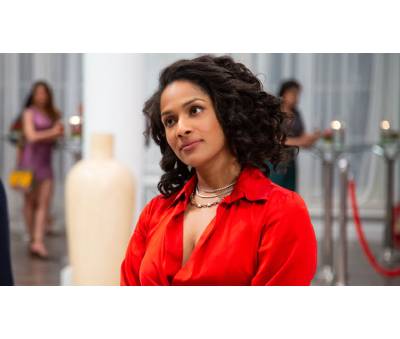
Masaba, probably the biggest and the youngest fashion icon in India today, in conversation with Dr. Manju Sheth, speaks about her Netflix series, Masaba Masaba and her plans for the year 2021 and beyond.
In “Chai With Manju,” Masaba Gupta, currently the most well-known name in Indian fashion industry,  talks about her love for acting and the super success of Netflix series named after her called Masaba Masaba and how much she loved acting. She describes acting as Meditation for her and how much she is looking forward to shooting for Netflix again. A true entrepreneur who describes “fashion as the bridge between art and commerce,” Masaba has seen amazing success with online sales of her fashion products as well.
Her advice to those looking for a career in Fashion industry is very timely. She also talks about her fashion icons and styles that she loves including that of our VP Kamala Harris and how much she would love to dress Madonna. Masaba’s bold and beautiful designs which combine traditions with needs of modern women have made her the game changer of the industry. She is the daughter of National award  winning actress Neena Gupta and West Indian cricketer, Legendary Vivian Richards.“It was great to have a candid conversation with her. She is so down to earth and fun .She shared her journey of self love and appreciation after a very tough childhood as a biracial child in stereotypical India, adds Dr. Manju.
At age 19, Masaba presented her first collection at Lakme, called “Katran.” At 20, she started her own brand, House of Masaba Fashions, one of India’s biggest fashion brands. More recently, her Netflix series, Masaba Masaba, has made her a superstar. Dr. Sheth says, “Interviewing Masaba was a true delight . She is young , very focused and a true entrepreneur. I loved the fact that her journey is also focused on self love and being the best version of herself. One of the most enjoyable interviews with a true woman of substance. I am also excited that she is looking forward to working in USA, hopefully soon.”
A physician by profession, having a passion for media and commitment to serve the larger humanity, with special focus on women’s empowerment, Dr. Manju Sheth is a Board Certified Internist, currently serving patients at Beth Israel Lahey Hospital.in the Boston Region in Massachusetts. Dr. Sheth is the co-founder and CEO of INE MultiMedia, a non-profit organization devoted to promoting and supporting charitable organizations, art, culture, education and empowerment through workshops, seminars and multimedia. Dr. Sheth is known to be a natural storyteller her popular “Chai with Manju” celebrity series is one of the most read news features in the New England region, where she featured celebrities and spiritual leaders such as Sadhguru, Sri Sri Ravi Shankar, the Kennedys and the like.
Masaba believes that grit and perseverance are the key to success. She places a lot of focus on personal relationships and nurturing those who are close to her.

Narendra Modi Drops 12 Ministers, Inducts 43 In Major Cabinet Reshuffle

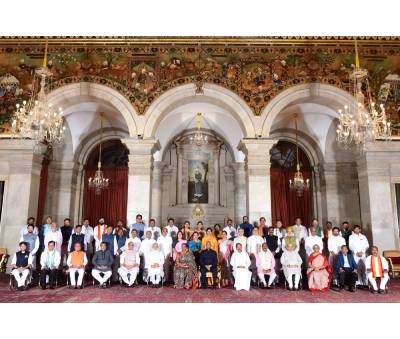
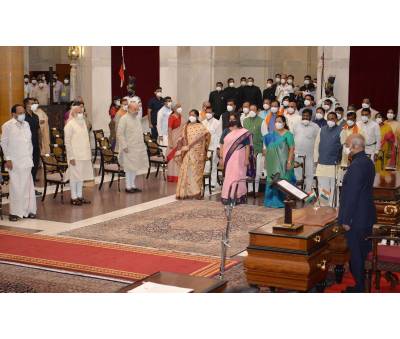
In a massive Cabinet reshuffle on Wednesday, July 6th, India’s Prime Minister Narendra Modi dropped 12 senior ministers and inducted a younger team aimed at refurbishing his government’s image after widespread criticism of its handling of the COVID-19 pandemic. Fifteen Cabinet ministers and 28 junior ministers were sworn in by President Kovind at a ceremony in the presidential palace. Eight junior ministers were elevated to Cabinet rank.

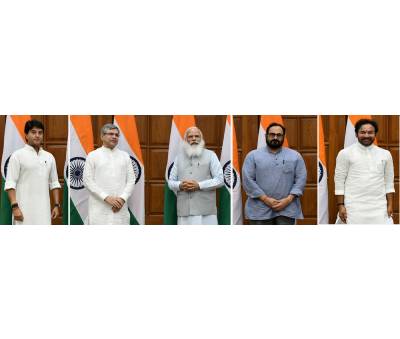
Hours after 43 leaders took oath as ministers in the RashtrapatiBhavan, the Centre allocated portfolios to the newly inducted ministers. While Home Minister Amit Shah will be in charge of the newly created Ministry of Cooperation, Ashwini Vasihnaw has been given ministries of Railways, Communications and Electronics and Information Technology. KirenRijiju will be the new Minister of Law and Justice. Health Minister Dr. Harsh Vardhan, whose response to the epidemic came under close examination, Education Minister Ramesh PokhriyalNishank, Law and Electronics and Information Technology Minister Ravi Shankar Prasad and Environment Minister Prakash Javadekar were among those who resigned hours ahead of the reshuffle. Prasad was involved in a bitter row with Twitter over India’s new internet regulations, which digital activists say could curtail online speech and privacy. He has been replaced by Ashwini Vaishnaw.

Mansukh Mandaviya replaces Dr. Vardhan as the new Health Minister, says a statement by the president’s office. He is from Modi’s home state of Gujarat. Modi retained Home Minister Amit Shah, Defense Minister Rajnath Singh, Finance Minister Nirmala Sitharaman and External Affairs Minister SubrahmanyamJaishankar. Other key portfolios were given to KirenRijiju (Law and Justice), Hardeep Singh Puri (Petroleum and Natural Gas), Bhupender Yadav (Environment), Anurag Singh Thakur (Information and Broadcasting) and Dharmendra Pradhan (Education).

JyotiradityaScindia — one of the BJP’s high-profile acquisitions from the Congress — has been given charge of the Civil aviation ministry at a time the sector is struggling under the Covid onslaught. The ministry was once handled by his father MadhavraoScindia, who died in a plane crash in 2001. It is the first Cabinet reshuffle since Modi was returned to power for a second term in 2019. The government is facing increasing criticism for its handling of the pandemic. Vardhan, who was in charge of the Health Ministry as well as the Science and Technology Ministry, led the response to the pandemic.

“In one clean sweep, you have senior ministers being removed. The government has admitted by these changes that it has failed miserably in handling the pandemic as it should have,” said NilanjanMukhopadhyay, a well-known journalist and political analyst. As the country braces for a third wave of Covid following a debilitating second surge, Mansukh Mandaviya has been given the challenge of leading the containment efforts as the head of the crucial health ministry. His junior minister will be DrBharatiPawar. In addition, he would retain the Ministry of Chemical Fertilizers.

More than half of India’s reported 400,000 coronavirus deaths — the third most of any country — have occurred over the past two months as the delta variant of the virus tore through the nation and overwhelmed its already strained health system. New cases are on the decline after exceeding 400,000 a day in May, but authorities are preparing for another possible wave and are trying to ramp up vaccinations. The reshuffle also came after the defeat of Modi’s Hindu nationalist Bharatiya Janata Party in April elections in key West Bengal state, a test of its handling of the pandemic.

Modi will face another major test of his popularity in legislative elections in Uttar Pradesh, Goa, Manipur, Punjab and Uttarakhand states in February and March next year, which may prove to be a bellwether for his party’s fate in 2024 national elections. “I congratulate all the colleagues who have taken oath today and wish them the very best for their ministerial tenure. We will continue working to fulfil aspirations of the people and build a strong and prosperous India,” PM Modi had tweeted after the oath ceremony this evening.

RASHTRAPATI BHAVAN

PRESS COMMUNIQUE

The President of India, as advised by the Prime Minister, has directed the allocation of portfolios among the following members of the Council of Ministers :-

Shri Narendra Modi Prime Minister and also in-charge of:

Ministry of Personnel, Public Grievances and Pensions;

Department of Atomic Energy;

Department of Space;

All important policy issues; and

All other portfolios not allocated to any Minister

 CABINET MINISTERS

1. Shri Raj Nath Singh Minister of Defence
2. Shri Amit Shah Minister of Home Affairs; and

Minister of Cooperation

3. Shri Nitin Jairam Gadkari Minister of Road Transport and Highways
4. Smt. Nirmala Sitharaman Minister of Finance; and

Minister of Corporate Affairs

5. Shri Narendra Singh Tomar Minister of Agriculture and Farmers Welfare
6. Dr. Subrahmanyam Jaishankar Minister of External Affairs
7. Shri Arjun Munda Minister of Tribal Affairs
8. Smt. Smriti Zubin Irani Minister of Women and Child Development

CABINET MINISTERS (CONTD.)

9. Shri Piyush Goyal Minister of Commerce and Industry;

Minister of Consumer Affairs, Food and Public Distribution; and

Minister of Textiles

10. Shri Dharmendra Pradhan Minister of Education; and

Minister of Skill Development and Entrepreneurship

11. Shri Pralhad Joshi Minister of

Parliamentary Affairs;

Minister of Coal; and

Minister of Mines

12. Shri Narayan Tatu Rane Minister of Micro, Small and Medium Enterprises
13. Shri Sarbananda Sonowal Minister of Ports, Shipping and Waterways; and

Minister of AYUSH

14. Shri Mukhtar Abbas Naqvi Minister of Minority Affairs
15. Dr. Virendra Kumar Minister of Social Justice and Empowerment
16. Shri Giriraj Singh Minister of Rural Development; and

Minister of Panchayati Raj

17. Shri Jyotiraditya M. Scindia Minister of Civil Aviation
18. Shri Ramchandra Prasad Singh Minister of Steel
19. Shri Ashwini Vaishnaw Minister of Railways;

Minister of Communications; and

Minister of Electronics and Information Technology

CABINET MINISTERS (CONTD.)

20. Shri Pashu Pati Kumar Paras Minister of Food Processing Industries
21. Shri Gajendra Singh Shekhawat Minister of Jal Shakti
22. Shri Kiren Rijiju Minister of Law and Justice
23. Shri Raj Kumar Singh Minister of Power; and

Minister of New and Renewable Energy

24. Shri Hardeep Singh Puri Minister of Petroleum and Natural Gas; and

Minister of Housing and Urban Affairs

25. Shri Mansukh Mandaviya Minister of Health and Family Welfare; and

Minister of Chemicals and Fertilizers

26. Shri Bhupender Yadav Minister of Environment, Forest and Climate Change; and

Minister of Labour and Employment

27. Dr. Mahendra Nath Pandey Minister of Heavy Industries
28. Shri Parshottam Rupala Minister of Fisheries, Animal Husbandry and Dairying
29. Shri G. Kishan Reddy Minister of Culture;

Minister of Tourism; and

Minister of Development of North Eastern Region

30. Shri Anurag Singh Thakur Minister of Information and Broadcasting; and

Minister of Youth Affairs and Sports


MINISTERS OF STATE (INDEPENDENT CHARGE)

1. Rao Inderjit Singh Minister of State (Independent Charge) of the Ministry of Statistics and Programme Implementation;

Minister of State (Independent Charge) of the Ministry of Planning; and

Minister of State in the Ministry of Corporate Affairs

2. Dr. Jitendra Singh Minister of State (Independent Charge) of the Ministry of Science and Technology;

Minister of State (Independent Charge) of the Ministry of Earth Sciences;

Minister of State in the Prime Minister’s Office;

Minister of State in the Ministry of Personnel, Public Grievances and Pensions;

Minister of State in the Department of Atomic Energy; and

Minister of State in the Department of Space


MINISTERS OF STATE

1. Shri Shripad Yesso Naik Minister of State in the Ministry of Ports, Shipping and Waterways; and

Minister of State in the Ministry of Tourism

2. Shri Faggansingh Kulaste Minister of State in the Ministry of Steel; and

Minister of State in the Ministry of Rural Development


3. Shri Prahalad Singh Patel Minister of State in the Ministry of Jal Shakti; and

Minister of State in the Ministry of Food Processing Industries

4. Shri Ashwini Kumar Choubey Minister of State in the Ministry of Consumer Affairs, Food and Public Distribution; and

Minister of State in the Ministry of Environment, Forest and Climate Change

5. Shri Arjun Ram Meghwal Minister of State in the Ministry of Parliamentary Affairs; and

Minister of State in the Ministry of Culture

6. General (Retd.) V. K. Singh Minister of State in the Ministry of Road Transport and Highways; and

Minister of State in the Ministry of Civil Aviation

7. Shri Krishan Pal Minister of State in the Ministry of Power; and

Minister of State in the Ministry of Heavy Industries

8. Shri Danve Raosaheb Dadarao Minister of State in the Ministry of Railways;

Minister of State in the Ministry of Coal; and

Minister of State in the Ministry of Mines

9. Shri Ramdas Athawale Minister of State in the Ministry of Social Justice and Empowerment
10. Sadhvi Niranjan Jyoti Minister of State in the Ministry of Consumer Affairs, Food and Public Distribution; and

Minister of State in the Ministry of Rural Development

11. Dr. Sanjeev Kumar Balyan Minister of State in the Ministry of Fisheries, Animal Husbandry and Dairying


12. Shri Nityanand Rai Minister of State in the Ministry of Home Affairs
13. Shri Pankaj Chaowdhary Minister of State in the Ministry of Finance
14. Smt. Anupriya Singh Patel Minister of State in the Ministry of Commerce and Industry
15. Prof. S. P. Singh Baghel Minister of State in the Ministry of Law and Justice
16. Shri Rajeev Chandrasekhar Minister of State in the Ministry of Skill Development and Entrepreneurship; and

Minister of State in the Ministry of Electronics and Information Technology

17. Sushri Shobha Karandlaje Minister of State in the Ministry of Agriculture and Farmers Welfare
18. Shri Bhanu Pratap Singh Verma Minister of State in the Ministry of Micro, Small and Medium Enterprises
19. Smt. Darshana Vikram Jardosh Minister of State in the Ministry of Textiles; and

Minister of State in the Ministry of Railways

20. Shri V. Muraleedharan Minister of State in the Ministry of External Affairs; and

Minister of State in the Ministry of Parliamentary Affairs

21. Smt. Meenakashi Lekhi Minister of State in the Ministry of External Affairs; and

Minister of State in the Ministry of Culture

22. Shri Som Parkash Minister of State in the Ministry of Commerce and Industry


23. Smt. Renuka Singh Saruta Minister of State in the Ministry of Tribal Affairs
24. Shri Rameswar Teli Minister of State in the Ministry of Petroleum and Natural Gas; and

Minister of State in the Ministry of Labour and Employment

25. Shri Kailash Choudhary Minister of State in the Ministry of Agriculture and Farmers Welfare
26. Smt. Annpurna Devi Minister of State in the Ministry of Education
27. Shri A. Narayanaswamy Minister of State in the Ministry of Social Justice and Empowerment
28. Shri Kaushal Kishore Minister of State in the Ministry of Housing and Urban Affairs
29. Shri Ajay Bhatt Minister of State in the Ministry of Defence; and

Minister of State in the Ministry of Tourism

30. Shri B. L. Verma Minister of State in the Ministry of Development of North Eastern Region; and

Minister of State in the Ministry of Cooperation

31. Shri Ajay Kumar Minister of State in the Ministry of Home Affairs
32. Shri Devusinh Chauhan Minister of State in the Ministry of Communications


33. Shri Bhagwanth Khuba Minister of State in the Ministry of New and Renewable Energy; and

Minister of State in the Ministry of Chemicals and Fertilizers

34. Shri Kapil Moreshwar Patil Minister of State in the Ministry of Panchayati Raj
35. Sushri Pratima Bhoumik Minister of State in the Ministry of Social Justice and Empowerment
36. Dr. Subhas Sarkar Minister of State in the Ministry of Education
37. Dr. Bhagwat Kishanrao Karad Minister of State in the Ministry of Finance
38. Dr. Rajkumar Ranjan Singh Minister of State in the Ministry of External Affairs; and

Minister of State in the Ministry of Education

39. Dr. Bharati Pravin Pawar Minister of State in the Ministry of Health and Family Welfare
40. Shri Bishweswar Tudu Minister of State in the Ministry of Tribal Affairs; and

Minister of State in the Ministry of Jal Shakti

41. Shri Shantanu Thakur Minister of State in the Ministry of Ports, Shipping and Waterways
42. Dr. Munjapara Mahendrabhai Minister of State in the Ministry of Women and Child Development; and

Minister of State in the Ministry of AYUSH

43. Shri John Barla Minister of State in the Ministry of Minority Affairs


44. Dr. L. Murugan Minister of State in the Ministry of Fisheries, Animal Husbandry and Dairying; and

Minister of State in the Ministry of Information and Broadcasting

45. Shri Nisith Pramanik Minister of State in the Ministry of Home Affairs; and

Minister of State in the Ministry of Youth Affairs and Sports


Dilip Kumar, 98, Bollywood’s Legendary Actor Dies

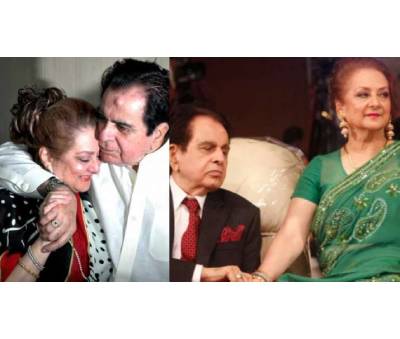
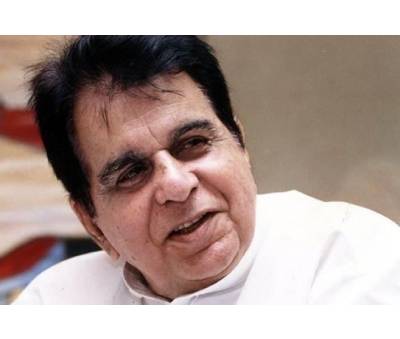
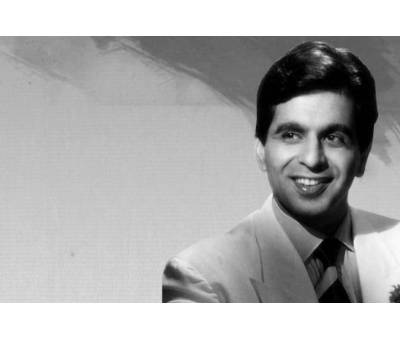
Veteran Bollywood actor Dilip Kumar has died at the age of 98. He leaves behind a legacy of films that spanned six decades, and gave Hindi cinema some of its most enduring classics. Popularly known as the tragedy king of Bollywood, Dilip Kumar is survived by his wife, veteran actor SairaBanu. The legendary actor, whose real name was Yusuf Khan, was born on December 11, 1922 in Peshawar, Pakistan. His popularity transcended national and cultural barriers. DilipSaab, as he was popularly known to his family and friends, appeared in almost 60 films in a career spanning 54 years, and gave many hits and superhits.

With the demise of the veteran actor, an era of Indian cinema has come to an end. A few days back, he was admitted to Mumbai’s Hinduja Hospital for age-related medical issues.A tweet posted from the actor’s official handle by family friend Faisal Farooqui read,” With a heavy heart and profound grief, I announce the passing away of our beloved DilipSaab, few minutes ago. We are from God and to him we return.” Doctors said Dilip Kumar suffered from advanced prostate cancer that had spread to other organs of his body. “He had water in pleural cavity, and he suffered a kidney failure. He required blood transfusion multiple times. We carried the last transfusion but it did not help,” a hospital doctor said. He suffered a drop in blood pressure and haemoglobin towards the end. “The cancer spread made it difficult to treat him,” the doctor said. The actor lost his two brothers to Covid-19 over the course of just two weeks last year. Dilip, however, had not been informed about their deaths. He is survived by his wife, SairaBanu.

Personalities from the world of politics, entertainment and sports mourned his loss. President Ram NathKovind wrote: “Dilip Kumar summarised in himself a history of emerging India. The thespian’s charm transcended all boundaries, and he was loved across the subcontinent. With his demise, an era ends. Dilip Saab will live forever in the heart of India. Condolences to family and countless fans.” Prime Minister Narendra Modi tweeted: “Dilip Kumar ji will be remembered as a cinematic legend. He was blessed with unparalleled brilliance, due to which audiences across generations were enthralled. His passing away is a loss to our cultural world. Condolences to his family, friends and innumerable admirers. RIP.” Amitabh Bachchan said that, “An institution has gone .. whenever the history of Indian Cinema will be written , it shall always be ‘before Dilip Kumar, and after Dilip Kumar’ ..My duas for peace of his soul and the strength to the family to bear this loss…Deeply saddened.”

Rahul Gandhi wrote, “My heartfelt condolences to the family, friends & fans of Dilip Kumar ji. His extraordinary contribution to Indian cinema will be remembered for generations to come.” “Rest in Peace Dilip Kumar ji! There will never be another like you,” tweeted former cricketer Sachin Tendulkar, adding, “Your contribution to Indian cinema is unparalleled and you’ll be missed dearly. My heartfelt condolences to SairaBanuji& the family.”Meanwhile, VirenderSehwag recalled a famous dialogue from Mughal-e-Azam to pay tribute to the legend: “Heartfelt condolences to #DilipKumar’s family. The gr8 man said, Taqdeereinbadaljaatihain,zamanabadaljaatahai, mulkonkitaarikhbadaljaatihai,shahenshahbadaljaatehain,magarissbadalti hui duniya mein mohabbat jis insaan kadaamanthaamletihai,wohinsaannahibadalta.” Kamal Haasan shared a picture of himself with Dilip Kumar, posting that the latter’s understated approach is still tried by contemporary actors who are brave enough to attempt it.

Singer LataMangeshkar wrote that Kumar’s health struggles had been going on for many years and lauded the actor’s wife, veteran actor SairaBanu, for taking utmost care of him. “Yusuf Bhai was ill for the last many years, could not recognise anyone. At such a time Saira Bhabhi left everything and served him day and night. There was no other life for him. I bow to such a woman and pray that Yusuf Bhai’s soul rests in peace,” she tweeted.

Dilip Kumar was always the benchmark. He had a direct impact on many actors who worked in his time, from the forties to the nineties. He continues to indirectly impact actors post nineties too, for those who fashioned their acting after him continue to influence many rank newcomers of today. Perhaps that is the mark of a legend — when the trademark style of your art continues to outlive you, and find new ways to reinvent itself through budding talents who started out long after you quit.

For the record, Dilip Kumar quit acting in 1998. That was the year Yusuf saab — as he was widely known to friends and fans alike — last faced the camera for UmeshMehra’s “Qila”. If the actor was never seen on screen over the past two decades since its release, the rest of the film’s primary cast including Rekha, Mukul Dev and Mamta Kulkarni have also all but vanished, and director Mehra stopped making films nearly two decades ago. “Qila”, an otherwise forgotten attempt, will continue to garner recall value because it was the last film of one of Bollywood’s greatest.

What make Dilip Kumar stand apart from other actors of his era are the different dimensions of his acting. The same Dilip Kumar, whose tribulations in “Devdas” or “Deedar” as the tragic lover brought tears to our eyes also manages to make us laugh through his jocund moments in “Kohinoor” and “Azaad”. His seamless synthesis of this dichotomy played a major role in making him an on-screen persona cherished by millions.

The five decades of acting is balanced by the irony that Dilip Kumar never released a film as director. In his lifetime, he is said to have been involved with direction twice. He is said to have directed the 1966 drama “Dil Diya Dard Liya” along with the officially-mentioned helmer, Abdul Rashid Kardar, though he isn’t credited as a director for the project. Decades later, he would launch the self-starring “Kalinga”, with Jackie Shroff, MeenakshiSheshadri and Amitoj Mann. Some say the film was shot, though it never saw light of day.

Dilip Kumar debuted in films with 1944’s JwarBhata, but the film and his work did not garner much attention. It was with 1947’s Jugnu, also starring Noor Jehan, that he clinched his first box office hit. In 1949, he starred in Andaz with Raj Kapoor and Nargis, and it was that film that made Dilip Kumar a big star. He was the first actor to win the Filmfare Award for Best Actor in 1954, and won it a total of 8 times. He and Shah Rukh Khan jointly hold the record for most Filmfare awards. IANS described “Dilip Kumar’s life is nothing short of a beautiful film, replete with every colour of life. From his birth in Peshawar to becoming the First Khan of Bollywood, the screen legend’s life is an inspiration to anyone who dares to dream.

Presenting Dilip Kumar’s life in a timeline

1922
Born as Mohammed Yusuf Khan in Peshawar, North-West Frontier Province, British India to Lala Ghulam Sarwar Khan and Ayesha Begum on December 11.

1944
Makes his acting debut in “JwarBhata”, directed by Amiya Chakravarty, with the screen name Dilip Kumar.

1947
Tastes first major box office success, “Jugnu”, co-starring Noor Jahan and directed by Shaukat Hussain Rizvi.

1949
First breakthrough role in Mehboob Khan’s “Andaz”, co-starring Raj Kapoor and Nargis.

1951
Rumoured to fall in love with actress Madhubala during the shoot of “Tarana”.

1955
Release of career-defining film, Bimal Roy’s “Devdas” alongside Vyjayanthimala and Suchitra Sen.

1960
Featured in K. Asif’s epic historical drama “Mughal-e-Azam” as Prince Salim, his career defining role, alongside Madhubala and Prithviraj Kapoor. “Kohinoor” co-starring MeenaKumari also opens in the same year.

1961
Turns producer with the self-starring “Gunga Jumna”. Broadly inspired by Mehboob Khan’s “Mother India”, the Nitin Bose directorial was allegedly ghost-directed and ghost-edited by Dilip Kumar, according to unconfirmed rumours. The film starring the actor with his brother Nasir Khan and Vyjayanthimala was the highest-grossing Bollywood film of 1961.

1966
Marriage with actress SairaBanu, 22 years younger than him.

1980
Appointed honorary Sheriff of Mumbai.

1981
Marriage with Hyderabad-based AsmaSahiba , or AsmaRehman. The same year marked his comeback to Bollywood after a five-year break, with Manoj Kumar’s “Kranti”.

1983
Divorce with AsmaRehman

1991
Honoured with Padma Bhushan, the third-highest civilian award in India.

1994
Honoured with DadasahebPhalke Award, India’s highest award in the field of cinema.

1998
Honoured with Nishan-e-Imtiaz, the highest civilian award of Pakistan.

1998
Release of his last Hindi film Qila, directed by UmeshMehra and starring Dilip Kumar in a dual role. The film also had Rekha, Mamta Kulkarni and Mukul Dev.

2014
The thespian’s autobiography “The Substance And The Shadow” is published.

2015
Honoured with Padma Vibhushan, the second-highest civilian award in India.

2020
His younger brothers Aslam Khan and Ehsan Khan pass away owing to Covid.

2021, Dilip Kumar passes away at a Mumbai hospital around 7.30 am on July 7. He is cremated with state honours at JuhuQabrastan, Santacruz, Mumbai around 5 pm
The same day.

Eric Adams Wins NYC Democratic Mayoral Primary

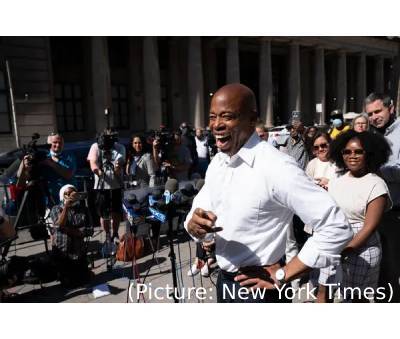
Brooklyn Borough President Eric Adams, a former police captain, has won New York City’s Democratic mayoral primary, according to The Associated Press. With nearly all of the absentee ballots finally counted by the city’s Board of Elections, Adams—a former police officer who would be the city’s second Black mayor—bested former Sanitation Commissioner Kathryn Garcia by about 8,500 votes, or one percentage point— 50.5 percent to 49.5 percent.

New York’s second Black mayor if he is elected in November’s general election over the Republican nominee, radio host Curtis Sliwa, because winning the primary in the heavily Democratic city is tantamount to winning the election. This was the city’s first major primary to use a ranked choice voting system meant to avoid costly runoffs and in which voters could order their top five choices, with their ballot moving to their next pick if their previous one was eliminated until one candidate claimed 50 percent support. Adams had led by nearly 15,000 first-choice votes after in-person voting concluded, and held on after about 125,000 thousand absentee ballots were counted and ranked choices tallied in an election run in the shadow of the pandemic that ravaged the city last year.

Adams, who grew up in Bushwick and was beaten by the police as a teen before joining the department himself to try to reform it from within, ran a campaign promising to restore New York to New Yorkers who’ve been left behind by decades of progress and gentrification. He gave a fiery speech on Martin Luther King Day at the Rev. Al Sharpton’s National Action Network in 2020, where he ripped newcomers to the city who are “hijacking your apartments and displacing your living arrangements” and told them to “go back to Iowa! You go back to Ohio! New York City belongs to the people that [were] here and made New York City what it is.”

He also focused on rising gun violence as a threat of prosperity and security as some other candidates, including Wiley, in effect ran against the NYPD in the aftermath of last summer’s George Floyd protests. His big step towards city hall comes as Republicans blame a spike in homicides across a host of US cities for the “defund the police” movement advocated by liberal Democrats. The Democratic governor of New York state, Andrew Cuomo, on Tuesday declared a disaster emergency order to address rising gun violence there.

Police figures last month showed crime in the city rose by 22% in the past 12 months and shootings were up 73%. Adams, 60, is a moderate Democrat who denounced the “defund the police” movement during the campaign. On the stump, he sought to tread a fine line between promising to reform the New York Police Department (NYPD) and keeping New Yorkers safe from crime. Adams told supporters on the night of last month’s primary election: “If black lives really matter, it can’t only be against police abuse. It has to be against the violence that’s ripping apart our communities.”

About one in four of the city’s roughly 3.7 million Democrats voted, meaning that Adams is on track to become the next mayor of a city of nearly 8.5 million on the basis of just over 400,000 votes. Sadly, that’s a significant improvement on the “mandate” claimed by de Blasio, who won the 2013 Democratic primary with about 260,000 votes. The unpopular Mr de Blasio, a Democrat, is leaving office at the end of this year due to term limits. Adams is the overwhelming favorite for November’s election given that registered Democrats outnumber Republicans in the city by seven to one. David Dinkins was the first black mayor of New York City, serving from 1990-93.

Adams told CNN in an interview Wednesday morning that “it’s extremely exciting right now that, you know, just an everyday blue-collar worker, I like to say, is going to potentially become the mayor of the city of New York.” “This city is like many of our cities in America, we’re ready to finally look after working class people. And I’m going to be the mayor to symbolize that, partner with the other mayors across this country,” he said.

Andy Jassy To Be Amazon CEO As Jeff Bezos Steps Down

Amazon CEO Jeff Bezos will leave his post later this year, turning the helm over to the company’s top cloud executive, Andy Jassy, according to an announcement Tuesday. Bezos will transition to executive chairman of Amazon’s board. Bezos, 57, founded Amazon in 1994 and has since morphed the one-time online bookstore into a mega-retailer with global reach in a slew of different categories from gadgets to groceries to streaming. Amazon surpassed a $1 trillion market cap under Bezos’ leadership in January of last year — it’s now worth more than $1.6 trillion.

“I’m excited to announce that this Q3 I’ll transition to Executive Chair of the Amazon Board and Andy Jassy will become CEO,” Bezos said in a letter to employees. “In the Exec Chair role, I intend to focus my energies and attention on new products and early initiatives. Andy is well known inside the company and has been at Amazon almost as long as I have. He will be an outstanding leader, and he has my full confidence.”

The company had kept its succession plans quiet, though onlookers speculated that either Jassy or Jeff Wilke, CEO of Amazon’s worldwide consumer business, would be Bezos’ eventual successor. In August Amazon announced Wilke will retire in 2021. Jassy, 53, will become CEO in the third quarter.Jassy joined Amazon in 1997 and has led Amazon’s Web Services cloud team since its inception. AWS continues to drive much of Amazon’s profit. Bezos said he will stay engaged in important Amazon projects but will also have more time to focus on the Bezos Earth Fund, his Blue Origin spaceship company, The Washington Post and the Amazon Day 1 Fund.

“As much as I still tap dance into the office, I’m excited about this transition,” Bezos said in his internal announcement. “Millions of customers depend on us for our services, and more than a million employees depend on us for their livelihoods. Being the CEO of Amazon is a deep responsibility, and it’s consuming. When you have a responsibility like that, it’s hard to put attention on anything else.” While Bezos’ unquestionable impact on business can’t be understated, Amazon isn’t without its share of controversy. The company has been leveled with criticism over treatment of workers and controlling a monopoly that affects smaller businesses. That said, as Andy Jassy takes over at Amazon, here are some of Bezos’ bigger moments on his way to building a dynasty named after the largest river on the planet. His company is worth nearly $1.8 trillion.

PM Modi Is A ‘Predator of Press Freedom’

Prime Minister Narendra Modi is in the list of 37 heads of state or government that the global body Reporters Without Borders (RSF) has identified as ‘predators of press freedom’. The entry against Modi notes how his “close ties with billionaire businessmen who own vast media empires” has helped him spread his nationalist-populist ideology through continued coverage of his “extremely divisive and derogatory” speeches.

India is ranked 142nd out of 180 countries in RSF’s 2021 World Press Freedom Index. RSF is the world’s biggest NGO specialising in the defence of media freedom, which is regarded as a basic human right to be informed and to inform others. Modi joins the likes of Pakistan’s Imran Khan, Saudi Arabia’s crown prince Mohammed bin Salman, Myanmar’s military head Min Aung Hlaing and North Korea’s Kim Jong-un, along with 32 others who “trample on press freedom by creating a censorship apparatus, jailing journalists arbitrarily or inciting violence against them when they don’t have blood on their hands because they have directly or indirectly pushed for journalists to be murdered.” This is the first time since 2016 that RSF is publishing such a list. Seventeen of the heads identified as ‘predators’ are new entrants. Thirteen of the 37 in the list are from the Asia-Pacific region.

Seven of the list’s world leaders have been a part of it since it was first published in 2001 and include Syria’s President Bashar al-Assad, Iran’s Ali Khamenei, Russia’s Vladimir Putin and Belarus’s Alexander Lukashenko. The latter has gained credence as a ‘predator’ since the dramatic rerouting of a plane to capture critique and journalist Roman Protasevich. Bangladesh’s Sheikh Hasina and Hong Kong’s Carrie Lam are the two women identified as ‘predators’. For each of the predators, RSF has compiled a file identifying their ‘predatory method,’ their press release notes. The list also highlights how each ‘predator’ censors and persecutes journalists, and their ‘favourite targets’ – the kinds of journalists and media outlets they go after, along with quotations from speeches or interviews in which they ‘justify’ their predatory behaviour.

Modi’s entry notes that he has been a “predator since taking office” on May 26, 2014 and lists his ‘predatory methods’ as ‘national populism and disinformation’. His favourite targets, RSF says, are ‘sickulars’ and ‘presstitudes’. The former is a word which the Hindu rightwing and supporters of Modi’s Bharatiya Janata Party use to slam viewpoints that are ‘secular’ – a word which is also in the Preamble of the Indian constitution – and not ostensibly rightwing Hindu-adhering. The latter is an amalgamation of ‘press’ and ‘prostitute’ – intended to indicate with the help of misogyny that media critical of Modi is a sellout.

The following is how the RSF describes Modi’s impact on the free press:

After becoming Gujarat’s chief minister in 2001, he used this western state as a laboratory for the news and information control methods he deployed after being elected as India’s prime minister in 2014. His leading weapon is to flood the mainstream media with speeches and information tending to legitimise his national-populist ideology. To this end, he has developed close ties with billionaire businessmen who own vast media empires.

This insidious strategy works in two ways. On the one hand, by visibly ingratiating himself with the owners of leading media outlets, their journalists know they risk dismissal if they criticise the government. On the other, prominent coverage of his extremely divisive and derogatory speeches, which often constitute disinformation, enables the media to achieve record audience levels.

All that is left for Modi is to neutralise the media outlets and journalists that question his divisive methods. For this, he has a judicial arsenal with provisions that pose a major threat to press freedom. For example, journalists risk the possibility of life imprisonment under the extremely vague charge of sedition. To round off this arsenal, Modi can count on an army of online trolls known as “yodha” (the Hindi word for “warriors”), who wage appalling hate campaigns on social media against the journalists they don’t like, campaigns that almost routinely include calls for the journalists to be killed.

The note also points out the murder of journalist Gauri Lankesh, in 2017, was a significant victim of Hindutva, “the ideology that spawned the Hindu nationalist movement that worships Modi.” It also notes like women journalists like Rana Ayyub and BarkhaDutt, who have been critical of Modi, receive the brunt of virulent attacks, including doxxing and call for gang-rapes. As a rule, any journalists or media outlets that question the prime minister’s national-populist ideology are quickly branded as “sickular” – a portmanteau of “sick” and “secular” – and are targeted by “bakht,”

Modi devotees who bring lawsuits against them, defame them in the mainstream media and coordinate online attacks against them. Recently, RSF had been critical of the “absurd charges” of “criminal conspiracy” brought against The Wire, Twitter India, and journalists Rana Ayyub, Saba Naqvi and Mohammed Zubair in connection with tweets and reports on an attack against a Muslim elderly man in Ghaziabad.

(Courtesy: Thewire.in)

Ransomware By Hackers Impacts Hundreds of US Companies

A ransomware attack paralyzed the networks of at least 200 U.S. companies on Friday, according to a cybersecurity researcher whose company was responding to the incident.  The attack, first revealed last week, is believed to be affiliated with the prolific ransomware gang REvil and perpetuated through Kaseya, an international company that remotely controls programs for companies that, in turn, manage internet services for businesses. The hackers targeted managed service providers, which often give IT support to small- to medium-size businesses, according to Huntress Labs. By targeting a managed service provider, or MSP, hackers may then be able to access and infiltrate its customers’ computer networks.

Two of the affected managed service providers include Synnex Corp. and Avtex LLC, according to two sources familiar with the breaches. Reached by telephone, Avtex president George Demou told Bloomberg News in a text message on Friday night that “Hundreds of MSPs have been impacted by what appears to be a Global Supply Chain hack.” The REvil gang, a major Russian-speaking ransomware syndicate, appears to be behind the attack, said John Hammond of the security firm Huntress Labs. He said the criminals targeted a software supplier called Kaseya, using its network-management package as a conduit to spread the ransomware through cloud-service providers. Other researchers agreed with Hammond’s assessment. “It’s reasonable to think this could potentially be impacting thousands of small businesses,” Hammond said.

“Kaseya handles large enterprise all the way to small businesses globally, so ultimately, (this) has the potential to spread to any size or scale business,” Hammond said in a direct message on Twitter. “This is a colossal and devastating supply chain attack.” Kaseya announced, it was attacked by hackers and warned all its customers to immediately stop using its service. Nearly 40 of its customers were hacked. Since those Kaseya customers manage hundreds or thousands of businesses, it is unclear how many will fall victim to ransomware over the weekend. But the number’s at least already around 200, said John Hammond, a senior security researcher at Huntress, which is helping with Kaseya’s response. That number expected to rise.

Cybersecurity researcher Jake Williams, president of Rendition Infosec, said he was already working with six companies hit by the ransomware. It’s no accident that this happened before the Fourth of July weekend, when IT staffing is generally thin, he added. “There’s zero doubt in my mind that the timing here was intentional,” he said. The federal Cybersecurity and Infrastructure Security Agency said in a statement late Friday that it is closely monitoring the situation and working with the FBI to collect more information about its impact.

Some cybersecurity experts predicted that it might be hard for the gang to handle the ransom negotiations, given the large number of victims — though the long U.S. holiday weekend might give it more time to start working through the list. CISA urged anyone who might be affected to “follow Kaseya’s guidance to shut down VSA servers immediately.” Kaseya runs what’s called a virtual system administrator, or VSA, that’s used to remotely manage and monitor a customer’s network.

Karan Johar’s “Rocky Aur Rani Ki PremKahani” Stars Alia, Ranveer, Dharmendra, Jaya Bachchan, ShabanaAzmi

Filmmaker Karan Joha has announced his new directorial, “Rocky Aur Rani Ki PremKahani”. The film has a star-studded cast comprising Ranveer Singh and Alia Bhatt, along with veterans Dharmendra, Jaya Bachchan and ShabanaAzmi. Incidentally July 6, the day of announcement, is also Ranveer Singh’s birthday.

“A special announcement on my special day! Presenting — Rocky Aur Rani Ki PremKahani along with my dazzling supernova Alia Bhatt, directed by the genre himself, kaleidoscopic visionary Karan Johar, & written by IshitaMoitra, Shashank Khaitan and Sumit Roy,” Ranveer wrote. Taking to his social media handles, Karan shared a teaser video for Rocky Aur Rani Ki PremKahani, which is peppy and sets the mood for the flamboyant story. He wrote, “Thrilled to get behind the lens with my favourite people in front of it! Presenting Rocky Aur Rani Ki PremKahani, headlined by none other than Ranveer Singh and Alia Bhatt and written by IshitaMoitra, Shashank Khaitan&Sumit Roy. This anokhikahani is coming to your screens in 2022! #RockyAurRaniKiPremKahani #RRKPK.”

Veteran actor Dharmendra posted on social media to state that his fans would return to a romantic role again in this film. Sharing the same video, Alia captioned it as, “An exceptional love story with my favourite people! ❤️✨ Presenting – Rocky Aur Rani Ki PremKahani, directed by the one and only Karan Johar and written by IshitaMoitra, Shashank Khaitan&Sumit Roy. All set to hit the screens in 2022! #RockyAurRaniKiPremKahani #RRKPK.” In another tweet, she said, “A love story that is going to be far from the usual, Rocky and Rani ❤️ Stay tuned at 2:00 pm to meet the rest of the parivar.”

“Honoured to share the screen with these legends of Hindi cinema- Dharmendra, Jaya Bachchan and ShabanaAzmi!” tweeted Ranveer Singh while Karan Johar wrote: “Meet the legendary stars of Rocky Aur Rani Ki PremKahani. We are all thrilled to work with these veteran legends and I cannot wait to be on set with them!

Alia Bhatt and Ranveer Singh thrilled the Internet by announcing that they will collaborate again after Gully Boy for Karan Johar’sRocky Aur Rani Ki PremKahani. “A special announcement on my special day! Presenting – Rocky Aur Rani Ki PremKahani along with my dazzling supernova Alia Bhatt, directed by the genre himself, kaleidoscopic visionary Karan Johar, written by IshitaMoitra, Shashank Khaitan and Sumit Roy. Coming to charm you in 2022!” Ranveer wrote while sharing the motion poster of the film, which will release next year.

Dr. Amit Chakrabarty Leads Efforts On CO VENTILLLATORS DONATION Project For India

India is facing a deadly second wave of COVID-19. Number of reported Covid positive cases seems to be on the rise and thousands reportedly die daily. Hospitals and medical facilities are running out of oxygen and ICU beds, with patients left outside hospitals waiting for care.

There are several groups and individuals are responding to the crisis in India, distributing and installing medical equipment at health centers, distributing PPE to frontline health workers, and providing food and cash to meet people’s immediate needs. HELP INDIA BREATHE is a part of ApShiNi ventures’ endeavor by Dr. Amit Chakrabarty, Urologist in MO, USA and present Secretary of American Association of Physicians of Indian Origin, (AAPI) in helping individuals to donate Oxygen related supplies to India during this unprecedented calamity.

The American Association of physicians of Indian origin (AAPI), the largest ethnic medical organization in the USA representing the interest of more than 100,000 physicians in the USA has stepped up to the plate to deal with the crisis of India.  “Thanks to the overwhelming support of its members that AAPI has raised almost $5 million in the past few weeks,” said Dr. Chakrabarty. “we have been working very hard in sending oxygen concentrators and ventilators to India, to deal with the calamity in India and are in the process of helping to set up oxygen generator plants in different hospitals in India. “

As AAPI cannot direct its resources to specific areas and relies on government of India to distribute its supplies, Dr. Chakrabarty has been working outside the umbrella of  AAPI for directed transfer of the essential material, focusing mainly on the peripheral hospitals who do not get aid readily.  With the help of an anesthesiologist from Dallas, Texas, (who prefers to remain anonymous) who acquired the donation of about 1500 co-ventilators from a Health Group based in Minnesota, United States, Dr. Chakrabarty helped to co-ordinate and facilitate transfer of these co-ventilators for use of primarily government and nonprofit hospitals all over India.  The team from Oxygen for India (https://oxygenforindia.org/) helped in local transportation and airfreight to India without any charge.

With the help of the source, an anesthesiologist from Dallas, Texas, who prefers to remain anonymous along with an army of volunteers from Oxygen for India Dr. Chakrabarty is coordinating donation of about 1500 co-ventilators from a facility United States to government and nonprofit hospitals all over India. “Based on solicited requests from hospitals sent on their letterhead, specifically stating that this would be used free and not-for-profit and will not be resold.  They have had more than 175 such requests, and still continue to get them,” Dr. Chakrabarty said.

ApShiNi volunteers have painstakingly verified the hospitals and put the information on Google sheets.  The first batch of 1152 Co-Ventilator’s have reached Delhi and is in the process of being delivered to the hospitals.  We expect more to be on the way,” Dr. Chakrabarty stated here. Volunteers from health cubed (www.healthcubed.com) and Bangla Worldwide http://www.banglaworldwide.com/) are handling local logistics and delivery in India, after doing additional scrutiny.

Explaining the strenuous process, Dr. Chakrabarty said, “We requested Indian Council of Critical Care (https://isccm.org/) to send the message to hospitals in India that are treating Covid 19 patients and solicited requests from their CEO on their official letterhead, specifically stating that this would be used free and not-for-profit and will not be resold.  We were overwhelmed to have received more than 175 such requests, and still continue to get them. This is a mammoth undertaking with work still in progress.

IAPC USA Webinar Discusses Covid Uncertainties And Prognosis Dr. Mathew Joys and Joseph Ponnoly

Indo-American Press Club, USA, held an international e-seminar on ‘BEYOND COVID’ on June 26, 2021, hosted by the Houston Chapter. The panelists included two medical professionals,Internationally well-known COVID and pandemic experts, and another management and technology consultant.

The meeting was moderated by AashmeetaYogiraj, Director of JUS Broadcasting Corp, New York. IAPC Houston Chapter hosted the forum. Moderator AashmeetaYogiraj, while introducing the speakers, added, “You know almost 60 – 70% of the country has received at least one shot. So they’re excellent numbers. But unfortunately, back home in India, situation is yet to progress. We’re going to talk about the covid scenario globally and specifically in India and then how you know the economic crisis and recovery. All of these things are intertwined”.

Prof. (Dr.) Joseph M. Chalil is the Chairman of Indo-American Press Club and is the publisher of the Universal News Network. In addition, he is an Adjunct Professor and Chair of the Complex Health Systems advisory board at Nova Southeastern University’s School of Business. He recently published a Best Seller Book – “Beyond the COVID-19 Pandemic: Envisioning a Better World by Transforming the Future of Healthcare.” He spoke about the emerging COVID variants and the global pandemic situation. “The fear of the unknown is what scares all of us. We have, as you know, maybe 60% of the population vaccinate in the US?. He explained that there hadn’t been a pandemic in the history of the world that lasted less than five years. This is the first time where the pandemic, you know, spread faster than ever before.”

Dr. S S Lal is IAPC’s National President, who is a world-renowned public healthcare expert and had worked earlier with WHO in Papua New Guineas, Switzerland, and the USA as a pandemic expert. He is also President of the All India Professionals Congress (AIPC). He a famous writer and TV channel panelist on health and social issues.
Dr.S.S.Lal emphasized the Covid situation in India.”Because it’s a federal system in India and a lot of differences between different states, so vaccination is less than 20%. So far and some states have better access to vaccines. Some states have less, so vaccination is a big issue in India.

It’s not easy to vaccinate. The eligible population itself is close to one billion.” He also added, “Everyone is aligned so, and we are progressing, and we are in the right direction. But we were a bit late and producing manufacturing vaccines for the entire country. We are the biggest manufacturers of vaccination in the whole world”. Regarding the various vaccine’s efficacy, he added,” See, initially there were some confusions so that we have two vaccines. Covishield and CoVaccine Plus. We are importing Russian Vaccine Sputnik, in minimal quantities. So far, Covaccine was manufactured in India, but it was produced by Oxford company.

Astra Zeneca’s vaccine, was a foreign product as far as India is concerned, was manufactured in India by Serum Institute. Before administering it 26,000 people were tested with it and 6000 were from India. CoVaccine is entirely produced in India. So we have that capacity like technology-wise or production quantity-wise”. Dr. Lal as the world-renowned expert on infectious disease control, elaborated the situation and possibilities in the days ahead. Joseph Ponnoly spoke about the economic crisis arising from the COVID pandemic and the economic recovery scenario in the US and globally. He is a management and technology consultant based in Houston, TX. He authored the book Gateway to the Quantum Age: Managing Disruptive Technologies in Globalized Knowledge Economies’ published in 2018. Earlier, as a CBI officer, apart from investigating various high-profile economic crimes and frauds, he was a team member investigating India’s biggest stock market scam in 1992, involving investigations against Harshad Mehta and others.

According to him, the economic recession was averted in April 2020 by Government intervention and massive stimulation packages ($5.5 Trillion in the US) that stimulated the crumbling economy. The cut in interest rate further supported the economic recovery. Poorer sections in India were given food kits. The economy cannot open up and grow unless the pandemic is brought under control through massive vaccination. The rising inflation must be brought under control to prevent a recession. The poorer nations would need financial assistance from the IMF and other agencies to tide over the debt crisis. Various questions on delta and muted variants, immunity, herd immunity, side effects of vaccinations, various vaccinations available in India were subtly answered by Dr. Joseph Chaliland Dr.S.S. All. The seminar commenced with Roy Thomas, President of IAPC Houston Chapter, welcoming the panelists and participants.

Biju Chacko (General Secretary), GinsmonZacharia (Founder Director), Reji Philip (National Treasurer), Dr. P.V.Baiju (Director), C.G.Daniel (Vice President) and Andrews Jacob (National Secratary) Sangeetha Dua (Treasurer, Houston Chapter) and other chapter officials participated in the eSeminar. Dr. Mathew Vairamon, Secretary of the hosting Chapter, expressed the vote of thanks while concluding the eSeminar. IAPC Alberta Chapter under the leadership of Chapter President Joseph John and Chief editor Rijesh Peter, released the third volume of the IAPC Alberta Chronicle and honored the volunteers for Covid combating operations in the community during the ZOOM meeting.

The 8th International Media Conference IAPC Planned to be held in Florida

The 8th International Media Conference of the Indo-American Press Club (IAPC), an association of Indo-American journalists in North America, will be held from November 11 to 14, 2021 in Orlando, Florida”. IAPC Chairman Dr.Joseph.M. Chalil and President Dr. SS Lal said in the joint meeting of the Board of Directors with National Executive on 14th June 2021. Seminars and workshops led by eminent journalists and media professional from different countries will be conducted as part of the seminar.

The first meeting of the IAPC, an organization formed in 2013 to bring Indo – American journalists under one umbrella, was held in New Jersey. IAPC is implementing plans to enhance the professional excellence of Indian-origin journalists in North America. As part of this, IAPC brings together renowned journalists from around the world every year as part of the International Media Conference. It seeks to improve the performance of Indian-American journalists as journalists by imparting new knowledge about the media to their me.

“We are emerging from the clutches of the Covid pandemic, and life is getting back to normal. Hence the venue selected for this year’s IMC at the entertainment capital at Orlando Florida will attract the participants and their families to enjoy the IMC and the thrill of a vacation outing.” added Dr. Mathew Joys, Vice Chairman IAPC. The meeting envisaged to form various Committees for the smooth running of the international Media Conference 2021, with the coordination of its Chapters in America and Canada.

Ajay Ghosh, Founder President of the Indo-American Press Club, described the reasons and objectives for forming IAPC.  “After years of planning and strategizing, IAPC was formed with the lofty ideal of providing a common platform to journalists of Indian origin living in theUnited States, while fostering closer bonds and cooperation among an extensive network of journalists across the nation.”

Ghosh lauded the coming together of IAPC members, who are “very rich with talents, skills, and experiences in the vast media world and are committed to giving back to the society. The formation of IAPC is an expression of their commitment to enhancing the working conditions for journalists, exchanging of ideas, offering educational opportunities to our members and to aspiring journalists around the globe.”

Reflecting on the many individuals behind and the process of forming IAPC, GinsmonZacharia, founder Chairman of the Board of Trustees, said in his address, that the Indo-American Press Club was formed with the objective of enhancing the standard and working conditions for journalists, while striving to work towards greater co-operation among journalists working across the nation, and thus be the voice of the community of journalists. “While striving to have greater coordination and networking among journalists, our motto is to “be the voice of the community of Indian American journalists,” he said.

IAPC was formed to bring together media groups and the Indian media fraternity, across North America, under one umbrella, to work together, support one another, and provide a unified voice to the mainstream media world and the larger community. IAPC members are dedicated to fulfill the vision of enhancing their own journalistic skills, while striving to help fellow journalists and future generations work towards the common cause of enhancing the well being and efficiency of all peoples of the world. For more information, please visit: https://indoamericanpressclub.com/

Consulate General Of India In NY, International Ahimsa Foundation Celebrate Lord Mahavir’s 2620th Birth Anniversary

The International Ahimsa Foundation and the Consulate General of India in New York celebrated Non-Violence “A Message of Lord Mahavir” on June 27th, 2021. The event commemorated Lord Mahavir’s 2,620th birth anniversary as well as Mahatma Gandhi’s 152nd birth anniversary.

Mahavir Jayanti is one of the most auspicious and revered days observed by Jains, Hindus, and others around the world to commemorate the birth anniversary of the great soul who spread the message of peace and non-violence to mankind. Born in 599 BC, Lord Mahavir established the core principles of Jainism. Ahimsa (Non-Violence) was the most supreme principle of his teachings. The message of Lord Mahavir was adopted and practiced for the first time by Mahatma Gandhi in his social and political movements. Through this event, we aimed to commemorate and promote the important messages of non-violence and peace by celebrating two of Earth’s great souls.

The event was organized by the founder and President of the International Ahimsa Foundation Dr. Neeta Jain. Due to her persistent hard work and networking, Dr. Jain has been elected as an Indian American female Democratic District Leader in New York, at present representingAssembly District 25 Part B in Queens. She is an accomplished educator and civic & community leader. Being a Jain, she is a passionate advocate for non-violence and peace. To promote  these values, she founded and presides over the International Ahimsa Foundation, a domestic non-profit organization founded in 2012 to promote the study and practice of non-violence and peace in educational institutes.

In her speech at the Indian Consulate, Dr. Jain spoke about the impacts of Lord Mahavir and Mahatma Gandhi. She mentioned how Mahatma Gandhi used Jain principles of non-violence in his social and political movements. She described the importanceof non-violence, peace, and compassion towards all. She spoke about her goal of includingteachings about Ahimsa and Lord Mahavir in the educational curriculum, so that children everywhere can learn the value of non-violence. The Honorable Randhir Jaiswal, Consul General of India, NY, spoke about the relationship between the International Ahimsa Foundation and the Consulate General of India and the importance of cultural celebration and unity for the progress of society.

The event was graced with the presence of many elected officials from both the Federal and City levels, as well as many scholars. Some special guests and speakers included: Honorable Congresswoman Carolyn B. Maloney, who spoke about the importance of non-violence and peace and her goal to work with the International Ahimsa Foundation to have the United States Government award Mahatma Gandhi with the Congressional Gold Medal. Honorable Congressman Gregory Meeks, who spoke about the importance of cultural unity and the impact of Mahatma Gandhi on leaders like Nelson Mandela and Dr. Martin Luther King Jr. and the impact they had on his life and society as a whole. He also applauded Dr. Neeta Jain’s efforts to forward non-violence and praised her resilience. Both of them spoke about their goal to support vaccination in India.

Honorable Councilman Peter Koo, who spoke about the importance of diversity, acceptance, non-violence, and cultural unity between the Asian diasporas and how they are crucial to the success of society.  Honorable Manhattan Borough President Gale Brewer, who spoke succinctly about the importance of implementing the values of Lord Mahavir and Mahatma Gandhi into our world and the positive impact of the International Ahimsa Foundation.

Dr. JaykumarUpadhye, who spoke about the historical life, legacy, and impact of Lord Mahavir and how he influenced society and Mahatma Gandhi. Professor Kenneth R. Pugh, PhD, from Yale University, spoke about the relationships between mindfulness, meditation, and Jainism and how they scientifically improve brain activities, among other topics that shed light on easing negativity and anxiety by having a peaceful mindset.

The Honorable Bishnu Prasad Gautam, Consul General of Nepal, NY, who spoke from the heart about the positive relationship and similar values between the Nepali and Indian diasporas and the importance of non-violence, peace, and unity. Sister Sabitha Geer, representative of the Brahma Kumaris to the United Nations, who spoke about the connection between awareness, attitude, vision, action, and the world, and guided the audience through some mindful meditation. Community leader Ashok Sancheti, who emphasized the importance of sharing and spreading happiness for prosperity and community success.  NYC Mayor Bill de Blasio ofFice was represented by Mr. Rohan Narain, who read his letter to the audience and Queens borough President Donavon Richards office was represented by Mr. Brent Weitzberg.

The event also featured many young members of our community. The event was MC’ed by Anika Jain, a high schooler with a passion for public speaking and pursuing the message of non-violence. A skit was performed by children from the community – Deshna Jain, Aanya Jain, and Ayush Jain – and the event concluded with a finale dance performance with young dancersfrom the Rhythm Dance Academy: Angel Shah and Anika Bhatia. The event was closed by Dr.Raj Bhayani, Vice President of the International Ahimsa Foundation, with a vote of thanks!

The International Ahimsa Foundation and the Consulate General of India were honored and overjoyed to celebrate such a momentous occasion with such honorable and impactful guests and speakers. The values and teachings of Lord Mahavir and Mahatma Gandhi are ones that should be honored and celebrated for years to come!

U.S. And China Can Co-Exist Peacefully

Kurt Campbell, White House coordinator for the Indo-Pacific, gave a briefing and participated in a conversation with the Asia Society Tuesday morning that provided the clearest picture yet of the Biden administration’s approach to Asia. In a wide-ranging discussion with Asia Society President and CEO and Asia Society Policy Institute (ASPI) President Kevin Rudd, ASPI Vice President Wendy Cutler, and ASPI Vice President for International Security and Diplomacy Daniel Russel, Campbell spoke at length about U.S. strategy toward the Indo-Pacific and toward China, which he said represented a departure from the approach favored by former U.S. President Donald Trump.

Campbell explained that a “new cold war” was a not a suitable way to frame the U.S.-China relationship, even though it has adversarial aspects. “There will be periods of uncertainty — perhaps even periods of occasional raised tensions,” he said. “Do I believe that China and the United States can coexist peacefully? Yes, I do. But I do think this challenge is going to be enormously difficult for this generation and the next.”

 One potential flashpoint in this challenge is Taiwan, which China views as an irrevocable part of its territory. Campbell stressed that the Biden Administration stands by the “One China Policy” and does not recognize Taiwan as an independent country — but he explained that the island should not be ignored by the international community or shut out of multilateral collaboration where it can make contributions. “We fully recognize and understand the sensitivities here,” he said.  The conversation also covered trade policy, where the U.S. is “quietly exploring” trade initiatives in Asia; China’s bullying approach to Australia, and fielded questions on how the imminent withdrawal of the U.S. military from Afghanistan will play out in the region.

The in-depth conversation underscored the Biden administration’s deep commitment to engagement with Asia. “For the first time in our history, the Indo-Pacific will be the center of our regional focus,” Campbell said. But, he added, the Biden administration’s top priority was domestic renewal here in the United States, a polarized country still emerging from the COVID-19 pandemic. “When people ask what the most important thing to do in Asia or in the world is, it sounds tired but is in fact the case: to recover at home,” he said.

Aamir Khan And Kiran Rao Divorce Ending 15 Years Of Marriage

After 15 years of married life, Kiran Rao and Aamir Khan, announced their separation in a joint statement on Saturday, July 3rd. They had tied the knot on December 28, 2005. Their marriage has been one of the most creative associations of Indian cinema, bringing together one of its biggest superstars and a cinema lover who aspired to make her mark as a writer-director.

“In these 15 beautiful years together we have shared a lifetime of experiences, joy and laughter,” the statement said. Khan, 56, and Rao, 47, first met in 2001, and married four years later. They said they wanted to “begin a new chapter in our lives – no longer as husband and wife, but as co-parents and family for each other”. They added that their relationship had “only grown in trust, respect and love”. They met on sets of the AshutoshGowariker-directed Lagaan (2001), one of the most commercially successful Indian movies, where the former was an assistant director. Their romance, Khan said in some interviews, bloomed later when the actor was going through the process of legal separation from his first wife, Reena Dutta. Khan and Dutta, who have a son, Junaid, and a daughter, Ira, together, divorced in 2002.

Kiran Rao was a co-producer of several critically acclaimed as well as commercially successful films made by Aamir Khan Productions. These include JaaneTu…YaJaane Na (2008), Peepli Live (2010), Delhi Belly (2011), Dangal (2016) and the documentary RubaruRoshni (2019).

Aamir is doubtless one of the most dedicated actors in this world. With his recent successes in both the Indian and Chinese markets he has shouldered his way into becoming one of the world’s biggest superstars. Aamir has garnered praise from all parts of the globe. His most visible transformations can be seen in such movies as Ghajini, 3 idiots, Talaash, Dhoom 3, PK and Dangal. Aamir Khan’s streak of Chinese box office hits continued into and throughout the 2010’s with the rapid-fire release of Dhoom 3 (2013), PK (2014), Dangal (2016) and Secret Superstar (2017).

Kiran Rao and Aamir Khan’s plain-spoken statement assures that they will continue collaborating on work and pet projects. “We began a planned separation some time ago, and now feel comfortable to formalise this arrangement, of living separately yet sharing our lives the way an extended family does. We remain devoted parents to our son Azad, who we will nurture and raise together. We will also continue to work as collaborators on films, Paani Foundation, and other projects that we feel passionate about,” they said. Announcing Azad’s birth in 2011, the former couple had shown similar forthrightness when they mentioned that he was born after “a long wait” and “through IVF-surrogacy”. They ended their statement saying: “A big thank you to our families and friends for their constant support and understanding about this evolution in our relationship, and without whom we would not have been so secure in taking this leap. We request our well wishers for good wishes and blessings, and hope that — like us — you will see this divorce not as an end, but as the start of a new journey.”

Farah Khan Is Laughing Buddha On ‘Comedy Factory’

Farah Khan is bringing a new wave among the fans. Although Farah Khan is known for making films, she is now bringing a tinge of laughter for the fans. Farah Khan is coming up with a unique comedy show. Many comedians are going to be seen in this show of Farah. According to the news, top comedians of the country like Ali Asgar, Sugandha Mishra, SanketBhosle, Gaurav Dubey, Balraj, SiddharthSagar, DivyanshDwivedi, popular actor Tejashwi Prakash, singer-anchor Aditya Narayan and dancer Puneet J. Readers can be a part of the show.

“I must say this concept is very thoughtful and the sole agenda behind this show is to spread cheer and joy amidst these trying times. Rather than just being a competition between two teams of comedians, Comedy Factory plans to put out comedy, and a whole gamut of it ranging — from slapstick to stand-up, spoofs, skits and parodies — to good use in order to uplift the nation’s collective mood. On the show, I am called the Laughing Buddha, and all the artistes have to entertain me along with the audience.”

Farah Khan, whose biggest blockbusters testify to her stellar humour, as Laughing Buddha will not only score the comedians and react to their jokes, but will multiply the whole madness manifold. His comic timing, stormy commentary and priceless reactions will leave the audiences heartbroken. Zee Comedy Factory, which is coming to entertain your entire family, will have two teams with 5 actors in each team. These teams include Ali Asgar, Sugandha Mishra, SanketBhosle, Gaurav Dubey, Balraj, SiddharthSagar, DivyanshDwivedi, popular actor Tejashwi Prakash, singer-anchor Aditya Narayan and dancer Puneet J. Comedians, actors and singers like Pathak are included, who will make the audience laugh with laughter.

Talking about Zee Comedy Factory Farah Khan said, “This concept introduced by Zee TV is coming at the right time as the real agenda of Zee Comedy Factory is to create happiness and create happiness among the people in these difficult times. To spread a smile. Zee Comedy Factory is not just a competition between two teams of comedians, but will showcase all forms of comedy, from slapstick to stand ups, spoofs, skits and parodies, to set the mood of the nation.

We want all the families to sit in the comfort of their homes and laugh with the tickling comedy of some of India’s top comedians. In this show I will be called ‘Laughing Buddha’, where all the actors will have to entertain the audience as well as me. To be honest, we have some of the best comic talent in this show and I can’t wait to see a lot of laughs and some visual challenges in this show. Talking about the concept, Farah adds: “We want families to sit back and relax in the comfort of their homes and laugh out loud with some of India’s top comedians tickling their funny bones. In these stressful times I think I have got the best job and that is to be entertained by the best in the comedy business.” The show will air from July 31 on Zee TV.

Has Virat Kohli Captained Most Matches In History Of Cricket

ViratKohli is currently one of the best players in world cricket. However, more than just his contribution as a batsman, Kohli has been leading the Indian Cricket Team in all three formats since 2017. In 2014, Kohli was handed over the Test reigns as India captain after MS Dhoni announced his retirement midway through India’s tour of Australia in 2014/15. While ViratKohli didn’t taste success during his maiden Test series as captain, he has had a brilliant captaincy record thereafter in the past few years.

In 2017, Kohli was named the full-time India captain after he was handed over the captaincy in the limited-overs format too. While Kohli is still due to winning any major ICC trophy, his Test record as captain speaks volumes of his leadership and India’s consistency in the longest form of the game. Under Kohli’s captaincy, India won its maiden Test series in Australia in 2018/19 after touring down under since 1948. It was under Kohli’s leadership that India was crowned as the No.1 Test team in the ICC Rankings for a continuous period of 42 months from October 2016 till early March 2020.

Despite being India’s most successful Test captain ever, experts have often looked at ViratKohli with the corner of their eyes. The lack of an ICC trophy in Kohli’s cabinet is perhaps one of the main reasons behind the criticism the India captain has faced. India’s recent loss to New Zealand in the World Test Championship final against New Zealand only makes matters worse for Kohli as the call for change in captaincy has started gaining steam once again. Former India batting coach Sanjay Bangar had his say on the matter.

Bangar, who worked with Kohli till the 2019 World Cup, put his weight firmly behind the Indian captain. Bangar said Kohli would end up captaining more than any other cricketer in the history of the game. “If as leaders, you have the opportunity to actually dictate the way the culture of the team is and the outcomes that the team derives, then, in that case, all of them (nominees) were in quest of excellence. So is Virat, I do not doubt that he’ll end up being probably captaining more than any other captain in the history of the game,” Bangar said in Star Sports’ show ‘Cricket Live.’

At the age of 22 years, Kohli became the youngest player to captain an IPL side. In IPL 2011, in the absence of Daniel Vettori, Kohli captained RCB for three matches to holds the record for youngest captain in IPL history. Under Kohli, India has been the most consistent Test side over the past 5 years.Kohli has led India to victory in all the 11 Test series at home since taking over and has won in West Indies, Sri Lanka, and twice in Australia.

While Dhoni won 27 Test matches as captain and lost 18 in his 60 games in charge, Kohli is also India’s most successful Test captain with 36 wins and 14 losses.Kohli is also the longest-serving Test captain for any Asian country with Sri Lanka’s ArjunaRanatunga and Pakistan’s Misbah-ul-Haq behind him as they captained their respective teams in 56 Test matches each.

Kohli, who has led India 95 matches across formats, has the highest win percentage among Indian captains. His win percentage of 70.43 is way more than second-best Dhoni’s 59.52. Kohli holds the record for most Test matches as captain for India. ViratKohli played his 61st Test match as Captain in the World Test Championship Final against New Zealand. He surpassed MS Dhoni’s tally of 60 Tests as India Captain.

With 36 wins in Test matches, Kohli is the most successful Indian Test captain. He’s followed by MS Dhoni, and SouravGanguly with 27 and 22 Test wins respectively as India captains. Virat Kohli now has the most Test wins at home for India. India’s victory in the Pink-Ball Test against England was Kohli’s 22nd Test win at home. Kohli went past MS Dhoni’s tally of 21 Test wins at home as India skipper. Kohli has scored most Test centuries for India as captain. With 20 centuries since being Indian Test skipper, Kohli is only behind Graeme Smith (25) with most Test hundreds as captain.

Kohli has scored seven double centuries in his Test career. Coincidentally, all of his Test double tons have come during his tenure as captain. This also puts him first on the list of most double centuries for any Test captain. Kohli also holds the record for scoring most Test runs for India as captain. In 61 Tests so far, Virat has scored 5449 runs at an average of 57.97 including a highest score of 254* against South Africa.

ViratKohli has led India in 65 ODI wins as captain. He’s the fourth most successful ODI Indian captain after the likes of MS Dhoni, SouravGanguly, and M Azharuddin. Virat has the second most runs as Indian ODI skipper (5320 runs) after MS Dhoni. Dhoni registered a tally of 6641 runs ODI runs in 200 matches as captain for India. He has scored the most number of ODI centuries by an Indian captain. Kohli is only behind Ricky Ponting, who scored 22 centuries during his tenure as captain of Australia.

Kohli has scored the most T20I runs by an Indian skipper. With 1421 T20I runs, Virat is ranked fourth among captains with the most runs in T20Is. He is the second most successful T20I captain of India with 27 wins. MS Dhoni has secured the most T20I wins (42) as Indian captain. Kohli also holds the record for scoring the quickest 1000 T20I runs as captain. He took a mere 30 innings to claim the milestone, which happens to be an inning quicker than South Africa’s Faf du Plessis.

Only Indian skipper to win T20I bilateral series in all SENA  nations. Under him, India won 5-0 in New Zealand in 2020, 2-1 in Australia 2020, 2-1 in England in 2018, and 2-1 in South Africa in 2018. With 27 T20I wins, Kohli is ranked fourth among most T20I wins as Captain. He’s only behind Asghar Afghan, MS Dhoni, and Eoin Morgan among T20I captains.

Kathy Ireland To Be Honored For Work Advancing International Religious Freedom (IRF)

Kathy Ireland, Chair, CEO and Chief Designer of kathyireland Worldwide (kiWW), will receive the inaugural Business IRF Champion Award at the IRF Summit in Washington DC on July 15 for going above and beyond the call of duty in advancing religious freedom for everyone, everywhere, all the time.

“Kathy is known throughout the globe for her entrepreneurial success, rising from supermodel to super-mogul. She has been featured on the cover of Forbes more times than on Sports Illustrated, and she recently shattered glass ceilings with kathyireland Worldwide being named the 15th most powerful brand in the world, the highest ranking for a woman-owned and individually-owned company, ” said Dr. Brian Grim, chair of the business selection committee for the upcoming IRF Summit. “And now it is fitting that Kathy be recognized for her activism in support of all people persecuted for their faith and beliefs around the world,” adds Dr. Grim.

In August 2014, ISIS militants swept through the Sinjar region of northern Iraq in a deliberate attempt to annihilate the Yezidis and other religious minorities, employing brutal tactics including mass executions, rape, and sexual enslavement of young women. As this horrific genocide unfolded, Kathy not only lobbied Congress to respond, but responded herself by supporting women-led initiatives to rescue Yezidis and address the hatred and prejudices that created an environment where such atrocities could occur. To this day, almost 3,000 Yezidi women and children remain missing and almost 300,000 Yezidis still live in displacement camps in northern Iraq.

Kathy’s engagement did not stop when the genocide did. This August 22, Kathy is co-hosting with the Religious Freedom & Business Foundation a charity auction with all proceeds to directly provide business and livelihood opportunities for Yezidi women struggling to recover from the genocide.

“It is a tremendous honor and very humbling to receive this honor,” says Ms. Ireland. “It is our duty and responsibility, for all of us, to fight for everyone’s right to religious freedom, no matter what religion you choose to practice. It is basic human rights. Thank you Dr. Brian Grim and everyone at the IRF Summit for bringing attention to the plight of so many who are deprived of the basic right to religious freedom, and for working tirelessly to combat those who try to inflict this cruelty upon others.”

Kathy will receive Business IRF Hero Award at the Closing Dinner of the 2021 IRF Summit, which begins at 6:30 pm on Thursday, July 15, at the Omni Shoreham Hotel in Washington D.C. The IRF Summit will bring together a bi-partisan and broad coalition that passionately supports religious freedom around the globe for a three day in-person event in Washington D.C., July 13-15, with a virtual option for participation. Kathy will also speak during the virtual event.

10 Healthiest Herbs And Spices That Have Health Benefits

There are several herbs and spices with multiple potential health benefits, such as those with anti-inflammatory properties, cognitive boosters, and some that may even aid in fighting cancer, to name just a few.

Some of these herbs and spices include turmeric, peppermint, ginger, and many more. Long before modern medicine, the ancient Greeks used a variety of spices and herbs for their healing properties. Hippocrates (460-377 BCE) used saffron, cinnamon, thyme, coriander, and other plants as treatments, many of which people still use today as holistic remedies for fevers, aches and pains, and other ailments.While there is little to no scientific evidence that they directly cure serious diseases, research increasingly shows that many herbs and spices possessTrusted Source properties that may help mitigate certain symptoms. This article will explore the health benefits of 10 herbs and spices, including the aforementioned turmeric, peppermint, ginger, and more.

Turmeric 

Turmeric, sometimes called curcumin, is one of the most popular spices used today for cooking and health benefits alike. Laboratory studies have shown that turmeric has some anti-inflammatory, antioxidant, antibacterial, antiviral, and antiparasitic benefits. Of all of these, research shows that turmeric is most effective for its anti-inflammatory and antioxidant properties.

As a chain-breaking antioxidant and anti-inflammatory spice, turmeric improves oxidative stressTrusted Source with its ability to scavenge toxic free radicals in the body. Free radicals are tissue-damaging molecules with an uneven number of electrons that can be catalysts for chronic diseasesTrusted Source, such as cardiovascular disease and cancer. With its high antioxidant content, turmeric can work to reduce the risk of free radicals forming and reduce the effects of stress on the body.

Ginger 

People have been using ginger for thousands of years as a remedy for nausea and gastrointestinal issues. Today, people primarily use the ginger root as a spice, or as a supplement to treat digestive problems. Closely related to turmeric, ginger also contains anti-inflammatory propertiesTrusted Source and a very high level of total antioxidants. Only pomegranates and certain types of berries contain more. As an antinausea agent, several controlled studies have proven that ginger is effective as an antiemeticTrusted Source. People can use it for seasickness, motion sickness, and morning sickness.

Some studiesTrusted Source have demonstrated that ginger may have anticancer effects. This is largely due to ginger’s high antioxidant levels. It can also slow down cells reproducing, cause cells to stop dividing, and stop certain activator proteins and signaling pathways that contribute to cancer. That said, most of these studies took place in a lab, and more human clinical trials must take place.

Cumin 

Cumin is a popular cooking spice used for its aromatic effects. StudiesTrusted Source show that it is also beneficial for weight loss, cholesterol, stress management, and more. It also has high antioxidant potentialTrusted Source. Research also shows that cumin is an antidiabetic. A group of 80 people took an Ayurvedicformulation containing cumin over a period of 24 weeks, and their postprandial blood sugar was significantly reduced.

Peppermint

An extremely popular herb that is commonly used as a flavoring agent, peppermint is native to Europe and Asia. In these regions, people used it before the advent of modern medicine for its cooling effects, antibacterial properties, and to improve digestive health.

Research shows that as a holistic remedy, peppermint is also effective in improving cardiovascular (heart) and pulmonary (lung) health by acting as a bronchodilator. Bronchodilators work by widening air passages (bronchioles) in the lungs. By inhaling the smell of peppermint, a person will also increase their nasal air force, in turn supplying more air to the lungs. In addition, some studies also show that peppermint is an effective muscle relaxer thanks to its cooling menthol compound, which is why menthol is often an active ingredient in ointments and creams that target muscle pain.

Echinacea 

Derived from the coneflower plant, echinacea is a supplement that is best known for targeting the immune system and helping prevent colds. While research has yet to prove that the herb can fight viruses, many use echinacea to support the treatment of conditions such asTrusted Source:

Echinacea treatments for these illnesses are not proven to be effective. The majority of studies show otherwise or are inconclusive at best. There may be a loose correlationTrusted Source between taking echinacea and strengthening the immune system, but much of the evidence for the herb’s efficacy is anecdotal.

Cinnamon

Ancient civilizations have used cinnamon since 2,800 BCE for anointing, embalming, and treating ailments. Though not as widely used for its therapeutic properties as it was thousands of years ago, cinnamon still provides myriad health benefits as an antimicrobial, antioxidant, anti-inflammatory, antidiabetic, and anticarcinogenic spice.

A 2015 reviewTrusted Source shows that cinnamon may reduce blood sugar levels. Its role in regulating glucose in the body has been suggested in many small randomized control trials, though the results have not been significant enough to prove conclusive.

Cinnamon also has cognitive enhancement effects, and researchers have sought to determine whether the spice could be an effective treatment for Alzheimer’s disease. In particular, scientists have studied CEppt (an extract found in cinnamon bark) to ascertain whether it could help prevent the symptoms of Alzheimer’s from progressing. When mice ate this extract, it greatly improved their cognitive abilityTrusted Source.

Chili powder 

2015 researchTrusted Source suggests that capsaicin, the phytochemical that makes chili powder spicy, may play an important role in regulating heart and metabolic health.

When people consume chili powder, the spice triggers beneficial protein changes in the body that are conducive to weight loss. But researchers do not fully understand the mechanism of how this works. People who participated in a studyTrusted Source where they consumed moderate amounts of chili over a 12-week period experienced weight loss results, which was triggered by chili’s impact on the body to better control insulin, among other therapeutic effects. In another studyTrusted Source, researchers observed that regular consumption of chili also significantly reduced abdominal adipose tissue (fat) levels and reduced appetite and energy intake.

When it comes to cardiovascular benefits, recent research provided by the American Heart Association found that those who regularly consume chili powder may reduce their risk for developing heart disease mortality by 26%. Additionally, frequent chili consumption correlates with a 25% reduction in mortality from any cause and 23% fewer cancer deaths.

Thanks to its anti-inflammatory properties, chili powder could also be effectiveTrusted Source for supporting arthritis treatments, as well as for alleviating muscle and joint inflammation.

Parsley

Parsley is an herb that originated from the Mediterranean region. Many have used it through the years for both culinary flavoring and therapeutic treatment for a range of health conditions, including high blood pressure and allergies. This herb is full of antioxidantsTrusted Source, carotenoids, and other beneficial vitamins that support a healthy body and immune system. Among these is vitamin K, an essential nutrient for bone health.

Oregano

Another herb that is prevalent in the Mediterranean diet is oregano, which many use not only as a flavor enhancer for food but as an aromatic oil and supplement. The herb’s antioxidants contribute to its powerful taste and smell, and may also provide benefitsTrusted Source such as:

  • strengthening the immune system against infections
  • reducing inflammation
  • regulating blood sugar
  • improving insulin resistance
  • alleviating urinary tract symptoms and menstrual cramps
  • fighting cancer

Oregano as a standalone herb cannot singlehandedly produce these results. But people may use it for its antioxidative properties that are beneficial for many health conditions.

Cardamom

Cardamom is yet another spice that provides a wide range of potential health benefits. Coming from the seeds of plants that belong to the ginger family, people often consume cardamom in teas, such as chai tea, as well as some coffee, desserts, and even savory dishes.

Some of the conditions that researchTrusted Source shows cardamom may treat are:

The spice’s healing benefits come primarily from a combination of its volatile oils, fixed oils, phenolic acids, and sterols. In particular, the volatile oils present in cardamom seeds are analgesic, anti-inflammatory, antimicrobial and antispasmodic. Animal studies found cardamom may also help with obesity or high cholesterol. When researchers implemented cardamom supplementation on obese rats, the spice lowered their total cholesterolTrusted Source and triglyceride levels.

Summary

Herbs and spices make flavorful additions to meals, but are also powerhouses for essential nutrients that greatly benefit the body. People may experience some benefits or health improvements from incorporating herbs and spices into their diet, but should not depend upon them solely for full treatment of conditions.Those with serious health conditions should talk with a doctor to discuss the best course of treatment for them.

(Credit: Medical News Today)

Community Leader Jaswant Mody Dies In Accident In New Jersey

JaswantMody, 83, an Indian American community leader and former vice president of the Federation of Indian Associations died when his car collided with a freight train on July Fourth in Piscataway, New Jersey on July 4th.

“With a heavy heart, we wanted to share with you the news of our dear husband and father, JaswantMody’s death on July 4th. He died in a tragic car accident and was the only one affected,” the family said in an email from son Neil Mody, to community members. “Thanks to all for being a part of his life, he is deeply missed already,” said the note. Jaswant ‘Jay’ BhailalMody, an Environmental engineer, a Piscataway civic leader, long active with Indian cultural organizations, passed away suddenly on the Fourth of July, 2021 in his hometown of Piscataway, NJ at the age of 83.

Jaswant was born in Mumbai, India on May 20, 1938. After attending the University of Bombay, he followed his dream to come to the United States of America for freedom and opportunity. Jaswant worked and saved for the fare, and after 1 months of traveling by passenger ship, he arrived in New York. He then began his American Dream. Jaswant attended universities in Utah, Ohio, and New Jersey. Jaswant married and settled down in New Jersey and worked as an engineer for over 5 decades. He retired in 2012 from the DEP of NYC after working there for over 25 years.

Jaswant lived his life as a public servant. He volunteered his time to the Indian community through various organizations and was awarded a Lifetime Service Award by the Association of Indians in America. Jaswant was also very active in the Piscataway community, where he’s lived for the past 47 years. He was a Committeeman for over 20 years, with the Piscataway Democratic Organization. He served on the Piscataway Township Zoning Board. He helped organize the first India Day Parade in Piscataway. Jaswant is survived by his wife Chandrika, son Neil, daughter Lena, daughter-in-law Sheetal, son-in-law Rupal, 4 grandchildren, 2 sisters, 3 brothers, and several nephews and nieces.

A funeral service is scheduled for Thursday, July 8, 2021 from 1:30 pm – 2:30 pm at Franklin Memorial Park in North Brunswick, NJ. View a livestream at https://vimeo.com/571813244. In lieu of flowers or any donations in his name, we ask you to spend time volunteering to help the community just like he did for most of his life. You may sign the online condolence “guestbook” at www.crabiel.comCrabiel Home for Funerals 170 N. Main St.-at Riva Avenue Milltown, NJ 08850 (732) 828-1331 The entire Indian American community is shocked at this sudden death. Dr. Thomas Abraham, Chairman of GOPIUO International stated; “It is a great loss for the whole Indian Diaspora community. He was the most sincere volunteer I have ever worked with. He is currently Associate Secretary of GOPIO International and was at our Zoom meeting of GOPIO on Friday late in the night.

“Jaswant Bhai was such a great volunteer, at the First Global Convention in 1989, he was at the welcome/registration desk for 7 days. When we had a convention in Delhi at the Ashok Hotel In 2009, he just came and stayed at the hotel for 3 days at his own expense, just to take care of the registration. That was his commitment for GOPIO. We will miss a lot in our activities. “I spoke to his son today. They are still waiting for the police report and release of the body. We will plan a memorial service for him after the funeral service is done. They are still working on the Funeral Home and other cremation details. May his soul Rest In Peace.”

Dr. Anupama Gotimukula, President Of AAPI For 2021-22 Commits to Strengthen and Make AAPI A Premier Healthcare Leader

Dr. AnupamaGotimukula, who will be assuming the leadership role as the President of AAPI during the upcoming Annual Convention on July 4th in Atlanta, GA has been playing a critical role in coordinating and leading AAPI’s numerous efforts to help India, as our motherland has been impacted by the recent ongoing Corona pandemic disaster . The soft spoken, thoughtful and visionary leader, Dr. Gotimukula is the only 4th Woman elected to be the President of American Association of Physicians of Indian Origin in its nearly four decades long history. Dr. Anupama says “I like to hope. I am a passionate people-person with a pleasing personality. I strive to be an empathetic team leader and good listener, always seeking and doing my best to achieve the team’s goals,”

As a woman leader, being the leader of the largest ethnic physician medical organization in the United States, Dr. Anupama wants to make AAPI a premium  healthcare leader, primarily focussing to improve and reform the current healthcare system and help towards making a better healthcare model for the patients;  create awareness projects on major chronic diseases burdening our health care system through Lifestyle modifications ; establish a support system to members going through racial discrimination in the US; support AAPI legislative efforts to make healthcare better and affordable to all and promote charitable activities globally;

Beginning her long association with AAPI as a volunteer in San Antonio in 2009, inspired by the AAPI activities, she became life member of AAPI 2010. Her passion, dedication, leadership and people skills made her President of Texas Indo-American Physician Society  SW Chapter (2013) , Treasurer/Co Chair  of AAPI National Convention (2014), IT Chair(2015),  2 years as Regional Director of AAPI, and later elected as AAPI Treasurer (2017), Secretary (2018), Vice President (2019) with a huge majority and currently President-Elect (2020) A resident of San Antonio, TX, Dr.Gotimukula  is a board certified Pediatric Anesthesiologist, practicing since 2007, is affiliated with Christus Santa Rosa, Baptist and Methodist Healthcare systems in San Antonio

After graduating with distinction from Kakatiya Medical College, NTR University of Health Sciences in India, she did Residency at University of Miami & University of Illinois, and Fellowship in Pediatric Anesthesiology at University of Michigan.Narrating her childhood ambitions “my parents always encouraged and nurtured me the skills to be a leader and this positive culture influenced me throughout my childhood,” recalls Dr. Gotimukula, who grew up in a family of engineers at Regional Engineering College Campus all her childhood. Her ambition in childhood was “to become a doctor, both to make her parents happy, and to do good for the community. Joining medical school and later on, practicing Medicine was a dream come true and says “I am thankful to my parents and my family who motivated me and mentored me to achieve my goals.”


As the President of AAPI, Dr. Gotimukula will work towards “strengthening the organization’s mission, encourage participation of more young physicians, develop the best communications platforms  for Indian American Physicians and keep the members well connected.  “Patience, Perseverance, Passion and Positive Attitude,” are her mantra to be successful  in leadership. She realizes that leadership is a skill and these attributes within her have been well recognized by the physician community locally and nationally.

With a vision to make AAPI financially strong : 1. Dr. Gotimukula has been instrumental in creating $250,000 Endowment Fund for operations in 2020 with a goal to reach $2.5 Million in the next five years; 2. Dr. Gotimukula understands that education is at the heart of all that AAPI stands for.  She wants to focus on offering CMEs & Educational & Leadership Seminars for Members; 3. In addition, Dr.Gotimukulawants to provide Educational Projects in India by collaborating with Global Association of Indian Medical Student Council and mentor them to get the best medical education in India and abroad; 4. Working towards Healthcare Reforms by being proactive, AAPI is biggest stakeholder in American Medical healthcare system , will collaborate with AMA and other allied medical organizations; 5. Provide research opportunities to the Premed and Medical students; and, 6. Global Mission work across the globe, while stating “Charity and Service are my mission. We, the doctors are fortunate that due to the hard work and support of our family and friends, we were able to get into good schools and started practicing in the United States. I see it now as our duty to help our communities, both in India and the US. It is my duty and pleasure to support charitable causes and serve our communities.”

Under her leadership, AAPI will organize and facilitate physicians services through telehealth platforms to serve the needy in the rural areas of India. “We dedicate our professional expertise and services to both India (Janmabhoomi) and the United States, (Karmabhoomi).”Dr. Gotimukula believes and understands that “AAPI is the one and only strong voice of Indian American Physicians in the United States of America. We are 40 years old and we are growing in membership every year, with currently about 14,000 lifetime members and many members through patron chapters. We are robust, united, strong and will be even stronger through our strong mission, vision, and values. I will lean on these traits of AAPI and work with my team to strengthen the growing organization.”


As a woman leader and as the elected leader of a diverse organization such as AAPI, Dr. Gotimukula is aware of the many challenges she is likely to encounter as AAPI’s President. “As leader of the largest physician ethnic nonprofit organization with diverse cultures, yes, challenges are expected.” “On a personal note, time management, balancing career and family responsibilities,” will be challenging. Dr. Gotimukula plans to address them with proper communication, nurture team and engage BK members in problem solving. Being an anesthesiologist, profession has taught me the skills of multi-tasking and staying focused! Daily Meditation and physical exercise keep me energetic and productive until the last minute of my day. Being a woman, I have leaned into being compassionate, empathetic, persevering, patient, and resilient.


Enumerating some of the programs for AAPI to serve the diverse members of AAPi across the nation, Dr. Gotimukula wants to have collaborative efforts with Specialty, Alumni, and Chapter societies for the physicians. On the Legislative front, Dr. Gotiumukual will initiate efforts as she beleives: ”Our voice should be heard at the Corridors of power at the federal, state and local levels focus to address IMG issues, Visa/Green card issues, increasing Residency Slots, Medicare Physician payment cuts, Malpractice liability, and other healthcare issues that impact the South Asian and the larger American society.”For patients and the larger community, AAPI will: “Create Awareness Initiatives to control the killer diseases- Obesity, Diabetes, Coronary Heart disease, Cancers, Mental health, Women Health etc. And, educate on the need and ways to Healthy Lifestyle techniques to revert disease to normal health: in collaboration with Lifestyle Medicine experts from US.”


APPI will continue and strengthen several noble initiatives it has in India, especially Adopt-a-village program, through which AAPI will help improve rural health in India. AAPI will strengthen initiativs such as: 1. Adopt a Village Project: 1000Free Health screenings per village in 75 villages in 5 states 2. Global Medical Education, working with National Medicine Council, India 3. Continuation of current ongoing projects: Make India an accredited member of World Federation of Medical Education which is mandatory to be ECFMG certified for the aspiring Medical Students who like to pursue further medical education in US.


Her biggest achievement in life so far is “Being what I am today, a physician, a leader, and a humble human being and be able to give back to my society,” says Dr. Gotimukula.  Among the goals for AAPI, the visionary woman leader says, “With the collaboration, cooperation and support of the Executive Committee, and the entire AAPI family, I want to build a strong support system to protect the IMG physicians and their issues and help with physician burnout. I will further the existing educational goals and charitable goals and engage member physicians to support these goals.” While dedicating her talents, skills, and experiences for the AAPI family, which she has come to call as her own, Dr. Gotimukula says, “I am looking forward to get the best wishes & blessings from our members in my pursuit to lead this prestigious organization and do the best to our physician community.”


Chinese Communist Party Celebrates 100 Years Of Leading China To Be A Super Power

A hundred years ago, sometime in July 1921, 13 young men gathered in the Chinese city of Shanghai to found a tiny political grouping: the Chinese Communist Party (CCP). Today that party rules a quarter of humanity, presiding over the second biggest economy and second-best funded military in the world. What stands out in the history writing project in China is that the same party, over the course of a 100 years of its existence, has approached the history of China and that of its own differently at different moments in time.

According to Rana Mitter, an analyst and expert on China, “The combination of factors that the CCP has brought together in today’s China has no exact parallel in history.” He says, the first factor is authoritarian government. The CCP has never been keen on liberal democracy, but in the past decade it has been explicit that it regards its one-party state as a meritocratic alternative to liberal democracy, not a stepping stone toward it. In the past year, the party has drawn attention to its successful suppression of Covid-19 in China under its own political system, and contrasted it with what party-aligned voices have called the democratic West’s failure to respond.

The second is the creation of a consumerist lifestyle. Back in the Cold War, then-US Vice President Richard Nixon and Soviet leader Nikita Khrushchev clashed in the “kitchen debate” over which system, capitalism or communism, could create a better lifestyle for ordinary people. In that case, most people might say the US has been the clear winner. But today, China’s emerging middle class can point to a lifestyle that is far beyond anything their parents or grandparents might have imagined. They have some of the world’s most sophisticated mobile phones, they go on vacation to glamorous locations within China (the tropical paradises of Hainan or Dali), and they live in some of the fastest-growing cities on earth.

Of course, this is still just one part of the population. There is plenty of poverty all over China, and even for well-paid urbanites, there are many problems ranging from expensive mortgages to lack of pensions. But the creation of the party’s idea of the “Chinese dream” is a reality for many of the new middle class. The third element the CCP has brought to bear is its global ambition. Back in the 1980s, Deng Xiaoping, the paramount leader who followed Mao Zedong, advised that China should lie low and bide its time, getting rich first and only seeking global glory later on.

Thirty years later, today’s party general secretary and national president, Xi Jinping, has made it clear that the CCP needs to make a splash in the world. The party’s global ambitions take many forms. They include the Belt and Road Initiative — the label given to the plan to provide loans for infrastructure development across Asia, Africa, and even Latin America. China also has sought more influence at the United Nations, including in key institutions such as the World Health Organization. Trade agreements are also part of the plan. The Regional Comprehensive Economic Partnership is a free-trade agreement that puts China at the heart of an economic network across the Asia-Pacific; the US is not a member.

Finally, but perhaps most significantly, the CCP is using technology to change society both at home and abroad. China spent 2.4% of its GDP on research and development in 2020, and the technology produced by this investment has both military and civilian uses: For instance, artificial intelligence can be used by the security services to pinpoint dissidents via specific technologies like facial recognition, but it can also turn up consumer insights from the vast e-payments system that is making cash more and more outdated in China.This serves the party’s purposes, giving people everyday convenience while generating huge amounts of data that, many predict, will allow for unprecedented political control.

In 2012, soon after he became General Secretary of the Chinese Communist Party (CCP), Xi Jinping gave a speech at a foreign press briefing on what he sees as the road ahead for China. Ironically, in an address dedicated to the future of China, it was history that stood out as the focal point. Xi pointed to China’s “five thousand years and more of evolution as a civilization” in which the nation had made “indelible contribution to the progress of human civilization”. He also spoke about the hardships and sufferings endured by China in modern history and how “since its founding, the Communist Party of China had made great sacrifices and forged ahead against all odds.”

The role of history has been paramount in a China led by the Communist Party. Journalist Ian Johnson in his essay, ‘The presence of the past- A coda’ (2016), takes stock of this when he writes, “Communism itself is based on historical determinism: one of Marx’s points was that the world was moving inexorably towards Communism, an argument that regime builders like Lenin and Mao used to justify their violent rise to power.”

The CCP has succeeded in holding onto power because it is an unashamedly nationalist party. It believes that China was weakened in the 19th century because it did not have a clear idea of what kind of state it wanted to be. The CCP fiercely guards its territorial boundaries, and it regards criticism of its internal actions as “interference” with its sovereign rights. In the past year, there has been global alarm at the constraining of rights regarding free speech and democratic activism in Hong Kong under the National Security Law of 2020, as well as the detention of Uighur citizens in what the government terms “re-education” camps in the western province of Xinjiang. (The party also maintains the stated goal of reuniting Taiwan with mainland China and has laid controversial claims on disputed territories in the South China Sea.)

“What’s interesting with the CCP is that you see from a very early stage, a very conscious decision that artists and intelligentsia, or cultural production of which history writing is a part, had to serve the interests of the party,” says Arunabh Ghosh, historian of Modern China at Harvard University. He explains this relationship between the professional historian and the state historically, when he suggests that there exists a 1000-year-old history in China of employing bureaucrats through a meritocratic exam. “What that means is that intellectuals have been employed in the imperial project in a systematic way,” he says, adding that the legacy of this system has affected the relationship between the intellectual and the state right down to the present government under Xi.

What also stands out in the history writing project in China is that the same party, over the course of a 100 years of its existence, has approached the history of China and that of its own differently at different moments in time. As the party evolved, so did its relationship with the past. What was marginalized under Mao is now glorified by Xi, critical moments of CCP’s history suppressed or recovered to suit the party, while leaders, once crucial to the party, are now deemed as uncomfortable faces in its memory. While on one hand discussing episodes such as the Cultural Revolution and the Tiananmen Square protests is almost taboo, on the other hand important leaders of the CCP who later fell out with the party like Gao Gang and Liu Shaoqi are erased from history text books.

The significance of Mao in the history of modern China can never be overemphasized. Mao to China was what Stalin was to the Soviet Union. He was the founder of the People’s Republic of China (PRC) in 1949, and yet under him the country experienced some of the bloodiest and most controversial episodes in its history. After coming to power, Mao consolidated his control over the country through campaigns against landlords and counter-revolutionaries. His anti-rightist campaign between 1957 and 59 is known to have led to the execution of hundreds and thousands of critics of the party. The Great Leap Forward, an economic and social campaign initiated by Mao in 1958 to reconstruct the Chinese agrarian economy according to a Communist model resulted in what is believed to be the greatest famine in the history of the country.

Then came the Cultural Revolution, a movement that lasted for 10 years and led to unprecedented class violence and destruction of cultural artefacts. A 1994 report in the Washington Post suggests that Mao was responsible for more than a 100 million deaths, caused by the dozen or so campaigns launched by him between 1949 and 1976 when he died. The year 1989 is yet another landmark moment in the history of modern China. A student protest that began on account of the sudden death of CCP general secretary Hu Yaobang, soon turned into a movement centered on broader issues such as corruption, democracy, freedom of the press and the like. Thousands of students marched down to Tiananmen Square and as the protests kept developing the administration responded with both placatory as well as hardline tactics. On June 4, the government declared Martial Law and an estimated 300,000 troops of the PLA were called in to suppress the protest. Estimates of the number who died range from 1000 to 3000 and several others were wounded. The suppression of the Tiananmen protests was widely condemned by the global community.

This period of domestic turmoil received a further shock when the Soviet Union disintegrated between 1988 and 1991. “The message that a lot of the CCP leaders took was that if this can happen to the Soviet Communist Party, then this can happen to us, and how do we then prevent it from happening,” says Ghosh. One of the things that the party did very consciously after the crackdown at Tiananmen is to change the content of education. Thereafter, one of the campaigns it mounted in the early 1990s is the Patriotic Education Campaign. The primary goal of the campaign was to construct a historical memory of China in which the CCP had played a major role in the country’s independence and the influence that foreign countries had on it.

Scholars agree that what began in the 90s, has reached new heights under the Xi Jinping years. One way of doing so for the party is to promote itself aggressively as the defender of Chinese culture and traditions. Interestingly, till the 90s, most of these traditions were labeled as ‘feudal superstitions’. The glorification of China’s ancient past is best illustrated by Xi’s embrace of Confucius, the sixth century Chinese philosopher. Ironically, the party under Mao, had tried to uproot Confucian thought from Chinese society as they believed it to be a feudal leftover that hindered the growth of socialism. Xi, in contrast, visited the hometown of Confucius soon after taking over the role of president, and pledged to read Confucian texts. The following year, he became the first Communist Party leader to commemorate Confucius’ birth anniversary.

In recent years, China has emerged assertive in its territorial claims, for instance, over the East and South China Seas. At the same time it is also interested in shaping international organisations. For that effect the CCP uses the narrative of the war and its defeat of Japan to claim an elevated place in the postwar global order. As Mitter notes, Chinese thinkers argue, “China, like the United States, should be able to draw on its own record as one of the victorious allied powers to define its own vision of the region. Like other allies, China also seeks to legitimise its own behaviour and give itself prestige by virtue of its contributions to the wartime victory.”

AAPI’s 39th annual convention inaugurated in Atlanta

After nearly two years of isolation, virtual meetings, covid fears, the first ever in person event, the 39th annual Convention by American Association of Physicians of Indian Origin (AAPI) inaugurated at the at the fabulous and world famous Omni Atlanta at CNN Center and Georgia World Congress Center on July 2nd.
“Remembering and memorializing the brave AAPI Warriors and thousands of healthcare workers, who have sacrificed their lives at the service of humanity, especially during the Deadly Covid Pandemic is the major theme during the Convention,” said Dr. Sudhakar Jonnalagadda, President of AAPI. “This convention is a tribute to those who have lost their lives and to the frontline medical professionals who are at the forefront, combating the pandemic around the globe,” he added.
Describing the theme and importance of the Convention as the world struggles to return to normalcy with the pandemic our lives for the past year and a half, Dr. Sreeni Gangasani, Chairman, Co-founder, eGlobalDoctors and Chair, AAPI Convention 2021 said, “We invite physicians of Indian origin to join the AAPI community as we celebrate the victory of science over calamity while paying tribute to all the fallen healthcare workers including some from AAPI family. We also want to show the world that we can start socializing with precautions once you are vaccinated.”
The annual convention this year is being organized by AAPI’s Atlanta Chapter, chaired by Dr. Sreeni Gangasani. The inaugural Nite’s Gala was hosted by Georgia Association of Physicians of Indian Origin (GAPI), during which several leaders of GAPI, including Drs. Indrani Indrakrishnan, Raghu Lolabhattu, Manoj Shah, Yogesh Joshi, Arvind Gupta, PB Rao, Dilip Patel, Uma Jonnagalada and  Tarun Gosh addressed the audience. In her address, Dr. Indrani Indrakrishnan shared with the audience of GAPI’s educational, philanthropic, humanitarian, political, entertaining and social activities. Educational scholarships were presented to deserving students from the region.
Although only a limited number of participants are attending the convention this year due to the ongoing Coivd pandemic and taking into account the safety of those attending, there was new energy and enthusiasm among the AAPI delegates with an obvious relief among the members cherishing every moment of the coming together and networking and renewing friendship among the members. In her inaugural address, Dr. Swati Vijay Kulkarni, Consul General of India in Atlanta, who is a career diplomat who holds M.B.B.S. (Bachelor of Medicine and Bachelor of Surgery) degree from the prestigious Government Medical College, described the Indian American Physician community as “Testament to the greatest growth story.” Dr. Kulakarni while emphasizing the role of physicians during the pandemic, she praised their contributions and achievements.
Dr. Kulkarni shared with the audience about the many programs and plans offered by the Government of India to alleviate the sufferings of the people of India during the pandemic. Dr. Kulkarni stressed the importance of Indo-US Strategic Alliance, especially in the health sector, while pointing out India’s contributions providing the world with quality drugs for cheaper prizes. Congresswoman Carolyn Bourdeaux representing the 7th Congressional district of Georgia was introduced to the audience by Dr. Sreeni Gangasani. Sharing her own close association with the South Asian community, Rep. Carolyn Bourdeaux said, her district is home to the largest South Asian population in the South East. “I have so many wonderful friends in this community for many years I have had many friends who are from South Asia,” she said. “I have been in Washington for about 6 months and I have worked very hard to Advocate on behalf of the South Asian Community.”
Describing herself as a  friend of India and Indian Americans, the Congresswoman said, she is an active member of the India Caucus in the House, she said, “India is a very very important strategic partner to the United States,” and promised to work with the federal government in helping India especially during the pandemic. The inaugural nite’s star attraction was the young and energetic artist Vidya Vox who entertained the audience with song, music and dances. During the nearly 2 hours long live performance. She showcased the influences of her Indian-American heritage to create music that is refreshingly unique and contemporary, seamlessly fusing together the intricacies of Indian music with elements of electronic and hip-hop for an undeniably catchy sound. The delegates were presented with live performances of Bhartanatyam, Thillana and fusion dances by local artists, displaying unique talents in Indian classical dance forms. The popular and much loved Mehfil E Khaas provided AAPI members and families a platform to showcase their talents impromptu, in music, dance, jokes and Shero Shayari in an informal setting.
The delegates at the convention have Eight Hours of CMEs, coordinated by AAPI CME Chair, Dr. Krishan Kumar, Dr. Vemuri Murthy, Advisor & CME Program Director, and Dr. Sudha Tata, Convention CME Chair, focusing on themes such as how to take care of self and find satisfaction and happiness in the challenging situations they are in, while serving hundreds of patients everyday of their dedicated and noble profession, said Dr. Raghu Lolabhattu, Convention Vice Chair.
Physicians of Indian Origin in the United States are reputed to be leading health care providers, holding crucial positions in various hospitals and health care facilities around the nation and the world. Known to be a leading ethnic medical organization that represents nearly 100,000 physicians and fellows of Indian Origin in the US, and being their voice and providing a forum to its members to collectively work together to meet their diverse needs, AAPI members are proud to contribute to the wellbeing of their motherland India and their adopted land, the United States. The convention is forum to network, share knowledge and thoughts, and thus, enrich one another, and rededicate ourselves for the health and wellbeing of all peoples of the world.
 “Physicians and healthcare professionals from across the country and internationally have come together to participate in the scholarly exchange of medical advances, to develop health policy agendas, and to encourage legislative priorities in the coming year.” said Dr. Jonnalagadda. For more details, and sponsorship opportunities, please visit:  www.aapiconvention.org   and www.aapiusa.org

Pfizer,Moderna Vaccines Will Have Lasting Immunity

New research from Washington University suggests mRNA vaccines could offer years of protection as long as variants don’t sidestep them. Immune cells are still organizing to fight the coronavirus months after inoculation, scientists reported.

Ever since COVID-19 vaccines first became available, speculation about how long they might offer protection has widely varied, with some speculating that immunity could wane and booster shots could be required.But a new study from the Washington University School of Medicine in St Louis, indicates that mRNA vaccines from Pfizer and Moderna are leading to an immune reaction that could last years, if not sidestepped by a variant. “To me, it was very reassuring that the vaccine seems to be generating a very durable and robust response,” said Dr. Jackson Turner, an immunologist at the Washington University School of Medicine, who was on the team that conducted the study.

Dr. Turner says the research team followed 41 people who received an mRNA vaccine over the course of six months. Of those, 14 participants provided periodic samples of their lymph nodes in order to measure the immune reaction set in to motion by the vaccine.  What they found caught them a bit off guard.

“We actually had to modify the existing study because we kind of expected the response in the lymph nodes to have tapered off a bit by now,” Dr. Turner said. “We did a very similar study with the influenza vaccine, and we saw that by six months, pretty much everything had wound down and was back looking like a normal lymph node. So we were a bit surprised to see that even 12 weeks after the last dose of vaccine these are still going very, very strongly.”

That activity in the lymph nodes is critical because after receiving the mRNA vaccine, that’s where the body produces a specialized structure called the germinal center. Dr. Turner says the germinal center acts as a kind of boot camp for cells to develop various ways to recognize and bind to the SARS COV-2 spike proteins. The longer that boot camp remains active, the better chances vaccinated people have of fighting off variants.

Kent Erdahl: “We’ve seen that this virus can adapt, but your research has found that our bodies are kind of adapting too if we’ve had the vaccine?”  Dr. Turner: “Yes.”

And even after lymph node activity returns to normal, Dr. Turner says those specially trained cells are likely to remain for years. “We know that these cells can migrate to the bone marrow and persist for decades, generating antibodies,” he said. Dr. Turner says there is still a chance that booster shots could be needed if a variant escapes our immune response.

Because the study only looked at mRNA vaccines, he said questions also remain for those who received the single dose Johnson & Johnson vaccine. “I would expect that similar structure are generated in the lymph nodes of people who have received the Johnson & Johnson vaccine,” He said. “I am not sure if they would last as long, but that is certainly an open question and one we hope to address in the future.”

9 Of 11 US Spelling Bee Finalists Are Of Indian Origin

Nine Indian American kids proficiently advanced through all virtual rounds, while only two American kids made it to the US Spelling Bee annual contest. The 11 spellers will compete for the champion title during the 2021 Scripps National Spelling Bee Finals on July 8.

Nine of the 11 finalists for this year’s US Spelling Bee contest are Indian-Americans, reflecting the dominance young kids from the small ethnic community have had on this prestigious and high-pressure endurance test for more than a decade now. The 11 spellers, of which nine are Indian-Americans, will compete for the champion title during the 2021 Scripps National Spelling Bee Finals on July 8, a statement said on Monday. The Indian American children made it to the 2021 Finalists after advancing the tough three levels of competition hosted virtually: The Preliminaries on June 12, the Quarterfinals on June 15, and the Semifinals on June 27. The national finalists, aged 9 to 15, come from at least 50 US states and the District of Columbia, Guam, Puerto Rico, the US Virgin Islands, and Department of Defense Schools in Europe, according to US broadcasters.

As many as 209 spellers competed on a national level, of those the 9 Indian American children qualified for semifinals held on June 27 Sunday from 7 to 11 pm on ESPN America for the championship trophy.  During the in-person finals, the Bee will have the option of activating a spell-off if needed. The spell-off would be activated in the closing minutes of the competition if a champion has not yet been declared in a traditional, one-person, one-word round, it said. “We are honored to introduce our 2021 Scripps National Spelling Bee Finalists. Round after round, this group of spellers proved their mettle, and we look forward to seeing them show off their knowledge and hard work as they square off against the dictionary on the national stage,” said Dr J Michael Durnil, executive director of the Bee.

“Congratulations to all of this year’s 209 national qualifiers – they’ve persevered over a year that has been challenging in many ways, and our team is proud to have witnessed their journey,” he said. The National Bee is a high-profile, high-pressure endurance test as much as a nerd spelling match and spellers spend months preparing for it. The final rounds of this year’s contest will be hosted in person at ESPN Wide World of Sports Complex at Walt Disney World Resort near Orlando, Florida, and will be broadcast live in prime time on ESPN2.

The 11 finalists are Roy Seligman, 12, from Nassau, The Bahamas; BhavanaMadini, 13, from New York; SreethanGajula, 14, from Charlotte, North Carolina; Ashrita Gandhari, 14, from Leesburg, Virginia; Avani Joshi, 13, from Illinois; Zaila Avant-garde, 14, from New Orleans; VivinshaVeduru, 10, from Texas; DhroovBharatia, 12, from Dallas; Vihaan Sibal, 12, from Texas; AkshainieKamma, 13, from Texas and Chaitra Thummala, 12, from San Francisco. Over the past 20 years, Indian-Americans have been dominating the Spelling Bee contest even though they comprise only about 1 per cent of the US population.

In 2016, the Scripps National Spelling Bee was won by Indian American kids, NiharJanga, aged 11, from Texas, and JairamHathwar, aged 13, from New York. In 2017, the national spelling bee finals were bagged by AksharaPaimagam of Randolph Middle School of Indian origin. Meanwhile, the 2015 annual spelling bee contest was won by Gokul Venkatachalam and Vanya Shivashankar, both Indian American students, while Vanya’s older sister Kavya has won the Scripps National Spelling Bee in 2009.

The other Indian kids to win the popular contest are AnsunSujoe and SriramHathwar in the year 2014, Arvind Mahankali in 2013, SnigdhaNandipati in 2012, Sukanya Roy in 2011 and AnamikaVeeramani in 2010. The Indian American Children have been qualifying for the US national spelling bee contest leaving their American friends behind with chances of more than 80 percent of them even winning, for the past several years. Interestingly, these Indian origin children comprise less than 1% of the total American school’s population. The Bee was cancelled in 2020 due to the coronaviruspandemic. But there were eight co-champions in 2019, seven of whom were Indian-Americans, bringing the total number of Indian-American champions since 1999 to 26.

The show will also be broadcast LIVE prime time on ESPN2 at 8 pm ET. Those with no cable subscription can watch it on FuboTV, or Hulu streaming service, and Sling. One could also tune into the updates on the spellers’ official Instagram, or Twitter handle.

List of the 11 finalists for the  US Spelling Bee contest 2021:

  1. Roy Seligman, 12, from Nassau, The Bahamas
  2. BhavanaMadini, 13, from New York
  3. SreethanGajula, 14, from Charlotte, North Carolina
  4. Ashrita Gandhari, 14, from Leesburg, Virginia
  5. Avani Joshi, 13, from Illinois
  6. Zaila Avant-garde, 14, from New Orleans
  7. VivinshaVeduru, 10, from Texas
  8. DhroovBharatia, 12, from Dallas
  9. Vihaan Sibal, 12, from Texas
  10. AkshainieKamma, 13, from Texas

Chaitra Thummala, 12, from San Francisco

Abhimanyu Mishra From New Jersey Is Youngest Ever Chess Grandmaster

After months of uncertainty induced by the pandemic, together with a cash-crunch travelling around the world in these difficult times, Indian-origin American Abhimanyu Mishra has become the youngest-ever chess Grandmaster in the world. Mishra, who is from New Jersey, broke Sergey Karjakin’srecord of 12 years and seven months in Budapest, Hungary on Wednesday, June 30th at the age of 12 years, four months and 25 days old. At the Vezerkepzo GM Mix tournament, Mishra defeated grandmaster Leon Mendonca in the thrilling ninth round to earn his third and final norm having earned his first two over the previous two months.

He had already topped the required 2500 Elo rating mark in June, paving the way for him to better the previous record — which had stood for 19 years — by approximately 66 days. To become a grandmaster in chess, a player must achieve three grandmaster norms — an award given for a high level of performance in a chess tournament — as well as achieving an 2500 Elo rating given out by the FédérationInternationale des Échecs (FIDE), the rankings that govern international chess competition. Three years ago, India’s R Praggnanandhaa had almost surpassed him, but missed the opportunity by a whisker. As did many assaults on the 19-year-old record until Abhimanyu’s moment.

But Abhimanyu, after becoming the world’s youngest International Master last year, chased his dream and achieved the feat at the Vezerkepzo GM Mix in Budapest, a tournament organised just to give him one final shot at the title, as several chess players stayed back due to travel restrictions. Abhimanyu has been in the Hungarian capital since April, in pursuit of the record. He had attained the first and second GM norms in April and May, but the third had seemed elusive with time catching up and fewer tournaments in the horizon. He had to wait till mid-July for another shot at the record, but for this tournament.

Those were angsty days for those around him. Like for GM MageshChandran, one of his coaches at the Kings and Queens Academy in New Jersey, where he polished his game as a quiet but eager child. “We don’t interact on a regular basis, but I keep a regular tab on him, follow each of his games and sometimes chip in with some advice whenever he is here. The sooner the better it would be for him and us. Once he comes back, we hope to catch up,” Chandran had told this paper last month.

Abhimanyu was just two-and-a-half-years old when his father Hemant, who works in data management, introduced him to chess. By five, he was beating his father and competing in local tournaments, where he started defeating players as old as his father. Another coach Arun Prasad remembers another incident. “He was just nine when he was pitted against a veteran 70-year-old opponent. He beat him in no time. I thought I was watching history in the making. I soon realisedhe’s not normal – in a great way. He remembers everything he sees. He remembers moves from games in 2014 and 2015. His mind absorbs everything.”

Abhimanyu’s fame began to spread and he started travelling when he was barely seven, the age at which he became the youngest national champion before becoming the youngest National Master in the US at the age of nine. However, without corporate sponsorships, his family had to dig deep into their pockets. “Whatever people spend on college tuition, we have already invested that in chess,” Hemant once told New Jersey Post. He has a gofund page, where they have raised close to USD 16,000 for their trip to Hungary.

But they are slowly reaping the fruits of their labour, as Abhimanyu is not just breaking records and accumulating ELO points at a rapid pace, but beating seasoned Grandmaster en route. At Charlotte Springs in the US in March, he defeated Vladimir Belous, rated 2521, in just 19 moves. Later, in the first tournament in Budapest, he outwitted top seed Vojtech Plat in convincing fashion, playing an all-out attacking game. “He can be aggressive as well as defensive, is quite fast and thinks on the feet,” says Magesh.

The family is understandably elated, and relieved. “Abhimanyu has worked hard all these years for this. He and his father have been in Budapest for the last three months as Abhimanyu wanted to compete in the chess circuit there to earn the remaining GM norms and becoming the youngest GM in the world is the result of his passion. It has been tough for the family as my husband and Abhimanyu are mostly travelling while I stay with my younger daughter, but this reward is bigger than anything,” Abhimanyu’s mother Swati Sharma said from New Jersey.

Though intense in front of the board, with large brooding eyes carefully working patterns, Abhimanyu is not an out-and-out chess buff. In fact, his sporing idol is swimmer Michael Phelps (his hero in chess is Garry Kasparov), wants to acquire a black belt in karate when he grows older, and plays a lot of video games (Brawl Stars is his favourite) with friends. But as of now, his eyes are firmly trained on the 64-square board.

Abhimanyu is in an elite group. Of the five previous youngest Grandmasters — from Tigran Petrosian (23) to Boris Spassky (18), then Bobby Fischer (15), JuditPolgar (15) and Karjakin—all but Karjakin went on to become world champions, which indicates that the 12-year-old’s journey has just begun, and the youngest GM record is just another milestone in his path. Inputs Nitin Sharma He posted a message of celebration on Twitter, saying: “Finally checkmated the biggest opponent (ongoing pandemic) which stopped me for 14 months. Thanks everybody for all your love and support. Looking forward for World cup.” Breaking records is something Mishra has become accustomed to.  When he was just seven, he became the United States Chess Federation’s youngest Expert.

Bipartisan Senators Reach $1.2 Trillion Infrastructure Deal

President Joe Biden and a bipartisan group of senators announced last week they had reached a framework $1.2 trillion infrastructure deal after a White House meeting just before Congress was about to leave town for a two-week recess. Speaking in the White House driveway, surrounded by smiling senators from both parties, Biden said, “They have my word, and I’ll stick with what they proposed, and they’ve given me their word as well — and where I come from, that’s good enough for me.” “We made serious compromises on both ends,” Biden said. “They did not — and I understand their position — the Republicans did not want to go along with the human infrastructure that I talk about, and we’ll see what happens in the reconciliation bill and the budget process,” he said. “If we get some compromise there and if we can’t, see if I can attract all Democrats to the position where they can move it on the dual track.”

Later on, Biden touted the deal in formal remarks from the White House East Room. “I said many times before, there’s nothing our nation can’t do when we decide to do it together, do it as one nation. Today is the latest example of that truth, in my view,” Biden began. “I’m pleased to report that a bipartisan group of senators, five Democrats, five Republicans, part of larger groups — have come together and force an agreement that will create millions of American jobs and modernize our American infrastructure to compete with the rest of the world in 21st century.” After touting the expansive package, Biden emphasized that it all comes without an increase on the gas tax, without fees on electric vehicles and “without raising a cent from earners below $400,000.”

Biden said, though the deal isn’t exactly what he wanted, nor is it exactly what Republicans had in mind, the fact that they did reach a bipartisan, consensus makes their agreement all the more significant. “Let me be clear, neither side got everything they wanted in this deal. That’s what it means to compromise. And it reflects something important. Reflects consensus. The heart of democracy,” Biden said. The deal would see $1.2 trillion in spending over eight years, including $579 billion in new spending over the first five years. The senators, saying all sides had compromised and no one got everything they wanted, said they needed to head back to Capitol Hill to work out details.

“Today we are announcing the framework for a historic investment in infrastructure,” said Sen. Rob Portman, R-Ohio, one of the lead negotiators. “This is roads and bridges but also lots of other kinds of infrastructure including broadband, including our water system and rail system.” He praised the bipartisan effort. “I’m pleased to see us come together on a core infrastructure package. This is not non-infrastructure items, without new taxes, and with the commitment from Republicans and Democrats alike that we’re going to get this across the finish line,” Portman said.

“No one got everything they wanted in the package. We all gave some to get some — because what we did was put first the needs of our country,” said KyrstenSinema, D-Ariz. “We are delighted to go back to the Hill and begin earning more support from both Republicans and Democrats to get this bill across the finish line.” GOP Sen. Susan Collins called it the largest infrastructure package in U.S. history. She said the Senate has worked for decades to reach an infrastructure deal, so it’s “important” to show on the world stage that bipartisanship is possible in the U.S.

“We’ve agreed on the price tag, the scope, and how to pay for it. It was not easy to get agreement on all three, but it was essential,” she said. “It was essential to show the American people that the Senate can function, that we can work in a bipartisan way, and it sends an important message to the world as well, that America can function, can get things done.” Once the bill’s language is nailed down, it will have to pass through both chambers of Congress before Biden can sign the legislation — which Democrats warn will only come if a separate, reconciliation bill focused on “human infrastructure” is also approved.

Earlier Thursday, Sen. Joe Manchin, D-W.Va., told Capitol Hill reporters that 21 senators and Biden’s White House negotiators had reached an agreement on the plan’s “framework,” the same language other other senators used late Wednesday. Asked what areas still need to be worked out, Manchin said, “That’s why we’re going to go talk to President Biden.” “President Biden is the ultimate person that will have to sign off on this, to make sure he’s comfortable, and he wants a bipartisan deal,” Manchin said. “It’s a matter now, was the president comfortable.” Biden has been hoping for a bipartisan plan that can serve as landmark legislation for his presidency.

After Senate’s Failure, House Plans To Launch Probe Of Insurrection By Trumpists

The Democratic party led US House of Representatives will launch a new investigation of the Jan. 6 Capitol insurrection with the approval of a special committee to probe the violent attack. Split along party lines, the House launched a new investigation of the Jan. 6 Capitol insurrection on Wednesday, approving a special committee to probe the violent attack as police officers who were injured fighting former President Donald Trump’s supporters watched from the gallery above. The vote to form the panel was 222-190, with Republicans objecting that majority Democrats would be in charge. The action came after Senate Republicans blocked creation of an independent commission that would have been evenly split between the two parties.

Emphasizing the importance that Democrats attached to the vote, House Speaker Nancy Pelosi told lawmakers in the chamber: “We will be judged by future generations as to how we value our democracy.” The panel will be led by Democrats, with House Speaker Nancy Pelosi appointing a chairperson and at least eight of the committee’s 13 members. The resolution gives Pelosi a possible say in the appointment of the other five members as well, directing that they will be named “after consultation” with House Republican leader Kevin McCarthy.

In a memo to all House Republicans, No. 2 House Republican Steve Scalise urged his members to vote against the resolution, saying the committee “is likely to pursue a partisan agenda” in investigating the siege by former President Donald Trump’s supporters. Republicans want to move on from the insurrection — and Trump’s role — and Scalise and McCarthy have declined to say whether Republicans will even participate. Pelosi moved to form the committee after Senate Republicans blocked the creation of a separate independent and bipartisan panel that would have been evenly split between the parties and modeled after a commission that investigated the 9/11 terrorist attacks.

The speaker has said that it was her preference to have an independent panel lead the inquiry, but that Congress could not wait any longer to begin a deeper look at the insurrection. “It is clear that January 6th was not simply an attack on a building, but an attack on our very Democracy,” Pelosi said in a letter to colleagues Wednesday morning. “It is imperative that we seek the truth of what happened.” The GOP role in the probe, and the appointments to the panel, could help determine whether the committee becomes a bipartisan effort or a tool of further division. Two Senate committees issued a bipartisan report with security recommendations earlier this month, but it did not examine the origins of the siege, leaving many unanswered questions about the events of the day.

McCarthy is facing pressure to take the investigation seriously from police officers who responded to the attack as well as from Democrats and even some of his fellow Republicans. Officers who responded that day, including Metropolitan Police Officers Michael Fanone and Daniel Hodges and Capitol Police Officer Harry Dunn were expected to attend the vote in the House Gallery, according to Pelosi’s office. Dozens of officers suffered injuries as Trump’s supporters pushed past them and broke into the building to interrupt the certification of President Joe Biden’s victory. Fanone has described being dragged down the Capitol steps by rioters who shocked him with a stun gun and beat him. Hodges was crushed between two doors. And Dunn has said that rioters yelled racial slurs and fought him in what resembled hand to hand combat as he held them back.

Seven people died during and after the rioting, including Babbitt and three other Trump supporters who suffered medical emergencies. In addition to Sicknick, two police officers died by suicide in the days that followed. Sen. Mitt Romney, R-Utah, has also publicly pressured McCarthy. “I hope he appoints people who are seen as being credible,” he said Sunday on CNN.  Trump was twice impeached by the House and twice acquitted by the Senate, the second time for telling his supporters just before the insurrection to “fight like hell” to overturn his defeat to Biden.

Pelosi has not yet said who will lead the panel, but one possibility is House Homeland Security Committee Chair Bennie Thompson, D-Miss. Thompson said Tuesday that it would be an honor to serve as chair and that it’s Pelosi’s call if she wants to have a say on the Republican members. “They had an opportunity to really engage,” Thompson said of Republicans who voted against the bipartisan commission. “And they didn’t. So they can’t now come back and say, ‘Oh, that’s not fair.’” Many Republicans have expressed concerns about a partisan probe, since majority Democrats are likely to investigate Trump’s role in the siege and the groups that participated in it. Almost three dozen House Republicans voted last month for the legislation to create an independent commission, and seven Republicans in the Senate have also supported moving forward on that bill. But that was short of the 10 Senate Republicans who would be necessary to pass it.

Trump Organization Indicted With Tax Crimes

The Trump Organization’s chief financial officer, Allen Weisselberg, surrendered to the Manhattan District Attorney’s Office on July 1st after a grand jury indicted him and former President Donald Trump’s company, Trump Organization in a case over its business dealings. The charges, handed up by a New York grand jury, stem from a scheme to pay compensation to Weisselberg and possibly others “off the books” by the Trump Organization. They are expected to be unsealed in court Thursday afternoon in Manhattan, one Trump representative told NBC News.

A Trump Organization spokesperson called the indictments politically motivated and said Weisselberg “is now being used by the Manhattan district attorney as a pawn in a scorched-earth attempt to harm the former president. The district attorney is bringing a criminal prosecution involving employee benefits that neither the IRS nor any other district attorney would ever think of bringing,” the spokesperson said. “This is not justice; this is politics.”

Both the Manhattan district attorney and the New York Attorney General’s Office obtained the indictments, two people familiar with the matter told NBC News on Wednesday. A spokesperson for the Manhattan District Attorney’s Office declined to comment Wednesday on a report that indictments had been filed.

Though former President Donald Trump faced multiple federal and state prosecutorial inquiries during his administration, the district attorney’s indictment would be the first to charge his namesake company, the Trump Organization, for conduct that occurred when he led it.  Trump himself is not charged, his attorney has said.

Trump Is 4th Worst President In US History, Historians Say

C-SPAN released its 2021 Historians Survey of Presidential Leadership on June 30th, its fourth since 2000 — and the first to include Donald Trump. The survey organizers have assembled a broad ideological and demographic spectrum of 142 presidential historians and professional observers of the presidency invited to participate. The results from the survey suggest, Donald Trump is not our worst president. James Buchanan has held a lock on the bottom spot as the worst president in US history. Trump ranks in 41st place among the 44 US Presidents, with three presidents beneath him. Historians deemed him the fourth worst of the 44 former presidents, with Andrew Johnson and Franklin Pierce rated below him.

The scores, rendered by 142 independent historians looking at 10 criteria like “crisis leadership” and “performance within context of times,” range from 897 (out of a possible 1,000) for the top-rated president, Lincoln, to Buchanan’s 227. Trump got 312. “The case for Buchanan as the worst president in American history is, after all, a very strong one,” writes Thomas Balcerski, a historian and was among the 142 presidential historians who were part of the current study, rating the best and the worst presidents in US history. From unwise meddling into the affairs of the Supreme Court during the Dred Scott case — he allegedly influenced the court’s ruling that Black people are “not included, and were not intended to be included, under the word ‘citizens’ in the Constitution” — to his role in the struggles that split his own Democratic Party in two, Buchanan blundered badly when the nation needed a steady hand to guide the ship of state, states Balcerski.

Buchanan presided over the secession of seven Southern states from the Union and declared himself unable to stop it. “It is beyond the power of any president, no matter what may be his own political proclivities, to restore peace and harmony among the states,” he said in his annual message to Congress in 1860. “Wisely limited and restrained as is his power under our Constitution and laws, he alone can accomplish but little for good or for evil on such a momentous question.” The idea that Donald Trump would surpass James Buchanan for last place had seemingly become standard thinking by 2021. A veritable torrent of opinion pieces arguing for the historical magnitude of Trump’s failures — such as those in the The Washington Post and in the Atlantic — make the point.

In December 2020, a Fox News poll found that 42% of voters said history would remember Trump as one of the worst presidents. Of course, this initial polling about Trump’s place in history took place before the riot at the Capitol on January 6, 2021, the ramifications of which are ongoing. A recent Gallup poll on the question, conducted over January 4 to 15, 2021, revealed that fully six in 10 Americans thought Trump would be rated either “below average” or “poor.”

According to Balcerski, Trump scored highest in Public Persuasion — no surprise given his once massive Twitter following — and Economic Management — again, unsurprising given the historically large tax cuts passed earlier in his term. However, he scored dead last among all presidents in both Moral Authority — perhaps as a result of his two impeachments — and Administrative Skills, equally expected, given his administration’s disastrous handling of the Covid-19 crisis. But Trump’s ranking also implicitly relies on comparison to his immediate predecessor. Back in 2017, nearly half of Americans polled thought Barack Obama’s presidency would go down as either “outstanding” or “above average.” In the 2017 C-SPAN Historians Survey of Presidential Leadership, Obama ranked 12th overall, and he has now cracked the top 10, coming in at 10th place. Certainly, Obama continues to cast a long shadow over his successor.

But even as Trump’s relative underperformance ensured a low ranking, his failures as president did little to raise the profile of other poorly ranked presidents. In fact, the needle had hardly budged among the bottom quartile of presidents. Besides Buchanan, Andrew Johnson (43rd), Franklin Pierce (42nd), and William Henry Harrison (40th) join Donald Trump in the bottom five of the 2021 poll. So why didn’t Donald Trump take over James Buchanan for the bottom spot? Perhaps the most powerful explanation is a version of historical inertia. Once historians have decided a president’s place in history, they rarely leave the basement of American history.

At the same time, there have been some notable exceptions of historical reevaluation. Ulysses S. Grant, who placed 33rd in 2000, now sits comfortably at 20th place. In Grant’s case, his efforts to suppress the Ku Klux Klan through the Enforcement Acts of 1870 and 1871 increasingly stand out for their executive vigor and courage. Beyond inertia, however, a longer view of history also explains why Trump did not finish last. While it may have been common to call Trump the worst president in American history, the passions of the immediate moment tend to cool over time. Perhaps, too, historians take a somewhat longer view of events.

It’s hard to know how Trump will be ranked in the years ahead. He may follow a course similar to George W. Bush, who landed 36th overall in the 2009 C-SPAN survey, but just 12 years later, he now sits considerably higher, standing at 29th overall. By contrast, Richard Nixon finished 25th in the 2000 poll, but he had dropped considerably, down to 31st place since then. Mark K. Updegrove of the New York Times writes, “It’s too early to draw a dispassionate view of Mr. Trump’s single term. Normally it takes at least a generation for the appraisals of historians to become rooted in more reasoned judgment. In a poll conducted by Arthur Schlesinger in 1962, Dwight Eisenhower, just a year out of office, tied with the forgettable Chester Arthur for 20th out of the 29 presidents measured. Likewise, in a survey done two years after leaving the White House, Ronald Reagan placed 28th out of 37 presidents.”

Balcerski writes, “As for me, I ranked Donald Trump number 43 out of the 44 presidents scored, ahead only of Andrew Johnson, a man to whom he has been often compared. And I placed James Buchanan two spots above the blatantly racist and politically recalcitrant Johnson. But like American democracy itself, mine was just one vote of many. For now, at least, James Buchanan remains our worst president. Whether Donald Trump will surpass him as our worst president in the long run, only time can tell.”

Longest Ever US War Abroad To End In Weeks: Only 1,000 US Troops To Remain In Afghanistan

The United States could complete its troop withdrawal from Afghanistan within days, CNN quoting US officials reported last week.  “This makes the current week a critical one for President Joe Biden’s campaign to end America’s longest war even as US military officials warn the country could devolve into civil war,” CNN wrote. A defense official insisted to CNN that the number of US troops in Afghanistan for embassy protection and airport security would not exceed 650 for now. “This week could be a critical week in the withdrawal and end of the retrograde process,” he said. As many as 1,000 US troops could remain in the country after the formal withdrawal to assist in securing the US Embassy in Kabul and the city’s airport, a senior administration official told CNN, and it is now unclear how long North Atlantic Treaty Organization (NATO) troops will remain.

A formal conclusion this week to the US military withdrawal, or retrograde, would mark an astonishingly quick end to a process that Biden initiated in April when he ordered the military to leave by September 11. Pentagon spokesman John Kirby said the US withdrawal will not necessarily mean the end of NATO’s Resolute Support mission in Afghanistan, despite NATO’s decision in April to start and complete its own troop drawdown within a few months. “It is my understanding with the completion of the retrograde of US forces, retrograde, withdrawal, of US forces from Afghanistan, with accepting, of course, whatever is left behind to protect our diplomatic presence, that that does not necessarily mean the end of Resolute Support,” Kirby told reporters on Tuesday.

US officials say there were some 2,500 US troops in Afghanistan, plus hundreds of additional special forces who are not publicly acknowledged when Biden made his decision in April to withdraw them. This comes in the middle of a surge in violence as the Taliban has increased its activities since the start of the US-led forces pull out on May 1.
As the Taliban have taken control of several districts across the country, US intelligence assessments have suggested the country’s civilian government could fall to the militant group within months of US forces withdrawing.

Meanwhile, a top US general, Austin Miller has warned hat the worsening violence could lead to civil war, CNN reported citing news reports. Gen. Austin S. Miller said the rapid loss of districts around the country to the Taliban — several with significant strategic value — is worrisome. He also cautioned that the militias deployed to help the beleaguered national security forces could lead the country into civil war. “A civil war is certainly a path that can be visualized if this continues on the trajectory it’s on right now, that should be of concern to the world,” he said. Biden acknowledged the growing challenges last Friday during a visit from President Ashraf Ghani, noting the “senseless violence” and saying, “It’s going to be very difficult,” but he is not rethinking his plans to withdraw US troops, White House press secretary Jen Psaki said Tuesday

As deadly clashes in Afghanistan continue to intensify, hundreds of more civilians have taken up arms against the Taliban in support of the government forces in several Afghan provinces. People in over ten Afghan districts have taken up arms against the Taliban in just a week following the back-to-back fall of dozens of districts to the group. In meetings at the White House last week with President Ashraf Ghani and Abdullah Abdullah — the Afghan official tasked with making peace with the Taliban, President Joe Biden said the U.S. was committed to humanitarian and security assistance to Afghanistan, White House Press Secretary Jen Psaki said. But the president also said that keeping U.S. soldiers in Afghanistan defied a peace deal the Trump administration negotiated with the Taliban and that wasn’t a risk he was prepared to take.

“Given the timeline set by the prior administration, that if we did not withdraw our troops, U.S. men and women would be facing fire from on the ground and that was not something as the commander in chief, that he felt was acceptable,” Psaki said. Washington signed a peace deal with the Taliban in February 2020. It laid out the promise of a U.S. withdrawal and commitments by the Taliban to ensure Afghanistan does not harbor militants that can attack the United States. The details of those commitments have never been made public.

Biden has announced a series of measures to provide assistance to the South Asian country amid troop withdrawal, including donating three million doses of the Johnson and Johnson vaccine to the people of Afghanistan through the COVAX facility. Additionally, the United States Agency for International Development (USAID) is also supporting Afghan efforts to respond to the critical shortfalls in oxygen and medical ventilation support by providing emergency and structural assistance.

Financial Literacy Movement Launched By Sal Khan & Others

A group of business, sports, entertainment and nonprofit leaders, including Khan Academy’s Indian American founder and chief executive officer Sal Khan, has banded together to launch the “Financial Literacy for All” initiative. The initiative, which launched June 21, will support embedding financial literacy into American culture. This 10-year commitment will reach millions of youth and working adults enabling them to achieve greater financial success for themselves and their families, according to a news release.

In addition to Khan, the group includes Doug McMillon, CEO of Walmart; Bob Chapek, CEO of The Walt Disney Company; Brian Moynihan, chairman and CEO of Bank of America; Rosalind Brewer, CEO of Walgreens; Ed Bastian, CEO of Delta Air Lines; Roger Goodell, commissioner of the NFL; Adam Silver, commissioner of the NBA; Tony Ressler, executive chair of Ares Management and principal owner of the Atlanta Hawks; and John Hope Bryant, chair and CEO of Operation HOPE. McMillon and Bryant will serve as co-chairs of “Financial Literacy for All,” with expectation that the initiative will expand as additional organizations sign on.

“I believe we are in a moment in history, where the public and private sector can join together to help every American reach their potential and fully participate in the greatest economy on earth,” said Bryant. “With this initiative, we are not just seeking to change America’s relationship with their finances, but to change their mindset on what they can accomplish.” “Financial well-being begins with good pay and benefits, but it also includes real opportunity for career growth and access to tools and resources that help manage daily financial needs, build greater financial resiliency and plan for retirement.” added McMillon. “We are inspired by Operation Hope’s vision and look forward to collaborating with other major employers to discover new and better ways to support and engage our associates along their individual financial well-being journey.”

Underscoring the need for financial literacy, the Financial Industry Regulatory Authority’s current Investor Education Foundation survey found that only one-third of U.S. residents surveyed could answer basic questions about interest rates, financial risk and mortgage rates—down by nearly one-quarter from 2009, according to the release. In addition, the cost of financial illiteracy to U.S. citizens is estimated to be $415 billion for 2020, according to a recent study by National Financial Educators Council.

Given the importance and societal impact of financial literacy and with a goal to expand people’s access to opportunities, these organizations are acting now—leveraging their collective innovative and creative expertise as well as their daily interaction with millions of employees, clients, customers and suppliers to spur a national movement of financial capability, it said. This alignment of vision and mission is supported by making financial literacy easier to understand and generating public awareness of its importance by directly connecting with working adults; and providing targeted outreach to middle and high school students as well as those attending community college and four-year universities with innovative outreach and existing “Best Practices.”

Specific steps include promotion of a recently launched educational video series from Walmart that will reach more than a million of its associates; all 80,000 Delta people in the U.S. will have access to in-person and/or virtual Operation HOPE coaches and curriculum starting July 12; and Bank of America will expand access to its award-winning Better Money Habits platform, the release noted.

With 20% of Covid Cases, “Delta Variant Is Greatest Threat to US”

The Delta variant has emerged as the greatest threat to the efforts of combatting the coronavirus pandemic in the U.S. as it now accounts for more than 20 percent of cases in the country, top infectious disease expert Dr. Anthony Fauci has said. “As was the case with B117 – we seem to be following the pattern with the Delta variant, with a doubling time of about two weeks if you look from the May 8th with 1.2, to 2.7, to 9.9, and as of a couple of days ago, 20.6 percent of the isolates are Delta,” Fauci said at a White House briefing June 22.

“Similar to the situation in the UK, the Delta variant is currently the greatest threat in the U.S. to our attempt to eliminate Covid-19,” he added. President Joe Biden had earlier set a target of vaccinating 70 percent of the country’s adult population with at least one dose by July 4. However, it looks like the country may narrowly miss the target. Currently, 65 percent of the adult population has received at least one shot and 56 percent are fully vaccinated, according to data from the U.S. Centers for Disease Control and Prevention. At current rates, the U.S. is on track to get to about 67 percent people with at least one shot by July 4.

“Our aspirational goal for July 4th was 70 percent of the adult population receiving at least one dose, but that is not the goal line, nor is it the endgame. The endgame is to go well beyond that, beyond July 4th, into the summer and beyond, with the ultimate goal of crushing the outbreak completely in the United States,” Fauci said. Under-vaccinated people, particularly young individuals between 18 and 26, are the main obstacles for that, said Fauci, who is director of the National Institute of Allergy and Infectious Diseases. Further, he said that the Delta variant is a growing threat and is more transmissible than the original Covid virus and Alpha variant.

“The transmissibility is unquestionably greater than the wild-type SARS-CoV-2, as well as the Alpha variant. It is associated with an increased disease severity, as reflected by hospitalization risk, compared to Alpha. And in lab tests, associated with modest decreased neutralization by sera from previously infected and vaccinated individuals,” Fauci noted. However, the good news is that the vaccines Pfizer-BioNTech and Oxford-AstraZeneca are effective against the Delta variant, said Fauci. “The effectiveness of the vaccines – in this case, two weeks after the second dose of Pfizer-BioNTech – was 88 percent effective against the Delta and 93 percent effective against the Alpha when you’re dealing with symptomatic disease.

“When you look at hospitalizations, again, both the Pfizer-BioNTech and the Oxford-AstraZeneca are between 92 and 96 percent effective against hospitalizations,” Fauci said. India-West Staff Reporter adds: According to a PTI report, U.S. Surgeon General Dr. Vivek Murthy told MSNBC June 23 that the Delta variant, which he said now makes up 90 percent of all new cases, is significantly more transmissible and more dangerous in terms of severity of illness that it causes.

“We have seen how quickly it has taken over in the United Kingdom, where it’s become – getting close to 100 per cent of new COVID cases, Delta. And we have seen a surge here too. So I am worried,” Murthy said. “I’m quite worried about the Delta variant. It is more transmissible, significantly more transmissible. It also may be more dangerous in terms of severity of illness that it causes,” he said.

Taj Hotel In Mumbai Named Strongest Hotel Brand In The World

People who experienced Taj Hotels hospitality have always recommended it as a must-visit, at least once.  It is, after all, one of the world’s most lavish hotel chains offered by the Indian Hotels Company (IHCL), South Asia’s largest hospitality company. Now, its quality and hospitality have been acknowledged at the international level as Taj has been rated the Strongest Hotel Brand in the World by Brand Finance. The Taj has been rated as the ‘Strongest Hotel Brand in the World’ by Brand Finance, a leading brand rating consultancy. The hotel is part of Indian Hotels Company Ltd (IHCL)—the largest hospitality group in South Asia, with 221 hotels in its portfolio. The latest ranking is part of the Brand Finance’s ‘Hotels 50 2021’ annual report, which ranks hotels across the world on brand value. Taj

Taj received an overall Brand Strength Index of 89.3 out of 100, with a corresponding AAA rating for customer familiarity, employee satisfaction and corporate reputation as well as its world-class customer service.Renowned for its world-class customer service, the luxury hotel chain scores very well in our Global Brand Equity Monitor for consideration, familiarity, recommendation, and reputation especially across its home market of India,” the report says. The report also focused on Taj’s R.E.S.E.T 2020 strategy that enabled the brand to effectively deal with pandemic-related issues.

A series of steps taken by Taj contributed to the brand’s re-entrance into the Brand Finance ranking for the first time since 2016 in 38th spot on its ‘Top 50 most-valued brands’ list In a major boost to the Indian hospitality industry, Indian Hotels Company’s (IHC’s) iconic brand Taj was named the ‘Strongest Hotel Brand in the world’ by brand valuation consultancy Brand Finance in its annual ‘’Hotels 50 2021′ report. Taj scored an overall Brand Strength Index of 89.3 out of 100, with a corresponding top rating for ‘customer familiarity, employee satisfaction and corporate reputation as well as its world-class customer service’, according to the Brand Finance report.

PuneetChhatwal, Managing Director & Chief Executive Officer, Indian Hotels Company, said, “This is a proud moment for the Indian hospitality industry on the global stage. Taj being rated as the World’s Strongest Hotel Brand is a testament to the unwavering trust our guests have consistently placed in us and the warmth and sincere care our employees have embodied day-after-day”. In addition to measuring overall brand value, Brand Finance said it also evaluates the relative strength of brands, based on factors such as marketing investment, customer familiarity, staff satisfaction, and corporate reputation. According to these criteria, Taj with a brand value of $296 million, is the world’s strongest hotel brand, with a Brand Strength Index (BSI) score of 89.3 out of 100 and a corresponding ‘AAA’ brand strength rating.

Taj luxury hotel chain scored very well on Brand Finance’s ‘Global Brand Equity Monitor’ for consideration, familiarity, recommendation, and reputation especially across its home market of India. Taj’s successful implementation of its 5-year plan – which focuses on selling non-core assets, becoming less ownership driven and reducing dependence on the luxury space – followed by the speedy adoption of its new R.E.S.E.T 2020 strategy, which provides a transformative framework to help the brand overcome the challenge of the pandemic, has contributed to the brand’s re-entrance into the ranking for the first time since 2016 in 38th spot, the Brand Finance report added.

Motel Owner Zeshan Chaudhry Murdered In CT Over Argument About $10 Pool Pass

The owner of a motel was shot and killed Sunday, June 27th during an argument with a guest over a pool pass, according to an arrest affidavit. The shooting happened at the Motel 6 on Hartford Turnpike around 4 p.m., authorities said. Police said 30-year-old Zeshan Chaudhry of Vernon, was shot multiple times. He was transported to the hospital, where he was later pronounced dead. The suspect has been identified as 31-year-old Alvin Waugh, of Hartford. Waugh and his girlfriend had been staying at the motel for about a month, according to court documents.

Waugh’s girlfriend told police she asked Chaudhry about using the pool and began arguing with him after he told her she would have to pay $10 for a pool pass. Waugh joined the argument and at one point Chaudhry kicked the couple out of the motel and told the staff to lock them out of their room, according to the documents. While police were at the motel, Waugh called his girlfriend and talked to officers, saying he wanted to turn himself in. Police took him into custody and found the gun in a body of water where Waugh told them he tossed it, according to the court documents. According to officials, the gun was homemade.

Police said the shooting was captured on surveillance camera and it was revealed in court that there were multiple eyewitnesses. Once under arrest, police said Waugh confessed to the killing, according to the arrest affidavit. Interim AAHOA President and CEO, Ken Greene, issued the following statement in response to the murder over motel owner, Zeshan Chaudhry, of Vernon, Conn.:“A life taken over a $10 pool pass dispute. When will the violence end? America’s hotel owners are shocked and outraged by this senseless act of violence against a small business owner simply doing his job. The Vernon Motel 6 owner, Zeshan Chaudhry, was only 30 years old when he was shot multiple times on Sunday. He had a long life ahead of him, and we offer our deepest sympathies to his family, and our community is mourning with them today. Hate has no place in our Members’ hotels, or in any hotels.

In statement issued, AAHOA pointed out that, “there has been a rise in attacks against hoteliers and an increase in anti-Asian xenophobia during the pandemic. This murder is another statistic added to the unfathomable and growing list of violent crimes. It must stop now. “Hoteliers have already been through a very stressful year and a half dealing with the setbacks of the COVID-19 pandemic. These types of crimes add another layer of unnecessary anxiety and stress. Every hotelier knows that something like this could happen to them at any time.

“Another motel employee told the local news outlets Zeshan was all about the customers, trying to give them a better experience in the hotel. This statement holds true for most hotel owners, for service to others defines the spirit of hospitality.No one should ever feel threatened at work. For trying to make a living. And over a pool pass? It is unacceptable.We are confident that Connecticut authorities will help the Chaudhry family find justice.”

FIA Sends Medical Equipments To Help With Indian Pandemic

The Federation of Indian Associations of the tri-state area of New York, New Jersey and Connecticut (FIA-NY NJ CT) has once again proved its commitment to serve its motherland India in times of need. The federation recently shipped nine containers of Oximeters , Rescuation bags  medical cargo, and two shipments of 350 ventilators and its supplies via Air India donated by the City of New York, to India as the country prepares for a likely third wave of the Covid-19 pandemic.

The cargo, which comprises •300  – Hamilton  T1  Ventilators•3000 -Ventilator circuits•3000 – Ventilator Filters•3000 – Ventilator Flow Sensors•3000 – Ventilator Expiratory Valves60 – Ventilator Battery Calibrator with cords•50 – Philips Trilogy 100 Portable Ventilators•310,176 – Pulse Oximeters•1000Sunmed Rescuation Bags was compiled at the warehouse, packaged, labeled and shipped with the help of a partnered transporter and freight forwarders all of which was coordinated and executed by FIA and sponsored by FIA donors. The cargo is headed to Delhi and Mumbai. FIA had arranged for a see-off at the warehouse in Keasbey NJ to allow for the sponsors and donors to personally see the packaging and loading of the cargo into the containers from the warehouse.

Besides the executive and board members of FIA, in attendance was Deputy Consul General of New York Shatrughna Sinha who took inventory of the shipment. He praised the efforts of FIA in taking charge of the cargo and handling the logistics for its timely shipment and thanked the City of New York, Maersk Air India and all the sponsors for their contributions. Parveen Bansal, general secretary and executive committee member of FIA Tristate who was appointed to lead the logistical efforts, said, “It is a privilege to be part of such an unprecedented relief effort and to serve our motherland”. Prabir Roy, the senior-most FIA board member in attendance, said, “The successful engagement of FIA in seeing this medical cargo through has turned the page in its history and made a statement with its work in service of the motherland.”

FIA Chairman Ankur Vaidya applauded the efforts of the City of New York, Hon. Mayor Bill De Blasio and his team, Jennifer Geiling from the Mayor’s office, Consul General-New York Randhir Jaiswal, DCG Shatrughna Sinha and the India team including Diwakar Mittal from NITI Aayog, Prime Minister’s Office, Red Cross India, besides sponsors including FIA President Anil Bansal, Kenny Desai, Board Member Prabir Roy, Executive Committee member Mahesh Dubal, Board Member Anand Patel. He also expressed his gratitude towards executive members Haresh Shah, Saurin Parikh and Alok Kumar.

Second deck remains the same for both optionsThe federation recently sent multiple shipments shipped 8 containersof medical cargo comprising pulse oximeters, ventilators machines, and its supplies. India battled a disastrous second wave of Covid-19 in the months of April and May. While the situation has eased for now, health experts have already warned of a possible third wave of the pandemic in the country in coming weeks. Several lives were lost during the second wave because of shortage of medical equipment. FIA hopes to help the Indian government with its efforts to ensure adequate availability of essential medical equipment ahead of the third wave.

Anant Agarwal Founded & Harvard-MIT Venture Edx, Acquired By 2U For $800 Million In Cash

2U, Inc., a global leader in education technology, and edX, a leading online learning platform and education marketplace, announced they have entered into a definitive agreement to join together in an industry-redefining combination that will help power the digital transformation of higher education, expand access and affordability, and usher in a new era of online learning. 2U will acquire substantially all of edX’s assets for $800M in cash. Together, 2U and edX will reach over 50 million learners globally, serve more than 230 partners, and offer over 3,500 digital programs on the world’s most comprehensive free-to-degree online education marketplace.

Proceeds of the transaction will flow to the nonprofit that will continue under the leadership of edX founders Harvard and MIT and will be dedicated to reimagining the future of learning for people at all stages of life, addressing educational inequalities, and continuing to advance next generation learning experiences and platforms. Drawing on insights gained at Harvard, MIT, and other institutions, this organization will develop strategies and partnerships to help close the learning gap.

The transaction will bring together the unique strengths and complementary capabilities of two major forces in online education. 2U is the digital transformation partner of choice for more than 80 of the world’s leading universities and expects to approach $1 billion in yearly revenue by the end of 2021, and edX has built one of the world’s strongest online education brands and largest global communities of learners. Over the past decade, 2U and edX have each built mission-driven organizations grounded in the belief that online education and greater access to the world’s best nonprofit universities can change lives and impact generations to come. The combined scale, reach, capabilities, marketing efficiency, and relationships of 2U and edX will unlock unprecedented opportunities to reach and serve more learners, universities, and employers worldwide.

“2U and edX were founded on a shared vision that online education has the power to expand access, create opportunity, and transform lives,” said 2U Co-Founder & CEO Christopher “Chip” Paucek. “Alongside university partners and contributing faculty, Anant Agarwal and the edX team have built an innovative, respected, and globally recognized destination for online higher education. By combining 2U and edX’s global reach and offerings from free to degree, together we believe we can fully realize our shared vision, meet the growing worldwide demand for online education, and deliver growth and long-term value to shareholders and other stakeholders.”

Fulfilling a commitment to preserve and advance the edX mission, 2U plans to operate edX as a public benefit entity, a class of purpose-driven organizations that balances the interests of shareholders with other stakeholders. 2U has also committed to continuing to fulfill the edX mission by, among other things, guaranteeing affordability through the continuation of a free track to audit courses; protecting the intellectual property rights of faculty and universities that contribute massive open online courses; ensuring that participating colleges and universities may continue under their standing agreements with edX; protecting the privacy of individual data for all learners who use the edX platform; and contributing to the ongoing development of the fully open source and independent platform Open edX, owned by the nonprofit led by MIT and Harvard.

“As edX looks to its next phase of growth and impact, joining forces with 2U marks a major milestone in our evolution,” said Anant Agarwal, Founder and CEO of edX and MIT Professor. “2U’s people, technology, and scale will expand edX’s ability to deliver on its mission of providing access to high-quality education to enable all learners to unlock their potential. Together with our university and institutional partners, we will continue to reimagine education in ways that transform the lives of global citizens and positively impact generations to come.” “Our universities founded edX nearly ten years ago to raise the aspirations for online education and make university courses accessible to learners around the world, and it has been enormously gratifying to watch that vision blossom. Today’s announcement will carry forward this mission on a whole new scale, connecting many more learners with a wider range of high-quality options for content, credentials, and degrees.

With online education rapidly changing, it’s the right moment for this leap of evolution for edX,” said Harvard president Larry Bacow and MIT president Rafael Reif in a joint statement. “At the same time, the nonprofit that emerges from this transaction will enable us and our partners to support innovation that enhances learning for all and, we hope, play a catalytic role in closing the learning gap that exists for far too many.” Unlocking opportunity for learners, universities, and employers worldwide edX and 2U’s combined and complementary portfolios of more than 3,500 offerings from the world’s top universities and corporations will unlock new opportunities for edX’s community of global learners—79% of whom reside outside the U.S.—to accelerate their learning journeys, achieve their career goals, and enrich their lives.

  • edX offers over 3,000 online programs, including a substantial majority of courses with a free/audit track, Masters and doctorate degrees, Professional Certificates, and MicroBachelors® programs and MicroMasters® programs.
  • 2U powers over 500 online offerings, including short courses, boot camps, professional certificates, and undergraduate and graduate degrees, including over 95 degree offerings in licensure-based disciplines. 2U expects to offer many of these programs directly to learners through the edX.org marketplace.

With the acquisition, 2U’s network will expand to include more than 230 partners—including over 185 nonprofit colleges and universities and 19 of the top 20 ranked universities globally. The combined capabilities of 2U and edX are expected to provide university partners with new opportunities to accelerate online growth and innovation, deliver exceptional student outcomes across the career curriculum continuum, and continue bending back the cost curve of higher education.

  • edX partners will continue to benefit from edX’s global reach, commitment to research, as well as the open source Open edX platform, while gaining access to 2UOS, 2U’s industry leading, comprehensive tech-enabled services and support in areas like marketing, field placement, career services, and digital learning design.
  • At the same time, edX’s thriving marketplace will enable current 2U partners to efficiently reach a larger audience of global learners, offer a wider array of offerings to meet changing learner needs, and expand the impact of their institutions.

The transaction will also expand 2U’s enterprise opportunity with edX for Business and edX Online Campus, creating a more robust set of solutions available to 2U and edX’s combined network of enterprise customers. edX for Business complements 2U’s existing array of enterprise offerings designed to close talent gaps, create diverse talent pipelines, and upskill and reskill the global workforce.

  • edX for Business is an on-demand enterprise training solution with thousands of courses and programs on cutting-edge, workplace-relevant topics utilized by over 1,000 leading companies globally.
  • edX Online Campus—edX’s enterprise offering designed for universities— supports more than 850 university customers from 72 countries around the world, complementing on-campus education with a rich array of high-quality online courses coupled with data-driven learner insights.

Nonprofit aims to reimagine education, support innovation, and drive inclusion

The nonprofit led by Harvard and MIT will focus on inclusive learning and education. Guided by the efforts and insights from Harvard and MIT research on the dynamics of learning, the nonprofit will collaborate with educational institutions, governments, and other organizations to develop and evaluate new approaches to learning and pedagogy; invest in new learning models that combine the best of online and in-person; promote the adoption of best practices across the education continuum; support innovation in lifelong learning; and advance next generation learning experience platforms, including Open edX. This work will seek to improve educational outcomes and reduce inequities in education by expanding reach to historically underserved communities and preparing all learners for success.

“The transformative power of education is the single best hope for individuals and for society. Through this nonprofit initiative to reimagine learning, Harvard and MIT are uniting to tackle the kind of persistent inequities in education which the pandemic brought so starkly to light,” MIT’s Reif and Harvard’s Bacow said. “Our hope is to tap into what we have learned about digital learning and to push the frontiers of learning toward greater equity and greater impact.”

Across learner ages and stages of life, a learning-and-opportunity gap has revealed itself in variable outcomes for learners and differences in how students engage with digital spaces and tools. The nonprofit will seek out meaningful collaborations and fund initiatives that more effectively serve students from all backgrounds, identifying how to most effectively blend digital tools with in-person support for maximum impact. With these efforts, it aims to advance the field of online education with use-cases for how to meet learner goals in acquiring new skills, increasing their readiness for college, supplementing their in-person training or coursework, and improving employability.

The nonprofit will also support investment in next-generation platforms to continue to advance learning experiences as well as ensure that the Open edX platform is continually improved, remains open source, and powers a vibrant open source community. Following the closing, 2U expects to be a significant contributor of code to the Open edX platform, and the transaction is expected to increase the impact that Open edX can have in supporting learning outcomes around the world. Open edX currently powers approximately 2,400 learning sites worldwide.

Religious Tolerance Central To Indians’ Identity, Pew Survey Finds

Indians see religious tolerance as the central plank of their national identity but stick to their own religious group when it comes to making friends or getting married, says a new Pew survey. The survey report released on July 28 was based on nearly 30,000 face-to-face interviews with adults conducted in 17 languages between late 2019 and early 2020 before Covid-19 struck. Indians do not see any contradiction in their preference to “live together, separately,” the report said. “Indeed, many take both positions, saying it is important to be tolerant of others and expressing a desire to limit personal connections across religious lines,” it said.

In other words, unlike people in some countries aspiring to create a “melting pot” of different religious identities, Indians seem to prefer a country more like a patchwork fabric, with clear lines between groups. The country of 1.4 billion people is on its way to becoming the most populous in the world and is home to diverse as well as devout people including most of the world’s Hindus, Jains and Sikhs. India houses the world’s largest Muslim population of some 200 million besides having about 24 million Christians and 8 million Buddhists.

Most Indians share some common values and beliefs across religious lines like karma, Sufism or respecting elders, which is considered very important to their faiths. The survey also found Indians tend to see religious ceremonies for the three rites of passage at birth (or infancy), marriage and death as highly important. “For example, the vast majority of Muslims (92 percent), Christians (86 percent) and Hindus (85 percent) say it is very important to have a religious burial or cremation for their loved ones.” And yet members of major religious communities also tend to see themselves as very different from others.

“This perception of difference is reflected in traditions and habits that maintain the separation of India’s religious groups. For example, marriages across religious lines — and religious conversions — are exceedingly rare,” the report noted. Many Indians even prefer to keep people of certain religions out of their neighborhoods or villages, though few would go so far as to make their preferences public. “For example, many Hindus (45 percent) say they are fine with having neighbors of all other religions — be they Muslim, Christian, Sikh, Buddhist or Jain — but an identical share (45 percent) say they would not be willing to accept followers of at least one of these groups, including more than one in three Hindus (36 percent) who do not want a Muslim as a neighbor,” the report stated.

The survey also revealed that the majority of Hindus say it is very important to be Hindu and being able to speak Hindi to be “truly” Indian, and that the ruling Bharatiya Janata Party’s appeal was greater among such Hindus. “In the 2019 national elections, 60 percent of Hindu voters who think it is very important to be Hindu and to speak Hindi to be truly Indian cast their vote for the BJP, compared with only a third among Hindu voters who feel less strongly about both these aspects of national identity,” the report said. But these sentiments were found to be considered common among Hindus in the largely Hindi-speaking northern and central regions of the country, where roughly half of all Hindu voters fall into this category, compared with just 5 percent in the south.

Religion is not the only fault line in Indian society. In some regions of the country, significant shares of people perceive widespread, caste-based discrimination.

The survey findings further suggest that for many Hindus, there is no contradiction between valuing religious diversity and feeling that Hindus are somehow more authentically Indian than fellow citizens who follow other religions. But 95 percent of Muslims, India’s largest minority, say they are very proud to be Indian and express great enthusiasm for Indian culture, most of them agreeing (85 percent) with the statement that “Indian people are not perfect, but Indian culture is superior to others.”

“Most Muslims across the country (65 percent), along with an identical share of Hindus (65 percent), see communal violence as a very big national problem,” the report said. “Religion is not the only fault line in Indian society. In some regions of the country, significant shares of people perceive widespread, caste-based discrimination,” the report said while noting that caste-based discrimination, as well as the government’s efforts to compensate for past discrimination, are politically charged topics in India. Religious conversion has had a minimal impact on the overall size of India’s religious groups.

For example, according to the survey, 82 percent of Indians say they were raised Hindu, and a nearly identical share say they are currently Hindu, “showing no net losses for the group through conversion to other religions. Other groups display similar levels of stability.” Changes in India’s religious landscape over time were largely a result of differences in fertility rates among religious groups, not conversion. “For Christians, however, there are some net gains from conversion: 0.4 percent of survey respondents are former Hindus who now identify as Christian, while 0.1 percent are former Christians,” the report noted.

Britney’s Explosive Testimony Changes Everything For Her Fans

In an emotional, frustrated, 25-minute monologue last week, the 39-year-old singer called on the court in Los Angeles to end the “abusive” conservatorship, and said those responsible for enforcing it, including her father, Jamie Spears, “should be in jail”. The conservatorship was instituted in 2008 after Spears experienced a period of mental ill health. Lawyers for Jamie Spears have claimed he saved her life by placing her under the arrangement, which is typically used to protect the interests of mentally infirm people who are unable to advocate in their own best interest.

For leaders of the #FreeBritney movement, advocating for Britney Spears’ independence has just become more urgent than ever. As fans and supporters rallied outside the Stanley Mosk Courthouse in Los Angeles last week, Spears delivered an explosive 23-minute testimony against the conservatorship that’s controlled her life for 13 years. Speaking from a remote location, she publicly stated for the first time that the court-enforced arrangement is “abusive” and pled with Superior Court Judge Brenda Penny to terminate it immediately.

“It was like our worst fears being confirmed,” says Junior Olivas, a leader of the #FreeBritney movement. “We knew some dark stuff was going on behind the scenes, but to actually hear it from her own mouth and hear the pain in her voice was honestly heartbreaking. I was going through all the emotions. I was sad. I was angry. I was happy that she was actually speaking her truth. It was a whirlwind.” It has been a long and often arduous battle to convince the world that Spears is suffering under the conservatorship—a legal guardianship typically reserved for individuals with severe mental disabilities or elderly people who can no longer make their own decisions. Spears herself emphatically condemning the arrangement seemed to signal a turning point to proponents of #FreeBritney, who have advocated for her freedom through organizing protests, spreading awareness on social media and working with conservatorship reform groups.

Validation after years of dismissal

“Now, no one can deny us. No one can say that we’re conspiracy theorists or that we’re wrong,” says Megan Radford, co-manager of Free Britney LA’s social media accounts. “Team conservatorship or team con, as we call them, has no leg to stand on because Britney just blew everything up.” At the hearing, Spears compared her existence to that of a sex trafficking victim and excoriated her father, Jamie Spears, who, having served as conservator of both her person and estate, has been at the center of the conservatorship since it was put in place in 2008. “My dad and anyone involved in this conservatorship and my management, who played a key role in punishing me… should be in jail,” she said.

Spears also detailed how she’s been drugged, forced to work against her will, and prevented from choosing her own legal representation, marrying her longtime boyfriend, Sam Asghari, and removing an IUD that’s kept her from having another baby. “I’ve lied and told the whole world I’m OK and I’m happy,” she said. “I’ve been in denial. I’ve been in shock. I am traumatized….I’m not happy. I can’t sleep. I’m so angry. It’s insane. And I’m depressed. I cry every day.”

The June 23 hearing came on the heels of a series of developments that had put Spears’ situation back in the spotlight, beginning with her January 2019 announcement that she was undertaking an “indefinite work hiatus.” Around four months later, a fan podcast called Britney’s Gram aired audio of a voicemail from an alleged former paralegal for an attorney who worked with Spears’ conservatorship claiming, among other things, that the singer’s March 2019 stay at a mental health facility was involuntary. This prompted an April 2019 public demonstration in Los Angeles where #FreeBritney activists demanded her release from the treatment facility.

Rep. Ami Bera Urges Biden To Protect ‘Documented Dreamers’

Congressman Ami Bera, M.D., D-CA, along with several others on Capitol Hill sent a letter June 25, 2021, to Department of Homeland Security (DHS) Secretary Alejandro Mayorkas recommending the DHS strengthen protections for children and young adults who have grown up in the United States as dependents of long-term work visa holders – a group known as the Documented Dreamers. Bera was joined by Rep. Deborah Ross, D-NC, and more than 30 House colleagues in sending the letter which sheds light on the fate of some 200,000 Documented Dreamers at risk of having to “self-deport” due to backlogs in the immigrant visa system, a large majority of them of Indian descent.

“America benefits immensely from H-1B and other nonimmigrant visa holders, highly skilled and talented individuals who contribute to the American economy and growing fields in engineering, medicine, and technology,” Dr. Bera is quoted saying in the press release. “Yet, due to decades-long backlogs in the immigrant visa system, around 200,000 children of nonimmigrant visa holders are at risk of having to “self-deport” when they reach the age of 21.” As a son of immigrants, Bera said, he was honored to Members of Congress in calling on the Biden Administration to take action to provide protections for young people who have grown up in the United States as dependents of long-term visa holders and who know America as their only home.

Specifically, the letter recommends updating the criteria laid down for Deferred Action for Childhood Arrivals or DACA, to include Documented Dreamers and adjusting the way USCIS determines an individual’s age when he or she files for adjustment of status in order to protect more Documented Dreamers from aging out of the system.
“These recommendations would improve our immigration system and protect young people who maintained status as dependents of long-term visa holders,” the legislators said.

These Documented Dreamers were raised in the United States, went to school here, and graduated from American colleges and universities, the letter noted.“As STEM graduates, high-performing students, and essential workers, they contribute significantly to our nation,” the letter says. However, due to the decades-long backlogs in the immigrant visa system, many of these individuals will turn 21, and “age out” of eligibility for their temporary visa status and for permanent resident status before they can complete the process, the legislators noted.

Others, such as the dependents of E-1 and E-2 nonimmigrants, have no path to permanent residence, emphasize the lawmakers, so that when they turn 21, and are unable to change their status they end up remaining in the U.S. illegally or go back to their parents’ home countries that they have hardly or never lived in. In the interest of ‘family unity’ these legislators offered recommendations that include updating DACA criteria to include individuals who had lawful status on June 15, 2012; and direct the USCIS to use the date that an individual can file an application for adjustment of status as the basis for calculating a dependent child’s age under the Child Status Protection Act (CSPA) Under the CSPA, the age of a dependent child is calculated based on “the date on whch an immigrant visa number becomes available.”

Ambassador AtulKeshap Appointed Chargé d’Affaires In US Embassy In India

The US State Department announced on June 29, 2021 that  AmbassadorAtulKeshap, a career member of the Senior Foreign Service, will be leaving for New Delhi to serve as Chargé d’Affaires, ad interim, following the retirement of Ambassador Daniel Smith. “Ambassador Keshap will bring a wealth of experience to the role, having served previously at U.S. Embassy New Delhi and as Deputy Assistant Secretary of State for South Asia,” the statement from the spokesperson said, adding, “Ambassador Keshap’s appointment will reinforce the close U.S. partnership with the Government and people of India, demonstrated by our collaboration to overcome global challenges like the COVID-19 pandemic.”

Over his 27-year career as an American diplomat, Ambassador Keshap has served at postings in India, Morocco, and Guinea, and as U.S. Ambassador to Sri Lanka and Maldives. He has served as Deputy Assistant Secretary of State for South Asia, as U.S. Senior Official for Asia Pacific Economic Cooperation, and as an Office Director in the Bureau of South and Central Asian Affairs and in the Bureau of International Organization Affairs, according to his biography available on the State Department website.

Ambassador Keshap has negotiated or advanced bilateral and multilateral initiatives at senior levels with counterparts from the European Union, United Nations, ASEAN, APEC, and governments across the Indo-Pacific, Middle East, Africa, and North and South America, the biography states. He has also served at the Department of Defense as the National Defense University’s Vice Chancellor for the College of International Security Affairs.

Earlier in his career, he served as Director for North Africa and Middle East regional affairs on the National Security Council staff in the Executive Office of the President of the United States. In 2018, Ambassador Keshap received one of the State Department’s highest honors, the Distinguished Honor Award, in recognition of his leadership in advancing U.S. interests in the Indian Ocean region. He is also the recipient of a 2019 Presidential Meritorious Rank Award, as well as numerous individual State Department Superior and Meritorious Honor Awards, and six senior executive performance pay awards.

As Travel Returns To Normal, United Airlines To Buy 270 New Planes

United Airlines is placing a jumbo-sized order of narrow-body aircraft. The company is purchasing 270 new planes from Boeing and Airbus.Last year, U.S. airlines were fighting to survive. Struggling in the depths of the pandemic, they received an infusion of cash and cheap loans from the U.S. government and, between aid packages, furloughed tens of thousands of workers. Business and international flights are still down from pre-pandemic levels, but domestic leisure travel, the kind where single-aisle planes dominate, is roaring back. United is planning for growth and ready to spend billions to get there, though it did not mention a specific price tag on Tuesday.

“It’s a plan that’s a nose-to-tail plan for the future,” United’s Andrew Nocella told reporters on Monday. “And it’s something we’ve actually been working on for many, many years.” The company says this is the biggest jet purchase placed by a U.S. airline in the past decade. (In 2011, American Airlines purchased 460 planes in one fell swoop.) And factoring in the new planes that United had already ordered, the company will get 500 new jets over the next few years. They’re intended to replace some older planes and expand the total size of the fleet, allowing for more daily departures. In addition to adding new planes, United will also be retrofitting every narrow-body plane in its directly operated fleet, a process that will take several years. The retrofits will put more premium seats per aircraft, as well as add seatback entertainment on all seat backs and improve carry-on bag storage.

“It’s really making the gate-checked bags a thing of the past,” promised United’s Toby Enqvist in a call with reporters on Monday. “We’re going to have space for each and every customer’s [carry-on bags] … even on a full flight.” The order will include 200 Boeing planes from the 737 Max series (which returned to service six months ago after nearly two years grounded over a deadly software flaw) as well as 70 Airbus A321neo aircraft. United, perhaps anticipating criticism for planning big investments so soon after requiring taxpayer aid, heavily emphasized the potential positive ripple effects on the U.S. economy from placing this order. The company argued that the purchase will directly create 25,000 new unionized United jobs, while indirectly supporting many more jobs at manufacturers, airports and travel destinations. And the company was adamant that air travel, even the still-depressed international and business travel, would come roaring back.

Richard Aboulafia, an aviation industry analyst with the Teal Group, notes that these kinds of bulk airplane orders aren’t exactly written in stone. Airlines can place a big order but then shift exactly when the planes get delivered (and actually paid for), based on how business is going. “We’re talking about the last of these planes being delivered, if things are great, four or five years hence,” he says. “If they’re not so great, six or seven years hence. If they’re terrible, how about never — does never work for you?” And he noted that now is a reasonable time to place these orders. Borrowing money is cheap, fuel prices are rising, and new planes are more fuel efficient than their predecessors.

India Is The World’s Biggest Vaccine Maker. Yet Only 4% Of Indians Are Vaccinated

When Mumbai began lifting its coronavirus lockdown this month, Rekha Gala could finally reopen her late father’s photocopy and stationary store, which she runs with her siblings in a jumble of low-slung businesses north of the city center. They’d been closed for nearly three months. They needed to recoup business. But she was terrified. Gala had lost both her parents to other illnesses in the past year and several neighbors to COVID-19. She’d only been able to get her first vaccine dose, which she knew wouldn’t fully protect her from getting ill. So she strung a rope across her shop’s open doorway. Customers point at merchandise through the front window, and Gala passes things to them across the rope. Even so, business is “not even 50%” of what it was before the pandemic, she says.

“Small businesses like ours, we’re struggling to survive,” Gala says. “But we also need to take precautions for ourselves – and take vaccines if we can get them.” A medical worker observes COVID-19 patients in a sports stadium converted into a care facility. At the peak of the pandemic in India, there were over 400,000 cases — and 4,500 deaths — a day. Numbers are now starting to decline. On Tuesday, India confirmed 37,566 new coronavirus cases — less than a tenth of what it was seeing at its peak last month. As the country emerges from the world’s biggest and deadliest COVID-19 outbreak, scientists and policy makers say vaccinations will be key to India’s safety, confidence and economic recovery. Small business owners like Gala agree. But so far, only about 4% of people in India are fully vaccinated. And scientists say another COVID-19 wave may hit India this fall.

The Government’s Insufficient Order

That’s a surprising position for the country that’s home to the world’s biggest vaccine manufacturer, the Serum Institute of India. It has long churned out more vaccine doses by volume than any other company, even before the coronavirus pandemic. A technician at India’s Serum Institute, the world’s largest manufacturer of vaccines, waits to collect vials containing vaccine after they pass through a machine that checks for bottling and vaccine substance deficiencies. For a number of reasons, the supply of COVID vaccines for Indians has fallen short. So far only 4% of the population has been vaccinated.

Last spring, Serum’s CEO Adar Poonawalla made a gamble: He began mass-producing several COVID-19 vaccines even before clinical trials revealed which ones would work. He concentrated on one in particular – the Oxford-AstraZeneca vaccine. He knew it would be useful in low resource countries because it doesn’t require ultra-cold refrigeration. Adar Poonawalla is the CEO of the Serum Institute of India, the world’s largest vaccine manufacturer. In late April, amid rising public anger over shortages of vaccines, Poonawalla left India for the United Kingdom. He told a British newspaper he faced “threats and aggression” from VIPs in India who couldn’t get their shots. He returned to India in June.

In late 2020, clinical trials yielded positive results. Countries around the world began granting emergency authorization to the Oxford-AstraZeneca vaccine, and the World Health Organization followed suit. By then, the Serum Institute already had tens of millions of doses ready to distribute. Poonawalla promised half of his production to his home country of India. Confident with that pledge from Serum, the Indian government set ambitious goals at the start of its COVID-19 vaccination campaign in January. But it didn’t order enough doses. It wasn’t until Jan. 11 — five days before India’s national vaccination drive began – that the government ordered its first batch of Oxford-AstraZeneca vaccine from the Serum Institute. And it was an order for just 11 million doses – in a country of nearly 1.4 billion people. The government also pledged to order another 45 million from Serum and a smaller number of doses of another vaccine from another Indian company, Bharat Biotech.

At the time, coronavirus cases had hit record lows in India. So there wasn’t much urgency. Opinion polls revealed some vaccine hesitancy among the public. And the government was still negotiating with Serum for better prices before ordering more. The Indian government eventually did up its order and even donated tens of millions of doses as a gesture of goodwill to neighboring countries – and, analysts say, to compete with Russia and China, which have been selling and donating their own vaccines around the world. Then a second wave of COVID-19 exploded across India – and the country desperately needed those vaccines it had given away.

‘A Series Of Missteps’ Amid Increased Demand

Throughout April and May, Indians died of COVID-19 in record numbers. Many couldn’t get ambulances. Hospitals ran out of oxygen. At its peak, India was confirming more than 400,000 coronavirus cases a day and more than 4,500 daily deaths. But the real numbers may be many multiples higher because coronavirus testing collapsed too. Amid rising demand for vaccines at home, the Indian government quietly cut back on vaccine exports in April, redirecting those doses to the domestic population. “It’s unofficial of course, but India is going to be using all the vaccine manufactured in the country,” says MaliniAisola, one of the leaders of the All India Drug Action Network (AIDAN), a health-care watchdog. “There is nothing left for export.”

In late May, Serum acknowledged that it would be unable to supply coronavirus vaccines to COVAX, the WHO’s program to distribute vaccines to lower-income countries, until the end of this year. Serum was supposed to be the program’s biggest supplier. In addition to COVAX, dozens of countries had placed orders with Serum and in some cases even paid for vaccines they never received. A worker surrounded by boxes of vaccines in the cold storage unit of the Serum Institute of India. In addition to manufacturing the AstraZeneca coronavirus vaccine, the institute produces vaccines for measles, tetanus and many other diseases. But the supply of COVID vaccines for India — and COVAX, the global vaccine program — has been problematic.

Meanwhile in India, even with all of Serum’s output redirected domestically, there still wasn’t enough. Hundreds of vaccine centers across the country were forced to close temporarily in April and May for lack of supplies. Hundreds of thousands of Indians who’d managed to get a first dose couldn’t get a second one. On May 1, shortages were further exacerbated when the Indian government opened up vaccinations to all adults age 18 and up – without enough supply. At the time, health and frontline workers still hadn’t all been inoculated. Huge lines formed at vaccine centers across the country, and thousands of them ran out of shots and had to shut again.

In mid-May, the government also lengthened the interval between doses of the Oxford-AstraZeneca vaccine, requiring people to wait 12 to 16 weeks for a second dose. The government denies it was rationing vaccines, and defended the interval decisionas based on scientific data. But members of the government’s own scientific advisory board told Reuters they did not back the decision. “Unfortunately I think there has been a series of missteps. The current situation was not entirely unforeseeable,” Aisola says. “There was always going to be a large amount of vaccine required to immunize a huge population, and the government really should have made efforts not just in terms of purchasing but also efforts early on to utilize unused capacity.

She says unlike the United States, which invoked the Defense Production Act to bolster vaccine production, India failed to use government authority to ramp up manufacturing and also exported or gave away early supplies. It also allocated 25% of its vaccine supply to private clinics, where prices were out of reach for a majority of Indians.

“What Happens When You Put All Your Eggs In One Basket”

Serum had pledged to ramp up its production, telling NPR in early March that it would soon be churning out 100 million doses of Oxford-AstraZeneca per month. That never happened. The company has been producing 60 to 70 million doses per month instead. It has cited price caps by the Indian government, lack of raw material exports from the U.S. – and a fire that damaged part of its facility. “It’s a demonstration of what happens when you put all your eggs in one basket,” says Milan Vaishnav, director of the South Asia program at the Carnegie Endowment in Washington D.C. “Frankly, the Serum Institute’s story — what they’re telling to the U.S. government, what they’re telling to the government of India, what they’re saying publicly — those stories don’t match up.”

In late April, amid rising public anger over shortages of vaccines, Poonawalla left India for the United Kingdom. He told a British newspaper he faced “threats and aggression” from VIPs in India who couldn’t get their shots. A spokesperson for Poonawalla told NPR he returned to India in late June. While NPR interviewed him in summer 2020, he has refused several requests for a follow-up interview.

Signing Up For A Vaccine: ‘Definitely A Challenge’

Amid high demand and low supply, it’s been difficult to book vaccination appointments in India. Initially, all appointments had to be booked on a government website or app called CoWIN. But they’re notoriously buggy. When NPR visited a vaccination center north of Mumbai back in late January, even hospital administrators were having trouble using CoWIN, amid power cuts. Social media has been full of comments by users exasperated by glitches on the app and website. So Berty Thomas took matters into his own hands. He’s a computer programmer who, in the wake of these glitches, built two apps – one for the under-45 age group, and another for those over 45. (On CoWIN, vaccine eligibility is different for those two groups.) Thomas’ apps essentially monitor CoWIN and alert users when slots for appointments open up. His service sends out a text message instructing users when to get online and book. More than 3.5 million people in India have used Thomas’ tools – and a few others have since emerged too.

“On one hand, I like that the government is doing a technology-driven vaccine rollout. There needs to be a central database where they know who is getting vaccinated,” Thomas says. “But at the same time, there are places where people do not have access to internet. So this is definitely a challenge.” Hundreds of millions of Indians lack smartphones or regular access to the internet. Several tens of millions of Indians also are unable to read. At first, the CoWIN app was only in English – spoken by a minority of Indians — but it has since expanded to 12 languages. Earlier this month, all government vaccination centers began accepting walk-ins for registration. “I tried and tried but for months I wasn’t able to book a shot online,” one man told local TV, relieved that he could finally register in person at a clinic in the capital New Delhi.

Modi Hits Back At Criticism

Prime Minister Narendra Modi has come under widespread criticism for problems with the country’s vaccine rollout. He was also attacked for holding election rallies – with scant social distancing – as coronavirus cases were rising in April. His approval ratings have dipped. After several weeks of silence, Modi gave a televised address to the nation on June 7 in which he hit back at some of the criticism. “We should remember that our rate of vaccination is faster than many more-developed countries, and our tech platform CoWIN is also being appreciated,” Modi said. He’s right in terms of real numbers: India has administered more than 330 million vaccine doses. But most of those are first doses. The vaccines used in India require two. So India has a long way to go before a majority of its nearly 1.4 billion people have some protection.

Modi also announced a major policy reversal: Starting on June 21, everyone in India age 18 and up became eligible for free COVID-19 shots. Previously, Modi’s central government agreed to vaccinate only those aged 45 and up at no cost — and left it to individual states to obtain and provide vaccines for younger people, often for a fee. Aisola, the public health advocate, says she approves of the reversal. It’s something the Indian government should have done from the beginning rather than leaving it to individual states to try to procure vaccines on the global market, she says. “Centralized bulk procurement is really the most efficient way to keep the price low, and also to optimize public resources,” Aisola says.

Finally, A Record Vaccination Day
On June 21, India administered some 8.6 million shots – a daily record for any country except China. Officials said it was possible because fresh supplies that the government had ordered during April and May are now finally coming online. “This is a new chapter in the war on corona,” India’s home minister Amit Shah told supporters that day in the western state of Gujarat. But an analysis of state data by local media shows states ruled by Modi’s Bharatiya Janata Party, or BJP, may have withheld vaccinations in the preceding days in order to achieve that one-day record.

India’s health minister claims all Indian adults will be able to get fully vaccinated by the end of this year. But even with increased supply, that target may be too ambitious, experts say. “If we are able to give two doses to all the vulnerable, and if we can give one dose to the rest of the population, then we are in real good shape,” says Dr. GiridharaBabu, a Bengaluru-based member of the Indian Council of Medical Research (ICMR), which is basically India’s equivalent of the Centers for Disease Control and Prevention. Babu says he hopes that by late July, India might be able to vaccinate up to 10 million people a day.

Vaccinating quickly, ‘preparing for a third wave.’

Dr. Daksha Shah isn’t taking any chances. She’s a municipal health official in Mumbai — where, despite declining infections, she’s setting up new field hospitals. “We’re slowly opening up the economy, plus doing the vaccination drives — but at the same time, we are keeping a watch on daily positivity [rates] and on bed occupancy in the hospitals,” Shah says. “So we are preparing for the third wave also in case it happens.” India’s second COVID-19 wave was spread in part by attendees at a huge religious gathering in April on the banks of the Ganges River. Again this month, thousands of faithful gathered there to take a ritual dip in the river they consider most holy – despite local rules banning large gatherings.

“We have taken a bit of risk in coming here,” one devotee told local TV. “But we have taken all the safety precautions, like masks and hand sanitizers.” Meanwhile, whenever you make a phone call in India these days, you hear a similar message: “Wear your mask properly, wash your hands frequently, and yes, do not forget to take your vaccine on your turn.” It’s a COVID safety message from the government that plays before the ringtone for all phone calls. Hundreds of millions of Indians would like to heed that call – including Rekha Gala, the photocopy shop owner in northern Mumbai. But she’s still waiting her turn for a second dose of COVID-19 vaccine. And she only managed to book an appointment for her first dose, with help from a local politician. She reached out to him after having trouble booking an appointment on CoWIN.

“The government is trying its best, but sometimes you have to go around and use your connections. It’s difficult. We have to take care,” Gala says. Right after she got her first dose, the government changed the rules, and she has to wait 84 days for her second dose. She says she just hopes another wave of COVID-19 doesn’t hit Mumbai before that.

(NPR producer Sushmita Pathak contributed to this story from Hyderabad, India.)

Google’s First Transparency Report Under The New IT Rules In India

Google has published its first transparency report under the new Information Technology (IT) Rules 2021. It has published the report for April 2021. The rules were notified in February 2021. Google has published its first transparency report under the new Information Technology (IT) Rules 2021 (Guidelines for Intermediaries and Digital Media Ethics Code). Google received a total of 27,762 complaints for the month of April, and the number of removals stood at 59,350. according to the report. The search giant removes any content which violates its community guidelines, product policies, or local legal requirement.

The new IT rules require significant social media intermediaries (SSMIs) such as Google, Facebook, etc to publish a monthly report on the action taken on user complaints that they have received. The rules were notified in February 2021, and came into effect from May.It should be noted that this number of requests, does not include the number of other government requests for content removal. Google has been publishing these details as a separate report, every six months since 2009.

Google’s report under the IT rules also notes that in order to “allow sufficient time for data processing and validation, there will be a two-month lag for reporting.” The existing report does not include data on removals as a result of automated detection, data relating to impersonation and graphic sexual content complaints received post May 25, 2021. This will be included in future reports. Nearly 96 per cent complaints deal with copyright issues (26,707), while 1.3 per cent deal with trademark (357). Around 1 per cent dealt with defamation (275). Other legal requests were 1 per cent (272), counterfeit were 0.4 per cent (114 ) and circumvention were 0.1 per cent (37). According to Google, “some requests may allege infringement of intellectual property rights, while others claim violation of local laws prohibiting types of content on grounds such as defamation.”

Google specifies that each unique URL in a specific complaint is considered an individual “item”, which is why the number of removals is higher than total complaints. Further, “a single complaint may specify multiple items that potentially relate to the same or different pieces of content.” Nearly 98 per cent of the content removal was with regard to copyright: 58,391. The rest of categories were: trademark: 931 (1.6%) Circumvention: 13 (0.0%) Counterfeit: 7 (0.0%) Defamation: 7 (0.0%) Other Legal: 1 (0.0%)

The “removal actions” number represents the number of items where a piece of content was removed or restricted during the one-month reporting period as a result of a specific complaint. Google says they review all complaints carefully. It also notes that there are many reasons as to why they may not have removed content in response to a user complaint. “For example, some requests may not be specific enough for us to know what the user wanted us to remove (for example, no URL is listed in the request), or the content has already been removed by the user when we process the complaint,” notes the report.

US Court Dismisses FTC Lawsuit Against Facebook

Just two weeks into her tenure as chair of the U.S. Federal Trade Commission, Lina Khan has been handed her first crisis: how to rescue the agency’s near-dead monopoly lawsuit against Facebook and keep antitrust enforcement against the biggest technology companies on track. The US District Court for the District of Columbia Monday dismissed a complaint filed by the US Federal Trade Commission (FTC) against social networking giant Facebook that sought to undo the company’s acquisitions of Instagram and WhatsApp. This is being seen as a major blow to the US administration’s antitrust efforts against big-tech companies.

In December last year, an antitrust lawsuit was filed against Facebook alleging that has harmed competition by buying up smaller companies like Instagram and WhatsApp to squash the threat they posed to its business. While the suit was filed by the New York attorney general, 47 other state and regional attorneys general joined it. The overarching theme of the lawsuit was that Facebook, which acquired Instagram for $1 billion in 2012 and WhatsApp for $19 billion in 2014, violated antitrust laws by purchasing companies that were potentially on their way to becoming competitors to Facebook in the social media market.

Judge James Boasberg said the FTC failed to sufficiently detail its claim that the company has monopoly power in the social media market. He gave the agency an opening to revive the complaint by fixing it and refiling in 30 days. Getting the case back on track rests with the 32-year-old Khan, who rose to prominence in the antitrust world by advocating for more forceful competition enforcement against tech companies. The FTC said it was reviewing its options. “There are plenty of facts out there to prove that Facebook has a dominant share of that market,” said Alex Petros, a lawyer at the tech policy organization Public Knowledge in Washington. “This is a bar they should be able to overcome.”

Yet the decision also underscores the hurdles U.S. antitrust enforcers face in bringing cases that challenge conduct by dominant companies. Supporters of more aggressive enforcement say the courts have created nearly insurmountable barriers to winning cases that accuse companies of violating monopoly laws and that Congress has to pass new legislation. “It’s not hard to look at these cases and come away with the sense that antitrust law, as it stands, is not capable of handling the problems posed by dominant technology companies,” said Blake Reid, a professor at the University of Colorado Law School.

Lawmakers on Capitol Hill are mounting a multi-pronged effort to reform the laws and give competition watchdogs at the FTC and the Justice Department new authority. Last week, the House Judiciary Committee advanced a package of bills aimed at the biggest tech platforms, including Facebook. The proposals would force the companies to exit certain business, impose restrictions on how they treat other firms that depend on their platforms, and make it harder to win approval for mergers. One would also increase filing fees to raise revenue for the antitrust agencies.

“We cannot rely on our courts to keep our markets competitive, open, and fair,” said Sen. Amy Klobuchar, D-Minn., after the Facebook decision. She has introduced her own antitrust reform proposals and has called for additional funding for the FTC and the Justice Department’s antitrust division. “We urgently need to rejuvenate our antitrust laws to meet the challenges of the modern digital economy,” she said. Democrats Jerrold Nadler of New York, who is the chairman of the House Judiciary Committee, and Antitrust Subcommittee Chairman David Cicilline, of Rhode Island, who led the House effort to reform the power of technology giants, echoed Klobuchar’s remarks.

The Facebook lawsuits were filed in December in an exiting salvo by the Trump administration as part of a widening crackdown on America’s tech giants. The cases followed a Justice Department complaint against Alphabet Inc. for allegedly monopolizing internet search, and the findings of a House investigation that accused technology companies of abusing their dominance. The Facebook lawsuits centered on the 2012 acquisition of Instagram and the 2014 takeover of WhatsApp. Officials say Facebook made the deals because it saw both companies as threats to its business. Rather than compete with its own products, Facebook followed Chief Executive Officer Mark Zuckerberg’s mantra: “It is better to buy than compete,” according to the FTC complaint.

According to a Reuters report, the US judge said the federal complaints were “legally insufficient”. Judge James Boasberg said the FTC failed to show that Facebook had monopoly power in the social-networking market but said the FTC could file a new complaint by July 29, the report said. He also dismissed a lawsuit by multiple US states saying they waited too long to challenge the acquisitions of Instagram and WhatsApp in 2012 and 2014 respectively.

The Joe Biden administration has mounted a massive antitrust campaign against big-tech firms, in addition to the scrutiny these companies are undergoing from various other branches of the government. And while the case was filed in December, this could prompt the first reaction on the issue from the FTC under its new commissioner Lina Khan, a vocal critic of big-tech who was confirmed by the US Senate earlier this month at a time when there is a growing bipartisan consensus on Capitol Hill on the need to rein in the American technology majors.

Collisions Between Neutron Star And Black Hole Discovered

On Jan. 5, 2020, astrophysicists heard a chirp from a distant part of the cosmos, some 900 million light-years away. The fleeting sound was unlike any they’d heard before and was caused by a great ripple in space-time — a gravitational wave — that spread out across the universe from over 900 million light-years away, washing over the Earth and pinging detectors. Chirp.  Then, 10 days later, they heard another, similar sound. A cosmic twin. Gravitational waves had once again pinged Earth’s detectors. Chirp.

After careful analysis, the two signals have been identified as emanating from extreme, never-before-seen events in deep space: the collision between a black hole and a neutron star. The pair of collisions (or, less poetically, “mergers”) are detailed in a new study published in the Astrophysical Journal Letters on Tuesday, featuring over 1,000 scientists from the LIGO/Virgo and KAGRA collaborations, a multinational effort to hunt for gravitational waves. The two newly described events are named GW200105 and GW200115, for the dates they were discovered, and provide the first definitive evidence of an elusive merger.

Prior to the dual detection, astronomers had only found black holes merging with black holes and neutron stars merging with neutron stars.”We’ve been waiting and expecting, at some stage, to detect a system with one of each,” said Susan Scott, an astrophysicist at Australian National University and a member of OzGrav and the LIGO collaboration. Now they have. Over the last two years, there had been suggestions that a collision between a neutron star and a black hole may have been spotted — but one of the objects appeared a little unusual. It was too big to be a neutron star and too small to be a black hole. The unknown object remains a mystery, which means GW200105 and GW200115 will go down in history.

“These are the first really confident detections of the merger of a neutron star with a black hole,” adds Rory Smith, an astrophysicist at Monash University in Australia and a member of the LIGO collaboration. There is huge excitement among scientists with the first confirmed detection of a neutron star-black hole (NS-BH) collision being reported. This ground breaking discovery of gravitational waves from a pair of NS-BH mergers was published in the Astrophysical Journal Letters on Tuesday. Professor SomakRaychaudhury, Director of Inter University Centre for Astronomy and Astrophysics (IUCAA), told the media that the development was expected for a long time but was not confirmed. A new analysis was done to reconfirm this discovery which has now been published in the international journal, said Raychoudhury.

Until now, the LIGO-Virgo collaboration (LVC) of gravitational waves detectors has only been able to observe collisions between pairs of black holes or neutron stars. For the first time, in January 2020, the network of detectors made the discovery of gravitational waves from a pair of NS-BH mergers. According to the IUCAA director, the technique used here to detect the signal is called matched filtering. “This was also used for the first discovery of gravitational waves. It may be recalled that this was developed at IUCAA in the 1990s by Sanjeev Dhurandhar and others,” he said. “Basically, we have been detecting binary black hole mergers and binary neutron star mergers (until now). This is a hybrid collision,” according to scientists at the Laser Interferometer Gravitational-wave Observatory, India (LIGO-India).

When contacted, DrTarunSouradeep, spokesperson of LIGO-India, said that researchers from LIGO-India have contributed to this major discovery. “This is an ongoing effort and the reason to make the detector network stronger is to discover a newer kind of phenomenon,” said Souradeep. This is a clear indication of neutron star and black hole merger, Prof Rajesh Nayak from the Center of Excellence in Space Sciences, IISER, Kolkata said.

Cricket Stars, Ashwin And Mithali Raj Recommended For Khel Ratna Award 2021

The Board of Control for Cricket in India (BCCI) has decided to recommend the names of spinner R Ashwin and women’s cricket team skipper Mithali Raj for this year’s Rajiv Gandhi Khel Ratna Award, the country’s highest sporting honor. According to ANI, KL Rahul, JaspritBumrah and ShikharDhawan’s names will be forwarded for the Arjuna Award. The 34-year-old right arm off-breaker, Ashvinhas represented India in 79 Tests, 111 ODIs, and 46 T20Is so far since his debut in 2010.

Mithali became the only woman cricketer to have an international career spanning more than 22 years. The 38-year-old legend had made her debut on June 26, 1999. Only Sachin Tendulkar (22 years 91 days) has a longer career than Mithali Raj across men’s and women’s cricket. No other cricketer has been active in international cricket for as long as 22 years.

Besides, the All India Football Federation (AIFF) has recommended footballer Sunil Chhetri and the Odisha government nominated ace sprinter Dutee Chand for the Khel Ratna Award. Apart from Dutee, the Odisha government also sent five other recommendations to the sports ministry. Rohit Sharma was among five recipients who were awarded the Rajiv Gandhi Khel Ratna Award for 2020. He was the fourth cricketer after Sachin Tendulkar, MS Dhoni, and ViratKohli to be honoured with the award last year.

T20 World Cup Planned From October 17-November 14

This year’s T20 World Cup, which has been moved to the UAE and Oman from India due to the COVID-10 pandemic, will be played from October 17 to November 14, the International Cricket Council (ICC) announced on Tuesday. The ICC statement came a day after BCCI intimated the governing body that the event can be moved out of India. “The BCCI will remain the hosts of the event, which will now be held in Dubai International Stadium, the Sheikh Zayed Stadium in Abu Dhabi, the Sharjah Stadium, and the Oman Cricket Academy Ground, from 17 October to 14 November 2021,” the ICC stated.

The first round of the tournament, comprising the eight qualifying teams, will now be split between Oman and UAE. Four of these teams will then progress to the Super 12s round where they’ll join the eight automatic qualifiers. The upcoming edition will be the first men’s T20 World Cup played since 2016, when West Indies beat England in the final in India. The eight teams competing in the preliminary stage are Bangladesh, Sri Lanka, Ireland, Netherlands, Scotland, Namibia, Oman and Papua New Guinea, before the play-off stage and the Final on November 14.

“Our priority is to deliver the ICC Men’s T20 World Cup 2021 safely, in full and in its current window,” said acting ICC CEO Geoff Allardice. “…the decision gives us the certainty we need to stage the event in a country that is a proven international host of multi-team events in a bio-secure environment. “We will work closely with the BCCI, the Emirates Cricket Board and Oman Cricket to ensure fans can enjoy a wonderful celebration of cricket.”

BCCI president SouravGanguly added: “We would have been happier hosting it in India but considering the uncertainty due to the COVID-19 situation and the importance of a world championship, the BCCI will now continue to host this tournament in UAE and Oman.”

With ZEE5 launch in the US, A New Era of South Asian Entertainment Begins

ZEE5, the world’s largest streaming service for South Asian content, launched today in the U.S., opening up a world of multicultural entertainment for the South Asian diaspora and mainstream audiences across the United States.

“The launch of ZEE5 in the U.S. is a very significant moment for us,” said Amit Goenka, President, Digital Businesses & Platforms, ZEE Entertainment. “We’ve had a long association of over two decades with this market, bringing our viewers here the best of Indian entertainment through our channels. With ZEE5, we now look to offer both these audiences and the younger demographic access to a much wider choice of premium content with our Originals, digital premieres and more, on any screen of their choice and with a completely personalized viewing experience.”

ZEE5’s launch announcement was made by Archana Anand, Chief Business Officer, ZEE5 Global, at a mega event attended by media and consumers from the U.S. and across the globe. She was joined by a special guest for the event, Actor, Producer, Activist and Entrepreneur Priyanka Chopra Jonas.

Priyanka Chopra Jonas also joined Archana in unveiling ZEE5’s upcoming content slate and its new global brand campaign “Welcome to South Asia: Stories from our world.” The campaign spotlights stories from South Asia, where even ordinary stories are extraordinary, therefore leading to the narrative “if this is our reality, imagine our stories.”

The multiple announcements were interspersed with conversations between Archana Anand and Priyanka Chopra Jonas with the latter commenting on how streaming services have changed the landscape of content viewing, and on the hunger among South Asian communities to watch their own hyperlocal content and see themselves being represented to international audiences, and how streaming services were key in providing such a platform to help people feel represented.


Congratulating ZEE5, Priyanka Chopra Jonas said, “Wishing all the best to my friends at ZEE5 on their new launch. I have really enjoyed celebrating and spotlighting all the incredible talent from South Asia today. I look forward to watching these storytellers entertain new audiences around the world and will be cheering them on from the side lines.”


Archana Anand, Chief Business Officer, ZEE5 Global, added, “Bringing ZEE5 into the U.S. is so much more than just providing the South Asian diaspora here with a mega entertainment platform through which they can access a vast library of stories. It is a powerful bridge between them, their culture, and their languages. It is also a real-time connect between them and their families as they get to watch the same content across the ocean. And it is a platform through which their stories get showcased on an international stage. With this and the rich library of shows we have, I am confident that we will become the preferred destination for South Asian content and woo both TV and Streaming loyalists across all age groups across both South Asian and mainstream audiences in the shortest possible time.”


As part of the launch, the streamer announced an incredible line-up of Originals and other blockbusters, across languages to release on the platform in the coming months:
  • The upcoming magnum opus RRR from “Baahubali” filmmaker S.S. Rajamouli, starring N.T. Rama Rao Jr., Ram Charan, and Bollywood superstars Ajay Devgn and Alia Bhatt, in all South Indian languages.
  • Sunil Grover starrer Sunflower and Akshaye Khanna’s OTT debut State of Siege: Temple Attack.
  • New seasons of ZEE5 Originals Abhay 3, Rangbaaz 3, The Test Case S2, and Code-M S2.
  • Returning seasons of recently acquired TVF Originals Pitchers, Tripling, Humorously Yours, Aam Aadmi Family, and Engineering Girls available exclusively on ZEE5.
  • Pankaj Tripathi’s Kaagaz and Arjun Rampal’s Nailpolish.
  • Amitabh Bachchan starrer, the much-awaited film Jhund made by Nagraj Manjule.
  • Tamil Releases Handcuff, Blood Money, and Vinodhiya Chiththam.
  • Telugu releases Losers 2, Lol Salaam, Oka Chinna Family, and Net along with Shoot-out at Alair starring Prakash Raj.
  • Bangla releases: Ladies & Gentlemen, a 10-episode Bangla web-series directed by globally renowned director Mostafa Sarwar Farooki.
  • Pakistani releases: Asim Abbasi directed original series Churails, Mehreen Jabbar’s directorial venture Ek Jhoothi Love Story and Dhoop ki Deewar starring Sajal Aly and Ahad Raza Mir.
An Existing Treasure Trove of Stories
ZEE5 provides viewers with an unparalleled library of 130,000 hours of stories from India, Pakistan and Bangladesh, spread across:
  • 1600+ best-loved TV shows from Zee channels like Zee TV, Zee Telugu, Zee Tamil, Zee Bangla, and others
  • 3500+ movies including some of the biggest Bollywood blockbusters
  • 200+ Originals with some of the biggest Bollywood stars
  • 600+ Music, health, and lifestyle videos to be added soon and more.
This content is available in Hindi, Bengali, Malayalam, Tamil, Telugu, Kannada, Marathi, Oriya, Bhojpuri, Gujarati, Punjabi, as well as Malay, Thai, Bahasa, Arabic, Urdu, and Bangla (Bangladeshi) with key titles dubbed and/or subtitled in English.
  • For Hindi speaking audiences, ZEE5 offers a range of content across formats including best loved dramas Kundali Bhagya, Kumkum Bhagya, and Bhabi Ji Ghar Par Hai!.
  • The library also includes blockbuster films like Radhe: Your Most Wanted Bhai, Uri: The Surgical Strike, Kedarnath, Simmba, and Dream Girl amongst others.
  • For its Telugu speaking audiences, ZEE5 brings the newly released Sita on the Road and other blockbuster movies like Naa Peru Surya Na Illu India, Aravinda Sametha Veera Raghava, and Srimanthudu and shows like Krishna Tulasi, Mithai Kottu Chittemma, and more.
  • For Tamil speaking audiences, ZEE5’s vast library includes much loved shows like Sembaruthi, Rockstar, Pudhu Pudhu Arthangal, and Thirumathi Hitler among many other popular titles.
  • The Bengali community across the U.S. can now stream their favourite shows like Mithai, Kori Khela, and Rani Rashmoni, among others. ZEE5’s hit Original Bangladeshi productions, Contract, Jodi Kintu Tobuo, and Mainkar Chipay are also a must-watch.
  • Viewers can also watch a bouquet of Pakistani shows like Gauhar-E-Nayab, Teri Berukhi, and Mere Humdum Mere Dost, among others.
Seamless Access anywhere at a hugely affordable price:
Users can download the ZEE5 app from Google Play Store / iOS App Store, on Roku devices, Samsung Smart TVs, Apple TVs, Android TVs, and Amazon Fire Stick. ZEE5 is also available on www.ZEE5.com.
ZEE5 will be available at a highly affordable price of $6.99 for a monthly pack, and an annual pack heavily discounted from $84 to a very attractive $49.99 as an introductory offer. The platform also announced a special discount for the student community with the monthly pack priced at $4.99 instead of $6.99.
Canada: Calling out Canada as another focus market, ZEE5 also announced that it was available for Canadian audiences and that it would also be launching its campaign in Canada, thereby kicking off its marketing in the country. ZEE5 sees much potential in the country, given that it has a tremendous amount of content across languages like Hindi, Punjabi, Tamil, and Telugu, perfect for key diaspora audiences within the Canadian landscape.
Archana also called out a key strategic partnership that the streaming platform had locked in with NAAIS (North American Association of Indian Students), that will help ZEE5 build strong connects with a much younger audience.
As a registered non-profit, NAAIS today aims to connect, educate, and mobilize over 850,000 students and young professionals of Indian origin in the U.S. Over the next few months, ZEE5 will be exclusively partnering with NAAIS and work closely with Sudhanshu Kaushik, executive director of NAAIS across multiple initiatives, including student outreach programs across universities and colleges in the U.S. and numerous philanthropic endeavours, including COVID-19 relief efforts.
ZEE5 will also be partnering with MassMutual in the U.S. to reach the latter’s extensive South Asian customer database and jointly serve the South Asian community. ZEE5 and MassMutual share common goals to cater to the South Asian community with the tools and resources they both have to offer.

About ZEE5 Global

ZEE5 is the digital entertainment destination launched by Zee Entertainment Enterprises Limited (ZEEL), a global Media and Entertainment powerhouse. The platform launched across 190+ countries in October 2018 and has content across 18 languages: Hindi, English, Bengali, Malayalam, Tamil, Telugu, Kannada, Marathi, Oriya, Bhojpuri, Gujarati, Punjabi, including six international languages Malay, Thai, Bahasa, Urdu, Bangla and Arabic. ZEE5 is home to 130,000+ hours of On Demand Content. The platform brings together the best of Originals, Movies and TV Shows, Music, Cineplays and Health and Lifestyle content all in one single destination. ZEE5 offers key features like 15 navigational languages, content download option, seamless video playback and Voice Search.
Users can download the ZEE5 app from Google Play Store / iOS App Store, on Roku devices, Samsung Smart TVs, Apple TVs, Android TVs, and Amazon Fire Stick. ZEE5 is also available on www.ZEE5.com.
ZEE5 Global Twitter: https://twitter.com/ZEE5Global


37 Million People Connected in US through Yoga

On the occasion of the seventh International Day of Yoga on Monday June 21, 2021, the US State Department has reported that Yoga, the ancient discipline with origin s in India connects people around the world, including over 37 million people from the United States. Taking to Twitter, the US State Department said: “Happy #InternationalDayOfYoga! The word ‘yoga’ derives from Sanskrit and means to join or unite. This ancient discipline from India connects people around the world, including over 37 million people in the United States who practice yoga.”

The International Day of Yoga is celebrated every year on June 21 across the country. This year, the theme of the occasion is ‘Yoga For Wellness’, and will focus on practicing Yoga for physical and mental well-being. Since 2014, the occasion has been observed in mass gatherings in different parts of the country. The observation of IDY is a global activity and the preparatory activities normally start 3-4 months prior to June 21. Millions of people are introduced to Yoga in the spirit of a mass movement as part of IDY observation every year, especially since 2015, a year after the Prime Minister suggested the day at the United Nations.

On the occasion, United Nations General Assembly (UNGA) President VolkanBozkir said that yoga was a lifeline during the COVID-19 lockdown as it helps to maintain physical wellbeing and manage the stress of uncertainty and isolation. “The COVID 19 pandemic has clearly demonstrated the consequences of poor global health, the social and economic consequences have been devastating for many around the world. Yoga was a lifeline during lockdown,” Bozkir said in a statement on Monday. Earlier, the Indian Embassy in the United States on Sunday celebrated the IDY 2021 at the India House, with the theme “Yoga for Wellness”.

India’s Permanent Representative to the United Nations, TS Tirumurti on Monday stressed on practicing Yoga for physical and mental well-being on the occasion of the seventh International Day of Yoga. “Yoga has particularly emerged as a powerful tool to reduce the impact of stress and help with anxiety and depression during the pandemic,” said Tirumurti. Back home in India, “Yoga has provided a ray of hope to the people across the world amid the ongoing COVID-19 pandemic,” said Indian Prime Minister Narendra Modi on Monday, June 21, 2021, on the occasion of the 7th International Yoga Day.

“Yoga is a ray of hope amid the ongoing COVID-19 pandemic as the enthusiasm for Yoga has only increased over the last two years,” he said while addressing the 7th International Day of Yoga (IDY). “When the invisible virus of Corona had struck the world, then no country was prepared for it, by any means, be it strength, in the form of resources or mentally,” Modi said, adding, “We all have seen that in such difficult times, yoga became a great medium of self-confidence.”

The Prime Minister further elaborated on how practicing Yoga has helped healthcare and frontline workers protect not just themselves from the coronavirus, but also helped their patients. “When I spoke to frontline warriors and doctors, they tell me that they’ve made Yoga a protective shield against the virus. They have used Yoga not just for safeguarding themselves, but also for patients,” he said. “There are pictures of hospitals, with doctors, nurses teaching Yoga performing breathing exercises,” PM Modi said. “Today, while the whole world is fighting the COVID-19 pandemic, yoga remains a ray of hope. For two years now, no public event has been organized in India or the world, but enthusiasm for Yoga has not gone down,” PM Modi said.

Noting that whenever India and its sages spoken of health, Modi said it has not only meant physical health. “That is why so much emphasis has been laid on physical health as well as mental health in Yoga. Yoga shows us the way from stress to strength and from negativity to creativity. Yoga takes us from depression to ecstasy and from ecstasy to ‘prasad’.”

The Prime Minister mentioned if there are threats to humanity, Yoga often gives us a way of holistic health. “Yoga also gives us a happier way of life. I am sure, Yoga will continue playing its preventive, as well as promotive role in healthcare of masses.”

When India proposed the International Day of Yoga in the United Nations, the Prime Minister said it was the spirit behind it to make this science of Yoga accessible to the whole world.
Today, Modi announced that India has taken another important step in this direction along with the United Nations and the World Health Organisation.

“Now the world is going to get the power of M-Yoga app. In this app, many videos of yoga training will be available in different languages of the world based on the Common Yoga Protocol.” The seventh International Yoga Day is being celebrated in 190 countries across the globe on Monday. The theme for this year is ‘Yoga for wellness’.


US Election Reforms Bill Killed By Senate Republicans

Republicans in the US Senate have torpedoed a Democratic bid to implement nationwide election rules, a cherished priority of President Joe Biden’s party.The huge bill – which sought to make it easier for Americans to vote – ended up deadlocked 50-50 along party lines. President Joe Biden said the issue was the “fight of his presidency”, but some Democrats accuse him of not fighting hard enough.Advocates say the bill would have been the most far-reaching election measure since the Voting Rights Act of 1965.

It comes as Republican-led states advance proposals – which Mr Biden has depicted as racially discriminatory – to tighten election laws, and as former President Donald Trump, a Republican, continues to peddle unfounded claims that the 2020 election was stolen from him. The Democrats’ For the People Act passed the House of Representatives in March in a near party-line vote, with one Democrat joining all Republicans in opposing the bill. But 60 votes are needed in the 100-member Senate to advance most legislation, and the upper chamber is evenly split 50-50 between the two parties.

A procedural vote to open debate on the legislation was defeated by a tally of 50-50, falling short of the 60 votes needed to succeed. Democrats were united in favor of the vote after securing support from Sen. Joe Manchin of West Virginia, but Republicans were united against it, causing the measure to fail to advance. Democratic senators have pitched the legislation a necessary counter to state-level efforts to restrict voting access, but Republicans have decried it as a partisan power grab and a federal overreach into state voting and election systems.

The bill’s failure to move forward will force Democrats to confront the question of what else they can do to press the issue and will likely trigger a fresh outpouring of calls from progressives to eliminate the legislative filibuster, which requires most bills to get the votes of at least 10 Republicans given the current Senate makeup. The votes are not there, however, to eliminate the filibuster with Manchin and several other moderate Democrats opposed.

The effort by Democrats to pass the voting legislation comes in the aftermath of former President Donald Trump’s “Big Lie” that the 2020 presidential election was stolen and as Republican-controlled legislatures have pressed ahead with new state laws imposing limits on voting. As of May, state legislators in 48 states had introduced more than 380 bills with restrictive voting provisions, according to a tally from the Brennan Center for Justice at New York University.The Senate took up an amended version of legislation that passed the House in March. Senate Minority Leader Mitch McConnell made clear on Monday afternoon that the legislation was destined to fail in the Senate, promising they would give it “no quarter.”

McConnell accused Democrats of trying to make election laws benefit their party, saying, “They’ve made it abundantly clear that the real driving force behind S1 is a desire to rig the rules of American elections permanently, permanently in Democrats’ favor,” rather than protecting the rights of voters. The legislative package that passed the House calls for far-reaching ethics and government changes that would impact Congress, the president and even the Supreme Court. It would institute an ethics code for the US Supreme Court that would apply to justices and would implement measures intended to prevent presidential conflicts of interest. It would stop lawmakers from using taxpayer money to reach settlements in employment discrimination cases stemming from their own actions. The bill also takes aim at Citizens United, the landmark 2010 Supreme Court decision, by calling for a constitutional amendment to overturn the ruling, which opened the door to unlimited spending by corporations and unions to influence elections.

As India Offers Free Covid Vaccination, Millions Receive Vaccine Daily

With the first day of the new vaccination policy by the Government of India coming into effect from Monday, June 21stst, India administered a record 8.596 million doses of Covid-19 vaccines. The new policy, announced by Prime Minister Narendra Modi last week, ends a complex system introduced just last month of buying and distributing vaccines that overburdened states and led to inequities in how the shots were handed out.

The new vaccination policy, which took considerable prodding and criticism from the Supreme Court before the Centre decided to act, will see the government purchasing 75% of the vaccines produced by the manufacturers and distributing it free to states, based on their population, disease burden and vaccination progress, with the remaining 25% production allocated for private hospitals. However, experts say that India needs to administer a minimum of 1 crore doses a day in order to inoculate its 95-crore strong adult population by December. Moreover, vaccine availability is still patchy. That also explains why over 82% of the doses administered are the first shot.India’s vaccination record has been middling among the world’s 30 most populous countries with a rank 16 among them in terms of doses per 100 population. At 19.6 as of June 19, India’s level is less than a fifth of what the UK has achieved.

India is a key supplier of vaccines around the world, and its missteps at home have led it to stop exports of shots, leaving millions of people around the world waiting unprotected. Only about 3.5% of Indians are fully vaccinated and while supporters hope the policy change will make vaccine distribution more equitable, poor planning means shortages will continue. The rank remains 16 among these 30 countries even if we were to consider the proportion of the population fully vaccinated, but in this case the gulf between the UK (45.8%) and India (3.6%) is considerably wider.

While the government expects vaccine availability in India to be ramped up to 1 crore doses a day from July and August, there’s little certainty of the timeline being adhered to even as vaccine manufacturers try to scale up production. Unlike other cookie-cutter products, scaling up vaccine production is a complex process — in fact, just the process of filling up 10 lakh doses into vials takes 2 days following which, quality checks on the vials will consume another fortnight, before they can be shipped out. And that doesn’t include the production process which itself takes days — 100 machines working 30 hours will be able to produce 30 lakh doses.

The Delta variant, which appears to be both more transmissible and cause more severe disease, is spreading more rapidly in U.S. counties with lower vaccination rates, according to new research from genomics firm Helix soon to be published as a preprint study, CNN reports. The results underscore the urgency of vaccinating as many Americans as possible before the Delta variant becomes the dominant form of the coronavirus in the country. Brazil has officially reported more than 500,000 total COVID-19 deaths, per TIME’s tracker, more than any country aside from the U.S. However, as in other countries, Brazil’s true number of deaths is likely higher than the official count. The new milestone comes amid mounting domestic opposition to Brazilian President Jair Bolsonaro, who critics say failed to adequately handle the country’s outbreak

Expressing happiness over the fact that 80 lakh people got the vaccine jab on Monday, the Prime Minister praised the frontline Corona warriors for their hard work. “Today’s record-breaking vaccination numbers are gladdening. The vaccine remains our strongest weapon to fight Covid-19. Congratulations to those who got vaccinated and kudos to all the frontline warriors working hard to ensure so many citizens got the vaccine. Well done India!” he tweeted. India’s cumulative vaccination coverage has exceeded 28.80 ll crores on Monday, Ministry of Health and Family Welfare (MoHFW) said on Monday after 80 lakh dose was administered on single day.

According to the data released by the Union Health Ministry on Monday morning, a total of 28,00,36,898 vaccine doses have been administered in the country through 38,24,408 sessions, including 30,39,996 doses on Sunday. As many as 1,01,25,143 healthcare workers (HCWs) have received their first dose while 70,72,595 have been administered the second dose. Similarly, 1,71,73,646 frontline workers (FLWs) have been inoculated with the first dose while 90,51,173 have received their second dose.

A total of 5,59,54,551 people aged between 18 and 44 years have received their first dose, while 12,63,242 have been inoculated with the second dose. As many as 8,07,11,132 people aged between 45 and 59 years have received their first dose, while 1,27,56,299 have been administered the second dose. A total of 6,47,77,302 people aged over 60 years have received their first dose, while 2,11,51,815 have been inoculated with the second dose. (With inputs from IANS)

Iran’s Newly Elected President Takes Hard LineTowards US, Joe Biden

EbrahimRaisi ,Iran’s president-elect staked out a hard-line position in his first remarks since his landslide election victory, rejecting the possibility of meeting with President Joe Biden or negotiating Tehran’s ballistic missile program and support of regional militias. The comments by EbrahimRaisi offered a blunt preview of how Iran might deal with the wider world in the next four years as it enters a new stage in negotiations to resurrect its now-tattered 2015 nuclear deal with global powers.

When asked about Iran’s ballistic missile program and its support of regional militias, EbrahimRaisi described the issues as “non-negotiable.” Judiciary chief EbrahimRaisi also described himself as a “defender of human rights” when asked about his involvement in the 1988 mass execution of some 5,000 people. It marked the first time he’s been put on the spot on live television over that dark moment in Iranian history at the end of the Iran-Iraq war.

Tehran’s fleet of attack aircraft date largely back to before the 1979 Islamic Revolution, forcing Iran to instead invest in missiles as a hedge against its regional Arab neighbours, who have purchased billions of dollars in American military hardware over the years. Iran also relies on militias like Yemen’s Houthis and Lebanon’s Hezbollah to counterbalance against enemies like Saudi Arabia and Israel, respectively.

Raisi, a protégé of Iran’s Supreme Leader Ayatollah Ali Khamenei, has been sanctioned by the U.S. in part over his involvement in the mass executions. His victory in the balloting last Friday came amid the lowest turnout in the Islamic Republic’s history. Millions of Iranians stayed home in defiance of a vote they saw as tipped in Raisi’s favor.Of those who did vote, 3.7 million people either accidentally or intentionally voided their ballots, far beyond the amount seen in previous elections and suggesting some wanted none of the four candidates. In official results, Raisi won 17.9 million votes overall, nearly 62% of the total 28.9 million cast.

Raisi’s election puts hard-liners firmly in control across the government as negotiations in Vienna continue to try to save a tattered deal meant to limit Iran’s nuclear program, at a time when Tehran is enriching uranium at 60% its highest levels ever, though still short of weapons-grade levels. Representatives of the world powers party to the deal returned to their capitals for consultations following the latest round of negotiations on Sunday. Top diplomats from nations involved in the talks said that further progress had been made Sunday between Iran and global powers to try to restore a landmark 2015 agreement to contain Iranian nuclear development that was abandoned by the Trump administration. They said it was now up to the governments involved in the negotiations to make political decisions.

Raisi’s election victory has raised concerns that it could complicate a possible return to the nuclear agreement. The international efforts to bring Iran back in compliance with the 2015 nuclear deal that came apart after former US President Donald Trump abandoned continued in Vienna on Sunday even as the world powers brace for a more hardline administration in Tehran.

Senior diplomats from China, Germany, France, Russia and Britain met at a hotel in the Austrian capital for the final meeting of the sixth round of talks in Vienna. Iran’s deputy foreign minister for political affairs said that almost all documents pertaining to the nuclear deal have been negotiated and that the diplomats would return to their home countries for further consultations with their governments and take a final call. But apprehension remains over the incoming Iranian president of EbrahimRaisi, who won an election that offered only a veneer of choice to the public.

Raisi is the first Iranian president sanctioned by the U.S. government even before entering office, over his involvement in the 1988 mass executions, as well for being the chief of the Iranian judiciary, which has a penchant for capital punishment and disdain for due process. Israel’s new Prime Minister Naftali Bennett warned Sunday that Raisi’s election was “the last chance for the world powers to wake up before returning to the nuclear agreement and to understand who they’re doing business with”. “These guys are murderers, mass murderers,” he added.

Biden administration officials are insisting that the election of a hard-liner as Iran’s president won’t affect prospects for reviving the faltering 2015 nuclear deal with Tehran. But there are already signs that their goal of locking in a deal just got tougher. Optimism that a deal was imminent faded as the latest talks ended Sunday without tangible indications of significant progress. And on Monday, in his first public comments since the vote, incoming Iranian President EbrahimRaisi rejected a key Biden goal of expanding on the nuclear deal if negotiators are able to salvage the old one.

At the same time, Raisi is likely to raise Iran’s demands for sanctions relief in return for Iranian compliance with the deal, as he himself is already subject to U.S. human rights penalties. “I don’t envy the Biden team,” said Karim Sadjapour, a senior fellow at the Carnegie Endowment for International Peace who has advised multiple U.S. administrations on Iran. “I think the administration now has a heightened sense of urgency to revise the deal before Raisi and a new hard-line team is inaugurated.”

June 21st Is Child Tax Credit Awareness Day

The White House has designated June 21 as Child Tax Credit Awareness Day to ensure eligible families know about the American Rescue Plan’s expansion of the child tax credit and know how to access the benefit. The American Rescue Plan signed in March as part of the stimulus relief bill includes a historic temporary expansion of the child tax credit for 2021 that will offer $3,000 for each child age six to 17 and $3,600 per child under six to eligible families. The benefit will be disbursed in two installments. The first half, $1,500 or $1,800 per child, will be paid in monthly payments of $250 or $300 starting July 15 and continuing through December. You’ll claim the other half on next year’s tax return.

You normally must have earned income to claim the child tax credit. For this year, you’re entitled to the credit even if you were not employed and had no earned income. And whereas the usual $2,000 credit is only refundable up to $1,2000, the entire expanded credit is refundable. What “fully refundable” means is that if your total federal income tax liability is less than the credit amount, you receive the difference back as a refund. For example, if your total tax liability is $0 and your credit is $3,600, you’ll receive $3,600 back. If your tax liability is $2,000 and your credit is $3,000, you’ll receive $1,000 back. The income threshold to receive the full credit is $75,000 for a single filer.

The IRS estimates that almost 90% of children are eligible to begin receiving monthly payments without any further action required, the National Association of Counties reported. This means if you filed your 2020 or 2019 taxes, you will not need to do anything further to begin receiving your payments starting July 15. Otherwise, you must file for the credit in order to receive it.

The IRS has set up two portals where you can input your information in order to ensure you’re covered. If you have not filed or are a non-filer in general, you can use the IRS Non-Filer Portal Tool located on the IRS website. If you’ve filed a tax return but have had a change in income or marital status or you’ve had a baby, you’ll use the Child Tax Credit Update Portal, which the IRS will make available before the monthly payments begin.

About 27 million children qualify for this direct income support, including many whose families have no earned income and thus would not be eligible for the child tax credit under the normal rules. Estimates suggest that the expansion could lift nearly 5 million children out of poverty in 2021, according to the National Association of Counties. This would represent an almost 50% reduction in the child poverty rate.

Bitcoin Rallies After Dropping Below $30,000 On China Crackdown

Bitcoin recovered from a five-month low on Tuesday, June 22nd in volatile session in which it fell below $30,000, extending losses sparked a day earlier when China’s central bank deepened a crackdown on cryptocurrencies. But its outlook remained tilted to the downside, analysts said. As per Reuters, the world’s largest cryptocurrency dropped to $28,600, its lowest since early January. It was last up 3.7% at $32,802, and remains about 13% higher so far this year.

Bitcoin had fallen below $30,000 for the first time in more than five months, hit by China’s crackdown on the world’s most popular cryptocurrency on June 21st. The digital currency slipped to about $28,890, and has lost about 50% of its value since reaching an all-time high of $64,870 in April. China has told banks and payments platforms to stop supporting digital currency transactions. It follows an order on Friday to stop Bitcoin mining in Sichuan province.

On Monday, China’s central bank said it had recently summoned several major banks and payments companies to call on them to take tougher action over the trading of cryptocurrencies. Banks were told to not provide products or services such as trading, clearing and settlement for cryptocurrency transactions, the People’s Bank of China said in a statement. China’s third-largest lender by assets, the Agricultural Bank of China, said it was following the PBOC’s guidance and would conduct due diligence on clients to root out illegal activities involving cryptocurrency mining and transactions. China’s Postal Savings Bank also said it would not facilitate any cryptocurrency transactions.

Chinese mobile and online payments platform Alipay, which is owned by financial technology giant Ant Group, said it would set up a monitoring system to detect illegal cryptocurrency transactions. The latest measure came after authorities in the southwest province of Sichuan on Friday ordered Bitcoin mining operations to close down. Authorities ordered the closure of 26 mines last week, according to a notice widely circulated on Chinese social media sites and confirmed by a former Bitcoin miner.

Sichuan, a mountainous region in southwest China, is home to many cryptocurrency mines – basically huge centers with racks upon racks of computer processors, owing to the large number of hydroelectric power plants there. China accounted for around 65% of global Bitcoin production last year, with Sichuan rating as its second largest producer, according to research by the University of Cambridge. “Concerns mount over China’s ongoing clampdown and fears that widespread acceptance of Bitcoin and other digital currencies will be delayed because of concerns about their environmental impact,” noted analyst FawadRazaqzada at trading site ThinkMarkets.

Last month China’s cabinet, the State Council, said it would crack down on cryptocurrency mining and trading as part of a campaign to control financial risks. Some analysts have warned of potential further falls in the price of Bitcoin due to a price chart phenomenon known as a “death cross”, which occurs when a short-term average trendline crosses below a long-term average trendline.

Other cryptocurrencies also fell as investors worried about tougher regulation of digital currencies around the world.Separately, the auction house Sotheby’s said that a rare pear-shaped diamond that is expected to sell for as much as $15m can be bought at an auction next month using cryptocurrencies. It is the first time that such a large diamond has been offered in a public sale with cryptocurrency.

Hundreds Join Virtually International Yoga Day 2021 By GOPIO Manhattan, Happy Life Yoga

The GOPIO-Manhattan (NYC) and Happy Life Yoga in cooperation with The Indian Panorama and Indian American Forum (Long Island) organized an International Yoga Event to raise awareness of Yoga and raise funds for “The Covid-19 Relief in India”.  SiddharthDeoraj Jain, Founding Life Member GOPIO Manhattan; introduced Tirlok Malik, an Emmy-nominated filmmaker and Happy Life Yoga speaker and invited him to start The International Yoga Day-2021.

Malik hosted a highly interactive and informative Yoga session featuring experts and speakers across various walks of life. He explained his vision, “A way of living inspired by the wisdom of Ayurveda, Yoga and Indian Philosophy is beneficial for everyone. In the aftermath of COVID, the world has realized that it is of paramount importance to have a good health, physically and emotionally, and the Happy Life Yoga platform can show how to achieve it.”

Ambassador Randhir Kumar Jaiswal, the Chief Guest, commented “Yoga is a way of life. The idea of Yoga is truly universal and it must be heard, celebrated and promoted in each and every part of our society and community. The key is to not just celebrate Yoga as a health practice, for it needs to be celebrated in its entirety,” asserted Jaiswal. He highlighted how the International Yoga Day has evolved into in major annual event that’s celebrated across the globe ever since Prime Minister Narendra Modi proposed the idea during his speech at the United Nations General Assembly back in September 2014.

Dr. BhuvanLall, the award-winning filmmaker, international entrepreneur, motivational speaker and author, touched upon the importance of Yoga in our day-to-day life and advised “Everybody wants to be happy. Everybody wants to have a long life and Yoga provides the answer by teaching us how to deal with unhappy situations that we come across. So, Yoga is really the way forward.”

Prof. IndrajitSaluja, Chief Editor/Publisher, The Indian Panorama quoted “The key is to love yourself and love the world around you. When you are trying to achieve equilibrium among the various faculties in your life that’s where Yoga comes into play.”  Sangeeta Agrawal, CEO and Founder, Helpsy added “The first step involves preparing oneself as that equips one to deal with the situation. Further one must reach out to experts for their advice and guidance allowing one to make and execute plans aimed at recovery from the ailment.”

Deborah Fishman Shelby, Founder & Executive Director, FED talked about teachings of Judaism while sharing examples from Torah and exploring the idea of happiness. RanjuNarang emphasized upon the need to inhaling and exhaling out all the negativity and toxicity. Indu Jaiswal, Chairperson, Indian American Forum, an accomplished dietician and nutritionist spoke about the importance of balance diet for happy life.

Neil and Andrea Garvey, Publishers/Editors of the Creations Magazine, who have been vegans for over three decades emphasized about the need for communication between partners. Anil Narang, Vegan activist, talked about the benefits of vegan diet for a healthy living. While talking about the importance of harmony between mind, body and spirit, he stressed upon the need to go vegan during the COVID-19 times in order to boost immunity and health. Dr. Renee Mehrra talked about meditation and the need to control thoughts as a means to calm down the brain.  PallaviVermaBelwariar, Founding Life Member GOPIO Manhattan; entertained the viewers with her melodious voice with Malik egging on the viewers to dance in their chairs.

ShivenderSofat, President GOPIO-Manhattan; spoke about importance of Yoga in daily life, discussed chapter activities and motivated everyone to donate generously towards the GOPIO Manhattan Fund Raising for The Covid-19 Relief in India. Dr. Thomas Abraham, GOPIO Chairman; complimented GOPIO-Manhattan, NYC for taking this initiative and organizing several other programs during the last one year. Dr. Abraham also appealed the audience to support the Covid Indian Relief Fund and GOPIO-Manhattan’s Community Feeding conducted every last Monday of the month.

Chitranjan Sahay Belwariar, Founding Life Member GOPIO Manhattan; concluded with the Vote of Thanks to all Speakers at the event and provided technical support with Zoom streaming and recording.  The event ended with a thunderous applause even as Malik promised to bring more Happy Life Yoga events in the near future. Happy Life Yoga is the creation of Tirlok Malik and the Ayurveda Cafe team. It is essentially an educational platform that offers a unique holistic approach to health and happiness using tools from Ayurveda, Indian Philosophy, and Yoga to help better manage modern-day challenges such as work, finances, relationships, family and other social pressures. It was launched in June 2019 in New York.

In accordance with its mission to serve the larger society and those in need, GOPIO-Manhattan Chapter has taken several initiatives in the recent past. A Community Feeding is organized by the Chapter providing ​vegan or ​vegetarian lunch for the homeless and needy at Tomkins Square Park in Manhattan on the last Monday of every month. The chapter appeals to the community to support the initiative by being a volunteer and/or a sponsor. For more info on GOPIO Manhattan, call President ShivenderSofat at 731-988-6969, e-mail: info@gopiomanhattan.org or visit here: https://gopiomanhattan.org/

Delta Variant Cases Found More In Midwest Region

The Delta variant of COVID-19 continues to spread through the U.S., with Missouri and Kansas seeing high transmission as vaccination efforts remain sluggish in some parts of the country.  Data from the Centers for Disease Control (CDC) shows that the variant, which originated in India, has infected people at an uncomfortable rate over the past few weeks. On May 22, the variant accounted for only about 2.7% of cases, but as of last week it is now closer to 10% of all cases in the U.S., according to the CDC.  However, the rate was already higher in some parts of the country with Missouri recording the variant as roughly 6.8% of cases in the state as of May 22. Kansas and other states with high rural populations have measured high rates of community spread over the past two weeks.

The Midwest and Mountain West states including Iowa, Kansas, Missouri, and Nebraska are recording a rate closer to 23.5% of all cases resulting from the Delta strain.  Around 8% of counties in the U.S. have recorded a high level of transmission, with around half of the counties in the U.S. still showing a moderate level of transmission. Kansas, meanwhile, has closer to the national average with around 10% of cases from the Delta variant, ABC News reported.  The variant was first detected in October and the CDC upgraded the variant from one “of interest” to one “of concern.”

“It shows us that what we’ve got in the community is a much more infectious variant that we are having to deal with, which shows why we have such an explosion of cases not just in Greene County, but in southwest Missouri,” Kendra Findley, administrator of community health and epidemiology with Green County, told the St. Louis Post-Dispatch.  Health officials have repeated warnings that the Delta strain is likely to become the dominant strain in the U.S. within the next few weeks as the rate appears to be on track to continue doubling week over week.

IS IT A COLD OR COVID-19? SYMPTOMS TO LOOK OUT FOR

“Right now in the U.S., it’s about 10% of infections doubling every two weeks, so it’s probably going to become the dominant strain here in the U.S.,” Dr. Scott Gottlieb, former head of the FDA, said on CBS’s “Face the Nation” last week.  “That doesn’t mean we’re going to see a sharp uptick in infections but it does mean that this is going to take over and I think the risk is really to the fall that this could spike a new epidemic heading into the fall,” he added.

However, health officials maintain that the current vaccines are still highly effective against the variant. Efficacy against the Delta variant appears to be around 88% – lower than the 95% that vaccines displayed against older variants, but still far more effective than the average flu vaccine by almost double.  The Midwest states, though, have shown a sluggish administration of vaccine doses, with most states seeing under half of their population fully vaccinated at this point in time, according to Our World in Data.  The CDC lists the Alpha, Beta, Epsilon, and Gamma variants as being “of concern,” while the Eta, Iota, Kappa, Delta, and Zeta remain variants of interest.

India Expresses Concerns Over Delta

The Delta Plus variant of the coronavirus has been declared by India as the one of concern, as more than two dozen cases have been detected in three states. This is the mutated version of the Delta variant, first found in India. The health ministry of India has advised Maharashtra, Kerala and Madhya Pradesh on the presence of the Delta Plus variant, which has been pegged as ‘variant of concern’ in certain districts of these states.

Union health secretary communicated to these three states that this variant has been found in genome sequenced samples from Ratnagiri and Jalgaon districts of Maharashtra, Palakkad and Pathanamthitta districts of Kerala, and Bhopal and Shivpuri district of Madhya Pradesh.

Here are the latest on the Delta Plus variant:

  • The health ministry identified three characteristics of the Delta Plus variant – increased transmissibility, stronger binding to receptors of lung cells, and potential reduction in monoclonal antibody response.
  • The chief secretaries of the three states have been advised to take up immediate containment measures in the districts and clusters, including preventing crowds and intermingling of people, widespread testing, prompt tracing as well as vaccine coverage on a priority basis.
  • The health ministry also said that India is among the nine countries where the Delta Plus variant has been detected. It said that the variant has been detected in the US, UK, Portugal, Switzerland, Japan, Poland, Nepal, China and Russia.
  • The clusters of the variant has been identified by the Indian SARS-CoV-2 Genomics Consortium or INSACOG. The government has advised the states that their samples are sent to designated laboratories of INSACOG so that it can provide guidance based on the clinical epidemiological correlations.
  • Twenty-two cases of the Delta Plus variant of the coronavirus have been detected in India, with 16 of them being reported from Maharashtra and the remaining from Madhya Pradesh and Kerala, according to the government.
  • At a press conference, NitiAayog Member (Health) Dr VK Paul said there is a consistent improvement in the pandemic situation but stressed that people must continue to follow COvid-19-appropriate behaviour and avoid crowds and parties.
  • Union health secretary Rajesh Bhushan said there has been an almost 90 per cent decline in India’s daily Covid-19 cases as compared to the highest peak reported on May 7.
  • He also said that a sharp decline of 84 per cent in weekly positivity rate has been noted since the highest reported weekly positivity of 21.4 per cent, recorded between May 4 and 10.
  • Over the past 24 hours India reported 42,640 new infections, the lowest since March 23, and 1,167 deaths.
  • Infections now stand at 29.98 million, with a death toll of 389,302, health ministry data showed. (picture: The Guardian)

CEO Satya Nadella Elected Chair Of Microsoft Board of Trustees

Microsoft has elected Satya Nadella as Chairman of the tech giant, the first in two decades when Microsoft’s chairman will also be its CEO.Bill Gates was the only other Chairman and CEO of Microsoft who stepped down as CEO in 2000. In this role as Chairman, Nadella will lead the work to set the agenda for the board, leveraging his deep understanding of the business to elevate the right strategic opportunities and identify key risks and mitigation approaches for the board’s review, the company said in a statement late on Wednesday.

Gates stepped down as chairman in 2014 and the board then elected John Thompson as independent chairman. Gates left the Microsoft board entirely last year to pursue his philanthropic ambitions. Microsoft also unanimously elected John Thompson as lead independent director, a role he held previously from 2012 to 2014. As lead independent director, Thompson will retain significant authority including providing input on behalf of the independent directors on board agendas, calling meetings of the independent directors, setting agendas for executive sessions, and leading performance evaluations of the CEO, Microsoft said. In addition to these role changes, the board declared a quarterly dividend of $0.56 per share.

Accolades and congratulatory messages poured in for Satya Nadella, who was elected as Microsoft Chairman even as he held the CEO post at the tech giant, a feat achieved first time in two decades.

J.C. Pavan Reddy, a Telugu Desam Party (TDP) leader said the elevation of Nadella is a very proud moment for all the Telugu people across the globe. “Satya Nadella on his new role as Microsoft chairman! A very proud moment for Telugu people across the globe,” said Reddy on Friday. Earlier, TDP supremo and former Andhra Pradesh Chief Minister N. Chandrababu Naidu echoed with a similar message. “Congratulations to Nadella on his new role as Microsoft chairman! A very proud moment for Telugu people across the globe.

Nadella met Naidu back in 2015 when he was the Chief Minister of Andhra Pradesh. Likewise, TDP national general secretary and the party’s second in command Nara Lokesh was elated to know about Nadella’s promotion. “Elated to hear that Nadella has been appointed as the chairman of Microsoft. He has made every Telugu proud with his stellar achievements,” said Lokesh. Congratulating the new MS chairman, Lokesh wished him all the best for his new role.

The new Microsoft chairman’s father, B.N. Yugandhar, was an Indian Administrative Service (IAS) officer and belonged to Anantapur district in the Rayalaseema region of the southern state. Nadella was born in Hyderabad (present-day Telangana) and earned bachelor’s degree in electrical engineering from the Manipal Institute of Technology in Karnataka. “I always knew I wanted to build things,” he once said. On February 4, 2014, he was announced as the new CEO of Microsoft, the third CEO in the company’s history following Bill Gates and Steve Ballmer.

Under Nadella’s leadership, Microsoft has become one of the most valuable companies in the world, riding on its growing Azure Cloud, Microsoft 365 and enterprise communication businesses (including Teams). Microsoft reported a strong growth of $41.7 billion in sales (up 19 per cent year-over-year) and $15.5 billion in net income for the quarter ended March 31, 2021.

The biggest growth engine was its Azure Cloud division that saw $15.1 billion in revenue, a 23 per cent year-over-year increase. “Over a year into the pandemic, digital adoption curves aren’t slowing down. They’re accelerating, and it’s just the beginning. We are building the cloud for the next decade, expanding our addressable market and innovating across every layer of the tech stack to help our customers be resilient and transform,” Nadella had said. Driven by online work and learning amid the ongoing pandemic, Microsoft Teams now have 145 million daily active users globally, almost double the numbers a year ago. (IANS)

Antonio Guterres Appointed To 2nd Term As UN Secretary General

The UN General Assembly has appointed Antonio Guterres to a second term as the Secretary General to lead the world body through the crisis of the Covid-19 pandemic and the fight against global warming, which he has made his priority. After being sworn-in to his second term, Guterres said that he would work for a “breakthrough” for a world at “a critical moment in history”. The world is “at the cusp of a new era”, he said. “We are truly at a crossroads, with consequential choices before us. Paradigms are shifting. Old orthodoxies are being flipped.”

The 193-member General Assembly’s resolution adopted by acclamation said that in “appreciation for the effective and dedicated service rendered to the United Nations”, it approved the Security Council recommendation to give the former Portuguese Prime Minister another five years starting in January as the world’s top diplomat. Security Council President Sven Jurgenson said that Guterres confirmed to the highest standards of competence and integrity. The Assembly’s endorsement of the Council’s recommendation was only a formality because, in reality, the five permanent members of the Council through their veto powers control the selection and reappointment of the Secretary General.

Guterres ran unopposed because none of the self-nominated candidates was sponsored by a member nation. India, which is a non-permanent member of the Security Council, supported Guterres’s re-election there and in the Assembly. After a meeting with Guterres last month, India’s External Affairs Minister S. Jaishankar tweeted that New Delhi “values” his leadership and would back his re-election. Guterres said: “We are writing our own history with the choices we make right now.” But he warned, “It can go either way: breakdown and perpetual crisis or breakthrough and prospect of a greener, safer and better future for all.”

However, he said that there were hopeful signs and “we feel a new momentum everywhere for an unequivocal commitment to come together to chart a course towards a better future” because of the pandemic’s lessons of “our shared vulnerability, our inter-connectedness and the absolute need for collective action”. The cooperation seen now in the fight against Covid-19 may not have been possible a decade ago, he said. He said that the world was beset by “geostrategic divides and dysfunctional power relations” that are manifest in “too many asymmetries and paradoxes”.

They have to be met head-on and “we also need to be aware of how power plays out in today’s world when it comes to the distribution of resources and technology”, he said. The global proliferation of mistrust is another problem that should not be allowed to overwhelm the world, he added. Guterres displayed masterful diplomacy in navigating a deeply polarised Council without antagonising the permanent members while managing the reflexive opposition of former US President Donald Trump to the UN and China’s aggressive diplomacy.

Earlier this month announcing the Council’s recommendation for a second term for Guterres, Jurgenson described him as a “bridge-builder”. Seven of Guterres’s predecessors were re-elected and only Boutros BoutrosGhali, an Egyptian, was limited to a single term because of Washington’s opposition. During the Covid-19 crisis, Guterres pursued the equitable distribution of vaccines and other resources while fighting disinformation, and set an agenda for post-pandemic rebuilding to put the world back on track in pursuit of the UN’s sustainable development goals.

His first term was marked by his passionate advocacy of fighting global warming, which he has called an existential threat to humanity, and a top agenda item. Guterres, who was a UN High Commissioner for Refugees, was the surprise consensus candidate in 2016 when the bets were on a woman, likely from East Europe, getting the job that had been held only by men and never by a East European. In his first bid in 2016, he received the essential approval of the Security Council after six straw polls in which he outlasted 12 candidates, seven of them women.But this time Guterres, who was nominated by Portugal, had no official rivals as the Security Council did not recognise at least seven other self-nominated candidates — including Arora Akanksha, a Canadian of Indian descent — because they lacked the backing of any nation.

The requirement for sponsorship by a UN member is not unambiguously stated in the UN Charter or its regulation, but the Council and the Assembly considered it a de facto qualification based on tradition. The Assembly resolution appointing Guterres to a second term, said it was “guided by the principles of transparency and inclusivity” as set out in its 2015 resolution that established a modicum of openness to a process that had been shrouded by backroom deals. The Assembly required the candidates to appear before it to make a pitch for their election.

This time only Guterres came before the Assembly to layout his vision for his second term and the others were excluded because they were not recognized. Jugenson and General Assembly President VolkanBozkir have maintained that a nomination by a member state is necessary — a requirement that would prevent a stampede of self-nominated candidates demanding equal time at the General Assembly with the officially nominated candidates.

Of the self-nominated candidates, only Rosalia Arteaga, a former President of Ecuador, had any shred of credibility and the self-nominations were publicity stunts. Akanksha, 34, is an employee of the UN Development Programme who made a splashy campaign video pitching her youth and the need for change at a UN weighed down by a sclerotic bureaucracy. Although she received media coverage, she could not get the support of even her country, Canada, or of India and Saudi Arabia, where she had lived earlier.

(Arul Louis can be reached at arul.l@ians.in and followed @arulouis)

Sumita Mitra Wins European Inventor Award 2021

Indian-American chemist SumitaMitra has won the European Inventor Award 2021, one of Europe’s most prestigious innovation prizes, in the “Non-European Patent Office countries” category for her application of nanotechnology in dentistry. Mitra was the first to successfully integrate nanoparticles into dental materials to produce stronger, durable and more aesthetically pleasing fillings. Her innovation has been successfully commercialised and used in more than 1 billion tooth restorations by dentists around the world.

“SumitaMitra took an entirely new path in her field, and demonstrated how technological innovation, protected by patents, can transform a sector, and in this case bring benefits to millions of dental patients,” said Antonio Campinos, President at the European Patent Office (EPO), on Thursday. “Her invention remains commercially successful nearly 20 years after its launch — another reason why she is an inspiration to the next generation of scientists,” he added.

The 2021 European Inventor Award ceremony was held digitally and, for the first time, was open to the public who tuned in to the event from around the world. The Award, one of Europe’s most prestigious innovation prizes, is presented annually by the EPO to distinguish outstanding inventors from Europe and beyond who have made an exceptional contribution to society, technological progress and economic growth. The finalists and winners in five categories (Industry, Research, SMEs, Non-EPO countries and Lifetime achievement) were selected by an independent international jury.

“Curiosity and exploration are the essential points of starting an innovation. It is something that we really need to cultivate in our children,” Mitra said. SumitaMitra is a partner at Mitra Chemical Consulting, LLC, which advises companies on new technology development, product design, commercialisation, mergers and acquisitions. She was named the American Chemical Society Hero of Chemistry in 2009, inducted into the US National Inventors Hall of Fame in 2018 and elected to the National Academy of Engineering in 2021 for her work related to inventions in nanotechnology for use in dental materials. (IANS)

The European Patent Office June 18 honored Indian American chemist SumitaMitra with the European Inventor Award 2021 in the “Non-EPO countries” category. Mitra, who was named among the finalists for the award last month (see India-West article here: https://bit.ly/3gMCvI4), was the first to successfully integrate nanotechnology into dental materials to produce stronger and more aesthetically pleasing fillings, which are now used by dentists around the world.

“SumitaMitra took an entirely new path in her field, and demonstrated how technological innovation, protected by patents, can transform a sector, and in this case bring benefits to millions of dental patients,” EPO president AntónioCampinos said in a statement. “Her invention remains commercially successful nearly 20 years after its launch – another reason why she is an inspiration to the next generation of scientists.”

The 2021 European Inventor Award ceremony was held digitally and, for the first time, was open to the public who tuned in to the event from around the world. The award, one of Europe’s most prestigious innovation prizes, is presented annually by the EPO to distinguish outstanding inventors from Europe and beyond who have made an exceptional contribution to society, technological progress and economic growth, according to a news release. The finalists and winners in five categories — industry, research, SMEs, Non-EPO countries and lifetime achievement — were selected by an independent international jury.

While working in the oral care division of U.S. multinational 3M in the late 1990s, Mitra became aware of the limitations of existing materials used in dental fillings, which were either too weak to be used on biting surfaces, or quickly lost their polish, the release notes of the Indian American winner. At the same time, nanotechnology was emerging as a field of research and Mitra decided to explore how these new developments could be applied to dentistry. She began working on nanotechnology-based solutions for a new dental material, driven by a desire to use her expertise in polymer chemistry and materials science to develop inventions that solve real-life problems, it said.

Mitra and her team developed a technique for creating linked clusters of nanoparticles, which they called nanoclusters. These clusters combine single nanoparticles of varying diameters, resulting in a strong, durable and shiny material. By adding tiny amounts of pigment, and altering the chemical composition of the nanoparticles, the team was also able to create a range of different shades that can be matched to individual teeth, and layered to create a more natural finish, the release noted. “The use of nanotechnology gave me the opportunity to make a new material,” Mitra said in a statement. “It restores people’s smiles and improves the quality of their lives.”

Following this successful development process, Mitra worked closely with 3M’s patent attorneys to draft the patents to protect her ground-breaking research. Although several new generations of the material have been developed since its launch in 2002 as FiltekTM Supreme Universal Restorative, the current line of products is still based on Mitra’s European patents, according to the release. The enduring legacy of Mitra’s work can be seen in the fact that 3M was named as one of the top three manufacturers of global composite fillings in the dental restoration market in 2019.

Although she retired from the company in 2010, the success of her technology continues with products based on her inventions used in over one billion tooth restorations worldwide to date. Mitra herself continues to contribute to research and development through her own consulting company. In addition, she enjoys volunteering at schools and colleges, passing on her enthusiasm for science to young people: “Curiosity and exploration are the essential points of starting an innovation. It is something that we really need to cultivate in our children,” Mitra said in the release.

Mitra is a partner at Mitra Chemical Consulting, LLC, a company she set up with her husband after leaving 3M in 2010, and which advises companies on new technology development, product design, commercialization, mergers and acquisitions. She was named an American Chemical Society Hero of Chemistry in 2009, inducted into the U.S. National Inventors Hall of Fame in 2018 and elected to the National Academy of Engineering in 2021 for her work related to inventions in nanotechnology for use in dental materials.

Other awards include a Hollenback Memorial Prize from the Academy of Operative Dentistry (2020); a Peyton-Skinner Award for Innovation in Dental Materials from the International Association of Dental Research (2012); and a Top 25 Women in Dentistry Award (2010). Mitrawas elected to the 3M Carlton Society in 1998 – the highest 3M award given for lifelong contribution to R&D, her bio notes. Mitra is named on 58 European patents, four of which are related to her nomination for the European Inventor Award 2021.

US Re-Launches International Entrepreneur Rule, to Help Foreigners Grow a Start-up Company

The Biden Administration has revived the International Entrepreneur Rule which creates a pathway for foreign entrepreneurs to live in the U.S., with their families, and grow a start-up company. The International Entrepreneur Rule is different from an E-2 investor visa: Indian and Chinese entrepreneurs are not eligible for an E-2 visa, which is limited to citizens of countries with which the U.S. has a qualifying “treaty of commerce and navigation.” Approximately 80 countries throughout the world have such qualifying treaties, but India and China do not.

The program is often mischaracterized as a start-up visa program, but the organization Boundless Immigration explains that only Congress can create a whole new visa category. The rule is based on the Secretary of Homeland Security’s discretionary authority to grant “parole” in special circumstances. In the immigration context, “parole” means temporary permission to be in the United States. Forbes Magazine notes that 3.2 million foreign-born entrepreneurs operate businesses in the U.S., representing nearly 22 percent of all business owners versus just 14 percent of the broader population. They hold disproportionate numbers of patents for new technologies, employ 8 million people and are represented as founders at more than half of all venture-backed “unicorns,” companies valued at over $1 billion.

Despite several Congressional efforts, the U.S. does not have a start-up visa to support foreign entrepreneurs. The International Entrepreneur program was an initiative of the Obama Administration, and began as President Barack Obama ended his tenure in the White House. The Trump Administration attempted to end the program, but a federal court allowed the program to continue. The legal Web site JD Supra reported that only 30 applications were received between 2017 and 2019, and that only one application for international entrepreneur parole was actually approved during that time period.

The Department of Homeland Security announced the re-launch of the International Entrepreneur program May 10, noting: “It will remain a viable program for foreign entrepreneurs to create and develop start-up entities with high growth potential in the United States. The program will help to strengthen and grow our nation’s economy through increased capital spending, innovation, and job creation.”

“Immigrants in the United States have a long history of entrepreneurship, hard work, and creativity, and their contributions to this nation are incredibly valuable,” said Acting USCIS Director Tracy Renaud in a press statement. “The International Entrepreneur parole program goes hand-in-hand with our nation’s spirit of welcoming entrepreneurship and USCIS encourages those who are eligible to take advantage of the program.” In an article written by Caleb Watney, Lindsay Milliken and Doug Rand — co-founder of Boundless Immigration — for the Innovation Frontier Project, the writers used DHS estimates to predict that 2,940 entrepreneurs would avail of the program each year, creating an average of 100,000 to 300,000 new jobs over 10 years.

To qualify for a visa under the program, foreign entrepreneurs must prove that they will provide a “significant public benefit because he or she is the entrepreneur of a new start-up entity in the United States that has significant potential for rapid growth and job creation,” according to the rule, which can be read in its entirety here: https://bit.ly/3gCiYLP. Boundless Immigration explains that the foreign entrepreneur must have a significant ownership stake in the start-up of at least 10 percent, and have an active and central role in its operations.

The start-up must have been formed in the United States within the past five years and demonstrated potential for rapid business growth and job creation. This can be demonstrated by attracting at least $250,000 from qualified U.S. investors, or $100,000 in awards or grants from federal, state or local agencies. Admission into a highly competitive start-up accelerator can also be used as a qualifier.

Entrepreneurs would be granted a two-and-a-half year visa, which can be extended for another two-and-a-half years, if the company meets qualifying criteria. The spouses and children of the entrepreneur are also granted a visa, and spouses are allowed to work. Up to three founders per start-up can apply for a visa under the International Entrepreneur Rule.

Radhika Fox Confirmed By US Senate To Lead Environmental Protection Agency’s Office of Water

The US Senate voted 55-43 to confirm Radhika Fox as head of the Environmental Protection Agency’s Office of Water on June 16th. The confirmation comes five weeks after Fox testified before the EPW Committee during her nomination hearing. Senate Environment and Public Works Committee chairman Tom Carper, D-Del., in remarks on the Senate floor, praised Fox’s record and highlighted the organizations endorsing her for the position, according to a report from The Hill. These include the U.S. Chamber of Commerce, the Family Farm Alliance and the U.S. Water Alliance, where Fox previously served as chief executive, the report said.

“What those organizations have said — again and again — about Radhika Fox is that she is an exceptional leader who will work day and night to come up with practical solutions to our country’s serious water challenges,” Carper said June 16, according to the report. “Moreover, Ms. Fox will make sure everyone’s point of view is heard and taken into account when EPA acts to protect our country’s precious water resources.” Seven Republicans crossed the aisle and joined every Democrat present to vote in favor of Fox’s nomination: Sens. Susan Collins of Maine; Lindsey Graham of South Carolina; Cindy Hyde-Smith and Roger Wicker of Mississippi; Richard Burr of North Carolina; Kevin Cramer of North Dakota; and Lisa Murkowski of Alaska.

According to her bio, Fox is the CEO of the U.S. Water Alliance, a national nonprofit organization advancing policies and programs that build a sustainable water future for all. The Alliance educates the nation on the value of water, accelerates the adoption of one water policies and programs, and celebrates innovation in water management. Fox also serves as director of the Value of Water Coalition, a national campaign dedicated to educating and inspiring people about how water is essential, invaluable, and needs investment.

The Indian American has over 20 years of experience in developing policies, programs, and issue-based advocacy campaigns. She previously directed the policy and government affairs agenda for the San Francisco Public Utilities Commission, which is responsible for providing 24/7 water, wastewater, and municipal power services to 2.6 million Bay Area residents. She also served as the Federal Policy director at PolicyLink, where she coordinated the organization’s policy agenda on a wide range of issues, including infrastructure investment, transportation, sustainable communities, economic inclusion, and workforce development. Fox holds a B.A. from Columbia University and a masters degree in City and Regional Planning from the University of California at Berkeley where she was a HUD Community Development Fellow.

Against GOP Objections ‘Obamacare’ Survives

WASHINGTON (AP) — The Supreme Court’s latest rejection of a Republican effort to dismantle “Obamacare” signals anew that the GOP must look beyond repealing the law if it wants to hone the nation’s health care problems into a winning political issue. Thursday’s 7-2 ruling was the third time the court has rebuffed major GOP challenges to former President Barack Obama’s prized health care overhaul. Stingingly for Republicans, the decision emerged from a bench dominated 6-3 by conservative-leaning justices, including three appointed by President Donald Trump.

Those high court setbacks have been atop dozens of failed Republican repeal attempts in Congress. Most spectacularly, Sen. John McCain, R-Ariz., flashed a thumbs-down that doomed Trump’s drive to erase the law in 2017. Along with the public’s gradual but decisive acceptance of the statute, the court rulings and legislative defeats underscore that the law, passed in 2010 despite overwhelming GOP opposition, is probably safe. And it spotlights a remarkable progression of the measure from a political liability that cost Democrats House control just months after enactment to a widely accepted bedrock of the medical system, delivering care to what the government says is more than 30 million people.

“The Affordable Care Act remains the law of the land,” President Joe Biden said, using the statute’s more formal name, after the court ruled that Texas and other GOP-led states had no right to bring their lawsuit to federal court. “It’s not as sacred or popular as Medicare or Medicaid, but it’s here to stay,” said Drew Altman, president of the nonpartisan Kaiser Family Foundation. “And it’s moved from an ideological whipping boy to a set of popular benefits that the public values.”

Highlighting the GOP’s shifting health care focus, in interviews and written statements Thursday, more than a dozen Republican lawmakers called for controlling medical costs and other changes, but none suggested another run at repeal. Congressional Republicans hadn’t even filed a legal brief supporting the latest Supreme Court challenge. “Just practically speaking, you need 60 votes in a Republican Senate, a Republican president, right? And we’ve tried that and were unable to accomplish it,” said Sen. Bill Cassidy, R-La., a leading voice on health care in the GOP.

Polling shows the risks in trying to demolish Obama’s law. A Kaiser poll showed Americans about evenly divided on the law in December 2016, just after Trump was elected on a pledge to kill it. By February 2020, 54% had a favorable view while 39% disapproved. House Minority Leader Kevin McCarthy, R-Calif., and other top Republicans issued a statement illustrating one line of attack the party is preparing — trying to handcuff all Democrats to “Medicare for All,” a costly plan for government-provided health care backed by progressives that goes beyond what Biden and many in the party have proposed.

Congress should “not double down on a failed health care law or, worse, move towards a one-size-fits-all, socialist system that takes away choice entirely,” the Republicans said. The GOP should focus on health issues people care about, like personalized care and promoting medical innovation, not repealing the health care law, said David Winston, a pollster and political adviser to congressional GOP leaders.

“Republicans need to lay out a clear direction of where the health care system should go,” Winston said. “Don’t look backward, look forward.” Most people have gained coverage from either Obama’s expansion of the government-funded Medicaid program for lower-income people or from private health plans, for which federal subsidies help offset costs for many. The law’s most popular provisions also include its protections for people with preexisting medical conditions from higher insurance rates, allowing people up to age 26 to remain covered under their parents’ plans and requiring insurers to cover services like pregnancy and mental health.

Key requirements like that are “locked in concrete,” said Joseph Antos, a health policy analyst at the conservative American Enterprise Institute. The political opening for Republicans would be if Democrats push hard for things like lowering the eligibility age for Medicare to 60 because for many conservative-leaning voters, he said, “that’s a sign of government pushing too far” into private marketplace decisions. Yet serious problems remain. Nearly 29 million Americans remained uninsured in 2019, and millions more likely lost coverage at least temporarily when the COVID-19 pandemic hit, according to Kaiser. In addition, medical costs continue rising and even many covered by the law find their premiums and deductibles difficult to afford.

In response, Biden’s $1.9 trillion COVID-19 relief package enacted in March expanded federal subsidies for health insurance premiums for those buying coverage. His infrastructure and jobs proposal being negotiated in Congress includes $200 billion toward making that permanent, instead of expiring in two years. But his plan includes none of his more controversial campaign trail proposals to expand health care access, like creating a federally funded public health care option or letting Medicare directly negotiate drug prices with pharmaceutical companies. While those proposals are popular with Democratic voters, they face tough odds in a closely divided Congress.

Still, Republicans gearing up for 2022 elections that will decide congressional control must decide where their next focus will be. One GOP strategist involved in House races, speaking on condition of anonymity to describe internal thinking, said the party should focus on issues like the economy and border security that register as higher voter concerns. A Gallup poll showed that in May, 21% of the public ranked the economy as the country’s top problem, with health care registering at just 3%.

Other Republicans say the Supreme Court’s rejection of the latest repeal attempt will clear the political field for them to refocus their health care attacks on Democrats. “Now it’s Medicare for All that will be a top health care issue playing a role in campaigns,” said Chris Hartline, spokesperson for the National Republican Senatorial Committee, the Senate GOP’s campaign arm.

(Associated Press writers Alexandra Jaffe in Washington and Tom Murphy in Indianapolis, Ind., contributed to this report.)

7th International Yoga Day Held In New York

The Federation of Indian Associations NY-NJ-CT, in partnership with the Consulate General of India-New York, organized a group yoga event on Sunday, June 20, to mark the 7th International Day of Yoga. Nearly 200 participants joined the hybrid event, with over 120 joining online. The Liberty State Park, with the backdrop of the majestic Statue of Liberty and the Manhattan skyline, provided the perfect venue for the event.

Consul General of India NY Randhir Jaiswal, who briefly attended the event with DCG NY Shatrughan Sinha, appreciated and encouraged the participants.Celebrity yoga instructor, Reiki healer, and health coach Thara Natalie gave yoga lessons for all ages. She also shared health tips during the one-hour session. Singer and song writer Jay Sean was the guest of honor while former Miss America and American public speaker and actress Nina Davuluri, also a yoga practitioner, compered the event.

Lauding the efforts of event chair Parveen Bansal and his team in putting together the event, FIA president Anil Bansal said, “It is heartening to see people giving due importance to yoga. It is an ancient Indian discipline that purifies the mind and body with regular practice. Just like this morning, I hope everyone here continues to find time to invest in their health and well-being.”

“Last year was tough for everyone. Now, the community is slowly reeling out of the pandemic. The benefits of yoga are known to the entire world. We hope this event can give a positive push to our attempts to get back to the pre-pandemic days,” said FIA chairman Ankur Vaidya. He expressed his gratitude to CGI NY Jaiswal and DCG Sinha for their continued support in making the Yoga Day celebration a success.FIA provided complimentary coffee, munchkins, water, T-shirt, and yoga mat to all participants in attendance and held an attendee raffle in which 5 Google home devices were raffled as thank-you giveaways to the attendees.

FIA has been hosting Yoga Day event since 2015. The United Nations had, in December 2014, proclaimed June 21 every year as the International Day of Yoga. The FIA has been organizing yoga events to mark the day since 2015 when it was celebrated globally for the first time. Last year, with the Covid-19 pandemic raging across the world, the entire event was held online.

UN Emphasizes Yoga’s Role In Helping World Recover From Covid

Yoga, which provided a ‘lifeline’ during the Covid-19 pandemic, can help the world recover from its ravages, leaders at the United Nations said on Monday on the occasion of the 7th International Day of Yoga. “As we take steps to recover from the pandemic, let yoga inspire us to approach challenges holistically, to work together through the multilateral system so we recover better, stronger and greener,” UN General Assembly President VolkanBozkir said. “The social and economic consequences (of the pandemic) have been devastating for many around the world (and) yoga was a lifeline during the lockdown. It helped maintain physical well-being while also managing the stress of uncertainty and isolation,” he said.

Because of the pandemic, the Yoga Day was observed virtually at the UN this year — just like last year — without the mass exercises with the participation of top UN officials and diplomats from around the world that became a part of the UN tradition since 2015. Deputy Secretary-General Amina Mohammed said that yoga can “play a significant role in the care and rehabilitation of COVID-19 patients in allaying fears and sorrow.” “The Covid-19 pandemic has caused enormous stress and anxiety to many people worldwide, who are stemming from loss, isolation, economic insecurity or disruption to normal routines and work-life balance. Yoga can help us cope with the uncertainty and anxiety,” she said.

India’s Permanent Representative to the UN, T.S. Tirumurti, said the Yoga Day this year “seeks to reaffirm the rejuvenating role of yoga in promoting health and wellbeing of the global community which is presently coping with the pervasive effects of the Covid-19 pandemic.” “Yoga organisations and practitioners around the world have been raising awareness through digital platforms about the potential of yoga in mitigating the adverse effects of the pandemic on the physical and mental well-being of the people,” he said.

Yoga practitioners from eight countries participated in a digital demonstration conducted by New York-based yoga teacher Eddie Stern. The United Nations General Assembly had declared June 21 as the International Day of Yoga in 2014 at the initiative of India with the support of 177 countries. Unlike the UN, which still maintains strict Covid-19 precautions, the host city New York had dropped most Covid related restrictions last week as the city’s vaccination rate surged to about 70 per cent, enabling a mass celebration.

On Sunday, the city’s Times Square held its first major event after the restrictions fell off, celebrating Yoga Day to coincide with the Summer Solstice, which came a day earlier this year. A relay of yoga practice with over 3,000 people participating took place at Times Square, which is known as the ‘Crossroads of the World’, from 7:30 am to 8 pm. Across the Hudson River at Jersey City’s Liberty State Park against the backdrop of the Statue of Liberty, the tristate Federation of Indian Associations organised a celebration on Sunday. Both the events were organized in partnership with the Consulate General of India. (IANS)

On World Yoga Day, India, WHO Launch New Myoga App

Prime Minister Narendra Modi launched the mYoga fitness app on the occasion of International Yoga Day. Jointly developed by the Ministry of Ayush and the World Health Organization, the mYoga app aims to bring assisted yoga training to everyone with a smartphone for free without needing any signing in. Check out all you want to know about the new WHO mYoga app, available on both the Google Play Store and Apple App Store. The application is completely free and has no sign up required. Here’s how it works.

The mYoga app is mainly divided into two sections, a learning tab and a practice tab. The learning tab is meant for those users who are completely new to Yoga. It features a sequential set of videos that help watchers learn the various yoga asanas with proper technique. The practice session is aimed at users who have learned the asanas and are practising. Both modes offer different time durations like 10 minutes, 20 minutes and 45 minutes. Although when in Practice mode, you can also switch to an audio-only panel and only follow along with audio instructions.

Aasanas covered in the learning modules include basic neck movements, trunk twisting, Tadasana, ArdhaChakrasana, Bhujangasana and more. While the 10-minute module will cover fewer exercises, the 20 and 45-minutes programs will offer additional exercises like the Vakrasanak, Shalabhasana and more. Videos on the app can either be streamed or even downloaded and saved offline to watch later. The app also offers its entire interface as well as an audio output for videos in both English and Hindi.

Yoga On Times Square In New York, Gives Hope Of Coming Off Covid

Rising from the pall of Covid-19 restrictions, New York City celebrated International Yoga Day at the Times Square with day-long performances of the ancient Indian art of developing a healthy mind and body. The city’s celebrations were held on Sunday, June 20th to coincide with the Summer Solstice, which falls a day early this year, but the UN observed the day virtually on Monday, June 21st. The UN General Assembly declared June 21 the International Day of Yoga in 2014 at the initiative of India with the support of 177 countries.

More than 3,000 people participated in the “Mind Over Madness Yoga” performances organised by the Indian Consulate General and the Times Square Alliance. India’s Consul General Randhir Jaiswal said at the celebrations: “Yoga is a universal idea, universal thought, universal action. And what better place than Times Square to celebrate a universal thought. This is the crossroads of the world. You have people from all over the world coming, here people from five continents coming here, people from all cultures coming here.

“While we celebrate yoga in various parts of the world, celebrating yoga here in Times Square is very special, very unique, more so today when it happens to be Father’s Day, what a happy coincidence.” Times Square Alliance President Tom Harris said yoga is about “health, harmony, unity and togetherness”. New York State had dropped most Covid-19 restrictions on June 15 and Yoga Day was the first major event at Times Square. “We are back. Now is the time to stop wishing and doing more,” Harris added.

The Consulate featured a stall with nature care, herbs and health materials from India, which Jaiswal said was to help people “live more in harmony with nature, more in harmony with traditional knowledge”. The relay of yoga exercises that began at 7.30 a.m. and continued till 8 p.m.. It was broadcast live on the internet to help those at home learn the art. The day has been observed at the UN with top officials joining in the mass exercises, except last year and this year because of the pandemic.

On Monday, the UN held a virtual event at 8.30 a.m. (6 p.m. Indian Standard Time) that was telecast over UN TV, which is available on the internet, and on the Indian Mission’s social media. General Assembly President VolkanBozkir delivered a message at the event and New York yoga teacher Eddie Stern is slated to give a demonstration. A Saudi yoga instructor, NoufMarwaai; an Indian doctor and author, Raman Krishnan, and Sam Rudra Swartz, a disciple of Swami Sachidananda and a hatha yoga teacher are to participate in an interactive dialogue on “Yoga and Wellbeing”.

Mindy Kaling Is Co-Founder Of Film School For Underserved

For those without connections, Hollywood’s film industry is notoriously hard to break into. Or at least, it has been. A coalition of Hollywood stars has partnered with the Los Angeles Unified School District to form a public magnet high school focused on all things film. Celeb parents like George Clooney, Mindy Kaling, Kerry Washington, Eva Longoria, Don Cheadle, and more hope the school will provide students from diverse and traditionally underserved communities with more opportunities to break into the industry, be it as cinematographers, set designers, screenwriters, or make-up artists.

Mindy Kaling, George Clooney, Don Cheadle, Eva Longoria and Kerry Washington are among several Hollywood personalities who will come together to co-found a film school for underserved communities next year. The institution, named Roybal School of Film and Television Production, will provide academic as well as practical lessons, and access to Hollywood stalwarts and professionals, besides an internship initiative, according to variety.com.

“Our aim is to better reflect the diversity of our country. That means starting early. It means creating high school programs that teach young people about cameras, and editing and visual effects and sound and all the career opportunities that this industry has to offer. It means internships that lead to well-paying careers. It means understanding that we’re all in this together,” Clooney said in a statement, reported the website. Others associated with the initiative include actor Grant Heslov, producers Tim Bevan and Eric Fellner, Hollywood talent scout Bryan Lourd, Los Angeles Unified Superintendent Austin Beutner, and Nicole Avant. (IANS)

Jesse Jackson Joins Efforts To Help COVID-Hit In India

Civil rights leader Rev. Jesse Jackson argued for the importance of democracy, inclusiveness and unity in crises at an event calling for efforts to help the COVID-hit in India. Jackson, the founder of the Rainbow PUSH Coalition, discussed his views in a short speech to celebrate the federal Juneteenth holiday at a press conference June 18 at the Hilton Hotel in San Francisco. He also discussed his ongoing advocacy for helping India, where the coronavirus has claimed about 400,000 lives and impacted about 30 million. The event was co-hosted by Indiaspora founder M. Rangaswami.

The Indian American community has hailed Jackson pushing President Joe Biden to send COVID vaccines to India. “The pandemic is global and it’s real,” he said. “We have to realize we have to work together … and save millions of lives in India.” Jackson, a disciple of Martin Luther King Jr. and a believer in Mahatma Gandhi’s philosophy of non-violence, is dealing with Parkinson’s disease but looked active during the press conference. He stressed his India connections, pointing out that he had been there three times.

Asked what he thought about civil rights in India under the current administration there, he told the media, “Democracy cannot just be a word; democracy is about who you care for, your people and education. We are human beings … in jeopardy. I think in India the government is stable but people are poor – too poor… We need to make it right,” Jackson said. Sounding hopeful about working with the Narendra Modi government, he said, “I think the moment we talk [with Modi], we can act together on economic policy and democracy. Modi and I should work together on democracy,” Jackson said. He asked the Indian diaspora to support the poor in India with no homes, work or jobs, saying, “We members of the diaspora are blessed to be in good shape.”

Dr. Vijay G. Prabhakar, Rainbow PUSH Coalition global Ambassador and chairman of the American Association of Multi Ethnic Physicians, USA, has been working with Jackson. He told indica News he was surprised and pleased when Jackson called him in early May to discuss his support of India. Jackson and Dr. Prabhakar met President Biden and urged him to support India. The president has since pledged that of the 6 million he promised to send abroad, 2 million vaccine doses would go to India.

“That will be done by the end of June 2021,” Dr. Prabhakar told indica News on the sidelines of the press conference. He added that the doses, all provided free would include vaccines from AstraZeneca (after FDA approval), Pfizer, Moderna and Johnson & Johnson. There are more 60 million AstraZeneca stockpiled and which could be distributed from July 1. “Our request today is to have the Biden-Harris administration, through Jackson, to at least give us 20 million vaccines in the next 60 days,” Dr. Prabhakar said, adding that he and Jackson would be going back to Washington, DC, to personally pursue the matter again with Biden. Jackson also met President Biden during a presidential visit to Tulsa, Oklahoma, Dr. Prabhakar said.

Dr. Prabhakar thanked Jackson for appealing to President Biden to remove the Defense Production Act ratings on three U.S. vaccine manufacturers to ease the shortage of raw materials to vaccine manufacturers in India. Describing Biden as a “minority-driven man,” Dr. Prabhakar said that he heard the president say he would set aside 15 percent for Black and brown people.

Dr. Prabhakar made an allusion to a wound being held, and explained it to indica News later: “We are aware of the friendship of Modi and Trump and their embrace at the Howdy Modi rally in Texas. Quite a large number of Indians were engaged in the campaign. What has not been forgotten yet by the Biden-Harris administration. This is why Jackson makes s difference. Because of him, President Biden agreed [to supply vaccines] … and the Modi government has accepted. Asked about reports about Modi visiting the U.S., Dr. Prabhakar acknowledged them, saying, “We have to work steadfastly to bring President Biden and Mr. Modi together.”

He said the work wasn’t easy, and had called for many phone calls with the Biden administration, and between Vice President Harris and Jackson. Rangaswami, founder and chairman of Indiaspora, a non-profit network of global leaders of Indian origin and the co-founder of the Sand Hill Group in Silicon Valley, told indica News that Indiaspora has raised close to $3. 5 million for the cause. He specifically cited PreetBharara, the former U.S. attorney for the Southern District of New York, who helped raise $130,000 for those affected by COVID in India.

Rangaswami said Indiapora’s Chalogive.org is working through a Delhi-based non-profit, Goonj, to distribute funds. He said that while a lot of other groups were working to supply oxygen needed by the COVID-hit, Indiaspora had focused on food and cash relief required in rural India. He said 230 million people in India have fallen into poverty since the pandemic began.

“I am sure the government is doing their bit. It’s such a big problem. Everybody needs to help,” he said, pointing out that hunger had become a big issue there.Rangaswami said that after the pandemic, too, the group would work to see how migrants could be given jobs where they live. “We learned a painful lesson in the U.S. last year, and have over 600,000 deaths,” Rangaswani said. “When the country is burning there [should be] no pointing of fingers,” he said, adding, “Maybe in the future we can give some constructive feedback. Right now the time is for India to get the vaccines.”

Modi Delivers Keynote Address At The 5th Edition Of Vivatech

The Prime Minister, Shri Narendra Modi delivered the keynote address at the 5th edition of VivaTech today via video conference. The Prime Minister was invited as a Guest of Honour to deliver the keynote address at VivaTech 2021, one of the largest digital and startup events in Europe, held in Paris every year since 2016.

Speaking on the occasion, the Prime Minister said that India and France have been working closely on a wide range of subjects. Among these, technology and digital are emerging areas of cooperation. It is the need of the hour that such cooperation continues to grow further. It will not only help our nations but also the world at large. Shri Modi mentioned Infosys providing tech support for the French Open tournament and collaboration involving French companies like Atos, Capgemini and India’s TCS and Wipro as examples of IT talent of the two countries serving companies and citizens all over the world.

Modi pointed out that where convention fails, innovation helps. During the pandemic, said the Prime Minister, digital technology helped us cope, connect, comfort and console. India’s universal and unique bio-metric digital identity system – Aadhar – helped to provide timely financial support to the poor. “We could supply free food to 800 million people, and deliver cooking-fuel subsidies to many households. We in India were able to operationalise two public digital education programes- Swayam and Diksha – in quick time to help students”, the Prime Minister informed.

The Indian leader praised the role of the start-up sector in meeting the challenge of the pandemic. The private sector played a key role in addressing the shortage of PPE kits, masks, testing kits etc. Doctors adopted tele-medicine in a big way so that some COVID and other non-COVID issues could be addressed virtually. Two vaccines are being made in India and more are in the development or trial stage. The Prime minister indicated that indigenous IT platform, Arogya-Setu enabled effective contact tracing. The COWIN digital platform has already helped ensure vaccines to millions.

Modi said that India is home to one of the world’s largest start-up eco systems. Several unicorns have come up in the recent years. India offers what innovators and investors need. He invited the world to invest in India based on the five pillars of: Talent, Market, Capital, Eco-system and, Culture of openness. The Prime Minister also stressed the strengths like, Indian talent pool, mobile phone penetration and Seven Seventy-Five million internet users, highest and cheap data consumption in the world and the highest use of social media to invite investors to India.

The Prime Minister also enumerated initiatives like state-of-the-art public digital infrastructure, five hundred and twenty three thousand kilometres of fibre optic network linking One hundred and fifty six thousand village councils, public wi-fi networks across the country. He also elaborated on efforts to nurture a culture of innovation. There are state-of-the-art innovation labs in Seven Thousand Five Hundred schools under the Atal Innovation Mission, the Prime Minister informed. Talking about the disruption in different sector over the past year, the Prime Minister insisted that disruption does not have to mean despair. Instead, the focus should be kept on the twin foundations of repair and prepare. “This time last year, the world was still seeking a vaccine. Today, we have quite a few. Similarly, we have to continue repairing health infrastructure and our economies. We in India implemented huge reforms across sectors, be it mining, space, banking, atomic energy and more. This goes on to show that India as a nation is adaptable and agile, even in the middle of the pandemic” Said Shri Modi.

Modi stressed the need for insulating our planet against the next pandemic. Ensuring we focus on sustainable life-styles that stop ecological degradation. Strengthening cooperation in furthering research as well as innovation. The Prime Minister called upon the start-up community to take the lead in working with collective spirit and a human centric approach to overcome this challenge. “The start-up space is dominated by youngsters. These are people free from the baggage of the past. They are best placed to power global transformation. Our start-ups must explore areas such as: Healthcare. Eco-friendly technology including waste recycling,

Agriculture, new age tools of learning”, said the Prime Minister. The Prime Minister emphasized that France and Europe are among India’s key partners. Referring to his conversations with President Macron, in summit with EU leaders in Porto in May, The Prime Minister said that digital partnership, from start-ups to quantum computing, emerged as a key priority. “History has shown that leadership in new technology drives economic strength, jobs and prosperity. But, our partnerships must also serve a larger purpose, in service of humanity. This pandemic is not only a test of our resilience, but also of our imagination It is a chance to build a more inclusive, caring and sustainable future for all,” concluded the Prime Minister.

UN Not Happy With New Indian IT Rules That Do Not Conform With International Norms

Experts at the United Nations Office of the Human Rights Commissioner have said in a report that it is concerned that India’s Information Technology (Intermediary Guidelines and Digital Media Ethics Code) Rules, 2021, in their current form, do not conform with international human rights norms. The observations were made in Mandates of the Special Rapporteur on the promotion and protection of the right to freedom of opinion and expression; the Special Rapporteur on the rights to freedom of peaceful assembly and of association and the Special Rapporteur on the right to privacy.

The report is authored by Irene Khan, Special Rapporteur on the promotion and protection of the right to freedom of opinion and expression, Clement NyaletsossiVoule, Special Rapporteur on the rights to freedom of peaceful assembly and of association and Joseph Cannataci, Special Rapporteur on the right to privacy. “As noted in previous communications sent to your Excellency’s Government, we are concerned that these new rules come at a time of a global pandemic and of large-scale farmer protests in the country, where the enjoyment of the freedom of opinion and expression, including the right to receive information, and the right to privacy, is particularly important for the realization of several other civil, cultural, economic, political and social rights,” the report said.

“We would like to recall that restrictions to freedom of expression must never be invoked as a justification for the muzzling of any advocacy of multiparty democracy, democratic tenets and human rights,” the report said. The report said as a global leader in technology innovation, India has the potential to develop legislation that can place it at the forefront of efforts to protect digital rights. However, the substantially broadened scope of the Rules is likely to do just the opposite. “We would therefore encourage the Government to take all necessary steps to carry out a detailed review of the Rules and to consult with all relevant stakeholders, including civil society dealing with human rights, freedom of expression, privacy rights and digital rights”, the report said.

“We understand the new rules were issued under the Information Technology Act of 2000 and therefore, were not subject to parliamentary review or opened for consultation with stakeholders. We believe such consultations with relevant stakeholders are essential in order to ensure the final text is compatible with India’s international legal obligations, in particular with Articles 17 and 19 of the ICCPR,” it added. This observation along with India’s comment will also subsequently be made available in the usual report to be presented to the Human Rights Council, it added. Meanwhile India vigorously defended the much-debated IT Rules following critical comments by the UN special rapporteurs that certain aspects of the newly introduced regulation fall afoul of international human rights.

India’s Permanent Mission to the UN said: “The concern that the rules may be misused deliberately to make a large number of complaints so as to overwhelm the grievance redressal mechanisms created by social media platforms is misplaced, exaggerated and disingenuous and shows lack of willingness to address grievances of the users of these media platforms while using their data to earn revenues.” “The concerns alleging potential implications for freedom of expression that the new IT rules will entail is highly misplaced. India’s democratic credentials are well recognized. The right to freedom of speech and expression is guaranteed under the Indian Constitution. The independent judiciary and a robust media are part of India’s democratic structure.”

The Special Rapporteurs of the United Nations, in a letter to the union government last week, had raised concerns on certain aspects of the Rules. “We are seriously concerned that Section 4 may compromise the right to privacy of every Internet user. We are notably concerned by the ability of executive authorities to issue orders to access to user data and restrict content, which seems to take place outside of any judicial oversight mechanism that would hold authorities accountable.” On Part 3 of the Rules on digital media: “We are seriously concerned that such broad powers given to the executive authorities, without judicial review, is likely to unduly restrict the free flow of information, which is protected by Article 19 (2) of the ICCPR [International Covenant on Civil and Political rights].”

Longest Day In The Northern Hemisphere

Summer’s officially here! Longest day in the Northern Hemisphere is June 21st. Technically, the summer solstice occurs when the sun is directly over the imaginary Tropic of Cancer, or 23.5°N latitude. It’s also known as the northern solstice because it occurs when the sun is directly over the Tropic of Cancer in the Northern Hemisphere. This year, it occurred at 9:02 am IST on June 21st.Zenith Furthest Away from the Equator. A solstice happens when the sun’s zenith is at its furthest point from the equator. On the June solstice, it reaches its northernmost point and the Earth’s North Pole tilts directly towards the sun, at about 23.4 degrees.

“Solstice” (Latin: “solstitium”) means sun-stopping. The point on the horizon where the sun appears to rise and set, stops and reverses direction after this day. On the solstice, the sun does not rise precisely in the east, but rises to the north of east and sets to the north of west, meaning it’s visible in the sky for a longer period of time. Although the June solstice marks the first day of astronomical summer, it’s more common to use meteorological definitions of seasons, making the solstice midsummer or midwinter.

Solstices in Culture

Over the centuries, the June solstice has inspired countless festivals, midsummer celebrations and religious holidays. One of the world’s oldest evidence of the summer solstice’s importance in culture is Stonehenge in England, a megalithic structure which clearly marks the moment of the June solstice. In the Southern Hemisphere, where the June solstice is known as the shortest day of the year, it marks the first day of astronomical winter, but the middle of winter in meteorological terms.

Midnight Sun or Polar Night?

On the June solstice, the midnight sun is visible (weather permitting) throughout the night, in all areas from just south of the Arctic Circle to the North Pole.

Sunrise and Sunset Times

On the other side of the planet, south of the Antarctic Circle there’s Polar Night, meaning no Sunlight at all, on the June solstice.

Solstice Dates Vary

Even though most people consider June 21 as the date of the June solstice, it can happen anytime between June 20 and June 22, depending on which time zone you’re in. June 22 solstices are rare – the last June 22 solstice in UTC time took place in 1975 and there won’t be another one until 2203. The varying dates of the solstice are mainly due to the calendar system – most western countries use the Gregorian calendar which has 365 days in a normal year and 366 days in a Leap Year.

A tropical year is the time it takes the Earth to orbit once around the Sun. It is around 365.242199 days long, but varies slightly from year to year because of the influence of other planets. The exact orbital and daily rotational motion of the Earth, such as the “wobble” in the Earth’s axis (precession of the equinoxes), also contributes to the changing solstice dates. The 23.4° tilt in the Earth’s axis causes varying amounts of sunlight to reach different regions during its year-long orbit around the Sun. Today, the North Pole is tipped more towards the Sun than on any other day of the year. However, that does not mean more heat or that the Earth is any closer to the Sun, per common misconceptions.

Summer solstices happen twice each year (once in each hemisphere). Summer solstice for the Northern Hemisphere = Winter solstice for the Southern Hemisphere, and vice-versa. Also, during Equinoxes (vernal and autumnal), the Sun shines directly on the Equator and the length of day and night are nearly equal in either hemisphere. More key dates for 2021 (Northern Hemisphere): Autumn Equinox: Thursday, September 23, Winter Solstice: Tuesday, December 21.

Social Media Platforms Frustrated By India’s Changing Regulations

US-based social media platforms have been frustrated by the relentless changing rules and regulations in India, the latest being India’s Information Technology (Intermediary Guidelines and Digital Media Ethics Code) Rules, 2021. Microblogging site Twitter has been facing the wrath of Indian authorities ever since it flagged a tweet by BJP spokesperson Sambit Patra on a ‘COVID Toolkit’, attributed to the Congress, on how to target the Centre over its handling of the COVID crisis. The row over the purported toolkit escalated after the Special Cell visited Twitter India offices on May 24 and served a notice, asking it to share information based on which Patra’s tweet had been tagged ‘manipulated media’.

The government had asked Twitter to remove the ‘manipulated media’ tag as the law enforcement agency was looking into the issue. Twitter India Managing Director Manish Maheshwari was questioned by the Delhi Police’s Special Cell on May 24 in connection with its probe into the case. He was questioned about the company’s policy on flagging tweets as ‘manipulated media’. Indian representatives of microblogging platform Twitter appeared before the parliamentary panel chaired by Congress’ Shashi Tharoor to discuss the issue of its guidelines and the misuse of its platform. During the deposition, Twitter India’s public policy manager Shagufta Kamran and legal counsel Ayushi Kapoor represented Twitter before the panel.

During the meeting, the panel asked the company, if it follows the law or the land, to which a representative responded saying, “We follow our own policies.” The members then told Twitter that law of the land is “supreme” and asked the company to abide by them. They also asked Twitter to explain why it should not be fined for ‘violating’ rule of land. On February 25, 2021, the Central Government enacted the Information Technology (Intermediary Guidelines and Digital Media Ethics Code) Rules, 2021, which cast various obligations on internet intermediaries, especially on social media platforms. It was reported that social media platforms such as Facebook, Instagram and Twitter were yet to comply with their obligations under the 2021 Rules. This gave rise to an apprehension among users of such websites that these websites could either stop operations or be banned in India for such non-compliance.

A user registered on Facebook can share information with his connections without the same being edited by Facebook in any manner. This passive role adopted by Facebook is what in essence enables it to be classified as an intermediary. Under Section 79 of the Information Technology Act, 2000, intermediaries are granted protection from incurring any liability for third-party data available on their platform or hosted by them. This protection is essential as various intermediaries such as Facebook, Twitter or YouTube do not monitor the content posted by third-party users on their platforms. However, if any such content uploaded by a third-party user is in violation of any law, the intermediary does not incur any liability for such information.

Prior to the current 2021 rules, the 2011 Rules laid down the standards of due diligence required to be observed by intermediaries. The 2011 Rules required intermediaries to publish rules and regulations, privacy policy and user agreements which would enjoin each user not to post information which would contravene any law in force. These rules also required intermediaries to disable access or remove information which is unlawful upon receiving actual knowledge of the same. In Shreya Singhal versus Union of India, the Supreme Court read down the requirement of actual knowledge of an intermediary to mean knowledge of a court order directing it to disable access or remove such information.

The 2021 Rules supersede the 2011 Rules. In these rules, the requirement of publication of rules and regulations, privacy policy and user agreements which stipulate that no user shall post information which would contravene any law in force have been retained.  The 2021 Rules now permit the intermediaries to take down any unlawful information on a voluntary basis and such voluntary removal would not affect the protection afforded to them under Section 79 of the Information Technology Act. The 2021 Rules lay down additional due diligence requirements to be observed by “significant social media intermediaries”.

Any intermediary who primarily or solely enables online interaction between two or more users and allows them to create, upload, share, disseminate, modify or access information using its services and has more than 50 lakh registered users is classified as a significant social media intermediary. Thus, all popular social networking platforms such as Whatsapp, Facebook, Instagram and Twitter would be required to observe these additional due diligence requirements. They social media platforms were given a three-month timeline for ensuring compliance of these rules. So far, none of the major international social networking platforms have complied with these requirements. Facebook has released a statement that it aims to comply with the 2021 Rules and was in discussion with the government on certain issues.

Under Rule 7 of the 2021 Rules, if an intermediary fails to observe any of the rules laid down, it loses protection afforded to it by Section 79 of the Information Technology Act. Simply put, this would mean that an intermediary like Facebook or Twitter would be open for liability if a third-party user posts unlawful content on their platforms. On June 19, experts at United Nations Office of the Human Rights Commissioner have said in a report that it is concerned that India’s Information Technology (Intermediary Guidelines and Digital Media Ethics Code) Rules, 2021, in their current form, do not conform with international human rights norms.

The observations were made in Mandates of the Special Rapporteur on the promotion and protection of the right to freedom of opinion and expression; the Special Rapporteur on the rights to freedom of peaceful assembly and of association and the Special Rapporteur on the right to privacy. The report is authored by Irene Khan, Special Rapporteur on the promotion and protection of the right to freedom of opinion and expression, Clement NyaletsossiVoule, Special Rapporteur on the rights to freedom of peaceful assembly and of association and Joseph Cannataci, Special Rapporteur on the right to privacy.

“As noted in previous communications sent to your Excellency’s Government, we are concerned that these new rules come at a time of a global pandemic and of large-scale farmer protests in the country, where the enjoyment of the freedom of opinion and expression, including the right to receive information, and the right to privacy, is particularly important for the realisation of several other civil, cultural, economic, political and social rights,” the report said.”We would like to recall that restrictions to freedom of expression must never be invoked as a justification for the muzzling of any advocacy of multiparty democracy, democratic tenets and human rights,” the report said.

The report said as a global leader in technology innovation, India has the potential to develop a legislation that can place it at the forefront of efforts to protect digital rights. However, the substantially broadened scope of the Rules is likely to do just the opposite. “We would therefore encourage the Government to take all necessary steps to carry out a detailed review of the Rules and to consult with all relevant stakeholders, including civil society dealing with human rights, freedom of expression, privacy rights and digital rights”, the report said.

The question here is whether freedom of speech is paramount or not. The Narendra Modi regime has been chipping away at various pillars of democracy and it is no wonder that another opportunity for the general public to voice its woes is being muzzled. Media too have been generally silenced be it through force or coercion. Popular voices have been thus silenced time and again by authoritarian governments the world over.

Bail for Delhi Riot accused

The impositions of Unlawful Activities (Prevention) Act (UAPA) law against protestors have always been criticized by human rights activists and lawyers. A couple of days back, the Delhi High Court granted bail to DevanganaKalita and Natasha Narwal, and Asif Iqbal Tanha in the Delhi riot case.  Pinjra Tod activists DevanganaKalita and Natasha Narwal were arrested a year ago in the Delhi riots case. They were arrested in May 2020 for allegedly being part of a premeditated conspiracy behind the communal violence that broke out in northeast Delhi in February 2020 during protests against the Citizenship (Amendment) Act (CAA). The Delhi High Court granted interim bail to student activist Asif Iqbal Tanha, accused in a northeast Delhi riot case, so that he may appear for his three remaining backlog BA examinations papers.

However, the Delhi Police approached the Supreme Court after the Delhi High Court granted bail to DevanganaKalita and Natasha Narwal, and Asif Iqbal Tanha. While refusing to stay the Delhi High Court order, the Supreme Court observed that reading down of anti-terror law is an important issue and may have pan-India ramifications, and sought responses from three activists. It also said that the High Court judgement will “not to be treated as precedent by any court” to give similar reliefs, the Supreme Court said while hearing the Delhi Police’s appeal against the bail.

In its observation, the High Court said, “ We are constrained to say, that it appears, that in its anxiety to suppress dissent and in the morbid fear that matters may get out of hand, the state has blurred the line between the constitutionally guaranteed ‘right to protest’ and ‘terrorist activity’. If such blurring gains traction, democracy would be in peril.”  “Protests against governmental and parliamentary actions are legitimate; and though such protest are expected to be peaceful and non-violent, it is not uncommon for protestors to push the limits permissible in law,” the court had said. What the High Court observed is significant as the right to protest, just as freedom of speech, cannot be curtailed by imposing draconian laws by an all-powerful state. Let us wait for a further judgment by the Supreme Court of India in this case.

Sedition case against Aisha Sultana

Another interesting case that has come up in recent times is the one against Lakshadweep resident and activist Aisha Sultana, who has been charged with sedition for her “bioweapon” remark. The sedition case was registered against her on June 9 by the Kavaratti police following a complaint from BJP leader Abdul Khader Haji. The film director-cum-activist—a prominent face of Lakshadweep residents’ protest against a slew of draft proposals mooted by administrator Praful K Patel for the “development” of the island chain—had approached the High Court fearing arrest.

Kerala High Court had directed filmmaker Aisha Sultana to appear before the police in Lakshadweep for interrogation, but also granted her interim bail in case she is arrested. In an interim order, the court said Sultana should be released on interim bail for a week after executing a bond of Rs.50,000 in the event of arrest. She was told to appear before the Kavaratti police on June 20 for questioning. Sultana, during a debate on MediaOne TV on the proposed reforms and decisions of Patel, said the Centre has used a “bioweapon” on the island. Allegedly referring to the recent spurt in COVID-19 cases in Lakshadweep, Sultana said: “I can clearly say that Centre has used bioweapon in the island. There is already a calculation that China has used the coronavirus as a bioweapon…” she had said.

After the statement sparked controversy, Sultana clarified that she meant that the Centre was using administrator Patel as a “bioweapon” on the islands. The police had opposed her appeal saying that she had encouraged communalism.  The unpopular measures proposed by Praful Patel include drafts of the Lakshadweep Animal Preservation Regulation, Lakshadweep Prevention of Anti-Social Activities Regulation, Lakshadweep Development Authority Regulation and amendment to the Lakshadweep Panchayat Staff Rules.

Even in this case, there is an attempt to silence those who speak against a ruling authority such as the Administrator in the island who has become unpopular after a slew of measures that has run foul with the peaceful people of the Union Territory. Following the Kerala High Court’s direction in the case, the Lakshadweep Administration is trying to shift the islands’ cases to the Karnataka High Court as early as possible.

IAPC 8th INTERNATIONAL MEDIA CONFERENCE – ORLANDO FL. NOV 11-14, 2021

“The 8th International Media Conference of the Indo-American Press Club (IAPC), an association of Indo-American journalists in North America, will be held from November 11 to 14, 2021 in Orlando, Florida”. IAPC Chairman Dr.Joseph.M. Chalil and President Dr. SS Lal said in the joint meeting of the Board of Directors with National Executive on 14th June 2021. Seminars and workshops led by eminent journalists and media professional from different countries will be conducted as part of the seminar.

The first meeting of the IAPC, an organization formed in 2013 to bring Indo – American journalists under one umbrella, was held in New Jersey. IAPC is implementing plans to enhance the professional excellence of Indian-origin journalists in North America. As part of this, IAPC brings together renowned journalists from around the world every year as part of the International Media Conference. It seeks to improve the performance of Indian-American journalists as journalists by imparting new knowledge about the media to their me.

“We are emerging from the clutches of the Covid pandemic, and life is getting back to normal. Hence the venue selected for this year’s IMC at the entertainment capital at Orlando Florida will attract the participants and their families to enjoy the IMC and the thrill of a vacation outing.” added Dr. Mathew Joys, Vice Chairman IAPC. The meeting envisaged to form various Committees for the smooth running of the international Media Conference 2021, with the coordination of its Chapters in America and Canada.

E.U. Clears Americans For Travel To Europe

Lawmakers in the European Union have agreed to lift a travel ban on Americans that has been in place since early 2020. U.S. tourists can travel to Europe this summer, European Union lawmakers in Brussels said on Wednesday. The officials agreed to recommend E.U. member states lift travel restrictions that have been in place for Americans since early 2020. The region will also add the United States to its list of ‘safe’ countries for tourism, alongside the new additions of North Macedonia, Albania, Serbia, Lebanon, and Taiwan also earning the status. Both changes are expected to become official on Friday, according to a spokesperson for the European Council.

Some European nations, including Greece and France, already allow Americans to enter their borders, albeit with testing and/or vaccination requirements in place. But the E.U. giving its blessing for all nations across the bloc to permit American travelers is a significant milestone in the broader reopening of travel between the U.S. and Europe. For the first time in over a year, travelers from the U.S. may be permitted to more freely travel around the bloc, although subject to individual country entry requirements.

While the E.U. recommendation is not contingent on travelers being vaccinated, exact entry requirements will be at the discretion of individual countries, which can require (and some already are) a negative COVID-19 test and/or full vaccination. In May, the region’s leaders said they planned to open to Americans this summer because all coronavirus vaccines in use in the U.S. (Pfizer, Moderna, and Johnson & Johnson) are approved for use by Europe’s health officials. The E.U. Council’s recommendation is that nations should allow travelers who are either “[fully] vaccinated with an E.U.-approved vaccine” or are an essential traveler.

The list of countries considered ‘safe’ by the E.U. is revised every two weeks, and currently does not include the United Kingdom, which this week delayed its final phase of reopening by one month due to the spread of the highly contagious Delta variant, despite 57 percent of the U.K. population being fully vaccinated. The criteria for a nation to be considered ‘safe’ is that there are “not more than 75 new COVID-19 cases per 100,000 population in the previous 14 days,” along with other testing and positive-case-rate standards, and “overall response to COVID-19.”

Member states can halt travel at any time via an “emergency brake” established by European leaders as part of its tourism reopening. That plan relies on a digital health pass that rolled out this month in 13 E.U. nations. The pass, called a Green Certificate, will be available for use in all E.U. states on July 1. It confirms COVID-19 vaccination, test, and/or recovery; it is free to use and acceptable in both paper and digital formats via QR code.

Member states already allowing Americans are requiring an array of differing entry requirements, prompting travel agents to warn those considering a trip to double and triple check they meet the rules. France, for example, is only allowing vaccinated Americans who confirm their status via health form, while Greece is allowing Americans regardless of vaccination status if they test negative for COVID-19. Other nations are more complicated: Italy, for example, is only permitting entry via COVID-tested flights from 10 U.S. airports (Atlanta, Boston, Chicago, Dallas, Los Angeles, Miami, JFK, Newark, Philadelphia, and D.C.), all of which require proof of a PCR test taken 48 hours before travel; a Digital Passenger Form, health self-declaration, and rapid test upon arrival are also mandated. Travelers who don’t meet all Italy’s requirements are subject to a 10-day quarantine.

Tamil Nadu CM Stalin’s Economic Council Has World’s Top Luminaries

The Tamil Nadu government will constitute an Economic Advisory Council to guide chief minister MK Stalin to chart out a rapid and inclusive economic growth path for the state, said Governor BanwarilalPurohit on Monday, June 21st.A white paper detailing the true state of Tamil Nadu’s finances will be released in July, said Governor BanwarilalPurohit during the first session of the 16th state legislative assembly in Chennai. And it comprises an impressive lineup of leading economic experts from all over the world. We’re talking Nobel laureate Esther Duflo (in pic) of the Massachusetts Institute of Technology (MIT), USA, former RBI governor RaghuramRajan, former chief economic advisor to the central government Dr Arvind Subramanian, development economist Jean Dreze and former Union finance secretary Dr S Narayan as council members.

The council will provide general guidance on economic and social policy, social justice and human development-related issues, and in matters related to equal opportunities for women and well-being of underprivileged groups.It will also make suggestions to boost growth, employment and productivity across all sectors, as well as act as a sounding board for ideas that might resolve roadblocks to development. As the first step towards bringing down the overall debt burden and improving fiscal position, a white paper detailing the true state of the state’s finances would be released in July so that the people are fully informed.

The Tamil Nadu government will form an economic advisory council comprising Nobel laureate Esther Duflo of the Massachusetts Institute of Technology (MIT), USA, and former Reserve Bank of India governor RaghuramRajan, to advise the chief minister. The other members of the council will be former chief economic advisor to the central government Arvind Subramanian, development economist Jean Dreze and former Union finance secretary S Narayan, Governor BanwarilalPurohit announced in his ceremonial address during the first session of the 16th state legislative assembly in Chennai on Monday.

“Based on the recommendation of the council, the government will revitalise the state’s economy and ensure that benefits of economic growth reach all segments of society,” Purohit said. He said the government will focus on improving the fiscal position and bringing down the debt burden. A white paper detailing the true state of Tamil Nadu’s finances will be released in July. During the first session of the 16th state legislative assembly in Chennai. The governor said while the Tamil Nadu government under MK Stalin would maintain a cordial relationship with the Union government, it would still fight for the rights of states.

The government has constituted a committee chaired by Justice AK Rajanto to study the adverse effects of the National Eligibility Cum Entrance Test (NEET) on socially and educationally backward students, the governor said. Purohit announced that ‘Singara Chennai 2.0’ programme would be launched to provide world-class infrastructure and services in Greater Chennai Corporation. He also said the government would ensure speedy completion of phase two of metro rail.

Governor said the availability of medical infrastructure including oxygen beds has been substantially enhanced on a war-footing. “The Tamil Nadu government will urge the Union government to make necessary laws and amendments to grant Indian citizenship to Tamil refugees from Sri Lanka,” the governor said. He said the government is committed to transparency and accountability in temple management. “A state-level advisory committee for all major Hindu temples will be constituted to enhance the facilities for devotees, improve the maintenance of temples and to advise on related issues,” he said.

He added that the reservation policy of the state is 100 years old and has stood the test of time, delivering true social justice. “The 69% reservation currently available in Tamil Nadu will be continued and protected.” Purohit concluded his speech by saying DMK-led government will be a people’s government and not the party’s.

While Jeff Bezos Plans Trip To Space, 59,000 People Sign Petition To Stop Him From Returning To Earth

Days after billionaire Jeff Bezos announced he would be flying to space, multiple petitions have been launched to prevent the Amazon CEO’s return to Earth. Two of these petitions have collectively gathered over 56,000 signatures. On June 7, Bezos said that he would be going to space with his brother Mark Bezos, when his space exploration company Blue Origin launches its first flight carrying humans. The rocket will take flight on July 20. However, multiple change.org petitions have already emerged and garnered thousands of signatures, in order to stop the billionaire from returning to the planet.

The most popular petition has more than 39,000 signatures and it’s just increasing by the minute. “Billionaires’ should not exist…on earth, or in space, but should they decide the latter they should stay there,” said the description of the petition.

Another petition that echoes the same sentiment has accumulated almost 20,000 signatures. The petitioner, in the description, linked Bezos to conspiracy theories, secret societies and comic villains, believing it as enough reason to prevent him from entering the planet. They theorised that Bezos was Lex Luthor, a fictional supervillain from the DC Comics universe. “He’s actually an evil overlord hellbent on global domination… This may be our last chance before they enable the 5G microchips and perform a mass takeover,” said the description.Needless to say, netizens are quite amused by this turn of events and are sharing the petitions, asking others to sign them. Some are sharing hilarious reasons for not wanting Bezos back on earth.

Canada Extends Border Restrictions To July 21

The Canadian government has announced that the Canada-US border agreement on travel restrictions will be extended for another month to July 21. “In coordination with the US, we are extending restrictions on non-essential international travel and with the US until July 21st, 2021,” Public Safety Minister Bill Blair said in a tweet on Friday.
Blair also said the government is planning measures for fully vaccinated Canadians, permanent residents, and others who are currently permitted to enter the country and will provide further details on June 21.

The new extension comes a day after Prime Minister Justin Trudeau and provincial premiers met to discuss the possibility of opening the land border between the two countries, which has been closed for non-essential travel since March 2020. The restrictions, which do not cover trade or travel by air, has been extended several times. he current restrictions were to expire on June 21.

Trudeau said on June 13 he had spoken with US President Joe Biden about how to lift the restrictions, but added that no breakthrough has been achieved. The Trudeau government closed its borders to non-essential travellers in March 2020. Since then, it has adjusted the rules to require Covid-19 testing before and after arrival, as well as a period of mandatory quarantine. Canada also limited international flights to just four airports in Toronto, Vancouver, Montreal and Calgary. In the fall of 2020, Canada expanded the list of travellers who were exempt from travel restrictions.

International students going to a Designated Learning Institution with a Covid-19 readiness plan were allowed to come to Canada to study. The exemptions also included extended family members, as well as travelers coming to Canada for compassionate reasons such as a funeral. In February 2021, Canada also added the mandatory hotel quarantine on incoming international travelers. New airport arrivals were to go immediately to wait for the results of a Covid-19 test at a government-approved hotel at their own expense.


U.S. To Invest On Antiviral Pill to Fight COVID-19

We’re not going to vaccinate our way completely out of this pandemic. With epidemiologists around the world increasingly accepting the reality that SARS-CoV-2 and its variants will become endemic viruses—like the seasonal flu—the push is on to develop antiviral medications that can be taken at home to prevent infections from leading to hospitalization and death. Today, the Department of Health and Human Services announced that the Biden Administration has authorized $3.2 billion to accelerate the development of antivirals already in the R&D pipeline, with the hope that at least one will be ready for release before the end of the year.

“The remarkable and rapid development of vaccines and testing technology has shown how agile scientific discovery can be,” said Dr. Francis S. Collins, director of the National Institutes of Health (NIH), in an HHS statement. “We will leverage these same strengths as we construct a platform for the discovery and development of effective antivirals.” The plan will focus on 19 drugs currently being investigated for their antiviral potential, with a goal of accelerating their development to Phase 2 clinical trials. Last week, the Administration already placed a major bet on one of the 19, announcing that it will purchase up to 1.7 million doses of an antiviral being produced by Merck, pending emergency use authorization or full approval by the U.S. Food and Drug Administration.

Of the $3.2 billion being allocated, $1.2 billion is going to fund the creation of what the HHS calls “collaborative drug discovery groups,” hoping that the push to create a COVID-19 treatment will also create a developmental infrastructure for other antivirals to treat other diseases.

The new drugs could not only fill the breach left by the vaccine-hesitant who are slowing the push in the U.S. and around the world to reach herd immunity, they could also serve as a backstop against breakthrough infections—cases of COVID-19 that occur even among the vaccinated. Late last month, for example, the CDC reported more than 10,000 breakthrough vaccinations in 46 states as of the end of April, at a time when just over 100 million vaccines had been administered in the U.S. In Massachusetts alone, there have currently been a total of 4,000 breakthrough infections recorded, reported the Boston Herald today. That’s still a relatively small number—representing just 0.1% of vaccinated people—but does make the new drugs attractive.

“New antivirals that prevent serious COVID-19 illness and death, especially oral drugs that could be taken at home early in the course of disease, would be powerful tools for battling the pandemic and saving lives,” said Dr. Anthony Fauci, head of the National Institute for Allergy and Infectious Diseases, in the HHS announcement.

Delta Covid Variant Has Now Spread To 80 Countries, And It Keeps Mutating

The delta Covid variant, first detected in India, has now spread to more than 80 countries and it continues to mutate as it spreads across the globe, World Health Organization officials said Wednesday. The variant now makes up 10% of all new cases in the United States, up from 6% last week. Studies have shown the variant is even more transmissible than other variants. WHO officials said some reports have found that it also causes more severe symptoms, but more research is needed to confirm those conclusions.

The WHO is also tracking recent reports of a “delta plus” variant. “What I think this means is that there is an additional mutation that has been identified,” said Maria Van Kerkhove, the WHO’s Covid-19 technical lead. “In some of the delta variants we’ve seen one less mutation or one deletion instead of an additional, so we’re looking at all of it.” The United Kingdom recently saw the delta variant become the dominant strain there, surpassing its native alpha variant, which was first detected in the country last fall. The delta variant now makes up more than 60% of new cases in the U.K.

Dr. Anthony Fauci, chief medical advisor to the president, said last week that “we cannot let that happen in the United States,” as he pushed to get more people vaccinated, especially young adults. The Centers for Disease Control and Prevention designated the delta variant as a variant of concern in the U.S. on Tuesday. The WHO designated the delta variant as a variant of concern in early May.

The WHO on Tuesday also added another Covid mutation, the lambda variant, to its list of variants of interest. The agency is monitoring more than 50 different Covid variants, but not all become enough of a public health threat to make the WHO’s formal watchlist. The lambda variant has multiple mutations in the spike protein that could have an impact on its transmissibility, but more studies are needed to fully understand the mutations, Van Kerkhove said. The lambda variant has been detected by scientists in South America, including in Chile, Peru, Ecuador and Argentina, thanks to increased genomic surveillance.

Sonu Sood Appointed As New Face Of Ayurvedic Brand

Bollywood actor SonuSood has been appointed as the brand ambassador of Krishna’s Herbal & Ayurveda that offers ayurvedic and herbal healthcare products, made with natural ingredients and sourced directly from select farms across the country. Commenting on the association, Sood said: “I have been using ‘jeevansanjeevanikwath’ in these tough times and we have decided that we will donate Rs 1 lakh Jeevan Sanjeevani bottles to the needy community across India.”

ShrawanDaga, founder of the Rajasthan-based brand, said: “We are so motivated by his actions. In the process of communicating with Sood for providing any help from us, we were informed that he contracted the virus. To our wonder, he was already using Krishna’s Herbal & Ayurveda’s immunity booster Jeevan SanjeevaniKwath.” The booster is a combination of medicinal herbs, including Tulsi, Geloy, Ashwagandha, Neem, Amla, Aloe vera, wheatgrass, harad and Arjuna bark. It is packed with the power of nature and helps in purifying the blood, detoxifying the body and strengthening immunity.

A part of the sale of Krishna’s Herbal & Ayurveda’s Products will be contributed to Sood Charity Foundation. Also, Rs 1 lakh Jeevan Sanjeevani bottles will be distributed to the needy people across India by Krishna’s Herbal & Ayurveda and Sood Charity Foundation, it said. (IANS)

Priyanka Chopra Signs Deal With Victoria’s Secret In Its Major Rebranding Bid

American lingerie giant Victoria’s Secret has signed a new roster of female brand representatives that includes Indian actor Priyanka Chopra Jonas, to replace its supermodels (or Angels as they were called), and focus on women empowerment, giving a platform to female athletes, activists and entrepreneurs. Victoria’s Secret announced on June 18th of the creation of two new partnerships, designed to positively impact the lives of women. The brand’s previous campaigns had come under scrutiny for their embodiment of male fantasy over an accurate representation of what women seek in undergarments.

The new partnerships are ‘The VS Collective’ and ‘The Victoria’s Secret Global Fund for Women’s Cancers.’ Chopra, being one of the founding members of both the partnerships, will be leading this drive to positive change. She and six other new brand ambassadors called the ‘VS Collective’ will model for Victoria’s Secret products, advise the brand and promote it on social media. Announcing her collaboration with the brand, Chopra posted on her Instagram handle, “Representation matters. It’s crucial for us to show EVERYONE all over the world that they matter and are seen! As a founding partner of #TheVSCollective and advisor to the business, this is exactly what I intend to do.”

She added, “It’s been so incredible to see your reactions to yesterday’s announcement. It’s fueled me further and I am excited to bring about meaningful change at one of the world’s most iconic brands. I’m so proud to be in the company of the Collective of incredible women that will helm this change.” “Ps: thank you to my dream team for always thinking big with me. For going on the wild rides I want to embark upon. And for fighting the big fights! Love u and am especially proud of u on this one!” Chopra concluded the post.

Besides Chopra, the roster comprises American soccer star Megan Rapinoe; Brazilian transgender model Valentina Sampaio; 17-year-old Chinese American freestyle skier; soon-to-be Olympian Eileen Gu, 29-year-old biracial model; inclusivity advocate Paloma Elsesser; photographer and Los Angeles-based media personality Amanda de Cadenet; South Sudanese-Australian model AdutAkech. “At Victoria’s Secret, we are on an incredible journey to become the world’s biggest and best advocate for women. This is a dramatic shift for our brand, and it’s a shift that we embrace from our core. These new initiatives are just the beginning. We are energized and humbled by the work ahead of us,” said Martin Waters, chief executive officer of Victoria’s Secret.

Among the first initiatives, the founding members of ‘The VS Collective’ will share their stories in a 10-episode recurring podcast hosted by award-winning broadcaster, Amanda de Cadenet. Each episode will showcase the remarkable experiences and perspectives of a member of the Collective, as well as reveal further details of their partnership with the brand. Furthering on their mission, ‘The VS Global Fund for Women’s Cancers’ with longstanding partner, Pelotonia, will fund innovative research projects aimed at progressing treatments and cures for women’s cancers and investing in the next generation of women scientists who represent the diverse population they serve.

Through the partnership, Victoria’s Secret will grant and award at least five million dollars annually to examine and address racial and gender inequities and unlock new innovations that improve cancer outcomes for all women. Annual grants will be awarded to individual scientists or research “dream teams” who are collaborating across institutions. Victoria’s Secret, which introduced raunchy lingerie to the masses in the ‘70s, has been overshadowed in recent years by brands that have openly embraced both ethnic and bodily diversity. After ages, the brand has now decided to drop Angels in a step towards women empowerment.

New Artificial Heart Shows Promising Results in ‘Auto-Mode’

Newswise — June 18, 2021 – An experimental artificial heart includes an autoregulation control mechanism, or Auto-Mode, that can adjust to the changing needs of patients treated for end-stage heart failure. Outcomes in the first series of patients managed with the new heart replacement pump in Auto-Mode are presented in the ASAIO Journal, official journal of the American Society for Artificial Internal Organs. The journal is published in the Lippincott portfolio by Wolters Kluwer.

The study reports on the response to “pressure sensor-based autoregulation of blood flow” in ten patients for up to two years after implantation of the Carmat Total Artificial Heart (C‑TAH). “The C‑TAH Auto-Mode with built-in pressure sensors effectively produces appropriate physiological responses reflective of changing patients’ daily needs and thus provides almost physiological heart replacement therapy,” according to the new research. The lead author is Ivan Netuka, MD, of the Institute for Clinical and Experimental Medicine, Prague. Auto-Mode may increase independence and quality of life in severe heart failure

Heart replacement pumps can restore cardiac output in patients with end-stage, biventricular heart failure (affecting both sides of the heart) whose only other option is heart transplantation. However, to enable patients to go home from the hospital and return to their usual activities, the pump should emulate normal heart function, with minimal need for adjustment. To meet that goal, the C‑TAH incorporates an Auto-Mode that automatically adapts the pumping action of the right and left ventricles in response to pressure sensors located inside the device, based on parameters set by the physician. The goal is to mimic normal physiological responses to changing needs – particularly physical activity.

Dr. Netuka and colleagues analyzed the Auto-Mode’s performance in the first 10 patients undergoing C‑TAH implantation in early European clinical experience. The patients were all men, average age 60 years. The C‑TAH was used as a bridge to heart transplantation in six patients and as a permanently implanted device in four. In all patients, the artificial heart was successfully switched from manual control to Auto-Mode in the operating room. Auto-Mode led to “an immediate appropriate cardiac output response” to the targeted settings. Hemodynamic data recorded by the C‑TAH showed expected variations in pumping output of the left and right ventricles, in response to changes in pressures and heart rate. Heart rate averaged 78 to 128 beats per minute; blood pressure was normal as well.

Over almost five years of aggregate follow-up, medical teams made changes in the Auto-Mode settings just 20 times. Most adjustments were performed during the first 30 days after device placement. Only four were done after the patient went home from the hospital: a rate of about 1 change per 11 months. “The reduced need for device management changes may contribute to greater autonomy for patients outside of the hospital environment and improvement in their quality of life,” Dr. Netukaand coauthors write. They acknowledge that their study is an initial experience in a relatively small number of patients.

“Nevertheless,” they add, “it represents a significant leap towards the next stage more physiological heart replacement therapy. The overall experience of more than four years of device performance represents a positive and promising outcome for the patients while requiring only minimal intervention from the clinicians.” The researchers plan further refinements based on the preliminary results; future studies will provide data on response to exercise and hospital readmission rates. A US clinical trial of the C‑TAH is scheduled to begin soon.

Click here to read “First Clinical Experience With the Pressure Sensor–Based Autoregulation of Blood Flow in an Artificial Heart.”

At NYIFF 2021, Tamil Film ‘Nasir,’ Actors Siddharth Menon, Akshata Pandavapura Among Winners

At the 2021 New York Indian Film Festival, presented by the Indian American-founded Indo-American Arts Council, the Kannada film, “Pinki Elli” (“Where is Pinki”), won the Best Screenplay award for PrithviKonanur and the Best Actress award for AkshataPandavapura. Director Ramesh Sharma’s “Ahimsa Gandhi: The Power of the Powerless,” a tribute to Mahatma Gandhi, won the Best Documentary Feature Award. (NYIFF/Facebook photos). The Kannada film, “Pinki Elli” (“Where is Pinki”), which opened the 2021 edition of the annual New York Indian Film Festival, also won top honors at the festival – Best Screenplay award for PrithviKonanur and Best Actress award for AkshataPandavapura.

Through “Pinki Elli,” Konanur said he “wanted to hold a mirror to the society.” The film offers a gritty glimpse into the perspectives and experiences of everyday people. The complex tale weaves together the story of Bindu and Girish, a working couple in Bangalore with an eight-month-old baby girl, Pinki. When Pinki goes missing, the frantic search effort forces the film’s characters to confront strange places, people and situations that require each of them to reconcile their past, present and future.

When the awards were presented June 14 during a virtual ceremony, a documentary feature on Mahatma Gandhi, “Ahimsa Gandhi”; a short documentary, “Seva,” highlighting the Sikh tradition; and the Tamil-language drama, “Nasir,” also won big. “Nasir,” directed by ArunKarthick, was declared the Best Film. The Best Actor honor was accorded to Siddharth Menon for “June,” while Karan Dave won the Best Child Actor award for “Habaddi.”

In “Nasir,” salesman Nasir lives a contended life with his mother Fatima, wife Taj and nephew Iqbal in a closely populated ghetto. Employed in an apparel shop at the heart of a busy city, the middle-aged Nasir is a hard worker. He speaks humorously and makes others laugh. The film is an observational chronicle of an ordinary day in Nasir’s life. Director Ramesh Sharma’s “Ahimsa Gandhi: The Power of the Powerless,” a tribute to Mahatma Gandhi, won the Best Documentary Feature award, while “Seva,” directed by RippinSindher, was declared the Best Documentary Short. The film shows how a wave of Sikh activists and leaders are challenging “otherism” through their seva, forcing the FBI to accurately report hate crimes against the Sikh community, according to the festival. Ajitpal Singh won the Best Director award for “Fire in the Mountains.”

“Fire in the Mountains” tells the striking tale of Chandra and her husband, Dharam, who run an inn in a small Himalayan village. The terrain poses a problem for the family, who must transport their son, Prakash, down the mountain in his wheelchair for doctors and school. While Chandra believes Prakash needs more medical attention, Dharam would rather put his faith in a shamanic ritual he believes will rid them of a deity’s curse, the cause of Prakash’s affliction. Tensions increase as their worldviews collide and slowly erode their familial ties.

“TasherGhawr,” directed by Sudipto Roy and starring acclaimed actress Swastika Mukherjee, won the award for the Best Short Narrative. The story revolves around Sujata, a middle-aged housewife residing in Kolkata with her husband during the COVID-19 lockdown phase. The festival, presented by the Indian American-founded Indo-American Arts Council, was held virtually from June 3-13.

Dr. Srinivas (Bobby) Mukkamala Elected As Chair, AMA Board Of Trustees

Srinivas Mukkamala was elected as Chair of the Board of Trustees of the American Medical Association (AMA) on June 16th, 2021, for a term of one year. He served as chair Elect from June 2020 to June 2021. He is the only doctor of Indian origin ever to be elected as Chair of the Board of Trustees of the American Medical Assocation. Bobby Mukkamala, MD, a board-certified otolaryngologist—head and neck surgeon, was elected to the American Medical Association Board of Trustees in June 2017. A graduate of the University of Michigan Medical School, he is in solo, private practice in Flint, Mich.

Born to Sumathi&AppaRao in 1971 in Pittsburgh, Srinivas grew up in Flint, Michigan since he was 3.
SumathiMukkamala practiced Pediatrics in Flint from 1978 to 2000 and AppaRaoMukkamala practiced Radiology in Flint from 1975 to 2020. Dr. AppaRaoMukkamala served as President of Michigan State Medical Society in 2007-2008. Bobby Mukkamala served as President of Michigan State Medical Society in 2020-2021. Bobby &AppaRao are the only father & son to have served as Presidents of MSMS in the past 150 years. MSMS represents 15,000 physicians in Michigan.

Dr. Srinivas Mukkamala, who has been active in the AMA since residency, is a past Michigan representative to the AMA Young Physicians Section, a past recipient of the AMA Foundation’s “Excellence in Medicine” Leadership Award and, for the last 13 years, a member of the Michigan delegation to the AMA House of Delegates. In 2009 he was elected to the AMA Council on Science and Public Health and served as its chair from 2016 to 2017.Dr. AppaRaoMukkamala has been active in the AMA since his residency days in 1970 till his retirement on 2020. Both AppaRao& Bobby served on the AMA Councils at the same time from 2007 to 2010.

In addition to leadership roles at the AMA, Dr. Mukkamala has served as a member of the Michigan State Medical Society Board of Directors since 2011, as board chair for the past two years, and served as its president. He is also a past president of the Genesee County Medical Society (GCMS) and continues to serve on the GCMS Board of Directors. While a wide range of public health issues are important to Dr. Mukkamala, no issue strikes closer to home than his own city of Flint’s nationally publicized struggles with high levels of lead leaching into the drinking water. As the immediate past chair of the Community Foundation of Greater Flint, he and the foundation’s board became the clearinghouse for funding projects focused on mitigating the effects of lead in local children. He is a member of the board of the Foundation for Flint, a supporting organization of the Community Foundation that is working to increase access to high-quality early education for children—a proven strategy for helping children who have been exposed to lead.

Deeply committed to the revitalization of his hometown, Dr. Mukkamala returned to Flint after completing his residency at Loyola University Medical Center in Chicago in 2000. Today, he shares an office with his wife, Nita Kulkarni, MD, an obstetrician-gynecologist. Together, as a further demonstration of their dedication to Flint, in 2012 they established the Endowed Health Professions Scholarships at the University of Michigan, Flint. Outside of medicine they enjoy family time with their twin teenaged sons, Deven and Nikhil, who are currently in college at the University of Chicago and University of Michigan, respectively.

American Medical Association (AMA), organization of American physicians, the objective of which is “to promote the science and art of medicine and the betterment of public health.” It was founded in Philadelphia in 1847 by 250 delegates representing more than 40 medical societies and 28 colleges. In the early 21st century the AMA had about 240,000 members. Its headquarters are in Chicago.

The AMA disseminates health and scientific information to its members and to the public and carries out a broad range of health education programs via the mass media and lectures. It keeps its members informed of significant medical and health legislation, and it represents its profession before the U.S. Congress and other governmental bodies and agencies, advocating its own views in the process. It helps set standards for medical schools and internship programs, and it tries to detect and alert the public to both quack medical remedies and medical charlatans.

In the AMA headquarters office are various departments concerned with a wide variety of medical topics, including geriatrics, maternal and childcare, hospital facilities, medical education, nutrition, drugs, insurance plans, scientific exhibits, health in rural areas, mental health, the cost of medical care, the health of industrial workers, and medical publications. Much of the work of the AMA is carried out under the guidance of committees and scientific councils, which collect and analyze data concerning new medical discoveries and therapies. Such bodies include councils on medical education, medical service, legislation, and ethical and judicial affairs. Publications of the AMA include the Journal of the American Medical Association, which is released 48 times a year, and 11 journals issued either monthly or bimonthly and devoted to such medical specialties as internal medicine, psychiatry, and pediatrics. In addition, the AMA publishes the online journal JAMA Network Open, which focuses on original research.

Vijayalakshmi Appareddy, M.D. Reappointed To AMA-COL

Dr. Appareddy was recently reappointed to the Council on Legislation (COL), of the American Medical Association (AMA).  The COL reviews proposed federal legislation and recommends appropriate action in accordance with AMA policy. It also develops model state legislation, recommends changes in existing AMA policy when necessary to accomplish effective legislative goals, and recommends to the Board of Trustees new federal legislation and legislation to modify existing laws of interest to the AMA.

The COL meets during the Annual & Interim meeting of the AMA, during the Sate advocacy conference, twice at Washington DC including the National advocacy conference.  The COL works closely with the AMA legislative staff at Washington DC.  During these unprecedented times the COL has been very involved in advising the AMA Board of Trustees in advocating for Physicians and Patients; with CMS, HHS, Congress and the White House.

Dr. Appareddy served AAPI as the Chairperson of the Board of Trustees from 2002-2003.  She was appointed by President Trump and President Bush to serve on the President’s Committee for People with Intellectual Disabilities (PCPID).

Her continuum of service to the medical profession has spanned over three decades.  She has been a Delegate/Delegate (A) to the AMA since 2007.  Delegate to the Tennessee Medical Association (TMA).  She is the past Chairperson of the AMA-IMG Governing Council. She represented AMA at the Commission to end Health Care Disparities. She is the recipient of several awards including the AMA Foundation leadership award.

Biden And Putin At Geneva Summit Make A New Beginning, But Issues Remain

US President Joe Biden and Russian President Vladimir Putin held their first face-to-face meetings on June 16, 2021 at a historic summit in Geneva.At the end of their talks,first such meeting since 2018, both the leaders praised their talks, but have made little concrete progress.Biden said the tone of the talks were “positive,” and he told Putin that certain US “critical infrastructure” should be off-limits for cyberattacks. Putin described the summit as “constructive,” saying both countries will begin consultations on cybersecurity and US and Russian ambassadors will return to their diplomatic posts.

Disagreements were stated, said Biden, but not in a hyperbolic way, and he said Russia did not want a new Cold War.Putin said, Biden was an experienced statesman and the two “spoke the same language.” The talks lasted four hours, less time than was scheduled.Biden said they did not need to spend more time talking and there was now a genuine prospect to improve relations with Russia. The two sides agreed to begin a dialogue on nuclear arms control. They also said they would return ambassadors to each other’s capitals – the envoys were mutually withdrawn for consultations in March, after the US accused Russia of meddling in the 2020 presidential election. However, there was little sign of agreement on other issues, including cyber-security, Ukraine and the fate of Russian opposition leader Alexei Navalny,

“I really do think — not me, but I think we, the country, has put a different face on where we’ve been and where we’re going, and I feel good about it,” Biden said to the press, reflecting on his first foreign trip as President before boarding Air Force One. “There was a summary done by him and by me of what we covered. Lavrov and Blinken talked about what we covered. We raised things that required more amplification or we made sure we did not have any misunderstandings. It was after two hours there, we looked at each other like, ‘okay, what next?’ What is going to happen next is we’re going to be able to look back, look ahead in three to six months and say, did the things we agree to sit down and work out, did it work? Are we closer to a major strategic stability talks and progress? … That’s going to be the test. I am not sitting here saying because the President and I agreed we would do these things that all of a sudden it’s going to work. I’m not saying that. What I am saying is that I think there’s a genuine prospect to significantly improve the relations between the two countries, without giving up anything on principles and values.”

Biden also reiterated that “there were no threats” during the meeting. “Just simple assertions made…  Just letting him know where I stood, what I thought we could accomplish together, and what, in fact, if there were violations of American sovereignty, what would we do,” Biden said.The US and Russia released a joint statement on Wednesday following the summit between the countries’ two leaders, noting that “even in periods of tension,” the two nations share goals of “ensuring predictability in the strategic sphere, reducing the risk of armed conflicts and the threat of nuclear war.”

“The recent extension of the New START Treaty exemplifies our commitment to nuclear arms control. Today, we reaffirm the principle that a nuclear war cannot be won and must never be fought,” the statement said. “Consistent with these goals, the United States and Russia will embark together on an integrated bilateral Strategic Stability Dialogue in the near future that will be deliberate and robust. Through this Dialogue, we seek to lay the groundwork for future arms control and risk reduction measures.” US President Joe Biden boarded Air Force One and departed Geneva en route to Washington, DC, following his summit with Russian President Vladimir Putin.

G7 Summit Leaders Offer United Front To Address Global Issues

Leaders of the world’s largest economies unveiled an infrastructure plan Saturday for the developing world to compete with China’s global initiatives, but there was no immediate consensus on how forcefully to call out Beijing over human rights abuses. Citing China for its forced labor practices is part of President Joe Biden’s campaign to persuade fellow democratic leaders to present a more unified front to compete economically with Beijing. But while they agreed to work toward competing against China, there was less unity on how adversarial a public position the group should take.

Canada, the United Kingdom and France largely endorsed Biden’s position, while Germany, Italy and the European Union showed more hesitancy during Saturday’s first session of the Group of Seven summit, according to a senior Biden administration official. The official who briefed reporters was not authorized to publicly discuss the private meeting and spoke on condition of anonymity. In his first summit as president, Biden made a point of carving out one-on-one-time with the leaders, bouncing from French president Emmanuel Macron to German chancellor Angela Merkel to Italian prime minister Mario Draghi, a day after meeting with British Prime Minister Boris Johnson as if to personally try to ward off memories of the chaos that his predecessor would often bring to these gatherings.

Macron told Biden that collaboration was needed on a range of issues and told the American president that “it’s great to have a U.S. president part of the club and very willing to cooperate.” Relations between the allies had become strained during the four years of Donald Trump’s presidency and his “America first” foreign policy.Merkel, for her part, downplayed differences on China and the Nord Stream 2 pipeline which would transport natural gas from Russia to Germany, bypassing Ukraine.“The atmosphere is very cooperative, it is characterized by mutual interest,” Merkel said. “There are very good, constructive and very vivid discussions in the sense that one wants to work together.”

Competing with Belt and Road

White House officials have said Biden wants the leaders of the G-7 nations — the U.S., Britain, Canada, France, Germany, Japan and Italy — to speak in a single voice against forced labor practices targeting China’s Uyghur Muslims and other ethnic minorities. Biden hopes the denunciation will be part of a joint statement to be released Sunday when the summit ends, but some European allies are reluctant to split so forcefully with Beijing.

China had become one of the more compelling sublots of the wealthy nations’ summit, their first since 2019. Last year’s gathering was canceled because of COVID-19, and recovery from the pandemic is dominating this year’s discussions, with leaders expected to commit to sharing at least 1 billion vaccine shots with struggling countries. The allies also took the first steps in presenting an infrastructure proposal called “Build Back Better for the World,” a name echoing Biden’s campaign slogan. The plan calls for spending hundreds of billions of dollars in collaboration with the private sector while adhering to climate standards and labor practices.

It’s designed to compete with China’s trillion-dollar “Belt and Road Initiative,” which has launched a network of projects and maritime lanes that snake around large portions of the world, primarily Asia and Africa. Critics say China’s projects often create massive debt and expose nations to undue influence by Beijing.Britain also wants the world’s democracies to become less reliant on the Asian economic giant. The U.K. government said Saturday’s discussions would tackle “how we can shape the global system to deliver for our people in support of our values,” including by diversifying supply chains that currently heavily depend on China.

Not every European power has viewed China in as harsh a light as Biden, who has painted the rivalry with China as the defining competition for the 21st century. But there are some signs that Europe is willing to impose greater scrutiny.Before Biden took office in January, the European Commission announced it had come to terms with Beijing on a deal meant to provide Europe and China with greater access to each other’s markets. The Biden administration had hoped to have consultations on the pact.

But the deal has been put on hold, and the European Union in March announced sanctions targeting four Chinese officials involved with human rights abuses in Xinjiang. Beijing responded with penalties on several members of the European Parliament and other Europeans critical of the Chinese Communist Party. Biden administration officials see an opportunity to take concrete action to speak out against China’s reliance on forced labor as an “affront to human dignity.”

While calling out China in the G-7 communique would not create any immediate penalties for Beijing, one senior administration official said the action would send a message that the leaders were serious about defending human rights and working together to eradicate the use of forced labor. An estimated 1 million people or more — most of them Uyghurs — have been confined in reeducation camps in China’s western Xinjiang region in recent years, according to researchers. Chinese authorities have been accused of imposing forced labor, systematic forced birth control, torture and separating children from incarcerated parents.Beijing rejects allegations that it is committing crimes.

Johnson, the summit host, also welcomed the leaders from “guest nations” South Korea, Australia and South Africa, as well as the head of the United Nations, to the summit to “intensify cooperation between the world’s democratic and technologically advanced nations.” India was also invited but its delegation is not attending in person because of the severe coronavirus outbreak in the country.

Hundreds of environmental protesters took to the Cornish seaside early Saturday in a bid to draw the attention to climate issues. A crowd of surfers, kayakers and swimmers gathered on a beach in Falmouth for a mass “paddle out protest” organized by Surfers Against Sewage, a group campaigning for more ocean protections. The leaders took steps to transition away from the use of coal, committing to spend $2 billion to help developing nations move off the fuel by funding job training and technology improvements. Japan had expressed reluctance to slow the construction of new coal fired plants. China remains a big funder of the technology.

Biden ends the trip Wednesday by meeting in Geneva with Russia’s Vladimir Putin. The White House announced Saturday that they will not hold a joint news conference afterward, which removes the opportunity for comparisons to the availability that followed Trump and Putin’s 2018 Helsinki summit, in which Trump sided with Moscow over his own intelligence agencies. Only Biden will address the news media after the meeting. Putin, in an interview with NBC News, said the U.S.-Russia relationship had “deteriorated to its lowest point in recent years.”He added that while Trump was a “talented” and “colorful” person, Biden was a “career man” in politics, which has “some advantages, some disadvantages, but there will not be any impulse-based movements” by the U.S. president.(AP)

At the end of the Summit, leaders made the following statement — Our shared agenda for global action to build back better:

“We, the leaders of the Group of Seven, met in Cornwall on 11-13 June 2021 determined to beat COVID-19 and build back better.  We remembered everyone who has been lost to the pandemic and paid tribute to those still striving to overcome it. Inspired by their example of collaboration and determination, we gathered united by the principle that brought us together originally, that shared beliefs and shared responsibilities are the bedrock of leadership and prosperity.  Guided by this, our enduring ideals as free open societies and democracies, and by our commitment to multilateralism, we have agreed a shared G7 agenda for global action to:

End the pandemic and prepare for the future by driving an intensified international effort, starting immediately, to vaccinate the world by getting as many safe vaccines to as many people as possible as fast as possible. Total G7 commitments since the start of the pandemic provide for a total of over two billion vaccine doses, with the commitments since we last met in February 2021, including here in Carbis Bay, providing for one billion doses over the next year. At the same time we will create the appropriate frameworks to strengthen our collective defences against threats to global health by: increasing and coordinating on global manufacturing capacity on all continents; improving early warning systems; and support science in a mission to shorten the cycle for the development of safe and effective vaccines, treatments and tests from 300 to 100 days.

Reinvigorate our economies by advancing recovery plans that build on the $12 trillion of support we have put in place during the pandemic. We will continue to support our economies for as long as is necessary, shifting the focus of our support from crisis response to promoting growth into the future, with plans that create jobs, invest in infrastructure, drive innovation, support people, and level up so that no place or person, irrespective of age, ethnicity or gender is left behind. This has not been the case with past global crises, and we are determined that this time it will be different.

Secure our future prosperity by championing freer, fairer trade within a reformed trading system, a more resilient global economy, and a fairer global tax system that reverses the race to the bottom. We will collaborate to ensure future frontiers of the global economy and society, from cyber space to outer space, increase the prosperity and wellbeing of all people while upholding our values as open societies. We are convinced of the potential of technological transformation for the common good in accordance with our shared values.

Protect our planet by supporting a green revolution that creates jobs, cuts emissions and seeks to limit the rise in global temperatures to 1.5 degrees. We commit to net zero no later than 2050, halving our collective emissions over the two decades to 2030, increasing and improving climate finance to 2025; and to conserve or protect at least 30 percent of our land and oceans by 2030. We acknowledge our duty to safeguard the planet for future generations.

Strengthen our partnerships with others around the world. We will develop a new partnership to build back better for the world, through a step change in our approach to investment for infrastructure, including through an initiative for clean and green growth. We are resolved to deepen our current partnership to a new deal with Africa, including by magnifying support from the International Monetary Fund for countries most in need to support our aim to reach a total global ambition of $100 billion.

Embrace our values as an enduring foundation for success in an ever changing world. We will harness the power of democracy, freedom, equality, the rule of law and respect for human rights to answer the biggest questions and overcome the greatest challenges. We will do this in a way that values the individual and promotes equality, especially gender equality, including by supporting a target to get 40 million more girls into education and with at least $2¾ billion for the Global Partnership for Education.

We shall seek to advance this open agenda in collaboration with other countries and within the multilateral rules-based system. In particular, we look forward to working alongside our G20 partners and with all relevant International Organisations to secure a cleaner, greener, freer, fairer and safer future for our people and planet.”

2 Journalists Of Indian Origin Win Pulitzer Prizes

Indian American journalist MeghaRajagopalan has won the United States’ top journalism award, the Pulitzer Prize, for innovative investigative reports harnessing satellite technology that exposed China’s mass detention camps for Muslim Uighurs and other minority ethnicities, Pulitzer Board announced on June 11th, 2021.

The 2021 award in the International Reporting category has been shared by MeghaRajagopalanwith two colleagues from the internet media, BuzzFeed News. When China had started to detain Muslims in Xinjiang, Megha was the first journalist to visit a detention camp in 2017. China had denied such places existed and had her visa revoked. She was forced to leave the country. Working from London, she along with Alison Killing, an architect specialising in forensic analysis of architecture and satellite images of buildings,  and Christo Buschek, a programmer who builds tools tailored for data journalists, investigated and published one of the worst human rights abuses in history.

Another Indian American journalist, Neil Bedi, won a Pulitzer in the Local Reporting category for investigative stories he wrote with Kathleen McGrory for exposing the Sheriff’s Office in Pasco County’s program that could identify people believed to be future crime suspects using computer modelling. Nearly 1,000 people including children were monitored under the program.

Bedi and Kathleen McGrory were given their award for exposing “how a powerful and politically connected sheriff built a secretive intelligence operation that harassed residents and used grades and child welfare records to profile schoolchildren,” the Pulitzer Board said. Bedi, who has a degree in computer science, is now a Washington-based reporter for ProPublica. He was a finalist for the Pulitzer Prize in 2019. This is the 105th year of the Pulitzer Prizes awarded by a board at Columbia University’s Graduate School of Journalism in New York recognizing outstanding work.The Pulitzer Prize is awarded yearly in twenty-one categories with each winner receiving a certificate and a $15,000 cash award. The winner in the public service category is awarded a gold medal.

In recognition of the proliferation of citizen journalism in the internet age, teenaged non-journalist Darnella Frazier was awarded a Pulitzer Special Citation for her courage in filming the killing of George Floyd, the African-American who died in police custody in Minneapolis last year. MeghaRajagopalan along with Alison Killing and Christo Buschek bagged the award for exposing a vast infrastructure of prisons and mass detention camps secretly built by China. The prisons had detained and housed thousands of Muslims in the Xinjiang region.

The video clip made on her smartphone go viral and set off prolonged nationwide protests against police brutality and led to measures in many states and cities to reform policing. The sight of a policeman kneeling on the neck of dying Floyd as he repeated, “I can’t breathe,” appealed to America’s conscience and led to a broader consideration of the problems faced by African-Americans. The Board said her that her video “spurred protests against police brutality around the world, highlighting the crucial role of citizens in journalists’ quest for truth and justice.” Rajagopalan and her colleagues used satellite imagery and 3D architectural simulations to buttress her interviews with two dozen former prisoners from the detention camps where as many as a million Muslims from Uighur and other minority ethnicities were interned. “I’m in complete shock, I did not expect this,” she said.

According to the publication, she and her colleagues, Alison Killing and Christo Buschek, identified 260 detention camps after building a voluminous database of about 50,000 possible sites comparing censored Chinese images with uncensored mapping software. Rajagopalan, who had previously reported from China but was barred from going there for the story, traveled to neighboring Kazakhstan to interview former detainees who had fled there, BuzzFeed said. “Throughout her reporting, Rajagopalan had to endure harassment from the Chinese government,” the publication said. The series of stories provided proof of Beijing’s violation of Uighurs’ human rights, which some U.S. and other Western officials have called a “genocide.”

Ousting Longest Serving PM, Israel Gets New Government

The long and divisive reign of Benjamin Netanyahu, the dominant Israeli Prime Minister who led the nation for a long dozen years, officially ended, as the country’s Parliament gave its vote of confidence to a precarious coalition government stitched together by widely disparate anti-Netanyahu forces. Benjamin Netanyahu’s record 12-year run as Israel’s prime minister ended on Sunday, June 13th with Israeli Parliament approving a new “government of change” led by nationalist Naftali Bennett, an improbable scenario few Israelis once could have imagined. Israel’s Parliament, the Knesset, approved the new government by just a single vote — 60 to 59, with one abstention. Naftali Bennett took the oath of office as prime minister.

Under the coalition deal, Bennett, a 49-year-old Orthodox Jew and high-tech millionaire, will be replaced as prime minister in 2023 by centrist YairLapid, 57, a popular former television host. With his far-right Yamina party winning only six of parliament’s 120 seats in the last election, Bennett’s ascension to the premiership was a political jaw-dropper.They lead an eight-party alliance ranging from left to right, from secular to religious, that agrees on little but a desire to oust Mr. Netanyahu, the longest-serving leader in the country’s history, and to end Israel’s lengthy political gridlock.

Meanwhile, reports here suggest, Israel’s fragile new government has shown little interest in addressing the decades-old conflict with the Palestinians, but it may not have a choice.Jewish ultranationalists are already staging provocations aimed at splitting the coalition and bringing about a return to right-wing rule. In doing so, they risk escalating tensions with the Palestinians weeks after an 11-day Gaza war was halted by an informal cease-fire. Prime Minister Naftali Bennett’s best hope for maintaining his ruling coalition — which consists of eight parties from across the political spectrum — will be to manage the conflict, the same approach favored by his predecessor, Benjamin Netanyahu, for most of his 12-year rule. But that method failed to prevent three Gaza wars and countless smaller eruptions.

That’s because the status quo for Palestinians involves expanding settlements in the occupied West Bank, looming evictions in Jerusalem, home demolitions, deadly shootings and an array of discriminatory measures that two well-known human rights groups say amount to apartheid. In Gaza, which has been under a crippling blockade since the Hamas militant group seized power in 2007, it’s even worse. “They talk about it being a government of change, but it’s just going to entrench the status quo,” said Waleed Assaf, a Palestinian official who coordinates protests against West Bank settlements. “Bennett is a copy of Netanyahu, and he might even be more radical.”

Bennett said little about the Palestinians in a speech before being sworn in on Sunday. “Violence will be met with a firm response,” he warned, adding that “security calm will lead to economic moves, which will lead to reducing friction and the conflict.” Environment Minister Tamar Zandberg, a member of the dovish Meretz party, told Israeli television’s Channel 12 that she believes the peace process is important, but that the new government has agreed, “at least at this stage, not to deal with it.”

The government faces an early challenge on JabalSabeeh, a hilltop in the northern West Bank where dozens of Jewish settlers rapidly established an outpost last month, paving roads and setting up living quarters that they say are now home to dozens of families. The settlement, named Eviatar after an Israeli who was killed in an attack in 2013, was built without the permission of Israeli authorities on land the Palestinians say is privately owned. Israeli troops have evacuated settlers from the site three times before, but they returned after an Israeli was killed in a shooting attack nearby early last month.

Clearing them out again would embarrass Bennett and other right-wing members of the coalition, who already face fierce criticism — and even death threats — for allying with centrist and left-wing factions to oust Netanyahu. Meanwhile, Palestinians from the adjacent village of Beita have held regular protests against the settlement outpost. Demonstrators have thrown stones, and Israeli troops have fired tear gas and live ammunition. Three protesters have been killed, including 17-year-old Mohammed Hamayel, who was shot dead Friday. Initial reports said he was 15.

“I always taught him you should stand up for your rights without infringing on the rights of others,” his father, Said, said at a mourning event attended by dozens of villagers. He described his son as a popular teenager who got good grades and was a natural leader. “Thank God, I’m very proud of my son,” he said. “Even in martyrdom he distinguished himself.” Israel captured the West Bank, east Jerusalem and Gaza in the 1967 Mideast war, territories the Palestinians want for a future state. The settlements are seen by the Palestinians and much of the international community as a major obstacle to peace because they make it nearly impossible to create a contiguous, viable state of Palestine alongside Israel.

Every Israeli government since 1967 has expanded the settlements, and this one is unlikely to be an exception. Bennett briefly served as head of a major settler organization, and his party is one of three in the coalition that strongly support settlements.

-+=