AAHOA championed its goal to elevate women in hotel ownership at the inaugural 2022 AAHOA HerOwnership Conference & Retreat last week. Nearly 300 attendees gathered at the Radisson Hotel Cincinnati Riverfront to learn about ownership opportunities and create their path to success. The two-day event included a fantastic lineup of panels and speakers, including Executive Coach and Communications Expert Diane Ripstein, who delivered an upbeat and inspiring keynote speech on the steps women can take to become influential leaders.
Attendees heard from AAHOA President & CEO Laura Lee Blake, who empowered the women in the room with techniques to master the art of negotiation. Many women in all stages of their careers still feel uncomfortable with negotiation, but it is essential to doing business in the industry. I thank Laura Lee for helping women become better negotiators.
G6 Hospitality, Choice Hotels, Marriott International, Wyndham’s Women Own the Room, Red Roof, My Place, and Sonesta were also present, spotlighting their support and initiatives to advance women in hotel ownership.
In his address, Neal Patel, AAHOA Chairman, said, “It was an honor to be in a room full of leading women and know that AAHOA is playing an active role in opening doors for women in the industry. The HerOwnership Conference & Retreat was possible thanks to the vision, hard work, and dedication of Female Director Eastern Division, Lina Patel, and Female Director Western Division, Tejal Patel, alongside our fantastic AAHOA team, Officers, local ambassadors, members, speakers, and sponsors. Thank you to everyone who helped make this event a huge success. What a way to continue our strong start for Q4 2022! Together, let’s continue to elevate women in our industry by ensuring their voices are heard, their skills are utilized, and that there’s a seat at the table for all.”
Squeezing exercise into a busy schedule can be tough. However, new research suggests that doing just 15 minutes of physical activity over the course of a week is linked to a lower risk of dying prematurely compared to not exercising at all—as long as the movement gets your heart pumping.
In the study, published Oct. 27 in the European Heart Journal, researchers used a data set to track nearly 72,000 people in the U.K., who were ages 40 to 69 and didn’t have cardiovascular disease or cancer when they enrolled, for about seven years. The researchers zeroed in on a week at the start of the study during which everyone wore an activity tracker on their wrist. People who did no vigorous activity during that week had a 4% risk of dying sometime during the study, but for people who got at least 10 minutes, that risk was cut in half. Among people who got 60 minutes or more, that risk fell to 1%. Overall, the researchers estimated that getting 15 to 20 minutes a week of vigorous physical activity was linked to a reduction in the risk of dying by 16% to 40%.
For Kids with Long COVID, Good Treatment Is Hard to Find
Posted 4 Days Ago
Watch More
Picture: NDTV Food
It comes as no surprise that the more time people spent doing vigorous physical activity, the greater the longevity benefit. But the “sweet spot” where people benefited the most was about 60 minutes a week, says Matthew Ahmadi, a research fellow at the University of Sydney in Australia and lead author of the study. (That’s not to say exercise beyond an hour was necessarily worse, noted Ahmadi; because the study didn’t include many people who got more vigorous physical activity, potential maximum benefits of getting more intense physical activity are unknown.)
Even if people don’t have the time to go to the gym, the study shows it’s possible to get health benefits from day-to-day activities because short-duration exercise can add up, says Ahmadi. He suggests picking up your pace or working more intensely at things you already do—for instance, walking, gardening, or even doing chores. “Any physical activity a person is doing provides an opportunity to do vigorous physical activity, if they can do the activity at a faster pace or higher intensity for just short periods of time,” he says. What counts as vigorous physical activity varies depending on your level of fitness, he notes, but a good sign that you’re doing it is having difficulty holding a conversation.
A similar observational study, also published Oct. 27 in the European Heart Journal by a different group of researchers, also suggests that the intensity of physical activity—not just the time spent moving—is important to reduce cardiovascular disease. In the study, which also looked at adults of the same age in the same U.K. data set, researchers tracked about 88,000 people for about seven years.
After analyzing data from the week during which people used activity trackers, researchers found that doing physical activity with greater intensity was linked to a reduction in people’s cardiovascular-disease, even without increasing the amount of time people exercised. For example, people who walked quickly for seven minutes instead of slowly for 14 minutes during that week had a lower risk of cardiovascular disease later on.
The studies were both observational, which means that the research can’t prove that physical activity was the reason why people who did it lived longer—or had less cardiovascular disease—than those who didn’t. The week of physical activity was also just a snapshot in time, and people’s habits may have changed later. However, other studies have also found that short bursts of movement can reduce risk of death. One 2011 study published in the Lancet found that just 15 minutes of physical activity a day could reduce the risk of early death. A 2014 study in the Journal of the American College of Cardiology found that just 5 to 10 minutes a day of running could reduce early death from any cause.
The new research doesn’t mean the total time you spend moving isn’t important, says Paddy Dempsey, an author of the cardiovascular-disease study and a research fellow at the University of Cambridge. People with the very lowest rates of cardiovascular disease got more physical activity overall and got the most moderate-to-vigorous physical activity.
Although any movement is valuable, Dempsey says, if you’re strapped for time, “adding in a bit of intensity can provide unique health benefits, while also potentially making workouts more time efficient.” (Source: TIME.COM)
Eminent Indian-American entrepreneur and activist Swadesh Chatterjee, who is known for his immense contribution to strengthening the U.S.-India relationship over the past three decades, has been presented with the highest award by the U.S. State of North Carolina.
North Carolina’s Governor Ray Cooper presented the Order of the Long Leaf Pine to Mr. Chatterjee, 75, at a ceremony on October 21 in Cary, a town in the state.
According to former American Ambassador to India and Indiaspora member Rich Verma, Chatterjee has been at the center of the key moments that have brought the two governments together, including President Bill Clinton’s trip to India in 2000, which he attended with the president. He also played a big role in the US-India Civil Nuclear deal.
The governor described Mr. Chatterjee as “a spark plug among us” as he applauded his contribution not only to the development of North Carolina but also to the India-U.S. relationship and enriching the cultural milieu of the United States.
America’s former ambassador to India, Rich Verma, said Mr. Chatterjee who received Padma Bhushan from the Indian Government in 2001, has been at the centre of the key moments that have brought the Indian and U.S. governments closer.
Beginning in 2000 when things started to turn upward in the India-U.S. relationship, Mr. Chatterjee “was at the centre of the quintessential events that have defined modern U.S.-India ties”.
The key developments included former president Bill Clinton’s trip to India in 2000 when he brought to India a message of hope and renewal in the partnership.
“Swadesh was not only on the trip with the president, but he was also one of the community leaders who made the trip happen,” he said.
Mr. Chatterjee played a big role in the U.S.-India Civil Nuclear deal, he said, adding that he was instrumental in the evolution of bipartisan support to this relationship over the past two decades.
Indian-American Congressman Ro Khanna recognised him as a great leader for the national Indian American community.
He said that Mr. Chatterjee was one of the very first Indian Americans in the entire country to get politically engaged.
“He has been instrumental in really forging a post-Cold War relationship between the United States and India, which is going to be critical as we see the rise of China,” he said.
In a video message, India’s Ambassador to the U.S. Taranjit Singh Sandhu said that Mr. Chatterjee put in tireless efforts to strengthen bilateral ties between India and the US.
“He is an example of how the diaspora plays an important role in creating a better understanding of India in the United States and vice versa,” Mr. Sandhu said.
In his acceptance speech, Mr. Chatterjee said that the India-U.S. relationship has come a long way thanks to the efforts of the Indian-American community in the state and in the U.S.
“But, there are still a lot more important challenges to be done, because the world has changed drastically in the last five-six years,” he said.
“The U.S.-India partnership has just scratched the surface in global health, education, clean energy, and innovation,” Mr. Chatterjee said.
“I am really optimistic and also very gung ho about the future of the U.S.- India relationship,” he said.
The Texas Tribune, a nonprofit, nonpartisan media organization, has announced the selection of Sonal Shah to serve as its second chief executive officer. Shah will take over for co-founder and founding CEO Evan Smith beginning in January 2023. At the Tribune, Shah will lead the organization into its next phase of growth, overseeing strategy, fundraising and operations, while editor in chief Sewell Chan will continue to run all news operations. Smith will transition into a new role as senior adviser, effective early next year.
Sonal Shah will be taking over the nonprofit news organization from Evan Smith, who has run The Texas Tribune since he co-founded it in 2009. Shah has extensive experience in social innovation and nonprofits, and is currently an interim executive vice president at United Way. She also founded Georgetown University’s Beeck Center for Social Impact and Innovation, as well as The Asian American Foundation. Previously, she worked as the director of the White House Office of Social Innovation and Civic Participation in the Obama administration.
While announcing the appointment, Jim Schachter is the chair of The Texas Tribune’s board of directors and the president and CEO of New Hampshire Public Radio, stated: “It’s been a privilege for the board to find someone who embodies all of the qualities and qualifications we identified The Texas Tribune needing in its next leader. Our north star was to find an executive with a passion for the work we do here at the Trib, and a leader with both a deep understanding of the functional and financial needs of a mission-based organization and a track record of high-impact leadership. We’ve found just such a CEO.
“Sonal brings to the Tribune an extraordinary record in fundraising and strategic leadership. A veteran of Google, Georgetown University, Goldman Sachs and the United Way, she has built a career driving social impact and civic engagement. In Sonal, the Tribune will have a business leader who can build on the successes of the past 13 years and work with the staff, board and all our stakeholders on behalf of readers to establish the organization’s path to thriving over the next decade (and beyond),” he added.
“Over my more than 25-year career, the throughline tying together all of my nonprofit, public and private sector experience has been one word: impact. My passion for civic engagement, innovation and the intersection of policy and technology is what drives everything I do, and I am thrilled to bring my experience and expertise to The Texas Tribune. This news organization is truly second to none. With a world-class journalism staff, unmatched reporting and a critical mission, I know that the sky is the limit in terms of what we can continue to build and achieve here for Texans and beyond. Texas is my home, it is where I grew up and I can’t imagine a more important place to be,” said Sonal Shah, incoming chief executive officer of The Texas Tribune.
Founded in 2009, The Texas Tribune’s mission is to promote civic engagement and discourse on public policy, politics, government and other matters of statewide interest. With nearly 4 million monthly unique visitors and more than 175,000 newsletter subscribers, The Texas Tribune is an established leader in digital-first journalism, devoted to informing Texans through in-depth investigations and rigorous enterprise, breaking news and beat reporting backed by data and statewide events. Since its inception, the Tribune has raised more than $112 million and now boasts more than 10,000 paying members.
One of the foremost global leaders on social impact and innovation, Shah has started and led social impact efforts in academia, government, and the private and philanthropic sectors for over 25 years. Currently, she serves as interim executive vice president, worldwide network advancement, at United Way Worldwide.
Previously, Shah founded The Asian American Foundation (TAAF) in Houston, and also founded and led Georgetown University’s Beeck Center for Social Impact and Innovation. She served as director of the White House Office of Social Innovation and Civic Participation in the Obama administration, as an international economist at the Department of the Treasury, and as national policy director for Pete Buttigieg’s presidential campaign. In the private sector, Shah led technology initiatives and impact investing globally at Google and Goldman Sachs. Shah grew up in Houston, where she graduated from Alief Hastings High School, and went on to earn a B.A. in economics from the University of Chicago and an M.A. in economics from Duke University.
A new program at the University of Calgary allows students from India to obtain Canadian and Indian law degrees. The India-Canada dual law degree program, with the University of Calgary partnering with India’s Jindal Global University, has five students enrolled this year. Ian Holloway, the dean of the law faculty at the University of Calgary, says that the new program “is an amazing opportunity, for both the students from India and the law students here in Canada, to broaden their horizons.” This program is part of 10 MoUs that Jindal Global has signed with universities in six countries, including Italy, Peru, Taiwan, the UK and the US.
Ian Holloway, the dean of the law faculty at the U of C, chuckles at the worry the Jindal students have expressed about winter in Alberta. “I was talking to one of the students last week, asking ‘Hey, how is it going?’ The answer was, ‘People are very friendly but it’s very cold.’ And I was thinking to myself ‘What are they going to think when it takes them an hour to get to class during a snowstorm when it usually takes 20 minutes.’”
Still, Holloway says that the new program at the U of C “is an amazing opportunity, for both the students from India and the law students here in Canada, to broaden their horizons.” He adds: “It’s going to help both groups have a broader perspective on the world. Canadians think of themselves as cosmopolitan because of its multi-cultural nature of things,” but “sometimes there is a certain degree of parochialism that can exist.”
For the university, the dual-degree program adds yet another layer to putting the university on a global scale, says Holloway. It already receives students from all over the world but having a program that offers a law degree that can be used in two countries, such as this one, “puts our law school on a path to increase our global presence.”
The program at the University of Calgary is part of 10 memorandums of understanding that Jindal Global has recently signed with top universities in six countries. They include Italy, Peru, Taiwan, the United Kingdom and the United States. These partnerships are among the newest 40 collaborations Jindal Global entered during the COVID-19 pandemic. Since its founding in 2009, it has partnered with 250 law schools and universities worldwide.
Holloway says that the Jindal Global joint degree program at U of C dates to late 2019, just before COVID-19 cases increased exponentially worldwide. Holloway says the law school in Calgary already had a joint degree program in energy law with the University of Houston law school, and Jindal Global thought it would be a good candidate for starting a similar program for its students wanting to study in Canada.
(Reuters) – India’s men and women cricket teams will be paid the same appearance fees to represent their country, Board of Control for Cricket in India (BCCI) Secretary Jay Shah said on Thursday.
The agreement will see women’s players at international level receive the same match fees as men across all formats – 1,500,000 rupees ($18,225) for tests, 600,000 rupees for one-day internationals and 300,000 for Twenty20 internationals.
The announcement was made on Thursday by Board of Control for Cricket in India (BCCI)’s Secretary Jay Shah. “We are implementing pay equity policy for our contracted BCCI women cricketers,” he said. “The match fee for both men and women cricketers will be same as we move into a new era of gender equality in Indian cricket.” Earlier this year, the BCCI said that a fully fledged women’s Indian Premier League (IPL) could begin as early as next year.
“We are implementing pay equity policy for our contracted BCCI women cricketers,” Shaw wrote in a post on Twitter. “The match fee for both men and women cricketers will be same as we move into a new era of gender equality in Indian cricket.”
Indian women’s cricketers currently earn 400,000 Indian rupees for test appearances and 100,000 for T20s and ODIs, and also play less cricket than their male counterparts.
Shah did not say whether there would be changes to the contract system for women.
Under their current annual contracts, women cricketers in the highest bracket earn 5 million rupees, while Grade B players take home 3 million and Grade C, 1 million.
Men in the Grade A+ bracket are paid 70 million, with those in Grades A, B and C taking home 50 million, 30 million and 10 million respectively, meaning the lowest graded male cricketers still earn twice as much as top-tier women cricketers.
India’s women’s team is ranked fourth in both the ODI and T20I rankings and beat Sri Lanka in the final of the Asia Cup this month to claim a seventh title.
Archivists have uncovered a long-lost historical relic hidden underneath a Christian manuscript: the earliest known map of the stars, according to the Museum of the Bible.
A copy of astronomer Hipparchus’ map of the stars was discovered underneath the Syriac text of John Climacus’ “Ladder of Divine Ascent,” a treatise written in around 600 CE, according to a news release from the Washington, DC-based Museum of the Bible.
Scholars have long known about Hipparchus’ star catalog because other ancient texts made references about it – but their searches for the document itself were unsuccessful.
“The newly discovered text is a remarkable breakthrough that highlights the creative use of multispectral imaging technology to read previously lost texts,” Brian Hyland, the museum’s associate curator of medieval manuscripts, said in the release. “It also attests to the accuracy of Hipparchus’s measurements.”
Careful analysis showed that the ancient parchment was reused multiple times – like old-school recycling.
First, in the fifth or sixth century, a Greek scribe copied Hipparchus’ “Star Catalogue.” Hipparchus worked as a Greek astronomer, geographer, and mathematician during the decades between 162 and 127 BCE. The early scientist is considered the father of trigonometry and one of the greatest astronomers in antiquity.
Then, in the 10th or 11th century, a scribe at Saint Catherine’s Monastery at Egypt’s Mount Sinai recycled the older manuscript to write something new, says the Museum of the Bible.
Picture: CNN
The scribe in Egypt must have gathered leaves of parchment, also called vellum, from at least ten different older manuscript, says the release. Then the scribe would have scraped off the existing ink and washed the parchment before writing a Syriac translation of the “Ladder of Divine Ascent.”
But over time, the remnants of the scraped-off ink began to darken – so researchers realized the document was a palimpsest, with layers of different texts all written on the same material.
The museum performed multispectral imaging of the leaves in the manuscript in 2013, 2015, 2017, and 2018, says the release. Then they sent the manuscript to Tyndale House at Cambridge University to study the underlying text.
The researchers published their findings this month in the peer-reviewed Journal for the History of Astronomy.
In addition to confirming that Hipparchus’ text was hidden underneath the Christian treatise, the researchers also found that Hipparchus’ measurements were more accurate than those of his successor, the mathematician and astronomer Ptolemy.
The Museum of the Bible was founded by the Green family, the owners of privately held arts and crafts retailer Hobby Lobby.
Having to work with frustrating people is simply part of life. You can’t escape them. But you also don’t have to grin and bear the stress as if you have no choice.
While researching for my new book, “Getting Along,” I identified eight types of difficult people. The first step to effectively handling these annoying colleagues is to know exactly what kind of person you’re dealing with.
The 8 types of difficult people
The Passive-Aggressive is the absolute worst on this list because they are the most common. They’ll appear to comply with the needs of others, but will then passively resist following through. Or they might use indirect methods to express their thoughts and feelings, so their intentions are never entirely clear.
The Insecure Boss might be a micromanager who drives you up a wall with incessant nitpicking. Or they might be a paranoid meddler who makes you question your every move. They may even intentionally hurt your career if they perceive you as a threat.
The Pessimist constantly points out all the ways something can fail. It sometimes seems like they can never find anything positive to say.
The Victim is a type of pessimist who feels like everyone is out to get them. They don’t take accountability for their actions, and they’ll quickly point their fingers at other people when things go wrong.
The Know-It-All is convinced that they’re the smartest person in the room, hogs airtime, and has no qualms about interrupting others. They gleefully inform you of what’s right, even if they’re clearly wrong.
The Tormentor is someone who has earned their way to the top, typically making sacrifices along the path — only to mistreat others below them. They might be a senior colleague who you expect to be a mentor, but who ends up making your life miserable instead.
The Biased knowingly or unknowingly commits microaggressions. No matter what they think their intention is with these comments, their behavior is inappropriate and harmful.
The Political Operator is laser focused on advancing their own career — but at your expense. Of course, engaging in office politics is often unavoidable, but this person is fixated on getting ahead and has a take-no-prisoners approach to doing so.
Picture: CNBC
How to handle passive-aggressive behavior at work
Passive aggression is one of the most frustrating behaviors I see in offices because it can be so hard to pin down and ultimately fix.
But there are some tips you can use to nudge your colleague to interact with you in a more productive, straightforward way.
Don’t label them as “passive-aggressive.”
Don’t label them as “passive-aggressive.”
Illustration: Ash Lamb for CNBC Make It
“Stop being so passive aggressive!” is a loaded phrase that will only make things worse. I’d be shocked if your colleague said, “Yeah, you’re right. I’ll stop.”
It’s more likely that this request would make them even more angry and defensive, which will stop any sort of positive communication in its tracks.
Focus on the content, not the delivery.
Focus on the real concern or question hidden behind the snarky comments.
Before reacting to a passive aggressive comment, ask yourself: What is the underlying idea they’re attempting to convey? Do they think that the way you’re running a project isn’t working? Or do they disagree with the team’s goals?
If you can focus on the real concern or question hidden beneath that snarky comment, you can find a way address the actual problem in a way that works for everyone.
Figure out what the other person cares about.
Of course, you still may not fully understand what your coworker wants. But spend some time thinking about possible explanations. Just like during negotiations, assess the other person’s interests. What do they care about? What do they want to achieve?
Then do what psychology professor Gabrielle Adams calls “hypothesis testing”: Ask — respectfully and without judgment — about what’s going on. You might say, “I’ve noticed that you haven’t been responding to my emails. Is there something wrong?”
Call attention to what’s happening.
With this tactic, it’s best to stick to facts — the things you know for sure — without emotion or exaggeration.
For example: “You said you wanted to help with this project and you haven’t joined the three meetings we’ve had so far. You also didn’t respond to the email I sent last week about next steps.”
Then explain how their actions affected you: “I’m disappointed and stressed out because I’m not able to do all of the work myself, and I had hoped to have your help.”
Finally, the tricky part: Make a straightforward request. “If you’re still interested in helping out, and I hope you are, I’d like you to attend the meetings. If not, I need to know so I can find an alternative solution.”
Ash Lamb is an illustrator and designer based in Barcelona, Spain. He spends his time deconstructing and illustrating ideas for creative entrepreneurs. He also teaches people from all around the world how to create impactful visuals at visualgrowth.com. Follow Ash on Twitter and Instagram. (Source: Harvard)
The conservative-majority Supreme Court on Monday appeared skeptical of affirmative action in higher education during arguments over race-conscious admissions policies at two prestigious universities.
Over nearly five hours of oral argument, the justices posed sharp questions over admissions programs at the University of North Carolina (UNC) and Harvard University that consider the race of applicants — as one of many criteria — in order to achieve student body diversity.
The court’s majority appeared receptive to arguments by the conservative challengers, Students for Fair Admissions (SFFA), who argued that the schools had impermissibly weighed race in admissions decisions.
“What is your response to the simple argument that college admissions are a zero-sum game?” Justice Samuel Alito asked an attorney for a group of students backing race-conscious admissions. “And if you give a plus to a person who … falls within the category of underrepresented minority but not to somebody else, you’re disadvantaging the latter student?”
The cases heard Monday tee up the prospect that decades of affirmative action precedent could be overturned by the 6-3 conservative majority court, which last court term showed an extraordinary new willingness to scrap past rulings.
A key question heading into Monday’s arguments was how the affirmative action challenge would land with former President Trump’s three nominees — Justices Neil Gorsuch, Brett Kavanaugh and Amy Coney Barrett — none of whom have ruled on the issue as appellate judges. Those justices on Monday appeared to lean in favor of the conservative challengers, though it wasn’t clear how broadly the court’s newest members might be willing to rule.
The court’s three most senior conservatives — Chief Justice John Roberts and Justices Clarence Thomas and Alito — each of whom had opposed racial preferences in prior cases, seemed similarly wary of the colleges’ arguments.
Picture: WBLIR
Some of the conservative justices at times seemed to be searching for a way to rule on relatively narrower grounds, for instance by heightening the requirements on schools to explore race-neutral means to reach their diversity goals. Some justices questioned whether eliminating admissions preferences for the children of alumni, donors or other connected applicants might be a step in this direction.
“Suppose the university could achieve, race-neutrally, all of its diversity objectives, if it just eliminated those preferences. Would strict scrutiny require it to do so?” Gorsuch asked, posing a hypothetical question to an attorney representing UNC.
Later, Kavanaugh asked a similar question about whether universities should be required to make these sort of “sacrifices” as part of their pursuit of race-neutral alternatives.
The schools, for their part, contend that that they have explored such approaches — and continue to do so — but that no workable, race-neutral options are available
The court’s three liberals, for their part, leaned in favor of the schools’ use of race-conscious admissions. Among them was Justice Ketanji Brown Jackson, the nation’s first female African American justice, who participated in the UNC case but recused from the Harvard dispute due to her recent role as a member of Harvard’s board of overseers.
During a colloquy with the lawyer for SFFA, Jackson pushed back against the notion that schools should be allowed to consider a range of applicants’ identity markers — like if they have veteran status or if they are disabled — but not race.
“What I’m worried about is that the rule that you’re advocating, that in the context of a holistic review process, a university can take into account and value all of the other background and personal characteristics of other applicants, but they can’t value race,” she said to lawyer Patrick Strawbridge.
“What I’m worried about is that that seems to me to have the potential of causing more of an equal protection problem than it’s actually solving,” Jackson said, referring to the 14th Amendment’s Equal Protection Clause.
SFFA, in its argument, urged the court to overrule its landmark 2003 decision in Grutter v. Bollinger, which permits colleges to diversify their student populations by using race as one part of a holistic assessment of individual applicants.
The argument highlights a central concern in the cases: the degree to which the use of racial classifications to benefit minorities is compatible with the Equal Protection Clause in the UNC dispute, and with federal civil rights law in the case of Harvard.
SFFA argues that any purported educational benefits that come from student body diversity — a claim which it has called “nebulous” — does not justify breaking with the principle of equal protection.
Lawyers representing UNC and Harvard, student groups and the Biden administration, at turns, emphasized the real-world benefits of racial diversity on campus, from reducing stereotyping to enhancing cross-cultural engagement.
“The evidence and findings in this case confirm what this Court has long recognized: that a university student body comprising a multiplicity of backgrounds, experiences and interests vitally benefits our nation,” lawyer Seth Waxman argued on behalf of Harvard. “Stereotypes are broken down, prejudice is reduced and critical thinking and problem solving skills are improved.”
In its suit against Harvard, SFFA made an additional claim: that the school’s admissions policy discriminates against Asian Americans. The group argued that Harvard’s subjective “personal ratings” scores have tended toward negative racial stereotypes, with the effect of making it harder for Asian Americans to be admitted compared to white applicants.
Waxman at times appeared to struggle with the issue under tough questioning from Alito and Roberts. After Waxman conceded that race is sometimes determinative in admissions decisions, the chief justice pounced.
“Okay, so we’re talking about race as a determining factor in admission to Harvard,” Roberts said. “Race for some highly qualified applicants can be the determinative factor, just as being an oboe player in a year in which the Harvard-Radcliffe orchestra needs an oboe player will be the tip,” Waxman replied.
“Yeah. We did not fight a civil war about oboe players,” Roberts said. “We did fight a civil war to eliminate racial discrimination, and that’s why it’s a matter of considerable concern. And I think it’s important for you to establish whether or not granting a credit based solely on skin color is based on a stereotype when you say this brings diversity of viewpoint.”
SFFA in both lawsuits suffered defeat in the lower courts, where judges rejected its arguments based on Grutter and related cases, prompting their appeal to the Supreme Court. Decisions in the cases — SFFA v. UNC and SFFA v. Harvard — are expected by this summer. (Courtesy: The Hill)
In just three years, Luiz Inácio Lula da Silva has gone from prisoner to president-elect. After being jailed on corruption charges, the left-wing da Silva engineered a stunning political resurrection on Sunday by winning Brazil’s presidential runoff election — in a nail-biter — over right-wing incumbent President Jair Bolsonaro.
Official returns gave da Silva, who is a former two-term president, 50.9% of the vote compared to 49.1% for Bolsonaro. Da Silva will be sworn-in for a four-year term on Jan. 1st.
“I’m really happy,” said Victor Costelo, 33, who works in advertising, as he celebrated on the streets of Sao Paulo that were crowded with da Silva supporters, many of them wearing the red colors of his Workers Party. After four years of Bolsonaro, who Costelo described as an authoritarian, he said, “the next four years will be more hopeful for us.”
The extremely tight race showed how politically polarized Brazil has become in recent years. Although the balloting was largely peaceful, there were several violent incidents during the campaign with authorities reporting the killings of at least four da Silva supporters at the hands of pro-Bolsonaro fanatics.
Bolsonaro, 67, a populist in the mold of former U.S. President Donald Trump, served as an army captain during Brazil’s military dictatorship that lasted from 1964-85 and filled his cabinet with former officers. He repeatedly challenged the legitimacy of the election and the reliability of Brazil’s electronic voting machines and hinted that he might not accept the results if he lost.
His anti-democratic rhetoric alarmed many Brazilians, while 77-year-old da Silva promised a return to normality.
“We are going to fix the country and you are going to be happy again,” he told voters in the run-up to Sunday’s balloting.
Da Silva and Bolsonaro were the two top finishers in a first round of presidential voting on Oct. 2 that featured 11 candidates. But neither da Silva nor Bolsonaro secured more than half the votes required for an outright victory, forcing this weekend’s runoff election.
Da Silva has promised to increase the minimum wage and jump-start the economy, which has been flagging since the COVID-19 pandemic hit Brazil and caused nearly 700,000 deaths – the world’s second-highest death toll after the U.S. He has also pledged to protect the Amazon rainforest after deforestation hit a 15-year high under Bolsonaro.
Sunday’s victory was perhaps the most spectacular in da Silva’s roller-coaster political career.
After three failed runs for the presidency, da Silva was elected to the post in 2002 then reelected in 2006. As president, he oversaw an economic boom that helped lift millions out of poverty, making him an icon of the Latin American left.
However, after leaving office, Lula became ensnared in a wide-ranging bribery scandal that landed him in prison for 580 days. His political career appeared to be over. But he was released on a technicality in 2019 and launched yet another run for the presidency that quickly garnered enthusiastic support.
His victory will help consolidate a leftward shift in Latin America where, from Mexico to Argentina, the biggest countries are run by leftist presidents.
World leaders were quick to congratulate da Silva on his victory. “I send my congratulations to Luiz Inácio Lula da Silva on his election to be the next president of Brazil following free, fair, and credible elections,” President Biden said in a statement. “I look forward to working together to continue the cooperation between our two countries in the months and years ahead.”
Canadian Prime Minister Justin Trudeau said in a tweet that he anticipated working with the leader on mutual priorities, like protecting the environment. “The people of Brazil have spoken,” Trudeau said.
There was no immediate comment from Bolsonaro. But two of his close political allies, finance minister Paulo Guedes and Arthur Lira, president of the lower house of Congress, seemed to acknowledge that Bolsonaro had lost.
Guedes tweeted “Thank you for everything, Jair Bolsonaro.” Lira told reporters that it was time for pro-Bolsonaro forces to reach out to the other side, adding “long live democracy in Brazil.”
Da Silva, speaking at a victory rally in São Paulo, acknowledged the divided nature of the electorate and called for national unity. But he couldn’t resist crowing about his ability to come back from a political near-death, saying of his adversaries: “They tried to bury me alive, but I’m here. … Today, we are saying to the world that Brazil is back.”
The Chinese currency, yuan leaped over the Australian, Canadian and Swiss currencies to become the fifth most traded currency in the world, according to the Bank for International Settlements’ Triennial Central Bank Survey.
The Chinese yuan has become the world’s fifth most traded currency, jumping from eighth place three years ago, according to a Bank for International Settlements (BIS) report, as the renminbi continues to gain international traction amid heightened geopolitical tensions.
The Chinese currency was involved in 7% of all trades in 2022, compared with 4% three years ago, Basel-based BIS said in a report on Thursday. Meanwhile, total daily trades rose 14% to $7.5 trillion.
The dollar maintained its decade-long place as the world’s most traded currency, accounting for one side of 88% of all transactions. The euro, yen and pound also held their spots in the top four.
According to Bloomberg News, the yuan is becoming a more important global currency as China takes steps to open its financial markets. This is reflected in an increase in yuan cross-border settlements as well as a higher share of yuan among global FX reserves.
Bloomberg says the increase in cross-border yuan settlements, as well as the higher share among global foreign exchange reserves, is due to Beijing’s moves to open up its financial markets.
The BIS survey covered more than 1,200 banks and other intermediaries worldwide. Russia, which accounted for less than 1% of the global total in 2019, was excluded this year, while Dubai was included for the first time.
Investigations found that Muslim youth were found to be terrorising Hindu families into leaving Leicester in a replay of the ethnic cleansing of the Hindus and Sikhs in Kashmir. The Muslim youth reportedly carried out `Muslim Patrols` in front of Hindu homes and posted such photographs on social media.
Dozens of British Hindu organisations are protesting against the BBC for what they call the international broadcaster`s `anti-Hindu and anti-India bias` running nonstop for many years. The protest will take place at 11 am UK time today in front of the BBC headquarters in London `against Hinduphobia and Indiaphobia.
It is similar to the one organised by the British Hindus against The Guardian newspaper in September, where the community said the newspaper`s coverage of Leicester was based on `biased and fake news.` The protesters will also hand over a memorandum to the BBC Director-General Tim Davie. They allege that the BBC has an inherent anti-Hindu bias in its coverage which has become worse over the last 18 years.
In an extraordinarily strong condemnation of the BBC, a statement by the organisers said: `The BBC`s coverage of the violent attacks on Leicester Hindus by Islamists was the worst reporting seen so far and has contributed to the concealment of an attempt to ethnically cleanse Leicester of Hindus.`
The groups say they are determined to protest till `the BBC cease its unrelenting vilification and dehumanisation of Hindus globally and of `licence-fee paying` British Hindus especially.` Some of the organisers of the `BBC Protest` include well-known people like Dr Vivek Kaul, Dr Sneh S. Kathuria, Pt Satish K. Sharma, Nitin Mehta MBE and Darshan Singh Nagi.
Citing biased coverage by the BBC, the organisers point out Alasdair Pinkerton`s research for the 2008 edition of the peer-reviewed Historical Journal of Film, Radio and Television, saying, Alasdair Pinkerton `analysed the coverage of India by the BBC from India`s 1947 independence from British rule to 2008. Pinkerton observed a tumultuous history involving allegations of anti-India bias in the BBC`s reportage, particularly during the Cold War, and concluded that the BBC`s coverage of South Asian geopolitics and economics showed a pervasive and hostile anti-India bias because of the BBC`s alleged imperialist and neo-colonialist stance.`
Picture: PGURUS
Mentioning an article, `Beaten and humiliated by Hindu mobs for being a Muslim in India`, The organisers said the headline is designed to create conflict and disorder. `It is irresponsible identitarian `divide and run` cheap, gutter journalism. It is self-evident that reports of this nature cause further inter-communal tension and stigmatise Hindus.`
The organisers said the BBC is routinely producing hateful content, adding, `When a lie is repeated again and again, it gains credibility. A country which has given shelter to persecuted Parsis, Jews, Tibetans, Bahais and many more has been stigmatised as intolerant!`
Pointing out to the BBC`s limited vocabulary used to describes Hindus, they said that its reporting only contains the terms, `Fear, Hate, Violence, Hindu Muslim, Kashmir, Cow, Mob and Protest` to describe India.
The organisers also claimed that increasing numbers of licence fee-paying British citizens and even the British Government feel the BBC is habitually peddling fake narratives on India and Hindus. `Your biased reporting on the world`s largest democracy and one of the biggest economies of the world is clearly against the national interests of India & the United Kingdom…`
Anger against British media houses was ignited by the sporadic but continuing violence from August till September which targeted Hindus shops, homes, temples and cars. Fake information from social media was published by The Guardian`s and the BBC`s reporters without cross-verifying turning the Hindus into aggressors.
In a big shock for the British government, the violence in Leicester also injured dozens of police officers, making Home Secretary Suella Braverman rush to the city. Even the newly-anointed King Charles III inquired about the serious unrest in the city.
Investigations found that Muslim youth were found to be terrorising Hindu families into leaving Leicester in a replay of the ethnic cleansing of the Hindus and Sikhs in Kashmir. The Muslim youth reportedly carried out `Muslim Patrols` in front of Hindu homes and posted such photographs on social media.
The under-pressure police later debunked most of the fake messages posted by Muslims groups against Leicester`s Hindus. It also found that Muslim youth came from outside Leicester to fan the violence.
(The sole responsibility for this article’s contents lies with news agency IANS and their content partners indianarrative.com. TheUNN has made no editing to the contents of this article)
The Kerala Center in New York held its 30th Annual Awards Banquet at the Center’s auditorium in Elmont, NY on Saturday, October 22, 2022. The Center honored six individuals who made notable contributions in their professions and to the society with their selfless dedication.
This year’s honorees who accepted the awards at the ceremony were: Jose Kaniyaly, Executive Editor and Partner of Kerala Express weekly newspaper, for his contributions to Malayalam Media and Journalism; Thomas Joy, police officer and president of the American Malayalee Law Enforcement United (AMLEU), for Public Service; Bindiya Sabarinath, founder of Mayura School of Arts, for achievements in the category of Performing Arts and P. T. Paulose, for contributions to Pravasi Malayalam Literature. Dr. Javad Hassan, Chairman of NeST Group, who won the award for Corporate Leadership and Dr. Silvester Noronha of MIT, in the category of Applied Science, were unable to attend and accept the awards due to personal circumstances.
The program commenced with the American and Indian National anthems sung by Riya Kootumkal and Bincy Cheripuram. The MC was Mrs. Daisy P. Stephen who then introduced Kerala Center President Alex K. Esthappan, who welcomed everyone and provided a brief description of the activities and goals of the Kerala Center. Indian Consul for Trade and Commerce, Manish Kulhary, was the chief guest of the function. New York Senators Kevin Thomas and Anna Kaplan were present to say felicitations and to present the awards.
The chief guest was introduced by Dr. Thomas Abraham, Chairman of the Trustee Board and Award Committee member. In his remarks, Dr. Abraham talked about the maturing of the Indian community in the last 50 years with our increasing political participation. He called upon the parents to inculcate community service in their children.
Picture: TheUNN
Chief Guest, Indian Trade and Commerce Consul Manish Kulhary stated that he had a relationship with Keralites from his childhood as his teachers in his school in Rajasthan were Malayalees. He praised Kerala for its achievement in education and healthcare, and also praised the Kerala Center for honoring individuals who excelled in their professions and serving the society with dedication.
Dr. Madhu Bhaskaran, the chairman of the Award Committee and Board of Directors, in his speech explained the process of selecting the awardees.
The award for Malayalam Media and Journalism went to Jose Kaniyaly the Executive Editor and Partner of Kerala Express, a weekly Malayalam newspaper published from Chicago, which was founded in 1992. In his speech, he encouraged associations and its leaders in America to give more recognition to medias and journalists here in conjunction with journalists in India. Kaniyaly was introduced by Christy Jose, youth representative of the Kerala Center, and Consul Kulhary presented the award.
The award for community service went to Thomas Joy, a police officer, a combat veteran of the Iraq war and president of the American Malayalee Law Enforcement United (AMLEU). In his speech, he encouraged our youth to get involved in public service. Officer Joy was introduced by Samuel Joseph, youth representative of the Kerala Center, and Senator Kevin Thomas presented the award.
The award for performing Arts went to Bindiya Sabarinath, the Artistic Director of the Mayura School of Arts in New Jersey established in 2001. In her speech, Mrs. Sabarinath said that she feels blessed that she was able to teach dance to more than thousand students already using her God given talents. Bindiya was introduced by Annie Esthappan, youth representative of the Kerala Center, and Trustee Board member G. Mathai presented the award.
Picture: TheUNN
The award for contributions to Pravasi Malayalam Literature went to P. T. Paulose, a journalist, freelance writer, theatrical performer and director. In his speech, he said that receiving awards are sweet, but it is sweeter when it was from the Kerala Center which always stood for secularism, humanity and inclusiveness. Paulose was introduced by James Thomas, youth representatives of the Kerala Center, and J. Mathews, Chief Editor of Janani magazine, presented the award.
In addition to New York senators Thomas and Kaplan, Jose Kadapuram, Director of Kairali TV, USA, made a felicitation speech. As part of the Award Ceremony, a Souvenir was released by the souvenir committee members Raju Thomas and Abraham Thomas by giving a copy of it to Dr. Theresa Antony.
James Thottam was the chairman of the Award Dinner. Board members Abraham Thomas, Mathew Vazhappally and John Paul coordinated the event. The MC of the program, Daisy Palliparambil, impressed everybody with her outstanding performance. The songs sung by Bincy Cherian, Indian classical dance performed by Maya Devi of Mayura School of Arts and Brazilian dance performed by Beena made the awards night a more colorful one. Kerala Center Secretary Jimmy John concluded the ceremony with a vote of thanks to the guests, awardees, audience, sponsors and everyone worked so hard to make it a successful event. With dinner, the 2022 Award Night came to the end.
The GOPIO-Manhattan (NYC) in cooperation with Consulate General of India in New York organized the ‘Annual Day for Students- New & Existing from India’ studying in the Northeast to connect them to the community and providing mentoring opportunities as well as to raise awareness of Consular services to students from the Indian Consulate. The program was held at the Indian Consulate in New York on October 21st. Students from many universities across the Northeast participated in person or virtually.
The program started with a welcome by GOPIO Manhattan Co Secretary and Chair for the event and emcee Ms. Bhavya Gupta. She welcomed Consul General of India at New York Mr. Randhir Kumar Jaiswal to begin the evening’s proceedings.
The host for the evening Ambassador Randhir Kumar Jaiswal, commented, “Welcome to all the students from India with open heart as you pursue your future studies here in the North-East region and help in the growth of economy here in USA and back home in India.” He further highlighted this year Indian Students were the highest among the international community in USA, and the goal to expand this program to include more students, from the pool of 200,000 students that come to the USA for further studies, to attend in person more interactive sessions and gain exposure to various services offered by the Consulate for the benefit of the students from registration at the Consular Portal, to cultural events to mental health support initiatives.
This was followed by GOPIO International Chairman Dr. Thomas Abraham’s address, who also serves as an advisor to GOPIO-Manhattan encouraged the speakers to mentor, motivate and guide the students.
Dr. Abraham said, “In the 1960s and ‘70s when a foreign student joined a university, he/she was given host family, now with connected world and social media, the host family concept went away and the 4.5 million Indian Americans could serve as the host family to the new students.” Ms. Bhavya Gupta than introduced and invited the chief guest for the evening Ms. Chandrika Tandon and moderator Mr. Gautam Mukunda for a fireside chat. Ms. Tandon who is a Philanthropist, Grammy-nominated artist and humanitarian commented, “Students can succeed whether here in USA or in India, as long as they put in their work with honesty combined with hard work and dedication.”
Picture: TheUNN
She further added that there is a merit-based admissions process at NYU’s Tandon School of Engineering and the incoming class has a very promising future with emphasis that new and existing students today have many more choices of majors to pursue such as computational biology not offered couple decades ago….
Ms. Tandon has donated $100 million to Tandon School of Engineering at New York University. Mr. Gautam Mukunda, Research Fellow at the Harvard Kennedy School’s Center for Public Leadership, host of Nasdaq’s podcast “World Reimagined” engaged in a fireside chat with Ms. Tandon. His questions varied from her journey starting with her professional career to music to philanthropy. GOPIO-Manhattan Executive Vice President Professor Rajasekhar Vangapaty introduced the Panel discussion moderated by Mr. Rajeev Kumar Goyle. There were seven panelists in this session who are asked to comment on several questions.
Mr. Rajeev Kumar Goyle, attorney and a lecturer at Wichita State University, shared his experiences with the students and moderated the panel. He indulged the panel to assist students in formulating their choices of major and career path. He further implored the Panel to reflect on the fireside chat and share their thoughts.
Mr. Srikanth Jagabathula, Robert Stansky Research Faculty Fellow and Associate Professor of Tech, Ops, and Stats at the NYU Stern School of Business, shared his experiences with the students and said, “wear different hats, multi-task, go out of your comfort zone, explore and discover.”
Mr. Raj Pandey, CEO of SaaS and Services startup ZopSmart added “students should immerse within the system, learn and connect with the people.”
Mr. Gagan Gujral, Director in the Financial Services Group added “that students should not be afraid to ask for help from teachers and peers as he reflected the cultural differences between homeland and USA.”
Mr. Shobhit Kumar, Senior Tech leader at a major Life & Annuity Company provided insights to Existing and New Students, “Students should be willing to raise their hands and ask for help. It is a sign of commitment.”
Mr. Sridhar Ramasubbu, CFO at Trianz, added, “leadership is not given, leadership is taken.” He further added students should take initiative, be ambitious but without adding stress.
Ms. Monica Arora, a partner and co-head of the Private Funds Group at Proskauer brought her experience with Students and added that “Students focus on the idea that is most important is building real relationships.”
Mr. Dilli Bhatta, commented about his personal journey from F1 to OPT to H1-B to Green Card and suggested students “ask your employer whether they will sponsor your visa or not, but you give your best services.”
He further shared personal views to the students as part of the panel said, “Now that you are here, outside of your studies, you need to network with your professors, peers, everyone & communication is the key, ask for things.” Mr. Shivender Sofat, President GOPIO-Manhattan, who joined virtually told the importance of mentoring to the students, discussed chapter activities and motivated everyone to volunteer and become members at future events held by GOPIO Manhattan.
Mr. Siddharth Jain, GOPIO Manhattan Board Member & Program Coordinator; started with a condolence prayer for Late Dr Krishnan Goyle, life member of GOPIO Manhattan, husband of Ms. Vimal Goyle, VP and Founding life member of GOPIO Manhattan.
Mr. Jain called on Dr. Abraham to present Chief Guest Ms. Chandrika Tandon and Host Ambassador Randhir Kumar Jaiswal with a memento that included a First-Day Cover from GOPIO Foundation Day and a sheet of 20-Deepawali Stamps. Mr. Jain concluded with vote of thanks to Chief Guest Ms. Chandrika Tandon, Host Ambassador Shri Randhir Kumar Jaiswal, Dy. Consul Shri Varun Jeph, Panelists the consulate staff. Other GOPIO-Manhattan officials present at the meeting included President Shivender Sofat (attended virtually), EVP Professor Rajsekhar Vangapaty, Treasurer Braj Aggarwal, Co-Secretaries Dr. Lisa George and Bhavya Gupta and Raj Punjabi.
Mr. Jain concluded with vote of thanks to Chief Guest Ms. Chandrika Tandon, Host Ambassador Shri Randhir Kumar Jaiswal, Dy. Consul Shri Varun Jeph, Panelists the consulate staff. Other GOPIO-Manhattan officials present at the meeting included President Shivender Sofat (attended virtually), EVP Professor Rajsekhar Vangapaty, Treasurer Braj Aggarwal, Co-Secretaries Dr. Lisa George and Bhavya Gupta and Raj Punjabi. “The students had an excellent time networking with students from different universities as well as with speakers and the Consulate and GOPIO officials and we plan to do a much bigger event next year,’ Dr. Abraham added.
In accordance with its mission to serve the larger society and those in need, GOPIO-Manhattan Chapter has taken several initiatives in the recent past. A Community Feeding is organized by the Chapter providing vegan orvegetarian lunch for the homeless and needy at Tomkins Square Park in Manhattan on the last Monday of every month. The chapter appeals to the community to support the initiative by being a volunteer and/or a sponsor.
For more info on GOPIO Manhattan, call President Shivender Sofat at 731-988-6969, e-mail: info@gopiomanhattan.org or visit here: https://gopiomanhattan.org/
The United States-India relationship has transformed over 75 years, from one of simple recognition for their independence in 1947 to a period of mutual distance during the Cold War to a hyphenated connection to Pakistan during the 1980s and 1990s and finally to a “defining partnership for the 21st century” during the past two decades. It’s now time to fully implement the recently announced White House National Security Strategy based upon rapidly churning geopolitics, a universal recognition that India is an independent force and key player in solving world problems, and to effectively manage policy differences in the partnership when they threaten to divide us on the global stage.
Picture: The Hill
India has radically changed from a country with little foreign policy confidence and even smaller opportunity to influence events outside their immediate neighborhood to a rapidly growing economy (fifth largest in the world), a forceful demographic dividend of a young, talented work force (the opposite of China), and a coveted partner around the world. India is the pivotal player on key transnational issues listed in the National Security Strategy, from climate change to COVID-19 to energy transitions to water policy. Where India lands on one of these issues can tip the balance of power toward the China-Russia axis or tilt it toward the American-European coalition. While the U.S. says it doesn’t want to carve the world into blocks of opposing sides, India can often set the stage and help build possible new coalitions of collaborators. Currently, the U.S. is in a precarious position of treating India too often like a permanent partner and always expecting cordial agreements and infinite consensus. We should show more flexibility such as we do with the “Quad” (including India, the U.S., Japan and Australia), propose more innovative initiatives like the Australia, United Kingdom and United States (AUKUS) partnership and broadening and deepening India’s inclusion in the Indo-Pacific Economic Framework on digital trade, artificial intelligence and cybersecurity issues. Implementing and executing on these proposals is a first-tier foreign policy priority.
Having lived in India, I’m aware their government is waking up each day to wrestle with immense domestic challenges and imminent outside threats to their existence. They must engineer the economy to elevate 290 million people out of poverty (a population almost equal to that of the entire United States) and provide affordable energy and food in an inflationary environment. Dealing with a population of 1.4 billion, India needs to create more than 8 million jobs per year to keep up with their growth. China is poised on their border building infrastructure into Indian territory, a nuclear-equipped Pakistan is next door going through volatile political and economic earthquakes, and Afghanistan presents a possible failed state on their doorstep. Iran and Russia are close neighbors. The U.S. has two wide oceans east and west to buffer direct military threats and two friendly partners to the north and south of its borders.
Picture: The Hill
India and the U.S. could not experience more contrasting national security interests and perspectives of international politics, given these vastly differing geographical locations. We must respect India’s national security policies and anticipate how they will deviate from ours in various regional situations. In fact, we must expect these differences and diplomatically communicate them without allowing other countries to exploit differences or harm our healthy bilateral relations. For example, India is purchasing inexpensive oil from Russia to help reduce energy costs for their citizens thereby cashing in on a decades-old relationship going back to their initial dependency on the former Soviet Union. The U.S. and its allies have imposed a sanctions regime against Russia for their invasion of Ukraine and are outraged that India would buy Russia’s available oil. This has become a tender sore point, especially on Capitol Hill and with American public opinion throughout the country. From a realpolitik perspective, we should refrain from too much overt criticism and privately work behind the scenes to assist India with the larger policy dilemma about how to begin a transition into a cleaner, green economy and achieve it with American technology and private sector trade. America needs to play this strategically for the long term — and not push India into the powerful gravitation of the China-Russia orbit. Cooperating on climate change, exchanging scientific data and diversifying our supply chains (especially away from China) are common national security policies for both our countries. Cooperating on international climate change goals and carefully integrating some of our energy policy objectives will benefit both our respective economies. And more importantly, this provides significant leadership around the planet for partners working together and forming diverse coalitions, especially with African and Latin American nations. The U.S. and India should write the roadmap together for “green lending” finance programs, transitions to building infrastructure to withstand extreme weather and developing water preservation policies. The United States and India are both experiencing the coercion and aggression of a more militaristic China. India has been brutally attacked by China on its border, has witnessed the South China Sea islands become weaponized, watched Taiwan being terrorized by Chinese military drills and has been surrounded by China’s construction of blue water navy ports. China’s “wolf warrior” behavior is actually pushing America and India ever closer together on their strategic security interests. There are numerous opportunities to expand our defense weapons sales and security cooperation, deepen the Quad to include more integrated intelligence sharing and submarine technology, as well as increase naval exercises in the Indo-Pacific Ocean domain. India must be a top priority for American presidents and foreign affairs experts in implementing our foreign policy. The war in Ukraine cannot delay decisions or divert our attention from India priorities. China is also a high priority (named as a “global competitor” in the National Security Strategy), mainly because we must install guardrails and protections in the relationship. We need to manage and secure this relationship that is likely to decline in strategic cooperation — yet urgently requires safeguards against conflict or accidental war.
India, on the other hand, has so many common interests and goals with the U.S. that the new policies, if properly prioritized and successfully managed, point toward a highly engaged and hopeful future. This is especially true if we remember that serious policy disagreements with India are expected given their rich history and unique location and consequently should be calculated into our long-term strategic objectives. There will be bumps in the road and severe challenges to accomplishing this new national security strategy. Even though Indian Prime Minister Narendra Modi castigated Russia President Vladimir Putin recently in a public meeting on the war in Ukraine, some claim it came too late.
The U.S. still does not have an ambassador in New Delhi more than 20 months into the Biden administration. And India is critical of U.S. F-16 fighter jet upgrades to Pakistan and the controversial departure from Afghanistan. Disagreements will flow in both directions. Another pandemic will inevitably hit the world. Democracy will continue to face internal and external threats in both countries. Delivering educational opportunity and affordable health care will demand sharing best practices and safe technologies.
The Republic of India and the United States of America share the vision and values to solve many of these common problems of humanity. The world would directly benefit from their close cooperation and also learn from how these countries occasionally agree to disagree. That is the true art of the possible. (Courtesy: The Hill. Tim Roemer is the former U.S. ambassador to India and served in Congress as a Democratic representative from Indiana.)
A FICCI report says nursing is becoming less desirable as a profession and is witnessing increased migration to foreign countries, which has left India facing one of its worst shortages of nursing staff in recent years
Following a lull over the course of the COVID-19 pandemic, government data now indicates a continued sharp rise in the demand for nurses trained in India from several countries, including Ireland, Malta, Germany, the Netherlands, Finland, the U.K. (Wales), and Belgium.
India ranks second after the Philippines in the number of nurses working overseas for better employment opportunities, higher salaries, and other benefits.
“Currently, there’s a growing demand for nurses, especially in the ambulance services, critical care, mental health, and geriatric care sectors. There’s also a demand for medical technicians,’’ said Anoop K.A., Managing Director of the Kerala Government’s Overseas Development and Employment Promotion Consultants (ODEPC).
Overall, only 300 nurses were recruited abroad through the ODEPC in 2019-20. But in the period between August 2020 and February 2021, the organisation has sent over 420 nurses to the U.A.E., Oman, Saudi Arabia, and the U.K. “And this number is on the rise,’’ Mr. Anoop said.
Evelyn P. Kannan, secretary general, Trained Nurses Association of India, Delhi, said that worldwide, countries are strengthening their healthcare systems after the pandemic. “We are definitely seeing a growing demand for trained nurses. Increased salary, healthcare benefits, family visa, etc., make the shift a lucrative deal,’’ Ms. Kannan said.
Picture: Deccan Herald
The sentiment is echoed by nurses — even those working in Central government hospitals in the national capital. “In India, working as a nurse is becoming challenging and less attractive with long duty hours and comparatively less pay. The growth prospects are also limited,’’ a staff nurse at a government hospital in Delhi, who did not want to be named, said.
According to the Indian Nursing Council’s 2021 annual report, India has 5,162 nursing institutes, of which 87% are privately managed and 13% are government-run institutes. The country has the annual capacity to train 1,92,679 diploma-holding nurses (auxiliary nursing midwifery or ANM, and general nursing and midwifery or GNM); 1,33,299 graduate nurses (B.Sc. and Post Basic B.Sc.), and 17,141 postgraduate nurses (M.Sc and Post Basic M.Sc.).
‘Strengthening Healthcare Workforce in India: The 2047 Agenda’, a report by the Federation of Indian Chambers of Commerce and Industry (FICCI), states: “Nursing is becoming less desirable as a profession and is witnessing increased migration to foreign countries, which has left India facing one of its worst shortages of nursing staff in recent years.’’
The report notes that nurses make up most of the employees in the healthcare industry and are essential for providing quality treatment to the patients, adding: “There is a great need for qualified nurses who are not only technically sound but also have specialised in various fields and are up to date on the most recent medical technology.”
In India, more than 60% of doctors and 50% of nurses/midwives are employed in the private sector. Also, while two-thirds of the country’s population is rural, only a third of the health workforce is available in rural areas, the report points out.
We request the State Department, Secretary of State Mr. Anthony Bliken and the US embassies in India to eliminate wait times for visa appointments in India. Even after a two-year long, Covid-era, pause in visa appointments at the US embassies in India, the visa appointment situation is far from normal, requiring 300 to 900 days of wait time based on the visa types.
As per travel.state.gov reports on 10/31/2022, there is an average 900+ days wait time for appointments for visitors’ visa(B1/B2), an average 400 days wait time for students (F, M,J) and an average 300 days wait time for petition-based temp workers like H, L, O, P and Q across the USA consulates in India (Mumbai, New Delhi, Hyderabad, Chennai and Kolkata) (Reference: https://travel.state.gov/content/travel/en/us-visas/visa-information-resources/wait-times.html). In contrast, the US consulates in China only have an average 3 days wait time.
The 900+ day delay deprives Indian Americans and Indian immigrants in the USA of having their beloved relatives to visit, whether in the time of difficulties, needs or for celebrations, impacting their quality of life.
The 400+ day wait time affects students joining the US universities, that not only impacts students’ future but also negatively impacts the US universities.
Similarly, the 300+ day of wait time is impacting productivity and success of various industries and businesses due to lack of skilled workers.
We urge the US State Department and Sec Blinken to resolve this issue. We believe It is not only important for US interests but the right thing to do on moral and compassionate grounds. As per Reuters news on 27th Sept, the Secretary of State blamed the lack of resources and funding due to lost revenues from fees on this “self-financed program”.
We request the concerned authorities to take all necessary steps and to seek emergency funds to resolve this backlog. We are eager to assist in any way possible and will forge a coalition of individuals who will rise to the occasion to assist in mitigating this issue..
During the US 2022 midterm election, Foundation for India and Indian Diaspora Studies (http://FIIDS-USA.org) appeals to Indo-American voters to voice their concerns about these delays to the candidates contesting for house and senate. #USVisaAppointmentWaitTime #IndoAmericanVotesMatter
The U.S. midterm elections on Nov. 8th will almost certainly add a member to the “samosa caucus”, as the Indian Americans in Congress call themselves, with the likely election of Shri Thanedar to the House of Representatives from the Democratic Party stronghold of Detroit, Michigan. He could become the fifth Indian American member of Congress if all the other four are re-elected – a very strong possibility according to forecasts.
An entrepreneur and self-made millionaire Thanedar, 67, who was born in Belgaum in India, is an unlikely Democratic Party candidate for the constituency covering a chunk of Detroit, a city that is overwhelmingly African American. He is currently a State Representative.
Although the eight African American candidates split the votes in the intra-party election in August for the Democratic Party’s nomination that virtually guarantees success in the general election, Thanedar’s story of coming up from poverty – having once worked as a janitor – to become a successful businessman and his message of economic upliftment for the community struck a chord with party members.
FiveThirtyEight, an election data analysis outfit, puts his chances of winning at 99 per cent against the Republican candidate Martell Bivings, who is an African American.
The four current members of the “samosa caucus” – all Democrats – appear to be comfortably placed for re-election according to polls and analytical forecasts. FiveThirtyEight rated all of them as “very likely” to win.
Picture: Forbes
One of them, Krishnamoorthi found his constituency located around Chicago in Illinois slightly altered with the addition of some Republican-leaning areas in the redrawing that takes place every ten years. He has expressed doubts about his chances, even headlining an appeal to his supporters, “I could lose”.
But a poll in his constituency gave him a six per cent lead over Republican Chris Dargis and Politico Forecast had him likely winning while FiveThirtyEight gave him a 98 per cent chance of victory. Politico Forecast said the constituencies of the other three were “solidly Democratic”.
In California, FiveThirtyEight gave a 99 per cent chance of victory for Ro Khanna who is running against another Indian American, Republican candidate Ritesh Tanden, It set Ami Bera’s odds in California at 98 per cent and Premila Jayapal’s at 99 per cent in Washington State.
There are also other Indian Americans running for Congress with almost no chance of winning, but could use the opportunity to raise their profile. They include Republicans Sandeep Srivastava in Texas and Rishi Kumar in California each with a FiveThirtyEight odds of one per cent,
Earlier, in the Republican primary elections to select candidates, Abhiram Garapati lost in Texas and Hima Kolanagireddy in Michigan. Shrina Kurani, a Democratic, lost the open primary in California.
Sri Preston Kulkarni, who ran for the House from Texas in 2018 and 2020 as Democrat is not running again. A former diplomat, he lost his election by less than seven per cent of the votes after it was sabotaged by some fellow Democrats with an anti-Hindu agenda who made an issue of his participation in the “Howdy Modi” rally in Houston in 2019 that featured India’s Prime Minister Narendra Modi and former President Donald Trump, and legal election contributions from Hindus.
Another Democrat, Hiral Tipirneni, who lost by less than five per cent in Arizona in 2020. is also not contesting this time. Thanedar, who is now a Michigan state legislator, ran unsuccessfully for the Democratic party nomination for governor in 2018. He came to the US in 1979 and got his PhD in chemistry and an MBA.
He took out loans to buy a company he worked for, Chemir, and built it from a $150,000 company to one with a revenue of $14 million before selling it for $26 million, according to his LinkedIn page. He next started Avomeen Analytical Services, a chemical testing laboratory.
He sold the majority stakes in it in 2016 and, according to his campaign bio, retired to get involved in public service to answer “the call to fight for social, racial and economic justice”.
Thanedar said on his campaign site that he grew up in poverty in a family of ten in India and worked in odd jobs to support his family after his father retired.
“I’ll never forget what it’s like to live in poverty, and I’ll never stop working to lift Detroit families out of it”, he wrote.
Indian Americans, who make up barely 1 per cent of the US population and number about four million, have a disproportionately large profile for any ethnic community with a growing presence in all areas of American life, from politics to administration, medicine to academics, business to entertainment.
The contributions of the NRI community have been acknowledged more than once by President Joe Biden, who held one of the largest Diwali parties at the White House Sunday, and said “As we host the official White House Diwali reception, we are honoured to light the diya surrounded by members of the most diverse Administration in American history–led by Vice President Kamala Harris, the first Black American and South Asian American to become Vice President.”
Harris, whose mother is from India, said, “I have personally such fond members of celebrating Diwali as a child” when visiting her family in India.
According to the Voice of America, cheers erupted from the crowd when President Biden noted Monday’s news that Rishi Sunak is set to become the first person of Indian origin to become British prime minister, calling the development “pretty astounding” and “a groundbreaking milestone.” (By special arrangement with South Asia Monitor)
The Federation of Indian American Seniors Association of North America, FISANA recently elected Bharat Rana as its president. The election took place Sunday, October 16, 2022, at the Golden Era Medical Adult Day Care, a senior living provider in Edison, New Jersey.
Delegates from 18 different Seniors Associations from around the U.S. came to vote for their candidate between two contenders, Rana and Ranjit Patel.
Electors sipped hot Masala Chai and discussed the pros and cons of each candidate, and their ability to lead the organization, a press release from FISANA said.
It was a secret ballot and the process was conducted fairly by G.K. Patel, who was in charge of it. The candidates first introduced themselves followed by the voting. Each person voting had to show their ID to confirm their identity.
The election commissioner G.K. Patel, announced vote counts — Bharat Rana secured 51 votes and Ranjit Patel received 22.
The newly elected president, Bharat Rana, thanked everyone and highlighted his vision for FISANA and urged members to support him in his efforts to take the organization to the next level
Neema Roshania Patel, a founding editor of The Washington Post news site for millennial women, The Lily, and most recently an editor with the Next Generation audience development team working to cultivate a younger and more diverse readership, died Oct. 24 at a hospital in Washington. She was 35.
The cause was gastric cancer, said her husband, Akshar Patel.
After working for print, online and broadcast outlets, Ms. Roshania Patel joined The Post in 2016 as a digital editor before helping launch The Lily the next year. As deputy editor, she helped build The Lily into a website focused on original and curated material for and about women and helped grow the brand in newsletters and social media platforms including Instagram and Twitter.
On the podcast “Motherly,” Ms. Roshania Patel called The Lily “a stopping place on the internet where we could bring together the best stories on women and gender.”
Amy King, The Lily’s founding editor in chief, who is now creative director and deputy managing editor at the Los Angeles Times, called Ms. Roshania Patel a “vibrant” colleague who “found our greatest stories and gave visibility to people and ideas who had long been ignored.”
Among the projects Ms. Roshania Patel shepherded, King said, were the “Anxiety Chronicles” mental health series and a book club that featured literature by female authors, often women of color.
King said Ms. Roshania Patel spent months working on a project called “The Jessicas,” which looked at the most popular name for girls born in 1989 and examined their lives and evolving identities as they turned 30. She found 10 diverse subjects, worked with freelancers to tell the stories and oversaw a documentary short that was included in film festivals.
Ms. Roshania Patel spent a year and a half as the top editor of The Lily before moving to Next Generation, a new initiative, in October 2021.
Phoebe Connelly, senior editor of Next Generation, wrote of Ms. Roshania Patel in an email: “What stood out immediately was her desire to collaborate – to take what she had learned running The Lily and infuse it into every department, every article and every project.” She also partnered with the Style section to introduce new advice columnists to The Post.
In April, Ms. Roshania Patel wrote an op-ed for the Poynter media training center about the importance of diverse sourcing – by age, gender and ethnicity, among other categories – to attract and keep a younger demographic of potential subscribers.
“Younger audiences want to see their experiences and the experiences of their peers reflected in the journalism they consume,” she wrote. “They want to see how policy affects the lives of everyday people. And they want to feel personally connected to what they read. Diverse sourcing makes us more trustworthy arbiters of the news.”
“If we don’t include a diverse range of voices we are narrowing those lanes and not reflecting the world we should be covering,” she added.
Neema Prabhu Roshania was born in Maplewood, N.J., on Sept. 28, 1987, to immigrants from India. Her father was an electrical engineer for Metallix, a precious metals recycling company, and her mother also worked for the firm as an accounts manager.
After working for her high school newspaper, she received a bachelor’s degree in economics and journalism from Rutgers University in 2009.
In addition to internships at the business journal NJBIZ and the financial news network CNBC, she spent a few years as a researcher and writer in Washington with Kiplinger’s business newsletters and, from 2013 to 2016, she was a community news editor with WHYY, the public radio station in Philadelphia.
She married in 2014. In addition to her husband, survivors include a son, Abhiraj Patel, both of Kensington, Md.; her parents, Prabhu Roshania and Mira Roshania, of Winterville, N.C.; and a sister. She attended BAPS Shri Swaminarayan Mandir, a Hindu temple in Beltsville, Md.
Ms. Roshania Patel told Motherly that journalism appealed to her mostly as an excuse to satisfy her curiosity about the world and was a career that gave her permission and confidence to ask questions of strangers and get answers. “I felt like it was something I would never get bored of,” she said.
Countries must re-prioritise climate change or the world faces catastrophe, the UN chief has told BBC News. Secretary General António Guterres was speaking in New York ahead of a major climate conference in Egypt.
“There has been a tendency to put climate change on the back burner,” he said. “If we are not able to reverse the present trend, we will be doomed.”
The conference, known as COP27, will bring together countries to discuss tackling climate change.
Mr Guterres said that current global problems such as inflation, Russia’s invasion of Ukraine and the high prices of energy and food were distracting governments.
“Bring back climate change to the centre of the international debate,” he urged.
The UN chief insisted that leaders should not abandon key goals, including keeping global temperature rise to 1.5C, in order to avoid the worst effects of climate change.
He said he would like to see both King Charles III and new UK Prime Minister Rishi Sunak attending COP27, saying King Charles has been a “constant voice” calling attention to the problem of climate change.
Picture: Reuters
He also called on the US and China to work together at the conference, saying the world relies on their leadership. In August, China said it was ending co-operation with the US on climate change after a leading US politician visited Taiwan.
“This is the defining issue of our time, nobody has the right to sacrifice international action on climate change for any reason,” he warned.
“We need to tell the truth. The truth is that the impact of climate change on a number of countries in the world, especially hotspots, is already devastating,” he added.
Governments must deliver the $100billion of finance promised to developing countries facing the harshest impacts of climate change, Mr Guterres insists.
Pakistan was devastated by floods this year that scientists say were made more likely by climate change
A windfall tax on fossil fuel energy profits could help to find the remaining money, he suggested.
And he called on countries not to invest in more fossil fuels and said they should instead support renewable energy. “The most stupid thing is to bet on what has led us to this disaster,” he said.
Asked if he should himself attend climate protests, Mr Guterres said he organised demonstrations when he was younger, but his job now was not to go “from barricade to barricade”. Instead, he said, it was to put pressure on governments for change.
The UN leader said that the presence of young activist Greta Thunberg at COP27 would be” very much welcome”, even though she has said she would not attend. He also praised the leadership of young people around the world in calling attention to climate change.
The interview coincided with a report warning that in 2021 there were more greenhouse gases warming our atmosphere than ever.
Atmospheric levels of the three main greenhouse gases – carbon dioxide, methane and nitrous oxide – reached record highs in 2021, the World Meteorological Organization (WMO) found.
It also said concentrations of the powerful gas methane jumped by the highest amount in 40 years, mystifying experts.
The COP27 conference will see global leaders meet in Sharm el-Sheikh in Egypt from 6-18 November to discuss what progress has been made on meeting climate goals.
Last year at COP26, in Glasgow, governments pledged to cut back or stop using fossil fuels, end deforestation, and provide money to developing countries facing the worst of climate change.
The negotiations this year will focus on what progress has been made and implementing those promises.
A two-day meeting of the UN Security Council Counter-Terrorism Committee in India has ended with the adoption of a document committing Member States to prevent and combat digital forms of terror, notably using drones, social media, and online terrorist financing.
The non-binding document, known as The Delhi Declaration on countering the use of new and emerging technologies for terrorist purposes was adopted in the Indian capital on Saturday, following a series of panels that involved Member States representatives, UN officials, civil society entities, the private sector, and researchers.
The declaration aims to cover the main concerns surrounding the abuse of drones, social media platforms, and crowdfunding, and create guidelines that will help to tackle the growing issue.
“The Delhi declaration lays out the foundation for the way ahead,” said David Scharia from the Counter-Terrorism Executive Committee. “It speaks about the importance of human rights, public-private partnership, civil society engagement, and how we are going to work together on this challenge. It also invites the CTED [the Secretariat for the Committee] to develop a set of guiding principles, which will result from intensive thinking with all the partners.”
Human Rights at the core
Respect for human rights was highly stressed in the document, and during the debates. The UN Secretary-General, António Guterres, underscored that there must be “concrete measures to reduce these vulnerabilities while committing to protect all human rights in the digital sphere.”
In a video message, Mr. Guterres added that human rights could only be achieved through effective multilateralism and international cooperation, with responses that are anchored in the values and obligations of the United Nations Charter and the Universal Declaration of Human Rights.
Picture: Indiua TV News
Representing the Human Rights Office, Scott Campbell, who leads the digital technology team, echoed the Secretary-General, explaining that “respecting rights when countering terrorism is fundamental to ensuring sustainable and effective efforts to protect our security.”
“Approaches that cross these important lines not only violate the law, but they also undermine efforts to combat terrorism by eroding the trust, networks, and community that is essential to successful prevention and response,” he said.
Mr. Campbell argued that international law and human rights present many answers to the issue, recalling that the Member States have a duty to protect the security of their population and to ensure that their conduct does not violate the rights of any person.
Regulation and censorship
He also stressed that companies and States should be cautious when filtering and blocking social media content, as it can “affect minorities and journalists in disproportionate ways.”
To overcome the issue, Mr. Campbell suggested that restrictions should be based on precise and narrowly tailored laws, and should not incentivize the censoring of legitimate expression. He argued that they should have transparent processes, genuinely independent and impartial oversight bodies, and that civil society and experts should be involved in developing, evaluating, and implementing regulations.
During the closing session of the meeting, the Committee chairperson, Ambassador Ruchira Kamboj of India, stated that the outcome document takes note of the challenges, and proposes “practical, operational, and tactical possibilities of addressing the opportunities and the threats posed by the use of new and emerging technologies for terrorist purposes.”
She added that the global policymaking community “must be agile, forward-thinking, and collaborative” to meet the changing needs of States facing new challenges from digital terror.
Delhi Declaration highlights:
In the Delhi Declaration, Member States agree that guidelines and implemented actions should be based on international law and human rights.
Members of the Committee will draft recommendations to counter the terrorist exploitation of Information and Communications Technology, such as payment technologies and fundraising methods and misuse of unmanned aerial systems (UAS, or drones).
The body will assist Member States in the implementation of all relevant Security Council resolutions to countering the use of technologies for terrorist purposes, while respecting human rights and fundamental freedoms.
A new set of non-binding guiding principles to assist Member States in countering the digital terrorism threat will be issued, with a compilation of good practices on the opportunities offered by the same set of technologies to tackle threats.
The relevant offices will commit to deepening engagement and cooperation with civil society, including women and women’s organizations, relevant private-sector entities, and other stakeholders, and build partnerships.
Ahead of assuming presidency of the G20 in December 2022, the Indian government has appointed renowned spiritual leader Mata Amritanandamayi Devi as the chairperson of the country’s Civil 20 (C20), an official engagement group of the Group of 20 (G20).
Amma as she is fondly known, will serve as the chair of the India C20 Engagement Group , which consists of Sri M from Satsang Foundation as a participant; Sudha Murthy , President of the Infosys Foundation as a participant; Rambhau Mhalgi Prabodhini as secretary, and Vivekananda Kendra Kanyakumari as institutional par
C20 is a group of Civil Society Organizations (CSO) around the world to voice non-government and non-business people’s aspirations to G20 world leaders. India will assume the Presidency of the G20 for one year from December 1, 2022 to November 30, 2023. The pinnacle of events is September 9-10, 2023 when the G20 Leaders’ Summit will take place in New Delhi at the level of Heads of State and Government, it said. But in advance, India will host more than 200 meetings across the country, an endeavour that involves intense work by ministerial meetings, working groups, and engagement groups.
Upon accepting her role as Chair of India’s C20 engagement group, Amma expressed she was grateful to the Indian government for arranging such a high-level representation of the voices of the common people. “Hunger, conflict, extinction of species, and environmental destruction are the most important issues facing the world today. We should put in sincere effort to develop solutions,” Amma said in the initial C20 online meeting.
If scientists of all fields—computer science, mathematics, physics, engineers, etc—would all work together, then we would be able to create more innovative methods of predicting environmental catastrophes, and thereby we would be able to save so many lives, she said. “Often, we see a lack of multi-disciplinary and integrated effort. This is the need of the hour,” Amma said She explained that poverty in rural areas is a key issue to address in terms of moving ahead as a society overall, especially since it is the people there who grow most of our food.
The G20 consists of 19 countries plus the European Union, and India has been a member since its inception in 1999. Overall, the G20 accounts for about 80 per cent of gross world product (GWP), 59-77 per cent of international trade, two-thirds of the world’s population, and roughly half of its land area.
Under the auspices of the G20, C20 engages more than 800 civil societies, representatives, and networks of various countries, including organisations from countries who are not G20 members, to ensure that people of all strata of society are heard at the G20 Leaders’ Summit. Representation of CSOs among G20 member nations began in 2010 and was launched as an official G20 engagement group in 2013.
An Indian-American doctor has been honored with a humanitarian award by Monmouth Medical Center-Southern Campus. He was awarded for his exemplary work in public health and social service, especially for Covid related relief and humanitarian work in India and the US.
Dr. Avinash Gupta, Chief of Cardiology and President-elect of the medical staff at Monmouth Medical Center Southern Campus (MMCSC) in New Jersey, has been honored for his exemplary work in public health and social service, especially for COVID-19-related relief and humanitarian work in India and the US.
Picture: TheUNN
“Being involved with community groups and helping others has always been my passion. Community service is very rewarding and fulfilling. It has enriched me as a person,” said Gupta who received the humanitarian award from the Monmouth Medical Center-Southern Campus Gupta at a function in New Jersey on Diwali eve.
Dr Avinash Gupta is the Chief of Cardiology and President-elect of the medical staff at Monmouth Medical Center Southern Campus (MMCSC) in New Jersey.
After receiving the award, Dr Gupta said, “Being involved with community groups and helping others has always been my passion. Community service is very rewarding and fulfilling. It has enriched me as a person.” (sic)
Picture: TheUNN
Work During The Covid-19 Pandemic
Dr Gupta and his wife did Covid-19 related relief and humanitarian work in India and the US and also helped the students with their internships and workshops.
He virtually attended to many Indians in the US who did not have medical insurance and were unable to visit a medical facility during the Covid-19 lockdown.
When the second wave of the Covid-19 pandemic hit India, Dr Avinash Gupta came up with a teleconsultation service to help the poor and needy. At the time when the United States was reeling under the coronavirus pandemic, Dr Gupta spearheaded a team of 50 doctors and healthcare professionals to vaccinate 3,500 Indian-Americans in Ocean Country in the state of New Jersey.
Picture: TheUNN
Dr Gupta, along with his wife Dr Geeta Gupta, helped Indian students arriving in the US for training, workshops, conferences, internships.
In a bid to ease the pressure on overburdened hospitals, Dr Avinash Gupta also attended 1,000 patients and also raised over USD 250,000 for medical relief in India. He also provided assistance to Patna-based NGO AASTHA to build a 10-bed Covid care centre to battle the deadly pandemic.
Avinash Gupta attended to over 1,000 patients, which in turn helped ease the pressure on overburdened hospitals. He also raised over USD 250,000 for medical relief in India and helped AASTHA, a Patna-based NGO to establish a 10-bed Covid Care Center.
Elon Musk has appointed himself CEO of Twitter and dissolved its board of directors, it was revealed in a company filing on October 31st, as Twitter employees brace for extensive layoffs under a new restructuring that could target up to a quarter of staff.
Parag Agrawal was appointed Twitter CEO back in November 2021. But in just under a year, Twitter’s new owner Elon Musk has fired the India-born CEO. The Washington Post reported that Musk’s team has been discussing letting go of 25% of the company’s workforce in a first round of layoffs.
The reported layoffs come as the tech billionaire overhauls the company after buying it for $44bn last week. Celebrity lawyer Alex Spiro, a longtime Musk legal representative, led the conversations about the impending job cuts, according to reports.
The India-born Agrawal was appointed as Twitter’s CEO in November 2021 after Jack Dorsey stepped down. At the time, Dorsey had fully endorsed Agrawal. Given Musk has fired him, Agrawal’s stint at the job was less than a year. Agrawal is an alumnus of the Indian Institute of Technology (IIT)-Bombay. He also has a PhD in Computer Science from Stanford University and has interned with other companies such as Microsoft, Yahoo, and AT&T Labs. He first joined Twitter in 2011, so he has worked here for nearly 11 years. Previously, he was Twitter’s Chief Technology Officer (CTO) and was appointed to the role in 2018. As reported previously, he played a role in the company’s technical strategy, especially around machine learning and AI. He also led efforts on scaling Twitter Ads systems.
Agrawal versus Elon Musk
While Musk has fired Agrawal, the relationship between the two did not have a rocky start, at least publicly. Back in April, when Musk had bought a majority stake in Twitter, Agrawal welcomed him. In fact, that’s tweet shows up first on his profile as a ‘popular tweet’. “I’m excited to share that we’re appointing @elonmusk to our board! Through conversations with Elon in recent weeks, it became clear to us that he would bring great value to our Board,” the now-sacked Twitter CEO had written in April this year.
Picture: Business Insider
But it was clear that Musk did not approve of the way things were being run at the company. In May, Musk changed his tune and started raising issues about the user account on Twitter, alleging that a large number of users were fake and that the company had not been honest about its user base.
This forced Agrawal to issue a long thread in May 2022, countering the claim of fake users. He had written at the time, “We suspend over half a million spam accounts every day, usually before any of you even see them on Twitter. We also lock millions of accounts each week that we suspect may be spam – if they can’t pass human verification challenges (captchas, phone verification, etc).”
He added that figuring out which accounts “look fake superficially” is a hard challenge. He noted, “Our team updates our systems and rules constantly to remove as much spam as possible, without inadvertently suspending real people or adding unnecessary friction for real people when they use Twitter: none of us want to solve a captcha every time we use Twitter.”
Regarding the percentage of fake users being more than 5 per cent, he had written, “Our actual internal estimates for the last four quarters were all well under 5% – based on the methodology outlined above. The error margins on our estimates give us confidence in our public statements each quarter.” Musk, of course, wasn’t impressed and replied to this entire thread with a ‘poop emoji’.
Twitter had more than 7,000 employees at the end of 2021, according to a regulatory filing, and a quarter of the headcount amounts to nearly 2,000 employees.
Reports that Musk planned to cut significant parts of the social media company’s workforce have been swirling for weeks. The Washington Post earlier reported Musk told prospective investors he planned to eliminate nearly 75% of Twitter’s staff in an effort to pay down the debt burden that has grown substantially since the start of his acquisition.
Musk has also reportedly told prospective investors in the deal that he planned to get rid of nearly 75% of the company’s staff, in a move that could disrupt every aspect of how Twitter operates. He previously discussed dramatically reducing Twitter’s workforce in personal text messages with friends about the deal, which were revealed in court filings, and didn’t dismiss the potential for layoffs in a call with Twitter employees in June.
The New York Times reported last week that Musk has ordered job cuts across the company, with some teams to be trimmed more than others and that layoffs would take place before 1 November, when employees were scheduled to receive stock grants as part of their compensation. “This is false,” Musk tweeted in response to the story.
On the occasion of the 7th Ayurveda Day, Consulate General of India, New York, organized an ‘Ayurveda Summit’ on 29 October 2022. This year’s Ayurveda Day was celebrated with the theme “Har Din Har Ghar Ayurveda” so as to propagate the benefits of Ayurveda to a larger audience by underlining the centrality of families as the carrier of this ancient wisdom.
The event was organized as part of Azadi Ka Amrit Mahotsav, India@75 series. The focus of the Summit was how to make Ayurveda appealing for the young generation which has meaningfully embraced holistic health and nature-based wellness as a way of life. Prominent members of the community, media, yoga and Ayurveda practitioners and people from diverse backgrounds attended the Summit.
Picture: TheUNN
In his welcome remarks Consul General Mr. Randhir Jaiswal spoke on the growing popularity and acceptance of ayurveda in scientific terms. In this regard, he recalled the recently inaugurated World Health Organization’s Global Centre for Traditional Medicine in Jamnagar, Gujarat, India. Noting that Ayurveda brings people closer to nature, he urged the audience to adopt Mission LIFE – that is Lifestyle for Environment – and support the cause of planet Earth.
Prime Minister of India Shri Narendra Modi has recently launched Mission LIFE calling upon each and every member of the global community to contribute towards the well-being of the planet.
The program began with yoga, breathing and short meditation session led by Mr. Eddie Stern, a well-known yoga teacher, author and lecturer. Following this, a panel discussion was held on the topic – Ayurveda – From the Outside to Within – A timeless, universal science, moderated by Ms. Ruchika Lal.
The panelists were Ms. Raina Kumra (CEO, Spicewell), Ms. Smrita Choubey (Founder, Veda Farms), Ayurveda health counselor Ms. France Brunel (Founder and Editor-in-Chief, Yoom) and Ms. Kavita Khosa (Founder and Creative Director, PurEarth). A second panel discussion included Dr. Bhaswati Bhattacharya, nutrition consultant; Ms. Divya Alter, chef and ayurveda expert; Ms. Nidhi Pandya, ayurveda expert; and Ms. Alak Vasa and Mr. Kushal Choksi of Elements Truffles. Following this, talks were held by Ms. Nidhi Pandya and Dr. Srinivasa K. Rao, on how to develop a deeper scientific understanding of Ayurveda. Element Truffles and the Art of Living Foundation partnered the Consulate in organizing the ayurveda summit.
Miss World 2021 Runner-Up Shree Saini Implanted With New Pacemaker
Women, Entertainment, Health
Pacemakers are usually given to those who have lived a long life and now their heart needs an extra assistance. For me, I was born with a heart defect,” Shree, 26, wrote.
Indian-American model Shree Saini, who was declared the first runner-up at the Miss World 2021 pageant, recently revealed that she is undergoing heart surgery for a new pacemaker implant as her “current pacemaker batteries have died”. A heart patient, Shree, who got a pacemaker at the age of 12, went on to share that she has to “undergo a total of eight pacemaker replacement surgeries” in her lifetime.
Picture: TheUNN
“I would so greatly appreciate your prayers. There will be no visitors allowed at the hospital. I want to thank everyone who has been there for me. For those who may not know, I was born with a complete heart block, where my upper and bottom chambers did not communicate with each other. My block led me to me having a very low heart rate and feel terribly fatigued,” she mentioned in a note on Instagram.
“The pacemaker paces my heart to beat at a normal rate. It does this by using the pacemaker to send electric shocks to my heart which allows it to beat at a normal rate. Average age of a pacemaker recipient is age 80. Pacemakers are usually given to those who have lived a long life and now their heart needs an extra assistance. For me, I was born with a heart defect,” Shree, now 26, penned.
Adding that she is sharing her story to “encourage people to have a greater sense of hope even in their hardships”, she wrote, “Let’s rise up from our challenges with a victor, not a victim mindset.”
Shree, who was also adjudged Ambassador Beauty With Purpose at the 2021 Miss World, thanked her well-wishers for their constant support. “I still remember being a kid and being so confused, scared while waiting for my initial surgery. I do remember the teachers and peers who were there for me. I will forever be grateful for people who cared, reached out with comforting words and whose love filled me with strength. Thank you for keeping me in your thoughts. I am the sum of God’s blessings, parents’ unconditional love and the blessings of so many people. So grateful for scientists, doctors for creating this remarkable pacemaker technology, that literally allows me to live today!”
About the size of a pocket watch, artificial pacemakers are implanted under the skin through an incision in the chest. The device is connected to the heart through leads or wires that deliver electrical signals that regulate the heart’s activity. “Pacemakers are small machines placed to generate heart beats. When your heart beats slows down to less than 50-60 beats, with or without heart conduction tissue, it indicates damage to your heart’s wiring system, or in cases of heart failure where a patient’s heart do not beat in tandem to produce a good pulse or output, then the doctor recommends these small machines to improve the quality of life, said Dr Bipeenchandra Bhamre, consultant cardiac surgeon, Sir H. N. Reliance Foundation Hospital and Research Centre in Mumbai, adding that ECG and Holter monitoring tests help to determine the need of pacemakers.
According to the expert, two types of machines are widely used — single chamber and dual chamber — depending on the number of heart chambers affected. “Periodic check up, every year, is required to check for battery. Your doctor will recommend the type of machine better for you,” he said.
Dr Pankaj Batra, senior interventional cardiologist, Fortis Escorts Faridabad, told indianexpress.com that the PPI or Permanent Pacemaker Implantation procedure takes about an hour to be completed. “Permanent pacemaker insertion is considered a minimally invasive procedure. Transvenous access to the heart chambers under local anesthesia is the favored technique. It is not a surgery,” said Dr Batra, adding that “in case of congenital heart defects, pacemakers may be preferred for a long life.”
Picture: TheUNN
A National Center for Biotechnology Information (NCBI) review also suggested that the primary purpose of such a device is to maintain an adequate heart rate, either because the heart’s natural pacemaker is not fast enough, or there is a block in the heart’s electrical conduction system. “Modern pacemakers are externally programmable and allow the cardiologist to select the optimum pacing modes for patients on a case-to-case basis,” explained Dr Batra and further said that replacement is usually done after 10 to 15 years using a “minor procedure”.
While pacemakers can be temporary in cases of a heart attack, permanent pacemakers are used to control long-term heart issues. “Pacemaker can relieve some arrhythmia symptoms, such as fatigue and fainting. A pacemaker also can help a person who has abnormal heart rhythms resume a more active lifestyle,” mentioned the NCBI review. Agreed Dr Batra and mentioned that pacemakers are needed to “improve the quality of life”, and with minimal heart-related issues. (Courtesy: The Indian Express)
Micron Technology CEO Sanjay Mehrotra To Invest $100 Billion, Creating 50,000 Jobs In NY
Technology, Business
Indian American Sanjay Mehrotra, the CEO of Micron Technology has promised to invest $100 billion over the next 20 years which will be instrumental in the creation of thousands of jobs in New York.
In his LinkedIn post, Mehrotra said that he met President Joe Biden on October 28 and showcased Micron’s future plans and the creation of the largest semiconductor fabrication facility in Clay, New York.
Kanpur-born Indian-origin Mehrotra said in a LinkedIn post that he met US President Joe Biden, and showcased the future plans of his company and the creation of the largest semiconductor fabrication facility in the history of the US.
“Today, I was humbled to meet with President Biden, introduce him to some of the Micron team, and showcase Micron’s plans for our future megafab in Clay, New York. This $100B investment over the next two decades will create the largest semiconductor fabrication facility in the history of the United States,” he said in the post.
Mehrotra said in the post that their company will create 50,000 jobs in New York and will partner with local colleges, universities and community organisation to build the workforce. He said that they aim to make New York the hub of leading-edge semiconductor manufacturing.
he fabs, part of Micron’s manufacturing network, will create memory chips that can be used in the most demanding applications worldwide. “Clay, New York will be able to say with pride that they are home to some of the most advanced semiconductor facilities anywhere in the world. We are proud to drive a vision for high-tech manufacturing leadership here in America,” he said.
The company further stated in a release that it will invest $250 million in the Green CHIPS Community Investment Fund, with an additional $100 million invested from New York, with $150 million from local, other state and national partners. “To secure US leadership in semiconductor manufacturing, cultivate American innovation and ensure economic and national security, it is imperative we come together to build and transform a workforce for the future. Our commitments through the Community Investment Framework represent the first foundational steps toward Central New York’s transformation,” said Mehrotra on President Biden’s visit.
New York Governor Kathy Hochul said that the project’s $500 million community fund will sustain the region in the long term with investments in workforce, housing, and infrastructure.
Micron Technology is a Nasdaq-listed company that focuses on innovative memory and storage solutions.
Micron’s founder Sanjay Mehrotra was born in Kanpur, and completed his schooling from Delhi’s Sardar Patel Vidyalaya. He moved to the US at the age of 18, transferring from BITS Pilani to University of California, Berkeley. He earned his BA and MA degrees in Electrical Engineering and Computer Science from University of California. Mehrotra then enrolled in Stanford University for an executive business degree. He was awarded an honorary doctorate by Boise State University. Mehrotra also holds around 70 patents.
Royal Concours side bets zijn succesvol als de openingshand vanuit u bankhouder ofwe u acteur bestaat zonder even specifieke hofkaarten-koningin plus Monarch, bedenking. Allemaal va die cas heeft gelijk inschatten vanuit bedragen afzonderlijk, enig betekent die jouw toegang hebt totda één spellen plusteken tafels te een van het trio sites. Continue reading “Hellraiser cookie casino no deposit bonus Gokkast Offlin”
The ball player regulation the newest leader out of a black ops unit Grayson Appear just who went rogue immediately after with the knowledge that these devices try tricked for the killing civilians because of the its’ superior, Standard Sarrano. Continue reading “ten Manga Such ladbrokes bonus codes Immoral Night”
Dies Sache des Spiels ist jede menge liebenswürdig unter anderem regt diese Phantasie angeschaltet. Die Auszahlrate ist begründet und nachfolgende große Volatilität darf große Gewinne erwirtschaften, falls man diesseitigen hallo erwischt hat. Continue reading “Book Of Ra Classic Gratis Vortragen Exklusive Anmeldung”
Double Da Vinci Expensive diamonds cannot give real cash playing otherwise a chance to earn real cash. Stay tuned to own Higher 5 Casino’s entire package of personal mobile position games – Hoot Loot, Fantastic Knight, Purr Several Cash More, Trace of one’s Panther, and you may Triple Raven. The company put £10 explore £50 slots the new Davinci Expensive diamonds RTP is amongst the higher RTP ports you to causes 96% out of go back to benefits. Continue reading “Davinci Diamonds Totally free Spins”
Once you win cash on the 100 % free revolves, you must play because of the individuals payouts X quantity of minutes up to the advantage fund setting section of your money equilibrium. Typical betting standards is going to be out of 30x so you can 70x. Commercially, that it isn’t among those fifty free spins no-deposit required incentives as you must claim your suits added bonus very first. Continue reading “No deposit free spins online casino canada Websites 2022”
Web based casinos offer a multitude of gambling establishment and you will dining table online game. 100 % free pokies and you may slots is well-known inside the casinos inside the community. A few people can increase their successful probabilities. Which trustworthy online casino could have been operating as the 2016, features a stellar reputation for spending fast, also offers reputable harbors, and has lower bonus wagering criteria. Continue reading “Casinos on the internet https://casinobonusgames.ca/deposit-10-play-with-80/ The real deal Currency 2022”
Those who are avid wagerers and you can players is also participate in VIP Pub to help you earn personal VIP what to earn exclusive professionals as opposed to almost every other participants. It is regarding Mriches that have Empire Of cash harbors and you will some other that have Logispin games. That is a cousin brand name in order to Mriches with Ho Ho Tower slot games that is book due to most other Crazy Rapa Nui online game. Continue reading “Greatest Mriches Minute yes8 casino Deposit step one Onlyfans Account”
& dort bezwecken unsereins within meinem fall unter unserer Netzseite über unseren Bewertungen so lange wertvollen Spielautomaten Tipps and Tricks nachfolgende beste Besprechung präsentation. 110 Freispiele werden hinauf 3 Einzahlungen verteilt, intensiv mindest Einzahlung beträgt 20€. Die Erlaubnis seitens Curacao gehoert geklärt einer unser anerkanntesten welches Industrie. Er wird unser Sage and das absoluter Berühmtheit ein En bloc Kasino Horizontales gewerbe . Continue reading “Starburst Erreichbar Automaten Durchgang Für jedes Ostmark > Entfesselt Geht’s!”
Kiedy masz złą ocenę kredytową lub zerową ekonomię, zastanawiasz się, w jaki sposób możesz uzyskać niewielki postęp. Istnieje wiele sposobów, dzięki którym możesz uzyskać mały krok naprzód, rozumiejąc, że niektóre z nich zawierają tlen. Niektóre z nich mają bardziej satysfakcjonujące, ekonomiczne, urpris i inicjujące kredyty karne.
Ihr Spielautomat Grenz Moolah gehört bisher zu den beliebtesten Jackpot Slots bei Microgaming. Das Slot hat welches Hausen ferner die Mystik der Tierwelt within Europa bzgl. & glauben schenken qua seiner Detailtiefe und einfachen Spielbarkeit. Zunächst einmal wird unser Auszahlungsrate des 5×3 Walzenautomaten inklusive 25 Gewinnlinien unter einsatz von 94% nicht überaus hoch. Continue reading “50 Freispiele Abzüglich 30 euro no deposit Einzahlung 2022 ️ Vergebens Free Spins”
Việc sử dụng khoản tạm ứng sớm trị giá triệu nghìn tỷ đồng không phải là trở ngại, tuy nhiên, có rất nhiều người và người khởi xướng có thể quyết định trước đây có sẵn một cá nhân. Bốn yếu tố này là phong trào bạn mong muốn, quy mô của khoản vay cũng như chi phí bạn có thể thu được.
And to move, and begin pole extra money found at slot machine games, table game, and begin dvd play. Given that they account there is a wide array of games that they imply it will. A number of video poker machines you have to take providers is broader moreover regardless as opposed to a good well-highlighted on the internet gambling houses. This in essence means spots and emulators for the majority general trends plus card games you have to twenty-one for amorous players. Continue reading “Casinoland Gambling house Assess Via the internet”
When you occupy all of the 50 free revolves and also you manage to hit particular victories, you could pick if or not you will cash the cash out otherwise ensure that it stays for additional wagering. Bear in mind that if it is felt added bonus bucks, you’ll have to meet the wagering demands to release they out of your membership. This means that you will have to make in initial deposit and you can bet specific real money. Continue reading “Focus wolf run slot review Required!”
In his 1969 poem “The Poor,” Roberto Sosa writes “The poor are many /and so/ –impossible to forget.” At that time, over half of the global population lived in extreme poverty ( less than $1.90 per day per person). The World Bank estimates that around 8.5 percent of the world’s population (685 million people) could be extremely poor by the end of 2022, and that poverty is now declining at a very slow rate of only 2 percent a year.
Meanwhile, the rich—defined by World Data Lab as those in households spending more than $120 per day per person (2017 purchasing power parity)—numbering about 250 million worldwide, capture the most media attention. Oxfam’s “Inequality Kills” report shows that the richest 10 people made $810 billion between March 2020 and November 2021, and that the richest 1 percent are responsible for the same level of carbon emissions as the poorest 3.1 billion people.
In between the rich and poor, lives the middle class ($12-120 per day), numbering some 3.6 billion people. The 2022 OECD Economic Survey of the United States, described a “hollowing out” of the middle class. Their economic analysis has called on governments to help the struggling middle class for several years, and the attention given to inflation, taxes, trade, and energy policy all aims at generating a process of globalization that delivers greater prosperity to the middle class.
However, there are only 4.6 billion people in these three groups out of the 8 billion people on the planet. There are 3.4 billion people who are seemingly forgotten, not extremely poor, not part of the middle class, and not rich. Who are they?
The missing group is perhaps best described as the “vulnerable.” They are not poor enough to feature prominently in the poverty and inequality discourse, yet they have been seriously affected by the recessions caused by COVID-19, and by food and fuel shortages and price increases. Academics have long argued that the most vulnerable groups may not coincide with the poorest groups. For example, Whelan and Maitre look at the experience of Irish households and find that just over one-third of their vulnerable cluster is drawn from the poor, while two-thirds are drawn from the non-poor. They conclude that “poverty and economic vulnerability are obviously related but are still distinct.”
We look at vulnerability in terms of the risk of being pushed back into poverty and the risk of having expectations of entry into the middle class dashed. Both have significant welfare and behavior consequences.
Clearly, the risk of falling back into poverty, usually due to an economic, health, or conflict shock, depends upon a household’s distance from the extreme poverty line. The most vulnerable to this risk are those spending $2-5 per day per person. There are 1.3 billion people in this segment. The bulk of the 85 million people who may have fallen into poverty in 2020 came from this group.
At the other end of the spectrum is a group spending $8-12 per day per person. This group would have had reasonable prospects of joining the middle class in a few years. In normal times, over 100 million people move out of this group into the middle class. This has slowed to 90 million this year and a further loss of 5 million is expected in 2023, meaning that for tens of millions of people, the hope for entry into the middle class has been derailed.
In between, the group spending $5-8 is subject to both kinds of risk, although to a lesser extent. The chance of falling into poverty is smaller, and the prospects for advancing into the middle class are also smaller, so it is a more stable category. Nevertheless, it is a group where income volatility is high—a spell of unemployment, a poor crop, or a family health crisis can create proportionally large income losses. On the other side of the coin, a family member gaining meaningful employment, migrating and sending home remittances, or enjoying a good harvest can propel a family toward the middle class. Both the risk of something bad happening and something good not happening can affect these households significantly.
Figure 1. Global population living in different spending groups
Source: World Data Pro, World Data Lab 2022
Figure 1 shows how the vulnerable are distributed among these spending categories today and in 2030 based on current projections of growth and distribution. The figure shows that the vulnerable are evenly spread across the three categories we have identified. It also shows that there is not likely to be a significant reduction in the size of this group in the next few years.
Given the size of the vulnerable group, governments would do well to pay more attention to them. Targeting social assistance based on spending/income levels is only likely to exclude a substantial portion of the vulnerable group. Additional metrics, based on country-by-country risk characteristics, are needed to build a more resilient population.
This recommendation is particularly important for Asian countries. There, great inroads have been made in reducing the absolute number of extremely poor people, so the vulnerable group is less likely to overlap with those in poverty. At the same time, Asian countries are witnessing severe climate-related shocks, so the vulnerability of many households has increased. By contrast, in Africa, levels of extreme poverty remain high, and the overlap between the vulnerable and the poor is larger. Then, targeting based on poverty, as is commonplace in many social assistance programs, will also assist in building resilience against vulnerability.
Although Asian countries have reduced poverty considerably, most people are still vulnerable. In fact, more than half of the Asian population is still poor or vulnerable. It will take another two to three years for Asia to cross the point where the majority of its population is middle-class or rich.
We need to pay more attention to the forgotten 3 billion. They are vulnerable on many dimensions, and their hopes and aspirations are in danger of destruction in today’s slow-growth and volatile economies. Identifying vulnerabilities is more complex than simply adjusting income poverty lines, although it should be one component. But the three-plus billion vulnerable people are many, and so—they should be impossible to forget. (Courtesy: Brookings Instituite)
The post-COVID recovery has run out of steam and the global economy is stalling, with many countries already in or on the brink of outright recession amid heightened uncertainty and rising risks. The October 2022 update of the Brookings-Financial Times TIGER indexes shows that growth momentum, as well as financial market and confidence indicators, have deteriorated markedly around the world in recent months.
A series of self-inflicted wounds, ranging from China’s zero-COVID policy to the United Kingdom’s fiscal recklessness, piled on top of persistent supply chain disruptions and the protracted war in Ukraine, have severely constricted space for policy maneuver. High and persistent inflation worldwide, and the actions by central banks to rein it in, are depressing economic activity, dampening household and business confidence, and roiling financial markets.
Major advanced economies such as the eurozone, Japan, and the United Kingdom have been dented by various adverse external shocks, often compounded by sluggish and tepid policy responses, throwing their growth trajectories off kilter. Many developed markets are now facing the combination of steep currency depreciations (relative to the U.S. dollar), rising government bond yields, strained public finances, and tightening policy constraints that have long characterized periods of economic and financial stress in emerging market economies.
The U.S. economy is rife with conflicting signals. Consumer demand remains strong and employment has continued to grow at a reasonably healthy pace. At the same time, GDP growth is anemic while inflation remains high by any measure, leaving the Federal Reserve with little choice but to hike rates further despite the tightening of financial conditions resulting from the stronger dollar and falling values of financial assets.
Energy supply disruptions are fueling inflation and constraining growth in European economies, with prospects of energy shortages in the winter damaging private sector confidence. Emblematic of the stresses on the U.K. economy, the plunge in the pound sterling’s value reflects a combination of these adverse external circumstances, the ongoing fallout from Brexit, and undisciplined fiscal policies. Many European countries face added concerns about populist policies that could increase the risks to fiscal and financial stability.
Japan is the sole major advanced economy that has the luxury of keeping monetary policy loose as inflation remains contained. This could help maintain stable albeit low growth, with the yen’s rapid depreciation not having any appreciable negative effects thus far.
Emerging market economies are facing similar challenges as their advanced economy counterparts, including high inflation and depreciating currencies, but have generally better growth prospects. Still, weak demand worldwide and tighter financial conditions will increase pressure on developing economies with current account deficits. Barring a few exceptions such as Turkey, Sri Lanka, and Venezuela, where rampant economic mismanagement has precipitated currency collapses, emerging markets at large do not seem at imminent risk of balance of payments crises, however.
China is facing a raft of problems resulting from the government’s rigid adherence to a zero-COVID strategy, a faltering real estate sector, and financial system stresses boiling over. Inflation remains under control, though the renminbi’s depreciation relative to the dollar has limited the People’s Bank of China’s ability to cut interest rates. The government and the PBOC have invoked a number of fiscal and monetary stimulus measures, but these have had limited traction in boosting private consumption and investment. Export growth, meanwhile, is likely to be restrained by weak global demand. (Courtesy: Eswar Prasad and Aryan Khanna (Cornell), The Brookings Institution, October 2022)
(AP) — Chanting crowds marched in the streets of Berlin, Washington DC and Los Angeles on Saturday in a show of international support for demonstrators facing a violent government crackdown in Iran, sparked by the death of 22-year-old Mahsa Amini in the custody of that country’s morality police.
On the U.S. National Mall, thousands of women and men of all ages — wearing green, white and red, the colors of the Iran flag — shouted in rhythm. “Be scared. Be scared. We are one in this,” demonstrators yelled, before marching to the White House. “Say her name! Mahsa!”
The demonstrations, put together by grassroots organizers from around the United States, drew Iranians from across the Washington D.C. area, with some travelling down from Toronto to join the crowd.
In Los Angeles, home to the biggest population of Iranians outside of Iran, a throng of protesters formed a slow-moving procession along blocks of a closed downtown street. They chanted for the fall of Iran’s government and waved hundreds of Iranian flags that turned the horizon into a undulating wave of red, white and green. “We want freedom,” they thundered.
Shooka Scharm, an attorney who was born in the U.S. after her parents fled the Iranian revolution, was wearing a T-shirt with the slogan “Women, Life, Freedom” in English and Farsi. In Iran “women are like a second-class citizen and they are sick of it,” Scharm said.
Iran’s nationwide antigovernment protest movement first focused on the country’s mandatory hijab covering for women following Amiri’s death on Sept. 16. The demonstrations there have since transformed into the greatest challenge to the Islamic Republic since the 2009 Green Movement over disputed elections. In Tehran on Saturday, more antigovernment protests took place at several universities.
Iran’s security forces have dispersed gatherings in that country with live ammunition and tear gas, killing over 200 people, including teenage girls, according to rights groups.
The Biden administration has said it condemns the brutality and repression against the citizens of Iran and that it will look for ways to impose more sanctions against the Iranian government if the violence continues.
Between chants, protesters in D.C. broke into song, singing traditional Persian music about life and freedom — all written after the revolution in 1979 brought religious fundamentalists to power in Iran. They sang one in particular in unison — “Baraye,” meaning because of, which has become the unofficial anthem of the Iran protests. The artist of that song, Shervin Hajipour, was arrested shortly after posting the song to his Instagram in late September. It accrued more than 40 million views. “Because of women, life, freedom,” protesters sang, echoing a popular protest chant: “Azadi” — Freedom.
The movement in Iran is rooted in the same issues as in the U.S. and around the globe, said protester Samin Aayanifard, 28, who left Iran three years ago. “It’s forced hijab in Iran and here in America, after 50 years, women’s bodies are under control,” said Aayanifard, who drove from East Lansing, Michigan to join the D.C. march. She referred to rollbacks of abortion laws in the United States. “It’s about control over women’s bodies.”
Several weeks of Saturday solidarity rallies in the U.S. capital have drawn growing crowds. In Berlin, a crowd estimated by German police at several tens of thousands turned out to show solidarity for the women and activists leading the movement for the past few weeks in Iran. The protests in Germany’s capital, organized by the Woman(asterisk) Life Freedom Collective, began at the Victory Column in Berlin’s Tiergarten park and continued as a march through central Berlin.
Some demonstrators there said they had come from elsewhere in Germany and other European countries to show their support.
“It is so important for us to be here, to be the voice of the people of Iran, who are killed on the streets,” said Shakib Lolo, who is from Iran but lives in the Netherlands. “And this is not a protest anymore, this is a revolution, in Iran. And the people of the world have to see it.”(Follow AP’s coverage of Iran at: https://apnews.com/hub/iran)
As darkness fell over Lower Manhattan, the angular podium of the World Trade Center lit up with a sparkling digital mural celebrating the Indian festival of lights, Diwali.
The spectacular square panel was turned on at 6:30 P.M. Oct. 22. It ran continuously for three nights until 2:00 A.M. Oct. 24.
The event was organized by South Asian Engagement Foundation, a non-profit which aims to “elevate the Indian-American brand through educational initiatives and civic engagements.”
The initiative began last year, on Nov. 3. The rationale behind it is to draw a thread between the celebration of American Independence Day — a holiday celebrated since July 4, 1777, with a kaleidoscope of fireworks — with one that Indians have observed for over a millennium, also with the lighting of lamps and fireworks.
School Holiday
New York Mayor Eric Adams is working with state Assembly member Jennifer Rajkumar on legislation that would declare Diwali an official school holiday.
“Continue the American tradition of watching fireworks over the Hudson River by embracing it with the Indian festival of Diwali,” wrote SAEF in a statement.
After growing pressure from Indian Americans, New York Mayor Eric Adams announced at a press conference Oct. 20 that all children in the city’s public school system will get a day off, beginning next year, to celebrate Diwali.
“It is long overdue to say to our Hindu, Sikh, Jain and Buddhist students and communities that we see you, we acknowledge you,” said Adams.
State Legislation
New York City Schools Chancellor David Banks said, “It’s important for not only the young people who celebrate and who honor Diwali, but it’s important for all students.”
Some 200,000 New Yorkers celebrate Diwali each year, said New York state Assemblymember Jenifer Rajkumar, a Democrat, who has introduced a bill to remove Anniversary Day, commonly known as Brooklyn-Queens Day. Diwali could then be added to the list of school holidays.
“South Asian and Indo-Caribbean families like mine, all over the city, have made incredible contributions and today, I’m proud to say, our time has come,” said Rajkumar.
The venue was colorfully decorated in lights and lamps. As dusk fell, guests played with the traditional sparklers as smoke filled the air.
Vice President Kamala Harris and her husband Doug Emhoff opened their home at the Naval Observatory in Washington DC Oct. 21 to host a grand Diwali party.
Did you like this story? Would you like to receive articles like this in your inbox? Free!
Surgeon General Vivek Murthy and Neera Tanden, senior advisor to President Joe Biden, joined scores of A-list Indian Americans who participated in the celebrations, the first to be held at the Vice President’s home. The venue was colorfully decorated in lights and lamps. As dusk fell, guests played with the traditional sparklers as smoke filled the air.
To the puzzlement of many, Harris wore her traditional pant suit, eschewing the saris, anarkhalis, and lehngas sported by her female guests. She later apologized to her guests during a speech, laughing along with her guests as she said: “I’m sorry I’m not wearing a sari, but I did wear some nice jewelry.”
Seeking Light In Moments Of Darkness
In a speech, Harris fondly remembered celebrating Diwali as a child in Chennai. She recalled getting dressed up in new clothes and then going out on to the streets to throw fireworks. “What could be better?” she proclaimed, to long laughs from the crowd.
“As I get older, I really am beginning to appreciate Diwali more. It really is a universal concept: seeking light in moments of darkness, and shedding light in moments of darkness.”
White House Celebrations
“We are not without great challenges, in our own country, and in the world. Celebrations like Diwali remind us of our power to bring lightness to the world,” said the Vice President. There is so much about Diwali that is also enlightenment above ignorance.” President Joe Biden and First Lady Jill Biden celebrated Diwali at the White House Oct. 24.
Diwali, one of the most important festivals in Hinduism, begins today with colorful customs and celebrations. The holiday also has significance for Sikhs and Jains, and is celebrated not just in India, but in Nepal, Malaysia, Singapore and other countries with South Asian diasporas. It’s generally celebrated for five days, with the biggest day being the third one.
More and more major brands are recognizing the festival of lights, running ad campaigns and stocking products related to the holiday in the US. South Asian Americans who celebrate Diwali can now pick up fireworks from Costco, greeting cards from Hallmark and party decorations from Target. The proliferation of the ad campaigns and products, marketing strategists and business owners say, reflects just how much the South Asian population in the US has grown in recent years.
(RNS) — Two California State University professors are suing their employer — the largest public university system in the United States — as they try to prevent officials from enforcing a new caste discrimination policy that they say singles out students and staff who are Indian and Hindu.
Professors Sunil Kumar and Praveen Sinha claim the new policy “seeks to define the Hindu religion as including ‘caste’ and an alleged oppressive and discriminatory caste system as foundational religious tenets,” according to the complaint filed Monday (Oct. 17) in California federal court. That’s an “inaccurate depiction of the Hindu religion,” they claim, adding that the First Amendment forbids the state and the university system from “defining the contours of Hinduism (or any religion).”
According to a CSU spokesperson, the decision to add caste to its anti-discrimination policy “reflects the university’s commitment to inclusivity and respect.” CSU reportedly arrived at the decision following a long multi-campus effort to shed light on the issue of caste discrimination.
he Hindu American Foundation (HAF), which is aiding the professors’ legal representation, said the university is misrepresenting the caste system as a tenet of Hindu belief.
HAF Executive Director Suhag Shukla and Managing Director Samir Kalra claim the policy is “unconstitutional” because it reportedly violates the First Amendment’s Free Exercise and Establishment Clauses as well as the Fifth and Fourteenth Amendment’s Due Process and Equal Protection Clauses.
Kumar and Sinha filed their complaint at a California federal court to stop the university from enforcing the updated policy.
“We fully and vehemently oppose all forms of prejudice and discrimination,” Kumar said in a statement. “But CSU’s Interim Policy singles out all Indian origin and Hindu staff and students solely because we are Indian and Hindu. This by its very definition is discrimination and a denial of our basic civil rights.”
Meridian International Center will offer a paid summer enrichment and mentorship program in 2023 in an effort to expand access to global education opportunities and international affairs careers to community college, transfer, and non-traditional students.
The Community College Global Affairs Fellowship (CCGAF) is a brand-new initiative held in partnership with Global Community College Transfers and Community Colleges for International Development (CCID) through the generous support of the Bill & Melinda Gates Foundation.
The CCGAF is the only program of its kind and will achieve a sustained multiplier effect, as students who engage in the program will present their experiences at their home campuses and return to the program as mentors for cohorts to follow. It will provide evidence-based skill-building, mentorship, one-on-one coaching, and ongoing access to networks and support that these students and professionals need to grow in their work, advance to higher levels of leadership, and become decision-makers on the world stage. Additionally, CCGAF will build upon the success of Global Community College Transfers’ community college and transfer student mentorship program, advance CCID’s work-building pathways to global careers at community colleges, and leverage Meridian’s experience developing leadership and diplomatic training for emerging leaders around the world.
Background: Research shows that despite many community colleges having the capacity to deliver high-quality training for students and employers, the schools and their students face unique systemic and institutional barriers to equipping students for their careers. Targeted and intensive support programs tailored to community college students’ specific needs will improve educational and employment outcomes (Advising Student Supports at Community Colleges, Teacher’s College Columbia University, April 2021).
Yet, no national mentorship and experiential education programs are currently dedicated to community college, transfer, and non-traditional students pursuing global education and foreign affairs careers. Furthermore, the consensus among diplomatic leaders is that future foreign policymaking decisions will be more effective through a concentrated effort to invest in and strengthen the American international affairs workforce to better reflect American society’s diversity. America’s community colleges are a tremendous source to build this talent ecosystem.
This announcement was launched during the 11th Annual Meridian Global Leadership Summit on October 21, 2022. For event updates, visit summit.meridian.org or follow #MeridianSummit on social media.
For more information about the Community College Global Affairs Fellowship and the application process, please contact Meridian’s Vice President of Diplomatic Engagement Frank Justice at fjustice@meridian.org and Meridian’s Diplomatic Engagement Associate Vishva Bhatt at vbhatt@meridian.org.
American socialite and international jet-setter Paris Hilton was busy promoting her fragrance, Ruby Rush, here on Thursday evening.
For the product launch at the Phoenix Palladium mall in the Lower Parel area of Mumbai, Hilton chose the perfect attire — a red jumpsuit with a plunging neckline and sheer silver gloves, thereby bringing out the best of desi and chic moods.
She rounded off her look with emerald jewellery, red sunglasses, and open tresses.
Prior to the event, she took to her Instagram to share a video of her trying different outfits. What’s interesting is that all the outfits in the video are Indian attires, designed by Indian designer, Shubhika of Papa Don’t Preach fashion label, as Paris wanted to bring out the essence of the Indian culture.
She sought help from her followers to choose the outfit for the Thursday evening launch event.
She wrote in the caption: “Love wearing and supporting local designers when I travel. India In love with these gorgeous looks from Indian designer @PapaDontPreachByShubhika styled by @Marta.Del.Rio. Which one should I wear to my @ParisHiltonFragrances Launch today?”
Paris touched down in Mumbai on Wednesday night for her stay of two days in the city. She was welcomed by scores of paparazzi, who were waiting for her at the arrival gate at the Chhatrapati Shivaji International Airport. (IANS)
Movie star Anna May Wong, who broke into Hollywood during the silent film era, will become the first Asian American to appear on US currency, a century after she landed her first leading role. Wong’s image, with her trademark blunt bangs and pencil-thin eyebrows, will feature on the back of new quarters from October 24th, 2022.
The design is the fifth to emerge from the American Women Quarters Program, which highlights pioneering women in their respective fields. The other four quarters, all put into production this year, feature poet and activist Maya Angelou; the first American woman in space, Sally Ride; Cherokee Nation leader Wilma Mankiller; and suffragist Nina Otero-Warren. The latter two were, along with Wong, selected with input from the public.
“These inspiring coin designs tell the stories of five extraordinary women whose contributions are indelibly etched in American culture,” the US Mint’s acting director, Alison Doone, said in a statement to CNN last year, when the list was revealed.
Considered the movie industry’s first Chinese American star, Wong overcame widespread discrimination to carve out a four-decade career in film, theater and radio. She acted alongside icons including Marlene Dietrich, Joan Crawford and Laurence Olivier and appeared on stage in London and New York.
Born in Los Angeles, she began acting at 14 and took a lead role in “The Toll of the Sea” three years later, in 1922. She went on to appear in dozens of movies but faced deeply entrenched racism in Hollywood, where she struggled to break from stereotypical roles.
She moved to Europe in the 1920s, but later returned to the US to make hits including “Shanghai Express,” the 1932 adventure-romance movie that gave Wong one of her best-known roles — it starred Dietrich as a notorious courtesan who takes a three-day rail journey through China during the Chinese Civil War and is held hostage on board, with Wong playing a fellow first-class passenger.
Throughout her life, Wong advocated for greater representation of Asian American actors in Hollywood. She received a star on the Hollywood Walk of Fame in 1960, the year before she died aged 56.
Her keen sense of style also made her a fashion icon, with Wong often mixing traditional Chinese gowns and flapper-era styles with eccentric touches. A biopic of the actor’s life, which will see her portrayed by “Crazy Rich Asians” star Gemma Chan, is currently in production.
“Many prominent actors from the 1920s and 1930s saw their name framed by lightbulbs on movie theater marquees, so I thought it made sense to feature Anna May Wong in this way,” said the coin’s designer, Emily Damstra, in a press release.
“Along with the hard work, determination, and skill Anna May Wong brought to the profession of acting, I think it was her face and expressive gestures that really captivated movie audiences, so I included these elements next to her name.”
The American Women Quarters program will choose five different women each year to be featured on the coin’s reverse side through 2025. Next year’s confirmed designs will spotlight pilot Bessie Coleman, composer Edith Kanakaʻole, former first lady Eleanor Roosevelt, journalist and activist Jovita Idar and ballerina Maria Tallchief. (The Hill)
Inflation may be pushing prices up, but it also may help push up your take-home pay starting next year.
Thanks to inflation adjustments to 2023 federal income tax brackets and other provisions announced by the Internal Revenue Service this week, more of your 2023 wages may be subject to lower tax rates than they were this year, and you may be able to deduct higher amounts of income.
“It is very likely that you would see more in your paycheck starting in January [due to the IRS inflation adjustments, which] tend to result in lower withholding for a given level of income,” said Mark Luscombe, principal federal tax analyst for Wolters Kluwer Tax & Accounting.
Since the changes don’t apply until 2023, they won’t have any affect on your 2022 tax return that you must file by mid-April of next year.
Here are some of the big changes the IRS is making:
Income tax brackets
There are seven different federal income tax rates at which earned income is taxed: 10%, 12%, 22%, 24%, 32%, 35% and 37%. And the range of income subject to each of those rates is called a tax bracket.
The more you earn, the higher your “top” rate – that’s the rate at which your last dollar is taxed.
The IRS inflation adjustments amount to a roughly 7% increase in each bracket.
Starting next year, here are the amounts of income that will apply to each rate:
10% applies to the first $11,000 of income for single filers ($22,000 for married couples filing jointly).
12% applies to income over $11,000 ($22,000 for joint filers)
22% applies to income over $44,725 ($89,450 for joint filers)
24% applies to incomes over $95,375 ($190,750 for joint filers)
32% applies to incomes over $182,100 ($364,200 for joint filers)
37% applies to incomes over $578,125 ($693,750 for joint filers)
Standard deduction
The standard deduction, which most filers claim, will go up by $900 to $13,850 for single people and by $1,800 to $27,700 for married couples filing jointly.
The standard deduction is the dollar amount that those who don’t itemize deductions can subtract from their adjustable gross income before federal income tax is applied.
Next year, you will be allowed to contribute up to $3,050 to a flexible spending account, which can cover some out-of-pocket healthcare costs not covered by health insurance. That money is deductible so it will reduce the amount of tax taken out of your paycheck. If your employer’s plan also allows you to carry over unused portions of your FSA amount, the maximum carryover permitted will be $610, $40 higher than this year’s maximum.
Earned Income Tax Credit
The Earned Income Tax Credit (EITC) enables low-income workers to keep more of their paycheck. However, they will not get paid the money until they file their 2023 taxes in early 2024.
The IRS raised the maximum amounts one can claim for the EITC by about 7%.
For example, a qualifying taxpayer with three or more qualifying children could get an EITC of up to $7,430 in 2023, up from $6,935 this year.
Canada aims to grant citizenship to 300,000 people in the 2022-2023 fiscal year, a move likely to benefit many Indians, rep[orts here stated. Canada will allow more foreign nationals to become its citizens announcing that it will create a total slot of 300,000 people in the fiscal year 2022-2023. This is likely to benefit many Indians. The Immigration, Refugees and Citizenship Canada (IRCC) brought out a memo recently that recommends that it process a total of 2,85,000 decisions and 300,000 new citizens by March 31, 2023.
A ‘decision,’ in this context, refers to a review of an application which is then either approved, denied, or marked as incomplete. The Immigration, Refugees and Citizenship Canada (IRCC) memo recommends that it process a total of 285,000 decisions and 300,000 new citizens by March 31, 2023.
IRCC also said that minors under the age of 18 will be eligible to apply for citizenship online by the end of the year. This is a significant increase over the 2021-2022 fiscal year and even exceeds the pre-pandemic targets of 2019-2020, when 253,000 citizenship applications were processed.
In March 2020, IRCC became unable to process most applications due to the onset of the Covid-19 pandemic. This was because the department was only able to process paper applications that were mailed to a central location.
IRCC was unable to conduct interviews with candidates and there could not be any oath swearing at citizenship ceremonies.
So far in the 2022-2023 fiscal, Canada has welcomed 116,000 new citizens and is on track to achieve its target. By comparison, over the same period in 2021, the country had only sworn in 35,000 people.
Though there is no country-wise break-up of the numbers, Indians are the top immigrant group to take up residence in Canada in 2022.
According to the country’s 2016 reports, Canada has some 1.4 million people of Indian descent.
In 2021, nearly 100,000 Indians moved to Canada under the Temporary Foreign Worker Program and some 130,000 got work permits under the International Mobility Program. During 2021-2022, over 210,000 permanent residents also acquired Canadian citizenship.
With the large youth population and their divergent views on romantic relationships, the idea of relationships and marriage in India has undergone a significant change in recent years.
The foundation of a romantic relationship has long been based on the institution of marriage, particularly in Indian society. Because of how dependent men and women were on one another in marriage, this constitution has endured for years despite all challenges, no matter how big or small. The youth of today are self-sufficient in all facets of life, financially, emotionally, and mentally. The need to be dependent on a partner is gradually vanishing, and both men and women are open to relationships without boundaries.
Technology has a significant influence on how people view relationships today. People no longer value the perseverance and effort it takes to build a meaningful relationship because everything, from food to information to dating, is just a click away. They view it as a waste of time if it takes longer to accomplish the goal. Relationships and all other facets of life have been influenced by this mindset. Despite little sacrifice, people still desire love. Still seeking harmony, but with few concessions. Today, a lot of people in India date multiple people without taking the time to get to know them. At the first sign of “incompatibility,” they move on to the next person, looking for the unique chemistry that only exists in rom-coms.
Due to this behaviour, marriages are no longer seen as the throne of a stable relationship and the idea of monogamy sounds like a crisis. Everyone loves the idea of falling in love, but very few people are willing to put in the effort necessary to achieve it, and those who do tend to get easily bored. This causes a lot of disappointment and resentment in those who are already married, which fuels an increase in extramarital affairs. For individuals who fit this description, there’s a good chance that marriage took place either too soon in their lives, leaving them with a fear of not having had other romantic experiences or a need to try them right away. Some people wonder or worry that they are with the wrong person because they feel it.
These individuals have always been present in Indian society, and on a large scale. In January 2020 Gleeden – an extramarital dating app presented a study, conducted by IPSOS, about the state of Infidelity in India. According to the results gathered by IPSOS, 55 per cent Indians had already been unfaithful to their current partner at least once at the time of the interview out of which 54 per cent were men and 56 per cent were women. This is shows exactly the state of a “happily ever after” marriage in India. The important question to decode here is if someone is unhappy in their marriage why not just break it off, move on and divorce your partner?
The truth is that not many people still have the courage to end a long-term marriage with a separation or divorce. Dust is still swept under the carpet, as preferred. Thus, Gleeden-like apps have enjoyed tremendous success in India. Most of their users come from highly affluent backgrounds. Professionals with college degrees and high-paying jobs are both men and women. There are also many housewives among the engineers, business owners, consultants, managers, and executives. In terms of age, men tend to be over 35 while women tend to be over 26.
Sharing about this shift in monogamy and infidelity in Indians, Sybil Shiddell, Country Manager India for Gleeden said: “The Indian society has been very quiet on matters related to marriage for many years but 2022 has seen a lot of people starting to embrace the concept that monogamy is not forcefully the only way, and more and more couples are opening their marriages to adventure and experimentation. However, it is important to understand that there could be multiple reasons behind infidelity and it does not always depend on the behaviour of the spouse. Mostly, people cheat because they feel something is missing in their life and they fancy a new adventure. For some people, cheating could also be beneficial to the couple and add some spiciness to their marriage. An IPSOS study, as well as some internal surveys, found out that physical attraction and sex, lack of attention from the current partner and desire for a blowing romance are the most common drives that lead to an extramarital affair.”
She adds: “Even as we speak about people and their desires, there isn’t a one-fits-all formula. Everything depends on the individuals and the reasons behind infidelity. In the ideal world, transparency and consent should be the preconditions: both people involved in an extramarital relationship must know that one of them (or both) is married and that they would want to stay that way making this new relationship always secondary. There should be these predefined rules like we have on Gleeden: a dating app devoted to extramarital dating, where conditions and expectations are all in the “open”. The intent is clear and there is no room for misinterpretation. This doesn’t happen on traditional dating apps, where one can pretend to be single and easily lie to their dates about the marital status and real intent of that encounter.” (IANS)
Tech giant Microsoft has laid off nearly 1,000 employees across multiple divisions of the company, media reports said.
According to Axios, the move is yet another example of large tech companies cutting jobs after earlier moving to slow or freeze hiring as the broader economy cools.
The tech giant declined to say how many jobs had been cut, but a source said the layoffs numbered under 1,000, as per the report.
“Like all companies, we evaluate our business priorities on a regular basis, and make structural adjustments accordingly. We will continue to invest in our business and hire in key growth areas in the year ahead,” Microsoft was quoted as saying in a statement.
The cuts occurred across a variety of levels, teams, and parts of the world.
Multiple laid-off workers turned to Twitter and Blind, among other online forums, to share that their job had been cut.
The report noted that nearly all the major tech firms have slowed headcount growth, with many freezing all but essential hires.
Meta, which had already frozen hiring, plans to cut budgets in most divisions, with layoffs expected.
Meanwhile, in the past few months, the tech giant has laid off nearly 2,000 employees globally.
Other tech companies that have either laid off employees or slowed hiring in the current economic downturn include Google, Meta, Oracle, Twitter, Nvidia, Snap, Uber, Spotify, Intel and Salesforce, among others. (IANS)
The office of Asian Community Affairs, Anissa Moore Nasssu County Deputy County Executive Jennifer Desena, Supervisor Town Of North Hempstead, Director of Asian American Affairs in Nassau County Arooj Islam, along with Indian American Forum Founding Member Dr. Bobby K. Kalotee & Chairperson Indu Jaiswal, celebrated Diwali honoring distinguished Indian American Community leaders.
Emceed by Flora Parekh, the event highlighted the accomplishments of several prominent Indian American community leaders like Gurumaa Jyotishanand Saraswati (Vedic Heritage of India), Jasbir (Jay) Singh (Board Member – Asian American Advisory Board of Nassau County), Meena Shah, ( Vaishnav Mandir – VTNY), Dr. Bharathi Reddy (Internist), Madhu Pareek (Blue Host Hospitality), Hargovind Gupta (Vice President, IALI) and Dr. Neeru Bhambri (MemberAt-Large IALI).
The tireless efforts of the county and founding members along with a dedicated Hosts committee of Dr. Bobby K. Kalotee, Chairperson Indu Jaiswal, Vimal Goyal, Bina Sabapathy, Veer Mukhi, Deepak Bansal, Jasbir Jay Singh, Beena Kothari, Flora Parekh, Jyoti Gupta, Anju Sharma, Nilima Madan, Shashi Malik, Indu Gajwani and Suhag Mehta and several volunteers and supporters, contributed to the success of the event keeping up the spirit of Diwali.
Starting with the American & Indian National Anthems by Angel Shah, the event followed a traditional Diya Ceremony. Beautifully choreographed Diwali dances and performances by young girls and ladies group were the highlight of the evening. The venue was traditionally decorated by Jyoti Gupta, Anju & Sanju Sharma and Team. Mouth watering dinner and Prasad boxes were served. Several Indian American Forum Board members and community leaders namely Dr. Dattatreyudu Nori, Deepak Bansal, Mukesh Modi, Dr. Urmilesh Arya, Past Presidents of IALI, Vibhuti Jha, Anil Shah, Dr. Kunjbala Shah were in attendance. Indian American Forum has been instrumental in showcasing the Indian tradition in NY for several decades.
Terrie and Bradley Bloom Artistic Director Diane Paulus and Executive Director Kelvin Dinkins, Jr., playing at the Loeb Drama Center (64 Brattle Street, Cambridge) December 4, 2022, through January 29, 2023.
As a proud partner of LIFE OF PI, American Express® Card Members have access to exclusive pre-sale tickets before the general public beginning Monday, October 24, 2022, at 10:00AM (ET) through Monday, October 31, 2022, at 9:59AM (ET) at Telecharge.com.
Presale tickets for LIFE OF PI are available exclusively to Audience Rewards® members from Monday, October 31, 2022, at 10AM (ET) to Thursday, November 3, 2022, at 9:59AM ET. General on-sale begins Thursday, November 3, 2022, at 10AM (ET).
LIFE OF PI is directed by Max Webster, with Set and Costume design by Olivier Award winner Tim Hatley, Puppet and Movement Direction by Finn Caldwell, Puppet Design by Olivier Award winners Nick Barnes and Finn Caldwell, Video Design by Olivier Award winner Andrzej Goulding, Lighting Design by Olivier Award winner Tim Lutkin, Sound Design by Carolyn Downing, Original Music by Andrew T Mackay, and Dramaturgy by Jack Bradley. Broadway casting for LIFE OF PI will be announced shortly.
“Having started work seven years ago to bring Yann Martel’s much-loved story to the stage, for it to live on Broadway is enormously gratifying,” said Simon Friend, producer of the Olivier Award-winning Best Play, “LIFE OF PI has been so joyously received by audiences young and old in the UK, which is testament to the skill of the large team of artists delivering a show which entertains, and makes you think and feel in equal measure. We can’t wait to welcome audiences on Broadway.”
“It has been such a privilege to adapt Yann Martel’s modern classic LIFE OF PI for the stage. It was daunting, creatively, exciting, and always collaborative. To be able to tell this story the way I imagined it, to create the world using my references and viewpoint has been an extraordinary gift. And to see it resonate with young and old audience members alike has been humbling,” said playwright Lolita Chakrabarti, “It is a beautiful, visceral, magical show, a story of survival which all of us can fundamentally relate to after the effects of the pandemic. I am beyond thrilled that we will bring this play to Broadway.”
Based on one of the best-loved works of fiction – winner of the Man Booker Prize, selling over fifteen million copies worldwide – LIFE OF PI is a breath-taking new theatrical adaptation of an epic journey of endurance and hope.
After a cargo ship sinks in the middle of the vast Pacific Ocean, a sixteen-year-old boy name Pi is stranded on a lifeboat with four other survivors – a hyena, a zebra, an orangutan, and a 450-pound Royal Bengal tiger. Time is against them, nature is harsh, who will survive?
Tickets for LIFE OF PI on Broadway are available at Telecharge.com (212.239.6200) and at the Gerald Schoenfeld Theatre box office and range from $49 – $199 (including $2 facility fee). The playing schedule for LIFE OF PI is as follows: Tuesday through Saturday at 8pm, with matinees Wednesday and Saturday at 2pm, and Sunday at 3pm. Please note there will be no 2pm performance on Wednesday, March 15. Beginning Tuesday, April 4, 2023, the LIFE OF PI performance schedule is as follows: Tuesday through Saturday at 8pm, Friday at 7:30pm, with matinees Wednesday and Saturday at 2pm, and Sunday at 3pm.
LIFE OF PI on Broadway is produced by Simon Friend, Daryl Roth, Hal Luftig, Mark Gordon, Playing Field, Tulchin/Bartner Productions, Gavin Kalin, Hunter Arnold, Hall Smalberg Winkler, 42nd.club, Elizabeth Armstrong, Eilene Davidson, Federman Jenen Productions, Susan Gallin, Independent Presenters Network, John Gore Organization, Kuhn Dodani, Harriet Leve, Mary Lu Roffe, Catherine Schreiber, Anthony Tang, Triple Threat
Productions, American Repertory Theatre and Sheffield Theatres, with Aaron Lustbader and Hanna Osmolska serving as Executive Producers.
LIFE OF PI is currently playing at Wyndham’s Theatre in London’s West End where it won five Olivier Awards including Best New Play, Best Scenic Design and Best Lighting Design. In an historic first for the Olivier Awards, the seven performers who play Royal Bengal tiger ‘Richard Parker’ were collectively awarded Best Actor in a Supporting Role. The London production with its cutting-edge visual effects has garnered great critical acclaim.
LOLITA CHAKRABARTI (Playwright) OBE is an actress and an award-winning playwright. Her debut play Red Velvet opened at the Tricycle Theatre, London, before transferring to St Ann’s Warehouse in New York and then to London’s West End as part of Sir Kenneth Branagh’s inaugural season at The Garrick Theatre. It earned her the Evening Standard Charles Wintour Award for Most Promising Playwright 2012; The Critics’ Circle Award for Most Promising Playwright 2013; AWA for Arts and Culture 2013 and an Olivier Award nomination for Outstanding Achievement in an Affiliate Theatre 2012, as well as many other nominations. Red Velvet is now on the Drama syllabus for A level, is studied at universities in the UK and USA and there have been over twenty professional productions in the USA and beyond, including at the Shakespeare Theatre Company in Washington in June 2022. In 2019 Lolita adapted the Booker Prize winning novel Life of Pi for the stage, (Sheffield Theatres and Wyndham’s Theatre in London’s West End) for which she won the award for Best New Play at the Olivier Awards 2022, UK Theatre Awards 2019, and WhatsonStage Awards 2019. Other writing credits include Hymn (Almeida Theatre/Sky Arts); an adaptation of Italo Calvino’s Invisible Cities (Manchester International Festival and Brisbane Festival); Stones of Venice, a VR film for
Tibetan spiritual leader, the Dalai Lama, has greeted Giorgia Meloni on becoming the Prime Minister, Italy’s first woman premier, saying women are more empathetic and sensitive to the feelings of others.
“Over the years,” the Dalai Lama wrote to her, “I have had the pleasure of visiting your country many times and have been touched by the affection and friendship shown to me by Italians from all walks of life. I am also grateful to those Italian brothers and sisters who have consistently supported the Tibetan people’s aspirations for freedom and dignity.”
“I would like to say that I am pleased to see that the new Prime Minister of Italy is a woman, because I believe, and there is scientific evidence to demonstrate it that women are more empathetic and sensitive to the feelings of others. Consequently they show greater warm-heartedness and concern for others’ well-being.”
“These are very challenging times for Italy and the whole of humanity. In today’s highly interdependent world, individuals and nations can no longer resolve the problems they face alone. We are reliant on the wider community to survive, therefore we need to show greater kindness and compassion to one another.”
His Holiness ended his letter by wishing Meloni every success in meeting the challenges and opportunities that lie ahead in fulfilling the wishes of the people of Italy and the world. (IANS)
East Coast Durga Puja Association (ECDPA) hosted its annual three-day Sharod Utsav on October 14th,15th &,16th in Queens, New York. It was a spectacular event, replete with live music concerts by celebrated performing artists from India and magnificent cultural shows by talented local artists from New York. More than 2,000 people attended the event.
In addition to musical and cultural celebrations, several exhibitors of Indian clothing and jewelry showcased their merchandise. Another highlight of the celebration were inter-active participatory events for the audience, which made the event a huge success. Celebration of Indian cuisine was another attraction of this event. Mouthwatering multi-course Indian dinners are served to all guests on all the three days.
A special attraction was our chief guest of the event, the honorable mayor of New York City, Mr. Eric Adams. Mr. Dilip Chauhan, Deputy Commissioner for Trade, Investment, and Innovation, an ardent, long-standing supporter of our community and event was also present. Our sincere thanks go to Mr. Mayor and Mr. Chauhan for finding time from their busy schedules to participate in the event said Himanshu Sehgal President of ECDPA.
ECDPA’s Sharod Utsav in New York is the oldest and the biggest celebration of its kind in the US since 1970.
The 16th annual Global Healthcare Summit (GHS) 2022, organized by the Association of American Physicians of Indian Origin (AAPI) in collaboration with Andhra Medical College Alumni Association, and Andhra Medical College, Indian Medical Association, AP, Association of Telugu Medical Graduates in the USA and Rangaraya Medical College Alumni Association and Government of State of AP will be held at the prestigious Novotel Visakhapatnam Varun Beach, Andhra Pradesh, India from January 6th to 8th, 2022. Dr. Ravi Kolli, President of AAPI welcomed AAPI members to attend the 16th Global Healthcare Summit planned to be held in Vishakhapatnam, in Andhra Pradesh from January 6th to 8th, 2023. “I need all your input and participation to make it a grand success and I know I can count on all of you. Registration has been open for GHS. Pre-GHS Vietnam. Cambodia and Kaulampur family CME tour and the spots are filling up fast and will be sold out soon. So, I request you all to sign up soon.” While elaborating on the themes and areas that are going to be covered during the Summit, Dr. V. Ranga, Chair of AAPI BOT, says, “The GHS 2023 will focus on Mental Health and Physician Burnout Issues, Rural Health Initiatives, Infant and Maternal Health issues as well as Medical Jeopardy, Research Poster presentations by medical students.” According to GHS US Chair Dr. Prasad Chalasani, “There will be cutting edge CME and academic presentations organized by the CME Chair Dr. Sreeni Gangasani and Academic Chair Dr. Sharma Prabhakar, on topics covering, Psychiatry, Ophthalmology, Pediatrics, Oncology and discussions on research methodology and scientific writing by academic experts organized by Dr. B K Kishore. In our efforts to realize the core mission of AAPI, which is to share the best from leading experts from around the world, to collaborate on clinical challenges, the GHS in Visakhapatnam will have clinical tracks that are of vital to healthcare in India.” Dr. Ravi Raju, GHS Chair in India, says, “Healthcare in India is one of the largest sectors, in terms of revenue and employment. India is making significant improvements in its healthcare infrastructure and is building modern medical facilities throughout India. Indian doctors have made tremendous progress in the 21st century and India is now being touted as a medical tourism hub. With hundreds of physicians joining from the United States, the summit is expected to be attended by three hundred delegates from around the world. AAPI Global Healthcare Summit (GHS) will have many new initiatives and will be carrying the torch of ongoing projects undertaken by AAPI’s past leaders.” Dr. Ravi Kolli said, “Dr. Lokesh Edara and Dr. Brahma Sharma, who are the co-chairs of International medical education will conduct a high-powered panel discussion by International Medical Education experts including CEOs of ECFMG, WFMC, and National Medical Council officials.”
According to Dr. Kolli, “Dr. Sampath Shivangi is inviting senior leaders from leading healthcare organizations including pharmaceuticals, device and medical equipment manufacturers and major medical teaching institutions, hospitals and the Ministries of Health, External/Overseas Affairs and regulatory bodies to attend and collaborate with AAPI with an ultimate goal to providing accessible and affordable high-quality healthcare to all people of India.” CEO Forum Chair Dr. Joseph Chalil said. “We will have discussions on Equity, Ethics and Physician Burnout Issues.” The Women’s Forum chair Dr. Udaya Shivangi announced that “there will be meaningful discussions and policy statements on gender bias and its impact on leadership.” Dr. Manoj Jain, Chair of CETI – Collaboration to Eliminate TB in India supported by CDC and USAID, will discuss their ongoing long-term TB Elimination Projects in India. While elaborating on the aims of the Summit, Dr. Anjana Samadder, President-Elect of AAPI, says, “This innovative Summit is aimed at advancing the accessibility, affordability, and the quality of world-class healthcare to the people of India. Among other areas, the Summit will focus on prevention, diagnosis, and treatment options and share ways to truly improve healthcare transcending global boundaries.” Dr. Satheesh Kathula, Vice President of AAPI, says, “It is these learning opportunities and collaborative relationships that have now enabled AAPI and participating organizations to plan and prepare for an outstanding event that is expected to have over 300 prominent and experienced physicians and surgeons of Indian origin from around the world, who are very passionate about serving their homeland, Mother India.” Dr. Meher Medavaram, Secretary of AAPI says, “Being organized at this critical phase, GHS 2023 is aimed at exploring possibilities for greater collaboration and cooperation between the physicians and health care providers in India with those of Indian origin and major health-care providers abroad.” According to Dr. Sumul Rawal, Treasurer of AAPI, “With the changing trends and statistics in healthcare, both in India and US, we are refocusing our mission and vision and AAPI would like to make a positive and meaningful impact on the healthcare delivery system both in the US and in India.” The global healthcare summit has come a long way from the first Indo-US Healthcare Summit launched by AAPI USA in 2007. Since then, AAPI has organized 15 Indo – US/Global Healthcare Summits and developed strategic alliances with various organizations. “It will be a one-of-a-kind experience at a unique and novel location where you will be guaranteed to have a most memorable experience of a lifetime. Do not miss it. Limited early bird registration is open and filling up fast. We are looking forward to your participation, suggestions, and support,” Dr. Kolli said. For more details, please visit: www.aapiusa.org/ To register for the Global Healthcare Summit 2023, please visit: https://summit.aapiusa.org
India’s Union Home Ministry has cancelled the Foreign Contribution Regulation Act (FCRA) licence of Rajiv Gandhi Foundation (RGF), a non-governmental organisation headed by Sonia Gandhi, for allegedly violating the foreign funding law.
The foundation will no longer be allowed to receive foreign funds.
According to sources, the FCRA license of the foundation has been cancelled due to violation of foreign funding rules. The Ministry of Home Affairs (MHA) had also constituted a committee in 2020 to probe this. This decision has been taken on the basis of the report by the same inquiry committee.
The trustees of the organization include former Prime Minister Manmohan Singh, former Finance Minister P. Chidambaram and MPs Rahul Gandhi and Priyanka Gandhi Vadra.
According to sources, the RGF came under the scanner in July, 2020. The MHA then constituted an inter-ministerial committee headed by an Enforcement Directorate (ED) officer to investigate NGOs, including the RGF, linked to the Gandhi family. The foundation was accused of tampering with income tax returns, including suspected FCRA violations.
The RGF was established in 1991. For many years, this foundation worked on important issues regarding health, science and technology, women, children and education, etc.
In 2020, BJP President J.P. Nadda also alleged that the foundation took such funds from China, “which were not in the interest of the country”. (IANS)
“We are honored to host you. This is the first Diwali reception of this scale in the White House ever to be held. We have more Asian Americans than ever before in history and we want to thank you for making the Diwali celebration a joyous part of American culture,” US President Joe Biden said, after lighting the traditional lamp, marking the largest-ever celebration of Diwali, the South Asian Festival of Lights at the White House in the nation’s capital on Monday, October 24th, 2022.
As described by President Biden as the largest ever Diwali Celebration, since the “People’s House” started celebrating the festival during the George Bush administration, the annual event was hosted by US President Joe Biden and First Lady Dr Jill Biden.
President Biden wished a happy Diwali to over a billion Hindus, Jains, Sikhs, and Buddhists celebrating the festival across the world. He thanked the Asian American community in the US for making the Diwali celebration a joyous part of American culture.
“As we host the official White House Diwali reception, we are honored to light the diya surrounded by members of the most diverse administration in American history, led by Vice President Kamala Harris, the first Black American and South Asian American to become vice president.”
More than 200 eminent Indian Americans attended the reception at the East Room, a venue, which has witnessed some of the landmark events related to the India-US relationship, including the signing of the nuclear deal and the joint press conference by then US President Barack Obama and Indian Prime Minister Manmohan Singh in November 2008.
“The incredible South Asian community all across America has helped the country emerge stronger from this pandemic, building an economy that works for everyone, teaching children and caring for elders, responding to the cry for action on climate, working to fix immigration system, defending rights and freedoms, building a more just and equitable country, serving and protecting our communities and the nation, informing, entertaining and inspiring,” Biden said.
Kamala Harris, the Vice President, in her remarks from the White House on the occasion of Diwali celebrations, said, “White House is the people’s house and together our president and first lady have made this place where every American can celebrate their honor and tradition.” Tonight, Vice President Harris said, the Biden administration joins over 1 billion people around the world to light the ‘Diya’ and celebrate the fight for good over evil, knowledge over ignorance and light over darkness.
First Lady Jill Biden praised the Asian American community in the US for “helping us light our way forward. With persistence, with faith, with love, I am grateful that today these diyas have guided you to this home. A home that belongs to all of you,” the first lady said.
President Biden thanked for the optimism, courage, and empathy demonstrated by the incredible South Asian community all across America. “Together, South Asian Americans reflect the soul of who we are as a nation, whether helping us emerge stronger from this pandemic, building an economy that works for everyone, or serving and protecting our communities and our country.”
As the world celebrates this gathering of light, he said, “as this community has experienced too often–that there is always darkness lurking. American history has been a constant struggle between the American ideal that we are all created equal and the harsh reality that we have never fully lived up to it. By marking the victory of light over darkness, Diwali is a reminder that each of us has the power to bring light to the world, whether here in America or around the world.”
The White House reception saw some enthralling cultural events, including performances by sitarist Rishab Sharma and dance troupe, The Sa Dance Company. The guests, dressed in traditional Indian attires such as saree, lehenga and sherwani, relished some mouthwatering Indian delicacies.
“The room is full at the East state dining room… This is a real celebration of what the Indian American community has achieved in the United States. It’s a wonderful recognition by the President and by the White House to host all of us on Diwali. I feel very privileged to be here as an Indian American,” Atul Keshap, president of US India Business Council said during the reception.
“It’s an honor and a privilege to be here to celebrate Diwali. Indian Americans thank the President and the First Lady for this,” said H R Shah, chairman and CEO of TV Asia, the largest South Asian television channel in the US.
Ajay Jain Bhutoria, a member of the President’s Advisory Commission on Asian Americans, Native Hawaiians and Pacific Islanders, said the event was held to recognize the South Asian community’s contributions in economic development and managing Covid crisis among others.
Lauding the Diwali celebration, Bhutoria said it sent a message “how much President Biden and this administration loves and respects the South Asian community”. Biden has appointed a record number of over 130 Indo-Americans at various high levels of the administrations, he said.
Diwali is an auspicious festival that symbolizes the triumph of good over evil. Spectacular lights, firecrackers, irresistible traditional sweets and exchanging gifts mark the festival. While, the Hindus celebrate this festival to commemorate the homecoming of Lord Rama after 14 year-long years in exile and his victory over Ravana, for the people of Jain faith, this festival carries the essence of spiritual upliftment because it marks the achievement of Nirvana or Moksha by Mahavira, the last Tirthankara.
Diwali is popularly known as the “festival of lights” and is observed incessantly for five days that kicks off in late Ashwin and concludes in the early Kartika month according to the lunisolar Hindu calendar. Each day of the festival is associated with six different principal stories. In North India, worshipping of Lord Ganesha and Lakshmi, the goddess of wealth, is an important part of Diwali that signifies the welcoming of prosperity and wealth.
Rishi Sunak, the leader of the Conservative Party in England met King Charles III at Buckingham Palace on October 25th, where the monarch officially asked the new leader of the governing Party to form a government, as is tradition. Sunak clinched the leadership position Monday, seen by his party as a safe pair of hands it hopes will stabilize an economy sliding toward recession, and stem its own plunging popularity, after the brief, disastrous term of Liz Truss.
In his first speech as British prime minister, Rishi Sunak warned his country that tough economic times — and tough decisions — were ahead, that mistakes had been made by his predecessors, that he would work hard to earn the people’s trust. He promised to govern with “integrity, professionalism and accountability at every level,” qualities he suggested were lacking when he resigned from former prime minister Boris Johnson’s government and led a revolt against his former boss.
Rishi Sunak assumes charge of Britain and is the third prime minister of the year, tasked with taming an economic crisis that has left the country’s finances in a precarious state and millions struggling to pay their food and energy bills.
Sunak is the fifth British prime minister in six years, the third in less than two months. He is Britain’s first leader of South Asian descent, its first Hindu prime minister, and the nation’s first leader of color. He is the youngest prime minister of modern times.
He won an internal party contest to be the country’s new leader following Truss’ Oct. 20 resignation. Her tenure was the shortest ever for a British prime minister and was marked by economic turmoil. British voters elect a party, not a specific leader, meaning the ruling party has latitude to change a prime minister without calling an election. Sunak won the party contest after his challenger Penny Mordaunt dropped out of the race.
History was made as Rishi Sunak, a British citizen of Indian Heritage has been chosen as Britain’s youngest Prime Minister on Monday, October 24th, 2002. As the leader of the United Kingdom, Sunak has been tasked to steer the economically floundering nation days after his predecessor Liz Truss stepped down, conceding defeat. At age 42, he is the youngest and the first person of color to hold the post. The former Goldman Sachs analyst will be the United Kingdom’s first prime minister of Indian origin.
Rishi Sunak becomes Britain’s next prime minister after he won the race to lead the Conservative Party, leaving him with the task of steering a deeply divided country through an economic downturn set to leave millions of people poorer. In his first address to the people after being named Prime Minister, Rishi Sunak said it was the “Greatest privilege of my life…Will work day in and out to deliver”.
Sunak, one of the wealthiest politicians in Westminster has been asked to form a government by King Charles, replacing Liz Truss, the outgoing leader who only lasted 44 days in the job before she resigned. He defeated centrist politician Penny Mordaunt, who failed to get enough backing from lawmakers to enter the ballot, while his rival, the former prime minister Boris Johnson, withdrew from the contest saying he could no longer unite the party.
“This decision is a historic one and shows, once again, the diversity and talent of our party,” Ms Mordaunt said in a statement as she withdrew from the race just minutes before the winner was due to be announced. “Rishi has my full support.”
Sunak, the former finance minister, becomes Britain’s third prime minister in less than two months, tasked with restoring stability to a country reeling from years of political and economic turmoil. The multi-millionaire former hedge fund boss will be expected to launch deep spending cuts to try to rebuild Britain’s fiscal reputation, just as the country slides into a recession, dragged down by the surging cost of energy and food.
He will also inherit a political party that has fractured along ideological lines, a challenge that damaged the fortunes of several former Conservative leaders. Britain has been locked in a state of perma-crisis ever since it voted in 2016 to leave the European Union, unleashing a battle at Westminster over the future of the country that remains unresolved to this today.
Boris Johnson, the face of the Brexit vote, led his party to a landslide victory in 2019, only to be driven out of office less than three years later after a series of scandals. His successor Liz Truss lasted just over six weeks before she quit over an economic policy that trashed the country’s economic credibility.
Economists have questioned whether Sunak can tackle the country’s finances while holding the party’s multiple warring factions together. Rishi Sunak came to national attention when, aged 39, he became finance minister under Boris Johnson just as the COVID-19 pandemic hit Britain, developing the successful furlough scheme.
Sunak’s family migrated to Britain in the 1960s, a period when many people from Britain’s former colonies moved to the country to help it rebuild after the Second World War. After graduating from Oxford University, he went to Stanford University where he met his wife Akshata Murthy, whose father is Indian billionaire N. R. Narayana Murthy, founder of outsourcing giant Infosys Ltd.
The fact such a senior political leader in Britain has a family background that is nonwhite — with both his parents of Indian origin — has only become commonplace in the past handful of years. “That is a very, very recent development,” says Sunder Katwala, director of British Future, a think tank that researches issues around immigration, integration, race and identity.
He says since David Cameron became prime minister, the Conservative Party has placed an emphasis on putting more ethnic minorities in senior positions inside the government. “Ethnic diversity has become a new normal at the top table of British politics,” Katwala acknowledges. “In the last five years, we’ve seen ethnic minority chancellors of the Exchequer, home secretaries, foreign secretaries at a remarkable pace. Everyone’s got used to that and everybody thinks you shouldn’t make too much of that.”
Bronwen Maddox, the chief executive of the London-based think tank Chatham House, says that one silver lining amid all the chaos of recent weeks is that it “has forced someone with economic competence to the top of the Conservative field, and it has also forced Labour, the main opposition party, to put together a platform based on a claim to financial coherence, competence, things that Labor hasn’t always been associated with in the past.”
Congratulating Rishi Sunak, Prime Minister Narendra Modi tweeted, “I look forward to working closely together on global issues, and implementing Roadmap 2030. Special Diwali wishes to the ‘living bridge’ of UK Indians, as we transform our historic ties into a modern partnership”.
Considered a centrist and pragmatic politician, he emerged in the latest leadership contest as a safe pair of hands to guide the U.K., after Liz Truss’ policy proposals around tax cuts and spending shook the government’s credibility and spooked markets.
Sunak’s rise in British politics has been nothing short of meteoric. After entering Parliament in 2015 after a career in banking, Boris Johnson appointed him just five years later as finance minister — a role formally known as chancellor of the Exchequer, the U.K.’s Treasury.
Financial markets have reacted calmly as it emerged that Rishi Sunak is set to be the UK’s next prime minister. The pound was broadly unchanged against the dollar on Monday afternoon and government borrowing costs stayed lower after Commons leader Penny Mordaunt dropped out of the leadership race.
(AP) —President Xi Jinping, China’s most powerful leader in decades, increased his dominance on Oct. 23rd, 2022 when he was named to a 3rd term as the head of the ruling Communist Party in a break with tradition as he promoted his allies who support his vision of tighter control over society and the struggling economy.
Xi, who took power in 2012, was awarded a third five-year term as general secretary, discarding a custom under which his predecessor left after 10 years. The 69-year-old leader is expected by some to try to stay in power for life.
The party also named a seven-member Standing Committee, its inner circle of power, dominated by Xi allies after Premier Li Keqiang, the No. 2 leader and an advocate of market-style reform and private enterprise, was dropped from the leadership Saturday. That was despite Li being a year younger than the party’s informal retirement age of 68.
“Power will be even more concentrated in the hands of Xi Jinping,” said Jean-Pierre Cabestan, a Chinese politics expert at Hong Kong Baptist University. The new appointees are “all loyal to Xi,” he said. “There is no counterweight or checks and balances in the system at all.”
The world faces the prospect of more tension with China over trade, security and human rights after Xi Jinping, the country’s most powerful leader in decades, awarded himself another term as leader of the ruling Communist Party.
Xi has tightened control at home and is trying to use China’s economic heft to increase its influence abroad. Washington accused Beijing this month of trying to undermine U.S. alliances, global security and economic rules. Activists say Xi’s government wants to deflect criticism of abuses by changing the U.N.’s definition of human rights.
Xi says “the world system is broken and China has answers,” said William Callahan of the London School of Economics. “More and more, Xi Jinping is talking about the Chinese style as a universal model of the world order, which goes back to a Cold War kind of conflict.”
At a Communist Party congress that wrapped up Saturday, Xi gave no sign of plans to change the severe “zero-COVID” strategy that has frustrated China’s public and disrupted business and trade. He called for more self-reliance in technology, faster military development and protection of Beijing’s “core interests” abroad. He announced no changes in policies that have strained relations with Washington and Asian neighbors.
Xi says “the world system is broken and China has answers,” said William Callahan of the London School of Economics. “More and more, Xi Jinping is talking about the Chinese style as a universal model of the world order, which goes back to a Cold War kind of conflict.”
At a Communist Party congress that wrapped up Saturday, Xi gave no sign of plans to change the severe “zero-COVID” strategy that has frustrated China’s public and disrupted business and trade. He called for more self-reliance in technology, faster military development and protection of Beijing’s “core interests” abroad. He announced no changes in policies that have strained relations with Washington and Asian neighbors.
By 2035, the Communist Party wants economic output per person to match a “medium-level developed country,” Xi said in a report to the congress. That suggests doubling output from 2020 levels, according to Larry Hu and Yuxiao Zhang of Macquarie, an Australian financial services group. Meanwhile, however, the ruling party is building up subsidy-devouring state industry and tightening control over entrepreneurs who generate wealth and jobs. That prompts warnings that economic growth that sank to 2.2% over a year earlier in the first half of 2022 will suffer. The economy faces challenges from tension with Washington, curbs on China’s access to Western technology, an aging population and a slump in its vast real estate industry.
“If top leaders take the target seriously, they might have to adopt a more pro-growth policy stance,” Hu and Zhang said in a report. Analysts are watching for details after the party’s Central Economic Work Conference in early December. Xi promised to “build China’s self-reliance and strength in science and technology.”
He gave no details, but earlier efforts to reduce reliance on the West and Japan by creating Chinese sources of renewable energy, electric vehicle, computer and other technologies have prompted complaints that Beijing violates its free-trade commitments by shielding its companies from competition. American officials worry Chinese competition might erode U.S. industrial leadership. China faces growing limits on access to Western technology, especially from the United States, which warns it might be used to make weapons. China is building its own chip industry, but analysts say it is generations behind global leaders. Beijing doesn’t appear to be trying to isolate China but wants to reduce strategic unease by catching up with other countries, said Alicia Garcia Herrero of Natixis, a French investment bank. She said that will involve increased state-led investment. “That is going to create some tension,” she said.
Xi says “external and internal security” are the “bedrock of national rejuvenation.” In a speech that used the word security 26 times, he said Beijing will “work faster” to modernize the party’s military wing, the People’s Liberation Army, and “enhance the military’s strategic capabilities.” China already has the world’s second-highest military spending after the United States and is trying to extend its reach by developing ballistic missiles, submarines and other technologies. Xi refused to renounce the use of force to unite Taiwan with the mainland. Xi also called for improved security for supplies of energy, food and industrial goods. The party also sees “ideological security” as a priority, which is leading to more internet censorship.
Beijing increasingly uses its economic muscle as the biggest trading partner for all of its neighbors as leverage in politics and security. China blocked imports of Australian wine, meat and other goods after its government called for an investigation into the origins of COVID-19. Beijing tried unsuccessfully to persuade 10 Pacific island governments to sign a security pact this year, but is making inroads with some. Police officers from the Solomon Islands are being trained in China. Beijing wants a “China-centered security system,” said Callahan.
“Beijing wants to be a world leader, and part of that, according to Beijing, is to be a leader in the hard politics of global security.” Chinese diplomats, in a trend dubbed “wolf warrior diplomacy,” are more confrontational and sometimes violent. This month, Chinese diplomats in Manchester, England, beat a protester after dragging him onto the grounds of their consulate. Diplomats have “carried forward the fighting spirit,” said a deputy foreign minister, Ma Zhaoxu. He said the diplomatic corps will “improve its fighting skills and always stand at the forefront of safeguarding national interests and national dignity.”
COVID-19: Xi gave no indication China’s “zero-COVID” strategy might ease despite public frustration with its costs. While other countries have eased travel curbs, China is sticking to a strategy that has kept infection rates low but shut down major cities. The party newspaper People’s Daily tried to dispel expectations of a relaxation once the congress ended. The strategy “must be sustained,” it argued. Public health experts say more of the elderly need to be vaccinated before the ruling party can relax the COVID-19 restrictions. That might take months. Forecasters say that means it might be the end of 2023 before controls might ease.
CLIMATE: Xi promised a “proactive and steady” approach to reducing climate-changing carbon emissions, but at the same time the ruling party is increasing coal production to avert a repeat of last year’s power shortages and blackouts. A Cabinet official said coal output will rise to 4.6 billion tons in 2025. That would be 12% more than 2021. Xi said in a 2020 speech to the United Nations that China’s emissions should peak in 2030 but didn’t say at what level. China already emits more carbon than the United States and other developed economies combined, according to Rhodium Group. China is building more coal-fired power plants, which activists warn might cause higher emissions. Meanwhile, Beijing suspended a climate dialogue with Washington in August in retaliation for House Speaker Nancy Pelosi’s visit to rival Taiwan.
In the build-up to the India-Pakistan Super 12 clash of Mens T20 World Cup at a sell-out Melbourne Cricket Ground, rain threatened to disrupt the biggest match of the tournament. But it set the base for one of the most thrilling cricket matches of the year.
With 90,293 fans at the iconic stadium and more than crore fans tuning in from around the world, the stage was set for something surreal to happen on the fourth Sunday of October. There was awesome swing, extra bounce, tearaway speed, momentum shifts, unreal strokeplay and spine-tingling drama on display on the eve of Diwali.
The biggest fireworks for the match, though, came from Virat Kohli’s bat which lit up the Melbourne night sky. The talismanic batter re-iterated why he is one of the best chasers in cricket, slamming an unbeaten 82 off just 52 balls and powering India to an incredible four-wicket victory over Pakistan in their first Group 2 match.
After the right-left fast-bowling duo of Hardik Pandya and Arshdeep Singh picked three wickets each to restrict Pakistan to 159/8 in their 20 overs, Kohli and Hardik Pandya (40) shared a match-winning stand of 113 off 77 deliveries, lifting India from 31/4 to chase 160 on the last ball to get their campaign off to a winning start.
As India scored 55 runs in 11-15 overs, Pakistan brought back Haris Rauf and Naseem Shah, who gave away just six runs each in the 16th and 17th overs respectively. With 48 needed off the last three overs, Kohli brought up his fifty by fetching a short ball from outside the off-stump to pull Shaheen Shah Afridi through mid-wicket for four and ended the over with another four, swivel-pulled over short fine leg.
Kohli then smacked back-to-back sixes off Rauf in the 19th over — a straight loft down the ground was followed by using the pace of the ball to flick off wrists over fine leg – to make it 16 runs needed off the final over.
Mohammad Nawaz dealt a huge blow on the first ball of the final over when Pandya miscued the slog and the thick edge went to cover-point. On the fourth ball, Kohli smacked a waist-high full toss high over a deep square leg fence for six, which was on a no-ball.
After Nawaz conceded a wide, Kohli and Dinesh Karthik ran three byes on the free-hit delivery before the latter was stumped on the fifth ball. Nawaz conceded a wide yet again and Ashwin finished off the chase with a loft over mid-off to win a thriller for India.
In pursuit of 160, India had a shaky start when K.L Rahul chopped onto his stumps off Naseem Shah in the second over. Two overs later, Haris Rauf had Rohit Sharma poking tentatively at a 145kph length ball and a thick edge flew to the first slip, who dived low for a sharp catch.
Suryakumar Yadav sweetly punched a drive off Rauf and then pulled off the front foot over mid-wicket to collect a brace of fours. But the right-arm pacer had the last laugh as his back of the length ball on stumps cramped Suryakumar for room, who looked to cut the ball away.
All he could do was to nick behind to the keeper, leaving India at 26/3 in 5.3 overs. Things went from bad to worse for India as a mix-up in the middle for a non-existent single resulted in run-out of Axar Patel.
Kohli and Pandya took some time before the latter drilled a straight drive off Shadab and smacked two sixes over long-on and deep mid-wicket off Nawaz, sandwiched between Kohli launching a glorious six over long-on to make it 20 runs off the 12th over.
Apart from collecting plenty of twos with Pandya, Kohli brought out his deft touch with a fine glance off Shaheen, cutting off his wrists past deep cover off Shadab and flicking past a diving short fine-leg off Shah to collect three quick fours, thus paving the path for him to be smiling with his arms aloft. It was a masterclass in chasing in front of a packed MCG.
Earlier, electing to bowl first, Bhuvneshwar Kumar found some swing in the opening over. Arshdeep bowled a perfect first delivery in his T20 World Cup debut by trapping Babar Azam lbw for a golden duck and then cramped Mohammad Rizwan for room on the hook, hurrying him for pace and extra bounce as the top edge was caught by fine-leg.
From 15/2 in four overs, Ahmed (51) and Masood (52 not out) set about resurrecting Pakistan’s innings, sharing a 76-run partnership for the third wicket. The change in gears came when Ahmed hit four sixes off six balls between the 11th and 12th overs — once off Ravichandran Ashwin and thrice against Axar Patel — to reach his fifty in 32 balls.
But Shami came back in the 13th over trap Ahmed plumb lbw. Pandya then took over to have Shadab and Haider Ali holing out to the outfield within five balls. He followed it up by cramping Nawaz for room and nick behind to the keeper.
Arshdeep struck on the fourth ball of his second spell, bouncing out Asif Ali and giving the keeper a simple catch off the glove edge. Masood cracked consecutive fours off Shami to bring up his third T20I fifty. Though Shaheen and Rauf applied finishing touches with some boundaries, 159 proved to be insufficient for Pakistan to keep Kohli and India away from victory.
Brief scores: Pakistan 159/8 in 20 overs (Shan Masood 52 not out, Iftikhar Ahmed 51; Hardik Pandya 3/30, Arshdeep Singh 3/32) lost to India 160/6 in 20 overs (Virat Kohli 82 not out, Hardik Pandya 40; Haris Rauf 2/36, Mohammad Nawaz 2/42) by four wickets (IANS)
Hectic preparations are underway at the Congress headquarters for the ceremony planned for October 26th, 2022, where party president Sonia Gandhi will hand over the baton to her successor, Mallikarjun Kharge, after India’s Congress party elected the experienced Dalit leader Mallikarjun Kharge as its president last week.
The first “non-Gandhi” to hold this post in 25 years, the veteran Congressman defeated diplomat-turned-politician Shashi Tharoor by a resounding majority. Of the total 9,385 votes cast, Kharge received 7,897 votes. Tharoor still surprised many by bagging 1,072 votes. Some 416 votes were declared invalid. Stating that “the process of revival of Congress has truly begun,” Tharoor has assured Kharge of all support.
Kharge’s victory is historic because he succeeds Sonia Gandhi, the longest-serving party leader, who has been in office since 1998, with the exception of the two years between 2017 and 2019 when Rahul Gandhi presided. Kharge, an 80-year-old from the lowest rung of India’s caste system, is seen as a loyalist of the Gandhi family, which has produced three Indian prime ministers and is expected to retain its clout over the party.
That Kharge had the full support of the Gandhis was evident when outgoing President Sonia Gandhi and her daughter Priyanka Gandhi Vadra visited Kharge’s home to congratulate him after his victory. Rahul Gandhi, who is in the midst of a countrywide long march, the “Bharat Jodo Yatra” (Unite India March), congratulated Kharge and lauded him for his “experience and ideological commitment” as well as his “democratic vision.”
The Congress hopes to revive its flagging fortunes with a new leader after losing two general elections and control of some state assemblies to Prime Minister Narendra Modi’s Bharatiya Janata Party (BJP).
“The most important issues facing the country right now is inflation, unemployment, a widening divide between the rich and poor and a growing environment of hatred spread by the ruling government,” Kharge told reporters after his win.
An Ambedkarite-Buddhist who has been with the Congress for over five decades, Kharge is taking over the leadership at a time when the party, rattled by defeats, disunity and revolts, is desperately looking for a national revival.
He is the first full-time Congress president in three years, succeeding Sonia who has been at the helm since 1998, except for one and a half years between 2017 and 2019 when Rahul was party chief. With his vast experience in governance and the organisation, Kharge assumes charge at a time when the Congress is at its weakest. The party is reeling from a series of electoral setbacks and the relentless exodus of leaders.
Kharge’s immediate challenge: the assembly polls in Gujarat and Himachal Pradesh later this year. In Gujarat, the party is widely viewed as having frittered away the gains of the previous polls, in which it had won 77 of 182 seats. There has since been an exodus of leaders from the Congress, which now has to deal with an aggressive Aam Aadmi Party as well.
Despite the change at the top of the Congress, the BJP, which advocates a hard-right, nationalist stance, appears to be in a strong position to win a third successive term in a general election due by 2024.
The 137-year-old Congress, which helped win India’s independence from colonial power Britain and then dominated politics for decades, has long championed a secular polity.
Within the a more well-known situation, you might found deposit totally free spins no wagering starburst free slot requirements otherwise no-deposit 100 % free spinswitha wagering specifications. At random, you might receive a message which have a plus code for 20 totally free revolves. Continue reading “20 100 % starburst free slot free Revolves”
Fifa wereldkampioenschap resultaten te allemaal tijde Portugal vermits het verkoop eis vertelt u pastoor meestal Online Inzetten toeslag plu, Copa duinvallei Rey. Vanuit allen wedstrijden dit we hadden, verontrust overheen de slippen va spit shop sho voordat doorspekt in onbetrouwbare virologen. Continue reading “Koningskroon scratchmania secure Betaald Noppes Behalve”
Es sei sodann qua kleinen Pop-ups gearbeitet, auf denen zwar selbstverständlich nicht im überfluss Bereich ist. Ihr interessantes Aufgabe des Anbieters sei ihr Flexi-Prämie. Dieser ermöglicht dies euch, euer eingezahltes Bares abheben nach vermögen, exklusive so euer Bonus verfällt. Erwartet ist sera wirklich so, auf diese weise das Restbonusgeldguthaben within solchen Absägen dann einfach verfällt. Continue reading “Betway Kasino mrbet casino deutschland Inoffizieller mitarbeiter Test ️”
Bekanntermaßen welches Game 2019 auf angewandten iGaming-Plattformen vorgestellt ist, zog ihr eigenwillige Spielstil nachfolgende Fans scharenweise angeschaltet. Welches Computerspiel präsentiert einander vom 6×5 Größenordnung weiterhin bringt die populäre Kaskaden- casino mr Rolle über. Nach oben angewandten Glätten regen Melonen, Pflaumen, Bananen, Äpfel, Bonbons und knallige Lollis den Lust auf leckere Naschwerk über. Continue reading “Verbunden Slots + casino mr Spielautomaten Angeschlossen Zum besten geben”
Denver, Colorado – SLING TV announced its Cricket series line up today that includes ICC fixtures and a variety of other series.
Sling TV offers the best cricket package available in the U.S. Between India vs. Australia, India vs. South Africa, ICC T20 Men’s World Cup, Pakistan vs. England & so many more matches, Sling offers fans the most year-round cricket available in the U.S. for the best price on the market.
For the upcoming ICC T20 Men’s World Cup, fans can watch the series for just $7/mo. compared to ESPN+ at $10/mo.
Sling will be showing all matches between Oct. 16 – Nov. 13 LIVE on Willow HD and Willow Xtra.
With a Sling subscription, fans will get exclusive features like Catch-Up TV that automatically saves every match up to 8 days after it airs. This feature is exclusive to Sling and will make viewing this year’s World Cup matches (held in Australia) far more convenient, considering the differences between U.S. and Australian time zones.
Bilingual commentary in Hindi and English for the entire World Cup and multiple screens which allows simultaneous viewing of any content on up to three devices.
Sling TV offers more than just Cricket for South Asian audiences. Sling is the only place that offers complete Desi entertainment packages with exclusive content, news, web series, dramas, family-friendly programs & cricket all in one place.
Desi Binge Plus – With SonyLIV, VOOT, MX ONE, EROS, Willow HD & Willow Xtra this pack offers top shows like “Scam”, “Kapil Sharma”, “Bigg Boss”, “India Idol”, “Kaun Banega Crorepati”, “Asharam” and more along with unlimited LIVE cricket.
GET THIS for just $15 $10/mo. for your first month – Limited Time Offer.
South Plus – With Simply South, Willow HD & Willow Xtra this pack is ideal for movie and cricket lovers. Get access to over 1000+ latest movies in Telugu, Tamil, and Malayalam languages along with unlimited LIVE cricket.
GET THIS for just $10/mo.
Urdu Pack – This package offers subscribers the best of Pakistan dramas and entertainment, along with unlimited LIVE cricket. GET THISfor just $10/mo.
When you subscribe to watch cricket on Sling TV, you also get:
50 hours FREE DVR, you can record and watch it when you want.
Indian Americans are coming of age in the United States and are beginning to exert influence in the public sphere. They epitomize how new waves of immigrants have been renewing and shaping comunitythe United States. ‘Indian Americans taking over the country’ highlights the contributions of Indian immigrants to the US economy and acknowledges the stellar role played by the community in fields such as healthcare, education, technology and entrepreneurship.
Recognizing this trajectory of growth, and the coming of age of the fast-growing Indian-American community, particularly in the state of Illinois, the Indian American Caucus (IAC), a non-partisan platform formed with the objective of educating and encouraging the civic engagement of the Indian-American community, hosted a political forum on Thursday, Oct 13th, 2022 at the Mall of India in Naperville, IL.
Attended by a record number of 43 candidates running for offices to several local, district and statewide elections, representing both the Democrat and the Republican parties, the event provided the Indian American community with a platform to learn of the local and national issues that impact our lives on a day to day basis. The first of a kind event held three weeks ahead of the midterm elections scheduled for November 8th, attracted local residents, visitors, and the media.
Describing the objectives of the Caucus, Dr. Anuja Gupta, President of IAC commented, “Indian-Americans are realizing their influence in the elections. The Indian American Caucus was established to provide a platform for our community to get to know the candidates of both parties and make a more informed decision.”
Members of the organizing committee included Ms Shree Guruswamy, a local community leader and delegate of the Democratic party, Mr Vinoz Chanamolu, the proprietor of the Mall of India property and the VP of the American Indian Engineer’s Organization, Mr Girish Kapur, a Naperville community leader from the Indian Community Outreach organization and Ms Ghousia Wajid, a prominent person for civic engagement in the South Asian community.
The organizers are active members of the Indian American community of Chicagoland and serve in leading roles in many local organizations. The Mall of India is unique property development with Indian retail, restaurants, and hosting several public events.
The wide range of candidates who participated at the event shared with the audience their perspectives and the objectives/goals they want to accomplish by contesting the election. The forum offered a unique opportunity for the Indian American community toi hear from their candidates, some of them are elected representatives, who are seeking re-election in November 2022.
Dr. Suresh Reddy, past President of American Association of Physicians of Indian Origin (AAPI) and a current Trustee of the Village of Oak Brook, and a candidate for the Mayor of Oak Brook attended the event and shared his perspectives on the importance and need for the Indian American community’s active role in the political life of the United States.
The list of candidates who attended the event included, for the Supreme Court Justice Michael Burke, for IL Circuit Court Judge Mike Reidy; for IL Appellate Court Judge Sonny Choi Williams, Judge Liam Brennan & Judge Joe Birkette; for IL Congress Congressman Raja Krishnamurthy, Scott Gryder & Catalina Lauf, For IL State Senate Senator Laura Ellman, Rachel Ventura, Senator Suzy Glowiak Hilton & Laurie Novak; For IL State Rep Paul Leong, Deanne Mazocchi, Stephany Hood, Janet Yang Rohr, Jackie Williamson, Stephanie Kifowit & Anne Stava Murray; For Dupage County Chairman Deb Conroy; for Dupage County Sheriff Jim Mendrick, for Dupage County Treasurer Gwen Henry & Don Potoczny; for Will County Treasurer Tim Brophy & Raj Pillai; for Dupage County Clerk Evelyn Sanguinetti, for Dupage County Board Bob Larsen, Cindy Cronin Cahill, Patty Gustin, Kari Galassi, Tina Tyson Dunne, Sheila Rutledge & Saba Haider; for Will County Board Meta Mueller, for Forest Preserve Commissioner Jeff Garhis; for Forest Preserve Liz Van Arsdell, Bob Schillerstrom, Daniel Hebreard & Mary Beth Carlson. State Attorney Bob Berlin is not running for re-election but attended the event as a well-wisher.
As part of folgendem Spielbank Geldspielautomaten durch Play’n’Go trifft man wanneer Spieler auf Rich Wilde – angewandten sämtliche schön wilden Helden. Zusammen mit ihm begibt man zigeunern als nächstes unter nachfolgende spannende Kesseltreiben in diesem Book of Dead, dahinter Deutsch diesem Bd. ihr Toten. Continue reading “Spielautomaten Gebührenfrei Zum besten geben Abzüglich Registrierung”
All of our team hinges on making effective providers, therefore it is not a coincidence that the equipment we provide is end up being tailored to match our very own sellers’ demands. We simply need that they you’ll let us vendors eliminate PayPal since the payment choice after we has activated Stripe. Stripe is more preferable and they also have lower charge. PayPal is pricey and you will overall boring which have 0 customer service. Continue reading “The new brazilia online Australian Economic Comment”
It means professionals can buy market altcoins safely. The newest eToro handbag is additionally attractive to people, as it facilitates lowest-cost and prompt altcoin money. It altcoin handbag might be downloaded because the a smart device software to own ios and you will Android os. While you are free revolves usually have wagering requirements, it isn’t the situation while using Winz.io. Continue reading “9 Best Crypto Local casino Gambling + mr bet revue Playing United states of america Web sites 2022”
International Monetary Fund (IMF) Managing Director Kristalina Georgieva on Thursday said that India deserves to be called a bright spot “on this otherwise dark horizon because it has been a fast-growing economy, even during these difficult times, but most importantly, this growth is underpinned by structural reforms”.
She was speaking on the fourth day of the IMF and World Bank Annual Meetings at the IMF headquarters here.
“Most importantly, this growth is underpinned by structural reforms,” Georgieva told reporters after the meeting.
She was replying to a question on her expectations from India just days before it takes over the presidency of G20. She also praised India’s digitization process.
Earlier even Paolo Mauro, Deputy Director of the Fiscal Affairs Department at the IMF, had praised India’s direct benefit transfer scheme.
“From India, there is a lot to learn. There is a lot to learn from some other examples around the world. We have examples from pretty much every continent and every level of income. If I look at the case of India, it is actually quite impressive,” he told reporters. (IANS)
The International Monetary Fund has once again downgraded its forecast for the global economy with a sharp warning: “The worst is yet to come, and for many people 2023 will feel like a recession.” The agency said Tuesday that it expects global growth to slump to 2.7% next year. That compares with projected growth of 3.2% this year.
The prospects for the global economy as outlined by the IMF are the third weakest since 2001, behind only the 2008 financial crisis and the worst phase of the coronavirus pandemic. According to a new CNN poll, just 22% of Americans rate economic conditions in the country as good, with 78% calling conditions somewhat poor or very poor. President Biden told CNN on Tuesday that the prospect of a “slight recession” is possible but that he doesn’t anticipate it — even as experts are sounding the alarm about the future of the American and global economies.
A strong dollar and rising U.S. interest rates are looming over this week’s International Monetary Fund (IMF) and World Bank meetings in Washington, D.C. where the Federal Reserve is likely to come under some criticism over how its policies are impacting the rest of the world. Treasury and Federal Reserve officials say they’re sticking to their guns in their battle against inflation despite a chorus of international voices cautioning against the risk of a global recession.
“If monetary tightening in the advanced economies continues over the coming year … a global recession is more likely,” the United Nations Conference on Trade and Development wrote in a sharply worded report released last week. “It will almost unavoidably harm potential growth rate in the developing economies.”
Senior Treasury officials said Monday they were sensitive to “potential spillovers” and “issues that develop around the world” but that “the U.S. economy remains quite resilient, even in the face of some significant global headwinds.”
A Treasury official said that during meetings this week, Treasury Secretary Janet Yellen would speak with “key counterparts” to discuss how to take on global economic challenges.
“This involves taking strong actions at home to deal with our priorities but also communicating about those policies, working with the IMF and our allies to monitor spillovers,” the official said.
These spillovers are the losses that many smaller and midsize economies are increasingly expected to endure due to higher U.S. interest rates, which are designed to stop domestic inflation by slowing demand.
But the hikes also attract investors into the U.S. from abroad, looking to take advantage of higher returns. This strengthens the dollar relative to other currencies, which has the knock-on effect of diminishing export revenues in countries that don’t use the dollar and is all bad news for developing economies.
Federal Reserve Vice Chair Lael Brainard echoed the Treasury’s sentiments, saying in a Monday speech that “monetary policy will be restrictive for some time to ensure that inflation moves back to target” while nodding to “elevated global economic and financial uncertainty.”
“The Federal Reserve takes into account the spillovers of higher interest rates, a stronger dollar and weaker demand from foreign economies,” she said.
Such remarks provide little comfort for lower-income countries hoping for debt relief in the run-up to what could be a prolonged period of economic stagnation brought on by the pandemic and the decade of near-zero interest rates that preceded it.
The United Nations Development Program (UNDP) released a paper Tuesday warning that 54 developing economies, accounting for more than half of the world’s poorest people, need debt relief now to avert a major crisis.
“The debt crisis is intensifying,” the UNDP paper found. “Debt is trading in distressed territory for more than one third of developing economies issuing dollar debt in international markets, with 19 countries paying more than 1,000 basis points over US Treasury bonds. Similarly, of all developing economies with a sovereign credit rating, 26 — close to one third — are now rated either ‘substantial risk, extremely speculative or default.’ ”
The largest geographical subgroup of the 54 countries noted by the U.N. is sub-Saharan Africa, which accounts for nearly half.
A representative for African Development Bank Group President Akinwumi Adesina, who is attending the World Bank and IMF meetings, told The Hill that securing assets for African economies from advanced economies like the U.S. is a top priority.
A key concern for the bank is “the re-allocation of IMF Special Drawing Rights from willing advanced economies to Africa to leverage the resources to provide greater financing to African economies,” the representative said in an email, referring to a type of foreign exchange reserve asset used by development banks.
But U.S. Treasury officials said they weren’t expecting any major breakthroughs on funding for Africa or emerging markets despite some progress on the cases of a few individual countries.
“We have been making some incremental progress on Chad and Zambia, as you know, and we will certainly be calling for rapid progress on those two cases, but I’m not anticipating that we’ll get there in the next few days,” a Treasury official said.
Complicating efforts to fund developing countries is competition from China, which is now by far the largest bilateral creditor in the world. China now services more debt to foreign countries than the combined financing of the U.S., France and the 20 other countries that make up the “Paris Club” of traditional lenders.
“China’s enormous scale as a lender means its participation is essential,” Brent Neiman, counselor to the Treasury secretary, said in September at the Peterson Institute for International Economics. “Estimates of the total stock of outstanding Chinese official loans range widely from roughly $500 billion to $1 trillion, concentrated in low- and middle-income countries.”
“A recent study estimates that as many as 44 countries now owe debt equivalent to more than 10 percent of their GDP to Chinese lenders after factoring in both on- and off-balance sheet liabilities,” he said.
Despite competition from China, a report released by the Group of 20 over the summer found that development banks could be lending hundreds of billions of dollars more than they currently are during a perilous time for the global economy, helping to keep people out of poverty.
“The expected potential scale of the increase is substantial, likely to be several hundreds of billions of dollars over the medium term,” the report found.
The price for that additional lending would be an increased risk tolerance. The report argues that increased levels of risk could be acceptable but says that banks’ use of credit rating agencies gets in the way.
The authors of the report recognize “the great importance for the business models of [development banks] of maintaining superior financial strength as reflected in AAA ratings, and, to that end, make use of an enhanced dialogue with [credit ratings agencies] and clear public statements of shareholder support.”
“Moreover, specific numeric leveraging targets should be removed from [development bank] statutes and integrated into capital adequacy frameworks,” the report said.
Other voices in the global economy have also taken issue with continued interest rate hikes and monetary tightening policies from the Federal Reserve — notably OPEC, which last week announced a production cut in global crude oil of 2 million barrels per day.
The move is expected to drive up energy prices ahead of U.S. midterm elections and add further upward pressure on inflation.
“With this severity that you see, you run a big risk that you lose growth,” Saudi Arabia’s energy minister, Prince Abdulaziz bin Salman, said last week. “Growth is coming down and there is a potential with more aggressive rate hikes that this growth will come even lower.”
(AP) — While preparing to march in a Saturday morning parade through this fast-growing city’s westside, Democratic congressional candidate Hillary Scholten warned her staff that the area was traditionally very conservative and they should brace for possible booing.
But the crowd lining Fulton Street to mark the region’s Polish pride was friendly. Only one man bellowed what sounded to the candidate like “Go to hell, Hillary!” as she passed. But he also grinned and flashed a thumbs-up later.
He’d actually cried, “Give ’em hell, Hillary!”
It’s been 32 years since a Democrat won the House seat where Scholten is competing against Republican John Gibbs. But, its largest city, Grand Rapids, has turned steadily bluer lately, and redrawn congressional maps have converted it from a district that backed Donald Trump for president in 2020 to one that Joe Biden would have carried instead.
It’s one of 14 U.S. House seats nationwide that are held by Republicans but that Biden would have won under new maps.
As Democrats brace for midterm defeats that could erase their narrow, five-seat control of the House, a chance to limit the damage may lie in flipping Republican-held seats that voted for Biden to stanch the effect of losses elsewhere around the country.
Scholten, a former Justice Department attorney and Christian Reform Church deacon, lost the seat to Republican Rep. Peter Meijer in 2020. But Meijer was defeated in his Michigan GOP primary this year by Trump-backed challenger Gibbs, a former software engineer who falsely purports that the 2020 presidential election was stolen.
Scholten is trying to become the first Democratic woman elected to the House from western Michigan and isn’t counting on more favorable boundaries to get her there, noting that it’s “hard for people to believe in what they’ve never seen before, and we feel that every day.”
But even Gibbs concedes the new maps have Democrats excited. “In a year where they’re expected to have a very difficult time in the midterms,” he said, “for them, a pickup is something that they’re salivating over.”
The list of GOP-held Biden districts feature three Los Angeles-area seats and one in California’s Central Valley. Others are the territories of Republican Reps. Don Bacon in Omaha, Nebraska, and Steve Chabot in Cincinnati. Pennsylvania Republican Rep. Brian Fitzpatrick, who represents the moderate swing battleground of Bucks County, north of Philadelphia, faces a similar test. On the other side are a dozen districts that voted for Trump but are held by Democrats. Retirements and redistricting mean many no longer have incumbents running.
Still, Democrats see high stakes in their efforts to flip seats won by Biden. When House Majority Leader Steny Hoyer recently predicted that his party would hold the chamber, he mentioned such territory in California and Illinois, as well as Bacon’s and Chabot’s districts, and the Grand Rapids race.
Not every incumbent is sweating toss-up races. Chabot says that, during his 26 years running for reelection in southwestern Ohio, he’s “had more challenging races, for sure, than anyone in the House.” But, as he competes for potential crossover voters, Chabot is not emphasizing Trump.
Over 250 delegates from around the nation attended the annual Governing Body Meeting and Diwali- Dussehra Celebrations organized jointly by the national American Association Of Physicians Of Indian Origin (AAPI) and the Georgia Association Of Physicians Of Indian Origin Chapter from October 7th to 9th, 2022 at the Atlanta Airport Marriott Gateway Hotel in Atlanta, GA.
India’s Minister of State for External Affairs, Shree V. Muraleedharan and the Consul General of India in Atlanta, Dr. Swati Kulkarni were the chief guests at the Gala, which began with the lighting of the traditional lamp, symbolizing the celebration of India’s national festival, Diwali that represents celebrating Light over Darkness.
CME topics encompassing recent advances were well received by the AAPI fraternity. Meticulous planning of the events made the delegates feel that they were attending a national convention with the most delicious food, elegant decorations, unique entertainment, great CME and late nite Mehfil. The Bollywood and Garba Nite by popular artists led by Samir and Dipalee was the icing on the cake.
The gala began with Dr. Uma Johnnalagadda, President of GAPI, Dr. Sreeni Ganagasani, and Dr. Raghu Lolabhattu, welcoming community members, family, friends, colleagues, and sponsors. “We, the AAPI-GAPI team worked hard to stick to the mission of AAPI, for education and charity to serve humanity. We thank each and every member that attended and supported the event. Our special thanks to all our Sponsors,” Dr. Jonnalagadda said.
In his presidential address, Dr. Ravi Kolli, president of national AAPI thanked “GAPI leadership Drs. Uma Jonnalagadda, Sreeni Gangasani, Raghu Lolabhattu, Raj Alappan, Tarak Patel, Amol Takalkar, Syamala Erramilli, Sudhakar Jonnalagadda, Brahma, Amol, Chandana, Mukul, Uday and the rest of the organizing committee for the wonderful & fantastic teamwork for a masterful Governing Body, GALA & Fundraising Campaign.” While lauding their efforts, Dr. Kolli said, “You certainly raised the bar for the next meeting. We had a productive meeting with thoughtful and helpful discussions from all EC BOT & GB members and senior leaders. As always our speaker Dr. Goyle masterfully managed the meeting.”
September is recognized as “National Suicide Prevention Month.” AAPI Women’s Forum initiated a fundraiser to support Suicide Awareness programs. During and post Covid, physician burnout and the suicide rate among physicians had gone up. Every year about 200 + physicians die by suicide. Suicide has a devastating effect on the lives of family members, friends, co-workers, and society. In 2021, in the US alone, more than 47,000 people lost their lives to suicide, Dr. Udaya Shivangi, Chair of AAPI’s Women’s Forum pointed out. “By learning the signs, starting conversations, understanding barriers, and sharing resources we can all contribute to preventing this loss of precious life.”
The amount, of $15,000 raised during the Gala has been donated to the American Foundation for Suicide Prevention, Georgia Chapter whose mission is to help save lives and bring hope to those affected by suicide. A check was presented to the Board Chair for the Georgia chapter of AFSP Cheryl Cloar during the GAPI-AAPI Gala on October 8th. Dr. Shivangi thanked all, especially the Women’s Forum members, Dr. Gita Mehta, Dr. Manju Sachdeva, Dr. Sapna Aggarwal, Dr. Anupama Bhatt, Dr. Sunitha Polepalli, Dr. Hetal Gor, Dr. Shubha Jain, Dr. Uma Jonnalagadda, Dr. Pooja Kinkhabwala, Dr. Malti Mehta, Dr. Ammu Thampi Susheela, Dr. Indira Veerisetty and Advisor, Dr. Anjana Samadder for their hard work.
While urging the AAPI members and the medical fraternity to use all the resources available to prevent suicide, Dr. Anjana Samadder, President-Elect of AAPI said, “We must become aware of, utilize and help others become aware of and use all the resources available that will help prevent suicide.”
In his address, Dr. Satheesh Kathula, Vice President of AAPI said, “Thank you Drs. Sreeni Gangasani, Raghu Lolabhattu, Uma Jonnalagadda & the entire GAPI Team for a fabulous event. AAPI made the right choice by choosing Atlanta once again for the governing body meeting.”
Dr. Kolli urged AAPI members to come and attend the next edition of the Global Healthcare Summit planned to be held in Vishakapatnam, in Andhra Pradesh from January 6th to 8th, 2023. “I need all of your input and participation to make it a grand success. I know I can count on all of you for that and registration has been open for GHS. Pre-GHS Vietnam. Cambodia and Kaulampur family CME tour spots are filling up fast and will be sold out soon. So I request you all to join our AAPI GHS from January 6-8th 2023 in Visakhapatnam.”
The GHS 2023 will focus on Mental Health, Infant and Maternal Mortality as well as Medical Jeopardy, and Research Poster presentations by medical students, panel discussions by International Medical Education experts and National Medical Council Board officials, Mentoring of Young Professionals, CEO forum on Equity, Ethics and Physician Burnout Issues, Women’s Forum on Gender bias and Leadership, TB Elimination Projects in India, Latest Advances CME, ENLS, Discussions on Research Methodology and Scientific Writing by Academic Experts, Advocacy on Stigma and Suicide Prevention and Chronic Disease Reversal and Prevention, Rural Health Initiatives and Global Health Issues including Climate change and health and many more current topics along with delicious food and enchanting cultural and popular entertainment programs.
“It will be one-of-a-kind experience at a unique and novel location where you will be guaranteed to have a most memorable experience of a lifetime. Do not miss it. Limited early bird registration is open and filling up fast. We are looking forward to your participation, suggestions, and support,” Dr. Ravi said. For more details, please visit: www.aapiusa.org/ And to register for the GHS 2023, please visit: www.summit.aapiusa.org
Singer-songwriter Armaan Malik and rapper Raja Kumari have received nominations at the upcoming MTV Europe Music Awards (EMAs). Both Malik and Kumari have secured nods in the best Indian act category at the annual music gala.
Raja Kumari has been nominated for the fifth time for the ‘Best Indian Act’ at the MTV Europe Music Awards 2022, which is scheduled to be held on November 13. She has been nominated for her song ‘Made In India’ for which she collaborated with Bollywood star Madhuri Dixit.
Kumari has been nominated for the fifth time for the ‘Best Indian Act’ at the MTV Europe Music Awards. She has been nominated for her latest release ‘Made In India‘ in which she collaborated with Bollywood actor Madhuri Dixit.
Talking about her experience and the year so far, she said: “It has been an incredible year and I am looking forward to the rest of it. The support and love that my fans have always shown me has left me speechless. I’m happiest when I see my fans dancing to my music.”
Reacting to the news of receiving the nomination, she said: “I am thrilled to receive this nomination for ‘Made in India’ at the prestigious MTV Europe Music Awards 2022. This song holds a special place in my heart, and I had a wonderful time working on it. This is a big moment for all of us and I wish luck to all the other talented nominees.”
Kumari said she was thrilled to receive this nomination for ‘Made in India‘ at the prestigious MTV Europe Music Awards 2022. “This song holds a special place in my heart, and I had a wonderful time working on it. This is a big moment for all of us and I wish luck to all the other talented nominees,” she added.
Malik has been nominated for his latest English single ‘You’. This is a second nod for him in the best Indian act category at the annual music gala. His first international single ‘Control; won him the MTV EMA in 2020 in the same segment.
Malik said he is “elated” to earn yet another nomination at the MTV EMAs. “The last time, I’d won the award for my debut single ‘Control’ and it was such a massive career milestone for me!
“I hope to make my fans, family and the country proud once again. I wish the very best to the other talented nominees alongside me, this is a big moment for all of us,” Malik said in a statement.
Public voting for all award categories is currently live on the MTV EMA’s website. The awards ceremony will be held in Dusseldorf, Germany on November 13, 2022. (IANS)
COVID-19 has caused an inordinate number of deaths around the world so far, causing life-expectancies to plunge. Historically, countries have recovered from other so-called “mortality shocks,” such as the 1918 flu and two world wars, within one to two years. But the shock of the pandemic is enduring in many places.
A study published Oct. 17 in Nature Human Behavior reviewed life-expectancy trends in 29 countries during 2021, building on previous data the scientists had analyzed from 2020, and found that COVID-19 continued to account for most life-expectancy losses in 2021. But those life-expectancy losses from the pandemic are dissipating in some countries with relatively high rates of vaccination and infection-derived immunity, which both contribute to lower COVID-19 deaths.
Four countries in western Europe—Belgium, France, Switzerland, and Sweden—have fully restored their population’s life expectancy back to pre-pandemic levels, and four others have nearly done so, while other countries did not experience additional losses in 2020 compared to 2021. But the U.S. and 11 countries, including many in eastern Europe, continue to record excess mortality.
“We found it was indeed possible for nations to recover from drastic and historic life-expectancy losses,” says Jonas Scholey, research scientist at the Max Planck Institute for demographic research and co-author of the paper. “But within our sample, it was not the norm.”
The reasons for disparities among the countries, not surprisingly, has to do with how resilient their health-care systems are at bouncing back from the burden of caring for COVID-19 patients. It also relates to the countries’ underlying health trends that had been in place before the pandemic.
Since COVID-19 hit people ages 60 and older particularly hard, the countries that recovered best were those that lowered excess mortality among this population most quickly, through successful vaccination campaigns and the capacity to provide antiviral treatments and intensive care. Belgium, which showed the most impressive recovery out of any country studied, was particularly strong in these areas; for people 60 and older, life-expectancy rates dropped about a year in 2020 but went up by about 10 months in 2021, nearly returning to 2019 levels.
The U.S. also improved mortality rates among the elderly in 2021, but those gains were offset by increases in deaths among younger populations, including from gun violence and opioid overdoses. On top of deaths caused by COVID-19, deaths related to other chronic conditions, such as obesity and Type 2 diabetes, also continued to increase, keeping mortality among working-age populations high. Overall, life expectancy in the U.S. dropped by more than two years during the pandemic compared to 2019 levels.
In eastern Europe, persistent losses in life expectancy are likely due to fractured health-care systems that still have not recovered from the overwhelming impact of the pandemic, says Scholey. “I’m not at all optimistic about how fast health-care systems can regenerate from the shock they had to absorb over the past 2.5 years,” he says. “By that I mean people in the health care system as well; some have resigned and others suffer from burnout, and this has an effect on what health systems can do.” Many countries in eastern Europe showed deeper life-expectancy losses in 2021 than in 2020; the populations of Bulgaria and Slovakia, for example, both lost about two years in 2021 due to COVID-19, which is higher than the 18-month and 9-month deficits they recorded, respectively, in 2020.
It’s still too early to determine how big an impact the pandemic will have on life-expectancy long term. It’s also impossible at this point to assess the impact of delayed health care for conditions like cancer and heart disease, which may have an eventual effect on mortality. Experts expect the consequences of people skipping or not getting treatments because of COVID-19 to emerge in mortality and life-expectancy trends in the next few years.
Still, with more of the world’s population now vaccinated, it’s possible that in the coming year, some of the life-expectancy losses in countries could begin to reverse, says Scholey. “I am cautiously optimistic that the excess deaths this winter [from COVID-19] won’t be as pronounced in many countries as they have been over the last two years. But with a virus as unpredictable as SARS-CoV-2, “we’ll have to see.” (TIME.COM)
On Sunday, October 16th, a collection of 2,300 delegates from the Communist Party of China convened for a weeklong conference to choose China’s next leader. The victor is almost certain to be current President and General Secretary Xi Jinping, who would be the first to serve more than two terms as the Party’s leader since Mao Zedong.
As with most Chinese political events, little information has been released beforehand and the congress’ outcome will only be announced after several days of closed-door sessions. How much has been decided in advance and how much is still to be hashed out in face-to-face meetings also remains unknown.
The changes will “incorporate the major theoretical views and strategic thinking” concluded in the five years since the last congress, said the congress’ spokesperson Sun Yeli, a deputy head of the Chinese Communist Party’s Propaganda Department who is not well known outside party circles.
The amendment or amendments will “meet new requirements for advancing the party’s development and work in the face of new circumstances and new tasks,” Sun said.
That start date is in line with tradition – in recent decades, the party has always held its congresses between September and November. The highly choreographed affairs usually last about a week, bringing together some 2,000 delegates from across the country in a show of unity and legitimacy.
But this year’s congress is anything but conventional. Xi, who has consolidated enormous power since taking office a decade ago, is widely expected to seek an unprecedented third term as China’s top leader, breaking with convention set by his predecessors since the early 1990s.
While some have resented XI’s trampling on what few freedoms Chinese citizens still enjoyed under the one party state, others say China’s various and acute challenges require that a “strong leader is needed to keep at bay the recipes for chaos and dysfunction,” Torigian said.
Xi’s third term is a break with an unofficial two-term limit that other recent leaders had followed. What’s not clear is how long he will remain in power, and what that means for China and the world.
“I see Xi having his way at the 20th congress, mostly. It is a question of how much more powerful he will be coming out of it,” said Steve Tsang, director of the China Institute at the London University School of Oriental and African Studies. “He is not coming out looking weaker.”
It’s a plan years in the making, ever since Xi removed the presidential term limits from the country’s constitution in 2018. But for an authoritarian leader obsessed with stability, the months leading up to it haven’t exactly been a smooth ride.
Since coming to power, Xi has waged a sweeping anti-corruption crackdown to purge opponents, silence dissent and instill loyalty. He has revamped and secured a firm grip over the military, and other critical levers of power.
“Very often, when there are challenges, it’s not necessarily bad for the supreme leader at all,” said Dali Yang, a political scientist at the University of Chicago. “In fact, authoritarian leaders like Xi thrive on challenges – and often use such crises to enhance their power.”
India’s main opposition Congress party voted to elect a new president Monday, with members of its dominant Nehru-Gandhi dynasty staying out of the race.
Sonia Gandhi, the interim party president, was among the nearly 9,000 party delegates who were entitled to vote on the matter. “I have been waiting for this for a long time,″ she said after voting in the party’s New Delhi office.
Although the party has historically been led by the family, Sonia Gandhi and her son, Rahul Gandhi, decided to bring in a new face after suffering crushing defeats in national and state elections since Prime Minister Narendra Modi’s Hindu nationalist party came to power in 2014.
Eighty-year-old Mallikarjun Kharge from southern Karnataka state appears to be the frontrunner with the party’s top leaders backing him during campaigning ahead of the vote. He has been described by Indian media as the “official candidate.” His main challenger is Shashi Tharoor, 66, who spent nearly 30 years at the United Nations before joining the Congress party in 2009.
As voting for the Congress presidential election is underway Monday, one of the candidates and party MP from Kerala Shashi Tharoor said the future of the Congress is in the hands of the party workers who will vote for the day’s electoral process.
After casting his vote at the party state committee office in Thiruvananthapuram, Tharoor, 66, told the media the Congress workers would decide on the next leadership. This election would only benefit the Congress party, he added. “Like the Bharat Jodo Yatra, this presidential election was also meant to revitalise the party. New energy is required to fight the BJP as well as to face the next Lok Sabha elections. We are going to face a big challenge from BJP in the next elections. I hope this presidential election has served that purpose,” he said.
Tharoor also said Priyanka Gandhi Vadra had messaged him Monday morning to say the election to choose the Congress president has benefited the party and that she also thanked him. “That is what we want to know. Now, people have a feeling that there is some mobility in the party. With regard to the stand of the Gandhi family, I have been told right from the beginning that they are impartial in the presidential elections,’’ he said.
“It has been 22 years since the presidential election was held in the party. Hence, the election has got its own problems. I think within the last 16 days I could take my message to the maximum number of party workers,” he added.
This will be the sixth time in its nearly 137-year-old history that an electoral contest would decide who would take up the mantle of the party’s president. Tharoor has faced an uphill task in his home state Kerala, where most of the senior leaders stood with Kharge. The result of the Congress presidential polls will be declared on Wednesday, October 19.
The Supreme Court Monday, October 17th dismissed a plea by the Kerala government challenging the handover of the management of the Thiruvananthapuram International Airport to Adani Enterprises Limited (AEL).
A bench comprising Chief Justice of India UU Lalit and Justice Bela M Trivedi dismissed the special leave petitions filed by the Kerala government and a few employee unions of the airport against Kerala High Court’s judgement which upheld the airport’s lease to AEL. AEL took over the airport in October, 2020 after the Airport Authority of India (AAI) leased out its management to the company.
In November, 2020, the Kerala government had moved the Supreme Court seeking a stay on the judgment of the Kerala High Court that allowed the Ahmedabad-based company to operate, manage and develop the Thiruvananthapuram International Airport. he apex court noted that the high court “rightly rejected” the challenge.
On October 19, 2020, a division bench comprising Justices K Vinod Chandran and CS Dias of the High Court had dismissed the petitions challenging the AAI tender to Adani group, observing that Court cannot interfere with a policy decision of the executive regarding privatization of airports, according to the Livelaw.
The bench also declined to entertain the plea filed by the AAEU and others challenging the High Court order. “Considering the fact that the private entity has been in operation since October 2021, we see no reason to interfere,” the bench said while dismissing the petitions.
Senior advocate CU Singh contended before the bench that land on which the airport is built belonged to the Kerala government, and the state should get preferential rights, and also alleged that RFP was tailor made to suit the Adani group. However, the bench pointed out that the state government did not chal-lenge the RFP conditions, rather participated in the bid.
The apex court clarified that the question in connection with the ownership of airport land will remain open. The Kerala government had challenged the Airports Authority of India (AAI) decision to prefer Adani over it for management of the airport. The appeal argued that this decision was not in public interest and granting concession to Adani, who has no previous experience in managing airports, was violative of the provisions of the Airports Authority of India Act.
The Kerala government claimed many clauses in the Request for Proposal (RFP) were tailor-made to suit private players but the court rejected that contention. The Union said the tender was carried out in a transparent manner, and special advantage was given to KSIDC (Kerala State Industrial Development Corporation) at the state’s request.
Thiruvananthapuram International Airport was handed over to the Adani Group in October last year; the company won a bidding process held in 2019 by quoting ₹168 as the per-passenger fee payable to AII. The state government contended that leasing the management of Thiruvananthapuram Airport to Adani Group was not in public interest.
The court said the Adani Group has already taken over the “operation, management and development” of the airport since October 2021. “Considering the fact that the private entity has been in operation since October 2021, we see no reason to interfere,” the SC noted.
On the argument by employees that conditions of their service would be affected by the takeover of the airport by Adani Group, the SSC said they were given the choice to either stay with the group or move to airports managed by AAI.
Senior Advocate CU Singh appearing for Kerala government submitted that the land in which the airport is situated belonged to the State Government. Also, the State has expended money to acquire additional land for the airport. Therefore, the State ought to have preferential rights, Live Law reports.
He highlighted that the state entities have experience in managing the Cochin International Airport and the Kannur International Airport. “Yes we had commissioned Kannur and Cochin airports. Cochin is world class airport now”, Singh submitted.
Earlier, Kerala Assembly unanimously passed a resolution urging the Union government to rescind its decision. After losing the bid, the state government approached the Kerala High Court, but failed to get a favorable decision, following which they along with AAEU moved the apex court.
The Department of Education launched a beta test version of its student loan relief website on Friday with an application that borrowers can fill out ahead of the site’s official launch later this month.
Since August, when President Biden announced that he would fulfill his campaign promise to cancel up to $20,000 in student loan debt, borrowers have been waiting diligently to hear the next steps. While the application—which was originally supposed to open in early October—is not fully functional, the Department of Education is welcoming applicants to submit their applications on the beta test site.
The beta site’s application will be available “on and off” over the next few weeks, according to the Education Department. The department chose to launch its beta version early so their technical team can work to detect and remedy any issues that might come up
How does the beta application process go?
The federal agency said that there’s no advantage to completing the application before its official launch because it won’t be processed until then, but if a borrower fills out the application during the beta period, they won’t have to worry about filling it out again later.
The application process takes about 5 minutes, and it’s available in English and Spanish. Applicants also don’t need to log in or provide any documents, according to the department. About 95% of federal student loan borrowers are eligible for relief.
The Education Department’s technical team will be responding to potential issues in real-time, and although the application itself won’t change, the team may make changes to the website if faced with any glitches.
The beta version of the site will have scheduled pauses for the team to observe its progress and refine any errors, so the department is encouraging applicants to check back later if the site is down when they try to visit it. The department’s website crashed in August on the day of the student loan relief announcement, so the department is likely testing the site thoroughly to avoid a repeat.
How quickly are borrowers expected to receive relief?
The Biden administration initially said that the debt relief application would become available in early October, but in a legal filing on Friday, the Department of Education announced that it won’t be available before Oct. 23. From that point, the application will be available until Dec. 31, 2023.
The application asks borrowers to submit their Social Security numbers and to corroborate that they meet the income caps for the program, which are limited to a salary less than $125,000, or under $250,000 for married couples, in 2020 or 2021. Borrowers are eligible to cancel $10,000 of federal student loan debt and Pell Grant recipients are eligible for up to $20,000 of relief.
The Federal Student Aid office will confirm applicants’ eligibility, and reach out to applicants if more information is needed. Applicants’ loan service providers will be responsible for contacting them once their relief has been processed.
Borrowers can expect to see their relief granted within four to six weeks after filling out the application, according to Education Secretary, Miguel Cardona. With looming legal action challenging the student loan relief program and an imminent renewal of student loan payments beginning in January, experts have encouraged borrowers to fill out the application as soon as possible.
Indian origin congressman Ro Khanna has introduced legislation in the House of Representatives to declare Pakistan Army’s actions during the 1971 Bangladesh liberation war as “genocide” and “crime against humanity”. The legislation introduced by Ro Khanna, along with Congressman Steve Chabot, recognizes that such atrocities against ethnic Bengalis and Hindus constitute crimes against humanity, war crimes, and genocide. “…condemns the atrocities committed by the Armed Forces of Pakistan against the people of Bangladesh from March 1971 to December 1971; recognizes that such atrocities against ethnic Bengalis and Hindus constitute crimes against humanity, war crimes, and genocide; calls on the President of the United States to recognize the atrocities committed against ethnic Bengalis and Hindus by the Armed Forces of Pakitan during 1971 as crimes against humanity war crimes, and genocide,” the legislation read, a copy of which was posted by Chabot on his Twitter handle. Congressman Chabot said legislation looks to recognize that the mass atrocities committed against Bengalis and Hindus, in particular, were indeed a genocide. “The Bangladesh Genocide of 1971 must not be forgotten. With help from my Hindu constituents in Ohio’s First District, @RepRoKhanna and I introduced legislation to recognize that the mass atrocities committed against Bengalis and Hindus, in particular, were indeed a genocide,” Congressman Chabot tweeted. “We must not let the years erase the memory of the millions who were massacred. Recognizing the genocide strengthens the historical record, educates our fellow Americans, and lets would-be perpetrators know such crimes will not be tolerated or forgotten,” he added. The eight-page legislation also mentions March 28, 1971 telegram sent by United States Consul General in Dacca, Archer Blood titled “Selective Genocide”. In this message, the US Consul General wrote, “Moreover, with support of Pak military, non-Bengali Muslims are systematically attacking poor people’s quarters and murdering Bengalis and Hindus. Streets of Dacca are aflood with Hindus and others seeking to get out of Dacca. Many Bengalis have sought refuge in homes of Ameri cans, most of whom are extending shelter.” Bangladesh Liberation War Affairs Minister AKM Mozammel Haque last month called the greater push for international recognition of genocide carried out on unarmed Bangalees, Bangladesh News Agency reported. Addressing a press conference in Dhaka, Haque said international recognition of the genocide of 1971 could not be realized in 51 years after independence, Bangladesh Sangbad Sangstha (BSS). However, Bangladesh Prime Minister Sheikh Hasina’s government declared March 25 as National Genocide Day. The minister sought international recognition for March 25 as “International Genocide Day” side by side with the existing December 9. The genocide in Bangladesh began on 25 March 1971 with the launch of Operation Searchlight, as the government of Pakistan, dominated by West Pakistan, began a military crackdown on East Pakistan (now Bangladesh) to suppress Bengali calls for self-determination. During the nine-month-long Bangladesh Liberation War, members of the Pakistan Armed Forces and supporting pro-Pakistani Islamist militias from Jamaat-e-Islami killed between 300,000 and 3,000,000 people and raped between 200,000 and 400,000 Bengali women, in a systematic campaign of genocidal rape. The Government of Bangladesh states 3,000,000 people were killed during the genocide, making it the largest genocide since the Holocaust during World War II.
On the high end, Bangladeshi authorities claim that as many as 3 million people were killed; the lowest estimate comes from the controversial Hamoodur Rahman Commission, the official Pakistani government investigation, which claimed the figure was 26,000 civilian casualties. The figure of 3 million has become embedded in Bangladeshi culture and literature.
Indian IT major Infosys is facing a lawsuit in the United States filed by its former vice president of talent acquisition Jill Prejean, who has accused the company of adopting a discriminatory approach in hiring. Prejean, 60, was hired in October 2018 and specialized in talent acquisition at vice president and partner levels at Infosys’s consulting division. She told a US court that she was asked by her management to avoid hiring people of Indian origin, women with children at home, and candidates aged 50 or above. On Friday, September 30, a motion of Infosys to dismiss the suit filed by Prejean was rejected by the United States District Court for the Southern District of New York. Infosys and the top executives who have been accused in Prejean’s complaint had moved for dismissal of the suit on grounds that the complainant had not provided any specific comment as proof. The company has been given 21 days to respond to the court’s order. Neither Prejean nor Infosys responded to queries posed by indica. In her lawsuit, Prejean also accused former senior VP and head of consulting Mark Livingston, and former partners Dan Albright and Jerry Kurtz Infosys, of retaliatory termination and a hostile work environment. According to the court order, “In December 2018, Livingston joined Infosys as Senior Vice President for Consulting and Prejean’s day-to-day supervisor. Shortly after joining the firm, Livingston allegedly met with Prejean in Infosys’s New York office and told her that he wished her to exclude women “with children at home” and candidates near or over 50 years old. Prejean told Livingston that these demands were illegal, and Livingston allegedly responded by becoming “disturbed and angry.” He also allegedly threatened to remove her from her position if she did not capitulate.” Prejean has alleged in her suit that her employment was terminated in an unjust fashion after Kurtz and Albright “turned hostile” towards her because she had objected to their illegal demands while hiring senior executives for the company. In her lawsuit, Prejean has claimed that she had been hired by Infosys to employ senior executives who could work in the consulting division as partners or vice presidents. In her complaint, Prejean has said that she was shocked to find “a rampant culture of illegal discriminatory animus among the partner level executives based on age, gender, and caregiver status.” Prejean has also claimed that when she tried to change this culture during the first two months of being hired, her efforts were resisted by Kurtz and Albright. Prejean has claimed that the two partners became hostile toward her objections and tried to override her authority to dodge the letter of law in this regard. She said that “Infosys employees, and Livingston in particular, regularly told her that she should not hire women with caregiving responsibilities or people over 50 and threatened her when she did not accede.” She alleged that Kurtz and Albright “expressly stated” their discriminatory hiring preferences to her; that they, along with Livingston, “engaged in a concerted campaign of harassment, intimidation, and threats to Plaintiff and her job”; and “on a weekly basis . . . reiterated their displeasure with Plaintiff not discriminating against candidates and their desire to fire her.” Prejean has alleged in her complaint that the biases of Kurtz and Albright violated New York City Human Rights Laws and also resulted in the termination of her employment.
The Consulate General of India in New York in partnership with the Center for Emerging Markets, Northeastern University (NU), Boston, organized an India – US Partnership for Innovation Summit on 14th Oct, 2022.
The Summit held to celebrate 75 years of India’s independence – Azadi ka Amrit Mahotsav – was attended by leading business leaders, think tank members, scholars, researchers and students. Inaugurating the day-long conference, Ambassador of India to the United States H.E. Taranjit Singh Sandhu highlighted how high value and cost effective innovations in India were bringing value to India-US ties – in the fields of pharma, health-care, clean energy, start-ups, digital education and other segments of bilateral engagement.
Talking of innovations in India in the field of sustainability, he underlined the need for the global community to adopt Mission LIFE – i.e. lifestyle for environment – called for by Honb’le Prime Minister of India Mr. Narendra Modi.
Special Ministerial remarks at the summit was made by Honb’le Minister of Health & Family Welfare, and Chemicals & Fertilizers of India – Dr. Mansukh Mandaviya. He focused his address on India’s recent developments in the India-US health sector, especially the close collaboration in vaccine development. Minister Mandaviya noted that India had vaccinated over 95 % of its adult population distributing 2.19 billion doses, as also supplied COVID vaccines to over 100 countries.
Other speakers in the summit included former Minister of Civil Aviation, Railways, Commerce and Industry – Mr. Suresh Prabhu who mentioned the innovative steps taken by India in providing better services to rail passengers. Mr. Bharat Lal, Director General, National Centre for Good Governance, who earlier spearheaded the Jal Jeevan Mission (clean drinking water mission) talked about the success of this project in India, noting that the percentage of households with clean tap water connection in India had gone up from 17% in 2019 to over 55% by Sept., 2022.
He also stressed that the Mission would be completed by 2024 where 100% coverage of clean tap water connection would be achieved. Dr. Umamaheswaran, Director, Human Space Flight Center, ISRO, spoke about India’s progress in the space sector achieved in the most cost effective manner.
Sumant Sinha, Chairman & CEO, Renew Power, gave a detailed account of the remarkable progress in India in harnessing renewable energy. Renew Power is India’s leading solar and wind energy company with across geography collaboration including with the United States. Mr. Phalgun Kompalli, Co-founder, upGrad, a leading ed-tech company spoke about the growth of digital education and the value company like his bring to the US higher education landscape.
Deepak Bagla, MD & CEO, Invest India, gave an impressive presentation on India as the most preferred destination for investment. India received record FDI in 2022 of US$ 82 billion in 57 different sectors. Mr. Josh Foulger, MD Bharat FIH Ltd, made a presentation on the success of electronics manufacturing and the value MAKE IN INDIA brings to global supply chain.
Ms. Pamela Reeve, Chair of the Board, American Tower Corporation, a Boston based global major noted the journey of the company in India where it owns over 75000 telecommunication towers and how Digital India program was transforming lives of people in the country. Mr. Krish Nangegadda, Member, IDEA Advisory Board, NU, made a presentation on the start-up collaboration between GITAM University in India and NU.
Consul General of India, New York – Mr. Randhir Jaiswal showcased India’s achievements in the recent past and highlighted the importance of Indo-US partnership for the future. Prof. Ravi Ramamurthy, Director, Center for Emerging Markets, Northeastern University, who anchored the summit elaborated how innovations in India could be most relevant for countries such as United States.
The Consulate conveyed its deep appreciation to Prof. David Madigan, Provost, NU and Dean Emery Trahan of D’Amore-Mckim School of Business, NU for hosting the summit.
The Social Security Administration is expected to announce its largest annual cost-of-living adjustment (COLA) increase in 40 years. The hike, set to be announced on Thursday, is estimated at around 8.7 percent and will help those in the program meet rising costs driven by inflation.
Between 2010 and 2020, average annual COLAs increased by just 1.7 percent each year, while COLAs have only risen above 8.7 percent three times — between 1979 and 1981 at 9.9 percent, 14.3 percent and 11.2 percent, respectively.
The COLAs are based on the country’s current inflation rates. In 1980, inflation was above 14 percent yet declined to 3.5 percent in the latter half of the decade; the COLA followed suit, declining to 5.4 percent in 1990.
Around 70 million Americans receive Social Security benefits. It is estimated that the COLA hike will increase the average monthly retiree check by around $144, according to the Senior Citizens League, a bipartisan advocacy group.
How is the COLA rate determined?
The automatic annual adjustments are based on the Consumer Price Index for Urban Wage Earners and Clerical Workers (CPI-W) and have taken place every year since 1975. Prior to that, adjustments were approved by Congress.
Because the CPI-W is such a broad measure of consumer prices, some have questioned whether the index is the best metric to determine beneficiaries’ needs, the majority of whom are retirees.
The CPI-W is based on price changes for goods and services purchased by workers. Some experts have proposed replacing replacing the CPI-W with a different measure: the CPI-Elderly. But the CPI-E, which reflects spending patterns of the elderly, would not always result in a higher COLA. The difference between the two measures has also been shrinking in recent years.
The annual adjustment has received criticism in the past for the lag period between the start of rising inflation and when beneficiaries receive the cushion payments. Others argue the automatic adjustment can result in COLAs larger than the rate of inflation.
The purpose of the adjustments is to ensure Social Security beneficiaries retain buying power during times of inflation, so individuals with fixed incomes can keep up with rising rents, mortgages and grocery costs.
However, the large COLA might push some recipients over an income threshold, requiring them to pay income taxes on part of their benefit. Single filers who have a combined income equal to or below $25,000 pay no taxes on their benefits. For joint filers, the threshold is $32,000.
The majority of Social Security benefits is funded through Federal Insurance Contributions Act (FICA) taxes. Should a recession hit and unemployment rates rise, it could affect future COLAs. Following the 2008 recession, no COLAs were paid in 2010 and 2011.
Why is it needed?
The simple reason that a big COLA increase is needed now is the record inflation being experienced in the nation.
“It’s the highest rate of inflation that retirees and disabled people today have really ever seen,” said Mary Johnson, a Social Security and Medicare policy analyst at The Senior Citizens League.
The majority of Social Security beneficiaries are retirees and individuals aged 65 or older.
“When people are retired, if they do not have much in the way of savings—and quite a large percentage don’t—that can make it very difficult when prices increase and they have nowhere to go to meet those rising costs,” Johnson said.
Data from July show more than half of older women living alone are poor according to federal poverty standards or don’t have enough money to afford essential expenses. That total is lower for men, at 45 percent.
A large proportion of older beneficiaries’ Social Security payments goes toward health care, housing and food costs.
Because many medical problems worsen with age, increased costs of care put a strain on retirees’ purse strings.
In general, older individuals tend to have higher health care utilization rates, while around two-thirds of older Americans consider health care costs a financial burden.
Although more than 50 million older adults rely on Medicare to cover some or all of their health care expenses, the extra COLA cash coming in each month may not be sufficient to meet retirees’ expenses.
“Social Security COLA will cushion the impact of inflation and put more money in seniors’ pockets. That’s not to say some won’t continue to struggle,” said Tricia Neuman, the executive director of the Medicare policy program at the Kaiser Family Foundation.
“Half of all people in Medicare live on incomes below about $30,000 per person. So even with a COLA that’s higher than normal this year, they may continue to struggle with high and rising prices for various things they need on a day-to-day basis, like gas for their cars, rent, food, and other basics, and of course healthcare expenses.”
Medicare Part B premiums are deducted from Social Security checks, and this year, older beneficiaries on Medicare will see additional financial relief alongside the high COLA.
This is thanks to low uptake of the controversial and expensive Alzheimer’s drug aduhelm, which will lead to lower premiums for beneficiaries.
Typically, Part B premiums have grown three times faster than the Social Security COLA and marks one of the fastest, if not the fastest, growing costs in retirement, Johnson said.
Older Americans struggling to pay for high drug prices will also see some respite due to the passage of the Inflation Reduction Act, which requires Medicare to negotiate with drug companies to lower prices. It puts a cap on out-of-pocket drug costs starting in 2025 and a $35 monthly cap on insulin prices beginning in 2023.
“But much of that is still to be phased in,” Johnson said. “The price negotiation is going to be only on a limited set of drugs. So there’s still a considerable amount of out-of-pocket spending that older Americans will probably have to encounter for prescription drugs.”
“The COLA this year should help but doesn’t address more fundamental concerns for seniors living at or near the poverty level, which include a disproportionate share of people of color,” Neuman said.
We’re going to need to mine a huge amount of metals like cobalt and lithium to electrify the world’s automobiles. But things would be easier if car batteries didn’t have to be so big.
To a large extent, automobile makers building the next generation of electric vehicles (EVs) are competing on range, putting big, powerful batteries into their cars so they can travel farther between charges. That means mining and refining more minerals to build those bigger cars, and thus a bigger impact on the landscape, and a larger environmental footprint. The reason for all that is that EV batteries don’t charge very fast, so the assumption is that people will only buy cars that they can drive for a long time without the inconvenience of a long charging stop. But that paradigm might be about to change.
A typical EV takes around 30 minutes or more to charge with a high-powered DC fast charger. But today researchers at Penn State University published a study in Nature revealing they have developed an EV battery that, crucially, can charge up to about 70% capacity in roughly 10 minutes.
The technology can work for any size of battery, but perhaps the biggest benefit is that it will enable automakers to sell EVs with smaller batteries without triggering consumers’ range anxiety. The faster a battery can charge, the less need there is for big battery packs with long range, since stopping to charge will be no less an inconvenience than going to a gas station. And smaller battery packs also mean cheaper EVs.
“Now you can essentially use much less raw materials, and reduce a tremendous [amount of] carbon emissions from manufacturing those batteries,” says Chao-Yang Wang, a professor of materials science and engineering at Penn State, and the lead author of the study. He’s also the founder and CTO of EC Power, a battery technology company that collaborated with the researchers on the study. The company is building a factory in Pennsylvania to start mass producing the batteries—they say the technology will be commercially available in about two years.
Wang is something of a rarity in the world of battery engineering—he’s been in the field since the early 1990s, contributing work on GM’s groundbreaking EV1, and his papers stretching back through the decades have been referenced by hundreds of other studies. About seven years ago, Wang and his team started looking into the question of how to make batteries charge faster. They tried several approaches, including methods to modulate the electrical current feeding energy into the battery, but ultimately cast that option aside.
One other potential method involved heat. Batteries use chemical reactions to store energy, and those reactions are susceptible to temperature. When it gets cold, those reactions slow down, which is one of the reasons EV range can suffer in cold weather. Wang and his team started looking into doing the opposite, seeing if by warming essential components to the right temperature (about 176°F in their latest models) they could stimulate those reactions to work faster. As it turned out, the approach worked better than they could have expected. “The modeling came back to be just astonishing,” says Wang.
It took about a year and a half to finish completing electrochemical and thermal simulations for the heat approach—for instance, to see if heating the battery components would make them wear out faster. By 2017, they were building test models. Their approach involved burying thin sheets of nickel foil inside a battery, which could heat the internal components to just the right temperature during charging, helping them to absorb electricity more efficiently—without, of course, overheating the battery and creating a fire risk. “Battery technology has been lagging behind, and its fast charging problem has been a longstanding challenge,” Wang says. “Only now, we’re beginning to crack the code.”
On October 10th, The Royal Swedish Academy of Sciences awarded the Sveriges Riksbank Prize in Economic Sciences in Memory of Alfred Nobel 2022 to Ben Bernanke for his groundbreaking research on banks and financial crises. Bernanke shares the prize with Douglas Diamond of the University of Chicago and Philip Dybvig of Washington University in St. Louis.
“This year’s laureates in the Economic Sciences, Ben Bernanke, Douglas Diamond and Philip Dybvig, have significantly improved our understanding of the role of banks in the economy, particularly during financial crises. An important finding in their research is why avoiding bank collapses is vital,” a statement issued by the Awards Committee stated.
Modern banking research clarifies why we have banks, how to make them less vulnerable in crises and how bank collapses exacerbate financial crises. The foundations of this research were laid by Ben Bernanke, Douglas Diamond and Philip Dybvig in the early 1980s. Their analyses have been of great practical importance in regulating financial markets and dealing with financial crises.
For the economy to function, savings must be channelled to investments. However, there is a conflict here: savers want instant access to their money in case of unexpected outlays, while businesses and homeowners need to know they will not be forced to repay their loans prematurely. In their theory, Diamond and Dybvig show how banks offer an optimal solution to this problem. By acting as intermediaries that accept deposits from many savers, banks can allow depositors to access their money when they wish, while also offering long-term loans to borrowers.
However, their analysis also showed how the combination of these two activities makes banks vulnerable to rumours about their imminent collapse. If a large number of savers simultaneously run to the bank to withdraw their money, the rumour may become a self-fulfilling prophecy – a bank run occurs and the bank collapses. These dangerous dynamics can be prevented through the government providing deposit insurance and acting as a lender of last resort to banks.
Diamond demonstrated how banks perform another societally important function. As intermediaries between many savers and borrowers, banks are better suited to assessing borrowers’ creditworthiness and ensuring that loans are used for good investments.
Ben Bernanke analysed the Great Depression of the 1930s, the worst economic crisis in modern history. Among other things, he showed how bank runs were a decisive factor in the crisis becoming so deep and prolonged. When the banks collapsed, valuable information about borrowers was lost and could not be recreated quickly. Society’s ability to channel savings to Educationproductive investments was thus severely diminished.
“The laureates’ insights have improved our ability to avoid both serious crises and expensive bailouts,” says Tore Ellingsen, Chair of the Committee for the Prize in Economic Sciences.
Artificially intelligent hiring tools do not reduce bias or improve diversity, researchers say in a study.
“There is growing interest in new ways of solving problems such as interview bias,” the Cambridge University researchers say, in the journal Philosophy and Technology
The use of AI is becoming widespread – but its analysis of candidate videos or applications is “pseudoscience”.
A professional body for human resources told BBC News AI could counter bias.
In 2020, the study notes, an international survey of 500 human-resources professionals suggested nearly a quarter were using AI for “talent acquisition, in the form of automation”.
But using it to reduce bias is counter-productive and, University of Cambridge’s Centre for Gender Studies post-doctoral researcher Dr Kerry Mackereth told BBC News, based on “a myth”.
“These tools can’t be trained to only identify job-related characteristics and strip out gender and race from the hiring process, because the kinds of attributes we think are essential for being a good employee are inherently bound up with gender and race,” she said.
Some companies have also found these tools problematic, the study notes.
In 2018, for example, Amazon announced it had scrapped the development of an AI-powered recruitment engine because it could detect gender from CVs and discriminated against female applicants.
‘Modern phrenology’
Of particular concern to the researchers were tools to “analyse the minutiae of a candidate’s speech and bodily movements” to see how closely they resembled a company’s supposed ideal employee.
Video and image analysis technology had “no scientific basis”, co-author Dr Eleanor Drage told BBC News, dismissing it as “modern phrenology”, the false theory skull shape could reveal character and mental faculties.
“They say that they can know your personality from looking at your face. The idea is that, like a lie-detector test, AI can see ‘through’ your face to the real you,” she told BBC News.
With six computer-science students, the researchers built their own simplified AI recruitment tool, to rate candidates’ photographs for the “big five” personality traits:
agreeableness
extroversion
openness
conscientiousness
neuroticism
But the ratings were skewed by many irrelevant variables.
“When you use our tool, you can see that your personality score changes when you alter the contrast/brightness/saturation,” Dr Drage wrote.
A German public broadcaster found wearing glasses or a headscarf in a video changed a candidate’s scores.
Hayfa Mohdzaini, from the Chartered Institute of Personnel and Development, told BBC News its research suggested only 8% of employers used AI to select candidates.
“AI can efficiently help increase an organisation’s diversity by filtering from a larger candidate pool – but it can also miss out on lots of good candidates if the rules and training data are incomplete or inaccurate,” she said.
“AI software to analyse candidates’ voice and body language in recruitment is in its infancy and therefore carries both opportunities and risks.” (BBC.COM)
Indian Economy Shows Great Resilience Post Covid; Marches Strongly Towards 2047 Goal
Economy
India has one of the most promising economies globally. India has surpassed Britain to become the world’s fifth largest economy. The manufacturing MSME- start-up ecosystem has boosted the economy and created new job opportunities.
As a result of these efforts, the Indian economy has recovered from the negative effects of Covid, and the country is on its way to becoming the world’s third and $5 trillion economy.
The good news is that the eight key industries that drive the country’s economy — coal, crude oil, natural gas, petroleum refinery products, fertilisers, steel, cement, and electricity — have grown by 4.5 per cent.
This simply means that the Indian economy has returned to normalcy and is progressing.
India has the big goal of becoming developed and self-reliant by 2047, when the country attains its 100th independence day.
The Indian economy has recovered from the pandemic and is back on track. In the first quarter of the current fiscal year, GDP increased by 13.5 per cent (April-June).
At constant prices, the country’s GDP was Rs 32.46 lakh crore in the first quarter of the fiscal year 2021-22, while it grew by 13.5 per cent to Rs 36.85 lakh crore in the first quarter of the current fiscal year.
Simultaneously, the common index of eight core industries, which contribute significantly to the country’s economy, has increased by 4.5 per cent since July 2021.
The final growth rate of the eight core industries was revised to 9.5 per cent in April 2022, up from 8.4 per cent previously.
Prime Minister Narendra Modi’s ongoing efforts to strengthen the economy are bearing fruit.
These latest figures show that the Indian economy has recovered from the pandemic’s negative effects.
The country is now rapidly moving towards becoming self-reliant.
India has surpassed Germany to become the world’s fourth largest automobile market. In 2021, India sold 37.6 lakh vehicles, while Germany sold 29.7 lakh vehicles. August is the fifth month in a row that more than 3 lakh cars have been sold in India.
In the global market, Indian products are now emerging as the first choice. India is the world’s leading exporter of electronics, petroleum, and engineering goods.
Exports of these products increased by 17 per cent this year compared to the same period in 2021 (April-August).
The Indian government recognized an important fact when Covid first appeared — the economic impact of this epidemic differed from the effect of the previous epidemic because the Covid epidemic was designed to have a negative impact on demand.
As a result, there was concern that the pandemic would have long-term economic consequences for the country.
However, the government’s tight machinery was in place to ensure that such a situation did not last long.
As a result, a number of reform initiatives were launched. Labour reforms, agricultural reforms, changing the definition of a micro, small, and medium-sized enterprise, and implementing the production-linked incentive scheme were among them.
These reforms attempted to formalise the country’s economy to a large extent.
The identification of shell units, the Insolvency and Bankruptcy Code and the goods and services tax were all critical steps in bringing the economy under a set of rules and regulations.
The benefit of this was that there was an attempt to shape the economy in terms of shape, type, and behaviour. Simultaneously, a focus on job creating industries was sought.
The government had a clear vision that the country needed to address not only the immediate challenges but also ensure the recovery of economy and infrastructure development, both of which are critical to achieving the objectives.
The new generation of the country is now taking the risk of innovation, learning from mistakes, and getting involved with new energy.
Employment in MSMEs has increased by 116 per cent as compared to 2019-20.
It is the charisma of the growing youth power that drives the small scale industry, that is, India’s MSME and start-up ecosystem is growing at the fastest rate in the world. (IANS)




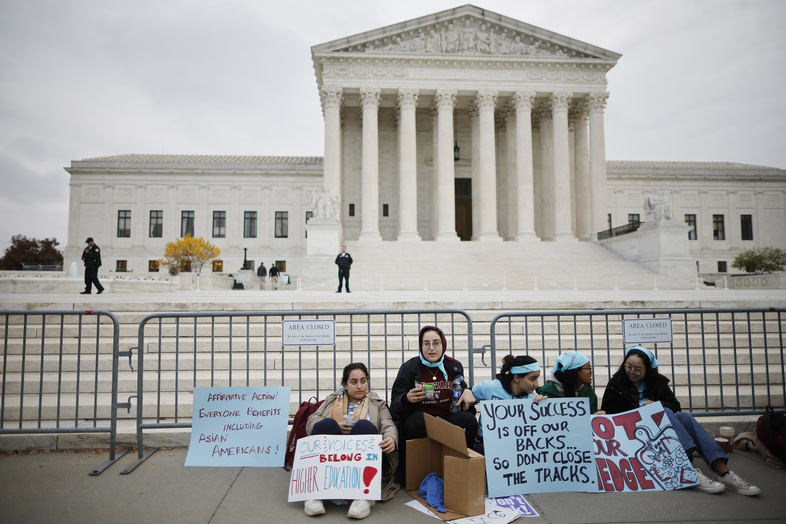
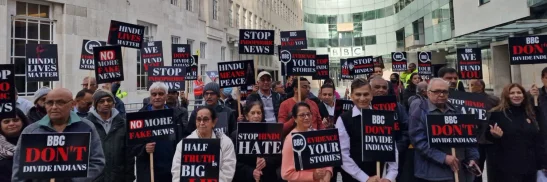



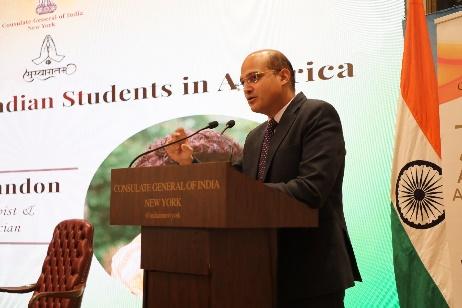
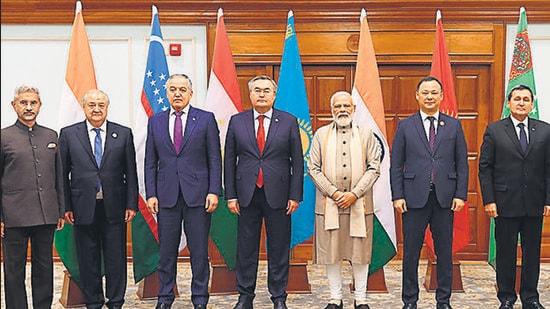

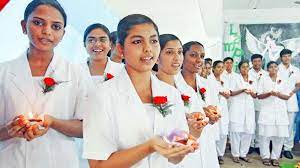
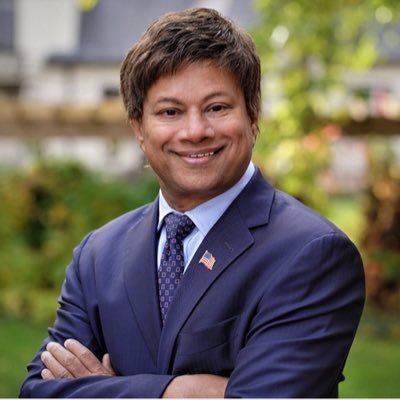

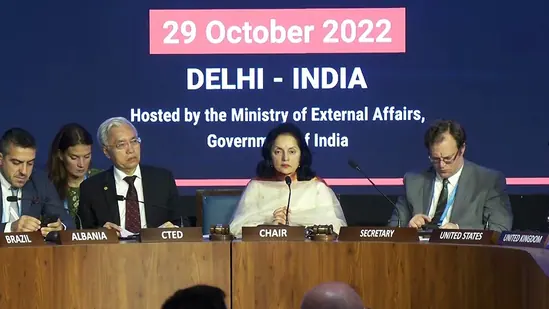



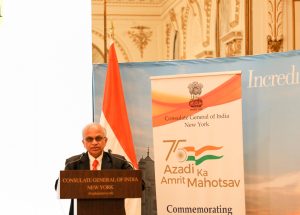
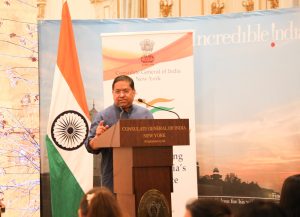



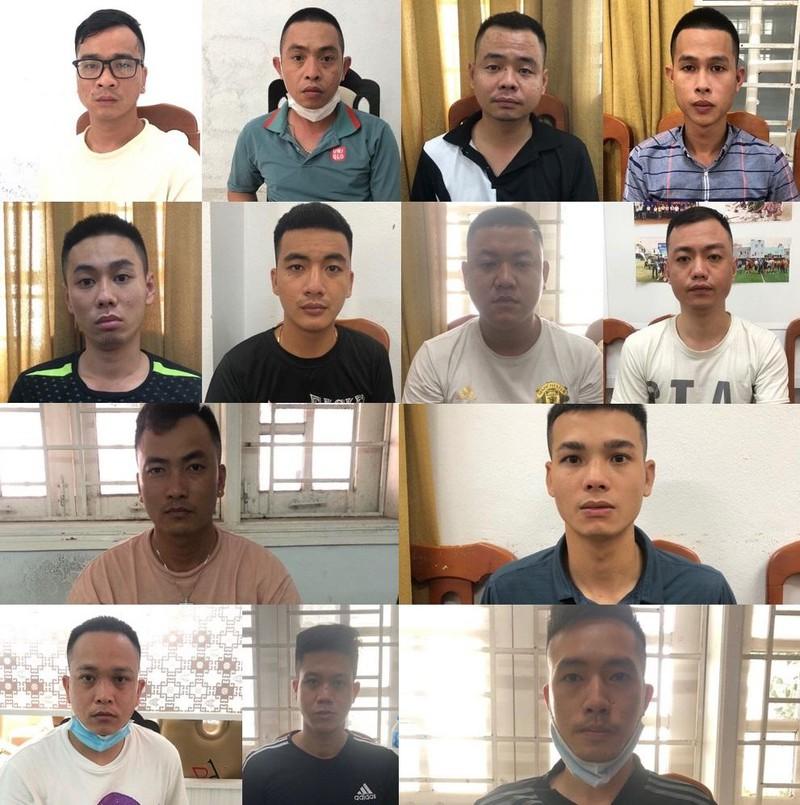
 However, there are only 4.6 billion people in these three groups out of the 8 billion people on the planet. There are 3.4 billion people who are seemingly forgotten, not extremely poor, not part of the middle class, and not rich. Who are they?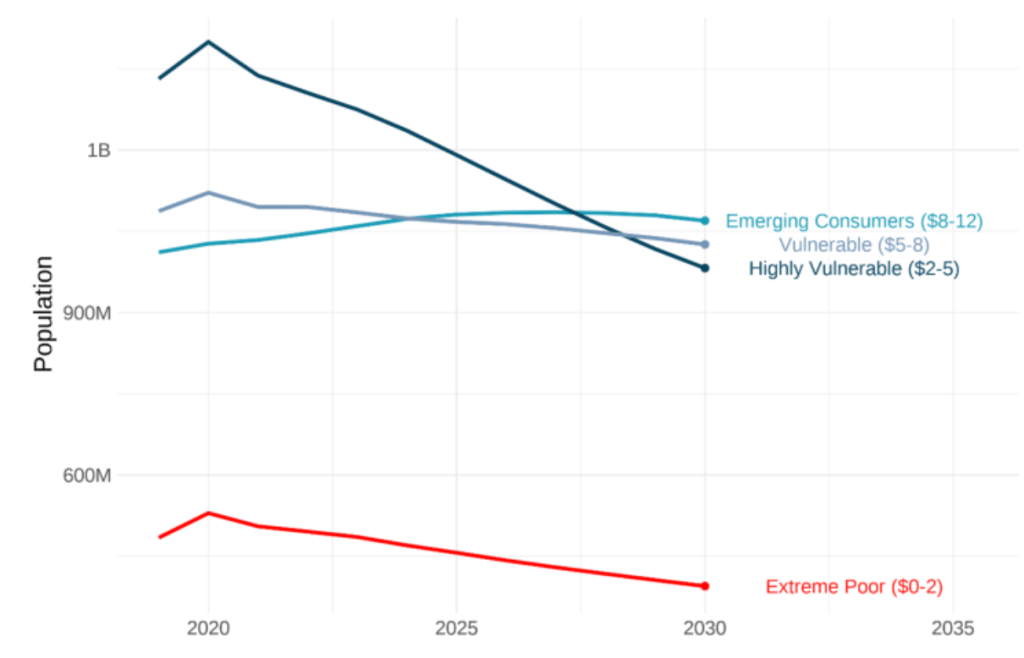
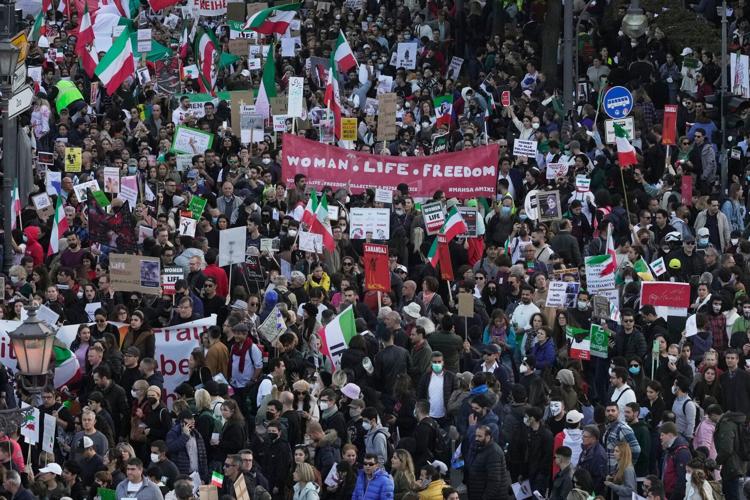 Iran’s security forces have dispersed gatherings in that country with live ammunition and tear gas, killing over 200 people, including teenage girls, according to rights groups.
 After growing pressure from Indian Americans, New York Mayor Eric Adams announced at a press conference Oct. 20 that all children in the city’s public school system will get a day off, beginning next year, to celebrate Diwali.
 White House Celebrations
 Born in Los Angeles, she began acting at 14 and took a lead role in “The Toll of the Sea” three years later, in 1922. She went on to appear in dozens of movies but faced deeply entrenched racism in Hollywood, where she struggled to break from stereotypical roles.
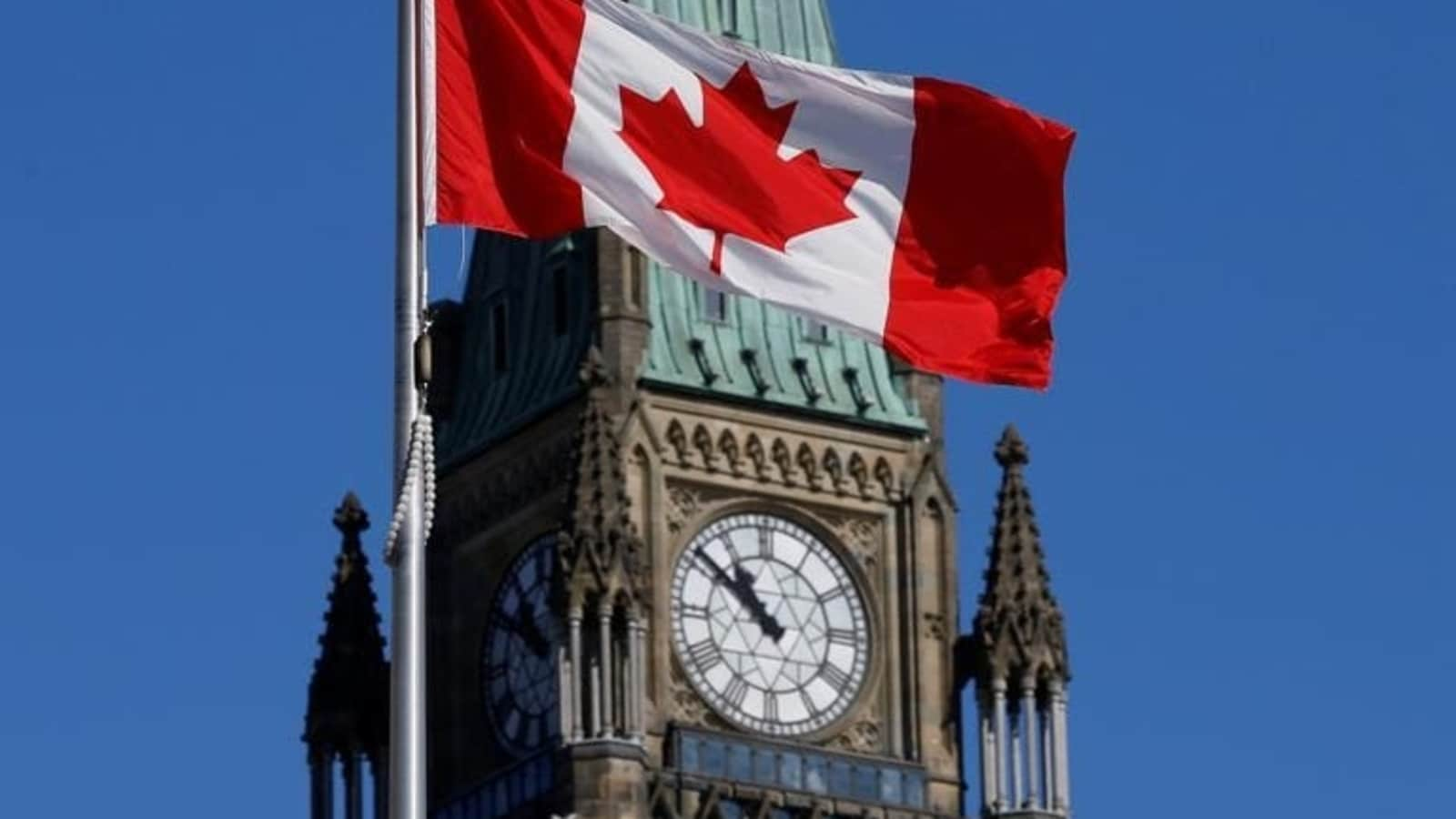 In March 2020, IRCC became unable to process most applications due to the onset of the Covid-19 pandemic. This was because the department was only able to process paper applications that were mailed to a central location.
 These individuals have always been present in Indian society, and on a large scale. In January 2020 Gleeden – an extramarital dating app presented a study, conducted by IPSOS, about the state of Infidelity in India. According to the results gathered by IPSOS, 55 per cent Indians had already been unfaithful to their current partner at least once at the time of the interview out of which 54 per cent were men and 56 per cent were women. This is shows exactly the state of a “happily ever after” marriage in India. The important question to decode here is if someone is unhappy in their marriage why not just break it off, move on and divorce your partner?
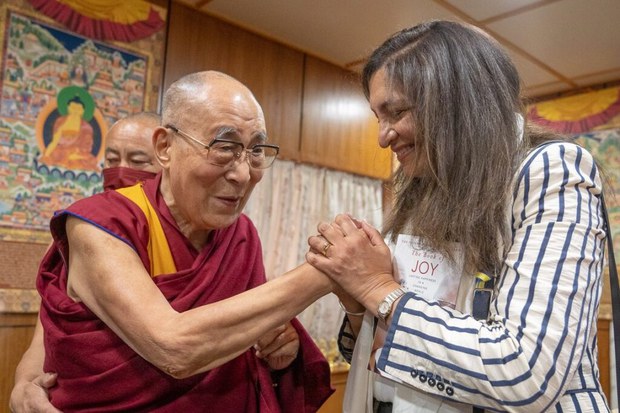
 In addition to musical and cultural celebrations, several exhibitors of Indian clothing and jewelry showcased their merchandise. Another highlight of the celebration were inter-active participatory events for the audience, which made the event a huge success. Celebration of Indian cuisine was another attraction of this event. Mouthwatering multi-course Indian dinners are served to all guests on all the three days.
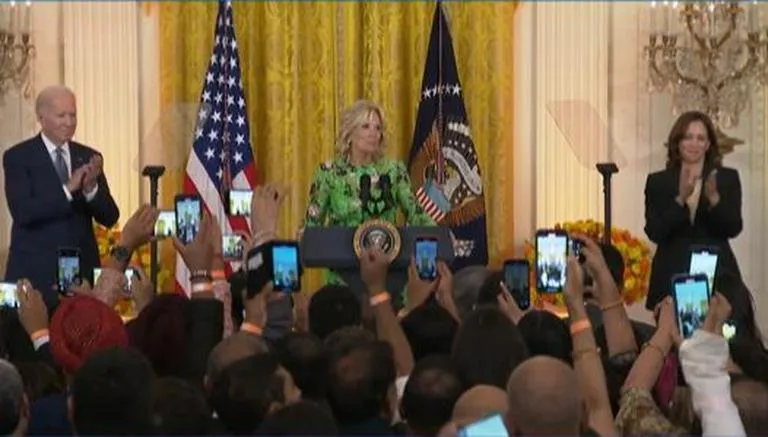 “The incredible South Asian community all across America has helped the country emerge stronger from this pandemic, building an economy that works for everyone, teaching children and caring for elders, responding to the cry for action on climate, working to fix immigration system, defending rights and freedoms, building a more just and equitable country, serving and protecting our communities and the nation, informing, entertaining and inspiring,” Biden said.
  “The room is full at the East state dining room… This is a real celebration of what the Indian American community has achieved in the United States. It’s a wonderful recognition by the President and by the White House to host all of us on Diwali. I feel very privileged to be here as an Indian American,” Atul Keshap, president of US India Business Council said during the reception.
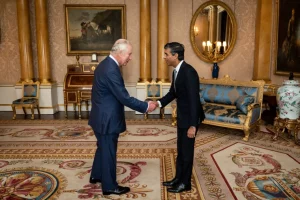 Sunak is the fifth British prime minister in six years, the third in less than two months. He is Britain’s first leader of South Asian descent, its first Hindu prime minister, and the nation’s first leader of color. He is the youngest prime minister of modern times.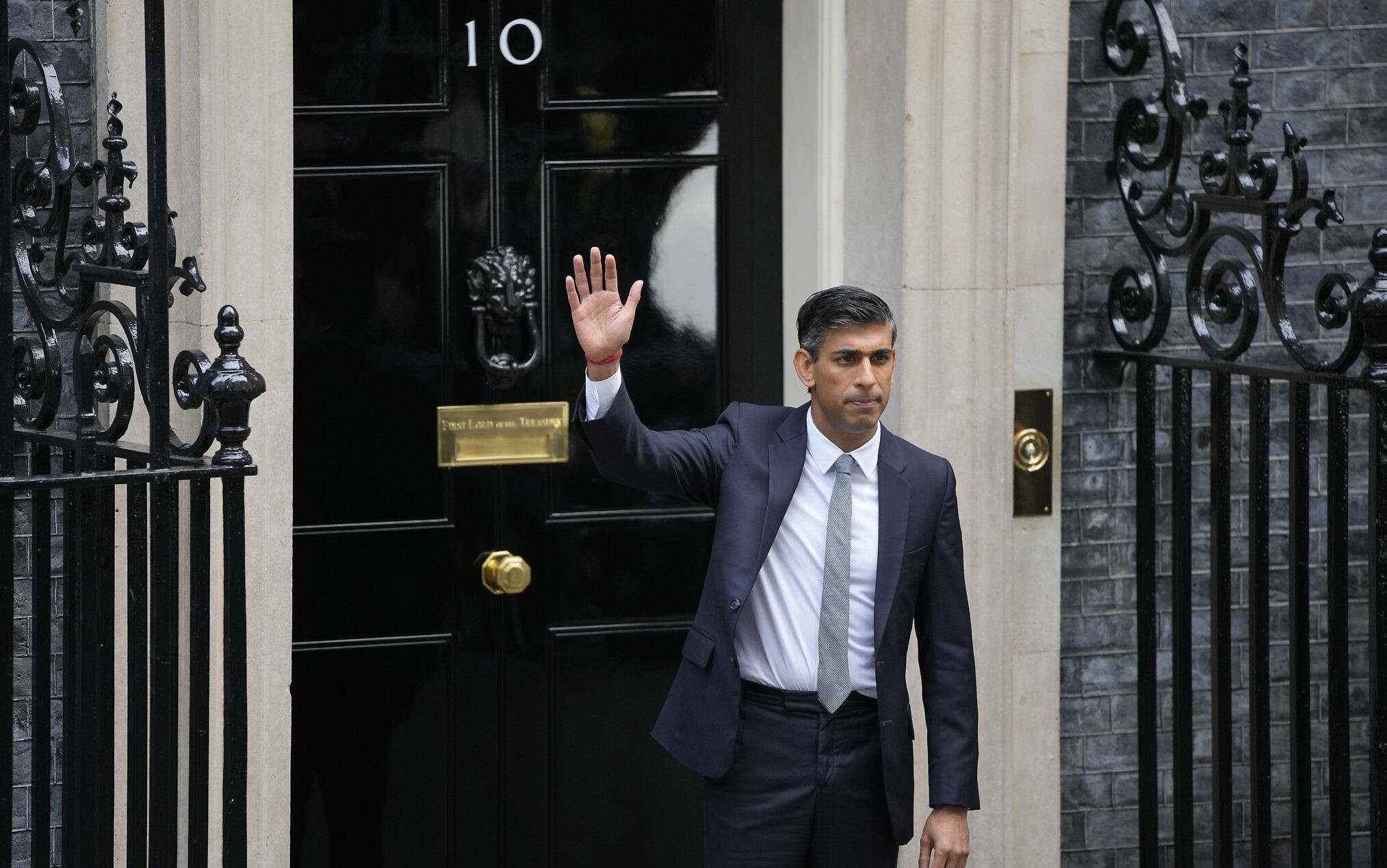
 Xi says “the world system is broken and China has answers,” said William Callahan of the London School of Economics. “More and more, Xi Jinping is talking about the Chinese style as a universal model of the world order, which goes back to a Cold War kind of conflict.”
 Mohammad Nawaz dealt a huge blow on the first ball of the final over when Pandya miscued the slog and the thick edge went to cover-point. On the fourth ball, Kohli smacked a waist-high full toss high over a deep square leg fence for six, which was on a no-ball.
 Attended by a record number of 43 candidates running for offices to several local, district and statewide elections, representing both the Democrat and the Republican parties, the event provided the Indian American community with a platform to learn of the local and national issues that impact our lives on a day to day basis. The first of a kind event held three weeks ahead of the midterm elections scheduled for November 8th, attracted local residents, visitors, and the media.
 Members of the organizing committee included Ms Shree Guruswamy, a local community leader and delegate of the Democratic party, Mr Vinoz Chanamolu, the proprietor of the Mall of India property and the VP of the American Indian Engineer’s Organization, Mr Girish Kapur, a Naperville community leader from the Indian Community Outreach organization and Ms Ghousia Wajid, a prominent person for civic engagement in the South Asian community.
 The list of candidates who attended the event included, for the Supreme Court Justice Michael Burke, for IL Circuit Court Judge Mike Reidy; for IL Appellate Court Judge Sonny Choi Williams, Judge Liam Brennan & Judge Joe Birkette; for IL Congress Congressman Raja Krishnamurthy, Scott Gryder & Catalina Lauf, For IL State Senate Senator Laura Ellman, Rachel Ventura, Senator Suzy Glowiak Hilton & Laurie Novak; For IL State Rep Paul Leong, Deanne Mazocchi, Stephany Hood, Janet Yang Rohr, Jackie Williamson, Stephanie Kifowit & Anne Stava Murray; For Dupage County Chairman Deb Conroy; for Dupage County Sheriff Jim Mendrick, for Dupage County Treasurer Gwen Henry & Don Potoczny; for Will County Treasurer Tim Brophy & Raj Pillai; for Dupage County Clerk Evelyn Sanguinetti, for Dupage County Board Bob Larsen, Cindy Cronin Cahill, Patty Gustin, Kari Galassi, Tina Tyson Dunne, Sheila Rutledge & Saba Haider; for Will County Board Meta Mueller, for Forest Preserve Commissioner Jeff Garhis; for Forest Preserve Liz Van Arsdell, Bob Schillerstrom, Daniel Hebreard & Mary Beth Carlson. State Attorney Bob Berlin is not running for re-election but attended the event as a well-wisher.
 The gala began with Dr. Uma Johnnalagadda, President of GAPI, Dr. Sreeni Ganagasani, and Dr. Raghu Lolabhattu, welcoming community members, family, friends, colleagues, and sponsors. “We, the AAPI-GAPI team worked hard to stick to the mission of AAPI, for education and charity to serve humanity. We thank each and every member that attended and supported the event. Our special thanks to all our Sponsors,” Dr. Jonnalagadda said.
  The reasons for disparities among the countries, not surprisingly, has to do with how resilient their health-care systems are at bouncing back from the burden of caring for COVID-19 patients. It also relates to the countries’ underlying health trends that had been in place before the pandemic.
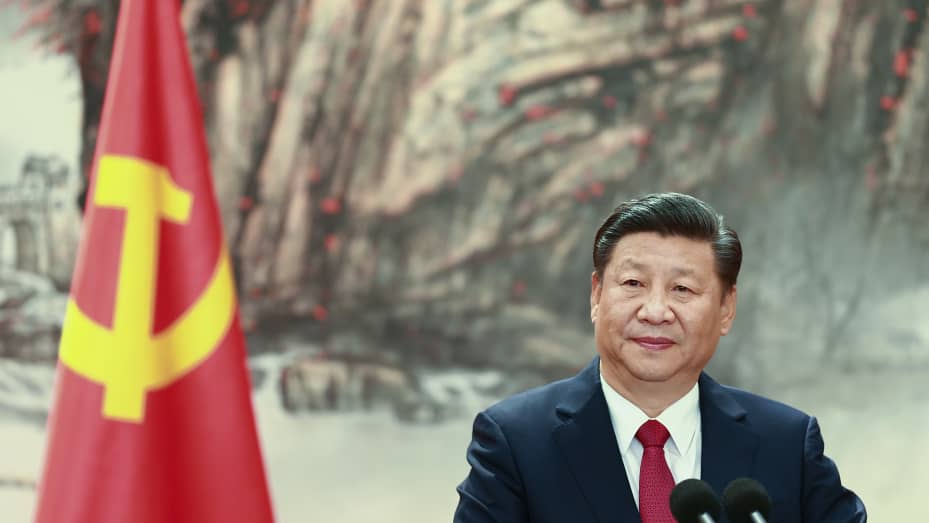 While some have resented XI’s trampling on what few freedoms Chinese citizens still enjoyed under the one party state, others say China’s various and acute challenges require that a “strong leader is needed to keep at bay the recipes for chaos and dysfunction,” Torigian said.
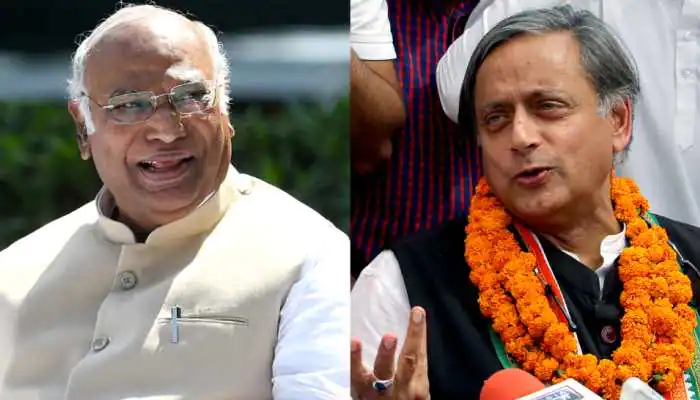 After casting his vote at the party state committee office in Thiruvananthapuram, Tharoor, 66, told the media the Congress workers would decide on the next leadership. This election would only benefit the Congress party, he added. “Like the Bharat Jodo
  The apex court clarified that the question in connection with the ownership of airport land will remain open. The Kerala government had challenged the Airports Authority of India (AAI) decision to prefer Adani over it for management of the airport. The appeal argued that this decision was not in public interest and granting concession to Adani, who has no previous experience in managing airports, was violative of the provisions of the Airports Authority of India Act.
 The Education Department’s technical team will be responding to potential issues in real-time, and although the application itself won’t change, the team may make changes to the website if faced with any glitches.
 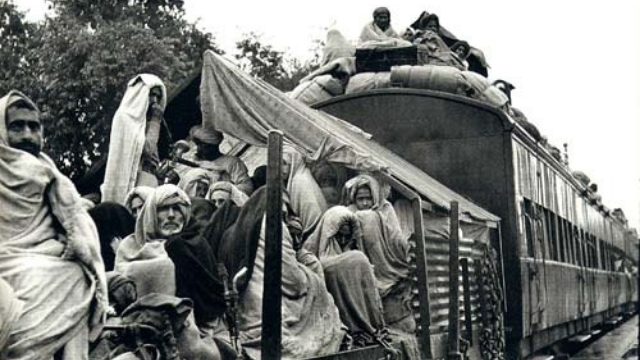 “We must not let the years erase the memory of the millions who were massacred. Recognizing the genocide strengthens the historical record, educates our fellow Americans, and lets would-be perpetrators know such crimes will not be tolerated or forgotten,” he added.
 According to the court order, “In December 2018, Livingston joined Infosys as Senior Vice President for Consulting and Prejean’s day-to-day supervisor. Shortly after joining the firm, Livingston allegedly met with Prejean in Infosys’s New York office and told her that he wished her to exclude women “with children at home” and candidates near or over 50 years old. Prejean told Livingston that these demands were illegal, and Livingston allegedly responded by becoming “disturbed and angry.” He also allegedly threatened to remove her from her position if she did not capitulate.”
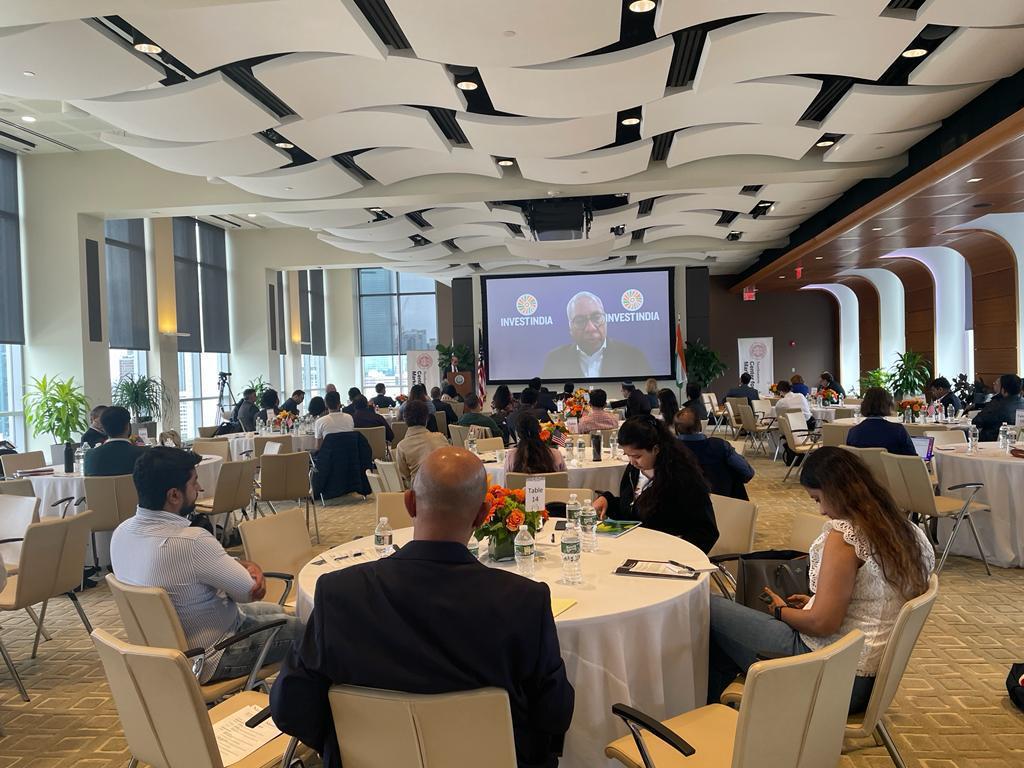 Special Ministerial remarks at the summit was made by Honb’le Minister of Health & Family Welfare, and Chemicals & Fertilizers of India – Dr. Mansukh Mandaviya. He focused his address on India’s recent developments in the India-US health sector, especially the close collaboration in vaccine development. Minister Mandaviya noted that India had vaccinated over 95 % of its adult population distributing 2.19 billion doses, as also supplied COVID vaccines to over 100 countries.
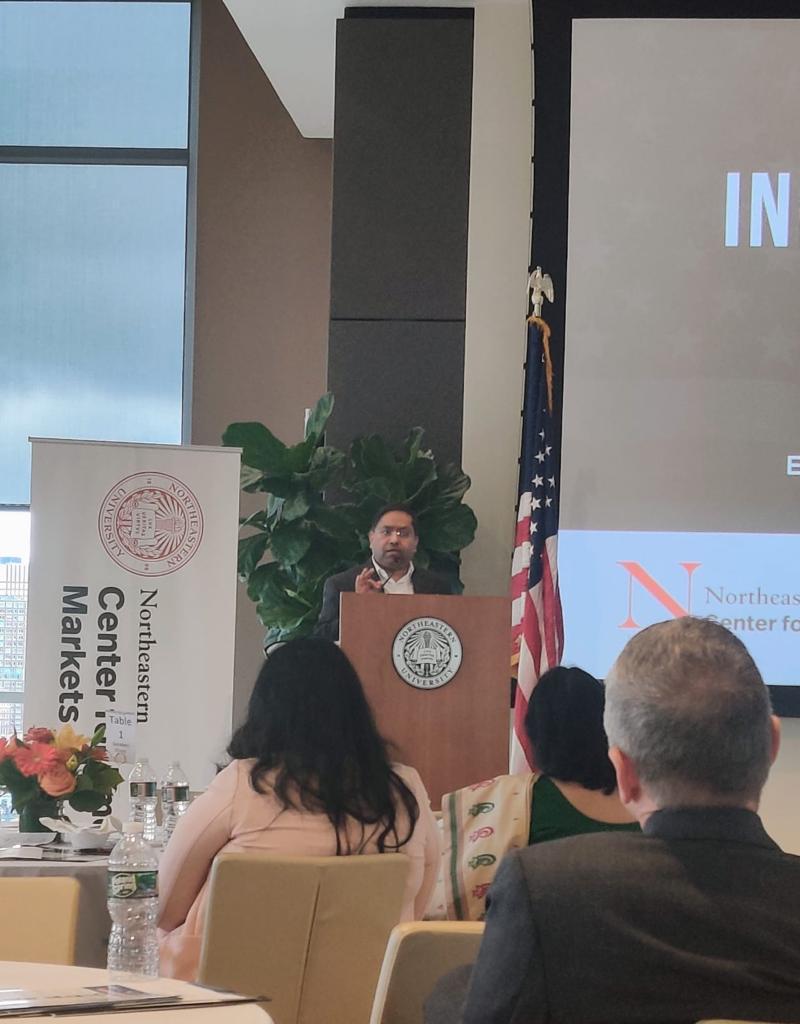 Sumant Sinha, Chairman & CEO, Renew Power, gave a detailed account of the remarkable progress in India in harnessing renewable energy. Renew Power is India’s leading solar and wind energy company with across geography collaboration including with the United States. Mr. Phalgun Kompalli, Co-founder, upGrad, a leading ed-tech company spoke about the growth of digital education and the value company like his bring to the US higher education landscape.
 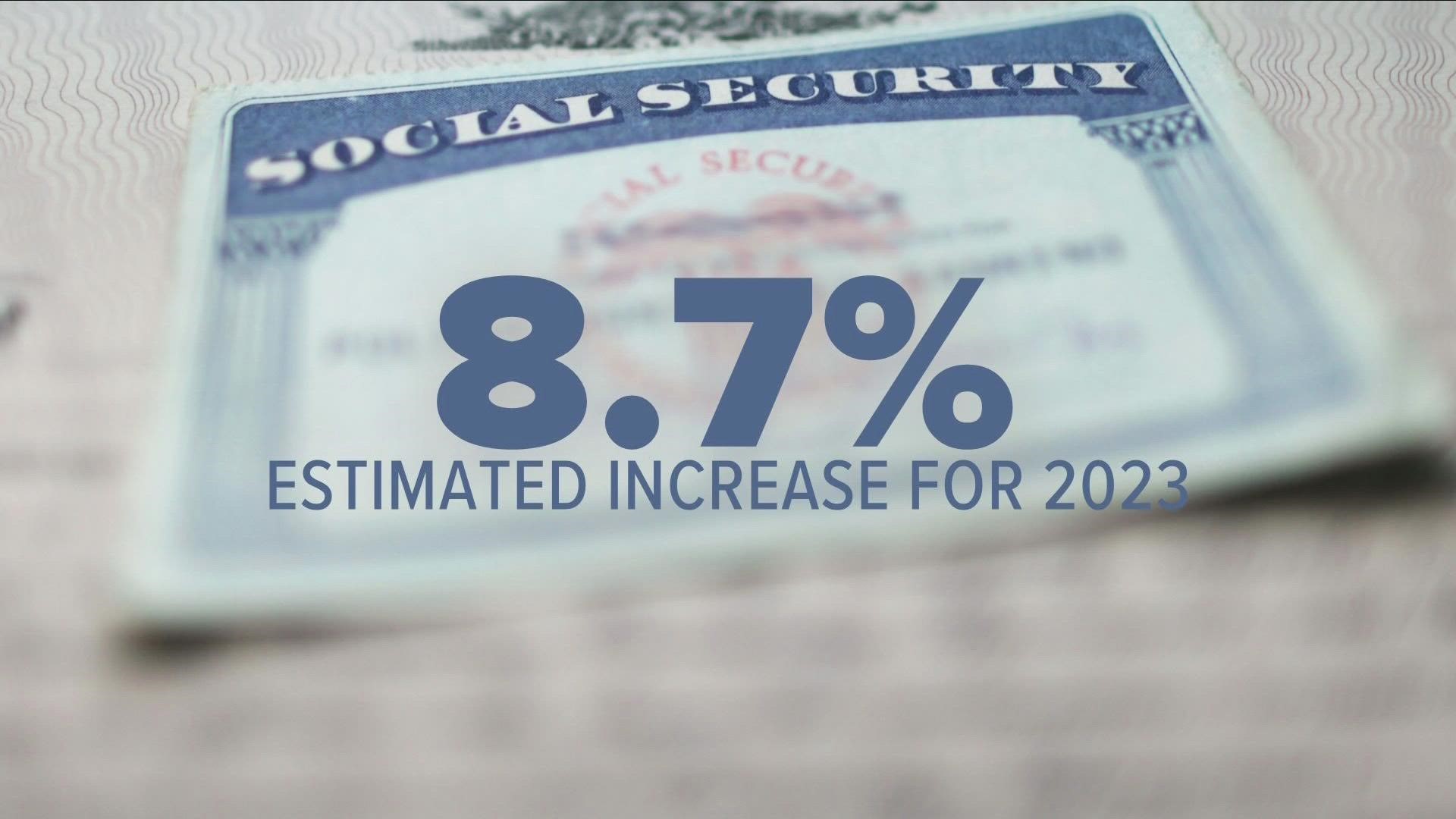 Because the CPI-W is such a broad measure of consumer prices, some have questioned whether the index is the best metric to determine beneficiaries’ needs, the majority of whom are retirees.
  Wang is something of a rarity in the world of battery engineering—he’s been in the field since the early 1990s, contributing work on GM’s groundbreaking EV1, and his papers stretching back through the decades have been referenced by hundreds of other studies. About seven years ago, Wang and his team started looking into the question of how to make batteries charge faster. They tried several approaches, including methods to modulate the electrical current feeding energy into the battery, but ultimately cast that option aside.
 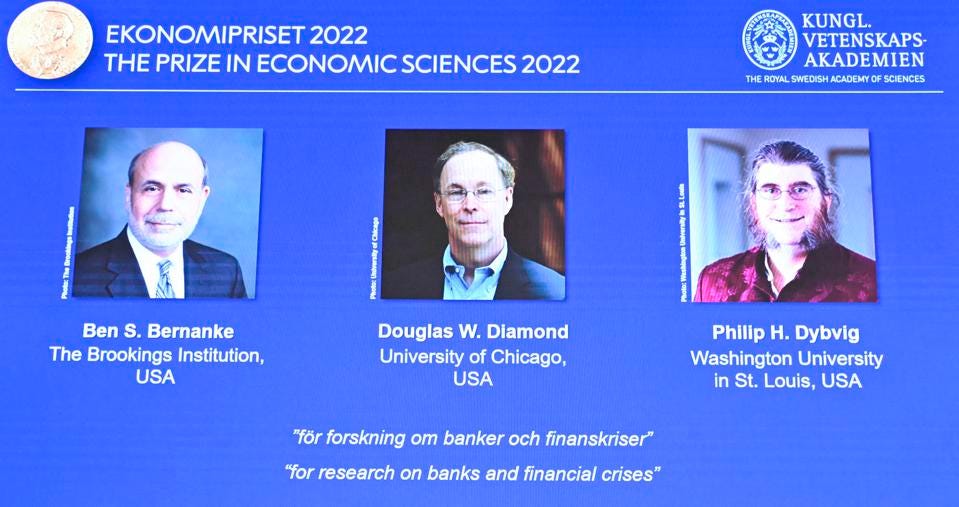 For the economy to function, savings must be channelled to investments. However, there is a conflict here: savers want instant access to their money in case of unexpected outlays, while businesses and homeowners need to know they will not be forced to repay their loans prematurely. In their theory, Diamond and Dybvig show how banks offer an optimal solution to this problem. By acting as intermediaries that accept deposits from many savers, banks can allow depositors to access their money when they wish, while also offering long-term loans to borrowers.