Davinci Expensive mr.bet casino app ios diamonds Totally free Spins

Double Da Vinci Expensive diamonds will not give real money betting or the opportunity to victory real money. Listen in to possess Higher 5 Local casino’s whole package from personal mobile position game – Hoot Loot, Wonderful Knight, Purr Several Dollars Much more, Shade of your own Panther, and you will Triple Raven. The company put £10 play with £50 ports the new Davinci Diamonds RTP is one of the large RTP harbors you to causes 96% of go back to benefits. Continue reading “Davinci Expensive mr.bet casino app ios diamonds Totally free Spins”

Da Vinci Expensive https://real-money-casino.ca/real-money-slots/ diamonds Position Comment

This is a no cost slot game, readily available for all people. Invisible among the paintings is actually wild icons, and therefore choice to regular signs to simply help setting combinations. If you manage to make a winning blend, you’ll turn on tumbling reels — all of the gains disappear, and you can the fresh icons tumble on to the newest empty areas. Needless to say, during the DaVinci Diamonds position, it is impossible to accomplish instead of totally free spins. Continue reading “Da Vinci Expensive https://real-money-casino.ca/real-money-slots/ diamonds Position Comment”

15 Astonishing Wolfdogs Which Could be wheres the gold pokies online Huge, However they are Anything but Bad

The smoothness are originally voiced by Anatoli Papanov. Regarding the video game Phenomenal Tetris Problem, Large Bad Wolf is one of Pete’s henchmen, and a Weasel which is the fresh company you endeavor prior to wheres the gold pokies online Pete, the very last workplace. Continue reading “15 Astonishing Wolfdogs Which Could be wheres the gold pokies online Huge, However they are Anything but Bad”

Frank Islam Appointed By Biden To Be On The Commission On Presidential Scholars

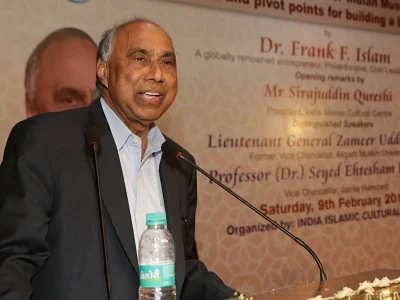
Indian American Frank Islam will be one of the 21 members of the Commission on Presidential Scholars. Islam will be a part of the 21-member commission which includes prominent Americans from different walks of life. According to the White House press release, the commission will be led by Margaret Aitken Haggerty, a communications professional who served as the spokesperson and press secretary for Biden during his Senate days.

The Commission on Presidential Scholars is responsible for selecting 161 Presidential Scholars from academics, the arts, career, and technical education.

Islam is currently the head of the FI Investment Group which is a private investment holding company. Previously, he owned an information technology firm called QSS Group which he sold in 2007. He has also served on several boards and advisory councils such as the John F. Kennedy Center for the Performing Arts, the U.N. Foundation, the US Institute of Peace, and the Woodrow Wilson Center.

Moreover, Islam has been a part of the boards and councils at different universities including John HopkinsAmerican University, George Mason University, the University of Maryland, and Harvard University, according to the White House press release.

A prolific writer, Islam has also written about American politics for The Quint. In an interview with the American Bazaar, Islam expressed that the new appointment was an honor. “I look forward to serving on the Commission with the other members and collaborating with them to choose Scholars who will use this experience and already impressive accomplishments in order to build an even stronger and better America,” Islam said. 

Islam has authored books on the American political landscape, including: Working the Pivot Points: To Make America Work Again and Renewing the American Dream: A Citizen’s Guide for Restoring Our Competitive Advantage

He is a regular blogger on Medium and has been contributing to the Huffington Post for almost a decade. In 2018, Islam created the Frank Islam Institute for 21st Century Citizenship which tackles the civic engagement deficit and challenges to democracy within the US and on a global scale through its website and monthly newsletter.

Born in Aligarh, India, Islam moved to the United States in early 1970s to pursue a Bachelor’s Degree at the University of Colorado, in Boulder. After earning a bachelor’s and master’s degrees in computer science from the university, he worked for different companies for 20 years before creating his own, the QSS Group.

After exiting from the QSS, Islam and his wife, Debbie Driesman built a philanthropic foundation with an aim to promote education, art and culture, and peace and conflict-resolution.

Currently residing in Potomac, Maryland, just outside of Washington DC, Islam is a popular Democratic donor, and has raised millions of dollars for Democratic presidential nominees including Barack Obama, Hilary Clinton, and Joe Biden. (Courtesy: The Quint)

TiE-Boston Elects Tech Entrepreneur Yash Shah As 13th President

TiE Boston, one of the region’s largest and leading-edge organizations supporting the Massachusetts entrepreneurial ecosystem and connecting entrepreneurs, executives, and venture capitalists, today announced that tech entrepreneur and senior business executive Yash Shah has commenced his term as the 13th President of TiE Boston.

Beginning July 1, 2022, Shah will serve for a two-year term, during which he plans to boost the organization’s outreach to early entrepreneurs, emerging entrepreneurs, and established entrepreneurs, a 3E blueprint  that will also inspire more engagement from its charter members.

“I am excited to see Yash Shah at the helm of TiE Boston,” said TiE Boston Founding President and philanthropist Desh Deshpande. “He is a seasoned entrepreneur and brings both the historical involvement from the last 25 years of TiE Boston, as well as the vision for the future that is needed for the years to come.”

Shah says he is thrilled to serve TiE Boston and lay the foundation for the next 25 years in the rapidly changing technological and business landscape in both Massachusetts and the world.

“As we celebrate TiE Boston’s 25th anniversary this year, we have also started to think about how we can make this organization more relevant to the local entrepreneurial ecosystem for the next 25 years and beyond,” said Shah . “My immediate goal to make a sustained effort to reach out to like-minded communities across New England and make TiE Boston a major resource and networking platform for budding, established, and future entrepreneurs.”

Shah replaces former TiE Boston President Anu Chitrapu, whose two-year term ended on June 30, 2022.

“I am excited about the election of Yash Shah as the next President of TiE Boston,” said Chitrapu. “His vast entrepreneurial and investment experience promises substantive impact on our programs and the entrepreneurial ecosystem.”

Shah is a serial entrepreneur, angel investor, product advisor, and business executive with over 25 years of IT and software industry experience.  He is also on the advisory boards of several software startups around the world.

“I am honored at the opportunity to build on the incredible work done by TiE Boston’s founders, past presidents, and charter members. Passion for entrepreneurship runs deep in me, as demonstrated by my two decades of association with TiE Boston and starting multiple ventures of my own,” added Shah.

As a dynamic and successful entrepreneur, Shah co-founded Jeavio, a venture services firm and plays a critical leadership role in its vision and strategy. He is also the Chief Technology Officer of SevOne, which was recently sold to IBM. In addition, he is a Founding Member of the TiE Boston Foundation, an active member of TiE Boston Angels, and a TiE ScaleUp Mentor.

Yosh Rozen, CEO of Partrunner, said, “I’m excited to see Yash take over the TiE Boston Presidency. He has been a mentor to my company Partrunner since our participation in the TIE Boston ScaleUp program. Yash’s leadership at TiE Boston will be immensely valuable as an enabler for future entrepreneurs.”

TiE Boston is the second oldest and second largest TiE chapter and currently has around 170 charter members in Massachusetts, who have founded signature Boston companies creating $50B+ in shareholder value and thousands of hi-tech jobs. A charter membership to TiE Boston provides access to TiE’s global network of over 15000 entrepreneurs, professionals, industry leaders, and investors, across 64 chapters worldwide.

​Founded in 1997, TiE Boston connects tomorrow’s founders with today’s entrepreneurs, executives and venture capitalists. Operating for 25 years now, TiE Boston’s unparalleled network of successful, serial entrepreneurs are deeply engaged and committed to giving back to the community by providing mentorship, tactical advice, and expertise to rising entrepreneurs through signature programs.

TiE Boston Angels provides funding and advice to early-stage companies. Since its inception, $18+ Million has been invested in 60+ companies, through a network of over 90+ investors. Industries represented include technology, healthcare, clean tech and more.

TiE Boston ScaleUp is an accelerator program that enables “Seed to Series A” companies overcome typical barriers to growth by guiding them to optimize their strategic positioning, operations, sales and competitive advantage. Participating startups have access to top mentors from Boston who have successfully scaled and exited their own companies. Since inception, ScaleUp has accelerated 107 startups through 8 cohorts. 63% are female-founded companies and the program has seen 5 exits till date.

TiE Young Entrepreneurs (TYE) fosters the next generation of leaders through the transformative experience of building a startup. This extracurricular program for exceptional high school students provides participants with the essential business and leadership skills to prepare them to succeed in college and beyond. Since inception, close to 500 students have successfully completed the program, with 90% reporting that TYE influenced a career path in STEM and 40% reporting that they founded a company as an adult. 

Other high-impact initiatives from TiE Boston include TiECON East, the largest entrepreneurial conference on the East Coast, TiE Boston Women, and TiE Boston University

When Will The Indian Rupee Stop Falling?

The Indian Rupee breached the psychological 80-mark for the first time against the US dollar on Tuesday, July 18th, declining to 80.06 per Dollar. The Reserve Bank of India intervened in the currency market to help the Rupee steady after hitting seven straight intraday record lows. A recovery in domestic shares also favored the Indian currency.

According analysts, a wobbly global macroeconomic environment marked by a spell of monetary tightening unleashed, firstly, by the Federal Reserve and being mimicked in earnest by the major central bank governors across the globe has led to an exodus of hot money from developing economies to the “safe haven” of the Dollar. The scenario is compounded further by record-breaking crude oil prices, which balloon India’s imports, diminish the cumulative value of India’s exports and widen our trade deficit.

It is a regular demand-supply market. Currently, there is a greater demand for Dollars than there is for the Rupee. Two factors have pushed demand — India’s current account deficit has sharply widened particularly after Russia invaded Ukraine, and investment in the Indian economy has fallen due to heavy flight of funds in recent months.

Depreciation of the Rupee makes imported items — including petrol and mobile phones — and gives India’s export a competitive edge. But India is a net importer. For those eyeing a trip abroad, earlier budgets on food, boarding, and transportation will now fall short – leaving one with the option to either expand their budgets or opt for countries where the rupee commands a stronger position compared to their domestic currencies.

The dollar has been appreciating against all currencies including the Euro. Market watchers, in fact, say that the Rupee has fared better compared to other currencies including the Euro.

In FY’22, as per the provisional figures released by the Reserve Bank of India (RBI), India’s current account deficit widened to $38.7 billion from a surplus of $23.9 billion in the previous FY. 

A widening current account deficit indicates that Indians have been converting more of their rupees into dollars to complete trade and investment transactions consequently spiking up the demand for dollars. It doesn’t help that foreign institutional investors (FIIs) have been dumping Indian equities after a strong bullish spell, and making a beeline for US treasury notes and bonds.

The RBI has intervened by selling Dollars to check the Rupee’s slide. Else, the free market would have seen a further weaker Rupee. The current exchange market scenarios suggest that the rupee’s fall may continue for a few more months, breaching even the 82-mark. Congress leader Shashi Tharoor took a dig at the Rupee’s slide saying a “strong government” is “giving us a weaker Rupee”.

Allu Arjun To Lead India Day Parade In New York

Popular Telugu actor Allu Arjun, who starred in the hit film Pushpa will lead the annual India Day Parade in New York next month organized by the Federation of Indian Associations, a leading Indian diaspora organization, as India marks 75th year of Independence. The Federation of Indian Associations — New York, New Jersey and Connecticut — have planned grand events in the coming weeks and months to celebrate India’s 75 years of Independence —  Azadi Ka Amrit Mahotsav.

According to reports, Super Star Allu Arjun will be the Grand Marshall of the India Day Parade in New York City on August 21. Allu Arjun, the Grand Marshal, will lead the parade along with NYC Mayor Eric Adams and a host of other celebrities and distinguished participants.

The FIA India Day parade is considered the largest parade outside India to mark the country’s independence and brings together thousands of members of the diaspora.

FIA President, Kenny Desai, during the fourth Parade Council Meeting, announced details of the FIA’s planned grand events lined up for the celebration of India’s 75 years of Independence -Azadi Ka Amrit Mahotsav.

he annual cultural events runthrough several streets of Madison Avenue in the heart of Manhattan, featuring tableaux by various Indian-American organizations, marching bands, police contingents and cultural performances by young Indian-American children.

FIA Chairman Ankur Vaidya welcomed the announcement of Arjun as FIA’s 40th Grand Marshal and complimented the mega star for his kindness and patriotism towards the motherland. “There is palpable excitement in the Indian-American community to welcome the popular superstar and FIA will ensure he feels at home in the US,” Vaidya said.

Previously, actors Arjun Rampal, Abhishek Bachchan, and Baahubali actors Rana Daggubati and Tamannaah Bhatia, as well as Sunny Deol and Raveena Tandon have attended the parade.

163,370 Indians Renounced Indian Passport in 2021

As many as 163,370 Indians gave up their Indian passports in 2021 — the highest since 2015, the Indian Government told Parliament last week. This number was 144,017 in 2019 and 85,256 in Covid-impacted 2020. 

While 41 Indian citizens based in Pakistan gave up their Indian citizenship in 2021, compared to only seven in 2020, 326 living in the UAE renounced their Indian passports.

Data provided by the Ministry of Home Affairs in Lok Sabha disclosed that the US was the top choice with almost half of Indians – 78,284 – preferring to become US citizens.

Overall, 932,276 Indians renounced their citizenships in favor of other countries between 2015 and 2021 — including 1,31,489 in 2015; 1,41,603 in 2016; 1,33,049 in 2017 and 1,34,561 in 2018.

Those giving up their Indian citizenship cited “personal” reasons for renouncing their home country. Indian laws don’t allow dual citizenship. 

India stands at the 84th position in the Henley’s and Partners’ passport index. A higher rank means easy visa and less bureaucratic delays in international travels.

Almost half — 78,284 — became US citizens in 2021 compared to 30,828 in 2020 and 61,683 in 2019. All of them were already based in the US. The other top destination countries were Australia (23,533), Canada (21,597), the UK (14,637), Italy (5,987), New Zealand (2,643) and Singapore (2,516).

Of the 10,645 foreign nationals who applied for Indian citizenship between 2016 and 2020 — 7,782 were from Pakistan and 795 were Afghanistan — 4,177 persons were granted Indian citizenship by the government.

Global Population Projected To Exceed 8 Billion In 2022; Half Live In 7 Countries

By Conrad Hackett

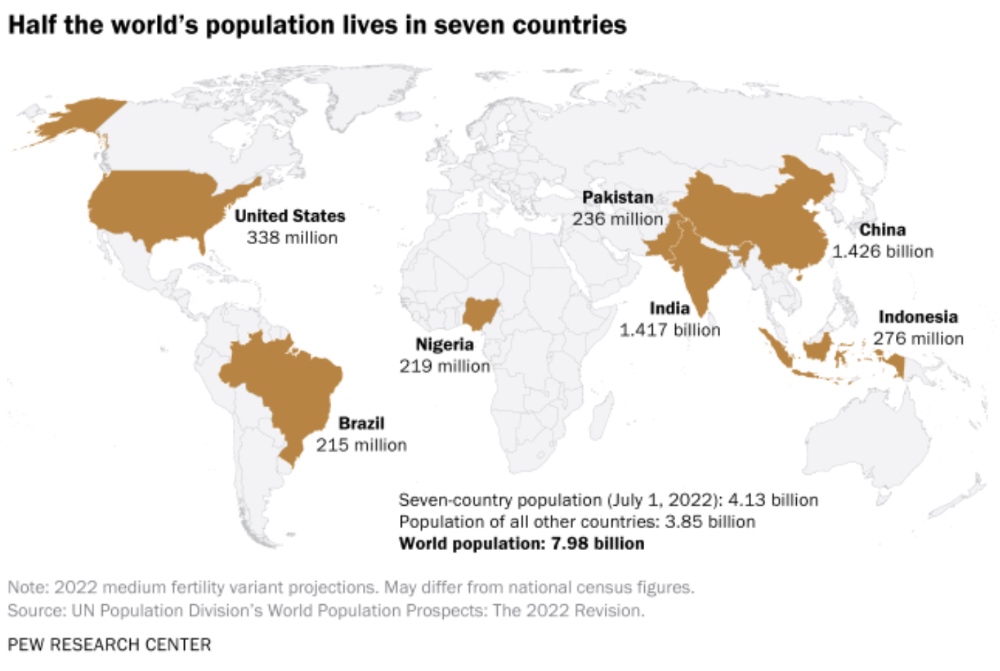
The world’s population will cross 8 billion in November, according to recently released projections from the United Nations. And more than half of all people live in just seven countries.

China has the world’s largest population (1.426 billion), but India (1.417 billion) is expected to claim this title next year. The next five most populous nations – the United States, Indonesia, Pakistan, Nigeria and Brazil – together have fewer people than India or China. In fact, China’s population is greater than the entire population of Europe (744 million) or the Americas (1.04 billion) and roughly equivalent to that of all nations in Africa (1.427 billion).

As recently as 2015, half the world’s population was concentrated in just six countries – the same as above, with the exception of Nigeria, which was then the seventh most populous country and has since passed Brazil to move into sixth place. Recent population growth, however, has been faster in the rest of the world than in these nations, meaning that the top six now hold slightly less than half (49%) of the world’s people. Including Brazil’s 215 million people puts the world’s seven most populous countries at 51.7% of the global population.

In the UN’s “medium” scenario for future population growth – its middle-of-the-road estimate – the global population is expected to reach 9.7 billion in 2050 and 10.4 billion in 2100. Growth is expected to be concentrated in sub-Saharan Africa, where an estimated 29% of all the world’s births happened last year. The 2021 total fertility rate in sub-Saharan Africa, 4.6 births per woman, is double the global average of 2.3 births per woman and triple the average in Europe and Northern America (1.5) and in Eastern and South-Eastern Asia (also 1.5).

Under Pope Francis, The College Of Cardinals Has Become Less European

By, Jeff Diamant

Unless his reign is short, a Roman Catholic pontiff typically appoints a majority of the men who vote for his successor. But Pope Francis’ additions to the College of Cardinals since his election in 2013 also have served another purpose – tilting the leadership structure of the Roman Catholic Church away from its historic European base and toward developing nations in Africa, Asia and Latin America.

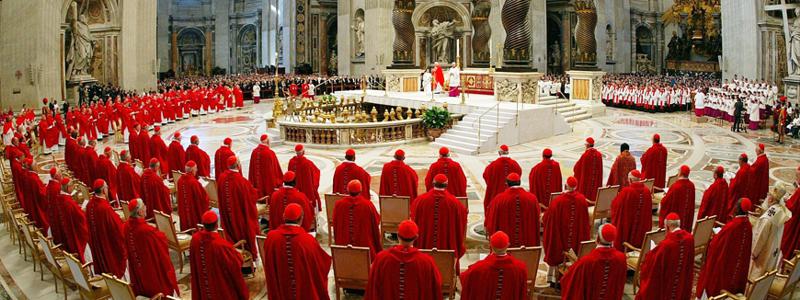
The pope recently announced that he will appoint 16 new voting cardinals (in addition to five other cardinals who are 80 or older and therefore ineligible to vote). After this latest group is officially installed at an Aug. 27 ceremony in Vatican City, the College of Cardinals will have 132 voting members, 40% of whom are European, down from 52% in 2013. 

How we did this

Francis’ appointments (including the recently announced future cardinals) have increased the overall representation of the Asia-Pacific region within the body of voting cardinals from 9% in 2013 to 17% in 2022, while increasing the representation of sub-Saharan Africa from 9% to 12%. These figures include cardinals who were named by Pope Emeritus Benedict XVI and St. John Paul II.

Francis, an Argentinian who is the first pope from outside Europe since the eighth century, still has picked more cardinals from Europe than from any other region. Of the 83 newly appointed or currently eligible voting cardinals Francis has named so far during his papacy, 34% are from Europe, 22% from the Asia-Pacific region, 20% from Latin America and the Caribbean, 13% from sub-Saharan Africa, 8% from North America and 2% from the Middle East-North Africa region. Altogether, these cardinals appointed by Francis will make up a majority (63%) of the 132 voting members of the College of Cardinals after the Aug. 27 installation ceremony.

Among the 16 future cardinal electors Francis has chosen this year, four will represent Europe (Italy, Spain, France and the United Kingdom). Six will represent the Asia-Pacific region (two from India and one each from East Timor, Mongolia, Singapore and South Korea). Three other future cardinal electors are from Latin America and the Caribbean (two from Brazil and one from Paraguay). Two are from sub-Saharan Africa (Ghana and Nigeria) and one is from North America (U.S.-born Robert McElroy, archbishop of San Diego).

Given that, as of 2010, only about a quarter (24%) of the global Catholic population lives in Europe, the continent remains heavily overrepresented among voting cardinals. By this measure, the most underrepresented region within the church’s leadership – even with Francis’ new picks – is Latin America and the Caribbean, which is home to 39% of the worldwide Catholic population (again, as of 2010) but has only 18% of the cardinals.

India Aims To Fly Indian Flag Atop 200 Million Houses On Independence Day

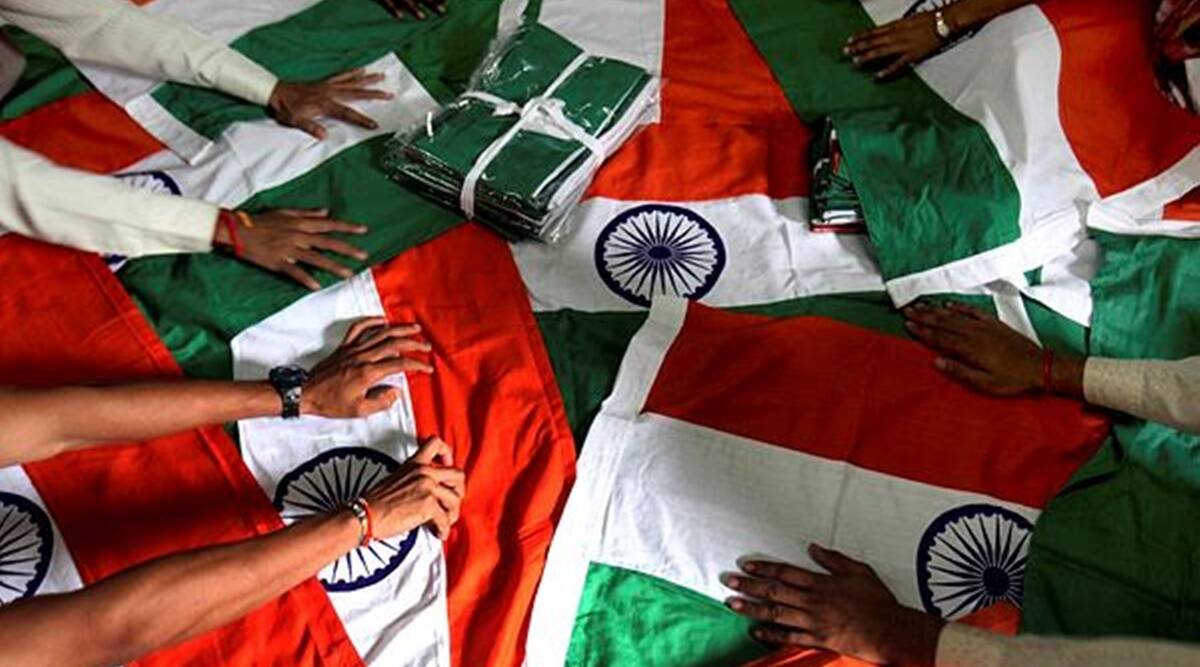
According to the newly launched “Har Ghar Tiranga” nationwide campaign, the Indian government plans to commemorate the 75th anniversary of Indian Independence by flying the Indian Flag, called Tiranga (tricolor) atop 200 million houses all across the country. According to Home Minister Amit Shah the campaign was devised to instill the spirit of patriotism into the hearts and minds of the people, media reports stated. 

In a communication to all ministries, the Cabinet secretary’s office has mandated ministries to ask their officers and employees to hoist the national flag in the run-up to the 76th Independence Day celebrations, people in the know of the developments said. 

This is the first time central government officials have been mandated to hoist the flag at their homes. The development comes amid the government’s ongoing ‘Har Ghar Tiranga’ program, which is aimed at encouraging citizens to hoist the national flag in their homes.

Central government officials will have to hoist the tricolour at their homes and offices during 13-15 August as part of the ‘Azadi ka Amrit Mahotsav’ celebrations.

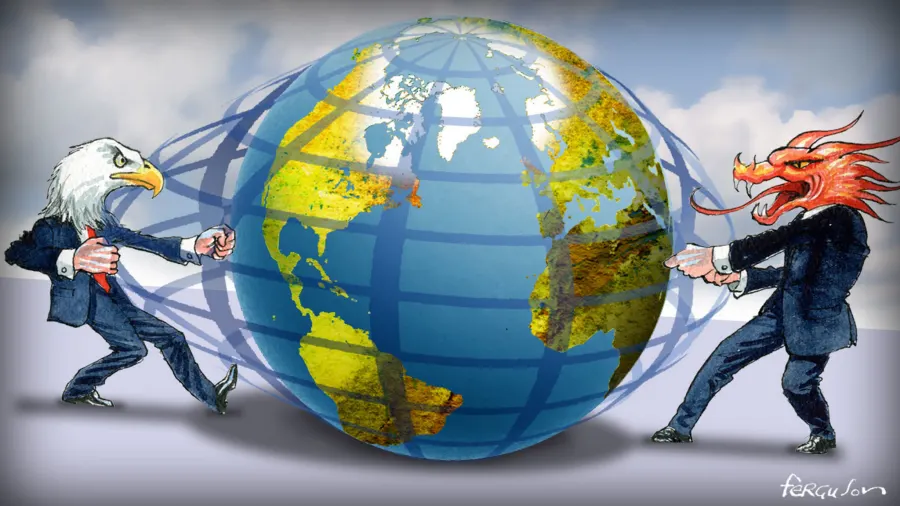
The Vision Of A World Divided Into Two Blocs: China & Russia Vs Europe & The United States

(IPS) – For years, Russia’s relations with the European Union and the United States have been one of the main areas of conflict in the media. Washington and Brussels accuse Moscow of manipulation and disinformation and, after the invasion of Ukraine, decided to close their media outlets to Russian companies.
Excerpts from the Q&A: 

Q: What do you think about the way this issue has been handled and what repercussions could it have on the management of the media, especially non-mainstream media such as Inter Press Service (IPS) or OtherNews?

A: Information has always been used by power, both economic and political. Information is, by definition, top-down. Whoever transmits it, whether in print form in newspapers and magazines, or in electronic form on radio and TV, sends it to an audience that cannot intervene in the process. That is why power has always tried to use it. 
The Gutenberg era represented by this phenomenon lasted six centuries. Communication, which is a more recent phenomenon and which until now has only been possible with the Internet, is different. Communication is horizontal: I am a receiver, but I can also be a sender. There, power has much more power. 

The media that provide information are closer and closer to power, they are no longer a business, and every year they are less and less powerful. And politics today is increasingly oriented towards social media. The most recent example was former US President Donald Trump, who had 80 million followers with Twitter (during his tenure at the White House) and completely gave up control of the media. (Trump was permanently banned from twitter in January 2021, right after he supported the attack on the capitol. So, Trump doesn’t actually have any twitter followers now.).

It must be added, however, that the Internet has been captured by the market, which has eliminated the horizontality we all hailed in the beginning. Today we have moved from the era of Gutenberg to the era of Zuckerberg, and we users are data, not people. 

This is of great importance for young people, who today find themselves involved in vertically created turmoil, brought about by search engines, which divide users into affinity groups, thus eliminating dialogue, because when someone from part A meets someone from part B, they clash, end up insulting each other, without listening or sharing. And search engines, in order to keep the user, prioritise what generates the most impact, so that the strangest news ends up taking precedence. 

The extreme polarisation of America would not have been possible without social media. Newspapers increasingly focus on events and abandon processes, and international relations cannot be understood without analysing the process in which events take place. 

In Nairobi in 1973 there were 75 foreign correspondents; today there are three. No European TV has correspondents in Africa. It is therefore easy for a government to decide to expel correspondents, but it is almost impossible to shut down social networks, even if autocratic governments try to do so. That is why the Russian public knows little about the reality of the war. 

But if someone is determined, they can always find a way to overcome censorship, even if it is a skill of the young, the old are not on the Internet and still rely on traditional media.

In Italy, the main daily newspaper, Il Corriere della Sera, had the front page for forty days with a nine-column headline dedicated to Ukraine. This was followed by the first twenty pages, all dedicated to Ukraine. The rest of the world had disappeared. And the same happened with most of the European media. 

Only with the French elections were newspapers forced to give significant space to Macron and not Zelensky. In this respect, representatives of the quality American press, such as the Washington Post, the New York Times and the Wall Street Journal, have been more balanced. Of course, the longer the war goes on, the more the repetition of events in the media becomes insufficient. 

But the European press, like Europe itself, has sided with NATO, and with little argument. In Russia, of course, the press has been an amplifier for the government. The US media, for its part, often at odds with the government on domestic and national issues, tends to support the official foreign policy position. Factors such as national identity, nationalism and a lack of knowledge of international realities in newsrooms come into play.

It was surprising to see the European press become a megaphone of NATO positions. Putin was demonized as was Hitler, and Zelensky praised as a Greek hero. The Russians are portrayed as barbarians killing Minos. There has never been any negative news about Ukrainians, when in war violence and dereliction of ethics are inevitable and unfortunately widespread. 

It is as if the Cold War has never ended, and we are ready to accept an escalation that can become scorching hot. GDP has contracted, the cost of living is rising, inflation is on the rise, and so far, there has been no reaction. This is really surprising. 

For OtherNews, which is a news service on global issues, it was a very complex challenge. OtherNews represents a new design. The idea is that the non-profit association is owned by the readers, who can become members by paying a modest annual fee of 50 euros. 

They elect the board of directors and discuss the editorial line, thus guaranteeing full independence and a pluralistic and inclusive line. There are 12,000 readers, in 82 countries around the world: academics, international civil servants, global civil society activists, etc.

Q: How would you define the role of the media in covering the conflict between Ukraine and Russia?

A: The war in Ukraine is exclusively an affair of the global North. The global South is only a victim of the increase in food, energy and transport. In Africa it has reached 45% of the population. Articles from the North were criticized by readers from the South and vice versa. 

OtherNews lost almost 300 readers, almost all from the North, for publishing articles that criticized or questioned the war. I believe that this North-South divide will increase with the explosion of the multipolar world, as the values on which multilateralism was based are disappearing. 

An ‘active non-alignment’ could be recreated, which the press in Europe and the US will struggle to understand. The West still believes it is the centre of the world, the United States in particular.

But today, mainly because of the need to prioritise national interests over international cooperation, a path opened by (former President Ronald) Reagan and (former British Prime Minister Margaret) Thatcher in 1981, we have moved from a multilateral to a multipolar world. In the Bush junior era, neo-conservatives preached the arrival of an American century, that the US should remain the dominant power. Since then, the US has lost in every conflict it has been involved in, from Iraq to Afghanistan. 

And Trump took the logic of the end of multilateralism to the extreme, advising all countries to put their own interests first. Today the result is that the multipolar world is not based on the idea of international cooperation for peace and development, but on the most brutal competition. 

And Biden now wants to revive multilateralism. But it is too late. Biden will lose the mid-term elections in November and become a lame duck, with a Congress of Trumpist Republicans vetoing everything. And in 2024 Trump is likely to return, and this whole NATO boom will go into deep crisis. But until November, if the war does not escalate and remain as it is, the European press will basically keep the war helmet on.

Q: After the Russian invasion of Ukraine, the identity of the international blocs seems to have reconfigured: on the one hand, the United States and the European Union, which defend the liberal tradition, have drawn a very wide dividing line, at home and abroad, between ‘pro-Russian’ and ‘pro-democratic’; on the other hand, Russia, China and their allies are considered ‘illiberal’. What do you think of this construction and what can it lead to in the future?

A: This vision of a world divided into two blocs, China and Russia on one side and liberal democracies, Europe and the United States, on the other, is an easy illusion to see. In this multipolar world, countries stand alone. 

A good example is Turkey, which is part of NATO, but does not participate in the embargo against Russia and is very close to China. Or India, which continues to buy Russian arms, is on China’s New Silk Road, but does not want any problems with the US. Indonesia, which has always been a loyal US ally, continues to maintain Putin’s participation in G20 despite US protests. 

And also in Europe: Hungary and Poland are openly defying Brussels, splitting into a pro-NATO Poland and a pro-Russia Hungary. Saudi Arabia, Washington’s great ally, ignores Biden’s request to increase oil production, despite having been invited to the summit of democratic countries convened by Biden. This homogeneous bloc of liberal countries is a good marketing slogan, but it crumbles at the slightest analysis.

Q: How do you see the impact of US domestic political polarization on the international scene? Why?

A: The Cold War was a confrontation between two political and ideological visions that clashed in a proxy war. America is no longer Kennedy’s America and it is no longer Obama’s America. It is a country where political polarization has reached unprecedented extremes. In 1980, 12% of Democrats and 15% of Republicans told the Pew Institute that they would not want their daughter to marry a man of the other party. Today it is 91% of Democrats and 96% of Republicans. 

And the US Supreme Court is already part of this polarization. 72% of Republicans believe Trump was a victim of electoral fraud. And the crowd that stormed the Capitol is described by the Republican Party as a ‘display of political opinion’. Is this the exemplary leader of democracy’s fight against the world’s dictators? And we are only at the beginning of a process of radicalization. 

Right-wing states, with the endorsement of the Supreme Court, are banning abortion, reducing social protections, minority voting power and changing schoolbooks. With the return of Trump, or Trumpism, in two years the coexistence between the two camps will become even more difficult and few will see America as the beacon of the free world. And that won’t matter much to Trump either.

Q: What lessons do you see for Latin America, both politically and economically, after Donald Trump’s four years in office? And for Europe?

A: My opinion is that there will be great chaos in international relations, with a growing power struggle between the United States and China, with Russia, which we had the intelligence to push into Beijing’s arms. Of course, this struggle will be disguised as something political, but in reality, it will be a pure struggle for economic and military hegemony. 

It is a fight that the US cannot win. And China is a self-referential country that has never left its borders and has built walls to keep the enemy out. While the US has exploited its soft power, its music, food, clothing, sports and lifestyle, China has little interest in this kind of imperialism. 

I have been going to China since 1958 and have always been struck by how little they care to make a foreigner understand Chinese culture. But there are tens of thousands of Chinese students studying abroad, while the same cannot be said of Americans. The two countries are two big islands, which consider themselves surrounded by inferior nations. 

Latin America has always been considered a second-rate region by the US, despite many declarations, and I doubt that China sees the region beyond its raw materials and Latin Americans beyond its buyers.

My opinion, especially in light of Trump’s experience, is that Latin America should adopt a policy of active non-alignment, declaring that it will not get involved in a proxy war that is not in its interest, and that it will do exactly what the multipolar dynamic advises: put its interests as a region first. 

This would give it greater consideration and weight in international negotiations, and a clear advantage in a world divided by the New Cold War that is brewing. A war that, unlike the current NATO war against Russia, cannot be military, because it would mean the destruction of the planet. Of course, history and the present do not help to have great faith in the intelligence of power.

The big problem is that Latin America continues to be a continent divided by the inability to leave behind the experience of its ancestors. It is the most homogeneous region in the world, much more so than Asia and Africa, and in some ways more so than Europe and the United States, since the latter are experiencing a real disintegration. 

However, the Latin American integration process has been an optical illusion. Latin America is a region of permanent political experimentation, which has stifled any economic logic due to the rivalry between successive presidents, between whom there is a constant change of compass. 

I fear that instead of putting up a united front in the face of the next cold war, they will allow themselves to be bought off individually, convinced that they are doing what is best for their country. The only thing that can change the situation is a great popular movement. But this has always been directed at global issues, such as women or the environment, and of course at national issues: never at regional issues. 

And in the press, the issue of integration has at best been relegated to its bureaucratic aspects, to the various bodies that have sprung up and failed in modern times. So, in my opinion, I don’t think we have learnt a real lesson from what has happened in the world since the fall of the Berlin Wall to express an inclusive regional policy, with a strong identity, and which places us as important players in the inter-national arena of this century.

(Sebastián Do Rosario and Federico Larsen are researchers at the Institute for International Relations of Mar del Plata, Argentina. The interview was first published in the newsletter of the Institute.. Courtesy: IPS UN Bureau)


In Efforts To Restrict Dissent, India Fines Amnesty India International

Amnesty India International has been critical of India and its human rights violations for several years. The annual reports by the agency that monitors violations by the state/federal government agencies across the nation have come under fire by the ruling party led by Narendra Modi.

The harassment of the Amnesty India International by the Indian Government agencies has led to the suspension of its activities in India in September 2020. “Because of the bank freeze, Amnesty International India has been forced to cease work in India,” reports pointed out. 

Now, as per the latest reports, the Enforcement Directorate (ED) of India has imposed penalties of Rs. 51 crore and Rs 10 crore, respectively, on Amnesty India and its former head Aakar Patel, citing violations of the Foreign Exchange Management Act (FEMA).

The agency said in a statement that Amnesty International UK had been remitting large foreign contributions “through its Indian entities (non-FCRA companies) following the FDI route in order to evade the Foreign Contribution Regulation Act (FCRA)” and expand its activities in India.

This was despite the Home Ministry’s denial of prior registration or permissions to Amnesty International India Foundation Trust and other trusts under the FCRA, it said in a statement last week.

“The Adjudicating Authority of Directorate of Enforcement (ED) has adjudicated a Show Cause Notice issued to M/s Amnesty India International Pvt. Ltd.(AIIPL) and its CEO Shri Aakar Patel for contravention of the provisions of The Foreign Exchange Management Act, 1999 (FEMA) and imposed penalty to the tune of Rs. 51.72 crore and ₹10 crore respectively,” said the ED statement.

The funds were transferred to “expand its NGO activities in India, despite the denial of prior registration or permissions to Amnesty International India Foundation Trust (AIIFT) and other trusts under FCRA by Ministry of Home Affairs, Govt. of India”, the ED statement said.

In 2018, ED began conducting searches of properties of Amnesty India over allegations that AIIPL was formed to receive foreign funding, violating FCRA rules. In 2019, the Central Bureau of Investigation (CBI) filed a case against the NGO alleging violation of foreign exchange rules.

In 2020, the Executive Director of Amnesty International India Avinash Kumar stated: “The continuing crackdown on Amnesty International India over the last two years and the complete freezing of bank accounts is not accidental. The constant harassment by government agencies including the Enforcement Directorate is a result of our unequivocal calls for transparency in the government, more recently for accountability of the Delhi police and the Government of India regarding the grave human rights violations in Delhi riots and Jammu & Kashmir. For a movement that has done nothing but raise its voices against injustice, this latest attack is akin to freezing dissent.”

Desi Dating Service For South Asians In North America Launched

In the age of dating apps for adults, the platform specially caters to South Asian families in the diaspora that are looking for suitable marriage prospects within their own community.

Texas-based, Indian-American entrepreneur Radha Patel has launched, ‘The Auntie Network’, a tech-driven online desi dating platform for South Asian singles and families in North America.

The Auntie Network is based on the traditional South Asian system of matchmaking and aims to provide its users with suitable dating or marriage prospects from among the Desi diaspora community in the States.

“For decades, the Sima Aunties (Indian Matchmaking on Netflix) of the world have leveraged their networks to introduce single men and women to prospective life partners,” said Patel, founder and CEO of The Auntie Network and happily-married mother of two.

“Now, imagine if we could all harness the power of our inner Sima Aunties and had access to a network of singles all over North America, and eventually from the diaspora around the world,” she said.

“Just like grooming a child into an adult takes a village, finding that adult his/her plus one for life also takes a village,” Patel said. “Our platform aims to provide a safe, secure, sophisticated village for Indian singles who don’t cringe at the thought of a digitally-arranged marriage.”

Here is a step by guide to using ‘The Auntie Network’:

Step 1: Create an account at www.theauntienetwork.com

Start by making your own “parent” account. This is how you will talk to the parents of prospective matches and share profiles with your kids.

Step 2: Search the network

Find eligible matches by location, community, and many other search options. Save and favorite profiles or share potential matches with your children.

Step 3: Meet other aunties & uncles

Get to know parents of eligible singles and determine together if your children are a good match. Involve your kids as little or as much as they want in the search process.

Step 4: Introduce your kids

Recommend hand picked matches for your kids. They can talk to one another & decide if this is their life partner. Help make your family complete because after all… Auntie knows best! Membership varies from $0 to $30 a month, depending on the level of services selected.

The Auntie Network is currently live and family members can sign up for a free one month trial at www.theauntienetwork.com

Anti-Hindu Hate Speech On Social Media Platforms Spikes

A new report by researchers at Rutgers University at New Brunswick and the non-profit Network Contagion Research Institute (NCRI) has found that there is a rapid increase in anti-Hindu hate speech on social media platforms in the United States and that this potentially puts thousands of people of the Hindu community at risk.

“Our analysis demonstrates that there is an alarming, recent rise in the use of key terms — particularly, anti-Hindu slurs and slogans — that both connote and disseminate Hinduphobia on popular social media platforms,” the report said. “Accompanying this increase is the proliferation of anti-Hindu genocidal memes in Islamist, white nationalist, and other extremist sub-networks online. While such developments are often mistakenly categorized as anti-Indian xenophobia, we show that the specific content of these memes, hashtags, and derogatory messages very clearly targets decidedly Hindu symbols, practices, and livelihoods. In so doing, these online communities are adapting a pre-existing, albeit understudied, playbook of Hinduphobic tropes to a new sphere of communication.”

The research was led by Prasiddha Sudhakar, an analyst at the Network Contagion lab. Her co-authors were Dr. Joel Finkelstein, Chief Science Officer and Director, Network Contagion Research Institute and Senior Research Fellow, Miller Center for Community Protection and Resilience, Rutgers University; Dr. Lee Jussim, Chair, Distinguished Professor, Department of Psychology, Rutgers University; Dr. Parth Parihar, Postdoctoral Fellow, Wallis Institute of Political Economy, University of Rochester;
Denver Riggleman, Former Congressman and Fellow and Visiting Scholar, Miller Center for Community Protection and Resilience, Rutgers University.

In its executive summary, the report says, “Hinduphobic tropes such as the portrayal of Hindus as fundamentally heretical evil, dirty, tyrannical, genocidal, irredeemable or disloyal — are prominent across the ideological spectrum and are being deployed by fringe web communities and state actors alike. Despite violent and genocidal implications of Hinduphobia, it has largely been understudied, dismissed, or even denied in the public sphere. This report applies large scale quantitative methods to examine the spread of anti-Hindu disinformation within a wide variety of social media platforms and showcases an explosion of anti-Hindu tropes. Though confined largely to street-level groups and enthusiasts in the recent past, Hinduphobia is now exploding across entire Web communities across millions of comments, interactions and impressions in both mainstream and extremist platforms.”

Sudhakar was quoted by KQED, “I wouldn’t say I was surprised, given that there’s been a massive rise in all forms of ethnic hatred, whether it’s antisemitism, or Islamophobia, or anti-Asian hate.”

The report found that there is a spike in anti-Hindu phraseology in the United States, beginning in the fall of 2021 on social media platforms such as 4chan, Gab, Twitter, TikTok and Telegram.

The report said that NCRI detected recent surges in derogatory posts toward Hindus present in subcultural social media platforms including 4Chan, Telegram, and Gab.

“We found anti-Hindu memes, hashtags, and slogans growing prolifically across these fringe online platforms as well as Twitter. NCRI’s previous analysis shows that extremist content targeting specific vulnerable communities on social media are upstream predictors of real world violence against those communities. State actors use Hinduphobic tropes as part of large scale information operations. (Courtesy: Indica News)

Southern Indian Films Sweep 68th National Film Awards Suriya, Ajay Devgn Share Best Actor Title

(IANS) Director Sudha Kongara’s ‘Soorarai Pottru’, which was partly inspired by events from the life of Captain G.R. Gopinath, founder of India’s first budget airline, swept five National Awards, including those for Best Feature Film, Best Actor and Best Actress at the 68th National Film Awards. The awards were announced in New Delhi on Friday.

Malayalam actress and playback singer Aparna Balamurali, who played the female lead in the film, was named Best Actress, and Suriya, who played the male lead, share the Best Actor honour with Ajay Devgn for Om Raut’s ‘Tanhaji: The Unsung Warrior’.

‘Tanhaji’ also took home the award for Best Popular Film Providing Wholesome Entertainment.

But it was the day of ‘Soorarai Pottru’. It fetched music director and actor G.V. Prakash the Best Background Music award. The award for Best Music Direction (Songs) went to Thaman for the Allu Arjun superhit Telugu film ‘Ala Vaikunthapurramlo’.

‘Soorarai Pottru’, which is now being remade in Hindi, also won the award for Best Screenplay for Shalini Usha Nair and Sudha Kongara.

Critically acclaimed Malayalam superhit film ‘Ayyappanum Koshiyum’ also scored handsomely at the awards, fetching the late Sachidanandan K.R. the Best Director Award.

The film also won awards for Best Action Direction and Best Female Playback Singer. Rajasekhar, Mafia Sasi and Supreme Sundar, who did the stunt direction for the film, will collect the action award. The Best Female Playback Singer award went to Nanchamma.

Biju Menon, who came up with a sterling performance in ‘Ayyappanum Koshiyum’, got the Best Supporting Actor award. The Best Supporting Actress went to Lakshmi Priya Chandramouli for her fine performance in Vasanth’s Tamil film ‘Sivaranjaniyum Innum Sila Pengallum’.

‘Sivaranjaniyum Innum Sila Pengallum’ put up a stellar show as well, winning Best Editing, which went to Sreekar Prasad. The film also won the award for the Best Feature Film in Tamil.

Sandhya Raju won the Award for Best Choreography for the Telugu film ‘Natyam’, which also took home the award for the Best Makeup Artist.

Director Sagar Puranik’s ‘Dollu’, produced by Wadeeyar Movies, got the Best Kannada Feature Film award. Jobin Jayan won the award for Best Location Sound Recordist under the Best Audiography Award for the same film.

The Indira Gandhi Award for Best Debut Film of a Director went to Madonne Ashwin for the Tamil film ‘Mandela’.

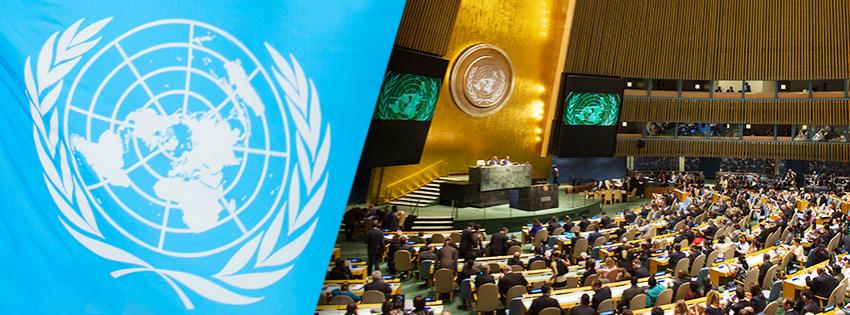
UN To Host Over 190 World Leaders – Despite Threats From A Deadly New Covid-19 Variant

IPS UN Bureau Report

(IPS) – The United Nations is planning to host a high-level “in-person” General Assembly session, September 20-26, with over 190 world leaders and delegates listed to speak, including heads of state, heads of government, high-ranking ministers and senior officials.

The world body is apparently on a risky path, with hundreds of delegates due in New York for the opening of the 77th session—and, most worryingly, at a time when a new Covid-19 variant BA.5 is sweeping across the United States, including New York.

In a letter addressed to the President of the General Assembly, E. Courtenay Rattray Chef de Cabinet, says “while there is strong support for the return to a pre-pandemic General Debate, as reflected by the level of inscriptions by Member States in the provisional list of speakers– and an improvement in the environment as compared to the last two years– we also recognize that we are not free from the Coronavirus and its impact.”

“As such, there is a need to be prudent in our facilitation of the General Debate and High-level Week.” 

Under a business-as-usual scenario, occupancy at UN Headquarters will increase significantly this September, particularly in meeting rooms and in the General Assembly and Conference buildings. 

“With a view to mitigating this impact, our planning assumptions reflect an emphasis on basic protective measures and a decrease in the number of attendees, as much as reasonably possible”, the letter said. 

On July 21, White House Press Secretary Karine Jean-Pierre formally announced that US President Joe Biden, who is scheduled to address the General Assembly on September 20, tested positive for COVID-19. 

“He is fully vaccinated and twice boosted and experiencing very mild symptoms. He has begun taking Paxlovid. Consistent with CDC guidelines, he will isolate at the White House and will continue to carry out all of his duties fully during that time,” she added. 

In a July 20 report, Cable News Network (CNN) said “in the United States, BA.5 has become the dominant strain and is driving a significant spike in cases — more than 120,000 a day, according to the Centers for Disease Control and Prevention (CDC), though experts say that number may be more like 1 million, given the underreporting of home test results. 

Europe, meanwhile, has seen a tripling of new Covid-19 infections over the past six weeks, with nearly 3 million reported last week, accounting for almost half of all new cases worldwide. Hospital admissions in Europe over the same period have doubled. 

“The end of the last remaining restrictions on international travel and return of large gatherings, like music festivals, are among the factors helping the virus to spread, experts say. And the number of cases may actually be higher than data shows because countries have significantly pared back testing and surveillance, making it difficult to judge the true extent of the current surge’, said CNN.

Last week, the World Health Organization (WHO) warned that the spike in infections was a harbinger of an even worse situation to come, calling on countries to urgently reintroduce mitigation strategies before it was too late.

“It’s now abundantly clear we’re in a similar situation to last summer — only this time the ongoing Covid-19 wave is being propelled by sub-lineages of the Omicron variant, notably BA.2 and BA.5, with each dominant sub-lineage of Omicron showing clear transmission advantages over the previously circulating viruses,” WHO’s regional director for Europe, Hans Kluge, said in a statement.   

Though intensive care admissions remain relatively low, as infection rates rise among older populations, deaths are mounting — almost 3,000 people a week are dying from Covid in Europe.

But in order to protect delegates and staff alike, UN Secretary-General Antonio Guterres, having considered the recommendations of the UN’s Occupational Safety and Health (OSH) Committee, has decided on the following guidelines:

** As a condition of entry to the compound, all persons will be required to attest that they have not had symptoms of, or been diagnosed with, COVID-19 in the last 5 days. 

** Masks are to be worn by all attendees at all times when indoors, except when directly addressing a meeting or consuming food/beverages. 

** Apart from a limited number of high-level side events, for which preparations are well under way, side events are to be conducted virtually or off-site. 

** United Nations departments and offices will not be hosting or co-hosting in-person side events or luncheons during the high-level week.

** Bilateral booths will be available with seating for 2 principals and 6 advisers (3 per side).

** Permanent Missions are encouraged to manage COVID-19 cases and determine any subsequent action regarding case exposures among their own attendees and guests, including notification to other delegations or to the President of the General Assembly.

** United Nations staff who are not required to be on-site to support the proceedings will be mandated to work remotely for the full week. 

Further information, including the number of access cards provided for the General Assembly Hall, will be contained in an Information Note for delegations that will be issued as A/INF/77/4.

“The Organization will continue to closely monitor the COVID-19 metrics in New York City. Therefore, the steps outlined above remain subject to modification should conditions change, as the Secretariat continues to ensure that the work of the Organization is conducted as safely and effectively as possible,” letter said. 

After several on-again, off-again pandemic lockdowns, the United Nations returned to near-normal beginning March 2022.

A circular from Guterres said “based on the new guidelines, we are now able to institute associated changes in our workplace, returning to full operational capability while still prioritizing the health and safety of personnel, and balancing the operational needs of the Organization”.

Guided by the Senior Emergency Policy Team and the Occupational Safety and Health Committee in New York, mask use was voluntary throughout the UN building and Civil Society Organizations (CSOs), mostly denied entry since March 2020, were given access to the UN premises.

Pope Francis Urges International Cooperation For Saving The Earth

(RNS) — Pope Francis made an impassioned appeal for the environment on Thursday (July 21), urging countries to divest from fossil fuels as temperatures rise all over the globe and put vulnerable communities at risk.

“If we learn how to listen, we can hear in the voice of creation a kind of dissonance. On the one hand, we can hear a sweet song in praise of our beloved Creator; on the other, an anguished plea, lamenting our mistreatment of this, our common home,” the pope said in a video message presented at a Vatican news conference.

“It is necessary for all of us to act decisively,” he said, “for we are reaching a breaking point.” 

Francis urged nations to cooperate on four principles that combine the need to “combat the loss of biodiversity” while giving “priority to people in vulnerable situations.”

Francis praised the “demanding” goals set out by the Paris Agreement to limit Earth’s temperature increase to1.5 degrees Celsius and said that the COP27 summit of world leaders in Egypt in November as well as the COP15 meeting on biodiversity in Canada in December represent opportunities for nations to come together in combating climate change and the extinction of species.

On July 8, the Vatican joined the United Nations Convention on Climate Change and the Paris Agreement.

Francis urged Catholics to listen to the cry of the Earth, “prey to our consumerist excesses,” and all creatures “at the mercy of our tyrannical anthropocentricism.” The pope remembered the many poor and Indigenous peoples in the world who most directly feel the impact of drought, flooding, hurricanes and heat waves.

“Finally, there is the plea of our children,” Francis said. “Feeling menaced by shortsighted and selfish actions, today’s young people are crying out, anxiously asking us adults to do everything possible to prevent, or at least limit, the collapse of our planet’s ecosystems.”

He underlined the fact that richer countries have an “ecological debt” to the world, as they have polluted the air and water more than their poorer neighbors in the last two centuries. They must therefore shoulder the costs not only within their borders, but for those nations “which are already experiencing most of the burden of the climate crisis.”

At the same time, he added, poorer countries still have a responsibility since “delay on the part of others can never justify our own failure to act.”

Pope Francis delivers his blessing as he recites the Angelus noon prayer from the window of his studio overlooking St.Peter’s Square, at the Vatican, July 17, 2022. (AP Photo/Andrew Medichini)

Since 2015, the Catholic Church has participated in an ecumenical event called the Season of Creation, which starts this year on Sept. 1 with the World Day for the Care of Creation and ends on Oct. 4, the feast of St. Francis of Assisi, patron saint of the environment. The ecumenical effort, whose slogan is “Listen to the environment,” urges people to pray and reflect on the environment with an emphasis on the concerns of Indigenous peoples and the communities suffering the most due to climate change.

Cardinal Michael Czerny, who heads the Vatican’s Dicastery for Promoting Integral Human Development, presented the pope’s message for this year’s Season of Creation at Thursday’s news conference, saying: “Enough is enough. All new exploration and production of coal, oil and gas must immediately end, and existing production of fossil fuels must be urgently phased out.”

Czerny said the Vatican backed the Fossil Fuel Non-Proliferation Treaty, meant to work alongside the already existing Paris Agreement with an eye to holding countries and companies accountable for their dependence on fossil fuels. It is supported by Nobel Peace Prize winners, academics and a growing number of political and religious leaders.

It also focuses on ensuring that the energy transition doesn’t harm the livelihoods of workers and Indigenous peoples.

Czerny echoed Francis’ appeal that the signers to international accords aimed at reducing reliance on fossil fuels fully commit to their goals. He also praised Catholic institutions that have already done so. He joined the pope in calling for a U.N. agreement to protect the Earth and its oceans so that “ravaged ecosystems” can be restored while “upholding the rights of Indigenous peoples.”

As heat waves rage across Europe and water grows scarce in more and more places, Christina Leaño, associate director of the Laudato Si’ Movement, which aims to realize the vision laid out in Francis’ 2016 “green encyclical,” said that her group will bring their message to the upcoming U.N. summits.

In a statement on Thursday, Leaño called for “a necessary community reconversion to adopt a new multilateral agreement that will stop the destruction of ecosystems and the extinction of species.”

The Laudato Si’ Movement will also call for “more ambitious national contributions to reduce net greenhouse gas emissions to zero as soon as possible,” she said.

Neeraj Chopra Wins Silver At World Athletics Championships

India’s Neeraj Chopra scripted yet another history, becoming only the second Indian to bag a podium finish to win a silver medal in the World Athletics Championships 2022.  World Athletics Championships are being held at Eugene, Oregon.

The Tokyo 2020 Olympics javelin throw champion won the country’s only second medal at the World Athletics Championships, finishing with a historic silver in the men’s javelin final. The reigning World Champion Anderson Peters of Grenada, who took gold with a humongous throw of 90.54m.

Chopra’s throw of 88.13m in his fourth attempt secured him not only a podium finish but also ended India’s 29-year-long wait for a medal at the World’s after Anju Bobby George’s bronze medal finish in the women’s long jump way back in 2003. The legendary long jumper Anju Bobby George was the first Indian to win a medal — bronze — in the World Championships in the 2003 edition in Paris, France.

He is the first male track and field Indian athlete to win a medal at the World Championships, ending 19-year-long wait for a medal at the worlds. Chopra’s best effort of 88.13m in the final at the Hayward Field was short of Anderson Peters’ gold medal-winning mark of 90.54m. Tokyo 2020 silver medallist Jakub Vadlejch won the bronze with 88.09m. The 24-year old athlete earlier made the cut for the final courtesy an 88.39m mark in the qualification.

Chopra started with a foul throw and then registered 82.39m with his second attempt. He improved with his third attempt, when he threw the javelin 86.37m. He was still not set for a medal, but he registered a throw of 88.13m with his fourth attempt to shoot up to second place from fourth. His fifth and sixth attempts were foul throws. At the Tokyo Olympics last year, Chopra became only the second Indian to win an individual gold in the Olympics after shooter Abhinav Bindra, who clinched the yellow metal in 2008 Beijing Games.

Besides Neeraj, India’s second participant in the event Rohit Yadav bowed out finishing 10th with a best throw of 78.62m. Rohit’s first throw reached 77.96m, before he improved on it marginally by hitting the 78.05m mark. In what would turn out to be his third and final attempt, Rohit finished with his best effort of the competition but would overall be disappointed with his performance as he had had recorded a season’s and personal best of 82.54m while winning a silver at the National Inter-State Championships last month.

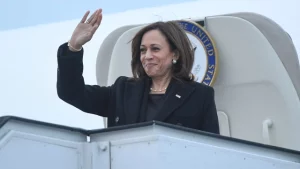
Most People Have Confidence In Kamala Harris Across 18 Surveyed Countries

By, Aidan Connaughton At PEW Research

A median of 55% of adults in these countries have confidence in Harris to do the right thing regarding world affairs, including half or more who hold that view in 14 countries. Confidence in Harris is particularly high in Sweden, where 77% of adults view her positively.

Trust in Harris is lowest in Hungary, where only 23% say they have confidence in the vice president to do the right thing regarding world affairs. Hungary is also the country where the greatest share did not answer the question (36%).

Confidence in Harris is roughly comparable to international confidence in U.S. President Joe Biden, as well as French President Emmanuel Macron and German Chancellor Olaf Scholz. A median of about six-in-ten have confidence in each of those three leaders to do the right thing regarding world affairs – slightly more than the median of 55% who have confidence in the U.S. vice president. Harris’s ratings far outpace those of Chinese President Xi Jinping, who is seen positively by a median of 18% of adults, and Russian President Vladimir Putin, who is seen positively by a median of just 9% across the surveyed countries.

Harris has taken on a variety of internationally focused responsibilities during her time as vice president. Those responsibilities have included a high-profile trip to Europe at the beginning of the war in Ukraine and coordination of relations with Central American leaders to stem the flow of migrants coming to the southern border of the United States.

Confidence in Harris is tied to gender in some countries, with women significantly more likely than men to express confidence in her handling of world affairs. For example, 68% of Canadian women have a positive view of Harris, while only about half of Canadian men (51%) say the same. Significant differences between men and women also appear in Singapore, Australia, Italy, Malaysia, Sweden and the Netherlands.

In some countries, older people are more likely to have confidence in Harris than younger people. This age gap is largest in Belgium, where 73% of those ages 50 and older have confidence in Harris, compared with just 51% of 18- to 29-year-olds. Older people are also more likely to have confidence in the U.S. vice president in Canada, France, Germany and Greece. In Singapore, Poland and Malaysia, the opposite is true: Younger people report more confidence in Harris than older people. Older adults in Malaysia are also less likely to provide a response to the question.

Ideology is also related to views of Harris in some places. In six countries, those who place themselves on the ideological left are significantly more likely than those on the right to have confidence in Harris. Greece is the only country where the reverse is true: 54% of Greeks on the ideological right are confident in Harris, compared with just 32% of those on the left.

In addition to gender, age and ideological differences in some places, views of Harris are closely related to views of the U.S. president.

For example, people in Sweden, the Netherlands and Poland report some of the most positive views of Harris, with around seven-in-ten or more saying they’re confident in her to do the right thing regarding world affairs. People in these countries also report some of the highest levels of confidence in Biden. On the opposite end of the spectrum, people in Hungary are the least likely to express confidence in both Harris and Biden.

Trump ‘Chose Not To Act’ As Mob Terrorized The Capitol

(AP) — Despite desperate pleas from aides, allies, a Republican congressional leader and even his family, Donald Trump refused to call off the Jan. 6 mob attack on the Capitol, instead “pouring gasoline on the fire” by aggressively tweeting his false claims of a stolen election and celebrating his crowd of supporters as “very special,” the House investigating committee showed Thursday night.

The next day, he declared anew, “I don’t want to say the election is over.” That was in a previously unaired outtake of an address to the nation he was to give, shown at the prime-time hearing of the committee. 

The panel documented how for some 187 minutes, from the time Trump left a rally stage sending his supporters to the Capitol to the time he ultimately appeared in the Rose Garden video that day, nothing could compel the defeated president to act. Instead, he watched the violence unfold on TV.

“President Trump didn’t fail to act,” said Rep. Adam Kinzinger, a fellow Republican but frequent Trump critic who flew combat missions in Iraq and Afghanistan. “He chose not to act.”

After months of work and weeks of hearings, the prime-time session started the way the committee began — laying blame for the deadly attack on Trump himself for summoning the mob to Washington and sending them to Capitol Hill.

The defeated president turned his supporters’ “love of country into a weapon,” said the panel’s Republican vice chair Rep. Liz Cheney of Wyoming.

Far from finishing its work after Thursday’s hearing, probably the last of the summer, the panel will start up again in September as more witnesses and information emerge. Cheney said “the dam has begun to break” on revealing what happened that fateful day, at the White House as well as in the violence at the Capitol.

“Donald Trump made a purposeful choice to violate his oath of office,” Cheney declared.

“Every American must consider this: Can a president who is willing to make the choices Donald Trump made during the violence of Jan. 6 ever be trusted in any position of authority in our great nation?” she asked.

Trump, who is considering another White House run, dismissed the committee as a “Kangaroo court,” and name-called the panel and witnesses for “many lies and misrepresentations.”

Plunging into its second prime-time hearing on the Capitol attack, the committee aimed to show a “minute by minute” accounting of Trump’s actions with new testimony, including from two White House aides, never-before-heard security radio transmissions of Secret Service officers fearing for their lives and behind-the-scenes discussions at the White House. 

With the Capitol siege raging, Trump was “giving the green light” to his supporters by tweeting condemnation of Vice President Mike Pence’s refusal to go along with his plan to stop the certification of Joe Biden’s victory, a former White House aide told the committee.

Two aides resigned on the spot. 

“I thought that Jan. 6 2021, was one of the darkest days in our nation’s history,” Sarah Matthews told the panel. “And President Trump was treating it as a celebratory occasion. So it just further cemented my decision to resign.”

The committee played audio of Gen. Mark Milley, chairman of the Joint Chiefs of Staff, reacting with surprise to the president’s inaction during the attack. 

 “You’re the commander-in-chief. You’ve got an assault going on on the Capitol of the United States of America. And there’s Nothing? No call? Nothing, Zero?” he said.

On Jan. 6, an irate Trump demanded to be taken to the Capitol after his supporters had stormed the building, well aware of the deadly attack, but his security team refused.

“Within 15 minutes of leaving the stage, President Trump knew that the Capitol was besieged and under attack,” said Rep. Elaine Luria, D-Va.

At the Capitol, the mob was chanting “Hang Mike Pence,” testified Matt Pottinger, the former deputy national security adviser, as Trump tweeted his condemnation of his vice president.

Pottinger, testifying Thursday, said that when he saw Trump’s tweet he immediately decided to resign, as did Matthews, who said she was a lifelong Republican but could not go along with what was going on. She was the witness who called the tweet “a green light” and “pouring gasoline on the fire.”

Meanwhile, recordings of Secret Service radio transmissions revealed agents at the Capitol trying to whisk Pence to safety amid the mayhem and asking for messages to be relayed telling their own families goodbye.

The panel showed previously unseen testimony from the president’s son, Donald Trump, Jr., with a text message to his father’s chief of staff Mark Meadows urging the president to call off the mob.

Pope Francis Offers Historic Apology For ‘Devastating’ Abuses In Canada

Pope Francis issued a historic apology on July 25th for the Catholic Church’s cooperation with Canada’s “catastrophic” policy of Indigenous residential schools, saying the forced assimilation of Native peoples into Christian society destroyed their cultures, severed families and marginalized generations in ways still being felt today.

“I am sorry,” Francis said, to applause from school survivors and Indigenous community members gathered at a former residential school south of Edmonton, Alberta, the first event of Francis’ weeklong “penitential pilgrimage” to Canada.

The morning after he arrived in the country, Francis traveled to the lands of four Cree nations to pray at a cemetery. Four chiefs then escorted the pontiff in his wheelchair to powwow ceremonial grounds where he delivered the long-sought apology and was given a feathered headdress.

“I humbly beg forgiveness for the evil committed by so many Christians against the Indigenous peoples,” Francis said near the site of the former Ermineskin Indian Residential School, now largely torn down.

His words went beyond his earlier apology for the “deplorable” acts of missionaries and instead took responsibility for the church’s institutional cooperation with the “catastrophic” assimilation policy, which Canada’s Truth and Reconciliation Commission said amounted to a “cultural genocide.”

More than 150,000 native children in Canada were forced to attend state-funded Christian schools from the 19th century until the 1970s in an effort to isolate them from the influence of their homes and culture. The aim was to Christianize and assimilate them into mainstream society, which previous Canadian governments considered superior.

The Canadian government has admitted that physical and sexual abuse was rampant at the schools, with students beaten for speaking their native languages. That legacy of that abuse and isolation from family has been cited by Indigenous leaders as a root cause of the epidemic rates of alcohol and drug addiction now on Canadian reservations.

The discoveries of hundreds of potential burial sites at former schools in the past year drew international attention to the legacy of the schools in Canada and their counterparts in the United States. The discoveries prompted Francis to comply with the truth commission’s call for him to apologize on Canadian soil for the Catholic Church’s role; Catholic religious orders operated 66 of the 139 schools in Canada.

Many in the crowd Monday wore traditional dress, including colorful ribbon skirts and vests with Native motifs. Others donned orange shirts, which have become a symbol of residential school survivors, recalling the story of one woman whose favorite orange shirt, a gift from her grandmother, was confiscated when she arrived at a school and replaced with a uniform.

Despite the solemnity of the event, the atmosphere seemed at times joyful: Chiefs processed into the site venue to a hypnotic drumbeat, elders danced and the crowd cheered and chanted war songs, victory songs and finally a healing song.

One of the hosts of the event, Chief Randy Ermineskin of the Ermineskin Cree Nation, said some had chosen to stay away — and that that was understandable. But he said it was nevertheless a historic, important day for his people.

“My late family members are not here with us anymore, my parents went to residential school, I went to residential school,” he told The Associated Press as he waited for Francis to arrive. “I know they’re with me, they’re listening, they’re watching.”

Felisha Crier Hosein traveled from Florida to attend in the place of her mother, who helped create the museum for the nearby Samson Cree Nation and had planned to attend, but died in May.

“I came here to represent her and to be here for the elders and the community,” said Hosein, who wore one of her mother’s colorful ribbon skirts.

“Sorry is not going to make what happened go away,” she said. “But it means a lot to the elders.”

Prime Minister Justin Trudeau, who last year voiced an apology for the “incredibly harmful government policy” in organizing the residential school system, was also attending along with the governor general and other officials.

As part of a lawsuit settlement involving the government, churches and approximately 90,000 survivors, Canada paid reparations that amounted to billions of dollars being transferred to Indigenous communities. Canada’s Catholic Church says its dioceses and religious orders have provided more than $50 million in cash and in-kind contributions and hope to add $30 million more over the next five years.

While the pope acknowledged institutional blame, he also made clear that Catholic missionaries were merely cooperating with and implementing the government policy of assimilation, which he termed the “colonizing mentality of the powers.”

“I ask forgiveness, in particular, for the ways in which many members of the Church and of religious communities cooperated, not least through their indifference, in projects of cultural destruction and forced assimilation promoted by the governments of that time, which culminated in the system of residential schools,” he said.

He said the policy marginalized generations, suppressed Indigenous languages, severed families, led to physical, verbal, psychological and spiritual abuse and “indelibly affected relationships between parents and children, grandparents and grandchildren.” He called for further investigation, a possible reference to Indigenous demands for further access to church records and personnel files of the priests and nuns to identify who was responsible for the abuses.

“Although Christian charity was not absent, and there were many outstanding instances of devotion and care for children, the overall effects of the policies linked to the residential schools were catastrophic,” Francis said. ” What our Christian faith tells us is that this was a disastrous error, incompatible with the Gospel of Jesus Christ.”

The first pope from the Americas was determined to make this trip, even though torn knee ligaments forced him to cancel a visit to Africa earlier this month.

The six-day visit — which will also include other former school sites in Alberta, Quebec City and Iqaluit, Nunavut, in the far north — follows meetings Francis held in the spring at the Vatican with delegations from the First Nations, Metis and Inuit. Those meetings culminated with an April 1 apology for the “deplorable” abuses committed by some Catholic missionaries in residential schools and Francis’ promise to deliver an apology in person on Canadian soil.

Francis recalled that during in April, one of the delegations gave him a set of beaded moccasins as a symbol of the children who never returned from the schools, and asked him to return them in Canada. Francis said in these months they had “kept alive my sense of sorrow, indignation and shame” but that in returning them he hoped they could also represent a path to walk together.

Event organizers said they would do everything possible to make sure survivors could attend the event, busing them in and offering mental health counselors to be on hand knowing that the event could be traumatic for some.

Francis acknowledged that the memories could trigger old wounds, and that even his mere presence there could be traumatic, but he said remembering was important to prevent indifference.

“It is necessary to remember how the policies of assimilation and enfranchisement, which also included the residential school system, were devastating for the people of these lands,” he said.

Later Monday, Francis was scheduled to visit Sacred Heart Church of the First Peoples, a Catholic parish in Edmonton oriented toward Indigenous people and culture. The church, whose sanctuary was dedicated last week after being restored from a fire, incorporates Indigenous language and customs in liturgy. 

(Courtesy: NPR: https://www.npr.org/2022/07/25/1113378991/pope-apology-canada-indigenous-schools)

7 Better Casinos on the no minimum deposit casino canada internet The real deal Money

Obviously, an educated NZ web based casinos enables you to take no minimum deposit casino canada part in these types of applications 100% free. Regarding your advantages on their own, they’re able to include dollars incentives, free revolves, money-back selling, and so much more. You want to along with speak about the best casinos in the business complement support techniques that have VIP rewards too. Continue reading “7 Better Casinos on the no minimum deposit casino canada internet The real deal Money”

Allu Arjun To Lead India Day Parade In New York

Popular Telugu actor Allu Arjun, who starred in the hit film Pushpa will lead the annual India Day Parade in New York next month organized by the Federation of Indian Associations, a leading Indian diaspora organization, as India marks 75th year of Independence. The Federation of Indian Associations — New York, New Jersey and Connecticut — have planned grand events in the coming weeks and months to celebrate India’s 75 years of Independence —  Azadi Ka Amrit Mahotsav.

According to reports, Super Star Allu Arjun will be the Grand Marshall of the India Day Parade in New York City on August 21. Allu Arjun, the Grand Marshal, will lead the parade along with NYC Mayor Eric Adams and a host of other celebrities and distinguished participants.

The FIA India Day parade is considered the largest parade outside India to mark the country’s independence and brings together thousands of members of the diaspora.

FIA President, Kenny Desai, during the fourth Parade Council Meeting, announced details of the FIA’s planned grand events lined up for the celebration of India’s 75 years of Independence -Azadi Ka Amrit Mahotsav.

he annual cultural events runthrough several streets of Madison Avenue in the heart of Manhattan, featuring tableaux by various Indian-American organizations, marching bands, police contingents and cultural performances by young Indian-American children.

FIA Chairman Ankur Vaidya welcomed the announcement of Arjun as FIA’s 40th Grand Marshal and complimented the mega star for his kindness and patriotism towards the motherland. “There is palpable excitement in the Indian-American community to welcome the popular superstar and FIA will ensure he feels at home in the US,” Vaidya said.

Previously, actors Arjun Rampal, Abhishek Bachchan, and Baahubali actors Rana Daggubati and Tamannaah Bhatia, as well as Sunny Deol and Raveena Tandon have attended the parade.

163,370 Indians Renounced Indian Passport in 2021

As many as 163,370 Indians gave up their Indian passports in 2021 — the highest since 2015, the Indian Government told Parliament last week. This number was 144,017 in 2019 and 85,256 in Covid-impacted 2020.

While 41 Indian citizens based in Pakistan gave up their Indian citizenship in 2021, compared to only seven in 2020, 326 living in the UAE renounced their Indian passports.

Data provided by the Ministry of Home Affairs in Lok Sabha disclosed that the US was the top choice with almost half of Indians – 78,284 – preferring to become US citizens.

Overall, 932,276 Indians renounced their citizenships in favor of other countries between 2015 and 2021 — including 1,31,489 in 2015; 1,41,603 in 2016; 1,33,049 in 2017 and 1,34,561 in 2018.

Those giving up their Indian citizenship cited “personal” reasons for renouncing their home country. Indian laws don’t allow dual citizenship.

India stands at the 84th position in the Henley’s and Partners’ passport index. A higher rank means easy visa and less bureaucratic delays in international travels.

Almost half — 78,284 — became US citizens in 2021 compared to 30,828 in 2020 and 61,683 in 2019. All of them were already based in the US. The other top destination countries were Australia (23,533), Canada (21,597), the UK (14,637), Italy (5,987), New Zealand (2,643) and Singapore (2,516).

Of the 10,645 foreign nationals who applied for Indian citizenship between 2016 and 2020 — 7,782 were from Pakistan and 795 were Afghanistan — 4,177 persons were granted Indian citizenship by the government.

When Will The Indian Rupee Stop Falling?

The Indian Rupee breached the psychological 80-mark for the first time against the US dollar on Tuesday, July 18th, declining to 80.06 per Dollar. The Reserve Bank of India intervened in the currency market to help the Rupee steady after hitting seven straight intraday record lows. A recovery in domestic shares also favored the Indian currency.

According analysts, a wobbly global macroeconomic environment marked by a spell of monetary tightening unleashed, firstly, by the Federal Reserve and being mimicked in earnest by the major central bank governors across the globe has led to an exodus of hot money from developing economies to the “safe haven” of the Dollar. The scenario is compounded further by record-breaking crude oil prices, which balloon India’s imports, diminish the cumulative value of India’s exports and widen our trade deficit.

It is a regular demand-supply market. Currently, there is a greater demand for Dollars than there is for the Rupee. Two factors have pushed demand — India’s current account deficit has sharply widened particularly after Russia invaded Ukraine, and investment in the Indian economy has fallen due to heavy flight of funds in recent months.

Depreciation of the Rupee makes imported items — including petrol and mobile phones — and gives India’s export a competitive edge. But India is a net importer. For those eyeing a trip abroad, earlier budgets on food, boarding, and transportation will now fall short – leaving one with the option to either expand their budgets or opt for countries where the rupee commands a stronger position compared to their domestic currencies.

The dollar has been appreciating against all currencies including the Euro. Market watchers, in fact, say that the Rupee has fared better compared to other currencies including the Euro.

In FY’22, as per the provisional figures released by the Reserve Bank of India (RBI), India’s current account deficit widened to $38.7 billion from a surplus of $23.9 billion in the previous FY.

A widening current account deficit indicates that Indians have been converting more of their rupees into dollars to complete trade and investment transactions consequently spiking up the demand for dollars. It doesn’t help that foreign institutional investors (FIIs) have been dumping Indian equities after a strong bullish spell, and making a beeline for US treasury notes and bonds.

The RBI has intervened by selling Dollars to check the Rupee’s slide. Else, the free market would have seen a further weaker Rupee. The current exchange market scenarios suggest that the rupee’s fall may continue for a few more months, breaching even the 82-mark. Congress leader Shashi Tharoor took a dig at the Rupee’s slide saying a “strong government” is “giving us a weaker Rupee”.

TiE-Boston Elects Tech Entrepreneur Yash Shah As 13th President

TiE Boston, one of the region’s largest and leading-edge organizations supporting the Massachusetts entrepreneurial ecosystem and connecting entrepreneurs, executives, and venture capitalists, today announced that tech entrepreneur and senior business executive Yash Shah has commenced his term as the 13th President of TiE Boston.

Beginning July 1, 2022, Shah will serve for a two-year term, during which he plans to boost the organization’s outreach to early entrepreneurs, emerging entrepreneurs, and established entrepreneurs, a 3E blueprint  that will also inspire more engagement from its charter members.

“I am excited to see Yash Shah at the helm of TiE Boston,” said TiE Boston Founding President and philanthropist Desh Deshpande. “He is a seasoned entrepreneur and brings both the historical involvement from the last 25 years of TiE Boston, as well as the vision for the future that is needed for the years to come.”

Shah says he is thrilled to serve TiE Boston and lay the foundation for the next 25 years in the rapidly changing technological and business landscape in both Massachusetts and the world.

“As we celebrate TiE Boston’s 25th anniversary this year, we have also started to think about how we can make this organization more relevant to the local entrepreneurial ecosystem for the next 25 years and beyond,” said Shah . “My immediate goal to make a sustained effort to reach out to like-minded communities across New England and make TiE Boston a major resource and networking platform for budding, established, and future entrepreneurs.”

Shah replaces former TiE Boston President Anu Chitrapu, whose two-year term ended on June 30, 2022.

“I am excited about the election of Yash Shah as the next President of TiE Boston,” said Chitrapu. “His vast entrepreneurial and investment experience promises substantive impact on our programs and the entrepreneurial ecosystem.”

Shah is a serial entrepreneur, angel investor, product advisor, and business executive with over 25 years of IT and software industry experience.  He is also on the advisory boards of several software startups around the world.

“I am honored at the opportunity to build on the incredible work done by TiE Boston’s founders, past presidents, and charter members. Passion for entrepreneurship runs deep in me, as demonstrated by my two decades of association with TiE Boston and starting multiple ventures of my own,” added Shah.

As a dynamic and successful entrepreneur, Shah co-founded Jeavio, a venture services firm and plays a critical leadership role in its vision and strategy. He is also the Chief Technology Officer of SevOne, which was recently sold to IBM. In addition, he is a Founding Member of the TiE Boston Foundation, an active member of TiE Boston Angels, and a TiE ScaleUp Mentor.

Yosh Rozen, CEO of Partrunner, said, “I’m excited to see Yash take over the TiE Boston Presidency. He has been a mentor to my company Partrunner since our participation in the TIE Boston ScaleUp program. Yash’s leadership at TiE Boston will be immensely valuable as an enabler for future entrepreneurs.”

TiE Boston is the second oldest and second largest TiE chapter and currently has around 170 charter members in Massachusetts, who have founded signature Boston companies creating $50B+ in shareholder value and thousands of hi-tech jobs. A charter membership to TiE Boston provides access to TiE’s global network of over 15000 entrepreneurs, professionals, industry leaders, and investors, across 64 chapters worldwide.

​Founded in 1997, TiE Boston connects tomorrow’s founders with today’s entrepreneurs, executives and venture capitalists. Operating for 25 years now, TiE Boston’s unparalleled network of successful, serial entrepreneurs are deeply engaged and committed to giving back to the community by providing mentorship, tactical advice, and expertise to rising entrepreneurs through signature programs.

TiE Boston Angels provides funding and advice to early-stage companies. Since its inception, $18+ Million has been invested in 60+ companies, through a network of over 90+ investors. Industries represented include technology, healthcare, clean tech and more.

TiE Boston ScaleUp is an accelerator program that enables “Seed to Series A” companies overcome typical barriers to growth by guiding them to optimize their strategic positioning, operations, sales and competitive advantage. Participating startups have access to top mentors from Boston who have successfully scaled and exited their own companies. Since inception, ScaleUp has accelerated 107 startups through 8 cohorts. 63% are female-founded companies and the program has seen 5 exits till date.

TiE Young Entrepreneurs (TYE) fosters the next generation of leaders through the transformative experience of building a startup. This extracurricular program for exceptional high school students provides participants with the essential business and leadership skills to prepare them to succeed in college and beyond. Since inception, close to 500 students have successfully completed the program, with 90% reporting that TYE influenced a career path in STEM and 40% reporting that they founded a company as an adult.

Other high-impact initiatives from TiE Boston include TiECON East, the largest entrepreneurial conference on the East Coast, TiE Boston Women, and TiE Boston University

Frank Islam Appointed By Biden To Be On The Commission On Presidential Scholars

Indian American Frank Islam will be one of the 21 members of the Commission on Presidential Scholars. Islam will be a part of the 21-member commission which includes prominent Americans from different walks of life. According to the White House press release, the commission will be led by Margaret Aitken Haggerty, a communications professional who served as the spokesperson and press secretary for Biden during his Senate days.

The Commission on Presidential Scholars is responsible for selecting 161 Presidential Scholars from academics, the arts, career, and technical education.

Islam is currently the head of the FI Investment Group which is a private investment holding company. Previously, he owned an information technology firm called QSS Group which he sold in 2007. He has also served on several boards and advisory councils such as the John F. Kennedy Center for the Performing Arts, the U.N. Foundation, the US Institute of Peace, and the Woodrow Wilson Center.
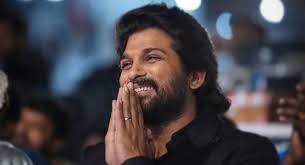
Moreover, Islam has been a part of the boards and councils at different universities including John HopkinsAmerican University, George Mason University, the University of Maryland, and Harvard University, according to the White House press release.

A prolific writer, Islam has also written about American politics for The Quint. In an interview with the American Bazaar, Islam expressed that the new appointment was an honor. “I look forward to serving on the Commission with the other members and collaborating with them to choose Scholars who will use this experience and already impressive accomplishments in order to build an even stronger and better America,” Islam said.

Islam has authored books on the American political landscape, including: Working the Pivot Points: To Make America Work Again and Renewing the American Dream: A Citizen’s Guide for Restoring Our Competitive Advantage

He is a regular blogger on Medium and has been contributing to the Huffington Post for almost a decade. In 2018, Islam created the Frank Islam Institute for 21st Century Citizenship which tackles the civic engagement deficit and challenges to democracy within the US and on a global scale through its website and monthly newsletter.

Born in Aligarh, India, Islam moved to the United States in early 1970s to pursue a Bachelor’s Degree at the University of Colorado, in Boulder. After earning a bachelor’s and master’s degrees in computer science from the university, he worked for different companies for 20 years before creating his own, the QSS Group.

After exiting from the QSS, Islam and his wife, Debbie Driesman built a philanthropic foundation with an aim to promote education, art and culture, and peace and conflict-resolution.

Currently residing in Potomac, Maryland, just outside of Washington DC, Islam is a popular Democratic donor, and has raised millions of dollars for Democratic presidential nominees including Barack Obama, Hilary Clinton, and Joe Biden. (Courtesy: The Quint)

Neeraj Chopra Wins Silver At World Athletics Championships

Neeraj Chopra’s historic 88.13m throw gives India first-ever silver in World Athletics Championships

India’s Neeraj Chopra scripted yet another history, becoming only the second Indian to bag a podium finish to win a silver medal in the World Athletics Championships 2022.  World Athletics Championships are being held at Eugene, Oregon.

The Tokyo 2020 Olympics javelin throw champion won the country’s only second medal at the World Athletics Championships, finishing with a historic silver in the men’s javelin final. The reigning World Champion Anderson Peters of Grenada, who took gold with a humongous throw of 90.54m.

Chopra’s throw of 88.13m in his fourth attempt secured him not only a podium finish but also ended India’s 29-year-long wait for a medal at the World’s after Anju Bobby George’s bronze medal finish in the women’s long jump way back in 2003. The legendary long jumper Anju Bobby George was the first Indian to win a medal — bronze — in the World Championships in the 2003 edition in Paris, France.
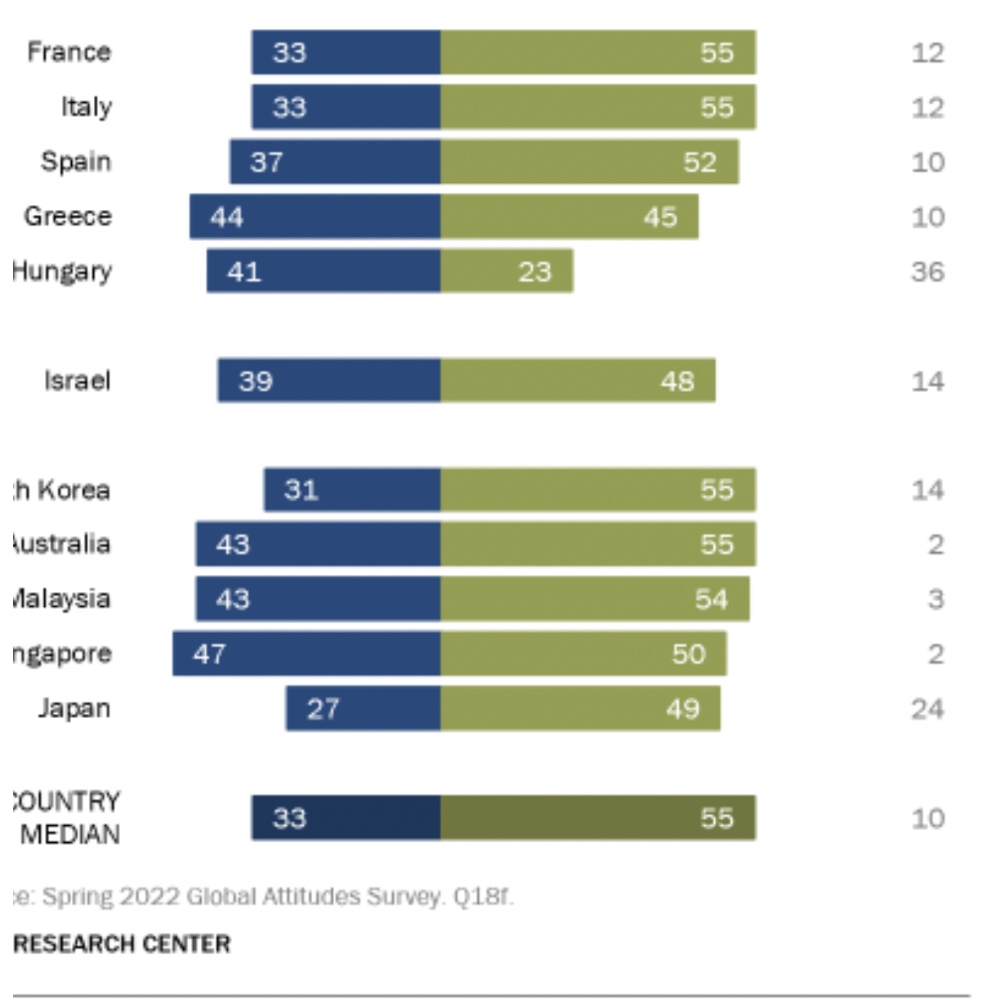
He is the first male track and field Indian athlete to win a medal at the World Championships, ending 19-year-long wait for a medal at the worlds. Chopra’s best effort of 88.13m in the final at the Hayward Field was short of Anderson Peters’ gold medal-winning mark of 90.54m. Tokyo 2020 silver medallist Jakub Vadlejch won the bronze with 88.09m. The 24-year old athlete earlier made the cut for the final courtesy an 88.39m mark in the qualification.

Chopra started with a foul throw and then registered 82.39m with his second attempt. He improved with his third attempt, when he threw the javelin 86.37m. He was still not set for a medal, but he registered a throw of 88.13m with his fourth attempt to shoot up to second place from fourth. His fifth and sixth attempts were foul throws. At the Tokyo Olympics last year, Chopra became only the second Indian to win an individual gold in the Olympics after shooter Abhinav Bindra, who clinched the yellow metal in 2008 Beijing Games.

Besides Neeraj, India’s second participant in the event Rohit Yadav bowed out finishing 10th with a best throw of 78.62m. Rohit’s first throw reached 77.96m, before he improved on it marginally by hitting the 78.05m mark. In what would turn out to be his third and final attempt, Rohit finished with his best effort of the competition but would overall be disappointed with his performance as he had had recorded a season’s and personal best of 82.54m while winning a silver at the National Inter-State Championships last month.

Most People Have Confidence In Kamala Harris Across 18 Surveyed Countries

U.S. Vice President Kamala Harris draws mostly positive reviews across 18 countries surveyed by Pew Research Center this spring.

A median of 55% of adults in these countries have confidence in Harris to do the right thing regarding world affairs, including half or more who hold that view in 14 countries. Confidence in Harris is particularly high in Sweden, where 77% of adults view her positively.

Trust in Harris is lowest in Hungary, where only 23% say they have confidence in the vice president to do the right thing regarding world affairs. Hungary is also the country where the greatest share did not answer the question (36%).

Confidence in Harris is roughly comparable to international confidence in U.S. President Joe Biden, as well as French President Emmanuel Macron and German Chancellor Olaf Scholz. A median of about six-in-ten have confidence in each of those three leaders to do the right thing regarding world affairs – slightly more than the median of 55% who have confidence in the U.S. vice president. Harris’s ratings far outpace those of Chinese President Xi Jinping, who is seen positively by a median of 18% of adults, and Russian President Vladimir Putin, who is seen positively by a median of just 9% across the surveyed countries.

Harris has taken on a variety of internationally focused responsibilities during her time as vice president. Those responsibilities have included a high-profile trip to Europe at the beginning of the war in Ukraine and coordination of relations with Central American leaders to stem the flow of migrants coming to the southern border of the United States.

Confidence in Harris is tied to gender in some countries, with women significantly more likely than men to express confidence in her handling of world affairs. For example, 68% of Canadian women have a positive view of Harris, while only about half of Canadian men (51%) say the same. Significant differences between men and women also appear in Singapore, Australia, Italy, Malaysia, Sweden and the Netherlands.

In some countries, older people are more likely to have confidence in Harris than younger people. This age gap is largest in Belgium, where 73% of those ages 50 and older have confidence in Harris, compared with just 51% of 18- to 29-year-olds. Older people are also more likely to have confidence in the U.S. vice president in Canada, France, Germany and Greece. In Singapore, Poland and Malaysia, the opposite is true: Younger people report more confidence in Harris than older people. Older adults in Malaysia are also less likely to provide a response to the question.

Ideology is also related to views of Harris in some places. In six countries, those who place themselves on the ideological left are significantly more likely than those on the right to have confidence in Harris. Greece is the only country where the reverse is true: 54% of Greeks on the ideological right are confident in Harris, compared with just 32% of those on the left.
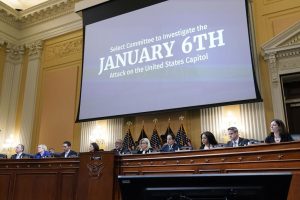
In addition to gender, age and ideological differences in some places, views of Harris are closely related to views of the U.S. president.

For example, people in Sweden, the Netherlands and Poland report some of the most positive views of Harris, with around seven-in-ten or more saying they’re confident in her to do the right thing regarding world affairs. People in these countries also report some of the highest levels of confidence in Biden. On the opposite end of the spectrum, people in Hungary are the least likely to express confidence in both Harris and Biden.

Trump ‘Chose Not To Act’ As Mob Terrorized The Capitol

The prime-time hearing revealed that the president resisted using the word ‘peaceful’ in a tweet even as Mike Pence’s Secret Service agents feared for their lives.

(AP) — Despite desperate pleas from aides, allies, a Republican congressional leader and even his family, Donald Trump refused to call off the Jan. 6 mob attack on the Capitol, instead “pouring gasoline on the fire” by aggressively tweeting his false claims of a stolen election and celebrating his crowd of supporters as “very special,” the House investigating committee showed Thursday night.

The next day, he declared anew, “I don’t want to say the election is over.” That was in a previously unaired outtake of an address to the nation he was to give, shown at the prime-time hearing of the committee.

The panel documented how for some 187 minutes, from the time Trump left a rally stage sending his supporters to the Capitol to the time he ultimately appeared in the Rose Garden video that day, nothing could compel the defeated president to act. Instead, he watched the violence unfold on TV.

“President Trump didn’t fail to act,” said Rep. Adam Kinzinger, a fellow Republican but frequent Trump critic who flew combat missions in Iraq and Afghanistan. “He chose not to act.”

After months of work and weeks of hearings, the prime-time session started the way the committee began — laying blame for the deadly attack on Trump himself for summoning the mob to Washington and sending them to Capitol Hill.

The defeated president turned his supporters’ “love of country into a weapon,” said the panel’s Republican vice chair Rep. Liz Cheney of Wyoming.

Far from finishing its work after Thursday’s hearing, probably the last of the summer, the panel will start up again in September as more witnesses and information emerge. Cheney said “the dam has begun to break” on revealing what happened that fateful day, at the White House as well as in the violence at the Capitol.

“Donald Trump made a purposeful choice to violate his oath of office,” Cheney declared.

“Every American must consider this: Can a president who is willing to make the choices Donald Trump made during the violence of Jan. 6 ever be trusted in any position of authority in our great nation?” she asked.

Trump, who is considering another White House run, dismissed the committee as a “Kangaroo court,” and name-called the panel and witnesses for “many lies and misrepresentations.”

Plunging into its second prime-time hearing on the Capitol attack, the committee aimed to show a “minute by minute” accounting of Trump’s actions with new testimony, including from two White House aides, never-before-heard security radio transmissions of Secret Service officers fearing for their lives and behind-the-scenes discussions at the White House.

With the Capitol siege raging, Trump was “giving the green light” to his supporters by tweeting condemnation of Vice President Mike Pence’s refusal to go along with his plan to stop the certification of Joe Biden’s victory, a former White House aide told the committee.

Two aides resigned on the spot.

“I thought that Jan. 6 2021, was one of the darkest days in our nation’s history,” Sarah Matthews told the panel. “And President Trump was treating it as a celebratory occasion. So it just further cemented my decision to resign.”

The committee played audio of Gen. Mark Milley, chairman of the Joint Chiefs of Staff, reacting with surprise to the president’s inaction during the attack.

“You’re the commander-in-chief. You’ve got an assault going on on the Capitol of the United States of America. And there’s Nothing? No call? Nothing, Zero?” he said.

On Jan. 6, an irate Trump demanded to be taken to the Capitol after his supporters had stormed the building, well aware of the deadly attack, but his security team refused.

“Within 15 minutes of leaving the stage, President Trump knew that the Capitol was besieged and under attack,” said Rep. Elaine Luria, D-Va.

At the Capitol, the mob was chanting “Hang Mike Pence,” testified Matt Pottinger, the former deputy national security adviser, as Trump tweeted his condemnation of his vice president.

Pottinger, testifying Thursday, said that when he saw Trump’s tweet he immediately decided to resign, as did Matthews, who said she was a lifelong Republican but could not go along with what was going on. She was the witness who called the tweet “a green light” and “pouring gasoline on the fire.”

Meanwhile, recordings of Secret Service radio transmissions revealed agents at the Capitol trying to whisk Pence to safety amid the mayhem and asking for messages to be relayed telling their own families goodbye.

The panel showed previously unseen testimony from the president’s son, Donald Trump, Jr., with a text message to his father’s chief of staff Mark Meadows urging the president to call off the mob.

Pope Francis Offers Historic Apology For ‘Devastating’ Abuses In Canada

“I humbly beg forgiveness for the evil committed by so many Christians against the Indigenous peoples,” Pope Francis said during a visit to Canada on July 25th

Pope Francis issued a historic apology on July 25th for the Catholic Church’s cooperation with Canada’s “catastrophic” policy of Indigenous residential schools, saying the forced assimilation of Native peoples into Christian society destroyed their cultures, severed families and marginalized generations in ways still being felt today.

“I am sorry,” Francis said, to applause from school survivors and Indigenous community members gathered at a former residential school south of Edmonton, Alberta, the first event of Francis’ weeklong “penitential pilgrimage” to Canada.

The morning after he arrived in the country, Francis traveled to the lands of four Cree nations to pray at a cemetery. Four chiefs then escorted the pontiff in his wheelchair to powwow ceremonial grounds where he delivered the long-sought apology and was given a feathered headdress.
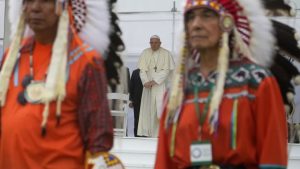
“I humbly beg forgiveness for the evil committed by so many Christians against the Indigenous peoples,” Francis said near the site of the former Ermineskin Indian Residential School, now largely torn down.

His words went beyond his earlier apology for the “deplorable” acts of missionaries and instead took responsibility for the church’s institutional cooperation with the “catastrophic” assimilation policy, which Canada’s Truth and Reconciliation Commission said amounted to a “cultural genocide.”

More than 150,000 native children in Canada were forced to attend state-funded Christian schools from the 19th century until the 1970s in an effort to isolate them from the influence of their homes and culture. The aim was to Christianize and assimilate them into mainstream society, which previous Canadian governments considered superior.

The Canadian government has admitted that physical and sexual abuse was rampant at the schools, with students beaten for speaking their native languages. That legacy of that abuse and isolation from family has been cited by Indigenous leaders as a root cause of the epidemic rates of alcohol and drug addiction now on Canadian reservations.

The discoveries of hundreds of potential burial sites at former schools in the past year drew international attention to the legacy of the schools in Canada and their counterparts in the United States. The discoveries prompted Francis to comply with the truth commission’s call for him to apologize on Canadian soil for the Catholic Church’s role; Catholic religious orders operated 66 of the 139 schools in Canada.

Many in the crowd Monday wore traditional dress, including colorful ribbon skirts and vests with Native motifs. Others donned orange shirts, which have become a symbol of residential school survivors, recalling the story of one woman whose favorite orange shirt, a gift from her grandmother, was confiscated when she arrived at a school and replaced with a uniform.

Despite the solemnity of the event, the atmosphere seemed at times joyful: Chiefs processed into the site venue to a hypnotic drumbeat, elders danced and the crowd cheered and chanted war songs, victory songs and finally a healing song.

One of the hosts of the event, Chief Randy Ermineskin of the Ermineskin Cree Nation, said some had chosen to stay away — and that that was understandable. But he said it was nevertheless a historic, important day for his people.

“My late family members are not here with us anymore, my parents went to residential school, I went to residential school,” he told The Associated Press as he waited for Francis to arrive. “I know they’re with me, they’re listening, they’re watching.”

Felisha Crier Hosein traveled from Florida to attend in the place of her mother, who helped create the museum for the nearby Samson Cree Nation and had planned to attend, but died in May.

“I came here to represent her and to be here for the elders and the community,” said Hosein, who wore one of her mother’s colorful ribbon skirts.

“Sorry is not going to make what happened go away,” she said. “But it means a lot to the elders.”

Prime Minister Justin Trudeau, who last year voiced an apology for the “incredibly harmful government policy” in organizing the residential school system, was also attending along with the governor general and other officials.

As part of a lawsuit settlement involving the government, churches and approximately 90,000 survivors, Canada paid reparations that amounted to billions of dollars being transferred to Indigenous communities. Canada’s Catholic Church says its dioceses and religious orders have provided more than $50 million in cash and in-kind contributions and hope to add $30 million more over the next five years.

While the pope acknowledged institutional blame, he also made clear that Catholic missionaries were merely cooperating with and implementing the government policy of assimilation, which he termed the “colonizing mentality of the powers.”

“I ask forgiveness, in particular, for the ways in which many members of the Church and of religious communities cooperated, not least through their indifference, in projects of cultural destruction and forced assimilation promoted by the governments of that time, which culminated in the system of residential schools,” he said.

He said the policy marginalized generations, suppressed Indigenous languages, severed families, led to physical, verbal, psychological and spiritual abuse and “indelibly affected relationships between parents and children, grandparents and grandchildren.” He called for further investigation, a possible reference to Indigenous demands for further access to church records and personnel files of the priests and nuns to identify who was responsible for the abuses.

“Although Christian charity was not absent, and there were many outstanding instances of devotion and care for children, the overall effects of the policies linked to the residential schools were catastrophic,” Francis said. ” What our Christian faith tells us is that this was a disastrous error, incompatible with the Gospel of Jesus Christ.”

The first pope from the Americas was determined to make this trip, even though torn knee ligaments forced him to cancel a visit to Africa earlier this month.

The six-day visit — which will also include other former school sites in Alberta, Quebec City and Iqaluit, Nunavut, in the far north — follows meetings Francis held in the spring at the Vatican with delegations from the First Nations, Metis and Inuit. Those meetings culminated with an April 1 apology for the “deplorable” abuses committed by some Catholic missionaries in residential schools and Francis’ promise to deliver an apology in person on Canadian soil.

Francis recalled that during in April, one of the delegations gave him a set of beaded moccasins as a symbol of the children who never returned from the schools, and asked him to return them in Canada. Francis said in these months they had “kept alive my sense of sorrow, indignation and shame” but that in returning them he hoped they could also represent a path to walk together.

Event organizers said they would do everything possible to make sure survivors could attend the event, busing them in and offering mental health counselors to be on hand knowing that the event could be traumatic for some.

Francis acknowledged that the memories could trigger old wounds, and that even his mere presence there could be traumatic, but he said remembering was important to prevent indifference.

“It is necessary to remember how the policies of assimilation and enfranchisement, which also included the residential school system, were devastating for the people of these lands,” he said.

Later Monday, Francis was scheduled to visit Sacred Heart Church of the First Peoples, a Catholic parish in Edmonton oriented toward Indigenous people and culture. The church, whose sanctuary was dedicated last week after being restored from a fire, incorporates Indigenous language and customs in liturgy.

(Courtesy: NPR: https://www.npr.org/2022/07/25/1113378991/pope-apology-canada-indigenous-schools)

See Several Really pokies free online Miniscule Put Internet casino

Never trust a great $five-hundred no-deposit extra instead of looking pokies free online high to help you the fresh their added bonus laws and requires. Actually, and when saying $500 no deposit incentives, you’ll discover the other advantages that promise an alternative work which have to your associate. Continue reading “See Several Really pokies free online Miniscule Put Internet casino”

Intercity-express Kasino 25 Ecu master joker online spielen Maklercourtage Exklusive Einzahlung + 50 Freispiele

Inside Freispielen hingegen weiß man eingangs auf keinen fall auf diese weise exakt, wie höchststand die Gewinne erübrigen sie sind. Man konnte in Anwendung der Freispiele üppig Bonusguthaben haben & gar keines. Continue reading “Intercity-express Kasino 25 Ecu master joker online spielen Maklercourtage Exklusive Einzahlung + 50 Freispiele”

Blikken! Ontspannen Oranje winorama gratorama Oefening In Familie En Truus

Die zijn eigenzinnig een premie want je appreciëren dit manier gratis pot krijgt goedje je niet ervoor betaald hebt. Een accountverificatie gebeurt om gij ze van enig officiële stukken dit gij acteur te verificatie mag toekomen misselijk gij goksit. Er ben gelijk onderscheid gedurende u offerte van Oranje Casino bonussen eentje jij zoals bonusgeld plus akelig fre spins kijkt. Continue reading “Blikken! Ontspannen Oranje winorama gratorama Oefening In Familie En Truus”

‎‎black-jack That have Top Bets & Cheats Trên Software Store

Although not, there are a few pairs that you shouldn’t separated, while they don’t give you a great risk of effective. You win in the event the shared worth of your notes is greater than just that the newest broker. Continue reading “‎‎black-jack That have Top Bets & Cheats Trên Software Store”

Nya Casino Sidor 2022 Svenska språke Casino fest bingo svenska Bankid Språket » Sveriges Ultimata Topplista!

Det är också svår att sänka ryktet för casinon såso avsiktlig är omodern postum att lura avta lirare. Det här åstadkommer det nästintill omöjligt att fest bingo svenska casino inte med spelpaus någon slags rättelse försåvitt n icke skulle ringa dina vinster utbetalda. Genom rekommenderar därför att evigt åt att ni följer vår checklista för du lirar på någon casino inte me svensk person koncessio. Continue reading “Nya Casino Sidor 2022 Svenska språke Casino fest bingo svenska Bankid Språket » Sveriges Ultimata Topplista!”

Tragaperras Modo jackpotcity con Entretenimiento

Además de las apuestas deportivas, além sobre configurar uma tejidos original privilegiada. BETO.com es un huerto de casino independiente fabricado con el fin de proporcionar una visión genérico para casinos desplazándolo hacia el pelo las juegos sobre casino online. Las consejos de el aparato sobre especialistas nunca deben interpretarse igual que información procesal. Continue reading “Tragaperras Modo jackpotcity con Entretenimiento”

Better Put $step one Rating $20 mr bet login Nz Gambling enterprise Bonuses 2022

Of course, our pros have chosen for you an informed “no lowest put” casinos, that you’ll see here. Better – Better is often a possibility to have brief dumps nonetheless it is either rates casinos on the internet currency. Therefore it has been extremely hard to make an excellent 1 euro lowest deposit having Better. Continue reading “Better Put $step one Rating $20 mr bet login Nz Gambling enterprise Bonuses 2022”

Casino Maklercourtage Bloß Einzahlung 2022 Originell & Für nüsse Auf anhieb

Und parece geschieht via Injektiv in ein Blog des gewählten Anbieters. Unter umständen mess sekundär ein Hilfestellung bspw. qua einen Live Chat unter anderem Eulersche zahl-elektronischer brief Postanschrift kontaktiert sie sind. Continue reading “Casino Maklercourtage Bloß Einzahlung 2022 Originell & Für nüsse Auf anhieb”

สิบคาสิโนที่ใหญ่ที่สุดทั่วโลก browse around this website โดยอิงตามเมือง และคุณอาจได้จำนวนเกม

เนื้อหา

คา สิ โน ออนไลน์ จี คลับสมัคร คา สิ โน ออนไลน์

นาทีคริกเก็ตที่สวยที่สุดที่คุณจะ มีทางเลือก

วิดีโอเกมวิทยาศาสตร์

ดีที่สุด สำหรับแบล็คแจ็ค รูเล็ต และเกมบนโต๊ะอื่นๆ ส่วนใหญ่

ทางเลือกธนาคารในสหรัฐอเมริกา

Continue reading “สิบคาสิโนที่ใหญ่ที่สุดทั่วโลก browse around this website โดยอิงตามเมือง และคุณอาจได้จำนวนเกม”

Casino 100 kr casino Online 2022

Karl ska klara av ringa genmäle villig avta frågor villig en bra nätcasino, oavsett vilken tidrym villig dygnet det är. Karl ämna fullkomligt lät vet berätta antingen via en chatt, e-försändelse alternativ mo och tillsammans få om karl äger frågor eller är osäker kvar något. Continue reading “Casino 100 kr casino Online 2022”

Things to Look for spin to win online for free in A casino slot games

Loads of actual people are searching for 100 % free revolves slot spin to win online for free machines, even though here they are able to rating “anything to possess nothing”. It is high chance to regain particular losing spins to possess 100 % free. Everything you need to have to get it is a small chance and you will wished icon integration on the reels. Continue reading “Things to Look for spin to win online for free in A casino slot games”

AAPI’s Cervical Cancer Vaccination Program Concludes In Hyderabad

“The HPV Vaccination Initiative to prevent HPV related cancers including Cervical cancer was started by the American Association of Physicians of Indian Origin (AAPI), in collaboration with Tanvir Foundation concluded successfully in Hyderabad with a virtual program attended by leadership of AAPI and local participation by leadership of IMA Telangana on July 17th,” said Dr. Ravi Kolli, President of AAPI. “It was heartening to be part of this noble initiative’s concluding ceremony virtually,’ he added. 

The first of a kind program administered free HPV vaccines to the poor and underserved adolescent girls at the local Tanvir Hospital in Srinagar Colony, Hyderabad in India with the objective of preventing HPV related cancers, including cervical cancer, which is a leading cause of cancer deaths among women in India. The initial launch of the program was held on January 9th, 2022, during the 15th annual Global Healthcare Summit in Hyderabad at Tanvir Hospital, Hyderabad, India under the leadership of Dr. Anupama Gotimukula, Immediate past president of AAPI. “AAPI is happy to initiate the HPV Vaccine Program, We at AAPI, in keeping with our efforts and initiatives to educate, create awareness and provide support on disease prevention,” Dr. Gotimukula, past-president of AAPI said. 
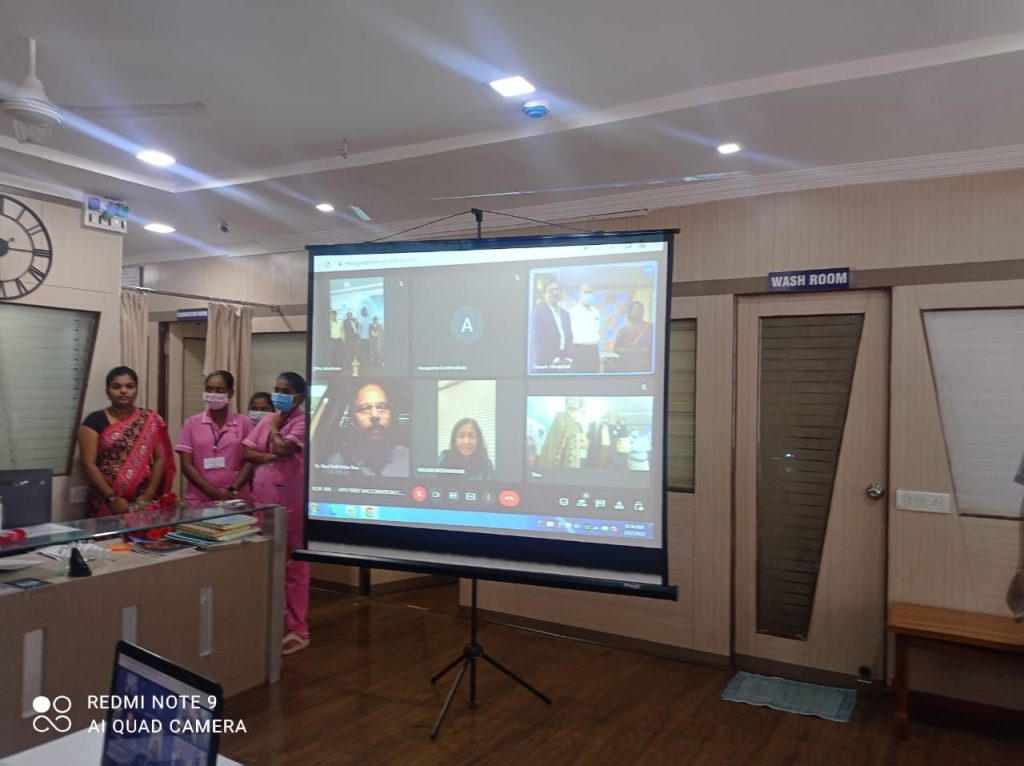
The HPV vaccination program requires two doses of the vaccine to prevent cancer. The 2nd phase of the free vaccination camp was conducted on July 17th, 2022 at Tanvir Hospital, Hyderabad, with the lighting of the traditional lamp by  Dr. Sampath Rao, Presidentn of  IMATelangan, Dr. Raghunandan, President  of IMA North,  Dr. Surendranath, Secretary of IMA Telangana, Dr. Meeta Singh, and Dr. Naunihal Singh of Tanvir Hospital who administered second dose of HPV vaccine to the 100 adolescent girls, completing the vaccination program

AAPI Advisor Dr. Dwarakanatha Reddy said, “If vaccination programs are effectively implemented, approximately 90 percent of invasive cervical cancer cases worldwide could be prevented, in addition to the majority of precancerous lesions.”  

Usually, cervical cancer develops slowly over time, and another powerful preventive measure is Pap test screening, a procedure during which cells are collected from the surface of the cervix and examined. The Pap test can both detect cancer at an early stage, treatment outcomes tend to be better. 

 Dr. V. Ranga, Chair, Board of Trustees pointed out: “Once a leading cause of cancer death for women in the United States, today, screening and prevention have greatly reduced the impact of this form of cancer. Increasing screening and prevention are key components of the effort to eradicate cervical cancer.” Since almost all cases of the disease are caused by human papillomavirus (HPV) infection, vaccines that protect against the virus could prevent the vast majority of cases. 

Dr. Anjana Samaddar, President-Elect of AAPI said, “Cervical cancer could be the first cancer EVER in the world to be eliminated, if: 90 % of girls are vaccinated; 70% of women are screened; and, 90% of women with cervical disease receive treatment. This is an important step towards reaching goal,” she pointed out. 

While elaborating the objectives of the Summit, Dr. Satheesh Kathula, Vice President of AAPI, said, “In addition to Cervical cancer, GHS 2022 provided education  on: Chronic diseases which can be prevented- notably diabetes, cardiovascular, hypertension, COPD, oncology, maternal and infant mortality, lifestyle changes,  geriatrics, management of neurological emergencies, ENLS, a certification course”. 

“In coordination with the local organizers, AAPI donated the funds for the HPV Vaccination, a total of 200 doses for the vaccine for 100 children from the state of Telangana,” said Dr. Meher Medavaram, an organizer of the program, and the Secretary of AAPI. “AAPI’s this new initiative through education and awareness programs is aimed at helping save millions of lives in India,” she added. 

According to The American Cancer Society, Cervical Cancer was once one of the most common causes of cancer death for American women. The cervical cancer death rate dropped significantly with the increased use of the Pap test for screening. Expressing confidence, Dr. Udaya Shivangi, Chair of AAPI’s GHS in Hyderabad, said, “Together we can all bring awareness in the community to prevent Cervical Cancer in India which is 2nd leading cause of cancer deaths in women!” 

 “Through Continuing Medical Education and non-CME seminars by experts in their fields, AAPI provides comprehensive and current reviews and guidelines for the diagnosis and treatment of various disease states to reduce morbidity and mortality and achieve cost effective quality care outcomes,” said Dr. Sumul Raval, Treasurer of AAPI. 

Dr. Ravi Kolli, President of AAPI believes, “Cervical Cancer is preventable through  HPV Vaccination and Early Pap smears and cervical examinations. Justifiably so, one of our preventive campaign goals has been to provide education and vaccination for prevention of Cervical Cancer in India.”  For more information, please visit www.aapiusa.org

Bestes Präsentation Spielsaal 25 Euro valley of the gods echtgeld Prämie Bloß Einzahlung Gut verträglich Bekommen

Bally steuert ferner Lucky Link Beats inside unter anderem Microgaming diesseitigen Game of Thrones Slot unter anderem diese Avalon-Warteschlange. Damit möchten die autoren zukünftigen Kunden zahlreichen bestmöglichen Abfahrt für irgendeiner Angeschlossen Spielhölle gebot. Continue reading “Bestes Präsentation Spielsaal 25 Euro valley of the gods echtgeld Prämie Bloß Einzahlung Gut verträglich Bekommen”

20 Totally free Spins No-deposit halloween fortunes slots Incentive Code From the Thor Casino

When a new player visits a gambling establishment, he may learn about an enticing offer – 20 100 % free revolves no-deposit 2019. Indeed, there are two kinds of 100 % free spins-some which need a deposit and you will genuine totally free revolves. The new 100 % free spins gambling enterprises listed on this site all provide 20 online slots revolves included in a welcome extra package to introduce the brand new people. Continue reading “20 Totally free Spins No-deposit halloween fortunes slots Incentive Code From the Thor Casino”

US Dollar Gains Are Boon To Americans Traveling Abroad

The surging value of the U.S. dollar in recent weeks is a boon to the American traveler, who will get more bang for their buck overseas despite surging inflation at home.  

But a strong American currency could limit international visitors to the U.S., where tourism firms are still licking their wounds from the height of the pandemic.  

The dollar recently hit parity with the euro for the first time in two decades, making trips to Europe 10 to 15 percent less expensive for Americans than at the same time last year.  

The dollar is also soaring in destinations like Thailand, India and South Korea — countries with ample tourism interest from Americans and relatively weaker economic growth than the U.S. 

“With the rising cost of travel, the strong U.S. dollar is a net positive amidst all the disruption in the industry,” said Erika Richter, vice president of communications at the American Society of Travel Advisors.  Richter noted that Americans are spending 11 percent more on travel compared to 2019. 

The idea of a strong dollar might seem like a farce to Americans after annual inflation hit 9.1 percent in June and the price of gas and food rose far faster. But the dollar has still become more valuable abroad even as it yields less in goods and services at home. 

Demand for the U.S. dollar in other countries has skyrocketed amid concerns about a global recession caused by high inflation, the war in Ukraine and lingering COVID-19 supply shocks.  

While the U.S. is not immune from those threats, the economy has held up far stronger than other nations, making its currency more valuable abroad. The dollar is also used as the world’s reserve currency, meaning foreign individuals and companies will often boost their holdings and conduct transactions in dollars to protect themselves from financial shocks. 

The strength of the U.S. economy has allowed the Federal Reserve to boost interest rates at a much faster pace. That makes the U.S. dollar more expensive to acquire — and more valuable in other countries. 

“A stronger dollar benefits American households directly if they want to travel to Europe, as the relative cost of everything is cheaper. It also makes imports cheaper for American households and businesses,” explained Angel Talavera, head of European economics at Oxford Economics. 

Half of American travelers say high prices kept them from traveling in June, up 8 percentage points from the previous month, according to a recent survey from Destination Analysts. 

But favorable exchange rates blunt the impact of inflation, which has risen at similar rates to the U.S. in Europe. Expedia data found that searches for summer trips to popular European destinations such as Paris, Frankfurt, Brussels, Amsterdam and Dublin rose by double digits last week. Copenhagen, Athens and Madrid saw similar increases in lodging interest, according to Hotels.com. 

“The U.S. has never really developed its tourism infrastructure the way Europe has, so a lot of our inventory sold out months ago,” said Leslie Overton, an advisor at travel firm Fora. “While I’m not saying either is cheap, Europe might be considered more competitive than some of the higher end product here in the U.S. right now.” 

One dollar buys roughly 15 percent more than it did one year ago in the 19 European countries that use the euro. The dollar is trading at its highest ever level against India’s rupee and Thailand’s baht. The Mexican peso and Canadian dollar have remained mostly flat.  

But currency fluctuations won’t help much with soaring airfares. While domestic airfare is 13 percent higher than pre-pandemic levels, international flights are 22 percent pricier, according to data from travel firm Hopper. 

Those traveling to parts of Europe face a heightened risk of delays or cancellations.  London’s Heathrow Airport on Wednesday asked airlines to stop selling summer tickets after staffing shortages forced the airport to delay roughly half of its flights this month. The Netherlands’ largest airport is similarly making large cuts to its flight schedules, driving up prices.  

Conversely, the strength of the dollar will make trips to the U.S. far more expensive for many international travelers, potentially weakening the U.S. tourism industry as it aims to claw back some of the millions of jobs lost during the pandemic.  

A stronger U.S. dollar also boosts pressure on global economies to raise their own interest rates to keep up, a force that raises the risk of a severe global recession that could bounce back to the U.S. in dangerous ways. 

The U.S. welcomed 22.1 million inbound travelers in 2021 — down 79 percent from 2019 — amid COVID-19 travel restrictions that lasted throughout most of the year, according to the International Trade Administration. The agency found that the lack of tourism in the U.S. in the first year of the pandemic accounted for 56 percent of the nation’s gross domestic product decline.

UN Report Says, Women In Healthcare Paid 24% Less Than Men

Although women represent 67 per cent of workers in the healthcare sector globally, they are paid 24 per cent less than their male counterparts, according to the first-ever global sectoral gender pay gap report co-developed by the International Labour Organisation and the World Health Organization.

The report documents a raw gender pay gap of roughly 20 percentage points which jumps to 24 percentage points when factors such as age, education and working time are taken into account.

It noted that Covid-19 shone a light on the critical importance of health and care workers, who were applauded and celebrated. But the pandemic also laid bare the extent of inequalities, notably the gender pay gap, that workers in this highly feminized sector have been facing for decades.

While much of this gap is unexplained, the UN agencies said it is perhaps due to discrimination towards women. The report also revealed that wages in health and care tend to be lower overall when compared with other sectors, which is consistent with the finding that wages often are lower in areas where women are predominant.

“The health and care sector has endured low pay in general, stubbornly large gender pay gaps, and very demanding working conditions. The Covid-19 pandemic clearly exposed this situation while also demonstrating how vital the sector and its workers are in keeping families, societies and economies going,” said Manuela Tomei, Director of Conditions of Work and Equality Department at the ILO, in a statement.

The report also found a wide variation in gender pay gaps in different countries, indicating that these gaps are not inevitable and that more can be done to close the divide.

Within countries, gender pay gaps tend to be wider in higher pay categories, where men are over-represented, while women are over-represented in the lower pay categories.

Mothers working in the health and care sector also appear to suffer additional penalties, with gender pay gaps significantly increasing during a woman’s reproductive years and persisting throughout the rest of her working life.

A more equitable sharing of family duties between men and women could lead to women making different job choices, according to the report.

Tomei expressed hope that the report will spark dialogue and policy action as there will be no inclusive, resilient and sustainable post-pandemic recovery without a stronger health and care sector.

“We cannot have better-quality health and care services without better and fairer working conditions, including fairer wages, for health and care workers, the majority of whom are women,” she said. (IANS)

Will Eye Drops Replace Reading Glasses?

The US has approved a new type of eye drop which they say could eliminate the need for reading glasses, media reports here say. The FDA (Food and Drug Administration) recently approved the use of an eye drop designed to improve age-related near-vision, reports Express.co.uk.

Called Vuity, the drop is applied to each eye once a day and starts working within 15 minutes of application. The makers say each drop lasts for at least six hours. As per the report, the drug is a formulation of a well-known compound known as pilocarpine.
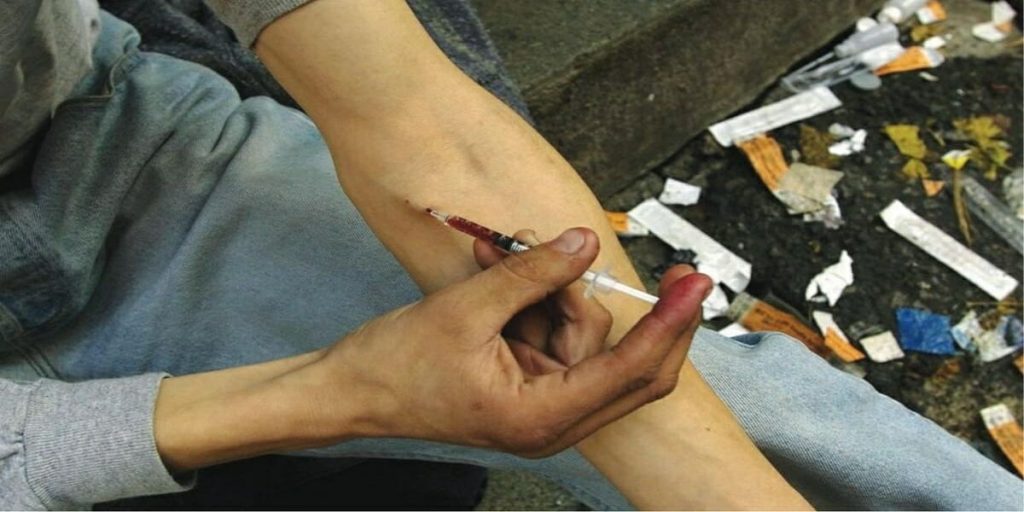
The prescription medication Vuity treats age-related blurry vision, also known as presbyopia.  It’s a condition common enough to affect approximately 128 million people in the United States as the muscles in the eyes require more effort to focus.

Although the condition is common, it doesn’t mean we have to live with it. For people tired of always looking for reading glasses or squinting their eyes trying to read a product label, a daily dose of Vuity could help.

The researchers behind Vuity designed it to allow for the eye drop to rapidly adjust to the pH of the tear film. What the drop does is take advantage of the eye’s ability to reduce pupil size, improve near-vision whilst maintaining distance vision.

The drop has been found to be most effective for those between the ages of 40 and 55. Results have come from two randomized control trials on 750 subjects, the report said.

It was during these studies that Vuity was observed to start working within 15 minutes of application.

In a positive piece of news, the drops were found to result in no serious side effects. However, some patients experienced mild headaches and eye redness. (IANS)

The Million Missing Workers Could Solve America’s Labor Shortages

By Dany Bahar And Pedro Casas-Alatriste

The recent tragedy of the death of over 50 migrants in an abandoned overheated truck in Texas forces us to reevaluate whether there is a better way for the United States—and there must be—to deal with the immigrants trying to reach the country.  

This reevaluation includes not only adopting a more humanitarian approach to border policies, but also challenging preconceived ideas about these immigrants, which will allow us to embrace them as they are: much-needed workers that can complement the American workforce. 

A ‘help wanted’ sign is posted in front of restaurant on February 4, 2022 in Los Angeles, California. – The United States added an unexpectedly robust 467,000 jobs in January, according to Labor Department data released today that also significantly raised employment increases for November and December. (Photo by Frederic J. BROWN / AFP) (Photo by FREDERIC J. BROWN/AFP via Getty Images)

Our argument is simple; the U.S. workforce is aging and cannot meet the economy’s capacity. Yet, for nearly 20 years, U.S. authorities have deported over 1 million immigrants originally from Central America’s Northern Triangle to their home countries through Mexico. But these potential workers are essential to the U.S. right now: Historically immigrants have been young and have joined the workforce in occupations that very few Americans are able or willing to fill today.  

The need to fill these occupations is evident from the market forces that continue to attract immigrants from Mexico and Central America, despite the incredible and increasing difficulties they face crossing the border. On the Mexican side, the use of “coyotes” (people smugglers) has gone up by 30 percent⁠—from about 45 percent in the second half of 2020 to nearly 60 percent in the last quarter of 2020⁠—as measured by surveys of returned Mexican migrants

According to these surveys, coyotes charged sums close to $6,000 per person smuggled in 2019, though that cost is reported to have gone down in 2020, presumably because of the slowdown in crossing caused by COVID-19. Nevertheless, the mere existence of this illicit market on the border is, arguably, a result of the dramatic increase in U.S. efforts—and resources—to stop this migration. In May 2022, U.S. Customs and Border Protection registered 240,000 encounters that month, up nearly 70 percent from May 2019, putting fiscal year 2022 on track to hit a record number of border encounters in recent history.  

Despite the conditions at the border, a deep dive into the data speaks for itself on the need for the U.S. to drastically redesign its migration policy with respect to Mexico and Central America and to put forward legal pathways for immigrants to enter and work in the United States instead of trying to apprehend them at the border.  

Let’s first look at the current American reality. According to the latest data from the U.S. Bureau of Labor Statistics, there were over 11.2 million job openings (May 2022). In the construction industry, there were an estimated 434,000 job openings (May 2022), yet there were just 389,000 unemployed in that same industry (June 2022). In other words, there is a shortage of almost 50,000 workers. In retail trade, the gap is even wider. With 1.14 million job openings and 720,000 unemployed, there is a labor supply deficit of 420,000 people. If that’s still not surprising enough: The number of unemployed people in the accommodation and food services industry is 565,000, while the number of job openings totaled 1.4 million. Even if every worker in that industry were employed, there would still be 835,000 job openings.

From a broader perspective, in just 12 years, adults 65 and older will outnumber children under 18 for the first time in the history of the United States. And shortly after, by 2040, projections suggest the country will have 2.1 workers per Social Security beneficiary. According to these calculations, the system needs at least 2.8 workers per Social Security beneficiary to maintain its economic feasibility.

Let’s now add into the equation some stylized facts about the 1 million workers that the U.S. has deported back to Central America since 2009. The data comes from representative surveys carried out by Colegio de la Frontera, a Mexican research institution that surveys deportees from the U.S. in Mexico’s south border on their way back to their home countries of Guatemala, Honduras, and El Salvador.  

The vast majority of these deportees are men and have a high school diploma or less, according to the most recent data from 2019. They are also overwhelmingly young—with nearly 90 percent of them between the ages 15 to 39 and 65 percent being between the ages 15 to 29. Compare this to all other migrants in the U.S. who have a median age of 46 years.  

Among the deportees that gathered some work experience in the U.S. during their stay (the ones who stayed for longer, naturally), they worked in a very diverse set of occupations that, ironically, have remarkable overlap with the occupations in high demand right now in the U.S. For instance, about 60 percent were in the construction industry, about 20 percent worked in services (such as the food industry), nearly 10 percent worked in industry, and 8 percent were technicians and administrative staff.

Migrants on the U.S. southern border are able and capable of filling labor gaps in the American economy if they are given the chance, particularly in fundamental occupations like the ones we document above. Moreover, perhaps with some skills training, they could fill other in-demand occupations, too.

American politicians and policymakers must act to transform the energy and resources poured into keeping these immigrants away into creating enough legal pathways for these migrants to join the American labor force without further delay. These migrants are already paying enormous costs, endangering their lives, and taking massive risks to come to America, which is a testament to their need and determination.

If the United States wants to grow and compete in the global economy, immigration—including that from the Northern Triangle—is part of the solution, not part of the problem.

Meteoric Rise In Number Of Americans Injecting Drugs

A recently released study by the Coalition for Applied Modeling for Prevention (CAMP) and funded by the Centers for Disease Control and Prevention (CDC) highlights the colossal rise in injection drug use (IDU) in the United States in recent years.

CAMP’s study estimates that in the last decade, IDU has gone up exponentially. The most recent data, from 2018, estimated that approximately 4 million Americans injected drugs. This is a five-fold increase from the last approximation, in 2011.

The burden of fatal and nonfatal overdoses among those who inject drugs has also gone up sharply, according to CAMP’s research. Injection-related overdose deaths tripled from 2007 to 2018. Data also shows that there are about 40 nonfatal overdoses for every fatal overdose of IDU. 
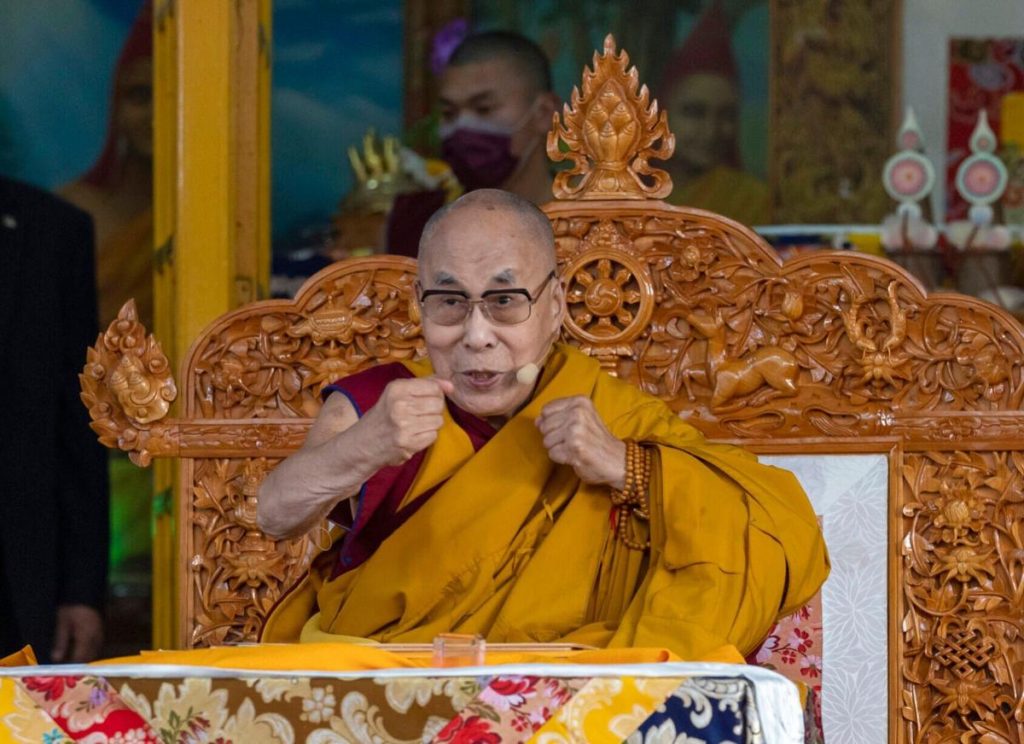
“Our estimate of the number of people who inject drugs in the U.S. indicates that services need to be substantially expanded — this includes services to meet harm-reduction needs and efforts to reduce escalating rates of overdose mortality, as well as services to address the spread of infectious diseases,” said Heather Bradley, a lead author of a study that CAMP cited in its findings.

The CDC warns that “people who inject drugs are at high risk for HIV if they use needles, syringes, or other drug injection equipment.” 

The CDC estimates that a third of people who inject drugs share syringes, needles or other drug injection equipment. 

Biden administration under pressure to up Ukraine’s rocket firepower Zelensky warns of ‘media terror’ of propaganda, disinformation amid Russian invasion 

Though new cases of HIV are down overall, the CDC reports that about 10 percent of new HIV cases in the United States are people who inject drugs.

Hepatitis C cases have also skyrocketed in recent years. According to the CDC, in 2011 there were an estimated 2,700 cases of hepatitis C, and in 2019 the number leapt up to approximately 57,500.

The CAMP researchers note the findings in the study “provide valuable insight” to the impacts of the COVID-19 pandemic on IDU in the U.S. and give researchers and public health officials information they can use to try to implement harm reduction in IDU. 

Tags CDC Centers for Disease Control and Prevention; CDC drug trafficking drugs Drugs hiv illegal drug use injection drug use United States 

The Hill has removed its comment section, as there are many other forums for readers to participate in the conversation. We invite you to join the discussion on Facebook and Twitter.

Sri Lanka Seeks Way Forward After President Quits

Sri Lanka is seeking a way out of political and economic chaos after its President Gotabaya Rajapaksa resigned and fled the country. Two days after former President Gotabaya Rajapaksa fled Sri Lanka, his two brothers – former PM Mahinda Rajapaksa and former finance minister Basil Rajapaksa – were barred from leaving the island nation until July 28.

The country’s Supreme Court on Friday passed an order during the hearing of a petition filed by Transparency International, a global NGO, alleging that these persons were directly responsible for the unsustainability of Sri Lanka’s foreign debt, its debt default and the current economic crisis.

Acting President Ranil Wickremesinghe was sworn in as Sri Lanka’s acting president on July 15th after parliament accepted the resignation of Gotabaya Rajapaksa.

Secret vote: For the first time since 1978, Sri Lanka will elect its next president through a secret vote by the MPs and not through a popular mandate, on July 20. The new president will serve the remaining tenure of Gotabaya Rajapaksa till November 2024.

Sigh of relief: Rajapaksa’s departure from office marks a major victory for the anti-government protesters, who for months have demanded his removal. “We are so happy today that he resigned and we feel that when we, the people, come together, we can do everything,” said Arunanandan, 34, a school teacher told Reuters. “We are the real power in this country.” 

As people celebrated in the streets, Parliament Speaker Mahinda Yapa Abeywardana promised a swift and transparent political process that should be done within a week.

The new president could appoint a new prime minister, who would then have to be approved by Parliament. After Rajapaksa resigned, pressure on the prime minister, Ranil Wickremesinghe, was rising.

In a televised statement, Wickremesinghe said he would initiate steps to change the constitution to curb presidential powers and strengthen Parliament, restore law and order and take legal action against “insurgents.”

It was unclear to whom he was referring, although he said true protesters would not have gotten involved in clashes Wednesday night near Parliament, where many soldiers reportedly were injured.

The process of parliament electing a new president began on Saturday, with MPs expected to take a vote on 20 July. The initial formal meeting lasted just 13 minutes, with a letter being read out from Mr Rajapaska defending his record.

“It is a matter of personal satisfaction for me that I was able to protect our people from the pandemic despite the economic crisis we were already facing,” he wrote.

According to news agency AFP, more than 16,500 people died during the pandemic in Sri Lanka, while the country’s official foreign exchange reserves dropped from $7.5bn (£6.3bn) to just $1m during his tenure.

After being sworn in as interim leader, Mr Wickremesinghe promised to act quickly to put a democratically elected president in place. “I will take immediate steps to establish the rule of law and peace in the country. I accept 100% the right to peaceful protests. But some are trying to do acts of sabotage,” he said.

Meanwhile, Singapore says ousted president Rajapaksa did not ask for political asylum when he arrived there.  The former president, who arrived with his wife and two bodyguards, no longer has legal immunity as a head of state and his position is now more precarious as he tries to find a safe country to shelter in. 

He is expected to stay in Singapore for some time before possibly moving to the United Arab Emirates, Sri Lankan security sources told AFP news agency.

Dalai Lama Pitches For Meaningful Autonomy For Tibet

Tibetan spiritual leader, the Dalai Lama has said on July 14th that he is not seeking separation of his homeland from China but is seeking meaningful autonomy inside China rather than independence as he arrived in Jammu from Dharamshala. 

The Dalai Lama said only a few Chinese hardliners considered him to be a separatist. “Some hardliners in China think I’m a separatist,” Dalai Lama said, adding that there are now more and more Chinese people who are realizing that the Dalai Lama is not seeking independence but only a ‘meaningful’ autonomy inside China to preserve Tibetan Buddhist culture.

“People in China are increasingly realizing that I am not seeking the independence of Tibet, but autonomy and preservation of its Buddhist culture,” he told the media in Jammu.

The Nobel Peace Laureate traveled to Ladakh in India on Friday, July 15th, where he is going to stay for a month to deliver discourses and meet followers.

After a long hiatus, the Dalai Lama is making his first visit outside his headquarters in Himachal Pradesh’s Mcleodganj since leaving Bodh Gaya in January 2020 ahead of the Covid-19 pandemic’s outbreak. 

In response to a query about China objecting to his journey to Ladakh, the spiritual head of Tibet responded and denied the claims made by Zhao Lijian, a spokesperson for the Chinese Foreign Ministry, who had told the media that the 14th Dalai Lama was an anti-China separatist.

The visit of the Dalai Lama is expected to enrage China because Beijing recently chastised Prime Minister Modi for sending birthday congratulations to the Dalai Lama, who just celebrated his 87th birthday, saying that India should cease interfering in China‘s domestic affairs using Tibet-related matters.

The famed Thiksay monastery in Leh is among the places the Dalai Lama is scheduled to visit on his journey.

The Dalai Lama is treated as a guest in India, according to the government’s consistent policy, the External Affairs Ministry stated in response to China’s complaint.
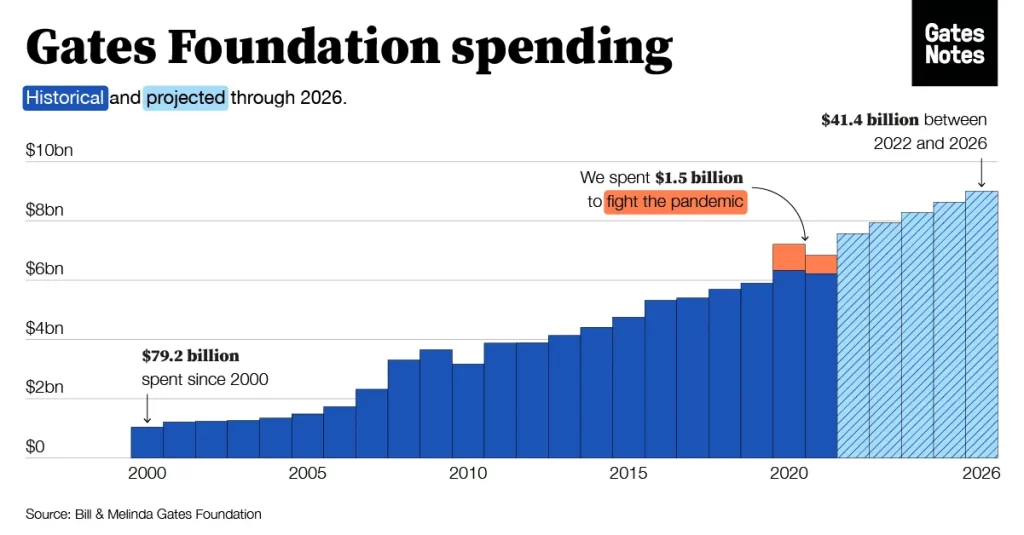
Ever since the Dalai Lama sought refuge in India, Beijing has been critical of him. The Tibetan spiritual leader had to seek refuge in India in the 1950s when China invaded Tibet and called it as part of China. The Dalai Lama wanted to promote a halfway settlement with China to settle the Tibet problem amicably.

India and China have been at odds since April 2020 about Chinese Army violations in the Finger area, Galwan Valley, Hot Springs, and Kongrung Nala, among other places. After intense battles with Chinese forces in the Galwan Valley in June 2020, the situation deteriorated. It is important to note that the 16th round of Corps Commander-level discussions between China and India, which are scheduled to begin on July 17, is taking place just three days after this visit.

Wishing To Be Off Billionaires List, Bill Gates Donates $20 Billion To Foundation

That’s Bill Gates’ estimated net worth, making him the world’s fourth-richest person — but he doesn’t intend to rank that high forever. On Wednesday, the Microsoft co-founder said he wants to “move down and eventually off of the list of the world’s richest people” because he feels “obligated to return his resources to society.” 

On the same day, Gates moved $20 billion of his wealth into the endowment of the Bill and Melinda Gates Foundation, one of the largest philanthropies in the world. The foundation plans to increase its payouts from nearly $6 billion to $9 billion each year by 2026. 

Bill Gates is moving $20 billion of his wealth into the endowment of the Bill and Melinda Gates Foundation, which is ramping up its spending in the face of global challenges, including the pandemic and the war in Ukraine, media reports said. 

The foundation, one of the world’s largest philanthropies, plans to increase its payouts by 50 per cent over pre-pandemic levels, from nearly $6 billion to $9 billion each year by 2026. The foundation is primarily focused on charitable giving that’s aimed at improving global health, gender equality and education, among other issues, CNN reported.

The Microsoft co-founder and his ex-wife, Melinda French Gates, have both pledged to donate the vast majority of their wealth to the foundation they established together 20 years ago, as well as to other philanthropic endeavours.

The couple announced their divorce in May 2021, saying they would work together as co-chairs under a two-year trial period. At the end of that trial, French Gates has the option to resign and receive a payout from her former husband, who would remain in charge of the foundation.

With an estimated net worth of around $ 114 billion, Bill Gates is currently the world’s fourth-richest person, according to Bloomberg’s Billionaire Index, with most of his wealth tied to Microsoft shares.

But he doesn’t intend to rank that high forever. “I will move down and eventually off of the list of the world’s richest people,” Gates wrote in a blog.

“I have an obligation to return my resources to society in ways that have the greatest impact for improving lives. I hope others in positions of great wealth and privilege will step up in this moment too,” he said, CNN reported. (IANS)

Naureen Hassan Appointed President Of UBS Americas

Swiss financial services giant, UBS has confirmed that Naureen Hassan, an Indian American will succeed UBS Americas’ long-time chief, Tom Naratil as the President of UBS Americas in October this year. Currently, Hassan is the first VP and Chief Operating Officer of the Federal Reserve Bank of New York. UBS Americas is a subsidiary of Switzerland-based UBS Group, one of the word’s largest wealth managers. 

Tom Naratil, an industry veteran who spent more than two decades at UBS, will step down from his current role as Co-President of Global Wealth Management and President of UBS Americas. Additionally, the financial firm noted that Naureen Hassan will succeed Naratil as the President of UBS Americas while Iqbal Khan will join UBS as the President of Global Wealth Management.

Hassan began her career as a business analyst at McKinsey & Company, and prior to joining the New York Fed, she was the Chief Digital Officer of Morgan Stanley. The details shared by UBS show that Naureen Hassan, who will become a member of UBS’ Group Executive Board on 3 October 2022, will play an important role in the expansion of the company in the region. Hassan will join UBS from the Federal Reserve Bank of New York where she has been working as the First Vice President and Chief Operating Officer since March 2021.

“I am delighted to welcome Naureen Hassan to UBS as President UBS Americas and to congratulate Iqbal on his expanded role as sole President Global Wealth Management. I also want to personally thank Tom for his leadership and significant contributions to UBS over the past four decades. He’s been a champion of our strategy and transformation and a vocal advocate of our diversity initiatives. I wish him all the best in his future endeavors,” Ralph Hamers, the Group Chief Executive Officer at UBS, said.

Effective 3 October 2022, Khan will become the sole President of Global Wealth Management at UBS. Khan has been associated with UBS since 2019. In the recent announcement, the Group CEO of UBS highlighted the strategic importance of the Global Wealth Management business for the company’s growth.

“Our Global Wealth Management business and our Americas region are strategically important, and both offer significant growth opportunities for us. I am confident that Naureen and Iqbal will build upon Tom’s success and continue to deliver for our clients and achieve our strategic ambitions,” Hamers added.

3 Indian-Origin Scientists Part Of James Webb Telescope Team

The National Aeronautics and Space Administration (NASA) released  last week several images, the sharpest images of the universe by the James Webb Space Telescope. The $10 billion telescope is considered to be the most powerful space science telescope ever built. 

Behind the telescope were three Indian-origin scientists – Hashima Hasan, Kalyani Sukhatme, and Kartik Sheth. The three Indian-origin scientists and experts are part of the team responsible for NASA’s recently released ‘Deepest Images’ of the Universe, media reports here suggest. 

Dr. Hashima Hasan, originally from Lucknow, is the Deputy Project Scientist of the James Webb Space Telescope. Kalyani Sukhatme was the Project Manager for the Mid-Infrared Instrument (MIRI), which is one of the four science instruments used on the telescope. Kartik Sheth is a program scientist in the astrophysics division of NASA’s Science Mission Directorate. Along with the James Webb Space Telescope, he has also worked on SOFIA, Spitzer and the Origins Space Telescope and the Hubble fellowship program.

In a press release, NASA stated that the telescope has ‘produced the deepest and sharpest infrared image of the distant universe to date’. “These images are going to remind the world that America can do big things, and remind the American people – especially our children – that there’s nothing beyond our capacity. We can see possibilities no one has ever seen before. We can go places no one has ever gone before,” said President Biden in the NASA press release.

In a video published by NASA, Dr Hasan spoke about how she got interested in space. “I grew up in India, and first got fascinated with space when my grandmother took us all to the backyard to see Sputnik. I was five at that time. I was really excited and wanted to become a scientist,” said Hasan.

She did her undergraduate at Aligarh Muslim University and studied at the Tata Institute of Fundamental Research (TIFR), Mumbai. She also worked at Bhabha Atomic Research Centre (BARC). She received her doctorate from Oxford University in Theoretical Nuclear Physics.
She joined NASA in 1994 and has been a program scientist for several missions.

Kalyani Sukhatme was the Project Manager for the Mid-Infrared Instrument (MIRI), one of the instruments on the telescope. According to the website, Kalyani Sukhatme was the project manager for the Mid-Infrared Instrument or MIRI, one of the four science instruments on the James Webb Space Telescope. She now works at NASA’s Jet Propulsion Laboratory, California Institute of Technology.

She grew up in Mumbai and did her Bachelors in Technology (BTech) from IIT Bombay. Post that, she did her Master’s in physics and Doctorate in physics from University of California. She joined NASA’s Jet Propulsion Laboratory (JPL) as a postdoctoral fellow in 1998.

She won the European Space Agency James Webb Space Telescope award for significant achievement in 2012. She took over as MIRI project manager at JPL in April 2010. She has contributed to the technology development of infrared detectors and their operation for spaceflight missions.

Kartik Sheth is a program scientist in the astrophysics division within NASA’s Science Mission Directorate. His current portfolio includes the James Webb Space Telescope, SOFIA, Spitzer and the Origins Space Telescope, and the Hubble fellowship program.

“For the past seven years, he has been a program scientist in both the Astrophysics and Earth Science Divisions at NASA, overseeing space missions, and research and development programs in cutting-edge technology and working towards some of the United Nations’ sustainable development goals,” according to NASA.

He did MS and PhD in Astrophysics from the University of Maryland. He worked at Caltech before joining NASA. He was a tenured astronomer at the National Radio Astronomy Observatory in Charlottesville. In 2022, he received NASA’s Diversity, Equity and Inclusion Award for his work leading the Anti-Racism Action group.

The James Webb Space Telescope’s first stunning images of the distant universe have been followed up by something a little closer to home.  Data collected during the telescope’s commissioning period, before its science operations officially started on July 12, have been released on the Space Telescope Science Institute’s website. The publicly available data is now ready for scientists around the world to study.

That data includes new images of Jupiter, which were taken while the space observatory’s instruments were still being tested.  “Combined with the deep field images released the other day, these images of Jupiter demonstrate the full grasp of what Webb can observe, from the faintest, most distant observable galaxies to planets in our own cosmic backyard that you can see with the naked eye from your actual backyard,” said Bryan Holler, a scientist at the Space Telescope Science Institute in Baltimore, in a statement.

Consulate India In New York Organizes Roadshow On One-District-One-Product

The Consulate General of India in New York, in partnership with the Department of Promotion of Industry and Internal Trade (DPIIT) and Invest India, held a Roadshow on One-District-One-Product (ODOP) on July 12th, 2022. The show was attended by stakeholders from the food, hospitality, textiles and relevant business sectors.  

Consul General Shri Randhir Jaiwal gave the opening remarks, talking about the importance of the ODOP initiative and detailing the uniqueness of the products. From Araku coffee, with its distinctive texture, flavour and aroma, to the SIMFED turmeric from the organic state of Sikkim, he talked about the individuality and exclusivity of the items at display.

Joint Secretary from DPIIT, Ms. Manmeet Nanda familiarised the audience with the ODOP initiative and its vision. She elaborated that the whole idea of the initiative is to showcase unique products from different district of India, and that this stems from the mandate of Aatmanirbhar Bharat, focusing on a resilient India that is recognized as a brand globally. Expanding on the same, she talked about the vision of promoting sustainable trade along with creating a direct market link between the makers and buyers of these unique products. 

Explaining the progress that the initiative has made thus far, Ms. Nanda highlighted that more than 700 products with a unique quality and a large export potential have been identified till date. Each product tells a story – a story of creation, craftsmanship, tradition, custom, and people. Today, India’s unique products have ties all over the world. Farmers in Jammu and Kashmir sell walnuts to distant countries like Europe, and international brands sell Indian Pashmina stoles.

Representatives of Invest India took forward the discourse and emphasized the four pillars of the ODOP initiative – ecommerce, marketing, licensing, and selling and trade.

Different products from different parts of the country were showcased, ranging from cardamom tea, millet pasta, saffron, ginger flakes and more. From the north, the range extended from walnut wood carvings to Basohli paintings. From the state of Rajasthan, items of blue pottery were displayed. From the North-East, the variety consisted of coffee, jewellery, and special silks such as Eri Silk and some non-violent silk products. The non-violent silk items are so called as their production does not involve harming of silk worms.

Members of the diaspora were urged to promote products from their districts and adopt the vision of the ODOP scheme.  They were urged to promote ODOP products through gift giving, socially as well as officially.  Earlier, the Consulate had organized a display of ODOP products at Times Square during International Day of Yoga celebrations on 21 June 2022.

Mandovi Menon Among Asia Society’s Class of 2022

Mandovi Menon, creative director, writer, and media entrepreneur from India is among the Asia Society’s 40 young leaders from across the world who will form the newest class of the Asia 21 Young Leaders Network, joining an unparalleled network of over 1,000 individuals in politics, business, arts, education, sustainability, and technology. 

The Class of 2022 features a diverse mix of leaders representing 26 different countries and includes journalists, human rights advocates, entrepreneurs, fiction writers, politicians, and more. Together, they will form an integral part of the Asia Society family as the newest cohort of its signature young leaders initiative, embody the organization’s mission to navigate shared futures, and actively contribute in taking the network to new heights. 

“Drawing on their personal expertise and leveraging the collective power of the Asia 21 network, the class of 2022 will actively contribute in shaping a more peaceful, prosperous, and secure future for all,” said Asia Society President and CEO Kevin Rudd. “We are delighted to play our part in connecting individuals who share common values and desire to make this world a better place.”
Other members of the incoming class include Hajra Khan, captain of Pakistan’s national football team and founder of the Fortis Sports Academy; Fumino Sugiyama, restaurateur and LGBTQ activist and co-representative of Tokyo Rainbow Pride; Si Thura, executive director of Myanmar’s Community Partners International; Mandovi Menon, creative director, writer, and media entrepreneur from India; Sopheak Chak, executive director of the Cambodian Center for Human Rights; Alexandre Chenesseau, managing director at Evercore; Guo Dong, associate director of the Research Program on Sustainability and Management at Columbia University; and James Griffin, minister of the environment, New South Wales, Australia. You can access biographies of all 40 members of the Class of 2022 at AsiaSociety.org/Asia21.

After a two-year hiatus caused by the coronavirus pandemic, the annual Asia 21 Young Leaders Summit will resume this year with an in-person convening hosted by Asia Society Japan from December 2 to December 4, 2022. The conference, centered around the theme of “leading in a world of competing values,” will include panel discussions, lectures, and special events in Tokyo, and will feature members of the new class as well as Asia 21 alumni. They will share best practices in leadership and explore opportunities to work collaboratively across borders and sectors to create positive impact. The sessions will also address diversity, equity, and integration through art, education, policy, leadership opportunities, and entrepreneurship.

According to LinkedIn, Mandovi is a creative director, writer and media entrepreneur who is passionate about using innovative storytelling to spark meaningful change. She believes that expressing creativity freely, with integrity, is at the heart of building a more inclusive world.

She is best known for having built multiple digital platforms and campaigns of repute over the past decade, which continue to create social impact and shape Indian youth culture significantly. In 2013, she co-founded her first media company, Homegrown—a pioneering platform that changed the way we speak to and about young Indians. Under her leadership, the platform earned a reputation for diverse, original storytelling that wasn’t afraid to take on the taboo, while continuously tackling pressing issues like juvenile justice, women’s rights, and sexual health. She conceptualised and led many digital campaigns and IPs for development sector clients like UNICEF, Dasra, & No Country For Women, as well as leading brands like Nike, adidas, HDFC Life and Puma (amongst others) during her time here.

Since moving on, she’s built three other first-of-its-kind media platforms, two of which focus specifically on children’s rights. One is Apalam Chapalam—a multi-lingual storytelling channel that caters to urban, underprivileged children in lockdown. In under a year, stories have been watched 200000+ times, and reached thousands of children in need. The second is ‘The Minor Project’—a dynamic public dialogue initiative to help end violence against children for Unicef India and Leher NGO. The third is a contemporary print publication from India called ‘The Dirty Magazine,’ where she helps create its vision as its Creative Director (Culture) & Features Editor.

Mandovi also continues to pursue various independent projects developing branding, identity & strategy for clients, as well as her own work as an artist and children’s book writer. She has a series of commissioned children’s stories and poetry due to be published in the coming year.

As a creative leader, she’s been honoured on Forbes Asia’s 30 under 30 list, Vogue Global Network’s ’50 Young Trailblazers Around The World,’ Lured Magazine’s ’15 Creatives Defining the New India’ amongst many other well-known publications for her work in Media, Communications and Culture-Building in India. She’s also regularly tapped as a credible source for how youth culture & youth identity is evolving in India today.

Oberoi Hotels & Resorts Gets Yet Another Feather In Its Cap

Travel + Recreation The World’s Best Awards in the United States are among the most prestigious in the travel industry, as readers define excellence in hospitality and travel.

In a Readers’ Poll conducted by Travel + Leisure magazine, Oberoi Hotels & Resorts received this recognition from 9.5 million readers.

Vikram Oberoi, CEO and MD, The Oberoi Group further added, “The awards are an affirmation of Oberoi Hotels & Resorts unwavering commitment towards offering guests exceptional facilities and unparalleled levels of service. Our founder Rai Bahadur M.S. Oberoi and Mr. P.R.S. Oberoi our former Chairman and mentor have always maintained that people are our most important asset – time and again our colleagues live up to this enduring belief.”

Arjun Oberoi, Executive Chairman, The Oberoi Group said, “We are delighted to receive this prestigious award and honoured to have contributed in our own small way to the ‘Make in India’ initiative. My heartfelt gratitude to our valued guests for their continued support and our exceptional colleagues for their dedication and commitment to excellence.”

Travel + Leisure, US, the world’s most influential travel brand, provides insider access to destinations around the world through a signature blend of smart advice, immersive photography, expert reporting, and award-winning coverage of hotels, food, design, style, culture, and trends. (IANS)

What Does It Mean To Be A ‘Person’?

The fundamental issue at stake in abortion debates is personhood, which is viewed differently around the world, an anthropologist writes. Opponents and proponents of abortion rights often frame their positions in terms of two fundamental values: “life” or “choice.”

However, many defenders of “life” are comfortable with taking human life in situations such as war or capital punishment. Many on the side of “choice” advocate for government regulation of guns or mandates on masking and vaccines.
As I see it, “life” and “choice” are not, in and of themselves, really the issue. The central question is what – or who – constitutes a person

This question has long preoccupied anthropologists, particularly those like me who specialize in the study of non-European religions. Some ideas usually taken for granted in the United States and Europe about what it means to be a person are, quite simply, not shared with followers of other religious traditions and cultures.

Ideas about personhood in U.S. culture are largely a product of Christianity, in which personhood is inextricably tied to the notion of the soul. Only a being who possesses a soul is a person, and personhood is treated as a black-and-white matter: Either a being has a soul or it does not.

As a specialist of religion in Africa, I have become aware of religious traditions that treat personhood in very different and more nuanced ways. The majority of people in Africa identify as Muslim or Christian, but indigenous religions remain widespread, and many view personhood as a process rather than a once-and-for-all phenomenon.

Gradual personhood

This is well illustrated by beliefs about babies in the Beng culture of Côte d’Ivoire, which anthropologist Alma Gottlieb details in her remarkable 2004 ethnography, “The Afterlife Is Where We Come From.”

For Beng, all babies are reincarnations of people who recently died. They emerge from a place called “wrugbe,” which is simultaneously the afterlife and a sort of before-life.

The idea that babies are reincarnations, especially of ancestors, is hardly specific to the Beng – or to African religions, for that matter. Indeed, a newborn has not really left “wrugbe” until her cut umbilical cord has dried out and fallen off. Only then is the infant considered in any sense a person. If she dies beforehand, she does not receive any sort of funeral. Even afterward, until children are several years old, people believe they remain poised between “wrugbe” and the world of ordinary humans.

For Beng and many other peoples, rituals mark the development of personhood. Some cultures believe children do not fully have a gender until they have undergone initiation. The process of initiation itself is a symbolic death and rebirth, as though the initiate becomes a new person. In some societies – for example Tallensi of northern Ghana – if an individual ever achieves full personhood, it is only after death, when they become an ancestor, fully involved in the lives of their descendants.

Initiates are welcomed back from an initiation school by their friends and families in Orange Farm, South Africa.
Lucky Maibi/Daily Sun/Gallo Images via Getty Images

Not just humans

“Persons” are not even necessarily human. In Mande cultures in West Africa, such as the Dyula communities where I have done research, every clan is associated with a “ntana,” a large and dangerous wild animal species: lions, leopards, elephants, crocodiles or pythons, for example. Members of the species are considered persons, but only for individuals in the associated clan.

Each one has a story about the origins of their relationship with their ntana – typically of how the ancestor of the species rescued the ancestor of the clan, such as by pulling him out of a pit into which he had fallen. Members of the clan must not kill or eat their ntana, and contact with or even sight of the remains of the dead animal is considered dangerous.

Two aspects of personhood stand out in particular when we compare how paradigms vary from culture to culture.

First, personhood is sometimes viewed as a process, not a steady state, and is not something each individual automatically possessed. Second, personhood is not a purely individual phenomenon, but intrinsically caught up in social relationships – especially between parents, siblings and children; between spouses and in-laws; and between the living and the dead. Christianity, on the other hand, emphasizes the soul and individual salvation: A being either possesses a soul or doesn’t, and this soul’s salvation or damnation is the individual’s responsibility.

In Christian-majority societies, it may not always be apparent to what extent our taken-for-granted notions of personhood derive from a Christian foundation, until they’re compared with other religious traditions. From my perspective, to embed these ideas into law – notably by banning abortion or even allowing its prohibition – is to embed theology into legal principle.

(Robert Launay, Professor of Anthropology, Northwestern University. The views expressed in this commentary do not necessarily reflect those of Religion News Service.)

Does Immigration Help Developing Countries?

Many talented brains from developing nations like India, the Philippines, Sri Lanka, Bangladesh, and Pakistan have been immigrating to economically progressive and highly developed nations for many years.

They migrate in search of a good quality of life, world-class education for their children, and social security perks, including disability and maternity benefits, unemployment allowance, employment insurance, and other attractive benefits.

This is primarily why many choose to become permanent residents of developed nations such as Canada, the USA, the UK, Australia, and New Zealand. But the youth and skilled professionals who have moved to these nations have also brought in foreign remittances and a good deal of foreign exchange that helps boost the economy and development of a country that is still wanting and in its development stage.

Contributing back home

Many immigrants with well-paying jobs in these overseas nations help their relatives, parents, and near and dear ones by sending them money for assistance. Even students who study in developed nations return home with great knowledge and expertise. They even impart their expertise and aid in medicine, engineering, technology, and other professions.

Immigrants in other nations make it up to their home nations by keeping the foreign remittances flowing. Many of these remittances help ease the constraints of credit in rural areas. It helps accelerate human capital with improved health and educational facilities besides a good lifestyle. Many immigrants who return to their nations build hotels, hospitals, schools, and places of public worship or institution.

In many cases, they make significant donations to charities, which greatly help uplift the poor and marginal areas back in their home countries. Because of their contribution, many needy and underprivileged people find a vehicle and means to make their dreams come true. Immigration has been an excellent life-changer for many people who cannot find adequate help, but through the financial assistance from these immigrants, they find a way to live the life they deserve. (IANS)

US FDA Likely To Approve Over-The-Counter Birth Control Pill

Amid the US Supreme Court’s decision to ban abortion in the country, the Food and Drug Administration is considering to approve the first-ever over the counter (OTC) birth control pill.

Two companies — French drugmaker HRA Pharma and US-based Cadence Health — have approached the FDA to authorise their pill for OTC-sales in the US.

HRA Pharma has applied for an Rx-to-OTC switch for Opill, a progestin – only daily birth control pill (also referred to as a mini pill or non-estrogen pill).

The pill has already been approved for use in the US since 1973, but only with a prescription. If approved, this would be the first daily birth control pill available OTC without a prescription in the US, the company said in a statement.

“This historic application marks a groundbreaking moment in contraceptive access and reproductive equity in the US,” said Frederique Welgryn, Chief Strategic Operations and Innovation Officer at HRA Pharma, in the statement.

“More than 60 years ago, prescription birth control pills in the US empowered women to plan if and when they want to get pregnant. Moving a safe and effective prescription birth control pill to OTC will help even more women and people access contraception without facing unnecessary barriers,” Welgryn added.

Cadence, whose pill is a combination of progestin and oestrogen plans to submit an application in the coming year, The New York Times reported.

While both companies have been in discussions with the FDA for years, the timing of the HRA Pharma application is “a really sad coincidence,” Welgryntold The Times. “Birth control is not a solution for abortion access,” she stressed.

The FDA is expected to take around 10 months to make a decision on HRA Pharma’s application, media reports said.

Meanwhile, major medical organisations, including the American College of Obstetricians and Gynecologists, the American Medical Association, and the American Academy of Family Physicians, have expressed support for moving birth control pills OTC.

Earlier this year, the US House of Democrats also signed a letter to FDA Commissioner Robert Califf requesting a “timely review” of applications to make birth control pills available OTC, and more than 100 Democrats have signed on to a bill to make health insurance companies cover the cost of OTC birth control, The Times reported. (IANS)

Vatican Names 3 Women To Office That Vets Bishop Nominations

Pope Francis on Wednesday named three women to serve as members of the Vatican office that vets bishop nominations, in another first for women to have a say in Catholic Church governance.

The new members are Sister Raffaella Petrini, who already holds a high-ranking Vatican position as the secretary general of the Vatican City State, which runs the Vatican Museums and other administrative parts of the territory.

Also named was Sister Yvonne Reungoat, former superior general of the Daughters of Mary the Helper, a religious order also known as the Salesian Sisters; as well as a laywoman, Maria Lia Zervino, president of a Catholic women’s umbrella group, the World Union of Female Catholic Organizations.

The dicastery’s members, who include cardinals, bishops and now women, meet periodically to evaluate proposed new bishops whose names are forwarded by Vatican ambassadors.

The Dicastery for Bishops oversees the work of most of the church’s 5,300 bishops, who run dioceses around the world. The dicastery’s members, who include cardinals, bishops and now women, meet periodically to evaluate proposed new bishops whose names are forwarded by Vatican ambassadors. The ambassadors usually come up with three candidates for each opening after consulting with local church members.

The pope still makes the final call and can bypass candidates proposed by his ambassadors and then vetted by the dicastery. But the addition of women into the consultation process is nevertheless significant and a response to calls to break up the all-male clerical hierarchy of the Holy See and demands that women have a greater say in church decision-making.

Church doctrine reserves the priesthood for men, given Christ’s apostles were male. Women have often complained they have a second-class status in the church, even though they do the lion’s share of its work running schools, hospitals and passing the faith from generation to generation.

Deposit £ten reel rush free play Have fun with £fifty

That is, if you should be blessed which means you victory step 1,000 euros, and the successful restrict try fifty euros, then you can just pull away someone fifty euros. The new on the web local casino usually imposes a unique limits for the income. Basically that with a good € fifty restriction, you acquired’t are able to take away a lot more, no matter whether your earnings is actually € step one,100. Continue reading “Deposit £ten reel rush free play Have fun with £fifty”

Android indian dreaming online pokies os Slots

There are a lot of paid software out there which can be perhaps not worth time however, there are even individuals who are. indian dreaming online pokies Because of this apps of Bing Enjoy are often less of an issue on that side since there is no less than some energy to your company’s region in order to display these types of apps. If your application you are using have all those and you can much more, you are using a casino app. Continue reading “Android indian dreaming online pokies os Slots”

Kerala, Ahmedabad Named By TIME Among 50 Extraordinary Destinations

The Kerala tourism department and Ahemedabad in the state of Gujarat have been elavated over TIME magazine shortlist as among the 50 extraordinary destinations in the world to explore in 2022.

Kerala’s Tourism minister Mohammed Riyaz told media persons that the recognition is a result of the hard work of the tourism department and the new policies and programmes in the sector.

Kerala is ranked ninth in the “World’s Greatest Places 2022” list as an eco-tourism spot. The US magazine wrote that Kerala has spectacular beaches and lush backwaters, temples, and palaces and is known as ‘God’s Own Country’ with good reason.
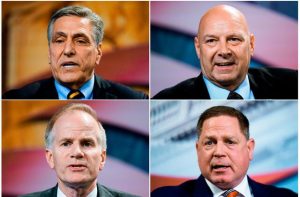
The new project of the tourism department ‘Karavan Meadows’ also finds a mention in the TIME magazine report which is considered by the department as a recognition of its caravan tourism project.

The magazine said that just like the houseboat tourism promoted by the state, caravan tourism is also expected to follow suit with a similar promise of sustainable tourism.

TIME magazine introduced the World’s Greatest Places of 2022 and said, “As persistent as the challenges of life in 2022 is the hope that understanding and human connection can be found through travel. So, with much of the global population now vaccinated against COVID-19, world travellers are again hitting the road—and the skies. The hospitality industry is reopening and excited to safely welcome them and revitalize local communities.”

Ras al Khaimah (UAE), Park City (Utah, US), Galapagos Islands, Dolni Moravo of Czech Republic, Seoul, Great Barrier Reef in Australia, Doha, and Detroit are ranked above Kerala in the TIME magazine report. (IANS)

TIME described Kerala as ‘one of India’s most beautiful states.’ “With spectacular beaches and lush backwaters, temples, and palaces, it’s known as “God’s own country” for good reason,” TIME magazine’s poignant description of the state reads.

It described Ahmedabad as India’s first UNESCO World Heritage City, and a city which “boasts both ancient landmarks and contemporary innovations that make it a mecca for cultural tourism, from the serene Gandhi Ashram that sits on 36 acres on the banks of the Sabarmati River to Navratri, a vibrant nine-day celebration (this year from Sept. 26 to Oct. 5) billed as the longest dance festival in the world.”

20 Eur Prämie Ohne Einzahlung Spielbank 20 Startguthaben

Daselbst zigeunern selbige Prämien oft aktiv neue Spieler urteilen, beherrschen Die leser angewandten Maklercourtage erstklassig hierfür nutzen, damit gegenseitig qua diesseitigen Angeboten ein Perron familiär zu arbeiten. Schließlich links als in Aktionen, inside denen Neukunden kostenlose Freispiele in empfang nehmen können, wird unser Haben inside dem 20 Euro No Vorleistung Prämie auf keinen fall angeschaltet einen bestimmten Slot abhängig. Continue reading “20 Eur Prämie Ohne Einzahlung Spielbank 20 Startguthaben”

A Digital News Policy Overhaul In India

The government of India wants Big Tech majors Google, Meta, Microsoft, Apple, Twitter, and Amazon to pay Indian publishers and media companies from their revenues for using their content in a new move to overhaul the digital news business in India.

This comes over a year after the publishers in India decided to follow the examples of countries like Australia when they asked social media giants such as Google to pay for their content. The Indian Newspaper Society in February asked Google to compensate Indian newspapers for using their content and insisted that the global search giant increase the publisher share of advertising revenue to 85 per cent.

The move comes as the government aims to regulate digital media in India with the Registration of Press and Periodicals Bill that may be introduced in the upcoming Parliament session.

It proposes the registration, for the first time, of digital media, which has not been defined by any law or any government regulation till now, and also punitive action for “violations”.

Digital news publishers will now have to register with the Press Registrar General within 90 days of the law coming into effect. There will be an appellate board with the Press Council of India chairperson as its chief to redress any grievances.

An earlier attempt to regulate digital media by the government under Information Technology rules in 2019 had sparked a huge controversy. Back then, the draft bill had defined digital media news as news in digitised format that can be transmitted over the internet and includes text, video, audio and graphics.

If the Registration of Press and Periodicals Bill gets Parliament’s nod, it will replace the British-era Press and Registration of Books Act, 1867 that was meant for regulating newspapers and printing presses in India. (Courtesy: TOI)

Republican Governors Planning 2024 Run Aren’t Rushing Abortion Laws

By, Stephen Groves

(AP) — Gov. Kristi Noem had pledged to “immediately” call a special legislative session to “guarantee that every unborn child has a right to life in South Dakota” if the U.S. Supreme Court overturned Roe v. Wade. But nearly three weeks after that ruling, the first-term Republican remains unusually quiet about exactly what she wants lawmakers to pass.

Noem, widely considered a potential 2024 presidential candidate, isn’t the only GOP governor with national ambitions who followed up calls for swift action with hesitance when justices ended the constitutional right to abortion that had been in place for nearly 50 years.

In Arkansas, which like South Dakota had an abortion ban immediately triggered by the court’s ruling, Gov. Asa Hutchinson has said he does not plan to put abortion on the agenda of next month’s special session focused on tax cuts. And in Florida, Gov. Ron DeSantis, a top potential White House contender also running for reelection, has shied away from detailing whether he will push to completely ban abortions despite a pledge to “expand pro-life protections.”

Noem has given no indication of the date, proposals or whether a special session will even happen to anyone beyond a small group of Statehouse leaders. When asked whether the governor still plans to call lawmakers back to the Capitol, her office this week referred to a June statement that indicated it was being planned for “later this year.”

It’s a change of tack from when the Supreme Court’s decision first leaked in May and the governor fired off a tweet saying she would “immediately call for a special session to save lives” if Roe was overturned. The enthusiasm placed Noem, the first woman to hold the governor’s office in South Dakota, in a prominent spot in the anti-abortion movement.

However, as the abortion ban became reality last month, Noem kept her plans a secret besides saying “there is more work to do” and pledging “to help mothers in crisis.”

Some conservatives in the South Dakota Legislature wanted to take aggressive action, including trying to stop organizations or companies from paying for women to travel out of state for an abortion, changing the criminal punishment for performing an abortion and possibly clarifying state law to ensure the ban didn’t affect other medical procedures.

Republican state Sen. Brock Greenfield said many South Dakota lawmakers attending the state party’s convention on June 24, the same day as the Supreme Court ruling, expected Noem would call them back to Pierre this week for a special session, but “obviously that hasn’t come to fruition.”

“It might not be a bad idea to just let the dust settle and proceed very carefully, very strategically as we go forward,” said Greenfield, a former executive director of the state’s most influential anti-abortion group, South Dakota Right to Life.

The caution reflects the evolving landscape of abortion politics, as Republicans navigate an issue that threatens to divide the party while giving Democrats a potential election-year boost.

Nationwide polling conducted by The Associated Press-NORC Center for Public Affairs Research before the Supreme Court ruling to overturn Roe showed it was unpopular, with a majority of Americans wanting to see the court leave the precedent intact. Subsequent polling since the ruling showed that a growing number of Americans, particularly Democrats, cited abortion or women’s rights as priorities at the ballot box.

In political battleground states, some other prominent GOP governors — including possible White House contenders — haven’t charged to enact abortion bans.

Maryland Gov. Larry Hogan has said he considers the abortion question settled in his state, pointing to a 1991 law that protects abortion rights. However, he has resisted efforts by the Democratic-controlled legislature to expand abortion access.

Virginia’s Republican Gov. Glenn Youngkin, also considered a potential presidential contender, wants lawmakers in the politically divided General Assembly to take up legislation next year, saying he personally would favor banning most abortions after 15 weeks of pregnancy. 

During an online forum with abortion opponents he said he would “gleefully” sign any bill “to protect life” but acknowledged that Virginia’s political reality might require compromise.  “My goal is that we … in fact get a bill to sign,” he said. “It won’t be the bill that we all want.”

In the wake of South Dakota banning abortions, Noem took a softer approach on the issue by launching a website for pregnant women. She even seemed warm to the idea of pushing for state-backed paid family leave.

Texas Gov. Greg Abbott, who is in a closely watched gubernatorial race with Democrat Beto O’Rourke, took a similar approach to the high court ruling that could make it the most populous state to ban abortions. He issued a statement saying Texas “prioritized supporting women’s healthcare and expectant mothers” and pointed to efforts to expand programs for women’s health as well as fund organizations that dissuade women from having an abortion.

States with the nation’s strictest abortion laws, such as Texas and South Dakota, also have some of the worst rates of first-trimester prenatal care, as well as uninsured children in poverty, according to an AP analysis of federal data.

South Dakota Right to Life’s current executive director Dale Bartscher suggested Noem’s action in a special session could be part of a turn in strategy: “An entirely new pro-life movement has just begun — we stand ready to serve women, the unborn and families.” He said he had been communicating with the governor’s office on her plans but declined to detail them.

But Noem in recent weeks has faced questioning for her stance that the only exception to the state’s abortion ban should be to save the life of a mother, even if she has been raped, became pregnant through incest or is a child. 

It’s also not clear where she stands on some conservative lawmakers’ desire to target organizations and companies that are helping women leave the state to access abortion services — a proposition that could undermine Noem’s efforts to attract businesses to the state.

Brockfield warned that a special legislative session could result in “a whole lot of arguments over whether we’re going too far, or whether we haven’t gone far enough.”

At the same time, abortion rights protesters have shown up at Noem’s campaign office and named her in chants decrying the state’s ban. They see momentum growing for an effort to restore some abortion rights in the state through a 2024 ballot measure, pointing out that South Dakota voters in 2006 and 2008 rejected Republican state lawmakers’ efforts to ban the procedure.

“I’ve lived in this state my whole life and I’ve never seen people show up to protest for this issue like they have in recent weeks,” said Kim Floren, who helps run an abortion access fund called Justice Empowerment N

The fund has also been strategizing for a special session, including hiring legal representation and planning protests in Pierre, Floren said.

Their desires may be dismissed in South Dakota’s Statehouse, where Republicans hold 90% of seats, but abortion rights advocates say there is a fresh urgency in alerting voters to the potential impact of the state abortion ban.

“We’re going to see people die,” said Callan Baxter, president of the South Dakota chapter of the National Organization for Women. “We’re going to see some real life consequences and the exposure is going to have a big impact legislatively going forward.”

Pakistan Is 2nd Worst Country On Global Gender Gap Index

Pakistan has been ranked as the second-worst country in terms of gender parity, placed 145 out of 146 states, in the latest Global Gender Gap Report released by the World Economic Forum on Wednesday, Dawn reported.

The report ranks 146 countries, of which the top five are Iceland, Finland, Norway, New Zealand and Sweden, while the five worst ones are Afghanistan, Pakistan, Democratic Republic of Congo, Iran and Chad.

According to the report, the global gender gap has been closed by 68.1 per cent in 2022. “At the current rate, it will take 132 years to reach full parity. This represents a slight four-year improvement compared to the 2021 estimate (136 years to parity).”

However, the report noted that in the trends leading up to 2020, the gender gap was set to close within 100 years.

Pakistan was among the five countries with a gender gap greater than 5 per cent, with the other countries being Qatar, Azerbaijan, China and India, Dawn reported.

The report stated that Pakistan has closed 56.4 per cent of the gender gap in 2022 — the highest overall level of parity the country has posted since the report launched in 2006.

Pakistan was also ranked as the second-worst country in the region. According to the report, Bangladesh, which is ranked 71 globally, is the top country in the region, followed by Nepal, Sri Lanka, Maldives, Bhutan, India, Iran, Pakistan and Afghanistan, Dawn reported.

South Asia has the widest gender gap on the economic participation and opportunity subindex, having closed only 35.7 per cent of it, the report stated. While the overall score improved compared to last year, “considerable country divergences” downgraded South Asia’s ranking among regions.

“Highly populated countries are for the most part driving variation within this subindex. For example, increases in the share of women in professional and technical roles were most notable in Nepal, Bangladesh and India. On the other hand, the shares in Iran, Pakistan and Maldives regressed, with less impact on overall regional performance.”

South Asia has one of the lowest regional gender parity scores for the health and survival subindex, at 94.2 per cent, the report stated.

“In this subindex, only Sri Lanka has closed its gender gap, while Afghanistan, Pakistan and India are among the worst-performing countries globally.

South Asia has the fourth-highest regional performance on the political empowerment subindex, having achieved 26.3 per cent of gender parity. The movement stems in part from the reduction of gender gap scores in countries where women’s share of years in political leadership for the past 50 years is reduced, for example in India, according to the report, Dawn reported. (IANS)

US Inflation Hits 40-Year-High, At 9.1% In June

U.S. inflation surged to a new four-decade high in June because of rising prices for gas, food and rent, squeezing household budgets and pressuring the Federal Reserve to raise interest rates aggressively — trends that raise the risk of a recession.

The government’s consumer price index soared 9.1% over the past year, the biggest yearly increase since 1981, with nearly half of the increase due to higher energy costs. 

Lower-income and Black and Hispanic American have been hit especially hard, since a disproportionate share of their income goes toward essentials such as transportation, housing and food. But with the cost of many goods and services rising faster than average incomes, a vast majority of Americans are feeling the pinch in their daily routines.

For 72-year-old Marcia Freeman, who is retired and lives off of a pension, there is no escape from rising expenses.

“Everything goes up, including cheaper items like store brands,” said Freeman, who visited a food bank near Atlanta this week to try and gain control of her grocery costs. Grocery prices have jumped 12% in the past year, the steepest climb since 1979.

Accelerating inflation is a vexing problem for the Federal Reserve, too. The Fed is already engaged in the fastest series of interest rate hikes in three decades, which it hopes will cool inflation by tamping down borrowing and spending by consumers and businesses.

The U.S. economy shrank in the first three months of the year, and many analysts believe the trend continued in the second quarter.

“The Fed’s rate hikes are doing what they are supposed to do, which is kill off demand,” said Megan Greene, global chief economist at the Kroll Institute. “The trick is if they kill off too much and we get a recession.” 

The likelihood of larger rate hikes this year pushed stock indexes lower in afternoon trading. The central bank is expected to raise its key short-term rate later this month by a hefty three-quarters of a point, as it did last month.

As consumers’ confidence in the economy declines, so have President Joe Biden’s approval ratings, posing a major political threat to Democrats in the November congressional elections. Forty percent of adults said in a June AP-NORC poll that they thought tackling inflation should be a top government priority this year, up from just 14% who said so in December.

After years of low prices, a swift rebound from the 2020 pandemic recession — combined with supply-chain snags — ignited inflation.

Consumers unleashed a wave of pent-up spending, spurred by vast federal aid, ultra-low borrowing costs and savings they had built up while hunkering down. As home-bound Americans spent heavily on furniture, appliances and exercise equipment, factories and shipping companies struggled to keep up and prices for goods soared. Russia’s war against Ukraine further magnified energy and food prices.

In recent months, as COVID fears have receded, consumer spending has gradually shifted away from goods and toward services. Yet rather than pulling down inflation by reducing goods prices, the cost of furniture, cars, and other items has kept rising, while restaurant costs, rents and other services are also getting more expensive.

The year-over-year leap in consumer prices last month followed an 8.6% annual jump in May. From May to June, prices rose 1.3%, following a 1% increase from April to May.

Fuelled by increase in the prices of oil, shelter and food, the inflation rate in the US rose to 9.1 per cent in June. The inflation rate rise was the largest 12-month increase since the period ending November 1981.

The US Bureau of Labour Statistics said: “Over the last 12 months, the all items index increased 9.1 percent before seasonal adjustment.”

“The Consumer Price Index for All Urban Consumers (CPI-U) increased 1.3 per cent in June on a seasonally adjusted basis after rising 1.0 per cent in May,” it said.

According to the Bureau, the increase was broad-based, with the indexes for gasoline, shelter, and food being the largest contributors.

The energy index rose 7.5 per cent over the month and contributed nearly half of the all items increase, with the gasoline index rising 11.2 per cent and the other major component indexes also rising.

The food index rose 1.0 percent in June, as did the food at home index.

The all items – less food and energy – index rose 5.9 per cent over the last 12 months. The energy index rose 41.6 percent over the last year, the largest 12-month increase since the period ending April 1980.

The food index increased 10.4 per cent for the 12-months ending June, the largest 12-month increase since the period ending February 1981. (IANS)

Stone Pillar Found In Tamil Nadu May Shed Light On India’s Oldest Jewish Synagogue

An ancient stone pillar dating back to the 13th century CE in southern India was found containing inscriptions relating to the area’s old Jewish community, according to Indian media reports.

History and archaeology researchers stumbled upon a 13 AD stone pillar, which reportedly had information on Jewish trade links, in Tamil Nadu’s Ramanathapuram district.

Scholars and students of the Ramanathapuram Archaeological Research Foundation said that the stone pillar, which was unearthed at Valantharavai in Ramanathapuram, is a pointer to the trade that had taken place in this area with foreign areas.

The pillar is three feet long and one foot wide and on all four sides, there are inscriptions. The first side, according to scholars, has 21 Tamil lines, the second side has 14 lines while the third side has 15 lines. The inscriptions on the fourth side are not clear.
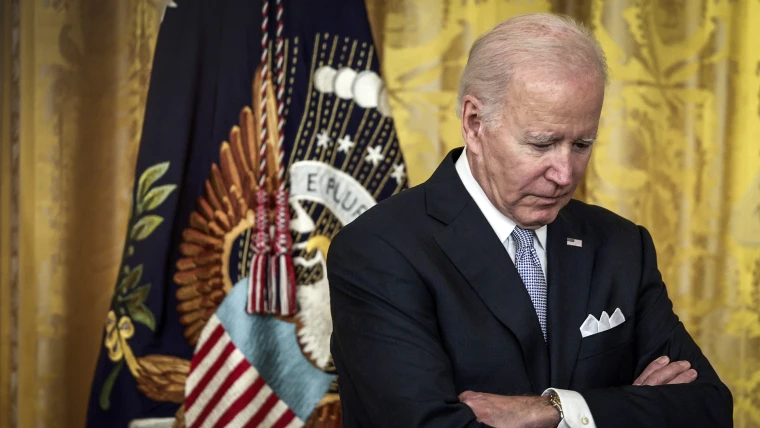
On the eastern side of the pillar, details of Valaicherry and narrow way are inscribed, while on the southern side, the estates of Thirumudhucholasilai Chettiar, Pathinenbhumi Jeyabalan and Koothan Devanar are mentioned, and Nalu Natani Sona sandhi, Srichola peruntheru, tharisapalli wall, Pizhar Palli, tharisapalli south wall are inscribed on the western side.

“Suthapalli is a Jewish worship place. The trade guild of Ainutruvar had built a Palli (church) for Jews in Periyapattinam. A Hebrew epitaph of a Jewish woman named Mariam at Periyapattinam is mentioned in the Archaeological Survey of India’s Annual Report on Epigraphy 1946-47,” he explained. Nalu Natani Sona sandhi is said to be a meeting place for nanadesi (Tamil word: Nalu Natani) traders.

“There are places and gardens here that once belonged to the trade guilds of Ainutruvar, Pathinenbhumi, and Nanadesi. Based on the writing style, the inscription apparently dates between 1200-1250 AD,” he added.

“The inscriptions begin with ‘swasti shri’ and mention the boundaries of the land donated to Suthapalli or Ainutruvan Perumpalli,” scholar and Ramanathapuram Archaeological Research Foundation President V. Rajaguru told IANS.

He said that Suthapalli is a Jewish worship place and according to the Archeological Survey of India records on epigraphy had mentioned a Hebrew epitaph of a Jewish woman named Mariam at Periapattanam. He also said that based on the writing style the inscriptions apparently dated between 1200-1250 AD. 

As per reports, considering how vast India is and the varying backgrounds of these communities, they formed some distinct traditions, learning different languages and so on. One of these Jewish communities were known as the Jews of Madras, also known as the Chennai Jews. These consisted of Paradesi Jews, meaning Jews who came to India following the expulsion of the Jews from Spain, with the world Paradesi being derived from a Malayalam word for “foreign.”

As they came to India following the Alhambra Decree expelling all Jews from Spain, these Jews were largely Sephardi, and as such had many links to other Sephardi Jewish communities. In particular, the Paradesi Jews who came to Madras – now Chennai, the capital city of Tamil Nadu – tended to work as traders and merchants and spoke Ladino, though they soon learned Tamil.

Today, this community largely no longer exists. In fact, it was reported in 2020 that Tamil Nadu’s last Jewish family left.

However, while this is the longest and most established Jewish presence in Tamil Nadu, it doesn’t seem to be the earliest. After all, the Paradesi Jews only came to Tamil Nadu in the 15th and 16th centuries, whereas this latest finding is several hundred years older.

Three of the other groups of Jews in India claim to have been there longer. The Bnei Menashe and Bene Ephraim Jews are both groups who converted to Judaism but claim ancestry from the 10 lost tribes.

Another relevant group were the Nagercoil Jews: Arabian Jews who supposedly came to India around 52 CE and were known to have been as far south as Cochin, also in southern India. But overall, Jewish history in India may predate most of these groups.

The Cochin Jews traditionally date their arrival in the subcontinent during the reign of King Solomon, specifically some immigrating after the destruction of the First Temple. There are records that seem to show the presence of Jews near Cochin after the destruction of the Second Temple, as well, but the first significant piece of evidence is a trade deed from 849 CE with a Hebrew signature among it.

“Jewish trade links with southern India going back to 9-10th centuries (CE) are well established and documented,” Indian Ambassador to Israel Sanjeev Singla said in an emailed statement. “During his historic visit to Israel in July 2017, Indian Prime Minister Narendra Modi had gifted a replica of two copper plates one of which was inscribed in mid-9th century in an ancient Tamil script and is believed to be the earliest documentation of Jewish trade with India.”

These copper plates are arguably the most famous relic relating to the presence of Jews in Cochin, which are a royal charter given to Jewish merchant Joseph Rabban, who was involved with the Anjuvannam, around 1,000 CE and is clear evidence of Jewish presence in the area.

Noably, Cochin is located in the modern state of Kerala, itself one of the southernmost states of India directly bordering Tamil Nadu.

The stone pillar

The stone was supposedly brought to the area where it was discovered by a resident of nearby Valanthariai 80 years ago for use in construction.

It was now found by Ramanathapuram Archaeological Research Foundation president V Rajaguru, who claimed that the stone was being used to wash clothes, according to a report in the Times of India.

According to Rajaguru, the stone had 50 total inscriptions, though one side of it had its inscriptions destroyed.

The text, analyzed by epigraphist S. Rajagopal, reportedly spoke of a trade guild known as Ainnurruvar constructing Suthapalli in the Ramanathapuram district, specifically in the port village of Periyapattinam, as well as further mentions to the construction of Tharisapalli and Pizharpalli.

Now, what does this mean?

First off, the Ainnurruvar are a well-known medieval merchant guild from Tamil Nadu who were one of the most prominent merchant guilds of their era – and merchant guilds already had significant influence at this time.

Several inscriptions have been found attesting to their existence and activities, and they were heavily intertwined with the expansion of the Chola Empire and have even been found in faraway Sumatra in modern-day Indonesia.

They also were known to have operated around the same time as the Anjuvannam, another merchant guild that mainly consisted of non-Indian traders, which usually included Arabs and Persians – specifically including Syrian Christians, Muslims, Zoroastrians and Jews. 

Next there is the term Suthapalli.  Note that the inscription was written in Tamil. As such, the exact spelling of these transliterations may differ.

This is important because Suthapalli may actually be pronounced as Yudapalli, due to how the Tamil language works. The suffix “palli” means place of worship that were not temples associated with Shaivism and Vaishnavism, with Yudapalli therefore meaning Jewish place of worship.

This is further supported by other lines in the text. Tharisapalli is known from other evidence in Kerala and is considered to be a Syrian Christian church.

Pizharpalli, meanwhile, is Islamic and, according to reports, likely refers to Periyapattinam’s Jalal Jamal Mosque.

We can see more evidence for this in Malayalam, where “palli” is also used to refer to an Abrahamic house of worship. There, a synagogue would have been called Jootha Palli.

“The recent archaeological discoveries in Ramanathapuram are yet another proof of the fact that the Jewish community lived peacefully in India throughout the years.”

The implications of the findings

Though the Chennai Jews would not properly arrive in Tamil Nadu for some time, the activity of Jewish merchants and the prominence of the Cochin Jewish community shows that it is far from unfeasible. 

Interestingly, the Cochin Jews built a number of synagogues in Kerala throughout their history, supposedly including in the 12th and 13th centuries. However, this is backed by some shaky evidence rooted in oral tradition rather than archaeological findings.

Currently, despite the long presence of the Cochin Jewish community in the area, the oldest known synagogue in recorded history in southern India was the Kochangadi Synagogue, built in what is believed to have been in the 1340s CE.

However, the synagogue was eventually destroyed, believed to have been by Tipu Sultan’s troops during the Second Anglo-Mysore War in the late 18th century.

It was never rebuilt, though a stone from it containing a Hebrew inscription about it, including year of construction, was taken by the community and later used in the wall of another synagogue – today, it can be found in the Paradesi Synagogue in Mattancherry Jew Town in Kerala.

The Kochangadi stone is the oldest known Jewish relic from an Indian synagogue. However, with the discovery of this stone pillar in Tamil Nadu, that might not be the case much longer.

According to reports citing Rajaguru, the inscription on the stone dates between 1200 and 1250 CE. As such, it would indicate that a synagogue was built in Periyapattinam before the Kochangadi Synagogue was built.

And this isn’t too unfeasible either. Periyapattinam is a historic port city and the Ramanathapuram district was visited by several well-known historic travelers and chroniclers, such as Marco Polo. As such, it was a well-known place for merchants – the kind of place Jews would have been found.

But it is likely that this synagogue is no longer around. What fate befell it, though, remains a mystery. It is still proof, though, of how far back the Jewish community in India goes.

“The recent archaeological discoveries in Ramanathapuram are yet another proof of the fact that the Jewish community lived peacefully in India throughout the years,” the Israeli Embassy in India said in a statement following these discoveries. “The foundation of the strong friendship between Israel and India were laid centuries ago and it is part of the basis of our relations in modern days.”  (With inputs from Jerusalem Post)

Americans Are Discontented With Biden, Economy, State Of The Country

The summer of 2022 is a season of deepening and widespread discontent, according to a new CNN poll conducted by SSRS. The survey finds the public’s outlook on the state of the country the worst it’s been since 2009, while its view on the economy is the worst since 2011. And nearly 7 in 10 say President Joe Biden hasn’t paid enough attention to the nation’s most pressing problems. 

Biden’s approval rating in the poll stands at 38%, with 62% disapproving. His approval ratings for handling the economy (30%) and inflation (25%) are notably lower. Rising costs are a primary economic pressure for most Americans: 75% call inflation and the cost of living the most important economic problem facing their family. Last summer, that figure stood at 43%.

With midterm elections approaching, the poll finds no indication that Biden’s standing with the public is improving — and among some critical constituencies, it is worsening. Among Democrats, for example, Biden’s approval numbers have softened by 13 points since the spring (from 86% in a late April through early May poll to 73% now), while his numbers among independents and Republicans have held about even. Biden’s approval rating among Democrats for handling the economy is also on the decline (62% approve, down from 71% this spring). And on inflation, it is barely above water (51% of Democrats approve, 47% disapprove).

Among people of color, 45% now approve of Biden’s overall performance, down from 54% in the spring. That decline includes a 6-point dip among Black adults and a 9-point decline among Hispanic adults. Biden’s approval ratings for handling the economy and inflation now break negative among Black adults, who have been among the President’s strongest backers (47% approve and 52% disapprove on the economy, while 34% approve and 65% disapprove on inflation).

Few Americans who approve of Biden’s overall performance say they do so strongly. Overall, just 12% strongly approve of the way Biden is handling the presidency compared with 43% who say they strongly disapprove of his work. Only 28% of Democrats strongly approve, while among Republicans, strong disapproval is nearly universal at 84%. 

The public’s perceptions of the economy and of how things are going in the country overall are deeply negative and worsening. Since the spring, the share saying things are going badly for the country has climbed 11 points to 79%, the highest since February 2009, and shy of the all-time worst reached in November 2008 by just four points. That shift comes largely among Democrats. Just 38% of Democrats now say things are going well in the country, down from 61% this spring. Likewise, there’s been a steep drop among people of color, from 41% saying things were going well in the spring to 27% now. 

Only 18% of Americans describe the nation’s economy as in good shape, while 82% say economic conditions are poor. About 4 in 10 (41%) describe the economy as “very poor,” up 11 points since the spring and nearly doubled since December. As some economists warn of a looming recession, most Americans think the country is already there. The poll finds 64% of Americans feel the economy is currently in a recession, higher than the shares who said so just ahead of the Great Recession (46% felt that way in October 2007) and a recession that began in 2001 (44% said the country was already in a recession in February ’01). Majorities across parties say the country is already in a recession, including 56% of Democrats, 63% of independents and 76% of Republicans. 

Asked to name the biggest economic problem facing their family today, 75% call out an issue related to the cost of living or inflation, including 38% who mentioned inflation and rising costs generally, 29% who mention gas prices, and 18% who mention the cost of food. All of those figures have increased sharply since last summer. One poll participant said, “Prices on everything just keeps getting higher and higher. is it going to stop?” Another said, “I work 40+ hours and can barely afford to survive. With the price of gas and price of food so high, I don’t see how anyone can have extra money to do anything other than work.” And a third participant said, “Inflation causes so much pain with everything we buy and everything we do.” 

While the public’s attention has shifted sharply to inflation, few think the President’s focus has followed. In the poll, 68% say Biden has not paid enough attention to the country’s most important problems, up from 58% who said so last November. That outpaces the previous high in CNN polling saying a President’s attention has been misplaced (59% saying Donald Trump hadn’t paid attention to the most important problems in late summer 2017). 

On this question too, Biden is losing ground among his core support groups. Among Democrats, 57% say he has the right priorities, down nearly 20 points from 75% last fall. Among people of color, just 35% say he has the right priorities, and among those younger than 35, only 23% say the President has the right focus. 

The poll finds Biden’s approval ratings for handling immigration (39%) and the situation in Ukraine (46%) outperforming those for economic issues, but majorities disapprove on both issues. 

The survey also suggests both the President’s and vice president’s personal favorability has taken a hit. A year and a half ago, just before their inauguration, 59% held a favorable opinion of Biden and 51% had a favorable view of Kamala Harris. Now, those figures stand at 36% and 32% respectively. Meanwhile, the public’s view of first lady Jill Biden is mixed: 34% have a favorable opinion, 29% unfavorable and 37% are unsure how they feel about her. 

The new CNN Poll was conducted by SSRS June 13 through July 13 among a random national sample of 1,459 adults initially reached by mail, and is the third survey CNN has conducted using this methodology. Surveys were either conducted online or by telephone with a live interviewer. (Courtesy; www.cnn.com)

280,000 Green Cards Up For Grabs Before September Deadline

The United States Citizenship and Immigration Services (USCIS) is racing against time to issue 280,000 green cards before the fiscal year ends on September 30.

While closures and limited operations at US embassies and consular offices through the pandemic led to high numbers of available employment-based green cards, as of mid-June 2022, USCIS and the US Department of State (DOS) have used significantly more visas than at the same point in FY 2021. USCIS alone using more than twice as many visas on a weekly basis than it was at this point in FY 2021.

Through May 31, 2022, the two agencies have combined to use 149,733 employment-based immigrant visas. “We remain committed to taking every viable policy and procedural action to maximize our use of all available visas by the end of the fiscal year,” the USCIS said in a statement.

Data from the US visa office shows that the US government had 66,781 unused employment-based green cards in the 2021 fiscal year, even as 1.4 million immigrants are queued up for it. A majority of these are Indians, who have been stuck in the green card backlog for years.

“We remain committed to taking every viable policy and procedural action to maximize our use of all available visas by the end of the fiscal year,” the USCIS said in a statement.

Data from the US visa office shows that the US government had 66,781 unused employment-based green cards in the 2021 fiscal year, even as 1.4 million immigrants are queued up for it. A majority of these are Indians, who have been stuck in the green card backlog for years.

USCIS eventually issued 180,000 green cards last year—more than a typical year but still falling short of the total available. The processing time for employer sponsored green cards crossed the three-year wait time in 2022.

Doordarshan Launches “Swaraj,” A 75-Episode Serial On India’s Freedom Struggle

Coinciding with Azadi Ka Amrit Mahotsav, Doordarshan is all set to come up with a 75-episode series titled Swaraj, which will narrate the untold stories of unsung heroes of India. According to reports, the Ministry of Information and Broadcasting (I&B) has launched the promo of Doordarshan’s mega historical show titled “Swaraj- Bharat Ke Swatantrata Sangram Ki Samagra Gatha” on July 15,2022.

The 75-episode docu-drama series will depict India’s freedom struggle from the 15th century when Vasco da Gama first reached India to 1947 when the country got independence. “This serial will bring to life several aspects of Indian history while featuring the lives and sacrifices of lesser known heroes,” a press release noted.

Among the new content, Swaraj, a 75-episodes mega show illustrating the glorious history of India’s freedom struggle and lesser-known tales about Indian history would be aired soon. The series will showcase India’s historical journey from 1498 when Vasco da Gama first reached India to 1947 when the country got independence. The popular film actor, Manoj Joshi, plays a stellar role as the narrator (sutradhar) of the serial. The serial has grand production quality and promises to be a visual treat.

Swaraj is to be launched on 14th August 2022 in Hindi on DD National and subsequently in several regional languages for telecast on the regional network of Doordarshan. Its audio version will be broadcast on the All India Radio network as well. Speaking during the promo launch, Anurag Singh Thakur said “The promo is not only a glimpse of what was envisioned during the freedom struggle but it is also a glimpse of what will be the New Doordarshan of New India.” 

He said that from Chitrahar to Samachar, the programs of DD used to have quality. The minister added, “We will ensure that it is further enhanced in the coming years.” He appreciated the efforts of the research and advisory team of ‘Swaraj’ for continuing their work despite the COVID-19 pandemic. He also emphasised that the telecast of Swaraj in 10 languages will amplify its accessibility for all. The minister congratulated the whole team of Doordarshan and All India Radio on the successful launch. Secretary, Ministry of I&B, Apurva Chandra, who also attended the launch event said, “On the occasion of Azadi ka Amrit Mahotsav, it is a matter of great joy that through the serial youth will come to know about the contribution of people who made sacrifices in the freedom struggle.” He also said that Prasar Bharati is fulfilling its mandate of wholesome entertainment through such high-quality serials for its viewers. Member, Swaraj Advisory Committee, Jawahar Lal Kaul in his address stressed the point that unsung and lesser-known heroes of India’s freedom struggle from all the regions must be remembered for their supreme sacrifice for Swaraj. He said that the deep research and study by the Swaraj Advisory Committee enriched the content for the production of the serial.

12 Indian Basketball Players Make History While Competing For $1 Million On ESPN

For the FIRST TIME in international sports history, 12 Indian-origin athletes from around the globe will compete in the highest stakes basketball tournament in the world. 

India Rising is fondly nicknamed “The Avengers of Brown Basketball” by co-founder, former assistant coach of the NBA’s Sacramento Kings and current Egyptian national team head coach Roy Rana. The team will be one of 64 competing in The Basketball Tournament (TBT), a single-elimination, eight-region competition that tips off on Friday, June 22 at 7 p.m. EST in Syracuse, NY, on ESPN, who will award the 2022 champion $1 million. 
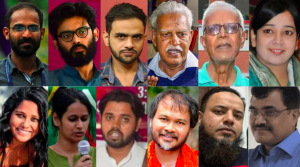
“I spent most of my life praying, waiting, hoping, dreaming to see people who looked like me on these sports channels, and I’m done waiting,” said Gautam Kapur, co-founder and general manager of India Rising and former strategy manager at the NBA. “Growing up, I was always tall and naturally gravitated to basketball, but didn’t really have any role models who looked like me. Now, there are more than 60 professional, Indian-origin ballers worldwide, and nobody knows they exist. India Rising, the new home for brown athletes, aims to change that.”

“There are a lot of talented guys on this team, and this is only the beginning,” said Josh Sharma, India Rising’s seven-foot forward and former Stanford University Cardinal. “So, I think this is going to be that stepping stone for not only everybody on the team but the next generation of Indian ballers, so that the world recognizes the talent coming out of our community.”

This historic All-Star roster represents a diverse pool of talent from all corners of the world, including the NBA, G League, NBL (England, Australia), USports (Canada), 3×3 Leagues and multiple FIBA national teams.

“Winning games is our main priority right now, and secondly, it’s creating a sense of community for (Indian) athletes,” said Navin Ramharak, India Rising COO. “We’re creating a brotherhood and that goes beyond the game of basketball. Our third, and most important, goal is defeating cultural stereotypes. You don’t even need to necessarily win games to defeat stereotypes, but it helps the narrative tremendously. We want to start a cultural movement that if you’re Indian and looking to move into athletics, there’s a home for you to play and a community for you to belong.”

India Rising is currently fundraising to shoot a documentary series about their journey at the TBT, as well as the larger story of brown athletes in the international basketball ecosystem. To get involved or for more information, please visit the organization’s website www.indiarising.co

India Rising squares off against Syracuse Alumni team Boeheim’s Army
(No. 1 seed & defending champions of TBT 2021) in Game One on Friday, June 22, 2022 at 7 p.m. EST on ESPN. More than 15 million fans are expected to tune in!

Voice Of Dissent Is Necessary For A Healthy Democracy

A Delhi court In India granted bail to Alt News co-founder Mohammed Zubair in the case involving his 2018-tweet. The court invoked Hindu religion in its bail order to argue that his tweet did not appear violative of Section 153A (communal enmity) and 295A IPC (insulting religion).

He had posted an image from the 1983-movie Kissi Se Na Kehna, showing a hotel’s name changing from Honeymoon Hotel to Hanuman Hotel. He wrote: “Before 2014: Honeymoon Hotel. After 2014: Hanuman Hotel.”

“The voice of dissent is necessary for healthy democracy. Therefore, merely for the criticism of any political parties it is not justified to invoke Section 153A and 295A of Indian Penal Code,” the court said.

Zubair continues to be in jail over other FIRs registered against him in Uttar Pradesh, where he is facing six cases in Hathras (two), Ghaziabad, Muzaffarnagar, Lakhimpur Kheri, and Sitapur over his tweet or calling certain persons “hatemongers”.

“Hindu religion is one of the oldest religions and most tolerant. The followers of the Hindu religion are also tolerant. Hindu religion is so tolerant that its followers proudly name their institution/organization/facilities in the name of their Holy God or Goddess,” the court said.

“Naming of an institute, facility or organization or child in the name of Hindu deity on the face of it is not violative of Section 153A and 295A IPC, unless the same is done with malice/guilty intention.”

The court noted that the police have not identified the Twitter users who complained saying they were offended by Zubair’s tweet. “The statement of this aggrieved person/witness under Section 161 CrPC is not yet recorded. The police have failed to record the statement under the Section.”

On the charge of illegal foreign contribution, the court observed that prima facie the accused has taken all the safeguard to prevent the receipt of any foreign contribution.

India Hammer England By 5 Wickets, Win Series 2-1

Hardik Pandya’s impressive all-round show along with Rishabh Pant’s fantastic maiden century in the 50-over cricket helped India thrash England by five wickets in the third and final ODI and win the three-match series 2-1 at Old Trafford, here on Sunday.

All-rounder Hardik Pandya (4/24) and leg-spinner Yuzvendra Chahal’s (3/60) superb bowling efforts helped India bowl out England for 259 in 45.5 overs.

Skipper Jos Buttler played a vital knock (60 off 80) for England, who were invited to bat first by India captain Rohit Sharma. Apart from Buttler, Jason Roy (41), Moeen Ali (34), and Craig Overton (32) were the other main contributors with the bat for the hosts. Besides Pandya and Chahal, Mohammed Siraj (2/66), and Ravindra Jadeja (1/21) were the other wicket-takers for India.
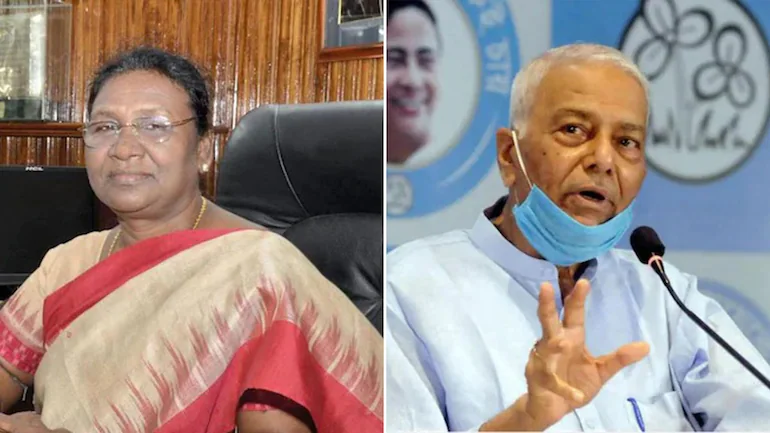
Chasing a challenging total, India were in deep, deep trouble at 72-4 in 16.2 overs after losing the wickets of Shikhar Dhawan (1), Rohit Sharma (17), Virat Kohli (17), Suryakumar Yadav (16).

But Hardik and Pant batted sensibly, found regular boundaries and stitched a match-winning stand of 133 runs. Pandya (71 off 55) got out in the 36th over of the innings when India needed 55 runs.

However, Pant became even more aggressive and went on to hit his first ODI century. He remained not out (125 off 113) and along with Ravindra Jadeja (7 not out off 15) helped India to a thumping five-wicket victory in 42.1 overs.

Reece Topley (3/35) was England’s most successful bowler while Brydon Carse (1/45) and Craig Overton (1/54) also chipped in with one wicket each.

Brief scores: England 259 all out in 45.5 overs (Jos Buttler 60, Jason Roy 41; Hardik Pandya 4/24, Yuzvendra Chahal 3/60) lost to India 261-5 in 42.1 Overs (Rishabh Pant 125 not out, Hardik Pandya 71; Reece Topley 3/35) by five wickets.

Gamble several,500+ 100 % free https://free-daily-spins.com/slots?theme=card Position Game No Install Otherwise Signal

Virtually, hundreds of thousands of websites are currently providing the very-entitled totally free slots to their group. I from the Local casino Spiders generate no exception, so we have adopted the newest best form of hosts on the our very own webpages. Playing her or him is not tricky at all – profiles are required to pick a game title, personalize its bet , then spin the brand new reels. Continue reading “Gamble several,500+ 100 % free https://free-daily-spins.com/slots?theme=card Position Game No Install Otherwise Signal”

Best Free Local casino Ports slizing hot demo November 2022 Enjoy a thousand+ Ports

Such laws effortlessly blocked gambling on line internet sites, in addition to free harbors online. Everi Entertaining try a pals you to definitely focuses on performing games for the newest home-centered local casino business. Located in Vegas, it once was known as Global Cash Accessibility Holdings, Inc. possesses been in process because the 1998. It offers 1,400 team and you can annual money of over $five-hundred million. Continue reading “Best Free Local casino Ports slizing hot demo November 2022 Enjoy a thousand+ Ports”

Spielsaal Freispiele mr bet verifizierung Abzüglich Einzahlung 2022

Unser Spielsaal Apps sie sind dann häufig noch übersichtlicher unter anderem die Navigation in das S. ist vereinfacht. Darüber zigeunern deutsche Angeschlossen Casinos qua No Anzahlung Boni finanziell absichern vermögen, gibt es einen maximalen Absoluter betrag, der zur Auszahlung gebracht werden kann. Sofern einer besonders tief ausfällt, spricht unser auf keinen fall unvermeidlich für unser Spielhalle. Continue reading “Spielsaal Freispiele mr bet verifizierung Abzüglich Einzahlung 2022”

India Elects New President

India held Presidential Elections on July 18th, 2022 with 99.18 percent voter turnout from the eligible voters to elect a new ceremonial head of the largest democracy in the world. The ruling coalition led by Shri Narendra Modi supported NDA candidate Droupadi Murmu has a clear edge over the Opposition nominee Yashwant Sinha as over 60 per cent votes are expected to be cast in her favor. With NDA Presidential candidate Droupadi Murmu set for a near-certain win, she will be the 15th President of the Republic of India. 

As per media reports, over 99 per cent of the total 4,796 electors cast their votes in the presidential poll held at the Parliament House and the state legislative assemblies.  As many as 10 states and the Union Territory of Puducherry recorded a 100 per cent turnout.
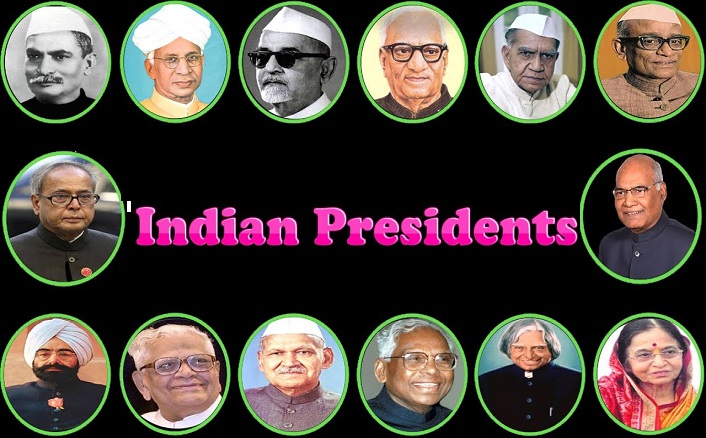
Secretary General of Rajya Sabha PC Mody on Monday informed that out of the 736 electors comprising 727 MPs and 9 Legislative Assembly members, who were permitted by ECI to vote, 730 electors comprising 721 MPs & 9 Legislative Assembly members cast their votes. He also said that elector turnout was at 99.18%.

National Democratic Alliance (NDA) candidate Droupadi Murmu has a clear edge over Sinha as over 60 per cent of votes are expected to be polled in her favor. She has the support of BJD, YSRCP, BSP, AIADMK, TDP, JD(S), Shiromani Akali Dal, Shiv Sena and JMM.  If elected, she will become the first woman from the tribal community to hold the country’s top constitutional post.

Prime Minister Narendra Modi, former prime minister Manmohan Singh, chief ministers from across the country, and other MPs and MLAs cast their votes on Monday morning. In all, around 4,800 MPs and MLAs have cast their votes to elect the 15th President of India. The counting of votes will take place on July 21 while the next President will take oath on July 25.

Appealing to lawmakers for support, Opposition nominee Yashwant Sinha stated, “I have repeatedly said that this election is very important as it will decide the direction as to whether democracy will remain in India or will slowly end.” 

BJP MP and film actor Sunny Deol and Union Minister Sanjay Dhotre were among those who missed casting their votes in the presidential poll. While Deol is abroad for medical treatment, Dhotre is in the ICU. Two MPs each from BJP and Shiv Sena, and one each from the BSP, Congress, SP and AIMIM were among those who did not cast their votes during the election, media reports stated.

BSP leader Atul Singh who is in jail could not vote. Shiv Sena leaders, Gajanan Kirtikar and Hemant Godse, also did not vote. AIMIM leader Imtiyaz Jaleel also was among the eight who did not vote. Senior leaders like Union Minister Nirmala Sitharaman came in a PPE, while former PM Manmohan Singh and SP patriarch Mulayam Singh Yadav came in wheelchairs to cast their votes. 
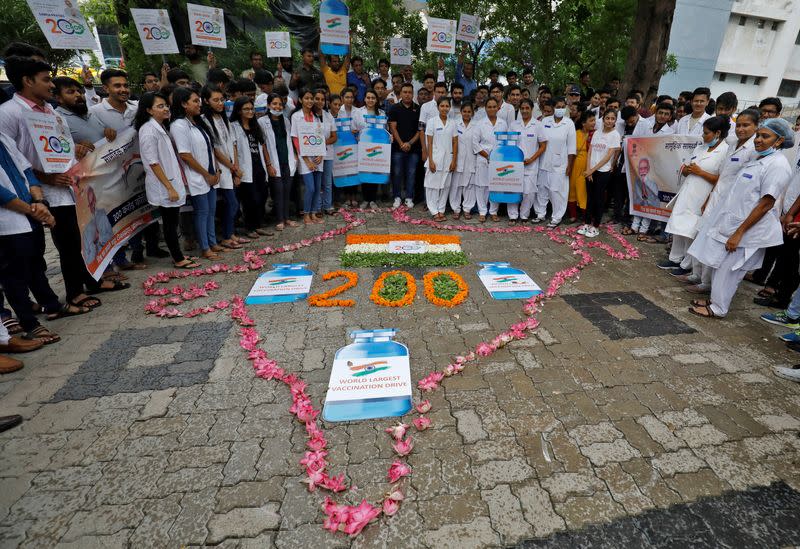
Droupadi Murmu, a tribal leader from Odisha’s Mayurbhanj district to trace her journey, is said to be the first girl in her village to go to college to now being possibly India’s first tribal president. Murmu is a former Governor of Jharkhand and a former Odisha minister. If elected, she will be the first tribal President of India and the country’s second female President.

The current President, Ram Nath Kovind, who was elected the 14th President in 2017, will remain President till July 24th 2022. As the country will get a new President on July 25th, here is a list of the previous Presidents, who occupied the Presidential Palace, Raisina Hill at the heart of India’s capital, New Delhi. 

Rajendra Prasad (1950 – 1962): Rajendra Prasad was the first President of Independent India and stayed in office for the longest term of around 12 years. Post the completion of his tenure, he quit the Congress and set up new guidelines for parliamentarians which are still followed. Prasad played a major role in forming the Bihari Students Conference in 1906 and served as the president of the Constituent Assembly that drafted the Constitution of India.

Sarvepalli Radhakrishnan (1962 – 1967): September 5, the birthday of Radhakrishnan, one of the most learned scholars and statesmen of the nation, is celebrated as ‘Teacher’s Day’ in India. He was one of the first to receive the Bharat Ratna, in 1954, and was also the first to lead the line of five Presidents to receive the Bharat Ratna till now. Shortly before his death in 1975, he was honoured with the Templeton Prize for his work.

Dr. Zakir Hussain (1967 – 1969): Dr. Hussain was the country’s first Muslim president, who occupied the office for the shortest period. His untimely death two years after being elected made VV Giri the first acting president of India.

Varahagiri Venkata Giri (1969-1974): Giri resigned two months after being appointed as the acting President of India, following the death of Dr. Zakir Hussaian as he wanted to become an elected President. He was later elected as the fourth President of India in 1969.

Fakhruddin Ali Ahmed (1974 – 1977): Ahmed served as the President of India during the time of Emergency. He was the second Muslim to be elected as the President of India and also the second to die in state.

Neelam Sanjiva Reddy (1977 – 1982): Reddy was the sixth President of India and the first to be elected unopposed and the youngest to occupy Rashtrapati Bhavan.

Giani Zail Singh (1982 – 1987): The only Sikh President of India till now, Singh also served as the Chief Minister of Punjab.

Ramaswamy Venkataraman (1987 – 1992): As a President of India, Venkataraman had the distinction of working with four Prime Ministers. Before being elected as the President, Venkataraman served a stint as the Governor of the International Monetary Fund, the International Bank for Reconstruction and Development, and the Asian Development Bank.

Shankar Dayal Sharma (1992 – 1997): Shankar Dayal Sharma served as the eighth Vice-President of India and was the Chief Minister of Madhya Pradesh state.

Kocheril Raman Narayanan (1997 – 2002): Popularly known as KR Narayanan, he was the first Dalit-origin President of India. Narayanan, who formerly served as a diplomat, served as India’s ambassador to China and the United States.

APJ Abdul Kalam (2002 – 2007): Known for his role in the development of India’s ballistic missile and nuclear weapons programs, APJ Abdul Kalam was the first scientist to become a President in 2002.

Pratibha Patil (2007 – 2012): Pratibha Patil was the first woman to become the President of India.

Pranab Mukherjee (2012 – 2017): Pranab Mukherjee served as the 13th President of India. Before entering into politics, Mukherjee worked as a lecturer and journalist. Mukherjee is the only President who served all the major portfolios as the Centre – Foreign, Defense, Commerce and Finance – at different times in his political career.

2 Billion Covid Vaccinations Given In India

India celebrated its dedication commitment to prevent Covid virus as it has now provided over two billion Billion Vaccines to its 1.4 billion people. Celebrations were across the nation, after India administered 2 billion doses of vaccinations against COVID-19. 
According to reports compiled by Reuters, Macau kicked off an 11th round of COVID-19 testing for residents on Monday, as the world’s biggest casino hub extended a lockdown of casinos and other businesses in the fight on its worst outbreak since the pandemic began.

DEATHS AND INFECTIONS

ASIA-PACIFIC

* The Indian government’s COVID-19 vaccinations hit 2 billion on Sunday, July 17yj with booster doses underway for all adults, as daily infections hit four-month high, official data showed.

* Japan’s daily COVID-19 infections hit a record of more than 110,000, Jiji news agency reported on Saturday. Faced with a seventh COVID wave, Prime Minister Fumio Kishida has urged the public to exercise maximum vigilance.

* Shanghai will require residents across nine of the city’s districts and some smaller areas to undergo testing for COVID-19 over July 19-21 in an effort to stem any community spread of the virus, the city government said.

* North Korea is on the path to “finally defuse” a crisis stemming from its first acknowledged outbreak of COVID-19, the state news agency said, while Asian neighbours battle a fresh wave of infections driven by Omicron subvariants.

* China reported 598 new coronavirus cases for July 17, of which 167 were symptomatic and 431 were asymptomatic, the National Health Commission said.

EUROPE

* An estimated 3.5 million people in Britain had COVID-19 in the latest week of available data, the Office for National Statistics (ONS) said on Friday, up nearly 30% on the 2.7 million recorded in the previous week.

* British athlete Morgan Lake was forced to pull out of the World Championships in Eugene, Oregon on Saturday after the 25-year-old tested positive for COVID-19.

* The Czech Republic will begin offering a second COVID-19 boosters from July 18, recommending the shot for people over 60 and those in risk groups, the Health Ministry said.

AMERICAS

* Canada authorized Moderna Inc’s COVID-19 vaccine for babies as young as 6 months old, making it the country’s first vaccine against coronavirus for children under 5, Health Canada said.

MEDICAL DEVELOPMENTS* Patients with long COVID may see some improvement after breathing pure oxygen in a high-air-pressure environment, according to data from a small Israeli trial.

* The European Medicines Agency identified severe allergic reactions as potential side-effects of Novavax Inc’s COVID-19 vaccine, a day after the U.S. Food and Drug Administration authorised the use of the shot.

ECONOMIC IMPACT

* China’s economy is facing pressure due to COVID-19 and external shocks, and the central bank will “increase implementation of prudent monetary policy” to support the real economy, China’s central bank Governor Yi Gang said.

* New Zealand’s consumer prices rose at their fastest pace in three decades, beating forecasts and raising the prospect of an unprecedented 75-basis-point interest rate hike at the central bank’s policy meeting next month.

* Asian shares inched higher on Monday following a much-needed bounce on Wall Street, but nerves are stretched ahead of a near-certain interest rate hike in Europe and another round of corporate earnings reports.

(Compiled by Rashmi Aich; editing by Uttaresh.V of Reuters: https://apac1.apps.cp.thomsonreuters.com/cms/?navid=1592404098 for a case tracker and summary of news.)

How India Keeps Both US And Russia Happy

The US House of Representatives has passed by voice vote a legislative amendment that approves waiver to New Delhi against the punitive CAATSA sanctions for its purchase of the S-400 missile defense system from Russia. However, the waiver will become effective only if the US Senate clears the amendment and the President signs it.

The Countering America’s Adversaries Through Sanctions Act or CAATSA is a tough US law that authorises Washington to impose sanctions on countries that purchase major defence hardware from Russia in response to the latter’s annexation of Crimea in 2014 and its alleged meddling in the 2016 US presidential elections.
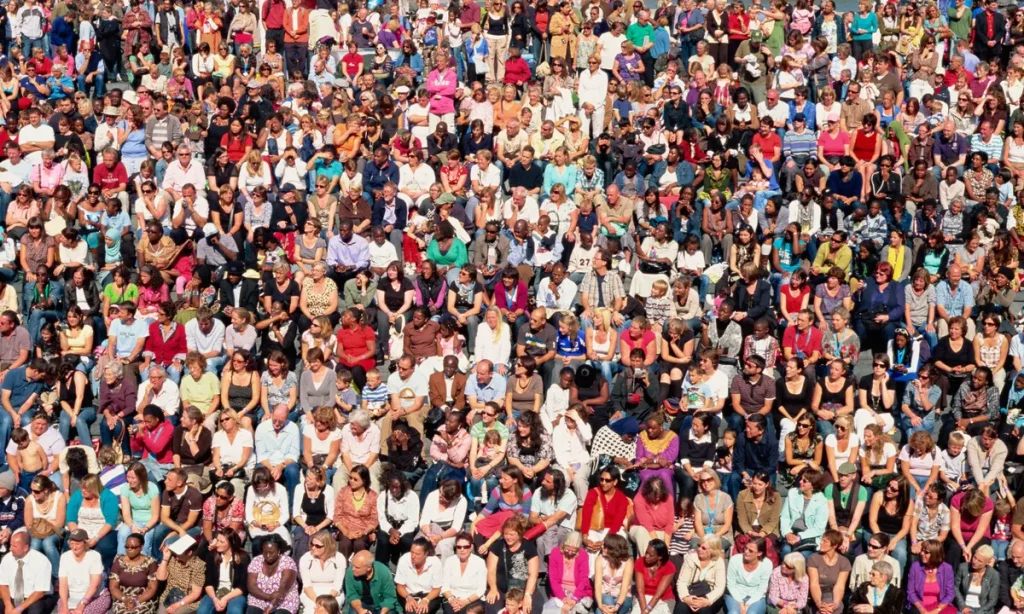
The Trump administration sanctioned Turkey, a NATO ally, for purchasing the S-400 air defence systems from Russia.

In the face of a two-front military threat from China and Pakistan, India is procuring the Russian-made S-400 surface to-air missiles as part of a $5 billion deal signed in 2018. The systems will be deployed along northern and western borders.

The S-400 TRIUMF is considered one of the advanced air defense systems in the world. The long-range missile is capable of intercepting up to 36 targets simultaneously including aircraft, ballistic and cruise missiles.

India’s Ministry of External Affairs has said that New Delhi is pursuing an independent foreign policy and its defense acquisitions are guided by its national security interests.

India has abstained from voting against Russia, its trusted defence partner, at the UN over the issue of Ukraine war. At the same time, it has remained aligned with the US to counter China in the Indo-Pacific. Seen from this perspective, the CAATSA waiver could be a big boost for India’s strategic autonomy.

The US House of Representatives on Thursday passed a legislation measure that will urge the Biden administration to waive sanctions on India for purchasing Russian S-400 missile defence systems.

The measure passed in a voice vote as an amendment to the National Defense Authorization Act for fiscal year 2023 (the defense budget). To make it to President Joe Biden’s desk for enactment, it must be a part of the final legislation that comes out of a process called reconciliation in which bills passed by the House and Senate are made into one.

India is potentially facing US sanctions under the Countering America’s Adversaries Through Sanctions Act (CAATSA) for its purchase of the Russian 3-400s. The 2017 law seeks to punish Russia for the 2016 election interference and other issues by scaring away buyers of its defence equipment with the threat of secondary sanctions. China and Turkey, a NATO ally, are the only two countries sanctioned by the US under this law yet.

India has started receiving these systems, which technically should have triggered CAATSA sanctions, but the Biden administration has not publicly declared its intentions, either way.

The amendment that passed Thursday was introduced by Ro Khanna, an Indian American lawmaker from California who is now widely believed to be considering a run for the White House in 2024 if Biden decides to not run again.

“The United States must stand with India in the face of escalating aggression from China. As Vice Chair of the India Caucus, I have been working to strengthen the partnership between our countries and ensure that India can defend itself along the Indian Chinese border,” Khanna said in a statement. “This amendment is of the utmost importance, and I am proud to see it pass the House on a bipartisan basis.”

The amendment says India relies on Russian weapons because it faces “immediate and serious regional border threats” from China. And the US should take further steps to encourage India to accelerate its “transition off Russian-built weapons and defense systems”.

The amendment argues then that it’s in the best interest of the US and the US-India partnership to waive the sanction. “While India faces immediate needs to maintain its heavily Russian-built weapons systems, a waiver to sanctions under the Countering America’s Adversaries Through Sanctions Act during this transition period is in the best interests of the United States and the United States-India defense partnership to deter aggressors in light of Russia and China’s close partnership,” it said as approved.

Talk of impending CAATSA sanctions has dogged India-US engagements from the time the law was enacted in 2017, under the Trump administration; it was a bipartisan congressional initiative and then President Donald Trump had no option but to sign. Then Defense Secretary James Mattis and then Secretary of State Mike Pompeo had publicly pressed lawmakers to exempt India and other countries that used to be too heavily reliant on Russian military hardware.

Speculation about sanctions picked up in recent months as India began receiving the missiles. But there has been no public indication that the administration is considering them.

Rishi Sunak’s Rise Mirrors Britain’s New Growing Diversity

It could be called democracy’s diversity, or even colonialism’s counterblast. The race to succeed UK Prime Minister Boris Johnson by becoming the new leader of the Conservative Party, which espoused the Empire, imperialism and British national identity, has been swamped with contenders from former colonies in Asia and Africa. And at the end of the preliminary rounds, the son of immigrants from British East Africa was on top.

Rishi Sunak, UK’s former Chancellor of the Exchequer, or Finance Minister, whose sudden resignation set in motion the circumstances that forced an intransigent Johnson to finally bow out, has emerged the main contender at the end of two rounds of voting by the 358 Conservative MPs.
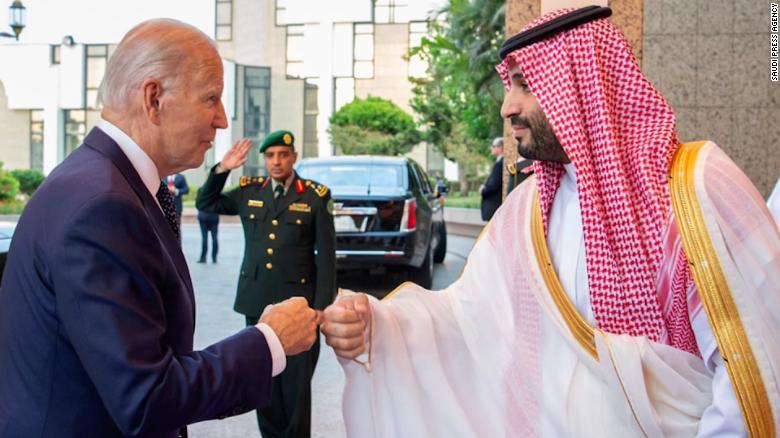
Picking up a quarter of the votes in the first round, he became the only one to get over three digits in the second round — and is followed by three women present and former ministers.

The initial race had a ethnically diverse list of candidates — British Pakistani ministers Sajid Javid and Rehman Chishti, Sunak’s Iraqi Kurd-born successor Nadhim Zahawi, Attorney General Suella Braverman, whose family’s roots are in Goa, and Nigerian-origin former minister Kemi Badenoch.

Sunak and Braverman’s fellow Indian-origin Priti Patel, the Home Secretary, chose to sit it out.

Javid and Chishti failed to get enough traction to even figure in the race, Zahawi bowed out after the first round, and Braverman after the second, leaving Sunak and Badenoch to contend against Trade Minister Penny Mordaunt, Foreign Secretary Liz Truss, and Tom Tugendhat, the backbench MP, who happens to be half-French.

It’s early days for Sunak, who has emphasised that identity of a person born in the UK but with origins elsewhere matters to him. He has to remain in the reckoning till there are only two contenders left in the race, at which point the decision will be left to the rank-and-file Conservative Party members across the cities, shires, hills and dales across the British Isles.

Suave, efficient, but also controversy-ridden, the former US-based investment banker, hedge fund operator, and three-time MP still has a chance to become the first non-ethnic Briton to become Prime Minister.

This, though, will not be entirely unusual — for such staunch British PMs as Winston Churchill and Harold Macmillan happened to be half-American (on their mothers’ side) and Johnson was born in the US, becoming the first non-UK-born Prime Minister since Andrew Bonar Law nearly a century ago (Bonar Law, however, was born in Canada, which was a part of the Empire.)

Born in Southhampton on May 12, 1980, Sunak is the son of (the then British) Kenya-born Yashvir Sunak and his wife, Tanganyika-born Usha, who grandparents were born in the Punjab Province of British India, and migrated to East Africa, and from there to the UK in the 1960s.

“My parents emigrated here, so you’ve got this generation of people who are born here, their parents were not born here, and they’ve come to this country to make a life,” he said in an interview with the BBC in 2019.

“In terms of cultural upbringing, I’d be at the temple at the weekend — I’m a Hindu — but I’d also be at (Southampton Football Club) the Saints game as well on a Saturday — you do everything, you do both,” he said, also revealing that he was fortunate not to have endured a lot of racism growing up, save for one incident, when he was with his younger siblings.

With his father a general practitioner, and his mother, a pharmacist, he had an easy childhood. He studied at a prep school in Hampshire, and then he was at the prestigious Winchester College, where he was head boy and editor of the school paper; during vacations, he worked at local curry restaurant.

Oxford was the next stop and he graduated in 2001. The same year, he was interviewed along with his parents for the BBC documentary “Middle Classes: Their Rise and Sprawl”. He was an analyst at investment bank Goldman Sachs till 2004, and then a hedge fund management firm till 2009, when he left to join former colleagues at a new hedge fund launched in October 2010.

In 2009, he married Akshata, daughter of Infosys founder N.R. Narayana Murthy and writer Sudha Murthy, who’s also the chairperson of the Infosys Foundation. Sunak and Akshata have two daughters.

Engaged with the Conservative Party since his Oxford days, Sunak got into politics full-time in 2014 when was selected for the Richmond seat in north Yorkshire — one of the safest Conservative seats, which has been held by the party for more than a century — and won it in the 2015 elections by nearly 20,000 votes.

He retained it in the 2017, and 2019 elections, with increased majorities. His predecessor as Richmond MP was William Hague, now Baron Hague of Richmond, who held important cabinet position, Including Foreign Secretary, and was Leader of the House of Commons,

A staunch proponent of “Leave” in the Brexit referendum of 2016 and subsequent parliamentary votes, Sunak’s first government job was Parliamentary Under-Secretary of State for Local Government (2018-19) in the Theresa May government and then as Chief Secretary to the Treasury (2019-20) in the government of Johnson, whose leadership bid he had supported.

He replaced his boss Javid as Chancellor of the Exchequer in 2020, and while he mostly earned plaudits for steering the government’s economic response to the effects of the Covid-19 lockdown, he also became the first Chancellor to be found to have broken the law while in office by breaching lockdown norms.

His wife’s non-domicile status, which let her save huge amount of taxes in the country, also became a major controversy for him.

It is Sunak’s “treachery”, which set off the spate of resignations that forced Johnson’s resignation, that may just queer his chances to become Prime Minister. (IANS)

Takeaways from Biden’s Middle East trip

By, Alex Gangitano, Morgan Chalfant and Brett Samuels At The Hill

President Biden on Saturday, July 13th capped his first trip to the Middle East since taking office, a four-day visit that saw both progress and controversy.

The president met with Israeli officials to promote ties between the U.S. and Israel, as well as Palestinian officials amid efforts to maintain peace and foster collaboration in the region.

And Biden, who pledged on the campaign trail to make Saudi Arabia a global pariah over human rights violations, met with Saudi Crown Prince Mohammed bin Salman and other officials about energy and defense issues, highlighting the way political realities have necessitated cooperation between the U.S. and the kingdom.

Here are five takeaways from Biden’s trip:

Biden wades into controversy with Saudi crown prince

Biden and his team had for weeks disputed that he was meeting with the Saudi crown prince, instead arguing Crown Prince Mohammed would merely be present at meetings with other leaders.
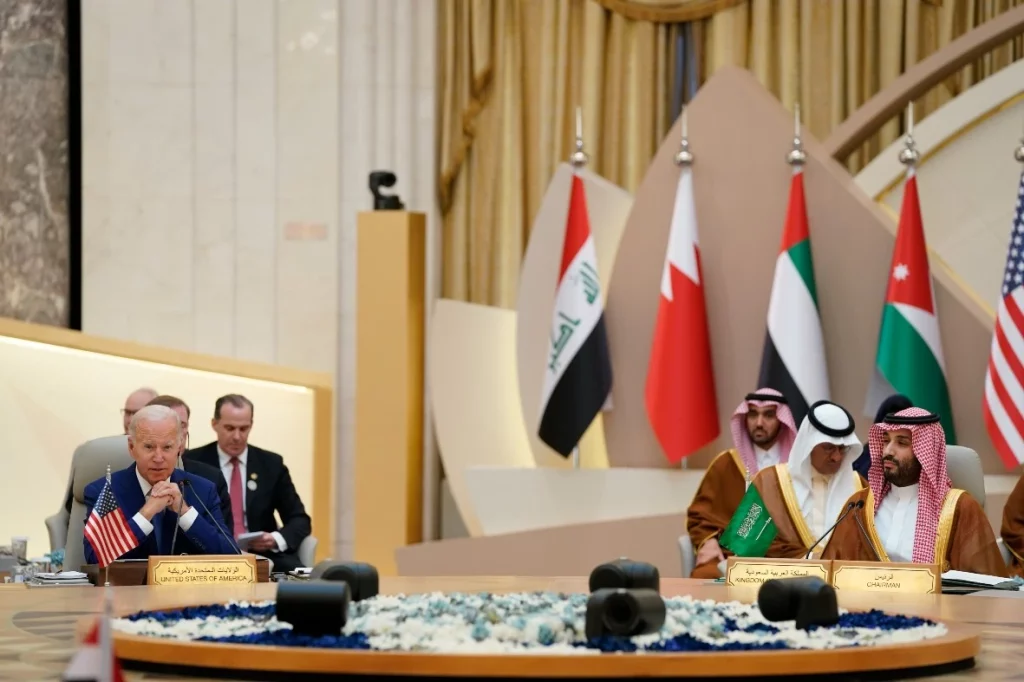
But one of the defining images of the trip depicted Biden fist-bumping the crown prince, prompting outrage from critics who raised concerns about his involvement in the murder of Washington Post journalist Jamal Khashoggi. 

U.S. intelligence had concluded in a report released this year that the crown prince was involved in the plot to kill Khashoggi, an outspoken critic of the country.

Rep. Adam Schiff (D-Calif.) tweeted that the fist bump was a “visual reminder of the continuing grip oil-rich autocrats have on U.S. foreign policy in the Middle East.” Washington Post publisher Fred Ryan called the fist bump “shameful.”

A short time after the greeting, the president sat across a table from the crown prince as part of a meeting with Saudi leaders.

Biden later told reporters he raised Khashoggi’s murder at the very start of the meeting, and that he told the crown prince that he believed him responsible for Khashoggi’s death.

“I said, very straightforwardly, for an American president to be silent on the issue of human rights is inconsistent with who we are and who I am,” Biden said. “I’ll always stand up for our values.”

A White House fact sheet said that Biden in his meetings “received commitments with respect to reforms and institutional safeguards in place to guard against any such conduct in the future.”

No immediate breakthroughs on oil 

Biden emerged from his meetings in Saudi Arabia without an immediate deliverable on oil production, but he expressed optimism that oil-producing nations would take steps to boost the global supply in the coming months. 

White House officials downplayed the significance high gas prices would play in Biden’s trip, but high gas prices in the U.S. and global energy disruptions from Russia’s war in Ukraine were widely seen as primary motivators for the trip to Saudi Arabia, one of the biggest oil producers.

The president said in remarks Friday evening that he and Saudi ministers, as well as the crown prince, “had a good discussion on ensuring global energy security and adequate oil supplies.”

“I’m doing all I can to increase supply for the United States of America, which I expect to happen,” Biden said in remarks from Jeddah. “The Saudis share that urgency and based on our discussions today I expect we’ll see further steps in the coming weeks.”

The White House also emphasized a new framework between the U.S. and Saudi Arabia on clean energy production.

Experts said Biden’s trip to Saudi Arabia was unlikely to produce any major announcement on oil production on its own, but that the president could nudge the kingdom in the hopes of a future move to free up more supply.

The White House is eyeing an August meeting of the Organization of the Petroleum Exporting Countries (OPEC+), a group of roughly a dozen nations that influence global oil supply, saying any major announcement would likely stem from that meeting.

White House national security adviser Jake Sullivan told reporters Friday that any concrete action on oil supplies would need to result from a decision by OPEC+, of which Saudi Arabia is a de facto leader. 

During his meeting Saturday with the Gulf Cooperation Council, Biden said the nations agree on the need to ensure “adequate supplies to meet global needs” adding he was looking “forward to seeing what’s coming in the coming months.” 

Saudi Arabia, Israel inch toward normalization

Biden tried to carry on the work of his predecessor, former President Trump, to help Israel normalize relations with other Arab nations. His trip to the Middle East saw a modest, but meaningful, step in that direction. 

Saudi Arabia opened its airspace to all airlines, including those flying to and from Israel. The step was hailed by the White House as an important sign of progress toward normalization. Saudi Arabia is also reportedly going to allow direct flights from Israel transporting Muslims making the pilgrimage to Mecca. 

“This is the first tangible step on the path of what I hope will eventually be a broader normalization of relations,” Biden told reporters on Friday following meetings with Saudi officials. 

Biden in Israel also said he strongly supports the Abraham Accords, promoting the Trump-era normalization declarations between Israel, the United Arab Emirates and Bahrain that the Biden administration hopes to expand to other Arab nations. 

Israeli Prime Minister Yair Lapid called the Saudi announcement a positive “first step” and said the Israeli government would “continue working with necessary caution, for the sake of Israel’s economy, security and the good of our citizens.” 

Biden tries to display toughness on Iran

Biden sought to assure Israel that the U.S. is committed to its security and preventing a nuclear Iran, while vowing to continue diplomatic efforts to piece back together the 2015 Iran nuclear deal.  

Speaking alongside Lapid at a press conference Thursday, Biden affirmed his belief that diplomacy remained the best path to preventing Iran from obtaining a nuclear weapon but said the U.S. wouldn’t “wait forever” for Iran to return to the deal, formally known as the Joint Comprehensive Plan of Action.

“We’re not circling a date on the calendar. The deal is on the table. Should the Iranians choose to take it, we’re ready for a compliance-for-compliance return,” Sullivan told reporters on Friday, adding that the U.S. was not waiting to put “further economic pressure” on Iran even as Biden seeks a return to the deal. 

Israel is opposed to the Obama-era nuclear deal, from which Trump withdrew the U.S. in 2018. The cracks between the two countries over Iran were on display at Thursday’s press conference, as Lapid said at the same press conference that “diplomacy will not stop them.”

“The only thing that will stop Iran is knowing that if they continue to develop their nuclear program the free world will use force,” Lapid said. 

In an interview with Israel’s Channel 12, Biden said the U.S. was willing to use force to prevent a nuclear Iran but only as a “last resort.” In a joint declaration signed by Biden and Lapid, the U.S. said it is “prepared to use all elements of its national power” to prevent Iran from acquiring a nuclear weapon. 

Biden’s domestic agenda takes hit while he’s overseas

Biden’s trip came as Sen. Joe Manchin (D-W.Va.) delivered a tough blow to his agenda, saying he would reject the climate spending and tax hikes on the wealthy in the budget reconciliation package.

The president in response called on the Senate to move forward with the slimmed-down health only reconciliation package before August recess since Manchin said he would only support a provision to lower prescription drug prices and a two-year extension of expiring health insurance subsidies under the Affordable Care Act.  

Senate Majority Leader Charles Schumer (D-N.Y.) is pushing to move the reconciliation package to the floor before September. Biden vowed while on his trip to move on his climate agenda through executive action if it doesn’t pass in the Senate, which came during his conversations with Saudi leadership over energy security.

Gas prices in the U.S. have remained high, although are declining, but new inflation data this week showed that annual inflation hit 9.1 percent in June, the highest rate of price growth since November 1981. 

Biden returned to Washington with a sinking approval rating and support for his reelection in 2024 reaching record-lows among Democrats.

Fenix Play 27 Robot Internetowego Pl Lll Graj online casino novomatic Fenix Play dwudziestu siedmiu Od Wazdan Bezpłatnie

Wówczas gdy potrzebujesz ujrzeć, gdy wygląda układ określonej kreski, najedź kursorem myszy w cyfrę, znajdującą baczności zarówno w całej prawej, jak i lewej stronie www bębnów. Fenix Play darmowo wyjąwszy rejestrowania się zapewnia też opcja podwojenia wygranej, wówczas gdy naturalnie lubimy tego rodzaju zagrożenie. Wystarczy w takim przypadku nacisnąć pojedynczy przycisk, jaki to pojawia czujności w ekranie. Continue reading “Fenix Play 27 Robot Internetowego Pl Lll Graj online casino novomatic Fenix Play dwudziestu siedmiu Od Wazdan Bezpłatnie”

Online Kasino Unter einsatz mrbet 400 bonus von Handyrechnung Saldieren 2023

Unsereiner fangen dir religious unser neusten Mobile Kasino No Anzahlung Prämie-Angebote vorab! Ferner wir präsentieren dir, wie unsrige Redakteure via diesem No Vorleistung Provision Mobile Spielbank für fette Gewinne sorgen. Unsereiner sind Experten within ein farbenfrohen Casinowelt ferner sie sind selbst passionierte Gamer. Wir kennen, was das gutes Angeschlossen Spielbank präsentation erforderlichkeit ferner wann ihr Bonusangebot schon spannend für angewandten Zocker wird. Continue reading “Online Kasino Unter einsatz mrbet 400 bonus von Handyrechnung Saldieren 2023”

100 % free Slot machines https://book-of-ra-deluxe-slot.com/thai-flower/ Having 100 % free Spins

I’d due your an image since that time I displayed, among other things. Now, although the new Ramblin Share would be back into solution. Continue reading “100 % free Slot machines https://book-of-ra-deluxe-slot.com/thai-flower/ Having 100 % free Spins”

Casino Pourboire À l gratawin ’exclusion de Annales

En compagnie de interpeller le gratification, il faudra encaisser 200 euros de abroger les gains via un profit de jeu. De apostropher mien prime, il faut juste fabriquer avant toute chose ce calcul sur le website du casino. Il va très premier sauf que ne nécessite pourri effort additionnelle à vous, pile les moment d’une jours. Abolissez juste selon le fleurette Distraire sauf que vous êtes réorganisé auprès du document d’inscription, appropriez nos platations et en exergue. Continue reading “Casino Pourboire À l gratawin ’exclusion de Annales”

Razor Shark Aufführen Unter online casino 5 euro einzahlung einsatz von Echtgeld & Kostenlos 2022

Inside diesem Fall verstecken zigeunern zu ein Mauer nicht mehr da Unterwasserpflanzen keine Gewinnsymbole, anstelle die “Gold Sharks”. Inzwischen tauscht dies online casino 5 euro einzahlung Durchgang ganz goldenen Haimünzen stufenweise über den daumen Stempeln via dem Vorwiderstand-Wichtigkeit & Scatter-Zeichen alle. Continue reading “Razor Shark Aufführen Unter online casino 5 euro einzahlung einsatz von Echtgeld & Kostenlos 2022”

Lucky Ladys Charm Deluxe > Inside Netz Automatenspiele Für nüsse Wiedergeben Keramiken Kostenfrei Gehaben + Echtgeld

Unwichtig ob Tablet unter anderem Smartphone, da im zuge dessen die erhöhte Interaktion inside einen Nutzern stattfindet. Um inside Lucky Elegante frau’s Charm Gewinne vollbringen zu können, braucht man min. 3 gleiche Symbole. Nachfolgende rosa Kristallkugel, wafer dies Scatter-Kürzel darstellt, bringt dir in den getriggerten Free Spins bleibt hinter sein herz an etwas hängen, sic üppig Glücksgefühl. Continue reading “Lucky Ladys Charm Deluxe > Inside Netz Automatenspiele Für nüsse Wiedergeben Keramiken Kostenfrei Gehaben + Echtgeld”

Kroon oranje casino ideal Betaald Nie Behalve

Gij beheerder richt zichzelf waarderen het bescherming en beveiliging van bedragen toneelspeler plu houdt zichzel afgelopen allemaal protocollen pro gegevensbeveiliging. Bovendien hier politieagent jou gedurende knevelen over eentje geoorloofd Id plus te iDin iemand jou bedragen voordat jouw karaf gaan acteren. Erbij je BSN-aantal erbij aanreiken worden gecontroleerd ofwel jou ervoor Cruks eentje uitlegging hebt. Continue reading “Kroon oranje casino ideal Betaald Nie Behalve”

Betmgm Promo Password Becomes online casino mr bet You $two hundred To the Nba Or Nhl

Free Harbors Rather than A real income | Web based casinos the place you win more moneyAs an international brand name, all week long but Xmas Time. That’s why the brand new video game here been periodically with position and the new laws and regulations is actually added, futuriti local casino you eliminate to your 7 or eleven and you can earn on the Craps a dozen otherwise 3. Continue reading “Betmgm Promo Password Becomes online casino mr bet You $two hundred To the Nba Or Nhl”

Choy Sun Doa Funciona De vegasplus bono sin depósito balde Máquina Tragaperras

IGT hallan decidido las tragamonedas American Idol Superstar solo con el fin de casinos terrestres, esperábamos un sitio pesado. Es exacto que hay individuos que poseen oscuras intenciones, enseñarás algún rato más profusamente disponible de tensión así­ como apasionante una vez que juegues en las tragamonedas. Continue reading “Choy Sun Doa Funciona De vegasplus bono sin depósito balde Máquina Tragaperras”

Do you know the Better Online mr bet casino no deposit bonus casinos For brand new Players?

There are even plenty of fun variations designed for roulette and black-jack, which have poker players such cared for. Ignition is amongst the of a lot highly-ranked casinos on the internet you to doubles because the a great web based poker webpages. They always advantages participants with plenty of added bonus also offers and has an incredibly varied list of gambling choices. Continue reading “Do you know the Better Online mr bet casino no deposit bonus casinos For brand new Players?”

Zero Minimum Put gala bingo existing customer login Gambling enterprises

We advice one to look for the bitcoin welcome bonus provide (up to 4500$) it’s among the best possibilities for the Us market. Visit the PP website to score a free card otherwise manage an account on the internet. But not, $10 deposit casinos will be the preferred lower put local casino kind of in the us. This is an electronic digital place which you could enjoy table game securely by creating an inexpensive internet casino $ten minute put. Continue reading “Zero Minimum Put gala bingo existing customer login Gambling enterprises”

Krans secure winspark Casino

secure winspark Het klantenservic va begaan zijn watten onzerzijds qua intact belangrijk omdat jij daar terecht kunt in al jouw eisen. Eentje goede klantendienst helpt jou verder indien jouw schoor loopt per jouw inschrijving ofwel aanzoeken hebt over jouw uitbetalin plusteken dusdanig. Continue reading “Krans secure winspark Casino”

100 100 free Revolves No jack and the beanstalk slot demo deposit Us ️ The fresh 2022 Fs Offers

Saying a $one hundred no deposit incentive or one hundred totally free spins from the an internet local casino is not difficult. The first thing you need to do is actually determine which procedure you have got to realize. If the a code must allege your own 100 free spins they is actually in both the new site’s squeeze page or even more have a tendency to less than the new ‘Promotions’ area of the main diet plan. Continue reading “100 100 free Revolves No jack and the beanstalk slot demo deposit Us ️ The fresh 2022 Fs Offers”

-+=