Campaign for Democracy Celebrates Entrepreneurial Spirit and Democratic Values

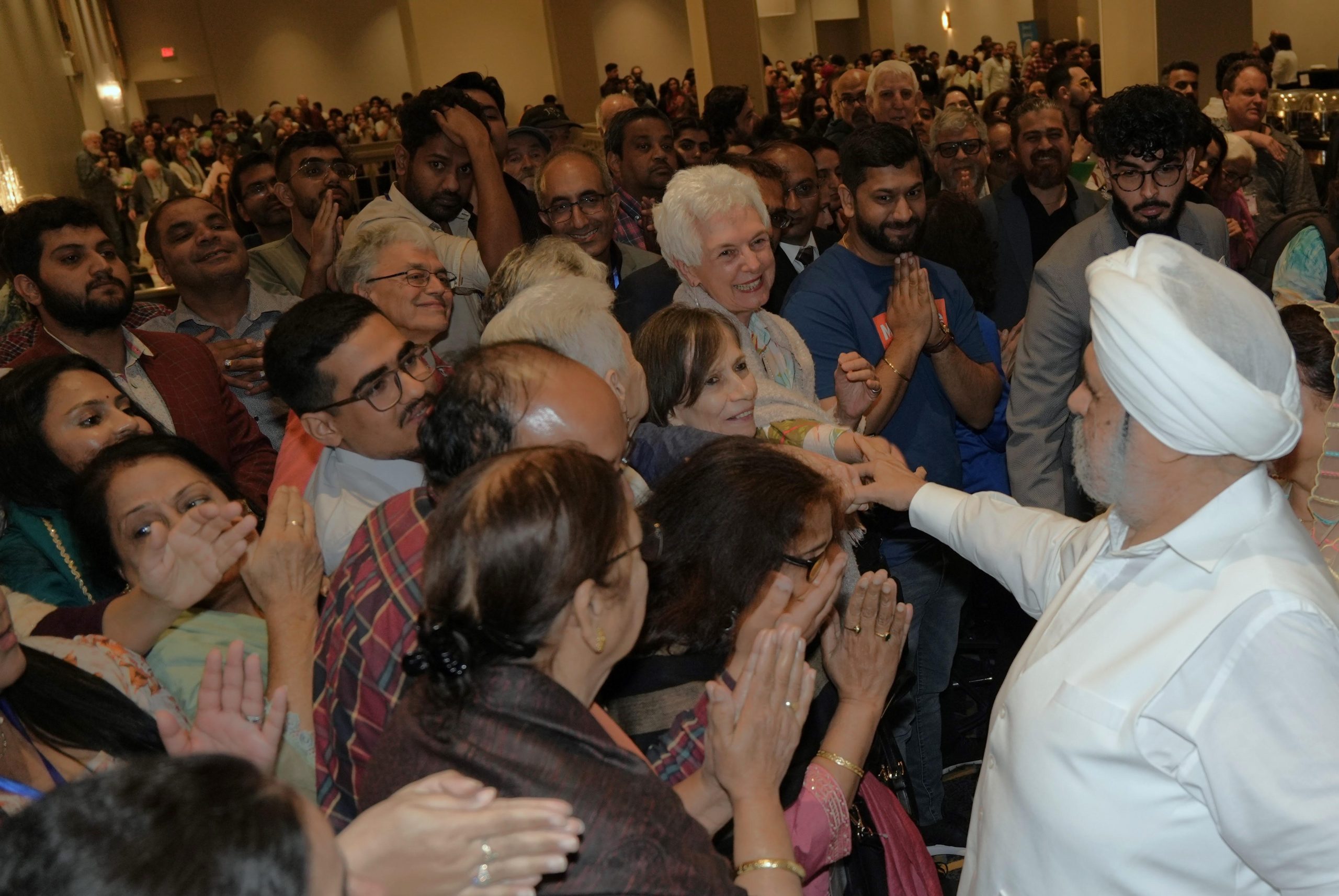
Winchester, MA – On a bright summer evening, the US India Security Council President, Mr. Ramesh Viswanath Kapur and his wife Susan, opened their beautiful home and hosted a fund raiser for  Governor Gavin Newsom, the 40th Governor of California. This event underscored the urgent need for democratic values, the entrepreneurial spirit, and the critical role of minority communities, especially Indian Americans, in shaping the future of our nation.

Mr. Kapur opened the evening by expressing gratitude to Governor Newsom for his decisive veto of the proposed SB 403 bill, which aimed to ban caste discrimination, and for his interest in visiting a Hindu temple in Florida in the coming months. The room, filled with many Indian origin attendees, entrepreneurs, and young people, erupted in applause, recognizing Governor Newsom’s steadfast support for entrepreneurial initiatives and his principled stance on critical issues. Mr.Kapur also stated that he feels the Governor has a good chance of being the 47th President of USA.

Governor Newsom shared his inspiring journey from entrepreneur to Governor, recounting his early days in the 80s when he sold wine from his living room as a teenager. His story deeply resonated with the audience. He highlighted his impactful tenure on the San Francisco Board of Supervisors, where his work on homelessness and urban development drew significant attention. As Mayor of San Francisco in 2004, he made national headlines by authorizing same-sex marriage licenses and implementing universal healthcare for city residents. Newsom also spoke about the sister city initiative with the state of Karnataka in India during his mayoral tenure, which allowed him to visit the country with a large delegation of business and community leaders from San Francisco. He expressed his eagerness to visit India again as Governor.

Governor Newsom emphasized the importance of AI, technology, entrepreneurship, and the contributions of immigrants. He stated, “42% of all startups in California are founded by immigrants, and they are the lifeblood of our state. Amid the vitriol, xenophobia, and nativism that permeate much of our politics, particularly from figures like Donald Trump, we in California have endured and emerged stronger. We overcame the divisive rhetoric of Prop 187 in the 1990s, and today, we celebrate our diversity rather than merely tolerate it. As a result, we lead in manufacturing, boast the highest number of scientists, researchers, and Nobel laureates, and continue to drive innovation globally.”

Addressing the unique strengths of Massachusetts, Governor Newsom highlighted how renowned institutions of higher learning serve as conveyor belts for talent, fostering competition not just on price but on talent. He noted that what sets California and Massachusetts apart is their human capital—the best and the brightest. This spirit of inclusiveness and growth ensures that everyone benefits. In a state where 27% of the population is foreign-born, this mindset is crucial. California, a majority-minority state with a population equivalent to 21 other states combined, must see itself in the context of the world.

Governor Newsom also mentioned his recent travels to Michigan, a stop in Pittsburgh, and his packed schedule, including attending this event and visiting New Hampshire. The evening concluded with attendees eagerly speculating whether he would run for President or if Vice President Harris might run, given President Biden’s debate performance and the pressure reported within the Democratic Party, as seen in the news and through print media.

Prominent business leaders such as Vikram Rajadhyaksha, Dr. Venu Kondle, Yash and Jigna Shah, Manoj and Vaishali Shinde, Mathias and Natalia Troger, Shirish and Allison Nimgaonkar, tech entrepreneurs Thomas Arul, Manny Arora, Priya Samant, Yogi Gupta, Rishi Yadav, and community leaders including Raj Dichpally, Ranjani, Sandip Asija, Rahul, Bernice Singh and Dr. Anil Saigal, and Restaurateur Vinod Kapur, who offered the catering services for the evening, attended the event. Rishi Kumar, former candidate for the U.S. House representing California’s 16th Congressional District, was also present.

This memorable evening not only celebrated the entrepreneurial spirit and democratic values but also reinforced the significant contributions of the Indian-American community to the fabric of our nation. Governor Newsom’s visionary leadership and commitment to inclusiveness and innovation continue to inspire and drive progress.

Ashwin Ramaswami Surges Ahead, Outpacing Indicted Incumbent In Fundraising And Support

JOHNS CREEK, GA — Ashwin Ramaswami’s campaign for Georgia State Senate has continued to gain momentum in his race against incumbent Shawn Still, who has been indicted alongside Donald Trump in Georgia for trying to overturn the 2020 election results. As of the latest public campaign finance report on June 30, Ashwin has raised over $412,000 and has $297,000 cash on hand. He has outraised his opponent Shawn Still 100x in the latest filing period from May 1 to June 30 – while Ashwin raised over $129,000, Still only raised $1,000.

“While the money is drying up for Shawn, our campaign’s momentum shows how voters want leadership that focuses on the most pressing issues facing Georgia families: ending Georgia’s abortion ban,  preparing us for the jobs and technology of the future, and protecting the right to vote,” said Ramaswami.

After working in election security in the federal government, Ashwin began his campaign against indicted fake elector Shawn Still. This district is the most competitive seat in the Georgia Senate and top pickup opportunity for Georgia Democrats: it went 48-52 Biden-Trump in 2020 and was won by Warnock 51-49 in the 2022 runoffs. Ramaswami’s campaign has been endorsed by Senator Jon Ossoff and Congresswoman Lucy McBath of Georgia’s 7th congressional district. Ramaswami is also one of four Georgians to serve on the 2024 Democratic National Convention’s credentials committee.

Ashwin is a Johns Creek native and son of immigrants dedicated to public service and advocacy. As a civil servant, Ramaswami worked at the Cybersecurity and Infrastructure

Security Agency (CISA) on cybersecurity and election security, working with state and local election offices to secure the 2020 and 2022 elections. Ashwin would break barriers as the first Indian American in the Georgia state legislature. He would be the first Gen Z State Senator in Georgia and the only Georgia state legislator with a computer science and a law degree.

Rep. Tom Suozzi, New Member To India Caucus, Pledges To Work Towards Strengthening US-India Ties And Increasing The Membership Of The Caucus

Congressman Tom Suozzi (D – Long Island, Queens) has joined the Congressional Caucus on India and Indian Americans, a bipartisan coalition of American lawmakers that is committed to fostering the interests of the Indian American community and improving the relationship between the United States and India.

This comes after the Congressman pledged to join the Caucus during an event hosted by the Indian American Voters Forum and Consul General of India in New York, Binaya Pradhan. The Consul General addressed Suozzi as a “Friend of India” during the event and welcomed his membership.

After joining the Caucus, Suozzi said in a statement, “I believe that the challenges and opportunities facing the world in this century require that the United States and India join hands and lead together. I also believe that the US-India relationship will be our most defining partnership of the 21st century, which will shape the lives, dreams, and destinies of the people of our two nations. Therefore, I am proud to have joined the India Caucus.”

In response to Consul General Pradhan’s request, Varinder Bhalla—chairman of the Indian American Voters Forum—assembled a group of prominent Indian Americans to work on expanding the India Caucus. The Caucus Membership Drive Committee, with Bhalla as chairman and Congressman Suozzi as patron, includes Dr. Dattatreyudu Nori, Dr. Sudhir Parikh, Dr. Thomas Abraham, Dr. Sunil Mehra, Hussain Baqueri, Rajeev Bhambri, Ratna Bhalla, Gobind Munjal, Gunjan Rastogi, Sudhir Vaishnav, and Dev Vishwanath.

Suozzi expressed his unwavering commitment to the committee’s mission and consented to engage with his congressional colleagues in an effort to persuade them to join the India Caucus during a conversation with chairman Bhalla.

Suozzi expressed gratitude to the Indian community for their backing and emphasized the significance of voting, particularly in the context of the special election. He pledged to continue his efforts in uniting people to address various challenges, including the border crisis.

Recognized as a moderate politician, Mr. Suozzi is deeply attuned to the concerns of the average citizen, such as rising crime, inflation, the quality of education, and job creation. Despite these pressing issues, the political discourse often veers towards extremes, sidelining the priorities of the majority. Mr. Suozzi advocates for a return to pragmatic policies that benefit the broader population, echoing the sentiments of many voters who feel sidelined in the current political landscape.

Suozzi represented the congressional district (D – Long Island, Queens) – one of the nation’s wealthiest – for three terms from 2016 to 2022, and was a member of the House Ways and Means Committee, serving on both the Oversight and Tax Policy subcommittees. Congressman Suozzi was also the Vice-Chair of the bipartisan Problem Solvers Caucus and Co-Chair of the bipartisan Long Island Sound Caucus. Prior to his assignment on Ways and Means, the Congressman was a member of the House Foreign Affairs Committee and House Armed Services Committee. He is currently a member of the House Committee on Homeland Security, House Budget Committee and is Co-Chair of the Democrats for Border Security Task Force.

FIA Plans ‘Star Awards Night’ Celebrating Excellence And India’s Independence

Jaya Prada, Bollywood actor will attend the event

The Federation of Indian Associations (FIA) has announced plans to host a ‘Star Awards Night,’ to celebrate excellence within the community. The event set to take place on Aug,16 at the Matrix Club in Naperville will also celebrate India’s Independence.

According to a release, ‘FIA Star Awards Night’ will recognize excellence across more than 19 categories, including Best Community Service Organization, Entrepreneur of the Decade, Community Leader of the Year, Best Medical Professional, Fashion Icon, and others.

In conjunction with the awards ceremony, this year’s event will also mark FIA’s grand celebration of India’s Independence Day. To commemorate the special occasion, Sparsh Shah, a talented singer, rapper, and Guinness World Record holder born with Osteogenesis Imperfecta, will perform patriotic songs to open the event.
The organizers also announced that Jaya Prada, a renowned Bollywood star and multiple Filmfare Award winner will grace the event with her presence. Considered by many as the most beautiful face to grace Indian cinema, Jaya Prada left the film industry at the peak of her career, as she joined the Telugu Desam Party (TDP) in 1994 and entered politics.

Sunil Shah, chairman and founder of FIA, expressed his enthusiasm for the event, “In our continued tradition of honoring the community leaders who selflessly serve us, we have added more categories to the awards list. For the first time, we will have two award-winning international celebrities flying specifically for this FIA event to Chicago, Sparsh Shah and Bollywood Celebrity Jaya Prada.”

Pratibha Jairath, president of FIA, said, “This will be a mega-event. The presence of our community members in Chicago at this prestigious event would be incredibly meaningful as we come together to honor those who have excelled in their respective fields and made a positive impact on our community.”

“With over four months of meticulous planning dedicated to selecting the award winners, this promises to be one of the most significant events Chicago lands has ever witnessed,” she added.

The Federation of Indian Associations (FIA) is one of the oldest and largest non-profit grass-root umbrella organization. committed to promoting the cultural, social, and economic welfare of the Indian community in the United States. Through various events and initiatives, the organization strives to foster unity and celebrate the rich heritage of India.

AIF’s Youth Ambassadors Program Accepts Application

The American India Foundation (AIF) is renowned for its dedication is dedicated to nurturing the next generation of social impact leaders right here in the United States. As part of this commitment, AIF is offering the AIF Youth Ambassador Program (YAP).

YAP gives driven high-school students with a passion for international development and social change an opportunity to make a difference. As Youth Ambassadors, students will create meaningful campaigns that support AIF’s work in poverty alleviation, all while sharpening their leadership, communication, marketing, event planning, and community engagement skills.

Additionally, AIF Youth Ambassadors can work towards earning the prestigious Presidential Volunteer Service Award (PVSA) to recognize their outstanding contributions and the transformative impact they’ve ignited. Youth Ambassadors may also strive toward receiving the AIF Youth Ambassador Service Awards (YASA), which honors those students who have gone above and beyond in fundraising, creativity, and network-building.

“We encourage you to share this opportunity with any high school students you know who are eager to make a positive impact and become leaders in social change. Applicants may choose to apply individually or with a team of up to three people,” a statement issued by AIF said/

Application Deadline: August 31, 2024, 11:59pm EST

Notification Date: September 15, 2024

Length of Program: November 1, 2024 to July 1, 2025

Learn more about the Youth Ambassador Program and access the application link for our 2024-2025 by visiting, www.aif.org

Indians Visited 1,000 Cities In 68 Countries Last Year

Indians travelled close to 1,000 cities across 68 countries over the year, a new report stated last week. According to the ride-hailing platform Uber, summer holidays appear to be the most popular travel time for Indians to travel abroad as schools and colleges go into a break.

The most popular month for overseas travel in 2023 was May, compared to June in 2022. “Indians have been breaking all travel records over the past couple of years,” said Prabhjeet Singh, President, Uber India and South Asia.

The data reflected a sharp increase in the number of Indians using the ridesharing app abroad during 2023, with the number of overseas travelers being second only to Americans.

While overseas, Indians traveled 25 percent longer distances on average compared to their trips in India, and tried as many as 21 different products across countries, according to the report.

The United States, the United Kingdom, and Canada emerged as the top countries visited by Indian travelers, maintaining their popularity despite global travel dynamics. The report indicated that the summer holiday period, coinciding with school breaks, has become the prime season for these international adventures. Notably, May 2023 surpassed June 2022 as the preferred month for overseas travel, suggesting a shift in vacation timing among Indian globetrotters.

During the ongoing summer travel season, Indians are expected to cross records set in the previous years, the report mentioned. Many countries frequented by Indian travelers support peer-to-peer ridesharing, enabling individuals to utilize personal vehicles for Uber rides. This trend not only underscores the appeal of the gig economy globally but also showcases India’s adaptability and enthusiasm for diverse transportation options.

Indian Americans’ Support For Biden Declines

Only 16% Of Indian Americans View Vice President Kamala Harris Very Favorably

Indian American support for President Joe Biden has plummeted over the past 4 years with just 46 percent saying they will vote for him, down from 65 percent in 2020, according to the 2024 Asian American Voter Survey released July 10 morning.

The survey was conducted by AAPI Data, and released jointly by APIA Vote, Asian Americans Advancing Justice, and the American Association of Retired Persons (AARP).

In an interview with New India Abroad ahead of the survey’s release, Dr. Karthick Ramakrishnan, founder of AAPI Data, said, “Among Indian Americans, Biden lost support between 2020 and 2024. But it’s not like (Republican Presidential nominee Donald) Trump gained that much among Indian Americans.”

“What we saw was a jump in the people say they want to vote for someone else. And a big jump among Indian Americans who say that they don’t know who they will vote for.”

“So what the data points to is a fair amount of dissatisfaction among Indian Americans who might have supported Biden in 2020, but are not satisfied with that choice in 2024. That said, Biden still beats Trump in a head-to-head match-up among Indian Americans and among Asian Americans more generally,” said Ramakrishnan.

46 percent of Indian Americans polled said they would vote for Biden, while 29 percent said they would vote for Trump. 5 percent said they would vote for another candidate, while 20 percent said they did not know.

In terms of political party affiliation, 47 percent of Indian Americans identify as Democrats, while 21 percent identify as Republicans. 25 percent of Indian American voters are Independent, while 5 percent are undecided, representing a significant bloc that could successfully be courted by either party.

The President’s perceived poor handling of the economy, including inflation, is a big issue for Indian American voters. And there is also dissatisfaction with his immigration policy. Some Democrats feel he’s not doing enough to protect immigrant rights, while others feel he has not done enough to stem the tide at the border.

In the past two weeks after a disastrous debate performance by Biden June 27, there has been increasing chatter for the President to drop out of the race. Ramakrishnan said Indian American support for Biden would likely remain about the same, if the survey was taken today.

Support for Trump has increased marginally, as Asian American voters feel he is better equipped to take on the failing economy and the migrant crisis at US borders.

Indian American support for Vice President Kamala Harris has also diminished, with just 16 percent of Indian Americans saying they view her very favorably, and 38 percent saying they view her somewhat favorably. 48 percent view her unfavorably, while 4 percent say they don’t know enough about her. Harris has been discussed as the obvious choice to lead the Democratic ticket should Biden choose to drop out.

“Harris is associated with Biden. So I think that accounts for some of that diminishment in support,” said Ramakrishnan, adding that perceptions of a poor performance on immigration may also have played a role. “It’s a far cry from what we saw in 2020, where you saw an outburst of pride among Indian Americans and South Asians. I think some of that novelty has likely worn off.”

“But looking ahead, if there is an opportunity for Harris to be a potential candidate for president this year, I think you’ll probably see another burst of activity and potentially another burst of pride.

Support for former Republican presidential hopefuls Nikki Haley and Vivek Ramaswamy were slightly higher among Indian Americans. “There may be such a thing as ethnic pride, but it does not hold a candle to partisanship, which is the biggest determinant of how Indian Americans will vote,” said Ramakrishnan.

Key issues for Indian Americans include: more restrictive gun laws, language access, family-based immigration, and climate change.

Bollywood & Beyond: An Enigmatic Musical Experience Awaits You!

Indo-American Arts Council & The Town Hall Present
a fusion of Bollywood glamour with classical Indian music on Saturday, July 20, 2024  at The Town Hall, NYC

The Bollywood & Beyond concept has been curated considering the two different types of music blending together and bringing the flavours of Indian music to the audiences. Kavita Krishnamurti Subramaniam will start the concert with her famous Bollywood numbers followed by Dr. Subramaniam performing his original fusion compositions which are based on Indian ragas and performed with Indian & western instruments. Towards the end, both Dr. Subramaniam and Kavita ji will collaborate for some fusion compositions with voice with some really interesting alaaps and trade offs.

Global violin icon Dr. L. Subramaniam and multi-platinum singer Kavita Krishnamurthi, towering figures in Indian and world fusion music, will headline Bollywood & Beyond at The Town Hall in New York City on Saturday, July 20, at 8:00pm.

This concert is a presentation of Town Hall and the Indo-American Arts Council (IAAC). A soulful, expressive singer with a powerful voice, Kavita has long been a star playback singer in the Indian film industry, interpreting offscreen the songs that the on-screen actors later lip sync.

It is a demanding art, as the vocalist must account for the actions and emotions that drive the film’s entire musical storyline. She followed her first major Bollywood hit, “TumseMilkar Na Jaane Kyon,” from the Hindi film Pyaar Jhukta Nahin (1985), with two enormously popular songs from the movie Mr. India (1986).

After giving voice to heroines and leading ladies in countless hit films, by the 1990s, Kavita had become a major star. But success in playback singing did not limit her. Kavita has also performed with orchestras, sung ghazals, devotionals, and Hindi pop, collaborated with jazz, pop, and classical Western artists, and

explored global music fusion, most notably with her husband, Dr. L. Subramaniam.

Born in a musical family (both his parents were accomplished musicians), Dr. L. Subramaniam was a child prodigy who followed in the footsteps of his father, a distinguished Carnatic violinist. He studied with his father and performed his first concert when he was six. “My mother would play the veena (a stringed instrument) but was also a singer,” he recalled in an interview, “and it was my father’s dream to bring the violin to the fore and make it a solo instrument.

Till then, the violin, in Carnatic South Indian music, was primarily used as an accompaniment. I wanted to play like him and be like him because he was my guru, teacher, and father.” Before fully dedicating to music, he completed his studies as a medical doctor. (For good measure, he later got a Masters degree in Western Classical music at CalArts and a PhD. for his thesis on Raga Harmony from Jain University, Bangalore.)

Fulfilling his father’s dream, “which was to bring the violin to the world stages,” Dr. Subramaniam seemed to cross musical borders from the beginning of his music career. He brought the Carnatic tradition of South India to Western Classical music, most notably as a soloist and composer for orchestras around the world, including the New York Philharmonic Orchestra (with a piece commissioned by Maestro Zubin Mehta), the Houston Symphony, and the Berlin State Opera.

“The idea here is not to make an orchestra play Indian music,” Dr. Subramaniam once explained. “But to create something where both Western and Indian musicians feel like they’re playing their own music while creating something unique. With this context, we combine elements of Carnatic music with parts of Western classical music, like harmony and counterpoint, to build something entirely original.”

He has written music for films, including Salaam Bombay!, Mississippi Masala, and Little Buddha, and ballet, including the Kirov Ballet and the Alvin Ailey Company. He also collaborated with Western jazz and pop musicians (including the late Beatle George Harrison, jazz pianist Herbie Hancock, and singer-songwriter Stevie Wonder), performed jugalbandis (classical music duets) with North Indian musicians, and explored global music fusion.

Backed by a seven-piece band comprising Indian and Western instruments, anchored by tabla player Tanmoy Bose, in Bollywood & Beyond Kavita Krishnamurti and Dr. Subramaniam will offer a program that will blend different types and genres of music, including Kavita’s Bollywood hits, Dr. Subramaniam’s original compositions based on Indian ragas and performed with Indian and Western instruments, and fusion-based duets. Bollywood & Beyond is a rare

opportunity to explore Indian music, from classical tradition to film music to global fusion, with two of its greatest stars.

‘Indian 2’ Reveals New Facets Of Kamal’s Milestone Films

On the eve of Kamal Haasan’s much-anticipated appearance in Shankar’s ‘Indian 2’, which follows the mega star delivering successive blockbuster hits — ‘Kalki 2898 AD’ this year and crime thriller ‘Vikram’ in 2022 — Audible has announced the release of a new audiobook titled ‘Kamal Haasan: A Cinematic Journey’.

Director-turned-educationist K. Hariharan explores Kamal Haasan’s evolution across 50-plus films, showcasing his ability to challenge stereotypes and push boundaries. Here are some lesser-known facts from the screen legend’s incredible journey from the audiobook:

  1. When veteran producer L.V. Prasad screened ‘Ek Duje Ke Liye’ for the first time, it was a disaster.

Kamal Haasan bridged the north-south divide in India and made inroads into the Hindi film industry with ‘Ek Duuje Ke Liye’ (1981), which was what we would now call a pan-India film. Despite the initial setbacks and sceptical distributors in Mumbai, the film eventually was greeted with packed cinemas and emotional reactions.

The audience response took the veteran producer L.V. Prasad by complete surprise. In the words of Hariharan, “Prasad realised that everyone had seen a wholesome tragedy after a long time on the Hindi screen and there was no difference in feelings between the Tamil and Hindi audiences … he immediately called his son to order another 40 prints to be released all over India the following Friday.”

The film went on to celebrate 50 weeks in the theatres (a golden jubilee in the terminology that was current then) and the rest is history.

  1. Shah Rukh Khan did not charge a paisa for his role in ‘Hey Ram’.

Kamal Haasan’s journey with ‘Hey Ram’ (2000) began with an idea akin to a crime thriller, but he soon realized that empathizing with Gandhi’s assassin, Nathuram Godse, would be too reactionary.

“I changed it around completely and made the story get some respect for the protagonist. Undoubtedly, the film got me a lot of respect, but it flopped,” Kamal Haasan tells Hariharan. Shah Rukh Khan, however, “was so impressed by the vision of the film that he refused to charge a penny for his performance as Amjad, instead deeming it an honour to get an opportunity to work with a legend like Kamal.”

  1. Silent comedy ‘Pushpak’ was certified by the Censor Board multiple times in the same year in all Indian languages.

Inspired by the legacy of Charlie Chaplin, Kamal Haasan’s ‘Pushpak’ (1987) redefined silent comedy for Indian audiences. In the audiobook, Hariharan shares that the film’s release strategy was quite complex because of the absence of dialogue.

“The rule says that a talkie has to be in a certain language,” explains Hariharan. “In order to release this wordless film all over India, it was certified the same year by the Censor Board multiple times, in all Indian languages, with titles being changed and new censor certificates issued in all languages!”

  1. ‘Sathya’ almost got shelved because of Kamal Haasan’s financial difficulties.

The 1988 movie ‘Sathya’ was a bold move as it was the remake of the 1985 Bollywood hit ‘Arjun’, scripted by Javed Akhtar. Suresh Krishnaa was the director of the Tamil film and Kamal’s production house was helming the project. Kamal demonstrated his remarkable acting prowess, says Hariharan, but the film’s production faced a number of challenges.

“Kamal’s second production, a big-budget sci-fi venture titled ‘Vikram’ suffered on both critical and commercial fronts. His company had to comfort the distributors who had shouldered the risk of such an ambitious film,” writes Hariharan. But the film did well on all counts. With a stellar musical score by Ilaiyaraaja and Kamal’s relentless dedication, ‘Sathya’ became a defining film resonating deeply with audiences. (IANS)

India To Make Strides In Quantum Technology, AI With The US: Indian Minister

India is set to make great strides in quantum technology, artificial intelligence, critical metals and semiconductor sectors with the United States, Union Minister of State (Independent Charge) for Science and Technology, Dr Jitendra Singh, has told a visiting delegation of the US-India Business Council (USIBC).

The delegation led by Edward Knight, Executive Vice Chairman called on the Union Minister and discussed collaboration in different areas, according to the Ministry of Science and Technology.

The minister recalled PM Modi’s recent visit to the US and highlighted the joint statement on the deployment of greenfield renewable energy, battery storage and emerging green technology projects in India.

Dr Singh emphasised on the government’s vision in AI and Machine learning and expressed optimism over its integration with the AI task force developed by USIBC.

“Large Language Models (LLMs) are being worked upon by the Department of Science and Technology which are aligned with the task force,” the minister informed.

India is now a frontline nation in next-generation technologies.

He also informed the delegation about the ‘Anusandhan NRF’ on the similar lines of the National Research Foundation in the US.

Highlighting India’s progress in the last decade in science and technology, the minister recalled that the biotech industry has reached $140 billion with more than 4,000 companies.

NISAR — a joint mission between NASA and ISRO — is also evidence of India’s prowess in the space sector. He also referred to the new space policy and its benefits reaped in recent months.

Knight appreciated India’s model of ‘JAM’ (Jan Dhan Yojana, Aadhaar and mobile) trinity and direct benefit transfer (DBT), and invited the Minister for the ‘49th India Ideas Summit 2024’. (IANS)

India Can Be World’s 2nd Largest Economy By 2031: RBI Deputy Governor

Given the country’s innate strengths, it is possible to imagine India striking out into the next decade to become the second largest economy in the world not by 2048, but by 2031, and the largest economy of the world by 2060, said Michael Debabrata Patra, Deputy Governor, Reserve Bank of India (RBI) during a program at the Lal Bahadur Shastri National Academy of Administration, Mussoorie.

“It is possible to imagine India striking out into the next decade to become the second largest economy in the world not by 2048, but by 2031 and the largest economy of the world by 2060,” said Mr Patra.

The deputy governor stated during an event of the Mid-Career Training Programme for officials of the Indian Administrative Service on July 9, at the Lal Bahadur Shastri National Academy of Administration.

He also called India’s journey in economic development an eventful and arduous one and added that during the last financial year 2023-24, India became a USD 3.6 trillion-dollar economy.

“India had become a ₹ 295.4 lakh crore or USD 3.6 trillion dollars’ economy at current exchange rates. At a per capita income of ₹ 2,07,030 or USD 2,500, India belongs in the lower middle-income group of countries. Reaching here has been an eventful and arduous journey, marked by what statisticians call ‘structural breaks” said Mr Patra.

The deputy governor also added that if India wants to become a developed economy it will have to grow at a rate of 9.6 per cent per annum for the next ten years.

“If India can grow at the rate of 9.6 per cent per annum over the next ten years, it will break free of the shackles of the lower middle-income trap and become a developed economy,” he said.

“Historically, India’s investment has been financed by domestic savings, with households being the prime provider of resources to the rest of the economy. In the period 2021-23, the gross domestic saving rate has averaged 30.7 per cent of gross national disposable income. Thus, unlike many countries, India does not have to depend on foreign resources, which play a minor and supplemental role in the growth process,” he added.

The Organization for Economic Cooperation and Development (OECD) projects that in PPP (purchasing power parity) terms, India will overtake the US by 2048 to become the second-largest economy in the world.

For rising inflation in the Indian economy, the deputy governor stated that RBI is committed to aligning inflation with the target and the inflation will ease to 4.1 per cent in 2025-26.

“RBI has anchored expectations by remaining committed to aligning inflation with the target and regards the recent easing of price pressures as work in progress. It projects inflation to average 4.5 per cent in 2024-25 and 4.1 per cent in 2025-26. The taming of inflation lays the foundations of sustained high growth in the future” said the deputy governor.

He also shared that the Gross non-performing assets (GNPAs) in the banking system have steadily fallen from their peak in March 2018 to 2.8 per cent of total assets by March 2024. The adjusted for provisions, net NPAs are just 0.6 per cent. The capital and liquidity buffers of the country are well above the regulatory norms.

The current account gap in the balance of payments – has remained modest at around 1 per cent of GDP in 2023-24. This provides insulation to the Indian economy from external shocks and imparts viability and strength to the external sector. Illustratively, India’s gross external debt, which is the accumulation of current account deficits over time, is less than 20 per cent of GDP and almost entirely covered by the level of foreign exchange reserves, Patra explained.

Second, the rising growth trajectory on which India is poised is entrenched by macroeconomic and financial stability as inflation has fallen back into the tolerance band around the target of 4 per cent. This reflects the cumulative impact of steadfast monetary policy actions and supply management. In fact, core inflation that excludes food and fuel and is most amenable to monetary policy has fallen to its lowest level ever.

Alongside macroeconomic stability, financial stability is getting reinforced by prudent financial policies and active on-site supervision complemented with off-site surveillance, which harnesses SupTech, big data analytics and cyber security drills. India’s financial sector is predominantly bank-based. Gross non-performing assets (GNPAs) in the banking system have steadily fallen from their peak in March 2018 to 2.8 per cent of total assets by March 2024, he added.

Patra pointed out that another growth multiplier is India’s digital revolution. India is emerging as a world leader in leveraging digital technologies for transformative change. The trinity of JAM – Jan Dhan (basic no-frills accounts); Aadhaar (universal unique identification); and mobile phone connections – is expanding the ambit of formal finance, boosting tech start-ups and enabling the targeting of direct benefit transfers. India’s Unified Payment Interface (UPI), an open-ended system that powers multiple bank accounts into a single mobile application is propelling inter-bank peer-to-peer and person-to-merchant transactions seamlessly. Payment systems in India operate on a 24 by 7 by 365 basis. The internationalisation of the UPI is progressing rapidly, the RBI deputy Governor added.

Global Population to Reach 9.7 Billion by 2050 as World’s Smallest Nations Face Unique Demographic Challenges

The global population is expected to continue growing steadily, projected to reach 9.7 billion by 2050 and potentially peaking at nearly 10.4 billion in the mid-2080s, according to the United Nations. This forecasted increase represents a rise of almost 2 billion people within the next 30 years.

In 2023, India, with an estimated population of 1.4286 billion, slightly surpassed China to become the world’s most populous country, as noted in the United Nations Population Fund (UNFPA) State of the World Population Report. Experts attribute this growth to “population momentum” from previous decades and predict that India’s population will likely begin to decline around 2050. This trend is also expected to apply to the global population, which currently stands slightly above 8 billion.

Recognizing the importance of understanding population dynamics, the United Nations Development Programme (UNDP) observes World Population Day annually on July 11th. In 2024, the theme will be “Investing in data collection is important to understanding problems, tailoring solutions, and driving progress.”

While India and China are the most populous countries, each with over 1 billion people, there are countries with significantly smaller populations. For example, Vatican City is the least populated country globally due to various factors including its limited land area, geographical isolation, resource constraints, cultural preservation efforts, political status, and historical factors.

The world’s top 10 least-populated countries as of 2024 are:

  1. Vatican City

With a population of just 764, Vatican City is the smallest internationally recognized independent state. This is due to its tiny land area of just 49 hectares, strict citizenship requirements that limit new residents, and its unique status as the spiritual and administrative center of the Catholic Church rather than a typical country.

  1. Tokelau

A group of three remote atolls in the South Pacific, Tokelau’s isolated location and limited land area of just 26 square kilometers naturally constrain its population, which numbers around 1,915 people. The lack of airports and accessibility only by boat from Samoa further contribute to Tokelau’s small population.

  1. Niue

This self-governing island country, in free association with New Zealand, has a tiny land area of just 260 square kilometers. Its remote Pacific location and lack of major economic opportunities limit population growth, with the country home to about 1,935 people.

  1. Falkland Islands

As a British Overseas Territory in the South Atlantic, the Falkland Islands’ isolated position and harsh sub-Antarctic climate make it an unattractive destination for large-scale settlement. With a population closer to 3,500, the islands’ economy is heavily dependent on fishing and tourism.

  1. Montserrat

This Caribbean island nation has a small population of an estimated 4,372 people, largely due to a devastating volcanic eruption in the 1990s that destroyed much of the island and forced many residents to flee. The country’s limited land area and ongoing volcanic activity continue to constrain population growth.

  1. Saint Pierre and Miquelon

This French territorial collectivity in the North Atlantic has a population of around 5,815 people. Its remote location off the coast of Canada and lack of economic opportunities beyond fishing and tourism contribute to its small population size.

  1. Saint Barthélemy

As a French overseas collectivity in the Caribbean, Saint Barthélemy’s tiny land area of just 25 square kilometers and focus on luxury tourism rather than large-scale industry or agriculture limit its population, which stands approximately at 11,019.

  1. Wallis and Futuna

This French overseas territory in the South Pacific consists of three small volcanic islands with a total land area of just 142 square kilometers. Its remote location and lack of major economic activities result in a population closer to 11,439 people.

  1. Tuvalu

This Pacific island nation, comprising nine small atolls, has a population of merely 11,478 people. Its tiny land area of 26 square kilometers and isolation from major trade routes and economic centers contribute to its status as one of the least populated countries in the world.

  1. Nauru

As the world’s smallest republic, Nauru’s total land area of just 21 square kilometers and its remote location in Micronesia limits its population to roughly 12,884 people. The country’s economic challenges and lack of natural resources also hinder population growth.

Understanding population dynamics is essential for planning and resource allocation. Smaller populations face unique challenges and opportunities, often influenced by geographical, economic, and political factors. As the world’s population continues to grow, the experiences of both the most and least populated countries provide valuable insights into global demographic trends and their implications.

Air India Launches Real-Time Baggage Tracking Feature for Passengers

Air India has rolled out a new feature that allows passengers to track their baggage in real-time via its website and mobile application. This initiative comes in response to numerous complaints about lost and delayed baggage in recent times. As part of the Tata Group, the airline now stands among a select few globally that offer this level of convenience directly to passengers without requiring any intervention from airline staff.

The new tracking system provides passengers with current location updates and arrival details about their baggage.

According to the airline’s release, “The status coverage includes all important baggage touch points where baggage tracking technology is available such as check-in, security clearance, aircraft loading, transfers, and arrival in the baggage claim area.” This comprehensive tracking aims to enhance the overall travel experience by keeping passengers informed about their baggage throughout their journey.

Paris Summer Olympics Face Political Turmoil, Environmental Concerns, and Controversial Athlete Accommodations

The Paris Summer Olympics are rapidly approaching, with athletes worldwide gearing up for the competition. However, the Games face several issues, including political instability in France and complaints about the accommodations provided to the athletes.

KEY FACTS

Political Turmoil:The political scene in France is unstable, casting doubt on who will hold key government positions when the Games begin. The recent election resulted in a hung parliament, with the French left-wing New Popular Front party winning the most seats but not securing a majority. This has led to violent protests and clashes with the police.

River Seine Contamination:Some swimming events, such as triathlons and marathons, may be postponed, canceled, or relocated due to high levels of E. coli in the River Seine. Despite a $1.5 billion investment in cleaning the river, officials are concerned about the safety of the water.

River Seine “Poop Protest”:A viral protest planned to highlight the Seine’s contamination coincided with President Emmanuel Macron and Paris Mayor Anne Hidalgo’s scheduled swim in the river to demonstrate its safety. This protest, originally an internet joke, was set for June 23 but may not have happened due to the elections delaying the officials’ swim.

No AC in the Olympic Village: To reduce the city’s carbon footprint, the athletes’ living quarters will not have air conditioning. This decision has prompted countries like the U.S., Great Britain, Australia, Italy, Canada, Greece, and Denmark to bring their own units to protect their athletes from potential heat waves.

“Anti-sex” Bed Rumors: The Olympic Village will feature twin beds made of cardboard frames and recycled fishing net mattresses. Some media outlets and former athletes claimed these beds were designed to collapse under the weight of more than one person, discouraging sexual activity. However, organizers denied this, explaining that the beds are recyclable to minimize environmental impact.

HOW CAN YOU WATCH THE OLYMPICS?

NBC is the primary U.S. broadcaster for the Games, offering at least nine hours of live daily coverage. Events will also be broadcast on NBC’s sister stations CNBC, Telemundo, USA, and NBCSN. Peacock, NBC’s streaming service, will provide live coverage of all events. The Opening Ceremony on July 26 will be broadcast live at 12 p.m. EDT on NBC and Peacock, with a Spanish broadcast on Telemundo starting at 1 p.m. EDT.

HOW MANY ATHLETES WILL COMPETE IN THE OLYMPICS?

Approximately 10,500 athletes from 206 countries will compete in 45 different sports, vying for medals in 329 events. This is the second-highest number of Olympic events, following the 2020 Tokyo Summer Olympics, which featured 339 events.

SURPRISING FACT

This isn’t the first time Olympic organizers have faced criticism for using cardboard bed frames. The Tokyo Olympics also utilized cardboard beds, leading to similar claims that they were meant to discourage sexual activity. These rumors were partly fueled by the Olympics’ COVID-era “anti-intimacy” rules. The beds, announced in January 2020 before the pandemic, were designed to be recyclable after the Games.

WHY IS THE OLYMPIC VILLAGE ECO-FRIENDLY?

Sustainability is a key element of Olympic Agenda 2020, a set of recommendations for the future of the Olympics. This agenda encourages host cities to adopt eco-friendly practices, reduce travel impact, and include sustainability in their daily operations. Paris Olympics officials have emphasized that the Olympic Village is designed to be transformed into a neighborhood for locals post-Games. Spread across three cities, the village will be converted into housing and office spaces for 6,000 residents and 6,000 workers by 2025. Organizers aim to cut greenhouse gas emissions by half compared to previous Summer Games, aligning with the Paris Agreement’s goal to reduce local carbon emissions by 100% by 2050.

TANGENT

Olympian Simone Biles appeared to criticize her former teammate MyKayla Skinner after Skinner made negative comments about the 2024 U.S. gymnastics team in a since-deleted YouTube video. Skinner stated, “besides Simone, I feel like the talent and the depth just isn’t like what it used to be.” Biles, without naming Skinner, responded on Threads, saying, “not everyone needs a mic and a platform.” The 2024 U.S. gymnastics team includes Suni Lee, Jade Carey, Jordan Chiles, and Hezly Rivera

Obama and Pelosi Privately Question Biden’s 2024 Chances, Urged to Intervene by Anxious

Democrats

Barack Obama and Nancy Pelosi have held private discussions about Joe Biden and the future of his 2024 campaign. Both the former president and the ex-speaker have voiced concerns over the increasing difficulty they foresee in Biden’s ability to defeat Donald Trump. However, neither has determined a clear course of action.

Democrats are eager to end the internal discord to focus on defeating Trump. They are urging either Obama or Pelosi to step in, given that Senate Majority Leader Chuck Schumer lacks Biden’s trust and House Minority Leader Hakeem Jeffries doesn’t have a strong enough relationship with Biden to effectively deliver the message.

CNN interviewed over a dozen members of Congress, operatives, and individuals close to both Obama and Pelosi. Many feel Biden’s candidacy is nearing its end, and it’s now a matter of how it unfolds, despite Thursday night’s news conference.

If Obama and Pelosi think otherwise, several leading Democrats argue they must clearly communicate this soon to prevent further damage, with less than four months until the election.

Pelosi’s colleagues hope she can resolve the turmoil that has plagued Democrats for the past two weeks. Many believe this can happen if she convinces Biden to withdraw. While Pelosi has spoken to Biden since the debate, she has indicated that she does not view Biden’s decision to stay in the race as final. Nonetheless, through an aide, she declined to comment further.

Obama’s silence over the past two weeks has left many leading Democrats feeling abandoned. After the debate, he posted on X, “Bad debate nights happen. Trust me, I know,” echoing this sentiment at a fundraiser for House Democrats. Obama’s reluctance to publicly address the situation has heightened the anxiety within the party.

Despite his public silence, Obama’s skepticism about Biden’s chances is widely known in Washington. When the history of this turbulent period in American politics is documented, Obama and Pelosi’s influence will be more evident, according to sources familiar with the matter. They have acted as guiding figures for a panicked party.

“They are watching and waiting for President Biden to reach a decision on his own,” a longtime Democrat close to them told CNN, under the condition of anonymity to avoid appearing disrespectful to Biden.

The Biden campaign declined to comment.

While acknowledging that Obama and Pelosi have discussed Biden, a spokesperson for Pelosi told CNN, “There is no member of Congress who would have any knowledge of any conversation that Speaker Pelosi would have with President Obama. Anyone who says they do is not speaking the truth.”

Obama has been receiving more calls than he’s making, according to those who have spoken to him. When he does talk to anxious Democratic donors and officials, he listens more than he speaks, carefully avoiding taking positions that might leak.

This approach was also evident in his call with Biden after the debate. While Biden suggested to others that Obama was supportive of him weathering the storm, others familiar with the call said Obama maintained his role as a “sounding board and private counselor.” He prodded and played devil’s advocate but did not take a position.

In recent conversations with Democrats, Obama has dismissed the idea that he could influence Biden’s decision even if he wanted to. This highlights their complicated, yet loyal, relationship. Their relationship has grown more complex since Obama left office and their weekly lunches at the White House ended. The two now speak far less frequently than their advisers often suggest.

If Obama were to try to steer Biden to step down, he is aware of how it might be perceived. Biden has previously written that he felt Obama was not encouraging when he considered entering the Democratic primaries after his son Beau’s death in 2015. Though Obama believed he was helping Biden focus on his grief and avoid a tough primary campaign against Hillary Clinton and Bernie Sanders, Biden might view another such conversation differently.

“Biden would say, ‘Well, Mr. President, you already used that chip in 2015 and it got us Donald Trump,’” speculated a longtime 2020 campaign aide. “I think it would harden him more.”

Obama is also cautious about giving Trump any new material to use against him.

Historically, Obama has seen his role as unifying the party and validating its direction to skeptical members. So far, he has not committed to playing this role in the debate over Biden’s candidacy. “Well he’s known as no-drama Obama,” said Rep. Emanuel Cleaver, a Missouri Democrat. “So if there’s drama, then he’s the one to deal with it.”

Obama’s public restraint is seen by some close to him as a way to preserve his position if he needs to have a frank, difficult conversation with Biden.

“He is going to be all in for the Democratic ticket. No matter who our nominee is, he will be busting his a** helping to make sure that person wins in November,” said one person who speaks with Obama regularly.

Obama has supported Biden at fundraising events this year, including one in Los Angeles where George Clooney later expressed concerns about Biden’s performance.

Biden had traveled from Italy after several days of G-7 meetings, flying overnight across five time zones to attend the fundraiser, because campaign co-chair Jeffrey Katzenberg insisted on the Hollywood-themed event, and Clooney was only available on that day. Obama questioned the logic of such a grueling schedule for any presidential candidate.

“He was the same man we all witnessed at the debate,” Clooney wrote in an essay in The New York Times, urging Biden to step aside.

Clooney’s comments angered some Biden loyalists, who suspected Obama’s involvement. Though Obama was aware of the op-ed, he did not try to stop it, which some see as maintaining neutrality, while others view it as betrayal.

Obama spent more time with Biden backstage and on stage than Clooney did. Those present attributed Biden’s condition to jet lag. The infamous video of Obama leading Biden off stage was more about Obama wanting to leave.

An Obama aide declined to comment on whether Obama still believed Biden’s condition was due to jet lag.

Pelosi re-broke the dam when she appeared on MSNBC’s “Morning Joe” and cast doubt on Biden’s candidacy. Privately, she advised colleagues to avoid embarrassing Biden during the NATO summit. Yet, her comments were taken as a green light by more Democrats to call for Biden to step aside.

Pelosi has known Biden for decades and has been one of his staunchest defenders. She has nothing to lose now that she’s no longer speaker.

“I think at this moment, if Biden ends up stepping down as the nominee, she will prove to be the most important Democratic leader,” said one House Democrat. “She’s the one in a situation like this, especially generationally, who has the credibility to weigh in on something that is so sensitive and important.”

Pelosi plans to return to San Francisco on Friday.

Frail Biden’s NATO Summit Dominates Amid Fears of Trump Return

At his final NATO Summit, President Joe Biden, facing political and physical frailty, presides over an alliance at its strongest point. This juxtaposition hasn’t gone unnoticed among NATO officials from multiple European nations, who express alarm at Biden’s apparent decline and worry about a potential replacement by a hostile Donald Trump in November.

NATO officials are saddened by Biden’s deteriorating situation and frustrated that it detracts from what was meant to be a celebratory summit. They are increasingly resigned to his potential defeat in November, fearing it could halt or reverse the alliance’s recent progress, jeopardizing Ukraine’s defense against Russia and the broader stability that has been a cornerstone of NATO since its inception during the Cold War.

“It’s a very weird feeling to be in Europe listening to the president of the United States, and you’re more stressed about whether he will go off script than being excited to listen to the leader of the free world,” a senior European diplomat said. “You’re worried if he knows which direction he’s going or whether he’s going to fall or what he’s going to forget or if he’ll say ‘North Korea’ when he meant ‘South Korea.’ It’s just a weird experience.”

As visiting leaders applauded Biden’s speech, they and their aides were acutely aware of the context. They noted the fallout from Biden’s poor debate performance on June 27, ongoing doubts among Democrats about his ability to defeat Trump, and the precariousness of his candidacy hinging on every word and step.

“He didn’t look good,” remarked a Washington-based diplomat from one of the European countries.

Biden’s solo press conference Thursday evening will be critical, both for him politically and for the alliance.

“We would prefer a more stable situation in the U.S.,” said an official granted anonymity.

The focus on Biden distracts from Trump and the implications of his potential return, which worries officials. Trump, who criticized NATO allies for not spending enough on defense and threatened to withdraw from the alliance, remains a significant concern.

“Everyone’s focusing on Biden’s appearance and less on Trump’s statements about NATO,” the senior European diplomat added. “He’s not that much younger.”

Ukrainian President Volodymyr Zelenskyy referenced November’s presidential election as critical, urging NATO members to act with urgency and “not to wait for November.”

Ivo Daalder, a former U.S. ambassador to NATO under President Barack Obama, noted that NATO allies are accelerating defense spending in response to the war in Ukraine and the increasing likelihood of a Trump victory.

“NATO allies understand that the probability of a Trump administration has gone up dramatically since the debate,” Daalder said. “That’s just a reality people have to deal with, so that means more outreach to the Trump camp in the short term and more determination by European allies to get to a place where those countries are doing more things on their own.”

During the first working session of NATO’s 75th anniversary summit, heads of state offered remarks focused on alliance unity and support for Ukraine. However, many faced awkward questions about Biden’s weakened political position and the implications of his potential electoral loss.

“I’m not going to comment on this topic,” said Greek Prime Minister Kyriakos Mitsotakis, walking off after a brief statement. Other leaders responded with platitudes about respecting America’s democratic process and expressed faith that NATO would endure even if Trump returns to office.

Alexander Stubb, president of Finland, lamented the “toxic” level of U.S. political polarization but expressed optimism that Washington will continue to need European allies even if Trump wins.

“Of course we’re looking at elections throughout the world, and the American elections are very important,” said Belgian Prime Minister Alexander De Croo. “But let’s be extremely clear, it’s the American citizens who will make their choice and that is a choice we will respect.”

De Croo, who recently met with Biden, praised his speech before NATO leaders but avoided commenting on Biden’s shaky debate performance.

“It’s incredibly awkward for our allies to get asked these questions about Biden’s mental acuity,” said Brett Bruen, a former State Department official under Obama. “They have their prepared pivot points, but it isn’t easy.”

The NATO summit, ending Thursday, provided a distraction for Biden as he faces growing Democratic resistance to his reelection bid. Despite limited time for outreach to lawmakers and donors, his role on the world stage aimed to assuage doubts and remind political allies of the importance of experience and shared values.

His forceful opening speech emphasized NATO’s commitment to Ukraine and was well-received by lawmakers and pundits.

“Everyone was watching with bated breath as he took the stage,” said Rachel Rizzo, a nonresident senior fellow at the Atlantic Council’s Europe Center. “He successfully quelled concerns because he came across as forceful and presidential. But his age and his ability to do this job for another four years are certainly questions European leaders are still asking themselves.”

Biden’s aides recognize the critical importance of avoiding public stumbles, particularly during Thursday’s news conference. Even so, the growing chorus of supporters urging him to end his campaign might prove insurmountable.

As Biden greeted 31 leaders and posed for photos, foreign diplomats closely monitored his movements and tone, waiting to see the version of the president they saw in the first debate.

Several leaders have addressed the possibility of Trump’s return, noting that 23 of 32 member nations have met or exceeded the defense spending goal, a major issue for Trump.

Denmark’s foreign minister, Lars Løkke Rasmussen, recalled Trump’s criticism of NATO spending levels in 2018, suggesting that the notion of “Trump-proofing” the alliance should be seen as “future-proofing.”

“We have to understand it is in our own best interests to spend more…and that will give us an upper hand toward anyone in the White House,” Rasmussen said.

However, the focus on Biden may overshadow the broader message NATO leaders want to convey to the American public during this summit on U.S. soil.

“The Americans need to hear from us all that the problem is not Ukraine,” said Latvian Foreign Minister Baiba Braže. “The problem is Russia.”

An anonymous official from a NATO country expressed concern that the summit’s substantive actions might not resonate with a U.S. audience.

“All the Americans are looking for at this summit is the photo op of Biden with allies,” the official said. “We’re really concerned that the world will essentially be leaderless for the next several months, and then we don’t know what comes after that.”

The prospect of Trump leading NATO’s most indispensable member country again creates deep anxiety among officials and heads of state, despite confident statements about maintaining recent momentum.

“I am hoping, praying for, expecting the transatlantic alliance will be strong and alive also in the coming years,” Danish Prime Minister Mette Frederiksen said. “Hopefully, no matter what happens in the U.S., that will be the case.”

Many officials now believe Biden will not be reelected if he remains in the race. Estonia’s defense minister, Hanno Pevkur, addressed the uncertainty of future U.S. support for Ukraine, speaking of Trump’s return as a foregone conclusion.

“I would like to see what the new administration will do,” Pevkur said. “What happens in January when the new president takes office?”

Citigroup Hit with $135.6 Million Fine for Failing to Resolve Longstanding Risk Issues, CEO Fraser Vows Continued Transformation

Citigroup was fined $135.6 million by government regulators on Wednesday for not making enough progress in addressing longstanding internal control and risk issues. This decision is a significant setback for Citigroup CEO Jane Fraser, who has been focused on making the bank more efficient and less complicated.

The Federal Reserve and the Office of the Comptroller of the Currency (OCC) imposed the fines, stating in separate releases that Citigroup had not fulfilled its obligations from a 2020 consent order related to its risk and control issues. While acknowledging some progress, the regulators emphasized that major problems still persist, necessitating further penalties from the OCC and Fed.

Acting Comptroller of the Currency Michael J. Hsu emphasized the need for Citigroup to complete its transformation and promptly address its longstanding deficiencies. “Citibank must see through its transformation and fully address in a timely manner its longstanding deficiencies,” Hsu stated.

This $135.6 million fine adds to the $400 million penalty Citigroup paid in 2020 when the original consent order was signed. As part of the new penalties, Citigroup will pay $61 million to the Federal Reserve and $75 million to the OCC.

Fraser acknowledged in a statement that the bank has not progressed as quickly as necessary but affirmed her commitment to making Citigroup less risky. “We’ve always said that progress wouldn’t be linear, and we have no doubt that we will be successful in getting our firm where it needs to be in terms of our transformation,” she said.

Following the 2008 financial crisis, Citigroup was seen as a prime example of a “too big to fail” institution. The near-collapse and subsequent government bailout forced Citigroup executives to downsize the bank’s extensive balance sheet, divest unnecessary businesses, and exit financial markets where it couldn’t maintain a dominant position.

In the 1990s and early 2000s, Citigroup expanded rapidly through acquisitions and mergers, aiming to become a financial conglomerate serving every customer need. However, many acquired businesses had software and internal controls incompatible with other parts of Citigroup. Despite being less complex than in 2008, Citigroup still faces significant regulatory concerns due to these internal communication issues.

Banking regulators rejected Citigroup’s “living will” in June, a document intended to outline how the bank could be wound down safely and orderly in case of failure.

Fraser has committed her tenure as CEO to improving Citigroup’s internal controls, a task requiring thousands of employees, billions of dollars, and several years of effort. Some of her initiatives have been successful, such as selling parts of Citigroup’s consumer banking business, notably the planned spin-off of Citi’s Banamex operations in Mexico.

Poll Reveals Biden’s Tenuous Lead Against Trump, Clinton and Harris Emerge as Strong Contenders

A new survey from a leading Democratic pollster shows President Joe Biden still in the running against Donald Trump, but facing increased risk of losing the election, while other top Democrats are gaining traction.

The national poll, conducted by Bendixen & Amandi following Biden’s problematic debate and shared exclusively with POLITICO, reveals Biden trailing Trump, 42 percent to 43 percent.

Among the 86 percent of likely voters who watched the debate, only 29 percent believe Biden has the mental capacity and physical stamina to serve another term, compared to 61 percent who do not. Additionally, only 33 percent feel he should remain the Democratic nominee, while 52 percent think he should step aside. Even among Democrats, just half support Biden continuing as the nominee or believe he is fit to serve another term.

Vice President Kamala Harris is now slightly ahead of Trump, 42 percent to 41 percent, according to the survey. Former Secretary of State Hillary Clinton, despite not being a serious candidate, is ahead of Harris and leads Trump 43 percent to 41 percent.

The poll also examined other potential Democratic tickets and found a Clinton-Harris combination in the strongest position, beating Trump 43 percent to 40 percent, a four-point advantage over Biden-Harris.

Fernand Amandi, a veteran Miami-based pollster whose firm advised former President Barack Obama and conducted this poll, noted that more than one-third of Democrats do not view Biden as fit to run and think he should not continue. “Voters have significant concerns about President Biden’s advanced age, and their concerns have only grown louder,” he said. “But [they are] still not enough where it has made the race a blowout for Trump.”

Amandi expressed surprise at Hillary Clinton’s strength in the poll. “I’m really surprised by Hillary’s strength,” he said. “While some dismiss her as yesterday’s news and a candidate of the past, voters at least in this poll suggest they may be open to a Clinton comeback and that a ticket with Clinton as president and Harris as vice president is even ‘stronger together’,” referring to Clinton’s 2016 campaign slogan.

The poll also included other leading Democrats who might run if Biden steps aside, though they trailed both Harris and Trump. California Gov. Gavin Newsom lags behind Trump, 37 percent to 40 percent, and Michigan Gov. Gretchen Whitmer is slightly further behind Trump at 36 percent to 40 percent.

The survey of 1,000 likely voters, with a margin of error of plus or minus 3.1 percent, was conducted by phone and email between July 2 and July 6. This comes as more Democratic officials, donors, and activists increase pressure on Biden to exit the race following his June 27 debate debacle.

Anthony Williams, special projects director at Bendixen & Amandi, noted that the openness to someone like Clinton shows a desire for a candidate tested on the international stage. “There’s a certain sophistication at play in the way voters are reacting. They are not knee-jerk reacting to the names that are being bandied about on television,” Williams said. “They are struggling with the same question the party is struggling with: Do we go with experience, or do we go with new? And I think, given everything going on with the world right now, if they can find someone with experience, that would help them sleep a little better.”

“We’re talking about relatively small differences — but important differences in a race that could come down to a couple points,” Williams added. “It’s almost as if [Clinton] finishes out Biden’s term in the experience lane.”

A Democratic ticket led by Harris with Pennsylvania Gov. Josh Shapiro as her running mate also did well, beating Trump by two percentage points, 42 percent to 40 percent. However, a Harris-Whitmer ticket is 2 points behind Trump, 39 to 41 percent.

Clinton, who at 76 is younger than both Trump and Biden, has publicly vowed not to run for president again and has reaffirmed her support for Biden after his Atlanta debate disaster. Shapiro, 51, took office last year after serving as attorney general and is a popular politician in his battleground state. Newsom and Whitmer are in their final terms and have been raising funds and campaigning for Biden.

Despite calls to step aside, Biden has pledged to keep running. He and White House officials pointed to his busy travel schedule before the debate and his bad cold as reasons for his poor performance. They stated that he has not had a cognitive examination and there is no reason for one.

The poll included a provocative question about whether voters would support Biden if he were cognitively diminished due to age and unlikely to complete another four years if it meant preventing Trump from winning. Forty-eight percent of voters said they would not support Biden for that reason, while 44 percent said they would, including 75 percent of Democrats. The strongest support for Biden came from Black voters, with 55 percent willing to back him even if he suffered age-related impairment and couldn’t complete the term.

Amandi noted that these answers show the floor of likely voters nationally who, despite reservations about Biden’s age and ability, would not let that stop them from opposing Trump, whom a majority see as a major threat.

In the poll, 53 percent of respondents viewed Trump becoming president as a grave danger to democracy in the U.S., while 37 percent dismissed it as partisan rhetoric.

“The debate exposed damage to both candidates — because one would have expected, in the aftermath of what the president himself described as a disastrous debate, for Trump to be opening up a significant lead,” Amandi said. “We’re not seeing that. And the backstop for that is voters having legitimate concerns about what Trump winning the presidency would mean for the future of the country and the democracy.”

Forty-eight percent of likely voters disagreed with the Supreme Court’s recent decision that Trump has immunity from criminal prosecutions for actions he took as president to subvert the 2020 election, while 40 percent agreed.

Amandi commissioned and conducted the poll to understand where likely voters stood after the June 27 debate — whether they would stick with Biden despite his struggles, and, if not, who else might be a viable alternative against Trump just three months before some states begin early voting.

“The debate has reset the race from the perspective of what it means if Biden continues on or if we go down an unprecedented and uncharted path of making a nominee switch because he decides to step aside,” he said. “Are there alternatives that would be competitive with Trump? The answer is there are two: Clinton and Harris, who have a small but significant lead.”

Democratic Concerns Grow as Biden Clings to Nomination Amidst Calls to Step Aside

On a pivotal day in Washington, President Joe Biden held onto the Democratic nomination, though concerns about his decision to stay in the race were starkly highlighted. One of his party’s senators warned on CNN that Donald Trump could win in a “landslide,” underlining the risks involved in Biden’s refusal to step aside.

Biden’s determination has left Democrats increasingly worried that the president could jeopardize not only the White House but also their chances of retaking the House or retaining the Senate—challenges already seen as uphill battles.

The White House managed to quell rebellions in emotional meetings with Senate and House Democrats on Tuesday. However, even some of Biden’s supporters expressed doubts about his strategies and his ability to run a successful campaign. Uncertainty about Biden’s future grew on Wednesday with comments from former House Speaker Nancy Pelosi and actor George Clooney, who urged Biden to step aside.

Sen. Michael Bennet of Colorado was among three Democrats who privately expressed concerns about Biden’s chances of winning in November, sources told CNN’s Dana Bash. Bennet later publicly voiced his fears. “Donald Trump is on track, I think, to win this election and maybe win it by a landslide and take with him the Senate and the House,” Bennet said on CNN. “So for me, this isn’t a question about polling. It’s not a question about politics. It’s a moral question about the future of our country.”

“The White House, in the time since that disastrous debate, I think, has done nothing to really demonstrate that they have a plan to win this election,” he added.

While Bennet’s comments do not reflect the public stance of all Democratic senators, the debate and its aftermath have undeniably stirred deep concerns within the party.

Pelosi alluded to this anxiety during an MSNBC appearance, suggesting that Biden’s place on the Democratic ticket was still in question despite his firm stance. “It’s up to the president to decide if he is going to run. We’re all encouraging him to make that decision because time is running short,” she said. “I want him to do whatever he decides to do and that’s the way it is.”

In a striking op-ed in The New York Times, Clooney criticized Biden after attending a fundraiser with him last month. “It’s devastating to say it, but the Joe Biden I was with three weeks ago at the fundraiser was not the Joe ‘big F-ing deal’ Biden of 2010. He wasn’t even the Joe Biden of 2020. He was the same man we all witnessed at the debate,” Clooney wrote. “We are not going to win in November with this president,” he warned, noting that lawmakers he spoke with privately shared this view.

The last two weeks have significantly weakened Biden’s standing within a party already lukewarm about his campaign. His recent missteps threaten to narrow an already fragile path to reelection against a revitalized Trump, who held a fiery rally in Florida on Tuesday, nine days before he’s set to accept the Republican nomination.

Deep unease over Biden’s prospects permeated through Democratic senators and representatives in Washington on Tuesday, with venting sessions taking place behind closed doors. Despite growing calls for him to step aside, Biden managed to maintain his grip on the nomination with support from Senate and House leaders, albeit lukewarm.

In a letter to lawmakers on Monday, Biden reaffirmed his commitment to the race: “I am firmly committed to staying in this race.” This, coupled with the primary voters’ decisions, left his critics with little room to maneuver. Pelosi, however, hinted that the matter was still open. “Just hold off, whatever you’re thinking, either tell somebody privately but you don’t have to put that out on the table until we see how we go this week,” she advised Democrats. After her comments circulated widely, a spokesperson clarified that Pelosi “fully supports whatever President Biden decides to do.”

Rep. Ritchie Torres provided a stark warning to CNN about the potential impact on other races if Biden continues his bid for reelection. “If we are going on a political suicide mission, then we should at least be honest about it,” he said, adding, “There must be a serious reckoning with the down-ballot effect of whomever we nominate.”

Biden faces another critical test on Thursday with a solo press conference at the end of the NATO summit. Any mistakes or confusion could further undermine Democratic support.

The crisis surrounding Biden’s campaign reflects the broader turmoil within the Democratic Party, which is grappling with concerns about his viability, strength, and mental capacity less than four months from Election Day. There is scant evidence that Biden is ready to engage in intensive campaign activities, which many Democrats believe are essential for a successful run. Some Democrats doubt his chances of winning in November, while the urgency of the situation is magnified by Trump’s strong political position.

Tuesday was seen as a crucial day for Biden, as it marked the first time lawmakers had gathered en masse since the debate and the July Fourth recess. Despite an increase in calls for him to step aside, Biden managed to stabilize his campaign’s crisis.

“We do want to turn the page. We want to get to the other side of this,” White House press secretary Karine Jean-Pierre told reporters, though the president’s political challenges as the oldest-ever president remain significant.

Biden delivered one of his strongest recent public appearances at the NATO summit in Washington on Tuesday, even as the effects of aging were evident in his speech and movements. “Remember, the biggest cost and the greatest risk will be if Russia wins in Ukraine. We cannot let that happen,” he said, praising NATO as “the single greatest, most effective defense alliance in the history of the world.”

The summit was intended to highlight Biden’s leadership as a key figure in the West since World War II and to contrast him with Trump, who often criticized America’s European allies. Instead, it has become a test of Biden’s mental acuity.

White House officials told CNN’s Kayla Tausche that Biden’s speech went according to plan and hoped it would allow him to resume “business as usual.” However, every public appearance by the president now feels like an excruciating wait for potential gaffes, awkward moments, or freezes. His debate performance left an unflattering impression on 50 million viewers, and it’s a low bar for a president to deliver a short, scripted speech without issues.

The situation is unlikely to improve over the next four months due to the inherent challenges of Biden’s matchup with Trump and his decision to run for a term that would end when he is 86.

Nevertheless, it’s too early to count Biden out. Voters decide elections, not lawmakers or media commentary. Biden has repeatedly defied predictions of his political demise and has shown resilience despite personal and political setbacks. Trump, a convicted criminal, has a knack for alienating moderate, suburban, and swing voters with his extreme rhetoric and threats.

The Republican National Convention in Milwaukee next week, which will likely turn into a MAGA festival, is seen by the Biden camp as an opportunity to highlight the contrast with Trump, which Biden’s debate performance had temporarily obscured.

Most post-debate national polls suggest Biden lost a couple of points to Trump, making an already close race tighter. However, there is little quality polling in swing states since the debate. Biden was generally trailing Trump in many battlegrounds before the debate and needed to reset the race, but instead, he created negative momentum.

Biden’s failure to frame a sharp contrast with Trump on key issues like abortion, taxes, character, and Trump’s threat to democracy and US values has fueled Democratic despair.

This disappointment was evident as lawmakers entered their meetings on Tuesday, with many avoiding reporters afterward. A source told CNN’s Bash that Sens. Sherrod Brown of Ohio and Jon Tester of Montana joined Bennet in expressing doubts about Biden’s chances.

“It’s true that I said that,” Bennet told CNN. “Donald Trump is on track, I think, to win this election and maybe win it by a landslide and take with him the Senate and the House.”

Sen. Angus King, an independent from Maine who caucuses with Democrats, said senators believe Biden must engage in unscripted situations to address voters’ questions. Asked about the risks of Biden stumbling, King replied: “It seems to me that’s a risk they have to take. If he’s OK, it shouldn’t be a problem.”

Pennsylvania Sen. John Fetterman defended Biden. “We concluded that Joe Biden is old; we found out, and the polling came back that he’s old,” Fetterman told CNN. “But we also agreed that he’s our guy.”

Senate Majority Leader Chuck Schumer, asked about Biden, responded tersely, “I’m with Joe,” indicating his support.

Rep. Jerrold Nadler, who had privately doubted Biden’s candidacy, said he now supports him, though his decision seemed driven by the difficulty of replacing Biden rather than confidence in his strength. “I’m not resigned to it. He made very clear he’s going to run. He’s got an excellent record, one of the most excellent presidents of the last century. Trump would be an absolute disaster for democracy; so, I’m enthusiastically supporting Biden,” Nadler said.

The Congressional Black Caucus, a powerful House Democratic Caucus faction, has also bolstered Biden’s support. Many CBC members are in safe districts and may face less pressure than frontline Democrats critical of Biden’s debate performance. Texas Rep. Marc Veasey voiced concerns for vulnerable colleagues, criticizing Biden’s post-debate efforts. “Whatever I have seen so far hasn’t shown me that that’s going to be enough to get there. I just don’t think that dog is gonna hunt,” Veasey told CNN. “I think that he has a long way to go and I think there are stronger candidates that would be more likely to beat Trump at this point, but if he says that he is going to stay in, (then) he’s the nominee.”

Rep. Mikie Sherrill of New Jersey praised Biden’s presidency but became the seventh House Democrat to call for him to step aside. “Because I know President Biden cares deeply about the future of our country, I am asking that he declare that he won’t run for reelection and will help lead us through a process toward a new nominee.”

Some Democratic leaders sought to rally their members by attacking Trump. “Every single member of the House Democratic Caucus is clear-eyed about what the stakes of this election are,” said Rep. Pete Aguilar, the caucus chairman. “Donald Trump cannot be allowed near the Oval Office and his extremist allies must never be allowed to pass a national abortion ban or their dangerous Project 2025, which would erode our democracy and enable Trump’s worst impulses,” the California Democrat said. His forceful presentation underscored the missed opportunities Biden had in the debate.

In Las Vegas, Vice President Kamala Harris attacked Trump with the vigor of a former prosecutor. “I will say that someone who vilifies immigrants, who promotes xenophobia, someone who stokes hate should never again have the chance to stand behind a microphone and the seal of the President of the United States,” Harris said.

For Democrats who believe Harris would be a stronger nominee, her dynamic delivery highlighted an alternative path that Biden has closed off.

Denmark Tops List of Happiest Countries for Expats’ Work Lives, Survey Reveals

Expats in Denmark are reportedly among the happiest in their work lives, as revealed by the latest Expat Insider survey from InterNations, an online global community for expatriates. Denmark leads the list for job satisfaction, career opportunities, and work-life balance.

The survey collected responses from over 12,500 expatriates, reflecting their sentiments on four major categories related to work, including career prospects, salary and job security, work culture and satisfaction, and work and leisure. Denmark topped the rankings for work culture and satisfaction, as well as work and leisure.

A notable 84% of expats in Denmark expressed satisfaction with their work-life balance, compared to the global average of 60%. Similarly, a high percentage of expats are content with their work hours, averaging 39.2 hours per week versus the global average of 42.5 hours.

The top 10 countries where expats are happiest with their work lives abroad are as follows:

  1. Denmark
  2. Saudi Arabia
  3. Belgium
  4. Netherlands
  5. Luxembourg
  6. United Arab Emirates
  7. Australia
  8. Mexico
  9. Indonesia
  10. Austria

Ilana Buhl, a contributor to CNBC Make It and an American teacher who relocated to Denmark, highlights several positive changes she experienced after moving from Texas to Copenhagen. These changes include shorter workweeks, stronger boundaries around off-hours, five weeks of paid vacation, and a higher salary that aligns well with the lower cost of living. Beyond work, Buhl appreciates Denmark’s robust public transit, public healthcare, affordable daycare, and generous maternity leave funded by both her employer and the government. “Many of these factors contribute to the fact that Denmark consistently ranks as one of the happiest countries in the world,” Buhl notes, referencing the annual World Happiness Report.

Saudi Arabia ranks second, with 75% of expats reporting improved career prospects after moving there, compared to the global average of 56%. A majority of newcomers, 63%, relocate to Saudi Arabia for work, where they find satisfaction with the local economy. In contrast, only 35% of expats globally cite job-related reasons for their move. However, the long working hours in Saudi Arabia, averaging 47.8 hours per week, may be a downside.

Belgium completes the top three, with expats highly satisfied with job security, the local job market, and career opportunities. In Belgium, 68% of expats report enjoying workplace flexibility, including the ability to work remotely. The average full-time workweek in Belgium is 40.8 hours, shorter than the global average.

Panama is recognized as the No. 1 best country for expats overall according to the InterNations survey. This ranking considers broader life and financial factors, with expats expressing satisfaction with the quality of life, ease of settling in, working abroad, personal finances, and an “expat essentials” index that covers housing, administration, language, and digital life.

Denmark stands out as the top destination for expats seeking a fulfilling work life, with its strong work culture, satisfactory work-life balance, and numerous benefits outside of work. Saudi Arabia and Belgium also offer significant advantages for expatriates, despite some challenges like longer working hours in Saudi Arabia. Overall, these countries provide a supportive environment for career growth and job satisfaction.

Unlocking Happiness: Practical Strategies from Yale’s Science of Well-Being Course

Are you as happy as you should be? That question often keeps me up at night and fueled my interest in studying and writing about happiness. In my 20s, I realized that much of what we’re taught as kids doesn’t fully align with psychological wellbeing.

Sure, my parents and teachers said, “I want you to be happy.” But how often do they teach us how to be happy using credible science?

This curiosity led me to enroll in Yale’s 8-week happiness course, The Science of Well-Being, which is free and highly informative. Here are a few takeaways, how they connected with my life, and how they can impact yours.

The Basics

The course, taught by Yale Psychology professor Dr. Laurie Santos, focuses on flaws in our thinking and approach to happiness. A central concept is the GI Joe Fallacy, based on the kid’s TV show GI Joe, which ended with, “And now you know. And knowing is half the battle.”

According to Dr. Santos, “Merely knowing something isn’t enough to put it into practice. It’s not enough to change your behavior.” This insight resonates with my experience as a self-help writer. Many people consume self-help content as a pseudo act of self-improvement. It feels like progress to read about the importance of exercise or cold showers, but this knowledge is useless if not acted upon.

The same applies to writing courses I’ve taught. Many people enroll and participate but do little writing. While they may enjoy the process, it doesn’t help them achieve their goal of becoming writers. The same principle applies to happiness—understanding it requires action beyond mere knowledge.

The Misalignment of Expectations and Outcomes

When the professor polled the class on what they thought would make them happy, most answers—good grades, a good job, marriage, money—were wrong. Experiments showed that students given their dream internships were no happier months later than before.

Harvard Professor Dan Gilbert, in his book Stumbling Upon Happiness, found that people always thought a higher income would make them happy, yet each raise provided only temporary happiness. We constantly re-baseline our expectations, leading to a cycle of restlessness and acclimation, explaining many people’s lack of happiness.

Happiness Strategies

One effective strategy is savoring, which boosts wellbeing. Savoring involves reflecting on and appreciating past experiences. For my assignment, I took time daily to savor one experience. Often, these were small everyday activities.

One day, I savored showering after a hard workout, appreciating the feeling of being clean. Another day, I enjoyed a brief rainstorm while reading a book and reflected on how relaxing it was. By the third day, I noticed an improvement in my mood and overall disposition.

This practice can also be part of a daily gratitude journal, where you express thankfulness for small moments (mine takes only 60 seconds). Dr. Santos emphasizes feeling the gratitude as you think about it. You can also take photos of what you’re grateful for if that helps.

Invest in Temporal Things

Another key strategy from the course is investing in things that expire shortly after use, countering the instinct to acclimate to your environment.

Moreover, invest in experiences. Dr. Leaf Van Boven’s study found a negative correlation between spending on material objects and mental wellbeing. People overestimate the happiness these purchases bring. Conversely, spending on experiences positively correlates with mental wellbeing due to their potential for positive reinterpretation over time.

For example, my wife Laura and I take an annual trip with friends to Mexico. This provides satisfaction, a sense of reward, and an escape from routine. I can look back and appreciate the time spent with friends and new experiences. Conversely, while I enjoy buying a new car, it doesn’t significantly add to my happiness.

The Bronze Medal Problem

A striking fallacy relates to bronze medals. Researcher Dr. Victoria Medvec studied photos of Olympic medalists and found silver medalists had a more negative demeanor than bronze medalists, who were happier. This reflects our tendency to compare and dwell on “what could have been.”

As a swimmer, I got second place in the 50 free at my high school state championships, losing by .03 seconds. It bothered me for years. Yet, a year later, I got a bronze medal in the 100 free and was over the moon. These two outcomes are my best and worst athletic memories, illustrating our comparison problem.

A counterintuitive strategy to combat this is visualizing something important in your life not being there. This leads to greater satisfaction. For instance, I often forget that in that same high school meet, I beat the third place winner by only .05 seconds. I should have been grateful for the silver.

With your spouse, think about the chance encounter of meeting them and how easily it might not have happened. This exercise highlights the things we take for granted, reminding us that the people and luxuries around us were never guaranteed.

A Few Things Before You Go

The course was informative, emphasizing that we must check all the basic health boxes. Our bodies are complex chemical experiments. Without proper sleep, exercise, and nutrition, we throw these balances off.

In my experience, sleep impacts my happiness the most. A Norwegian study of college students found a clear link between quality sleep and life satisfaction.

I wish you all the happiness life can bring. Invest in these exercises, practice savoring, and appreciate mundane activities like showering or hearing kids laugh. Invest in experiences over material possessions; memories carry more value than shiny objects.

Recognize the GI Joe Fallacy—happiness takes work, not just knowledge. Make healthy comparisons and remember how easily the things and people you love could not be here. Don’t become the bitter silver medalist in life.

Unlocking True Happiness: Practical Strategies from Yale’s Renowned Happiness Course

Are You as Happy as You Should Be?

The question of whether we are as happy as we should be often keeps me awake at night. This curiosity led me to study and write about happiness. I realized in my 20s that much of what we learn as children doesn’t fully align with psychological well-being. While my parents and teachers expressed a desire for my happiness, they rarely provided credible scientific methods to achieve it.

To bridge this gap, I enrolled in Yale’s free 8-week happiness course, The Science of Well-Being, taught by Yale Psychology professor Dr. Laurie Santos. The course focuses on common flaws in our thinking and approach to happiness. A central concept in the course is the GI Joe Fallacy, developed by Dr. Santos. This fallacy, inspired by the children’s TV show GI Joe, highlights the erroneous belief that merely knowing something is enough to change behavior. Dr. Santos emphasizes, “Merely knowing something isn’t enough to put it into practice. It’s not enough to change your behavior.”

As a self-help writer, I’ve observed that many people consume self-help content as a substitute for actual self-improvement. They feel a sense of progress by reading about the importance of exercise or cold showers but fail to follow through. Similarly, many people take writing courses but do little writing. This behavior is fascinating and ultimately fine if they enjoy it. However, if their goal is to write or be happy, merely studying these topics won’t suffice. The course teaches that understanding happiness requires effort beyond mere comprehension.

When the professor polled the class about what they believed would make them happy, most students were wrong. They listed common goals such as good grades, a good job, marriage, and great money. However, experiments showed that achieving dream internships or other goals didn’t make students happier in the long run. Harvard Professor Dan Gilbert, in his book *Stumbling Upon Happiness*, found that people making $40,000 per year believed that earning $60,000 or $75,000 would make them happy, while those earning $75,000 thought $90,000 would suffice. Although each income increase brought temporary happiness, people quickly reverted to their previous state of satisfaction.

We continuously re-baseline our expectations, leading to a frustrating cycle of restlessness and acclimation, which hinders happiness. How do we counteract this?

Happiness Strategies

One effective strategy is savoring, which significantly boosts well-being. Savoring involves deliberately reflecting on and appreciating experiences after they occur. As part of my assignment, I practiced savoring daily, usually focusing on small, everyday activities. One day, I savored the feeling of being clean after a workout, which always rejuvenates me but often goes unappreciated. Another day, I reflected on the relaxation of reading a book during a rainstorm in Tampa. By the third day, I noticed an improvement in my mood and overall disposition.

This practice can also be incorporated into a daily gratitude journal, where you express thankfulness for small moments (mine takes only 60 seconds). Dr. Santos advises feeling the gratitude as you think about it. Taking photos of things you’re grateful for can also help.

Another key strategy is investing in temporal things, which expire shortly after use. This counters the instinct to acclimate to our environment. Investing in experiences rather than material objects also enhances mental well-being. Dr. Leaf Van Boven’s study found a negative correlation between spending on material objects and mental well-being, while spending on experiences positively correlated with happiness due to their potential for positive reinterpretation over time.

For instance, my wife Laura and I take an annual trip with friends Dan and Rick, usually to Mexico. This trip brings us satisfaction, a sense of reward, and an escape from routine. Reflecting on these experiences provides lasting happiness, unlike material purchases, which offer only temporary joy.

The Bronze Medal Problem

Another impactful concept is the bronze medal problem. Researcher Dr. Victoria Medvec studied photos of Olympic medalists and found that silver medalists often displayed more negative facial expressions than bronze medalists. Bronze medalists were generally happier because silver medalists focused on what they could have done to win gold, while bronze medalists were grateful to have made it to the podium.

As a former swimmer, I relate to this. In high school, I placed second in the 50 free at my state championships, losing by .03 seconds. It took years to get over it. However, a year later in college, I won a bronze medal in the 100 free and was thrilled. These outcomes represent my best and worst athletic memories, illustrating our tendency to compare and dwell on what could have been.

A counterintuitive strategy to combat this is visualizing important aspects of your life not being there. Research shows this exercise leads to greater satisfaction. For instance, I should remember that in the same high school meet where I placed second, I beat the third-place winner by only .05 seconds. Or, when thinking about my spouse, I should consider the chance encounter that led to our meeting and how fortunate that was.

This exercise highlights the importance of appreciating what we have. Beautiful, loving people and simple luxuries are never guaranteed.

Final Thoughts

The course was enlightening and reminded me to prioritize basic health needs. Our bodies are complex chemical experiments, and without proper sleep, exercise, and nutrition, we disrupt our chemical and hormonal balances. For me, sleep significantly impacts my happiness, acting as a supercharger for my mood and energy. A Norwegian study of college students found a clear link between quality sleep and life satisfaction.

I wish you all the happiness life can bring. Invest time in these exercises: practice savoring everyday activities, invest in experiences over material possessions, recognize the GI Joe Fallacy, and make healthy comparisons. Remember, happiness requires effort, not just knowledge. Don’t become the bitter silver medalist in life.

Unearthing English’s Lost Letter: The Fascinating History of Ampersand and Other Alphabet Anomalies

A recent TikTok video from @zachdfilms3 has brought to light a fascinating aspect of English language history: there was once a time when the alphabet consisted of 27 letters instead of the current 26. The video explains that the 27th letter was none other than “ampersand”, symbolized by “&”.

In his video, @zachdfilms3 elaborates, “This is an ampersand and believe it or not it used to be the 27th letter in the alphabet. You see, back in the day, this symbol came after the letter Z and signified the word ‘and’.” This revelation underscores a historical quirk that many might find surprising today.

Historical records and sources corroborate this discovery. According to The Mirror, students reciting the alphabet in earlier times were instructed to include the ampersand by saying “‘per se’ before it,” resulting in an alphabetical recitation that concluded with “Q R S T U V W X Y Z &. And ‘per se &’ ampersand.”

Encyclopedia Britannica adds further insight, noting that ampersand even found its way into nursery rhymes aimed at teaching children the alphabet: “X, Y, and ampersand / All wished for a piece in hand.” This whimsical inclusion highlights the cultural imprint of a letter that, despite its brief tenure in the English alphabet starting from 1835, eventually faded from mainstream use by the end of the 19th century.

The disappearance of ampersand from the alphabet reflects a broader trend in language evolution. English, like many languages, has shed and gained letters over the centuries. Notably, letters such as thorn (þ) and Wynn (ƿ) were once integral but have since been replaced or assimilated into modern letter forms. Ethel (Œ), once pronounced akin to the “oi” in “oil”, and Yogh (ȝ), used briefly for “ch” sounds, similarly fell out of favor as linguistic needs and conventions changed.

Despite these shifts, the question remains whether English will continue to lose letters in the future. Anne Babson, an English instructor at Southeastern Louisiana University, suggests that standardized spelling has stabilized the alphabet compared to the fluid transitions of Middle English into Modern English. Reflecting on potential future changes, Babson remarks, “Most of our high school English teachers would roll over in their graves if ‘quick’ became permanently ‘quik.’ That said, it’s not impossible that we will simplify the orthography of many words the way the ‘drive thru’ has done.”

This sentiment underscores the balancing act between preserving linguistic traditions and embracing linguistic efficiency. As Babson hints, while certain letters like “x” might seem underutilized in current English, their historical and phonetic roles still contribute to the language’s rich tapestry of sounds and meanings.

The story of ampersand and its brief tenure in the English alphabet serves as a reminder of language’s constant evolution. From nursery rhymes to linguistic curiosities, each letter and symbol carries a piece of history and cultural significance. Whether future changes simplify or enrich English orthography, the legacy of letters like ampersand endures, offering glimpses into the ever-changing landscape of language and communication.

Macron’s Gamble Leads to Uncertainty: French Election Results in Hung Parliament and Rising Far-Right Influence

On Sunday night, there was a sense of joy as French voters successfully kept the far right out of power. However, by Monday morning, the mood had shifted to uncertainty due to a hung parliament, fragile alliances, and the prospect of turbulent years ahead.

President Emmanuel Macron called for France’s snap parliamentary election to “clarify” the political situation. Yet, the shock second-round results left the political landscape more muddled than it had been in decades.

The left-wing New Popular Front (NFP) coalition’s surge foiled Marine Le Pen’s far-right National Rally (RN) party, but French politics is now more disordered than it was before the vote.

A Shock Victory, But Not Decisive

After leading the first round of voting last Sunday, the RN was closer to power than ever before, nearly forming France’s first far-right government since the collaborationist Vichy regime of World War II. However, after a week of political bargaining, where over 200 left-wing and centrist candidates withdrew to avoid splitting the vote, the NFP – a coalition of various parties from the extreme left to the more moderate – emerged with the most seats in the second round.

The NFP won 182 seats in the National Assembly, making it the largest group in the 577-seat parliament. Macron’s centrist Ensemble alliance, trailing in a distant third in the first round, mounted a strong recovery to win 163 seats. Despite leading the first round, the RN and its allies secured 143 seats.

This does not mean the NFP “won” the election outright. Although it has the most seats, it fell short of the 289 seats needed for an absolute majority, resulting in a hung parliament. This outcome is more a victory for the “cordon sanitaire,” the principle that mainstream parties must unite to prevent the extreme right from taking office.

The Far Right: Kept at Bay, Yet Potent

The RN had anticipated a celebratory night with supporters expecting their long-taboo brand of anti-immigrant politics to gain the most seats in the French parliament. However, as results came in, the RN fell to third place. Jordan Bardella, the 28-year-old leader chosen by Le Pen to refresh the party’s image and purge it of its racist and antisemitic roots, was visibly frustrated. He criticized the “dangerous electoral deals” between the NFP and Ensemble that had “deprived the French people” of an RN-led government.

“By deciding to deliberately paralyze our institutions, Emmanuel Macron has now pushed the country towards uncertainty and instability,” Bardella said, calling the NFP an “alliance of dishonor.”

Despite the setback, the RN’s success should not be underestimated. In 2017, the RN won just eight seats. By 2022, it surged to 89 seats. In Sunday’s vote, it won 125, making it the largest individual party. This unity suggests the RN will remain a significant force in the next parliament, while the leftist coalition’s solidity remains untested.

Will the Left Remain United?

A month ago, the NFP did not exist. Now, it is the largest bloc in the French parliament and could potentially provide France with its next prime minister. The NFP chose its name to resurrect the original Popular Front that blocked the far right from gaining power in 1936, and Sunday’s results suggest it has done so again.

However, the longevity of this broad and potentially fractious coalition is uncertain. The hastily assembled NFP includes several parties: the far-left France Unbowed party, the Socialists, the green Ecologists, the center-left Place Publique, and others.

This diverse group does not speak with one voice. Each party celebrated the results at their own campaign events rather than together. Jean-Luc Mélenchon, the populist France Unbowed leader, and Raphael Glucksmann, the more moderate leader of Place Publique, are barely on speaking terms.

Disagreements over economic and foreign policies could cause conflicts, as the NFP’s expansive spending plans – including raising the minimum wage, capping the price of certain foods and energy, and scrapping Macron’s pension reforms – clash with the European Union’s restrictive fiscal rules and France’s need to manage its ballooning deficit.

A Better Night for Macron Than Expected, But He Emerges Weakened

Macron once remarked that his thoughts are “too complex” for journalists. His decision to call a snap election three years earlier than necessary, with his party trailing in the polls, confused many political analysts, his closest allies, and French voters.

He announced the vote minutes after his party was trounced by the RN in last month’s European Parliament elections. Although European results do not directly affect domestic politics, Macron felt he could not ignore the voters’ message and wanted to clarify the political situation.

However, Sunday’s results suggest he achieved the opposite. Éduoard Philippe, France’s former prime minister and an ally of Macron, commented that what was “intended as a clarification has instead led to great vagueness.” Although Macron’s party recovered from the first round, it lost about 100 seats compared to the 2022 election.

Where Does France Go From Here?

Macron’s first decision is to appoint a new prime minister. He has delayed this process by declining Gabriel Attal’s resignation and asking him to remain in office for now.

Typically, the French president appoints a prime minister from the largest bloc in parliament. However, it is unclear which party within the NFP this will be. Mélenchon’s party won the most seats within the NFP, but Macron’s allies have repeatedly refused to work with France Unbowed, equating it to the RN in terms of extremism and unfitness to govern.

To reach a majority needed to pass laws, the NFP will likely have to form alliances with Ensemble, creating a coalition of coalitions that span a wide ideological spectrum. Finding common ground will be challenging, potentially leading to legislative gridlock. Without a clear majority, a minority government faces the risk of no-confidence votes soon, which could result in multiple governments succeeding each other.

One possible solution is a “technocratic” government, where Macron appoints ministers with no party affiliation to manage day-to-day affairs. However, these can seem undemocratic and may fuel populism. Italy’s experience, following the premiership of technocrat Mario Draghi and the subsequent election of its most far-right government since Benito Mussolini, serves as a cautionary tale. While France has avoided a far-right government for now, the RN threat remains significant.

Biden Adopts Aggressive Strategy to Counter Calls for Withdrawal and Solidify Position as Democratic Nominee

President Biden is adopting an aggressive and offensive strategy to counter calls for him to step down as the Democratic candidate following his poor debate performance against former President Trump.

This new, assertive approach is a stark departure from the previous week when some critics said he was slow to respond to Democrats and failed to counterattack amid increasing demands for his withdrawal.

The goal is to buy time as he and his advisors strategize ahead of the Democratic convention, portraying Biden as the one in control, according to Democrats close to his campaign.

“The strategy is a defiant one,” said a strategist close to Biden’s inner circle. “It’s basically, ‘I’ve got the delegates, so I control the process here,’ and essentially, ‘I control the narrative. Democratic voters voted for me to be the nominee, and I’m going to be the nominee in a few weeks.’”

In a letter to Democratic members of Congress on Monday, Biden called for unity behind him to defeat Trump, firmly rejecting calls for him to step down before lawmakers return to Congress.

“The question of how to move forward has been well-aired for over a week now. And it’s time for it to end,” Biden wrote. “We have one job, and that is to beat Donald Trump. We have 42 days to the Democratic Convention and 119 days to the general election. Any weakening of resolve or lack of clarity about the task ahead only helps Trump and hurts us.

“It’s time to come together, move forward as a unified party, and defeat Donald Trump,” Biden added.

Simultaneously, the president made a live call to MSNBC’s “Morning Joe” program on Monday to respond to his critics.

When co-host Mika Brzezinski introduced him as the presumptive Democratic nominee, a chuckling Biden said, “I’m more than presumptive. I’m going to be the Democratic nominee.”

“The bottom line here is that we’re not going anywhere. I am not going anywhere,” Biden told Brzezinski and co-host Joe Scarborough. “I wouldn’t be running if I didn’t absolutely believe that I am the best candidate to beat Donald Trump.”

Later that day, Biden spoke with major Democratic donors and vowed to beat Trump, declaring he was “done talking about the debate.”

“We can’t waste any more time being distracted,” he told the fundraisers.

More than a dozen Democratic strategists, operatives, and donors interviewed by The Hill expressed uncertainty about whether Biden’s approach would ultimately work.

Questions about the president’s health and stamina persist. On Monday, The New York Times reported that a Parkinson’s disease expert from Walter Reed National Military Medical Center visited the White House eight times from last September until this spring. One of these meetings was with Biden’s physician. The White House refuted the report, stating an examination found no signs of Parkinson’s and that the president is not being treated for it.

Nevertheless, Democrats welcomed Biden’s new strategy, seeing it as a significant improvement over his approach last week.

A former Biden administration official described it as a “good political strategy” by Biden and his team. “They are barreling forward,” the strategist said. “The [Democratic] leadership either seems to be quiet or on board. But what we don’t know is if there is a group of Democrats — not just one by one — who are willing to jump in front of the train.”

The former administration official acknowledged the time constraint — the Democratic convention begins in six weeks — suggesting the strategy could be effective. “Every week he’s still the nominee means it’s more likely he’ll be the nominee,” the official said.

Time is running out for the party to resolve its divisions and unite behind a candidate.

“There’s time but not a lot of it to see how things settle,” said former Rep. Steve Israel (D-N.Y.), who chaired the Democratic Congressional Campaign Committee.

Israel suggested Biden could use this week’s NATO summit in Washington to remind donors, activists, and voters of his leadership and demonstrate that the debate was an isolated incident.

But, Israel added, “clarity is critical, and this climate of doubt and despair can’t extend beyond the middle of the month.”

Democratic strategist Jim Manley admitted he was watching the fallout from the debate “with clear trepidation,” expressing confusion over Biden’s lack of engagement last week.

“The idea that it took four or five days to reach out to [House Minority Leader Hakeem] Jefferies and [Senate Majority Leader Chuck] Schumer was political malpractice,” Manley said.

However, the revised strategy is a “shot across the bow,” Manley added. “If his goal is to stay in the race, it’s absolutely the right thing to do. They’re sending a strong message to the Hill that they’re not backing down, and they’re drawing a line in the sand.”

Following Biden’s call with donors, one Democratic bundler felt slightly more optimistic: “When Biden has some piss and vinegar in him, how can you not feel better?”

By adopting a more aggressive approach, Biden aims to solidify his position as the Democratic nominee and counter the narrative that he should step down. His recent actions indicate a strong commitment to unifying the party and defeating Trump, despite ongoing concerns about his health and the party’s divisions.

India Day Parade in NYC to Feature Ayodhya Ram Mandir Replica, Celebrating Cultural Heritage and Unity

The Federation of Indian Associations (FIA) will feature a replica of the Ayodhya Ram Mandir at the upcoming India Day Parade in New York City. The temple was inaugurated by Prime Minister Narendra Modi earlier this year.

The announcement was made at a curtain-raiser event at the Consulate of India in New York. The replica is a collaborative effort between the Vishwa Hindu Parishad of America (VHPA) and FIA.

Organizers revealed that the replica will be an 18-foot-long, nine-foot-wide, and eight-foot-tall model custom-made in India and air-shipped specifically for the parade, which is touted as the largest celebration of India’s Independence Day outside India.

Amitabh Mittal, VHPA’s general secretary, mentioned that this will be the first time a replica of the Ram Mandir is displayed in the United States. Dr. Jai Bansal, VP of Education for VHPA, elaborated on the 500-year struggle to restore the demolished ancient temple, describing it as a “tryst with destiny” that was finally realized this year.

The inclusion of the Ram Mandir replica in the parade holds special significance for the diaspora community, providing them an opportunity to witness the temple’s grandeur without traveling to Ayodhya.

The release stated that the replica “symbolizes the perseverance and unity of the diaspora community and serves as a powerful reminder of cultural heritage and spiritual continuity, celebrating a landmark achievement in the history of Hindu Dharma.”

This year’s India Day Parade in New York, stretching from East 38th Street to East 27th Street in Midtown Manhattan, is expected to attract over 150,000 people. It will feature numerous floats representing various Indian American communities, showcasing the rich diversity of Indian culture.

Key volunteers, including Tejal Shah, VHPA joint secretary, Archna Kumar, and Sanjay Gupta, leaders of the FIA NJ Chapter, as well as other tristate chapter leaders, played a crucial role in making the replica display possible.

The Federation of Indian Associations (FIA) is set to feature a replica of the Ayodhya Ram Mandir at the upcoming India Day Parade in New York City, marking a significant cultural display for the diaspora community. The temple, inaugurated by Prime Minister Narendra Modi earlier this year, will be showcased in the parade through a collaboration between the Vishwa Hindu Parishad of America (VHPA) and FIA.

This announcement was made at a curtain-raiser event held at the Consulate of India in New York. The replica, an 18-foot-long, nine-foot-wide, and eight-foot-tall model, will be custom-made in India and air-shipped specifically for the parade. This event is recognized as the largest celebration of India’s Independence Day outside India.

According to Amitabh Mittal, the general secretary of VHPA, this will be the first instance of a Ram Mandir replica being displayed in the United States. Dr. Jai Bansal, VP of Education for VHPA, emphasized the 500-year effort to restore the ancient temple, describing it as a “tryst with destiny” that was finally fulfilled this year.

The inclusion of the Ram Mandir replica is highly significant for the diaspora community, offering a unique opportunity to witness the temple’s grandeur without needing to travel to Ayodhya. The replica “symbolizes the perseverance and unity of the diaspora community and serves as a powerful reminder of cultural heritage and spiritual continuity, celebrating a landmark achievement in the history of Hindu Dharma,” according to the release.

The annual India Day Parade in New York, which spans from East 38th Street to East 27th Street in Midtown Manhattan, is anticipated to draw more than 150,000 attendees. The parade will feature numerous floats representing various Indian American communities, highlighting the rich cultural diversity of India.

The display of the replica was made possible through the coordination of key volunteers, including Tejal Shah, VHPA joint secretary, Archna Kumar, and Sanjay Gupta, leaders of the FIA NJ Chapter, as well as leaders from other tristate chapters.

The Federation of Indian Associations (FIA) will feature a replica of the Ayodhya Ram Mandir at the upcoming India Day Parade in New York City. The temple was inaugurated by Prime Minister Narendra Modi earlier this year.

The announcement was made during a curtain-raiser event at the Consulate of India in New York. The display is a collaboration between the Vishwa Hindu Parishad of America (VHPA) and FIA.

The replica will be an 18-foot-long, nine-foot-wide, and eight-foot-tall model custom-made in India and air-shipped specifically for the parade. This event is touted as the largest celebration of India’s Independence Day outside India.

Amitabh Mittal, general secretary of VHPA, highlighted that this will be the first time a replica of the Ram Mandir is displayed in the United States. Dr. Jai Bansal, VP of Education for VHPA, described the 500-year effort to restore the ancient temple, calling it a “tryst with destiny” that was finally achieved this year.

The inclusion of the Ram Mandir replica is significant for the diaspora community, providing them a chance to see the temple’s grandeur without traveling to Ayodhya. The replica “symbolizes the perseverance and unity of the diaspora community and serves as a powerful reminder of cultural heritage and spiritual continuity, celebrating a landmark achievement in the history of Hindu Dharma,” the release stated.

The annual India Day Parade in New York, which runs from East 38th Street to East 27th Street in Midtown Manhattan, is expected to draw over 150,000 people. It will feature numerous floats representing various Indian American communities, showcasing the rich cultural diversity of India.

The display of the replica was made possible by the efforts of key volunteers, including Tejal Shah, VHPA joint secretary, Archna Kumar, and Sanjay Gupta, leaders of the FIA NJ Chapter, as well as leaders from other tristate chapters.

The Federation of Indian Associations (FIA) is set to feature a replica of the Ayodhya Ram Mandir at the upcoming India Day Parade in New York City. The temple, inaugurated by Prime Minister Narendra Modi earlier this year, will be showcased through a collaboration between the Vishwa Hindu Parishad of America (VHPA) and FIA.

The announcement was made at a curtain-raiser event held at the Consulate of India in New York. The replica, an 18-foot-long, nine-foot-wide, and eight-foot-tall model, will be custom-made in India and air-shipped specifically for the parade. This event is recognized as the largest celebration of India’s Independence Day outside India.

According to Amitabh Mittal, the general secretary of VHPA, this will be the first instance of a Ram Mandir replica being displayed in the United States. Dr. Jai Bansal, VP of Education for VHPA, emphasized the 500-year effort to restore the ancient temple, describing it as a “tryst with destiny” that was finally fulfilled this year.

The inclusion of the Ram Mandir replica is highly significant for the diaspora community, offering a unique opportunity to witness the temple’s grandeur without needing to travel to Ayodhya. The replica “symbolizes the perseverance and unity of the diaspora community and serves as a powerful reminder of cultural heritage and spiritual continuity, celebrating a landmark achievement in the history of Hindu Dharma,” according to the release.

The annual India Day Parade in New York, which spans from East 38th Street to East 27th Street in Midtown Manhattan, is anticipated to draw more than 150,000 attendees. The parade will feature numerous floats representing various Indian American communities, highlighting the rich cultural diversity of India.

The display of the replica was made possible through the coordination of key volunteers, including Tejal Shah, VHPA joint secretary, Archna Kumar, and Sanjay Gupta, leaders of the FIA NJ Chapter, as well as leaders from other tristate chapters.

Surya Kant of Tata Sons Joins US-India Strategic Partnership Forum Board of Directors

The US-India Strategic Partnership Forum (USISPF) has appointed Surya Kant, a senior advisor at Tata Sons Private Limited, to its board of directors.

Kant, with four decades of industry experience, plays a pivotal role in fostering significant initiatives between the US and India at Tata Sons Private Limited. He provides strategic advice to various Tata group companies on their US business strategies, helping them expand and explore new opportunities.

Kant represented Tata Sons at the launch of the U.S.-India Initiative on Critical and Emerging Technologies (iCET), a key bilateral initiative highlighted by the U.S. National Security Advisor Jake Sullivan during his recent visit to New Delhi.

Kant’s contributions to the Indian IT industry and Tata Consultancy Services (TCS), the Tata group’s leading IT and consulting services company, are substantial. He led TCS operations across multiple global offices, including those in the US, Japan, the UK, and North India.

Under Kant’s leadership, TCS North America’s annual revenues surged from $1 billion to $13 billion. He also managed TCS’s transition to becoming the title sponsor of the New York City Marathon, the world’s largest marathon.

Commenting on his appointment, Kant stated, “The relationship between India and the United States has grown from strength to strength. USISPF’s efforts to foster the bilateral connections are crucial, and I look forward to working with the other board members as we aim ever higher to realize the full potential of this unique partnership.”

USISPF president and CEO Dr. Mukesh Aghi expressed his enthusiasm for Kant’s appointment, saying, “I am thrilled to welcome Sury to the USISPF Board of Directors. USISPF’s growth is demonstrated by the growing strategic partnership between Washington and New Delhi. Sury’s leadership will help chart and guide the contours of the strategic partnership.”

Dr. Aghi added, “Sury understands the changing dynamic of tech, startups, and STEM education in fostering stronger partnerships between Washington and New Delhi. I am confident that, with his inputs and expertise, we will explore newer avenues and deeper areas of collaboration between the United States and India.”

The US-India Strategic Partnership Forum (USISPF) is committed to building the most influential partnership between the US and India. As the sole independent, not-for-profit institution dedicated to enhancing the U.S.-India relationship in Washington, D.C., and New Delhi, USISPF serves as a trusted partner for businesses, non-profit organizations, the diaspora, and the governments of both nations.

Modi Urges Peace in Ukraine During Moscow Visit, Criticized by Zelenskyy for Meeting Putin

Indian Prime Minister Narendra Modi visited Moscow on Tuesday, July 9, and urged President Vladimir Putin to seek peace in the ongoing Ukraine conflict, stating that “war cannot solve problems.” This marked Modi’s first visit since Russia began its offensive in Ukraine in February 2022. During their discussions, Modi expressed his views on various issues, including the conflict in Ukraine, highlighting the need for dialogue to achieve peace. “When innocent children are murdered, one sees them die, the heart pains and that pain is unbearable,” Modi said in Hindi to Putin. He emphasized, “I know that war cannot solve problems, solutions and peace talks can’t succeed among bombs, guns, and bullets. And we need to find a way to peace through dialogue.”

Putin appreciated Modi’s focus on pressing global issues, acknowledging his efforts to seek peaceful solutions to the Ukrainian crisis. “You are trying to find some ways to solve the Ukrainian crisis, too, of course primarily by peaceful means,” Putin stated.

Modi’s visit came just hours after Russia launched a massive assault across Ukraine, killing at least 38 people and heavily damaging a children’s hospital in Kyiv, actions that drew sharp condemnation from European and North American governments. Upon arriving in Moscow on Monday evening, Modi was seen embracing Putin at the Russian president’s country residence, where they spent several hours in discussion, according to the Kremlin.

This show of camaraderie sparked criticism from Ukrainian President Volodymyr Zelenskyy, who took to social media to express his dismay. “It is a huge disappointment and a devastating blow to peace efforts to see the leader of the world’s largest democracy hug the world’s most bloody criminal in Moscow on such a day,” Zelenskyy wrote.

At the Kremlin, Putin lauded the enduring friendship between India and Russia, describing their relationship as a “specially privileged, strategic partnership.” Russia remains a key supplier of discounted oil and weapons to India, though Moscow’s increasing isolation from the West and closer ties with Beijing have affected its partnership with New Delhi. Meanwhile, Modi is fostering closer security ties with Western nations following his recent re-election as the leader of the world’s most populous country.

In recent years, Western powers have been strengthening their relations with India as a counterbalance to China’s growing influence in the Asia-Pacific region. They have also pressured New Delhi to distance itself from Russia. The United States urged Modi on Monday to ensure that any resolution to the conflict in Ukraine respects the UN Charter and Ukraine’s territorial integrity.

Modi last visited Russia in 2019 and welcomed Putin to New Delhi two years later, just weeks before Russia’s offensive against Ukraine commenced. India has refrained from explicitly condemning Russia, abstaining from United Nations resolutions aimed at the Kremlin.

The Ukraine conflict has had significant repercussions for India. In February, New Delhi urged Moscow to repatriate several Indian citizens who had joined Russian “support jobs,” following reports that some had been killed after being compelled to fight in Ukraine. Additionally, Russia’s growing relationship with China has raised concerns. The United States and the European Union accuse China of providing components and equipment that have bolstered Russia’s military capabilities, though Beijing denies these allegations. China and India remain intense rivals, competing for strategic dominance in South Asia.

India and Russia have maintained strong ties since the Cold War, with Russia becoming a key arms supplier to India. However, the Ukraine conflict has strained Russia’s weapons supplies, prompting India to seek alternative sources, including bolstering its own defense industry. The Stockholm International Peace Research Institute noted that Russia’s share of Indian arms imports has significantly decreased in recent years.

At the same time, India has become a major buyer of Russian crude oil, providing Russia with a crucial export market after traditional buyers in Europe reduced their purchases. This shift has dramatically altered their economic relationship, with India saving billions of dollars while supporting Russia’s war finances. According to the Centre for Research on Energy and Clean Air, India’s month-on-month imports of Russian crude increased by 8 percent in May, reaching the highest levels since July 2023. However, this has also led to India’s trade deficit with Russia rising to over $57 billion in the past financial year.

Following his visit to Moscow, Modi will travel to Vienna, marking the first visit by an Indian leader to the Austrian capital since Indira Gandhi in 1983.

Florida Farmers Turn to Ancient Pongamia Trees for Sustainable Biofuel and Protein Solutions

An ancient tree from India, the pongamia, is now thriving in Florida where citrus trees once flourished and could potentially help provide renewable energy. The citrus industry in Florida has suffered due to diseases like greening and citrus canker, leading farmers to seek alternatives such as the pongamia tree, known for its resilience and potential to produce plant-based proteins and sustainable biofuel.

Historically, pongamia has been used as a shade tree, producing inedible legumes due to their bitterness. Unlike orange and grapefruit trees, pongamia trees require minimal care, no fertilizer or pesticides, and can thrive in varying weather conditions. Harvesting the beans is straightforward, requiring just a machine to shake them from the branches.

Terviva, a San Francisco-based company founded in 2010 by Naveen Sikka, uses a patented process to remove the bitter-tasting biopesticides, making the beans suitable for food production. “Florida offers a rare opportunity for both Terviva and former citrus farmers. The historical decline of the citrus industry has left farmers without a crop that can grow profitably on hundreds of thousands of acres, and there needs to be a very scalable replacement, very soon,” Sikka told The Associated Press. “Pongamia is the perfect fit.”

The pongamia tree, native to India, Southeast Asia, and Australia, is now being used to produce various products, including Ponova culinary oil and protein, featured in Aloha’s Kona protein bars. The tree also produces oil that can be used as a biofuel, especially in aviation, which has a low carbon footprint, according to Ron Edwards, Terviva’s chairman and a long-time Florida citrus grower.

Transforming pongamia from a wild to a domesticated tree has been challenging. “There are no books to read on it, either, because no one else has ever done it,” Edwards said. The tree supports local biodiversity by attracting bees and other pollinators to its flowers. An acre of pongamia trees can produce as much oil as four acres of soybeans. After extracting the oil, the remaining high-grade protein can be used in baking, smoothies, and other plant-based protein products, showing potential for both the food and petroleum industries.

Sikka emphasized the advantages of growing pongamia in Florida: “We know pongamia grows well in Florida, and the end markets for the oil and protein that come from the pongamia beans — biofuel, feed, and food ingredients — are enormous. So farmers can now reduce their costs and more closely align to the leading edge of sustainable farming practices.”

At a nursery near Fort Pierce, workers skilled in pongamia grafting techniques ensure the genetics and desired characteristics of the mother tree are perpetuated in all of Terviva’s trees.

Citrus was Florida’s premier crop until the 1990s when citrus canker and later greening began to devastate groves. Citrus canker, a bacterial disease, causes lesions on fruit, stems, and leaves, eventually making the trees unproductive. Citrus greening, or Huanglongbing, slowly kills trees and degrades the fruit, reducing citrus production in Florida by 75% since 2005. The disease has spread to Louisiana, Texas, and California. Hurricane Ian caused $1.8 billion in damages to Florida’s agriculture in September 2023, further impacting the citrus industry.

Global citrus production has also been affected by disease and climate issues. Brazil, the world’s largest orange juice exporter, is facing its worst harvest in 36 years due to flooding and drought, according to Fundecitrus, a citrus growers’ organization in Sao Paulo state.

However, pongamia trees are largely unaffected by climate and disease. “It’s just tough, a jungle-tested tree,” Edwards said. “It stands up to a lot of abuse with very little caretaking.” Pongamia also thrives in Hawaii, on land previously used for sugarcane.

John Olson, owner of Circle O Ranch west of Fort Pierce, has replaced his grapefruit groves with 215 acres of pongamia trees. “We went through all the ups and downs of citrus and eventually because of greening, abandoned citrus production,” Olson said. “For the most part, the citrus industry has died in Florida.” In the 1980s and 1990s, a grove of similar size was profitable, but the costs of combating disease eventually became too high.

Edwards shared his motivation for switching to pongamia: “What attracted me to pongamia was the fact that one it can repurpose fallow land that was citrus and is now lying dormant. From an ecological point of view, it’s very attractive because it can replace some of the oils and vegetable proteins that are now being generated by things like palm oil, which is environmentally a much more damaging crop.”

In December 2023, Terviva signed an agreement with Mitsubishi Corporation to provide biofuel feedstock that can be converted into biodiesel, renewable diesel, and sustainable aviation fuel. “Our partnership with Mitsubishi is off to a great start,” Sikka said, noting that the company coordinates closely with Mitsubishi on tree plantings and product development and sales. “Terviva’s progress has accelerated thanks to Mitsubishi’s expertise and leadership around the globe on all facets of Terviva’s business.”

Research on pongamia’s food products is ongoing. Edwards mentioned they have successfully made graham crackers and other plant-based protein products, including flour and protein bars. Pongamia offers an alternative to soybean and yellow pea protein “if you don’t want your protein to come from meat,” he said.

Biden Stands Firm Amid Calls to Drop Reelection Bid, Rallies Democratic Support to Defeat Trump

President Joe Biden stood resolute on Monday against growing calls to withdraw his reelection bid, urging an end to the intraparty turmoil that has plagued Democrats since his disappointing debate performance last month. Key lawmakers expressed their support for Biden to continue his campaign for the 2024 presidential race.

With congressional Democrats returning to Washington, torn between reviving Biden’s campaign or pushing him out, Biden addressed them in an open letter. He sought to quell doubts about his capability to lead for another term, emphasizing the party’s “one job” of defeating the presumptive Republican nominee, Donald Trump, in November.

After several attempts, Biden and his campaign’s efforts to consolidate Democratic support seemed to be bearing fruit, though not all doubts were dispelled. By late Monday, a surge of public support from Democrats emerged, with Biden allies attempting to drown out voices urging him to step aside.

In his two-page letter, Biden stated, “the question of how to move forward has been well-aired for over a week now. And it’s time for it to end.”

“We have 42 days to the Democratic Convention and 119 days to the general election,” Biden wrote, distributed by his reelection campaign. “Any weakening of resolve or lack of clarity about the task ahead only helps Trump and hurts us. It’s time to come together, move forward as a unified party, and defeat Donald Trump.”

Biden reinforced his message in a phone interview with MSNBC’s “Morning Joe,” insisting that “average Democrats” want him to remain in the race and expressing frustration over calls from party officials for him to step aside.

“They’re big names, but I don’t care what those big names think,” Biden said.

He challenged his critics to “announce for president, challenge me at the convention” or support him against Trump. Later, Biden spoke with his national finance committee, while First Lady Jill Biden campaigned in three states, engaging with veterans and military families.

“For all the talk out there about this race, Joe has made it clear that he’s all in,” she told a military crowd in Wilmington, North Carolina. “That’s the decision that he’s made, and just as he has always supported my career, I am all in, too.”

According to a New York Times/Siena College poll, Democratic voters are divided on whether Biden should continue as the party’s nominee or if a different candidate should be chosen.

On Capitol Hill, notable support came from the chair of the House’s Congressional Progressive Caucus, Rep. Pramila Jayapal, who deemed the threat of a second Trump presidency too significant to abandon Biden. However, Sen. Jon Tester of Montana, a vulnerable Democrat, said, “President Biden has got to prove to the American people — including me — that he’s up to the job for another four years.”

Biden’s letter angered some House Democrats, who wanted direct communication from him. According to a House aide, lawmakers felt slighted by suggestions they were out of touch with voters.

Biden met virtually with the Congressional Black Caucus, a strong supporter base, for 30 minutes, discussing his policy proposals for a second term, expressing gratitude, and criticizing Trump, as per a person familiar with the call.

While not all Black Caucus members voiced opinions, none opposed the president, the person said.

Biden plans to meet this week with the Congressional Progressive Caucus, according to Jayapal.

Press secretary Karine Jean-Pierre mentioned that Biden underwent three neurological exams during his White House tenure, part of his annual physical exams, and was neither diagnosed with nor treated for Parkinson’s.

The political drama unfolds just over a month before the Democratic National Convention and a week before Republicans gather in Milwaukee to renominate Trump.

Rep. Ayanna Pressley, D-Mass., a progressive lawmaker, expressed her support for Biden and concern that Democrats were losing focus on defeating Trump. “We’re losing the plot here,” she said.

Rep. Maxine Waters of California, a prominent Black Caucus member, stated that those opposing Biden “can speak for themselves or what they want to do, but I know what I’m doing because I’m a big Biden supporter.”

Rep. Frank Pallone of New Jersey, top Democrat on the Energy and Commerce Committee, added, “I’m tired of all this speculation. I just want to concentrate on the fact that we have to defeat Trump.”

Trump predicted Biden would stay in the race, telling Fox News Channel’s Sean Hannity, “It looks to me like he may very well stay in. He’s got an ego and he doesn’t want to quit. He doesn’t want to do that.”

House Democratic leader Hakeem Jeffries, supportive of Biden despite addressing his conference’s concerns, reiterated his stance, saying “same answer” when asked if he supported Biden after an evening Capitol meeting.

Other House Democrats avoided questions, with Rep. Debbie Dingell, D-Mich., stating she was off to another meeting and Reps. Abigail Spanberger of Virginia and Lauren Underwood of Illinois declining to comment.

Rep. Adam Smith of Washington, top Democrat on the Armed Services Committee, publicly called for Biden to step aside, stating it would be “a mistake” for Biden to continue his campaign. “I’m calling on President Biden to step down,” Smith said on social media.

Biden’s allies anticipated more direct engagement with lawmakers. On a call with his campaign co-chairs, Biden repeatedly asked whom he needed to engage with, who needed to hear from him, and who had unanswered questions or concerns, according to Sen. Chris Coons, D-Del.

“He is out there doing his job as a candidate and doing his job as president,” Coons said.

Rep. Annie Kuster of New Hampshire, chair of the New Democrat Coalition, requested House leadership invite Biden to speak to the entire Democratic caucus.

“If the president’s going to stay in the race, then help us respond to questions from our constituents,” she said. “And it’s so much easier to say, I was with him.”

Rep. Nanette Barragan of California, chair of the Congressional Hispanic Caucus, who supports Biden and recently campaigned with the First Lady in Pennsylvania, said Biden “should talk to as many members as possible.”

Senators returning to Washington were generally hesitant to criticize Biden, awaiting a Democratic caucus meeting to address concerns. It was unclear if any Senate Democrats would publicly call for Biden to step down, despite private concerns over the last ten days.

“He ran an excellent campaign, and he’s been an excellent president,” said Sen. Michael Bennet of Colorado. “And I think what everybody is trying to satisfy is that’s the same trajectory and path that we’re on today.”

Senate Majority Leader Chuck Schumer avoided questions about Biden’s reelection but stated, “As I’ve said before, I’m for Joe.”

Sen. Alex Padilla of California added it was “time to quit the hand-wringing and get back to door knocking.”

While some wealthy donors showed discomfort, strategists for House and Senate races reported record fundraising, with donors viewing congressional Democrats as a “firewall” against Trump.

Justin Bieber Joins Star-Studded Celebrations for Ambani Wedding

Justin Bieber is the latest international star to perform for Anant Ambani, the son of India’s richest man, and his fiancée, Radhika Merchant, as part of their grand pre-wedding festivities in Mumbai. Bieber’s performance over the weekend follows a series of extravagant celebrations that have captivated global attention.

The couple’s first pre-wedding event featured Rihanna, while the second, a Mediterranean cruise, showcased performances by The Backstreet Boys, Katy Perry, and Italian tenor Andrea Bocelli. These events have set high expectations for the actual wedding, which is slated to take place this weekend. Speculation about the wedding performer is rife, with Adele rumored to be the next big name, although the family has not confirmed this.

The Ambani family’s celebrations have been nothing short of lavish, putting them in a different league from even the most extravagant Indian weddings. This weekend’s sangeet ceremony was a night of music and dance, adhering to the Ambani tradition of going above and beyond. Mukesh Ambani, head of Reliance Industries and with a net worth of $115 billion according to Forbes, participated in a choreographed dance to Bollywood star Shah Rukh Khan’s hit song, “Deewangi Deewangi,” alongside his family.

The events have not only been musical extravaganzas but also fashion showcases. Guests, including some of India’s most glamorous stars, have worn dresses by the country’s top designers, turning the pre-wedding events into catwalks. Professional shots of these outfits have been widely shared on social media.

The costs associated with these parties are not disclosed, but rumors suggest Rihanna was paid $7 million for her performance, while Bieber’s fee is said to be $10 million. As for the upcoming three-day wedding event, the specifics remain under wraps. For many in India, there will be a sense of relief once the wedding and its associated extravagance conclude, although Mumbai residents are concerned about the potential impact on the city’s notoriously bad traffic.

Radhika Merchant recently told Vogue US that the wedding planning was “going great” and expressed her excitement about the upcoming marriage.

Lucky Baskhar Gets New Release Date

The much-anticipated film “Lucky Baskhar,” directed by Venky Atluri, has a new release date. Initially slated to hit theaters on September 27, the film will now be released on September 7, coinciding with the Ganesh Chaturthi festival. Dulquer Salmaan, the lead actor, took to X (formerly known as Twitter) to share this update with fans.

Announcement by Dulquer Salmaan

Dulquer Salmaan announced the new release date on X, accompanied by a fresh still from the movie. He wrote, “This Vinayaka Chaturthi, Get ready to experience #LuckyBaskhar’s unforgettable journey on the Big Screens! Worldwide Grand Release on 7th SEPT in Telugu, Malayalam, Tamil & Hindi Languages. #LuckyBaskharOnSept7th.” This announcement has generated significant excitement among fans eagerly awaiting the film’s release.

Original Release Plans and Changes

Originally, “Lucky Baskhar” was set to premiere on September 27, alongside Sujeeth’s Pawan Kalyan-starrer “They Call Him OG.” However, due to delays in wrapping up “They Call Him OG,” caused by Pawan Kalyan’s political engagements, the release of “Lucky Baskhar” has been advanced. This move is expected to benefit the film by avoiding a direct clash at the box office.

Teaser Release and Storyline

In April, Dulquer Salmaan released the teaser for “Lucky Baskhar,” providing a glimpse into the film’s plot. The teaser portrays Baskhar as a bored banker working at the fictional Magadha Bank. He is depicted as a ‘common, middle-class, Indian man’ who is weary of his monotonous daily routine. This includes waking up, getting dressed, dealing with traffic, and performing his repetitive job, only to fall asleep at work. The teaser hints at a significant turning point when Baskhar stumbles upon a large sum of money, raising curiosity about how he acquired it. Meenakshi Chaudhary plays the role of the woman Baskhar loves, adding a romantic angle to the story.

Setting and Production Details

“Lucky Baskhar” is set against the backdrop of the late 1980s to early 1990s, focusing on the life of a bank cashier during that era. The filmmakers went to great lengths to recreate the period accurately. The shooting was completed in Hyderabad, where the production team constructed sets resembling Bombay of the 80s. This included building a bank that mirrors those from that time. Such meticulous attention to detail was aimed at ensuring authenticity in the portrayal of the era.

Cast and Crew

Meenakshi Chaudhary stars alongside Dulquer Salmaan in the film. The music for “Lucky Baskhar” has been composed by GV Prakash Kumar, adding to the film’s nostalgic feel. The production is handled by Naga Vamsi and Sai Soujanya under the banners of Sitara Entertainments and Fortune Four Cinemas. Srikara Studios is presenting the film.

Banglan, the production designer, conducted extensive research to bring authenticity to the sets, ensuring that the visual elements accurately reflect the period in which the film is set. Cinematographer Nimish Ravi played a crucial role in bringing director Venky Atluri’s vision to life through his camera work, capturing the essence of the late 80s and early 90s.

Multilingual Release

“Lucky Baskhar” will be released in four languages: Telugu, Tamil, Malayalam, and Hindi. This multilingual release strategy aims to reach a broader audience across different regions, reflecting the diverse linguistic landscape of India.

PV Sindhu and Sharath Kamal Named Flag Bearers for 2024 Paris Olympics; Gagan Narang Appointed Chef-de-Mission

Ace shuttler PV Sindhu will be the female flag bearer for India during the opening ceremony of the 2024 Paris Olympics, a momentous occasion for the nation. Simultaneously, London Olympic bronze medallist shooter Gagan Narang has replaced the legendary boxer Mary Kom as India’s Chef-de-Mission for the Summer Olympics, a significant leadership role. This change was announced by the Indian Olympic Association (IOA) on Monday.

PT Usha, the IOA president, explained that Narang’s elevation from the deputy Chef-de-Mission position became an automatic choice following Mary Kom’s resignation. “I was looking for an Olympic medallist to lead our contingent, and my young colleague is an apt replacement for Mary Kom,” PT Usha stated in a press release.

In addition to this announcement, PT Usha confirmed that table tennis ace Sharath Kamal would join badminton superstar Sindhu as India’s flag-bearers for the Paris Games. “I am also delighted to announce that India’s only woman to win two Olympic medals, PV Sindhu, will be the female flag-bearer alongside table tennis ace Sharath Kamal in the opening ceremony,” she added.

The process of selecting Narang as the Chef-de-Mission highlighted his prominent position in Indian sports. Narang emerged as the frontrunner for this prestigious role ahead of the Summer Games. Mary Kom, a six-time world champion, had stepped down as Chef-de-Mission in April due to personal reasons, having been appointed to the position by the IOA in March. The role of the Chef-de-Mission is crucial, as it involves ensuring the welfare of the participating athletes and liaising with the organizing committee at the Summer Games.

To provide some context, the International Olympic Committee (IOC) changed its protocol in 2020 to allow one female and one male athlete to bear the flag jointly during the opening ceremony of the Olympic Games. This change was significant in promoting gender equality and representation at the Games. At the Tokyo Olympics, boxing icon Mary Kom and former hockey captain Manpreet Singh had the honor of being India’s flag bearers.

Looking ahead to the Paris Olympics, India will field its largest-ever shooting contingent, with 21 Indian medal contenders having secured their spots for the Games. This remarkable achievement underscores the country’s growing prowess in shooting sports and raises hopes for a strong performance in Paris.

PT Usha expressed her confidence in the preparedness of Indian athletes for the upcoming Games. “I am confident that our athletes are well prepared to deliver the best results for India in Paris 2024 Olympic Games,” she said, emphasizing the hard work and dedication of the athletes as they gear up for the global event.

The selection of PV Sindhu and Sharath Kamal as flag bearers, along with the appointment of Gagan Narang as Chef-de-Mission, signifies a strategic move by the IOA to enhance India’s representation and performance at the Paris Olympics. With the athletes’ rigorous preparation and the support of experienced leaders, India looks forward to making a significant impact on the Olympic stage.

Modi’s Russia Visit: Talks with Putin on Ukraine Conflict and Expanding Economic Ties

Prime Minister Narendra Modi arrived in Russia on Monday for his first visit to the country in nearly five years. His discussions with President Vladimir Putin are set to cover a range of topics, from economic cooperation to the ongoing conflict in Ukraine.

The last meeting between the two leaders occurred in September 2022, during a Shanghai Cooperation Organisation (SCO) Summit in Uzbekistan. This was months after Russia had invaded Ukraine, leading to Western sanctions that strained New Delhi-Moscow relations. During that meeting, Modi urged Putin to end the conflict, stating, “today’s era is not of war.”

Upon his arrival at Moscow’s Vnukovo-II VIP airport, Modi was greeted by Denis Manturov, Russia’s first deputy prime minister, who extended a tri-services guard of honor. Manturov, senior to the deputy prime minister who had welcomed Chinese President Xi Jinping recently, escorted Modi to his hotel.

Before the 22nd India-Russia Summit on Tuesday, Putin hosted Modi for a private meeting and dinner at his dacha in Novo-Ogaryovo, a privilege reserved for a select few visiting leaders. This private setting allowed the leaders to discuss sensitive issues like the Ukraine conflict and the repatriation of Indian nationals recruited into the Russian Army.

Economic cooperation, including energy, trade, manufacturing, and fertilizers, is the primary focus of this visit. In the context of the Ukraine war, an Indian official mentioned that the Indian side would stress that “a solution cannot be found on the battlefield.”

In a statement before his departure from New Delhi, Modi expressed his anticipation to “review all aspects of bilateral cooperation with my friend President Vladimir Putin and share perspectives on various regional and global issues.” He added, “We seek to play a supportive role for a peaceful and stable region.”

Modi highlighted that the special and privileged strategic partnership between India and Russia had progressed over the past decade in areas such as energy, security, trade, investment, health, education, culture, tourism, and people-to-people exchanges.

On Tuesday, Modi’s engagements will start with an interaction with the Indian community. He will then lay a wreath at the Tomb of the Unknown Soldier at the Kremlin and visit the Rosatom pavilion, showcasing the latest advancements in nuclear energy. Modi and Putin will hold restricted discussions followed by delegation-level talks during the annual summit.

In a significant move, Modi chose Russia for his first bilateral visit in his third term, just weeks after traveling to Italy for the G7 Summit’s outreach session. This decision is viewed as an assertion of India’s policy of “strategic autonomy” in its foreign affairs and the significance New Delhi places on its relationship with Moscow.

External Affairs Minister S. Jaishankar noted that the annual summit, last held in 2021, provides an opportunity for Modi and Putin to discuss crucial issues like the trade imbalance. While India and Russia had aimed for bilateral trade of $30 billion by 2025, it surged to $65.7 billion in 2023-24, primarily due to India’s purchases of discounted Russian crude following Western sanctions and a price cap. Trade is currently skewed in Russia’s favor, with Indian exports amounting to less than $5 billion.

The Indian side is expected to urge Russia to diversify and increase its imports. Both countries will also work on streamlining payments in national currencies and overcoming the constraints imposed by Western sanctions on Russia’s banking system.

Foreign Secretary Vinay Kwatra mentioned that the early discharge of Indian nationals “misled into the service of the Russian Army” would also be discussed. Although the exact number of Indians serving in the Russian military is unclear, estimates range from 30 to 45. Following the deaths of four Indians on the Ukraine frontlines, India has sought a “verified stop” to further recruitment by the Russian Army.

Despite these discussions, India will continue to navigate the diplomatic complexities of the Ukraine issue. Concurrently with the Modi-Putin summit, US President Joe Biden will host NATO leaders to celebrate the alliance’s 75th anniversary. Ukrainian President Volodymyr Zelenskyy, who met Modi at the G7 Summit, will also attend the meeting in Washington.

Following his Russia visit, Modi will head to Austria, becoming the first Indian premier to visit the country in over four decades. He will meet President Alexander Van der Bellen and Chancellor Karl Nehammer to discuss enhancing the bilateral “partnership to even greater heights in new and emerging areas of innovation, technology, and sustainable development.” Modi emphasized, “Austria is our steadfast and reliable partner, and we share the ideals of democracy and pluralism.”

Modi and Nehammer will also engage with business leaders from both nations to explore mutually beneficial trade and investment opportunities. Additionally, Modi will interact with the Indian community in Austria.

Rahul Gandhi – The Man of the Moment

On July 1, 2024, Rahul Gandhi, participating in the debate on the Motion of Thanks to the President’s address, made an astounding maiden speech as the Leader of the Opposition (LOP) in the House of the People (Lok Sabha) of Indian Parliament – the first day by a recognised LOP in a decade.

Rahul Gandhi was interrupted by Narendra Modi twice, Amit Shah four times, and four other top Ministers – Rajnath Singh, Kiren Rijiju, Bhupender Yadav and Shivraj Chavan – and other members of the treasury, citing rules and trying to prevent Rahul Gandhi from making his speech on one pretext or the other, and Amit Shah even seeking protection from the Speaker against Gandhi’s relentless attack on the government. They were rattled by his speech. He remained undeterred. The treasury benches did not expect him to make such a fiery speech that lasted more than 100 minutes and take the ruling party to task. After the House was adjourned, the Home Minister and the Parliamentary Affairs Minister met the Speakers and pressurised them to expunge certain remarks of Rahul Gandhi from the record. Some 14 portions from his speech were expunged arbitrarily, in gross violation of the norms of Parliamentary democracy. It insults the LOP, who represents the entire Opposition in the House. Rahul Gandhi wrote a letter to the Speaker protesting against this selective expunging. What he said is nothing unparliamentary or objectionable. The treasury benches simply wanted to delete the inconvenient facts from the Lok Sabha record.

The letter reads: “While the Chair derives powers to expunge certain remarks from the proceedings of the House, but the expulsion is only those kinds of words, the nature of which has been specified in Rule 380 of the Rules of Procedure and Conduct of Business in Lok Sabha. I am, however, shocked to note the manner in which considerable portions of my speech have been simply taken off from the proceedings under the garb of expunction. I am constrained to state that the portions expunged do not come under the ambit of Rule 380. What I sought to convey in the House is ground reality, the factual position. Every member of the House who personifies the collective voice of the people whom he or she represents has the freedom of speech as enshrined in Article 105(1) of the Constitution of India. It is every member’s right to raise people’s concerns on the floor of the House. It is that right and in exercise of obligations to the people of the country that I was exercising yesterday. Taking off from records, my considerable remarks go against the very tenets of parliamentary democracy. I request that the remarks expunged from the proceedings be restored.”

Speaking to the Media the next day, Rahul Gandhi said: “In Modiji’s world, truth can be expunged. But in reality, the truth can’t be expunged. I said what I had to say, that is the truth. They can expunge as much as they want. Truth is truth.” In reacting to the attack on the Congress office in Ahmedabad by the BJP workers, following his speech, he said: “The cowardly and violent attack on the Gujarat Congress office further reinforces my point about the BJP and the Sangh Parivar. BJP people who spread violence and hatred do not understand the basic principles of Hinduism.” The July 3 editorial in The Free Press Journal reads: “The essence of his address was to highlight the ethos of India, Bharat, which is fundamentally rooted in peace and non-violence… He invoked the symbolism of the open palm, a gesture widely recognised among religious leaders and icons, to emphasise the nation’s core values. Gandhi portrayed the Indian people as inherently fearless, unwilling to bow before dictators.” He resonated with many who have felt marginalised over the past five years, during a period marked by division rather than unity and recrimination rather than reconciliation. As someone who has endured political adversity and suffered ridicule and campaign of calumny for so long, his indignation was palpable, reflecting the sentiments of the people he represents.

The next day, July 2, Narendra Modi mounted a scathing attack on Congress, particularly on Rahul Gandhi, in his speech, which lasted more than two hours amid non-stop sloganeering by the Opposition. Instead of answering the issues raised by Rahul Gandhi, he spent most of his time attacking Congress, from Pandit Nehru to Rahul Gandhi, by distorting the truth and telling lies to the nation. Modi chose to personalise his attack on Rahul Gandhi, calling him ‘childish’ and ‘juvenile’ and ‘infantile’ and the Congress a ‘parasite’, demonstrating his mental bankruptcy, disrespecting the self and the high office that he holds. If Rahul Gandhi’s remarks could be expunged based on ground reality, why can Modi’s cheap and coarse words go on record? How could Modi say anything, use derogatory language, ridicule and insult the LOP, and get away with impunity? Modi was no match for Gandhi’s intellectual prowess; he came as an arrogant, poorly read, uninformed and insincere leader.

Valson Thampu, theologian and retired Principal of St. Stephen’s College, Delhi, has beautifully analysed Rahul Gandhi’s speech in his YouTube videos. He calls him ‘the man of the moment for the destiny of India’ that history has thrown up. He decodes Rahul Gandhi’s ‘volcanic speech’ and describing it as ‘the most unforgettable matchless powerful historical speech’. No one actually expected an atomic bomb like this. The treasury benches were taken aback. Rahul demolished the Modi magic. He says Rahul made ‘a memorable historical speech’. The contrast between Rahul and Modi: Rahul confines himself largely to themes, patterns, and principles, as well as the issues relating to the ideology of the Sangh Parivar and how Hinduism is abused and misused. It is ideas vs personal attacks. Ideas must be countered by ideas and ideology by ideology. To Modi, it has become his second nature to attack personally, leading to the vilification of Rahul Gandhi. Sooner or later, the people of India are bound to see through it. It is utterly infantile. Modi gets fixated and obsessed with Rahul Gandhi, which makes him unwilling to adapt to the changing reality. This is not a sign of maturity. It is a self-seeking pursuit to perpetuate power.

Modi is carrying the coalition government in the same bulldozing style, as if nothing has happened. What is worrisome is that despite reduced numbers and an unequivocal message from the people, he is in no mood to concede even an inch to the Opposition. Unless and until he changes his style of functioning, he will invite more trouble from a resurgent Opposition and find it difficult to run the government. He has not understood Rahul Gandhi’s power of truth.

Americans Are Split Over The State Of The American Dream

“The American dream” is a century-old phrase used to describe the idea that anyone can achieve success in the United States through hard work and determination. Today, about half of Americans (53%) say that dream is still possible.

How we did this

Americans Are Split Over The State Of The American Dream1

Another 41% say the American dream was once possible for people to achieve – but is not anymore. And 6% say it was never possible, according to a recent Pew Research Center survey of 8,709 U.S. adults.

While this is the first time the Center has asked about the American dream in this way, other surveys have long found that sizable shares of Americans are skeptical about the future of the American dream.

Who believes the American dream is still possible?

There are relatively modest differences in views of the American dream by race and ethnicity, partisanship, and education. But there are wider divides by age and income.

Age

Americans ages 50 and older are more likely than younger adults to say the American dream is still possible. About two-thirds of adults ages 65 and older (68%) say this, as do 61% of those 50 to 64.

By comparison, only about four-in-ten adults under 50 (42%) say it’s still possible for people to achieve the AmericanAmericans Are Split Over The State Of The American Dream2 dream.

Income

Higher-income Americans are also more likely than others to say the American dream is still achievable.

While 64% of upper-income Americans say the American dream still exists, 39% of lower-income Americans say the same – a gap of 25 percentage points.

Middle-income Americans fall in between, with a 56% majority saying the American dream is still possible.

Race and ethnicity

Roughly half of Americans in each racial and ethnic group say the American dream remains possible. And while relatively few Americans – just 6% overall – say that the American dream was never possible, Black Americans are about twice as likely as those in other groups to say this (11%).

Partisanship

While 56% of Republicans and Republican leaners say the American dream is still possible to achieve, 50% of Democrats and Democratic leaners say the same.

Education

A 57% majority of adults with a bachelor’s degree or more education say the American dream remains possible, compared with 50% of those with less education.

Age and income differences within both parties

Americans Are Split Over The State Of The American Dream 3Age and income differences in views of the American dream persist within each political party.

Age

Clear majorities of both Republicans (64%) and Democrats (67%) ages 50 and older say achieving the American dream is still possible.

In contrast, just 38% of Democrats under 50 and 48% of Republicans under 50 view the American dream as still possible.

Income

In both parties, upper-income Americans are about 25 points more likely than lower-income Americans to say it is still possible for people to achieve the American dream.

Do people think they can achieve the American dream?

Americans are also divided over whether they think they personally can achieve the American dream. About three-in-ten (31%) say they’ve achieved it, while a slightly larger share (36%) say they are on their way to achieving it. Another 30% say it’s out of reach for them. These views are nearly identical to when the Center last asked this question in 2022.

Race and ethnicityAmericans Are Split Over The State Of The American Dream4

White adults (39%) are more likely than Black (15%) and Hispanic adults (19%), and about as likely as Asian adults (34%), to say they have already achieved the American dream.

Black (48%), Hispanic (47%) and Asian adults (46%) are more likely than White adults (29%) to say they are on their way to achieving it.

Party

Republicans are more likely than Democrats to say they have achieved the American dream (38% vs. 28%). But Democrats are somewhat more likely than Republicans to say they’re on the way to achieving it (38% vs. 34%). Democrats are also more likely than Republicans to view the American dream as personally out of reach.

Income and age

Older and higher-income Americans are more likely than younger and less wealthy Americans to say they have achieved or are within reach of the American dream. These patterns are similar to those for views about the American dream more generally.

Sant Rajinder Singh Ji Maharaj’s Special Meditation Event Attracts Thousands in Toronto

Toronto, ON – After nearly a decade-long wait, world-renowned Spiritual Master, best-selling author and global humanitarian, Sant Rajinder Singh Ji Maharaj returned to Toronto, spreading joy, spiritual wisdom, and love. The two-day special meditation event at Delta Hotels Toronto Airport attracted thousands of participants from Greater Toronto Area and from across the world.

Sant Rajinder Singh Ji Maharaj’s Special Meditation Event Attracts Thousands in Toronto 2During the enlightening sessions, Sant Rajinder Singh Ji talked about Spiritual Love, unravelling secrets to lasting happiness through meditation and self-introspection. He explained, “spiritual love is the love between our soul and God, the Creator. The love we find in this physical world is the love at the level of body and mind which is temporary. The love of God is eternal and it is never going to fade. We can experience spiritual love by rising above physical body consciousness through a technique called meditation.” He shared a simple yet powerful meditation technique that can be practiced by individuals from all walks of life, regardless of age, gender, or cultural traditions to experience everlasting spiritual love.

The five-day event of free public talks in English and Hindi resonated with the attendees who appreciated the practical tips and simple meditation technique for self-discovery and self – introspection. During the event, Sant Rajinder Singh Ji Maharaj  released the French translation of his latest book, Detox the Mind: Detoxifier Le Mental. In this inspirational book,  Sant Rajinder Singh Ji Maharaj provides a step-by-step process for embarking on the inner journey along with simple, engaging exercises to remove mental blockages and discover joy, love, and peace within.

Sant Rajinder Singh Ji Maharaj also inaugurated the SOS Ontario Meditation Centre. Located in the city ofSant Rajinder Singh Ji Maharaj’s Special Meditation Event Attracts Thousands in Toronto 1 Brampton, the Centre offers an intimate setting for mediation, spiritual fellowship, and community outreach. It is open to all seekers looking to take a deep dive into their spiritual journey. The spiritually enriching program ended with a farewell picnic at the scenic Niagra Falls.

The Toronto event marked another milestone in Sant Rajinder Singh Ji Maharaj’s mission to spread the message of peace, love, and spiritual growth through meditation. Sant Rajinder Singh Ji Maharaj’s life and work can be summed up as a continuous journey of love and selfless service to help people discover life’s true purpose. For the last 34 years, he has helped people from all walks of life connect to their true selves by teaching them the science of meditation.

About Science of Spirituality:

Science of Spirituality is a global, non-profit, nondenominational organization dedicated to transforming lives through meditation. With over 3,200 centers in 50 countries, Science of Spirituality has helped millions of people worldwide find peace within themselves.

About Sant Rajinder Singh Ji Maharaj:

As head of Science of Spirituality, Sant Rajinder Singh Ji travels the globe, teaching people how they can uncover the treasures of spirituality within themselves with a practical technique of meditation for serenity and joy. He emphasizes that building a peaceful world begins with the first foundation stone—ourselves. We must find peace within ourselves before contributing to outer peace.

His tireless efforts have been recognized at the state, national, and global levels. He has received numerous awards and accolades in the spheres of spirituality, peace, and education. These include Honorary Doctorate Degrees from five prestigious universities. He is a bestselling author whose many books and publications have been translated into fifty-six languages. Some of the notable books include:

Detox the Mind

Meditation as Medication for the Soul

Inner and Outer Peace through Meditation

Empowering Your Soul through Meditation

For more information about Sant Rajinder Singh Ji, or Science of Spirituality:

elontario@sos.org, https://www.sos.org/ or call, +1 (647) 430 3335

29 Indian-Origin MPs Elected To UK Parliament

In a significant development for Indian-origin political representation, the UK Parliament is set to host historic 29 MPs of Indian descent after the 2024 general election. Labour has emerged as the predominant party among People of Indian Origin (PIO) MPs, winning 19 seats, marking a substantial rise compared to previous terms, according to a report by The Times of India.

New faces

Labour celebrated a significant win as they welcomed 12 new PIO MPs into their fold. Notable incumbents such as Lisa Nandy, Nadia Whittome, Navendu Mishra, Preet Gill, Valerie Vaz, and Seema Malhotra comfortably secured their seats. Tanmanjeet Singh Dhesi retained Slough with a diminished majority, while Thangam Debbonaire conceded Bristol Central to the Green Party, underscoring intense competition even in traditionally Labour-dominated areas, the report said.

First time Labour MPs of Indian origin

They are Jas Athwal (Ilford South), Baggy Shanker (Derby South), Satvir Kaur (Southampton Test), Harpreet Uppal (Huddersfield), Warinder Juss (Wolverhampton West), Gurinder Josan (Smethwick), Kanishka Narayan (Vale of Glamorgan), Sonia Kumar (Dudley), Sureena Brackenbridge (Wolverhampton North East), Kirith Entwistle (Bolton North East), Jeevun Sandher (Loughborough) and Sojan Joseph (Ashford).

Indian-origin Labour MPs re-elected

Labour Party’s Seema Malhotra retained her Feltham and Heston seat, while Valerie Vaz won in Walsall and Bloxwich, and Lisa Nandy held on to her constituency of Wigan.

Preet Kaur Gill won from Birmingham Edgbaston and Tanmanjeet Singh was the winner in Slough. Navendu Mishra (Stockport) and Nadia Whittome (Nottingham East) were among the other Labour MPs re-elected.

Liberal Democrats and Independents of Indian-origin

The third-largest party in the UK Parliament too has some Indian-origin representation. Munira Wilson won back her Twickenham constituency for the Liberal Democrats.

Two Independent candidates with ancestral roots in India, Shockat Adam Patel (Leicester South) and Iqbal Mohamed (Dewsbury and Batley) registered decisive wins.

Conservative Party

The Conservative Party celebrated the addition of two new PIO MPs, while notable figures including Priti Patel, Rishi Sunak, Suella Braverman, Claire Coutinho, and Gagan Mohindra successfully defended their seats. Despite these victories, setbacks like Shailesh Vara’s loss in North West Cambridgeshire and Ranil Jayawardena’s defeat in Hampshire North East to the Liberal Democrats highlighted closely contested races within Conservative-held constituencies.

Alok Sharma and Virendra Sharma chose not to run for re-election, affecting the constituencies of Reading West and Ealing Southall, respectively. Deirdre Costigan won Ealing Southall decisively for the Labour Party.

Despite fielding 13 candidates from minor parties like the Green Party and Reform UK, none were successful in securing seats. Independent candidates such as Iqbal Mohamed and Shockat Adam saw notable success, highlighting the varied political aspirations within the PIO community.

The 2024 elections have established a new benchmark for PIO representation in British politics. Labour’s strong performance underscores evolving political dynamics and increasing community influence. The diverse group of PIO MPs now serving in the UK Parliament represents a significant stride towards greater diversity and inclusivity in parliamentary positions, the report stated.

In 2024, the UK has elected what is being described as the country’s most diverse Parliament with at least 87 ethnic minority candidates set to take their seats in the Commons

Sojan Joseph Elected to UK Parliament

Sojan Joseph, a mental health nurse in the National Health Service (NHS) who migrated from Kerala 22 years ago, is among the new crop of Labour members of Parliament elected to the House of Commons in the UK general election this week.

Joseph, 49, connected with the voters at the doorstep with his pledge to ensure more mental health services in his constituency and succeeded in making a dent in the Conservative stronghold of Ashford in Kent, south-eastern England.

Sojan Joseph ele3cted to UK P[ariliamnt (X) (1)Sojan Joseph has created history by becoming the first Labour MP for the Ashford constituency in Kent, UK. Joseph’s election comes as part of a sweeping victory for the Labour Party in the recent UK general elections, ending the Conservative Party’s 14-year rule.

Sojan Joseph, 49, was able to secure his position by defeating Conservative Party veteran Damien Green. This victory is particularly historic as Joseph is the first Labour candidate to win the Ashford seat in its 139-year history.

In defeating Tory stalwart and former minister Damian Green, Joseph also dealt a blow to the anti-immigration rhetoric of the right-wing candidates in a seat where the far-right Reform UK came in third place after the Tories.

Joseph expressed his gratitude in a post on X, following his election, “Thank you for the honour of being elected as the first Labour MP of Ashford constituency. I am humbled with the trust you all placed in me and fully aware of the responsibilities that come with it. I will work hard for everyone in Ashford, Hawkinge, and villages. Thank you to all in the Labour Family and the Campaign Team for their support.”

Joseph, who hails from Kaipuzha in Kerala’s Kottayam district, has lived in the UK since 2002, working as a mental health nurse in Kent’s National Health Service. His election to Parliament marks a significant achievement for the Indian-origin community in the UK, with 26 Indian-origin MPs now serving in the House of Commons.

The Labour Party, led by Keir Starmer, who is set to become the new Prime Minister, celebrated a landslide victory, marking the end of Rishi Sunak’s tenure as Prime Minister.

Back in Kerala, Joseph’s family celebrated the news with immense pride and joy. His father, KT Joseph, along with his sisters and other relatives, expressed their happiness and shared their excitement about his achievement. “I am very happy. A Malayalee went there and won. He calls home every day,” his father told the media. He lives in Kent with his wife, Brita, also a nurse from Kerala, and their three children.

Being a local councillor and a BAME (black, Asian and minority ethnic) Officer would have prepared the medical professional for this new parliamentary challenge. But it is his over two decades’ long NHS career as a mental health nurse that he feels gives him the empathy required for his new job in Parliament.

Also, his connect with the local communities of Ashford, where he has been living with his wife and three children for over 15 years, is his additional motivation.

29 Indian-origin MPs elected

Joseph joins 26 other Indian-origin MPs in the House of Commons, reflecting the growing influence of the Indian diaspora in UK politics.

Research Shows Divisions in the United States on the Role of Religion in Politics

(ZENIT News) A recent Pew Research Center Report reveals profound divisions between Joe Biden’s voters and Donald Trump’s regarding the role that religion should play in the government and politics of the United States. These differences reflect a significant fracture in the perception of the relationship between faith and politics in the country. Contrasting Views on Church-State Separation The Report shows that an overwhelming 86% of Biden voters believe that religion must be kept separate from governmental policy, whereas only 56% of Trump voters share this opinion. In contrast, 43% of Trump supporters opine that governmental policies should support religious values, compared with a mere 13% of Biden followers that agree with this idea.

At the general level, the majority of voters (71%) prefer that religion be kept separate from the government, with only 28% supporting the incorporation of religious values and beliefs in public policies. These numbers have change little in the last years, reflecting a stability in opinions on this topic. Bible ‘s Influence on Laws Opinions also differ considerably regarding the influence the Bible should have on American laws. The majority of Trump’s supporters (69%) believe the Bible should influence legislation, with 36% affirming that it should have “much” influence. On the other hand, 69% of Biden’s followers believe that the Bible should have little or no influence on laws, including 53% that hold it should have no influence at all. Diversity of Opinions According to Religious Affiliation The opinions also vary significantly according to religious affiliation and race. Among Trump voters, 61% of white Evangelicals believe that government policies should support religious values, compared with less than half non-Evangelical white Protestants and Catholics. In contrast, only 16% of Trump followers without religious affiliation agree with this governmental support to religion. Among Biden supporters, black Protestants are the most prone to believe that governmental policies should support religious values (39%), whereas only 7% of non-Evangelical white Protestants and a similar percentage of the non-affiliated religiously are in agreement.

Morality and Belief in God A related question is if it’s necessary to believe in God to be moral and have good values. In general, 67% of voters believe it isn’t necessary, whereas 33% think otherwise. However, among Trump voters, this opinion is more divided, with 45% believing in the necessity of faith for morality. In contrast, only 20% of Biden voters think that belief in God is essential to be moral. Impact of the 2024 Elections These divisions over religion and politics could play a crucial role in the forthcoming presidential election of 2024. The relationship between faith and government not only reflects profound ideological differences, but also how voters perceive the role of the government in the promotion of moral and religious values in American society. The Pew Research Center Report stresses the importance of understanding how religious beliefs influence public policies and how the latter can affect the electoral panorama in the United States. Thank you for reading our content. If you would like to receive ZENIT’s daily e-mail news, you can subscribe for free through this link.

(Research Shows Divisions in the United States on the Role of Religion in Politics | ZENIT – English)

Neha Joshi, Himani Shivpuri Showcase Their Saree Collections

Actors Neha Joshi and Himani Shivpuri have opened up on their enduring love for sarees and traditional attire, revealing the most precious possessions in their collections.

Neha and Himani shine in sarees that enhance their grace and charm, both on and off-screen.

Their wardrobes featuring luxurious Kanjeevarams and intricate Chikankari sarees reflect a deep connection with India’s rich textile heritage.

Neha, who plays Krishna Bihari Vajpayee in the show ‘Atal’, said: “Sarees have always held a special place in my wardrobe and heart. Recently, while promoting my show ‘Atal’ in Lucknow, I got myself one of the finest pieces of Chikankari cotton saree.”

“This exquisite saree, one of the most expensive in my collection, is a true testament to the artistry and heritage of Lucknow. Its delicate hand-embroidered patterns and soft cotton fabric felt like wearing a garment steeped in rich tradition. The saree is so special to me that I decided to keep it at my mother’s place in Nashik. As we both love to share our sarees, seeing her wear it brings me immense joy,” she added.

Himani, who plays Katori Amma in the sitcom ‘Happu Ki Ultan Paltan’, said: “The most precious possession in my collection of sarees is my red Banarasi saree which I purchased during a memorable visit to Varanasi. The rich, radiant silk and intricate zari work make each Banarasi saree a masterpiece.”

“Owning one is like having a piece of art, a celebration of our culture and the incredible craftsmanship passed down through generations. This Banarasi saree symbolises my deep respect for our country’s cultural richness and my love for traditional Indian attire,” added the senior actress. (IANS)

Indian Consulate Launches Platform For Students To Find Internship Opportunities In USA

The Indian Consulate in New York has launched a new initiative aimed at helping Indian students by offering a dedicated platform to access internship opportunities at various companies throughout the United States.

Taking to X, the Indian mission said, “As part of the initiative to support Indian students in its jurisdiction, India in

 New York has developed a platform for Indian Students to find internship opportunities at companies in the USA.”

As part of the initiative to support Indian students in it’s jurisdiction, @IndiainNew York has developed a platform for Indian Students to find internship opportunities at companies in the USA. Details may be see in the image below Link – https://indiainnewyork.gov.in/job/index

This new facility is part of the consulate’s efforts to support Indian students within its jurisdiction. Several Indian and American companies and organizations have agreed to consider deserving Indian students for internship opportunities.

The consulate advised students to apply directly to the companies using the details provided on the portal. They noted that the consulate has no role in the selection process for internships and is not responsible for the same.

The portal features numerous fields, including investment banking, healthcare, IT, finance, software engineering, and others.

This platform aims to bridge the gap between Indian students and potential internship providers, offering a valuable resource for career development. It is set to enhance opportunities for Indian students seeking valuable work experience in their fields.

The students can apply for internships through this portal: https://www.indiainnewyork.gov.in/job/index

India’s Democratic Decline: Erosion of Institutions, Free Speech Suppression, and Rising Authoritarianism

India, the world’s largest democracy, has been regarded as a beacon of hope in the developing world. However, recent years have seen significant challenges to its democratic fabric, causing global concern. Various indicators suggest a troubling decline in India’s democratic health, with notable falls in several key freedom indices.

Erosion of Democratic Institutions

The degradation of India’s democratic institutions has been substantial. The judiciary, traditionally a pillar of Indian democracy, has faced political interference, particularly in the appointment of judges. In an unprecedented move in 2018, four senior Supreme Court judges held a press conference to voice their concerns about the court’s functioning, particularly the allocation of cases to judges with less seniority. This event highlighted deep-seated issues within the judiciary.

Similarly, the Election Commission of India (ECI), responsible for overseeing elections, has been criticized for perceived biases. Allegations emerged during the 2019 general election that the ECI favored the ruling Bharatiya Janata Party (BJP). Moreover, the handling of electronic voting machines (EVMs) has been contentious, with security and tampering concerns leading to widespread distrust.

Restrictions on Free Speech and Media Freedom

Free speech and media freedom, crucial indicators of a healthy democracy, have faced increasing restrictions. Laws like the sedition law and the Unlawful Activities Prevention Act (UAPA) have been used to suppress dissent and silence critics. Journalists critical of the government have faced harassment, intimidation, and even arrest on dubious charges.

The government introduced new rules for social media platforms in 2021, demanding the removal of “unlawful” content within 36 hours and identifying the “first originator” of messages deemed a threat to national security. Critics argue these rules could stifle dissent and severely undermine free speech.

Discrimination and Violence Against Minorities

India has seen a disturbing rise in discrimination and violence against minorities, tarnishing its rich cultural heritage of diversity. Religious minorities, especially Muslims, have faced significant violence. In 2019, a Muslim man in Jharkhand was attacked by a mob for allegedly transporting beef and subsequently died from his injuries. Numerous incidents of lynching of Muslims accused of cow slaughter or beef consumption have been reported.

The government’s treatment of other minorities, such as Dalits and Adivasis, has also drawn criticism. Dalits, historically subjected to discrimination, have faced violence for asserting their rights, like entering temples or inter-caste marriages. Adivasis have been displaced and faced violence due to policies favoring industrialization. These incidents indicate a violation of pluralistic principles, which are fundamental to a democratic polity.

Rise of Authoritarianism

The rise of authoritarianism under the BJP and Prime Minister Narendra Modi is a significant concern. The government’s actions, such as the abrogation of Article 370 in Jammu and Kashmir and the Citizenship Amendment Act (CAA), reflect efforts to consolidate power at the expense of democratic norms.

Opposition leaders and critics have been targeted using state power. In 2020, opposition figures like former Jammu and Kashmir Chief Minister Omar Abdullah and former West Bengal Chief Minister Buddhadeb Bhattacharya were placed under house arrest. Activists and academics critical of the government have been arrested under the UAPA, seen as a tool to silence dissent. These actions signify a troubling shift towards authoritarianism.

Global Reputation: A Waning Democratic Credibility

India’s backsliding democracy has raised alarms internationally. Freedom House has downgraded India from “free” to “partly free,” citing declines in political rights and civil liberties. The Human Freedom Index and the Press Freedom Index also highlight the deteriorating state of democratic freedoms in India.

International human rights organizations and some Western governments have criticized India’s democratic backsliding. However, geopolitical considerations, particularly India’s role in countering China’s influence in the Indo-Pacific, often temper these criticisms.

Defending Democracy

Addressing these democratic challenges is crucial for India’s future. Ensuring the independence of the judiciary, protecting free speech and media freedom, and promoting equality and justice for all citizens are vital steps. Civil society, opposition parties, and the international community must hold the government accountable and advocate for the preservation of democratic values.

India must take these steps to restore its status as a beacon of democracy in the developing world. As a former Supreme Court judge remarked, “The strength of a democracy is measured not just by the vibrancy of its institutions but also by the respect it commands in protecting the rights and freedoms of its people.” Only through such measures can India continue to inspire and lead by example in the realm of democratic governance.

Kamala Harris Emerges as Potential Democratic Candidate for 2024 Amid Rising Support and Republican Concerns

Vice President Kamala Harris has captured the attention of Republican donors, holds significant name recognition, and is gaining support from influential Democratic Party figures. Should President Joe Biden step aside from the 2024 election, Harris would be the natural successor, according to top Democrats. This raises a crucial question: Does Harris have a better chance than Biden of defeating Donald Trump? Despite Biden’s insistence on staying in the race, discussions about Harris’s potential candidacy are intensifying.

If Harris were to become the party’s nominee and win the November 5 election, she would be the first woman president of the United States, and the first African American and Asian individual to serve as vice president. Her tenure in the White House over the past three and a half years has been marked by a slow start, significant staff turnover, and challenging early assignments, such as addressing Central American migration, which did not yield major successes.

As recently as last year, concerns within the White House and Biden’s campaign team regarding Harris’s potential liability to the campaign were prevalent. However, her recent efforts on abortion rights and engagement with young voters have significantly altered this perception among Democratic officials.

The Biden-Harris campaign expressed, “She is proud to be his running mate and looks forward to serving at his side for four more years.” Recent polls indicate that Harris might have an edge over Biden in a potential matchup against Trump. A CNN poll released on July 2 showed Trump leading Biden by six percentage points (49% to 43%), while Harris trailed Trump by a narrower margin of 47% to 45%, within the margin of error. The poll also revealed that independents favor Harris over Trump (43% to 40%) and that moderate voters prefer her 51% to 39%.

Another poll by Reuters/Ipsos following a debate between Trump and a struggling Biden showed Harris and Trump nearly tied, with 42% supporting Harris and 43% backing Trump. Among possible alternatives to Biden, only former First Lady Michelle Obama, who has shown no interest in running, polled higher. Internal polling from the Biden campaign indicated that Harris has similar odds as Biden of beating Trump, with 45% of voters supporting her compared to 48% for Trump.

Several influential Democrats have signaled their support for Harris as the best option if Biden steps aside. These include U.S. Representative Jim Clyburn, a key figure in Biden’s 2020 victory; Rep. Gregory Meeks, a senior member of the Congressional Black Caucus; and Summer Lee, a House Democrat from Pennsylvania. House Minority Leader Hakeem Jeffries has also reportedly indicated support for Harris in private discussions.

Republican donors are taking Harris seriously, with some preferring Trump to face Biden rather than her. Pauline Lee, a Trump fundraiser in Nevada, stated, “I would prefer Biden to stay in place,” and criticized Biden as “incompetent.” Wall Street, a crucial Democratic fundraising hub, is also beginning to show a preference for Harris. Sonu Varghese, global macro strategist at Carson Group, remarked, “Biden is already behind Trump, and is unlikely to overcome that gap given where his campaign is currently. Having VP Harris likely improves Democrats’ odds of taking the White House.”

However, a majority of Americans view Harris negatively, similar to their perceptions of Biden and Trump. Polling data from Five Thirty Eight shows 37.1% of voters approve of Harris while 49.6% disapprove, compared to Biden’s 36.9% approval and 57.1% disapproval, and Trump’s 38.6% approval and 53.6% disapproval.

Since the Supreme Court’s 2022 decision to repeal the constitutional right to abortion, Harris has become the administration’s leading voice on reproductive rights. This issue is central to the Democrats’ strategy for the 2024 election. Harris could invigorate key Democratic-leaning groups whose enthusiasm for Biden has waned, including Black voters, young voters, and those dissatisfied with Biden’s handling of the Israel-Hamas conflict. Tim Ryan, a former Democratic Congressman from Ohio, wrote, “She would energize the Black, brown, and Asian Pacific members of our coalition…she would immediately pull the dispirited youth of our country back into the fold.”

Harris’s stance on Israel is aligned with Biden’s, though she was the first senior U.S. leader to call for a ceasefire in March. Abbas Alawieh of the “Uncommitted” movement, which withheld votes for Biden over his support for Israel, stated, “Simply swapping out the candidate does not address the central concern.”

If Biden steps aside, other Democrats might compete for the nomination. However, choosing another candidate over Harris could alienate Black voters, crucial to Biden’s 2020 victory. Adrianne Shropshire, executive director of BlackPAC, asserted, “There is no alternative besides Kamala Harris…Jump over the Black woman, the vice president, and I don’t think the Democratic Party actually recovers.”

Harris may struggle to win over moderate Democrats and independent voters who favor Biden’s centrist policies. Dmitri Mehlhorn, adviser to LinkedIn co-founder and Democratic megadonor Reid Hoffman, noted, “Her greatest weakness is that her public brand has been associated with the far-left wing of the Democratic Party…and the left wing cannot win a national election.”

Harris would inherit Biden’s campaign infrastructure and funds, a crucial advantage with only four months until election day. However, Democratic strategists emphasize the need to raise hundreds of millions more dollars. A Democratic National Committee source remarked, “I can tell you we have a really tough time raising money for her.”

During the 2020 presidential race, Harris lagged behind Biden in fundraising, dropping out in December 2019 after reporting $39.3 million in total contributions compared to Biden’s $60.9 million. However, Biden’s campaign raised a record $48 million in 24 hours after naming Harris as his running mate.

Some Democrats believe Harris’s prosecutorial background could shine in a debate against Trump. Mehlhorn commented, “She is incredibly focused and forceful and smart, and if she prosecutes the case against the criminality of Donald Trump, she will rip him apart.”

Republican attacks on Harris are increasing as she is considered a possible replacement for Biden. Conservative media are reviving criticism from the 2020 race, including claims that she laughs too much and is untested and unqualified. The New York Post, owned by News Corp, ran a column titled “America may soon be subjected to the country’s first DEI president: Kamala Harris,” criticizing her rise due to the party’s diversity initiatives.

Kelly Dittmar, a political science professor at Rutgers University, said, “Unfortunately, the reliance on both racist and sexist attacks and tropes against women running for office is historically common and persists to this day.”

French Left Vows to Govern Amid Political Gridlock Following Election Result

The French left has declared its intent to govern but acknowledged on Monday that negotiations would be challenging and protracted after Sunday’s election halted the far-right’s pursuit of power and resulted in a hung parliament.

Many of France’s allies felt relieved after Marine Le Pen’s National Rally (RN) failed to secure victory in the snap election called by President Emmanuel Macron.

However, with the leftist New Popular Front (NFP) alliance, which was hastily formed before the election, unexpectedly emerging first but far from achieving an absolute majority, the election signaled a period of instability and potential gridlock.

“It’s not going to be simple, no, it’s not going to be easy, and no, it’s not going to be comfortable,” stated Green party leader Marine Tondelier. “It’s going to take a bit of time.”

Potential outcomes include the left forming a minority government, which would be vulnerable to no-confidence votes unless deals are struck, or creating a cumbersome coalition of parties with little common ground.

“We’ll need some time,” NFP lawmaker Pouria Amirshahi told Reuters as newly elected lawmakers arrived in parliament to collect their badges and settle in, noting that any option would be complex.

The NFP lacks a single leader and, with an estimated 182 MPs, falls significantly short of the 289 needed for an absolute majority. No other group holds a majority either. Macron’s centrists came in second, and the RN third, leaving the parliament divided into three factions.

“The President of the Republic must call on us to run the government, to respect the outcome of the election,” Manuel Bompard of the hard-left France Unbowed said before a meeting with the Socialists, Greens, and Communists to decide on the NFP’s strategy.

For Le Pen’s RN, the outcome was disappointing as opinion polls had predicted a victory for weeks. Despite increasing their number of MPs by more than 50 to 143, RN lawmaker Laurent Jacobelli told Reuters it fell short of expectations.

RN leader Jordan Bardella admitted the party had made mistakes, including in candidate selection, but assured that Sunday’s ballot had sown the seeds for the far-right’s future success.

Meanwhile, Prime Minister Gabriel Attal, a centrist and Macron ally, offered his resignation, but Macron asked him to remain temporarily “to ensure the country’s stability,” according to the president’s office.

Weakened France?

A fragmented parliament will complicate pushing through a domestic agenda and is likely to weaken France’s role within the European Union and beyond.

“The most immediate risk is a financial crisis and France’s economic decline,” warned current finance minister Bruno Le Maire.

Despite the uncertainty, some voters welcomed the tripartite parliament.

“I think it’s great to have a diverse assembly like this, with roughly equal groupings. They will have to get along,” Valerie, who works in luxury, said in Paris.

However, Jean-Eudes du Mesnil, of the CPME small and medium businesses union, expressed concern about the NFP’s proposed policies.

“We’ll see whether they’re applied or not, but there are certain measures that are simply unthinkable,” he said, including a significant minimum wage increase.

The left appeared divided on whether to seek support from other factions, such as Macron’s centrists.

Olivier Faure, the Socialist leader, told France Info radio he expected the parties to agree on a plan this week but avoided answering whether the NFP would negotiate with Macron’s camp.

France Unbowed’s divisive leader Jean-Luc Mélenchon has ruled out any deal with centrists.

However, the left-wing bloc, whose main proposals include reversing Macron’s pension reform and capping key goods prices, will need to reach agreements with lawmakers outside their bloc to govern effectively.

Macron Eclipsed

The NFP’s program, which if implemented, would likely strain France’s public finances further, was viewed negatively by financial markets before the election.

The euro fell by as much as 0.4% on Monday as investors considered the uncertainty.

Some prominent centrists expressed willingness to work on a pact but refused to collaborate with France Unbowed, which many French centrists view as extreme as the RN.

Macron, whose term ends in 2027, now seems unlikely to drive policy again, although he had already implemented much of his agenda, including increasing the pension age—a move that sparked street protests—and a contentious immigration bill.

With 32.05% of the votes, the RN received more support than any other single party on Sunday, but alliances, tactical voting, and its own mistakes prevented it from winning.

Adélaïde Zulfikarpasic of BVA Xsight pollsters questioned the RN’s preparedness and noted that some voters still found it “a little scary.”

In Boulogne-sur-Mer, northern France, 61-year-old retired fisherman Denis Dewet, drawing parallels with presidential elections, said: “It’s because France doesn’t like the extremes.”

Archaeologists Unearth 1,500-Year-Old Ivory Box with Christian Motifs in Southern Austria

A team of archaeologists from the University of Innsbruck made a remarkable find while excavating a church site in southern Austria. They uncovered a marble shrine containing a 1,500-year-old ivory box decorated with Christian motifs. This relic, believed to be linked to Moses receiving the Ten Commandments, is considered highly significant due to the rarity of early Christian sacred objects.

“We know of around 40 ivory boxes of this kind worldwide and, as far as I know, the last time one of these was found during excavations was around 100 years ago—the few pyxes that exist are either preserved in cathedral treasures or exhibited in museums,” explains the finder, archaeologist Gerald Grabherr.

“The pyx was presumably also seen as sacred and was treated as such because it was in contact with a relic. The archaeological and art-historical significance of the pyx cannot be denied,” emphasises Gerald Grabherr.

The intricately carved box was discovered under an altar inside a chapel located at the summit of Burgbichl, a small hill in the municipality of Irschen. The University of Innsbruck has been conducting excavations in this area, part of the Carinthian Drava Valley, since 2016.

“This is the typical depiction of the handing over of the laws to Moses on Mount Sinai, the beginning of the covenant between God and man from the Old Testament,” says Gerald Grabherr.

Towards the end of the Roman Empire, times became more uncertain, especially in the peripheral provinces of the empire, including the area that is now Austria. For this reason, from around the 4th century, the inhabitants increasingly founded settlements on hilltops that were easier to defend and left the valley floor.

Biden’s Age and Stubbornness: Key Takeaways from His ABC Interview

Democrats have been deeply concerned about President Biden’s candidacy and his ability to defeat Donald Trump following his poor debate performance last week.

To address these concerns, Biden sat for an interview with ABC’s George Stephanopoulos on Friday night.

Whether the interview alleviated these concerns will become clearer in the coming days. Here are six key takeaways from the interview:

  1. Biden’s Performance and Age

Biden’s performance in the interview was better than in the debate, but his age is increasingly apparent. While he may have reassured some political allies, he did not display the clarity and coherence that Democrats hoped for. His thoughts were occasionally scattered and unclear.

“I just had a bad night,” Biden explained regarding the debate. “I don’t know why.” He mentioned that he had been traveling, had a cold, and had even tested for COVID.

The critical question is whether Democratic officials and persuadable voters will accept this explanation and believe he is capable of another term. Biden asserts he is fit for the job, but his age is becoming more noticeable at a crucial time. Before the debate, expectations were low. Biden only needed to show some energy and vigor, but he failed to do so. Now, expectations are higher, and every public appearance, speech, and debate will be scrutinized.

  1. Biden’s Stubbornness

Biden reaffirmed that he is not withdrawing from the race, asserting that no one else could do the job as well or be a better candidate against Trump.

Biden dismissed questions about his political standing and doubts about his ability to lead or defeat Trump. “I’ve seen it from the press,” he said. “I don’t think the vast majority are there. I don’t believe that’s my approval rating.”

Understanding Biden’s refusal to step aside requires understanding his politics and personal resilience. He has faced numerous challenges both personally and politically, which have shaped him. Biden is accustomed to people doubting him, and he believes these naysayers have been wrong for a long time.

However, these challenges differ from his current one because, as the saying goes, Father Time is undefeated.

Historian Douglas Brinkley once said of former President George W. Bush, “Stubbornness is a positive quality of presidential leadership—if you’re right about what you’re stubborn about.” This sentiment applies to Biden or any president.

  1. The Role of Biden’s Closest Allies

Biden stated that only a divine intervention could force him out of the race — or possibly his closest allies in Democratic leadership.

“If the Lord Almighty came down and said, ‘Joe, get out of the race,’ I’d get out of the race,” Biden said. “The Lord Almighty’s not coming down.”

While divine intervention is unlikely, Biden seemed to leave open the possibility of exiting if key congressional allies, such as House Minority Leader Hakeem Jeffries, former House Speaker Nancy Pelosi, Rep. Jim Clyburn, and Senate leader Chuck Schumer, advised him to do so.

None of these allies have called for him to drop out. However, Pelosi recently acknowledged that it is legitimate to question whether Biden’s debate performance was an “episode” or a “condition.”

Stephanopoulos asked Biden, “If you are told reliably from your allies, from your friends and supporters in the Democratic Party in the House and Senate, that they’re concerned you’re going to lose the House and the Senate if you stay in, what will you do?”

Biden responded, “I’m not going to answer that question. It’s not going to happen.”

Thus, Biden’s future in the race is not solely his decision.

  1. Questions About Vice President Harris

Biden contended, “I don’t think anybody’s more qualified to be president or win this race than me.”

He later questioned who else has the “reach” with allies and can handle foreign policy as well as he can, despite his diminished capacity compared to a few years ago.

Stephanopoulos did not follow up on whether Biden believes Vice President Harris could win or do the job as well. Biden’s remarks raise questions about his confidence in Harris. Despite Biden’s public displays of support for Harris, such as raising her arm at a Fourth of July event, the doubts about his age make it worth considering whether he implicitly lacks confidence in Harris’s ability to win or govern.

  1. Biden’s Resilience and Self-Belief

Biden’s steadfast belief in his capabilities stems from a lifetime of overcoming obstacles. He has faced significant personal and political challenges, and his resilience has been a defining characteristic. This tenacity is evident in his refusal to step aside despite concerns about his age and performance.

Throughout his career, Biden has been told he couldn’t or shouldn’t do something, and he has consistently proved the doubters wrong. This deep-seated belief in his own resilience and abilities is a core part of who he is as a politician and person.

  1. The Impact on the Democratic Party

Biden’s decision to remain in the race has significant implications for the Democratic Party. His performance and public appearances will be closely scrutinized, and any perceived weaknesses could impact the party’s prospects in the upcoming elections.

The concerns about Biden’s age and performance are not just about his candidacy but also about the broader implications for the Democratic Party. If Biden’s campaign falters, it could have ripple effects on down-ballot races, potentially affecting the party’s control of the House and Senate.

Biden’s interview with Stephanopoulos highlighted key aspects of his candidacy: his age and performance issues, his stubbornness and resilience, the role of his closest allies, and the implications for the Democratic Party. Whether this interview will quell concerns about his candidacy remains to be seen, but it underscores the critical challenges he faces as he seeks another term in office.

Reformist Masoud Pezeshkian Wins Iranian Presidency Amid Low Voter Turnout and Calls for Change

Reformist Masoud Pezeshkian has emerged as Iran’s new president, defeating his hardline conservative opponent Saeed Jalili. The election results, declared in favor of Dr. Pezeshkian, showed he garnered 53.3% of the more than 30 million votes counted, while Mr. Jalili received 44.3%.

This election followed a run-off necessitated by the absence of a majority winner in the initial round held on June 28, which saw a historically low voter turnout of 40%. The election was triggered by the tragic death of Iran’s former president Ebrahim Raisi in a helicopter crash in May, which also claimed the lives of seven others.

World leaders from China, India, and Russia have extended their congratulations to Dr. Pezeshkian on his victory. Even before the official results were announced by Iran’s interior ministry, jubilant supporters of Dr. Pezeshkian took to the streets in Tehran and other cities. Social media videos showed young people dancing and waving his campaign’s green flag, while passing cars honked in celebration.

Dr. Pezeshkian, a 71-year-old heart surgeon and parliamentary member, is known for his critical stance against Iran’s morality police. He stirred public attention by advocating for “unity and cohesion” and promising an end to Iran’s “isolation” from the international community. He has also championed “constructive negotiations” with Western powers to revive the struggling 2015 nuclear deal, which involves Iran limiting its nuclear program in exchange for relief from Western sanctions.

In contrast, Saeed Jalili, a former nuclear negotiator, is a proponent of maintaining the status quo. Mr. Jalili, who enjoys robust support from Iran’s most devout communities, is known for his staunch anti-Western views and opposition to renewing the nuclear deal, which he believes infringes on Iran’s “red lines.”

Voter turnout in the latest round of voting was 50%, an increase from the first round’s record low since the 1979 Islamic revolution, reflecting widespread discontent. This discontent led millions to boycott the elections, citing limited candidate choices dominated by hardliners and the belief that substantial change is impossible under the tightly controlled policies of the supreme leader.

Some Iranians who abstained from voting in the first round decided to vote for Dr. Pezeshkian in the run-off to prevent Mr. Jalili from becoming president. They feared that a victory for Mr. Jalili would lead to increased international confrontation, additional sanctions, and further isolation for Iran.

Both candidates had to pass a rigorous vetting process by the Guardian Council, a 12-member body of clerics and jurists wielding significant influence in Iran. This process disqualified 74 other candidates, including several women. The Guardian Council has faced criticism from human rights organizations for barring candidates deemed insufficiently loyal to the regime.

Years of civil unrest, climaxing in anti-regime protests during 2022-23, have fostered deep mistrust of the establishment among many young and middle-class Iranians, resulting in previous electoral boycotts. On Iranian social media, the Persian hashtag “traitorous minority” gained traction, urging people to abstain from voting for either candidate and branding those who did as “traitors.”

Supreme Leader Ayatollah Ali Khamenei dismissed claims that low voter turnout indicated a rejection of his rule. “There are reasons [behind the low turnout] and politicians and sociologists will examine them, but if anyone thinks that those who did not vote are against the establishment, they are plainly wrong,” he stated.

In an unusual acknowledgment, Mr. Khamenei admitted that some Iranians do not support the current regime. “We listen to them and we know what they are saying and it is not like they are hidden and not seen,” he said.

President Biden Faces Mounting Pressure Amid Health Concerns and Debate Fallout

President Joe Biden is facing a challenging struggle to affirm his strength and cognitive capacity for a second term, a personal and national ordeal that has become increasingly agonizing. His recent appearance on primetime television, where he candidly addressed questions about his health, felt like a breach of presidential dignity, exposing his vulnerability to the public eye. Despite his respected status among many Americans, witnessing Biden confront the harsh realities of aging so publicly evokes empathy.

Biden’s recent presidential debate performance, marked by moments of incoherence, has sparked significant concern and forced a national dialogue about his fitness for reelection. Although his interview following the debate showcased a more composed demeanor compared to the debate itself, it did little to dispel mounting doubts about his health and the stability of his Democratic support base. The growing pressure within his party suggests a potential crisis, with calls from Democratic leaders for Biden to step aside in favor of a younger candidate intensifying.

During his interview with ABC News, Biden aimed to refute criticisms stemming from his debate performance and solidify his position as the Democratic nominee for 2024. He presented a robust defense of his presidency and dismissed concerns about his health, asserting his readiness to continue his campaign despite calls for him to reconsider. Biden emphasized his longstanding commitment to resilience in the face of adversity, a stance that complicates the Democratic Party’s internal deliberations.

Despite Biden’s insistence that his health remains intact, questions persist about his ability to withstand the rigors of another term. His admission of feeling “terrible” before the debate, coupled with moments of uncertainty during the interview, only heightened anxieties about his physical and mental stamina. Concerns over his age and capacity to effectively serve as president have become focal points in discussions about his candidacy.

The interview highlighted Biden’s defensive posture against criticisms of his debate performance and polling trends indicating a decline in his national and swing state support. Democratic leaders, increasingly anxious about the implications for the upcoming election, have urged Biden to engage more directly with the public to demonstrate his vitality and capability to lead.

Amidst the debate over Biden’s candidacy, supporters argue that his accomplishments in office and the imperative to counter Trump’s potential reelection outweigh concerns about his age and performance. They contend that Biden’s experience and policy achievements should not be overshadowed by a single debate performance, emphasizing the stakes of the upcoming election and the broader implications for American democracy.

However, the persistent doubts about Biden’s ability to navigate another term in office have cast a shadow over discussions about his candidacy. Critics within the Democratic Party assert that while Biden has made significant contributions during his tenure, his continued candidacy risks jeopardizing the party’s prospects in November. They argue for a leadership transition that reflects the changing dynamics of American politics and addresses the challenges posed by Trump’s reelection campaign.

As Biden continues to confront skepticism about his candidacy, he remains steadfast in his determination to highlight his administration’s achievements and combat doubts about his capacity to lead. His efforts to redirect attention towards his policy agenda underscore his commitment to advancing his campaign despite the formidable challenges he faces.

In conclusion, Biden’s struggle to affirm his candidacy for a second term reflects broader anxieties within the Democratic Party about his ability to effectively compete against Trump. The debate over his health and fitness for office underscores the complexity of his reelection bid and the competing perspectives within his party regarding the path forward.

Conservative Party Faces Soul-Searching After Election Upset: Leadership Change Looms Amidst Internal Divisions and Strategic Missteps

The Conservative Party had long been likened to the dominant force of Manchester City in politics, a winning machine so entrenched that its key figures could scarcely recall anything else. However, their streak, which had ushered in Tory prime ministers through four consecutive elections, has now abruptly ended. The aftermath has left many Tories, whether victorious or defeated, almost speechless and grappling to come to terms with the outcome. As one insider put it, they were simply “not coherent.”

A critical analysis of their strategies and leadership missteps, and the path forward, has commenced in earnest. In conversations with Conservative figures, recurring themes emerge. While some believe Labour’s policies weren’t markedly different from their own, they acknowledge that voter perception of “competence” became decisive. The party has witnessed a rapid turnover of five leaders, and thus prime ministers, in under a decade. The seismic impact of events like Brexit, Covid-19, and multiple leadership contests has fractured the party into ideological factions. Internal conflicts often took precedence over confronting external challenges, resulting in unresolved divisions.

The Conservative Party weathered scandals in quick succession, ranging from lockdown breaches to allegations of misconduct, compounded by fiscal decisions that led to interest rate hikes. An election betting controversy added to their woes. When asked during the campaign about the party’s conduct issues, former Chief Whip Sir Mark Spencer pointed out that other parties also faced suspensions for misconduct, though he conceded that these incidents had become too frequent.

The call for change resonated strongly in Labour’s campaign, drawing attention to concerns over the cost of living, NHS wait times, and immigration policies. Nigel Farage’s resurgence injected new dynamics into the election, exacerbating tensions among right-leaning voters who defected to Reform UK. Attempts to court these voters strained relations with centrist Tories who subsequently shifted allegiance to Labour or the Liberal Democrats, leaving the Conservatives caught in the middle.

Despite these challenges, was defeat inevitable? Most Tories I’ve spoken to describe the outcome as “not unexpected,” although some feel the extent of the loss could have been mitigated. Avoidable missteps, such as Rishi Sunak’s early departure from D-day commemorations, added to the setbacks. While Boris Johnson’s charisma continued to rally support, some supporters felt Sunak lacked a similar appeal. Questions lingered over the timing of the election called by Sunak in July, against advice for a later date to allow policies to yield tangible results.

Isaac Levido, their campaign strategist, argued unsuccessfully for delaying the election, anticipating concrete outcomes like asylum seeker returns or interest rate cuts to bolster their case. Critics of his strategy warned of potential future setbacks, such as increased Channel crossings or prison overcrowding issues. The focus now shifts to the party’s identity and policy direction as they embark on a soul-searching journey.

Looking ahead, Rishi Sunak has confirmed his intention to step down once a succession plan is in place. Discussions about appointing an interim leader to avoid awkward parliamentary scenarios are underway. Names like Sir Oliver Dowden, James Cleverly, or Jeremy Hunt have been floated, with speculation about their willingness to assume the leadership permanently.

Behind the scenes, MPs are maneuvering to consolidate support, including figures like Kemi Badenoch and Tom Tugendhat, who represent different wings of the party. Former contenders Suella Braverman and Robert Jenrick are also expected to enter the fray, each critiquing the government’s stance on immigration during their tenure in the Home Office.

The composition of the remaining Tory MPs will influence the leadership contest, reflecting divisions within the party. Supporters of Sunak and Liz Truss dominate the new intake, while figures like Braverman and Badenoch have seen a decline in backing from their traditional supporters on the right. This demographic shift will play a pivotal role in shaping the party’s future trajectory.

The Tories face a critical juncture in determining their ideological direction. Will they pivot towards a more right-wing agenda to counter Reform UK’s influence, or attempt to reclaim centrist ground with candidates like Tugendhat or Hunt? These deliberations will shape the party’s evolution in the weeks and months ahead, marked by intense internal debate and reflection.

Keir Starmer Assumes UK Premiership Amidst Labour’s Landslide Victory: A Vision for Progressive Realism and Stronger Global Ties

Keir Starmer, leader of the Labour Party, has assumed the role of Britain’s Prime Minister, displacing Rishi Sunak following a decisive electoral defeat for the Conservatives. As Labour returns to power after an absence since 2010, the initial phase of Starmer’s premiership will be marked by intensive international engagements. These include anticipated meetings with US President Joe Biden and various European leaders.

According to David Lammy, the prospective foreign secretary, Labour aims to adopt a foreign policy of “progressive realism,” acknowledging the world’s volatility “as it is, not as we wish it to be.” This stance underscores Labour’s intention to navigate international affairs with pragmatism and foresight.

Labour’s agenda also prioritizes ensuring the success of Brexit and pursuing an ambitious security pact with the European Union. Starmer’s vision extends to enhancing UK-India relations, acknowledging historical challenges such as Labour’s past positions on issues like Kashmir. He has committed to forging a new strategic partnership with India, emphasizing initiatives such as a free trade agreement (FTA) and expanded cooperation in technology, security, education, and climate change. These efforts aim to elevate ties with one of the world’s fastest-growing economies.

In his manifesto, Starmer outlined plans for a “new strategic partnership” with India, focusing prominently on trade agreements and bilateral cooperation. To address domestic concerns and garner support from the British-Indian community, Starmer has engaged in outreach efforts during his campaign. These include condemning Hinduphobia and participating in cultural celebrations like Diwali and Holi, aimed at fostering inclusivity and trust within this crucial demographic for Labour’s electoral prospects.

However, challenges lie ahead in realizing Starmer’s ambitious foreign policy objectives, particularly concerning immigration policies and trade negotiations. Amidst bipartisan consensus on the need to curb immigration, Labour faces delicate negotiations regarding temporary visas for Indian workers in the UK service sector.

Rishi Sunak’s Conservative Party attempted a last-minute appeal to voters, warning of potential tax increases under Labour’s leadership. Despite these efforts, Labour has secured a commanding lead with 403 seats, compared to the Conservatives’ 109 seats in the 650-member House of Commons. Winning 326 seats is required for a parliamentary majority.

U.S. Housing Market Crisis Looms Large as Economic Drag Ahead of 2024 Election

To paraphrase the article while including the original quotes and maintaining the content integrity within approximately 1000 words:

The U.S. housing market, grappling with elevated interest rates and sluggish sales, is poised to exert significant drag on the economy leading up to the upcoming election.

Recent reports paint a grim picture of a housing sector that once held promise as a substantial contributor to the economy, constituting up to 18 percent of it. Existing home sales have declined, and pending sales have plummeted to unprecedented lows. May’s housing starts have hit their lowest point since June 2020, coinciding with the pandemic-induced economic slowdown. Amid the highest borrowing costs seen in over two decades, residential investment has sharply decreased.

Lawrence Yun, chief economist at the National Association of Realtors, highlighted the severity of the situation, noting, “Home sales activity is at a 30-year low — it’s essentially stuck at that level, so all of the economic activity associated with home sales is at a depressed level.”

Initially optimistic at the start of the year, market expectations were for the Federal Reserve to begin cutting interest rates as inflation subsided. However, this expectation has not materialized, keeping the Fed’s rates elevated and thereby increasing the costs of construction and financing for home purchases.

Simultaneously, soaring home prices due to a nationwide supply shortage have barred many prospective first-time buyers from entering the market. Surveys indicate that the escalating housing costs rank among the top concerns for young voters, with over 90 percent identifying affordability as a pivotal factor influencing their voting decisions this year. This issue is not confined to the U.S. alone; other affluent democracies such as the U.K., France, and Canada are also contending with housing affordability as a pressing political issue.

The Biden administration has faced challenges in addressing this crisis, with significant barriers to new housing development predominantly arising at the local and state levels.

Daryl Fairweather, chief economist at Redfin, emphasized the unprecedented nature of the current housing dilemma, stating, “It’s unprecedented, it’s never been such an issue. I think this is the first time housing could actually matter in the swing states — before it was mostly in the coastal areas.” Fairweather underscored President Biden’s acknowledgment of housing costs in his debate with former President Trump, highlighting its newfound prominence in national discourse.

Residential investment, which accounts for a substantial portion of the GDP, could diminish by up to 5 percent as a result of declining spending in this sector, further exacerbating economic slowdown amidst already tepid consumer spending.

Although housing inventory is showing slight signs of increase, it remains insufficient to meet demand, exacerbated by a prolonged supply shortage dating back several years. This shortage is compounded by homeowners opting to retain their 3 percent mortgages secured in 2020 rather than refinancing at current rates nearing 6.9 percent, creating what Fairweather termed as a “mortgage rate lock-in effect.”

Fairweather cautioned against expecting a quick resolution to the housing market’s challenges, suggesting, “I don’t think that the problems with the housing market are going to clear up in a matter of years. It could take a decade.”

Acknowledging that many of the barriers driving up housing costs are localized, the White House announced initiatives in June. The Department of Housing and Urban Development plans to allocate $85 million in grants to help local governments identify and eliminate obstacles to affordable housing production and preservation. Additionally, Treasury Secretary Janet Yellen announced a $100 million allocation over three years to support affordable housing production through the Community Development Financial Institutions Fund.

These measures represent the latest attempts by the Biden administration to tackle the affordability crisis exacerbated by housing shortages following years of below-average construction rates in the aftermath of the global financial crisis. As of April, home prices in the 20 largest U.S. metro areas reached record highs according to the Case-Shiller home price index, contributing to increased official inflation indexes and raising concerns among voters already grappling with the highest inflation rates in four decades.

Despite the record highs in home prices, there are signs that the pace of price growth is moderating, suggesting a more stable market compared to the unsustainable growth observed in 2022, according to Zillow senior economist Orphe Divounguy. Divounguy noted, “Today I think we’re in a much better place than we were in 2022, when prices were growing unsustainably. That overheated pace could result in a crash, which is why the Fed had to act when it did.”

Looking forward, Divounguy predicted that mortgage rates would remain elevated for some time, attributing part of the problem to the role of high interest rates in driving up housing costs, as highlighted by Robert Dietz, chief economist for the National Association of Homebuilders. Dietz remarked, “You’ve got a market that’s got a lot of potential for growth that is continuing to lag due to higher-for-longer interest rates.”

Dietz emphasized the importance of addressing the housing supply issue, predicting that housing would be a critical issue in the upcoming 2024 election. He stated, “If pollsters and candidates are out there talking to people, they’ll hear pretty quickly that increasing the attainable housing supply is a must-do.” However, he cautioned against expecting a simple, scalable solution, acknowledging, “There’s kind of a lot of challenges that have to be addressed in the housing market.”

The U.S. housing market’s current challenges, compounded by elevated interest rates and persistent supply shortages, threaten to weigh heavily on the economy ahead of the election. Despite recent efforts by the Biden administration to address affordability through targeted initiatives, the complex nature of local barriers and entrenched economic factors suggest that resolving these issues will require sustained effort and innovative solutions.

Chief Medical Correspondent Urges Biden to Undergo Cognitive Testing Amid Health Concerns

CNN’s chief medical correspondent, Dr. Sanjay Gupta, has called for President Joe Biden to undergo comprehensive cognitive and movement disorder testing and make the results public. Gupta, a prominent neurosurgeon, wrote in a Friday article that he and several colleagues noticed worrisome signs during Biden’s debate with former President Donald Trump that warrant closer examination of Biden’s health. The symptoms Gupta observed include Biden’s halting speech, quiet voice, slack-jawed appearance, and occasional inability to finish sentences on the debate stage.

“Are we looking at episodes of something? Or is this a condition that should be more fully investigated? And it really seems to be more of the latter,” Gupta remarked on CNN.

Gupta emphasized that the current disclosures about Biden’s health are inadequate for a remote diagnosis. However, following Biden’s concerning debate performance, Gupta and other neurologists agreed that the president needs a detailed evaluation of his cognitive functions, memory, and other potential risk factors.

“In 2020, Biden claimed he was ‘constantly tested’ by the demands of campaigning. ‘All you’ve got to do is watch me,’ he said then,” Gupta pointed out. “The country is watching now, and that assessment gives cause for concern — and a need for transparent testing.”

The doctors’ call for testing comes amid growing doubts about Biden’s ability to run for president, defeat Trump in November, and serve until he is 86. These concerns were heightened by Biden’s recent performance, where he had a raspy voice and gave several incomplete responses. Gupta’s analysis is part of an ongoing media focus on Biden’s age and the transparency of the White House regarding his health.

“It wasn’t that what we noticed was necessarily new but that it was particularly pronounced, and right from the start of the debate,” Gupta wrote, acknowledging that Trump has also previously rambled and confused names or events.

Gupta suggested that factors like low sleep, low blood sugar, or illness could have contributed to Biden’s debate appearance, but testing is necessary to determine the exact cause of the “symptoms displayed” by Biden. He noted that identifying any “possibility of underlying dementia” would ultimately benefit Biden, as early diagnosis and treatment have improved in recent years.

Biden has not been diagnosed with a cognitive disorder. In his annual physical in February, his doctor reported that Biden underwent an “extremely detailed” neurologic exam, which found no symptoms of Parkinson’s and described him as fit for his duties. The exam indicated Biden was being treated for several age-related ailments and had a stiffer gait.

This week, Biden informed a meeting of Democratic governors that he had a medical check-up for a cold after the debate. However, previous health reports have not mentioned any cognitive tests. To reassure voters about his health, Biden is making several public appearances this weekend, including a highly anticipated interview with ABC News scheduled to air on Friday.

The issue of Biden’s health has become a focal point as the election approaches. Gupta’s concerns reflect a broader debate about the transparency of presidential candidates’ health information. Gupta’s commentary underscores the need for detailed cognitive testing to address public concerns about Biden’s fitness for office.

By making his health records more transparent, Biden could potentially alleviate some of the public’s worries. Gupta and his colleagues believe that a thorough examination and sharing the results would provide clarity on Biden’s health status. This approach would help in dispelling doubts and reinforcing the public’s trust in the president’s ability to serve effectively.

The scrutiny of Biden’s health is not new but has intensified with the upcoming election. The media and public are closely watching Biden’s appearances and statements, looking for any signs of health issues. The debate performance brought these concerns to the forefront, prompting medical experts like Gupta to call for more transparency and detailed health assessments.

Gupta’s call for cognitive and movement disorder testing for President Biden reflects the ongoing concerns about the president’s health and the need for transparency. As the election draws nearer, the public and media will continue to scrutinize Biden’s health, making it crucial for the president to address these concerns openly.

U.S. Economy Adds 206,000 Jobs in June, Showing Resilience Amid High Interest Rates

In June, American employers demonstrated the U.S. economy’s robust nature by adding 206,000 jobs, indicating its resilience against persistently high interest rates. While this number shows a slight decrease from May’s 218,000, it still represents solid job growth, underscoring the steady, consumer-driven nature of the American economy despite a gradual slowdown.

The Labor Department’s report released on Friday also revealed a slight uptick in the unemployment rate from 4% to 4.1%. Additionally, the department significantly revised its earlier estimates of job growth for April and May, reducing them by a total of 111,000 jobs.

The economic landscape is becoming a critical issue for voters as the presidential campaign heats up. Despite consistent hiring, low layoffs, and slowly cooling inflation, many Americans remain frustrated by the high cost of living and hold President Joe Biden responsible for these economic pressures.

Economists have repeatedly anticipated a slowdown in the job market due to the Federal Reserve’s high interest rates. Nevertheless, hiring has continued to surpass expectations. There are, however, indications of a broader economic deceleration in response to the Fed’s rate hikes. The U.S. gross domestic product (GDP), which measures the total output of goods and services, grew at a sluggish annual rate of 1.4% from January to March, marking the slowest quarterly growth in nearly two years.

Democrats Rally Around Kamala Harris as Biden’s Campaign Falters: Discussions of Potential Running Mate Intensify

In the wake of Joe Biden’s debate performance, many Democratic insiders are now discussing who Kamala Harris might choose as her running mate. A growing number of party officials, operatives, and donors are doubtful that Biden’s campaign can recover, based on CNN’s interviews with two dozen Democratic politicians and operatives.

Biden often says to compare him to the alternative, not the almighty, which is what more Democrats are doing with Harris. Harris and her team have largely ignored the influx of calls and texts, maintaining a firm stance on their support for Biden. However, Harris did make some adjustments, like joining Biden for the Fourth of July picnic and fireworks, a first for her.

Despite her support, the Democratic landscape is shifting around Harris, with former President Donald Trump’s campaign already targeting her. Officials have begun advising donors to back Harris, arguing that a unified party support is essential. Some plans are in motion to convince Biden to endorse Harris immediately, release his Democratic delegates, and request their support for her. This strategy aims to prevent a contentious primary fight.

If the race opens, Democrats hope Harris’ running mate will be a prominent governor. North Carolina Gov. Roy Cooper and Kentucky Gov. Andy Beshear are frequently mentioned, along with Pennsylvania’s Josh Shapiro, Illinois’ J.B. Pritzker, and Minnesota’s Tim Walz. However, this could complicate matters by not allowing Harris to select her own running mate, a privilege typically given to presidential nominees.

A Democratic senator compared the situation to a football game, with Biden as a star quarterback who might need to be replaced by his backup, Harris. “The backup knows our team, the backup knows the plays, the backup has played in the NFL,” the senator said, highlighting Harris’ familiarity with the political landscape.

Some Democrats fear losing their seats with Harris at the top of the ticket, but others have changed their views, preferring her over Biden. The leader of one major Democratic group said, “Are you kidding?” when asked about preferring Harris, emphasizing that while Biden is in bad shape, Harris could unify the party if she becomes the nominee.

A document titled “Unburdened by What Has Been: The Case for Kamala,” written by senior Democratic operatives, is circulating among donors and coalition groups. It argues that Harris is the only viable candidate to win, stating, “Kamala Harris has the strongest claim to Democratic legitimacy. She is the only candidate who can take the reins right now… She has significant and widely underplayed electoral advantages. She can win.”

Rep. Nanette Barragán, who supported Harris in 2019, noted the shift in conversations about Harris. “It’s nice to see that people are finally recognizing the value of her work and what she brings to the partnership,” she said.

Biden’s sparse public schedule post-debate has increased doubts about him and bolstered Harris’ case. Mini Timmaraju, president of Reproductive Freedom for All, said Harris already has more credibility than Biden on key issues like abortion rights, and emphasized, “You can’t win this election without Kamala.”

Harris loyalists are frustrated by discussions of Biden replacements not centering on her and angered by donors questioning her chances. Recent polls showing a tight race between her and Trump have only heightened their frustrations. Ezra Levin, co-founder of Indivisible, emphasized the need for voters to have confidence in Harris, stating, “It’s foolish and counterproductive to defend Biden by tearing down Harris.”

The Congressional Black Caucus (CBC) has mostly supported Biden, but members indicate they would quickly back Harris if Biden steps aside. Rep. Gregory Meeks said, “I actually don’t think that anybody else other than her would beat Trump because of what you’d lose in the base,” stressing the importance of Black voter turnout.

Harris has contemplated a Trump challenge before. In 2018, her aides asked how she’d handle a town hall debate with Trump. Her response: “Why are you being so weird?” This showcases her readiness to confront Trump head-on.

Despite her reputation for verbal gaffes, Harris has been on an upswing with voters. After Biden’s debate, she spontaneously told CNN’s Anderson Cooper that a bad 90 minutes shouldn’t overshadow Biden’s three and a half years as president. This line was so effective that it was repeated by Jill Biden and multiple campaign aides.

Harris has focused on Trump for months, planning to target his running mate by highlighting their alignment with Trump’s extremist agenda. Brian Fallon, Harris’ campaign communications director, reaffirmed, “The president is and will remain our party’s nominee, and Vice President Harris is proud to be his running mate and looks forward to serving at his side for four more years.”

The running mate conversation often includes Cooper and Beshear, both former state attorneys general with bipartisan support. Cooper has a long-standing relationship with Harris, calling her “whip smart” and stating, “I think she’s ready to do this job.” Beshear, popular in Kentucky and nationally recognized for his communication skills, has also been invited to speak at Democratic events across the country.

The Democratic party is grappling with Biden’s faltering campaign and looking to Harris as a potential successor. While the transition is fraught with challenges and uncertainties, many believe that Harris, with the right support, can lead the party to victory.

Zelensky Invites Russia to Next Peace Summit, Hints at Possible New Kremlin Leadership

Ukrainian President Volodymyr Zelensky has extended an invitation to Russia for the next peace summit, despite earlier asserting that Russia could only participate if it surrendered Ukrainian territory.

Initially, Zelensky excluded Russia from the first peace summit held in Switzerland last month, a move that sparked discontent among some officials who argued that achieving peace would be impossible without both warring parties present.

However, on Wednesday, Zelensky seemed to adopt a more flexible approach, acknowledging the potential for Russian involvement in the future. “If the second peace summit has a plan to end the war, and we have more countries, we will organise it and Russian representatives must be present. Who? We will see,” he told Bloomberg News.

When asked about Russian President Vladimir Putin’s possible attendance, Zelensky remarked, “I’m not sure, I think he is afraid to leave Russia. Is it possible that somebody else besides Putin comes? Maybe by this time, there will be somebody else in the Kremlin, then we will talk to somebody else.”

The first Ukrainian-organised peace summit received widespread criticism from analysts, who viewed it as a Western effort to display solidarity with Ukraine rather than a genuine attempt to end the war.

Ahead of the Swiss summit, the Kremlin and its key ally, China, exerted significant diplomatic pressure on countries in Asia, Africa, and the Middle East to boycott the event. The summit concluded with a vague commitment to a follow-up meeting but lacked any concrete outcomes.

In his Bloomberg interview, Zelensky also rejected Putin’s ceasefire proposal, which he had previously labeled a trap. Nevertheless, he proposed that the US and China could serve as intermediaries. “There are many questions between the two but if we want to end this war fairly, for Ukraine and for the whole world, they have to find a stance to stop Putin,” he stated.

Western intelligence sources revealed this week that Chinese factories are manufacturing drones for Russia. China’s influence over Russia has surged since Putin’s comprehensive invasion of Ukraine in 2022. Finnish President Alexander Stubb suggested that Beijing could end the conflict with “one phone call” threatening to withdraw economic and diplomatic support.

Putin and Chinese leader Xi Jinping have been convening in Astana, the capital of Kazakhstan, at a summit of the Shanghai Cooperation Organisation (SCO), an economic-military alliance they spearhead. During the summit, Xi emphasized the need for SCO member states to support each other, though he stopped short of advocating for a military alliance. “We should join hands to resist external interference, firmly support each other, take care of each other’s concerns,” he said.

Established in 2001, the SCO initially concentrated on former Soviet Central Asia but has since broadened its scope. On Thursday, Belarus joined the group, which already includes Iran, India, and Pakistan.

Temur Umarov, a Fellow at the Carnegie Centre think tank, noted that the SCO’s primary significance lies in providing a platform for leaders to meet away from Western influence rather than serving as an anti-West alliance. “Russia is trying to use it to gain support for its aggression in Ukraine but it doesn’t have the sympathies of all SCO members,” he commented. “Everybody else wants to remain neutral.”

Alaska’s Juneau Icefield Melting 4.6 Times Faster: Researchers Warn of Imminent Tipping Point

The Juneau Icefield in Alaska, encompassing over 1,000 glaciers, is experiencing an accelerated melt. A recent study reveals that the icefield’s snow-covered areas are shrinking 4.6 times faster than in the 1980s. Researchers have meticulously tracked snow levels since 1948, extending data back to the 18th century. The icefield has been steadily shrinking since its peak after the Little Ice Age around 1850, but the melting rate significantly increased about a decade ago, according to the study published in Nature Communications.

Bethan Davies, a glaciologist at Newcastle University and the study’s lead author, explained, “What’s happening is that as the climate is changing, we’re getting shorter winters and longer summers. We’re having more melt, longer melt season.” This accelerated melting is contributing to a substantial flow of ice into the water, averaging about 50,000 gallons per second, according to study co-author Mauri Pelto, a professor of environmental science at Nichols College.

“In fact, glacier shrinkage in Alaska from the year 2000 to the year 2020, we’re losing more ice in Alaska than anywhere else,” Davies added. The study highlights a stark increase in the number of glaciers disappearing: only four Juneau Icefield glaciers vanished between 1948 and 2005, but 64 disappeared between 2005 and 2019. Many of these glaciers were unnamed due to their small size, but notable larger glaciers like Antler Glacier have completely vanished.

Alaska climatologist Brian Brettschneider, not involved in the study, emphasized the alarming acceleration, warning of a “death spiral” for the thinning icefield. An icefield, different from an ice sheet, is a collection of glaciers. Ice sheets cover entire continents, with only two remaining in Greenland and Antarctica. The Mendenhall Glacier, a prominent glacier in the Juneau Icefield, is a popular tourist destination. The Arctic, including Alaska, is warming four times faster than the global average, with Alaska warming by 2.6 degrees (1.5 degrees Celsius) since 1980, according to federal weather data.

Pelto, who first visited the Juneau Icefield in 1981 aiming to join the U.S. ski team, has studied it ever since, forsaking competitive skiing for research. Reflecting on the changes, he said, “When you go there the changes from year-to-year are so dramatic that it just hits you over the head.” He noted the ease of accessing the glaciers back in 1981, “In 1981, it wasn’t too hard to get on and off the glaciers. You just hike up and you could ski to the bottom or hike right off the end of these glaciers.” Nowadays, melted snow forms lakes at the edges, and crevasses make skiing difficult.

The icefield now resembles a staircase of bare rocks. White snow and ice reflect sunlight, but dark rocks absorb it, warming the ground and accelerating the melting in a feedback loop. The critical factor is the snow elevation line; below this line, summer can melt the snow, while above it, snow remains year-round. Pelto explained that this snow line keeps moving upward, increasing the areas prone to melting.

Juneau’s flat icefield shape makes it particularly vulnerable to tipping points. Davies noted, “The shape of Juneau’s icefield, which is rather flat, makes it vulnerable to particular tipping points because once the snow line moves up, large areas are suddenly more prone to melt.” Pelto emphasized, “The tipping point is when that snow line goes above your entire icefield, ice sheet, ice glacier, whichever one. And so for the Juneau icefield, 2019, 2018, showed that you are not that far away from that tipping point.”

Despite the significant melting, the Juneau Icefield’s complete melt wouldn’t drastically affect global sea levels, though it remains a crucial tourist and cultural site. Julienne Stroeve, an ice scientist at the University of Manitoba, not part of the study, remarked, “It is worrisome because in the future the Arctic is going to be transformed beyond contemporary recognition. It’s just another sign of a large transformation in all the ice components (permafrost, sea ice, land ice) that communities depend on.”

The study team compiled their findings using satellite images, airplane overflights, archived photographs, and historical local measurements, creating a detailed long-term picture of the icefield’s melting. Michael Zemp, head of the World Glacier Monitoring Service, and five other outside experts affirmed the study’s findings, with Zemp stating, “We need urgent and tangible actions to save at least some of the remaining ice.”

Pelto, reflecting on his decades of study, pondered, “We’re 40 years from when I first saw the glacier. And so, 40 years from now, what is it going to look like? I do think by then the Juneau icefield will be past the tipping point.” The future of the Juneau Icefield appears bleak, with accelerated melting trends posing significant environmental challenges.

Stampede at Indian Religious Gathering Claims Over 116 Lives

In a tragic incident on Tuesday, thousands of attendees at a religious gathering in India rushed to leave a makeshift tent, resulting in a deadly stampede that killed at least 116 people and injured many more, according to officials.

The cause of the panic, which followed an event featuring Hindu guru Bhole Baba, remains unclear. However, local news reports suggested that the intense heat and lack of ventilation in the tent might have played a role. Video footage from the scene showed that the tent structure had collapsed.

Prashant Kumar, the director-general of police in Uttar Pradesh, confirmed that most of the deceased were women and children. The stampede occurred in this northern state, where over 80 injured individuals were admitted to hospitals, as stated by senior police officer Shalabh Mathur.

Witness Shakuntala Devi described the chaotic scene to the Press Trust of India: “People started falling one upon another, one upon another. Those who were crushed died. People there pulled them out.”

As bodies of the deceased, covered in white sheets, were lined up on stretchers at a local hospital, relatives expressed their grief and despair. A bus brought in more victims, with bodies lying on the seats inside.

Stampedes at religious festivals in India are not uncommon due to large crowds, inadequate infrastructure, and insufficient safety measures. Rajesh Singh, a police officer, indicated that the event in Hathras district, about 350 kilometers southwest of the state capital Lucknow, likely faced overcrowding.

Organizers had reportedly received permission to host around 5,000 people, but more than 15,000 attended the event led by the Hindu preacher, who previously served as a police officer before dedicating himself to religious sermons over the past two decades.

Indian Prime Minister Narendra Modi expressed his condolences to the families of the victims and assured that the federal government was coordinating with state authorities to provide assistance to the injured. Uttar Pradesh Chief Minister Yogi Adityanath described the incident as “heart-wrenching” in a post on X, and mentioned that an investigation was underway.

“Look what happened and how many people have lost their lives. Will anyone be accountable?” questioned Rajesh Kumar Jha, a member of parliament. He criticized both state and federal governments for their failure to manage large crowds and warned that “people will keep on dying” if safety protocols are not adequately enforced.

This tragic event is reminiscent of past stampedes in India. In 2013, during a popular Hindu festival in Madhya Pradesh, pilgrims trampled each other fearing a bridge collapse, resulting in at least 115 deaths. Similarly, in 2011, over 100 Hindu devotees perished in a crush at a religious festival in Kerala.

U.S. Allocates $176 Million to Moderna for Accelerated Bird Flu Vaccine Development Amid Dairy Cow Outbreaks

The U.S. government has committed $176 million to Moderna for the accelerated development of a pandemic influenza vaccine targeting bird flu, federal officials announced Tuesday. This funding reflects growing concerns about the spread of bird flu to dairy cows across the country.

Moderna is currently in the early stages of testing a bird flu vaccine utilizing the same mRNA technology that facilitated the swift creation and distribution of COVID-19 vaccines. The U.S. Department of Health and Human Services (HHS) is providing this new funding to support the ongoing development of the vaccine, potentially leading to a late-stage trial next year, provided that initial study results are promising.

Importantly, HHS officials have highlighted that the project is designed to be adaptable, allowing a swift pivot to address other forms of influenza should a different threat arise, rather than the current focus on the H5N1 strain of bird flu.

The funding is being provided through the Biomedical Advanced Research and Development Authority (BARDA), a program dedicated to the development of medical treatments for potential pandemics.

The H5N1 virus, which was detected earlier this year in dairy cows, has now spread to more than 135 herds across 12 states. To date, three people have been infected, all of whom experienced only mild symptoms. Federal health officials emphasize that the overall risk to the general population remains low.

The U.S. government’s investment in Moderna is a proactive measure to combat potential pandemic threats. By leveraging mRNA technology, which proved effective against COVID-19, and ensuring flexibility in targeting various forms of influenza, this initiative aims to bolster national preparedness against future influenza outbreaks.

Israel and Hamas on the Verge of Ceasefire and Hostage Release Deal

According to an Israeli source knowledgeable about the ongoing discussions, Israel and Hamas are nearing a potential framework agreement aimed at establishing a ceasefire and facilitating the release of hostages. The source indicated that recent developments in the negotiations have led Israeli officials to believe that the two sides are poised to enter into more detailed talks to finalize this agreement.

Although the prospect of a deal is promising, it remains far from guaranteed at this stage. Israeli Prime Minister Benjamin Netanyahu must first approve moving forward to the next phase of negotiations. This subsequent phase is expected to be complex and protracted, involving several weeks of intense discussions to work out the specifics of any potential agreement. These details will include deciding which Palestinian prisoners will be released in exchange for the Israeli hostages held by Hamas and determining the sequence of these exchanges.

In the coming days, Israeli negotiators are scheduled to meet with the country’s political leaders, including Prime Minister Netanyahu, to decide on whether to proceed with the detailed negotiations. This phase will require careful deliberation and strategic planning to address the various aspects of the proposed deal.

Hamas has officially acknowledged that it has delivered a response to an Israeli proposal through mediators from Qatar and Egypt. The response reiterates Hamas’ demand for a comprehensive ceasefire. “We have put forward some demands that achieve securing access to a complete ceasefire and the withdrawal of Israeli forces,” Basem Naim, a member of Hamas’ political bureau, told CNN on Wednesday.

In addition to this demand, Hamas issued a separate statement on Wednesday indicating that it had “exchanged some ideas” with the mediators with the goal of halting “the aggression against our Palestinian people.” Hamas further noted in a subsequent statement that it has approached the Israeli proposal with a “positive” attitude.

Hamas political leader Ismail Haniyeh has been actively engaged in discussions with the mediators in Qatar and Egypt. According to a Hamas statement, Haniyeh spent several hours in communication with the mediators to explore ideas “in order to reach an agreement” to end the conflict in Gaza. The statement also revealed that “Communication has also taken place between the head of the movement and officials in Turkey regarding the recent developments.”

On the Israeli side, the Mossad, the country’s intelligence service overseeing the negotiations, confirmed on Wednesday that Egyptian and Qatari mediators had presented Hamas’ latest response to Israel. The Mossad stated, “Israel is evaluating the remarks and will convey its reply to the mediators,” although it did not provide additional details on the nature of the response or the evaluation process.

This latest development in the negotiations comes in the wake of a statement from the Hostage and Missing Families Forum, which has issued a stark warning about the potential public reaction if the government fails to secure a deal for the hostages’ release. The statement expressed a strong sentiment among Israelis regarding the need for a comprehensive agreement. “The people of Israel show time and time again in every poll that they are in favor of a complete deal for the return of all hostages. We will not allow the government’s ministers to torpedo the deal again,” the statement read.

The Forum also framed the situation as a crucial moral test for the government. “The government is at the highest moral test of its tenure: the continuation of abandonment or a determined action for rescue and restoration,” the statement said. “It’s either the complete return of the hostages or all Israeli citizens will be taking to the roads and intersections.”

As the situation evolves, both sides remain engaged in a delicate balance of negotiations, with high stakes for the potential outcomes of these talks. The path forward will depend on whether the two parties can agree on the terms of a ceasefire and the details of a prisoner exchange that addresses the demands and concerns of both Hamas and the Israeli government.

The international community, particularly the mediators from Qatar and Egypt, continues to play a significant role in facilitating these discussions. Their efforts are focused on bridging the gaps between the conflicting positions of Hamas and Israel to achieve a resolution that will bring an end to the violence and secure the release of hostages on both sides.

While there is cautious optimism that a framework agreement for a ceasefire and hostage release might be within reach, the road to finalizing a deal remains fraught with challenges. The upcoming days will be critical as Israeli and Hamas negotiators, along with their respective political leaderships, work through the complexities of the proposed agreement.

Kamala Harris Emerges as Top Contender if Biden Steps Down: Senior Democratic Sources Reveal

Vice President Kamala Harris stands as the leading alternative to replace President Joe Biden if he opts out of his reelection campaign, as per insights from seven senior sources associated with the Biden campaign, the White House, and the Democratic National Committee. These sources reveal ongoing discussions about potential replacements.

Biden’s recent faltering and often incoherent debate performance against Republican Donald Trump has sparked widespread panic within the Democratic party. Concerns about his fitness for a second term have led to calls for the resignation of top aides.

While some influential Democrats have proposed other alternatives to Biden, such as popular cabinet members and Democratic governors like California’s Gavin Newsom, Michigan’s Gretchen Whitmer, and Pennsylvania’s Josh Shapiro, the sources believe bypassing Harris would be nearly impossible. They suggest that Harris, with the highest name recognition and polling among potential candidates, would naturally inherit the Biden campaign’s funds and infrastructure if nominated.

A Reuters/Ipsos poll indicates Harris is trailing Trump by just one percentage point (42% to 43%), which falls within the poll’s margin of error of 3.5 percentage points, demonstrating a performance on par with Biden’s. Furthermore, Harris has been thoroughly vetted for national office and has withstood intense scrutiny from Republicans. Notably, U.S. Representative Jim Clyburn, a key figure in Biden’s 2020 victory, expressed his support for Harris as the Democratic nominee if Biden steps aside.

Michael Trujillo, a Democratic strategist from California who worked on Hillary Clinton’s campaigns in 2008 and 2016, stated, “It’s pretty near impossible to win the nomination over the vice president.” He emphasizes Harris’s entrenched position within the party.

On July 2, White House Press Secretary Karine Jean-Pierre dismissed concerns, attributing Biden’s debate performance to a “bad night” and reaffirming his commitment to running for reelection. The Biden campaign referred questions about the scenario to Harris’s team, which firmly stated, “Vice President Harris looks forward to serving a second term with President Joe Biden.”

Biden’s campaign has secured 3,894 delegates from state primaries, with only a few dozen “uncommitted” delegates left. These delegates are expected to formally nominate Biden later this month during a virtual meeting before the Democratic National Convention in August. Trujillo reiterated Harris’s substantial support within the party, saying, “All of the delegates are not just Joe Biden delegates, they are Kamala Harris delegates,” and she would have significant backing from all states.

Donna Brazile, former interim chair of the Democratic National Committee and a key figure in the upcoming Democratic National Convention, stated that Harris is the immediate successor if Biden steps down. Brazile emphasized the structured process, noting, “People may have dreams of another superhero but there is a process and the last time I checked it’s a Biden-Harris ticket, she’s number two on the ticket,” while reaffirming Biden’s status as the Democratic nominee.

Overlooking Harris, the first Black and female vice president, could trigger backlash from Black and female voters, who are crucial for any Democratic victory, according to several Democratic strategists.

However, some influential Democrats remain skeptical of Harris’s chances against Trump. Four sources mentioned that Harris has been largely sidelined in post-debate speculations due to doubts about her electability. The U.S. has never elected a female president, and Harris’s role as vice president has limited her ability to distinguish herself. As recently as last year, concerns within the White House and the Biden campaign labeled her a potential liability.

Despite finding her footing on abortion rights, Harris’s approval ratings have not significantly improved, lingering below 40%. Polls indicate that she and Biden have comparable odds of defeating Trump. Harris has also faced continuous attacks from Republicans and conservative media, often viewed by her allies as sexist and racist.

Three Democratic donors, who previously advocated for Biden’s withdrawal, conceded this week that bypassing Harris is “impossible.” These donors had been considering Whitmer and Newsom as potential alternatives until recently. One donor remarked, “There is a real conversation in the Democratic party about leadership right now, but fair to say, and I’m not thrilled about this… it will be impossible to ignore Kamala.”

Another donor added, “She’s nobody’s choice, but yeah, nearly impossible.”

Despite growing calls for Biden to step aside, his reelection campaign remains firm, buoyed by his improved performance in a scripted speech in North Carolina. Stephanie Cutter, former deputy campaign manager for Barack Obama and current producer of the Democratic National Convention, stated unequivocally, “President Biden is the nominee and he’s going to remain the nominee.” She warned against fostering intra-party conflict, cautioning, “For those who are looking for some sort of interparty fight, be careful what you wish for because that would ensure a Trump victory.”

Rishi Sunak Apologizes for Historic Conservative Defeat as Keir Starmer Leads Labour to Sweeping Victory

Rishi Sunak has issued an apology to the nation after the Conservative Party’s devastating defeat in the general election, marking the worst performance in its parliamentary history.

Sir Keir Starmer has led the Labour Party to a sweeping victory and will succeed Mr. Sunak as the UK’s prime minister.

Taking full responsibility for the outcome, Mr. Sunak acknowledged the public’s “anger” towards his administration. “To the country, I would like to say first and foremost I am sorry,” he said. “I have given this job my all, but you have sent a clear message that the government of the UK must change, and yours is the judgment that matters. I have heard your anger, your disappointment, and I take responsibility for this loss.”

Despite earlier rain, Mr. Sunak delivered his speech outside Number 10, this time with an umbrella to avoid a repeat of his soaked announcement in May. He stated he would step down as party leader, “not immediately but once the formal arrangements for selecting my successor are in place.” The MP for Richmond and Northallerton assured there would be “an orderly transition” and praised Sir Keir as “a decent and public-spirited man who I respect.”

After bidding farewell to Downing Street staff just before his speech, Mr. Sunak left with his wife, Akshata, to offer his resignation to the King.

In his earlier victory speech in central London, Sir Keir proclaimed “change begins now,” adding, “it feels good, I have to be honest.” With nearly all results declared, Labour is projected to form the next government with a majority of 174, boasting 412 MPs, an increase of 211 from the last election.

The Conservatives face their worst defeat ever, losing 250 seats and currently holding 121 seats. Former Prime Minister Liz Truss, whose brief and disastrous tenure led to a decline in Tory support, lost her South West Norfolk seat to Labour by 630 votes. Ms. Truss saw her significant 32,988 majority overturned, with the Reform candidate coming third with 9,958 votes. Several senior Tories, including Defence Secretary Grant Shapps, Commons leader Penny Mordaunt, Justice Secretary Alex Chalk, and former minister Sir Jacob Rees-Mogg, also lost their seats.

Foreign Secretary James Cleverly told the BBC that “a large number of people who had previously voted Conservative have voted Reform,” emphasizing the need for the Conservatives to “think hard” about regaining their support. Former minister Steve Baker, a long-time critic of Tory leaders over Brexit, expressed relief at losing his Wycombe seat after 14 years, stating, “Thank God, I am free – it’s over.”

Reform UK leader Nigel Farage won a seat in Parliament on his eighth attempt, in Clacton, declaring, “this is just the first step of something that is going to stun all of you.” Reform now has four MPs, including chairman Richard Tice and former Tory Lee Anderson, and has placed second in many areas, drawing significant votes from the Conservatives.

In his London victory speech, Sir Keir told enthusiastic Labour supporters that the country was waking up to “the sunlight of hope” which was “shining once again on a country with the opportunity after 14 years to get its future back.” He added, “Now we can look forward – walk into the morning.”

The Liberal Democrats, slightly behind Reform in votes, have benefitted most from the Tory collapse, reaching a record 71 MPs, including seats of three former Tory PMs – Boris Johnson, David Cameron, and Theresa May. Lib Dem leader Sir Ed Davey remarked, “This is a record-breaking night for the Liberal Democrats.” He pledged to work hard to maintain trust with a focus on key issues, particularly the NHS and care.

The Green Party of England and Wales now has four MPs, with co-leaders Carla Denyer and Adrian Ramsay among the winners. However, it was a disastrous night for the SNP, which has been reduced to just eight MPs so far.

Former Labour leader Jeremy Corbyn retained his Islington North seat as an independent. In contrast, another prominent former Labour MP, George Galloway, failed to hold onto his Rochdale seat, losing to Labour’s Paul Waugh.

Sir Keir Starmer’s landslide is just shy of the 179-majority Tony Blair achieved in 1997, with Labour’s national vote share up by only 2%, mainly due to significant gains in Scotland, according to polling expert Sir John Curtice. Nonetheless, it signifies a Labour prime minister in Downing Street for the first time since 2010 and sparks a struggle over the Conservative Party’s future direction.

Penny Mordaunt, narrowly defeated by Labour by 780 votes, had been considered a potential candidate for Tory leadership post-election. Conceding defeat, she attributed the loss to the party’s failure to honor the trust people placed in it. Her sentiments were echoed by Northern Ireland Secretary Chris Heaton-Harris, who admitted the Tories had “lost the trust of the British people by not delivering,” adding, “We have to regroup and reconnect and actually just be a unified Conservative Party.”

The Conservatives lost seats they’ve held since the 19th or early 20th century across England’s shire counties. Former attorney general Sir Robert Buckland, the first Tory MP to lose his seat as results began coming in, described the situation as “electoral Armageddon” and viewed Labour’s victory as a “big vote for change.” He sharply criticized colleagues, such as former home secretary Suella Braverman, for what he termed “spectacularly unprofessional and ill-disciplined” behavior during the campaign, lamenting the upcoming Tory leadership contest as “going to be like a group of bald men arguing over a comb.”

The SNP is “not winning that argument” on Scottish independence, acknowledged First Minister John Swinney. “Opinion polls still show that about half the population in Scotland want our country to be independent,” he told the BBC. “That’s not manifested itself in the election result tonight, and that’s something we’ve got to look at very carefully as a party and to think about how we can remedy that situation.”

Indian-American Businessman Rishi Shah Sentenced for $1 Billion Fraud Scheme

Rishi Shah, an Indian-American businessman and former billionaire co-founder of Outcome Health, has been sentenced to seven and a half years in prison by a US court for his involvement in a Rs 8,300 crore ($1 billion) fraud scheme. This high-profile case impacted investors such as Goldman Sachs Group Inc., Google parent Alphabet Inc., and Illinois Governor JB Pritzker’s venture capital firm. The verdict, delivered by US District Judge Thomas Durkin, concluded one of the largest corporate fraud cases in recent history.

Outcome Health, originally named Context Media Health, was founded in 2006 by Shah during his university days. The company’s innovative vision was to transform medical advertising by installing televisions in doctors’ offices to stream health ads targeted at patients. Shah partnered with co-founder Shradha Agrawal, and the company experienced exponential growth, aiming to bridge the communication gap between patients and healthcare providers through strategic ad placements.

By the mid-2010s, Outcome Health had become a significant player in the tech and healthcare investment sectors. The promise of integrating advanced technology into traditional healthcare marketing attracted high-profile investors. During its rapid ascent, Outcome secured substantial funding and clientele, establishing Shah as a prominent figure in Chicago’s corporate circles.

Lies and Deceit

However, behind the company’s glittering success lay a foundation of deceit. Prosecutors revealed that Shah, 38, along with Agrawal and chief financial officer Brad Purdy, orchestrated a massive fraud scheme against investors, clients, and lenders by misrepresenting the company’s operational and financial health. Central to the fraud was the sale of more advertising inventory than Outcome Health could deliver and the fabrication of data to conceal the shortfall.

The company misled pharmaceutical giant Novo Nordisk A/S and other clients about the size of its network and the reach of its ads. This misleading information, coupled with fraudulent data, created an illusion of exponential revenue growth, which enticed further investments and financial backing.

Shah’s extravagant lifestyle, funded by inflated ad sales and investor financing, was marked by lavish spending, including exotic trips on private jets and yachts and the purchase of a $10 million home. In 2016, Shah’s net worth was estimated at over $4 billion, a figure inflated by deceptive accounting practices.

The fraudulent activities were exposed in 2017 through a Wall Street Journal investigation. Subsequently, a group of investors, including Goldman Sachs, Alphabet, and Governor Pritzker’s firm, filed lawsuits against Outcome Health, accusing it of fraud in its $487.5 million fundraising earlier that year. This fundraiser had returned a $225 million dividend to Shah and Agrawal but left investors with a grossly overvalued stake in a company on the brink of collapse.

Legal Consequences

Shah was indicted on more than a dozen counts of fraud and money laundering and was convicted on these charges in April 2023. Agrawal and Purdy were also convicted. Prosecutors sought a 15-year sentence for Shah and 10-year sentences for his co-conspirators. However, District Judge Durkin’s final rulings varied: Agrawal received a three-year sentence in a halfway house, and Purdy was sentenced to two years and three months in prison. In addition to the criminal case, the US Securities and Exchange Commission has filed a civil action against Shah, Agrawal, Purdy, and former chief growth officer Ashik Desai. Desai and other Outcome employees had already pleaded guilty before the jury trial.

Public Apology

In poor health, Shah expressed remorse and accepted responsibility during his sentencing. He acknowledged his failure to manage the aggressive expansion of Outcome Health adequately and for fostering a corporate culture that led to deceptive practices. In a prepared statement, he admitted, “The culture I created permissioned people on my team to think it was okay to create false data in response to a client question.” He further stated, “I am ashamed and embarrassed by the misconduct that brought down the company.”

The Outcome Health scandal serves as a stark reminder of the consequences of corporate fraud and the importance of maintaining ethical business practices. Shah’s sentencing marks the end of a significant chapter in one of the most notable corporate fraud cases in recent memory, highlighting the importance of transparency and accountability in the business world.

Doctors Protest Harsh New Law on National Doctor’s Day, Citing Increased Penalties for Medical Negligence

On National Doctor’s Day, doctors across the professional spectrum expressed discontent and anger, opting to protest rather than celebrate.

Their protests centered on a specific provision in the Bharatiya Nyaya Sanhita (BNS), which replaced outdated British-era laws. This discontent highlighted the medical community’s widespread concern about the legal change coinciding with National Doctors’ Day.

The new law imposes both a fine and a mandatory five-year jail term on doctors found guilty of negligence not amounting to culpable homicide. Previously, under the Indian Penal Code, penalties included a fine or up to two years in jail.

Despite Prime Minister Narendra Modi and Union Health Minister J.P. Nadda extending greetings to doctors, many medical professionals saw the new BNS law as a punitive measure. One doctor called it a “gift from the government” designed to punish them.

Dr. Arun Gupta, president of the Delhi Medical Council, commented, “Earlier, the provision under 304 A did not specify medical professions, and it was of a general nature. However, the new law brings modern medicine practitioners into the ambit and clearly defines them. The law now makes jail term mandatory.” He questioned the lack of protection for doctors handling critically ill patients under the new law, asking, “What kind of protection will they have now?”

He expressed his concerns on Twitter: “BNS is here – happy Doctor’s Day from the government. Now, jail is a must in case of medical negligence. Think 100 times before you take a sick patient.”

Dr. Gupta further highlighted that a Supreme Court ruling had previously stated police negligence under 304 A must be severe to warrant action. The Court had also mandated that police could not register a case against a doctor without clearance from a competent medical body. He questioned the fate of these clauses now that the IPC had been repealed.

Dr. R.V. Asokan, National President of the Indian Medical Association (IMA), stated that they had communicated their concerns to Prime Minister Narendra Modi and Home Minister Amit Shah, arguing that doctors should be exempt from the law as their actions do not involve criminal intent. The IMA, representing over 3.5 lakh members, felt the new law unfairly increased penalties for doctors.

“The new law has in fact increased the punishment for the doctors. Doctors don’t deserve this,” Dr. Asokan told this paper.

Kerala-based Dr. K.V. Babu expressed his disappointment, saying, “Today, Doctors’ Day 2024, is a sombre day for doctors practising modern medicine in our country.” He added, “Hundreds of our colleagues have sacrificed their lives when our nation was going through the worst COVID pandemic. Now it seems that jail is ‘Modi Sarkar’s gift’ to medical professionals who will likely get convicted in case of unfortunate situations when a death occurs during treatment.”

During a parliamentary discussion last year, Shah had stated the criminal law bill was amended to provide relief to medical professionals in cases of death due to alleged medical negligence. He had promised to bring an amendment to protect doctors from being treated as criminals in such situations.

However, Dr. Rohan Krishnan, FAIMA national chairman, pointed out that doctors were not exempt from the new law and instead faced harsher penalties. “What was promised in the parliament has not been delivered. This change in the law can be misused against the doctor who genuinely works to save the patient’s lives. How will a doctor now treat an emergency patient? Now, doctors will refer serious cases to a government hospital as they would not want to be involved in litigation. In the end, the patient will suffer.”

Dr. Rajeev Jayadevan, past president of the IMA Cochin, explained that modern medical practice involves inherent risks. “Many of these carry an inherent risk of side effects, injury or death which is never intentional. This makes it different from homicide, notably because the action is taken in the patient’s best interest, and done with informed consent.” He added, “Despite the best efforts, bad outcomes do occur, such is the nature of the profession. Unfortunately, excessive fear of punishment discourages doctors from discharging their duties, and many are now opting to take up less risky specialties. This eventually will harm patients who are critically ill, and whose lives could be potentially saved.”

Dr. Dhruv Chauhan, national council coordinator of the Indian Medical Association-Junior Doctors Network (IMA-JDN), remarked, “This doctor’s day, we have got something which surely no doctor would probably want! The doctors working in the critical departments already have to worry before treating a sick patient thinking what if anything happens to the patient by trying to save life by critical approach then it’s the doctor who has to pay and suffer. The doctors should be relieved from these acts considering the sensitivity of our profession.”

Dr. Asokan suggested the government should clarify the provisions under Section 26 and Section 106 of BNS for the benefit of investigating officers (IO). He recommended that the home ministry instruct IOs to act against doctors only when there is clear evidence of recklessness or gross negligence and to register a case only after consulting a state medical expert team, as practiced in some states.

Previously, under Section 304 A of the Indian Penal Code (IPC), those causing death by negligence not amounting to culpable homicide faced up to two years of imprisonment, a fine, or both. Under the new BNS law, Section 106 (1) prescribes up to five years of imprisonment and a fine for similar offenses, with mandatory imprisonment for those found guilty.

The BNS law defines a “Registered medical practitioner” as someone with a recognized medical qualification under the National Medical Commission Act 2019 and listed in the National Medical Register or a State Medical Register under that Act.

New Studies Uncover the Brain’s Waste-Removal System, Offering Hope for Alzheimer’s Treatment

The human brain is composed of about 170 billion cells, which produce a significant amount of waste during their regular functions. For the brain to remain healthy, it needs to efficiently clear away this debris, but the mechanism behind this process has been largely unknown. Recently, two teams of scientists have published three papers in the journal Nature, shedding light on the brain’s waste-removal system. These insights could pave the way for better understanding, treatment, and prevention of various brain disorders.

The studies suggest that during sleep, slow electrical waves push fluid from deep within the brain to its surface. At this surface, a complex interface allows waste products in the fluid to be absorbed into the bloodstream, which then carries them to the liver and kidneys for removal from the body. One notable waste product is amyloid, the substance that forms plaques in the brains of Alzheimer’s disease patients.

Jeffrey Iliff, a neurodegenerative disease researcher at the University of Washington, who was not involved in the new studies, comments on the growing evidence that Alzheimer’s disease impairs the brain’s waste-removal system. The new findings could help identify where this problem occurs and how it might be rectified. Iliff asks, “If we restore drainage, can we prevent the development of Alzheimer’s disease?”

The exploration of the brain’s waste-clearance system began over a decade ago when Iliff and Dr. Maiken Nedergaard, a Danish scientist, proposed that the clear fluids in and around the brain are part of a system designed to wash away waste products. They named it the glymphatic system, paralleling the body’s lymphatic system, which fights infection, maintains fluid levels, and filters out waste and abnormal cells. Jonathan Kipnis of Washington University in St. Louis, an author of two of the new papers, explains that both systems work like plumbing in a house. “You have the water pipes and the sewage pipes,” he says. “So the water comes in clean, and then you wash your hands, and the dirty water goes out.”

However, unlike the lymphatic system, which uses a network of tubes to transport waste to the bloodstream, the brain lacks these tubes. This led scientists to investigate how waste from the middle of the brain makes its way to the borders of the brain and ultimately out of the body. Part of the answer came in 2012 and 2013 when Iliff and Nedergaard proposed the glymphatic system, demonstrating that cerebrospinal fluid flows through the brain during sleep, flushing out waste.

The recent studies aimed to understand what propels this fluid and how it crosses the barrier between brain tissue and the bloodstream. Kipnis and his team examined the brain’s activity during sleep and measured the power of slow electrical waves that occur during deep sleep. They discovered that these waves act as signals, synchronizing neuron activity and turning them into tiny pumps that push fluid toward the brain’s surface. The team reported in Nature that this mechanism helps transport waste.

In another study published in Nature, researchers at the Massachusetts Institute of Technology found more evidence supporting the role of slow electrical waves in waste clearance. They used mice genetically engineered to develop Alzheimer’s-like symptoms and exposed them to bursts of sound and light at 40 times per second. This stimulation induced brain waves that increased the flow of clean cerebrospinal fluid into the brain and the flow of dirty fluid out, carrying amyloid.

Kipnis’s team also explored how waste crosses the protective membrane that usually isolates the brain. They focused on a vein passing through this membrane, finding that cerebrospinal fluid transfers waste to the body’s lymphatic system through a partially sealed sleeve around the vein.

These findings indicate that maintaining the brain’s waste-clearance system involves two steps: pushing waste into the cerebrospinal fluid and then moving it into the lymphatic system for removal from the body. Iliff emphasizes that although described separately, these processes are likely interconnected biologically.

While these discoveries were made in mice, they align with what researchers know about neurodegenerative disorders like Alzheimer’s. Iliff points out that the anatomical differences between rodents and humans are substantial, so the findings need to be confirmed in people. However, the results are consistent with research on factors contributing to such disorders. Researchers have identified that age, injuries, and diseases that clog brain blood vessels can impair the brain’s waste-clearance system, all of which are risk factors for Alzheimer’s disease.

Iliff also suggests that impaired waste removal might contribute to Parkinson’s disease, headaches, and even depression. Thus, inducing slow electrical waves to aid brain self-cleaning could potentially prevent a wide range of disorders.

Virat Kohli: A Triumphant Exit from T20I Cricket

Virat Kohli, the ‘Player of the Match’ in the T20 World Cup 2024 final, concluded his T20I career on a remarkable note. Throughout his career, Kohli established himself as a formidable force in T20I cricket, amassing the highest number of runs in Men’s T20 World Cups with 1,292 runs from 2012 to 2024, across 33 innings in 35 matches.

In the final against South Africa, Kohli played a pivotal role, scoring 76 runs to lead India to a seven-run victory. This performance not only secured India the World Cup but also marked the end of Kohli’s T20I career as India’s second-highest run-scorer in the format. He accumulated 4,188 runs in 125 matches at an average of 48.69 and a strike rate of 137.04.

As Kohli steps back from T20I cricket, it’s a perfect moment to revisit some of his most remarkable performances in T20 World Cups.

78 not out vs Pakistan, 2012

In a memorable Super Eights match in Colombo, Kohli scored an unbeaten 78 off 61 balls. His innings included a crucial third-wicket partnership with Yuvraj Singh, which helped India secure an eight-wicket victory. Kohli also contributed with the ball, taking 1/21, earning him the Player of the Match award.

72 not out vs South Africa, 2014

The 2014 semifinal against South Africa was another stage for Kohli’s brilliance. Chasing a target of 173, he scored 72 off 43 balls, hitting five fours and two sixes. His innings guided India to the final. Although India finished as runners-up, Kohli was named Player of the Tournament, having scored the most runs in the tournament with 319 runs.

82 not out vs Australia, 2016

In Mohali, Kohli demonstrated his skill in run-chases. India needed 161 runs but were struggling at 49/3. Kohli anchored the innings, and when India required 39 runs from the final 18 balls, he delivered by scoring 32 off 11 balls, leading India to a crucial win in the Super 10 stage.

82 not out vs Pakistan, 2022

In a thrilling Super 12 match at the MCG, Kohli showcased his never-say-die attitude. India was in trouble at 31/4 while chasing a target of 160. Kohli partnered with Hardik Pandya to orchestrate a stunning victory on the final ball. His unbeaten 82 off 53 balls thrilled the crowd and secured a memorable win for India.

76 vs South Africa, 2024

Kohli reserved his best for last in the T20 World Cup 2024 final. Despite an inconsistent form earlier in the tournament, he delivered a match-winning performance, scoring 76 off 59 balls. His innings earned him yet another Player of the Match award and was crucial in India clinching the title by seven runs, marking a fitting end to his illustrious T20I career.

Exploring the Ancient Tongues: The Origins and Legacy of the World’s Oldest Languages

Currently, there are over 7,100 languages in the world, but almost 40% of these are endangered. Each language is a thread in the vast tapestry of human history, making the pursuit to discover the oldest language particularly intriguing.

Ancient written languages like Sumerian, Akkadian, and Egyptian used cuneiform script and date back at least 4,600 years. Egyptian hieroglyphs, such as those found in the tomb of Pharaoh Seth-Peribsen, contain some of the earliest-known complete sentences. Historians concur that these are among the earliest languages with clear written records, although they are now extinct.

For languages that are still spoken today, Hebrew and Arabic stand out. Written evidence for these languages dates back about 3,000 years. Both belong to the Afroasiatic language family, which dates back 20,000 to 10,000 years. This makes Afroasiatic widely accepted as the oldest language family, though there is debate over the precise timelines.

There is also considerable debate about other ancient languages like Chinese, Sanskrit, and Tamil. Chinese likely emerged from Proto-Sino-Tibetan around 4,500 years ago, with the earliest written records dating back approximately 3,300 years. Sanskrit’s written records, found in ancient Hindu texts, date back to 1500-1200 BCE. While Sanskrit is no longer a first language, its influence endures in many modern Indian languages. Tamil, spoken by around 85 million people, boasts documented literature that is at least 2,000 years old, with the Tolkāppiyam potentially being as ancient as 7,000-2,800 years. These discussions underscore the complexities in determining the world’s oldest languages and will persist until more conclusive evidence emerges.

Egyptian

Egypt is renowned as one of the world’s oldest civilizations, with Egyptian Coptic being its earliest native language. Written records date back to 3400 BC, and Coptic was Egypt’s primary language until the late 17th century AD. Today, Coptic is mainly used as the liturgical language of the Coptic Church in Egypt, with only a few fluent speakers remaining.

Sanskrit

Sanskrit’s earliest form appears in the Rigveda, a sacred Hindu text. Known as the ‘language of the gods’ in Hinduism, Sanskrit is essential for understanding ancient Indian history, scriptures, and philosophy. It significantly influences many languages, particularly in South Asia. Modern Indian languages like Hindi, Bengali, and Marathi have roots in Sanskrit and extensively borrow from its vocabulary. Sanskrit is fundamental to Hinduism, Buddhism, and Jainism, serving as the language for many foundational texts of these religions, including the Vedas, the Upanishads, and the Bhagavad Gita.

Tamil

Tamil, spoken by 78 million people and recognized as an official language in Sri Lanka and Singapore, is one of the world’s oldest languages. Part of the Dravidian family, which includes several native languages of southern and eastern India, Tamil is primarily spoken in the Indian state of Tamil Nadu and holds official status in India. Inscriptions dating back to the 3rd century BC attest to its ancient origins.

Hebrew

Hebrew ceased to be widely spoken around 400 CE but has been preserved as a liturgical language among Jews worldwide. The revival of Hebrew, driven by the rise of Zionism in the 19th and 20th centuries, led to its establishment as the official language of Israel. Although Modern Hebrew differs from its Biblical form, native speakers can fully understand ancient texts. Additionally, Modern Hebrew has been influenced by various other Jewish languages.

Arabic

As the language of the Quran, Arabic holds sacred significance. It is spoken by approximately 260 million people worldwide and includes numerous dialects. Arabic serves as the foundation for languages such as Urdu and Malay, and its influence extends to English, with words like algebra, alcohol, and emir having Arabic origins.

Chinese

Chinese is spoken by approximately 1.2 billion people worldwide and is part of the Sino-Tibetan language family. It encompasses numerous complex dialects. Chinese characters date back about 3,000 years, with hieroglyphs tracing their origins to the Shang Dynasty (16th-11th century BC). In 1956, the written script was simplified to enhance readability and accessibility.

Greek

Greek is the official language of Greece and Cyprus and developed in ancient Greece and Asia Minor, now part of Turkey. It has an unbroken tradition of written use spanning over 3,000 years, surpassing any other Indo-European languages spoken today. This rich history is categorized into Ancient Greek, Medieval Greek, and Modern Greek stages. Today, Greek is spoken by over 15 million people, primarily in Greece and Cyprus, with sizable Greek-speaking communities also found in countries like the United States and Australia.

House Democrat Lloyd Doggett and Others Urge Biden to Step Down as Democratic Presidential Nominee

Rep. Lloyd Doggett (D-Texas) made headlines as the first House Democrat to publicly urge President Joe Biden to step down as the Democratic presidential nominee, highlighting the growing concern within the party over Biden’s debate performance. Doggett’s call reflects the internal party anxiety now spilling into the public sphere.

“President Biden has continued to run substantially behind Democratic senators in key states and in most polls has trailed Donald Trump,” Doggett stated. “I had hoped that the debate would provide some momentum to change that. It did not. Instead of reassuring voters, the President failed to effectively defend his many accomplishments and expose Trump’s many lies.”

Doggett emphasized his belief in Biden’s commitment to the country, contrasting it with Trump’s self-serving nature. “Recognizing that, unlike Trump, President Biden’s first commitment has always been to our country, not himself, I am hopeful that he will make the painful and difficult decision to withdraw. I respectfully call on him to do so,” he added.

Adam Frisch, a Democratic candidate running in Rep. Lauren Boebert’s (R-Colo.) 3rd Congressional District in Colorado, echoed Doggett’s sentiments shortly after. Frisch, who narrowly lost to Boebert in 2022, called for Biden to exit the race as well.

“We deserve better. President Biden should do what’s best for the country and withdraw from the race,” Frisch said. “I thank President Biden for his years of service, but the path ahead requires a new generation of leadership to take our country forward.”

Former Rep. Tim Ryan (D-Ohio) also weighed in earlier that day, publishing an opinion piece advocating for Vice President Kamala Harris to be positioned as the Democratic presidential nominee.

While these views do not represent the majority of the party—at least not publicly—there is a noticeable shift in tone among some Democrats, diverging from the unified front presented by Democratic leadership and Biden’s campaign team.

“It’s a familiar story: Following Thursday night’s debate, the beltway class is counting Joe Biden out. The data in the battleground states, though, tells a different story,” Biden campaign chair Jen O’Malley stated in a Saturday memo.

“On every metric that matters, data shows it did nothing to change the American people’s perception. Our supporters are more fired up than ever, and Donald Trump only reminded voters of why they fired him four years ago and failed to expand his appeal beyond his MAGA base,” she added.

Public polls conducted after the debate have done little to alleviate Democratic concerns about Biden’s performance affecting his chances in battleground and traditionally blue-leaning states. A Saint Anselm College poll released on Monday showed Trump narrowly leading Biden 44 percent to 42 percent in New Hampshire, within the poll’s margin of error of plus or minus 2.3 percent.

Meanwhile, a USA Today/Suffolk University poll released on Tuesday indicated Trump at 41 percent and Biden at 38 percent, also within the survey’s 3.1 percentage point margin of error.

Disha Patani’s Top 5 Fashion Moments: A Style Icon’s Best Looks from ‘Kalki 2898 AD’ to Date Nights

Actress Disha Patani, currently making waves with her role as Roxie in ‘Kalki 2898 AD’, consistently turns heads with her impeccable style and inspires fans with her fashion trends.

Here are the top five looks of the ‘M.S. Dhoni: The Untold Story’ fame actress that you would want to add straight into your lookbooks.

Raising Oomph in Black

Disha made a stunning impression by donning a thigh-high-slit bodycon dress. This sleeveless outfit features a plunging neckline. Her makeup was all glam, with glossy red lips and a highlighted face. She completed the look with strappy heels.

In Blush Pink Shimmer

Disha looks incredibly sweet in a shimmery blush pink off-shoulder gown. The dress radiates sheer elegance, and its pattern and body-fit design accentuate her curves. She opted for a natural makeup look, leaving her long tresses open and styled in soft waves.

Dishing Boss Lady Vibes

Disha embodies boss lady vibes in a white co-ord set, consisting of an ivory white skirt, a matching bralette, and a coat.

Staying Classy in Whites

The ‘Malang’ actress knows how to make a statement, and she did just that by wrapping herself in a satin white body-hugging gown. This gown perfectly highlights Disha’s toned figure. The backless gown flaunts her curves, setting the internet on fire. She accessorized the look with a beautiful neckpiece.

Wine Red is the New Black

Disha looks chic and stylish in a red wine-colored satin outfit. The dramatic backless look and plunging neckline make it an ideal choice for date nights. She opted for a neutral makeup look and styled her hair in a dramatic bun.

Meanwhile, ‘Kalki 2898 AD’ features Prabhas, Amitabh Bachchan, Kamal Haasan, Deepika Padukone, Brahmanandam, Shobhana, Saswata Chatterjee, Pasupathy, and Malvika Nair in pivotal roles. The film is directed by Nag Ashwin and produced by Vyjayanthi Movies.

Disha’s upcoming projects include ‘Kanguva’ and ‘Welcome To The Jungle’.

A.R. Rahman’s Documentary ‘Headhunting to Beatboxing’ to Premiere at Indian Film Festival of Melbourne 2024

Oscar and Grammy award-winning composer A. R. Rahman’s documentary, “Headhunting to Beatboxing,” directed by Rohit Gupta, is set to have its world premiere at the Indian Film Festival of Melbourne (IFFM) 2024 in Australia.

Rahman expressed his excitement about the film’s premiere, stating, “The film is very special to us, as it throws light on the beautiful state of Nagaland and highlights the rich cultural and musical history it contains. Rohit and I are looking forward to the premiere and showcasing it to the audiences in Melbourne.”

“Headhunting to Beatboxing” explores the journey of rhythm and sound in Nagaland, highlighting the evolution of music across various cultures, tribes, and generations. The film is also competing for the Best Documentary Film at the festival.

Gupta shared his thoughts on the documentary’s significance, saying, “I feel the narrative holds global relevance, along with the incredible healing power of music. The film has been painstakingly made in over five years and I am excited to see the audience’s reactions to it and for them to explore the rich cultural and musical tapestry of Nagaland. Especially to hear a completely new sound coming from India.”

This documentary marks Rahman’s second major venture into filmmaking as a producer, following his earlier production, “99 Songs,” which premiered at the Busan International Film Festival.

IFFM Festival director Mitu Bhowmick Lange commented on the documentary’s selection, stating, “When we saw the documentary, we knew there was something special to it. We are delighted to have the world premiere of the film at IFFM and have Dr Rahman and filmmaker Rohit Gupta present it to our audiences.”

The film has been directed by Rohit Gupta and produced by A. R. Rahman, with Abu Metha, Adam J. Greig, Theja Meru, Rohit Gupta, Sheila Houlahan, and Rohhit Daas serving as Executive Producers.

The Indian Film Festival of Melbourne, which is set to celebrate its 15th year, will commence on August 15 and conclude on August 25. This annual celebration is presented by the Victorian Government.

AtlasIntel Poll: Biden Trails Trump in 2024 Race, Faces Calls to Withdraw Amid Debate Fallout

In the latest findings by AtlasIntel, a leading polling group renowned for its accuracy, President Joe Biden is reported to be trailing Donald Trump in the 2024 presidential race, particularly among younger voters by a significant margin. According to the survey of 1,634 likely voters conducted between June 26 and 28, Trump holds a five-point lead over Biden with 45.5 percent compared to Biden’s 40.3 percent, just over four months ahead of their anticipated rematch in November.

Among voters aged 18-29, Trump emerges as the clear favorite with 41.6 percent support, contrasting sharply with Biden’s 27 percent. This demographic shift is noteworthy given that younger voters traditionally lean towards Democratic candidates in elections. Conversely, Biden maintains leads in other key age groups, securing 47.7 percent support among those aged 45-64 and 52.1 percent among those aged 65 and above, compared to Trump’s 45.1 percent and 41.6 percent respectively in those age brackets.

The poll’s timing, conducted shortly after Thursday night’s first live televised presidential debate of the 2024 campaign, likely influenced participant perspectives. During the debate, concerns about Biden’s age and performance were exacerbated as he delivered responses described as incoherent and occasionally failed to complete sentences. This has fueled discussions about whether Biden should continue his reelection bid, with 48.2 percent of respondents suggesting he should withdraw, while 44.2 percent oppose such a move. Notably, a significant majority (54.6 percent) of younger voters aged 18-29 believe Biden should not seek another term in office.

Despite these sentiments, a substantial 72.4 percent of voters across all demographics expressed skepticism that Biden would actually withdraw from the race at this stage, underscoring the resilience of his campaign despite challenges regarding age and approval ratings. Biden’s campaign spokesperson, Lauren Hitt, affirmed after the debate that the President remains steadfast in his commitment to the election, dismissing speculations about an early exit.

In contrast to Biden’s perceived vulnerabilities, Trump’s reelection bid faces scrutiny surrounding his actions related to the January 6, 2021, riot at the U.S. Capitol. Nearly half of the poll respondents (48.9 percent) believe Trump should be disqualified from running due to his involvement in those events, while 47.2 percent disagree. Trump has maintained his innocence against federal charges connected to the Capitol riot and awaits a pivotal Supreme Court decision regarding potential presidential immunity.

The AtlasIntel poll, known for its meticulous methodology, carries a margin of error of plus or minus two percentage points, ensuring a reliable snapshot of voter sentiments leading into the final stretch of the 2024 presidential campaign.

U.S. and India Sign Agreement to Launch Gandhi-King Development Foundation by October 2024

Senior officials from the United States and India have formalized their commitment to establish the Gandhi-King Development Foundation (GKDF) by October 2024, through the signing of a Statement of Intent on June 17. This foundation is designed to reflect the shared principles of Mahatma Gandhi and Martin Luther King Jr., with a focus on promoting inclusive and sustainable development. The announcement of the Foundation’s creation was made by the US Agency for International Development (USAID) India on July 1.

The signing took place during White House National Security Advisor Jake Sullivan’s visit to India. This initiative builds on the legislative groundwork laid by the US Congress with the passage of the Gandhi-King Scholarly Exchange Initiative Act in December 2020. Sponsored by Representative Gregory W. Meeks, this Act authorized USAID to establish the Gandhi-King Development Foundation. According to a statement from the US Embassy in India, this development signifies a deepening of the strategic partnership between the two nations.

US Ambassador to India, Eric Garcetti, highlighted the significance of the foundation, stating, “The Gandhi-King Development Foundation represents a transformative partnership between the United States and India, rooted in the visionary ideals of Mahatma Gandhi and Martin Luther King Jr. The foundation underscores our shared commitment to forging global progress by leveraging our collective strengths.”

The GKDF is set to become a pioneering platform for US-India collaboration on addressing global development challenges. It will operate locally within India, utilizing both public and private sector resources to support India’s national and international development objectives. The foundation’s key focus areas include combating climate change, reducing tuberculosis, improving water and sanitation, mitigating the health impacts of air pollution, enhancing educational outcomes, and promoting women’s economic empowerment.

Änjali Kaur, USAID Deputy Assistant Administrator for Asia, who signed the Statement of Intent on behalf of USAID in New Delhi, expressed pride in supporting the foundation. She stated, “USAID is proud to support the Gandhi-King Development Foundation, which will promote inclusive and sustainable development, symbolizing the friendship and common values of the United States and India.”

The establishment of the Gandhi-King Development Foundation represents a significant step in US-India relations, symbolizing a commitment to addressing some of the most pressing global challenges through a collaborative approach.

Supreme Court Ruling Delays Trump’s Election Interference Trial Until After 2024 Election

The Supreme Court’s decision on Monday in former President Donald Trump’s 2020 election interference case significantly decreases the likelihood of him facing trial in Washington before the November election. The court did not dismiss the indictment, as Trump had requested, which alleges that he illegally attempted to retain power after losing to President Joe Biden. Nonetheless, the ruling is a considerable win for Trump, the leading Republican presidential candidate, who has been aiming to delay legal proceedings until after the election.

The timing of the trial is crucial because if Trump wins the election, he could appoint an attorney general who might seek to dismiss this case and other federal prosecutions against him. Alternatively, Trump could potentially pardon himself. Trump celebrated the ruling on his social media platform, declaring, “BIG WIN FOR OUR CONSTITUTION AND DEMOCRACY. PROUD TO BE AN AMERICAN!”

In contrast, President Biden criticized the court’s decision, calling it a “terrible disservice” to the American people, who he believes deserve to know the case’s outcome before voting. Biden stated, “The American people will have to render a judgment about Donald Trump’s behavior. The American people must decide whether Trump’s assault on our democracy on Jan. 6 makes him unfit for public office.”

The Opinion

The court’s conservative majority ruled that former presidents have absolute immunity from prosecution for official acts within their “exclusive sphere of constitutional authority” and are generally immune for all official acts. They do not have immunity for private actions. This ruling restricts special counsel Jack Smith from proceeding with major allegations in the indictment or requires him to defend their use in future proceedings before the trial judge.

For example, the justices nullified Smith’s use of allegations that Trump tried to leverage the Justice Department’s investigative power to reverse the election results, ruling that Trump’s communications with agency officials are clearly protected from prosecution. The case now returns to U.S. District Judge Tanya Chutkan, who must “carefully analyze” whether other allegations involve official conduct for which Trump would be immune.

One key issue for further examination is Trump’s persistent pressure on then-Vice President Mike Pence not to certify the electoral votes on January 6, 2021. The justices stated it is “ultimately the Government’s burden to rebut the presumption of immunity” in Trump’s interactions with Pence. Additionally, the court ordered further scrutiny of Trump’s posts on X (formerly Twitter) and a speech he delivered to supporters before the Capitol riot, to determine whether they constitute official or unofficial acts.

The Fake Electors Scheme

The justices called for new fact-finding on one of the indictment’s most startling allegations—that Trump participated in a scheme by allies to enlist slates of fraudulent electors in battleground states won by Biden, falsely claiming Trump had won those states. Trump’s team argued that selecting alternate electors was consistent with his presidential interest in election integrity, citing a precedent from the disputed 1876 election. However, Smith’s team portrayed the scheme as a purely private action unrelated to presidential duties.

The conservative majority did not resolve which side was correct, noting that determining the proper characterization of the conduct requires a detailed analysis of the indictment’s extensive and interrelated allegations. They stated, “This alleged conduct cannot be neatly categorized as falling within a particular Presidential function,” requiring a fact-specific assessment of numerous interactions with state officials and private individuals.

The Dissenters

The three liberal justices—Sonia Sotomayor, Elena Kagan, and Ketanji Brown Jackson—sharply criticized the majority opinion. Sotomayor, in a dramatic bench dissent, argued that the conservative majority wrongly insulated the U.S. president as “a king above the law.” She stated, “Ironic isn’t it? The man in charge of enforcing laws can now just break them.”

The dissenters warned that the majority decision makes presidents immune from prosecution for actions such as ordering Navy SEALs to assassinate a political rival, organizing a military coup, or accepting bribes for pardons. Sotomayor wrote, “Even if these nightmare scenarios never play out, and I pray they never do, the damage has been done. The relationship between the President and the people he serves has shifted irrevocably. In every use of official power, the President is now a king above the law.”

In a separate dissent, Jackson stated that the majority’s ruling “breaks new and dangerous ground,” declaring, “The Court has now declared for the first time in history that the most powerful official in the United States can (under circumstances yet to be fully determined) become a law unto himself.” The majority accused the liberal justices of “fear mongering” and maintaining a “tone of chilling doom that is wholly disproportionate to what the court actually does today.”

What Comes Next

The case will now return to Judge Chutkan. The trial was initially set to begin in March but has been on hold since December to allow Trump to pursue his appeal. Chutkan had previously indicated she would give the two sides at least three months to prepare for trial once the case returned to her court. This could have allowed the trial to commence before the election if the Supreme Court had ruled Trump was not immune from prosecution.

However, the Supreme Court’s directive for further analysis is expected to prolong the case with legal debates over whether the actions in the indictment were official or unofficial.

Trump’s Other Cases

Trump was convicted in May of 34 felony counts in his hush money trial in New York and is scheduled for sentencing on July 11. The charges of falsifying business records carry a maximum penalty of four years in prison, though prison time is not guaranteed, with other potential outcomes including fines or probation.

Trump’s other criminal cases are also unlikely to go to trial before the election. An appeals court recently halted his Georgia 2020 election interference case while reviewing a lower court’s ruling allowing Fulton County District Attorney Fani Willis to stay on the case. No trial date had been set, and Trump’s lawyers have claimed presidential immunity, though no ruling has been made.

In the case regarding classified documents found at Trump’s Mar-a-Lago estate, U.S. District Judge Aileen Cannon canceled the May trial date due to legal issues. A new trial date has not been set, and Trump’s team has claimed immunity, a stance prosecutors dispute. Cannon recently agreed to revisit a ruling by another judge allowing crucial obstruction of justice evidence to be introduced, causing further delays.

Justice Clarence Thomas’s separate concurrence suggested that Smith’s appointment was improper, but no other justice supported this view, indicating minimal impact on the Supreme Court’s stance.

July 2024 Visa Bulletin: Significant Advancements in Visa Cut-Off Dates for Indian Nationals

The U.S. Department of State (DOS) regularly updates its Visa Bulletin to provide information on immigrant visa availability. This bulletin helps prospective immigrants understand when they might receive their visas, based on their priority dates. Each month, the DOS releases two charts for each visa preference category: one showing Application Final Dates and the other indicating Dates for Filing Applications.

The Application Final Dates chart specifies when visas can finally be issued, while the Dates for Filing Applications chart highlights the earliest possible dates for submitting applications.

For the July 2024 Visa Bulletin, the U.S. Citizenship and Immigration Services (USCIS) has opted to continue using the Final Action Dates for Employment-Based Adjustment of Status Applications. Concurrently, USCIS will also follow the Dates for Filing for Family-Sponsored Adjustment of Status Applications. While the July 2024 Visa Bulletin includes date changes for individuals worldwide, this article will specifically discuss those affecting Indian nationals.

In the Family-based First Preference Category (F-1 – Unmarried Sons and Daughters of U.S. Citizens), the visa cut-off date for India remains September 1, 2017.

For the Family-based Second Preference Category (F2A – Spouses and Children of Permanent Residents), India’s visa cut-off date has advanced by several months to November 1, 2023.

In the Family-based Second Preference Category (F2B – Unmarried Sons and Daughters, 21 years or older, of Permanent Residents), the cut-off date for India stays at January 1, 2017.

For the Family-based Third Preference Category (F3 – Married Sons and Daughters of U.S. Citizens), India’s visa cut-off date advances to October 1, 2010.

In the Family-based Fourth Preference Category (F4 – Brothers and Sisters of Adult U.S. Citizens), India’s cut-off date remains unchanged at June 15, 2006.

In terms of employment-based categories, the Employment-based First Preference (Priority Workers) sees India’s cut-off date move significantly to February 1, 2022.

For the Employment-based Second Preference (Members of the Professions Holding Advanced Degrees or Persons of Exceptional Ability), India’s cut-off date advances to June 15, 2012.

In the Employment-based Third Preference (Skilled Workers, Professionals, and Other Workers), India’s cut-off date moves forward by a month to September 22, 2012.

The Employment-based Fourth Preference (Certain Special Immigrants, including Religious Workers) sees India’s cut-off date advance substantially to January 1, 2021.

In the Employment-based Fifth Preference (Employment Creation, or EB-5 immigrant investor visa category), the unreserved category cut-off date for India remains December 1, 2020. In the Final Action Dates chart for EB-5 Set Asides (covering Rural, High Unemployment, and Infrastructure areas) for Indian applicants, visa numbers continue to be ‘Current.’

From these updates, it is evident that many significant developments have occurred since the previous month’s Visa Bulletin, with most filing dates advancing by at least a few months.

By utilizing the Final Action Dates for Employment-based Preference Cases in the July 2024 Visa Bulletin, the U.S. Department of State aims to manage the high demand for these visa categories effectively.

This month, several substantial movements were noted in various employment-based categories for India, which is encouraging. We will continue to monitor the actions of the Department of State and USCIS in the upcoming months.

As highlighted, the U.S. Department of State (DOS) keeps immigrant visa applicants informed through its Visa Bulletin, which is updated monthly. The bulletin includes two critical charts for each visa category, reflecting Application Final Dates and Dates for Filing Applications.

Application Final Dates indicate when visas can be issued, while Dates for Filing Applications show the earliest dates for submitting applications.

For July 2024, USCIS decided to continue using the Final Action Dates for Employment-Based Adjustment of Status Applications. Additionally, USCIS will follow the Dates for Filing for Family-Sponsored Adjustment of Status Applications. This article focuses on the July 2024 updates for Indian nationals.

In the Family-based First Preference Category (F-1), India’s cut-off date remains September 1, 2017. For the Family-based Second Preference Category (F2A), the date advances to November 1, 2023. In the Family-based Second Preference Category (F2B), the cut-off date for India stays at January 1, 2017.

The Family-based Third Preference Category (F3) sees India’s cut-off date advance to October 1, 2010. The Family-based Fourth Preference Category (F4) remains at June 15, 2006.

Employment-based categories also show significant changes. The Employment-based First Preference (EB-1) cut-off date for India moves to February 1, 2022. The Employment-based Second Preference (EB-2) advances to June 15, 2012. The Employment-based Third Preference (EB-3) cut-off date advances to September 22, 2012.

In the Employment-based Fourth Preference (EB-4), India’s cut-off date advances to January 1, 2021. For the Employment-based Fifth Preference (EB-5) in the unreserved category, the cut-off date for India remains December 1, 2020, with visa numbers in the EB-5 Set Asides category remaining ‘Current.’

Overall, the July 2024 Visa Bulletin shows significant advancements in many filing dates compared to previous months.

The U.S. Department of State, by using the Final Action Dates for Employment-based Preference Cases, aims to manage the visa demand effectively. The significant advancements in employment-based categories for India are promising. Monitoring the Department of State and USCIS’s actions in the upcoming months will be crucial to understanding the evolving visa availability landscape.

Allahabad High Court Warns of Demographic Shift Due to Religious Conversions, Denies Bail to Accused

The Allahabad High Court expressed concerns today over the ongoing trend of religious conversions during religious congregations, warning that this could lead to the majority population of the country eventually becoming a minority. Justice Rohit Ranjan Agarwal’s bench emphasized that such gatherings where conversions take place should be stopped immediately to prevent this potential demographic shift.

“If this process is allowed to be carried out, the majority population of this country would be in minority one day, and such religious congregation should be immediately stopped where the conversion is taking place and changing religion of citizen of India,” the Court stated.

The Court also highlighted that these conversions are contrary to Article 25 of the Indian Constitution, which ensures the freedom of conscience and the right to freely profess, practice, and propagate religion but does not sanction religious conversions. “Article 25 of the Constitution of India provides for Freedom of conscience and free profession, practice, and propagation of religion, but it does not provide for conversion from one faith to another faith…The word ‘Propagation’ means to promote, but it does not mean to convert any person from his religion to another religion,” the Court clarified.

Significantly, the bench noted a worrying trend of illegal conversions, particularly targeting individuals from Scheduled Castes (SC), Scheduled Tribes (ST), and other economically weaker sections, to Christianity, which is happening extensively across Uttar Pradesh. This observation was made while rejecting the bail application of Kailash, who is accused under Section 365 of the Indian Penal Code (IPC) and Sections 3/5(1) of the U.P. Prohibition of Unlawful Conversion of Religion Act, 2021. Kailash allegedly took villagers to a social gathering in Delhi where they were converted to Christianity.

The case against Kailash includes accusations that he promised the informant that her brother, who was mentally ill, would be treated and returned to the village within a week. Instead, he was converted to Christianity. The First Information Report (FIR) against Kailash alleges that he has converted many people to Christianity.

In his defense, the applicant’s counsel argued that the informant’s brother, Ramphal, was not converted to Christianity but merely attended a gathering focused on Christian faith and well-being. The defense also questioned the reliability of statements from various individuals recorded during the investigation at this preliminary stage and noted that Sonu Paster, who organized the gathering, had already been granted bail.

Despite these arguments, the Court, recognizing the gravity of the accusations, denied Kailash’s bail plea. The Court considered the statements of the alleged victims and witnesses recorded by the Investigating Officer, which indicated that Kailash had been involved in taking people to attend the religious congregation in New Delhi, where they were converted to Christianity.

Far-Right Surge: National Rally Leads in French Parliamentary Elections, Threatening Political Upheaval

France’s far-right has surged ahead after the initial round of parliamentary elections, solidifying their influence in French politics and inching closer to power.

Marine Le Pen’s National Rally (RN), known for its anti-immigration stance, celebrated as she declared the president’s “Macronist bloc has been all but wiped out.” RN garnered 33.1% of the vote, followed by a left-wing alliance with 28%, and the Macron camp trailing with 20.76%.

Jordan Bardella, the 28-year-old leader of RN, expressed his ambition: “I aim to be prime minister for all the French people, if the French give us their votes.”

This unprecedented success marks a historic moment, noted by veteran commentator Alain Duhamel. RN and Bardella are eyeing an absolute majority of 289 seats in the 577-seat National Assembly. However, projections for next Sunday’s run-off votes suggest they might fall short.

A hung parliament could be on the horizon if RN doesn’t secure the majority, hindering their ability to implement plans on immigration, tax cuts, and law enforcement.

President Emmanuel Macron had no obligation to call this election but deemed it the “most responsible solution” following RN’s victory in European elections. This gamble now risks reshaping the political landscape, with 10.6 million votes cast for RN, including support from some conservative Republicans.

Turnout hit 66.7%, the highest for a parliamentary first round since 1997, highlighting the significance of this quick campaign that lasted just three weeks.

Following the first round, 37 RN MPs have secured their seats by winning over half the votes, while the left-wing New Popular Front has elected 32 MPs. This outcome has shocked many, prompting hundreds of left-wing voters to gather in Place de la République in Paris, expressing their outrage at RN’s success.

President Macron remained mostly silent, leaving Prime Minister Gabriel Attal to address the nation. Macron did, however, call for a “broad, clearly democratic and republican alliance for the second round.”

In a somber speech outside Hôtel Matignon, Attal urged, “Not a single vote must go to the National Rally,” emphasizing the need to prevent RN from achieving an absolute majority.

Jean-Luc Mélenchon, leader of France Unbowed (LFI), concurred: “One thing is for sure, Mr. Attal won’t be prime minister any longer.” Despite being labeled extremist by rivals, LFI is the largest group within the New Popular Front, which nearly matched RN’s vote count.

RN’s rise has been a long journey from the extreme-right fringes to mainstream acceptance, with one in three French voters now supporting them. Their young and charismatic leader, Bardella, could potentially become the next prime minister. RN’s policy proposals include banning mobile phones in classrooms, cutting energy taxes, and removing benefits from foreigners.

In eastern Paris, a voter named Patrick highlighted a key issue: “People aren’t happy when there’s insecurity on the streets.”

Eric Ciotti, a conservative leader who split from the Republican party to ally with RN, described this collaboration as “unprecedented and historic,” adding, “Victory is in sight.”

Commentator Pierre Haski warned that France has entered uncharted territory with potentially negative outcomes. He noted, “That’s why a lot of people are angry with President Macron.”

While RN has a chance of achieving an absolute majority, a hung parliament is a more likely scenario, with RN holding the most seats. The New Popular Front could also gain ground, supported by voters from other parties.

Next Sunday’s run-off will feature duels between two parties or three-way races, significantly more than the last election due to high turnout. More than 300 third-placed candidates qualified for these “triangular” battles.

The local constituency level will now decide whether the third-placed candidate will withdraw to prevent RN from winning the seat. Prime Minister Attal asserted that in “several hundred” constituencies, his party’s candidates are best positioned to block RN.

Attal stressed the moral duty to prevent the far right from “governing the country with its disastrous project.” Many centrist candidates who placed third are expected to step aside if a Socialist, Green, or Communist rival stands a better chance against RN.

However, most are likely to resist yielding to Mélenchon’s party. Yet, one Macron candidate, Albane Branlant, who finished third, has stepped down to give LFI’s Francois Ruffin a better chance. Branlant explained, “I draw a line between political rivals and enemies of the republic.”

Mélenchon stated that his candidates would also withdraw where they are third and RN is leading. Former President François Hollande echoed this sentiment: “We have an imperative duty to ensure that the far right cannot win a majority in the Assembly.”

Democrats Evaluate Potential Successors Amid Speculation Over Biden’s Future in 2024 Race

President Biden’s campaign is actively working to dispel rumors suggesting he might withdraw from the 2024 race after his underwhelming performance in last week’s debate.

“Most top Democrats have voiced support for Biden continuing in the race,” while “members of his family, including first lady Jill Biden, have declared they also want him to remain a candidate,” which calls into question the possibility of replacing Biden.

“If Biden were to step aside, several prominent Democrats could be waiting in the wings as possible successors,” including Vice President Kamala Harris.

“If Biden were to decide against seeking reelection, Vice President Harris would be the most obvious choice to replace him,” Harris has recently defended Biden’s ability to serve another term, which most other top Democrats who could be considered have also done.

“Serving in the country’s second-highest office has given her some amount of executive governing experience, and Biden choosing her as his running mate already made her one of the top possible candidates for the 2028 nomination.”

“With the presidential primaries concluded, Harris is also the only possible contender who could claim some past electoral mandate for the nomination, with the country having indirectly elected her as first-in-line to the presidency four years ago and Democratic voters backing Biden this year with the knowledge that she is the running mate.”

“But Harris has some vulnerabilities,” her favorability rating has often been even lower than Biden’s, though she has improved somewhat in the past couple of months and has a higher net approval rating than Biden, according to FiveThirtyEight.

“She also could be dogged with criticisms of the Biden administration’s policies like immigration, on which she was spearheading an initiative.”

“Still, Democrats could take a hit by passing over the first female Black vice president as its nominee when having the chance because Black voters will be a key constituency,” a poll last month showed Harris would perform better with Black voters than Biden.

California Gov. Gavin Newsom is another prominent Democrat who could step into the spotlight if Harris is passed over.

“If Harris were to be passed over, the California Gov. Gavin Newsom would almost certainly be at or near the top of many Democratic delegates’ list to be the nominee.”

Newsom has gained prominence in recent years, partly due to his defense of Biden and his clashes with prominent Republicans, notably Florida Gov. Ron DeSantis (R).

“Despite ongoing speculation of Newsom having presidential ambitions, he has repeatedly denied interest in running for president in 2024,” following Biden’s debate. He appeared in the spin room to argue against ditching Biden just because of one performance and called talk of Biden being replaced “unhelpful and unnecessary” in a fundraising pitch for the president on Friday.

“But if Biden were to step aside, Newsom would very likely receive significant calls to throw his hat in the ring.”

“He would be able to run on a record as a two-term governor of one of the largest economies in the world and tout many accomplishments during his tenure for the left in the solidly blue state. He also has overcome an attempt to recall him and is seen as a top possibility to run in 2028.”

Michigan Gov. Gretchen Whitmer, known for her slogan “Fix the Damn Roads,” has also emerged as a rising star in the Democratic Party.

“Michigan Gov. Gretchen Whitmer first came to office in 2018, boosted by the slogan ‘Fix the Damn Roads,’ which put a pragmatic focus on repairing the state’s infrastructure. Since then, she has become a rising liberal star in the Democratic Party.”

“Her easy reelection victory in 2022 brought with it Democratic majorities in the state House and Senate, marking the first time in decades that Democrats had a trifecta of power in Michigan. She was also reelected alongside the passage of a ballot measure enshrining abortion rights in the state constitution, an initiative she championed.”

“Whitmer has been able to notch key victories, including the repeal of the state’s decades-old abortion ban and a ‘right-to-work’ law to prop up unions.”

“Still, Whitmer has been among the clearest of the rumored choices that she is not angling to replace Biden and is fully behind him.”

“Politico reported the Whitmer called Biden campaign chair Jen O’Malley Dillon on Friday to make clear she was not responsible for her name being floated as a possible replacement and is willing to help Biden with the campaign. She appeared in an ad supporting the Biden-Harris ticket that she posted Sunday on her account on the social platform X.”

Transportation Secretary Pete Buttigieg, known as “Mayor Pete,” has also been discussed as a potential successor.

“Transportation Secretary Pete Buttigieg was relatively unknown when he first began his run for president in 2020 but gained traction and popularity as ‘Mayor Pete,’ having served as the mayor of South Bend, Ind.”

“Buttigieg became a close advocate for Biden throughout 2020, culminating in his selection as Transportation secretary, making him the first openly gay Cabinet secretary. His success has raised speculation that he may try for another presidential run down the line.”

“In particular, he had a high-profile moment in 2021 as Congress passed and Biden signed the bipartisan infrastructure law into effect.”

“Buttigieg’s youth would also be a sharp contrast to Biden despite having less experience than some other rumored possibilities. But he struggled in 2020 with rallying minority, and especially Black support, and could face controversy over the administration’s handling of the East Palestine, Ohio, train derailment.”

Pennsylvania Gov. Josh Shapiro, known for his moderate stance within the Democratic Party, has also been mentioned as a potential candidate.

“Pennsylvania Gov. Josh Shapiro gradually rose to higher office in his home state before being elected state attorney general and eventually governor in 2022. He has developed a reputation over his career as a more moderate Democrat but was elected after running on key liberal issues, like protecting abortion rights and raising the minimum wage.”

“His ability to comfortably win the governorship in the battleground by almost 15 points, as well as his youthful energy, has sparked rumors he could be a future face of the party, possibly running for the Oval Office in four years.”

“But he would also likely get some attention this year if Biden were to end his presidential bid. He has been one of Biden’s top surrogates and called on his fellow Democrats to put in the work necessary to get Biden elected, saying ‘hand-wringing’ and ‘fretting’ are not the answer.”

Illinois Gov. JB Pritzker, who will host the Democratic National Convention in Chicago, has also been highlighted.

“As the governor of Illinois, JB Pritzker is already set to receive some attention next month as the host governor of the Democratic National Convention in Chicago. This, along with his rising national profile, could yield some support for his name to be placed in contention for the nomination.”

“Pritzker is in his second term as the head of the strongly Democratic-leaning state and has been an ardent defender of Biden throughout the 2024 campaign. Also one of Biden’s top surrogates, he defended the incumbent following special counsel Robert Hur’s report on Biden’s handling of classified documents and pushed back against Democrats planning to vote for anyone other than Biden in November.”

“Andy Beshear, the Democratic governor of Kentucky, has also been noted for his impressive reelection victory in a traditionally Republican state.”

“Kentucky Gov. Andy Beshear (D) pulled off an impressive reelection victory in his ruby-red state last year, improving his margin by a few points over his first election in 2019.”

“That thrust his name into the national conversation as someone who may have a future in the party, even though he will be term-limited in the next election. The governor is widely popular, only in his mid-40s and managed to win statewide as a Democrat twice in a state that hasn’t voted for a Democrat in a presidential election since the 1990s.”

“Beshear addressed the possibility of Biden being replaced Monday, telling reporters he will support Biden as long as the president remains the Democratic nominee.”

“‘The debate performance was rough. It was a very bad night for the president, but he is still the candidate. Only he can make decisions about his future candidacy. So as long as he continues to be in the race, I support him,’ he said.”

“When pressed on whether he could replace Biden, Beshear said talk of serving is ‘flattering’ but is a ‘reflection of all the good things going on in Kentucky.’”

Supreme Court Grants Broad Immunity to Former Presidents, Delaying Trump’s Washington Trial

The Supreme Court made a landmark decision on Monday, establishing that former presidents enjoy extensive immunity from prosecution. This ruling significantly delays the criminal case against Donald Trump in Washington, where he faces charges related to alleged efforts to overturn the 2020 election results. It also diminishes the likelihood of a trial before the upcoming November election.

In a historic 6-3 verdict, the court’s conservative majority, which includes three justices appointed by Trump, narrowed the scope of the case and remanded it to the trial court for further evaluation of Special Counsel Jack Smith’s indictment.

Trump celebrated what he termed a “BIG WIN,” while President Biden expressed concern over the precedent set by the justices, stating it “undermines the rule of this nation.”

Chief Justice John Roberts, writing for the majority, asserted a robust interpretation of presidential authority, arguing that a former president enjoys absolute immunity from criminal prosecution for actions within their constitutional authority. However, Roberts clarified that there is no immunity for unofficial acts, affirming that no individual, including a president, is above the law.

In dissent, Justice Sonia Sotomayor criticized the majority’s stance, asserting that the ruling elevates the president above legal accountability, likening it to granting the president kingly powers.

The decision by the justices underscores their pivotal role in the upcoming presidential election. Previously, they rejected attempts to prevent Trump from appearing on the ballot due to his actions post-2020 election. Additionally, the court recently curtailed an obstruction charge against Trump, a charge that has been applied to many of his supporters involved in the January 6, 2021 Capitol riot, showcasing the judiciary’s alignment with the nation’s political divisions.

The court’s ruling specifically addressed Trump’s immunity regarding alleged discussions with the Justice Department and his efforts to influence Vice President Mike Pence’s certification of Joe Biden’s electoral victory. It directed further examination of accusations that Trump conspired to manipulate electoral results in key states won by Biden.

Roberts’ opinion restricted prosecutors from using official acts as evidence in cases involving a president’s unofficial conduct. This limitation is seen as pivotal in cases where Trump’s alleged actions, such as attempts to influence electoral processes, are scrutinized.

Justice Amy Coney Barrett concurred with Roberts on most points but diverged on whether juries should be shielded from contextual information surrounding a president’s actions, arguing against such restrictions.

The practical implications of the ruling now rest with U.S. District Judge Tanya Chutkan, who will oversee Trump’s trial. Legal experts suggest that while a trial remains possible, its occurrence before the election appears improbable.

Critics, including Senate Majority Leader Chuck Schumer, denounced the decision as undermining the credibility of the Supreme Court, particularly given the involvement of justices appointed by Trump.

The court’s deliberations spanned several months, highlighting the complexity and significance of the case amidst a highly charged political climate. Trump, who faces multiple legal challenges, including one in New York where he was recently convicted, maintains his innocence and attributes the prosecutions to political motivations aimed at hindering his political aspirations.

Jack Smith, leading federal inquiries into Trump’s alleged misconduct, declined to comment following the ruling. The cases against Trump span several jurisdictions, focusing on different aspects of his presidency and post-presidential actions.

Looking ahead, the timing of any trial in Washington could influence Trump’s future political endeavors. A favorable outcome for him in the 2024 election could potentially lead to the dismissal of ongoing cases against him or even self-pardon, though state-level convictions would remain unaffected by such actions.

The Supreme Court’s decision, which included participation from justices connected to Trump, underscores the judiciary’s role in shaping legal outcomes with significant political ramifications.

Supreme Court Narrows Interpretation of Obstruction Statute, Favoring Jan. 6 Rioter Joseph Fischer

The Supreme Court ruled on Friday in favor of Joseph Fischer, a participant in the January 6, 2021, Capitol riot, who contested his conviction for federal “obstruction.” In a 6-3 decision, the Court adopted a narrower interpretation of a federal statute that criminalizes anyone who corruptly “alters, destroys, mutilates, or conceals a record, document, or other object, or attempts to do so, with the intent to impair the object’s integrity or availability for use in an official proceeding.”

This ruling overturns a previous lower court decision, which the Supreme Court found to be overly broad, encompassing peaceful yet disruptive conduct. The case will now return to the D.C. Circuit Court of Appeals for reassessment in light of this new ruling.

Fischer, among over 300 individuals charged with “obstruction of an official proceeding” during the Capitol riot, argued through his lawyers that the statute should not apply to his actions. They claimed it had historically been used only in evidence-tampering cases. The Justice Department, however, maintained that Fischer’s actions constituted a “deliberate attempt” to halt a joint session of Congress from certifying the 2020 election, justifying the use of the statute which criminalizes behavior that “otherwise obstructs, influences, or impedes any official proceeding, or attempts to do so,” carrying penalties of up to 20 years in prison.

Chief Justice John Roberts, writing for the majority, noted that the government had overextended the law. He stated, “Although the Government’s all-encompassing interpretation may be literally permissible, it defies the most plausible understanding” of the statute’s provisions and “renders an unnerving amount of statutory text mere surplusage.” Roberts elaborated that to convict someone under the “obstruction” crime, it must be proven that the defendant impaired the integrity or availability of records, documents, or objects for an official proceeding or attempted to do so.

Justice Ketanji Brown Jackson, in a concurring opinion, stressed that the Court’s role was to interpret what the statute criminalizes, despite “the shocking circumstances involved in this case.” She wrote, “Joseph Fischer was charged with violating §1512(c)(2) by corruptly obstructing ‘a proceeding before Congress, specifically, Congress’s certification of the Electoral College vote.’… That official proceeding plainly used certain records, documents, or objects — including, among others, those relating to the electoral votes themselves… And it might well be that Fischer’s conduct, as alleged here, involved the impairment (or the attempted impairment) of the availability or integrity of things used during the January 6 proceeding ‘in ways other than those specified in (c)(1).’”

She concluded that Fischer’s prosecution under §1512(c)(2) could proceed, with the lower courts tasked to determine this on remand.

Justices Amy Coney Barrett, Sonia Sotomayor, and Elena Kagan dissented. Barrett argued, “There is no getting around it: Section 1512(c)(2) is an expansive statute. Yet Congress, not this Court, weighs ‘pros and cons of whether a statute should sweep broadly or narrowly.’ Once Congress has set the outer bounds of liability, the Executive Branch has the discretion to select particular cases to prosecute within those boundaries. By atextually narrowing §1512(c)(2), the Court has failed to respect the prerogatives of the political branches.”

Attorney General Merrick Garland expressed disappointment with the decision but stated it would not affect the majority of the over 1,400 defendants charged for their actions on January 6. He assured that the Department would “take appropriate steps to comply with the Court’s ruling” and continue to use “all available tools to hold accountable those criminally responsible for the January 6 attack on our democracy.”

During oral arguments in April, Solicitor General Elizabeth Prelogar faced rigorous questioning from the justices. Justice Neil Gorsuch inquired if the government’s stance meant heckling at the State of the Union address or incidents like Rep. Jaamal Bowman pulling a fire alarm to divert a House vote would constitute “obstruction.” Prelogar responded that such scenarios might not meet all statutory requirements, highlighting that obstruction necessitates “meaningful interference” and “corrupt intent.”

Chief Justice Roberts also queried Prelogar about a 2019 DOJ’s Office of Legal Counsel (OLC) opinion, which suggested the obstruction statute should be narrowly interpreted, seemingly contradicting the DOJ’s current position. Prelogar noted that the opinion was never “formally” adopted and was unsure of the DOJ’s formal acceptance process for OLC papers.

Following the Supreme Court’s decision, the case now returns to the D.C. federal appeals court to determine if Fischer’s actions meet the narrower legal standard for obstruction. The Justice Department must decide whether to drop the obstruction charge for defendants facing additional charges related to January 6 or to wait until the courts have fully resolved the issue. For those only charged with obstruction under this statute, the DOJ must consider dropping the prosecutions entirely.

New Research Challenges Aryan Invasion Theory, Reveals Indigenous Origins of Harappan Civilization

In a significant challenge to the widely accepted “Aryan Invasion” theory, an Indo-US team of researchers unveiled scientific evidence from the Harappan era suggesting that large-scale migration from central Asia to India did not occur.

This research, published in Cell, one of the world’s leading journals, not only refutes the Aryan migration theory but also posits that the hunter-gatherers of Southeast Asia evolved into farming communities independently and were the creators of the Harappan civilization.

Researchers compared their findings from samples collected from 11 other skeletons worldwide with known scientific data to form a comprehensive understanding of the complex migration patterns observed in Asia a few thousand years ago. “The ancient DNA results completely reject the theory of Steppe pastoral or ancient Iranian farmers as a source of ancestry to the Harappan population. It demolishes the hypothesis about mass human migration during Harappan time from outside South Asia or before,” stated V S Shinde, an archaeologist at Deccan College Post-Graduate and Research Institute in Pune and one of the study’s lead authors. Although the Rakhigarhi samples show traces of genes of Iranian lineage, these genes date back 11,000-12,000 years, which is far before the Harappan civilization. Since 7000 BCE, there is no evidence of South Asian genes mixing with Central Asian genes. “Research showed the Vedic culture was developed by indigenous people of South Asia,” Shinde emphasized. The knowledge of agriculture was indigenous as the prehistoric hunter-gatherers learned farming on their own. “This does not mean that movements of people were unimportant in the introduction of farming economies at a later date,” the researchers noted.

However, several scholars are hesitant to completely dismiss the Aryan invasion theory, acknowledging that the study opens new research avenues. “Rakhigarhi doesn’t really apply to the Aryan period. It’s prior to that,” commented an eminent historian not associated with the study, who preferred to remain anonymous.

A scientist at the Birbal Sahani Institute of Paleobotany, Lucknow, and one of the co-authors of the study, told DH that the research also pointed towards an “Out of India” theory around 2500-3000 BCE. This evidence stems from a related study by the same group of researchers, published simultaneously in the journal Science. The genome of the Rakhigarhi woman matched those of 11 other ancient individuals who lived in present-day Iran and Turkmenistan, at sites known to have exchanged objects with the Indus Valley Civilization. All 12 had a unique mix of ancestry, including a lineage related to Southeast Asian hunter-gatherers and an Iranian-related lineage specific to South Asia.

The Indus Valley Civilization, which at its peak from 2600 to 1900 BCE spanned a vast region of northwestern South Asia, was one of the world’s first large-scale urban societies. Yet, many questions about ancient Indian civilization remain unanswered.

Stamford Cricket Club Sizzlers Hosts Second Annual Women’s Cricket Tournament in Support of Local Charities

On June 22nd, 2024, the Stamford Cricket Club (SCC) Sizzlers, a dynamic local women’s cricket team of 20 members, held their second annual women’s cricket tournament at Lione Park in Stamford. The event saw participation from seven teams and attracted 250 attendees from Stamford, Greenwich, and Westchester.

This year’s tournament supported The Women and Children’s Fund of the Fairfield County Community Foundation (FCCF). Previous beneficiaries of the Sizzlers’ charitable efforts include the Domestic Violence Crisis Center (DVCC), The Food Bank of Lower Fairfield County, and the Wounded Warriors Project. The team, consisting of vibrant South Asian women who are both professionals and mothers, came together post-COVID due to their shared love for cricket. Through their initiatives, they aim to inspire and encourage more women in the community to engage in sports and follow their example.

The Stamford team has received consistent support from the Global Organization of People of Indian Origin – Connecticut Chapter (GOPIO-CT). Many of the Sizzlers’ members and their families are active participants in GOPIO-CT activities. The team is led by Captain Bindu Philip and Vice-Captain Monika Mittal.

This year, the tournament saw fierce competition, with the HCC Drakainas from Long Island and the Phoenix of Westchester emerging as finalists. The final match is scheduled to take place in the coming weeks, promising an exciting conclusion to the event.

Mary Grace, representing FCCF, attended the event for the felicitation ceremony and to receive the donation from the Sizzlers.

Harris Steps into Spotlight as Biden’s Debate Performance Stirs Speculation

President Biden’s lackluster debate performance has thrust Vice President Harris into the spotlight.

After Biden struggled against former President Trump, Harris hit the airwaves to defend her running mate’s record and ability to handle the job. But she was also central to conversations among some Democrats about whether Biden should step aside, a move that would likely move Harris to the top of the ticket in November.

It puts Harris in a tricky spot as she seeks to reassure nervous Democrats about their chances in this year’s election while positioning herself as a potential future leader of the party.

“To be quite honest, she sounded coherent and made her points in a succinct and sharp way,” said one Democratic donor. “The next 30 days it may be up to her to make the case. People will be looking to her and testing her to see if she’s ready.”

One Democrat, who served in the Obama White House, said Harris “clearly has a purpose now to make the case for what they have accomplished.”

The aide pointed to remarks from former President Obama, where he likened major political moments to a relay race.

“This is the transitional moment where both she and Biden have their hands on the baton, but clearly she will be needed to complete the race,” the aide said.

Biden squared off with Trump on the debate stage Thursday night in what turned out to be a disastrous performance. The president’s voice was raspy for much of the 90 minutes, his delivery was frequently halting and at times he lost his train of thought or struggled to make his point clearly.

Many Democrats quickly panned Biden’s showing and raised the idea that he should step aside ahead of the party’s August convention.

That left Harris to defend her running mate on the same networks where anchors and pundits were discussing the prospect of Biden leaving the ticket.

“People can debate on style points, but ultimately this election and who is the president of the United States has to be about substance,” said Harris, who conceded Biden had a “slow start.”

The vice president was not asked about, nor did she address, the elephant in the room: that she would be the likeliest candidate to replace Biden should he step aside.

The vice president’s team on Friday dismissed any talk of a Democratic ticket that doesn’t include both Biden and Harris.

“Vice President Harris looks forward to serving a second term with President Joe Biden,” Harris spokesperson Ernie Apreza said in a statement.

Biden’s campaign and White House officials similarly shut down talk of the president dropping out of the race after Thursday’s debate. At a North Carolina rally early Friday afternoon, Biden acknowledged his difficulties on the debate stage but insisted he was up to the job.

But should he step aside, Democratic strategists have downplayed the prospect of an open convention. They argued Harris would be the logical choice, given her role as vice president, and warned of the risks of passing over a Black woman already on the ticket for another candidate.

Harris launched a much-hyped presidential bid of her own in 2019, and one of her marquee moments came during an exchange with Biden on the debate stage over busing. But she failed to translate the initial enthusiasm over her candidacy into tangible support and struggled to connect with voters or develop a clear message. She ultimately dropped out before the Iowa caucuses.

When Biden was considering Harris as his running mate, some allies cautioned that Harris would be looking out for her own political pursuits while serving as vice president. Aware of that perception, Harris has sought to be a loyal foot soldier.

“She knew it would be a horrible look if it turned [out] to be the Kamala show,” said one Democratic strategist.

Harris had a rocky opening to her tenure as vice president, stumbling with her messaging on the issue of migration and struggling to garner support for a voting rights package despite taking it on as a personal cause.

But she has hit her stride and become a valuable figure in the two years since the Supreme Court overturned Roe v. Wade. Harris has traveled the country to talk about reproductive rights, becoming the face of the White House and the campaign on an issue Democrats are hoping might swing the election in their favor.

Harris has also traveled internationally to meet with world leaders and discuss the conflict in Ukraine.

“During her postdebate interview blitz, Vice President Harris really showed her strengths — she is a forceful communicator, an effective leader and a strong partner to President Biden,” said Rachel Palermo, who served as Harris’s deputy communications director and associate counsel in the White House.

“She reminded voters that the substance matters, and the contrast between Biden and Trump on the issues is clear,” Palermo added.

Polling on Harris’s chances in 2024 if she were elevated to the top of the ticket has been scarce, but the available data suggests she may fare similarly to Biden.

A February New York Times/Siena College poll found Harris trailing Trump among likely voters in a hypothetical match-up by 6 percentage points, 42 percent support to 48 percent. She fared only slightly worse than Biden, who at the time trailed Trump in that survey by 4 percentage points, 44 percent to 48 percent.

The same poll found 38 percent of likely voters had a favorable view of Harris, compared to 54 percent who had an unfavorable view of her.

Republicans have used Biden’s age to attack the prospect of a Harris presidency. Nikki Haley made it central to her failed presidential bid, suggesting a vote for Biden in 2024 was actually a vote for Harris.

The Trump campaign ran an ad during Thursday night’s debate that highlighted footage of Biden tripping on the stairs of Air Force One and looking lost on stage before a narrator said Harris was “waiting behind him.”

Thursday’s debate supercharged speculation from Republicans that Harris may ultimately end up in the Oval Office.

Rep. Chip Roy (R-Texas) said Friday he planned to put forth a resolution urging Harris to convene the Cabinet and declare Biden unable to carry out the duties of the Oval Office.

Former President Trump’s Debate Victory Sparks Global Preparations for Potential Second Term

Former President Donald Trump’s apparent success in the recent presidential debate has heightened global efforts to brace for a potential second Trump administration, despite international audiences favoring President Joe Biden.

During the debate, Trump asserted that foreign nations lack respect for Biden’s leadership and the United States, contradicting a recent Pew poll indicating that respondents in over 30 countries have more confidence in Biden than Trump regarding foreign policy decisions.

Low global confidence in Trump partly explains why U.S. allies are strategizing for an America that might withdraw from global affairs, either through policy shifts or internal turmoil and partisanship.

Diplomatic protocol typically discourages foreign representatives from commenting on other countries’ elections or internal politics. However, over the past year, senior foreign officials have actively maintained relationships with Trump and his national security circle.

British Foreign Secretary David Cameron met Trump at Mar-a-Lago in April, advocating for continued U.S. support for Ukraine. Similarly, Polish President Andrzej Duda spent two and a half hours with Trump in New York in April, describing it as a “friendly meeting, in a very pleasant atmosphere.”

Outgoing NATO Secretary-General Jens Stoltenberg highlighted the alliance’s economic contributions to the U.S. at the Heritage Foundation earlier this year. The Washington think tank is considered a staging ground for officials in a potential second Trump administration.

NATO’s next Secretary-General, Mark Rutte, a disciplined former Dutch prime minister, won Trump’s favor despite interrupting and contradicting him during Washington meetings.

In Asia, U.S. allies heavily rely on American political and military backing. However, they are strengthening ties among themselves and with Europe to counter Trump’s threats to withdraw security commitments if defense spending is insufficient. The presence of Indo-Pacific allies at NATO summits, such as Japan, South Korea, Australia, and New Zealand, underscores this effort.

“That’s clearly an effort to ensure that even without the United States around that those relationships will continue to grow and those democracies will continue to support one another,” said Evelyn Farkas, executive director of the McCain Institute at Arizona State University.

In private discussions, diplomats avoid expressing anxiety over a second Trump administration, instead focusing on past successes with Trump as a guide for future cooperation.

While Trump offered few substantive foreign policy priorities during the debate, he provided significant, albeit brief, answers on key issues. For instance, Ukraine’s supporters might find solace in Trump’s debate rejection of Russian President Vladimir Putin’s demands to block Ukraine from joining NATO and recognize Russian control over occupied territory in exchange for ending the war.

Preparations are underway for NATO to assume America’s leading role in coordinating support for Ukraine. When Biden hosts the NATO summit in Washington next month, allies are expected to announce that NATO will lead the Ramstein group, which coordinates weapon supplies for Kyiv. NATO is also expected to agree on language outlining Ukraine’s path to membership.

Congress’s support for NATO serves as a safeguard against Trump’s threats to withdraw or withhold U.S. commitments. Nonetheless, bilateral U.S. partnerships remain crucial, and European and Asian leaders have been preparing for months to maintain warm ties with Trump’s circle in anticipation of a possible chaotic second term.

Some countries have dispatched envoys to the U.S. to lobby Republicans at the state level, aiming to mitigate some of Trump’s most concerning threats. Germany’s coordinator of transatlantic cooperation, Michael Link, has met with governors across the U.S. to prevent punitive tariffs on EU goods if Trump is reelected. “It would be extremely important, if Donald Trump were reelected, to prevent the punitive tariffs he is planning on goods from the EU,” Link told Reuters earlier this year.

In the Middle East, a second Trump term would be met with “jubilation,” said Farkas, citing the close ties between Saudi Arabia’s Crown Prince Mohammed bin Salman and Trump’s son-in-law Jared Kushner. Trump reportedly spoke with the crown prince in April, amid Biden’s efforts to broker a cease-fire in the Gaza conflict between Israel and Hamas. “I think the Middle East is an area where, if anything they’re hoping for a Trump outcome, they’re not really hedging,” Farkas added.

Although Trump has criticized Israel’s handling of the Gaza conflict and holds grudges against Israeli Prime Minister Benjamin Netanyahu for recognizing Biden’s 2020 victory, his reelection could bolster Israel’s far-right. “The [Israeli] opposition and the Palestinian people would not be happy with Trump because again, he has been happy to give a blank check to Netanyahu and the Israeli government. It’s the same philosophy, I think, for all the Arab states, basically. Trump will let them do what they want to do and do business with them,” Farkas explained.

During the debate, Trump did not commit to supporting an independent Palestinian state for peace and urged Israel to “finish the job” against Hamas. These positions might conflict with Arab and Gulf states, whose populations support Palestinian rights, noted Gerald Feierstein, director of the Middle East Institute’s Arabian Peninsula Affairs Program and former U.S. ambassador to Qatar. “If Trump wants to pursue the Saudi-Israel agreement, and if the Saudis stick to their guns about no deal without Palestine, that probably means there probably won’t be an Israel-Saudi deal,” Feierstein said, adding that this could change if Netanyahu is ousted.

Despite potential conflicts, Israel and Gulf states are likely to welcome a Trump administration focused on containing Iran, as outlined by Robert O’Brien, Trump’s last national security adviser, who is expected to hold a senior position in a second Trump administration. “The focus of U.S. policy in the Middle East should remain the malevolent actor that is ultimately most responsible for the turmoil and killing: the Iranian regime,” O’Brien wrote in a policy paper for Foreign Affairs.

Trump often claims that Putin would not have invaded Ukraine and Hamas would not have attacked Israel if he were president, assertions that cannot be verified. However, his statements highlight his advisers’ efforts to develop a foreign policy for a potential second term emphasizing a strongman image. “This morass of American weakness and failure cries out for a Trumpian restoration of peace through strength,” O’Brien wrote.

Philadelphia Inquirer Urges Trump’s Withdrawal from 2024 Race, Citing Lies and Chaos

The editorial board of The Philadelphia Inquirer recently penned an opinion piece urging a specific presidential candidate to withdraw from the 2024 race. The board made it clear that they were not referring to President Biden, stating, “The only person who should withdraw from the race is Trump.” They emphasized their stance by noting, “Supporters say they like Trump because he says whatever he thinks. But he mainly spews raw sewage.”

The editorial board further criticized Trump’s approach, highlighting that he “constantly tears the country down” in his efforts to build himself up. They lamented the absence of a “shining city on the hill,” painting a grim picture of the current state of affairs in America.

The centerpiece of the board’s argument revolved around the staggering number of lies—over 30,000 during his time in office, with at least 30 falsehoods uttered during a single debate. The board described the debate as “a reminder of what another four years of Trump would look like. More lies, grievance, narcissism, and hate.”

The board proceeded to dissect Trump’s first term in office, highlighting his extensive Twitter use and frequent visits to his own properties, where he reportedly played over 200 games of golf. They also pointed out his unfulfilled promises, such as the border wall with Mexico.

In addition, the board criticized Trump’s judicial appointments, noting that he primarily selected extreme judges, many of whom were white males, with some being rated as unqualified by the American Bar Association. They also highlighted the record number of fired or resigned cabinet officials, the constant chaos and infighting in the West Wing, and other shortcomings of his administration.

Further, the board addressed various controversies during Trump’s tenure, including a lucrative deal struck by his son-in-law with Saudi Arabia’s government, his impeachments, and his handling of the COVID-19 pandemic. They also mentioned his recent conviction on 34 counts of fraud in New York and his involvement in three additional federal cases, including one related to an attempted overthrow of the government.

The board questioned the decision to allow Trump on the debate stage, given his track record. They acknowledged President Biden’s performance in the debate as less than stellar but emphasized his belief in the best of America and his efforts to rebuild international relationships. They unequivocally stated, “There was only one person at the debate who does not deserve to be running for president. The sooner Trump exits the stage, the better off the country will be.”

The Philadelphia Inquirer’s editorial board called for Trump to withdraw from the presidential race, citing a multitude of reasons, and expressed their belief that the country would be better off without his candidacy.

Ten Indian Yoga Gurus Who Transformed Global Wellness and Harmony

To celebrate the International Day of Yoga, let’s honor ten remarkable Indian gurus whose teachings have profoundly influenced global wellness, making yoga universally accessible and embraced across cultures.

The global prominence of yoga owes much to a select group of Indian yoga masters. One of the pivotal figures is T. Krishnamacharya (1888 – 1989) from Mysore, often hailed as the Father of Modern Yoga for his emphasis on postural yoga. His notable disciples, B.K.S. Iyengar and K. Pattabhi Jois, streamlined yoga practice and spread it globally. As noted in the original article, “T. Krishnamacharya of Mysore in southern India is considered the Father of Modern Yoga for emphasizing postural yoga. His famous disciples B.K.S. Iyengar and K. Pattabhi Jois streamlined yoga practice and teaching and took it abroad.”

Swami Sivananda of Rishikesh also played a crucial role, with his disciples like Swami Vishnudevananda and Swami Satyananda establishing transnational yoga movements, influencing millions globally. “Swami Sivananda of Rishikesh was a spiritual teacher, but his disciples, Swami Vishnudevananda, Swami Satyananda, and Swami Satchidananda, who appeared at the Woodstock festival, went on to launch transnational yoga movements.”

In Maharashtra, Shri Yogendra and Swami Kuvalayananda revitalized physical yoga. Shri Yogendra founded The Yoga Institute in Mumbai in 1918, the world’s oldest yoga center, while Swami Kuvalayananda promoted yoga’s therapeutic aspects through Kaivalyadhama in Lonavala. “Two pioneers in the state of Maharashtra are responsible for physical yoga’s revival in India. Shri Yogendra set up The Yoga Institute, the oldest yoga center in the world, in Mumbai in 1918. Swami Kuvalayananda founded Kaivalyadhama in Lonavala and promoted research on the therapeutic aspects of yoga.”

The modern era saw gurus like Yogananda Paramahamsa, Maharishi Mahesh Yogi, and Osho bringing meditation to the West, while yoga gurus like B.K.S. Iyengar and others demystified yoga, presenting it as a practical tool for health and inner peace. “Even as Indian gurus such as Yogananda Paramahamsa, Maharishi Mahesh Yogi, and Osho took meditation to the West, yoga gurus demystified yoga, presenting it as an efficient tool for health and inner peace.”

Here, we highlight ten such influential yoga gurus who have not only preserved and propagated an ancient Indian tradition but have also enriched millions of lives globally, fostering harmony of mind, body, and spirit and promoting intercultural understanding.

  1. B.K.S Iyengar

B.K.S. Iyengar revolutionized yoga with his precise and therapeutic approach, transforming his own frailty into strength through rigorous practice. His method, known as Iyengar Yoga, emphasizes alignment, precision, and the use of props to make yoga accessible to everyone. “B.K.S Iyengar influenced the global yoga landscape with his precise and therapeutic approach. Born in 1918 in Karnataka, he transformed his frail childhood through rigorous practice, developing what is now known eponymously as Iyengar Yoga.”

  1. Swami Vishnudevananda

Instructed by Swami Sivananda, Swami Vishnudevananda took Yoga and Vedanta to the West, establishing Sivananda Yoga Vedanta Centers across the globe. His teachings emphasize the purity and tradition of yoga, incorporating Karma Yoga for spiritual growth. “Swami Vishnudevananda was instructed by his master, Swami Sivananda, in 1957 to share the teachings of Yoga and Vedanta in the West, with the message ‘People are waiting’. Over 37 years, he came to be known as the Flying Swami as he spread this message, establishing centers and ashrams worldwide.”

  1. K. Pattabhi Jois

Known for Ashtanga Vinyasa Yoga, K. Pattabhi Jois popularized a dynamic form of yoga that synchronizes breath with movement to create a flowing sequence of postures. His legacy continues through the Ashtanga Yoga Research Institute in Mysore. “K. Pattabhi Jois is best known for developing and popularizing Ashtanga Vinyasa Yoga, a dynamic and physically demanding style.”

  1. Swami Satyananda

Founder of the Bihar School of Yoga, Swami Satyananda integrated traditional yogic practices with modern science, promoting a holistic approach to well-being through asanas, pranayama, meditation, and yoga nidra. “The Bihar School of Yoga (BSY), founded in 1964 by Swami Satyananda Saraswati, is a renowned institution dedicated to the holistic teaching and practice of yoga.”

  1. Swami Rama

Swami Rama introduced Himalayan yoga traditions to the West, emphasizing a holistic approach to yoga and meditation. His scientific research added credibility to yoga’s benefits, establishing the Association of Himalayan Yoga Meditation Societies International (AHYMSIN). “Swami Rama brought Himalayan yoga traditions to the West.”

  1. Bikram Chaudhary

Bikram Chaudhary popularized Bikram Yoga, a heated style of yoga practiced in a room with high temperature and humidity, aimed at enhancing flexibility and detoxification. Despite controversies, Bikram Yoga gained widespread popularity globally. “Bikram Chaudhury, the founder of Bikram Yoga, is a prominent yet controversial figure in the yoga world.”

  1. Baba Ramdev

Baba Ramdev revolutionized yoga in India, making it accessible to the masses through mass media and large-scale yoga camps. His approach focuses on the practical benefits of yoga for physical and mental well-being, emphasizing pranayama techniques like Kapalbhati and Bhastrika. “Baba Ramdev, a name synonymous with yoga in recent times in India, has been a major force in bringing the practice to the masses.”

  1. Swami Satchidananda

Swami Satchidananda bridged classical yoga with spiritual growth through Integral Yoga, welcoming practitioners of all backgrounds. His Integral Yoga Institutes worldwide promote yoga philosophy, meditation, and community service. “Swami Satchidananda was pivotal in bringing classical yoga traditions to the West.”

  1. T.K.V. Desikachar

T.K.V. Desikachar personalized yoga through Viniyoga, tailoring practices to individual needs for physical and spiritual well-being. His Krishnamacharya Yoga Mandiram in Chennai continues to innovate yoga’s therapeutic applications. “T.K.V. Desikachar, son of T. Krishnamacharya, wasn’t just another yoga guru; he was a revolutionary who personalized the practice.”

  1. Yogi Bhajan

Yogi Bhajan introduced Kundalini Yoga to the West, emphasizing spiritual awakening through kriyas, meditation, and community. His legacy lives on through the Healthy, Happy, Holy Organization (3HO), promoting Kundalini Yoga worldwide. “Yogi Bhajan, a charismatic figure of Sikh heritage, introduced Kundalini Yoga to the West.”

These gurus have not only preserved an ancient tradition but have also adapted it to contemporary needs, fostering a global community of yoga practitioners united in their pursuit of physical health, mental clarity, and spiritual growth. Their contributions have transformed yoga into a multibillion-dollar industry while promoting harmony and understanding across diverse cultures.

Rahul Gandhi Makes His Presence: New Parliament, Old Confrontation

Mr Narendra Modi taunted and ridiculed him as Shehzada. Mr Modi’s followers in the Bharatiya Janata Party took the cue and chanted ‘Pappu’. Over the decade of the BJP’s rule, Mr Modi’s media friends coined new terms to ridicule the 54-year-old Congress leader, who is the son of the late Prime Minister Rajiv Gandhi and traces a political lineage back to India Gandhi, Jawaharlal Nehru, and Motilal Nehru.

Motilal, too, was a leader of the Opposition in 1923. He was elected to the new Central Legislative Assembly of British India in New Delhi and became leader of the Opposition. In that role, he secured the defeat, or at least the delay, of finance bills and other legislation.
Mr Rahul Gandhi formally became the Opposition leader on Wednesday, the day Mr Om Birla was elected for a second successive term as Speaker.

For ten years, the position was not filled as the Congress, then the largest party in the Opposition, but with just 52 members, could not reach the 10% of the house membership required for its leader to qualify for the title and post of LOP. Experts, however, say there are no rules, and this limit is just a presumption.

Mr Om Birla, handpicked in 2019 by Mr Modi, won his second term in a token contest with the senior most Congress member in the Lok Sabha, Mr Suresh. Mr Birla could have been elected unopposed, but the BJP rejected the Opposition’s demand that their member be chosen as the Deputy Speaker.

The deputy speaker, too, is a statutory post. But Mr Modi ensured Mr Birla had no deputy last time. Now, with the razor-thin majority of his National Democratic alliance, the prime minister cannot risk having an Opposition leader in any parliamentary position of official power.

At stake is the longevity of his government and possibly even the life of the 18th Lok Sabha. If there is a motion of no confidence against the Speaker, the deputy speaker presides with full powers. He can allow a scathing debate. It would be a parliamentary coup.
Political observers say Mr Modi has always wanted a speaker who would do his bidding to avoid the possibility of such a coup. Mr Birla fits the bill. In the Rajya Sabha, the vice-president of India is the ex-officio chairman. It is no accident that both Venkatesh Naidu and then Mr Jagdeep Dhankar remain loyal to the BJP doctrines and personally to him.

But try as he will, Mr Modi will not be able to get rid of Mr Gandhi—not in the House, not in other forums, not even outside Parliament. As Leader of the Opposition, Mr Gandhi has the rank of a Cabinet Minister, like Home Minister Mr Amit Shah or Defence Minister Mr Rajnath Singh.

As the opposition leader, Rahul Gandhi also has a say in appointing key bureaucrats. He will be a member of crucial committees, including the Public Accounts, Public Undertakings, and Estimates Committees of Parliament, where much of the backroom work of legislation and policies is done. He also becomes a member of selection committees that appoint heads of statutory bodies such as the Central Vigilance Commission, the Central Information Commission, the Central Bureau of Investigation, and the National Human Rights Commission of India.

He politely asserted this in words and gestures. His hair was groomed, his salt and pepper beard trimmed close, and in a near-long, white khadi kurta, he looked every inch the holder of the new title. He was not the politician who had revived Congress and the Opposition in two long cross-country marches and then headed a searing election campaign in which he matched Mr Modi step by step.

He came close to defeating not just the BJP but also ensuring a considerable erosion in Mr Modi’s image. In Varanasi, his constituency, Mr Modi lost some three lakh votes. He now ranks low in the list of votes of winning candidates, a blow to his notorious ego.
Mr Modi and Mr Birla sought to begin the new term with an attack on the Congress party, harking back to the state of Emergency Mrs Indira Gandhi had imposed this day in 1975, a full 49 years ago. Mr Modi and the BJP sought the Congress to apologise. Mr Birla, in his inaugural speech, called for a two-minute silence to record Parliament’s condemnation of Mrs Gandhi’s actions. Elsewhere, Vice President Dhankar recorded his concurrence with their sentiments. President Murmu ended her address at the joint session of Parliament with a long condemnation of the Emergency.

The government will continue to attack the very image of Rahul Gandhi, his mother Sonia, who is now in the Rajya Sabha, and sister Priyanka Gandhi Vadra if she wins from Wayanad, where there is now a vacancy. This will be the first time three members of the Gandhi family will be in Parliament. The collateral branch, Menaka and Varun Gandhi, who too were together on the BJP benches for several years, are no longer MPs. The mother was defeated, and the son was not given a ticket. Samajwadi Party leader Akhilesh and his wife lead the five-member family group from Lucknow.

Mr Gandhi was prominent on camera when he joined Mr Modi to escort Mr Birla to the Speaker’s chair. He then finessed it with a short speech of felicitations in which he reminded the Speaker of his role in allowing the Opposition benches to be the voice of the people in the House. “We are confident that by allowing the Opposition to speak, by allowing us to represent the people of India, you will do your duty of defending the Constitution of India,” he said.

“The idea that you can run the House efficiently by silencing the voice of the Opposition is non-democratic. This election has shown that the people of India expect the Opposition to defend the Constitution,” the Congress leader said. “The Opposition would like to assist you in doing your work. We would like the House to function often and well. It is very important that cooperation happens on the basis of trust. It is very important that the voice of the Opposition is allowed to be represented in this House.”

The point was taken further in the House by Mr Akhilesh Yadav. “We believe you will move forward without discrimination and as the Speaker, you will give equal opportunity and respect to every party. Impartiality is a great responsibility of this great post,” he said. It is clear that these two young parliamentarians will be closely and powerfully monitoring the government and challenging Mr Modi at every turn.

But Mr Birla earned terrible notoriety in his first term in office. Many consider him obnoxious because he silenced speakers from the Opposition parties. Others referred to the manner in which he presided over the suspension of a large number of members and the disqualification of TMC member Mahua Moitra after a kangaroo court trial by a committee of the House.

A Parliamentary research report published in The Wire highlighted how the Opposition was all but sidelined under Mr Birla’s watch. Between December 14 and 21, 100 MPs were suspended from the Lok Sabha and 46 from the Rajya Sabha. This accounts for 19% of each House’s strength. This is the highest number of suspensions in any Lok Sabha term. Ms Mahua Moitra was expelled on grounds of ethical misconduct. She is the fourth ever to be suspended.

All bills introduced in the session passed; none were referred to Committees. With almost no one from the Opposition present in the House, all 10 bills introduced in the session were passed, in addition to seven bills pending from previous sessions. The Telecommunications Bill of 2023, which restructures the regulatory framework of the telecom sector, was passed within three days of its introduction. It was discussed for one hour and four minutes in Lok Sabha and one hour and eleven minutes in Rajya Sabha.

Most importantly, the three Bills replacing the Indian Penal Code, 1860, the Code of Criminal Procedure, 1973, and the Indian Evidence Act, 1872, were discussed and passed. Most of the speakers were from the BJP and its allies.

Mr Birla is unlikely to change, but he will feel the pressure more than he did during his last tenure. India’s 18th Lok Sabha is a testimony to the innate strength of the people’s democratic instincts. This commitment to democracy is an inheritance from Mohandas Karamchand Gandhi’s massive, peaceful, unarmed freedom struggle, which defeated not only colonial Great Britain but also several millennia of entrenched feudalism.

The 2024 elections also brought political equilibrium in Parliament, bringing to life a set of political parties that had been decimated in the 2014 and 2019 elections, in which Mr Narendra Modi emerged as India’s prime minister. He led his Bhartiya Janata Party to victory on a platform which was equal parts rabid Islamophobia and delusions of rapid development, targeting “aspirant” classes of hundreds of millions of young voters who had been led to believe that the fruits of freedom had been grabbed by the poor, the Dalits and other deprived classes, and the religious minorities, especially Muslims and Christians.

Mr Modi heads his third government as a coalition with a razor-thin margin. All the sheen and starch the first two tenures had, and even washed out in his party’s virtual rout in two major states of Uttar Pradesh and Maharashtra, their stronghold. Mr Modi’s own winning margin had been whittled down to a fifth of what it was when he won in 2019. However, he has presented a brave and perhaps even aggressive face to the people and to his critics. When he was sworn in on June 9, he continued with his old cabinet—barring the many junior ministers who lost their seats.

He almost immediately went on his first foreign jaunt as a third-term Prime Minister as a guest at the meeting of developed nations. The Pope had been invited to speak on artificial intelligence and climate change issues. Mr Modi embraced him, took a selfie with the young prime minister of Italy and was photographed with the leaders of Europe and America.

The future of this Lok Sabha may well depend on whether Mr Modi, whose regime was dubbed dictatorial by critics at home and abroad, will embrace a more humane and democratic way of governance. His attitude may not work when serious legislative business begins, and the Opposition will challenge him for debate on every point. Hopefully, we will see new laws emerge after exhaustive discussion and negotiation.

The new Parliament demands that the government seek the cooperation of the Opposition instead of ramming decisions and legislation down its throat. That has been the practice in the last ten years, and for the last five, Mr Birla, as Speaker, has connived with the prime minister. This may not come naturally to Mr Modi. He is steeped in the ways of the 99-year-old Rashtriya Swayamsevak Sangh, an unregistered religious and nationalistic organisation with a uniformed cadre and the political goal of a Hindu nation.

His 15-year rule as chief minister of his home state, Gujarat, and his 10 years in New Delhi as prime minister have shown a megalomaniac persona that demands total and absolute obedience and brooks no criticism, much less Opposition. He takes this arrogance as strength and keeps critics and opponents in check. After Mr Birla was installed as Speaker, Mr Modi focused almost entirely on the Emergency Mrs Indira Gandhi enforced for a year and a half 49 years ago.

Her election was overturned by the Allahabad High Court; Mrs Gandhi suspended the Constitution. For close to 20 months, she and her younger son, Sanjay Gandhi, ran a government which suspended civil liberties and imprisoned tens of thousands of political leaders across the country. The people punished her when she lifted the Emergency in 1977. Her Congress party was wiped out in north India, winning but a humiliating two seats. In later developments, she was temporarily arrested, her membership of the Lok Sabha revoked, and a judicial enquiry was ordered. Mrs Gandhi returned to power in the 1980 general elections and was prime minister till her assassination by her Sikh guards in October 1984

In Delhi, as in Gujarat, Mr Modi has bent the judiciary, police, bureaucracy, and education system to his will, massively eroding democratic institutions. Many think he came close to threatening the Constitution itself. The election results told him that perhaps the people would no longer obey.

India became a republic on January 26, 1950, with a written Constitution and well-defined freedoms, including the cherished Freedom of Religion and Belief. Arguably, for the first time in 3,000 years, all Indians, including women, were equal in the eyes of the law. Caste remains an integral part of the majority faith of Hinduism, but untouchability is now a federal crime with strong penalties. That caste tensions remain close to eight decades after Independence is another story.

Replacing Biden as Democratic Nominee: Unlikely and Complicated Process Unless Voluntary Withdrawal Occurs

Replacing President Biden as the Democratic nominee is fraught with complications and is essentially unfeasible unless Biden decides to step down on his own accord. Both politically and procedurally, it is nearly impossible for the Democrats to prevent Biden from securing the nomination.

Currently, Biden is the only candidate available for a vote at the Democratic convention. He received 99 percent of his party’s delegates in the primaries, with these delegates pledged to support the winner of their state’s contest in the initial round of voting. According to Democratic National Committee (DNC) rules, delegates won by Biden are required to support his nomination unless he voluntarily withdraws and releases them to support another candidate.

Although the DNC could theoretically change the rules to block Biden before the convention starts on August 19, such a move would necessitate an extraordinary level of political backing, which is hard to envision. A factional clash at the convention to unseat him seems highly improbable.

However, Democratic sources told The Hill that there is a slight chance party leaders, including former Presidents Obama and Clinton, might be persuaded to talk to Biden about stepping down. Ultimately, Biden places the most trust in the advice from First Lady Jill Biden and his sister, Valerie, who are considered the only people capable of truly influencing his decision.

A unique situation in 2024 further compresses the timeline for deciding the nominee. Ohio state law mandates that its ballot be certified 90 days before the election, which this year falls on August 7, almost two weeks before the convention starts. Despite attempts by Ohio lawmakers to pass a bill to resolve this issue, they reached a deadlock, leading DNC leaders to plan for a virtual nomination of Biden ahead of the deadline and the convention. Any change in the nominee would thus need to occur before Ohio’s deadline to ensure the candidate appears on the state’s ballot, barring a legislative fix.

On Friday, party leaders were rallying around Biden, showing no indication of privately urging him to step aside. His campaign, the White House, and his supporters have strongly resisted the idea, though some mentioned that if polls reveal his performance is detrimental to down-ballot candidates, it could become a pressing topic.

If Biden were to step down, Vice President Harris would be the natural successor. Nevertheless, she would not automatically become the replacement. Although Biden won the primaries, his support garnered through those contests cannot be directly transferred to Harris. Instead, she would need to compete with other potential candidates, who might view themselves as stronger contenders against the presumptive GOP nominee, former President Trump.

According to its bylaws, the DNC holds general responsibility for the party’s affairs between national conventions, which includes filling vacancies in the nominations for president and vice president. Should Biden withdraw, a vacancy would be created, and Harris would logically be the successor. Politically, it would be difficult for someone to replace Harris if Biden wanted her to lead the ticket. However, prospective politicians like California Gov. Gavin Newsom or Michigan Gov. Gretchen Whitmer might still attempt to vie for the position.

“This is the bigger pickle to replacing Biden. I don’t see the Democratic coalition surviving intact if Harris is not on the top of the ticket, and it’s hard to assure that would be the party consensus if they replace Biden,” a former DNC official said.

If multiple Democratic candidates aimed to replace a withdrawn Biden as the party’s nominee, they would likely need to contend with state delegations at the August convention in Chicago. This could result in a scenario not seen in American politics for decades: a contested convention that actually determines the party’s nominee.

Conservative groups have suggested they would file lawsuits across the country, potentially questioning the legality of the Democratic candidate’s name on the ballot under such circumstances. In an interview with the Associated Press, Elaine Kamarck, a senior fellow in governance studies at the Brookings Institution in Washington, noted that courts have consistently refrained from intervening in political primaries as long as the parties conducting them were not infringing upon other constitutional rights, such as voter suppression based on race.

FCC Proposes New Rule to Simplify Phone Unlocking: Carriers Must Unlock Devices 60 Days After Purchase

The Federal Communications Commission (FCC) aims to simplify the process for consumers to unlock their mobile phones from their carriers, proposing that all devices should be unlockable just 60 days after purchase. This proposal seeks to address how it will integrate with current phone plans and purchasing trends, a topic the FCC intends to explore further before implementing the rule.

Typically, mobile phones bought from carriers are locked to that carrier until the contract expires or the phone is fully paid off. Despite progress over the years—unlocking phones was once illegal—it remains unclear to many consumers when and how they can unlock their phones to use with different carriers or in different countries.

To clarify, this isn’t about unlocking the phone using facial recognition, fingerprints, or passwords, but rather altering the phone’s software settings to enable it to work with various mobile networks.

FCC Chairwoman Jessica Rosenworcel announced the Notice of Proposed Rulemaking (NPRM) in a press release on Thursday. “When you buy a phone, you should have the freedom to decide when to change service to the carrier you want and not have the device you own stuck by practices that prevent you from making that choice,” she wrote. “That is why we are proposing clear, nationwide mobile phone unlocking rules.”

The proposal specifically requires carriers to provide unlocking services 60 days after activation. While this standard is welcomed, it may clash with the current dynamics of the phone and wireless markets.

For example, although the two-year contract is no longer mandatory for most consumers, many still opt for such contracts to secure pricing and other benefits. More relevantly, phones are often paid for through installment plans, where a phone is acquired for “free” but paid off over several years.

The NPRM stage in FCC rulemaking involves drafting the rule without having solicited public feedback yet. On July 18, the agency will publish the complete document and open the floor for comments on these issues. It’s expected that mobile providers will have much to say!

Without knowing the exact details of the proposed rule, it’s uncertain how it will align with these common pay-over-time arrangements. However, unlocking a phone doesn’t absolve the user from paying off the device—it simply allows them to use it on other networks. If a carrier lets a customer buy a phone outright but locks it to its bands for six months or a year purely out of greed, this rule would provide an early way out.

As Rosenworcel pointed out, the objective of the rule is to offer consistency and transparency—a straightforward, nationwide regulation that sets a reasonable limit on how and when carriers can lock devices. More details will be available in July when the full NPRM is published.

Connecting Continents: The Top Five Longest Nonstop Flights Between India and the USA

India and the United States are connected by several long-haul flights, with the longest routes linking major Indian cities to either the West Coast (San Francisco) or New York City (JFK and Newark). These routes are predominantly operated by Air India, which transported over 1 million passengers to the US in 2023. As the world’s most populous country, India’s growing demand for air travel is evident in these extensive connections. According to Cirium, an aviation analytics company, the five longest nonstop flights from the US to India are listed below.

  1. Delhi to San Francisco

The fifth-longest route between the US and India is the 7,706-mile flight from San Francisco to Delhi. New Delhi, India’s capital, boasts a metropolitan population of approximately 33 million, while the Bay Area is home to nearly 10 million people. This route is served by Air India, with 44 operations and 12,022 seats available. The journey takes around 15 hours and 30 minutes.

Despite being India’s largest airline by passenger volume, IndiGo does not operate these long-haul international flights, focusing instead on domestic and regional travel within Asia and the Middle East. The absence of US-based airlines on this route is partly due to geopolitical tensions; specifically, the reciprocal airspace bans between Russia and Western nations following the 2022 invasion of Ukraine have affected route planning.

  1. Mumbai to John F. Kennedy (NYC)

Air India operates the 7,797-mile nonstop flight from Mumbai, India’s financial hub, to JFK, the busiest US airport for international flights. With 31 operations and 10,168 seats, this route ranks fourth among the longest. Mumbai, comparable to New York City in its financial prominence, has a significant metropolitan population and continues to use the old airport code “BOM” from its former name, Bombay. Air India serves this route with Boeing 777 aircraft, with a flight time of 17 hours and 25 minutes.

  1. Mumbai to Newark Airport (NJ)

The 7,806-mile flight from Mumbai to Newark Liberty International Airport is the third-longest route, with 13 operations and 4,264 seats. Newark, located in New Jersey, is part of the New York metropolitan area. Air India uses its Boeing 777 fleet for this 14-hour and 35-minute journey. The Boeing 777-200LR, known for its long-range capability, is one of the few aircraft suitable for such extensive flights, although newer models like the Airbus A350 XWB Ultra Long Range have surpassed its range.

  1. Mumbai to San Francisco

At 8,401 miles, the route from Mumbai to San Francisco is the second-longest flight between India and the US and ranks 16th among the world’s longest nonstop flights. Air India operates this route with a flight time of 16 hours and 5 minutes, offering 18 operations and 5,184 seats. Mumbai’s Chhatrapati Shivaji Maharaj International Airport is the second busiest in India for total and international passenger traffic, after Delhi. Air India’s expansion in North America includes over 500 return flights to the US and Canada.

  1. Bangalore to San Francisco

The longest nonstop flight from the US to India is the 8,691-mile route from Bangalore to San Francisco, connecting two major tech hubs. Known as India’s Silicon Valley, Bangalore parallels the Bay Area’s famed Silicon Valley. Air India operates this route with Boeing 777 aircraft, featuring 13 to 14 operations and 4,032 to 3,744 seats. The flight lasts 17 hours and 55 minutes, making it one of the longest nonstop flights globally. Singapore Airlines’ JFK to Singapore flight is the only scheduled commercial flight with a longer duration at 18 hours and 50 minutes. Other routes, such as Qatar’s Auckland to Doha flight, cover greater distances but have shorter flight times.

In summary, the top five longest flights between the US and India reflect the increasing air travel demand between these populous nations. Air India’s substantial presence on these routes highlights its strategic role in connecting major Indian and US cities, despite the complexities introduced by geopolitical factors and airline operational constraints.

Debate Struggles Highlight Age Concerns for Biden as Harris Faces Tough Poll Numbers Against Trump

Joe Biden faced challenges during his debate with Donald Trump on Thursday night, raising questions about how his vice president, Kamala Harris, would handle a debate against the former president.

The two leaders met in Atlanta for their first face-off in nearly four years, with Biden’s age being a significant concern. At 81, he is the oldest president in U.S. history. During the debate, Biden struggled, sounding hoarse and losing his train of thought at one point. These issues intensified discussions among Democrats about whether he should continue as the party’s nominee.

With four months until Election Day, there’s no definitive front-runner to replace Biden. However, Vice President Kamala Harris is a potential candidate. At 59, she is significantly younger than both Biden and Trump, who is three years younger than Biden. If Biden were to step down, Harris would automatically assume the presidency, making her a logical choice for a potential switch in the Biden-Harris campaign.

Polls suggest Harris faces a tougher challenge against Trump than Biden. According to RealClearPolling averages, Trump leads Harris by 6.6 percentage points, with 49.3 percent support compared to her 42.7 percent. In contrast, Trump is ahead of Biden by only 1.5 points, with 46.6 percent to Biden’s 45.1 percent.

A Politico and Morning Consult poll conducted earlier this month showed that only a third of voters believe Harris would win the election if she became the Democratic nominee. Additionally, only 60 percent of Democrats think she would succeed.

Harris has faced criticism for not having a more prominent role in the Biden administration. Less than a year into Biden’s term, the White House issued a statement to counter claims that Harris had not met expectations. In November 2021, White House press secretary Karine Jean-Pierre said, “For anyone who needs to hear it. @VP is not only a vital partner to @POTUS but a bold leader who has taken on key, important challenges facing the country—from voting rights to addressing root causes of migration to expanding broadband.”

Appointed by Biden to handle the border crisis, Harris has been criticized for the response to the influx of migrants since Biden took office. Immigration remains a top concern for voters, more than three years after Harris was named Biden’s border czar.

Harris’ reputation has struggled due to early missteps, and her approval rating reflects this. FiveThirtyEight’s polling averages indicate that less than 40 percent of Americans approve of her performance as vice president, with nearly half disapproving. Biden and Trump’s approval ratings are similarly low, with Biden’s approval around 38 percent and 56 percent disapproving. Trump has a 42 percent favorable opinion, while about 53 percent view him unfavorably.

Despite these challenges, Harris remains supportive of Biden’s candidacy. After the debate, she defended Biden in an interview with CNN’s Anderson Cooper, acknowledging his “slow start” but praising his “strong finish” in the 90-minute event. Harris emphasized, “What we saw tonight was the president making a very clear contrast with Donald Trump on all the issues that matter to the American people.”

When Cooper suggested that Biden’s debate performance was disappointing, Harris responded assertively, saying, “I’m not going to spend all night with you talking about the last 90 minutes when I’ve been watching the last three and a half years of performance.”

Indians Abroad Send Record $107 Billion in Remittances in FY 2023-24, Surpassing $100 Billion Mark for Second Year

In the financial year 2023-24, Indians living abroad sent a record $107 billion in remittances to their families in India, marking the second year in a row that remittances exceeded $100 billion, as reported by The Economic Times.

This massive inflow of remittances nearly doubles the combined $54 billion from foreign direct investments (FDI) and portfolio investments during the same timeframe.

According to balance of payments data, gross remittances from the Indian diaspora, categorized as private transfers, reached $119 billion in FY24. After deducting repatriated income by foreign residents and other related expenses, net private transfers stood at $107 billion.

Both global studies and domestic research indicate a correlation between remittances and migration levels in various economies, as well as the employment conditions in the countries of origin. The cost of sending money is also a crucial factor influencing the volume of remittances.

United States: The Largest Source of Remittances

A survey by the Reserve Bank of India (RBI) on post-Covid-19 remittances identified the United States as the largest source, contributing 23% of the total amount. Meanwhile, remittances from the Gulf region saw a decline during this period.

The majority of these funds are sent to support families, with some also allocated to investments such as deposits, according to the RBI’s findings on remittances.

In 2023, the United States remained the top contributor to global remittances. India was the largest recipient, with $125 billion, followed by Mexico ($67 billion), China ($50 billion), the Philippines ($40 billion), and Egypt ($24 billion).

Remittance Flow to Developing Nations

In December, the World Bank’s “Migration and Development Brief” confirmed that India continues to lead globally in receiving remittances from its diaspora. This trend, ongoing for over two decades, is largely driven by the migration of IT professionals to North America and Europe since the 1990s.

Dilip Ratha, lead economist and principal author of the World Bank report, stated that remittance flows to developing nations have recently outpaced foreign direct investment and official development assistance. He added that this trend is expected to continue growing.

The World Bank report predicts a slower growth rate in remittances to low- and middle-income countries, forecasting a 3.1% increase in 2024.

The Liberalised Remittance Scheme

The Liberalised Remittance Scheme (LRS) allows resident individuals, including minors, to remit up to $250,000 annually (April to March) for any permissible current or capital account transaction, or a combination thereof. Additionally, residents can utilize foreign exchange services as specified in Para 1 of Schedule III of the FEM (CAT) Amendment Rules 2015, dated May 26, 2015, with a cap of $250,000.

Introduced on February 4, 2004, the scheme initially had a cap of $25,000. The LRS limit has since been gradually increased in line with prevailing macroeconomic and microeconomic conditions.

If the remitter is a minor, the LRS declaration form must be signed by the natural guardian. The scheme does not apply to corporates, partnership firms, and trusts, among others.

There are no restrictions on the frequency of remittances under the LRS, but the total foreign exchange bought or remitted through any Indian source in a financial year cannot exceed $250,000. Once an individual remits up to $250,000 within a financial year, they are not eligible for further remittances under this scheme, regardless of whether investment proceeds have been repatriated.

Nikesh Arora: The Sole Indian-American Among Top 10 Highest-Paid US CEOs in 2023

Nikesh Arora, CEO and chairman of Palo Alto Networks, is the sole Indian-American featured among the top 10 highest-paid CEOs in the United States, according to a recent report by C-Suite Comp, a data analytics firm. This report, published on Monday, diverges from the commonly highlighted Indian-origin executives in Silicon Valley, such as Sundar Pichai and Satya Nadella, who did not make the list.

C-Suite Comp compiled two lists based on different metrics: “total compensation granted” and “compensation actually paid” in 2023. Remarkably, neither Google’s Sundar Pichai nor Microsoft’s Satya Nadella featured on either list, despite Microsoft’s significant achievements with OpenAI over the past year. Conversely, Nikesh Arora secured spots on both lists, highlighting his significant earnings.

In the “Highest earning CEOs in the US by total compensation granted in 2023” category, Arora ranked fourth with an impressive $151.4 million. Additionally, he was tenth in the “Highest earning CEOs in the US by compensation actually paid in 2023” category, with an annual compensation totaling $266.4 million.

Leading the list of highest-paid CEOs by actual compensation in 2023 is Elon Musk, CEO of Tesla, with an astronomical earning of $1.4 billion. He is followed by Alexander Karp of Palantir Technologies, who also crossed the billion-dollar mark with $1.1 billion. Other notable CEOs on this list include Hock Tan of Broadcom, Brian Armstrong of Coinbase Global, and Safra Catz of Oracle.

Here’s a detailed look at the top earners:

  1. Elon Musk, Tesla – $1.4 billion
  2. Alexander Karp, Palantir Technologies- $1.1 billion
  3. Hock Tan, Broadcom- $767.7 million
  4. Brian Armstrong, Coinbase Global – $680.9 million
  5. Safra Catz, Oracle- $304.1 million
  6. Brian Chesky, Airbnb- $303.5 million
  7. Jon Winkelried, TPG – $295.1 million
  8. Jeff Green, Trade Desk – $291.7 million
  9. Adam Foroughi, Applovin- $271.3 million
  10. Nikesh Arora, Palo Alto Networks- $266.4 million

Nikesh Arora’s journey to becoming one of the highest-paid CEOs is noteworthy. He became the CEO of Palo Alto Networks in 2018, following a distinguished career at Google and SoftBank Group. Born 56 years ago to an Indian Air Force officer, Arora completed his early education at Air Force Public School in Delhi. He earned a Bachelor’s degree in electrical engineering from the Institute of Technology, Banaras Hindu University (now IIT-BHU). Furthering his education, he obtained an MBA from Northeastern University and an MSc from Boston College.

Arora’s professional trajectory includes a decade at Google, where he held senior leadership roles. In 2014, he transitioned to SoftBank Group, serving as its president and chief operating officer. His career also spans roles at T-Mobile and Bharti Airtel, Europe.

In his personal life, Arora is married to Ayesha Thapar, the granddaughter of the notable business magnate Karam Chand Thapar. This background not only highlights his professional achievements but also his significant personal affiliations.

Arora’s inclusion in the top 10 highest-paid CEOs in the US underscores the financial recognition of his leadership at Palo Alto Networks, a leading cybersecurity company. His dual appearances on both the “total compensation granted” and “compensation actually paid” lists further emphasize his substantial earnings and the high value placed on his executive role.

The achievement is particularly significant given the context of the technology industry, where other prominent Indian-American CEOs like Sundar Pichai and Satya Nadella have not made the same lists despite their considerable influence and the technological advancements under their leadership. Arora’s recognition in these rankings demonstrates the diverse achievements of Indian-origin executives in the United States and the broad spectrum of industries where they make significant impacts.

Nikesh Arora stands out not just among Indian-origin executives, but across the entire landscape of American corporate leadership. His impressive earnings and notable career progression highlight his substantial contributions to the tech industry and his exceptional role at Palo Alto Networks. As the only Indian-American in the top 10 highest-paid CEOs in the US, Arora’s achievement is a testament to his hard work, expertise, and the high regard in which he is held within the business community.

Indian Americans: Small in Number, Big in Impact – Economic, Academic, and Policy Contributions Shape US and Beyond

Indians, while comprising a minor fraction of the US population, wield substantial economic influence. Despite representing only 1.5% of the population, Indian Americans contribute 5-6% of the total income taxes in the United States, equating to approximately $250-300 billion annually. This data comes from a recent report by Indiaspora and Boston Consulting Group (BCG), highlighting the impressive economic strides of the Indian diaspora, which numbers 5.1 million. Notably, about 70% of Indian Americans hold US citizenship.

Prominent figures such as Microsoft’s Satya Nadella, Google’s Sundar Pichai, and Vertex Pharma’s Reshma Kewalramani (the first female CEO of a major US biotech firm) exemplify the success of Indian Americans in the corporate world. They are among 16 Indian-origin CEOs leading Fortune 500 companies, collectively employing 2.7 million people and generating nearly $1 trillion in revenue.

Indians are not only at the forefront of major American corporations but also play a significant role in the startup ecosystem. They have co-founded 72 out of 648 US unicorns as of 2024, which employ over 55,000 people and have a combined valuation of $195 billion. The report states, “From leading the largest enterprises and founding new companies to employing millions of people across all states, the financial influence of the Indian diaspora shows the determination of individuals who overcame challenges to make meaningful contributions to their new home.”

The emphasis on academic achievement within the Indian community is notable as India strives to build a knowledge economy domestically. Approximately 78% of Indian Americans hold a bachelor’s degree or higher, significantly surpassing the US national average of 36%. Indian Americans also make up 2.6% of full-time faculty in American universities, holding about 22,000 faculty positions. Furthermore, they occupy crucial leadership roles such as deans, chancellors, and presidents in 70% of the top 50 US colleges.

Indian Americans significantly contribute to research, innovation, and academia in the US. Between 1975 and 2019, the share of US patents credited to Indian-origin innovators rose from 2% to 10%. In 2023, Indian-origin scientists were involved in 11% of all NIH grants and accounted for 13% of scientific publications. This showcases their growing influence in advancing scientific research and innovation.

The influence of the Indian diaspora extends beyond academia and into the realm of policy-making and government. As of 2023, approximately 150 Indian Americans held significant positions in the US federal administration, including Vice President Kamala Harris. With Ajay Banga’s appointment as the president of the World Bank, Indian Americans are also making significant impacts in global economic policies and development.

The achievements of Indians in the US also resonate back in India. The diaspora has contributed over $1.5 billion to philanthropy in the US while also supporting various causes in India. In 2018-19, donations from the US to India amounted to around $830 million, representing 35% of all donations to the country. This indicates a strong commitment to giving back to their homeland and addressing critical needs.

Despite these successes, the Indian American community faces challenges. As of 2020, around 6% of Indian Americans lived below the poverty line, and an estimated 14% were undocumented in 2021. These issues highlight the ongoing struggles within the community, despite its overall economic and academic successes.

Indian Americans, though a small portion of the US population, have made significant contributions to the country’s economy, academia, and policy-making. Their success is evident in the high-ranking positions they hold in major corporations and government, their substantial academic achievements, and their philanthropic efforts both in the US and India. However, challenges such as poverty and undocumented status remain areas that need addressing to ensure the continued growth and well-being of the Indian American community.

India’s Major Temples Embrace Facial Recognition Amid Privacy Concerns and Legal Uncertainty

Several of India’s largest temples, including the Ram Mandir in Ayodhya, Mahakaleshwar Temple in Ujjain, and Venkateswara Swami Temple in Tirupati, have embraced facial recognition technology to manage their vast numbers of worshippers. This technology captures data on tens of thousands of daily visitors, raising concerns about privacy and surveillance in the absence of clear regulations.

At the Venkateswara Swami Temple, for instance, devotees are photographed upon entry, with their details cross-checked against registration information. According to L.M. Sandeep, TTD’s general manager for information technology, the system aims to prevent criminal entry and eliminate exploitation by middlemen who charge for expedited temple access and accommodation services.

Critics like Disha Verma from the Internet Freedom Foundation argue that facial recognition technology is inherently flawed and raises serious privacy concerns, particularly when used without robust legal frameworks. They warn of potential misuse of data, especially in a country where similar technologies have been deployed for law enforcement purposes, often with discriminatory outcomes.

India has rapidly adopted facial recognition technology since 2018, with systems deployed across various states in public spaces, schools, and even temples. Concerns about its accuracy and the lack of transparency regarding data storage and usage persist, despite some legislative efforts like India’s Data Protection Law, which has yet to be fully enforced.

The inauguration of the Ram Mandir in Ayodhya marked a significant moment, symbolizing a shift towards integrating AI technology into religious sites for enhanced security. However, critics argue that such measures could lead to increased surveillance and potential misuse of data, particularly in a politically charged environment where religious sentiments are mobilized during elections.

The Mahakaleshwar Temple in Ujjain, witnessing massive footfall daily, introduced AI-enabled facial recognition in 2023 to manage crowds effectively. Similarly, other states have explored schemes linking temple visits with government subsidies, raising further concerns about privacy and the possible targeting of minority groups.

While India’s parliament passed its first data protection law in 2023, its implementation remains pending, leaving privacy rights vulnerable to technological advancements like facial recognition. Contrastingly, countries like China have begun drafting laws to restrict private use of such technologies and safeguard personal data, highlighting the global debate on surveillance and privacy rights.

In the absence of clear guidelines and accountability, the deployment of facial recognition in temples and other public spaces continues to be contentious. Legal challenges have been mounted, although outcomes remain pending, reflecting the broader uncertainty and concerns regarding privacy in the digital age.

India Stuns South Africa By Winning T20 World Cup Title

History was made with India beating South Africa, and clinching their second ICC T20 World Cup title with a seven-run win at the at the Kensington Oval in Bridgetown, Barbados on Saturday, June 29th, 2024.

Electing to bat on a dry surface, 2007 champions India overcame a top-order meltdown to post a competitive 176-7. South Africa got off to a fine start with three wickets within the Powerplay, including skipper Rohit SharmaRishabh Pant and Suryakumar Yadav. Keshav Maharaj of South Africa struck twice with wickets of Rohit Sharma and Rishabh Pant while Kagiso Rabada snapped up Suryakumar Yadav as India lost 3 wickets inside the powerplay.

India, however, made a recovery with Virat Kohli and Axar Patel putting up a 72-run stand for the fourth wicket – the highest by an Indian pair in a final.

Virat Kohli struck his first 50 of this World Cup and Axar Patel smashed 47 to power India to a healthy total. While Axar fell after a quickfire 47, Kohli struck a 48-ball half-century – the second-slowest among Indians – before finishing on 76. India, however, put up a competitive 176/7 total – the highest first-innings score in a final across nine editions. Anrich Nortje and Keshav Maharaj claimed two wickets apiece for South Africa.

Virat Kohli’s score of 76 made India reach the highest ever team total in the history of the T20 World Cup final. Shivam Dube supported him in the death, scoring 27 runs.

The Proteas suffered a top order collapse of their own, but Quinton de Kock (39) and Tristan Stubbs (31) put their chase back on track. Heinrich Klaasen (52) then counter-attacked in spectacular fashion but India’s impeccable death-overs bowling restricted South Africa to 169-8.

Indian bowlers, especially Jasprit Bumrah, Hardik Pandya and Arshdeep Singh kept calm in the end as India snatched victory from the jaws of defeat as they finally ended their 11-year ICC trophy drought and won the T20 World Cup for the second time in their history by beating South Africa by 7 runs.

South Africa’s chase stiffened at the loss of the fourth wicket in the chase at 106, but number five Heinrich Klaasen compiled a 23-ball half-century, the quickest in any final, to charge the team towards the target.

Pandya landed the decisive blow with the first delivery of the over, dismissing David Miller on the back of Suryakumar Yadav’s incredible catch at the long-off boundary. While Kagiso Rabada managed a four and a single off the next three deliveries, Hardik held his nerve and dismissed the left-hander off the penultimate to seal India’s epochal win in Bridgetown.

India marked a turnaround in the 17th over when Hardik Pandya snapped up Klaasen on 53, conceding only four runs. Jasprit Bumrah followed up with a spellbinding over, conceding only two runs while cleaning up Marco Jansen, leaving South Africa a 20-run deficit. Arshdeep Singh then delivered a spotless over, conceding four runs, leaving South Africa with 16 to get in the final over.

Last week India advanced to the final of the T20 World Cup with a crushing 68-run win over England in the second semifinal. England was bowled out for just 103 in its run chase of 172 after Indian captain Rohit Sharma starred with another half-century.

India skipper Rohit also became the first captain to win 50 men’s T20Is, appearing in his second T20 World Cup as the skipper of the side. Rohit had previously led India to the World Test Championship final and the ODI World Cup final in 2023, finishing runner-up behind Australia on both occasions.

This is India’s first title since their ICC Champions Trophy win in 2013 and their second T20 World Cup trophy since edging Pakistan by five runs in the inaugural final in Johannesburg in 2007. It is India’s second T20 title, having won the inaugural tournament in 2007, and first World Cup win in either format since the 2011 50-over competition. For South Africa it was a horrible defeat that brought back all of the pain of World Cups past.

“We play the sport for this, I am really over the moon,” said India’s pace spearhead Jasprit Bumrah, adjudged player-of-the-tournament. “We’ve been working really hard towards this, no better feeling than that. We play sport for the big stages. On the big day, you have to give more.”

19-Year-Old Nandini Agrawal Becomes World’s Youngest Female Chartered Accountant, Sets Guinness World Record

At an age when many are focused on gaining college admissions, 19-year-old Nandini Agrawal from Morena, Madhya Pradesh, has set a remarkable benchmark by becoming the world’s youngest female Chartered Accountant (CA), a feat officially recognized by the Guinness World Records.

Nandini Agrawal’s academic journey has been nothing short of exceptional. Demonstrating outstanding diligence and intelligence, she managed to skip two school grades, completing her 10th board exams at the age of 13 and her 12th board exams by 15. Her inspiration came from a Guinness World Record holder who visited her school, igniting her ambition to achieve something notable. Motivated by this encounter, she decided to pursue the title of the youngest CA.

However, her age became a significant hurdle, especially during her apprenticeship. At just 16 years old, many firms were hesitant to take her on as an apprentice, questioning her maturity and capability. Despite this setback, Nandini remained resolute in her pursuit.

In 2021, at the age of 19, Nandini Agrawal not only cleared the CA final exam but secured the All India Rank 1 with an impressive score of 614 out of 800, equating to 76.75%. At the time of her result announcement, she was exactly 19 years and 330 days old, thus earning her the Guinness World Record title as the world’s youngest female chartered accountant.

Nandini credits a significant part of her success to her elder brother, who was also preparing for the CA exams. His understanding of the challenges she faced and his guidance proved to be invaluable. While Nandini topped the merit list, her brother secured the 18th position in the same exam.

Reflecting on her journey, Nandini shared, “The support from my family, especially my brother, was crucial. There were times when the pressure was overwhelming, but having someone who understood the process made a significant difference.” Her brother’s companionship and mentorship played a vital role in her perseverance and eventual triumph.

Nandini’s achievement has not only brought pride to her family but also serves as an inspiration to many young aspirants. Her story exemplifies that with determination, age is no barrier to achieving great heights. She emphasized the importance of setting clear goals and relentlessly working towards them, regardless of the challenges that may come.

Throughout her preparation, Nandini faced numerous challenges, from the skepticism of firms regarding her apprenticeship to the immense academic pressure. Yet, her unyielding spirit and support system enabled her to navigate these obstacles successfully. Her story is a testament to the power of resilience and dedication.

The significance of Nandini’s achievement is manifold. It breaks conventional expectations of age and success, inspiring a new generation to aim high and pursue their dreams with unwavering determination. Her record is not just a personal milestone but a beacon of hope and motivation for many young minds.

Nandini Agrawal’s journey to becoming the world’s youngest female Chartered Accountant at 19 is a story of remarkable dedication, support, and perseverance. Her accomplishment underscores the importance of having a clear vision, unwavering support from loved ones, and the resilience to overcome challenges. Her journey stands as a powerful reminder that with the right mindset and effort, extraordinary achievements are within reach for everyone, irrespective of age.

New Delhi’s Advay Misra Shines at International Academic Championship, Winning Multiple Titles

Advay Misra, an eleven-year-old boy from New Delhi, has recently garnered attention for his outstanding performance at the International Academic Championship, held from June 14th to the 16th. Misra, an eighth-grader at New Delhi’s Sanskriti School, secured first place in both the academic bee and science competitions, and earned a second-place finish in the geography bee. The event, which took place in Khao Lak, Thailand, saw fierce competition for the Asian Championship titles, with over 300 students participating from 30 cities across 14 countries.

Misra’s journey began when his parents moved to the United States for work in 2018, and he started his academic career at the age of five. Since returning to India in 2021, his list of accomplishments has steadily grown. Notably, he has won the Academic Bee Championship consecutively and claimed the Asian Science Bee Championship title for three years in a row.

In 2023, as the All India Winner of the National Academic Competition, Misra achieved the remarkable feat of winning all four bees—Academic, Science, Geography, and History—while representing India. He also boasts an impressive record in the United States, having placed second in the 2020–21 National Science Bee Championship.

Misra’s favourite pastimes include reading and Python programming, and he credits his mother for his success. He has also excelled in CTY’s grade-based testing programmes by watching math lessons on Khan Academy. During an interview with Ashok Vyas for the television show Wide Angle, his passion for geography and travel was evident: “As someone who enjoys travelling extensively, I find it helpful to familiarise myself with the flag of each country I visit.” Misra has been honoured with several accolades, including being named one of the “brightest students in the world” by Johns Hopkins University. Additionally, the New York City Department of Education recognised his Moodmeter initiative, designed to help his classmates cope with the pandemic, as one of the top overall school projects.

HAF’s Defamation Lawsuit Backfires: Reveals More About Its Operations and Allies

Over three years ago, the Hindu American Foundation (HAF), which claims to represent all Hindus in North America, initiated a SLAPP (Strategic Lawsuit Against Public Participation) suit against activists, academics, and journalists.

This report gives an overview of HAF’s lawsuit, examines their claims, and discusses how they unintentionally disclosed significant details about their funding and operations. Their claims of reduced financial support due to public criticism were not supported by their financial records. Additionally, their assertions of not always supporting the current Indian government do not match the public statements of HAF leaders.

Recently, HAF commenced a defamation lawsuit against several activists and academics, including Sunita Viswanath and Raju Rajagopal of Hindus for Human Rights, and Rutgers University professor Audrey Truschke. The lawsuit concerns allegations in two Al Jazeera articles suggesting that federal COVID-19 relief funding received by HAF and other organizations could be used to support a hate campaign against minorities in India.

In early 2021, Audrey Truschke began researching US-based Hindu nationalist groups, including HAF. Al Jazeera published two articles by Kashmiri journalist and Hindutva Watch founder Raqib Naik on April 2 and April 8, 2021. These articles detailed how HAF and other groups received $833,000 in federal COVID-19 relief funds, implying these funds might be used to endorse Hindu nationalism. After the articles were published, HAF sent cease-and-desist letters to several individuals quoted in the articles on April 19, 2021. The recipients included Truschke, Rasheed Ahmed, Viswanath, Rajagopal, and John Prabhudoss.

On May 7, 2021, HAF filed a defamation lawsuit in the US District Court for the District of Columbia. Initially, they sought $75 million in damages, later corrected to the jurisdictionally minimum amount of $75,000. The lawsuit targeted Viswanath, Ahmed, Prabhudoss, Rajagopal, and Truschke. Naik was added as a co-conspirator. Over 300 prominent writers, academics, and scholars have criticized the lawsuit, arguing that it attempts to suppress free speech and silence dissent.

HAF’s Allegations and Claims

HAF’s lawsuit alleges that defamatory statements in the Al Jazeera articles led to reduced donations and reputational harm. They argue the articles falsely claimed HAF funneled COVID-19 relief funds to promote Hindu nationalism and insist all funds were used lawfully for rent and employee retention during the pandemic.

HAF claims to have suffered losses in various categories, including reduced donations, lost donations, lost grants and opportunities, lost funds from family foundations, lost prospective new donors, mitigation expenses, and reputational damage.

However, a review of documents unsealed by Judge Amit Mehta on June 5, 2024, related to the lawsuit suggests that HAF’s claims of reduced donations are speculative. The documents indicate that the defendants dispute HAF’s claims broadly on three levels.

Refutation of Claims by Defendants

Firstly, the defendants emphasize the speculative nature of damages. They highlight HAF’s admission that it does not know of any donor who reduced or stopped contributions specifically because of the contested statements. They also note HAF’s inability to identify any written or oral communication from a donor stating such a reason for altering their donation habits.

Secondly, the defendants assert there is no causal link. HAF assumes a connection between the disputed statements and its purported losses without offering proof of a direct link. For example, HAF alleges it lost grants and opportunities, but the defendants argue HAF can’t substantiate that the decisions of grant providers were influenced by the disputed statements.

Thirdly, the defendants provide evidence that HAF received more donations and from a larger number of donors in the 12 months following the contested statements compared to the previous year. This undermines HAF’s assertion of financial harm. HAF also received significant funding from new donors during a fundraising campaign tied to the litigation, further contradicting their claims of reputational damage affecting their relationships with donors.

Donation Records: A Contradiction

In a defamation case, to establish damages, the plaintiff must provide concrete evidence that defamatory statements directly led to financial or reputational harm. Claims that are speculative or unsupported do not meet this legal standard. HAF’s reliance on speculation weakens their case due to the lack of necessary proof of causation.

Exhibit 1 of the unsealed documents details the financial records that HAF submitted as evidence. Despite HAF’s allegations, donation records from April 2018 to April 2022 show an uptick in contributions after the publication of the contested statements. The data shows a notable increase in both the donation amounts and the number of donors once the statements were publicized:

| Year       | Donation Amount  | Number of Donations |

|————|——————|———————|

| 2018-2019  | $1,343,848.08    | 1,420               |

| 2019-2020  | $1,785,007.23    | 2,456               |

| 2020-2021  | $1,580,784.28    | 2,502               |

| 2021-2022  | $2,583,102.22    | 6,515               |

Table 1: Donation Summary

The figures in Table 1 show a significant increase in donations after publication, contradicting HAF’s claims of financial damage. This raises questions about the actual impact of the supposed defamation and if the statements had any negative effect at all.

Speculative Nature of HAF’s Claims

Let’s dig a bit deeper to understand how HAF’s own data, which they submitted as evidence for their claims, along with their lack of supporting proof, highlights the speculative and often frivolous nature of their claims.

Reduced Donations:HAF’s claim of $157,623.90 in “Reduced Donations” is based on a spreadsheet comparing 2020 and 2021 donations. HAF cannot point to any communication from a donor attributing their reduced contributions to the challenged statements.

Lost Donations:HAF’s claim for “Lost Donations,” amounting to $1,212,508 from donors who contributed in 2020 but not in 2021 or 2022, is also speculative. HAF’s executive director admitted during a deposition that she didn’t know the specific reasons why donors stopped contributing, acknowledging the potential for unrelated factors.

Lost Grants and Opportunities:HAF’s claim of $186,000 in damages for “Lost Grants and/or Opportunities” is speculative and lacks supportive evidence. HAF alleges rejection from a grant and an opportunity due to the challenged statements but doesn’t provide any supporting evidence. HAF’s assumption that a potential presentation was rejected is based on hearsay, and it’s uncertain if the decision-makers were even aware of the challenged statements.

Lost Funds from Family Foundations:HAF’s claim of a $150,000 loss in donations from family foundations targeted in a direct mail campaign is unsupported by evidence. HAF admitted to not knowing the reasons behind the donation shortfall, and it remains unclear whether any of the targeted foundations were even aware of the challenged statements.

Lost Prospective New Donors:HAF’s claim of losing 668 potential new donors assumes these individuals refrained from donating due to the challenged statements, even though there’s no direct evidence supporting this assertion. In contrast, evidence indicates HAF attracted over 1,600 new donors through a fundraising campaign related to the lawsuit, which contradicts their claim of donor deterrence.

Mitigation Expenses:HAF claims damages associated with staff time and resources used to address the alleged harm. However, it does not specify an amount, making it difficult to ascertain the relevance of these alleged damages to the jurisdictional threshold. The claim of 135 staff hours spent addressing the challenged statements is not supported by documentation such as timesheets or meeting notes.

Reputational Damage:HAF’s claim for $485,000 in reputational damages is based on the potential future cost of hiring a public relations firm, an Online Reputation Management specialist, and advertising. These estimates were made by Eric Rose, a reputation media marketing expert. However, HAF has not actually retained these services and only presents this as a potential future expense, which holds no legal relevance in assessing damages. The claim that HAF requires these services 14 months after the challenged statements is not credible. HAF also tries to link its expulsion from the Alliance Against Genocide to the reputational damage caused by the challenged statements, but the organization clearly cited the lawsuit as the reason for the expulsion.

HAF Executive Director’s Testimony

During her deposition, Suhag Shukla, the executive director of HAF, was questioned about various aspects of the lawsuit. The primary focus was on the alleged damages suffered by HAF.

Reduced Donations:Shukla noted that HAF identified 173 donors who contributed less in 2021 than they did in 2020. However, she recognized that it’s not possible to definitively attribute these reductions to the defendants’ statements. Shukla conceded that HAF does not customarily contact donors to ask about reasons behind reduced contributions. Various factors, such as changes in donors’ financial circumstances or philanthropic priorities, could be influencing these changes.

Allstate Foundation Grant:Concerning the lost grant claim from the Allstate Foundation, Shukla explained that HAF only submitted a pre-application for a racial equity-focused grant opportunity. She clarified that HAF had not sent a full application and didn’t know if Allstate was even aware of the defendants’ statements. Shukla admitted that the defendants’ statements might have led to the pre-application rejection, but there was no evidence to back up this assertion.

PayPal Presentation:Shukla testified about a potential “Hinduism

101” presentation at PayPal which did not come to fruition. She was in contact with an anonymous employee who informed her, via email, that the event would involve HR, diversity and inclusion teams, and possibly employee resource groups. However, Shukla confirmed she had no knowledge of whether those who decided against the presentation were aware of the defendants’ statements. She conceded that her belief that these statements influenced PayPal’s decision was based on the presumption that PayPal might have found HAF’s values incompatible with their own due to these statements.

Emails and Public Communication:Shukla verified that HAF sent an email about the lawsuit to its database of approximately 20,000 individuals. She did not confirm if HAF took any steps to prevent recipients from forwarding the email, but she conceded that adding such a feature to their email system was likely achievable.

More Interesting Details from the Deposition*

During her deposition, Shukla mentioned that HAF solicited donations from a family foundation called Guru Krupa Foundation in 2022. She also revealed the name of a HAF supporter despite acknowledging that the individual had requested confidentiality, raising an ethical concern.

However, the most interesting parts pertain to the relationship between HAF and the Indian government and Hindutva. Unfortunately, as the full text of the deposition is unavailable, we will only examine these parts without extrapolating from the context or making any assumptions.

During the deposition, Shukla confirmed that HAF believes it is false to characterize the organization as supporting the current Indian government’s erosion of democratic values. She insisted HAF is a wholly independent, non-partisan American organization that does not contribute any funds to spread Hindu nationalism in India.

This is in response to Gregory H. Stanton, the founding president of Genocide Watch, who, in an email, stated that the HAF’s lawsuit against Hindus for Human Rights was a reflection of the organization’s support for the current Indian government’s erosion of democratic values.

Shukla further stated that HAF has even opposed certain Indian government policies. Specifically, HAF advocated for improvements to the Citizenship Amendment Act (CAA), as the organization believes that governments should not specify religious groups in amnesty policies.

However, her statement from March 11, 2024, which contradicts her previous stance, can be found on the HAF website. It was published on the same day the Indian government notified the rules of the CAA, a move she praises as “long overdue” and “necessary.”

“India’s Citizenship Amendment Act is long overdue and necessary. It protects some of the most vulnerable refugees in India, granting them the human rights they were denied in their home country, and the clear and expedited path to citizenship needed for them to begin rebuilding their lives. CAA mirrors the long-established Lautenberg Amendment in the US, in place since 1990, which has provided a clear immigration path for persons fleeing a select group of nations where religious persecution is rampant. I’m proud to see both the oldest and largest secular democracies in the world — the US and India — be a beacon of hope by extending a pathway to freedom and a new life to those who have suffered gross human rights violations simply because of their religion,” she said.

More interestingly, Shukla stated that HAF objected to being labeled as “pro-Hindutva” due to the derogatory connotations attached to the term by the defendants. The term “Hindutva,” as used by the defendants, was understood to imply “Hindu supremacist” or “Hindu nationalist,” identities that HAF does not align with. Shukla further clarified that since HAF does not have an official definition for “Hindutva,” it cannot be determined whether the organization supports or opposes it.

However, the Rashtriya Swayamsevak Sangh (RSS), the fountainhead and mother ship of all things Hindutva, is said to have close links with HAF. HAF’s co-founder, Mihir Meghani, is reported to be a long-time member of the Hindu Swayamsevak Sangh, which represents the overseas interests of the RSS. Meghani has spoken at conferences organized by the Vishwa Hindu Parishad of America, the international religious branch of the RSS.

In 2005, HAF partnered with other organizations to lobby the state of California to change passages on Hinduism in official school textbooks. Critics suggest the changes HAF was pushing for reflected “chauvinistic political agendas,” seeking to equate the history of India with the history of Hinduism.

In October 2019, HAF invited Aarti Tikoo Singh, who claimed in a Twitter exchange that “Islamophobia is a bullsh*t word thrown in as a slur by those who have irrational fear (phobia) of any criticism of Islamic extremism [and] regressive Muslims.”

HAF served as a “partner organization” for an event marking Hindu Heritage month in October 2022. The chief guest and keynote speaker of the event was Dattatreya Hosabale, the general secretary of the RSS. Other supporting organizations of the event included the VHPA and the HSS. However, a disclaimer on the announcement for the event noted that “HAF was not part of the committee that invited the speakers for the inaugural program that took place on October 1, 2022.”

All these are well-documented by the Bridge Initiative Team at Georgetown University. You can read them [here](https://bridge.georgetown.edu/).

Conclusion

HAF’s SLAPP lawsuit is ironic, as they ended up revealing more about their own workings and alliances than they bargained for. Instead of silencing their critics, they have inadvertently created a platform for a broader conversation about their funding, operations, and functioning.

The meritless lawsuit, rather than protecting the reputation of the Hindu right, has highlighted their lack of strategic foresight and revealed the lengths they will go to suppress their critics. Such tactics, as seen in this case and others, have the potential to undermine democratic discourse and freedom of expression, often to the detriment of the parties initiating the lawsuits themselves.

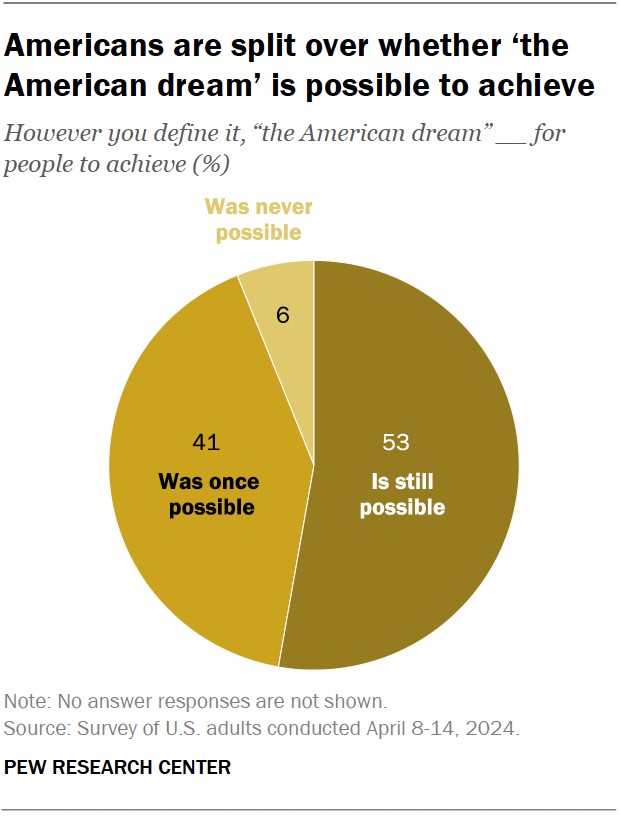
Senate Republicans Block Tax Credit Expansion, Democrats Claim Political Motive to Deny Biden Victory

Senate Democrats accuse Senate Republicans of blocking an expansion of the child tax credit and a corporate tax credits package, despite significant support from business groups, to prevent President Biden from securing a legislative win five months before Election Day.

This marks the second instance this year where presidential politics have caused a divide between Senate Republicans and major business trade groups like the U.S. Chamber of Commerce and the Business Roundtable.

Earlier this year, Senate Republicans overwhelmingly voted against a bipartisan border security deal endorsed by the U.S. Chamber of Commerce and the Business Roundtable, among others, following former President Trump’s instructions to avoid giving Biden a victory on border security.

Democrats allege Republicans are once again obstructing a major bipartisan initiative to aid Trump. “The business community still really wants that; we really want it. It’s all presidential politics — they don’t want to give Biden a win. That’s 100 percent what it is,” stated a senior Senate Democrat regarding the opposition to the House-passed Tax Relief for American Families and Workers Act of 2024.

The senator noted that Senate Democrats are intensifying efforts to break through the Republican blockade. “We are trying very hard. There’s no real reason they’re objecting,” the source said.

The proposed package aims to reinstate research and development expensing for businesses, which expired in 2022. The U.S. Chamber of Commerce has urged the Senate to approve the package, warning that failing to restore research and development expensing retroactively would cause “irreversible harm to U.S. innovation and competitiveness.”

The Business Roundtable has also pushed for the Senate to pass the legislation. Joshua Bolten, the CEO of the Business Roundtable, emphasized that it would “boost business investment at home, create American jobs and strengthen U.S. competitiveness.”

The bill also enhances the child tax credit to help low-income families manage inflation and increases tax relief for victims of disasters like the 2023 toxic rail derailment in East Palestine, Ohio.

Senate Finance Committee Chair Ron Wyden (D-Ore.) supports his colleagues’ view that Senate Republicans are blocking the tax package to boost Trump’s prospects by denying Biden a legislative success. “No question about it. They said that right from the get-go,” Wyden told The Hill.

Sen. Chuck Grassley (Iowa), a senior Republican on the Senate Finance Committee, previously indicated that Senate Republicans did not want to help Biden “look good” and improve his reelection chances. He expressed concerns that Biden’s reelection would eliminate any possibility of renewing Trump’s 2017 tax cuts before they expire at the end of next year. “Passing a tax bill that makes the president look good, mailing out checks before the election, means he could be reelected and then we won’t extend the 2017 tax cuts,” Grassley told Semafor on the day the House passed the tax bill.

For Democrats, this situation mirrors the fate of the bipartisan border security deal negotiated by Sens. Chris Murphy (D-Conn.), Kyrsten Sinema (I-Ariz.), James Lankford (R-Okla.), and the White House. Only four Senate Republicans supported the deal after Trump advised his Senate allies to reject it to deny Biden a victory.

Wyden crafted the stalled $79 billion tax package with House Ways and Means Committee Chair Jason Smith (R-Mo.), and it passed the House with overwhelming support, 357-70. The package would restore Section 174 expensing for research and development investments and 100 percent “bonus” depreciation, allowing businesses to deduct more depreciation costs than normally allowed. It also includes a low-income housing tax credit to increase affordable housing supply.

The package is nearly fully funded by advancing the deadline for filing backdated pandemic-related employee retention tax credit claims, according to a PwC analysis.

Amanda Critchfield, spokesperson for Sen. Mike Crapo (Idaho), the top-ranking Republican on the Finance Committee, said her boss “fully supports extending the pro-growth business provisions” and “also supports expanding the child tax credit to provide additional tax relief to working families.” However, she noted that Crapo “has policy concerns with the current bill, as do other Republican members, and he has been clear that he would like to find a compromise that a majority of Republican senators can support.”

A tax lobbyist familiar with the bill’s passage efforts said the business community has intensified its lobbying efforts towards Senate Republicans. “The Chamber and other business groups are very firmly for it, and they are making the rounds,” the source said. “The business community has upped its effort, and they’re saying because of the expiration of 174 and expensing, we really do have tangible economic harm. Companies are doing grasstops lobbying at home, and that’s starting to sink in. The business community is upping the ante,” the source added.

Watson McLeish, senior vice president for tax policy at the U.S. Chamber, warned in a statement on Monday that the Senate’s failure to advance the tax package is burdening employers. “As the tax extenders package remains stalled in the Senate, some small and midsize businesses have been forced to take out high-interest loans, raise prices, pare back operations, and even cut jobs just to survive and pay their taxes,” McLeish said. “We urge the Senate to take up this legislation immediately after the Independence Day recess and send it to the President’s desk to be signed into law.”

A Senate Republican aide mentioned that Senate GOP leaders are deferring to Crapo on handling the issue and pointed out that he might prefer to delay action on expired tax breaks until after the election, by which time Republicans will know if they will control the Senate in 2025. Some Republican senators believe they will secure a better deal on extending expired provisions if they control the White House and Senate, though waiting until after the election carries the risk that Democrats could retain the White House and regain control of the House.

Senate Majority Leader Chuck Schumer (D-N.Y.) told reporters earlier this month he hopes to bring the bill to the floor if it garners more Republican support. “I supported it the minute it was announced. I think it’s a good bill; I was very proud that I pushed hard and got into the bill the low-income housing tax credit,” Schumer said last week. “I’m currently working with Chairman Wyden to try and get something done. It’s not dead.”

Unveiling the Evolution of Credit Cards: From Diners Club to Magnetic Stripes and Beyond

When credit cards were first introduced in 1950, Americans were already familiar with the concept of buying on credit through personal loans and store credit accounts. However, the introduction of the Diners Club card, the first modern charge card, revolutionized spending by allowing customers to use their cards at various restaurants and settle the balance at the end of the month. This marked the beginning of a cashless consumption era.

By the end of the 1950s, the majority of Americans had adopted the idea of buying now and paying later. In 1958, Bank of America in California launched the BankAmericard, the first general-purpose credit card that could be used anywhere it was accepted. Unlike the Diners Club card, the BankAmericard allowed customers to carry a balance into the next month, as long as they paid the interest. By 1966, the practice became widespread as more states licensed the BankAmericard, which was rebranded as Visa in 1970. Here are five intriguing facts about the history of credit cards.

Women Couldn’t Have Their Own Credit Cards Until 1974

In the mid-1970s, women faced significant challenges when applying for a credit card. Married women could only obtain cards under their husband’s name, and single women needed a male family member to co-sign. Even if a woman could make payments on her own, she might still be denied credit, severely limiting her financial independence. In a landmark decision in 1971, the Supreme Court ruled that giving men more financial power than women solely based on sex was unconstitutional, violating the Equal Protection Clause of the 14th Amendment. This decision paved the way for the Equal Credit Opportunity Act of 1974, which prohibited denying credit based on gender, religion, or race.

The Credit Card Was Invented After a Man Forgot His Wallet

In 1949, New York businessman Frank McNamara forgot his wallet during dinner and had to rely on his wife to pay the bill. Determined to avoid such embarrassment again, McNamara and his partner Ralph Schneider created a membership card allowing restaurant patrons to settle their bills monthly instead of carrying cash. This card, made of cardboard, charged participating restaurants a 5% to 7% processing fee. Within a year, the Diners Club card gained around 42,000 users across the United States, establishing the concept of credit cards.

The BankAmericard Lost Millions of Dollars at First

In September 1958, the Bank of America surprised Fresno, California, residents by mailing out 60,000 unsolicited BankAmericards. This launch, led by manager Joe Williams, was based on arbitrary decisions: credit limits ranged from $300 to $500, and “floor limits” for smaller purchases that didn’t require retailers to call the bank ranged from $25 to $100. Williams assumed most customers would repay their loans on time, but he was wrong. In its first year, after distributing an additional 20 million cards across California, the BankAmericard lost millions of dollars, leading to Williams’ resignation. This initiative also inadvertently gave rise to another issue: credit card fraud.

The First Magnetic Stripe Card Arrived in 1969

Magnetic storage, a technology developed in the 1930s for storing data using magnetized materials, was improved over the years for use in early computers. In 1960, IBM engineer Forrest Parry used this technology to embed magnetic tape onto ID cards for CIA officials, which contained agent information. IBM project manager Jerome Svigals refined this technique and applied it to credit cards. The magnetic stripe could store user information, banking data, and purchase history, making it easier to detect and prevent fraud. In 1970, “magstripe” cards were introduced to the public through a collaboration between American Express, American Airlines, and IBM.

American Express Was the First Rewards Card

American Express pioneered two features that are now standard in credit cards. The bank launched its first credit card in 1958 and, in 1959, became the first major company to issue plastic cards instead of cardboard. Decades later, in 1991, Amex introduced the first rewards program, Membership Miles, a frequent-flyer program. For every dollar spent, customers earned points toward travel and accommodations at select airlines and hotels. This program also offered incentives: while all American Express members could participate, only Gold and Platinum cardholders received additional perks.

-+=