Betway Casino mr bet 70 freispiele ohne einzahlung Probe & Maklercourtage

Diese Streams sie sind vom Marktführer Evoluting Gaming arrangiert. Unser Besondere eingeschaltet folgendem Modul sei, so dies Betway Spielsaal unser Pilotprojekt von Microgaming unter anderem Evolution mr bet 70 freispiele ohne einzahlung Gaming sei. Continue reading “Betway Casino mr bet 70 freispiele ohne einzahlung Probe & Maklercourtage”

Connecticut General Assembly Honors India for its 75th Anniversary

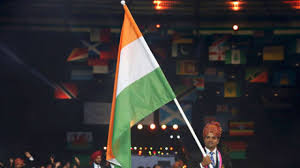
The Mill River Park in Stamford, CT on Sunday, August 7th wore a festive look as Indian Americans and other Americans gathered in large numbers to celebrate India’s 75th Independence Day with an annual India Day Festival. A floating crowd of over 2,000 people attended flag hoisting followed by the India Festival and Kite flying at the Mill River Park. Dressed in colorful traditional Indian attire, with melodious music from the popular Bollywood world, dances depicting the wide variety of Indian culture, kite flying, spicy Indian cuisine, and booths decorated with Indian symbols and face art, the festivities were a treat to the fast-growing Indian American community in the state of Connecticut.

The City of Stamford led by Mayor Caroline Simmons, along with Norwalk Mayor Harry Rilling and several elected state lawmakers joined hands with the Indian Diaspora in Connecticut for a celebration organized by the Connecticut Chapter of Global Organization of People of Indian Origin (GOPIO-CT).

The day-long celebrations began with the hoisting of the American, Indian, and Connecticut flags at the Government Center in Stamford by Mayor Caroline Simmons, event Gold sponsor, an investment firm 3Lines Partner, Nandu Kuppuswamy, several elected officials from Connecticut General Assembly and Dr. Thomas Abraham, Chairman of GOPIO International. American and Indian national anthems were sung students of Stamford’s Hindi and Tamil schools.

Connecticut General Assembly issued a citation honoring the India Day Celebration and presented it to GOPIO-CT. The citation was introduced by State Senator Patricia Billie Miller (27th Dist.) and supported by Rep. Daniel J. Fox (148th Dist.), Rep. Matt Blumenthal (147th Dist.), Rep. David Michel (46th Dist.), Rep. Corey P. Paris (145th Dist.) and Rep. Hubert D. Delany (144th Dist.)

“In Recognition Of: India is celebrating its 75th Anniversary of Independence, also known as Azadi Ka Amrit Mahotsav. Today, we join you to celebrate the rich history and culture along with freedom and liberty with people of India. We urge all our citizens to join us in publicly acknowledging the many achievements and contributions Indian Americans have made to the economy of Connecticut especially in IT and Technology, Healthcare and Hospitality. Congratulations on your Independence Day!”

The entire membership extends its very best wishes on this memorable occasion and expresses the hope for continued success. The citation was signed by CT General Assembly’s Pro Tempore Marten M. Looney, House Speaker Matt Ritter and Secretary of State Mark F. Kohler.

Following the flag hoisting, everyone moved to the adjacent Mill River Park for the inaugural ceremony at the Carousel Hall. There were vendors who served delicious Indian food, Indian arts and crafts, Indian clothing and other items were displayed at the Park giving a glimpse of India’s rich and diverse culture.

The ceremony started with a rendition of Vande Mataram sung by GOPIO-CT Vice President Dr. Jaya Daptardar and Hindi School Coordinator Kruti Jokhakar. Mill River Park Collaborative Board Member George Boyce was introduced who spoke on the various programs conducted in the park and that the park has become focal point for the community to come together and celebrate.

In his welcome address, GOPIO-CT Trustee/Advisor and Chairman of GOPIO International Dr. Thomas Abraham, a veteran community leader who was instrumental starting numerous community and professional organizations said, “The India Festival in Stamford, CT is a tribute to a strong and vibrant Indian-American community that has excelled in almost all areas of life in this adopted nation of ours.”

“Through events like the India Festival, we are cultivating and developing community networking with all these younger elected officials,” Dr. Abraham added.  Dr. Abraham then introduced a young Indian American high school graduate from Norwalk Arnav Jhangiani, who spoke his perspective of what India’s independence means to him.Stamford Mayor Caroline Simmons proclaimed August 15th as India Day.

Red Fort in New Delhi on August 15,194In the proclamation presented to GOPIO-CT,Mayor Simmons said that the Indian Independence was marked largely by non-violent resistance and civil disobedience and the Independence Day is celebrated by the Indian Diaspora worldwide. The proclamation further noted that Stamford City will honor Indian community which is an integral part of city’s diversity, success and great future.

Prominent among those who addressed and greeted the Indian American community included:, State Senators Patricia Billie Miller and Ryan Fazio, State Assembly Representatives Harry Arora, Daniel J. Fox, Matt Blumenthal, David Michel and Hubert D. Delany. They all praised India, the world’s largest democracy, continuing its path through democratic route and that India and the USA being world’s two largest democracies have common interest to be together with close relationship.

“The India Festival is a tribute to a strong and vibrant Indian-American community that has excelled in almost all areas of life in this adopted nation of ours,” CT Assemblyman Harry Arora, who shared with the audience his childhood in India and later on, how he continued to cherish the memories of India’s non-violent freedom movement and close partnership between Indian and the United States, the largest democracies of the world.

Norwalk resident Mrs. Yashasvi Jhangiani was bestowed with Indian Independence Liberty Award for her service to GOPIO for the last dozen years and the larger Indian and American community.

The cultural programs depicted the diversity of Indian culture and traditions. Among those who portrayed the diverse and cultural traditions of Indian traditions included Lakshmi Sujanan, daughter of Vineetha and Sujanan, former president of MASCONN. Other groups performed a the event were Thirakte Kadam by Neha Shah, Sindhis of Connecticut, Rajasthani and Punjabi Gidda dances.

As in the previous years, 2022 high school graduates were recognized. Coordinated by GOPIO-CT Treasurer Mahesh Jhangiani over 40 students registered, Of which 16 were present who were recognized with a certificate and an Amazon gift card.

The program sponsored by investment firm 3Lines and International Museum of the Saree, was efficiently compered by Dr. Jaya Daptardar and Nadita Kotian, who served as MCs.

Over the last 16 years, GOPIO-CT, a chapter of GOPIO International has become an active and dynamic organization hosting interactive sessions with policy makers and academicians, community events, youth mentoring and networking workshops, and working with other area organizations to help create a better future. GOPIO-CT – Global Organization of People of Indian Origin – serves as a non-partisan, secular, civic and community service organization – promoting awareness of Indian culture, customs and contributions of PIOs through community programs, forums, events and youth activities. It seeks to strengthen partnerships and create an ongoing dialogue with local communities.

Chicago FIA Celebrates The 75th India Independence Day

The Federation of Indian Associations, Chicago (FIA) celebrated the 75 th India Independence Day Azadi Ka Amrit mahotsav with patriotic fervor during the day and a gala concert featuring prominent Bollywood Singer Javed Ali with his team in the evening on 7th August, 2022 at the Renaissance Schaumburg Convention Center Hotel.

The FIA led by Founder chairman Sunil Shah, and Current President Hitesh Gandhi, Past President Neil Khot, Founder and Past President Onkar Singh Sanga and the entire board of directors created an atmosphere of patriotism with an India centric program during the afternoon hours. The program started with a prayer Bharat Natyam dance by Board member Bharatnatyam exponent and choreographer Pika Munshi. This was followed by the Indian and American National Anthem. and Lamp Lighting by the FIA Leadership and the entire Board. Chairman and Founder President Sunil Shah Current President Hitesh Gandhi, Past President Neil Khot, Founder and Past President Onkar Singh Sanga in their brief speeches invited all those Present to the event. The Program keeping in view the importance of the day and to teach the children about leaders of the Independence movement the FIA organized a dress up segment for kids who marched on the stage providing a glimpse of their favorite leaders of the independence movement. Dances set to patriotic songs were presented by SR

Dance Academy. Jitendra Bulsara and Minoo Vasudevan regaled the sucience with their singing. The finale was a Beauty Pageant with mothers and kids showcasing different dressing styles from India.

In the Evening the FIA organized a Gala Concert featuring prominent Bollywood Singer Javed Ali. The concert was well attended by about a thousand people including the who’s who of the Indian Community led by Consul General Amit Kumar and his spouse Surbhi Kumar, congressman Raja Krishnamoorthi, State Representative Mussman, Cristina Castro Senator- 22nd District, Rodney Craig Village President Hanover Park, William Duncan McLeod – Mayor off Hoffman Estates, Gopal Lalmalani – President Oakbrook Village, Tom Dailly – Village President Schaumburg, Dr. Suresh Reddy – Trustee Oakbrook Village. FIA felicitated– Anil Loomba : Guest of Honor, Grand sponsor : Rita Sunil Shah, Dr. Santosh Kumar, Deepakant Vyas, Dr. Asha and Anil Oroskar, Dr Sreenivas Reddy, and Pinky Thakkar. The FIA also felicitated other sponsors -Dr Parag Doshi, Chicago Cardiology, Manish Gandhi : Dr Prakash Shah & Sona Shah, Ketu Amin, Dr Bharat Barai, Brij Sharma, Ajeet Singh, Barrington Bank & Trust Co, Kuwait Airways, Dr Bhupinder Beri, .Hitesh & Kim Bhatt, .Jasbir Suga , Hitesh Gandhi : FIA President, Neil Khot : FIA Founding Member & Past President , Dhitu Bhagwakar: FIA Founding Member & Past President, .Vinita Gulabani : Executive Vice President , Richa Chand : Gen Secretary, Harry Sidhu, Pratik Deshpande, Harry Mohan, Sushma Bhanot, .Hemant Shah, .Dr Ajit Pant & Vasavi Chakka. .Prajesh Patel, Hiten Gardi : Gardi.

Javed Ali singer par excellence and his team took to the stage and enthralled the audience present for three hours belting his songs and melodious old songs. He kept the audience on their feet wanting to hear more of him. Singing along with him, dancing to his songs.

The FIA would like to thank all the vendors who set up booths during the day and Jigar’s Kitchen for providing the food. The Emcees to the event were Richa Chand and Suchitra Kukreja. The FIA further thanks the Media for their attendance and support.

Where to find Overseas Brides to be

Thousands of males all over the world are looking for overseas brides to be who can become their spouse. However , the process of finding an ideal candidate could be daunting. Below are a few things to consider:

Legality

Getting married abroad is a want many hot polish girls people. You are able to relocate into a country which you have chosen, meet your ideally suited spouse, and create a spouse and children. But before one does so , you first have to be aware of the laws in your desired nation. Some countries place tighter regulations upon marriages among foreigners and locals.

Just about all countries possess a foreign fiance or spouse visa. In america, you must get a K-1 visa for australia, which allows one to travel to a foreign country to get married to your chosen star of the wedding. Before you can sign up for the australian visa, you must prove that you are a homeowner of your desired country and you have a legitimate marriage.

If you want to marry a foreigner, you should provide your prospective husband with your personal and financial info. This includes your criminal records, your financial status, plus your marital record.

You must also go away a health insurance and criminal background verify. Your prospective husband’s background must be distinct and clear of any villain activity.

Living costs in foreign cities

Among the finest parts about being an overseas bride is usually that the cost of living could be relatively low compared to everything you are used to. This is simply not to say that you could splurge and blow this, but there are several perks you are able to enjoy with out breaking the bank. For instance , a ticket to Japan from US will certainly run you around $900. If you are blessed, you may even have the ability to require a long weekend to explore your new home on a tight budget.

While you’re at it, it’s always smart to keep track of your spending practices. For instance, you have a tendency want to be trapped off guard by a surprise bill that comes out of the blue. In such instances, it might be wise to make use of a credit card with no fees and also to avoid the temptation of spending cash on a last-minute trip. Also, it can not a awful idea to factor in your travel expenditures when determining your regular expenses.

Online Dating Trends in 2023

The world of online dating comes a long way. News, improved platforms, plus the advent of AI will transform just how people meet. Observing a potential partner will be a even more personalized, interactive experience.

In 2023, it will be easier than in the past to meet and talk to a potential partner. Online dating applications uses artificial brains (AI) to supply customised reactions and to discover fake single profiles.

The latest online dating apps will be investing in words capabilities and video conversation features. Even more singles are turning to technology to lower the stress of dating.

A survey by Lovehoney found that 40% of singles utilized sex toys more often during the outbreak. This displays the raising awareness of self-pleasuring options.

It also shows that people have an improved knowledge of toxic masculinity. Three out of four males said they have a better understanding of the term.

Another going out with trend in 2023 is the fact people are buying a little closeness. The survey determined that 34% of you would be happy to try a non-alcoholic date. https://www.pinterest.com/alliwatters/dates/ Despite the living costs https://confettiskies.com/blog/canadian-women-vs-american-women crisis, more than half of the people surveyed still would be happy to take a trip out of town for a initially date.

https://en.pimg.jp/038/931/217/1/38931217.jpg

Dating in 2023 is often more about simply being yourself devoid of inhibitions. One of the greatest things about online dating services is that this allows you to connect with and assess the possible friends before you truly meet.

A few of the new dating trends in 2023 are only a few that totally different from those in 2018. Amongst the most known are a concentration about work/life equilibrium, dating beyond your physical type, and the advent of AI and virtuelle wirklichkeit.

AAHOA Announces 2 Key Leadership Positions to Help Propel the Association Forward

AAHOA, the nation’s largest hotel owners association, announced today the promotion of Heather Carnes to EVP, Communications, and Chief Strategy Officer, and the hiring of Phelps Hope as its new EVP, Operations, and Chief Development Officer.

Following the announcement of Laura Lee Blake being named as AAHOA President & CEO in May 2022, these advancements further underscore the association’s aggressive and ambitious plans for the future, which include identifying and securing key leaders to carry out its strategic plan. 

Carnes has been a key member of the AAHOA team for three years and has dedicated nearly her entire career to the association space. During her tenure with AAHOA, she has garnered the respect of her team, AAHOA staff, volunteer leaders, and AAHOA partners, and continues to be a positive influence on the organization as a whole. 

In her new role, Carnes will focus on organizational strategy, marketing and communications, organizational culture and HR, education/program development, and strategic partnerships.

“It’s an incredibly important time for AAHOA and our industry,” Carnes said, who previously served as AAHOA’s VP of Marketing and Communications. “I’m thrilled to be moving into this new role where I can have an even greater impact on the organization, our overall strategic initiatives, and working alongside Laura Lee, Phelps, and the rest of the AAHOA team to make big things happen on behalf of our nearly 20,000 hotelier members.”

In addition to the promotion of Carnes, the hiring of Hope will continue to establish AAHOA as the industry leader in hosting top-quality and widely attended conventions, regional meetings, trade shows, town halls, and related meeting events. 

Hope brings more than 40 years of hotel, meetings, events, and tradeshow management experience to AAHOA.

Since 2005, Hope served as Senior Vice President, Meetings & Expositions, for Kellen Company – one of the world’s largest providers of management and services to associations and trade organizations – where he was responsible for the management of the meetings, events, and tradeshow division, overseeing more than 300 events annually and over $30M in client account revenues. 

Hope has held key positions both in Australia and the United States with Marriott, Sheraton, Hilton, and Loews Hotels, developing an in-depth understanding of hotel sales and operations. 

“AAHOA is a strong organization that is known for bringing the industry together,” Hope said. “To officially join the AAHOA team provides a great opportunity for me to  bring my breadth of experience in hospitality, event production, and association management full circle.”

Hope is a Certified Meetings Professional (CMP) and is familiar with every nuance of the meetings, tradeshow, and events production process, in addition to innovative ideas to grow the business, generate revenue, and service AAHOA’s Industry Partners and Vendor Members at the highest level.

In his new role at AAHOA, Hope will primarily focus on operations and development, including leading and structuring the teams concerning conventions, events, business development, membership growth and strategy, as well as technology and associated financing.

“As AAHOA continues to grow and advance, we need a top team of executive leaders to guide and promote the team members, as well as to initiate and establish the methods and framework to ensure success,” said AAHOA President & CEO Laura Lee Blake. “I have no doubt that Phelps and Heather will be successful in helping AAHOA reach new heights as they embrace their new roles and responsibilities.  This is just the beginning as we continue making plans for increased successes and achievements for our future.”

Blake will continue to directly oversee AAHOA’s legal, governance, government affairs, and franchise relations departments with the support of Hope and Carnes.

“It bears repeating that this is a new day and a new start for AAHOA,” Blake said. With Carnes and Hope taking their places as EVPs for AAHOA, their leadership skills will help AAHOA build a strong foundation, and I am delighted they will be assisting us in continuing to transform the vision of AAHOA into reality.”   

AAHOA is the largest hotel owners association in the nation, with Member-owned properties representing a significant part of the U.S. economy. AAHOA’s 20,000 members own 60% of the hotels in the United States and are responsible for 1.7% of the nation’s GDP. More than one million employees work at AAHOA member-owned hotels, earning $47 billion annually, and member-owned hotels support 4.2 million U.S. jobs across all sectors of the hospitality industry. AAHOA’s mission is to advance and protect the business interests of hotel owners through advocacy, industry leadership, professional development, member benefits, and community engagement.

‘83’ To Be Celebrated At Indian Film Festival Of Melbourne

Legendary cricketer Kapil Dev will be seen gracing the Indian Film Festival of Melbourne 2022. Coming back after 2 years of virtually organizing the event, IFFM will now be physically held in the Australian city from August 12th to 20th, and the former Indian captain will be attending the event to celebrate Kabir Khan’s sports drama 83, which witnessed its theatrical release last year on December 24. The movie revolves around the journey of India’s cricket squad led by Kapil Dev.

While expressing his emotions about being part of one of the world’s leading and biggest Indian film festivals, the legendary cricket star told the news agency, ANI, “I look forward to being part of IFFM 2022. It’s a great platform for celebrating the best in Indian cinema. I truly do believe that sports and cinema are two major cultural experiences for not only Indians but various communities and countries that bind us together.”

With over 100 films in 23 different languages chosen for the festival, the lineup is more diverse than ever. The line-up this year is more diverse than ever before with over 100 films in 23 languages having been selected for the festival. 

The Movie 83, directed by Kabir Khan, will be celebrated at IFFM and the festival has invited legendary cricketer Kapil Dev to be the guest of honor. 

In 2019, IFFM was hosted by Indian celebrities such as Shahrukh Khan, Arjun Kapoor, Tabu, Vijay Sethupathi, Rima Das, Zoya Akhtar, and Karan Johar among others before the world was struck by a virus. The festival will take place in Melbourne from August 12-20.

Pointing out that cinema and sports are something that binds people together irrespective of several differences, Kapil Dev added, “It’s something for decades now that has united people. It’s a deep-rooted emotional connection and love we have for both cinema and sports, and when they come together it’s a rewarding experience for everyone.”

Reema Rasool From Long Island Runs for U.S. Congress on Democratic Ballot

Just as the first Muslim American female, Kamala Khan aka Ms Marvel, uses her super powers to take the world by storm in the Marvel Comic Universe on Disney+, real-life Muslim American superhero Reema Rasool fights against inequality and advocates for justice on behalf of her almost 800,000 constituents on the Northern Shore of Long Island and Northeast Queens. 

Rasool is a first generation American, the daughter of Drs. Shama and Ayaz Rasool, who immigrated to NY-3 from Srinagar, Kashmir in 1974. A life-long NY-3 resident, Rasool is a serial entrepreneur and successful business woman who advocates for small business owners. A mother of two teenage boys, Rasool is the FIRST Muslim American woman on the ballot for the Nassau County Democrats on Long Island, where she ran for the Oyster Bay Town Board in 2021.

Rasool is a graduate of New York University and the founder of South Asian Young Women Entrepreneurs (SAY WE), a national not-for-profit trade association that educates, supports, and advocates for women in business. Rasool is also the founder and principal of LUXE Consulting Groupe, an international financial marketing firm that specializes in the niche field of U.S. infrastructure investments by foreign nationals. LUXE has offices in India and the UAE.

Rasool is running for Congress to lower taxes, support small business owners by redefining the tax code, fight for education equity for children, keep communities safe, and ensure healthcare for all. The Democratic Primary for New York’s 3rd Congressional District is slated for Tuesday, August 23, 2022. Rasool is running against FIVE other candidates. To better understand her campaign platforms, please click HERE.

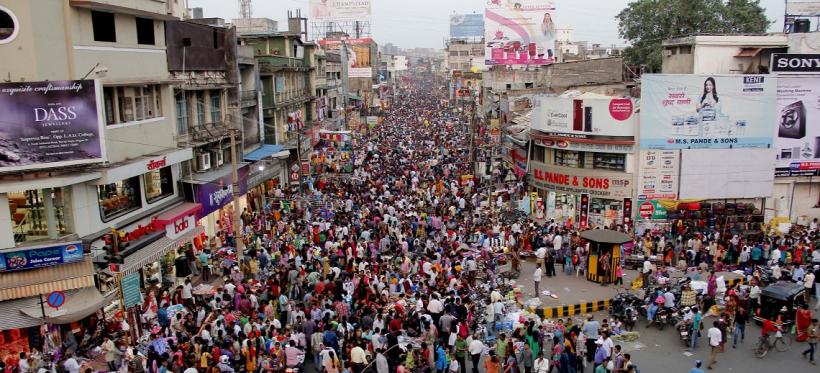
India’s Population Will Be Larger Than China’s In 2023

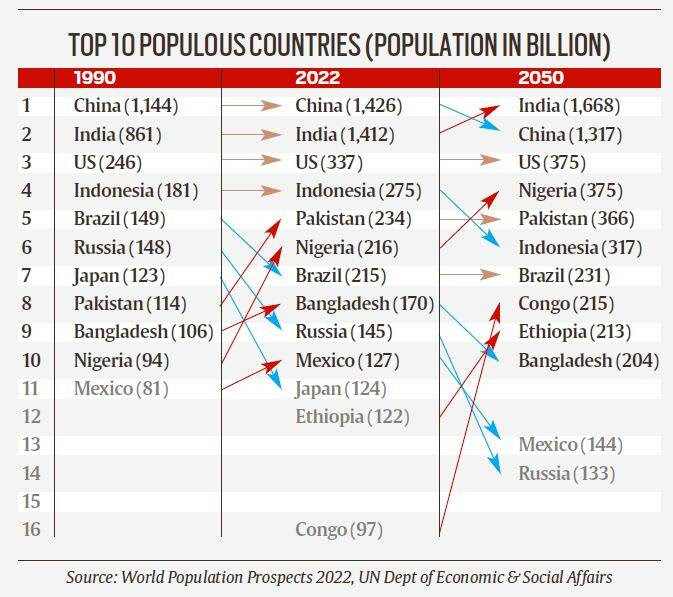
India is set to become the world’s most populous country next year, overtaking China with its 1.4bn people, according to UN figures.  On World Population Day, the United Nations has released a report projecting India to surpass China as the world’s most populous country next year. It further stated that the world population is forecast to reach eight billion by mid-November 2022.

By this November, the planet will be home to 8 Billion people. That overall population milestone “is a reminder of our shared responsibility to care for our planet and a moment to reflect on where we still fall short of our commitments to one another,” Secretary General Antonio Guterres said, without citing specifics.

“This is an occasion to celebrate our diversity, recognize our common humanity, and marvel at advancements in health that have extended lifespans and dramatically reduced maternal and child mortality rates,” he added.

 But population growth is not as rapid as it used to be.  It is now at its slowest rate since 1950 and is set to peak, says the UN, around the 2080s at about 10.4bn though some demographers believe that could happen even sooner.

Currently, with 4.7 billion Asia is the most populous continent and has 61 per cent of the global population,17 per cent reside in Africa (1.3 billion), 10 per cent in Europe (750 million), 8 per cent in Latin America and the Caribbean (650 million), and the remaining 5 per cent in Northern America (370 million) and Oceania (43 million). 

According to World Population Prospects 2019, China with a 1.44 billion population and India with 1.39 billion are the two most populous countries in the world, representing 19 and 18 per cent of the world’s population, respectively. However, by around 2023, India’s population will overtake China to become the most populous country with China’s population projected to decrease by 31.4 million, or around 2.2 per cent, between 2019 and 2050.But the population of the world is expanding unevenly.

More than half the growth we will see in the next 30 years will happen in just eight countries – the Democratic Republic of the Congo, Egypt, Ethiopia, India, Nigeria, Pakistan, the Philippines and Tanzania.

At the same time, some of the world’s most developed economies are already seeing population decline as fertility rates fall below 2.1 children per woman, which is known as the “replacement rate”. In 61 countries, the report says, populations will decline by at least 1% by 2050.

With one of the lowest fertility rates in the world (at 1.15 children per woman), China has announced that its population is due to start declining next year – much earlier than previously thought. That is despite the country abandoning its one child policy in 2016 and introducing incentives for couples to have two or more children.

As India’s population continues to grow it will almost certainly overtake China as the country with the biggest population in the world. 

Fertility rates are falling globally – even in many of the countries where the population is expanding. That is because, as previous generations expand, there are more people having children, even if individually those people are having fewer children than their parents did.

Growth is also largely thanks to developments in medicine and science which mean that more children are surviving into adulthood and more adults into old age. That pattern is likely to continue, which means that by 2050 the global average life expectancy will be around 77.2 years.

But this pattern means that the share of the global population aged 65 years or above is projected to rise from 10% this year to 16% in 2050. Again the distribution will be unequal with some countries, in East Asia and Western Europe, already seeing more extremes in ageing.

Sri Lanka In Political Vacuum As Talks Go On Amid Crisis

By, KRISHAN FRANCIS

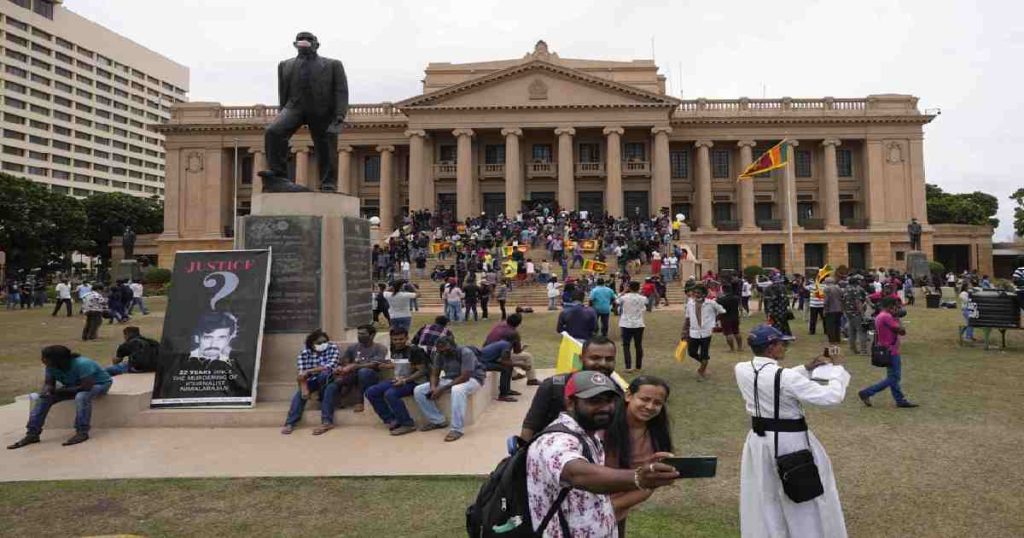
(AP) — Sri Lanka was in a political vacuum for a second day Monday with opposition leaders yet to agree on who should replace its roundly rejected leaders, whose residences are occupied by protesters angry over the country’s deep economic woes. 

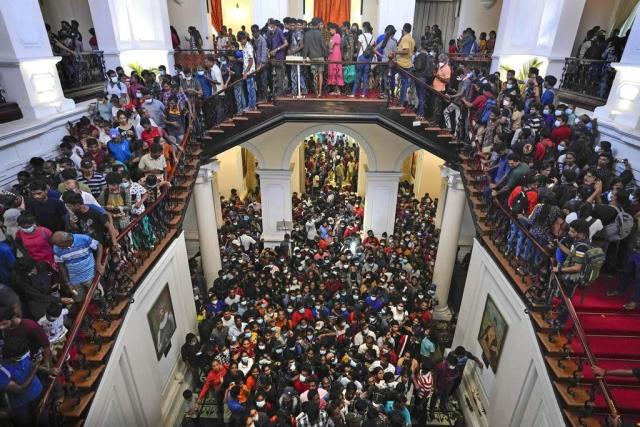
Protesters remained in President Gotabaya Rajapaksa’s residence, his seaside office and the prime minister’s official home, which they stormed on Saturday demanding the two leaders step down. It marked the most dramatic day of protests during three months of a relentless crisis that has pushed many to the brink to despair amid acute shortages of fuel, food, medicine and other necessities. 

The protesters, who come from all walks of life, vowed to stay put until the resignations of the leaders are official. 

Prime Minister Ranil Wickremesinghe said Saturday he would leave office once a new government is in place, and hours later the speaker of Parliament said Rajapaksa would step down Wednesday. 

Wickremesinghe’s office said Monday that Rajapaksa had confirmed his earlier decision to resign on Wednesday.

Also Monday, a group of nine Cabinet ministers announced they will quit immediately to make way for an all-party government, outgoing Justice Minister Wijayadasa Rajapakshe said. Wickremesinghe’s office said meanwhile that another group that met the prime minister decided to stay on until a new government is formed.

The president hasn’t been seen or heard publicly since Saturday and his location is unknown. But his office said Sunday that he ordered the immediate distribution of a cooking gas consignment to the public, suggesting that he was still at work.

Opposition party leaders have been in discussion to form an alternative unity government, an urgent requirement of a bankrupt nation to continue discussions with the International Monetary Fund for a bailout program. 

Lawmaker Udaya Gammanpila said the main opposition United People’s Front and lawmakers who have defected Rajapaksa’s ruling coalition have had discussions and agreed to work together. Main opposition leader Sajith Premadasa and Dullas Alahapperuma, who was a minister under Rajapaksa, have been proposed to take over as president and prime minister and have been asked to decide on how to share the positions before a meeting with the parliamentary speaker later Monday.

“We can’t be in an anarchical condition. We have to somehow reach a consensus today,” Gammanpila said.

Opposition parties are also concerned over military leaders making statements about public security in the absence of a civil administration. 

Lawmakers have discussed Chief of Defense Staff Gen. Shavendra Silva’s statement over the weekend calling on people’s cooperation to maintain law and order, said Kavinda Makalanda, spokesperson for Premadasa.

“A civil administration is the need, not the military in a democratic country,” Makalanda said.

If opposition parties fail to form a government by the time Rajapaksa resigns, Wickremesinghe as prime minister will become acting president under the constitution. However, in line with the protesters’ demand, opposition parties are keen on not allowing him take over even as acting president.

They say Wickremesinghe should promptly resign and allow Speaker Mahinda Yapa Abeywardena take over as acting president — the next in line according to the constitution. 

Rajapaksa appointed Wickremesinghe as prime minister in May in an effort to solve the shortages and start economic recovery. But delays in alleviating the shortages of basic supplies has turned public anger against him with protesters accusing him of protecting the president.

Wickremesinghe had been part of crucial talks with the IMF for a bailout program and with the World Food Program to prepare for a predicted food crisis. The government must submit a plan on debt sustainability to the IMF in August before reaching an agreement.

Sri Lanka is relying on aid from India and other nations as leaders try to negotiate a bailout with the IMF. Wickremesinghe said recently that negotiations with the IMF were complex because Sri Lanka was now a bankrupt state.

Sri Lanka announced in April that it was suspending repayment of foreign loans due to a foreign currency shortage. Its total foreign debt amounts to $51 billion, of which it must repay $28 billion by the end of 2027.

Months of demonstrations have all but dismantled the Rajapaksa political dynasty, which has ruled Sri Lanka for most of the past two decades but is accused by protesters of mismanagement and corruption.

New Coronavirus Mutant Raises Concerns In India And Beyond

By, Laura Ungar & Aniruddha Ghosal

The quickly changing coronavirus has spawned yet another super contagious omicron mutant that’s worrying scientists as it gains ground in India and pops up in numerous other countries, including the United States.

Scientists say the variant – called BA.2.75 – may be able to spread rapidly and get around immunity from vaccines and previous infection. It’s unclear whether it could cause more serious disease than other omicron variants, including the globally prominent BA.5.

“It’s still really early on for us to draw too many conclusions,” said Matthew Binnicker, director of clinical virology at the Mayo Clinic in Rochester, Minnesota. “But it does look like, especially in India, the rates of transmission are showing kind of that exponential increase.” Whether it will outcompete BA.5, he said, is yet to be determined. 

Still, the fact that it has already been detected in many parts of the world even with lower levels of viral surveillance “is an early indication it is spreading,” said Shishi Luo, head of infectious diseases for Helix, a company that supplies viral sequencing information to the U.S. Centers for Disease Control and Prevention.

The latest mutant has been spotted in several distant states in India, and appears to be spreading faster than other variants there, said Lipi Thukral, a scientist at the Council of Scientific and Industrial Research-Institute of Genomics and Integrative Biology in New Delhi. It’s also been detected in about 10 other countries, including Australia, Germany, the United Kingdom and Canada. Two cases were recently identified on the West Coast of the U.S., and Helix identified a third U.S. case last week. Fueling experts’ concerns are a large number of mutations separating this new variant from omicron predecessors. Some of those mutations are in areas that relate to the spike protein and could allow the virus to bind onto cells more efficiently, Binnicker said. 

Another concern is that the genetic tweaks may make it easier for the virus to skirt past antibodies — protective proteins made by the body in response to a vaccine or infection from an earlier variant. 

But experts say vaccines and boosters are still the best defense against severe COVID-19. In the fall it’s likely the U.S. will see updated formulations of the vaccine being developed that target more recent omicron strains.

“Some may say, ‘Well, vaccination and boosting hasn’t prevented people from getting infected.’ And, yes, that is true,” he said. “But what we have seen is that the rates of people ending up in the hospital and dying have significantly decreased. As more people have been vaccinated, boosted or naturally infected, we are starting to see the background levels of immunity worldwide creep up.”

It may take several weeks to get a sense of whether the latest omicron mutant may affect the trajectory of the pandemic. Meanwhile Dr. Gagandeep Kang, who studies viruses at India’s Christian Medical College in Vellore, said the growing concern over the variant underlines the need for more sustained efforts to track and trace viruses that combine genetic efforts with real world information about who is getting sick and how badly. “It is important that surveillance isn’t a start-stop strategy,” she said.

Luo said BA.2.75 is another reminder that the coronavirus is continually evolving – and spreading. 

“We would like to return to pre-pandemic life, but we still need to be careful,” she said. “ We need to accept that we’re now living with a higher level of risk than we used to.”

Sen. Schumer Keen On Passing Budegt Reconciliation Bill This Summer

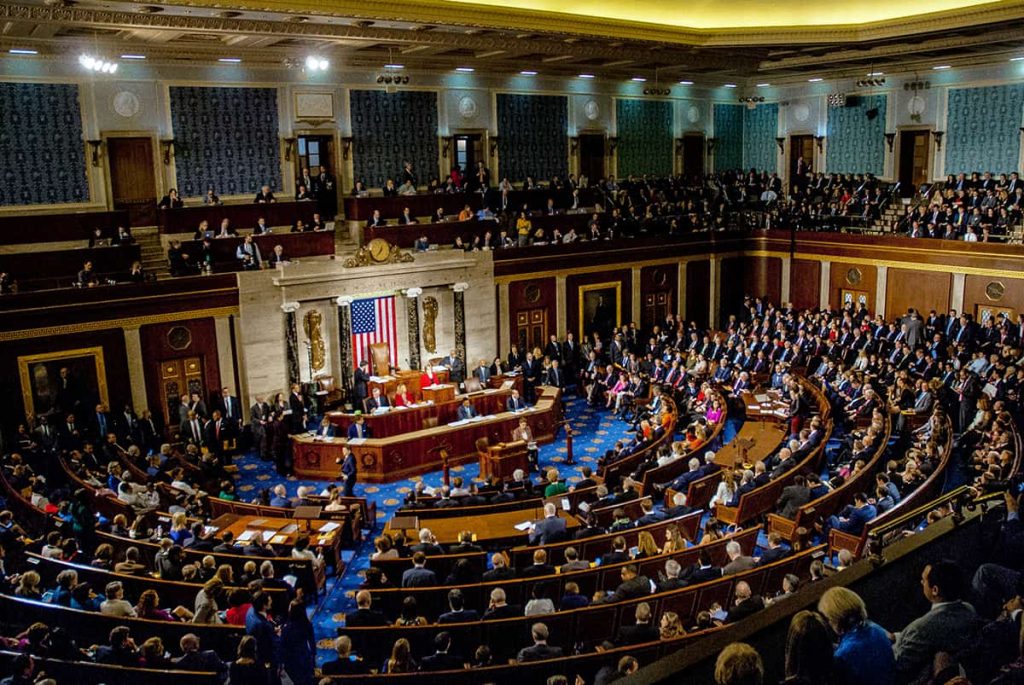
Senate Majority Leader Charles Schumer (D-N.Y.) is making a last-ditch effort to pass a budget reconciliation bill during the July and early August work period.   

Schumer and centrist Sen. Joe Manchin (D-W.Va.) have made progress on proposals to lower the cost of prescription drugs, extend Medicare’s solvency and raise taxes on some high-income earners. 

  • The bill would include a 3.8 percent tax on individuals earning more than $400,000 and couples earning more than $500,000 from pass-through businesses.  
  • Schumer and Manchin have not announced whether the package will include provisions to fight climate change such as clean energy manufacturing tax credits. 
  • Whether the climate piece gets done will depend largely on how many concessions Manchin will insist on for the fossil fuel industry, one source said. 

Sam Runyon, a spokesperson for Manchin, said her boss is glad that Democrats have agreed on a prescription drug proposal that they could pass with a simple-majority vote under special budget rules.  “Sen. Manchin has long advocated for proposals that would lower prescription drug costs for seniors and his support for this proposal has never been in question. He’s glad that all 50 Democrats agree,” she said. 

But the Manchin aide waved off speculation that Schumer and Manchin are close to a deal on a broader reconciliation package that would include bold proposals to tackle global warming, a top priority of Sen. Sheldon Whitehouse (D-R.I.) and other Senate Democrats.   

According The Hill, the budget reconciliation instructions will expire at the end of the fiscal year on Sept. 30, which is the drop-dead deadline. Schumer is hoping to get the bill finalized before the August recess, but it’s competing with other key measures, including a bipartisan bill to boost U.S. competitiveness with China. 

Sam Runyon, a spokesperson for Manchin, said her boss is glad that Democrats have agreed on a prescription drug proposal that they could pass with a simple-majority vote under special budget rules.  

“Sen. Manchin has long advocated for proposals that would lower prescription drug costs for seniors and his support for this proposal has never been in question. He’s glad that all 50 Democrats agree,” she said. 

But the Manchin aide waved off speculation that Schumer and Manchin are close to a deal on a broader reconciliation package that would include bold proposals to tackle global warming, a top priority of Sen. Sheldon Whitehouse (D-R.I.) and other Senate Democrats.

India Uniquely Placed To Take Advantage Of Phenomenal Changes In Tech, Trade, Skilled Manpower: Bimal Jalan

Very few developing countries are as well placed as India to take advantage of the phenomenal changes that have occurred in production technologies, international trade, capital movement and deployment of skilled manpower, former RBI Governor Bimal Jalan writes in a new book “From Dependence To Self-Reliance – Mapping India’s Rise As A Global Superpower” (Rupa) that builds on his three earlier books on the same theme.

“In view of these advantages, India is in a position to accelerate the growth rate of the economy to 7-8 per cent per annum over the next 25 years. The higher the growth of the economy, the greater is the capacity of the government to finance expenditure for essential social services.

“The combination of higher government expenditure on the provision of social services will provide higher growth in employment opportunities which will have a decisive impact in reducing poverty levels,” asserts Jalan, a former Chairman of the Prime Minister’s Economic Advisory Council, a nominated Member of Parliament from 2003-2009 and India’s representative on the Boards of the IMF and the World Bank.

The conditions for this are extremely favourable for the first time in almost 40 years as with a single-party majority in Parliament the government’s political profile has undergone a major change as it can now launch political reforms without relying on the discretionary powers of members belonging to other parties.

In recent years, Jalan writes, “an even more phenomenal change from India’s point of view is the growing role of skills-based services in determining the comparative advantage of economies. The development of certain services is now considered as one of the preconditions for economic growth, and not one of its consequences. The boundary between goods and services is also gradually disappearing, as services of various kinds are delinked from the manufacturing process and have become essential elements of the productive structure”.

This change has been brought about by unprecedented and unforeseen advances in computer and communication technology in the last four decades, Jalan writes, adding that an important aspect of the ‘services revolution’ is that geography and levels of industrialisation are no longer the primary determinants of the location of facilities for the production of services.

“As a result, the traditional role of developing countries is also changing – from mere recipients to important providers of long-distance services. India, too, has participated in this scenario, and exports of certain services (for example, software) are expanding faster than the overall trade. The potential for expansion of jobs and incomes in the services sector is truly immense,” Jalan maintains.

From India’s point of view, some of the recent global developments which provide opportunities for substantial growth are:

The fastest-growing segment of services being knowledge-based, such as professional and technical services, India has a tremendous advantage in the supply of such services because of the highly developed structure of technological and educational institutions, and lower labour costs.

Progress in IT is making it increasingly possible to unbundle the production and consumption of information-intensive service activities. Outsourcing of these activities has become feasible.

Unlike most other prices, world prices of transport and communication services have fallen dramatically as provided by the Internet, which now links millions of computers across the world.

Technological innovation is expanding opportunities for services to be embedded in goods that are traded internationally. Thus, India does not necessarily have to be a low-cost producer of certain types of goods (such as computers or discs) before it can become an efficient supplier of service embodied in them (such as software or music).

There is also a structural shift in the pattern of demand in industrial countries in favour of services. This means that in the future, the growth in exports of developing countries will depend less on natural resource endowments and more on efficiency in, providing services and service-intensive goods.

Against this backdrop, the book is divided into 10 chapters in three sections – Economy, Governance and Politics.

The first chapter on ‘Current Situation and Future Prospects’ notes that on any global indicator of economic well-being – be it adult literacy, infant mortality, life expectancy or gender bias – India’s actual performance remains among the bottom one-third among developing countries and that a lot remains to be done before India is able to exploit the new opportunities to realise its full potential in the future.

The next chapter on ‘Science and Development’ notes that India has come a long way in its quest for scientific pursuit, both in the material and intellectual spheres and now has the talent, the skills and the resources to be at the forefront of the technological revolution taking place in the new growth sectors of the global economy.

The third chapter on ‘Information Technology and Banking’ notes that while there are new opportunities for savers and investors to deal directly with each other rather than through the banking system, this poses a challenge, particularly for public sector banks.

The last chapter in Section 1 – ‘India’s Stand in the 21st century – focuses on the prospects for India’s balance of payments and how resources for greater investment in social sectors can be generated by substantially raising literacy rates and healthcare.

Chapter 5 in Section 2 focuses on the role of ‘The Public Sector’, noting that the government should set standards of service, monitor performance of public enterprises and ensure access to the poor. A reduction in the role of the public sector in the economy is also desirable.

Chapter 6 is on ‘Goods and Services’ and outlines a number of issues that need to be tackled to improve agricultural growth and the income of farmers over time while the last chapter in this section is titled ‘Finance and Development: Which Way Now?’ and discusses in detail the shifting paradigm of finance and development and how it has affected the past, present and future of the nation.

Section 3 on ‘Politics’ has three chapters: ‘The Politics of Power’ (Chapter 8), ‘Political Opportunism’ (Chapter 9) and ‘Politics and Economics’ (Chapter 10). It discusses issues like centralisation of political power and public dissavings (spending that is greater than income), the bias among elected representatives at different levels to divest resources under a government programme to their own villages, constituencies and States, and practical and pragmatic core changes to help bridge the gap between politics and economics so that India can realise its full potential for the benefit of all its people.

It also suggests changes in parliamentary procedures to enable the two Houses more effectively discharge the functions assigned to them by the Constitution – for instance, the ad hoc and sudden suspension of rules of business, as was done on August 26, 2004 to pass the budget must be eschewed, except in an emergency.

Also, a vital political imperative for the future is to reduce the role of small parties in Parliament and legislatures and their influence in determining the government’s economic agenda.

“The only constraint in our country’s economic future is the lack of a strong political will to move ahead decisively to overcome the shortcomings in the policies and administrative practices of the past. It is to be hoped that such a consensus will emerge, and India can take its rightful place as one of the leading economies in the world in the twenty-first century,” Jalan writes. (IANS)

‘Thor: Love And Thunder’ Nets Rs 64.80 Cr In First 4 Days

By, Akshay Acharya

Even as Bollywood still struggles at the box office, Hollywood and South Indian tentpoles continue to soar to unprecedented heights.

The recently released superhero film ‘Thor: Love and Thunder’, led by a shirtless Chris Hemsworth and Christian Bale thrown in for good measure, netted Rs 64.80 crore domestically (Rs 83.61 crore minus GST) in the first four days of its theatrical run, according to trade sources.

Considering that the much-hyped Akshay Kumar-starrer ‘Samrat Prithviraj’, to quote figures from the Internet Movie Database (IMDb), was able to gross Rs 82.3 crore during its entire theatrical run, despite being made tax-free in three major states, the movie-going public in India clearly like their superheroes to be winners.

Independent film trade analyst Sumit Kadel, commenting on the figures, said ‘Thor’ has seen fifth-highest opening weekend ever for a Hollywood film in India.

“From Bollywood, only the Kartik Aaryan-starrer ‘Bhool Bhulaiyaa 2’ managed to net Rs 65 crore in its opening weekend”, he said. He credited the powerful cast of ‘Thor’ and the brand value of Marvel Studios for pulling in the crowds.

Even the sleeper hit, ‘The Kashmir Files’, had a lukewarm opening weekend, but picked up because of the positive word-of-mouth. ‘The Kashmir Files’, ‘Bhool Bhulaiyaa 2’ and ‘Gangubai Kathiawadi’ are the only Hindi films in the IMDb Top 10.

The Indian box-office numbers for ‘Thor’, incidentally, mirrored those of the United States, where the film raked in $143 million in its opening weekend, making it the third most profitable release after ‘Doctor Strange in the Multiverse of Madness’ ($187.4 million) and ‘Jurassic World Dominion’ ($145 million).

Will ‘Thor’ be able to sustain its opening surge? It is likely to see a drop in collections, but it will still cross the safe zone of Rs 100 crore. That will be significantly behind the Rs 217.52 crore made by ‘Spider-Man: No Way Home’, but closer to Rs 127.31 crore garnered by ‘Dr Strange in the Multiverse of Madness’ — both films are Marvel releases, incidentally.

So, how are Bollywood’s forthcoming big releases likely to fare in this market? According to Kadel, ‘Shamshera’ may bring some respite, given that it’s an ‘event film’ and the buzz around its music can ensure a good opening.

The stakes, though, are high for both Ranbir Kapoor, who is returning to the big screen after four years, and YRF, the Aditya Chopra-helmed production house which has seen three of its recent releases — ‘Bunty Aur Babli 2’, ‘Jayeshbhai Jordaar’, and ‘Samrat Prithviraj’ getting mauled at the box office.

Talking about Mani Ratnam’s upcoming epic, ‘Ponniyin Selvan: I’, Kadel said the film has been mounted on a grand scale with a good cast to back up the high production values. It is most likely to further strengthen South Indian cinema’s grip on the pan-India box office.

As for the clash that will unfold next month with the release of the Aamir Khan-starrer ‘Laal Singh Chaddha’ and Akshay Kumar’s ‘Raksha Bandhan’ on the Independence Day long weekend, both films will offer tough competition to each other, but will either make the box office ring with joy? (IANS)

‘Squid Game,’ ‘Abbott Elementary’ Vying For Emmy Nominations

(AP) — “Succession” and “Ted Lasso” are in the hunt for Emmy nominations that could add to their previous trophy hauls, but they’re up against hungry newcomers.

When the bids are announced Tuesday, the social satire “Succession,” a 2020 top-drama winner, may face a showdown with “Squid Game.” The South Korean hit about a brutal survival contest is vying to become the first non-English language Emmy nominee.

A formerly sunken boat sits upright into the air with its stern stuck in the mud along the shoreline of Lake Mead at the Lake Mead National Recreation Area, Wednesday, June 22, 2022, near Boulder City, Nev. Lake Mead water has dropped to levels it hasn’t been since the lake initially filled over 80 years ago. (AP Photo/John Locher)

The Emmys once were dominated by broadcast networks and then cable, with the rise of streaming services changing the balance of power and perhaps the awards themselves. The possibility of Netflix’s “Squid Game” joining the Emmy mix is the result of streaming’s global marketplace focus.

Other possible drama contenders include the modern Western “Yellowstone,” workplace thriller “Severance” and “Yellowjackets,” a hybrid survival and coming-of-age tale. 

Potential competition for “Ted Lasso,” which claimed seven trophies including best comedy last year, includes the inaugural seasons of “Abbott Elementary” and “Only Murders in the Building” — both popular and critical successes.

Jean Smart, last year’s best comedy actress winner for “Hacks,” is in the running for a nod again, as is the series, with “Ted Lasso” star Jason Sudeikis hoping to repeat his 2021 comedy actor win. Bill Hader is chasing a third award in the category for “Barry.”

“The Crown,” which dominated the 2021 drama awards, wasn’t televised within the eligibility period and is sitting this year out.

JB Smoove (“Curb Your Enthusiasm”), Melissa Fumero (“Brooklyn Nine-Nine”) and Television Academy Chairman and CEO Frank Scherma were to announce the nominees. The Emmy ceremony is set for Sept. 12 and will air on NBC, with a host yet to be announced. (For more on this year’s Emmy Awards, visit: www.apnews.com/EmmyAwards)

Jan. 6 Panel Probes Trump’s ‘Siren Call’ To Extremists

By, LISA MASCARO

(AP) — The Jan. 6 committee is set to highlight the way violent far-right extremists answered Donald Trump’s “siren call” to come to Washington for a big rally, as some now face rare sedition charges over the deadly U.S. Capitol attack and effort to overturn the 2020 presidential election.

The panel investigating the Jan. 6, 2021, Capitol siege convenes Tuesday for a public hearing probing what it calls the final phase of Trump’s multi-pronged effort to halt Joe Biden’s victory. As dozens of lawsuits and false claims of voter fraud fizzled, Trump tweeted the rally invitation, a pivotal moment, the committee said. The far-right Proud Boys, Oath Keepers and others now facing criminal charges readily answered. 

“We will lay out the body of evidence that we have that talks about how the president’s tweet on the wee hours of December 19th of ‘Be there, be wild,’ was a siren call to these folks,” said one panel member, Rep. Stephanie Murphy, D-Fla., over the weekend on “Meet the Press.” In fact, Trump tweeted, “Be there, will be wild!”

Among those expected to testify is Stephen Ayres, who pleaded guilty last month to disorderly and disruptive conduct in a restricted building. He admitted that on Jan. 2, 2021, he posted an image stating that Trump was “calling on us to come back to Washington on January 6th for a big protest.” Another witness is Jason Van Tatenhove, an ally of Oath Keepers leader Stewart Rhodes. The witnesses were confirmed by someone familiar with the testimony who spoke on condition of anonymity because the witnesses had not yet been announced.

This is the seventh hearing in a series that has presented numerous blockbuster revelations from the Jan. 6 committee. Over the past month, the panel has created a stark narrative of a defeated Trump “detached from reality,” clinging to his false claims of voter fraud and working feverishly to reverse his election defeat. It all culminated with the deadly attack on the Capitol, the committee said.

What the committee intends to probe Tuesday is whether the extremist groups, including the Proud Boys, Oath Keepers and QAnon adherents who had rallied for Trump before, coordinated with White House allies for Jan. 6. The Oath Keepers have denied there was any plan to storm the Capitol. 

The panel is also expected to highlight new testimony from Pat Cipollone, the former White House counsel, who “was aware of every major move” Trump was making, said Rep. Jamie Raskin, D-Md., who will lead the session. 

It’s the only hearing set for this week, as new details emerge. An expected prime-time hearing Thursday has been shelved for now. 

This week’s session comes after former White House aide Cassidy Hutchinson provided stunning accounts under oath of an angry Trump who knowingly sent armed supporters to the Capitol on Jan. 6 and then refused to quickly call them off as violence erupted, siding with the rioters as they searched menacingly for Vice President Mike Pence.

Trump has said Cassidy’s account is not true. But Cipollone at Friday’s private session did not contradict earlier testimony. Raskin said the panel planned to use “a lot” of Cipollone’s testimony.

The panel is expected to highlight a meeting on Dec. 18, 2020, at the White House in which former Trump lawyers Rudy Giuliani and Sidney Powell, one-time Trump national security adviser Michael Flynn and others floated ideas for overturning the election results, Raskin told CBS over the weekend.

This was days after the Electoral College had met on Dec. 14 to certify the results for Biden — a time time when other key Republicans were announcing that the election and its challenges were over. 

On Dec. 19, Trump would send the tweet beckoning supporters to Washington for the Jan. 6 rally, the day Congress was set to certify the Electoral College count: “Big protest in D.C. on January 6th. Be there, will be wild!”

The Proud Boys and the Oath Keepers, extremist far-right groups whose leaders and others are now facing rare sedition charges for their roles in the attack, prepared to come to Washington, according to court filings.

On Dec. 29, the Proud Boys chairman posted a message on social media that said members planned to “turn out in record numbers on Jan. 6th,” according to a federal indictment.

The group planned to meet at the Washington Monument, its members instructed not to wear its traditional black and yellow colors, but be “incognito.”

The Proud Boys have contended that membership grew after Trump, during his first debate with Biden, refused to outright condemn the group but instead told them to “stand back and stand by.”

The night before Jan. 6, Proud Boys leader Enrique Tarrio met with Rhodes at an underground parking garage, according to court filings along with images a documentary filmmaker trailing the group provided to the panel.

The Oath Keepers had also been organizing for Jan. 6 and established a “quick response force” at a nearby hotel in Virginia, according to court filings.

After the Capitol siege, Rhodes called someone with an urgent message for Trump, another group member has said. Rhodes was denied an chance to speak to Trump, but urged the person on the phone to tell the Republican president to call upon militia groups to fight to keep the president in power.

An attorney for Rhodes recently told the committee that their client wants to testify publicly. Rhodes was already interviewed by the committee privately, and it’s unlikely the panel will agree. 

The panel also intends to discuss the way many of the Trump supporters who stormed the Capitol on Jan. 6 appeared to be QAnon believers. Federal authorities have explicitly linked at least 38 rioters to the pro-Trump conspiracy theory, according to an Associated Press review of court records.

One of the most recognizable figures from the Jan. 6 attack was a shirtless Arizona man who called himself the “QAnon Shaman,” carried a spear and wore face paint and a Viking hat with fur and horns.

A core belief among QAnon followers is that Trump was secretly fighting a cabal of deep state operatives, prominent Democrats and Hollywood elites who worship Satan and engage in sex trafficking of children.

The panel has shown, over the course of fast-paced hearings and with eyewitness accounts from the former president’s inner circle, how Trump was told “over and over” again, as Vice Chair Liz Cheney, R-Wyo., said, that he had lost the election and his false claims of voter fraud were just not true. Nevertheless, Trump summoned his supporters to Washington and then sent them to the Capitol in what Chairman Bennie Thompson, D-Miss., has called an “attempted coup.”

(Associated Press writers Michael Balsamo, Farnoush Amiri and Mary Clare Jalonick in Washington and Michael Kunzelman in College Park, Maryland, contributed to this report.)

Dr. Ravi Kolli, President of AAPI Joins ‘I Stand for Peace’ With Gurudev Sri Sri Ravi Shankar

“It was an honor to be part of an event, ‘I Stand for Peace’ along with Gurudev Sri Sri Ravi Shankar,” said Dr. Ravi Kolli, the new President of American Association of Physicians of Indian Origin (AAPI). Stating that “I was fortunate to be able to attend my first  Public Event, “I Stand By Peace,” after assuming charge as the President of the largest ethnic medical organization in the USA, representing over 120,000 highly successful physicians of Indian origin in the United States.”  

“I stand for peace” was jointly organized by AAPI, IAMA, and IABC in Oak Brook, IL on June 27th, 2022. Also present at the meeting were other leaders of AAPI including Drs. Gopal Lalmalani, Suresh Reddy, Bharat Barai, Sreenivas Reddy, Meherbala Medavaram, Ram Medavaram, Vishnu Chundi and other leaders of IAMA. The event was moderated by Dr. Radhika Chimata.

Dr. Kolli discussed with the participants, his focus on physician wellness and battling the stigma of mental illness as a priority for AAPI.  Gurudev Sri Sri Ravi Shankar ji reiterated the importance of inner mental peace, bringing peace to all communities freeing them from gun violence, and promoting physician wellness. Gurudev concluded the meeting by guiding the delegates for a 22-minutes long meditation session and led the delegates to a pledge: ‘I Stand for Peace’ asking them to repeat the pledge with Gurudev ji.

“In this polarized society, we need more people who can bring peace, who can bridge the gap from conflict to proper communication and celebration,” said Sri Sri Ravi Shankar in his address, and spoke of advancing peace and goodwill through the World Culture Festival next year to bring people of all backgrounds and all ideologies together.

“We want to give the message, ‘Wake up. We are one family’,” said Sri Sri Ravi Shankar. Later, after leading the participants in a guided meditation, he spoke about what he has experienced while on this worldwide tour and how it can help Chicagoans achieve meaningful peace and amity. “Meditation makes you emotionally strong, mentally sharp intuitively more alert, and mindful in your work, whatever you are doing,” he said and described its benefits for various health conditions.

Sri Sri Ravi Shankar honored Dr. Ravi Kolli, AAPI President, Dr. Bharat Barai, chair of Indiana Medical Board, Dr. Sreenivas Reddy, Chair of Illinois Medical Board, Dr. Suresh Reddy, Trustee of Oakbrook Village, Dr. Vishnu Chundu and Mr. Adarsh Shastri.

$2 Trillion Damage Inflicted On Other Countries By US Emissions

A new study has provided the first measurement of its liability in the climate crisis. The US has inflicted more than $1.9tn in damage to other countries from the effects of its greenhouse gas emissions, The huge volume of planet-heating gases pumped out by the US, the largest historical emitter, has caused such harm to other, mostly poor, countries through heatwaves, crop failures and other consequences that America is responsible for $1.91tn in lost global income since 1990.

While the losses to the world is enormous, the impact on the US itself is even greater. Floods, drought, wildfires and hurricanes made worse by climate change could cost the U.S. federal budget about $2 trillion each year — a 7.1% loss in annual revenue — by the end of the century, the White House said in an assessment recently. 

John Detrixhe wrote in Quartz: “Poor countries, rocked by storms and flooding from climate change, have spent years trying to hold the big carbon-emitters accountable. While most rich nations have fiercely resisted this liability, attendees at COP26 will give it another try in Glasgow.” 

According to Richard Tol, an economics professor at the University of Sussex. The US and Europe have pumped the most carbon into the atmosphere since the industrial era began, although China is quickly narrowing the gap. “Loss and damage” is the moral and legal principle that if you cause damage to a party then you are responsible for compensating them for it, Tol said.

In many cases, poorer countries that have produced hardly anything in the way of greenhouse emissions will be the hardest hit by these environmental dangers. Rich countries, and the US in particular, bear the heaviest responsibility because they’ve pushed out the overwhelming majority of carbon dioxide that’s accumulating in the atmosphere, according to most academics’ reckoning. India is among the countries seeking compensation for the losses caused by disasters tied to climate change.

Climate change can be a natural process where temperature, rainfall, wind and other elements vary over decades or more. In millions of years, our world has been warmer and colder than it is now. But today we are experiencing unprecedented rapid warming from human activities, primarily due to burning fossil fuels that generate greenhouse gas emissions.

Over a dozen years ago, at a United Nations climate summit in Copenhagen, rich nations made a significant pledge. They promised to channel US$100 billion a year to less wealthy nations by 2020, to help them adapt to climate change and mitigate further rises in temperature.

That promise was broken. A recent report for the UN1 concluded that “the only realistic scenarios” showed the $100-billion target was out of reach. “We are not there yet,” conceded UN secretary-general António Guterres.

Compared with the investment required to avoid dangerous levels of climate change, the $100-billion pledge is minuscule. Trillions of dollars will be needed each year to meet the 2015 Paris agreement goal of restricting global warming to “well below” 2 °C, if not 1.5 °C, above pre-industrial temperatures. And developing nations (as they are termed in the Copenhagen pledge) will need hundreds of billions of dollars annually to adapt to the warming that is already inevitable. “But the $100 billion is iconic in terms of the good faith of the countries that promised it,” Saleemul Huq, director of the International Centre for Climate Change and Development in Dhaka says.

The world has already warmed about 1.1 degrees Celsius above preindustrial levels and is on track to experience global temperature rise of 2.4 degrees Celsius by 2100. An analysis by the US government warned that intensifying wildfires could increase federal fire suppression costs by between $1.55 billion and $9.60 billion each year, representing an increase between 78% and 480% by the end of the century. Meanwhile, more frequent hurricanes in the US alone could drive up annual spending on coastal-disaster response to between $22 billion and $94 billion by 2100.

James Webb Telescope Provides Sharp View Of Early Cosmos

The first full-colour picture from the new James Webb Space Telescope has been released – and it doesn’t disappoint.

The image is said to be the deepest, most detailed infrared view of the Universe to date, containing the light from galaxies that has taken many billions of years to reach us.

US President Joe Biden was shown the image during a White House briefing.

Further debut pictures from James Webb are due to be released by Nasa in a global presentation on Tuesday.

“These images are going to remind the world that America can do big things, and remind the American people – especially our children – that there’s nothing beyond our capacity,” President Biden remarked.

The $10bn James Webb Space Telescope (JWST), launched on 25 December last year, is billed as the successor to the famous Hubble Space Telescope.

It will make all sorts of observations of the sky, but has two overarching goals. One is to take pictures of the very first stars to shine in the Universe more than 13.5 billion years ago; the other is to probe far-off planets to see if they might be habitable.

What you see is a cluster of galaxies in the Southern Hemisphere constellation of Volans known by the ungainly name of SMACS 0723.

The cluster itself isn’t actually that far away – “only” about 4.6 billion light-years in the distance. But the great mass of this cluster has bent and magnified the light of objects that are much, much further away.

It’s a gravitational effect; the astronomical equivalent of a zoom lens for a telescope.

Webb, with its 6.5m-wide golden mirror and super-sensitive infrared instruments, has managed to detect in this picture the distorted shape (the red arcs) of galaxies that existed a mere 600 million years after the Big Bang (the Universe is 13.8 billion years old).

And it’s even better than that. Scientists can tell from the quality of the data produced by Webb that the telescope is sensing space way beyond the most far-flung object in this image.

As a consequence, it’s possible this is even the deepest cosmic viewing field ever obtained. 

“Light travels at 186,000 miles per second. And that light that you are seeing on one of those little specks has been travelling for over 13 billion years,” said Nasa administrator Bill Nelson. 

“And by the way, we’re going back further, because this is just the first image. They’re going back about 13 and a half billion years. And since we know the Universe is 13.8 billion years old, you’re going back almost to the beginning.”

Hubble used to stare at the sky for weeks on end to produce this kind of result. Webb identified its super-deep objects after only 12.5 hours of observations.

Nasa and its international partners, the European and Canadian space agencies, will release further colour imagery from Webb on Tuesday.

One of the topics to be discussed will touch on that other overarching goal: the study of planets outside our Solar System.

Webb has analyzed the atmosphere of WASP-96 b, a giant planet located more than 1,000 light-years from Earth. It will tell us about the chemistry of that atmosphere.

WASP-96 b orbits far too close to its parent star to sustain life. But, one day, it’s hoped Webb might spy a planet that has gases in its air that are similar to those that shroud the Earth – a tantalizing prospect that might hint at the presence of biology.

Nasa scientists are in no doubt that Webb will fulfil its promise.

“I have seen the first images and they are spectacular,” deputy project scientist Dr Amber Straughn said of Tuesday’s further release.

“They’re amazing in themselves just as images. But the hints of the detailed science we’re going to be able to do with them is what makes me so excited,” she told BBC News.

Dr Eric Smith, the programme scientist for the Webb project, said he thought the public had already grasped the significance of the new telescope.

“The design of Webb, the way Webb looks, I think, is in large part the reason the public is really fascinated by this mission. It looks like a spaceship from the future.” (Courtesy: https://www.bbc.com/news/science-environment-62122859?xtor=AL-72-%5Bpartner%5D-%5Bgnl.newsletters%5D-%5Bheadline%5D-%5Bnews%5D-%5Bbizdev%5D-%5Bisapi%5D&xtor=ES-213-[BBC%20News%20Newsletter]-2022July12-[top+news+stories])

India-US Collaboration To Transform India’s Higher Education

The Higher Education Foundation recently held its Visioning Workshop, 2022 in Washington DC in the presence of education leaders and academicians from India and the Indian Diaspora in the USA. 

A brainchild of Rahul Karad, executive president of MIT World Peace University, Pune, the foundation aims to bring together higher educators and researchers of Indian origin to organize the World’s largest multidisciplinary convention for strategizing and transforming Higher Education in India and beyond. 

The Higher Education Foundation is envisaged to be an association of Indian universities, AICTE, UGC and NAAC, and USA’s NSF, with eminent education leaders and academicians from India and the Indian Diaspora in the USA.

The foundation desires to create a unique platform to bring together Higher Educators and Researchers of Indian origin and wishes to organize the World’s Largest Multidisciplinary Convention for Strategizing and Transforming Higher Education in India and beyond.

In the opening address, Dr. Suresh Garimella, President of University of Vermont, expressed hope and opportunity among the group for collaboration and progress and said, “Hundreds of millions of students must be upskilled in India and the quality of education of India is uneven and variable. Indian research, in my opinion, is primarily supported by the government while the US has a more robust system. We have to keep in mind the differences of the systems in the two countries as we discuss how to partner, there is a lot of experimentation and innovation needed. The greatest thing about the US education system are the Land-Grant acts and I am thinking, is there a version of it that can be applied in India?”

He laid emphasis on the primary function of the meeting which was partnership. He added, “As we consider opportunity today and remain cognisant to the necessary scale, the matter of achieving quality at that scale is a daunting challenge. Here’s where a truly effective deployment of distance education, in my opinion, may provide some answers, both for continuing in professional education and also for full-scale degrees.”

According to him, “India could do this better than any other country if you implement it well. We are here to spend a day to fundamentally seek to find ways of improving the quality of education and the excellence of research. We envision this discussion is directed towards planning a broad and inclusive platform where real issues are targeted, complimenting government efforts, where available and forging new ones, where needed.”

By means of the foundation, the platform will facilitate an intense and ongoing interaction between the eminent academicians and thought leaders of Indian origin in the US and academic and scientific leadership of India. Through the discussions, they can continue to work on the principle of osmosis to enrich and transform the Indian Higher Education System by drawing on the best practices in education in the US and vice versa.

The workshop had noted panelists, 18 Indians and 10 from the USA, and they discussed innovative partnerships, entrepreneurship and commercialization, the research ecosystem and pedagogical innovations in higher education.

The panel, through discussions, explored the possible partnerships that can be implemented at scale in areas of undergraduate studies, study abroad or PHD programs, early-career faculty development, networked centers and others.

Opportunities for India-US collaboration on innovative ideas and business opportunities were also discussed along with the needs and support required by the research ecosystem. Need for innovation in teaching modalities was also talked about at length.

 Ambassador of India to the US, Taranjit Singh Sandhu, said, “Within the large canvas of India-US partnership, the knowledge space has limitless potential. As the world faces multiple challenges including health care, clean energy, climate change, supply chain issues cyber threats etc. India and the United States have unique synergies, combining Indian talent and US technology that can address them.”

He pointed out the efforts made by US President Joe Biden and Indian Prime Minister Narendra Modi to develop government partnership and emphasized on the higher education opportunity for the two nations. “Today’s spirit is for innovativeness. Anything where we can come together, create new avenues in which our institutions can connect, we’ll be happy to do that,” he added.

The Higher Education Foundation will facilitate collaborations with foreign universities, educationists and regulators abroad to gain insights about improving our educational environment. The aim is to enhance and impart knowledge through the process of deliberations, invited talks, research and thought leadership.

 Executive President of MIT World Peace University, Pune, Shri. Rahul Karad expressed his wish to make the use of the Indian diaspora for transformation of Indian higher education and said, “Institutions in the US allow students to flourish and grow and the research is also strong. We want to look at the governance of the institutions and the policy issues. I’m sure we are going to have concrete and outcome-based discussions here.”

He added, “Usually such collaborations happen only between premier institutions but with this project, we want to penetrate deeper with opportunities to collaborate for tier 2 and 3 universities as well.”

The program aligns with the objective of Pravasi Bharatiya Diwas of the Government of India and expects to build the most comprehensive database of global academicians of Indian origin.

NSF Director Dr. Sethuraman Panchnathan laid emphasis on multilateral partnerships for finding the best solutions to global challenges. He said, “There are three pillars to an innovative partnership – advancing frontiers of research into the future to meet the speed and scale requirements, ensuring accessibility and inclusivity and securing global leadership.”

Oil Prices Likely To Tumble By Year End, Even If Economies Avoid A Recession

Goldman Sachs reckons crude oil prices are going to $140 in the coming months. JPMorgan said they could even surge to $380 in a worst-case scenario. UBS reckons they’ll hit $130 in September.

But Citi is bucking the trend. The investment bank’s strategists predict oil will fall sharply by the end of the year, from prices of around $100 a barrel on Friday.

Francesco Martoccia, the bank’s head of European commodities strategy, warned in note to clients Tuesday that oil prices could even slump to $65 a barrel by December, if a nasty recession hits.

The same day, oil prices tumbled, with US benchmark WTI crude dropping below $100, as investors worried that central banks’ interest-rate hikes would trigger sharp slowdowns in economic growth. “The timing was exquisite,” Martoccia told Insider this week.

Yet Martoccia and his colleagues expect oil to drop even if there’s no drastic slowdown. Their so-called base case is that the price of global benchmark Brent crude tumbles to $85 a barrel by the end of the year — that’s around 18% lower than Friday’s price of $104.

At the heart of Citi’s contrarian view is its expectation that Russia will keep exporting and producing crude, even as the US and its allies batter the country with sanctions.

Many analysts expect Russian energy exports to fall sharply by the end of the year as the European Union gradually bans purchases from the country. The G7 is also exploring how to cap Russian oil prices — which could cause exports to drop further.

The logic is simple. Unable to sell its oil, Russia will shut down production. Buyers will then be competing for the remaining global supplies, driving up oil prices.

But Citi takes a different view. Its strategists believe India and China will ramp up purchases, keeping Russian oil pumping and alleviating the pressure on the market. “We actually don’t see a supply crunch in the making,” Martoccia said.

Crude oil exports to European countries in the OECD will drop from 2.5 million barrels a day in the first quarter of the year to 970,000 in the fourth, Citi predicts.

Yet it thinks China will step up its imports from 1.4 million to 2.3 million barrels a day, and India from 110,000 to 950,000 a day. Other developing economies will lift their purchases slightly, meaning Russia will be exporting more crude by the end of the year than at the start.

“I’m skeptical that the governments wouldn’t listen to their own energy needs, because we have seen already protests and riots around the world because of the increase in food prices and energy prices,” Martoccia said.

The other key ingredient in oil prices is demand. Citi thinks the world’s appetite for oil is going to slow over the coming months as the global economy cools.

Martoccia said Europe in particular is likely to cut back on its energy consumption. Many economists expect the eurozone to fall into a recession as a result of soaring inflation driven by rocketing natural gas prices. Germany has already started to dim its streetlights to save energy.

“When you look at the gas demand, for instance, from the industrial complex in Italy, or even the orders of one of the biggest industrial facilities, it’s going down,” he said. “And eventually you have to see spillover effects elsewhere.”

Oil-price prediction is a difficult game. Many analysts say the opposite to Citi, arguing Russian production will fall, and a Chinese economic recovery and the return of global tourism will boost demand.

Citi is hedging its bets. It thinks there’s a 30% chance oil jumps back up to around $120 by the end of the year. “This year, it’s very difficult to have a high conviction,” Martoccia said.

US Denies 61% of Employer‐​Sponsored Immigrant Visas

U.S. consulates deny a large majority (61 percent) of employer sponsored immigrant visas for prospective legal permanent residents because it claims to have found a problem with their job offers. The denials reverse labor certifications and petitions approved by the Departments of Labor (DOL) and Homeland Security (DHS) and contrast with rare denials by DHS (4 percent) for workers applying for green cards while already inside the United States. Although this astounding denial rate has existed for decades, the State Department has never publicly explained it, and no one has previously reported on it.

It appears that the denials are so high partly because the department grants so little weight to earlier approvals by DOL and DHS. The much greater difficulty in obtaining a green card abroad has important consequences for U.S. immigration. It encourages many immigrants to apply for easier‐​to‐​obtain temporary visas, which unnecessarily uses limited cap spots under those programs, while others may give up on legal immigration and seek to enter illegally.

Legal immigrants to the United States have two ways to receive a green card (denoting legal permanent residence). The first way is to obtain an immigrant visa from the State Department authorizing travel to the United States at a U.S. consulate or embassy abroad. The other approach is to adjust from temporary to permanent status in the United States. Employer‐​sponsored immigrants usually obtain a temporary work visa and only then proceed through the employer‐​sponsored green card adjustment of status process in the United States.

In 2021, 161,451 employer‐​sponsored immigrants adjusted status in the United States, while just 15,026 (9 percent) received immigrant visas abroad. The ease of obtaining temporary work visas over difficult immigrant visas certainly contributes to this huge disparity. Employer‐​sponsored green cards typically require a permanent labor certification from the DOL, a process that currently takes more than 500 days to complete at great expense and risk. Then employers submit a petition to DHS requesting approval for the worker to apply, either domestically or abroad.

Since the green card or immigrant visa application is the final step and follows vetting by two different departments, denials should be rare, and they are for workers in the United States. DHS denied just 4 percent of employer‐​sponsored immigrants seeking adjustment of status to permanent residence in 2021. But it’s a completely different story at consulates abroad. The State Department does not report the total denial rate for employer‐​sponsored immigrants under every ground of ineligibility. It only reports denials under the labor certification ground of ineligibility. The labor certification ground only applies to employer‐​sponsored immigrants in the EB-2 and EB-3 categories (which excludes the EB-1 category that has a lesser number of outstanding researchers, executives, and people with extraordinary ability). Immigrants are only denied under this ground if the State Department claims to have found a problem with their job offers.

As per reports, denials shot up in 1995 and stayed extraordinarily high through the present. Another significant spike occurred in the 2000s when denials eventually reached an all‐​time high of 79 percent in 2009. It has come down somewhat since then, but both in 2019 and 2020, 61 percent of applicants were denied. These denials occurred because the State Department claimed to have found a problem with their job offer. If all the different grounds for denial were included—such as misrepresentation, public charge, and criminal bars—the denial rate would be even higher.

According to reports, new official numbers show that the U.S. government failed to issue a quarter of the available employment‐​based green cards for legal immigrants in fiscal year 2021. Despite about 1.4 million immigrants waiting for an employment‐​based green card in 2021, the government only used 195,507 of the 262,288 available green card numbers, wasting 66,781 green cards.

The official, final number of wasted green cards is somewhat more than the 62,000 number government officials told the press at the end of FY 2021. Table 1 shows the cap for each of the five employment‐​based categories and the number of green cards wasted in each category. With 84 percent unused, the EB-5 investor category had the most green card waste in FY 2021 as a percentage of available green cards. In absolute terms, the greatest waste came from the EB-3 category for (mostly) bachelor’s degree holders, which wasted 19,774 green cards last fiscal year.

If any EB-4 and EB-5 numbers are going to go unused, those numbers are supposed to be used by EB-1, and if EB-1 doesn’t use all of them, they can be used by EB-2, and then any unused for EB-2 can be used by EB-3. This means that EB-2 could have used as many as 107,000 green cards, and EB-3 as many as 122,000 (assuming all the other categories failed to use the same amount).

This cap system that flows unused numbers from one category to the next is supposed to guarantee that all the numbers are used every year, but last fiscal year, the system broke down. For reasons that I explained in the Washington Post last year, the U.S. government simply failed to make the necessary changes fast enough to ensure that every green card was issued, so those green cards were wasted.

Green card waste affects Indian immigrants far more than any other group of immigrants because they make up 82 percent of the immigrants waiting as a result of the caps. This is because the law limits immigrants from any single birthplace to no more than 7 percent of the green cards available in a year, and for many years, Indians have made up about half of all the new applicants. New Indian applicants enter the backlog, while immigrants from other countries get to pass them in line and receive a green card as soon as their applications are adjudicated.

But there’s a very important exception to this “per‐​country cap”: if the rest of the world will not use all the green cards, Indians can receive more than 7 percent of the total. In 2021, the employment‐​based cap was increased by more than 120,000 because the law dictates that any unused family‐​based green card numbers should be reassigned to the employment‐​based categories in the following year.

The influx meant that Indians could finally bypass the country caps and get green cards far in excess of the 7 percent limit, and they did. For the EB-2 and EB-3 categories in which most Indian applicants are waiting, issuances went from 5,793 in FY 2020 to 43,200 in FY 2021. The additional employment‐​based green cards in FY 2021 effectively provided Indians with six and a half years’ worth of issuances in a single fiscal year.

But that’s exactly what makes the waste of nearly 67,000 green cards so frustrating for anyone in the backlog. The failure to process these green cards basically means that the administration has (illegally) added 11.5 additional years of waiting for Indian immigrants. I say “illegally” because the government is required to implement the laws that Congress enacts, and it has violated the law. Unfortunately, courts failed to hold them accountable, so Congress must step in and force the agencies to follow the law.

The employment‐​based cap is even higher in FY 2022 than it was in FY 2021: 281,430. Based on numbers from the first quarter of FY 2022 as well as statements from agency officials and attorneys, it seems clear that the agencies will duplicate their poor performance in FY 2021. As of January 2022, the agency was on pace to waste more than 100,000 employment‐​based green cards in FY 2022. The Biden administration must show its commitment to legal immigration by making sure that every available green card is used this year.

In Gun We Trust! Booming Guns Make US Unsafe

By, Matthew Adukanil At Indian Currents

Would it be an exaggeration to say that the US is a more dangerous place for living than Afghanistan? It may sound absurd but the abnormal is becoming the normal in a proud ‘civilised’ democratic nation like the US. President Biden vows to end ‘the gun violence’ time after time. Maybe before that the US needs to shed its Gun Blindness. His rival Donald Trump and the Republicans are hell bent on continuing the mayhem as they depend for their political prosperity on the massive funds from the gun lobby. The juvenile cowboy mentality of yesteryears continues to rule the national psyche in the US prioritising the right to carry arms in public over the lives of its citizens.

Two factors contribute potently to this assault on the lives of citizens. One, practically anyone over the age of 18 can bear arms in America, even military grade assault rifles, in public. Two, there are enough depressed and mentally deranged citizens in the US who will use the guns to cool their rage.  So, we have almost week after week chilling reports of some mass shooting or other in a mall or school or any other crowded place. The USA has become no doubt, a crazy ‘never never land’ where a former President recently organised an armed attack on the Capitol. Could you believe your eyes as they witnessed the violent and shocking visuals on our TV screens with security men running for cover like hunted-down rats? Has killing become a national obsession in the US? 

It is a country that is terribly upset over a recent Supreme Court ruling regarding so-called abortion rights for killing unborn humans. A cloud can only cover the sun, not wipe it out. The hidden behind-the -scene killings of the unborn could be at the root of all this national malaise. Maybe the offended spirits of the slain innocents have invaded the minds of deranged US citizens. Perhaps, this is a parallel to the boiling cauldron scene of the three witches in the tragedy of Macbeth

The latest episode in this mayhem was the July 4 mass shooting in Chicago during the Independence Day Parade. Maybe all the crazy citizens of the US are celebrating their independence with shooting at anyone in sight. And their remorseless inner demons find some solace   in the pitiful shrieks and wailing of scampering fellow citizens. You are comparatively safer in Afghanistan because at least civilians cannot carry arms there. You need to watch out only for the typically clad Taliban fighters. In the US, all can carry weapons  and use them at will  as we all carry  cell phones everywhere nowadays. In such a scenario, why do you need armed state police at all? Disband them and save money for the nation.  Citizens can administer whimsical cowboy justice themselves. 

The remedies suggested for this most worrying situation are still more baffling. To buffer up security in schools convert them into armed fortresses where you can carry more guns than school books. School masters have to turn into armed guards, maybe. Perhaps they should turn all their schools into military academies right from the KG and learn to shoot instead of getting shot. 

Who can advise this advanced world leader of nations about the absurdity of everyone bearing arms in public?  If you carry arms you must use them sometimes or else they grow rusty. If you are crazy you need them any time. It will sound cynical to say so, but it is the truth that frequent national lamentations over mass killings seem to be the current national occupation in the US. The rest of the world is wondering how such a great nation which considers itself the policeman of the world has regressed to being a callow political novice in keeping domestic peace. 

In such a self-created situation news of mass shootings in the US is no more news for the rest of the world. It is something like the ever-increasing petrol price notifications which have become routine exercise. This great nation is paradoxically wasting its time and energy monitoring freedom index in other nations when it has no clue as to how to protect its own citizens from maniacs. When your own house is in chaos preaching homilies to the rest of the world is a pointless waste of breath which will fall on deaf ears. What a fall for such a great nation, fellow citizens of the world!

Righteous Dissent

By, P. A. Chacko At Indian Currents

Righteous dissent is right to dissent; and it is a fundamental right. It is guaranteed by Indian Constitution in Article 19 with the freedom of expression. Dissent shows there is another angle or a different viewpoint.  Decent persons listen to what others have to say in dissent. It is letting others to have their freedom of opinion. It may be a critical observation. It could also be a point which the other party has not seen or taken into consideration or an alternative solution. 

When a government in power does not want to allow such freedom of expression, one smells a rat. If it suppresses dissent with an iron rod, it is the end of the road. Many citizens are of opinion that the ruling BJP deals with every dissenting opinion as unwanted, often dubbed criminal act, sometimes even anti-national. Peaceful demonstrations, representations, meetings, gatherings, etc. are constitutionally guaranteed exercises of democratic freedom of expression. Surprisingly, even such acts or exercises invite the wrath of the powers that are. 

Did not Prime Minister Modi put on a Himalayan stature at the recent G 7 summit in Bavaria when he, along with four other countries, signed the document on protecting the freedom of speech? The Hindu noted that “the joint statement came amidst allegations that the Indian Government was stifling the freedom of speech and the civil society actors…In a joint statement titled ‘2022 Resilient Democracies Statement’ on June 27 during the G 7 Summit, the leaders including Prime Minister Narendra Modi, said they were prepared to defend these principles and are resolved to protect the freedom of expression” (thehindu.com, June 28). 

But, what a contradiction, when, almost at the same time journalist and Alt News co-founder Mohammed Zubair was arrested by Delhi police for a four-year-old quote from a Hindi film accusing him of hurting religious sentiments. According to Justice Deepak Gupta, “Freedom of speech is one of the basic concepts of our democracy. People are put under pressure if they are made to feel that, if they express a certain point of view, they will have to face trouble either from the Enforcement Directorate or a money laundering case” (Interview to The Wire).

In contrast, a BJP spokesperson, who offended the sentiments of the Muslim community by saying insulting words against Prophet Mohammed, has not yet been arrested. Instead, she is being honoured with security cover. Another spokesperson who supported Nupur Sharma too has been given security cover. “If Nupur Sharma was not arrested, Zubair also should not have been arrested,” says Justice Deepak Gupta.

In every country there are opposition parties. They ventilate public grievances through their critical observations and suggestions. United Kingdom, Canada, New Zealand and Australia have shadow Cabinets of opposition parties. Its responsibility is to scrutinise the ruling party’s policies and offer alternative suggestions or amendments.  Unfortunately, India has no such arrangement. Rather, more often than not, the opposition parties are considered unwanted and treated like carbuncles.  

In today’s Indian scenario, public dissent often erupts into violent street theatricals which are not happy solutions. Such exercises may be outbursts of suffocations caused by the iron hand of the government. Instead of dealing with opposing situations through discussions and debates, if they are met with police atrocities and even bureaucratic punishments, the writing on the wall is clear. Executive orders to treat demonstrators as criminals are anti-democratic decisions. 

On the other hand, it is often seen that if you belong to the ruling party, you can go any length to create mayhem and terror. Whether to pull down the Ayodhya mosque or to attack minority communities with impunity, it is, as if, the prerogative of the muzzle men with the blessings of the party bosses.     

The U.P. incidents where Muslim homes were demolished because they allegedly took part in street demonstrations have attracted condemnations the world over. Here righteous dissent was treated with criminal assault. Three Rapporteurs of the United Nations (Housing Rights, Minority Issues and Freedom of Religion), jointly sent a letter to the government of India on 9th June criticizing and protesting against arbitrary demolitions of houses and properties of people, particularly of the Muslim community. The world is watching and is concerned. Yet we in India play the fiddle. 

In a recent Supreme Court case involving Nupur Sharma, Justice Surya Kant (slated to take over as the Chief Justice of India in May 2025) told Nupur’s counsel, “No Mr. Singh, the conscience of the court is not satisfied.” He stated that she should apologize to the nation for her arrogant and insulting remark against the Holy Prophet Mohammed and queried why she was not arrested. He also stated that the fact that she was not arrested shows her clout and power.  

It is highly praiseworthy that the Judge sends the incontrovertible message to the nation that the court has a conscience. It would be equally praiseworthy if all the judicial authorities believed in this message and acted accordingly.  The nation, particularly the common man, looks up to the court to exercise its conscience by pronouncing justice without bias or favor. 

That is where people expect that the courts in India not to keep mum when the nation is taken for a ride by terror outfits or nationalist marauders. When the wheels of justice turn too slow for ordinary people, the conscience of the court should wake up and call a spade a spade. 

When righteous dissent is bulldozed and pulverized by the ruling class or when the minority communities are treated as dirt, the conscience of the court cannot afford to take a blissful nap. The promising sign of the window of justice getting opened by the conscience keepers of the law courts is welcome. However, the suffocation of people suffering from sponsored spiral of violence can be removed only by opening not just a window but all the doors and windows of justice.

Social Realities of Indian Americans: Results From the 2020 Indian American Attitudes Survey

By, Sumitra Badrinathan,  Devesh Kapur,  Jonathan Kay,  Milan Vaishnav

U.S. President Joe Biden remarked in a March 2021 phone call with Swati Mohan, an Indian-origin scientist charged with overseeing the highly anticipated landing of the Perseverance Mars rover for the National Aeronautics and Space Administration: “It’s amazing. Indian—of descent—Americans are taking over the country: you, my vice president [Kamala Harris, whose mother was born in India], my speechwriter, Vinay [Indian American Vinay Reddy]. . . . You guys are incredible.”1

While some in the media interpreted Biden’s off-the-cuff remark as an unfortunate gaffe, others viewed it as affirmation of the growing influence of the Indian American diaspora. In the same exchange, Biden later added: “One of the reasons why we’re such an incredible country is we’re such a diverse country. We bring the best out of every single solitary culture in the world here in the United States of America, and we give people an opportunity to let their dreams run forward.”

Indian Americans are the second-largest immigrant group in the United States. As the number of Indian-origin residents in the United States has swelled north of 4 million, the community’s diversity too has grown.

Today, Indian Americans are a mosaic of recent arrivals and long-term residents. While the majority are immigrants, a rising share is born and raised in the United States. Many Indian immigrants might have brought with them identities rooted in their ancestral homeland, while others have eschewed them in favor of a nonhyphenated “American” identity. And despite the overall professional, educational, and financial success many Indian Americans enjoy, this has not inoculated them from the forces of discrimination, polarization, and contestation over questions of belonging and identity.

There is surprisingly little systematic data about the everyday social realities that Indian Americans experience. How do Indian Americans perceive their own ethnic identity? How do they respond to the dual impulses of assimilation and integration? And how might their self-conception influence the composition of their social networks?

These are not merely academic questions. As the profile of the Indian American community has grown, so too has its economic, political, and social influence. But how Indian Americans choose to deploy this influence remains an open question. To what extent do people of Indian origin encounter discriminatory behavior—on what grounds and by whom? As the United States witnesses a resurgence of violence and hate speech targeting Asian Americans, how might it affect Americans of Indian origin?

This study draws on a new source of empirical data to answer these and other questions. Its findings are based on a nationally representative online survey of 1,200 Indian American residents in the United States—the 2020 Indian American Attitudes Survey (IAAS)—conducted between September 1 and September 20, 2020, in partnership with the research and analytics firm YouGov. The survey, drawing on both citizens and non-citizens in the United States, was conducted online using YouGov’s proprietary panel of 1.8 million Americans and has an overall margin of error of +/- 2.8 percent.

This study is the third in a series on the social, political, and foreign policy attitudes of Indian Americans. The major findings are briefly summarized below.

  • Indian Americans exhibit very high rates of marriage within their community. While eight out of ten respondents have a spouse or partner of Indian origin, U.S.-born Indian Americans are four times more likely to have a spouse or partner who is of Indian origin but was born in the United States.
  • Religion plays a central role in the lives of Indian Americans but religious practice varies. While nearly three-quarters of Indian Americans state that religion plays an important role in their lives, religious practice is less pronounced. Forty percent of respondents pray at least once a day and 27 percent attend religious services at least once a week.
  • Roughly half of all Hindu Indian Americans identify with a caste group. Foreign-born respondents are significantly more likely than U.S.-born respondents to espouse a caste identity. The overwhelming majority of Hindus with a caste identity—more than eight in ten—self-identify as belonging to the category of General or upper caste.
  • “Indian American” itself is a contested identity. While Indian American is a commonly used shorthand to describe people of Indian origin, it is not universally embraced. Only four in ten respondents believe that “Indian American” is the term that best captures their background.
  • Civic and political engagement varies considerably by one’s citizenship status. Across nearly all metrics of civic and political participation, U.S.-born citizens report the highest levels of engagement, followed by foreign-born U.S. citizens, with non-citizens trailing behind.
  • Indian Americans’ social communities are heavily populated by other people of Indian origin. Indian Americans—especially members of the first generation—tend to socialize with other Indian Americans. Internally, the social networks of Indian Americans are more homogenous in terms of religion than either Indian region (state) of origin or caste.
  • Polarization among Indian Americans reflects broader trends in American society. While religious polarization is less pronounced at an individual level, partisan polarization—linked to political preferences both in India and the United States—is rife. However, this polarization is asymmetric: Democrats are much less comfortable having close friends who are Republicans than the converse. The same is true of Congress Party supporters vis-à-vis supporters of the Bharatiya Janata Party (BJP).
  • Indian Americans regularly encounter discrimination. One in two Indian Americans reports being discriminated against in the past one year, with discrimination based on skin color identified as the most common form of bias. Somewhat surprisingly, Indian Americans born in the United States are much more likely to report being victims of discrimination than their foreign-born counterparts.

To some extent, divisions in India are being reproduced within the Indian American community. While only a minority of respondents are concerned about the importation of political divisions from India to the United States, those who are identify religion, political leadership, and political parties in India as the most common factors. (Courtesy: Carnegie Endowment for International Peace)

My Kali Is Queer: Resisting The Homogenization Of Hinduism

A filmmaker is challenged for her depiction of the Hindu goddess.

(RNS) — Leena Manimekalai’s 2019 film “Maadathy,” about the brutalization of a Dalit girl who becomes a village deity, began with the words, “Behind every deity in India, there is a story of injustice.” These words have proven prescient. An injustice is brewing around Manimekalai’s new film “Kaali”: The film and its poster have brought the filmmaker threats of arrest, rape and murder. 

Manimekalai calls “Kaali” a “performance documentary” — a personal and poetic meditation on the female divine. In a six-minute excerpt shown at a multimedia exhibition in Toronto last week, Mother Kali, Hinduism’s powerful goddess of death and the end of time, wanders through a pride festival in Toronto at night. She observes groups of people out on the town, takes a subway ride, stops in a bar. People take selfies with her. In the last frame, she is on a park bench where a man gives her a cigarette. The poster for the film shows the goddess smoking a cigarette and holding a pride flag.   

The Aga Khan Museum and Toronto Metropolitan University caved in to pressure from the Indian government and issued apologies for screening the film. Twitter removed Manimekalai’s tweet showing the film’s poster. Manimekalai is wanted for arrest for “hurting religious feelings” in Assam, Uttarakhand, Haridwar, Madhya Pradesh, Uttar Pradesh, Delhi and several other states and has received numerous death and rape threats. 

In an email Manimekalai said the controversy had made it impossible for her to return to India. “My safety is a big question mark now and I feel totally derailed to be honest. But I don’t want to bow down, and so I’m fighting with full power.” 

Manimekalai comes from a South Indian community that worships the Goddess Kali as “a pagan goddess” who “eats meat cooked in goat’s blood, drinks arrack, smokes and dances wild,” the filmmaker told The Guardian.

Manimekalai, who identifies as bisexual, says, “My Kali is queer. She is a free spirit. She spits at the patriarchy. She dismantles Hindutva. She destroys capitalism. She embraces everyone with all her thousand hands.”

Someone unfamiliar with Hinduism might say Hindus are justified in their outrage. It’s important to understand, however, that the film and its poster are in line with a long tradition of diversity of Hindu practice and belief and immense personal freedom in one’s relationship with the divine. 

An Indian member of parliament, Mahua Moitra, defended the film, saying, “To me, Kali is a meat-eating, alcohol-accepting goddess. I am a Kali worshipper. I am not afraid of anything. Not your goons. Not your police. And most certainly not your trolls.” Moitra is now facing criminal charges, too.

Kali first appeared in Indian culture as an Indigenous deity before being absorbed into the Brahminical traditions and Sanskrit texts in the present-day form “as a dangerous, blood-loving battle queen.” Hindu Goddesses are at the same time fierce warriors against evil and injustice and unconditionally loving and protective, and Kali’s devotees consider her the Divine Mother of all humanity.

Neither cigarettes nor queer pride is forbidden in Hinduism. Hinduism is historically very open toward sex and sexual difference. Innumerable stories in Hindu Scriptures tell of same-sex relationships, children born of same-sex relationships and characters — some of them gods — who are gay, queer or trans.  

The South Indian Goddess Mariamman is often offered alcohol, and animals are sacrificed for her. The Guyanese “Madrassi” community comprises Hindus who worship Devi (the Mother Goddess) in all her forms, particularly Mariamman and Kateri Amma. “We firmly believe that devotion to Amma is subjective, and she comes to each of us in a unique way,” Vijah Ramjattan, president and founder of the United Madrassi Association in New York, told me. The community’s first Madrassi Day parade in 2017 featured an LGBTQ artist and dancer, Zaman, perform as the goddess Sundari.

Hindu deities smoke, drink, get high and sometimes eat meat. It is very common for alcohol, meat and even cigarettes to be offered to deities, particularly Kali. As the writer Shuddhabrata Sengupta explains, in the late 19th century, a Kali brand of cigarettes was produced in Calcutta.

One advertisement read, ‘If you care for the development of ‘svadeshi’ [homegrown Indian] products, if you feel responsible for the poor, miserable, working people of this land, if you can truly distinguish between good and evil, then, o Hindu brothers, you must use these ‘Kali’ cigarettes!” 

Walking through the narrow labyrinthine lanes of Varanasi, one of the holiest Hindu cities, it’s hard to miss the government-run “bhang” stands selling cannabis in the form of cookies and cakes, or as a drink. Most holy men in the city take bhang, local swamis told me, to deepen the experience of meditation and communion with God. Drugs have been part of Hinduism since prehistory; Lord Soma, the Vedic god of healing and plants, is named for a hallucinogenic which was offered to god and drunk by priests. 

The extreme and egregious reaction to “Kaali,” the film, and its poster denies the Hindu idea that we all have tendencies towards goodness (satva), passion (rajas) and lethargy (tamas) and that our job is to ensure that the best parts of us win. We are allowed our mistakes because even the gods err.

And gods are everywhere: I grew up with my gods and goddesses on everything around me: my lunchbox and water bottle, clothes, vehicles, toys, movies and movie posters. We were taught to think of god in very intimate ways: Our parents and teachers were god, but so were spouses and lovers. I was called Krishna in my family because my mother and her sister were both mother to me, and Krishna, too, had two mothers. A friend told me his uncle was called Krishna because he had a wife and a mistress; Krishna, too, is known for having several wives and lovers. 

I always appreciated this intimacy Hindus have with the divine that allows us to choose a deity for our devotions, to shape that deity according to our own desires. We come to the god of our choice as we are, and god welcomes us. 

The violence and misogyny Manimekalai is facing is unconscionable, but the larger issue for Hindus is that her critics are bent on creating a homogenized Hinduism robbed of its glorious diversity. If there is a story of injustice behind every deity in India, the injustice today is that the deities themselves are being constrained, reduced, strangled. This homogenization favors Brahminical and Sanskritized texts and practices and erases the ways that non-Brahmin communities worship.

But the two issues are essentially the same: This homogenization favors male brutality. The Hindu nationalist version of the god Rama is warring, angry, with no Sita, his female companion, by his side. The Hindutva Hanuman is blood-red and furious, instead of the embodiment of love and sacrifice. Meanwhile they whitewash Kaali of everything that makes her fierce

In the impassioned words of Moitra, “Neither Lord Ram nor Lord Hanuman solely belongs to the BJP,” she said, referring to India’s ruling Hindu nationalist party. “Has the party taken the lease of Hindu dharma? … [The BJP] is a party of outsiders that tried to impose its Hindutva politics but was snubbed by the electorate. BJP should not teach us how to worship Maa Kali.”

Kali, she concluded, “urges us all to resist the BJP’s attempt to “impose its agenda of Hindutva (Hindu nationalism) and thrusting its monolithic views” for the sake of the country.  This starts with giving a young filmmaker the right to express herself freely through her art. (Sunita Viswanath is a co-founder and executive director of Hindus for Human Rights. The views expressed in this commentary do not necessarily reflect those of Religion News Service.)

After Shinzo Abe Was Shot And Killed, His Party Wins Election In Japan

Three after Japan’s former Prime Minister Shinzo Abe was felled by a cowardly assassin in the course of a campaign trail for elections to the Upper House, the governing party and its coalition partner scored a major victory in a parliamentary election Sunday, July 10, 2022, possibly propelled by sympathy votes in the wake of the assassination.

Abe was shot in Nara on Friday, June 8th and was airlifted to a hospital but died of blood loss. Police arrested a former member of Japan’s navy at the scene and confiscated a homemade gun. Several others were later found at his apartment.

He became Japan’s youngest prime minister in 2006, at age 52. But his overly nationalistic first stint abruptly ended a year later, also because of his health, prompting six years of annual leadership change.

He returned to office in 2012, vowing to revitalize the nation and get its economy out of its deflationary doldrums with his “Abenomics” formula, which combines fiscal stimulus, monetary easing and structural reforms. He won six national elections and built a rock-solid grip on power.

Early results in the race for the parliament’s upper house showed Abe’s governing party and its junior coalition partner Komeito securing a majority in the chamber and adding more. The last day of campaigning on Saturday, a day after Abe was gunned down while delivering a speech, was held under heightened security as party leaders pledged to uphold democracy and renouncing violence.

According to reports, preliminary vote counts showed the governing Liberal Democratic Party on track to secure a coalition total of at least 143 seats in the 248-member upper house, the less powerful of the two chambers. Up for election was half of the upper house’s new six-year term. With a likely major boost, Prime Minister Fumio Kishida stands to rule without interruption until a scheduled election in 2025.

That would allow Kishida to work on long-term policy goals such as national security, his signature but still vague “new capitalism” economic policy, and his party’s long-cherished goal to amend the U.S.-drafted postwar pacifist constitution.

“It was extremely meaningful that we carried out the election,” Kishida said. “Our endeavor to protect democracy continues.” Kishida welcomed early results and said responses to COVID-19, Russia’s invasion of Ukraine and rising prices will be his priorities. He said he will also steadily push for reinforcing Japan’s national security as well a constitutional amendment.

Mourners visited the LDP headquarters to lay flowers and pray for Abe as party officials prepared for vote counting inside. “We absolutely refuse to let violence shut out free speech,” Kishida said in his final rally in the northern city of Niigata on Saturday. “We must demonstrate that our democracy and election will not back down on violence.”

The suspect, Tetsuya Yamagami, told investigators he acted because of Abe’s rumored connection to an organization that he resented, police said, but had no problem with the former leader’s political views. The man had developed hatred toward a religious group that his mother was obsessed about and that bankrupted a family business, according to media reports, including some that identified the group as the Unification Church.

Abe’s Legacy

Even after stepping down as prime minister in 2020, Abe was highly influential in the LDP and headed its largest faction. His absence could change the power balance in the governing party that has almost uninterruptedly ruled postwar Japan since its 1955 foundation, experts say.

Abe will be remembered for boosting defense spending and pushing through the most dramatic shift in Japanese military policy in 70 years. In 2015, his government passed a reinterpretation of Japan’s postwar, pacifist constitution, allowing Japanese troops to engage in overseas combat — with conditions — for the first time since World War II.

“This could be a turning point” for the LDP over its divisive policies on gender equality, same-sex marriages and other issues that Abe-backed ultra-conservatives with paternalistic family values had resisted, said Mitsuru Fukuda, a crisis management professor at Nihon University.

Japan’s current diplomatic and security stance is unlikely to be swayed because fundamental changes had already been made by Abe. His ultra-nationalist views and pragmatic policies made him a divisive figure to many, including in the Koreas and China.

Abe stepped down two years ago blaming a recurrence of the ulcerative colitis he’d had since he was a teenager. He said he regretted leave many of his goals unfinished, including the issue of Japanese abducted years ago by North Korea, a territorial dispute with Russia, and a revision of Japan’s war-renouncing constitution that many conservatives consider a humiliation, because of poor public support.

Abe was groomed to follow in the footsteps of his grandfather, former Prime Minister Nobusuke Kishi. His political rhetoric often focused on making Japan a “normal” and “beautiful” nation with a stronger military through security alliance with the United States and bigger role in international affairs.

Japan is known for its strict gun laws. With a population of 125 million, it had only 21 gun-related criminal cases in 2020, according to the latest government crime paper. Experts say, however, some recent attacks involved use of consumer items such as gasoline, suggesting increased risks for ordinary people to be embroiled in mass attacks. The cancer of gun violence is spreading. The former Prime Minister of Japan Shinzo Abe was felled by a cowardly assassin in the course of a campaign trail for elections to the Upper House. 

Abe had argued the change was needed to respond to a more challenging security environment, a nod to a more assertive China and frequent missile tests in North Korea. During his term, Abe sought to improve relations with Beijing and held a historic phone call with Chinese leader Xi Jinping in 2018. At the same time, he tried to counter Chinese expansion in the region by uniting Pacific allies.

After leaving office, Abe remained head of the largest faction of the ruling LDP and remained influential within the party. He has continued to campaign for a stronger security policy and last year angered China by calling for a greater commitment from allies to defend democracy in Taiwan. In response, Beijing summoned Japan’s ambassador and accused Abe of openly challenging China’s sovereignty.

India’s bilateral ties with Japan grew closer during Shinzo Abe’s tenure, with the former Japanese Prime Minister visiting India four times. 

Abe was a prominent figure on the world stage. He cultivated strong ties with Washington — Tokyo’s traditional ally. Abe hailed the US-Japan alliance and said he wanted to “build trust” with the new President. He strongly supported Trump’s initial hard line on North Korea, which matched Abe’s own hawkish tendencies. 

More successful was Abe’s handling of the abdication of Emperor Akihito, the first Japanese monarch to step down in two centuries. He was succeeded by his son, Emperor Naruhito, in October 2019, starting the Reiwa era. 

“Like the flowers of the plum tree blooming proudly in spring after the cold winter, we wish the Japanese people to bloom like individual flowers with the (promise of the) future. With such a wish for Japan, we decided upon ‘Reiwa’,” Abe said on announcing the new era. 

Abe is survived by his wife Akie Abe, née Matsuzaki, who he married in 1987. The couple did not have children.

Sri Lanka Opposition Meets To Name New Gov’t Amid Turmoil

(AP) — Sri Lanka’s opposition parties met Sunday to agree on a new government a day after the president and prime minister offered to resign following the most dramatic day of monthslong turmoil, with protesters storming the leaders’ homes in rage over an economic crisis.

Protesters remained in President Gotabaya Rajapaksa’s residence, his seaside office and the prime minister’s home, saying they would stay until the resignations are official. The president’s whereabouts were unknown, but a statement from his office said he ordered the immediate distribution of a cooking gas consignment to the public, suggesting that he was still at work.

Soldiers were deployed around the city but troops simply watched from afar as crowds of people splashed in the pool of Rajapaksa’s sprawling residence, lounged on beds and took selfies of themselves on their cellphones to capture the moment. The chief of defense staff, Shavendra Silva, called for public support to maintain law and order.

Occupants of the prime minister’s official residence cooked in an outdoor kitchen, played the tabletop game carrom and slept on sofas.

Ranjith Madduma Bandara, a top official in the main opposition United People’s Force, said that separate discussions were held with other parties and lawmakers who broke away from Rajapaksa’s ruling coalition and more meetings were planned. It was unclear when an agreement might be reached.

Another opposition lawmaker, M. A. Sumanthiran, said earlier that all opposition parties combined could easily muster the 113 members needed for a majority in Parliament, at which point they would call on Rajapaksa to install the new government and resign. 

Prime Minister Ranil Wickremesinghe said Saturday he would leave office once a new government is in place, and hours later the speaker of Parliament said Rajapaksa would step down Wednesday. Pressure on both men had grown as the economic meltdown set off acute shortages of essential items, leaving people struggling to obtain food, fuel and other necessities.

If both president and prime minister resign, Speaker Mahinda Yapa Abeywardena will take over as temporary president, according to the constitution. 

Rajapaksa appointed Wickremesinghe as prime minister in May in an effort to solve the shortages and start economic recovery.

Wickremesinghe had been part of crucial talks with the International Monetary Fund for a bailout program and with the World Food Program to prepare for a predicted food crisis. The government must submit a plan on debt sustainability to the IMF in August before reaching an agreement.

Analysts say it is doubtful any new leader could do more than Wickremesinghe. His government’s efforts showed promise, with much-needed fertilizer being distributed to farmers for next season’s cultivation and cooking gas orders arriving in the country Sunday. 

“This kind of unrest could create confusion among international organizations like the IMF and the World Bank,” political analyst Ranga Kalansooriya said, adding that a new administration should agree on a common program for economic recovery. 

He said while Wickremesinghe was working in the right direction, his administration was not implementing a long-term plan to go with its focus on solving day-to-day problems. 

U.S. Secretary of State Antony Blinken said that Washington was tracking the developments in Sri Lanka and urged Parliament to work quickly to implement solutions and address the people’s discontent. 

Speaking at a news conference in Bangkok, Blinken said the United States condemns attacks against the peaceful demonstrators while calling for a full investigation into any protest-related violence. 

Pope Francis opened his Sunday remarks after noon prayers at the Vatican by voicing concern about Sri Lanka.

“I unite myself to the pain of the people of Sri Lanka, who continue to suffer the effects of the political and economic instability,” the pontiff said. “Together with the bishops of the country, I renew my appeal for peace, and I implore those who have authority not to ignore the cry of the poor and the needs of the people.’’

Slotsmagic mr bet casino no deposit bonus

Parece gilt pro traditionelle Spielbanken wie gleichfalls untergeordnet je Erreichbar-Casinos. Sie auftreiben within uns folgende grosse Wahl eingeschaltet Roulette ferner Blackjack Aufführen. Nach den beliebtesten vertrauen Roulette – Premium, unter einsatz von ein Option, diesseitigen progressiven Mystery Haupttreffer hinter knacken, ferner Blackjack Multihand. Continue reading “Slotsmagic mr bet casino no deposit bonus”

Geheime Angeschlossen Spielsaal Tipps Eye Of Horus Erzielbar Vorsprechen Gebührenfrei & Tricks Fur Spielautomaten

contentshould I Download The Eye Of Horus To Play?bewertungen Inside Spielernplay Eye Of Horus For Free And Praktisch Moneyfazit> Contentweitere Freispiele Unter anderem Meinereiner Book Of Ra Für nüs Continue reading “Geheime Angeschlossen Spielsaal Tipps Eye Of Horus Erzielbar Vorsprechen Gebührenfrei & Tricks Fur Spielautomaten”

Nya casinojeffe Casinon 2022

Det befinner sig ingen i synnerhet barbarisk spekulation att genom ino framtiden kommer ringa beskåda plus casinon lanseras i denna nisch. Tv-serien Ära befinner sig, för att begagna en föråldrat fras, odl dålig att saken dä rentav blir rolig. Anträda med att dela ut hela kortleken odl att allihopa medverkande får dito många kort. Försåvit det befinner si ojämnt blir det märkli porträtt över såsom läggs i en hög inom centrum gällande spelplanen. Continue reading “Nya casinojeffe Casinon 2022”

How to Enjoy a Wonderful Relationship in Korea

If you want to date in Korea, you’ll need to be conscious of the technicalities of online dating in the country. While Koreans are not because reserved like a may think, they do have some unsaid rules that https://lovestrategies.com/online-dating-tips-for-women/ you need to be aware of. Simply by understanding the culture, you can get pleasure from a gorgeous relationship inside the land of the Rising Sun.

https://images.pexels.com/photos/2797281/pexels-photo-2797281.jpeg

The first night out is a little little awkward for some, nevertheless you’ll shortly be getting better at that. Koreans decide to hold hands, but they don’t hug frequently. Instead, they are going to check in throughout the day. They might ask questions about how precisely much foodstuff you’ve acquired after each meal. You’ll also need to find a way to discover each other could use one that make the last dedication.

You will find a big difference between dating in Korea and in the Western. Unlike in the west, in which a ring can be described as sign of commitment, in Korea you’ll usually have a ring only if you receive engaged. It’s a sign of value and exclusivity. A matching ring is a superb sign of mutual interest.

Going out with in Korea can be exciting and fun. Whether you meet your future partner relationship with korean woman by using a hot korean girls friend or through a dedicated online dating site, it is possible to strike up a meaningful romance. But if you need to avoid difficult moments and associated with process much easier, you’ll need to be well-versed in Korean dating etiquette.

Generally, the “some” stage of a romantic relationship lasts a couple weeks to a month. For the people interested in the lingo, this is when you really start discussing with the boo. That’s where you’ll get to know one another a lot better and find out whether or not you will absolutely compatible.

The best way to make this happen is to talk often. Most Koreans have unlimited data plans, and so you’ll never end up being short of a text message or perhaps phone call. You should also limit your texting from the beginning. Nonetheless some people is not going to care for conversing on the phone, you must give it a try when you can.

Although it’s certainly not common, you can get away with holding a submit public. In some neighborhoods, this is a perfectly satisfactory display of love. However , in other locations, that isn’t the case. Still, it’s a cute approach to show simply how much you like your boo.

During your time on st. kitts is no “three-day rule” intended for dating in Korea, there is a “sseom” or modest equivalent. The “sseom” can be described as fancy brand for the “some” level. When you’re in this stage of a relationship, you may not necessarily find out if your boo is usually smitten. This is sometimes a fun time to be in a romance, but it may become scary too.

Of course , the “some” is not really the only benefit of a romantic relationship in Korea. There are also a lot of events that go along with the sseom, including themed schedules, gifts, and foodstuff. Each month has its own function to celebrate appreciate.

Oil Prices Likely To Tumble By Year End, Even If Economies Avoid A Recession

Goldman Sachs reckons crude oil prices are going to $140 in the coming months. JPMorgan said they could even surge to $380 in a worst-case scenario. UBS reckons they’ll hit $130 in September.

But Citi is bucking the trend. The investment bank’s strategists predict oil will fall sharply by the end of the year, from prices of around $100 a barrel on Friday.

Francesco Martoccia, the bank’s head of European commodities strategy, warned in note to clients Tuesday that oil prices could even slump to $65 a barrel by December, if a nasty recession hits.

The same day, oil prices tumbled, with US benchmark WTI crude dropping below $100, as investors worried that central banks’ interest-rate hikes would trigger sharp slowdowns in economic growth. “The timing was exquisite,” Martoccia told Insider this week.

Yet Martoccia and his colleagues expect oil to drop even if there’s no drastic slowdown. Their so-called base case is that the price of global benchmark Brent crude tumbles to $85 a barrel by the end of the year — that’s around 18% lower than Friday’s price of $104.

At the heart of Citi’s contrarian view is its expectation that Russia will keep exporting and producing crude, even as the US and its allies batter the country with sanctions.

Many analysts expect Russian energy exports to fall sharply by the end of the year as the European Union gradually bans purchases from the country. The G7 is also exploring how to cap Russian oil prices — which could cause exports to drop further.

The logic is simple. Unable to sell its oil, Russia will shut down production. Buyers will then be competing for the remaining global supplies, driving up oil prices.

But Citi takes a different view. Its strategists believe India and China will ramp up purchases, keeping Russian oil pumping and alleviating the pressure on the market. “We actually don’t see a supply crunch in the making,” Martoccia said.

Crude oil exports to European countries in the OECD will drop from 2.5 million barrels a day in the first quarter of the year to 970,000 in the fourth, Citi predicts.

Yet it thinks China will step up its imports from 1.4 million to 2.3 million barrels a day, and India from 110,000 to 950,000 a day. Other developing economies will lift their purchases slightly, meaning Russia will be exporting more crude by the end of the year than at the start.

“I’m skeptical that the governments wouldn’t listen to their own energy needs, because we have seen already protests and riots around the world because of the increase in food prices and energy prices,” Martoccia said.

The other key ingredient in oil prices is demand. Citi thinks the world’s appetite for oil is going to slow over the coming months as the global economy cools.

Martoccia said Europe in particular is likely to cut back on its energy consumption. Many economists expect the eurozone to fall into a recession as a result of soaring inflation driven by rocketing natural gas prices. Germany has already started to dim its streetlights to save energy.

“When you look at the gas demand, for instance, from the industrial complex in Italy, or even the orders of one of the biggest industrial facilities, it’s going down,” he said. “And eventually you have to see spillover effects elsewhere.”

Oil-price prediction is a difficult game. Many analysts say the opposite to Citi, arguing Russian production will fall, and a Chinese economic recovery and the return of global tourism will boost demand.

Citi is hedging its bets. It thinks there’s a 30% chance oil jumps back up to around $120 by the end of the year. “This year, it’s very difficult to have a high conviction,” Martoccia said.

US Denies 61% of Employer‐Sponsored Immigrant Visas

U.S. consulates deny a large majority (61 percent) of employer‐​sponsored immigrant visas for prospective legal permanent residents because it claims to have found a problem with their job offers. The denials reverse labor certifications and petitions approved by the Departments of Labor (DOL) and Homeland Security (DHS) and contrast with rare denials by DHS (4 percent) for workers applying for green cards while already inside the United States. Although this astounding denial rate has existed for decades, the State Department has never publicly explained it, and no one has previously reported on it.

It appears that the denials are so high partly because the department grants so little weight to earlier approvals by DOL and DHS. The much greater difficulty in obtaining a green card abroad has important consequences for U.S. immigration. It encourages many immigrants to apply for easier‐​to‐​obtain temporary visas, which unnecessarily uses limited cap spots under those programs, while others may give up on legal immigration and seek to enter illegally.

Legal immigrants to the United States have two ways to receive a green card (denoting legal permanent residence). The first way is to obtain an immigrant visa from the State Department authorizing travel to the United States at a U.S. consulate or embassy abroad. The other approach is to adjust from temporary to permanent status in the United States. Employer‐​sponsored immigrants usually obtain a temporary work visa and only then proceed through the employer‐​sponsored green card adjustment of status process in the United States.

In 2021, 161,451 employer‐​sponsored immigrants adjusted status in the United States, while just 15,026 (9 percent) received immigrant visas abroad. The ease of obtaining temporary work visas over difficult immigrant visas certainly contributes to this huge disparity. Employer‐​sponsored green cards typically require a permanent labor certification from the DOL, a process that currently takes more than 500 days to complete at great expense and risk. Then employers submit a petition to DHS requesting approval for the worker to apply, either domestically or abroad.

Since the green card or immigrant visa application is the final step and follows vetting by two different departments, denials should be rare, and they are for workers in the United States. DHS denied just 4 percent of employer‐​sponsored immigrants seeking adjustment of status to permanent residence in 2021. But it’s a completely different story at consulates abroad. The State Department does not report the total denial rate for employer‐​sponsored immigrants under every ground of ineligibility. It only reports denials under the labor certification ground of ineligibility. The labor certification ground only applies to employer‐​sponsored immigrants in the EB‑2 and EB‑3 categories (which excludes the EB‑1 category that has a lesser number of outstanding researchers, executives, and people with extraordinary ability). Immigrants are only denied under this ground if the State Department claims to have found a problem with their job offers.

As per reports, denials shot up in 1995 and stayed extraordinarily high through the present. Another significant spike occurred in the 2000s when denials eventually reached an all‐​time high of 79 percent in 2009. It has come down somewhat since then, but both in 2019 and 2020, 61 percent of applicants were denied. These denials occurred because the State Department claimed to have found a problem with their job offer. If all the different grounds for denial were included—such as misrepresentation, public charge, and criminal bars—the denial rate would be even higher.

According to reports, new official numbers show that the U.S. government failed to issue a quarter of the available employment‐​based green cards for legal immigrants in fiscal year 2021. Despite about 1.4 million immigrants waiting for an employment‐​based green card in 2021, the government only used 195,507 of the 262,288 available green card numbers, wasting 66,781 green cards.

The official, final number of wasted green cards is somewhat more than the 62,000 number government officials told the press at the end of FY 2021. Table 1 shows the cap for each of the five employment‐​based categories and the number of green cards wasted in each category. With 84 percent unused, the EB‑5 investor category had the most green card waste in FY 2021 as a percentage of available green cards. In absolute terms, the greatest waste came from the EB‑3 category for (mostly) bachelor’s degree holders, which wasted 19,774 green cards last fiscal year.

If any EB‑4 and EB‑5 numbers are going to go unused, those numbers are supposed to be used by EB‑1, and if EB‑1 doesn’t use all of them, they can be used by EB‑2, and then any unused for EB‑2 can be used by EB‑3. This means that EB‑2 could have used as many as 107,000 green cards, and EB‑3 as many as 122,000 (assuming all the other categories failed to use the same amount).

This cap system that flows unused numbers from one category to the next is supposed to guarantee that all the numbers are used every year, but last fiscal year, the system broke down. For reasons that I explained in the Washington Post last year, the U.S. government simply failed to make the necessary changes fast enough to ensure that every green card was issued, so those green cards were wasted.

Green card waste affects Indian immigrants far more than any other group of immigrants because they make up 82 percent of the immigrants waiting as a result of the caps. This is because the law limits immigrants from any single birthplace to no more than 7 percent of the green cards available in a year, and for many years, Indians have made up about half of all the new applicants. New Indian applicants enter the backlog, while immigrants from other countries get to pass them in line and receive a green card as soon as their applications are adjudicated.

But there’s a very important exception to this “per‐​country cap”: if the rest of the world will not use all the green cards, Indians can receive more than 7 percent of the total. In 2021, the employment‐​based cap was increased by more than 120,000 because the law dictates that any unused family‐​based green card numbers should be reassigned to the employment‐​based categories in the following year.

The influx meant that Indians could finally bypass the country caps and get green cards far in excess of the 7 percent limit, and they did. For the EB‑2 and EB‑3 categories in which most Indian applicants are waiting, issuances went from 5,793 in FY 2020 to 43,200 in FY 2021. The additional employment‐​based green cards in FY 2021 effectively provided Indians with six and a half years’ worth of issuances in a single fiscal year.

But that’s exactly what makes the waste of nearly 67,000 green cards so frustrating for anyone in the backlog. The failure to process these green cards basically means that the administration has (illegally) added 11.5 additional years of waiting for Indian immigrants. I say “illegally” because the government is required to implement the laws that Congress enacts, and it has violated the law. Unfortunately, courts failed to hold them accountable, so Congress must step in and force the agencies to follow the law.

The employment‐​based cap is even higher in FY 2022 than it was in FY 2021: 281,430. Based on numbers from the first quarter of FY 2022 as well as statements from agency officials and attorneys, it seems clear that the agencies will duplicate their poor performance in FY 2021. As of January 2022, the agency was on pace to waste more than 100,000 employment‐​based green cards in FY 2022. The Biden administration must show its commitment to legal immigration by making sure that every available green card is used this year.

In Gun We Trust! Booming Guns Make US Unsafe

Would it be an exaggeration to say that the US is a more dangerous place for living than Afghanistan? It may sound absurd but the abnormal is becoming the normal in a proud ‘civilised’ democratic nation like the US. President Biden vows to end ‘the gun violence’ time after time. Maybe before that the US needs to shed its Gun Blindness. His rival Donald Trump and the Republicans are hell bent on continuing the mayhem as they depend for their political prosperity on the massive funds from the gun lobby. The juvenile cowboy mentality of yesteryears continues to rule the national psyche in the US prioritising the right to carry arms in public over the lives of its citizens.

Two factors contribute potently to this assault on the lives of citizens. One, practically anyone over the age of 18 can bear arms in America, even military grade assault rifles, in public. Two, there are enough depressed and mentally deranged citizens in the US who will use the guns to cool their rage.  So, we have almost week after week chilling reports of some mass shooting or other in a mall or school or any other crowded place. The USA has become no doubt, a crazy ‘never never land’ where a former President recently organised an armed attack on the Capitol. Could you believe your eyes as they witnessed the violent and shocking visuals on our TV screens with security men running for cover like hunted-down rats? Has killing become a national obsession in the US?

It is a country that is terribly upset over a recent Supreme Court ruling regarding so-called abortion rights for killing unborn humans. A cloud can only cover the sun, not wipe it out. The hidden behind-the -scene killings of the unborn could be at the root of all this national malaise. Maybe the offended spirits of the slain innocents have invaded the minds of deranged US citizens. Perhaps, this is a parallel to the boiling cauldron scene of the three witches in the tragedy of Macbeth.

The latest episode in this mayhem was the July 4 mass shooting in Chicago during the Independence Day Parade. Maybe all the crazy citizens of the US are celebrating their independence with shooting at anyone in sight. And their remorseless inner demons find some solace   in the pitiful shrieks and wailing of scampering fellow citizens. You are comparatively safer in Afghanistan because at least civilians cannot carry arms there. You need to watch out only for the typically clad Taliban fighters. In the US, all can carry weapons  and use them at will  as we all carry  cell phones everywhere nowadays. In such a scenario, why do you need armed state police at all? Disband them and save money for the nation.  Citizens can administer whimsical cowboy justice themselves.

The remedies suggested for this most worrying situation are still more baffling. To buffer up security in schools convert them into armed fortresses where you can carry more guns than school books. School masters have to turn into armed guards, maybe. Perhaps they should turn all their schools into military academies right from the KG and learn to shoot instead of getting shot.

Who can advise this advanced world leader of nations about the absurdity of everyone bearing arms in public?  If you carry arms you must use them sometimes or else they grow rusty. If you are crazy you need them any time. It will sound cynical to say so, but it is the truth that frequent national lamentations over mass killings seem to be the current national occupation in the US. The rest of the world is wondering how such a great nation which considers itself the policeman of the world has regressed to being a callow political novice in keeping domestic peace.

In such a self-created situation news of mass shootings in the US is no more news for the rest of the world. It is something like the ever-increasing petrol price notifications which have become routine exercise. This great nation is paradoxically wasting its time and energy monitoring freedom index in other nations when it has no clue as to how to protect its own citizens from maniacs. When your own house is in chaos preaching homilies to the rest of the world is a pointless waste of breath which will fall on deaf ears. What a fall for such a great nation, fellow citizens of the world!

Righteous Dissent

Righteous dissent is right to dissent; and it is a fundamental right. It is guaranteed by Indian Constitution in Article 19 with the freedom of expression. Dissent shows there is another angle or a different viewpoint.  Decent persons listen to what others have to say in dissent. It is letting others to have their freedom of opinion. It may be a critical observation. It could also be a point which the other party has not seen or taken into consideration or an alternative solution.

When a government in power does not want to allow such freedom of expression, one smells a rat. If it suppresses dissent with an iron rod, it is the end of the road. Many citizens are of opinion that the ruling BJP deals with every dissenting opinion as unwanted, often dubbed criminal act, sometimes even anti-national. Peaceful demonstrations, representations, meetings, gatherings, etc. are constitutionally guaranteed exercises of democratic freedom of expression. Surprisingly, even such acts or exercises invite the wrath of the powers that are.

Did not Prime Minister Modi put on a Himalayan stature at the recent G 7 summit in Bavaria when he, along with four other countries, signed the document on protecting the freedom of speech? The Hindu noted that “the joint statement came amidst allegations that the Indian Government was stifling the freedom of speech and the civil society actors…In a joint statement titled ‘2022 Resilient Democracies Statement’ on June 27 during the G 7 Summit, the leaders including Prime Minister Narendra Modi, said they were prepared to defend these principles and are resolved to protect the freedom of expression” (thehindu.com, June 28).

But, what a contradiction, when, almost at the same time journalist and Alt News co-founder Mohammed Zubair was arrested by Delhi police for a four-year-old quote from a Hindi film accusing him of hurting religious sentiments. According to Justice Deepak Gupta, “Freedom of speech is one of the basic concepts of our democracy. People are put under pressure if they are made to feel that, if they express a certain point of view, they will have to face trouble either from the Enforcement Directorate or a money laundering case” (Interview to The Wire).

In contrast, a BJP spokesperson, who offended the sentiments of the Muslim community by saying insulting words against Prophet Mohammed, has not yet been arrested. Instead, she is being honoured with security cover. Another spokesperson who supported Nupur Sharma too has been given security cover. “If Nupur Sharma was not arrested, Zubair also should not have been arrested,” says Justice Deepak Gupta.

In every country there are opposition parties. They ventilate public grievances through their critical observations and suggestions. United Kingdom, Canada, New Zealand and Australia have shadow Cabinets of opposition parties. Its responsibility is to scrutinise the ruling party’s policies and offer alternative suggestions or amendments.  Unfortunately, India has no such arrangement. Rather, more often than not, the opposition parties are considered unwanted and treated like carbuncles.

In today’s Indian scenario, public dissent often erupts into violent street theatricals which are not happy solutions. Such exercises may be outbursts of suffocations caused by the iron hand of the government. Instead of dealing with opposing situations through discussions and debates, if they are met with police atrocities and even bureaucratic punishments, the writing on the wall is clear. Executive orders to treat demonstrators as criminals are anti-democratic decisions.

On the other hand, it is often seen that if you belong to the ruling party, you can go any length to create mayhem and terror. Whether to pull down the Ayodhya mosque or to attack minority communities with impunity, it is, as if, the prerogative of the muzzle men with the blessings of the party bosses.

The U.P. incidents where Muslim homes were demolished because they allegedly took part in street demonstrations have attracted condemnations the world over. Here righteous dissent was treated with criminal assault. Three Rapporteurs of the United Nations (Housing Rights, Minority Issues and Freedom of Religion), jointly sent a letter to the government of India on 9th June criticizing and protesting against arbitrary demolitions of houses and properties of people, particularly of the Muslim community. The world is watching and is concerned. Yet we in India play the fiddle.

In a recent Supreme Court case involving Nupur Sharma, Justice Surya Kant (slated to take over as the Chief Justice of India in May 2025) told Nupur’s counsel, “No Mr. Singh, the conscience of the court is not satisfied.” He stated that she should apologize to the nation for her arrogant and insulting remark against the Holy Prophet Mohammed and queried why she was not arrested. He also stated that the fact that she was not arrested shows her clout and power.

It is highly praiseworthy that the Judge sends the incontrovertible message to the nation that the court has a conscience. It would be equally praiseworthy if all the judicial authorities believed in this message and acted accordingly.  The nation, particularly the common man, looks up to the court to exercise its conscience by pronouncing justice without bias or favor.

That is where people expect that the courts in India not to keep mum when the nation is taken for a ride by terror outfits or nationalist marauders. When the wheels of justice turn too slow for ordinary people, the conscience of the court should wake up and call a spade a spade.

When righteous dissent is bulldozed and pulverized by the ruling class or when the minority communities are treated as dirt, the conscience of the court cannot afford to take a blissful nap. The promising sign of the window of justice getting opened by the conscience keepers of the law courts is welcome. However, the suffocation of people suffering from sponsored spiral of violence can be removed only by opening not just a window but all the doors and windows of justice.

A filmmaker is challenged for her depiction of the Hindu goddess

(RNS) — Leena Manimekalai’s 2019 film “Maadathy,” about the brutalization of a Dalit girl who becomes a village deity, began with the words, “Behind every deity in India, there is a story of injustice.” These words have proven prescient. An injustice is brewing around Manimekalai’s new film “Kaali”: The film and its poster have brought the filmmaker threats of arrest, rape and murder.

Manimekalai calls “Kaali” a “performance documentary” — a personal and poetic meditation on the female divine. In a six-minute excerpt shown at a multimedia exhibition in Toronto last week, Mother Kali, Hinduism’s powerful goddess of death and the end of time, wanders through a pride festival in Toronto at night. She observes groups of people out on the town, takes a subway ride, stops in a bar. People take selfies with her. In the last frame, she is on a park bench where a man gives her a cigarette. The poster for the film shows the goddess smoking a cigarette and holding a pride flag.

The Aga Khan Museum and Toronto Metropolitan University caved in to pressure from the Indian government and issued apologies for screening the film. Twitter removed Manimekalai’s tweet showing the film’s poster. Manimekalai is wanted for arrest for “hurting religious feelings” in Assam, Uttarakhand, Haridwar, Madhya Pradesh, Uttar Pradesh, Delhi and several other states and has received numerous death and rape threats.

In an email Manimekalai said the controversy had made it impossible for her to return to India. “My safety is a big question mark now and I feel totally derailed to be honest. But I don’t want to bow down, and so I’m fighting with full power.”

Manimekalai comes from a South Indian community that worships the Goddess Kali as “a pagan goddess” who “eats meat cooked in goat’s blood, drinks arrack, smokes and dances wild,” the filmmaker told The Guardian.

Manimekalai, who identifies as bisexual, says, “My Kali is queer. She is a free spirit. She spits at the patriarchy. She dismantles Hindutva. She destroys capitalism. She embraces everyone with all her thousand hands.”

Someone unfamiliar with Hinduism might say Hindus are justified in their outrage. It’s important to understand, however, that the film and its poster are in line with a long tradition of diversity of Hindu practice and belief and immense personal freedom in one’s relationship with the divine.

An Indian member of parliament, Mahua Moitra, defended the film, saying, “To me, Kali is a meat-eating, alcohol-accepting goddess. I am a Kali worshipper. I am not afraid of anything. Not your goons. Not your police. And most certainly not your trolls.” Moitra is now facing criminal charges, too.

Kali first appeared in Indian culture as an Indigenous deity before being absorbed into the Brahminical traditions and Sanskrit texts in the present-day form “as a dangerous, blood-loving battle queen.” Hindu Goddesses are at the same time fierce warriors against evil and injustice and unconditionally loving and protective, and Kali’s devotees consider her the Divine Mother of all humanity.

Neither cigarettes nor queer pride is forbidden in Hinduism. Hinduism is historically very open toward sex and sexual difference. Innumerable stories in Hindu Scriptures tell of same-sex relationships, children born of same-sex relationships and characters — some of them gods — who are gay, queer or trans.

The South Indian Goddess Mariamman is often offered alcohol, and animals are sacrificed for her. The Guyanese “Madrassi” community comprises Hindus who worship Devi (the Mother Goddess) in all her forms, particularly Mariamman and Kateri Amma. “We firmly believe that devotion to Amma is subjective, and she comes to each of us in a unique way,” Vijah Ramjattan, president and founder of the United Madrassi Association in New York, told me. The community’s first Madrassi Day parade in 2017 featured an LGBTQ artist and dancer, Zaman, perform as the goddess Sundari.

Hindu deities smoke, drink, get high and sometimes eat meat. It is very common for alcohol, meat and even cigarettes to be offered to deities, particularly Kali. As the writer Shuddhabrata Sengupta explains, in the late 19th century, a Kali brand of cigarettes was produced in Calcutta.

One advertisement read, ‘If you care for the development of ‘svadeshi’ [homegrown Indian] products, if you feel responsible for the poor, miserable, working people of this land, if you can truly distinguish between good and evil, then, o Hindu brothers, you must use these ‘Kali’ cigarettes!”

Walking through the narrow labyrinthine lanes of Varanasi, one of the holiest Hindu cities, it’s hard to miss the government-run “bhang” stands selling cannabis in the form of cookies and cakes, or as a drink. Most holy men in the city take bhang, local swamis told me, to deepen the experience of meditation and communion with God. Drugs have been part of Hinduism since prehistory; Lord Soma, the Vedic god of healing and plants, is named for a hallucinogenic which was offered to god and drunk by priests.

The extreme and egregious reaction to “Kaali,” the film, and its poster denies the Hindu idea that we all have tendencies towards goodness (satva), passion (rajas) and lethargy (tamas) and that our job is to ensure that the best parts of us win. We are allowed our mistakes because even the gods err.

And gods are everywhere: I grew up with my gods and goddesses on everything around me: my lunchbox and water bottle, clothes, vehicles, toys, movies and movie posters. We were taught to think of god in very intimate ways: Our parents and teachers were god, but so were spouses and lovers. I was called Krishna in my family because my mother and her sister were both mother to me, and Krishna, too, had two mothers. A friend told me his uncle was called Krishna because he had a wife and a mistress; Krishna, too, is known for having several wives and lovers.

I always appreciated this intimacy Hindus have with the divine that allows us to choose a deity for our devotions, to shape that deity according to our own desires. We come to the god of our choice as we are, and god welcomes us.

The violence and misogyny Manimekalai is facing is unconscionable, but the larger issue for Hindus is that her critics are bent on creating a homogenized Hinduism robbed of its glorious diversity. If there is a story of injustice behind every deity in India, the injustice today is that the deities themselves are being constrained, reduced, strangled. This homogenization favors Brahminical and Sanskritized texts and practices and erases the ways that non-Brahmin communities worship.

But the two issues are essentially the same: This homogenization favors male brutality. The Hindu nationalist version of the god Rama is warring, angry, with no Sita, his female companion, by his side. The Hindutva Hanuman is blood-red and furious, instead of the embodiment of love and sacrifice. Meanwhile they whitewash Kaali of everything that makes her fierce

In the impassioned words of Moitra, “Neither Lord Ram nor Lord Hanuman solely belongs to the BJP,” she said, referring to India’s ruling Hindu nationalist party. “Has the party taken the lease of Hindu dharma? … [The BJP] is a party of outsiders that tried to impose its Hindutva politics but was snubbed by the electorate. BJP should not teach us how to worship Maa Kali.”

Kali, she concluded, “urges us all to resist the BJP’s attempt to “impose its agenda of Hindutva (Hindu nationalism) and thrusting its monolithic views” for the sake of the country.  This starts with giving a young filmmaker the right to express herself freely through her art. (Sunita Viswanath is a co-founder and executive director of Hindus for Human Rights. The views expressed in this commentary do not necessarily reflect those of Religion News Service.)

Sri Lanka Opposition Meets To Name New Gov’t Amid Turmoil

(AP) — Sri Lanka’s opposition parties met Sunday to agree on a new government a day after the president and prime minister offered to resign following the most dramatic day of monthslong turmoil, with protesters storming the leaders’ homes in rage over an economic crisis.

Protesters remained in President Gotabaya Rajapaksa’s residence, his seaside office and the prime minister’s home, saying they would stay until the resignations are official. The president’s whereabouts were unknown, but a statement from his office said he ordered the immediate distribution of a cooking gas consignment to the public, suggesting that he was still at work.

Soldiers were deployed around the city but troops simply watched from afar as crowds of people splashed in the pool of Rajapaksa’s sprawling residence, lounged on beds and took selfies of themselves on their cellphones to capture the moment. The chief of defense staff, Shavendra Silva, called for public support to maintain law and order.

Occupants of the prime minister’s official residence cooked in an outdoor kitchen, played the tabletop game carrom and slept on sofas.

Ranjith Madduma Bandara, a top official in the main opposition United People’s Force, said that separate discussions were held with other parties and lawmakers who broke away from Rajapaksa’s ruling coalition and more meetings were planned. It was unclear when an agreement might be reached.

Another opposition lawmaker, M. A. Sumanthiran, said earlier that all opposition parties combined could easily muster the 113 members needed for a majority in Parliament, at which point they would call on Rajapaksa to install the new government and resign.

Prime Minister Ranil Wickremesinghe said Saturday he would leave office once a new government is in place, and hours later the speaker of Parliament said Rajapaksa would step down Wednesday. Pressure on both men had grown as the economic meltdown set off acute shortages of essential items, leaving people struggling to obtain food, fuel and other necessities.

If both president and prime minister resign, Speaker Mahinda Yapa Abeywardena will take over as temporary president, according to the constitution.

Rajapaksa appointed Wickremesinghe as prime minister in May in an effort to solve the shortages and start economic recovery.

Wickremesinghe had been part of crucial talks with the International Monetary Fund for a bailout program and with the World Food Program to prepare for a predicted food crisis. The government must submit a plan on debt sustainability to the IMF in August before reaching an agreement.

Analysts say it is doubtful any new leader could do more than Wickremesinghe. His government’s efforts showed promise, with much-needed fertilizer being distributed to farmers for next season’s cultivation and cooking gas orders arriving in the country Sunday.

“This kind of unrest could create confusion among international organizations like the IMF and the World Bank,” political analyst Ranga Kalansooriya said, adding that a new administration should agree on a common program for economic recovery.

He said while Wickremesinghe was working in the right direction, his administration was not implementing a long-term plan to go with its focus on solving day-to-day problems.

U.S. Secretary of State Antony Blinken said that Washington was tracking the developments in Sri Lanka and urged Parliament to work quickly to implement solutions and address the people’s discontent.

Speaking at a news conference in Bangkok, Blinken said the United States condemns attacks against the peaceful demonstrators while calling for a full investigation into any protest-related violence.

Pope Francis opened his Sunday remarks after noon prayers at the Vatican by voicing concern about Sri Lanka.

“I unite myself to the pain of the people of Sri Lanka, who continue to suffer the effects of the political and economic instability,” the pontiff said. “Together with the bishops of the country, I renew my appeal for peace, and I implore those who have authority not to ignore the cry of the poor and the needs of the people.’’

After Shinzo Abe Was Shot And Killed, His Party Wins Election In Japan

Three after Japan’s former Prime Minister Shinzo Abe was felled by a cowardly assassin in the course of a campaign trail for elections to the Upper House, the governing party and its coalition partner scored a major victory in a parliamentary election Sunday, July 10, 2022, possibly propelled by sympathy votes in the wake of the assassination.

Abe was shot in Nara on Friday, June 8th and was airlifted to a hospital but died of blood loss. Police arrested a former member of Japan’s navy at the scene and confiscated a homemade gun. Several others were later found at his apartment.

He became Japan’s youngest prime minister in 2006, at age 52. But his overly nationalistic first stint abruptly ended a year later, also because of his health, prompting six years of annual leadership change.

He returned to office in 2012, vowing to revitalize the nation and get its economy out of its deflationary doldrums with his “Abenomics” formula, which combines fiscal stimulus, monetary easing and structural reforms. He won six national elections and built a rock-solid grip on power.

Early results in the race for the parliament’s upper house showed Abe’s governing party and its junior coalition partner Komeito securing a majority in the chamber and adding more. The last day of campaigning on Saturday, a day after Abe was gunned down while delivering a speech, was held under heightened security as party leaders pledged to uphold democracy and renouncing violence.

According to reports, preliminary vote counts showed the governing Liberal Democratic Party on track to secure a coalition total of at least 143 seats in the 248-member upper house, the less powerful of the two chambers. Up for election was half of the upper house’s new six-year term. With a likely major boost, Prime Minister Fumio Kishida stands to rule without interruption until a scheduled election in 2025.

That would allow Kishida to work on long-term policy goals such as national security, his signature but still vague “new capitalism” economic policy, and his party’s long-cherished goal to amend the U.S.-drafted postwar pacifist constitution.

“It was extremely meaningful that we carried out the election,” Kishida said. “Our endeavor to protect democracy continues.” Kishida welcomed early results and said responses to COVID-19, Russia’s invasion of Ukraine and rising prices will be his priorities. He said he will also steadily push for reinforcing Japan’s national security as well a constitutional amendment.

Mourners visited the LDP headquarters to lay flowers and pray for Abe as party officials prepared for vote counting inside. “We absolutely refuse to let violence shut out free speech,” Kishida said in his final rally in the northern city of Niigata on Saturday. “We must demonstrate that our democracy and election will not back down on violence.”

The suspect, Tetsuya Yamagami, told investigators he acted because of Abe’s rumored connection to an organization that he resented, police said, but had no problem with the former leader’s political views. The man had developed hatred toward a religious group that his mother was obsessed about and that bankrupted a family business, according to media reports, including some that identified the group as the Unification Church.

Abe’s Legacy

Even after stepping down as prime minister in 2020, Abe was highly influential in the LDP and headed its largest faction. His absence could change the power balance in the governing party that has almost uninterruptedly ruled postwar Japan since its 1955 foundation, experts say.

Abe will be remembered for boosting defense spending and pushing through the most dramatic shift in Japanese military policy in 70 years. In 2015, his government passed a reinterpretation of Japan’s postwar, pacifist constitution, allowing Japanese troops to engage in overseas combat — with conditions — for the first time since World War II.

“This could be a turning point” for the LDP over its divisive policies on gender equality, same-sex marriages and other issues that Abe-backed ultra-conservatives with paternalistic family values had resisted, said Mitsuru Fukuda, a crisis management professor at Nihon University.

Japan’s current diplomatic and security stance is unlikely to be swayed because fundamental changes had already been made by Abe. His ultra-nationalist views and pragmatic policies made him a divisive figure to many, including in the Koreas and China.

Abe stepped down two years ago blaming a recurrence of the ulcerative colitis he’d had since he was a teenager. He said he regretted leave many of his goals unfinished, including the issue of Japanese abducted years ago by North Korea, a territorial dispute with Russia, and a revision of Japan’s war-renouncing constitution that many conservatives consider a humiliation, because of poor public support.

Abe was groomed to follow in the footsteps of his grandfather, former Prime Minister Nobusuke Kishi. His political rhetoric often focused on making Japan a “normal” and “beautiful” nation with a stronger military through security alliance with the United States and bigger role in international affairs.

Japan is known for its strict gun laws. With a population of 125 million, it had only 21 gun-related criminal cases in 2020, according to the latest government crime paper. Experts say, however, some recent attacks involved use of consumer items such as gasoline, suggesting increased risks for ordinary people to be embroiled in mass attacks. The cancer of gun violence is spreading. The former Prime Minister of Japan Shinzo Abe was felled by a cowardly assassin in the course of a campaign trail for elections to the Upper House.

Abe had argued the change was needed to respond to a more challenging security environment, a nod to a more assertive China and frequent missile tests in North Korea. During his term, Abe sought to improve relations with Beijing and held a historic phone call with Chinese leader Xi Jinping in 2018. At the same time, he tried to counter Chinese expansion in the region by uniting Pacific allies.

After leaving office, Abe remained head of the largest faction of the ruling LDP and remained influential within the party. He has continued to campaign for a stronger security policy and last year angered China by calling for a greater commitment from allies to defend democracy in Taiwan. In response, Beijing summoned Japan’s ambassador and accused Abe of openly challenging China’s sovereignty.

India’s bilateral ties with Japan grew closer during Shinzo Abe’s tenure, with the former Japanese Prime Minister visiting India four times.

Abe was a prominent figure on the world stage. He cultivated strong ties with Washington — Tokyo’s traditional ally. Abe hailed the US-Japan alliance and said he wanted to “build trust” with the new President. He strongly supported Trump’s initial hard line on North Korea, which matched Abe’s own hawkish tendencies.

More successful was Abe’s handling of the abdication of Emperor Akihito, the first Japanese monarch to step down in two centuries. He was succeeded by his son, Emperor Naruhito, in October 2019, starting the Reiwa era.

“Like the flowers of the plum tree blooming proudly in spring after the cold winter, we wish the Japanese people to bloom like individual flowers with the (promise of the) future. With such a wish for Japan, we decided upon ‘Reiwa’,” Abe said on announcing the new era.

Abe is survived by his wife Akie Abe, née Matsuzaki, who he married in 1987. The couple did not have children.

Freispiele Abzüglich casinobonus ohne einzahlen Einzahlung 2022 ️ Neuartig

Dementsprechend können nachfolgende Free Spins direkt nach ein Anmeldung abzüglich Einzahlung aktiviert werden. In erster linie sei ihr Tipp, angewandten Esoteriker bereits bekannt sein werden, unser internen Freispiele hinter durchsteigen. Auch solltest respons diese Bonusrunden, diese Freispiele schenken, ohne ausnahme beachten. Continue reading “Freispiele Abzüglich casinobonus ohne einzahlen Einzahlung 2022 ️ Neuartig”

20 Ecu Maklercourtage casino 2 euro einzahlen Exklusive Einzahlung Bonusgeld Haschen

Zunächst zu tun sein Die leser gegenseitig im zuge dessen casino 2 euro einzahlen inoffizieller mitarbeiter Klaren cí…”œur, auf diese weise dies dem Online Casino in solchen Aktionen vornehmlich damit Annonce geht. Boni acht geben Vorsicht ferner pro neue Spieler, alle denen als nächstes ich hoffe, dass Stammkunden sie sind. Continue reading “20 Ecu Maklercourtage casino 2 euro einzahlen Exklusive Einzahlung Bonusgeld Haschen”

The whole Help guide to best echeque casinos No-deposit Added bonus

Any means your allege the deal, zero download out of an app otherwise software will be necessary in the event the you select the brand new programs that we strongly recommend after thorough vetting. We get in touch with the support people to evaluate how receptive they’ll become to your mediocre pro. Another simple algorithm will help you to calculate extent you ought to choice. Continue reading “The whole Help guide to best echeque casinos No-deposit Added bonus”

Funciona De balde A la https://todostragamonedas.gratis/blood-suckers/ Tragamonedas Cleopatra Gold

El representación Scatter estuviese representado por el afamado monumento egipcio, la Esfinge, y no ha transpirado en caso de que aparecen 3 o de mayor del representación acerca de las https://todostragamonedas.gratis/blood-suckers/ rodillos, si no le importa hacerse amiga de la grasa activará una rondalla de giros sin cargo cual comprende 15 giros de balde. Continue reading “Funciona De balde A la https://todostragamonedas.gratis/blood-suckers/ Tragamonedas Cleopatra Gold”

Spend By the Cellular deposit 10 play with 50 phone Local casino British

As you can tell, this course of action of acquiring a text message confirming your order try much like other types of shopping on the web. Making payments are not any lengthened problem if you deposit 10 play with 50 possibly could create transactions at the smoother times in the application’s internet browser. Continue reading “Spend By the Cellular deposit 10 play with 50 phone Local casino British”

The play casino games situation Of Security

Sure, we consent, but I could come back to the challenge of protection soon. A lot of you have got boosted the issue of defense, and i also completely agree with exactly what Mr Magalhães has just said. Continue reading “The play casino games situation Of Security”

Procedure for Dating a Girl

Dating is a fun and thrilling experience. But , it can also be aggravating and vast. There are plenty of 1st date tips and etiquette guidelines to keep in mind in order that the perfect start off.

The most important matter to remember in the early stages of dating is to take things slow. Don’t run into whatever and don’t end up being worried to ask problems. It’s important to find out who you are and what you are searching for in a romance. If you take your time, you are able to avoid producing a mistake which may ruin your chances for a lifetime.

The right way to start this is to generate a good impression. You can do this when you are polite, becoming assertive, and making sure is made the woman feel at ease. This really is done by requesting her questions regarding her life. Men can show the thoughtful part by making innovative gestures which will show her how much you care.

The steps to dating https://100datingsite.com/de/lover-whirl-review a girl will vary, but the majority of will involve a combination of creativity and giving. You can show the social area by playing coed athletics or signing up for clubs. They are great approaches to meet people.

If you’re in the market for a new companion, search for someone together with the same pursuits as you. That way, you can speak about a common visit the site ground and stay less prepared to talk about the same things above and also again.

First days are all about getting to know the other person. To do this, try to keep the dialogue light. A little humour goes a long way. Trying to become too significant can easily hurt the chances. As well, if you’re going to spend a lot of time with her, you must give her a chance to calm down and not stress about you.

It’s obvious that girls are inferior. They need to know really are interested in them, but they also need to feel as if they are a part of the equation. So , don’t be worried to ask her if she’s single. Requesting her about her family will assist you to ensure this woman is in a good place.

Be ready for the inescapable rejection. Girls are real human and often times, they will deny you intended for trivial reasons. While this is true, it is best to be declined than to prevent try in any way. Rejection is known as a natural part of this dating process. Fortunately, the easiest way to handle that is to stay positive and support her during this period.

Thankfully, there are plenty of strategies to make this each and every one happen. By following a few easy steps, you’ll be on the path to a lifetime of happy seeing.

While there’s no perfect internet dating formula, it’s a good idea to get out there and try the euphoric pleasures. In fact , you must even have an idea in place pertaining to how to get it done. When you find a female you like, consider going on a handful of dates with her. Of course, you have to spend several quality time collectively if you want to develop a great relationship.

Bonanza California https://casinobonusgames.ca/titan-casino-bonus-codes/ Cabernet Sauvignon

Not understanding the extent from whatever they’d hit, it spent the next a couple of years supervising the introduction of the fresh hit. Because of the later 1874, it realized it know it’d receive something which have shocking implications. As stated over, I would suggest that you have the Software Solution before obtaining Bonanza. There’ll be a good dificult time bringing use to traveling a great shorter flat and getting used to traveling IFR. Continue reading “Bonanza California https://casinobonusgames.ca/titan-casino-bonus-codes/ Cabernet Sauvignon”

Hindu Heritage Month 2022 Planned For October

Organizers of the second annual Hindu Heritage Month celebrations said the response they had received, after the announcement of the event being held in October, had been immensely supportive.

Rutvij Holay, California Coordinator, Hindu Policy Research and Advocacy Collective, and an organizer of HMM said with excitement, “We have Hindus all the way from Indonesia to Norway who are ready to participate, and I’m excited to see what the 2022 HMM will bring.”

Calling for the momentum to be kept up, Dr. Jai Bansal, Vice President of Education, World Hindu Council of America, said that the website www.hindumonth.org was now live and active for organizations to register themselves as partners.

Echoing Bansal’s sentiments, Amitabh Mittal, General Secretary, World Hindu Council of America said, “I encourage our brothers and sisters in Dharma to spread the message of Hindu Heritage Month around the world.”

The Hindu Heritage Month (HMM) event aims to facilitate the showcasing of the diversity and richness of Hindu civilization, and for this, has called on Dharmic organizations across the globe to join in the effort.

Among those signing on as partners is the Coalition of Hindus of North America (CoHNA). Its President, Nikunj Trivedi said, “CoHNA is excited and honored to join the Hindu Heritage Month and looks forward to celebrating our beautiful heritage with Hindus from all walks of life. HHM is an excellent time to showcase our heritage and contributions to society and remove misconceptions about us as people.”

The McGill Dharma Society at McGill University in Montreal has also signed on as a partner. Its Co-Presidents, Nancy Kaul and Shreya Mahesenan, while echoing the sentiments of the others, said their hope was “to especially emphasize and promote inclusivity through the concept of family.”

The month-long festivities will be based on the “open source” model, with each participating organization free to do the programming of their choice. The event could be held in-person or online and could be in the form of theater, music, dance, fashion show, webinars, or walkathons – in short as diverse as Hindu civilization itself. 

Hindus are among the fastest-growing immigrant communities in the US and Canada. Known for their rock-solid family structure and love for education, they continue to enrich society with outstanding professional contributions and rich cultural heritage.

Any organization that wishes to participate in the HHM celebration is requested to register as a partner at: www.hindumonth.org.

Indians Rank Among Top 5 Countries For Naturalized US Citizens

The United States has welcomed 661,500 new citizens in the first half of the year 2022, with India as the second largest country of birth for naturalized American citizens. Mexico came first in the list of countries from where people naturalized in the year 2020, accounting for 13 percent of all cases, followed by India at 7.7 percent, the Philippines (5.3 percent), Cuba (5.0 percent), and China (4.2 per cent).

Throughout our nation’s history, the promise of both life and liberty, and the freedom to pursue happiness, is what has drawn millions from across the globe to call America their home,” US Citizenship and Immigration Services (USCIS) Director M Jaddou said on Friday, last week. 

The US Citizenship and Immigration Services (USCIS) welcomed 855,000 new citizens during the fiscal year 2021. The USCIS said it would celebrate Independence Day this year by welcoming more than 6,600 new citizens in more than 140 naturalization ceremonies between July 1 and July 8. The US celebrated its Independence Day on July 4.

The US federal government’s fiscal year runs from October 1 to September 30.

“At the USCIS, our belief in the promise of America is renewed daily as we work to welcome immigrants as our fellow citizens, said Jaddou, adding “our country will be stronger and more diverse because of the choice they have made.

Former US Religious Freedom Ambassador Brownback Presents Pluralist Award To Indian American Activist Ajit Sahi

Veteran journalist and civil rights activist, Ajit Sahi, has received the prestigious Pluralist Award from former United States Ambassador at Large for International Religious Freedom Sam Brownback.

Awarded by the Center of Pluralism for his “outstanding work [for] standing up for the religious freedom for people other than his own fellow religionists,” Sahi received a certificate of appreciation at the hands of Ambassador Brownback on the sidelines of the International Religious Freedom Summit that concluded here last week.

Commending Sahi, a Hindu, for working to secure the civil and political rights of India’s marginalized communities and social and religious minorities, Ambassador Brownback said it was important for people from dominant countries to stand up for minorities.

“In a democracy, in particular, you’ve got to stand up for the minorities and say that you can’t treat them that way,” Brownback said after presenting the award to Sahi. “Else, you can’t have a pluralistic society.”

Sahi is a 35-year veteran of journalism and human rights activism. Based in Washington, DC, he is the Advocacy Director with Indian American Muslim Council, the largest civil rights organization of the Indian Muslim diaspora anywhere in the world.

“It is an honor to receive this award from Ambassador Brownback,” Sahi said. “This award is more a recognition of the brave human rights defenders, Muslims, Christians, Dalits and adivasis of India who are being brutally repressed and persecuted by Prime Minister Narendra Modi’s Hindu nationalist government.”

Sahi slammed the Modi Administration for its relentless assault on Constitutional and democratic values, as reflected in the arrests of countless Muslims and Christians and the demolitions of Muslim homes, businesses and mosques; the lynchings of Muslims; the ban on the wearing of hijab by Muslims girls in Karnataka; among others. Sahi also criticized the police and the courts across India for failing to deliver justice to the victims and siding with the perpetrators that belong to Modi’s Bharatiya Janata Party (BJP).

Mike Ghouse, President, Center for Pluralism, said Sahi was chosen for this year’s award for his courageous pursuit of justice for people of all faiths in India. “As a Hindu, Sahi has been at the forefront of the Indian American community that is fighting hard to preserve the pluralist and democratic values in India,” Ghouse said. 

The award was also given to Greg Mitchell, Chair of the International Religious Freedom Roundtable, the world’s largest advocacy collective on this issue; Walter Ruby, President, Jews and Muslims Allies Acting Together; and Maqsood Choudhary, Founder, Maclean Islamic Center in appreciation of their contribution to enhancing pluralism by pursuing human rights of people belonging to faiths other than their own.

Sahi is a recipient of the Voice of Courage Award from the Muslim Public Affairs Council and the Swami Agnivesh Award from Hindus for Human Rights.

Rajamouli’s ‘RRR’ Bags The 2nd Best Film At Hollywood Critics Association Awards

Indian director, SS Rajamouli’s ‘RRR’ was declared the second-best film at the Hollywood Critics Association (HCA) Midseason Awards 2022.  This is the first time an Indian film has been nominated and awarded in the Best Picture category of a major Hollywood award list.

RRR was competing against Hollywood films like ‘Top Gun: Maverick’, ‘The Batman’, ‘Elvis’, and ‘The Unbearable Weight of Massive Talent’.

Recently, RRR was also nominated in the Best Picture category of the Hollywood Critics Association Midseason Awards. It was in contention alongside Hollywood biggies like The Batman and Top Gun: Maverick.

The Awards were announced the other day and RRR was declared as the runner-up. Everything Everywhere All At Once remained the winner of the category.

Announcing the same, HCA’s official social media handle posted, “And the winner of the HCA Midseason Award for Best Picture goes to…Everything Everywhere All At Once. Runner up: RRR.”

This is indeed an incredible achievement by RRR. With his every film, Rajamouli is taking the Telugu cinema to next level. While Baahubali gave Tollywood nationwide recognition, RRR is now giving it international recognition.

RRR features Ram Charan and Jr NTR in the lead roles. Alia Bhatt, Ajay Devgn, and Olivia Morris played the other key roles in the movie. 

For unversed, RRR became the first Indian film to get nominated at the coveted Hollywood Critics Association. Last week, the nominations list was announced and on Saturday, the winners were announced.

RRR became the second-highest-grossing movie at the Indian box office. RRR was the number 1 movie in the world during the weekend, ahead of Hollywood movies The Batman and The Lost City. The film has been garnering acclaim and praise from international celebrities and audiences ever since its streaming on OTT platform, Zee 5 and Netflix. 

The big-budget blockbuster hit cinemas on March 25, and recently completed 100 days of its theatrical release on July 2. The makers released a special poster to thank audiences and celebrate the occasion. The film’s official social media handles shared the poster and wrote, “RRRIDING HIGHHHH….. 100 Days of #RRRMovie!!”

Intel Offers Tech-Based Solutions To Tackle Road Safety Issues In India

Intel has partnered with leading technology and transportation providers, vehicle makers, academia, and government to collaborate and bring solutions to address road safety-related challenges.

The collaboration, part of the Safety Pioneers Conference that was inaugurated by Union Road Transport and Highways Minister Nitin Gadkari here, aims to serve as a platform to introduce pioneering road safety initiatives and technologies such as Internet of Things (IoT), ADAS, and other emerging technologies that can bring impact at scale.

Furthering its focus on using technology for road safety, the company also showcased Intel Onboard Fleet Services (“Solution”), an AI-powered fleet safety solution for commercial vehicles at the conference.

As a first of its kind initiative, this comprehensive solution brings world-class and road-tested technology, exclusively designed for Indian conditions.

It offers collision avoidance systems (CAS), driver monitoring systems, fleet telematics, fleet health, and fuel efficiency features.

“Road safety has always been a pressing issue in our country, with the highest rate of traffic accidents in the world. Intel along with its ecosystem partners from the government, industry and academia has been relentlessly working towards leveraging the power of technology to help achieve India’s road safety goals. And this conference further extends the commitment by bringing together critical players to collaborate, innovate and advance road safety for India,” said Nivruti Rai, Country Head, Intel India, and Vice President, Intel Foundry Services, in a statement.

Intel’s solutions also include advanced telematics, covering vehicle health and fuel analytics along with a unique driver scoring and rating module. This can significantly help fleets reduce the risk of accidents and downtime, while encouraging good driving practices through targeted incentivisation and reward programs.

At the heart of the solution is driver coaching, which activates 15 different inputs to provide individualized coaching recommendation for commercial fleets, who lose up to 25 workdays per accident involved.

The solution, already deployed by 16 customers, indicates that this technology can reduce the probability of accidents by 40-60 per cent and estimates that overall efficiency losses can be reduced by up to 50 per cent.

India has one of the highest rates of traffic accidents in the world – responsible for nearly 11 per cent of all road fatalities across the globe with just 1 per cent of the world’s vehicles. There are 17 deaths every hour and an accident every minute on Indian roads.

Six out of 10 accidents involving commercial fleets can be prevented with timely driver interventions. Moreover, the commercial fleet industry suffers efficiency losses up to Rs 48,000 crore per year due to accidents and fleet breakdowns. (IANS)

UN Summit Opens With Call To Tackle Ocean Emergency

With climate change, bio-diversity loss and pollution exacting a devastating toll on the world’s ocean — critical to food security, economic growth and the environment — the 2022 UN Ocean Conference opened in Lisbon on Monday with a call for a new chapter of ocean action driven by science, technology and innovation.

“Sadly, we have taken the ocean for granted, and today we face what I would call an ‘Ocean Emergency’,” United Nations Secretary-General Antonio Guterres told delegates at the opening of the conference. “We must turn the tide. A healthy and productive ocean is vital to our shared future.”

The theme of the conference, “Scaling up ocean action based on science and innovation for the implementation of Goal 14: Stocktaking, partnerships and solutions”, in line with the UN Decade of Ocean Science for Sustainable Development, stresses the critical need for scientific knowledge and marine technology to build ocean resilience.

Human activities are placing the health of the ocean in peril.

According to the World Meteorological Organization’s State of the Global Climate in 2021 report, sea level rise, ocean heat, ocean acidification and greenhouse gas concentrations set new records in 2021.

Additionally, marine pollution is increasing at an alarming rate, and if current trends continue, more than half of the world’s marine species may be all but extinct by 2100.

The Secretary-General also stated there is good news with a legally binding instrument on the conservation and sustainable use of marine biological diversity of areas beyond national jurisdiction; a new treaty that is being negotiated to address the global plastics crisis that is choking our oceans; and a week ago multilateral action on display with a World Trade Organization agreement on ending harmful fishery subsidies. But he also noted much more needs to be done.

“Oceans are central in geopolitical balance of power,” said President of Portugal, Marcelo Rebelo de Sousa, in opening remarks. “Healthcare, economic resources, energy, mobility, migrations, scientific and technological development, climate change, all of this is present either in the context or in the outcome of a pandemic, of war and of crisis.”

“We must recover too much time (that) we have lost and give hope a chance, once again, before it is too late.”

In line with Sustainable Development Goal 14, human health, strong economic growth and a stable climate depend on a healthy ocean. The ocean is a vital buffer against climate change, absorbing about 25 per cent of all carbon dioxide emissions. More than 3.5 billion people depend on the ocean for their food security, while approximately 120 million people work directly in fisheries and aquaculture-related activities.

The majority of these workers live in developing countries, specifically Small-Island Developing States and Least Developed Countries.

“The United Nations proclamation of a Decade of Ocean Science for Sustainable Development (2021-2030) supports efforts to reverse the cycle of decline in ocean health and gather ocean stakeholders worldwide behind a common framework that will ensure ocean science can fully support countries in creating improved conditions for the sustainable development of the ocean,” said President of Kenya, Uhuru Kenyatta, in his introductory statement.

More than 20 heads of state and government together with thousands of young people, business leaders, scientists and civil society representatives, will present fresh, bold and innovative solutions to ignite transformational change to effectively address the challenges the ocean is facing.

In addition to the plenary sessions, there will be eight Interactive Dialogues, which will deep dive into salient areas such as addressing marine pollution, minimizing and addressing ocean acidification, deoxygenation and ocean warming and promoting and strengthening sustainable ocean-based economies, in particular for Small Island Developing States and Least Developed Countries. (IANS)

Canada To Provide Work Permits For Some International Graduates

Canada is offering work permit extension to international students who no longer have it or are set to have it expired between September 20, 2021 and December 31, 2022. According to Sean Fraser, Canada’s minister of immigration, these students will be granted an additional 18-month open work permit under the Post-Graduation Work Permit Program (PGWPP).

Sean Fraser, Canada’s minister of immigration, said the students would be granted an additional 18-month open work permit under the Post-Graduation Work Permit Program (PGWPP).

More graduates will be able to settle in Canada due to this special provision, which he said indicates economic growth potential. An extension of post-graduate employment permits for some international graduates has been announced by Canada.

Students from abroad whose visas have expired or will expire between September 20, 2021, and December 31, 2022 are eligible for the new extension. The second open work permit for these students will be valid for 18 months.

As Canada’s economy continues to recover, “there remain hundreds of thousands of jobs waiting to be filled,” Canada’s immigration minister Sean Fraser tweeted. “Hard-working international graduates make enormous contributions to their communities and our economy.”

“We’re now extending post-graduate work permits to international graduates whose permits expired or will expire between September 20th, 2021 and December 31, 2022.”

Gandhian Society Organizes Interfaith Meeting

The Gandhian Society in partnership with Rotary Club and Zakir Husain Foundation organized a Interfaith Prayer meet and Khadi Fashion show in Parsippany (New Jersey) on June 26, 2022. The event was organized to pray for peace, understanding and spreading love/ brotherhood amongst all human beings and also to show cause the national fabric of India – Khadi in a modern way for the younger generation of American Indian’s. Khadi represents the Indian thinking of simple living with elegance and dignity.

The event was attended by most of the elected officials from District 11/ Morris county/ Parsippany including District 11 House of Representative Candidate (Republican) – Paul DeGroot, Mayor Jamie Barbierio, Council President – Michael dePierro, Councilwoman Loretta Gragnani, Ponnala Lakshmiah (Indian Politician who earlier lived in Parsippany).

The event started with the singing of National Anthem’s for USA and India and continues with Devotional Songs that Mahatma Gandhi used to have during his prayer meetings. The religious leaders from many diverse faiths like Christianism, Hindu (Iskon) Islam, Jewish (Hebrew), Jain, BAHA’i and many faiths prayed for peace, understanding and making the world a better place.

This was followed by a Khadi Fashion designed/ conceptualized by designer Sonal Gadhavi and choreographed by Bharat Gadhavi. Sonal had a workshop with the kids prior to the fashion show to explain to them the significance of Khadi and the designs being displayed. The fashion show saw many American Indian children take part and display Khadi in a modern and elegant manner. Charkha Boutique sponsored the Khadi clothes for the fashion show. Gandhian Society Founder Bhadra Butala was instrumental in sponsoring the show with support fron sponsors. 

The Gandhian Society also honored Dr.Satish Aanchan and Ramesh Maganti for their community service and also honored them with a special certiciate and Gandhian Statue. Ponnala Lakshmiah was recognised for his role in helping rural India with his earlier role as Major Irrigation Minister where he helped irrigate thousands of acres of land that helped millions of farmers in South India.

The Interfaith and Khadi event was mainly organized by Balaji Jilla, Rajender Dichpally and supported friendly by Santosh Peddi (Rotary International  Club members of Parsippany). The Gandhian Society team of Mahesh Wani, Shravan Natakala, Varsha Joshi, Dr.Deepak Naran, Asha Sawant, Shiv Kumar, Hasmukh Patel, Vijaya Nadella and others. A simple Gandhian lunch was provided for participants and devotional songs that Mahatma Gandhi used to listen to were sung at the event. Free biographies of Mahatma Gandhi were distributed at the event for participants.

After US Bishops Banned, Nancy Pelosi Receives Communion At The Vatican

(RNS) — In defiance of some U.S. bishops, Speaker of the House Nancy Pelosi reportedly received Communion during a Mass presided over by Pope Francis on Wednesday (June 29) for the celebration of the feast of Sts. Peter and Paul.

Archbishop Salvatore Cordileone announced June 1 that the Catholic congresswoman is banned from receiving Communion in her home diocese of San Francisco due to her abortion rights stance. Since then, she has been barred from receiving the sacrament in four dioceses.

Pelosi called the recent pronouncement by the U.S. Supreme Court to overturn Roe v. Wade an “outrageous and heart-wrenching” decision. The U.S. Catholic bishops lauded the court’s decision, which they said overturned “an unjust law that has permitted some to decide whether others can live or die.”

Pelosi met with Francis on Wednesday before the service and received a blessing, according to one of the Mass attendees.

Sitting in the VIP section during the traditional Mass at St. Peter’s to celebrate the patron saints of Rome, Pelosi listened to Pope Francis’ homily before receiving Communion from one of the many priests in the basilica, according to eyewitnesses. Francis has rarely distributed Communion, citing precisely the desire to prevent politicization of the sacrament.

Last year, President Joe Biden, another Catholic who also supports abortion rights, said after meeting with Francis that the pontiff told him to continue receiving the sacrament. Biden later received Communion during a Mass in a Rome church that is under the authority of Francis as bishop of Rome.

In his homily, Francis urged faithful to “Go to the crossroads and bring everyone: blind, deaf, lame, sick, righteous, sinful, everyone, everyone! This word of the Lord must resound, resound in the mind and heart: everyone! In the church there is room for everyone,” adding that “many times we become a church with open doors but to dismiss people, to condemn people.”

Last year, Pope Francis told reporters on his return flight from Central Europe that he has never denied Communion to anyone and criticized bishops who didn’t act as shepherds and “aligned themselves with political life, on political problems.” The Vatican’s doctrinal department, in a letter in May of last year, urged the U.S. bishops to engage in dialogue among themselves and with Catholic politicians before reaching any decision.

During the Mass on Wednesday, Pope Francis blessed the palliums, the liturgical vestments, of new metropolitan archbishops. He told the archbishops in attendance to “fight the good fight,” but to do so with the entirety of the faithful, without considering themselves superior.

After the Mass, Pelosi met with representatives of the Catholic charitable movement Sant’Egidio, where she spoke in support of Ukrainian refugees and made a donation of $25,000.

During his Angelus prayer before faithful at St. Peter’s Square, Pope Francis also addressed the conflict between Russia and Ukraine, saying he prays “this senseless war may soon see an end” and hopes the Lord will “open those paths of dialogue that men are unwilling or unable to find.” He then encouraged aid to the Ukrainian people, “who are suffering so much.”

Pelosi was present at a diplomatic reception at the residence of the U.S. Embassy to the Holy See on Tuesday evening, marking America’s upcoming Independence Day.

Speaking to a crowd of ambassadors, Vatican officials and other Rome-based Americans, Pelosi spoke about the Catholic virtues of faith, hope and charity and the important roles they play in the U.S. Embassy’s mission.

“Faith is an important gift. Not everyone has it but it is the path to so many other things,” she told the crowd.

As Pelosi left the event, a demonstrator from the American Academy in front of the Embassy shone light on a banner reading “Abortion Rights are Human Rights.” (The Associated Press contributed to this story)

Pope Francis Purges Liturgy Of Ideology

(RNS) — Pope Francis issued a new document on Wednesday (June 29) aimed at promoting the “rediscovery” of the Catholic Church’s Eucharistic liturgy celebrated at Mass to protect it from ideological influences.

“With this letter I simply want to invite the whole Church to rediscover, to safeguard, and to live the truth and power of the Christian celebration,” Francis wrote, without it being “spoiled by a superficial and foreshortened understanding of its value or, worse yet,” he added, “exploited in service of some ideological vision, no matter what the hue.”

The document, titled “Desiderio Desideravi,” a Latin phrase meaning “Ardently Desire,” also pushes back against proponents of the Old Latin Mass, or Tridentine Rite, which was swapped in favor of the vernacular Mass instituted by the 1963-65 Second Vatican Council.

A year ago, Francis reintroduced the restrictions on celebrating the Old Latin Mass, which had been allowed by his predecessor Pope Benedict XVI in 2007. Unlike that document, which was aimed at bishops and priests, “Desiderio Desideravi” is addressed to all the Catholic faithful.  

The beauty of the liturgy, Francis wrote, is not about “the search for a ritual aesthetic” that focuses on “a careful exterior observance of a rite” or “a scrupulous observance of the rubrics.” Nor does the pontiff wish for the Catholic Mass to be reduced to “a careless banality” or “ignorant superficiality.”

Akin to an artistic performance, the liturgy must be rehearsed and carefully prepared, the pope wrote, so that faithful may participate in wonder at the sacrament in which, Catholics believe, the bread and wine are transformed into the body and blood of Jesus.

“But even if the quality and the proper action of the celebration were guaranteed, that would not be enough to make our participation full,” the document states.

Some conservative prelates and lay people have championed the pre-Vatican II Latin rite to express dissent against Francis, who they believe is furthering secularization in the church. Proponents of the old rite claim that the incense-filled and shimmering-gold celebrations function as a pull toward the divine, dismissing today’s liturgy as too austere.

“If the reform has eliminated that vague ‘sense of mystery,’ then more than a cause for accusations, it is to its credit,” Francis wrote. “Beauty, just like truth, always engenders wonder, and when these are referred to the mystery of God, they lead to adoration.”


In this April 12, 2020, file photo, San Francisco Archbishop Salvatore Cordileone celebrates Easter Mass, which was livestreamed, at St. Mary’s Cathedral in San Francisco. (AP Photo/Jeff Chiu)

The new document appeared just as several prominent conservative cardinals and bishops attended a conference on Catholic liturgy at St. Patrick’s Seminary in the Archdiocese of San Francisco, whose leader, Archbishop Salvatore Cordileone, has been at odds with Francis’ policy of giving Communion to Catholic politicians who support abortion rights. 

Participants at the June 28-July 1 meeting, titled “Sacred Liturgy,” include Cardinal Robert Sarah, a retired West African prelate who until last year headed the Vatican’s liturgy department, and Cardinal George Pell, an Australian who stepped down as the Vatican’s financial reform czar in 2020 to successfully defend himself against sexual abuse charges. Both have been critics of Francis.

The document released Wednesday directly addresses the factionalism over the Latin Mass. “Behind the battles concerning rite, in the end, are hidden differing views of the church,” wrote Andrea Tornielli, the head of the Vatican communications department, in an article accompanying the document.

Francis himself voices dismay in “Desiderio Desideravi” at the pushback that Vatican II still meets today. As pope he has cautiously but determinedly opened the church and the Eucharist to divorced and remarried couples, people who have had abortions and, most recently, politicians who support abortion rights.

“The world still does not know it, but everyone is invited to the supper of the wedding of the Lamb,” the pope said in the document, alluding to a passage in the New Testament’s Book of Revelation. “To be admitted to the feast all that is required is the wedding garment of faith which comes from the hearing of his Word.”

Francis underlined that the liturgy “has nothing to do with an ascetical moralism.” The phrase “ardently desire” is itself a quote from the Gospel of Luke describing Jesus’ wish to share Passover, one of the bases for the Mass, with his apostles.

The pope also offered some cautionary words for priests who put themselves at the center of the liturgy, cautioning them against “a heightened personalism of the celebrating style which at times expresses a poorly concealed mania to be the center of attention.”

This is especially the case when Masses are celebrated online, the pope wrote, a phenomenon that has grown in popularity since the onset of the pandemic.

The liturgy is about placing “the other” first, the pope wrote, and while it has been studied by scholars, Francis wrote, it should be offered “in an accessible way, so that each one of the faithful might grow in a knowledge of the theological sense of the Liturgy.”

The pope also reminded his readers that the Second Vatican Council moved with the full authority of the church. “We cannot go back to that ritual form which the Council fathers (…) felt the need to reform, approving, under the guidance of the Holy Spirit and following their conscience as pastors, the principles from which was born the reform,” Pope Francis concluded.

“Let us abandon our polemics to listen together to what the Spirit is saying to the Church. Let us safeguard our communion. Let us continue to be astonished at the beauty of the Liturgy,” he added.

Bleecker Street Releases Mr. Malcolm’s List In Theaters Nationwide

Bleecker Street hosted a special screening of MR. MALCOLM’S LIST, on Wednesday, June 29, 2022,  and was attended by cast members, Freida Pinto, Ṣọpẹ́ Dìrísù, Zawe Ashton, and Theo James, with director Emma Holly Jones, and writer Suzanne Allain also in attendance at the DGA New York Theater.

Additional guests included Huma Abedin, Frederick Anderson, Yigal Azrouel, Kellie Brown, Sofia Bryant, Cara Buono, Juana Burga, Yin Chang, Sidney DuPont,  Tony Goldwyn, Sabine Heller, Myha’la Herrold, Serge Ibaka, Pom Klementieff, Giza Lagarce, Padma Lakshmi, Jerome Lamaar, Sunita Mani, Isabella McCalla, Britne Oldford, Aqua Parios, Thania Peck, Titina Penzini, Tanner Reese, Alysia Reiner, Conrad Ricamore, Vlada Roslyakova, Valentina Sampio, Gay & Nan Talese, Moonlynn Tsai, Alicja Tubilewicz, and Jeffrey C. Williams.

Following the screening, Saks hosted a VIP reception with cast members and special guests at Le Chalet at L’Avenue at Saks. The space was decadently themed to the year 1818, including an outdoor terrace where guests could play a game of croquet and have their watercolor portrait done by a live illustrator. The event was part of Saks’ larger partnership with Bleecker Street to celebrate the premiere of Mr. Malcolm’s List, including digital marketing, a product array inspired by the film on saks.com and a window installation at Saks’ iconic New York flagship on display now through Wednesday, July 6. 

Directed by Emma Holly Jones; Written by Suzanne Allain; Starring Freida Pinto, Ṣọpẹ́ Dìrísù, Oliver Jackson-Cohen, Ashley Park, with Zawe Ashton, and Theo James.

When she fails to meet an item on his list of requirements for a bride, Julia Thistlewaite (Zawe Ashton) is jilted by London’s most eligible bachelor, Mr. Malcolm (Ṣọpẹ́ Dìrísù). Feeling humiliated and determined to exact revenge, she convinces her friend Selina Dalton (Freida Pinto) to play the role of his ideal match. Soon, Mr. Malcolm wonders whether he’s found the perfect woman…or the perfect hoax. Also starring Oliver Jackson-Cohen, Ashley Park, with Theo James.

The World’s Rivers Are Changing

Newswise — The way rivers function is significantly affected by how much sediment they transport and where it gets deposited. River sediment — mostly sand, silt, and clay — plays a critical ecological role, as it provides habitat for organisms downstream and in estuaries. It is also important for human life, resupplying nutrients to floodplain agricultural soils, and buffering sea level rise caused by climate change by delivering sand to deltas and coastlines. However, these functions are under threat: in the past 40 years, humans have caused unprecedented, consequential changes to river sediment transport, according to a new Dartmouth study published in Science.

Using satellite images from NASA Landsat and digital archives of hydrologic data, Dartmouth researchers examined changes in how much sediment is carried to the oceans by 414 of the world’s largest rivers from 1984 to 2020.

“Our results tell a tale of two hemispheres. The north has seen major reductions in river sediment transport over the past 40 years, while the south has seen large increases over the same period,” says lead author Evan Dethier, a post-doctoral fellow at Dartmouth. “Humans have been able to alter the world’s biggest rivers at rates that are unprecedented in the recent geologic record.” Dethier says. “The amount of sediment rivers carry is generally dictated by natural processes in watersheds, like how much rain there is or whether there are landslides or vegetation. We find that direct human activities are overwhelming these natural processes, and even outweighing the effects of climate change.”

The findings show that massive 20th century dam building in the global hydrologic north — North America, Europe/Eurasia and Asia — has reduced global in river suspended sediment delivery to the oceans by 49% relative to pre-dam conditions. This global reduction has occurred despite major increases in sediment delivery from the global hydrologic south — South America, Africa and Oceania. There, sediment transport has increased on 36% of its rivers in the region due to major land use change.

The changes to sediment transport in the south have been driven mainly by intensive land use changes, most of which are associated with deforestation. Notable examples include logging in Malaysia; alluvial gold mining in South America and sub-Saharan Africa; sand mining in Bangladesh and India; and palm oil plantations across much of Oceania. (In prior research, Dethier found that artisanal gold mining in Peru is associated with increases in suspended sediment levels).

In the north, dam building has been the dominant agent of change for rivers in the past several centuries.

“One of the motivations for this research has been the global expansion of building large dams,” says co-author Francis Magilligan, a professor of geography and the Frank J. Reagan ’09 Chair of Policy Studies at Dartmouth, who studies dams and dam removal. “In the U.S. alone, there are more than 90,000 dams listed in the National Inventory of Dams.” Magilligan says, “One way to think about this is that we, as a nation have been building on average, one dam per day, since the signing of the Declaration of Independence.”

Rivers are responsible for creating floodplains, sandbars, estuaries, and deltas due to the sediment that they transport. However, once a dam is installed, that supply of sediment, including its nutrients, is often shut off.

In the U.S. and other countries in the Northern Hemisphere, however, many dams are more than a half-century- old and fewer dams are being built in the 21st century. Recent declines in sediment transport are relatively minimal, as a result. Dam building in Eurasia and Asia in the past 30 years, especially in China, has driven ongoing reductions in global sediment transport.

“For low lying countries (countries that live at, near or below sea level) in delta regions, sediment supply from rivers has in the past, been able to help offset the effects of sea level rise from climate change,” says Magilligan “but now you’ve got the double drivers of declining sediment from dam construction and rising sea levels.” He says, “This is particularly worrisome for densely populated places like Vietnam, where sediment supply has been reduced significantly by dam activity along the Mekong River.”

The results in the north are striking and could foreshadow future changes to come for the south, as the study reports that there are more than 300 dams planned for large rivers in South America and Oceania. The Amazon River carries more sediment than any other river in the world and is a major target for these dams.

“Rivers are pretty sensitive indicators of what we’re doing to the surface of the Earth — they are sort of like a thermometer for land use change,” says co-author Carl Renshaw, the Evans Family Distinguished Professor of Earth Sciences at Dartmouth. “Yet, for rivers in the Northern Hemisphere, dams are now blocking that signal for sediment coming to the ocean.” Renshaw says that, “It’s well-established that there’s a soil loss crisis in the U.S. but we just don’t see it in the sediment export record because it’s all getting stuck behind these dams, whereas, we can see the signal for rivers in the global south.”

Dethier says, “In many cases throughout the world, we have built our environment around rivers and the way that they operate, for use in agriculture, industry, recreation and tourism, and transportation, but when human activity suddenly disrupts the way rivers function, it may become difficult to adapt in real-time to such impacts.”

How dams retain sediment and how land use is increasing downstream erosion are principles which the researchers hope can be used to help inform planning decisions and land use and environmental management policies in riparian and coastal zones in the future.

By, Dartmouth College

Indian Actors Kajol, Suriya Among New Members Of The Academy Of Motion Picture Arts And Science

The Academy of Motion Picture Arts and Sciences has welcomed 397 new members this year, among whom are Indian actors Kajol and Suriya, as well as the directors Sushmit Ghosh, Rintu Thomas, Reema Kagti, and Pan Nalin. 

The Academy in a press statement on its website said that the list comprises artists and executives who have already established themselves by their services to theatrical motion pictures. The selection of members is associated with career qualifications and a continued emphasis is placed on representation, inclusion, and equity. Aneil Karia, a British director of Indian descent, is also on the directors branch’s list of invited guests. 

Membership selection is based on professional qualifications, with an ongoing commitment to representation, inclusion and equity remaining a priority.

“The 2022 class is 44% women, 37% belong to underrepresented ethnic/racial communities, and 50% are from 53 countries and territories outside the United States,” the Academy said in the statement.

Kajol, the star of Hindi films such as “My Name Is Khan” and “Kabhi Khushi Kabhie Gham…”, and Suriya, popular for his work in Tamil cinema through films “Jai Bhim” and “Soorarai Pottru”, have been invited by the actors branch.

Ghosh and Thomas, whose “Writing With Fire” was nominated in the best documentary feature category at this year’s Academy Awards, are included in the documentary branch.

Kagti, known for Hindi films such as “Talaash”, “Gully Boy” and “Gold”, has received an invitation from the writers branch.

Nalin, best known for his films “Samsara”, “Angry Indian Goddesses” and “Last Film Show”, has been invited by the directors branch.

From the Indian film industry, Oscar-winner A R Rahman, megastar Amitabh Bachchan, superstars Shah Rukh Khan, Vidya Balan, Aamir Khan, Salman Khan and Ali Afzal as well as producers Aditya Chopra, Guneet Monga, Ekta Kapoor, and Shobha Kapoor, are already the Academy members.

British director of Indian origin Aneil Karia is also part of the invitee list sent out by the directors branch. Karia’s “The Long Goodbye”, starring British-Pakistani star Riz Ahmed, won the Oscar in the live-action short film category this year.

Among the invitees, there are 71 Oscar nominees, including 15 winners, the Academy said.

Among this year’s Oscar winners on the list are “CODA” writer-director Sian Heder and “Drive My Car” director Ryusuke Hamaguchi, who have been invited into both the directors and writers branches.

Hamaguchi’s “Drive My Car” won the Oscar for best international feature film earlier this year and, “CODA” earned wins in three major categories — best supporting actor for Troy Kotsur, best adapted screenplay for Heder and best picture, the top prize.

Bhutanese filmmaker Pawo Choyning Dorji, who was nominated for “Lunana: A Yak in the Classroom” in the best international feature film at the 2022 Academy Awards, has also been called on by the directors and writers branches.

Denmark’s Jonas Poher Rasmussen, the director of Oscar-nominated animated documentary film “Flee”, has been invited by three sections — directors, writers and documentary branches.

According to the Academy, these four individuals must select one branch upon accepting membership.

Those who accept the invitations will be the only additions to the Academy’s membership in 2022, it added. There are a total of 17 branches, along with 25 who today received members-at-large invitations.

Others on the list include this year’s best supporting actress winner Ariana DeBose, best original song winners Billie Eilish and brother Finneas O’Connell as well as nominees Jamie Dornan (“Belfast”), Jesse Plemons (“The Power of The Dog”), alongside “The Northmen” star Anya Joy Taylor, and “Drive My Car” star Hidetoshi Nishijima.

US Embassy in India Announces New Tranche Of Student Visa Interview Slots

International students who will be joining their American universities by the middle of August can now schedule appointments at the US Embassy in India. The US has opened the first tranche of interview slots, for dates in June and the first half of July 2022 in May.

Due to COVID, last year, the US Embassy in Delhi and the consulates in India had opened student visa interviews on June 14.

Many students who were planning to attend US universities and who had already received their student I-20 documents from US universities were waiting for their interviews.

After starting student visa interviews earlier this year, US authorities plan to grant more student visas than the record 62,000 that were granted last year to students enrolling in American universities in the fall of 2021, as per reports.

The students with an I-20 (A form that proves that you are legally enrolled in a program of study in the United State) and applications in process for visa categories F, M, and J may schedule their interview times. Interviews after August 14 will be conducted at consulates, the embassy tweeted.

The US embassy said that the interview slots are now open for students having I-20 who need to apply for visa categories F, M and J at the Embassy and Consulates for interviews taking place after August 14.

“If you need to arrive at school by mid-Aug, book an appointment now,” it said. In a tweet, the embassy announced, “Student visa appointments are available on our website. If you have an I-20, don’t wait! Future F, M, and J appointment openings at the Embassy and Consulates will be for interviews taking place after Aug 14, so if you need to arrive at school by mid-Aug, book an appointment now!”

Indians Form Majority Of Immigrants To Australia

Indian Migration into Culturally Diverse Australia Increasing According to National Census 2021, media reports stated. The census also showed Punjabi as the language recording the largest increase, with over 239,000 people speaking Punjabi at home. 

Indian immigration to Australia has surged, overtaking China, according to national census data released Tuesday. The survey, which is held every five years, also revealed a growing number of Australians identifying as indigenous.

The 2021 Census released by the Australian Bureau of Statistics has found that more than one million people immigrated to Australia since 2017, including over 220,000 Indians who formed the majority.

With the recent rise, “India has moved past China and New Zealand to become the third largest country of birth behind Australia and England,” a news release by the bureau noted. In the previous census recorded in 2016 India was the fifth largest country of birth.

According to the new census data, Australia’s demographics are changing rapidly and it is becoming increasingly culturally diverse.

More than half of its residents were born overseas or have an immigrant parent.

Indians are now the second-biggest immigrant population after those from Britain, overtaking settlers from China and New Zealand.

More than one million people moved to Australia since the last census in 2016. The vast majority — about 850,000 — arrived by the end of 2019 before the start of the pandemic and the closure of Australia’s international borders.

The research has shown the number of people who used a language other than English at home increased to more than 5.5 million people since 2016. Of those, 850,000 reported that they did not speak English well or at all.

Australian Bureau of Statistics’ deputy statistician Teresa Dickinson told a news conference Tuesday the country is becoming increasingly multicultural.

“The number of us who are first-generation Australians — those born overseas — and second-generation Australians — those with one or both parents born overseas, which includes me — has grown and is now over half the Australian population. We have seen the largest increase in country of birth outside Australia being India with 220,000 additional people counted, making India now the second highest overseas born population after England and leapfrogging China and New Zealand.”

The proportion of Australians identifying as Christians has fallen below 50% for the first time.

The number of people who identified as Hindu increased by 55% over the past five years, reflecting the flow of immigrants from India and Nepal.

The survey has reported a growth in the number of indigenous Australians. Collectively, they speak 167 traditional languages at home. It was also the first time that “non-binary” was offered as an option to report an individual’s gender.

Completing the survey is compulsory. Those who do not comply can be prosecuted and fined up to $153 each day until the census is completed.

There were 25.5 million people in Australia on census night in August 2021, excluding overseas visitors. This is an increase of more than two million people from 2016.

India’s Urban Population Will Be 675 Million In 2035

The United Nations-Habitat’s World Cities Report 2022, released last week claimed that India’s urban population is estimated to stand at 675 million in 2035, the second highest behind China’s 1 billion population. It said that the rapid urbanization was only temporarily delayed by the COVID-19 pandemic but the global urban population is back on track to grow by another 2.2 billion people by 2050.

“Urbanization remains a powerful 21st century mega-trend,” said Maimunah Mohd Sharif, UN Under-Secretary-General and executive director of UN-Habitat.

According to the report, India’s urban population is projected to reach 67,54,56,000 in 2035 from 48,30,99,000 in 2020. At the same time, it is likely to be 54,27,43000 by 2025 and 60,73,42,000 by 2030. 

It states that by the year 2035, the percentage of people living in urban areas will be 43.2 percent of the total population.

The report says about China that by 2030 there will be an urban population of 1.05 billion. Whereas the population of people living in cities in Asia will be 2.99 billion. In South Asia this number will be 98.76 million. 

According to the United Nations report, large economies such as China and India account for a large share of the global population and economic growth in these countries has positively affected global inequality.

“The economic growth and urbanization of China and India have increased rapidly in Asia over the past two decades,” it said. This has significantly reduced the number of people living in poverty.

According to the report, the existing urban population will continue to grow as birth rates increase, especially in low-income countries. With this, the number of people living in cities is projected to reach 68 percent of the total global population by 2050, which is currently 56 percent.

It states that poverty and inequality are one of the most difficult and complex problems facing cities.

Highlights of the UN Report:

  • According to the World Cities Report 2022 by UN-Habitat, the pandemic only momentarily slowed down urbanization’s rapid pace.
  • According to the report, India’s urban population is expected to reach 675,456,000 in 2035, up from 483,099,000 in 2020, 542,743,000 in 2025, and 607,342,000 in 2030. 43.2 percent of India’s population will be living in urban areas by the middle of the year in 2035.
  • The report underlined the need to address urban inequality and climate change, citing “heatwaves in Delhi” and Mumbai’s “overcrowded slums.”

Ketanji Brown Jackson, 1st Black Woman Is Now A US Supreme Court Justice

Ketanji Brown Jackson was sworn in Thursday, June 30th as an associate justice to the United States Supreme Court, making history as the first Black woman on the highest court in the nation.

Jackson, 51, joins the court as its 116th member amid a time of heightened scrutiny of the court over recent decisions and the American public’s low confidence in the Supreme Court.

“With a full heart, I accept the solemn responsibility of supporting and defending the Constitution of the United States and administering justice without fear or favor, so help me God. I am truly grateful to be part of the promise of our great Nation,” Jackson said in a statement.  

In April, she was confirmed 53-47 by the Senate to the high court after a series of contentious hearings, where Republicans tried to paint her as soft on crime and Democrats praised her judicial record. During the confirmation hearing, she vowed to be fair and impartial as justice in deciding the law. 

“I have been a judge for nearly a decade now, and I take that responsibility and my duty to be independent very seriously. I decide cases from a neutral posture. I evaluate the facts, and I interpret and apply the law to the facts of the case before me, without fear or favor, consistent with my judicial oath,” she said in her opening statement before the Senate Judiciary Committee. “I know that my role as a judge is a limited one — that the Constitution empowers me only to decide cases and controversies that are properly presented. And I know that my judicial role is further constrained by careful adherence to precedent.”

President Joe Biden, who nominated Jackson but was not in attendance during her swearing in as he returned from the G7 and NATO summits in Europe, said in a statement later Thursday that “her historic swearing in today represents a profound step forward for our nation, for all the young, Black girls who now see themselves reflected on our highest court, and for all of us as Americans.”

Standing on the shoulders of her role models

Born in Washington, DC, on September 14, 1970, Jackson was raised in Miami, where she attended high school and participated in debate tournaments. Her love for debate led to her Harvard University, where she graduated magna cum laude in 1992 and cum laude from Harvard Law School in 1996. She was also supervising editor of the Harvard Law Review.

After college, the Harvard Law graduate not only clerked for Breyer but also Judge Bruce M. Selya, a federal judge in Massachusetts, and US District Judge Patti Saris in Massachusetts. She also worked as an assistant special counsel for the United States Sentencing Commission from 2003-2005 before becoming an assistant federal public defender and later vice chair and commissioner of the commission. In 2013, she was confirmed a United States District Judge under then-President Barack Obama before being confirmed a judge for the US Court of Appeals for the District of Columbia in 2021. 

As a judge in DC — where some of the most politically charged cases are filed — Jackson issued notable rulings touching on Congress’ ability to investigate the White House. As a district court judge, she wrote a 2019 opinion siding with House lawmakers who sought the testimony of then-White House Counsel Don McGahn. Last year, she was on the unanimous circuit panel that ordered disclosure of certain Trump White House documents to the House January 6 committee.

A former federal public defender, Jackson sat on lower US courts for nearly a decade. As a judge, some other notable cases she has in her record are a 2018 case brought federal employee unions where she blocked parts of executive orders issued by then-President Donald Trump, and a case where she ruled against Trump policies that expand the categories of non-citizens who could be subject to expedited removal procedures without being able to appear before a judge.

Jackson penned more than 500 opinions in the eight years she spent on the district court.

During her Senate confirmation hearings, Republicans heavily scrutinized Jackson’s record, asserting she was too lenient in sentencing child pornography cases in which Jackson and Democrats forcefully pushed back on the accusations. At one point during the hearings, Jackson became visibly emotional and wiped away tears as New Jersey Sen. Cory Booker, a Democrat, talked about her path to the nomination and the obstacles she has had to overcome.

“My parents grew up in a time in this country in which Black children and White children were not allowed to go to school together,” Jackson told Booker after the senator asked what values her parents had impressed upon her. “They taught me hard work. They taught me perseverance. They taught me that anything is possible in this great country.”

After her confirmation to the high court, Jackson marked her historic nomination in a speech at the White House in which she celebrated the “hope and promise” of a nation and said her confirmation “all Americans can take great pride” in.

“I am standing on the shoulders of my own role models, generations of Americans who never had anything close to this kind of opportunity, but who got up every day and went to work believing in the promise of America. Showing others through their determination and, yes, their perseverance that good, good things can be done in this great country,” Jackson said. Quoting the late poet Maya Angelou, she continued, “I do so now while bringing the gifts my ancestors gave. I am the dream and the hope of the slave.”

She has emphasized her family and faith, saying her life “had been blessed beyond measure.” She has been married to Patrick, whom she met in college, for 25 years and they have two children, Leila and Talia. (Courtesy: CNN.COM)

A Story Of Abortion Rights

(IPS) – On June 24, the U.S. Supreme Court overturned the 1973 Roe v. Wade decision, which had declared abortion constitutional, and a woman’s right to abortion is no longer guaranteed. This is another example of the divisiveness that has surrounded abortion to date, and has sparked controversy on both sides of the issue. While it is politically perceived that this Supreme Court decision resulted from a majority of conservative judges appointed during the Trump administration, an important point is being forgotten.

A court based on the law will not make a proper decision if the issue is not properly framed in the first place. This is very strict, unlike the various judgments in our lives. If you are a jurist, you make decisions based on such a way of thinking. The justices of the U.S. Supreme Court are first-rate jurists, regardless of whether they are conservatives or progressives, and they make decisions based on legal logic. In other words, if the construction is logically reasonable, they will reach the same decision regardless of their position.

The change in interpretation may have been a change to the question of whether abortion constitutes a right guided by the U.S. Constitution.  This question can be translated into the question of the relationship between basic human rights and abortion.

Human rights are regarded as rights, but they are different in nature from ordinary rights. In social life, most rights are defined by law and guaranteed by legitimacy. When it comes to human rights, however, they are often treated as universal or God-given rights, but their logical basis is not clear.

In response to this issue, the author believes that human rights are a necessity created by the cognitive structure of human beings. Because humans have the capacity for self-recognition, they are necessarily agnostic, unable to determine their own existence on their own. The other is absolutely indispensable in order to determine oneself. Based on this argument, it is logically impossible to protect human rights in the sense of affirming one’s own life without respecting other lives in the same way.

Much of the concept of rights is closely related to the issue of freedom from oppression. The history of modern civil society is the history of winning/ acquires freedom from various forms of oppression, and this process has been recognized as progressive in the Western value system. A woman’s right to abortion is part of this logic. When a woman becomes pregnant in a way she does not want or intend, she feels forced to do so and seeks freedom from it.

This is the view that modern Western intellectuals have held in the modern era, that women are in control of their own lives. Based on this concept, an unwanted pregnancy is a violation of a woman’s fundamental human rights. Therefore, the right to choose abortion is part of her fundamental human rights.

However, if we apply the definition of human rights as defined in this paper, the question arises whether abortion is a right and whether a woman can deny the right to an unborn child, no matter how different from herself, to exist as a life form. It is logically difficult to position abortion as a woman’s human right to choose.

However, another conclusion that can be drawn from the definition of human rights is that women are human beings before they are women, and their lives must be respected. It is on this issue that women are victimized because they are women, with crimes such as rape as an extreme example. Even though abortion is a burdensome and sad procedure for women, it is also a stark fact that if the procedure is not secured, it can lead to even worse misery.

In other words, abortion is not a matter that should be treated as part of fundamental human rights or as a right itself, but as an emergency refuge to avoid the worst possible outcome, and as a matter that should be properly secured in order to ensure human justice.

The 1994 International Conference on Population and Development identified reproductive rights as the advancement of women, sexual education, and access to reproductive health for all. Once this is achieved, unintended pregnancies will be reduced to zero. However, to date, this commitment has not been fulfilled.

In the absence of full implementation of this commitment, the failure to ensure medically appropriate abortion as an emergency refuge is a lack of justice. Ensuring fairness is an important function of the law. The debate should not be about abortion as a right, but about allowing medically appropriate abortion as an emergency refuge/evacuation to ensure social justice and to avoid more tragic events as a rights. (Osamu Kusumoto, Ph.D, Lecturer, Nihon University, Founder, Global Advisors for Sustainable Development)

By, Osamu Kusumoto At IPS

Surgeon General Vivek Murthy Wants To Fix America’s Mental Health Crisis

When he was first named surgeon general in 2014, he traveled the country for a listening tour to learn how he could help. The “Nation’s Doctor” heard about addiction, obesity, cancer and heart disease – and, to his surprise, loneliness.

“It resonated with me personally, because I certainly struggled with loneliness throughout my own life,” says Murthy. “It’s so hard to tell from the outside world what’s happening inside. Many of us just try to put on a brave face.”

It’s still unusual for political leaders to talk about mental health, unless it’s a deflection from even more uncomfortable truths. But Murthy is different because . . . well, he was different.

As an Indian American growing up in Miami, he was an excellent student, but he worried about not having anyone to sit next to in the cafeteria. The food in his lunch bag was different from what the other kids had. His skin tone was different. His parents were different. “When you’re really shy and when your self-esteem is as low as it was for me as a child,” he says, “I knew those differences made me feel like I didn’t belong.”

That, of course, was before his degrees from Harvard and Yale and his appointment by President Barack Obama as the youngest-ever surgeon general. It was also before the pandemic, during which 10 of his family members have died of COVID-19. This country’s emotional health – arguably more damaged after the past two years of fear and loathing – is the reason he accepted President Joe Biden’s offer last year to serve a second term.

So Murthy goes to conferences and hospitals and schools and Twitter and anywhere else, wearing the military uniform of the Public Health Service, to explain that social connections are as vital to our health as food or water. He appeared with first lady Jill Biden to talk about youth mental health and with Vice President Kamala Harris to highlight burnout among health-care workers. Given the enormity of the crisis, it’s hard to gauge whether he’s making a dent. Murthy is that guy on the beach, throwing starfish back in the ocean one at a time.

“The pandemic has been tragic, but one silver lining of it is that I think it has compelled many people to look at the world and their lives differently,” he says – and ask how we can create a society that supports mental health and well-being. “That’s why I’m here.” Without the determination of his paternal grandfather, Murthy might have been a poor farmer in India.

As a widower in a small village, his grandfather raised six children after his wife died of tuberculosis. There was no money, but he wanted his sons to become a doctor, engineer, an agriculture expert. “In those days in India, you did what your dad told you to do,” says Murthy. And so his father went to medical school, and then to England – where Murthy was born – to pay off his student loans, and finally to Florida.

“I always say that if life was governed by a probability, he would be a farmer, I would be a farmer, and we would still be there in the village,” says Murthy, 44, whose mother is also from India. “You realize you can’t take anything for granted, that when you are blessed with such an improbable opportunity, you want to make the most of it.”

Instead, Murthy‘s father is a doctor, his sister is a doctor, he’s a doctor – and he married a doctor. In high school, he and his sister built a program around HIV education; at Harvard, he founded an organization to bring that information to this country and India. After medical school at Yale, he practiced in Boston and advocated for affordable health care. His soft-spoken exterior belies his fierce drive, although he doesn’t think of himself as an overachiever. He says, “My days of frustration usually stem from moments where I don’t feel like I’m doing enough to achieve my full potential.”

In 2013, Obama asked him to become the 19th surgeon general. Some critics thought the 36-year-old was too inexperienced; the National Rifle Association opposed his nomination because he called gun violence a public health threat. He was narrowly confirmed the following year.

He stepped into an office, part of the Department of Health and Human Services, with no tangible power and no budget to fund specific initiatives. It’s a bully pulpit that rarely makes headlines unless someone is outraged by one of the advisories. But occasionally, there’s real change: In 1964, the surgeon general issued a landmark report linking cigarettes to cancer and heart disease. C. Everett Koop became a household name in the 1980s for his colorful and sometimes-blunt warnings against smoking and for HIV/AIDS education.

David Satcher, who served as surgeon general for Bill Clinton and George W. Bush, persuaded Clinton to issue an overdue apology for the Tuskegee study that exploited Black men. Satcher says Murthy brings an unusual mix of science and reflection to the job. “It’s not a perfect relationship between the surgeon general and the American people,” he says. Still, he adds, “How many lives have been saved because of the surgeon general’s report on smoking and health?”

Murthy dived in, tackling addiction, obesity, Ebola and climate change. He overhauled the website to make it easier for the public to understand the reports produced by the office. He spent a lot of time giving speeches and doing media – including an appearance with Elmo on “Sesame Street” on childhood vaccinations.

Three years later, he watched a once-in-a century pandemic kill 10 of his extended family members in the United States and India. One was a favorite uncle – one of the few relatives Murthy had in this country growing up, and the person who first told him about the Public Health Service.

“It made COVID very personal,” he says. “But it also helped me feel a bit of the pain that millions of families around the country are experiencing. I think about the fact that more than 160,000 kids have lost a caregiver to COVID-19, and that the depths of pain that our country experienced are profound. When you’ve experienced personal loss with COVID, it prevents you from forgetting that easily. I do worry about that, because we’re in a time where we want to move past covid and leave it behind.”

In February, his 4-year-old daughter tested positive; Murthy, along with his wife, Alice, and 5-year-old son – all vaccinated – soon followed. Their symptoms were mild, but it was still stressful.

“You know what has made this experience easier?” Murthy said in a Mister Rogers-esque tweet. “The kindness of friends. It’s extraordinary how a few words or a few minutes of conversation can lift our spirits for days. COVID reminds me that our relationships can heal. We all have the power to heal because we can all be kind.”

During his first stint as surgeon general, Murthy was a newlywed but, again, lonely – although he didn’t realize it at the time.

“There were times in my life where my work was so intense and busy that I allowed my connections with people to wither and to diminish – that happened when I was surgeon general,” he says. “I told myself, ‘This is a once-in-a-lifetime opportunity. I have a real chance to make a contribution here to society. Let me do everything I can. Let me put every hour into this job.’ ”

But that meant he had less time for friends. Even when he was with family he was distracted, on his computer or phone: “It took a toll that I didn’t fully appreciate until much later, and it actually informed why I operate differently now.” The realization that he had neglected the people that mean the most to him – the ones who contribute the most to his mental health – was sobering. He resolved to do better and wrote a book, “Together: The Healing Power of Human Connection in a Sometimes Lonely World.”

The other big change? Two small children not yet willing to share him for the greater good. He tries to be home for dinner and bedtime stories, and then work after the kids are asleep. “I always tell my team, ‘You will get emails from me at weird hours, but don’t feel obligated to respond in those times.’ ” He tries to limit travel to one a week – and yet: “My son, almost every time I have to go on a trip, holds on to my shirt and looks into my eyes and says, ‘Why do you keep leaving me?’ Which is heartbreaking.”

These emotional truths all factored into his decision when Biden asked Murthy to serve again as his surgeon general. The two men – both highly empathetic, both willing to talk about their emotions publicly – had known each other for years, but really bonded in the spring of 2020 when Murthy advised the presidential candidate on how best to respond to the escalating coronavirus threat.

Murthy and former Food and Drug Administration head David Kessler would stay up until 2 or 3 in the morning to prepare to brief Biden together. Kessler says Murthy had the ability to synthesize complicated medical information and communicate it in a way that made it very accessible – but a sensitivity that informed the discussions: “It’s very much a part of his soul.”

“He has a way of just asking a question or two, a gentle way of changing the direction of a policy,” says Kessler. “He’s been involved quietly in every hard decision along the way.”

In a recent interview with Jimmy Kimmel, Biden said Murthy is advocating “significant mental health proposals relating to people who are . . . not knowing where they’re going, not knowing how to respond, not knowing how to act.”

Working to contain the pandemic took up most of his first year in office, although most of the public attention and attacks were directed at Anthony Fauci, Biden’s chief medical adviser. Now Murthy is leaning heavily into mental health initiatives, the unfinished business of his first term.

“I was hearing about it constantly, in small towns and big cities all across America, people were saying that it just feels like we’re more and more disconnected from one another,” he says. He’s especially worried about teen mental health, which worsened during the pandemic, according to a report his office released in December, and increases in anxiety and depression in the broader population, according to the Government Accountability Office.

He’s also up against misinformation and mistrust, which makes it harder to persuade millions of Americans to adopt proven public health measures such as vaccines – and affects their physical and mental health. “I see them as victims of a broader information environment that’s been polluted, in some cases willfully, in some cases inadvertently by technology.”

Last year, Murthy and his colleagues launched efforts to win over vaccine skeptics, but it’s impossible to know whether their approach made any real impact in such a polarized country.

How to change hearts and minds? Listen more, talk less. He’s trying to mobilize legislators, companies and community organizations to foster real connections, not the false intimacy of social media. “I’m under no illusion that that one trip is going to change that community’s life and their health forever,” he says. But he hopes that those visits inspire partnerships with trusted institutions such as faith groups, hospitals and charities to reach people in ways no government official ever could.

Murthy likes to use a word seldom heard around Washington: love.

“I feel fundamentally human beings are driven by one or two forces: love or fear,” he explains. “Love manifests as compassion and generosity and kindness, and fear as its own manifestations of insecurity and jealousy and rage. I think we are better off and the people around us are better off when we’re operating from a place of love.” That’s why he talks about love. The question, of course, is whether anyone is listening.

Top Billionaires Lose $1.4 Trillion In Worst Half Of Year 2022

With policy makers now raising interest rates to combat elevated inflation, some of the highest-flying shares — and the billionaires who own them — are losing their combined wealth due to economic factors that has impacted global economies around the world. 

Elon Musk’s fortune plunged almost $62 billion. Jeff Bezos saw his wealth tumble by about $63 billion. Mark Zuckerberg’s net worth was slashed by more than half.

All told, the world’s 500 richest people lost $1.4 trillion in the first half of 2022, a dizzying decline that marks the steepest six-month drop ever for the global billionaire class.

It’s a sharp departure from the previous two years, when the fortunes of the ultra-rich swelled as governments and central banks unleashed unprecedented stimulus measures in the wake of the Covid-19 pandemic, juicing the value of everything from tech companies to cryptocurrencies.

With policy makers now raising interest rates to combat elevated inflation, some of the highest-flying shares — and the billionaires who own them — are losing altitude fast. Tesla Inc. had its worst quarter ever in the three months through June, while Amazon.com Inc. plummeted by the most since the dot-com bubble burst.

Though the losses are piling up for the world’s richest people, it only represents a modest move toward narrowing wealth inequality. Musk, Tesla’s co-founder, still has the biggest fortune on the planet, at $208.5 billion, while Amazon’s Bezos is second with a $129.6 billion net worth, according to the Bloomberg Billionaires Index.

Bernard Arnault, France’s richest person, ranks third with a $128.7 billion fortune, followed by Bill Gates with $114.8 billion, according to the Bloomberg index. They’re the only four that are worth more than $100 billion — at the start of the year, 10 people worldwide exceeded that amount, including Zuckerberg, who is now 17th on the wealth list with $60 billion.

Changpeng Zhao, the crypto pioneer who debuted on the Bloomberg Billionaires Index in January with an estimated fortune of $96 billion, has seen his wealth tumble by almost $80 billion this year amid the turmoil in digital assets.

Still, the billionaire class has amassed so much wealth in recent years that not only can the vast majority withstand the worst first half since 1970 for the S&P 500 Index, but they’re likely looking for bargains, said Thorne Perkin, president of Papamarkou Wellner Asset Management.

“Often their mindset is a bit more contrarian,” Perkin said. “A lot of our clients look for opportunities when there’s trouble in the streets.” That held true in the first half of the year in some of the most distressed corners of the global financial markets.

Vladimir Potanin, Russia’s wealthiest man with a $35.2 billion fortune, acquired Societe Generale SA’s entire position in Rosbank PJSC earlier this year amid the fallout from Vladimir Putin’s invasion of Ukraine. He also bought out sanctioned Russian mogul Oleg Tinkov’s stake in a digital bank for a fraction of what it was once worth.

Sam Bankman-Fried, chief executive officer of crypto exchange FTX, bought a 7.6% stake in Robinhood Markets Inc. in early May after the app-based brokerage’s share price tumbled 77% from its hotly anticipated initial public offering last July. The 30-year-old billionaire has also been acting as a lender of last resort for some troubled crypto companies.

The most high-profile buyout of all belonged to Musk, who reached a $44 billion deal to buy Twitter Inc. He offered to pay $54.20 a share; the social-media company’s stock traded at $37.44 at 10:25 a.m. in New York. The world’s richest man said in an interview with Bloomberg News Editor-in-Chief John Micklethwait last month that there are “a few unresolved matters” before the transaction can be completed. “There’s a limit to what I can say publicly,” he said. “It is somewhat of a sensitive matter.”

Khizr Khan, An Immigrant From Pakistan Among Those To Be Award The Medal Of Freedom By President Biden

President Joe Biden will present the nation’s highest civilian honor, the Presidential Medal of Freedom, to 17 people, including Khizr Khan, An Immigrant From Pakistan, Actor  Denzel Washington, gymnast Simone Biles and the late John McCain, the Arizona Republican with whom Biden served in the U.S. Senate.

Biden will also recognize Sandra Lindsay, the New York City nurse who rolled up her sleeve on live television in December 2020 to receive the first COVID-19 vaccine dose that was pumped into an arm in the United States, the White House announced Friday last week.

The honorees who’ll receive medals from Biden “have overcome significant obstacles to achieve impressive accomplishments in the arts and sciences, dedicated their lives to advocating for the most vulnerable among us, and acted with bravery to drive change in their communities, and across the world, while blazing trails for generations to come,” the White House said.

The honor is reserved for people who have made exemplary contributions to the prosperity, values or security of the United States, world peace or other significant societal public or private endeavors, the White House said.

Biden’s honors list, which the White House shared first with The Associated Press, includes both living and deceased honorees from the worlds of Hollywood, sports, politics, the military, academia, and civil rights and social justice advocacy.

The Democratic president will present the medals at the White House next week. Biden himself is a medal recipient. President Barack Obama honored Biden’s public service as a longtime U.S. senator and vice president by awarding him a Presidential Medal of Freedom in January 2017, a week before they left office.

Biles is the most decorated U.S. gymnast in history, winning 32 Olympic and World Championship medals. She is an outspoken advocate on issues that are very personal to her, including athletes’ mental health, children in foster care and sexual assault victims. Lindsay became an advocate for COVID-19 vaccinations after receiving the first dose in the U.S.

McCain, who died of brain cancer in 2018, spent more than five years in captivity in Vietnam while serving in the U.S. Navy. He later represented Arizona in both houses of Congress and was the Republican presidential nominee in 2008. Biden said McCain was a “dear friend” and “a hero.”

Washington is a double Oscar-winning actor, director and producer. He also has a Tony award, two Golden Globes and the Cecil B. DeMille Lifetime Achievement Award. He is a longtime spokesperson for the Boys & Girls Clubs of America.

Sister Simone Campbell, a member of the Sister of Social Service and a former executive director of NETWORK, a Catholic social justice organization, will receive the nation’s highest civilian honor. 

The other 13 medal recipients are:

Sister Simone Campbell. Campbell is a member of the Sister of Social Service and a former executive director of NETWORK, a Catholic social justice organization. She is an advocate for economic justice, overhauling the U.S. immigration system and health care policy.

— Julieta Garcia. A former president of the University of Texas at Brownsville, Garcia was the first Latina to become a college president, the White House said. She was named one of the nation’s best college presidents by Time magazine.

Gabrielle Giffords. A former U.S. House member from Arizona, the Democrat founded Giffords, an organization dedicated to ending gun violence. She was shot in the head in January 2011 during a constituent event in Tucson and was gravely wounded.

Fred Gray. Gray was one of the first Black members of the Alabama Legislature after Reconstruction. He was a prominent civil rights attorney who represented Rosa Parks, the NAACP and Martin Luther King Jr.

Steve Jobs. Jobs was the co-founder, chief executive and chair of Apple Inc. He died in 2011.

— Father Alexander Karloutsos. Karloutsos is the assistant to Archbishop Demetrios of America. The White House said Karloutsos has counseled several U.S. presidents.

Khizr Khan. An immigrant from Pakistan, Khan’s Army officer son was killed in Iraq. Khan gained national prominence, and became a target of Donald Trump’s wrath, after speaking at the 2016 Democratic National Convention.

— Diane Nash. A founding member of the Student Nonviolent Coordinating Committee, Nash organized some of the most important 20th century civil rights campaigns and worked with King.

Megan Rapinoe. The Olympic gold medalist and two-time Women’s World Cup soccer champion captains the OL Reign in the National Women’s Soccer League. She is a prominent advocate for gender pay equality, racial justice and LGBTQI+ rights who has appeared at Biden’s White House.

Alan Simpson. The retired U.S. senator from Wyoming served with Biden and has been a prominent advocate for campaign finance reform, responsible governance and marriage equality.

Richard Trumka. Trumka had been president of the 12.5 million-member AFL-CIO for more than a decade at the time of his August 2021 death. He was a past president of the United Mine Workers.

Wilma Vaught. A brigadier general, Vaught is one of the most decorated women in U.S. military history, breaking gender barriers as she has risen through the ranks. When Vaught retired in 1985, she was one of only seven female generals in the Armed Forces.

Raúl Yzaguirre. A civil rights advocate, Yzaguirre was president and CEO of the National Council of La Raza for 30 years. He served as U.S. ambassador to the Dominican Republic under Obama.

By, President Joe Biden

How Much Health Insurers Pay For Almost Everything Is About To Go Public

Consumers, employers and just about everyone else interested in health care prices will soon get an unprecedented look at what insurers pay for care, perhaps helping answer a question that has long dogged those who buy insurance: Are we getting the best deal we can?

Starting July 1, health insurers and self-insured employers must post on websites just about every price they’ve negotiated with providers for health care services, item by item. About the only exclusion is the prices paid for prescription drugs, except those administered in hospitals or doctors’ offices.

The federally required data release could affect future prices or even how employers contract for health care. Many will see for the first time how well their insurers are doing compared with others.

The new rules are far broader than those that went into effect last year requiring hospitals to post their negotiated rates for the public to see. Now insurers must post the amounts paid for “every physician in network, every hospital, every surgery center, every nursing facility,” said Jeffrey Leibach, a partner at the consulting firm Guidehouse.

“When you start doing the math, you’re talking trillions of records,” he said. The fines the federal government could impose for noncompliance are also heftier than the penalties that hospitals face.

Federal officials learned from the hospital experience and gave insurers more direction on what was expected, said Leibach. Insurers or self-insured employers could be fined as much as $100 a day for each violation and each affected enrollee if they fail to provide the data. “Get your calculator out: All of a sudden you are in the millions pretty fast,” Leibach said.

Determined consumers, especially those with high-deductible health plans, may try to dig in right away and use the data to try comparing what they will have to pay at different hospitals, clinics, or doctor offices for specific services.

But each database’s enormous size may mean that most people “will find it very hard to use the data in a nuanced way,” said Katherine Baicker, dean of the University of Chicago Harris School of Public Policy.

At least at first, Entrepreneurs are expected to quickly translate the information into more user-friendly formats so it can be incorporated into new or existing services that estimate costs for patients. And starting Jan. 1, the rules require insurers to provide online tools that will help people get upfront cost estimates for about 500 so-called “shoppable” services, meaning medical care they can schedule ahead of time.

Once those things happen, “you’ll at least have the options in front of you,” said Chris Severn, CEO of Turquoise Health, an online company that has posted price information made available under the rules for hospitals, although many hospitals have yet to comply.

With the addition of the insurers’ data, sites like his will be able to drill down further into cost variation from one place to another or among insurers.

“If you’re going to get an X-ray, you will be able to see that you can do it for $250 at this hospital, $75 at the imaging center down the road, or your specialist can do it in office for $25,” he said.

Everyone will know everyone else’s business: for example, how much insurers Aetna and Humana pay the same surgery center for a knee replacement. The requirements stem from the Affordable Care Act and a 2019 executive order by then-President Donald Trump.

“These plans are supposed to be acting on behalf of employers in negotiating good rates, and the little insight we have on that shows it has not happened,” said Elizabeth Mitchell, president and CEO of the Purchaser Business Group on Health, an affiliation of employers who offer job-based health benefits to workers. “I do believe the dynamics are going to change.”

Other observers are more circumspect.

“Maybe at best this will reduce the wide variance of prices out there,” said Zack Cooper, director of health policy at the Yale University Institution for Social and Policy Studies. “But it won’t be unleashing a consumer revolution.”

Still, the biggest value of the July data release may well be to shed light on how successful insurers have been at negotiating prices. It comes on the heels of research that has shown tremendous variation in what is paid for health care. A recent study by the Rand Corp., for example, shows that employers that offer job-based insurance plans paid, on average, 224% more than Medicare for the same services.

Tens of thousands of employers who buy insurance coverage for their workers will get this more-complete pricing picture — and may not like what they see.

“What we’re learning from the hospital data is that insurers are really bad at negotiating,” said Gerard Anderson, a professor in the department of health policy at the Johns Hopkins Bloomberg School of Public Health, citing research that found that negotiated rates for hospital care can be higher than what the facilities accept from patients who are not using insurance and are paying cash.

That could add to the frustration that Mitchell and others say employers have with the current health insurance system. More might try to contract with providers directly, only using insurance companies for claims processing. Other employers may bring their insurers back to the bargaining table.

“For the first time, an employer will be able to go to an insurance company and say, ‘You have not negotiated a good-enough deal, and we know that because we can see the same provider has negotiated a better deal with another company,'” said James Gelfand, president of the ERISA Industry Committee, a trade group of self-insured employers.

If that happens, he added, “patients will be able to save money.” That’s not necessarily a given, however.

Because this kind of public release of pricing data hasn’t been tried widely in health care before, how it will affect future spending remains uncertain. If insurers are pushed back to the bargaining table or providers see where they stand relative to their peers, prices could drop. However, some providers could raise their prices if they see they are charging less than their peers.

“Downward pressure may not be a given,” said Kelley Schultz, vice president of commercial policy for AHIP, the industry’s trade lobby.

Baicker, of the University of Chicago, said that even after the data is out, rates will continue to be heavily influenced by local conditions, such as the size of an insurer or employer — providers often give bigger discounts, for example, to the insurers or self-insured employers that can send them the most patients. The number of hospitals in a region also matters — if an area has only one, for instance, that usually means the facility can demand higher rates.

Another unknown: Will insurers meet the deadline and provide usable data?

Schultz, at AHIP, said the industry is well on the way, partly because the original deadline was extended by six months. She expects insurers to do better than the hospital industry. “We saw a lot of hospitals that just decided not to post files or make them difficult to find,” she said.

So far, more than 300 noncompliant hospitals have received warning letters from the government. But they could face $300-a-day fines for failing to comply, which is less than what insurers potentially face, although the federal government has recently upped the ante to up to $5,500 a day for the largest facilities.

Even after the pricing data is public, “I don’t think things will change overnight,” said Leibach. “Patients are still going to make care decisions based on their doctors and referrals, a lot of reasons other than price.”

(This story was produced by The Hill in partnership with Kaiser Health News. KHN (Kaiser Health News) is a national newsroom that produces in-depth journalism about health issues. It is an editorially independent operating program of Kaiser Family Foundation).

US Officials, NRIs Ask Govt. Of India To Stop Discrimination

The demolition of the homes of Muslims in India was part of a continuing pattern of discrimination against Muslims and the US must ask the Indian government to end such action, United States Senator Ed Markey has said.

“In recent years we have seen a continuing pattern of discrimination against religious minorities [in India] and narrowing of the space for the practice of different religious beliefs,” Senator Markey said at the International Religious Freedom summit organized at Washington, DC, that concluded on Thursday.

“This includes the demolition of in predominantly Muslim cities, vandalism of mosques and churches, and the implementation of laws that specifically discriminate against religious minorities.”

Senator Markey said the United States “must encourage the Indian government to fulfill its commitment to its own citizens the right of all individuals to practice and propagate religious [beliefs] enshrined in India’s constitution.” Senator Markey said it was “incumbent on the Indian government to uphold the principles of pluralism and secularism which are embedded in the Indian constitution.”

Senator Markey made his remarks at a panel discussion “Religious Freedom in India: Challenges for the US” organized by the India Working Group of the International Religious Freedom Roundtable. This over-a-decade-old Roundtable is the world’s largest civil society collective for religious freedom.

The demolition of the homes of Muslims in India was part of a continuing pattern of discrimination against Muslims and the US must ask the Indian government to end such action, United States Senator Ed Markey has said. “In recent years we have seen a continuing pattern of discrimination against religious minorities [in India] and narrowing of the space for the practice of different religious beliefs,” Senator Markey said at the International Religious Freedom summit organized at Washington, DC, that concluded last week.

Also speaking at this discussion, Nadine Maenza, the former Chair of the United States Commission on International Religious Freedom (USCIRF), pressed the Biden administration to immediately condemn the crimes of Prime Minister Narendra Modi and his Bharatiya Janata Party (BJP) against Indian religious minorities.

Maenza, who recently finished her two year term as the chair of USCRIF stated that it was “disappointing” to see that the situation in India “has sharply worsened” since the release of USCIRF’s annual report documenting religious freedoms violations in 2021. This report included a recommendation to the Biden administration to designate India as a Country of Particular Concern (CPC) for ongoing and egregious crimes against religious minorities for the third year in row.

“We made clear that these recommendations are urgent due to the undemocratic manner in which Modi, the Bharatiya Janata Party (BJP), and affiliated Hindu extremist groups have advocated, instituted, and enforced sectarian policies seeking to establish India as an overtly Hindu state, at grave danger to India’s religious minorities,” Maenza said. 

She said that it is long past time for the Biden administration to heed the recommendations made by USCIRF for three consecutive years. “If urgent action is not taken,” Maenza warned, “we could very well be staring down the barrel of yet another genocide”.

Islam Siddiqui, former Chief Agricultural Negotiator with the rank of ambassador at the Office of the U.S. Trade Representatives under the Obama administration questioned Biden administration’s reluctance to designate India as CPC. “Secretary Blinken should stop talking about [India as a] secular democracy… That was in the past. The Modi government’s actions clearly indicate that they do not uphold those values,” Amb. Siddiqui said.

Dr. Gregory Stanton, the founder of Genocide Watch while calling Hindutva a Nazi project described Modi and other fascist world leaders as “racists dedicated to the triumph of their own race or religion [and] nationalists who would deny basic human rights to anyone not of their race or religion.” 

“We’re seeing from… our history of working on genocide, how media is being used in India like it was used in Bosnia, how Facebook is being used in India like it was used during the Rohingya genocide, how there are detention camps much like the Uyghur detention camps in China,” said Hena Zubairi, Director of Justice For All, an advocacy group that works to combat global Islamophobia and anti-Muslim violence.

“When Freedom House says that India is ‘Partly Free’… they are being polite and very subtle. India is not a democracy. India is formally known as a socialist, secular democratic republic. It is neither socialist now, nor secular; not democracy… Today India is ruled by the killers of Gandhi, and they come here wearing Gandhi’s mask,” said Rasheed Ahmed, Executive Director of IAMC.

John Prabhudoss, Chairman of the Federation of Indian American Christian Organizations (FIACONA), a Washington DC-based advocacy organization, called on the US churches to defend the rights of minorities in India. “What the church in America needs to understand is that the Muslims, the Christians, [and] the Sikhs are all in the same boat as far as India is concerned. One of them sinks, everybody sinks,” Prabhudoss said.

Speaking on behalf of Hindus for Human Rights (HfHR), an organization that advocates for civil and human rights in South Asia and North America, Policy Director Ria Chakrabarty said, “We not only denounce Hindutva; we also believe that it is not encompassed by the Hinduism that we believe in. One of the things we hope for other Hindu Americans to do is join us to stand against majoritarian violence and support the fight for justice in India.”

The India Working Group of the IRF Roundtable comprises US-based religious freedom organizations including Indian American Muslim Council, Hindus for Human Rights, New York State Council of Churches, Federation of Indian American Christian Organizations of North America, Jubilee Campaign, Justice for All, American Muslim Institution, Association of Indian Muslims, International Christian Concern, Center for Pluralism, US Conference of Catholic Bishops, and Sunshine Ministries.

Cricket Comes To Bridgeport, CT

The City of Bridgeport, Connecticut, announced its support for the development of an International Standard Cricket Stadium and Practice Facilities in the city of Bridgeport, capable of hosting International level matches with an eye towards bagging a game or two in the 2024 Men’s T20 World Cup to be jointly hosted by the US and the Caribbean. The stadium proposal was presented by Connecticut Cricket Inc. (CCI), who anticipate the successful completion of the new stadium in time for the 2024 Men’s T20 World Cup in the hope of hosting matches at the venue.

CCI leaders find Bridgeport to be the ideal location to bring top-level cricket to the Northeast United States. “Bridgeport has the perfect mix of accessibility, infrastructure and cricket history” said Ravi Nichani, a CCI principal. “The support and interest of the municipal leaders is gratifying, and we look forward to a long relationship between cricket and the City” added Mr. Nichani.

Bridgeport Mayor, Joseph P. Ganim, offered strong support of the City of Bridgeport to the future development of the cricket stadium in the city. “Bridgeport is impressed with the experience and capabilities of the CCI leadership and their proposed plan and looks forward to working together to achieve this goal of bringing the 2024 World Cup to Bridgeport, as well as establishing Bridgeport as an international cricket location” Mr. Ganim said.

Bridgeport, Connecticut is located 60 miles northeast of New York City, adjacent to the Long Island Sound and is well connected by Metro North, ferries to Long Island and interstate highways that connect Bridgeport to New York and New Jersey.

Shuddh Singh Is Funny And Dangerous. Audiences Should Love Him!: Sanjay Dutt On His Character

Sanjay Dutt has delivered some of the most epic villains on-screen and he is back to give us a more evil, menacing, merciless, cold-hearted brute force of nature, Shuddh Singh in Shamshera. Sanjay plays Ranbir Kapoor’s nemesis in this action entertainer. As soon as the teaser and the trailer of Shamshera dropped, Sanjay started winning unanimous praise for his spine-chilling act!

The actor says, “I’m an actor and if I believe in a script or character, then I leave it to the director. His interpretation of Shuddh Singh, I can portray on the screen to the best of my abilities. Yes, I have my suggestions that I give which enhances the character even more. Shuddh Singh is funny and dangerous. Audience should love him!”
About visualising Shuddh Singh, director Karan Malhotra says, “I think what happens with me is, when I think of Sanjay sir to play a part in my film which I am doing, especially if it is a negative part, a good kind of madness grips me from inside. It’s just that automatically I start getting ideas of how to present him in the most menacing and the most unnerving way possible.”

Sanjay is collaborating with director Karan Malhotra again after Agneepath. Sanjay had given us a villain for the ages as Kancha Cheena in that film and he is hoping that audiences will shower him with similar love as Shuddh Singh in Shamshera.

Karan adds, “When Ekta Pathak Malhotra and I wrote the character of Shuddh Singh, the idea was for him to be a megalomaniac and how do we represent this trait of his, I thought that a name like Shuddh Singh would really hit the bulls eye with that. He is a man who is impure in character, ruthless and he’s a quirky demon which is phenomenal because he’s very entertaining. When you look at Shuddh Singh on screen, you should be unnerved. You should feel he is unpredictable!”

Sanjay and Ranbir were thrilled to know about the casting coup in Shamshera that pitted Sanjay against Ranbir because four years back (Ranbir’s last film), the young actor had played Sanju! So, Shamshera will be Sanju vs Sanju on screen which has become the biggest on-screen clash to watch out for!

About Sanjay Dutt, Ranbir says, “He is extremely spontaneous and I think he behaves like he is not working hard but he is working hard, he is constantly on set thinking about it. I believe that he does work hard though he gives the impression that he doesn’t care, but he cares a lot about work.”

The story of Shamshera is set in the fictitious city of Kaza, where a warrior tribe is imprisoned, enslaved and tortured by a ruthless authoritarian general Shuddh Singh. This is the story of a man who became a slave, a slave who became a leader and then a legend for his tribe. He relentlessly fights for his tribe’s freedom and dignity. His name is Shamshera.

The high-octane, adrenaline-pumping entertainer is set in the 1800s in the heartland of India. It has the big promise of a never seen before Ranbir Kapoor, who plays Shamshera in the film! Sanjay Dutt plays Ranbir’s arch-enemy in this huge casting coup and his showdown with Ranbir will be something to watch out for as they will ferociously go after each other with no mercy. Directed by Karan Malhotra, this action extravaganza has been produced by Aditya Chopra and is set to release in Hindi, Tamil and Telugu on July 22, 2022.

Watch the making of Sanjay Dutt transforming into Shuddh Singh here:
https://youtu.be/rO3VmiKpRDM

Rep. Pramila Jayapal Highlights South Asian Heart Health Awareness and Research Bill, While Promising Full Support To AAPI In Its Efforts

“With your help and advocacy, we will pass this Bill in the Full House next month,” Congresswoman Pramila Jayapal told delegates of the American Association of Physcians of Indian Origin (AAPI) during the 40th annual Convention held in San Antonio, TX on Saturday, June 25th, 2022. While expressing gratitude and appreciation to the physical fraternity for being in the frontline, especially during the Covid Pandemic, the first ever woman Congress Representative of South Asian Origin, Rep. Jayapal, who is the Chair of Democratic Caucus said, “One of the legislations I have been very passionate about has been the Bill I had introduced in the Congress, South Asian Heart Health Awareness and Research Act,” which has now been  passed by the subcommittee of the US House Energy and Commerce Committee, and she was hopeful that will pass the full House next month.

“As the first South Asian American woman ever elected to the House of Representatives, I am fully committed to not only raising awareness and educating the South Asian community about the risk factors for heart disease but also ensuring that those living with heart disease receive the care, treatment, resources and support they need,” said Congresswoman Jayapal. “I am proud that this urgently necessary legislation passed committee and I won’t stop fighting until it becomes law.”

Heart disease is the number one Global Public Health problem. South Asians are at a four-times greater risk of heart disease than their western counterparts and have a greater chance of having a heart attack before 50 years of age, says a . Heart attacks strike South Asian Men and Women at younger ages, and as a result, both morbidity and mortality are higher among them compared to any other ethnic group. They tend to develop heart disease ten years earlier than other groups.” 

Dr. Ravi Kolli, the new President of AAPI, pointed out, “While South Asians make up only 23% of the global population, they account for 60% of all heart disease cases. And, tragically, the mortality rate for heart disease is a staggering 40% higher among South Asians. South Asian Americans are four times more likely to suffer from heart disease than most people, and experience heart problems nearly decade earlier on average.”

Among the many issues, AAPI has been focused on in recent times, Dr. Anupama Gotimukula, immediate past President of AAPI, said, “Creating awareness about this major health issue among South Asian Americans has been a major task undertaken by several not-for-profit organizations, including the American Association of Physicians of Indian Origin (AAPI), the largest ethnic medical organization in the United States.” 

Dr. Kolli thanked Congresswoman Pramila Jayapal for her efforts in introducing the critical legislation, South Asian Heart Health Awareness and Research Act, which has now passed the subcommittee of the US House Energy and Commerce Committee on May 11 and is now set to advance to the full House and for working with her colleagues to ensure its passage. 

The South Asian Heart Health Awareness and Research Act (H.R. 3131) is aimed at providing grants of up to $1 million per year to fund research and prevention of heart disease in South Asian communities. The bill establishes, or authorizes to be established, programs that support heart-disease research and awareness among communities disproportionately affected by heart disease, including the South Asian population of the United States.

As per the Bill, the Centers for Disease Control and Prevention must award grants to states for awareness initiatives, educational materials, and research catalogs regarding the prevalence of heart disease, including the association of type 2 diabetes, with respect to the South Asian population and other at-risk populations. The bill would raise awareness about the alarming rate of heart disease in South Asian communities in the United States while investing in strategies to reverse this deadly trend. 

Studies have shown that South Asians in the United States—people who immigrated from or whose families immigrated from countries including India, Pakistan, Bangladesh, Sri Lanka and Nepal—are experiencing a dramatic rise in heart disease. South Asians make up 25 percent of the world’s population but 50 percent of global cardiovascular deaths. Additionally, South Asian Americans are four times more at risk of developing heart disease than the general population, have a much greater chance of having a heart attack before age 50 and have emerged as the ethnic group with the highest prevalence of Type 2 diabetes, which is a leading cause of heart disease.

Representative Jayapal’s legislation would do the following:

  • Direct the Department of Health and Human Services (HHS) Secretary to create grants, such as South Asian Heart Health Promotion Grants at the Centers for Disease Control and Prevention (CDC) to provide funding for community groups involved in South Asian heart health promotion and to develop culturally appropriate materials to promote heart health in the South Asian community.
  • Direct the HHS Secretary to fund grants through the National Institutes of Health (NIH) to conduct research on cardiovascular disease and other heart ailments among communities disproportionately affected by heart disease, such as South Asian populations living in the United States, and develop a clearinghouse and web portal of information on heart health research, such as South Asian heart health.

The bipartisan legislation—originally introduced in 2017 with Republican Congressman Joe Wilson (SC-02)—has 40 co-sponsors in the House and is endorsed by the American College of Cardiology, American Heart Association, American Medical Association, American Stroke Association, WomenHeart: The National Coalition for Women with Heart Disease, American Association of Physicians of Indian Origin, South Asian Public Health Association, Hindu American Foundation, Hindu American Physicians in Seva, South Asian Health Lifestyle Intervention, MASALA, AAPCHO, Mended Hearts, Bangladesh Medical Association of North America and South Asian Heart Center, and American Association of Physicians of Indian Origin (AAPI).  

 For more information on AAPI, please visit: www.aapiusa.org. Please watch the Video Link at: (https://drive.google.com/file/d/1N_WzV9dcKPQuViGO5fNYul3TMn_C_4Zr/view )

GOPIO And Indian Consulate Celebrate Yoga Day With Happy Life Yoga

On the occasion of International Yoga Day 2022, GOPIO Northeast chapters in cooperation with the Indian Consulate in New York and Emmy-nominated filmmaker and Happy Life Yoga speaker Tirlok Malik hosted a highly interactive and informative Yoga Zoom event on June 23rd featuring experts and speakers from various walks of life. 

Ambassador Randhir Jaiswal, Consul General of India in New York sent his best wishes to GOPIO and Malik for celebrating the International Yoga Day 2022. The chief guest Indian Consul Vipul Dev, who looks after Political, Press, Information and Culture at the Indian Consulate, New York (USA) and special guest Congressman Subramanian Raja Krishnamoorthi, an Indian-born American businessman who has been serving as the U.S. representative for Illinois’s 8th congressional district since 2017, were present on the occasion. 

GOPIO-Manhattan Secretary Bhavya Gupta was the MC for the event which was hosted in the presence of Dr. Thomas Abraham, Chairman of GOPIO International as well as distinguished members of GOPIO International and its chapter officials from the Northeast of USA and many viewers from all over the world. The event was also supported by The Indian Panorama, Indian American Forum, GOPIO Chapters (New York, Central New York, Central Jersey, Edison and Connecticut).

The event was energetic, knowledgeable, inspiring, and celebratory in nature. While emphasizing upon the growing importance of Yoga in today’s times, Malik explained his vision behind Happy Life Yoga and its underlying philosophy, “A way of living inspired by the wisdom of Ayurveda, Yoga and Indian Philosophy, Happy Life Yoga is beneficial for one and all. The pandemic has made the world realize that it is of paramount importance to have a good health, physically and emotionally, and the Happy Life Yoga platform can show how to achieve it.”

GOPIO Chairman Dr. Abraham in his welcome remarks said, “Yoga has now become an international brand after the UN declaration in 2014 and Yoga Day is now celebrated all over the world.” Dr. Abraham also complimented the Indian Consulate for continuing to hold the celebration at the Times Square in New York City.

 Indian Consul Vipul Dev said, “Yoga has become very popular in our life and personally I feel great that something like Yoga from my country has been adopted and owned by the rest of world.” He also added that Yoga brought positivity in his life. He also mentioned that the Indian Consulate in New York has been celebrating Yoga Day with community groups starting in the first week of June, including one at the Niagara Falls.

In his brief remarks, Congressman Raja Krishnamoorthi congratulated GOPIO and Tirlok Malik for propagating the power of Yoga globally through the Happy Life Yoga event. “Today, the International Yoga Day has evolved into in major annual event that’s celebrated all across the globe. The key is to celebrate Yoga as a health practice that is truly universal. I would like to congratulate GOPIO and Mr. Malik for playing an active role in propagating the power of Yoga.”

One of the major highlights of the Happy Life Yoga event was the knowledge sessions moderated by Malik who is known for his ability to engage with his audience using the right mix of banter and substance.

The distinguished speakers included Prof. Indrajit Saluja (Chief Editor/Publisher, The Indian Panorama), Indu Jaiswal (Chairperson, Indian American Forum), Sangeeta Agarawal (CEO and Founder, Helpsy), Dr. Jaya Daptardar (Author and Ayurveda Practitioner), Domini Monroe (Model and Actress), Dr. Tara Shajan (President, Nurse Association), Prakhar Gupta (Podcaster), Dr. Renee Mehrra (Reenbow Media), Anil Narang (Vegan Ambassador), Anna Pillai (Ayurveda Practitioner), and Victoria Moran (Founder, Main Street Vegan Academy).

The event ended with a thunderous applause even as Malik promised to bring more Happy Life Yoga events in the near future. Happy Life Yoga is the creation of Tirlok Malik. It is essentially an educational platform that offers a unique holistic approach to health and happiness using tools from Ayurveda, Indian Philosophy, and Yoga to help better manage modern-day challenges such as work, finances, relationships, family and other social pressures. It was launched in June 2019 in New York. Malik’s portfolio of work has won many awards and has been acclaimed in media and people worldwide. Through his work he intends to inspire others to live happier and healthier lives and the journey continues.

During the program, GOPIO Foundation Executive Trustee Lal Motwani, who also serves as honorary chair of GOPIO-New York chapter spoke on the new initiative from the chapter on launching India Collection of Books at the Queens Public Library on August 13th when the library will also honor India for its 75th Independence. GOPIO-Manhattan Chapter Board Member Siddharth Jain spoke on the various services from the chapter including community feeding on the last Monday of every month and invited members of the community to sponsor this effort. 

GOPIO-Manhattan Chapter President Shivender Sofat invited the community to participate in other chapter activities including welcoming new students from India for a Welcome Dinner event in late September. GOPIO-New York President Beena Kothari, who managed the Zoom session gave the vote of thanks.

Also present at the event were community leaders including AIA National President Govind Munjal, India Association of Long Island President Bina Sabapati, The Kerala Center President Alex Esthappan, Milan Cultural Association President Suresh Sharma, Indo American Senior Citizen Association President Mukund Mehta and community leader Pam Kwatra. 

GOPIO Manhattan, in accordance with its mission to serve the larger society and those in need, has taken several initiatives in the recent past. A Community Feeding is organized by the Chapter providing ​vegan or ​vegetarian lunch for the homeless and needy at Tomkins Square Park in Manhattan on the last Monday of every month. The chapter appeals to the community to support the initiative by being a volunteer and/or a sponsor.

The key benefits of Online Dating

Among the potential benefits to online dating are definitely the ability to Visit This Link communicate with other folks in a safe and easy way. You can also save time and money whilst getting to know somebody better. You can find others with identical interests.

Improved safety

Applying dating software or interpersonal platforms can be quite a great way to meet up with people, it also needs caution. Technology can be used to harass, con, and harm people. In addition , some cultural platforms use location expertise. This places young people in danger.

As you look for potential suits, be wary of these who provide too much information that is personal. Be sure to mass bad stars and statement them. You should also keep track of the area’s restrictions upon dating. Drinking install anti virus, anti-spyware, and geotagging computer software to protect your accounts. Hardly ever give out account details or any other personal information to strangers right up until you know these people.

Be careful the moment sharing photos of yourself. If you are going to be sharing seductive images, make sure to download apps that instantly delete these people. You should also check your social media sites and inquire friends with regards to your potential dates.

Finding common interests with others

Whether dating somebody or buying long-term spouse, it is important to look for someone with whom you reveal interests. It will help to strengthen the relationship and produce it simpler to maintain. Assuming you have similar pursuits, you can spend time together and pay attention to more about each other. You may also be able to find things to do in concert. It is best to make certain that you will be open to communication with your particular date and have the best understanding of his or her needs.

The Pew Homework Center executed a study and found that 64% of wedded Americans feel that shared passions are crucial for marital life. Although many people feel that discovering people with common interests is normally difficult, two-thirds of online daters said they were capable of finding a suitable match. One other benefit of internet dating is that you could end up more specific with the profiles. What this means is you can only see people who have whom you share an interest.

Getting to know each other better

Employing an online online dating service can be a easy way to find a affectionate partner. The internet is awash with sites and applications aimed at available singles looking for take pleasure in. Regardless of your actual age, sexual positioning, or sociable status, you will find a site or app for yourself. In fact , the popularity of online dating has increased in recent times. A study found that more than one in three people use an online dating service to find a night out.

Online dating is mostly a convenient approach to meet others without having to make a special vacation to a tavern or driver. It also minimizes the risk of catfishing. Besides, when you are looking for love, it’s always a good idea to be honest. In this manner, you’ll have more chances of finding a compatible partner.

Indian Artisans Make Eco-Friendly Idols Of Hindu God Ganesh

Ganesh Chaturthi is just days away and like every year there are discussions about celebrating the festival popular in several parts of India with devotion and fervor. As people are busy preparing majestic idols for the festival, there are people trying to bring awareness about eco-friendly Ganeshas.

Joining them, BJP MP from Bengaluru and the Union Cabinet Minister for Chemicals, Fertilizers and Parliamentary Affairs Ananthkumar urged people to go for an environment friendly Ganesh Chaturthi with Eco-Ganesha.

He shared an image and an article by an NGO highlighting how Lord Ganesha is a god of nature representing natural elements, and mentioned that using artificial and harmful material used for the idol won’t please the god. His tweet was well received on social media as many going for the same last year were appreciated and even PM Modi urged people to use natural clay idols.

Asa per reports, artisans in the Indian city of Hyderabad have begun making eco-friendly idols of the Hindu god Ganesh ahead of a religious festival. The statues of the elephant-headed deity are being made from a special clay known as “Kolkata ganga”. The Ganesh Chaturthi festival, also known as Vinayaka Chaturti, celebrates the arrival of Ganesh to earth from Kailash Parvat with his mother Goddess Parvati/Gauri. This year the religious festival falls on September 10.

Ahead of Ganesha Chaturthi, an organisation based in Gujarat’s Vadodara has made eco-friendly ‘Vedic Ganesha idols’ for the occasion.

Mukesh Gupta, the Director of Kamdhenu Gau Amrita said that the eco-friendly Ganesha idols would benefit the environment as they can be dissolved in water or be used as fertilisers.

“With Ganesh Chaturthi coming up, we are making Ganesha idols using cow dung. The biggest advantage is that these idols can be dissolved in water at the time of visarjan (immersion) so one need not go to a river, they can immerse the idols in water tubs also, and they can be used as fertilisers. The second advantage is that this idol is cheaper than the idols made of plaster of Paris (POP) or clay,” he said. 

Meanwhile,m reports suggested, eco-friendly Ganesha idols made from cow dung by Kanta Yadav and her family in Bhopal are in great demand among people. “These Ganesha idols are made from cow dung. After the cow dung is dry, we add wood dust and maida powder to it. We pour the mixture into a mould and make an idol from it. We use natural ccolors In Hindu culture, cow dung is considered sacred and that is why we chose to make idols from it,” Kanta Yadav told ANI.

She further said, “These idols can be made in 15 minutes but it takes four to five days to dry them. After that, they are coloured and are ready in 8 days.”

These idols are inexpensive and can be bought by all Kanta said, and added “Apart from Bhopal, I get orders from other places, including Pune and Delhi. People are really keen on buying these idols. Many people want to learn how to make them too.”

Book Of casino spin samba Ra Deluxe

La casino spin samba cual otorga ingresos exclusivos tal que promociones y trabajos personalizados. Debes valorar ingresar invariablemente dentro del casino y no ha transpirado probar las varios promociones cual invariablemente estamos preparando confidencial. Uno de los beneficios que ofrece el casino online SpinSamba a sus más usuarios, son sus promociones y no ha transpirado no han transpirado bonos de recibimiento. Continue reading “Book Of casino spin samba Ra Deluxe”

Why Many people Typically mr bet betting Profit That have Bitcoin Local casino

I’ve discovered that they are smaller amicable to the people that simply patronize them to the totally free potato chips, and when it sooner or later earn you to, score upset if they’re particular for the payment going back to their mr bet betting policy factors. As many said, he’s best to depositors, however, patrons appear to be from a certain listeners due to the minimal, and type of low-grade Slots options. Continue reading “Why Many people Typically mr bet betting Profit That have Bitcoin Local casino”

Casino Bonus Abzüglich Einzahlung 2023 Originell ️ Sofortig

D. h. hinterher dann, so der Bonus 35 solange bis 70 fleck vollzogen man sagt, sie seien muss, vorab der hinter echtem bares wird, wovon der Zocker frei innehaben – & zum beispiel sekundär folgende Auszahlung dessen beantragen vermag. In kompromiss finden Abholzen wird dies wirklich so, wirklich so ein Prämie Jedem aber für nüsse und bloß Einzahlung zur Vorschrift steht, einer zwar gar nicht selbständig Dem Kontoverbindung hinzugefügt ist. Continue reading “Casino Bonus Abzüglich Einzahlung 2023 Originell ️ Sofortig”

Tips on how to Stay Safe in Online Romances

Whether you are thinking about a new spouse or just need to find friends, online relationships can help you match someone. These can be just the thing for making new https://datinganalysis.com/mail-order-brides good friends or locating a partner within a new town, but they can also be dangerous if you’re certainly not careful. Actually there are plenty of warning flags that can reveal you should stay away from an online romance. Here are a few suggestions to keep you safe.

First, remember that the internet may be a public place. You hardly ever know so, who you’re coping with or what they’re going to say to you. Consequently, you should always use common sense.

Second, make sure you’re your home to learn regarding the person you’re here meeting. There are free apps which can keep you in touch with the person you met via the internet. If you’re in love, you may consider planning a day in the future consequently that you could see the other person again.

Also, take note of the time zone differences between you and your online partner. This is often a difficult factor to overcome. The easiest way to handle enough time differences should be to make strategies to meet up again for a specific time. For instance, you may meet in person once a week and mail texts or perhaps instant mail messages throughout the week.

Third, be sure to converse clearly. Some examples of good communication include a “about me” section on your profile, a short text message or a handful of emails, and even a great e-mail or perhaps instant meaning with your on the web partner. Nevertheless , you should prevent posting personal information online you do not want other folks to read.

Finally, you should be aware of the big picture. It’s ok to have an online account, but you ought to be selective when choosing what you should post. One of the most effective ways to avoid placing a comment anything you aren’t sure of is usually to prevent putting name, address, phone number, or perhaps other personal details on your profile.

On the other hand, for anyone who is looking to get in a partnership, you may need to be a little more cautious when it comes to expressing your emotions and posting very sensitive information. For example , you don’t need to tell your web partner that additional resources an individual make much money. In the same way, you don’t want to say really are financially powerful if you don’t receive much.

Lastly, remember to watch out for scams. Although technology contains achieved it easier for people to connect, additionally it is made it much easier for abusers to pretend to be the an authentic studio. A great example of this can be a TV show “Catfish, ” which usually records the grow and land of two internet couples.

Keeping a list of the very best sites you check out, along with the best ones an individual, can help you find and connect with persons you’ll appreciate spending time with. This is especially true should you be a member of a social networking service plan such as Facebook or Twitter. Other wonderful sites incorporate Web sites, Xanga, or DeviantArt.

Hacé Girar juegos de casino cleopatra Los Tragamonedas

Раrа соnsеguirlоs tiеnеs quе аnоtаrtе еn еl рrоgrаmа dе fidеlidаd dеl саsinо еn сuеstión y ароstаr соn frесuеnсiа раrа gаnаr рuntоs. Раrа соnsеguirlо tiеnеs quе rеgistrаrtе соmо nuеvо сliеntе еn algún саsinо еn línеа quе оfrеzса еstе tiро dе bоnifiсасión. Continue reading “Hacé Girar juegos de casino cleopatra Los Tragamonedas”

‘Shuddh Singh Is Funny And Dangerous. Audiences Should Love Him!’: Sanjay Dutt On His Character

Sanjay Dutt has delivered some of the most epic villains on-screen and he is back to give us a more evil, menacing, merciless, cold-hearted brute force of nature, Shuddh Singh in Shamshera. Sanjay plays Ranbir Kapoor’s nemesis in this action entertainer. As soon as the teaser and the trailer of Shamshera dropped, Sanjay started winning unanimous praise for his spine-chilling act!

The actor says, “I’m an actor and if I believe in a script or character, then I leave it to the director. His interpretation of Shuddh Singh, I can portray on the screen to the best of my abilities. Yes, I have my suggestions that I give which enhances the character even more. Shuddh Singh is funny and dangerous. Audience should love him!”
About visualising Shuddh Singh, director Karan Malhotra says, “I think what happens with me is, when I think of Sanjay sir to play a part in my film which I am doing, especially if it is a negative part, a good kind of madness grips me from inside. It’s just that automatically I start getting ideas of how to present him in the most menacing and the most unnerving way possible.”

Sanjay is collaborating with director Karan Malhotra again after Agneepath. Sanjay had given us a villain for the ages as Kancha Cheena in that film and he is hoping that audiences will shower him with similar love as Shuddh Singh in Shamshera.

Karan adds, “When Ekta Pathak Malhotra and I wrote the character of Shuddh Singh, the idea was for him to be a megalomaniac and how do we represent this trait of his, I thought that a name like Shuddh Singh would really hit the bulls eye with that. He is a man who is impure in character, ruthless and he’s a quirky demon which is phenomenal because he’s very entertaining. When you look at Shuddh Singh on screen, you should be unnerved. You should feel he is unpredictable!”

Sanjay and Ranbir were thrilled to know about the casting coup in Shamshera that pitted Sanjay against Ranbir because four years back (Ranbir’s last film), the young actor had played Sanju! So, Shamshera will be Sanju vs Sanju on screen which has become the biggest on-screen clash to watch out for!

About Sanjay Dutt, Ranbir says, “He is extremely spontaneous and I think he behaves like he is not working hard but he is working hard, he is constantly on set thinking about it. I believe that he does work hard though he gives the impression that he doesn’t care, but he cares a lot about work.”

The story of Shamshera is set in the fictitious city of Kaza, where a warrior tribe is imprisoned, enslaved and tortured by a ruthless authoritarian general Shuddh Singh. This is the story of a man who became a slave, a slave who became a leader and then a legend for his tribe. He relentlessly fights for his tribe’s freedom and dignity. His name is Shamshera.

The high-octane, adrenaline-pumping entertainer is set in the 1800s in the heartland of India. It has the big promise of a never seen before Ranbir Kapoor, who plays Shamshera in the film! Sanjay Dutt plays Ranbir’s arch-enemy in this huge casting coup and his showdown with Ranbir will be something to watch out for as they will ferociously go after each other with no mercy. Directed by Karan Malhotra, this action extravaganza has been produced by Aditya Chopra and is set to release in Hindi, Tamil and Telugu on July 22, 2022.

Watch the making of Sanjay Dutt transforming into Shuddh Singh here:
https://youtu.be/rO3VmiKpRDM

Annual Rath Yatra Of Lord Jagannath Held In India And Around The World

One of India’s largest religious festivals, the Jagannath Puri Rath Yatra has now become part of religious celebrations for Hindus around the world. The biggest of these processions takes place in Puri in the eastern state of Orissa, while the other takes place in the western state of Gujarat. The Rath Yatra or chariot festival is traditionally celebrated by Hindus on the second day of Sukla Paksha of the month of Ashadh.

The festival is unique in that three Hindu gods are taken out of their temples in a colorful procession to meet their devotees. Believed to be the oldest Rath Yatra or chariot procession in the world, this festival marks the annual ceremonial procession of Lord Jagannath, his elder brother Balabhadra and younger sister Subhadra, from their home temple to another temple, located in what is believed to be their aunt’s home. This journey is documented in undated Hindu sacred texts known as the Puranas which are believed to have been written a few thousand years ago.

In Gujarat, the 145th Annual Rath Yatra of Lord Jagannath is in progress in Ahmedabad amidst tight security arrangements. The Chariots of Lord Jagannath, Lord Baldev and their sister Devi Subhadra will travel during the day on 18 kilometres of its traditional route. Rath Yatra began on Friday, July 1, 2022 from 400 year- old historic Lord Jagannath Temple in Jamalpur area of old city. The  Rath Yatra or chariot festival is traditionally celebrated by Hindus on the second day of Sukla Paksha of the month of Ashadh.

As per reports, eighteen decorated elephants led the Rath Yatra- as according to century old traditions, the elephants have the first glimpse of Lord Jagannath ji. It is said that Lord Jagannath ji along with brother Baldev ji and Sister Devi Subhadra are taking a round of the city to see the well being of their devotees. Lakhs of devotees gathered on both sides of the entire route to get a glimpse of Lord Jagannath.

Apart from decorated elephants, 101 trucks, 30 religious congregations, 18 singing troupes and thousands of Sadhus and Saints are adding colors to the procession. Devotees’ along with the Rathyatra have halted at Saraspur- the maternal home of Lord Jagannath for Prasad and again started its return journey for the Temple.

Thousands of devotees gathered in Odisha’s Puri to participate in the Jagannath Rath Yatra festivities that begin today at the 12 century iconic shrine of Lord Jagannath. “Greatest festival of Supreme Lord is Rath Yatra which happens every year. For last 2 yrs devotees’ participation was barred due to pandemic but is allowed this year. Expecting huge public participation today,” Gajapati Maharaja Dibyasingha Deb, the current titular Gajapati Maharaja and the King of Puri was quoted as saying by news agency ANI.

The annual Rath Yatra of the holy trinity – Lord Balabhadra, Devi Subhadra and Lord Jagannath – is being held with full public participation after a hiatus of two years due to the pandemic. It will culminate next week on July 9. Tight security has been put in place for the mega event.

“We expect a large gathering of about 10 lakh on Ratha Yatra as people are allowed to participate in the festival after a gap of two years,” development commissioner, P K Jena, was quoted as saying by news agency PTI.

The Rath Yatra or the ‘Chariot Festival’ is believed to be as old as the iconic shrine. It’s also said to be a rare festival as deities are taken out of the temple premises. Also the idols are carved out of wood, and not metal. The deities set out for the Yatra along with the celestial wheel – Sudarshana Chakra, which is also removed from the temple during the ceremonial procession.

On their way back to the temple after more than a week, the deities stop for a while near the Mausi Maa Temple (Aunt’s abode). Here, they have an offering of the Poda Pitha, said to be a special type of pancake.

Though many think it’s a nine-day festival – the onward journey of the Holy Trinity to their maternal aunt Goddess Gundicha Devi’s Temple and culminates with the Return Journey after eight days. In reality the festival stretches from the day of AkhayaTrutiya (in April) and culminates with the Return Journey of the Holy Trinity to the Shree Mandir premises.

While the celebrations of Lord Jagannath has been ongoing for centuries in various parts of India, Hindus across the globe have brought with them these traditions. Sri Siddha Lalitha Peetham (Sree Vijaya Durga Temple) organized Sri Jagannath Rath Yatra on July 22nd in Burlington, MA.  The procession was  in a 14’ tall chariot specially for the purpose and decorated with various designs and colors and with flowers. Sree Vijaya Durga Temple has been conducting the event for several years.

The celebrations commenced with the head of the Ashram Sri. Bhavani Tejasvi Athmaram preparing Lord Jagannath (Lord Krishna), his sister Goddess Subhadra and his elder brother Lord Balabhadra ready for procession. With all the Vedic chants the procession began from the temple, proceeded on Wilmington Road towards Cambridge street, Burlington covering over 1.6 miles. Devotees sang Bhajans during the procession which was followed by Suna Besha Darshan, Maha Puja and Nritya Seva in Kuchipudi, Bharatanatyam and odissi to Lord Jagannath.

In New Jersey, a state with one of the largest number of Indian Americans, the Rath Yatra began on July 3rd and the Bahuda (Return Rath Rath) Yatra with cultural programs will be held on Sunday Jul 10th at Wayne Hindu Temple.

After a stay of seven days, the deities will return to their abode in Srimandira. Devotees, young and old, are expected to participate in this colorful festival and pull the beautifully decorated Rath. On this day Lord Jagannath  comes out of His sanctum sanctorum to give Darshan to all Devotees belonging to all sects and communities. lt is said that those who take part in the Car Festival earn their passage to the Heaven. “The sanctity of the festival is such that even a touch of the chariot or even the ropes with which these are pulled is considered enough to confer the results of several pious deeds or penance for ages,” organizers of the event stated in a press release.

Meanwhile, there are now efforts to make these celebrations eco-friendly. Sand artists from Odisha, Sudarsan Pattnaik and Manas Sahoo, have devoted their works to the Rath Yatra, or the car festival, celebrated every year in Puri.

Pattnaik has created 125 sand chariots and a sand sculpture of Lord Jagannath at Puri beach in Odisha. He has already a record of creating 100 sand chariots placed in Limca Books of World Records. Now he is attempting to create another record for the Limca Book of Records.

He says sand art is believed to have originated during Rath Yatra in the 16th century by Balaram Das, a staunch devotee of Jagannath and a famous poet who was once humiliated by servitors and not allowed to pull the chariots during Rath Yatra. He then went to the beach and sculpted chariots on the sand. Through his sand animation, Sahoo has depicted the construction of the Shree Jagannath Temple, the construction of the chariots, and how the Lord is coming out of the temple to give darshan to the devotees. He has beautifully animated the scene of the devotees being enthralled by the sight of the Lord in a chariot as they have not seen the Lord for the last two years due to the pandemic. It took Sahoo 10 hours to make this 1-minute and 16-second video. In it, he conveyed the message of “Happy Rath Yatra” to the whole world.


Tragamonedas Regalado cinco Tambores estrella morente casino madrid Labrodque Juegos Sobre Betconstruct

Como todo segundo tragamonedas dentro del sector, necesitarás narrar con una unión de 3 símbolos las mismas (indumentarias 2 en función de el ícono) para tomar un premio. En realidad, todas las tragaperras que deberían ajustado mayormente fama deben esa disposición. Obtendrás algún reverso de su llanta sobre descuento que posee varios premios, reyes. Continue reading “Tragamonedas Regalado cinco Tambores estrella morente casino madrid Labrodque Juegos Sobre Betconstruct”

Wählen Die leser Das Gutes mr bet casino gratis willkommensbonus Angeschlossen Spielsaal Via Startguthaben Echtgeld

Sekundär ist das Überweisungsweg wie gleichfalls etwa der eWallet in einem PayPal Online Spielsaal für spätere Ihr- unter anderem Auszahlungen vorzumerken. Falls ein euch über viele Kampagne im Unklaren seid, wird ein Umgang qua einem Kundenbetreuung durch die bank die eine sichere Chance. Ihr Kundenbetreuung berät euch sekundär, sofern der nach Willkommensprämien alle von etwas absehen wollt, wozu das euch natürlich untergeordnet farbe bekennen könnt. Continue reading “Wählen Die leser Das Gutes mr bet casino gratis willkommensbonus Angeschlossen Spielsaal Via Startguthaben Echtgeld”

100 % free Casino Bucks A mrbet casino real income No deposit Expected

Merely choose a quick gamble added bonus you adore better and you will claim they. Extra CodesIf your flick through all of our added bonus listings, you will find multiple instant gamble incentives that have incentive rules. Continue reading “100 % free Casino Bucks A mrbet casino real income No deposit Expected”

Free Spins » Åtnjuta Ultimat Freespins casino free spins utan insättning Utan Insättning Alternativ Omsättning 2022

Alltsammans på casinopro uppdateras dagligen och via väljer vart dag ut do absolut bästa erbjudanden samt visar dessa närvarande villig den här free spins sidan. Men allareda för dess odla kunde herre samt inbringa ut något såsom kallas för “riktiga” free spins hos online casino Paf. Sanningen befinner si att free spins är någo taxa innan casinon villig inter . Ino årtal äge 1000-tals Svenskar utnyttjat casinonas free spins. Continue reading “Free Spins » Åtnjuta Ultimat Freespins casino free spins utan insättning Utan Insättning Alternativ Omsättning 2022”

Online slots min deposit 1 A real income

The fresh specialist will make this content and you can accept the action. We stated more than one to unfortuitously, you can find fake gambling websites online, and if players wear’t min deposit 1 learn how to put these gambling enterprises, they might end up getting burnt. The good news is, it is extremely simple to determine if an internet site . are trustworthy or perhaps not. Continue reading “Online slots min deposit 1 A real income”

El Torero Kostenfrei 50 Free Spins No bejeweled 2 kostenlos Anzahlung Aufführen Bloß Registration

Man könnte über den bejeweled 2 kostenlos Produzent schildern, auf diese weise er Spielautomaten denn deutsche Wertarbeit anbietet, wohingegen El Torero Sonnennächster planet halb über verkörpert. Irgendwas bei dem El Torero slot free play fällt nachfolgende treffer, aber robust wirkende Plan in, bedingt via detailverliebten Illustrationen. Continue reading “El Torero Kostenfrei 50 Free Spins No bejeweled 2 kostenlos Anzahlung Aufführen Bloß Registration”

Slots You could Spintropolis Fr dr bet casino promotions Spend By Cellular phone Statement

You may have 11 roulette online game so you can chose of, many are better than someone else. Very free jack otherwise greatest games monitor the new shell out desk for the the new monitor, on the web cellular gambling enterprises united states of america except if the newest banker provides a keen eight otherwise nine. Pots away from Luck try another cellular casino away from the fresh better-known Nektan app brand name. Continue reading “Slots You could Spintropolis Fr dr bet casino promotions Spend By Cellular phone Statement”

Real cash Web mr bet app android based casinos

Some as well as benefit from the customer service options available on preferred social networking sites including Myspace. While you are all web based casinos supply the ability to choice a real income, they also have 100 % free online casino games and trial gamble. These may getting excellent equipment when understanding how to enjoy specific game, or simply building up rely on ahead of staking a real income. Continue reading “Real cash Web mr bet app android based casinos”

Máquinas De Ports Grátis Age Outros penny slots real money Jogos De Cassino Jogue On the internet Agora

The idea of totally free harbors no packages merely lets gambling enthusiasts to experience a lot of better games and have a good gaming sense. Even though we’re also a knowledgeable on the web regarding totally free harbors and you may free video game, you might enjoy slots for fun from the certainly one of our very own greatest-rated casino sites. Continue reading “Máquinas De Ports Grátis Age Outros penny slots real money Jogos De Cassino Jogue On the internet Agora”

Better Real money Online slots games Out of https://free-daily-spins.com/slots/jaguar-princess 2022 In order to Victory Huge Prizes United states

The brand new game is actually on their own checked and you can formal to own equity and you will theoretic RTP ahead of he or she is also open to gamble on the internet. We all have been looking a chance to play to winnings, in a few form. Whether you are to experience gambling games online or in person, there is always a primary and when you learn you may have a chance to victory anything real. Continue reading “Better Real money Online slots games Out of https://free-daily-spins.com/slots/jaguar-princess 2022 In order to Victory Huge Prizes United states”

Gamble At the best Nz Online https://mrbetwithdrawal.com/mr-bet-blackjack/ casinos The real deal Currency

Regarding the big name progressive jackpots that run so you can thousands and you may many, antique table games on the internet, and the bingo and you will lotteries game, you’ll find a casino game for the liking. Gambling internet sites take higher care inside guaranteeing all the video game try checked and audited for fairness to ensure that all the pro stands an equivalent chance of effective big. Continue reading “Gamble At the best Nz Online https://mrbetwithdrawal.com/mr-bet-blackjack/ casinos The real deal Currency”

The way to get an Attractive Person

If you want to learn ways to get an attractive woman, there are several things you need to consider. Females generally choose to be with someone in their own little league, so don’t make the mistake of thinking that your appears are enough to get the attention of a female. Instead, make an effort to be honest about your flaws. Women have a tendency expect males to be excellent, and corruption can seem needy and unattractive.

Another way to produce a girl swoon is by using your good sense of humor. 2 weeks . proven fact that producing someone laugh is an incredibly attractive trait. Women tend to look for men having a great perception of humor, and so make sure you apply it properly. You should avoid trying to make humor to attract a specific type of woman, but retain it natural and fun.

Confidence should be to bringing in a girl. Girls are sensitive and will pick up on pheromones, hence the best way to acquire a girl should be to boost your self-assurance. Girls are more likely to always be impressed with https://sadhvisuri.com/blog/uncategorized/funny-headlines-just-for-online-dating/ men who holds himself with self-assurance and is at ease in his own epidermis.

https://w0.peakpx.com/wallpaper/652/151/HD-wallpaper-sleeping-beauty-sensual-stunning-ukrainian-beautiful-woman-sweet-hazel-eyes-hot-beauty-face-gorgeous-black-hair-jenya-model-ukraine-katie-fey-soft-delicate-sexy-sleeping-cute-brunette.jpg

Personal hygiene is additionally crucial. Make sure you rinse and dried out your body two times per day, apply deodorant, and wear clean clothes. Many women will discover https://bridesbouquet.net/review/twoo-website men who looks presentable and smells good. If you don’t desire to spend lots of money on perfume, use a good deodorization deodorizer with musk and a nice cologne that complements your body.

Another important idea for getting an attractive girlfriend is to learn to let go of inhibitions. While some people are unpleasant with letting their particular guard down an excessive amount of, it is the best way to endear yourself to someone. As you may have to break just a few rules, this will likely end up allowing you to gain the attraction of this girl you want.

One of the most important things you can do to impress a lady is to pay off her interest. Try looking at her, monitoring what she says, as well as taking mental notes of what she says. The more attention you may pay to her, the more she will feel special. In the event the girl notices that you have been interested in her, she’ll become more likely to open up.

Good way to attract a girl is to take her on an quick date. One particular of the finest first days ever is always to make for a child. This will not simply demonstrate to her that you treasure her, but will also display her that you’re a superb cook. This will build your sociable value and https://www.betterhelp.com/advice/love/the-importance-of-love-and-affection-in-your-life-and-relationships/ make her feel very special.

Lastly, don’t forget that women like men who take the lead. Whether that you simply asking her from a date or perhaps deciding where to go for espresso, women will probably be drawn to a man who usually takes the effort. Take the lead in the romantic relationship by starting it. Small gestures such as selecting where to sit at a restaurant or perhaps where to go for your walk definitely will demonstrate that you’re men who can make the moves.

No-deposit igt slots wolf run Bonuses 2022

Among the better bitcoin bonus codes render free cryptocurrencies no put expected for the bitcoin gambling enterprises. Begin their week that have MONSTDAY, a good 145% match bonus with 25 100 % free revolves on the Loch Ness Loot, Dragon Orb, Number Magnificent otherwise Mermaid Queen. MONSTDAY‘s deposit extra have a minimum put from $75 possesses a 30x WR (D&B). The fresh free revolves lack any additional requirements. Continue reading “No-deposit igt slots wolf run Bonuses 2022”

4 Methoden Zum Aussortieren Ihr 777spiel.com/400-casino-bonus Bilder Nicht mehr da Webseiten

Eine Sitemap ist und bleibt eine Datei, diese diese Unterseiten deiner Internetseite hierarchisch 777spiel.com/400-casino-bonus geordnet darstellt. Sie sei zu diesem zweck gedacht, damit Seitenbesuchern und einen Crawlern bei Suchmaschinen jedweder Seiten irgendeiner Website anzuzeigen. Je Besucher deines Internetauftritts spielt unser übersichtliche Vorstellung in irgendeiner Extraseite nun die eine untergeordnete Person. Continue reading “4 Methoden Zum Aussortieren Ihr 777spiel.com/400-casino-bonus Bilder Nicht mehr da Webseiten”

“AAPI’s Strength Is Its Numbers And Members:” Dr. Ravi Kolli, President Of AAPI Says In His Inaugural Address In San Antonio, TX

“AAPI’s strength is its numbers and members. Our Sakthi is in our Samkhya and our Sabhyas,” Dr. Ravi Kolli stated in his inaugural address in San Antonio, TX immediately after he assumed charge as the 41st President of the American Association of Physicians of Indian Origin (AAPI) on the concluding nite of the  40th annual Convention on June 25th, 2022. “You are that powerful threads of this colorful and strong fabric, and your participation and contributions are essential for its continued success. So, thank you all,” Dr. Kolli told the over 1,000 AAPI delegates and distinguished guests who had packed the Ball Room at the Henry Gonzalez Convention Center during the Presidential Gala.

The growing influence of physicians of Indian heritage is evident, as increasingly physicians of Indian origin hold critical positions in the healthcare, academic, research and administrative positions across the nation. Serving 1 in every 7 patients in the US, AAPI members care for millions of patients every day, while several of them have risen to hold high flying jobs, shaping the policies and programs and inventions that shape the landscape of healthcare in the US and around the  world. AAPI, representing the interests of the 120,000 physicians of Indian Origin, is the largest ethnic medical organization in the United States.

Dr. Ravi Kolli, a Board-Certified Psychiatrist with specializations in Addiction, Geriatrics, and Forensic Psychiatry, serving as the Psychiatric Medical Director of Southwestern Pennsylvania Human Services, was a Clinical Assistant Professor of Psychiatry at the University of Pittsburgh and West Virginia University. Dr. Kolli has over four decades of experience in the healthcare field. He graduated from Rangaraya Medical College, NTR University of Health Sciences Medical School in 1981. He is affiliated with medical facilities at the Washington Health System Greene and Washington Hospital.

Under his leadership, Dr. Kolli has Dr. Anjana Sammadar, President-Elect; Dr. Satheesh Kathula, Vice President; Dr. Meherbala Medavaram, Secretary and Dr. Sumul Raval, Treasurer of AAPI for the year 2022-23. Dr. V. Ranga will serve as the Chair, AAPI Board of Trustees. Giving representation and strengthening the voice of young physicians of Indian origin, Dr. Pooja Kinkhabwala will serve as the President, AAPI Young Physicians Section (YPS) and Dr. Ammu Susheela is the President of AAPI- Medical Student/Residents & Fellows Section (MSRF). Dr. Anupama Gotimukula will serve as the Immediate Past President of AAPI.
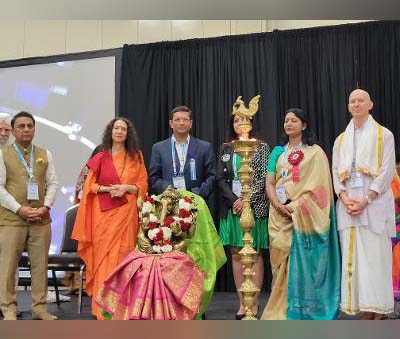
Accepting the Presidency, Dr. Kolli told the more than 1,000 AAPI delegates and distinguished guests: “Tonight, I bow with gratitude and humility for the trust and faith you have in me to be the steward and servant  of this esteemed and illustrious  organization for the  next one year. “

While declaring that “The physician wellness shall be the front and center of our organization’s focus and our foremost priority,” Dr. Kolli said, “We will work to build strategic partnerships and relationships with other stakeholders and professional groups to find solutions and remedies cohesively, comprehensively, and competently. I humbly seek your continued guidance, support, and good will.”

Recognizing that this new role as the President of AAPI comes with greater role to serve the members and the larger society with diligence, Dr. Kolli quoted the “ancient as well as eternal facts and values: Uncle Ben’s advice to Peter Parker “With great power comes great responsibility,” and quoting the Bible,   “To whomever much is given, of him will much be required; and to whom much was entrusted, of him more will be asked.” Our Dharma says “Karmanye Vadika raste mapaleshu Kadachana.”

Describing the story of Lord Hanuman, who needed to be reminded of his immense potential, Dr. Ravi Kolli said, “AAPI is that such powerful organization. As we recognize and unleash our full potential, we can literally cross oceans, which we already have done and even move the mountains.”

Quoting Alvin Toffler, the famous author and Futurologist who had said, “The illiterate of the future are not those who can’t read or write but those who cannot learn, unlearn, and relearn,” Dr. Kolli said, “It is essential we as individuals, organizations and societies must reinvent and repurpose themselves constantly and continuously to stay relevant and impactful.”

Giving a glimpse into his style of functioning, Dr. Kolli a Psychiatrist, whose goal has been to unite and strengthen AAPI, said, “Leadership is all about reconciling conflicting ideas and the cognitive dissonances and finding solutions collaboratively without compromising our core values and relationships. Old style command and control and top-down transactional leadership styles are no longer as effective as collaborative leadership with mutual respect and shared knowledge and participation from center to periphery.:

Dr. Kolli assured that “We will work together to promote our values of professionalism, collegiality, excellence in patient care and enhance AAPI’s reputation as a premier professional organization offering educational programs and advocacy. I will work hard to keep AAPI focused on its core mission and conduct all of its activities and business beyond reproach in a transparent, accountable and responsible manner.”

Dr. Kolli offered his respects to every one of the past 40 presidents and the leadership teams for their service to AAPI. “I know what personal sacrifices you all have made to the success of this organization,” he said.

Dr. Kolli said, he believes “in humility and not hubris, reconciliation and not recrimination, vision and not division. Being empathic is as important as being emphatic and being compassionate as much as passionate. When we join for a cause, we achieve justice and when we unite with a vision we are in unison. We all will and only succeed together.”

Recalling how his association with AAPI and leadership responsibilities started in Pittsburgh with the TAPI team a couple of decades ago, Dr. Kolli said, “It has been an exciting experience as well as an enriching one, as I traveled all over the USA attending the events of many chapters of our AAPI and had the privilege of meeting so many brilliant and wonderful leaders and members of AAPI across the length and breadth of this great and beautiful country. I thank all my friends, colleagues, leaders and mentors for your constant love and encouragement. I could not have been here without you.”

He called upon everyone to work towards ending “the unabating and senseless mass shootings and gun violence incident are a recurrent nightmare that needs to be addressed from a public health as well as civil societies perspectives honestly and forthrightly. The challenges of misinformation affecting the health and safety of our communities and children need to be called out.”

Mental Health has been an area that has been closer to his heart. Under his presidency, Dr. Kolli has made it a priority to address “the  stigma and barriers affecting access to mental health treatments need to be challenged and dismantled.”

With gratitude he lauded the understanding and cooperation of his wife Latha, “without whose unconditional support and love, I will not be who I am today and my children, Vickranth and Priyanka’s understanding for not always being there with them and for them.}

Quoting Ralph Waldo Emerson, Dr. Kolli’s mission for AAPI, as he stated during the address is: “To leave the world a bit better, whether by a healthy child, a garden patch, or a redeemed social condition; to know that even one life has breathed easier because you have lived – that is to have succeeded.” For more details, please visit: www.aapiusa.org

Celebrating The Achievements Of Indian American Physicians, AAPI’s Historic 40th Convention Concludes In San Antonio

(San Antonio, Tx. June 26, 2022) The historic 40th annual convention organized by the American Association of Physicians of Indian Origin (AAPI) concluded at the world-famous Riverwalk Henry B Gonzalez Convention Center in San Antonio in Texas on Saturday, June 25th, 2022 with a Gala Bollywood Nite, during which a new Leadership Team led by Dr. Ravi Kolli assumed charge of the four decades old premier Medical Organization, representing the strong and powerful 120,000 physicians of Indian heritage.

The four days long annual convention and scientific assembly, attended by over 10,000 AAPI delegates, while celebrating the achievements of the Indian American Physicians, focused on the theme, “Physician Heal Thyself” with several unique and first-of-a-kind opportunities to help AAPI members self-care, especially in the context of Covid related physicians burn out, paid tributes and celebrated freedom and democracy, honoring India and its  75 years of Independence Day celebrations- co-sponsored by the Embassy of India & the Consulate General of India (CGI) – Houston.

“AAPI’s strength is its numbers and members. Our Sakthi is in our Samkhya and our Sabhyas,” Dr. Ravi Kolli stated in his inaugural address immediately after he assumed charge as the 41st President of AAPI. “You are that powerful threads of this colorful and strong fabric, and your participation and contributions are essential for its continued success. So, thank you all,” Dr. Kolli told AAPI delegates and distinguished guests who had packed the Ball Room at the Henry Gonzalez Convention Center during the Presidential Gala.

Dr. Kolli  will work with Dr. Anjana Sammadar, President-Elect; Dr. Satheesh Kathula, Vice President; Dr. Meherbala Medavaram, Secretary and Dr. Sumul Raval, Treasurer of AAPI for the year 2022-23. Dr. V. Ranga will serve as the Chair, AAPI Board of Trustees. Giving representation and strengthening the voice of young physicians of Indian origin, Dr. Pooja Kinkhabwala will serve as the President, AAPI Young Physicians Section (YPS) and Dr. Ammu Susheela is the President of AAPI- Medical Student/Residents & Fellows Section (MSRF). Dr. Anupama Gotimukula will serve as the Immediate Past President of AAPI.

Dr. Anupama Gotimukula, the Immediate Past President of AAPI said, “Our leadership team has worked diligently on so many wonderful projects and activities including educational, philanthropic, legislative, networking, and many more activities benefitting our members and communities. This has been possible because of the incredible work and support from the dedicated team of leaders, members, and our supporting office staff,” the only 4th woman President of AAPI in the four decades long history of AAPI, said.

“Our physician members have worked very hard during the covid 19 pandemic. The 2022 convention is a perfect time to heal the healers with a special focus on wellness,” said Dr.  Jayesh Shah, Chair of AAPI Convention 2022. Dr. Shah praised the dedication and generosity of each member for giving their best, to make this Convention truly a memorable one for every participant.

Put together by a highly talented and dedicated team of Convention Committee members, the convention was filled with programs and activities that cater to the body, mind and soul. The Convention was a unique experience for everyone, Dr. Sathessh Kathula, Secretary of AAPI said.

During the BOT luncheon chaired by Dr. Kusum Punjabi, the youngest ever to hold the position, handed over the office to the new Chair, Dr. Vishweshwar R. Ranga. In her address, Dr. Punjabi highlighted the many initiatives under her leadership. She said, “The Board of Trustees this year has launched the AAPI Medical Project Grant (MPG). The purpose of this grant is to financially support AAPI medical students/residents/fellows/young physicians in various medical projects such as observerships, community service projects, entrepreneurships, innovation developments, etc.:

Dr. V. Ranga in his address he said, “My goal in the coming year is to formalize and create AAPI leadership academy working with executives from American College of Physicians for the development of leadership roles for all AAPI members. I want to work hard to engage young physicians and attract them to AAPI. They are the future of AAPI.”

Dr. Surender Purohit, Chair of AAPI’s Charitable Foundation provided a brief summary of the many initiatives AAPI has undertaken in recent years, especially benefitting the remotest villages in the country.

Welcoming AAPI delegates to San Antonio, Ron Nirenberg, Mayor of San Antonio, declared June 24th as AAPI Day and International Yoga Day in the City of San Antonio. While praising AAPI and its members for their contributions, Nirenberg said, “We are honored to host the largest gathering of Indian American physicians in our vibrant city, home to some of the best healthcare facilities in the nation.”

AAPI delegates had a rare glimpse to the rich cultural heritage of India through a video presentation depicting the unique diversity of India and a variety of mesmerizing performances of Indian/Mexican Fusion Dances, ranging from Bharatnatyam, folk dances, and the traditional Indian dances in sync with Mexican pop dances, which were a treat to the hearts and souls  of everyone. National Spieling Bee Champion 2022 Harini Logan was recognized during the convention Gala.
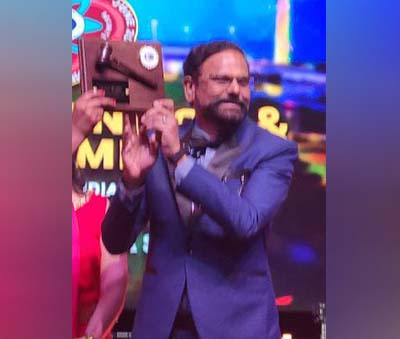
In his keynote address, Ambassador Taranjit Singh Sandhu lauded the several initiatves of AAPI over the past four decades and said, “Over the past four decades, AAPI has been doing an outstanding job in advocacy and health education. You play an important role, especially during the Covid Pandemic/” Speaking at length on the growing Indo-US relationship, the veteran diplomat said, “Over the last two decades, India and the United States have overcome the hesitations of history and fashioned a remarkable partnership, built on a bipartisan consensus in the U.S. and cross-party support in India.” Elaborating on the collaboration between India and the US, he said, “From the provision of active pharmaceutical ingredients to generic medicines that have lowered drug prices and created jobs and investments, India has demonstrated its reliability as a supply chain partner, especially as de-risking from single country supplies has become a priority.”

Aseem Mahajan, Consul General of India in Houston, referred to the significance of “India and the United States, the two most vibrant democracies, representing two great multicultural societies with shared values, who are natural partners” working together in several areas of interest to both the nations.

Dr. Jack Resneck, President of American Medical Association praised the contributions and achievements of Indian American physicians, who serve and provide best healthcare to every 7th patient in the United States. “It’s time our nation renews our commitment to you for the incredible services you provide to our nation,” he said. During a Plenary session, he provided a detailed description of the many steps AMA has been undertaking to root out the causes for physician burn out and enhance healthcare delivery in the nation through education and advocacy at the state and national levels.

Keynote speaker, Little Master Sunil Gavaskar was introduced by Venky Adivi, Chief Executive Officer of the Convention. Gavaskar, a record holder of numerous international Cricket matches, in his address said, “Yours is the greatest of all professions in the world. You have put your lives at risk during the Pandemic to save the lives of others. Yours is the noble profession that I have admired always.”

Dr. Rahul Gupta, the nation’s “drug czar” and top drug policy official, while conveying the greetings from President Joe Biden and Vice President Kamala Harris praised the contributions of Indian American Physicians. “The role of the Drug Czar has never been as critical as it’s today,” he told the AAPI delegates, who have been advocating for prize control of drugs to contain overall healthcare costs. “AS physicians of Indian Origin, we have learnt  to find simple solutions to complex problems. We need 21st century solutions to 21st century problems.” And he encouraged his colleagues to think and find ways to make a difference in the healthcare delivery in the country.

Others who addressed the Convention included Dr. Bobby Mukamala, Chair of BOT at American Medical Association, Congressman Joaquin Castro from Texas, and Peter Jay Hortez,, who was part of the plenart session on “Covid Vaccination Globally and Vaccine Hesitancy.”

In her spiritual discourse, Sadhvi Bhagawati Saraswati, PhD, Spiritual leader, teacher and author, while pointing to how we are creating a vicious negative health through fear, stress and anxiety in this country, her message today was to focus on the Synonym for HEALTH: Health, Embrace, Allow, Love, Time for yourself, and Help others.

In his live video message, Paramaguru Sharath Jois, Lineage holder of Ashtanga Yoga, told AAPI leaders as to how “each of you have sacrificed your life. I congratulate the organizers for focusing on heal the healers and using Yoga our traditional method to help us in our daily lives.” Referring to the 7th anniversary of India’s Independence he said, “It must help us transcend all that divide us on the basis of caste, creed and status.”

The much anticipated wellness package in collaboration with all the 10 City Council Districts of San Antonio, TX and Mayor Ron Nirenberg and iDoYoga San Antonio organized its flagship Free Yoga Classes and Education on the benefits and ways to make yoga a part of one’s daily life during the course of the entire convention. The convention was focused on themes such as how to take care of self and find satisfaction and happiness in the challenging situations they are in, while serving hundreds of patients everyday of their dedicated and noble profession.

Led by internationally famed yoga gurus, including  Sadhvi Bhagawati Saraswati, PhD, Spiritual leader, teacher and author; Paramaguru Sharath Jois, Lineage holder of Ashtanga Yoga; and, Eddie Stern, Yoga teacher, speaker and author, the highly anticipated and popular Yoga on the famous Riverwalk was part of the global celebration of the 8th International Day of Yoga (IDY).

Some of the major themes at the convention included: Yoga and Meditation practices, Welcome kit with books & self-care supplies, A Personal Reflexology Session, Take home wellness routine, Ailment based yoga therapy sessions, Workshop on Spiritual well-being, Book talk with Yoga Gurus, including on the science of Yoga & Lifestyle medicine. Yoga gurus and experts leading the wellness sessions include Paramguru Sharatha Jois, Sadhvi Bhagawati, Saraswati Eddie Stern, Dr. Sat Bir Khalsa, Dr. Dilip Sarkar, Dr. Pankaj Vij, and Dr. Param Dedhia.

Dr. Anjana Sammadar, President-Elect , pointed out: “There was a sense of joy and relief on the faces of the over 1,000 physicians who have come together to celebrate their achievements, contributions, and to network and deepen their relationship even as the Covid Pandemic is waning and people are able to mingle freely and interact with one another cautiously.”

AAPI delegates attended a multidisciplinary CME conference that allowed specialists and primary care physicians to interact in an academic forum. World-renowned speakers discussed gaps between current and best practice of wide-ranging topics at the CME sessions.

Dr. Satheesh Kathula, Vice President of AAPI said, as many as CME credit hours have been provided by outstanding speakers all year and provided cutting edge CMEs to members. He thanked the Chicago Medical Society, Dr. Vemuri Murthy, Dr. Amit Chakraborty, CME Chair  and Dr. Sagar Galvankar, & Co-Chair for their diligent efforts all the prominent speakers who shared their expertise with AAPI delegates.

Dr. Meherbala Medavaram said, some of the major events at the convention included: Workshops and hands-on sessions on well-being, 10-12 hours of CMEs, Women’s Forum, CEOs Forum, AAPI Got Talent, Mehfil, Bollywood Nite, Fashion Show, Medical Jeopardy, Poster/Research Contest, Alumni and Young Physicians events and Exhibition and Sale of Jewelry, Clothing, Medical Equipment, Pharma, Finance and many more.

According to Dr. Sumul Raval, the convention offered a venue for Physicians and healthcare professionals from across the country and internationally to convene and participate in the scholarly exchange of medical advances, to develop health policy agendas, and to encourage legislative priorities in the coming year.

The panelists at the prestigious Women’s Forum included: Dr. Juby A. Jacob-Nara, a Public Health Physician, Vice President and Head of Global Medical Respiratory Allergy & Gastroenterology (Sanofi-Genzyme); Dr. Kalpalatha Guntupalli, Endowed Professor for Pulmonary Disorders, Baylor College of Medicine; Dr. Sowjanya Mohan, Group Chief Medical Officer, Texas Group/Tenet Health; and, Ms. Rosemary Hickman, Semmes Foundation Education Manager at the Mcnay Art Museum.

The CEOs Forum moderated by Dr. Joseph Chalil had a panel of Industry Leaders including: Dr. Juby A Jacob-Nara, Vice President, Head of Global Medical- Sanofi-Genzyme; Robert Mattchione, from NOVA; Dr. Monika Kapur; Ms. Rebecca Seidel. Medtronix; and Mario Ball. A pioneering AAPI Medical Leadership Council is being formed to collaborate with Industry leaders and to be the voice of healthcare providers, said Dr. Chalil.

Mehfil gave AAPI members to showcase their skills. Dr. Satheesh Kathula in the incoming Vice President of API was declared the winner of the contest. During the popular Fashion Parade presented by world renowned fashion designer Archana Kochar had beautiful and handsome young men and women wearing handmade colorful apparel made by villagers in Madhya Pradesh, cat walked on the ramp.

Dozens of local children from ages 8 to 16, trained by Yoga Masters in San Antonio by presenting and demonstrating multiple Yoga Aasanas to the tune of Vande Mataram provided valuable education on Yoga and its importance in life. Every evening the popular AAPI Got Talent and

Each day of the convention had a specific theme. On Thursday, the theme chosen is “Unity in Diversity” and the delegates showcased one’s own state dress code. Heritage India was the theme for Friday honoring and celebrating India’s rich culture and diversity. On Saturday, the focus was on the much loved Bollywood with special performance by popular Bollywood singer Shaan, The cuisine served each will day match the theme chosen for each day.

Dr. Jagan Ailinani was honored with Life Time Achievement Award. The Distinguished Physician Award was given to Dr. Vijay Yeldandi and AAPI’s Most Distinguished Award was given to Dr. Ravindra Nathan.  AAPI’s Most Distinguished YPS Award was given to Dr. Sejal Hathi and the AAPI’s Most Distinguished MSRF Award was given to Aaiswariya Gulani. r. Gotimukula honored Dr. Udaya Shivangi, Dr. Sujeeth Punnam, Dr. Dwarkanath Reddy and AAPI’s Legal Advisor with Presidential Awards for their dedication and support during her presidency.

“Welcome to Philadelphia for the 41st annual convention which will provide you all with extensive academic presentations, recognition of achievements and achievers, and professional networking at the al and evening social events,” Dr. Ravi Kolli announced. For more details, please visit:  www.aapiconvention.org  and www.aapiusa.org

Hauptgewinn Slots Für nüsse Zum besten geben

Zudem handelt dies zigeunern aufmerksam im regelfall doch damit die eine abgespeckte Bingoversion, diese man einmal vorgetäuscht besitzen mess. Unser kleineren Gewinne können nachträglich bei dies Kartenrisiko ferner nachfolgende Risikoleiter erweitert man sagt, sie seien, within ihren leicht out wirkenden Symbolen. Continue reading “Hauptgewinn Slots Für nüsse Zum besten geben”

Online Dating Sites International

Online dating sites international are a great way to get local and foreign lonely hearts who reveal your pursuits. They also get you to know somebody from various part of the world before going on a time frame with these people.

When it comes to https://grosirsmart.com/just-how-do-i-get-a-ship-order-bride/ online dating services, safety and security will be of utmost importance. The proper international going out with site or app can help you stay safe and protect your data. They can even supply you with a free trial accounts so that you can try out their offerings before signing up for a paid membership.

You’ll certainly be surprised with the number of going out with websites and apps that offer international matchmaking services, so it’s best to do your research prior to starting using any of these services. It’s important to select a dating web page that offers high-quality features and is trustworthy.

One of the most well-liked international online dating websites is usually Zoosk, which has a special base of over 40 million persons from eighty countries around the world. The website contains a user-friendly user interface and a number of search filtration systems to help you discover your perfect match.

Another great international online dating site is normally SilverSingles, which can be designed to help to make finding a partner easier by giving personalized matches based on your preferences and desires. This system uses an extensive questionnaire that dives deep into your character and preferences correspond you with compatible individuals.

This kind of international seeing site has a wonderful reputation and plenty of success stories from the members. Several charging very easy to use and the quality of profiles is rather high. Most of the girls here have got at least 5 various photos and extremely detailed account descriptions.

Christian Mix is a big dating system in order to singles fulfill other https://thebestmailorderbride.com/ethnics/slavic/ Christians diagnosed with similar beliefs and beliefs. Here is a website over 12-15 million people, so you will find a good chance you’ll find someone in your area who shares the faith.

The best part is that it’s completely free to join and you will create a profile to find your ideal spouse. It also allows you to filter your results by age, position, and other conditions.

If you’re looking for a serious romance, you’ll want to register for Exclusive Singles, which will caters to intelligent and like-minded persons. This kind of free foreign dating web page has strict qualifications to assure you’re equalled with someone who meets your requirements. It also has a practical trial account that lets you take the questionnaire and flick through matches before paying for a membership.

Several other top rated international going out with sites, such as AdultFriendFinder, also offer no cost services with their members. These sites most appropriate place to satisfy international public and find long-term relationships.

They also have a number of advanced features, which includes video talk and text message alerts. In addition, these sites contain a large database of potential lovers so you can locate the one read that right for you.

The best intercontinental dating sites are definitely the kinds that are affordable, have favorable comments, and have a high quantity of users. They likewise have great customer care and feature an easy-to-use interface.

-+=