As the youth-led initiatives and their success stories around the world have shown, collective action from young people is already changing things for the better. Young people are the HOPE for the future as they are creative and fill of energy. Identifying youth leaders and supporting them in their efforts to be the leaders who could be a critical link between the government of India and the immigrant youth who are spread around the world.
With the objective of providing a youth forum that will provide a platform for the Disapor youth to help amplifying youth actions that will help create change in approach and programs by the Government of India, GOPIO International organized a virtual session on “India’s Outreach to Diaspora-Youth Perspective” on Sunday, March 7th, 2021. Attended by youth and senior leaders of the Diaspora from around the world, the event provided the participants a rare view into the youth and their perspectives on how the Diaspora youth power can be utilized creatively for the benefit of India and the world.
In his introductory remarks, after clarifying the role and the growth of GOPIO International, Dr. Thomas Abraham, Chairman of the GOPIO International pointed out that, “India has the largest Diaspora in the world and it is still growing. Currently, the Indian Diaspora has a strength of over 32 million people.” Referring to the numerous initiatives that the Government of India (GOI) has taken with the objective of reaching out to the Diaspora, Dr. Thomas Abraham pointed out to the Pravasi Bharatiya Divas held in India since 2013, which showcases to the fact that “India has great interest to reach out and cultivate its Diaspora youth. It has several programs for the Diaspora youth and exploring more avenues to outreach.”
In this context, Dr. Abraham said, GOPIO International is organizing a virtual Zoom session for Indian Diaspora Youth who are High School/College/University students as well as young professionals up to the age 25 on “India’s Outreach to the Diaspora – Youth Perspective,” with participants from different countries. “Today’s event is one such event to encourage the youth of Indian origin to aspire to be youth leaders and to help network youth from around the world with the Youth in every GOPIO Chapter around the world.
Ambassador Anup Mudgal, chief guest and main speaker today at the event, had served as India’s former Ambassador to Mauritius and Chair, Diaspora Research and Resource Centre, ARSP, New Delhi. In his inspiring address, Ambassador Mudgal pointed out that Antar-Rashtriya Sahayog Parishad has been in existence for over three years, under the Ministry of External Affairs. The objectives of the ARSP, according to Mudgal is “to take the intiativs with Diaspora to the next level: 1. Outreach to Diaspora; 2. Engage the youth of Indian origin; 3. Help the Diaspora in research and publication; 4. Expanding of Diaspora organizations around the world and in India.
According to Ambassador Mudgal, “Youth Diaspora is a main pillar of ARSP.” Emphasizing that the ideas and actions must be derived from the Diaspora, he pointed out that several of them have been accepted by the Govt.” Stating that the Indian Diaspora is one of the most successful in every domain, Ambassador Mudgal said, “You have done very well. You also enjoy tremendous good will among the host nations. Diaspora plays an important tool of power as each of you is the Ambassador of India.”
Suggesting that the “Engagement with the youth will be a regular phenomenon from now on,” he urged that the youth need to carry forward the flag to the upcoming generations. He asked the youth to reflect and find answers: “What makes the Indian Dispora stand out? What are the characteristics that make us successful? What are the changes we need to make to shine more? While your Indianness will always be with you, you need to understand how does that help shape your personality?”
The plan as per Ambassador Mudgal is that the Government of India will organize annual International conferences with representatives from 15 nations, during which the delegates will explore on the kind of relationship, engagement they expect from the Government of India. “This dialogue will continue for centuries to come,” he assured the participants.
The lively session attended by talented youth from the US and Europe was moderated by Beena Ramachandran of GOPIO CT. She said, two youth from the participants today will be chosen by a panel of Judges: Dr. Thomas Abraham, Anita Bhatt, Navin Pathak, Naumi Kaur. These 2 youth will attend the international youth conference to be held in April this year, she said.
Ananya Kotian, a Junior in high school aspiring to pursue an education in psychology, and is passionate about dance and singing, in her presentation pointed to how the media helps us to stay connected with India. Stating that how staying in touch with documentary makers, who creatively showcase the issues facing the people of India, Ananaya Kotian advocated for virtual cultural experiences. Founder of the blog Cultural Kaleidoscope, which delves into Asian culture from a young American Indian’s perspective, while pointing to the fact that many Diaspora leaders have been appointed to bigger roles in Biden administration, a tutor and STEM mentor for the Boys&Girls club, Kotian said, “We are successful because of the values we have inherited from our country of origin, India.”
Anjo George, a junior who is well-rounded in academic fields, music, swimming, and technology, and has been passionate about helping other students to improve their academics, highlighted the history of hosting Pravasi Bharatiya Divas, celebrating Diaspora’s contributions to India and help stay connected with India. While referring to the Know India Program by the Government of India, George said, “It helps us learn and promote Indian culture, while enabling us share our views and bond closely with India, and help reflect a positive image about India.” George suggested: 1. Cultural exchange at school levels; 2. Establish youth ambassadors with delegates from each country to discuss issues and propose solutions, modeling Model Congress/Model Youth; 3. Organize regular competitions on social issues faced by India; 4. Exploring and increasing study abroad programs and internships, this helping build leadership, culture and help make a global community of Indians.
Viswaa Sofat, a freshman at U.C. Berkeley studying Computer Science and Political Science, shared with the audience his experiences as someone who was both born and partially raised in India, and how he tries to remain strong and fundamental to his identity as a person of Indian origin. He hopes to use this opportunity to learn from other like-minded individuals and further involve Indian youth abroad. Vishwas Sofat said, he had immigrated to US at the age of 2. Later on, he returned to India, lived in India, modeling Israel how they attract youth to come to Israel. “Growing up in India helped me understand and appreciate the values, traditions, art and culture,” he said and added, “ India is at a critical junctures today with youth stepping up and joining protest movements in India.” He suggested for the Diaspora youth to be able to connect with Universities in India and get diverse perspectives through structured programs organized for them. Easy access to obtain visa.
Nithya Shenoy, a freshman at Rice University in Houston, Texas, plans to double major in political science and neuroscience. Is a part of Rice’s student-run paper, Thresher, and enjoys writing political pieces, reading, playing the violin, and Model UN. She shared about Israel’s Diaspora Outreach, “which helps develop collective identities, creates a sense of oneness,” she said. Referring to the African Nations Diaspora initoavesatives, she suggested to the need for grass root level outreach. Her recommendations included: 1. Scholarships through competitions with tourism component and education, which will help youth to become more connected. 2. Organize pent house programs, connecting with youth in other nations, and thus help understand how they perceive India. 3. Exposure through NGOs gives the youth an opening to understand and appreciate India better.
Vedant Gannu is a senior studying Computer Science at Rensselaer Polytechnic Institute and a Data Engineer Co-op at Ellington Management Group. A youth member of GOPIO CT for years, he served on the GOPIO Youth Committee, helped organize events such as Indian Independence day celebration and the annual Youth Networking event in Stamford. As a proud Indian and ambitious student, he is interested in helping the Diaspora Youth as they are integral members of the Indian community that will serve as role models for future generations. In his address, Gannu said, Education is the key to job opportunities. His suggestions included: 1. Mentorship and exchange programs will provide a combination of global with local perspectives; 2. Infrastructure planning for better structural models; 3. Indian Government agencies need to offer internships and hire the youth who can share global perspectives to local problems/issues; 4. Scholarships in less popular areas of study.
Alicia Kaur, a graduate of Rutgers University with a degree in Legal Studies, said, her dream is to one day become a lawyer and fight for racial justice and a more inclusive society. Coming from one of the most diverse universities in the United States and being a minority herself, she believes her personal experiences are what drive her towards this goal. A winner of the Women in Leadership Award from Ernst and Young, pointed out how, the Indian Diaspora has become the “most successful community in the US, as shining examples with many influential organizations has the highest per capita income, most educated, and holding influential positions around the nation, especially with dozens of Indian Americans appointed to top positions in Biden administration. Her suggestions included, the need for a new NRI policy; partnership with tech/research sectors; student exchange programs; and, collaboration in healthcare.
Abhi Parikh, currently living in Paris, and originally from Ahmedabad, India, said, she is involved in 2 start-ups, one is in the education sector and another in the food sector, and is immensely passionate about her work. Apart from that, she has started a few Indian communities on Facebook, just to gather Indian people on a common platform, she said. While suggesting that the youth have huge potential., she urged the government to tap this force through encouraging steps. She shared with the participants about how developing social media platforms help youth establish startups by youth. Focusing on entrepreneurial migration, she said, they help give access to information; access to network and sharing; access to business through exchange programs.
Akshat Gupta, a young professional in the field of Medical Technology, based in Munich, Germany, had moved out of India more than a decade ago in the pursuit of newer academic and career opportunities, and has had the good fortune of having worked and lived in multiple cultures. Stating that his leisurely activities include astronomy, sky-diving, and going off the grid once in a while, Gupta praised the ever changing dynamic of Indian diaspora, and suggested that the outreach programs by the Government of India needs to adapt and change according to the need and times. Connecting with various sub culures and diversification of missing links and helping them connect with the expats. Stressing that the Indian Missions around the world need to play a more active role in the life of Diaspora, Gupta said, he appreciates the new initiatives and would look forward to how the Government is able to listen to the perspectives of the youth and how these suggestions are being heard and acted upon.
In his concluding remarks, Dr. Abraham promised that “After the session, all ideas will be pooled to make recommendations which two of the youth from the session will speak at a Webinar organized by Antar-Rashtriya Sahayog Parishad (ARSP) from Delhi in April, 2021.”

 BR will serve as THE ONLY tech platform on which smaller retailers can personally select products from verified suppliers across various categories with minimum MOQs (in most cases, just ONE product per style). Since most sellers and buyers are unable to produce or procure volumes during these uncertain times, BR serves as the perfect matchmaking service for these small-to-mid-size businesses looking for alternative avenues.
 The exhibition is comprised of monumental canvases that document Sharma’s travels around India and its vicinity, exploring the relationships between urbanization, landscapes and the human presence at the interstices of modernity. Sharma is constantly expanding and evolving these images so that they add new connotations and dimensions to that which was already familiar. We sincerely hope you can join us at the opening reception.
 Tagore, the poet of Indian nationalism, was India’s pre-eminent cultural and literary personality of the twentieth century. The influence of the Buddha on his poetry and his novels has been much studied and written about. This influence came about in diverse ways. His immediate family was steeped in Buddhist study. In 1859 his father Debendranath Tagore had been to Ceylon and had come back with not just knowledge of but keen interest in the Buddha’s life and his teachings. He wrote Sakya Muni O NirvanTattvai in 1882. Satyendranath Tagore, Rabindranath’s elder brother, who had accompanied their father to Ceylon, wrote Bauddha Dharma in 1901. The BrahmoSamaj, of which the Tagore family was an integral part, had also taken up the study of the Buddha’s teachings. A very early influence regarding the Buddha on Rabindranath Tagore was that of RajendralalaMitra, who has figured in this narrative earlier.
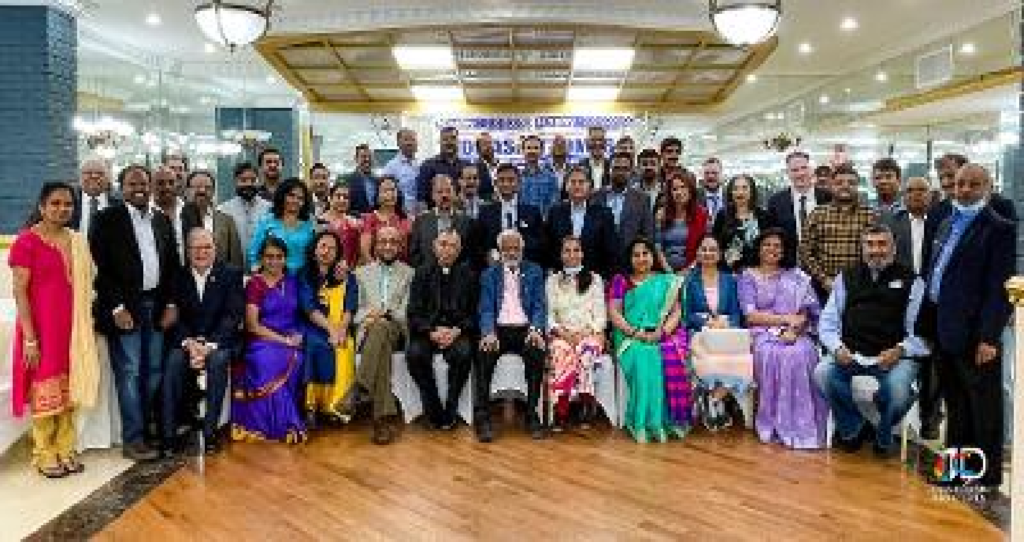 Those who participated in the prayer include Guru jiGarud Gopal Prabhu, Father John Thomas of Jackson Heights Orthodox Church, Imam Muhammad Waliullah of Hillside Islamic Center, Ashok Vyas of ITV, Hemanth Shah of FBIMA, Suhag Mehta of Ganesh Utsav, Kripal Singh, VirendraVora, Paul Karukapally, Ashok Vora, Philipose Philip, V.M. Chacko, Varghese Abraham, Mercedes Buchanan and George Abraham of IOCUSA.
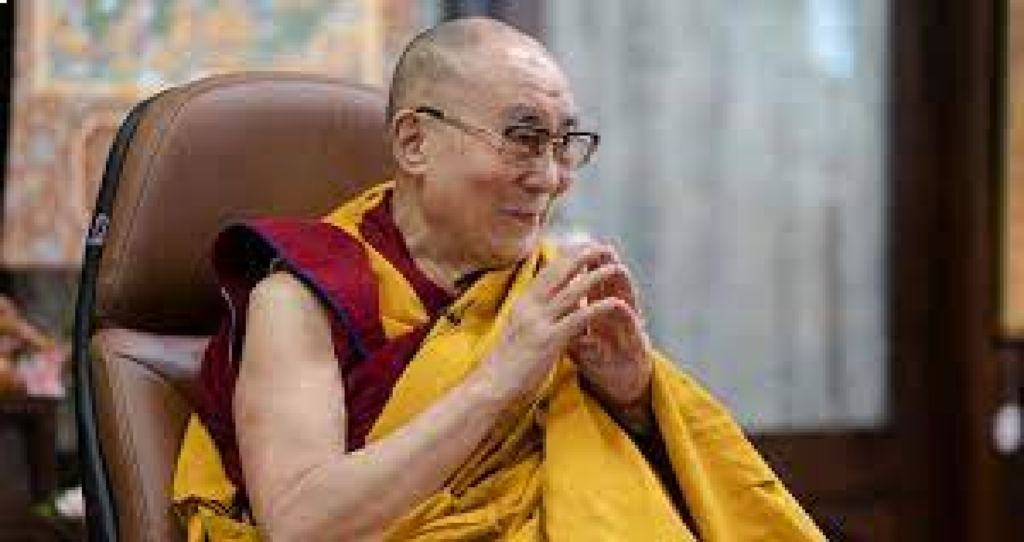 On query of Professor Medvedev that what value the study of ‘thukdam’ could have for humanity in general. The spiritual leader replied Tibetan Buddhists believe that people go through a process of dissolution in the course of death.
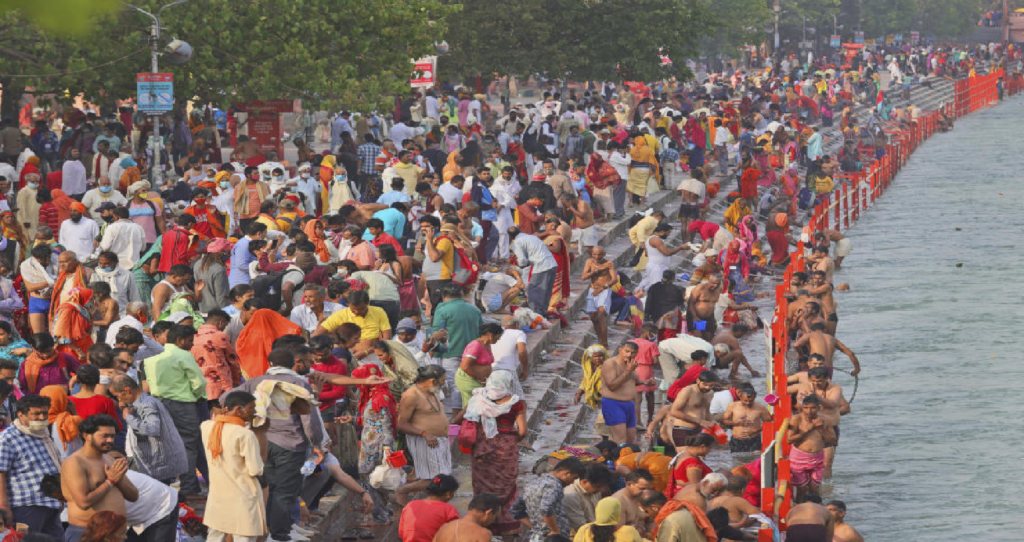 Hindus believe the river is holy and bathing in it will cleanse them of their sins and bring salvation. The Kumbh Mela takes place every 12 years and the venue is chosen from amongst four cities, including Allahabad, Haridwar, Nasik and Ujjain. Haridwar’s turn to host the gathering came amid a sharp rise in the number of coronavirus infections, with India consistently reporting more than 100,000 cases daily in the past few weeks.
 In Waffles + Mochi, the puppets learn how to make mazamorra morada, a sweet purple corn desert, in Lamay, Peru. Each episode is focused around a specific ingredient. In the sixth episode, the puppets are sent on a mission to collect different types of eggs to bring to chef
  Archaeologists started excavating in September in the area between the temples of King Ramses III and Amenhotep III. The original goal of the mission was to find King Tutankhamen’s mortuary temple, the statement said.
 According to Beall, orthodox work on the incarnation begins with the standard doctrine that Christ is fully divine and fully human — having all properties that are essential to God but also all properties that are essential to being human, including all the essential limitations of being human. Philosophers and theologians have long struggled with this tension and, in a quest for logical consistency, have articulated theories that attempt to dissolve the apparent contradiction.
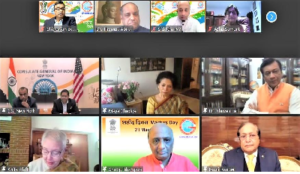 Consul General Jaiswal, in his address, commended GOPIO Manhattan for organizing the event and several others, honoring India and Indians. “Today is the Red Letter Day in the history of India,” the Indian diplomat with over three decades of diplomatic services around the world, told the hundreds of community leaders from around several continents who joined the celebration. “We honor today the legendary freedom fighters, recalling their bravery and love for our motherland.” Describing today’s celebrations as unique, Ambassador Jaiswal recalled the founding of the
  In 1913 Lala Har Dayal formed the Ghadar Party to organize a rebellion against the British government of India. He fled to Switzerland and then to Berlin, where he tried to foment an anti-British rising in northwestern India. After the German defeat in World War I, Har Dayal settled in Stockholm as a professor of Indian Philosophy and wrote Forty-Four Months in Germany and Turkey. He moved to the USA in the late 1920s and became a Professor of Sanskrit at the University of California, Berkeley.
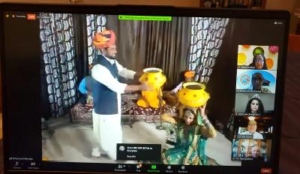 Holi has become known as India’s most vivid, joyous-festival. Holi is being celebrated in the Indian subcontinent for centuries, with poems documenting celebrations dating back to the 4th century CE. It marks the beginning of spring after a long winter, symbolic of the triumph of good over evil. It is celebrated in March, corresponding to the Hindu calendar month of Phalguna. On the eve of the festival, large pyres are lit in many parts of India to signify the burning of evil spirits. People often throw wood, dried leaves and twigs into bonfires, Ambassador Jaiswal explained.
 “The vibrancy of colors is something that brings in a lot of positivity in our lives and Holi being the festival of colors is actually a day worth rejoicing,” Motwani said. “Holi is considered as one of the most revered and celebrated festivals of India and it is celebrated in almost every part of India, transcending every region, and people of all faiths, including Hindus, Muslims, Sikhs, Christians, Parsees, Buddhists, and Jains. It represents the uniqueness of Indian culture as we, from all backgrounds stand united to welcome Spring, as Mother Nature breathes freshness into our lives and that of every living creature on Earth. Welcome to each and every one of you and wishing you and your families A VERY HAPPY HOLI!”