The First Gandhi King Legacy Roundtable Summit Launched

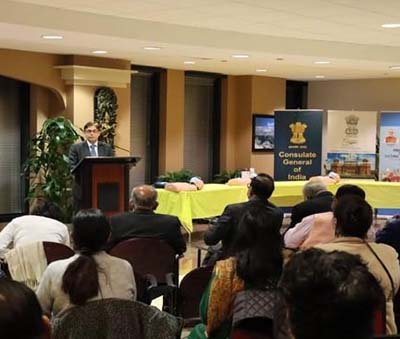
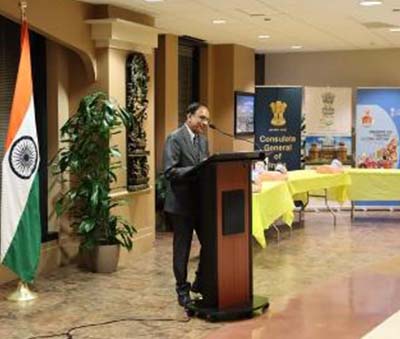
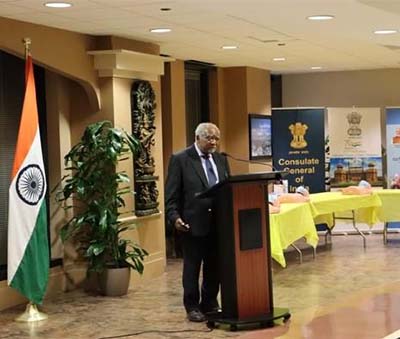
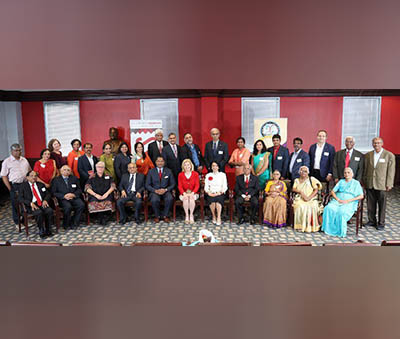
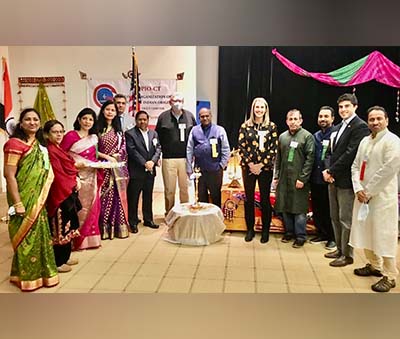
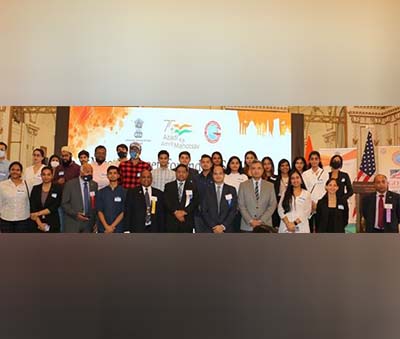
The First Gandhi King Legacy Roundtable Summit was organized by the U.S. Congressional Multi Advisory Task Force (MEATF) of Congressman Danny K Davis in cooperation with Metropolitan Asian Family Services (MAFS) on Friday February 26 from 12 noon to 4pm.

Vasavi Chakka, Commissioner, Naperville Sister Cities Commission moderating the Summit stated that this Summit is being held to Commemorate the Black History Month and Mahatma Gandhi’s73 Death Anniversary with the theme being, “Challenges of the Behavioral Health Crisis during the COVID pandemic.

Dr. Mrs Santosh Kumar, Founder Executive Director of Metropolitan Asian Family Services welcoming the Roundtable Summit stakeholders said that this is the first time a Gandhi King Roundtable Summit is being held in Illinois State and stressed that the Summit is addressing the important issue of Behavioral Health and how to improve and increase the Behavioral Health Resources in our communities which is the most effective way to continue the legacy of the legends Mahatma Gandhi and Martin Luther King Jr.

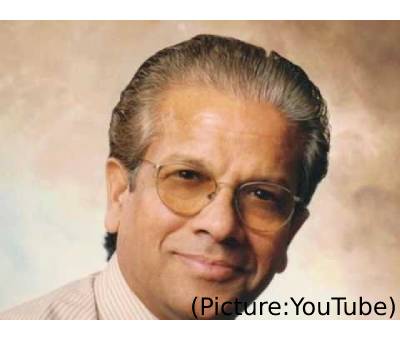
Dr. Vijay Prabhakar, Founder Chairman of Congressman Danny K Davis’s Multi Ethnic Advisory Task Force in his opening remarks credited India’s Consul General at Chicago Amit Kumar for conceiving this historic Summit to honor Gandhi King’s Legacy. Dr. Vijay Prabhakar, a public health expert said that America will face the gravest challenge from the behavioral health crisis in 2030 and hence all concerned citizens, elected officials, behavioral healthcare providers and other stakeholders should form a broad framework to work towards seriously addressing the challenges of behavioral healthcare.

Ambassador Amit Kumar, Consul General of India at Chicago inaugurating the Summit said the greatest testament of the Gandhi King Legacy is the current strong ties between India, the largest democracy and USA, the Oldest democracy, at the highest levels and recalled the role of India under Prime Minister Narendra Modi’s leadership during the COVID pandemic. The supply of Indian made vaccines to several countries recently is yet another glowing example of India’s Prime Minister Modi’s global leadership, he added. CG Kumar thanked the organizers for hosting the Roundtable Summit on the Legacy of Mahatma Gandhi and Dr. Martin Luther King and to commemorate the Black History Month.

He recalled that their life, message and philosophy continue to inspire us all, that life of Mahatma Gandhi was very closely followed in the US, referred to the historic visit of Dr. King to India in 1959 and efforts to spread the legacy of these two leaders. He referred to the Gandhi-King Scholarly Initiative Act passed by the US Congress in 2020 that was initiated by late Congressman John Lewis, another iconic figure in the civil rights movement. He thanked Representative Danny K Davis, for his strong support to India-US ties, and recalled his initiative to establish the Multi-Ethnic Advisory Task Force a decade ago to empower different ethnic communities in his district. He also acknowledged the exemplary contribution of the Indian American community in helping local communities in several ways during the Covid-19 period.”

  1. S. Congressman Danny K. Davis’s Multi Ethnic Advisory Task Force saluted India’s Consul General Amit Kumar for his vision in conceiving this Gandhi King Legacy Summit as a tribute to two great legends. The month of February is officially observed as BLACK HISTORY MONTH throughout United States and Gandhi’s 73rd Death Anniversary (Punyatihi /Shaheed Diwas) was on January 30. U.S. Congressman’s Multi Ethnic Advisory Task Force presented Consul General Amit Kumar with an Official plaque for his initiative in conceiving this historic epoch making event. A brief video of Martin Luther King Jr speaking on Mahatma Gandhi was screened followed by Dr. Sriram Sonty, eminent Ophthalmologist, the Vice President of The Gandhi Memorial, Chicago eloquently describing the GANDH-KING Connection and its relevance to the present day.

Consul General of India Amit Kumar along with Consul General of Japan Kenichi Okada at Chicago jointly presented the Gandhi King Legacy Award of Excellence 2021 to Dr. Steve Munsey, Founder, Family Christian Center, Munster, Indiana for his extraordinary leadership to the underserved communities of Northwest Indiana and the City of Chicago during COVID pandemic from June 2020 to present. Dr. Steve Munsey, Author, Pastor, Creative Director, and Producer giving the Dr. Gandhi King Legacy Oration 2021 extolled all the leaders to emulate the virtues of these two great legends by their actions in their day to day lives and implement life transforming programs with purposeful goals. Dr. Munsey spoke about the need to make Behavioral Health Care affordable and accessible to all especially the vulnerable sections of the community now.

Marvin Lindsey, CEO, Community Behavioral HealthCare Association of Illinois delivered the Key Note Address. U.S. Congressman Raja Krishnamoorthi (8th-IL) in his remarks said, “I don’t need to tell you that this is Black History Month and this month, we celebrate the legacy of Dr. King And I don’t need to tell you that Dr. King was inspired by Mahatma Gandhi of India. Now today, we are coming together to celebrate this joint legacy , one of nonviolence, one of justice, one of making sure everyone has a seat at the table, and that no one is on the menu . That is what today’s roundtable is all about.

  1. S. Congressman Danny K Davis in his presidential address at the Summit commended India’s Consul General at Chicago Amit Kumar for initiating this Gandhi King Legacy Roundtable Summit which is most apt and very timely for our Communities to heal. “Martin Luther King Jr. was a disciple of Gandhi. A Lot of Gandhi’s teachings was put into practice by Martin Luther king Jr. . So it is important that our elected leaders and Community leaders adapt and enrich the same partnership between African and Indian communities here in Chicago and beyond. I applaud Dr. Vijay Prabhakar, the creative public health expert and founder of my Multi Ethnic Advisory Task Force (MEATF ) along with Mrs Santosh Kumar, Executive Director of Metropolitan Asian Family Services of Illinois(MAFS) for recognizing the importance of the Gandhi King relationship and for continuing their legacy in this dynamic environment. We need to strengthen this partnership among our ethnic communities. I am waiting to hear about the outcomes of this Summit and will work towards supporting the Summit’s recommendations.”, added Congressman Danny Davis.

Dr. David Albert, Director, Division of Mental Health, Illinois Department of Human Services gave the Call to Action. Dr. David Albert said that the State Of Illinois runs Seven Psychiatric hospitals and funds 207 Community Mental Health Centers in the State of Illinois. Dr. Albert said that during the COVID pandemic, the need for special attention to the Senior Population and the Youth /Students population is engaging the department.

The Gandhi King Legacy Roundtable Summit 2021 unanimously resolved to establish a Citizens Action Alliance For Behavioral Healthcare (CAABH) to nurture, enrich and empower behavioral healthcare providers while spreading awareness of behavioral healthcare resources in our communities. The Summit further resolved to launch a monthly publication on behavioral healthcare resources that features op-ed column by elected representatives, showcase community behavioral health programs, informative clinical updates and latest community behavioral health resource tools. The Summit called for monthly town hall meets of elected representatives, community leaders, behavioral healthcare providers and concerned citizens for behavioral healthcare as a constructive follow up.

Dr Vijay Prabhakar , Founder Chairman of U.S. Congressman Danny K Davis’s Multi Ethnic Advisory Task Force named Ms. Twin Green, CEO of THE LINK & OPTION Center, South Holland, IL as C.A.A. B.H.’s Ambassador for Southland of Illinois at the closing session of the Summit. Dr. Vijay Prabhakar thanked Dr. Terrence Chiramel of American Association of Multi Ethnic Physicians AAMEP-USA, Ms. Alli Dhanaraj of American Multi Ethnic Coalition AMEC, Charlie Dressner , Chief of Business Development, MEDSTAR Laboratory, Hillside, IL, Ms. Neelam Desai, Manager, MAFS Naperville Office, Adam Feldman, Senior VP, Ensoftek Inc, and Anil Kumar of The Global Eye, Digital News Magazine for all their support in organizing this First Gandhi King Roundtable Summit.

Consul General Of Japan in Chicago, Kenichi Okada presented the Congressional MEATF Citations to MAFS Mahatma Gandhi Medal of Excellence 2020 recipients and Dr. Mrs Santosh Kumar, Founder of MAFS honored eight individuals with the MAFS Gandhi Medal of Excellence 2020. The 2020 MAFS Gandhi Medal of Excellence recipients who were honored are Dr. Tariq Butt, President , Chicago Medical Society , Dr David Albert , Director, Division of Mental Health , Illinois Department of Human Services , Donald Dew , President, Habilitative Systems Institute, Chicago , Professor Benneth Lee, Founder National Alliance for the Empowerment of the Formerly Incarcerated, (NAEFI ), Ms. Arloa Sutter, Founder-Executive Director, Breakthrough Ministries, Chicago , Albert Holmes, Founder CEO, Elite House of Sober Living, Chicago Heights, IL, Ms. Vinita Gulabani , President, Indian American Cultural Association, Downers Grove, IL and Luke Tharasri, President, Maximon Behavioral Health , Los Angeles.

Dr. Sreenivas Reddy, Vice Chair, Illinois Physician Disciplinary Board in his Closing remarks envisaged that this Gandhi King Legacy initiative on Behavioral Healthcare should be implemented globally and thanked the organizers Multi Ethnic Advisory Task Force of Congressman Davis (MEATF), Metropolitan Asian Family Services (MAFS) and THE GLOBAL EYE, Digital News Magazine for hosting this historic Summit. Dr Reddy further added that the presence of the Visionary Consul General of India Amit Kumar and the energetic Consul General Of Japan Kenichi Okada is the new beginnings for a global collective action on behavioral healthcare.

Global Encyclopedia On Ramayana To Release On Saturday

The government in Uttar Pradesh is going to give a unique gift to Ram devotees across the world. The first edition of the Global Encyclopaedia of the Ramayana is ready for publication.

Chief minister Yogi Adityanath will release the historical edition on the occasion of Janaki Navami on Saturday.

The version of the Global Encyclopaedia of the Ramayana, prepared by the Ayodhya Research Institute, will also be launched as an e-book.

The first edition of the Encyclopaedia will be released in the English language. A month later, the first edition in Hindi and Tamil languages will be published.

The Uttar Pradesh Department of Culture, in collaboration with the Ministry of External Affairs, is involved in this mega project by combining the tangible and intangible legacy of the Ramayana from 205 countries of the world.

For this, a workshop was organised by the department which included 70 scholars from West Bengal, Assam, Kerala, Karnataka, Chhattisgarh, Tripura, Andhra Pradesh, Telangana and Delhi.

According to Shishir, Director of Culture, Uttar Pradesh, there is a plan to publish the Ramayana Encyclopaedia in 200 volumes.

For this, the Ayodhya Research Institute has set up a board of editors and advisors around the country and the world. The first edition has been designed by the Indian Institute of Technology, Kharagpur.

The publication of Ramayana will also be released in Oriya, Malayalam, Urdu and Assamese languages along with the first edition of the Global Ramayan Encyclopaedia.

Also, the oldest and authentic book about Ayodhya, ‘Ayodhya Mahatma’ will be released in the English language to expand it globally.

It was in May 2018, that the chief minister had directed to conduct a survey and publication of all the Ramayana sites of the world at the review meeting of Ayodhya Research Institute, Ayodhya.

Globally, evidence of the Ramayana’s tangible heritage, architecture, sculpture and painting is found in countries around the world including Pakistan, Iran, Iraq and Europe since about 5000 years ago.

According to the scholars, almost all countries of Europe accepted Ram as their first ancestor.

Scholars claim that ‘Ram Takht’ was received in Gandhara region in 2500 BC and many villages in Gandhar have their names on Ram and Sita.

Taxila is named after the elder son of Bharat, Taksh.

The entire Gandhara region of Pakistan is rich in Ramayana culture.

According to scholars, there is evidence of a Ramayana civilisation in Italy before the Roman civilization in Europe. Vatican City, France, Germany, Netherlands also have elements of this culture. (IANS)

Scientists Talked To People In Their Dreams. They Answered

Researchers say two-way communication is possible with people who are asleep and dreaming.  Specifically, with people who are lucid dreaming — that is, dreaming while being aware you’re dreaming.

In separate experiments, scientists in the U.S., France, Germany and the Netherlands asked people simple questions while they slept. Sleepers would respond by moving their eyes or twitching their faces in a certain way to indicate their answers.

“Since the ’80s, we’ve known that lucid dreamers can communicate out of dreams by using these signals,” says Karen Konkoly, a Ph.D. student at Northwestern University who is the first author on the study published this month in Current Biology.

“But we were wondering, can we also communicate in? Can we ask people questions that they could actually hear in their dreams that we could kind of have a more meaningful conversation?”

They were studying rapid-eye-movement sleep, which is the stage of sleep where people dream most vividly. In REM sleep, “every muscle in your body is completely paralyzed, except you can twitch and you can move your eyes,” Konkoly tells Scott Simon on Weekend Edition. “So if you become lucid in a dream and you want to communicate, then when people are dreaming, they just look left-right, left-right, really dramatically. And then we know that they’re communicating out.”

Lucid dreaming is not common. So to study it, researchers recruited people who had experience with it and also trained people to try to make lucid dreaming more likely.

Before the participants went to sleep, they were also trained on how to communicate their answers. Special sensors measured people’s eye movements or experts would judge their facial movements.

For example, a typical question would be to ask what is 8 minus 6. A 19-year-old American man was able to respond by moving his eyes left-right, left-right — two times — to signal “2.” Researchers asked the question again, and he moved his eyes the same way two times again.

Out of the 158 trials among 36 participants, about 18% of the time, they were able to give correct answers. In another 18%, it wasn’t clear whether participants were responding or not. They were wrong 3% of the time. Most often, 61%, participants didn’t respond at all.

For the people dreaming, they didn’t always interpret the questions they were hearing as a simple question from researchers. “Sometimes stimuli were perceived as coming from outside the dream, but other times, the stimuli emanated from elements of the dream, contextualized in a way that made sense in relation to ongoing dream content,” the researchers write. One participant “heard the questions transposed over their dream as though it was God talking to them,” Konkoly says.

The researchers write that their findings present “new opportunities for gaining real-time information about dreaming, and for modifying the course of a dream” and “could usher in a new era of investigations into sleep and into the enigmatic cognitive dimensions of sleep.”

Konkoly says there’s the possibility of one day doing a sort of “dream therapy” for talking down people experiencing lucid nightmares.

And if more reliable communication methods can be worked out, it could help people with creative activities and ideas. “People often use lucid dreaming or dreaming for a kind of artistic, creative inspiration,” she says. “But in that dream state, your resources thus far are only the ones that you have in the dream.”

So with the help of an awake person, Konkoly says it could be possible to “combine those logical advantages of wake with the creative advantages of dreams and maybe have some more applications.”

(Samantha Balaban and Ed McNulty produced and edited the audio interview. Courtesy: NPR)

U.S. Citizenship Act of 202 Benefits for Indian Americans Awaiting Path to Legal Status

According to the State Department, Indians with advanced degrees whose immigration applications were approved in 2009 and skilled workers and professionals whose applications were okayed in 2010 are still waiting for their green cards because each country regardless of size are allowed only 26,000 green cards each year, except for Canada and Mexico. Those wait times are only for those who applications are already approved, and it could run to centuries for those in the immigration queue.


Republican Senator Mike Lee has said that the wait times for Indian professionals stuck in the “awful, hellish green card backlog” because their applications are awaiting approval the wait is 195 years and could go up to 450 years in ten years without reforms. According to the think tank Cato Institute 200,000 Indian professionals in the green card pipeline would die of old age before their turn.

There are nearly 500,000 illegal immigrants from India and many Dreamers would benefit if the bill passes. The children under the category are known as “Dreamers” for their pursuit of the American Dream, which was initially part of the Obama Plan, which Trump had sought to cancel.


The bill introduced by Senator Bob Menendez and House of Representatives member Linda Sanchez seeks to remove the annual limits on green cards for each country, a measure that would allow more immigration from India.


The Bill wants to allow more permanent immigrant status or green cards for professional Indians, who have the longest wait for immigration, and cut their wait times. For some of those professionals, as per current wait period, it is as long as 80 years, due to cap on country-based Green based Green Card System.


Another important part of the bill that is more widely welcomed by the South Asian community is the provision to help children of those on H1-B professional employment visas who would have become ineligible for green cards if they reach 21 years before their parents qualify for immigration. They would be allowed to continue with H1-B visas. Under current regulations, the children lose their right to remain in the US when they turn 21 years if their parents are still waiting for green cards. Spouses of H1-B workers would also be allowed to work, a provision that former President Donald Trump tried to revoke.


Rep. Sanchez said in a statement that the reforms would grow “our economy by making changes to the employment-based immigration system, eliminating per-country caps, making it easier for STEM (science, technology, engineering and mathematics) advanced degree holders from US universities to stay, improving access to green cards for workers in lower-wage industries, and giving dependents of H-1B holders work authorization, and preventing children of H-1B holders from aging out of the system”.


It would also “create a pilot program to stimulate regional economic development and (it) incentivizes higher wages for non-immigrant, high-skilled visas to prevent unfair competition with American workers,” she added. The wage provision would set higher minimum wages for H1-B workers on par with prevailing local wages for comparable jobs.


Benefitting the relatives of immigrants, the Bill will allow them into the US to join their families while they await their green cards. Introducing the bill, Menendez said, “We have an economic and moral imperative to pass big, bold and inclusive immigration reform that leaves no one behind.”


The Bill has been widely recognized by the South Asian community in the US. Anirban Das, president of Skilled Immigrants in America (SIIA), an advocacy organization for H-1B visa holders and families, said, “The bill has some good points that we have always pushed for like eliminating country caps, exempting PhDs from American universities in STEM fields. At the same time, we are obviously concerned by the size of the bill,” Das told News India Times. “Things always get sticky with such bills with lots of amendments that eventually kill the bill.”


Das notes that currently there are around 1 million Indian immigrants in the backlog, or an estimated 300,000 families. Since 2010, no one has been given their green card. “It will take anywhere to 150 years for an Indian who files for a Green Card now  to get it, so they do not  have a chance,” Das notes.

SAALT, a coalition of South Asians in the US in a statement has welcomed the U.S. Citizenship Act of 2021. “Today, marks the introduction of the U.S. Citizenship Act of 2021, by Representative Sanchez (D-CA-38) and Senator Menendez (D-NJ). The bill is a historic piece of legislation that proposes a pathway to citizenship for 11 million immigrants, including more than 650,000 undocumented South Asians.”

AAPI’s Global Healthcare Summit 2021 To Be Held in Vaizag, Andhra Pradesh

The 14th annual Global Healthcare Summit (GHS) 2021, organized by the Association of American Physicians of Indian Origin (AAPI) in collaboration with the Indian Ministry of Health and Family Welfare, will be held at the prestigious Novotel, Visakhapatnam, India from April 30th to May 3rd, 2021.


The groundbreaking Summit from April 30th to May 3rd, 2021 will discuss ways to bring the most innovative, efficient and cost effective healthcare solutions for India.


“Harnessing the power of Indian doctors worldwide, the AAPI Global Healthcare Summit platform has evolved with the support of prominent global and Indian medical associations,” says Dr. Sudhakar Jonnalgadda, President of AAPI. In addition, several international healthcare industry partners are looking for opportunities to participate at this event for greater collaboration on Research & Development and philanthropic engagements, he adds.


According to him, “Senior leaders from leading healthcare organizations such as pharmaceuticals, device and medical equipment manufacturers and major medical teaching institutions, hospitals and from the Ministries – Health, External/Overseas Affairs and regulatory bodies are collaborating with AAPI with the ultimate goal to provide access to high quality and affordable healthcare to all people of India.”


While elaborating on the themes and areas that are going to be covered during the Summit, Dr. Sajani Shah, Chair of AAPI BOT, says, “In our efforts to realize the core mission of AAPI, which is to share the best from leading experts from around the world, to collaborate on clinical challenges, research and development, philanthropy, policy and standards formulation, the Summit in Visakhapatnam will have clinical tracks that are of vital to healthcare in India.”


Chronic diseases, notably diabetes, cardiovascular, hypertension, COPD, oncology, maternal and infant mortality, and emerging ones – trauma and head injury, transplant and minimally invasive robotic surgeries are only some of those that are going to be covered during this Summit. An exclusive Healthcare CEO forum brings the healthcare industry perspective, with senior Government officials, both Union and State providing the legislative wisdom. Hands-on workshops provide supervised skill transfer.


Dr. Prasad Chalasani, Chair of AAPI GHS USA 2021 says, “With over 200 physicians from the United States, the Summit is expected to be attended by nearly 1,000 delegates from around the world. AAPI Global Healthcare Summit (GHS) will have many new initiatives and also will be carrying the torch of ongoing projects undertaken by AAPI’s past leaders.”


Dr. Ravi Raju, Chair of GHS India, “Healthcare in India is one of the largest sectors, in terms of revenue and employment.  India is making significant improvements in the healthcare infrastructure and is building modern medical facilities throughout India. Indian doctors have made tremendous progress in the 21st century and India is now being touted as a medical tourism hub”


While elaborating the objectives of the Summit, Dr. Anupama Gotimukula, President-Elect of AAPI, says, “This innovative Summit is aimed at advancing the accessibility, affordability and the quality of world-class healthcare to the people of India. Among other areas, the Summit will focus on prevention, diagnosis, treatment options and share ways to truly improve healthcare transcending global boundaries.”


According to Dr. Ravi Kolli, Vice President of AAPI, “This international health care summit is a progressive transformation from the first Indo-US Healthcare Summit launched by AAPI USA in 2007. Since then, AAPI has organized 13 Indo – US/Global Healthcare Summits and developed strategic alliances with various organizations.”


Dr. Amit Chakrabarty, Secretary of AAPI, says, “It is these learning and relationships that have now enabled AAPI and participating organizations to plan ahead and prepare for an outstanding event that is expected to have over 300 very prominent and talented physicians and surgeons of Indian origin from around the world and are very passionate about serving their homeland, Mother India.”


Dr. Satheesh Kathula, Treasurer of AAPI, says, “With the changing trends and statistics in healthcare, both in India and US, we are refocusing our mission and vision, AAPI would like to make a positive and meaningful impact on the healthcare delivery system both in the US and in India,”


“Being organized at this critical phase, GHS 2021 is aimed at exploring possibilities for greater collaboration and cooperation between the physicians and health care providers in India with those of Indian origin and major health-care providers abroad,” Dr. Jonnalagadda said. For more information, please visit www.aapiusa.org 


The COVID-19 Virus Is Mutating. What Does That Mean for Vaccines?

As we enter the second year of living with the new coronavirus SARS-CoV-2, the virus is celebrating its invasion of the world’s population with yet more mutated forms that help it to spread more easily from person to person.


One, first detected in the U.K. in December, has already raised alarms about whether the COVID-19 virus is now escaping from the protection that vaccines just being rolled out now might provide. The variant has also been found in the U.S. Already, U.K. officials have tightened lockdowns in England, Scotland and Wales, and over the holidays, more than 40 countries banned travelers from the region in an effort to keep the new strain from spreading to other parts of the world.


Health officials are also concerned about a different strain found in South Africa that could become more resistant to vaccine protection. This variant includes a few mutations in key areas that antibodies, generated by the vaccine, target.


Exactly how the new strains affect people who are infected—such as whether they develop more severe symptoms—and whether they can lead to more hospitalizations and deaths, aren’t clear yet. But scientists are ramping up efforts to genetically sequence more samples from infected patients to learn how widespread they are. So far, there are enough hints to worry public health experts.


The fact that SARS-CoV-2 is morphing into potentially more dangerous strains isn’t a surprise. Viruses mutate. They must, in order to make up for a critical omission in their makeup. Unlike other pathogens such as bacteria, fungi and parasites, viruses have none of the machinery needed to make more copies of themselves, so they cannot reproduce on their own. They rely fully on hijacking the reproductive tools of the cells they infect in order to generate their progeny.


Being such freeloaders means they can’t be picky about their hosts, and must make do with whatever cellular equipment they can find. That generally leads to a flurry of mistakes when they sneak in to copy their genetic code; as a result, viruses have among the sloppiest genomes among microbes.


The bulk of these mistakes are meaningless—false starts and dead ends—that have no impact on humans. But as more mistakes are made, the chances that one will make the virus better at slipping from one person to another, or pumping out more copies of itself, increase dramatically.


Fortunately, coronaviruses in particular generate these genetic mistakes more slowly than their cousins like influenza and HIV—scientists sequencing thousands of samples of SARS-CoV-2 from COVID-19 patients found that the virus makes about two errors a month. Still, that’s led so far to about 12,000 known mutations in SARS-CoV-2, according to GISAID, a public genetic database of the virus. And some, by sheer chance, end up creating a greater public health threat.


Just a few months after SARS-CoV-2 was identified in China last January, for example, a new variant, called D614G, superseded the original strain. This new version became the dominant one that infected much of Europe, North America and South America. Virus experts are still uncertain over how important D614G, named for where the mutation is located on the viral genome, has been when it comes to human disease. But so far, blood samples from people infected with the strain show that the virus can still be neutralized by the immune system.


That means that the current vaccines being rolled out around the world can also protect against this strain, since the shots were designed to generate similar immune responses in the body. “If the public is concerned about whether vaccine immunity is able to cover this variant, the answer is going to be yes,” says Ralph Baric, professor or epidemiology, microbiology and immunology at University of North Carolina Chapel Hill, who has studied coronaviruses for several decades.


The so-called N501Y variant (some health officials are also calling it B.1.1.7.), which was recently detected in the U.K. and the U.S., may be a different story. Based on lab and animal studies, researchers believe this strain can spread more easily between people. That’s not a surprise, says Baric, since to this point, most of the world’s population has not been exposed to SARS-CoV-2.


That means that for now, the strains that are better at hopping from one person to another will have the advantage in spreading their genetic code. But as more people get vaccinated and protected against the virus, that may change. “Selection conditions for virus evolution right now favor rapid transmission,” he says. “But as more and more of the human population become immune, the selection pressures change. And we don’t know which direction the virus will go.”


In a worst case scenario, those changes could push the virus to become resistant to the immune cells generated by currently available vaccines. The current mutants are the virus’ first attempts to maximize its co-opting of the human population as viral copying machines. But they could also serve as a backbone on which SARS-CoV-2 builds a more sustained and stable takeover.


Like a prisoner planning a jailbreak, the virus is biding its time and chipping away at the defenses the human immune system has constructed. For example, the virus may mutate in a way that changes the makeup of its spike proteins—the part of the virus where the immune system’s antibodies attempt to stick to in order to neutralize the virus. And that one mutation may not be enough to protect the virus from those antibodies. But two or three might.


The biggest concern right now, says Baric, is that there are already two or three variants of SARS-CoV-2 that have mutations in just such places, “where additional mutations can make a more significant change in terms of transmissibility or virulence.”

The best way to monitor that evolution is by sequencing the virus in as many people who are infected, as often as possible.


Only by tracking how SARS-CoV-2 is changing can scientists hope to stay ahead of the most dangerous and potentially more lethal mutations. In Nov., the U.S. Centers for Disease Control (CDC) launched a sequencing program that will ask each state to send 10 samples every other week from people who have been infected, in order to more consistently track any changes in SARS-CoV-2’s genome. But it’s a voluntary program. “It’s still not a national effort, it’s voluntary, and there is no dedicated funding for it,” says Baric.


“Come on, we’re in the 21st century—let’s enter the 21st century.”

Without substantial federal funding dedicated specifically to sequencing SARS-CoV-2 genomes, most of the work in the U.S. is currently being done by scientists at academic centers like the Broad Institute of MIT and Harvard and the University of Washington. Since early last year, the CDC has been working to better characterize SARS-CoV-2 viruses from patient samples in partnership with some of these academic labs, as well as state and local health departments and commercial diagnostic companies, in the SARS-CoV-2 Sequencing for Public Health Emergency Response, Epidemiology and Surveillance (SPHERES) consortium.


“If we sequence one out of 200 cases then we’re missing a lot of information,” says Baric. “If we’re sequencing about 20% of cases, then we might start to see something and we would be in the ball game to find new variants. We probably could be doing a better job of that here in the U.S.”


Other countries are also working on this effort. The U.K. has long been a leader in genetic sequencing, and likely because of their efforts were able to identify the new variant relatively quickly after it emerged. Globally, scientists have also been posting genetic sequences from SARS-CoV-2 to the public GISAID database.


Dr. Anthony Fauci, director of the National Institute of Allergy and Infectious Diseases, and chief medical advisor to President-elect Joe Biden, says that his teams are sequencing and studying the new variants to better understand what effect they might have on disease, how close they might be to causing more severe illness and, more importantly as more people get vaccinated, whether the new variants can escape the protection of the vaccines we know work today.

The good news is that if the mutant strains do become resistant to the current vaccines, the mRNA technology behind the Pfizer-BioNTech and Moderna should enable the companies to develop new shots without the same lengthy developing and testing that the originals required. “The mRNA platform is eminently flexible to turn around,” says Fauci.


If a new vaccine were needed, it would be treated by the Food and Drug Administration as a strain change in the virus target, similar to how flu shots are modified every year. “You could get that out pretty quickly,” says Fauci, after showing in tests with a few dozen people that the new vaccine produced satisfactory amounts of antibodies and protection against the mutant virus.


Tracking every change the virus makes will be critical to buying the time needed to shift vaccine targets before SARS-CoV-2 leaps too far ahead for scientists to catch up. “We are taking [these variants] seriously and will be following them closely to make sure we don’t miss anything,” says Fauci.

Protein Slowing Down Covid Spread In Asia?

A team of scientists from the National Institute of Biomedical Genomics in Kalyani, West Bengal, have found a biological reason for the slower spread of a mutant of coronavirus in Asia compared to the West. They explained how higher levels of a human protein — neutrophil elastase — helps the virus to enter the human cell, multiply and also spread faster from infected individuals.

However, this protein is kept in check by the biological system, which produces another protein called alpha-1 antitrypsin (AAT). AAT deficiency leads to higher levels of neutrophil elastase in the cells, which in turn helps in faster spread of the virus. This deficiency is known to be much higher in Europe and America than among Asians. The study has been published in the journal Infection, Genetics and Evolution.

The team of scientists led by Nidhan Biswas and Partha Majumder observed that the rate of the spread of the mutant virus — D614G — has been non-uniform across geographical regions. The researchers say that, “…in order to reach 50% relative frequency, the 614G subtype took significantly longer time in East Asia (5.5 months) compared to Europe (2.15 months) as well as North America (2.83 months).”

The researchers linked the differential spread to an additional cleavage site created by the D614G mutant virus, for entry into the human cell.

“However, some naturally-occurring mutations in the AAT-producing gene results in deficiency of the AAT protein,” said Majumder. “This deficiency is known to be much higher in the Caucasians of Europe and America than among Asians. While we used AAT deficiency data from East Asia, along with North America and Europe, for the study, considering the pace at which the coronavirus is spreading, the numbers are representative of other Asian regions too, including India.”

Per their data, AAT deficiency is the least in East Asian countries — 8 per 1,000 individuals in Malaysia, 5.4 per 1,000 in South Korea, 2.5 in Singapore. On the other hand, 67.3 in per 1,000 individuals in Spain are AAT deficient, 34.6 in the UK and 51.9 in France and in the US it is prevalent in 29 individuals among 1,000.

WMC America Region announces Student Engagement Program (SEP).

World Malayalee Council (WNC),  the largest and oldest Kerala diaspora fraternity institution announced the initiative formulated to engage school going children in Middle and High schools through volunteering & leadership activities by focusing academically and socially, Thomas Philip, AR Chair; Sudhir Nambiar, AR President; Pinto Kannampally, AR General Secretary; and Cecil Cherian, Treasurer, jointly announced here last week.

The initiative intends to assist expat Malayalee children connect and fasten their heritage roots enabling successful adaptation to their homeland on  academics, civic, social and cultural ends. With the resourceful assistance of mentors who have proven excellence in their own respective professional and personal careers, WMC envisions to have an organized, structured reachout enabling the younger generation, the access of vetted and validated resource people-pool and programs. Felicitating professional advancements through volunteering opportunity is the integral part of this program.

This initiative aims at delivering individual as well group attention and guidance to enrollees in overall academic merit and professional success. Further the opportunity to volunteer and to the access of resources, the SEP participants shall be advantaged with the global exchange opportunities of the Malayalee fraternity – one of the most successful diaspora, internationally. Nambiar, American Region President, said.

WMC is the only Indian diaspora institution partnered and endorsed by the US Census Bureau. Having been approved as the credentialing partner for The US President’s Volunteer Certifying program, SEP enrollees will get increased, exclusive opportunities to reputed external organizations, proudly highlighted Mr. Pinto Kannampally, General Secretary of the Region.

The following are the key specs of the WMC SEP program:

  1. Opportunity to obtain validated academic advisement, mentors and professional opportunities.
  2. Automatically become a Volunteer of WMC SEP with Student’s wing activities and earn legible volunteer hours.
  3. US President’s Volunteer Service Awards is readily available to certify your credentials from WMC & other organizations.
    4. Network with meritorious Malayalee fellow students across America – An opportunity to exchange Views, Ideas, Tips – uplifting each other.
  4. Secured & validated opportunities to build quality friendships and a chance to know people before you meet them on campuses across the Nation!
  5. Become a Student leader in WMC Student’s wing.

WMC Global Chairman Dr. PA Ibrahim Haji, and President Gopala Pillai, extended congratulatory notes to the American Regional leadership in conceiving such a far reaching & futuristic initiative that has the potential to touch so many young lives affirmatively. Global V.P Org. Dev. Mr. P.C. Mathew stated his hopes that youngsters as well parents shall come forward recognizing the extra-mile travelled by the AR team to enable educative & volunteering opportunities to our diaspora families in the USA.

Instituted in the year 1995, by Late Dr. T. N. Seshan, – the iconic CEC of India, as WMC founding Chairman WMC is envisioned and committed to universal brotherhood of professional Malayalees. For more information please  visit www.WMCAmerica.org/SEP

India’s Village Teacher Wins $1 Million Prize For World’s Most ‘Exceptional’ Educator

In 2010, Indian teacher Ranjitsinh Disale heard that one of his teenage female students was going to marry a man in his 30s.

“I directly went to the girl’s house and told her father, ‘You cannot do this,’ ” says Disale, 32, who currently teaches third- and fourth-graders at a government school in Paritewadi, a small village in western India.

When the father didn’t agree, Disale called the police because child marriage is illegal in India. Together they counseled the father. Finally, he called off the wedding.

It’s actions like this that helped earn Disale the title of the world’s most “exceptional teacher.”

In December, Disale won the $1 million Global Teacher Prize, an annual award sponsored by the Varkey Foundation, a U.K.-based nonprofit working to improve access to education for underprivileged children, and by UNESCO, the U.N. agency for education, science and culture. He was one of more than 12,000 teachers from over 140 countries nominated for the prize.

The organizations praise Disale for going above and beyond his job description. Over the years, he has learned a new language, invented ways to help students learn with technology and even endured attacks — all to ensure his students, especially girls, can keep learning.

“[Disale has] transformed the life chances of young girls,” the Varkey Foundation said in a statement. “The impact of [his] interventions has been extraordinary: There are now no teenage marriages in the village and 100% attendance by girls at the school.”

Disale was declared the winner at a virtual ceremony broadcast from London. When British actor and comedian Stephen Fry announced his name, Disale, at home in India, screamed in excitement and hugged his overjoyed parents seated on either side of him. Congratulatory messages poured in from politicians including former British Prime Minister Gordon Brown, Bollywood star Amitabh Bachchan and even the Dalai Lama.

His students rejoiced, too.

“They were dancing in celebration and they kept saying, ‘Sir, we are proud of you,’ ” says Disale. “That’s the biggest moment for a teacher, I can’t express that feeling in words.”

Disale hadn’t always planned to be a teacher. He was studying to be an engineer but dropped out because of bullying by his peers. He enrolled in a teacher training course on his father’s suggestion and was posted to Paritewadi in 2009 for his first assignment.

His classroom was overrun by cows and buffaloes. A farmer had turned it into a cattle shed and refused to leave.

“I had to register a police complaint,” says Disale. “[The farmer] would shout at me and throw stones at my bike.”

Even bigger challenges lay ahead.

Most of Disale’s students come from low-income families who depend on farming. Many belong to tribal communities where early marriage is common.

“They feel that girls are just made for [marrying],” says Disale.

Disale also says many parents thought school was a waste of money for their kids because they see even educated people struggling to get jobs.

“They felt the better option is to take the children to the farm [to work] so that they get some experience,” says Disale.

So Disale set out to change their mindset. When his students didn’t show up to class, Disale says he would go to the fields to talk to their parents. He learned their native language Kannada to gain their trust and translated the curriculum from Marathi, a language some students did not speak, into Kannada.

To further boost student attendance, around 2010, he introduced technology in the classroom.

He bought a new laptop with money from his dad and would show movies and play songs for his young students. “When they went back home, they would start talking about it with their friends who would then get interested in coming to school,” says Disale.

Once he had his students’ attention, he would play educational videos and songs that covered topics in their curriculum.

But some parents were still not sending their kids, particularly girls, to school, he says.

So Disale came up with a way to get the school curriculum to the girls.

He started making digital versions of his lesson plans. He created PowerPoint presentations, translated educational videos from YouTube and made videos of his classroom lectures. He called parents with female students at home to drop by the school on the weekends so he could transfer the digital files from his laptop to their mobile devices. His elementary school students, many of whom are mobile savvy, could then use their parents’ devices to keep up with what Disale was teaching in class — and Internet connectivity, he says, is good in the village.

There was one problem. The files were sometimes not supported by the mobile devices or would get corrupted during the transfer. So in 2014, Disale devised a workaround: He would make the videos, links, audio files and homework available to download over the Internet using QR codes, or quick response codes. He would print stickers with the QR codes and distribute them among his students.

The students were particularly interested in videos of Disale teaching lessons that they had trouble understanding, says Disale. It was used not just by kids at home, but also by kids coming to school, too. If they had a doubt or question about what they learned in class, they could revisit Disale’s recorded lectures.

“It was like a miracle,” says Disale, adding that the academic performance of his students, especially girls, improved drastically.

For this reason, he proposed the idea of QR-coded textbooks to the government in Maharashtra, the state where Paritewadi is located. And in 2017, the government announced it would introduce textbooks with QR codes in the entire state. The codes link to supplementary teaching materials, such as explanatory videos, for students who need a bit more help in grasping concepts in the book.

As for Disale, the QR codes in the textbooks proved to be a blessing when schools closed during the coronavirus lockdown. His students were able to continue doing their work from home on mobile phones and switch to virtual learning easily.

“The lockdown has taught us that we cannot rely on traditional ways of teaching,” says Disale. “Technology should be an integral part of teaching.”

What differentiates Disale from other teachers is that he did not depend on the system but paved his own way to fulfill his role as a teacher, says Francis Joseph, co-founder of an education nonprofit called School Leaders Network. He has known Disale for several years.

Government schoolteachers in India often lack motivation, says Joseph, because they get paid whether students learn or not. No one questions them. Teacher truancy is also common. According to a 2016 World Bank report, nearly 24% of teachers in some 1,300 Indian villages surveyed were absent during unannounced visits.

“You just need some champions [like Disale] to lead a revolution in increasing the motivation and interest among other teachers,” says Joseph.

Disale says he’s now working on a project to promote world peace by connecting tens of thousands of students from conflict zones around the world. The Let’s Cross the Borders project is a six-week program in which students are matched with a “peace buddy” from another country via Skype. Students interact with their buddies, prepare presentations and listen to guest speakers together to understand their similarities.

When he was named the winner, Disale announced that he would share half of his $1 million prize with the other nine finalists who come from different parts of the world including Italy, Vietnam, Brazil and Nigeria. He says he will use his share of the prize to build a network of like-minded teachers in India who are passionate about innovation in learning.

“I want to see many Ranjitsinh Disales from India,” he says.

The Impact of the U.S. Re-engaging with the World Health Organization

Newswise — The United States will begin participating in an international collaboration to distribute COVID-19 vaccines more equitably around the world after President Joe Biden reversed the Trump administration’s withdrawal from the World Health Organization on his first day in office.

Richard Marlink, the director of Rutgers Global Health Institute, discusses the impact COVAX, the global collaboration to accelerate the development, production, and equitable access to COVID-19 tests, treatments, and vaccines, will have on ending the COVID-19 pandemic and strengthening global health.

What is the significance of the U.S. move to reverse its withdrawal from the World Health Organization?

Part of it is symbolic. It was one of the very first acts of Biden’s presidency, and that sends an important message that the U.S. is prioritizing global health and a multilateral approach.

But in practical terms, the U.S. contributes significant funding and leadership resources to the World Health Organization. Historically, the U.S. has been the WHO’s largest donor. We are in the worst pandemic the world has seen in 100 years, and we will need all the world’s strongest resources to pull ourselves out of it.

One very concrete example is that the U.S. has finally agreed to participate in COVAX, which is co-led by the WHO. This commitment by the U.S. will strengthen efforts to distribute vaccines in countries that otherwise have no or very limited access.

COVID-19 has killed more people in the U.S. than in any other country, and most U.S. citizens are not yet vaccinated. Why is it a good thing to divert attention and resources to other countries?

There are two very good reasons to do this: one altruistic and the other selfish. First of all, it’s the right thing to do. All lives are valuable; someone who was fortunate enough to be born in a wealthy country should not have better access to health and quality health care than one who was not.

Second, the lack of a global vaccine strategy actually lengthens the pandemic. It is not possible to eradicate a virus this infectious in just one country. SARS-CoV-2 and its variants have demonstrated that they are fast, efficient travelers. As long as this virus continues infecting people, it will continue mutating, creating the more infectious variants. That puts all of us at risk. We won’t be protected until all countries are protected.

Given the criticisms the World Health Organization has faced for its response to the pandemic, is staying involved ultimately going to benefit the U.S.?

U.S. participation makes the World Health Organization stronger and gives us a seat at the table in creating important solutions, now and for the future. What improvements can we make to our pandemic alert system? How do we prepare for the next pandemic? How do we build resilience?

With the rate of global travel and instant worldwide communication we have today, unilateralism is not only ill-advised; it’s impossible. We’re all breathing the same air, so to speak. And infectious diseases are just one example of how global health issues affect us all.

What other issues are most in need of worldwide solutions?

Well, first, the impact of this pandemic will go far beyond the more than the 100 million people infected. By the time it’s over, how many businesses will have closed? How many more people will be food insecure or suffering mental health impacts? How many children will have suffered education losses because virtual education wasn’t a viable option for them, and how many will have dropped out? These are far-reaching problems with long-term effects on health in every country.

Second, there are the issues that existed long before the pandemic, and have even grown worse during the pandemic. Disparities in access to health care, or to the conditions necessary for good health, are limiting entire communities — and many countries — from realizing their potential. These disparities have economic and social costs, not to mention the fact that it is heartbreaking to know that there are places in the world where people are dying of completely curable and preventable conditions.

The U.S. can and should be a leader in solving these problems. The best way to do that is to work with the primary organization that’s set up to address human health across all borders, worldwide. Most health problems know no borders. We are all in this together.

New CDC Director Outlines 6 Big Fixes Needed To Crush COVID-19

As newly appointed Centers for Disease Control and Prevention (CDC) Director Rochelle P. Walensky, MD, MPH, steps into her new role leading the agency, the to-do list is long. Stay on top of breaking news, discover great discussions and never miss an update with our new and improved channels and tools.

Help get a pandemic under control. Create an equitable health system. Bolster public health infrastructure. Improve communication and combat misinformation circulating on social media and elsewhere. Build relationships with people at the state, community and tribal levels. Boost internal morale for scientists at the agency. Assess the collateral damage of the past year, including falling behind on childhood immunizations. And more.

Dr. Walensky, who heads to the CDC after serving as a professor of medicine at Harvard Medical School and practicing as an infectious disease physician at Massachusetts General Hospital and Brigham and Women’s Hospital, is ready for the challenge.

“I’m calling it my midcareer residency. I’m going to dive in. I got called during a code and when you get called during a code, your job is to be there to help,” Dr. Walensky told viewers during a JAMA Network™ livestreamed interview on the eve of her officially taking over as the CDC’s new director.

Combating COVID-19

On her first day on the job, Dr. Walensky announced that as a protective public health measure, she will extend the order that temporarily halts residential eviction until at least March 31. She said in a statement that the pandemic is a historic threat to the nation’s health and that it has “triggered a housing affordability crisis that disproportionately affects some communities.” Learn more with the AMA about why eviction moratorium key weapon in the pandemic fight.

In the livestreamed interview led by Howard Bauchner, MD, editor-in-chief of JAMA and senior vice president of AMA scientific publications and multimedia applications, Dr. Walensky talked about key areas that need improvement to help crush the pandemic and secure longer-lasting public health gains.

Vaccines. President Joe Biden is aiming to have the nation reach 100 million doses administered within his first 100 days in office, a goal she believes is attainable. Dr. Walensky said more thought should be devoted to vaccine eligibility to hit the sweet spot between supply on the shelf and the number of people eligible.

Vaccinators. Dr. Walensky said the U.S. must ensure there are enough people who can administer vaccinations, which means looking broadly for help from medical military, Public Health Service Commissioned Corps members, medical students and nursing students, dentists, veterinarians and more.

Vaccination sites. A four-pronged approach to reach people is being worked on: Community vaccination centers, such as stadiums and gymnasiums; mobile units to do the outreach to communities that otherwise wouldn’t be reached; federally qualified health centers; and a pharmacy program.

Collaboration. The federal government needs to work with the states, offering support and resources available from the national level to help get vaccines distributed. Dr. Walensky said the role of the federal government will be to step in and ask each state “What is the help you need?”

Public health investment. The pandemic has laid bare the nation’s frail public health infrastructure. “We need to fix that public health infrastructure and we need resources to do it,” Dr. Walensky said. “One of my challenges is to make sure Congress knows and understands that we are in this because we had warning for many, many other public health scares over the last 20 years and we didn’t fix our public health infrastructure and our data infrastructure.”

Agency morale. Internally, Dr. Walensky said she needs to figure out how to make sure the CDC’s many talented scientists—who fortunately have not left in a mass exodus—understand and feel the value that should be given to them.

“They’ve been diminished. I think they’ve been muzzled. Science hasn’t been heard. This top-tier agency, world renowned, hasn’t really been appreciated over the past four years … I have to fix that,” she said. “I need to make sure that those voices get heard again—that I’m leading with trust.”

Public communication. Lastly, the CDC must better communicate with the American people: “I want to be able to convey in layman’s terms what the science shows, when guidelines change. … And not just me, but subject-matter experts who can convey that.” Subscribe to the “Conversations with Dr. Bauchner” podcast. Each week, he interviews leading researchers and thinkers in health care about their recent JAMA articles.

The AMA has created a COVID-19 vaccine resource center that features an array of information relevant to physicians about the development and distribution of COVID-19 vaccines. The AMA also partnered with the CDC and the Food and Drug Administration to provide a series of educational webinars that help explain the process of vaccine development and offer a deeper dive into the data to understand safety and efficacy results. These webinars are also available on the AMA COVID-19 vaccine resource center.

(Picture: AP News)

Five Indian Colleges In Top 100, ISB Offers Best Course In Country

Globally, Insead based in France and Singapore is ranked as the top B-school followed by London Business School, and the University of Chicago: Booth. Even as European colleges have got the top places, it’s the US-based institutes which have continued to retain their dominance over the ranking index.

FT Global MBA ranking 2021: The Indian School of Business (ISB) is ranked as the best institute in India by the Financial Times’ Global MBA rankings which lists the top 100 MBA courses offered across the world. ISB has taken the 23rd spot across the globe. A total of five institutes from India have been ranked among the best 100 MBA colleges in the world. Apart from ISB, the rest of the representations from India are from the IIMs.

Globally, Insead — based in France and Singapore — is ranked as the top B-school followed by London Business School, and the University of Chicago: Booth. Even as European colleges have got the top places, it’s the US-based institutes which have continued to retain their dominance over the ranking index. A total of 9 out of the top 20 institutes are from the US.

Here’s the list of top B-schools in India –

Rank 23: Indian School of Business
Rank 35: IIM Bangalore
Rank 44: IIM Calcutta
Rank 48: IIM Ahmedabad
Rank 94: IIM Indore

Top 10 in the world –

Rank 1: Insead
Rank 2: London Business School
Rank 3: University of Chicago: Booth
Rank 4: Iese Business School
Rank 5: Yale School of Management
Rank 6: Northwestern University: Kellogg
Rank 7: Ceibs
Rank 8: HEC Paris
Rank 9: Duke University: Fuqua
Rank 10: Dartmouth College: Tuck

The ranking is calculated based on the salaries drawn by the alumni three years after graduation, quality of research, value for money, among others. This year, Harvard, Stanford, and Wharton have suspended participation.

(Picture: Indian Express)

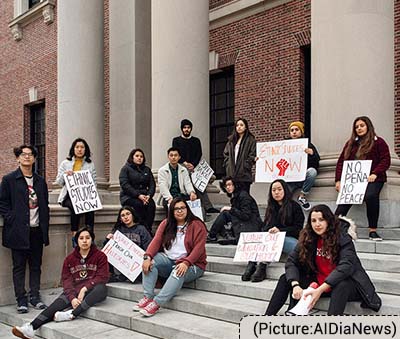
Biden Administration Withdraws Yale Admissions Lawsuit Alleging Discrimination Against Asian Americans

In another reversal of Trump-era policy, the Biden administration Feb. 3 dropped its discrimination lawsuit against Yale University that alleged the Ivy League school was illegally discriminating against Asian American and white applicants. Federal prosecutors said the Justice Department’s underlying investigation, aimed at ensuring Yale complies with federal anti-discrimination laws, continues.

The government accused Yale in October of violating civil rights laws because it “discriminates based on race and national origin in its undergraduate admissions process, and that race is the determinative factor in hundreds of admissions decisions each year.” The investigation stemmed from a 2016 complaint by the New Jersey-based Asian American Coalition for Education coalition against Yale, Brown and Dartmouth. Yale said its practices comply with decades of Supreme Court precedent and that it looks at “the whole person” when deciding which applicants to admit.

“We were part of the Asian American Coalition for Education in Harvard Case and the Indian Americans students would like to see equal opportunity with students of other races, period,” said Dr. Thomas Abraham Chairman of the Global organization of People of Indian Origin.  “We have no problem, if African and Hispanic students are given due considerations to increase their admission rate, however, in the open competition, all races should be treated equally,” Dr. Abraham added.

A department spokesperson said in a statement that it was dropping the suit “in light of all available facts, circumstances, and legal developments” but didn’t specify further. The government also notified Yale that it had withdrawn its determination letter that the university discriminated based on race and national origin. Yale was gratified and pleased by those two developments, spokesperson Karen Peart said.

But Swan Lee, a co-founder of the group behind the complaint, called it “a racist decision because it preserves discrimination in education. It’s a setback in our fight against racial discrimination against Asian Americans in education.”

The change in administrations brought an end to the suit, but the challenge to college admissions policies that take race into account is alive in a case against Harvard’s practices. The challengers have lost at each round in the lower courts, but their appeal is expected in the coming weeks at the Supreme Court, where a conservative majority may well be more receptive.

“The challenge to race-based affirmative action in higher education will continue regardless of any change in the Department of Justice,” said Edward Blum, the president of Students for Fair Admissions, which filed the lawsuit against Harvard. The department, under President Donald Trump, had backed the challenge in the lower courts.

The Yale investigation also found that the university used race as a factor in multiple steps of the admissions process and that Yale “racially balances its classes.”

The Supreme Court has ruled colleges and universities may consider race in admissions decisions but has said that must be done in a narrowly tailored way to promote diversity and should be limited in time. Schools also bear the burden of showing why their consideration of race is appropriate.

“I am totally shocked by the Biden DOJ’s hasty decision to drop the Yale lawsuit, only eight days after President Biden signed an executive order claiming to combat anti-Asian discrimination,” said Yukong Zhao, the president of the Asian American Coalition for Education.

But the decision was lauded by other civil rights groups, including one run by the Biden administration’s incoming assistant attorney general for civil rights.

“It has been proven in the courts that race-conscious admissions programs are lawful, and Black students and other students of color who come from all walks of life can rest a little easier knowing our government is looking to lift them up, not divide and suppress,” said David Hinojosa, director of the Educational Opportunities Project at the Lawyers’ Committee for Civil Rights Under Law. The group’s president, Kristen Clarke, is Biden’s nominee to run the Justice Department’s civil rights division.

Biden’s Justice Department is working to undo Trump policies, including “zero tolerance,” the immigration policy that was responsible for family separations. Also on Feb. 3, the Supreme Court agreed to requests from the Biden administration to put off arguments in two challenges to Trump-era policies involving the U.S.-Mexico border wall and asylum-seekers as Biden works to change the policies that had been challenged in court.

(Associated Press writers Mark Sherman, Collin Binkley in Boston, and Dave Collins in Hartford, Connecticut, contributed to this report.)

8-Year-Old Indian Boy In Johns Hopkins ‘Brightest Students In The World’ List

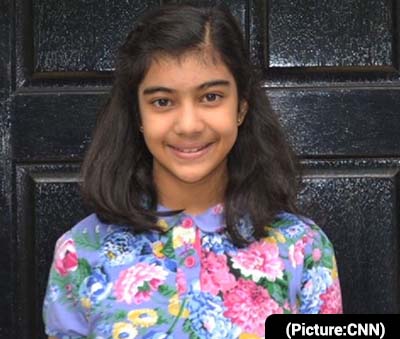
Advay Misra, 8, an Indian student in New York, has been named among 1,400 of the “brightest students in the world” by the Johns Hopkins Center for Talented Youth (CTY) in Baltimore which counts among its alumni the founders of Facebook and Google, Rhodes Scholars and MacArthur Fellows.

Hopkins said Misra, a student at PS 59 Beekman Hill International Elementary School, was honoured for “exceptional performance on the SAT, ACT, or similar assessment” taken by 15,000 students in grades two through eight as part of CTY’s Talent Search program. Test scores are based on above-grade level testing.

“It was a little hard…um, the verbal part but the mathematics part wasn’t as hard,” Misra told IANS, over phone. Misra said he took “some practice tests to get familiar” with the Johns Hopkins test but “didn’t have to do a lot of preparation.”

Misra credits his “mom!” for his academic smarts. The 8-year-old cheerfully rattled off his bucket list of favourite geek outs: “Reading, Python programming and Khan Academy videos.”

When contacted by IANS, Hopkins did not confirm how many Indians or Indian Americans took the test but said “several” students were living in India during the testing period.

More than 15,000 students from the US, Europe and 70 other countries in grades two through eight tested through CTY’s Talent Search over 12 months ending June 2020. Nearly 1,400 students finished in the top 9 per cent, like Advay Misra. Five test takers got a perfect score on the reading or math section. More than 160 testers under age 13 scored 700 or higher on the math or verbal section of the SAT.

“This is especially commendable in a year that has been difficult for students everywhere. The global pandemic has affected nearly every part of your lives, from daily school routines to the special celebrations you look forward to all year. Nonetheless, you have demonstrated outstanding academic potential, and we hope you and your family will take the time to celebrate it together,” said Dr. Virginia Roach, CTY’s Executive Director, in a prepared statement that IANS has reviewed.

According to the Hopkins CTY site, the center’s origin story goes back to the late 70s when a seventh grade boy from Baltimore had exhausted all options for math courses he could take at school by the time he was thirteen and a professor of psychology at Johns Hopkins then designed above grade level courses that could challenge gifted students around the world. (IANS)

(Picture: EWOKE TV)

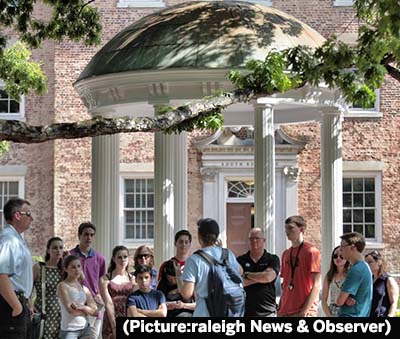
Applications Surge After Big-Name Colleges Halt SAT And ACT Testing Rules

The University of Virginia drew a record 48,000 applications for the next class in Charlottesville – about 15 percent more than the year before.
Freshman applications to the University of California at Berkeley crossed into six figures for the first time, totaling more than 112,000, up 28 percent. Harvard University’s total spiked to an all-time high of 57,000. That’s up 42 percent.
The sudden explosion in demand for these and other big-name schools is another ripple effect of the coronavirus pandemic that could reshape college admissions for many years to come. The pandemic has given huge – and in some places, decisive – momentum to a movement to reduce or even eliminate the use of admissions testing at highly competitive colleges and universities. That, in turn, has lured more applicants to the upper tier of the market. U-Va. and Harvard were among a large bloc of schools that temporarily suspended their requirements for SAT or ACT scores because the public health emergency prevented many college-bound students from taking the exams. Students could choose whether to send scores to these schools under a policy known as “test-optional.”
On Friday, U-Va. President James Ryan said the public university will extend its test-optional policy for another two years, covering students who are now sophomores and juniors in high school.
“We believe this is a reasonable and humane response to one pressure that our prospective students are facing as a result of COVID-19,” Ryan said in a statement. “We want students to focus on things they can control: doing their best in school; cultivating their curiosity; contributing to their families, schools, and communities. In a moment where so many things are uncertain, we hope this decision makes the admissions process more accessible and equitable for students who are considering the University of Virginia.”
Harvard said Friday it will be test-optional for one more year – covering those who are now high school juniors – and reiterated that those who do not submit scores “will not be disadvantaged in the application process.”
UC-Berkeley has taken a more radical step. It removed the SAT and ACT from admission decisions, a policy known as “test-free” or “test-blind.” A state court last fall ordered the UC system to apply that policy across all its campuses for this year’s applicants. The system’s approach to admission testing for coming years is still in some flux, but the UC governing board voted last spring to phase out the SAT and ACT.
The College Board, which owns the SAT, said it supports “flexibility in admissions during the pandemic.” The rival ACT takes much the same position.
“I think a lot of schools are going to stay test-optional,” said ACT chief executive Janet Godwin. But she said research shows that “higher ed still does see value in scores for a whole bunch of reasons.”
Testing, she said, helps colleges connect with potential applicants and vice versa. She said she worries that many students might miss out on opportunities if they don’t take an admission test. Access and equity, she said, are “the driving force behind everything we do.” About a quarter million students are registered for the ACT’s next test date on Feb. 6.
Overall, the strength of the student pipeline into higher education during the pandemic appears uneven.
The Common Application, an online portal for hundreds of colleges and universities, reports that about 1 million students applied this year ahead of January deadlines. Application totals fell modestly at public universities with fewer than 10,000 undergraduates and at small private colleges that tend to admit most applicants.
There was also a 2 percent dip in applicants with enough financial need to receive fee waivers, and a 3 percent drop in those who would be among the first in their families to go to college. Jenny Rickard, president and chief executive of the Common App, said she was “very concerned” about those declines.
But the Common App found a surge of applications to schools with national and global reputations. At large public universities, including state flagships, totals rose more than 11 percent. At private schools with more selective admissions, they rose more than 17 percent.
Shifts in admissions testing policy, experts say, played a key role.
“This barrier, i.e. standardized testing, was taken down, and maybe some students put their hats in the ring who otherwise wouldn’t have,” said Eric Furda, who recently stepped down after 12 years as dean of admissions at the University of Pennsylvania.
Test-optional policies have helped hundreds of thousands of students this year who struggled to find a time and a place to take the SAT or ACT. But advocates say they also are helping students realize that their courses and grades in high school are what matter most.
Stephanie Sylla, 17, a high school senior from Woodbridge, Va., spent months last year preparing to take the SAT in August. Sylla said she went “hard core” starting in June, practicing as much as two hours a day, reading test-preparation books, getting the feel of the three-hour exam. She wanted a score to align with her credentials as a student with a strong grade-point average, a transcript full of challenging classes and time spent on extracurricular activities such as debate and varsity volleyball. A daughter of immigrants from the West African nation of Guinea, Sylla said college is vital to her and her family. Shortly before the test date, she got an email saying her SAT session had been canceled because of the pandemic.
She tried to register for a September session but found nothing available. It sunk in for her that she could forgo testing. Initially skeptical of test-optional policies, she had learned more about the issue from a U-Va. admissions officer who assured Sylla and other classmates that applications would be judged, regardless of whether they submitted a score, on the strength of their entire academic record and other accomplishments and life experiences.
So Sylla has applied, without scores, to U-Va. and a range of other competitive schools. The test-optional policy, she said, “really changed my perspective on how I look at my achievements.” What she has done in and out of school is enough, she said, to give a picture of her college potential. “It’s really helped build confidence in what I’ve been able to do.”
Some schools, such as Bowdoin College in Maine, have been test-optional for decades, while others joined the movement more recently, including the University of Chicago in 2018. But the pandemic has accelerated the trend. Many universities launched multiyear experiments with test-optional policies last year or ended testing requirements permanently.
Several ultra-selective schools that had announced one-year pauses in testing requirements are extending those measures. Williams and Amherst colleges, prominent liberal arts schools, will be test-optional for those applying to enter in 2022 and 2023. Columbia and Cornell universities, like Harvard, have suspended testing requirements for the 2022 cycle, and others in the Ivy League appear likely to follow suit.
“All of the challenges that we saw last year still remain,” said Logan Powell, dean of admission at Brown University. Powell said Brown’s applications under the test-optional process are up 26 percent, with gains across demographic groups including first-generation students.
Cornell said it received 17,000 more applications than the year before. That was a major increase, although 2020 figures were not immediately available for comparison. Jonathan Burdick, the vice provost for enrollment, said applications rose from first-generation, low-income, rural, Black and Hispanic groups. Some of Cornell’s programs, in business, agriculture and architecture, are experimenting with test-blind admission.
“We’re accumulating great information about how students respond and how to conduct whole-person reviews with either far fewer or no SAT/ACT scores,” Burdick wrote in an email. “We expect to put this new knowledge to use as we consider how to continue reducing admission barriers while maintaining highly selective standards over the next couple of years.”
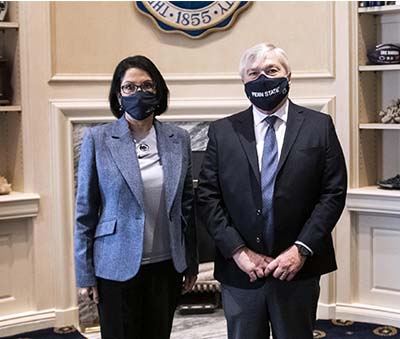
This month, Pennsylvania State University added two years to its test-optional policy. What was once a pandemic-driven emergency measure has become, effectively, a longer-term experiment for the public university. Applications to the Penn State flagship campus are way up, said Robert Springall, executive director of undergraduate admissions. More than half of the 78,000 applicants did not submit scores.
“We wanted to take advantage of this opportunity to really think and assess how the first test-optional cohort does,” Springall said. Two more years, he said, “gives us the opportunity to really do a fair assessment.”
Maryland higher education officials will soon weigh testing policies for coming years. The University of Maryland at College Park reports that applications in this test-optional year surpassed 41,000, up more than 25 percent. Just over half did not send SAT or ACT scores. “We are seeing increases across the spectrum in diverse applicants,” said James Massey, U-Md.’ s director of undergraduate admissions. “We’re happy to have a deeper pool, obviously, as most institutions would be.”
(Picture: Times Herald)

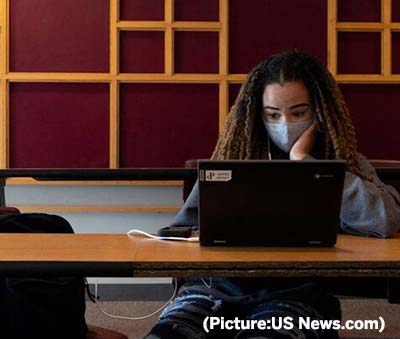
College Campuses Are COVID-19 Super-spreaders

Newswise — College campuses are at risk of becoming COVID-19 superspreaders for their entire county, according to a new vast study which shows the striking danger of the first two weeks of school in particular.

Looking at 30 campuses across the nation with the highest amount of reported cases, experts saw that over half of the institutions had spikes – at their peak – which were well above 1,000 coronavirus cases per 100,000 people per week within the first two weeks of class.

In some colleges, one in five students had been infected with the virus by the end of the fall term. Four institutions had over 5,000 cases.

In 17 of the campuses monitored, a new computer model developed by scientists at Stanford University shows outbreaks translated directly into peaks of infection within their home counties.

Out today, the team’s research – published in the peer-reviewed journal Computer Methods in Biomechanics and Biomedical Engineering – crucially shows, however, that tight outbreak management, for example the immediate transition from in person to all online learning, can reduce the peaks within about two weeks.

Lead author Hannah Lu, from Stanford’s Energy Resources Engineering program, says the incidence levels of 1,000 cases per 100,000 people per week – when compared to the first and second waves of the pandemic with peak incidences of 70 to 150 – means colleges are at real risk of developing an extreme incidence of COVID-19.

“Policy makers often use an incidence of 50 COVID-19 cases per 100,000 people per week as a threshold for high risk counties, states, or countries. All 30 institutions in our study exceeded this value, three even by two orders of that magnitude,” she states.

“The number of students who had become infected just throughout the fall is more than twice of the national average since the beginning of the outbreak of 5.3%, with 17.3 million reported cases at a population of 328.2 million.

“At the University of Notre Dame, for instance, all 12,607 students were tested before the beginning of class and only nine had tested positive. Less than two weeks into the term, the seven-day incidence was 3083, with a reproduction number R0 of 3.29.

“However,” she adds, “with around 90 reported deaths nationwide, mainly college employees and not students, the campus-related death rate of 0.02% remains well below the average death rate of COVID-19.”

Members of the research team used advanced modelling, which assesses the real-time epidemiology of the COVID-19 outbreak using an SEIR (susceptible, exposed, infectious, and recovered) model to map how the disease spread across the campuses.

They drew COVID-19 case reports from 30 publicly available college dashboards across the United States throughout the fall of 2020. These institutions were either teaching in person, online or a hybrid of both. They selected colleges for which case numbers are reported on a daily basis and the total cumulative case number exceeded 100. During this time window, the nationwide number of new cases had dropped below 50,000 per day.

A limitation of this study is that the true on-campus student population was often unreported and had to be approximated by the total fall quarter enrollment. “This likely underestimates of the real maximum incidence and the fraction of on-campus students that have been affected by the virus,” the authors state.

Senior author, Ellen Kuhl, adds: “Strikingly, these local campus outbreaks rapidly spread across the entire county and triggered a peak in new infections in neighbouring communities in more than half of the cases.

“It is becoming increasingly clear that these initial college outbreaks are unrelated to the national outbreak dynamics. Instead, they are independent local events driven by campus reopening and inviting students back to campus.

“Our results confirm the widespread fear in early fall that colleges could become the new hot spots of COVID-19 transmission. But, at the same time, college administrators should be applauded for their rapid responses to successfully manage local outbreaks.”

All reported campuses pursued regular surveillance testing, weekly or even twice per week, combined with aggressive test-trace-isolate strategies.

“The majority of colleges and universities were able to rapidly manage their outbreaks and suppress campus-wide infections, while the neighbouring communities were less successful in controlling the spread of the virus. As a result, for most institutions, the outbreak dynamics remained manageable throughout the entire fall of 2020 with narrow spikes of less than 300 cases per day,” Lu states.

The team believes that this methodology, in combination with continuing online learning, is the best way to prevent college sites from becoming the major hub of the disease.

“Our study suggests that tight test-trace-isolate strategies, flexible transition to online instruction, and-most importantly-compliance with local regulations will be critical to ensure a safe campus reopening after the winter break,” she added.

Professor Kuhl concludes: “We anticipate that the most important aspect upon campus reopening within the coming weeks will be the human factor. Unfortunately, the fall term has shown that the best of all strategies can become meaningless if people do not follow the recommendations.”

(Picture Curtesy: ABC News)

A Rift In The Retina May Help Repair The Optic Nerve

Newswise — In experiments in mouse tissues and human cells, Johns Hopkins Medicine researchers say they have found that removing a membrane that lines the back of the eye may improve the success rate for regrowing nerve cells damaged by blinding diseases. The findings are specifically aimed at discovering new ways to reverse vision loss caused by glaucoma and other diseases that affect the optic nerve, the information highway from the eye to the brain.

“The idea of restoring vision to someone who has lost it from optic nerve disease has been considered science fiction for decades. But in the last five years, stem cell biology has reached a point where it’s feasible,” says Thomas Johnson, M.D., Ph.D., assistant professor of ophthalmology at the Wilmer Eye Institute at the Johns Hopkins University School of Medicine.

The research was published Jan. 12 in the journal Stem Cell Reports.

A human eye has more than 1 million small nerve cells, called retinal ganglion cells, that transmit signals from light-collecting cells called photoreceptors in the back of the eye to the brain. Retinal ganglion cells send out long arms, or axons, that bundle together with other retinal ganglion cell projections, forming the optic nerve that leads to the brain.

When the eye is subjected to high pressure, as occurs in glaucoma, it damages and eventually kills retinal ganglion cells. In other conditions, inflammation, blocked blood vessels, or tumors can kill retinal ganglion cells. Once they die, retinal ganglion cells don’t regenerate.

“That’s why it is so important to detect glaucoma early,” says Johnson. “We know a lot about how to treat glaucoma and help nerve cells survive an injury, but once the cells die off, the damage to someone’s vision becomes permanent.”

Johnson is a member of a team of researchers at the Johns Hopkins Wilmer Eye Institute looking for ways scientists can repair or replace lost optic neurons by growing new cells. 

In the current study, Johnson and his team grew mouse retinas in a laboratory dish and tracked what happens when they added human retinal ganglion cells, derived from human embryonic stem cells, to the surface of the mouse retinas. They found that most of the transplanted human cells were unable to integrate into the retinal tissue, which contains several layers of cells.

“The transplanted cells clumped together rather than dispersing from one another like on a living retina,” says Johnson.

However, the researchers found that a small number of transplanted retinal cells were able to settle uniformly into certain areas of the mouse retina. Looking more closely, the areas where the transplanted cells integrated well aligned with locations where the researchers had to make incisions into the mouse retinas to get them to lie flat in the culture dish. At these incision points, some of the transplanted cells were able to crawl into the retina and integrate themselves in the proper place within the tissue.

“This suggested that there was some type of barrier that had been broken by these incisions,” Johnson says. “If we could find a way to remove it, we may have more success with transplantation.”

It turns out that the barrier is a well-known anatomical structure of the retina, called the internal limiting membrane. It’s a translucent connective tissue created by the retina’s cells to separate the fluid of the eye from the retina.

After using an enzyme to loosen the connective fibers of the internal limiting membrane, the researchers removed the membrane and applied the transplanted human cells to the retinas. They found that most of the transplanted retinal ganglion cells grew in a more normal pattern, integrating themselves more fully. The transplanted cells also showed signs of establishing new nerve connections to the rest of the retinal structure when compared with retinas that had intact membranes.

“These findings suggest that altering the internal limiting membrane may be a necessary step in our aim to regrow new cells in damaged retinas,” says Johnson.

The researchers plan to continue investigating the development of transplanted retinal ganglion cells to determine the factors they need to function once integrated into the retina.

Other researchers involved in the study include Kevin Zhang, Caitlyn Tuffy, Joseph Mertz, Sarah Quillen, Laurence Wechsler, Harry Quigley and Donald Zack of the Johns Hopkins University School of Medicine.

This work was funded by the National Eye Institute (K12EY015025, K08EY031801, R01EY002120, P30EY001765), the ARVO Dr. David L. Epstein Award, Research to Prevent Blindness, the American Glaucoma Society, the Johns Hopkins Physician Scientist Training Program, and generous gifts from the Guerrieri Family Foundation, the Gilbert Family Foundation, and the Marion & Robert Rosenthal Family Foundation. The authors declare no competing interests.

(Picture Credit: Thomas Johnson and Johns Hopkins Medicine. Transplanted retinal ganglion cells marked with a fluorescent tag.)

Indian AmericanWins Prestigious Infosys Prize In Mathematical Sciences

Sourav Chatterjee, a world-renowned mathematician, and a professor of mathematics and statistics at Stanford University’s School of Humanities and Sciences, has been awarded a prestigious mathematics prize – Infosys Prize in Mathematical Sciences.

Now for his contribution to mathematics, the Infosys Science Foundation, awarded Chatterjee the prestigious Infosys Prize in Mathematical Sciences, which is a $100,000 reward.

The award aims to recognize outstanding researchers and scientists around the world. Through the award, the Foundation aims to encourage the spread of science in India, particularly among young people.

“I’m very honored and humbled to receive this prize,” said Chatterjee, who first came to Stanford as a doctoral student in 2002 after earning bachelor’s and master’s degrees from the Indian Statistical Institute in Kolkata. “It means a lot to be recognized by the group of esteemed mathematicians assembled by The Infosys Science Foundation, and I feel encouraged to continue pushing ahead with my research.”

Deeply embedded in probability and statistics, Chatterjee’s work has had significant impacts not only in mathematics but also broadly in physics, technology and other fields. Across his many papers, Chatterjee has devised novel mathematical approaches for scientists to apply in their own research.

“One of the big guiding practices in my work has been making mathematical tools other people can use,” Chatterjee said.

Topics that have benefitted from his mathematical insights include occurrences of rare events, the dynamics of social as well as technological networks, the behavior of magnets and efforts to further solidify a mathematical basis for quantum mechanics.

Chatterjee enjoys the challenge of breaking down a problem to its tiniest form and figuring out a fresh perspective. Reflecting both this range of applications and the helpfulness of Chatterjee’s work, the jury of the Infosys Science Foundation, composed of academics from around the world, described Chatterjee as “one of the most versatile probabilists of his generation” and praised his “formidable problem-solving powers.”

Chatterjee completed his Bachelor and Master of Statistics from Indian Statistical Institute, Kolkata. Later he moved to Standford to complete his Ph.D in 2005, where he worked under the supervision of PersiDiaconis, another renowned mathematician.

Chatterjee later joined University of California, Berkeley, as a Visiting Assistant Professor, then received a tenure-track Assistant Professor position in 2006.

(Picture Courtesy: Stanford News)

Pfizer, Moderna Vaccines May Vanquish Covid Today, Cancer Tomorrow

The night is darkest just before dawn, they say. Dark it certainly is right now. The more contagious variants of SARS-CoV-2 coming out of the U.K. and South Africa will make the pandemic worse before mass vaccination can make it better.

But take another look at some of these new vaccines. And then contemplate the dawn to come — not just its first rays in the coming months but also the bright light of future years and decades. It looks increasingly plausible that the same weapons we’ll use to defeat Covid-19 can also vanquish even grimmer reapers — including cancer, which kills almost 10 million people a year.

The most promising Covid vaccines use nucleic acids called messenger RNA, or mRNA. One vaccine comes from the German firm BioNTech SE and its U.S. partner Pfizer Inc. The other is from the U.S. companyModerna Inc. (its original spelling was ModeRNA, its ticker is MRNA). Another is on the way from CureVac NV, also based in Germany.

Ordinary vaccines tend to be inactivated or weakened viruses which, when injected into the body, stimulate an immune response that can later protect against the live pathogen. But the process of making such vaccines requires various chemicals and cell cultures. This takes time and provides opportunities for contamination.

mRNA vaccines don’t have these problems. They instruct the body itself to make the offending proteins — in this case, the ones that wrap around the viral RNA of SARS-CoV-2. The immune system then homes in on these antigens, practicing for the day when the same proteins show up with the coronavirus attached.

Therein lies mRNA’s bigger promise: It can tell our cells to make whatever protein we want. That includes the antigens of many other diseases besides Covid-19.

In its day-to-day function, mRNA takes instructions from its molecular cousin, the DNA in our cell nuclei. Stretches of the genome are copied, which the mRNA carries into the cytoplasm, where little cellular factories called ribosomes use the information to churn out proteins.

BioNTech and Moderna shortcut this process, by skipping the whole fiddly business in the nucleus with the DNA. Instead, they first figure out what protein they want — for example, a spike on the coat around a virus. Then they look at the sequence of amino acids that makes this protein. From that they derive the precise instructions the mRNA must give.

This process can be relatively fast, which is why it took less than a year to make the vaccines, a pace previously unimaginable. It’s also genetically safe — mRNA can’t go back into the nucleus and accidentally insert genes into our DNA.

Researchers since the 1970s have had a hunch that you can use this technique to fight all sorts of maladies. But as usual in science, you need huge amounts of money, time and patience to sort out all the intermediary problems. After a decade of enthusiasm, mRNA became academically unfashionable in the 1990s. Progress seemed halting. The main obstacle was that injecting mRNA into animals often caused fatal inflammation.

Enter KatalinKariko — a Hungarian scientist who immigrated to the U.S. in the 1980s and has heroically devoted her entire career to mRNA, through its ups and downs. In the 1990s, she lost her funding, was demoted, had her salary cut and suffered other setbacks. But she stuck with it. And then, after battling cancer herself, she made the crucial breakthrough.

In the 2000s, she and her research partner realized that swapping out uridine, one of mRNA’s “letters,” avoided causing inflammation without otherwise compromising the code. The mice stayed alive.

Her study was read by a scientist at Stanford University, Derrick Rossi, who later co-founded Moderna. It also came to the attention of UgurSahin and OzlemTureci, two oncologists who are husband and wife and co-founded BioNTech. They licensed Kariko’s technology and hired her. From the start, they were most interested in curing cancer.

Today’s weapons against cancer will one day seem as primitive an idea as flint axes in a surgery room. To kill a malignant tumor, you generally zap it with radiation or chemicals, damaging lots of other tissue in the process.

The better way to fight cancer, Sahin and Tureci realized, is to treat each tumor as genetically unique and to train the immune systems of individual patients against that specific enemy. A perfect job for mRNA. You find the antigen, get its fingerprint, reverse-engineer the cellular instructions to target the culprit and let the body do the rest.

Take a look at the pipelines of Moderna and BioNTech. They include drug trials for treating cancers of the breast, prostate, skin, pancreas, brain, lung and other tissues, as well as vaccines against everything from influenza to Zika and rabies. The prospects appear good.

Progress, admittedly, has been slow. Part of the explanation Sahin and Tureci give is that investors in this sector must put up oodles of capital and then wait for more than a decade, first for the trials, then for regulatory approvals. In the past, too few were in the mood.

Covid-19, fingers crossed, may turbo-charge all these processes. The pandemic has led to a grand debut of mRNA vaccines and their definitive proof of concept. Already, there are murmurs about a Nobel Prize for Kariko. Henceforth, mRNA will have no problems getting money, attention or enthusiasm — from investors, regulators and policymakers.

That doesn’t mean the last stretch will be easy. But in this dark hour, it’s permissible to bask in the light that’s dawning.

(Story Courtesy: Business Standard; Picture Courtesy: Moneyweb)

2021: Year of Living Dangerously?

Goodbye 2020, but unfortunately, not good riddance, as we all have to live with its legacy. It has been a disastrous year for much of the world for various reasons, Elizabeth II’s annus horribilis. The crisis has exposed previously unacknowledged realities, including frailties and vulnerabilities.
For many countries, the tragedy is all the greater as some leaders had set national aspirations for 2020, suggested by the number’s association with perfect vision. But their failures are no reason to reject national projects. As Helen Keller, the deaf and blind author activist, noted a century ago, “The only thing worse than being blind is having sight, but no vision.”
After JFK’s assassination in November 1963 ended US opposition to Western intervention in Indonesia, President Sukarno warned his nation in August 1964 that it would be ‘living dangerously’, vivere pericoloso, in the year ahead. A year later, a bloody Western-backed military coup had deposed him, taking up to a million lives, with many more ruined.
Further economic slowdown
Lacklustre economic growth after the 2009 Great Recession has been worsened in recent years by growing international tensions largely associated with US-China relations, Brexit and slowing US and world growth although stock markets continued to bubble.
Economic growth has slowed unevenly, with Asia slowing less than Europe, Latin America and even the US. With effective early pre-emptive measures, much of East Asia began to recover before mid-2020. Meanwhile, most other economies slowed, although some picked up later, thanks to successful initial contagion containment as well as adequate relief and recovery measures.
International trade has been picking up rapidly, accelerating rebounds in heavily trading economies. Commodity prices, except for fossil fuels, have largely recovered, perhaps due to major financial investments by investment banks and hedge funds, buoying stock and commodity prices since late March.
Very low US, EU and Japanese interest rates have thus sustained asset market bubbles. Meanwhile, new arbitrage opportunities, largely involving emerging market economies, have strengthened developing countries’ foreign reserves and exchange rates, thus mitigating external debt burdens.
Unbiased virus, biased responses
The pandemic worsened poverty, hunger and vulnerability by squeezing jobs, livelihoods and earnings of hundreds of millions of families. As economic activities resumed, production, distribution and supply barriers, constrained fiscal means, reduced demand, debt, unemployment, as well as reduced and uncertain incomes and spending have become more pronounced.
While many governments initially provided some relief, these have generally been more modest and temporary in developing countries. Past budget deficits, debt, tax incentives and the need for good credit ratings have all been invoked to justify spending cuts and fiscal consolidation.
Meanwhile, pandemic relief funds have been abused by corporations, typically at the expense of less influential victims with more modest, vulnerable and precarious livelihoods. Many of the super-rich got even richer, with the US’s 651 billionaires making over US$1 trillion.
On the pretext of saving or making jobs, existing social, including job protection has been eroded. But despite hopes raised by vaccine development, the crisis is still far from over.
Don’t cry for me, says Argentina
Meanwhile, intellectual property blocks more affordable production for all. Pharmaceutical companies insist that without the exhorbitant monopoly profits from intellectual property, needed tests, treatments and vaccines would never be developed. Meanwhile, a proposed patent waiver for Covid-19 vaccines has been blocked by the US and its rich allies at the World Trade Organization (WTO).
Hence, mass vaccination is likely to be very uneven and limited by intellectual property, national strategic considerations (‘vaccine nationalism’), prohibitive costs, fiscal and other constraints. Already, the rich have booked up almost all early vaccine supplies.
The main challenge then is fiscal. Economic slowdowns have reduced tax revenues, requiring more domestic debt to increase spending needed to ensure the recessions do not become protracted depressions. Meanwhile, rising debt-to-GDP ratios and increased foreign debt have long constrained bolder fiscal efforts.
But despite the urgent need for more fiscal resources, we are told that if the richest are required to pay more taxes, even on windfall profits, they will have no incentive to ‘save’ the rest of us. Nevertheless, new wealth taxes have just passed in Argentina.
This time is different
As the pandemic economic impacts began to loom large, International Monetary Fund Managing Director Kristalina Georgieva quickly offered debt relief for low-income countries on terms much better than the G20’s miserly proposal.
Unlike well-meaning debt-fixated researchers and campaigners, even new World Bank chief economist, erstwhile debt hawk Carmen Reinhart has urged, “First you worry about fighting the war, then you figure out how to pay for it”.
Nobel laureate Amartya Sen is concerned that “in the policies against the present pandemic, equity has not been a particularly noticeable priority… Instead, the focus has been on drastic control and sudden lockdowns…with little attention paid to labourers who lose their jobs or the many migrant workers, the poorest of the poor, who are kept hundreds of miles from their homes”.
COVID-19 may still bring major reforms, such as Roosevelt’s New Deal response to the Great Depression. But now, it seems likely to usher in a world where insecurity and unpredictability define the new normal. While professing to protect victims’ interests, ethno-populism blames ‘Others’ as the enemy responsible.
Still, many hope for a silver lining. Sen suggests that “a better society can emerge from the lockdowns”, as happened after World War Two, with greater welfare state provisioning and labour protections in much of the West and agrarian reforms in East Asia. But there is nothing to guarantee a better ‘new normal’.
Beyond neoliberalism?
For many, Joe Biden’s election to succeed Trump is being celebrated as a resurgent triumph for neoliberalism, enabling the US and the rest of the world to return to ‘business as usual’.
Incredibly, another Nobel laureate Michael Spence has even called for structural adjustment programme conditionalities for countries seeking help from the Bank and Fund, repudiating the Bank’s Growth Commission he once chaired, i.e., which found that seemingly fair, often well-intentioned conditionalities had resulted in “lost decades” of development.
But thankfully, there is widespread recognition that all is not well in the world neoliberalism and Western dominance created. Incredibly, Klaus Schwab, transnational capitalism’s high priest, has conceded, “the neoliberalist … approach centers on the notion that the market knows best, that the ‘business of business is business’…Those dogmatic beliefs have proved wrong”.
Instead, he advised, “We must move on from neoliberalism in the post-COVID era”, recognising: “Free-market fundamentalism has eroded worker rights and economic security, triggered a deregulatory race to the bottom and ruinous tax competition, and enabled the emergence of massive new global monopolies. Trade, taxation, and competition rules that reflect decades of neoliberal influence will now have to be revised”.
Will we ever learn?
The philosopher Santayana once warned, “Those who cannot remember the past are condemned to repeat it.” Hegel had observed earlier that history repeats itself, to which Marx added, “the first time as tragedy, the second time as farce”. Nevertheless, hope remains an incurable disease that keeps us all striving and struggling.
As FDR reminded his supporters, no progressive policies will come about simply by relying on the goodwill of those in authority. Instead, they will only be enacted and implemented thanks to popular pressure from below. As Ben Phillips has put it, “the story of 2021 has not yet been written: we can write it; we can right it”.

Anshumali Shrivastava Discovers New Way to Filter Fake News

Using machine learning, a team of U.S. researchers led by Indian American computer scientist Anshumali Shrivastava at Rice University has discovered an efficient way for social media companies to keep misinformation from spreading online.
Their method applies machine learning in a smarter way to improve the performance of Bloom filters, a widely used technique devised a half-century ago.
Using test databases of fake news stories and computer viruses, Shrivastava and statistics graduate student Zhenwei Dai showed their Adaptive Learned Bloom Filter required 50 percent less memory to achieve the same level of performance as learned Bloom filters.
To explain their filtering approach, Shrivastava and Dai cited some data from Twitter.
The social media giant recently revealed that its users added about 500 million tweets a day, and tweets typically appeared online one second after a user hit send.
“Around the time of the election they were getting about 10,000 tweets a second, and with a one-second latency that’s about six tweets per millisecond,” Shrivastava said.
“If you want to apply a filter that reads every tweet and flags the ones with information that’s known to be fake, your flagging mechanism cannot be slower than six milliseconds or you will fall behind and never catch up.”
If flagged tweets are sent for an additional, manual review, it’s also vitally important to have a low false-positive rate.
In other words, you need to minimize how many genuine tweets are flagged by mistake.
“If your false-positive rate is as low as 0.1%, even then you are mistakenly flagging 10 tweets per second, or more than 800,000 per day, for manual review,” Shrivastava said.
“This is precisely why most of the traditional AI-only approaches are prohibitive for controlling the misinformation.”
The new approach to scanning social media is outlined in a study presented at the online-only 2020 Conference on Neural Information Processing Systems (NeurIPS 2020).
Shrivastava said Twitter doesn’t disclose its methods for filtering tweets, but they are believed to employ a Bloom filter, a low-memory technique invented in 1970 for checking to see if a specific data element, like a piece of computer code, is part of a known set of elements, like a database of known computer viruses.
A Bloom filter is guaranteed to find all code that matches the database, but it records some false positives too.
“A Bloom filter allows to you check tweets very quickly, in a millionth of a second or less. If it says a tweet is clean, that it does not match anything in your database of misinformation, that’s 100% guaranteed,” Shrivastava noted.
Within the past three years, researchers have offered various schemes for using machine learning to augment Bloom filters and improve their efficiency.
“When people use machine learning models today, they waste a lot of useful information that’s coming from the machine learning model,” Dai said.

Why Does Early Treatment of COVID Matter?

Hooray for COVID Vaccines:  An Ounce of Prevention of COVID is Worth a Pound of Cure.  Let’s Use That Same Rationale for People Who Already Have COVID. 
To be a proponent for early treatment of coronavirus infection shouldn’t automatically mean there is a disregard for the much-needed prevention efforts represented by the mRNA vaccines.  This should not be an “either-or” argument.  Though there are some who have concerns about the rapid release and production of these novel vaccine interventions, no one can question that we are indeed in a public health crisis and an urgent and expedited effort is what is absolutely warranted (i.e., Operation Warp Speed is actually a fitting name for the rapid response).  We get it.  However, the broad media coverage on the vaccines seems to obscure any discussion or consideration of formal early treatment interventions for the COVID-positive patient before hospitalization is absolutely required.  Early treatment intervention of COVID has the potential to save lives, reduce hospital burden and reduce the need to limit a hospital’s capacity to render other standards of care such as routine surgical interventions. 
The death rate of COVID is actually much lower than the actual infection rate, something like only 2% or a little less than 3% maximum.  This is a good thing, unless the death rate includes one of your loved ones; then 2% doesn’t seem so negligible.  Regardless, complications of COVID can be really challenging for clinicians and downright scary for the rest of the public.  It’s been stated at least 10% of COVID survivors develop after effects for up to 6 months or more.  Early treatment intervention could potentially reduce the risk of these complications by reducing the progression of COVID to the most serious symptoms and a drastic dash to the local E.D. requiring hospital admission as a minimum, intubation for mechanical ventilation as a maximum.
The reports abound of hospital capacities stretched to their limits and physicians and other clinicians pushed beyond their normal capacities to perform, amidst caring for patients who were originally told to go home and manage on their own, until they have difficulty breathing (of course).  Really?  This is not the best we can do nor should it be the only consideration.  
Let’s take the Ohio State University (OSU) COVID-athlete study into perspective: 26 student athletes who recovered from COVID.  Some had symptoms and some actually were asymptomatic (meaning no headache, fever, sniffles or cough, etc.).  Myocarditis was observed in 4, or 15%, of these student athletes and in 8, or 30%, the student athletes were observed to have developed cardiac scar tissue.  If this is the impact of COVID on young and healthy student athletes (some of whom never developed symptoms), just waiting around until you can’t breathe really shouldn’t be the only outpatient option.  
Rather than waiting around for approval from the National Institutes of Health (NIH) or the Centers for Disease Control (CDC), physicians should at least begin to treat the symptoms of COVID in recognition of the over-activation of the inflammatory response is a signal for an advancement of the COVID assault on our bodies.  The forecasted intention should be to prevent the COVID-triggered advancement in inflammatory response. So, doctors, what’s the rationale for awaiting a rushed emergency room visit versus a purposeful effort to prevent the mad dash to the E.R. in the first place?   Shouldn’t we be activated in preventing this progression of an unchecked inflammatory response (especially since we already know how to keep it from happening)?  We must believe in ourselves and standardize an approach to common COVID symptoms using the current medications already in our FDA-indicated/FDA-approved arsenal.
If we were living in a house and heard the alarm sound from the smoke detector, there is no way we would say that there has to be a flame before we take any action (whatsoever).  There is no way you would acknowledge that the smoke will transition from a flame to a full-on blaze and only then determine the fire department should be called.  Doctor, you would pursue a focused effort to ensure the origin of the smoke was determined and then implement swift action to address whatever caused the smoke in the first place.  We would want to make sure the smoke never, ever became a flame and the flame allowed to become the dreaded blaze.  Yes, without a doubt, we Early Interventionists are grateful for the new COVID vaccines.  The vaccines are a brilliant and valiant effort at a much-needed, long-awaited prevention effort to interrupt the plaque of COVID across our great nation and our world.  Nevertheless, these COVID vaccines are not destined for people who already have COVID (at home or in the hospital); the people who are sick at home need prevention too- prevention from hospitalization.  Today, as we exhale and celebrate the release of the vaccine to prevent COVID, there are tens of thousands of Americans who are already COVID-positive and not yet hospitalized.  By the way, are you wondering about the great mutations?

If You Defend the Body, the Strain Won’t Matter 
 
Treating symptomatic expressions of COVID, before hospital admission, bypasses the need for a specific COVID regimen per se.  If your patient has a fever, you address it.  If there is evidence of pulmonary dysfunction (like coughing or symptoms of bronchitis, for instance), you would treat it with the standard go-to corticosteroid that you normally would (i.e., prednisone or methylprednisolone).  If there is a concern that steroids could further suppress the immune response, then boost the immune system as a precaution.  Is anybody concerned that there is now a whole multiple of new COVID strains reported?  If we focus on active management of the symptoms (within FDA-indications and -approval, of course) we have a strong likelihood of avoiding the most severe consequences of the infection.  Perhaps if we can limit the development of COVID complications in the body, the variations of the strain shouldn’t matter.  These efforts are only until the rest of the country has access to the vaccines.  However, if essential workers and long-term care, or nursing home, residents are the appropriate priority, there has to be a mitigation plan for treating COVID patients until all who want to be vaccinated can receive the vaccine.  Otherwise, are folks to simply try to avoid COVID infection until their vaccine number is called up in April?
We simply must reconsider the intentional plan that says “do nothing until…” it’s a mad panic and rush to the emergency room.  The ounce of prevention, to avoid the ambulance, is early treatment intervention of COVID before the infection progresses to the point where hospitalization is required.  As staggering as the death toll, the numbers do indeed reflect that more are infected and survive from COVID than those who die from COVID.  Nevertheless, there is little comfort in numbers when someone you love and care about is taken from you so tragically and often without any gift of closure in sharing a loving goodbye.  Early medicinal intervention in COVID infections as a measure of prevention, against the progression of COVID complications, is critical.  Different clinicians have varied approaches towards this end (i.e., Ivermectin, ICAM-similar regimens , etc.) and I have no particular preference.  I’m simply grateful they recognize the need to intervene early is undeniable.  

Take care of all who want the highly valued prevention effort of the vaccines as soon as possible, but plese don’t forget the folks who already have COVID.  Just like the flu vaccines are for people who have not yet contracted the flu, the COVID vaccines are destined for people who have not contracted the COVID infection.  Right now, prior to hospitalization, the best effort a COVID patient can obtain is probably thoughts and prayers because their told to ‘go home and come to the E.D. if you get worse or sick or have trouble breathing.  However, more and more clinicians have determined that the COVID patient deserves a valiant effort at prevention as well.  Let’s not forget, an ounce of prevention could be a great alternative to the need for a COVID ambulance.   
(By An Anonymous Healthcare Provider)

Applications To Medical School Up Big. Is It The “Fauci Effect”?

“Now more than ever we need your talent, your energy, your resolve and your character.” Those were the words Anthony S. Fauci, MD, director of the National Institute of Allergy and Infectious Diseases, said last spring to new medical school graduates as part of the AMA’s “Tribute to the Medical School Class of 2020.”
FAQs about med school
Get answers to all your biggest questions about getting into medical school, the application process, the MCAT and more. 
It appears another flock of potential physicians may have been listening, however. With medical school applications up nearly 20% from last year, some are attributing that bounce to the “Fauci effect,” in essence crediting the nation’s most famous and most visible physician with inspiring a new generation.
According to the Association of American Medical Colleges (AAMC), the number of students applying to enter medical school in 2021 is up 18% from this time last year. The bump is unprecedented, and the reasons behind it are not entirely clear.
“This large of an increase is unprecedented,” said Geoffrey Young, PhD, the AAMC’s senior director of student affairs and programs. ”We can’t say for sure why so many more students have applied this year. Some students may have had more time for applications and preparing for the MCAT exam after their college courses went online. Some may have been motivated by seeing heroic doctors on the front lines of the COVID-19 pandemic.”
At Ohio University Heritage College of Osteopathic Medicine (OU), one of 37 member schools of the AMA Accelerating Change in Medical Education Consortium, the number of applications received to date—a 14% year-to -date increase—has surpassed the number received in the entire 2020 cycle, with two months before the application submission deadline.
“The fact that we as a society are dealing with this pandemic and people are seeing the challenges that our health care workforce are dealing with, and the pain and suffering of those who deal with COVID, it certainly could have fanned the flames for applicants who were thinking about a career in medicine,” said John D. Schriner, PhD, an associate dean for admissions and student affairs at OU. “They want to make a difference similar to what Dr. Fauci is saying.”
Other factors to which the spike could be attributed include an unfriendly economic climate for new graduates and more time to prepare applications.
“It is certainly encouraging to see an increase in applicants to medical school, and there are likely multiple drivers involved,” said Kimberly Lomis, MD, the AMA’s vice president for undergraduate medical education innovations. “The pandemic disrupted many students’ intended plans and has caused all to reconsider their educational and career options. Medicine needs people inclined to step up in times of crisis, and current medical students across the country demonstrated that ethos this year.”
At the November 2020 AMA Special Meeting, Dr. Fauci gave an exclusive interview to AMA Executive Vice President and CEO James L. Madara, MD. Read more about Dr. Fauci’s 2021 forecast on COVID-19 vaccines, treatments.
In interviews, Dr. Fauci has downplayed his impact on the application increase. Schriner isn’t so sure, however.
“There are a lot of great physicians who inspire students to go toward medicine and make a difference,” Schriner said. “Dr. Fauci is such an inspiring figure, a trusted figure. I think there may be something to it.”
While the factors contributing to the increase in applications are likely manyfold, the pandemic has caused an increase, Schriner says, in applicant altruism. And it has done so at a needed time— according to data published this year by the AAMC, the United States could see an estimated shortage of between 54,100 and 139,000 physicians, including shortfalls in both primary and specialty care, by 2033.
“Folks are just seeing such suffering and such sacrifice on the part of the patients and their families, and also the sacrifice and suffering made by the health care delivery team,” Schriner said. “There’s an altruistic spirit that is reflected in the increase in applications.”
Medicine can be a career that is both challenging and highly rewarding but figuring out a medical school’s prerequisites and navigating the application process can be a challenge into itself. The AMA premed glossary guide has the answers to frequently asked questions about medical school, the application process, the MCAT and more.

From Polio To The COVID Vaccine, Dr. Peter Salk Sees Great Progress

(NPR Editor’s Note: As this year winds down, we’re looking back at some people we spoke to earlier in 2020, when the coronavirus pandemic was in its early stages. Now that there’s a vaccine, we wanted to check in with someone whose family has a long history with vaccines.
When I spoke to Dr. Peter Salk back in May, he told me the tale of receiving an early polio vaccine – the one invented by his father, Dr. Jonas Salk.
“I just hated injections. And my father came home with polio vaccine and some syringes and needles that he sterilized on the kitchen stove by boiling in water, lined us kids up and then administered the vaccine,” Salk said. “Somehow the needle must have missed a nerve, and I didn’t feel it. And so that has fixed that moment in my mind.”
Peter Salk was just 9 when he got that shot in 1953 at the family home outside Pittsburgh.
At that time, polio terrorized the country every summer. In the worst single year, 1952, nearly 60,000 children were infected. Many were paralyzed, and more than 3,000 died. Frightened parents kept their children away from swimming pools, movie theaters and other public places.
The vaccine helped eradicate polio, made his father world famous, and shaped Peter Salk’s own life — he also became a doctor of infectious diseases.
Yet when we talked last spring, Peter Salk was worried about the race for a COVID-19 vaccine. He feared corners might be cut. He noted that his father, who died in 1995, needed seven years to develop a vaccine that was both effective and safe.
“What concerns me is knowing that, in the past, there have been unexpected things that have taken place with vaccines that had not been foreseen,” Salk said at the time.
Back in the 1950s, one bad batch of the polio vaccine was blamed for 10 deaths, 200 cases of paralysis and for making many Americans wary of getting the shot.
But in a recent phone chat with Salk at his home in San Diego, he was very upbeat about the COVID vaccine. “I was bowled over when the first news came out about the Pfizer, BioNTech results and being somewhere on the order of 95 percent effective,” he said. “I just had a really strong emotional reaction that I totally had not anticipated.”
He’s following the vaccine news closely and has been hugely impressed by the development of a vaccine in less than a year. There could still be hiccups, he said, but none that can’t be solved. “In my mind, so far, so good,” he said.
Dr. Salk is a bit concerned about the number of people who are reluctant, or outright opposed, to getting the vaccine. But he believes those numbers will shrink as people see the benefits. And, he said, this “vaccine hesitancy” is nothing new.
“I was surprised when I first learned a few months ago about a Gallup poll in 1954 that indicated that about half the population did not want the polio vaccine,” he said.
That was the year before the U.S. government authorized nationwide use. In the end, most everyone received it. The current pandemic has sharply curtailed Salk’s movements. He’s still a part-time professor of infectious diseases at the University of Pittsburgh, and has stopped traveling there.
He spends most of his time at home and says his aching knees, as well as the threat of the virus, keep him from getting out much in the neighborhood.
“My wife [Ellen] and I have been extremely careful during this whole period,” he said. “I’m probably going to continue to do social distancing and wear masks and take the precautions that I’ve been taking really until this thing is practically gone.”
Dr. Salk was at the front of the line when he got the polio vaccine as a kid. And he’s eager to get the new vaccine. But at age 76, and in good health overall, he said he’s content to wait his turn.
“We’re going to be somewhere down the line” when it comes to the vaccine, he said. “As far as I’m concerned, that’s fine with me. I think it’s really important to prioritize the limited supply of vaccine.”
As a nation, he predicts it could take until the end of 2021 before life returns to normal for the country as a whole. Until then, he’ll be playing it safe. “I’m not ready to throw away the mask,” he said.

The Rate Of The Universe’s Expansion Explained

Newswise —A combination of astrophysical measurements has allowed researchers to put new constraints on the radius of a typical neutron star and provide a novel calculation of the Hubble constant that indicates the rate at which the universe is expanding.
“We studied signals that came from various sources, for example recently observed mergers of neutron stars,” said Ingo Tews, a theorist in Nuclear and Particle Physics, Astrophysics and Cosmology group at Los Alamos National Laboratory, who worked with an international collaboration of researchers on the analysis to appear in the journal Science on December 18. “We jointly analyzed gravitational-wave signals and electromagnetic emissions from the mergers, and combined them with previous mass measurements of pulsars or recent results from NASA’s Neutron Star Interior Composition Explorer. We find that the radius of a typical neutron star is about 11.75 kilometers and the Hubble constant is approximately 66.2 kilometers per second per megaparsec.”
Combining signals to gain insight into distant astrophysical phenomena is known in the field as multi-messenger astronomy. In this case, the researchers’ multi-messenger analysis allowed them to restrict the uncertainty of their estimate of neutron star radii to within 800 meters.
Their novel approach to measuring the Hubble constant contributes to a debate that has arisen from other, competing determinations of the universe’s expansion. Measurements based on observations of exploding stars known as supernovae are currently at odds with those that come from looking at the Cosmic Microwave Background (CMB), which is essentially the left over energy from the Big Bang. The uncertainties in the new multimessenger Hubble calculation are too large to definitively resolve the disagreement, but the measurement is slightly more supportive of the CMB approach.
Tews’ primary scientific role in the study was to provide the input from nuclear theory calculations that are the starting point of the analysis. His seven collaborators on the paper comprise an international team of scientists from Germany, the Netherlands, Sweden, France, and the United States.
Los Alamos National Laboratory, a multidisciplinary research institution engaged in strategic science on behalf of national security, is managed by Triad, a public service oriented, national security science organization equally owned by its three founding members: Battelle Memorial Institute (Battelle), the Texas A&M University System (TAMUS), and the Regents of the University of California (UC) for the Department of Energy’s National Nuclear Security Administration.
Los Alamos enhances national security by ensuring the safety and reliability of the U.S. nuclear stockpile, developing technologies to reduce threats from weapons of mass destruction, and solving problems related to energy, environment, infrastructure, health, and global security concerns.

Endowed Chair in Hindu and Jain Studies Established at University of California

Since antiquity, according to religious studies scholars, two of the world’s oldest traditions, Hinduism and Jainism, co-existed on the Indian subcontinent. They share many spiritual practices, philosophical paradigms and ethical principles while simultaneously maintaining their unique, independent identities.
Over two dozen families, individuals and foundations have come together to create the Endowed Chair in Jain and Hindu Dharma at Fresno State. The groundbreaking partnership between the Jain and Hindu communities and the University underscores a mutual commitment to educating current and future generations of students about the principles of nonviolence, dharma (virtue, duty), justice, pluralist philosophy, the interconnectedness of all beings and care for the environment through Hindu-Jain texts, philosophies and traditions.
Fresno State President Joseph I. Castro called the partnership historic. “The California State University has never seen a partnership like this one with the Jain and Hindu communities. I’m very pleased that this has happened at Fresno State. It establishes a model for other campuses in the CSU and around the country to do the same.”
“Because of the beautiful Peace Garden and what it represents here, we feel California State University, Fresno is the rightful place for this endowed chair. How beautiful and remarkable it is that both traditions will now be represented, taught and researched at Fresno State,” said Dr. Sulekh Jain, of Las Vegas, who has a prominent role in developing Jain education in the United States. “This is the first joint chair in the two traditions, not only in North America, but most probably in the whole world. This is historic.”
“Like two rivers running parallel and at times intertwined create a rich ecosystem, Hinduism (traditionally known as Sanatana Dharma) and Jainism (Jain Dharma), originated on the Indian subcontinent, for over three millennia serve as a model to building pluralistic and peaceful relations,” explained Dr. Veena Howard, a Fresno State religious studies professor. “Mahatma Gandhi was a product of both Jain and Hindu traditions and teachings. Gandhi was born in a Hindu family but was strongly influenced and molded by Jain friends, monks and Jain vows.”
Dr. Jasvant Modi, of Los Angeles, a prominent Jain philanthropist and supporter of this chair, added, “We hope that the younger generation, when they come to the college, they’re exposed to this philosophy as we know that Mahatma Gandhi, Martin Luther King and others followed a nonviolent way of solving the countries and the world’s problems.”
Monika Joshi, of Clovis, who collaborated with other local Hindu community members, expressed her enthusiasm. “In today’s world with conflict, fear and division, it becomes essential to explore and share the teachings of Hindu Dharma that have existed for thousands of years. Mutual respect, truth within and working towards eternal happiness are the core values of Hinduism that can pave the way for unity as a common goal for all.”
Dr. Harsh Saigal, a Hindu leader in Fresno, added, “We are proud to give back to the Valley that has given us so much.”
The Endowed Chair in Jain and Hindu Dharma will be housed in the Department of Philosophy in the College of Arts and Humanities and will be an integral part of the University’s religious studies program. A professor who is an expert in both the Jain and Hindu Dharma traditions will be appointed as interim chair in 2021.
“The chair will teach Jainism and Hinduism, furthering Fresno State’s efforts to promote understanding of religions and communities. The teaching of these ancient traditions reflects our community’s diversity and our donors’ trust in the value and impact of Fresno State’s programs,” said Dr. Saúl Jiménez-Sandoval, Fresno State provost and vice president for Academic Affairs.
Additionally, the endowed chair also will support Jain and Hindu scholarly endeavors for students, including scholarships, stipends and research funds. For the professor who holds the chair, the funds may support research and academic publications, conference travel and campus-sponsored events.
“We are so grateful to the unprecedented number of generous donors who have collaborated to create this remarkable gift,” said Dr. Honora Chapman, interim dean of the College of Arts and Humanities. “This new chair represents an enhanced opportunity for Fresno State’s students to learn how they can change their own lives and the world through pursuing Jain and Hindu enlightenment in their studies while putting nonviolence and peace into action.”
The Jain and Hindu community leaders and organizations that generously donated include J.P. Sethi, the Ravi & Naina Patel Foundation, Dr. Harsh Saigal, Anil Mehta, Dr. Vinod K. Gupta, Dina Bahl, Bankim Dalal, Dr. Girish Patel, Vardhaman Charitable Foundation, Andy Chhikara, Dr. Prem Kamboj, Dr. Madhav Suri, Dr. Krish Rajani, Monika Joshi, Ela and Bhavesh Muni, Rama Ambati, Dr. Shashi Sharma, Dr. Dinesh Sharma, Dilbagh Ghilawat, Sangita and Yogesh Shah, Rita and Narendra Parson, Komal and Prashant Desai, Kala and Surendra Jain, the Wadher Family Foundation, Dr. Sulekh Jain, Ronak and Mitul Shah, and Pinal and Hardik Modi.

AAPI To Observe January 7th As Global Wear Yellow Day For Obesity Awareness & Health

(Chicago: IL: December 20, 2020) Obesity has been identified as a leading cause for early death as it leads to hypertension, diabetes, hyperlipidemia, heart attacks, strokes, some kinds of cancer and adversely affecting almost all organs in the human body. Describing Obesity as a major disease, World Health Organization (WHO) has recognized that PREVENTION is the most feasible option for curbing the obesity epidemic. Parents, schools, communities, states and countries can help make the Healthy choice the Easy choice.

Continuing with the goal of creating awareness by educating the public and healthcare professionals, American Association of Physicians of Indian Origin (AAPI) is observing January 7th, 2021  as the Global Wear Yellow Day for Obesity Awareness & Health, showcasing Yellow for Energy, Motivation, Hope, Optimism, Joy and Happiness. AAPI’s theme and campaign around the world is to: “Be Healthy, Be Happy.” And, the  “Secret to Living Longer is to Eat half, Walk double, Laugh triple and Love without measure.”

During an educational webinar on NObesity held on December 12th, 2020 and led by internationally renowned healthcare leaders, Dr. Sudhakar Jonnalagadda, President of AAPI said, “The impact and role of AAPI in influencing policy makers and the public is ever more urgent today. AAPI being the largest ethnic medical organization in USA and the second largest organized medical association after AMA, we have the power and responsibility to influence the state and the public through education for health promotion and disease prevention. Hence AAPI is trying ‘To Educate to Empower’ as ‘An Ounce of Prevention is Worth a Pound of Cure.’ In this context, AAPI is in the process of getting Wear Yellow for Obesity Awareness Proclamation from the White House so it can be implemented nationwide. So far, we got official proclamations from   Mayors from several States,” he added.

The interactive webinar was moderated by Dr. Uma Jonnaladadda, Chair of AAPI’s Physicians Section; Board Certified Family Medicine Secretary, GAPIO, and AAPI’s First Lady. Other moderators were: Dr. Padmaja Adusumilli, and Dr. Pooja Kinkhabwala.

The eminent speakers at the Webinar included: Muamer Dajdic, a Motivational Educator, who had struggled with obesity his whole life. He shared with the audience his own inspiriting life’s story of how weighing nearly 500 lbs, with obesity almost killing him, he lost over 300 lbs. in 1.5 years. The author of an upcoming book: The Healthy Living Process, he earned the Melting Snowman nickname & set out on a mission to help 100 000 000 people across the world overcome obesity & maintain a healthy body for life.

Kevin J. Finn, Ph.D., a Professor of Kinesiology in the School of Nutrition, Kinesiology, and Psychological Science at the University of Central Missouri, addressed the audience on “Exercise is Medicine” stressing the importance of including daily activities that enhance one’s health. Swarna Mandali, a well known Nutritionist, having obtained a Doctoral Degree from Oklahoma University, with having extensive experience in Neutrino Counseling, and serving as an Educator on Medical Nutrition, spoke about “Partaking Portions: Road to Prevention” shedding light on practical ways to manage food intake, especially among South Asians and their food habits.

Dr. Hira Nair, a Professor of Psychology at Kansas City Kansas Community College, the Coordinator of the Teacher Education Program, believes that education is transformative and psychology prepares students to live an introspective and collaborative life. She has recently joined efforts with AAPI to educate the local community about food addiction and anti-obesity. She works tirelessly on social justice issues within the context of the community, and around the globe. She shared with the audience, her own experiences while actively participating in building community awareness of important global issues such as hunger and the importance of educating the girl child.

Major contributors for the success of AAPI’s obesity awareness campaign over the years include, Dr. Uma Koduri, who had organized the pilot programs for childhood obesity in USA since 2013, childhood obesity in India in 2015 and Veteran obesity in USA in 2017 with the help of Drs. Sanku Rao, Jayesh Shah, Aruna Venkatesh for childhood obesity, Vikas Khurana, Satheesh Kathula for Veteran obesity, and Janaki Srinath, Uma Chitra, Avanti Rao for childhood obesity in India.

Presently, AAPI Obesity Committee’s Chair is Dr. Uma Koduri and co-chairs are Drs. Padmaja Adusumili (Veteran obesity), Pooja Kinkabwala (Childhood obesity) and Uma Jonnalagadda (Adult obesity) with chief advisors Dr. Kishore Bellamkonda and Dr. Lokesh Edara.
“American Association of Physicians of Indian Origin (AAPI) has embarked on an ambitious plan, launching Global Obesity Awareness Campaign 2021,” said Dr. Uma Koduri, Founder of NObesity Revolution, Chair of National AAPI Obesity Committee, and Founding President of AAPI Tulsa Chapter. According to Dr. Koduri, “AAPI will *GO YELLOW* on first Thursday, Jan 7, 2021 (Thursday is a working day,  so tell your colleagues at work to wear yellow that day): *G – Get your BMI* (measure height, weight and calculate your BMI…ask google to calculate for you ?); and, *O*- *Own your Lifestyle.  It’s up to you. No one can do it for you*. Loose weight, exercise, eat healthy – whole food, plant predominant diet. *YELLOW – energy, motivation  hope,  optimism, joy and happiness*.”

“I am proud to announce today that we have been successful in successful in making this a global a reality by 12-12-2020 by covering 100 cities in USA, 100 cities in India and 100 countries around the World, including on the 7th continent on Earth, the Antarctica,” Dr. Koduri, who has been in the forefront of the obesity awareness campaign for years now, explained. “What had started off in 2011 at 11-11-11-11-11-11 seconds as AAPI Health Walkathons were held in all 5 Continents – Australia, Asia, Africa, Europe and North America was successfully completed in 2020 by Obesity Walkathons by Dr. Suresh Reddy in the remaining 2 Continents – South America and Antarctica,” Dr. Koduri added.

 “While following in the footsteps of American Heart Association initiatives, “National Wear Red Day, on the first Friday in February,” which has become an annual campaign to raise awareness about heart disease in women, AAPI is leading a campaign to create awareness on Obesity,” said Dr. Sajani Shah, Chairwoman of AAPI BOT.

Dr. Anupama Gotimukula, President-Elect of AAPI said, “With obesity proving to be a major epidemic affecting nearly one third of the nation’s population, we have a responsibility to save future generations by decreasing childhood obesity. And therefore, we at AAPI are proud to undertake this national educational tour around the United States, impacting thousands of children and their families.”

According to Dr. Ravi Kolli, Vice President of AAPI, “AAPI has it’s chapters in almost every city and town of USA. With this extensive network around the nation, we should be able to spread the message on obesity by following the template plan. We are also exploring the use of social media and phone ‘apps’ as healthy lifestyle tools.”

“As a professional organization that represents the interests of over 100,000 physicians of Indian origin, who are practicing Medicine in the United States, one of our primary goals is to educate the public on diseases and their impact on health. The Obesity campaign by AAPI is yet another major role we have been focusing on,” said Dr. Amit Chakrabarty, Secretary of AAPI.
Dr. Satheesh Kathula, Treasurer of AAPI, said, “AAPI has taken this initiative as a “main stream” issue in both children and adults, in the US and in India. AAPI has helped organize several childhood obesity and veterans obesity programs across the US. We have the right team to take this project forward”.

AAPI is a forum to facilitate and enable Indian American Physicians to excel in patient care, teaching and research and to pursue their aspirations in professional and community affairs. For more details on AAPI’s Global Obesity Awareness Campaign,   please visit: www.aapiusa.org

Biden Leads the Way with Receiving COVID-19 Vaccine

President-elect Joe Biden received his first dose of the Pfizer-BioNTech COVID-19 vaccine on December 21st in front of cameras to help build confidence in the vaccine across the country.
Biden joined a list of high-profile politicians and millions of other font line healthcare workers and Seniors across the nation, vaccinated Dressed in a navy blue mock turtleneck and wearing two masks, Biden pushed up his left sleeve for the vaccination at ChristianaCare’s Christiana Hospital in Newark, Delaware.

“I’m doing this to demonstrate that people should be prepared, when it’s available, to take the vaccine. There’s nothing to worry about. I’m looking forward to the second shot,” Biden said shortly after receiving his vaccination.

“We owe these folks an awful lot. The scientists and the people who put this together and frontline workers, the people who were the ones who actually did the clinical work, it’s just amazing,” Biden said. “We owe you big, we really do.”

Biden’s vaccination comes as a second coronavirus vaccine, produced by Moderna, has begun to be distributed across the country, and as the death toll from the virus nears 320,000 Americans.
As the number of Covid-19 cases reported in the United States passed 18 million, the second vaccine given emergency authorization was being administered Monday for the first time outside of clinical trials.

One of the first people to get a public dose of the Moderna Covid-19 vaccine was a doctor in Texas who has gone to work, fighting the virus for 277 consecutive days. “This is like having gold,” Dr. Joseph Varon told CNN as he held a box of doses shortly before he was vaccinated. “I don’t cry, but I came very close … You know how many lives you can save with this?”

The president-elect said the Trump administration “deserves some credit” for getting the vaccine and distribution off the ground with Operation Warp Speed, but stressed that while the vaccines marked progress, the country needs to continue taking precautions to slow the spread of coronavirus, particularly around the upcoming holidays.

“I don’t want to sound like a sour note here, but I hope people listen to all of the experts and the Dr. Faucis on … talking about the need to wear masks during this Christmas and New Year’s holidays. Wear masks, socially distance. And if you don’t have to travel, don’t travel. Don’t travel. It’s really important because we’re still in the thick of this,” Biden said

Biden, 78, had long promised to take the vaccine if advised by Dr. Fauci to do so. In an interview with ABC’s “Good Morning America” last week, Fauci recommended Biden receive the vaccine as soon as possible.

“Dr. Fauci recommends I get the vaccine sooner than later. I want to just make sure we do it by the numbers, and we do it — but when I do it, you’ll have notice and we’ll do it publicly. Thank you,” Biden told reporters last Tuesday.

Vice President-elect Harris and her husband, incoming second gentleman Doug Emhoff, are also expected to receive the vaccine at a later date.

“Consistent with security and medical protocols, the Vice President will not receive the vaccine at the same time as the president. We expect she and Mr. Emhoff will receive their first dose of the vaccine the following week, and we will have additional details on that next week,” the incoming White House press secretary, Jen Psaki, said Friday.

Biden joins several political leaders who have received the vaccine, including Vice President Mike Pence, House Speaker Nancy Pelosi, Senate Majority Leader Mitch McConnell and several members of Congress.

One politician yet to take the vaccine is President Donald Trump, who has largely been out of public sight since the two COVID-19 vaccines have received emergency use authorization from the FDA.

As of Monday morning more than 614,000 Americans have received a vaccine shot, according to the US Centers for Disease Control and Prevention’s Covid Data Tracker.
Most Americans will have to wait months before getting their inoculations.

In the meantime, new infections, hospitalizations and deaths keep soaring, prompting health experts to urge the public to stay home this Christmas week.
“This is really not the time to be traveling,” epidemiologist Dr. Celine Gounder said.
But millions of airline passengers ignored such advice and traveled over the weekend.
Now travelers risk getting infected with a variant of coronavirus that might be even more contagious.

Beyond Covid-19, A Book By Dr. Chalil & Ambassador Kapur Is Now On “Amazon Best Sellers List”

(New York, NY: November 29th, 2020) Beyond the COVID-19 Pandemic: Envisioning a Better World by Transforming the Future of Healthcare, authored by Ambassador Pradeep Kapur, a practitioner of Public Policy, and Dr. Joseph Chalil, an expert in healthcare policy, is now on Amazon’s Best Sellers List.

Around the world, providing quality and affordable healthcare remains a challenge. As the COVID-19 pandemic began, it quickly became apparent that public policy and current healthcare systems were ill-prepared to deal with the challenges. Ambassador Kapur and Dr. Chalil discuss the lessons learned and the way ahead in the book, Beyond the COVID-19 Pandemic: Envisioning a Better World by Transforming the Future of Healthcare.

The authors offer sustainable and revolutionary solutions to change healthcare delivery in the United States and a model for other countries. With a combination of a public SafetyNet and free-market competition, they offer their “Grand Plan.” The advances and adoption of current and new technology will revolutionize the field of healthcare. They offer critical strategies that countries can adopt during natural disasters, wars, or a pandemic.

The authors focus on breaking the chain of employer-based health insurance, where your health insurance is not tied to your employment. Too often, the benefits of providing healthcare for all is lost in discussions about health insurance. Yet, this book does not allow these issues to control the analysis of healthcare delivery.

This book offers practical solutions, addressing citizens’ needs now and into the future while empowering them to be more responsible for their health. As envisioned by the authors, the emerging global scenarios address healthcare needs, education, and sustainable lifestyle choices, reducing the need for more intensive and costly interventions to improve the overall quality of life. There is a roadmap for U.N. and WHO, which are not living up to their initial promise, beyond just reform. They challenge the world to have the political consensus to create meaningful change for all, both in the United States, the United Nations, and around the globe.

The COVID-19 pandemic has made it clear that ensuring affordable and timely access to health care is a priority for all. It has shown us the limitations of each country in combating a healthcare crisis like the one we are experiencing today. As the pandemic began, it quickly became apparent that public policy and current healthcare systems were ill-prepared to deal with a pandemic’s challenges. Providing quality and affordable healthcare remains a challenge.

Esteemed personalities worldwide have much acclaimed the timely and insightful edition of the book released in October this year. Gurudev Sri Sri Ravi Shankar, a globally revered spiritual and humanitarian leader, wrote: “Ambassador Pradeep Kapur and Dr. Joseph Chalil discuss the lessons learned in the book, Beyond the COVID-19 Pandemic: Envisioning a Better World by Transforming the Future of Healthcare. The authors offer sustainable and revolutionary solutions to change healthcare delivery in the United States and a model for other countries. With a combination of a public SafetyNet and free-market competition, they offer their “Grand Plan.” The advances and adoption of current and new technology will revolutionize the field of healthcare. They offer critical strategies that countries can adopt during natural disasters, wars, or a pandemic.”

The authors are will donating the profits from the sale of their book to AAPI Charitable Foundation and WHEELS!

Ambassador Pradeep Kapur is an acknowledged “luminary diplomat,” with a distinguished career working with leaders and policymakers in different continents of the world: Asia, Africa, Europe, North America, and South America. He was the author and editor of many books. Kapur was Ambassador of India to Chile and Cambodia and Secretary at the Indian Ministry of External Affairs before joining as an academic in reputed universities in the USA and India. A graduate of the globally acclaimed Indian Institute of Technology, Delhi (IIT-D), he is Executive Director of Smart Village Development Fund (SVDF); International Economic Strategic Advisor, Intellect Design Arena; and Chairman, Advisory Council, DiplomacyIndia.com. His healthcare contributions include setting up of BP Koirala Institute of Health Sciences in Eastern Nepal, which is acclaimed as an exemplary bilateral India Nepal initiative.

Dr. Joseph Chalil, an author of several scientific and research papers in international publications, is the Chairman of the Complex Health Systems Advisory Board, H. Wayne Huizenga College of Business and Entrepreneurship at Nova Southeastern University in Florida and a member of Dr. Kiran C. Patel College of Allopathic Medicine (NSU MD) Executive Leadership Council. A veteran of the U.S. Navy Medical Corps, he is board certified in healthcare management. He has been awarded a Fellowship by the American College of Healthcare Executives, an international professional society of more than 40,000 healthcare executives who lead hospitals, healthcare systems, and other healthcare organizations. Dr. Chalil is the Chairman of the Indo American Press Club (IAPC). He is an expert in U.S. healthcare policy and a strong advocate for patient-centered care. With years of experience working in the U.S. healthcare system, he discusses healthcare delivery challenges, including providing quality, affordable patient care to all and alternate templates for health insurance.

The authors challenge the world to have the political consensus to create meaningful change for all, both in the United States, the United Nations, and around the globe. For more information, please visit https://beyondcovidbook.com.

Merriam-Webster’s Top Word Of 2020

If you were to choose a word that rose above most in 2020, which word would it be? Ding, ding, ding: Merriam-Webster on Monday announced “pandemic” as its 2020 word of the year.  “That probably isn’t a big shock,” Peter Sokolowski, editor at large for Merriam-Webster, told The Associated Press.

“Often the big news story has a technical word that’s associated with it and in this case, the word pandemic is not just technical but has become general. It’s probably the word by which we’ll refer to this period in the future,” he said.

The word took on urgent specificity in March, when the coronavirus crisis was designated a pandemic, but it started to trend up on Merriam-Webster.com as early January and again in February when the first U.S. deaths and outbreaks on cruise ships occurred.

On March 11, when the World Health Organization declared the novel coronavirus outbreak a global pandemic, lookups on the site for pandemic spiked hugely. Site interest for the word has remained significantly high through the year, Sokolowski said.

By huge, Sokolowski means searches for pandemic on March 11 were 115,806% higher than lookups experienced on the same date last year.

Pandemic, with roots in Latin and Greek, is a combination of “pan,” for all, and “demos,” for people or population. The latter is the same root of “democracy,” Sokolowski noted. The word pandemic dates to the mid-1600s, used broadly for “universal” and more specifically to disease in a medical text in the 1660s, he said.  That was after the plagues of the Middle Ages, Sokolowski said.

He attributes the lookup traffic for pandemic not entirely to searchers who didn’t know what it meant but also to those on the hunt for more detail, or for inspiration or comfort.

“We see that the word love is looked up around Valentine’s Day and the word cornucopia is looked up at Thanksgiving,” Sokolowski said. “We see a word like surreal spiking when a moment of national tragedy or shock occurs. It’s the idea of dictionaries being the beginning of putting your thoughts in order.”

Merriam-Webster acted quickly in March to add and update entries on its site for words related to the pandemic. While “coronavirus” had been in the dictionary for decades, “COVID-19” was coined in February. Thirty-four days later, Merriam-Webster had it up online, along with a couple dozen other entries that were revised to reflect the health emergency. “That’s the shortest period of time we’ve ever seen a word go from coinage to entry,” Sokolowski said. “The word had this urgency.”

Coronavirus was among runners up for word of the year as it jumped into the mainstream. Quarantine, asymptomatic, mamba, kraken, defund, antebellum, irregardless, icon, schadenfreude and malarkey were also runners up based on lookup spikes around specific events.

Particularly interesting to word nerds like Sokolowski, a lexicographer, is quarantine. With Italian roots, it was used during the Black Death of the 1300s for the period of time a new ship coming into port would have to wait outside a city to prevent disease. The “quar” in quarantine derives from 40, for the 40 days required.

Spikes for mamba occurred after the January death of Kobe Bryant, whose nickname was the Black Mamba. A mass of lookups occurred for kraken in July after Seattle’s new National Hockey League franchise chose the mythical sea monster as its name, urged along by fans.

Country group Lady Antebellum’s name change to Lady A drove dictionary interest in June, while malarkey got a boost from President-elect Joe Biden, who’s fond of using the word. Icon was front and center in headlines after the deaths of U.S. Rep. John Lewis and U.S. Supreme Court Justice Ruth Bader Ginsberg. The Merriam-Webster site has about 40 million unique monthly users and about 100 million monthly page views.

(By LEANNE ITALIE)

Dr. Céline Gounder, Adviser To Joe Biden Covid

When President-elect Joe Biden takes office in January, he will inherit a pandemic that has convulsed the country. His transition team last week announced a 13-member team of scientists and doctors who will advise on control of the coronavirus.

One of them is Dr. Céline Gounder, an infectious disease specialist at Bellevue Hospital Center and assistant professor at the New York University Grossman School of Medicine. In a wide-ranging conversation with The New York Times, she discussed plans to prioritize racial inequities, to keep schools open as long as possible, and to restore the Centers for Disease Control and Prevention as the premiere public health agency in the world.

In an interview with the New York Times, Gounder said, “I’m a part of the Biden-Harris advisory board. Then there’s the internal transition team, which is much bigger. The transition team has been developing a COVID blueprint, the nuts and bolts of the operations, and this is something they’ve been working on for months.” Describing the objective of the advisory board, she said,  “The purpose of the advisory board is really to have a group of people who think big, creatively and in interdisciplinary ways — to be a second set of eyes on the blueprint they’ve come up with, and also to function as a liaison with state and local health departments.

On th question of returning to normal life, Dr. Gounder said, “If you have widespread community transmission, there may come a tipping point where you do need to go back to virtual schooling. But I think the priority is to try to keep schools open as much as possible, and to provide the resources for that to happen. From an epidemiologic perspective, we know that the highest-risk settings are restaurants, bars, gyms, nail salons and also indoor gatherings — social gatherings and private settings.”

After months of criticism and ignoring by Trump of CDC, Dr. Gounder said, “The approach is going to be much more along the lines of giving control back to the CDC. There’s recognition that the CDC is the premier public health agency in the world. And while their role has been diminished during this current crisis, they play a very important role in all this.”

While pointing the vaccines, and its distribution, she said, “our local doctor’s office is not going to have the deep-freeze capability that, at least for the Pfizer vaccine, you’re going to need. They’re not necessarily going to have the tech systems to track and call people back to make sure they get their second doses.”

The incoming administration is contemplating state mask mandates, free testing for everyone and invocation of the Defense Production Act to ramp up supplies of protective gear for health workers. Indeed, that will be “one of the first executive orders” of the Biden administration, Dr. Gounder said.

5 Big Questions on Health Care and COVID-19

For the third U.S. presidential election in a row, health care is among the most hotly contested issues. The future of health care in the United States could change dramatically depending on who wins in November, with one side vowing to replace the Affordable Care Act and the other discussing ways to expand it. Why does the U.S. have such an unusual health care system, and how has it truly changed since the advent of the Affordable Care Act? 

For answers, we turn to Darden Professor Vivian Riefberg, who holds the David C. Walentas Jefferson Scholars Chair. Riefberg spent more than three decades at McKinsey & Co., holding senior leadership positions including head of the public sector practice for the Americas and co-leader of the U.S. health care practice. Her health care work spanned issues of strategy, organization and operations in the private, public and non-profit sectors. Riefberg recently spoke on a number of health care-related topics, including the Affordable Care Act and the government’s response to COVID-19. 

We frequently hear that health care in the U.S. costs the most in the world while outcomes tend to be somewhere in the middle. What are the primary drivers of this disconnect? 

There are a range of things that drive up our costs in the United States. Among the drivers of this disconnect are high rates of obesity, high degrees of variability in health care treatment, a payment system that, while changing toward value,  still rewards volume. And while the amount an individual pays has gone up dramatically, there are still agency issues — that is, much of the costs are paid by other third parties — the government and employers. Also, we have a mindset toward “more is better” and not enough direct links between safety, efficacy and economics.  

We have among the most obese — if not the most obese — populations in the world, and obesity is linked to a wide variety of health issues including cancer, which in turn drives up health costs.  If we want to address health care cost we must address obesity. 

The amount of variability in treatment is astonishingly high. We would never allow that variability in the safety maintenance of our airplanes, but we allow massive variability in the guise of “the doctor knows best.” We resist well-regarded checklists and standardizing protocols. We allow, in my mind, unexplained variability to go on in the system. 

We have a long history of rewarding volume and payment on a fee-for-service basis. Right now, there are many actions driving us toward a new system of pay-for-value, but the transition to that approach is just really getting going.  This is particularly important for all forms of outpatient care, which has been growing the fastest. 

And, we have a long history of not wanting to put any form of economic considerations into our regulatory systems. For example, many other countries include economics in their approval of a new drug or device. We have a focus exclusively on safety and efficacy without regard to price or economic impact. Therefore, while we do often get access to drugs when they are first are made available; we are often paying the highest prices in the world for those drugs and products. 

Although I could go on, the last things I would mention is an individual’s role in the system. Today, there is often a mindset in America that “more is better.” There are cases where more is clearly not better, and yet we pay for that “more is better” mentality. While the out-of-pocket payments in the forms of co-insurance, co-pays and deductibles has been growing massively and impacting individual’s choices, government and employers still pay a lot of the costs for decisions on activity over which they have very little influence. 

Health care was a key topic in the U.S. presidential election before the COVID-crisis. Do you think the last 7 months have done anything to shift the narrative around health care? 

I think a few narratives have started to gain some traction that were not as highly and broadly visible as before. 

First, understanding of what preexisting conditions means has been around at least a decade since the debate on the Affordable Care Act.  But the importance of this issue — both for how it impacts outcomes for COVID, as well as how it might be impacted by future government decisions — has been heightened.

Secondly, the fact that there are broader social reasons for the circumstances that people find themselves in, health care-wise — what we call the social determinants of health — is now part of the conversation. That concept was discussed by health care professionals, social workers and academics, but the disparities that we see was not a widely appreciated situation. In the context of COVID-19 and the focus on social justice, the issues of disparities have started to gain some important strength. 

The third item is mental health and overall well-being. We still have in this country a crisis of coverage, care and ability to address mental health needs. This is true for everyone, including our health care providers at every level who are under particular strain in the COVID-19 world. 

Finally, whether they love or hate our health care system, I think people have come to appreciate just how fragmented our health care system is and that the structure matters. Right now, there are communities whose hospitals are overwhelmed and ICU beds are not available, and there are differences in how each individual is able to access care and treatments. We will see this fragmentation issue going forward when it comes to distributing a vaccine for COVID-19. We will have to make all parts of this fragmented system work together. 

How did the advent of the affordable care act shift the nature of the industry in the U.S.? 

One of the most important things it did is diminish penalizing people for their underlying condition or preexisting conditions. It also provided an option for people whose income did not qualify for Medicaid and did not have employer-based health insurance. And, between the marketplace or exchange and the Medicaid expansion in many states, it massively expanded the number of people who got coverage. 

It also ushered in a lot of innovation through the Center for Medicare and Medicaid Innovation with value-based payments. There was more innovation around value-based payments and more questioning of the fee-for-service model. And that seems to have remained bipartisan — and I hope will remain so. 

The ACA is once again before the Supreme Court. If the law is struck down, do you have a sense of the immediate impact in the United States? 

It depends on what you believe would be the alternative and whether you believe the law can be struck down in pieces  — that is, it is severable —  or would be struck down overall. I think many people forget the impact this law has had. Let me run through some examples: 

  1. Roughly half the population under the age of 65 have preexisting conditions, so they could see their coverage going away or could be paying substantially more. That’s one aspect.
  2. Millions of people who buy insurance through the marketplace or as a result of Medicaid expansion, most would be at real risk of being uninsured, as states could not fund the subsidies that are provided by the federal government.
  3. The opioid epidemic would also be impacted. There are about 800,000 people getting treatment through Medicaid for opioids. The ramification of loss of coverage for those people could be substantial not only on themselves, but on their communities.
  4. Lifetime limits on out-of-pockets costs could go away. There used to be limits on how much employers would pay over the course of a year or the course of a lifetime. While there could be companies who put in lifetime limits, we don’t know what would happen there.
  5. Children staying on their parents insurance until 26 — I have two children who benefit from this. This could go away.
  6. Even rules for calorie labeling — getting back to concerns about obesity — could be impacted. 

So some key questions:  Can the court take the whole thing down or a piece of it down?  If you take a piece of it down, is that a vicious circle for the Affordable Care Act or is it okay being severed? Then, how would it work? These are just some of the open questions. 

You co-teach a course on managing through COVID-19. Can you summarize the lessons? 

Leadership matters. Leadership matters. Leadership matters. That is lesson one, two and three. 

Lesson Four:  Getting the economy to recover is linked to ensuring people feel safe and their health care needs are addressed. The economic crisis is public health driven. 

Lesson Five:  Many elements of uncertainty can be bounded, and thus allow people and organizations to continue to make decisions and not be paralyzed. 

Finally, we can impact our destiny. I visited a very moving memorial that the mother of one of our full-time students has put up in Washington, D.C.   

It reminds me that while we are not New Zealand — we don’t have a small population and we’re not an island — but we did not have to have this outcome in the U.S. and leaders in every community can help shape our future.

 (By University of Virginia Darden School of Business)

Remdesivir Is the First FDA-Approved Treatment for COVID-19

On Oct. 22, the Food and Drug Administration (FDA) approved the first drug for treating COVID-19. Remdesivir, an antiviral medication given intravenously, is now approved for anyone hospitalized with COVID-19. It works by blocking the virus’s ability to make more copies of itself. Earlier this year, the drug had received emergency use authorization (EUA), which falls short of approval but is granted during a public health crisis if there is encouraging data supporting its potential benefits. Approval means the drug’s maker, Gilead, provided more information to the FDA on the medication’s effectiveness and safety than was used to issue the EUA.

“This decision by the FDA is a milestone in the treatment of hospitalized patients with COVID-19,” says Dr. Andre Kalil, professor of internal medicine at University of Nebraska Medical Center who was among the first to treat patients from the Diamond Princess Cruise ship with remdesivir and runs one of the drug’s clinical trials. “Remdesivir shortens the recovery time by 5-7 days, provides 50% faster clinical improvement, prevents patients’ progression to mechanical ventilation, and is associated with a 45% mortality reduction in the first two weeks of disease. These are real and meaningful benefits to our patients.”

The FDA decision is based on three randomized controlled trials that found that people receiving remdesivir shortened their recovery time. While the data did not find a statistically significant benefit in reducing mortality, doctors involved in one of the studies, published in the New England Journal of Medicine (NEJM), reported a trend toward reduced mortality after about a month, especially among people who received the drug early in their infection, as Kalil notes. Patients receiving the drug also needed less additional oxygen and were less likely to progress to severe disease compared to those receiving placebo. The NEJM study was placebo-controlled and supported by the U.S. National Institute of Allergy and Infectious Diseases.

The other two studies, sponsored by Gilead, did not include placebo controls, but compared patients receiving the drug and standard of care to those getting standard of care alone. The drug was effective, and those receiving five days of remdesivir treatment improved as much as those receiving a 10-day course.

The National Institutes of Health now includes remdesivir as part of its recommended treatment strategy for hospitalized COVID-19 patients, and doctors treating patients have said that the drug is one of the reasons that death rates from the disease may have started to drop since the beginning of the pandemic. Other medications and treatment strategies, such as anti-inflammatories and keeping patients on their stomachs to prevent worsening respiratory symptoms, are other likely contributors to the decline in death rates.

The FDA approval comes days after a study from the World Health Organization found no benefit of the drug in reducing early death or in preventing progression to serious disease among nearly 3000 COVID-19 patients. That study, however, did not include a placebo control and compared outcomes to standard of care. It’s also not clear how sick the patients in that study were and therefore how meaningful the results are.

The NEJM study included hints that people who receive the drug earlier in their disease may benefit more, and doctors are already studying whether people with mild symptoms but who don’t need to be hospitalized can be treated with remdesivir on an outpatient basis.

Cyber Attack on Vaccines

Indian drugmaker Dr Reddy’s, which is to run clinical trials of Russia’s Sputnik V Covid-19 vaccine, said it has isolated all its data centres in the wake of a cyber-attack. “We are anticipating all services to be up within 24 hours and we do not foresee any major impact on our operations due to this incident,” the company said in a statement.

Business news channel ET Now, citing sources, said the company has shut all key plants across the globe due to the data breach. The plants in the UK, US, Brazil, India and Russia have been impacted due to the breach.

It is not yet known if the attack was related to Dr Reddy’s work on Covid-19. Beside the trial of the Russian vaccine, the drugmaker also has tie-ups with global firms to sell coronavirus treatments remdesivir and favipiravir in India.

Cyber-attacks to steal proprietary information is not rare. Early in July, security agencies of the United States, United Kingdom and Canada said a Russia-linked hacking group is targeting universities involved in the Covid-19 vaccine research. The same month, the Indian Computer Emergency Response Team (CERT-In), India’s nodal cybersecurity agency, said Indian healthcare services and educational institutions have faced increased cyber-attacks from China and Pakistan since the nationwide lockdown in mid-march.

COVID Vaccination Best for the Older Adults

The Covid-19 vaccine candidate developed by the Oxford University and AstraZeneca has prompted a robust immune response in elderly people, the Financial Times reported, citing people familiar with the findings. The observations are from the so-called immunogenicity blood tests done on a subset of older participants of the trial. Oxford has not officially commented on the report.

A safe and effective vaccine for the elderly is crucial to beat the pandemic as they are among the most at-risk population. But the fact that the immune system weakens with age, raises fears that the very group that most needs the protection may generate the least effective response against a vaccine.

“If what they have is data which shows that the vaccine generates good immunity, as measured in the laboratory, in the overage group — plus 55-year-old — and that also includes good responses in people who are even older than that, I think that’s a promising sign,” Jonathan Ball, professor of virology at the University of Nottingham, said.

Another candidate to have shown promise among the elderly is the mRNA vaccine developed by Moderna, though that too is a preliminary finding. Russia’s Gamaleya Institute has also claimed that its Sputnik V is effective on the elderly but the claim has not been independently reviewed.

The FT report comes shortly after Oxford-AstraZeneca received clearance from the US FDA to restart its trial in the country after pausing it due to potential safety concern — a volunteer in the UK trial had fallen ill.

“The restart of clinical trials across the world is great news as it allows us to continue our efforts to develop this vaccine to help defeat this terrible pandemic,” Pascal Soriot, AstraZeneca’s CEO, said in a statement. The US trial of the vaccine candidate developed by Johnson & Johnson, too, is set to resume after a brief pause.

You can come to India for family or business, but not for pleasure The Ministry of Home Affairs (MHA) on Thursday came out with a notification permitting “all OCI and PIO card holders and all other foreign nationals intending to visit India for any purpose, except on a tourist visa“.

Announcing the “graded relaxation”, the MHA will “restore with immediate effect all existing visas (except electronic visa, Tourist Visa and Medical Visa)” — for visas that may have expired, fresh visas will be issued while for medical visa, foreign nationals need to apply afresh.

The Centre had on March 11 suspended all visas, with relaxation being granted in June for “foreign businessmen coming to India on a Business visa” and those coming for purposes of work.

It may be recalled that hotels were allowed to reopen only in August while tourist sites like the Taj Mahal were reopened last month. Though foreign tourists constitute just 0.5% of all tourists — India received 10.89 million foreign tourists in 2019 — the country earned almost Rs 2.11 lakh crore as forex from them last year.

WHEELS, AAPI, PanIIT & IAPC Support the Launch of Book “Beyond Covid-19 Pandemic Envisioning a Better World by Transforming the Future of Healthcare” by Ambassador Pradeep Kapur & Dr. Joseph Chalil, Saturday October 17th, 10 AM US EST and 7.30 PM IST

(Washington, DC: October 12th, 2020) The much anticipated and timely book, Beyond the COVID-19 Pandemic: Envisioning a Better World by Transforming the Future of Healthcare, authored by Ambassador Pradeep Kapur, a practitioner of Public Policy and Dr. Joseph Chalil, an expert in healthcare policy, offering rare insights into the current state of affairs on global health policy and healthcare, is planned to be released in Washington, DC on Saturday, October 17th, 2020.

The WHEELS Global Foundation in association with Indo-American Press Club, PanIIT USA and American Association of Physicians of Indian Origin is jointly hosting the launch event in the national capital. The event will be graced by the former Chief Technology Officer in the United States in President Obama’s Administration, Mr. Aneesh Chopra. The event will also be live cast by the media in the United States and India.

The authors will donate the proceeds from the sale of their book to WHEELS! Please support this first such event focused on common sense solutions to transform healthcare in the post-pandemic world and the policy changes required. It will also help to raise money for a worthy cause.

Speakers at the launch event include Mr. Sundaram “Sundy” Srinivasan, Chief Operating Officer of Zentech Inc. President of the PanIIT USA representing all the IIT Alumni in the USA; Dr. Sudhakar Jonnalagadda, MD. President, American Association of Physicians of Indian Origin; Mr. Aneesh Chopra, President of Care Journey, Former U.S. Chief Technology Officer under President Obama; Mr. Suresh Shenoy, President, WHEELS Global Foundation, Distinguished Alumnus of IIT Bombay Class of 1972; and Mr. Yogesh Andlay, Board Member, WHEELS Charitable Foundation and Advisor to FICCI.

Ambassador Pradeep Kapur is an acknowledged “luminary diplomat,” with a distinguished career working with leaders and policymakers in different continents of the world: Asia, Africa, Europe, North America, and South America. Author and editor of many books, he was Ambassador of India to Chile and to Cambodia, and Secretary at the Indian Ministry of External Affairs, before joining as an academic in reputed universities in USA and India. A graduate of the globally acclaimed Indian Institute of Technology, Delhi (IIT-D), he is Executive Director of Smart Village Development Fund (SVDF); International Economic Strategic Advisor, Intellect Design Arena; and Chairman, Advisory Council, DiplomacyIndia.com. His contributions in healthcare include setting up of BP Koirala Institute of Health Sciences in Eastern Nepal which is acclaimed as an exemplary bilateral India Nepal initiative.

Dr. Joseph Chalil, an author of several scientific and research papers in international publications, is the Chairman of the Complex Health Systems Advisory Board, H. Wayne Huizenga College of Business and Entrepreneurship at Nova Southeastern University in Florida and a member of Dr. Kiran C. Patel College of Allopathic Medicine (NSU MD) Executive Leadership Council. A veteran of the U.S. Navy Medical Corps, he is board certified in healthcare management. He has been awarded a Fellowship by the American College of Healthcare Executives, an international professional society of more than 40,000 healthcare executives who lead hospitals, healthcare systems, and other healthcare organizations. Dr. Chalil is the Chairman of the Indo American Press Club (IAPC), the largest ethnic fraternity of Indian American and Indian Canadian media with a mandate to help shape a world through media that is fair, just, and equitable for all, and future generations. He is an expert in U.S. healthcare policy and a strong advocate for patient-centered care. With years of experience working in the U.S. healthcare system, he discusses the challenges of healthcare delivery, including providing quality, affordable patient care to all, and alternate templates for health insurance.

Around the world, providing quality and affordable healthcare remains a challenge. As the COVID-19 pandemic began, it quickly became apparent that public policy and current healthcare systems were ill-prepared to deal with the challenges. Ambassador Kapur and Dr. Chalil discuss the lessons learned and the way ahead in the book, Beyond the COVID-19 Pandemic: Envisioning a Better World by Transforming the Future of Healthcare.

The authors offer sustainable and revolutionary solutions to change healthcare delivery in the United States and a model for other countries. With a combination of a public SafetyNet and free-market competition, they offer their “Grand Plan.” The advances and adoption of current and new technology will revolutionize the field of healthcare. They offer critical strategies that countries can adopt during natural disasters, wars, or a pandemic.

The authors focus on breaking the chain of employer-based health insurance, where your health insurance is not tied to your employment. Too often, the benefits of providing healthcare for all is lost in discussions about health insurance. Yet, this book does not allow these issues to control the analysis of healthcare delivery.

This book offers practical solutions, addressing the needs of citizens now and into the future while empowering them to be more responsible for their health. The emerging global scenarios, as envisioned by the authors, address healthcare needs, education, and sustainable lifestyle choices, reducing the need for more intensive and costly interventions to improve the overall quality of life. There is a roadmap for UN and WHO, which are not living up to their initial promise, that goes beyond just reform. They challenge the world to have the political consensus to create meaningful change for all, both in the United States, the United Nations, and around the globe.

Please register to join the launch event online on Saturday, October 17th, from 10 am to 11:30 am (US EST), 7:30 pm to 9 pm (IST) at https://tinyurl.com/beyondcovid-wheels

For more information on the book and authors, please visit: https://beyondcovidbook.com

Louise Gluck, Austere Poet Of Human Trauma And Renewal, Wins Literature Nobel

Acclaimed American poet Louise Gluck, who draws on classical mythology, family life and nature in her precise and spare rendition of certain traumatic facets of the human condition such as pain and loss — both personal and public — but also longing and self-realisation, was on Thursday awarded the Nobel Prize in Literature for 2020.

The New York-born Gluck, 77, is the 16th woman to win the prestigious prize, and the first American to receive it since singer-songwriter Bob Dylan in 2016. The Swedish Academy cited “her unmistakable poetic voice that with austere beauty makes individual existence universal” in selecting her for the prestigious prize.

Gluck, who overcame her anorexia affliction, disrupted education and lack of academic qualification, and writer’s block to emerge an important voice in American letters over her over half-decade career, has at least 12 volumes of poetry and several collections of essays on poetry to her credit. Her most recent published work was “American Originality: Essays on Poetry” (2017).

Publishing her first collection of poems “Firstborn” in 1968 to some positive feedback, she subsequently complained of writer’s block but said it slowly dissipated after she started teaching poetry in a Vermont college. It was her second volume “The House on Marshland” (1975), which brought her to prominence, and showcased “her distinctive voice”, as per American critic Daniel Morris. Assessing her work, Nobel Committee Chairman Anders Olsson said her poetic oeuvre is “characterised by a striving for clarity”.

“Childhood and family life, the close relationship with parents and siblings, is a thematic that has remained central with her. In her poems, the self listens for what is left of its dreams and delusions, and nobody can be harder than she in confronting the illusions of the self,” he wrote on the Nobel Prize’s website.

However, as Olsson, and many scholars have noted, that while Gluck draws on her own life for her work, she is not a “confessional poet”, like, say, Sylvia Plath, and her verse eschews ethnic, religious or gender categories of identity politics, or a definite classification.

Gluck, instead, prefers to use prominent figures from Greco-Roman mythology such as Dido, the Queen of Carthage whose unrequited love for Aeneas doomed her, Persephone, the Greek goddess of Spring and abducted by the Lord of the Underworld, the gloomy Hades, to be his bride, and Eurydice, who almost came back from the land of dead due to her suitor’s persistence.

Then, her book-length six-part poem “October” (2004), drawing largely on Greek mythology, deals with the 9/11 attack. But, Gluck also uses non-human narrators, with her work “The Wild Iris” where garden flowers talk to a gardener and a deity about the nature of life.

Poem “The Red Poppy” goes: “The great thing/is not having/a mind. Feelings:/oh, I have those; they/govern me. I have a lord in heaven/called the sun, and open/for him, showing him/the fire of my own heart, fire/like his presence…., while in “Snowdrops”, on rebirth and redemption in changing seasons, goes: I did not expect to survive,/earth suppressing me. I didn’t expect/to waken again, to feel/in damp earth my body/able to respond again, remembering/after so long how to open again/in the cold light/of earliest spring -…”

But it is not always gloom and pain in Gluck’s poetry. She can sometimes also display a trenchant wit, as Olsson points out, the collection “Vita Nova” ends: “I thought my life was over and my heart was broken./Then I moved to Cambridge.”

Currently an Adjunct Professor of English and Rosenkranz Writer in Residence at Yale University, she is the recipient of a host of prominent literary awards, including the American Academy of Arts and Letters Award in Literature in 1981, the Pulitzer Prize for Poetry in 1993 for “The Wild Iris”, and the National Book Award in 2014 for “Faithful and Virtuous Night”. She was also Poet Laureate of the United States (2003-04)

Khushwant Singh LitFest Features Amitav Ghosh, Pico Iyer

After holding the Khushwant Singh LitFest (KSLF) at the Kasauli Club in Himachal Pradesh for eight consecutive years, this year the festival has decided to go digital with an online LitFest on October 9, 10 and 11.

With major writers including Amitav Ghosh, Piyo Iyer, activist Harsh Mander, philanthropist Sudha Murty, TV commentator and author Fareed Zakaria, writers Chetan Bhagat and Shobha De, and explorers Jono Lineen and Erling Kagge, among others, participating in the event, the theme for this year is ‘A New Life’, offering a sense of where we can go from ‘here’.

“There is so much happening online everyday — talks, music and other events. Initially, we wondered if we should go ahead with a festival at all. Brigadier Naveen Mahajan, in charge of Kasauli, was most encouraging and offered to have the festival at the Kasauli Club with social distancing. However, Rahul and I are both Mumbai based. Cases are high in the city and we did not want to risk carrying the virus to Kasauli,” co-founder of the festival, Niloufer Bilimoria, told IANS.

Adding that they decided to do a boutique fest online as they believed that the theme of �A New Life’ was an important one to convey, co-founder Rahul Singh, said, “A physical festival is of course what we hope for. But that could take a long time.”

Stressing that the festival, which has witnessed eight editions in Kasauli and two in London, was extremely important to them as it is dedicated to ecology of the region and education of the girl child, values dear to writer Khushwant Singh, Bilimoria said, “We also dedicate it to the great Indian soldier. Though funding is extremely tough, we are determined to be back each year to promote the values and ideals of Khushwant Sngh. Values of tolerance and communal harmony on which our democracy is built; concern for the environment; education of the girl child; respect for the Indian soldier and friendship with our neighbours.”

A Coffee Table Book, Chronicling The History Of AAPI, Released During AAPI’s Mini Convention In Chicago Dr. Ranga Reddy, Chair, AAPI History Task Force & Past President Of AAPI Honored For Being the Historian Of AAPI

A Coffee Table Book, chronicling the history of AAPI was released during the MINI Convention and the Fall Governing Body Meeting of American Association of Physicians of Indian Origin on Saturday, September 26th, 2020 at the Renaissance Schaumburg Convention Center Hotel, Chicago, IL. Arun Kumar, Consul General of India in Chicago, along with Dr. Suresh Reddy, Immediate Past President of AAPI and Dr. Ranga Reddy, Chair, AAPI History Task Force & Past President, 1997-98, who is the author of the book, released the book in the presence of AAPI delegates from around the nation.

“This coffee table book is dedicated to all the “First Ladies” who have sacrificed innumerable hours of their family time for the sake of AAPI,” Dr. Suresh Reddy, while releasing the Book,  said. “My sincere gratitude and appreciation to all of the leaders of AAPI, and in particular to Dr. Ranga Reddy for being the “Shrusti-Kartha” of this book. He chronicled the history of AAPI. Spending thousands of hours in the past 25 years, making sure this book saw the light of the day. He wrote the biographic sketches of each past President with inputs from most of them. It is an honor and privilege for me to be included in this club of the Past Presidents of AAPI.”

Dr. Ranga Reddy, who was honored during the Convention, in his remarks, stated, “The journey to the land of opportunities by Physicians of Indian Origin began in the early 1960s and the 1970s and began establishing themselves across the United States. It was tough and challenging for the pioneers to establish practice and find suitable job opportunities in the US. Faced with instances of overt as well as subtle discrimination in Residency recruitment and License Reciprocity, physicians of Indian Origin organized themselves in several states to fight the unfair treatment.”

 “It was a passion for history” that made this historic moment a reality, said Dr. Ranga Reddy, Medical Graduate of Kurnool Medical College, where he had obtained MBBS and M.S Degrees. Dr. Ranga Reddy had his Training in Anesthesiology at SUNY in New York. Starting his career at St. Louis University School of Medicine as an Assistant Professor in the Department of Anesthesiology, he later on, moved to Springfield, Illinois to join practice in Memorial Medical Centre, where he served as the Chairman of the Department of Anesthesiology.

Dr. Ranga Reddy served AAPI in various capacities including as its President and as a member of the Board of Trustees. During his Presidency “One Member One Vote” policy was introduced for electing the leaders making the process truly democratic.

During his Presidency, in order to comply with AAPI’s 501 (3) C status, AAPI’s Political Action Committee was replaced with Legislative Affairs Committee. He led efforts to create AAPI’s Patron Trustee Membership to support AAPI Charitable Foundation and raised over $600,000 during his Presidency. The Annual Convention held in Dallas, highlighted participation of the second-generation physicians into AAPI for the first time.

In India, Dr. Ranga Reddy started an AAPI Charitable Clinic in a remote village called Ellayapalle to provide medical services to the indigenous people. He promoted “Adopt the Primary Health Care Center of Your Native Place” in Andhra Pradesh. He co-sponsored a water project with Nandi Foundation to supply clean water to the villagers.

Dr. Ranga Reddy was invited to the White House in 1995 by President Bill Clinton on behalf of AAPI Leadership. He is the recipient of the AAPI Distinguished Service Award, Distinguished Public Service Award by American Telugu Association and Leadership Award by the Association of International College of Physicians.

Dr. Sudhakar Jonnalagadda, current President of AAPI, while summarizing the history and the growth of AAPI, said, “Over the past 37 years, AAPI has grown and is now the largest ethnic medical society in the United States, representing the interests of over 100,000 Indian American physicians and Fellows. AAPI has come to be recognized as a vibrant, united, transparent, politically engaged organization, ensuring active participation of young physicians, increased membership, enabling that AAPI’s voice is heard in the corridors of power.”

30th Anniversary Of World Summit For Children – Today Children Need A New Initiative

On the eve of the UN’s 75th anniversary, Antonio Guterres, the UN’s Secretary-General has declared that the coronavirus pandemic is the world’s top security threat. He has called for action – for greater international co-operation in controlling outbreaks and developing an affordable vaccine, available to all. Such action is needed and possible -even in the absence of a large gathering of world leaders in New York to celebrate the anniversary.  But children today in every country need more.

Thirty years ago, on 29/30 September 1990, the largest gathering of world leaders that had ever taken place, met at UN Headquarters under the auspices of the UN Children’s Fund, UNICEF. This was The World Summit for Children. It was an enormous success, gathering headlines around the world-and leading to worldwide action for children.

The Summit set goals for improving the situation of children everywhere, in health, education and their needs in especially difficult circumstances. Every country in the world adopted and agreed to these goals and, since then, all but the United States has– ratified the International Convention on the Rights of the Child.

The World Summit for Children was the brainchild of the American James P. Grant, the charismatic head of UNICEF. After initial doubts about whether more than a handful of presidents or prime ministers would come for a high -level meeting on children – as opposed to one on trade or the economy – The World Summit for Children took place with 71 heads of State, including President Bush and Prime Minister Thatcher.

Though children are much less likely to suffer direct effects from the virus, the indirect effects are already serious -in disrupted education, in neglect of essential medical care, in disturbed relations with family, relatives and friends

Such was the success of the event that the idea of holding Summit meetings soon caught on – the Earth Summit in 1992, the World Summit for Social Development in 1995, the Millennium Summit in 2000, and the Summit for Sustain able Development in 2015.  agreed at the Summit for children.

More importantly, following the goals, child survival has improved dramatically: the number of children dying under five has been reduced by 60%, from 12 million in 1990 to well under 6 million today. Immunization, growth monitoring and other actions have improved the health and life expectancy of millions of children in the developing world, and all countries have accepted that “the best interests of a child shall be a primary consideration.”

Today when children are under serious threat from Covid-19, the 30th anniversary of the Children’s Summit is a highly appropriate time for countries to renew and update the vows they made then.

Though children are much less likely to suffer direct effects from the virus, the indirect effects are already serious -in disrupted education, in neglect of essential medical care, in disturbed relations with family, relatives and friends. Many are also suffering the consequences of domestic violence and child abuse. Countries are turning away from collective national and international action just when it is needed most.

Today’s COVID crisis could be an opportunity -for a new impetus to invest in our children and in the next generation of doctors, nurses, scientists, statisticians and carers, who will need to be well prepared to deal with future crises and emergencies.

Though a collective meeting is not possible, every country needs to consider and plan for its children, both to recover from the immediate effects of the virus and to set new paths for the next five and ten years.

Prime ministers and heads of state should take the lead, citizen’s assemblies should add to the specifics and communities and governments should make the commitments. A World Summit is not possible nor necessary, -but every country needs to consider the new priorities for its children and make serious plans and policies to respond to them.

 (by Richard Jolly. He is a Honorary Professor at the Institute of Development Studies at the University of Sussex. From 1982-95 he was Deputy-Executive Director of UNICEF when Jim Grant was Executive Director. Among the books he has written are “UNICEF- Global Governance that works” and “UN Ideas that Changed the World”, which he co-wrote with Tom Weiss and Louis Emmerij.)

“Ekal Foundation” Embarks on a Trailblazing Goal

“Ekal Vidyalaya Foundation (EVF)” hosted its annual ‘International Conference’ in virtual mode with 600 registrants from USA, Canada, India and Australia. The multiple agenda-packed gathering, not only saw and discussed the presentations on what had been achieved to date, but also, the futuristic goals for the holistic development in 102,000 villages where it has intrinsic presence. As the youths are the future of any organization, ‘Ekal’, as EVF is popularly known, also involved youths in this conference at every level, under ‘Youth Leadership’ program.

The seeds of this ‘youth element’ were sowed, in fact, in a grand scale event called “Parivartan Kumbh” (Transformation Convention) in Lucknow, India in February this year, which was convened specifically to assess overall changes brought upon by EVF to rural India. Although rooted in education, Ekal in recent years has blossomed into healthcare, integrated village development, digitization, farming research and socio-economic empowerment. From this perspective, the conference was a total game-changer.

This year’s Covid-19 clampdown had posed an unprecedented challenge to Ekal for fund-raising which had been an essential part of this largest grass-root movement. Ekal overcame this hurdle by motivating its loyal donor-base in series of concerts and successfully raised almost 80% of the funds through them. Until now, Ekal had been tenaciously eradicating illiteracy by imparting functional literacy to 2.8 million youngsters each year through one-teacher schools, computer-equipped vans, – called ‘Ekal-on-Wheels’- use of ‘tablets’ where possible and empowering rural folks by adult-education & skill-training. Starting 2021, having fulfilled the noble assignment given by the Hon. PM Modi to establish 100,000 schools in villages, two years in advance, Ekal set up a new trailblazing agenda for the next 5 years.

In essence, Bajarang Bagra, CEO of ‘Ekal Abhiyan’ (umbrella organization of all ‘Ekal’ satellite-divisions) proposed to keep 102,000 school tallies ‘as is’ and embark on a transformative ‘roadmap’ that would revolutionize rural life in all its aspects. Among the primary goals adopted by the delegates were to increase – ‘Ekal On Wheels’ vans from current 25 to 85; ‘Integrated Village Clusters’ (30 villages each) from current 12 to 51; ‘Skill Development Ctrs’ from current 33 to 100; ‘Gramotthan Resource Ctrs’ (GRC) from current 16 to 27; ‘Telemedicine’ from current 120 villages to 6,000 villages and ‘Intensive Health Care’ from current 1,200 villages to 6,000 villages.

In addition, the most ambitious project that Ekal wants to push forward is that of ‘E-Shiksha’ or digital education. It wants to spread it from current 1,200 villages to 100,000 villages by Yr. 2025. A new initiative, called ‘GRANE’ (Gramotthan Atma-Nirbharata for Ekal), was also introduces to bring E-commerce activity to the villages so as to avail villagers with new economic opportunities. There is a plan to accomplish this by rewarding farmers, empowering village women and providing necessary tools to the ground team. The conference also resolved to plant 10 Million trees in next 5 years. There were some break-out parallel discussions too. Youths from schools and colleges had brain-storming sessions of their own under the auspices of ‘Ekal Youth Leaders’ to formulate their own initiatives. The initiatives include getting connected to youths in schools & colleges, visiting Ekal villages, starting activities in slum-areas, raising funds every which way possible, promoting ecological aspect and healthy lifestyle.

This year, youths connected to Ekal-USA played an important role during the corona pandemic. They, not only, kept the home-bound school children engaged through their DIY (Do-It-Yourself) educational campaign, but also, raised donation through this effort. In last few years, ‘Arogya (Health) Foundation of India’ had been a force to reckon with in rural healthcare.

Their Medical-camps, initiatives for Anemia control, child & women health-practices and Herbal-medicine & ‘Telemedicine’ have found wide spread acceptance. Now, for ophthalmic care, there are plans to deploy numerous mobile-clinic vans, called ‘Eye-Van’. Hon. PM Modi has said that, “no education in the world can succeed by giving up its culture and values”. Therefore, to prepare self-reliant and value-based rural India, Ekal has floated a fleet of ‘Kathakars’ (storytellers of India’s cultural identity and heritage) to reach out to the lowest strata of the society.

From current strength of 1000 such ‘Kathakars’, the plans are under way to double that number by 2025. The price-tag for this 5-year wish-list is estimated to be $80 Million and Ekal-USA has been challenged to bear at least 1/3 of that amount. Touching on this ambitious budget Suresh Iyer, President of Ekal-USA and his ‘Board’ resolved to master ‘grant- writing’ efforts to court philanthropic ‘Foundations’ & ‘Corporate-Wings’ for specific ventures. As a successful technocrat, he wants to introduce ‘Technology’ at every possible level to streamline accountability and progress of all projects. While doing this phenomenal work, the importance of public-relation, its exposure in the Media and the ‘reach-out’ aspect within the Indian diaspora, wasn’t lost on the participants. The conference applauded all the efforts of the ‘Media Teams’. This conference was a splendid example of the ‘multi-model connectivity’ that Hon. PM Modi floated in his Aug.15, 2020 address to the nation. More information is available on www.ekal.org


COVID-19 Has Killed Nearly 200,000 Americans: When & How Will This Pandemic End?

Among the world’s wealthy nations, only the U.S. has an outbreak that continues to spin out of control. Of the 10 worst-hit countries, the U.S. has the seventh-highest number of deaths per 100,000 population; the other nine countries in the top 10 have an average per capita GDP of $10,195, compared to $65,281 for the U.S. Some countries, like New Zealand, have even come close to eradicating COVID-19 entirely. Vietnam, where officials implemented particularly intense lockdown measures, didn’t record a single virus-related death until July 31.

Forty-five days before the announcement of the first suspected case of what would become known as COVID-19, the Global Health Security Index was published. The project—led by the Nuclear Threat Initiative and the Johns Hopkins Center for Health Security—assessed 195 countries on their perceived ability to handle a major disease outbreak. The U.S. ranked first.

It’s clear the report was wildly overconfident in the U.S., failing to account for social ills that had accumulated in the country over the past few years, rendering it unprepared for what was about to hit. At some point in mid-September—perhaps by the time you are reading this—the number of confirmed coronavirus-related deaths in the U.S. has passed 200,000, more than in any other country by far.

If early in the spring, the U.S. had mobilized its ample resources and expertise in a coherent national effort to prepare for the virus, things might have turned out differently. If, in midsummer, the country had doubled down on the measures (masks, social-distancing rules, restricted indoor activities and public gatherings) that seemed to be working, instead of prematurely declaring victory, things might have turned out differently. The tragedy is that if science and common sense solutions were united in a national, coordinated response, the U.S. could have avoided many thousands of more deaths this summer.

Indeed, many other countries in similar situations were able to face this challenge where the U.S. apparently could not. Italy, for example, had a similar per capita case rate as the U.S. in April. By emerging slowly from lockdowns, limiting domestic and foreign travel, and allowing its government response to be largely guided by scientists, Italy has kept COVID-19 almost entirely at bay. In that same time period, U.S. daily cases doubled, before they started to fall in late summer.

Seven months after the coronavirus was found on American soil, we’re still suffering hundreds, sometimes more than a thousand deaths every day. An American Nurses Association survey from late July and early August found that of 21,000 U.S. nurses polled, 42% reported either widespread or intermittent shortages in personal protective equipment (PPE) like masks, gloves and medical gowns. Schools and colleges are attempting to open for in-person learning only to suffer major outbreaks and send students home; some of them will likely spread the virus in their communities. More than 13 million Americans remain unemployed as of August, according to Bureau of Labor Statistics data published Sept. 4.

There is nothing auspicious about watching the summer turn to autumn; all the new season brings are more hard choices. At every level—from elected officials responsible for the lives of millions to parents responsible for the lives of one or two children—Americans will continue to have to make nearly impossible decisions, despite the fact that after months of watching their country fail, many are now profoundly distrustful, uneasy and confused.

  • India recorded 8,069 Covid-19 deaths in the past week, a sharp rise of 14.5% over the previous week (7,050 deaths, a 1.7% rise), with fatalities averaging more than 1,100 per day. For the first time, the national death toll remained above 1,000 on all days of the past week.
  • Fresh cases reported during the week also rose by 11%, as more than 640,000 infections were detected.
  • Both the case count and death toll in India during the week (September 7-13) were the highest in the world. While India has been reporting the highest number of Covid cases globally since August, the country’s rising death toll has overtaken other countries in September so far.
  • Maharashtra crossed a grim mark of over 1 million Covid-19 case count after nearly 25,000 new infections (24,886) were confirmed on Friday. The state accounts for nearly 22% of India’s total cases. If it were a country, Maharashtra would be the fifth worst-hit globally, with 10,15,681 cases, and may soon cross Russia’s count of 1.05 million cases.
  • Friday: 97,937 new cases (a record) and 1,249 fatalities
  • Total: 4,653,193 cases and 77,384 fatalities
  • Six other states — Uttar Pradesh (7,103 new cases), Odisha (3,996), Punjab (2,526), Madhya Pradesh (2,240), Rajasthan (1,660) and Gujarat (1,344) — also reported their highest daily count yet.

Pfizer ready to distribute vaccine in US before year-end

  • US pharmaceutical giant Pfizer, which has been working alongside Germany’s BioNTech on an mRNA-based Covid-19 vaccine, said it will be ready to distribute the vaccine to Americans before the end of the year if found to be safe and effective. The company is prepared to distribute “hundreds of thousands of doses” if the FDA approval is in place, Pfizer CEO Albert Bourla said.
  • Pfizer’s is one of the three highly-anticipated vaccine candidates in the world, alongside those developed by Moderna and Oxford University. It is currently undergoing Phase III trials. On Saturday Pfizer said it will expand those trials to 44,000 participants to collect more safety and efficacy data and to increase the diversity of the study’s participants by enrolling, among others, adolescents as young as 16 years of age.
  • Bourla’s statement comes weeks after the US Centers for Disease Control and Prevention (CDC) notified state and city officials in the country to prepare to distribute a coronavirus vaccine to priority groups as early as November. The CDC’s technical specifications for two candidates described as Vaccine A and Vaccine B seem to match the products developed by Pfizer and Moderna, The New York Times had reported.
  • Health minister Harsh Vardhan said the government is considering emergency authorisation of Covid vaccine so that it can be made available at the earliest for those in high-risk groups, including senior citizens and healthcare workers.
  • Also, patients who recover from Covid may continue to report a wide variety of signs and symptoms, including fatigue, body ache, cough, sore throat and difficulty in breathing, according to a fresh protocol issued by the health ministry for managing such patients. More here.
  • NEET: Attendance for the NEET-UG exam on Sunday was between 85% and 90%, the National Testing Agency said, based on random sampling. Those who missed the exams after testing positive will get another chance to take the test.
  • Serum Institute of India paused the trials of Covishield, Oxford University-AstraZeneca’s Covid-19 vaccine candidate, following Wednesday’s showcause notice issued by the central drug regulator. “We are reviewing the situation and pausing India trials till AstraZeneca restarts them. We are following the Drug Controller General of India’s instructions and will not be able to comment further on the same,” the Pune-based company said.

Dr. Ashish Jha Leaves Harvard to Head Brown School of Public Health

Ashish K. Jha, who served as director of the Harvard Global Health Institute and Global Health Professor and was frequent commentator in the media on COVID-19, has left Harvard to serve as the Dean of the School of Public Health at Brown University, according to a report by the Harvard Crimson newspaper.Dr. Jha is the 3rd Dean of the School of Public Health at Brown. Jha began as an assistant professor at the Harvard School of Public Health in 2004. He has also worked as a practicing general internist at the V.A. Boston Healthcare System, the Crimson said.

Jha was approached by former University President Drew G. Faust to head the Harvard Global Health Institute, where he began as director in 2014. The institute brought together a multidisciplinary team of researchers and affiliated faculty members from across Harvard’s schools, including the Law School, Business School, Medical School, and School of Public Health, according the Crimson.

“This is an unprecedented time to be joining you. In the midst of the largest public health crisis in a century, this is a moment to recast and reinvigorate public health. And we at the Brown School of Public Health are uniquely able to do so. In this moment of challenge, we have the ability to bring bold thinking and fearless research to this pandemic, to issues central to our school, and, importantly, to make clear the significance of public health in our community, our country, and around the globe. I am so excited about the opportunities ahead and look forward to working with all of you to meet them,” Dr. Jha said on the Brown University website.

As dean, Jha will oversee the School of Public Health’s academic departments, research centers, doctoral and master’s programs, and undergraduate concentrations, Brown University said in a press release. Key responsibilities include developing and executing strategies to expand sponsored research funding and elevate the school’s profile and impact locally and globally. Integral to his role will be cultivating a diverse and inclusive academic community, providing administrative oversight and ensuring the school’s fiscal strength.

In addition to his role leading the Harvard Global Health Institute, Jha is a professor of global health at the Harvard T.H. Chan School of Public Health and has served as the school’s dean for global strategy since 2018. He is also a practicing general internist at the V.A. Boston Healthcare System and a professor of medicine at Harvard Medical School.

His background as a practitioner providing care for individual patients, a scholar focused on national and global public health systems, and a global health advocate engaged on major issues such as the impact of climate change on public health, makes him an ideal leader to advance academic excellence and provide strategic direction for the school.

Jha said that the potential to build on the School of Public Health’s strengths and work with students, faculty and staff to position it as a leading public health school born in and built for the health challenges of the 21st century is exciting, especially in the context of Brown’s collaborative academic culture. And Brown’s track record of partnership with health care leaders and agencies in Rhode Island — through the School of Public Health, the Warren Alpert Medical School and other academic departments — is another essential factor in ensuring the role of public health educators and researchers in fulfilling the University’s mission, Jha added.

“The most significant public health problems of our time demand a multi-disciplinary approach, and faculty and students at Brown live that in addressing major challenges,” Jha said. “Brown is also deeply embedded in Rhode Island’s communities. The fact is, as Brown demonstrates, academic institutions function best when they partner with public health agencies and individuals to test ideas. It’s not a standard model for every university but it is for Brown, and that’s part of what makes me so enthusiastic about this new and important opportunity to be part of a community making a difference, locally and globally.”

With sponsored funding from sources such as the National Institutes of Health, the Gates Foundation, the Climate Change Solutions Fund and the Commonwealth Fund, Jha’s research focuses on improving the quality of health care systems with a specialized focus on how national policies impact care. He has led some of the seminal work comparing the performance of the U.S. health system to those of other high-income countries to better understand why the U.S. spends more but often achieves less in population health.

Jha co-chaired an international commission that examined the global response to the Ebola outbreak in West Africa in 2014 and what could be done to strengthen the approach to pandemic preparedness and response. He has written extensively on the importance of international agencies like the World Health Organization and how they can be made more effective in infectious disease outbreaks like Ebola, Zika and now Coronavirus.

He has published more than 200 empirical papers and writes regularly about ways to improve health care systems, both in the U.S. and globally. In addition to his academic appointments at Harvard, he served in a number of roles at the federal level, including as special assistant to the secretary in the Department of Veterans Affairs from 2009 to 2013. Jha was elected as a member of the National Academy of Medicine in 2013.

Jha will lead Brown’s School of Public Health as it continues to build national influence in impacting urgent health challenges and improving equity in health care through its research and teaching. Initially a department of Brown’s medical school, the school launched in 2013 and became fully accredited by the Council on Education for Public Health in 2016. With more than 250 faculty and 400 undergraduate and graduate students, the school is home to 13 nationally renowned research centers and receives more than $60 million in external research funding annually.

Jha earned a bachelor’s degree in economics from Columbia University in 1992 and an M.D. from Harvard Medical School in 1997, before training in internal medicine at the University of California in San Francisco. He completed his general medicine fellowship at Brigham & Women’s Hospital at Harvard Medical School and received his master of public health in 2004 from the Harvard T.H. Chan School of Public Health. As dean, Jha will report directly to Locke and serve as a member of the Provost’s Senior Academic Deans committee and of the President’s Cabinet. 

“How to Be Your Badass Self: A Guide to Using Your Inner Energy for Brand Success”

Are you struggling with branding yourself professionally, in order to achieve your dreams and goals? Is your purpose unclear? Then you need How to Be Your Badass Self: A Guide to Using Your Inner Energy for Brand Success! Annie Koshy lays out the steps to turn your mindset and focus to building your brand and growing your business or career.

Start by tackling your mindset and growing your understanding of what you have to offer, as a brand and as a professional. Annie walks you through the process, giving you stories from her personal journey in the world of media and marketing. Get the tools you need to determine your strengths, create a call to action, and build relationships with your clients.

Each stage of building a brand is covered in How to Be Your Badass Self. Annie does not leave anything out, from your thoughts to your habits, and everything that contributes to the energy related to your brand. Once she guides you through the process of building a brand, Annie shares the pitfalls to avoid. By the end of How to Be Your Badass Self: A Guide to Using Your Inner Energy for Brand Success, you will be inspired to be your own badass self!

Award-winning media professional, Annie Koshy is truly a powerhouse to reckon with. Recognized as a multi-talented media and events personality, trained elite speaker and emcee Annie’s work is highly applauded, as she has made a lasting impression within the arts, media, and events arena. She has gained an impressive reputation for bridging opportunities for those in a variety of industries. Through her disciplined work ethic, aptitude for branding and skill in business networking,

Annie is a role model to many within the community.  Annie is the author of the book, How to Be Your Badass Self: A Guide to Using Your Inner Energy for Brand Success, released on Amazon August 2020. The book lays out the steps to turn your mindset and focus to building your brand and growing your business or career. Annie walks you through the process, giving you stories from her personal journey in the world of media and marketing. Get the tools you need to determine your strengths, create a call to action, and build relationships with your clients. 

As a published model with one of the city’s premier modelling agencies, Annie has garnered mainstream attention through her commercial work. Her ads have run throughout North America, has hosted on multiple stages in Canada, US and India and her voice is frequently used in commercials and films. Most recently, she was featured in a lead role in a short film titled, A Bloody Mess. This film, which is a catalyst to conversations around the stigmatized topic of menstruation has received over 16 nominations and or awards from across the world with a coveted Remi from the Houston Worldfest Film Festival. Her second film is a documentary on her life called F•E•A•R: Face Everything And Rise. Her journey is something thousands of women face on a daily basis with a purpose to inspire minds to believe in themselves. 

Weekends don’t slow down this media magnet as she hosts nFocus with Annie Koshy on the mainstream radio station, Sauga 960AM, as part of their Saturday lineup.  Premiering on Sept 12, 2020, nFocus with Annie Koshy looks at People and their milestones, places where international changemakers are impacting our world as well as events that bring our communities together. The icing on the cake is that Annie, along with 125 others, were part of a Guinness World Records attempt that was successful. In addition, she, along with the others, are officially published as #1 Amazon bestseller book in five different categories. As a fine example of a multi-disciplinary woman leader in the community, Annie’s story is inspirational and unique to young entrepreneurs and women. Her kernels of truth and words of wisdom are steeped in experience and cultural diversity.

Want to learn more? Get in touch with Annie: Social Media Handles:  Instagram:  @gtasouthasianmedianetwork | @anniejkoshyTwitter: GTASAMNLinkedIn: https://www.linkedin.com/in/anniekoshy/Facebook: Annie J Koshy – Media Consultant | GTA South Asian Media Network | Annie JWebsite (if applicable): https://anniejkoshy.com/ | https://findyourselfseries.com/ Link to Amazon book: www.amazon.com/dp/177277362X

Galaxy Simulations Could Help Reveal Origins of Milky Way

Rutgers astronomers have produced the most advanced galaxy simulations of their kind, which could help reveal the origins of the Milky Way and dozens of small neighboring dwarf galaxies.

Their research also could aid the decades-old search for dark matter, which fills an estimated 27 percent of the universe. And the computer simulations of “ultra-faint” dwarf galaxies could help shed light on how the first stars formed in the universe.

“Our supercomputer-generated simulations provide the highest-ever resolution of a Milky Way-type galaxy,” said co-author Alyson M. Brooks, an associate professor in the Department of Physics and Astronomy in the School of Arts and Sciences at Rutgers University–New Brunswick. “The high resolution allows us to simulate smaller neighbor galaxies than ever before – the ‘ultra-faint’ dwarf galaxies. These tiny galaxies are mostly dark matter and therefore are some of the best probes we have for learning about dark matter, and this is the first time that they have ever been simulated around a Milky Way-like galaxy. The sheer variety of the simulated galaxies is unprecedented, including one that lost all of its dark matter – similar to what’s been observed in space.”

The Rutgers-led team generated two new simulations of Milky Way-type galaxies and their surroundings. They call them the “DC Justice League Simulations,” naming them after two women who have served on the U.S. Supreme Court: current Associate Justice Elena Kagan and retired Associate Justice Sandra Day O’Connor.

These are cosmological simulations, meaning they begin soon after the Big Bang and model the evolution of galaxies over the entire age of the universe (almost 14 billion years). Bound via gravity, galaxies consist of stars, gas and dust. The Milky Way is an example a large barred spiral galaxy, according to NASA.In recent years, scientists have discovered “ultra-faint” satellite galaxies of the Milky Way, thanks to digital sky surveys that can reach fainter depths than ever. While the Milky Way has about 100 billion stars and is thousands of light years across, ultra-faint galaxies have a million times fewer stars (under 100,000 and as low as few hundred) and are much smaller, spanning tens of light years. For the first time, the simulations allow scientists to begin modeling these ultra-faint satellite galaxies around a Milky Way-type galaxy, meaning they provide some of the first predictions for what future sky surveys will discover.

In one simulation, a galaxy lost all its dark matter, and while real galaxies like that have been seen before, this is the first time anyone has simulated such a galaxy. These kinds of results tell scientists what’s possible when it comes to forming galaxies, and they are learning new ways that neighbor galaxies can arise, allowing scientists to better understand what telescopes find.

In about a year, the Large Synoptic Survey Telescope, recently renamed the Vera C. Rubin Observatory, will begin a survey targeting the whole sky and scientists expect to find hundreds of ultra-faint galaxies. In recent years, surveys targeting a small patch of the sky have discovered dozens of them.

“Just counting these galaxies can tell scientists about the nature of dark matter. Studying their structure and the motions of their stars can tell us even more,” said lead author Elaad Applebaum, a Rutgers doctoral student. “These galaxies are also very old, with some of the most ancient stars, meaning they can tell us about how the first stars formed in the universe.”

Scientists at Grinnell College, University of Oklahoma, University of Washington, University of Oslo and the Yale Center for Astronomy & Astrophysics contributed to the study. The research was funded by the National Science Foundation.

Nurses Over Drivers? Elderly Over Youth?… Who Gets Vaccinated First?

In this age of coronavirus, with vaccine experimentation moving at historic pace to the clinical trials phase, the ideal inoculation policy would emphasize age more than work-exposure risk, according to a study involving Washington University in St. Louis economists. There are numerous facets and factors to their modeling, including stay-at-home orders — with or without designating certain occupations as essential — that try to limit the possible spread of workplace infection.For the most part, though, they found the key that unlocks the mystery to potentially optimal vaccine distribution is age: While all employed people age 60-plus would receive the vaccine, in many occupations people would receive the vaccine starting from age 50. In fact, the largest volume of vaccines would be allocated to populations ages 50-59, due to its group size, followed by 60-69. As the researchers focused across the occupation spectrum and not merely age or exposure risks, they found that a 50-year-old food-processing worker would be equally prioritized as a 60-year-old financial advisor. “We expected that age would be a driving factor in allocating vaccines,” said Ana Babus, assistant professor of economics in Arts & Sciences and co-author of “The Optimal Allocation of Covid-19 Vaccines.” “But we have also learned that it may be better to vaccinate, say, a 50-year-old bus driver instead of even a 30-year-old health-care worker, when vaccine doses are limited.” Babus and SangMok Lee, assistant professor of economics at Washington University, joined Sanmay Das of George Mason University in estimating age-based and work-based infection risks, using age-based fatality rates estimated elsewhere. That’s how they emerged at the conclusion that age meant more than occupation. Furthermore, they discovered that designating some occupations as essential doesn’t affect optimal vaccine allocation unless a stay-at-home order also is in effect. COVID-19 won’t die with the first emergence of a vaccine, they learned. Even if a limited vaccine were allocated optimally, their model showed that 1.37% of the employed workforce still would be expected to get infected until a vaccine becomes widely available. That means if, say, the United States used 60 million vaccines on only current members of the workforce, some 2.5 million workers ultimately would get infected. And these numbers are based on a vaccine that’s 50% effective. A vaccine that’s 70% effective could cut that number of 2.5 million infected-workers only by 8%, to 2.3 million, they found. “We easily agree to prioritize high-risk populations,” Lee said. “However, risk level isn’t one-dimensional — it’s exposure and mortality — and putting one person ahead of another by risk isn’t so obvious. The goal of our study is to find which risk dimension to emphasize more. The goal of our study is to find which risk dimension to emphasize more.” While a recent history of vaccinating U.S. schoolchildren greatly decreased the transmission of flu, COVID-19 is a different animal. It kills older adults in far greater numbers, as well as the underrepresented. In this case, the study attempts to provide a best-practice scenario to supplement a vaccine distribution strategy with a targeted stay-at-home order preventing certain age-occupation groups from returning to their workplaces and spreading infection. They tracked eight age-groups — 16-19, 20-29, 30-39, 40-49, 50-59, 60-69, 70-79 and 80-plus — over 454 occupations, using data from the 2017 American Community Service and a sample thus representative of 60% of the U.S. population (now roughly 330 million). They factored a worker’s contribution to output as measured by GDP, infection fatality rate and age. Using the United Kingdom’s Office for National Statistics data between March and May, they were able to infer the infection deaths for each occupation group. They related that to U.S. occupations, particularly considering physical proximity — lack of social distance at work — means higher infection risk. They conducted three exercises plugging the data into their model. In essence:The stay-at-home orders in their experimentation lasted two months. The results: In exercises Nos. 1 and 2, the 50-59 and then 60-69 age groups presented the largest volumes of vaccine allocation. In exercise No. 3, the largest age group was 30-39. In the latter sample, teachers taught online from home and more, younger health-care workers were able to get vaccinated.Remove any stay-at-home order, the researchers determined, and all employed people age 60-plus could receive the vaccine. If more occupations work from home, and workers 70-plus were mandated to stay at home, that would allow vaccines to be distributed to, say, nurses and food-preparation workers as young as 20-plus, the researchers found. They realize that their model takes into account solely the possibility of infection exposure at work. If people face the same infection risk in their social and home life, their analysis tilts “even more toward the elderly,” they wrote.

37 Routine Activities Ranked by Risk of COVID-19 Infection

COVID-19 has redefined risky behavior. So how do we know what’s more risky: getting a haircut, eating inside a restaurant, traveling by plane or shaking someone’s hand? Trick question. They’re equally risky to our health, according to a new risk-assessment chart produced by the Texas Medical Association COVID-19 Task Force and Committee on Infectious Diseases. The chart ranks activities by risk level, from opening the mail (low) to going to the beach (moderate) to attending a large music concert (high). The first four activities mentioned above are each rated moderate-high risk, a 7 on a scale of 10. Physician members of the task force and committee established the levels, with the assumption that people are taking as many necessary safety precautions as possible, no matter the activity.Here’s the complete list, from lowest to highest risk: Low Risk: 1
Opening the mail Low Risk: 2
Getting restaurant takeout
Pumping gasoline
Playing tennis
Going camping Low-Moderate Risk: 3
Grocery shopping
Going for a walk, run, or bike ride with others
Playing golf Low-Moderate Risk: 4
Staying at a hotel for two nights
Sitting in a doctor’s waiting room
Going to a library or museum
Eating in a restaurant (outside)
Walking in a busy downtown
Spending an hour at a playground Moderate Risk: 5
Having dinner at someone else’s house
Attending a backyard barbecue
Going to a beach
Shopping at a mall Moderate Risk: 6
Sending kids to school, camp, or day care
Working a week in an office building
Swimming in a public pool
Visiting an elderly relative or friend in their home Moderate-High Risk: 7
Going to a hair salon or barbershop
Eating in a restaurant (inside)
Attending a wedding or funeral
Traveling by plane
Playing basketball
Playing football
Hugging or shaking hands when greeting a friend High Risk: 8
Eating at a buffet
Working out at a gym
Going to an amusement park
Going to a movie theater 

High Risk: 9

Attending a large music concert

Going to a sports stadium

Attending a religious service with 500-plus worshipers

Going to a bar

A COVID-19 Back-to-School Guide . . . for Parents

This is the time of year when parents and kids usually start thinking about going back to school and making shopping lists for new clothes, backpacks and supplies. But this isn’t a usual school year, as school districts and parents struggle to decide what school will look like during COVID-19. To help parents with some advice on how to return to in-person school, we turned to Dr. Virginia M. Bieluch, Director of the Division of Infectious Diseases for Hartford HealthCare’s Hospital of Central Connecticut and Associate Professor of Medicine at the University of Connecticut School of Medicine. “I think it is important for parents to talk to their children about how school is going to look different this year with physical distancing, children and teachers wearing masks, and any plans their school has for changes from previous years,” Dr. Bieluch said. Bieluch said an important resource for parents is the Centers for Disease Control and Prevention‘s back-to-school planning checklists for parents. The state of Connecticut has also issued guidelines for the safe operation of schools. Parents should also check their local school district’s website for local information and guidelines. And, Dr. Bieluch said, make sure your child is up-to-date with all vaccinations to minimize the risk of your child getting sick with other infections. Unless contraindicated, make sure your child gets a flu shot next year to decrease chances of influenza, another respiratory illness with fever and cough. What should kids bring to and from school?Children should bring items such as water bottles (if allowed by the school), writing utensils, coloring utensils, and they should not share with other children. They should be able to open and close any containers they have without assistance. How do you deal with the children’s school clothing/shoes?These items should be washed frequently but no special treatment is necessary. What are any extras students might need?Find out if water and hand sanitizer will be provided to children. If not, the children will need to bring their own to school daily. An extra mask would be helpful, should the child’s mask get wet or soiled during school. A container, such as a small plastic bag, would be useful for mask storage when masks are removed such as when the child eats. Make sure children know proper hand washing and hand sanitizing methods.Hands should be washed often but especially before eating, after using the restroom or after blowing nose/sneezing/coughing. Hand washing is preferred but use hand sanitizer when washing is not possible. It’s smart to practice these activities well in advance of returning to school, especially with younger children. Hand-washing (5 steps)

  1. Wet hands.
  2. Lather hands on both sides, include fingers and nails.
  3. Scrub 20 seconds (sing happy birthday twice).
  4. Rinse with water.
  5. Dry, using a clean towel or allow to air dry.

Hand sanitizer

  1. Apply gel to the palm of one hand.
  2. Rub hands together.
  3. Rub over all surfaces of hands and fingers until sanitizer is dry, about 20 seconds.

Wearing masksTalk to your children about the importance of wearing a mask (to keep others healthy). Make mask wearing “no big deal” by putting a mask on a favorite stuffed animal, for example.

  • Practice how to put on and take off a mask without touching the front of the mask.
  • Find a mask that is comfortable for your child.
  • Personalize the mask if possible (favorite sports team, TV character, color).
  • Label mask with your child’s name to identify which mask belongs to your child.
  • Masks should be worn on the way to and from school when children ride the bus, car pool or walk in groups in which physical distancing is not possible.

Galactic Bar Paradox Resolved in Cosmic Dance

New light has been shed on a mysterious and long-standing conundrum at the very heart of our galaxy. The new work offers a potential solution to the so-called ‘Galactic bar paradox’, whereby different observations produce contradictory estimates of the motion of the central regions of the Milky Way. The results are published in Monthly Notices of the Royal Astronomical Society.

The majority of spiral galaxies, like our home the Milky Way, host a large bar-like structure of stars in their centre. Knowledge of the true bar size and rotational speed is crucial for understanding how galaxies form and evolve, as well as how they form similar bars throughout the Universe.

However our galaxy’s bar size and rotational speed have been strongly contested in the last 5 years; while studies of the motions of stars near the Sun find a bar that is both fast and small, direct observations of the Galactic central region agree on one that is significantly slower and larger.

The new study, by an international team of scientists led by Tariq Hilmi of the University of Surrey and Ivan Minchev of the Leibniz Institute for Astrophysics Potsdam (AIP), suggests an insightful solution to this discrepancy. Analysing state-of-the-art galaxy formation simulations of the Milky Way, they show that both the bar’s size and its rotational speed fluctuate rapidly in time, causing the bar to appear up to twice as long and rotate 20 percent faster at certain times.

The bar pulsations result from its regular encounters with the Galactic spiral arms, in what can be described as a “cosmic dance”. As the bar and spiral arm approach each other, their mutual attraction due to gravity makes the bar slow down and the spiral speed up. Once connected, the two structures move as one and the bar appears much longer and slower than it actually is. As the dancers split apart, the bar speeds up while the spiral slows back down.

“The controversy about the Galactic bar can then be simply resolved if we happen to be living at a time when the bar and spiral are connected, giving the illusion of a large and slow bar,” comments Dr Minchev. “However the motion of the stars near the Sun remains governed by the bar’s true, much smaller nature, and so those observations appear contradictory.” Recent observations have confirmed that the inner Milky Way spiral arm is currently connected to the bar, which happens about once every 80 million years according to the simulations. Data from the forthcoming 3rd data release of the Gaia mission will be able to test this model further, and future missions will discover if the dance goes on in other galaxies across the Universe.

The Intersection of Science and Religion

Over the centuries, the relationship between science and religion has ranged from conflict and hostility to harmony and collaboration, while various thinkers have argued that the two concepts are inherently at odds and entirely separate.

But much recent research and discussion on these issues has taken place in a Western context, primarily through a Christian lens. To better understand the ways in which science relates to religion around the world, Pew Research Center engaged a small group of Muslims, Hindus and Buddhists to talk about their perspectives. These one-on-one, in-depth interviews took place in Malaysia and Singapore – two Southeast Asian nations that have made sizable investments in scientific research and development in recent years and that are home to religiously diverse populations.

The discussions reinforced the conclusion that there is no single, universally held view of the relationship between science and religion, but they also identified some common patterns and themes within each of the three religious groups. For example, many Muslims expressed the view that Islam and science are basically compatible, while, at the same time, acknowledging some areas of friction – such as the theory of evolution conflicting with religious beliefs about the origins and development of human life on Earth. Evolution also has been a point of discord between religion and science in the West.

Hindu interviewees generally took a different tack, describing science and religion as overlapping spheres. As was the case with Muslim interviewees, many Hindus maintained that their religion contains elements of science, and that Hinduism long ago identified concepts that were later illuminated by science – mentioning, for example, the antimicrobial properties of copper or the health benefits of turmeric. In contrast with Muslims, many Hindus said the theory of evolution is encompassed in their religious teachings.

Buddhist interviewees generally described religion and science as two separate and unrelated spheres. Several of the Buddhists talked about their religion as offering guidance on how to live a moral life, while describing science as observable phenomena. Often, they could not name any areas of scientific research that concerned them for religious reasons. Nor did Buddhist interviewees see the theory of evolution as a point of conflict with their religion. Some said they didn’t think their religion addressed the origins of life on Earth.

Some members of all three religious groups, however, did express religious concerns when asked to consider specific kinds of biotechnology research, such as gene editing to change a baby’s genetic characteristics and efforts to clone animals. For example, Muslim interviewees said cloning would tamper with the power of God, and God should be the only one to create living things. When Hindus and Buddhists discussed gene editing and cloning, some, though not all, voiced concern that these scientific developments might interfere with karma or reincarnation.

But religion was not always the foremost topic that came to mind when people thought about science. In response to questions about government investment in scientific research, interviewees generally spoke of the role of scientific achievements in national prestige and economic development; religious differences faded into the background.

These are some of the key findings from a qualitative analysis of 72 individual interviews with Muslims, Hindus and Buddhists conducted in Malaysia and Singapore between June 17 and Aug. 8, 2019.The study included 24 people in each of three religious groups (Muslims, Hindus and Buddhists), with an equal number in each country. All interviewees said their religion was “very” or “somewhat” important to their lives, but they otherwise varied in terms of age, gender, profession and education level.

A majority of Malaysians are Muslim, and the country has experienced natural migration patterns over the years. As a result, Buddhist interviewees in Malaysia were typically of Chinese descent, Hindus were of Indian descent and Muslim interviewees were Malay. Singapore is known for its religious diversity; a 2014 Pew Research Center analysis found the city-state to have the highest level of religious diversity in the world.

Insights from these qualitative interviews are inherently limited in that they are based on small convenience samples of individuals and are not representative of religious groups either in their country or globally. Instead, in-depth interviews provide insight into how individuals describe their beliefs, in their own words, and the connections they see (or don’t see) with science. To help guard against putting too much weight on any single individual’s comments, all interviews were coded into themes, following a systematic procedure. Where possible throughout the rest of this report, these findings are shown in comparison with quantitative surveys conducted with representative samples of adults in global publics to help address questions about the extent to which certain viewpoints are widely held among members of each religious group. This also shows how Muslims, Hindus and Buddhists as well as Christians around the world compare with each other.

One of the most striking takeaways from interviews conducted with Muslims, Hindus and Buddhists stems from the different ways that people in each group described their perspectives on the relationship between science and religion. The Muslims interviewed tended to speak of an overlap between their religion and science, and some raised areas of tension between the two. Hindu interviewees, by and large, described science and religion as overlapping but compatible spheres. By contrast, Buddhist interviewees described science and religion as parallel concepts, with no particular touchpoints between the two.A similar pattern emerged when interviewees were asked about possible topics that should be off limits to scientific research for religious reasons. Many Muslim interviewees readily named research areas that concerned them, such as studies using non-halal substances or some applications of assisted reproductive technology (for example, in vitro fertilization using genetic material from someone other than a married couple). By contrast, the Hindus and Buddhists in the study did not regularly name any research topics that they felt should be off limits to scientists.

The predominant view among Hindus interviewed in Malaysia and Singapore is that science and Hinduism are related and compatible. Many of the Hindu interviewees offered – without prompting– the assertion that their religion contains many ancient insights that have been upheld by modern science. For instance, multiple interviewees described the use of turmeric in cleansing solutions, or the use of copper in drinking mugs. They said Hindus have known for thousands of years that these materials provide health benefits, but that scientists have only confirmed relatively recently that it’s because turmeric and copper have antimicrobial properties. “When you question certain rituals or rites in Hinduism, there’s also a relatively scientific explanation to it,” said a Hindu woman (age 29, Singapore).

While many of the Hindu interviewees said science and religion overlap, others described the two as separate realms. “Religion doesn’t really govern science, and it shouldn’t. Science should just be science. … Today, the researchers, even if they are religious, the research is your duty. The duty and religion are different,” said one Hindu man (age 42, Singapore).

Asked to think about areas of scientific research that might raise concerns or that should not be pursued for religious reasons, Hindu interviewees generally came up blank, saying they couldn’t think of any such areas. A few mentioned areas of research that concerned them, but no topic area came up consistently.

Buddhist interviewees described science and religion in distinctly different ways than either Muslims or Hindus. For the most part, Buddhists said that science and religion are two unrelated domains. Some have long held that Buddhism and its practice are aligned with the empirically driven observations in the scientific method; connections between Buddhism and science have been bolstered by neuroscience research into the effects of Buddhist meditation at the core of the mindfulness movement.

Pew Research Center survey of Muslims worldwide conducted in 2011 and 2012 found a 22-public median of 53% said they believed humans and other living things evolved over time. However, levels of acceptance of evolution varied by region and country, with Muslims in South and Southeast Asian countries reporting lower levels of belief in evolution by this measure than Muslims in other regions.In discussing scientific research using gene editing, cloning and reproductive technologies such as in vitro fertilization, Muslim, Hindu and Buddhist interviewees raised the idea that such practices may go against the natural order or interfere with nature. As one Buddhist man simply put it: “If you have anything that interferes with the law of nature, you will have conflict. If you leave nature alone, you will have no conflict” (age 64, Singapore). Similarly, a Muslim woman said “anything that disrupts or changes the natural state” goes against religious beliefs (age 20, Singapore). In a U.S.-based Pew Research Center survey, a majority of Christians (55%) said that science and religion are “often in conflict” when thinking in general terms about religion. When thinking about their own religious beliefs, however, fewer Christians (35%) said their personal religious beliefs sometimes conflict with science; a majority of U.S. Christians (63%) said the two do not conflict.

Managing Children’s Back-to-School Anxiety

Kelly Moore, a Rutgers mental health expert discusses how to prepare children to return to school, signs of emotional distress and benefits of virtual learning.

Students preparing to return to school — in-person, remotely or both — are facing stresses unique to the type of learning they will engage in this fall. Knowing signs of emotional distress and preparing children to bond with peers and teachers before school begins is important to a successful transition, says Kelly Moore, a licensed clinical psychologist and program manager for the Children’s Center for Resilience and Trauma Recovery at Rutgers University Behavioral Healthcare, who discusses how parents and teachers can help children navigate the return to school:

How can students form a bond with teachers and classmates while remote learning?

Students should be as engaged as possible. They should be required to use their video option, so they can be seen and should ask questions or offer comments during class instruction. Teachers should engage students by calling on those who do not often speak up. It is critical that schools ensure that virtual classroom features facilitate this process and that students and teachers know how to use the technology.

Some children have really thrived in this virtual school environment while others have struggled. This difference can be true even with siblings. This type of school situation calls for parents, teachers and school staff to really work together to help students stay connected educationally and socially. Once schools get acclimated to remote learning this fall, having virtual clubs for students would be an excellent idea for student engagement.

Adults likely will need to be more hands-on than ever before to ensure that children connect with peers. Many students use online gaming and social media platforms to stay connected. Parents can arrange for virtual activities – virtual escape rooms and mystery games, for example – that are increasingly available. They also can do activities that strengthen family bonds: puzzles, movie nights or creating a family book club where you read a book and then watch the movie.

What are signs of emotional distress in children?

Parents should watch for changes in their children’s normal mood patterns: Are they withdrawing, irritable, having trouble sleeping or being overly clingy and fearful? Elementary school-age children will often show their emotions through their behaviors. Signs of emotional distress can include regression in behaviors that were once mastered, increased separation anxiety or asking a lot of questions repeatedly.

Teachers may notice students who used to be participatory are being less vocal, turning in assignments late or not at all. If teachers notice shifts in class engagement, work performance or attendance that is a red flag.

In addition to the Covid pandemic, many young people may also be feeling the emotional stress and frustration regarding recent events like the murders of unarmed Black men and women and the increased talk about racism in America. I would encourage all parents to talk to their children about these issues in an age-appropriate manner. We cannot take it for granted that they know how to talk about how it’s affecting them and having to now return to school may just intensify those emotions. And if you don’t know how, read books or articles that give you ideas on how to talk to kids about race.

Therapists are offering free or reduced cost support groups for youth and teens. Introduce children and teens to apps that teach them about meditation, guided imagery and yoga. Learning new stress management skills may become a lifelong practice.

How can adults ease the distress children feel about returning to school or continuing virtual learning?

In an unpredictable world, having accurate information in doses we can tolerate and establishing routines can ease distress. Schools and families with students learning at home should establish a clear structure and routine. Children returning physically to school should understand what to expect and the safety guidelines in place. Children might feel more in control if they can pick out or decorate their own masks to wear each day in the classroom.

If at-home learning is feasible, parents can empower children by including them in discussions about whether to pursue in-person, hybrid or virtual learning, and ask them to list their pros and cons about each option.

What are the emotional pros and cons of virtual learning?

While hybrid or virtual leaning can impact some of the traditional aspects of social and emotional skill building like making friends, speaking in groups or navigating a new building, virtual learning may promote new skills. On these platforms, the student has to stay more engaged, pay attention to facial cues during conversations and improve their technological skills, so they can take advantage of chat and reaction features. As students and teachers become more comfortable with these platforms, students also may speak up more to be recognized and communicate more clearly and concisely. Their typing skills also may improve.

What unique challenges do children in underserved communities face?

Children in these communities are now at a greater risk for food insecurity and falling behind academically. It is critical that they have at least one supportive adult to help ensure they have their basic needs — food, safety, shelter and technology— met so they can keep up with their peers. Schools should enlist their counselors, social workers, nurses and child study team staff in innovative ways to reach these students.

(Kelly Moore is a licensed clinical psychologist and program manager for the Children’s Center for Resilience and Trauma Recovery at Rutgers University Behavioral Healthcare)

Scientists Identify The Order Of COVID-19 Symptoms

University of Southern California researchers have found what appears to be the likely order in which COVID-19 symptoms first appear: fever, cough and muscle pain, then nausea and/or vomiting, then diarrhea. Knowing the order of COVID-19’s symptoms may help patients seek care promptly or decide promptly to self-isolate, the scientists say. It also could help doctors rule out other illnesses or plan how to treat patients, according to the study led by doctoral candidate Joseph Larsen and his colleagues with faculty advisers Peter Kuhn and James Hicks at the USC Michelson Center for Convergent Bioscience’s Convergent Science Institute in Cancer. The scientific findings were published in the journal Frontiers in Public Health. “This order is especially important to know when we have overlapping cycles of illnesses like the flu that coincide with infections of COVID-19,” said Kuhn, professor of medicine, biomedical engineering, and aerospace and mechanical engineering at the USC Dornsife College of Letters, Arts and Sciences, in a statement. “Doctors can determine what steps to take to care for the patient, and they may prevent the patient’s condition from worsening.” “Given that there are now better approaches to treatments for COVID-19, identifying patients earlier could reduce hospitalization time,” said Larsen, the study’s lead author and a USC Dornsife professor. Determining COVID-19 symptoms can help doctors plan treatments accordingly Fever and cough are frequently associated with a variety of respiratory illnesses, including Middle East respiratory syndrome (MERS) and severe acute respiratory syndrome (SARS). But the timing and symptoms in the upper and lower gastrointestinal tract set COVID-19 apart. “The upper GI tract (i.e., nausea/vomiting) seems to be affected before the lower GI tract (i.e., diarrhea) in COVID-19, which is the opposite from MERS and SARS,” the scientists wrote. The authors predicted the order of symptoms this spring from the rates of symptom incidence of more than 55,000 confirmed coronavirus cases in China, all of which were collected from Feb. 16-24 by the World Health Organization. They also studied a dataset of nearly 1,100 cases collected from Dec. 11-Jan. 29 by the China Medical Treatment Expert Group via the National Health Commission of China. To compare the order of COVID-19 symptoms to influenza, the researchers examined data from 2,470 cases in North America, Europe and the Southern Hemisphere that were reported to health authorities from 1994 to 1998. “The order of the symptoms matter. Knowing that each illness progresses differently means that doctors can identify sooner whether someone likely has COVID-19, or another illness, which can help them make better treatment decisions,” Larsen said. 

Modi Addresses Indian American Physicians At India Independence Day Celebrations and Medical Symposium

(Tampa, FL; August 17th, 2020) “India’s not for money but for humanity. We are known to be connected with humanity,”  Prime Minister Narendra Modi told members of American Association of Physicians of Indian Origin (AAPI) and Florida Association of Physicians of Indian origin (FAPI) during a virtual India’s 74th Independence Day Celebrations and day long Medical Symposium on August 15th, 2020.

In his keynote address, India’s Prime Minister, Narendra Modi said. “During this critical times when humanity has been impacted by Corona pandemic, India has been leading the efforts to alleviate people’s sufferings by exporting necessary medicine and medical equipment to 150 countries including to the US. In addition, India is working with 16 nations around the world, helping developing human resources, training them and equipping them to meet the challenges posed by the Covid virus.”

There is a high demand for hydroxychloroquine in the international market including U.S. Responding to this need, India has exported hydroxychloroquine to several nations, including the US, Prime Minister Modi told the Physicians of Indian Origin.  “In addition, with other nations, we are working collaboratively towards developing vaccine,” he said.

Highlighting the importance of the ancient Medical Systems that originated in India, Modi said, “India has been leading in research on health and well-being from early civilization onwards. Changes in life style are occurring around world, and people have come to appreciate the benefits of Ayurveda. People are looking upto India for leadership in Medicine and holistic living. Ayurveda has become popular around the world in preventing and cure people of illnesses,” he said. In his address, he pointed “immune promoters and natural healers,” stating that import of Turmeric by the US and Europe has significantly increased in nrecent years.

Prime Minister Modi urged “more collaboration by Physicians of Indian Origin in India’s progress, manufacturing medicine and medical device. We want you to participate more actively in the mission of India in research, manufacture, pharma sector and telehealth, reaching health and well-being to rural India.” Describing that Physicians of Indian Origin are “part of the growth and progress of India,: he acknowledged the sacrifices of Indian Origin physicians, Modi said, “I want to express my sincere gratitude for being the warriors who are committed to save the lives of so many during the pandemic. Stay safe and continue to work hard and contribute to the humanity and make India shine.”

Ambassador Taranjit Singh Sandhu greeted AAPI and FAPI members as “we are commemorating the 74th year of India’s Independence.” Pointing to how the pandemic has changed our lives, he said, “Covid has taken a toll on human lives. I congratulate AAPI and FAPI for organizing this special Medical Symposium.”

Calling the Indian American Physicians as the “real heroes” Ambassador Sandhu said “You are the real heroes who have risked your lives and have been out to assist others. “What is unique about AAPI is that you bring a global perspective to defeat the virus and serve the people. We are proud of the achievements of the 4 million Indians in the United States.” There is a widespread recognition of their contributions in the US, he added. “Indian American Physicians members have greatly contributed risking their own lives.” Expressing his deepest condolences to AAPI and the families of those Physicians, who had lost their lives, the Indian Envoy thanked AAPI for “your support to the Indian Embassy helping Indian students and others stranded here due to the pandemic. Your online Health Desk has helped many Indians in the US affected by the pandemic.”

Praising AAPI for the several charitable works in India, Ambassador Sandhu, said, “India and the US are strategic partners” and pointed to collaboration between the two nations on cutting edge medical research in healthcare sector and science. India is geared up to face the challenges and we have enhanced our capacity to test, trace and treat those affected by the virus,” the Indian Envoy said. “Although the cases in India have been on the rise, the death rate is significantly lower. And recovery rate is high. Drawing on the inherent strengths of the Indian system, we are working to develop vaccines to prevent and eradicate the pandemic,” he said.

With inexpensive medical supplies to 150 countries, India has become “a reliable partner in global supply chain of all healthcare needs.”

Dr. Amit Chakrabarty, Secretary of AAPI introduced Ambassador Taranjit Singh Sandhu as “one of the most experienced Indian diplomats on US affairs, having served in the Indian Mission in Washington DC in various capacities and at the Permanent Mission of India to United Nations, New York.” 

COVID-19 has now killed at least 775,489 people worldwide, and the U.S. ranks 10th in the world for deaths per 100,000 people (51.5), Johns Hopkins University says. As of Monday, the U.S. has the world’s highest number of confirmed COVID-19 cases (5,403,361) and deaths (170,052). Worldwide, confirmed cases are now at 21,684,349.

“We’ve got to get those numbers down,” stressed Dr. Anthony Fauci, director of the National Institute of Allergy and Infectious Disease (NIAID). “If we don’t get them down, we’re going to have a really bad situation in the fall … as you get indoors and you get the complications of influenza season.” Dr. Fauxi in his address on Covid -9 and Research to combat the pandemic, provided a brief historical overview of the different viruses, their origin the recent past, including Covid that originated in China.

“Covid is the worst the world has seen since 1918 with 20 million infected and 70000 deaths in nthe US alone,” Dr. Fauci said. Drawing the attention of the physicians to the fact that the US has been the worst hit nation by the pandemnic, in comparison with Europe, Dr. Fauci referred to the pattern of responses has been different in each nation and within the US in different regions. Dr. Fauci also referred to India, faced with serious challenges. Impact varies from person to person moderate to severe including death, he said.

In his eloquent presentation, Dr. Fauci educated the physicians on Covid Virus: Physio genetic Trees; Virology of Cocid-19; Clinical Presentation/Symptoms; Manifestations of Severe Covid Disease, which are fare more than what was initially thought to be; Racial/Ethnic Inequalities among those affected by the Virus; Types of Tests administered to diagnose the virus; Treatment Modalities and the currently available drugs to treat the virus, including Remdesivir, which has proven to  have 32% faster response rate; Vaccines that are in the making, with the hope that by November/December possible results will be known for the effectiveness of the Vaccines.

Stating that 40 to 45 percent of those who are carrying the virus are are symptomatic, Dr. Fauci reminded of the Five Effective Ways: Wear a mask consistently and correctly; Avoid crowds; Stay six feet apart; Opt for the outdoors; and , Wash your hands.

Dr. Sudhakar Jonnalagadda, President of AAPI, said, “This year India celebrates its 74th Independence Day remembering the sacrifices made by the freedom fighters, political leaders and citizens in order to free the motherland from colonial rule.  This year, COVID-19 has eliminated the ability for spectators and celebrations.  The virtual world allows celebrations to proceed in a different manner, but this is also an opportunity to be re-inspired by the legacy of the Father of Nation.  After all, isn’t service of mankind the best way to celebrate India’s Independence?”

Dr. Rakesh K. Sharma, President, Florida Association of Physicians of Indian Origin (FAPI) welcomed the participants and speakers at the event. He seamlessly coordinated the day long event with speakers and singers from around the world. “The day long Medical Symposium was packed with 8.5 hours of CMEs, with the objectives of educating the physicians on the current standards, laws & rules on prescribing controlled substances; Identify multiple strategies for preventing medical errors; and, Describe the best strategies for managing COVID-19 patients.” Dr. Sharma said. 

Dr. Sajani Shah, Chair of AAPI’s BOT, said, “AAPI members are putting their best efforts to help our patients, especially those impacted by COVID. Several of our physicians have been affected in this pandemic. The day long workshop was a way to educate them on the current pandemic and best practice.”

Dr. Anupama Yeluru Gotimukula, President-Elect, AAPI, who will be the President of AAPI in the year 2021-22, says, “We are going through a deadly pandemic now. Our healthcare heroes are putting their lives on frontline  and working in every possible way to eradicate COVID-19, through preventive efforts, clinical, therapeutic and research trials, doing philanthropic services and many more other activities to help the community.” 

Dr. Ravi Kolli, Vice President,reminded AAPI members that thorugh organizing such events, “We are continuing to make AAPI a more dynamic and  vibrant organization playing a meaningful and relevant part in advocating health policies and practices that best serve the interests of all patients  and  promoting the  physician’s role   as  the  leaders of the  team based health care delivery.”

Dr. Satheesh Kathula, Treasurer of AAPI, “This is another example of our ongoing efforts to make AAPI a mainstream organization and work on issues affecting physicians including physician shortage, burnout, and credentialing, while leveraging the strength of 100,000 Indian American physcians.”

The participants were treated to an entrainment segment by Bollywood singers, including Anoop Sankar who entertained the audience with renditions in multiple Indian languages dedicating his music to the Doctors who work to save lives, especially during this pandemic. For more details, please visit: http://www.aapiusa.org

FROM VARIOLATION TO VACCINATION

The world anxiously awaits the discovery of a vaccine against the novel corona virus which is the only foreseeable hope of restoring the old order and thereby our dreams of a future which has been so brutally and abruptly interrupted by this pandemic.

Vaccines are an integral part of medicine today. Each vaccine contains a small amount of the disease germ or germ particle along with ingredients that provide stability, prevent contamination of multi- dose vials by bacteria or fungi and sometimes substances to boost the immune response. Vaccines are essentially prophylactic in that they prevent or ameliorate the effects of a future infection but can be therapeutic as well, to fight a disease that has already occurred, such as cancer. Upon receiving a vaccine the immune system in the body recognizes that specific disease causing germ in the vaccine as being foreign, responds by making antibodies to that germ for the future for a finite length of time, and remembers the germ so that the immune system is able to rapidly destroy it before sickness sets in.

Naturally acquired immunity that comes from the disease itself can be at the cost of serious and at times lethal complications. Vaccines imitate that infection in a less severe form and cause the immune system to produce T- lymphocytes and antibodies. As the minor side effects such as fever, malaise, aches go away the body is left with “memory” T- lymphocytes and B- lymphocytes that will remember how to fight the disease in the future. This process takes a few weeks and one may develop the disease before protection has occurred.

There are five main types of vaccine:

  1. Live attenuated such as measles mumps rubella and chickenpox /TB vaccine.
  2. Inactivated vaccines such as polio vaccine.
  3. Toxoid vaccine to prevent diseases caused by bacteria producing toxins such as diphtheria and tetanus.
  4. Subunit vaccine that includes only the essential antigenic part of the germ such as the pertussis component.
  5. Conjugate vaccines to fight bacteria that have an outer coating of polysaccharides such as those against meningitis.

Vaccines may need multiple doses or a booster dose after so many years. Some viruses like the flu virus change every season so an annual dose is required. Severe allergy to any component of vaccine is a contraindication. Pregnancy and immunosuppression are contraindications to live vaccines. There are certain precautions for each individual vaccine as well, which must be taken into consideration prior to administration. The bogey of autism secondary to childhood vaccines or their preservatives has been raised in the past, but multiple studies have shown no link and original work that raised this concern was found to be flawed.

The evolution of vaccination is fascinating. There was a concept of immunity as early as 430 B.C when the Greek historian Thucydides noted in his account of the plague that killed a third of the population of Athens, that those who recovered were resistant to future attacks of the same disease. The history of vaccination is intricately connected to smallpox epidemics. The first efforts to vaccinate were in fact variolation which was the practice of using secretions from the pustules of someone with smallpox or variola to infect a healthy individual and create a mild form of the disease. The origin of inoculation is possibly from India where itinerant Brahmins inoculated by dipping a sharp iron needle into a smallpox pustule then puncturing the skin repeatedly in a small circle or perhaps in China where variolation was practiced by nasal insufflation of powdered smallpox scabs. In Africa mothers would tie a cloth around a child’s smallpox covered arm and then transfer the cloth to a healthy child.

In the 18th and 19th centuries the practice made its way to England thanks to Lady Montagu the wife of the British ambassador to Turkey who had observed variolation. New England and other American colonies saw smallpox arrive with cargo ships to Boston with devastating effects. Cotton Mather, an influential minister in Boston was told of the practice of variolation by his slave Onesimus who had experienced variolation in Africa and he took the bold step of introducing this concept despite much resistance.

Variolation did not prevent the disease, it just made it milder, and in some cases, people still developed severe symptoms and died. In late 1700, Edward Jenner noted that milkmaids got cow pox on their hands, but not smallpox. He took fluid from the cowpox and scratched it into his gardener’s son’s arm, a practice now called vaccination from vacca or cow. Two months later he inoculated the boy again, now with smallpox matter and no disease developed and the vaccine was a success. Louis Pasteur’s 1885 rabies vaccine came next followed by development of antitoxins and vaccines against diphtheria, tetanus, anthrax, cholera, plague typhoid, tuberculosis, yellow fever, herpes simplex. Middle of 20th century was an active time for the development of vaccines.  Noteworthy is the development of the injectable killed virus Salk polio vaccine and the live attenuated oral Sabin polio vaccine amidst the intense rivalry between the two teams. Recombinant DNA technology and new delivery techniques addressed noninfectious conditions such as addiction and allergies. Among the fastest vaccines ever produced was the current mumps vaccine isolated by a scientist Dr. Hilleman who was working for Merck, obtained from the throat washings of his daughter JerylLynn in 1963 with the eponymous vaccine being licensed in 1967. In recent years, the Ebola vaccine though long in development was granted Breakthrough Therapy designation and FDA worked closely with the company and completed its evaluation for safety and effectiveness in six months.

Researchers around the world are developing more than 165 vaccines, and 28 vaccines are in human trial for the novel corona virus. Work began in January 2020 with deciphering the Sars-Co V-2 genome. Phase 1- about 18 vaccines testing safety and dosage, Phase II -12 vaccines in expanded safety trials, Phase III – 6 vaccines in large scale efficacy tests and 1 vaccine has been approved for limited use. Vaccines typically take years of research and testing before reaching the clinics, but scientists all over the world are racing to provide a safe and effective vaccine by next year. Many governments including the US have bank rolled these efforts. Moderna along with NIH have launched a Phase III trial on July 27th, 2020 on a Messenger RNA based vaccine. The final trial will enroll 30,000 healthy people at about 89 sites around US- Moderna has $1 billion in support from the US government. Operation Warp Speed is supporting a portfolio of similar vaccines so that they can meet FDA’s gold standards and reach the public without delay. University of Oxford and Jenner institute is also a front runner with U.K investing $6.5 million along with layers of private and international investors; India’s Bharat Biotech and Zydus Cadila have started Phase 1 and 2 clinical trials.  Germany, Russia and China are heavily funding their own trials. Serum Institute of India, Pune, under the chairmanship of Dr. Cyrus S. Poonawala is poised to be a big player in the manufacturing and distribution of the vaccine. It will also be a part of Phase 3 Novavax trials in India. One out of every two children in the world is vaccinated by a vaccine from the Serum Institute.

The successful companies will be runaway winners from both humanitarian and financial standpoints. Many ethical challenges regarding cost, prioritization of delivery, transparency of risk- benefit data remain. One thing is clear, there will be no resolution of the Covid-19 Crisis without the utmost harmonious and strategic cooperation of all global participants.

Russia just announced the development of a vaccine – has not been thoroughly tested 

(Udita Jahagirdar M.D., F.A. C. O. G. is a Gynecolgist in active practice in Yhe Orlando, FL area)

Low Sodium and Low Blood Sugar: Reverse causation By Surender Reddy Neravetla, MD, FACS, Director Cardiac Surgery , Springfield Regional Medical Center, Springfield, OH

Don’t salt your own food because you hear someone has low sodium. That could be a catastrophic mistake. You wouldn’t start eating plain sugar because you hear someone suffered hypoglycemia, would you?

Hypoglycemia (low blood sugar) usually occurs in someone who is already diabetic. You have to treat with sugar immediately, otherwise it could be fatal. That, however, is not a good reason for everybody else to consume plain sugar to prevent hypoglycemia. Hypoglycemia is a problem usually in people who already have diabetes.

In the same way, average healthy individuals hardly ever have low sodium. Low sodium, with rare exceptions, is a problem in people who already are on multiple medications, are in renal failure, heart failure, taking chemotherapy or otherwise not in good general health and not able to consume a regular variety of food for any reason.  Eating plain sugar and salt will drive you into getting these very problems which in turn can lead to low sodium or low sugar. This phenomenon has been described by multiple authors as “reverse causation”

We should be stepping up efforts to cut salt in our food. You don’t want to risk far too many health problems linked to salt to yourself or your loved ones in the name of “taste”.  In case you missed it, high blood pressure, which is only one of the many problems linked to salt, is a bigger health problem when compared to tobacco; declared WHO almost a decade ago.  On top of all the health problems we already know that are linked to table salt, we are learning in the last few years, that we are also reducing our defense against infections and increasing self-destructing auto-immune responses

Even Medical professionals need to more aggressively engaged in prevention of salt related health problems. Based on thousands of scientific papers, every medical organization in the world is recommending salt reduction. Yet medical professionals largely on the sidelines specially when it comes to following themselves and leading by example. Please see attached one of many review articles titled “Understanding the science that supports population‐wide salt reduction programs”.

 The misunderstanding of low sodium has been in part the reason for this lack of engagement. I urge my colleagues to look little deeper and look at the extensive criticism of these papers focused on the issue of low sodium. Please attached examples references to the criticism of these papers coming from prestigious institutions across the globe written by prominent scientists who have most of their lifetime on this subject. These references come not just from one country, but from America, Canada, Europe and England.

For Example:   Prof Francesco Cappuccio: “President and Trustee of the British and Irish Hypertension Society, Head of the WHO Collaborating Centre for Nutrition, member of CASH, WASH, True Consortium – all unpaid”; summarized one of major sources of this confusion as follows:

The PURE study, due to the numerous flaws highlighted in the last few years in international journals, is not fit to address any of the issues regarding salt consumption and cardiovascular outcomes.

Additional quotes from some of these papers are attached below.

Hypoglycemia and symptomatic low sodium have to be treated immediately. But to keep on simply eating salt and sugar may not be the best solution. There are better things you can do about low sodium.

First, rule out medication induced low sodium. Try to aggressively wean off all the non-essential pills. Then reduce the doses of the essential ones to the lowest level or stop entirely for a duration of time under the guidance of a medical professional. Add medications one at a time at the lowest doses as needed.

Low sodium could be an indication of renal, gastrointestinal or endocrine problems. Salt-wasting enteropathies and nephropathies have been described. To look into it, it will require a diligent physician who may order tests that are not the usual run-of-the-mill type, such as urine electrolytes.

High Potassium needs immediate attention just like hypoglycemia. However low sodium can be watched to a certain level if there are no symptoms. High potassium in combination with low sodium could be a sign of a deep-rooted kidney problem.  A kidney specialist (Nephrologist) should be consulted at this stage. 

Some of the most commonly used diuretics (water pills) by design will make the kidney lose potassium as well as sodium.  Individualized selection of the right combination of medications may address this problem.

In summary, persistent low sodium needs a deeper look. Given the long list of health problems associated with salt, simply eating salt should be reserved for symptomatic low sodium situations, the same way as hypoglycemia.


  1. https://www.sciencedirect.com/science/article/pii/S0939475318303521

             Population dietary salt reduction and the risk of cardiovascular disease. A scientific statement          from the European Salt Action Network

               https://www.nmcd-journal.com/article/S0939-4753(18)30352-1/fulltext


  1. https://onlinelibrary.wiley.com/doi/pdf/10.1111/jch.12437

Is Reducing Dietary Sodium Controversial? Is It the Conduct of Studies

With Flawed Research Methods That Is Controversial? A Perspective

From the World Hypertension League Executive Committee. Norm R.C. Campbell, MD;1 Daniel T. Lackland, DrPH;2 Mark L. Niebylski, PhD, MBA, MS;3 Peter M. Nilsson, MD, PhD4

 The Journal of Clinical Hypertension Vol 17 | No 2 | February 2015

        3         https://onlinelibrary.wiley.com/doi/epdf/10.1111/jch.12994

 Understanding the science that supports population‐wide salt reduction programs

Jacqui Webster PhD Temo Waqanivalu MBBS, MPH JoAnne Arcand PhD, RD  Kathy Trieu MPH  Francesco P. Cappuccio MD, DSc  Lawrence J. Appel MD, MPH … See all authors


  1. https://www.ahajournals.org/doi/full/10.1161/CIRCULATIONAHA.113.006032

      Lower Levels of Sodium Intake and Reduced Cardiovascular Risk

No evidence for an increased CVD risk with very low sodium intake

Cook NR, Appel LJ, Whelton PK

Circulation. January 10, 2014 doi: 10.1161/​CIRCULATIONAHA.113.006032


  1. http://www.worldactiononsalt.com/news/salt-in-the-news/2016/news-stories/wash-response-to-lancet-publication.html

WASH response to Lancet publication


Selected Quotations:


The PURE study, due to the numerous flaws highlighted in the last few years in international journals, is not fit to address any of the issues regarding salt consumption and cardiovascular outcomes.       Prof Francesco Cappuccio: “President and Trustee of the President of the British and Irish Hypertension Society, Head of the WHO Collaborating Centre for Nutrition, member of CASH, WASH, TRUE Consortium – all unpaid.”


 In our view, papers of poor scientific quality should not be considered as part of the evidence base.” …. Prof Graham MacGregor: “Graham is Chair of Blood Pressure UK (BPUK), Action on Salt and World Action on Salt and Health.  BPUK, Action on Salt and WASH are non-profit charitable organizations and Graham does not receive any financial support from any of these organizations.”


salt consumption to prevent cardiovascular disease is strong and such new controversial studies – in particular the PURE Study – are inappropriate to address the complex associations between salt intake and CVD outcomes and should not overturn the concerted public health action to reduce salt intake globally….

A scientific statement from the European Salt Action Network

How Countries Are Reopening Schools During the Pandemic

Newswise — By late March 2020, as the coronavirus pandemic unfolded, primary and secondary schools closed in nearly every country, affecting more than 1.5 billion learners, according to UNESCO. In many places, educators quickly shifted to remote teaching with the hope of salvaging the academic year.

Since then, some countries have cautiously reopened schools with mixed results. Others don’t plan to resume in-person classes until 2021. But lack of access to technology and concerns about widening achievement gaps have forced a seemingly impossible decision onto school leaders: reopen their doors and risk new outbreaks of the virus, or continue virtual alternatives that could leave students further behind and suffering from social isolation.

What are the challenges to reopening schools?

Schools have struggled with what to do if a student or teacher tests positive. Most of the dozens of countries that reopened schools earlier in the year reported relatively low numbers of cases of the new coronavirus disease, COVID-19, and conducted widespread contact tracing. It remains to be seen, however, if schools can safely reopen in places suffering widespread outbreaks and community transmission, such as in many U.S. communities.

“It is possible to safely reopen schools, but one of the first criteria that needs to be met is that we not have an epidemic that’s spiraling out of control,” says Jennifer Nuzzo, an epidemiologist at Johns Hopkins University.

The worst-case scenario for many school administrators and public health officials is if schools suffer an outbreak after reopening that sickens dozens of students or teachers, spreads to the community, and causes deaths. When Israel reopened schools in May, the government did not require schools to follow social-distancing guidelines for long, and many classrooms returned to full size with around forty students. Since then, more than two thousand people have tested positive throughout the country’s education system and at least one teacher has died. In Israel and other countries, some parents and guardians have refused to send their children to school out of concern for both their child’s safety and their own.

After its disaster in the spring, Israel is now requiring schools with reported coronavirus cases to close for two weeks and all students and staff to quarantine. Schools in Germany, where infection rates are low, have taken a different approach, keeping classes running and forcing only close contacts of the infected person to quarantine.

Reopening schools is also expensive. Health experts have called on schools to guarantee they have enough personal protective equipment (PPE), such as masks and face shields, for students and teachers; cleaning supplies; and other safety materials, including plastic barriers, the costs of which can add up. Some schools have hired more teachers because of smaller class sizes, and others have paid to improve their ventilation systems and build handwashing stations. While primary and secondary schools in the United States have so far received $13.5 billion in federal relief, education policy researchers say it’s not enough for schools that were already struggling with funding. One report estimates that implementing precautions will cost $1.8 million for a U.S. school district with around 3,200 students. For example, reopening all of Maine’s public schools will cost an estimated $328 million.

Pandemic safeguards have also put special burdens on educators. Restrictions have made it difficult to promote collaborative and engaging learning, especially for younger students. In addition to fearing for their own health, teachers in schools that follow a hybrid model of in-person and online learning face the added stress of preparing lesson plans for both approaches. 

What health and safety steps have countries taken when reopening schools?

To mitigate the challenges of reopening, schools have implemented many precautions, including the following:

Requiring masks. Researchers have shown that wearing masks can significantly decrease the chances of infection. Many schools have required students and faculty to wear masks while in the classroom. Taiwan’s government, which never closed most schools, provides new masks to all adults and children every two weeks. 

Checking temperatures. Many schools require students to prove on a daily basis that they don’t have a fever, including by checking their temperature and filling out a form at home, entering their temperature into a mobile app, or using a contactless thermometer at the school’s entrance. 

Social distancing. Schools have tried to keep students and faculty at least six feet apart by increasing the distance between desks, using plastic barriers in classrooms, and closing group spaces. Most public schools in Hong Kong closed their cafeterias, requiring students to bring lunch. In Denmark, schools are not required to enforce social distancing. Instead students are allowed to play with others in their class “bubbles,” small groups that arrive at school at the same time, use the same classroom and playground area, and are taught by the same teacher to try to prevent a widespread outbreak.  

Decreasing capacity. Experts have suggested limiting class sizes to only a dozen students to reduce social contact, creating challenges for schools that usually have more than thirty students in a class. To address this, some schools have tried staggered schedules in which some students come to school on Mondays and Thursdays and others come on Tuesdays and Fridays. In Tokyo, high school grades were divided into two groups, with half attending in morning and half in afternoon. 

Prioritizing vulnerable students. Denmark first opened schools and day-care centers for children younger than twelve, reasoning that they are at lower risk from the virus and benefit more from interactive in-person learning than older students. Uruguay allowed students in rural areas and those who had trouble accessing online materials back to school first. 

Holding classes outdoors. Some schools have tried occasionally holding classes outdoors, which reduces the risk of transmission. If weather conditions prevent outdoor learning, experts say schools should open windows and filter indoor air. Frequently touched surfaces should be cleaned often. 

Virus testing. Routine testing at schools has been rare. However, one school in Germany offers free tests to students and teachers twice a week that they can administer themselves at home. And Luxembourg tested about six thousand high school students and two thousand teachers before classes resumed in May.

What have been alternatives to in-person instruction?

Many countries rapidly transitioned to remote learning as outbreaks took hold in early 2020, and some have chosen to continue this form of instruction—including learning online, through radio and television programming, and via text messaging—until the virus is sufficiently contained or there is a cure. 

In India, many states have relied on government-developed e-learning portals since the summer break ended in June, a massive challenge in a country where just 11 percent of households had a computer and 24 percent had internet [PDF] in 2018, though at least one of these portals can be used offline. States are still undecided about when to bring students back into classrooms, particularly as the country recorded its highest single-day increase in coronavirus cases in late July. The Philippines has ordered that in-person instruction not resume until there is an effective vaccine. Education authorities plan to roll out distance learning nationwide when the summer holiday ends in August, but teachers have raised concerns that many of the country’s twenty-seven million school-age children do not have computers or internet at home. 

 Other countries have suspended instruction altogether. Kenya’s education ministry announced in July that schools will remain closed through the end of 2020, with students expected to repeat the school year. While the government said it is working to make online learning more accessible for Kenyan students and has been broadcasting some school programs on the radio and television, it acknowledged that many households do not have the technological resources to fully switch to remote learning.

What are the risks of keeping students at home?

Education experts warn of severe consequences for students missing out on critical in-person instruction. Researchers project significant learning losses across countries that have closed schools, with even worse consequences expected for children in countries with already low learning outcomes and less resilience to shocks. In a June statement, the American Academy of Pediatrics urged school leadership to strive to have U.S. students “physically present in school” in the coming academic year, noting that school spaces are fundamental not only for academic instruction but also for children’s nutrition, social and emotional skills, and mental and physical health. The organization later qualified its guidance by saying that “science should drive decision-making” on whether to reopen.

Many educators express particular concern about underserved children, including those in racial minority groups and lower-income communities, where households may not be able to provide meals normally offered at school nor have the technology required for online learning. Teachers have also pointed out challenges for the five million students learning English in U.S. primary and secondary schools. “It was a challenge to get all of our students engaged on a weekly basis,” says Ramya Subramanian, assistant principal of a California charter school, of the switch to remote instruction. “Our students who are English learners had the hardest time being able to access our resources, which are primarily in English; they needed a lot of support.”

At the same time, social workers and child advocates have raised alarm that school closures could lead to a surge in child abuse. While there is no evidence of such a spike, they say teachers and nurses are not able to monitor children for possible cases.

Some critics of long-term distance learning also argue that as parents and guardians return to work, they will not be able to stay at home with their children. Experts have said this conundrum could lead to more accidents and injury among children left home alone, or deeper economic woes for parents who quit their jobs or cut back on their working hours to stay at home. One study in Germany estimated that 8 percent of the country’s economic activity [PDF] would be lost if schools and day-care centers remained closed.

Are children less likely to get and transmit COVID-19?

According to the U.S. Centers for Disease Control and Prevention (CDC), children are less likely than adults to contract COVID-19. Across several hard-hit countries, the proportion of cases among people under the age of eighteen ranged between roughly 1 and 2 percent of total confirmed cases. Some children infected with COVID-19 appeared to show no symptoms, but scientists say the prevalence of asymptomatic child cases and whether those cases are infectious is still unknown.

Young children also appear to be less likely to spread the virus to others. However, older children—between the ages of ten and nineteen—appear to transmit the new coronavirus as much as adults, according to one study of more than sixty-five thousand people in South Korea.

Despite the lower infection rate, many parents are fearful of returning their children to classrooms, seeing any risk of them becoming severely ill as too high. Alongside these concerns are worries that millions of older family members living with school-age children as well as a large portion of teachers and school staff—an estimated one in four in the United States—are at high risk of serious infection.

When will U.S. schools reopen?

When and how schools will reopen varies across states and localities. Some school districts, such as those in Chicago and New York City, plan to hold a mix of online and in-person classes. Others, including the Los Angeles and San Diego school districts, will hold all classes online.

Although the federal government and the CDC provided guidelines for schools on how to safely operate, ultimately the decision of what schooling will look like is up to local officials. Most state governors have announced rules school districts must follow to reopen. California’s rules state that schools cannot reopen until the surrounding areas have seen fourteen consecutive days of declining coronavirus cases. It requires students in fourth grade and above to wear masks and forces schools to close if they report a case. In Florida, where cases are surging, the education commissioner signed an executive order that would force public schools to hold classes in person in August. However, some districts are letting parents and guardians decide whether their student will learn in person, strictly online, or through a blended model.


Private schools, which serve an estimated 10 percent of children nationwide, often have more resources to implement state guidelines and can therefore reopen sooner than public schools. They tend to have smaller student bodies, making it easier to limit class sizes, and funds to hire more teachers. Private schools also don’t have the same curriculum requirements and facilities restrictions as public schools, allowing them to be more creative in their reopening plans. In some U.S. cities, parents are hiring teachers to conduct private lessons with small groups of children in their homes, dubbed “microschooling” and “pandemic pods.”

Should schools reopen? Balancing COVID-19 and learning loss for young children By Kathy Hirsh-Pasek, Michael Yogman, and Roberta Michnick Golinkoff

Sadly, there is no risk-free decision about school reopening: Decisionmakers must balance the risks of children contracting and/or spreading COVID-19 with counteracting risks of children falling academically behind and being deprived of social relationships from in-school learning. Decisions as to whether students should return to school in person must be tailored to fit each specific community, school district, and even grade within school. The National Academies of Science, Engineering, and Medicine this week released a report focused on younger children. Their advice? Open schools for children in kindergarten through fifth grade with well-funded safety measures in place. On the one hand, there is much scientific data to suggest that even our youngest children have already lost academic and social readiness during the COVID-19 slump. This is even more true for children from underserved communities. Science tells us that social relationships with friends and teachers are essential for social and academic learning during early childhood. Children learn, love, and thrive best when interacting with other adults and children. For example, research shows that strong language skills are born in the context of conversations with other people. Interactions between young children, their peers, and adults—real interactions—literally mold areas of the brain that support social bonding, language, and the seeds of literacy. Put simply, social relationships play a critical role in learning and child development. On the other hand, with respect to public health, there is much that we do not know. Data are still evolving and are sometimes contradictory on 1) the level of health risk children with COVID-19 personally face; 2) whether children are more likely to be asymptomatic shedders; and 3) whether children are likely to spread COVID-19 to teachers and parents. According to a recent report based on international data, countries like Denmark and Germany have had fairly safe results. This is to be contrasted with data out of Israel suggesting that school reopening created a spike in cases. It remains unclear what factors (i.e., timing of reopening with respect to national COVID-19 trajectories and other cultural factors) drive these differences. A new study out of Korea examined 65,000 people and concluded that even younger children do catch and spread the virus. Those under 10 are roughly half as contagious. A true unknown is whether the virus has lasting effects on children as they grow up. Importantly, we have yet to know whether young children can follow the safety mandates. Try to envision a group of 4-year olds really keeping a mask on throughout the day. It is as baffling as imagining a team of 3-year-olds who can truly keep six feet apart? Ask any parent or early childhood educator: Preschoolers are not well known for following rules. So, what is a parent to do? What is a teacher to do? What policies should guide decisions about whether, and if so, how to open school? This is the balancing act. In two pieces, the American Academy of Pediatrics recommended that for young children, returning to school with the right provisions in place would be optimal. In an amendment to their post, they write: “Returning to school is important for the healthy development and well-being of children, but we must pursue reopening in a way that is safe for all students, teachers, and staff.” There is no one-size-fits-all blueprint for reopening, and significant resources will be required. Local conditions are paramount. These include the prevalence of the virus in the community, the health risks for staff (both teachers and custodial staff), whether adequate financial resources are provided for schools to disinfect classrooms, students and employees are screened for symptoms, and academic spaces are reconfigured, such as by setting up tented learning areas for outdoor classes. The risk-benefit calculus is also influenced by individual characteristics associated with student needs. Importantly, children from underserved communities—who are disproportionately racial minorities and immigrants—as well as children with food insecurity and special needs, often receive services that are only provided through schools. The bottom line is that the answer is just not as black and white as many in the media lead us to believe. Decisions about whether and how to reopen schools require a delicate balance of dynamic factors. Surely with such complicated decisions, a scientific response rather than a political one is in order. The scientific data about how children are affected by and spread COVID-19 are accumulating before our eyes. While the health risks are real, they must be balanced with the scientific consensus that children must be around other people. The optimal way for schools to strike this balance is not yet known. But if we empower decisionmakers with the scientific evidence, and update them as it accumulates, we can at least make informed decisions about how to keep our children safe while also feeding them the psychological nutrients to develop in a healthy way.

21-year-old Meera Mehta, volunteer with Shrimad Rajchandra Love and Care honoured with The Diana Award from UK

21-year-old young COVID-19 warrior from India, Meera Mehta, volunteering with the global non-profit Shrimad Rajchandra Love and Care, has been recognised with The Diana Award – the most prestigious accolade a young person aged 9-25 years can receive for their social action or humanitarian work. Established in memory of Princess Diana of Wales, the Award is given out by The Diana Award charity and has the support of both her sons, The Duke of Cambridge and The Duke of Sussex.

Inspired by the vision and guidance of her spiritual mentor Pujya Gurudevshri Rakeshbhai, founder of Shrimad Rajchandra Love and Care, Meera was nurtured with a desire to serve selflessly since a young age. For the benevolent initiatives of Shrimad Rajchandra Love and Care, she has been dedicatedly raising funds to uplift the underprivileged sections since the past 10 years.

“Make compassion your nature, not hobby, habit or mood.” – Pujya Gurudevshri Rakeshbhai

Since a tender age of six, Pujya Gurudevshri Rakeshbhai inspired Meera to volunteer for various projects undertaken by Shrimad Rajchandra Love and Care, for the remote communities of South Gujarat, India.  Talking about how through this holistic experience, deep virtues of empathy and compassion were sown within her, Meera shares, “I will always remember the day at the first tribal camp I visited. When I gave a tribal child a gift, Pujya Gurudevshri Rakeshbhai encouraged me to say thank you to that child and told me that it is a privilege to be able to serve the less fortunate.” Thus, implementing this teaching, she began raising enormous funds for many benevolent initiatives of Shrimad Rajchandra Love and Care including the health and education projects, including tertiary healthcare for a rural charity hospital, a Science college for the tribal students, primary and secondary education for indigenous communities, an ICU unit for new-born, and a skill development program for rural women.

“What Pujya Gurudevshri taught me changed my entire perspective towards fundraising. While I continue to actively raise funds, I am also studying hard to become a doctor,

and help tribal children in more ways than one.” – Meera Mehta 

As a true changemaker, she has inspired and inducted numerous youngsters to volunteer and raise funds effectively. In fact, Meera was also selected as an ‘Inspirational Change Agent’ at the Mumbai Marathon 2019, alongside the eminent boxer Mary Kom, for her impactful fundraising endeavors. Across her 10-year journey, she has raised over Rs. 1.5 crore, garnering massive support from corporates, celebrities and organisations.  In addition to several awards and accolades won for fundraising, Meera was also presented the ‘Youth Leader 2015’ award by The Global Education & Leadership Foundation, India for her unique social impact project ‘Poster to Shelter’.

Meera continues to work for the greater good through several endeavours of Shrimad Rajchandra Love and Care across 5 continents focused on the welfare of mankind, animals, and the environment. Even amidst the current COVID-19 pandemic, she continues to display an extraordinary passion to serve by actively contributing to Shrimad Rajchandra Love and Care’s 360-degree COVID-19 Relief Initiatives. These relief activities provide essential resources to front liners, healthcare professionals, daily wagers, and stray animals. Owing to its Mission Statement “Realise one’s True Self and Serve Others Selflessly”, 2500 volunteers are selflessly working in over 50 cities across the world, distinctly catering to each community’s personal needs amidst this crisis.

Having raised over Rs. 33 lakhs to support vulnerable communities during the pandemic, Meera has been instrumental in sponsoring 2 buses for migrant workers to return to their hometown in Bihar, providing over lakhs of meals for daily wagers and support to thousands frontline workers with PPE Kits, masks etc. For Shrimad Rajchandra Love and Care’s recent initiative for proving migrants’ workers leaving in Mumbai for their hometown with nutritious meal for their journey, encouraged Meera to prepare handmade meals too.  Meera aims to raise Rs. 50 lakhs to support Shrimad Rajchandra Love and Care’s extensive Covid relief work, that committedly provides safety and sufficiency to lakhs across the globe.

“We congratulate all our new Diana Award recipients who are changemakers for their generation. We know by receiving this honour they will inspire more young people to get involved in their communities and begin their own journey as active citizens.” -Tessy Ojo, CEO of The Diana Award.

 With inspiration from her mentor Pujya Guru

21-year-old young COVID-19 warrior from India, Meera Mehta, volunteering with the global non-profit Shrimad Rajchandra Love and Care, has been recognised with The Diana Award – the most prestigious accolade a young person aged 9-25 years can receive for their social action or humanitarian work. Established in memory of Princess Diana of Wales, the Award is given out by The Diana Award charity and has the support of both her sons, The Duke of Cambridge and The Duke of Sussex.

Inspired by the vision and guidance of her spiritual mentor Pujya Gurudevshri Rakeshbhai, founder of Shrimad Rajchandra Love and Care, Meera was nurtured with a desire to serve selflessly since a young age. For the benevolent initiatives of Shrimad Rajchandra Love and Care, she has been dedicatedly raising funds to uplift the underprivileged sections since the past 10 years.

“Make compassion your nature, not hobby, habit or mood.” – Pujya Gurudevshri Rakeshbhai

Since a tender age of six, Pujya Gurudevshri Rakeshbhai inspired Meera to volunteer for various projects undertaken by Shrimad Rajchandra Love and Care, for the remote communities of South Gujarat, India.  Talking about how through this holistic experience, deep virtues of empathy and compassion were sown within her, Meera shares, “I will always remember the day at the first tribal camp I visited. When I gave a tribal child a gift, Pujya Gurudevshri Rakeshbhai encouraged me to say thank you to that child and told me that it is a privilege to be able to serve the less fortunate.” Thus, implementing this teaching, she began raising enormous funds for many benevolent initiatives of Shrimad Rajchandra Love and Care including the health and education projects, including tertiary healthcare for a rural charity hospital, a Science college for the tribal students, primary and secondary education for indigenous communities, an ICU unit for new-born, and a skill development program for rural women.

“What Pujya Gurudevshri taught me changed my entire perspective towards fundraising. While I continue to actively raise funds, I am also studying hard to become a doctor,

and help tribal children in more ways than one.” – Meera Mehta 

As a true changemaker, she has inspired and inducted numerous youngsters to volunteer and raise funds effectively. In fact, Meera was also selected as an ‘Inspirational Change Agent’ at the Mumbai Marathon 2019, alongside the eminent boxer Mary Kom, for her impactful fundraising endeavors. Across her 10-year journey, she has raised over Rs. 1.5 crore, garnering massive support from corporates, celebrities and organisations.  In addition to several awards and accolades won for fundraising, Meera was also presented the ‘Youth Leader 2015’ award by The Global Education & Leadership Foundation, India for her unique social impact project ‘Poster to Shelter’.

Meera continues to work for the greater good through several endeavours of Shrimad Rajchandra Love and Care across 5 continents focused on the welfare of mankind, animals, and the environment. Even amidst the current COVID-19 pandemic, she continues to display an extraordinary passion to serve by actively contributing to Shrimad Rajchandra Love and Care’s 360-degree COVID-19 Relief Initiatives. These relief activities provide essential resources to front liners, healthcare professionals, daily wagers, and stray animals. Owing to its Mission Statement “Realise one’s True Self and Serve Others Selflessly”, 2500 volunteers are selflessly working in over 50 cities across the world, distinctly catering to each community’s personal needs amidst this crisis.

Having raised over Rs. 33 lakhs to support vulnerable communities during the pandemic, Meera has been instrumental in sponsoring 2 buses for migrant workers to return to their hometown in Bihar, providing over lakhs of meals for daily wagers and support to thousands frontline workers with PPE Kits, masks etc. For Shrimad Rajchandra Love and Care’s recent initiative for proving migrants’ workers leaving in Mumbai for their hometown with nutritious meal for their journey, encouraged Meera to prepare handmade meals too.  Meera aims to raise Rs. 50 lakhs to support Shrimad Rajchandra Love and Care’s extensive Covid relief work, that committedly provides safety and sufficiency to lakhs across the globe.

“We congratulate all our new Diana Award recipients who are changemakers for their generation. We know by receiving this honour they will inspire more young people to get involved in their communities and begin their own journey as active citizens.” -Tessy Ojo, CEO of The Diana Award. 

With inspiration from her mentor Pujya Gurudevshri, coupled with the passion of volunteers at Shrimad Rajchandra Love and Care, Meera Mehta strives to take mighty strides in creating hope and happiness in the lives of thousands.

devshri, coupled with the passion of volunteers at Shrimad Rajchandra Love and Care, Meera Mehta strives to take mighty strides in creating hope and happiness in the lives of thousands.

OPT Suspension Would Force Highly-Educated Graduates to Leave the U.S.

International graduates in the US Optional Practical Training (OPT) program may have to deal with OPT suspension soon. This comes as the US government considers further immigration restrictions to manage the devastating impact of COVID-19.

The OPT is a student visa extension which allows eligible international graduates to work in the US for up to 12 months after completing their studies. STEM majors get an additional 24 months. OPT is one of the only options available to graduating international students to stay and work in the United States and suspending OPT would mean that most international students who get a degree from a U.S. college or university would be forced to leave the country after graduating.

News reports suggest the Administration will soon take steps to suspend OPT, the Optional Practical Training program for international students who graduate from U.S. colleges and universities, along with restrictions to other legal immigration channels. This would be a significant mistake that will hurt our economy long term while providing no substantial impact on job or wage growth in the short term.

[Suspending OPT] would be a significant mistake that will hurt our economy long term while providing no substantial impact on job or wage growth in the short term. Research shows that each foreign-born STEM graduate who stays and works in the U.S. creates 2.62 jobs for native-born Americans. Suspending OPT would mean that most international students who get a degree from a U.S. college or university would be forced to leave the country after graduating.

First, the US government took the first step by suspending entry of immigrants deemed risky to the US. Then, it released an executive order directing agencies to “address this economic emergency by rescinding, modifying, waiving, or providing exemptions from regulations and other requirements that may inhibit economic recovery”.

If the Administration immediately ends OPT and stops issuing renewals and extensions, many international graduates, including those graduating this year with pending OPT applications, might no longer qualify for their immigration status and could be forced to leave before having an opportunity to fully contribute to the U.S.

OPT allows international students who are studying at or have graduated from universities and colleges in the U.S. to maintain their student status and be authorized to work for an American employer in their field of study. Approximately 200,000 international students are living in and contributing to the United States thanks to OPT today.

Providing options to stay and work in the country after graduation is critical for retaining U.S. educated graduates, and for attracting future students, as well. Over the last few years, the Trump Administration’s ongoing efforts to limit legal immigration have contributed to alarming drops in international student enrollment rates, costing the U.S. economy more than $11 billion. Meanwhile, countries like Canada have rolled out more options for international students, and have seen enrollment rates grow as a result.

Because international students typically pay full tuition, their enrollment helps subsidize costs for domestic students and expands teaching and research capacity. However, recent drops in enrollment have cost some universities millions of dollars in lost revenue, and experts are already predicting a 25% drop in international enrollment next year because of COVID-19. Ending OPT could dramatically accelerate these losses.

International students are also economic contributors, providing $41 billion to the national economy and supporting 458,290 jobs. Research shows that each foreign-born STEM graduate who stays and works in the U.S. creates 2.62 jobs for native-born Americans, and that OPT in particular is associated with increased innovation and higher earnings for residents, with no discernible negative impact on employment.

If graduates are forced to leave, America’s investment in their education will directly benefit our competitors and leave a massive gap in our skilled workforce. With no prospect of employment after graduation, many students would stop coming to study in the first place, sacrificing one of America’s greatest competitive advantages and abandoning our role as the global leader in education and innovation.

International graduates on OPT make critical contributions to America’s national security and economy; that’s why more than 324 employers in trade, industry, and higher education associations wrote to the President, urging him to keep OPT in place.

Recently 21 Republican Members of Congress wrote to Secretary of State Mike Pompeo and Acting Homeland Security Secretary Chad Wolf ahead of an announcement, urging the Administration to keep OPT intact. The letter explains:

“We urge the administration to publicly clarify that OPT will remain fully intact so we send the right messages abroad about the U.S. as an attractive destination for international students. As countries like Canada, the United Kingdom, China and Australia bolster immigration policies to attract and retain international students, the last thing our nation should do in this area is make ourselves less competitive by weakening OPT. The program is essential to the many international students who desire not just to study in the U.S. but also have a post completion training experience.”

Eight Tips for Success for University Students

When you go to University, it is very important to be successful. University prepares you for your future job. When you apply for jobs, your future employers will look at your university transcripts. In addition, if you want to go to professional or graduate school, you will need to do well. There are a number of steps you can take to be successful at University, including taking advantage of an essay writing service. Read on to learn how to be successful in school.

  1. Don’t Skip Your Classes

Oftentimes, college students have a budget of how many classes they will cut each semester. It’s easy to think you will get the notes from someone else. However, getting the notes isn’t the same thing as being there, so you will miss some of the content. That will likely affect you when it is time for the exams. You should plan to go to your classes so that you are prepared for your exams.

  1. Use a Planner

When you go to the University, you will not have your parents there to remind you of what you need to do. It will be your responsibility to go to your classes, study, and get things done. The best way to manage this is to have a planner and write out what you need to do every week. You will be more organized, and you will be more successful as well.

  1. Get to Know Your Professors

In addition to teaching your classes, your professors will have office hours throughout the week. This time is specifically set aside to work with students and help them understand material. You should get to know your professors and go over anything you have questions about. Students often don’t realize how easily they can understand concepts if they simply ask the questions. Something that seems ridiculously complicated might be cleared up very easily by asking the questions.

  1. Take Advantage of Essay Writing Services

Sometimes it can be overwhelming to balance all of your courses with work, studying, and writing papers. Some classes will require papers, and you may not have enough hours in the day to get it done. Rather than pulling an all-nighter and stressing out over it, take advantage of an essay writing service. These people know how to get the paper done quickly, and it can be a learning experience for you as well. When you have an example of how the paper should be done, you can learn tips for writing your next paper.

  1. Take One Class Each Semester That Satisfies Your Intellectual Curiosity

In addition to general studies requirements and requirements for your major, you will have electives as part of your courses needed for graduation. Each semester, choose one elective that is something you want to learn about. This will provide balance in your education so that you have something you look forward to doing as a part of your studies.

  1. Study Efficiently

Many students are not aware that a lot of your learning is done outside of the classroom. You will have lectures where your professors discuss concepts and teach you, but it is up to you to read the assigned reading and take notes. You need to plan time every day to devote to studying for your courses. If you wait until the exams, you will not be able to prepare. Taking notes on your reading every week and keeping them organized will make it much simpler when you are getting ready for the final.

  1. Learn About Professors Before You Take Their Classes

It is a good idea to learn as much as you can about professors before you sign up for their classes. You may be able to find an online lecture and ask other students. You can find out whether the professor has a straightforward teaching style or whether he or she is engaging and interesting. You want to learn as much as possible in your classes, so it is a good idea to make sure that you find out if people have had bad experiences with a professor.

  1. Answer the Questions Literally on Exams

Usually professors have planned every question they ask you on an exam, and they will expect you to respond specifically to that question. It may be tempting to fill in other information, but you should look at the question and answer exactly what is asked. Try to draw on your lectures, your reading, and other information and develop an answer based on the question. Most of the time, your professor will have hinted at what kinds of questions will be on the exam during the lectures. Pay attention to what your professor talks about because he or she will spend more time covering topics that are likely to appear on your tests.

Indian American students connect patients with the medicines they need

Aarogya, a social-enterprise nonprofit created by three President’s Engagement Prize winners and graduating seniors, will bring affordable medicines to low-income people living in India.

Each year, 500 million patients in India living with chronic conditions like diabetes—to name just one—go without medicines they need because they can’t afford them. After witnessing this first-hand as a volunteer two years ago in a private charitable hospital in Bangalore, observing a child with chronic juvenile diabetes walk away without medication, Shivansh Inamdar also saw an opportunity to make an impact.
The idea: leverage pharmacies’ unsold medicines—ones that have not yet reached expiry but have passed their sell-by date—and get them, free of charge, in the hands of people who need them with the help of secure and transparent technology.
Proposing the mission first to Aditya Siroya, a senior in the Wharton School, and later Artemis Panagopoulou, a senior in the School of Engineering and Applied Science and the College of Arts and Sciences, they combined skills and perspectives to tackle the problem in the best way they could, and submitted an application for the President’s Engagement Prize.
Founded by Penn President Amy Gutmann in 2015, the 2020 President’s Engagement Prize is intended to empower students to design and undertake post-graduation projects that make a positive, lasting difference in the world. Each prize-winning project receives $100,000, as well as a $50,000 per-student living stipend.
“This seems like such a natural solution to this problem,” muses Inamdar, a senior in the School of Engineering and Applied Science, discussing their winning project. “But the status quo has really not allowed the pharmaceutical companies to be looking for a second distribution channel for these medicines.”
Three to five percent of medicines are returned to pharmaceutical companies’ warehouses each year in India and later incinerated upon their expiry, all at a cost of millions of dollars to store and eventually destroy. Which, too, comes at a global price of 1.5-2.6 tons of carbon dioxide emissions per year.
Aarogya, which is interpreted to mean “freedom from disease” in Sanskrit, will solve the problem of medicine wastage by using a tailor-made digital redistribution platform, with a decentralized blockchain system set up for traceability, to bridge the divide between pharmaceutical companies and charitable hospitals.
“Of course, this is an inefficiency in a sense that you have these unused medicines lying idle when they should be used for what they were made for, which is to treat people,” Inamdar says. “We thought this was a relatively easy inefficiency for us to come in and solve. Which, on an individual company level, is quite small, but across the [Indian] health care system is quite significant.”
Siroya adds that it’s a financial problem that seems minor across each company, but adds up to a much larger problem when considered together—with no one able to individually “devote bandwidth to the problem,” he says.
Through a four-month pilot in a small village in Karnataka, they’ve already gotten $6,300 worth of medicines to 900 low-income people and proven Aarogya’s concept. They also established partnerships, toured warehouses, and spoke with doctors, administrators, and, really, anyone who would allow them to learn more about the problem. They will now take what they’ve learned from the pilot and flesh out their platform—which, they emphasize, is more timely than ever in the COVID-19 pandemic, and can be completed without interpersonal interactions.
The platform itself, they further explain, is designed to accommodate systems already in place in the health care system to ensure there are no added barriers or burdens for hospital administrators, doctors, or pharmaceutical companies. Hospitals list medicines they need, the pharmaceutical companies list information about what medications they have, and an algorithm built into the platform matches the two. A strip with a QR code is used to track the shipments at checkpoints and notify involved parties.
“What we’re asking them to do is just have a small additional step of entering their stock in our platform,” says Panagopoulou. “And then at the same time, on the other side, the charitable hospitals can again list what they need, and then we can use some optimization algorithms given some aspects like distance, quantity, and other [variables] that are a typical supply chain optimization problem, to deliver the medicines through the best possible way and get it where it’s needed most.
“It’s essentially matching supply and demand.”
Mark Pauly, the Bendheim Professor of Health Care Management and Business Economics and Public Policy at the Wharton School, has been advising the team on their project, pointing out potential concerns from pharmaceutical companies as they’ve continued negotiations, and has largely been delighted by their enthusiasm and research.
“Their knowledge on the ground is of great value, and they came back [from their pilot] even more thoughtful,” says Pauly. “And I like that this team is multinational as well as multi-school. The University’s idea of making [ideas] actually happen in a real-world setting is on display here and I’m excited about it.”
Aarogya will partner with pharmaceutical companies, a charitable institution, and a charitable hospital to provide access to $1.19 million worth of unused medicines and approximately 12,500 low-income patients per day.
“Now more than ever, it is imperative that we find new ways to get life-sustaining and life-saving medicines into the hands of those who need them most,” says Gutmann. “Aditya, Artemis, and Shivansh are harnessing the power of purpose-driven technology to efficiently and ethically ensure that the right medicines reach the right hands in the right place and at the right time.”

Telework may save U.S. jobs in COVID-19 downturn, especially among college graduates

By Rakesh Kochhar and Jeffrey S. Passel

The option to perform a job remotely – to telework – may prove to be a financial lifeline for many workers during the COVID-19 downturn, which has shut down large segments of the U.S. economy and caused about 30 million American workers to file unemployment insurance claims since the middle of March 2020.

During the early stages of the outbreak’s economic fallout, 90% of the decrease in employment – or 2.6 million of the total loss of 2.9 million between February and March – arose from positions that could not be teleworked, according to a new Pew Research Center analysis of federal government data.

While many workers could no longer wait tables or give haircuts, others – especially those with college degrees – could go online and continue to teach, deliver sermons or trade stocks.

This pattern in jobs lost may change as the economic crisis deepens and spreads across broader swaths of the economy. The Congressional Budget Office projects that the number of employed workers will decrease by nearly 27 million in the coming months, nine times the loss from February to March. Also, signs have emerged that the jobs of many white-collar workers are increasingly at risk. It is possible that being able to work remotely will offer less protection as the COVID-19 downturn nears its trough.

In February, before the economic impact of the coronavirus outbreak truly took hold, 40% of American workers, or 63 million, were employed in occupations that potentially could be performed remotely, such as computer programmers, economists and human resource managers. Jobs that could not be performed remotely accounted for 60% of U.S. employment, or 95 million workers. These include jobs such as dentists, carpenters, machinists and other occupations that typically involve interactions with people, working outdoors or handling machinery or equipment, according to a classification system recently developed by researchers at the University of Chicago and adapted for this analysis by Pew Research Center.

Workers’ education level is a key determinant of whether they hold jobs that may be teleworked. In February, 62% of workers with a bachelor’s degree or more education had jobs that could be performed remotely. That is nearly double the share among workers who had completed some college education (33%), including an associate degree, and almost triple the share among high school graduates who did not go to college (22%). Few workers who did not graduate from high school (9%) had the option to telework.

Women were notably more likely than men to have the opportunity to telework, 46% vs. 35%. In part, this is because employed women have higher levels of education – 42% had at least a bachelor’s degree in February, compared with 37% of employed men. But it is also because women were more concentrated in occupations that could be done remotely. For instance, 23% of employed women held jobs in education and administrative support, compared with only 7% of employed men.

Among racial and ethnic groups, 48% of Asian workers and 44% of white workers could potentially telework, compared with 34% of black workers and 26% of Hispanic workers. Differences in education levels are again a factor. In February, about two-thirds (66%) of Asian workers had a bachelor’s degree or higher, compared with 44% of white, 33% of black and 21% of Hispanic workers.

Even so, Hispanic workers across all education levels have somewhat less of an opportunity than U.S. workers overall. In February, 55% of Hispanic workers with a college degree could telework, compared with 62% of all college graduate workers. Differences in occupations also contribute to the telework gap. In February, 18% of Hispanic workers were in either construction or production jobs, compared with 10% of workers overall. Conversely, only 24% of Hispanic workers held management, professional and related jobs, compared with 42% of U.S. workers overall.

Among all the nation’s workers, immigrants lag the U.S. born in the potential to telework. While 31% of foreign-born workers could do their jobs remotely in February, 42% of U.S.-born workers could do the same. This gap is largely driven by the large number of Hispanic immigrant workers, who make up 46% of all foreign-born workers. Of 12.2 million Hispanic immigrant workers in February, only 18% held jobs in which teleworking was feasible, compared with 31% of all immigrant workers. In a coronavirus-driven economic climate, education plays a key role in the endangered job prospects of Hispanic immigrants. Only 18% of Hispanic immigrant workers had a bachelor’s degree or more.

While the ability to work remotely is no guarantee of continued employment, it has become a realistic option for many workers in the internet age. Some 73% of American adults reported having broadband access at home in 2019, and 25% of workers did work at home at least occasionally in 2017-18. The share who work from home may increase for good as workplaces adapt to the post-COVID-19 environment.

There is evidence that teleworking is currently more prevalent than before the COVID-19 outbreak. In a Pew Research Center survey conducted in late March 2020, 40% of adults ages 18 to 64 reported they had worked from home as a result of the coronavirus outbreak. This is the same as the share of American workers who, in this analysis, are estimated to hold jobs that could be teleworked. The potential for the labor market to dampen job losses by turning to telework may already be stretched to capacity. And for some – especially black, Hispanic and lower-income workers – the ability to telework may be affected by access to broadband at home.

Workers who could telework were generally less likely to lose their jobs

As noted, job losses in the early stages of the COVID-19 outbreak have been concentrated among workers unable to telework. From February to March, U.S. employment decreased by 2.9 million, a loss of 1.8%. This was driven almost entirely by employment falling by 2.6 million (‑2.7%) in jobs that could not be teleworked. Employment in occupations that could be teleworked was essentially unchanged, edging down by 300,000 (‑0.5%).

The safety net offered by jobs that could be teleworked held for most groups of workers. Among women, for example, employment decreased by 3.6% in occupations that could not be teleworked, compared with a decrease of 0.4% in occupations that could be teleworked. Men had a similar experience, except that their losses in jobs that could not be teleworked (‑2.0%) were less than for women.

But employment outcomes varied notably by race and ethnicity. Black workers who could telework saw their employment decrease more sharply (‑4.3%) than black workers who could not telework (‑1.4%). The reasons for this are not clear. One contributing factor may be that the sizable losses for black workers in sales and related occupations, health care and technical jobs were partially offset by gains in architecture and engineering, as well as construction and extraction.

Hispanic workers without the possibility of teleworking saw some of the sharpest decreases in employment (‑5.0%) from February to March. This is traceable to the outcomes for foreign-born Hispanic workers, whose employment fell by 7.5% in these occupations, compared with a loss of 2.4% among U.S.-born Hispanic workers. Meanwhile, the overall employment of Hispanic workers in jobs that could be teleworked increased 3.7%. This reflects the experience of U.S.-born Hispanic workers, whose employment rose by 5.3% in jobs amenable to teleworking.

The favorable outcomes for U.S.-born Hispanic workers relative to foreign-born Hispanic workers and other groups largely reflects a demographic reality. Recent growth in the U.S. working-age population is almost entirely due to growth in the U.S.-born Hispanic working-age population. From March 2019 to March 2020, the U.S. working-age population increased by 1.2 million. Over this period, the growth in the U.S.-born Hispanic working-age population was 1.5 million. As a result, U.S.-born Hispanic workers also accounted for much of the employment growth in the U.S.

Like most other groups, workers at all levels of education appear to have experienced greater losses in employment if they could not telework. But the differences are not always statistically significant. The employment of workers with a college degree was essentially unchanged whether they could work remotely or not. Workers with a high school diploma experienced sizable losses in employment, whether they could telework or not. Foreign-born workers – with Hispanic workers alone accounting for 46% of the immigrant workforce – saw sharper losses than U.S.-born workers, especially in jobs that could not be teleworked.

Prof. Shobhana Narasimhan from JNU elected an International Honorary Member to the American Academy of Arts and Sciences

Indian professor Shobhana Narasimhan from JNU has been elected as an International Honorary Member to the American Academy of Arts and Sciences. Charles Darwin, Albert Einstein and Nelson Mandela have been a part of this list.

Professor Shobhana Narasimhan from the Theoretical Sciences Unit (TSU) at the Jawaharlal Nehru Centre for Advanced Scientific Research (JNCASR), an autonomous institute under the Department of Science & Technology, has been elected as an International Honorary Member to the American Academy of Arts and Sciences.

The American Academy of Arts and Sciences honours scholars and leaders who have distinguished themselves in the sciences, arts, humanities and public life. The list of previous International Honorary Members includes Charles Darwin, Albert Einstein and Nelson Mandela.
Prof Narasimhan heads the Computational Nanoscience group at JNCASR. She has done significant work on the rational design of nanomaterials, examining how the lowering of dimensionality and reduction of size affect material properties.

Her work is relevant for a number of different applications, such as nanocatalysts for clean energy applications, and magnetic materials for memory storage.

Her group predicted that the morphology and reactivity of gold nanoparticles deposited on oxide substrates can be tuned by doping the support with electron donors or acceptors.

Prof. Narasimhan has also been very active in the promotion of women in STEM in India and abroad. She was a member of the Working Group for Women in Physics of IUPAP.

Since 2013, she has been co-organizing Career Development Workshops for Women in Physics at the Abdus Salam International Centre for Theoretical Physics (ICTP) in Trieste, Italy, and the ICTP-EAIFR in Kigali, Rwanda.

She became a Fellow of the National Academy of Sciences, India in 2011 and also received the Stree Shakti Samman Science Award in 2010 and the Kalpana Chawla Woman Scientist Award of the Government of Karnataka in 2010.

Prof. Narasimhan was a member of two committees set up by Govt. of India – the National Task Force on Women in Science, and the Standing Committee on Women in Science, to advise the government on how it can promote the cause of women scientists.

She has been involved with the Quantum ESPRESSO group as well as ASESMA (the African School for Electronic Structure Methods and Applications) in teaching solid-state physics and Density Functional Theory in workshops in Asia and Africa. She is a member of the Executive Committee of ASESMA, and also a member of the Scientific Council of the ICTP-EAIFR (East African Institute of Fundamental Research) in Kigali, Rwanda.

Before joining JNCASR in 1996, Prof. Narasimhan completed her Master’s at the Indian Institute of Technology (IIT) Bombay, in physics, and a PhD in physics at Harvard University under the supervision of Prof. David Vanderbilt. She worked as a postdoc at Brookhaven National Lab in New York, USA and then at the Fritz Haber Institute of the Max Planck Society in Berlin, Germany. She was also formerly the chair of the Theoretical Sciences Unit, as well as the Dean of Academic Affairs at JNCASR.

Children Ages 5 to 18 Create Hundreds of 3D Printed PPE and Donate Them to Local Hospitals

Newswise — Florida Atlantic University’s Cane Institute for Advanced Technologies at A.D. Henderson University School (ADHUS) and FAU High School is doing its part to help stop the spread of coronavirus (COVID-19) by creating 3D printed personal protective equipment (PPE).

Over the last month, students ranging from ages 5 to 18, along with two faculty members, have worked tirelessly to create 3D printed face shields, intubation chambers and ear savers for several local hospitals in Palm Beach County. So far, they have produced more than 650 face shields, more than 500 ear savers and 36 intubation chambers and expect to collect another 350 face shields by the end of the week.

The intubation chambers are a unique form of PPE for hospitals. They provide an extra layer of protection for doctors and nurses when they are intubating patients who need to be put on respirators.

Allan Phipps, district science coordinator at ADHUS and FAU High School, was contacted by Giovana Jaen, a former FAU High student/current third year FAU Schmidt College of Medicine student, about doing this for a local hospital and he agreed without hesitation. He relocated the school’s 3D printing equipment to his personal garage and has been coordinating the Institute’s efforts, as well as manufacturing face shields and intubation chambers with his own children who attend ADHUS.

Phipps along with James Nance, middle school science teacher at ADHUS, host social distancing drive-throughs in front of the school where students can drop off 3D printed face shields and ear savers they created at home. Students are also able to check out 3D printers from the school and get their own personal 3D printers serviced. Local hospital representatives are able to pick up the PPE and ear savers at this location.

“I am so proud of our students for helping our community during this global pandemic,” said Phipps. “This has been a team effort from the start, and we are doing everything we can to support the medical professionals and our local hospitals during this crisis.”

The Cane Institute for Advanced Technologies serves as the school’s epicenter for research, education and technology transfer. It was established in 2018 after a $1 million gift from Daniel and Debra Cane. The Institute’s integrated approach allows students and faculty at all grade levels to explore today’s most complex challenges in areas such as cybersecurity, autonomous vehicles, robotics, virtual reality, augmented reality, automation and artificial intelligence.

FAU has been able to donate this lifesaving PPE as a result of public, private and industry support. For more information or to make a contribution, contact Mickey Zitzmann at mzitzmann@fau.edu.

B-Roll and photos link: http://pubweb.fau.edu/media/CaneInstitute3DPrintedPPE/

“Ekal Vidyalaya” Launches Ambitious Initiative Against ‘Coronavirus’

When everywhere ‘Coronavirus’ outbreak is being associated only with the urban area populous, “Ekal Vidyalaya Foundation” has quietly launched an ambitious initiative against it in rural & tribal areas across India. As for networking and connectivity in such areas, “Ekal” (as it is popularly known) is in very unique position with its presence in over 103,000 such remote hamlets. As the shortage of Masks and Sanitizers became apparent in early March, Ekal tailoring training Ctrs banded together and started stitching face-masks and producing hand sanitizers for Ekal Volunteers, district health authorities and law enforcement personnel. It had been producing 10,000 masks and 1,000 liters of Hand-sanitizers or disinfecting solutions per day as of March-end and supplying them ‘free-of-cost’ to their authorities. Masks and Sanitizers are also being distributed free-of-cost to the poor families. It costs Ekal Rs. 20 each to make it and to distribute it.

According to Bajrang Lal Bagra, CEO of “Ekal Abhiyan” (umbrella organization of all Ekal satellite endeavors), beginning this month – April – Ekal is launching most ambitious plan to triple its ‘tailoring’ capacity in 28 centers to produce 1 Million cotton Masks by the end of April (2020). These 2-ply masks are being made to WHO’s stringent specifications and Ekal plans to keep on producing them as long as there is need. As part of empowerment and to reduce the dependency on ‘outside food’, Ekal-Villages, have actively started harvesting ‘Poshan Vatikas’ (Nutritional sustaining food items) for the people in their own vicinity on cooperative basis. Keeping up with the governmental directive, although all Ekal field activities were suspended on March 14, according to ‘Lalan Kumar Sharma’, Central co-coordinator of “Ekal Abhiyan”, the awareness campaign against deadly Virus is in motion with full throttle speed with the blessings of the local concerned authorities. Currently, ‘Arogya Sahayikas’ (Health Assistant) and Ekal teachers are, not only, emphasizing critical need for personal hygiene and clean environment in villages, but also, keeping a written tab on cases related to fever, cough and shortness of breath. Social-distancing and repeatedly washing hands with soap is being promoted as part of daily routine. Supporting the efforts of ‘Gram-Panchayats’ (village administrative admin), identifying and quantifying urban visitors or returning villagers from such areas is being diligently carried out. Harish Karat of ‘Ekal-Global’ says, “as a reminder for the precautionary habits that one must adopt to arrest the spread of ‘Coronavirus’, the walls in lot of village-dwellings are being painted with healthcare slogans”. What is interesting is that villagers have enthusiastically endorsed this campaign as one of the safeguards in the current crisis. Ekal volunteers residing in Indian urban areas are helping older, poor people during these clampdown days are providing food or sustenance items wherever possible. For example, in ‘Guwahati’ area in two days, ‘Vanbandhu Parishad’ (an allied Ekal organization) delivered food items to 650 families.  Ekal-USA providing assistance to the needy in variety of ways – such as food, mask-making, grocery-items and medical help etc. Ekal volunteers in USA are assisting food-banks, soup-kitchen and delivery of groceries to the elderly. According to Suresh Iyer, President of Ekal-USA, In the U.S., Ekal has partnered with other non-profit organizations, including ‘Sewa International’, in providing community service at this hour of immense need. It’s times such as these we are seeing the best of humanity and I am confident that we will get through this difficult time soon and come out feeling even stronger”. Though, all the annual fund-raising concerts have been cancelled currently for foreseeable future, ‘Ekal Vidyalaya’ is appealing its loyal Donors and well-wishers who have been consistently helping it to keep supporting its multiple endeavors (projects) in rural areas, including its ambitious initiative to fight ‘Coronavirus’. Kindly Donate at https://www.ekal.org/us/donate and be an active member of defense against the virus in the current crisis. Ekal serves the humanity irrespective of caste, creed, and religion

Akshay Venkatesh Gets Top Medal in Math

Akshay Venkatesh, 36, a renowned Indian-Australian mathematician, is one of four winners of mathematics’ prestigious Fields medal, known as the Nobel Prize for Math. The Fields medals are awarded every four years to the most promising mathematicians under the age of 40.
Venkatesh’s journey has been full of achievements and accolades since his early childhood. He moved to Perth, Australia, with his parents when he was two. He participated in physics and math Olympiads the premier international competitions for high school students and won medals in the two subjects at ages 11 and 12, respectively.
He finished high school when he was 13 and went to the University of Western Australia, graduating with first class honours in mathematics in 1997, at the age of 16. In 2002, he earned his PhD at the age of 20. Since then, he has gone from holding a post-doctoral position at MIT to becoming a Clay Research Fellow and, now a professor at Stanford University.
Venkatesh has worked at the highest level in number theory, arithmetic geometry, topology, automorphic forms and ergodic theory. His research has been recognized with many awards, including the Ostrowski Prize, the Infosys Prize, the Salem Prize and Sastra Ramanujan Prize. He is currently teaching at Stanford University. The Indian-origin mathematician is known as someone with broad expertise who has contributed to many areas of math.
The other three winners are: Caucher Birkar, a Cambridge University professor of Iranian Kurdish origin; Germany’s Peter Scholze, who teaches at the University of Bonn and Alessio Figalli, an Italian mathematician at ETH Zurich.
The prize was inaugurated in 1932 at the request of Canadian mathematician John Charles Fields, who ran the 1924 Mathematics Congress in Toronto. Each winner receives a 15,000 Canadian-dollar cash prize.

Young Indian American Geniuses Honored With ‘2020 Global Child Prodigy Awards’

(Adapted from GOPIO-International News)
After a rigorous process, two exceptionally gifted Indian American children and one Indo-Canadian kid were handpicked from 15,000-plus nominees across 45 countries for the 2020 Global Child Prodigy Award.
Tiara Abraham of Sacramento, Calif.; Akash Vukoti of San Angelo, Texas; and Advait Kolarkar of Saint John, New Brunswick, Canada, were honored alongside 97 other talented kids on Jan. 3 at a gala event in New Delhi, which was attended by several senior parliamentarians, music stalwarts and luminaries from the political and economic world.
Nobel Peace Laureate Kailash Satyarthi was the chief guest at the event where Puducherry Lieutenant Governor Kiran Bedi handed out the awards to 100 child prodigies from 18 countries.
The Global Child Prodigy Awards event is a platform to celebrate a child’s talent and power in different categories such as dancing, music, arts, writing, acting, modeling, science, innovation, sports, etc.
Only three percent of the child prodigies can take their talent to the next level and become successful in their domain, so Global Child Prodigy Awards strives to recognize those talents, support them and provide them the global exposure to help them excel in their respective fields.
Soprano prodigy Tiara Abraham, 13, was honored in the ‘singing’ category. Having won numerous national and international solo singing competitions, Abraham, who was recently also honored by the Vatican, released her debut CD when she was 10. The album has nine songs in six different languages.
In April 2019, she wowed a crowd of more than 25,000 when she sang the national anthem at a San Francisco Giants game. The young singer, who has been a college student since she was seven years old, and has completed 42 college semesters in foreign languages, music and dance, had earlier told India-West that when she was six, she started to sing “simple songs” like “Happy Birthday” or the American national anthem in a vibrato style.
Spelling prodigy Akash Vukoti was felicitated for his prowess in the ‘languages’ categories. In 2016, then six, Vukoti became the youngest competitor in the Scripps National Spelling Bee competition. He competed in the 2018 and 2019 editions of the competition as well.
According to his website, he can read and write three languages – English, Hindi and Telugu. He started reading and writing at a very early age and competed in his first spelling bee when he was just 2 years old. He became a member of Mensa at three and a Davidson Young Scholar at the age of 5 years.
In 2018, the ‘spellebrity’ became the youngest celebrity competitor on “Dancing with the Stars: Junior.” Vukoti has been featured on several shows such as “Jimmy Kimmel Live,” “Steve Harvey Show” and “Fox and Friends.” He has also appeared in many documentaries, including “Breaking the Bee.”
In the ‘arts’ category, five-year-old artistic prodigy Kolarkar, said a press release, has left the world stunned with his art. His abstract paintings have been displayed at exhibitions in Canada, the U.S. and India. In 2018, he became the youngest artist to exhibit at the ArtExpo fair in New York.
His fascination with art, according to his website, began when he was merely three months old. “He would keenly gaze at black objects—wardrobes and curtains — an observation that soon turned into demand,” his website says. Consequently, he took a fascination to art and would spend hours with his sister as she drew on paper.
Originally from Pune, Maharashtra, he now lives in Canada with his parents, software engineer Amit Kolarkar and commercial artist Shruti Kolarkar, and his elder sister Swara. Kolarkar, who began painting when he was eight, said the awards press release, has the talent that “far surpasses the professionals in his domain.
The awardees, who will get to meet eminent leaders, will also be part of other significant international events as speakers or influencers. The “100 Global Child Prodigies Award 2020” book, featuring its awardees, will be distributed to all the “top libraries” of the world. The award is supported by Dr. APJ Abdul Kalam International Foundation, and Oscar-winning music director A.R. Rahman, among others.

Homeless US student population ‘highest in over a decade’ – The number of homeless students in the US is the highest in over a decade according to a new study

Most of the 1.5 million homeless schoolchildren stayed with other families or friends after losing their homes. But 7% lived in abandoned buildings or cars, the report by the National Centre for Homeless Education showed.

It is often caused by job insecurity, unaffordable housing, domestic violence and recently the opioid crisis. Living without a fixed address seriously impacts children’s education and health.

Less than a third of homeless students were able to read adequately, and scored even lower in mathematics and science, the report showed.

The most recent data was recorded in 2017-18 and was more than double the nearly 680,000 homeless students reported in 2004-05, the director of National Centre for Homeless Education told the New York Times.

The research measures the number of children in schools who report being homeless at some point during an academic year as as such does not show the total population of homeless young people in the US.

Why is student homelessness increasing?

Homelessness is a growing problem in the US, usually linked to the national housing crisis.

Millions of people spend more than half their income on housing, and many report they cannot afford to buy a house.

Increasing rents and a housing shortage has forced thousands of people in California to live in caravans or inadequate housing.

A changing economy, with factories closing down or the rise of the insecure gig economy, also leaves parents unable to pay rent.

The opioid crisis, in which almost 2 million people are addicted to prescription drugs, is also causing some families to break up or children to be removed from their homes.

A disproportionate number of homeless youth are LGBT, according to University of California Williams Institute.

Nearly seven in 10 said that family rejection was a major cause of becoming homeless, and abuse at home was another major reason.

Most homelessness experts say the solution lies in providing more housing at affordable rates, as well as providing support to families who may be affected by trauma or addiction.

America’s #1 Futurist George Issues Shocking Prediction

“This tiny piece of plastic will transform our world forever, Mr. President”   The idea George Gilder proposed as he handed Ronald Reagan one of the world’s first silicon microchips was an impossible one.   At the time, most people said he was crazy. Computers didn’t even exist…

But today we know that George’s prediction came true- in explosive fashion.   The microchip has gone on to generate trillions in profits and power the greatest economic explosion in the history of the human race.   It was even voted by CNN to be the most important invention of all time, decades after his prediction!

But for George Gilder, the rise of the computing era was only one of many accurate predictions he made over his 53 year career.   To the surprise of most, George has consistently seen the future.

It’s earned him nicknames like “The Technology Prophet”, “King George” and “The Greatest Stock Picker in The World”   During the 80’s, Reagan quoted George more than any other person on the planet.

During the tech boom of the 90’s, Wall Street analysts lined up to get George’s next stock pick.   And during the early 2000’s, he was the first to predict companies like Youtube and Netflix would radically transform the media landscape.

You see, George’s looks at the world through a different lens than most- and his predictions are rarely wrong.   His ability to see 3 steps ahead of even the biggest thinkers has cemented his status as America’s #1 futurist.

It’s also established him as the advisor Silicon Valley and Wall Street heavyweights consult when they’re facing big problems.  Eric Schmidt, former CEO of Google, said this about George’s predictions:   “I listen very closely to what George has to say”

And Ari Emmanuel, arguably the most powerful man in Hollywood, praised George’s forward-thinking by saying:   “The internet, mobile and streaming revolutions happened just as George predicted. Watching George’s predictions happen, living through them… I learned that the cycle of innovation doesn’t stop after TV. Surviving the next revolution means connecting the dots early.”

But 17 years ago, after a 3-decade long run, George mysteriously decided to hang up his hat.   And since then, he has remained largely out of the game.

Happily resting at his New England estate on the millions in profits he made investing ahead of his predictions over the years.   Until a few weeks ago, when George started to make some noise about a new prediction. A breakthrough that challenges everything we know about technology.

It’s been slowly building for 11 years, and now George believes the revolution has reached critical mass. It’s here.  According to him this is “So big it will shake our economy to the core.”   So to share his prediction before it is too late, George has taken action. The goal- help Americans everywhere prepare for what’s about to come.

To spread the word, he created a special breakdown of his shocking prediction.   In this groundbreaking presentation, George explains the revolution he sees coming and shows Americans exactly how they can prepare.

This information may seem shocking, confusing, or simply unbelievable. But it’s not the first time George has predicted something like this….   And anyone familiar with George’s stellar track record would tell you this- it’s worth at least seeing for yourself what he has to say.

3 books by Amitav Ghosh to be published by HarperCollins

HarperCollins Publishers India will be publishing three new books by Amitav Ghosh, winner of the prestigious Jnanpith Award and one of the most acclaimed Indian writers. The first of these, ‘Jungle-nama’, to be published in is a verse adaptation of an episode from the epic of the Sundarbans, the legend of Bon Bibi. The second book is a new collection of essays, while the third one is a work of non-fiction based on his research for the Ibis Trilogy.

Ghosh said, “They will be out in 2020, 2021 and 2022. I am immensely passionate about these books and I hope that my readers will enjoy reading them as much as I have liked working on them.”

Udayan Mitra, Publisher–Literary at HarperCollins India, who acquired the books, added, “Amitav Ghosh is a truly exceptional writer; every new book from him is a publishing event and a delight for booklovers everywhere. It is a great privilege for us at HarperCollins India to be publishing his next three books which are going to make for fascinating reading.”

Amitav Ghosh’s work has been translated into more than thirty languages and he has been honoured across the world for his work.

In 2019, Foreign Policy magazine named him one of the most important global thinkers of the preceding decade.

The same year, the Jnanpith Award, India’s highest literary honour, was conferred on him — making him the first English-language writer to receive the award.

Varshini Prakash On TIME’s Next 100 List

Varshini Prakash—the executive director of the Sunrise Movement has been featured in TIME magazine’s Newt 100 Leaders List. Jay Inslee, Inslee, a Democrat, who is the governor of Washington, wrote in TIME about this young, dynamic and bold New Green Deal Leader, who is spearheading the Sunrise Movement: “Varshini Prakash—the executive director of the Sunrise Movement, which has fiercely advocated for proposals like the Green New Deal—is one of those visionary leaders who are fighting for their futures. I believe that 2019 will be remembered as a turning point for the climate: Varshini and other young leaders have permanently fixed climate change into the nation’s conscience as a moral imperative, an issue of economic justice and a way to create millions of jobs across America. Personally, I find the leadership of Varshini and the Sunrise Movement to be some of the greatest sources for hope in our fight against the climate crisis. The young people are leading this fight, and because of them, we will all win.”

Varshini Prakash was in sixth grade when the 2004 Indian Ocean tsunami hit Chennai, the city in India where her grandmother lived. She remembers how powerless she felt, watching the footage at home in Acton, Massachusetts. Not knowing what else to do, Prakash gathered cans of food to donate to the Red Cross.

In high school, Prakash was shocked to learn about the Great Pacific Garbage Patch and other environmental problems, but aside from joining the recycling club and micromanaging how her friends recycled, she didn’t have an outlet for her anger. She made a pact with herself that college would be different.

At the University of Massachusetts Amherst, Prakash became involved in the school’s fossil fuel divestment campaign and spoke publicly for the first time at a rally. “I just fell in love with organizing in a way that I had never imagined,” she says.

But the more Prakash engaged with the issue of climate change, the more frustrated she grew with politicians unwilling to address it. What, she wondered, would an effective political movement demanding a response to the climate crisis look like?

In 2016, she and 11 of her peers started meeting regularly to try to answer this question. For over a year, they studied the civil rights, anti-apartheid, and other movements, creating the blueprint for what would become the Sunrise Movement—a youth-led grassroots effort intent on stopping climate change and promoting a just economic system.

Last November, the group made headlines when it staged a sit-in outside Democratic leader Nancy Pelosi’s office and (then representative-elect) Alexandria Ocasio-Cortez showed up.

Since then, Prakash and other Sunrise activists have held high-profile sit-ins and protests across the country to build support for the Green New Deal. They also work to get candidates for office to forgo fossil fuel donations and commit to making climate change a campaign priority.

“We do the big moments—like at Pelosi’s office—that kind of shift the center of gravity,” Prakash says. “And we use that momentum to build organizing on the ground that won’t peter out.”

 This article appeared in the July/August 2019 edition of Sierra Club Magazine,with the headline “Blueprint for Change.”

Will You Play With Me? – A Children’s Book by Dr. Chitra Dinakar, creating awareness on the challenging world of disabilities

“Will You Play With Me?” a children’s book by Dr. Chitra Dinakar, a thought leader in the field of food allergy, depicts a series of heartwarming scenarios to model empathy and inclusivity for young children exposed to individuals with disabilities.

In this captivating children’s book, characters subtly embrace each other’s differences and reframe ways to interact meaningfully and play together. The child engaging in the kind and caring action is rewarded by appreciation and fun.

Will You Play With Me? - A Children’s Book by Dr. Chitra Dinakar, creating awareness on the challenging world of disabilitiesIllustrations in the book are by Akshay Dinakar, who is a product designer who graduated from Stanford University. He is an entrepreneur focused on the intersection of engineering and personal wellness.

Loving children comes naturally to this physician of Indian origin. The opportunity to help care for the health and well-being of children, was compelling and irresistible, which inspired her to take up this noble Medical profession.

On graduating as the valedictorian from high-school, she was fortunate to be selected to join one of the premier medical institutions in India, Jawaharlal Institute of Postgraduate Medical Education and Research (JIPMER).

Dr. Dinakar is a Clinical Professor at Stanford University and a nationally renowned pediatrician and allergist/immunologist. She believes it is vital to nurture young children, who are naturally accepting and impressionable, to be sensitive to the challenges of disability.

According to Dr. Dinakar, “I wrote this book mainly to spread awareness and encourage empathy, and to raise money for cancer and disabilities research and cure.”

“I have been working on this book with Akshay on this book for some months now. The idea came to me when I was paralyzed from the intrathecal methotrexate toxicity, in July 2019,” says Dr. Dinakar about the origins of the book. “However, I have been mostly in the hospital or infusion centers, and it was hard to make time and energy for this. But we are very excited, Amazon has published the book online.”

AAPI’s Historic 2019 Expedition to Antarctica

Dr. Suresh Reddy, President of AAPI, who led AAPI's Expedition to Antarctica
Dr. Suresh Reddy, President of AAPI, who led AAPI’s Expedition to Antarctica

Several years of meticulous planning, discussions, and organization,  came to fruition as 190 delegates of American Association of Physicians of Indian Origin (AAPI) Families and  Friends from across the United States and India embarked on the Ocean Atlantic Ship operated by Albatros Expeditions on November 30th, 2019 from Ushuaia, the southernmost town on Earth in Argentina on a voyage to Antarctica, the seventh Continent, known as the Last Horizon on Earth.

The voyagers were welcomed on board by AAPI’s young and dynamic President, Dr. Suresh Reddy, who has been along with Dr. Vandana Agarwal, Chair of AAPI’ Cruise to Antarctica, working very hard, coordinating the efforts with Vinod Gupta from the Travel Agency, ATG Tours, the crew and leadership of the Cruise and the AAPI leaders and members with varied interests and ages ranging from 10 to 90, who had flown in from around the world for this once in a lifetime memorable and historic voyage to the White Continent.

Several years of meticulous planning, discussions, and organization, came to fruition as 190 delegates of American Association of Physicians of Indian Origin (AAPI) Families and Friends from across the United States and India embarked on the Ocean Atlantic Ship operated by Albatros Expeditions on November 30th, 2019 from Ushuaia, the southernmost town on Earth in Argentina on a voyage to Antarctica, the seventh Continent, known as the Last Horizon on Earth. The voyagers were welcomed on board by AAPI’s young and dynamic President, Dr. Suresh Reddy, who has been along with Dr. Vandana Agarwal, Chair of AAPI’ Cruise to Antarctica, working very hard, coordinating the efforts with Vinod Gupta from the Travel Agency, ATG Tours, the crew and leadership of the Cruise and the AAPI leaders and members with varied interests and ages ranging from 10 to 90, who had flown in from around the world for this once in a lifetime memorable and historic voyage to the White Continent. The Ship carrying the sailors began its journey on November 30th, 2019 from the Ushuaia Sea Port with a prayer song to Lord Ganesh, chanted by Dr. Aarti Pandya from Atlanta, GA. Later in the evening, the voyagers sat down for a sit down dinner at the elegantly laid tables at the Restaurant with delicious Indian Cuisine, prepared by Herbert Baretto, a Chef from Goa, India, specially flown in to meet the diverse needs of the Indians who are now the exclusive Voyagers on Ocean Atlantic. As the sun was still shining beyond midnight, members of the voyage were seen posing and taking pictures on board the ship with the background of the mighty ocean and the scenic mountains of Argentina at the background. On December 1st morning, AAPI members were alerted to be mindful of the most turbulent Drake Passage, where the Pacific and the Atlantic Ocean merge, through which our ship was now sailing with winds gusting through over 50 kms an hour from the south west. The rough with fast moving sea currents contributing to a turbulent weather, several voyagers took shelter in anti-nausea meds. Throughout the day, there were special safety classes periodically throughout the day, helping the voyagers on ways to navigate the zodiacs, the kayaks, the walks on the ice and snow once we reach our final destination. They were also educated on the many aspects of wildlife on Antarctica, the species, especially the varieties of penguins, the mammals and the birds that inhabit the Continent and the ways for the voyagers to deal with them. The participants were educated on the Antarctic Treaty, Climate Change and Impact, Whale Hunting, and many more relevant topics with scientific data by the Expedition Crew. The evening was special for the voyagers as the Captain of the ship welcomed the delegates to the Ship and to the Expedition to Antarctica. He introduced his crew leaders to the loud applause from the delegates, as he toasted champagne for a safe and enjoyable journey to Antarctica. On December 2nd morning, we woke up to milder weather and calmer ocean with the winds subsiding to about 20 kms an hour and ship sailing smoother with the temperatures below 7 degree Celsius. The crew on the ship described the sail to be the smoothest and the weather and wind conditions to be one of the calmest they have ever witnessed. However, the entire day was cloudy with the sun hiding behind the thick clouds upon the ocean. After sailing across the Pacific and the Atlantic Oceans and through the turbulent Drake Passage, and the South Ocean, finally, the day arrived for the Voyagers. The one they had been eagerly waiting for. On December 3rd, our ship, the Ocean Atlantic anchored on Danco Island, off the coast of the 7th Continent, Antarctica, officially discovered in 1820, although there is some controversy as to who sighted it first The excitement of the voyagers had no bounds as they dressed up in their waterproof trousers, navy blue jackets, with hats and glosses and mufflers. They set out in groups marching off the Ship into the Zodiacs in tens in each Zodiac. The wind and the ocean were calmer. The sun continued to hide behind the thick clouds. We headed off in Zodiacs to view icebergs, the glaciers, the land on a beach studded with penguins, as the Expedition Crew from the ship drove the AAPI delegates to the shore on the Danco Island, off the coast of the Antarctic Peninsula, for the first time. The glaciers, mighty mountains covered with pristine and shiny snow, the icebergs in multi-shapes and colors, floating on the Bay, made the Zodiac ride to the shore a memorable experience for each one. As the voyagers walked to the shore on a narrow path on the soft snow surface, leading up to the snowcapped mountains, it was a dream come true for all. The fresh water melting from the glaciers and the ice and snow on the one side and on the other little rocks and mountains filled with snow, the Danco Island was picture perfect. Penguins in small colonies of their own seemed unaffected by the voyagers landing onto the Penguin land. Hearing their unique and enchanting voices for the first time, as most of them sat steady, while a few walked from one end to the other, it was a scene everyone long dreamt to be part of, as it was another memorable experience in the life of everyone. Penguin behavior is endlessly fascinating. We learnt that, in the Antarctic spring, hundreds of gentoo penguins as paraded before us, reestablishing their bonds, mating, staking their claims, and thievishly stealing stones from one another for their nests. In the afternoon, after lunch and a lecture on the history of Antarctica, the Ocean Atlantic ship, travelling about 25 nautical miles, for the first time ever, landed on the Antarctic Continent as she reached the shores of Paradise Bay, a beautiful island, where the famous Brown Center, the Argentinian Research Station was located. Trekking up the Hill on the snow and ice filled terrains, even as the serene and picturesque glaciers in vivid shapes and texture, it was mesmerizing and the Bay on either side, was breathtaking. The following morning, the voyagers got onto the Zodiacs and sailed to Port Lockroy, a sheltered harbor with a secure anchorage on the Antarctic Peninsula since its discovery in 1904. The Port also is home to a Museum and a British Post Office, where the early visitors to the Continent lived and explored the wildlife of the last Horizon. The Museum has preserved the antiques used by the early voyagers, who are an important part in the history of Antarctica. Bright sun light flashing on the Lamoy Point on our way south towards the northern peninsula of the White Continent greeted us all this morning on December 5th. The announcement over the microphone at 6.15 woke us all up, letting us know of the mild weather conditions with 7 degrees Celsius and 27 km s wind speed with bright sunny day was a welcome change from yesterday. The wind made the waters of the Bay mildly rough as we set out from the ship. For the first time during the voyage, to the much delight of the AAPI delegates, the sun chose to come out from behind the clouds and shone brightly on the voyagers, making the snow shining and glowing with the rays of the sun filling the surface of the earth. It was delightful to see the Penguins close to the AAPI delegates, some of them walking beside them crossing their pathway. Upon landing on the shore across from the tallest mountain on the Peninsula, Mount Frances with the height of 2,300 meters high, our zodiacs elegantly cruised through the calmer waters to the mountain range called the Princes and the Seven Dwarfs. We were fortunate to find penguins resting on ice floes, and sometimes had the opportunity to approach closely in Zodiacs for excellent photo ops. The stunning views of the glaciers and the mountains, and the soft and shiny snow spread across the shore, led us all to the snowy hills, as we trekked to the top. The opportunity of a lifetime for bird lovers, as we watched the blue eyed Antarctic terns, beautiful black-browed albatross, and other pelagic birds, including fulmars and petrels, nesting, resting, flying above us and trying to reach the bright blue skies. The wandering albatross, with the largest wingspan of any bird, is one of the many wildlife spectacles South Georgia affords. We found ourselves at the top of the spectacular colony of penguins, and black-browed albatross. Brown Skuas flew over the colony while penguins, albatross, and shags took care of their eggs. We spend a good bit of time photographing the birds and generally taking in such wonderful experience and close views of the wildlife. Colonies of penguins greeted us with their enchanting voices. We watched in awe as some of the tiny penguins walking up, from the bottom of the hill to the top, flapping their feathers occasionally. Many of us waited patiently to have an opportunity to view the eggs upon which the Penguins were sitting to hatch their eggs. Some were lucky to photograph a few couples mating while we were trying to figure out the male from female. Leaving the breath taking landscapes was not an easy choice as we were soon called to embark on the zodiac cruises and return to Ocean Atlantic, our ship, as she was patiently waiting to take us to the next destination of our expedition to the Last Horizon. After a lunch Barbeque on Deck Seven of the Ship, the Ocean Atlantic took us through the beautiful Lemaire Channel on the Continent. Braving the cold and gusty winds, the voyagers got together for a group picture of the entire voyager group on Deck Eight of the ship, as they were awed by the beautiful glaciers, the mighty snow-caped mountains, and the floating ice bergs. After journeying about five hours, we reached in the evening at the Melchiors Island, as the bright sun continued to shine upon us. During lunch and on way to the Island, the voyagers were thrilled to spot whales showing up their heads periodically. The journey through the Bay was another memorable experience with the stunning landscape all along the route especially as the sun continued shine brightly on the snow peaked mountains turning the waters closer to the glaciers from blue to green. We had over an hour of Zodiac cruise exploring the sea life on the Antarctic's South Ocean. We climbed up to the top deck of the ship to have yet another amazing experience as the Ocean Atlantic Ship sailed through the Bay filled with Ice Sheet Rocks that are nearly a meter thick, slowly and steadily, slicing the Snow Ice, marching forward towards the Plenau Bay. It was here at Plenau Bay, 39 brave AAPI members had the unique experience of taking “Polar Plunge” in the Atlantic Continent, which was 0.7 degree Celsius, while the rest of the AAPI delegates watched the brave men and women, taking a memorable dip and swim back to the ship, in the freezing cold waters of the White Continent. We woke up this morning on Friday December 6th to a bright and sunny day, calmer ocean with 9 kms of wind speed. A picture perfect day for expedition. We went on zodiacs, cruising through the blue waters of the Half Moon Island, a cluster of snowy mountains shaped as a half moon. Searching for wild life in the ocean with the voyagers looking out eagerly for any seals or whales did not seem to result in success as the sea animals and those on the shore seemed to hide in their resting places. Members of a Zodiac cruise reported of spotting a Leopard Seal swimming not too far from the Zodiac. Finally, the zodiac captains took us to the shore where for the first time we landed on dark stony surface full of rocks, stones and pebbles. Our expedition crew leader reported that the shore was completely covered with ice and snow in the beginning of the season, barely a month ago. At the backdrop of the glaciers and the imposing mighty mountains around us, we hiked up the hill intruding sometimes into the Penguin Highways, where we saw colonies of penguins resting under the bright sun. It was delightful to watch a few hopping on tiny rocks from one to another, unnerved by the visitors from the Other Continents on earth. For the first time we were delighted to watch different kinds of Penguins, Gentoo, Adelie, Chinstraps, in the thousands sitting on a single rock glazing at the ocean waters. The photo ops for the voyagers were simply incredible. And while penguins are delightful in films and nature documentaries, watching the penguin life being lived around you is simultaneously uplifting and humbling. We spotted a few huge Weddell and Crabeater seals, as well as Antarctic fur seals, whose populations have rebounded since the 1959 Antarctic Treaty and the 1972 Convention for the Conservation of Antarctic Seals. They were resting on the rocks unmoved by the voyagers in several zodiacs watching them in awe. The bright sun and the gentle breeze embracing the voyagers, it was a perfect day to cruise and explore the White Continent. In the afternoon while back on the ship, we were invited to climb up to the Decks 8 and 9 of the ship to view the entrance/passage to the famous Deception Island. And the ship sailed through this narrow path into the Island with majestic dark mountains on our right side, while on the left were the snowcapped mountains overlooking the Bay. As the gusty winds made us shiver, the voyagers standing on the top deck of the South Ocean, posed for pictures. We were lost in the stunning beauty created by the Mother Nature, for all of us to enjoy and cherish forever. The final landing on the Last Horizon on Friday December 6th afternoon was at the Deception Island for the AAPI Voyagers. An unusually bright shining sky with gentle winds welcomed us to the shore of the black soft sand with little stones spread all along the 36 kms wide island. The volcanic eruption here over 50 years ago, which reportedly continues to be active event today, has turned the island and the mountains into dark colored. Saw a huge seal on the shore resting with birds and few penguins of the Continent enjoying the mild weather, the voyagers trekked up the hill on the dark sand while the panoramic and breathtaking views on the snowy mountains beyond the Bay hovering over the blue waters of the Last Horizon. On the Ship, immediately after settling down in each one’s cabin, the voyagers were invited to learn about safety on the ship and participated in a safety drill. Shelli Ogilvy, the Veteran Expedition Leader introduced the 22 Expedition Members with extensive maritime experiences from around the world, and over 60 other crew members to the voyagers. Nine hours of Continuing Medical Educations (CMEs) were a major highlight of the Cruise to Antarctica. Led and organized by Dr. Krishan Kumar the informative and interactive sessions by experts was much appreciated by the voyagers. AAPI provided a hands on CPR Training on board to the crew of the ship, Ocean Atlantic, educating them on ways to help passengers in case of emergencies. Each evening at cocktail hour the entire expedition community gathers in the lounge for a ritual, we call Recap. As you enjoy cocktails and hors d’oeuvres, various naturalists gave talks, showed videos, and our expedition leader would outline the following day’s schedule. The evenings were fun filled with members spending time together with their select friends and families, singing, playing cards games, discussing politics to medicine to healthcare and sharing jokes and snippets with one another in smaller groups. The cultural events included live music sung by Dr. Radhika from Chicago, Dr. Aarti Pandya, Dr. Dharmija, and Dr. Madnani, in addition to several local talents of AAPI’s own, leading and vying to win the Anthakshri contest. On December 7th evening, the voyagers had Black Tie Nite with many of them learning and playing Pokers until the early hours of the morning. As the ship began its return journey back to the shores, Dr. Aarti Pandya led the voyagers in a prayer song dedicated to Lord Hanuman, God of the Winds for a safe and smooth sailing. After toasting Champagne with the Captain of the ship, the finale on December 8th was a colorful Indian Dress Segment, where the adorable AAPI women and men walked the aisle in elegantly dressed in Indian ethnic wear depicting different states of India. Earlier, the AAPI delegates had toured the beautiful and serene National Park in Ushuaia, on the world famous Route 3 that runs from Alaska to the southern tip of the world in Argentina. At the Park, Dr. Reddy led the AAPI delegates carrying the AAPI banner, spreading the message of Obesity Awareness, which is a major objective of Dr. Reddy’s Presidency, taking the message of Obesity Awareness Around the World. Dr. Suresh Reddy thanked Dr. Vandana Agarwal Chair of the AAPI Cruise Committee, Dr. Ravi Kolli, Secretary of AAPI, Dr. Ranga Redy and Dr. Ravi Jahagirdar, both past President of AAPI, Dr. Krishan Kumar, and several Regional Chapter Presidents for their hard work and dedication for making the Expedition memorable for all. Memories of relaxing and rejuvenating morning walk across the island with breath taking views in abundance of Mother Nature, will last a life time for everyone who has been part of the historic expedition to the Seventh Continent. For more details on AAPI and its next voyage to Antarctica in January 2020, please visit; www.aapiusa.orgThe Ship carrying the sailors began its journey on November 30th, 2019 from the Ushuaia Sea Port with a prayer song to Lord Ganesh, chanted by Dr. Aarti Pandya from Atlanta, GA.  Later in the evening, the voyagers sat down for a sit down dinner at the elegantly laid tables at the  Restaurant with delicious Indian Cuisine, prepared by Herbert Baretto, a Chef from Goa, India, specially flown in to meet the diverse needs of the Indians who are now the exclusive Voyagers on Ocean Atlantic.

As the sun was still shining beyond midnight, members of the voyage were seen posing and taking pictures on board the ship with the background of the mighty ocean and the scenic mountains of Argentina at the background.

On December 1st morning, AAPI members were alerted to be mindful of the most turbulent Drake Passage, where the Pacific and the Atlantic Ocean merge, through which our ship was now sailing with winds gusting through over 50 kms an hour from the south west. The rough with fast moving sea currents contributing to a turbulent weather, several voyagers took shelter in anti-nausea meds.

Several years of meticulous planning, discussions, and organization, came to fruition as 190 delegates of American Association of Physicians of Indian Origin (AAPI) Families and Friends from across the United States and India embarked on the Ocean Atlantic Ship operated by Albatros Expeditions on November 30th, 2019 from Ushuaia, the southernmost town on Earth in Argentina on a voyage to Antarctica, the seventh Continent, known as the Last Horizon on Earth. The voyagers were welcomed on board by AAPI’s young and dynamic President, Dr. Suresh Reddy, who has been along with Dr. Vandana Agarwal, Chair of AAPI’ Cruise to Antarctica, working very hard, coordinating the efforts with Vinod Gupta from the Travel Agency, ATG Tours, the crew and leadership of the Cruise and the AAPI leaders and members with varied interests and ages ranging from 10 to 90, who had flown in from around the world for this once in a lifetime memorable and historic voyage to the White Continent. The Ship carrying the sailors began its journey on November 30th, 2019 from the Ushuaia Sea Port with a prayer song to Lord Ganesh, chanted by Dr. Aarti Pandya from Atlanta, GA. Later in the evening, the voyagers sat down for a sit down dinner at the elegantly laid tables at the Restaurant with delicious Indian Cuisine, prepared by Herbert Baretto, a Chef from Goa, India, specially flown in to meet the diverse needs of the Indians who are now the exclusive Voyagers on Ocean Atlantic. As the sun was still shining beyond midnight, members of the voyage were seen posing and taking pictures on board the ship with the background of the mighty ocean and the scenic mountains of Argentina at the background. On December 1st morning, AAPI members were alerted to be mindful of the most turbulent Drake Passage, where the Pacific and the Atlantic Ocean merge, through which our ship was now sailing with winds gusting through over 50 kms an hour from the south west. The rough with fast moving sea currents contributing to a turbulent weather, several voyagers took shelter in anti-nausea meds. Throughout the day, there were special safety classes periodically throughout the day, helping the voyagers on ways to navigate the zodiacs, the kayaks, the walks on the ice and snow once we reach our final destination. They were also educated on the many aspects of wildlife on Antarctica, the species, especially the varieties of penguins, the mammals and the birds that inhabit the Continent and the ways for the voyagers to deal with them. The participants were educated on the Antarctic Treaty, Climate Change and Impact, Whale Hunting, and many more relevant topics with scientific data by the Expedition Crew. The evening was special for the voyagers as the Captain of the ship welcomed the delegates to the Ship and to the Expedition to Antarctica. He introduced his crew leaders to the loud applause from the delegates, as he toasted champagne for a safe and enjoyable journey to Antarctica. On December 2nd morning, we woke up to milder weather and calmer ocean with the winds subsiding to about 20 kms an hour and ship sailing smoother with the temperatures below 7 degree Celsius. The crew on the ship described the sail to be the smoothest and the weather and wind conditions to be one of the calmest they have ever witnessed. However, the entire day was cloudy with the sun hiding behind the thick clouds upon the ocean. After sailing across the Pacific and the Atlantic Oceans and through the turbulent Drake Passage, and the South Ocean, finally, the day arrived for the Voyagers. The one they had been eagerly waiting for. On December 3rd, our ship, the Ocean Atlantic anchored on Danco Island, off the coast of the 7th Continent, Antarctica, officially discovered in 1820, although there is some controversy as to who sighted it first The excitement of the voyagers had no bounds as they dressed up in their waterproof trousers, navy blue jackets, with hats and glosses and mufflers. They set out in groups marching off the Ship into the Zodiacs in tens in each Zodiac. The wind and the ocean were calmer. The sun continued to hide behind the thick clouds. We headed off in Zodiacs to view icebergs, the glaciers, the land on a beach studded with penguins, as the Expedition Crew from the ship drove the AAPI delegates to the shore on the Danco Island, off the coast of the Antarctic Peninsula, for the first time. The glaciers, mighty mountains covered with pristine and shiny snow, the icebergs in multi-shapes and colors, floating on the Bay, made the Zodiac ride to the shore a memorable experience for each one. As the voyagers walked to the shore on a narrow path on the soft snow surface, leading up to the snowcapped mountains, it was a dream come true for all. The fresh water melting from the glaciers and the ice and snow on the one side and on the other little rocks and mountains filled with snow, the Danco Island was picture perfect. Penguins in small colonies of their own seemed unaffected by the voyagers landing onto the Penguin land. Hearing their unique and enchanting voices for the first time, as most of them sat steady, while a few walked from one end to the other, it was a scene everyone long dreamt to be part of, as it was another memorable experience in the life of everyone. Penguin behavior is endlessly fascinating. We learnt that, in the Antarctic spring, hundreds of gentoo penguins as paraded before us, reestablishing their bonds, mating, staking their claims, and thievishly stealing stones from one another for their nests. In the afternoon, after lunch and a lecture on the history of Antarctica, the Ocean Atlantic ship, travelling about 25 nautical miles, for the first time ever, landed on the Antarctic Continent as she reached the shores of Paradise Bay, a beautiful island, where the famous Brown Center, the Argentinian Research Station was located. Trekking up the Hill on the snow and ice filled terrains, even as the serene and picturesque glaciers in vivid shapes and texture, it was mesmerizing and the Bay on either side, was breathtaking. The following morning, the voyagers got onto the Zodiacs and sailed to Port Lockroy, a sheltered harbor with a secure anchorage on the Antarctic Peninsula since its discovery in 1904. The Port also is home to a Museum and a British Post Office, where the early visitors to the Continent lived and explored the wildlife of the last Horizon. The Museum has preserved the antiques used by the early voyagers, who are an important part in the history of Antarctica. Bright sun light flashing on the Lamoy Point on our way south towards the northern peninsula of the White Continent greeted us all this morning on December 5th. The announcement over the microphone at 6.15 woke us all up, letting us know of the mild weather conditions with 7 degrees Celsius and 27 km s wind speed with bright sunny day was a welcome change from yesterday. The wind made the waters of the Bay mildly rough as we set out from the ship. For the first time during the voyage, to the much delight of the AAPI delegates, the sun chose to come out from behind the clouds and shone brightly on the voyagers, making the snow shining and glowing with the rays of the sun filling the surface of the earth. It was delightful to see the Penguins close to the AAPI delegates, some of them walking beside them crossing their pathway. Upon landing on the shore across from the tallest mountain on the Peninsula, Mount Frances with the height of 2,300 meters high, our zodiacs elegantly cruised through the calmer waters to the mountain range called the Princes and the Seven Dwarfs. We were fortunate to find penguins resting on ice floes, and sometimes had the opportunity to approach closely in Zodiacs for excellent photo ops. The stunning views of the glaciers and the mountains, and the soft and shiny snow spread across the shore, led us all to the snowy hills, as we trekked to the top. The opportunity of a lifetime for bird lovers, as we watched the blue eyed Antarctic terns, beautiful black-browed albatross, and other pelagic birds, including fulmars and petrels, nesting, resting, flying above us and trying to reach the bright blue skies. The wandering albatross, with the largest wingspan of any bird, is one of the many wildlife spectacles South Georgia affords. We found ourselves at the top of the spectacular colony of penguins, and black-browed albatross. Brown Skuas flew over the colony while penguins, albatross, and shags took care of their eggs. We spend a good bit of time photographing the birds and generally taking in such wonderful experience and close views of the wildlife. Colonies of penguins greeted us with their enchanting voices. We watched in awe as some of the tiny penguins walking up, from the bottom of the hill to the top, flapping their feathers occasionally. Many of us waited patiently to have an opportunity to view the eggs upon which the Penguins were sitting to hatch their eggs. Some were lucky to photograph a few couples mating while we were trying to figure out the male from female. Leaving the breath taking landscapes was not an easy choice as we were soon called to embark on the zodiac cruises and return to Ocean Atlantic, our ship, as she was patiently waiting to take us to the next destination of our expedition to the Last Horizon. After a lunch Barbeque on Deck Seven of the Ship, the Ocean Atlantic took us through the beautiful Lemaire Channel on the Continent. Braving the cold and gusty winds, the voyagers got together for a group picture of the entire voyager group on Deck Eight of the ship, as they were awed by the beautiful glaciers, the mighty snow-caped mountains, and the floating ice bergs. After journeying about five hours, we reached in the evening at the Melchiors Island, as the bright sun continued to shine upon us. During lunch and on way to the Island, the voyagers were thrilled to spot whales showing up their heads periodically. The journey through the Bay was another memorable experience with the stunning landscape all along the route especially as the sun continued shine brightly on the snow peaked mountains turning the waters closer to the glaciers from blue to green. We had over an hour of Zodiac cruise exploring the sea life on the Antarctic's South Ocean. We climbed up to the top deck of the ship to have yet another amazing experience as the Ocean Atlantic Ship sailed through the Bay filled with Ice Sheet Rocks that are nearly a meter thick, slowly and steadily, slicing the Snow Ice, marching forward towards the Plenau Bay. It was here at Plenau Bay, 39 brave AAPI members had the unique experience of taking “Polar Plunge” in the Atlantic Continent, which was 0.7 degree Celsius, while the rest of the AAPI delegates watched the brave men and women, taking a memorable dip and swim back to the ship, in the freezing cold waters of the White Continent. We woke up this morning on Friday December 6th to a bright and sunny day, calmer ocean with 9 kms of wind speed. A picture perfect day for expedition. We went on zodiacs, cruising through the blue waters of the Half Moon Island, a cluster of snowy mountains shaped as a half moon. Searching for wild life in the ocean with the voyagers looking out eagerly for any seals or whales did not seem to result in success as the sea animals and those on the shore seemed to hide in their resting places. Members of a Zodiac cruise reported of spotting a Leopard Seal swimming not too far from the Zodiac. Finally, the zodiac captains took us to the shore where for the first time we landed on dark stony surface full of rocks, stones and pebbles. Our expedition crew leader reported that the shore was completely covered with ice and snow in the beginning of the season, barely a month ago. At the backdrop of the glaciers and the imposing mighty mountains around us, we hiked up the hill intruding sometimes into the Penguin Highways, where we saw colonies of penguins resting under the bright sun. It was delightful to watch a few hopping on tiny rocks from one to another, unnerved by the visitors from the Other Continents on earth. For the first time we were delighted to watch different kinds of Penguins, Gentoo, Adelie, Chinstraps, in the thousands sitting on a single rock glazing at the ocean waters. The photo ops for the voyagers were simply incredible. And while penguins are delightful in films and nature documentaries, watching the penguin life being lived around you is simultaneously uplifting and humbling. We spotted a few huge Weddell and Crabeater seals, as well as Antarctic fur seals, whose populations have rebounded since the 1959 Antarctic Treaty and the 1972 Convention for the Conservation of Antarctic Seals. They were resting on the rocks unmoved by the voyagers in several zodiacs watching them in awe. The bright sun and the gentle breeze embracing the voyagers, it was a perfect day to cruise and explore the White Continent. In the afternoon while back on the ship, we were invited to climb up to the Decks 8 and 9 of the ship to view the entrance/passage to the famous Deception Island. And the ship sailed through this narrow path into the Island with majestic dark mountains on our right side, while on the left were the snowcapped mountains overlooking the Bay. As the gusty winds made us shiver, the voyagers standing on the top deck of the South Ocean, posed for pictures. We were lost in the stunning beauty created by the Mother Nature, for all of us to enjoy and cherish forever. The final landing on the Last Horizon on Friday December 6th afternoon was at the Deception Island for the AAPI Voyagers. An unusually bright shining sky with gentle winds welcomed us to the shore of the black soft sand with little stones spread all along the 36 kms wide island. The volcanic eruption here over 50 years ago, which reportedly continues to be active event today, has turned the island and the mountains into dark colored. Saw a huge seal on the shore resting with birds and few penguins of the Continent enjoying the mild weather, the voyagers trekked up the hill on the dark sand while the panoramic and breathtaking views on the snowy mountains beyond the Bay hovering over the blue waters of the Last Horizon. On the Ship, immediately after settling down in each one’s cabin, the voyagers were invited to learn about safety on the ship and participated in a safety drill. Shelli Ogilvy, the Veteran Expedition Leader introduced the 22 Expedition Members with extensive maritime experiences from around the world, and over 60 other crew members to the voyagers. Nine hours of Continuing Medical Educations (CMEs) were a major highlight of the Cruise to Antarctica. Led and organized by Dr. Krishan Kumar the informative and interactive sessions by experts was much appreciated by the voyagers. AAPI provided a hands on CPR Training on board to the crew of the ship, Ocean Atlantic, educating them on ways to help passengers in case of emergencies. Each evening at cocktail hour the entire expedition community gathers in the lounge for a ritual, we call Recap. As you enjoy cocktails and hors d’oeuvres, various naturalists gave talks, showed videos, and our expedition leader would outline the following day’s schedule. The evenings were fun filled with members spending time together with their select friends and families, singing, playing cards games, discussing politics to medicine to healthcare and sharing jokes and snippets with one another in smaller groups. The cultural events included live music sung by Dr. Radhika from Chicago, Dr. Aarti Pandya, Dr. Dharmija, and Dr. Madnani, in addition to several local talents of AAPI’s own, leading and vying to win the Anthakshri contest. On December 7th evening, the voyagers had Black Tie Nite with many of them learning and playing Pokers until the early hours of the morning. As the ship began its return journey back to the shores, Dr. Aarti Pandya led the voyagers in a prayer song dedicated to Lord Hanuman, God of the Winds for a safe and smooth sailing. After toasting Champagne with the Captain of the ship, the finale on December 8th was a colorful Indian Dress Segment, where the adorable AAPI women and men walked the aisle in elegantly dressed in Indian ethnic wear depicting different states of India. Earlier, the AAPI delegates had toured the beautiful and serene National Park in Ushuaia, on the world famous Route 3 that runs from Alaska to the southern tip of the world in Argentina. At the Park, Dr. Reddy led the AAPI delegates carrying the AAPI banner, spreading the message of Obesity Awareness, which is a major objective of Dr. Reddy’s Presidency, taking the message of Obesity Awareness Around the World. Dr. Suresh Reddy thanked Dr. Vandana Agarwal Chair of the AAPI Cruise Committee, Dr. Ravi Kolli, Secretary of AAPI, Dr. Ranga Redy and Dr. Ravi Jahagirdar, both past President of AAPI, Dr. Krishan Kumar, and several Regional Chapter Presidents for their hard work and dedication for making the Expedition memorable for all. Memories of relaxing and rejuvenating morning walk across the island with breath taking views in abundance of Mother Nature, will last a life time for everyone who has been part of the historic expedition to the Seventh Continent. For more details on AAPI and its next voyage to Antarctica in January 2020, please visit; www.aapiusa.orgThroughout the day, there were special safety classes periodically, helping the voyagers on ways to navigate the zodiacs, the kayaks, the walks on the ice and snow once we reach our final destination. They were lectures on different aspects of wildlife on Antarctica, the species, especially the varieties of penguins, the mammals and the birds that inhabit the Continent.  The participants were educated on the Antarctic Treaty, Climate Change and Impact, Whale Hunting, and many more relevant topics with scientific data by the Expedition Crew.

The evening was special for the voyagers as the Captain of the ship welcomed the delegates to the Ship and to the Expedition to Antarctica. He introduced his crew leaders to the loud applause from the delegates, as he toasted champagne for a safe and enjoyable journey to Antarctica.

Several years of meticulous planning, discussions, and organization, came to fruition as 190 delegates of American Association of Physicians of Indian Origin (AAPI) Families and Friends from across the United States and India embarked on the Ocean Atlantic Ship operated by Albatros Expeditions on November 30th, 2019 from Ushuaia, the southernmost town on Earth in Argentina on a voyage to Antarctica, the seventh Continent, known as the Last Horizon on Earth. The voyagers were welcomed on board by AAPI’s young and dynamic President, Dr. Suresh Reddy, who has been along with Dr. Vandana Agarwal, Chair of AAPI’ Cruise to Antarctica, working very hard, coordinating the efforts with Vinod Gupta from the Travel Agency, ATG Tours, the crew and leadership of the Cruise and the AAPI leaders and members with varied interests and ages ranging from 10 to 90, who had flown in from around the world for this once in a lifetime memorable and historic voyage to the White Continent. The Ship carrying the sailors began its journey on November 30th, 2019 from the Ushuaia Sea Port with a prayer song to Lord Ganesh, chanted by Dr. Aarti Pandya from Atlanta, GA. Later in the evening, the voyagers sat down for a sit down dinner at the elegantly laid tables at the Restaurant with delicious Indian Cuisine, prepared by Herbert Baretto, a Chef from Goa, India, specially flown in to meet the diverse needs of the Indians who are now the exclusive Voyagers on Ocean Atlantic. As the sun was still shining beyond midnight, members of the voyage were seen posing and taking pictures on board the ship with the background of the mighty ocean and the scenic mountains of Argentina at the background. On December 1st morning, AAPI members were alerted to be mindful of the most turbulent Drake Passage, where the Pacific and the Atlantic Ocean merge, through which our ship was now sailing with winds gusting through over 50 kms an hour from the south west. The rough with fast moving sea currents contributing to a turbulent weather, several voyagers took shelter in anti-nausea meds. Throughout the day, there were special safety classes periodically throughout the day, helping the voyagers on ways to navigate the zodiacs, the kayaks, the walks on the ice and snow once we reach our final destination. They were also educated on the many aspects of wildlife on Antarctica, the species, especially the varieties of penguins, the mammals and the birds that inhabit the Continent and the ways for the voyagers to deal with them. The participants were educated on the Antarctic Treaty, Climate Change and Impact, Whale Hunting, and many more relevant topics with scientific data by the Expedition Crew. The evening was special for the voyagers as the Captain of the ship welcomed the delegates to the Ship and to the Expedition to Antarctica. He introduced his crew leaders to the loud applause from the delegates, as he toasted champagne for a safe and enjoyable journey to Antarctica. On December 2nd morning, we woke up to milder weather and calmer ocean with the winds subsiding to about 20 kms an hour and ship sailing smoother with the temperatures below 7 degree Celsius. The crew on the ship described the sail to be the smoothest and the weather and wind conditions to be one of the calmest they have ever witnessed. However, the entire day was cloudy with the sun hiding behind the thick clouds upon the ocean. After sailing across the Pacific and the Atlantic Oceans and through the turbulent Drake Passage, and the South Ocean, finally, the day arrived for the Voyagers. The one they had been eagerly waiting for. On December 3rd, our ship, the Ocean Atlantic anchored on Danco Island, off the coast of the 7th Continent, Antarctica, officially discovered in 1820, although there is some controversy as to who sighted it first The excitement of the voyagers had no bounds as they dressed up in their waterproof trousers, navy blue jackets, with hats and glosses and mufflers. They set out in groups marching off the Ship into the Zodiacs in tens in each Zodiac. The wind and the ocean were calmer. The sun continued to hide behind the thick clouds. We headed off in Zodiacs to view icebergs, the glaciers, the land on a beach studded with penguins, as the Expedition Crew from the ship drove the AAPI delegates to the shore on the Danco Island, off the coast of the Antarctic Peninsula, for the first time. The glaciers, mighty mountains covered with pristine and shiny snow, the icebergs in multi-shapes and colors, floating on the Bay, made the Zodiac ride to the shore a memorable experience for each one. As the voyagers walked to the shore on a narrow path on the soft snow surface, leading up to the snowcapped mountains, it was a dream come true for all. The fresh water melting from the glaciers and the ice and snow on the one side and on the other little rocks and mountains filled with snow, the Danco Island was picture perfect. Penguins in small colonies of their own seemed unaffected by the voyagers landing onto the Penguin land. Hearing their unique and enchanting voices for the first time, as most of them sat steady, while a few walked from one end to the other, it was a scene everyone long dreamt to be part of, as it was another memorable experience in the life of everyone. Penguin behavior is endlessly fascinating. We learnt that, in the Antarctic spring, hundreds of gentoo penguins as paraded before us, reestablishing their bonds, mating, staking their claims, and thievishly stealing stones from one another for their nests. In the afternoon, after lunch and a lecture on the history of Antarctica, the Ocean Atlantic ship, travelling about 25 nautical miles, for the first time ever, landed on the Antarctic Continent as she reached the shores of Paradise Bay, a beautiful island, where the famous Brown Center, the Argentinian Research Station was located. Trekking up the Hill on the snow and ice filled terrains, even as the serene and picturesque glaciers in vivid shapes and texture, it was mesmerizing and the Bay on either side, was breathtaking. The following morning, the voyagers got onto the Zodiacs and sailed to Port Lockroy, a sheltered harbor with a secure anchorage on the Antarctic Peninsula since its discovery in 1904. The Port also is home to a Museum and a British Post Office, where the early visitors to the Continent lived and explored the wildlife of the last Horizon. The Museum has preserved the antiques used by the early voyagers, who are an important part in the history of Antarctica. Bright sun light flashing on the Lamoy Point on our way south towards the northern peninsula of the White Continent greeted us all this morning on December 5th. The announcement over the microphone at 6.15 woke us all up, letting us know of the mild weather conditions with 7 degrees Celsius and 27 km s wind speed with bright sunny day was a welcome change from yesterday. The wind made the waters of the Bay mildly rough as we set out from the ship. For the first time during the voyage, to the much delight of the AAPI delegates, the sun chose to come out from behind the clouds and shone brightly on the voyagers, making the snow shining and glowing with the rays of the sun filling the surface of the earth. It was delightful to see the Penguins close to the AAPI delegates, some of them walking beside them crossing their pathway. Upon landing on the shore across from the tallest mountain on the Peninsula, Mount Frances with the height of 2,300 meters high, our zodiacs elegantly cruised through the calmer waters to the mountain range called the Princes and the Seven Dwarfs. We were fortunate to find penguins resting on ice floes, and sometimes had the opportunity to approach closely in Zodiacs for excellent photo ops. The stunning views of the glaciers and the mountains, and the soft and shiny snow spread across the shore, led us all to the snowy hills, as we trekked to the top. The opportunity of a lifetime for bird lovers, as we watched the blue eyed Antarctic terns, beautiful black-browed albatross, and other pelagic birds, including fulmars and petrels, nesting, resting, flying above us and trying to reach the bright blue skies. The wandering albatross, with the largest wingspan of any bird, is one of the many wildlife spectacles South Georgia affords. We found ourselves at the top of the spectacular colony of penguins, and black-browed albatross. Brown Skuas flew over the colony while penguins, albatross, and shags took care of their eggs. We spend a good bit of time photographing the birds and generally taking in such wonderful experience and close views of the wildlife. Colonies of penguins greeted us with their enchanting voices. We watched in awe as some of the tiny penguins walking up, from the bottom of the hill to the top, flapping their feathers occasionally. Many of us waited patiently to have an opportunity to view the eggs upon which the Penguins were sitting to hatch their eggs. Some were lucky to photograph a few couples mating while we were trying to figure out the male from female. Leaving the breath taking landscapes was not an easy choice as we were soon called to embark on the zodiac cruises and return to Ocean Atlantic, our ship, as she was patiently waiting to take us to the next destination of our expedition to the Last Horizon. After a lunch Barbeque on Deck Seven of the Ship, the Ocean Atlantic took us through the beautiful Lemaire Channel on the Continent. Braving the cold and gusty winds, the voyagers got together for a group picture of the entire voyager group on Deck Eight of the ship, as they were awed by the beautiful glaciers, the mighty snow-caped mountains, and the floating ice bergs. After journeying about five hours, we reached in the evening at the Melchiors Island, as the bright sun continued to shine upon us. During lunch and on way to the Island, the voyagers were thrilled to spot whales showing up their heads periodically. The journey through the Bay was another memorable experience with the stunning landscape all along the route especially as the sun continued shine brightly on the snow peaked mountains turning the waters closer to the glaciers from blue to green. We had over an hour of Zodiac cruise exploring the sea life on the Antarctic's South Ocean. We climbed up to the top deck of the ship to have yet another amazing experience as the Ocean Atlantic Ship sailed through the Bay filled with Ice Sheet Rocks that are nearly a meter thick, slowly and steadily, slicing the Snow Ice, marching forward towards the Plenau Bay. It was here at Plenau Bay, 39 brave AAPI members had the unique experience of taking “Polar Plunge” in the Atlantic Continent, which was 0.7 degree Celsius, while the rest of the AAPI delegates watched the brave men and women, taking a memorable dip and swim back to the ship, in the freezing cold waters of the White Continent. We woke up this morning on Friday December 6th to a bright and sunny day, calmer ocean with 9 kms of wind speed. A picture perfect day for expedition. We went on zodiacs, cruising through the blue waters of the Half Moon Island, a cluster of snowy mountains shaped as a half moon. Searching for wild life in the ocean with the voyagers looking out eagerly for any seals or whales did not seem to result in success as the sea animals and those on the shore seemed to hide in their resting places. Members of a Zodiac cruise reported of spotting a Leopard Seal swimming not too far from the Zodiac. Finally, the zodiac captains took us to the shore where for the first time we landed on dark stony surface full of rocks, stones and pebbles. Our expedition crew leader reported that the shore was completely covered with ice and snow in the beginning of the season, barely a month ago. At the backdrop of the glaciers and the imposing mighty mountains around us, we hiked up the hill intruding sometimes into the Penguin Highways, where we saw colonies of penguins resting under the bright sun. It was delightful to watch a few hopping on tiny rocks from one to another, unnerved by the visitors from the Other Continents on earth. For the first time we were delighted to watch different kinds of Penguins, Gentoo, Adelie, Chinstraps, in the thousands sitting on a single rock glazing at the ocean waters. The photo ops for the voyagers were simply incredible. And while penguins are delightful in films and nature documentaries, watching the penguin life being lived around you is simultaneously uplifting and humbling. We spotted a few huge Weddell and Crabeater seals, as well as Antarctic fur seals, whose populations have rebounded since the 1959 Antarctic Treaty and the 1972 Convention for the Conservation of Antarctic Seals. They were resting on the rocks unmoved by the voyagers in several zodiacs watching them in awe. The bright sun and the gentle breeze embracing the voyagers, it was a perfect day to cruise and explore the White Continent. In the afternoon while back on the ship, we were invited to climb up to the Decks 8 and 9 of the ship to view the entrance/passage to the famous Deception Island. And the ship sailed through this narrow path into the Island with majestic dark mountains on our right side, while on the left were the snowcapped mountains overlooking the Bay. As the gusty winds made us shiver, the voyagers standing on the top deck of the South Ocean, posed for pictures. We were lost in the stunning beauty created by the Mother Nature, for all of us to enjoy and cherish forever. The final landing on the Last Horizon on Friday December 6th afternoon was at the Deception Island for the AAPI Voyagers. An unusually bright shining sky with gentle winds welcomed us to the shore of the black soft sand with little stones spread all along the 36 kms wide island. The volcanic eruption here over 50 years ago, which reportedly continues to be active event today, has turned the island and the mountains into dark colored. Saw a huge seal on the shore resting with birds and few penguins of the Continent enjoying the mild weather, the voyagers trekked up the hill on the dark sand while the panoramic and breathtaking views on the snowy mountains beyond the Bay hovering over the blue waters of the Last Horizon. On the Ship, immediately after settling down in each one’s cabin, the voyagers were invited to learn about safety on the ship and participated in a safety drill. Shelli Ogilvy, the Veteran Expedition Leader introduced the 22 Expedition Members with extensive maritime experiences from around the world, and over 60 other crew members to the voyagers. Nine hours of Continuing Medical Educations (CMEs) were a major highlight of the Cruise to Antarctica. Led and organized by Dr. Krishan Kumar the informative and interactive sessions by experts was much appreciated by the voyagers. AAPI provided a hands on CPR Training on board to the crew of the ship, Ocean Atlantic, educating them on ways to help passengers in case of emergencies. Each evening at cocktail hour the entire expedition community gathers in the lounge for a ritual, we call Recap. As you enjoy cocktails and hors d’oeuvres, various naturalists gave talks, showed videos, and our expedition leader would outline the following day’s schedule. The evenings were fun filled with members spending time together with their select friends and families, singing, playing cards games, discussing politics to medicine to healthcare and sharing jokes and snippets with one another in smaller groups. The cultural events included live music sung by Dr. Radhika from Chicago, Dr. Aarti Pandya, Dr. Dharmija, and Dr. Madnani, in addition to several local talents of AAPI’s own, leading and vying to win the Anthakshri contest. On December 7th evening, the voyagers had Black Tie Nite with many of them learning and playing Pokers until the early hours of the morning. As the ship began its return journey back to the shores, Dr. Aarti Pandya led the voyagers in a prayer song dedicated to Lord Hanuman, God of the Winds for a safe and smooth sailing. After toasting Champagne with the Captain of the ship, the finale on December 8th was a colorful Indian Dress Segment, where the adorable AAPI women and men walked the aisle in elegantly dressed in Indian ethnic wear depicting different states of India. Earlier, the AAPI delegates had toured the beautiful and serene National Park in Ushuaia, on the world famous Route 3 that runs from Alaska to the southern tip of the world in Argentina. At the Park, Dr. Reddy led the AAPI delegates carrying the AAPI banner, spreading the message of Obesity Awareness, which is a major objective of Dr. Reddy’s Presidency, taking the message of Obesity Awareness Around the World. Dr. Suresh Reddy thanked Dr. Vandana Agarwal Chair of the AAPI Cruise Committee, Dr. Ravi Kolli, Secretary of AAPI, Dr. Ranga Redy and Dr. Ravi Jahagirdar, both past President of AAPI, Dr. Krishan Kumar, and several Regional Chapter Presidents for their hard work and dedication for making the Expedition memorable for all. Memories of relaxing and rejuvenating morning walk across the island with breath taking views in abundance of Mother Nature, will last a life time for everyone who has been part of the historic expedition to the Seventh Continent. For more details on AAPI and its next voyage to Antarctica in January 2020, please visit; www.aapiusa.orgOn December 2nd morning, we woke up to milder weather and calmer ocean with the winds subsiding to about 20 kms an hour and ship sailing smoother with the temperatures below 7 degree Celsius. The crew on the ship described the sail to be the smoothest and the weather and wind conditions to be one of the calmest they have ever witnessed. However, the entire day was cloudy with the sun hiding behind the thick clouds upon the ocean.

After sailing across the Pacific and the Atlantic Oceans and through the turbulent Drake Passage, and the South Ocean, finally, the day arrived for the Voyagers. The one they had been eagerly waiting for.  On December 3rd, our ship, the Ocean Atlantic anchored on Danco Island, off the coast of the 7th Continent, Antarctica, officially discovered in 1820, although there is some controversy as to who sighted it first

Several years of meticulous planning, discussions, and organization, came to fruition as 190 delegates of American Association of Physicians of Indian Origin (AAPI) Families and Friends from across the United States and India embarked on the Ocean Atlantic Ship operated by Albatros Expeditions on November 30th, 2019 from Ushuaia, the southernmost town on Earth in Argentina on a voyage to Antarctica, the seventh Continent, known as the Last Horizon on Earth. The voyagers were welcomed on board by AAPI’s young and dynamic President, Dr. Suresh Reddy, who has been along with Dr. Vandana Agarwal, Chair of AAPI’ Cruise to Antarctica, working very hard, coordinating the efforts with Vinod Gupta from the Travel Agency, ATG Tours, the crew and leadership of the Cruise and the AAPI leaders and members with varied interests and ages ranging from 10 to 90, who had flown in from around the world for this once in a lifetime memorable and historic voyage to the White Continent. The Ship carrying the sailors began its journey on November 30th, 2019 from the Ushuaia Sea Port with a prayer song to Lord Ganesh, chanted by Dr. Aarti Pandya from Atlanta, GA. Later in the evening, the voyagers sat down for a sit down dinner at the elegantly laid tables at the Restaurant with delicious Indian Cuisine, prepared by Herbert Baretto, a Chef from Goa, India, specially flown in to meet the diverse needs of the Indians who are now the exclusive Voyagers on Ocean Atlantic. As the sun was still shining beyond midnight, members of the voyage were seen posing and taking pictures on board the ship with the background of the mighty ocean and the scenic mountains of Argentina at the background. On December 1st morning, AAPI members were alerted to be mindful of the most turbulent Drake Passage, where the Pacific and the Atlantic Ocean merge, through which our ship was now sailing with winds gusting through over 50 kms an hour from the south west. The rough with fast moving sea currents contributing to a turbulent weather, several voyagers took shelter in anti-nausea meds. Throughout the day, there were special safety classes periodically throughout the day, helping the voyagers on ways to navigate the zodiacs, the kayaks, the walks on the ice and snow once we reach our final destination. They were also educated on the many aspects of wildlife on Antarctica, the species, especially the varieties of penguins, the mammals and the birds that inhabit the Continent and the ways for the voyagers to deal with them. The participants were educated on the Antarctic Treaty, Climate Change and Impact, Whale Hunting, and many more relevant topics with scientific data by the Expedition Crew. The evening was special for the voyagers as the Captain of the ship welcomed the delegates to the Ship and to the Expedition to Antarctica. He introduced his crew leaders to the loud applause from the delegates, as he toasted champagne for a safe and enjoyable journey to Antarctica. On December 2nd morning, we woke up to milder weather and calmer ocean with the winds subsiding to about 20 kms an hour and ship sailing smoother with the temperatures below 7 degree Celsius. The crew on the ship described the sail to be the smoothest and the weather and wind conditions to be one of the calmest they have ever witnessed. However, the entire day was cloudy with the sun hiding behind the thick clouds upon the ocean. After sailing across the Pacific and the Atlantic Oceans and through the turbulent Drake Passage, and the South Ocean, finally, the day arrived for the Voyagers. The one they had been eagerly waiting for. On December 3rd, our ship, the Ocean Atlantic anchored on Danco Island, off the coast of the 7th Continent, Antarctica, officially discovered in 1820, although there is some controversy as to who sighted it first The excitement of the voyagers had no bounds as they dressed up in their waterproof trousers, navy blue jackets, with hats and glosses and mufflers. They set out in groups marching off the Ship into the Zodiacs in tens in each Zodiac. The wind and the ocean were calmer. The sun continued to hide behind the thick clouds. We headed off in Zodiacs to view icebergs, the glaciers, the land on a beach studded with penguins, as the Expedition Crew from the ship drove the AAPI delegates to the shore on the Danco Island, off the coast of the Antarctic Peninsula, for the first time. The glaciers, mighty mountains covered with pristine and shiny snow, the icebergs in multi-shapes and colors, floating on the Bay, made the Zodiac ride to the shore a memorable experience for each one. As the voyagers walked to the shore on a narrow path on the soft snow surface, leading up to the snowcapped mountains, it was a dream come true for all. The fresh water melting from the glaciers and the ice and snow on the one side and on the other little rocks and mountains filled with snow, the Danco Island was picture perfect. Penguins in small colonies of their own seemed unaffected by the voyagers landing onto the Penguin land. Hearing their unique and enchanting voices for the first time, as most of them sat steady, while a few walked from one end to the other, it was a scene everyone long dreamt to be part of, as it was another memorable experience in the life of everyone. Penguin behavior is endlessly fascinating. We learnt that, in the Antarctic spring, hundreds of gentoo penguins as paraded before us, reestablishing their bonds, mating, staking their claims, and thievishly stealing stones from one another for their nests. In the afternoon, after lunch and a lecture on the history of Antarctica, the Ocean Atlantic ship, travelling about 25 nautical miles, for the first time ever, landed on the Antarctic Continent as she reached the shores of Paradise Bay, a beautiful island, where the famous Brown Center, the Argentinian Research Station was located. Trekking up the Hill on the snow and ice filled terrains, even as the serene and picturesque glaciers in vivid shapes and texture, it was mesmerizing and the Bay on either side, was breathtaking. The following morning, the voyagers got onto the Zodiacs and sailed to Port Lockroy, a sheltered harbor with a secure anchorage on the Antarctic Peninsula since its discovery in 1904. The Port also is home to a Museum and a British Post Office, where the early visitors to the Continent lived and explored the wildlife of the last Horizon. The Museum has preserved the antiques used by the early voyagers, who are an important part in the history of Antarctica. Bright sun light flashing on the Lamoy Point on our way south towards the northern peninsula of the White Continent greeted us all this morning on December 5th. The announcement over the microphone at 6.15 woke us all up, letting us know of the mild weather conditions with 7 degrees Celsius and 27 km s wind speed with bright sunny day was a welcome change from yesterday. The wind made the waters of the Bay mildly rough as we set out from the ship. For the first time during the voyage, to the much delight of the AAPI delegates, the sun chose to come out from behind the clouds and shone brightly on the voyagers, making the snow shining and glowing with the rays of the sun filling the surface of the earth. It was delightful to see the Penguins close to the AAPI delegates, some of them walking beside them crossing their pathway. Upon landing on the shore across from the tallest mountain on the Peninsula, Mount Frances with the height of 2,300 meters high, our zodiacs elegantly cruised through the calmer waters to the mountain range called the Princes and the Seven Dwarfs. We were fortunate to find penguins resting on ice floes, and sometimes had the opportunity to approach closely in Zodiacs for excellent photo ops. The stunning views of the glaciers and the mountains, and the soft and shiny snow spread across the shore, led us all to the snowy hills, as we trekked to the top. The opportunity of a lifetime for bird lovers, as we watched the blue eyed Antarctic terns, beautiful black-browed albatross, and other pelagic birds, including fulmars and petrels, nesting, resting, flying above us and trying to reach the bright blue skies. The wandering albatross, with the largest wingspan of any bird, is one of the many wildlife spectacles South Georgia affords. We found ourselves at the top of the spectacular colony of penguins, and black-browed albatross. Brown Skuas flew over the colony while penguins, albatross, and shags took care of their eggs. We spend a good bit of time photographing the birds and generally taking in such wonderful experience and close views of the wildlife. Colonies of penguins greeted us with their enchanting voices. We watched in awe as some of the tiny penguins walking up, from the bottom of the hill to the top, flapping their feathers occasionally. Many of us waited patiently to have an opportunity to view the eggs upon which the Penguins were sitting to hatch their eggs. Some were lucky to photograph a few couples mating while we were trying to figure out the male from female. Leaving the breath taking landscapes was not an easy choice as we were soon called to embark on the zodiac cruises and return to Ocean Atlantic, our ship, as she was patiently waiting to take us to the next destination of our expedition to the Last Horizon. After a lunch Barbeque on Deck Seven of the Ship, the Ocean Atlantic took us through the beautiful Lemaire Channel on the Continent. Braving the cold and gusty winds, the voyagers got together for a group picture of the entire voyager group on Deck Eight of the ship, as they were awed by the beautiful glaciers, the mighty snow-caped mountains, and the floating ice bergs. After journeying about five hours, we reached in the evening at the Melchiors Island, as the bright sun continued to shine upon us. During lunch and on way to the Island, the voyagers were thrilled to spot whales showing up their heads periodically. The journey through the Bay was another memorable experience with the stunning landscape all along the route especially as the sun continued shine brightly on the snow peaked mountains turning the waters closer to the glaciers from blue to green. We had over an hour of Zodiac cruise exploring the sea life on the Antarctic's South Ocean. We climbed up to the top deck of the ship to have yet another amazing experience as the Ocean Atlantic Ship sailed through the Bay filled with Ice Sheet Rocks that are nearly a meter thick, slowly and steadily, slicing the Snow Ice, marching forward towards the Plenau Bay. It was here at Plenau Bay, 39 brave AAPI members had the unique experience of taking “Polar Plunge” in the Atlantic Continent, which was 0.7 degree Celsius, while the rest of the AAPI delegates watched the brave men and women, taking a memorable dip and swim back to the ship, in the freezing cold waters of the White Continent. We woke up this morning on Friday December 6th to a bright and sunny day, calmer ocean with 9 kms of wind speed. A picture perfect day for expedition. We went on zodiacs, cruising through the blue waters of the Half Moon Island, a cluster of snowy mountains shaped as a half moon. Searching for wild life in the ocean with the voyagers looking out eagerly for any seals or whales did not seem to result in success as the sea animals and those on the shore seemed to hide in their resting places. Members of a Zodiac cruise reported of spotting a Leopard Seal swimming not too far from the Zodiac. Finally, the zodiac captains took us to the shore where for the first time we landed on dark stony surface full of rocks, stones and pebbles. Our expedition crew leader reported that the shore was completely covered with ice and snow in the beginning of the season, barely a month ago. At the backdrop of the glaciers and the imposing mighty mountains around us, we hiked up the hill intruding sometimes into the Penguin Highways, where we saw colonies of penguins resting under the bright sun. It was delightful to watch a few hopping on tiny rocks from one to another, unnerved by the visitors from the Other Continents on earth. For the first time we were delighted to watch different kinds of Penguins, Gentoo, Adelie, Chinstraps, in the thousands sitting on a single rock glazing at the ocean waters. The photo ops for the voyagers were simply incredible. And while penguins are delightful in films and nature documentaries, watching the penguin life being lived around you is simultaneously uplifting and humbling. We spotted a few huge Weddell and Crabeater seals, as well as Antarctic fur seals, whose populations have rebounded since the 1959 Antarctic Treaty and the 1972 Convention for the Conservation of Antarctic Seals. They were resting on the rocks unmoved by the voyagers in several zodiacs watching them in awe. The bright sun and the gentle breeze embracing the voyagers, it was a perfect day to cruise and explore the White Continent. In the afternoon while back on the ship, we were invited to climb up to the Decks 8 and 9 of the ship to view the entrance/passage to the famous Deception Island. And the ship sailed through this narrow path into the Island with majestic dark mountains on our right side, while on the left were the snowcapped mountains overlooking the Bay. As the gusty winds made us shiver, the voyagers standing on the top deck of the South Ocean, posed for pictures. We were lost in the stunning beauty created by the Mother Nature, for all of us to enjoy and cherish forever. The final landing on the Last Horizon on Friday December 6th afternoon was at the Deception Island for the AAPI Voyagers. An unusually bright shining sky with gentle winds welcomed us to the shore of the black soft sand with little stones spread all along the 36 kms wide island. The volcanic eruption here over 50 years ago, which reportedly continues to be active event today, has turned the island and the mountains into dark colored. Saw a huge seal on the shore resting with birds and few penguins of the Continent enjoying the mild weather, the voyagers trekked up the hill on the dark sand while the panoramic and breathtaking views on the snowy mountains beyond the Bay hovering over the blue waters of the Last Horizon. On the Ship, immediately after settling down in each one’s cabin, the voyagers were invited to learn about safety on the ship and participated in a safety drill. Shelli Ogilvy, the Veteran Expedition Leader introduced the 22 Expedition Members with extensive maritime experiences from around the world, and over 60 other crew members to the voyagers. Nine hours of Continuing Medical Educations (CMEs) were a major highlight of the Cruise to Antarctica. Led and organized by Dr. Krishan Kumar the informative and interactive sessions by experts was much appreciated by the voyagers. AAPI provided a hands on CPR Training on board to the crew of the ship, Ocean Atlantic, educating them on ways to help passengers in case of emergencies. Each evening at cocktail hour the entire expedition community gathers in the lounge for a ritual, we call Recap. As you enjoy cocktails and hors d’oeuvres, various naturalists gave talks, showed videos, and our expedition leader would outline the following day’s schedule. The evenings were fun filled with members spending time together with their select friends and families, singing, playing cards games, discussing politics to medicine to healthcare and sharing jokes and snippets with one another in smaller groups. The cultural events included live music sung by Dr. Radhika from Chicago, Dr. Aarti Pandya, Dr. Dharmija, and Dr. Madnani, in addition to several local talents of AAPI’s own, leading and vying to win the Anthakshri contest. On December 7th evening, the voyagers had Black Tie Nite with many of them learning and playing Pokers until the early hours of the morning. As the ship began its return journey back to the shores, Dr. Aarti Pandya led the voyagers in a prayer song dedicated to Lord Hanuman, God of the Winds for a safe and smooth sailing. After toasting Champagne with the Captain of the ship, the finale on December 8th was a colorful Indian Dress Segment, where the adorable AAPI women and men walked the aisle in elegantly dressed in Indian ethnic wear depicting different states of India. Earlier, the AAPI delegates had toured the beautiful and serene National Park in Ushuaia, on the world famous Route 3 that runs from Alaska to the southern tip of the world in Argentina. At the Park, Dr. Reddy led the AAPI delegates carrying the AAPI banner, spreading the message of Obesity Awareness, which is a major objective of Dr. Reddy’s Presidency, taking the message of Obesity Awareness Around the World. Dr. Suresh Reddy thanked Dr. Vandana Agarwal Chair of the AAPI Cruise Committee, Dr. Ravi Kolli, Secretary of AAPI, Dr. Ranga Redy and Dr. Ravi Jahagirdar, both past President of AAPI, Dr. Krishan Kumar, and several Regional Chapter Presidents for their hard work and dedication for making the Expedition memorable for all. Memories of relaxing and rejuvenating morning walk across the island with breath taking views in abundance of Mother Nature, will last a life time for everyone who has been part of the historic expedition to the Seventh Continent. For more details on AAPI and its next voyage to Antarctica in January 2020, please visit; www.aapiusa.orgThe excitement of the voyagers had no bounds as they dressed up in their waterproof trousers, navy blue jackets, with hats and glosses and mufflers. They set out in groups marching off the Ship into the Zodiacs in tens in each Zodiac.

The wind and the ocean were calmer. The sun continued to hide behind the thick clouds. We headed off in Zodiacs to view icebergs, the glaciers, the land on a beach studded with penguins, as the Expedition Crew from the ship drove the AAPI delegates to the shore on the Danco Island, off the coast of the Antarctic Peninsula, for the first time.

The glaciers, mighty mountains covered with pristine and shiny snow, the icebergs in multi-shapes and colors, floating on the Bay, made the Zodiac ride to the shore a memorable experience for each one.

Several years of meticulous planning, discussions, and organization, came to fruition as 190 delegates of American Association of Physicians of Indian Origin (AAPI) Families and Friends from across the United States and India embarked on the Ocean Atlantic Ship operated by Albatros Expeditions on November 30th, 2019 from Ushuaia, the southernmost town on Earth in Argentina on a voyage to Antarctica, the seventh Continent, known as the Last Horizon on Earth. The voyagers were welcomed on board by AAPI’s young and dynamic President, Dr. Suresh Reddy, who has been along with Dr. Vandana Agarwal, Chair of AAPI’ Cruise to Antarctica, working very hard, coordinating the efforts with Vinod Gupta from the Travel Agency, ATG Tours, the crew and leadership of the Cruise and the AAPI leaders and members with varied interests and ages ranging from 10 to 90, who had flown in from around the world for this once in a lifetime memorable and historic voyage to the White Continent. The Ship carrying the sailors began its journey on November 30th, 2019 from the Ushuaia Sea Port with a prayer song to Lord Ganesh, chanted by Dr. Aarti Pandya from Atlanta, GA. Later in the evening, the voyagers sat down for a sit down dinner at the elegantly laid tables at the Restaurant with delicious Indian Cuisine, prepared by Herbert Baretto, a Chef from Goa, India, specially flown in to meet the diverse needs of the Indians who are now the exclusive Voyagers on Ocean Atlantic. As the sun was still shining beyond midnight, members of the voyage were seen posing and taking pictures on board the ship with the background of the mighty ocean and the scenic mountains of Argentina at the background. On December 1st morning, AAPI members were alerted to be mindful of the most turbulent Drake Passage, where the Pacific and the Atlantic Ocean merge, through which our ship was now sailing with winds gusting through over 50 kms an hour from the south west. The rough with fast moving sea currents contributing to a turbulent weather, several voyagers took shelter in anti-nausea meds. Throughout the day, there were special safety classes periodically throughout the day, helping the voyagers on ways to navigate the zodiacs, the kayaks, the walks on the ice and snow once we reach our final destination. They were also educated on the many aspects of wildlife on Antarctica, the species, especially the varieties of penguins, the mammals and the birds that inhabit the Continent and the ways for the voyagers to deal with them. The participants were educated on the Antarctic Treaty, Climate Change and Impact, Whale Hunting, and many more relevant topics with scientific data by the Expedition Crew. The evening was special for the voyagers as the Captain of the ship welcomed the delegates to the Ship and to the Expedition to Antarctica. He introduced his crew leaders to the loud applause from the delegates, as he toasted champagne for a safe and enjoyable journey to Antarctica. On December 2nd morning, we woke up to milder weather and calmer ocean with the winds subsiding to about 20 kms an hour and ship sailing smoother with the temperatures below 7 degree Celsius. The crew on the ship described the sail to be the smoothest and the weather and wind conditions to be one of the calmest they have ever witnessed. However, the entire day was cloudy with the sun hiding behind the thick clouds upon the ocean. After sailing across the Pacific and the Atlantic Oceans and through the turbulent Drake Passage, and the South Ocean, finally, the day arrived for the Voyagers. The one they had been eagerly waiting for. On December 3rd, our ship, the Ocean Atlantic anchored on Danco Island, off the coast of the 7th Continent, Antarctica, officially discovered in 1820, although there is some controversy as to who sighted it first The excitement of the voyagers had no bounds as they dressed up in their waterproof trousers, navy blue jackets, with hats and glosses and mufflers. They set out in groups marching off the Ship into the Zodiacs in tens in each Zodiac. The wind and the ocean were calmer. The sun continued to hide behind the thick clouds. We headed off in Zodiacs to view icebergs, the glaciers, the land on a beach studded with penguins, as the Expedition Crew from the ship drove the AAPI delegates to the shore on the Danco Island, off the coast of the Antarctic Peninsula, for the first time. The glaciers, mighty mountains covered with pristine and shiny snow, the icebergs in multi-shapes and colors, floating on the Bay, made the Zodiac ride to the shore a memorable experience for each one. As the voyagers walked to the shore on a narrow path on the soft snow surface, leading up to the snowcapped mountains, it was a dream come true for all. The fresh water melting from the glaciers and the ice and snow on the one side and on the other little rocks and mountains filled with snow, the Danco Island was picture perfect. Penguins in small colonies of their own seemed unaffected by the voyagers landing onto the Penguin land. Hearing their unique and enchanting voices for the first time, as most of them sat steady, while a few walked from one end to the other, it was a scene everyone long dreamt to be part of, as it was another memorable experience in the life of everyone. Penguin behavior is endlessly fascinating. We learnt that, in the Antarctic spring, hundreds of gentoo penguins as paraded before us, reestablishing their bonds, mating, staking their claims, and thievishly stealing stones from one another for their nests. In the afternoon, after lunch and a lecture on the history of Antarctica, the Ocean Atlantic ship, travelling about 25 nautical miles, for the first time ever, landed on the Antarctic Continent as she reached the shores of Paradise Bay, a beautiful island, where the famous Brown Center, the Argentinian Research Station was located. Trekking up the Hill on the snow and ice filled terrains, even as the serene and picturesque glaciers in vivid shapes and texture, it was mesmerizing and the Bay on either side, was breathtaking. The following morning, the voyagers got onto the Zodiacs and sailed to Port Lockroy, a sheltered harbor with a secure anchorage on the Antarctic Peninsula since its discovery in 1904. The Port also is home to a Museum and a British Post Office, where the early visitors to the Continent lived and explored the wildlife of the last Horizon. The Museum has preserved the antiques used by the early voyagers, who are an important part in the history of Antarctica. Bright sun light flashing on the Lamoy Point on our way south towards the northern peninsula of the White Continent greeted us all this morning on December 5th. The announcement over the microphone at 6.15 woke us all up, letting us know of the mild weather conditions with 7 degrees Celsius and 27 km s wind speed with bright sunny day was a welcome change from yesterday. The wind made the waters of the Bay mildly rough as we set out from the ship. For the first time during the voyage, to the much delight of the AAPI delegates, the sun chose to come out from behind the clouds and shone brightly on the voyagers, making the snow shining and glowing with the rays of the sun filling the surface of the earth. It was delightful to see the Penguins close to the AAPI delegates, some of them walking beside them crossing their pathway. Upon landing on the shore across from the tallest mountain on the Peninsula, Mount Frances with the height of 2,300 meters high, our zodiacs elegantly cruised through the calmer waters to the mountain range called the Princes and the Seven Dwarfs. We were fortunate to find penguins resting on ice floes, and sometimes had the opportunity to approach closely in Zodiacs for excellent photo ops. The stunning views of the glaciers and the mountains, and the soft and shiny snow spread across the shore, led us all to the snowy hills, as we trekked to the top. The opportunity of a lifetime for bird lovers, as we watched the blue eyed Antarctic terns, beautiful black-browed albatross, and other pelagic birds, including fulmars and petrels, nesting, resting, flying above us and trying to reach the bright blue skies. The wandering albatross, with the largest wingspan of any bird, is one of the many wildlife spectacles South Georgia affords. We found ourselves at the top of the spectacular colony of penguins, and black-browed albatross. Brown Skuas flew over the colony while penguins, albatross, and shags took care of their eggs. We spend a good bit of time photographing the birds and generally taking in such wonderful experience and close views of the wildlife. Colonies of penguins greeted us with their enchanting voices. We watched in awe as some of the tiny penguins walking up, from the bottom of the hill to the top, flapping their feathers occasionally. Many of us waited patiently to have an opportunity to view the eggs upon which the Penguins were sitting to hatch their eggs. Some were lucky to photograph a few couples mating while we were trying to figure out the male from female. Leaving the breath taking landscapes was not an easy choice as we were soon called to embark on the zodiac cruises and return to Ocean Atlantic, our ship, as she was patiently waiting to take us to the next destination of our expedition to the Last Horizon. After a lunch Barbeque on Deck Seven of the Ship, the Ocean Atlantic took us through the beautiful Lemaire Channel on the Continent. Braving the cold and gusty winds, the voyagers got together for a group picture of the entire voyager group on Deck Eight of the ship, as they were awed by the beautiful glaciers, the mighty snow-caped mountains, and the floating ice bergs. After journeying about five hours, we reached in the evening at the Melchiors Island, as the bright sun continued to shine upon us. During lunch and on way to the Island, the voyagers were thrilled to spot whales showing up their heads periodically. The journey through the Bay was another memorable experience with the stunning landscape all along the route especially as the sun continued shine brightly on the snow peaked mountains turning the waters closer to the glaciers from blue to green. We had over an hour of Zodiac cruise exploring the sea life on the Antarctic's South Ocean. We climbed up to the top deck of the ship to have yet another amazing experience as the Ocean Atlantic Ship sailed through the Bay filled with Ice Sheet Rocks that are nearly a meter thick, slowly and steadily, slicing the Snow Ice, marching forward towards the Plenau Bay. It was here at Plenau Bay, 39 brave AAPI members had the unique experience of taking “Polar Plunge” in the Atlantic Continent, which was 0.7 degree Celsius, while the rest of the AAPI delegates watched the brave men and women, taking a memorable dip and swim back to the ship, in the freezing cold waters of the White Continent. We woke up this morning on Friday December 6th to a bright and sunny day, calmer ocean with 9 kms of wind speed. A picture perfect day for expedition. We went on zodiacs, cruising through the blue waters of the Half Moon Island, a cluster of snowy mountains shaped as a half moon. Searching for wild life in the ocean with the voyagers looking out eagerly for any seals or whales did not seem to result in success as the sea animals and those on the shore seemed to hide in their resting places. Members of a Zodiac cruise reported of spotting a Leopard Seal swimming not too far from the Zodiac. Finally, the zodiac captains took us to the shore where for the first time we landed on dark stony surface full of rocks, stones and pebbles. Our expedition crew leader reported that the shore was completely covered with ice and snow in the beginning of the season, barely a month ago. At the backdrop of the glaciers and the imposing mighty mountains around us, we hiked up the hill intruding sometimes into the Penguin Highways, where we saw colonies of penguins resting under the bright sun. It was delightful to watch a few hopping on tiny rocks from one to another, unnerved by the visitors from the Other Continents on earth. For the first time we were delighted to watch different kinds of Penguins, Gentoo, Adelie, Chinstraps, in the thousands sitting on a single rock glazing at the ocean waters. The photo ops for the voyagers were simply incredible. And while penguins are delightful in films and nature documentaries, watching the penguin life being lived around you is simultaneously uplifting and humbling. We spotted a few huge Weddell and Crabeater seals, as well as Antarctic fur seals, whose populations have rebounded since the 1959 Antarctic Treaty and the 1972 Convention for the Conservation of Antarctic Seals. They were resting on the rocks unmoved by the voyagers in several zodiacs watching them in awe. The bright sun and the gentle breeze embracing the voyagers, it was a perfect day to cruise and explore the White Continent. In the afternoon while back on the ship, we were invited to climb up to the Decks 8 and 9 of the ship to view the entrance/passage to the famous Deception Island. And the ship sailed through this narrow path into the Island with majestic dark mountains on our right side, while on the left were the snowcapped mountains overlooking the Bay. As the gusty winds made us shiver, the voyagers standing on the top deck of the South Ocean, posed for pictures. We were lost in the stunning beauty created by the Mother Nature, for all of us to enjoy and cherish forever. The final landing on the Last Horizon on Friday December 6th afternoon was at the Deception Island for the AAPI Voyagers. An unusually bright shining sky with gentle winds welcomed us to the shore of the black soft sand with little stones spread all along the 36 kms wide island. The volcanic eruption here over 50 years ago, which reportedly continues to be active event today, has turned the island and the mountains into dark colored. Saw a huge seal on the shore resting with birds and few penguins of the Continent enjoying the mild weather, the voyagers trekked up the hill on the dark sand while the panoramic and breathtaking views on the snowy mountains beyond the Bay hovering over the blue waters of the Last Horizon. On the Ship, immediately after settling down in each one’s cabin, the voyagers were invited to learn about safety on the ship and participated in a safety drill. Shelli Ogilvy, the Veteran Expedition Leader introduced the 22 Expedition Members with extensive maritime experiences from around the world, and over 60 other crew members to the voyagers. Nine hours of Continuing Medical Educations (CMEs) were a major highlight of the Cruise to Antarctica. Led and organized by Dr. Krishan Kumar the informative and interactive sessions by experts was much appreciated by the voyagers. AAPI provided a hands on CPR Training on board to the crew of the ship, Ocean Atlantic, educating them on ways to help passengers in case of emergencies. Each evening at cocktail hour the entire expedition community gathers in the lounge for a ritual, we call Recap. As you enjoy cocktails and hors d’oeuvres, various naturalists gave talks, showed videos, and our expedition leader would outline the following day’s schedule. The evenings were fun filled with members spending time together with their select friends and families, singing, playing cards games, discussing politics to medicine to healthcare and sharing jokes and snippets with one another in smaller groups. The cultural events included live music sung by Dr. Radhika from Chicago, Dr. Aarti Pandya, Dr. Dharmija, and Dr. Madnani, in addition to several local talents of AAPI’s own, leading and vying to win the Anthakshri contest. On December 7th evening, the voyagers had Black Tie Nite with many of them learning and playing Pokers until the early hours of the morning. As the ship began its return journey back to the shores, Dr. Aarti Pandya led the voyagers in a prayer song dedicated to Lord Hanuman, God of the Winds for a safe and smooth sailing. After toasting Champagne with the Captain of the ship, the finale on December 8th was a colorful Indian Dress Segment, where the adorable AAPI women and men walked the aisle in elegantly dressed in Indian ethnic wear depicting different states of India. Earlier, the AAPI delegates had toured the beautiful and serene National Park in Ushuaia, on the world famous Route 3 that runs from Alaska to the southern tip of the world in Argentina. At the Park, Dr. Reddy led the AAPI delegates carrying the AAPI banner, spreading the message of Obesity Awareness, which is a major objective of Dr. Reddy’s Presidency, taking the message of Obesity Awareness Around the World. Dr. Suresh Reddy thanked Dr. Vandana Agarwal Chair of the AAPI Cruise Committee, Dr. Ravi Kolli, Secretary of AAPI, Dr. Ranga Redy and Dr. Ravi Jahagirdar, both past President of AAPI, Dr. Krishan Kumar, and several Regional Chapter Presidents for their hard work and dedication for making the Expedition memorable for all. Memories of relaxing and rejuvenating morning walk across the island with breath taking views in abundance of Mother Nature, will last a life time for everyone who has been part of the historic expedition to the Seventh Continent. For more details on AAPI and its next voyage to Antarctica in January 2020, please visit; www.aapiusa.orgAs the voyagers walked to the shore on a narrow path on the soft snow surface, leading up to the snowcapped mountains, it was a dream come true for all. The fresh water melting from the glaciers and the ice and snow on the one side and on the other little rocks and mountains filled with snow, the Danco Island was picture perfect.

Penguins in small colonies of their own seemed unaffected by the voyagers landing onto the Penguin land. Hearing their unique and enchanting  voices for the first time, as most of them sat steady, while a few walked from one end to the other, it was a scene everyone long dreamt to be part of, as it was another memorable experience in the life of everyone.

Several years of meticulous planning, discussions, and organization, came to fruition as 190 delegates of American Association of Physicians of Indian Origin (AAPI) Families and Friends from across the United States and India embarked on the Ocean Atlantic Ship operated by Albatros Expeditions on November 30th, 2019 from Ushuaia, the southernmost town on Earth in Argentina on a voyage to Antarctica, the seventh Continent, known as the Last Horizon on Earth. The voyagers were welcomed on board by AAPI’s young and dynamic President, Dr. Suresh Reddy, who has been along with Dr. Vandana Agarwal, Chair of AAPI’ Cruise to Antarctica, working very hard, coordinating the efforts with Vinod Gupta from the Travel Agency, ATG Tours, the crew and leadership of the Cruise and the AAPI leaders and members with varied interests and ages ranging from 10 to 90, who had flown in from around the world for this once in a lifetime memorable and historic voyage to the White Continent. The Ship carrying the sailors began its journey on November 30th, 2019 from the Ushuaia Sea Port with a prayer song to Lord Ganesh, chanted by Dr. Aarti Pandya from Atlanta, GA. Later in the evening, the voyagers sat down for a sit down dinner at the elegantly laid tables at the Restaurant with delicious Indian Cuisine, prepared by Herbert Baretto, a Chef from Goa, India, specially flown in to meet the diverse needs of the Indians who are now the exclusive Voyagers on Ocean Atlantic. As the sun was still shining beyond midnight, members of the voyage were seen posing and taking pictures on board the ship with the background of the mighty ocean and the scenic mountains of Argentina at the background. On December 1st morning, AAPI members were alerted to be mindful of the most turbulent Drake Passage, where the Pacific and the Atlantic Ocean merge, through which our ship was now sailing with winds gusting through over 50 kms an hour from the south west. The rough with fast moving sea currents contributing to a turbulent weather, several voyagers took shelter in anti-nausea meds. Throughout the day, there were special safety classes periodically throughout the day, helping the voyagers on ways to navigate the zodiacs, the kayaks, the walks on the ice and snow once we reach our final destination. They were also educated on the many aspects of wildlife on Antarctica, the species, especially the varieties of penguins, the mammals and the birds that inhabit the Continent and the ways for the voyagers to deal with them. The participants were educated on the Antarctic Treaty, Climate Change and Impact, Whale Hunting, and many more relevant topics with scientific data by the Expedition Crew. The evening was special for the voyagers as the Captain of the ship welcomed the delegates to the Ship and to the Expedition to Antarctica. He introduced his crew leaders to the loud applause from the delegates, as he toasted champagne for a safe and enjoyable journey to Antarctica. On December 2nd morning, we woke up to milder weather and calmer ocean with the winds subsiding to about 20 kms an hour and ship sailing smoother with the temperatures below 7 degree Celsius. The crew on the ship described the sail to be the smoothest and the weather and wind conditions to be one of the calmest they have ever witnessed. However, the entire day was cloudy with the sun hiding behind the thick clouds upon the ocean. After sailing across the Pacific and the Atlantic Oceans and through the turbulent Drake Passage, and the South Ocean, finally, the day arrived for the Voyagers. The one they had been eagerly waiting for. On December 3rd, our ship, the Ocean Atlantic anchored on Danco Island, off the coast of the 7th Continent, Antarctica, officially discovered in 1820, although there is some controversy as to who sighted it first The excitement of the voyagers had no bounds as they dressed up in their waterproof trousers, navy blue jackets, with hats and glosses and mufflers. They set out in groups marching off the Ship into the Zodiacs in tens in each Zodiac. The wind and the ocean were calmer. The sun continued to hide behind the thick clouds. We headed off in Zodiacs to view icebergs, the glaciers, the land on a beach studded with penguins, as the Expedition Crew from the ship drove the AAPI delegates to the shore on the Danco Island, off the coast of the Antarctic Peninsula, for the first time. The glaciers, mighty mountains covered with pristine and shiny snow, the icebergs in multi-shapes and colors, floating on the Bay, made the Zodiac ride to the shore a memorable experience for each one. As the voyagers walked to the shore on a narrow path on the soft snow surface, leading up to the snowcapped mountains, it was a dream come true for all. The fresh water melting from the glaciers and the ice and snow on the one side and on the other little rocks and mountains filled with snow, the Danco Island was picture perfect. Penguins in small colonies of their own seemed unaffected by the voyagers landing onto the Penguin land. Hearing their unique and enchanting voices for the first time, as most of them sat steady, while a few walked from one end to the other, it was a scene everyone long dreamt to be part of, as it was another memorable experience in the life of everyone. Penguin behavior is endlessly fascinating. We learnt that, in the Antarctic spring, hundreds of gentoo penguins as paraded before us, reestablishing their bonds, mating, staking their claims, and thievishly stealing stones from one another for their nests. In the afternoon, after lunch and a lecture on the history of Antarctica, the Ocean Atlantic ship, travelling about 25 nautical miles, for the first time ever, landed on the Antarctic Continent as she reached the shores of Paradise Bay, a beautiful island, where the famous Brown Center, the Argentinian Research Station was located. Trekking up the Hill on the snow and ice filled terrains, even as the serene and picturesque glaciers in vivid shapes and texture, it was mesmerizing and the Bay on either side, was breathtaking. The following morning, the voyagers got onto the Zodiacs and sailed to Port Lockroy, a sheltered harbor with a secure anchorage on the Antarctic Peninsula since its discovery in 1904. The Port also is home to a Museum and a British Post Office, where the early visitors to the Continent lived and explored the wildlife of the last Horizon. The Museum has preserved the antiques used by the early voyagers, who are an important part in the history of Antarctica. Bright sun light flashing on the Lamoy Point on our way south towards the northern peninsula of the White Continent greeted us all this morning on December 5th. The announcement over the microphone at 6.15 woke us all up, letting us know of the mild weather conditions with 7 degrees Celsius and 27 km s wind speed with bright sunny day was a welcome change from yesterday. The wind made the waters of the Bay mildly rough as we set out from the ship. For the first time during the voyage, to the much delight of the AAPI delegates, the sun chose to come out from behind the clouds and shone brightly on the voyagers, making the snow shining and glowing with the rays of the sun filling the surface of the earth. It was delightful to see the Penguins close to the AAPI delegates, some of them walking beside them crossing their pathway. Upon landing on the shore across from the tallest mountain on the Peninsula, Mount Frances with the height of 2,300 meters high, our zodiacs elegantly cruised through the calmer waters to the mountain range called the Princes and the Seven Dwarfs. We were fortunate to find penguins resting on ice floes, and sometimes had the opportunity to approach closely in Zodiacs for excellent photo ops. The stunning views of the glaciers and the mountains, and the soft and shiny snow spread across the shore, led us all to the snowy hills, as we trekked to the top. The opportunity of a lifetime for bird lovers, as we watched the blue eyed Antarctic terns, beautiful black-browed albatross, and other pelagic birds, including fulmars and petrels, nesting, resting, flying above us and trying to reach the bright blue skies. The wandering albatross, with the largest wingspan of any bird, is one of the many wildlife spectacles South Georgia affords. We found ourselves at the top of the spectacular colony of penguins, and black-browed albatross. Brown Skuas flew over the colony while penguins, albatross, and shags took care of their eggs. We spend a good bit of time photographing the birds and generally taking in such wonderful experience and close views of the wildlife. Colonies of penguins greeted us with their enchanting voices. We watched in awe as some of the tiny penguins walking up, from the bottom of the hill to the top, flapping their feathers occasionally. Many of us waited patiently to have an opportunity to view the eggs upon which the Penguins were sitting to hatch their eggs. Some were lucky to photograph a few couples mating while we were trying to figure out the male from female. Leaving the breath taking landscapes was not an easy choice as we were soon called to embark on the zodiac cruises and return to Ocean Atlantic, our ship, as she was patiently waiting to take us to the next destination of our expedition to the Last Horizon. After a lunch Barbeque on Deck Seven of the Ship, the Ocean Atlantic took us through the beautiful Lemaire Channel on the Continent. Braving the cold and gusty winds, the voyagers got together for a group picture of the entire voyager group on Deck Eight of the ship, as they were awed by the beautiful glaciers, the mighty snow-caped mountains, and the floating ice bergs. After journeying about five hours, we reached in the evening at the Melchiors Island, as the bright sun continued to shine upon us. During lunch and on way to the Island, the voyagers were thrilled to spot whales showing up their heads periodically. The journey through the Bay was another memorable experience with the stunning landscape all along the route especially as the sun continued shine brightly on the snow peaked mountains turning the waters closer to the glaciers from blue to green. We had over an hour of Zodiac cruise exploring the sea life on the Antarctic's South Ocean. We climbed up to the top deck of the ship to have yet another amazing experience as the Ocean Atlantic Ship sailed through the Bay filled with Ice Sheet Rocks that are nearly a meter thick, slowly and steadily, slicing the Snow Ice, marching forward towards the Plenau Bay. It was here at Plenau Bay, 39 brave AAPI members had the unique experience of taking “Polar Plunge” in the Atlantic Continent, which was 0.7 degree Celsius, while the rest of the AAPI delegates watched the brave men and women, taking a memorable dip and swim back to the ship, in the freezing cold waters of the White Continent. We woke up this morning on Friday December 6th to a bright and sunny day, calmer ocean with 9 kms of wind speed. A picture perfect day for expedition. We went on zodiacs, cruising through the blue waters of the Half Moon Island, a cluster of snowy mountains shaped as a half moon. Searching for wild life in the ocean with the voyagers looking out eagerly for any seals or whales did not seem to result in success as the sea animals and those on the shore seemed to hide in their resting places. Members of a Zodiac cruise reported of spotting a Leopard Seal swimming not too far from the Zodiac. Finally, the zodiac captains took us to the shore where for the first time we landed on dark stony surface full of rocks, stones and pebbles. Our expedition crew leader reported that the shore was completely covered with ice and snow in the beginning of the season, barely a month ago. At the backdrop of the glaciers and the imposing mighty mountains around us, we hiked up the hill intruding sometimes into the Penguin Highways, where we saw colonies of penguins resting under the bright sun. It was delightful to watch a few hopping on tiny rocks from one to another, unnerved by the visitors from the Other Continents on earth. For the first time we were delighted to watch different kinds of Penguins, Gentoo, Adelie, Chinstraps, in the thousands sitting on a single rock glazing at the ocean waters. The photo ops for the voyagers were simply incredible. And while penguins are delightful in films and nature documentaries, watching the penguin life being lived around you is simultaneously uplifting and humbling. We spotted a few huge Weddell and Crabeater seals, as well as Antarctic fur seals, whose populations have rebounded since the 1959 Antarctic Treaty and the 1972 Convention for the Conservation of Antarctic Seals. They were resting on the rocks unmoved by the voyagers in several zodiacs watching them in awe. The bright sun and the gentle breeze embracing the voyagers, it was a perfect day to cruise and explore the White Continent. In the afternoon while back on the ship, we were invited to climb up to the Decks 8 and 9 of the ship to view the entrance/passage to the famous Deception Island. And the ship sailed through this narrow path into the Island with majestic dark mountains on our right side, while on the left were the snowcapped mountains overlooking the Bay. As the gusty winds made us shiver, the voyagers standing on the top deck of the South Ocean, posed for pictures. We were lost in the stunning beauty created by the Mother Nature, for all of us to enjoy and cherish forever. The final landing on the Last Horizon on Friday December 6th afternoon was at the Deception Island for the AAPI Voyagers. An unusually bright shining sky with gentle winds welcomed us to the shore of the black soft sand with little stones spread all along the 36 kms wide island. The volcanic eruption here over 50 years ago, which reportedly continues to be active event today, has turned the island and the mountains into dark colored. Saw a huge seal on the shore resting with birds and few penguins of the Continent enjoying the mild weather, the voyagers trekked up the hill on the dark sand while the panoramic and breathtaking views on the snowy mountains beyond the Bay hovering over the blue waters of the Last Horizon. On the Ship, immediately after settling down in each one’s cabin, the voyagers were invited to learn about safety on the ship and participated in a safety drill. Shelli Ogilvy, the Veteran Expedition Leader introduced the 22 Expedition Members with extensive maritime experiences from around the world, and over 60 other crew members to the voyagers. Nine hours of Continuing Medical Educations (CMEs) were a major highlight of the Cruise to Antarctica. Led and organized by Dr. Krishan Kumar the informative and interactive sessions by experts was much appreciated by the voyagers. AAPI provided a hands on CPR Training on board to the crew of the ship, Ocean Atlantic, educating them on ways to help passengers in case of emergencies. Each evening at cocktail hour the entire expedition community gathers in the lounge for a ritual, we call Recap. As you enjoy cocktails and hors d’oeuvres, various naturalists gave talks, showed videos, and our expedition leader would outline the following day’s schedule. The evenings were fun filled with members spending time together with their select friends and families, singing, playing cards games, discussing politics to medicine to healthcare and sharing jokes and snippets with one another in smaller groups. The cultural events included live music sung by Dr. Radhika from Chicago, Dr. Aarti Pandya, Dr. Dharmija, and Dr. Madnani, in addition to several local talents of AAPI’s own, leading and vying to win the Anthakshri contest. On December 7th evening, the voyagers had Black Tie Nite with many of them learning and playing Pokers until the early hours of the morning. As the ship began its return journey back to the shores, Dr. Aarti Pandya led the voyagers in a prayer song dedicated to Lord Hanuman, God of the Winds for a safe and smooth sailing. After toasting Champagne with the Captain of the ship, the finale on December 8th was a colorful Indian Dress Segment, where the adorable AAPI women and men walked the aisle in elegantly dressed in Indian ethnic wear depicting different states of India. Earlier, the AAPI delegates had toured the beautiful and serene National Park in Ushuaia, on the world famous Route 3 that runs from Alaska to the southern tip of the world in Argentina. At the Park, Dr. Reddy led the AAPI delegates carrying the AAPI banner, spreading the message of Obesity Awareness, which is a major objective of Dr. Reddy’s Presidency, taking the message of Obesity Awareness Around the World. Dr. Suresh Reddy thanked Dr. Vandana Agarwal Chair of the AAPI Cruise Committee, Dr. Ravi Kolli, Secretary of AAPI, Dr. Ranga Redy and Dr. Ravi Jahagirdar, both past President of AAPI, Dr. Krishan Kumar, and several Regional Chapter Presidents for their hard work and dedication for making the Expedition memorable for all. Memories of relaxing and rejuvenating morning walk across the island with breath taking views in abundance of Mother Nature, will last a life time for everyone who has been part of the historic expedition to the Seventh Continent. For more details on AAPI and its next voyage to Antarctica in January 2020, please visit; www.aapiusa.orgPenguin behavior is endlessly fascinating. We learnt that, in the Antarctic spring, hundreds of gentoo penguins as paraded before us, reestablishing their bonds, mating, staking their claims, and thievishly stealing stones from one another for their nests.

In the afternoon, after lunch and a lecture on the history of Antarctica, the Ocean Atlantic ship, travelling about 25 nautical miles, for the first time ever, landed on the Antarctic Continent as she reached the shores of Paradise Bay, a beautiful island, where the famous Brown Center, the Argentinian Research Station was located.

Trekking up the Hill on the snow and ice filled terrains, even as the serene and picturesque glaciers in vivid shapes and texture, it was mesmerizing and the Bay on either side, was breathtaking.

Several years of meticulous planning, discussions, and organization, came to fruition as 190 delegates of American Association of Physicians of Indian Origin (AAPI) Families and Friends from across the United States and India embarked on the Ocean Atlantic Ship operated by Albatros Expeditions on November 30th, 2019 from Ushuaia, the southernmost town on Earth in Argentina on a voyage to Antarctica, the seventh Continent, known as the Last Horizon on Earth. The voyagers were welcomed on board by AAPI’s young and dynamic President, Dr. Suresh Reddy, who has been along with Dr. Vandana Agarwal, Chair of AAPI’ Cruise to Antarctica, working very hard, coordinating the efforts with Vinod Gupta from the Travel Agency, ATG Tours, the crew and leadership of the Cruise and the AAPI leaders and members with varied interests and ages ranging from 10 to 90, who had flown in from around the world for this once in a lifetime memorable and historic voyage to the White Continent. The Ship carrying the sailors began its journey on November 30th, 2019 from the Ushuaia Sea Port with a prayer song to Lord Ganesh, chanted by Dr. Aarti Pandya from Atlanta, GA. Later in the evening, the voyagers sat down for a sit down dinner at the elegantly laid tables at the Restaurant with delicious Indian Cuisine, prepared by Herbert Baretto, a Chef from Goa, India, specially flown in to meet the diverse needs of the Indians who are now the exclusive Voyagers on Ocean Atlantic. As the sun was still shining beyond midnight, members of the voyage were seen posing and taking pictures on board the ship with the background of the mighty ocean and the scenic mountains of Argentina at the background. On December 1st morning, AAPI members were alerted to be mindful of the most turbulent Drake Passage, where the Pacific and the Atlantic Ocean merge, through which our ship was now sailing with winds gusting through over 50 kms an hour from the south west. The rough with fast moving sea currents contributing to a turbulent weather, several voyagers took shelter in anti-nausea meds. Throughout the day, there were special safety classes periodically throughout the day, helping the voyagers on ways to navigate the zodiacs, the kayaks, the walks on the ice and snow once we reach our final destination. They were also educated on the many aspects of wildlife on Antarctica, the species, especially the varieties of penguins, the mammals and the birds that inhabit the Continent and the ways for the voyagers to deal with them. The participants were educated on the Antarctic Treaty, Climate Change and Impact, Whale Hunting, and many more relevant topics with scientific data by the Expedition Crew. The evening was special for the voyagers as the Captain of the ship welcomed the delegates to the Ship and to the Expedition to Antarctica. He introduced his crew leaders to the loud applause from the delegates, as he toasted champagne for a safe and enjoyable journey to Antarctica. On December 2nd morning, we woke up to milder weather and calmer ocean with the winds subsiding to about 20 kms an hour and ship sailing smoother with the temperatures below 7 degree Celsius. The crew on the ship described the sail to be the smoothest and the weather and wind conditions to be one of the calmest they have ever witnessed. However, the entire day was cloudy with the sun hiding behind the thick clouds upon the ocean. After sailing across the Pacific and the Atlantic Oceans and through the turbulent Drake Passage, and the South Ocean, finally, the day arrived for the Voyagers. The one they had been eagerly waiting for. On December 3rd, our ship, the Ocean Atlantic anchored on Danco Island, off the coast of the 7th Continent, Antarctica, officially discovered in 1820, although there is some controversy as to who sighted it first The excitement of the voyagers had no bounds as they dressed up in their waterproof trousers, navy blue jackets, with hats and glosses and mufflers. They set out in groups marching off the Ship into the Zodiacs in tens in each Zodiac. The wind and the ocean were calmer. The sun continued to hide behind the thick clouds. We headed off in Zodiacs to view icebergs, the glaciers, the land on a beach studded with penguins, as the Expedition Crew from the ship drove the AAPI delegates to the shore on the Danco Island, off the coast of the Antarctic Peninsula, for the first time. The glaciers, mighty mountains covered with pristine and shiny snow, the icebergs in multi-shapes and colors, floating on the Bay, made the Zodiac ride to the shore a memorable experience for each one. As the voyagers walked to the shore on a narrow path on the soft snow surface, leading up to the snowcapped mountains, it was a dream come true for all. The fresh water melting from the glaciers and the ice and snow on the one side and on the other little rocks and mountains filled with snow, the Danco Island was picture perfect. Penguins in small colonies of their own seemed unaffected by the voyagers landing onto the Penguin land. Hearing their unique and enchanting voices for the first time, as most of them sat steady, while a few walked from one end to the other, it was a scene everyone long dreamt to be part of, as it was another memorable experience in the life of everyone. Penguin behavior is endlessly fascinating. We learnt that, in the Antarctic spring, hundreds of gentoo penguins as paraded before us, reestablishing their bonds, mating, staking their claims, and thievishly stealing stones from one another for their nests. In the afternoon, after lunch and a lecture on the history of Antarctica, the Ocean Atlantic ship, travelling about 25 nautical miles, for the first time ever, landed on the Antarctic Continent as she reached the shores of Paradise Bay, a beautiful island, where the famous Brown Center, the Argentinian Research Station was located. Trekking up the Hill on the snow and ice filled terrains, even as the serene and picturesque glaciers in vivid shapes and texture, it was mesmerizing and the Bay on either side, was breathtaking. The following morning, the voyagers got onto the Zodiacs and sailed to Port Lockroy, a sheltered harbor with a secure anchorage on the Antarctic Peninsula since its discovery in 1904. The Port also is home to a Museum and a British Post Office, where the early visitors to the Continent lived and explored the wildlife of the last Horizon. The Museum has preserved the antiques used by the early voyagers, who are an important part in the history of Antarctica. Bright sun light flashing on the Lamoy Point on our way south towards the northern peninsula of the White Continent greeted us all this morning on December 5th. The announcement over the microphone at 6.15 woke us all up, letting us know of the mild weather conditions with 7 degrees Celsius and 27 km s wind speed with bright sunny day was a welcome change from yesterday. The wind made the waters of the Bay mildly rough as we set out from the ship. For the first time during the voyage, to the much delight of the AAPI delegates, the sun chose to come out from behind the clouds and shone brightly on the voyagers, making the snow shining and glowing with the rays of the sun filling the surface of the earth. It was delightful to see the Penguins close to the AAPI delegates, some of them walking beside them crossing their pathway. Upon landing on the shore across from the tallest mountain on the Peninsula, Mount Frances with the height of 2,300 meters high, our zodiacs elegantly cruised through the calmer waters to the mountain range called the Princes and the Seven Dwarfs. We were fortunate to find penguins resting on ice floes, and sometimes had the opportunity to approach closely in Zodiacs for excellent photo ops. The stunning views of the glaciers and the mountains, and the soft and shiny snow spread across the shore, led us all to the snowy hills, as we trekked to the top. The opportunity of a lifetime for bird lovers, as we watched the blue eyed Antarctic terns, beautiful black-browed albatross, and other pelagic birds, including fulmars and petrels, nesting, resting, flying above us and trying to reach the bright blue skies. The wandering albatross, with the largest wingspan of any bird, is one of the many wildlife spectacles South Georgia affords. We found ourselves at the top of the spectacular colony of penguins, and black-browed albatross. Brown Skuas flew over the colony while penguins, albatross, and shags took care of their eggs. We spend a good bit of time photographing the birds and generally taking in such wonderful experience and close views of the wildlife. Colonies of penguins greeted us with their enchanting voices. We watched in awe as some of the tiny penguins walking up, from the bottom of the hill to the top, flapping their feathers occasionally. Many of us waited patiently to have an opportunity to view the eggs upon which the Penguins were sitting to hatch their eggs. Some were lucky to photograph a few couples mating while we were trying to figure out the male from female. Leaving the breath taking landscapes was not an easy choice as we were soon called to embark on the zodiac cruises and return to Ocean Atlantic, our ship, as she was patiently waiting to take us to the next destination of our expedition to the Last Horizon. After a lunch Barbeque on Deck Seven of the Ship, the Ocean Atlantic took us through the beautiful Lemaire Channel on the Continent. Braving the cold and gusty winds, the voyagers got together for a group picture of the entire voyager group on Deck Eight of the ship, as they were awed by the beautiful glaciers, the mighty snow-caped mountains, and the floating ice bergs. After journeying about five hours, we reached in the evening at the Melchiors Island, as the bright sun continued to shine upon us. During lunch and on way to the Island, the voyagers were thrilled to spot whales showing up their heads periodically. The journey through the Bay was another memorable experience with the stunning landscape all along the route especially as the sun continued shine brightly on the snow peaked mountains turning the waters closer to the glaciers from blue to green. We had over an hour of Zodiac cruise exploring the sea life on the Antarctic's South Ocean. We climbed up to the top deck of the ship to have yet another amazing experience as the Ocean Atlantic Ship sailed through the Bay filled with Ice Sheet Rocks that are nearly a meter thick, slowly and steadily, slicing the Snow Ice, marching forward towards the Plenau Bay. It was here at Plenau Bay, 39 brave AAPI members had the unique experience of taking “Polar Plunge” in the Atlantic Continent, which was 0.7 degree Celsius, while the rest of the AAPI delegates watched the brave men and women, taking a memorable dip and swim back to the ship, in the freezing cold waters of the White Continent. We woke up this morning on Friday December 6th to a bright and sunny day, calmer ocean with 9 kms of wind speed. A picture perfect day for expedition. We went on zodiacs, cruising through the blue waters of the Half Moon Island, a cluster of snowy mountains shaped as a half moon. Searching for wild life in the ocean with the voyagers looking out eagerly for any seals or whales did not seem to result in success as the sea animals and those on the shore seemed to hide in their resting places. Members of a Zodiac cruise reported of spotting a Leopard Seal swimming not too far from the Zodiac. Finally, the zodiac captains took us to the shore where for the first time we landed on dark stony surface full of rocks, stones and pebbles. Our expedition crew leader reported that the shore was completely covered with ice and snow in the beginning of the season, barely a month ago. At the backdrop of the glaciers and the imposing mighty mountains around us, we hiked up the hill intruding sometimes into the Penguin Highways, where we saw colonies of penguins resting under the bright sun. It was delightful to watch a few hopping on tiny rocks from one to another, unnerved by the visitors from the Other Continents on earth. For the first time we were delighted to watch different kinds of Penguins, Gentoo, Adelie, Chinstraps, in the thousands sitting on a single rock glazing at the ocean waters. The photo ops for the voyagers were simply incredible. And while penguins are delightful in films and nature documentaries, watching the penguin life being lived around you is simultaneously uplifting and humbling. We spotted a few huge Weddell and Crabeater seals, as well as Antarctic fur seals, whose populations have rebounded since the 1959 Antarctic Treaty and the 1972 Convention for the Conservation of Antarctic Seals. They were resting on the rocks unmoved by the voyagers in several zodiacs watching them in awe. The bright sun and the gentle breeze embracing the voyagers, it was a perfect day to cruise and explore the White Continent. In the afternoon while back on the ship, we were invited to climb up to the Decks 8 and 9 of the ship to view the entrance/passage to the famous Deception Island. And the ship sailed through this narrow path into the Island with majestic dark mountains on our right side, while on the left were the snowcapped mountains overlooking the Bay. As the gusty winds made us shiver, the voyagers standing on the top deck of the South Ocean, posed for pictures. We were lost in the stunning beauty created by the Mother Nature, for all of us to enjoy and cherish forever. The final landing on the Last Horizon on Friday December 6th afternoon was at the Deception Island for the AAPI Voyagers. An unusually bright shining sky with gentle winds welcomed us to the shore of the black soft sand with little stones spread all along the 36 kms wide island. The volcanic eruption here over 50 years ago, which reportedly continues to be active event today, has turned the island and the mountains into dark colored. Saw a huge seal on the shore resting with birds and few penguins of the Continent enjoying the mild weather, the voyagers trekked up the hill on the dark sand while the panoramic and breathtaking views on the snowy mountains beyond the Bay hovering over the blue waters of the Last Horizon. On the Ship, immediately after settling down in each one’s cabin, the voyagers were invited to learn about safety on the ship and participated in a safety drill. Shelli Ogilvy, the Veteran Expedition Leader introduced the 22 Expedition Members with extensive maritime experiences from around the world, and over 60 other crew members to the voyagers. Nine hours of Continuing Medical Educations (CMEs) were a major highlight of the Cruise to Antarctica. Led and organized by Dr. Krishan Kumar the informative and interactive sessions by experts was much appreciated by the voyagers. AAPI provided a hands on CPR Training on board to the crew of the ship, Ocean Atlantic, educating them on ways to help passengers in case of emergencies. Each evening at cocktail hour the entire expedition community gathers in the lounge for a ritual, we call Recap. As you enjoy cocktails and hors d’oeuvres, various naturalists gave talks, showed videos, and our expedition leader would outline the following day’s schedule. The evenings were fun filled with members spending time together with their select friends and families, singing, playing cards games, discussing politics to medicine to healthcare and sharing jokes and snippets with one another in smaller groups. The cultural events included live music sung by Dr. Radhika from Chicago, Dr. Aarti Pandya, Dr. Dharmija, and Dr. Madnani, in addition to several local talents of AAPI’s own, leading and vying to win the Anthakshri contest. On December 7th evening, the voyagers had Black Tie Nite with many of them learning and playing Pokers until the early hours of the morning. As the ship began its return journey back to the shores, Dr. Aarti Pandya led the voyagers in a prayer song dedicated to Lord Hanuman, God of the Winds for a safe and smooth sailing. After toasting Champagne with the Captain of the ship, the finale on December 8th was a colorful Indian Dress Segment, where the adorable AAPI women and men walked the aisle in elegantly dressed in Indian ethnic wear depicting different states of India. Earlier, the AAPI delegates had toured the beautiful and serene National Park in Ushuaia, on the world famous Route 3 that runs from Alaska to the southern tip of the world in Argentina. At the Park, Dr. Reddy led the AAPI delegates carrying the AAPI banner, spreading the message of Obesity Awareness, which is a major objective of Dr. Reddy’s Presidency, taking the message of Obesity Awareness Around the World. Dr. Suresh Reddy thanked Dr. Vandana Agarwal Chair of the AAPI Cruise Committee, Dr. Ravi Kolli, Secretary of AAPI, Dr. Ranga Redy and Dr. Ravi Jahagirdar, both past President of AAPI, Dr. Krishan Kumar, and several Regional Chapter Presidents for their hard work and dedication for making the Expedition memorable for all. Memories of relaxing and rejuvenating morning walk across the island with breath taking views in abundance of Mother Nature, will last a life time for everyone who has been part of the historic expedition to the Seventh Continent. For more details on AAPI and its next voyage to Antarctica in January 2020, please visit; www.aapiusa.orgThe following morning, the voyagers got onto the Zodiacs and sailed to Port Lockroy, a sheltered harbor with a secure anchorage on the Antarctic Peninsula since its discovery in 1904. The Port also is home to a Museum and a British Post Office, where the early visitors to the Continent lived and explored the wildlife of the last Horizon. The Museum has preserved the antiques used by the early voyagers, who are an important part in the history of Antarctica.

Bright sun light flashing on the Lamoy Point on our way south towards the northern peninsula of the White Continent greeted us all this morning on December 5th. The announcement over the microphone at 6.15 woke us all up, letting us know of the mild weather conditions with 7 degrees Celsius and 27 km s wind speed with bright sunny day was a welcome change from yesterday.

AAPI’s Historic 2019 Expedition to AntarcticaThe wind made the waters of the Bay mildly rough as we set out from the ship.  For the first time during the voyage, to the much delight of the AAPI delegates, the sun chose to come out from behind the clouds and shone brightly on the voyagers, making the snow shining and glowing with the rays of the sun filling the surface of the earth. It was delightful to see the Penguins close to the AAPI delegates, some of them walking beside them crossing their pathway.

Upon landing on the shore across from the tallest mountain on the Peninsula, Mount Frances with the height of 2,300 meters high, our zodiacs elegantly cruised through the calmer waters to the mountain range called the Princes and the Seven Dwarfs. We were fortunate to find penguins resting on ice floes, and sometimes had the opportunity to approach closely in Zodiacs for excellent photo ops.

The stunning views of the glaciers and the mountains, and the soft and shiny snow spread across the shore, led us all to the snowy hills, as we trekked to the top.

Several years of meticulous planning, discussions, and organization, came to fruition as 190 delegates of American Association of Physicians of Indian Origin (AAPI) Families and Friends from across the United States and India embarked on the Ocean Atlantic Ship operated by Albatros Expeditions on November 30th, 2019 from Ushuaia, the southernmost town on Earth in Argentina on a voyage to Antarctica, the seventh Continent, known as the Last Horizon on Earth. The voyagers were welcomed on board by AAPI’s young and dynamic President, Dr. Suresh Reddy, who has been along with Dr. Vandana Agarwal, Chair of AAPI’ Cruise to Antarctica, working very hard, coordinating the efforts with Vinod Gupta from the Travel Agency, ATG Tours, the crew and leadership of the Cruise and the AAPI leaders and members with varied interests and ages ranging from 10 to 90, who had flown in from around the world for this once in a lifetime memorable and historic voyage to the White Continent. The Ship carrying the sailors began its journey on November 30th, 2019 from the Ushuaia Sea Port with a prayer song to Lord Ganesh, chanted by Dr. Aarti Pandya from Atlanta, GA. Later in the evening, the voyagers sat down for a sit down dinner at the elegantly laid tables at the Restaurant with delicious Indian Cuisine, prepared by Herbert Baretto, a Chef from Goa, India, specially flown in to meet the diverse needs of the Indians who are now the exclusive Voyagers on Ocean Atlantic. As the sun was still shining beyond midnight, members of the voyage were seen posing and taking pictures on board the ship with the background of the mighty ocean and the scenic mountains of Argentina at the background. On December 1st morning, AAPI members were alerted to be mindful of the most turbulent Drake Passage, where the Pacific and the Atlantic Ocean merge, through which our ship was now sailing with winds gusting through over 50 kms an hour from the south west. The rough with fast moving sea currents contributing to a turbulent weather, several voyagers took shelter in anti-nausea meds. Throughout the day, there were special safety classes periodically throughout the day, helping the voyagers on ways to navigate the zodiacs, the kayaks, the walks on the ice and snow once we reach our final destination. They were also educated on the many aspects of wildlife on Antarctica, the species, especially the varieties of penguins, the mammals and the birds that inhabit the Continent and the ways for the voyagers to deal with them. The participants were educated on the Antarctic Treaty, Climate Change and Impact, Whale Hunting, and many more relevant topics with scientific data by the Expedition Crew. The evening was special for the voyagers as the Captain of the ship welcomed the delegates to the Ship and to the Expedition to Antarctica. He introduced his crew leaders to the loud applause from the delegates, as he toasted champagne for a safe and enjoyable journey to Antarctica. On December 2nd morning, we woke up to milder weather and calmer ocean with the winds subsiding to about 20 kms an hour and ship sailing smoother with the temperatures below 7 degree Celsius. The crew on the ship described the sail to be the smoothest and the weather and wind conditions to be one of the calmest they have ever witnessed. However, the entire day was cloudy with the sun hiding behind the thick clouds upon the ocean. After sailing across the Pacific and the Atlantic Oceans and through the turbulent Drake Passage, and the South Ocean, finally, the day arrived for the Voyagers. The one they had been eagerly waiting for. On December 3rd, our ship, the Ocean Atlantic anchored on Danco Island, off the coast of the 7th Continent, Antarctica, officially discovered in 1820, although there is some controversy as to who sighted it first The excitement of the voyagers had no bounds as they dressed up in their waterproof trousers, navy blue jackets, with hats and glosses and mufflers. They set out in groups marching off the Ship into the Zodiacs in tens in each Zodiac. The wind and the ocean were calmer. The sun continued to hide behind the thick clouds. We headed off in Zodiacs to view icebergs, the glaciers, the land on a beach studded with penguins, as the Expedition Crew from the ship drove the AAPI delegates to the shore on the Danco Island, off the coast of the Antarctic Peninsula, for the first time. The glaciers, mighty mountains covered with pristine and shiny snow, the icebergs in multi-shapes and colors, floating on the Bay, made the Zodiac ride to the shore a memorable experience for each one. As the voyagers walked to the shore on a narrow path on the soft snow surface, leading up to the snowcapped mountains, it was a dream come true for all. The fresh water melting from the glaciers and the ice and snow on the one side and on the other little rocks and mountains filled with snow, the Danco Island was picture perfect. Penguins in small colonies of their own seemed unaffected by the voyagers landing onto the Penguin land. Hearing their unique and enchanting voices for the first time, as most of them sat steady, while a few walked from one end to the other, it was a scene everyone long dreamt to be part of, as it was another memorable experience in the life of everyone. Penguin behavior is endlessly fascinating. We learnt that, in the Antarctic spring, hundreds of gentoo penguins as paraded before us, reestablishing their bonds, mating, staking their claims, and thievishly stealing stones from one another for their nests. In the afternoon, after lunch and a lecture on the history of Antarctica, the Ocean Atlantic ship, travelling about 25 nautical miles, for the first time ever, landed on the Antarctic Continent as she reached the shores of Paradise Bay, a beautiful island, where the famous Brown Center, the Argentinian Research Station was located. Trekking up the Hill on the snow and ice filled terrains, even as the serene and picturesque glaciers in vivid shapes and texture, it was mesmerizing and the Bay on either side, was breathtaking. The following morning, the voyagers got onto the Zodiacs and sailed to Port Lockroy, a sheltered harbor with a secure anchorage on the Antarctic Peninsula since its discovery in 1904. The Port also is home to a Museum and a British Post Office, where the early visitors to the Continent lived and explored the wildlife of the last Horizon. The Museum has preserved the antiques used by the early voyagers, who are an important part in the history of Antarctica. Bright sun light flashing on the Lamoy Point on our way south towards the northern peninsula of the White Continent greeted us all this morning on December 5th. The announcement over the microphone at 6.15 woke us all up, letting us know of the mild weather conditions with 7 degrees Celsius and 27 km s wind speed with bright sunny day was a welcome change from yesterday. The wind made the waters of the Bay mildly rough as we set out from the ship. For the first time during the voyage, to the much delight of the AAPI delegates, the sun chose to come out from behind the clouds and shone brightly on the voyagers, making the snow shining and glowing with the rays of the sun filling the surface of the earth. It was delightful to see the Penguins close to the AAPI delegates, some of them walking beside them crossing their pathway. Upon landing on the shore across from the tallest mountain on the Peninsula, Mount Frances with the height of 2,300 meters high, our zodiacs elegantly cruised through the calmer waters to the mountain range called the Princes and the Seven Dwarfs. We were fortunate to find penguins resting on ice floes, and sometimes had the opportunity to approach closely in Zodiacs for excellent photo ops. The stunning views of the glaciers and the mountains, and the soft and shiny snow spread across the shore, led us all to the snowy hills, as we trekked to the top. The opportunity of a lifetime for bird lovers, as we watched the blue eyed Antarctic terns, beautiful black-browed albatross, and other pelagic birds, including fulmars and petrels, nesting, resting, flying above us and trying to reach the bright blue skies. The wandering albatross, with the largest wingspan of any bird, is one of the many wildlife spectacles South Georgia affords. We found ourselves at the top of the spectacular colony of penguins, and black-browed albatross. Brown Skuas flew over the colony while penguins, albatross, and shags took care of their eggs. We spend a good bit of time photographing the birds and generally taking in such wonderful experience and close views of the wildlife. Colonies of penguins greeted us with their enchanting voices. We watched in awe as some of the tiny penguins walking up, from the bottom of the hill to the top, flapping their feathers occasionally. Many of us waited patiently to have an opportunity to view the eggs upon which the Penguins were sitting to hatch their eggs. Some were lucky to photograph a few couples mating while we were trying to figure out the male from female. Leaving the breath taking landscapes was not an easy choice as we were soon called to embark on the zodiac cruises and return to Ocean Atlantic, our ship, as she was patiently waiting to take us to the next destination of our expedition to the Last Horizon. After a lunch Barbeque on Deck Seven of the Ship, the Ocean Atlantic took us through the beautiful Lemaire Channel on the Continent. Braving the cold and gusty winds, the voyagers got together for a group picture of the entire voyager group on Deck Eight of the ship, as they were awed by the beautiful glaciers, the mighty snow-caped mountains, and the floating ice bergs. After journeying about five hours, we reached in the evening at the Melchiors Island, as the bright sun continued to shine upon us. During lunch and on way to the Island, the voyagers were thrilled to spot whales showing up their heads periodically. The journey through the Bay was another memorable experience with the stunning landscape all along the route especially as the sun continued shine brightly on the snow peaked mountains turning the waters closer to the glaciers from blue to green. We had over an hour of Zodiac cruise exploring the sea life on the Antarctic's South Ocean. We climbed up to the top deck of the ship to have yet another amazing experience as the Ocean Atlantic Ship sailed through the Bay filled with Ice Sheet Rocks that are nearly a meter thick, slowly and steadily, slicing the Snow Ice, marching forward towards the Plenau Bay. It was here at Plenau Bay, 39 brave AAPI members had the unique experience of taking “Polar Plunge” in the Atlantic Continent, which was 0.7 degree Celsius, while the rest of the AAPI delegates watched the brave men and women, taking a memorable dip and swim back to the ship, in the freezing cold waters of the White Continent. We woke up this morning on Friday December 6th to a bright and sunny day, calmer ocean with 9 kms of wind speed. A picture perfect day for expedition. We went on zodiacs, cruising through the blue waters of the Half Moon Island, a cluster of snowy mountains shaped as a half moon. Searching for wild life in the ocean with the voyagers looking out eagerly for any seals or whales did not seem to result in success as the sea animals and those on the shore seemed to hide in their resting places. Members of a Zodiac cruise reported of spotting a Leopard Seal swimming not too far from the Zodiac. Finally, the zodiac captains took us to the shore where for the first time we landed on dark stony surface full of rocks, stones and pebbles. Our expedition crew leader reported that the shore was completely covered with ice and snow in the beginning of the season, barely a month ago. At the backdrop of the glaciers and the imposing mighty mountains around us, we hiked up the hill intruding sometimes into the Penguin Highways, where we saw colonies of penguins resting under the bright sun. It was delightful to watch a few hopping on tiny rocks from one to another, unnerved by the visitors from the Other Continents on earth. For the first time we were delighted to watch different kinds of Penguins, Gentoo, Adelie, Chinstraps, in the thousands sitting on a single rock glazing at the ocean waters. The photo ops for the voyagers were simply incredible. And while penguins are delightful in films and nature documentaries, watching the penguin life being lived around you is simultaneously uplifting and humbling. We spotted a few huge Weddell and Crabeater seals, as well as Antarctic fur seals, whose populations have rebounded since the 1959 Antarctic Treaty and the 1972 Convention for the Conservation of Antarctic Seals. They were resting on the rocks unmoved by the voyagers in several zodiacs watching them in awe. The bright sun and the gentle breeze embracing the voyagers, it was a perfect day to cruise and explore the White Continent. In the afternoon while back on the ship, we were invited to climb up to the Decks 8 and 9 of the ship to view the entrance/passage to the famous Deception Island. And the ship sailed through this narrow path into the Island with majestic dark mountains on our right side, while on the left were the snowcapped mountains overlooking the Bay. As the gusty winds made us shiver, the voyagers standing on the top deck of the South Ocean, posed for pictures. We were lost in the stunning beauty created by the Mother Nature, for all of us to enjoy and cherish forever. The final landing on the Last Horizon on Friday December 6th afternoon was at the Deception Island for the AAPI Voyagers. An unusually bright shining sky with gentle winds welcomed us to the shore of the black soft sand with little stones spread all along the 36 kms wide island. The volcanic eruption here over 50 years ago, which reportedly continues to be active event today, has turned the island and the mountains into dark colored. Saw a huge seal on the shore resting with birds and few penguins of the Continent enjoying the mild weather, the voyagers trekked up the hill on the dark sand while the panoramic and breathtaking views on the snowy mountains beyond the Bay hovering over the blue waters of the Last Horizon. On the Ship, immediately after settling down in each one’s cabin, the voyagers were invited to learn about safety on the ship and participated in a safety drill. Shelli Ogilvy, the Veteran Expedition Leader introduced the 22 Expedition Members with extensive maritime experiences from around the world, and over 60 other crew members to the voyagers. Nine hours of Continuing Medical Educations (CMEs) were a major highlight of the Cruise to Antarctica. Led and organized by Dr. Krishan Kumar the informative and interactive sessions by experts was much appreciated by the voyagers. AAPI provided a hands on CPR Training on board to the crew of the ship, Ocean Atlantic, educating them on ways to help passengers in case of emergencies. Each evening at cocktail hour the entire expedition community gathers in the lounge for a ritual, we call Recap. As you enjoy cocktails and hors d’oeuvres, various naturalists gave talks, showed videos, and our expedition leader would outline the following day’s schedule. The evenings were fun filled with members spending time together with their select friends and families, singing, playing cards games, discussing politics to medicine to healthcare and sharing jokes and snippets with one another in smaller groups. The cultural events included live music sung by Dr. Radhika from Chicago, Dr. Aarti Pandya, Dr. Dharmija, and Dr. Madnani, in addition to several local talents of AAPI’s own, leading and vying to win the Anthakshri contest. On December 7th evening, the voyagers had Black Tie Nite with many of them learning and playing Pokers until the early hours of the morning. As the ship began its return journey back to the shores, Dr. Aarti Pandya led the voyagers in a prayer song dedicated to Lord Hanuman, God of the Winds for a safe and smooth sailing. After toasting Champagne with the Captain of the ship, the finale on December 8th was a colorful Indian Dress Segment, where the adorable AAPI women and men walked the aisle in elegantly dressed in Indian ethnic wear depicting different states of India. Earlier, the AAPI delegates had toured the beautiful and serene National Park in Ushuaia, on the world famous Route 3 that runs from Alaska to the southern tip of the world in Argentina. At the Park, Dr. Reddy led the AAPI delegates carrying the AAPI banner, spreading the message of Obesity Awareness, which is a major objective of Dr. Reddy’s Presidency, taking the message of Obesity Awareness Around the World. Dr. Suresh Reddy thanked Dr. Vandana Agarwal Chair of the AAPI Cruise Committee, Dr. Ravi Kolli, Secretary of AAPI, Dr. Ranga Redy and Dr. Ravi Jahagirdar, both past President of AAPI, Dr. Krishan Kumar, and several Regional Chapter Presidents for their hard work and dedication for making the Expedition memorable for all. Memories of relaxing and rejuvenating morning walk across the island with breath taking views in abundance of Mother Nature, will last a life time for everyone who has been part of the historic expedition to the Seventh Continent. For more details on AAPI and its next voyage to Antarctica in January 2020, please visit; www.aapiusa.orgThe opportunity of a lifetime for bird lovers, as we watched the blue eyed Antarctic terns, beautiful black-browed albatross, and other pelagic birds, including fulmars and petrels, nesting, resting, flying above us and trying to reach the bright blue skies.  The wandering albatross, with the largest wingspan of any bird, is one of the many wildlife spectacles South Georgia affords.

We found ourselves at the top of the spectacular colony of penguins, and black-browed albatross. Brown Skuas flew over the colony while penguins, albatross, and shags took care of their eggs.  We spend a good bit of time photographing the birds and generally taking in such wonderful experience and close views of the wildlife.

Colonies of penguins greeted us with their enchanting voices. We watched in awe as some of the tiny penguins walking up, from the bottom of the hill to the top, flapping their feathers occasionally.

http://www.youtube.com/watch?v=mra97ZN-5gI&authuser=0

Many of us waited patiently to have an opportunity to view the eggs upon which the Penguins were sitting to hatch their eggs. Some were lucky to photograph a few couples mating while we were trying to figure out the male from female.

http://www.youtube.com/watch?v=5-rpNJSBgQk&authuser=0

Leaving the breath taking landscapes was not an easy choice as we were soon called to embark on the zodiac cruises and return to Ocean Atlantic, our ship, as she was patiently waiting to take us to the next destination of our expedition to the Last Horizon.

AAPI’s Historic 2019 Expedition to AntarcticaAfter a lunch Barbeque on Deck Seven of the Ship, the Ocean Atlantic took us through the beautiful Lemaire Channel on the Continent. Braving the cold and gusty winds, the voyagers got together for a group picture of the entire voyager group on Deck Eight of the ship, as they were awed by the beautiful glaciers, the mighty snow-caped mountains, and the floating ice bergs.

After journeying about five hours, we reached in the evening at the Melchiors Island, as the bright sun continued to shine upon us. During lunch and on way to the Island, the voyagers were thrilled to spot whales showing up their heads periodically.

AAPI’s Historic 2019 Expedition to AntarcticaThe journey through the Bay was another memorable experience with the stunning landscape all along the route especially as the sun continued shine brightly on the snow peaked mountains turning the waters closer to the glaciers from blue to green. We had over an hour of Zodiac cruise exploring the sea life on the Antarctic’s South Ocean.

We climbed up to the top deck of the ship to have yet another amazing experience as the Ocean Atlantic Ship sailed through the Bay filled with Ice Sheet Rocks that are nearly a meter thick, slowly and steadily, slicing the Snow Ice, marching forward towards the Plenau Bay.

It was here at Plenau Bay, 39 brave AAPI members had the unique experience of taking “Polar Plunge” in the Atlantic Continent, which was 0.7 degree Celsius, while the rest of the AAPI delegates watched the brave men and women, taking a memorable dip and swim back to the ship, in the freezing cold waters of the White Continent.

AAPI’s Historic 2019 Expedition to AntarcticaWe woke up this morning on Friday December 6th to a bright and sunny day, calmer ocean with 9 kms of wind speed.  A picture perfect day for expedition.  We went on zodiacs, cruising through the blue waters of the Half Moon Island, a cluster of snowy mountains shaped as a half moon.

Searching for wild life in the ocean with the voyagers looking out eagerly for any seals or whales did not seem to result in success as the sea animals and those on the shore seemed to hide in their resting places. Members of a Zodiac cruise reported of spotting a Leopard Seal swimming not too far from the Zodiac.

AAPI’s Historic 2019 Expedition to AntarcticaFinally, the zodiac captains took us to the shore where for the first time we landed on dark stony surface full of rocks, stones and pebbles. Our expedition crew leader reported that the shore was completely covered with ice and snow in the beginning of the season, barely a month ago.

At the backdrop of the glaciers and the imposing mighty mountains around us, we hiked up the hill intruding sometimes into the Penguin Highways, where we saw colonies of penguins resting under the bright sun. It was delightful to watch a few hopping on tiny rocks from one to another, unnerved by the visitors from the Other Continents on earth.

For the first time we were delighted to watch different kinds of Penguins, Gentoo, Adelie, Chinstraps, in the thousands sitting on a single rock glazing at the ocean waters.  The photo ops for the voyagers were simply incredible. And while penguins are delightful in films and nature documentaries, watching the penguin life being lived around you is simultaneously uplifting and humbling.

AAPI’s Historic 2019 Expedition to AntarcticaWe spotted a few huge Weddell and Crabeater seals, as well as Antarctic fur seals, whose populations have rebounded since the 1959 Antarctic Treaty and the 1972 Convention for the Conservation of Antarctic Seals. They were resting on the rocks unmoved by the voyagers in several zodiacs watching them in awe.  The bright sun and the gentle breeze embracing the voyagers, it was a perfect day to cruise and explore the White Continent.

In the afternoon while back on the ship, we were invited to climb up to the Decks 8 and 9 of the ship to view the entrance/passage to the famous Deception Island. And the ship sailed through this narrow path into the Island with majestic dark mountains on our right side, while on the left were the snowcapped mountains overlooking the Bay. As the gusty winds made us shiver, the voyagers standing on the top deck of the South Ocean, posed for pictures. We were lost in the stunning beauty created by the Mother Nature, for all of us to enjoy and cherish forever.

The final landing on the Last Horizon on Friday December 6th afternoon was at the Deception Island for the AAPI Voyagers.  An unusually bright shining sky with gentle winds welcomed us to the shore of the black soft sand with little stones spread all along the 36 kms wide island.

AAPI’s Historic 2019 Expedition to AntarcticaThe volcanic eruption here over 50 years ago, which reportedly continues to be active event today, has turned the island and the mountains into dark colored. Saw a huge seal on the shore resting with birds and few penguins of the Continent enjoying the mild weather, the voyagers trekked up the hill on the dark sand while the panoramic and breathtaking views on the snowy mountains beyond the Bay hovering over the blue waters of the Last Horizon.

On the Ship, immediately after settling down in each one’s cabin, the voyagers were invited to learn about safety on the ship and participated in a safety drill. Shelli Ogilvy, the Veteran Expedition Leader introduced the 22 Expedition Members with extensive maritime experiences from around the world, and over 60 other crew members to the voyagers.

AAPI’s Historic 2019 Expedition to AntarcticaNine hours of Continuing Medical Educations (CMEs) were a major highlight of the Cruise to Antarctica. Led and organized by Dr. Krishan Kumar the informative and interactive sessions by experts was much appreciated by the voyagers. AAPI provided a hands on CPR Training on board to the crew of the ship, Ocean Atlantic, educating them on ways to help passengers in case of emergencies.

Each evening at cocktail hour the entire expedition community gathers in the lounge for a ritual, we call Recap. As you enjoy cocktails and hors d’oeuvres, various naturalists gave talks, showed videos, and our expedition leader would outline the following day’s schedule.

The evenings were fun filled with members spending time together with their select friends and families, singing, playing cards games, discussing politics to medicine to healthcare and sharing jokes and snippets with one another in smaller groups. The cultural events included live music sung by Dr. Radhika from Chicago, Dr. Aarti Pandya, Dr. Dharmija, and Dr. Madnani, in addition to several local talents of AAPI’s own, leading and vying to win the Anthakshri contest.

AAPI’s Historic 2019 Expedition to AntarcticaOn December 7th evening, the voyagers had Black Tie Nite with many of them learning and playing Pokers until the early hours of the morning.  As the ship began its return journey back to the shores, Dr. Aarti Pandya led the voyagers in a prayer song dedicated to Lord Hanuman, God of the Winds for a safe and smooth sailing.

After toasting Champagne with the Captain of the ship, the finale on December 8th was a colorful Indian Dress Segment, where the adorable AAPI women and men walked the aisle in elegantly dressed in Indian ethnic wear depicting different states of India.

AAPI’s Historic 2019 Expedition to Antarctica

Earlier, the AAPI delegates had toured the beautiful and serene National Park in Ushuaia, on the world famous Route 3 that runs from Alaska to the southern tip of the world in Argentina. At the Park, Dr. Reddy led the AAPI delegates carrying the AAPI banner, spreading the message of Obesity Awareness, which is a major objective of Dr. Reddy’s Presidency, taking the message of Obesity Awareness Around the World.

Dr. Suresh Reddy thanked Dr. Vandana Agarwal Chair of the AAPI Cruise Committee, Dr. Ravi Kolli, Secretary of AAPI, Dr. Ranga Redy and Dr. Ravi Jahagirdar, both past President of AAPI, Dr. Krishan Kumar, and several Regional Chapter Presidents for their hard work and dedication for making the Expedition memorable for all.

Memories of relaxing and rejuvenating morning walk across the island with breath taking views in abundance of Mother Nature, will last a life time for everyone who has been part of the historic expedition to the Seventh Continent. For more details on AAPI and its next voyage to Antarctica in January 2020, please visit; www.aapiusa.org

Ajay Ghosh, who was part of the AAPI Family and Friends Expedition 2019 to Antarctica

Dr. Sampat Shivangi Honored as an Outstanding Alumni of Kasturba Medical College in the History of 50 Years

Dr. Sampat Shivangi, a physician, an influential Indian-American community leader, Chair of Mississippi State Board of Mental Health, and a veteran leader of the American Association of Physicians of Indian Origin (AAPI) has been honored as an Outstanding Alumni of Kasturba Medical College at the University of Manipal in India on Saturday, November 16th, 2019.

Considered a rare honor, Dr. Shivangi was honored by the First Lady Mrs. Vasanti Pai, the Chancellor, Vice Chancellor Dr. Subash Ballal, Pro Chancellors, the Dean and faculty in the traditional way of Karnataka. “I am fortunate that I got chance to study Medicine in this prestigious medical school several decades ago,”

Dr. Sampat Shivangi, who was recently appointed by the US Health and Human Services Secretary Alex M Azar to serve on the United States Substance Abuse and Mental Health Services Administration’s (SAMHSA) Center for Mental Health Services National Advisory Council, said. “I have no words to express my words of appreciation and gratitude for this honor. Wish and pray my Alma mater will continue to flourish and spread the knowledge in every field.”

Dr. Sampat Shivangi Honored as an Outstanding Alumni of Kasturba Medical College in the History of 50 Years“I always had connectivity to my Alma Mater and kept up with my professors and the pioneers in establishing this Medical College and many other institutions. Since I had the close affinity with my Alma-mater, I took keen interest in establishing and being the president of Kasturba Medical College Alumni which is one of the largest alumni associations in US, UK and many other countries and had kept up communication with these Associations. Kasturba Medical college, I was honored as an outstanding Alumni of Kasturba Medical college, which is a great honor and that I am much grateful to the Academy.”

Dr. Shivangi praised the PAI family of MANIPAL who have transformed a small village into a metropolis attracting thousands of students from across the world. “I had the privilege to work with the Chancellor Dr. Ramdas Pai, a visionary who single handedly transformed this into mega University,” he pointed out.

“Recognizing my zeal to bring fresh ideas to give our college and university an international status, I was honored with my appointment as a member of the Board of Trustee of the Manipal Academy. It is a prestigious appointment first time ever to a past student,” Dr. Shivangi said.

In 2018, Dr. Shivangi was felicitated by the Chancellor, Vice Chancellor and Mrs.Vasanti Pai (wife of Chancellor Dr. Ramdas Pai). And, he was invited as a speaker at Kasturba Medical college in Mangalore at the graduation ceremony.

In the field of Medicine, Manipal University is internationally recognized as one of the premier academic institutions in Asia, and is a premier institutions close on the heels of All India institute of Medical Sciences.  Kasturba Medical College is in existence for close to 65 years and expanded in to many states in India and to Malaysia and ANTIGUA.

Dr. Sampat Shivangi Honored as an Outstanding Alumni of Kasturba Medical College in the History of 50 YearsBesides being the founding president of the American Association of Physicians of Indian origin in Mississippi, he was also the past president and chair of the India Association of Mississippi and was Advisor to US Department of Health & Human Services at NHSC Washington, DC 2005-2008 during President Bush Administration.

A close friend to the Bush family, he was instrumental in lobbying for first Diwali celebration in the White House and for President George W. Bush to make his trip to India. He had accompanied President Bill Clinton during his historic visit to India.

Dr. Shivangi has held high offices in USA including as a member of the Mississippi state Board of Health by Governor Haley Barbour, and as a Chair of the State Board of Mental Health by the Governor Phil Bryant, a strong supporter of President Trump.

A conservative life-long member of the Republican Party, Dr. Shivangi is the founding member of the Republican Indian Council and the Republican Indian National Council, which aim to work to help and assist in promoting President Elect Trump’s agenda and support his advocacy in the coming months.

Dr. Shivangi is the National President of Indian American Forum for Political Education, one of the oldest Indian American Associations. Over the past three decades, he has lobbied for several Bills in the US Congress on behalf of India through his enormous contacts with US Senators and Congressmen.

Dr. Shivangi is a champion of women’s health and mental health whose work has been recognized nationwide. Dr. Shivangi has worked enthusiastically in promoting India Civil Nuclear Treaty and recently the US India Defense Treaty that was passed in US Congress and signed by President Obama.

Dr. Sampat Shivangi Honored as an Outstanding Alumni of Kasturba Medical College in the History of 50 YearsDr. Sampat Shivangi, an obstetrician/gynecologist, has been elected by a US state Republican Party as a full delegate to the National Convention. He is one of the top fund-raisers in Mississippi state for the Republican Party. Besides being a politician by choice, the medical practitioner is also the first Indian to be on the American Medical Association.

Dr. Shivangi has actively involved in several philanthropic activities, serving with Blind foundation of MS, Diabetic, Cancer and Heart Associations of America. Dr. Shivangi has been carrying on several philanthropic works in India including Primary & Middle Schools, Cultural Center, IMA Centers that he opened and helped to obtain the first ever US Congressional grant to AAPI to study Diabetes Mellitus amongst Indian Americans.

Dr. Shivangi has been at the forefront of the powerful American Association of Physicians of Indian Origin and has served as the Secretary and Vice President of the Association, besides representing it at the American Medical Association.

A member of the Executive Advisory Board of the Washington, DC, – based conservative think tank, International Leaders Summit, Joel Anand Samy, who co-founded the International Leaders Summit along with Srdoc, welcomed Shivangi to the group’s Board.

Dr. Sampat Shivangi Honored as an Outstanding Alumni of Kasturba Medical College in the History of 50 Years“Dr. Shivangi’s commitment to advancing America’s first principles, his distinguished career as a physician, and a leader at the state and national levels has made a profound difference in the lives of many,” Joel Anand Samy said. “We look forward to working with Dr. Shivangi in his new capacity as an Executive Advisory Board Member of ILS in advancing principled policies in America and strengthening the US-India ties on the healthcare, economic and security fronts.”

Dr. Shivangi, from Ridgeland, Mississippi, is one of the most plugged in and savvy Indian Americans in the South, who has cultivated strong bonds with governors, senators and members of the House and been a fixture at GOP conventions.

Dr.Sampat Shivangi was awarded a highest civilian honor, Pravasi Bharatiya Diwas Sanman award for the year 2016 in Blengaluru, by the Hon. President of India, Shri Pranab Mukhejee. He was awarded with the prestigious Ellis Island Medal of Honor in New York in 2008. He is married to Dr. Udaya S.Shivangi, MD, and his children are: Priya S.Shivangi, MS (NYU); Pooja S. Shivangi who is an Attorney at Law.

Ekal Vidyalaya” Makes History – Reaches 100,000-School Milestone

November 9, 2019 will remain as the historic day in the annals of “Ekal Vidyalaya Foundation (EVF)”. On this day, in star-studded, glamour filled “Future of India” Gala in New York City, Ekal reached 100,000 school milestones within minutes of its beginning. Going into the ‘Gala’, Ekal had 99,200 schools and so the evening was full of anticipated excitement to ring the bell for magical 100,000-school landmark.

As soon as ‘Mohan Wanchoo’, took the reins of the evening as the chairperson of the gala, he took everyone by surprise with his trailblazing announcement. He pledged $1 Million over the period of 5 years patching, with immediate effect, shortfall amount for 800-schools to reach the magical figure of 100,000-schools. These additional schools will be established shortly and will benefit 25,000 children bringing annual literacy total to 2.7 Million children.

Mohan Wanchoo’s pronouncement was not only celebrated with thunderous applause and sparkling ‘fireworks’, but it also set in motion exuberant outpour of generosity, for the rest of the evening. By the end of the evening $3.1Million were raised. This was in addition to Los Angeles Gala were $2 Million were raised.

This year, NYC magnificent Gala was hosted at lavishly decorated majestic ‘Gotham Hall’ and was attended by the elite of the society and Ekal’s dedicated supporters. Although rooted in literacy, Ekal has blossomed into empowerment of rural-tribal folks across India. The evening’s keynote speaker and star-attraction was Bollywood celebrity and philanthropist ‘Vivek Oberoi’.

In addition, distinguished speakers included ‘Raju Reddy’, a successful entrepreneur whose company was acquired by Hitachi, and ‘Ragy Thomas’, leading social-media management & marketing enterprise.  ‘Ranjani Saigal’, the Executive Director of Ekal, traced 32-year history of the Ekal, including its transition into a nation building movement. Vivek Oberoi completely stole the show with his pledge to put all his entrepreneur might behind rural issues and spearhead small-scale solar power solutions for energy requirements of villages. He said,” I have already received a commitment of over half a million dollars for such initiative”.

At the conclusion of his captivating speech, he applauded Ekal getting Iconic “Gandhi Peace Prize” from the government of India for its social work in rural-tribal areas with gender equality. This award, which is given to only one organization each year was recently bestowed on ‘Ekal Abhiyan’ by Hon PM Modi and President Ram Kovind. For the benefit of people assembled, the ‘Peace Prize’ itself was ushered on the stage by a select group of people and presented to the gathering by Prakash Waghmare, a member of PR national committee and Suresh Iyer, President of Ekal-USA.

There was a brief panel discussion also moderated by ‘Amrita Saigal’, a young entrepreneur to highlight various aspects of Ekal that appeal to the Donors. Ragy Thomas pledged strong support to education and pledged $100,000 to accelerate its pace. Raju Reddy, partnering with Ekal expressed desire to bring transformation to rural Telangana. ‘Sarva Mangal Family Trust’ and ‘Keshap Group’ confirmed to match technological intervention in education in ‘digital-tablets’ format. A momentous turn occurred when 13-yr ‘Riya’ donated $1000 from a fund-raiser she had at her home.

Vivek Oberoi was so touched by this that he appealed to the gathering to match her cute gesture and the gathering responded by additional $30,000. Several dignitaries were honored, including India Consul General of New York, Sandeep Chakravorty and New York Congresswoman Carolyn Maloney. Ekal also recognized several supporters for their distinctive projects. Among them were Dr Kavita Navani of ‘Sankalp’ for aiding 625 Ekal schools; Himanshu Shah of ‘Shah Capital’ for supporting ‘Gramothan Resource Ctr’; Adish & Asha Jain and Vandana & Vivek Sharma for corroborating in integral village development; Subra & Anu Dravida for promoting digital literacy through ‘Ekal-on-Wheel’ project.

‘Perfection of Man Foundation’ made significant announcement at the end of the evening to support planting of 1 Million trees in Ekal villages. Pradeep Goyal, Chairman of ‘Ekal Abhiyan Trust’ and S.K. Jindal, a Trustee had specially had flown from India to grace this occasion and to boost the morale of everyone to make gala a grand success.

No gala is complete without the musical treat and this was no exception. To preserve the upbeat nature of the Gala’s success, Bollywood singer Shibani Kashyap kept the crowd sizzling with her singing and enticed them to dance to her tunes. Unlike most of such events, the remarkable thing about this event was the participation of young professional in large number. This is an indication that Ekal’s future is on rock-solid foundation.

Prof. Kuzhikkalail Abraham Honored with the Academic Excellence Award at New England Choice Award Gala

Prof. Kuzhikkalail M. Abraham, a pioneer in the development of rechargeable lithium and lithium ion batteries, was honored with the Academic Excellence Award at New England Choice Award gala at Westin Hotel in Waltham, MA on Nov. 15, 2019.

Berklee College of Music President Roger Brown, who has promoted Indian music and encouraged Indian musicians through scholarships, was among the other seven Indian American achievers from a variety of fields and a non-profit organization who were  awarded the prestigious New England Choice Awards 2019.

About 400 entrepreneurs, corporate executives, philanthropists, educators and community leaders attended the New England Choice Awards gala. INE received over 350 nominations for these awards. A jury of 12 individuals selected the final winners. Click here to meet the 2019 judging committee.

The work Prof. Kuzhikkalail M. Abraham and his research team carried out in late 1970s and early 1980s contributed to the demonstration of one of the first practical rechargeable lithium battery and helped transform Li-ion batteries from a laboratory curiosity to a technology indispensable for everyday life today.

He is also inventor of the ultrahigh energy density non-aqueous lithium-air battery which is under development in many laboratories around the world and has been subject of thousands of journal publications and many symposia in lithium battery meetings world-wide.

“When I started my career forty three years ago, rechargeable lithium battery was a mere laboratory curiosity,” Prof. Abraham said. “Fast forward four decades, they have become household items which we cannot live without as they power all the mobile devices essential for everyday life. I have the extreme satisfaction that I have been able to contribute to the practical realization of this very important technology. I also have the satisfaction of training and educating young colleagues and students in the lithium battery field, and they are now carrying on the work and contributing to the future growth of this important technical field.”

Recalling his past, Dr. Abraham said, he grew up in a modest middle class family in a village in Kerala as the oldest of nine children. College education was not something most young people in that part of the country thought about. “Two close family members inspired me in different ways to become successful. My maternal grandfather with whom I spent a lot of my early life encouraged me to study hard and achieve the highest education I could. Another person who was very important in my early life was my uncle (father’s younger brother) who provided financial assistance for me to attend college. I am pleased that I have been largely able to live up to their expectations.”

The simple principles he uses in his everyday life, Dr. Abraham said, “Firstly, whatever work I am involved with, try to do the best job I can. Secondly, success is not measured by the number of tasks a person starts, but by the number of tasks the person completes. These principles have allowed me to sustain a relatively long work life with enjoyment and with technical and financial success.”

The important thing is to recognize the mistake and figure out what has occurred, Dr. Abraham said. “This happened to me in an experiment my colleague and I were conducting. We recognized that the unexpected results were due to an error in the experimental procedure, but characterizing what had happened led to the invention of the Lithium-air battery, the highest energy density battery presently known.”

“New England Choice Awards has become one of the important platforms to showcase the rewarding work done by Indian Americans in New England and those who contribute to enrichment of our community. It is great to see the bar get raised every year,” INE MultiMedia, a non-profit organization, that organized the event, said

Abhijit Banerjee from MIT Wins Nobel Prize in Economics

Abhijit Banerjee, an innovative MIT economist, along with his wife Esther Duflo, whose antipoverty research has given new prominence to the use of field experiments in social science, have been named co-winners of the 2019 Sveriges Riksbank Prize in Economic Sciences in Memory of Alfred Nobel, along with Harvard University economist Michael Kremer.

Banerjee received his undergraduate degree from the University of Calcutta, and a master’s degree from the Jawaharlal Nehru University in New Delhi. He earned his PhD in Economics from Harvard University in 1988. He spent four years on the faculty at Princeton University, and one year at Harvard, before joining the MIT faculty in 1993.

Among other honors and awards, Banerjee was elected a fellow of the American Academy of Arts and Sciences in 2004, and was granted the BBVA Foundation Frontiers of Knowledge Award for Development Cooperation in 2009.

The work of Duflo and Banerjee has emphasized the use of field experiments in research, to bring the principles of laboratory-style randomized, controlled trials to empirical economics. They have studied a wide range of topics implicated in global poverty, including health care provision, education, agriculture, and gender attitudes, while developing new antipoverty programs based on their research.

In 2003, Duflo and Banerjee (along with Sendhil Mullainathan, now of the University of Chicago) co-founded the Abdul Latif Jameel Poverty Action Lab (J-PAL), a global network of antipoverty researchers that conducts field experiments. J-PAL works to both discern which kinds of local interventions have the greatest impact on social problems, and to implement those programs more broadly, in cooperation with governments and NGOs. Among J-PAL’s notable interventions are deworming programs that have been adopted widely.

Duflo is the second woman and the youngest person ever to receive the Nobel in economic sciences. Duflo received her undergraduate degree from the École Normale Supérieure in Paris in 1994, after studying both history and economics. She earned a master’s degree in economics the next year, jointly through the École Normale Supérieure and the École Polytechnique. Duflo then earned her PhD in economics from MIT in 1999. She joined the MIT faculty the same year, and has remained at MIT her entire career.  She is currently the Abdul Latif Jameel Professor of Poverty Alleviation and Development Economics.

Previously, Duflo has earned a series of awards and honors, including a MacArthur Foundation fellowship (2009), the John Bates Clark Medal from the American Economic Association (2010), and, also in 2009, the BBVA Foundation Frontiers of Knowledge Award for Development Cooperation.

Duflo and Banerjee have published dozens of research papers, together and with other co-authors. They have also co-written two books toghether, “Poor Economics” (2011) and the forthcoming “Good Economics for Hard Times” (2019).

Duflo and Banerjee are the sixth and seventh people to win the award while serving as MIT faculty members, following Paul Samuelson (1970), Franco Modigliani (1985), Robert Solow (1987), Peter Diamond (2010), and Bengt Holmstrom (2016).

Rutgers University signs MOUs to collaborate with academic institutions in India

Three Memorandums of Understanding (MOUs) between Rutgers, The State University of New Jersey and two academic institutions in India were signed as part of a seven-day, six-city trade mission led by Governor Phil Murphy to strengthen economic ties and promote business investments in New Jersey.

Two MOUs were signed with the Shreemati Nathibai Damodar Thackersey Women’s University (SNDT) and one with the Indian Institute of Technology Gandhinagar (IITGN).

Rutgers and SNDT will collaborate on scientific research in agricultural, nutrition and food technology innovation and pursue the development of an AgriFood accelerator and incubator programs. The agreement with IITGN will promote student and faculty exchanges between the institutions and collaborative research projects, workshops or conferences, according to a press release.

“Rutgers understands the value of international partnerships in fostering academic and research opportunities in today’s interconnected world,” said S. David Kimball, Senior Vice President for Research and Economic Development at Rutgers University. “We look forward to these alliances with SNDT and IITGN and promoting the advancement of academic, research and educational exchanges that will open new doors for faculty and students at all three institutions.”

IITGN also signed academic exchanges with three other New Jersey universities: Rowan University, New Jersey Institute of Technology (NJIT), and New Jersey City University (NJCU).

“Globalization is one of the core pillars of IIT Gandhinagar’s educational philosophy. We are excited about partnering with some of New Jersey’s leading public universities to create new opportunities for students and faculty of all our institutions for academic and research collaborations,” said IITGN Director Sudhir Jain.

Pavita Howe, director of the Office of Research and Economic Development’s TechAdvance Fund, represented Rutgers University on the economic mission trip to India as part of the New Jersey delegation that joined Governor Murphy.

“India is a major source of cutting-edge research as well as entrepreneurial creativity, and this business mission was an important first step in developing new relationships that will result in valuable research collaborations and business opportunities,” added Howe.

New Jersey has one of the fastest growing Indian population with nearly 300,000 Indians living in the state according to the Census. The delegation’s mission was to highlight the state’s innovation ecosystem with one of New Jersey’s largest trade and investment partners, cultivate international investment opportunities in the Garden State, and deepen cultural and educational ties between New Jersey and India.

The New Jersey delegation included First Lady Tammy Murphy, Choose New Jersey President and CEO Jose Lozano, New Jersey Economic Development Authority (NJEDA) CEO Tim Sullivan, and other senior administration, Choose New Jersey officials and representatives from NJIT, Rowan, Princeton University, and New Jersey City University.

Rutgers, The State University of New Jersey, is a leading national research university and the state of New Jersey’s preeminent, comprehensive public institution of higher education. Established in 1766, the university is the eighth oldest higher education institution in the United States. More than 70,000 students and 23,400 full- and part-time faculty and staff learn, work, and serve the public at Rutgers locations across New Jersey and around the world.

Arun Agarwal appointed to Texas Medical Board

(October 8, 2019 – Dallas, TX) Texas Governor Greg Abbott appointed Dallas-based, textiles entrepreneur Arun Agarwal to the Medical Board last week. The board’s mission is to protect and enhance the public’s health, safety and welfare by establishing and maintaining standards of excellence used in regulating the practice of medicine and ensuring quality health care for the citizens of Texas through licensure, discipline and education. Agarwal is one of six Texans to receive this appointment; the others are Devinder S. Bhaita, M.D., Vanessa Hicks-Callaway, Satish Nayak, M.D., Jason Tibbels, M.D. and reappointed Robert David

Martinez, M.D. “I am honored and humbled to serve on the Texas Medical Board for the next five years,” said Agarwal. “Texans deserve the best standards in health care, and it will be our duty to regulate the practice of medicine in the state. It will be one of the highlights of my professional career.”

Arun Agarwal of Dallas is Chief Executive Officer of Nextt and has business interests in textiles, cotton trading and real estate. He is on the board of the US India Friendship Council, Big Brother Big Sisters, Texas Public Policy Foundation Education Committee, and the US Global Leadership Coalition. In addition, he volunteers with the Living Dreams Foundation. Agarwal received a Master’s in Business Administration from IMT, Ghaziabad, a Master’s in Computer Information Systems from Southern New Hampshire University and International Business from Harvard University.

United States will face shortage of up to 121,900 doctors by 2032

By Richard Liebowitz

Tens of thousands of Americans apply to U.S. medical schools each year. Only a fraction gain admission. The University of Arizona, for instance, posted a 1.9 percent acceptance rate in 2018. UCLA, Florida State University, and Wake Forest accepted fewer than 3 percent of applicants.

Many U.S. medical schools are proud of their microscopic admission rates. But they have negative ramifications for the nation’s healthcare system.

The United States will need up to 121,900 more physicians by 2032 to care for its aging population. U.S. medical schools aren’t producing enough graduates to meet that demand — and don’t have the capacity to expand anywhere close to that degree.

International medical schools are America’s best hope for addressing its physician workforce needs. They’re a crucial alternative for the thousands of qualified students who find themselves on the wrong end of a med school admissions decision as a result of the mismatch between qualified applicants and available seats.

Applying to med school has become a numbers game. In the 2018-2019 cycle, U.S. medical schools received over 850,000 applications from nearly 53,000 students. The average student applies to 16 schools.

Many students who would make terrific doctors fall through the cracks. In a recent interview with U.S. News and World Report, Dr. Robert Hasty, the founding dean and chief academic offer of the Idaho College of Osteopathic Medicine, said, “We hear from high-quality applicants every day . . . and these are people with really high MCAT scores and GPAs, that this is their second year, third year or even fourth year applying to medical schools. And years ago, they would have gotten accepted the first time through, but the demand is just incredible.”

In other words, the status quo is failing thousands of qualified applicants — and the U.S. healthcare system, which needs more doctors.

U.S. medical schools don’t appear capable of growing to address this problem. Enrollment is up only 7 percent over the past five years. That kind of modest growth won’t get us anywhere close to narrowing our nation’s projected shortage of physicians.

International medical schools can address these issues, providing opportunity to talented students and supplying the physicians America needs.

Many international schools provide an education every bit as good as those offered by U.S. schools. For example, 96 percent of first-time test takers from St. George’s University in Grenada — the school I lead — passed Step 1 of the U.S. Medical Licensing Exam in 2018. That’s the same rate as graduates of U.S. medical schools.

Research confirms that international schools produce high-caliber doctors. According to one study published by the BMJ, a leading medical journal, patients treated by doctors trained overseas had lower mortality rates than those treated by U.S.-educated doctors.

Internationally trained doctors also practice where the U.S. healthcare system needs them most. In areas where per-capita income is below $15,000 annually, more than four in ten doctors received their degrees abroad.

Americans are increasingly turning to international schools. More than 60 percent of licensed medical graduates of international schools in the Caribbean are U.S. citizens. Three-quarters of the medical students at St. George’s are U.S. citizens.

The odds of gaining admission to U.S. medical schools are growing longer. But bright young Americans don’t have to give up their dreams of becoming doctors. They can turn to top-notch international medical schools. Their future patients will surely thank them.

(Dr. Richard Liebowitz is vice chancellor of St. George’s University (www.sgu.edu). He previously served as president of New York-Presbyterian Brooklyn Methodist Hospital.)

Harvard ruling backs status quo on race in college admissions rejecting discrimination claims by Indian/Asian-Americans

The first round in the lawsuit against Harvard University’s admissions program yielded a decisive victory for the status quo on affirmative action in higher education, with a federal judge ratifying how one of the world’s most prestigious schools uses race and ethnicity to choose a class and rejecting claims of discrimination against Asian Americans.

But the plaintiff, Students for Fair Admissions, which lost on all counts in the judge’s ruling this week, pledged an appeal to the U.S. Court of Appeals for the 1st Circuit. Eventually, the case could reach the Supreme Court. That would provide opponents of affirmative action another potential opening to overturn decades of precedent from the high court allowing race-conscious admissions, in a limited way, without racial quotas.

Most observers read Tuesday’s decision from U.S. District Judge Allison Burroughs in Boston as an endorsement of an admissions system used at many selective colleges. That system, known as “holistic review,” takes race into account as one among many factors in a prospective student’s background.

“It appears to be a slam dunk for Harvard,” Peter McDonough, vice president and general counsel for the American Council on Education, said after the ruling. “It is close to a slam dunk for colleges and universities across the country.” The council, a prominent advocate for higher education, had joined with other groups in a friend-of-the-court brief supporting the Harvard model.

McDonough acknowledged that a potential Supreme Court showdown looms. “But for today the story line is the unambiguous nature of the judge’s ruling,” he said. “The judge has taken 130 pages to forcefully say ‘Harvard wins.’ ”

Critics of race-conscious admissions lamented the ruling. They accused Burroughs of shrugging off questions the suit raised about why Asian American applicants tended to receive lower ratings from Harvard admission officers for their personal qualities.

“Today marks a dark day for millions of Asian American children nationwide,” Yukong Zhao, president of the Asian American Coalition for Education, said in a statement. “Our nation has witnessed another immoral attempt by America’s ruling class to continue their institutionalized discrimination against Asian American children and treat them as second-class citizens with regard to educational opportunities.”

Another group applauded the decision as a “critical victory” for Asian American students. “While we must do more to ensure that Asian American students do not face unequal opportunities through harassment, stereotyping and language barriers,” said Aarti Kohli, executive director of Advancing Justice-Asian Law Caucus, “the use of race-conscious admissions policies – which safeguard against discrimination – is an important step.”

Roger Clegg, general counsel of the Center for Equal Opportunity, which opposes what he described as racial preferences, said the ruling was not a surprise. “I don’t think it’s going to change the trajectory of what I think everybody expects to be a case that ends up before the Supreme Court,” he said. Clegg pointed to survey data from the Pew Research Center showing most Americans don’t support the use of race in admissions.

Affirmative action is not a universal practice in admissions. Several states, including California, ban race-conscious admissions in public universities. But a substantial number of competitive private and public schools acknowledge taking race into account.

Students for Fair Admissions, which says it represents rejected Asian American applicants, filed its suit in November 2014, alleging violations of civil rights law and of Supreme Court mandates. The group claimed that Harvard intentionally discriminated against Asian Americans, that it sought to “balance” its admitted class to meet preconceived targets for racial and ethnic groups, that it leaned too heavily on race as a factor in admission deliberations, and that it failed to give adequate consideration to race-neutral alternatives.

Burroughs rejected all the claims. The judge wrote that testimony from Harvard admission officers denying discrimination was “consistent, unambiguous and convincing.” She also noted that the plaintiff chose not to put an individual face onto its case. There was no individual analogue to Bakke, Grutter, Gratz or Fisher – all surnames of plaintiffs from previous eras who became part of the Supreme Court’s record on affirmative action.

Students for Fair Admissions, Burroughs wrote, “did not present a single Asian American applicant who was overtly discriminated against or who was better qualified than an admitted white applicant when considering the full range of factors that Harvard values in its admissions process.”

The judge wrote that Harvard’s record was not perfect. In a footnote, she wrote that “some slight implicit biases among some admission officers” may have affected the personal ratings of certain applicants. “While regrettable,” she wrote, such biases “cannot be completely eliminated in a process that must rely on judgments about individuals.”

She also admonished Harvard to follow the Supreme Court’s dictate from its most recent ruling on affirmative action, in 2016: that universities must continue to use data to scrutinize the fairness of their admissions programs and “assess whether changing demographics have undermined the need for a race-conscious policy.”

But Burroughs generally accepted the premise behind Harvard’s efforts: that consideration of race was necessary for the university to maintain a diverse campus. The judge cited the experience of Ruth Simmons, former president of Brown University and current president of Prairie View A&M University, as “perhaps the most cogent and compelling testimony presented at this trial.” Born in a sharecropper’s shack in Texas, Simmons became a pioneering African American leader in higher education.

Burroughs quoted Simmons at length in the conclusion of her ruling. “It’s very hard for me to overstate my conviction about the benefits that flow to all of these areas from a diverse undergraduate student body,” Simmons testified. “I know something about the lack of diversity in one’s education. . . . My father was a janitor, my mother was a maid. They had been sharecroppers, they had few opportunities. I lived through that. I remember it. So to me, the benefits that flow to students is they get a better education, a deeper education, a truer education to deal with what they’re going to have to deal with in life.”

The judge then added: “For purposes of this case, at least for now, ensuring diversity at Harvard relies, in part, on race conscious admissions.”

Northwestern University Opens First Media Museum in Arab Region

Doha, Qatar – September 18, 2019 – Located in the heart of one of the most advanced media and communication schools in the world, The Media Majlis at Northwestern University in Qatar, which is dedicated to the exploration of journalism, communication, and media in the Arab region, has opened at Northwestern University’s campus in Doha.

The Media Majlis features a multi-screen façade, as well as space where exhibition content and technology converge. The technology elevates visitors’ experience by inviting them to participate in a global conversation on a continually changing media landscape.

Drawing its name from the traditional Arab majlis—or gathering place—the museum seeks to be a vital source of interpersonal communication that connects values of local culture to universal and global concerns. All exhibitions are bilingual in English and Arabic, adding to the museum’s global essence and eliminating language barriers from telling the full story.

“The Media Majlis, a decade in the making, is a space where our students and faculty, as well as the general public can engage with content that examines media influences and impact,” said Everette E. Dennis, dean and CEO at NU-Q. “The museum’s programming, which will explore everything from Arab representations in film, to censorship and identity, underscores the importance of media in society and draws on images and materials from local sources and global collections.”

A group of international media scholars and experts formed a Content Advisory Board that advised the university as it developed this unique museum where its exhibitions and programs are incorporated into the school’s curriculum and all exhibitions and programming is open to the public.

A member of the advisory board, Lisa Corrin, the director of the Block Museum of Art at Northwestern University in Evanston, noted the connection between the mission of the Media Majlis and the academic program at NU-Q.

“The museum’s mission is to amplify the raison d’etre of Northwestern University – to be a portal through which young minds can learn to think critically about how the vast media landscapes shape our world and in turn how they can use these platforms to have influence in and beyond Qatar,” she said.

Exhibitions at the Media Majlis are curated so that visitors can journey through media-centric themes, exploring hundreds of images and films, as well as scores of original interviews – developed in-house – with scholars and professionals who are experts on the museum’s current exhibition topic.

The Media Majlis’s inaugural exhibition, Arab Identities, images in film, considers how over a century of film history has shaped and been shaped by notions of Arab identities. The exhibition, which features clips from more than 200 films ranging from the 1880s to the present day, is accompanied by loans posters, lobby cards and drawings from regional private collections in Kuwait and Beirut, as well as international, including a print from 1851 on loan from the Victoria and Albert Museum in London. The exhibition will be on view through December.

The Media Majlis is surrounded by academic resources and learning spaces. Located in the building that houses Northwestern’s campus in Qatar, it has access to a projection theatre for screening films, a black box for theatrical dramas, and a world-class fully-automated Newsroom, along with an auditorium that seats more than 100.

This space provides the Media Majlis with the opportunity to offer programming tied to each exhibition. Pamela Erskine-Loftus, director of the Media Majlis said, “Our exhibitions are complemented by a series of programs and publications that examine and discuss various angles to provide audiences with a 360-degree engagement experience, leaving them more empowered and knowledgeable to make their own opinion on the subject at hand.”

For the current exhibition, Arab Identities, images in film, programming includes exclusive film screenings with prominent filmmakers such as the director of the Academy Award nominated “Paradise Now,” Hany Abu-Assad; Palestinian filmmaker Annemarie Jacir; and the Syrian directors and sisters Soudade Kaadan and Amira Kaadan.

In addition to the screenings, programming also includes panel discussions on topics such as the art of critiquing film, the challenges of becoming an Arab filmmaker, and how the history of the Arab world changes alongside an ever-changing environment of film and journalism.

The Media Majlis was officially dedicated by Her Highness Sheikha Moza bint Nasser, chairperson of the Qatar Foundation, along with Her Excellency Sheikha Hind bint Hamad, vice-chairperson and CEO of the foundation; Morton Schapiro, president of Northwestern University; Jonathan Holloway, provost; and Dean Dennis.

To learn more about the museum and its programs, please visit: https://mediamajlis.northwestern.edu/en

Northwestern University in Qatar draws from its parent organization, Northwestern University (Evanston, Illinois), a distinguished history, famous programs, and an exceptional faculty. Founded in partnership with the Qatar Foundation, NU-Q provides a framework through which students explore the world and, ultimately, shape its future through its distinguished programs in communication and journalism and strategic communication, and the liberal arts.

“Scholarship Programme for Diaspora Children”

Government of India launched a scheme called “Scholarship Programme for Diaspora Children” (SPDC), in the academic year 2006-2007, for the wards of Persons of Indian Origin (PIOs) and Non-Resident Indians (NRIs) to assist them in pursuing Under Graduate courses in Indian Universities/Institutes.

Under SPDC scheme financial assistance for specific undergraduate courses in Professional and Non-Professional courses (except Medical and related courses)is provided towards tuition fee, admission fee and post admission services. The scheme is applicable to NRIs and PIOs from 66 countries.

Under the scheme, PIO/NRI students are awarded a scholarship of up to US$4,000 per annum for payment of tuition fee, admission fee and post admission services for Undergraduate courses in Engineering, Technology, Humanities, Liberal Arts, Commerce, Management, Journalism, Hotel Management, Agriculture, Animal Husbandry and other courses. The scholarship is applicable to students who have already secured admission in an Indian institution. Admission is  permitted only in Central Universities, NAAC “A” Grade Institutions, National Institute of Technologies (NITs), School of Planning & Architecture (SPAs), and Indian Institute of Information Technology (IIITs) as covered under Direct Admission of Students Abroad (DASA) scheme.

In case of any technical assistance, please contact following: SPDC Portal Support Team, EG & IT Division, MEA, 1025, A Wing, Jawaharlal Nehru Bhavan, 23-D Janpath, New Delhi 110011, Email: technicalcellegit@mea.gov.in, Tel. +91 11 4901 8371

In case of any assistance/clarification regarding Scholarship Programme for Diaspora Children, please contact following: Section Officer, OIA II Division, MEA, 925, Akbar Bhawan, Chankyapuri, New Delhi 110021, Email: so1oia2@mea.gov.in, Tel.: +91 11 2419 7927; Or Visit www.spdcindia.gov.in

American University of Antigua (AUA) is a “world leader” in medical education

A delegation of American Association of Physicians of Indian Origin (AAPI)  leaders, comprising of Dr. Suresh Reddy, President AAPI, Dr. Amit Chakrabarty, Vice Chair. AAPI Board of Trustees, and Dr. Himanshu Pandya, President of AAPI QLI, visited Antigua on invitation by the American University of Antigua (AUA) College of Medicine last week with the aim to help foster long lasting symbiotic relationship and assist with the already robust educational pathway for the medical students of Indian origin at AUA.

The delegation visited the AUA campus where they were greeted by the distinguished faculty and got a demonstration of the cutting-edge and modern facilities and the amazingly realistic mannequins with medically authentic disease simulation at their skills set labs, that prepare the budding doctors for exposure to clinical rotations in the USA.

AAPI leaders described AUA as a “world leader” in medical education, having the tools, the curriculum, and the faculty to provide a world-class medical education, with its cutting-edge facilities, distinguished faculty, and excellent clinical experiences prepare graduates to practice medicine throughout the United States and Canada. The amazing high-tech simulation lab is a perfect model for medical learning.

AAPI is collaborating with AUA granting scholarships upto $25,000, to Medical Students of Indian origin or descent and are interested in attending medical school at AUA, check out the AAPI Scholarship. For more information, please visit: https://www.auamed.org/admissions/scholarships

During the visit to the island, AAPI leaders met with several prominent international cricket players, most of them from the current and past Indian Cricket Team. Among many others, they met with Sunil Gavaskar, the legend of Indian Cricket, Ravi Shastri, glorious cricketer of yesteryear and the manager of the Indian Cricket team, the charismatic Indian captain Virat Kohli and Dr Reddy presented a plaque from the AAPI congratulating him for his services to the India and contribution to Indian cricket.  We formally invited each of them to be part of the Sports Medicine Summit at the AAPI Annual Convention in Chicago next year, which they agreed to, subject to their schedule.

Gopio-Ct Hosts New Students From Uconn Business School

GOPIO-CT organized a program of welcoming new Indian students at the Univ. of Connecticut, School of Business from its Stamford campus with a networking dinner on Friday, Sept. 13th at the Hampton Inn and Suites in Stamford. While it was networking event for the students and the Indian American community, it also served as an interactive session with a high-profile panel of Indian American Corporate Achievers from Facebook, Amazon and Vice Media as well as three other entrepreneurs and businessmen.
The program started with a welcome by GOPIO International Chairman Dr. Thomas Abraham and greetings from Ms. Laurissa Berk, UConn’s Associate Director for Risk Management Programs at UConn School of Business. The panelists included Joseph Simon, Chief Technology Officer at Vice Media; Shailesh Naik, President of Charles Manganaro Consulting Engineers; Bhavna Juneja, Senior President of IT Services (Stamford, CT); Terrence Moduthagam, Manager Strategy Partnership at Amazon; Anand Chavan, CEO of GuardX, Inc. and Gaurav Venkateswar, Client Solutions Manager at Facebook. The panel session was moderated by Viresh Sharma, President, Laser Systems, Inc.
The students asked the panelists several questions including marketing themselves to get a job, branding, how to reach out the right person within Corporate America, trends in the job market and difficulty of getting jobs after study completion with a practical training visa.
“It was highly successful program with larger interaction by the new students with the panelists,” said Dr. Abraham. Abraham also told the students that when he came to the country in the 1970s, there was a system of a host family to the foreign students since here was not much communication for the students back home. With advent of new communication with WhatsUp and other social media, the host family concept is already gone. Abraham told the students that the community is the host family for the students. The program was concluded by GOPIO-CT Secretary Prasad Chintalapudi, Vice President of Panzer Solutions.

Treasure Trove: Largest-ever ancient-DNA study illuminates millennia of South and Central Asian prehistory

The largest-ever study of ancient human DNA and the first genome of an individual from the ancient Indus Valley Civilization reveal in unprecedented detail the shifting ancestry of Central and South Asian populations over time.

The research, published online Sept. 5 in a pair of papers in Science and Cell, also answers longstanding questions about the origins of farming and the source of Indo-European languages in South and Central Asia.

Geneticists, archaeologists and anthropologists from North America, Europe, Central Asia and South Asia analyzed the genomes of 524 never before-studied ancient individuals. The work increased the worldwide total of published ancient genomes by about 25 percent.

By comparing these genomes to one another and to previously sequenced genomes, and by putting the information into context alongside archaeological, linguistic and other records, the researchers filled in many of the key details about who lived in various parts of this region from the Mesolithic Era (about 12,000 years ago) to the Iron Age (until around 2,000 years ago) and how they relate to the people who live there today.

“With this many samples, we can detect subtle interactions between populations as well as outliers within populations, something that has only become possible in the last couple of years through technological advances,” said David Reich, co-senior author of both papers and professor of genetics in the Blavatnik Institute at Harvard Medical School.

“These studies speak to two of the most profound cultural transformations in ancient Eurasia—the transition from hunting and gathering to farming and the spread of Indo-European languages, which are spoken today from the British Isles to South Asia—along with the movement of people,” said Vagheesh Narasimhan, co-first author of both papers and a postdoctoral fellow in the Reich lab. “The studies are particularly significant because Central and South Asia are such understudied parts of the world.”

“One of the most exciting aspects of this study is the way it integrates genetics with archaeology and linguistics,” said Ron Pinhasi of the University of Vienna, co-senior author of the Science paper. “The new results emerged after combining data, methods and perspectives from diverse academic disciplines, an integrative approach that provides much more information about the past than any one of these disciplines could alone.”

“In addition, the introduction of new sampling methodologies allowed us to minimize damage to skeletons while maximizing the chance of obtaining genetic data from regions where DNA preservation is often poor,” Pinhasi added.

Indo-European languages—including Hindi/Urdu, Bengali, Punjabi, Persian, Russian, English, Spanish, Gaelic and more than 400 others—make up the largest language family on Earth.

For decades, specialists have debated how Indo-European languages made their way to distant parts of the world. Did they spread via herders from the Eurasian Steppe? Or did they travel with farmers moving west and east from Anatolia (present-day Turkey)?

A 2015 paper by Reich and colleagues indicated that Indo-European languages arrived in Europe via the steppe. The Science study now makes a similar case for South Asia by showing that present-day South Asians have little if any ancestry from farmers with Anatolian roots.

“We can rule out a large-scale spread of farmers with Anatolian roots into South Asia, the centerpiece of the ‘Anatolian hypothesis’ that such movement brought farming and Indo-European languages into the region,” said Reich, who is also an investigator of the Howard Hughes Medical Institute and the Broad Institute. “Since no substantial movements of people occurred, this is checkmate for the Anatolian hypothesis.”

One new line of evidence in favor of a steppe origin for Indo-European languages is the detection of genetic patterns that connect speakers of the Indo-Iranian and Balto-Slavic branches of Indo-European. The researchers found that present-day speakers of both branches descend from a subgroup of steppe pastoralists who moved west toward Europe almost 5,000 years ago and then spread back eastward into Central and South Asia in the following 1,500 years.

“This provides a simple explanation in terms of ancient movements of people for the otherwise puzzling shared linguistic features of these two branches of Indo-European, which today are separated by vast geographic distances,” said Reich.

A second line of evidence in favor of a steppe origin is the researchers’ discovery that of the 140 present-day South Asian populations analyzed in the study, a handful show a remarkable spike in ancestry from the steppe. All but one of these steppe-enriched populations are historically priestly groups, including Brahmins—traditional custodians of texts written in the ancient Indo-European language Sanskrit.

“The finding that Brahmins often have more steppe ancestry than other groups in South Asia, controlling for other factors, provides a fascinating new argument in favor of a steppe origin for Indo-European languages in South Asia,” said Reich.

“This study has filled in a large piece of the puzzle of the spread of Indo-European,” said co-author Nick Patterson, research fellow in genetics at HMS and a staff scientist at the Broad Institute of MIT and Harvard. “I believe the high-level picture is now understood.”

“This problem has been in the air for 200 years or more and it’s now rapidly being sorted out,” he added. “I’m very excited by that.”

Agriculture origins

The studies inform another longstanding debate, this one about whether the change from a hunting and gathering economy to one based on farming was driven more by movements of people, the copying of ideas or local invention.

In Europe, ancient-DNA studies have shown that agriculture arrived along with an influx of people with ancestry from Anatolia.

The new study reveals a similar dynamic in Iran and Turan (southern Central Asia), where the researchers found that Anatolian-related ancestry and farming arrived around the same time.

“This confirms that the spread of agriculture entailed not only a westward route from Anatolia to Europe but also an eastward route from Anatolia into regions of Asia previously only inhabited by hunter-gatherer groups,” said Pinhasi.

Then, as farming spread northward through the mountains of Inner Asia thousands of years after taking hold in Iran and Turan, “the links between ancestry and economy get more complex,” said archaeologist Michael Frachetti of Washington University in St. Louis, co-senior author who led much of the skeletal sampling for the Science paper.

By around 5,000 years ago, the researchers found, southwestern Asian ancestry flowed north along with farming technology, while Siberian or steppe ancestry flowed south onto the Iranian plateau. The two-way pattern of movement took place along the mountains, a corridor that Frachetti previously showed was a “Bronze Age Silk Road” along which people exchanged crops and ideas between East and West.

In South Asia, however, the story appears quite different. Not only did the researchers find no trace of the Anatolian-related ancestry that is a hallmark of the spread of farming to the west, but the Iranian-related ancestry they detected in South Asians comes from a lineage that separated from ancient Iranian farmers and hunter-gatherers before those groups split from each other.

The researchers concluded that farming in South Asia was not due to the movement of people from the earlier farming cultures of the west; instead, local foragers adopted it.

“Prior to the arrival of steppe pastoralists bringing their Indo-European languages about 4,000 years ago, we find no evidence of large-scale movements of people into South Asia,” said Reich.

Map showing the reconstructed migrations and genetic contributions of people with steppe pastoralist ancestry. Image: Oliver Uberti/Science via Harvard Medical School

First glimpse of the ancestry of the Indus Valley Civilization

Running from the Himalayas to the Arabian Sea, the Indus River Valley was the site of one of the first civilizations of the ancient world, flourishing between 4,000 and 5,000 years ago. People built towns with populations in the tens of thousands. They used standardized weights and measures and exchanged goods with places as far-flung as East Africa.

But who were they?

Before now, geneticists were unable to extract viable data from skeletons buried at Indus Valley Civilization archaeological sites because the heat and volatile climate of lowland South Asia have degraded most DNA beyond scientists’ ability to analyze it.

The Cell paper changes this.

After screening more than 60 skeletal samples from the largest known town of the Indus Valley Civilization, called Rakhigarhi, the authors found one with a hint of ancient DNA. After more than 100 sequencing attempts, they generated enough data to reach meaningful conclusions.

The ancient woman’s genome matched those of 11 other ancient people reported in the Science paper who lived in what is now Iran and Turkmenistan at sites known to have exchanged objects with the Indus Valley Civilization. All 12 had a distinctive mix of ancestry, including a lineage related to Southeast Asian hunter-gatherers and an Iranian-related lineage specific to South Asia. Because this mix was different from the majority of people living in Iran and Turkmenistan at that time, the authors propose that the 11 individuals reported in the Science paper were migrants, likely from the Indus Valley Civilization.

None of the 12 had evidence of ancestry from steppe pastoralists, consistent with the model that that group hadn’t arrived yet in South Asia.

The Science paper further showed that after the decline of the Indus Valley Civilization between 4,000 and 3,500 years ago, a portion of the group to which these 12 individuals belonged mixed with people coming from the north who had steppe pastoralist ancestry, forming the Ancestral North Indians, one of the two primary ancestral populations of present-day people in India. A portion of the original group also mixed with people from peninsular India to form the other primary source population, the Ancestral South Indians.

“Mixtures of the Ancestral North Indians and Ancestral South Indians—both of whom owe their primary ancestry to people like that of the Indus Valley Civilization individual we sequenced—form the primary ancestry of South Asians today,” said Patterson.

“The study directly ties present-day South Asians to the ancient peoples of South Asia’s first civilization,” added Narasimhan.

The authors caution that analyzing the genome of only one individual limits the conclusions that can be drawn about the entire population of the Indus Valley Civilization.“My best guess is that the Indus Valley Civilization itself was genetically extremely diverse,” said Patterson. “Additional genomes will surely enrich the picture.”

Early access experiment

The team released most of its data for the Science study in early 2018 on the preprint server bioRxiv. The material has already been used in multiple published papers by other teams as well as a book. Researchers also spotted previously unnoticed patterns in the data.

“We wanted to see what would happen if we allowed other researchers to question our conclusions and come to new insights,” said Narasimhan. “These findings from the community substantially improved the final version of the manuscript.”

“We feel that this experiment in open-notebook and crowd-sourced science was an unmitigated success,” said Reich. “We are eager to find other ways to make data available early so we can leverage the broad interest in this work to make the science even better and to ensure that the conclusions we draw are as robust and nuanced as possible.”

Funding and authorship

  1. “The formation of human populations in South and Central Asia,” Science, 5 September 2019

Narasimhan and Patterson are co-first authors. Patterson conducted the research while a fellow at the Radcliffe Institute for Advanced Study at Harvard University.

Frachetti, Pinhasi and Reich are co-senior authors.

This study was supported by the Burroughs Wellcome Fund (CASI award), National Institutes of Health (GM100233, GM007753), Russian Science Foundation (project 14-50-00036), Russian Foundation for Basic Research (grant 18-09-00779), European Research Council (ERC-2011-AdG 295733 grant), Ministry of Education and Sciences of the Russian Federation (No. 33.1907 2017/P4, 33.5494, 2017/BP), National Science Foundation (BCS-1460369, BCS-1725067, BCS-1032255), Council of Scientific and Industrial Research of the Government of India (NCP fund MLP0117), Max Planck Society, Allen Discovery Center and John Templeton Foundation (grant 61220).

  1. “An Ancient Harappan Genome Lacks Ancestry from Steppe Pastoralists or Iranian Farmers,” Cell, 6 September 2019

Co-first authors are Vasant Shinde of Deccan College Post-Graduate and Research Institute in Pune, India, and Narasimhan.

Co-senior authors are Niraj Rai of the Birbal Sahni Institute of Palaeosciences in Lucknow, India, and Reich.

This study was supported by the Council of Scientific and Industrial Research of the Government of India, National Science Foundation (HOMINID grant BCS-1032255), National Institutes of Health (grant GM100233), Allen Discovery Center and John Templeton Foundation (grant 61220).

“Ekal Vidyalaya Foundation” Rapidly Approaching 100,000 Schools Target”

Considering Ekal Vidyalaya Foundation’s (‘EVF’ or ‘Ekal’) profound impact and rapid growth at the grass-root level, Honorable Indian PM Narendra Modi in 2017 gave ‘Ekal’ a unique goal of establishing 100,000 schools by Yr. 2022. In India’s history, Yr.2022 has a very distinctive significance. It happens to be the 75th anniversary of India’s Independence. On this front, the most exciting new development is that EVF is undoubtedly going to ring the ‘target-bell’ by early 2020 itself. As of this moment, Ekal already has 93,000 schools in the same number of villages that are grooming 2.55 million children & youths each year for life’s major challenges.
The most remarkable thing about these staggering numbers is, more than half of them are girls. Moreover, quite a few of its alumni have gone on to become high-caliber teachers, District Officers, company administrators and technocrats in their adult life. Although rooted in Education, Ekal has blossomed into healthcare, integrated village development and economic empowerment. Recently, ‘United Nations Educational, Scientific and Cultural Organization (UNESCO) confirmed that, defying global trend, India is likely to meet 100% child enrolment and school completion target set by them, in 2030. This heartening affirmation is nothing but a consequential endorsement of EVF’s educational mission in rural and tribal areas of India. This year, “Ekal Abhiyan Trust’ (an umbrella Orgz for various off-shoots of Ekal) was bestowed with Iconic National Honor  – “Gandhi Peace Prize” – by the Govt of India, for its contribution to Education in remote areas, with gender and social equality. ‘EVF’ is the largest literacy movement undertaken by the Indians and NRIs in dozen countries.
In last one year alone, Ekal has successfully added 20,000 schools. This meteoric rise has been partly due to high-end “Future of India” GALAs that Ekal has started hosting in various metropolitan areas since 2017. Last year, between October 6 -13, it hosted three Galas – Houston, Washington & New York – and raised over $5 Million. This was in addition to $6 Million it had already raised through its annual fund-raising concerts across USA in 55 cities.
This year, two Galas have been planned – one in Los Angeles (LA) area and another in New York City (NYC). LA-Gala is being hosted on Saturday, September 14 at ‘Hyatt Regency’ (200 South Pine Ave, Long Beach, CA), and NYC-Gala is taking place on Saturday, November 9 at the majestic ‘Gotham Hall’ (1356 Broadway, NYC, NY 10018). For details of ticket purchase, sponsorship or special-project enquiry, please check www.lagala.ekal.org OR www.nycgala.ekal.org for respective Galas. At LA-Gala, the keynote speaker is going to be ‘Emily Church’, Exec Dir of ‘XPrize Foundation’ with Bollywood heart-throb ‘Vivek Oberoi’ as the special guest. The entertainment at LA will be provided by Bollywood Comedian ‘Omi Vaidya’ which will be capped by a fusion-music Concert by ‘Nauzad’. ‘EVF’ is a duly registered non-profit Charitable Organization 501(C) in USA and dispenses all its assistance in rural areas irrespective of recipient’s religion, creed, caste and region. Its overhead is hardly around 10%. 
Suresh Iyer, President of ‘Ekal-USA’, has confirmed that, so far this year, Ekal has raised almost $5.5 Million. Attributing this stunning achievement to thousands of its devout Donors and dedicated volunteers, Suresh is confident that, with two Galas, Ekal, will once again cut through $10 Million mark by the year’s end. In 2017, Bajrang Bagra, CEO of ‘Ekal Abhiyan Trust’ initiated a special literacy project for ‘troubled spots’ in border region. He recently confirmed that as of now almost 6,000 Ekal schools are in operation in Jammu-Kashmir and that has resulted in establishing peace, tranquility, and life-normalcy in people’s lives there. The schools there are run by the locals under Ekal’s guidance

Navneeth Murali from New Jersey wins 2019 South Asian Spelling Bee

Navneeth Murali, 13 of Edison, New Jersey correctly spelled the word “flipe” meaning, to strip off by or as if by peeling,” during the 2019 South Asian Spelling Bee finals to clinch the title of national champion and took home a cash prize of $3,000. Hephzibah Sujoe, 13 of Fort Worth Texas along with Pranav Nandakumar, 13 of Austin Texas, and Vayun Krishna, 12 of Sunnyvale, California tied for National Runner-Up position.

The initiative was organized by leading multicultural advertising firm, Touchdown Media Inc. Sony Entertainment Television Asia will broadcast the initiative across the globe in over 120 countries, Kawan Foods returned as the powered by sponsor for the initiative which is now in its 12th year.

“It fills my heart to see such talented young spellers from across the country who make us proud as a community. The initiative is unique in its reach and engagement and with the help of the SAS-Bee program, we were able to give even more spellers the opportunity to win it all and raise the bar even higher. My heartiest congratulations to the winner,” said Rahul Walia, Founder.

The initiative was open to children up to 14 years of age and was held in 5 regional centers across the United States. These areas included, New Jersey, DC Metro area, Dallas, Bay Area, and Charlotte.

Over 600 spellers from these centers participated from which 15 finalists took the stage at the Finals. “We are extremely happy with Naveneeth’s win at the Bee as it goes to show that todays South Asian kids are all well-rounded and highly dedicated to their craft. We produced a special section called “Meet the Spellers where the viewers will have an opportunity to get to know some of the spellers better,” said Tim Tan, Managing Director, Kawan Food, makers of the world’s most popular Roti Paratha Brand in the world – Kawan Paratha.

“It’s amazing to see the pool of talent from our community and am happy for Navneeth Murali’s win and excited to get to know him and some of the other spellers better in the “Meet the Speller” series airing shortly on Sony,” said Jaideep Janakiram, Head of North America, Sony Entertainment Television-Asia.

Touchdown Media Inc. is a specialized South Asian advertising and promotions firm based in New Jersey. Now in its 16th successful year, Touchdown has helped clients, both mainstream and otherwise, reach out to the lucrative South Asian market. Touchdown Media represents more than 35 years of collective experience in this niche market. As a full-service ad firm, Touchdown has helped many clients achieve their media and marketing goals within the South Asian diaspora in the United States.

Registration for 2020 will open in October this year and for more information and to register your child, please visit www.SouthAsianSpellingBee.com. Find us on Facebook & Instagram at South Asian Spelling Bee.

5 facts about student loans

Americans owed about $1.5 trillion in student loans at the end of March 2019, more than two times what they owed a decade earlier. The increase has come as historically high shares of young adults in the United States go to college and the cost of higher education increases.

Here are five facts about student loans in America, based on a Pew Research Center analysis of recently released data from the Federal Reserve Board’s 2018 Survey of Household Economics and Decisionmaking:

  1. About one-third of adults under age 30 have student loan debt. Among adults ages 18 to 29, 34% say they have outstanding student loans for their own education. (This includes those with loans currently in deferment or forbearance, but excludes credit card debt and home and other loans taken out for education.) Looking only at young adults with a bachelor’s degree or more education, the share with outstanding student debt rises to 49%.

Student debt is less common among older age groups. Roughly one-in-five adults ages 30 to 44 (22%) have student loan debt, as do 4% of those 45 and older.

While age differences may partly reflect the fact that older adults have had more time to repay their loans, other research has found that young adults are also more likely now than in the past to take out loans to pay for their education. About six-in-ten college seniors ages 18 to 24 took out loans for their education in the 2015-2016 school year, up from about half in the 1999-2000 school year, according to the National Center for Education Statistics.

  1. In 2016, the amount students owed varied widely, especially by degree attained. The median borrower with outstanding student loan debt for their own education owed $17,000 in 2016. The amount owed varied considerably, however. A quarter of borrowers with outstanding debt reported owing $7,000 or less, while another quarter owed $43,000 or more. (Because of changes to the survey questions, it is not possible to determine the amount owed in 2018.)

Educational attainment helps explain this variation. Among borrowers of all ages with outstanding student loan debt, the median self-reported amount owed among those with less than a bachelor’s degree was $10,000 in 2016. Bachelor’s degree holders owed a median of $25,000, while those with a postgraduate degree owed a median of $45,000.

Relatively few with student loan debt had six-figure balances in 2016. Only 7% of current borrowers had at least $100,000 in outstanding debt, which corresponds to 1% of the adult population. Balances of $100,000 or more were most common among postgraduate degree holders. Of those with a postgraduate degree and outstanding debt, 23% reported owing $100,000 or more.

  1. Young college graduates with student loans are more likely than those without loans to report struggling financially. Student loan holders give a more downbeat assessment of their personal financial situation compared with their peers who don’t have outstanding student debt. College graduates ages 25 to 39 with loans are more likely than graduates without loans to say they are either finding it difficult to get by financially or are just getting by (22% vs. 11%). About three-in-ten young college graduates with student loans (32%) say they are living comfortably, compared with 51% of college graduates of a similar age without outstanding loans.
  2. Young college graduates with student loans are more likely to live in a higher-income family than those without a bachelor’s degree. For many young adults, student loans are a way to make an otherwise unattainable education a reality. Although these students have to borrow money to attend, the investment might make sense if it leads to higher earningslater in life.

On average, those ages 25 to 39 with at least a bachelor’s degree and outstanding student debt have higher family incomes – the individual’s income plus that of their spouse or partner – than those in this age range lacking a bachelor’s degree (regardless of loan status). About half of young college graduates with student loans (52%) live in families earning at least $75,000, compared with 18% of those without a bachelor’s degree. However, they are still less likely to earn this level of family income than young college graduates without outstanding student loans (64%). (Family income reflects more than just an individual’s personal returns from higher education, including the fact that college graduates are more likely to marry.)

About half of young adults without a bachelor’s degree (53%) live in families earning less than $40,000, compared with 21% of young college graduates with student loans.

  1. Compared with young adults who don’t have student debt, student loan holders are less upbeat about the value of their degree. About a third (36%) of those ages 25 to 39 with at least a bachelor’s degree and outstanding student loan debt say that the lifetime financial costs of their degree outweigh the benefits. By comparison, 15% of young college graduates without outstanding student loans say the lifetime costs outweigh the benefits.

Dr. Kiran C. Patel High School Opens in Florida

A new high school in Tampa, Florida, built by and named after a highly successful Indian-American cardiologist, businessman and philanthropist, Dr. Kiran C. Patel, opens its doors this week to some 300 students with a mission to prepare youth for 21st Century knowledge and skills acquired through project-based pedagogy.

The Dr. Kiran C. Patel High School scheduled to open Aug. 12, has an inaugural class of 300 students in the 9th Grade. It has a capacity of just 600 students in total in grades 9 through 12, a press release on its website says.

The tuition-free school will offer an advanced curriculum and focus on the school’s mission statement, which emphasizes up-to-date knowledge and skills, personalized and innovative instruction, partnerships between the school and the community, social responsibility and leadership, the website says.

The school is open to anyone who is close enough to commute, including residents of Pasco County, a news report on neighborhoodnewsonline.net said. “Simply because you belong to a certain neighborhood should not force you to stay in that neighborhood (for school),” Patel is quoted telling Neighborhood newsonine. The report also said Dr. Patel had committed $20 million to launch the school.

“Inquiry and problem-based approaches to instruction will immerse Patel High School students in real-world problems and solutions, cultivating a profound understanding of their civic and leadership responsibilities, both locally and globally,” the school says.

The school’s first head is Principal Marlee Strawn, who has 10 years of experience in the Hillsborough School District. She has in the past taught Advanced Placement World History and European History at Tampa Bay Technical High School, and has received several honors for her service.

The architecture of the school itself is considered a learning tool presenting learning opportunities over the entire campus, including school grounds and landscaping, the website says.

Patel has given to numerous projects and causes in India and the United States. Born in Zambia in 1950, and educated in India and the U.S., Patel completed his specialization in cardiology in Gujarat. His businesses include healthcare, health insurance, and real estate development. Another institution named after him is the Dr. Kiran C. Patel Center for Global Solutions at the University of South Florida in Tampa, Florida. He is married to Dr. Pallavi Patel. The Kiran C. and Pallavi Patel Family Foundation engages in projects across the globe, particularly in Florida, Africa and India, according to their bio available on nova.edu.

Dr. Kiran Patel received the Pravasi Bharatiya Samman award from the Indian government this year in recognition of his philanthropic work and achievements.

Anuradha Mazumdar and Sanjib Biswas Launch C0deEX for Teaching Coding to Kids

The husband-wife team of Sanjib Biswas and Anuradha Mazumdar last month opened C0deEX, an Acton, MA-based school to teach coding to kids of age group 6-14; and almost a month-and-a-half later the C0deEX Panther team won the first prize in a major robotics competition.

“On August 9th, 2019 middle school students from the Acton C0deEx Panther robotics team watched their computer program control a satellite on the International Space Station (ISS) during the finals of the Zero Robotics competition,” C0deEX said in a statement. “C0deEx Panther, after winning the State Championship competing against fifteen other teams from around the state on July-27th, 2019 was representing Massachusetts at the ISS (International Space Station) final.”

For the ISS finals, teams from all over the northeast gathered at MIT Stata Center to join a video conference with other teams from around the world. NASA astronauts Andrew (Drew) R. Morgan, Christina Koch and Aleksandar (Sasha) Aleksandrovich Skvortsov Jr. facilitated the competition and provided live commentary which was telecasted live to MIT Stata Center and  16 others physical locations across USA, Russia and Puerte Rico.

Three hundred teams and more than 2,000 students across USA, Russia and PuertoRico participated in this competition. The ground teams watched the Synchronized Position Hold, Engage, Reorient, Experimental Satellites (SPHERES) on the ISS competition.

C0deEx Panther’s code went head on with code written by 16 finalist teams. After being the winner in the Team A bracket, C0deEx Panther also beat the Teams from Team B securing the first position in 2019 International Zero Robotics Competition. The C0deEx Panther team consists of 5 students from Acton/Boxborough and Westford.

Zero Robotics is a summer STEM program for middle school students that “seek to inspire our next generation of great minds by allowing them unprecedented access to space at the middle school level.” The students spend five weeks learning about programming, engineering, and space exploration, while developing code to control satellites known as SPHERES. During this five-week program, the students rely on a simulation environment from MIT to develop their code. After the state finals, the international finalists’ code is tested on physical SPHERES at MIT before being uploaded to the ISS.

The program culminates in a tournament where winning teams’ SPHERES compete aboard the International Space Station (ISS). Middle school participants will get to see the SPHERES operate in space via a live feed from the ISS while NASA astronauts provide real-time commentary. Each year’s game is motivated by a problem of interest to NASA and MIT.

15 Hours of Continuing Medical Education (CME) at GHS 2019

The 13th edition of the annual Global Healthcare Summit (GHS) 2019, organized by the Association of American Physicians of Indian Origin (AAPI) at the Taj Krishna, from July 21st to 23rd, 2019 offered a unique forum for the Physicians of Indian Origin to come together, sharing their knowledge and expertise in their respective medical fields with their fellow physicians from around the world, and to learn from one another.

Through a series of world class Continuing Medical Education (CME) and non-CME seminars by experts in their fields, AAPI provided comprehensive and current reviews and guidelines for the diagnosis and treatment of various diseases and to reduce morbidity and mortality and achieve cost effective quality care outcomes. At the end of the activity, attendees were able to gain an understanding of the causation, diagnosis and the best clinical practices for the management of the diverse group of diseases discussed during this program.

Dr. Suresh Reddy, president of AAPI, says, “AAPI has been engaged in harnessing the power of Indian Diaspora to bring the most innovative, efficient, cost effective healthcare solutions to India. This conference has been successful in bringing the highest caliber of internationally acclaimed faculty and developed a very robust agenda in collaboration with leading experts from India with  enhanced focus on conducting skills enhancement workshops, hands on experience with advanced techniques. It was encouraging to note that overcoming/ignoring minor glitches with audio visual system, the audience were enthusiastic, and were up until 11 pm with no sign of tiredness.”

Dr. Reddy thanked the organizers and the lead clinicians at the CMEs. The scientific program and workshops of GHS was developed by leading experts with contributions by the Scientific Advisory Board and the International Scientific Committee.

The days were filled with back to back CMEs on cutting edge technologies, modern trends in diagnosing treating patients. This CME program has been jointly sponsored by the American Association of Physicians of Indian Origin and has been designed to meet the educational needs of Primary Care physicians – Internists, Family Practitioners, Pediatricians, and Specialists – Cardiology, Oncology, Endocrinology, Surgery and other specialties involved in the care of patients with Atrial Fibrillation, HIV disease, Diabetes, Dyslipidemia, Depression, Prostate and Hematologic malignancies and Back pain.

Dr. Krishan Kumar, who was the Chair of the CME Committee, said, AAPI organized CMEs during the Pre-Tour to Israel and Jordan, and during the Post Tour and at the GHS in India from July 13 to 24, 2019. The cutting edge 15 hours of CMEs attracted more than 150 AAPI delegates from the US.  The topics broadly covered the recent advances in Medicine. The participants were enthusiastic in learning the common topics like management of anaphylaxis, head injuries, stroke, sleep apnea, infections and facial attractiveness etc.

Dr. Suresh Reddy, President of AAPI, educated the participants on the management of stroke and minimally invasive spinal surgery.  Dr. Krishan Kumar, Chair of CME Committee, spoke on the management of Anaphylaxis, Snake Bites, Scorpion Bites, and Head Injuries.

Dr. Vani Vijayakumar and Dr. Sreenivasan Vijaykumar, Dr, Saraswathi Muppana, Dr. Raj Bhayani, Dr. Sarvam Terakonda, Dr. Nikhil Bhayani, and, Dr. Srinagesh Paluvoi were the other speakers at the CMEs. Dr. Sarvam Terakonda educated the speakers on Perception of Beauty and Facial Attractiveness.

Dr. Krishan Kumar, and Dr. Udaya Shivangi, the Co-Chair of the CME Organizing Committee and thanked AAPI, especially Dr. Suresh Reddy, Dr. Seema Arora, Dr. Dwarakanath Reddy, and Dr. Sreeni Ganagsani,  for giving the opportunity to lead and organize the CME sessions for the entire year.

Byju Raveendran is India’s newest billionaire

India has crowned its latest billionaire, a 37-year-old former teacher from a small village in Kerala. Byju Raveendran received the coveted title this month after his seven-year-old education app Byju’s raked in $150 million in its latest funding round.

The deal gives Raveendran’s eponymous business a valuation of $5.7 billion, sending his own personal wealth over the billion-dollar threshold. Raveendran holds a 21% stake in the education technology company, which is backed by investors including the Qatar Investment Authority, Tencent and Mark Zuckerberg.

The entrepreneur’s feat sees him become one of India’s youngest billionaires, joining the country’s recent wave of newly-minted millennial unicorn founders such as Flipkart’s Binny Bansal and Sachin Bansal.

It’s some achievement, especially given Raveendran’s humble beginnings.

The son of math and physics teachers, Raveendran grew up in the village of Azhikode in South India before going on to university. But, once working as an engineer, he discovered his own knack for teaching and helping friends with their entrance exams to engineering and management schools in his spare time.

Word quickly spread of Raveendran’s top-rated teaching abilities, and he began filling out stadiums and receiving nationwide requests from students eager to learn his techniques.

So, in 2011, alongside fellow twenty-something co-founder Divya Gokulnath, he founded Byju’s — The Learning App, an online education platform for children aged five to 16. Built around interactive videos, games and quizzes, the platform helps students with everyday classes as well as exam preparation.

In the seven years since, Raveendran’s young start-up — which has 35 million users in India, 2.5 million of whom pay an annual fee of $145 to $290 — has become the world’s most valuable ed-tech company, according to the company’s website. The Bengaluru-based company became profitable in March.

The new billionaire now has his sights set on global expansion, targeting the U.S. and the U.K. following a recent partnership with Walt Disney Co.

Raveendran, who has said he wants to do for education what Disney did for entertainment, said the collaboration will help children learn with the help of their favorite characters by featuring them in their interactive content.

“Kids everywhere relate to Disney’s Simba or Moana, who grip kids’ attention before we take them through the loop of learning,” CEO Raveendran told Bloomberg recently.

“We are customizing Disney Byju’s to the American and British school curriculum,” Raveendran said. “The characters have universal appeal.”

India receives $64.37 billion foreign investment in FY19, $286 billion in 5 years

Riding the foreign direct investment policy liberalisation and reforms in the last financial year, the country received $64.37 billion FDI in 2018-19.

According to a report by Department for Promotion of Industry and Internal Trade (DPIIT), it was up from $60.97 billion received in FY18.

“The country registered the highest FDI inflow of $64.37 billion during 2018-19. FDI worth $286 billion has been received in last five years,” DPIIT said in its annual report 2018-19.

“FDI brings in resources, the latest technology and best practices to push economic growth on to a higher trajectory,” it said. The central government has been carrying out FDI “liberalisation and simplification”.

The DPIIT, set up in 1995, was reconstituted in 2000 with the merger of the Department of Industrial Development. Earlier, DPIIT was earlier called Department of Industrial Policy & Promotion and was renamed DPIIT in January 2019. (IANS)

SCHOLARSHIP PROGRAM FOR DIASPORA CHILDREN FOR ACADEMIC SESSION 2019-’20

Government of India launched a scheme called “Scholarship Programme for Diaspora Children” (SPDC), in the academic year 2006-2007, for the wards of Persons of Indian Origin (PIOs) and Non-Resident Indians (NRIs) to assist them in pursuing Under Graduate courses in Indian Universities/Institutes.

Under SPDC scheme financial assistance for specific undergraduate courses in Professional and Non-Professional courses (except Medical and related courses)is provided towards tuition fee, admission fee and post admission services. The scheme is applicable to NRIs and PIOs from 66 countries.

Under the scheme, PIO/NRI students are awarded a scholarship of up to US$4,000 per annum for payment of tuition fee, admission fee and post admission services for Undergraduate courses in Engineering, Technology, Humanities, Liberal Arts, Commerce, Management, Journalism, Hotel Management, Agriculture, Animal Husbandry and other courses. The scholarship is applicable to students who have already secured admission in an Indian institution. Admission is   permitted only in Central Universities, NAAC “A” Grade Institutions, National Institute of Technologies (NITs), School of Planning & Architecture (SPAs), and Indian Institute of Information Technology (IIITs) as covered under Direct Admission of Students Abroad (DASA) scheme.

In case of any technical assistance, please contact following: SPDC Portal Support Team, EG & IT Division, MEA, 1025, A Wing, Jawaharlal Nehru Bhavan
23-D Janpath, New Delhi 110011, Email: technicalcellegit@mea.gov.in, Tel. +91 11 4901 8371

In case of any assistance/clarification regarding Scholarship Programme for Diaspora Children, please contact following: Section Officer, OIA II Division, MEA, 925, Akbar Bhawan, Chankyapuri, New Delhi 110021, Email: so1oia2@mea.gov.in, Tel.: +91 11 2419 7927; Or Visitwww.spdcindia.gov.in

Last date for application is Nov. 30, 2019.

GPR Engineering College Alumni Association North America Chapter

Chicago IL: About one hundred members from G Pulla Reddy Engineering College (www.gprec.ac.in) alumni and friends from all cities of the United States, travelled to Chicago on weekend of July 7, 2019 to join the GPREC Alumni Association North America conference held at Fairfield Marriott, 700 National Pkwy, Schaumburg, IL.

This growing community of engineers and professionals from North America region, enjoyed two such events in the past including the first grand inauguration of GPREC Alumni North America Chapter in 2014 at Silicon Valley, CA & Washington DC followed by one in Dallas in 2017. Apart from this special event the Alumni events were previously held in NATA convention as well.

Local Chicago chapter members Mr. Naveen Aduma and Mr. Achyut Kodali welcomed the guests and Mr. Siva Shankar Reddy form Washington DC metro area, conducted the all-day program. The program started with a speech by Mr. KV Reddy, President of the Association explaining the vision, mission of the Association and the distinguished members of the first batch from the institution Mrs. Surekha Nadella, Mr. Srinivas Chada, Mr. Venkatarami Reddy Yerrabolu(2nd batch) & 3rd batch Mr. Raju Datla, Mr. Nagendra Singamsetty, Mr. Veer Karri, Mr. Venu Pajjuri, lighted the lamp and remembered the GPREC founder Late Sri G Pulla Reddy, his vison to provide affordable and quality professional education to all.

The association recognized several successful professionals and business leaders of the community, including Mr. Raju Datla & Mr. Veer Karri of Vistex, Mr. Venkat Pasula of R3 Technology, Mrs. Malathi Karri from the State of Wisconsin, Mr. Kiran Vankamamidi of Driscoll.

The afternoon program was packed with fun and professional activities like speed connect, Technlogy and Leadership Panel Discussion, and recognition of Women in Engineering.  The festive all-day program was concluded by Mr. Guru Charan Chitna with recognition and acknowledgements to GPREC Chicago team members Mr. Ajit Gurajala, Mr. Rajeev Gunukula, Mr. Anil Chitreddy, Sreedhar Babu. The Schamburg/WoodField event center was filled with GPREC College atmosphere for the weekend and concluded with a Tech Toast celebration honoring the members worked in the formation of GPREC Alumni North America Chapter.

GOPIO-CT To Honor Six Indian American Achievers At Its 13th Annual Awards Banquet In Stamford

The Global Organization of People of Indian Origin (GOPIO)-Connecticut Chapter will honor outstanding achievers of the Indian American community in Connecticut and those provide service to the community or the society at large at its Annual Awards Banquet on Saturday, July 27th at the Stamford Marriott Hotel, Stamford, CT starting at 6 p.m. Six Indian Americans are honored for their achievements in profession and service to the nation.

Chief Guest at the banquet is Indian Consul General Sandeep Chakravorty. Other honored guests include US Senator Richard Blumenthal, Norwalk Mayor Harry Rillings; New Canaan First Selectman Kevin Moynihan; CT State Senators Carlo Leone and Tony Hwang and CT State Representatives Dr. Prasad Srinivasan and Raghib Allie-Brennan.

The Global Organization of People of Indian Origin (GOPIO)-Connecticut Chapter will honor outstanding achievers of the Indian American community in Connecticut and those provide service to the community or the society at large at its Annual Awards Banquet on Saturday, July 27th at the Stamford Marriott Hotel, Stamford, CT starting at 6 p.m. Six Indian Americans are honored for their achievements in profession and service to the nation.   Chief Guest at the banquet is Indian Consul General Sandeep Chakravorty. Other honored guests include US Senator Richard Blumenthal, Norwalk Mayor Harry Rillings; New Canaan First Selectman Kevin Moynihan; CT State Senators Carlo Leone and Tony Hwang and CT State Representatives Dr. Prasad Srinivasan and Raghib Allie-Brennan.  The 2019 awardees are: Connecticut State Representative Raghib Allie-Brennan for achievement in Political involvement; Dr. Ravi Dhar is George Rogers Clark Professor of Management and Marketing, Yale School of Management and Professor of Psychology at Yale University for Business Management; Dr. Sathya Motupally, Chief Operating Officer (COO), Doosan Fuel Cell America for Engineering; Dr. D.R. Nagaraj, Principal Research Fellow at Cytec Solvay for Applied Sciences and Dinyar Wadia, Principal of Wadia Associates for Architecture. In addition, GOPIO-CT President’s Award for a young professional will be presented to Dr. Asha Kapoor Shah, Associate Hospital Epidemiologist and Associate Director of Infectious Diseases at Stamford Hospital. Rep. Raghib Allie-Brennan – Achievement in Political Involvement Community advocate and former Congressional advisor Raghib Allie-Brennan is the State Representative of Connecticut’s 2nd Assembly District which includes the towns of Bethel, Danbury, Redding, and Newtown. His father immigrated to Queens, NY from Guyana and Raghib was raised in Bethel. As a former Congressional adviser in the U.S. House of Representatives, Mr. Allie-Brennan developed policy knowledge on energy and environmental issues, emergency response, foreign policy and civil rights. He had drafted environmental protection legislation that received bipartisan support, served as a lead staffer in efforts to secure Low Income Home Energy Assistance Program (LIHEAP) funding, and has testified before the U.S. Commission on Civil Rights regarding environmental justice issue. Raghib graduated from Marymount Manhattan College with a Bachelor’s in International Studies.    Dr. Ravi Dhar – Achievement in Business Management   Dr. Dhar is George Rogers Clark Professor of Management and Marketing, Yale School of Management; Professor of Psychology in the Department of Psychology, Yale University; Director, Center for Customer Insights. Professor Dhar has been involved in pioneering work in understanding the different factors that influence how consumers think and decide. Ravi has published more than 70 articles and serves on the editorial boards of several of the leading marketing journals. A consultant to dozens of Fortune 100 companies, the American Marketing Association has ranked Professor Dhar as the second most productive scholar publishing in premier journals from 2009 to 2016. His research and teaching has been honored with various awards including the Distinguished Scientific Contribution Award of the Society for Consumer Psychology, the Distinguished Alumnus Award from the Indian Institute of Management, and the Yale School of Management Alumni Association Teaching Award.   Dr. Sathya Motupally – Achievement in Engineering     Dr. Motupally is Chief Operating Officer (COO), Doosan Fuel Cell America reporting to the Chief Executive Officer and handles Research and Engineering, Manufacturing, Operations, Service and Installation, striving for seamless integration across the organization to deliver world-class clean energy solutions to customers. Dr. Motupally has over 17 years of experience in multiple Fortune 50 companies. Prior to Doosan, Dr. Motupally was Head of R&D at UTC Power, a division of United Technologies Corporation and at the Gillette Company. Dr. Motupally has a Ph.D. in Chemical Engineering from the University of South Carolina and DuPont Central R&D and an MBA from Carnegie Mellon University. Dr. Motupally has authored over 50 papers and patents in the areas of materials, electrochemical engineering and mathematical modeling. He and his team have won numerous international awards for their ground-breaking work in commercializing fuel cells and has been recognized with many awards.   Dr. D.R. Nagaraj – Achievement in Applied Sciences   Dr. Nagaraj is Principal Research Fellow at Cytec Solvay. He started his career at American Cyanamid in 1979 after his doctorate from Columbia University, and held various positions in Cyanamid/Cytec over the years, but never far from science, research, and education which are his passions. Nag has degrees in both chemistry and metallurgy. He has over 100 journal publications and over 30 patents. Nag has been a part-time educator throughout his career. He is an Adjunct professor at Columbia University, and was a visiting professor for 5 years at JKMRC of University of Queensland, Brisbane. Nag was elected into the National Academy of Engineering in 2006 and inducted into the International Mining Technology Hall of Fame in 2016. Nag is a Distinguished Member of SME.   Dr. Asha Kapoor Shah – President’s Award for Young Professional for Achievement in Medicine     Dr. Shah is a Board Certified Infectious Diseases specialist and has been with Stamford Hospital and the Medical Group for 7 years. She did her Internal Medicine training at the University of Pennsylvania followed by an Infectious Diseases fellowship at Columbia University Medical Center. She received her Masters of Epidemiology at Columbia University Mailman School of Health. She is currently the Associate Hospital Epidemiologist and Associate Director of Infectious Diseases at Stamford Hospital. She has been a member of the Alpha Omega Alpha Medical Honor Society since 2007 and received the Rookie of the Year Award from the Stamford Hospital Department of Internal Medicine during her first year as an attending.  She has been a co-author for a few invited poster presentations at national medical conferences on topics ranging from HIV prevention, C. dificile reduction, and Aspergillosis. She is an active member on numerous committees in the hospital and is also involved in teaching the medical house staff.   Dinyar Wadia – Achievement in Architecture     Dinyar is Principal of Wadia Associates, an architectural firm in New Canaan, CT. Dinyar developed his love of architecture and unerring eye for distinction as a child growing up in Bombay (Mumbai) with the infrastructure of magnificent public buildings erected by the British during their colonization of India. After a bachelor’s degree at the MS University of Baroda, Dinyar and his wife Gool came to the US in 1968 and Dinyar enrolled for a graduate degree at the School of Architecture, Columbia University. After graduating as a William Kinney Fellow, he then went to work for one of his professors, Victor Christ-Janer, at his architectural firm in New Canaan, CT, beginning his career in the modern vernacular. However, Dinyar found himself drawn to the beauty and charm of the traditional buildings in New Canaan and the surrounding towns of Fairfield County. Determined to heed his passion, he decided to strike out on his own in 1975 to design traditionally inspired homes. Over the past 30 years, he has demonstrated a remarkable versatility and adaptability that has solidified his position as the areas’ leading classical architect. With holistic approach to design. Dinyar has been recognized with numerous architectural and landscape.  Commenting on the award selection, GOPIO-CT President Anita Bhat said, “We select the awardees, who have made an impact in our society and/or those who provide outstanding service.” GOPIO International Founder President Dr. Thomas Abraham and Chairman of GOPIO-CT Awards Committee said, “These awardees are role models for our new generations and GOPIO-CT has a done great job in building up a good image of India and Indian Americans in Connecticut.”  Over the last 13 years, GOPIO-CT, a chapter of GOPIO International has become an active and dynamic organization hosting interactive sessions with policy makers and academicians, community events, youth mentoring and networking workshops, and working with other area organizations to help create a better future. GOPIO-CT serves as a non-partisan, secular, civic and community service organization – promoting awareness of Indian culture, customs and contributions of PIOs through community programs, forums, events and youth activities. It seeks to strengthen partnerships and create an ongoing dialogue with local communities. The awardees will be honored at GOPIO-CT’s 13th Annual Awards Banquet on Saturday, July 27th at the Stamford Marriott Hotel in Stamford. CT. The program includes dignitaries, entertainment and Bollywood DJ. For reservation or to buy tickets, call Anita Bhat 203-524-2935 or send an e-mail to abnewyork71@gmail.com.The 2019 awardees are: Connecticut State Representative Raghib Allie-Brennan for achievement in Political involvement; Dr. Ravi Dhar is George Rogers Clark Professor of Management and Marketing, Yale School of Management and Professor of Psychology at Yale University for Business Management; Dr. Sathya Motupally, Chief Operating Officer (COO), Doosan Fuel Cell America for Engineering; Dr. D.R. Nagaraj, Principal Research Fellow at Cytec Solvay for Applied Sciences and Dinyar Wadia, Principal of Wadia Associates for Architecture. In addition, GOPIO-CT President’s Award for a young professional will be presented to Dr. Asha Kapoor Shah, Associate Hospital Epidemiologist and Associate Director of Infectious Diseases at Stamford Hospital.

Rep. Raghib Allie-Brennan – Achievement in Political Involvement

Community advocate and former Congressional advisor Raghib Allie-Brennan is the State Representative of Connecticut’s 2nd Assembly District which includes the towns of Bethel, Danbury, Redding, and Newtown. His father immigrated to Queens, NY from Guyana and Raghib was raised in Bethel. As a former Congressional adviser in the U.S. House of Representatives, Mr. Allie-Brennan developed policy knowledge on energy and environmental issues, emergency response, foreign policy and civil rights. He had drafted environmental protection legislation that received bipartisan support, served as a lead staffer in efforts to secure Low Income Home Energy Assistance Program (LIHEAP) funding, and has testified before the U.S. Commission on Civil Rights regarding environmental justice issue. Raghib graduated from Marymount Manhattan College with a Bachelor’s in International Studies.

Dr. Ravi Dhar – Achievement in Business Management

Dr. Dhar is George Rogers Clark Professor of Management and Marketing, Yale School of Management; Professor of Psychology in the Department of Psychology, Yale University; Director, Center for Customer Insights. Professor Dhar has been involved in pioneering work in understanding the different factors that influence how consumers think and decide. Ravi has published more than 70 articles and serves on the editorial boards of several of the leading marketing journals. A consultant to dozens of Fortune 100 companies, the American Marketing Association has ranked Professor Dhar as the second most productive scholar publishing in premier journals from 2009 to 2016. His research and teaching has been honored with various awards including the Distinguished Scientific Contribution Award of the Society for Consumer Psychology, the Distinguished Alumnus Award from the Indian Institute of Management, and the Yale School of Management Alumni Association Teaching Award.

Dr. Sathya Motupally – Achievement in Engineering

Dr. Motupally is Chief Operating Officer (COO), Doosan Fuel Cell America reporting to the Chief Executive Officer and handles Research and Engineering, Manufacturing, Operations, Service and Installation, striving for seamless integration across the organization to deliver world-class clean energy solutions to customers. Dr. Motupally has over 17 years of experience in multiple Fortune 50 companies. Prior to Doosan, Dr. Motupally was Head of R&D at UTC Power, a division of United Technologies Corporation and at the Gillette Company. Dr. Motupally has a Ph.D. in Chemical Engineering from the University of South Carolina and DuPont Central R&D and an MBA from Carnegie Mellon University. Dr. Motupally has authored over 50 papers and patents in the areas of materials, electrochemical engineering and mathematical modeling. He and his team have won numerous international awards for their ground-breaking work in commercializing fuel cells and has been recognized with many awards.

Dr. D.R. Nagaraj – Achievement in Applied Sciences

Dr. Nagaraj is Principal Research Fellow at Cytec Solvay. He started his career at American Cyanamid in 1979 after his doctorate from Columbia University, and held various positions in Cyanamid/Cytec over the years, but never far from science, research, and education which are his passions. Nag has degrees in both chemistry and metallurgy. He has over 100 journal publications and over 30 patents. Nag has been a part-time educator throughout his career. He is an Adjunct professor at Columbia University, and was a visiting professor for 5 years at JKMRC of University of Queensland, Brisbane. Nag was elected into the National Academy of Engineering in 2006 and inducted into the International Mining Technology Hall of Fame in 2016. Nag is a Distinguished Member of SME.

Dr. Asha Kapoor Shah – President’s Award for Young Professional for Achievement in Medicine

Dr. Shah is a Board Certified Infectious Diseases specialist and has been with Stamford Hospital and the Medical Group for 7 years. She did her Internal Medicine training at the University of Pennsylvania followed by an Infectious Diseases fellowship at Columbia University Medical Center. She received her Masters of Epidemiology at Columbia University Mailman School of Health. She is currently the Associate Hospital Epidemiologist and Associate Director of Infectious Diseases at Stamford Hospital. She has been a member of the Alpha Omega Alpha Medical Honor Society since 2007 and received the Rookie of the Year Award from the Stamford Hospital Department of Internal Medicine during her first year as an attending.  She has been a co-author for a few invited poster presentations at national medical conferences on topics ranging from HIV prevention, C. dificile reduction, and Aspergillosis. She is an active member on numerous committees in the hospital and is also involved in teaching the medical house staff.

Dinyar Wadia – Achievement in Architecture

Dinyar is Principal of Wadia Associates, an architectural firm in New Canaan, CT. Dinyar developed his love of architecture and unerring eye for distinction as a child growing up in Bombay (Mumbai) with the infrastructure of magnificent public buildings erected by the British during their colonization of India. After a bachelor’s degree at the MS University of Baroda, Dinyar and his wife Gool came to the US in 1968 and Dinyar enrolled for a graduate degree at the School of Architecture, Columbia University. After graduating as a William Kinney Fellow, he then went to work for one of his professors, Victor Christ-Janer, at his architectural firm in New Canaan, CT, beginning his career in the modern vernacular. However, Dinyar found himself drawn to the beauty and charm of the traditional buildings in New Canaan and the surrounding towns of Fairfield County. Determined to heed his passion, he decided to strike out on his own in 1975 to design traditionally inspired homes. Over the past 30 years, he has demonstrated a remarkable versatility and adaptability that has solidified his position as the areas’ leading classical architect. With holistic approach to design. Dinyar has been recognized with numerous architectural and landscape.

 Commenting on the award selection, GOPIO-CT President Anita Bhat said, “We select the awardees, who have made an impact in our society and/or those who provide outstanding service.” GOPIO International Founder President Dr. Thomas Abraham and Chairman of GOPIO-CT Awards Committee said, “These awardees are role models for our new generations and GOPIO-CT has a done great job in building up a good image of India and Indian Americans in Connecticut.”

Over the last 13 years, GOPIO-CT, a chapter of GOPIO International has become an active and dynamic organization hosting interactive sessions with policy makers and academicians, community events, youth mentoring and networking workshops, and working with other area organizations to help create a better future. GOPIO-CT serves as a non-partisan, secular, civic and community service organization – promoting awareness of Indian culture, customs and contributions of PIOs through community programs, forums, events and youth activities. It seeks to strengthen partnerships and create an ongoing dialogue with local communities.

The awardees will be honored at GOPIO-CT’s 13th Annual Awards Banquet on Saturday, July 27th at the Stamford Marriott Hotel in Stamford. CT. The program includes dignitaries, entertainment and Bollywood DJ. For reservation or to buy tickets, call Anita Bhat 203-524-2935 or send an e-mail to abnewyork71@gmail.com.

The 2019 South Asian Spelling Bee finishes strong with 5 Regionals

Continuing its quest for the best speller in the community, the 2019 South Asian Spelling Bee (www.SouthAsianSpellingBee.com) traveled to California, Maryland, North Carolina, Washington DC and New Jersey these past two weekends.

With a huge turnout this year, the Bee attracted some top talent as well as young and new spellers that competed for the coveted prizes and titles. In Bay Area, Nidhi Vadlamudi of Santa Clara was the regional champ and Vayun Krishna of Sunnyvale, California was the first runner up.

In DC, Aryan Nindra of Leesburg Virginia along with Nilla Rajan of Chillicothe, Ohio were named co-champions.

In Charlotte, Maya Jadhav from Fitchburg, Wisconsin was the regional champ and Ekansh Rastogi of Heathrow, Florida was the first runner up.

In Dallas Pranav Nandakumar of Austin, Texas was the regional champ and Hepzibah Sujoe of Fort Worth, Texas was the first runner up.

In New Jersey, Navneeth Murali from Edison, New Jersey was the regional champ and Advitiya Jadhav of Princeton Junction, New Jersey was the first runner up.

The event is open to children of South Asian descendants up to 14 years of age. It will give South Asian children a chance to test their spelling skills in their core peer group. Interested spellers need their parent or guardian to register them online at: www.southasianspellingbee.com

Organized by Touchdown Media Inc., the South Asian Spelling Bee is celebrating its 12thanniversary this year.

“For the past twelve years, the Bee has consistently provided a firm platform for the community to come together and hone their craft. It’s become a family activity that contributes towards the overall development of the child. We are proud to have concluded our twelfth consecutive year with wonderful spellers,” said Rahul Walia, founder of the South Asian Spelling Bee and CEO of Touchdown Media Inc.

Within the past year the South Asian Spelling Bee has been exhaustively featured in the documentary, “Breaking the Bee”, an exclusive story on VICE News that followed the journey of South Asian Spelling Bee spellers and the importance of the South Asian Spelling Bee platform being a vital step in their spelling journey and various mainstream media platforms across the country.

The top two spellers of each regional competition advance to the finals to be held in New Jersey on August 8th and the championship prize is $3,000.

This year, the Bee is proudly powered by Kawan- the world’s most popular Roti paratha brand and as always, Sony Entertainment Television ASIA, is the exclusive broadcast partner for the South Asian Spelling Bee and will be airing the series across 120 countries.

“Kawan is proud to return as a sponsor and we have tremendous faith in contributing towards crucial family time for the community. We look forward to getting to know the spellers and their families through this wonderful journey,” said Tim Tan, Managing Director Kawan Food.

“Year over year, the South Asian Spelling Bee has made for great programming that gels with our ethos of compete family entertainment. We are all about family values and encourage platforms such as these that highlight the talent of our community,” said Jaideep Janakiram, Head of Americas, Sony Pictures Networks.

For a complete schedule, registration and any other information, please visit: www.SouthAsianSpellingBee.com

Yogesh Surendranath awarded Presidential Early Career Award for Scientists and Engineers

Yogesh (Yogi) Surendranath, an Associate Professor of Chemistry at Paul M. Cook Career Development at the Massachusetts Institute of Technology, has been nominated for the Presidential Early Career Award for Scientists and Engineers (PECASE) by the Department of Defense for the year 2019.

President Trump announced the recipients of the Presidential Early Career Award for Scientists and Engineers (PECASE) earlier this month. Indian-Americans dominated the list from all across the country.

The Surendranath Lab is focused on addressing global challenges in the areas of chemical catalysis, energy storage and utilization, and environmental stewardship.

PECASE is the highest honor bestowed by the United States Government to outstanding scientists and engineers who are beginning their independent research careers and who show exceptional promise for leadership in science and technology.

Established in 1996, the PECASE acknowledges the contributions scientists and engineers have made to the advancement of science, technology, education, and mathematics (STEM) education and to community service as demonstrated through scientific leadership, public education, and community outreach. The White House Office of Science and Technology Policy coordinates the PECASE with participating departments and agencies.

Yogesh (Yogi) Surendranath holds dual bachelor’s degrees in chemistry and physics from the University of Virginia and a PhD in inorganic chemistry from MIT.His research group aims to use renewable electricity to rearrange chemical bonds by controlling interfacial reactivity at the molecular level. Professor Surendranath has authored over 50 publications and is the recipient of young investigator awards from the NSF, DOE, Air Force, and Toyota. He is also a Sloan Foundation Fellow and Cottrell Scholar.

One in nine people on the planet lack access to safe drinking water and three in nine lack access to adequate sanitation leading to more than 3.5 million deaths each year. Water quality and sanitation can be significantly improved in resource-constrained locations such as rural India by developing distributed technologies for generating hydrogen peroxide, a potent clean oxidant that is ideal for water purification, waste water treatment, and broad-spectrum sanitation. The Surendranath Group is developing a new portable technology that uses solar or wind electricity to generating hydrogen peroxide from water and air. The Group is actively collaborating with Prof. Alan Hatton (MIT Chemical Engineering) to advance the technology to the prototype stage on an aggressive timeline.

AAPI: AUA “Undoubtedly the Finest” International Medical School

India, like many countries around the globe, is facing a crisis in the field of medicine. According to reports, the country is facing a shortfall of approximately 600,000 physicians. That’s a ratio of one government doctor for every 10,189 people—a far cry from the World Health Organization’s recommended ratio of 1:1,000.

The need for qualified physicians may never have been greater, and American University of Antigua (AUA) College of Medicine—the only international medical school granted “preferred” status by the American Association of Physicians of Indian Origin (AAPI)—is proud to play a part in helping solve this shortage, both in India and abroad. Approximately 42 percent of AUA’s students are Indian-Americans or of Indian descent, according to institutional records.

“Out of the international medical schools I have reviewed, AUA’s program is undoubtedly the finest,” said past AAPI President Dr. Narendra R. Kumar. “I am proud to bestow our highest honour upon this institution.” This prestigious designation was granted after an intensive review of the university’s facilities, curriculum, faculty, and graduate outcomes.

AUA was founded in 2004 to address the coming physician shortage and to help under-represented minorities obtain a medical education and become licenced physicians. In partnership with the AAPI, AUA has established the Scholarship for Students of Indian Descent—a financial award granted to students of Indian descent to help offset the costs of a high-quality medical education.

“AAPI has united Indian-American physicians with a common goal – to foster a better healthcare system around the world,” said AUA President Neal Simon. “We are honored to have this coveted distinction associated with our university.”

In addition, AUA has a unique relationship with Manipal University. High school graduates can begin their medical education at Manipal via a premedical program, followed by two years of Basic Sciences at AUA and two years of clinical rotations, in the U.S., India, and Canada.

This year, AUA alumni attained residencies in specialties such as neurology, pathology, and anesthesiology, in addition to primary care disciplines like internal medicine, paediatrics, and family medicine. In 2018, 91 percent of first-time eligible graduates secured a residency position—one of the strongest residency attainment rates in AUA’s history. The Class of 2019 joins a growing alumni network of 2,600+ graduates worldwide.

About American University of Antigua College of Medicine

American University of Antigua (AUA) College of Medicine is a fully accredited international medical school dedicated to providing an academic experience of the highest quality. Via a holistic admissions approach, AUA selects students with the potential for medical school success and provides them with the resources they need to earn highly competitive residencies and move on to successful careers in medicine.

AUA awards the Doctor of Medicine degree after students complete a two-year Basic Science curriculum on the island of Antigua in the Caribbean, followed by clinical rotations in the United States, Canada, India, or the United Kingdom at affiliated teaching hospitals.

Visit https://www.auamed.org to learn more.

Harvard Launches New MS/MBA Biotechnology: Life Sciences Joint Degree

Harvard Business School (HBS) and Harvard’s Graduate School of Arts and Sciences (GSAS) announced  a new joint master’s degree program that aims to prepare future leaders at the interface of life sciences and business.
The two-year, full-time program begins in August 2020 and will confer both a Master of Business Administration from HBS and a Master of Science from GSAS, through Harvard’s Department of Stem Cell and Regenerative Biology (HSCRB).
The new MS/MBA Biotechnology: Life Sciences Program equips students with approaches to the science and medical aspects of entrepreneurial activities and will empower them to build organizations with the potential to transform human health. The curriculum emphasizes an understanding of effective, sustainable structures for discovery and development, the ethical implications of new therapeutics, and equitable access to the fruits of therapeutic discovery.
“The world needs more leaders able to bridge science and business,” said HBS Dean Nitin Nohria. “We aim to provide graduates of this new program with tools to understand the most modern biomedical science issues, as well as knowledge of scientific methodologies and timeframes, so they can be effective leaders in this domain.”
Students in the program will receive life-science training in HSCRB, a joint department between Harvard’s Faculty of Arts and Sciences and Harvard Medical School.
“This is a collaborative effort from several schools across Harvard to fill a unique need we see in the industry,” said Emma Dench, dean of GSAS. “Currently there is no systematic educational approach to train leaders in this field but students yearn for an opportunity to become conversant in biomedical science and business together. Nearly half of HSCRB graduates are now entering careers in biotech/pharma, biomedical consulting, and finance. We want to prepare them to be leaders in these fields, while helping others that may gravitate towards leadership roles in government and non-profits involved in the life sciences.”
The Master of Science degree component is led by world-renowned Harvard scientists and clinicians who have extensive biotechnology and pharmaceutical experience. They will give students distilled, focused exposure to a wide range of modern science and show them potential ways to deploy their learnings strategically for the discovery of novel therapeutics.
The MBA component is directed by business school faculty members who are experts in biotechnology leadership, financing, and social ramifications. The seamless integration of all these elements will prepare students for leadership in the biotechnology-related arena in a manner that is not currently available through traditional programs.
MS/MBA Biotechnology: Life Sciences students will complete their degree requirements over two years, augmented by coursework during August at the beginning of the program and during both January terms. Students will have the summer available between Year 1 and Year 2 to pursue an internship in the life sciences or biotech space.
The program aims to attract a diverse group of outstanding students who have an undergraduate degree in life sciences or medicine or significant workplace experience in biotechnology or life sciences. Admissions officers will consider students applying with non-STEM undergraduate degrees provided they have substantial background preparation in the life sciences. This may include advanced coursework in the biological sciences or independent laboratory experience. These admission requirements will be in addition to those of the HBS MBA Program.
“Strong candidates will combine a passion for life science and a determination to build sustainable business models around the science,” said Chad Losee, Managing Director of MBA Admissions and Financial Aid at HBS. “They seek to drive impact at the interface of biological science and society to effect the greatest health outcomes.”
This is the second joint MS/MBA degree program Harvard has offered, following the inaugural MS/MBA launched in 2017 from the Harvard John A. Paulson School of Engineering and Applied Sciences (SEAS), GSAS, and HBS, which confers both a Master of Science in Engineering Sciences and a Master of Business Administration.
Key facts about the program:
  • In its first year, the program will be highly selective, with a cohort of 7-10 students.
  • The first MS/MBA Biotechnology: Life Sciences cohort will matriculate in August 2020.
  • Applicants must meet HBS MBA Program admission requirements.
  • Applicants with non-STEM undergraduate degrees must have substantial background preparation in the life sciences (i.e. advanced coursework or independent laboratory experience).
  • Candidates can apply in either Round 1 (September 4, 2019) or Round 2 (January 6, 2020).
  • HBS and GSAS will release admissions decisions in mid-December (Round 1) and March (Round 2).
Interested students can receive updates on the program by indicating their interest through the HBS admissions website.

Code Ninjas Grand Opening in Naperville Downtown

“Teach kids coding and logic and problem-solving in a fun environment”

Naperville IL: You already know that your kids understand computers better than you, but did you know they can write computer code too?
Say the words “video game” and kids are bound to stop and listen. At Code Ninjas, they are coding and building their own games.
Code Ninjas in Naperville celebrated its Grand Opening at 1305 S Naper Blvd. in Naperville, IL. on Saturday, June 1, 2019. It was packed with kids from ages 7 to 14. New faces and current enrolled families joined to celebrate this location’s official opening. It is one of over 300 locations across the country.
The mission of Code Ninjas is to teach kids coding and logic and problem-solving in a fun environment. Kids who sign up for membership are ninjas. The coaches are sensei’s. And the classroom is their dojo.
As ninjas progress, they earn belts, just like they do in martial arts. The program is fun and motivating for kids with little wins along the way. When they advance to the next belt there is a “Belt-Up” celebration! By the time kids are a black belt (the last belt), perhaps four years down the road, they have all the knowledge needed to publish their own app.
Two sisters I met that are enrolled were excited to share that by the end of the first day in the dojo they were able to complete a multitude of games.
“Honestly, I wish I had this,” says a parent. “It’s intimidating looking at all the lines of code.”
Code Ninjas has other fun and engaging methods to teach kids about all different kinds of coding. The day I was there, a sensei was demonstrating how some coding was used to fly a drone around the room, to the delight of kids. Code Ninjas offers camps during school breaks where kids engage in topics different from curriculum.
The Naperville location is owned and operated by Kalyan Anandula and Preethi Kundoor. With a background in technology and application development, they were looking for STEM related activities for their own children and found that Code Ninjas offered the perfect environment for learning in a fun environment with other students who have the same interest.
“I always felt that if I had a better understanding of coding or STEM, it would have helped me in my corporate career, even as a business professional,” Kalyan says.
Code Ninjas is essentially an after-school STEM program. Ninjas can drop in from 4 to 7:30 p.m. on weekdays and 10:00 to 2:00 p.m. on weekends. They also can join summer camps.
“We don’t want kids to come here feeling like this is a class,” Kalyan says. “They’re here to build video games and have fun. We disguise the curriculum.”  Code Ninjas accomplishes this with a consistent game-based curriculum developed within nine belts. Membership includes a portal for parents where you can see what games your child is building and track their progress — or you can play the game they built yourselves.
A future career in coding could happen for any child who walks through the doors of a Code Ninjas location. Code Ninjas, though, is not just for kids who want to pursue STEM careers, Preethi emphasizes.
“Our mission is to expose kids to STEM and coding, so those two words aren’t intimidating anymore,” she says. “We hope that kids can make informed decisions when they choose their majors in college. The logic and problem-solving skills gained from our curriculum are helpful for various career paths.”
I spoke with the Center Director and local educator Lori Gehrke.  She is excited to see so many children come into the center who are interested in gaining exposure to coding at such as young age.  “We are providing children with skills that will help them gain access to jobs that currently do not exist, but with a foundation in coding and the critical thinking skills, they will be prepared for anything that comes their way in the future.”
Coding is important to help kids learn the critical skills that they need for their success.  Code Ninjas Naperville provides the atmosphere of fun and learning with parents seeing results.  For more information about the Code Ninjas Naperville location, please visit codeninjas.com/locations/il-naperville or call 630-300-3636 to schedule a center tour

IIT Madras hosts 2nd edition of Carbon Zero Challenge to tackle environmental problems

Indian Institute of Technology Madras and Virtusa Corporation organized the grand finale of the Second Edition of Carbon Zero Challenge, an All-India innovation and entrepreneurship contest, on campus today (7th June 2019). Its objective is to identify and curate practical innovative and indigenous solutions with a sound business case at scale to solve energy and environmental problems in India.
The challenge aims to create a global impact by combining three powerful factors of Innovation and Entrepreneurship, Energy and Environment and Youth to protect future generations. The winners were announced on June 07, 2019 during the Grand Finale.
Circular Economy Domain: A self-sustained integrated closed cycle coconut shell activated carbon production process by Pristine Energia, a student team from IIT Madras (Members: Muthu Kumar K, Syed Mughees Ali, Mentors: Prof. Varunkumar S, Thileepan Panchatsaram, Dr. Shantha K Shankar)
Electric Vehicle Domain: Electric powertrain solutions for E-commerce logistics by Clean Electric, a startup from IIT-BHU Varanasi (Team Members: Akash Gupta, Praveen Kumar Yadav, Mentor: Laltu Chandra, SK Sharma, KS Ramanujan)
Clean Energy Domain: A tubular PEM Fuel Cell that is open-cathode and air-breathing, developed by Elicius Energy, an IIT Madras-incubated startup (Team Members: Sam Pearn-Rowe, Suseendiran Ravichandran, Amit Bhosale, Rishaban Radhakrishnan, Niyas Attashery; Mentor: Prof. Raghunathan Rengaswamy)
Two projects received a special mention from the Jury
1. Agriculature Domain: An agricultural dehydrator to increase the shelf life of fruits, vegetables and spices by Carpro Technologies, a startup from Coimbatore (Member: Uthayakumar. K., Surendran. PB, Mentor: Sriram Sankaran)
2. Electric Vehicle Domain: an Electric Kick Scooter by IngoElectric, a startup from Bengaluru (Team members: Nikhil Gonsalves, Manjunath Panthangi, Anirudh SC, Kartik KV and Mentor Philip Mathias)
Sending a message for this occasion, Shambhu Kallolikar IAS, Principal Secretary to TN Government, Environment and Forests Department, said, “Innovations can bring about a paradigm shift in tackling energy and environmental challenges by providing affordable, low-carbon, scalable and industry-acceptable solutions. I believe Carbon Zero Challenge contest is a significant step in the right direction in encouraging home-grown technology to solve the nation’s problems.”
Further, Shambhu Kallolikar added, “The Government of Tamil Nadu is keen to encourage startups and innovation in the state and committed to support sustainable solutions. The state will also welcome green entrepreneurs and provide the necessary support for a startup in this sector to grow in Tamil Nadu, creating both solutions to problems and jobs.”
CZeroC19 started with 996 applications from 25 states across India. After a rigorous process of shortlisting by business experts and technical experts, 24 teams were selected. These shortlisted teams received training and mentoring in addition to the financial support of up to Rs.5 lakhs over a period of 6 months to build their prototypes and evolve their business models.
Checking the progress
The progress of the teams were closely monitored throughout the contest with staged fund release, monthly progress reports, and a one-on-one mid-term review by a panel of judges. The contest culminated in a three-day exhibition launched on World environment day, June 5, 2019 during which 21 experts headed by a three member jury panel from industry and academia evaluated the teams
Why is it important?
The challenge is a one-of-its-kind contest and a pioneering initiative by IIT Madras and fully supported by Virtusa Corporation. The program’s uniqueness lies in the fact that it is one-of-its-kind initiative in its category that focuses on the energy and environment technological innovations at a national level and supports the eco-entrepreneurs in the 5 thematic areas.
The larger goal is to foster a sustainable ecosystem wherein clean technology ideas can emerge and develop into long-term solutions.
Speaking on the occasion as Guest of Honor, Sundararajan Narayanan, Executive Vice President and Chief People Officer, Virtusa Corporation said, “For the second year in a row, we are proud to collaborate with IIT Madras in the Carbon Zero Challenge 2019. Our goal is to promote sustainable opportunities and inspire young entrepreneurs to drive sustainable development. Given this rapid pace of change, Virtusa is aptly positioned in the market to leverage our digital engineering heritage to innovate and help reduce environmental footprint, demonstrate ethical maturity and encourage a cohesive and mutually respectable corporate culture for its workforce.”
Selection process
An expert panel of Screening Committee from the thematic areas and clean technology fields evaluated the initial set of 996 applications and the top 84 teams from all over India were shortlisted for Interviews. The shortlisted 84 teams pitched their project ideas to a Panel of Expert Jury on October 26 and 27, 2018. From this, a total of 24 teams tackling agriculture, environment, energy, water and societal problems were selected to go to the next phase of CZeroC.
Apart from funding support of the order of Rs. 5 lakh per team provided to build prototypes, the shortlisted teams received continued training and mentorship from experts from both India and abroad.
Purpose at large
Launched on June 5, 2018, this 2nd edition of the Cleantech Innovation Contest attracted teams comprising students/early entrepreneurs and/or startups from across 25 states. The name ‘Carbon Zero’ signifies the collective humanitarian goal of minimizing greenhouse gas emissions, providing clean air and water and sustainability. Seeking out innovative solutions to address these is a small step towards achieving this objective.
Take a note!
Prof. Indumathi Nambi, Department of Civil Engineering, IIT Madras, and Coordinator Carbon Zero Challenge, said, “A recent report indicates India is the third most polluted country in the world and 600 million people face extreme water crisis. Innovations & entrepreneurship in cleantech domains; water, waste, energy is the need of the hour. Motivating young minds to ideate, innovate, incubate should be the top priority of every academic institute. This is the motto for Carbon Zero Challenge”
-+=