Donald Trump seems to be in a hurry to secure funds to settle a substantial $464 million fraud penalty. Is there a chance the stock market could come to his aid?
Trump Media, the operator of the Truth Social platform, is on the verge of going public following a decisive vote by the majority of Digital World Acquisition Corp shareholders. This move positions Mr. Trump to hold a minimum stake of 58% in the merged entity, which, at the current share prices of Digital World, would be valued at nearly $3 billion.
Despite significant concerns surrounding the deal, including pending lawsuits from past business associates and an $18 million settlement Digital World agreed to pay over alleged fraud in the merger process, shareholders of Digital World, predominantly individual investors, many of whom are believed to be loyal to Trump, seem undeterred.
“This is just the start,” remarked Chad Nedohin, a supporter of the deal, on his show DWAC Live, broadcasted on Rumble. “There’s no reason to freak out.”
Digital World, known as a Special Purpose Acquisition Company (SPAC), will undergo a name change to Trump Media & Technology Group and is poised to begin trading on Nasdaq as DJT possibly next week. However, this move may not immediately resolve Trump’s financial predicaments, such as the substantial fraud fine in New York. Restrictions prevent Trump from selling or transferring his shares for at least six months, although exemptions might be granted by the new company. Alternatively, Trump could seek a loan backed by the share value, though analysts caution that banks may lend him significantly less than the shares’ paper value due to the business’s inherent risks.
Some supporters, like Mr. Nedohin, speculate that backing this deal could aid Trump in his legal battles. “This is putting your money where your mouth is for free speech, to save your country, potentially losing it all,” he remarked on his show.
Analysts warn of significant risks for Digital World shareholders, especially considering the drop in share prices since the announcement of plans to acquire Trump Media in 2021. Despite Friday’s decline, the implied valuation of Trump Media remains substantial, considering its modest revenue of $3.3 million and a loss of nearly $50 million in the first nine months of the preceding year.
The merger injects over $200 million in cash into Trump Media, potentially facilitating growth and expansion. However, Truth Social, positioned as an alternative to major social media platforms, remains relatively small, with approximately 8.9 million sign-ups, as per its claims. The platform does not track user growth or engagement metrics, a fact it doesn’t intend to change, according to regulatory filings. In February, Truth Social received an estimated five million visits, significantly lower than major platforms like X, previously known as Twitter, which recorded over 100 million visits.
Financial experts categorize Digital World as a “meme stock,” wherein share prices detach from a company’s fundamentals, posing an eventual risk of decline. While predictions about the timeline of this collapse remain uncertain, there’s an understanding that it’s a matter of when, not if.
Individual investors, particularly drawn in after the announcement of the Trump deal and his primary win in Iowa, have been instrumental in driving Digital World’s stock activity. However, ahead of the recent vote, there’s been a notable decrease in activity, suggesting that professional firms may be assuming a more dominant role in trading.
Despite Trump’s minimal contributions beyond his name and posts to the platform, he stands to be the primary beneficiary of this deal. Michael Ohlrogge, a law professor at New York University, who has scrutinized listings like Trump Media, describes it as “an enormous transfer of value from [investors]… to Trump, which stands to be extremely lucrative for him.”
Authorities are currently in pursuit of two individuals believed to be involved in the brutal murder of a 52-year-old woman whose body was discovered concealed in a duffel bag within her deceased mother’s luxurious Manhattan residence last week, as stated by law enforcement officials on Thursday.
The victim, identified as Nadia Vitel, reportedly encountered the assailants while she was preparing her late mother’s 19th-floor apartment on East 31st Street for the occupancy of a family friend upon her recent arrival from Spain. According to police, Vitel was subjected to a vicious assault by the perpetrators upon discovering them unlawfully occupying the premises.
“We believe that some squatters took the apartment over and this woman came home … and walked in on the squatters that were there,” stated NYPD Chief of Detectives Joseph Kenny.
The suspects, whose identities have not been disclosed by the NYPD, were captured on surveillance footage fleeing the scene following the murder, absconding in the victim’s Lexus SUV. Their escape led them across state lines, culminating in a crash in Lower Paxton Township, Pennsylvania.
Despite the occurrence of the incident, authorities were not notified until the subsequent day, as Pennsylvania law enforcement officials did not promptly run the license plates to ascertain the vehicle’s connection to a homicide, explained Kenny.
The fugitives, who are still at large as of Thursday, reportedly attempted to procure a new vehicle for $1,000 from various local car dealerships subsequent to the collision.
These developments transpired subsequent to the grim discovery made by Vitel’s 19-year-old son, Michael Medvedev, who stumbled upon his mother’s lifeless body inside the apartment with the assistance of the building’s superintendent after being unable to contact her for 48 hours.
“As they’re getting ready to leave, the son opens up the closet door near the front door and discovers the duffel bag with a foot sticking out,” recounted Kenny.
The duration of time the perpetrators had been occupying the apartment prior to Vitel’s encounter with them remains unclear, as does the method by which they gained entry into the premises.
“The apartment itself is very unique in that there’s no front door to the apartment. You take an elevator up and then you key your way in. The elevator is actually your front door,” explained Kenny, emphasizing the upscale nature of the residence.
Although the identities of the two suspects have not been divulged by law enforcement, insider sources have previously described them as a man and woman in their twenties.
“As of right now, we have probable cause, we have two subjects, we have the Regional Fugitive Task Force actively hunting as we speak,” asserted Kenny, noting that one of the squatters has a prior arrest record.
The stock market persisted in its remarkable surge on Thursday, with the Dow Jones Industrial Average edging closer to the 40,000 mark while technology stocks experienced significant gains.
“The Dow closed with a gain of nearly 270 points, or 0.7 percent, putting it within striking distance of the major milestone at 39,781 points. The S&P 500 and Nasdaq composite jumped 0.4 percent and 0.4 percent, respectively, on the day.”
Driving this upward momentum, the microchip sector took the lead, lifting the Dow despite a setback in Apple’s stock value following legal action from the Justice Department. The lawsuit alleges that Apple’s practices have negatively impacted competition and various stakeholders including consumers, developers, and small businesses.
“Micron Technology soared 14 percent following stronger-than-expected earnings. The semiconductor sector was up overall, with the Taiwan Semiconductor, VanEck Semiconductor ETF and Marvell Technology surging around 2 percent and Nvidia and Intel up 1 percent.”
While Apple experienced a decline of more than 4 percent, other tech giants saw positive movement: Microsoft recorded a 1 percent increase, and Meta saw a modest rise of approximately half a percentage point.
“Apple closed down more than 4 percent, while other tech stocks climbed: Microsoft was up 1 percent, and Meta gained around a half a percentage point.”
Thursday marked the market debut of Reddit after the company priced its initial public offering at $34 per share, hitting the upper end of its anticipated range. This event is noteworthy as Reddit becomes the first major social media platform to go public since Pinterest’s debut in 2019.
“Reddit also made its market debut Thursday after pricing its initial public offering at $34 a share, on the high end of its expected range, on Wednesday. The popular forum website is the first major social media offering since Pinterest went public in 2019.”
The positive trend on Thursday follows a successful day of trading on Wednesday, during which all three major indexes achieved new record highs. This surge was supported by the Federal Reserve’s announcement that it anticipates three interest rate cuts throughout the year, despite leaving borrowing rates unchanged.
“The Thursday rally adds to a winning day Wednesday that saw all three indexes close at new highs after the Federal Reserve said it still expects three interest rate cuts this year, even as it left borrowing rates unchanged.”
Looking ahead, while traders do not anticipate a rate cut during the Federal Open Market Committee’s meeting in May, they have priced in a nearly 70 percent probability of a rate cut occurring in June, as indicated by the CME FedWatch Tool.
“While traders aren’t expecting a rate cut when the Federal Open Market Committee, the panel of Fed officials responsible for setting rates, meets again in May, they have priced in an almost 70 percent chance of a rate cut in June, according to the CME FedWatch Tool.”
Finland has once again secured the top position on the annual ranking of the happiest countries globally, marking its seventh consecutive year in this esteemed spot. The ranking, curated by the World Happiness Report, is determined by factors such as self-assessed life evaluations and responses to the Cantril ladder question, which prompts individuals to rate their current lives on a scale from 0 to 10, with 10 representing the best possible life for them.
The report, compiled by the Wellbeing Research Centre at the University of Oxford, assesses over 130 countries, taking into account variables such as GDP per capita, social support, healthy life expectancy, freedom, generosity, and freedom from corruption. While the top ten countries have remained relatively stable, the top 20 witnessed some changes, with Costa Rica and Kuwait ascending to the 12th and 13th positions, respectively, while the United States and Germany dropped out of the top 20 entirely, with the U.S. sliding from 15th to 23rd place this year.
Among the top ten happiest nations, only the Netherlands and Australia boast populations exceeding 15 million, while in the top 20, only Canada and the U.K. surpass 30 million inhabitants.
Finnland maintains its lead as the happiest country globally, scoring 7.741. Frank Martela, a Finnish philosopher and psychology researcher, attributes the nation’s happiness to its strong sense of community, altruistic behaviors, and individuals finding a clear purpose for themselves. Martela suggests that it might be more precise to say that Finland harbors the fewest unhappy individuals worldwide.
Finnland’s excellence extends beyond happiness rankings, as evidenced by its performance in education, work-life balance, environmental quality, social connections, safety, and life satisfaction, according to the Organization for Economic Cooperation and Development (OECD) Better Life Index. The country also boasts a life expectancy at birth of approximately 82 years, with women outliving men by an average of six years. Moreover, 96% of Finns believe they have someone reliable to lean on in times of need, as per the OECD Better Life Index.
Denmark secures the second spot on the happiness index with a score of 7.583. The nation’s high ranking is attributed, in part, to its commitment to equality and social welfare responsibilities, according to its official website. These factors are closely associated with happiness, according to the World Happiness Report.
Despite Denmark’s reputation for imposing some of the world’s highest taxes, which can reach up to half of an individual’s income, the benefits counterbalance the costs. The country offers free healthcare, subsidized childcare, tuition-free education for university students along with grants to cover expenses, and pensions for the elderly coupled with caregiver support.
According to the OECD Better Life Index, Denmark surpasses the global average in various domains including employment, education, healthcare, environmental quality, social connections, civic engagement, and life satisfaction. Additionally, Denmark holds membership in prominent international organizations such as the OECD and NATO.
New York maintains its lead as the premier destination for wealth in both the United States and globally.
“New York still leads the U.S. and the world when it comes to wealthy cities.”
According to the USA Wealth Report by Henley & Partners and New World Wealth, the Big Apple boasts nearly 350,000 millionaires and 60 billionaires, solidifying its position as the richest city in America. Despite speculation about affluent individuals departing from the city, its millionaire populace has increased by an impressive 48% over the past decade.
“With nearly 350,000 millionaires and 60 billionaires, the Big Apple is the richest city in America, according to the USA Wealth Report from Henley & Partners and New World Wealth.”
The San Francisco Bay Area secures the second spot among America’s wealthiest cities, surpassing New York in terms of billionaires, with over 305,000 millionaires and 68 billionaires. Notably, the Bay Area has witnessed a remarkable 82% growth in its millionaire population over the last 10 years. Experts anticipate that the surge in investment and advancements in artificial intelligence will further propel the region’s prosperity.
“The San Francisco Bay Area ranks as the second richest city in America, despite topping New York for billionaires, with more than 305,000 millionaires and 68 billionaires.”
Among the top 10 cities, Austin, Texas emerges as the fastest-growing hub for the ultra-wealthy in the United States. Over the past decade, Austin has more than doubled its millionaire population to nearly 33,000. Miami also stands out with an 87% increase in millionaires during the same period, albeit with just a fraction of New York City’s total.
“The fastest-growing U.S. city for the ultra wealthy among the top 10 is Austin, Texas, which has more than doubled its millionaire population over the past decade to nearly 33,000. Miami is up there too, with 87% growth in millionaires over the past decade — but with one-tenth the New York City total.”
Despite the trend of wealth migration to the Sun Belt, encompassing the southern third of the United States known for its sunny climate and tax advantages, the primary wealth centers in the U.S. remain resilient.
“The numbers show that the twin wealth hubs in the U.S. endure, despite wealth migration to the Sun Belt — which is roughly defined as the southern third of the U.S. known for its sunny weather and lower tax states.”
Andrew Amoils, head of research at New World Wealth, affirms the continued dominance of New York City and the Bay Area in American wealth landscape.
“Despite the recent rise of major wealth hubs in Texas and Florida, the Bay Area and New York City are expected to remain America’s wealthiest cities for many more decades to come,”
The top 10 cities in the U.S. with the highest concentrations of millionaires and billionaires are as follows:
New York City: 349.5K millionaires, 744 billionaires
Bay Area, California: 305.7K millionaires, 675 billionaires
Los Angeles: 212.1K millionaires, 496 billionaires
Living comfortably as a single person in major U.S. metropolitan areas demands a substantial median income, averaging at $93,933, as per a recent analysis by SmartAsset. The term “comfortable” is defined within a 50/30/20 budget framework, which allocates 50% of monthly income to necessities such as housing and utilities, 30% for discretionary spending, and 20% for savings or investments. This analysis is based on extrapolations from the MIT Living Wage Calculator.
For the 25 U.S. cities with the highest cost of living, SmartAsset delineates the income requisite for comfortable living:
New York City: $138,570
San Jose, California: $136,739
Irvine, California: $126,797
Santa Ana, California: $126,797
Boston: $124,966
San Diego: $122,803
Chula Vista, California: $122,803
San Francisco: $119,558
Seattle: $119,392
Oakland, California: $118,768
Arlington, Virginia: $117,686
Newark, New Jersey: $116,646
Jersey City, New Jersey: $116,646
Long Beach, California: $114,691
Anaheim, California: $114,691
Honolulu: $111,904
Los Angeles: $110,781
Aurora, Colorado: $110,115
Portland, Oregon: $110,032
Riverside, California: $109,408
Atlanta: $107,453
Sacramento, California: $104,790
Raleigh, North Carolina: $102,752
Gilbert, Arizona: $102,752
Glendale, Arizona: $102,752
New York City tops the list with a requirement of $138,570 for a single person to live comfortably, while Houston ranks the lowest among major U.S. cities examined, necessitating $75,088.
The analysis reveals that major coastal cities, including Los Angeles, Honolulu, San Francisco, Seattle, and Boston, demand incomes exceeding $110,000 for single individuals to live comfortably. These cities are known for their high living costs, particularly in housing, as reported by The Council for Community and Economic Research.
California’s housing shortage exacerbates the situation, contributing to 11 of its cities being among the most expensive places to live, thus necessitating higher salaries. While employers in high-cost cities often offer above-average salaries to attract and retain talent, housing expenses can challenge the maintenance of a 50/30/20 budget.
In New York City, for instance, a third of residents allocate half their income to rent, according to the Community Service Society. Residents often adjust other aspects of their budgets, such as foregoing homeownership or reducing discretionary spending, to cope with high housing costs.
Living alone in large cities incurs what can be termed a significant “singles tax,” as individuals face elevated costs for necessities like food, shelter, and transportation.
The latest findings from the annual World Happiness Report have sparked concern over the well-being of youth in the United States. According to the report, the US has slipped to the 23rd position among the world’s happiest countries, marking a significant decline from its previous standing. This drop has pushed the US out of the top 20 for the first time since the report’s inception in 2012. Published by the Wellbeing Research Centre at the University of Oxford, the report indicates a worrying trend in American happiness levels.
While Finland continues to hold the top spot, countries like Canada and the UK have also fared better than the US, securing the 15th and 20th positions respectively. The dissatisfaction among American youth appears to be a primary factor contributing to this drastic decline. For the first time, the report has introduced alternative rankings based on age groups, revealing that the US ranks 62nd in the under-30 category, lagging behind nations such as Saudi Arabia and Guatemala.
Jan-Emmanuel De Neve, a professor at Saïd Business School and one of the editors of the World Happiness Report, expressed astonishment at the decline in average happiness within the US. He emphasized that the well-being of young Americans has experienced a sharp decline, consequently dragging down the overall rankings of the country. Conversely, older Americans have exhibited a more positive outlook on their quality of life.
De Neve highlighted alarming decreases in happiness levels across North America and western Europe, describing the situation as “disconcerting.” He stressed the urgency for policy interventions, particularly concerning the emotional well-being of children who are facing challenges comparable to a mid-life crisis in some parts of the world.
The report’s findings indicate a decline in well-being among individuals aged 15 to 24 in various regions, including North America, western Europe, the Middle East, North Africa, and South Asia, since 2019. Conversely, happiness levels within the same age group have generally increased in other parts of the world.
In the United States, young people grapple with a multitude of social issues, including a pervasive sense of loneliness. De Neve pointed to several potential factors driving this decline, including the proliferation of social media, worsening mental health among youth, and political polarization.
“The rising inequality in society is also a significant factor,” De Neve remarked. “In the United States, there’s a palpable divide between the left and right, contributing to a myriad of issues.”
He emphasized that attributing the decline in happiness to a single cause would be oversimplifying the situation, as it is influenced by a complex interplay of various factors.
Happiness, like love, is perhaps one of the least understood and most sought-after emotions and experiences in human life.
And while many inspiring teachings exist about attaining individual happiness, it’s worthwhile to consider how happy entire countries are on a collective scale.
We visualize the findings from the World Happiness Report 2024, an enduring attempt to measure, quantify, and compare happiness levels around the world, sourcing data from Gallup.
The Gallup World Poll surveys approximately 1,000 respondents in nearly every country on a variety of issues, one of which is to evaluate their current life on a scale from 0–10.
The World Happiness Report then averages the score from life evaluations per country over a three-year period (2021–2023 for this year’s edition) and ranks from highest to lowest. For a full breakdown of how this works, please see the end of this article.
Ranked: The Most & Least Happy Countries in 2024
The top 10 happiest countries—led by Finland, Denmark, and Iceland—have remained largely unchanged since 2023’s findings.
Rank
Country
Region
Average Happiness
Score (2021–2023)
1
🇫🇮 Finland
Europe
7.7
2
🇩🇰 Denmark
Europe
7.6
3
🇮🇸 Iceland
Europe
7.5
4
🇸🇪 Sweden
Europe
7.3
5
🇮🇱 Israel
Middle East
7.3
6
🇳🇱 Netherlands
Europe
7.3
7
🇳🇴 Norway
Europe
7.3
8
🇱🇺 Luxembourg
Europe
7.1
9
🇨🇭 Switzerland
Europe
7.1
10
🇦🇺 Australia
Oceania
7.1
11
🇳🇿 New Zealand
Oceania
7.0
12
🇨🇷 Costa Rica
Central America
7.0
13
🇰🇼 Kuwait
Middle East
7.0
14
🇦🇹 Austria
Europe
6.9
15
🇨🇦 Canada
North America
6.9
16
🇧🇪 Belgium
Europe
6.9
17
🇮🇪 Ireland
Europe
6.8
18
🇨🇿 Czechia
Europe
6.8
19
🇱🇹 Lithuania
Europe
6.8
20
🇬🇧 UK
Europe
6.7
21
🇸🇮 Slovenia
Europe
6.7
22
🇦🇪 UAE
Middle East
6.7
23
🇺🇸 U.S.
North America
6.7
24
🇩🇪 Germany
Europe
6.7
25
🇲🇽 Mexico
North America
6.7
26
🇺🇾 Uruguay
South America
6.6
27
🇫🇷 France
Europe
6.6
28
🇸🇦 Saudi Arabia
Middle East
6.6
29
🇽🇰 Kosovo
Europe
6.6
30
🇸🇬 Singapore
Asia
6.5
However the top 20 has some new entrants—Costa Rica and Kuwait—matched by the departures of the U.S. and Germany from the same ranks.A correlation between population size and happiness can be seen clearly when looking at the first 20 spots on the happiness rankings.
In the top 10 only the Netherlands and Australia have populations over 15 million. In the top 20, only Canada and the UK have populations over 30 million.
Afghanistan, ranked last, has the lowest happiness on the scale (1.7) and is the only Asian country in the bottom 10, which is mostly populated by nations in Africa.
We explore some regional highlights as well:
Happiness Levels in North & South America and Europe
Previously mentioned Costa Rica, ranked 12th, is North and Central America’s happiest country, beating Canada by a 0.1 score, or three ranks.
The report highlights an interesting phenomenon for the two most developed economies in the region, the U.S., (23rd) and Canada (15th), where the old are significantly more happy than the young, a pattern seen in Nordic Europe as well.
The Dominican Republic continues to be the least happy country in the region, but it’s worthwhile noting it’s still happier than more than half of the other nations in the dataset.
Uruguay, ranked 26th, once again leads South America’s happiest countries, and is in the fifth-happiest in the entire Americas, beaten only by Mexico, the U.S., Canada, and Costa Rica.
And, once again, ranked 79th, is South America’s unhappiest country, despite climbing more than 29 spots in the last two editions of this report.
While recent trends are encouraging, the Venezuelan populace is still significantly unhappier than in 2010, a full point lower on the scale, and the fourth-worst fall in the dataset.
Aside from the top happiness ranks populated by small, wealthy European nations, the report also notes that the continent is seeing a convergence in happiness levels between Central & Eastern Europe and Western Europe—when in previous decades Western Europe was significantly happier.
In fact those under the age of 30 are equally happy across the continent, with only the older age groups seeing a gap.
Ukraine, now with two full years of battling the Russian invasion, is the unhappiest country in Europe, ranked 105th overall.
Happiness Levels in Asia, the Middle East, Oceania and Africa
In the Middle East and Central Asia, Israel, at fifth place, leads the region’s happiness levels, dropping one spot since 2023.
The report notes that Gallup’s survey in Israel occurred after October 7th, but before much of the subsequent warfare. Thus, life evaluations fell by 0.9 for the year, of which only one-third impacted their final score.
However, the survey in Palestine (ranked 103rd globally) took place earlier in the year, before October 7th.
In Central Asia, Afghanistan’s happiness is not only the lowest measured in the world, its score has also halved since 2010, the worst of all countries in the same time period.
Meanwhile, in South and East Asia, Singapore (30th) and Taiwan (31st), are well ahead of regional economic heavyweights, China (60th), Japan (51st), and India (126th), when it comes to happiness levels.
In Oceania, Australia (10th) and New Zealand (11th), happiness dispersion mirrors the U.S., Canada, and the Nordics, in that the old are much happier than the young.
The world’s second largest continent, Africa, accounts for nine of the bottom 10 least happiest countries in the world, many of them clustered around Africa’s Great Lakes.
Lesotho is the unhappiest country in Africa and third-worst overall. The country’s residents often immigrate to neighboring South Africa, both in search of opportunities as well as escaping persistent food insecurity from recurring droughts.
On the other hand, Africa’s happiest country, Libya has seen a resurgence in political stability recently. The country’s second civil war ended in 2020, and recently the three main ruling factions have agreed on a framework for a unified government.
Speculation surrounding the next actor to portray the iconic character of James Bond is once again reaching a fever pitch, with reports suggesting that British actor Aaron Taylor-Johnson has been offered the role. The Sun has stated that the actor, known for his roles in films like Kick-Ass and various Marvel movies, has received a formal offer to step into the shoes of the famed 007 spy, a role previously inhabited by Daniel Craig. Craig’s departure from the franchise in 2021, after a tenure spanning five films over 16 years, has opened the door for a new face to grace the screen as Bond in the upcoming 26th installment following “No Time to Die.”
Although The BBC has approached Taylor-Johnson for confirmation, Eon Productions, the entity behind the Bond films, has declined to comment on the swirling speculation. However, an insider associated with the production informed BBC News that there’s “no truth in the rumours.” Speculation regarding the coveted role has been circulating for quite some time, and Taylor-Johnson himself acknowledged the buzz in an interview with Numero magazine, expressing his appreciation for the recognition, stating it was “charming and wonderful” that people envisioned him in the role of Bond. He embraced the notion as a compliment, further fueling anticipation.
Taylor-Johnson, aged 33, who notably portrayed John Lennon in the biopic “Nowhere Boy” in 2009, has emerged as a frontrunner according to bookmakers. His diverse acting portfolio includes acclaimed performances in films such as “Nocturnal Animals,” for which he garnered a Golden Globe in 2017, as well as “Anna Karenina,” “Godzilla,” and “Tenet.”
The anticipation over who will assume the mantle of 007 has led to a plethora of names being tossed into the ring over the past few years. Mark O’Connell, author of “Catching Bullets: Memoirs of a Bond Fan,” emphasized the multifaceted nature of the role, stressing that the ideal candidate must encompass qualities beyond mere on-screen charisma, serving as an ambassador for the franchise and British culture itself. O’Connell emphasized the necessity for the actor to possess global recognition and command attention on the grandest of scales.
Among the contenders, Henry Cavill, known for his roles in “Superman” and “Mission: Impossible,” stands out as a favorite. Cavill, who previously expressed his enthusiasm for the role, described the prospect as “very, very exciting” in an interview with GQ in 2020. Another contender, 32-year-old Damson Idris, gained prominence for his role in the US TV crime drama “Snowfall” and Netflix’s “Outside the Wire.” James Norton, recognized for his work in stage productions like “A Little Life” and films such as “Little Women,” also garners attention as a potential candidate. Norton, aged 38, has showcased his acting prowess in various gritty TV dramas, though he remains modest regarding speculation about his suitability for the role, deeming it “very flattering” yet speculative.
The pool of potential Bonds extends further, with names like Tom Hardy, Idris Elba, and Chris Evans also entering discussions. Elba, however, acknowledged concerns regarding his age, suggesting that at 51, he might be deemed “too old” for the role, particularly considering the longevity associated with portraying Bond. Producers, as history shows, may not always opt for the most high-profile actor, as evidenced by the selection of Daniel Craig, whose name initially wasn’t at the forefront following Pierce Brosnan’s departure from the franchise in 2002.
Speaking of Brosnan, the former Bond recently expressed his endorsement for fellow Irishman Cillian Murphy, citing him as a “magnificent” choice for the role. Brosnan had previously lauded Regé-Jean Page, of “Bridgerton” fame, as a “wonderful” potential Bond. As the speculation continues to swirl and discussions regarding the next 007 persist, the anticipation only intensifies, leaving fans eager to see who will ultimately assume the iconic mantle of James Bond.
The Supreme Court issued an order on Tuesday permitting a Texas law to be enforced, granting state law enforcement the authority to detain individuals suspected of illegally entering the United States from Mexico. The statute in question, known as S.B. 4, faced dissent from the three liberal justices. Although this decision does not represent a final judgment, it paves the way for the controversial law’s implementation, with the possibility of further legal proceedings.
The Biden administration had advocated for blocking the law, labeling it as an unprecedented intrusion into federal immigration enforcement. U.S. Solicitor General Elizabeth Prelogar emphasized the inconsistency of S.B. 4 with federal law, asserting that it is preempted in all its applications. The law, signed by Texas Governor Greg Abbott, criminalizes illegal immigration at the state level, granting authority to local law enforcement for apprehension and potential deportation of individuals suspected of crossing the U.S.-Mexico border unlawfully.
In opposition to the majority’s decision, the liberal justices expressed concern regarding the potential ramifications of enforcing the law. Justice Sonia Sotomayor, joined by Justice Ketanji Brown Jackson, criticized the move, citing potential chaos in immigration enforcement. Additionally, Justice Elena Kagan voiced her dissent separately.
Texas defended the law by asserting the state’s constitutional right to self-defense, arguing that the Biden administration had failed to adequately address border security concerns. The state contended that the issues raised should not be within the purview of federal courts, especially considering that state courts have yet to interpret S.B. 4’s provisions.
The White House denounced the Supreme Court’s decision, condemning the law as harmful and unconstitutional. White House press secretary Karine Jean-Pierre highlighted concerns regarding its impact on community safety, law enforcement, and the potential for confusion at the southern border. Jean-Pierre urged congressional Republicans to support a bipartisan Senate border security bill, which has faced opposition from former President Trump and numerous GOP lawmakers.
The ruling elicited alarm from immigration advocates and members of the Congressional Hispanic Caucus, who warned of increased racial profiling and civil rights violations. Representative Joaquin Castro criticized the court’s decision, expressing concerns about potential targeting of individuals perceived as immigrants by law enforcement. Immigration groups echoed these concerns, emphasizing the risks to both undocumented immigrants and U.S. citizens.
The legal battle over S.B. 4 now shifts back to the 5th U.S. Circuit Court of Appeals, where Texas’s appeal on the law’s merits is being heard. The court has expedited its review, scheduling oral arguments for April 3, with the possibility of further appeal to the Supreme Court. Texas has been at the forefront of aggressive immigration enforcement measures, challenging Biden administration policies and implementing its own initiatives under Governor Abbott’s Operation Lone Star.
In previous clashes with the federal government, Texas has faced legal challenges over measures such as installing buoys in the Rio Grande and concertina wire along the border. Despite initial victories, such as the Supreme Court’s decision to allow the cutting of concertina wire, legal battles persist as Texas continues its efforts to exert control over immigration enforcement within its borders.
Former President Donald Trump presented his case to the Supreme Court on Tuesday, warning of potential vulnerabilities for future presidents if the court did not adopt his expansive view of immunity against charges brought forth by special counsel Jack Smith regarding election subversion. Trump argued that failure to accept his stance could open the door to “de facto blackmail and extortion while in office.” However, he also proposed an alternative route to the justices, suggesting a delay in the trial until after the upcoming November election, aligning with his political objectives.
In his latest Supreme Court brief, Trump emphasized the importance of presidential immunity, drawing attention to statements made by Justice Brett Kavanaugh before his nomination to the bench, seemingly appealing to Kavanaugh’s past viewpoints. With oral arguments scheduled for April 25, Trump’s legal team is vigorously advocating for his immunity stance, aiming to avoid immediate legal proceedings.
Should the Supreme Court be unwilling to grant full immunity, Trump urged them to remand the case to lower courts for further consideration, potentially prolonging the trial for several months. This alternative route could offer a compromise for the conservative majority of the court, providing a means to delay without endorsing a blanket immunity for former presidents.
The brief underscored the uncharted legal territory the court faces and the significant implications its decision will have for future presidents. Trump’s attorneys argued that denying immunity could set a precedent that threatens the integrity of the presidency itself, asserting, “That would be the end of the Presidency as we know it and would irreparably damage our Republic.”
Trump’s legal strategy also includes references to Kavanaugh’s past writings, particularly regarding the impact of criminal investigations on sitting presidents. While Kavanaugh’s previous statements focused on current presidents, Trump’s lawyers contend that the logic extends to former presidents awaiting potential investigations post-office.
Trump pointed out Kavanaugh’s observations on the inherently political nature of decisions regarding presidential prosecution, emphasizing that this principle applies even more strongly to a former president who is also a leading candidate in the upcoming election. By weaving Kavanaugh’s past experiences and opinions into his arguments, Trump seeks to bolster his case for immunity before the Supreme Court.
A recent report has shed light on the alarming state of air pollution worldwide, particularly in Asia. The findings reveal that of the 100 cities grappling with the worst air quality, almost all were located in Asia, indicating a profound crisis that imperils the health of billions of individuals globally.
The report, conducted by IQAir, an organization dedicated to tracking air quality on a global scale, underscores the severity of the situation. It discloses that a staggering 83 out of these 100 cities were situated in India alone, surpassing the air quality guidelines set by the World Health Organization (WHO) by more than tenfold.
Specifically focusing on the presence of fine particulate matter known as PM2.5, the study highlights its pervasive and hazardous nature. PM2.5, originating from various sources such as the combustion of fossil fuels, dust storms, and wildfires, poses severe health risks upon inhalation, penetrating deep into lung tissue and even entering the bloodstream. The consequences include a heightened susceptibility to asthma, cardiovascular diseases, cancer, and cognitive impairments, particularly in children.
Frank Hammes, the CEO of IQAir Global, emphasizes the far-reaching impacts of air pollution on human lives, stating, “We see that in every part of our lives that air pollution has an impact.” He notes that in heavily polluted countries, individuals may be losing up to six years of their lives due to air pollution-related ailments, highlighting the urgent need for improved air quality.
India, in particular, faces a dire situation, with cities like Begusarai in Bihar state ranking as the most polluted globally, with PM2.5 concentrations exceeding WHO guidelines by 23 times. Across the country, a staggering 1.3 billion people, constituting 96% of the population, are exposed to air quality levels far surpassing WHO recommendations.
The report identifies Central and South Asia as the worst-performing regions globally, with countries like Bangladesh, Pakistan, India, and Tajikistan ranking among the most polluted. Notably, South Asia stands out, with nearly all of the 30 most polluted cities located in India, Pakistan, or Bangladesh.
Addressing the root causes of this crisis, Hammes emphasizes the necessity for significant changes in energy infrastructure and agricultural practices to mitigate pollution levels effectively. He also underscores the interconnectedness of outdoor and indoor air pollution, stressing that actions like cooking with dirty fuel exacerbate indoor air quality issues.
The report’s global analysis reveals a bleak reality, with a staggering 92.5% of locations worldwide exceeding WHO’s PM2.5 guidelines. Only a handful of countries and territories, including Finland, Estonia, and New Zealand, boast healthy air quality levels.
Tragically, air pollution-related health issues claim millions of lives annually. The burning of fossil fuels alone leads to the premature deaths of 5.1 million individuals annually, while combined ambient and household air pollution accounts for 6.7 million deaths yearly, according to WHO.
The report underscores the pivotal role of the climate crisis in exacerbating air pollution levels globally. Changing weather patterns, intensified wildfires, and prolonged pollen seasons contribute to worsening air quality, with vulnerable communities bearing the brunt of these environmental shifts.
While North America grapples with the aftermath of devastating wildfires, Asia experiences a resurgence in pollution levels, with China witnessing a reversal in declining pollution trends. Despite previous efforts to curb pollution, Chinese cities experienced a resurgence in smog, underscoring the challenges in sustaining clean air initiatives.
Southeast Asia also faces escalating pollution levels, with Indonesia, Vietnam, and Thailand registering significant increases. Thailand, in particular, grapples with toxic smog, prompting authorities to implement measures such as remote work arrangements to mitigate health risks.
However, amidst these dire circumstances, there are glimmers of hope. The report highlights growing civic engagement and pressure from various stakeholders to monitor and address air quality issues, signaling a promising shift towards prioritizing environmental health.
As Frank Hammes aptly summarizes, “Ultimately that’s great because it really shows governments that people do care.” This collective effort is crucial in driving meaningful change and safeguarding the health and well-being of communities worldwide.
The Supreme Court instructed the State Bank of India (SBI) on Monday to reveal all information regarding electoral bonds purchased or redeemed after its April 12, 2019 interim order. The court, led by Chief Justice of India D Y Chandrachud, emphasized the necessity for comprehensive disclosure, including the disclosure of unique alphanumeric codes, to facilitate matching donors with recipients. The Bench, also comprising Justices Sanjiv Khanna, B R Gavai, J B Pardiwala, and Manoj Misra, directed SBI to submit an affidavit on compliance by March 21.
The court expressed dissatisfaction with the bank’s selective disclosure practices, insisting that all pertinent details must be revealed without exception. It emphasized that disclosure encompasses the alphanumeric and serial numbers of bonds purchased and redeemed. However, the request to disclose codes of bonds transacted before the April 12, 2019 interim order was declined.
The Bench further instructed the SBI Chairman and Managing Director to affirm, by March 21, that the bank has disclosed all pertinent electoral bond details and has withheld no information. It referred to previous orders mandating the submission of purchase details, including dates, purchaser names, and bond denominations, alongside details of bonds encashed by political parties.
In light of the court’s decision to strike down the electoral bond scheme on February 15, 2024, it stressed the significance of complete disclosure by SBI, covering both purchases and contributions received by political parties.
The court also directed the Election Commission to promptly upload the information provided by SBI, reiterating the bank’s obligation to disclose all details without delay or selectivity.
During the hearing, Chief Justice Chandrachud expressed disappointment with SBI’s approach, emphasizing that the court’s directive encompassed the disclosure of all details, including bond numbers. He criticized the bank’s selective disclosure, urging it to comply fully with the court’s orders without waiting for further directives.
The Chief Justice questioned SBI’s reluctance to disclose certain details, asserting that the court’s orders were clear and inclusive. He emphasized that the bank’s compliance should be unequivocal, guided solely by its duty to adhere to the court’s directives.
Senior Advocate Harish Salve, representing SBI, assured the court of the bank’s willingness to provide all required information. He sought to clarify the bank’s interpretation of previous court orders and judgments, emphasizing the distinction between political parties’ obligations and the bank’s responsibilities.
Salve explained that the interim order of April 2019 pertained to political parties’ disclosure obligations, not the bank’s obligation to reveal bond numbers. He emphasized the bank’s commitment to transparency while acknowledging the perception that SBI was withholding information.
Responding to concerns raised by the court, Salve affirmed the bank’s readiness to disclose all information, including bond numbers, to dispel any doubts regarding its transparency and compliance.
The court reiterated its expectation of full disclosure from SBI, emphasizing the need for clarity and finality in the matter. It urged the bank to take proactive steps to address any perceptions of non-compliance and ensure complete transparency.
Despite arguments from Advocate Prashant Bhushan to extend the disclosure timeline, the court upheld the April 12, 2019 interim order as the cutoff date for disclosure. It emphasized the need to strike a balance and maintain consistency in its decisions.
The Supreme Court reaffirmed its directive for SBI to disclose all details pertaining to electoral bonds purchased or redeemed after April 12, 2019, underscoring the importance of transparency and compliance with its orders.
Former Vice President Mike Pence has made a significant announcement, opting not to endorse his former running mate, ex-President Trump. The revelation, unveiled on Friday, underscores the strain in their relationship following the tumultuous events of January 6th, where Trump publicly blamed Pence for not returning disputed electoral slates to state legislatures during his role as Senate president.
In an interview on “The Story,” Pence expressed his decision, noting, “It should come as no surprise that I will not be endorsing Donald Trump this year.” Despite this, he maintained pride in the achievements of their administration, highlighting its conservative agenda that he believes enhanced America’s prosperity, security, and judicial landscape.
Reflecting on his own bid for the presidency and the subsequent differences with Trump, Pence reiterated his interpretation of the Electoral Count Act of 1887, stating, “[We have] our differences on my constitutional duties that I exercised on January 6 [2021].”
Pence criticized Trump’s 2024 campaign stance, alleging deviations from conservative principles such as fiscal responsibility and the sanctity of life. He particularly singled out Trump’s recent remarks concerning China and his opposition to banning TikTok, marking a departure from his previous stance as president.
Trump’s shifting position on TikTok, seen in light of his criticism of the Gallagher-Krishnamoorthi TikTok bill, was met with Pence’s skepticism. Pence emphasized his perception of Trump’s divergent agenda, which he believes contradicts their past governance aligned with conservative values.
Speculation arose regarding Trump’s ties to ByteDance through one of its major shareholders, Jeffrey Yass, amid his changing stance on TikTok. However, Trump denied discussing TikTok with Yass, stating that their conversation revolved around school choice instead.
Despite his decision not to endorse Trump, Pence acknowledged the preference of Republican voters for Trump’s candidacy. He reiterated his commitment to advocating for the traditional conservative platform that has historically defined the party’s principles.
In response to queries about a potential third-party run, Pence reaffirmed his loyalty to the Republican Party, dismissing such speculation with a simple assertion: “I’m a Republican, Martha.”
Lastly, Pence clarified that regardless of his stance on Trump, he would not support President Biden in any scenario, maintaining secrecy about his voting intentions.
Pence’s decision not to endorse Trump reflects the ongoing tensions within the Republican Party and highlights the struggle to maintain ideological unity following the events of January 6th.
Hoboken Mayor Ravi S. Bhalla, known for his commitment to climate resilience and civil rights, declares his candidacy for Congress, pledging to honor his Sikh background while prioritizing environmental, healthcare, and reproductive rights concerns.
A native of New Jersey, Mayor Bhalla has called Hoboken home for over two decades. Before assuming office as Hoboken’s two-term mayor in 2018, he served eight years on the city council. Prior to his political career, he practiced as a civil rights attorney.
Mayor Bhalla engaged with constituents during a meet-and-greet at Jesse Singh’s residence in Crownsville, MD, and Dr. Navin Sethi’s residence, where he articulated his journey, stating, “My journey did not begin with myself, it began with my father. He was an immigrant from India and he came here (the US) for education. He was asked to cut his hair and remove his turban to integrate but he chose to refuse. If he decided not to maintain who he was, I would not be standing here today. My father is an example that anybody can be successful in America and be who you are.”
During his tenure as Mayor, Bhalla focused on bolstering Hoboken’s resilience to climate change. In 2019, he endorsed the City’s Climate Action Plan, with the aim for Hoboken to achieve net-zero energy status by 2030 and carbon neutrality by 2050.
Reflecting on his father’s influence, Bhalla stressed that success is attainable while maintaining one’s Sikh identity. “He was told that you can’t do both and he rejected that choice,” Bhalla said. “If he didn’t maintain his articles of faith, I wouldn’t be here running to be the first turbaned member of Congress.”
If elected, Bhalla, New Jersey’s inaugural Sikh mayor, would make history as the first turbaned Sikh elected to Congress and only the second Sikh to serve in the nation’s capital.
Bhalla completed his undergraduate studies at the University of California, Berkeley, earning a B.A. in Political Psychology. He then pursued advanced studies at the London School of Economics (L.S.E.) in the United Kingdom, obtaining a Master of Science degree in Public Administration and Public Policy. Subsequently, he earned a Juris Doctor Degree from Tulane Law School in New Orleans, Louisiana.
Decades were invested in solidifying Boeing’s status as a paragon of reliability in the corporate world. However, in a mere six years, the company’s once-pristine reputation has crumbled, leaving it facing an uncertain future.
Authorities, airlines, passengers, and even Boeing’s own employees are verging on revolt due to a string of mid-flight calamities and a steady decline in the company’s quality standards. Investors, too, are far from pleased; Boeing’s stock (BA) has plummeted by 27% this year, ranking it as the second-worst performer in the S&P 500, trailing only Tesla.
The most recent blow to Boeing occurred on Monday when a 787 Dreamliner en route from Australia to New Zealand experienced a sudden descent mid-flight, resulting in injuries to several passengers. The extent of Boeing’s responsibility in this incident remains unclear, with the company stating it’s in the process of gathering information. However, the firsthand accounts from passengers paint an unflattering picture, especially as Boeing is already under federal scrutiny following the door-plug malfunction on January 5.
Brian Jokat, a passenger aboard the Latam Airlines flight, recounted to CNN the abrupt descent that startled him awake, causing passengers to collide with the cabin ceiling. Reflecting on the incident, he likened it to a scene from “The Exorcist,” underscoring the severity of the ordeal.
For most companies, such a situation would prompt legal action and perhaps the initiation of bankruptcy proceedings. Over the past six years, Boeing has been implicated in two fatal crashes claiming 346 lives, suffered immense financial losses, incurred hefty fines and settlements, and grappled with repeated lapses in quality control.
However, Boeing stands apart from typical enterprises.
The company’s influence is so pervasive that regulatory oversight is notably lacking. The Federal Aviation Administration (FAA), hampered by insufficient funding, has partially delegated regulatory responsibilities to Boeing—a concerning arrangement highlighted by the recent revelation that Boeing failed half of the FAA’s audit of its production facility. In response, the FAA has demanded Boeing submit a plan to rectify its production issues by late May.
In a statement, Boeing pledged to address the concerns raised by the FAA, emphasizing its commitment to immediate action and transparency to bolster safety and quality standards.
Boeing’s dominance in the aviation industry, often likened to a duopoly with Airbus, renders it indispensable. Airlines, bound by certification agreements, lack the flexibility to swiftly switch allegiance to Airbus. Consequently, Boeing’s indispensability shields it from market pressures that other firms confront.
This raises the question: How can the Boeing predicament be resolved?
Gad Allon, a professor at the University of Pennsylvania’s Wharton School of Business, advocates for a leadership overhaul within Boeing, albeit acknowledging the improbability of such a move. Others, like Matt Stoller of the American Economic Liberties Project, propose nationalizing Boeing, given its reliance on government contracts and substantial government-backed revenues.
However, the likelihood of nationalization remains slim, despite Boeing’s considerable government ties.
According to Allon, there are no immediate or mid-term solutions, with the potential for increasingly frequent alarming incidents posing a significant concern. Such occurrences could escalate from isolated events to continuous risks, akin to a financial crisis, given Boeing’s global influence.
The implications extend beyond Boeing itself, with countless businesses worldwide reliant on Boeing aircraft. Should these incidents become more commonplace, the consequences could be dire.
Boeing’s journey from a symbol of reliability to a company grappling with its very survival underscores the complex challenges facing not only the aviation giant but also the broader aviation industry. As stakeholders grapple with potential solutions, the stakes couldn’t be higher.
India announced on Saturday that its general elections, spanning six weeks, will commence on April 19, with expectations leaning towards a triumph for Prime Minister Narendra Modi and his Bharatiya Janata Party (BJP), steeped in Hindu nationalism.
The electoral process, unfolding across seven phases, will witness various states voting at distinct intervals, culminating in the announcement of results on June 4. A staggering 970 million voters, constituting over 10% of the global populace, will cast ballots to select 543 members for the lower house of Parliament, serving a five-year term.
Prime Minister Modi, vying for a third consecutive tenure, confronts minimal opposition, with the primary challenger being an alliance of more than twenty regional parties led by the Indian National Congress, grappling with internal discord, defections, and ideological disparities.
Pundits speculate that these elections could solidify Modi’s position as one of India’s most influential and transformative leaders, intent on reshaping the nation from a secular democracy to an overtly Hindu-centric state.
The electoral process will unfold in successive phases, with each phase spanning a single day, enabling the government to deploy substantial security forces to deter violence and facilitate the movement of electoral officials and voting machines across diverse constituencies, encompassing populous cities and remote rural areas.
India employs a first-past-the-post multiparty electoral system, wherein the candidate garnering the highest number of votes emerges victorious.
In the lead-up to the polls, Modi has embarked on a nationwide tour, inaugurating infrastructure projects, delivering speeches, and engaging with the electorate. His popularity surged notably following the inauguration of a Hindu temple in the northern city of Ayodhya in January, perceived as the unofficial commencement of his election campaign, as it fulfilled a longstanding Hindu nationalist pledge of his party.
Modi, aged 73, ascended to power in 2014, riding on promises of economic progress and portraying himself as an anti-establishment figure challenging the entrenched political elite. Over the years, he has garnered increased support, blending religious rhetoric with politics—a strategy resonating profoundly with India’s Hindu majority, albeit at the expense of diluting the country’s secular foundations.
These elections coincide with India’s heightened influence on the global stage under Modi’s leadership, owing to its robust economy and its role as a perceived counterbalance to China’s ascendancy.
Critics highlight that Modi’s nearly decade-long tenure has witnessed a surge in unemployment, notwithstanding economic expansion, along with instances of Hindu nationalist violence targeting minority communities, particularly Muslims, and a shrinking space for dissent and independent media. The opposition warns that a victory for Modi’s BJP could imperil India’s secular and democratic ethos.
A potential victory for the BJP would follow its resounding triumph in the 2019 elections, where it secured an absolute majority with 303 parliamentary seats, eclipsing the Congress party’s tally of 52 seats.
At a rally in Ohio over the weekend, Donald Trump emphasized the significance of the upcoming presidential election, labeling it as potentially the most crucial moment in American history. He portrayed his candidacy as pivotal for the nation’s trajectory. Trump’s remarks, following his confirmation as the presumptive Republican nominee, included a forewarning of dire consequences if he fails to secure victory, albeit the context behind his mention of a “bloodbath” remained ambiguous, intertwined with comments regarding challenges to the US auto industry.
“The date — remember this, November 5 — I believe it’s going to be the most important date in the history of our country,” Trump reiterated to his supporters in Vandalia, Ohio, reiterating familiar criticisms of his opponent, President Joe Biden, branding him as the “worst” president.
He raised concerns over alleged Chinese intentions to manufacture cars in Mexico for the American market, asserting confidently, “They’re not going to be able to sell those cars if I get elected.”
“If I don’t get elected, it’s going to be a bloodbath for the whole, that’s going to be the least of it, it’s going to be a bloodbath for the country. That’ll be the least of it. But they’re not going to sell those cars,” Trump added.
Trump’s remarks sparked discussions on social media, prompting Biden’s campaign to release a statement characterizing the former president as a “loser” in the 2020 election who now exacerbates concerns with his hints of political upheaval.
“He wants another January 6, but the American people are going to give him another electoral defeat this November because they continue to reject his extremism, his affection for violence, and his thirst for revenge,” Biden’s campaign responded, alluding to the deadly Capitol riot in 2021.
Later, Biden addressed concerns at a dinner in Washington, highlighting the current historical moment as “unprecedented” and stressing the threats faced by democracy.
“Freedom is under assault… The lies about the 2020 election, the plot to overturn it, to embrace the Jan. 6 insurrection pose the greatest threat to our democracy since the American Civil War,” Biden expressed, reflecting on the persistent challenges.
“In 2020, they failed, but … the threat remains,” he added, maintaining a serious tone but interjecting moments of levity as he dismissed doubts about his age and fitness for a second term.
“One candidate’s too old and mentally unfit to be president,” Biden quipped, referring to the presidential race. “The other guy’s me.”
Earlier in the month, both Trump and Biden secured enough delegates to clinch their party nominations for the 2024 presidential race, virtually ensuring a rematch and setting the stage for an extensive campaign period.
Trump’s campaign agenda includes a broad overhaul of what he deems as Biden’s problematic immigration policies, despite his successful efforts to block a bill in Congress that proposed stringent border security measures.
Over the weekend, Trump revisited the issue of immigration, particularly targeting minority voters who traditionally lean Democratic. He accused Biden of betraying African American voters by granting work permits to “millions” of immigrants, cautioning that they, along with Hispanic Americans, would bear the brunt of the consequences.
Ohio, historically regarded as a crucial swing state, has leaned increasingly towards the Republican Party since Trump’s victory in 2016.
The rally in Ohio occurred shortly after Trump’s former vice president, Mike Pence, announced that he would not be endorsing Trump for a second term in the White House.
Winter temperatures have surged, oceans are warmer than usual, and heavy rainfall is inundating and displacing communities worldwide. North America is experiencing reduced snow cover, while Antarctic sea ice has hit record lows.
According to a recent report by the National Oceanic and Atmospheric Administration (NOAA), last month marked the hottest February on record globally, continuing a streak of nine consecutive months of record-breaking temperatures. To illustrate the profound effects of this extreme warmth, NOAA has released a map showcasing the most notable “climate anomalies” around the world.
In Antarctica, typically one of the coldest regions on the planet, sea ice levels reached their second-lowest extent on record, tied with the year 2022. This alarming trend raises concerns among scientists about the escalating impact of the climate crisis on this isolated polar region.
The Northern Hemisphere has also felt the impact of the unseasonably warm weather. Notably, Great Lakes ice cover hit historic lows in the previous month, and both North America and Europe experienced their warmest February on record. These temperature anomalies disrupt local economies dependent on winter tourism, such as skiing and snowboarding.
Moreover, regions across the globe have been grappling with water-related catastrophes, ranging from extreme dryness to devastating floods. While Ecuador and Madagascar contend with heavy rainfall and destructive flooding, parts of southern Africa are experiencing one of the driest Februarys in four decades.
A contingent of prominent Indian-Americans residing in Silicon Valley convened a special gathering with high-ranking officials from the Department of Justice, FBI, and local law enforcement, shedding light on the exploitation of US territory for terrorist endeavors against India.
The assembly, spearheaded by community leader Ajai Jain Bhutoria, aimed to address the escalating frequency of hate crimes targeting Hindu and Jain establishments in California. Approximately two dozen distinguished Indian-Americans participated in the session, which was attended by Vincent Plair and Harpreet Singh Mokha from the Department of Justice’s Community Relations Service, alongside representatives from the FBI and police departments of San Francisco, Milpitas, Freemont, and Newark.
Expressing their discontent, attendees lamented the apparent inertia of US law enforcement in curtailing individuals promoting terrorism activities in India. They bemoaned the lack of action against those responsible for orchestrating hate crimes and issuing threats, including the attempted arson at the Indian consulate in San Francisco and overt intimidations directed at Indian diplomats.
According to members present, senior law enforcement officials professed ignorance regarding the Khalistan movement within the US and solicited assistance from Indian Americans in raising awareness about these terrorist factions. They cited resource constraints and competing priorities as impediments to taking decisive action.
Ajai Jain Bhutoria emphasized the gravity of the situation, stating, “This meeting was a crucial moment as we united to confront the recent surge in hate crimes targeting Hindu places of worship.” He underscored the urgent need for collective action in safeguarding religious sites amidst a wave of attacks and desecrations.
Sikh leader Sukhi Chahal elucidated on the discussions, highlighting the menace posed by supporters of the Sikhs for Justice (SFJ) Khalistani movement targeting Hindu temples and disseminating inflammatory propaganda. He urged law enforcement agencies to address the alarming rhetoric of pro-Khalistan figures like Gurpatwant Singh Pannu, stressing its potential to sow discord and radicalize youth.
In response to the deliberations, it was agreed to establish a working group under the auspices of the US Department of Justice, tasked with implementing safety protocols at places of worship and instituting a streamlined reporting mechanism for untoward incidents. The group would comprise representatives from various segments of the Indian community.
Despite these developments, community leaders voiced apprehensions regarding the efficacy of law enforcement in assuaging prevailing anxieties and thwarting terrorist activities emanating from US soil. Concerns were raised over the perceived lack of understanding among authorities regarding the nuances of the Khalistan movement and the alleged tacit support extended to its proponents by certain factions within the FBI.
Participants emphasized the urgency of addressing the brazen threats issued by Khalistani leaders, including purported plots to target Air India flights and the unabated dissemination of anti-Hindu sentiments. They underscored the imperative of countering such rhetoric to preserve social harmony and safeguard bilateral relations between India and the US.
US prosecutors are broadening their investigation into India’s Adani Group to explore potential bribery and the conduct of its founder, according to individuals familiar with the matter. The inquiry is examining whether Adani or its affiliates, including Gautam Adani, may have made payments to officials in India for favorable treatment on an energy project. The investigation, managed by the US Attorney’s Office for the Eastern District of New York and the Justice Department’s fraud unit in Washington, also involves Indian renewable energy company Azure Power Global Ltd.
Adani Group responded, stating, “We are not aware of any investigation against our chairman,” emphasizing their adherence to anti-corruption laws. The Justice Department and Azure declined to comment. Despite ongoing investigations, neither Gautam Adani, his company, nor Azure have been charged with wrongdoing, as investigations don’t necessarily result in prosecutions.
Adani Group, a significant presence in India with diverse interests, including ports, airports, and power infrastructure, has attracted investment globally. US law enables federal prosecutors to pursue foreign corruption allegations with connections to American investors or markets.
Last year, Adani Group faced accusations of stock manipulation and accounting fraud, triggering investigations by the Justice Department and the Securities and Exchange Commission. Although vigorously denying these allegations, the company’s shares experienced a temporary decline.
The current stage of the Adani probe is advanced, with the possibility of the DOJ proceeding without notifying the involved parties. Both Adani Group and Azure operate in India’s green-energy sector and have secured contracts for solar projects under the same state-run program. Adani aims to establish itself as a leading renewable-energy company amidst India’s green initiatives.
Meanwhile, Azure faced issues related to whistleblower complaints and was delisted from the New York Stock Exchange due to delayed filings. The company acknowledged cooperating with authorities after an internal investigation uncovered potential improper payments.
The Foreign Corrupt Practices Act (FCPA) prohibits US-linked entities from offering incentives to foreign officials for favorable treatment. Although Adani Group doesn’t trade in the US, it has American investors. FCPA cases often involve lengthy investigations due to gathering evidence from overseas.
Gautam Adani has vehemently defended his company against allegations, terming them as “malicious” and “false narratives.” Despite initial setbacks, Adani Enterprises Ltd.’s shares rebounded, and Gautam Adani’s wealth surged, ranking him among the world’s wealthiest individuals.
India’s investigations into Adani Group are nearing resolution following a court directive. The court-appointed committee found no regulatory failures or signs of price manipulation in Adani Group stocks.
The US scrutiny of Adani Group holds geopolitical significance, given India’s role as a counterbalance to China. Despite the ongoing probe, US entities have engaged with Adani Group, as demonstrated by the US International Development Finance Corp.’s financing of a port terminal project in Sri Lanka, aimed at reducing Chinese influence in the region. A senior US official clarified that the allegations against Adani were not relevant to the subsidiary involved in the Sri Lankan project.
The widening investigation into Adani Group underscores the complexities of global business operations and the regulatory challenges involved. While facing scrutiny, Adani Group continues to navigate its various projects and investments amidst the evolving landscape of international business and geopolitics.
The National Association of Realtors has recently finalized a nationwide agreement that has the potential to revolutionize the compensation structure for real estate agents. Critics have long contended that the existing system artificially inflates agents’ commissions, and this settlement marks a significant step towards addressing those concerns.
Traditionally, sellers have had the authority to determine the commission paid to buyers’ agents, often as a prerequisite for utilizing a multiple listing service (MLS), which aggregates homes for sale in a particular region. This combined commission, typically ranging from 5% to 6%, is notably higher than what is observed in many other countries. However, this arrangement has drawn criticism due to the inherent conflict of interest; allowing the home seller to dictate the compensation of the buyer’s agent can create tension, as their objectives in negotiating a home sale often differ.
Under the terms of the settlement, commissions will become more negotiable, potentially leading to a reduction in the overall cost associated with buying and selling homes. While this shift could result in cost savings for consumers, it may also have ramifications for real estate agents, potentially driving some out of business. While home sellers will still have the option to offer a commission to the buyer’s agent, it will no longer be a mandatory requirement for MLS usage.
The National Association of Realtors found itself embroiled in legal troubles, including a staggering $1.8 billion jury verdict last year, along with other lawsuits concerning the commission structure. These legal challenges posed a significant threat to the organization’s financial stability, with the potential of bankruptcy looming.
As part of the settlement agreement, the National Association of Realtors has not admitted to any wrongdoing but has committed to paying $418 million over the next four years. However, this settlement is contingent upon approval from a federal judge. If approved, the changes to real estate commissions are slated to go into effect in July.
Fulton County District Attorney Fani Willis has accepted the resignation of Nathan Wade, her top special prosecutor in the former President Donald Trump’s election interference case. This move comes after a Georgia judge made Wade’s stepping aside a condition for Willis to remain on the case, further solidifying the prospects of 15 defendants, including Trump, facing trial in Georgia for their alleged roles in attempting to overturn the 2020 election result.
The decision stems from a 23-page ruling by Fulton Superior Judge Scott McAfee, following extensive courtroom testimony. McAfee ruled that while Willis’ romantic involvement with Wade didn’t necessitate disqualification, it created an appearance of conflict of interest. McAfee emphasized the importance of maintaining the perception of impartiality in legal proceedings, stating, “an outsider could reasonably think that the District Attorney is not exercising her independent professional judgment totally free of any compromising influences.”
McAfee provided a clear directive, giving prosecutors an ultimatum: either Wade resigns from the case or Willis must step aside and refer the prosecution elsewhere. Willis, in accepting Wade’s resignation, commended him for his professionalism.
This development signifies a significant juncture in the ongoing investigation into efforts to undermine the 2020 election result in Georgia. Willis, the first Black woman elected district attorney in Fulton County, has been at the forefront of this case, which has garnered national attention. Despite expected appeals, the focus can now shift back to advancing the case towards trial.
The case, which revolves around alleged attempts by Trump and his allies to overturn Georgia’s election result, has seen various twists and turns. Willis’ utilization of Georgia’s racketeering law and her courtroom prowess have been notable features of the proceedings. The indictment, initially involving 19 individuals, was handed up by a grand jury last August.
Challenges arose earlier when former Trump campaign official Michael Roman accused Willis of misconduct, alleging financial impropriety related to her relationship with Wade. However, McAfee’s ruling found no evidence that Willis’ conduct influenced the case’s progression.
While McAfee acknowledged the seriousness of the situation and criticized the handling of certain aspects of the case, he deemed disqualifying Willis unnecessary, opting for a less drastic remedy. McAfee’s measured approach reflects his reputation for managing complex cases with impartiality.
Trump’s lawyer, Steve Sadow, expressed disappointment with the decision, reiterating their intention to explore all legal avenues to end the case. Meanwhile, the district attorney’s office has yet to respond to McAfee’s order.
Despite the decision, the controversy surrounding Willis and Wade’s relationship could have lasting repercussions. Georgia Republicans have initiated several investigations into Willis for alleged misconduct, potentially undermining public trust in her and the case itself.
As the legal proceedings continue, potential jurors may be influenced by the ongoing drama, raising questions about the integrity of the prosecution. While some defendants have already pleaded guilty, a trial date for the remaining defendants is yet to be determined, as McAfee grapples with the logistical challenges posed by the case’s complexity and the involvement of a former president.
Preity Upala has lived a diverse life, transitioning from an investment banker in Australia to pursuing her passion for film in the United States, where she starred in both Bollywood and Hollywood productions, before settling as a film producer and podcast host in Los Angeles. Alongside her entertainment career, she is sought after as a global strategist for her insights into international diplomacy and foreign policy. Upala, a Hindu, sees her various endeavors as harmonious, drawing inspiration from the multifaceted aspects of the divine feminine within her tradition.
In her words, “The goddess worship is so prevalent in our culture, but the goddess has many faces. There are many goddesses. It’s not just the devout wife or devotee, it is the fierce Kali or the Saraswati, who is all about knowledge.”
She emphasizes the concept of Shakti, the primordial cosmic energy embodying the divine feminine, which flows through all beings, manifesting in diverse forms. “That Shakti, the life force, moves through us and it shows itself in different forms,” Upala explains, reflecting on her own experiences.
Hindu women, like Upala, often seek guidance on modern feminism from ancient scriptures. “The beauty with Shakti is, she doesn’t need to give herself up in order to fight for space,” she says. “She holds her own, she knows her place, and no one’s gonna take that away from her. Her job is just to shine and be glorious.”
The concept of feminine power has deep roots in Hindu philosophy, with Shakti regarded as the force from which the universe emanates, akin to a nurturing mother birthing her children. Hindu theologian Rita Sherma elaborates on the dynamic nature of the feminine divine, which transcends gender binaries, encompassing attributes ranging from aggression to nurturing.
Sherma underscores the complementary relationship between masculine and feminine energies, emphasizing the importance of both. “The two are complementary binaries,” she explains. “The feminine divine is certainly dynamic and creative, even in gentle-appearing feminine divine like Radha.”
Like Upala, Sherma experienced a career shift, attributing her transformation to the guiding force of Shakti. She advocates for the reclamation of scriptures such as the Devi Mahatmya, highlighting their empowerment of women throughout history.
Shakti Redding, a yogi and mystic psychologist, recounts her journey of embracing the feminine divine after encountering the Devi Mahatmya and Tantra philosophy. Renaming herself Shakti, she found solace and empowerment in reconnecting with nature and the divine feminine.
Reflecting on her personal struggles, including a terminated pregnancy, Redding emphasizes the healing power of Shakti, which enabled her to overcome grief and shame. She stresses the importance of acknowledging women’s collective experiences and potential for forgiveness and reconciliation.
Redding elucidates the significance of the Tandava, the traditional dance of Shiva and Shakti, symbolizing the balance of feminine and masculine energies in life. She believes that understanding this balance is crucial for healing societal divides and fostering unity.
Upala echoes Redding’s sentiments, advocating for a return to authentic expressions of masculinity and femininity rooted in Hindu principles. She emphasizes the need for men to embrace the divine feminine and support women’s empowerment.
She envisions a future where Hindu women assert their voices and contribute positively to society. “We don’t have to learn or relearn anything,” Upala asserts. “The knowledge is actually in us. And it is for us to enjoy, celebrate and actually share that to the world.”
Imagine a world where a single pill could ward off COVID-19, where diabetes could be cured with vegetable juices and herbal concoctions instead of insulin, or where asthma could vanish with just yoga and breathing exercises. These are the bold assertions put forward by Patanjali Ayurved, a major player in India’s traditional ayurvedic products industry, reflecting the ancient Hindu healing practices dating back 3,000 years. The term “ayurveda” originates from Sanskrit, combining “ayur” meaning life and “veda” meaning science or knowledge. Practitioners of ayurveda utilize herbs, animal extracts, and minerals prepared according to age-old texts.
Despite widespread acceptance among Indians, concerns linger among scientists regarding the safety and effectiveness of ayurvedic products. Unlike medicinal drugs, ayurvedic products are classified as dietary supplements in the United States, lacking the rigorous testing required for medical approval.
Under the Hindu-nationalist government in power since 2014, alternative systems of medicine, including ayurveda, have received unprecedented support. India’s Ministry of Alternative Medicine receives nearly $500 million annually, with the government actively promoting ayurveda on the international stage, boosting the fortunes of companies like Patanjali.
However, the Supreme Court of India has recently issued a temporary ban on certain Patanjali products. This move follows allegations by the Indian Medical Association that Patanjali and its brand ambassador Baba Ramdev made false claims against evidence-backed modern medicine and spread misinformation about COVID-19 vaccines.
“The entire country has been taken for a ride,” remarked one of the judges during the court proceedings. The case, brought to court in August 2022, highlights Patanjali’s bold advertisements in Indian newspapers, claiming the ability of ayurvedic products to cure chronic conditions like diabetes, high blood pressure, and heart diseases.
Notably, Patanjali’s public face, Baba Ramdev, is a vocal supporter of India’s ruling party, the BJP, and Prime Minister Narendra Modi. The company’s ties to the government have raised concerns among scientists who accuse the administration of prioritizing alternative medicines over modern medical practices to glorify India’s cultural heritage.
Despite court orders and warnings from regulatory agencies, Patanjali continues to defy restrictions on misleading advertisements. Critics allege the company’s close association with the ruling party shields it from accountability.
However, the rise of traditional medicine in India coincides with a broader cultural shift in healthcare policy. Since Modi assumed office in 2014, the government has significantly increased funding for traditional medicines, despite ongoing doubts about their efficacy.
“The worry is people are being misguided,” expresses Dr. Jayesh Lele of the Indian Medical Association, citing cases where patients suffered adverse effects from ayurvedic treatments due to misinformation.
Yet, skepticism persists among some experts, like Kishor Patwardhan of Banaras Hindu University, who believe that the promotion of ayurveda should be based on robust evidence rather than political agendas.
Critics accuse the Modi government of undermining scientific education and promoting historical inaccuracies, eroding public trust in evidence-based practices. The dissemination of unscientific ideas by influential political figures contributes to societal damage, undermining the progress of rational thinking and scientific inquiry.
Nirmala Carvalho, a seasoned journalist renowned for her contributions to Church publications in India and abroad, has been honored with the esteemed Golden Pen Award for her outstanding achievements in journalism. The award, bestowed by The Examiner, a venerable weekly publication with a 175-year history based in Mumbai, was presented to her by Cardinal Oswald Gracias, Archbishop of Bombay, during a ceremony in the western Indian city commemorating the weekly’s milestone anniversary.
Reflecting on the significance of The Examiner, Cardinal Gracias described it as a stalwart beacon of truth, reason, and inspiration for countless individuals both in India and beyond its borders. Alongside Carvalho, Christopher Mendonca was awarded the Silver Pen, while Firuza Pathan was presented with the newly introduced Bronze Pen, aimed at recognizing the contributions of youth in journalism.
Carvalho expressed her surprise and gratitude upon receiving the award, stating, “I’m giving thanks to God, but feeling humble.” With a career spanning four decades, the 62-year-old journalist has made significant contributions to various publications, including AsiaNews, Cruxnow.com, and Matters India.
Acknowledged for her comprehensive coverage of topics concerning the Catholic Church, such as religious freedom, social issues, and political developments, Carvalho’s work has garnered international recognition and has been translated into multiple languages. The award committee lauded her focus on the intricate intersections between government, politics, culture, and society, particularly emphasizing her insightful reporting on Indian bishops, religious persecution, Catholicism in India, and the relationship between Indian politics and the Church in Asia.
This accolade marks the third major award for Carvalho, following her receipt of an AsiaNews Journalism Scholarship in Rome in 2010 and the CBCI Commission for Social Communications Award for Church and Minority Sensitive Reporting six years later. Additionally, in 2009, she was honored with the Steins International Award for Religious Harmony in the Field of Human Rights.
Carvalho attributes her calling as a Christian journalist to her high school days when she began by writing letters to the editor, thus commencing a fulfilling and challenging career. Based in Mumbai, she has brought attention to stories of human rights abuses, persecution, and oppression, offering hope and assistance to marginalized communities. Moreover, she highlights the significant contributions of Christian missionaries to human dignity and development.
The award, established by the Mascarenhas family of Mumbai in memory of their parents, underscores Carvalho’s dedication and achievements in journalism. The Examiner, founded on July 10, 1849, by the Jesuits, holds the distinction of being the oldest English-language Catholic newspaper in India.
Cardinal Gracias reflected on the momentous occasion, emphasizing the rich legacy of excellence embodied by The Examiner throughout its long history. Since its inception, the publication has steadfastly upheld the values of the Church, fostering dialogue, and catalyzing positive change within the Catholic community and society at large.
Father Anthony Charanghat, who has been associated with The Examiner for over five decades and served as its editor for more than 25 years, expressed gratitude for the publication’s uninterrupted 175-year journey. He highlighted The Examiner’s role as a religious magazine, emphasizing its commitment to reflecting God’s love through its interpretation of His Word in accessible language for all readers.
Recent polling indicates that Donald Trump continues to face low favorability ratings among Americans, despite emerging as the probable Republican nominee following his success in the primaries and the withdrawal of his sole remaining rival.
According to a survey conducted by ABC News/Ipsos among 536 U.S. adults on March 8-9, only 29 percent hold a favorable view of the former president, while a majority of 59 percent view him unfavorably.
Trump’s dominance in the primaries, where he secured all but one victory on Super Tuesday, prompted former U.N. ambassador Nikki Haley to exit the race, leaving him uncontested. However, his favorability rating has seen little change since last summer, remaining around 30 percent.
The survey also compared Trump’s popularity with that of President Joe Biden, the presumptive Democratic nominee. Biden’s favorability rating stands at 33 percent, slightly higher than Trump’s, with 54 percent viewing him unfavorably.
Both candidates have struggled to gain widespread approval, with more people disapproving of them than approving. This trend has persisted across various polls, indicating a challenge in rallying voter support.
Regarding trust in their presidential capabilities, 36 percent of respondents believed Trump would do a better job compared to 33 percent for Biden, while 30 percent had no preference for either candidate.
The race between Trump and Biden remains tight in national polls, with only a small margin separating them. However, Trump faces legal challenges as he becomes the first former president to undergo four criminal trials, which he claims are politically motivated.
Meanwhile, concerns over Biden’s age and mental acuity have surfaced, with critics questioning his fitness for another term. Despite being the oldest serving president in U.S. history at 81, Biden has dismissed such concerns, asserting that his “memory is fine” and he knows “what the hell” he’s doing.
Polling data also indicates that nearly half of U.S. adults consider Trump too old for another term, raising questions about his ability to lead. Additionally, Biden has faced criticism for his handling of issues such as undocumented immigration and the Israel-Hamas conflict, with around two-thirds of voters disapproving of his approach.
Despite these challenges, political analysts suggest that Biden’s support base may reluctantly back him to prevent a Trump victory, particularly concerning sensitive issues like the Gaza conflict.
Yale University recently issued a formal apology for its historical ties to slavery, sparking intense scrutiny regarding the association of Elihu Yale, after whom the prestigious institution is named, with colonialism and the slave trade in India. Elihu Yale, who served as the influential governor-president of the British East India Company in Madras during the 17th Century, bestowed a significant gift of about £1,162 ($1,486) to the university, leading to the naming honor.
“It’s equivalent of £206,000 today if you adjust it for inflation,” stated historian Prof Joseph Yannielli, highlighting the substantial nature of Yale’s contribution. Despite not being considered a large sum by contemporary standards, it significantly aided in the construction of an entire new building for the college. Elihu Yale, once celebrated as a philanthropist and collector of fine artifacts, is now under renewed scrutiny as a colonial figure implicated in the exploitation of India and involvement in the slave trade.
Yale University’s apology follows a comprehensive three-year investigation into its historical connections with slavery, spearheaded by Yale historian David Blight. The university’s statement acknowledged the examination of its ties to slavery, including the utilization of slave labor in constructing Yale buildings and the enrichment of prominent figures associated with the institution through slave ownership.
Accompanying the apology is the release of a comprehensive 448-page book by Prof Blight titled “Yale and Slavery: A history,” shedding light on Elihu Yale’s significant profits from slavery. Prof Blight’s research reveals Yale’s oversight of numerous transactions involving enslaved individuals for the East India Company, contributing to the Indian Ocean slave trade.
While the Atlantic slave trade is well-documented, Prof Yannielli suggests that the Indian Ocean trade was even more extensive due to its broader geographical reach, spanning from South East Asia to the Middle East and Africa, and lasting for an extended period. The investigation into Yale’s past is particularly pertinent given Yale University’s esteemed position as the third-oldest institution of higher learning in the United States, with notable alumni including several US presidents.
Elihu Yale’s connection to Yale University stems from his generous donations and support, which significantly contributed to the institution’s development. His substantial gifts, including books, textiles, and a portrait of King George I, facilitated the construction of a new building for the college, subsequently named Yale College in his honor.
Despite Yale’s philanthropic endeavors, his tenure in Madras as governor-president was marred by accusations of corruption, arbitrary governance, and neglect of duty. Furthermore, historians point to Yale’s involvement in the slave trade and allegations of cruelty during his time in power. However, past biographers have often downplayed Yale’s ties to slavery, possibly due to limited access to historical records or a lack of recognition of its significance.
Prof Yannielli challenges claims suggesting Yale’s role as an abolitionist, asserting that historical evidence contradicts such assertions. While some earlier scholars may have overlooked Yale’s involvement in the slave trade, recent research, facilitated by digital access to archival materials, has shed new light on his connections to slavery and colonial exploitation.
The presence of a painting depicting Yale being served by a collared slave serves as compelling evidence of his association with slavery. Despite attempts to downplay his involvement, Prof Yannielli argues that Yale’s actions speak volumes, highlighting his active participation in the slave trade.
In light of Yale University’s apology and the renewed scrutiny of Elihu Yale’s legacy, questions arise regarding the institution’s commitment to diversity, equity, and inclusion. While the university pledges to promote a welcoming environment and support initiatives for inclusive economic growth, it remains steadfast in its decision not to consider a name change, despite past calls for such action.
As discussions surrounding historical accountability and racial justice continue to evolve, Elihu Yale’s complex legacy serves as a poignant reminder of the enduring impact of colonialism and slavery on contemporary institutions and society.
Senator Bernie Sanders from Vermont has presented a bill proposing a standard four-day workweek across the United States, with no reduction in pay. The legislation aims to gradually decrease the threshold for overtime pay from the conventional 40 hours to 32 hours over a four-year span. Overtime compensation would be mandated at 1.5 times the regular salary for workdays exceeding 8 hours and at double the regular salary for workdays surpassing 12 hours. The Thirty-Two Hour Workweek Act guarantees that workers’ pay and benefits remain intact, as stated in a press release.
Sanders emphasizes the necessity of this bill, asserting that it aligns with the significant increase in productivity driven by advancements like artificial intelligence and automation. He argues that despite this surge in productivity, many Americans are toiling for extended hours with diminishing wages compared to previous decades. Sanders insists that it’s time for the benefits of technological progress to be shared with the working class, rather than being solely enjoyed by corporate executives and wealthy shareholders.
Joined by Senator Laphonza Butler from California, Sanders introduced the bill, while Representative Mark Takano introduced a corresponding bill in the House. Butler underscores the growing disparity between CEOs’ escalating salaries and the diminishing earnings of the American workforce. She sees the Thirty-Two-Hour Workweek Act as a means to afford hardworking Americans more time with their families while safeguarding their wages and ensuring equitable distribution of profits.
Takano echoes similar sentiments, describing the legislation as transformative for both workers and workplaces. As chair of the Senate Committee on Health, Education, Labor, and Pensions, Sanders introduced the bill before the committee’s scheduled hearing on the topic, where testimony from United Auto Workers President Shawn Fain is anticipated.
Sanders cites various pilot programs and research studies demonstrating improved productivity with a four-day workweek. These studies suggest that happier workers are not only more productive but also less prone to burnout. Additionally, Sanders points to other countries like France, Norway, and Denmark, which have already transitioned to shorter workweeks, with France contemplating a move to a 32-hour workweek.
The proposal comes in the wake of the Fair Labor Standards Act of 1938, which initially established a 44-hour workweek, later phased into the 40-hour workweek standard still in place today.
Astronomers have utilized the James Webb and Hubble space telescopes to validate one of the most perplexing enigmas in physics: the universe’s expansion seems to occur at vastly different rates depending on where we direct our gaze.
Described as the Hubble Tension, this discrepancy poses a significant challenge to cosmology, potentially requiring a reevaluation of our fundamental understanding of the cosmos. Initial confirmation of this puzzle came in 2019 through measurements from the Hubble Space Telescope, with even more precise data from the James Webb Space Telescope (JWST) in 2023 solidifying the disparity.
A recent joint effort by both telescopes, detailed in a study published on February 6 in the Astrophysical Journal Letters, aimed to conclusively rule out any potential measurement errors. Lead author of the study, Adam Riess, a professor of physics and astronomy at Johns Hopkins University, remarked, “With measurement errors negated, what remains is the real and exciting possibility we have misunderstood the universe.”
Riess, along with Saul Perlmutter and Brian P. Schmidt, were awarded the 2011 Nobel Prize in physics for their groundbreaking discovery of dark energy, the mysterious force believed to drive the universe’s accelerating expansion.
Two primary methods are currently considered the “gold standard” for determining the Hubble constant, which describes the rate of the universe’s expansion. The first method involves analyzing minute fluctuations in the cosmic microwave background (CMB), a remnant of the universe’s early stages. This method, conducted between 2009 and 2013 using the European Space Agency’s Planck satellite, yielded a Hubble constant of approximately 46,200 mph per million light-years, or roughly 67 kilometers per second per megaparsec (km/s/Mpc).
The second method utilizes pulsating stars known as Cepheid variables. These stars undergo periodic fluctuations in brightness, providing astronomers with a means to gauge their intrinsic luminosity. By comparing this intrinsic brightness with their observed brightness, astronomers construct a “cosmic distance ladder,” allowing them to probe deeper into the universe’s past. Through this ladder, they determine the expansion rate by examining how the light from Cepheids has been red-shifted.
However, a significant discrepancy arises when comparing the measurements obtained from Cepheid variables with those from the Planck satellite. According to Riess and his team’s Cepheid variable measurements, the universe’s expansion rate stands at approximately 74 km/s/Mpc, a value significantly higher than Planck’s findings, throwing cosmology into disarray.
David Gross, a Nobel Prize-winning astronomer, referred to this disparity as a “crisis” rather than a mere tension or problem during a 2019 conference at the Kavli Institute for Theoretical Physics (KITP) in California.
Initially, speculation centered around the possibility of a measurement error resulting from the mixing of Cepheids with other stars within Hubble’s aperture. However, in 2023, the researchers utilized the more precise JWST to confirm the accuracy of their Hubble measurements for the initial “rungs” of the cosmic ladder. Nonetheless, doubts persisted regarding measurements further back in the universe’s history.
To address these uncertainties, Riess and his team expanded their observations, studying an additional 1,000 Cepheid stars in five distant galaxies, some as far as 130 million light-years away. By comparing this new data with Hubble’s previous measurements, they corroborated their earlier findings regarding the Hubble constant.
Riess emphasized, “We’ve now spanned the whole range of what Hubble observed, and we can rule out a measurement error as the cause of the Hubble Tension with very high confidence.” By combining data from both Webb and Hubble, astronomers can assert the reliability of Hubble’s measurements as they delve deeper into the cosmic distance ladder.
In essence, the tension within cosmology persists, challenging existing theories and urging further exploration into the mysteries of the universe.
United States Senator Cory Booker, D-NJ, introduced legislation Feb. 29, 2024, that would establish a grant program aimed at strengthening cardiovascular research, promoting heart disease awareness, and improving health outcomes in the South Asian community in honor of American Heart Month.
The Bill mirrors one introduced by Rep. Pramila Jayapal, D-Washington, and Joe Wilson, R-South Carolina last year in the House of Representatives.
Booker’s South Asian Heart Health Awareness Act would raise awareness about the alarming rates of heart disease for South Asians across the United States while also improving resources for all communities disproportionately impacted by cardiovascular diseases.
“Despite the heightened prevalence of cardiovascular diseases among South Asians, their risk for heart disease is not widely understood by the medical community,” Senator Booker said while introducing the bill. “This bill is an important step toward promoting critical research on heart disease, and supporting organizations working to improve heart health for at-risk communities across the nation. To reduce the impact of cardiovascular disease nationally, it is essential to invest in research into communities that are disproportionately at risk.”
Rep. Jayapal, echoing his sentiments, said, “I have seen the devastating impacts of heart disease on our community firsthand, and as the first South Asian American woman ever elected to the House of Representatives, I’m fully committed to increasing understanding of heart disease and the unique risk factor in the South Asian community while ensuring that all those living with it get the resources, treatment, and support they need.”
“No community should face disproportionate health outcomes because of lack of research, understanding, or awareness,” Jayapal added. “I won’t stop fighting for this legislation to make sure we have the research resources and treatments to prevent heart disease cases and deaths in the South Asian community and across the world.”
Rep. Wilson said the Bill expand research and education to benefit those communities most affected by heart disease. “I am grateful that this bipartisan bill passed the house in multiple previous Congresses, and I look forward to its final passage into law,” Wilson added.
Communities of color are disproportionately affected by heart disease with South Asian Americans being particularly at risk, noted Booker’s press release.
The South Asian community has both the highest death rate from heart disease and the highest rate of Type 2 diabetes at lower body weights compared to other racial and ethnic groups.
Despite the prevalence of cardiovascular diseases among South Asians, their risk for heart disease is not widely understood by the medical community. This contributes to a lack of preventative measures being taken which could improve the community’s heart health, the press release said.
Specifically, the South Asian Heart Health Awareness Act would appropriate $2 million for each fiscal year between 2025 and 2029 in planning and implementing grants. These grants can be used to:
Develop culturally appropriate materials on topics related to heart health including nutrition, diet planning, and exercise.
Support heart health promotion activities in community organizations which work with disproportionately affected communities.
Support research conferences or workshops on research practices, methodologies, and designs which include more members of communities disproportionately affected by heart disease in scientific studies.
Conduct research into cardiovascular disease, Type 2 diabetes, and other ailments affecting at-risk populations.
The full text of the Bill can be found on Senator Booker’s website at Booker.senate.gov.
President of WHEELS Global Foundation’s President Ratan Agarwal is pleased to announce ‘WHEELS receiving a major grant of $400,000 from RIST Foundation to address pervasive newborn malnutrition and impact 10m lives in the State of Madhya Pradesh’.
WHEELS Health Council’s Chairman Dr. Raj Shah, MD, along with the partners IIT Bombay’s Health Spoken Tutorials, CSIS, RIST Foundation and State of Madhya Pradesh’ has launched a strategic initiative to address pervasive newborn malnutrition across the entire State of Madhya Pradesh, one of the largest States in India. It is built upon the pioneering work of HST’s lead researcher Dr. Rupal Dalal and groundbreaking mass communication innovation ‘Spoken Tutorial’ by Professor Kannan Moudgalya at IIT Bombay. RIST Foundation is providing the grant to support the first phase deployment in 7 districts, which will eventually impact the entire health infrastructure of MP and >10 million babies and mothers.
What is this Grant About?
It is part of our broad strategic MOU with State of M.P. Health Department signed in June 2022 to collaborate and deploy technology-driven interventions to improve health outcomes.
We are grateful for the great partnership and support from the CSIS team to jointly drive the dialog with M.P. Health leaders (Additional Commissioner and team) and grateful to the RIST Foundation for their large grant to ensure the success of this highly strategic and high-impact initiative, which would open the doors to many other States deploying this proven solution.
Where is the intervention implemented?
Phase 1 covers seven districts of Madhya Pradesh for a duration of 12-18 months and Phase 2 will cover the remaining 46 districts and is expected to start as Phase 1 comes to a close.
Why the initiative?
After very strong results in five rural and tribal districts like Nandurbar (in Maharashtra) where malnutrition rates came down from 67% to low single-digits and weight gain went up as much as five-fold, this initiative would accelerate the intervention at State level. Grant is supporting phase-1 deployment in seven strategically chosen districts to enable capacity building for State (through Training-the-trainer model) to then scale the program to remaining 46 districts, impacting 10m babies and mothers.
The pioneering research by Dr. Rupal Dalal identified the cause of newborn malnutrition as poor breastfeeding techniques that often limit babies to getting only about 28% of the available milk supply from the mother.
This initiative validates WGF’ unique model and ability to bring strategic partners and achieve impact at scale in line with its stated mission of impacting ‘20% of Rurban population in India by 2030’.
How is the intervention planned?
It is built upon pioneering work of HST’s lead researcher Dr Rupal Dalal and groundbreaking mass communication innovation Spoken Tutorials by Professor Kannan Moudgalya at IIT Bombay. RIST Foundation is providing the grant to support the first phase of seven district deployment, which will eventually impact the entire health infrastructure of M.P. and >10 million babies and mothers.’
The initiative is leveraging an innovative training and communication platform, called Spoken Tutorials, developed at IIT Bombay, to overcome tough scaling challenges of communicating new behaviors and practices across highly distributed, remote, and under-resourced target populations with needed speed and very low cost to match the affordability in the system.
This is a great example of public-private partnership involving several mission-aligned partners, leveraging on-the-ground vast public resources (in this case thousands of PHCs and CHCs, tens of thousands of Asha and Aanganwadi workers), integrated with power of technologies (Spoken Tutorials) and original thinking and research (by Dr. Rupal Dalal) and business creativity (train-the-trainer model) to create necessary long-lasting capacity-building in the public health system to sustain the change and impact.
In the quiet corners of Assam, where the lush greenery meets the vibrant culture of its people,lies a tale of dedication, faith, and unwavering commitment. It is a tale woven through the corridors of schools, where knowledge blossoms and futures take shape. And in this tale, I find myself as both witness and participant, a humble servant in the grand tapestry of education and enlightenment.
My journey has taken me through the hallowed halls of Dokmoka Krist Jyoti School, Assumption School Chokihola, Holy Family School Japrajan, and besides being an acting principal of Don Bosco School, Diphu, St.Joseph School Dolomora, Principal of St.Mary’s School Diphu,Principal of Little Flower School Manja, Principal of Kristu Jayanti School Dhansiri, Principal of St. Mary’s School Daldali and many others scattered across the landscape of Assam. As a teacher, as an acting principal-I have walked these paths with reverence and purpose, knowing thet each step I take is a step towards shaping young minds and nurturing the seeds of wisdom within them.
But beyond the titles and the roles, there lies a deeper truth that guodes me- the truth of my faith, the truth of my calling. As a Catholic priest, In wear my cassock not just as a uniform but as a symbol of my commitment to the priesthood of Jesus Christ, It is a mantle of responsibility, a reminder of thge sacred duty bestowed upon me to serve others with love, compassion, and humility.
In a world where divisiveness and discord seem to be on the rise, I am confronted with a choice – to stand idly by or to speak out, to conform to the status quo or to challenge it. And I choose the latter, not out of defiance, but out of a deep-rooted belief in the values that I hold dear. For I believe that true courage lies not in the absence of fear,but in the willingness to stand up for what is right, no matter the cost.
I have seen the status of famous figures that adorn our government buildings, parks, and memorials – figures who have shaped the destiny of our nation and left an indelible mark on history. And just as we honour and commemorate these individuals, so too do Christians honor and preserve the memory of the saints who have walked before us. They are beacons of light in a world shrouded in darkness, guiding us with their examples of faith, courage, and selflessness.
But amidst the noise and clamor of the world, I am reminded of the simple yet profound teachings of Jesus Christ – to love one another, to treat others as we would like to be treated, to uphold the dignity and worth of every human being. And so, I stand resolute in my commitment to these values, ready to defend them with every fiber of my being.
To my students, to their parents, to all who call Assam home – I urge you to embrace the sacredness of our constitution and the magnanimity of Christian works. For it is through these principles that we can build a society rooted in justice, equality, and compassion.
And as I reflect on the countless lives that have passed through the doors of our schools, I am filled with a sense of gratitude and humility. For it is in the faces of these young minds that I see the hope and promise of a brighter future – a future built on the foundation of humanity, decency, and mutual respect.
So let us rise above the divisions that threaten to tear us apart. Let us stand together as one community, United in our shared humanity and our common purpose. For only then can we truly safeguard the values that define us as a people, and only then can we fulfill the promise of a better tomorrow for generations to come.
A bipartisan group of US lawmakers strongly advocated, for the elimination of the seven per cent country-based quota for permanent residency and called for the overhaul of “the broken immigration system,” at the Tech Immigration Summit hosted by the Foundation for India and Indian Diaspora (FIIDS), on March 11th, 2024, at the US Capitol in Washington DC.
Commending the achievements of immigrants, Indian-American Congressman Ro Khanna, from California, emphasized, “It’s so important that you’re here for a rational immigration policy. We know that immigrants have helped build Silicon Valley and so many of the companies…that have created so many jobs. [They] have been founded by immigrants, from India” and other countries.
“That is part of our comparative advantage as a country,” he added while noting that he is proud to co-sponsor and lead the EAGLE [Equal Access to Green cards for Legal Employment] Act which would eliminate country caps.
Letting corporations underpay individuals on an H1-B visa harms American workers and the families relying on them, Khanna cautioned while affirming that a path to transition to a green card, and ultimately citizenship, would not only raise wages but also benefit American workers and immigrant families alike.
Supporting the EAGLE Act on the House Floor, Khanna said, “The reality is we need immigrants to help build some of the critical technology that is going to keep us ahead of China and keep our military strong and our industrial base strong. The EAGLE Act benefits all American workers by lifting the arbitrary per country Green Card cap to bring down the decades long backlog.”
Another Congressman from California, Eric Swalwell underscored, “We can either have a fix, or we can have the fiction. And a fix would mean addressing the workforce crisis that we have in America with a comprehensive immigration plan… A fix would mean of course, we put more resources on our southern border as it relates to security…” adding, “the fiction would be to just politicize this issue and see it as an issue rather than something that needs to be solved…”
Swalwell went on to say, “I know your story. Many of you came from your country…” alluding to Indian-Americans while acknowledging challenges they faced in the United States for a better livelihood. “So, if we want to take on the bigger challenges, we need the fix. If we want to cure cancer in America, we need to fix a broken immigration system,” he added.
Congressman Matt Cartwright from Pennsylvania said, “Individuals from certain countries” referring to India “make up larger percentages of those seeking green cards and thousands of these visas go unused every year.”
He pointed out that it is a “missed opportunity, not just for the people applying for the visas but for the United States of America to access this kind of brain power.” He said bill HR 1535, “Eliminating Backlogs Act of 2023” augments the annual allocation of employment-based immigration visas. Furthermore, it grants exemption to the visas facilitated by the bill from the per country caps, a measure which he is proud to endorse.
Cartwright also weighed in on another bill HR 1044, “Fairness for High Skilled Immigrants Act of 2020” which he co-sponsored. This bill “increases the per country cap on family-based immigrant visas from 7 per cent of the total number of such visas available that year to 15 per cent and eliminates the per-country cap for employment-based immigrant visas,” he added.
Congressman Raja Krishnamoorthi from Illinois while underscoring the widespread rallying behind by US Members of Congress for the immigration issue expressed, “Indian Americans are the fastest growing ethnic minority in this country. They are the most prosperous ethnic group in this country” adding this group stands out as the most highly educated in the nation, which is why he consistently lends his support to these bills. He further said that his repeated “co-sponsoring all of these bills” reflects his unwavering belief in their importance and his desire for their success stories to resonate continuously.
Resurgent right-wing politics and ‘ubiquitous hyper-nationalist politics’ have been global phenomena that have taken different forms of governance into their folds. The case of India and China can be two contrasting examples of the rise of such hyper-nationalism. The case of the United States will also be discussed.
Nationalism has deeply influenced media narratives in the recent conflict between India and China, where the governance structure is fundamentally different. India is the world’s largest parliamentary democracy, and China symbolizes one-party totalitarianism, where the Communist Party is the world’s largest political party.
While the electoral promise of social and economic upliftment in the world’s largest democracy, India often rejects media dissent and creates an ecosystem whereby major stakeholders in the media landscape conform to the government and are expected not to ‘oil the wheels of democracy’ and bolster nationalistic ideas and opinions through their pervasive and persuasive media narratives; a section remains within that media landscape in India which also keep making efforts to speak truth to power, often questioning and introspecting the government narratives, ranging from less-nationalistic to non-nationalistic. Such counter-thoughts to construct a parallel narrative alongside the mainstream nationalistic media narrative provide a wholesome and divergent interpretation of information, which often baffles the reader into asking which is the ‘real story’.
In China, the media is perennially nationalistic and conforming to the state which owns the media; dissent or contrasting ideas, opinions and facts are either smuggled out through the social media platforms (which face strict censorship once dissent is spotted) or are published by some foreign media who base their research on sources embedded within the Chinese society or collect data from short-lived Chinese social media accounts. An example of this can be drawn from the fact that the Australian media organisation The Klaxon, which conducted a year-long investigation by Chinese social media researchers, published a report stating that at least 38 Chinese soldiers died in the Galwan Valley clash, contrary to the Chinese government’s claim of four casualties only.
Contrasting narratives of conflict
Political, structural, economic, and cultural issues often influence and guide media narratives and journalism practices. Several previous studies around print media narratives have shown the power relations at work in constructing and disseminating information. The mainstream Indian media, a section of which has mostly been a subject of the nationalist government’s monopolistic control, has often served the ends of the dominant elite. Dominant political narratives and media narratives have often resonated where nationalism was used as a keyframe in conflict-reporting of the Sino-Indian border clash.
Democratic India also allowed room for the media organisations critical of the ruling Bharatiya Janata Party (BJP) government to report the 2020 Sino-Indian conflict critically, deviating from the majoritarian media practice of toeing the government line. The primary sources of information, however, remain unchanged as the actual conflict was largely opaque, with hardly any avenue to learn the exact sequence of events as the conflict unfolded in the darkness of the night of 15 June 2020. Some of these media organisations also relied on reports published in the leading Western media.
They analyzed satellite images from US-based space technology firm Maxar Technologies and earth-imaging company Planet Labs to highlight Chinese military build-up and construction of roads in the Galwan Valley. Reporting of the Galwan conflict and the media narratives that were constructed around it were distinctly different in the Indian media ecosystem, which was circulated domestically than it was in the state-controlled Chinese media ecosystem; however, nationalism remained an important frame in the democratic media landscape.
Nationalism, in the case of the United States, is also a significant frame used by media organizations to project their own nation’s image to the rest of the world. While some media organisations in the US can be identified as being aggressively nationalistic (we see that in the media organizations’ coverage of reports that helped President Donald Trump win the 2016 presidential elections, for example, Fox News), others are more balanced, accurate and unbiased such as the CNN or The Wall Street Journal. This does not, however, prevent these media organizations from identifying themselves with values and principles that they uphold as the identity of their ‘great’ nation. Equality, rule of law, representative democracy, freedom of speech, individualism, and patriotism often resonate in the media reports from these revered organizations. Ironically, some of these values are put on the back burner when media organizations of international repute, reverence, and credibility in the US report on developments that contradict their country’s geopolitical goals.
Double standards in coverage
The fact that nationalism seeps into the ways in which some of the best media organisations in the world cover global incidents can be understood if one pays close attention to the US media coverage of two ongoing conflicts that have plagued the world. Coverage of the Russia-Ukraine conflict, which escalated on 22 February 2022, and the coverage of the Hamas-Israel conflict, which broke out after Hamas attacked on 7 October 2023, as being witnessed in the mainstream US media organizations, re-establish the fact that not only nationalism but a mix of nationalism with a capitalist veneer helps in advancing geopolitical ambitions.
A close analysis indicates the hierarchy of geopolitical influences marked by double standards in covering such issues as human rights and racial equality witnessed during the two invasions: one undertaken by an old adversary of the United States (Russia) and another by a staunch US ally (Israel).
Chinese President Xi Jinping has often said on several occasions that China needs to tell its story well. This has also become the mantra in mainstream media organisations in countries that, unlike China, have democratically elected governments. Nationalism is a dominant frame that the media uses in each of these three countries – India, China and the US – in diverse variants and in methods that are complex and intricate to understand and surely worth intellectual investigation.
(The author is a PhD scholar at Hong Kong Baptist University. Views are personal. He can be contacted at arjunchatt@gmail.com) Read more at: https://www.southasiamonitor.org/medley/nationalism-dominant-frame-global-media-narratives-india-no-exception
Diabetes is the leading cause of blindness in the working age group, said health experts on World Glaucoma Day on Tuesday, March 12th.
World Glaucoma Day is observed every year on March 12, to raise awareness about the set of eye diseases that can damage the optic nerve and can lead to vision loss and blindness if not treated early.
Diabetes is known to double the chances of having glaucoma, which hurts the optic nerve that is known to send visual information from the eyes to the brain.
“Diabetes Mellitus when uncontrolled affects all parts of the eye from the eyelids, cornea, lens, retina, and blood vessels of the eye and affects the eye pressures,” Dr Aishwarya Krishnamurthy, Consultant – Endocrinology & Diabetes, Max Super Speciality Hospital, Vaishali, told IANS.
“Diabetes is the leading cause of blindness in the working age group. The blood vessels in the retina may swell and leak fluid into your eye. If it’s not treated, it can cause serious problems such as vision loss and retinal detachment, where the retina is pulled away from its normal position at the back of your eye,” added Dr Surender Kumar, Sr Endocrinologist, Sir Ganga Ram Hospital.
According to a recent study, published in the Lancet journal, approximately 21 million people in India are visually impaired, including 2.4 million that are blind. The figures are set to increase as diabetes — a significant risk factor for vision loss — is soaring in the country.
The 10th edition of the International Federation Diabetes Atlas 2021 estimates that there are 74 million people aged 20-79 years affected by diabetes in India, and this number is expected to increase to 125 million by 2045.
Dr Rajeev Gupta, Director – Internal Medicine at the CK Birla Hospital, Delhi told IANS that diabetes also raises the risk of a host of other eye conditions like diabetic retinopathy, cataracts, glaucoma, macular edema, dry eyes — all which can decrease vision or even blindness if left undiagnosed and untreated.
However, the experts noted that vision loss is preventable if the blood sugar, blood pressure, and cholesterol remain controlled.
They recommended all patients with diabetes undergo regular eye examinations, follow a healthy eating plan, engage in regular physical activity, and quit smoking. (IANS)
Music maestro A. R. Rahman has expressed his deep joy working with director Blessy, whose latest venture ‘The Goat Life’ is all set to hit the theatres on March 28.
The film is being released in Hindi, Malayalam, Tamil, Telugu, and Kannada.
Speaking about his journey in the film, Rahman said, it is an honour to work with such a passionate man as Blessy, who believes in cinema, goodwill, stories and humanity.
“Working with him taught me so much because he is a very patient person. I want to thank you for coming and supporting us. This movie is a story of all of us, we are all struggling in some kind of way,” said Rahman, who was in the city here coinciding with the music launch of the film.
“For some people the struggle is internal, in the movie, the struggle of the hero is being trapped in a desert, but still, a lot of people are relating to this. Returning to the Malayalam film industry, I personally feel like I have come back home. Coming back in this way for such a special movie with such great people to support this, it is such an honour, and it has been a very interesting journey,” said Rahman.
Talking about the music of the film, the hero of the film Prithviraj Sukumaran said he had the privilege of working in two films that Rahman sir had composed.
“Both the films had amazing music, but, I have done over 120 films and I do not remember another time when I have heard the score of a film after having done it entirely and then wished that I had the score with me when I was acting. I wish I could hear the music before each take now, but that is the process of cinema, you don’t get to do that. I would like to thank you for what you have done for the film, you are as big a character as Najeeb is in The Goat Life. It’s an amazing piece of work,” said Prithviraj.
The film is based on the novel ‘Aadujeevitham’, one of the most popular best sellers ever from the Malayalam literary world, which has been translated in 12 different languages, including those that are foreign.
Penned by noted writer Benyamin and it follows the true story of the life of a young man Najeeb, who in the early 90s migrates from the lush green shores of Kerala in search of the fortunes in a land abroad. (IANS)
The heavily attended event saw several accomplished women being honored. The Chairwoman of FIA IWD committee Smita Micky Patel addressed the gathering, thanking all those involved in making the event a success — the Consulate and Consul General Binaya S. Pradhan, and Deputy CG Dr. Varun Jeph, leaders of FIA like Chairman Ankur Vaidya and President Dr. Avinash Gupta and the whole Women’s Empowerment Team.
The FIA President Dr. Avinash Gupta briefly addressed the gathering stressing values women bring to the family and society. he called the inspiration of the women as a “nutritional source” and called for standing together to build a society where every woman and girl gets the chance to achieve. He also thanked the women in FIA who :stand shoulder to shoulder” with the rest of FIA for every event. “Except, today, they did it all on their own,” Dr. Gupta said. The sponsors of the event included Dr. Sudhir Parikh, chairman of Parikh Worldwide Media.
The celebration commenced with a welcoming Meet & Greet, followed by a digital showcase of the FIA’s history of furthering diversity and gender equality. Payal Shah, Co-chair of International Women’s Day, emceed the event.
The Consulate noted on X, formerly Twitter, that the occasion, “celebrated the achievements & indomitable spirit of women.”
Indian Consul General Binaya S. Pradhan presenting awards to women recipients at March 8, 2024, IWD celebrations hosted by FIA-NYNJCTNE. Clockwise, Megha Desai, Indu Lew, Neena Singh. PHOTO: X @IndiainNewYork.
The four women honored and recognized for their contributions included Radhikaraje Gaekwad, who was not present and had been presented the honor in her hometown in India; Mayor of Montgomery township Neena Singh, the first Indian American Sikh woman to win that position; Indu Lew, executive vice president and Chief of Staff of Robert Wood Johnson Barnabus Health; and Megha Desai, president of the Desai Foundation which has the goal of elevating health, livelihood and menstrual equity for women and children through community programs in rural India.
A portrait of awardee Radhikaraje Gaekwad broadcast on screen March 8, 2024, at the FIA event in the Indian Consulate. PHOTO: videograb Facebook @India in New YorkRadhikaraje Gaekwad was presented the honors from FIA in India. Seen with her are FIA representatives Ankur Vaidya,left and Srujal Parikh, right. PHOTO: FIA
India’s Consul General, Binaya Srikant Pradhan, in his speech, shared insights on the achievements of Indian woman and the government’s commitment to empowering them and India’s women-led development. He presented a sash with the honorees’ name, a trophy, as well as a bouquet to each woman, recognized.
The three awardees present in person, spoke to the audience about their ideas and vision, and all of them spoke about lifting the second generation of Indian American youth, and youth in India.
Mayor Singh, among other things, discussed one of the programs her administration is engaged in which encourages youth to be mentored in various departments in the Township “Representation matters,” Singh said, adding, “We are making a mark in this country.”
Indu Lew praised the other recipients of the FIA awards and thanked the organization for choosing her as one. In any industry, from entertainment to technology, she said, women bring a unique perspective, experience, and intelligence to bear on the issues. And in all cases, “Outcome far exceeds the expectation,” when a woman is leading. They are balancing so many balls, that even if by some chance, they drop one of them, it will be the one that bounces back, she said. Her motto “As we raise, we must rise,” emphasized that everyone has a responsibility to mentor and guide the next generation, and also their own colleagues. “I am proud to be an Indian American and to have this honor,” Lew said.
Megha Desai spelt out the goals of the Desai Foundation and its goal of achieving dignity for women. “What we mean by women’s empowerment is we shouldn’t have to be extraordinary in order to be empowered.” One can be ordinary and empowered, she emphasized, poor and empowered. She cited an example of a young woman who felt empowered in one of the Foundation’s projects. According to her, if the millions of women in India could be empowered, it would raise the GDP, improve healthcare, and other aspects of life.
The Indian pair of Satwiksairaj Rankireddy and Chirag Shetty beat Lee Jhe Huei and Yang Po Hsuan from Chinese Taipei to win the French Open 2024 title at the Porte de la Chapelle Arena on Sunday, March 10, 2024.
The World No. 1 badminton duo of Satwiksairaj Rankireddy and Chirag Shetty called the BWF French Open final victory at Paris a sweet one as they played really good badminton at this venue. Satwiksairaj-Chirag defeated Chinese Taipei’s Lee Jhe-Huei and Yang Po-Hsuan 21-11, 21-17 on Sunday.
After clinching the title, Satwik opened up on his unique dance celebration which both the players performed. The ace shuttler asserted that they have started celebrating like this from the Thomas Cup.
“It all started from Thomas Cup and it became a habit and it has been a long time since we danced. It is after the fourth finals. We just wanted to go and have fun and let them earn points and the match. We wanted to give our 100 percent and enjoy. Even Mathias (Boe) kept telling us to have fun and we got back our rhythm and the momentum changed,” Satwik said after the match.
Further, Chirag spoke about their opponents Taipei’s Lee Jhe-Huei and Yang Po-Hsuan. He admitted that although their rankings are not that high they are good players and they didn’t take them lightly during the whole game.
“They had some good weeks, they have beaten some good oppositions, and we knew we can’t take them lightly, their ranking might not be high but they have always been a formidable game. So we are happy that we could take that first game and after initial jittery take the second as well,” Chirag asserted.
In the end, Chirag talked about their participation in the upcoming edition of the Paris Olympics 2024, which will be played in the same venue as the French Open 2024.
“It feels really sweet. Paris has always been special for us and we have always played good badminton here and it has been a second home for us. It is a test venue for the Olympics but that is still some months away. I would be lying if I said that I am not enjoying that (winning at the Olympic venue) but we won this final. There is another tournament next week, so looking forward to that,” Chirag stated.
Coming to the match, from the start, the Indian pair of Chirag and Satwiksairaj dominated Chinese Taipei’s Lee-Yang. In the first set, Chirag-Satwiksairaj clinched a 21-11 win over their opponents to take an early advantage.
However, Lee-Yang gave a good fight in the second set against the Indian pair. But Chirag-Satwiksairaj were strong enough to hold the pressure and beat their opponents 21-17 in the second set to win the final match.
The victory also marked Satwik and Chirag’s second French Open title. Earlier in the semi-final round, Rankireddy and Chirag beat the current world champions Kang Minhyuk and Seo Seungjae of South Korea 21-13, 21-16 in two straight games to reach their third French Open final.
The 2022 French Open champions faced a great challenge from the South Koreans in the first game, with scores once level at 5-5. From then on, Satwiksairaj and Chirag won six points on the trot and never looked back from there, as per Olympics.com.
After a convincing win in the first game, Satwiksairaj and Chirag soon gained an upper hand in the second game as well. Though Kang and Seo tried to fight back, the early lead by the Indians helped them win the match in 40 minutes.
This week, starting March 11, the Asian American Hotel Owners Association (AAHOA), as part of its 2024 Spring National Advocacy Conference (SNAC), hosted more than 200 key AAHOA leaders and members for two days in Washington, D.C. The Conference opened with a legislative learning session at the Ronald Reagan Building and International Trade Center, followed by an evening Congressional Reception at the Cannon House Office Building, and then a full day of Congressional meetings.
The organization, which consists mostly of Indian-origin hoteliers, wrapped up SNAC with an active day on Capitol Hill, where AAHOA leaders participated in nearly 160 in-person Congressional meetings with U.S. Senators, Representatives, and their staff, across all party lines, a March 14 press release from the organization said.
Close to 30 key Members of Congress attended AAHO’s Congressional Reception. Each offered their comments and insights regarding the important role AAHOA and its members have in shaping the agenda of national policies and leading the industry in ensuring the voices of hoteliers are being heard.
Elected officials also spoke one-on-one with their AAHOA Member constituents to build and strengthen their relationships for ongoing and future impact, the press release said.
Bollywood actress Karisma Kapoor was a speaker at the India Conference at the prestigious Harvard Business School in Boston, Massachusetts. Her sister, actress Kareena Kapoor also joined her for an online chat. Sharing the photos, Karisma thanked the team for having her. BFF Malaika Arora, Natasha Poonawalla, Sanjay Kapoor, Maheep Kapoor and others congratulated Lolo on the honor.
On Monday, Karisma took to her Instagram and shared pictures from the Harvard Business School in Boston. The actress spoke about the soft power of Bollywood. In the pictures, she can be seen dressed in a beige Indian attire and a long coat.
Karisma wrote in the caption: “It was an absolute pleasure and honor to be a speaker at the India Conference at Harvard. Shout out to @kareenakapoorkhan for joining us for an impromptu but insightful chat. Thank you to @sunnysandhu24 and team #HarvardIndiaConference for being so wonderful. This was truly special.”
The post also garnered mixed reactions. A troll commented, “So many female scientists, achievers, entrepreneurs this country has produced.. yet Harvard is inviting those who lip-synced to songs and danced around trees to motivate them… it’s sad and hilarious.”Defending the actress, a fan hit back, “You can write a paragraph but cannot read a few words on that screen. It was about Bollywood so why would they invite scientists or entrepreneurs?”
An X user called out Harvard Business School for inviting Karisma Kapoor to speak on ‘soft power of Bollywood’ despite the fact that she isn’t a graduate.
However, another user defended Karisma by commenting, “Uninformed Bewfkoof aurat (dumb woman)! It may interest you to know that Harvard University offers a prominent undergraduate degree program known as ‘Art, Film, and Visual Studies.’ This information is provided to address any gaps in your awareness.”
Another user posted, “From when did graduation became equivalent of wisdom? Why is a woman bashing another woman? (laughing with tears emoji) Jealous?” A third user echoed the thought and commented, “Knowledge is much more than certificates and degrees – at the time when she was active in Bollywood she was way ahead of his time as compare to others actresses #KarishmaKapoor.”
Meanwhile, on the work front, the actress will be soon seen in the upcoming streaming thriller film ‘Murder Mubarak’. The film will drop on Netflix on March 15. (IANS)
On February 24, 2024, the Indian Overseas Congress USA confirmed the appointment of new officers for the Karnataka Chapter during their inaugural dinner ceremony held at the Five Star Banquet Hall, Long Island City, New York. This chapter will work under the leadership of Sri Rajiv Gowda, an experienced advocate who has dedicated his life to fighting for equality, fairness, and democratic principles.
Sri Harbachan Singh, Secretary General, IOC USA, opened the event with greetings and remarks, “Congratulations to Sri Rajiv Gowda, today marks a momentous occasion as we embark on this journey under your capable leadership. Your ability to assemble such outstanding team speaks volumes, and I am eager to witness the remarkable achievements that await us, especially with the Lok Sabha elections in the horizon. The upcoming Elections are particularly important, and we will communicate with each other to ensure we are in sync with the voters of India and support their yearnings for a change in the status quo. We need every voter to participate and support the Indian National Congress so democracy can be saved for everyone today and future generations.”
Vice Chairman of IOC USA, Sri George Abraham, addressed the gathering and highlighted India’s dire current political situation and the apparent threat to democracy and free and fair elections. Sri Abraham introduced the new president of the Karnataka Chapter and said, “It is my distinct pleasure to have the Karnataka Chapter officially on board to help us in the people’s fight to retake our beloved country from those who want to foster and facilitate discrimination, division, and a blatant disregard for freedom in our motherland.”
In his address via Zoom, IOC Global Chairman Sri Sam Pitroda offered a heartwarming congratulations and introduction. He said this chapter’s presence marks a particular moment in our collective mission, “I stand with unwavering pride to extend my heartfelt congratulations to you and your team. Your dedication has formed a new bedrock for the INC and is poised to be a loyal advocate for democracy in India. The Karnataka Chapter will resonate as a powerful voice, upholding the fundamental principles of democracy, justice, freedom, equality, fraternity, and secularism, regardless of caste, language, or religion.” Sri Pitroda specifically commented on the crucial timing as the INC is poised to shape the future of India, particularly in the 2024 Lok Sabha elections. He said, “the recent Supreme Court ruling on electoral bonds, farmer unrest, and encroachments on civil liberties serve as stark reminders of the challenges facing Indian democracy. Yet, united as a cohesive force, we possess the power to cause meaningful change. Through our collaboration, we will thwart any further attempts to erode the democratic fabric of India.”
In a taped video message, Dr. Arathi Krishna, charge secretary of the All-India Congress Committee IOC, offered a warm welcome and congratulated Sri Rajiv Gowda. She said, “You are bringing a unique experience to the IOC USA family, and we are confident that the newly organized chapter will soar to success under your leadership. Karnataka’s decisiveness in the state elections sent a powerful message to the nation under the leadership of CM Sri Siddaramaiah and Deputy CM Sri D.K. Shivakumar. Our democracy is in crisis, and we must stand shoulder to shoulder to fight for a win in the upcoming Lok Sabha elections.”
IOC USA President Sri Mohinder Singh Gilzian, who is in India on an important INC work via phone, congratulated Sri Rajiv Gowda and wished him and his team a successful inaugural event as you earnestly start working this election year.
Senior leaders Sri John Joseph- Sr. VP/IOC USA, Sri Baldev Randhav – VP/IOC USA, Malini Shah, VP/IOC USA, Sri Sharat Vemuganti- General Secretary/IOC USA, Rajeshwara Reddy – President Telangana Chapter, Ram Gadula -Chair Telangana Chapter, Amer Sing Gulshan- President Haryana Chapter, Leela Maret- President Kerala Chapter and Dr. Joshua Jaya Singh-President Tamil Nadu Chapter addressed the gathering and congratulated Sri Rajiv Gowda.
Sri Rajiv Gowda, the newly appointed president, thanked everyone for the opportunity to serve Indians everywhere and the tremendous responsibility he is ready for. In his remarks, Sri Rajiv Gowda said, “India is the largest democracy in the world and must stand as a beacon for all others who dream of living in a democratic country. As a democracy, we cannot be afraid of those who abuse the power given to them by the people. Instead, when they abuse that power, the people must take it back from them and give it to those that will strive to create a unified India, an India that can truly emerge on the global stage as a rights-respecting democracy.”
Yamuna Nagaraj and Thomas Matthews were appointed as General Secretary and Treasurer, while Manoj Mulki assumed the role as Joint Secretary. Abhishek Harish, Nivedita Chandrappa, Mohammad Sahada were appointed as members of the Executive Committee. Newly appointed Nikhil Thagdur- Joint Secretary, Indira Reddy – President, Mahila Congress, Govindaraj and Madhu Iyer – executive board members were unable to attend the event.
The event was packed with senior party officers, Kannada Association leaders and media outlets including Sakshi TV and TV Asia, progressed into lamp lighting, enchanting classical dance, Mysuru Jathi and Varaha Roopam by Mayuri Karanth, release of souvenir and vote of thanks by Thomas Matthews.
The Hindu Swayamsevak Sangh USA (hssus.org), which describes itself as a “voluntary non-profit cultural organization” with more than 230 chapters nationwide, wrapped up its 17th annual “Surya Namaskar Yajna,” widely known as the “Health for Humanity Yogathon,” on January 28th, 2024.
This 16-day public health awareness initiative commenced on January 13th, 2024, introducing participants to the rejuvenating practice of Surya Namaskar, or Sun Salutation, a press release said. This yoga routine, consisting of 10 simple postures and accompanied by mindful breathing, is said to offer profound benefits for both body and mind.
The Yogathon unfolded across the nation in a relay format, blending virtual and in-person events from the East Coast to the West Coast.
Over 15,585 participants from 36 states collectively completed nearly 925,051 repetitions of the Surya Namaskar sequence. Notably, 4,640 teachers and students from 35 schools contributed close to 50,000 repetitions, underscoring the program’s educational impact. Temples, community centers, and marathon events further enriched the initiative, with enthusiasts completing over 100 sets per person at various locations.
Since its inception in 2007, the Health for Humanity Yogathon has served as a flagship event for HSS, promoting the holistic benefits of yoga for individuals and communities. Elected officials, including US senators, governors, state representatives, and mayors, endorsed the Yogathon through official proclamations, encouraging widespread participation in this health-conscious endeavor.
Participants doing the Surya Namaskar during the HSS-USA nationde Yogathon. PHOTO: HSS
Educators hailed the program’s merits, recognizing its potential to foster mental tranquility and physical strength among students. A teacher from an Elementary school appreciated this program. He commented, “I feel that there are many things that the students can get from this program, not only in the mind, but also in the body. So the mind can be calming. They can learn different strategies to calm themselves down and focus. And then with their body, they can be strengthening and stretching their body and making it more strong. So these kinds of techniques are just another technique that we would learn in any other class, whether it be in physical education. This could be an extension of that, even into the classroom, where the classroom teachers can use these calming effects to maybe focus before the test, calm their minds, and be ready to engage in the next activities that we’re going to cover.”
Another school administrator reflected on her experiences, “This morning I got to do the sun salutations with some experts here at PV and I have to say it was very invigorating. I feel very both rested and ready to start my day and if I can do it I think anybody can do it. Thank you so much for the instructors.”
Reflecting on the Yogathon’s success, national project coordinator Manjunath expressed satisfaction with its role in promoting health awareness across diverse American communities.
The Indian Consulate in New York hosted a special event on March 7, 2024, that showcased the ‘Chalo India Global Diaspora Campaign’ launched by Prime Minister Narendra Modi.
India’s Consul General in New York Binaya S. Pradhan, speaking at March 7, 2024 event at Consulate. PHOTO: X @IndiainNewYork
The stately hall at the Indian Consulate was full, and during the event, a video showing the inauguration of the campaign by Prime Minister Modi in Jammu & Kashmir was presented to the audience.
Tourism in India is lagging despite good landscapes, history, culture, art, crafts, and music. We are still unable to attract more international tourists. In 2019, India attracted around 10.7 million tourists, which came down drastically due to Covid. Now, we have achieved around 70% of the pre-Covid level but India is receiving only 2% in terms of tourist spending, which is around $20 billion.
India urges members of the Indian diaspora to act as Incredible India campaign ambassadors so that each Indian member living abroad can bring five non-Indians to India thereby giving a boost to Indian tourism. “The contributions of those Indian diaspora members who send more people to India will be recognized during the Pravasi Bharatiya Divas in India and some awards will also be given to them in collaboration with the private sector.
Consul General of India in New York Binaya Srikant Pradhan, speaking at the event, encouraged members of the Indian diaspora “to act as Incredible India’s ambassadors” and inspire their American friends, Indian and non-Indian, and their families to visit and explore India’s diversity and beauty, a post on X, formerly Twitter, India in New York said.
The new semiconductor manufacturing plants will have a lasting impact on the entire nation and the ecosystem from across the globe will mobilize to have India as their preferred semiconductor destination, N. Chandrasekaran, Chairman of Tata Sons Pvt Ltd, said on Wednesday.
Addressing the ‘India’s Techade: Chips for Viksit Bharat’ program where Prime Minister Narendra Modi laid the foundation stone of three chip manufacturing units worth Rs 1.25 lakh crore — including two from the Tata Group — Chandrasekaran said that today is a special day, “with the foundation stone being laid simultaneously for our projects in Dholera and Jagiroad 2,500 kms apart”.
“On this historic occasion, I would like to thank PM Modi for his enduring vision to bring the semiconductor industry to the shores of our country,” said the top Tata executive.
The semiconductor industry is innovation-driven as it is a foundation for everything digital.
“We look forward to closely partnering with industry, academic institutions, and ecosystem players to select an infrastructure of tomorrow, right here in India. We will be creating thousands of jobs in this journey and this is just the beginning,” N. Chandrasekaran told the gathering.
Today, every major economy is looking for self sufficiency in the semiconductor supply chain.
“From the very beginning, we have been fortunate to pioneer several businesses. And today, our journey of building semiconductor chips has begun”.
The fabrication facility at the Dholera Special Investment Region (DSIR), Gujarat is being set up by Tata Electronics Private Limited (TEPL). With a total investment of more than Rs 91,000 crore, this will be the first commercial semiconductor fab in the country.
The Outsourced Semiconductor Assembly and Test (OSAT) facility in Morigaon, Assam is being set up by Tata Electronics Private Limited (TEPL), with a total investment of about Rs 27,000 crore. The third semiconductor facility in Sanand, Gujarat will be set up by CG Power.
In 2017, Frontiers in Psychiatry published ‘An Update Overview on Brain Imaging Studies of Internet Gaming Disorder’ as part of their research on IGD or Internet Gaming Disorder.
The conclusion was startling:
“There is emerging evidence that IGD is associated with similar brain mechanisms responsible for substance use disorders. The brain imaging studies in IGD show similarity in brain mechanisms between IGD and substance use disorder and therefore support the classification of IGD as a behavioral addiction.”
In simple words,
— Screen addiction is an addiction classified as per WHO
— Its impact on the brain is similar to substance (e.g. Narcotics like Cocaine) use addiction
In short, there may be an irreversible long term impact on the brains of children addicted to Internet games. However the question arises if only internet games are to be blamed or the problem is broader. In 2019, researchers made an attempt to bring together all the use cases under the umbrella of SmUD (Smartphone Use Disorder).
It was the research of Joel Billieux who provided clear pathways into problematic mobile phone usage. He emphasised on the following four pathways for SmUD:
— Impulsive
— Relationship
— Extraversion
— Cyber Addiction
Billieux further broke down cyber addiction into online gambling, online video games, online sex, social networks and mobile phone, thereby defining a spectrum of cyber addictions
Many parents despair at the amount of time their kids spend glued to screens, as a recent study by Kantar for Amazon India showed. However, they may not be in a position to co-relate symptoms in a child’s behavior with cyber or mobile addiction.
A research published by National Library of medicine suggests that both physical and mental well-being can be adversely affected by too much screen use. It divided students into low cellphone usage and high-cell phone usage groups and came up with the following conclusions.
— Physical: High Cell Phone usage group observed higher numbers of eye strain, neck pain, back pain, and gain in weight
— Mental: High Cell Phone usage group were more likely to report loneliness, depression, and mood disorders
In short, excessive phone usage is going to do you and your children harm. And what you may be passing off as a lifestyle aberration, may be the symptom of a larger disorder taking shape for e.g. eye strain and lack of concentration may be the trigger point for ADHD (attention deficit hyperactivity disorder) aggravated by years of mobile phone usage.
At this point, it is important for us to introduce neurotransmitters, especially dopamine commonly called the happiness hormone. But sudden surges in dopamine release causes addiction, this is exactly what cocaine or narcotics do inside our body. They release a lot of dopamine, the brain responds less to the excess dopamine. Then we consume more to release more dopamine.
Eventually this cycle leads to mania, hallucinations and delusions. Now, here is the fun fact: the reason you can’t put that mobile phone down is because it releases cheap and plentiful dopamine in your brain. So you are on a high without consuming anything, just by spending more and more time on a mobile screen on gaming, gambling, sex or social networks!
A logical question therefore is how many hours a day is classified as addiction. A few researchers came up with a limit of 20 hours a week. But, this is hotly contested and WHO has refrained from providing hour-based classification of mobile addiction. Among practitioners a generally held view is that the behaviors of the addict should be such that spending time on the phone comes at the expense of normal life commitments. An often-cited example is that you have an exam or an assignment submission but you skip it because you were unable to keep your mobile phone away.
You may start wondering if this is such an important problem, considering that 70 per cent of India’s population has smartphones. What is being done to solve the problem? To begin with, is it being identified as a problem? The bugle was sounded by Prime Minister Narendra Modi in his Pariksha Pe Charcha wherein he highlighted the distractions mobile phones may cause to students preparing for exams.
There is a lot that needs to be done by different stakeholders like Educators, Health Practitioners, Mobile Device Manufacturers, Mobile Gaming Companies.
However, the biggest question to ask is for a parent themselves. When you hand over a phone or a mobile device to a young child, are you aware you may be starting a one-way cycle for impairing the potential of your own child? What do you think you can do as a parent to change course midway? If you are just starting out, what may be your alternatives to entertain your newborn beyond the mobile screen? To all parents, the question is “are you making your child addicted to cocaine”? (IANS)
Multi-product conglomerate Tata Group will soon announce its next big investment in the semiconductor and mobile battery manufacturing businesses, a top official of Tata Sons said on Wednesday.
Accepting the MMA-Amalgamations Business Leadership Award 2023 and delivering the 20th Anantharamakrishnan Memorial Lecture here on ‘India’s Leadership in a Pivotal Decade’, Tata Sons Chairman Natarajan Chandrasekaran said the group will soon announce its investment to manufacture semiconductors.
Chandrasekaran also said the group will soon announce investment in mobile battery products as well.
According to him, the group will be doing many things relating to mobile phones. “The job is just the beginning,” Chandrasekaran added while talking about the kind of business opportunities that the Tata Group will be opting for.
He said the group exited the mobile telephone business and other businesses whose contributions were marginal and focused on cash flows for all its businesses, simplified every business and worked to scale them up.
Speaking on his learnings as a business leader, Chandrasekaran said it is always ‘values first and valuations next’.
He said business valuations are an outcome of the input. While input can be controlled, the outcome cannot be controlled, he said.
According to Chandrasekaran, like an athlete working his different muscles depending on the type of terrain, a company has to work its different muscles to stay alive and move forward.
As regards the competition, he said every company should run its own race, and provide value to its customers.
Chandrasekaran also said that under Prime Minister Narendra Modi, the government has done a tremendous job with every major global company wanting to source from India or manufacture in India. He said that in geopolitics, India is finding its own place in the new order. (IANS)
An extremist Hindu group has called for the removal of Christian symbols from schools run by the Catholic Church, and for Catholic Religious not to wear emblems. The Hindu group of the state of Assam, in the northeast of India, has given an ultimatum to Christian schools, as well as to priests and women religious, to remove Christian signs from schools.
The Bharatiya Party of Prime Minister Narendra Modi, Hindu nationalist, governs the state of Assan and wants all Christian symbols to disappear, including the habits and soutanes of the Religious, as reported by UCA News. The group wants photographs and sculptures of Jesus and Mary, which they call idols, to be removed within 15 days, threatening them with harsh consequences.
“Christian missionaries are changing schools and educational institutions into religious institutes. “We won’t allow it,” said Satya Ranjan Borah, President of the Kutumba Surakshua Parishad or Council of Family Security Hindu group, during a press conference on February 7 in Guwahati, with a population of 900,000 inhabitants in the metropolitan area of Dispur, capital of the state of Assam. Ranjan Borah said that Christian missionaries use schools for activities to convert Hindus and he accused the priests and women religious of promoting Christianity in schools with Christian symbols.
The Hindu group also asked for the suppression of churches and chapels installed in school complexes, according to “Northeast Now,” a British news portal. John Moolachira, Archbishop of Guwahati, said the accusations “are unfounded.” “We are aware of the threats, and I don’t know why they happen,” he said to UCA News on February 9. ”It’s a very difficult situation when such open threats are made.” Christians number just over a million among the 31 million inhabitants of Assam, with an average 50% higher than the national average.
Christian leaders plan to approach Assam’s principal Minister, Himanta Biswa Sarma, who belongs to the Bharatiya Janata Party, to show that Christians have participated for decades in the education of people that live in remote areas of Assam, and of poor people and that threats to Christian missionary activities have increased over the last years in the northeast region of India. They point out that Hindu groups promote cultural nationalism, which ends in opposition to Christians. Moreover, Hindu groups promote the image of Christianity as a diabolical force that intends to destroy the native Hindu culture with the conversion of Hindus to Christianity. Thank you for reading our content. If you would like to receive ZENIT’s daily e-mail news, you can subscribe for free through this link.
The UK’s Opposition Labour Party has introduced a new diaspora organization, Labour Indians, to enhance its outreach to British Indians and fortify connections with India in anticipation of forthcoming general elections in both countries.
The inauguration took place at the Houses of Parliament complex, London. The newly formed group seeks to bolster engagement with the 1.8-million-strong Indian diaspora residing in the UK.
The launch was spearheaded by David Lammy, the party’s shadow foreign secretary. Reflecting on his recent visit to India, Lammy shared on X, “My recent visit to India reminded me of the wealth of culture and opportunity across the country – and the huge potential of our relationship moving forward.”
Labour Indians, chaired by Krish Raval and supported by British-Indian vice-chairs Councillor Shama Tatler and Kanishka Narayan, Labour’s prospective parliamentary candidate from Wales, aims to bridge the gap between the party and the British-Indian communities.
Nikita Ved, co-founder of the British Indian think tank 1928 Institute and associated with Labour Indians, emphasized the organization’s adaptability and focus on addressing the evolving needs of progressive British-Indians.
This initiative follows the recent appointment of a dedicated India Engagement Organiser by the Labour Party, specifically tasked with engaging the 1.8-million-strong Indian diaspora in preparation for the general elections later this year.
With experience in investment, corporate, and commercial banking, Raghavan will head one of Citi’s five primary businesses in his role.
“The experience Raghavan brings in banking and as EMEA CEO makes him the perfect partner to lead the Cluster and Banking Heads across Citi’s global network,” CEO of Citigroup Jane Fraser wrote.
Citigroup has appointed Viswas (“vis”) Raghavan, an Indian American executive from JP Morgan, as its new head of banking and executive vice chair. He will report to CEO Jane Fraser and is anticipated to join the new role this summer.
With experience in investment, corporate, and commercial banking, Raghavan will head one of Citi’s five primary businesses in his role.
“He will support me on important strategic initiatives and help formulate and implement Citi’s company-wide strategy. He will become a member of the Citi Foundation Board of Directors and the Citi Executive Management Team. Vis is a proven leader and his appointment is another example of our ability to attract the best talent to our firm,” Fraser said in a memo to the bank’s employees.
“I couldn’t be more excited to welcome Vis to our firm. He is a strategic leader who brings a strong track record of delivering results across a global banking business,” Fraser added.
Raghavan comes from JP Morgan, where he was co-head of global investment and corporate banking since 2020, and most recently held the position of head of global investment banking.
Since joining JP Morgan in 2000, he has held prominent positions in the company’s worldwide debt and equity capital markets. In 2012, he was named head of treasury services, corporate banking, and EMEA investment.
Raghavan was born and raised in India. He graduated with a BSc in Physics from Mumbai University and an honorary doctorate in electronic engineering and computer science from Aston University (Birmingham, UK). He also serves the Institute of Chartered Accountants in England and Wales as a chartered accountant.
“He is the right person to take over at this critical moment for our Banking franchise. Since first announcing the structural changes last year that established our Banking & International organization, we have begun to operate more efficiently and have strong momentum with clients,” Fraser said of Raghavan.
“He will also work closely with David Livingstone and our Vice Chairs in the Client organization to ensure we are delivering a consistent and disciplined client strategy,” she added.
Farwa Aamer’s work at the Asia Society Policy Institute vividly showcases the remarkable outcomes that arise when a fervent dedication to research and policy converges with a deep-seated appreciation for the imperative of forging a more secure, integrated, and sustainable global landscape.
She builds conversations that catalyze powerful solutions. Farwa serves as the Director of South Asia Initiatives at the Asia Society Policy Institute (ASPI) in New York where she leads the institute’s policy work and projects in South Asia.
Prior to her work at ASPI, Farwa worked at the Stimson Center where she led research on the security, political, and socio-economic dimensions of transboundary river governance in the Himalayan region including the disproportionate impacts of climate change and water insecurity on women. Through her work, she helped to facilitate greater regional cooperation on issues and opportunities concerning water, energy, climate change, and sustainable development in South Asia, MENA, and Central Asia.
Director Aamer’s work often focuses on the importance of transboundary water politics including a multitude of publications, interviews, and panels like her upcoming panel, Politics on Water in the Himalayan Region.
“As somebody who has been studying and analyzing transboundary water politics in the Himalayas for some years now, I cannot overstate the critical importance of the panel discussion on this pressing issue.
…The Himalayan region, often regarded as the ‘water tower of Asia,’ faces an escalating crisis of water stress exacerbated by rapid population growth, urbanization, and the looming specter of climate change. The consequences of this crisis are not abstract; they are painfully tangible, affecting the lives of millions across the region.
However, the challenges go beyond mere access to water; they extend to the complex dynamics of transboundary watercourses, where disputes can escalate into conflicts with far-reaching consequences. This upcoming panel’s focus on transboundary water politics is crucial because it underscores the interconnectedness of water issues across borders. The Himalayan rivers also pose significant challenges in terms of governance, cooperation, and conflict resolution. Ignoring these challenges could lead to economic losses, strained relations between nations, humanitarian crises, and even destabilization of already fragile regions.” A Note from Director Aamer:
When asked about her hopes for her work at Asia Society and her advice for young women from Asia and the Asian Diaspora, Director Aamer shared this:
“It’s heartening to witness the increasing presence of South Asian women in various sectors of the workforce today. The region’s history is rich with women leaders, especially in politics, like Indira Gandhi, Fatima Ali Jinnah, Sheikh Hasina, Benazir Bhutto, among others, who have left an indelible mark regardless of the challenges they faced.
To the young girls and women of Asian heritage, I urge you to never cease dreaming and aiming higher. Take initiative and become the architects of your own destinies. While the journey may present obstacles, I firmly believe that today’s women are more cognizant, evolved, and empowered. Despite systemic barriers, we possess the capability to not only navigate but also transform the system itself.
Embrace your heritage, leverage your unique perspectives, and let your voices resound in every space you inhabit.”
Happy Women’s History Month from Asia Society and the many women like Farwa who make an impact every day! Stay tuned each week as we share just a few of their stories.
Anita Verma-Lallian is the founder of Arizona’s first female and South Asian-owned film production company, Camelback Productions – the first company of its kind with a focus on South Asian storytelling. Camelback Productions’ first feature film, Doin’ It featuring Lilly Singh, will world premiere at South by Southwest 2024. Anita is also a real estate developer and CEO/Founder of Arizona Land Consulting, where she provides full concierge services for land seekers and developers of all types of sites and assists investors in discovering viable properties in Arizona. Anita has been named one of So Scottsdale’s People to Watch, an AZBusiness Leader by AZBusiness Magazine, a Women in Power by Commercial Executive Magazine, and one of Modern Luxury Scottsdale’s Dynamic Women in 2021.
Doin’ It is a production with Likely Story, Unicorn Island and Camelback Productions, in association with 10mK and Elevation.
Box Office Guru Media will be presenting a panel at Canada House (Swan Dive, 615 Red River St, Austin) on Monday, March 11 from 3pm-4pm. Title and description below:
Manifesting Mainstream South Asian Stories
South Asians are developing a much larger footprint in the North American film industry with representation growing faster and broader than ever. Canada has especially been supportive of South Asian storytellers and our panel of experts will break down challenges, recent gains and how to keep building on this exciting momentum. Join industry mavens Gitesh Pandya and Rohi Mirza Pandya from Box Office Guru Media as they expertly navigate the evolving realms of filmmaking with the multi-talented Doin’ It star/producer/writer Lilly Singh and producer Anita Verma Lallian with an Introduction from bestselling author and 10x SXSW Featured speaker Rohit Bhargava.
ZEE5 Global, the world’s largest streaming platform for South Asian content, announced the world digital premiere of the biographical drama, ‘Main Atal Hoon’ on March 14. Starring the versatile National award-winning actor Pankaj Tripathi in the role of former Indian Prime Minister Shri Atal Bihari Vajpayee and directed by the acclaimed award-winning filmmaker Ravi Jadhav, ‘Main Atal Hoon’ takes viewers on an extraordinary journey through the life and political legacy of one of India’s most iconic and illustrious leaders.
‘Main Atal Hoon’ traces the political journey of this tall parliamentarian of over four decades, who was conferred the Bharat Ratna in December 2014. It was Atalji who prepared the foundations of an India that is ready to take on the mantle of global leadership in the 21st century as he irreversibly changed India’s place in the world. Vajpayee’s legacy continues to serve as a guiding light for present and future political leaders as in his simplicity and integrity, in his dignity and empathy, and a sense of personal non-attachment to the office, he became an inspiration for the youth.
From arriving at the Parliament on a bullock cart to protesting against the fuel price hike to representing India at the UN as an Opposition leader, Vajpayee has left behind a political legacy that few can rival. Atal Bihari Vajpayee had a decisive and irreversible effect on India’s strategic thinking and was instrumental in the country’s many strategic decisions including putting India firmly on the nuclear weapons map of the world, setting up a telecom revolution, successfully concluding and winning the Kargil war, among many other victories.
The film, produced by Vinod Bhanushali, Sandeep Singh, and Kamlesh Bhanushali under the banner of Bhanushali Studios Limited and Legend Studios, sheds light on the multifaceted persona of Shri Atal Bihari Vajpayee, capturing his essence not just as a political figure but also as a gentleman with infinite patience, an uncompromising patriot, a gifted orator, and a leader who was way ahead of his times. The film will have its world digital premiere on March 14 exclusively on ZEE5 Global.
Archana Anand, Chief Business Officer at ZEE5 Global said, “There’s a notable shift in South Asian content consumption, with a growing demand for real-life narratives inspired by iconic figures. In line with this trend, our upcoming title ‘Main Atal Hoon’ portrays the remarkable life of former Indian Prime Minister Atal Bihari Vajpayee, brought to life by Pankaj Tripathi, offering viewers a moving tale of an illustrious leader.”
Lead actor, Pankaj Tripathi said, “It was a real honour for me to get to portray one of the most illustrious leaders of our country who laid the foundation for our country’s success. While I was aware of Atal Ji and his remarkable political journey, this film introduced me to many more inspiring qualities and facets of his life which have now left an indelible mark on my life. Portraying Shri Atal Bihari Vajpayee has truly been one of the highlights of my career and for that, I am grateful. Now that the film is marking its world digital debut on ZEE5 Global, I urge all Indians across the world to watch the remarkable story of this simple man and take back many lessons”.
Director Ravi Jadhav said, “Pankaj Tripathi was the only choice for ‘Main Atal Hoon’ as he has the soft qualities of this iconic man, and I am glad that he agreed to be a part of this film as his involvement truly made this journey even more remarkable. Main Hoon Atal is our little tribute to Atal ji – an inspiring leader who was way ahead of his time and now, with the film releasing on ZEE5 Global, I sincerely hope that the film reaches the mind and the heart of every Indian across the globe as there is so much to learn and imbibe from this visionary man”.
Producer Vinod Bhanushali said, “We are immensely proud to have been able to bring to life the journey and legacy of such an inspiring man and India’s 3-time Prime Minister, Shri Atal Bihari Vajpayee. And what made the project even more special was the chance to work with such talented individuals, including Pankaj Tripathi and Ravi Jadhav. I believe that our combined dedication and passion for this project deeply connected and resonated with the people and now with the film’s world digital premiere of ZEE5 Global, we are hoping to strike a chord with many more people across the world”.
ZEE5 Global is the digital entertainment destination launched by Zee Entertainment Enterprises Limited (ZEEL), a global Media and Entertainment powerhouse. The platform launched across 190+ countries in October 2018 and has content across 18 languages: Hindi, English, Bengali, Malayalam, Tamil, Telugu, Kannada, Marathi, Oriya, Bhojpuri, Gujarati, Punjabi, including six international languages Malay, Thai, Bahasa, Urdu, Bangla and Arabic. ZEE5 Global is home to 200,000+ hours of on-demand content. The platform brings together the best of Originals, Movies and TV Shows, Music, Health and Lifestyle content in one destination. In addition, ZEE5 Global offers features like 15 navigational languages, content download options, seamless video playback and Voice Search. The platform also recently launched ZEE5 Global Add-ons in the US where one can access and subscribe to multiple South Asian streaming platforms like Chaupal, Oho Gujarati, NammaFlix, Simply South and iStream all in one single destination, ZEE5.
Revathi Advaithi, Sandhya Ganapathy, Dr Geetha Murali, Ritu Narayan, and Aradhana Sarin are among the 50 women on the list.
The CNBC Changemakers: Women Transforming Business list includes five Indian-American women. Revathi Advaithi, Sandhya Ganapathy, Dr Geetha Murali, Ritu Narayan, and Aradhana Sarin.
“The women named to the inaugural CNBC Changemakers list are creating a pattern of what it takes to defy the odds, innovate, and thrive in a volatile business landscape,” a CNBC statement said.
“From startup founders to S&P 500 C-suite growth drivers, from personalities shaking up the media industry to figures taking women’s sports further into the mainstream, the 2024 Changemakers have broken new ground and set the stage for others to follow,” it added.
Advaithi is the chief executive officer of Flex, a multinational, diversified manufacturing company. Named CEO in 2019, she has helped build the company into one of the most trusted manufacturing partners across a variety of industries. She was also named by US President Joe Biden to the advisory committee for trade policy and negotiations.
Ganapathy took over the helm at EDP Renewables North America as CEO in 2022. The Houston-based company is one of the top five renewable energy operators in the US, operating 60 wind farms and 12 utility-scale solar parks. She has previously worked as an investment banker at HSBC and Morgan Stanley.
As CEO of Room to Read, Murali is dedicated to the eradication of illiteracy and gender inequality through the development of a love of reading in marginalized children. In 2023, the organization launched “She Creates Change,” a multimedia storytelling project intended to broaden its reach by encouraging young women and girls to create change in their communities and achieve educational goals.
Narayan’s Zūm is a transportation company that focuses on students while using technology to create more efficient and environmentally friendly routes. The company raised US$ 140 million in Series E financing in early 2024, putting its valuation at $1.3 billion. The company, which serves thousands of schools, provides guardians with an app, that gives live route notifications to and from school.
Sarin is the executive director and global chief financial officer of pharmaceutical giant AstraZeneca. In November 2023, the company launched its health-tech division Evinova which uses digital technology to develop clinical trials and medicine delivery. Sarin took on the CFO role in 2022, joining from biopharma Alexion, and worked on Wall Street in investment banking for two decades before moving into the pharmaceutical industry.
Millions of devotees prayed and took a dip at the Sangam, the confluence of three rivers — the Ganges, the Yamuna and the mythical Saraswati — on Maghi Purnima, or full moon day, at the annual traditional fair in Prayagraj, in the northern Indian state of Uttar Pradesh, India, Saturday, Feb.24, 2024. Hundreds of thousands of Hindu pilgrims take dips here hoping to wash away sins during a month-long festival called Magh Mela. (AP Photo/Rajesh Kumar Singh).
Hindu devotees take a dip at the Sangam, the confluence of three rivers — the Ganges, the Yamuna and the mythical Saraswati — on Maghi Purnima, or full moon day at the annual traditional fair in Prayagraj, in the northern Indian state of Uttar Pradesh, India, Saturday, Feb. 24, 2024. Hundreds of thousands of Hindu pilgrims take dips here hoping to wash away sins during a month-long festival called Magh Mela. (AP Photo/Rajesh Kumar Singh).
Devotees gather at Sangam, the confluence of the rivers Ganges and Yamuna and mythical Saraswati, on Paush Purnima during the Maha Kumbh Mela in Allahabad on January 27, 2013
Magha Purnima carries profound religious and spiritual importance within Hinduism. This year, it will be observed on Saturday, February 24, 2024. It is a day devoted to honouring Lord Vishnu and the Moon God, occurring monthly as the Full Moon Day. It is revered as a highly auspicious occasion for conducting various puja ceremonies.
Hindus consider the Magha month to be the most significant of all the months in the Hindu calendar. While celebrating Maghi Purnima, devotees fast, take a dip in holy waters, make donations to charitable causes, and offer prayers to gods like Vishnu and Hanuman. Hindus believe this holy bath, taken in certain rivers like the Ganges (Ganga), Yamuna, Kaveri, and so on, is very providential. Hindu mythology also states that Lord Vishnu resides in the river Ganga on this day, and even touching the waters can be very beneficial to people. That plus the prayers being offered up on this day make their wishes almost certain to come true, believe most devotees.
People across India have varied customs across regions. The southern state of Tamil Nadu hosts a special ‘float’ festival each year. Decorated idols of their gods, Meenakshi and Lord Sundeshwara, are mounted on floats. North India (cities like Allahabad and Prayag) holds a Magha Mela (a large religious fair) annually at the confluence of three major rivers — Ganges (Ganga), Yamuna, and the mythical Sarasvati River.
Apart from the religious significance, this day is also important in regard to astrology. As the sun moves to the Capricorn sign, the moon moves into the Cancer constellation. The holy dip is said to negate all problems arising with the sun and the moon, and the month itself helps people adjust to changing seasons. People find strength and power to face the next season.
Another reason Maghi Purnima is so important — followers of Buddhism believe Lord Buddha announced his impending death on this day. Legend says there was an earthquake as soon as he said the words, as though the Earth itself was shaken up by this news. His followers believe the Earth shook just this way when Buddha was born, when he received enlightenment (became the religious leader the world knows), and when he passed away. On this day, Buddhists conduct religious ceremonies, prayers are made to Buddha, and offerings are given to the unfortunate. Multiple Buddhist villages across India organize fairs and events to celebrate Buddha.
The New York Stock Exchange welcomed Sakhi for South Asian Women, honoring the leading nonprofit working with survivors of gender-based violence within the South Asian diaspora in New York City on Friday, March 1st to the Podium to ring the Closing Bell,
Led by Kavita Mehra, Executive Director, and Beesham A. Seecharan, Board Chair, AKHI has become one of the first South Asian American organizations to ring the closing bell at the New York Stock Exchange (NYSE), celebrating its 35th anniversary and Women’s History Month.
This milestone at NYSE uplifts the experiences of survivors in the South Asian diaspora and the over 15,000 lives Sakhi has reached in its 35-year history. As Women’s History Month celebrates trailblazers who have broken barriers, Sakhi is honored to publicly recognize the vital role the South Asian American feminist movement has played in building New York City’s communities.
Founded in 1989, Sakhi has been at the forefront of advocating for gender justice, providing culturally competent programs, and fostering community engagement to address unique challenges faced by survivors in the South Asian diaspora. Over the past 35 years, Sakhi has worked tirelessly to build safer, more equitable communities for all.
“Ringing the closing bell at NYSE is historic for the South Asian diaspora and Sakhi, as we celebrate our 35th anniversary and inaugurate Women’s History Month. This momentous occasion highlights the power and resilience of South Asian survivors while simultaneously celebrating three and a half decades of Sakhi’s achievements in its commitment to ending gender-based violence,” said Kavita Mehra, executive director of Sakhi.
In addition to ringing the bell, Sakhi will host a gala, “Threads of Transformation,” April 26, 2024, celebrating 35 years of working with survivors at the Glasshouse in New York City.
March has been observed as Women’s History Month since 1987 in the US, with March 8 being commemorated as International Women’s Day. “As one of the first South Asian American organizations to achieve this honor, Sakhi will commemorate its 35th Anniversary and mark the commencement of Women’s History Month with this significant event,” the organization shared in a post on LinkedIn.
“Such an incredible honor to be one of the first South Asian American organizations to ring closing bell at NYSE. Can’t wait until next week!” Sakhi’s executive director Kavita Mehra shared on LinkedIn.
About Sakhi for South Asian Women
Sakhi was established in the US in 1989. It was only the second South Asian women’s organization in the country founded to promote women’s rights by offering services and facilitating community education.
Anannya Bhattacharjee, Mallika Dutt, Tula Goenka, Geetanjali Misra, and Romita Shetty were among the founding members of Sakhi.
The nonprofit works with survivors of gender-based violence in the city, particularly who are of South Asian descent from Bangladesh, the Caribbean, India, Nepal, Pakistan, and Sri Lanka. It strives to illuminate the complex realities and needs of our community within both the South Asian community in New York and beyond. For more information about Sakhi, visit www.sakhi.org.
India is leading in healthcare studies, with most content coming from the country’s researchers and doctors, according to experts. Indian healthcare space with a $372 billion market is one of the largest worldwide, and is expected to go even further with more research and innovation coming from the country, Professor John Adler, Founder of Cureus and Venkatesh Sarvasiddhi, MD, Springer Nature India Private Limited told IANS at an event held in the national capital on Thursday.
“All the research going on in India shows that the future of medicine is bright here,” John Adler said at Cureus India Medical Science & Publishing Symposium: Innovating for Tomorrow.
“What I think is a new revolution in healthcare happening here, especially low-cost healthcare, which is something the rest of the world needs to learn and Cureus is the vehicle to tell those stories,” he added.
Cureus is an online platform that utilises crowdsourcing to share and promote medical knowledge worldwide, without paywalls.
Venkatesh Sarvasiddhi, MD, Springer Nature India told IANS that it is important to empower young researchers, and doctors to publish more research.
“If I look into our global numbers, we have 18,000 articles published every year on our platform and more than 4,000 articles come from India alone, which is close to 20 to 23 per cent of articles coming from Indian researchers and doctors,” he added.
During his recent G20 address, Union Health Minister Mansukh Mandaviya also highlighted the significance of research and development in healthcare advancement.
He mentioned India’s efforts to foster an innovative environment in the sector, transitioning from volume-based approaches to value-based leadership models.
“India is not only a powerhouse in medicine today, but it is going to be increasingly so over the coming decades. And there is lots of innovation happening in all different corners of medicine. It is not predictable where your next great breakthrough is going to come. It is not necessarily the big hospitals of the world. It is oftentimes the very humble locations where several observations lead to the next revolution,” John said. (IANS)
A Fox News contributor predicted that Donald Trump will lose the 2024 election because of the significant number of Republican voters who backed Nikki Haley.
Marc Thiessen, the former chief speechwriter for President George W. Bush, said that the results of the GOP primaries suggest that the former president will lose to President Joe Biden in November if he cannot sweep up the voters who backed Haley.
“Nikki Haley won 2.9 million votes in the primary so far. Our Fox News voter analysis shows that somewhere between five in 10 and six in 10 of those Nikki Haley voters said they won’t vote for Trump in November,” Thiessen said.
“If even a fraction of those voters deliver on that promise and stay home or vote third party or just split their votes or something, Trump loses.”
However, others feel differently. According to The Hill, Trump has reasons to be optimistic. He almost never led in any polls during the 2020 election cycle, yet he still came within a few thousand votes of pulling off a second narrow Electoral College victory. In contrast, he now leads in nearly every national poll. He also leads or ties Biden in every important swing state.
Though the numbers are pitted against a Biden win in November, there are more chances for Trump to lose than Biden. The 2024 election has favorable winds for Republicans, with an unpopular president embracing unpopular policies. But nothing is a given for Republicans.
As Nikki Haley said after bowing out of the race last week, Trump has to expand his base of support, and so far, he hasn’t done anything to that end. It will be enough for some people that he is not Joe Biden, but even that won’t be enough to win. For every person motivated to vote against Biden, there is at least one and possibly more motivated to vote against Trump. This is, at best, a zero-sum game, not a pathway to victory.
India’s hopes of winning the coveted Miss World 2024 title came crashing after Miss India Sini Shetty failed to make it to the Top 4 of the beauty pageant, on Saturday last week. Sini Shetty, India’s representation to the 71st Miss World pageant has been ruled out of the race from Top 4. Sini Shetty had participated in the grand finale of Miss World 2024, being held at Jio World Centre in BKC, Mumbai.
Besting 111 of her fellow titleholders from across the globe, Krystyna Pyszková of the Czech Republic was crowned Miss World 2024 on Saturday in Mumbai, India, where the international pageant was held this year.
Pyszková’s victory came over these three runners-up — Yasmina Zeytoun of Lebanon, Aché Abrahams of Trinidad and Tobago and Lesego Chombo of Botswana. These women, along with Jessica Gagen of England, are considered the pageant’s “continental winners.”
Across a series of events during the pageant’s preliminary competition, including fitness, beauty, talent and public speaking, several contestants won “fast track” places in the top 40, a cohort announced at the start of the show.
Shetty was bested by Miss Lebanon who made it to the top 4. The 22-year-old Bharatnatyam dancer represented India at the beauty pageant. She was born and raised in Mumbai.
A 12-member jury — consisting of Miss World 2017 winner Manushi Chhillar, actors Kriti Sanon, Pooja Hegde, Julia Morley, chairperson and CEO of the Miss World Organization, film producer Sajid Nadiadwala, former cricketer Harbhajan Singh, and news personality Rajat Sharma, presided over the Miss World 2024 pageant.
Sini was asked about the role of social media in the empowerment of women across the globe, and it seems like the judges’ panel wasn’t too impressed with her answer.
She said that social media has the power to change the world, adding that it has led to increasing participation of women in different fields. She also said that social media has the power to place the world on a progressive path.
India eventually lost to Yasmina Zaytoun of Lebanon in the Asia and Oceania category. The top four countries still in contention for the title are Trinidad and Tobago, Botswana, the Czech Republic, and Lebanon.
Producer-director Karan Johar is hosting the event along with the winner of Miss World 2013, Megan Young. The event is being held at the Jio Convention Centre in the BKC area here. The mega event is being hosted by India after a gap of 28 years.
Representatives from 112 countries participated at the event, which was held at the Jio World Convention Centre in BKC in Mumbai. It was hosted by Karan Johar and Megan Young, winner of Miss World 2013 pageant.
Manushi Chhillar was the most recent Indian to win the pageant. Earlier, Reita Faria Powell, Aishwarya Rai Bachchan, Diana Hayden, Yukta Mookhey and Priyanka Chopra Jonas won the competition.
The Miss World pageant returned to India after 28 years. The country last hosted the event in 1996 which saw Irene Skliva of Greece win the title.
At the event, Nita Ambani was conferred the Miss World Humanitarian Award. Nita Ambani was awarded for her work with Reliance Foundation, a non-profit organisation. Julia Morley CBE, the Chairwoman of the Miss World Organization, presented her with the award.
Further Aché Abrahams of Trinidad and Tobago was crowned Miss America and Caribbean at the 71st Miss World pageant.
Meanwhile, Lesego Chombo of Botswana won the Miss World Africa title. Krystyna Pyszková of Czech Republic won the Miss Europe title, and Yasmin Azaytoun of Lebanon won the Miss World Asia and Oceania title.
Miss World is widely viewed as the oldest international beauty pageant, first founded in the United Kingdom in 1951 as a “bikini contest.” Perhaps its two best-known winners are both from India: the actors Aishwarya Rai Bachchan (Miss World 1994) and Priyanka Chopra Jonas (Miss World 2000). Chopra Jonas appeared at the pageant in a video message, paying tribute to both Miss World owner Julia Morley and Nita Ambani, winner of the pageant’s Humanitarian Award.
The finale of the beauty pageant saw Miss World 2023 Karolina Bielawska of Poland crowning her successor.
“The recent denial of entry to India by Professor Nitasha Kaul from the U.K. is nothing short of weaponization of OCI cards to silence the critics of the BJP Government. This action that is contrary to the democratic traditions not only diminishes the value of the OCI card but also tarnishes the image of India as a beacon of freedom and liberty,” said George Abraham, Vice-Chair of the Indian Overseas Congress, USA.
Last Sunday, Nitasha Kaul, an Indian-origin UK-based professor at the University of West Minister, claimed that she was denied entry into India and was sent back to London from the Bengaluru airport based on “orders from Delhi.” She is said to have stated that she was denied entry because of her opinions on “democratic and constitutional values.”
During a weekly media briefing by MEA spokesperson Randir Jaiswal said, “This U.K. national (Nitasha Kaul) came to India on February 22. As you know, the entry of foreign nationals into our country is a sovereign decision,” a surprising statement from a person who has been celebrating the diversity and achievements of India with the overseas Indian community until very recently.
The BJP-led government is said to have canceled at least 102 OCI cards between 2014 and May 2023, including several journalists and academicians. In 2021, the Centre issued a notification introducing a series of new restrictions that curtailed the rights and liberties of OCI card holders.
According to the notification, OCI card holders had to secure a special permit to undertake any research, missionary, Tablighi, or journalistic activities or to visit any area in India notified as protected, restricted, or prohibited.
If a democratic government is sure-footed about their policies and actions, they may not go down to this level to silence someone who participates in a policy debate. It is also ironic that this is the same government that takes pride in chastising foreign governments on their failures to protect the safety and religious freedom of its citizens abroad.
There is increasing evidence that global freedom is at risk where democratic governments are becoming increasingly authoritarian and more effective in curtailing the freedom of their citizens but also reaching out and beginning to control their expatriate population from expressing their disapproval of the governance or differing on their policy making that may be quickly interpreted as ‘anti-national.’ Unless the voters in India and the Diaspora recognize this looming danger, free expression will become a thing of the past.
Therefore, IOCUSA appeals to the government of India to stop targeting Overseas Indians for expressing their opinions on the current state of affairs and instead focus on building a more robust relationship through meaningful dialogue for mutually beneficial interests.
The Consulate General of India in Chicago promptly responded, expressing deep condolences and ensuring support for Ghosh’s family.
An Indian classical dancer was fatally shot on the evening of Feb. 27 in the St Louis Academy neighborhood in Missouri.
Amarnath Ghosh, a Bharatnatyam and Kuchupudi dancer from Kolkata, was reportedly shot mutiple times by an unknown assailant during his evening walk in the neighborhood. He was pursuing an MFA in Dance at the Washington University in Saint Louis.
The news was initially shared by noted television actor Devoleena Bhattacharjee, who expressed deep sorrow and urged the Indian Embassy to assist in claiming the body.
“Well, the reason, accused details, everything are not revealed yet or perhaps no one left in his family to fight for it except his few friends. He was from Kolkata, an excellent dancer, was pursuing a Ph.D., was taking an evening walk, and suddenly he was shot multiple times by an unknown,” her post on X read.
“Some friends in the US are trying to claim the body but still no update about it. @IndianEmbassyUS kindly see to it if you could. At least we should know the reason for his murder,” she added, tagging Prime Minister Narendra Modi and External Affairs Minister S Jaishankar.
The Consulate General of India in Chicago promptly responded, expressing deep condolences and ensuring support for Ghosh’s family. “Taken up the case strongly with St Louis police and the University for investigation of the reprehensible gun attack,” the consulate’s post said.
This tragic incident adds to a concerning trend of attacks against Indian nationals and people of Indian origin in the United States. The country witnessed a surge in such incidents, including the brutal killing of Haryana’s Vivek Saini in Georgia and the mysterious deaths of students Sameer Kamath, Akul Dhawan, and Neel Acharya.
The White House addressed the alarming situation, with John Kirby, coordinator for strategic communications at the National Security Council, stating, “There is no excuse for violence, certainly based on race or gender or religion or any other factor. That’s just unacceptable here in the United States.”
President Joe Biden’s administration is reportedly working tirelessly to prevent and disrupt such attacks, emphasizing the commitment to holding perpetrators accountable. In this context, the Consulate General assured that they are extending all possible help to the relatives of the deceased Amarnath Ghosh.
According to Ghosh’s website, he was pursuing a Master of Fine Arts in Dance at Washington University in Saint Louis. As investigations unfold, the artistic community mourns the loss of a talented dancer, and authorities work towards unraveling the circumstances of this tragic incident.
Many point to Shakti, the divine feminine energy, as an antidote to toxic masculinity.
(RNS) — Preity Upala has lived more than a few lives. After a career as an investment banker in Australia, Upala moved to the U.S. to pursue her dream of attending film school, eventually landing roles in major Bollywood films like “Bahubali” and in the Hollywood production “Sex and the City 2.” Now, in Los Angeles, Upala is a film producer and podcast host. And if her resume is not varied enough, Upala is also considered a global strategist, called upon by news organizations worldwide for her expertise in international diplomacy and foreign policy.
But Upala, who is Hindu, sees these multiple pursuits as compatible, inspired by the many facets of the divine feminine in her tradition.
“The goddess worship is so prevalent in our culture,” said the Dubai-born Upala, “but the goddess has many faces. There are many goddesses. It’s not just the devout wife or devotee, it is the fierce Kali or the Saraswati, who is all about knowledge.”
In common, she says, all goddesses and women hold a part of Shakti, the “primordial cosmic energy” who is the personification of the divine feminine. Shakti is also the female counterpart to Lord Shiva, both of whom together represent the balanced feminine and masculine energy in each being.
Preity Upala. (Courtesy photo)
“That Shakti, the life force, moves through us and it shows itself in different forms,” said Upala. “In my own life, I’ve seen different facets of the Shakti energy work through me.”
Many Hindu women, like Upala, look to the ancient scriptures for guidance on modern feminism.
“The beauty with Shakti is, she doesn’t need to give herself up in order to fight for space,” said Upala. “She holds her own, she knows her place, and no one’s gonna take that away from her. Her job is just to shine and be glorious.”
The power of femininity has been prevalent in Hindu philosophy since the emergence of what is said to be the very first scripture, the Rig Veda. Many Hindus see Shakti as the force from which the universe came, like a mother who births her children.
Lithograph of Hindu goddess Kali, draped with a necklace of skulls, standing on Shiva, circa 1895. (Image courtesy of Wikipedia/Creative Commons)
Divine feminine energy as Shakti flows through all of the female goddesses, explains Hindu theologian Rita Sherma. From Kali, the force destroying evil, or Durga, the warrior who maintains balance, to Annapurna, the divinity of food and nourishment, the goddesses in Hinduism are just as dynamic and multifaceted as women themselves, says Sherma.
“The fact is, the feminine divine in Hinduism explodes every single gender binary trope people can think of,” said Sherma, who teaches women’s studies and religion at the Graduate Theological Union in Berkeley, California. “It is the aggressive, assertive, explosive principle of becoming. All manifestation, all actualization of divine potential explodes through the feminine divine.
“So she’s, you know, not your Stepford wife,” adds Sherma.
And what’s more, Sherma says, most commonly known gods, such as Lord Ram and Lord Krishna, are worshipped alongside their respective female consorts, Sita and Radha. Without the feminine, she says, masculine energies would be in “chaos.”
“The masculine and the feminine are both within us,” she said. “The two are complementary binaries.
“The feminine divine is certainly dynamic and creative, even in gentle-appearing feminine divine like Radha,” added Sherma. “It’s her that the world emanates from, it’s through her the world is redeemed. Through her, Krishna experiences joy and bliss.”
Like Upala, Sherma felt unsatisfied in her previous career in business and made a shift later in her life, with two children, crediting Shakti as the guiding force who led her through her new path.
“It was feminine power all the way,” she said.
Rita Sherma. (Courtesy photo)
Sherma became fascinated with Mahadevi: the all-encompassing female deity who is the counterpart to the god Deva and is the subject of the “submerged” and “forgotten” scripture, the Devi Mahatmya. The scripture, which tells various myths centered on the goddess and other goddesses, is often buried under the rest of the vast library of Hindu texts, she says, and should be reclaimed as a resource for women today, especially after the “400,000 years” that women have spent “apologizing for their empowerment.”
“Many women in villages, especially elderly women, who may not even be literate, became respected reciters of the text,” said Sherma. “They had a great deal of power, and both women and men would come to them for their blessing. And sometimes they would experience the presence of the divine feminine within them. And they would then be worshipped as Shakti.”
Shakti Redding, a yogi and mystic psychologist at the Soul Artist Academy in Vail, Colorado, said she found her true calling after being introduced to the Devi Mahatmya and Tantra, the esoteric Hindu and Buddhist philosophy. Born as Rachel to a Christian family, Redding felt a shift when she moved to the nature-abundant Colorado. “I felt just a charge of energy, almost like, ‘Where have you been all my life?,’” she said, attributing that charge to Shakti.
“I really had been drawn this detailed picture of a masculine father God, and so archetypically when I felt God or thought about God, it was as this father spirit,” she said. “But when I was in nature, there was something more, something more feminine, something more kindred in that sense of femininity, and the wildness of it.”
After a childhood of practicing yoga in church basements with her mother, Redding never expected she would found her own yoga academy, or change her name to Shakti, the one first given to her by yogis at the Naropa University in Boulder, Colorado.
But her understanding of the dharmic feminine divine, the mother-goddess of nature, has helped her through the most difficult moments in her life, including a terminated pregnancy at a young age. Worshipping Shakti helped her come out of her grief, and her shame, she said.
“As women, we carry a lot of wounding and a lot of scars and a lot of tender suffering,” she said. “And we also hold the potential for immense forgiveness and reconciliation.”
“How important it is to remember we are all part of the whole,” she added. “We are the daughters, the sisters, the mothers, the lovers. May our stories equip us with the courage, compassion to lead the world awake to a love beyond all opposites.”
The traditional dance of Shiva and Shakti together, called Tandava, said Redding, represents the delicate balance of feminine and masculine in life itself. The root of many of the world’s issues, she said, is a lack of understanding between different or opposing energies. “In the end,” she said, “Shiva and Shakti, the infinite potential and the creative power, are aspects of the same reality.
Women dance in front of an idol of Hindu goddess Durga before it is immersed in the Hooghly River in Kolkata, India, Oct. 24, 2023. (AP Photo/Bikas Das)
“Once you understand this in depth, this balance becomes applicable to the healing of cultures,” she said. “Healing the wounds, the political divide, the gender divide.”
Upala agrees and insists it is time for everyone, including men, to fall back to their roots, rather than “toxic” versions of masculinity and femininity she says are common in Western frameworks. And respect for Hindu goddesses, she said, doesn’t always translate to respect for all women.
“Although we have this beautiful, completely comprehensive tradition and principle of Shiva/Shakti, this amazing dance of real femininity and real masculine power, for some reason, I don’t always see Indian men or Hindu men really kind of holding space for that.”
Upala believes the world’s Hindu women are on the precipice of an awakening. “I think we’re only just beginning to find our dharmic voice,” she said. “It is coming at a time when the world needs it the most.”
“We have to really hold our own in a time and a space where the world is throwing back at you what they think feminism, beauty and power should be,” she said. “We don’t have to learn or relearn anything. The knowledge is actually in us. And it is for us to enjoy, celebrate and actually share that to the world.”
Well known around the world for his mastery of the Mridangam, a percussion instrument that is a primary rhythmic accompaniment in Carnatic music ensemble, and with expertise in various other percussion instruments, including konnakol (vocal percussion), thavil, ghatam, kanjira, and morsing, T. S. Nandakumar is a world-renowned south Indian music artist, showcasing his versatility in Carnatic music, has devoted his entire life to the cause of popularizing Indian classical music around the world.
T. Shankaranarayanan Nandakumar, popularly known as “TSN” has played a pivotal role in spreading the knowledge about Indian drums, particularly the mridangam in the United States through his stage performances at prestigious orchestras, participation in global music events, educational initiatives and contributions, collaborations, global impact, and philanthropic endeavors. He has demonstrated a commitment to social responsibility through charity work, including organizing a 24-hour non-stop Akanda Seva Bhajan in aid of India’s tsunami victims.
Nandakumar’s belief that “Music is like a horizon which is never ending and has no boundaries” has enabled him to take music with him wherever he goes. TSN’s participation in international festivals and workshops has contributed to the global awareness of Indian percussion, showcasing the richness of Indian drumming traditions and providing a platform for cross-cultural exchange. By actively participating in musical collaborations and performances in the United States, TSN not only showcases the beauty of the mridangam but also educates audiences about the intricacies and significance of this traditional Indian percussion instrument.
As a percussionist, TSN has accompanied luminaries in Carnatic music, including Semmangudi Srinivasa Iyer, M. D. Ramanathan, Bhimsen Joshi, T. N. Krishnan, M. Balamuralikrishna and others. His role as an accompanist has greatly enhanced the events with the performances of these eminent artists.
Through his musical engagements, TSN engages in cultural diplomacy, fostering an appreciation for Indian music and drumming traditions. This indirect form of education occurs as audiences experience the artistry and cultural depth of the mridangam during performances.
“Through music, you can reach god,” says Nandakumar who wants to spread this path to the Almighty. Not satisfied with his mastery of classical Indian music, TSN took upon himself the mission to spread Carnatic music around the world. He established TSN’s Percussive Arts Centre. Inc (TSNPAC), where students are trained in diverse instruments. Since its inception in 1998 in Mumbai, India, TSNPAC has evolved into a hub for students to refine their skills and collaborate within the realm of Carnatic arts. Upon migrating to New Jersey, USA, TSN seamlessly incorporated TSNPAC, offering courses in higher learning for Carnatic percussion enthusiasts in the United States. Today, TSNPAC stands as a beacon for aspiring artists seeking to master the intricacies of Carnatic percussion.
It’s well known around the world that through TSNPAC, TSN has played a very important role in teaching and training students in diverse percussion instruments, including the mridangam. In addition, Internationally famous musical institutions have tapped into TSN’s expertise, hosting his performances and through his highly acclaimed special, lectures in percussive arts.
TSN has performed at the Thyagaraja Festival, a prestigious and culturally significant experience for Carnatic musicians. Thyagaraja Aaradhana Festival in Cleveland, Ohio, is the largest Indian classical music festival outside of India.
“I feel very good about my accomplishment in spreading my knowledge about music to everyone. I have students all over the world, students of Indian origin and from other nationalities, some of them have become full-time musicians and are accompanying renowned artists,” Nandakumar says with pride. TSNPAC, in addition to providing training to music enthusiast, has successfully organized numerous annual events by notable artists in Carnatic music, including luminaries such as K J Yesudas, N. Rajam, N. Ramani, A. Kanyakumari, and L. Subramaniam.
Mridangam Arangetrams are held annually at TSNPAC, where graduating students perform along with accomplished artists, without prior rehearsal, which is a unique approach that serves as a culminating experience for their graduation from the Center. TSNPAC’s significant milestones include a decennial celebration marked by a grand performance featuring over 100 students. The center conducts Mridangam Arangetram annually, where students, without prior rehearsal, accompany main artists like A. Kanyakumari, culminating in a graduation ceremony. They follow in his footsteps by training their own students in the style of TSN and continuing to promote Carnatic percussive arts.
In addition to training students of South Asian students, several artists from the West, who are now well known for their expertise in Carnatic Music include Paula Jeanine, Todd Isler, Johann Berby, Guillaume Barraud, Will Calhoun, Bill Buchen, Lenora Zenzlai Helm, and Bernhard Schimpelsberger. TSNPAC’s legacy embodies a commitment to excellence, providing a platform for students to explore and flourish in the rich tapestry of Carnatic music.
TSN’s discography, featuring solo performances and collaborations with various artists, serves as a valuable resource for those interested in Indian percussion. His recorded works contribute to the preservation and dissemination of this musical knowledge. His album, “Jewels of Rhythm” by his ensemble has earned him high accolades. Vibrative Rhythms by TSN is a fusion of Carnatic, Hindustani, and Western music as a one-man ensemble of mridangam, konnakol, thavil, ghatam, kanjira and the morsing played by himself. Author of several books, to educate students to the themes of Indian Percussive Arts, TSN is currently working on writing books that cover advanced topics.
Son of Shrimati Saraswati and Shri Balakrishna Panicker, a great supporter of the arts as member of the Devaswom board in Kerala and actively involved in promoting Carnatic devotional music in temples and organizing concerts, TSN was born in the village of Ambalappuzha in Kerala, India. As a child, he was fascinated with the rhythmic chants and bhajans. Nandakumar soon became a ‘Laya Vidwan’ due to his mastery of Carnatic percussive components: Laya, Raaga, Thaala and Bhava.
“At a very early age I started learning mridangam (A South Indian Classical Carnatic double-sided drum) because I was fascinated about percussion and its beats when my uncle’s (Shri Amabalapuzha Brothers) concert was held in the temple where I used to put Thalam,” recalls Nandakumar. “When I started learning, I enjoyed playing mridangam and other percussion instruments. I was so passionate about it that I got into teaching mridangam and other percussion instruments and making people aware of the importance of music.”
As a young prodigy, TSN gained a reputation as an accompanist to renowned Carnatic musicians such as Semmangudi Srinivasa Iyer, M.D. Ramanathan, S. Ramanathan, R. K. Srikantan, V. Dakshinamurthy, Bhimsen Joshi, N. Ramani, M. Balamuralikrishna, T. N. Krishnan, K. J. Yesudas, N. Rajam, T. K. Govindarao, Nedunuri Krishnanmurthy, T. V. Gopalakrishnan, Parassala . B. Ponnamal, A. Kanyakumari, M. Chandrasekaran, D. K. Jayaraman, B. V. Raman, B. V. Lakshmanan and many others.
In recognition of his great accomplishments, TSN was honored with The Lifetime Achievement Award by the Shanti Foundation in Chennai. He was awarded the “Best Teacher Award” from several organizations with the most prominent being awarded by Shanmukhananda Fine Arts and the Cleveland Thygaraja Aaradhana Festival and by the Shanmukhananda Fine Arts, Sangeetha Sabha, Mumbai in 2007, Bharat Ratna Dr. M. S. Subbulakshmi Sangeetha Pracharya Award), and Visionary Award by Academy of Indian Music, USA.
Dedicating his entire life to the spreading of Carnatic Music, Nandakumar has been highly sought after as a teacher in India and abroad. He has conducted several musical concerts, lectures, demonstrations, and workshops at universities in the United States abroad like Lamar University of Houston and Indiana University of Pennsylvania. TSN conducted special classes in percussive arts at the Sri Venkateswara Temple in Pittsburgh, and the Academy of Indian Music in New Jersey and Switzerland. He also conducted 24 hours nonstop Akanda Seva Bhajan (Offered a Prayer through the medium of music) with his students in Mumbai for the tsunami-affected victims of India.
Nandakumar says, “My aim of contributing to Carnatic music by spreading knowledge has been successful and I forever am indebted to my parents and my teacher. I feel even more proud that some of my students have become masters of mridangam and it’s an honor knowing that the knowledge I shared with my students is now spreading around the world, imparting to many generations.” For more details, please visit: http://mridangam.info
President Biden is set to reveal his budget plan for the upcoming fiscal year on Monday, proposing tax hikes for major corporations and advocating for a minimum 25 percent tax rate for billionaires.
The proposed budget for fiscal 2025, as outlined by the White House, aims to slash the federal deficit by approximately $3 trillion over a decade primarily through increased taxation on the wealthiest Americans and corporate entities. Additionally, the budget seeks to tighten regulations on corporate profit distribution.
A spokesperson from the White House noted that the budget aims to decrease taxes for numerous low- and middle-income households, alongside initiatives to reduce the expenses associated with childcare, prescription medications, housing, and utilities.
Furthermore, the proposal includes provisions to fortify Medicare and Social Security, aligning with several other administration priorities such as allocating funds to combat climate change, support small businesses, implement national paid leave policies, and advance cancer research.
In many respects, the upcoming proposal mirrors last year’s budget put forth by the White House, which also targeted a $3 trillion deficit reduction, intensified taxes for billionaires, and heightened the Medicare tax for individuals earning over $400,000 annually.
Traditionally, budget requests do not translate directly into law, and Biden’s proposal will likely follow suit, given the Republican control in the House and the Democrats’ slim majority in the Senate.
However, the submission will hold significant weight in the discussions revolving around raising the debt ceiling and financing government operations this year. Additionally, it will serve as a pivotal messaging tool for the White House as Biden pursues reelection.
During his recent State of the Union address and subsequent campaign appearances in Pennsylvania and Georgia, the president highlighted his administration’s strides in deficit reduction, dismissing notions that former President Trump could effectively address the national debt.
Biden has consistently pledged to safeguard Medicare and Social Security, a cornerstone of his appeal to voters, adamantly stating his intention to veto any congressional endeavors aimed at reducing these programs.
Although Trump, presumed to be Biden’s adversary in the forthcoming election, has publicly declared his commitment to maintaining Social Security and Medicare, his budget proposals during his tenure featured reductions in these programs.
The Cabinet has given its nod to the India AI Mission, allocating Rs 10,372 crore over five years to stimulate AI advancements within the nation, announced Union Minister Piyush Goyal. The sanctioned funds are earmarked for establishing a robust AI ecosystem through a collaborative effort between the public and private sectors. Goyal highlighted the significance of this initiative, stating, “With an outlay of Rs 10,372 crore, one very ambitious India AI Mission that will encourage AI segment and ongoing research in this field…has been approved by the cabinet.”
To oversee the implementation of the mission, an Independent Business Division (IBD) dubbed IndiaAI will operate under the auspices of the Digital India Corporation (DIC). The mission aims to democratize access to high-performance computing resources, including over 10,000 GPUs (graphics processing units), to facilitate the development of an AI ecosystem. GPUs have garnered attention for their ability to process data more rapidly than CPU-based servers, prompting increased demand.
Various stakeholders, including startups, academia, researchers, and industry players, will have access to the AI supercomputing infrastructure established under the India AI Mission, fostering innovation and collaboration. Minister of State for Electronics and IT Rajeev Chandrasekhar emphasized the pivotal role of AI in India’s digital economy, asserting, “This program will catalyse India’s AI ecosystem and position it as a force shaping the future of AI for India and the world.”
Recognizing the potential impact of the mission, Minister Chandrasekhar highlighted its relevance for states like Kerala, which have lagged in establishing a robust tech ecosystem. An integral component of the India AI Mission is the establishment of an India AI Innovation Centre (IAIC), which will serve as a premier academic institution fostering research talent and facilitating the development and deployment of foundational AI models.
Furthermore, the approved funds will bolster the India AI Startup Financing mechanism, providing crucial support to budding AI startups and accelerating their journey from ideation to commercialization. The mission also prioritizes industry-led AI projects aimed at driving social impact and promoting innovation and entrepreneurship.
A critical aspect of the India AI Mission involves the establishment of a National Data Management Office to enhance data quality and availability for AI development and deployment. This office will collaborate with various government departments and ministries to streamline data utilization.
The government’s commitment to AI development is underscored by recommendations from working groups on Artificial Intelligence (AI), which advocate for the establishment of a robust compute infrastructure. These recommendations include the creation of a three-tier compute infrastructure comprising 24,500 Graphics Processing Units (GPUs), aimed at closing the gap with global leaders like the US and China in AI computing capacity.
Despite the strides made in AI development globally, India has lagged behind, with only three supercomputers listed in the Top 500 rankings. To address this gap, the government aims to establish best-in-class AI computing infrastructure at five locations, boasting 3,000 AI Petaflops computing power, significantly surpassing current capacities.
In pursuit of AI excellence, the government has allocated substantial resources, investing Rs 1,218.14 crore over the past eight years to bolster compute capacity under the National Supercomputing Mission. However, significant challenges persist, with companies like NVIDIA facing a backlog of 12-18 months in GPU deliveries due to overwhelming global demand.
The global race for AI dominance has seen major investments from tech giants like Microsoft and IBM. Microsoft’s billion-dollar investment in Open AI in 2019 and a subsequent $10 billion injection in 2023 underscore the company’s commitment to AI innovation. Similarly, IBM has allocated $6.5 billion for research, development, and engineering, focusing on AI, hybrid cloud, and emerging technologies like quantum computing.
The approval of the India AI Mission represents a significant step towards fostering AI development and innovation within the country. By investing in infrastructure, startups, and research, India aims to position itself as a key player in the global AI landscape, driving economic growth and societal advancement.
You’ve likely encountered the recommendation that adults should strive for 10,000 steps daily. While this guideline offers a straightforward directive, it overlooks the diversity of human lifestyles and physical compositions.
A global team of researchers has uncovered that even individuals with predominantly sedentary habits can mitigate the adverse effects of prolonged sitting by integrating more steps into their daily routines.
The prevalence of sedentary lifestyles is on the rise, with established connections to heightened risks of cardiovascular disease (CVD), elevated susceptibility to cancer and diabetes, and a reduced lifespan. Conversely, individuals with higher step counts and brisk walking paces tend to experience diminished risks.
Yet, it remained uncertain whether markedly sedentary individuals could mitigate these concerning health risks through daily step increments.
The study revealed that irrespective of sedentary tendencies, higher step counts correlated with reduced CVD risk and mortality rates. Consequently, those confined to desk-bound roles need not despair entirely, although researchers emphasize the importance of overall sedentary time reduction.
“This is by no means a get out of jail card for people who are sedentary for excessive periods of time,” says population health scientist Matthew Ahmadi from the University of Sydney in Australia.
“However, it does hold an important public health message that all movement matters and that people can and should try to offset the health consequences of unavoidable sedentary time by upping their daily step count.”
Ahmadi and his team scrutinized data from 72,174 volunteers enrolled in the UK Biobank, an extensive longitudinal dataset established in 2006 to track participants’ health metrics over at least three decades.
Each participant contributed an average of 6.9 years’ worth of general health data. Utilizing wrist accelerometers worn for seven days, researchers estimated physical activity levels, including step counts and sitting durations.
The median daily sedentary duration stood at 10.6 hours. Individuals surpassing this threshold were categorized as having ‘high sedentary time,’ while those falling below were labeled as having ‘low sedentary time.’
The study excluded participants whose initial two years of data might have been influenced by poor health, limiting the findings to generally healthy individuals for the first two years of data collection. It remains uncertain whether the dataset included participants with disabilities impacting their step counts.
The research revealed that accumulating between 9,000 and 10,000 steps daily proved optimal for counteracting the effects of a highly sedentary lifestyle, reducing incident CVD risk by 21 percent and mortality risk by 39 percent.
Regardless of sedentary behavior, researchers found that half of the benefits manifested at approximately 4,000 to 4,500 daily steps.
“Any amount of daily steps above the referent 2,200 steps per day was associated with lower mortality and incident CVD risk, for low and high sedentary time,” Ahmadi and colleagues conclude.
“Accruing between 9,000 and 10,000 steps a day optimally lowered the risk of mortality and incident CVD among highly sedentary participants.”
The Pan-American Highway, deemed the longest road globally, spans approximately 30,000 kilometers (19,000 miles) from Alaska to the southern tip of Argentina. However, its claim to fame isn’t without contention. Proposed in 1923 by the United States, the highway was portrayed as a noble endeavor to unite distant nations. Nonetheless, some argue it was primarily a strategy to bolster US exports, particularly automobiles, to Latin America.
Formal discussions began in 1924 when US officials invited 37 Latin American delegates to Washington DC to present their case. After years of negotiation, the Convention on the Pan-American Highway was established in 1937, with Argentina, Bolivia, Canada, Chile, Colombia, Costa Rica, El Salvador, Guatemala, Honduras, Mexico, Nicaragua, Panama, Peru, and the US signing the agreement.
Despite ambitious proclamations, progress was sluggish. Even in the early 1970s, President Nixon optimistically predicted the highway’s imminent completion, yet significant gaps and incomplete sections persisted. Presently, the Pan-American Highway remains disjointed, with a prominent interruption known as the Darién Gap—a 160-kilometer (100-mile) stretch of land separating Panama and Colombia. This area, shrouded in dense jungle and subject to seasonal rains, lacks any road infrastructure whatsoever.
Efforts to bridge the Darién Gap were proposed in the 1970s, with the US offering substantial funding. However, environmentalists vehemently opposed the initiative, citing potential devastation to biodiversity and Indigenous communities. Moreover, the region’s perilous conditions, including armed militias, criminal gangs, and drug traffickers, further complicate any crossing attempts.
Nevertheless, the Pan-American Highway still clinches the Guinness World Record for the “longest motorable road.” Its main rival, Asian Highway 1 (AH1), is part of the Asian Highway Network and spans 20,557 kilometers (12,774 miles) from Tokyo, Japan, to the Turkish-Bulgarian border. However, AH1 suffers from interruptions, notably the 942 kilometers (585 miles) of sea between Japan and South Korea, as well as the impracticality of crossing the Demilitarized Zone between South and North Korea.
Another contender for the longest road title is Australia’s Highway 1, encircling the entire island for about 14,500 kilometers (9,000 miles). This route holds the Guinness World Record for the “Longest continuous road.” Notably, the “Highway 1 to Hell” team set a record by circumnavigating Australia in 5 days, 13 hours, and 43 minutes.
Ultimately, determining the longest road in the world is subjective, depending on one’s perspective and tolerance for interruptions in ostensibly continuous routes.
President Biden’s reelection campaign is embarking on a new endeavor, introducing a fresh initiative aimed at connecting with young Americans as the general election approaches. The campaign is rolling out Students for Biden-Harris, a program centered on assembling a substantial volunteer base of youthful supporters through various student-led organizations across the country. This move coincides with the potential pivotal role that Gen Z and younger millennials, individuals under 30, might play in the upcoming 2024 presidential race.
Eve Levenson, the Director of Youth Engagement for the campaign, emphasized the significance of this initiative, stating, “This is the primary way for a student to get involved right now,” as reported by NPR. Students for Biden-Harris marks the formal commencement of a youth outreach strategy spearheaded by Levenson. The launch initiates a vigorous recruitment drive for volunteers, with subsequent plans to aid students in establishing chapters or presence in their high schools and colleges, fostering collaboration with these volunteers throughout the electoral cycle.
The campaign is pursuing multiple avenues to engage with young people in anticipation of the election. Among these efforts is “relational organizing,” where volunteers are equipped with campaign materials to directly reach out to individuals in their communities. This approach will be integral to both Students for Biden-Harris and other endeavors targeting young people beyond college campuses.
Furthermore, the announcement follows closely on the heels of the Biden campaign’s recent launch of an affiliated TikTok account, a move perceived as a nod to the app’s popularity among younger Americans. Despite this outreach, the White House is advocating for legislation that would effectively ban TikTok under its current ownership by the Chinese company ByteDance.
While Gen Z and younger millennials largely supported Biden in 2020, securing their support in the upcoming election isn’t assured. According to the latest Harvard Youth Poll, voters under 30 are displaying diminished enthusiasm compared to four years ago. Despite substantial turnout in recent major elections, this demographic remains divided in their support for Biden, particularly in light of criticisms regarding his handling of issues like the conflict in Gaza and emerging movements advocating for ‘Uncommitted’ votes in the Democratic primary.
Acknowledging these concerns, the campaign underscores that the youth vote isn’t monolithic, with no single issue defining it. Highlighting other areas of importance to young voters, such as safeguarding abortion access and the administration’s efforts to address climate change and student loan forgiveness, the campaign aims to bridge information gaps.
Levenson emphasizes the need to address these informational deficits, stating, “Young people have fought for so many things and so much has gotten done. People don’t necessarily know what it is that’s gotten done.”
The launch of Students for Biden-Harris coincides with Biden receiving endorsements from numerous organizations focused on young voters, including Voters of Tomorrow, NextGen PAC, and Planned Parenthood Action Fund. However, recent demands from progressive organizations emphasizing the necessity for bolder action from the president indicate ongoing pressure. In a letter issued ahead of Biden’s State of the Union address, these organizations outlined a “Finish the Job Agenda,” urging Biden to declare a lasting ceasefire in Gaza and championing a progressive agenda that resonates with younger generations.
“Going into 2024, you must run on a bold and progressive agenda that invests in our generation and recognizes the need for immediate action to combat the issues of our time,” the letter emphasized, urging Biden to demonstrate unwavering commitment to the concerns of younger voters.
Prime Minister Narendra Modi marked a significant milestone today during his visit to Arunachal Pradesh by inaugurating the Sela Tunnel, a crucial infrastructure development connecting Tezpur to Tawang. Constructed at a hefty cost of ₹825 crore, this tunnel serves as a vital link near the Line of Actual Control (LAC) with China, overcoming the challenges of inclement weather and difficult terrain.
Outlined below are five key points regarding the Sela Tunnel:
1.Longest Bi-lane Tunnel at High Altitude: The Sela Tunnel stands as an engineering marvel, being hailed as the world’s longest bi-lane tunnel at an elevation exceeding 13,000 feet. Its primary objective is to ensure all-weather connectivity, addressing the issues posed by heavy snowfall and frequent landslides along the Balipara-Chariduar-Tawang Road.
2.Project Execution: Executed by the Border Road Organisation (BRO), the project comprises two tunnels and a link road. Tunnel 1 stretches 980 meters in length, serving as a single-tube tunnel, while Tunnel 2, spanning 1,555 meters, consists of twin tubes. One tube facilitates traffic flow, while the other is reserved for emergency services. Connecting these tunnels is a link road covering 1,200 meters.
3.Initiation and Manpower: Prime Minister Modi laid the foundation stone for the Sela Tunnel project on February 9, 2019. The completion of this extensive undertaking demanded over 90 lakh man-hours, with an average of 650 workers and laborers dedicatedly contributing on a daily basis over the past five years. The construction process involved approximately 71,000 metric tonnes of cement, 5,000 metric tonnes of steel, and 800 metric tonnes of explosives.
4.Modern Features for Safety: Incorporating modern amenities, the Sela Tunnel is equipped with features such as jet fan ventilation, firefighting equipment, and SCADA-controlled monitoring systems to ensure enhanced safety and operational efficiency.
5.Strategic Significance: Positioned 400 meters below the Sela Pass, this tunnel assumes critical importance, especially during the harsh winter season. It facilitates swift movement of troops, weaponry, and machinery along the Sino-Indian border, bolstering strategic defense measures.
The inauguration of the Sela Tunnel by Prime Minister Narendra Modi underscores a significant achievement in enhancing connectivity and bolstering security infrastructure in the region. This monumental project not only symbolizes India’s commitment to modernizing its transportation networks but also serves as a testament to its strategic preparedness along the borders.https://www.ndtv.com/india-news/5-facts-about-the-worlds-longest-bi-lane-sela-tunnel-set-to-be-inaugurated-by-pm-modi-5204917
The US Food and Drug Administration (FDA) is currently investigating cinnamon products that may contain lead. The concern extends beyond just cinnamon applesauce to encompass ground cinnamon as well. One particular brand under scrutiny is the desi brand, Swad, which is commonly found at Patel Brothers, a renowned grocery store catering to the Indian community in the US. The FDA’s scrutiny arises from the discovery of elevated lead levels in certain brands of ground cinnamon. Prolonged use of these products could pose health risks. This issue is not isolated, as evidenced by a significant incident where over 460 individuals, predominantly children, suffered lead poisoning due to consuming cinnamon-flavored applesauce containing cinnamon sourced from Ecuador.
In light of these findings, recalls have been recommended for ground cinnamon distributed by six different companies, including Swad from Patel Brothers. Consumers are strongly advised to cease using affected products immediately and to ensure their proper disposal. The implicated brands include La Fiesta, Marcum, MTCI, Supreme Tradition, and El Chillar.
“Sprinting ‘like a jet plane taking off’ will assist in cultivating future Premier League star strikers, as per recent research findings. Conducted at the University of Essex, the study centered on Tottenham Hotspur’s academy, showcasing that mere verbal cues can swiftly enhance sprinting speed by 3 percent over 20 meters.
Typically, achieving such a significant increase would necessitate weeks of targeted training. These rapid bursts of acceleration are often observed in goal-scoring scenarios and could determine the distinction between outmaneuvering a defender and scoring.
Dr. Jason Moran, affiliated with the School of Sport, Rehabilitation and Exercise Sciences, uncovered that simple analogies contribute to heightened performance in this crucial domain. The study illustrated that elite young players exhibit swifter speeds when their attention is directed towards their surroundings rather than their bodily actions.
Dr. Moran articulated, ‘The words we convey to athletes exert a tangible and immediate impact on their performance. It has long been established that guiding an athlete’s attention towards their environment yields superior results compared to emphasizing body positions, which tends to disrupt the fluidity of movement. This effect can be further amplified by employing specific analogies; for instance, instructing a player to ‘accelerate like a Ferrari’ may conjure a more vivid imagery in their mind as opposed to simply instructing them to run fast.'”
Research Findings and Methodology
The investigation enlisted 20 members of the North London side’s academy, aged between 14-15 years. Prior to engaging in sprint drills, these promising players received varied directives.
Analogies emphasizing external factors, such as ‘push the ground away,’ proved more effective than instructions focusing on internal actions like ‘driving their legs into the ground.’
Furthermore, peak performances were elicited by encouraging players to envision themselves ‘sprinting as if they are a jet taking off into the sky ahead.’
In coaching contexts, analogies facilitate the comprehension of complex instructions by encapsulating them within simple verbal cues. For instance, coaches can convey the desired speed and body positioning without resorting to intricate technical jargon.
This approach is believed to be particularly advantageous for young learners, who may exhibit relatively lower levels of concentration. Beyond elite sports, these cues and coaching strategies hold potential for application in physical education classes and grassroots initiatives.
Dr. Moran emphasized, “While these findings are centered on the apex of youth football, they can readily be adapted for use in schools or recreational settings. By employing straightforward analogies, educators and parents might unlock the full potential of their children across various sports.”
The Oscars ceremony always aims to achieve three main goals: recognizing the year’s best films and talent, promoting cinema attendance, and delivering an entertaining show for both the audience at home and the industry elite. In recent years, boosting movie theater attendance has become particularly crucial due to a decline caused by factors like the Covid-19 pandemic and the rise of streaming platforms. However, the 96th Academy Awards predominantly excelled in entertainment value, characterized by its playful tone and memorable moments, notably featuring Ryan Gosling’s captivating contributions.
While the ceremony succeeded in providing an enjoyable spectacle, the actual awards followed a predictable trajectory, culminating in “Oppenheimer” claiming the coveted best picture award, among its total of seven wins under director Christopher Nolan’s helm. The lack of suspense surrounding most categories, except for best actress, was notable. Emma Stone clinched the award for her role in “Poor Things,” offering a touching acceptance speech, although it meant Lily Gladstone missed out on a potentially historic win.
The predictability of the awards mirrored the extensive preparation and rehearsal time nominees had during the lengthy awards season, which kicked off in early January. Despite the show’s quality, there were concerns about its ability to improve television ratings, especially with its earlier start time and the concurrent shift to Daylight Savings Time. However, in today’s fragmented TV landscape, maintaining viewership can be considered a success in itself, as demonstrated by the recent record-low ratings of the Emmys, even with a well-executed broadcast.
Highlighting the evening’s notable moments, several factors stood out:
Acting Testimonials: Previous Oscar winners introducing nominees in the acting categories added a warm touch, emphasizing the honor of being nominated. While there were emotional moments, such as Da’Vine Joy Randolph’s reaction, overall, it contributed to the celebratory atmosphere of the event.
Ryan Gosling’s Performance: Gosling’s rendition of “I’m Just Ken” was a standout moment, living up to the anticipation with his spirited performance, including a humorous exchange with Emily Blunt. His contribution earned him the unofficial title of Oscars MVP for the year.
Jimmy Kimmel’s Hosting: Jimmy Kimmel brought his trademark light-hearted approach to the hosting duties, effectively balancing humor with addressing industry challenges, such as the strikes affecting the entertainment sector.
Efficient Timing: The ceremony managed to conclude within its allotted time, thanks to starting earlier and pacing the program effectively, allowing for meaningful tributes and performances without feeling rushed.
Political Statements: While most of the evening focused on the awards, there were poignant political moments, including speeches by directors highlighting global issues, such as the conflict in Gaza and the Russian invasion of Ukraine.
Diverse Recognition: Despite one film dominating the awards, several others received recognition, ensuring a more diverse spread of accolades among the nominees.
International Representation: The awards reflected an increasingly globalized film industry, with winners from various countries, showcasing the diversity and talent beyond Hollywood.
John Cena’s Appearance: John Cena’s playful nod to Oscar history by presenting the best costume design award in a humorous manner added a fun touch to the proceedings.
However, there were some shortcomings:
Presenter Banter: While some presenter interactions were enjoyable, overall, the banter felt lacking, with only a few moments standing out amidst mediocrity.
Honorary Oscars Oversight: The oversight of not showcasing clips from previously presented honorary awards felt like a missed opportunity to honor industry veterans.
“Flamin’ Hot” Performance: While most song performances were strong, the rendition from “Flamin’ Hot” came across as overly theatrical and out of place.
Overall, the 96th Academy Awards succeeded in delivering an entertaining and memorable ceremony, albeit with some areas for improvement. Despite challenges in the industry and the broader television landscape, the Oscars maintained their position as a significant cultural event, celebrating the best in film while offering moments of reflection and entertainment.
The UK and India have concluded negotiations on a Free Trade Agreement (FTA) after two years of discussions, marking a significant milestone in their economic relationship. Prime Minister Narendra Modi expressed his enthusiasm for the agreement, stating, “This landmark pact underlines our commitment to boosting economic progress and creating opportunities for our youth.” He further emphasized the potential for increased prosperity and mutual growth as ties with the European Free Trade Association (EFTA) nations strengthen. The pact follows nearly 16 years of negotiation efforts.
In this FTA, India has agreed to reduce most import tariffs on industrial goods from the four EFTA countries in exchange for investments spanning a 15-year period. These investments are anticipated to be directed across various sectors such as pharmaceuticals, machinery, and manufacturing. The EFTA hailed the agreement for improving market access and streamlining customs procedures, which will facilitate expansion opportunities for businesses from both India and the EFTA nations.
The next steps involve the ratification of the agreement by both India and the four EFTA countries. Switzerland aims to complete its ratification process by the following year. Notably, India is on the brink of general elections, with Prime Minister Modi vying for a historic third term in office. Over the past two years, India has also inked trade deals with Australia and the United Arab Emirates.
Despite optimism regarding the FTA, challenges remain, especially concerning the timing of its implementation vis-à-vis India’s electoral calendar. UK’s trade minister Kemi Badenoch acknowledged the possibility of finalizing a free trade deal before India’s elections but conceded that it would be a formidable task. She remarked, “I suspect that that is not necessarily going to be the case because I don’t want to use any election as a deadline.” This statement underscores the complexities associated with aligning trade negotiations with political timelines.
Mobile phone manufacturing in India has experienced an unprecedented surge in value over the past decade, skyrocketing from Rs 18,900 crore in 2014-15 to an estimated Rs 4,10,000 crore in the fiscal year 2024. This staggering 21-fold increase, amounting to a remarkable 2000 per cent rise, underscores the significant strides made in domestic production. The India Cellular and Electronics Association (ICEA) highlighted the pivotal role of government initiatives such as the Production Linked Incentive (PLI) scheme in this phenomenal growth trajectory. According to ICEA, policies like PLI have been instrumental in attracting global players and fostering a conducive environment for local manufacturing, contributing to India’s emergence as a major hub for mobile phone production.
In a statement, ICEA revealed that India now fulfills 97 per cent of its total mobile phone demand through local production, showcasing a remarkable level of self-sufficiency in the industry. Additionally, the country has witnessed a notable shift towards export-oriented production, with 30 per cent of the total output in FY’24 designated for export markets. ICEA anticipates that by the end of the fiscal year, mobile phone exports from India will reach an estimated value of Rs 1.2 lakh crore, marking a substantial 7500 per cent increase over the past decade.
The note on manufacturing also highlighted the significant contributions of industry giants like Apple and Samsung in bolstering mobile phone exports from India. These companies have played a crucial role in leveraging India’s manufacturing capabilities to cater to global markets. Indian-manufactured devices are now being exported in large volumes to countries such as the UK, Netherlands, Austria, and Italy, as well as regions like the Middle East, North Africa, and South America, indicating the growing international footprint of India’s mobile phone industry.
The exponential growth in production and exports can be attributed to strategic government initiatives aimed at promoting domestic manufacturing, such as the Phased Manufacturing Programme (PMP) launched in May 2017. This program has been instrumental in nurturing a robust indigenous manufacturing ecosystem for mobile handsets in India, incentivizing large-scale production and positioning the country as the world’s second-largest mobile phone producer.
Central to this growth trajectory is the Production Linked Incentive (PLI) scheme, which has played a pivotal role in attracting leading global manufacturers to establish production bases in India. The scheme offers lucrative incentives, ranging from 3 to 5 per cent of the incremental sales value, to eligible players for a specified duration. Global giants like Foxconn, Pegatron, Rising Star, and Wistron have been drawn to India’s competitive manufacturing landscape, while Samsung operates its second-largest mobile phone factory in Noida.
ICEA emphasized the collaborative efforts between industry stakeholders and key government ministries, including the Ministry of Electronics and Information Technology, Department for Promotion of Industry and Internal Trade, Ministry of Commerce, Ministry of Finance, NITI Aayog, and the Prime Minister’s Office. This close partnership, combined with a conducive policy environment, has been instrumental in fostering the unprecedented growth witnessed in India’s mobile phone manufacturing sector, propelling it to become one of the country’s key export commodities.
A recent poll indicates a growing skepticism among U.S. adults regarding President Joe Biden’s cognitive abilities, with many considering his upcoming State of the Union address to be a live evaluation for a potential second term. The survey conducted by The Associated Press-NORC Center for Public Affairs Research reveals that approximately 6 out of 10 individuals express little to no confidence in Biden’s mental aptitude to effectively fulfill his presidential duties, marking a slight uptick from January 2022 when roughly half of the respondents shared similar concerns. Concurrently, nearly 60% also harbor doubts about the mental capacity of former President Donald Trump, the leading Republican candidate at 77 years old.
The looming 2024 election presents a scenario where voters perceive a contest for the demanding role of the presidency between two individuals well beyond conventional retirement age. The next president will confront the daunting tasks of navigating global conflicts, resolving domestic crises, and managing a gridlocked Congress.
Biden is anticipated to address these challenges and more in his forthcoming State of the Union speech on Thursday, aiming to persuade Americans of his suitability for another term. However, the president enters this critical juncture with only 38% of U.S. adults approving of his performance, while a majority of 61% disapprove. Notably, Democrats exhibit a significantly higher approval rate at 74%, in stark contrast to independents at 20% and Republicans at a mere 6%. Nevertheless, dissatisfaction spans across various domains including the economy, immigration, and foreign policy.
While approximately 40% of Americans endorse Biden’s handling of healthcare, climate change, abortion policy, and the Russia-Ukraine conflict, fewer express satisfaction with his management of immigration (29%), the Israeli-Palestinian conflict (31%), and the economy (34%). These issues are poised to feature prominently in his address before Congress.
A prevailing sentiment among 57% of Americans is that the national economy has worsened under Biden’s tenure compared to before he assumed office in 2021. Merely 30% believe the economy has improved under his leadership, although 54% express optimism regarding their personal finances.
The survey respondents evince deep-seated pessimism about their electoral choices in November, citing concerns over age and the potential for cognitive decline. One respondent, 84-year-old Paul Miller, asserts that both Biden and Trump are too old for the presidency, expressing disillusionment with his previous vote for Trump and an aversion to supporting either candidate in the upcoming election.
The president’s age becomes a focal point of scrutiny following unflattering portrayals of his mental state in a special counsel’s report. Despite Biden’s attempts to alleviate concerns through humor and deflecting attention to Trump’s own verbal missteps, his age remains a liability that overshadows his policy achievements.
A notable shift is observed within the Democratic camp, with one-third of Democrats expressing doubts about Biden’s mental acuity, compared to just 14% in January 2022. Independents pose a significant risk for Biden, with 80% expressing lack of confidence in his mental abilities, surpassing the 56% who doubt Trump’s capabilities.
Republicans generally exhibit greater confidence in Trump’s mental fitness, with 59% expressing high confidence in his abilities, while a notable portion, 20%, harbor doubts. Notably, irrespective of party affiliation, a consensus emerges regarding the perceived inadequacy of the opposing party’s nominee.
Biden’s policy agenda struggles to resonate with everyday Americans amidst the cacophony of daily life. For instance, Sharon Gallagher, a 66-year-old from Sarasota, Florida, who voted for Biden in 2020, voices concerns about inflation and perceives insufficient action from the administration to address economic challenges. Similarly, Justin Tjernlund, a 40-year-old from Grand Rapids, Michigan, expresses lukewarm confidence in Biden’s mental state but is drawn to Trump’s personality, finding him “interesting” and “refreshing.”
In light of the candidates’ advanced ages, some voters like 62-year-old Greg Olivo from Valley City, Ohio, prioritize scrutinizing Vice President Kamala Harris and Trump’s potential running mate, acknowledging the possibility of their ascension to the presidency within the next term.
Ultimately, the upcoming State of the Union address serves as a pivotal moment for Biden to confront doubts regarding his mental capabilities and rally support for a potential second term. However, with widespread skepticism persisting across party lines, the road ahead remains fraught with uncertainty.
The U.S. Supreme Court issued a landmark ruling in favor of Donald Trump regarding his eligibility to seek the Republican presidential nomination under Section 3 of the 14th Amendment in light of his actions during the January 6, 2021, assault on the U.S. Capitol. The unanimous decision overturned a prior ruling in Colorado that aimed to remove Trump from the ballot, asserting that only Congress holds the authority to enforce Section 3 against federal officeholders and candidates, not individual states.
The court emphasized that the power to enforce the provision lies exclusively with Congress, extending its decision to apply nationwide to federal offices. It clarified that while states can disqualify individuals from holding state office, they lack the constitutional authority to enforce Section 3 with regard to federal offices, particularly the presidency. The justices expressed concerns about the potential chaos and inconsistency that could arise if states were allowed to independently determine a candidate’s eligibility for federal office, highlighting the necessity for a uniform approach.
Trump hailed the ruling as a significant victory for the nation, praising the court’s decision and its potential to foster national unity. He asserted that the responsibility for removing a candidate lies with the voters, not the courts. The timing of the decision, just before Colorado’s Super Tuesday primary, holds notable implications for the ongoing electoral process.
However, Colorado Secretary of State Jena Griswold expressed disappointment with the Supreme Court’s decision, arguing that states should retain the authority to determine the qualifications of presidential candidates. Despite the court’s unanimity on the outcome, there were dissenting opinions from the liberal justices who disagreed with the majority’s assertion that only Congress can enforce Section 3. They warned against unnecessary constitutional interpretations, emphasizing the need for a resolution that upholds federalism principles.
Justice Amy Coney Barrett echoed similar sentiments in her concurring opinion, underscoring the importance of unanimity amidst politically charged circumstances. She stressed that the court’s decision resolved the immediate issue at hand and cautioned against exacerbating divisions during a contentious election season.
Noah Bookbinder, President of Citizens for Responsibility and Ethics in Washington, argued that while the court’s ruling technically allowed Trump back on the ballot, it did not absolve him of responsibility for his actions. He maintained that various judicial bodies have consistently characterized the events of January 6 as an insurrection incited by Trump, underscoring the importance of accountability moving forward.
If the golf courses appeared a bit less populated this weekend, it’s likely because some of the world’s wealthiest individuals gathered for the pre-wedding festivities of Anant Ambani and Radhika Merchant in the Indian city of Jamnagar. The son of billionaire Mukesh Ambani, Anant, is set to marry Radhika this summer, marking an opulent celebration that rivals those of his siblings. The event boasted a Rihanna performance, an extensive dress code spanning nine pages, and notable personalities such as Mark Zuckerberg.
The Nuptial Couple:
Anant Ambani, the youngest scion of Mukesh Ambani, and Radhika Merchant are set to tie the knot. Mukesh, the ninth-richest person globally and the wealthiest in Asia, heads Reliance Industries, a conglomerate with interests in oil, textiles, telecommunications, and entertainment. Radhika, hailing from a wealthy background herself, is the daughter of Viren Merchant, CEO of Encore Healthcare.
Star-Studded Guest List:
The celebration played host to a guest list that read like a who’s who of the business world, featuring renowned figures such as Bill Gates, Google CEO Sundar Pichai, and Disney CEO Bob Iger. Notably, Rihanna graced the event with a performance for which she reportedly received around $9 million. Other attendees included David Blaine, Bollywood stars Shah Rukh Khan and Amitabh Bachchan, and even Ivanka Trump (though Hillary Clinton’s attendance remained uncertain).
Historical Precedent:
This extravagant celebration follows in the footsteps of Anant’s elder siblings. Isha Ambani’s wedding in 2018 featured a performance by Beyoncé, while her twin brother’s nuptials in 2019 included a pre-wedding bash with Coldplay and the Chainsmokers. It seems being an Ambani guarantees a musical extravaganza.
Rihanna’s Showstopper:
Videos circulating online suggest that Rihanna’s performance was nothing short of spectacular. The singer performed hits like “Work,” “Bitch Better Have My Money,” and “Stay,” making it a night to remember for the guests.
Beyond Business:
Amidst lavish dinners featuring 500 dishes prepared by 100 chefs, the festivities took a philanthropic turn with a visit to an animal-rescue center run by Reliance. Anant, known for his passion for animals, has transformed the center into a haven for rescued animals, including one of the world’s largest elephant hospitals.
The dress code for various events spanned nine pages, incorporating themes like “jungle fever” and traditional Indian garb. Guests were treated to a visually stunning array of outfits, with Mark Zuckerberg’s flashy attire drawing attention and Bill Gates donning a tasteful Champagne-colored Jodhpuri suit for his first Indian wedding experience.
Ivanka Trump’s Instagram Chronicles:
Ivanka Trump, not one to miss an opportunity, shared multiple Instagram posts showcasing her various outfits and providing glimpses into the festivities. One notable post featured a high-speed Ferris wheel, sparking curiosity about the unconventional entertainment at the event.
Steaming Sartorial Solutions
Even amidst such grandeur, practical details surfaced. The dress code included a directive for a three-hour turnaround time for clothes requiring steaming, with a firm note emphasizing the feasibility of adhering to this timeline. The laundry team, it seems, established clear boundaries even in the midst of such opulence.
In essence, the pre-wedding celebration of Anant Ambani and Radhika Merchant emerged as a fusion of extravagance, star power, and philanthropy, leaving an indelible mark on the annals of opulent matrimonial festivities.
On Sunday, March 10 at 2 a.m., the U.S. and approximately one-third of the world’s nations will adjust their clocks forward by an hour, leading to a perceived later sunrise and extended evening daylight. The notion of this time shift isn’t universally embraced; in fact, many people strongly oppose it for various reasons.
The idea of Daylight Saving Time (DST) has a peculiar history, dating back to 1907 when British builder William Willett advocated for it in his pamphlet “A Waste of Daylight.” Despite his efforts, Willett didn’t witness its adoption, as he passed away just before it became official. The practice gained traction during World War I as a fuel conservation measure, with the U.K. and subsequently the U.S. implementing it. Although DST was suspended after the wars, it was reinstated during World War II and eventually became a recurring tradition. Congress solidified this with the Uniform Time Act in 1966, dividing the year into six months of DST and six months of Standard Time, later extending DST to eight months in 2005.
However, the effectiveness of DST in conserving energy is questionable. Studies suggest it only minimally reduces electricity consumption, if at all. In fact, research indicates that it might even lead to increased energy usage, particularly due to heightened reliance on air conditioning during later sunlit evenings.
Moreover, DST’s impact on health is concerning. Sleep disturbances resulting from the time change can contribute to various health issues, including cardiovascular problems, heightened inflammatory markers, and an elevated risk of fatal traffic accidents. Young children and adolescents are particularly vulnerable, experiencing disrupted sleep patterns and associated cognitive and behavioral effects.
Despite widespread dissatisfaction with the biannual clock changes, there’s no consensus on how to address the issue. While a majority of Americans express support for eliminating the practice and opting for a single time setting year-round, legislative efforts to establish permanent DST face obstacles. Federal law permits states to adopt permanent Standard Time but not permanent DST, complicating attempts to enact change. The Sunshine Protection Act of 2023 aims to establish permanent DST but has encountered opposition, including from groups advocating for permanent Standard Time, citing alignment with human circadian biology.
The overarching sentiment is that the current system of biannual clock adjustments is untenable. However, inertia and resistance to change hinder progress in finding a solution. As a result, Americans are left to accept the ritual of sacrificing an hour in the morning for an extra hour of daylight in the evening each spring, only to reverse the process come fall.
In what is anticipated to be one of the most widely-watched speeches preceding the upcoming Democratic convention, President Joe Biden utilized his State of the Union address in Washington on Thursday to delineate a stark contrast between the achievements and priorities of his administration and those of his Republican predecessor, former President Donald Trump.
Touching upon various subjects, Biden addressed abortion rights, the conflicts in Ukraine and Gaza, and the border crisis, placing blame on Republicans for their lack of cooperation. This pivotal speech occurs at a crucial juncture for the 81-year-old President and re-election candidate, facing skepticism about his age and fitness for a second term, compounded by internal party criticism regarding his handling of the Israel-Hamas conflict. Biden aimed to assure the public of his vitality and determination, dismissing suggestions of frailty, even engaging in occasional exchanges with Republican hecklers in the audience.
Opening his speech with an appeal to far-right members of Congress to support Ukraine in its conflict with Russia, Biden argued for continued assistance to Kyiv, emphasizing the need for long-range missiles, ammunition, and artillery. Despite House Speaker Mike Johnson’s applause, there remains resistance within his party to legislation providing $60 billion for Ukraine.
Biden, without directly naming his Republican counterpart, criticized Trump and referenced the January 6, 2021, attack on the U.S. Capitol as the “gravest threat to U.S. democracy since the Civil War.” Emphasizing the need for a united love for the country, Biden aimed to distinguish himself from his predecessor.
Reaffirming his commitment to codifying Roe v. Wade if re-elected with Democratic majorities, Biden criticized the Supreme Court’s decision to overturn the landmark ruling two years ago. Reproductive rights took center stage, reflecting its growing importance in the upcoming election year, with attendees including individuals affected by reproductive care restrictions and Democratic women lawmakers wearing white to signify their commitment to “Fighting for Reproductive Freedom.”
The topic of the border ignited controversy, with Biden accusing Republicans of abandoning a bipartisan border security deal. He responded assertively to groans and boos, defending the proposed bill and challenging his predecessor to support it. However, some progressive Democrats expressed disappointment over his use of the term “illegal” in reference to migrants.
Addressing the Israel-Hamas conflict, Biden faced pressure from progressive Democrats to de-escalate the situation. He announced efforts towards an immediate ceasefire, emphasizing humanitarian aid for Gaza and urging Israel’s Prime Minister Benjamin Netanyahu to prioritize protecting innocent lives. Progressives praised his mention of the humanitarian crisis but called for tangible actions.
The economy took center stage in an extended portion of Biden’s speech, where he highlighted accomplishments, including historic job growth and decreasing inflation. He asserted his identity as a capitalist but advocated for a “billionaire tax” and increased taxes on large corporations, setting the stage for a stark difference between the two political parties in his re-election bid.
Biden concluded by addressing concerns about his age, emphasizing the importance of forward-thinking ideas for the nation’s future. Despite intensified scrutiny over his age and memory, he positioned himself as a leader with a vision for the possibilities of America, emphasizing the need to move beyond antiquated ideas.
Time was ticking away, and U.S. Climate Envoy John Kerry was acutely aware of the urgency of the situation. In the midst of mid-December international climate talks, progress had stalled, with no consensus in sight on phasing out the use of oil, gas, and coal—the very fuels driving global warming.
The looming deadline of the United Nations-sponsored conference, set just after Kerry’s 80th birthday, added to the pressure. Moreover, Kerry’s long-time Chinese counterpart, Xie Zhenhua, who had collaborated with him on previous agreements, announced his retirement, signaling a potential loss of opportunity at the COP28 summit in Dubai.
Reflecting on this critical juncture, Kerry remarked during a recent interview with The Associated Press, conducted prior to his impending retirement: “It made me bear down and get to a lot more meetings, one-on-one and otherwise, and frankly dragooned a few other people into the effort to persuade and make the difference.”
In the midst of negotiations, there was a surprising shift. The energy minister of Saudi Arabia, a nation historically resistant to diplomatic efforts to limit fossil fuels due to its oil wealth, agreed to language concerning “transitioning away” from carbon-emitting energy sources.
However, Kerry remained cautious, recalling previous victories that had slipped away at the last moment. Yet, this time proved different.
Instead, the resulting agreement marked a significant milestone, what Kerry now regards as the culmination of three decades of global efforts to combat climate change, all achieved within a mere 48 hours.
“This was a major breakthrough,” Kerry affirmed, expressing readiness to step down from his climate diplomacy role after three years. His retirement plans were announced in January, with Wednesday marking his final day in office.
Reflecting on his tenure from his office at the U.S. State Department, Kerry highlighted the significance of the Dubai agreement. He underscored that unlike the 2015 Paris Agreement, which primarily required nations to implement self-written plans, the Dubai consensus mandated an urgent transition away from fossil fuels, encompassing all greenhouse gases.
Nevertheless, not everyone shares Kerry’s optimism regarding international climate efforts. Climate negotiations historian Joanna Depledge cautioned against overstating the significance of the Dubai agreement, describing it as “overblown.”
Kerry’s departure from his climate role doesn’t signify a complete disengagement from the issue. He intends to participate in future negotiations, albeit in a different capacity, with White House senior adviser John Podesta leading the U.S. delegation.
Looking ahead, Kerry emphasized the pivotal role of the private sector in implementing plans to reduce fossil fuel usage and promote renewable energy. He stressed the need for significant investment, estimated at $2 trillion to $5 trillion annually, to address climate change effectively.
Despite stepping down, Kerry’s continued involvement in climate affairs aligns with his longstanding dedication to environmental causes. Historian Douglas Brinkley noted that Kerry’s commitment to conservation dates back to the early days of his career, reflecting a deeply ingrained personal mission.
The absence of Kerry’s counterpart, Xie, raises questions about future agreements. Former United Nations climate chief Christiana Figueres highlighted the exceptional trust and rapport between Kerry and Xie, crucial for fostering international cooperation.
Recalling past challenges, Kerry emphasized the resilience required to navigate the complexities of climate negotiations. His decades-long career, marked by both successes and setbacks, has equipped him with the fortitude to persevere.
Looking beyond politics and diplomacy, Kerry emphasized his broader contributions, including his work as a prosecutor and involvement in various social causes. While retirement beckons, Kerry remains committed to constructive engagement, believing that purposeful action is essential for personal fulfillment.
Kerry’s dedication to climate action endures, underscoring his belief that meaningful engagement is fundamental to a fulfilling life.
Ashwin Ravichandran, known for his penchant for achieving remarkable milestones, is on the verge of etching his name in the annals of cricket history once again. As he gears up to play his 100th Test match, he will not only enter the revered domain of legendary cricketers but also become the first Tamil Nadu player to achieve this feat. His journey has been characterized by a relentless pursuit of excellence, making him a trailblazer in the realm of cricket.
Having emerged onto the scene at a time when the Indian team was transitioning from the era of Anil Kumble and Harbhajan Singh, Ashwin seamlessly filled the void with his exceptional skills and dedication. His bowling prowess has set him apart, with statistics placing him among the elite in the sport. Only surpassed by Muttiah Muralidaran, Ashwin’s tally of 507 wickets heading into his 100th Test is a testament to his mastery over the craft.
What sets Ashwin apart is not just his ability to take wickets but also his efficiency in doing so. With a career strike-rate that stands as the best among all players in their first 99 Test matches, he has established himself as a force to be reckoned with. Furthermore, his career strike-rate among spinners in Test history solidifies his status as a maestro of his trade.
As Ashwin approaches this significant milestone, his performance graph speaks volumes about his consistency and adaptability. With career-best bowling averages and strike-rates, he continues to defy the test of time, showcasing durability and resilience throughout his journey.
Ashwin’s dominance is particularly evident on home turf, where he has been instrumental in India’s success over the past decade. While many bowlers have their favorite hunting grounds, Ashwin’s ability to excel across various venues in India underscores his mastery of subcontinent conditions.
Not only has Ashwin excelled in picking up wickets, but he has also achieved numerous records along the way. From being the oldest Indian bowler to record a 10-wicket match haul to boasting the most wickets via bowled and leg-before dismissals among spinners, his contributions with the ball have been unparalleled.
His impact extends beyond individual accolades, as Ashwin has been a cornerstone of India’s dominance in Test cricket, especially at home. His presence has often been synonymous with victory for the Indian team, boasting an impressive win/loss ratio and playing a pivotal role in their success both at home and abroad.
As he prepares to step onto the field for his 100th Test match in Dharamsala, Ashwin faces yet another challenge against England. Despite facing some personal challenges in this series, he has managed to make significant contributions, highlighting his ability to overcome obstacles and deliver when it matters most.
Reflecting on his previous performance in Dharamsala against Australia in 2017, where he claimed four wickets, Ashwin is poised to add another chapter to his illustrious career. With the opportunity to join an exclusive club of bowlers who have achieved a five-for in their 100th Test, he stands on the brink of etching his name in cricketing folklore once again.
They argue that while money can’tpurchase affection, it can undoubtedly fund a lavish pre-wedding extravaganza. The world’s elite are presently recuperating from a three-day spectacle in India celebrating the imminent marriage of Anant Ambani, the youngest offspring of Asia’s wealthiest individual.
The celebration, reportedly priced at $120 million, epitomized extravagance: it boasted a detailed nine-page attire guideline, an exclusive performance by Rihanna, and a banquet that even Nero might have deemed excessive.
“Twenty-one chefs concocted ’75 types of dishes for breakfast, more than 225 types of dishes for lunch, 275 types of dishes for dinner, and 85 types of items … [for] the midnight meal,'” elaborated the Times of India. The aim was to ensure that none of the guests, among them Mark Zuckerberg, Ivanka Trump, and Bill Gates, would experience the indignity of eating the same meal twice.
While the notion of outrageously affluent individuals indulging in exorbitant activities isn’t novel, the conspicuousness of the Ambani pre-wedding gala is noteworthy. It was so extravagant that even the Daily Mail, not typically associated with leftist views, penned a dismayed article highlighting that the lavish celebrations occurred “just yards from where some of the poorest people on earth eke out a living.”
The stark contrast between multimillion-dollar feasts and Gujarati slums wasn’t the sole disconcerting aspect of the event. In recent times, there has been a noticeable shift towards “stealth wealth” or “quiet luxury.” The ultra-rich have opted for more understated displays of their immense wealth, signaling affluence through subtle status symbols rather than ostentatious labels. However, the Ambani festivities deviated from this trend, representing a bold return to the overt excess and conspicuous consumption reminiscent of the 1980s.
Admittedly, the Ambani family has never adhered to the understated luxury trend. They have consistently flaunted their wealth. For instance, in 2018, Beyoncé performed at Isha Ambani’s pre-wedding festivities—an affair estimated to cost around $100 million. Moreover, the family resides in Antilia, a 27-story tower recognized as the world’s first billion-dollar residence. This is no ordinary mansion; it boasts three helipads, a 168-car garage, and a snow room for cooling down amid artificial snowflakes. With nine elevators, it epitomizes opulence. “This is a gated community in the sky,” remarked author Gyan Prakash as Antilia was constructed overlooking Mumbai’s slums. “It is in a way reflective of how the rich are turning their faces away from the city.”
Nevertheless, while the Ambanis have always flaunted their wealth, this wedding signifies a shift in societal trends. It wasn’t just the bride and groom embracing ostentation; even figures like Zuckerberg and his wife Priscilla Chan, who have championed philanthropy and advocated for a more equitable world, didn’t hesitate to display their materialistic inclinations. A viral video captured the couple admiring the groom’s $1 million Richard Mille watch. “This watch is fantastic,” exclaimed Chan. “That’s soo cool!”
Zuckerberg concurred, adding, “You know, I never really wanted to get a watch, but after seeing that, I was like, ‘Watches are cool.'”
The tech mogul wasn’t the only one attracting attention. Bill Gates, also vocal about his intentions to address global issues, shared a video featuring the internet-famous tea-seller Dolly Chaiwala serving him tea. While Gates likely intended it as a lighthearted celebration of innovation, it exuded uncomfortable colonial undertones.
Inequality, exacerbated by the pandemic, has reached unprecedented levels, with the wealth chasm continuing to widen. As Oxfam recently observed, we inhabit a “decade of division,” with successive crises accentuating the gap between the oligarchic few and the vast majority. Are these oligarchs not concerned about flaunting their wealth in front of the masses? Are they oblivious to the optics of reveling in luxury while even middle-class Americans struggle to put food on the table? They’ve undoubtedly been cautioned about the optics of inequality. At a London event last year, members of the global elite were warned of a “real risk of actual insurrection” if inequality persisted, and they were advised to be wary of “pitchforks and torches.”
However, if the flamboyance of the Ambani pre-wedding affair signifies anything, it’s that those born into privilege aren’t particularly perturbed by the prospect of public backlash. And why should they be? They possess underground doomsday bunkers to retreat to if things go awry. The Ambani spectacle appears to herald the demise of stealth wealth, signaling that billionaires no longer feel compelled to feign concern about inequality and are shamelessly embracing ostentatious luxury. Once again, the 1,200-person soirée was merely a prelude to the grand event in July—only time will tell what extravagant measures they’ll undertake or how the wedding could possibly surpass the pre-party. We mere mortals can only anticipate and speculate.
In what seems like a deja vu scenario, the upcoming presidential ballot in November is gearing up to showcase a familiar showdown between Joe Biden and Donald Trump.
“After Super Tuesday, it’s becoming increasingly evident that the rematch almost nobody anticipated is on the horizon,” with Trump dominating the GOP contests in 15 states and one territory, leaving only Vermont unconquered and positioning himself within reach of securing the Republican nomination, as his sole remaining GOP contender, former South Carolina Gov. Nikki Haley, exits the race.
Meanwhile, Biden is set to deliver his State of the Union address, using the occasion to kickstart his election-year agenda, focusing once again on the importance of upholding democratic institutions.
However, despite the sense of familiarity, the 2024 campaign is not merely a replay of the events from four years ago. Evolving candidates and global dynamics are reshaping the political landscape, presenting new hurdles, particularly for Biden.
Trump wasted no time in targeting Biden during his victory speech at Mar-a-Lago, dubbing him “the worst president in the history of our country” and indicating the proximity of the November election. Biden, in his response, emphasized the readiness of voters to resist Trump’s regressive agenda.
One significant difference in the 2024 race is the matchup of incumbents. Unlike in 2020, where Trump held the incumbent position, this time, both candidates hold incumbency status, altering the dynamics of their campaign strategies and critiques.
For instance, Biden’s stance on immigration has shifted from campaign promises of a more compassionate approach to addressing the current surge of asylum seekers at the southern border. Trump’s advantage on this issue is notable, as highlighted by an NBC News poll indicating a significant preference for Trump over Biden in handling immigration matters.
Similarly, Biden’s foreign policy credentials have come under scrutiny, particularly following the chaotic withdrawal from Afghanistan and the divisive response to the Israeli-Palestinian conflict. These incidents have sparked dissent within the Democratic Party and have been exploited by Trump to undermine Biden’s leadership image.
While Trump’s bombastic rhetoric remains, his diminished social media presence following the Twitter ban in 2021 has reduced the immediacy and visibility of his attacks, potentially lessening their impact. Additionally, his ability to maintain staunch support despite legal challenges suggests a consolidation of his core base.
Age is another factor playing a role in the campaign discourse, with both candidates facing questions about their mental and physical fitness for office. While Biden’s age was less of an issue in 2020, being the oldest president elected in U.S. history, it has become a more prominent point of contention in the current race.
While the 2024 presidential race may seem like a replay of the past, subtle shifts in candidates, issues, and publicperceptionare shaping a distinct electoral landscape, presenting both challenges and opportunities for Biden and Trump alike.
Medical debt in the United States correlates with deteriorating physical and mental well-being, as well as premature mortality, according to a recent study conducted by the American Cancer Society. The research revealed that with each $100 rise in medical debt, there was an increase of eight days in poor physical health and 6.8 days in poor mental health per month per 1,000 individuals.
The escalating costs of healthcare nationwide present an ongoing obstacle for millions of Americans. Data from the Centers for Medicare and Medicaid Services illustrates the enormity of the issue, indicating that healthcare expenditure reached $4.5 trillion in 2022, roughly translating to $13,500 per person, with out-of-pocket spending amounting to $471.4 billion.
Despite over 90% of the population possessing some form of health insurance, the burden of medical debt persists for both insured and uninsured individuals due to out-of-network expenses, high deductibles, and unforeseen bills, experts explained.
Examining data spanning nearly 3,000 counties, encompassing 93% of the nation, researchers sought to understand the repercussions of medical debt on health outcomes. While the study did not establish causation, it highlighted a robust correlation, aligning with prior research indicating that financial strain contributes to poorer health outcomes.
For every 1% increase in the prevalence of medical debt within a population, the study found a corresponding increase of 18 days in poor physical health, 18 days in poor mental health, and one additional year lost per 1,000 individuals.
Dr. Xuesong Han, the lead author of the study, emphasized the systemic nature of the issue, stating, “[Medical debt] is a problem that needs to be addressed systematically.”
The study identified certain demographic trends associated with higher rates of medical debt. Counties with larger proportions of non-Hispanic Black residents, lower educational attainment, higher rates of poverty, and greater numbers of uninsured and unemployed individuals tended to exhibit a higher prevalence of medical debt. On average, across all counties, approximately 19.8% of Americans had medical debt in collections. Geographically, Southern counties bore the brunt of the highest medical debt burdens.
Researchers noted that the data analyzed preceded the onset of the COVID-19 pandemic, underscoring the necessity for further investigation into post-pandemic shifts in the healthcare system and public health.
Han underscored the importance of policy interventions aimed at tackling this issue, advocating for initiatives such as “expanding access to affordable and comprehensive health insurance coverage” and “providing financial guidance and linking patients with pertinent resources to mitigate any adverse impacts.”
David Lankford, a pediatrician from Indiana with a focus on critically ill children, made the difficult decision to depart from his position at Lutheran Hospital in Fort Wayne. This choice arose following a layoff of pediatricians at the hospital, resulting in a significant surge in the number of patients under his care.
Transitioning to Parkview Health, located nearby, Lankford found himself entangled in a legal dispute initiated by his former employer. Allegations of violating a noncompete clause in his contract were raised, leading to an ongoing legal battle over his ability to continue serving patients in Fort Wayne.
Expressing concern for the implications on patient care, Lankford stated, “There is a shortage of physicians who do the subspecialty work that I do in Fort Wayne.” He emphasized the potential hardship faced by critically ill children and their families due to restricted access to care.
This scenario exemplifies a growing trend where doctors are confronting the prevalence of noncompete agreements, which impose limitations on their ability to practice within a specified geographic area if they leave their job. While employers argue these agreements safeguard their investments in recruitment and support for physicians, medical professionals assert that such provisions can impede patient access to care and deter them from addressing concerns about safety or ethical issues.
According to Omar Atiq, president of the American College of Physicians, the proliferation of noncompete agreements contradicts the core values of medicine. He highlighted the significance of the doctor-patient relationship and warned against the adverse effects of severing such connections.
Once regarded as restrictions primarily for high-ranking executives or individuals with access to proprietary information, noncompete agreements have become ubiquitous across various industries, including healthcare. This trend has resulted in over 30 million workers facing limitations on their employment opportunities, as reported by the Federal Trade Commission.
President Joe Biden’s commitment to banning noncompetes across the economy reflects a growing recognition of the issue’s significance. The FTC is expected to finalize a decision regarding a proposed ban early this year, according to a Biden administration official.
Within the medical field, noncompete agreements have become standard practice, affecting a significant portion of physicians, particularly those employed by hospitals or large health systems. This shift has occurred as healthcare organizations increasingly acquire medical practices, leading to a rise in noncompete agreements’ prevalence.
Critics argue that these agreements exacerbate physician shortages, disrupt doctor-patient relationships, and deter doctors from advocating for patient safety. Concerns have been raised regarding patients’ experiences, with abrupt interruptions in care and limited information on their physicians’ whereabouts.
Despite opposition from organizations like the American Hospital Association, which emphasizes the need to protect investments made in recruiting and retaining physicians, there’s growing support for reevaluating the widespread use of noncompete agreements.
In various instances across different states, doctors have found themselves entangled in legal battles due to noncompete agreements. An OB-GYN in Savannah, Georgia, faced threats of litigation after seeking employment at a clinic focusing on low-income women. Similarly, two cardiologists in North Carolina were confronted with legal action when transitioning to a different hospital.
In Indiana, David Lankford’s case underscores the contentious nature of noncompete agreements. His departure from Lutheran Hospital led to allegations of contract breaches and a subsequent legal dispute. Despite winning a preliminary injunction, Lankford’s battle continues, reflecting the complexities and challenges involved in challenging noncompete agreements.
In Ohio, surgeon Anjay Khandelwal navigated a lengthy legal process before securing the right to practice at Akron Children’s Hospital’s burn center. His case illustrates the obstacles physicians face in challenging noncompete agreements and the potential implications for patient care.
While some physicians have achieved victories in court, many choose to avoid legal confrontation due to the associated financial and reputational risks. This often leads to physicians quietly relocating to new cities, disrupting their personal and professional lives while avoiding potential lawsuits.
Overall, the prevalence of noncompete agreements in the medical field poses significant challenges, impacting both physicians and patients. As debates over their legality and implications continue, the broader healthcare landscape remains marked by uncertainty and contentious legal battles.
The judge has granted a temporary order permitting Trump and his sons to continue operating their business as they appeal against the decision. This move precedes the full Appeals Court’s consideration of the motion. According to the schedule, James is required tosubmit a brief to the panel by March 11, with Trump’s replies expected by March 18.
This decision follows a ruling by New York Judge Arthur Engoron earlier in February, following a lengthy trial that commenced in October and emerged from James’ lawsuit alleging that the former president exaggerated his assets and engaged in fraudulent activities.
Engoron found Trump and other defendants accountable for various offenses, including “persistent and repeated fraud,” “falsifying business records,” “issuing false financial statements,” “conspiracy to falsify false financial statements,” “insurance fraud,” and “conspiracy to commit insurance fraud.”
Additionally, the judge prohibited Donald Trump Jr. and Eric Trump from holding positions as officers or directors of any New York corporation or legal entity in New York for a period of two years.
Engoron also imposed “permanent” bans on defendants Allen Weisselberg, the former chief financial officer of the Trump Organization, and former corporate controller Jeffrey McConney. They are prohibited from serving in financial control roles of any New York corporation or similar business entity registered and/or licensed in New York State for three years, as well as from acting as directors of any New York corporation or other legal entity in New York.
James initiated the lawsuit accusing Trump and the Trump Organization of fraudulent business practices. The legal proceedings were marked by contention, with Engoronfrequently imposing a partial gag order on Trump to prevent him from disparaging court personnel.
James had sought $370 million, plus 9% interest in penalties from Trump. Any damages awarded would be directed to the New York State Treasury, unless otherwise instructed by the state comptroller.
Trump consistently denounced the trial as a “witch hunt,” alleging that both Engoron and James were acting as political operatives for the Democrats. His legal team criticized the absence of a jury in the trial.
“There was never an option to choose a jury trial,” a spokesperson for Trump told Fox News Digital last month. “It is unfortunate that a jury won’t be able to hear how absurd the merits of this case are and conclude no wrongdoing ever happened.”
Trump and his family refuted any allegations of wrongdoing, with the former president asserting that his assets had been undervalued. His legal team emphasized that his financial statements included disclaimers, and that banks were advised to conduct their own evaluations.
Trump insisted that his financial statements were “perfect,” highlighting that bank loans were repaid and expressing satisfaction with the outcomes.
Throughout the trial, Trump’s attorneys presented witnesses, including former top executives from Deutsche Bank, who testified that the banks actively pursued additional business from Trump, whom they considered a valuable client.
Trump’s defense also enlisted expert witnesses, such as New York University accounting professor Eli Bartov, who examined the Trump financial statements under scrutiny and found no evidence of accounting fraud.
Bartov testified that Trump’s financial statements adhered to accounting principles and suggested that any irregularities, such as significant year-to-year increases in the estimated value of his Trump Tower penthouse, were likely errors.
“My main finding is that there is no evidence whatsoever of any accounting fraud,” Bartov testified. Trump’s financial statements, he asserted, “were not materially misstated.”
Television personality Devoleena Bhattacharjee has appealed to Prime Minister Narendra Modi and the Indian government for assistance following the tragic death of her friend in the United States. She revealed that her friend was fatally shot while taking an evening walk, expressing her grief and shock over the incident.
In a heartfelt post on social media platform X, Bhattacharjee shared the devastating news, stating, “My friend #Amarnathghosh was shot and killed in St Louis academy neighbourhood, US on Tuesday evening.” She further elaborated on his background, highlighting the profound loss he had endured, being the sole survivor in his family after the deaths of both his parents.
Describing the circumstances surrounding the incident, Bhattacharjee lamented the lack of information regarding the perpetrator or motive behind the attack. She expressed concern that there might be minimal support for seeking justice, emphasizing the need for assistance, particularly since her friend hailed from Kolkata and was pursuing a Ph.D. while showcasing talent as an excellent dancer.
The actor’s anguish was palpable as she mentioned the challenges faced in claiming her friend’s body, with updates still pending on the situation. Through her post, she reached out to relevant authorities, including the Indian Embassy in the US, Prime Minister Modi, and Foreign Minister S. Jaishankar, urging them to intervene in the matter.
This plea for help comes amidst a disturbing trend of violence targeting individuals of Indian descent or Indian-Americans in the United States. Recent incidents include the tragic shooting of an Indian-origin motel owner by a homeless intruder in Newport, North Carolina, as well as the fatal assault on a 41-year-old Indian-origin IT executive outside a restaurant in Washington.
Additionally, the tragic death of 25-year-old Indian student Vivek Saini in Lithonia, Georgia, at the hands of a homeless drug addict serves as another grim reminder of the challenges faced by the Indian community in the US.
The heart-wrenching plea from Devoleena Bhattacharjee underscores the urgent need for attention to these incidents and the broader issue of violence against individuals of Indian descent abroad. As efforts continue to seek justice for the victims and their families, the importance of international cooperation and support in addressing such matters cannot be overstated.
“Many Americans experience a sense of surveillance when handling significant sums of money in their bank transactions,” expressed a TikTok duo, Alexis and Dean, who operate a financial advice startup. The couple’s video titled ‘What occurs upon depositing over $10,000 in your bank account?’ has resonated with over 3.6 million viewers and elicited more than 2,300 comments since its upload on February 12.
The clip features Alexis questioning Dean about the purported prohibition against depositing $10,000 into a bank account at once. Dean refutes this claim, asserting that such transactions are permissible, provided they are conducted within legal parameters. He proceeds to elucidate on how banks handle large cash deposits and outlines their anti-money laundering protocols.
Under federal regulations, all banks must report significant financial transactions to the Financial Crimes Enforcement Network (FinCEN), a bureau of the U.S. Department of the Treasury. Although there exists no blanket prohibition on handling substantial amounts of currency, banks are mandated to report transactions exceeding $10,000 in a single day via a Currency Transaction Report (CTR). Dean clarifies that exceeding this threshold doesn’t equate to criminal activity but merely triggers reporting for transactions surpassing $10,000.
These CTRs are essential components of the Bank Secrecy Act (BSA) and serve to safeguard the financial sector from money laundering and other illicit financial activities. To comply with CTR regulations, financial institutions must gather specific customer information, including Social Security numbers and government-issued identification.
In response to queries about circumventing the $10,000 CTR threshold by depositing slightly less or splitting deposits, Dean warns against such actions, termed “structuring,” which could prompt banks to file Suspicious Activity Reports (SARs). Structuring may involve tactics like selling a vehicle for $15,000 and depositing the proceeds in two $7,500 increments on the same day to different bank personnel. Violating structuring laws may result in civil and criminal penalties, including imprisonment and substantial fines.
Dean emphasizes that CTRs and SARs primarily serve anti-money laundering objectives and reassures viewers that engaging in lawful activities poses no risk. He advises individuals with significant cash deposits to proceed with their transactions without apprehension but suggests seeking guidance from financial advisors for optimal money management and growth.
In a dazzling display of talent and surprise, Taylor Swift, 34, captivated an audience of approximately 55,000 fans at the Singapore National Stadium. Amidst her performance, she stunned her admirers with an unexpected revelation.
Seated gracefully at her piano during her second show in Singapore, Swift unveiled the fourth and final rendition of her upcoming album, The Tortured Poets Department. A snapshot shared by a fan on X showcased the album’s new iteration displayed on stage, unveiling a bonus track titled “The Black Dog,” accompanied by previously unreleased artwork featuring Swift elegantly running her fingers through her hair.
Taking to Instagram, the pop icon shared the news alongside an image mirroring the artwork showcased during her live performance. “‘Old habits die screaming…’ File Name: The Black Dog ���,” she expressed, urging fans to pre-order the ultimate edition of THE TORTURED POETS DEPARTMENT, inclusive of the exclusive bonus track “The Black Dog” available on her website.
Included in her post was another snapshot revealing the album’s track listing, featuring a distinct image of Swift with the phrase “Old habits die screaming” emblazoned across it.
This performance marked the second of six shows scheduled in the country, with Swift set to grace the Eras Tour stage once again for three consecutive nights following a two-day hiatus.
Prior to her enchanting Singaporean performances, Swift shared her profound connection to the city, particularly emphasizing its significance due to her mother, Andrea Swift, who spent a significant part of her childhood there. Recounting fond memories, Swift reminisced about her mother driving her past their old family home and school during previous tours, weaving Singapore’s narrative into her life story.
Before her Singaporean rendezvous, Swift delighted audiences in Sydney, Australia, cherishing what she described as “magical” moments in an Instagram post reflecting on her time down under. Despite facing a weather-related setback that led to the cancellation of her supporting act Sabrina Carpenter’s set, Swift graced her fans with a heartfelt mashup of her songs “White Horse” and “Coney Island.”
Throughout her Sydney performances, Swift continued to surprise her fans with inventive mashups, blending classics like “Haunted” with newer hits like “Exile” from her 2020 album folklore. Additionally, she seamlessly fused the vault track “Is It Over Now?” from the 2023 release 1989 (Taylor’s Version) with another gem from the same album, “I Wish You Would.”
Swift’s presence in Sydney drew a constellation of celebrities, including Katy Perry, Rebel Wilson, and her beau Travis Kelce, the 34-year-old Super Bowl champion tight end for the Kansas City Chiefs. Notably, Kelce, stepping into a role traditionally reserved for Swift’s father, Scott, distributed guitar picks to ecstatic fans during her inaugural Sydney performance.
U.N. human rights chief Volker Turk urged China on Monday to enact suggested revisions to laws that infringe upon basic rights, particularly in regions such as Xinjiang and Tibet.
In his address to the U.N. Human Rights Council in Geneva, Turk emphasized the importance of implementing recommendations to rectify laws, policies, and practices that violate fundamental rights, echoing concerns raised by various human rights bodies regarding Xinjiang and Tibet. He stated, “I also call on the government to implement the recommendations made by my Office and other human rights bodies in relation to laws, policies and practises that violate fundamental rights, including in the Xinjiang and Tibet regions.”
China has faced persistent allegations from rights organizations regarding the mistreatment of Uyghurs, a predominantly Muslim ethnic group with a population of approximately 10 million in the Xinjiang region. Accusations include the widespread use of forced labor within camps. Beijing has consistently denied these allegations. The Chinese diplomatic mission in Geneva declined to provide immediate comment in response to Turk’s remarks.
The situation in Tibet, which China annexed in 1950, has also drawn international scrutiny. While Beijing portrays the takeover as a “peaceful liberation” from feudalistic serfdom, human rights groups and exiles have continuously criticized what they perceive as oppressive governance in Tibetan regions.
Turk revealed ongoing dialogue between his office and Beijing regarding human rights concerns. Additionally, he urged for the release of individuals detained under charges of “picking quarrels and making trouble,” including human rights defenders and lawyers.
The call for action echoes a report issued in August 2022 by Michelle Bachelet, then U.N. High Commissioner for Human Rights, which was released just before the conclusion of her mandate. The report highlighted the possibility that China’s detention of Uyghurs and other Muslim groups might amount to crimes against humanity.
Former Representative Tulsi Gabbard of Hawaii has expressed her openness to potentially serving as the vice president alongside former President Donald Trump, as indicated during an interview on Fox News. Gabbard stated, “I would be open to that,” in response to a query from host Jesse Watters regarding her willingness to consider a vice presidential position. She emphasized her commitment to serving the nation, stating, “My mission is to serve our country…I wanna be in a position to solve problems, Jesse, and we got a lot of ‘em to solve.”
Former President Trump recently disclosed a roster of potential vice presidential candidates, including Gabbard, Senator Tim Scott of South Carolina, entrepreneur Vivek Ramaswamy, and South Dakota Governor Kristi Noem. While Trump affirmed the names on his shortlist, he did not specify the timeline for announcing his running mate, asserting, “all of those people are good. They’re all solid.”
Additionally, Gabbard is scheduled to attend a fundraiser for the 917 Society at the former president’s Mar-a-Lago resort next week. The event aims to celebrate the Constitution and was detailed in an invitation exclusively shared with The Hill.
Gabbard, a former contender for the Democratic presidential nomination in 2020, announced her departure from the Democratic Party in late 2022. In a video statement, she criticized the party, stating it was “under the complete control of an elitist cabal of warmongers who are driven by cowardly wokeness.” Urging like-minded Democrats to join her in leaving the party, she emphasized the need for a government that serves the people rather than powerful elites, inviting those who disagree with the direction of the party to unite with her.
The US Food and Drug Administration (FDA) has made a significant decision after nearly five years of deliberation, allowing yogurts to carry a limited claim suggesting their potential in reducing the risk of type 2 diabetes. This marks the first qualified health claim ever issued by the FDA for yogurt. A qualified health claim, as defined by the FDA, is one that “are supported by scientific evidence, but do not meet the more rigorous ‘significant scientific agreement’ standard required for an authorized health claim.” This means that while there is evidence supporting the claim, it does not meet the highest standard of scientific agreement.
The specific claim approved by the FDA states that consuming yogurt regularly, at a minimum of 2 cups (3 servings) per week, may potentially reduce the risk of type 2 diabetes. This is based on limited scientific evidence and is aimed at addressing a disease affecting millions of people in the US and globally. The serving size recommendation is rooted in the FDA’s assessment that this amount is necessary to achieve the claimed effect, as supported by research from two prospective cohorts.
Yogurt, made from milk fermented with bacteria known as probiotics, contains essential nutrients such as calcium, protein, B vitamins, and various minerals including magnesium, phosphorus, and potassium.
This decision came about following a petition submitted in 2018 by Danone North America, a food and beverage company. The FDA initiated a review of existing research on the link between yogurt consumption and type 2 diabetes in response to this petition. Dr. Caroline Passerrello, a registered dietitian nutritionist and instructor at the University of Pittsburgh, acknowledged the submission’s adherence to proper procedures and inclusion of peer-reviewed research.
However, despite the supporting research, it is acknowledged that the evidence is limited and not particularly robust. Dr. Passerrello noted that the studies conducted suggest a correlation rather than a causal relationship between yogurt consumption and type 2 diabetes.
Qualified health claims have been permissible for dietary supplements since 2000 and for food since 2002, though they are infrequently granted. Only a handful of foods have received such claims over the past decade, including cocoa powder high in flavonol for reduced cardiovascular disease risk and certain cranberry products for decreased chances of recurrent urinary tract infections among women.
Dr. Marion Nestle, a nutritionist and molecular biologist, expressed skepticism regarding qualified health claims, labeling them as inherently dubious. She questioned the logic of assuming that simply consuming 2 cups of yogurt weekly could prevent type 2 diabetes, especially considering the prevalence of sweetened yogurts. Dr. Nestle emphasized that the FDA’s review found no significant difference in outcomes based on sugar content, suggesting that sugar is not a relevant factor in this claim.
She also pointed out the multifactorial nature of type 2 diabetes, indicating that while yogurt can be part of a healthy diet, attributing diabetes prevention solely to yogurt consumption lacks context. Dr. Nestle advised consumers to exercise common sense when evaluating such health claims and to consider the overall quality of their diet.
Research suggests limiting daily added sugar intake to less than 25 grams, equivalent to approximately 6 teaspoons. This quantity can be found in various foods, such as chocolate chip cookies, fruit punch, or honey.
Shehbaz Sharif of Pakistan was sworn in for his second term as prime minister on Monday, following a nearly four-week delay in the formation of a coalition government after a contentious national election. The 72-year-old Sharif assumed office during a ceremony held at the presidential office in Islamabad, the nation’s capital, amid the presence of various dignitaries from civil, military, and bureaucratic spheres. Clad in a traditional black sherwani, Sharif’s inauguration was broadcast live on state television.
The election, which took place on February 8, was marred by allegations of irregularities including a mobile internet shutdown, arrests, and pre-election violence. The delayed results led to accusations of rigging. Despite protests from lawmakers aligned with the imprisoned former premier Imran Khan, parliament elected Sharif as prime minister. Khan’s party had secured the most seats in the election, but the Pakistan Muslim League-Nawaz (PML-N) and the Pakistan People’s Party (PPP) joined forces to form a coalition government. Notably, Shehbaz Sharif’s elder brother, Nawaz Sharif, a three-time premier and the leader of PML-N, opted out of the prime ministerial position.
This marks Shehbaz Sharif’s return to the role he previously held until August when parliament was dissolved ahead of the election. With his appointment, attention now turns to the composition of his cabinet, particularly the crucial finance portfolio. Economists, investors, and foreign stakeholders await Sharif’s announcement regarding his cabinet, given the urgency of addressing the looming expiration of Pakistan’s multi-billion dollar funding agreement with the International Monetary Fund in April.
Speculation surrounds the potential appointment of Ishaq Dar, a former four-time finance minister and a top contender for the position, according to sources within PML-N. However, other candidates are also under serious consideration for this pivotal role.
Last month, reports emerged indicating that major corporations like Walmart, Starbucks, Delta, and Chevron had begun utilizing AI systems to monitor employee communications. This revelation sparked immediate concern among employees and workplace advocates regarding potential privacy infringements. However, experts assert that while the implementation of AI tools may introduce novel efficiencies and raise ethical and legal dilemmas, the monitoring of employee conversations is not a new practice. David Johnson, a principal analyst at Forrester Research, notes, “Monitoring employee communications isn’t new, but the growing sophistication of the analysis that’s possible with ongoing advances in AI is.”
A recent study by Qualtrics revealed contrasting attitudes toward AI software in the workplace. Managers exhibit enthusiasm for its potential, whereas employees express apprehension, with 46% describing its use as “scary.” Johnson emphasizes the importance of trust, stating, “Trust is lost in buckets and gained back in drops, so missteps in applying the technology early will have a long tail of implications for employee trust over time.”
Aware, a startup established seven years ago, is integrating AI into common work-related platforms such as Slack, Zoom, Microsoft Teams, and Meta’s Workplace. Collaborating with companies like Starbucks, Chevron, and Walmart, Aware’s product aims to detect various issues ranging from bullying and harassment to cyber threats and insider trading. According to Aware, data remains anonymous until the technology identifies instances requiring attention, at which point it alerts HR, IT, or legal departments for further action.
Companies like Chevron, Starbucks, Walmart, and Delta have disclosed their utilization of Aware’s technology for purposes such as monitoring public interactions on internal platforms, enhancing employee experiences, ensuring community safety, and tracking trends among employees. Additionally, other services like Proofpoint employ AI to monitor cyber risks and enforce company policies regarding AI tool usage, thus addressing concerns regarding data security.
Despite the potential benefits, the integration of AI in the workplace raises apprehensions among employees regarding surveillance. Reece Hayden, a senior analyst at ABI Research, acknowledges the possibility of a “big brother effect,” potentially impacting the candidness of employee communications on internal messaging services.
The use of AI for employee monitoring represents a contemporary iteration of longstanding practices. Social media platforms like Meta have employed similar techniques for content moderation, albeit facing criticism for inadequacies. Moreover, companies have monitored employee behavior on work systems since the advent of email, even extending to browser activity. However, the integration of advanced AI tools directly into employee workflows facilitates real-time analysis of vast datasets, providing insights into trends and discussions.
Hayden suggests that companies’ interest in monitoring employee conversations stems from a desire for real-time insights into workforce dynamics, aiding in the formulation of internal strategies and policies. Nevertheless, Johnson emphasizes the paramount importance of gaining and maintaining employee trust amidst the implementation of AI technologies. Organizations must exercise caution and prudence in their approach to avoid eroding trust through perceived surveillance and punitive actions based on AI-derived insights.
While the deployment of AI for employee monitoring introduces unprecedented capabilities and challenges, it also necessitates a careful balance between operational efficiency and safeguarding employee privacy and trust.
In a week that promises to be pivotal for American politics, the nation braces for a consequential and unprecedented election that challenges established interpretations of the Constitution and presidential powers.
The focus is on a potential landmark ruling by the Supreme Court, expected as early as Monday, regarding the Colorado Supreme Court’s decision to exclude former President Donald Trump from the ballot based on the 14th Amendment’s prohibition of insurrectionists. This decision holds immense significance for the ongoing narrative of Trump’s political future.
Simultaneously, the 15-state Super Tuesday GOP primaries loom, where Trump aims to secure a third consecutive Republican nomination. A Trump victory here would signal not just a political comeback but also the potential for a more radical second term.
Contrastingly, President Joe Biden is set to address the nation in his State of the Union speech two nights later, facing skepticism about his fitness for a second term amid global crises and domestic disappointments. The race between Biden and Trump, though dreaded by many Americans according to polls, appears inevitable, barring unexpected events.
This election, scheduled for November, is already testing the resilience of political and electoral institutions, the Constitution, and the nation’s fragile unity. Never before has an election featured a candidate facing multiple criminal trials and running on the false claim of an illegal ousting from power.
The Supreme Court’s potential ruling on the Colorado case hangs in the balance, with uncertainty surrounding the fate of votes for Trump in the Super Tuesday primary if the justices deem him ineligible to serve. Another significant case before the Supreme Court revolves around Trump’s claims of broad presidential immunity, delaying his federal criminal trial over election interference and raising questions about the equality of presidents under the law.
As the political landscape unfolds, Trump’s trajectory towards the Republican nomination gains momentum, marked by victories in Idaho and Missouri caucuses, and securing all Michigan’s delegates. Despite not reaching the required delegates on Tuesday night, Trump is poised to become the presumptive GOP nominee, solidifying his dominance and reshaping the party’s leadership.
While Trump’s campaign exudes confidence and increasingly wild rhetoric, Biden faces challenges highlighted by recent polls. These polls depict public concerns about the direction of the nation, economic benefits, and Biden’s handling of various issues such as the economy, inflation, border security, and international conflicts.
Of particular concern for Biden is the perceptible unease about his age and capacity, as reflected in polls indicating voters questioning his ability to serve effectively. The State of the Union address becomes a critical moment for Biden to project vitality and optimism, countering doubts about his leadership.
Trump’s narrative, on the other hand, revolves around portraying himself as a political dissident facing persecution by the Biden administration, emphasizing the stakes of the Supreme Court case and his aspirations for unchecked political power.
As the week unfolds, the clash between these two figures in American politics becomes more apparent, with each seeking to define the narrative that will shape the upcoming election. The potential rematch between Trump and Biden, despite being dreaded by many, appears increasingly likely, setting the stage for a contest that will test the nation’s democratic foundations and the resilience of its political institutions.
India’s iconic butter chicken holds a special place in the hearts and taste buds of people both at home and abroad. This succulent dish, featuring tender chicken enveloped in a vibrant blend of tomato, cream, butter, and spices, has been savored by a diverse array of individuals, from truck drivers at rustic roadside stalls in rural India to international figures like Jackie Kennedy.
Now, however, butter chicken finds itself at the center of a legal dispute revolving around its origins. This contentious issue pits the grandsons of the two founders of Moti Mahal, the restaurant believed to have first introduced butter chicken in India, against each other. Monish Gujral, the grandson of one of the founders, asserts, “The suit has been filed to protect my family legacy,” seeking to refute claims made by the other grandson regarding the dish’s invention. The gravity of the matter is underscored by the family’s submission of a voluminous 2,752-page document supporting their stance.
Delving into the dish’s origins unveils a narrative steeped in history. The founders of Moti Mahal, Kundan Lal Jaggi and Kundan Lal Gujral, hailed from Peshawar, a city now in northwest Pakistan. Their journey to New Delhi was catalyzed by the tumultuous events of Partition in 1947, which saw the subcontinent divided along religious lines. Amidst this upheaval, they established Moti Mahal, where butter chicken quickly became a star attraction, drawing admiration from patrons such as the renowned chef and actress Madhur Jaffrey. She reminisces fondly about the distinctive allure of the sauce, describing it as “creamy, melty, and delicious,” a heavenly accompaniment to naan and pickled onions.
The restaurant’s fame soared, attracting luminaries including India’s first Prime Minister, Jawaharlal Nehru, and international dignitaries like Jacqueline Kennedy. However, the absence of a written recipe for butter chicken from the founders left room for interpretation, leading to divergent claims regarding its inception. The Gujral family, after selling Moti Mahal in the 1990s, launched their own franchise, with signage at their outlets attributing the invention of butter chicken to Gujral. Meanwhile, the Daryaganj franchise, founded in 2019, asserts that Jaggi was the mastermind behind the dish.
Tensions escalated when Jaggi’s grandson reiterated this assertion during a television appearance, prompting legal action from the Gujral family. Despite efforts to trace the dish’s origins back to Peshawar, where Moti Mahal initially operated, conflicting accounts muddy the waters. Residents recall the restaurant and its signature butter chicken, yet differing recollections regarding the chef responsible add complexity to the narrative.
The debate extends beyond mere attribution, raising questions about the dish’s cultural roots. Nilofer Afridi Qazi, a chronicler of Pakistani culinary traditions, notes that butter chicken isn’t widely embraced in present-day Pakistan, suggesting its origins might lie elsewhere. Some speculate that its creation catered to British tastes, given Peshawar’s history as a British garrison town. The dish’s rich, buttery gravy and boneless chicken align with preferences associated with non-Indian palates, hinting at potential colonial influences.
The parallels between butter chicken and Britain’s chicken tikka masala further complicate the narrative. While the exact origins of the latter remain contentious, its evolution mirrors that of butter chicken, catering to British preferences for saucy, flavorful dishes. Lizzie Collingham, a culinary historian, posits that both dishes emerged in response to British culinary expectations, underscoring the interconnectedness of culinary traditions in the colonial era.
Despite the debate surrounding its origins, butter chicken has undeniably become a culinary phenomenon in India and beyond. Revered for its comforting flavors and versatility, it embodies the warmth of home-cooked meals and serves as an entry point to non-vegetarian cuisine for many. Pushpesh Pant, a food historian, acknowledges the dish’s elusive history, likening its invention to the age-old question of who discovered fire.
In essence, butter chicken transcends its contested origins, resonating with diners as a symbol of culinary delight and cultural fusion. Whether enjoyed in upscale restaurants or savored as takeout, its enduring popularity underscores its status as a beloved culinary treasure, cherished by all who partake in its savory embrace.
U.S. District Judge Royce Lamberth, renowned for his unwavering stance against criminals ranging from drug cartels to al Qaeda, found himself in uncharted territory when he became the target of a torrent of harassment. The onslaught followed his involvement in cases against supporters of former President Donald Trump implicated in the assault on the U.S. Capitol in a bid to overturn the 2020 election.
Previously accustomed to facing dangers from various criminal factions, Lamberth expressed astonishment at the barrage of threats he encountered amid his judicial proceedings. He recounted how right-wing platforms vilified him, portraying him as part of a “deep state” plot aimed at undermining Trump and his followers. The vitriol escalated to calls for his execution on sympathetic online platforms. “Traitors get ropes,” read one chilling message. Lamberth revealed that his chambers’ voicemail was inundated with death threats after he sentenced a 69-year-old Idaho woman for her involvement in the January 6 riot. He even received graphic death threats at his home phone number.
The escalation of threats against judicial figures is part of a broader pattern observed since Trump’s emergence as a political force in 2015. A Reuters analysis revealed a staggering increase in threatening communications directed at federal courts and personnel, rising from an average of 1,180 incidents in the decade preceding Trump’s presidential bid to 3,810 in the seven years following his entry into politics. The situation reached unprecedented levels, with nearly 27,000 threatening and harassing communications recorded by the U.S. Marshals Service between 2015 and 2022.
Trump’s combative rhetoric against the judiciary, prosecutors, and other officials involved in legal proceedings against him has fueled a culture of intimidation. His characterization of judges as biased and corrupt, coupled with his demonization of the judicial system, has contributed to an environment where threats against judges have become increasingly commonplace. Even after leaving office, Trump’s public comments continue to incite hostility towards judges handling cases related to him.
While the surge in threats is alarming, the response from law enforcement has been limited. The U.S. Justice Department does not systematically track prosecutions for threats against judges, and arrests remain infrequent. The difficulty in distinguishing between protected speech and criminal threats poses a challenge for authorities tasked with addressing the issue. Despite the gravity of the threats, many menacing messages fall short of meeting the legal threshold for criminal charges.
The repercussions of this wave of threats extend beyond individual judges to the broader functioning of the judicial system. Judges, who traditionally faced threats from aggrieved parties directly involved in cases, now contend with a deluge of threats stemming from politically charged disputes. The erosion of judicial independence poses a significant threat to the foundational principles of American democracy.
The impact of these threats reverberates throughout the legal community, with judges expressing concern over the chilling effect it may have on judicial independence. In particular, judges hearing politically sensitive cases find themselves increasingly vulnerable to harassment and intimidation. The need for enhanced protections for judges has become imperative to safeguard the integrity of the judicial process.
Despite the daunting challenges posed by the current climate, judges remain committed to upholding the rule of law. However, the escalating threats underscore the urgent need for robust measures to protect judicial officials and preserve the impartiality of the judiciary. As the political landscape continues to evolve, the resilience of the judicial system in the face of such threats will be critical in safeguarding the principles of democracy and the rule of law.
The US Centers for Disease Control and Prevention (CDC) has issued new guidelines altering the approach to handling Covid-19 positive cases. Previously, individuals were required to isolate for at least five days, but this strategy has now been revised. The CDC emphasizes aligning Covid-19 recommendations with those for other respiratory infections like influenza and RSV, aiming to streamline guidance for the public. Dr. Mandy Cohen, CDC Director, highlights the shift, attributing it to the broader immunity across the US population, resulting in fewer severe outcomes from the virus.
Under the updated guidance, individuals with Covid-19 should remain home until they’ve been fever-free without medication for at least 24 hours, with improving symptoms for the same duration. Following this period, resumption of normal activities is permissible, with additional precautions recommended for the subsequent five days to minimize virus transmission. These precautions are especially crucial for individuals in contact with vulnerable populations, such as the elderly or immunocompromised individuals.
The CDC’s adjustments reflect the evolving impact of Covid-19 in the US, where significant reductions in hospitalizations and deaths have been observed since 2020. Hospitalizations declined by 60% from 2.5 million in 2021 to 900,000 in 2023, while deaths plummeted by 83% from 450,000 to approximately 75,000 during the same period. Consequently, Covid-19 has dropped from the third leading cause of death to the tenth, though its toll remains higher than typical flu seasons.
Dr. Cohen stresses the importance of vaccination in mitigating severe illness, anticipating an updated vaccine in the fall and urging individuals to prepare for it. Alongside vaccination, staying home when sick, seeking testing, and prompt treatment are crucial preventive measures emphasized by the CDC. Importantly, states and countries that have shortened isolation periods have not reported increased hospitalizations or deaths from Covid-19.
However, not all experts agree with the revised guidelines. Dr. Ellie Murray from Boston University’s School of Public Health criticizes the shift, arguing it undermines public health efforts by downplaying the severity of respiratory diseases like Covid-19. Some public health professionals advocate for ending “Covid exceptionalism,” treating the virus similarly to other respiratory infections, while others oppose this approach, citing the unique and dangerous nature of Covid-19 compared to the flu.
The previous five-day isolation period garnered criticism from various perspectives. Employers and parents found it burdensome, while individuals at higher risk of severe infection deemed it insufficient given prolonged positive test results and continued contagiousness. Despite concerns, Lori Tremmel Freeman from the National Association of County and City Health Officials acknowledges the need for easily understandable guidance amid the ongoing pandemic challenges.
The CDC’s updated guidelines signal a shift in approach to managing Covid-19, reflecting broader immunity and reduced severity of outcomes. While someexperts express reservations, the focusremains on promoting vaccination, early detection, and preventive measures to mitigate virus transmission and protect vulnerable populations.
Walt Disney Co. and the conglomerate led by billionaire Mukesh Ambani have entered a binding agreement to combine their media operations in India, forming a dominant entity worth $8.5 billion in one of the world’s most rapidly expanding entertainment markets.
According to a statement by Reliance Industries Ltd. on Wednesday, the US media giant will hold a 36.84% stake, while Ambani’s Reliance Industries Ltd. will possess 16.34% in the joint venture. Viacom18 Media Pvt. Ltd. will retain the remaining 46.82%.
Reliance plans to inject an additional 115 billion rupees ($1.4 billion) into the joint venture for expansion purposes, with Disney potentially contributing additional assets pending regulatory approvals. The joint venture will gain exclusive rights to distribute Disney content in India, encompassing a vast catalog of over 30,000 assets.
The deal is slated to conclude either in the final quarter of 2024 or the initial quarter of 2025.
The agreement, previously reported by Bloomberg on January 25, reflects Disney’s strategic shift to engage the burgeoning audience in India, a nation boasting over 1.4 billion inhabitants. Intense market competition has posed challenges for global players seeking to establish a foothold. The merger, upon finalization, will forge one of India’s largest entertainment conglomerates, empowering it to compete more vigorously against international rivals like Netflix Inc. and Amazon Prime Video.
Additionally, the partnership will aid Reliance, a relative newcomer in India’s media landscape, in fortifying its streaming service, Jio Cinema, by leveraging Disney-Star India’s content reservoir and tapping into its expertise in sports broadcasting.
Nita Ambani is set to chair the joint venture, with Uday Shankar designated as vice chairperson, as outlined in the Reliance statement.
Goldman Sachs provided financial and valuation advisory services for Reliance and Viacom18, while Raine Group and Citi Group served as financial advisors to Disney.
Disney has grappled with various challenges in India, including subscriber retention and securing sought-after media assets. Conversely, Reliance has adopted a more aggressive stance in recent years, seizing a larger share of the local media and entertainment sectors.
Ambani’s conglomerate has emerged as a formidable rival to Disney in the Indian market. In 2022, Reliance outbid Disney for the streaming rights to the Indian Premier League, a hugely popular cricket tournament valued at $6.2 billion. Furthermore, it clinched a multi-year agreement in April to broadcast HBO shows from Warner Bros Discovery Inc., including acclaimed series such as Succession, House of the Dragon, and The Last of Us, which were previously under Disney’s purview.
Geetha Ranganathan, an analyst at Bloomberg Intelligence, noted in a December 12 report that the merger “can result in meaningful cost savings and improve Disney’s bottom line.”
On the morning of Wednesday, February 28th, Pope Francis met with the members of the Synod of Bishops of the Patriarchal Church of Cilicia of the Armenians in a private audience. Due to health reasons, Monsignor Filippo Ciampanelli delivered the Pope’s speech, which centered on three key themes: the pitfalls of pastoral adultery among bishops, the significance of prayer, and the importance of vocational pastoral care.
Addressing the gathered bishops, Pope Francis expressed joy in welcoming them to Rome on the feast day of Saint Gregory of Narek, a Doctor of the Church. He reminded them of their role as successors of the Apostles, entrusted with guiding the people of God towards Jesus Christ. Emphasizing the responsibility of the Synod in selecting future bishops, he urged careful consideration to ensure they prioritize pastoral devotion over personal ambition, cautioning against those motivated by self-interest or career advancement.
The Pope warned against the dangers of “pastoral adultery,” likening it to a bishop viewing their episcopal position as a mere stepping stone to higher status. He stressed that bishops are chosen by Christ to shepherd His flock, emphasizing the need for closeness and pastoral care, particularly for those in diaspora and remote areas. He underscored the importance of fraternity and cooperation with the Armenian Apostolic Church, highlighting pastoral charity as paramount.
In the spirit of Lent, Pope Francis called for contemplation of the cross and urged intercession for all, quoting Saint Gregory of Narek’s prayer for forgiveness and mercy towards enemies. He urged the bishops to emulate Saint Gregory the Illuminator’s example of bringing Christ’s light to the Armenian people, emphasizing their role as witnesses to Christian prophecy in a world marked by darkness and division.
The Pope stressed the significance of prayer in discerning the Gospel’s priorities and maintaining harmony within the Church. He urged thorough preparation for Synods, prudent decision-making for the good of souls, and transparent financial management. Additionally, he emphasized the importance of fostering vocations grounded in authentic Christian life and supporting priests, especially amidst challenges, with fraternal communion and joyful service.
Expressing concern for Armenia amidst conflicts and displacement, Pope Francis called for prayers for peace and solidarity with those affected. He lamented the continuation of wars despite past efforts for peace, urging collective action and prayer for reconciliation. Before concluding, he led the gathering in a prayer of mercy and forgiveness, expressing gratitude for their ministry and requesting prayers for himself.
Pope Francis reiterated his call for prayer, expressing hope for future unity with the Armenian Apostolic Church. He imparted his blessing and recited a prayer of Saint Nerses the Gracious, inviting all present to join him in seeking mercy and forgiveness for all.

 “Despite the heightened prevalence of cardiovascular diseases among South Asians, their risk for heart disease is not widely understood by the medical community,” Senator Booker said while introducing the bill. “This bill is an important step toward promoting critical research on heart disease, and supporting organizations working to improve heart health for at-risk communities across the nation. To reduce the impact of cardiovascular disease nationally, it is essential to invest in research into communities that are disproportionately at risk.”
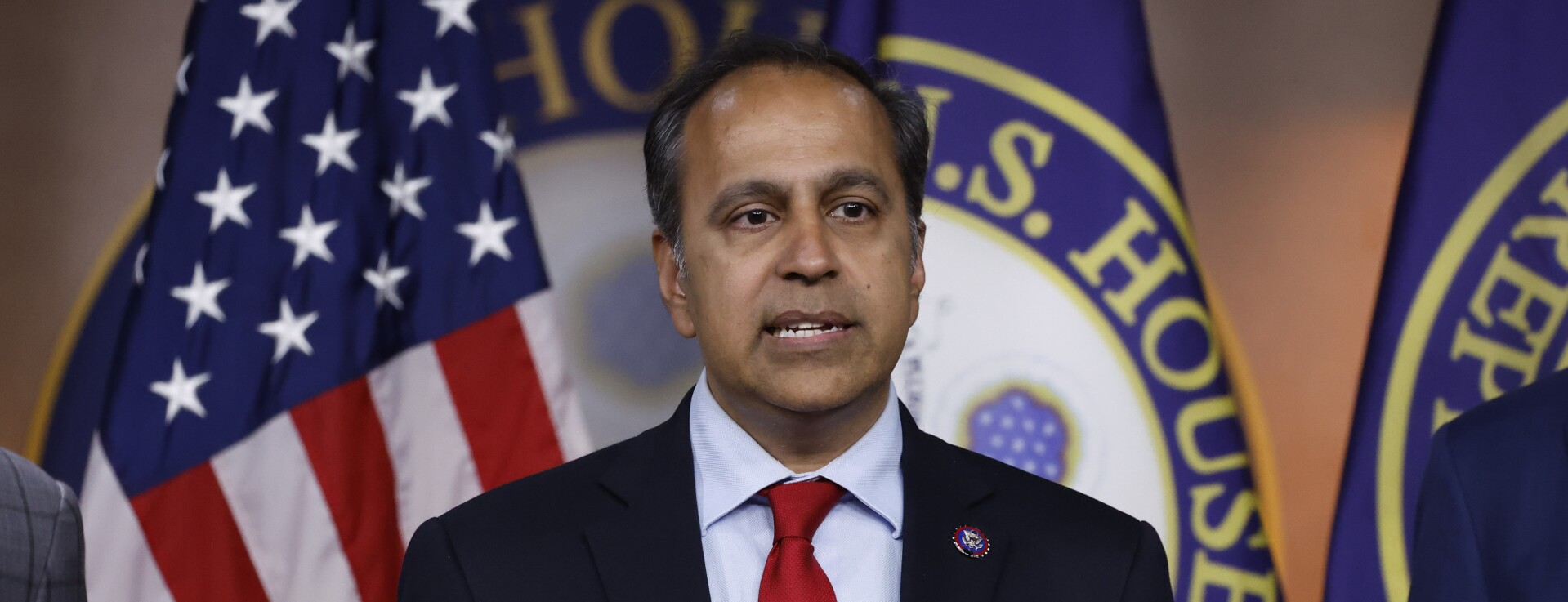 Supporting the EAGLE Act on the House Floor, Khanna said, “The reality is we need immigrants to help build some of the critical technology that is going to keep us ahead of China and keep our military strong and our industrial base strong. The EAGLE Act benefits all American workers by lifting the arbitrary per country Green Card cap to bring down the decades long backlog.”
 Nationalism, in the case of the United States, is also a significant frame used by media organizations to project their own nation’s image to the rest of the world. While some media organisations in the US can be identified as being aggressively nationalistic (we see that in the media organizations’ coverage of reports that helped President Donald Trump win the 2016 presidential elections, for example, Fox News), others are more balanced, accurate and unbiased such as the CNN or The Wall Street Journal. This does not, however, prevent these media organizations from identifying themselves with values and principles that they uphold as the identity of their ‘great’ nation. Equality, rule of law, representative democracy, freedom of speech, individualism, and patriotism often resonate in the media reports from these revered organizations. Ironically, some of these values are put on the back burner when media organizations of international repute, reverence, and credibility in the US report on developments that contradict their country’s geopolitical goals.
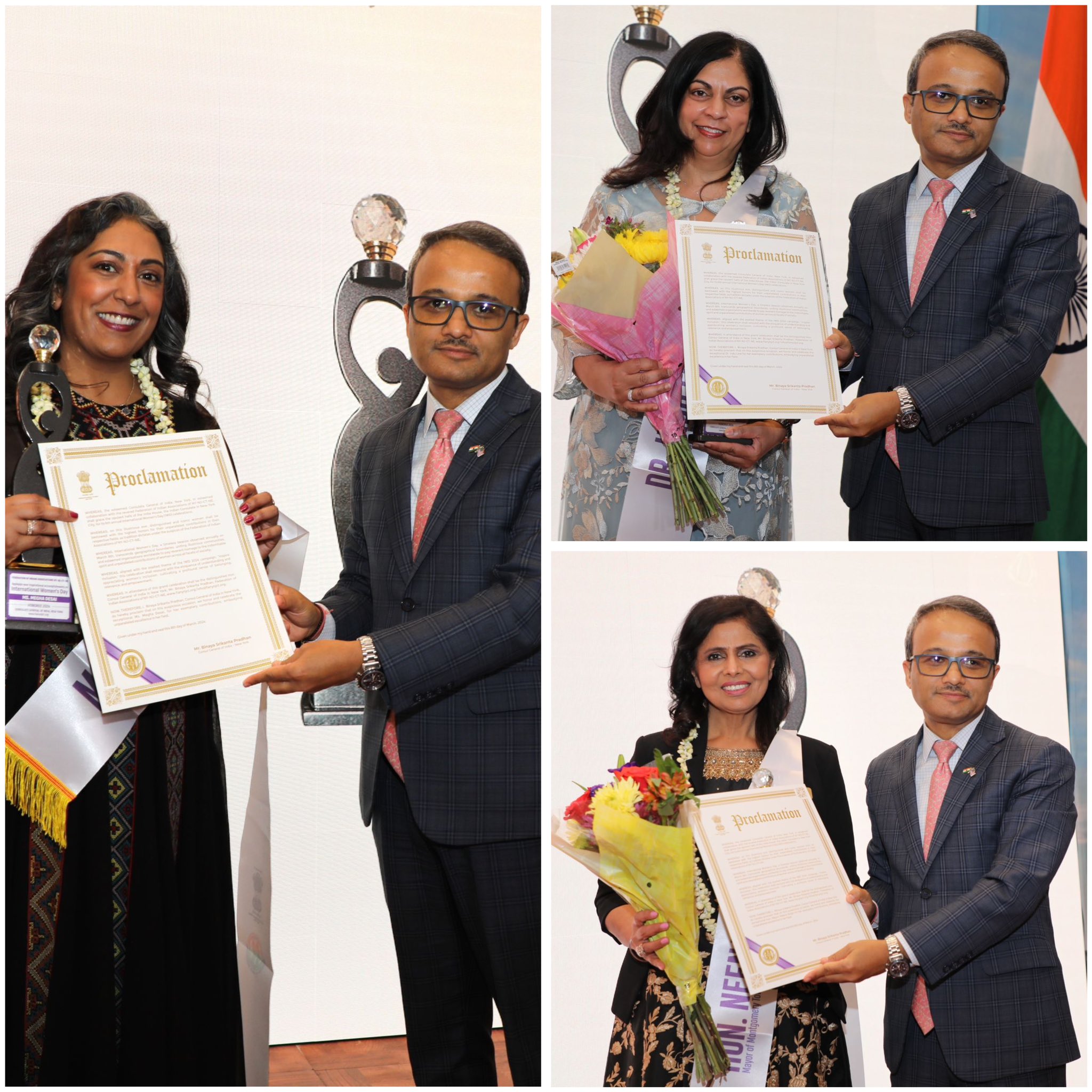 The celebration commenced with a welcoming Meet & Greet, followed by a digital showcase of the FIA’s history of furthering diversity and gender equality. Payal Shah, Co-chair of International Women’s Day, emceed the event.
 youth to be mentored in various departments in the Township “Representation matters,” Singh said, adding, “We are making a mark in this country.”
 In the end, Chirag talked about their participation in the upcoming edition of the Paris Olympics 2024, which will be played in the same venue as the French Open 2024.
 India’s Consul General in New York Binaya S. Pradhan, speaking at March 7, 2024 event at Consulate. PHOTO: X @IndiainNewYork
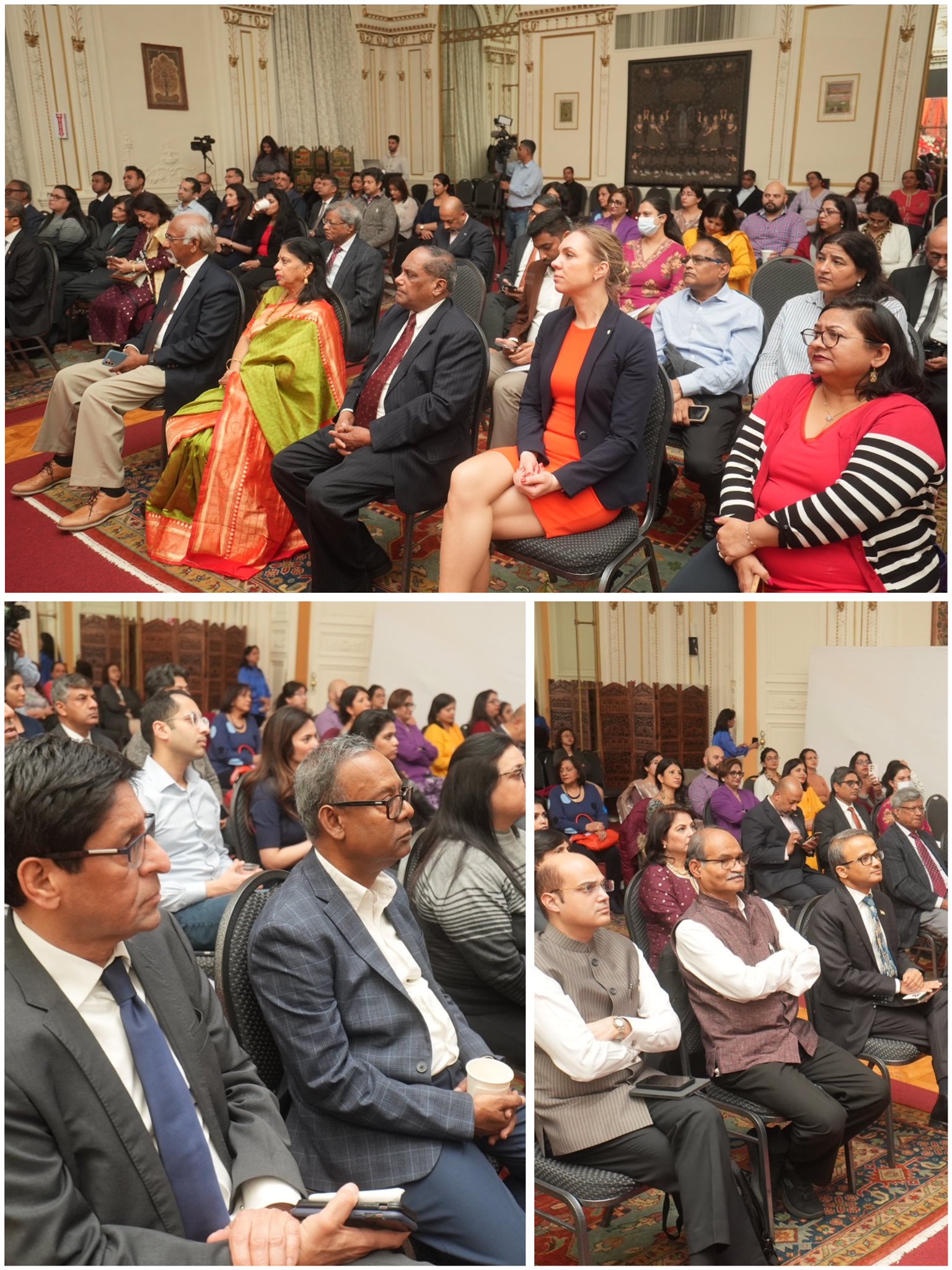 only 2% in terms of tourist spending, which is around $20 billion.
 In short, excessive phone usage is going to do you and your children harm. And what you may be passing off as a lifestyle aberration, may be the symptom of a larger disorder taking shape for e.g. eye strain and lack of concentration may be the trigger point for ADHD (attention deficit hyperactivity disorder) aggravated by years of mobile phone usage.
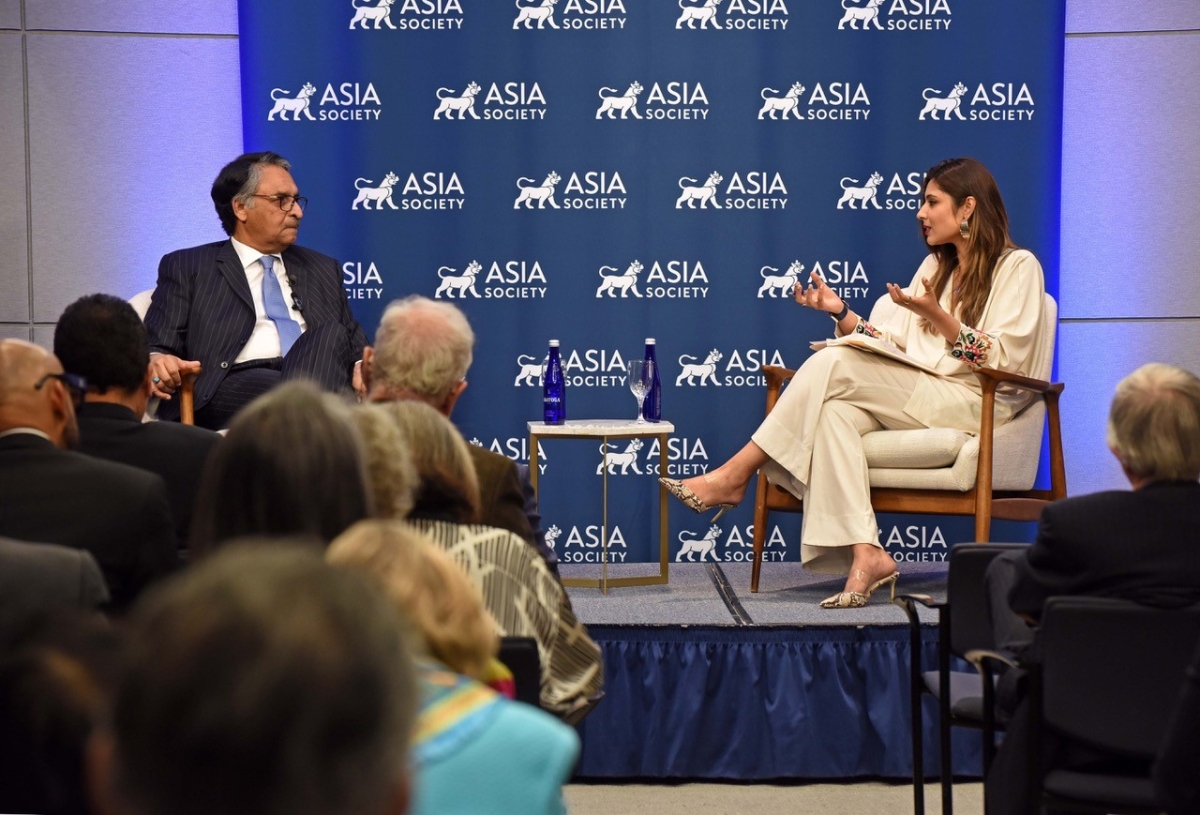 Director Aamer’s work often focuses on the importance of transboundary water politics including a multitude of publications, interviews, and panels like her upcoming panel,
  Box Office Guru Media will be presenting a panel at Canada House (Swan Dive, 615 Red River St, Austin) on Monday, March 11 from 3pm-4pm. Title and description below: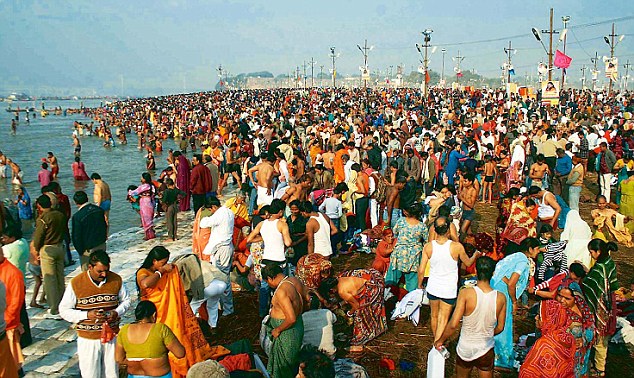
 Founded in 1989, Sakhi has been at the forefront of advocating for gender justice, providing culturally competent programs, and fostering community engagement to address unique challenges faced by survivors in the South Asian diaspora. Over the past 35 years, Sakhi has worked tirelessly to build safer, more equitable communities for all.
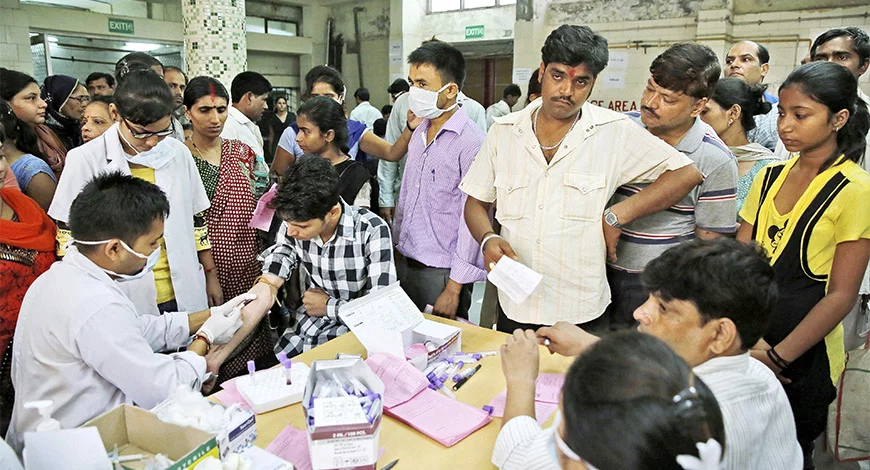 Cureus is an online platform that utilises crowdsourcing to share and promote medical knowledge worldwide, without paywalls.
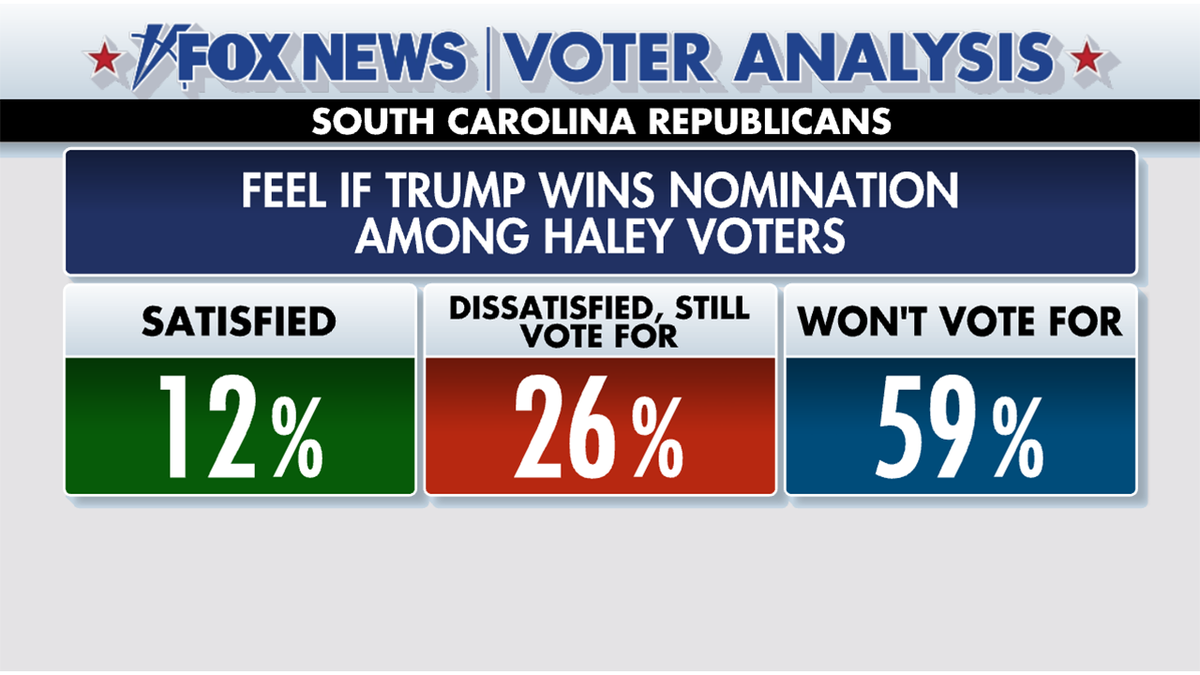 However, others feel differently. According to The Hill, Trump has reasons to be optimistic. He almost never led in any polls during the 2020 election cycle, yet he still came within a few thousand votes of pulling off a second narrow Electoral College victory. In contrast, he now leads in nearly every national poll. He also leads or ties Biden in every important swing state.



 T. Shankaranarayanan Nandakumar, popularly known as “TSN” has played a pivotal role in spreading the knowledge about Indian drums, particularly the mridangam in the United States through his stage performances at prestigious orchestras, participation in global music events, educational initiatives and contributions, collaborations, global impact, and philanthropic endeavors. He has demonstrated a commitment to social responsibility through charity work, including organizing a 24-hour non-stop Akanda Seva Bhajan in aid of India’s tsunami victims.
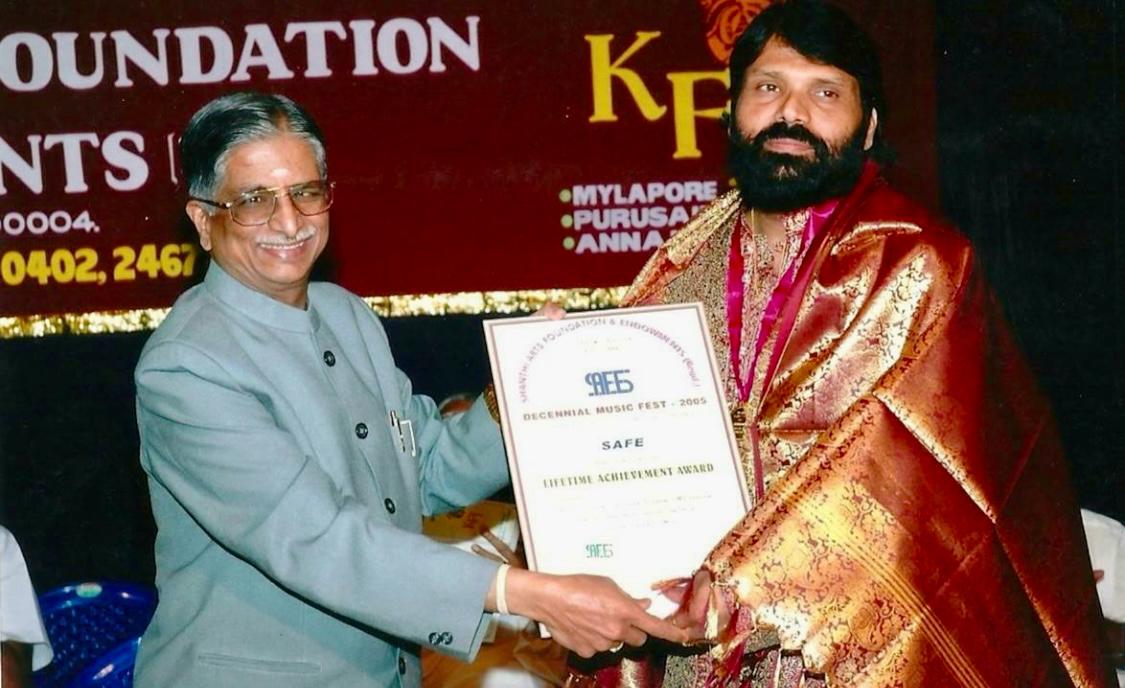 take music with him wherever he goes. TSN’s participation in international festivals and workshops has contributed to the global awareness of Indian percussion, showcasing the richness of Indian drumming traditions and providing a platform for cross-cultural exchange. By actively participating in musical collaborations and performances in the United States, TSN not only showcases the beauty of the mridangam but also educates audiences about the intricacies and significance of this traditional Indian percussion instrument.
 and drumming traditions. This indirect form of education occurs as audiences experience the artistry and cultural depth of the mridangam during performances.
 students to refine their skills and collaborate within the realm of Carnatic arts. Upon migrating to New Jersey, USA, TSN seamlessly incorporated TSNPAC, offering courses in higher learning for Carnatic percussion enthusiasts in the United States. Today, TSNPAC stands as a beacon for aspiring artists seeking to master the intricacies of Carnatic percussion.
 TSN has performed at the Thyagaraja Festival, a prestigious and culturally significant experience for Carnatic musicians. Thyagaraja Aaradhana Festival in Cleveland, Ohio, is the largest Indian classical music festival outside of India.
 artists, without prior rehearsal, which is a unique approach that serves as a culminating experience for their graduation from the Center. TSNPAC’s significant milestones include a decennial celebration marked by a grand performance featuring over 100 students. The center conducts Mridangam Arangetram annually, where students, without prior rehearsal, accompany main artists like A. Kanyakumari, culminating in a graduation ceremony. They follow in his footsteps by training their own students in the style of TSN and continuing to promote Carnatic percussive arts.
 their expertise in Carnatic Music include Paula Jeanine, Todd Isler, Johann Berby, Guillaume Barraud, Will Calhoun, Bill Buchen, Lenora Zenzlai Helm, and Bernhard Schimpelsberger. TSNPAC’s legacy embodies a commitment to excellence, providing a platform for students to explore and flourish in the rich tapestry of Carnatic music.
 of mridangam, konnakol, thavil, ghatam, kanjira and the morsing played by himself. Author of several books, to educate students to the themes of Indian Percussive Arts, TSN is currently working on writing books that cover advanced topics.
 Son of Shrimati Saraswati and Shri Balakrishna Panicker, a great supporter of the arts as member of the Devaswom board in Kerala and actively involved in promoting Carnatic devotional music in temples and organizing concerts, TSN was born in the village of Ambalappuzha in Kerala, India. As a child, he was fascinated with the rhythmic chants and bhajans. Nandakumar soon became a ‘Laya Vidwan’ due to his mastery of Carnatic percussive components: Laya, Raaga, Thaala and Bhava.
 As a young prodigy, TSN gained a reputation as an accompanist to renowned Carnatic musicians such as Semmangudi Srinivasa Iyer, M.D. Ramanathan, S. Ramanathan, R. K. Srikantan, V. Dakshinamurthy, Bhimsen Joshi, N. Ramani, M. Balamuralikrishna, T. N. Krishnan, K. J. Yesudas, N. Rajam, T. K. Govindarao, Nedunuri Krishnanmurthy, T. V. Gopalakrishnan, Parassala . B. Ponnamal, A. Kanyakumari, M. Chandrasekaran, D. K. Jayaraman, B. V. Raman, B. V. Lakshmanan and many others.
 Foundation in Chennai. He was awarded the “Best Teacher Award” from several organizations with the most prominent being awarded by Shanmukhananda Fine Arts and the Cleveland Thygaraja Aaradhana Festival and by the Shanmukhananda Fine Arts, Sangeetha Sabha, Mumbai in 2007, Bharat Ratna Dr. M. S. Subbulakshmi Sangeetha Pracharya Award), and Visionary Award by Academy of Indian Music, USA.