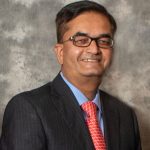
GOPIO-CT Raises Funds For Local Charity, And Elects New Team At Annual Christmas Party

GOPIO-CT organized its General Body Meeting (GBM) elected a new team. In its report to the GBM, President Ashok Nichani said that in spite of the Corona Virus pandemic and subsequent lockdown, GOPIO-CT did some outstanding work in helping local food pantries and providing KN95 masks for frontline workers.
 Secretary Rajneesh listed all major activities for the year which included major initiatives for serving the local community and institutions during the pandemic and lockdown. These included delivering food items to frontline healthcare workers at the Stamford Hospital, donating cash and replenishing food items for the homeless and needy at the New Covenant House in Stamford, Lower Fairfield County Food Pantry and Food Bank of Lower Fairfield. In addition, the chapter imported KN95 masks and donated to Wilton Meadow Healthcare facility in Wilton, Connecticut and Stamford Hospital.
 Many of the regular programs were held using Zoom meetings. The chapter participated in the annual walkathon fundraiser for Bennet Cancer Center at the Stamford Hospital. Taking the lockdown and the social isolation as a challenge, the organizing committee of GOIO-CT put together a grand celebration of India’s 74th Independence Day Celebration, connecting the people of Indian origin, community leaders and elected officials virtually, honoring and celebrating the freedom and democratic values of India and the United States. The chapter also held its annual Diwali celebration on Zoom, an interactive meeting with Congressman Jim Himes and a webinar on major changes on US Taxes and financial/retirement planning.
 The GBM also conducted its annual election for 2021. Mr. Ashok Nichani was re-elected as the President for one more term. Other elected officials are Mr. Prasad Chintalapudi as Executive Vice President, Dr. Jaya Daptadar as Vice President, Ms. Prachi Narayan as Secretary, Ms. Meera Banta as Joint Secretary and Mr. Viresh Sharma as Treasurer.  GBM also reelected two trustees, Dr. Thomas Abraham and Ms. Neelam Narang.
 Following the GBM, Annual Holiday Party was held. attended by India’s Consul General in New York Randhir Kumar Jaiswal as Chief Guest, who praised GOPIO-CT for its work helping local service organizations. Stamford Mayor David Martin complimented GOPIO-CT for its work helping the local food pantries during the lockdown.
 The fundraiser netted $5,000 to give to the local service organization Building One Community of Stamford which helps new immigrants in Connecticut.
 Dr. Thomas Abraham, Chairman of GOPIO International said that GOPIO-CT is the most active chapter among over one hundred GOPIO chapters worldwide.
 GOPIO-CT Vice President Prasad Chintalapudi coordinated and chaired the program while Nandita Suvarna conclude the program, and thanked everyone for making the Zoom program a success.
Over the last 14 years, GOPIO-CT, a chapter of GOPIO International has become an active and dynamic organization hosting interactive sessions with policy makers and academicians, community events, youth mentoring and networking workshops, and working with other area organizations to help create a better future. GOPIO-CT – Global Organization of People of Indian Origin – serves as a non-partisan, secular, civic and community service organization – promoting awareness of Indian culture, customs and contributions of PIOs through community programs, forums, events and youth activities. It seeks to strengthen partnerships and create an ongoing dialogue with local communities.

Why Does Early Treatment of COVID Matter?

Hooray for COVID Vaccines:  An Ounce of Prevention of COVID is Worth a Pound of Cure.  Let’s Use That Same Rationale for People Who Already Have COVID. 
To be a proponent for early treatment of coronavirus infection shouldn’t automatically mean there is a disregard for the much-needed prevention efforts represented by the mRNA vaccines.  This should not be an “either-or” argument.  Though there are some who have concerns about the rapid release and production of these novel vaccine interventions, no one can question that we are indeed in a public health crisis and an urgent and expedited effort is what is absolutely warranted (i.e., Operation Warp Speed is actually a fitting name for the rapid response).  We get it.  However, the broad media coverage on the vaccines seems to obscure any discussion or consideration of formal early treatment interventions for the COVID-positive patient before hospitalization is absolutely required.  Early treatment intervention of COVID has the potential to save lives, reduce hospital burden and reduce the need to limit a hospital’s capacity to render other standards of care such as routine surgical interventions. 
The death rate of COVID is actually much lower than the actual infection rate, something like only 2% or a little less than 3% maximum.  This is a good thing, unless the death rate includes one of your loved ones; then 2% doesn’t seem so negligible.  Regardless, complications of COVID can be really challenging for clinicians and downright scary for the rest of the public.  It’s been stated at least 10% of COVID survivors develop after effects for up to 6 months or more.  Early treatment intervention could potentially reduce the risk of these complications by reducing the progression of COVID to the most serious symptoms and a drastic dash to the local E.D. requiring hospital admission as a minimum, intubation for mechanical ventilation as a maximum.
The reports abound of hospital capacities stretched to their limits and physicians and other clinicians pushed beyond their normal capacities to perform, amidst caring for patients who were originally told to go home and manage on their own, until they have difficulty breathing (of course).  Really?  This is not the best we can do nor should it be the only consideration.  
Let’s take the Ohio State University (OSU) COVID-athlete study into perspective: 26 student athletes who recovered from COVID.  Some had symptoms and some actually were asymptomatic (meaning no headache, fever, sniffles or cough, etc.).  Myocarditis was observed in 4, or 15%, of these student athletes and in 8, or 30%, the student athletes were observed to have developed cardiac scar tissue.  If this is the impact of COVID on young and healthy student athletes (some of whom never developed symptoms), just waiting around until you can’t breathe really shouldn’t be the only outpatient option.  
Rather than waiting around for approval from the National Institutes of Health (NIH) or the Centers for Disease Control (CDC), physicians should at least begin to treat the symptoms of COVID in recognition of the over-activation of the inflammatory response is a signal for an advancement of the COVID assault on our bodies.  The forecasted intention should be to prevent the COVID-triggered advancement in inflammatory response. So, doctors, what’s the rationale for awaiting a rushed emergency room visit versus a purposeful effort to prevent the mad dash to the E.R. in the first place?   Shouldn’t we be activated in preventing this progression of an unchecked inflammatory response (especially since we already know how to keep it from happening)?  We must believe in ourselves and standardize an approach to common COVID symptoms using the current medications already in our FDA-indicated/FDA-approved arsenal.
If we were living in a house and heard the alarm sound from the smoke detector, there is no way we would say that there has to be a flame before we take any action (whatsoever).  There is no way you would acknowledge that the smoke will transition from a flame to a full-on blaze and only then determine the fire department should be called.  Doctor, you would pursue a focused effort to ensure the origin of the smoke was determined and then implement swift action to address whatever caused the smoke in the first place.  We would want to make sure the smoke never, ever became a flame and the flame allowed to become the dreaded blaze.  Yes, without a doubt, we Early Interventionists are grateful for the new COVID vaccines.  The vaccines are a brilliant and valiant effort at a much-needed, long-awaited prevention effort to interrupt the plaque of COVID across our great nation and our world.  Nevertheless, these COVID vaccines are not destined for people who already have COVID (at home or in the hospital); the people who are sick at home need prevention too- prevention from hospitalization.  Today, as we exhale and celebrate the release of the vaccine to prevent COVID, there are tens of thousands of Americans who are already COVID-positive and not yet hospitalized.  By the way, are you wondering about the great mutations?

If You Defend the Body, the Strain Won’t Matter 
 
Treating symptomatic expressions of COVID, before hospital admission, bypasses the need for a specific COVID regimen per se.  If your patient has a fever, you address it.  If there is evidence of pulmonary dysfunction (like coughing or symptoms of bronchitis, for instance), you would treat it with the standard go-to corticosteroid that you normally would (i.e., prednisone or methylprednisolone).  If there is a concern that steroids could further suppress the immune response, then boost the immune system as a precaution.  Is anybody concerned that there is now a whole multiple of new COVID strains reported?  If we focus on active management of the symptoms (within FDA-indications and -approval, of course) we have a strong likelihood of avoiding the most severe consequences of the infection.  Perhaps if we can limit the development of COVID complications in the body, the variations of the strain shouldn’t matter.  These efforts are only until the rest of the country has access to the vaccines.  However, if essential workers and long-term care, or nursing home, residents are the appropriate priority, there has to be a mitigation plan for treating COVID patients until all who want to be vaccinated can receive the vaccine.  Otherwise, are folks to simply try to avoid COVID infection until their vaccine number is called up in April?
We simply must reconsider the intentional plan that says “do nothing until…” it’s a mad panic and rush to the emergency room.  The ounce of prevention, to avoid the ambulance, is early treatment intervention of COVID before the infection progresses to the point where hospitalization is required.  As staggering as the death toll, the numbers do indeed reflect that more are infected and survive from COVID than those who die from COVID.  Nevertheless, there is little comfort in numbers when someone you love and care about is taken from you so tragically and often without any gift of closure in sharing a loving goodbye.  Early medicinal intervention in COVID infections as a measure of prevention, against the progression of COVID complications, is critical.  Different clinicians have varied approaches towards this end (i.e., Ivermectin, ICAM-similar regimens , etc.) and I have no particular preference.  I’m simply grateful they recognize the need to intervene early is undeniable.  

Take care of all who want the highly valued prevention effort of the vaccines as soon as possible, but plese don’t forget the folks who already have COVID.  Just like the flu vaccines are for people who have not yet contracted the flu, the COVID vaccines are destined for people who have not contracted the COVID infection.  Right now, prior to hospitalization, the best effort a COVID patient can obtain is probably thoughts and prayers because their told to ‘go home and come to the E.D. if you get worse or sick or have trouble breathing.  However, more and more clinicians have determined that the COVID patient deserves a valiant effort at prevention as well.  Let’s not forget, an ounce of prevention could be a great alternative to the need for a COVID ambulance.   
(By An Anonymous Healthcare Provider)

Now A Vaccine Passport To Travel Abroad

Now that coronavirus vaccines are starting to roll out in the US and abroad, many people may be dreaming of the day when they can travel, shop and go to the movies again. But in order to do those activities, you may eventually need something in addition to the vaccine: a vaccine passport application.
Several companies and technology groups have begun developing smartphone apps or systems for individuals to upload details of their Covid-19 tests and vaccinations, creating digital credentials that could be shown in order to enter concert venues, stadiums, movie theaters, offices, or even countries.
The Common Trust Network, an initiative by Geneva-based nonprofit The Commons Project and the World Economic Forum, has partnered with several airlines including Cathay Pacific, JetBlue, Lufthansa, Swiss Airlines, United Airlines and Virgin Atlantic, as well as hundreds of health systems across the United States and the government of Aruba.
The CommonPass app created by the group allows users to upload medical data such as a Covid-19 test result or, eventually, a proof of vaccination by a hospital or medical professional, generating a health certificate or pass in the form of a QR code that can be shown to authorities without revealing sensitive information. For travel, the app lists health pass requirements at the points of departure and arrival based on your itinerary.
“You can be tested every time you cross a border. You cannot be vaccinated every time you cross a border,” Thomas Crampton, chief marketing and communications officer for The Commons Project, told CNN Business. He stressed the need for a simple and easily transferable set of credentials, or a “digital yellow card,” referring to the paper document generally issued as proof of vaccination.
Large tech firms are also getting in on the act. IBM (IBM) developed its own app, called Digital Health Pass, which allows companies and venues to customize indicators they would require for entry including coronavirus tests, temperature checks and vaccination records. Credentials corresponding to those indicators are then stored in a mobile wallet.
IBM’s Digital Health Pass app creates an online vaccine credential that can be stored in a mobile wallet. In an effort to address one challenge around returning to normalcy after vaccines are distributed widely, developers may now have to confront other challenges, ranging from privacy issues to representing the varied effectiveness of different vaccines. But the most pressing challenge may simply be avoiding the disjointed implementation and mixed success of tech’s previous attempt to address the public health crisis: contact tracing apps.
Early on in the pandemic, Apple (AAPL) and Google (GOOG) set aside their smartphone rivalry to jointly develop a Bluetooth-based system to notify users if they’d been exposed to someone with Covid-19. Many countries and state governments around the world also developed and used their own apps.
“I think where exposure notification ran into some challenges was more of the piecemeal implementation choices, lack of federal leadership … where each state had to go it alone and so each state had to figure it out independently,” said Jenny Wanger, who leads the exposure notification initiatives for Linux Foundation Public Health, a tech-focused organization helping public health authorities around the world combat Covid-19.
To encourage better coordination this time, The Linux Foundation has partnered with the Covid-19 Credentials Initiative, a collective of more than 300 people representing dozens of organizations across five continents and is also working with IBM and CommonPass to help develop a set of universal standards for vaccine credential apps.
“If we’re successful, you should be able to say: I’ve got a vaccine certificate on my phone that I got when I was vaccinated in one country, with a whole set of its own kind of health management practices… that I use to get on a plane to an entirely different country and then I presented in that new country a vaccination credential so I could go to that concert that was happening indoors for which attendance was limited to those who have demonstrated that they’ve had the vaccine,” said Brian Behlendorf, executive director of Linux Foundation.
“It should be interoperable in the same way that email is interoperable, the same way that the web is interoperable,” he said. “Right now, we’re in a situation where there’s some moving parts that get us closer to that, but I think there’s a sincere commitment from everybody in the industry.”
Part of ensuring wide usage for vaccine passports is accounting for the large subset of the global population that still doesn’t use or have access to smartphones. A few companies within the Covid-19 Credentials Initiative are also developing a smart card that strikes a middle ground between the traditional paper vaccine certificates and an online version that’s easier to store and reproduce.
“For us it’s [about] how that digital credential can be stored, can be presented, not only through smartphones but also in other ways for those people who don’t have access to stable internet and also who don’t own smartphones,” said Lucy Yang, co-lead of the Covid-19 Credentials Initiative. “We’re looking into it, and there are companies who are doing really promising work.
\CommonPass has partnered with several airlines to start rolling out its health credential app on select international flights. Once they build a vaccine passport, companies will need to make sure people are comfortable using it. That means confronting concerns about the handling of private medical information.
CommonPass, IBM and the Linux Foundation have all stressed privacy as central to their initiatives. IBM says it allows users to control and consent to the use of their health data and allows them to choose the level of detail they want to provide to authorities.
“Trust and transparency remain paramount when developing a platform like a digital health passport, or any solution that handles sensitive personal information,” the company said in a blog post. “Putting privacy first is an important priority for managing and analyzing data in response to these complex times.”
With vaccines manufactured by multiple companies across several countries in varying stages of development, there are a lot of variables that passport makers will need to account for.
“A point of entry — whether that’s a border, whether that’s a venue — is going to want to know, did you get the Pfizer vaccine, did you get the Russian vaccine, did you get the Chinese vaccine, so they can make a decision accordingly,” said Crampton. The variance can be wide: the vaccine developed by Chinese state-owned pharmaceutical giant Sinopharm, for example, has an efficacy of 86% against Covid-19, while the vaccines made by Pfizer and Moderna each have an efficacy of around 95%.
It’s also unclear how effective the vaccines are in stopping the transmission of the virus, says Dr. Julie Parsonnet, an infectious disease specialist at Stanford University. So while a vaccine passport app will show that you’ve received the shot, it may not be a guarantee that you safely attend an event or get on a flight.
“We still don’t know if vaccinated people can transmit infection or not,” she told CNN Business. “Until that is clarified, we won’t know whether ‘passports’ will be effective.”
Still, Behlendorf anticipates that the rollout and adoption of vaccine passports will happen rather quickly once everything falls into place and expects a variety of apps that can work with each other to be “widely available” within the first half of 2021. “Rest assured, the nerds are on it,” he said.

Jayam Ravi’s 25th Film Bhoomi To Release On Disney Hotstar For Pongal 2021

Tamil film Bhoomi, starring Jayam Ravi in the role of a farmer, will release on Pongal on OTT platform Disney Hotstar next year. The actor made the announcement on Twitter. Actor Jayam Ravi on Thursday confirmed that his upcoming Tamil film Bhoomi will skip theatres and release directly via Disney + Hotstar for Pongal festival next year. The movie stars him in the role of a farmer.
In a statement he shared on Twitter, Ravi opened up about the decision to release his 25th film Bhoomi on an OTT platform. “Bhoomi is a milestone in many ways in my career. Besides being my 25th project and one that’s close to my heart for that reason, it also joins the list of movies released in the times of Covid. As much as I was looking forward to watching the movie with my dear fans in theatres, the universe had other plans by helping me pay tribute to them by bringing Bhoomi to their homes. I am excited along with Disney + Hotstar to be a part of your Pongal 2021 celebrations right in the heart of your homes.”
 Ravi, who was last seen playing a man who wakes up from a coma after many years in Comali, will be seen playing a farmer in Bhoomi. The entire project is tipped to be set against a village backdrop and Ravi will be seen in a very different avatar.
Talking about the film, director Lakshman had said in a media interaction: “Unlike in his previous 24 films, the actor will be giving it back to the society with this film. It has an agriculture-based subject, and he will be playing a farmer. There will be a social message, on the lines of Shankar sir’s films.”
The film marks the third time collaboration of Jayam Ravi and Lakshman after Romeo Juliet and Bogan. Bhoomi also stars Niddhi Agerwal and Ronit Roy and both are making their Tamil debuts with this project.
Ronit plays the antagonist. This will be Ronit’s second southern outing as he has already starred in Telugu film Jai Lava Kusa starring Jr NTR.

Miss Transqueen India 2020 Crowned

India has a new Miss Transqueen — and she’s headed for the world stage, determined to speak out for the country’s marginalized transgender community, reports here stated. Fashion designer Shaine Soni was crowned Miss Transqueen India, the country’s beauty pageant for transgender women, last week. She will represent India at next year’s Miss International Queen, the world’s biggest pageant for transgender women.
Miss Transqueen India was first established in 2017, and involves all the trappings of a traditional beauty pageant — photoshoots, talent rounds, elaborate costumes, judges and hundreds of audience members.
This year, organizers were unable to hold the competition due to the pandemic, which prompted a national lockdown from late March to May. But Reena Rai, chairwoman and founder of Miss Transqueen India, wasn’t ready to give up; she was determined to send a contestant to represent India in the 2021 international pageant.
“My pageant isn’t just about beauty, it is about empowerment and inclusion,” Rai told CNN in a phone interview. “If I am going to send someone without holding a competition, then I have to make sure that they are a very strong candidate, the best of the best, someone who knows the value of (becoming Miss) Transqueen India.”
Soni seemed like the obvious choice; as a fashion designer and stylist whose work is known on the pageant circuit, she has previously helped coach contestants and pick their outfits. For years, she stayed relatively quiet about her own transgender identity while struggling for acceptance from her family and friends — but Rai encouraged her to step forward for the title.
“She has always been a very strong backbone for Transqueen India,” said Rai. “I told her that because you’ve been with us and how important it is, and because you have been struggling with publicly coming out, this might be the best platform to do so because it is something that a lot of people will draw strength and inspiration from.”
While Soni was born biologically male, she identified as a girl from a young age — and was confused and dismayed when people around her began insisting she was a boy, and told her to act and behave like one.
As she grew up, she faced increasing pressure from relatives and friends who would discourage her from growing her hair long, wearing “girly” clothes, or having “effeminate” mannerisms, she said over the phone. “With so much pressure and bullying around me, I desperately felt I was different and that there was a problem in me.”
She found some relief when, as a teenager, she began researching and stumbled upon information about gender identity and gender confirmation surgery. She ended up leaving home at 17, pursuing an education in fashion, and transitioning with hormonal therapy a few years later — a process that she described as “difficult.”
“A lot of my friends gave up on me, they could not understand,” she said. “But I was very determined, so I went ahead and did everything on my own.” Shaine Soni will represent India next year at Miss International Queen. Credit: Courtesy Shaine Soni

The Covid-19 Baby Boom

In June of 2020, three months after the COVID pandemic began in earnest in the United States, we wrote a report suggesting that the public health crisis and associated recession would result in 300,000 to 500,000 fewer births in 2021. Six months later, we have been asked several times if we have an updated estimate. We have revisited the issue and stand by our initial prediction of a large reduction in births. Based on our previous methodology and a labor market that improved somewhat more quickly than we anticipated, we place more emphasis on the lower range of our original estimate, likely closer to 300,000 fewer births. However, additional factors that we did not incorporate into our model – in particular, ongoing school and day care closures – might very well mean a larger reduction in births than that.
It will still be several months before birth data will become available that will enable us to count the “missing” births. Additional survey evidence has come out, though, since we released our initial report that supports a coming baby bust. Corroborating evidence generated since our June report supports our prediction of a baby bust next year. A survey conducted by Laura D. Lindberg, Alicia VandeVusse, Jennifer Mueller and Marielle Kirstein of the Guttmacher Institute reveals that that 34 percent of American women have either delayed their plans to have a child or reduced the number of children they expect to have as a result of the pandemic. A different survey conducted by Francesca Luppi, Bruno Arpino, and Alessandro Rosina shows that European women similarly report that they plan to postpone giving birth or have fewer children.
Levels of sexual activity have also fallen. In one survey (conducted by Justin Lehmiller, Justin Garcia, Amanda Gesselman, and Kristen Mark of the Kinsey Institute), almost half of adults surveyed report a decline in their sex lives. In another (conducted by Devel Hensel, Molly Rosenberg, Maya Luetke, Tsungchieh Fu, and Debby Herbenick at the University of Indiana), those with young children and, particularly, those with school-age children report the largest declines in intercourse.
One way to gauge individual behavior is to examine what they search for in Google; these data are available through Google Trends. A study by Joshua Wilde, Wei Chen, and Sophie Lohmann based on these data supports our prediction of reduced fertility. The authors report that searches for pregnancy-related terms, such as “ClearBlue” (a pregnancy test), “ultrasound,” and “morning sickness” have fallen since the pandemic began. Based on the reduced searches for pregnancy-related terms, the authors of that study forecast a reduction of births on the order of 15 percent, an even larger drop than what we forecasted.
In the six months that have elapsed since our original June report, labor market conditions have improved more rapidly than experts were predicting back in June. A key element of our forecast for declining births was based on our empirical analysis that found that a one percentage point increase in the unemployment rate is associated with a one percent drop in the birth rate. We applied that estimated relationship to the expectation of a seven to 10 percentage point increase in the unemployment rate, which was in line with Federal Reserve expectations.
From today’s vantage point, it looks more likely that unemployment will have risen by around 5.5 percentage points in the year following the start of the pandemic (April 2020 through March 2021) from 3.5 percent to roughly nine percent. This estimate is based on observed data from the Bureau of Labor Statistics for April through November and assumes little change in the next few months. Using this revised expected change in unemployment, we would predict a 5.5 percent reduction in births from the unemployment effect alone. Applying that to the number of births in 2019 (3.75 million) suggests 206,000 fewer births in 2021.
Our original forecast also incorporated an additional reduction in births coming from the anxiety and social conditions associated with the public health crisis. We incorporated this into our forecast by examining the experience of the 1918 Spanish Flu. Back then, every spike in the death rate attributable to the flu was associated with a dramatic reduction in births nine months later. We relied on that evidence to increase our forecast based solely on labor market conditions by one to three additional percent, or another 38,000 to 114,000 fewer births.
The public health crisis has unfolded much as anticipated in the spring and similar in magnitude to the 1918 experience. That pandemic led to 408,000 deaths in the year after it began. Currently 290,000 deaths have occurred as of December 8 and 539,000 deaths are forecast to occur by April 1. The population of the United States is three times as large today as it was in 1918, but medical care has significantly improved, which should have reduced the death rate for a similar level of disease. We see no reason to alter our forecast based on these data. Combining the updated impact of the recession with our earlier additional impact of the public health crisis indicates that we should expect a baby bust in the range of about 245,000 to 320,000.
Yet there are reasons to believe that our July prediction might understate the impact on fertility. Ongoing school closures are putting tremendous strain on families that may reduce their willingness to have more children. Restrictions on public gatherings and social encounters might mean fewer new couplings that could lead to pregnancies, intended or otherwise. The extended nature of this crisis also is likely to create large structural changes in the economy; a sizable share of the jobs lost will be permanent. The longer the duration of the income loss that workers expect, the more likely it is that delayed births will never happen. We did not attempt to make any predictions based on these additional factors because we had no previous context or data from which to draw empirical conclusions.
It will still be several months before data will be available on the number of post-pandemic births that we can use to begin to assess our forecast. In the meantime, we have revisited our prediction based on the most recent evidence available. As of now, we stand by our prediction of a COVID baby bust of around 300,000 fewer births. But the longer the pandemic lasts, and the deeper the economic and social anxiety runs, it is feasible that we will see an even larger reduction in births with an increasing share of them averted permanently.

Pope Urges Coronavirus Vaccine Access For All

Pope Francis has called on world leaders to ensure unfettered access to coronavirus vaccines for everyone. In a Christmas Day address delivered online for the first time, the pontiff warned against putting up “walls” to treatments.
The pandemic meant this year the annual Urbi et Orbi message was not presented from the balcony at St Peter’s Basilica to huge crowds, as is tradition. Instead the Pope spoke from a lectern in a chamber inside the Vatican.
Pope Francis’ warning comes amid concerns that wealthier countries are buying up disproportionate doses of vaccines to the detriment of poorer ones.
“May the Son of God renew in political and government leaders a spirit of international cooperation, starting with health care, so that all will be ensured access to vaccines and treatment,” he said.
“In the face of a challenge that knows no borders, we cannot erect walls. All of us are in the same boat.” Coronavirus vaccines: Will any countries get left out?
The Pope said the effects of the health crisis showed the need for global unity was greater than ever. “At this moment in history, marked by the ecological crisis and grave economic and social imbalances only worsened by the coronavirus pandemic, it is all the more important for us to acknowledge one another as brothers and sisters.”
The pontiff called for generosity and support to victims of the pandemic, singling out women suffering domestic violence during lockdown.
Turning to other troubles in the world, the Pope called for peace and reconciliation in Syria, Yemen, Libya, Nagorno-Karabakh, South Sudan, Nigeria, Cameroon and Iraq.
He is due to visit Iraq in March in what would be the first such trip to the war-torn country by a pontiff.

Applications To Medical School Up Big. Is It The “Fauci Effect”?

“Now more than ever we need your talent, your energy, your resolve and your character.” Those were the words Anthony S. Fauci, MD, director of the National Institute of Allergy and Infectious Diseases, said last spring to new medical school graduates as part of the AMA’s “Tribute to the Medical School Class of 2020.”
FAQs about med school
Get answers to all your biggest questions about getting into medical school, the application process, the MCAT and more. 
It appears another flock of potential physicians may have been listening, however. With medical school applications up nearly 20% from last year, some are attributing that bounce to the “Fauci effect,” in essence crediting the nation’s most famous and most visible physician with inspiring a new generation.
According to the Association of American Medical Colleges (AAMC), the number of students applying to enter medical school in 2021 is up 18% from this time last year. The bump is unprecedented, and the reasons behind it are not entirely clear.
“This large of an increase is unprecedented,” said Geoffrey Young, PhD, the AAMC’s senior director of student affairs and programs. ”We can’t say for sure why so many more students have applied this year. Some students may have had more time for applications and preparing for the MCAT exam after their college courses went online. Some may have been motivated by seeing heroic doctors on the front lines of the COVID-19 pandemic.”
At Ohio University Heritage College of Osteopathic Medicine (OU), one of 37 member schools of the AMA Accelerating Change in Medical Education Consortium, the number of applications received to date—a 14% year-to -date increase—has surpassed the number received in the entire 2020 cycle, with two months before the application submission deadline.
“The fact that we as a society are dealing with this pandemic and people are seeing the challenges that our health care workforce are dealing with, and the pain and suffering of those who deal with COVID, it certainly could have fanned the flames for applicants who were thinking about a career in medicine,” said John D. Schriner, PhD, an associate dean for admissions and student affairs at OU. “They want to make a difference similar to what Dr. Fauci is saying.”
Other factors to which the spike could be attributed include an unfriendly economic climate for new graduates and more time to prepare applications.
“It is certainly encouraging to see an increase in applicants to medical school, and there are likely multiple drivers involved,” said Kimberly Lomis, MD, the AMA’s vice president for undergraduate medical education innovations. “The pandemic disrupted many students’ intended plans and has caused all to reconsider their educational and career options. Medicine needs people inclined to step up in times of crisis, and current medical students across the country demonstrated that ethos this year.”
At the November 2020 AMA Special Meeting, Dr. Fauci gave an exclusive interview to AMA Executive Vice President and CEO James L. Madara, MD. Read more about Dr. Fauci’s 2021 forecast on COVID-19 vaccines, treatments.
In interviews, Dr. Fauci has downplayed his impact on the application increase. Schriner isn’t so sure, however.
“There are a lot of great physicians who inspire students to go toward medicine and make a difference,” Schriner said. “Dr. Fauci is such an inspiring figure, a trusted figure. I think there may be something to it.”
While the factors contributing to the increase in applications are likely manyfold, the pandemic has caused an increase, Schriner says, in applicant altruism. And it has done so at a needed time— according to data published this year by the AAMC, the United States could see an estimated shortage of between 54,100 and 139,000 physicians, including shortfalls in both primary and specialty care, by 2033.
“Folks are just seeing such suffering and such sacrifice on the part of the patients and their families, and also the sacrifice and suffering made by the health care delivery team,” Schriner said. “There’s an altruistic spirit that is reflected in the increase in applications.”
Medicine can be a career that is both challenging and highly rewarding but figuring out a medical school’s prerequisites and navigating the application process can be a challenge into itself. The AMA premed glossary guide has the answers to frequently asked questions about medical school, the application process, the MCAT and more.

World Bank To Fund $500 Million ‘Green’ Highways Project In India

India and the World Bank on Tuesday signed a $500 million project to build safe and green national highway corridors in the states of Rajasthan, Himachal Pradesh, Uttar Pradesh and Andhra Pradesh.
The project will also enhance the capacity of the Ministry of Road Transport and Highways in mainstreaming safety and green technologies.
The Green National Highways Corridors Project will support the ministry construct 783 km of highways in various geographies by integrating safe and green technology designs such as local and marginal materials, industrial by-products, and other bio-engineering solutions. The project will help reduce GHG (greenhouse gas) emissions in the construction and maintenance of highways.
“Connectivity for economic growth and connectivity for sustainable development are two important aspects of a country’s development trajectory. This operation brings these two priorities together in support of India’s growth strategy,” said Junaid Ahmad, World Bank Country Director in India.
“This project will provide efficient transportation for road users in the four states, connect people with markets and services, promote efficient use of construction materials and water to reduce the depletion of scarce natural resources, and help lower GHG emissions,” he added.
The National Highways of India carry about 40 per cent of road traffic. However, several sections of these highways have inadequate capacity, weak drainage structures and black spots prone to accidents. The project will strengthen and widen existing structures; construct new pavements, drainage facilities and bypasses; improve junctions; and introduce road safety features.
As it is imperative that the infrastructure investments are climate resilient, disaster risk assessment of about 5,000 km of the National Highway network will also be undertaken under the project along with support to the ministry for mainstreaming climate resilience aspects in project design and implementation.
The $500 million loan from the International Bank for Reconstruction and Development (IBRD) has a maturity of 18.5 years, including a grace period of five years. (IANS)

Lawmakers Urge President-Elect Joe Biden to Preserve Work Authorization for H-4 Visa Holders

Over 60 members of the US Congress, including all four members of the ‘Samosa Caucus,’ wrote a letter to President-elect Joe Biden Dec. 16, urging him to preserve work authorization for H-4 visa holders. H-4 EAD is granted to the spouses of H-1B visa holders who are on track to get their green cards.
“We respectfully request that the Department of Homeland Security publish a Federal Register notice on day one of your administration that would extend the validity period of all expired H-4 EADs. We are confident that your incoming Secretary of the Department of Homeland Security will rectify the systemic processing issues that have been created by the Trump Administration,” wrote the members of Congress.
The revocation of H-4 work authorization is the Sword of Damocles hanging over the heads of more than 100,000 women from India since the advent of the Trump administration. H-4 visa holders are the dependent spouses of H-1B workers and largely have skills comparable to those of their spouse. However, they had not been allowed to work until 2015, when former President Barack Obama, via executive order, allowed them work authorization, known as H-4 EAD.
Shortly after taking office, President Donald Trump immediately stated his intention to rescind H-4 EAD. A Notice of Proposed Rulemaking — which has passed almost all procedural hurdles — currently rests in the Office of Management and Budget’s Office of Information and Regulatory Affairs for final approval.
Save Jobs USA filed a lawsuit in 2016 against the Department of Homeland Security, alleging that foreign workers were competing with and replacing American workers.
H-4 visa holders with work authorization are not limited to the types of jobs they can pursue.
The DC Circuit Court of Appeals ruled last November that H-4 EAD was in fact negatively impacting American workers: H-1B workers were remaining in the U.S. longer than they might have, since their spouses now had work authorization. Thus, they now faced increased competition for employment from H-4 and H-1B visa holders.
The Circuit Court has thrown the case back to a lower court.
In their letter to Biden, the 60 members of Congress — including Reps. Ami Bera and Ro Khanna, D-California; Pramila Jayapal, D-Washington; and Raja Krishnamoorthi, D-Illinois, framed the issue as one of gender equality.
“This rule presented an important step towards rectifying gender disparities in our immigration system as around 95 percent of H-4 visa holders who have secured work authorization are women,” wrote the members of Congress.
“Before the rule was granted, many women on H-4 visas described depression and isolation in moving to a new country and not being allowed to work outside of the home. Unfortunately, these women are losing and will continue to lose their jobs until this is put right, disrupting the lives of their families and the functioning of employers in our districts,” wrote the lawmakers.
The organization Save H4 EADs conducted a survey of 2,400 of its members in 2018. The survey found that 59 percent have postgraduate or professional degrees and above and 96 percent have a bachelor’s degree and above.
About 43 percent purchased a home after receiving work authorization, and 35 percent of them bought a home over $500,000. Forty-nine percent of workers with H-4 EAD have annual individual income of over $75,000. Sixty percent pay taxes of more $5,000. Five percent have started their own businesses, creating employment for American workers.
Meanwhile, in a major win for H-1B workers, the Ninth Circuit Court of Appeals Dec. 16 ruled that computer programming can be considered a specialty occupation, stating that U.S. Citizenship and Immigration Services’ denial of a visa for a computer programmer was “arbitrary and capricious.”
Immigration attorney Cyrus Mehta cheered the ruling. In a blog post, Mehta said: “While the Ninth Circuit’s decision in Innova Solutions is doubtless a victory for U.S. technology companies who employ foreign workers as computer programmers, the decision has broader implications, as well. For one, the decision is a refreshing rebuttal to USCIS’s longstanding practice of challenging computer programming on specialty occupation grounds.”
The Indian American attorney noted that this was the first time a circuit court has ruled in favor of the H-1B petitioner, adding that petitioners have won similar decisions in lower courts.
On March 31, 3017, two months after President Donald Trump took office with his “Buy American, Hire American” ethos, USCIS released a memo stating that computer programming would no longer be considered a specialty occupation. The agency noted that some programmers hold only an associate’s degree or less.
“As such, it is improper to conclude based on this information that USCIS would “generally consider the position of programmer to qualify as a specialty occupation,” noted the USCIS memo.
Current law requires H-1B workers to possess a bachelor’s degree or higher, with academic credentials specifically related to their prospective job duties.
In 2017, USCIS had denied an H-1B visa to Dilip Dodda who was scheduled to work for Santa Clara, California-based Innova Solutions as a programmer analyst. Dodda was denied his visa: USCIS noted that computer programming was not a specialty occupation.
Dodda had more than 10 years of experience in computer programming. Innova had planned to assign him to work for one of its clients, Change Healthcare Operations. Dodda would provide consulting services on Change Healthcare’s patient billing and payment system, which required knowledge of several programming languages.
However, USCIS noted in its response to the lawsuit that Innova had stated in its Labor Certification Application that the position in question was a “Wage Level 1 entry position.”
Innova provided to USCIS a list of about 14 functions that Dodda would perform, including writing script, testing beta sites, performing initial debugging, and rewriting code to fix buggy sites. USCIS nonetheless denied Innova’s petition for Dodda.
In its lawsuit, Innova contended that USCIS failed to properly consider the evidence and did not articulate any reasonable basis for its decision. It stated that the agency’s decision therefore must be set aside as arbitrary, capricious, and an abuse of discretion.
In 2019, United States Magistrate Judge Virginia Demarchi denied Innova’s lawsuit against USCIS, ruling that Innova had not sufficiently established that Dodda was to be engaged in a specialty occupation.
Demarchi said in her ruling that USCIS had noted that even interns could be classified as computer programmers. She ruled in favor of USCIS, stating that Innova failed to submit sufficient evidence “showing the unique or complex nature of the position, or how this position differs from other similar positions within the same industry.”
Innova appealed the lower court’s decision. Judge John Owens, writing for the three-judge panel at the Ninth Circuit, noted that USCIS relied solely on the Labor Department’s Occupational Outlook Handbook, which states that most computer programmers normally have attained a bachelor’s degree or higher, and that a bachelor’s degree is the typical level of education most programmers need to enter the field. “USCIS’s decision in light of that evidence was arbitrary and capricious,” ruled Owens. “It offered an explanation for its decision that ran counter to the evidence before it.” Mehta said in a blog post

Chinese Economy To Overtake US ‘By 2028’ Due To Covid

China will overtake the US to become the world’s largest economy by 2028, five years earlier than previously forecast, a report by the UK-based Centre for Economics and Business Research (CEBR) said. China’s “skilful” management of Covid-19 would boost its relative growth compared to the US and Europe in coming years, the report stated. Meanwhile India is tipped to become the third largest economy by 2030.
The CEBR releases its economic league table every year on 26 December. Although China was the first country hit by Covid-19, it controlled the disease through swift and extremely strict action, meaning it did not need to repeat economically paralysing lockdowns as European countries have done.
As a result, unlike other major economies, it has avoided an economic recession in 2020 and is in fact estimated to see growth of 2% this year.
‘China is a hard rock. It won’t be beaten by virus’ The US economy, by contrast, has been hit hard by the world’s worst coronavirus epidemic in terms of sheer numbers. More than 330,000 people have died in the US and there have been some 18.5 million confirmed cases.
The economic damage has been cushioned by monetary policy and a huge fiscal stimulus, but political disagreements over a new stimulus package could leave around 14 million Americans without unemployment benefit payments in the new year.
“For some time, an overarching theme of global economics has been the economic and soft power struggle between the United States and China,” says the CEBR report. “The Covid-19 pandemic and corresponding economic fallout have certainly tipped this rivalry in China’s favor.”
The report says that after “a strong post-pandemic rebound in 2021”, the US economy will grow by about 1.9% annually from 2022-24 and then slow to 1.6% in the years after that.
By contrast the Chinese economy is tipped to grow by 5.7% annually until 2025, and 4.5% annually from 2026-2030.
China’s share of the world economy has risen from just 3.6% in 2000 to 17.8% now and the country will become a “high-income economy” by 2023, the report says.
The Chinese economy is not only benefitting from having controlled Covid-19 early, but also aggressive policymaking targeting industries like advanced manufacturing, said CEBR deputy chairman Douglas McWilliams.
“They seem to be trying to have centralised control at one level, but quite a free market economy in other areas,” he told the BBC. “And it’s the free market bit that’s helping them move forward particularly in areas like tech.”
But the average Chinese person will remain far poorer in financial terms than the average American even after China becomes the world’s biggest economy, given that China’s population is four times bigger.
In other predictions:
The post-Brexit UK economy will grow by 4% annually from 2021-25 and 1.8% annually from 2026-30 (after shrinking in 2020)
India had overtaken the UK as the fifth-biggest economy in 2019 but has slipped behind it again due to the pandemic’s impact. It won’t take over again until 2024, the CEBR says. India’s economy will go on to overtake Germany in 2027 and Japan in 2030

From Polio To The COVID Vaccine, Dr. Peter Salk Sees Great Progress

(NPR Editor’s Note: As this year winds down, we’re looking back at some people we spoke to earlier in 2020, when the coronavirus pandemic was in its early stages. Now that there’s a vaccine, we wanted to check in with someone whose family has a long history with vaccines.
When I spoke to Dr. Peter Salk back in May, he told me the tale of receiving an early polio vaccine – the one invented by his father, Dr. Jonas Salk.
“I just hated injections. And my father came home with polio vaccine and some syringes and needles that he sterilized on the kitchen stove by boiling in water, lined us kids up and then administered the vaccine,” Salk said. “Somehow the needle must have missed a nerve, and I didn’t feel it. And so that has fixed that moment in my mind.”
Peter Salk was just 9 when he got that shot in 1953 at the family home outside Pittsburgh.
At that time, polio terrorized the country every summer. In the worst single year, 1952, nearly 60,000 children were infected. Many were paralyzed, and more than 3,000 died. Frightened parents kept their children away from swimming pools, movie theaters and other public places.
The vaccine helped eradicate polio, made his father world famous, and shaped Peter Salk’s own life — he also became a doctor of infectious diseases.
Yet when we talked last spring, Peter Salk was worried about the race for a COVID-19 vaccine. He feared corners might be cut. He noted that his father, who died in 1995, needed seven years to develop a vaccine that was both effective and safe.
“What concerns me is knowing that, in the past, there have been unexpected things that have taken place with vaccines that had not been foreseen,” Salk said at the time.
Back in the 1950s, one bad batch of the polio vaccine was blamed for 10 deaths, 200 cases of paralysis and for making many Americans wary of getting the shot.
But in a recent phone chat with Salk at his home in San Diego, he was very upbeat about the COVID vaccine. “I was bowled over when the first news came out about the Pfizer, BioNTech results and being somewhere on the order of 95 percent effective,” he said. “I just had a really strong emotional reaction that I totally had not anticipated.”
He’s following the vaccine news closely and has been hugely impressed by the development of a vaccine in less than a year. There could still be hiccups, he said, but none that can’t be solved. “In my mind, so far, so good,” he said.
Dr. Salk is a bit concerned about the number of people who are reluctant, or outright opposed, to getting the vaccine. But he believes those numbers will shrink as people see the benefits. And, he said, this “vaccine hesitancy” is nothing new.
“I was surprised when I first learned a few months ago about a Gallup poll in 1954 that indicated that about half the population did not want the polio vaccine,” he said.
That was the year before the U.S. government authorized nationwide use. In the end, most everyone received it. The current pandemic has sharply curtailed Salk’s movements. He’s still a part-time professor of infectious diseases at the University of Pittsburgh, and has stopped traveling there.
He spends most of his time at home and says his aching knees, as well as the threat of the virus, keep him from getting out much in the neighborhood.
“My wife [Ellen] and I have been extremely careful during this whole period,” he said. “I’m probably going to continue to do social distancing and wear masks and take the precautions that I’ve been taking really until this thing is practically gone.”
Dr. Salk was at the front of the line when he got the polio vaccine as a kid. And he’s eager to get the new vaccine. But at age 76, and in good health overall, he said he’s content to wait his turn.
“We’re going to be somewhere down the line” when it comes to the vaccine, he said. “As far as I’m concerned, that’s fine with me. I think it’s really important to prioritize the limited supply of vaccine.”
As a nation, he predicts it could take until the end of 2021 before life returns to normal for the country as a whole. Until then, he’ll be playing it safe. “I’m not ready to throw away the mask,” he said.

Several NRIs to Hold Key Positions Under Biden- Harris Administration

US President-elect Joe Biden has appointed Vedant Patel, a former communications aide to House of Representatives member Pramila Jayapal, as his assistant press secretary on Friday last week. Already, at least eight Indian Americans have snagged headline grabbing appointments in the incoming government: Dr. Vivek Murthy is US Surgeon General nominee, Atul Gawande and Celine Gounder are on the coronavirus task force, Neera Tanden is nominated for Office of Management and Budget lead, Mala Adiga has been chosen as policy director for First Lady Jill Biden.
Maju Varghese will be the executive director of their inauguration – the swearing-in ceremony and the festivities around it. Gautam Raghavan hasd been nominated to be the Deputy Director, Office of Presidential Personnel and Vinay Reddy will be the Director of Speechwriting for the President. President-elect Joe Biden named Bharat Ramamurti to be deputy director of the National Economic Council with an important role in carrying out his campaign promises of banking and consumer reforms. Tanden and Dr. Murthy will have to be confirmed in their positions by the Senate, unlike in the case of Patel and others.
Patel has held a string of communications positions in the Democratic Party domain, most recently as a regional communications director for the campaign of Biden and Kamala Harris, moving up from the Biden primary campaign where he headed up communications for Nevada and western states. He was born in India and grew up California, graduating from the University of California-Riverside.
Patel has also been the western regional press secretary for the Democratic National Committee and communication director for Jayapal and Mike Honda, the California representative who lost to Ro Khanna. Patel’s nomination is a gesture to the left – Jayapal is a leader of the Congressional Progressive Caucus.
Raghavan serves as Deputy Head of Presidential Appointments on the Biden-Harris Transition. Prior to joining the transition, Raghavan served as Chief of Staff to U.S. Representative Pramila Jayapal, the chair of the Congressional Progressive Caucus. Previously, Raghavan served as an Advisor to the Biden Foundation, and as Vice President of Policy for the Gill Foundation, one of the oldest and largest private foundations dedicated to the cause of LGBTQ equality.
During the Obama-Biden Administration, Raghavan served in the White House as the liaison to the LGBTQ community as well as the Asian American & Pacific Islander community, and in the White House Liaison Office for the U.S. Department of Defense and as Outreach Lead for the Pentagon’s “Don’t Ask, Don’t Tell” Working Group. A first-generation immigrant, Gautam was born in India, raised in Seattle, and graduated from Stanford University. He lives in Washington, D.C. with his husband and their daughter.
Vinay Reddy, Director of Speechwriting: Vinay Reddy serves as a speechwriter on the Biden-Harris Transition and served as Senior Advisor and Speechwriter for the Biden-Harris Campaign. He previously served as chief speechwriter to Vice President Biden in the second term of the Obama-Biden White House, after which, he worked as Vice President of Strategic Communications at the National Basketball Association. During the Obama-Biden Administration, he also served as senior speechwriter at the U.S. Environmental Protection Agency and the Department of Health and Human Services, deputy speechwriter for the Obama-Biden reelection campaign, and speechwriter for his home state Senator, Sherrod Brown of Ohio.
Reddy grew up in Dayton, Ohio, the middle of three sons in an immigrant family and is a product of Ohio public schools from kindergarten to Miami University to The Ohio State University College of Law. He currently lives in New York with his wife and their two daughters.
Bharat Ramamurti will be responsible for financial reform and consumer protection on the council, which is the president’s influential advisory body on economic policy. Ramamurti is expected to help steer the Biden administration’s programs to implement several promises in his manifesto of reform, consumer protection and banking.
The latest to be added to the growing number of Indian Americans on the new administration is Aisha Shah. President-elect Joe Biden and Vice President-elect Kamala Harris announced on December 28th members of the White House Office of Digital Strategy, among them an Indian-American, Aisha Shah.
Shah joins the Office of Digital Strategy as a ‘Partnerships Manager, a role she has played on the Biden-Harris Campaign. Shah currently serves as an Advancement Specialist for the Smithsonian Institution.
Prior to this role, Shah worked as an Assistant Manager on the Corporate Fund of the John F. Kennedy Center for the Performing Arts, supporting the first-ever expansion of a presidential memorial. Shah also served as a Strategic Communications Specialist at Buoy, an integrated marketing firm that specializes in social impact communications, as well as Spitfire Strategies, where she enabled nonprofits to use pop culture as a tool for social change. Born in Kashmir and raised in Louisiana, Shah is a graduate of Davidson College.

Trump Backs Down, Signs Covid Stimulus Package

Responding to multiple calls and prompting s from leaders from both the political Parties, President Donald Trump, finally signed into law a major coronavirus stimulus/survival package along with an annual spending bill on December 27th night, avoiding a government shutdown before a Monday night deadline.
Trump has railed against the $900 billion coronavirus relief bill and a $1.4 trillion government funding bill since Congress approved it, demanding $2,000 checks and cutting out foreign aid. But on Sunday evening after days of being lobbied by allies, Trump decided to sign the bill and not leave office amid a maelstrom of expired benefits and a government shutdown.
The Bill was voted upon nearly a week ago, and millions were awaiting Trump’s signature, as millions of Americans have temporarily lost their unemployment benefits after President Donald Trump failed to sign the Covid relief bill into law.
US President-elect Joe Biden had warned of “devastating consequences” if Mr Trump continued to delay signing but the Saturday deadline has now passed. Republicans both privately and publicly tried to sway Trump to change his mind after days of attacks on the bill.

After careful negotiations among congressional leaders and Treasury Secretary Steven Mnuchin, Trump threatened to blow up the deal — which his own administration negotiated and indicated he would support. More than $2 trillion was at stake, including badly needed pandemic aid for programs like unemployment and food assistance.
The package worth $900bn was approved by Congress after months of difficult negotiations and compromises. Trump said, he wanted to give people bigger one-off payments.
The bill includes the payment of $600 to Americans earning less than $75,000 a year. Mr Trump said, he wants Americans to receive $2,000 but Republicans in Congress refused to agree to the change.
The coronavirus economic relief is part of a $2.3tn spending package that includes $1.4tn for normal federal government spending. A partial government shutdown would have begun on Tuesday, had Trump still not signed the bill. About 14 million Americans would have been affected by a lapse in unemployment benefit payments and new stimulus cheques.
What did Biden say?
In a strongly worded statement published on the transition website on Saturday, Mr Biden described Mr Trump’s refusal to sign the bill as an “abdication of responsibility”.
“It is the day after Christmas, and millions of families don’t know if they’ll be able to make ends meet because of President Donald Trump’s refusal to sign an economic relief bill approved by Congress with an overwhelming and bipartisan majority,” Mr Biden said.
He praised the example of members of Congress in compromising and reaching a bipartisan agreement, adding: “President Trump should join them, and make sure millions of Americans can put food on the table and keep a roof over their heads in this holiday season.”
What’s Trump position?
On Twitter earlier, the president had reiterated his objection to the bill, saying: “I simply want to get our great people $2000, rather than the measly $600 that is now in the bill.”
The coronavirus aid relief bill – with the larger budget bill rolled in – overwhelmingly passed the House of Representatives and Senate on Monday but, a day later, Mr Trump issued an implied veto threat, describing the package as a “disgrace” full of “wasteful” items.
He baulked at the annual aid money for other countries in the federal budget, arguing that those funds should instead go to struggling Americans.
Mr Trump’s decision to bat the measure back to Capitol Hill stunned lawmakers since he has largely stayed out of negotiations for a coronavirus aid bill that had stalled since last July.
His top economic adviser, Treasury Secretary Steven Mnuchin, had proposed the $600 payments early this month, and many have questioned why the president waited until now to object.
“I will sign the omnibus and Covid package with a strong message that makes clear to Congress that wasteful items need to be removed. I will send back to Congress a redlined version, item by item, accompanied by the formal rescission request to Congress insisting that those funds be removed from the bill,” Trump said on Sunday night.
The president also said the Senate would soon begin work on ending legal protections for tech companies, examining voter fraud and boosting the check size for direct payments. The current Congress ends in six days.
“I applaud President Trump’s decision to get hundreds of billions of dollars of crucial COVID-19 relief out the door and into the hands of American families as quickly as possible,” said Senate Majority Leader Mitch McConnell in a statement that did not mention the commitments Trump said the Senate has made.
“To vote against this bill is to deny the financial hardship that families face and to deny them the relief they need,” Speaker Nancy Pelosi said previously in a statement.
On Sunday, Sen. Bernie Sanders (I-Vt.), who had pressed for higher stimulus checks, urged Trump to sign the bill, saying on ABC’s “This Week” that “the suffering of this country will be immense” if the president fails to sign the bill before the shutdown deadline.
But even if the House passes $2,000 stimulus checks, the GOP-controlled Senate is not expected to take up the legislation. The chamber will hold a pro forma session Monday morning and is scheduled to return Tuesday to begin the process of overriding Trump’s veto of the annual defense bill.

The Truth Behind The Indian Farmers Protests: Experts Weigh In At Webinar By IAPC

“Media projection is more important on the Farmers’ agitation in India; and as a responsible media club, Indo American Press Club is prompted to impact the mainstream western media for global narrative,” Ambassador Pradeep Kumar Kapoor said while presiding over the Zoom Meeting hosted by Indo-American Press Club (IAPC) on “ What’s the truth behind the Indian Farmers Protest?” on Saturday 26th December 2020.
Since 26 November, farmers have been protesting outside Delhi’s borders, demanding the Farm Bills’ repeal. Indo American Press Club hosted several Zoom Meetings on this complex current issues facing the nation, with vibrant participation by diplomats and political analysts from different parts of the world.
Dr. Joseph Chalil, Chairman of Indo American Press Club introduced and welcomed the invited guest speakers. In his introductory remarks, Dr. Chalil shared with the audience about some of the initiatives under the new leadership, including the series of discussions by world renowned experts from around the world on several current topics including Indo-US Relationship under Biden-Harris administration.
Ambassador Pradeep Kapur, a Best Selling Author of Beyond Covid 19 Pandemic and former Ambassador of India to Chile and to Cambodia, and Secretary at the Indian Ministry of External Affairs, was the chair leading the discussions. In his initial observations, he said that the struggle of the Indian farmers has gained much global attention, but remain uncompromised. Instead of holding on the ‘no discussions, until repealing all the bill’ both the farmers and the government need direct discussion for an amicable settlement.
Mr. Yogesh Andley; Director, WHEELS Charitable Foundation, Co-founder of Nucleus Software, explained the background of APMC and the evolution of Mandis nearly 50 years ago. He educated the audience as to how the rice and wheat procured at Rs.18 or Rs.19 reaches at Rs.35 at retail level, but distributed at Rs.2 or Rs.3 providing food security to millions of Indians. He also expressed the fear of the farmers that the private sector may buy at higher prices in the beginning, but lower down the prices dangerously.
Mr. Khanderao Kand, Director of the Foundation for India and Indian Diaspora Studies (FIIDS), a Washington DC-based think tank working on India and Indian-related studies on socioeconomic, political and international security matters, elaborated about how the Indian situation has changed from a poor country to an exporter of food products like rice and wheat. He condensed the view that the Indian government is not closing the ‘Mandis’, but encouraging to open more local markets in each village. He stated that the farmers are afraid that the new laws will lead to contract farming and losing their farmlands to few corporates eventually.
Mr. Vimal Goyal; CPA and also industrialist from Long Island, NY expressed a different perspective on economic considerations. He affirmed the view that the latest one is the most comprehensive farmers bill, as the farmers were left behind with no recognitions so far. He was of the opinion that this bill is going to promote the abundance of rice and wheat. He also mentioned that the poor farmers do not have resources of e-commerce or transporting facilities, and hence they have to resort on the greedy private middlemen, most often.
Dr. Nishit Choksi; a world renowned Interventional Cardiologist from Michigan raised the question who is actually leading the protest- the poor farmers or the greedy middlemen or dalaals?. He narrated the history that no development happened in Punjab or Haryana during the last 30 years, even though many rivers and dams are provided years back. According to him, these laws are nothing new, but good for the nation: the government should properly educate the farmers.
Mr. Narender Kapoor expressed his views to escalate the importance of the situations rather than concentrating on academic discussions. He alerted that the movement and agitation shall not be vulnerable to hijacking.
Dr. Shyam Klvekar from London urged that we need more communication with end-users. Many of the participants raised different questions and were answered by the learned panelists. Ambassador Pradeep Kumar Kapoor summarized the salient features of the diplomatic and analytical discussions.
Dr. Renee Mehrra, a tenacious broadcaster with a burning passion and one of the most prominent broadcast journalists in the tri-state area was the moderator of the event balancing the various issues and views expressed by the participants. The zoom meeting was concluded with the vote of thanks expressed by Ajay Ghosh, Founder President and Present Director of IAPC.

The Rate Of The Universe’s Expansion Explained

Newswise —A combination of astrophysical measurements has allowed researchers to put new constraints on the radius of a typical neutron star and provide a novel calculation of the Hubble constant that indicates the rate at which the universe is expanding.
“We studied signals that came from various sources, for example recently observed mergers of neutron stars,” said Ingo Tews, a theorist in Nuclear and Particle Physics, Astrophysics and Cosmology group at Los Alamos National Laboratory, who worked with an international collaboration of researchers on the analysis to appear in the journal Science on December 18. “We jointly analyzed gravitational-wave signals and electromagnetic emissions from the mergers, and combined them with previous mass measurements of pulsars or recent results from NASA’s Neutron Star Interior Composition Explorer. We find that the radius of a typical neutron star is about 11.75 kilometers and the Hubble constant is approximately 66.2 kilometers per second per megaparsec.”
Combining signals to gain insight into distant astrophysical phenomena is known in the field as multi-messenger astronomy. In this case, the researchers’ multi-messenger analysis allowed them to restrict the uncertainty of their estimate of neutron star radii to within 800 meters.
Their novel approach to measuring the Hubble constant contributes to a debate that has arisen from other, competing determinations of the universe’s expansion. Measurements based on observations of exploding stars known as supernovae are currently at odds with those that come from looking at the Cosmic Microwave Background (CMB), which is essentially the left over energy from the Big Bang. The uncertainties in the new multimessenger Hubble calculation are too large to definitively resolve the disagreement, but the measurement is slightly more supportive of the CMB approach.
Tews’ primary scientific role in the study was to provide the input from nuclear theory calculations that are the starting point of the analysis. His seven collaborators on the paper comprise an international team of scientists from Germany, the Netherlands, Sweden, France, and the United States.
Los Alamos National Laboratory, a multidisciplinary research institution engaged in strategic science on behalf of national security, is managed by Triad, a public service oriented, national security science organization equally owned by its three founding members: Battelle Memorial Institute (Battelle), the Texas A&M University System (TAMUS), and the Regents of the University of California (UC) for the Department of Energy’s National Nuclear Security Administration.
Los Alamos enhances national security by ensuring the safety and reliability of the U.S. nuclear stockpile, developing technologies to reduce threats from weapons of mass destruction, and solving problems related to energy, environment, infrastructure, health, and global security concerns.

Endowed Chair in Hindu and Jain Studies Established at University of California

Since antiquity, according to religious studies scholars, two of the world’s oldest traditions, Hinduism and Jainism, co-existed on the Indian subcontinent. They share many spiritual practices, philosophical paradigms and ethical principles while simultaneously maintaining their unique, independent identities.
Over two dozen families, individuals and foundations have come together to create the Endowed Chair in Jain and Hindu Dharma at Fresno State. The groundbreaking partnership between the Jain and Hindu communities and the University underscores a mutual commitment to educating current and future generations of students about the principles of nonviolence, dharma (virtue, duty), justice, pluralist philosophy, the interconnectedness of all beings and care for the environment through Hindu-Jain texts, philosophies and traditions.
Fresno State President Joseph I. Castro called the partnership historic. “The California State University has never seen a partnership like this one with the Jain and Hindu communities. I’m very pleased that this has happened at Fresno State. It establishes a model for other campuses in the CSU and around the country to do the same.”
“Because of the beautiful Peace Garden and what it represents here, we feel California State University, Fresno is the rightful place for this endowed chair. How beautiful and remarkable it is that both traditions will now be represented, taught and researched at Fresno State,” said Dr. Sulekh Jain, of Las Vegas, who has a prominent role in developing Jain education in the United States. “This is the first joint chair in the two traditions, not only in North America, but most probably in the whole world. This is historic.”
“Like two rivers running parallel and at times intertwined create a rich ecosystem, Hinduism (traditionally known as Sanatana Dharma) and Jainism (Jain Dharma), originated on the Indian subcontinent, for over three millennia serve as a model to building pluralistic and peaceful relations,” explained Dr. Veena Howard, a Fresno State religious studies professor. “Mahatma Gandhi was a product of both Jain and Hindu traditions and teachings. Gandhi was born in a Hindu family but was strongly influenced and molded by Jain friends, monks and Jain vows.”
Dr. Jasvant Modi, of Los Angeles, a prominent Jain philanthropist and supporter of this chair, added, “We hope that the younger generation, when they come to the college, they’re exposed to this philosophy as we know that Mahatma Gandhi, Martin Luther King and others followed a nonviolent way of solving the countries and the world’s problems.”
Monika Joshi, of Clovis, who collaborated with other local Hindu community members, expressed her enthusiasm. “In today’s world with conflict, fear and division, it becomes essential to explore and share the teachings of Hindu Dharma that have existed for thousands of years. Mutual respect, truth within and working towards eternal happiness are the core values of Hinduism that can pave the way for unity as a common goal for all.”
Dr. Harsh Saigal, a Hindu leader in Fresno, added, “We are proud to give back to the Valley that has given us so much.”
The Endowed Chair in Jain and Hindu Dharma will be housed in the Department of Philosophy in the College of Arts and Humanities and will be an integral part of the University’s religious studies program. A professor who is an expert in both the Jain and Hindu Dharma traditions will be appointed as interim chair in 2021.
“The chair will teach Jainism and Hinduism, furthering Fresno State’s efforts to promote understanding of religions and communities. The teaching of these ancient traditions reflects our community’s diversity and our donors’ trust in the value and impact of Fresno State’s programs,” said Dr. Saúl Jiménez-Sandoval, Fresno State provost and vice president for Academic Affairs.
Additionally, the endowed chair also will support Jain and Hindu scholarly endeavors for students, including scholarships, stipends and research funds. For the professor who holds the chair, the funds may support research and academic publications, conference travel and campus-sponsored events.
“We are so grateful to the unprecedented number of generous donors who have collaborated to create this remarkable gift,” said Dr. Honora Chapman, interim dean of the College of Arts and Humanities. “This new chair represents an enhanced opportunity for Fresno State’s students to learn how they can change their own lives and the world through pursuing Jain and Hindu enlightenment in their studies while putting nonviolence and peace into action.”
The Jain and Hindu community leaders and organizations that generously donated include J.P. Sethi, the Ravi & Naina Patel Foundation, Dr. Harsh Saigal, Anil Mehta, Dr. Vinod K. Gupta, Dina Bahl, Bankim Dalal, Dr. Girish Patel, Vardhaman Charitable Foundation, Andy Chhikara, Dr. Prem Kamboj, Dr. Madhav Suri, Dr. Krish Rajani, Monika Joshi, Ela and Bhavesh Muni, Rama Ambati, Dr. Shashi Sharma, Dr. Dinesh Sharma, Dilbagh Ghilawat, Sangita and Yogesh Shah, Rita and Narendra Parson, Komal and Prashant Desai, Kala and Surendra Jain, the Wadher Family Foundation, Dr. Sulekh Jain, Ronak and Mitul Shah, and Pinal and Hardik Modi.

30 Writing Prompts about Love: What is a writing prompt?

A prompt is a writing exercise in the form of a single word, phrase, or even a photo used as a starting point to focus and practice creative writing. This exercise is important for writers of any level to expand their craft and explore new grounds. It can be the inspiration behind an idea, an article, or even a whole work of fiction. The point is to begin writing whether it is on the specific topic of the prompt or an entirely different one that you wander to.
Why use writing prompts?
Overcome writer’s block. There is nothing more daunting than a blinking cursor on your screen. Whether you are in the middle of your piece or trying to come up with something new, a prompt can get you going in a new direction. Resetting your brain to a new angle can be just what you need to finish your work or turn on a creative light bulb.
Expand creatively. Working with prompts can actually be a great way to start building your own ideas. Some prompts can lead you to new avenues that you have not yet explored as a writer. The more you wander into new territories, the more imaginative and creative your writing can be. In addition, the materials you end up writing following a prompt can in fact prove to be worth pursuing. You never know what could come out once you start writing, sometimes, it can be way more than you expected.
Form a habit. If you are an aspiring writer, you might be struggling with making a habit out of writing or finishing your pieces on time. Doing more and more writing exercises can be genuinely beneficial to improve your skills as well as help you write more regularly. The more you train your brain using these prompts, the easier you will find writing to be.
Get immersed in the community. During your search for writing prompts, you will encounter many blogs, forums, and Facebook groups that share ideas, review writing and offer support. Getting involved in these communities can be great for any writer in order to meet like-minded people and form meaningful relationships with fellow writers.
30 writing prompts about love and relationships
Writing about love may seem trivial to some, but it is actually one of the most sought-after genres of fiction. Love is at the core of the human condition, and it is what drives us to do a lot of what we do even if it is irrational or strange. That’s why love is at the center of any powerful story from Wuthering Heights to Star Wars.

It is not the easiest thing to write about love especially with so many clichés out there. To write a realistic and moving love story, whether it is romantic or Platonic, a writer must dig deep within themselves and be truly vulnerable in their expression. It means to look past the clichés and tropes and find the truth between characters.

Even if writing about love is not your forte or your preferred genre, a spice of love in your horror, thriller, or adventure piece of fiction is necessary for an emotional dimension to your storytelling.
So without further ado, here are 30 writing prompts that can inspire your next piece of writing:

  • Friends with benefits: happily ever after or a terrible idea?
  • Enemies forced to work on a common goal: will they or won’t they?
  • Their break up was a mistake but is it too late?
  • They are from different worlds. Can they find a way?
  • Lies have corrupted their relationship. Is there room for a second chance?
  • Forced apart by reasons beyond their control. Will they ever find their way back?
  • Afraid of rejection: what happens when you risk it all for love?
  • Fighting for a cause: romance within the wreckage
  • What happens when they reveal their true supernatural selves?
  • When time travel and love collide in a single second. Can they find each other?
  • They found love in a lucid dream. Can it become a reality?
  • Can love survive with a workaholic partner?
  • How to hold on to the person of your dreams?
  • How to choose the perfect partner for you?
  • How to make your partner feel loved?
  • Signs your relationship is healthy
  • Red flags that mean you need to run from your relationship
  • How does love make you a better person?
  • How can an unhealthy relationship affect you?
  • Communication: the key to a successful relationship
  • Love clichés that actually ring true
  • Unexpected places to meet new people
  • Finding love in a hopeless place
  • The most challenging parts of maintaining a relationship
  • The unforgivable sins of love, lust, and betrayal
  • How to save a failed relationship?
  • Can long distance really work?
  • How to revive romance in a dead relationship?
  • How to heal a broken heart?
  • The power of ‘I love you’

Love is all around us wherever we look. From the love our mothers give us to the support we shower our friends with finding the one, love is an essential part of your story. When you write characters, love has to be part of their story too. These prompts can help you find the angle of romance in your fiction piece or inspire you to write your own version.

Suyash Mehta Is NBA’s First Full-Time Indian-Origin Referee

In an official announcement made by the The National Basketball Association (NBA) League of the US, Suyash Mehta was one of three referees, promoted to full-time NBA staff officials,
“We are pleased to welcome Simone [Jelks], Suyash and Andy [Nagy] to our full-time staff,” said Monty McCutchen, NBA Senior Vice President, Head of Referee Development and Training. “They have demonstrated through the growth and the quality of their performance, they warrant working NBA games on a regular basis.”
In the past, Mehta has officiated G League and Summer League games. Last season, he was named to the NBA’s officiating staff for the first time. He had refereed in 13 games and was one of six to be named under the title of ‘non-staff officials’.
Mehta, whose parents are from India, also has coaching experience at various collegiate levels including the Atlantic 10, Big South, Colonial Athletic Association, Conference USA, NCAA Division III and junior college officiating experience.
Mehta officiated five seasons in the NBA G League. During the 2019 20 NBA season, he refereed 13 regular-season NBA games as a “non-staff official”.
Mehta — whose parents are from India and moved to the US in the 1980s — also has coaching experience at various collegiate levels including the Atlantic 10, Big South, Colonial Athletic Association, Conference USA, NCAA Division III and junior college officiating experience.
Suyash Mehta also had coaching experience at collegiate level which includes various teams like Atlantic 10, Big South, Colonial Athletic Association, Conference USA, NCAA Division III and junior colleges. Therefore, Mehta has always been positive about making it big in the sport, either by being a coach or as a match referee. 
“They have demonstrated through the growth and the quality of their performance, they warrant working NBA games on a regular basis,” McCutchen added. Jelks joins Lauren Holtkamp-Sterling, Ashley Moyer-Gleich, Natalie Sago and Jenna Schroeder as full-time female officials for the 2020-21 season.

ASEI Confers Excellence Awards at Virtual Convention

American Society of Engineers of Indian Origin (ASEI) hosted its 33rd Annual National Convention focusing on Global Engineering & Technologies (GET-2020). This virtual convention was held on December 5th and 6th, 2020. While the speakers and participants were on the Zoom platform, it was livestreamed worldwide through YouTube.  Attended by scientists, engineers, entrepreneurs and corporate leaders across the USA, the two-day event featured keynotes and multiple interactive sessions with prominent business and technology leaders, scientists and engineering entrepreneurs. At the Finale session on the second day, ASEI recognized four engineering achievers and four service excellence and contributors to ASEI.
The convention started with a welcome by ASEI President Jwalant Lakhia. It was emceed by Anu Gopalakrishnan. The first keynote speaker Deval Desai, VP Magna Int. spoke about Contributions of Indian Technologists and weaved the storyline from mythology to history to modern era in a very short span of time. From making the best steel in the world to teaching the world to count, India was actively contributing to the field of science and technology long before the modern world evolved. One of the oldest civilizations in the world, India has a strong tradition of science and technology. Many theories and techniques discovered by the ancient Indians have created and strengthened the fundamentals of modern science and technology. While some of these groundbreaking contributions have been acknowledged, some are still unknown to most, and he shared some of the profound inventions that have and will continue to shape the future of humankind. It was heartening to see the contribution of Indian women scientists and engineers highlighted in a field typically dominated by men. There were so many factoids about things and achievements of unsung engineering heroes that would make anyone hailing from the Indian subcontinent proud!
The first technical session Quantum computing by Dancing with Qubits was a keynote by Dr Robert Sutor, VP Quantum, IBM Research. Quantum computing aims to solve complex problems the world’s most powerful supercomputers cannot solve. Leading the race in this field is IBM, though Google, Microsoft, Amazon and lot of others are all putting heavy investment bets in Quantum as well. Considering application in life sciences, an example was presented as follows: On average, it takes 10 to13 years and more than $2.5 billion to bring a new medical therapy from the discovery bench to the patient. The odds of success are overwhelmingly weighted in favor of failure. Harnessing the power of quantum computing can deliver the potential to significantly accelerate the timelines for, and enhance the quality of various stages of pharmaceutical research and development processes. That was very futuristic and sounded exciting.
According to Dr. Sutor, Quantum promises to tackle classically challenging problems across a variety of industries, from optimizing traffic control to refining supply chain logistics, and from discovering new drugs to detecting fraud more rapidly. Also, anyone can now try out the power of quantum on the IBM cloud for free with toolkits and resources available freely!
The next speaker was Prof Solomon Darwin, often known as the “Father of Smart Village Movement.” Dr, Darwin spoke on Agritech innovations for a Smarter Village. Dr Darwin shared how UC Berkeley Haas School defines the concept and after that shared about his books and publications in addition to the agricultural innovations that have the potential to make villages smarter with minimal resources.
The next session was on User Experience Design (UXD), which is a design process whose sole objective is to design a system that offers a great experience to its users. Thus, UXD embraces the theories of a number of disciplines such as user interface design, usability, accessibility, information architecture, and Human Computer Interaction. The first speaker Urmila Kashyap, Senior User Experience Designer with VMware, talked about UX design systems for enterprise products based on her 10+ years of UXD experience working with large companies like Moody’s & VMware. Surbhi Kaul, GM and Head of Product at Juniper Networks, built on it and shared from her own experience of building and launching products over two decades at Netflix, Cisco, YouTube, Google and Juniper Networks covering why UXD is critical to a product’s success and highlighted design systems using examples of AIML products she has helped launch.
 
An engineering and technology conference can’t be complete without covering Artificial Intelligence (AI). One might imagine that artificial intelligence is only something the big tech giants are focused on, and that AI doesn’t impact your everyday life. In reality, Artificial Intelligence is increasingly penetrating both our work and personal lives. Yet, many organizations in traditional industries are still grappling with justifying the ROI beyond proof-of-concept stage and struggling with operationalizing AI/ML. From a research to engineering to business perspective, a complete CXO view is needed which was provided by an IBM Fellow and Master Inventor with over 45 patents to her name – Rama Akkiraju, CTO AIOps addressing this daunting challenge and shared some best practices in this session on Artificial Intelligence in the Enterprise.
Autonomous Vehicles and Future Transportation is an interesting topic in which Jeff Hannah, Director, NA SBD Automotive & Akshay Desai, Associate Partner, McKinsey presented their POVs and tried separating fact from fiction about autonomous cars. Whether you are an automotive expert or newbie, one could gain valuable insights into the future of mobility and learn exciting ways to participate in this growing industry. Desai focussed on the future for autonomous vehicle adoption and the changing AV mobility market. The session was moderated by Convention Co-Chair Bhavesh Joshi.

The first day conference session ended with some amazing Youth Technology Exposition (YTE) finalist students, from high school to undergrad, showcasing their work. The objective of the YTE was to provide a forum for young engineers, students and budding scientists to showcase their projects in science, engineering and technology topics that can have an impact on our world. The finalist students faced a barrage of questions from the judges Amrish Chopra and Mutthu Sivanathan. This competition and session was conceived and coordinated by the Conference Content Chair and President of ASEI-Silicon Valley Piyush Malik.
It was a tight race to pick winners based on combining scores from responses to judges’ questions, audience poll and quality and depth of engineering and research in their submissions from prior rounds. Finally, the top 3 winners declared were: (1) Nidhi Mathihali (2) Jyoti Rani and (3) Isha Jagadish
The second day started with ASEI President Jwalant Lakhia welcoming the audience back and laying out the plan for the day. At the outset it became pretty clear to the audience that they would hear some high-powered content led by industry leaders lined up for the day. 
Opening keynote on Leadership in turbulent times was delivered by Dr. Satyam Priyadarshy, Chief Data Scientist & Technology Fellow, Haliburton. Leadership in turbulent times is a critically important topic and pertinent considering the current socio-geo-politico-economic scenario in the COVID era. Dr. Priyadarshy, is a globally recognized leader for his expertise in leveraging disruptive technologies, strategies and talent transformation to increase business value. He applied ancient Indian wisdom from Hanuman Chalisa to talk about a framework to face disruption in tumultuous times. According to Dr. Priyadarshy, every challenge from the past looks smaller. Paradigm shifts, Leading the transformation with a mnemonic “Karma Matters” and putting the essence of all management texts with 20 words from the religious prayer, he beautifully showed the audience some leadership lessons that have helped him as well as the teams he has led from academics to corporate life.
The next keynote session Career Management in a Disrupted Economy was delivered by Dilip Saraf who is an IIT Alumnus and has reinvented himself 5 times to be a Career and Life Coach besides being an Author and speaker. Dilip very succinctly brought out the problem and solution pertinent to those facing career challenges during this Covid-19 pandemic which has jolted us into action with a career wake-up call with uncertainty about how future jobs will emerge. Using examples from his own career shifts as well as couple of his high-profile clients, Saraf’s talk on career management was about strategies available to all of us to better manage our career and to develop resilient options for us to deal with this uncertainty and to stay in control of our own destinies.
The next session was an inspiring fireside chat conducted by Piyush Malik, SVP SpringML, with Naveen Jain, CEO Viome & Founder/Chairman – Moon Express on Exponential Technologies for Humanity’s Grand Challenges. The session saw both engaged in a high energy conversation on exponential technologies and life sciences. For the uninitiated, exponential technologies are those which are rapidly accelerating and shaping major industries and all aspects of our lives. For a technology to be “exponential,” the power and/or speed doubles each year, and/or the cost drops by half. As in Moore’s law!
Exponential technologies include artificial intelligence (AI), augmented and virtual reality (AR, VR), data science, digital biology and biotech, medicine, nanotech and digital fabrication, networks and computing systems, robotics, and autonomous vehicles. Solutions to the world’s most pressing challenges lie at the intersection of these exponential technologies.
In the next session Cybersecurity: Opportunity of Threat? the audience learned about the latest trends in cybersecurity from Anand Oswal, SVP and GM at PaloAlto Networks and was joined in conversation with popular cybersecurity strategist and influencer Matthew Rosenquist who is currently the Chief Information Security Officer at Eclipz
Cybersecurity has taken center stage in the enterprise executive mind as cases of ransomware and denial of services attacks and data breaches have kept the CISOs of the nation occupied. However, currently the biggest threats are often also the biggest opportunities. Cybersecurity is imperative for enterprises as well as nations today. Projections are that cybercrime will exceed $6 trillion annually by 2021 from $3 trillion in 2015, according to Cybersecurity Ventures. Probably the most significant factor driving this acceleration is the increasing efficiency of cybercriminals. The dark web has become a thriving black market where criminals of all means can gain the capabilities necessary to launch sophisticated cyberattacks.
Anand talked about the 3 concurrent mega transitions in enterprise IT that are impacting network security viz. Rise of a mobile workforce, Shift to hybrid cloud and Direct to app architectures. The fireside chat drew a number of interesting questions from the audience which kept the session flow lively.
The enterprise technology landscape has increasingly become difficult to manage for a CIO whose role has evolved from a Chief Information Officer to a Chief Innovation Officer in the past few years. With digital transformation mandate becoming table stakes, rapid adoption of Cloud and work-from -anywhere becoming a norm, the technology woes of an enterprise CTO or a CIO seem to be unending and may have been exacerbated due to the current pandemic.
Next session was the powerful CXO fireside chat focusing on Innovation in the Enterprise with Manoj Prasad, VP & Global CTO, Thermo Fisher Scientific and Prakash Kota, CIO Autodesk, moderated by Rakesh Guliani. What does a CTO of a public company worry about? How does the CIO become indispensable in M&A decisions? How will this pandemic change the pace of innovation in enterprise technology? These and many more topics were central to this conversation where we also found how Thermofisher Scientific is at the forefront of fight against COVID!
“Space – the final frontier” these words from Star Trek can hardly be erased from memory of those who grew up watching the science fiction TV series. Many of the innovations shown have transcended from fiction into reality as commercial space tourism is set to start and our exploratory missions to either colonizing the moon or to become a multi planetary species have been progressing well with many successful missions with robots to Mars and beyond in the past decade thanks to NASA, ISRO, European Space Agency, SpaceX and other commercial aerospace companies. The next session speaker was a super smart NASA/BAERI Space scientist Dr Sreeja Nag who also happened to be a Robotist at Nuro. Speaking on Robotics and Space, she shared her experiences on autonomous robots that work on earth as well as in the space. 
The last session of the Convention was the ASEI Awards which was anchored by ASEI Board Member Dr Thomas Abraham, Chair Awards Committee. Chief Guest was Ambassador Amit Kumar, Consul General India in Chicago. Consul General Kumar emphasized the importance of Indian American engineers and scientists pooling their talents to help India. He also presided over the function where 8 industry and ASEI awards were given out and each recipient gave a brief acceptance speech. The awardees are as follows:
ASEI Lifetime Achievement -Naveen Jain
ASEI Entrepreneur of The Year – Jyoti Bansal
ASEI Engineer of The Year (Mech/Solar) – Dr Yogi Goswami
ASEI Engineer pf The Year (Industrial Operations and Product Management) – Deval Desai
ASEI Service Excellence Award – Rakesh Patel
Hari Bindal ASEI Founders Award – Vatsala Upadhyay
Leadership and Contribution to ASEI – Rakesh Guliani and Sunita Dublish  
Dr Neeraj Bindal, son of ASEI Founder the Late Dr. Hari Bindal gave a moving tribute to his father as he presented the Founder’s award to Vatsala.    
 
The convention was put together by ASEI President Jwalant Lakhia along with Convention Co-chairs Rakesh Patel and Bhavesh Joshi. The Program chair was ASEI Michigan Chapter President Vatsala Upadhyay. ASEI Silicon Valley Chapter President Piyush Malik served as Convention Content Chair.
About ASEI
The American Society of Engineers of Indian Origin (ASEI) is a not-for-profit organization that provides a platform for networking, career advancement, community service, mentoring and technology exchange for professionals, students and businesses in the United States and abroad. Members are guided by several objectives, including the creation of an open, inclusive, and transparent organization; providing positive role models, awarding scholarships, and remaining socially responsible. ASEI was founded in 1983 in Detroit, Michigan by a handful of visionaries. Today, the organization also has chapters in Michigan, Southern California, Silicon Valley, Seattle, and Washington, DC. For more information, visit: www.aseiusa.org.

Climate Change Will Cause 62 Million South Asians To Be Forced To Migrate From Their Homes By 2050

More than 62 million South Asian people will be forced to migrate from their homes due to climate disasters by 2050, a new study revealed on Friday
According to the study conducted by ActionAid International and the Climate Action Network South Asia, political failure to limit global warming to below two degrees Celsius, as per the Paris agreement goal, is already driving 18 million climate migrants from their homes in 2020.
The analysis estimates climate migration will treble in South Asia alone, a region badly affected by climate disasters, including floods, droughts, typhoons and cyclones.
The research was undertaken by Bryan Jones, one of the authors of the inaugural Groundswell Report on internal climate migration in 2018.
The new research released this International Migrants Day has broadened the analysis to incorporate new drivers of climate migration, which include loss of biodiversity and up to date scenarios of sea level rises and global warming.
The report, “Costs of climate inaction: displacement and distress migration” assesses climate-fuelled displacement and migration across five the South Asian countries of Bangladesh, India, Nepal, Pakistan, Sri Lanka, and calculates a devastating likelihood of more than 60 million people being homeless and displaced by 2050 in South Asia alone.
This is almost as many people as are forced from their homes globally due to war and conflict, raising the alarm that climate can no longer be overlooked as a major factor driving displacement.
Climate migration could easily surpass conflict as a driving force of displacement if political leaders continue to renege on their commitments to reducing greenhouse gas emissions in line with the Paris Agreement.
Communities can be resilient to climate change, slow onset climate disasters, such as sea-level rise, drought, failed harvests and loss of biodiversity, but this takes money and political will.
The report by ActionAid and partners Climate Action Network South Asia and Bread for the World, calls for strong leadership and ambition from developed countries to cut emissions and support for developing countries to adapt to climate change and recover from climate disasters.
It recommends a holistic approach that places the onus on rich countries to provide support and urges developing countries to scale up efforts to protect people from climate impacts.
South Asia is particularly prone to climate disasters and has some of the highest levels of climate-fuelled displacement.
Harjeet Singh, global climate lead at ActionAid, told IANS: “We are facing melting glaciers in Nepal, rising seas in India and Bangladesh, cyclones and inhospitable temperatures. Climate change is increasingly forcing people to flee their homes in search of safety and new means to provide for their families.
“Rich countries need to take greater responsibility to reduce their emissions and support South Asian countries in cutting emissions and dealing with climate impacts. The human cost of inaction is too high.”
The research reveals that in all five countries, women are left dealing with the negative fallout from climate migration. They are left behind to take care of household chores, agricultural activities, look after children and elderly and manage livestock.
Women who migrate to urban settlements are often then forced to take up work in precarious settings where workers’ rights violations are rife.
Sanjay Vashist, Director, Climate Action Network South Asia, said: “South Asia is geographically vulnerable to climate disasters and is regularly lashed with floods and cyclones, but poverty and environmental injustice are also determining factors in this climate migration crisis.
“South Asian leaders must join forces and prepare plans for the protection of displaced people. They must step up and invest in universal and effective social protection measures, resilience plans and green infrastructure to respond to the climate crisis and help those who have been forced to move.”
Bryan Jones, Assistant Professor, Marxe School of Public and International Affairs, Baruch College said: “The work we have done here represents a deeper dive of the type Groundswell was meant to inspire, focusing the attention on to specific locations that are likely to experience major climate related disasters.
“The impact of sea-level rise, coupled with drought and heat-extremes will almost certainly drive families to consider alternative work, and our results suggest that for many this means moving to cities.
“The combination of environmentally sensitive livelihoods, population growth, and urbanization, in my opinion, will make South Asia one of the most active regions in terms of climate-induced migration.
“Additionally, because many of the largest and most important urban centres in the region lie in particularly vulnerable coastal areas, it is imperative that policy makers prepare for the likely influx of migrants.”

AAPI To Observe January 7th As Global Wear Yellow Day For Obesity Awareness & Health

(Chicago: IL: December 20, 2020) Obesity has been identified as a leading cause for early death as it leads to hypertension, diabetes, hyperlipidemia, heart attacks, strokes, some kinds of cancer and adversely affecting almost all organs in the human body. Describing Obesity as a major disease, World Health Organization (WHO) has recognized that PREVENTION is the most feasible option for curbing the obesity epidemic. Parents, schools, communities, states and countries can help make the Healthy choice the Easy choice.

Continuing with the goal of creating awareness by educating the public and healthcare professionals, American Association of Physicians of Indian Origin (AAPI) is observing January 7th, 2021  as the Global Wear Yellow Day for Obesity Awareness & Health, showcasing Yellow for Energy, Motivation, Hope, Optimism, Joy and Happiness. AAPI’s theme and campaign around the world is to: “Be Healthy, Be Happy.” And, the  “Secret to Living Longer is to Eat half, Walk double, Laugh triple and Love without measure.”

During an educational webinar on NObesity held on December 12th, 2020 and led by internationally renowned healthcare leaders, Dr. Sudhakar Jonnalagadda, President of AAPI said, “The impact and role of AAPI in influencing policy makers and the public is ever more urgent today. AAPI being the largest ethnic medical organization in USA and the second largest organized medical association after AMA, we have the power and responsibility to influence the state and the public through education for health promotion and disease prevention. Hence AAPI is trying ‘To Educate to Empower’ as ‘An Ounce of Prevention is Worth a Pound of Cure.’ In this context, AAPI is in the process of getting Wear Yellow for Obesity Awareness Proclamation from the White House so it can be implemented nationwide. So far, we got official proclamations from   Mayors from several States,” he added.

The interactive webinar was moderated by Dr. Uma Jonnaladadda, Chair of AAPI’s Physicians Section; Board Certified Family Medicine Secretary, GAPIO, and AAPI’s First Lady. Other moderators were: Dr. Padmaja Adusumilli, and Dr. Pooja Kinkhabwala.

The eminent speakers at the Webinar included: Muamer Dajdic, a Motivational Educator, who had struggled with obesity his whole life. He shared with the audience his own inspiriting life’s story of how weighing nearly 500 lbs, with obesity almost killing him, he lost over 300 lbs. in 1.5 years. The author of an upcoming book: The Healthy Living Process, he earned the Melting Snowman nickname & set out on a mission to help 100 000 000 people across the world overcome obesity & maintain a healthy body for life.

Kevin J. Finn, Ph.D., a Professor of Kinesiology in the School of Nutrition, Kinesiology, and Psychological Science at the University of Central Missouri, addressed the audience on “Exercise is Medicine” stressing the importance of including daily activities that enhance one’s health. Swarna Mandali, a well known Nutritionist, having obtained a Doctoral Degree from Oklahoma University, with having extensive experience in Neutrino Counseling, and serving as an Educator on Medical Nutrition, spoke about “Partaking Portions: Road to Prevention” shedding light on practical ways to manage food intake, especially among South Asians and their food habits.

Dr. Hira Nair, a Professor of Psychology at Kansas City Kansas Community College, the Coordinator of the Teacher Education Program, believes that education is transformative and psychology prepares students to live an introspective and collaborative life. She has recently joined efforts with AAPI to educate the local community about food addiction and anti-obesity. She works tirelessly on social justice issues within the context of the community, and around the globe. She shared with the audience, her own experiences while actively participating in building community awareness of important global issues such as hunger and the importance of educating the girl child.

Major contributors for the success of AAPI’s obesity awareness campaign over the years include, Dr. Uma Koduri, who had organized the pilot programs for childhood obesity in USA since 2013, childhood obesity in India in 2015 and Veteran obesity in USA in 2017 with the help of Drs. Sanku Rao, Jayesh Shah, Aruna Venkatesh for childhood obesity, Vikas Khurana, Satheesh Kathula for Veteran obesity, and Janaki Srinath, Uma Chitra, Avanti Rao for childhood obesity in India.

Presently, AAPI Obesity Committee’s Chair is Dr. Uma Koduri and co-chairs are Drs. Padmaja Adusumili (Veteran obesity), Pooja Kinkabwala (Childhood obesity) and Uma Jonnalagadda (Adult obesity) with chief advisors Dr. Kishore Bellamkonda and Dr. Lokesh Edara.
“American Association of Physicians of Indian Origin (AAPI) has embarked on an ambitious plan, launching Global Obesity Awareness Campaign 2021,” said Dr. Uma Koduri, Founder of NObesity Revolution, Chair of National AAPI Obesity Committee, and Founding President of AAPI Tulsa Chapter. According to Dr. Koduri, “AAPI will *GO YELLOW* on first Thursday, Jan 7, 2021 (Thursday is a working day,  so tell your colleagues at work to wear yellow that day): *G – Get your BMI* (measure height, weight and calculate your BMI…ask google to calculate for you ?); and, *O*- *Own your Lifestyle.  It’s up to you. No one can do it for you*. Loose weight, exercise, eat healthy – whole food, plant predominant diet. *YELLOW – energy, motivation  hope,  optimism, joy and happiness*.”

“I am proud to announce today that we have been successful in successful in making this a global a reality by 12-12-2020 by covering 100 cities in USA, 100 cities in India and 100 countries around the World, including on the 7th continent on Earth, the Antarctica,” Dr. Koduri, who has been in the forefront of the obesity awareness campaign for years now, explained. “What had started off in 2011 at 11-11-11-11-11-11 seconds as AAPI Health Walkathons were held in all 5 Continents – Australia, Asia, Africa, Europe and North America was successfully completed in 2020 by Obesity Walkathons by Dr. Suresh Reddy in the remaining 2 Continents – South America and Antarctica,” Dr. Koduri added.

 “While following in the footsteps of American Heart Association initiatives, “National Wear Red Day, on the first Friday in February,” which has become an annual campaign to raise awareness about heart disease in women, AAPI is leading a campaign to create awareness on Obesity,” said Dr. Sajani Shah, Chairwoman of AAPI BOT.

Dr. Anupama Gotimukula, President-Elect of AAPI said, “With obesity proving to be a major epidemic affecting nearly one third of the nation’s population, we have a responsibility to save future generations by decreasing childhood obesity. And therefore, we at AAPI are proud to undertake this national educational tour around the United States, impacting thousands of children and their families.”

According to Dr. Ravi Kolli, Vice President of AAPI, “AAPI has it’s chapters in almost every city and town of USA. With this extensive network around the nation, we should be able to spread the message on obesity by following the template plan. We are also exploring the use of social media and phone ‘apps’ as healthy lifestyle tools.”

“As a professional organization that represents the interests of over 100,000 physicians of Indian origin, who are practicing Medicine in the United States, one of our primary goals is to educate the public on diseases and their impact on health. The Obesity campaign by AAPI is yet another major role we have been focusing on,” said Dr. Amit Chakrabarty, Secretary of AAPI.
Dr. Satheesh Kathula, Treasurer of AAPI, said, “AAPI has taken this initiative as a “main stream” issue in both children and adults, in the US and in India. AAPI has helped organize several childhood obesity and veterans obesity programs across the US. We have the right team to take this project forward”.

AAPI is a forum to facilitate and enable Indian American Physicians to excel in patient care, teaching and research and to pursue their aspirations in professional and community affairs. For more details on AAPI’s Global Obesity Awareness Campaign,   please visit: www.aapiusa.org

SUITABLE BOY

With the highly anticipated conclusion of the epic miniseries A SUITABLE BOY approaching, actress Tanya Maniktala sat down to discuss the making of her acclaimed project. In North America, all episodes are available exclusively on the streaming service Acorn TV with new episodes premiering every Monday. More information is available at http://signup.acorn.tv where a free trial is also being offered.
 
 
Interview with lead actress Tanya Maniktala of A Suitable Boy
 
Tell us about the story of A Suitable Boy?
 
A Suitable Boy is a book written by Vikram Seth and the series that we are making is based on the novel. Based in 1950s India, the story is about Lata Mehra and her journey to find herself and also to find A Suitable Boy! There are a lot of other elements, such as the turmoil after the partition and the Hindu/Muslim riots. I would say that it is a love story, but it’s also Lata finding love in herself and the potential to be able to love somebody else as well.
 
Who is Lata Mehra and what is her journey?
 
Lata is a 19 year old girl. She is attending university and graduating in English Literature. Lata’s beauty lies in her simplicity; I would say that she is very relatable, very grounded and humble. She is taking the world as it is and has no illusions about how it’s going to be. However, we see her bubble break when she actually enters into the real world. Lata and her mother’s ideas of marriage and love are very different. Lata follows her heart but her mother follows what society says. There’s always a constant conflict between the two of them.
 
How does the relationship between Lata and her mother develop across the first few episodes?
 
Lata and her mother share a love/hate relationship where they push each other towards the edge but pull each other back as well. They are always there for each other and they understand each other. I feel like Lata is almost an extension, or rather a younger version, of her mother. They both have very strong opinions. At the end of it all, her mother wants Lata to be happy, whether it’s studying literature or law and I think Lata understands that. However, her youth takes over at times when she feels like rebelling – but she would never do anything to hurt her mother.
 
How did you become involved in A Suitable Boy?
 
Just a few days before I got the call for the audition my friend and I were discussing this book and how Lata and Malati’s relationship was very much like ours. I was working as a copywriter and I was very happy with my life. A few days later, a friend called me and asked me to come for an audition but didn’t tell me what it was for. My friend is a huge fan of the book. I get goose bumps now when I remember showing up for the audition and how it was for A Suitable Boy and the role of Lata.
 
What has it been like working with Mira Nair?
 
Mira is absolutely phenomenal; she’s the best director that anybody could ask for. She’s so clear and vocal in what she wants. It’s so easy for any artist to deliver when they know what the director wants from them and that’s so important since it’s my first time working on such a huge scale project. I couldn’t have been luckier. I’m blessed. I’m honestly honoured to have her directing me and this entire cast. Mira gave me opportunities to grow and learn which is very important for me as an actor. I need to figure out my own process and she allowed me time to just be with the character, so I’m really grateful. Her vision about what she wants from the book is very clear and you can tell she’s totally in love with the book and its characters.
 
What has it been like to be part of this huge production?
 
Every day on set feels like a dream – from the cars, to the sets and the costumes. I can’t believe that this has actually happened. I feel so humbled and grateful for this wonderful opportunity. I can’t believe this is my life. There are so many people around me who encourage me and give me that boost of confidence whenever I feel low. I’m honestly so grateful for it all!
 
 Watch the NEW making-of video “Creating A Suitable Boy” here:
https://www.youtube.com/watch?v=eAoj43V8gxo

With Congress Approving Stimulus Bill, When Will You Get A Second Stimulus Check?

A second round of stimulus payments is included in a coronavirus relief package struck by congressional leaders late Sunday after months of negotiations between Congressional leaders from both the major political parties.

US Congressional Lawmakers voted Monday on the deal, which would provide for $600 checks, but experts say it will take at least two weeks for the Treasury to get cash into individuals’ bank accounts after legislation is signed.

“The timing could be more challenging this time, but the IRS could likely begin to get the money out in January,” said Howard Gleckman, a senior fellow at the Urban-Brookings Tax Policy Center.

In March, Congress provided individuals with $1,200 direct payments and couples with $2,400 plus $500 per child under the $2 trillion CARES Act. Those payments started phasing out for singles who earn more than $75,000 a year and those earning more than $99,000 did not receive anything. The income thresholds were doubled for couples.
Content by Amazon

Small town company’s big time growth through Amazon
Amazon has created more U.S. jobs in the last decade than any other company. These are jobs that pay at least $15 per hour, more than double the federal minimum wage.
As with the first round, the new payments will only be sent to people below a certain income level, though it wasn’t immediately clear Sunday where that would be set.
It took two weeks after that bill was passed for the IRS to start distributing the money — but some eligible recipients still haven’t received it, months later.
Who gets the money fastest

The payments do not go all out at once. Those whose bank information is on file with the IRS will likely get the money first because it will be directly deposited into their account. Others will receive paper checks or prepaid debit cards in the mail.

About 90 million people — more than half of those eligible — received their payments within the first three weeks of April after the March deal was signed. Most people had their money within two months.

Still, about 12 million eligible Americans were at risk of not getting the money at all because the IRS had no way to reach them. While most people received the money automatically, very low-income people who don’t normally file tax returns had to register online before November 21 to provide their address or bank account number.

IRS under pressure

If Congress keeps the eligibility requirements the same as they were for the first round of checks, the process may be nearly as easy as hitting a button. But it could complicate things if the parameters are changed — especially if Congress adds restrictions aside from income.
Additional checks may delay the start of the 2020 tax filing season. A second stimulus check means the agency will have to make changes to the tax return forms, some of which have already been sent to the printers.

December is not an ideal time to add to the IRS’s workload. It’s typically the month when work is done to prepare for the upcoming filing season and more staff may be on leave than usual due to the holidays.

“I believe the IRS will deliver the stimulus checks in a timely manner. It just might be at the expense of the filing season start date,” said Chad Hooper, the executive director of the Professional Managers Association, which advocates for more than 30,000 non-union IRS workers.

This story has been updated with details of the stimulus deal reached Sunday.

Trump Honours Modi With Legion of Merit Award

Prime Minister of India, Narendra Modi was presented with the highest degree Chief Commander of the Legion of Merit on Monday, December 21st in Washington, DC. The award is given only to the Head of State or Government. Modi was given the award in recognition of his steadfast leadership and vision that has accelerated India’s emergence as a global power.
US President Donald Trump on Monday presented the prestigious Legion of Merit to Prime Minister Narendra Modi for his leadership in elevating strategic partnership of the two countries and emergence of India as a global power.

India’s Ambassador to the US, Taranjit Singh Sandhu, accepted the award on behalf of the prime minister from the US National Security Advisor Robert O’Brien at the White House.
President Trump “presented the Legion of Merit to Indian Prime Minister Narendra Modi for his leadership in elevating the US-India strategic partnership,” O’Brien said in a tweet. Modi was presented with the highest degree Chief Commander of the Legion of Merit which is given only to the Head of State or Government.

He was given the award in recognition of his steadfast leadership and vision that has accelerated India’s emergence as a global power and elevated the strategic partnership between the United States and India to address global challenges.

O’Brien in another tweet said that Trump also presented the Legion of Merit to Australian Prime Minister Scott Morrison and the former Japanese Prime Minister Shinzo Abe. The awards were received by their respective ambassadors in Washington DC.

President Trump “awarded the Legion of Merit to Japanese Prime Minister Shinzo Abe for his leadership and vision for a free and open Indo-Pacific,” he said.

Trump awarded the Legion of Merit to Australian Prime Minister Scott Morrison for his leadership in addressing global challenges and promoting collective security, O’Brien tweeted.
The United States is the latest country to confer its highest award to the Indian prime minister. Other awards include Order of Abdulaziz Al Saud by Saudi Arabia in 2016, State Order of Ghazi Amir Amanullah Khan (2016), Grand Collar of the State of Palestine Award (2018), Order of Zayed Award by United Arab Emirates (2019), Order of St Andrew by Russia (2019), Order of the Distinguished Rule of Nishan Izzuddin by Maldives (2019.

Biden Leads the Way with Receiving COVID-19 Vaccine

President-elect Joe Biden received his first dose of the Pfizer-BioNTech COVID-19 vaccine on December 21st in front of cameras to help build confidence in the vaccine across the country.
Biden joined a list of high-profile politicians and millions of other font line healthcare workers and Seniors across the nation, vaccinated Dressed in a navy blue mock turtleneck and wearing two masks, Biden pushed up his left sleeve for the vaccination at ChristianaCare’s Christiana Hospital in Newark, Delaware.

“I’m doing this to demonstrate that people should be prepared, when it’s available, to take the vaccine. There’s nothing to worry about. I’m looking forward to the second shot,” Biden said shortly after receiving his vaccination.

“We owe these folks an awful lot. The scientists and the people who put this together and frontline workers, the people who were the ones who actually did the clinical work, it’s just amazing,” Biden said. “We owe you big, we really do.”

Biden’s vaccination comes as a second coronavirus vaccine, produced by Moderna, has begun to be distributed across the country, and as the death toll from the virus nears 320,000 Americans.
As the number of Covid-19 cases reported in the United States passed 18 million, the second vaccine given emergency authorization was being administered Monday for the first time outside of clinical trials.

One of the first people to get a public dose of the Moderna Covid-19 vaccine was a doctor in Texas who has gone to work, fighting the virus for 277 consecutive days. “This is like having gold,” Dr. Joseph Varon told CNN as he held a box of doses shortly before he was vaccinated. “I don’t cry, but I came very close … You know how many lives you can save with this?”

The president-elect said the Trump administration “deserves some credit” for getting the vaccine and distribution off the ground with Operation Warp Speed, but stressed that while the vaccines marked progress, the country needs to continue taking precautions to slow the spread of coronavirus, particularly around the upcoming holidays.

“I don’t want to sound like a sour note here, but I hope people listen to all of the experts and the Dr. Faucis on … talking about the need to wear masks during this Christmas and New Year’s holidays. Wear masks, socially distance. And if you don’t have to travel, don’t travel. Don’t travel. It’s really important because we’re still in the thick of this,” Biden said

Biden, 78, had long promised to take the vaccine if advised by Dr. Fauci to do so. In an interview with ABC’s “Good Morning America” last week, Fauci recommended Biden receive the vaccine as soon as possible.

“Dr. Fauci recommends I get the vaccine sooner than later. I want to just make sure we do it by the numbers, and we do it — but when I do it, you’ll have notice and we’ll do it publicly. Thank you,” Biden told reporters last Tuesday.

Vice President-elect Harris and her husband, incoming second gentleman Doug Emhoff, are also expected to receive the vaccine at a later date.

“Consistent with security and medical protocols, the Vice President will not receive the vaccine at the same time as the president. We expect she and Mr. Emhoff will receive their first dose of the vaccine the following week, and we will have additional details on that next week,” the incoming White House press secretary, Jen Psaki, said Friday.

Biden joins several political leaders who have received the vaccine, including Vice President Mike Pence, House Speaker Nancy Pelosi, Senate Majority Leader Mitch McConnell and several members of Congress.

One politician yet to take the vaccine is President Donald Trump, who has largely been out of public sight since the two COVID-19 vaccines have received emergency use authorization from the FDA.

As of Monday morning more than 614,000 Americans have received a vaccine shot, according to the US Centers for Disease Control and Prevention’s Covid Data Tracker.
Most Americans will have to wait months before getting their inoculations.

In the meantime, new infections, hospitalizations and deaths keep soaring, prompting health experts to urge the public to stay home this Christmas week.
“This is really not the time to be traveling,” epidemiologist Dr. Celine Gounder said.
But millions of airline passengers ignored such advice and traveled over the weekend.
Now travelers risk getting infected with a variant of coronavirus that might be even more contagious.

‘Christmas Star’ Brightens Up The Sky As Jupiter And Saturn Come Closer Than They Have In Centuries

If popular culture has taught us anything about the holidays, it’s that this is a season of reunions: a time when people conquer great distances and lengthy separations just to be together again. Usually, though, such stories involve cross-country trips — not the orbits of the two largest planets in our solar system.

This year is different.

On Dec. 21, Jupiter and Saturn — which are actually separated by more than 400 million miles —appeared closer to each other in the night sky than they have for centuries. Seen at the right hour, whether by telescope or the naked eye, the gas giants are separated by roughly a fifth of the diameter of the typical full moon. At this proximity, the planets will appear to touch or even form one large, brilliant star in the sky.

The spectacle is a curious effect of their orbits. Since Jupiter takes a little less than 12 years to circle the sun and Saturn takes more than 29, the planets appear to earthlings to meet roughly every 20 years, in what astronomers call a “great conjunction.” The last great conjunction occurred in May 2000, though its position in the sky at the time meant the average stargazer likely lost it in the glare of the sun.

But you’ll need to reach much further into the past to find the last instance such a conjunction was this close and this visible to stargazers. The Perth Observatory in Australia says that Jupiter and Saturn last approached this closely to each other in July 1623, but as with the conjunction in 2000, it was hard to spot.

“You’d have to go all the way back to just before dawn on March 4, 1226, to see a closer alignment between these objects visible in the night sky,” Patrick Hartigan, an astronomer at Rice University, explained in a statement last month.

There’s still another holiday connection at work here, beyond a simple coincidence of timing. Some astronomers, dating back to Johannes Kepler in the 17th century, have conjectured that the Star of Bethlehem that guided the three wise men to Jesus Christ’s birthplace in the Bible was a conjunction like the one set to appear later this month — although likely one involving different planets.

“Alignments between these two planets are rather rare, occurring once every 20 years or so, but this conjunction is exceptionally rare because of how close the planets will appear to one another,” said astronomer Patrick Hartigan, a professor of physics and astronomy at Rice University in Houston, in a statement.

Saturn and Jupiter began appearing close to each other this past summer, but this spectacle of proximity will be clearest beginning in mid-December.

“Look for them low in the southwest in the hour after sunset. And on December 21st, the two giant planets will appear just a tenth of a degree apart — that’s about the thickness of a dime held at arm’s length!” NASA explained earlier this month. “This means the two planets and their moons will be visible in the same field of view through binoculars or a small telescope. In fact, Saturn will appear as close to Jupiter as some of Jupiter’s moons.”

After the winter solstice, the two planets will appear to begin moving apart again.
Now, this sentimental holiday reunion is no Hallmark movie; if you miss it this year, don’t expect to see it again next December. Astronomers say there won’t be another great conjunction this close until 2080. (Courtesy: NPR.COM)

“Women Who Win” Awarded ‘Leadership in Women Empowerment Award By Indian Medical Association of New England

Dr. Manju Sheth, Dr. Deepa Jhaveri, and Shaleen Sheth, the pioneers in creating a new movement to empower women with the recent launch of their movement, “Women who win# Dreamcatchers” were awarded the prestigious Leadership in Women Empowerment Award by Indian Medical Association of New England (IMANE) at the annual gala organized virtually on Saturday, December 12th, 2020.

The platform was honored for “Leadership in Women Empowerment” as the “President’s Award.” Founded in 1978, IMANE is one of the oldest Indian Medical Associations in the United States. It is an organization for medical professionals of Indian origin in the New England area.

“Women who win# Dreamcatchers” is a Global Media Platform sharing dreams, Passions & Life lessons of a Woman’s Journey, Emphasizing women empowerment across all ages, industries, and backgrounds, & bringing women from around the world together daily with inspiring, relatable, and relevant original stories.

The platform has featured as exclusive interviews, skill shares, webinars, podcasts, and more including Business, Policy, Technology, Social Activism, Arts & Lifestyle, Global Recipes, Women’s Health and more with trailblazing contributors across all fields.

This year with the pandemic and other challenges being faced in the world right now, women who win brings positivity and inspiration, reminding women to continue chasing their dreams and make it a reality,” said Dr. Maju Sheth the visionary women’s leader. 

Women Who Win has done outstanding work for global women’s health and wellness through weekly articles and webinars, bringing together providers and patients around the world, and IMANE is excited to have collaborated with them on webinars including an international podiatry panel, and an open-minded conversation on gynecology.

This year, they have brought expertise from renowned specialists in topics such as allergies, nutrition and wellness, pulmonary, dental care during Covid-19 and more. Further, they highlighted the discussion in healthcare policy, including gender gap in healthcare, affordable healthcare, and creating change with leading health reform pioneer Rosemarie Day. They have also brought in the patient’s perspective, sharing women in our community’s powerful journeys with breast and colon cancer.

In her address, Dr. Dhrumil Shah, President of IMANE, said, “The work of a small group of thoughtful and passionate individuals can change the world. I never doubted this sentiment but, there is a difference in believing it and experiencing it first-hand. This year the work of three women in our community, two of them being IMANE (Indian Medical Association leaders] Dr. Manju Sheth, Dr. Deepa Jhaveri, and Shaleen Sheth, have done extraordinary work to empower women globally in these tough times.”

According to Dr. Shah, ‘Women Who Win’ #Dreamcatchers has become a platform full of inspirational stories, life lessons of women’s journeys and insights from topics such as humanitarian, social & entrepreneurial causes.. I am amazed each time their stories come out on how powerful an impact it is making in our global sentiment as they fuel positivity, inclusion, diversity and collaboration. We at IMANE are proud to partner with Women Who Win on the Women’s Health Series webinars, where we bring global experts and speakers on key healthcare related topics. I feel truly proud and honored to see the work of our team reaching the stage beyond my imagination. I would like to thank and congratulate the Women Who Win team for their ongoing success in changing the world one story at a time.”

From the stories of social activists fighting to end gender-based violence and the life of a female pilot flying planes for humanity, to a woman building 2200 schools for girls in remote areas, trailblazing millennials, and women overcoming adversities and challenges of daily life, the platform has something for everyone.

Dr. Manju Sheth is a physician by profession, having a passion for media and commitment to serve the larger humanity, with special focus on women’s empowerment. She is a Board Certified Internist, currently serving patients at Beth Israel Lahey Hospital.in the Boston Region in Massachusetts.

Dr. Sheth wears many hats to her credit. A multi-tasker and with full of energy, Dr. Sheth says, “If you want to do something in life then you will find a way.” It has not been easy to be “a physician, mother, media personality, and be involved in our vibrant New England community and the media world, but each of my involvements is truly important to me, and I give my full heart and energy to each of them. I always remind myself, that anything worth having has to be worked for.”

Dr. Sheth has been a big advocate for empowerment of women and she has invested her time, energy and efforts all her life more than any other cause. “I’ve always had a passion for women empowerment, and I bring that to all the projects and opportunities I pursue,” she says. She has served on the board of ATASK (Asian Task Force Against Domestic Violence) and as the Chairperson of Saheli, a prestigious Boston based organization, whose mission is to empower South Asian women to lead safe and healthy lives.

Having served on spreading awareness on women’s rights, Dr. Sheth says, “My biggest focus right now is the new Women who win # Dreamcatchers platform where we showcase dreams, passions & life lessons of a women’s journey on our website, womenwhowin100.com and on multiple social media platforms. And this initiative keeps me stay motivated each and every day.”

To join a global group of women around the world to share stories and discuss prominent and relevant women’s topics, join their vibrant community on  Facebook ,Instagram,Linkedin & website wwwwomenwhowin100.

United Airlines Launches New Daily Delhi-Chicago Non-Stop Flight

US-based United Airlines has launched its new daily non-stop service between Delhi and its hometown hub of Chicago. Accordingly, these daily flights will be operated by a Boeing 787-9 Dreamliner aircraft. “Starting December 2020, we’re excited to launch even more routes from the U.S. to India. Whether you’re embarking on your first adventure there or eager to reconnect with family, we make it easy to visit India’s top destinations. With the introduction of this new route, United will operate four daily non-stop flights from India,” the airline said in a statement.

Beginning spring 2021, we’re adding daily nonstop flights between San Francisco and Bangalore. With this launch, we’ll become the only airline flying between both cities. Traveling between two of the world’s top tech hubs is about to get easier than ever, the airline posted on its website.

The leading airliner additionally operates daily year-round services from Mumbai and New Delhi to New York or Newark, and from New Delhi to San Francisco, “United also expects to introduce a new daily nonstop service between Bengaluru and San Francisco commencing 8 May 2021. United will be the first US carrier to provide nonstop service from Bengaluru to the US and will offer more nonstop services from India than any other US airline,” it added.

In statement on its site, United posted: “We’ve been proud to connect you to India for 15 years running, and we’re excited to be the only U.S. airline with nonstop flights from the U.S. to the country’s biggest and best destinations.”

United Airlines has announced that it is taking its most ambitious step yet in leading the fight against climate change: pledging to become 100% green by reducing its greenhouse gas (GHG) emissions by 100% by 2050. United, which in 2018 became the first U.S. airline to commit to reducing its GHG emissions by 50% by 2050, will advance towards carbon neutrality by committing to a multimillion-dollar investment in revolutionary atmospheric carbon capture technology known as Direct Air Capture – rather than indirect measures like carbon-offsetting – in addition to continuing to invest in the development and use of sustainable aviation fuel (SAF). With this unprecedented announcement, United becomes the first airline in the world to announce a commitment to invest in Direct Air Capture technology.

United’s shared purpose is “Connecting People. Uniting the World.” For more information, visit united.com, follow @United on Twitter and Instagram or connect on Facebook. The common stock of UAL is traded on the Nasdaq under the symbol “UAL”.


UN Urges World Leaders to Declare ‘Climate Emergency’ at Virtual Climate Summit

Global climate leaders took a major stride towards a resilient, net zero emissions future today, presenting ambitious new commitments, urgent actions and concrete plans to confront the climate crisis.

World leaders should declare a “climate emergency” in their countries to spur action to avoid catastrophic global warming, UN Secretary-General Antonio Guterres said in opening remarks at a climate summit on Saturday.

On the fifth anniversary of the 2015 Paris Agreement, more than 70 world leaders are due to address the one-day virtual meeting in the hope of galvanizing countries into stricter actions on global warming emissions.

Guterres said that current commitments across the globe did not go “far from enough” to limit temperature rises. “Can anybody still deny that we are facing a dramatic emergency?” Guterres said. “That is why today, I call on all leaders worldwide to declare a State of Climate Emergency in their countries until carbon neutrality is reached.”

The summit showed clearly that climate change is at the top of the global agenda despite our shared challenges of Covid-19, and that there is mutual understanding that the science is clear.

Climate destruction is accelerating, and there remains much more to do as a global community to keep the global temperature rise to 1.5 degrees Celsius.

However, the summit showed beyond doubt that climate action and ambition are on the rise. The announcements at or just before the summit, together with those expected early next year, mean that countries representing around 65 per cent of global CO2 emissions, and around 70 per cent of the world’s economy, will have committed to reaching net zero emissions or carbon neutrality by early next year.

These commitments must now be backed up with concrete plans and actions, starting now, to achieve these goals, and the summit delivered a surge in progress on this front.

The number of countries coming forward with strengthened national climate plans (NDCs) grew significantly today, with commitments covering 71 countries (all EU member states are included in the new EU NDC) on display. As well as the EU NDC, a further 27 of these new and enhanced NDCs were announced at or shortly before the summit.

A growing number of countries (15) shifted gears from incremental to major increases. Countries committing to much stronger NDCs at the Summit, included Argentina, Barbados, Canada, Colombia, Iceland, and Peru.

The leadership and strengthened NDCs delivered at the summit mean “we are now on track” to have more than 50 NDCs officially submitted by the end of 2020, boosting momentum and forging a pathway forward for others to follow in the months ahead.

Saturday’s announcements, together with recent commitments, send the world into 2021 and the road to the Glasgow COP26 with much greater momentum. The summit showcased leading examples of enhanced NDCs that can help encourage other countries to follow suit – particularly G20 countries.

Following this Summit, 24 countries have now announced new commitments, strategies or plans to reach net zero or carbon neutrality. Recent commitments from China, Japan, South Korea, the EU and niw Argentina have established a clear benchmark for other G20 countries.

Britain Prime Minister Boris Johnson said: “Today we have seen what can be achieved if nations pull together and demonstrate real leadership and ambition in the fight to save our planet.

“The UK has led the way with a commitment to cut emissions by at least 68 per cent by 2030 and to end support for the fossil fuel sector overseas as soon as possible, and it’s fantastic to see new pledges from around the world that put us on the path to success ahead of COP26 in Glasgow.

“There is no doubt that we are coming to the end of a dark and difficult year, but scientific innovation has proved to be our salvation as the vaccine is rolled out. We must use that same ingenuity and spirit of collective endeavour to tackle the climate crisis, create the jobs of the future and build back better.”

China and India vowed to advance their commitment to lower carbon pollution at the summit. President Xi Jinping was one of the first leaders to address the virtual conference and he said China will boost its installed capacity of wind and solar power to more than 1,200 gigawatts over the next decade. Xi also said China will increase its share of non-fossil fuels in primary energy consumption to around 25% during the same period. And “China always honors its commitments,” Xi promised.

Prime Minister Narendra Modi said India was ramping up its use of clean energy sources and was on target to achieve the emissions norms set under the 2015 Paris agreement. India, the second-most populous nation on Earth and the world’s fourth-largest greenhouse gas emitter, is eyeing 450 gigawatt of renewable energy capacity by 2030, Modi said.


TiE Global Awards Bill Gates With Lifetime Achievement Award

Technologist, business leader, and philanthropist Bill Gates was presented with the Lifetime Achievement First Generation Entrepreneur Award at the inaugural TiE Global Awards held during the TiE Global Summit (TGS) 2020 on Friday. The award was presented by TGS chair Sridhar Pinnapureddy.

The award celebrates Gates’ body of work that laid the foundation for today’s entrepreneurs and technology innovators, and his philanthropic efforts towards making the world a better place for those often overlooked by society.

TiE Global this year honored 12 entrepreneurs and executives from across the world and thanked Bill Gates and Bill Marriott for accepting Honorary Lifetime Achievement awards.

“Entrepreneurship has no boundaries nor a language. We foster and support entrepreneurs and visionaries who build enterprises to solve a billion people’s problems or a dreamer in high school wanting to increase human productivity,” said Praveen Tailam, a member of the Board of Trustee of TiE Global and former [resident TiE Boston. “TiE has brought the corporates to investors to universities to accelerators and the entire startup ecosystem together. TiE Global Entrepreneurship Awards is an appreciation of these individuals from different parts of the world.”

“Mr. Gates’ contributions are ginormous and invaluable, to list them out will be impossible. But the greatest, we at TiE feel is, that his work in computing has empowered anyone who uses a PC or any devices. His dream of the era of home computing when they were just used by big corporates, governments led to this day. Today, we have a mini-computer in the form of smartphones in our pockets. His work has impacted the way the world works,” said Mahavir Sharma, TiE Global chair.

Receiving the award virtually during TiE Global Summit, he said it was honor to receive this prestigious award from TiE. In his remarks on the occasion, he said innovation is the key to solve the world’s toughest challenges, whether it is stopping a pandemic, avoiding a climate disaster or just raising human productivity.

“But as Paul Allen and I experienced with Microsoft, innovators can’t make it on their own. They need supporters and partners to make sure that their best ideas make it from the lab to the marketplace. For over 27 years, TiE has been doing just that. You support great entrepreneurs around the world and in some of the most important fields in technology today. Your work is essential in fostering innovation and creating the better world we all want,” said Gates.

Co-founder of Microsoft Corporation, as well as the Bill and Melinda Gates Foundation, Gates, was chosen for the award by a jury of business leaders, chaired by N.R. Narayana Murthy, founder, Infosys Technologies. Other members of the jury include professor Jagdish Sheth; Charles H. Kellstadt, professor of business, Emory University; and Gururaj Deshpande, president, and chairman, Sparta Group; as well as an entrepreneur and author Ping Fu, co-founder and board director, Geomagic. The TiE Global Awards was chaired by Kali Gadiraju, board member, TiE Global.As a first generation entrepreneur, Bill Gates has created a remarkable impact not only on the global economy but also has become an inspiration to many many entrepreneurs through generations, said Mahavir Sharma, TiE Global Chair.

Bill Gates is a visionary entrepreneur who has overcome various challenges and failures to create a new world, and he has leveraged success to tackle health and poverty issues worldwide which are overlooked by society, said Sridhar Pinnapureddy, TGS2020 Chair.

The lifetime achievement service award was posthumously conferred on late F.C. Kohli, father of Indian IT Industry and the lifetime achievement family business transformation on Bill Marriott of Marriott International.

Kohli was the founder and first CEO of Tata Consultancy Services, India’s largest software services company. He died recently. His wife received the award and thanked TiE for choosing him for the award. TiE also presented 10 awards under various categories. Six outstanding entrepreneurs and seven ecosystem players were recognized.

The Singapore government was given the award for the best government agency supporting startup ecosystem. Best corporate supporting entrepreneurship went to Google/Alphabet for start-ups. Stanford University was recognised as the best university promoting entrepreneurship.

Best accelerator award was conferred on Y Combinator, best performing global VC Fund went to Sequoia Capital, and the most active angel network in the world award went to Tech Coast Angels.

Bootstrapped to Billions award has gone to Ben Chestnut and rapid listing award to VIR Biotechnology, lightening unicorn award to Indigo Agriculture and most innovative startup to Data Robot.

In its inaugural TiE Global Entrepreneurship Awards program, TiE found Bill Gates as the most deserving person on earth, based on their extensive research under the guidance of renowned management professors, to receive Lifetime Achievement Award for a first generation entrepreneur who created a global scale organization which outlives the entrepreneur and is an inspiration to generations, TiE Global said in a statement.


Protesting Indian Farmers Call For 2nd Strike In A Week By SHONAL GANGULY (AP News)

Tens of thousands of protesting Indian farmers called for a national farmers’ strike on Monday, the second in a week, to press for the quashing of three new laws on agricultural reform that they say will drive down crop prices and devastate their earnings.

The farmers are camping along at least five major highways on the outskirts of New Delhi and have said they won’t leave until the government rolls back what they call the “black laws.” They have blockaded highways leading to the capital for three weeks, and several rounds of talks with the government have failed to produce any breakthroughs.

Scores of farmer leaders also conducted a token hunger strike on Monday at the protest sites. Heavy contingents of police in riot gear patrolled the areas where the farmers have been camping.

Protest leaders have rejected the government’s offer to amend some contentious provisions of the new farm laws, which deregulate crop pricing, and have stuck to their demand for total repeal.

At Singhu, a protest site on the outskirts of New Delhi, hundreds of farmers blocked all entry and exit routes and chanted anti-government slogans. Some of them carried banners reading “No farmers, no food.”

About two dozen leaders held a daylong hunger strike at the site, while a huge communal kitchen served food for the other protesters.

“It’s the government’s responsibility to provide social benefits (to people.) And if they don’t give those, then people will have to come together” to protest, said Harvinder Kaur, a government employee who came from her home in Punjab state to help at the kitchen.

Another protester, Rajdeep Singh, a 20-year-old student who helps his farming family back home in Punjab, said the protest would continue until their demands are met.

“Now it’s their (government’s) ego and the question of our pride,” he said.

Farmer leaders have threatened to intensify their actions and have threatened to block trains in the coming days if the government doesn’t abolish the laws.

The farmers filed a petition with the Supreme Court on Friday seeking the quashing of the laws, which were passed in September. The petition was filed by the Bharatiya Kisan Union, or Indian Farmers’ Union, and its leader, Bhanu Pratap Singh, who argued that the laws were arbitrary because the government enacted them without proper consultations with stakeholders.

The farmers fear the government will stop buying grain at minimum guaranteed prices and corporations will then push prices down. The government says it is willing to pledge that guaranteed prices will continue.

With nearly 60% of the Indian population depending on agriculture for their livelihoods, the growing farmer rebellion has rattled Prime Minister Narendra Modi’s administration and its allies.

Modi’s government insists the reforms will benefit farmers. It says they will allow farmers to market their produce and boost production through private investment.

Farmers have been protesting the laws for nearly two months in Punjab and Haryana states. The situation escalated three weeks ago when tens of thousands marched to New Delhi, where they clashed with police.

Priyanka Chopra Wants to give Hollywood an influx of Indian talent

Priyanka Chopra Jonas detailed her plans for her production company, Purple Pebble Pictures, which is working in both India and the United States across languages and platforms. Priyanka Chopra Jonas, who has transitioned from a successful Bollywood career to make a mark in the American film and television industry over the past decade, said on Friday that she has a new dream: Flood Hollywood with Indian talent.

At the 18th Hindustan Times Leadership Summit, Chopra Jonas and her pop icon husband Nick Jonas spoke on a raft of subjects, including the importance of streaming platforms, shooting movies amid a pandemic, and their abiding love for India.

Chopra Jonas detailed her plans for her production company, Purple Pebble Pictures, which is working in both India and the United States across languages and platforms. The actor is managing a full-plate of roles, starring in movies ranging from White Tiger to The Matrix 4.

“My greatest joy with Purple Pebble is to create all-South Asian cast for movies and TV shows in Hollywood. We haven’t seen that very often,” she said. “It is really my quest to try and influx Hollywood with Indian talent as much as I can.”

In their session – the couple’s first joint interview with an Indian media outlet – the entertainment icons also stressed on the romance and magic of big-screen cinema, but insisted that streaming services were here to stay, especially because of the pandemic that has claimed 1.5 million lives worldwide.

And, Chopra Jonas announced plans for her next Hindi film, scheduled sometime next year.  To Jonas, whose production Dash and Lily is streaming on Netflix, over-the-top platforms are a great alternative experience to cinema at a time when going out isn’t always possible.

“There’s certainly room for both…when things go back to a version of normal, the experience of going to a movie theatre, having a popcorn and a drink and watching a great movie is something that is so unique and such a special thing,” he said.

“I am excited to go back to the theatre, she (Chopra Jonas) knows I am a sucker for popcorn in the theatre so I’ll be looking forward to that.”

Chopra Jonas agreed, adding that streaming services are already an essential part of the evolution of entertainment, especially because many people in India still have no access to television or fixed-line electricity and consume content on their phones, using internet data.

“It’s intelligent and smart to get ahead of it…we should be on the right side of it. I certainly am,” she added.

She argued that theatrical releases have an inherent romance and charm but it was not a mutually exclusive choice – go out when you want and stay in when you don’t want to.

“I feel that sometimes in India we think of streaming services as second best to theatre when it comes to storytelling. I disagree with that,” she said.

She also liked that platforms individually curate feeds, and praised the independence to create any kind of content while knowing that there’s going to a viewership through it, through a streaming service. “There’s a power in that.”

Jonas, who recently reprised his role as a mentor in the long-running American talent show The Voice, said it was great to get back to shooting but added that it was very different on set from the previous season a year ago.

“To be able to come back and be on set, it’s a nice thing. Everyone’s taking the necessary protocols and taking this seriously,” he said. “The fact that it can be done in a safe way…there’s an exuberance on set….it’s great to see that we are able to be back on the set.”

When asked about her future plans, Chopra Jonas spoke about the White Tiger, an upcoming movie on Netflix based on Aravind Adiga’s Booker-winning 2008 novel.

“I really want to do a Hindi film…I am hoping I will be able to do one end of the coming year. I am in conversation with a few people and we are trying to come together to make a really fun Hindi movie,” she said.

Jonas also touched on his love for India, where he got married in a fairytale wedding in 2018 – and being called “jiju” (brother-in-law) by everyone.

The couple has been back several times, including for Holi and Diwali, and Jonas shared his love for Indian food.

“And so many ladoos stuffed in your face. Jiju’s been given so many ladoos,” Chopra Jonas cut in.  But why universally “jiju”? Jonas had an explanation. “Priyanka is the sister to the country in a way and I am happy to be the sister’s husband… it’s a beautiful thing,” he said.

To this, Chopra Jonas burst into laughter and said, “I have become the sister since you married me… I wasn’t a sister before.”


Pope Francis Reflects on Threefold Impact of Art at Critical Time in History

Pope Francis pointed to three characteristics of art that can play an important role during this challenging Christmas season in which “the somewhat dimmed Christmas lights invite us to keep in mind and to pray for all those suffering from the pandemic.”

His comments came when he received the musicians who participated in this year’s Vatican Christmas Concert, gather in a meeting room adjacent to the Vatican’s Paul VI Hall. Artists everyone would no doubt appreciate his presentation of three artistic impacts:

“A first movement has to do with the senses, which are struck with wonder and amazement.  This initial, outer movement then leads to others, more profound.

“A second movement touches the depths of our heart and soul.  A composition of colors, words, or sounds has the power to evoke within us memories, images, and emotions…

“There is a third movement, in which the perception and contemplation of beauty generates a sense of hope that can light up our world.”

In light of the pandemic, the Holy Father praised the hope that art brings and thanked the musicians for their participation in the concert.

Following are the Holy Father’s full remarks, provided by the Vatican.

Dear artists and dear friends,

I greet all of you most cordially and I thank you for your presence.  This year, the somewhat dimmed Christmas lights invite us to keep in mind and to pray for all those suffering from the pandemic.  In this situation, we have come to realize even more powerfully how dependent we are on one another.  Our gathering today gives me an opportunity to share with you a few thoughts on art and its role at this critical moment in our history.

We can speak of artistic creation in terms of three “movements”.  A first movement has to do with the senses, which are struck with wonder and amazement.  This initial, outer movement then leads to others, more profound.

A second movement touches the depths of our heart and soul.  A composition of colors, words, or sounds has the power to evoke within us memories, images, and emotions…

Yet artistic creation does not stop here.  There is a third movement, in which the perception and contemplation of beauty generates a sense of hope that can light up our world.  The outer and inner movements merge and in turn affect our way of relating to those all around us.  They generate empathy, the ability to understand others, with whom we have so much in common.  We sense a bond with them, a bond no longer vague, but real and shared.

This threefold movement of wonder, personal discovery, and sharing produces a feeling of peace, which – as the example of Saint Francis shows – frees us from the desire to dominate others, makes us sensitive to their difficulties, and prompts us to live in harmony with all.[1]  A harmony deeply associated with beauty and goodness.

That association is very much a part of the Jewish and Christian tradition.  The Book of Genesis – in speaking of God’s creative work – emphasizes that he contemplated his creation and “saw that it was good” (Gen 1:12.18.25).  In Hebrew, that word “good” has a wide range of meanings, and can also be translated as “harmonious”.[2]  Creation amazes us by its magnificence and variety, while at the same time making us realize, in the face of that grandeur, our own place in the world.

Artists know this. As Saint John Paul II wrote, they “perceive in themselves a kind of divine spark which is the artistic vocation”, and are called “not to waste this talent but to develop it, in order to put it at the service of their neighbor and of humanity as a whole”.[3]

In his famous Message to Artists on 8 December 1965, at the conclusion of the Second Vatican Council, Saint Paul VI described them as being “in love with beauty”.[4]  He noted, too, that our world “needs beauty in order not to sink into despair”.[5]  Amid the anxiety provoked by the pandemic, your creativity can be a source of light.  The crisis has made even denser the “dark clouds over a closed world” (cf. Fratelli Tutti, 9-55), and this might seem to obscure the light of the divine, the eternal.  Let us not yield to that illusion, but seek the light of Christmas, which dispels the darkness of sorrow and pain.

Dear artists, in a special way you are “guardians of beauty in our world”.[6]  I thank you for your spirit of solidarity, which is all the more evident in these days.  Yours is a lofty and demanding calling, one that requires “pure and dispassionate hands”[7] capable of transmitting truth and beauty.  For these instill joy in human hearts and are, in fact, “a precious fruit that endures through time, unites generations and makes them share in a sense of wonder”.[8]  Today, as always, that beauty appears to us in the lowliness of the Christmas crèche.  Today, as always, we celebrate that beauty with hearts full of hope.

I am deeply grateful to Don Bosco Missions and Scholas Occurrentes for the commitment and spirit of service with which they are responding to the educational and health emergency through their projects inspired by the Global Compact on Education. Again, thank you, best wishes and enjoy the concert!

Pakistan Markets Hindu, Christian Women as ‘Concubines’: U.S. Official Says

US Ambassador-at-Large for International Religious Freedom Samuel D. Brownback claimed that Pakistan is marketing Hindu and Christian women as “concubines” and “forced brides” to China.

Talking to reports last week, the top US diplomat for religious freedom said that one of the sources of “forced brides” for the Chinese men is “religious minorities, Christian and Hindu women, being marketed as concubines and as forced as brides into China”.

That was happening “because there’s not effective support and there’s discrimination against religious minorities that make them more vulnerable,” he said.

He mentioned this as one of the reasons for designating Pakistan as a country of particular concern (CPC) under the International Religious Freedom Act.

Because of the one-child policy imposed by China for decades, there is an acute shortage of women given the cultural preference for boys leading to Chinese men importing women from other countries as brides, mistresses and laborers.

The U.S. Commission on International Religious Freedom had recommended placing India also on the CPC list, citing among other issues the Citizenship Amendment Act (CAA), but Secretary of State Mike Pompeo rejected the suggestion when he announced the designations Dec. 7.

Brownback, however, said that Washington was watching the Indian situation closely and “these issues have been raised in private discussions at the government, high government level, and they will continue to get raised.”

The CAA expedites citizenship for Hindus, Christians, Buddhists and Sikhs fleeing religious persecution in neighboring Islamic or Muslim majority countries but does not prevent Muslims from getting citizenship after following the usual procedures.

The U.S. has a legal provision similar to the CAA which is known as the Specter Amendment that is tucked into the budget bill giving asylum to some non-Muslim minorities from Iran, while pointedly excluding Muslim.

Asked by a Pakistani reporter if there was a double standard in Pompeo giving Pakistan the CPC designation and not India, Brownback said that while in Pakistan, a lot of the actions against minorities are taken by the government, that was not the case in India.

“Pakistan has half of the world’s people that are locked up for apostasy or blasphemy,” he said.

He said that in India, some of the actions like the CAA are taken by the government but there are others like “much of its communal violence” and then when they take place, “we try to determine whether or not there has been an effective police enforcement, judicial action after communal violence takes place.”

“That doesn’t mean that we don’t have problems with the statute (CAA),” he said. “The violence is a problem. We will continue to raise those issues. Those are some of the basis as to why Pakistan continues to be on the CPC list and India is not,” he said.

“These are issues that people spend a great deal of time reviewing and we review extensively the situation in Pakistan, in both countries,” added Brownback, whose formal title is Ambassador-at-Large for International Religious Freedom.

Answering an American reporter’s question as to why Pompeo did not follow the USCIRF recommendation to designate India as a CPC, Brownback said, “I can’t go into the decision-making process that the Secretary went through.”

But, he said, Pompeo is “well aware of a lot of the communal violence that is happening in India as well as aware of the statutes that have been enacted and some of the issues associated with the (Prime Minister Narendra) Modi government and, as I said, he has raised at the highest level, but just decided at this point in time not to place them on a CPC or a special watch list.”

Brownback said that there were also “several recommendations made by the commission that the secretary did not follow, and this was one of them.”

Pompeo did not follow the recommendations to designate Russia and Vietnam as CPCs. In addition to Pakistan, Pompeo put China, Myanmar, Eritrea, Iran, Nigeria, North Korea, Saudi Arabia, Tajikistan and Turkmenistan on the CPC list.

Mahatma Gandhi Statue at the Indian Embassy in Washington Vandalized

A Mahatma Gandhi statue was desecrated in Washington on Saturday allegedly by members of Khalistani separatists during a protest organized by Sikh-American youths in support of farmers against the recently enacted agricultural laws in India. Also Read – Farmers’ Protest: Whoever Calls Kisan ‘Terrorist’ Not Worth Being Called Human, Says CM Thackeray

‘Khalistan’ flags were also sighted at the spot. A yellow coloured flag was seen draped over the statue’s head along with cardboard cutouts and placards pasted on it. Also Read – Farmers Protest Intensifies Despite PM’s Appeal, Agitators to Block Delhi-Jaipur Highway Today | Key Points

The Indian Embassy in the US condemned the ‘mischievous act by hooligans masquerading as protesters’. Also Read – Government’s Doors Open For Talks, Says Piyush Goyal After ‘Farmers’ Agitation Infiltrated by Leftist, Maoist Elements’ Remark

The Indian Embassy in Washington, DC, strongly condemned the defacement of Mahatma Gandhi’s statue by reportedly Khalistani elements in Washington, DC.

“The statue of Mahatma Gandhi at the Mahatma Gandhi Memorial Plaza in front of the Embassy was defaced by Khalistani elements, on 12 December 2020,” Indian Embassy said in a brief statement. “The Embassy strongly condemns this mischievous act by hooligans masquerading as protesters against  the universally respected icon of peace and justice.”

The Embassy has lodged a strong protest with US law enforcement agencies and has also taken up the matter with the US Department of State for an early investigation and action against the culprits under the applicable law, the statement said.

Looking For a Second Passport? As the American passport loses prestige, some are looking to other countries. By Ashlea Halpern

Before the coronavirus pandemic, holding a U.S. passport granted visa-free access to 185 countries around the world. The American passport wasn’t the most powerful on earth (that honor belongs to Japan), but it still got most of us where we needed to go. Until now.

With current E.U. restrictions and other pandemic-related travel bans, there are currently much fewer places where Americans can go. Frustrated by this newly hampered mobility, some are seeking dual citizenship, often as an opportunity to reconnect with the country their parents or grandparents came from, or to reevaluate their careers and potential business opportunities overseas. Whatever the reason someone seeks a second passport, the process of obtaining one can be long and complicated. We spoke to travelers exploring their options, from buying real estate overseas to tracing their family tree.

Your grandparents could help with dual citizenship

The list of countries offering ancestral citizenship to foreign nationals who can prove family ties is enticing—with Canada, Ireland, the U.K., New Zealand, Italy, Lithuania, Poland, Mexico, Vietnam, Israel, Brazil, Austria, Hungary, and Spain among them.

Tammy O’Hara, owner of Million Miles Travel Agency in Brooklyn, devoted part of her quarantine to gathering the birth certificates, photos, and affidavits she needs to apply for dual citizenship in Jamaica. Her reasons are both business and personal. “It will be more convenient to move around the different islands as a [Caribbean] citizen, with shorter lines and expedited customs,” says O’Hara. She also wants to diversify her income through overseas investment, have the flexibility to work remotely and retire outside the U.S., and get “more in tune” with her Jamaican ancestry. “I was born in the USA but grew up surrounded by Jamaican culture because of my family,” says O’Hara. “But sometimes I still felt different, like I wasn’t a ‘real’ Jamaican.”

Alissa Musto, an American cruise ship entertainer who’s been out of work since March, began researching second passports before the pandemic for career reasons. Cruises in the Mediterranean and Europe are starting to resume, and jobs are cropping up at global theme parks and resorts. Yet with only an American passport, she can’t apply.

Having dual citizenship is not unusual in the cruise industry. “Most countries don’t make seafarers pay income tax, but the U.S. and the Netherlands still do,” says Musto. “It makes sense for American and Dutch ship workers to have their permanent addresses somewhere else: Aruba, England, Sweden.” Musto, who has both Italian and Czech ancestry, is now working with an immigration attorney to apply for ancestral citizenship in the Czech Republic.

L.A.–based immigration attorney Parviz Malakouti, meanwhile, is applying for both simplified Hungarian naturalization as well as a “Slovak Living Abroad” certificate, which bestows a record of nationality on people of Slovak descent who were born abroad. The former required hiring an amateur genealogist in Hungary to hunt down supporting documentation, including baptismal records from a 19th-century church. Malakouti is also teaching himself Hungarian, another requirement of naturalization. “I’m going through this to have ‘citizenship insurance’ and access to live, work, and open a business in the entire European Union,” he says. “It’s about having more options.”

Engendered’s I-VIEW World Film Festival Commences on International Human Rights

To commemorate International Human Rights Day on December 10th, Engendered, a non-profit organization dedicated to creating awareness around issues of gender, sexuality and marginalities, launched the 3rd iteration of I-View World, a global, HYBRID, human rights film festival comprised of shorts, documentaries and feature films from India, Pakistan, Canada, United Kingdom, Italy, Argentina, Sweden, Netherlands, Australia, Turkey/Syria, Iran and Thailand. The festival continues through December 20th and is available to audiences from India and New York City at www.plexigo.com/iviewworld2020.

The opening night screening of Oscar-nominated director Deepa Mehta’s FUNNY BOY, also Canada’s official entry to the 2021 Oscars, was preceded by a star-studded, socially distant, COVID-conscious red carpet at DLF Cyber Hub open air Ampitheatre in Gurgaon, Haryana, and followed by Engendered’s Impact Awards.

On Friday, December 11th, I-View World host TWO physical, socially-distant, COVID-conscious screenings of Rohena Gera’s SIR and Faraz Arif Ansari’s SHEER QORMA at the PVR Cinemas in Chanakyapuri Mall, followed by a round table discussion on “Independent Cinema and the Politics of Representation.” And on Sunday, December 20th, I-View World will host a physical, socially-distant, COVID-conscious screening of its closing night film, Sarmad Khoosat’s ZINDAGI TAMASHA, Pakistan’s official entry to the 2021 Oscars, with the director in attendance virtually.

Dev Patel Gives A Radical Retelling Of Dickens’ Classic

The Personal History of David Copperfield has to be one of the most unexpected creative pivots in recent memory. Not since gangster movie aficionado Guy Ritchie decided to make a Disney musical has a filmmaker deviated so drastically from what is expected of them.

For his adaptation of Charles Dickens’ celebrated novel, the Scottish satirist Armando Iannucci trades his scalpel for a butter knife, and his typically devious intentions for a dollop of cheer. It’s an unexpected move, considering that only two years ago, he directed the highly topical political satire The Death of Stalin, which was more in his wheelhouse (Iannucci is the man behind The Thick of It, and its American counterpart, Veep). But then again, the closest anybody expected the director of The Hangover trilogy to get to a Venice Golden Lion was probably if he bought one at an auction.

The Personal History of David Copperfield movie review: Dev Patel stars in director Armando Iannucci’s radical retelling of Charles Dickens’ revered classic.

It’s a funny business, and The Personal History of David Copperfield is a funny film, brimming with wit, humour and a tone as warm as its colour palette. Rusty Victorian gun to my head, I’d wager that there isn’t a single nighttime scene in the film — Iannucci sets his movie exclusively on the brightest of days. Even the dingy insides of sweatshops and dilapidated old houses are lit with streaks of gorgeous sunlight wafting in from the windows.

It’s almost as if, via his visuals, he is wilfully trying to ignore the harsh realities of the world. This attitude is also reflected in his script, which he co-wrote with longtime collaborator Simon Blackwell. The movie doesn’t linger on David Copperfield’s hardships (of which there are many), and instead choses to skip along to the next chapter in his life, often under the guidance of David himself. The film opens with him on a stage, introducing his story, before he literally walks into the backdrop and emerges on the other side, in a field, just in time to witness his own birth.

The race-blind casting of Dev Patel should be an indication of Iannucci’s radical take on the revered material. He’s quite magical in the role, buoyant but always believable — equally successful at the physical humour as he is in moments of drama. And Patel’s not alone. The cast is filled with black, brown and Asian faces. Doctor Strange actor Benedict Wong appears as the naive Mr Wickfield and Rosalind Eleazar plays his daughter, Agnes. It’s a neat subversion of that irritating Hollywood habit of casting actors of colour in negative roles, almost as if it has been preconditioned to do so.

This isn’t an empty stylistic exercise, though. Nor is it one of those Disney-driven attempts at pandering to diverse audiences. There’s poignant subtext here. David Copperfield is, after all, a story about discovering one’s true identity.

At various points in the story, he’s referred to as ‘David’, ‘Davy’, ‘Trotwood’, ‘Copperfield’, and even ‘Daisy’. Others have always decided what sort of man he will be (and what he shall be called), they’ve laid down the rules for him; he is a largely passive presence in his own story. But is it his own story, or is he simply a spectator in that of another? David wrestles with these questions as he is introduced to a revolving door of colourful characters.

Even the detestable Uriah Heep is played with comic brilliance by Ben Whishaw, while Peter Capaldi drops by as the delightful Mr Micawber and leaves you wondering if Tim Burton’s Alice in Wonderland would have been a better film with Capaldi playing the Mad Hatter instead of Johnny Depp.

But few can match the sheer power of Tilda Swinton on screen. Having established her chameleon-like qualities in films such as Snowpiercer, Okja and Suspiria, Swinton once again delivers an all-or-nothing performance as David’s kind aunt, Betsey Trotwood. Her scenes with the very endearing Hugh Laurie, as the dim-witted Mr Dick, are some of the best that the film has to offer.

Despite an overeagerness to please, The Personal History of David Copperfield never comes across as glib. It’s an inventive little literary adaptation that justifies its existence.


Congresswoman Jayapal Elected Chair of Congressional Progressive Caucus

Indian American U.S. Rep. Pramila Jayapal has been elected chair of the Congressional Progressive Caucus on December 9th, continuing her leadership of the growing progressive movement across America.

“As a lifelong organizer, I am honored that my colleagues have elected me to lead the Congressional Progressive Caucus at this pivotal moment. We have massive crises knocking at our nation’s door, and the work of the Progressive Caucus has never been more important,” Jayapal, D-Wash., said in a statement. “The American people need Congress to lead with vision, conviction, empathy and dedication to people and families in every community who are struggling right now.”

“It’s time for Congress to act boldly, restoring power to where it belongs — with the people,” the caucus chair added. “I am confident that with this talented leadership team and the expertise and passion of our entire caucus, we can deliver progressive policies that bring real relief to families, advance racial justice, tackle poverty and inequality of any kind, strengthen worker power, advance climate justice, break up monopolies, bring humanity to our immigration system and help transform this country so working people finally get ahead.”

Jayapal most recently served as the caucus’ co-chair. The newly elected Congressional Progressive Caucus Executive Board is also representative of the diversity within the caucus — more than half of Executive Board members are people of color and more than half are women.

Among the board members are Democratic Congressman in California’s 17th Congressional District, Ro Khanna, who was named a deputy whip. The CPC is currently made up of nearly 100 members who champion progressive ideals in Congress and throughout the country.

Since 1991, the CPC has advocated for progressive policies that prioritize working Americans over corporate interests, fight economic and social inequality and advance civil liberties, the release said.

The CPC leads on progressive policy solutions like comprehensive immigration reform, Medicare for All, good-paying jobs, fair trade, debt-free college, bold climate action, racial justice and a just foreign policy, added the release.

The increasingly influential Congressional Progressive Caucus announced its senior leadership Dec. 9, 2020, for the 117th Congress. The CPC Executive Board will be chaired by Indian-American Congresswoman Pramila Jayapal, D-Washington.

“As a lifelong organizer, I am honored that my colleagues have elected me to lead the Congressional Progressive Caucus at this pivotal moment. We have massive crises knocking at our nation’s door, and the work of the Progressive Caucus has never been more important,” Jayapal said in a statement.

Jayapal has become one of the most vocal leaders in the progressive movement nationally during the Trump administration. “The American people need Congress to lead with vision, conviction, empathy, and dedication to people and families in every community who are struggling right now,” she said, adding that the Congress needed to “act boldly” to restore power to the people.

Jayapal vowed to work with her colleagues to “bring real relief to families, advance racial justice, tackle poverty and inequality of any kind, strengthen worker power, advance climate justice, break up monopolies, bring humanity to our immigration system, and help transform this country so working people finally get ahead.”

California Congressman Ro Khanna, D-California, a strong supporter of Vermont Sen. Bernie Sanders, was appointed one of several Deputy Whips of the CPC.

The full CPC Executive Board for the 117th Congress will be:

Chair: Congresswoman Pramila Jayapal (WA-07)

Deputy Chair: Congresswoman Katie Porter (CA-45)

Whip: Congresswoman Ilhan Omar (MN-05)

Chair Emeriti: Congressman Mark Pocan (WI-02), Congresswoman Barbara Lee (CA-13), and Congressman Raul Grijalva (AZ-03)

Vice Chair for Policy: Congressman Jamie Raskin (MD-08)

Vice Chair for Communications: Congresswoman-elect Marie Newman (IL-03)

Vice Chair for New Members: Congressman Joe Neguse (CO-02)

Vice Chair for Inter-Caucus Relations: Congresswoman Sheila Jackson Lee (TX-18)

Vice Chair for Labor: Congressman Don Norcross (NJ-01)

Vice Chair for Member Services: Congresswoman Rashida Tlaib (MI-13)

Vice Chairs At-Large: Congressman David Cicilline (RI-01), Congressman Jesus “Chuy” García (IL-04), Congresswoman Deb Haaland (NM-01), and Congresswoman Bonnie Watson Coleman (NJ-12)

Deputy Whips: Congressman Mark Takano (CA-41), Congressman Lloyd Doggett (TX-35), Congressman Ro Khanna (CA-17), Congresswoman Debbie Dingell (MI-12), Congressman Mondaire Jones (NY-17), Congressman Andy Levin (MI-09), Congresswoman Veronica Escobar (TX-16) and Congresswoman-elect Cori Bush (MO-01)

Executive Board Member At-Large: Congresswoman Jan Schakowsky (IL-09)

Special Order Hour Conveners: Congressman-elect Jamaal Bowman (NY-16) and Congresswoman-elect Teresa Leger Fernandez (NM-03)

College of Electors Choose Biden-Harris As Next US President & Vice Prtesident

Over five weeks after the General Election where President-elect Joe Biden and Vice President-Elect Kamala Harris secured over 80 million votes, defeating incumbent Donald Trump, Biden-Harris secured 306  electoral college votes to officially clinch the presidency, a major milestone that he reached as electors  met in all 50 states and the District of Columbia to cast their ballots, awarding him the state’s electoral college votes at their meetings Monday in every state capital. .

The meeting of electors is the major step in the Electoral College process to affirm the general election results. In the US Presidential Election system, while the voters cast their ballots for president more than a month ago, the electoral college members are required by law to vote for president and vice president on the first Monday after the second Wednesday in December, which this year was December 14th.

It takes 270 electoral votes of the 538 available to become president. Biden-Harris won 306 Electoral College votes while Trump received 232.

The US Constitution gives the electors the power to choose the president, and when all the votes are counted.  The results will now be sent to Washington, and tallied in a Jan. 6th joint session of Congress over which Vice President Mike Pence will preside. On Jan. 20th, Joe Biden and Kamala Harris will be administered the oath of office by John Roberts, Chief Justice of the US Supreme Court.

The way in which America formally chooses its president stands in stark contrast to how most of the world’s democracies select leaders. Heads of government are either directly elected by voters or by a parliamentary system in which the party winning the most seats in a national assembly selects the head of state. Complications can arise, such as the need to form coalitions, and, as the age old saying goes, politics makes strange bedfellows.

The Electoral College has come under  criticism in recent times, as many detractors of the system hope, this is the beginning of the end of a system that twice this century has vaulted the loser of the popular vote to the presidency. This year’s race provides the latest motivation for change to supporters of the National Popular Vote Interstate Compact. It would compel member states to award their electoral votes to the winner of the nationwide popular vote. So far, 15 states and the District of Columbia have signed on. Advocates hope, perhaps unrealistically, that it will be in place by the next presidential election, reports suggest.

The spotlight on the Electoral College process has been especially intense this year because President Donald Trump has refused to concede the election and has continued to make baseless allegations of fraud,

This development is a crushing blow to President Trump’s controversial and unprecedented attempts to block Biden’s victory in the Electoral College by filing longshot lawsuits and pressuring lawmakers in battleground states to overturn millions of legal votes.

Classical Musicians From India & North America Perform At The Chaar Prahar Indian Classical Music Festival For A Global Audience

Bharatiya Vidya Bhavan USA, Sneh Arts, Kolkata Sitar School & Viewcy in association with the Consulate General of India & Dhwani Academy of Percussion Music presented the 2nd Annual Chaar Prahar Indian Classical Music Festival. Adapting to the challenges of the global pandemic, the festival was held online on November 29th & December 5th on the digital platform Viewcy, which enabled us to reach audiences in Asia, Europe & North America. The artist lineup included some of the most recognized names in Indian Classical music as well as rising stars. The concert was streamed in several time zones to accommodate audiences from around the world on both days. The festival was supported by our media partners : TV Asia, World BBTV, Radio Zindagi, Divya Bhaskar & The Indian EYE.


Viewers were treated to soul stirring music at this 2 day, 12 hour – festival, which featured 26 musicians from both the Hindustani & Carnatic styles of music. Community of artists & music lovers gathered to enjoy instrumentalists & vocalists from various gharanas (school of music) showcasing their talents & mastery on the sitar, tabla, sarod, esraj, santoor, violin, veena, mridangam, harmonium & vocals. The festival team was particularly enthusiastic about giving a platform to the younger generation of Indian American artists who work very hard to pursue this art form alongside those based in India.
Dignitaries from the music world & the community graced the occasion online to bestow their blessings, not only to the young artists, but also to the organizers for continuing this special initiative. The Consul General of India in New York Amb. Randhir Jaiswal & Deputy Consul General Amb. Shatrughna Sinha, who graced the occasion, appreciated the work & effort put into presenting the rich music of India through this festival. Bhavan Chairman, Dr. Navin C. Mehta, joined the festival on both days, commending the music community for coming together for such a special marathon of music. He was thrilled to see such a fantastic line up & engaging audiences that were enjoying this online festival.

There were countless comments of support & appreciation pouring in during the live streaming of the festival, which encouraged the artists & the organizers. Dibyarka Chatterjee wrote, “What a treat these past 6 hours have been! Congratulations once again to the organizers, not only for being able to continue the festival despite these trying circumstances, but for such a high-quality production. Deepest gratitude to all the performers for bringing light & joy into our homes!” Vineeta Khanna wrote, “Much gratitude to Bharatiya Vidya Bhavan, Sneh Arts, the brilliant artists & all the folks instrumental in making this event happen! You all are doing great service to the Arts!”

This year’s festival had a very special significance to the organizing team of Chaar Prahar, which consists of Minesh Patel, Managing Director of Bhavan USA, Indro Roy Choudhury, Bhavan Sitar guru & Director of Chaar Prahar Festival, and Sunny Thakkar, Founder of Sneh Arts.  It was dedicated to the former Executive Director of Bhavan USA, Shri Deepak Dave, who left this world too soon; it was his vision that motivated the team to continue this festival. It was also dedicated to one of the board members, Megha Bhouraskar’s father, Shri Digambar Bhouraskar. He was a long time Bhavan supporter & an ardent lover of Indian Classical Music. Long time vocal guru at Bhavan, Smt. Sanjukta Sen & her daughter Shruti Sen, performed the opening invocation for the festival.

The Chaar Prahar Music Festival team is extremely grateful to the artists, community partners, media partners, team members & everyone who worked tirelessly behind the scenes to make this festival possible. They look forward to even more support from the musicians & music lovers so they can continue to present such special events & give a continuous platform to local talent. The team has announced that the next Chaar Prahar Festival will be in November 2021. More info on bhavanusa.viewcy.com

Biden, Harris Named TIME’s 2020 ‘Person Of The Year’

TIME magazine has named Joe Biden and Kamala Harris 2020’s Person of the Year. The two made history this year when they beat Donald Trump in a bitter election that put him in a small club of presidents who served only one term. Harris on that day became the country’s first female, first Black and first South Asian vice president-elect.

“For changing the American story, for showing that the forces of empathy are greater than the furies of division, for sharing a vision of healing in a grieving world, Joe Biden and Kamala Harris are TIME’s 2020 Person of the Year,” wrote Time editor-in-chief Edward Felsenthal.

Zoom CEO Eric Yuan was named Businessperson of the Year. The video chat service spiked in popularity amid a health crisis that forced people to work and learn from home.  In the category of Guardians of the Year, Time named activists Assa Traoré, Porche Bennett-Bey and racial-justice organizers; frontline health workers fighting the pandemic; and Dr. Anthony Fauci.

Time magazine’s tradition of singling out an especially influential person started in 1927, launching as Man of the Year. The name was later changed to Person of the Year, which is bestowed on an individual, a group, a movement or an idea that had the most influence in the past year. In 2006, Time named “You” as Person of the Year to recognize the millions of people who contribute to content on the internet. Not everyone who made the cut wielded positive influence. Adolf Hitler, for example, was Man of the Year in 1938. In 2019, Time picked young climate activist, Greta Thunberg.

The shortlist unveiled earlier last weekwas a clear reflection of the year’s most dramatic events. Biden, Trump, Frontline Health Care Workers and Dr. Fauci and the Movement for Racial Justice were all major characters in a tumultuous year that included a deadly pandemic, social unrest over racial injustices and a contentious election.

NBA star LeBron James was named Athlete of the Year and Korean pop group BTS was Entertainer of the Year, both of which were revealed on NBC’s “Today” show Thursday morning. The Person of the Year was introduced in a special prime time broadcast on the network, marking the first time that NBC has partnered with the magazine’s Emmy-winning Time Studios on coverage of this scale for Person of the Year.

Actors Issa Rae and Matthew McConaughey kicked off the hour-long, star-studded event that included appearances by Vanessa Bryant, John Cena, Yo Yo Ma, BTS and H.E.R. Bruce Springsteen presented the Person of the Year.

Time expanded its Person of the Year franchise last year by introducing four additional categories including Businessperson of the Year. The decision came after Salesforce (CRM) CEO Marc Benioff and his wife Lynne Benioff bought Time in 2018 from magazine conglomerate Meredith Corp (MDP), which had acquired Time Inc. in 2017.

In a statement, Time’s editor-in-chief Edward Felsenthal wrote: “For changing the American story, for showing that the forces of empathy are greater than the furies of division, for sharing a vision of healing in a grieving world, Joe Biden and Kamala Harris are TIME’s 2020 Person of the Year.”

Biden is the 10th President-elect to achieve the title, but his selection marks the first time a President-elect and Vice President-elect have shared the cover together, The Hill news reported.Former Presidents Calvin Coolidge, Herbert Hoover and Gerald Ford are the only US Presidents never named “Person of the Year”.

As COVID Claims Over 300,000 American Lives, Vaccinating People Begins, Giving Hope To Millions

The first shots were given in the American mass vaccination campaign on Monday, December 14th opening a new chapter in the battle against the coronavirus pandemic, which has killed more people in the United States — over 300,000 — than in any other country and has taken a particularly devastating toll on people of color.

As per reports, the new Pfizer-BioNTech vaccine was administered in Queens, NY, which is the first known inoculation since the vaccine was authorized by the Food and Drug Administration late last week. It was a hopeful step for New York State, which the virus has scarred profoundly, leaving more than 35,000 people dead and severely weakening the economy.

“I believe this is the weapon that will end the war,” Gov. Andrew M. Cuomo said, shortly before the shot was given to Sandra Lindsay, a nurse and the director of patient services in the intensive care unit at Long Island Jewish Medical Center. State officials said the shot was the first to be given outside of a vaccine trial in the United States.

President Trump posted on Twitter: “First Vaccine Administered. Congratulations USA! Congratulations WORLD!” Shortly afterward, Mayor Bill de Blasio of New York City said at a news conference: “To me, we were watching an incredibly historic moment, and the beginning of something much better for this city and this country.”

While the first dose of the vaccine was administered in New York, people across the nation began receiving it on Monday as well. There was plenty of applause and some tears as news cameras captured the mundane rituals of an injection, underscoring the pent-up hope that this was the first step in getting past the pandemic.

“Today is the first day on the long road to go back to normal,” Mona Moghareh, a 30-year-old pharmacist, said after administering the first dose at a hospital in New Orleans.

The vaccinations started after the F.D.A.’s emergency authorization of the Pfizer-BioNTech vaccine on Friday night. On Sunday, trucks and cargo planes packed with the first of nearly three million doses of coronavirus vaccine had fanned out across the country, as hospitals in all 50 states rushed to set up injection sites and their anxious workers tracked each shipment hour by hour. But the rollout is less centralized in the United States than in other countries that are racing to distribute it.

According to Gen. Gustave F. Perna, the chief operating officer of the federal effort to develop a vaccine, 145 sites were set to receive the vaccine on Monday, 425 on Tuesday and 66 on Wednesday. There appeared to be few logistical problems, though Puerto Rico received half the number of doses it expected, and had to scramble to adjust its distribution plan. The remaining doses are expected to arrive Tuesday and Wednesday.

A majority of the first injections given on Monday went to high-risk health care workers. In many cases, this first, limited delivery would not supply nearly enough doses to inoculate all of the doctors, nurses, security guards, receptionists and other workers who risk being exposed to the virus every day. Because the vaccines can cause side effects including fevers and aches, hospitals say they will stagger vaccination schedules among workers.

Residents of nursing homes, who have suffered a disproportionate share of Covid-19 deaths, are also being prioritized and are expected to begin receiving vaccinations next week. But the vast majority of Americans will not be eligible for the vaccine until the spring or later.

In an interview with MSNBC on Monday, Dr. Anthony S. Fauci, the nation’s top infectious disease expert, laid out a timeline for a return to normalcy that stretched well into 2021. He stressed that until then, social distancing and masks will remain crucial in the fight to stop the spread of the virus.

“A vaccine right now is not a substitute for the normal standard public health measures,” he said, adding, “Only when you get the level of infection in society so low that it’s no longer a public health threat, can you then think about the possibility of pulling back on public health measures.”

He predicted that the average person with no underlying conditions would get the vaccine by the end of March or beginning of April. If the campaign is efficient and effective in convincing people to get the vaccine, most people could be vaccinated by late spring or early summer, he said.

“I believe we can get there by then so that by the time we get into the fall, we can start approaching some degree of relief, where the level of infection will be so low in society we can start essentially approaching some form of normality,” he said.

Until then, he stressed, the standard public health measures — distancing, masks, avoiding indoor gatherings — remain necessary.


Amidst Pandemic, Poverty, Indian PM Lays Foundation For New Parliament Building

Prime Minister Narendra Modi on Thursday laid the foundation stone of the new Parliament building which will be equipped with all modern audio visual communication facilities and data network systems — making it a symbol of Atmanirbhar Bharat.

Modi also performed ‘Bhoomi Poojan’ for the construction of the four-storied new Parliament building, one of the most magnificent buildings in the country, would be built in an area of 64,500 square meter at an estimated cost of Rs. 971 crore.

While laying the foundation stone for the new Parliament Building for India, Modi said the new Parliament building, for which the ground-breaking ceremony was held, would channel and reflect the aspirations of 21st century India.

Each Member of Parliament would also be provided with a 40 square metre office space in the redeveloped Shram Shakti Bhawan, construction for which is slated to be completed by 2024. The new Parliament building has been designed by HCP Design and Management Pvt Ltd Ahmedabad and the construction would be carried out by Tata Projects Ltd, keeping the needs and requirements for the next 100 years in mind.

Critics say the 200 billion rupees ($2.7bn) that the Hindu-nationalist government is reportedly spending on the vast project could be better directed to fighting COVID-19 and repairing the pandemic-battered economy. The project has also run into legal trouble with several petitions in India’s top court questioning its validity on the grounds of land and environmental rules. The Supreme Court on Monday expressed unhappiness over the government’s rush to inaugurate the project before it had considered the pleas.

The ceremony was attended by Lok Sabha Speaker Om Birla, Deputy Chairman of the Rajya Sabha Harivansh, Union Minister Hardeep Puri and Pralhad Joshi along with senior members of the Union Cabinet, diplomats, and Members of Parliament. The ceremony included an all-faith prayer as well, while priests from the Sringeri Math, Karnataka, did the rituals.

“The new building will be the amalgamation of the new and the ancient, and reflects also the spirit of fostering change in oneself adapting to changing circumstances,” said Modi. “Our Constitution was framed and given to us in the current parliament building and it is the repository of much of our democratic legacy but it is important to be realistic as well. Over the last 100 years, several modifications have been made to the current building to the point where even the building requires rest. Which is why the decision was taken to construct a new Parliament building”.

The Prime Minister spoke of some of the new features added to the new building, including a space where people from constituencies could meet their MPs on visiting the building, something lacking in the current building.

The building will have a seating capacity for 888 members in the Lok Sabha chamber with an option to increase to 1,224 members during Joint Sessions. Similarly, the Rajya Sabha Chamber would have a seating capacity for 384 members.

India’s glorious heritage too will find a place in the building. Artisans and sculptors from all over the country would contribute to and showcase India’s cultural diversity in the building.

Modi called upon MPs to keep the spirit of optimism alive around democracy by being always accountable to people and the Constitution. He spoke of the spirit of conversation and dialogue, quoting the first Guru of the Sikhs, Guru Nanak Devji: “as long as the world exists, conversations must continue”, noting that it was the spirit of democracy, a comment significant with regard to the stalled negotiations between his own government and agitating farmers groups over three farmer-specific laws passed by Parliament in the last session. While there could be disagreements, there cannot be space for disconnect, he pointed out.

While pointing out that many nations felt Indian democracy would not last, the country had proven naysayers wrong, especially because of the ancient roots of democracy in India as elaborated in the concept of the 12th century Anubhava Mantapam set up by Basaveshwara; a 10th century stone inscription in a village near Chennai, describing a panchayat mahasabha and its elaborate rules, including the need for members to disclose their income; and the ancient republics of the Lichchavis and Shakyas.

“As a nation we must pledge to keep the spirit of democracy and public service alive,” he observed. “The day isn’t far when the world acknowledges that India is the mother of democracy,” he added.

Due for completion in 2022, when India marks 75 years of independence from Britain, the much larger new parliament will replace an old building that the government says is showing signs of “distress”. Designed by British architect Edwin Lutyens in the early 20th century, the current Parliament building is the commanding centerpiece of the British Raj, with the adjoining grand Rajpath boulevard, the president’s residence, government offices, the national museum and the India Gate war memorial.

AAPI Congratulates Dr. Vivek Murthy on His Nomination as US Surgeon General

(Chicago, IL: December 15, 2020) “We congratulate Dr. Vivek Murthy on his appointment as the Surgeon General of the United States” Dr. Sudhakar Jonnalagadda, President of American Association of Physicians of Indian Origin (AAPI) said here today. He praised the appointment of Dr. Murthy to be America’s top doctor by the administration led by President-Elect Biden and Vice President-Elect Kamala Harris, and “offered fullest support” to Dr. Murthy, while describing the choice of Dr. Murthy as “cementing the reputation of physicians of Indian origin have across America.”
Dr. Vivek Murthy will serve as the US Surgeon General under Biden-Harris administration, a role Murthy held under the Obama administration, President-Elect Joe Biden said here on Monday, December 7th. As he’s set to return to the same position he held from 2014 to 2017, Murthy is expected to have an expanded portfolio, as the President-elect’s team crafts their plans to tackle the coronavirus pandemic.
In addition to Dr. Murthy, Joe Biden nominated Xavier Becerra to lead the sprawling Health and Human Services Department, and Dr. Rochelle Walensky as the director of the Centers for Disease Control and Prevention. “The appointments Mr. Biden announced on Monday, including other senior officials to the US Health Department, will help round out Biden’s team charged with addressing the pressing COVID-19 crisis, that has taken over 280,000 American lives,” Dr. Sajani Shah, Chair of AAPI BOT said. Last week, Biden announced that Dr. Anthony Fauci would continue his role as director of the National Institute of Allergy and Infectious Diseases while also serving as his chief medical adviser on COVID-19.
Dr. Anupama Gotimukula, President-Elect of AAPI, that represents over 100,000 physicians of Indian origin in the United States, said, “We are proud of Dr. Vivek Murthy and his many accomplishments and look forward to supporting him throughout the process confirmation to be the US Surgeon General, as the nation and the entire world seeks to find best possible solutions to tackle the pandemic that has taken the lives of millions of people around the world.”
Lauding Dr. Murthy “who has been a key coronavirus adviser to President-Elect Biden, regularly briefing him on the pandemic during his campaign and the transition,” Dr. Ravi Kolli, Vice President of AAPI said, “Dr. Murthy was part of Biden’s public health advisory committee as the pandemic first took hold in the US and has been serving as a co-chair of the President-elect’s Covid-19 advisory board during the transition. His ethics, quiet leadership style and impeccable credentials make him the smart choice for this leadership role.”
“Dr. Vivek Murthy represents the next generation of Indian American physicians,” Dr. Amit Chakrabarty, Secretary of AAPI said. “Dr. Murthy was America’s youngest-ever top doctor, and he was also the first surgeon general of Indian-American descent, when appointed by President Barack Obama in 2014. If confirmed by the Senate, Dr. Murthy would play a key role in the administration’s response to many daunting healthcare issuers, including the pandemic that has taken the lives of hundreds of thousands of Americans.”
“Having a wide range of experiences and passion for science-based approach, Dr. Vivek Murthy will bring in new perspectives to the many healthcare issues that require immediate attention and concrete action plan,” said Dr. Satheesh Kathula, Treasurer of AAPI. Offering fullest cooperation from the Indian American Physician community, he said, “We at AAPI, look forward to working closely with Dr. Murthy and his team to end this deadly pandemic.”
Dr. Murthy 43, has said Americans need a leader who works with the people for the progress of the country. As surgeon general under Obama, Murthy helped lead the national response to the Ebola and Zika viruses and the opioid crisis, among other health challenges.
Dr. Murthy’s commitment to medicine and health began early in life. The son of immigrants from India, he discovered the art of healing watching his parents – Hallegere and Myetriae Murthy – treat patients like family in his father’s medical clinic in Miami, Florida.
During his prior nomination, Indian American Doctors had lobbied earnestly to have Dr. Murthy confirmed as the US Surgeon General under Obama administration. “The feeling of de ja vu was pervasive, of a triumph over injustice with a hard fought battle by the Indian community during his confirmation, with AAPI playing a major role that secured the prize of the highest position occupied by an Indian American, and that too by one from our second generation,” said Dr. Ravi Jahagirdar, who had led a delegation of AAPI leaders to be at the historic oath taking ceremony of Dr. Vivek Murthy as the US Surgeon General at Fort Myer in Virginia across from Washington DC on Wednesday, April 22, 2015.
“The oath ceremony, a proud moment for Indian Americans, was led by Joseph Biden, Vice President and currently President-Elect, held in a large hall like a school stadium, with flags in abundance rigged in from the ceiling and leaning in from the sidewalls,” recalls Dr. Suresh Reddy, the immediate past President of AAPI, who was present at the oath ceremony in the nation’s capital.
“I am proud of our community of Indian physicians for all the progress that we have made over the years, and I know that AAPI has been a critical force in making this process possible. The advice you shared and assistance you kindly offered were important pieces of this journey,” Dr. Vivek Murthy, stated in a letter to Dr. Jayesh B. Shah, a past president of AAPI, who along with AAPI’s Legislative Affairs Chair, Dr. Sampat Shivangi and several others had led several delegations to US Senators, lobbying for his confirmation.
While expressing pride at the nomination of Dr. Murthy, Dr. Jonnalagadda pointed out to US President-elect Joe Biden’s remarks yesterday, describing Indian American nominee for US Surgeon General Vivek Murthy as a “renowned physician” who could help guide Americans safely out of a still ranging coronavirus pandemic. Biden’s remarks came as he spoke to the strength of his “world class” and “crisis tested” health team at an event in Delaware this week.
For more details on AAPI, please visit: www.aapiusa.org

GOPIO-CT Organizes Experts Panel On 2021 Tax Planning and Tax Saving Tips

With the year 2020 with all the uncertainties due to the Covid pandemic coming to a close, most of us, especially the Indian Americans are getting ready to file the annual Tax Returns. With ever changing Tax Laws, and in the context of the Covid pandemic and the ushering in of a new administration led by President-Elect Joe Biden and Vice President Elect Kamala Harris preparing to lead the nation, there are several unanswered questions on how best to use the prevailing tax laws to benefit individuals, families and businesses.


GOPIO-CT, the most active Chapter in the world, under the leaderships of Dr. Thomas Abraham, Chairman of GOPIO International and Ashok Nichani, the local Chapter president and the Exceptive Committee organized a Virtual Zoom Session on Friday, Dec. 4, 2020, with the objective of educating Indian Americans on 2021 Major US Tax Reform, Tax Planning and Tax Saving Tips, International Taxes, Estate & Gift tax and Retirement Plans. Attended by hundreds of members and leaders of GOPIO, the educative session was led by several experts on Tax law in the US, with particular focus on international Taxes.


Cecil Nazareth, ACA, CPA, MBA addressed the audience on Tax Planning 2020-’21 and International Taxes with particular focus on: IRS enforcement; Biden proposed tax plan; Year-end Tax planning; and, Other proposals/planning tools. He recommended tax filers to avoid “red flags” that could potentially lead to one greater scrutiny. Under Biden administration, Nazreth stated, “Chances of tax cut is greater for lower and middle class Americans, with tax rate possibly to go up for those earning over $400,000.” He was of the opinion that “No tax hike in Covid times” and “New credit for people providing long term care to relatives with incentive to offer more retirement savings.” He suggested small businesses to “Apply for PPP loan forgiveness NOW” while cautioning that “Expenses are not deductible if loan is forgiven.”


Cecil Nazareth CA, CPA is a partner with Nazareth CAs & CPAs, Cecil worked at Ernst & Young and the AICPA in key strategic positions. Cecil is an Indian Chartered Accountant and a U.S. CPA. Cecil is a leading authority on Indo–US tax issues. Cecil has an M.B.A. in Finance from Fordham University and Information Technology from Columbia University. His is also an author of “International tax and compliance handbook” with special emphasis on India-U.S. taxes.


In his address, Michael Markhoff. Esq., spoke about Estate, Gift taxes and Trust Options for Children, while educating the audience on “changes you should consider to your estate plan in 2021 due to the election; Planning to minimize state estate taxes; and Trust options for children.”

Markhoff said, the new Administration under Biden is likely to lower the exemption, resulting less returns for people with higher income. He suggested to “make gifts before the end of the year” and highlighted the options for making gifts from one person to another within family to avoid higher taxes. Suggesting that Life Insurance is a good planning and will help pay for estate plans, he recommended “charity plans will leave with lower state taxes.”


Attorney Michael Markhoff, a partner at Danziger & Markhoff LLP, is a graduate of Columbia College and Brooklyn Law School and is listed in Best Lawyers in America – Trusts and Estates and Category and Super Lawyers – Trusts and Estates Category. Michael was named Trusts and Estates Lawyer of the Year for White Plains, New York for 2016 and 2018 by Best Lawyers in America.


Andy Roth, Esq., addressed the audience on “Looking into Key CARES Act and SECURE Act – Retirement Plan, including on taxes for those with Coronavirus infections. Under CARES ACT, he said, “You, or your spouse or dependent, are diagnosed with coronavirus by a CDC-approved test (including a test authorized under the Federal Food, Drug, and Cosmetic Act;) and, or our experience adverse financial consequences as a result of your, or your spouse or a member of your household that is, someone who shares your principal residence. “Qualified individuals can elect in their tax return to treat allowable in-service distributions in 2020 as CRDs even if their employer’s plan does not adopt CRDs,” he told the audience.


Attorney Andrew E. Roth is a partner of Danziger & Markhoff LLP with over 35 years of experience as an ERISA attorney.  He is a frequent lecturer in the areas of pension, profit-sharing and employee benefits law.  Mr. Roth attended University College of Arts and Science of NYU and graduated magna cum laude from Brooklyn Law School. Mr. Roth also received an LLM in Taxation from NYU School of Law.


Shiva Bhashyam CFP®, AEP®, APMA® emphasized the importance of Financial Planning in Retirement and offered Market update and outlook, Retirement planning checklist, and Behavioral investing – how and why to manage emotions during volatile markets.


Shiva Bhashyam received his undergraduate degree in economics from Tufts University and a Masters Degree in Management and Finance from the London School of Economics and Political Science. Shiva is a Certified Financial Planner (CFP®) practitioner, Accredited Estate Planner (AEP®), and Accredited Portfolio Manager Advisor (APMA®). Shiva has been a financial advisor with an Ameriprise Financial Private Wealth Advisory Practice, Bhashyam Wealth Management Associates. Shiva has been named a Forbes Best-in-State Wealth Advisor for 2019 & 2020.


Kim Ramchandani spoke about Long-Term Care Planning Options, and on ways to help you to have a conversation with your loved ones about making a plan now about your wishes. “It is important because your life and your health don’t just affect you; they affect all the people who love and care for you,” she said.

Kim Ramchandani, CHFC® is Senior Vice President, Financial Consultant, Webster Investments. Kim provides holistic wealth management services that address he full spectrum of her clients’ financial concerns, including investments, life insurance, family finances, retirement and estate planning. She has 13 years’ experience in investment services and is a Chartered Financial Consultant. ®

David Folley, who works closely with Webster Investments, in his presentation spoke about Tax Incentives to us in 2020. Pointing to the fact that a third of our society is in retirement, he said, they can be used to reimburse age related caps in the tax laws. While educating the participants on the long-term care, he said, Long Term Care, he said, it is the option to live in the community rather than be institutionalized when one is old or disabled. He warned that when one is older, Medicare and Medicaid will run their course soon, and one’s savings will end and one’s family will not be there to care for you. He suggested using Long Term Care Plans as   a way to prepare to cover the cost of treatment when you need it the most.

In his brief introductory remarks, GOPIO International Chairman Dr. Thomas Abraham reminded participants of the many efforts by GOPIO, which has led a delegation to the IRS representing Indian Americans and their many concerns, especially on the FBAR issue in the year 2011.

GOPIO-CT President Ashok Nichani welcomed the panelists and the participants. In his remarks, he highlighted the many initiatives, especially educating Indian Americans on Taxes and Tax Laws in the US. GOPIO-CT Vice president Prasad Chintalapudi moderated the Q/A after each speaker. GOPIO-Central Jersey Vie President Vijay Garg served hosted the Zoom event for GOPIO-CT. Other GOPIO leaders present at the Webinar included GOPIO-CT Secretary Rajneesh Misra. GOPIO International officers including Vice President Ram Gadhavi, Treasurer Kewal Kanda, Associate Secretary Jaswant Mody and Media Council Chair Nami Kaur, GOPIO-Manhattan President Shivender Sofat and GOPIO-Central jersey President Kunal Mehta.

Over the last 14 years, GOPIO-CT, a chapter of GOPIO International has become an active and dynamic organization hosting interactive sessions with policy makers and academicians, community events, youth mentoring and networking workshops, and working with other area organizations to help create a better future. GOPIO-CT – Global Organization of People of Indian Origin – serves as a non-partisan, secular, civic and community service organization – promoting awareness of Indian culture, customs and contributions of PIOs through community programs, forums, events and youth activities. It seeks to strengthen partnerships and create an ongoing dialogue with local communities.

Trump Says, He Will Leave White House If….

Donald Trump has said he will leave the White House if Joe Biden is formally confirmed as the next US president.  Answering reporters’ questions for the first time since losing the 3 November vote, Trump insisted, however, that “this race is far from over”. He has refused to concede, citing unsubstantiated claims of voter fraud. Individual states are currently certifying their results, after Joe Biden was projected as the winner with an unassailable lead.

The Democrat leads Trump 306 votes to 232 under the electoral college system that is used to pick US presidents.  The tally is far more than the 270 needed to win, and Mr Biden also leads the popular vote by more than six million. Electors will meet to formalize the result on 14 December, with Mr Biden due to be sworn in as president on 20 January.

The president and his supporters have lodged a number of legal challenges over the election, but most have been dismissed. Earlier this week, Mr Trump finally agreed to allow the formal transition to President-elect Biden’s team to begin, following several weeks of uncertainty. The decision means Mr Biden is able to receive top security briefings and access key government officials and millions of dollars in funds as he prepares to take over.

Why is Trump refusing to admit defeat?

Following a video call with military personnel on the Thanksgiving holiday on Thursday, Mr Trump faced questions from reporters at the White House. He was asked whether he would agree to leave the White House if he lost the electoral college vote. “Certainly I will, certainly I will and you know that,” he said.

However, the president went on to say that “if they do [elect Joe Biden], they made a mistake”, and suggested he may never accept defeat. “It’s going to be a very hard thing to concede because we know there was massive fraud,” he said, an allegation he has stood by without offering proof.

It is not a requirement for Mr Trump to concede in order for Mr Biden to be sworn in as the 46th US president. Trump did not say whether he would run for president again in 2024, or whether he would attend Mr Biden’s inauguration.

The normally routine process of transitioning from one president to another and confirming the result has been derailed by President Trump’s refusal to concede.  Under the US electoral system, voters do not directly choose the next president. Instead, they vote for 538 officials, who are allocated to American states based on their population size.

Explaining the Electoral College and which voters will decide who wins

The electors almost always vote for the candidate who won the most votes in their states, and although it is possible for some to disregard the voters’ pick, no result has ever been changed this way.

Trump also said that he was planning to hold a rally in Georgia on Saturday in support of two Republicans in key runoff elections that will decide which party controls the Senate. The elections in Georgia are due to be held on 5 January.

What’s the latest from Biden?

The president-elect celebrated a quiet Thanksgiving on Thursday, as coronavirus cases in the US continue to rise. “This year, our turkey will be smaller and the clatter of cooking a little quieter,” Mr Biden and his wife Jill said in an op-ed published by CNN. “Like millions of Americans, we are temporarily letting go of the traditions we can’t do safely.

“It is not a small sacrifice. These moments with our loved ones – time that’s lost – can’t be returned. Yet, we know it’s the price of protecting each other and one we don’t pay alone.”

“We’re at war with a virus, not with one another”: President-elect Biden calls on Americans to unite against Covid-19

Earlier this week, Mr Biden urged Americans to hold smaller celebrations, saying: “I know that we can and will beat this virus.” He has said that tackling the pandemic will be his main priority when he takes office.

Biden has already nominated a number of top officials for when he takes over and said that co-operation from the White House over the transition had been “sincere”.

Speaking in his hometown of Wilmington, Delaware, on Wednesday, he said that the US “won’t stand” for any attempt to derail the election. Americans “have full and fair and free elections, and then we honor the results,” he said.

President Trump said on Thursday that he would leave the White House if the Electoral College formalized Joseph R. Biden Jr.’s election as president, even as he reiterated baseless claims of fraud that he said would make it “very hard” to concede.

Taking questions from reporters for the first time since Election Day, Mr. Trump also threw himself into the battle for Senate control, saying he would soon travel to Georgia to support Republican candidates in two runoff elections scheduled there on Jan. 5. When asked whether he would leave office in January after the Electoral College cast its votes for Mr. Biden on Dec. 14 as expected, Mr. Trump replied: “Certainly I will. Certainly I will.”

A day later, Mr. Trump appeared to backtrack somewhat, falsely asserting on Twitter that Mr. Biden “can only enter the White House as President if he can prove that his ridiculous ‘80,000,000 votes’ were not fraudulently or illegally obtained.” Mr. Trump added that Mr. Biden has got “a big unsolvable problem!” But as courts shoot down Mr. Trump’s legal challenges, that statement would seem to more aptly describe his own plight.

Speaking in the Diplomatic Room of the White House after a Thanksgiving video conference with members of the American military, the president insisted that “shocking” new evidence about voting problems would surface before Inauguration Day. “It’s going to be a very hard thing to concede,” he said, “because we know that there was massive fraud.”

But even as he continued to deny the reality of his defeat, Mr. Trump also seemed to acknowledge that his days as president were numbered. “Time is not on our side,” he said, in a rare admission of weakness. He also complained that what he referred to, prematurely, as “the Biden administration” had declared its intention to scrap his “America First” foreign policy vision.

Asked whether he would attend Mr. Biden’s inauguration, as is customary for a departing president, Mr. Trump was coy. “I don’t want to say that yet,” the president said, adding, “I know the answer, but I just don’t want to say.”

“House Of Spices” Set To Expand In The Us With 2nd Generation Family Owners Share New Vision For The U.S. Market

House of Spices, the oldest South Asian food company in the USA and is widely known by its brand “Laxmi,” has evolved over the years as a business leader in the South Asian food space with multiple leading South Asian food brands under its umbrella offering condiments, pantry items, snacks, candy, spices and frozen foods representing all regions of India, Pakistan and Bangladesh.

Born out of the absolute need of a young family to be able to enjoy cuisines from their homeland while being away from home, it was founded in 1972 by Indian Immigrant G.L Soni who longed to enjoy authentic cuisine from India. As a South Asian immigrant couple living in New York, the Sonis, particularly Mrs. Shobhana Soni, faced challenges daily to find Indian ingredients for home cooking. This inspired Mr. Soni to start importing Indian cooking ingredients and founding the ‘LAXMI’ brand. Mr. Soni fittingly named it Laxmi in honor of his parents, Mr. Laxmidas and Mrs. Laxmibai. Also, since Goddess Laxmi embodies abundance, the name perfectly fit the company’s vision of providing authentic cooking ingredients in abundance to South Asian families living in the USA and helping them stay connected with their cultures through food.

Today, 48 years later the next generation of the family carries the torch and enhanced vision into the expanding marketplace. The children of the founder, Neil & Amarpali Soni have taken over the company with their sights set on aggressive business expansion, new branding, marketing and distribution, while maintaining the family and company values.

The South Asian Market is the fastest growing population in the U.S. since 2000 with a total population of 6 million and growing – a 81% growth over the last 10 years! Furthermore, the Asian Indians have a combined disposable income of $88 billion and an estimated annual buying power of $20 billion and these numbers are growing.  The brother and sister duo know that the time is now to leverage this strong growth of the South Asian segment and do so by delivering authentic ethnic South Asian cuisines and ingredients. They strive hard to ensure that every item with their brand name is delivered with purity, quality and value.

The recent rebrand of their logo also demonstrates an effort from the young leaders of the company, to be more inclusive towards the overall South Asian diaspora and representative of the hospitality and abundance that are trademarks of their culture. The new Laxmi logo is contemporary, universal and visually appealing and the icon represents a modernized red and gold Lotus with auspicious royal overtones. But despite the changes and the new vision of the co-presidents, the signature product line encompassing the ‘Laxmi’ Brand stays true to its authentic Indian roots providing the community a way to stay connected to their culture and cuisine. With aspirations to take their product line to the mainstream market, House of Spices is poised to bring the Indian grocery store items into our neighborhood big box grocery retailers and give a new spin to cooking with healthy, authentic and fresh Indian ingredients.

Soccer Legend Diego Maradona Dies at 60

World Cup-winner Diego Maradona has died at the age of 60 at his home on the outskirts of Buenos Aires following a heart attack. Matias Morla, Maradona’s longtime agent, confirmed the news to Efe news agency. Maradona’s spokesman, Sebastian Sanchi, said he died Wednesday of a heart attack two weeks after being released from a hospital in Buenos Aires following brain surgery.

To win the World Cup is the ultimate accolade for any player and occasionally, every four years, one rises above the rest; at Mexico ’86 that man would be Diego Maradona who almost single-handedly lead his side to the summit of world football.

The achievement was made all the greater following the agony of the World Cup of 1982 in which the then World Champions were eliminated in the second group stage while their star player was sent off for lashing out after some pretty brutal treatment at the hands of his Italian Markers. Diego Maradona lifted Argentina to World Cup glory in 1986.

A statement from the Argentina Football Association read: “The Argentine Football Association, through its President Claudio Tapia, expresses its deepest pain at the death of our legend, Diego Armando Maradona. You’ll always be in our hearts.”

Argentina President Alberto Fernandez also confirmed three days of national mourning following the news. Fernandez posted a photograph of himself on Twitter hugging Maradona with the message: “You took us to the highest place in the world. You made us immensely happy. You were the greatest of all. Thanks for existing, Diego. We are going to miss you the rest of our lives.”

The Argentine Professional Soccer League announced that the current First Division tournament will change its name to honor Maradona. In a statement, the league said: “To remember the unforgettable captain of the Argentine national team, the Copa de la Liga Profesional will be renamed to Copa Diego Armando Maradona”

One of the most famous moments in the history of the sport, the “Hand of God” goal, came when the diminutive Maradona punched the ball into England’s net during the 1986 World Cup quarterfinals.

Ahead of his 60th birthday in October, Maradona told France Football magazine that it was his dream to “score another goal against the English, this time with the right hand.” Maradona also captivated fans around the world over a two-decade career with a bewitching style of play that was all his own.

Although his reputation was tarnished by his addictions and an ill-fated spell in charge of the national team, he remained idolised in football-mad Argentina as the “Pibe de Oro” or “Golden Boy.”

The No. 10 he wore on his jersey became synonymous with him, as it also had with Pele, the Brazilian great with whom Maradona was regularly paired as the best of all time. Maradona had recently battled health issues and underwent emergency surgery for a subdural hematoma several weeks ago.

The retired Brazilian star mourned the death of Maradona in a brief statement provided to Reuters by a representative. “Certainly, one day we’ll kick a ball together in the sky above,” he said.

CONMEBOL, the South American Football Confederation on Wednesday announced that it would reschedule the Copa Libertadores match between Maradona’s former club in Argentina, Boca Juniors, and Internacional. The match will now be played on Dec. 2.

Argentina and Barcelona star Lionel Messi was among hundreds of players to send messages remembering Maradona as well as condolences to his family. Lakers great Kobe Bryant, who died in January of this year, was once interviewed by a Spanish-language TV station, and told reporters that Maradona was his idol. “I love Maradona. When I was young in Italy, I used to always watch Maradona when he played for Napoli,” the NBA great, who spent seven years of his childhood in Italy, had said.

Pope Francis, who is from Argentina and a known supporter of San Lorenzo, also mourned Maradona’s passing. “The pope was informed about the death of Diego Maradona, he recalls the times he met him in these past years with affection, and he is remembering him in his prayers, as he did in the past days when he was informed about his condition,” Vatican spokesman Matteo Bruni said.

Born in 1960, Maradona captained Argentina to World Cup 1986 glory as well as reaching the final in 1990. At the height of his club career, at Napoli from 1984 to 1991, he helped the side win its only two Italian league titles. There were also notable lows, such as when he was kicked out of the 1994 World Cup after being found guilty of doping.

Napoli said on Wednesday the death was a “devastating blow” for both the city and the club. “We are in mourning,” club spokesman Nicola Lombardo said. “We feel like a boxer who has been knocked out. We are in shock.”

“Everyone is waiting for words from us. But what words could be possible for pain as strong as that we are currently experiencing? Now is the time for tears. Later, it will be words,” the club posted on its Twitter account.

“It is a very sad day for the football world,” Serie A president Paolo Dal Pino said in a statement. “Today, a legend of our sport has left us. One who made us dream and excited fans across the planet. For the next set of fixtures, we will remember him with a special initiative.”

Bold, fast and utterly unpredictable, Maradona was a master of attack, juggling the ball easily from one foot to the other as he raced upfield. Dodging and weaving with his low center of gravity, he shrugged off countless rivals and often scored with a devastating left foot, his most powerful weapon. “Everything he was thinking in his head, he made it happen with his feet,” said Salvatore Bagni, who played with Maradona at Italian club Napoli.

A ballooning waistline slowed Maradona’s explosive speed later in his career and by 1991 he was snared in his first doping scandal when he admitted to a cocaine habit that haunted him until he retired in 1997, at 37.

Since ending his playing career in 1997, the ex-Napoli, Barcelona and Boca Juniors star battled a series of health issues. He was admitted to hospital in January 2019 with internal bleeding in the stomach. He also fell ill at the 2018 World Cup in Russia, where he was filmed passing out in an executive box at the Argentina-Nigeria game.

In 2004, he was hospitalised with severe heart and respiratory problems related to a long battle with drug addiction. He had undergone two gastric bypass operations to control his weight and received treatment for alcohol abuse. Maradona was again hospitalized in early 2007 for acute hepatitis that his doctor blamed on excessive drinking and eating.

He made an unlikely return to the national team in 2008 when he was appointed Argentina coach, but after a quarterfinal exit at the 2010 World Cup in South Africa, he was ousted — ultimately picking up another coaching job with the United Arab Emirates club Al Wasl.

“To see him play was pure bliss, true stardom,” teammate Carlos Beltran said. Maradona played from 1976-81 for first division club Argentinos Juniors, then went to Boca Juniors for a year before heading to Barcelona for a world-record $8 million.

No other player, not even Pele in 1958, had dominated a World Cup the way Maradona did at Mexico ’86, scoring five and creating just as many for his team and the fact he did it in such style in an era of ultra-defensive tactics and heavy-handed defending made the achievement even more impressive. He has left a lasting legacy of billions of soccer fans around the world.

Thirumala-Devi Kanneganti led Team Develops Potential Strategy to Deal with COVID-19 Symptoms

A team led by Thirumala-Devi Kanneganti, vice chair of the St. Jude Department of Immunology, identified a previously unknown interaction between two messenger proteins that can unleash a cascade of inflammatory cell death, leading to tissue damage and multiple organ failure. The team also reported that two existing drugs based on neutralizing antibodies appear to disrupt this deadly process.

The study, published online in the journal Cell, comes as researchers around the globe race to develop therapies and vaccines to staunch a pandemic that, in less than one year, has killed some 1.2 million people and sickened millions more. With effective treatment options currently limited, doctors often rely on supportive care, including supplemental oxygen and mechanical breathing assistance, in their efforts to save patients.

“Understanding the pathways and mechanism driving this inflammation is critical to develop effective treatment strategies,” said Kanneganti, who was corresponding author of the study. “This research provides that understanding.”

The scientists, led by Thirumala-Devi Kanneganti, vice chair of immunology at St. Jude Children’s Research Hospital in Memphis, Tennessee, identified the drugs after discovering that the hyperinflammatory immune response associated with Covid-19 leads to tissue damage and multi-organ failure in mice by triggering inflammatory cell death pathways, the report said.

“Understanding the pathways and mechanism driving this inflammation is critical to develop effective treatment strategies,” Kanneganti, who was born in Telangana and earned her undergraduate degree at Kakatiya University in Warangal, said in the report.

“This research provides that understanding. We also identified the specific cytokines that activate inflammatory cell death pathways and have considerable potential for treatment of Covid-19 and other highly fatal diseases, including sepsis,” she said in the report.

Kanneganti worked with Bhesh Raj Sharma, Rajendra Karki and others at her lab for the research that helps increase understanding of the pathways and mechanism that drives COVID-19 inflammation so researchers can develop effective treatment strategies, it said.

The infection is marked by increased blood levels of multiple cytokines. These small proteins are secreted primarily by immune cells to ensure a rapid response to restrict the virus. Some cytokines also trigger inflammation, the release notes.

Kanneganti’s team focused on a select set of the most elevated cytokines in COVID-19 patients. The scientists showed that no single cytokine induced cell death in innate immune cells, it said.

The investigators showed that blocking individual cell death pathways was ineffective in stopping cell death caused by TNF-alpha and IFN-gamma, according to the report.

“The findings link inflammatory cell death induced by TNF-alpha and IFN-gamma to COVID-19,” said Kanneganti. “The results also suggest that therapies that target this cytokine combination are candidates for rapid clinical trials for treatment of not only Covid-19, but several other often fatal disorders associated with cytokine storm,” she said.

The work by Kanneganti’s team focused on cytokines, tiny proteins secreted primarily by immune cells. Infections involving SARS-CoV-2 — the virus that causes COVID-19 — can lead to increased blood levels of cytokines.

These proteins sometimes cause inflammation, and when they flood the bloodstream in dramatically increased levels, lead to what researchers call a “cytokine storm.” Other life-threatening disorders such as sepsis and hemophagocytic lymphohistiocytosis (HLH) can lead to the same immune system overreaction. But the exact pathways initiating the cytokine storms and subsequent inflammation have remained a mystery.

To find them, Kanneganti and her team examined the cytokines most often present in elevated levels in COVID-19 patients. After finding that no single cytokine caused cell death, the scientists tested 28 combinations of the proteins and discovered that just one pair, working together, did induce inflammation and tissue damage mirroring the symptoms of COVID-19.

Researchers further concluded that existing drugs, Remicade and Gamifant, which are used to treat such inflammatory diseases as Crohn’s disease and colitis prevented COVID-19 complications in laboratory models.

“The results also suggest that therapies that target this cytokine combination are candidates for rapid clinical trials for treatment of not only COVID-19, but several other often fatal disorders associated with cytokine storm,” Kanneganti said.

The study’s co-first authors are Rajendra Karki, PhD, and Bhesh Raj Sharman, PhD, of the Kanneganti laboratory. The other authors are Shraddha Tuladhar, Parimal Samir, Min Zheng, Balamurugan Sundaram, Balaji Banoth, R. K. Subbarao Malireddi, Patrick Schreiner, Geoffrey Neale, Peter Vogel and Richard Webby, of St. Jude; and Evan Peter Williams, Lillian Zalduondo and Colleen Beth Jonsson, of the University of Tennessee Health Science Center.

The research was supported in part by a grant from the National Institutes of Health (NIH); and ALSAC, the fundraising and awareness organization for St. Jude.

Vinay Patel Appointed To U.S. Travel And Tourism Advisory Board

AHOA VICE CHAIR Vinay Patel has been appointed to a two-year term on the U.S. Travel and Tourism Advisory Board. The board advises the secretary of commerce on issues facing the travel and tourism industry.

Current Secretary of Commerce Wilbur Ross appointed Patel to the 32-member board to join representatives from companies and organizations connected to the industry. Patel also is president of Fairbrook Hotels in Chantilly, Virginia, which owns and operates 11 properties, and is on the advisory board for “She Has a Deal,” an organization that promotes hotel ownership for women through education, networking, and mentorship.

“Travel and tourism will play a vital role in jumpstarting our economy as our nation begins its recovery from the COVID-19 pandemic,” Patel said. “I am honored to serve on the Travel and Tourism Advisory Board during this critical time for our country and our industry.”

The Asian American Hotel Owners Association is the largest hotel owners organization in the world, and an overwhelming majority of the members are Indian Americans.

The organization’s 20,000 members own almost one in every two hotels in the U.S. with billions of dollars in property assets and hundreds of thousands of employees, a press release from AAHOA said.

The U.S. Travel and Tourism Advisory Board provides advice and counsel to the Secretary on issues and concerns that impact the nation’s travel and tourism industry.

The Secretary appoints up to thirty-two members to the Board representing companies and organizations in the travel and tourism industry from a broad range of products and services, company sizes and regions.

In addition to his role as AAHOA Vice Chair, Patel is the president of Fairbrook Hotels, which owns and operates eleven properties, including Marriott, IHG, Hilton, Radisson, Choice, and Wyndham brands. Patel serves on the Board of Directors for the Virginia Hospitality and Tourism Association and is the president of the Herndon Hospitality Association. Previously, he served on the boards of directors of AHLA and the Loudoun (VA) Convention Visitors Bureau.

Earlier this year, the Travel and Tourism Advisory Board addressed restoring consumer confidence in the travel industry in the wake of the COVID-19 pandemic. Its recommendations included supporting more, accelerated testing for the disease, better integration of public health policies in travel industry standards and a series of communication initiatives by the Department of Commerce to reassure travelers.

“The serious threat to public health caused by COVID-19 has severely weakened the public’s confidence in travel. Americans have cancelled nearly all travel plans and will likely delay future travel plans until their confidence is restored,” the board said in its recommendation. “Recent research suggests that proactive measures to ensure cleanliness and hygiene, combined with assurances from reputable medical authorities and the federal government, offer the highest levels of assurance for consumers.”

Patel also serves on the Virginia Hospitality and Tourism Association’s board of directors and is the president of the Herndon Hospitality Association. Previously, he served on the boards of directors of AHLA and the Loudoun, Virginia, Convention Visitors Bureau.

Predictably, the hotel industry felt the impact of COVID-19 from the onset of the pandemic. “The catastrophic declines in occupancy rates and revenues make it increasingly likely that the industry will not recover until 2023,” noted AAHOA President & CEO Cecil P. Staton.

The hotel owners organization noted that its members are “core economic contributors in virtually every community.” “AAHOA applauds Vinay’s appointment to the Board. His experience and insight are a valuable addition to discussions about the role travel and tourism will play during the recovery and beyond,” Staton said.

Neera Tanden To Be Nominated to Head Powerful Office of Management and Budget

President-elect Joe Biden’s pick to lead the powerful White House budget office generated early controversy Monday, with Neera Tanden emerging as an immediate target for conservatives and Republican lawmakers.

Tanden, 50, has regularly clashed with the GOP in a manner that Republicans say will complicate her Senate confirmation process. Several GOP senators said Monday that she could run into trouble during confirmation hearings, warning that her “partisan” background could make it hard for her to win Republican support.

The two Senate Republicans poised to lead committees that would hold Tanden‘s confirmation hearings declined to commit to doing so. One of them – Sen. Rob Portman, R-Ohio, who is in line to chair the Senate Homeland Security and Governmental Affairs Committee – also said he hopes that Biden will decide not to formally nominate Tanden.

“The concern I have is both judgment, based on the tweets that I’ve been shown, just in the last 24 hours . . . and it’s the partisan nature,” said Portman, a former Office of Management and Budget director himself. “Of all the jobs, that’s one where I think you would need to be careful not to have someone who’s overtly partisan.”

The other potential committee chairman who would oversee Tanden‘s hearings, Sen. Lindsey Graham, R-S.C., chuckled when asked about Tanden on Monday, noting that she in the past has had a lot to say about him. He also declined to commit to hearings for her, saying only that senators will “cross that bridge when we get there.”

Sen. John Thune, R-S.D. told reporters, “I’m not disqualifying anybody, but I do think it gets a lot harder obviously if they send someone from their progressive left that [is] kind of out of the mainstream.” Mick Mulvaney, President Donald Trump’s first budget director, told Fox News that Tanden had very little chance of being confirmed.

Tanden would not be the first recent OMB nominee to face a contested Senate confirmation. Mulvaney was narrowly approved; 51 senators voted to confirm him for the post. Democrats broadly opposed Mulvaney because of his past efforts to slash the budget and his role in a previous government shutdown. Mulvaney even received a “no” vote from Sen. John McCain, R-Ariz. But Republicans controlled the Senate during Mulvaney’s confirmation, making his passage a bit easier.

A loyal Democrat with decades of senior policy-making experience, Tanden has been tapped by Biden to lead the White House Office of Management and Budget (OMB), which plays a crucial role in setting the president’s economic agenda and approving agency policies. She would be the first woman of color to lead the budget office.

She was a close ally of former secretary of state Hillary Clinton and served as a senior adviser to President Obama’s Department of Health and Human Services, where she helped draft the Affordable Care Act. She most recently served as president of the Center for American Progress (CAP), a left-leaning think tank with deep ties to Democratic policy-makers. The OMB plays a pivotal role in the White House because of its role in setting the federal budget and clearing new regulations.

“She’ll be well situated to play hard,” said Dean Baker, a liberal economist. “Tanden is obviously an inside player, but she has been around Washington and will be smart on pushing stuff in ways that get through.”

If confirmed to lead the OMB, Tanden would be one of the central economic voices in the Biden administration, along with Janet Yellen, the former Federal Reserve chairwoman chosen to lead the Treasury Department; Cecilia Rouse, a Princeton University economist chosen to lead the White House Council of Economic Advisers; and Brian Deese, a BlackRock executive named to lead the White House National Economic Council. All but Deese would require Senate confirmation.

Sen. John Cornyn, R-Texas, a member of the Senate GOP leadership, said he did not see any reason why he would oppose Yellen, but he called Tanden Biden’s “worst nominee so far.”

“I think, in light of her combative and insulting comments about many members of the Senate, mainly on our side of the aisle, that it creates certainly a problematic path,” he said Monday.

Tanden would be required to go through two Senate confirmation hearings – one through the Budget Committee and the other through the Homeland Security and Governmental Affairs Committee. The OMB is a rare Cabinet position in which nominees have to file their tax returns to the committees for review.

The daughter of Indian immigrants, Tanden was raised by a single mother who relied on government assistance programs before attending the University of California at Los Angeles and Yale University’s law school.

“After my parents were divorced when I was young, my mother relied on public food and housing programs to get by,” Tanden tweeted Monday. “Now, I’m being nominated to help ensure those programs are secure, and ensure families like mine can live with dignity. I am beyond honored.”

Tanden held prominent policy positions in the administrations of Presidents Bill Clinton and Barack Obama, and her resume played a role in her selection to lead the OMB. She has denied playing a role in Clinton’s welfare policy, which many Democrats now view as a mistake. At the Center for American Progress, Tanden also helped push the party left on budget and spending issues, though she initially expressed openness to cutting Social Security and Medicare along with many other Washington liberals at the time.

And if Tanden gets the job, she will have to work with Congress to get the budget through. She was one of the vehement critics of Trump and has said his “actions and words are tearing the country apart, and it falls upon every government official of both parties and every citizen to reject his call.”

A Yale law graduate, Tanden had earlier worked for former President Bill Clinton’s campaign and went on to work at the White House as an associate director for domestic policy and as an adviser to Hillary Clinton. When Hillary Clinton ran successfully for senator, Tanden was her deputy campaign manager and became her legislative director after her election.

Meanwhile, a loyalist to President Donald Trump who was connected to efforts to spread conspiracy theories about President-elect Joe Biden has been put in charge of the Pentagon transition effort and will oversee coordination with the incoming Biden-Kamala Harris administration.

CNN reports that Kash Patel, a former aide to Republican Rep. Devin Nunes who currently serves as chief of staff to Acting Secretary of Defense Christopher Miller, will lead the transition in the Pentagon.

While it is not unusual for someone in that job to take a leading role in the transition effort, two defense officials told CNN that Patel will likely come under scrutiny from many inside the Pentagon who are watching to see how cooperative he may be with the Biden team, the report notes.

Beyond Covid-19, A Book By Dr. Chalil & Ambassador Kapur Is Now On “Amazon Best Sellers List”

(New York, NY: November 29th, 2020) Beyond the COVID-19 Pandemic: Envisioning a Better World by Transforming the Future of Healthcare, authored by Ambassador Pradeep Kapur, a practitioner of Public Policy, and Dr. Joseph Chalil, an expert in healthcare policy, is now on Amazon’s Best Sellers List.

Around the world, providing quality and affordable healthcare remains a challenge. As the COVID-19 pandemic began, it quickly became apparent that public policy and current healthcare systems were ill-prepared to deal with the challenges. Ambassador Kapur and Dr. Chalil discuss the lessons learned and the way ahead in the book, Beyond the COVID-19 Pandemic: Envisioning a Better World by Transforming the Future of Healthcare.

The authors offer sustainable and revolutionary solutions to change healthcare delivery in the United States and a model for other countries. With a combination of a public SafetyNet and free-market competition, they offer their “Grand Plan.” The advances and adoption of current and new technology will revolutionize the field of healthcare. They offer critical strategies that countries can adopt during natural disasters, wars, or a pandemic.

The authors focus on breaking the chain of employer-based health insurance, where your health insurance is not tied to your employment. Too often, the benefits of providing healthcare for all is lost in discussions about health insurance. Yet, this book does not allow these issues to control the analysis of healthcare delivery.

This book offers practical solutions, addressing citizens’ needs now and into the future while empowering them to be more responsible for their health. As envisioned by the authors, the emerging global scenarios address healthcare needs, education, and sustainable lifestyle choices, reducing the need for more intensive and costly interventions to improve the overall quality of life. There is a roadmap for U.N. and WHO, which are not living up to their initial promise, beyond just reform. They challenge the world to have the political consensus to create meaningful change for all, both in the United States, the United Nations, and around the globe.

The COVID-19 pandemic has made it clear that ensuring affordable and timely access to health care is a priority for all. It has shown us the limitations of each country in combating a healthcare crisis like the one we are experiencing today. As the pandemic began, it quickly became apparent that public policy and current healthcare systems were ill-prepared to deal with a pandemic’s challenges. Providing quality and affordable healthcare remains a challenge.

Esteemed personalities worldwide have much acclaimed the timely and insightful edition of the book released in October this year. Gurudev Sri Sri Ravi Shankar, a globally revered spiritual and humanitarian leader, wrote: “Ambassador Pradeep Kapur and Dr. Joseph Chalil discuss the lessons learned in the book, Beyond the COVID-19 Pandemic: Envisioning a Better World by Transforming the Future of Healthcare. The authors offer sustainable and revolutionary solutions to change healthcare delivery in the United States and a model for other countries. With a combination of a public SafetyNet and free-market competition, they offer their “Grand Plan.” The advances and adoption of current and new technology will revolutionize the field of healthcare. They offer critical strategies that countries can adopt during natural disasters, wars, or a pandemic.”

The authors are will donating the profits from the sale of their book to AAPI Charitable Foundation and WHEELS!

Ambassador Pradeep Kapur is an acknowledged “luminary diplomat,” with a distinguished career working with leaders and policymakers in different continents of the world: Asia, Africa, Europe, North America, and South America. He was the author and editor of many books. Kapur was Ambassador of India to Chile and Cambodia and Secretary at the Indian Ministry of External Affairs before joining as an academic in reputed universities in the USA and India. A graduate of the globally acclaimed Indian Institute of Technology, Delhi (IIT-D), he is Executive Director of Smart Village Development Fund (SVDF); International Economic Strategic Advisor, Intellect Design Arena; and Chairman, Advisory Council, DiplomacyIndia.com. His healthcare contributions include setting up of BP Koirala Institute of Health Sciences in Eastern Nepal, which is acclaimed as an exemplary bilateral India Nepal initiative.

Dr. Joseph Chalil, an author of several scientific and research papers in international publications, is the Chairman of the Complex Health Systems Advisory Board, H. Wayne Huizenga College of Business and Entrepreneurship at Nova Southeastern University in Florida and a member of Dr. Kiran C. Patel College of Allopathic Medicine (NSU MD) Executive Leadership Council. A veteran of the U.S. Navy Medical Corps, he is board certified in healthcare management. He has been awarded a Fellowship by the American College of Healthcare Executives, an international professional society of more than 40,000 healthcare executives who lead hospitals, healthcare systems, and other healthcare organizations. Dr. Chalil is the Chairman of the Indo American Press Club (IAPC). He is an expert in U.S. healthcare policy and a strong advocate for patient-centered care. With years of experience working in the U.S. healthcare system, he discusses healthcare delivery challenges, including providing quality, affordable patient care to all and alternate templates for health insurance.

The authors challenge the world to have the political consensus to create meaningful change for all, both in the United States, the United Nations, and around the globe. For more information, please visit https://beyondcovidbook.com.

Karan Johar’s ‘Fabulous Lives’premiers On Netflix

Filmmaker Karan Johar’s Netflix series ‘Fabulous Lives Of Bollywood Wives’ streamed on November 27, 2020. Shortly after the release of the first eight episodes on Netflix, Twitter was flooded with reviews, with some liking it while others bashing it down.

Several users called the show cringe-worthy and ridiculed it for being insensitive. While a few still jumped to its defence saying that it truly is a good show highlighting the problems the celebrity families face and even claimed that the show is good for entertainment.

The ‘Kuch Kuch Hota Hai,’ actor marked the premiere day of the show by posting a picture of himself with the four-star wives that have been featured in the show. The picture features Johar with actors Sohail Khan’s wife Seema Khan, Sanjay Kapoor’s wife Maheep Kapoor, Chunky Pandey’s wife Bhavana Pandey, and Samir Soni’s wife Neelam Kothari.

He then went on to pen down an emotional note on the “friendship” that he shares with the four-star wives and their husbands and expressed his excitement for the show.

“A friendship spanning over two decades….we have loved and lived through frivolous fights, emotional breakdowns, party times, morale lows and also so much happiness,” the 48-year-old filmmaker wrote. “The fact that the four of them are on a @netflix_in show makes me so excited and exhilarated for them! Love us! Troll us! But we know you won’t ignore us! Here we are #fabulouslives of these gals,” he added.

Madhur Bhandarkar recently shared that the title of upcoming reality TV series Fabulous Lives of Bollywood Wives is similar to what his project is named. He requested makers Karan Johar and Apurva Mehta to change their Netflix show’s name.

The director wrote that Johar and Mehta had requested him to use the title Bollywood Wives for a web show. After Bhandarkar refused, they went ahead with their project with a modified title, Fabulous Lives of Bollywood Wives. “Please do not dent my project. I humbly request u to change the title,” Bhandarkar wrote in the tweet while requesting a title change.

The new Netflix based show is a reality series that will give a glimpse of the “fabulous lives,” that the four-star “Bollywood wives,” have been living. The light-hearted show began streaming on Netflix on November 27.

Merriam-Webster’s Top Word Of 2020

If you were to choose a word that rose above most in 2020, which word would it be? Ding, ding, ding: Merriam-Webster on Monday announced “pandemic” as its 2020 word of the year.  “That probably isn’t a big shock,” Peter Sokolowski, editor at large for Merriam-Webster, told The Associated Press.

“Often the big news story has a technical word that’s associated with it and in this case, the word pandemic is not just technical but has become general. It’s probably the word by which we’ll refer to this period in the future,” he said.

The word took on urgent specificity in March, when the coronavirus crisis was designated a pandemic, but it started to trend up on Merriam-Webster.com as early January and again in February when the first U.S. deaths and outbreaks on cruise ships occurred.

On March 11, when the World Health Organization declared the novel coronavirus outbreak a global pandemic, lookups on the site for pandemic spiked hugely. Site interest for the word has remained significantly high through the year, Sokolowski said.

By huge, Sokolowski means searches for pandemic on March 11 were 115,806% higher than lookups experienced on the same date last year.

Pandemic, with roots in Latin and Greek, is a combination of “pan,” for all, and “demos,” for people or population. The latter is the same root of “democracy,” Sokolowski noted. The word pandemic dates to the mid-1600s, used broadly for “universal” and more specifically to disease in a medical text in the 1660s, he said.  That was after the plagues of the Middle Ages, Sokolowski said.

He attributes the lookup traffic for pandemic not entirely to searchers who didn’t know what it meant but also to those on the hunt for more detail, or for inspiration or comfort.

“We see that the word love is looked up around Valentine’s Day and the word cornucopia is looked up at Thanksgiving,” Sokolowski said. “We see a word like surreal spiking when a moment of national tragedy or shock occurs. It’s the idea of dictionaries being the beginning of putting your thoughts in order.”

Merriam-Webster acted quickly in March to add and update entries on its site for words related to the pandemic. While “coronavirus” had been in the dictionary for decades, “COVID-19” was coined in February. Thirty-four days later, Merriam-Webster had it up online, along with a couple dozen other entries that were revised to reflect the health emergency. “That’s the shortest period of time we’ve ever seen a word go from coinage to entry,” Sokolowski said. “The word had this urgency.”

Coronavirus was among runners up for word of the year as it jumped into the mainstream. Quarantine, asymptomatic, mamba, kraken, defund, antebellum, irregardless, icon, schadenfreude and malarkey were also runners up based on lookup spikes around specific events.

Particularly interesting to word nerds like Sokolowski, a lexicographer, is quarantine. With Italian roots, it was used during the Black Death of the 1300s for the period of time a new ship coming into port would have to wait outside a city to prevent disease. The “quar” in quarantine derives from 40, for the 40 days required.

Spikes for mamba occurred after the January death of Kobe Bryant, whose nickname was the Black Mamba. A mass of lookups occurred for kraken in July after Seattle’s new National Hockey League franchise chose the mythical sea monster as its name, urged along by fans.

Country group Lady Antebellum’s name change to Lady A drove dictionary interest in June, while malarkey got a boost from President-elect Joe Biden, who’s fond of using the word. Icon was front and center in headlines after the deaths of U.S. Rep. John Lewis and U.S. Supreme Court Justice Ruth Bader Ginsberg. The Merriam-Webster site has about 40 million unique monthly users and about 100 million monthly page views.

(By LEANNE ITALIE)

Is Delhi, The World’s Most Air Polluted Capital In The World?

After an unexpected respite as coronavirus lockdowns stalled economic activity, air pollution has returned to pre-COVID-19 levels in Delhi, the world’s most air polluted capital city.

Last month, ahead of the usual spike in winter, the Delhi administration launched an antipollution campaign. But to win, nothing short of sustained action on multiple fronts will suffice. Other Asian capitals too have faced pollution crises. But Delhi’s is extreme because of a combination of smoke from thermal plants and brick kilns in the capital region, effluents from a congested transportation network, stubble or biomass burning by farmers in neighboring states, and the lack of cleansing winds that causes air pollution to hang over the city. Even as technical solutions are within reach, the campaign must overcome the poor policy coordination among central, city, and local governments.

Delhi’s toxic haze is a deadly health risk to its residents, particularly children, the elderly, and the ill. Particulate matter—PM2.5 and PM10—far exceeds national and World Health Organization limits and is the main culprit for Delhi’s high incidence of cardiovascular damage. The city’s toxic air also contains high quantities of sulfur dioxide, nitrogen oxide, and carbon monoxide, putting people at higher risk of strokes, heart attacks, and high blood pressure, and worsening the respiratory complications from COVID-19.

The main sources of Delhi’s particulate emissions are, in equal measure, particles from large power plants and refineries, vehicles, and stubble burning. The experiences of Bangkok, Beijing, and Singapore suggest that an ambitious but feasible goal is to cut air pollution by one-third by 2025, which, if sustained, could extend people’s lives by two to three years. The current effort is designed to confront all three sources, but strong implementation is needed.

Delhi is moving simultaneously on three fronts: energy, transport, and agriculture. In each case, East Asia offers valuable lessons.

Coal-fired plants. Delhi’s environment minister has called for the closure of 11 coal-fired power plants operating within 300 kilometers of Delhi. But policy implementation must improve: All the plants have missed two deadlines to install flue-gas desulfurization units to reduce sulfur dioxide emissions. Last year, 10 coal-fired power plants missed a December deadline to install pollution control devices. Beijing provides valuable lessons in cutting concentrations of PM2.5 more than 40 percent since 2013. Beijing substituted its four major coal-fired stations with natural gas plants. The city government ordered 1,200 factories to shut with stricter controls and inspections of emitters. Bangkok had success with its inspection and maintenance program.

Cleaner transport. Delhi has tried pollution checking of vehicles by mobile enforcement teams, public awareness campaigns, investment in mass rapid transport systems, and phasing out old commercial vehicles. The Delhi government’s recent push for electric vehicles shows promise, while the response of industry and the buy-in from customers will be key. Overall results in cutting pollution have been weak because of poor governance at every level. Better outcomes will be predicated on investment in public transportation, including integration of transport modes and last-mile connectivity. Unfortunately, Delhi Transport Corporation’s fleet shrank from 6,204 buses in 2013 to 3,796 buses in 2019, with most of the bus fleet aging. Delhi should look at Singapore’s regulation on car ownership and use; its improved transit systems; and promotion of pedestrian traffic and nonmotorized transport.

Better farming practices. Burning of crop stubble in Delhi’s neighboring states has become a serious source of pollution in the past decade. In 2019, India’s Supreme Court ordered a complete halt to the practice of stubble burning and reprimanded authorities in two of these states, Punjab and Haryana, for allowing this illegal practice to continue. Needed is the political will to act, as poor farmers complain that they receive no financial support to dispose of post-harvest stubble properly. Delhi’s “Green War Room” signaling the fight against the smog, is analyzing satellite data on farm fires from Punjab and Haryana to identify and deal with the culprits. The Indian Agricultural Research Institute has proposed a low-cost way to deal with the problem of stubble burning by spraying a chemical solution to decompose the crop residue and turn it into manure. Better coordination is needed. In 2013, when Singapore faced a record-breaking haze due to agricultural waste burning in neighboring countries, the Environment Agency and ministries of education and manpower together issued guidelines based on a Pollution Standards Index to minimize the health impacts of haze. Stubble burning has been banned or discouraged in China, the United Kingdom, and Australia.

Delhi, projected to be the world’s most populous city by 2030, is motivated by a sense of urgency. Facing a growing environmental and health calamity, antipollution efforts are being strengthened. But to succeed, the different levels of government must harness the political will to invest more, coordinate across boundaries, and motivate businesses and residents to do their bit.

(By Vinod Thomas, a Distinguished Fellow – Asian Institute of Management, Manila and Former Senior Vice President – World Bank and Chitranjali Tiwari, an Associate Fellow – JK Lakshmipat University, Jaipur)

Pope Francis Makes the College of Cardinals More Universal

Unless his reign is short, a Roman Catholic pontiff will appoint most of the men who vote for his successor. But Pope Francis’ additions to the College of Cardinals since his election in 2013 also have served another purpose – tilting the leadership structure of the Roman Catholic Church away from its historic European base and toward developing nations in Africa, Asia and Latin America.

The pope recently announced that he will appoint nine new voting cardinals (in addition to four other cardinals who are over 80 and therefore ineligible to vote). After this latest group is elevated at a Nov. 28 ceremony in Vatican City, the College of Cardinals will have 128 voting members, 42% of whom are European, down from 52% in 2013.

Francis’ appointments have increased the overall representation of the Asia-Pacific region within the body of voting cardinals from 9% in 2013 to 15% in 2020, while increasing the representation of sub-Saharan Africa from 9% to 13%. These figures include cardinals who were named by Pope Emeritus Benedict XVI and St. John Paul II.

Francis, an Argentinian who is the first pope from outside Europe since the eighth century, still has picked more cardinals from Europe than from any other region. Of the 73 newly appointed or currently eligible voting cardinals Francis has named so far during his papacy, 38% are from Europe, 21% from Latin America and the Caribbean, 18% from the Asia-Pacific region, 14% from sub-Saharan Africa, 7% from North America and 3% from the Middle East-North Africa region.

Among the nine cardinals Francis has chosen this year, four are from Europe, with three from Italy and one from Malta. Two were born in the Asia-Pacific region (Brunei and the Philippines), one is from Latin America and the Caribbean (Chile), one is from sub-Saharan Africa (Rwanda), and one is from North America (the United States). The American is Wilton D. Gregory, Archbishop of Washington, who will become the first African American cardinal.

Given that, as of 2010, only about a quarter (24%) of the global Catholic population is from Europe, the continent remains heavily overrepresented among voting cardinals. By this measure, the most underrepresented continent within the church’s leadership – even with Francis’ new picks – is Latin America and the Caribbean, which is home to 39% of the worldwide Catholic population (again, as of 2010) and has 19% of the cardinals.

Study Finds, Essence Of Person Remains Same Throughout One’s Life

In a unique study, researchers have now shown that the essence of on individual remains largely stable over the years. “In our study, we tried to answer the question of whether we are the same person throughout our lives,” said study author Miguel Rubianes from the Complutense University of Madrid (UCM) in Spain. “In conjunction with the previous literature, our results indicate that there is a component that remains stable while another part is more susceptible to change over time,” Rubianes added.

The ‘continuity of the self’ — the capacity for self-awareness and self-recognition– remains stable whereas other components such as physical aspects, physiological processes and even attitudes, beliefs and values are more liable to change.

Even components such as personality traits tend to change slightly over the years, but “the sense of being oneself is preserved, improving our understanding of human nature,” Rubianes said.

The study, published in Psychophysiology, also determined how long it takes the brain to recognize our own personal identity as distinctive compared to others: around 250 milliseconds. To carry out this study, the brain activity and event-related brain potentials of twenty participants were recorded by electroencephalography (EEG) when presented with stimuli and performing identity and age recognition tasks.

The research has revealed that the essence of our being remains largely stable over the years. “This study demonstrates the importance of basic and clinical research alike in the study of the role of personal identity, and may play a fundamental role in psychological assessment and intervention processes,” Rubianes noted. (IANS)

IOC USA Revamps And Inducts New Faces TO BOOST THE ORGANIZATION

In a bold move to boost the Indian Overseas Congress, USA, six new Secretaries and a new Chapter President were appointed to strengthen the organization.   IOC, USA has been continuously taking various steps to re enforce and augment the organization to meet its obligations and responsibilities, particularly to its membership and the Indo-American community in the USA.

Even during the lockdown brought about the Covid 19 pandemic, with the advent and popularity of the Zoom platform, IOC, USA has had numerous meetings with its membership and with invited dignitaries from India who not only spearheaded the meetings as guest speakers but also gave valuable insight and advice of the developments at the AICC.   IOC, USA

has sprung ahead significantly under the dynamic leadership of Dr. Sam Pitroda. The six Secretaries who received letters of appointment were: Mr. Nikhil Thagadur, Mr. Rajan Padavathil, Mr. Hirenkumar M. Patel, Mr. Rajdeep Singh Sandhu, Mr. Gurinderpal Singh, and Mr. Anurag Gawande. Mr. Amey Duduskar was appointed new Chapter President of Maharashtra Chapter.

Each of the appointees had demonstrated their keen interest in serving IOC, USA, and had individually recruited dozens of new members to augment the organization’s strength. Their prior experience and involvement with the party’s policies and goals make these appointees valuable members whose support and contribution could provide significant strength and impetus further to invigorate the forward thrust of the organizational initiatives.

Congratulating the appointees, the Chairman of the Indian Overseas Congress Department of AICC, Dr. Sam Pitroda, wished them success in their new undertakings and advised them tovisualize and seek solutions to problems and obstacles in using modern technology while bearing in mind the new needs of the post Covid 19 world.   Secretary-in-charge, Indian Overseas Congress of AICC, Mr. Himanshu Vyas wished the appointees well and was very encouraged by their interest to serve IOC, USA. He believed that the new team possessed a great deal of potential and expected to receive strong support from them. The vice-Chairman, Mr. George Abraham, felicitated the appointees and emphasized the importance of their IT knowledge and experience and impressed upon them to use it to its maximum. President Mr. Mohinder Singh Gilzian, who was delighted at the prospects of the appointees’ added strength, said that he was very hopeful of the value of the contribution that they are capable of making and looked forward to working with them closely.   Secretary-General, Mr. Harbachan Singh, who played an important role in the appointment process, was encouraged by their enthusiasm. He congratulated the appointees and advised them to work in unison as part of the team.

Felicitations and expressions of good wishes poured in from various senior officials of IOC, USA. They included Senior Vice President, Mr. Phuman Singh Ibrahimpur, Senior Vice President Mr. Ravi Chopra, General Secretary, Mr. Rajendar Dichpally, General Secretary R. Jayachandran , General Secretary Narinder Singh Mundar, General Secretary Sophia Sharma, Vice President Ms. Malini Shah, Vice President Pradeep Samala, Vice-President Jose George, Vice President Harpal Singh Tanda, Vice-President Paul Karukappally and various Chapter Presidents and Committee Chairs.

(By Harbachan Singh, Secretary-General, IOCUSA 917-749-8769)

Trump’s Attorney General Barr Denies Voter Fraud In Us 2020 Election

Attorney General William Barr said Tuesday the Justice Department has not uncovered evidence of widespread voter fraud that would change the outcome of the 2020 presidential election.

His comments come despite President Donald Trump’s repeated claims that the election was stolen, and his refusal to concede his loss to President-Elect Joe Biden.

In an interview with The Associated Press, Barr said U.S. attorneys and FBI agents have been working to follow up specific complaints and information they’ve received, but they’ve uncovered no evidence that would change the outcome of the election. “To date, we have not seen fraud on a scale that could have affected a different outcome in the election,” Barr told the AP.

The comments are especially direct coming from Barr, who has been one of the president’s most ardent allies. Before the election, he had repeatedly raised the notion that mail-in voter fraud could be especially vulnerable to fraud during the coronavirus pandemic as Americans feared going to polls and instead chose to vote by mail.

Last month, Barr issued a directive to U.S. attorneys across the country allowing them to pursue any “substantial allegations” of voting irregularities, if they existed, before the 2020 presidential election was certified, despite no evidence at that time of widespread fraud. That memorandum gave prosecutors the ability to go around longstanding Justice Department policy that normally would prohibit such overt actions before the election was certified. Soon after it was issued, the department’s top elections crime official announced he would step aside from that position because of the memo.

The Trump campaign team led by Rudy Giuliani has been alleging a widespread conspiracy by Democrats to dump millions of illegal votes into the system with no evidence. They have filed multiple lawsuits in battleground states alleging that partisan poll watchers didn’t have a clear enough view at polling sites in some locations and therefore something illegal must have happened. The claims have been repeatedly dismissed including by Republican judges who have ruled the suits lacked evidence. Local Republicans in some battleground states have followed Trump in making similar unsupported claims.

Trump has railed against the election in tweets and in interviews though his own administration has said the 2020 election was the most secure ever. Trump recently allowed his administration to begin the transition over to Biden, but has still refused to admit he lost.

The issues Trump’s campaign and its allies have pointed to are typical in every election: Problems with signatures, secrecy envelopes and postal marks on mail-in ballots, as well as the potential for a small number of ballots miscast or lost.

But they’ve also requested federal probes into the claims. Attorney Sidney Powell has spun fictional tales of election systems flipping votes, German servers storing U.S. voting information and election software created in Venezuela “at the direction of Hugo Chavez,” – the late Venezuelan president who died in 2013. Powell has since been removed from the legal team after an interview she gave where she threatened to “blow up” Georgia with a “biblical” court filing.

Barr didn’t name Powell specifically but said: “There’s been one assertion that would be systemic fraud and that would be the claim that machines were programmed essentially to skew the election results. And the DHS and DOJ have looked into that, and so far, we haven’t seen anything to substantiate that,” Barr said.

He said people were confusing the use of the federal criminal justice system with allegations that should be made in civil lawsuits. He said such a remedy for those complaints would be a top-down audit conducted by state or local officials, not the U.S. Justice Department.

“There’s a growing tendency to use the criminal justice system as sort of a default fix-all, and people don’t like something they want the Department of Justice to come in and ‘investigate,’” Barr said. He said first of all there must be a basis to believe there is a crime to investigate.

“Most claims of fraud are very particularized to a particular set of circumstances or actors or conduct. They are not systemic allegations and. And those have been run down; they are being run down,” Barr said. “Some have been broad and potentially cover a few thousand votes. They have been followed up on.”

Fauci Warns, US May See ‘Surge Upon Surge’ Of Virus In Weeks Ahead

The nation’s top infectious disease expert said Sunday that the U.S. may see “surge upon a surge” of the coronavirus in the weeks after Thanksgiving, and he does not expect current recommendations around social distancing to be relaxed before Christmas.

Meanwhile, in a major reversal, New York City Mayor Bill DeBlasio said the nation’s largest school system will reopen to in-person learning and increase the number of days a week many children attend class. The announcement came just 11 days after the Democratic mayor said schools would shut down because of rising COVID-19 cases.

“We feel confident that we can keep schools safe,” he said.

Dr. Anthony Fauci, director of the National Institute of Allergy and Infectious Diseases, told ABC’s “This Week” that the level of infection in the U.S. would not “all of a sudden turn around.”

“So clearly in the next few weeks, we’re going to have the same sort of thing. And perhaps even two or three weeks down the line … we may see a surge upon a surge,” he said.

Fauci addressed the school issue, saying that spread “among children and from children is not really very big at all, not like one would have suspected. So let’s try to get the kids back, but let’s try to mitigate the things that maintain and just push the kind of community spread that we’re trying to avoid,” he said.

Fauci also appeared on NBC’s “Meet the Press,” where he made similar remarks, adding that it’s “not too late” for people traveling home after Thanksgiving to help curb the virus by wearing masks, staying distant from others and avoiding large groups of people.

The number of new COVID-19 cases reported in the United States topped 200,000 for the first time Friday, according to data from Johns Hopkins University. Since January, when the first infections were reported in the U.S., the nation’s total number of cases has surpassed 13 million. More than 265,000 people have died.

Fauci said the arrival of vaccines offers a “light at the end of the tunnel.” This coming week, the Advisory Committee on Immunization Practices will meet with the Centers for Disease Control and Prevention to discuss a rollout of the vaccine, he said.

He added that President-elect Joe Biden should focus on distributing vaccines in an “efficient and equitable way.” Fauci also said he planned to push the new administration for a rigorous testing program.

Health care workers will likely be among the first to get the vaccine, with the first vaccinations happening before the end of December, followed by many more in January, February and March, he said.

“So if we can hang together as a country and do these kinds of things to blunt these surges until we get a substantial proportion of the population vaccinated, we can get through this,” Fauci said.

Other experts agreed that the coming weeks would be difficult, especially since so many traveled over the holiday and held in-person dinners indoors.

Dr. Deborah Birx, the White House coronavirus response coordinator, said Sunday on CBS’ “Face the Nation” that Americans who traveled this past week should try to avoid people over 65. She said that those who were around others for Thanksgiving “have to assume that you were exposed and you became infected and you really need to get tested in the next week.”

Meanwhile, a busy travel weekend continued, despite warnings for Americans to stay close to home and limit their holiday gatherings.

Aside from the Thanksgiving holiday itself, anywhere from 800,000 to more than 1 million travelers made their way through U.S. airport checkpoints on any day during the past week, according to Transportation Security Administration statistics. That’s a far cry from the 2.3 to 2.6 million seen daily last year. But it far surpasses the number of travelers early in the pandemic, when daily totals fell below 100,000 on some spring days.

More COVID-19 restrictions were in store for California starting Monday. Los Angeles County will impose a lockdown calling for its 10 million residents to stay home. Santa Clara County, which includes San Jose, is banning all high school, collegiate and professional sports and imposing a quarantine for anyone traveling into the region from more than 150 miles away.

Back in New York, some elementary schools and pre-kindergarten programs will resume classes Dec. 7, a week from Monday, the mayor said. Others will take longer to reopen.

The plan for reopening middle and high schools is still being developed, de Blasio said.

About 190,000 students will be eligible to return to classrooms in the first round of reopening, just a fraction of the more than 1 million total pupils in the system. The great majority of parents have opted to have their kids learn remotely by computer.

De Blasio said that many of those returning in person will be able to attend five days of class a week, up from one to three days previously.

Elementary school students attending in person will be required to undergo frequent testing for the virus. Previously, the city set a target of testing 20% of teachers and students in each school building once a month. Now the testing will be weekly.

The mayor said the city was doing away with its previous trigger for closing schools, which was when 3% or more of the virus tests conducted in the city over a seven-day period came back positive.

New York exceeded that threshold early in November, and infections have slightly worsened since then. More than 9,300 residents have tested positive for the virus over the past seven days.

(By TAMARA LUSH)

Cyber Vulnerability Grows Along With COVID-19 Pandemic Stresses

As the COVID-19 pandemic rages, demand for telehealth services has also grown, increasing the vulnerability that medical operations have to cyberattacks and hacks, according to Laura Hoffman, AMA assistant director of federal affairs.

Hospitals and medical practices must always take steps to protect their networks from cyberattacks on patient records and other data, but as hospitals and physician practices have adjusted to provide more care virtually, while also devoting significant resources to treating patients with COVID-19 and managing the increased number of cyberattacks on health care providers, security can become stressed, she said during a recent episode of the “AMA COVID-19 Update.”

“In the pandemic, we rightfully have a lot of resources focused on caring for patients with COVID. So, you’ve got a lot of additional personnel maybe working in different areas of the hospital that they aren’t accustomed to, maybe their access controls have had to change in terms of who’s allowed out into what portions of the electronic health records, and that can contribute to insider threats,” Hoffman said.

“We’ve got people continuing to work from home and continuing to receive treatment from home. So, the landscape of the vulnerabilities and entry points during the pandemic are increased as compared to a regular health care system where a lot of the care is delivered inside your secure clinic or hospital.”

Telehealth creates vulnerabilities

Hoffman also pointed to a growing reliance on telehealth and how more patients are receiving care from home using different telehealth platforms. The use of the technology has been “a wonderful way for us to promote social distancing and preserve” personal protective equipment (PPE), she said.

“But at the same time, what is good for the health care system and patients presents an opportunity, unfortunately, for cyber criminals. So, they see this now as an opportunity to perhaps exploit these increased use of telehealth systems and the fact that people are working in an environment that they may be less familiar with, and they are going to town in terms of trying to infiltrate different systems,” Hoffman said.

Ransomware, a long-standing problem for individual internet users, is also on the rise for institutions. “In the beginning [of the pandemic] we saw a lot of attacks via phishing and ransomware. Having people click on links for additional PPE that they might be trying to find … actually would then infect computers and systems,” she said.

Ransomware criminals then demand money from affected institutions to release infected software and locked up data. “It’s not just something that happens in a back room where the IT staff then gets busy to work and trying to fix the ransomware that has infected the system,” Hoffman noted. “It really is a system-wide impact when your systems are shut down. You can’t pull up distinct patient records to learn what medications they’re on or even what their diagnoses are.”

Beware of insider threats

One of the newest and biggest threats is called “Ryuk ransomware,” she explained, which has been released into the open internet for use by any malicious criminal.

The ransomware has created an opportunity for insider attacks by individuals who recognize an opportunity to exploit weaknesses in an institution’s technology.

“We’re seeing a lot of insider threats, unfortunately, where folks may recognize that their systems aren’t patched as strongly as they should be or completely as they should be, and they’re able to just insert this software right into some unsecured systems. One of the biggest examples we’ve actually seen recently is with the UHS [Universal Health Services Inc.] health care system where computers were infected, and many practices had to shut down. Hospital systems were without their EHR for some time,” Hoffman said.

It’s not just hospitals and large institutions that are affected. Small practices or individual physicians working from home may be storing less data, “but they may not have the same kinds of robust cybersecurity protections in place, and so it’s easier to infiltrate that network and maybe link it to a larger network,” she said.

Keep software up to date

Hoffman recommends IT staff check that software is up to date and make sure software patches for all technology are completed regularly—even personal computer operating systems and internet browsers that link to bigger data management systems.

“One thing to consider is giving all of your employees a really serious refresher about the kinds of links they should be clicking on when they review their emails inside the hospital system. Maybe have everybody change their passwords more frequently, make the requirements more complex.

“I know it just adds one more thing for everybody to remember, but you can use password managers to help with that and come up with complex passwords that you don’t need to actually remember every time,” she said

(By Len Strazewski, a Contributing News Writer at AMA)

Under Biden, The United States Should Be There For Its Neighbors In The Western Hemisphere

The Biden administration should pay particular attention to the Western Hemisphere in setting its foreign policy priorities for the next four years. Central and South America, and Caribbean nations, have long been comparatively sleepy in U.S. foreign policy circles. And while the Trump administration, at times, directed its focus to the region — to Venezuela and Cuba, in particular — there remains significant potential to advance important U.S. strategic interests with but a few relatively low-cost, discreet, tailored actions, that would seemingly align with President-Elect Biden’s foreign policy world view.

Here, I do not purport to present a comprehensive policy for the hemisphere, which must address things like transnational criminal organizations, counter-narcotics policy, and energy and environmental issues. Leaving aside that important discussion for now, there are key signals that the Biden administration can send right out of the gate on democracy issues, economic development and immigration policy, trade, and more.

A premium on democracy

As a first step, the Biden administration should try to bring countries in Central and South America, and the Caribbean, into the aspirational coalition of democracies initiative. Doing so would signal renewed American attention on the institution of democracy with our regional neighbors, many of whom are suffering from a marked decline in democratic norms and ideals. The region’s mixed response to the COVID-19 pandemic has likely exacerbated this decline.

Establishing and jealously protecting relationships between the United States and Latin American democracies would alert the more authoritarian leaders in the region — like in Venezuela, Nicaragua, Cuba, and increasingly Brazil — that this administration will place a premium on its relationship with democratic partners. This should help shape the whole of future regional interactions and transactions.

Improving U.S. policies on economic development and immigration

Next, the administration should pursue new ways, beyond the Alliance for Prosperity and América Crece, for the United States to help enhance economic development in the region.

Improving economic conditions will help check the seemingly constant challenge posed by irregular out-migration, especially as the effects of global climate change continue to exacerbate the risk of such migration. Moreover, economic development could serve as an important counter-balance to China’s Belt and Road Initiative (BRI) and its growing aspirations throughout the region.

While admittedly a bit axiomatic, improving economic conditions — especially in Central and South America, though also in the Caribbean — would address a significant “push” factor for migrants fleeing their respective countries, usually for the United States. This is particularly true of the so-called “Northern Triangle countries” of El Salvador, Guatemala, and Honduras. Irregular migration from these countries — and others in the region, including increasingly Mexico — to the United States appears to indeed be a persistent issue, despite a near singular focus on it from the outgoing Trump administration.

A new Biden administration might see similar numbers of irregular migrants arriving at the U.S. land border as the Trump administration saw in its initial months (and really, throughout its tenure). As a result, it could very well find itself with an all-consuming foreign policy challenge that prevents it from addressing other important issues.

In such a situation, a Biden team would likely face strong pressure from its political left flank to immediately and aggressively unwind — or at a minimum, not apply — Trump-era immigration policies. These policies, not counting the public health measures at the border in response to COVID-19, include of course the wall construction, the Migrant Protection Protocols (MPP), the third-country asylum rule, and the network of Asylum Cooperative Agreements, all of which the outgoing Trump administration used to great effect to deny entry, execute removals, and facilitate the transportation of arriving migrants to other countries. This issue is complicated by U.S. public opinion: A large portion of Americans apparently continue to support at least the ends achieved by such policies, especially during the pandemic, thus creating the condition where rapidly fielding a feasible solution to a fresh surge of migrants at the border may well prove both operationally and politically untenable.

So, as they say, the best defense is a good offense, which makes it critical for a new Biden administration to take the initiative to improve the economic conditions of our regional neighbors. It should do so rapidly, especially as a Biden presidency in and of itself likely creates its own not insignificant immigration “pull” factor. While this initiative may not stop all of the inevitable flow to the U.S. southwest border, clearly articulating this goal may help mitigate the numbers involved.

(By Michael Sinclair at Brookings)

UN Special Session on COVID-19 To Begin This Week

The UN General Assembly is holding a Special Session on the Covid-19 pandemic at the level of Heads of State and Government on 3 and 4 December.. It took more than a year of discussions to overcome the opposition of certain states, notably the United States and President Donald Trump.

BRUSSELS, Nov 30 2020 (IPS) – The holding of this Special Session (the 37th in the history of the UN) is of considerable importance. It is a unique opportunity to define and implement joint actions at the global level to fight the pandemic in order to ensure the right to life and health for all the inhabitants of the Earth. As the President of the UN General Assembly wrote in his letter of convocation: “Let us not forget that none of us are safe until we are all safe”.

This is a historic moment. The future of the UN is at stake, and above all the capacity of our societies to give life a universal value free from any subordination to market, economic and power “reasons”.

Health, life, is not a question of business, profits, national power, domination or survival of the strongest. The right to health for all is not only a question of access to care (medicines, vaccines….).

This special session is also very important because it represents a great opportunity for us citizens. It encourages us to express our priorities and wishes, to put pressure on our elected leaders so that their decisions comply with the constitutional principles of our States and with the Universal Declaration of Human Rights and the Declaration of the Rights of Peoples.

As the Agora of the Inhabitants of the Earth, we have already intervened in September with the UN Secretary General in defense of a health policy without private patents for profit and free of charge (under collective financial responsibility.

On 23 October, at the WTO (World Trade Organisation) level, the “rich” countries of the “North” (United States, European Union, Norway, Switzerland, United Kingdom, Australia, Japan…) rejected the request made by South Africa and India, supported by the WHO (World Health Organisation) and other countries of the South, to temporarily suspend the application of patent rules in the fight against Covid-19.

The suspension was intended to allow people in impoverished countries fair and effective access to coronavirus treatment. We deeply deplore it. With this rejection, the aforementioned countries have flouted the political and legal primacy of the right to health according to the rules and objectives set at the international level by WHO over the “logics” and market interests promoted by WTO. This is unacceptable.

Is humanity at the beginning of the end of any global common health policy inspired by justice, responsibility and solidarity?

Inequalities in the right to health have worsened as part of a general increase in impoverishment. According to the biennial Poverty and Shared Prosperity Report of the World Bank the COVID-19 pandemic is estimated to push an additional 88 million to 115 million people into extreme poverty this year, with the total rising to as many as 150 million by 2021.1

The vaccine market is valued at about $29.64 billion in 2018 and is expected to grow to $43.79 billion at a CAGR of 10.3% through 2020. The sector is marked by a high degree of concentration: four major pharmaceutical groups dominated in 2019 in terms of turnover generated by the marketing of vaccines.

Leading the way is the British company GlaxoSmithKline, followed by the American Merck and Pfizer, with 7.3 and 5.9 billion euros respectively, and then the French company Sanofi with over 5.8 billion euros last year.

The concentration of vaccine production is also impressive. Europe currently accounts for three-quarters of global vaccine production. The rest of the production is divided mainly between North America (13%) and Asia (8%). In Europe, there are pharmaceutical giants such as Roche, Novartis and Bayer.

The resulting social fractures from above-mentioned trends make it more difficult to implement measures and actions in line with common, shared objectives, in the interest of all, especially the weakest who are at risk.

The spirit of survival and nationalist, racist and class divisions have been reinforced. With a few exceptions, the commodification and privatisation of health systems have contributed to the transfer of decision-making powers to private global industrial, commercial and financial subjects.

National political powers, which are responsible for the processes of commodification and privatisation, are less and less able to design and impose a global and public health policy in the interest of the world’s population.

Mainstream narratives, values, choices and regulation practices must change

The world situation is dramatic. This does not mean that it’s impossible to reverse to-day’s trends. Here below we mention the solutions that Agora of the Inhabitants has submitted to the attention of the president of the UN General Assembly in view of the Special Session on Covid-19.

Our proposals were the subject of a consultation with associations, groups, movements and citizen networks during the month of November. We have received 1,285 signed personal emails of support from 53 countries.

First, the Special Session must strongly reaffirm the principle that the health of all the inhabitants of the Earth is the greatest wealth we possess. Health matters, health is a universal right. It should not belong only to those who have the power to purchase the goods and services necessary and indispensable for life. Our States must stop spending almost 2 trillion dollars a year on armaments and wars.

The health of 8 billion human beings and other living species is more important than the power of conquest and extermination. To this end, it is necessary to change the priorities of global finance by investing in the economy of global public goods (health, water, knowledge/education.

The Special Session should: – propose the creation of a public cooperative financial fund for health, as an integral part of a Global Deposits and Consignments Fund for Global Public Goods; – commission UNIDIR or a commission of independent experts to submit a study report on immediate reductions in military expenditure and the reconversion of its allocation to the development, production and distribution of public goods and services in the health and related fields of water, agro-food and knowledge.

Second, universal rights to life imply that the goods and services indispensable for life should no longer be subject to private appropriation nor to exclusive collective appropriation. Therefore it is necessary to build the common future of all the inhabitants of the Earth by promoting and safeguarding the common public goods and services indispensable for life.

Water, health, seeds, housing and knowledge and education, are the most obvious common public goods. They cannot be dissociated from universal rights. Patents on life (and artificial intelligence) are a strong example of the dissociation between goods that are indispensable for life, such as medical care goods (infrastructure, medicines, and so on) and the right to life.

Hence, we propose:

  • to recognise that health (goods and services) is a global common public good that must be safeguarded, protected and valued by the community, under the responsibility of democratically elected public authority institutions, at the different levels of societal organisation of human communities, from the local to the global community of life on Earth;
    • approve the abandonment for the period 2021-2023 of application of the rules concerning patents on living organisms, in particular on all the tools for combating the Covid-19 pandemic (diagnostics, treatment, vaccines). The monopolies left to patent holders have no relevant social, ethical, economic and political value. To this end, the Member States of the United Nations and its specialised agencies, representatives of all the peoples and citizens of the Earth, commit themselves, for want of anything better, to use as of now existing instruments of international law such as compulsory licensing;
    • decide to set up a global Task Force, under the aegis of the UN, to revise the legal-institutional regime of intellectual property in the Anthropocene, the aim of which would be to abandon the principle of the patentability of living organisms for private and profit-making purposes and to define a new global regime on intellectual property in the light also of the experience accumulated in recent years in the field of artificial intelligence.

Third, it is of fundamental importance to abandon submission to the dictates of “In the name of money”. “You are not profitable? You are not indispensable. In any case, your life is not a priority”. It is not because a person is not profitable for the capital invested that he or she is no longer indispensable. Being without purchasing power does not mean becoming without rights. Life is not money. Living beings are not commodities, resources for profit.

To this end, the Special Session should:

  • highlight the need for the re-publicization of scientific research (basic and applied) and technological development. The pooling of knowledge and health protocols, medicines and vaccines must be part of the immediate measures to be taken. In this perspective;
    • propose the approval of a Global Compact on Science for Life and Security for all the inhabitants of the Earth;
    • to convey in 2022 a UN world conference on the global common public goods and services. The current mystifying use of the concept of ‘global public goods’ in relation to Covid-19 vaccines underlines the urgency and importance of the proposal.

Fourth, a global health policy requires a global political architecture capable, above all, of outlawing predatory finance. The “global security” of the global public goods in the interests of life for all the inhabitants of the Earth can be achieved by creating global institutions with corresponding competences and powers.

The Earth inhabitants do not need new winners, new global conquerors. They need world leaders and citizens who are convinced that the future of life on Earth requires a new and urgent Global Social Pact for Life. In 25 years’ time, the UN will celebrate the centenary of its founding.

The Special Session must make it clear that there can no longer be a debate on small adjustments to the global regulatory model known as “multilateralism”.

The Special Session should:

  • recognise Humanity as an institutional subject and key actor in the global politics of life. The opening of a Global Common House of Knowledge, based on the existing pooling of knowledge, experiences, technical tools (case of Costa Rica concerning health…) will be a significant concrete step forward;
    • propose the urgent creation of a Global Public Goods and Services Security Council, starting with health, water and knowledge.

It is time for governments and citizens to get or regain common control of health policy. The Special Session must set the record straight. The right to health for all is not only a question of (economic) access to care (medicines, vaccines…) but, more, a question of building the human, social, economic (such as employment…), environmental and political conditions that shape an individual and collective healthy state.

(By Riccardo Petrella from IPS, an Italian national living in Belgium is Emeritus Professor, Catholic University of Louvain (Belgium), with Honorary Degrees (Honoris Causa) from eight universities in Sweden, Denmark, France, Canada, Argentina and Belgium. His research and teaching fields have been regional development, poverty, science and technology policy and globalization.)

Moderna Seeking US, European Regulators To Approve Covid-19 Vaccination

Moderna Inc, which has reported its Covid-19 vaccine is 94 per cent effective, on Monday announced it is filing with US and European regulators for emergency use authorization. Moderna follows barely a week after Pfizer and its German partner BioNTech filed for US regulatory approval. By the end of 2020, Moderna expects to have approximately 20 million doses of its mRNA-1273 vaccine available in the U.S and is “on track to manufacture 500 million to 1 billion doses globally in 2021.

Moderna created its shots in collaboration with the U.S. National Institutes of Health and got a final batch of results over the weekend which show the vaccine is more than 94% effective. Moderna’s efficacy results are based on 196 Covid-19 cases in its huge U.S. study with more than 30,000 participants. Of the 196 cases, 185 were in participants who received the dummy shot and 11 who got the vaccine. Severe cases and one death were reported in participants who got the dummy shot.

Moderna expects to present its data to the US Food and Drug Administration on December 17. First up will be Pfizer and BioNTech, on December 10. Both Pfizer and Moderna are two-shot vaccines.

The US government’s vaccine management chief has said all systems are ready to deliver the vaccines to priority groups within 24 to 48 hours of FDA approval.  Government Model Suggests U.S. COVID-19 Cases Could Be Approaching 100 Million

The actual number of coronavirus infections in the U.S. reached nearly 53 million at the end of September and could be approaching 100 million now, according to a model developed by government researchers.

The model, created by scientists at the Centers for Disease Control and Prevention, calculated that the true number of infections is about eight times the reported number, which includes only the cases confirmed by a laboratory test.

Preliminary estimates using the model found that by the end of September, 52.9 million people had been infected, while the number of laboratory-confirmed infections was just 6.9 million, the team reported in the Nov. 25 issue of the journal Clinical Infectious Diseases.

“This indicates that approximately 84% of the U.S. population has not yet been infected and thus most of the country remains at risk,” the authors wrote.

Since then, the CDC’s tally of confirmed infections has increased to 12.5 million. So if the model’s ratio still holds, the estimated total would now be greater than 95 million, leaving about 71% of the population uninfected. The model attempts to account for the fact that most cases of COVID-19 are mild or asymptomatic and go unreported.

Scientists used studies looking for people who have antibodies to the coronavirus in their blood – an indication that they were infected at some time — to estimate how many infections went undetected. Some of these antibody studies have suggested that only about one in 10 coronavirus infections is reported.

The goal in creating the model was to “better quantify the impact of the COVID-19 pandemic on the healthcare system and society,” the authors wrote. The model also estimated that official counts do not include more than a third of the people hospitalized with COVID-19.

NPR (11/26, Hamilton) reported “the actual number of coronavirus infections in the U.S. reached nearly 53 million at the end of September and could be approaching 100 million now, according to a model developed by” Centers for Disease Control and Prevention researchers. The model “calculated that the true number of infections is about 8 times the reported number, which includes only the cases confirmed by a laboratory test.” NPR added, “Preliminary estimates using the model found that by the end of September, 52.9 million people had been infected, while the number of laboratory-confirmed infections was just 6.9 million, the team reported in…Clinical Infectious Diseases.”

Human Rights Film Festival in NYC & New Delhi

Showcasing 50+ shorts, documentaries and feature films from South Asia, Canada, Britain, Italy, Sweden, Netherlands, Argentina, Australia, Turkey/Syria, Iran and Thailand, the I-View World Film Festival kicks off on International Human Rights Day, Thursday, December 10, 2020, at the DLF CyberHub in Gurgaon, Haryana, with a socially distant red carpet, COVID-conscious screening and intimate panel discussion around Deepa Mehta’s FUNNY BOY, the film Canada has submitted as its official entry for the 2021 Academy Awards.

Based on Shyam Selvadurai’s book by the same title, the film, about Love and War, Conflict and Sexuality, is set amidst a background of Tamil oppression and resistance and narrates the story of Arjie, who is exploring his sexuality and comes of age at a time when homosexuality was still illegal in Sri Lanka. “For me, FUNNY BOY is a quintessentially Canadian story and could have only been written by a Sri Lankan who had emigrated to Canada,” says Mehta, whose work challenges traditions and stereotypes and is always daring, fearless and provocative.  “The objectivity that Canada provides, through which we can look at our respective homelands, is, I think, this country’s greatest gift. It’s what I hope will give us a global understanding of the nature of the ‘Other’.” Watch trailer HERE.

The centerpiece programming is director Nathan Grossman’s critically-acclaimed documentary, I AM GRETA​, an extraordinary journey of a teenage climate change activist on her international crusade to get the world’s attention towards environmental issues. The documentary chronicles Greta Thunberg’s ‘School Strike for the Climate’ every Friday outside the Swedish parliament to a global movement over the years. Watch trailer HERE.

The closing night feature is Pakistan’s official entry to the Oscars, Sarmad Khoosat’s family drama ZINDAGI TAMASHA (Circus of Life) about a patriarch whose single act of self expression wrecks havoc on the lives of his immediate family in Lahore. Watch trailer HERE.
“The one thing that these extraordinary times have brought is a sense of shared crisis across humanity, and while these times are challenging, there are all kinds of new possibilities that have emerged,” said Myna Mukherjee, founder and director of Engendered, “We are able to reach out across the globe through these films, which are the perfect gateway to open up universal conversations around identity/marginalities, gender/sexuality, climate change/justice, class/caste and oppression/migration in contemporary culture. By utilizing the cinematic lens, we aim to create global awareness of issues that become heightened in the midst of a global pandemic.”

*Starting in 2020, I-View World will merge with the NYC South Asian Film Festival (NYC SAFF), produced by JINGO Media, to alternate its human rights programming between New Delhi and New York City every other year. “We have a decade-long, symbiotic, dynamic relationship with Engendered,” said Jitin Hingorani, founder and festival director of NYC SAFF, “and we are joining forces to increase our global reach by curating world-class content that will question the representation of “other” and help find their place in our politically and socially-divisive cultures, all in an effort to bring us closer together as global citizens.”

Global Programming Spotlights @ I-View World 2020:

Conversation on “Archetypes of Justice” with Richie Mehta (director) and Shefali Shah (lead actor, in attendance) of DELHI CRIME, the International Emmy Award Winner for “Best Dramatic Series”

Virtual Screening of Argentina’s official entry to the Oscars, Paula Hernandez’s THE SLEEPWALKERS (LOS SONAMBULOS). Watch trailer HERE.

Visual Culture Section, featuring the India Premiere of short film OCTOBER RUMBLES by  two time Cannes Winner Apichatpong Weerasethakul and documentary CAN ART STOP A BULLET: WILLIAM KELLY’s BIG PICTURE by Mark Street. Watch trailer HERE.

Women in independent cinema, feature narrative MAADHATY by Leena Manimekalai, docu-fiction EBANG BEWARISH and IF YOU DARE DESIRE by Debalina Majumdar and short film AYESHA by Ambarein Alaqdar.

Two screenings of Sweden’s critically-acclaimed, AND THEN WE DANCED, the passionate coming-of age tale set amidst the conservative confines of modern Georgian society. Watch trailer HERE.

Virtual Screening of Teddy Award Winner for Best LGBTQ film at Berlin Film Festival, BRIEF STORY FROM THE GREEN PLANET. Watch trailer HERE.

In conversation with the cast of CHURAILS, a series that was banned in Pakistan for its bold representation of gender roles in Muslim society

Virtual Screening of NASIR, part of the New York Film Festival & New Directors/New Films Series at MOMA. Watch trailer HERE.

Animated documentary short HALF A LIFE, by Dutch filmmaker, Tamara Shogaolu, a timely story of activism and hope, set in the increasingly dangerous, oppressive and unstable social climate of Egypt today. Watch trailer HERE.

Three extraordinary film sections curated in association with British Film Institute and presented by the British Council of India. The films are an intersection of climate change, migration, disability, homelessness and sexuality.

*I-View World’s 2020 programming, which includes premiere screenings, industry panels, in-depth discussions and debates, will be available exclusively on www.plexigo.com/IViewWorld2020/, an OTT platform created by UFO Worldwide, from December 10, 2020 to January 24, 2021. All screenings and panel discussions will be FREE and available to cinephiles all over India, New York City and worldwide (in some cases). For the complete festival lineup, trailers, synopses and images, please go HERE.

12th Anniversary Of 26/11 Mumbai Attack Commemorated In New York

A commemorative meeting was held to remember the horror of the Nov. 26, 2020 terrorist attack in Mumbai where the city was held hostage for four days and 174 people were killed, including 6 Americans and some 300 wounded. The Lashkar-e-Taiba operating with leaders of the group in Pakistan are considered the masterminds behind the attack.

The meeting was held virtually and was organized jointly by the American India Public Affairs Committee and American Jewish Committee in New York.

The participants included Jagdish Sewhani, president of The AIPAC, India’s Consul General in New York Randhir Jaiswal and Deputy Consul General Shatrughna Sinha, Rabbi David Levy, regional director of the American Jewish Committee, Adva Vinchinsky, Consul for Public Diplomacy at AJC, and Israel Nitzan, acting consul general of Israel in New York. Speakers addressed the issue of terrorism and the need for Pakistan to do away with havens for these elements to operate from.

Calling 26/11 as the most “ghastly attack unknown (in the) annals of history, Consul General Jaiswal is quoted in the press release as saying that it is important for the global community that those responsible are brought to book and that Pakistan must do what is required to bring the perpetrators of the crime to justice. Terrorism needs a very strong global cooperation, Jaiswal added, and called on the international community to ensure that the Comprehensive Convention on International Terrorism, which India sponsored at the United Nations, is adopted at the earliest.

Jagdish Sehwani, president of the American India Public Affairs Committee, center zoomed in, with other participants in the virtual commemoration meeting for the 26/11 terrorist attack in Mumbai in 2008. Photo: courtesy: American India Public Affairs Committee

“We will never forget those four days in 2008. It’s etched in our memory for ever,” Sewhani is quoted saying in the press release. He also praised India’s Prime Minister Narendra Modi along with “unprecedented co-operation” from Israel and the United States for making India “a much safer place.”

However, despite Pakistan being relatively isolated, terrorists continue to operate from Pakistan, Sehwani noted and urged the AJC to support “impress upon the next Biden Administration not to restore financial aid to Pakistan” and that President-elect Joe Biden and his choice of Antony Blinken as Secretary of State, have expressed zero tolerance for terrorism in South Asia.

Israel Nitzan, acting Consul General of Israel in New York said his country was shocked by the barbaric attacks carried out against innocent civilians and foreign tourists across Mumbai in November 2008. He stressed that Israel, India and U.S. share deep bonds based on shared experiences and that the horrific Mumbai attack “strengthens our deep bond and friendship.”

“We will not allow terrorism to break us, the attack is a lesson about our resiliency. The objective of attack in mumbai was to cripple the economy, society and its vivid and wonderful culture and they (terrorist) failed miserably,” Nitzan said. Deputy Consul General of India in New York Shatrughna Sinha said that 12 years after the heinous attack the perpetrators are still roaming free.

Sinha also shared profiles of a few individuals and foreign nationals who lost their lives in the Mumbai Attack. Among them were Rabbi Gavriel and his wife Rivka, who was five months pregnant at the time, who was killed when terrorists stormed Nariman House. The couple ‘s son Moshe Holtzberg was saved by their Indian caregiver Sandra Samuel.

Rabbi David Levy regional Director of American Jewish Committee and Adva Vilchinski Consul for Public Diplomacy also spoke at the event.

First Ever ‘Decolonized’ English Translation Of Famous Ancient Indian Scripture

Ten years in the making, a new English version of the world’s most translated – and mistranslated – ancient Indian scripture could be the purest because it does not include colonial, western or Christian distortions.

Written more than 5,000 years ago – some calculate 7,500 years ago – the Bhagavad Gita is considered the ultimate guide on how to navigate life’s struggles and dilemmas and find meaning within existence. It is the central and enduring sacred text of Hindu and other eastern cultures that can be found in households worldwide.

The book also has prevailing global influence as a “leading book of yoga,” and a following that includes Arianna Huffington who recently wrote: “The Bhagavad Gita is a source of wisdom in this crucible time.”

Translated hundreds of times

Considered a literary masterpiece with universal appeal, the Gita has been translated hundreds of times in 75 languages since 1785. It even provided the premise of the multi-star Hollywood movie, The Legend of Bagger Vance.

When local Vedic (Hindu) scholar and linguist Jeffrey Armstrong embarked on being the first Canadian to translate the Gita into English, he thought he was doing a straight Sanskrit-to-English translation. Through his research, he discovered that previous western versions had distorted the Gita with concepts, words and theories that do not exist in Sanskrit or Indian cultures.

Armstrong spent 10 years “decolonizing” the text to capture it accurately. The Bhagavad Gita Comes Alive: A Radical Translation released this week on Amazon, timed with Diwali celebrations. Armstrong says the book’s teachings are more relevant than ever.

“As we navigate a changing world amidst a global pandemic, climate change, and universal calls for social justice, the Gita offers guidance and lessons that are timely, including about ethical and moral dilemmas, politics, and cooperating with nature,” said Armstrong, vice-chair of the Vedic Friends Association and scholar with the British Board of Dharmic Scholars.

A few of the Christian words and concepts that Armstrong avoids in his translation include: God, heaven, hell, soul, and sin. “These words and concepts cannot be used as synonyms for Vedic and yogic words and philosophies. I offer the Gita in its true essence where I keep key Sanskrit words and use English to support their true meaning and intent.”

For example, the word “soul” originated with the Greeks and is defined as the essence of a human being who has one lifetime followed by consequences. The Bhagavad Gita Comes Alive replaces “soul” with the correct and intended Sanskrit word, “atma,” which means “the invisible, immortal being with no beginning or end.”

Testimonials

Dr. David Frawley – American Hindu scholar who was awarded India’s third highest civilian honour, Padma Bhushan, by the Indian government:

“There has long been demand for a version of the Gita that corrects distortions. With this translation by Jeffrey Armstrong, who deeply understands the connotations and subtle connections of the Sanskrit terms around which the Gita revolves, we finally have an extensive and profound English version of the Bhagavad Gita.”

Professor Ved P. Nanda: Head of Hindu Swayamsevak Sangh (HSS), a North American non-profit organization that aims to preserve and promote Hindu ideals and values. The University of Denver’s international law department is named after Nanda, who is an awarded adjunct professor at the university. The Indian government awarded Nanda its third highest civilian honour, Padma Bhushan:

“Jeffrey Armstrong has produced a master translation, carefully preserving its intended meaning. The Bhagavad Gita Comes Alive: A Radical Translation enables the reader to unlock the profound messages which are obscured by other versions.”

\Jeffrey Armstrong is an award-winning author, linguist, and poet. He has been teaching the Vedas for more than 40 years. He also had a successful 15-year career as an executive in Silicon Valley and public speaker addressing Fortune 500 companies. His other books include Spiritual Teachings of the Avatar, and Karma: The Ancient Secret of Cause & Effect.

Your Phone Can Send You An Alert If You Were Near Someone Who Has Coronavirus

As new coronavirus cases explode nationwide, health officials are turning to cell phones to help slow the spread of infections. Thanks to technology available on Apple and Google phones, you can now get pop-up notifications in some states if you were close to someone who later tested positive for Covid-19. The alerts come via state health department apps that use Bluetooth technology to detect when you (or more precisely, your phone) has been in close contact with an infected person’s phone.

While these apps can’t keep you safe — they only let you know after you’ve been exposed — they could prevent others from getting infected if you take precautions, such as self-quarantining, after receiving an alert.

Millions of people are signing up, although these apps aren’t yet available in many states. Health officials believe the alerts could be especially helpful in cases where an infected person has been in contact with strangers — for example in a bus, train or checkout line — who wouldn’t otherwise know they were exposed.

How the notifications work

iPhones and Android devices contain constantly changing anonymous codes that ping nearby phones via Bluetooth — a process that starts once the user opts to get the notifications.

For the exposure notifications to be effective, Android users must turn on Bluetooth and download their state’s Covid-19 notification app. On iPhones, the system is already baked into settings, although users must go to exposure notifications and make sure availability alerts are on.  A close-contact alert from the Covid-19 exposure notification app made by the Nevada Department of Health and Human Services.

When someone who uses the feature tests positive for coronavirus, he or she gets a PIN from a health official to enter into their phone. Any other phone that was nearby in the previous two weeks — usually within six feet or less, for at least 15 minutes — will get an alert telling the user to quarantine and notify a health provider.

The apps assess your risk on the strength of the Bluetooth signal (how close you were to the other person) and the duration of your contact with them.

Where you can get them

At least 15 states are taking part in this Covid-19 exposure notification system.  They include Alabama, Colorado, Connecticut, Delaware, Michigan, Minnesota, Maryland, Nevada, New Jersey, New York, North Carolina, North Dakota, Pennsylvania, Virginia, Wyoming and the nation’s capital, Washington, DC.

Some states reported a flurry of sign-ups within weeks of launching the program. Maryland launched its notification system on November 10 and more than 1 million people have already signed up, said Charlie Gischlar, a spokesman for the state health department. He described the app as “a complement to traditional contact tracing and another tool in the toolbox” to combat coronavirus infections.

Colorado, where coronavirus cases and hospitalizations have surged in recent weeks, has also seen more than 1 million people sign up for alerts since the system launched on October 25. The state is one of several conducting massive campaigns to educate residents about their exposure notification service.

Some states have launched apps to alert residents when they may have been exposed to coronavirus.  “We are at a pivotal moment in this pandemic, and opting in to this service helps keep our families and communities safe and our economy running,” Colorado Gov. Jared Polis said in a statement.

Other states, including California and Oregon, have launched pilot programs but their notification systems are not yet available to everyone.

Questions about privacy

Is information from the apps anonymous? Experts say it is.  The apps don’t collect data on users or their locations, and there is no way to link Covid diagnoses and alerts to names and identities on phones, Gischlar said.

Unlike a previous notification system widely touted at the beginning of the pandemic that used GPS, which tracks a person’s location, the Bluetooth system helps maintain privacy and anonymity among users.

“The fact that they use Bluetooth to bounce signals off other phones close to you, as opposed to tracking your location, does make them less invasive, and people shouldn’t worry their location is being tracked — it isn’t,” said Steve Waters, founder of Contrace Public Health Corps, which provides guidance on Covid-19 contact tracing.

“The process is entirely anonymous and doesn’t collect any personally identifiable information, addressing the privacy concerns of earlier more invasive contact tracing apps.”

Earlier versions that sparked privacy concerns were created by third-party developers. This coronavirus notificiation alert technology is provided by Apple and Google, and users can opt out from using it at any time, Gischlar said.

The alerts can reduce Covid-19 infections

The more people who sign up for the alerts, the more effective they are. Right now only a small percentage of the roughly 100 million Americans who live in the 15 states use the apps.

But health officials say even these minimal numbers are making a difference. In Colorado, officials cited studies that show even a 15% use of exposure notification technologies leads to a significant decrease in coronavirus infections and deaths. The state says usage of their app is now at 17%.

Some states have grouped together to enable pop-up notifications across state lines, according to Tony Anscombe, a global expert for internet security company ESET. This is especially important in places near state borders where people work in one state and live in another.

The alert system only works on phones that are less than five years old. For example, New York, New Jersey, Pennsylvania and Delaware have formed a regional alliance that uses a similar system that allows their apps to work across state lines, Anscombe said.

States face some challenges in spreading them. The alert system is designed to complement traditional contact tracing, not work alone.  But technology brings its own set of challenges. For starters, the notification system only works on Google and Apple phones that are less than five years old, Anscombe said. Not everyone has a newer smartphone, and only a small percentage of those who do are using the notification system.

The software on iPhones and Android devices detects when people — or rather their phones — get close to one another.

In addition, not all states are using the notification system. Many state health departments are already overwhelmed by the virus’ resurgence, and some may not have the resources to develop and maintain an app, Anscombe said.

The earlier, GPS-based notification system caused an outcry among privacy advocates and has created skepticism about contact tracing in general, Waters said.

“States need additional funding, currently stuck in Congress, to help battle disinformation and increase adoption of this critical tool in the battle against Covid,” Waters said. The coronavirus pandemic also has become a political issue, with some Americans taking it less seriously than others. For that reason, Waters said, some are also reluctant to use Covid exposure apps.

Has Mount Everest Grown? Nepal Will Tell Us

Well known around the globe, Everest as the tallest mountain with 29,029 feet, from sea level to summit may not be the actual height– or at least not for long. Because the mountain is changing.  Scientists say Everest is getting taller, over time, because of plate tectonics. As the Indian plate slips under the Eurasian plate, it uplifts the Himalayas. But earthquakes can reduce their height in an instant.

After a 7.8-magnitude quake in 2015 killed thousands, including climbers on Everest, scientists suspect the mountain got shorter. So China and Nepal, on whose borders Everest stands, decided it’s time to re-measure Everest.

This spring, with the climbing season canceled for COVID-19, China sent a survey team up to Everest’s summit, carrying GPS receivers. Last year, Nepal did the same. The two countries have been analyzing their findings for months, and are expected to release them any day now – possibly as early as this weekend. Calculating that number has evolved as our technology has, but the science remains complicated.

As per reports, Nepal is going to announce the new height of Mt Everest, the world’s tallest peak, very soon. A Cabinet meeting gave nod to Nepal’s Ministry of Land Management to announce the height of Everest and according to some media reports, as the peak has appeared taller than it was but no official confirmation yet.

Minister for Land Management of Nepal, Padma Kumari Aryal said that with our own resources, we have completed the measurement of the Everest and are going to announce it very soon. Nepal had started the remeasurement of the world’s tallest peak in 2017 of its own resources as a lot of concerns were emerging about the height of Mt Everest after the 2015 earthquake.

As agreed with Chinese side, during the visit of Chinese President Xi Jinping last year, Nepal and China will jointly announce the height of the Everest in Kathmandu and Beijing simultaneously, according to Nepal’s Ministry of Land Management.

Although Nepal had planned and announced the remeasurement of the Everest height, believed to be altered by the 2015 earthquake, on its own, the two countries made an agreement in October last year to announce the height jointly. Following that, China measured the height of Everest from the northern side in May this year from Tibetan face.

Nepal and China have been at odds over the height of Everest after China unilaterally declared the height of Everest as 8,844.04 meter in 2015 against globally accepted 8,848 meter. Over the differences about the height of Everest, Nepal and China also could not sign the boundary protocol since then. The present height of Everest was declared after the Survey of India in 1954 and has been considered the same since then. After Nepal declared to remeasurement of the height of Everest, India had also put interest but Nepal rejected the offer saying that it will measure of its own resources.

As China came up with the rock height of Everest in 2015 against the globally accepted snow height, now according to Padma Kumari Aryal, Minister for Land Management, now Beijing has agreed to consider the snow height of Everest. (IANS)

Air India To Begin Flights From Bengaluru To San Francisco Starting Jan 2021

India’s national carrier Air India is set to connect Bengaluru and San Francisco via a non-stop flight from 2021, the Kempegowda International Airport. As of January 11, 2021, Air India will launch 2x weekly flights between Bangalore and San Francisco, as follows: AI175 Bangalore to San Francisco departing 2:30PM arriving 5:00PM
AI176 San Francisco to Bangalore departing 8:30PM arriving 2:30AM (+2 days)

The US-bound flight will operate Mondays and Thursdays and will take 16hr, while the India-bound flight will operate Tuesdays and Saturdays and will take 16hr30min. The Boeing 777-200LR that will be used for this route features three cabins, including first class, business class, and economy.

“This would be the first non-stop flight between Bengaluru and the United States, connecting the world’s two tech hubs — the original Silicon Valley and the Silicon Valley of India.

“The first non-stop flight between Bengaluru and San Francisco is a significant milestone for BLR Airport and will transform it as the new gateway to India. This will tremendously help passengers, enabling faster and easier access to cities on the West Coast of the United States.”

As per the statement, the new non-stop service is expected to meet the demand of corporate customers for travel to San Fracisco and adjoining areas in the US.

“Air India plans to operate a 238-seater Boeing 777-200 LR aircraft, to serve the largest unserved international origin/ destination (O/D) market for BLR Airport. Bengaluru and San Francisco are ranked first and second, respectively, among the world’s top 45 digitally advanced cities.”

“The new route sets two records — it would be Air India’s longest route at 14,000+ km (8,698 miles) and longest flight to and from India (over 16 hours). The national carrier has opened ticket booking from November 25.”

Human Trafficking Training to Help Hotel Owners and Operators Meet New State Mandate

TALLAHASSEE, Fla., Nov. 17 – In an effort to crack down on human trafficking across Florida, a new law is going into effect mandating that all lodging establishments provide annual human trafficking awareness training for housekeeping and front desk employees. The state will require hotel owners and operators to provide training for new employees within 60 days after they begin employment in a housekeeping or reception area role, or by January 1, 2021, whichever occurs later. Training must be re-administered annually. Businesses that do not comply with this new mandate face a fine of up to $2,000 a day. Businesses Ending Slavery and Trafficking (BEST), an industry leader in anti-trafficking education and prevention partnered with AAHOA, the nation’s largest hotel owners association, to offer a 30-minute, online, video-based training for hotel employees. Inhospitable to Human Trafficking Training sponsored by AAHOA helps employees understand and identify the signs of potential trafficking situations in hotels and how they can safely report it. The Florida Division of Hotels & Restaurants recently certified that Inhospitable to Human Trafficking Training sponsored by AAHOA meets the requirements set forth in section 509.096 of the Florida State Statute as an approved human trafficking awareness training program that lodging establishments can use to satisfy the new state mandate. The training is available in English or Spanish, and it is proven to increase the reporting of human trafficking incidents. In 2019 researchers from Arizona State University evaluated Inhospitable to Human Trafficking Training sponsored by AAHOA and found that 97 percent of hotel employees who took the training said it will help prevent sex trafficking incidents. 96 percent of employees reported taking at least one recommended step to prevent trafficking at their hotel. “This training is a wonderful resource for hotel owners and operators to fulfill Florida’s new training requirement,” explains Mar Brettmann, PhD, Founder and CEO of BEST. “Since our training is provided online, it’s easy to administer to employees annually, and it’s convenient for employees to be able to provide their managers with the required documentation showing they are up-to-date with their training.” Part of Florida’s new regulations require each housekeeping or front desk employee to submit a signed and dated acknowledgment of having received training, which the hotel owner or operator must be able to provide to the Department of Business and Professional Regulation upon request. Inhospitable to Human Trafficking Training sponsored by AAHOA will make this step easy for hotel managers and employees because after completing the training, employees can print a signed and dated certificate showing they have completed the course. Eight states have passed laws requiring human trafficking awareness training for lodging establishments. Florida joins California, Connecticut, Minnesota, New Jersey, Iowa, North Dakota and Illinois in mandating employee training. “America’s hoteliers can be the first line of defense against human trafficking,” said AAHOA President & CEO Cecil P. Staton. “With proper training, such as BEST’s Inhospitable to Human Trafficking sponsored by AAHOA, hotel owners and their employees can learn to identify the signs of trafficking and how to respond to potential trafficking situations. AAHOA is proud to partner with BEST to help bring this valuable training to the nation’s hotel owners.” Inhospitable to Human Trafficking Training sponsored by AAHOA is available at no cost to AAHOA’s 20,000 members and their employees through AAHOA’s website (www.AAHOA.com/HTAT) as part of the Association’s Human Trafficking Awareness Trainings. About AAHOA:
AAHOA is the largest hotel owners association in the world. The 20,000 AAHOA members own almost one in every two hotels in the United States. With billions of dollars in property assets and hundreds of thousands of employees, AAHOA members are core economic contributors in virtually every community. AAHOA is a proud defender of free enterprise and the foremost current-day example of realizing the American dream. About Businesses Ending Slavery and Trafficking (BEST):
Businesses Ending Slavery and Trafficking (BEST) is a Seattle-based nonprofit organization with the mission to align and equip leaders to use the power of business to prevent human trafficking. BEST is the first organization in the country dedicated entirely to working with businesses to disrupt human trafficking. BEST has provided consultation and training to thousands of businesses on how to prevent human trafficking. For more information about ordering Inhospitable to Human Trafficking training from BEST, visit bestalliance.org or email info@bestallaince.org.

Sudhir Vaishnav Appointed Executive Director of Bharatiya Vidya Bhavan, USA

The Board of Directors of Bharatiya Vidya Bhavan (BVB) unanimously appointed Sudhir Vaishnav as the new executive director to oversee and manage the Bhavan’s activities in the United States. The organization is dedicated to promoting and preserving the arts, culture and heritage of India. Bharatiya Vidya Bhavan was founded 81 years ago by K.M. Munshi, with the support of Mahatma Gandhi and Sardar Vallabh Bhai Patel.

Vaishnav is succeeding Deepak Dave who served as the executive director from 2008 through 2020, according to a press release from BVB. “I am really humbled and honored to serve such a prestigious institution as its Executive Director and will try to live up to the Board’s expectations in trusting me to promote Indian culture. My whole family has been associated with BVB since its inception in 1981,” Vaishnav is quoted saying in the press release.

The BVB’s current U.S. Board of Directors consists of prominent members of the South Asian community based in New York. “We are delighted that Mr. Vaishnav has accepted the challenge to take the Bhavan to even greater heights,” stated Dr. Navin Mehta, BVB USA chair. Other community leaders who are part of the US Board are Dr. Bhupendra Patel, Harish Mistry, Dr. Parveen Chopra, Yakub Matthew, Ravi Iyer, Riddhi Gandhi and Megha Bhouraskar. Swati Vaishnav has resigned from the Board of Directors, but she will continue to serve the Bhavan as the Director of Cultural Affairs. Minesh Patel was appointed as the Operations Manager for Office Administration.

“His community involvement for the past 40+ years with various organizations will help the Bhavan in reaching its lofty ideals;’ said Chairman Emeritus Padma Shri Dr. H R Shah. Vice Chairman Kenny Desai said, “Sudhir Bhai’s expertise in bringing the best of South Asian entertainment and event planning will enhance the Bhavan’s fund raising activities:’ The Bharatiya Vidya Bhavan, USA is planning several events starting next year, including celebrating its 40th anniversary. Any cultural organization is supported by membership and we are reaching out to the community and the Bhavan’s Alumni for membership and a fundraising drive. The Bhavan is a nonprofit cultural and educational organization incorporated under section 501 (c)(3) of the Internal Revenue Service Code

Bharatiya Vidya Bhavan is a well-known institution, dedicated to promoting and preserving the arts, culture and heritage of India. Bhavan was founded 81 years ago by Dr. KM Munshi Ji, with the support of Mahatma Gandhi Ji and Shri Sardar Vallabh Bhai Patel. It has established 119 centers in India and 7 centers abroad, alongside 367 constituent institutions. Its honorary members list includes HH The Dalai Lama, HRH The Prince of Wales Prince Charles, JRD Tata, Mother Teresa, past presidents of India, renowned business leaders, and other prominent dignitaries.

The US Chapter, founded in 1981 with Padma Shri Dr.P. Jayraman as its first Executive Director, is based in Manhattan, New York, and has been instrumental in pioneering & showcasing the best of India’s culture and arts in the US. The New York center offers various classes in Indian dances & languages and hosts seminars & entertainment events at prestigious venues.

Gunjan Rastogi Is Elected President of NIAASC

Gunjan Rastogi, a well known community leader in the New York region has taken over as the new President of The National Indo-American Association (NIAASC), Rajeshwar Prasad, the founder and outgoing President of NIAASC announced here at the end of the  NIAASC’s 31st annual virtual conference and Board of Directors meeting held on November 8. 2020.

Dozens of participants from across the United States attended this interactive conference, which was inaugurated with an audio message from Honorable Randhir Singh, Consul General of India in New York.

The conference discussed the current global hot issue, ‘The Impact of COVID-19 on Seniors.’ Speakers at the conference included: Dr. Mani Srinivasan, Dr. Jyothi Jasti and Dr. Rao. Executive Director of National Federation of Indian American Associations (NFIA), Dr. Hari Har Singh spoke about the NFIA and the larger role it plays in organizing Indian  American community. 

Dr. Bhavani Srinivasan, NIAASC Vice President was the host and Gunjan Rastogi was the co-host of the day long conference. Dr. Vasundhara Kalasapudi, Founder and President of India Home in New York, facilitated  the smooth running of the conference through technical support.

In his opening remarks at the conference, Rajeshwar Prasad, NIAASC President, welcomed the participants and focused on the importance of precautions everyone MUST take during this deadly and dangerous virus, COBVID-19, which has taken millions of lives all over the World.

Dr. Mani Srinivasan through a power point presentation focused on the simple preventive measures we all should follow strictly: no close assembly and be at least six to eight feet of social distance; wash your hands frequently; never go out without a mask covering your nose and mouth fully. 

Drs. Jasti and Dr. Rao complemented and provided examples how dangerous this virus can be if not handled carefully. It not only requires professional support and guidance but equally important is the precautions people should take for being safe.

While elaborating the elections process, Rajeshwar Prasad, said, one-third of the Board members retire every year; however they are eligible to be re- elected if so recommended by the Nominating Committee and approved by the General Body at its annual meeting. Of the five retiring members, three would continue as Board members for a period of three years ending December 31, 2023. They are: Dr. Asha Samant, Professor Jyotsna Kalavar, and  Harbachan Singh. Two members of NIAASC were also recommended by the Nominating Committee to serve on the Board of Directors and approved by the general body. They are; Baldev Seekri, from Rhode Island and Santosh Kumar from Chicago area. Both Seekri and Kumar, life members of NIAASC were speakers at the annual meeting of NIAASC in 2019 held at Shantiniketan, Tavares, Florida. Santosh Kumar would be for one year ending December 31, 2021, and Baldev Seekri would be for two years, ending December 31, 2022. 

In addition to Gunjan Rastogi, who has become the President of NIAASC, Bhavani Srinivasan, currently serving as the Vice President was reelected for the second full term. Harbachan Singh, currently a Board member, was elected as the Secretary, and E M Stephen, associated with NIAASC since its inception, was elected as the Treasurer.

The General Body also approved the two NAASC members for the Board of Directors: Mrs. Santosh Kumar, Counselor, attorney, professor and community leader from Greater  Chicago for one-year-term ending December 31, 2021, and Mr. Baldev Seekri, who has been the General Manager, Texas Instrument, and now lives in Rhode Island for a 2-year term ending December 31, 2022.

IALI past president and current NIAASC president Rastogi elaborated on her vision as the new president to lead the organization, especially during Covid pandemic. She reminded of the many activities by IALI for seniors in Long Island coordinating efforts by both the organizations.  Stephen, Founder of Kerala Center described also in details services rendered by the Center for seniors and their families.

Since 1998 NIAASC has arranged 31 conferences on seniors in various places in USA. In addition to organizing several programs pertaining to the needs of the seniors, NIAASC uses the Area Agency on Aging as front line support for seniors. Any caller to NIAASC is referred to local AAA in the callers’ zip code.

(Submitted by Rajeshwar Prasad)

A Glass Of Red Wine Can Replace 1 Hour Exercising

Are you a red wine drinker? What if I tell you sipping in a glass of wine can equate to an hour of exercise? Yup, it’s tried and tested. A new scientific study has just confirmed this wonderful news. So next time you hold a glass of Merlot, you can brag about one hour of hard workout. Rejoice, drinkers! “I think resveratrol could help patient populations who want to exercise but are physically incapable. Resveratrol could mimic exercise for the more improve the benefits of the modest amount of exercise that they can do.” Can a glass of red wine offer the same results as an hour of working out? Surely this cannot be true!Modern living is incredibly busy, so after a long day at work the last thing most people want to do is put on their workout clothes and spend an hour running, cycling or lifting weights. What most people are more likely to do is kick back with their feet up, stick a good film on and enjoy a glass of red wine. Whilst it might sound too good to be true, a recent study by researchers at the University of Alberta in Canada has shown that a compound found in red wine, resveratrol, could be offering your body some of the same benefits as an hour of working out. I’m not saying this, but the study’s principal investigator Jason Dyck who got it published in the Journal of Physiology in May. In a statement to ScienceDaily, Dyck pointed out that resveratrol is your magic “natural compound” which lavishes you with the same benefits as you would earn from working out in the gym.And where do you find it? Fruits, nuts and of course, red wine! Did I forget to mention Dyck also researched resveratrol can “enhance exercise training and performance”? But, all is not gold as they say. If you’re a lady who likes to flaunt holding a glass of white wine in the club or simply a Chardonnay-lover,you have a bad (sad) news. The “one hour workout” formula only works with red wine, not non red wines. And don’t be mistaken and think you’ve managed 4 to 6 hours of workout sessions if you happen to gulp down a bottle of red wine. And what can replace the golden lifetime benefits of exercise?Exercise is just as important as you age. Period! But hey, don’t be discouraged; look at the bigger picture here. A glass of red wine is not a bad deal after all!

The health benefits of red wine

But just how beneficial is the red alcoholic beverage to your body? As we all know red wine is a healthier choice you can make when boozing. Let’s hear it from a registered dietitian. Leah Kaufman lists red wine as the “most calorie friendly” alcoholic beverage. Sure, you won’t mind adding up to a mere 100 calories per 5-ounce glass of red wine after you realize it contains antioxidants, lowers risk of heart disease and stroke, reduces risk of diabetes-related diseases, helps avoid formation of blood clots and lowers bad cholesterol level. Wine could also replace your mouthwash because the flavan-3-ols in red wines can control the “bad bacteria” in your mouth.To add to that list of benefits, moderate wine drinking may be beneficial for your eyes too – a recent study mentions. 

Be aware of the risks, too

Having mentioned all the ‘goods’ about red wine, you cannot underplay the fact that it is still an alcohol, which isn’t the best stuff to pour into your body. What is excessive drinking going to do to your body? Know the risks and you should be a good drinker at the end of the day. However, you don’t want to discard the red vino from your “right eating”regimen just because it stains your teeth blue. M-o-d-e-r-a-t-i-o-n. Did you read that? That’s the operative word when it comes to booze. By the way, when chocolate is paired with wine, particularly red, they can bring you some exceptional benefits towards your health.But again, if you tend to go overboard and booze down bottles after bottles, you are up for the negative side of alcohol, and we all know what too much of sweetness (sugar) can do to our body (open invitation to diabetes and heart diseases if you aren’t aware). Folks, the red grape beverage is certainly a good buy to have a good hour’s worth of cardio, provided you keep the ‘M’ word in mind. Cheers! “A good wine has many qualities, I think. If drunk moderately, it is healthy and good for your heart.” – Tom Araya

Best Trading Styles for CFD Traders

There are four basic trading styles which are used by most of the CFD traders, and those are trend trading or longer-term position trade, swing trade, day trade, and scalping. Here we will discuss those popular styles and provide the advanced idea of which style will be better for which type of traders.

Popular Trade styles in Forex

1.      Scalping

Scalping indicates a special type of trade, which generally stays less than 15 minutes for 15 to 20 pips of profit or less. When an investor is doing scalping, he does it by setting a time frame of 1 to 5 minutes. The opportunity of upside is limited here because larger time frames take all of the pips.

Experts do not recommend the practice of scalping for the newbies as there is a huge chance of loss in a shorter time frame. Scalping works as a defense management system as most of the traders have a lack of knowledge and effective business plan. Scalping has no future, and even some traders do not want to scalp generally. 

There are so many reasons to consider scalping as a bad trade strategy. Due to scalping Forex, the money management ration becomes negative, and eventually, a trader loses his funds. For each pip that is at risk, an investor cannot make more than one pip as profit. Experts know that this amount of profit is too small, and 50% of the time, they may lose their whole account.

Scalpers do not follow any appropriate style that can be helpful in the long run. Most of the businessmen face high risk with a lot of leveraging as a part of their scalping method as scalping is not a good practice, so it will be a good practice to use the other styles in the CFD market too. Scalping is considered a poor method which deals with a huge financial risk.

2.      Intraday trading

We find this style where the investors open a trade and close it on the same day. In the FX market, most of the activities occur in the main session, and a day business is executed base on the movement cycles of small time-frames such as M5, M15, or M30 with a duration of 1 to 6 hours. When someone enters into a day trading, his pip potential is generally 20 pips to 175 pips per entry, which mostly depends on market volatility.

3.      Swing trading

Swing is an individual cycle based on the H4 time-frame, and the holding time frame is 3 to 6 days or longer. Swing trade works best in a trending market, and if currency pairs are on an uptrend on frames like W1 and MN, then traders prefer to use H4 swing cycles. Experts believe the swing trading style will be helpful for beginners because it maintains the proper risk and reward ratio, and the amount of profit can be higher.

4.      Position trading

Position trade is guided by the highest time-frame such as D1 or W1 time frames, and investors hold the trade until the rise of the trend. A successful position trader always focuses on the risk management system by setting a stop-loss order in advance. In position trade, the holding period varies from weeks to months or even years, and it provides a great facility of liquidity.

There are so many styles for the Forex trade, but mastering the style varies from person to person. Some of the businessmen show their skill on swing business based on three to six days, and some of them prove their efficiency as day traders. But all of them are the same in the opinion that they should avoid the practice of scalping and set a mindset of trade based on a longer time frame with proper money management methods

The Universe Is Getting Hot, Hot, Hot, A New Study Suggests

Newswise — The universe is getting hotter, a new study has found. The study, published Oct. 13 in the Astrophysical Journal, probed the thermal history of the universe over the last 10 billion years. It found that the mean temperature of gas across the universe has increased more than 10 times over that time period and reached about 2 million degrees Kelvin today — approximately 4 million degrees Fahrenheit. “Our new measurement provides a direct confirmation of the seminal work by Jim Peebles — the 2019 Nobel Laureate in Physics — who laid out the theory of how the large-scale structure forms in the universe,” said Yi-Kuan Chiang, lead author of the study and a research fellow at The Ohio State University Center for Cosmology and AstroParticle Physics.  The large-scale structure of the universe refers to the global patterns of galaxies and galaxy clusters on scales beyond individual galaxies. It is formed by the gravitational collapse of dark matter and gas.“As the universe evolves, gravity pulls dark matter and gas in space together into galaxies and clusters of galaxies,” Chiang said. “The drag is violent — so violent that more and more gas is shocked and heated up.”  The findings, Chiang said, showed scientists how to clock the progress of cosmic structure formation by “checking the temperature” of the universe.  The researchers used a new method that allowed them to estimate the temperature of gas farther away from Earth — which means further back in time — and compare them to gases closer to Earth and near the present time. Now, he said, researchers have confirmed that the universe is getting hotter over time due to the gravitational collapse of cosmic structure, and the heating will likely continue. To understand how the temperature of the universe has changed over time, researchers used data on light throughout space collected by two missions, Planck and the Sloan Digital Sky Survey. Planck is the European Space Agency mission that operates with heavy involvement from NASA; Sloan collects detailed images and light spectra from the universe. They combined data from the two missions and evaluated the distances of the hot gases near and far via measuring redshift, a notion that astrophysicists use to estimate the cosmic age at which distant objects are observed. (“Redshift” gets its name from the way wavelengths of light lengthen. The farther away something is in the universe, the longer its wavelength of light. Scientists who study the cosmos call that lengthening the redshift effect.)  The concept of redshift works because the light we see from objects farther away from Earth is older than the light we see from objects closer to Earth — the light from distant objects has traveled a longer journey to reach us. That fact, together with a method to estimate temperature from light, allowed the researchers to measure the mean temperature of gases in the early universe — gases that surround objects farther away — and compare that mean with the mean temperature of gases closer to Earth — gases today. Those gases in the universe today, the researchers found, reach temperatures of about 2 million degrees Kelvin — approximately 4 million degrees Fahrenheit, around objects closer to Earth. That is about 10 times the temperature of the gases around objects farther away and further back in time. The universe, Chiang said, is warming because of the natural process of galaxy and structure formation. It is unrelated to the warming on Earth. “These phenomena are happening on very different scales,” he said. “They are not at all connected.” This study was completed in collaborations with researchers at the Kavli Institute for the Physics and Mathematics of the Universe, Johns Hopkins University, and the Max Planck Institute for Astrophysics.  

UAE Widens 10-Year Residency ‘Golden’ Visa Eligibility

The United Arab Emirates will extend its “golden” visa system – which grants 10-year residency in the Gulf state – to certain professionals, specialized degree-holders and others, the UAE’s vice president said on Sunday.

Foreigners in the UAE usually have renewable visas valid for only a few years tied to employment. The government in the past couple of years has made its visa policy more flexible, offering longer residencies for certain types of investors, students and professionals.

All holders of doctorate degrees, medical doctors and also computer, electronics, programming, electrical and biotechnology engineers are eligible, UAE Vice President and the ruler of Dubai Sheikh Mohammed bin Rashid al-Maktoum said in a statement.

Also eligible are those with specialized degrees in artificial intelligence, big data and epidemiology, as well as high school students living in the UAE who rank top in the country and students from certain universities with a GPA of 3.8 or higher.

After first announcing a long-term visa plan in 2018, the UAE in 2019 started granting 5- and 10-year renewable visas to certain foreign investors, entrepreneurs, chief executives, scientists and outstanding students.

The emirate of Dubai, a Middle East trade and tourism hub, in September said it would grant visas renewable every five years to wealthy foreign retirees.

An oil and gas producer, the UAE’s economy has been hit by the coronavirus pandemic and low oil prices, prompting many expatriates to leave.

US to Limit Work Permits for Aliens with Final Orders of Removal

The Department of Homeland Security (DHS) today announced a proposed rule that would limit discretionary work authorization for aliens who have final orders of removal and who have been temporarily released from DHS custody on an order of supervision (OSUP). The rule would align the issuance of discretionary employment authorization with the administration’s priorities to protect U.S. workers and strengthen immigration enforcement. The rule will encourage these aliens to depart the country. Orders of supervision allow DHS to place conditions on and monitor aliens with final orders of removal who have been temporarily released from DHS custody until DHS has the travel documents necessary to remove the alien from the United States. The OSUP contains several conditions for release, including a requirement that aliens cooperate with efforts to procure the travel documents for removal, check in with DHS on designated dates, and present themselves for removal once it is arranged. “Authorizing employment benefits to aliens who have already had due process and have been ordered removed by the U.S. government undermines the rule of law and weakens DHS enforcement and removal operations,” said USCIS Deputy Director for Policy Joseph Edlow. “This effort would also remove the economic incentive for these aliens to not cooperate in the effort to obtain travel documents to return to their home countries.” Under current regulations, an alien who has a final order of removal and who is temporarily released from DHS custody on an OSUP is generally eligible for an employment authorization document (EAD). This creates a disincentive for the alien to depart or cooperate with their home country to obtain travel documents to depart the United States. These aliens have used substantial government resources throughout the removal process and have ultimately been ordered removed from the United States by an immigration judge. Under the proposed rule, only a small subset of these aliens who can demonstrate that DHS has determined that their removal from the United States is impracticable would remain eligible for discretionary employment authorization. DHS will require such aliens to establish economic necessity to work, consistent with other discretionary EAD categories, and USCIS will assess whether they warrant a favorable exercise of discretion for a grant of employment authorization.  In addition, aliens who qualify for discretionary employment authorization under the proposed rule and subsequently seek to renew their work authorization would also be required to establish that their employer participates in E-Verify and is in good standing in the program. The proposed rule also would limit the validity period of the employment authorization for aliens released on an OSUP to one year, regardless of whether it is an initial or a renewal employment authorization. When a final rule is published, the changes made by the rule will apply to initial and renewal applications filed on or after the final rule’s effective date. Aliens who are employment-authorized prior to the final rule’s effective date will remain employment authorized until the expiration date on their EAD, unless the EAD is terminated or revoked. The final rule also would not affect applications to replace EADs granted before the final rule’s effective date. 

USCIS Announces A Revised Version Of The Naturalization Civics Test

U.S. Citizenship and Immigration Services announced today plans to implement a revised version of the naturalization civics test. The agency first announced plans to revise the civics test in July 2019. USCIS revised the civics test as part of a decennial update to ensure that it remains an instrument that comprehensively assesses applicants’ knowledge of American history, government and civic values. The civics test is administered to applicants who apply for U.S. citizenship and is one of the statutory requirements for naturalizing. Applicants who apply for naturalization on or after Dec. 1, 2020, will take the updated version of the test.Those who apply before Dec. 1, 2020, will take the current version of the test. “USCIS has diligently worked on revising the naturalization test since 2018, relying on input from experts in the field of adult education to ensure that this process is fair and transparent,” said USCIS Deputy Director for Policy Joseph Edlow. “Naturalization allows immigrants to become fully vested members of American society, with the same rights and responsibilities as citizens by birth, and offering a fair test, which prepares naturalization applicants for these responsibilities, is of upmost importance to our agency.” The revised test includes more questions that test the applicant’s understanding of U.S. history and civics, in line with the statutory requirements, and covers a variety of topics that provide the applicant with more opportunities to learn about the United States as part of the test preparation process. The revised test will not change the passing score, which will remain at 60%. Candidates must answer 12 questions correctly, out of 20 in order to pass. USCIS will maintain the current guidelines for statutorily established special considerations for applicants who are 65 years old or older and have at least 20 years of lawful permanent resident status. These applicants will be asked 10 questions and must answer a minimum of six questions correctly in order to pass. The test items and study guides can be found on the Citizenship Resource Center on the USCIS website. USCIS has also updated the USCIS Policy Manual (PDF, 323.82 KB) accordingly; see Volume 12, Part E, English and Civics Testing and Exceptions, Chapter 2, English and Civics Testing. USCIS piloted the test with community-based organizations and volunteers across the country in summer 2020. The data collected from this pilot was used to help USCIS make determinations about the language and grammatical structure of individual test items, linguistic and cognitive weights assigned to each test item, and to identify those items appropriate for applicants who are 65 years or older, have held lawful permanent resident status for at least 20 years and are granted special consideration by statute. For more information on USCIS and its programs, please visit uscis.gov or follow us on Twitter (@uscis), Instagram (/uscis), YouTube (/uscis), Facebook (/uscis) and LinkedIn (/uscis).

Dr. Céline Gounder, Adviser To Joe Biden Covid

When President-elect Joe Biden takes office in January, he will inherit a pandemic that has convulsed the country. His transition team last week announced a 13-member team of scientists and doctors who will advise on control of the coronavirus.

One of them is Dr. Céline Gounder, an infectious disease specialist at Bellevue Hospital Center and assistant professor at the New York University Grossman School of Medicine. In a wide-ranging conversation with The New York Times, she discussed plans to prioritize racial inequities, to keep schools open as long as possible, and to restore the Centers for Disease Control and Prevention as the premiere public health agency in the world.

In an interview with the New York Times, Gounder said, “I’m a part of the Biden-Harris advisory board. Then there’s the internal transition team, which is much bigger. The transition team has been developing a COVID blueprint, the nuts and bolts of the operations, and this is something they’ve been working on for months.” Describing the objective of the advisory board, she said,  “The purpose of the advisory board is really to have a group of people who think big, creatively and in interdisciplinary ways — to be a second set of eyes on the blueprint they’ve come up with, and also to function as a liaison with state and local health departments.

On th question of returning to normal life, Dr. Gounder said, “If you have widespread community transmission, there may come a tipping point where you do need to go back to virtual schooling. But I think the priority is to try to keep schools open as much as possible, and to provide the resources for that to happen. From an epidemiologic perspective, we know that the highest-risk settings are restaurants, bars, gyms, nail salons and also indoor gatherings — social gatherings and private settings.”

After months of criticism and ignoring by Trump of CDC, Dr. Gounder said, “The approach is going to be much more along the lines of giving control back to the CDC. There’s recognition that the CDC is the premier public health agency in the world. And while their role has been diminished during this current crisis, they play a very important role in all this.”

While pointing the vaccines, and its distribution, she said, “our local doctor’s office is not going to have the deep-freeze capability that, at least for the Pfizer vaccine, you’re going to need. They’re not necessarily going to have the tech systems to track and call people back to make sure they get their second doses.”

The incoming administration is contemplating state mask mandates, free testing for everyone and invocation of the Defense Production Act to ramp up supplies of protective gear for health workers. Indeed, that will be “one of the first executive orders” of the Biden administration, Dr. Gounder said.

U.S. Allows Emergency Use Of First COVID-19 Antibody Drug

(Reuters) – U.S. regulators on Monday authorized emergency use of the first experimental antibody drug for COVID-19 in patients who are not hospitalized but are at risk of serious illness because of their age or other conditions. The Food and Drug Administration (FDA) granted emergency use authorization (EUA) to Eli Lilly & Co’s bamlanivimab based on trial data showing that a one-time infusion of the treatment reduced the need for hospitalization or emergency room visits in high-risk COVID-19 patients. The drug is a monoclonal antibody – a widely used class of biotech drugs which in this case is a manufactured copy of an antibody the human body creates to fight infections. A similar treatment developed by Regeneron Pharmaceuticals Inc was given to U.S. President Donald Trump after he caught the coronavirus in early October. The nation’s top infectious disease expert Dr. Anthony Fauci said it likely contributed to Trump’s recovery. The White House, in an emailed statement, hailed the FDA’s decision as “a major milestone.” Regeneron is also seeking an EUA for its dual-antibody against COVID-19.The FDA said Lilly’s antibody can be used for anyone over the age of 65 who is recently diagnosed with mild-to-moderate COVID-19 and for patients age 12 and older who have an underlying health condition putting them at risk for serious illness. It was not authorized for hospitalized patients nor for those who required oxygen therapy due to COVID-19 as it could worsen clinical outcomes for such patients. A U.S. government-sponsored study of bamlanivimab in hospitalized COVID-19 patients was recently abandoned because the treatment was not shown to be helping. Lilly said it will begin shipping bamlanivimab immediately through distributor AmerisourceBergen, but regional allocations of the drug will be determined by the federal government. The U.S. government has purchased 300,000 doses of the treatment and committed that Americans will have no out-of-pocket costs for the medicine, although healthcare facilities may charge a fee for the product’s administration. Lilly anticipates manufacturing up to one million doses of bamlanivimab by the end of 2020, for use around the world through early next year. Beginning in first-quarter 2021, it expects the supply to increase substantially, as additional manufacturing resources come online. Under the EUA, the FDA said Lilly will retain an independent third party to conduct a review of records and underlying data and associated discrepancies of bamlanivimab drug substance manufactured at the company’s Branchburg, New Jersey plant. Reuters on Oct. 13 reported that inspectors who visited the Branchburg plant in November 2019 found data on various manufacturing processes had been deleted and not appropriately audited, according to government inspection documents. Lilly has said it plans to pursue a similar authorization in November for its two-antibody cocktail, which it described as having helped reduce viral levels even more than the single-antibody treatment. Shares of the Indianapolis drugmaker, which closed little changed at $142.33 in regular trading, were up 3.6% after hours.(By Deena Beasley. Additional reporting by Vishwadha Chander in Bengaluru; Editing by Tom Brown and Stephen Coates)

Researchers Identify Promising New Compounds to Potentially Treat Novel Coronaviruses

Newswise — Researchers at the University of Maryland School of Medicine (UMSOM) and School of Pharmacy (UMSOP) have discovered new drug compounds to potentially treat the novel coronavirus that causes COVID-19. The compounds disrupt the functioning of a protein complex inside human cells that the researchers discovered is critical for the replication and survival of coronaviruses. This finding could lead to the development of new broad-spectrum antiviral drugs that target viruses such as influenza, Ebola and coronaviruses, according to a new study published today in the Proceedings of the National Academy of Sciences (PNAS) journal.  

The protein complex, called SKI complex, is a group of human proteins that regulates various aspects of the normal functioning of a cell. In the new study, the researchers discovered that this complex also plays a crucial role in helping a virus replicate its genetic material, called RNA, within the cells it infects.

“We determined that disrupting the SKI complex keeps the virus from copying itself, which essentially destroys it,” said study corresponding author Matthew Frieman, PhD, Associate Professor of Microbiology and Immunology at the UMSOM. “We also identified compounds that targeted the SKI complex, not only inhibiting coronaviruses but also influenza viruses and filoviruses, such as the one that causes Ebola.”

He and his colleagues from the School of Pharmacy’s Computer-Aided Drug Design Center and the Center for Biomolecular Therapeutics at the UMSOM used computer modeling to identify a binding site on the SKI complex and identified chemical compounds that could bind to this site. Subsequent experimental analysis showed these compounds to have antiviral activity against coronaviruses, influenza viruses, and filoviruses (such as Ebola). Researchers from the National Institute of Allergy and Infectious Diseases also participated in this study.

The study was funded by Emergent BioSolutions, a biopharmaceutical company based in Gaithersburg, MD.

“These findings present an important first step in identifying potential new antivirals that could be used to treat a broad number of deadly infectious diseases,” said study lead author Stuart Weston, PhD, a research fellow at the UMSOM. Such drugs have the potential to treat infectious disease associated with future pandemics. Next steps include conducting animal studies to learn more about the safety and efficacy of these experimental compounds, which are not approved by the Food and Drug Administration.

In other research efforts funded by the federal government, Dr. Frieman and his team are rapidly testing hundreds of drugs, approved and marketed for other conditions, to see whether any can be repurposed to prevent or treat COVID-19.

“As we face a potentially long, hard winter with COVID-19, our researchers continue their sustained efforts to advance innovations,” said E. Albert Reece, MD, PhD, MBA, Executive Vice President for Medical Affairs, UM Baltimore, and the John Z. and Akiko K. Bowers Distinguished Professor and Dean, University of Maryland School of Medicine. “Basic research remains a vital part of this effort to leave us prepared for the next global pandemic.”

About the University of Maryland School of Medicine

Now in its third century, the University of Maryland School of Medicine was chartered in 1807 as the first public medical school in the United States. It continues today as one of the fastest growing, top-tier biomedical research enterprises in the world — with 45 academic departments, centers, institutes, and programs; and a faculty of more than 3,000 physicians, scientists, and allied health professionals, including members of the National Academy of Medicine and the National Academy of Sciences, and a distinguished two-time winner of the Albert E. Lasker Award in Medical Research.  With an operating budget of more than $1.2 billion, the School of Medicine works closely in partnership with the University of Maryland Medical Center and Medical System to provide research-intensive, academic and clinically based care for nearly 2 million patients each year.

The School of Medicine has more than $563 million in extramural funding, with most of its academic departments highly ranked among all medical schools in the nation in research funding. As one of the seven professional schools that make up the University of Maryland, Baltimore campus, the School of Medicine has a total population of nearly 9,000 faculty and staff, including 2,500 student trainees, residents, and fellows.

The combined School of Medicine and Medical System (“University of Maryland Medicine”) has an annual budget of nearly $6 billion and an economic impact more than $15 billion on the state and local community. The School of Medicine, which ranks as the 8th highest among public medical schools in research productivity, is an innovator in translational medicine, with 600 active patents and 24 start-up companies. The School of Medicine works locally, nationally, and globally, with research and treatment facilities in 36 countries around the world. Visit medschool.umaryland.edu

(By University of Maryland Medical Center)

Life After COVID-19 Hospitalization

Newswise — Surviving a case of COVID-19 that’s bad enough to land you in the hospital is hard enough. But life after the hospital stay – and especially after an intensive care stay – is no bed of roses, either, according to a new study. Within two months of leaving the hospital, nearly 7% of the patients had died, including more than 10% of the patients treated in an ICU. Fifteen percent had ended up back in the hospital. The data come from more than 1,250 patients treated in 38 hospitals across Michigan this spring and summer, when the state was one of the earliest to experience a peak in cases. When researchers interviewed 488 of the surviving patients by phone around 60 days after their hospitalization, they heard a litany of health and life woes. They’ve published their findings in the Annals of Internal Medicine. “These data suggest that the burden of COVID-19 extends far beyond the hospital and far beyond health,” says Vineet Chopra, M.D., M.Sc., lead author of the study and chief of hospital medicine at Michigan Medicine, the University of Michigan’s academic medical center. “The mental, financial and physical tolls of this disease among survivors appear substantial.” Lasting effects More than 39% of the patients interviewed said they hadn’t gotten back to normal activities yet, two months after leaving the hospital. Twelve percent of the patients said they couldn’t carry out basic care for themselves anymore, or as well as before. Nearly 23% said they became short of breath just climbing a flight of stairs. One-third had ongoing COVID-like symptoms, including many who still had problems with taste or smell. Of those who had jobs before their bout with COVID-19, 40% said they couldn’t return to work, most because of their health and some because they’d lost their job. And 26% of those who had gone back to work said they had to work fewer hours or have reduced duties because of their health.Nearly half of those interviewed said they’d been emotionally affected by their experience with COVID-19 – including a minority who said they’d sought mental health care. More than a third – 37% — of those interviewed said their experience with COVID-19 had left them with at least a minor financial impact. Nearly 10% said they’d used up most or all of their savings, and 7% said they were rationing food, heat, housing or medications because of cost. “The sheer number of people struggling after COVID brings new urgency to developing programs to better promote and support recovery after acute illness,” says Hallie Prescott, M.D., M.Sc., senior author and pulmonary/critical care physician at University of Michigan and the VA Ann Arbor Healthcare System. More about the study The study used date from the MI-COVID19 initiative, which rapidly evolved in April as a way for Michigan hospitals to pool and analyze data on their COVID-19 patients. It grew out of existing multi-hospital quality improvement efforts funded by Blue Cross Blue Shield of Michigan, and drew on existing staff who are experienced at analyzing medical records and interviewing patients. That gave researchers a head start on studying COVID-19 patients treated in most of the hospitals that received such patients in the early-peak state of Michigan. Details obtained from patient medical records, and in-depth interviews conducted after attempting to contact patients by phone multiple times, give a picture of what life is like for post-COVID patients.Nearly 52% of the patients in the study are Black, and 4% are Hispanic. The average age is 62, and 83% lived at home before being hospitalized for COVID-19. More than 14% had no chronic conditions before COVID-19 landed them in the hospital, and for many others the only condition they had was high blood pressure. The well-known risk factors of diabetes, cardiovascular disease and kidney disease were present in about a quarter of patients. While hospital care for COVID-19 patients has improved since the early months of the pandemic, the study shows that the 63% of patients who were ever treated in an ICU had died during their hospital stay or within two months of leaving the hospital. That’s more than twice the rate for patients hospitalized but not admitted to an ICU. Chopra and Prescott worked on the study with co-authors Scott Flanders, M.D., M.Sc., a hospitalist and chief clinical strategy officer for Michigan Medicine, statistician Megan O’Malley, Ph.D. and Anurag Malani, M.D., an infectious disease physician at St. Joseph Mercy Health in Ypsilanti, Michigan.Chopra, Prescott and Flanders are members of the U-M Institute for Healthcare Policy and Innovation. 

Dr. Fauci Offers 2021 Forecast On COVID-19 Vaccines, Treatments

SARS-CoV-2 vaccines and various new treatments for COVID-19 may be on their way even before 2020 ends, but the damage caused by the deadly novel coronavirus may linger for months or even years, said Anthony S. Fauci, MD, during an exclusive interview presented during a Saturday plenary session of the November 2020 AMA Section Meetings.

In his interview with AMA Executive Vice President and CEO James L. Madara, MD, Dr. Fauci said no one is certain how long vaccine protection will last. He added that physicians and other health professionals in hospitals are learning more about how to treat patients infected with SARS-CoV-2, cutting the COVID-19 mortality rate in the U.S.

“We just get better at treating the disease. We know what works, what doesn’t work,” he said. Experience has taught doctors more about whether to put people on ventilators, how much oxygen to provide during intubation, and managing the treatment process.

“We know that dexamethasone clearly diminishes the death rate in people requiring mechanical ventilation and/or people who require high-flow oxygen,” Dr. Fauci said. “We have remdesivir for hospitalized patients who have lung involvement.”

Treatments or prophylaxis with anticoagulants for some patients is now common for COVID-19, added Dr. Fauci, director of the National Institute of Allergy and Infectious Diseases and a member of the White House coronavirus task force.

 Death rates fall as patients get younger

“And we are starting to see a younger population get infected,” people who are most likely to survive the effects of SARS-CoV-2 infection, Dr. Fauci said. However, while the death rate is improving, the effect of the virus may linger longer than the diagnosed infection.

“We do know for absolutely certain that there is a post-COVID syndrome,” Dr. Fauci said. “Anywhere from 25% to 35%—or more—have lingering symptoms well beyond what you would expect from any post viral syndrome like influenza and others. It’s fatigue, shortness of breath, muscle aches, dysautonomia, sleep disturbances and what people refer to as brain fog,” he said, or an inability to focus or concentrate.

“That can last anywhere from weeks to months,” he explained. Cardiologists also report that even among asymptomatic COVID patients, about 60% have some indication of inflammation of the heart which may or may not have a future effect on cardiac health. A patient and a physician shared their experiences as COVID-19 long haulers during a recent episode of the “AMA COVID-19 Update.”

Vaccines are on the way

Vaccines are the hope of the future and they are on their way, Dr. Fauci said, with six candidates already at various stages of clinical trials and testing. Five of the six are already in phase 3 trials and two of them—the Moderna and Pfizer vaccine candidates—are fully enrolled and collecting data on efficacy and safety.

“The issue of vaccines is actually good news at a time of considerable concern and stress about the outbreak. As we get into November and then maybe into December, we will get an answer as to whether one or more of these candidates are safe and effective. I am cautiously optimistic,” he said.

More questions remain

Following this evaluation, vaccines can then be distributed beginning with individuals with the highest priorities, such as medical workers on the front lines. However, two questions remain, he said.

“How effective would the vaccine be and, as importantly, how many individuals will opt to take the vaccine? But if we get a reasonably effective vaccine of 70% to 75% and a substantial proportion of the population takes the vaccine, I think we will be going in the right direction of some degree of normality as we head into 2021 in the second, third and fourth quarter,” he said.

The more effective the vaccine and the more people take the vaccine, the better a prospect for herd immunity, a situation in which future infection is less possible, he said.

Once vaccines are developed and one or more are chosen for distribution, there still may be more to learn about protecting individuals from COVID-19 with vaccines. The durability of immune protection is still unknown, Dr. Fauci said.

From what researchers know about studies of the coronaviruses that cause the annual common cold, coronavirus immunity is measured in months to a year, not like measles immunity, which lasts a lifetime. Immune response from an illness seems to vary by how serious or systemic an infection is. “When someone gets sick … we don’t know how long the antibody protection is going to last,” Dr. Fauci said.

(Len Strazewski, Contributing News Writer at American Medical Association)

How Desert Dust Storms Supply Vital Nutrients to the Oceans

A dust story in El Fasher, North Darfur. This is a natural weather phenomenon in Darfur which occurs regularly between March and July every year. It affects all aspects of daily life in the region, including airline flights. Scientists say these storms have a range of affects that are not clearly understood. Courtesy: CC By 2.0/ Mohamad Almahady, UNAMID.

When sand and dust storms (SDS) rage in the Sahara Desert, more than 10,000 km away in the Caribbean Sea the very same storms have a range of effects on the 1,360 species of shorefish that populate the waters there.

According to a report released last week by the United Nations Environment Programme (UNEP), each year about half a billion tonnes of nutrients, minerals, and organic inorganic matter is transferred to the oceans through SDS.

But as Dr. Nick Middleton, a fellow in physical geography at St Anne’s College at the University of Oxford and author of the UNEP report titled “Impacts of Sand and Dust Storms on Oceans”, told IPS, “our understanding of how dust affects marine waters is far from complete”. 

Though he added that the upcoming U.N. Decade of Ocean Science for Sustainable Development will be an exciting opportunity to help scientists gain a better understanding of issues such as how much dust from SDS reaches the oceans. In his interview, Middleton said that this decade is an important time to consider the ways in which SDS affect issues such as biodiversity, the climate, and food systems.

“The U.N. Decade offers exciting opportunities to improve our understanding of some of these basic issues. Nobody lives permanently in the open oceans, so historically we have had to rely on scientists on ships to take measurements when and where they are able.

“Hence, the data we have on dust in the atmosphere and deposited over the oceans is patchy and sporadic at best. The use of geostationary satellites is improving our capacity to monitor dust, but there is no substitute for taking real samples at sea,” Middleton told IPS.

And as Jian Lu, Director of the Science Division at UNEP, said in the report: “Desert dust is a principal driver of oceanic primary productivity, which forms the base of the marine food web and fuels the global carbon cycle.” 

“One of the clear messages from this report is the simple fact that many aspects of the impacts of SDS on the oceans are only partially understood,” Lu said. “Despite the limited knowledge, the impacts of SDS on oceans—their ecosystem functions, goods and services—are potentially numerous and wide-ranging, thus warranting continued careful monitoring and research.”

“Many scientists predict that as our climate warms dust storms will become more frequent in certain parts of the world where the climate becomes drier and soils will be protected by less vegetation,” Middleton added. “More dust in these places will inevitably have complex feedback effects on climate and what happens in the oceans.”

Excerpts of the interview below.

Inter Press Service (IPS): Jian Liu said in the report the impacts of sand and dust storms on the oceans are only partially understood. What are some under-reported issues about the impact of sand and dust storms on oceans?

Dr Nick Middleton (NM): One aspect that needs more accurate assessment is the amount of desert dust transported to the world’s oceans each year. When they occur, we can see great plumes of dust above the oceans on satellite imagery, but we only have a rough idea of how much dust is involved. We estimate that anything between one billion and five billion tonnes of desert dust are emitted into the atmosphere by SDS every year on average. Two billion tonnes is the current best estimate, and 25 percent of that reaches the oceans, with all sorts of effects on marine ecosystems. However, most of these estimates come from computer models which are imperfect at simulating all the numerous processes involved in lifting, transporting and depositing dust to the sea.

We know that desert dust delivers some vital nutrients to the oceans, but our understanding of how dust affects marine waters is far from complete. For instance, dust probably has an impact on the energy balance in several oceans, affecting the circulation of heat and salt. These circulation regimes have implications for marine life, but our understanding of the details is hazy at best.

IPS: The U.N.  Decade of Ocean Science for Sustainable Development (2021–2030) is scheduled to start in 2021. What are some issues that you believe should be addressed during this time?

NM: The U.N. Decade could initiate a great leap forward in our understanding if it presided over the establishment of a network of study sites across different oceans to take long-term measurements of dust in the atmosphere and as it is deposited on the ocean surface. Buoys can be used as platforms for autonomous sampling of dust and other weather variables, and their data transmitted to researchers.

Long-term datasets are vitally important, but they cannot replace experiments conducted from ships at sea. The U.N. Decade can also promote coordinated experiments involving both atmospheric and marine measurements to address some of the processes in which desert dust is important. One such role is how iron and phosphorus carried with desert dust helps to fertilise large areas of ocean surface, and may also impact local climate.

IPS: The report establishes a link between desert dust and coral reef systems; it also suggests a potential link between disease arising from microorganisms and a decline in coral reefs worldwide. What kind of impact do sand and dust storms have on biological diversity overall, and on human life?

NM: Dust raised in SDS and transported to the oceans helps to sustain the biodiversity of large marine areas. One of the most direct effects is the incorporation of tiny dust particles into coral skeletons as they grow. Nutrients carried on desert dust particles also fuel the growth of marine microorganisms such as phytoplankton, which form the base of the marine food web.

Human society relies on fish and other products from the sea, but the fertilising effect of desert dust is also thought to have an impact on algal blooms, some of which are detrimental to economic activity and human health. Certain harmful algal blooms contain species that produce strong toxins which become concentrated up the food chain, becoming harmful to people who eat contaminated seafood.

IPS: Dust has significant impacts on weather and climate in several ways. In what ways are sand and dust storms linked to issues such as climate change? 

NM: Dust in the atmosphere affects the energy balance of the Earth system because these fine particles scatter, absorb and re-emit radiation in the atmosphere. Dust particles also serve as nuclei on which water vapour condenses, helping to form clouds, and the chemical composition of dust affects the acidity of rainfall. Dust from the Sahara is regularly transported through the atmosphere over the tropical North Atlantic Ocean where it can have a cooling effect on sea surface temperatures. In turn, the cooler sea surface changes wind fields and the development of hurricanes. A year with more Saharan dust usually translates into fewer hurricanes over the North Atlantic.

Future trends in desert dust emissions are uncertain. They will depend on changes in atmospheric circulation and precipitation – how much falls, when and where.

IPS: Are there ways in which sand and dust storms have an impact (direct or indirect) on the coronavirus pandemic? 

NM: Links between sand and dust storms and the coronavirus pandemic are quite possible, but inevitably work on such potential links at an early stage. We know that SDS are a risk factor for a range of respiratory and cardiovascular diseases, so someone exposed to both COVID-19 and air pollution from dust storms may experience particularly harmful effects. For instance, one recent study in Northern Italy established an association between higher mortality rates due to COVID-19 and peaks of atmospheric concentrations of small particulate matter. Saharan dust frequently contributes to poor air quality in Italy, but a direct causal link between desert dust and suffering from COVID-19 has not been established to date. There are numerous other factors to take into account.

We also know that many SDS source areas contribute many types of microorganisms (such as fungi, bacteria and viruses) to desert dust, and that these microorganisms are very resilient. SDS can also transport viruses over great distances (greater than 1,000 km), sometimes between continents. Long-range transport of desert dust has been linked to some historical dispersal/outbreak events of several diseases, including Avian influenza outbreaks in areas downwind of Asian dust storms.

(By Samira Sadeque)

A Suitable Boy To Debut on BBC

One of the BBC’s most ambitious and cinematic TV series ever makes its highly-anticipated Stateside debut on Acorn TV this December: A Suitable Boy, an epic tale of life and love set in vibrant 1950s India in the first screen adaptation of the classic, bestselling, 1,349-page novel of the same name by Vikram Seth. With a dynamic cast of India’s most well-known actors alongside rising stars, this six-part, six-hour drama tells the story of spirited university student Lata Mehra as she comes of age in North India at the same time as the country is carving out its own identity as an independent nation and is about to go to the polls for its first democratic general election. A Suitable Boy will premiere exclusively on Acorn TV in the U.S. and Canada with two episodes on Monday, December 7, 2020, and weekly episodes every Monday through January 4, 2021. This series premiered on BBC One on July 26, 2020 as one of its highest-rated launches this year. Recently the first series ever to close the prestigious Toronto International Film Festival, this sweeping period drama is directed by Oscar-nominated film director Mira Nair (Monsoon Wedding, The Namesake, Mississippi Masala) in her television series debut and adapted by Andrew Davies (Pride and Prejudice, War and Peace, Les Misérables). Shot in stunning locations exclusively in India last year, this drama features BBC’s first-ever all-Indian lead cast including Indian screen legend Tabu (The Namesake, Life of Pi, Andhadhun) and Bollywood leading man Ishaan Khatter (Beyond the Clouds, Dhadak.)  Vikram Seth is one of the series’ executive producers. Acorn TV is North America’s most popular and largest streaming service focused on British and international television. Called “a glorious streaming service… an essential must-have” by The Hollywood Reporter, “Netflix for the Anglophile” by NPR and recommended for featuring “the most robust, reliable selection of European, British, Canadian and Australian shows”  by The New York Times, AMC Networks’ Acorn TV has quickly become one of the leading streamers for a specialized audience and is commercial free. Acorn TV currently features the charming medical drama The Good Karma Hospital starring Amita Acharia, the highest-rated UK program of 2019,  Line of Duty, Series 5 from Jed Mercurio (Bodyguard), the compelling documentary Bollywood: The World’s Biggest Film Industry and the movie The Boy with the Topknot. Acorn TV offers a 7-day free trial – sign up at http://signup.acorn.tvA Suitable Boy is a vast, panoramic tale charting the fortunes of four interwoven families across northern India in 1951 – four years after India declared independence from the British. Their stories play out during this most tumultuous period and reflect the wider conflict between tradition and modernity at the time, as the series explores the country and its rich and varied culture at a crucial point in its history – through eye-popping, colorful scenes of ornate wedding and funeral ceremonies, religious festivals and rituals, passionate riots and political fights, and haunting musical performances. The series’ central female character is 19-year-old literature student Lata Mehra (portrayed by rising star Tanya Maniktala), who seems to have her life already mapped out, thanks to old traditions – and her meddling yet well-intentioned mother, Rupa (Mahira Kakkar), who wants to find her a suitable husband. Torn between family duty and the excitement of romance and inspired by rebellious Western writers and daring new ideas, Lata is determined to embark on her own journey of love and self-discovery as she decides her own future against the turbulent backdrop of post-Partition India. Over the course of the series, three very different men try to win Lata’s heart: the dashing, yet mysterious university student and star cricket player Kabir Durrani (Danesh Razvi), self-made shoe salesman Haresh Khanna (Namit Das) and lawyer-turned-writer Amit Chatterji (Mikhail Sen). Connected to Lata through their siblings’ marriage, the charming and passionate but directionless Maan Kapoor (Khatter) is determined to enjoy life to the fullest. His behavior has been hugely disappointing for his father, the progressive Revenue Minister Mahesh Kapoor (Ram Kapoor), who can’t let anything unbalance his political career at a crucial moment.  However when Raam becomes infatuated with the glamorous yet much older singer and courtesan Saaeda Bai (Tabu), the consequences could be catastrophic. His best friend is lawyer Firoz Ali Khan (Shubham Saraf), son of the wealthy Nawab Sahib of Baktar. Says Mira Nair about the series: “A Suitable Boy has been one of my favourite novels since the day it was written. I read it repeatedly and felt as if it was my best friend. I felt a sense of great companionship and understanding and a sense of evoking a time in India in which I longed to have lived…It’s an extraordinary tale of love and friendship across class and certainly across religion. Vikram Seth is able to reach the depths of human relationships – the heart, the mind and love in all its peculiarities. It’s universal and affects and relates to everyone…[The series] gives me this vast canvas as I have 113 actors in the show and six hours to let the story unfold…It’s so full of surprises and rhythms, where things need their time and their pace.” A Suitable Boy was produced by Lookout Point (War and Peace, Les Misérables, Gentleman Jack), and is internationally distributed by BBC Studios.  The series’ glorious score is composed by BAFTA-winning composer Alex Heffes (Touching the Void), with world renowned sitar player Anoushka Shankar (her first for a TV series). The original television soundtrack for A Suitable Boy – released by Silva Screen Records – is now streaming in the U.S. and Canada. 


Chargrilled Chicken Cafreal

Nothing beats perfectly seasoned juicy chicken legs cooked to tender perfection when it comes to chargrilling bone-in protein. The recipe below is exactly the same but more delicious and healthy for its made in a herby green Goan style marinade using skinless chicken legs. How I developed this recipe- I love herbs and green curries. Traditional Goan cafreal being a green spicy curry, is one among those. But not everyone at my home is a curry person. Chargrilled chicken is family’s favourite. I developed this recipe for I loved the freshness and tanginess of the green marinade and hence wanted to try it for the weekend grill, which turned out to be super good. What’s special about this recipe- Leaner protein- Unlike traditional indian grilled chicken dishes, this recipes calls for skinless chicken legs and thus is less in saturated chicken skin fat. Fresh marinade- The chicken legs are marinated in a fresh ground herb and green chilli marinade with the addition of tangy lemon juice and few spices.  What you’ll need- 4 skinless whole chicken legs (thighs+drumsticks)Half tablespoon turmeric powder10 destalked green chillies 1 inch cinnamon stick1 tablespoon black pepper 4 cloves 1 bay leaf 2 tablespoons ginger-garlic paste2 cups fresh coriander leaves with stems 1 teaspoon cumin seeds Juice of 2 lemonsSalt to taste4 tablespoon oil 

How to make- Grind everything listed above except chicken.Marinate the chicken pieces in it for atleast 20 mins or better overnight in the refrigerator.Chargrill the chicken legs on heated coal on both sides until slightly charred on the outside and cooked through in the inside.Serve hot. Notes, tips & suggestions-. Use 2-3 green chillies lesser than listed for a less hotter version.. This tastes great with fresh red onion salad and yogurt dip. Thanks,CERTINA 

Kamala Harris Makes History as First Woman and Woman of Color as Vice President of USA

The greatest democracy on earth took over 250 years to elect a female to be the Vice President. And, justifiably so, the first woman, who has made the cut, breaking the barriers and the glass ceilings that prevented any female from being elected to the office, is none other than the first time Senator from California, an first Indian American and Black American candidate, Kamala Harris. When Joe Biden, President-Elect gives his first speech to Congress, his first words promise to be memorable: “Madame Vice-President”.

The historic 2020 election, held among a pandemic that has impacted almost every aspect of our lives, did not deter the nearly 150 million Americans from casting their ballots, the highest ever voter turn out in any US election, helped win Biden-Harris ticket to the White House on November 3rd, 2020.  With millions of votes still to be counted, the Biden-Harris ticket has received the most votes ever – more than 75 million – in the history of America’s elections.

When Kamala Devi Harris enters 1 Observatory Circle, the official home of the Vice President in January 2021, she will have achieved many firsts: The first woman, the first person of Indian descent, the first African-American, the first with Jamaican heritage, the first daughter of immigrants to hold that office

Joe Biden, who has been declared the winner of the 2020 US presidential election by the media, marveling at her string of firsts, said on Saturday: “Once again, America has bent the arc of the moral universe towards justice. It’s long overdue.”

Her multi-racial background gives her a degree of identity fluidity to navigate American society riven by race and ethnicity. Harris’ lightning fast political rise and her triumph marks a high point for women of color in politics at an anxious time in American society. Harris, 55, is a California senator, the daughter of a Jamaican father and an Indian mother. She is also a former prosecutor, whose grilling of Trump’s appointees and unflappable cool has transported her to Democratic Party stardom.

Harris won her first election in 2003 and became San Francisco’s district attorney. In 2010, she became the first woman of color to be elected California’s attorney general. Harris was elected to the US Senate in 2016. The historic nature of Harris’ candidacy has underlined her every stump speech, and Harris handled the pressure with a certain confidence that comes from years of tough questioning and tons of preparation.

Surrounded by the unmistakable aura of a historic campaign, the Harris candidacy has had some remarkable moments since August. First came Harris’ introduction to America, during the Democratic National Convention. There, Harris framed the election as a race that hinges, among other things, on the fighting spirit that her mother taught her.

“There’s another woman, whose name isn’t known, whose story isn’t shared. Another woman whose shoulders I stand on. And that’s my mother. She’d say, ‘Well, what are you going to do about it?’” has become Harris’ favorite pull out on her mother Shyamala Gopalan, a woman who paved the way for Harris’ path-breaking candidacy.

Shyamala Gopalan came to the US from India at age 19 to pursue her dream of curing cancer. At the University of California Berkeley, she met Donald Harris who had come from Jamaica to study economics. “They fell in love in that most American way — while marching together for justice in the civil rights movement of the 1960s.”

In all her best moments of political oratory, Harris finds ways of weaving in echoes of her mother’s fight song and the civil rights movement, just like she did during her acceptance speech at the Democratic National Convention. The Shyamala Gopalan stamp on Kamala Harris’ candidacy is at once powerful and unmistakable. Harris grew up between Oakland and Berkeley in California and spent time in college towns in the Midwest before attending college on the US East Coast. Harris’ father, in an essay, describes his elder child Kamala Harris as “ever the adventurous and assertive one”.

Harris is the embodiment of the American dream with the amalgam of all those unique identities and adding to that her White Jewish husband, Douglas Emhoff, and step-daughters to complete the American mosaic.

“Years from now, this moment will have passed. And our children and our grandchildren will look in our eyes and ask us: Where were you when the stakes were so high?” Harris said at the Democratic National Convention in August. “They will ask us, what was it like? And we will tell them. We will tell them, not just how we felt. We will tell them what we did.”

Born in the US to immigrants, cancer researcher Shyamala Gopalan from India and economics professor Donald Harris from Jamaica, Harris has leapt in a generation to a position that puts her a heartbeat away from the presidency. Harris wrote in her memoir, “The Truths We Hold”, that she was raised in “a place where people believed in the most basic tenet of the American Dream: that if you worked hard and do right by the world, your kids will be better of than you were”.

While the African-American identity became the dominant one and, in fact, the one that boosted her chances to the get the vice presidential nomination, Harris wrote: “Our classical Indian names harked back to our heritage and we were raised with a strong awareness of and appreciation for Indian culture. “My mother, grandparents, aunts and uncle instilled us with pride in our South Asian roots. “I was also very close to my mother’s brother, Balu, and her two sisters, Sarala and Chinni (whom I called Chittis, which means ‘younger mother’ (in Tamil),” she recalled.

In her memoir, Harris wrote that the lesson she inherited from her mother that “it was service to others that gave life purpose and meaning” came from her grandmother Rajam, who had not completed high school but was a fiery protector of victims of domestic abuse.

In her victory speech on Saturday night, she said of her mother: “When she came here from India at the age of 19, maybe she didn’t quite imagine this moment. But she believed so deeply in an America where a moment like this is possible.”

Joe Biden Elected 46th President of the United States

Joseph Robinette Biden Jr. was elected the nation’s 46th president Saturday in a repudiation of President Trump powered by legions of women and minority voters who rejected his handling of the corona virus pandemic and his divisive, bullying conduct in office. America has chosen Democrat Joe Biden as its 46th president, turning at a time of national crisis to a man whose character was forged by aching personal tragedy and who is pledging to restore calm and truth after Donald Trump‘s exhausting and manic single term.

After four full days of waiting patiently for the slow march of vote counting to work itself out, Democratic vice presidential candidate Joseph R Biden, 77, pulled off one of the great political turnarounds in America by defeating Donald Trump in the US 2020 election. When he is sworn in on January 20, 2021, Biden will be 78. Exactly 160 years ago around this time, Abraham Lincoln was elected US President.

The Associated Press called the 2020 election for Democratic nominee Joe Biden after calling the race in Pennsylvania, giving the former vice president more than the 270 electoral votes needed to capture the presidency. “I pledge to be a president who seeks not to divide but unify, who doesn’t see red states and blue states, only sees a United States,” Biden said.

Biden’s victory was the culmination of four years of struggle for Democrats and others who have resisted Trump. It was celebrated by an emotional outpouring in cities coast to coast that ended with a tailgate-style victory party in Biden’s hometown of Wilmington, Del. The election took four days to be resolved after the former vice president was projected to win a series of battleground states, and was clinched by the state where he was born, Pennsylvania.

Voters also made history in electing as vice president Kamala Devi Harris, 56, a senator from California and daughter of Jamaican and Indian immigrants who will become the country’s first woman, first Black person and first Asian American to hold the No. 2 job.In a prime-time speech to flag-waving supporters outside the Chase Center in Wilmington, Biden made no mention of Trump’s intransigence, instead offering an olive branch to the president’s supporters and imploring all Americans to “put away the harsh rhetoric” and end “this grim era of demonization.”

“To make progress, we must stop treating our opponents as our enemy,” Biden said, before referring to the Book of Ecclesiastes. “The Bible tells us that to everything there is a season — a time to build, a time to reap, a time to sow. And a time to heal. This is the time to heal in America.” Before introducing Biden, Harris acknowledged the history-making reality of her election, saying she stood on the shoulders of trailblazing women and would do her best to join their ranks.

The current occupant of the White House continues to project a defiant public posture, though. White House insiders, although deflated, have been sending signals that Trump has no plans to concede until every last fight is finished. Five states are yet to report final results. Trump is fuming, he remains defiant and continues to allege “fraud” in Pennsylvania and other battlegrounds. His children have chimed into the overall White House meltdown, in terms that generally occupy the wide arc between what’s “legal” and “illegal”. While President Trump is contesting the outcome of the election, experts see no clear path to reversing the results, since Biden has won too many electoral college votes and is too far ahead in key states for legal challenges to make much of a difference.

Biden is a sharp contrast to Trump, both in the personal and political realm. The last three days in particular have shown Americans glimpses of that very difference. Biden spent every day since November 3 trying to ease tensions and delivering his messages with little outward show of anxiety. The disciplined nature of the campaign extends to plans for the lame duck phase of the Trump presidency. Two full days before the final results came, the Biden campaign unveiled its transition website, underscoring its quiet confidence in what was to come.

Former President Barack Obama released a statement that served as testimonial to the character of his former vice president and asked Americans to set aside their political differences and give him a chance.  “When he walks into the White House in January, he’ll face a series of extraordinary challenges no incoming President ever has — a raging pandemic, an unequal economy and justice system, a democracy at risk, and a climate in peril,” Obama wrote. “I know he’ll do the job with the best interests of every American at heart, whether or not he had their vote.”  The former President asked every American to “give him a chance and lend him your support.”

Dr. Vivek Murthy to Chair COVID Task Force of the Biden Administration

Dr. Vivek Murthy, former US Surgeon General of the United states under Obama administration will chair the COVID Task Force, the Biden-Harris transition team announced on Monday, November 9th. It’s been reported that the members of its COVID-19 advisory board, and met with them for several hours in a virtual conference before President-elect Joe Biden made remarks stressing the importance of mask wearing as a continued “weapon” in the fight against COVID-19. The other Indian American on the panel is Dr. Atul Gawande, Professor of surgery at Brigham and Women’s Hospital and at Harvard Medical School, and has served as a senior adviser in the Department of Health and Human Services in the Clinton administration.

“As we work toward a safe and effective vaccine, the single most effective way to stop the spread of COVID-19: wear a mask,” Biden said, as he held up his own mask. “The head of the CDC [Centers for Disease Control] warned this fall that for the foreseeable future, a mask remains the most potent weapon against the virus.”

President-elect Joe Biden has turned to three prominent physicians to lead his coronavirus task force who have collectively signaled that they will approach the pandemic far differently than the Trump administration, which they have criticized for mixing politics with science.

A top Biden aide announced that the two co-chairs of the incoming administration’s task force: Vivek Murthy, the former U.S. surgeon general, and David Kessler, the former commissioner of the Food and Drug Administration. Murthy and Kessler were outspoken during the 2020 campaign about the need for the FDA to avoid the perception of political interference in evaluating and approving a Covid-19 vaccine.

The message was a stark contrast to the position taken by the Trump administration, which has not fully supported public health measures including mask wearing and social distancing, despite the advice of public health experts. Biden’s plea sets a distinctly different tone for how his administration will approach the pandemic and the role that scientific advice will play in guiding federal, and ultimately state, policies in addressing COVID-19.

A statement announcing the board members stressed that the goals of the board will include working with state and local health officials “to determine the public health and economic steps necessary to get the virus under control, to deliver immediate relief to working families, to address ongoing racial and ethnic disparities, and to reopen our schools and businesses safely and effectively.”

The other members include Rick Bright, a virologist who formerly headed the Biomedical Advanced Research and Development Authority (BARDA) under the Trump administration, and who has advised the World Health Organization and the U.S. Department of Defense on public-health preparedness. Bright filed a whistle-blower complaint last spring stating that his warnings about the dangers of COVID-19 were dismissed and alleging that he was removed from his BARDA position after noting the lack of solid evidence supporting the benefits of hydroxychloroquine, which Trump touted. His appointment to the board is a signal that the Biden team is prioritizing science in guiding its pandemic response.

Biden noted that global health leaders are also part of the board, in order to “restore U.S. global leadership to fight this pandemic.” For example, included are Dr. Luciana Borio, vice president at In-Q-Tel, a technology-focused company that provides tech-based solutions to security issues, and a senior fellow at the Council on Foreign Relations focusing on biodefense and managing public health emergencies; Borio has previously worked in the FDA’s office of counterterrorism and emerging threats. There is also Loyce Pace, executive director and president of the Global Health Council, who has worked with patient and scientific advocacy groups in the U.S. and around the world.

The team also includes a physician on the frontlines of the COVID-19 response, Dr. Robert Rodriguez, a professor at University of California, San Francisco. And the board is rounded out by former government advisors such as Dr. Ezekiel Emanuel, chair of medical ethics and health policy at the University of Pennsylvania, who has advised the White House Office of Management and Budget and the National Institutes of Health; Dr. Atul Gawande, professor at Brigham and women’s Hospital and Harvard Medical School, who advised the Department of Health and Human Services during the Clinton Administration; Dr. Julie Morita, executive vice president of the Robert Wood Johnson Foundation who served on the CDC’s immunization advisory committee; and Dr. Eric Goosby, a professor at University of California San Francisco who served as the U.S. Global AIDS Coordinator and Special Envoy for tuberculosis for the U.N. Secretary General; as well as state public-health experts such as Dr. Celine Gounder, a professor at NYU Grossman School of Medicine who served in the New York City Department of Health and Mental Hygiene, and Dr. Michael Osterholm, director of the center for infectious disease research and policy at the University of Minnesota who worked in the Minnesota Department of Health as an epidemiologist.

Murthy, 43, who served as the 19th Surgeon General of the United States during Obama Administration from December 2014 to April 2017, said Americans need a leader who works with the people for the progress of the country. “Our job is to speak the truth about public health even when it’s controversial or perceived as political. So here’s the truth. Our nation absolutely has what it takes to overcome the COVID-19 pandemic that’s claimed tens of thousands of our loved ones. We have the talent, resources and technology. What we’re missing is leadership,” Murthy said during the Democratic Party Convention in August this year. “Our nation absolutely has what it takes to overcome the COVID-19 pandemic, which has claimed thousands of our loved ones,” said Murthy.

 Dr. Murthy’s commitment to medicine and health began early in life. The son of immigrants from India, he discovered the art of healing watching his parents – Hallegere and Myetriae Murthy – treat patients like family in his father’s medical clinic in Miami, Florida.

Having worked with Biden, Murthy said he has seen who Biden is “with no cameras around, how he sits with people and their pain and holds them in his heart.”  Biden pours over COVID briefings, asks smart questions and lets science guide his way, just as he did when managing the Ebola crisis, Murthy said.  Murthy underlined that Biden is a leader that America needs today.

Azim Premji Tops India Philanthropy List 2020

Wipro’s Founder Chairman Azim Premji and his family have topped the EdelGive Hurun India Philanthropy List 2020 with contribution of Rs 7,904 crore. According to the seventh edition of EdelGive Hurun India Philanthropy List 2020, Ajit Premji has been the most generous philanthropist in India for 2020. He has donated Rs. 22 crore per day. “Azim Premji Endowment Fund owns 13.6 per cent of the promoter’s shareholding in Wipro and has the right to receive all money earned from promoter shares. On 1 April 2020, Azim Premji Foundation (Rs 1,000 crore), Wipro (Rs 100 crore), and Wipro Enterprises (INR 25 crore) have committed INR 1,125 crore towards tackling the Covid-19 pandemic outbreak. These are in addition to the annual CSR activities of Wipro, and the usual philanthropic spending of the Azim Premji Foundation,” the press statement by EdelGive Hurun India Philanthropy List 2020 read. “Azim Premji is a role model for Indian philanthropy and is continuing to inspire other entrepreneurs into giving,” Anas Rahman Junaid, MD and Chief Researcher, Hurun India, said. HCL’S Shiv Nadar, 75, ranked second with Rs 795 crore donation. As of 2019, Nadar has invested over $800 million through the Foundation, impacting over 30,000 students directly. Nadar’s wife, Kiran Nadar chairs the Kiran Nadar Museum of Art, India’s first private philanthropic art museum exhibiting modern and contemporary works from India and the subcontinent.

With a donation of Rs 458 crore by richest India Mukesh Ambani, who is the Chairman of Reliance Industries, came third. On March 30, Reliance Industries announced a donation of Rs 500 crore to the PM CARES Fund and Rs 5 crore each to the Chief Minister’s Relief Fund of Maharashtra and Chief Minister’s Relief Fund of Gujarat to support their fights against the Covid-19. Kumar Mangalam Birla, who donated Rs 276 crore, ranked fourth in EdelGive Hurun India Philanthropy List 2020. On April 3, Aditya Birla Group donated Rs 400 crore to the PM CARES Fund and Rs 50 crore to FICCI-Aditya Birla CSR Centre for Excellence. Also, allocated Rs 50 crore for supplying N95 Masks, PPE’s and ventilators.The fifth position is occupied by the founder and chairman of Vedanta, Anil Agarwal who donated Rs 215 crore. In September 2014 Anil Agarwal pledged 75 per cent of his wealth to charity. The foundation work towards education and computer literacy, vocational training, women and child empowerment, and community welfare. The Founder Chairman of HCL Technologies, Shiv Nadar, and his family ranked second, followed by richest Indian Mukesh Ambani, the Chairman of Reliance Industries (RIL), in the third spot. Nadar and his family contributed Rs 795 crore for charitable causes while Ambani and family’s contributions stood at Rs 458 crore.

The fourth spot was secured by Kumar Mangalam Birla, Chairman, Aditya Birla Group, followed by Anil Agarwal, Chairman, Vedanta Group, in fifth spot. Mumbai topped the preferred city of residence for top philanthropists with 36 names from the city making it to the list. Delhi and Bengaluru followed as second and third cities, respectively.

Education remained the biggest cause supported by the donors in India. Healthcare and water conversation witnessed a spike in donations compared to last year. “Reports of this nature are rare, but give us deep insight into the philanthropic sector and the patterns of giving that are ever-evolving. This year, we also looked at our methodology very closely e ensuring we keep the process transparent and proactively invite leaders of a diverse group to participate in the list,” Vidya Shah, Chairperson and CEO, EdelGive Foundation.

Twenty-eight philanthropists entered the EdelGive Hurun India Philanthropy List 2020 for the first time. The top new additions in the list included S.D. Shibulal of Infosys with a donation of Rs 32 crore, followed by Amit and Archana Chandra of A.T.E. Chandra Foundation who donated Rs 27 crore.

Anas Rahman Junaid, MD and Chief Researcher of Hurun India, said: “The preferred cause of India’s top philanthropists has been education, although poverty alleviation has grown dramatically to become the second most popular cause this year.”

A statement said that Rohini Nilekani, who donates through Rohini Nilekani Philanthropies, is India’s “most generous” woman, followed by Anu Aga and family of Thermax. Binny Bansal is the only philanthropist under the age of 40 to enter the philanthropy list. (IANS) 

Pfizer, Biontech Say Their COVID-19 Vaccine Is Over 90% Effective

The first effective coronavirus vaccine can prevent more than 90% of people from getting Covid-19, a preliminary analysis shows. The developers – Pfizer and BioNTech – described it as a “great day for science and humanity”. Their vaccine has been tested on 43,500 people in six countries and no safety concerns have been raised.  The companies plan to apply for emergency approval to use the vaccine by the end of the month.

Pfizer and German partner BioNTech SE are the first drugmakers to release successful data from a large-scale clinical trial of a coronavirus vaccine. The companies said they have so far found no serious safety concerns and expect to seek U.S. authorization this month for emergency use of the vaccine.

If authorized, the number of doses will initially be limited and many questions remain, including how long the vaccine will provide protection. However, the news provides hope that other COVID-19 vaccines in development may also prove effective.

No vaccine has gone from the drawing board to being proven highly effective in such a short period of time.  There are still huge challenges ahead, but the announcement has been warmly welcomed with scientists describing themselves smiling “ear to ear” and some suggesting life could be back to normal by spring.

“I am probably the first guy to say that, but I will say that with some confidence,” said Sir John Bell, regius professor of medicine at Oxford University. A vaccine – alongside better treatments – is seen as the best way of getting out of the restrictions that have been imposed on all our lives.

The data shows that two doses, three weeks apart, are needed. The trials – in US, Germany, Brazil, Argentina, South Africa and Turkey – show 90% protection is achieved seven days after the second dose.

However, the data presented is not the final analysis as it is based on only the first 94 volunteers to develop Covid so the precise effectiveness of the vaccine may change when the full results are analysed.

Dr Albert Bourla, the chairman of Pfizer, said: “We are a significant step closer to providing people around the world with a much-needed breakthrough to help bring an end to this global health crisis.” Prof Ugur Sahin, one of the founders of BioNTech, described the results as a “milestone”.

A limited number of people may get the vaccine this year. Pfizer and BioNTech say they will have enough safety data by the third week of November to take their vaccine to regulators.  Until it has been approved it will not be possible for countries to begin their vaccination campaigns.  The two companies say they will be able to supply 50 million doses by the end of this year and around 1.3 billion by the end of 2021. Each person needs two doses.

The UK should get 10 million doses by the end of the year, with a further 30 million doses already ordered.

Who would get it?

Not everyone will get the vaccine straight away and countries are each deciding who should be prioritised.  Hospital staff and care home workers will be near the top of every list because of the vulnerable people they work with, as will the elderly who are most at risk of severe disease.

The UK is likely to prioritise older resident in care homes and the people that work there. But it says a final decision has not been made, saying it will depend on how well the vaccine works in different age-groups and how the virus is spreading.  People under 50 and with no medical problems are likely to be last in the queue.

Are there any potential problems?

There are still many unanswered questions as this is only interim data.  We do not know if the vaccine stops you spreading the virus or just from developing symptoms. Or if it works equally well in high-risk elderly people. The biggest question – how long does immunity last – will take months or potentially years to answer.

There are also massive manufacturing and logistical challenges in immunising huge numbers of people, as the vaccine has to be kept in ultra-cold storage at below minus 80C. The vaccine appears safe from the large trials so far but nothing, including paracetamol, is 100% safe.

How does it work?

There are around a dozen vaccines in the final stages of testing – known as a phase 3 trial – but this is the first to show any results.  It uses a completely experimental approach – that involves injecting part of the virus’s genetic code – in order to train the immune system.

Previous trials have shown the vaccine trains the body to make both antibodies – and another part of the immune system called T-cells to fight the coronavirus. “Today is a great day for science and humanity,” Albert Bourla, Pfizer’s chairman and chief executive, said.

“We are reaching this critical milestone in our vaccine development program at a time when the world needs it most with infection rates setting new records, hospitals nearing over-capacity and economies struggling to reopen.”

BioNTech Chief Executive Ugur Sahin told Reuters he was optimistic the immunisation effect of the vaccine would last for a year although that was not certain yet.

“The efficacy data are really impressive. This is better than most of us anticipated,” said William Schaffner, infectious diseases expert at Vanderbilt University School of Medicine, Nashville, Tennessee. “The study isn’t completed yet, but nonetheless the data look very solid.”

The prospect of a vaccine electrified world markets with S&P 500 futures hitting a record high and tourism and travel shares surging. Stocks in European airlines such as ICAG, Lufthansa and AirFrance KLM jumped a third.  “Light at the end of the tunnel. Let’s just hope the vaccine deniers won’t get in the way, but 2021 just got a lot brighter,” said Neil Wilson, chief market analyst at Markets.com

Shares of other COVID-19 vaccine developers in the final stage of testing also rose with Johnson & Johnson up 3.3% in pre-market trading and Moderna 4.1% stronger. Britain’s AstraZeneca, however, was down 2.1% after earlier rising 0.5% on the news.

Pfizer expects to seek broad U.S. authorization for emergency use of the vaccine for people aged 16 to 85. To do so, it will need two months of safety data from about half the study’s 44,000 participants, which his expected late this month.

“I’m near ecstatic,” Bill Gruber, one of Pfizer’s top vaccine scientists, said in an interview. “This is a great day for public health and for the potential to get us all out of the circumstances we’re now in.”

Pfizer and BioNTech have a $1.95 billion contract with the U.S. government to deliver 100 million vaccine doses beginning this year. They have also reached supply agreements with the European Union, the United Kingdom, Canada and Japan.

To save time, the companies began manufacturing the vaccine before they knew whether it would be effective. They now expect to produce up to 50 million doses, or enough to protect 25 million people this year.

To confirm the efficacy rate, Pfizer said it would continue the trial until there are 164 COVID-19 cases among participants. Bourla told CNBC on Monday that based on rising infection rates, the trial could be completed before the end of November. The data have yet to be peer-reviewed or published in a medical journal. Pfizer said it would do so once it has results from the entire trial.

“These are interesting first signals, but again they are only communicated in press releases,” said Marylyn Addo, head of tropical medicine at the University Medical Center Hamburg-Eppendorf in Germany. “Primary data are not yet available and a peer-reviewed publication is still pending. We still have to wait for the exact data before we can make a final assessment.”

GLOBAL RACE

The global race for a vaccine has seen wealthier countries forge multibillion-dollar supply deals with drugmakers like Pfizer, AstraZeneca Plc and Johnson & Johnson, raising questions over when middle income and poorer nations will get access to inoculations.

The U.S. quest for a vaccine has been the Trump administration’s central response to the pandemic. The United States has the world’s highest known number of COVID-19 cases and deaths with more than 10 million infections and over 237,000 fatalities.

President Donald Trump repeatedly assured the public that his administration would likely identify a successful vaccine in time for the presidential election, held last Tuesday. On Saturday, Democratic rival Joe Biden was declared the winner.

Vaccines are seen as essential tools to help end the health crisis that has shuttered businesses and left millions out of work. Millions of children whose schools were closed in March remain in remote learning programs.

Dozens of drugmakers and research groups around the globe have been racing to develop vaccines against COVID-19, which on Sunday exceeded 50 million infections since the new coronavirus first emerged late last year in China.

The Pfizer and BioNTech vaccine uses messenger RNA (mRNA) technology, which relies on synthetic genes that can be generated and manufactured in weeks, and produced at scale more rapidly than conventional vaccines.

Covid-19 Vaccine Could Fundamentally Change Pandemic Direction: WHO

A COVID-19 vaccine may be rolled out by March 2021 to the most vulnerable, which along with other advances could fundamentally change the course of the pandemic, a senior World Health Organization (WHO) official said on Monday.

Bruce Aylward also told the WHO’s annual ministerial assembly that interim results announced from Pfizer Inc’s late-stage vaccine trials were “very positive”.  A Covid-19 vaccine may be rolled out by March 2021 to the most vulnerable, which along with other advances could fundamentally change the course of the pandemic, a senior World Health Organization (WHO) official said on Monday.

Bruce Aylward also told the WHO’s annual ministerial assembly that interim results announced from Pfizer Inc’s late-stage vaccine trials were “very positive”.  “There is still much work to be done, this is just interim results…but some very positive results coming today which should hold great promise hopefully for the entire world as we move forward,” Aylward told the 194-member state forum.

Pfizer said its experimental Covid-19 vaccine with partner BioNTech was more than 90% effective. WHO Director-General Tedros Adhanom Ghebreyesus tweeted shortly afterwards: “We welcome the encouraging vaccine news from @pfizer & @BioNTech_Group & salute all scientists & partners around the who are developing new safe, efficacious tools to beat #Covid19.’

Aylward, referring to all three pillars of the ACT (Access to Covid Tools) Accelerator launched in April, said: “In diagnostics we are in a position to massively expand testing globally, in therapeutics we have sufficient tools right now to substantially reduce the risk of dying from this disease and in the area of vaccines – with the news of today especially – we are on the verge of having the readiness in place to roll out doses for high-risk populations in the late first quarter, early 2nd quarter.”  However, he warned that an “acute funding gap” of $4.5 billion could slow access to tests, medicines and vaccines in low- and middle-income countries.

GOPIO Congratulates President-Elect Joe Biden And Vice President-Elect Kamala Harris

The Indian American community whole heartedly welcomes the Biden/Harris win at the election and the congratulates President-Elect Joe Biden and Vice President-Elect Kamala Harris.  “The Indian American community was elated when Vice President Biden selected Senator Kamala Harris as his running mate and it was a great honor and prestige for the Indian American community,” said Dr. thomas Abraham, Chairman of GOPIO.  

In spite of close Trump-Modi relation, a very high percentage of the community went with Biden-Harris ticket. In fact, in this close election, community votes have helped Biden to win the election.

“Although many Trump supporters raised doubts about support for India in a Biden Administration, I don’t expect much changes in US policy towards India since both countries have become close partners in many political and economic aspects,” said Dr. Abraham.

Currently, India is a big buyer of America’s military ware. Both countries have common interest to fight terrorism. Economically, both countries have invested in each other. Politically the most important factor is that India has bipartisan support among the US House Representatives and the Senators of both political parties.

One major outcome of the Indian American community support will be a large number of political appointments by the Biden Administration, even some cabinet level appointments.

“There are a large number of bright and highly qualified candidates from the Indian American community who could be brought in to work for the new administration since the country has many serious problems to tackle, i.e. the pandemic and the economic slowdown,” Dr. Abraham added.

GOPIO looks forward to work closely with the Biden administration GOPIO is a non-partisan, not-for-profit, secular organization with Individual Life Members and over 100 chapters in 35 countries. GOPIO’s volunteers are committed to enhancing cooperation and communication between NRIs/PIOs and the local communities, building bonds, friendships, alliances, and the camaraderie of citizens and colleagues alike.  GOPIO volunteers believe that when they help network the global Indian community, they facilitate making tomorrow a better world for the Indian Diaspora and the countries they live in.

Diwali 2020 At Times Square

New York City’s iconic Times Square transformed into a vision of South Asian culture, as thousands of revelers gathered for an early celebration of Diwali, the Hindu festival of lights for the past several years now. However, this year, as many others, the COVID pandemic has restricted the celebration of the light of festival on the Iconic Times Square.

Diwali, also known as Deepavali, is the biggest and most important holiday in India. It lasts for five days, and coincides with the Hindu new year. Hindus, Jains, Buddhists and Sikhs celebrate the religious occasion every autumn in countries throughout South Asia and beyond. In the United States, major Diwali festivals have lit up communities from California to Texas to North Carolina in recent years.

The massive Times Square event ― the largest Diwali celebration outside of India ― has been growing in size since its debut in 2013, attracting large crowds including many people from the city’s numerous immigrant communities. It’s the largest South Asian ethnic event in New York City, where at least 3 million residents ― more than one-third of the population ― are foreign-born, per the Department of City Planning.

The greater New York area is home to some 717,000 Indian citizens, according to the latest U.S. Census estimates. Nationwide, people of Indian origin represent about 1 percent of the population. In fact, India is currently the largest source of new immigrants to America, surpassing Mexico and China.

A virtual celebration of Diwali is planned on Nov 12 with the Diya lighting on the ground & Diya lighting with countdown on Times Square Tallest screen.

“This year, we can can’t celebrate Diwali at Times Square the way we used to celebrate. But we are making sure that the Diwali spirit and vibe will be high. We will continue our Diya Lighting with Countdown ceremony on Times Square’s Tallest Screen (Ball Drop Screen) on Nov 12th from 6:00pm to 6:30 pm,” announced Neeta Bhasin, the organizer of the event. .

After the ceremony, Diwali Message from the community/Organizations will be displayed. The celebration will broadcast live worldwide through TV and Social Media. On Nov. 13trh there will be a musical show and on the 14, the celebrations will culminate with a Light Up Times Square Concert, with internally renowned performers. For details, please visit: 

https://www.facebook.com/DiwaliTimesSquare/photos/a.1377362445817738/2738062636414372/

Indian- American Nitya Kodali Crowned Miss Teen Telugu Universe

American-born teenager, Nitya Kodali has been crowned the world’s first Miss Teen Telugu Universe representing the USA.   Out of 700 semi-finalists, 22 finalists were selected to compete in the grand finals of the Telugu Universe pageant. Contestants from over 40 countries including India, Canada, Australia, and New Zealand competed for the coveted title.

“To win one of the most prestigious titles in my first ever pageant is a huge honor and I am still in disbelief. The pageant has changed my life forever, and for that, I am always grateful. This victory is not just mine, but the amazing people in my life that have taught me everything I know today. This crown is dedicated to you all.” Kodali wrote on her Instagram page.

Nitya is a high school sophomore and valedictorian of her class. She is working towards a career in medicine and is the founder of the global nonprofit, Letters & Love. Nitya is also a trained Bharatanatyam dancer and on Houston’s Bollywood dance team.

The Telugu Universe pageant consisted of multiple rounds including introduction, ramp walk, talent, and question-and-answer. The global event had over 18,000 participants where Nitya was crowned by Miss Earth India, Tejaswini Manogna.

In the same category 1st runner up award was captured by Sathvika Movva and 2nd runner up award bagged by Sushmita Kolloju. 

Evelyn Sharma is India’s face of a new fashion system

The first week of October witnessed the world’s most concerned fashion (CFS) industry experts gather at the Paris Fashion Week’s Circular Fashion Summit. Organised by lablaco in association with Microsoft’s AltspaceVR, Unity Technologies, Oculus, and Unilever to pioneer the redesign of events for the first ever virtual reality summit in fashion, Station F in Paris and attended by companies such as Hermes, Chanel and Balenciaga.

Evelyn Sharma, actor and ambassador to ‘reusable, up-cycled’ fashion’ represented India at this one of a kind Circular Fashion Summit that reconstructed the Grand Palais in Paris, famous for hosting spectacular fashion shows, in virtual reality. Fashion week leaders from Shanghai, Paris, London, Milan and New York united for the first time in virtual reality at the Circular Fashion Summit.

It featured names such as Burak Cakmak, Dean of Fashion at Parsons School of Design, Shaway Yeh, founder of yehyehyeh and former Editor-in-Chief of Condé Nast, Pascal Morand, Executive President of Fédération de la Haute Couture et de la Mode, Caroline Rush, Chief Executive of the British Fashion Council and  Carlo Capasa, President and CEO of the Camera Nazionale della Moda Italiana

Speaking post the event, Evelyn Sharma shared  “ it was  an exciting opportunity to learn more about collective action on issues of innovation, digitization, greater sustainability and social diversity in the fashion industry.”

“As the fashion industry readjusts its rules to a new world order to survive, Circular Fashion Summit comes at a timely moment to give the platform to key stakeholders for their insights into what is next. What better way to do this than have the conversation in a parallel universe in virtual reality where social distancing rules don’t apply,” added Burak Cakmak, Dean of Fashion at Parsons School of Design.

The goal of the CFS was to  initiate measurable action to sustain the United Nations Sustainable Development Goals 2030, to reduce social inequality, advance innovation in the fashion industry, and promote responsible consumption.

“Now more than ever have we felt the readiness of the market and the opportunity to truly accelerate the digitization and transition of the fashion industry towards a global circular economy powered by collective action and technology.” — Lorenzo and Yun, Co-Founders of lablaco and CFS.

Evelyn Sharma is an actor who runs Seams for Dreams in India. Seams For Dreams is founded on the philosophy that every piece of fabric can and should be reused instead of being discarded into landfills. Seams for Dreams  aims to give clothes a second life and new purpose through reusing, recycling, and upcycling. 

https://www.seamsfordreams.com/

In Diwali Message, Vatican Calls on Christians and Hindus to Rekindle Positivity and Hope During the Covid-19 Pandemic and Beyond

In Diwali Message from the Vatican calls on people of all Faiths to dispel every cloud of fear, anxiety and worry, and fill your hearts and minds with the light of friendship, generosity and solidarity!

Here is the text of the message:

Dear Hindu Friends,

The Pontifical Council for Interreligious Dialogue offers its warmest greetings and best wishes to you on the occasion of Deepavali, which you are observing this year on 14 November. Amid the difficulties of the Covid-19 pandemic, may this very meaningful feast dispel every cloud of fear, anxiety and worry, and fill your hearts and minds with the light of friendship, generosity and solidarity!

 With this year’s Deepavali Message, the Pontifical Council charged with promoting interreligious dialogue and cooperation continues its cherished tradition of sending you festive greetings and a few timely reflections. This is the twentyfifth of such Messages, which seek to acknowledge, maintain and cherish the good things present in both of our religious traditions and spiritual patrimonies (cf. Nostra Aetate, 2). Albeit a small step in the direction of interreligious appreciation and cooperation, these Messages have, over the years, enhanced and promoted Hindu-Christian dialogue and harmony at various levels. We readily continue this noble tradition for the sake of forging, fostering and furthering mutual relationships between Hindus and Christians as a means of working together for our good and for the good of all humanity.

This year, in the wake of the Covid-19 pandemic, we wish to share with you some thoughts on the need to encourage a positive spirit and hope for the future, even in the face of apparently insurmountable obstacles, socio-economic, political and spiritual challenges, and widespread anxiety, uncertainty and fear.

Our efforts to do so are surely based upon our conviction that God, who created us and sustains us, will never abandon us. An encouragement to be optimistic may well sound unrealistic to those who have lost their loved ones or livelihoods or both. Even the boldest hope and positivity can dissipate in the tragic situations caused by the present pandemic and its grave effects on daily life, the economy, healthcare, education and religious practices. Yet it is precisely trust in God’s providence that inspires us to remain optimistic and to work to rekindle hope in the midst of our societies.

 The pandemic has in fact brought a number of positive changes in our way of thinking and living, despite the unprecedented suffering it has caused worldwide and the lockdowns that have disrupted our normal life. Experiences of suffering and a sense of responsibility for one another have brought our communities together in solidarity and concern, in acts of kindness and compassion for the suffering and those in need. Such signs of solidarity have led us to appreciate more deeply the importance of coexistence, the fact that we belong to one another and that we need one another for the well-being of all and that of our common home. As Pope Francis has rightly noted, “solidarity today is the road to take towards a postpandemic world, towards the healing of our interpersonal and social ills”, and “a way of coming out of the crisis better” (General Audience, 2 September 2020).

Our respective religious traditions teach us to remain positive and hopeful even amid adversity. In cherishing those religious traditions and teachings, may we strive in the midst of this global crisis to spread what Pope Francis delights in calling “the contagion of hope” (Urbi et Orbi Message, 12 April 2020) through gestures of care, affection, kindness, gentleness and compassion which are more contagious than the coronavirus itself.

Based on those religious traditions and teachings, our shared values and our commitment to the betterment of humanity, may we, as Christians and Hindus, join all people of good will in working to build a culture of positivity and hope in the heart of our societies, not only in these difficult days but also in the future that lies before us.

-+=