BAPS Temple In New Jersey Alleged To Have Exploited Workers

A lawsuit filed in federal court alleges that more than 200 workers — many or all of whom don’t speak English — were coerced into signing employment agreements in India to build expansion of the largest Hindu Temple by BAPS in the US on the 100-acre site in New Jersey

A lawsuit filed in federal court last week alleges the builders of a New Jersey Hindu temple — considered to be one the largest in the United States — lured workers from India, worked them nearly 90 hours per week and paid them around $1.20 per hour.

The lawsuit accuses the leaders of the Hindu organization known as BochasanwasiAksharPurushottam Swaminarayan Sanstha, or a Hindu sect known as BAPS, and the leaders who run the Robbinsville temple and its construction. The temple opened in 2014 and is constructed entirely of Italian marble that was sculpted in India and completed on site off Route 130 in Robbinsville. The ongoing construction on the BAPS Temple in Robbinsville began in 2010, and the site has caught the attention of state and federal authorities in recent years.

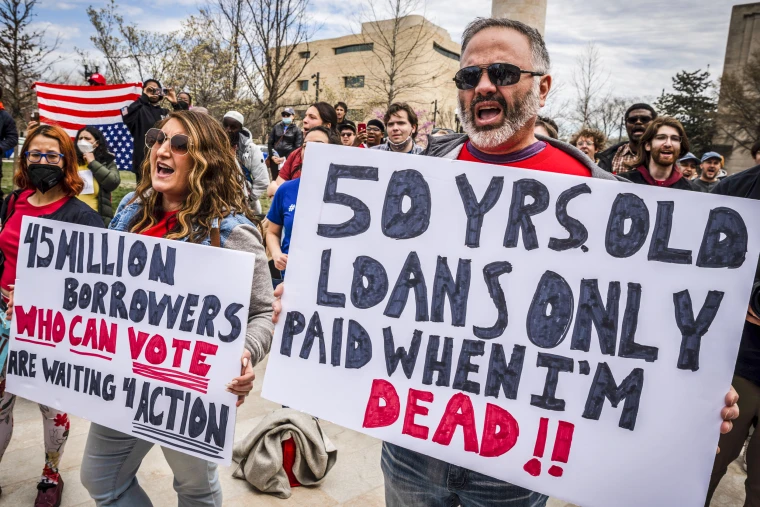
BAPS has been accused of human trafficking and wage law violations. An FBI spokesperson confirmed that agents were at the temple on “court-authorized law enforcement activity,” but wouldn’t elaborate. One of the attorneys who filed the suit said some workers had been removed from the site May 11.The lawsuit has been filed a month after New Jersey labor authorities halted work by a contractor at the Robbinsville temple and at a BAPS temple in Edison. The new lawsuit is a proposed class action complaint, alleging around 200 workers on religious immigration visas endured forced manual labor for the ongoing construction and expansion of the religious property on the 100-acre site.

The lawsuit says more than 200 workers — many or all of whom don’t speak English — were coerced into signing employment agreements in India. They traveled to New Jersey under R-1 visas, which are meant for “those who minister, or work in religious vocations or occupations,” according to the lawsuit.When they arrived, the lawsuit says, their passports were taken away and they were forced to work at the temple from 6:30 a.m. to 7:30 p.m. with few days off, for about $450 per month, a rate that the suit said came out to around $1.20 per hour. Of that, the workers allegedly only received $50 in cash per month, with the rest deposited into their accounts in India.

The lawsuit said workers lived in a fenced-in compound where their movements were monitored by cameras and guards. They were told that if they left, police would arrest them because they didn’t have their passports, the suit said. The lawsuit names Patel and several individuals described as having supervised the workers. It seeks unpaid wages and unspecified compensatory and punitive damages

According to the lawsuit, the exploited workers were Dalits — members of the lowest step of South Asia’s caste hierarchy. D.B. Sagar, president of the Washington-based International Commission for Dalit Rights, told The Associated Press that Dalits are an easy target for exploitation because they’re the poorest people in India. “They need something to survive, to protect their family,” Sagar — a Dalit himself — said, adding that if the allegations in the lawsuit are true, they amount to “modern-day slavery.”

BAPS CEO Kanu Patel, who is named as a defendant in the lawsuit, told The New York Times, “I respectfully disagree with the wage claim.” A spokesperson for the organization, Matthew Frankel, told The Associated Press that BAPS was first made aware of the accusations early Tuesday morning. “We are taking them very seriously and thoroughly reviewing the issues raised,” he said.

BAPS is a global sect of Hinduism founded in the early 20th century and aims to “preserve Indian culture and the Hindu ideals of faith, unity, and selfless service,” according to its website. The organization says it has built more than 1,100 mandirs — often large complexes that essentially function as community centers. BAPS is known for community service and philanthropy, taking an active role in the diaspora’s initiative to help India amid the current COVID-19 surge. According to the website for the Robbinsville mandir, its construction “is the epitome of volunteerism.”“Volunteers of all ages have devoted their time and resources from the beginning: assisting in the construction work, cleaning up around the site, preparing food for all the artisans on a daily basis and helping with other tasks,” the website says. “A total of 4.7 million man hours were required by craftsman and volunteers to complete the Mandir.”

The case was filed on behalf of five men described in the court papers as Dalits from Rajasthan, who had worked at the Shri Swaminarayan Mandir in Robbinsville.Their 42-page case document, alleges that they were made to work at the temple for more than 12 hours a day, seven days a week with days off only occasionally for which they were paid less than $1.20 an hour – an amount far less than the state minimum wage that was $10 in 2019 and $11 in 2020.Their court papers, however, say that they were instructed while applying for their visa to tell the U.S. embassy staff that they were going to the U.S. for “volunteer work at the temple” and “would be performing the work as a service to the deities” even though they assert that they were not members of BAPS.

According to the court document, although they came to the U.S. with an R-1 visa, which is granted to missionaries and religious workers, they did not perform any religious work and instead were made to do “dangerous” manual work at the temple. The men filing the case are Mukesh Kumar, Keshav Kumar, Devi Laal, Niranjan, Pappu, and Brajendra.The New York Times reported that BAPS spokesperson Lenin Joshi said, “We are naturally shaken by this turn of events and are sure that once the full facts come out, we will be able to provide answers and show that these accusations and allegations are without merit.”

Indian American Business Leaders Named To Global Task Force OnPandemic

The U.S. Chamber of Commerce May 5 announced the formation of the Global Task Force on Pandemic Response, which includes numerous Indian American company executives. The public-private partnership will provide immediate assistance to India and will assist in coordinating relief to respond to COVID-19 surges, according to the news release.

Among the members of the taskforce include Alphabet Inc. chief executive SundarPichai, Adobe Systems CEO Shantanu Narayan, Deloitte CEO PunitRenjen, FedEx chief operating officer and director Raj Subramaniam, IBM chair and CEO Arvind Krishna, and VMware chief operating officer Sanjay Poonen.The group also includes Apple CEO Tim Cook, PepsiCo CEO Ramon Laguarta and Mastercard CEO Michael Miebach, among others. The Task Force will coordinate a coalition of corporations, non-profits and individual efforts to organize relief where it is needed most.

The task force is working with the Chamber’s U.S.-India Business Council and the U.S.-India Strategic Partnership Forum to take three immediate actions to help address the COVID-19 surge in India.Sourcing, shipping and delivering 1,000 Puritan Bennett ventilators desperately needed by healthcare facilities across India. The first ventilators procured by the U.S. Chamber of Commerce Foundation have arrived, with all remaining ventilators expected to arrive by June 3. Medtronic will manufacture the ventilators and handle end-to-end shipping, installation and ongoing and virtual training, the release said.

It is also delivering 25,000 oxygen concentrators to India by the end of May, with transportation support from FedEx, it said. Additionally, it is creating the chief human resources officer India Action Group to provide ideas and practical information to CHROs to help their people in India.

The Global Task Force on Pandemic Response was launched to provide a unified platform for businesses to mobilize and deliver resources to assist COVID-19 efforts in areas of the highest need around the world, the release said.Initial efforts will focus on the pressing need for support in India, with more than 400,000 cases reported on May 1 alone. Through its Steering Committee, the Task Force will work to concentrate efforts where corporate support will be most beneficial, with additional countries to be determined in consultation with the U.S. government, the chamber adds.

The Global Task Force is working in close collaboration with U.S. and Indian government officials to share information and coordinate efforts. This includes regular briefings with the Modi and Biden Administrations, U.S. Congress, U.S. State Department and the U.S. Agency for International Development.

The coalition of leading companies, non-profits and associations that have come together to support these actions include Accenture, Adobe, Amazon, American Express, Amway, Apple, Applied Materials Foundation, Bank of America, BCG, Citi, David & Carol Van Andel Family Foundation, Dell, Deloitte, Dow, Ernst & Young, Emerson, Facebook, FedEx, Goldman Sachs, IBM, Intel, Johnson & Johnson, John Chambers Foundation, Johnson Controls, JP Morgan Chase & Co, KKR, Lockheed Martin, Mastercard, McCormick & Company, McKinsey & Company, Medtronic, Merck, Microsoft, Nasdaq, Newsweek, PepsiCo, Pfizer, Qualcomm Foundation, Raytheon Technologies, the U.S. Chamber of Commerce Foundation, VIAVI Solutions, VMware, Walmart and Zoom.

USCIS Temporarily Suspends Biometrics Requirement For Certain Form I-539 Applicants

Effective May 17, 2021, U.S. Citizenship and Immigration Services will temporarily suspend the biometrics submission requirement for certain applicants filing Form I-539, Application To Extend/Change Nonimmigrant Status, requesting an extension of stay in or change of status to H-4, L-2, and E nonimmigrant status.

In a May 13, 2021, notification (uscis.gov), the agency said it will allow adjudications for those specific categories to proceed based on biographic information and related background checks, without capturing fingerprints and a photograph.This suspension will apply through May 17, 2023, subject to affirmative extension or revocation of the suspension period by the USCIS director.

This temporary suspension will apply to applicants filing Form I-539 requesting the following:

  • Extension of stay in or change of status to H-4 nonimmigrant status;
  • Extension of stay in or change of status to L-2 nonimmigrant status;
  • Extension of stay in or change of status to E-1 nonimmigrant status;
  • Extension of stay in or change of status to E-2 nonimmigrant status (including E-2C (E-2 CNMI Investor)); or
  • Extension of stay in or change of status to E-3 nonimmigrant status (including those selecting E-3D).
  • This suspension will apply only to the above categories of Form I-539 applications that are either:
  • Pending as of May 17, 2021, and have not yet received a biometric services appointment notice; or
  • New applications postmarked or submitted electronically on or after May 17, 2021.

However, the agency clarified that it retains discretion on a case-by-case basis to require biometrics for applicants who meet the criteria above, and any applicant may be scheduled for an application support center (ASC) appointment to submit biometrics.Nevertheless, it said that Form I-539 applicants who have already received a biometric services appointment notice should still attend their scheduled appointment.

Effective May 17, 2021, Form I-539 applicants meeting the criteria above are not required to submit the $85 biometric services fee for Form I-539 during the suspension period. USCIS will return a biometric services fee if submitted separately from the base fee. For more details visit uscis.gov/news/In another notification, U.S. Citizenship and Immigration Services announced that the Department of Homeland Security is withdrawing a 2018 notice of proposed rulemaking that proposed to remove the International Entrepreneur program from DHS regulations.

The International Entrepreneur (IE) parole program, first introduced in 2017, will remain a viable program for foreign entrepreneurs to create and develop start-up entities with high growth potential in the United States. The program will help to strengthen and grow our nation’s economy through increased capital spending, innovation, and job creation.

Today’s announcement is consistent with President Biden’s Executive Order 14012: “Restoring Faith in Our Legal Immigration Systems and Strengthening Integration and Inclusion Efforts for New Americans.” The executive order requires the secretary of homeland security to “identify any agency actions that fail to promote access to the legal immigration system.”

“Immigrants in the United States have a long history of entrepreneurship, hard work, and creativity, and their contributions to this nation are incredibly valuable,” said Acting USCIS Director Tracy Renaud. “The International Entrepreneur parole program goes hand-in-hand with our nation’s spirit of welcoming entrepreneurship and USCIS encourages those who are eligible to take advantage of the program.”

The initial IE final rule was published on Jan. 17, 2017, and was scheduled to take effect on July 17, 2017. This final rule guided DHS in the use of its parole authority to grant a period of authorized stay, on a case-by-case basis, to foreign entrepreneurs who demonstrate that their stay in the United States would provide a significant public benefit through the potential for rapid business growth and job creation.

Prior to the effective date, DHS published a final rule to delay the implementation date of the IE final rule to March 14, 2018. This allowed DHS additional time to draft and seek public comments on a proposal to rescind the IE final rule. However, in December 2017, a federal court vacated the delay, requiring USCIS to begin accepting international entrepreneur parole applications consistent with the IE final rule. Since then, the program has been up and running, and USCIS continues to accept and adjudicate applications consistent with existing DHS regulations.

Under the IE program, parole may be granted to up to three entrepreneurs per start-up entity, as well as their spouses and children. Entrepreneurs granted parole are eligible to work only for their start-up business. Their spouses may apply for employment authorization in the United States, but their children are not eligible for such authorization based on this parole. Additional information on eligibility and how to apply is available on the International Entrepreneur Parole page. USCIS will plan information sessions and other outreach activities to ensure foreign entrepreneurs are aware of this opportunity and how to pursue it.

Colonial Pipeline Paid Hackers $5M In Ransom

Colonial, a major US fuel pipeline has reportedly paid cyber-criminal gang DarkSide nearly $5m (£3.6m) in ransom, following a cyber-attack.Colonial Pipeline suffered a ransomware cyber-attack over the weekend and took its service down for five days, causing supplies to tighten across the US.CNN, the New York Times, Bloomberg and the Wall Street Journal all reported a ransom was paid, citing sources. Colonial said last week that it would not comment on the issue. Japanese consumer tech giant Toshiba also reported its European division in France had been hit by the same cyber-criminal gang.

Following the cyber-attack, Colonial announced it would resume operations on Wednesday evening, but warned that it could take several days for the delivery supply chain to return to normal.The 5,500-mile (8,900km) pipeline usually carries 2.5 million barrels a day on the East Coast. The closure saw supplies of diesel, petrol and jet fuel tighten across the US, with prices rising, an emergency waiver passed on Monday and a number of states declaring an emergency.

The average price per gallon hit $3.008 (£2.14) – the highest level seen since October 2014, according to the Automobile Association of America.US President Joe Biden reassured motorists that fuel supplies should start returning to normal this weekend, even as more filling stations ran out of gasoline across the Southeast. According to reports, Colonial had said initially it would not be paying the ransom demanded by the hackers.

Toshiba Tec France Imaging System, which is part of Toshiba, said it was hit by a similar cyber-attack by DarkSide on May 4th. However, the firm emphasized that no leaks of data had been detected and that only a minimal amount of work data was lost during the event.

It said it had put protective measures in place immediately after the attack.In light of a sharp increase in ransomware cyber-attacks during the pandemic, on Thursday President Biden signed an executive order to improve US cyber-defences. Earlier in the week, he said that although there was no evidence that the Kremlin was involved, there was evidence to suggest that the DarkSide gang of hackers was based in Russia.

The news that Colonial Pipeline paid these criminals is a major blow to President Biden. Only this week he signed a long-awaited executive order to beef up federal cyber-security and, in turn, make the US more secure from future attacks. These efforts have, in the view of some in the cyber-security world, been completely undermined.How can the Biden administration encourage corporations to spend millions securing their computer networks from attack when they’ve just witnessed Colonial, under the glare of the public eye, cave in to criminal demands and pay their way out of trouble?

The news will swell the ranks of those in the security world who want ransomware payments banned. But with companies, jobs and sometimes lives put at risk when ransomware hits, it is a tough call for policymakers.The potential silver-lining in this case comes from reports that even after Colonial paid the hackers, the criminals were so slow to help the company that pipeline staff got to work on recovery themselves.

The DarkSide hacker crew can no longer claim that they can restore victims services quickly and this may make others question whether or not to give in to their demands.’Our goal is to make money’

Cyber-security firms told the BBC that DarkSide operates by infiltrating an organisation’s computer network and stealing sensitive data.Typically, a day later the hackers will make themselves known, announcing that they have encrypted all the data in the network and are prepared to leak it onto the internet and delete it, if they are not paid a ransom by a certain deadline.

DarkSide operates by making the software used to execute this attack and then training affiliates to use it, who then give the gang a cut of the ransoms they take.Following concerns the Colonial cyber-attack was caused by nation-state hackers with a political motive, DarkSide posted on its website: “Our goal is to make money and not creating problems for society.”

The group also indicated it had not been aware that Colonial was being targeted by one of its affiliates and intended to “introduce moderation and check each company” its partners want to encrypt, “to avoid social consequences in the future”.On Friday, Reuters reported that DarkSide’s website on the dark web was no longer accessible.Colonial Pipeline’s website also continues to be offline.

Elon Musk Says, Tesla Will Not Accept Bitcoin For Transactions

Tesla has suspended customers’ use of bitcoin to purchase its vehicles, Tesla’s billionaire CEO said last week, citing concerns about the use of fossil fuel for bitcoin mining.Elon Musk said the company had suspended use of bitcoin for purchase of its electric vehicles, citing fears about the world’s biggest cryptocurrency’s “rapidly increasing use of fossil fuels”.

The company started accepting bitcoin in March. Musk tweeted that they plan to start using it again “as soon as mining transitions to more sustainable energy”. Following the tweet, bitcoin fell nearly 17% – its lowest point since the beginning of March. “We are also looking at other cryptocurrencies that use <1% of bitcoin’s energy/transaction,” Musk said.

How does bitcoin use fossil fuels? Bitcoin mining – the process by which the currency is created using high powered computers that compete to solve complex mathematical puzzles – is powered by electricity generated by fossil fuels, especially coal. At current rates, it is using approximately the equivalent amount of energy each year as the Netherlands did in 2019.

At current rates, such bitcoin “mining” devours about the same amount of energy annually as the Netherlands did in 2019, the latest available data from the University of Cambridge and the International Energy Agency shows.

Edward Moya, a senior market analyst at currency trading firm OANDA, said that Musk was getting ahead of investors focused on sustainability.

“The environmental impact from mining bitcoins was one of the biggest risks for the entire crypto market,” Moya said. “Over the past couple of months, everyone disregarded news that bitcoin uses more electricity than Argentina and Norway.”

Chris Weston, head of research at broker Pepperstone in Melbourne, said Musk’s reaction was a blow to bitcoin but an acknowledgement of the currency’s carbon footprint. “Tesla has got an image of being environmentally friendly and bitcoin clearly is the opposite of that,” Weston said.

Reliance Is One Of The Fastest Growing Retailer In The World

Reliance Retail ranks 53rd in the list of Global Powers of Retailing by Deloitte, improves from 56th earlier. It remains the 2nd fastest growing retailer in the world despite the base effect of being No.1 last year.

Reliance Retail features consecutively for the 4th time in the list of Global Powers of Retailing and World’s Fastest Retailers. Reliance Retail, last year’s Fastest 50 leader, dropped to second place. The company recorded YoY growth of 41.8%, driven primarily by a 13.1% increase in the number of stores in its consumer electronics, fashion and lifestyle and grocery retail chains, to 11,784 stores across 7,000 plus towns and cities in India at fiscal year end.

E-commerce is a second growth driver, through both digital commerce (B2C) and B2B. The company is partnering with WhatsApp to further accelerate Reliance Retail’s digital commerce business on the JioMart platform using WhatsApp and to support small businesses on WhatsApp.

Reliance Retail acquired the 29 stores of Shri Kannan Departmental Store at the end of FY2019 and in August 2020 announced it would acquire Future Group’s retail, wholesale and logistics units for $3.4 billion.

When fully approved, the deal will almost double Reliance Retail’s store space.82 Reliance Retail also made two e-commerce acquisitions in 2020, buying Vitalic Health and its online pharmacy platform Netmeds in August, and a 96% stake in online home decor company UrbanLadder in November.

Walmart has led the list of the world’s Top 250 global retailers for over 20 years. The company registered YoY FY2019 retail revenue growth of 1.9%, fueled mainly by growth in comparable store sales in the United States.

Amazon becomes the number two global retailer, pushing Costco down to third place. Top 10 retailers focus on core markets, withdrawing from some international markets There were no new entrants to the Top 10 list in FY2019, which continues to be dominated by players based in the United States. The only mover was Amazon, which has risen in the rankings every year since its entry in tenth place in FY2015. (IANS)

Telemedicine Market to Reach US$ 202.8 Billion by 2027 Globally

A comprehensive overview of the Telemedicine market is recently added by UnivDatos Market Insights to its humongous database. The Telemedicine market report has been aggregated by collecting informative data of various dynamics such as market drivers, restraints, and opportunities. This innovative report makes use of several analyses to get a closer outlook on the Telemedicine market. The Telemedicine market report offers a detailed analysis of the latest industry developments and trending factors in the market that are influencing the market growth. Furthermore, this statistical market research repository examines and estimates the Telemedicine market at the global and regional level. Global Telemedicine Market is expected to grow at a CAGR of 18.5% during the forecast period of 2021-27.
Market Overview

Telemedicine is the distribution of healthcare facilities, anywhere distance is a perilous aspect. It is provided by health care professionals via technologies. This information is converted for the diagnosis, treatment, prevention of disease or injuries through research and evaluation, and at last, the results are provided to patients. For instance, in 2016, Maryland, Frederick Memorial Hospital’s virtual healthcare podium amplified the rate of patient care by 50%. Also, as per the Virtual Care blog, Telemedicine contributes almost one-fourth of the health IT market, which was about USD 15.6 billion in 2014 and it upsurged to nearly USD 20 billion by 2019. Moreover, the patients and healthcare professionals are shifting towards telemedicine due to their ease of operations, cost and time savings, etc.

Telemedicine gives a progressive outlook for the preservation of records and documentation of patient’s health. It minimizes the possibility of missing out on any advice from doctors or other healthcare professionals. Owing to this, the doctors have an exact document of the advice provided by them through teleconsultation. This provides legal protection to both the parties including the patient and healthcare professionals. Furthermore, according to the American Journal of Accountable Care, the routine of telemedicine permits improved long-term care of administration and patient gratification. In addition, the Geisinger Health-Plan study stated that the execution of a telemedicine program produced about 11% in cost savings. This directs the arrival of more investment in telemedicine.
COVID-19 Impact

The sudden outburst of the COVID-19 pandemic has fetched the entire world to a stoppage. As hospitals are getting occupied with COVID-19 cases, the burden on healthcare staff witnessed a significant rise. Currently, Telemedicine has appeared as a defendant in the combat against the COVID-19 pandemic. The majority of the patients are using virtual visit facilities for their safety. For instance, Teladoc Health Inc. reported a 60% intensification in the number of virtual sessions and reached 2 million in just three months from January to March 2020, compared to the fourth quarter of 2019. Also, according to the Vidyo Telehealth Adoption Survey 2019, 46% of surveyed health care benefactors (hospitals and clinics) practice live videoconferencing, and 41% practice Remote Patient Monitoring for medical care. The Store-and-Forward province is third with 26%.  These statistics indicate that virtual assessments are likely to become a more promising part of patient care.

Telemedicine Market report is studied thoroughly with several aspects that would help stakeholders in making their decisions more curated.
The Tele-consulting segment generated more than 45% revenue in 2020. The market is expected to grow at a significant rate during the forecast period as it allows patients to have an appointment with experts at any time, without any waiting period.
Competitive Landscape

The degree of competition among prominent global companies has been elaborated by analyzing several leading key players operating worldwide. The specialist team of research analysts sheds light on various traits such as global market competition, market share, most recent industry advancements, innovative product launches, partnerships, mergers, or acquisitions by leading companies in the Telemedicine market. The major players have been analyzed by using research methodologies for getting insight views on global competition.

Key questions resolved through this analytical market research report include:
What are the latest trends, new patterns, and technological advancements in the Telemedicine market?
Which factors are influencing the Telemedicine market over the forecast period?
What are the global challenges, threats, and risks in the Telemedicine market?
Which factors are propelling and restraining the Telemedicine market?
What are the demanding global regions of the Telemedicine market?
What will be the global market size in the upcoming years?
What are the crucial market acquisition strategies and policies applied by global companies?

We understand the requirement of different businesses, regions, and countries, we offer customized reports as per your requirements of business nature and geography. Please let us know If you have any custom needs
For more informative information, please visit us @ https://univdatos.com/report/telemedicine-market-current-analysis-and-forecast-2021-2027

About UnivDatos Market Insights
UnivDatos Market Insights (UMI) is a passionate market research firm and a subsidiary of Universal Data Solutions. We believe in delivering insights through Market Intelligence Reports, Customized Business Research, and Primary Research. Our research studies are spread across topics across the world, we cover markets in over 100 countries using smart research techniques and agile methodologies. We offer in-depth studies, detailed analysis, and customized reports that help shape winning business strategies for our clients.

Indian Students To Benefit As Canada Offers Residency To 90,000

Indian students will be the major beneficiaries of Canada’s new one-time immigration program which opened for applications last week. Under the program, over 90,000 international students and temporary essential workers, already in Canada, will be given permanent residence (PR).

Under it, 40,000 international students, 30,000 temporary workers in selected essential occupations and 20,000 temporary workers in health care will get permanent residence. To be eligible, international students must have completed a post-secondary programme in Canada in the last four years.

Foreign workers must have at least one year of Canadian work experience in a health care profession or another pre-approved essential occupation. Indian students will benefit proportionately more than others as they – numbering 220,000 last year – make up more than a third of all foreign students currently in Canada. Before the pandemic closed international travel, Canada had planned to admit 341,000 immigrants in 2020.

The new PR program aims at making up for the shortfall in immigration numbers in 2020 by prioritizing those already in Canada. Moreover, a record 401,000 new immigrants will be admitted in 2021.

Highlighting the significance of Wednesday’s programme, Immigration minister Marco Mendicino said, “The pandemic has shone a bright light on the contributions of newcomers in essential jobs, as we have recognized the caregivers, cooks and cashiers as our everyday heroes. With this new pathway, we are recognizing their key role in our economic recovery, allowing them to set down roots in Canada and help us build back better. Our message to them is simple: your status may be temporary, but your contributions are lasting-and we want you to stay.” (IANS)

US Mortgage Rates Down Slightly; 30-Year At 2.96%

Mortgage rates fell slightly this week, marking their third straight week below 3% amid signs of the recovering economy’s strength.  Mortgage buyer Freddie Mac reported Thursday that the average for the benchmark 30-year home-loan rate eased to 2.96% from 2.98% last week. At this time last year, the long-term rate was 3.26%. The rate for a 15-year loan, popular among those seeking to refinance, slipped to 2.30% from 2.31% last week.

Lower rates are always good news for potential homebuyers and homeowners looking to refinance. But just how much is a .1% drop worth if you’re in the market for a new mortgage?

About $16 a month — that’s how much you could save for every reduction of .1% in the mortgage rate, according to data from NextAdvisor’s home affordability calculator. For a 30-year fixed rate $300,000 mortgage, each .1% drop would save about $6,000 in interest over the life of the loan.

These can be helpful figures to keep in mind, especially as rates continue to be volatile. Mortgage rates have gone up or down by 0.05% or more in 7 of 15 weeks so far in 2021, according to Freddie Mac’s weekly rate survey. Rates are just one factor to consider when deciding if it makes sense to buy a home or refinance a current mortgage, but it’s good to know the numbers when you follow the movement week to week.

Experts expect mortgage rates will increase this year. If you delay refinancing, or are in the market for a new home, steadily increasing rates can make a big impact to your bottom line over time.

Let’s say you’re considering a 30-year $300,000 mortgage. As of this week, 30-year mortgage rates are averaging 3.04%. Here’s what it would cost if we saw four increases of at least 0.05%, which we’ve already seen five times this year:

Loan Term Loan Amount Mortgage Rate Payment Total Interest
30 Years $300,000 2.99% $1,263 $154,793
30 Years $300,000 3.04% $1,271 $157,732
30 Years $300,000 3.09% $1,279 $160,689
30 Years $300,000 3.14% $1,287 $163,664
30 Years $300,000 3.19% $1,295 $166,658
30 Years $300,000 3.24% $1,303 $169,671

Each 0.05% interest rate uptick increases your monthly payment by approximately $8 and adds nearly $3,000 in interest over the full 30-year loan term. You can run these numbers on a new mortgage of any amount using our mortgage calculator, by changing the rate in increments of .05%.

Of course, any decrease of .05% or more will decrease your payment and interest with a new mortgage, though that’s only happened in 2 of 15 weeks so far this year. While experts don’t expect to see a long-term trend of decreases, every .05% drop saves you $8 per payment, and nearly $3,000 interest over the life of the loan.

When mortgage rates go up or down, it typically has a bigger impact on whether or not it makes sense to refinance. Lower rates make it easier to save money by lowering your monthly payment without extending your mortgage’s repayment term. As interest rates rise, it makes sense for fewer people to refinance because it’s harder to offset the upfront costs if you’re saving less month to month.

For a homebuyer, there are more considerations that impact the cost of purchasing a home than just your mortgage rate. As rates increase, buyers are more likely to offer less or look for lower-priced homes. And the opposite is true when mortgage rates drop. We’ve seen historically low mortgage rates, along with low housing inventory, combine to create a surge in home prices in recent months.

3 Things to Know, Regardless of Where Mortgage Rates Are

You may not have any control over the market forces that influence mortgage rates, but regardless of where rates move there are a few things you should always do before you apply for any type of mortgage, whether to buy or refinance.

1. Do the math

When you refinance an existing mortgage, the main goal is typically to save money, usually by securing a smaller monthly payment or saving on interest with a shorter loan term or lower interest rate. But a mortgage refinance costs money, usually 3% to 6% in upfront closing costs. So you should be sure you’ll be in the house long enough to offset those fees. For example, if your refinance fees are $9,000 and you’re saving $200 a month, it will take 45 months – almost 4 years – to save enough to offset the cost of refinancing.

With a home purchase, you need to make sure the monthly payment you’re committing to is affordable. The bank might be willing to lend you far more than what can comfortably fit into your budget. Depending on the type of mortgage, a lender may allow you to have a debt-to-income ratio (DTI) of over 50%. But your DTI doesn’t factor in every monthly expense and it’s also based on your gross monthly income, or what you make before taxes. So groceries, gas, and taxes won’t increase your DTI, but you still have to pay them every month. A good rule of thumb is your total debts shouldn’t account for more than 36% of your pre-tax monthly income.

2. Don’t try to time the market

Mortgage rates vary from one moment to the next and from lender to lender. Even if economic indicators can give us a good idea of the prevailing mortgage rate trends, there is no way to accurately know where they’ll move from day to day or week to week.

So don’t bother stressing about whether or not you’re getting the best rate ever. If now is the right time to buy a house and the payments will be affordable in the long-term, then go for. And if the numbers make sense for you to refinance, then don’t hesitate because you’re concerned that rates might decrease tomorrow.

3. Do look at your overall financial situation

Refinancing or buying a home aren’t decisions made in a bubble. So you need to take a broad view of your finances. Refinancing may save you hundreds a month, but would it be better to take the money you’re putting toward the closing costs and pay off your high-interest credit card debt? If you’re looking to buy your own place, how long do you plan to live there? If you need to move cities in two or three years, purchasing a home may not be the best move. The cost of taking out a mortgage and moving into a new home are likely to outweigh the potential gains in equity, which are typically small the first few years of home ownership.

Roivant Sciences & MAAC to Combine and Create Publicly Traded Leader in Biopharma and Health Technology

Roivant Sciences, a biopharmaceutical and healthcare technology company, and Montes Archimedes Acquisition Corp. (Nasdaq: MAAC), a special purpose acquisition company sponsored by Patient Square Capital, today announced that they have entered into a definitive business combination agreement. Upon closing of the transaction, outstanding shares and warrants of MAAC will be exchanged for newly issued shares and warrants of Roivant Sciences, which is expected to be listed on Nasdaq under the new ticker symbol “ROIV.”

The transaction is expected to deliver up to $611 million of gross proceeds to fund discovery and development programs. This includes up to $411 million currently held in MAAC’s trust account, as well as a concurrent $200 million common stock private investment in public equity (“PIPE”) priced at $10.00 per share. New institutional and strategic investors and existing Roivant shareholders have committed to participate in the PIPE, including Fidelity Management & Research Company LLC, Eventide Asset Management, Suvretta Capital, Palantir Technologies, RTW Investments, LP, Viking Global Investors, Sumitomo Dainippon Pharma, and SB Management, a subsidiary of SoftBank Group Corp. Proceeds are expected to extend the company’s operating runway through mid-2024.

Patient Square Capital and key Roivant equity holders and management have agreed to long-term lockups, with at least 50% of their holdings locked up for three years. In addition, Patient Square Capital has agreed to convert an additional 30% of its shares of MAAC to earn-out shares subject to performance vesting thresholds: 20% of its shares will vest at $15.00 per share and 10% will vest at $20.00 per share for 20 of 30 trading days within five years of closing.

Jim Momtazee, Managing Partner of Patient Square Capital, will join Roivant’s board of directors. Prior to founding Patient Square Capital, Mr. Momtazee was a 21-year veteran of KKR where he helped form its health care investment team 20 years ago and ran that team for over a decade.

“Roivant is at the cutting edge of using technology to discover and develop transformative medicines for a wide range of serious diseases, and in a very short time they have established a remarkable track record of building subsidiaries that have run successful registrational clinical trials for approved medicines,” said Mr. Momtazee. “I first met the company in 2015 and have watched its growth over the last 6 years with admiration. Based on our extensive due diligence spanning the last 5 months, I look forward to a long-lasting partnership with one of the most exciting and innovative companies in the life sciences industry.”

Roivant will continue to operate under its current management team led by Chief Executive Officer Matthew Gline. Roivant founder Vivek Ramaswamy will continue to serve as Executive Chairman.

“I look forward to the next chapter of Roivant’s growth by beginning our life as a public company with an exceptionally strong and diverse base of long-term investors,” said Mr. Gline. “We look forward to continuing to deliver important medicines to patients through our development engine and our rapidly growing drug discovery capabilities spanning multiple therapeutic areas and modalities.”

The boards of directors of both Roivant and MAAC have unanimously approved the proposed transaction. Completion of the transaction, which is expected in the third quarter of 2021, is subject to approval of MAAC shareholders and the satisfaction or waiver of certain other customary closing conditions. A link to investor presentation materials is included below.

Pope Francis Decrees Strict Financial Rules For Church Leaders

Pope Francis has issued a decree aimed at financial transparency in the church, requiring a strict limit on the value of gifts that cardinals and managers can receive and requiring them to disclose their investments to ensure they are in line with Catholic doctrine.

The new mandate, which comes in the form of an apostolic letter, comes amid a major ongoing investigation into alleged financial corruption in the Vatican, something Francis has preached about cleaning up since becoming pontiff in 2013.

The new rules are aimed at ending what some refer to as the Vatican’s “envelope” culture.

“[A]ccording to Scripture, fidelity in small things is related to fidelity in important ones,” Francis wrote in the letter, referencing Luke 16:10 that “just as being dishonest in matters of little consequence is also related to being dishonest in important matters.”

Among the pope’s new provisions are a prohibition on Vatican employees receiving “work-related gifts” with a value of over 40 euros ($49) — a move aimed at limiting the practice of cardinals and Vatican monsignors receiving checks from fellow clerics to supplement their relatively modest salaries.

The National Catholic Register writes: “These gifts have been blamed for contributing to corruption in the Church when they were used between high-level Church officials to seek favors, most notably in cases like that of ex-cardinal Theodore McCarrick.”

McCarrick, the former archbishop of Washington, D.C., was dismissed by Francis in 2019 after a church tribunal found him guilty of “solicitation in the Sacrament of Confession and sins against the Sixth Commandment with minors and with adults, with the aggravating factor of the abuse of power.”

McCarrick was known for giving checks to Vatican officials, leading to speculation on whether it affected the handling of allegations against him, which were known at the top levels of the church for decades. However, an internal Vatican investigation in 2020 found that in the case of McCarrick, there was no evidence that “customary gift-giving and donations impacted significant decisions made by the Holy See.”

In another case, a 2019 investigation by the U.S. church found that Bishop Michael J. Bransfield of West Virginia — who had been the subject of “credible” accounts of sexual misconduct involving adults — sent checks totaling hundreds of thousands of dollars over more than a decade to fellow clerics, including two U.S. cardinals. He then repaid himself out of church funds. Bransfield later repaid the money and offered a public apology.

The latest Vatican regulations also stipulate that cardinals, as well as senior managers and administrators whose jobs require handling money, must affirm in writing that they have never been convicted of a crime and they are not under investigation for such offenses as money laundering, corruption, fraud, exploitation of minors or tax evasion.

In the declaration, managers and cardinals must also affirm that they are not holding funds in offshore tax havens nor have investments that run counter to church doctrine. The declaration must be reaffirmed every two years.

World Military Spending Rises to a Hefty $2.0 Trillion Despite UN Pleas for Cutbacks

UNITED NATIONS, Apr 26 2021 (IPS) – The United Nations– which is desperately seeking funds to help developing nations battling a staggering array of socio-economic problems, including extreme poverty, hunger, economic inequalities and environmental hazards– has continued to be one of the strongest advocates of disarmament.

The world body has relentlessly campaigned for reduced military spending in an attempt to help divert some of these resources into sustainable development and humanitarian assistance.

But according to a new report released April 26 by the Stockholm International Peace Research Institute (SIPRI), world military expenditure rose to nearly $2 trillion in 2020, an increase of 2.6 percent, in real terms, from 2019.

The COVID-19 pandemic, which brought the world to a virtual standstill for the last 14 months, apparently has had no impact on military spending.

Ironically, four of the five biggest spenders were permanent members of the UN Security Council (UNSC), namely the US, China, Russia and UK. The fifth biggest spender was India, currently a non-permanent member of the UNSC.

Military spending by China, which is currently in a new Cold War with the US, grew for the 26th consecutive year.

The latest figures of rising arms expenditures by some of the big powers makes a mockery of the UN’s longstanding pleas for cutbacks and diversion of funds from the military into sustainable development.

William D. Hartung, Director, Arms and Security Program at the Washington-based Center for International Policy told IPS: “At a time when a global pandemic, climate change, and racial and economic injustice pose the greatest risks to human lives and livelihoods, the increase in global military expenditures in 2020 marks a dismal failure by policymakers across the world to address the most urgent challenges we face”.

He argued that even a fraction of. the nearly $2 trillion spent on the military last year could have gone a long way towards sustainable investments in public health, environmental protection, and combating inequality.  “World leaders can and must do better,” said Hartung.

The UN Office for Disarmament Affairs (UNODA) points out that over the past century, governments have sought ways to reach a global agreement on reductions in military expenditures. Various proposals were discussed in the League of Nations, and later in the UN. Early proposals in the UN focused on reducing the expenditures of States with large militaries, and on freeing up funds for development aid.

“But proposals for cutting military spending did not materialize,” says UNODA. However, they led to the development of the UN Standardized Instrument for Reporting Military Expenditures in 1981—later renamed United Nations Report on Military Expenditures (MilEx)—under which countries are encouraged to report on their military expenditures.

Dr. Natalie J. Goldring, a Senior Fellow and Adjunct Full Professor with the Security Studies Program in the Edmund A. Walsh School of Foreign Service at Georgetown University, told IPS “the latest military spending data from SIPRI are difficult to reconcile with the reality of the world we live in today”.

In a year in which the global community was dealing with the horrors of the Covid-19 pandemic, SIPRI’s data show that military spending continued unabated. Military spending increased in nine of the 10 countries with the highest military expenditures, she pointed out.

Even though the global economy as measured by global gross domestic product (GDP) decreased by 4.4 percent, she said, global military spending increased 2.6 percent over the year. Global military spending is going in exactly the wrong direction.

“Unfortunately, the United States continues to lead the world in military spending, accounting for 39 percent of the global total,” said Dr Goldring, who is Visiting Professor of the Practice in Duke University’s Washington DC program and also represents the Acronym Institute at the United Nations on conventional weapons and arms trade issues.

According to SIPRI’s data, that’s more than the rest of the top 10 military spenders combined. And It’s more than twice the total of the countries which are most commonly perceived by US policymakers as its main military competitors, Russia and China, she added.

Dr. Alon Ben-Meir, professor of international relations at the Center for Global Affairs at New York University, told IPS it is indeed ironic that four of the five permanent members of the UNSC are the largest military spenders.

“The more ironic problem is the fact that all of these countries spend a small fraction of these amounts on social programs, which explains to a great extent the growing poverty in all of these countries”.  Needless to say, he noted, the key to reducing military budgets is directly connected to the level of tension between the various countries.

“I do not expect any serious discussion about world disarmament unless many of the consuming conflicts are resolved, and in particular the growing, rather than diminishing, tension between the United States, Russia, and China,” Dr Ben-Meir declared.

‘The recent increases in US military spending can be primarily attributed to heavy investment in research and development, and several long-term projects such as modernizing the US nuclear arsenal and large-scale arms procurement,’ said Alexandra Marksteiner, a researcher with SIPRI’s Arms and Military Expenditure Programme.

Meanwhile, China’s military expenditure, the second highest in the world, is estimated to have totalled $252 billion in 2020. This represents an increase of 1.9 per cent over 2019 and 76 per cent over the decade 2011–20. China’s spending has risen for 26 consecutive years, the longest series of uninterrupted increases by any country in the SIPRI Military Expenditure Database.

In an open letter to Secretary-General Antonio Guterres last September, the Berlin-based International Peace Bureau called for world disarmament and the reduction of global military spending. “We write to you on behalf of the International Peace Bureau and more than 11.000 signatories to express our support for your call for a global ceasefire. We would also like to emphasize the need for (nuclear) disarmament and the reallocation of money from the military to healthcare, social, and environmental needs – to the fulfilment of the Social Development Goals.”

This pandemic has also made clear that states need to re-prioritize their spending. While many of the problems raised by the pandemic could have been at least partially solved, it was the lack of funding which hindered it, the letter declared.

Last month, the United Nations was hoping to raise soma $3.85bn from more than 100 governments and donors at a virtual pledging conference. The funds were meant to avert widespread famine in the world’s worst humanitarian crisis in Yemen,

But the total pledges amounted to only $1.7bn – less than half – in what the UN secretary general described as a “disappointing outcome”. “Millions of Yemeni children, women and men desperately need aid to live. Cutting aid is a death sentence,” António Guterres said in a statement.

In its latest study, SIPRI said even though military spending rose globally, some countries explicitly reallocated part of their planned military spending to pandemic response, such as Chile and South Korea. Several others, including Brazil and Russia, spent considerably less than their initial military budgets for 2020.

‘We can say with some certainty that the pandemic did not have a significant impact on global military spending in 2020,’ said Dr Diego Lopes da Silva, Researcher with the SIPRI Arms and Military Expenditure Programme. ‘It remains to be seen whether countries will maintain this level of military spending through a second year of the pandemic.’

Dr. Goldring pointed out that in 2020, approximately 1.8 million people around the world died of covid. SIPRI’s military spending figures suggest that the countries with the highest military expenditures decided that business as usual was the correct direction to follow, despite the covid pandemic.

“This is a time for reevaluating priorities. Countries should be giving priority to the health and welfare of their people, rather than continuing to fund the military-industrial complex. Cutting military spending would free funds for human needs and sustainable development.”

“The UN has suggested diverting funds from military expenditures to fund sustainable development. But in reality, this isn’t a question of diverting funds – it’s devoting them to what they should have been allocated to in the first place.”

“In the early days of his Administration, President Biden has not shown an inclination to reverse the United States’ excessive military spending patterns. He is proceeding with expensive new nuclear weapons and continuing to propose bloated military budgets.

There’s still time to reevaluate this approach, restructure US military spending, and focus on human needs. Cutting the military budget would also free US financial resources to help deal with the urgent global problems of the covid pandemic and the climate crisis.”

“More than a decade ago, then UN Secretary-General Ban Ki-moon said, “The world is over armed, and peace is underfunded.” Unfortunately, this statement continues to be true.”

(Thalif Deen is the author of the newly-released book on the United Nations titled “No Comment – and Don’t Quote Me on That.” The 220-page book is peppered with scores of anecdotes– from the serious to the hilarious– and is available on Amazon worldwide and at the Vijitha Yapa bookshop in Sri Lanka. The links follow: https://www.rodericgrigson.com/no-comment-by-thalif-deen/ https://www.vijithayapa.com/)

EEOC Announces Opening Of 2019 And 2020 Eeo-1 Component 1 Data Collection

After delaying the opening of the 2019 EEO-1 Component 1 Data Collection on May 8, 2020 in light of the COVID-19 public health emergency, the U.S. Equal Employment Opportunity Commission (EEOC) announced today that the 2019 and 2020 EEO-1 Component 1 data collection is now open.

The deadline for submitting both the 2019 and 2020 EEO-1 Component 1 data is Monday, July 19, 2021.  Recognizing the continuing differential impacts of the pandemic on workplaces nationwide and the requirement to submit two years of EEO-1 Component 1 data, the EEOC is extending the data collection period this year from 10 weeks to 12 weeks to provide employers additional time to file.  Employers should begin preparing to submit data in anticipation of the July 19th filing deadline.

The EEO-1 Component 1 report is a mandatory annual data collection that requires all private sector employers with 100 or more employees, and federal contractors with 50 or more employees meeting certain criteria, to submit demographic workforce data, including data by race/ethnicity, sex and job categories.  The filing by eligible employers of the EEO-1 Component 1 Report is required under section 709(c) of Title VII of the Civil Rights Act of 1964, as amended, 42 U.S.C. § 2000e-8(c), and 29 CFR 1602.7-.14 and 41 CFR 60-1.7(a).  Employers can find additional eligibility information at https://eeocdata.org/eeo1.  This year, the annual filing deadline for both the 2019 and 2020 EEO-1 Component 1 report(s) is July 19, 2021.

Eligible employers that have not received a 2019 and 2020 EEO-1 Component 1 notification letter via U.S. mail should contact the EEOC’s Filer Support Team at FilerSupport@eeocdata.org for assistance.  Employers that have received the notification letter, may now create user accounts using the “Company ID” and “Passcode” provided in the notification letter.

Once a user account is created, there are two different ways to file the 2019 and 2020 EEO-1 Component 1 Report(s):

  • ONLINE FORM (available beginning Monday, April 26, 2021)

Filers may enter their data into a secure data entry form via the EEO-1 Component 1 Online Filing System at EEOCdata.org/eeo1/signin.

  • DATA FILE UPLOAD (available beginning Wednesday, May 26, 2021)

Filers may upload data files through the EEO-1 Component 1 Online Filing System. The format of the uploaded data file(s) must follow the file layout(s) set forth in the EEOC-approved specifications available beginning Wednesday, May 26, 2021 at EEOCdata.org/eeo1.

Employers should visit the newly launched EEO-1 Component 1 website at EEOCdata.org/eeo1 for the latest filing updates and additional information.  By visiting the Filer Support Center located at EEOCdata.org/eeo1/support, employers can request assistance as well as find helpful resources, including fact sheets and FAQs.

The EEOC advances opportunity in the workplace by enforcing federal laws prohibiting employment discrimination. More information is available at www.eeoc.gov. Stay connected with the latest EEOC news by subscribing to our email updates.

Kamala Harris Advocates American Jobs Plan At 1st Economic Speech Since Becoming VP

“Help is here and hope is here — and things are looking up. Schools are reopening. Businesses are reopening. Grandparents are seeing their grandchildren in person. We are delivering real, real relief:” Said Kmala Harris

Kamala Harris delivered her first extended economic speech since becoming vice president, making a pitch for the Biden administration’s infrastructure plan and touting the White House’s accomplishments since President Joe Biden was sworn in.

“Help is here and hope is here — and things are looking up. Schools are reopening. Businesses are reopening. Grandparents are seeing their grandchildren in person. We are delivering real, real relief,” Harris told an audience at Guilford Technical Community College in North Carolina.

The vice president specifically discussed what the administration’s roughly $2 trillion infrastructure package — the President’s top legislative priority — would do for infrastructure jobs, water infrastructure, child and home care businesses broadband and job training. She called the plan “a once in a lifetime, once in a generation investment in America’s infrastructure — in America’s future. It is what the American people deserve.” Harris said the plan “is not just about fixing what has been. It is about building what can be.”

Harris has become increasingly involved in promoting the Biden administration’s infrastructure proposal currently being considered by Congress, known as the American Jobs Plan. She’s taken part in meetings with the Congressional Black Caucus as well as with members of Congress on both sides of the aisle to discuss it and last week, USA Today published her op-ed calling on Congress to pass the plan.

According to the White House, after her speech in North Carolina on Monday, Harris “will continue traveling the country to promote the plan in the weeks to come” — serving in an outreach role similar to the one she played in promoting the passage of the American Rescue Plan.

“In the 21st century in America, I believe you should not have to work more than one job to be able to pay your bills and feed your family. One good job should be enough. At a good job, you shouldn’t have to worry about your safety. You shouldn’t have to worry about whether you have the ability to get a good life, because you might have to go in debt for a diploma that promises a decent paycheck,” she argued.

“A good job allows people the freedom to build the life you want. To reach as high as you want, to aspire. That’s what a good job does. And good jobs are what the President and I will create with the American Jobs Plan.”

The speech comes on the same day Biden hosts his second bipartisan gathering in as many weeks in the Oval Office.  The White House has launched a massive legislative outreach effort to sway key members of Congress to buy into the proposal, but Republicans appear to have not yet reached consensus on a potential counter-proposal with a lower price tag. And no comprehensive GOP plan has been released so far.

Indian Community In The US Mourns The Killing Of 4 Sikhs At Fedex Facility

The Indian American community is deeply saddened to share that at least four Sikhs are among those killed late Thursday night when a gunman stormed a FedEx facility in Indianapolis known to have a large Sikh workforce.

The deadly mass shooting last week at a FedEx Ground facility in Indianapolis struck deeply into the Indian American community at large and in particular, the area’s Sikh community after it suffered the loss of four members in the bloody onslaught.

Eight people were killed and several others wounded  on Thursday, April 15th night when a former FedEx employee opened fire at a facility near Indianapolis’ main airport before taking his own life. Investigators are still trying to determine the motive behind the shooting. Amarjeet Johal, 66; Jasvinder Kaur, 50; Jaswinder Singh, 68; Amarjit Sekhon, 48 were among the eight who lost their lives to yet another mass shooting as the nation struggles to limb back to several others preceding this. Matthew R. Alexander, 32; Samaria Blackwell, 19; Karli Smith, 19; and John Weisert, 74 were the others who succumbed to the bullets that traffic night.

“Our community has a long road of healing physically, mentally and spiritually to recover from this tragedy,” Maninder Singh Walia, a member of the Sikh community in Indianapolis, told the media. Officials, who said that a “significant” number of employees at the parcel and courier service company are Sikhs, reported that the gunman killed himself after murdering eight people Thursday night and wounding at least seven, five of whom were hospitalised.

WXIN-TV station quoted Parminder Singh, the uncle of one of the victims, as saying that his niece who worked at the facility near the airport phoned him shortly after the shooting and told him that she was shot while in her car and was being taken to the hospital.

President Joe Biden ordered the national flag to be flown at half-mast at all government facilities and US embassies abroad. “Gun violence is an epidemic in America,” Biden said in a statement. Just last month a White man killed eight people, six of them Asian women, at three massage parlors in Atlanta.

According to the Gun Violence Archive, 19,380 people were shot dead last year in the US, an increase of more than 25 per cent over the previous year’s deaths. “Our hearts bleed for all of the families of the victims of yet another senseless massacre that has become a daily occurrence in this country,” said AAPI Victory Alliance Executive Director Varun Nikore.

Nikore added: “To the families of Jasvinder Kaur, Amarjit Sekhon, Jaswinder Singh, and everybody else affected by this senseless tragedy, our hearts go out to you. The AAPI community stands with you. Justice must be served and we will not stop fighting until every single gutless person, politician, and lobbying group is held responsible for continuing to allow these tragedies to happen. Additionally, the AAPI Victory Alliance demands an immediate investigation into whether or not these shootings were racially biased.” Nikore said that enough is enough and that it’s time to come together and end hate and gun violence once and for all.

“We will invest significant resources into toppling those who seek to destroy our families, communities, and identity. The senseless gun violence that we’re seeing in this country is reflective of all of the spineless politicians who are beholden to the gun lobby. Period. End of story,” said Nikore. “They will be hearing from us — instead of offering thoughts and prayers, it’s time to mobilize for direct action and vote them out. That is what we’re doing today. We will end the violence, only when we have leaders who have the guts to do so.”

The Sikh Coalition said, it is deeply saddened to share that at least four Sikhs are among those killed late Thursday night when a gunman stormed a FedEx facility in Indianapolis known to have a large Sikh workforce.

The official in charge of the Federal Bureau of Investigation (FBI) Indianapolis office, Paul Keenan, said that he had been questioned by the agency after his mother had warned that he might try to commit suicide by provoking police to shoot him.

Sikhs have for long been victims of bias attacks in US, often being mistaken for Muslims because of their turbans. According to the FBI’s 2019 hate crime statistics — the latest available — there were 49 anti-Sikh attacks with 60 victims. In 2012 a gunman attacked a gurdwara in Oak Creek in Wisconsin State killing seven Sikhs and wounding four.

“While we don’t yet know the motive of the shooter, he targeted a facility known to be heavily populated by Sikh employees, and the attack is traumatic for our community as we continue to face senseless violence,” said Satjeet Kaur, Sikh Coalition executive director. “Further traumatizing is the reality that many of these community members, like Sikhs we have worked with in the past, will eventually have to return to the place where their lives were almost taken from them.”

The coalition says an estimated 500,000 Sikhs live in the U.S. Many practicing Sikhs are visually distinguishable by their articles of faith, which include unshorn hair and a turban.

“I have several family members who work at the particular facility and are traumatized,” Komal Chohan, who said Johal was her grandmother, said in a statement issued by the Sikh Coalition. “My nani, my family, and our families should not feel unsafe at work, at their place of worship, or anywhere. Enough is enough — our community has been through enough trauma.”

In a statement issued here, SAALYT stated: “Today, SAALT grieves the loss of life in the latest mass shooting in Indianapolis, Indiana. Our hearts are heavy and mourn with the victims’ families and community members, who are undoubtedly reeling from the trauma of losing their loved ones. Of particular note, four of the eight victims were our Sikh siblings and fellow community members. Such an act of mass violence sends reverberations across Sikh and South Asian communities, evoking past pain and grief rooted in decades of similar violent acts. We are struck by the trend of violence against immigrant workers, who have not only taken on essential work during a global pandemic, but have also been particularly vulnerable to its health and economic consequences as a result of their work. SAALT stands in solidarity with immigrant and essential workers, and honors the care they have poured into our community despite widespread bigotry.”

Bitcoin And Crypto Markets Crash

Bitcoin (BTC-USD) is experiencing a massive sell-off, shedding almost 15% in the last 24 hours — the biggest intraday drop since February.  The drop appears to coincide with reports that the US Treasury is planning to tackle financial institutions for money laundering carried out through digital assets.

Data website CoinMarketCap cited a blackout in China’s Xinjiang region for the fall, which allegedly powers much of Bitcoin mining — the process by which new bitcoins are entered into circulation.

On Sunday, the flagship crypto shed nearly $8,000 and was trading 12% lower at $54,900 around 12PM in London, down from a day high of $61,293.  It hit a day-low of $53,302 in the early hours of Sunday. Currently it has regained some lost ground, down 9% to $55,409 around 6PM.

Bitcoin’s flash crash saw a new record in liquidations, resulting in more than one million positions being wiped off the books. This meant that $10bn in positions were liquidated, according to Bybt.

Other cryptocurrencies have also plummeted.  Ethereum (ETH-USD) the second biggest cryptocurrency in circulation, fell 17% before paring losses. It is currently down 13% to $2,132. Litecoin (LTC-USD) also declined, down 24% to $252.

It comes days after bitcoin approached $65,000 ahead of the debut listing of cryptocurrency trading platform Coinbase on Wednesday. Coinbase is the first crypto firm to list on the Nasdaq (^IXIC).

In late February, bitcoin saw a retreat to as low as $43,000 amid uncertainty in the traditional markets over stimulus expectations and their positive effects on US bond yields.

Bitcoin prices have been up and down over the last few months as governments and regulators hone in on the sector amid rising demand.

On Friday, bitcoin plunged 4% after the Central Bank of Turkey banned the use of cryptocurrencies and other digital assets for payments.

Turkey’s central bank said the ban was motivated by a lack of “central authority regulation” and “supervision mechanisms” for cryptocurrencies and other similar digital assets.

$2.3 Trillion Infrastructure Plan To Make US Shine In 21st Century Unveiled

Beyond roads and bridges, President Joe Biden is trying to redefine infrastructure not just as an investment in America the place, but in its workers, families and people.

Beyond roads and bridges, President Joe Biden is trying to redefine infrastructure not just as an investment in America the place, but in its workers, families and people. The first phase of his “Build Back Better” package unveiled in Pittsburgh would unleash $2 trillion in new spending on four main hard infrastructure categories — transportation; public water, health and broadband systems; community care for seniors; and innovation research and development.

Those would be paid for by permanently raising the corporate tax rate from 21% to 28%, the people said, which would unwind the lower corporate rate put in place by the Trump administration.

President Joe Biden and a bipartisan group of lawmakers discussed how to pay for his $2.3 trillion infrastructure package during a meeting at the White House Monday, April 12th according to attendees, during which Republicans said they remain opposed to raising taxes on corporations and pushed for a narrower package. Mr. Biden showed an openness to breaking his proposal into smaller parts and considering different ways to pay for it, according to lawmakers who attended the meeting.

The meeting was the latest in a series the White House has held with lawmakers on Capitol Hill involved in infrastructure funding and policy, though it will be the first since Mr. Biden rolled out his framework. Biden and Democratic leaders have said they hope to secure GOP support for the $2.3 trillion infrastructure package the president unveiled late last month.

“We hope to do this in the most bipartisan way possible,” House Speaker Nancy Pelosi (D., Calif.) told reporters. “If we have to go to reconciliation, that’s a lever, but I hope it’s not something that we need to do.”

Bills using reconciliation in the Senate can advance with just a simple majority, rather than 60 votes. With an evenly divided Senate, liberal lawmakers’ hope of passing gun control and voting rights were dashed last week when a key Democrat, Sen. Joe Manchin of West Virginia, said he would oppose the changes to the filibuster, which creates a 60-vote threshold.

Infrastructure projects can spur economic growth in unforeseen ways and that means they do not have to be paid for directly. Traditional accounting-based viability assessments fall short when you cannot take into account the collateral benefits of your project, simply because they are known unknowns.

It is an open secret that many of these large-scale Chinese projects incur bad debt in an accounting sense, as own-account P&L cannot justify billions spent on them. That said, the economy as a whole ends up stronger, and improved fundamentals make it very logical to ignore these bad debts. For example, the High-Speed Rail network expenses were indirectly paid for by increased efficiency from reduced dependence on freight corridors. Airports, roads and rail lines bring far-flung places within reach, helping factories spread out, reducing poverty in hinterlands, and reducing pollution in coastal cities. New cities bring factories and the other way around, creating a symbiotic cycle of virtue. Chronicling China’s rise, Thomas J. Campanella of Cornell University sums up as follows “We need a bit of China to be stirred into our game. We’re over-privileging the immediately affected residents. What we don’t do is give requisite weight to the larger society”.

During World War II, the US-financed three-quarters of US Government spending in 1941-45 with War Bonds (over USD 5 Trillion today). In practice that is what China does too – except that parties across from each other on a negotiating table represent different line items on the same ledger. Ours brings more accountability and transparency if rightly structured.

Highway and rail proposals must go through the House Transportation and Infrastructure Committee, where Rep. Dina Titus, D-Nev., wields power as the chairwoman of a subcommittee that will shape the Biden bill. “President Biden put forward a framework that would update and improve our infrastructure while creating millions of new jobs,” Titus said. “Now it’s up to us to work out the details over the next few months.”

House Speaker Nancy Pelosi, D-Calif., has called on committee chairs to reach across party lines for input from Republicans on the infrastructure bill. But Republicans have panned the legislation as giveaway and handout to unions and Democratic special interest groups. GOP leaders also said the plan would be paid for with a rollback on Trump-era tax cuts that benefited most Americans.

Funding Biden’s infrastructure initiative with tax hikes has been controversial. Raising the corporate tax rate to 28% from 21% would generate some $700 billion over 10 years, one of the people said. The administration is also eyeing a new global minimum tax. Biden promised on the campaign trail not to raise individual taxes on those earning less than $400,000 but new details on the individual tax hikes were scant at Tuesday’s briefing.

Tax hikes on the wealthy, most likely changes to the top rates, are expected to pay for the human capital investments coming in two weeks. “It seems like President Biden has an insatiable appetite to spend more money and raise people’s taxes,” said Rep. Steve Scalise of Louisiana, the GOP whip, in an interview.

However, Republicans have pushed back on the president’s plan. “And I’m going to fight them every step of the way because I think this is the wrong prescription for America,” Senate Minority Leader Mitch McConnell said. McConnell says the $2-trillion price tag is too high. “We ought to build that which we can afford and not either whack the economy with major tax increases or run up the national debt even more,” McConnell said.

The president is putting the pressure on Congress to pass his $2-trillion infrastructure plan, called the American Jobs Plan. “Congress should debate my plan. Change it or offer alternatives if they think that’s what they need to do. But Congress should act,” he said.

Key Takeaways – The Substance of the Plan

  • The new investment in basic infrastructure will draw bipartisan support, but the focus on “green” energy and related infrastructure will turn off many Republicans. A key question in the Senate will be whether Senator Joe Manchin (D-WV) will support a bill that will very likely be disadvantageous to the coal industry, which is important in his state. In order to pass in the Senate, changes likely will be needed to accommodate Senator Manchin.
  • House and Senate members will try to add their own “pet” infrastructure projects to the bill to benefit their districts or states, which could negatively impact the effort’s reputation in the public as the debate evolves.
  • The tax provisions outlined by the President will be expanded as the House and Senate write their own bills. The President’s plan only addresses corporate tax rates and provisions, but the House and Senate will also add tax increases and provisions relating to individuals as well. We have highlighted these potential provisions over the past several months. They include capital gains tax increases, changes to the estate tax, and a return to the 39.6% tax bracket for the top earners, among others. These proposals, which will be subject to significant debate, are likely to be added to a final plan from Congress in the months ahead. We also expect the corporate tax provisions to be expanded as well. Congress doesn’t often get a chance to reform the tax code, and Democratic lawmakers in particular will press hard to get preferred tax policy provisions included in the final bill.
  • Notably, the Biden proposal doesn’t contain an increase in the federal gasoline tax. It also doesn’t propose any new “user fees,” such as a tax on miles driven that has been suggested by some lawmakers. It also doesn’t mention any other ideas that have been floated to finance infrastructure in the past, such as the creation of an infrastructure bank, increased privatization of certain infrastructure projects or the reinstatement of “Build America Bonds,” among others.
  • While support for the plan will primarily come from Democrats and opposition from Republicans on Capitol Hill, one interesting group to watch will be the business community. They will embrace the general infrastructure improvements but are irked that they have been asked to pay for them through higher taxes. A divided business community would aid Democrats in passing this bill.

Bollywood Superstar And Fitness Icon Shilpa Shetty Kundra Is The New Face Of U.S. Based South Asian Food Brand, LAXMI!

Laxmi, the oldest and most well-loved South Asian brand in North America, has announced that Bollywood Superstar and Fitness Icon Shilpa Shetty Kundra is its New Face.

Unveiling its latest campaign and vision for the North America market, Laxmi, the oldest and most well-loved South Asian brand in North America, best known for delivering uncompromising quality and authentic ethnic foods that stand for purity and everyday value for South Asian consumers, has announced that Bollywood Superstar and Fitness Icon Shilpa Shetty Kundra is its New Face.

Shilpa and Laxmi share a similar passion for perfection both having carved their own niche making them a dream team. Their association is one that forges a path of excellence and will leave a legacy to remember. Shilpa Shetty Kundra will be the face for all brand communications for Laxmi with special focus on promoting popular products such as basmati rice, wheat flour, spices and lentils.

Commenting on this exciting new alliance, House of Spices company executives, Neil Soni (CEO) and Amrapali Soni (COO) said, “Shilpa with Laxmi was an easy decision. Her evolution into health and wellness, in addition to her culinary curiosity fits well with the evolution of Laxmi brand. In today’s world, we need to engage with our consumers, let them know we are listening. After refreshing the Laxmi logo, it was time to give the brand a new voice. We could not be happier that the voice is Shilpa’s.”

Laxmi is dedicated to keeping the South Asian culinary traditions alive and thriving by continuing to fulfill our desi cooking needs by offering range of superior products from the extra-long basmati rice to the purest haldi (turmeric), ghee and the newly launched range of Ayurvedic spices.

Speaking of category challenges in the marketplace, Chief Sales and Marketing officer Sundeep Singh mentioned that “With the explosion of brand options at the store, for a consumer it is a difficult choice to make especially not knowing how these products are sourced and handled. Laxmi has always stood for quality, trust and value and with our new association with Shilpa Shetty Kundra, our brand promise will come to life”.

The origins of the Laxmi brand are based in traditions and family values and therefore it is no surprise that their latest campaign revolves around bringing those values to life.

Commenting on the campaign inspiration, Suhasinee Patil, VP Marketing shared some thoughts on what makes this campaign so special. According to her, “This past year with all its challenges has proven to us that nothing matters more than family and one way we all stayed positive and connected was through cooking. The pandemic brought out the chef in all of us and induced us to try new foods, focusing on reducing stress and boosting our immunity. It inspired us to change our lifestyle and prioritize health and family.”

With this campaign, our message to the consumers is simple: “It’s time to bring home foods that stand for quality and purity; it’s time to bring home a brand you have trusted for over 50 years; It’s time to bring LAXMI home!”

IMF Chief Economist Gita Gopinath Says, IMF Favors Global Minimum Corporate Tax

The International Monetary Fund has long favored adoption of a global minimum tax on corporate profits, the Fund’s chief economist, Gita Gopinath, told reporters, calling tax avoidance a troubling issue for the global economy.

Gopinath said current disparities in national corporate tax rates had triggered “a large amount” of tax shifting and tax avoidance, reducing the tax base on which governments could collect revenues to fund needed economic and social spending. “It is a big concern,” Gopinath told reporters during an online briefing. “We are very much in favor of a global minimum corporate tax.”

French Finance Minister Bruno Le Maire said on Tuesday a global deal on cross-border taxation was within reach as he welcomed a pledge by U.S. Treasury Secretary Janet Yellen to work on a global corporate minimum rate.

Gopinath said the IMF had not taken a position on the ideal level for such a tax rate, adding that governments would need to replenish their coffers after massive spending to contain the COVID-19 pandemic and mitigate its economic impact.

“The hope is that they will move forward better to have more inclusive, sustainable, green economies, and that would require measures both on the revenue side and on the expenditure side,” she said, adding that each country would have to carefully tailor its own actions on the tax front.

Gopinath said the IMF was still studying the Biden administration’s proposal to raise the corporate tax rate to 28%, but noted that the former Trump administration’s decision to lower that tax rate from 35% to 21% in 2017 had had less impact on investment than initially expected.

US Treasury Secretary Janet Yellen advocated for a global minimum corporate tax in her first major public address. US National Security Advisor Jake Sullivan swiftly underscored the message, tweeting that “the U.S. is committed to end the race to the bottom on corporate tax rates and prevent corporations from shifting jobs overseas” as a core piece of its national security strategy.

As policymakers around the world consider a global minimum corporate tax, it is important to understand the context behind the concept and how this tax might actually work.

International corporate taxation has long presented a challenge for tax authorities around the world. The emergence of globalization and intangible capital in recent decades has made taxing multinational corporations (MNCs) increasingly difficult, and greater international cooperation is needed to make such taxation more effective.

A global minimum tax on profitable MNCs would ensure that a baseline level of revenue is collected from them. Although this tax would not solve all problems related to corporate tax avoidance and evasion, and its design and implementation need careful consideration, it would be an important and helpful step.

U.S. President Joe Biden has said there was “no evidence” that raising the corporate tax rate by seven percentage points would drive business abroad. White House press secretary Jen Psaki noted that the 28% rate would be lower than it was at any time since World War Two.

John Kerry Pats India, Pushes For More Efforts To Cleaner Energy

India did not cause the climate crisis but it cannot be solved without that nation’s help, United States Climate Envoy John Kerry, who is visiting India this week for climate talks, is reported to be telling New Delhi. As one of the world’s largest economies and a global leader in science and innovation, India is a critical part of the solution to the climate crisis, Kerry understands the role India needs to play in combating Climate and Global Warning.

U.S. climate envoy John Kerry said he spoke with India’s Prime Minister Narendra Modi recently about how the United States could help mobilize finance to reduce risks in producing alternative energy in the fight against global warming.

Special Presidential Envoy for Climate Kerry said he spoke with Modi about bringing “concessionary finance” to the table to reduce India’s risks in dealing with first losses on the transition to clean energy. Concessionary finance typically involves loans on terms lower than market rates.

Then the United States could “bring more money to the table for a normal commercial investment that could quickly start producing alternative fuel,” said Kerry, speaking from New Delhi to an International Monetary Fund seminar. Kerry did not provide more specifics. Kerry met with Modi ahead of President Joe Biden’s hosting of 40 world leaders in a climate summit in Washington on April 22.

India is the world’s third biggest emitter of greenhouse gases after China and the United States, albeit with far lower emissions per capita than those countries. And it is under pressure from the United States and Britain to commit to a target of decarbonizing its economy by 2050.

Asked about the objective of the visit to India, a State Department spokesperson said, “We see India as an important partner on future clean energy research, development, and deployment, not least because of their successful domestic agenda in this area. A key focus for our administration is supporting and encouraging India’s decarburization efforts through clean, zero, and low-carbon investment, and supporting India in mitigating its fossil energy use.”

Indian government sources said the South Asian country was unlikely to bind itself to the 2050 goal as its energy demand was projected to grow more than that of any other country over the next two decades.

Kerry said China believes it may be able to bring its greenhouse gas emissions to a peak by 2025. But he said there was a risk that China’s emissions could plateau after that and not come down enough. China needs to continue to develop, Kerry said. “We’re not begrudging that, but what we want to do is work with China, and other countries, to make sure … it doesn’t buy into the mistakes that we made.”

On March 26, President Joe Biden announced that he had invited 40 world leaders to the Leaders Summit on Climate. During the summit, to be held virtually on April 22 and 23, the United States will announce an ambitious 2030 emissions target as its new Nationally Determined Contribution under the Paris Agreement.

In recent years, scientists have underscored the need to limit planetary warming to 1.5° Celsius in order to stave off the worst impacts of climate change. Stanford University Earth System Science Professor Rob Jackson, who is also senior fellow, Stanford Woods Institute for the Environment, said, India contributes 7 percent of global fossil carbon emissions, about two and a half billion tons per year. In contrast, the United States is responsible for about 15 percent of global fossil carbon dioxide emissions, about five billion tons a year. “Our per capita fossil carbon emissions are eight times higher than India’s. India’s emissions are still rising, including those from coal power. That’s one of many likely reasons John Kerry is visiting.”

Boeing Forecasts Demand For Over 2,200 New Aircraft In India By 2041

Aerospace major Boeing expects demand for more than 2,200 new jets valued at nearly $320 billion over the next 20 years in India. In its annual Commercial Market Outlook (CMO), Boeing anticipates resilient long-term demand for commercial airplanes and services.

The CMO cited that Covid-19 pandemic has sharply reduced Indian air travel last year, however, the country’s domestic passenger traffic is recovering more rapidly than in most other countries and regions, recently reaching 76 per cent of pre-pandemic levels.

Besides, India’s passenger traffic has been predicted to outpace global growth, doubling from the pre-pandemic levels by 2030. At present, India’s passenger market is the world’s third largest. Furthermore, India’s economy is predicted to grow at 5 per cent annually through the forecast period, the highest of any emerging market.

“Many more Indians will travel by airplane for leisure and business as incomes rise tied to industrialization and an economic growth rate in South Asia that leads all emerging markets,” said David Schulte, managing director of Regional Marketing, Boeing Commercial Airplanes.

“With greater demand for domestic, regional and long-haul travel, we anticipate India’s commercial fleet will grow four-fold by 2039.” As per the CMO, India’s air carriers have opportunities for growth in international markets.

Schulte noted that several airlines have started or plan to start non-stop routes between India and North America to serve a passenger preference for direct service flights.

Boeing India President Salil Gupte said: “India’s burgeoning manufacturing and services business means the region is uniquely positioned to become a major aerospace hub.”

“We remain committed to partnering across India to develop the nation’s aerospace ecosystem, as continued investment in the civil aviation infrastructure and talent will enable sustained growth.” (IANS)

India’s Richest Man Ambani Fined For Irregularities In Reliance Share Issue

India’s market regulator fined Reliance Industries Chairman Mukesh Ambani and others 250 million rupees ($3.36 million) last week over irregularities in a two-decade-old share issue in the company.
India’s market regulator fined Reliance Industries chairman Mukesh Ambani and others Rs 25 crore ($3.36 million) on Wednesday over irregularities in a two-decade-old share issue in the company.

Ambani, the country’s richest man, his family members and some entities linked to them were penalised by the Securities and Exchange Board of India (SEBI) for not making regulatory disclosures when they collectively raised their shareholding in Reliance by nearly 7% by subscribing to the January 2000 issue.

Reliance Industries did not immediately respond to a request for comment. Ambani and others “by their failure to make public announcement, deprived the shareholders of their statutory rights/opportunity to exit from the company”, the SEBI said in its order. In January, the regulator fined Reliance 250 million rupees, and Ambani 150 million rupees, for what it said were fraudulent trades while selling a stake in a subsidiary in 2007.

Mukesh D. Ambani (DIN 00001695) is a Chemical Engineer from the Institute of Chemical Technology, Mumbai (erstwhile the University Department of Chemical Technology, University of Mumbai). He pursued an MBA from Stanford University in the US. He has been on the Board of Reliance since 1977. He initiated Reliance’s backward integration journey – from textiles to polyester fibres and further onto petrochemicals and petroleum refining, and going upstream into oil and gas exploration and production. He created multiple new world-class manufacturing facilities involving diverse technologies that have raised Reliance’s petrochemicals manufacturing capacities from less than a million tonnes to about 21 million tonnes per year.

In the late nineties, Mukesh Ambani spearheaded the creation of the world’s largest grassroots petroleum refinery at Jamnagar in Gujarat, India, with a capacity of 660,000 barrels per day (33 million tonnes a year), and integrated it with petrochemicals, power generation, port and related infrastructure. Further, he steered the setting up of another 580,000-barrels-per-day refinery next to the first one in Jamnagar. With an aggregate refining capacity of 1.24 million barrels of oil per day at a single location, Jamnagar has become the refining hub of the world.

He also led Reliance’ development of infrastructure facilities and implementation of a pan-India organized retail network spanning multiple formats and supply chain infrastructure. Today, Reliance Retail is the largest organized retail player in India. He has created global records in customer acquisition for Jio, Reliance’ digital services initiative. He led and established one of the world’s most expansive 4G broadband wireless network offering end-to-end solutions that address the entire value chain across various digital services in key domains of national interest, such as education, healthcare, security, financial services, government-citizen interfaces, and entertainment.

Mukesh Ambani is a member of The Foundation Board of the World Economic Forum. He is an elected Foreign Member of the prestigious United States National Academy of Engineering. He is a member of the Global Advisory Council of Bank of America. He is also a member of International Advisory Council of The Brookings Institution

F-1 Students Seeking Optional Practical Training Can Now File Form I-765

WASHINGTON—U.S. Citizenship and Immigration Services today announced that F-1 students seeking optional practical training (OPT) can now file Form I-765, Application for Employment Authorization, online if they are filing under one of these categories:

  • (c)(3)(A) – Pre-Completion OPT;
  • (c)(3)(B) – Post-Completion OPT; and
  • (c)(3)(C) – 24-Month Extension of OPT for science, technology, engineering and mathematics (STEM) students.

OPT is temporary employment that is directly related to an F-1 student’s major area of study. Eligible students can apply to receive up to 12 months of OPT employment authorization before completing their academic studies (pre-completion) and/or after completing their academic studies (post-completion). Eligible F-1 students who receive STEM degrees may apply for a 24-month extension of their post-completion OPT.

“USCIS remains committed to maximizing our online filing capabilities,” said Senior Official Performing the Duties of USCIS Director Tracy Renaud. “The I-765 online filing option allows eligible students to file forms online in a more user-friendly fashion and increases efficiencies for adjudicators.”

The option to file Form I-765 online is only available to F-1 students filing Form I-765 for OPT. If an applicant submits Form I-765 online to request employment authorization on or after April 15, but is eligible for a different employment authorization category, USCIS will deny the application and retain the fee. As USCIS continues to transition to paperless operations, the agency will work to expand online filing for Form I-765 to additional categories.

Online filing allows applicants to submit forms electronically, check the status of their case anytime from anywhere, and receive notices from USCIS online instead of waiting for them in the mail. USCIS is using innovation and technology to meet the needs of applicants, petitioners and employees. Regardless of the paper or electronic format of an application or petition, USCIS is committed to ensuring a secure and efficient process for all.

Individuals can file 11 USCIS forms online, which can all be found on the Forms Available to File Online page. To file these forms online, individuals must first create a USCIS online account at https://myaccount.uscis.gov/. This free account allows them to:

  • Submit their forms;
  • Pay their fees;
  • Track the status of their case;
  • Communicate with USCIS through a secure inbox; and
  • Respond to Requests for Evidence.

USCIS continues to accept the latest paper version of these forms by mail.

For more information on USCIS and its programs, please visit uscis.gov or follow us on Twitter, Instagram, YouTube, Facebook and LinkedIn

IAICC South Carolina Chapter Launched To Foster Economic Development Of US, India, Rest Of The World

The Governor of South Carolina, Henry McMaster declared March 24 as the “IAICC-South Carolina Chapter Day,” in a proclamation, at the inauguration of the IAICC South Carolina Chapter on March 24 at the Governor’s Mansion in Columbia, South Carolina.

Governor McMaster presented the proclamation to KV Kumar, President & CEO of IAICC at the inauguration and appreciated the work of IAICC. While speaking at the event, Governor McMaster welcomed IAICC to South Carolina and said his administration will work with IAICC and support its initiatives in the State.

He also said that South Carolina and India enjoy great relations, and the State has been playing a significant role in promoting India-US trade relations for so many years now. He added that relations between these two countries have continued to flourish even during the pandemic, and announced that South Carolina was the first State in the SE Region to establish an Office of the Trade Representative in New Delhi.

Welcoming the gathering, KV Kumar appreciated Governor McMaster’s efforts in the State and thanked him and the First Lady Peggy McMaster for graciously hosting the IAICC inauguration and the reception at the Governor’s Mansion. He also thanked the Indian Ambassador to the US, Mr. Taranjit Singh Sandhu, and the Consul General of India in Atlanta, Dr. Swati Kulkarni for their continued support to IAICC. Kumar said he missed the Ambassador at the event, and congratulated him for bringing several key initiatives to strengthen India-US relations. During her address,

Dr. Kulkarni praised Governor McMaster and Mr. Kumar for their work in India-US Relations. She commended IAICC’s role in enhancing the trade partnership between US and India, and said IAICC will play as a catalyst in bringing more business opportunities to South Carolina. She also presented a communique on the present status of India to Governor McMaster.

At the inauguration, Secretary of Commerce, Mr. Robert Hitt III, and IAICC officials signed an MoU. One of the objectives in the MoU stated that the signatories will establish and promote a new era of South Carolina – India Relations.

IAICC SE Regional Chairman, Dr. Narasimhulu Neelagaru also thanked Governor McMaster for his support and said he looked forward to working him and the State of South Carolina. At the event, Mr. Kumar introduced Ms. Bhavna Vasudeva, President of IAICC-SC Chapter.

Ms. Vasudeva delivered the vote and thanks and thanked Governor McMaster for hosting the event and other guests for their valued presence. IAICC Executive Committee members and officials Mr. Appen Menon, Mr. Achyut Allady, Dr. Anu Bhat, Mr. Kinesh Doshi, and Dr. Subrahmanya Bhat were also present and participated in the event.

Members of the Governor’s Cabinet, Ms. Jeanette Prenger, Chair of The Latino Coalition, Ms. Cici Rojas, President of The Latino Coalition, and other local business leaders also attended the event.

India Now Holds World Record For Fastest Road Construction

Union minister Nitin Gadkari said on Friday that India holds the world record for fastest road construction. “We made three world records in March. India now holds world record for fastest road construction. We made it to Guinness World Records by building a 2.5 km 4-lane concrete road within 24 hours. We also built 1-lane 25-km bitumen Solapur-Bijapur road within 24 hours,” the minister said, reported ANI.

In February, Patel Infrastructure Limited, an contractor of National Highway Authority of India (NHAI) created a world record by laying the highest quantity of concrete on a four-lane highway in 24 hours. The record was set for laying of Pavement Quality Concrete (PQC) for a four-lane highway of 2,580 meters length within 24 hours. Starting at 8 am on 1 February, 2021, they finished the job, totalling 2,580 meters X 4 lanes i.e. approximately 10.32 lane kilometres by 8 am next morning. With a width of 18.75 meters, as much an area as 48,711 square meters of concrete was laid for the expressway in 24 hours. The highest quantity of concrete laid in 24 hours – 14,613 cubic meter was achieved. It was part of the greenfield Delhi-Vadodara-Mumbai 8-lane Expressway project.

Another NHAI contractor completed single lane of the four-lane stretch of 25.54 km being developed between Solapur-Vijapur (NH 52) in 18 hours. Hyderabad-based construction company IJM India carried out the construction work, according to media reports. “About 500 contractual workers worked hard for the project,” Gadkari said earlier.

The ministry of road transport and highways has constructed 13,394 km of highways in fiscal year 2020-21. Gadkari said that the pace of highways construction in the country has touched a record 37 km per day in financial year 2020-21.

“Tremendous progress has been achieved in building national highways across the country… These achievements are unprecedented and have no parallel in any other country in the world,” the minister mentioned. The achievement was remarkable as it was achieved despite constraints posed by the COVID-19 pandemic, he further added.

“Cumulative cost of ongoing project works has increased by 54 per cent at the end of the financial year 2020-21, compared to the financial year 2019-20 (as on March 31),” the minister said.

Strengthening US Dollar Leads To Rupee Losing In Value

A strengthening US dollar as well as rising bond yields depreciated the Indian rupee to a month’s low level. The rupee closed at 73.38 per dollar, down from 72.51 on Friday. The broad strength in the dollar has hit almost all emerging market currencies, while the India rupee looks to be hit the most, as confluence of internal factors exaggerated the extreme move in the Indian currency, said Madhavi Arora, Lead Economist, Emkay Global.

She added that in all likelihood, the rupee will start following suit of its emerging market peers by early April. “We anyway believe policymakers are getting more tolerant about the idea of a structurally weaker rupee in the medium term and CY21 will see rupee being in the middle of the EMFX pack and not an outlier on either side on spot returns,” she said. (IANS)

Investments made by non-resident Indians (NRIs) on a non-repatriation basis will not be considered for calculation of indirect foreign investment. The Department for Promotion of Internal Policy and Trade (DPIIT) under the Ministry of Commerce and Industry has reviewed the policy on downstream investments made by non-resident Indians (NRIs).

This means an addition to the Consolidated FDI Policy Circular 2020 effective from October 15, 2020 which is amended from time to time. It has been clarified that investments made by NRIs on non-repatriation basis under Schedule IV of the Foreign Exchange Management (Non-debt instruments) Rules 2019 are deemed to be domestic investments at par with investments by residents.

“Accordingly, an investment made by an Indian entity which is owned and controlled by NRIs on a non-repatriation basis shall not be considered for calculation of indirect foreign investment,” DPIIT said in a circular.

Meanwhile, a mega US infrastructure creation program along with likely retention of key lending rates and an accommodative stance by the Reserve Bank are expected to boost the rupee’s prospects during the upcoming week.

Accordingly, US President Joe Biden recently announced a ‘$2 trillion plus job plan’, including $621 billion to rebuild infrastructure. If passed by the US Congress, the plan will add pressure on the dollar against all the EM currencies including the rupee.

“Another US stimulus may keep equities buoyant and the rupee strong,” Sajal Gupta, Head, Forex and Rates at Edelweiss Securities told IANS. “Expect the rupee to trade between 72.90 to 73.60 during next week.”

“The last trade week was very volatile for the forex market, especially on speculating trading ahead of Biden’s additional stimulus,” said Rahul Gupta, Head Of Research- Currency, Emkay Global Financial Services.

“Biden announced his long-awaited $2 trillion-plus job plan, including $621 billion to rebuild infrastructure. This new package would certainly be a big positive for the US economy if passed by Congress.”

Furthermore, Gupta cited that some profit-booking has led to a fall in dollar gains. “For next week, we expect USDINR spot to trade in between 72.50-73.50.” Besides, the Reserve Bank’s MPC is expected to retain key lending rates and an accommodative stance during the first monetary policy review of 2021-22.

“Next week, market participants will be keeping an eye on the RBI policy statement; expectation is that the central bank could keep rates unchanged and wait for some more time before taking any action to spur growth,” said Gaurang Somaiya, Forex & Bullion Analyst, Motilal Oswal Financial Services.

“The RBI is likely to continue with the accommodative monetary policy stance and wait for an opportune time to announce monetary action with a view to ensure the best possible outcome in terms of pushing growth without sacrificing the main objective of containing inflation.”

On the other hand, rising Covid cases will add pressure on the rupee. Lately, a new wave of Covid-19 infections has hit several states. This comes at a time when India is trying to ramp up the vaccination drive.

“RBI’s interventions in currency markets and spread of virus and pace of inoculations and global risk appetite will determine fate of the currency this week,” said Devarsh Vakil- Deputy Head of Retail Research at HDFC Securities.

“We expect it to gradually depreciate compared to greenback over the next few weeks.” The RBI is known to enter the markets via intermediaries to either sell or buy US dollars to keep the rupee in a stable orbit. (IANS)

US Retaliates Against India’s Equalization Levy

The United States Trade Representative has announced initiation of investigation against the taxation on digital services adopted or under consideration by countries including the equalization levy applied by India. The other counties under investigation included Italy, Turkey, UK, Spain and Austria.

A statement from the office of the USTR said that in January it was found that digital service taxes (DST) adopted by Austria, India, Italy, Spain, Turkey, and the United Kingdom were subject to action under Section 301 because they discriminated against US digital companies, were inconsistent with the principles of international taxation, and burdened US companies.

USTR is proceeding with the public notice and comment process on possible trade actions to preserve procedural options before the conclusion of the statutory one-year time period for completing the investigations.

“The United States is committed to working with its trading partners to resolve its concerns with digital services taxes, and to addressing broader issues of international taxation,” said Ambassador Katherine Tai.

“The United States remains committed to reaching an international consensus through the OECD process on international tax issues. However, until such a consensus is reached, we will maintain our options under the Section 301 process, including, if necessary, the imposition of tariffs.”

Among the proposed actions, the Joe Biden administration has proposed to impose retaliatory tariffs up to 25 per cent on around 40 Indian products including shrimps, basmati rice, gold and silver items.

The Government of India will examine the proposed action with the stakeholders concerned and would take suitable measures keeping its trade and commercial interest of the country and overall interest of its people, according to official sources.

With regard to India, the investigation was targeted on the 2 per cent equalisation levy (EL)levied by India on e-commerce supply of services. The investigation included whether the EL discriminated against US companies, was applied retrospectively, and diverged from U.S or international tax norms due to its applicability on entities not resident in India.

The U.S. requested for bilateral consultations in this matter, and India submitted its comments to the USTR on 15 July 2020, participated in the bilateral consultation held on 5 Nov 2020.

India made a strong case that the levy is not discriminatory and only seeks to ensure a level-playing field with respect to e-commerce activities undertaken by entities with permanent establishment in India.

It also clarified that the equalisation levy was applied only prospectively, and has no extra-territorial application, since it is based on sales occurring in the territory of India through digital means.

India based e-commerce operators are already subject to taxes in India for revenue generated from Indian market. However, in the absence of the levy, non-resident e-commerce operators, not having any permanent establishment in India but with significant economic presence, are not required to pay taxes in respect of the consideration received in the e-commerce supply or services made in the Indian market. (IANS)

Biden Unveils $2 Trillion Modern Sustainable Infrastructure Plans

President Biden has unveiled a sprawling, ambitious infrastructure proposal that, if enacted, would overhaul how Americans get from Point A to Point B, how their electricity is generated, the speed of their Internet connections, the quality of their water and the physical makeup of their children’s schools. Under the Plan, Biden aims to tackle some of the nation’s most pressing problems – from climate change to decaying water systems to the nation’s crumbling infrastructure.

The measure, called the American Jobs Plan, includes big infrastructure fixes that both major parties — as well as a majority of Americans — consistently say they want to see, including upgrades to bridges, broadband and buildings.

Biden’s plan would devote more than $600 billion to rebuilding the United States’ infrastructure, such as its ports, railways, bridges and highways; about $300 billion to support domestic manufacturing; and more than $200 billion in housing infrastructure. Other major measures include at least $100 billion for a variety of priorities, including creating national broadband system, modernizing the electric power grid, upgrading school and educational facilities, investing in research and development projects, and ensuring America’s drinking water is safe.

Biden’s plan includes measures unrelated to either infrastructure or the climate, such as an approximately $400 billion investment in home-based care for the elderly and disabled that was a top demand of some union groups. Additionally, the plan calls for passage of the Protecting the Right to Organize Act, or PRO Act, a bill aimed at significantly strengthening workers’ rights to organize.

Biden’s plan lays out a large investment in clean-energy and environmental priorities. The programs include $100 billion to bolster the country’s electricity grid and phase out fossil fuels, in part by extending a production tax credit for 10 years that supports renewable energy.

The mega plan has met a chorus of opposition, with Republicans panning it as a partisan wish list, some liberals challenging it as not sufficient to combat climate change, and business groups rejecting its proposed tax hikes.

In a speech Tuesday afternoon at the United Brotherhood of Carpenters and Joiners of America Pittsburgh Training Center, Biden pitched his plan as a transformative effort to change the nation’s economy. He called it the most significant federal jobs investment since the World War II era, saying it would put hundreds of thousands of electricians and laborers to work laying miles of electrical grid and capping hundreds of oil wells. He said the plan’s research funding would make the United States the global leader in emerging sectors such as battery technology, biotechnology and clean energy.

“This is not a plan that tinkers around the edges. It is a once-in-a-generation investment in America, unlike anything we’ve done since we built the interstate highway system and the space race,” in the 1950s and 1960s, Biden said. “We have to move now. I’m convinced that if we act now in 50 years people will look back and say, ‘This was the moment America won the future.’ ”

The administration’s promises are vast and may prove difficult to enact, even if the effort can get through Democrats’ extremely narrow majority in Congress. The immediate rejection of the plan by leading Republicans suggested that the path toward a bipartisan compromise on infrastructure would be very difficult to achieve, leaving the White House’s next move unclear.

The White House said the plan would enable drivers across the country to find electric charging stations for their vehicles on the road. Lead pipes throughout the country would be replaced. All Americans would have access to high-speed Internet connections by the end of the decade.

Biden released the spending plan with a slew of tax hikes on businesses, which could be the most contentious part of his proposal. The White House said the proposal would pay for itself over 15 years because many of the tax increases would remain even as the spending proposals only last for eight years. Biden said on Wednesday that the plan would reduce the federal debt “over the long haul.” Legislation in Washington is typically evaluated on a 10-year budget window, and it is unclear precisely what the plan would cost over a decade.

On the tax side, Biden’s plan includes raising the corporate tax rate from 21% to 28%; increasing the global minimum tax paid from about 13% to 21%, ending federal tax breaks for fossil fuel companies, and increasing tax enforcement against corporations. The White House is also proposing as much as $400 billion in clean energy credits for firms, though the cost of the tax credit provisions is not detailed in what the administration has released.

The tax measures help Biden address concerns that his spending package would add to an already large federal deficit, but they provoked a torrent of opposition from GOP lawmakers and business groups. Congressional Republicans have also panned the tax increases as damaging to U.S. investment and competitiveness, and they have pledged to oppose them. Senate Minority Leader Mitch McConnell, R-Ky., denounced the measure. John Barrasso, R-Wyo., chair of the Senate Republican Conference, said it amounted to an “out-of-control socialist spending spree” that reflected “the left’s radical agenda.”

“There is virtually no path to getting Republican votes. It’s too big, too expensive, and chock full of tax increases that are nonstarters among Republicans,” said Brian Riedl, a former aide to Sen. Rob Portman, R-Ohio, who works at the Manhattan Institute, a libertarian-leaning think tank.

Among Democrats, the plan has been met by objections from lawmakers in the Congressional Progressive Caucus, who say it is insufficient to meet the scale of the threat posed by climate change. Centrist Democrats are balking at another large spending package. Three House Democrats have vowed to oppose the package because it would not reverse a cap on state and local tax deductions from Trump’s tax law.

And a number of priorities critical to congressional Democrats, including an extension on the expanded child credit, a major expansion in health insurance coverage, subsidies for child care and free access to community colleges, are being left to a second White House package to be unveiled in coming weeks.

The U.S. Chamber of Commerce criticized the proposed tax hikes in a statement on Wednesday, arguing that while infrastructure spending is necessary, “the users who benefit from the investment” should pay for it.

Biden, who has pledged to make the power sector carbon-free by 2035, will also ask Congress to adopt an “Energy Efficiency and Clean Electricity Standard” that would set targets to cut how much coal- and gas-fired electricity power companies use.

Investing in electric vehicles ranks among Biden’s top climate-spending priorities, with $174 billion designated for that market alone. White House officials predicted that the federal incentives, paired with spending by state and local governments and private companies, would establish a national network of 500,000 charging stations by 2030, while spurring a domestic supply chain that will support union jobs and American-built cars and trucks. The plan will also replace 50,000 diesel transit vehicles while switching about 20% of school buses to electric engines.

The president will also ask Congress to provide $45 billion to replace lead pipes across the country, while reducing lead exposure in 400,000 schools and child-care facilities. Some $56 billion would go to grants and low-interest loans, for state, local and tribal governments to upgrade aging water systems. Another $10 billion would be spent on addressing polyfluoroalkyl and perfluoroalkyl (PFAS) chemicals that have contaminated drinking-water supplies across the country.

The proposal includes more than $200 billion for housing programs, including $40 billion in public housing, although housing advocates say they worry that may be insufficient to meet the nation’s decaying housing stock.

On its own terms, the proposal would not resolve all of the nation’s infrastructure woes, which have been growing for decades. The plan, for example, cites a trillion-dollar backlog of road, bridge, rail and transit repairs, but it proposes less than that.

The Biden plan, if it passes Congress, would spur far-reaching changes that could begin shifting the trajectory of the nation’s transportation system. It calls for a doubling of federal funding for public transit. Biden’s plan would also modernize 20,000 miles of streets and highways out of the total of 173,000 miles Biden says are in poor condition.

Democrats have a slim House majority and control the Senate only because of Vice President Harris’ tiebreaking vote. With Republicans already voicing concerns about the proposal’s cost and corporate tax hikes, Democrats may once again have to force major legislation through complicated Senate procedures that could drastically narrow its scope. The party would also have to stick together on a historically expensive effort that has some moderates balking, while some high-profile progressives call for even higher spending levels.

What Biden is introducing in Pittsburgh on Wednesday is the first part of a larger plan to overhaul the economy. Additional proposals for spending on education, child care and other social programs the administration calls “human infrastructure” are expected in the coming weeks.

India’s GDP Growth Will Be 10% In 2022, World Bank Says

The World Bank has scaled up its projections for India’s economic growth by a massive 4.7 percentage points to 10.1 per cent for 2021-22 due to strong rebound in private consumption and investment growth. The Bank had pegged the GDP growth at 5.4 per cent for the country in its January report.

“India, which comprises almost 80 percent of the region’s (south Asia) GDP, had a substantial revision to growth of 4.7 percentage points since January 2021, due to a strong rebound in private consumption and investment growth in the second and third quarters (July-December, 2020) of FY21,” the Bank said in a report, titled South Asia Economic Focus Spring 2021-South Asia Vaccinates.

Considering the uncertainty caused by Covid cases in 2021-22, the Bank also gave a range of economic growth for India, at 7.5 per cent to 12.5 per cent, for FY22. “Given the significant uncertainty pertaining to both epidemiological and policy developments, real GDP growth for FY’22 can range from 7.5 to 12.5 percent, depending on how the ongoing vaccination campaign proceeds, whether new restrictions to mobility are required, and how quickly the world economy

Private consumption and public investment will see the Indian economy likely growing by 10.1% in 2021-22 (FY22), the World Bank said, although, in a sign of all-around uncertainty caused by the Covid-19 pandemic, it said India’s economic growth in FY22 would be in the broad range from 7.5% to 12.5%.

The 10.1% is 4.7 percentage points higher than the World Bank’s previous estimate for India’s growth in 2021, and reflects the pace of the country’s recovery. However the Bank also expects the Indian economy to contract by 8.5% in FY21, higher than the government’s own estimate of 8%. The International Monetary Fund (IMF) has projected India’s economy will grow by 11.5% over 2021 and 6.8% over 2022, painting a rosier picture.

“Given the significant uncertainty pertaining to both epidemiological and policy developments, real GDP (gross domestic product) growth for FY21/22 can range from 7.5 to 12.5%, depending on how the ongoing vaccination campaign proceeds, whether new restrictions to mobility are required, and how quickly the world economy recovers,” the World Bank said in a report titled “South Asia Vaccinates”.

Going forward, the report said, “the main risks to the outlook include the materialisation of financial sector risks, that could compromise a recovery in private investment, and new waves of Covid-19 infections.” It saw growth in the country at 6-7% in the medium term.

The Indian economy was already slowing ahead of the pandemic, but the disease and mitigation measures such as lockdowns deepened the crisis several times over, contracting output and shrinking spending and investments.

“In response to the Covid-19 outbreak, the authorities implemented a nationwide lockdown, which brought economic activity to a near standstill between April and June 2020 (Q1FY21),” the report said. Aviation and tourism, hospitality, trade, and construction, were the worst hit as well and industrial activity, overall, was also deeply disrupted. Agriculture, however, was mostly unaffected, it noted.

Acknowledging it is “not normal” to cite growth forecast in a range of numbers, World Bank’s Chief Economist for South Asia, Hans Timmer, told reporters: “We are in an unprecedented circumstance. Not just the hits (were) unprecedented, but also the character of the crisis was as we had never seen before.”

He added that certain sectors of the economy hat were hit were normally much more resilient, especially the services sector, domestic services. “It’s the informal sector. And as a result, we can’t rely really on the past on how this recovery will shape up.” The report forecast growth for the South Asia region at 7.2% in 2021 and 4.4% in 2022.

Timmer said the second wave of infections in India “does not mean we go back to the situation a year ago.” “The next few months will be marked by the speed of the vaccine roll-out and the optimism it may bring to consumer spending and investments,” he added. The report estimated “general government deficit to remain above 10%” till the end of FY22, numbers that are in sync with India’s estimate of fiscal deficit.

America’s Hoteliers Welcome New CDC Travel Guidelines

AAHOA President & CEO Cecil P. Staton issued the following statement in response to new guidelines issued by the Centers for Disease Control and Prevention (CDC) that greenlight fully vaccinated people to resume travel. Over 100 million Americans have had at least one dose of a coronavirus vaccine, and evidence of the vaccine’s efficacy continues to grow:

“The new CDC travel guidelines are welcome news for America’s hoteliers and the millions of Americans who are fully vaccinated against COVID-19. For more than a year, lockdowns, curfews, and quarantines in response to the pandemic decimated the travel and tourism industry as people simply stopped traveling.

The Biden administration’s aggressive vaccination goals and recent studies on the different vaccines’ real-world effectiveness are giving people the confidence they need to safely resume pre-pandemic activities like travel. It could not have come at a better time for hoteliers, for the gradual reopening of America now could lead to significant increases in occupancy and revenue during the summer season. The hotel industry’s road to economic recovery is long. A full recovery remains unlikely until at least 2023, but this news is a shot in the arm to the hotel owners and hospitality professionals who are eager to welcome guests back into their hotels and communities.”

HOA is the largest hotel owners association in the world. The nearly 20,000 AAHOA members represent almost one in every two hotels in the United States. With billions of dollars in property assets and hundreds of thousands of employees, AAHOA members are core economic contributors in virtually every community. AAHOA is a proud defender of free enterprise and the foremost current-day example of realizing the American dream.

Global Currency Reserves of US Dollar Sinks To Lowest Since 1995

The US Dollar’s share of global currency reserves dropped in the fourth quarter to around 59%, the lowest in 25 years, according to International Monetary Fund data. The slide came in a quarter when a gauge of the greenback fell the most since 2010, and amid questions about how long the dollar can maintain its status as the pre-eminent reserve currency. The Chinese renminbi is transforming into a force to be reckoned with in currency markets, with more yuan changing hands than ever before in London, the world’s leading foreign-exchange center.

“This is a slow burn theme, but we are of the view that we’re eventually headed into a ‘multiple reserve currency’ framework over time,” Bipan Rai, a strategist at CIBC, said via email. In the fourth quarter, the euro’s share of official foreign-exchange reserves climbed to 21.2% from 20.5%, while the yuan’s rose to almost 2.3% from 2.1%. The renminbi accounted for 1.94% in the final three months of 2019.

For Marc Chandler, chief market strategist at Bannockburn Global, the drop in the dollar’s share of global reserves is temporary and was driven by its slide against most currencies in the fourth quarter. He’s focusing on data that shows dollar holdings among central banks climbed to $7 trillion, a record, noting that the percentage changes are “distorted” by short-term valuation changes.

“The 59% is a statistical noise generated by a combination of valuation and material changes” in demand for the euro in the fourth quarter, he said in an email. “The dollar’s recovery in Q1 21 will reverse the valuation adjustment and will see the dollar share of reserves increase.”
With its rebound this year, the dollar is heading for its best quarterly performance in a year, up by 2.8%. The greenback is still the most dominant currency used, with data from the Bank for International Settlements showing it’s on one side of 88% of all trades.

IMF, World Bank Must Urgently Help Finance Developing Countries

(IPS) – COVID-19 has set back the uneven progress of recent decades, directly causing more than two million deaths. The slowdown, due to the pandemic and policy responses, has pushed hundreds of millions more into poverty, hunger and worse, also deepening many inequalities.

The outlook for developing countries is grim, with output losses of 5.7% in 2020. Compared to pre-pandemic trends, the expected 8.1% loss by end-2021 will be much worse than advanced countries dropping 4.7%.

COVID-19 has further set back progress towards the Sustainable Development Goals (SDGs). As progress was largely ‘not on track’ even before the pandemic, developing countries will need much support to mitigate the new setbacks, let alone get back on track.The extremely poor, defined by the World Bank as those with incomes under US$1.90/day, increased by 119–124 million in 2020, and are expected to rise by another 143-163 million in 2021.Fiscal response constrainedGlobal fiscal efforts of close to US$14tn, plus low interest rates, liquidity injections and asset purchases by central banks, have helped. Nonetheless, the world economy will lose over US$22 trillion during 2020–2025 due to the pandemic.

Government responses have been much influenced by access to finance. Developed countries have accounted for four-fifths of total pandemic fiscal responses costing US$14tn. Rich countries have deployed the equivalent of a fifth of national income for fiscal efforts.
Meanwhile, emerging market economies spent only 5%, and low-income countries (LICs) a paltry 1.3% by mid-2020. In 2020, increased spending, despite reduced revenue, raised fiscal deficits of emerging market and middle-income countries (MICs) to 10.3%, and of LICs to 5.7%.

Government revenue has fallen due to lower output, commodity prices and longstanding Bank advice to cut taxes. Worse, they already face heavy debt burdens and onerous borrowing costs. Meanwhile, private finance dropped US$700bn in 2020.
Developing countries lost portfolio outflows of US$103bn in the first five months. Foreign direct investment (FDI) flows to emerging and developing countries also fell 30–45% in 2020. Meanwhile, bilateral donors cut aid commitments by 36% between 2019 and 2020.
Meanwhile, the liquidity support, debt relief and finance available are woefully inadequate. These constrain LICs’ fiscal efforts, with many even cutting spending, worsening medium-term recovery prospects!Debt burdens

In 2019, the International Monetary Fund (IMF) assessed half the LICs as being at high risk of, or already in debt distress – more than double the 2013 share. Debt in LICs rose to 65% of GDP in 2019 from 47% in 2010.Thus, LICs began the pandemic with more debt relative to government revenue, larger deficits and higher borrowing costs than high-income countries. And now, greater fiscal deficits of US$2–3tn projected for 2021 imply more debt.

Debt composition has become riskier with more commercial borrowing, particularly with foreign currency bond issues far outpacing other financing sources, especially official development assistance (ODA) and multilateral lending.More than half of LIC government debt is non-concessional, worsening its implications. External debt maturity periods have also decreased. Also, interest payments cost more than 12% of government revenue in 2018, compared to under 7% in 2010.

Riskier financial flow developing economies have increasingly had to borrow on commercial terms in transnational financial markets as international public finance flows and access to concessional resources have declined.Low interest rates, due to unconventional monetary policies in developed countries, encouraged borrowing by developing countries, especially by upper MICs. But despite generally low interest rates internationally, LIC external debt rates have been rising.

Overall ODA flows – net of repayments of principal – from OECD countries fell in 2017 and 2018. Such flows have long fallen short of the financing needs of Agenda 2030 for the SDGs. Instead of giving 0.7% of their national income as ODA to developing countries, as long promised, actual ODA disbursed has yet to even reach half this level.Although total financial resource flows (ODA, FDI, remittances) to least developed countries (LDCs) increased slightly, ODA remained well short of their needs, falling from 9.4% of LDCs’ GNI in 2003 to 4.3% in 2018. Meanwhile, FDI to LDCs dropped from 4.1% of their GNI in 2003 to 2.3% in 2018.

There has also been a shift away from ‘traditional’ creditors, including multilateral financial institutions and rich country Paris Club members. Some donor governments increasingly use aid to promote private business interests. ‘Blended finance’ was supposed to turn billions of aid dollars into trillions in development finance.

But the private finance actually mobilised has been modest, about US$20bn a year – well below the urgent spending needs of LICs and MICs, and less than a quarter of ODA in 2017. Such changes have further reduced recipient government policy discretion.Inadequate support
The 2020 IMF cancellation of US$213.5m in debt service payments due from 25 eligible LICs was welcome. But the G20 debt service suspension initiative (DSSI) was grossly inadequate, merely kicking the can down the road. It did not cancel any debt, with interest continuing to accrue during the all-too-brief suspension period.

The G20 initiative hardly addressed urgent needs, while private creditors refused to cooperate. Only meant for LICs, it did not address problems facing MICs. Many MICs also face huge debt, with upper MICs alone having US$2.0–2.3tn in 2020–2021.World Bank President David Malpass has expressed concerns that any change to normal debt servicing would negatively impact the Bank’s standing in financial markets, where it issues bonds to finance loans to MICs.

The Bank Group has made available US$160bn for the period April 2020 to June 2021, but moved too slowly with its Pandemic Emergency Financing Facility (PEF). By the time it paid out US$196m, the amount was deemed too small and contagion had spread.Special Drawing RightsIssuing US$650bn worth of new special drawing rights (SDRs) will augment the IMF’s US$1tn lending capacity, already inadequate before the pandemic. But US$650bn in SDRs is only half the new SDR1tn (US$1.37tn) The Financial Times considers necessary given the scale of the problem.

To help, rich countries could transfer unused SDRs to IMF special funds for LICs, such as the Poverty Reduction and Growth Trust (PRGT) and the Catastrophe Containment and Relief Trust (CCRT), or for development finance.Similar arrangements can be made for the Bank. A World Bank version of the IMF’s CCRT could ensure uninterrupted debt servicing while providing relief to countries in need. Investors in Bank bonds would appreciate the distinction.

Hence, issuing SDRs and making other institutional reforms at the Spring meetings in April could enable much more Fund and Bank financial intermediation. These can greatly help finance urgently needed pandemic relief, recovery and reforms in developing countries.

U.S. Tourism Sets Sights on a Hopeful 2021

The COVID-19 pandemic has changed life as we know it, severely affecting businesses across various industries. While some were able to survive with a shift to online sales and services, not every sector was as fortunate.

One of the most affected industries was tourism, and in the past year, it has struggled to bounce back from a dismal 2020, which saw a massive decline in tourist arrivals in and out of America. However, tourism in the U.S. may be on the rise again sooner than previously thought.

Tourism in Pandemic-Stricken America

Limitations on travel have severely affected our pandemic-stricken country. The statistics are astounding, surpassing even the impact on the travel industry after 9/11, according to the American Hotel and Lodging Association (AHLA). As a result, tourism across the country is affected across different levels and state lines.

Popular destinations like California and New York have polarized projections. While California is expected to recover more quickly than the rest of the country thanks to strong fiscal relief and the waning pandemic, tourism in New York paints a very different picture. Highly anticipated events such as the Macy’s Thanksgiving parade, the tree lighting at Rockefeller Center, and the New Year’s Eve ball drop saw a significant reduction in spectators, leading to a glum outlook. This leaves many wondering when pre-pandemic levels will be restored.

Las Vegas is another major tourist spot that was not spared from the effects of COVID-19, susceptible to the same sudden drop in visitors between 2019 and 2020. Fortunately, things are starting to look up for the city and its hotels a year after the pandemic gripped the country. As the number of COVID-19 cases drops and more people are vaccinated, fewer restrictions address much of the pent-up demand. Casino floors and restaurants can now operate at 50% capacity as large gatherings capped at half the limit can also take place.

The newfound attraction to Las Vegas is not only due to the confidence in lower COVID-19 cases and its respective recovery. It also helps that there’s a diverse range of tourist attractions here, to begin with, as highlighted by this list of things to do in Sin City by Poker.org. The Strip is home to resorts like the Aria, Bellagio, and the Venetian – all iconic destinations in their own right. You’ll also find well-loved restaurants like Peppermill that are absolutely worth the visit. Exploring Vegas goes beyond the city lights as tourists can also take in the majestic views of Red Rock Canyon. These attractions are just some of the highlights that visitors can enjoy when in Nevada as the COVID-19 outlook continues to look even more promising in the coming months.

As some tourist hotspots like Vegas boast a positive path to recovery, others are still very much clouded in uncertainty. States such as Florida and equally sunny Hawaii fall somewhere in the middle, with more than half of Hawaiians opposing the return of tourists while others seek to encourage more movement in tourism.

What’s Next for Tourism in the U.S.?

  • The varying states of progress in these tourist hotspots illustrate how the fight against COVID-19 still has a long way to go, especially when it comes to the tourism industry. However, there is one fact present in all these examples: Progress is well underway. The Biden administration’s goal to vaccinate 100 million peoplein the first quarter provides much needed support for local businesses, especially smaller-sized enterprises. Whether you’re a local hotel hoping for guests or a restaurant that needs diners, there is a silver lining yet to be reached akin to Vegas’ impressive and optimistic trajectory.SAG top honours for ‘Chicago 7’ sets up intriguing Oscar raceThe Trial Of The Chicago 7 — Aaron Sorkin’s 1969 courtroom drama for Netflix — was judged the year’s best performance by a motion picture cast at the Screen Actors Guild (SAG) Awards for film and television on Sunday. Starring the likes of Sacha Baron Cohen, Eddie Redmayne, Frank Langella and Mark Rylance, it marked the first time a film from any streaming service won the guild’s ensemble award.
  • The win now strengthens the film’s case for the Oscars (April 25). This even as modern recession-era movie Nomadlandgrabbed many of the pre-Oscar awards, including the Golden Globes.
  • The SAG awards though remain a key predictor of Oscar glory, where actors form the largest voting bloc. FYI: Last year, South Korea’s Parasitebegan its historic charge to the Best Picture Oscar by winning SAG’s top prize.
  • Also:For the first time in SAG awards’ 27-year history, all four of the winning film actors were people of colour. The late Chadwick Boseman and Viola Davis picked up the best actor and best actress awards, respectively, for jazz period film Ma Rainey’s Black Bottom.
  • And while Daniel Kaluuya won best supporting actor for portraying Black Panther leader Fred Hampton in Judas and the Black Messiah, South Korea’s Yuh-jung Youn won best supporting actress for Minari, an immigrant tale set in 1980s Arkansas.

Ship Stuck In Egypt’s Suez Canal Rescued, Reopening Waterway Trade

The colossal cargo ship that became stuck on the banks of Egypt’s Suez Canal last week, blocking traffic through the crucial waterway, was finally freed from the shoreline by engineers on Monday afternoon.

The so-called Ever Given, a 224,000-ton, 1,300-foot-long container ship registered in Panama, was “successfully refloated” and its course straightened at around 3 p.m. local time, after engineers spent days trying to pull the fully laden vessel with tugboats, according to statements from Egypt’s Suez Canal Authority and stakeholders.

Some 30,000 cubic-meters of sand was dredged to help dislodge the Ever Given, along with the deployment of 11 harbor tugs and two seagoing tugs. The Suez Canal was no longer jammed as the massive vessel was towed to a location outside the channel for further inspection, according to Boskalis Westminster, the parent company of the Dutch salvage firm hired to extract the ship.

“I’m extremely proud of the outstanding job done by the team on site as well as the many SMIT Salvage and Boskalis colleagues back home to complete this challenging operation under the watchful eye of the world,” Peter Berdowski, CEO of Boskalis Westminster, said in a statement Monday. “The time pressure to complete this operation was evident and unprecedented.”

The Ever Given “will be repositioned to the Great Bitter Lake,” located halfway between the northern and southern ends of the Suez Canal, “for an inspection of its seaworthiness,” according to Evergreen Marine Corp., the Taiwanese firm that is leasing the chartered vessel.
“The outcome of that inspection will determine whether the ship can resume its scheduled service,” Evergreen Marine Corp. said in a statement Monday. “Once the inspection is finalized, decisions will be made regarding arrangements for cargo currently on board.”

Suez Canal Authority Chairman Osama Rabie was expected to announce the resumption of navigation through the canal on Monday evening.
The Ever Given, which is almost the size of the Empire State Building, was on its way from China to the Netherlands when it ran aground last Tuesday morning near the southern end of the 120-mile-long artificial waterway that slices through Egypt’s northeast corner. The Suez Canal Authority said a sandstorm and high winds had caused poor navigation and low visibility.

Shipping traffic came to a complete halt while the vessel remained stuck sideways across the Suez Canal, one of the world’s busiest trade routes that provides the shortest maritime link for goods traveling from Asia to Europe by connecting the Mediterranean Sea to the Red Sea.
Shoei Kisen Kaisha, the Japanese company that owns the Ever Given, said in a statement last Thursday that it was working with local authorities in the North African country to resolve the situation, which was proving “extremely difficult.”

“We sincerely apologize for causing a great deal of worry to ships in the Suez Canal and those planning to go through the canal,” the company added. As the blockage neared the one-week mark, there were growing concerns over how it could impact the global economy and supply chains. About 12% of the world’s trade volume passes through the Suez Canal, including approximately 1.9 billion barrels of oil per day.

AAPI Urges Government To Proactively Prevent Attacks on Asian Americans

(Chicago, IL: March 23, 2021) “AAPI wants to express our deep concerns and anguish about the violence the nation has witnessed against people of Asian origin,” Dr. Sudhakar Jonnalagadda, President of American Association of Physicians of India Origin (AAPI) said here today. In a statement issued here Dr. Jonnalagadda condemned the incidents of growing violence, and said, “We at AAPI, the largest ethnic medical organization in the nation, urge the federal, state and local Governments to make all the efforts possible to prevent violence against Asian Americans and all those innocent people around the nation who continue to suffer due to violence, harassment and discrimination.”

A coalition tracking reports of racism and discrimination against Asian Americans says it has received at least 3,795 firsthand complaints since last year.  Stop AAPI Hate began tracking violence and harassment against Asian Americans and Pacific Islanders in March last year.

From then through the end of 2020, Stop AAPI Hate received a total of 3,292 complaints from all 50 states and Washington, DC, according to a Stop AAPI Hate news release. There were at least 503 anti-Asian hate incidents reported between January 1 and February 28 according to the group’s latest report, released last week.

Quoting the United Nations Universal Declaration of Human Rights, Dr. Sajani Shah, Chair of AAPI BOT, said, “AAPI recognizes that all human beings are born free and equal in dignity and rights and that everyone is entitled to all the rights and freedoms set out therein, without distinction of any kind, in particular as to race, color or national origin. All human beings are equal before the law and are entitled to equal protection of the law against any discrimination and against any incitement to discrimination.”

While recognizing the pain and sufferings of the people impacted by the increasing violence and harassment against Asians and Asians Americans, especially in the past few months, Dr. Anupama Gotimukula, President-Elect  of AAPI stressed on the need for education. She said, “We commit to educating ourselves about racism that manifests in our own community. We will work to address racism and health disparities through policy and by working with affected communities and the healthcare providers who serve them. Our fate is linked to the fate of our fellow citizens, and our work must include lifting up and supporting all the communities so we can all thrive.”

“We stand in solidarity with peaceful protestors across the nation condemning the increasing violence and harassment against some minority groups,” said Dr. Ravi Kolli, Vice President of AAPI. “As immigrants to the U.S., our families may not always understand this history, but we join in solidarity with the minority communities and call for justice and peace.”

“We are saddened by the divisive rhetoric and racial tensions that seem to be getting worse each day. AAPI supports the Bills introduced by two Democratic lawmakers in the House and the Senate calling for the expedited review of hate crimes related to the pandemic,” ,” said Dr. Amit Chakrabarty, Secretary of AAPI.

 Rep. Grace Meng of New York, who sponsored the bill in the House, said she hopes the legislation tackles the “disgusting pattern of hate” that Asian Americans are facing since the start of the pandemic.

 “We thank and applaud President Joe Biden for condemning the hate and discrimination that Asian Americans have faced.  We support his call to do what we all as a nation can do to save lives, working with each other, preventing vicious hate crimes against Asian Americans, who have been attacked, harassed, blamed and scapegoated,” said Dr. Satheesh Kathula, Treasurer of AAPI

 President Biden had said, “At this very moment, so many of them, our fellow Americans, they’re on the front lines of this pandemic trying to save lives, and still, still they’re forced to live in fear for their lives just walking down streets in America. It’s wrong. It’s un-American. And it must stop,” he added.

 The members of the American Association of Physicians of Indian Origin (AAPI), an umbrella organization which has nearly 110 local chapters, specialty societies and alumni organizations, with over 37 years of history of dedicated services to their motherland and the adopted land, are appalled at the growing violence against our fellow citizens, Dr. Jonnalagadda said. “We strongly condemn this ongoing violence. And we want immediate action against the culprits, who have been carrying on these criminal acts.” For more information on AAPI, please visit: www.aapiusa.org

At GOPIO-CT Interactive Meeting Business Leaders Express Optimism

(Stamford, CT: March 26, 2021) COVID has impacted all aspects of our lives, and every community in the US and around the world has suffered immense losses due to the deadly virus, taking a toll on our emotional, physical and economic wellbeing. Indian American businesses, especially in the hospitality, travel & tour groups, restaurants and some professional practices, have suffered huge losses.  The Federal and state agencies have been helping many businesses and professional practitioners to get back to their normal business. However, much more help is needed to get back to normal.

 In this context, a virtual conference on the Zoom “Current and Post Covid: Getting Back to Normal Business – An Indian American Perspective in Connecticut” with Connecticut Lawmakers on Thursday, March 18th, was organized on by the GOPIO-CT Chapter, considered one of the most active chapters of GOPIO in cooperation with Milan Cultural Association of Hartford. Participants included state lawmakers and Indian American business leaders and professionals and was timely which provided an opportunity to share their perspectives on the impact of the Covid and how perceived the future. Connecticut lawmakers included Speaker of the Assembly Mitt Ritter, Minority Leader Rep. Vincent Candelora and Rep. Harry Arora. The session was moderated by former Assemblyman Dr. Prasad Srinivasan

In his opening remarks, Dr. Thomas Abraham, Trustee and Chairman of Seminar Series, GOPIO-CT, set the tone for a lengthy discussion with sharing the context and the need for such a timely topic. “This is the first time the Indian American community in Connecticut is doing such a program, bringing together lawmakers and business leaders to come together and share their perspectives on Covid and its impact on the business community in CT. This webinar will also provide the participants to hear the personal experiences. As we come out of the pandemic, we also like to see how Connecticut can take new initiatives to reach out those businesses in India who may be candidates to set up shops in America as Infosys did successfully in Hartford about two years back.”

Cecil Nazareth, Managing Partner, Nazareth CPAs & Member of the Global Tax Policy Committee, Norwalk, CT, shared her experiences during the past year as her firm struggled with the lack of cash flow. “Demand plummeted, reducing cash flow,” Nazareth was appreciative of the Federal Government stepping in with remedial measures that have “immensely helped” especially with PPP loans, “which have been a big blessing.” With Covid impacting the businesses, they have learnt to do new ways of doing business. Nazareth sought additional funding from the state and federal governments in order for the economy to move on in a healthy manner, Nazareth expressed “optimism” in the outlook for the economy.

Representing the most impacted Hotel/Hospitality, Shelly Nichani, President, Infinity Hospitality Group, Stamford, CT, said, while the industry has been severely affected by the pandemic, “financial help from the Federal government has helped much, without which it would have been catastrophic.” While stating that the hospitality industry in CT has been doing overall very well, but the pandemic has halted the path to progress. He was optimistic that with the vaccines and state help, the industry will return to normal soon.

Puneet Ramchandani, Owner of Taprock Beer Bar & Refuge (Farmington. CT) and other restaurants, while acknowledging that “Our industry has suffered much,” he said, the most challenging task was to have his “staff come back to work after we had to lay of several of them due to the pandemic. Many preferred to stay home due to unemployment benefits, and not wanting to risk their health. We did adapt to new guidelines, which were sometimes more a roadblock. So many restrictions on staff and seating. If one staff is infected others needed to be quarantined.” While the state has allowed 100% capacity in restaurants, he lamented, “People are still hesitant to go to restaurants because of the stigma and fear of being infected.”

Speaking about the impact on the Engineering/Manufacturing industry, Rakesh Narang, Founder and President of the Wire and Plastic Machinery Corp., Bristol, CT expressed gratitude to the CT government “for all the help during the worst year. My business of fiber optics was classified as an essential business and therefore we did not have to shut down and the business ran without restrictions. Federal loans helped us a lot, and we are able to make part time employees into permanent employees. Our business has picked up with travel restrictions being lifted. Hope this year will be a great year,” he added.

Prasad Chintalapudi, Vice President, Panzer Solutions, Norwalk, CT, provided a worldwide view of the growth and expansion of the IT industry in the US and around the world, since the 1990s. While there have been several ups and downs faced by the IT industry, he said, “Never has it been affected as much as due to the Covid pandemic. 2020 was a devastating year, with 30 percent revenue lost in April alone. Many consultants were let go both in US and India and most nations. PPP was came as a big rescue plan, and we have slowly recovered and after the 3rd quarter things stabilized. While expressing concern that in the past year, “No new technologies came in,” he is confident, “cloud computing, working from home and AI, contributing to be optimistic in 2021.”

Ramya Subramanian, Founder and CEO, Arka Information System Intl, Stamford, CT, shared with the audience about how she has turned the pandemic into an opportunity by starting three new companies in 2020. “We have accepted the new normal with their safety measures with masking, reconfiguring the office.” Thanking the state of CT for responding well, the young pioneer, said, “the past year’s productivity has been really higher as people working from home.” What Covid taught us is to be able to stay healthy, cleaner environment, she said. “Greener planet will make it more sustainable.”

Dr. Susheel Gupta, President, Connecticut Association of Physicians of Indian Origin (CAPI), Woodridge, CT, provided a broader perspective on how medicine has changed Healthcare Delivery has changed forever. While describing it to be a “challenging year,” Dr. Gupta said, “Government assistance through Medicaid and Medicare and the PPP loans was a huge help. When we reopened offices, patients were able to reach us, and now through telemedicine, we are able to communicate with our patients.”  He agreed that “Things are normalizing slowly. However, the biggest challenge is that now more and more people are depressed needing medications to manage their mood, sleep. Vaccines will help normalize life and more visit to the offices and we will be able to serve them better,” he said.

Dr. Anil R. Diwan, President and Chairman, NanoVirisides, Inc., Shelton, CT, shared with the audience about his perspectives on Research and Development. His suggestion to the community is that “If vaccines is available, please take it. Even if you get sick, the impact will be far less.” In his opinion, “Vaccines and anti-bodies keep changing. We have gone through many types of viruses. Many had minimized the spread of Covid initially. We need to create a broad spectrum of antibody hat could attack the viruses.” He expressed confidence that his company is hopeful of finding treatment for the Covid virus.

In his keynote address, Speaker of CT House, Matt Ritter described 2020 as “strange year. Nothing we had ever anticipated, unprecedented. No state did perfectly. Our residents take seriously the advice of the government and scientific leaders. In CT, the vaccinations rates very high. It’s unfortunate that we had higher number of deaths. We will find ourselves, being able to reopen the state by Memorial Day.” While expressing gratitude for the contributions of the Indian Americans, Ritter said, “You make it diverse and successful. Collegiality and coordination between the two parties is highly appreciated.” Acknowledging that if things get worse, he said, “We will change the policy depending on the needs. By April 5th, all above 16 and up can get vaccines. That will make all the difference.”

In his response, CT Minority Leader Rep. Vincent Candelora, praised the state of Connecticut, saying “Globally overall CT has done very well. Hospitals are competing for quality care. “Discoveries of treatment for Covid had started in CT, which is understated.  We need to work on the need for children. They are most impacted by our decisions. Kids got isolated more than others. We need to be focusing on the wellbeing of the kids.”

 Rep. Harry Arora, stated, “GOPIO is a great organization.” While admitting that the past one year has been a period of learning in almost all areas, testing for Covid, shutting down businesses and schools, Arora said, “No rule could be followed from the past. Looking back, we had shortcomings, but we did our best. I am an advocate of vaccines and need to have more available to those most vulnerable. If we have had more seniors vaccinated and mortality could be reduced. The objective is to keep it as flu status.”

Travel’s Dramatic Losses in 2020

The decline in travel due to COVID-19 has devastated our economy and torn at the very fabric of our society. Our economy suffered shocking impact—nearly $500 billion in lost travel spending, resulting in $64 billion in missed federal, state, and local tax revenue since the beginning of March.
Around the world, international arrivals are estimated to have dropped to 381 million in 2020, down from 1.461 billion in 2019 — a 74 percent decline. In countries whose economies are heavily reliant on tourism, the precipitous drop in visitors was, and remains, devastating.
According to recent figures from the United Nations World Tourism Organization, the decline in international travel in 2020 resulted in an estimated loss of $1.3 trillion in global export revenues. As the agency notes, this figure is more than 11 times the loss that occurred in 2009 as a result of the global economic crisis.
Before the pandemic, tourism accounted for one out of every 10 jobs around the world. In many places, though, travel plays an even greater role in the local economy.
Consider the Maldives, where in recent years international tourism has accounted for around two-thirds of the country’s G.D.P., when considering direct and indirect contributions.
As lockdowns fell into place worldwide, international arrivals in the Maldives plunged; from April through September of 2020, they were down 97 percent compared to the same period in 2019. Throughout all of 2020, arrivals were down by more than 67 percent compared with 2019. (Arrival numbers slowly improved after the country reopened in July; the government, eager to promote tourism and mitigate losses, lured travelers with marketing campaigns and even courted influencers with paid junkets.)
This Fact Sheet provides key travel data, which showcases the dramatic losses suffered by the travel industry in 2020.
For more details, read: https://www.ustravel.org/research/fact-sheet-travels-dramatic-losses-2020

COVID Relief Bill Could Permanently Alter Social Safety Net

The $1.9 trillion COVID-19 relief package is being hailed as a generational expansion of the social safety net, providing food and housing, health care and is a broad-based attack on the cycle of poverty.


With more than $6 billion for food security-related programs, more than $25 billion in emergency rental assistance, nearly $10 billion in emergency mortgage aid for homeowners, and extensions of already-expanded unemployment payments through early September, the package is full of provisions designed to help families and individuals survive and recover from pandemic-induced economic hardships.

“When you stand back and look at it, that’s when you really can appreciate the sheer scope of it,” said Ellen Vollinger, legal director for the Food Research & Action Center, a food-security advocacy group. “The scope is both impressive and much needed.”

Several aspects seem targeted at restructuring the country’s social safety net and actually lifting people out of poverty. It’s the kind of ambition and somewhat old school Democratic Party ideal that has observers referencing former President Franklin Delano Roosevelt and the New Deal.

“We haven’t seen a shift like this seen since FDR. It’s saying families are too big to fail, children are too big to fail, the elderly are too big to fail,” said Andre Perry, senior fellow in the Metropolitan Policy Program at the Brookings Institution. “It’s a recognition that the social safety net is not working and was not working prior to the pandemic.”

Biden himself, when signing the package into law Thursday, referenced it as an overt attempt to redraw the country’s economic fault lines in a way that’s bigger than the pandemic. “This historic legislation is about rebuilding the backbone of this country and giving people in this nation, working people and middle-class folks, the people who built the country — a fighting chance,” Biden said.

And House Speaker Nancy Pelosi, D-Calif., called it “one of the most transformative and historic bills any of us will ever have the opportunity to support.”

Perry in particular pointed to the expansion of the child tax credit system as a potentially foundational change. The legislation provides families with up to $3,600 this year for each child and also expands the credit to millions of families currently making too little to qualify for the full benefits. “That is really going to put a dent in child poverty,” Perry said.

In promoting the child tax credit expansion, Democrats rallied around an analysis that predicted it would cut nationwide child poverty by 45%.

The legislation extends through September last year’s 15% increase in benefits offered by the Supplemental Nutrition Assistance Program (SNAP) program, commonly known as food stamps. It also provides extra funds to administer the expanded SNAP program and to expand access to SNAP online purchasing.

The package also includes what amounts to the biggest expansion of federal help for health insurance since the Obama-era Affordable Care Act more than 10 years ago. Several million people could see their health insurance costs reduced, and there’s also an incentive for states to expand Medicaid coverage, if they haven’t already done so. Those changes, however, won’t be as immediate as the direct cash injections in other areas.

Housing advocates give generally positive reviews, saying the massive relief packages for both renters and home owners should be enough to stave off the debts incurred so far. “This is an appropriate response for an unprecedented time. Clearly there’s a tremendous need to avoid an eviction tsunami,” said Diane Yentel, president of the National Low Income Housing Coalition.

But she also warned that the economic hardships, and need for assistance, will extend past the end of the pandemic. “Many of the jobs that low-income workers have lost won’t come back right away,” she said.

Yentel called on Biden to extend the national moratorium on evictions via executive order. The current moratorium, imposed by the Centers for Disease Control as part of the national health emergency, is being challenged in multiple court cases and expires at the end of March.

Many of the legislation’s changes are temporary, but advocates and Democratic legislators are talking openly about making some of them permanent. “Getting something out of the code is often times harder than getting something into the code,” House Ways and Means Committee Chairman Richard Neal, D-Mass., told reporters Tuesday, referring to the relief bill’s expansion of the child tax credit. He added, “What we did is unlikely to go away.”

At this point, the child tax credit expansion would expire at the end of the year without some sort of congressional intervention. But permanently enshrining those changes into law could be a battle. Congress’ nonpartisan Joint Committee on Taxation has estimated the child tax credit’s cost at $110 billion, making it one of the single most expensive items in the whole package. Extending that over multiple years would be extremely costly, and would likely draw serious opposition, especially from Republicans.

Senate Minority Leader Mitch McConnell, R-Ky, called Democrats’ expansion of those credits “sweeping new government benefits with no work requirements whatsoever,” suggesting the shape of the GOP opposition strategy ahead. But the provision is projected to lift millions of families out of poverty, and progressives believe there will be tremendous pressure on Republicans to allow the change.

Many also want to preserve the bill’s temporarily beefed up earned income tax credit, and its improved tax breaks for caring for children and dependents and for paid sick and family leave. A study by the Tax Policy Center concluded that the relief package would reduce federal taxes in 2021 by an average of $3,000 per household. Low- and moderate-income households (making $91,000 or less) would receive nearly 70 percent of the tax benefits, the study concluded.

“The question will be do they want child poverty to go back up again” by letting that credit expire, said Steve Wamhoff, director of federal tax policy for the liberal Institute on Taxation and Economic Policy.

(Associated Press writer Josh Boak contributed to this report.)

India’s FinTech valuation estimated at $150-160 billion by 2025

The Federation of Indian Chambers of Commerce & Industry (FICCI) and Boston Consulting Group (BCG) on Saturday, March 14th unveiled ‘India FinTech: A USD 100 Billion Opportunity’ report. The report details the findings from the study that BCG and FICCI undertook to size the value-creation potential and identify imperatives for India’s FinTech growth.

Dilip Chenoy, Secretary General, FICCI said, “The FinTech industry in India has been growing at a fast clip. FinTech players are redefining the business models across different segments of financial services industry, helping improve service delivery and contributing to digital financial inclusion. This is a clear area of focus for us in FICCI and through our multiple initiatives, we will continue to promote this industry both in India and abroad.”

India’s dynamic FinTech industry has 2100+ FinTechs of which 67% have been set up over the last 5 years alone. The total valuation of the industry is estimated at $50-$60 billion. The industry’s growth has been undeterred by the pandemic, as it has seen the emergence of 3 new Unicorns and 5 new Soonicorns (USD 500Mn+ valuation) since January 2020.

The Fintech industry’s strong growth is due to India’s deep-rooted customer demand, diverse capital flows, strong tech talent and enabling policy framework. Over the next 5 years, India’s FinTech industry is expected to continue its strong upward trajectory.

Prateek Roongta, Managing Director and Partner, Boston Consulting Group India said, “We believe India’s FinTechs are at the precipice of significant value-creation of USD 100 billion over the next five years. To actualize this potential, the industry would require investments to the tune of USD 20-25 billion till 2025. Consequently, the number of Indian FinTech Unicorns will more than double over the next few years.”

Ruchin Goyal, Managing Director & Senior Partner, Boston Consulting Group India said, “The landscape will be defined by FinTechs that pursue their strategic play with deep, relentless discipline. Tomorrow’s FinTech winners are expected to ‘master the core’ — by innovating on product, user-experience or through deep-tech capabilities. India will also see the emergence of ecosystem orchestrators and multinational FinTechs, as it evolves into a global FinTech powerhouse.”

Another theme covered in this report is internationalization of Indian FinTechs. To develop a close understanding of the FinTech industry’s multinational ambitions, BCG and FICCI conducted the BCG-FICCI FinTech survey 2021. The survey reveals that 39% of Indian FinTechs surveyed have a presence outside India and 73% of FinTechs surveyed are actively considering international expansion opportunities. South-East Asia was the most sought-after destination for international expansion, followed by North America.

Several Indian FinTechs are well-positioned to establish a global footprint owing to their transplantable business models and proven track record of success. To ensure that Indian FinTechs achieve their potential, all stakeholders — FinTechs, Financial Institutions and policymakers — have a role to play. The imperatives for stakeholders have been identified in the report. (IANS)

Gautam Adani World’s Biggest Wealth Gainer, Adds $16.2 Billion In 2021

Adani Group Chairman Gautam Adani has achieved a remarkable milestone amid the Covid-19 pandemic, as he added the highest wealth to his fortune in the world, as per the latest Bloomberg Billionaires Index. The Bloomberg Billionaires Index showed that so far in 2021, Adani has added $16.2 billion, taking his total net worth to $50 billion. With this surge in his wealth, Adani is now the 26th richest person in the world.

Even though he’s not in the club of the 25 richest people on the planet, Gautam Adani has managed to ‘outgrow’ fellow billionaires, including the two richest men in the world, Jeff Bezos and Elon Musk, by seeing his net worth ballooning the most in 2021. While Adani has added $16.2 billion to his wealth since the start of this year, Amazon’s Bezos has seen his wealth shrink by $7.59 billion to $183 billion while Tesla’s Musk added $10.3 billion to reach $180 billion, as per Bloomberg Billionaires Index.

The development comes at a time when the Adani Group is rapidly expanding its footprint in diversified sectors, including airports business and data centres. Recently, Adani Ports and Special Economic Zone Limited announced that Windy Lakeside Investment Ltd, a unit of Warburg Pincus, will invest Rs 800 crore for a 0.49 per cent stake in the company.

Shares of several Adani companies have surged over the past one year amid the pandemic, adding to its Chairman’s wealth. Adani Enterprises’ shares have increased over four-fold in the past one year and the stock price of Adani Ports and Special Economic Zone has more than double during the period.

Google Co-founder Larry Page is ranked second in terms of highest gain in wealth with a growth of $14.3 billion. Amazon Inc Founder Jeff Bezos is the richest person on the planet with a net worth of $183 billion, followed by Elon Musk with a net worth of $180 billion.

Reliance Industries Chairman Mukesh Ambani is the 10th richest person in the world with a net worth of $84.8 billion. So far in 2021, he has added $8.05 billion of wealth. (IANS)

Adani’s fattening wallet has been on account of a surge in investor interest in his companies across sectors such as ports, power plants, renewable power, airports, data centres and coal mines. Except for one company, all his other companies have seen their share prices appreciate by over 50% this year — the odd one out being Adani Green Energy, whose 12% rise in 2021 gets dwarfed by the 500% rise in its value in 2020.

Known to be media shy, the self made first generation billionaire is also not a stranger to controversies. His Carmichael coal mine project in Australia has been the object of disaffection of environmentalists for fear of damage to the ecology and the company was renamed last year as Bravus Mining and Resources in order to distance itself from the Adani brand name.

Meet New Billionaires: Apoorva Mehta And Nikhil Kamath

While 2020 was a grim year for countless businesses across the world, strangely, it was also a time when India added new billionaires to its list. In fact, India now stands third in the number of Indian-origin billionaires after China and the US.

The COVID-induced lockdown came as a blessing in disguise for a handful of entrepreneurs who sure made the best out of the situation.

One of the youngest of this is the 34-year-old Apoorva Mehta, founder of the grocery delivery app, Instacart. And along with him is Nikhil Kamath of Zerodha, also 34, in the feat with a net worth of $1.7 billion each.

Mehta’s Instacart saw exponential growth during the lockdown in 2020 and made him a billionaire. The San Francisco-headquartered grocery delivery app helps users to buy groceries and medicines from local pharmacies and retailers. Instacart also provides “personal shoppers” who pick up a user’s order from the store and deliver it to their doorstep.

Born in India, Mehta grew up in Canada. He studied engineering at the University of Waterloo. According to Forbes, Mehta worked with companies such as Blackberry, Qualcomm and Amazon before founding Instacart in 2012. In 2010, he left Amazon to begin his entrepreneurial journey and moved to San Francisco, US.

According to LA Times, between 2010 and 2012, Mehta had come up with 20 start-up ideas, which failed. Then he thought of doing something to solve his daily problems like grocery shopping.

Forbes quoted Mehta speaking at a Y Combinator talk in 2014, “The reason to start a company should never be to start a company. The reason to start a company should be to solve a problem that you truly, truly care about.”

In fact, Mehta went ahead only after first testing the utility of the app on himself. The Forbes report mentions that Mehta was Instacart’s first customer and personal shopper, adding that he used to order his own groceries through his app, pick them and deliver it to himself.

The app’s increased popularity amid the lockdown and latest funding round, when the company raised $225 million, helped catapult Instacart’s valuation to $13.7 billion from $7.9 billion, as estimated by Forbes. This increased the value of Mehta’s 10 percent stake in the company to $1.2 billion, making him the newest member of the billionaires’ club.

Instacart has now expanded from San Francisco to more than 5,500 cities across the US and Canada. Instacart has also hired 3 lakh, new shoppers, since March 2020 and plans to hire 2.5 lakh more for one-hour or same-day deliveries.

There are now 3,228 billionaires globally, up from 414 in 2020. Their total wealth rose $3.5 trillion or 32 percent to $14.7 trillion.

Mortgage Raise Above 3% For The First Time In Recent Times

Americans who purchased new homes or refinanced their mortgages over the past few months may have done so at just the right moment. The average rate on a 30-year fixed-rate mortgage rose to 3.02%, mortgage-finance giant Freddie Mac said Thursday. It is the first time the rate on America’s most popular home loan has risen above 3% since July and the fifth consecutive week it has increased or held steady.

Mortgage rates fell throughout most of 2020 after the Covid-19 pandemic ravaged the economy. That helped power the biggest boom in mortgage lending since before the financial crisis, fueled by refinancings. When rates hit 2.98% in July, it was their first time under the 3% mark in about 50 years of record-keeping.

The recent upward moves paint a clear contrast: More vaccinations in the U.S. and recent progress on the latest coronavirus relief bill have brightened investors’ outlook on the economy, a key variable in determining borrowing rates.

Mortgage rates tend to move in the same direction as the yield on the 10-year Treasury, which has been rising. Treasury yields rise when investors feel confident enough in the economy to forgo safe-haven assets such as bonds for riskier ones including stocks. Last week, the yield hit its highest level in a year.

Freddie Mac chief economist Sam Khater said he expects a strong sales season, partly because he thinks “the uptrend in rates from here will be more muted than the past few weeks.” The Federal Reserve has said it would maintain ultralow interest rates until the economy improves.

The rate on the 30-year fixed mortgage increased to 3.02% this week, up from 2.97% the previous week, according to Freddie Mac, a government-sponsored agency that backs millions of mortgages. That was the first time the rate exceeded 3% since the third week in July and the highest level since the first full week in July, when the rate was 3.03%.

The average rate on 30-year fixed mortgages surged over 3% this week, hitting that benchmark for the first time in seven months.

The rise in rates isn’t a surprise. With expectations that the economy will start to recover and the potential for increasing inflation, many experts see mortgage rates rising in 2021.

However, it’s important to note that even with the recent rate growth, both mortgage and refinance rates remain historically low. As recently as May 2019, rates were over 4%, so many homeowners still have the opportunity to save with a mortgage refinance or purchase a new home at a low rate.

Here’s what rising rates might mean for you.

Rates have surged 0.37% from an all-time low of 2.65% in early January and now sit at 3.02%, according to Freddie Mac. For someone taking out a $250,000 30-year mortgage, this increase in rates would add about $49 to your monthly payment and cost roughly $17,800 more in interest over the life of the loan.

Mortgage interest rates aren’t expected to continue to rise at this rate. “The rise in mortgage rates over the next couple of months is likely to be more muted in comparison to the last few weeks,”  Freddie Mac chief economist Sam Khater said in a statement released yesterday. So don’t expect to see the real estate market turn into a buyers market anytime soon.

This rapid increase in rates has been driven, in part, by rising long-term Treasury bond yields, which topped 1.5%. “Interest rates have been volatile recently, with the benchmark 10-year Treasury increasing about 50 basis points from where it was at the start of the year,” Freddie Mac deputy chief economist Len Kiefer wrote in an email. And that has put pressure on mortgage rates, which historically have moved in tandem with 10-year Treasury bond yields.

For now, however, the message remains the same: If you’re financially ready to buy or refinance a home, today’s mortgage interest rates are historically low.

Rajagopalan Vasudevan’s Invention Of “PlasticRoad” Makes Rides Smoother

On a road into New Delhi, countless cars a day speed over tones of plastic bags, bottle tops and discarded polystyrene cups. In a single kilometer, a driver covers one ton of plastic waste. But far from being an unpleasant journey through a sea of litter, this road is smooth and well-maintained – in fact the plastic that each driver passes over isn’t visible to the naked eye. It is simply a part of the road.

This road, stretching from New Delhi to nearby Meerut, was laid using a system developed by Rajagopalan Vasudevan, a professor of chemistry at the Thiagarajar College of Engineering in India, which replaces 10% of a road’s bitumen with repurposed plastic waste.

India has been leading the world in experimenting with plastic-tar roads since the early 2000s. But a growing number of countries are beginning to follow suit. From Ghana to the Netherlands, building plastic into roads and pathways is helping to save carbon emissions, keep plastic from the oceans and landfill, and improve the life-expectancy of the average road.

By 2040, there is set to be 1.3 billion tonnes of plastic in the environment globally. India alone already generates more than 3.3 million tonnes of plastic a year – which was one of the motivators behind Vasudevan’s system for incorporating waste into roads.

It has the benefit of being a very simple process, requiring little high-tech machinery. First, the shredded plastic waste is scattered onto an aggregate of crushed stones and sand before being heated to about 170C – hot enough to melt the waste. The melted plastics then coat the aggregate in a thin layer. Then heated bitumen is added on top, which helps to solidify the aggregate, and the mixture is complete.

Many different types of plastics can be added to the mix: carrier bags, disposable cups, hard-to-recycle multi-layer films and polyethylene and polypropylene foams have all found their way into India’s roads, and they don’t have to be sorted or cleaned before shredding.

As well as ensuring these plastics don’t go to landfill, incinerator or the ocean, there is some evidence that the plastic also helps the road function better. Adding plastic to roads appears to slow their deterioration and minimise potholes. The plastic content improves the surface’s flexibility, and after 10 years Vasudevan’s earliest plastic roads showed no signs of potholes. Though as many of these roads are still relatively young, their long-term durability remains to be tested.

By Vasudevan’s calculations, incorporating the waste plastic instead of incinerating it also saves three tonnes of carbon dioxide for every kilometre of road. And there are economic benefits too, with the incorporation of plastic resulting in savings of roughly $670 (£480) per kilometre of road.

In 2015, the Indian government made it mandatory for plastic waste to be used in constructing roads near large cities of more than 500,000 people, after Vasudevan gave his patent for the system to the government for free. A single lane of ordinary road requires 10 tonnes of bitumen per kilometre, and with India laying thousands of kilometres of roads a year, the potential to put plastic waste to use quickly adds up. So far, 2,500km (1,560 miles) of these plastic-tar roads have been laid in the country.

“Plastic-tar road can withstand both heavy load and heavy traffic,” says Vasudevan. “[It is] not affected by rain or stagnated water.”

Similar projects have emerged around the world. The chemicals firm Dow has been implementing projects using polyethylene-rich recycled plastics in the US and Asia Pacific. The first in the UK was built in Scotland in 2019 by the plastic road builder MacRebur, which has laid plastic roads from Slovakia to South Africa.

MacRebur has also found that incorporating plastic improves roads’ flexibility, helping them cope better with expansion and contraction due to temperature changes, leading to fewer potholes – and where potholes do happen, filling them in with waste plastic otherwise destined for landfill is a quick fix. The UK government recently announced £1.6m for research on plastic roads to help fix and prevent potholes.

In the Netherlands, PlasticRoad built the world’s first recycled-plastic cycle path in 2018, and recorded its millionth crossing in late May 2020. The company shredded, sorted and cleaned plastic waste collected locally, before extracting polypropylene from the mix – the kind of plastic typically found in festival mugs, cosmetics packaging, bottle caps and plastic straws.

Unlike the plastic-tar roads laid in India, the UK and elsewhere, PlasticRoad doesn’t use any bitumen at all. “[PlasticRoad] consists almost entirely of recycled plastic, with only a very thin layer of mineral aggregate on the top deck,” says Anna Koudstaal, the company’s co-founder.

Each square metre of the plastic cycle path incorporates more than 25kg of recycled plastic waste, which cuts carbon emission by up to 52% compared to manufacturing a conventional tile-paved bike path, Koudstaal says.

But once the plastic is inside a path or road – how do you make sure it stays there? Might the plastic content be worn down into microplastics that pollute soil, water and air?

Ordinary roads, tyres and car brakes are already known to be a major source of microplastic pollution. Koudstaal says that plastic-containing paths do not produce more microplastics than a traditional road, as users don’t come into direct contact with the plastic.

The other potential point where microplastics could be released from the paths is from below: the paths are designed to allow rainwater to filter through them, trickling down through a drainage system beneath the path’s surface. But Koudstaal says microplastics are unlikely to leave this way either: “The bike paths include a filter that cleans out microplastics, and ensure rainwater infiltrates into the ground cleanly.”

Gurmel Ghataora, senior lecturer at the department of civil engineering at the University of Birmingham, agrees that using plastics in the lower surfaces of the road minimises the risk of generating additional microplastics. “It is inevitable that such particles may be generated [at surface level] due to traffic wear,” he says.

With India home to one of the world’s largest road networks, growing at a rate of nearly 10,000km of roads a year, the potential to put plastic waste to use is considerable. Though this technology is relatively new for India, and indeed the rest of the world, Vasudevan is confident that plastic roads will continue to gain popularity, not only for environmental reasons, but for their potential to make longer-lasting, more resilient roads.

Massachusetts and Connecticut Hold 8 Out of the Top 10 Best Places to Live

Expertise.com, a resource that evaluates and publishes the best local experts, has published a comprehensive report on the safest cities and towns in the U.S. The study ranks the safest to most dangerous cities and towns with a population of 10,000 or more. Research experts collected data from the FBI Crime Database and used a detailed methodology to assess each municipality.

The top five safest cities are Wayland, Massachusetts, Frederick, Colorado, Weston, Connecticut, Clinton, Massachusetts, and Sagamore Hills, Ohio. Massachusetts and Connecticut held 8 out of the top 10 best places to live, three cities from Connecticut and five from Massachusetts.

In contrast, the five most dangerous cities and towns are spread across various states. The lowest ranking areas on the list are Muskegon Heights, Michigan, Tukwila, Washington, Myrtle Beach, South Carolina, Memphis, Tennessee, and Little Rock, Arkansas.

“The pandemic has created more opportunities to work remotely, and people now have the flexibility to explore other cities,” says David Franklin, General Manager of Expertise.com. “This study was conducted to help Americans assess different relocation options and address public safety concerns.”

Researchers at Expertise.com accessed crucial data from the FBI’s 2019 National Incident-Based Reporting System. Each city was evaluated based on the number of violent crimes, other crimes to persons, and other crimes to property per 1,000 residents. The report highlights 1,434 cities and towns and the final scores were generated using a percentile rank formula.

Top 10 Safest Cities and Towns in America

  1. Wayland, MA
  2. Frederick, CO
  3. Weston, CT
  4. Clinton, MA
  5. Sagamore Hills, OH
  6. Newtown, CT
  7. Madison, CT
  8. Franklin, MA
  9. Medway, MA
  10. Hopkinton, MA.

US Suspends Tariffs On Single Malt Scotch Whisky

The US has agreed to suspend tariffs on UK goods including single malt whiskies that were imposed in retaliation over subsidies to the aircraft maker Airbus.  Tariffs will also be lifted on UK cheese, cashmere and machinery.

The duties will be suspended for four months while the two sides seek a long-term settlement. On 1 January, the UK dropped its own tariffs on some US goods, put in place over a related dispute about US subsidies to Boeing.

It is the latest twist in a decades-old trade row that has seen the EU and the US target billions of dollars worth of each other’s exports with taxes.

The UK is part of the dispute as a former EU member. Airbus makes wings and other parts in the UK, but assembles its commercial aircraft in the EU. It has hit Scotch whisky producers particularly hard as the US is a key export market. Distilleries have reported £500m of losses since 2019 due to the tariffs.

Prime Minister Boris Johnson said the trade truce, due to come into force on Monday, would boost British business. “From Scotch whisky distillers to Stilton-makers, the US decision to suspend tariffs on some UK exports today will benefit businesses right across the UK,” he tweeted.

“Fantastic news as we strengthen the UK-US trading relationship and work to build back better from the pandemic.” Simon Cotton, boss of Speyside-based textiles firm Johnston’s of Elgin, says he’s “absolutely delighted” the tariffs have been suspended.

The company, which employs 850 people, has been taking a “25% hit” on every knitwear product it exports to the US – “a significant cost” at a time when Covid and Brexit also pose challenges.

In Speyside many other businesses have felt the impact of the US tariffs, including whisky distilleries and shortbread makers.

“This has been a particularly difficult tax for the businesses here, so it’s a huge relief for the region,” says Mr Cotton. “We’re hoping this paves the way for a permanent removal of these tariffs.”

Karen Betts, head of the Scotch Whisky Association, called the suspension “fabulous news”. “The tariff on single malt Scotch whisky exports to the US has been doing real damage to Scotch whisky in the 16 months it has been in place, with exports to the US falling by 35%,” she said.

“So today, everyone in our industry – from small companies to large – is breathing a sigh of relief.” For more than a decade, the EU and US accused each other of propping up their home aviation markets with tax breaks, research grants and other aid.

But tensions flared in 2019, when former US president Donald Trump retaliated by putting tariffs on $7.5bn (£5.4bn) of EU goods, including UK products such as whisky.

Since it left the EU, the UK has been lobbying Washington to drop the duties on its goods as it seeks a wide-ranging trade deal with the US. Talks with Washington abruptly broke off in January but resumed after Joe Biden became US president.

Biden’s top trade nominee, Katherine Tai, has said she will make it a priority to resolve the row with the EU and Britain – although for now US tariffs continue to apply to EU goods. In a joint statement on Thursday, the UK and the US said that the suspension would “ease the burden on industry and take a bold, joint step towards resolving the longest-running disputes at the World Trade Organization”.

The two countries added that it would also allow time to focus on negotiating “a balanced settlement to the disputes, and begin seriously addressing the challenges posed by new entrants to the civil aviation market from non-market economies, such as China”.

Airbus welcomed the removal of “lose-lose tariffs” and urged the UK and US governments to reach a long-term settlement.  More than £500m-worth of whisky sales have been lost since October 2019, when the 25% tariff was introduced on single malt Scotch. Smaller distillers were hit hardest.

The US is the biggest single-nation export market by value. President Trump’s US Trade Representative reckoned it was a good source of political leverage in the 17-year trade dispute over aircraft manufacturing.

Scottish cashmere sweaters were also targeted. In the political calculation of trade disputes, the US did not include Irish whiskey or Italian cashmere, giving them the opportunity to exploit the rift and grow market share.

It was not until last autumn that the European Union and the UK won the right, at the World Trade Organisation, to hit back over Boeing subsidies by US governments. That levelled the field on which to negotiate a resolution.

Donald Trump used trade tariffs as a bludgeon intended to protect American jobs, and although Joe Biden is not noted as an enthusiast for globalisation and free trade, this suspension of tariffs signals his administration is in the business of negotiated deals between partners.

It acknowledges the trans-Atlantic partners should perhaps focus more on manufacturing competition from China. But there is work to be done: the EU, UK and US have not only the Boeing/Airbus dispute to resolve, but another one over steel and aluminium, which explains the 25% tariff currently on imported American whiskey.

For Liz Truss and the UK government’s attempts to secure post-Brexit trade deals, this is a significant step forward. It seems the Biden administration is not prioritising the European Union ahead of Britain. However, a UK-US free trade deal is a long way from here.

Tata, Spicejet now in the fray for Air India

Tata Group and private airline Spicejet remain in the fray for buying Air India as all the other bids have been rejected, according to sources close to the development.

Bids by others have been rejected after the evaluation of the expressions of interest (EoI) where multiple bids were received.

The transaction advisors have been in touch with the interested bidders regarding several queries and the qualified bidders will be intimated only after the government is satisfied with the responses from the bidders.

Apart from Tata Sons and Spicejet, Tata Sons and the New York-based Interups Inc backed by strategic NRI investors from the US and Europe are said to be the interested bidders for the national carrier.

DIPAM Secretary Tuhin Kanta Pandey had earlier said that the government has received multiple expressions of interest for the strategic disinvestment of Air India.

The process has been divided into two stages. In stage one, expressions of interest have been submitted by the interested bidders and they will be shortlisted based on the eligibility criteria and other terms mentioned in the Preliminary Information Memorandum (PIM).

In stage two, the shortlisted interested bidders will be provided with a request for proposal (RFP) and thereafter there will be a transparent bidding process.

A group of 209 employees of Air India had also put in a bid. Essar and Pavan Ruia of Dunlop and Falcon Tyres had also put in bids for Air India.

After several years of heavy financial losses and complaints of poor quality services by passengers, AIR INDIA, the national carrier is likely to return to its original owners, the Tata Group of Companies. Tata Group, who has been in the aviation sector for a long time, has expressed a keen interest in taking over Air India for quite some time now. .

The Tata group has already begun due diligence and is likely to put in a formal bid soon, close to the deadline.  Air India Express, a low-cost subsidiary of the airline and the Air India’s real estate assets; a part of the airline will also be on sale.

Tata sons holds a 51% stake in AirAsia India. Tata Group also has a joint venture in the airline business by the name Vistara.  Thereafter, if the Tata bid is deemed accepted, the 90 day period for handover shall commence and end by November 30 or at the most, by December 31. So, one possible scenario is for Tata to take control of Air India by January 1, 2021.

While the other bidders are not known yet, globally, airlines are under severe stress due to the Covid-19 pandemic and resultant disruption on air travel and tourism. Tata is widely believed to emerge as the sole bidder for Air India and the salt to software conglomerate is likely to place a bid before August 31, the last date for bids for Air India, which the government has repeatedly said it will not be extended. According to reports, the Tata group has already begun due diligence and is likely to put in a formal bid soon.

On the ensuing structure for the airline business, there is speculation that Tata is planning to merge its existing stake in AirAsia with Air India into a single entity. Air India has been passing through a critical financial condition from much before the Covid-19 onslaught. The crippling effect of the pandemic, especially in the aviation sector, has further brought its finances to a precarious position. Recently, its pilots and other employees are on the warpath as Air India has laid off employees and started a Leave Without Pay (LWP) scheme.

From Tata Airlines and Air India to Vistara and AirAsia India, the Tata group has been an important part of the growing aviation sector in India. From Tata Air Lines and the long-since nationalised Air India to strategic joint ventures with AirAsia Berhad and Singapore Airlines (SIA) for AirAsia India and Vistara, respectively, Tata has been present in the aviation sector. The two joint venture airlines operate independently with their respective business models – low-cost (AirAsia) and full-service (Vistara).


Air-India began operating in 1932 as Tata Airlines, named after J. R. D. Tata, its founder. The line carried mail and passengers between the Indian cities of Ahmadabad, Bombay, Bellary, and Madras, and Karachi, Pakistan. Within a few years Tata Airlines’ routes included the Indian cities of Trivandrum, Delhi, Colombo (in Sri Lanka), Lahore, and other locations in between.

In 1946, at the conclusion of World War II, the airline became a public company and was renamed Air-India Limited. In just two years, with the government having a 49 percent share in the company, the airline was flying further outside of India, with regular flights to Cairo, Geneva, and London. The line’s name changed again to reflect its new scope of operations, becoming Air-India International Limited. Now, after several decades, the ownership is likely to return to the Tata Group, who had started the airline, now known as AIR INDIA.

What Is In For You In The $1.9 Trillion COVID-19 Relief Bill Congress Passed?

The Democrat controlled US House of Representatives approved a massive $1.9 trillion coronavirus relief package, advancing President Joe Biden’s top agenda item and providing more resources to schools and businesses, boost funding for vaccinations and testing, and grant financial relief to Americans across the country.

Democrats passed the measure early Saturday morning, Feb. 27th in a party-line vote, with Republicans united against the bill calling for slimmer, more-targeted relief. All but two Democrats supported the bill in the 219-212 vote, and no Republicans backed the package.

Democrats have advanced the coronavirus legislation using the budget reconciliation process, in a bid to avoid the Senate’s 60-vote threshold and pass their package with a simple majority of votes, given the slim 50-50 divide in the upper chamber.

The Senate is expected to take up the legislation next week, after the chamber’s parliamentarian ruled that Democrats could not include a $15 minimum wage in the proposal over budgetary concerns. “This started almost a year ago,” House Majority Leader Steny Hoyer, D-Md., said of the pandemic ahead of the House vote. “Today’s vote is a crucial step in our fight to defeat COVID-19.”

The American Rescue Plan would provide $1,400 stimulus checks to millions of Americans across the country and extend federal unemployment benefits through the summer. It would also provide hundreds of millions of dollars in aid to state and local governments, schools and vaccine and COVID-19 testing efforts — in addition to nutritional and child care assistance.

While Democrats and the White House have touted public polls showing broad bipartisan support for the measure, and the endorsements of state and local GOP leaders, House Republicans are expected to vote against the bill as a bloc. For weeks, they have argued that Democrats’ proposal is too expensive and ignores the $4 trillion in coronavirus relief approved by Congress last year, some of which remains unspent.

“This isn’t a relief bill,” House Minority Leader Kevin McCarthy said Friday. “It takes care of Democrats’ political allies while it fails to deliver for American families.” Americans “want us to actually work together, to come together and solve the problems in a bipartisan way,” Rep. Anthony Gonzalez, R-Ohio, said on the House floor. “I think that message was clear. And the more the majority ignores it, the shorter their majority will be.”

Biden had briefly engaged with a group of 10 Senate Republicans pushing an alternative to his plan, but rejected their $600 billion counteroffer as too meager, arguing it did not meet the moment and would cut spending on key programs included in his legislation.

Senate Budget Committee Chairman Bernie Sanders, I-Vt., and Finance Committee Chairman Ron Wyden, D-Ore., announced they would offer an amendment to the budget bill, once it comes over from the House, that would penalize “large, profitable corporations” through the elimination of tax deductions” if those companies do not raise the minimum wage for their workers to “at least $15 an hour.” The two chairmen also said that measure would offer incentives to small businesses to raise worker wages.

House Speaker Nancy Pelosi said Democrats would still “absolutely” pass the package without the minimum wage increase, and members of the caucus reaffirmed their commitment to the issue on Friday. “I’m not going to stop till we get it,” Rep. Debbie Dingell, D-Mich., said Friday.

Look at some highlights of the legislation:

  • The legislation provides a rebate that amounts to $1,400 for a single taxpayer, or $2,800 for a married couple that files jointly, plus $1,400 per dependent. Individuals earning up to $75,000 would get the full amount as would married couples with incomes up to $150,000.
  • The size of the check would shrink for those making slightly more with a hard cut-off at $100,000 for individuals and $200,000 for married couples.
  • Some Republicans want to cut the size of the rebate as well as the pool of Americans eligible for it, but Biden has insisted on $1,400 checks, saying “that’s what the American people were promised.” The new round of checks will cost the government an estimated $422 billion.
  • Under current law, most taxpayers can reduce their federal income tax bill by up to $2,000 per child. The package moving through the House would increase the tax break to $3,000 for every child age 6 to 17 and $3,600 for every child under the age of 6.
  • The legislation also calls for the payments to be delivered monthly instead of in one lump sum. If the secretary of the Treasury determines that isn’t feasible, then the payments are to be made as frequently as possible.
  • Also, families would get the full credit regardless of how little they make in a year, even just a few hundred dollars, leading to criticism that the changes would serve as a disincentive to work. Add in the $1,400 per individual checks and other items in the proposal, and the legislation would reduce the number of children living in poverty by more than half, according to an analysis from the Center on Poverty and Social Policy at Columbia University.
  • The legislation would send $350 billion to state and local governments and tribal governments. While Republicans in Congress have largely objected to this initiative, Biden’s push has some GOP support among governors and mayors.
  • Many communities have taken hits to their tax base as millions of people have lost their jobs and as people stay home and avoid restaurants and stores to prevent getting COVID-19. Many areas have also seen expenses rise as they work to treat the sick and ramp up vaccinations.
  • But the impact varies from state to state and from town to town. Critics say the funding is not appropriately targeted and is far more than necessary with billions of dollars allocated last spring to states and communities still unspent.
  • The bill calls for $130 billion in additional help to schools for students in kindergarten through 12th grade. The money would be used to reduce class sizes and modify classrooms to enhance social distancing, install ventilation systems and purchase personal protective equipment. The money could also be used to increase the hiring of nurses, counselors and to provide summer school.
  • Spending for colleges and universities would be boosted by $40 billion, with the money used to defray an institution’s pandemic-related expenses and to provide emergency aid to students to cover expenses such as food and housing and computer equipment.
  • The bill provides another round of relief for airlines and eligible contractors, $15 billion, so long as they refrain from furloughing workers or cutting pay through September. It’s the third round of support for airlines.
  • A new program for restaurants and bars hurt by the pandemic would receive $25 billion. The grants provide up to $10 million per entity with a limit of $5 million per physical location. The grants can be used to cover payroll, rent, utilities and other operational expenses.
  • The bill also provides another $7.25 billion for the Paycheck Protection Program, a tiny fraction of what was allocated in previous legislation. The loans are designed to help borrowers meet their payroll and operating costs and can potentially be forgiven.
  • Expanded unemployment benefits from the federal government would be extended, with an increase from $300 a week to $400 a week. That’s on top of what beneficiaries are getting through their state unemployment insurance program.
  • The bill provides money for key elements of the Biden administration’s COVID-19 response, while also trying to advance longstanding Democratic priorities like increasing coverage under the Obama-era Affordable Care Act.
  • On “Obamacare,” it dangles a fiscal carrot in front of a dozen states, mainly in the South, that have not yet taken up the law’s Medicaid expansion to cover more low-income adults. Whether such a sweetener would be enough to start wearing down longstanding Republican opposition to Medicaid expansion is uncertain.
  • The bill provides $46 billion to expand federal, state and local testing for COVID-19 and to enhance contract tracing capabilities with new investments to expand laboratory capacity and set up mobile testing units. It also contains about $14 billion to speed up the distribution and administration of COVID-19 vaccines across the country.

RAISING THE MINIMUM WAGE

  • The bill would gradually raise the federal minimum wage to $15 per hour by June 2025 and then adjust it to increase at the same rate as median hourly wages. However, that provision is not expected to survive in the final bill. The Senate parliamentarian ruled that it cannot be included in the COVID-19 economic relief package under the process Democrats chose to undertake to get a bill passed with a simple majority.

Biden had predicted such a result. Still, the ruling was a stinging setback for most Democratic lawmakers who had said the higher minimum wage would increase the pay for millions of Americans. The nonpartisan Congressional Budget Office had projected the new federal minimum wage would lift some 900,000 people out of poverty once it was fully in place. But Republicans said the mandatory wage hikes would make it harder for small businesses to survive and they pointed to the CBO’s projection that about 1.4 million jobs would be lost as employers looked for ways to offset their higher personnel costs.

US Debt Soars To $29 Trillion, Owes India $216 Billion

The US, the world’s largest economy, owes India USD 216 billion in loan as the country’s debt grows to a record USD 29 trillion, an American lawmaker has said, cautioning the leadership against galloping foreign debt, the largest of which comes from China and Japan.

In 2020, the US national debt was USD 23.4 trillion, that was USD 72,309 in debt per person. “We are going to grow our debt to USD 29 trillion. That is even more debt owed per citizen. There is a lot of misinformation about where the debt is going. The top two countries we owe the debt to are China and Japan, not actually our friends,” Congressman Alex Mooney said.

“We are at global competition with China all the time. They are holding a lot of the debt. We owe China over USD 1 trillion and we owe Japan over USD 1 trillion,” the Republican Senator from West Virginia said on the floor of the US House of Representatives as he and others opposed the latest stimulus package of USD 2 trillion.

In January, US President Joe Biden announced a USD 1.9 trillion coronavirus relief package to tackle the economic fallout from the pandemic, including direct financial aid to average Americans, support to businesses and to provide a boost to the national vaccination programme.

“The people who are loaning us the money we have to pay back are not necessarily people who have our best interest at heart. Brazil, we owe USD 258 billion. India, we owe USD 216 billion. And the list goes on the debt that is owed to foreign countries,” Congressman Mooney said.

America’s national debt was USD5.6 trillion in 2000. During the Obama administration, it actually doubled.

“Since the eight years Obama was President, we doubled our national debt. And we are adding another—projected here—a completely out of control debt-to-GDP ratio,” he said urging his Congressional colleagues to consider this national debt issue before approving the stimulus package.

“So I urge my colleagues to consider the future. Don’t buy into the—the government has no money it doesn’t take from you that you are going to have to pay back. We need to be judicious with these dollars, and most of this is not going to coronavirus relief anyway,” he said.

Congressmen Mooney said that things have gone completely out of control. The Congressional Budget Office estimates an additional USD 104 trillion will be added by 2050. The Congressional Budget Office forecasted debt would rise 200 per cent.

“Today, as I stand here right now, we have USD 27.9 trillion in national debt…That is actually a little more than USD 84,000 of debt to every American citizen right here today,” Mooney said.

Reliance Acquires Majority Stake In US-Based Skytran Inc

Reliance Strategic Business Ventures Limited (RSBVL), a wholly-owned subsidiary of Reliance Industries Limited (RIL), announced on Sunday that it has acquired majority stake in its investee company skyTran Inc for a consideration of $26.76 million.

With this transaction, RSBVL has increased its shareholding to 54.46 per cent on a fully diluted basis, RIL said in a statement.

Mukesh Ambani, Chairman and Managing Director of RIL, said: “Our acquiring majority equity stake in skyTran reflects our commitment to invest in building futuristic technologies that would transform the world. We are excited by skyTran’s potential to achieve an order of magnitude impact on highspeed intra and inter-city connectivity and its ability to provide a high speed, highly efficient and economical ‘Transportation-As-Service’ platform for India and the rest of the World.”

“We firmly believe that non-polluting high speed personal rapid transportation system will help facilitate environmental sustainability through efficient use of alternative energy and make an impactful reduction in air and noise pollution,” he added.

SkyTran is a technology company incorporated under the laws of Delaware in the US in 2011. It has developed breakthrough passive magnetic levitation and propulsion technology for implementing personal transportation systems aimed at solving the problem of traffic congestion globally. The technology has been developed by skyTran to create smart mobility solutions, said a company statement. (IANS)

Gasoline Could Be Around The Corner — Unless OPEC And Russia Start Pumping More Oil

OPEC and Russia’s unprecedented production cuts last spring lifted oil prices out of a death spiral. Nearly a year later, the group is under pressure to cool off the red-hot market. US crude has raced back above $60 a barrel. That’s a far cry from the depths it reached last April when oil crashed below zero (negative $40.32 a barrel, to be exact) for the first time in history. Prices at the pump are starting to creep higher, too. The national average hit $2.70 a gallon Friday, according to AAA. That’s well above the April low of $1.76 per gallon.

Investors are betting the pandemic will soon be under control — and that in turn will unleash pent-up demand for road trips, cruises, flights and other oil-consuming activities.

Against this backdrop, OPEC and its allies, known as OPEC+, are scheduled to meet Thursday to deliberate whether to add more barrels into to the hungry market. They’ve certainly got the firepower, and the price incentive, to do just that.

Last year, OPEC+ slashed output by a record-shattering 9.7 million barrels per day. The emergency steps, along with production cuts by US and other producers, drove a strong rebound in prices. That recovery has accelerated in recent months as millions of people around the world have gotten vaccinated against Covid.

OPEC+ could soon announce the market is now healthy enough to step up production this spring.  “Given the allure of higher prices, there should be more supply coming onto the market,” said Ryan Fitzmaurice, energy strategist at Rabobank.

Indeed, sources within OPEC+ told Reuters last week that an output increase of half a million barrels per day beginning in April is possible without building up inventories, although a final decision had not been made.

“Given where prices are, how will anyone tell Russia that they need to curtail production?” said Jim Mitchell, head of Americas oil analysts at Refinitiv. There are several good reasons for OPEC+ to release more barrels.

First, higher prices mean countries like Saudi Arabia that rely on oil to balance their budgets can bring in badly-needed revenue.  Second, if OPEC+ doesn’t start producing more, other countries will. That includes frackers in Texas who were sidelined by the oil crash.

Bank of America strategists told clients in a recent note that OPEC+ will “preserve market share” by pumping more soon. During the second quarter alone, Bank of America expects OPEC+ to add more than 1.3 million barrels per day of supply.

There’s another reason OPEC+ will want to act before it’s too late: self-preservation.  If gasoline prices keep rising and hit $3 a gallon — and beyond — it will only accelerate clean energy investments and persuade more drivers to dump their gas-guzzling SUVs for electric vehicles.  “If oil shoots up to extreme levels,” said Rabobank’s Fitzmaurice, “that only helps the renewables story and eats away at oil demand.”

The switch to electric means more costly recalls

Hyundai is recalling 82,000 electric cars globally to replace their batteries after 15 reports of fires involving the vehicles. Despite the relatively small number of cars involved, the recall is one of the most expensive in history.

The numbers: The recall will cost Hyundai 1 trillion Korean won, or $900 million. On a per-vehicle basis, the average cost is $11,000 — an astronomically high number for a recall.

The episode signals how electric car defects could create hefty costs for automakers — at least in the near future, report my colleagues Chris Isidore and Peter Valdes-Dapena.

The recall is another indication of just how expensive EV batteries are relative to the cost of the entire car. Until the cost of batteries comes down, through greater production worldwide and economies of scale, the cost of making electric vehicles will remain higher than comparable gasoline cars.

Once batteries do become less expensive, as is expected in the coming years, electric cars could become much cheaper to build because they have fewer moving parts and require as much as 30% fewer hours of labor for assembly compared to traditional vehicles.

Fewer parts on electric vehicles could also mean that auto recalls become less common in the future. But for now, there could be significant costs if battery fire problems require battery replacements.

Indian-Americans Launch New Hotel Franchise Promising Better Terms To Hoteliers

A group of experienced Indian American hoteliers, who have dealt with franchises for over 50 years, launched their first-ever Indian American hotel franchise named Membership Hotel Organization, MHO Hotels, Feb. 16 at Royal Albert’s Palace in New Jersey. The event was attended by 100 invited guests and many others via Zoom, a press release from MHO said.

The motto of MHO Hotels is “We do better together” and its mission is to help hotel owners become successful by reducing overhead costs and increasing their revenue. MHO chairman C.Z. Patel briefed those at the meeting about the new organization.

A group presentation moderated by Joe Johal was part of the event. The panelists included founder/CEO and president Mahendra Z. Patel, CTO Pratic Patel and senior vice-president and COO Keshin Patel.

The event was attended by India’s Consul General in New York Randhir Kumar Jaiswal, Deputy Consul General Shatrughna Sinha, Albert Jasani, owner and CEO of Royal Albert’s Palace/ TV 9 and MHO Hotels franchise advisory board chairman; and H.R. Shah, CEO/chairman of TV Asia.

Attendees congratulated and extended their best wishes to the MHO Hotels board officials for their new endeavor. Executives from the current and past Asian American Hotel Owners Association, New Jersey Restaurant and Hospitality Association and Fair Franchise Initiative were among the other invited guests at the event who expressed their support for this initiative.

A detailed presentation on why hotel owners should join MHO Hotels was made by executive board members, according to the press release, which added that some of the benefits discussed were to include no hidden fees, no logo requirements, no need to purchase overpriced items from approved vendors, no liquidation fees and no long-term contracts which can save hotel owners from high franchise costs and increase their profits.  Dr. Tushar Patel served as the emcee and DJ/singer Rakesh Raj provided entertainment for the evening.

Roivant Grows Computational Drug Discovery Engine with Acquisition of Silicon Therapeutics

Roivant Sciences today announced it has entered into a definitive agreement to acquire Silicon Therapeutics for $450 million in Roivant equity, with additional potential regulatory and commercial milestone payments.

Silicon Therapeutics has built a proprietary industry-leading computational physics platform for the in silico design and optimization of small molecule drugs for challenging disease targets. The platform includes custom methods based on quantum mechanics, molecular dynamics and statistical thermodynamics to overcome critical bottlenecks in drug discovery projects, such as predicting binding energies and conformational behavior of molecules.

Silicon Therapeutics’ computational platform is powered by a proprietary supercomputing cluster and custom hardware enabling accurate all-atom simulations at biologically meaningful timescales. This computational platform is tightly integrated with experimental laboratories equipped for biophysics, medical chemistry and biology in order to facilitate the rapid progression of drug candidates by augmenting simulations with biophysical data. The company has used these capabilities to discover multiple drug candidates.

The acquisition of Silicon Therapeutics bolsters and complements Roivant’s targeted protein degradation platform. That platform will be powered by VantAI’s advanced machine learning models trained on proprietary degrader-specific experimental data and by Silicon Therapeutics’ proprietary computational physics capabilities, which help address many of the modality-specific challenges of degrader design and optimization. Integrating Silicon Therapeutics and VantAI will enable Roivant to distinctively capture the power of both computational physics and machine learning-based approaches to drug design; for instance, by incorporating proprietary computational physics simulations as training data for VantAI’s degrader-specific deep learning models.

The combination of Silicon Therapeutics and VantAI also gives Roivant distinctive advantages in designing other types of novel small molecule drugs against difficult targets, such as allosteric inhibitors, molecular glues and high-affinity ligands. Silicon Therapeutics’ drug discovery efforts are led by Drs. Woody Sherman, Huafeng Xu and Chris Winter, who will join Roivant’s drug discovery leadership.

Dr. Sherman is a recognized leader in computational chemistry and biomolecular simulations who spent 12 years as a senior scientific executive at Schrödinger, where he served as vice president and global head of applications science. Dr. Sherman is an authority in the emerging field of physics-driven drug design who has developed novel methods for free energy simulations, conformational modulation, virtual screening, improved force fields, lead optimization and precision selectivity design.

Dr. Xu is a pioneer in novel molecular dynamics methods who spent 12 years at D. E. Shaw Research where he led development of the methods and software for free energy calculations that are now widely used in the pharmaceutical industry, including the Anton chip and Desmond software.

Dr. Winter is an accomplished drug discovery biologist who has delivered 11 targeted cancer therapies into clinical development. Before joining Silicon Therapeutics, Dr. Winter served as Sanofi Oncology’s head of discovery biology. He joined Sanofi from Blueprint Medicines, where he served as head of biology. Prior to Blueprint, Dr. Winter held senior research positions at Merck Research Laboratories and Exelixis.

“We are delighted to integrate Silicon Therapeutics into Roivant as we continue to expand our capabilities in computationally-powered drug discovery,” said Matt Gline, chief executive officer of Roivant Sciences. “We intend to leverage our established development apparatus as we rapidly advance promising compounds from our drug discovery engine into clinical studies.”

“Silicon Therapeutics was founded with a vision of transforming the pharmaceutical industry through use of technology,” said Lanny Sun, co-founder and chief executive officer of Silicon Therapeutics. “By joining forces with Roivant, we can significantly accelerate making this vision a reality. Roivant has an impressive track record in clinical execution and building and deploying technology platforms to power pharmaceutical research, development and commercialization.”

“The combination of Silicon Therapeutics’ integrated approach, platform and highly capable team with Roivant’s technologies and commitment to transforming the pharmaceutical industry represents a new and exciting paradigm in drug discovery and development,” said Roger Pomerantz, M.D., F.A.C.P., chairman of the board of directors of Silicon Therapeutics.
The acquisition is subject to customary closing conditions including receipt of requisite regulatory approvals.

Roivant’s mission is to improve the delivery of healthcare to patients by treating every inefficiency as an opportunity. Roivant develops transformative medicines faster by building technologies and developing talent in creative ways, leveraging the Roivant platform to launch Vants – nimble and focused biopharmaceutical and health technology companies.

Fishermen in Sothern Indian State Ask Govt To Scrap Fishing Project

Traditional fishermen are opposing a multimillion-dollar overseas deep-sea fishing project in Kerala that they say threatens the livelihood of ordinary fisher people in the southern Indian coastal state. Permitting overseas firms to join deep-sea fishing will further impoverish Kerala’s traditional fishermen, they say.

Following criticism from opposition leaders and rights groups, the communist-led state government withdrew two memoranda of understanding it signed with a US-based firm that allegedly violated the state’s fishing policy and the rights of poor fisher people.

The goverment on Feb. 24 withdrew from the MoU signed with EMCC International India Pvt Limited, a US-based firm, for a US$680 million project that purportedly aims to revamp and modernize the state’s fishing industry.

The government also canceled another MoU with the same firm for manufacturing 400 deep-sea fishing vessels and developing the state’s fishing harbors at a cost of some $400 million.

“But still we are not sure if it has scrapped the entire project. We want an assurance from the government that it will not move ahead with the project,” said Father Jacob G. Palackappilly, deputy secretary-general of the Kerala Catholic Bishops’ Council. Many suspect the government quickly pulled out of the MoU a week after criticism began to surface in the media in the state, where elections are due in April-May.

Christian leaders like Father Palackappilly say the project would push Kerala’s fishermen further into poverty as the multinational operation would take away the lion’s share of an already dwindling catch.

Further, deep-sea fishing would eventually reduce fish wealth in the littoral zone on which thousands of Kerala fishermen on country craft depend for their daily sustenance.

“The government claims the projects will ensure the welfare of all, but our past experience shows that such government promises are seldom translated into reality,” Father Palakappilly told UCA News on Feb. 25.

The state of 33 million people has some 200,000 fishermen active on the Arabian Sea, at least half of them Catholics, mostly in the coastal districts of Trivandrum, Kollam, Alappuzha and Kozhikode.

“Our fishermen are so traditional that they are unable to cope with challenges from the multinational companies (MNCs) entering into the field with highly mechanized boats and trawlers,” said Father Kudiamssery, public relations officer of Alappuzha Diocese.

“If MNCs venture into their traditional work, the poor will be left jobless,” Father Kudiamssery, who was supporting the fishermen’s protest against the project, told UCA News on Feb. 25.

Father Thomas Tharayil, general secretary of the Kerala Region Latin Catholic Council, said traditional fishing using motorized boats is restricted within 12 nautical miles distance from the shore.

“Climate change has substantially reduced their catch within the permissible distance. Now, many of them step into deep-sea fishing as well,” said the priest.

Overseas firms coming for deep-sea fishing “will automatically lead to fighting between them and traditional fishermen. Instead, the state should empower the local fishermen for deep-sea fishing,” Father Tharayil added.

“The Catholic bishops want the government to clarify whether it has scrapped the project entirely or only canceled the MoU.”

Work on the project began in 2018. “So much work has been done in two years. Therefore, church leaders and fishermen suspect the government will continue with the project after the election,” Father Tharayil said.

Kerala’s communist-led government is hoping to be re-elected to power in the 140-member state assembly before the five-year term of this government ends on June 1.

U.S. Trade Report Calls ‘Make In India’ Policy As “Trade Restrictive”

The U.S. tried to resolve “long-standing market access impediments affecting U.S. exporters” with India during 2020, says the 2021 President’s Trade Agenda and 2020 Annual Report — an annual report submitted by the U.S. Trade Representative (USTR) to Congress. The report terms India’s policies “trade-restrictive” and saying the “Make in India” campaign epitomises the challenges to the trade relationship.

“While India’s large market, economic growth, and progress towards development make it an essential market for many U.S. exporters, a general and consistent trend of trade-restrictive policies have inhibited the potential of the bilateral trade relationship. Recent Indian emphasis on import substitution through a “Make in India” campaign has epitomized the challenges facing the bilateral trade relationship,” the report says. The Make in India campaign was launched by Prime Minister Modi in 2014 to incentivise production in India.

The report describes the Trump administration’s revocation of India’s preferential trading status under the Generalised System of Preferences (GSP) program in June 2019 and the ensuing discussion to achieve a mini trade deal (“package”) throughout 2020.

“U.S. objectives in this negotiation included resolution of various non-tariff barriers, targeted reduction of certain Indian tariffs, and other market access improvements. The United States also engaged with India on an ongoing basis throughout 2020 in response to specific concerns affecting the full range of pressing bilateral trade issues, including intellectual property (IP) protection and enforcement, policy development affecting electronic commerce and digital trade, and market access for agricultural and non-agricultural goods and services,” the report said.

These issues remain unresolved, leaving inconclusive, negotiations that lasted until close to the end of the Trump administration.

In a country-wise section on Digital Service Tax (DST), a Section 301 investigation on India’s DST, which began in June last year, is highlighted. The investigation is ongoing, as per the report.

India finds a total of 179 mentions in the report which is over 300 pages long. Many of the mentions are in a chapter on trade enforcement activities — describing disputes brought by the U.S. at the World Trade Organization (WTO).

New Jersey’s Indian-American Business Leaders Discuss India’s Consul General On Ways To Help India’s Development

Several leading New Jersey business- owners of Indian origin met with Consul General of India in New York on Feb. 16, 2021 and discussed on ways they could contribute to help India’s economic development and grow U.S.-India relations, according to a report by Parikh Media.

The meeting took place at Royal Albert’s Palace in Fords, New Jersey, and included among others, Consul General Randhir Jaiswal, Deputy Consul General Shatrughna Sinha, Padma Shri Dr. Sudhir Parikh, who operates more than twenty clinics in the tri-state area; Padma Shri H.R. Shah, founder and chairman of TV Asia, Ankur Vaidya, chairman of the Federation of Indian Associations-NYNJCT, and Mahesh Bhagia, chairman of the Edison Democratic Organization, who is a candidate for Mayor of the city.

“It is always a pleasure to visit Edison, New Jersey. You said that it is Little India. For me it is a big family. This is how I look at it,” Consul General Jaiswal said in his speech. “This place has very deep history connected to Thomas Edison. With your hard work and success, commitment and dedication, you only burnish the history of Edison,” he told the Indian-American business gathering of around twenty entrepreneurs.

“I’m sure in the days ahead when history is going to be written again, the contribution of Indians and all that they have done, the progress, the prosperity, for science and technology, for the well being of humankind, your name, and the (Indian) community’s name will be written in golden words,” Jaiswal said.

Dr. Parikh welcomed CG Jaiswal to Edison, describing the township as “India out of India,” and said the community was at the service of the Consulate. “Fifty years ago, when I used to head the Indian American Forum for Political Education, IAFPE, we used to give a lot of internships in the summer months and from that we got (leaders) like Bobby Jindal, Upendra Chivukula and Kris Kolluri,” Dr. Parikh said.

Jindal is the former Louisiana Governor and Congressman; Chivukula is a former New Jersey Assemblyman of 12 years standing, and current commissioner on the New Jersey Board of Public Utilities; and Kolluri is a former Capitol Hill senior staffer, who served as Commissioner of the New Jersey Department of Transportation and is currently head of the NJ Schools Development Authority since 2008.

“We all have worked very hard in the last 50 years to promote our community and indirectly for India-U.S. relations,” Dr. Parikh went on to say. “Let us know what we can do Consul General – what we can do for the government of India and for Mother India,” he added.

Noting that those present at the meeting included business leaders from many sectors such as real estate, pharmaceuticals, nursing homes to name a few, Dr. Parikh said his own medical practice includes 25 clinics, one of which is in Edison on Oak Tree Road.

“And two months from now, there will be an ITV Studio, and a big auditorium to accommodate 500 people. That is for the community,” Dr. Parikh said. Deputy CG Sinha said Indian-Americans are at the heart of the U.S.-India relationship.

Ankur Vaidya, chairman of the Federation of Indian Associations-NYNJCT – speaks at the Feb. 16, 2021 meeting at Royal Albert’s Palace, New Jersey, of select Edison business-owners with India’s Consul General in New York. Photo: ITV Gold

Vaidya of FIA noted how in the past, “For many (Indian) migrants who came to America with a dream but don’t know anyone. From JFK (Airport) in the early days, and now its Newark, they would come here (Edison) and knock on your door and ask to stay. And there are many who are success stories (now).”

Bhagia noted how 2020 had been a difficult year for the community. But “One great thing is all of the community, including FIA, worked very hard,” holding food drives and collecting masks for distribution, etc. “We did a lot of work in this town. Now we must make sure to get vaccinated.”

H.R. Shah noted that Edison has some 75 ethnic groups, and those of Indian origin have been “very, very strong.” Joyce Mehta, a member of FIA, told ITV Gold, “We can see that our community has gone from strength to strength. And now moving forward, if we all unite and collaborate, there is nothing we cannot do.”

U.S. Citizenship Act of 202 Benefits for Indian Americans Awaiting Path to Legal Status

According to the State Department, Indians with advanced degrees whose immigration applications were approved in 2009 and skilled workers and professionals whose applications were okayed in 2010 are still waiting for their green cards because each country regardless of size are allowed only 26,000 green cards each year, except for Canada and Mexico. Those wait times are only for those who applications are already approved, and it could run to centuries for those in the immigration queue.


Republican Senator Mike Lee has said that the wait times for Indian professionals stuck in the “awful, hellish green card backlog” because their applications are awaiting approval the wait is 195 years and could go up to 450 years in ten years without reforms. According to the think tank Cato Institute 200,000 Indian professionals in the green card pipeline would die of old age before their turn.

There are nearly 500,000 illegal immigrants from India and many Dreamers would benefit if the bill passes. The children under the category are known as “Dreamers” for their pursuit of the American Dream, which was initially part of the Obama Plan, which Trump had sought to cancel.


The bill introduced by Senator Bob Menendez and House of Representatives member Linda Sanchez seeks to remove the annual limits on green cards for each country, a measure that would allow more immigration from India.


The Bill wants to allow more permanent immigrant status or green cards for professional Indians, who have the longest wait for immigration, and cut their wait times. For some of those professionals, as per current wait period, it is as long as 80 years, due to cap on country-based Green based Green Card System.


Another important part of the bill that is more widely welcomed by the South Asian community is the provision to help children of those on H1-B professional employment visas who would have become ineligible for green cards if they reach 21 years before their parents qualify for immigration. They would be allowed to continue with H1-B visas. Under current regulations, the children lose their right to remain in the US when they turn 21 years if their parents are still waiting for green cards. Spouses of H1-B workers would also be allowed to work, a provision that former President Donald Trump tried to revoke.


Rep. Sanchez said in a statement that the reforms would grow “our economy by making changes to the employment-based immigration system, eliminating per-country caps, making it easier for STEM (science, technology, engineering and mathematics) advanced degree holders from US universities to stay, improving access to green cards for workers in lower-wage industries, and giving dependents of H-1B holders work authorization, and preventing children of H-1B holders from aging out of the system”.


It would also “create a pilot program to stimulate regional economic development and (it) incentivizes higher wages for non-immigrant, high-skilled visas to prevent unfair competition with American workers,” she added. The wage provision would set higher minimum wages for H1-B workers on par with prevailing local wages for comparable jobs.


Benefitting the relatives of immigrants, the Bill will allow them into the US to join their families while they await their green cards. Introducing the bill, Menendez said, “We have an economic and moral imperative to pass big, bold and inclusive immigration reform that leaves no one behind.”


The Bill has been widely recognized by the South Asian community in the US. Anirban Das, president of Skilled Immigrants in America (SIIA), an advocacy organization for H-1B visa holders and families, said, “The bill has some good points that we have always pushed for like eliminating country caps, exempting PhDs from American universities in STEM fields. At the same time, we are obviously concerned by the size of the bill,” Das told News India Times. “Things always get sticky with such bills with lots of amendments that eventually kill the bill.”


Das notes that currently there are around 1 million Indian immigrants in the backlog, or an estimated 300,000 families. Since 2010, no one has been given their green card. “It will take anywhere to 150 years for an Indian who files for a Green Card now  to get it, so they do not  have a chance,” Das notes.

SAALT, a coalition of South Asians in the US in a statement has welcomed the U.S. Citizenship Act of 2021. “Today, marks the introduction of the U.S. Citizenship Act of 2021, by Representative Sanchez (D-CA-38) and Senator Menendez (D-NJ). The bill is a historic piece of legislation that proposes a pathway to citizenship for 11 million immigrants, including more than 650,000 undocumented South Asians.”

Universal Health Coverage Is Within Our Reach

A rare opportunity has presented itself: physicians, hospitals, insurers and employers have come together to agree on a common path forward to cover the uninsured through an Affordable Coverage Coalition that is the first of its kind. As a group, we recognize that universal health coverage is a goal we all must support, especially during a public health crisis with the magnitude of COVID-19.


Our AMA strongly believes that everyone should have access to meaningful and affordable health insurance coverage. We and our partners in the newly formed coalition also believe we can achieve universal health coverage by offering increased financial help to patients to help them afford their coverage, incentivizing states that have not yet done so to expand Medicaid, taking steps to automatically enroll low-income patients in no-cost health insurance coverage, and minimizing the loss of health insurance coverage resulting from pandemic-related unemployment.


Major consensus

These and other steps can help achieve universal coverage, a goal that has eluded our nation for decades, as outlined by the Affordable Coverage Coalition. This new partnership is notable for several reasons, but perhaps the most important is the fact it represents a consensus by all the major players in health care about the best way ahead.


That path aligns with AMA’s plan to cover the uninsured, which is based on longstanding AMA policy in support of expanding access to and choice of affordable, quality health insurance coverage. The AMA plan recognizes that affordable coverage options available due to the Affordable Care Act (ACA)—subsidized ACA marketplace coverage and the Medicaid expansion—are more critical than ever, serving as a needed safety net for those who have lost their employer-sponsored health insurance coverage due to job losses resulting from the COVID-19 pandemic.


Covering the uninsured also is a key component in any strategy to eliminate longstanding inequities in our health care system that have yielded devastating health outcomes for Black, Latino and Indigenous communities, members of the LGBTQ community, and other historically marginalized groups.


The steps we and our partners in the Affordable Coverage Coalition recommend include:

Expanding eligibility for and increasing the size of premium tax credits and cost-sharing reductions to help more people afford their premiums and cost-sharing responsibilities in the ACA marketplaces.


Establishing an “insurance affordability fund” to provide support for reinsurance programs to offset the costs of covering higher-risk patients, or otherwise lower premiums and cost-sharing for ACA marketplace enrollees.

Automatically enrolling—and renewing—those who are eligible for Medicaid and no-premium ACA marketplace plans.


Adequately funding navigator, outreach and enrollment programs to increase public awareness of and enrollment in ACA marketplace coverage and Medicaid/CHIP.

Providing incentives for additional states to expand Medicaid in order to close the low-income coverage gap.


Taking steps to prevent people who have lost or are at risk of losing employer-provided health coverage from becoming uninsured.


Physicians know that patients who are uninsured delay or skip the care they need, and often live sicker and die younger. While millions of Americans have gained coverage resulting from the ACA, our work to cover the uninsured is not done. The AMA believes that now is the time to invest not only in fixing the law, but also in enhancing it.

The agreement of the Affordable Coverage Coalition outlined above will further that mission. Our AMA remains firmly committed to improving health insurance coverage and health care access so that patients receive timely, high-quality care, preventive services, medications and other necessary treatments. We now have an opportunity to help make that happen.

Bitcoin Hits $1 Trillion Market Cap, Soars To Another Record High

The world’s most popular cryptocurrency jumped to an all-time high above $54,000, setting it on course for a weekly jump of more than 11%. It has surged roughly 64% so far this month and was last up 5.5% at $54,405.


All digital coins combined have a market cap of around $1.7 trillion.(REUTERS)

Bitcoin touched a market capitalization of $1 trillion as it hit yet another record high on Friday, countering analyst warnings that it is an “economic side show” and a poor hedge against a fall in stock prices.


The world’s most popular cryptocurrency jumped to an all-time high above $54,000, setting it on course for a weekly jump of more than 11%. It has surged roughly 64% so far this month and was last up 5.5% at $54,405.


Bitcoin’s gains have been fueled by signs it is gaining acceptance among mainstream investors and companies, from Tesla and Mastercard to BNY Mellon.

All digital coins combined have a market cap of around $1.7 trillion.

“If you really believe there’s a store of value in bitcoin, then there’s still a lot of upside,” said John Wu, president of AVA Labs, an open-source platform for creating financial applications using blockchain technology.


“If you look at gold, it has a market cap $9 or $10 trillion. Even if bitcoin gets to half of gold’s market cap, that still growth of 4X, or $200,000. So I don’t know when it stops rising,” he added.


Still, many analysts and investors remain skeptical of the patchily regulated and highly volatile digital asset, which is little used for commerce.


Analysts at JP Morgan said bitcoin’s current prices were well above estimates of fair value. Mainstream adoption increases bitcoin’s correlation with cyclical assets, which rise and fall with economic changes, in turn reducing benefits of diversifying into crypto, the investment bank said in a memo.


“Crypto assets continue to rank as the poorest hedge for major drawdowns in equities, with questionable diversification benefits at prices so far above production costs, while correlations with cyclical assets are rising as crypto ownership is mainstreamed,” JP Morgan said.


Bitcoin is an “economic side show,” it added, calling innovation in financial technology and the growth of digital platforms into credit and payments “the real financial transformational story of the Covid-19 era.”


Other investors this week said bitcoin’s volatility presents a hurdle for it to become a widespread means of payment.


On Thursday, Tesla boss Elon Musk – whose tweets have fueled bitcoin’s rally – said owning the digital coin was only a little better than holding cash. He also defended Tesla’s recent purchase of $1.5 billion of bitcoin, which ignited mainstream interest in the digital currency.


Bitcoin proponents argue the cryptocurrency is “digital gold” that can hedge against the risk of inflation sparked by massive central bank and government stimulus packages designed to counter Covid-19.


Yet bitcoin would need to rise to $146,000 in the long-term for its market cap to equal the total private-sector investment in gold via exchange-traded funds or bars and coins, according to JP Morgan.

A Full Year Of Americans’ Life Expectancy Lost Due To Covid

Life expectancy in the United States fell by a full year in the first six months of 2020, the federal government reported on Thursday, the largest drop since World War II and a grim measure of the deadly consequences of the coronavirus pandemic.


Life expectancy is the most basic measure of the health of a population, and the stark decline over such a short period is highly unusual and a signal of deep distress. The drop comes after a troubling series of smaller declines driven largely by a surge in drug overdose deaths. A fragile recovery over the past two years has now been wiped out.


The data gives the first full picture of the pandemic’s effect on American expected life spans, which dropped to 77.8 years from 78.8 years in 2019. It also showed a deepening of racial and ethnic disparities: Life expectancy of the Black population declined by 2.7 years in the first half of 2020, slicing away 20 years of gains. The life expectancy gap between Black and white Americans, which had been narrowing, is now at six years, the widest it has been since 1998.


“I knew it was going to be large but when I saw those numbers, I was like, ‘Oh my God,’” Elizabeth Arias, the federal researcher who produced the report, said of the racial disparity. Of the drop for the full population, she said, “We haven’t seen a decline of that magnitude in decades.”


Still, unlike the drop in life expectancy caused by the long-running, complex problem of drug overdoses, this one, driven largely by Covid-19, is not likely to last as long because deaths from the virus are easing and the population is slowly getting vaccinated. The last time a pandemic caused a major decline in life expectancy was 1918, when hundreds of thousands of Americans died from the flu pandemic. Life expectancy declined by a whopping 11.8 years from 1917 to 1918, Dr. Arias said, bringing average life spans down to 39 years. But it fully rebounded the following year as deaths eased.


Data released by the US Centres for Disease Control and Prevention (US CDC) has revealed that the Covid-19 pandemic has caused a decline of one year in the life expectancy of Americans during the first half of 2020 as the first wave of novel coronavirus hit the country. This is the biggest fall in life expectancy in the US since World War 2.


Life expectancy at birth is defined as the number of years a baby born today can expect to live. A baby born between January-June 2020 in the US had a life expectancy of 77.8 years, which is a full year shorter than the 78.8 years a baby born in 2019 is expected to live. In terms of gender divide, it was 75.1 years for males and 80.5 years for females.

The hardest hit has been the Black community, which saw a drop of 2.7 years in their life expectancy, to 72, followed by the Hispanics whose life expectancy declined 1.9 years to 79.9 years and Whites, who saw a drop of 0.8 years in their life expectancy to 78. The 6 year glaring chasm between the life expectancy of the Blacks and the Whites reverses a trend of narrowing the gap since 1993. There was no preliminary data for Asians and Native Americans

U.S. Chamber of Commerce To Have New Leadership

The U.S. Chamber of Commerce is beginning one of its most consequential transitions in decades. In mid-March, CEO Tom Donohue will step down after 24 years leading the largest and most impactful business advocacy organization in the world, which serves as the voice for thousands of businesses operating across 45 countries.

Incoming Chamber President & CEO Suzanne Clark brings a wealth of experience to the role, having worked at the Chamber for 16 years and in the private sector for decades. Through a uniquely tumultuous year, Suzanne has served as a “trusted partner, leading the team and designing the strategy for the Chamber’s bright future.” You can read some of her initial thoughts on U.S. global engagement and our responsibility to advance the greater good.

USIBC President Nisha Biswal will also take on an expanded role at the Chamber as Senior Vice President for International Strategy and Global Initiatives, encompassing global security, sustainability and climate. The portfolio addition comes at a crucial time as the Chamber expands its cross-cutting work.


This week, the pivotal organization hosted ‘The State of U.S.-India Business’ with Indian Minister of Commerce & Industry Piyush Goyal, Ambassador Taranjit Singh Sandhu and USIBC’s recently announced Global Board Vice Chairs. In remarks on the road ahead for U.S.-India commercial and strategic ties, Ambassador Sandhu and Minister Goyal laid out their vision for a more ambitious bilateral trade agenda. In his keynote, Minister Goyal made headlines by suggesting that the previously negotiated mini trade deal was off the table, but pledged to engage with the new U.S. Trade Representative on a broader agreement. He also emphasized the need for collaboration to address emerging challenges on intellectual property rights (IPR) protection and healthcare access tied to India’s COVID-19 vaccine manufacturing and distribution. The public session was preceded by a closed-door roundtable with Minister Goyal and senior executives from the USIBC membership.

It continued conversations on the U.S.-India partnership with the launch of our new ‘Accelerate to 500’ series, which focuses on trade opportunities generated at the city and state level. Accelerate to 500, presented in collaboration with law firms, investment agencies and professional services firms, helps chart a path towards the goal of $500 billion in two-way trade. During the session, which featured remarks by Invest India MD & CEO Deepak Bagla and Acting Under Secretary for International Trade Diane Farrell, we also launched a ‘Doing Business in India’ report developed in collaboration with Nishith Desai Associates and Sannam S4.
This week also saw the first meeting of the ‘Quad’ since the Biden administration took office, and the 3rd since the grouping was established. The session focused on cooperation on COVID-19 response and recovery and climate change. Secretary of State Tony Blinken, External Affairs Minister Dr. S Jaishankar and counterparts from Australia and Japan also discussed countering disinformation, counter-terrorism, maritime security, and democratic resilience. The Indian Ministry of External Affairs readout of the session focused on “rules-based international order, underpinned by respect for territorial integrity and sovereignty,” noteworthy given the recent drawdown of troops from the disputed India-China border region.

The week ended with cheers from the global community as the United States formally rejoined the Paris Agreement. While a return to the Agreement has long been a priority for President Biden, his administration will now face the more challenging task of convincing skeptics at home and abroad that it is serious about its emissions-cutting commitments.

Looking ahead, USIBC will continue its high level engagements next week with a post-budget conversation featuring Secretary of Economic Affairs Tarun Bajaj, focused on maximizing the impact of the FY21-22 Union Budget.

Travel, Hospitality Sectors Hit Hardest By Covid-19: Report

The tourism, travel and hospitality industries have been hit the hardest by the Covid-19 pandemic, a report by Institute of Management Accountants (IMA) said.

Accordingly, the survey report results reflect an across-the-board decline in revenue, with very large companies most likely to have experienced a considerable decline in revenue.

“Despite the general decline in revenues among firms of all sizes, one-third of our survey respondents felt they were doing better than their competition, and fewer than 10 per cent felt they were lagging behind their competitors,” IMA said in a statement.


“Companies’ beliefs in how they were faring compared to their competitors was influenced by firm size: larger firms (greater than 1,000 employees) were more likely (39 per cent) to believe they were ahead of their competition than smaller (less than 100 employees) ones (29 per cent).”


Besides, financial professionals’ employed with tourism, travel and hospitality industry have also been the hardest hit by the pandemic. According to the report, 13 per cent of financial professionals’ employed with tourism, travel and hospitality industry were furloughed and 58 per cent received pay cuts.


“Also, relatively hard hit were professionals in the government, not-for-profit, and education sectors, 5 per cent of whom were furloughed and 52 per cent receiving a salary decrease.”


“By contrast, the sectors that showed the highest resilience were accounting and finance followed by IT, telecom, and tech, followed by financial services, banking, and real estate.”


The report is based on a survey of 1,481 accounting and finance professionals located in five countries: China, India, Saudi Arabia (KSA), the United Arab Emirates (UAE), and the United States (U.S.).

Furthermore, the report highlighted a board revenue decline – with large companies suffering more than their smaller counterparts.


Interestingly, the report cited that many companies reported that despite the pandemic, they are faring better than the competition.


“Only a marginal few confided that they were worse off than their peers. From a staffing perspective, only half the companies surveyed revealed that they retrenched employees during this period.”


“The pandemic has affected employment and the compensation of those still employed. Most survey respondents revealed that they have had a reduction in their compensation, either in salary, bonus, or both.” (IANS)

Is India Moving Towards A Four-Day Work Week?

The proposed new labor codes could provide companies with the flexibility of four working days in a week, even as the working hours limit of 48 hours for a week will remain “sacrosanct”, Labor and Employment Secretary Apurva Chandra said

As the government finalizes the rules for the new labour codes, the Labour Ministry is now considering giving flexibility to companies to have four working days instead of five or six.

The proposal: The proposed new labor codes could provide companies with the flexibility of four working days in a week, even as the working hours limit of 48 hours for a week will remain “sacrosanct”, Labour and Employment Secretary Apurva Chandra said on Monday.

This implies that there will be longer working hours if the working days are reduced. For instance, a four working day week will have to meet the 48-hour weekly work hours, resulting in daily shifts of 12 hours, which will correspondingly reduce if there is five-day or six-day working week.

When and how will this be rolled out: The Ministry of Labour and Employment is likely to complete the process to finalise the rules for four labour codes soon. The provision of flexibility to have reduced working days of four days in the labour code rules will mean that companies will not require prior government nod to enact it.

The Labor Secretary, however, clarified that having a reduced number of working days does not mean a cut in paid holidays. Therefore, when the new rules will provide flexibility of four working days, it would imply three paid holidays.

“It (working days) could come down below five. If it is four, then you have to provide three paid holidays…so if it has to be a seven day week, then it has to be divided into 4, 5 or 6 working days,” Chandra said.

The rulemaking process is already underway and likely to be completed in the coming week. “All stakeholders are also consulted in framing of rules. This ministry would soon be in a position to bring into force the four Codes, viz., Code on Wages, Industrial Relations, Occupational Safety, Health and Working Conditions (OSH) and Social Security Codes,” Chandra had said.

The labour ministry had envisaged implementing the four labour codes from April 1 this year in one go. The ministry is in the final leg of amalgamating 44 central labour laws into four broad codes on wages, industrial relations, social security and OSH. The ministry wants to implement all four codes in one go.


Living Paycheck to Paycheck? 7 Tips for Avoiding Extra Fees

Living paycheck to paycheck is exhausting. As soon as your paycheck comes in, you have to spend it all on necessities like rent, utilities, insurance, and paying off debt. There’s usually little, if anything, left for savings or recreational activities.


Then, something even worse happens: you’re hit with a fee. You might have missed a payment deadline, overdrawn your account, lost your credit card, or encountered a different situation that decided your wallet needed another gut-punch. It might only sound like $12, the cost of a cheap meal out, but it’s $12 you don’t have and desperately need for something else.

You might feel dread toward these impending fees when you pay a bill, or they come at you from out of nowhere. If you live paycheck to paycheck and want to make sure as much of your hard-earned money goes where it should, follow these seven tips for avoiding unnecessary fees.

Avoid Banks that Charge Maintenance Fees

Bank “maintenance fees” are particularly sinister. Financial institutions charge them if you don’t meet specific requirements, such as holding a minimum balance in your account ($1,500 in the case of many big banks) or making frequent direct deposits over a specified amount. You might not even be aware of them unless you check your billing statement.

It’s not fair that banks charge you money for not having enough money. Maintenance fees are often monthly and can accumulate over time — Americans paid $3.5 billion in maintenance fees in 2017. These fees perpetuate the poverty cycle because if you live paycheck to paycheck or have irregular income (like freelancers), of course you don’t have $1,500 in your account at all times.

Don’t use banks that charge maintenance fees. Many big banks do, but examples of financial institutions that don’t include Ally Bank, Capital One Bank 360, and FNBO Direct.

Deposit Money the Long Way

Deposit money into your account the long way, if possible. This process means being patient when getting paid, especially if you’re a contractor or freelancer that relies on services like PayPal.

PayPal offers multiple bank transfer options, including Standard Transfer and Instant Transfer. The former is free and takes one to three business days, but the latter costs 1% of the transaction up to $10. Opt for the Instant Transfer option when you can, or use mobile deposit with a physical check.

Use Apps that Don’t Charge Minimum Fees

However, the pay cycle is notorious for delays that make living paycheck to paycheck even more difficult. It’s entirely possible that you need your money now, not later — but what can you do about it? You can’t exactly force direct deposit to go faster.

One solution is to use financial apps that allow you to access your paycheck without having to wait weeks for it. One such app is Earnin, which you can use to access up to $100 of your paycheck per day, up to $500 per pay period. The app deducts the amount you took out on payday without mandatory fees or interest. Earnin is community-driven, so you can pay however much you think is fair as a thank you for its service.

Set Up Auto Pay

Are late fees the bane of your existence because you regularly forget to pay a bill on time? Apps like Earnin can help you avoid late fees, but consider setting up auto-pay on your credit card and other if you can afford to do so. This way, you never have to remember payment deadlines; your account will pay what you owe automatically.

Sign Up for Low-Balance Alerts

If you cannot risk auto-pay because you’re worried about insufficient funds, then sign up for low-balance alerts with an app or through your bank. Low-balance alerts will notify you when your account balance has dipped below a certain number — possibly of your choosing, depending on the service — so that you know when it’s time to replenish your account with additional funds or to watch your budget before bills are due.

These alerts aren’t perfect because banks can be slow to share information with external apps. However, they can help avoid bank overdraft fees, which financial institutions charge if you opt-in to its overdraft protection service. While the ability to overdraw your checking account and complete transactions regardless of funds seems convenient, there are other pros and cons to consider (you can also open a checking account with no overdraft fees).

Use Your Bank’s ATMs

ATM fees are one of the most-hated fees in the U.S. You incur these fees if you want to access your money from a machine that’s not in your bank or credit union’s network.

Only use ATMs within your financial institution’s network when possible. If none are around, you can obtain cash at a supermarket that offers cash back options with a small purchase (which sounds like a fee in itself, so only buy something you need!).

Opt-Out of Paper Communications

Your bank is going to communicate with you, and you would be wise to pay attention. Unfortunately, many banks default to mailing paper communications instead of using digital means — and then charge you for it. Log into your online account or call your bank’s customer service line to opt-out of paper notifications and save yourself some cash.

Unnecessary fees make it extra challenging for people living paycheck to paycheck to save money. If you want to lose as little of your money as possible to predatory financial institutions, research what fees your bank (or prospective bank) charges and which they are most likely to make you pay, depending on your situation.

(This article originally appeared on Earnin.)

As Biden Reopens ACA Enrollment, Are You Eligible To Sign Up Or Switch Health Plans?

For people who’ve been without health insurance during the pandemic, relief is in sight.

In January, President Biden signed an executive order to open up the federal health insurance marketplace for three months starting Monday so uninsured people can buy a plan and those who want to change their marketplace coverage can do so.

Consumer advocates applauded the directive. Since 2016, the number of Americans without health insurance has been on the rise, reaching 30 million in 2019. The economic upheaval caused by the novel coronavirus has made a bad situation worse, throwing millions off their insurance plans.


Biden’s move is in stark contrast to the Trump administration’s approach. As COVID-19 took hold last spring and the economy imploded, health experts pleaded with the Trump administration to open up the federal marketplace so people could buy insurance to protect themselves during the worst public health emergency in a century. The administration declined, noting that people who suddenly found themselves without coverage because they lost their jobs were able to sign up on the marketplace under ordinary rules. They also cited concerns that sick people who had resisted buying insurance before would buy coverage and drive up premiums.

Article continues after sponsor message

The Biden administration is promising to spend $50 million on outreach and education to get the word out about the new special enrollment period. That’s critical, experts say. Though the number of people signing up for Affordable Care Act plans has generally remained robust, the number of new consumers enrolling in the federal marketplace has dropped every year since 2016, according to KFF, corresponding to funding cuts in marketing and outreach. (KHN is an editorially independent program of KFF.)

“There are a lot of uninsured people who even before COVID were eligible for either hefty marketplace subsidies or for Medicaid and not aware of it,” says Sabrina Corlette, a research professor at Georgetown University’s Center on Health Insurance Reforms. A marketing blitz can reach a broad swath of people and hopefully draw them in, regardless of whether they’re uninsured because of COVID or not, she says.

Here are answers to questions about the new enrollment option.

Q: When can consumers sign up, and in which states?

The sign-up window will be open for three months, from Monday through May 15. Uninsured residents of any of the 36 states that use the federal healthcare.gov platform can look for plans during that time and enroll.

Nearly all of the states and the District of Columbia that operate their own marketplaces are establishing special enrollment periods similar to the new federal one, though they may have somewhat different time frames or eligibility rules. In Massachusetts, for example, the sign-up window remains open until May 23, while in Connecticut, it closes March 15. Meanwhile, Colorado has reopened enrollment in its marketplace for residents who lack insurance, but most people already enrolled in one of the state’s marketplace plans won’t be allowed to switch to a different plan until the regular open enrollment period in the fall.

At this point, only Idaho has not announced plans to reopen its marketplace for enrollment, says Corlette. It may yet do so, however.

Q: Can people who lost their jobs and health insurance many months ago sign up during the new enrollment period?

Yes. The enrollment window for people in states that use the federal marketplace is open to anyone who is uninsured and would normally be eligible to buy coverage on the exchange (people who are serving prison or jail terms and those who are in the country without legal permission aren’t allowed to enroll).

People with incomes up to 400% of the federal poverty level (about $51,500 for one person or $106,000 for a family of four) are eligible for premium tax credits that may substantially reduce their costs

Typically, people can buy a marketplace plan only during the annual open enrollment period in the fall or if a major life event gives them another opportunity to sign up, in what’s called a special enrollment period. Losing job-based health coverage is one event that creates a special sign-up opportunity; so is getting married or having a baby. But usually people must sign up with the marketplace within 60 days of the event.

With the new special enrollment period, how long someone has been uninsured isn’t relevant, nor do people have to provide documentation that they’ve lost job-based coverage.

“The message is quite simple: Come and apply,” says Sarah Lueck, a senior policy analyst at the Center on Budget and Policy Priorities.

Q: What about people who are already enrolled in a marketplace plan? Can they switch their coverage during this new enrollment period?

Yes, as long as their coverage is through the federal marketplace. If, for example, someone is enrolled in a gold plan now on HealthCare.gov, but wants to switch to a cheaper bronze plan with a higher deductible, that’s allowed. As mentioned above, however, some state-operated marketplaces may not make that option available, so check your state’s website. You can find a list of the websites for state exchanges here.


Q: Many people have lost significant income during the pandemic. How do they decide whether a marketplace plan with premium subsidies is a better buy for them than Medicaid?

They don’t have to decide. During the application process, the marketplace asks people for income information. If their annual income is below the Medicaid threshold (for many adults in most states, that’s 138% of the federal poverty level –which works out to be about $18,000 for an individual), they will be directed to the state’s Medicaid program for coverage. If people are eligible for Medicaid, they can’t get subsidized coverage on an ACA exchange.


People can sign up for Medicaid anytime; there’s no need to wait for an annual or special enrollment period.

Those already enrolled in a marketplace plan whose income changes should go back into the marketplace and update their income information as soon as possible. They may be eligible for larger premium subsidies for their marketplace plan or, if their income has dropped significantly, newly eligible for Medicaid. (Likewise, if their income has increased and they don’t adjust their marketplace income estimates, they could be on the hook for overpayments of their subsidies when they file their taxes.)

Q: What about people who signed up under the federal COBRA law to continue their employer coverage after losing their job? Can they drop it and sign up for a marketplace plan?

Yes, people in federal marketplace states can take that step, health experts say. Under COBRA, people can be required to pay the full amount of the premium plus a 2% administrative fee. Marketplace coverage is almost certainly cheaper.

Normally, if people have COBRA coverage and they drop it midyear, they can’t sign up for a marketplace plan until the annual fall open enrollment period. But this special enrollment period will give people that option.

(Kaiser Health News is a nonprofit, editorially independent program of the Kaiser Family Foundation, and is not affiliated with Kaiser Permanente)


Elon Musk, The World’s Richest Man, Gets A Whole Lot Richer

For a CEO who receives no salary, Elon Musk’s 2020 payday reached sky-high levels. He received four grants to buy 8.4 million Tesla shares in 2020. After paying the exercise price, those blocks of stock options were each worth $6.2 billion at Wednesday’s closing price. The combined $24.8 billion value of those options alone is more than Musk was worth a year ago when Forbes calculated its billionaire’s list, when he was ranked as the world’s 31st richest person.

2021 and 2022 could be nearly as lucrative for him.

The company’s annual financial filing this week disclosed that Musk will probably receive three additional options grants this year, each as large and as lucrative as those he received in 2020.

At current values, those three options tranches would be worth $18.6 billion.

Analysts are now forecasting that Tesla’s 2022 financial results will likewise reach heights that would bring Musk three additional blocks of options. Tesla could hit one of those profit targets in 2021, which would mean Musk could match the four tranches of options he received last year.


Few investors are complaining about Musk’s pay.

The stock’s 743% rise in 2020 made it the stock market’s biggest winner, as well as one of the most valuable companies in the world. That has quieted most of the criticism he might have faced.

“The cachet of Tesla is Musk,” said Daniel Ives, tech analyst for Wedbush Securities. “The reason investors have not batted an eyelash is that due to Musk’s strategic direction, Tesla is on top of the EV [electric vehicles] mountain going to the golden age of EVs. And he’s put Tesla on the cusp of being a trillion-dollar market cap company.”

The rise in Tesla’s stock price, and his options to buy new shares, has made Musk the richest person on the planet, according to Bloomberg, surpassing Amazon (AMZN) founder Jeff Bezos.

Unlike Musk, Bezos doesn’t receive stock options from Amazon, and he collected relatively modest salary of $81,840 in 2019, plus security services valued at $1.6 million a year. But rather than benefit from stock options or grants as do most CEOs, he benefits primarily from the rise of his Amazon shares.

Musk similarly owns 170 million Tesla shares outright, worth about $137.2 billion, in addition to those existing shares he has options to buy new ones. In fact, the nearly $123 billion gain in 2020 in the value of shares Musk already owns dwarfs the value of the additional options he received.

Musk, who bought a controlling stake in Tesla in 2004 when it was an upstart private company years from building its first car, takes no salary. Before his current lucrative compensation package he had an earlier version that paid him with options to buy 22.9 million split-adjusted Tesla shares for a price of $6.24 each. Those options are worth $18.3 billion today.

The options he received last year came from a second compensation package that was overwhelmingly approved by Tesla shareholders in 2018. It allows him to receive options to buy as many as 101 million split-adjusted shares of stock for $70 each. Those options can come in 12 separate, equally sized tranches.

If Tesla’s share price keeps climbing, so will the value of the options. In late May, when Tesla confirmed Musk received the first block of options for 2020, they were valued at “only” $770 million after the exercise price. Today they’re worth $6.2 billion.

Musk has not exercised any of his options. Executives typically exercise them when they are due to expire, or to free up cash. Musk has never sold Tesla shares.

Those options come at a cost to Tesla, although it’s a non-cash expense.

Stock-based compensation accounted for a $1.7 billion hit to Tesla’s bottom line last year. The company doesn’t break out how much of that was Musk’s or how much was stock for its other 70,750 employees.

The company makes stock widely available to its employees. Its filing said that “our compensation philosophy for all of our personnel reflects our startup origins, with an emphasis on equity-based awards.”

But the same filing says that the company does not match employees’ contributions to its 401(k) plans, in cash or in company stock.

When Musk was recently asked on Twitter about the lack of company match into 401(k) plans in the face of his own compensation package, he responded, “Everyone at Tesla receives stock. My comp is all stock/options, which I do not take off the table. That’s what you’re missing.”

Tesla said that Musk got so many options, so much sooner than expected, that it caused the spike in stock-based compensation expense. In 2019, stock-based compensation was about $900 million.

Musk received no options in 2019, but some of that $900 million was an expense Tesla booked because it believed that Musk would receive options in early 2020.

While the stock-based compensation doesn’t drain cash from Tesla’s coffers, it does change the company’s profit picture.

The company reported positive net income for the first time in 2020, earning $721 million. Critics point out that its profit was far less than the $1.6 billion Tesla received from the sale of regulatory credits to other automakers. They claim the company actually lost money on car sales, and it can’t depend on the revenue from the sale of those credits in the long term.

Without the $1.7 billion in stock based compensation, Tesla’s net income would exceed the gains from the sale of those regulatory credits. And Telsa critics would not have been able to claim it lost money selling cars.

Oil Prices Climb Back To Pre-Pandemic Levels

The price of oil has recovered to its pre-pandemic levels having hit an all-time low last year. While demand for oil is still lower than normal, there are hopes of a speedier than expected economic recovery as vaccines are rolled out.

Oil prices are often seen as a barometer for economic activity, still struggling with the virus downturn. “Black gold” has now reached $60 a barrel having risen more than 50% in the last few months.

Brent crude, the major benchmark for oil, has seen strong growth recently. Futures contracts, which are based on the price of future delivery, have jumped 59% since November.

West Texas Intermediate (WTI), the benchmark for US oil, last week rose above $55 a barrel for the first time in over a year.

“The biggest driver for the latest surge in prices seen through last week was a sharp upturn in expectations for economic and oil demand recovery on signs that the coronavirus may finally be in retreat,” Vandana Hari, founder of Singapore-based oil markets data firm Vanda Insights told the BBC.

Demand has been rising in parts of the world, particularly Asia. “We are quite optimistic about what it is that we are seeing in China,” Royal Dutch Shell chief executive Ben van Beurden said last week.

Other factors have also played their part to push up prices such as efforts by oil-producing nations, particularly Saudi Arabia, to limit output.

Since agreeing to the cut in production last April, producers have held back a cumulative 2.1 billion barrels of oil, leading to decreasing stockpiles.

The coronavirus crisis has been devastating for the petroleum industry, and last year prices slumped below zero with more than one billion surplus barrels.

Demand for fuel from airlines has seen the most dramatic fall as travel curbs remain in place. Air passenger traffic is 70% below year-ago levels, according to the International Air Transport Association.

But demand has picked up in other areas, thanks in part to the shift to working and consuming more from home.

As consumers are buying more online, this has spurred demand for fuel to power delivery trucks and vans, along with cargo ships and and freight trains.

The e-commerce boom has also caused a spike for plastic packaging, which is made using oil products.

However, oil demand is still lower than pre-pandemic levels and a slow economic recovery would delay a full rebound in world energy demand for years to come, the International Energy Agency warned last month.

“There could be more setbacks in the spread of the virus or the vaccinations, causing a pullback in prices, though short of another crisis,” added Ms Hari.

(Picture: Business Focus)

India Eases Norms, Allows NRIs to Incorporate One Person Companies

The Ministry for Corporate Affairs (MCA) in India has amended the rules to allow One Person Companies (OPC) to grow without any restrictions on paid up capital and turnover. An official statement said that the amendment would allow their conversion into any other type of company at any time, reduce the residency limit for an Indian citizen to set up an OPC from 182 days to 120 days and also allow Non-Resident Indians (NRIs) to incorporate OPCs in India.

According to the government, the move will directly benefit startups and innovators in the country, especially those who are supplying products and services on e-commerce platforms, and will bring in more unincorporated businesses into the organised corporate sector.

In addition, the fast track process for mergers under the Companies Act, 2013 has also been now extended to also include mergers of startups with other startups and with small companies, so that the process of mergers and amalgamations is completed faster for such companies.

Previously, NRIs were not allowed to incorporate OPCs. Now any natural person, who is an Indian citizen, whether resident in India or otherwise would be allowed to form an OPC, as per the relaxations proposed in the budget.

For being considered as a resident in India, the residency period has been proposed to be reduced to 120 days from 182 days for NRIs.

Further, the limitation of paid up share capital of Rs 50 lakh and average annual turnover during the relevant period of Rs 2 crore for OPCs is being done away with, so that there are no restrictions on the growth of OPCs in terms of their paid up capital and turnover. (IANS)

(Picture: Economic Times)

Who Will Replace Jeff Bezos After He Steps Down As Amazon Chief Executive

Amazon founder Jeff Bezos has announced that he will step down as chief executive of the e-commerce giant that he started in his garage nearly 30 years ago. He will become executive chairman, a move he said would give him “time and energy” to focus on his other ventures.

Mr Bezos, who has a fortune of almost $200bn, will be replaced by Andy Jassy, who currently leads Amazon’s cloud computing business. The change will take place in the second half of 2021, the company said.

“Being the CEO of Amazon is a deep responsibility, and it’s consuming. When you have a responsibility like that, it’s hard to put attention on anything else,” Mr Bezos said in a letter to Amazon staff on Tuesday.

“As Exec Chair I will stay engaged in important Amazon initiatives but also have the time and energy I need to focus on the Day 1 Fund, the Bezos Earth Fund, Blue Origin, The Washington Post, and my other passions. I’ve never had more energy, and this isn’t about retiring. I’m super passionate about the impact I think these organizations can have,” he added.

Mr Bezos, 57, has led Amazon since its start as an online bookshop in 1994. The firm now employs 1.3 million people globally and has its hand in everything from package delivery and streaming video to cloud services and advertising.

He’s amassed a fortune of $196.2bn, according to Forbes’ list of billionaires., making him the world’s richest man. However, Bloomberg’s billionaire index puts Tesla boss Elon Musk just ahead of him.

Amazon saw its already explosive growth skyrocket last year, as the pandemic prompted a surge in online shopping. The firm reported $386bn (£283bn) in sales in 2020, up 38% from 2019. Profits almost doubled, rising to $21.3bn.

In announcing the plans, Mr Bezos said he would continue to focus on new products and initiatives. “When you look at our financial results, what you’re actually seeing are the long-run cumulative results of invention,” he said. “Right now I see Amazon at its most inventive ever, making it an optimal time for this transition.”

The shake-up comes as Mr Bezos has developed an increasingly public profile.  He has endured a public divorce, become a target for labour and inequality activists, and poured his wealth into other businesses, such as space exploration firm Blue Origin and the Washington Post newspaper.

‘Not leaving’

Amazon also faces increasing scrutiny from regulators, who have questioned its monopoly power. And its dominance in cloud computing is being increasingly challenged by other tech firms, such as Microsoft and Alphabet, parent company of Google and YouTube.

Mr Bezos’s decision to hand over the day-to-day operation of the company came as a surprise. But investors appeared unfazed, with little change in the firm’s share price in after-hours trade.

In a call with analysts to discuss the firm’s financial results, Amazon chief financial officer Brian Olsavsky said: “Jeff is not leaving, he is getting a new job… The board is super active and important in Amazon’s success story.”

Mr Jassy, a Harvard graduate, has been with Amazon since 1997 and helped develop Amazon Web Services, which has long been seen as the profit engine of the company.

The division provides cloud computing and storage for governments and companies including McDonald’s and Netflix.

“Andy is well known inside the company and has been at Amazon almost as long as I have. He will be an outstanding leader, and he has my full confidence,” Mr Bezos said.

Sophie Lund-Yates, analyst at Hargreaves Lansdown, said it was “no accident” that Amazon is tapping the head of the cloud business to lead the company.

This is a real surprise. But you have to remember that Jeff Bezos himself is worth nearly $200bn.

And when you’re that rich imagine what you can do. Jeff Bezos has some pretty lofty ambitions outside of Amazon.

His Blue Origin company wants to “build a road to space”. He’s also sunk $10bn into Earth Fund, designed to help combat the effects of climate change.

Oh, and he also owns the Washington Post.

How will Amazon cope? Well, importantly, he’s not leaving. As executive chair and founder he’ll still exercise huge power over the company.  However, stepping back will inevitably mean less influence.

His replacement – Andy Jassy – has been running Amazon Web Services, Amazon’s booming cloud business division.  His rise to the top underscores how important this business has become to Amazon.

(Picture: Geek Wire)

Democrats Want To Give $3,000 Child Benefit As Part Of Biden Relief Package

House Democratic leaders planned to unveil legislation that would give millions of families at least $3,000 per child, advancing a key provision in President Joe Biden’s $1.9 trillion Covid-19 relief package.

Chairman of the Ways and Means Committee Richard Neal, who is leading the crafting of the legislation for the stimulus package, will introduce the enhanced Child Tax Credit bill, according to a committee spokesperson.

“The pandemic is driving families deeper and deeper into poverty, and it’s devastating. We are making the Child Tax Credit more generous, more accessible, and by paying it out monthly, this money is going to be the difference in a roof over someone’s head or food on their table,” Neal said in a statement provided to CNN.

The legislation would provide $3,600 per child under the age of six and $3,000 per child age six through 17 for a single year. The full benefit is available to single parents earning up to $75,000 annually and for couples earning up to $150,000. Payments would phase out after those thresholds.

Families can receive the Child Tax Credit payments on a monthly basis, which advocates say will make it easier to pay their obligations compared to getting a lump sum at tax time. If this particular legislation is passed by Congress, the payments would begin in July for one year.

Another big change: The credit would become fully refundable for the year. Some 27 million children currently live in low-income families who receive a partial or no tax credit because they earn too little, according to the left-leaning Center on Budget and Policy Priorities.

The current Child Tax Credit provides up to $2,000 per child under the age of 17. The credit phases out for single parents with a modified adjusted gross income over $200,000, and $400,000 for married couples. Families receive a single payment.

Some 90% of families with children will receive an average credit of $2,380 in 2020, according to a non-partisan Tax Policy Center estimate. Reps. Rosa DeLauro of Connecticut, Suzan DelBene of Washington and Ritchie Torres of New York are also set to introduce on Monday standalone legislation that would continue the expanded benefit permanently.

Congress should pass the enhancement permanently while there’s a chance, DeLauro, who has been working on bolstering the child tax credit since 2003, said in a statement. “We cannot stop here. We must use this moment to pass the American Family Act and permanently expand and improve the child tax credit. One year is not enough for the children and families battling not just the coronavirus, but poverty, too,” the Connecticut Democrat said in the statement.

Some Republicans also support increasing the Child Tax Credit. Utah Sen. Mitt Romney last week unveiled a proposal to provide a monthly cash benefit of $350 for each young child ($4,200 annually) and $250 for each school-aged child ($3,000 annually).

However, his measure would also eliminate several existing government assistance programs — including Temporary Assistance for Needy Families — and tax provisions, including the deduction for state and local taxes.

Romney said his plan would lift nearly 3 million children out of poverty, while not adding to the federal deficit. It would cost about $66 billion, including accompanying changes to the Earned Income Tax Credit.

Biden’s proposal to give relief to low-income families

Biden’s relief package, which he unveiled last month, called for augmenting the Child Tax Credit for one year to help fight against poverty.

The President’s proposal also includes an expansion of the Earned Income Tax Credit to more low-income workers, along with $1,400 stimulus checks and increased unemployment, nutrition and housing aid, among other measures.

“All told, the American Rescue Plan would lift 12 million Americans out of poverty and cut child poverty in half. That’s 5 million children lifted out of poverty,” Biden said last month before signing two executive orders that would augment nutrition assistance and strengthen federal worker protections.

Biden also noted that the proposal would reduce poverty among Black families by one third and among Hispanic households by almost 40%. A one-year expansion would cost about $120 billion, according to the Committee for a Responsible Federal Budget, a non-partisan fiscal watchdog.

(Picture: Chicago Tribune)

Biden Wants $1.9 Trillion Covid Relief With Or Without GOP Support

President Joe Biden gave his strongest indication yet that he’ll push for swift action on coronavirus relief for the U.S. economy without Republican support, as House lawmakers cleared the way for passing his $1.9 trillion stimulus plan with only Democratic votes.

Highlighting his emphasis on speed, Biden signaled he was resigned to his minimum-wage hike not being a part of the bill. “Apparently, that’s not going to occur because of the rules of the United States Senate,” he said in a CBS interview. The $15 an hour proposal was panned by Republicans, who sought to block it in the Senate.

“If I have to choose between getting help right now to Americans who are hurting so badly and getting bogged down in a lengthy negotiation — or compromising on a bill that’s up to the crisis — that’s an easy choice,” Biden said in remarks Friday at the White House. “I’m going to act and I’m going to act fast.”

Both chambers of Congress have now passed a budget resolution, a key procedural step that sets up the ability for Democrats to pass President Joe Biden’s sweeping $1.9 trillion Covid-19 relief package without the threat of a filibuster from Republicans who oppose it.

The Senate passed the budget resolution early Friday morning 51-50 on a party line vote after Vice President Kamala Harris showed up at the Capitol to break the tie. The House passed the resolution later in the day Friday. The House had already passed the budget measure earlier in the week, but because it was amended in the Senate it needed to go back to the House for a final vote.

Passage in the Senate followed hours of voting on amendments in an exhausting ritual known as a “vote-a-rama,” when senators can theoretically offer as many amendments to the budget resolution as they desire.

The budget resolution that passed is not the Covid relief bill. It simply sets the stage for Democrats to be able to use a process known as “budget reconciliation” to pass the relief bill on a party-line vote, possibly in late February or March, after the impeachment trial of former President Donald Trump is complete in the Senate.

Embedded in the budget resolution are reconciliation instructions for multiple congressional committees to formally draft and approve legislation on things like funds for vaccine production and distribution, unemployment insurance, stimulus checks and more.

The House already passed the budget measure earlier in the week. But because it was amended in the Senate, the House had to revote on it Friday.

House Speaker Nancy Pelosi said Friday that next week, they will begin working on the specifics of the bill, and predicted that the House will send a bill to the Senate “hopefully in a two week period of time,” so that “this will be done long before the due date” of the expiration of unemployment insurance in March.

Biden has said he is willing to go forward without the support of Republicans, but he’s also stressed that he’s willing to make certain concessions if it will earn bipartisan support.

Republicans are unhappy Democrats are resorting to the aggressive tactic, though, arguing it will set a partisan tone for the rest of Biden’s presidency and that he’s not operating as the political unifier he pledged to be.

The 10 Senate Republicans who met with the President to discuss his relief package are pushing for talks to continue, sending a letter to the White House. “We remain committed to working in a bipartisan fashion and hope that you will take into account our views as the legislative process moves forward,” the group, led by Maine Sen. Susan Collins, said.


(picture: ABC 7)

America’s Billionaires Have Grown $1.1 Trillion Richer During The Pandemic

Billionaires are minting money during the pandemic, even as millions of Americans join the ranks of the poor. US billionaires have collectively become $1.1 trillion — nearly 40% — richer since mid-March, according to a report published Tuesday by progressive groups Institute for Policy Studies and Americans for Tax Fairness.

In other words, not only have the uber-wealthy recovered their losses from the spring, many are faring much better than before. That’s in large part because of the sizzling stock market. Elon Musk alone is about $155 billion richer, boosted by Tesla’s skyrocketing market valuation

Forty-six people joined the ranks of billionaires since March 18, 2020, the week after the World Health Organization declared a global pandemic, according to the report. 

Clearly, the pandemic is worsening America’s already troubling inequality crisis. The staggering gains at the top contrast sharply with the financial struggles of those at the bottom, many of whom are on the front lines of the pandemic and have lost their jobs or had wages cut.

America’s 660 billionaires now hold $4.1 trillion in wealth — two thirds more than the amount held by the bottom 50% of the US population, the report found. 

Poverty rate climbs sharply

More than 8 million Americans fell into poverty during the final six months of 2020, according to real-time estimates published by economists at the University of Chicago, University of Notre Dame and the Lab for Economic Opportunities. 

The US poverty rate declined during the first few months of the pandemic, in large part because of the federal government’s stimulus checks. However, the poverty rate climbed 2.4 percentage points during the second half of the year — nearly double the largest annual increase in poverty since the 1960s, the economists found. 

Some groups have suffered more than others. The poverty rate for Black Americans is 5.4 percentage points higher today than in June 2020, translating to 2.4 million people who have fallen into poverty, the economists found. 

For those with a high school education or less, the poverty rate has surged to 22.5%, compared to 17% in June. 

Florida, Mississippi, Arizona and North Carolina were among the states that suffered the largest increases in poverty rates. The state-level findings “suggest that poverty rose more in states with less effective unemployment insurance systems,” the economists said in the report. 

How Biden wants to fight inequality

The wealth and poverty statistics provide further proof of America’s K-shaped economic recovery. 

The stock market is at record highs, the housing market is booming and Big Tech is thriving. However, other industries including airlines, restaurants, hotels and movie theaters are still in disarray. 

Janet Yellen, President Joe Biden’s newly confirmed Treasury secretary, has acknowledged this problem and suggested it’s nothing new.

“Well before Covid-19 infected a single American, we were living in a K-shaped economy, one where wealth built on wealth while working families fell further and further behind,” Yellen told lawmakers during her confirmation hearing last week. 

Biden and Yellen are calling for bold action from Congress to ease inequality. Biden’s $1.9 trillion American Rescue Plan includes $1,400 stimulus checks, $350 billion in state and local aid and enhanced unemployment benefits. The White House is also expected to push for a multi-trillion infrastructure package that would be aimed at further boosting the economy — and could be financed in part by raising taxes on corporations and the wealthy.

Surging housing, stock markets

The pandemic has been a boon to the housing market, with existing home sales hitting a 14-year high in 2020. Home prices, a major source of wealth, hit a record high

The stock market has played a significant role in the divide between rich and poor.

Even though the US economy has not fully recovered from the pandemic, the S&P 500 is up by 72% from its low point in March. That V-shaped recovery reflects optimism about vaccines, trillions in relief provided by Washington and unprecedented steps from the Federal Reserve that have essentially forced investors to bet on stocks. 

Not surprisingly, surging stock prices are especially helpful to the wealthy because they have more skin in the game. As of early 2020, the wealthiest 10% of US households owned 87% of all stocks and mutual funds, according to the Federal Reserve. By contrast, millions of less affluent Americans can’t feel the stock market boom.

Tesla’s (TSLA) skyrocketing share price has lifted Musk’s wealth by more than 600%, according to the wealth report. Other big gainers include Amazon (AMZN) founder and CEO Jeff Bezos, whose wealth has climbed by more than $68 billion during the pandemic. Facebook (FB) co-founder and CEO Mark Zuckerberg is about $37 billion more wealthy than in mid-March.

Inequality isn’t just an American problem.

It will take more than a decade for the world’s poorest to recoup their losses from the pandemic, according to Oxfam International’s annual inequality report released Sunday. By contrast, it took just nine months for the world’s top 1,000 billionaires to recover. 

(Picture; Fox Carolina)

New H-1B Rule Is “Last Gasp” Of Trump Effort To Limit Immigration

The Department of Labor (DOL) announced last week that it is issuing a 247-page rule to increase wage levels significantly for the H-1B nonimmigrant worker category and for certain employment-based green card applications.

Stephen Yale-Loehr, professor of immigration law at Cornell Law School and co-author of a leading 21-volume immigration law series, says the new rule will require employers to pay significantly higher wages for H-1B and other foreign national employees. 

Yale-Loehr says: 

“The rule changes the prevailing wage levels 1-4 from the 17, 34, 50 and 67th percentiles to the 45, 62, 78 and 90th percentiles of surveyed wages from the DOL’s Bureau of Labor Statistics. The result: employers will have to pay significantly higher wages for H-1B and other foreign national employees.

“The DOL issued a similar interim rule in October. Several federal courts struck down that rule. Nevertheless, after making only minor changes, the DOL is issuing this new final rule. DOL justifies the new rule as a way to help U.S. workers, but it will have the opposite impact. Companies may decide to offshore jobs overseas, hurting U.S. workers.

“This rule is the last gasp of the Trump administration to restrict legal immigration. I am confident that courts will strike down this new rule, just as they did the prior rule.”

Top of Form

IT companies’ clients are required to meet H1-B filing obligation under new US rule. According to the office of foreign labor certification, the regulations require all common-law employers of H-1B workers to file a labor condition application (LCA).


The US department of labor (DOL) on Friday followed the final wages rule, signed in the Federal Register on January 14, with a new interpretation of the regulations and accompanying guidance for companies that sponsor H-1B visa holders. Under the new guidance, the secondary employers, also known as clients, will have to comply with the filing requirements and other obligations which, currently, only lie with the primary employers or the staffing agencies.

According to the office of Foreign Labor Certification (FLC), the regulations require all common-law employers of H-1B workers to file a Labor Condition Application (LCA). It will not only put the liability on employers for compliance obligations relating to wages and working conditions but will also lead to higher administrative burden and costs for clients. The new guidance documents will take effect in 180 days, which means the employers have to comply with the obligations for the applications filed on or after July 14.


The labor department said that the interpretation and guidance are “more consistent with the H-1B statute and regulations”, adding that it is also “appropriate” in the wake of interpretative changes made by US Citizenship and Immigration Services (USCIS). “This revised interpretation is long overdue in light of the language of the regulations, better comports with the goals of the H-1B program, and is consistent with recent Executive Branch directives,” John Pallasch, assistant secretary for employment and training, said in a statement.


After the announcement, US Tech Workers, a non-profit organisation “representing the voices of American workers harmed by the H-1B visa program”, said that the new guidance was a “great way to target companies” that use staffing agencies to “displace Americans.” In a series of tweets, US Tech Workers said that the new regulation will hold those secondary employers accountable that claim to be not directly involved in the sponsoring of H-1B visas.

“When Disney was sued for laying off American workers and replacing them H-1B workers brought in from third party IT outsourcing firms (Cognizant & HCL), Disney’s defense was that they weren’t the ones who sponsored the H-1B visas. This regulation would now hold them accountable,” it tweeted.

The US department of labor (DOL) on Friday followed the final wages rule, signed in the Federal Register on January 14, with a new interpretation of the regulations and accompanying guidance for companies that sponsor H-1B visa holders. Under the new guidance, the secondary employers, also known as clients, will have to comply with the filing requirements and other obligations which, currently, only lie with the primary employers or the staffing agencies.The US department of labor (DOL) on Friday followed the final wages rule, signed in the Federal Register on January 14, with a new interpretation of the regulations and accompanying guidance for companies that sponsor H-1B visa holders. Under the new guidance, the secondary employers, also known as clients, will have to comply with the filing requirements and other obligations which, currently, only lie with the primary employers or the staffing agencies.Bottom of Form


(Picture Courtesy: REUTERS)

Biden’s $1.9 Trillion Covid Relief Proposal Has Ambitious Plans for Rekindling US Economy

President-elect Joe Biden unveiled a $1.9 trillion relief package Thursday that included more stimulus payments and other direct aid, but don’t expect to see those funds in your bank account anytime soon. There’s a lot that has to happen before Biden’s plan — which is chock-full of measures long favored by Democrats — becomes law. And even though Democrats will soon control the White House and both chambers of Congress, that doesn’t mean lawmakers will follow Biden’s suggestions to the letter.

As per Kevin Kosar, resident scholar at the right-leaning American Enterprise Institute and co-editor of the book “Congress Overwhelmed,” the earliest the stimulus money could reach one’s home maybe mid- to late February.

Biden’s massive plan includes several immediate relief items that are popular with a wide swath of Americans, including sending another $1,400 in direct stimulus payments, extending unemployment benefits and eviction protections, and offering more help for small businesses. It also would boost funding for vaccinations by $20 billion and for coronavirus testing by $50 billion.

But it also calls for making some larger structural changes, such as mandating a $15 hourly minimum wage, expanding Obamacare premium subsidies and broadening tax credits for low-income Americans for a year.

It’s the first of two measures Biden has planned to right the nation’s economy and fight the coronavirus. He intends to announce a recovery strategy at his first appearance before a joint session of Congress next month.

The plan, which would require congressional approval, is packed with proposals on health care, education, labor and cybersecurity. He has outlined a five-step approach to getting the vaccination to the American people, and to ensure that it is distributed equitably. “Equity is central to our COVID response,” he said.

Here’s a look at what’s in Biden’s plan: 

CONTAINING THE VIRUS

— A $20 billion national program would establish community vaccination centers across the U.S. and send mobile units to remote communities. Medicaid patients would have their costs covered by the federal government, and the administration says it will take steps to ensure all people in the U.S. can receive the vaccine for free, regardless of their immigration status.

— An additional $50 billion would expand testing efforts and help schools and governments implement routine testing. Other efforts would focus on developing better treatments for COVID-19 and improving efforts to identify and track new strains of the virus.

THE VACCINATION PLAN

— Working with states to open up vaccinations beyond health care workers, including to people 65 and older, as well as essential front-line workers.

— Establishing more vaccination sites, including working with FEMA to set up 100 federally supported centers by the end of his first month in office . He suggested using community centers, school gymnasiums and sports stadiums. He also called for expanding the pool of those who can deliver the vaccine.

— Using pharmacies around the country to administer the vaccine. The Trump administration already has entered into agreements with some large chains to do that. 

— Using the Defense Production Act, a Cold War-era law to “maximize the manufacture of vaccine and vaccine supplies for the country.”

— A public education campaign to address “vaccine hesitancy” and the refusal of some to take the vaccine. He called the education plan “a critical piece to account for a tragic reality of the disproportionate impact this virus has had on Black, Latino and Native American communities” 

INDIVIDUALS AND WORKERS

— Stimulus checks of $1,400 per person in addition to the $600 checks Congress approved in December. By bringing payments to $2,000 — an amount Democrats previously called for — the administration says it will help families meet basic needs and support local businesses.

— A temporary boost in unemployment benefits and a moratorium on evictions and foreclosures would be extended through September.

— The federal minimum wage would be raised to $15 per hour from the current rate of $7.25 per hour.

— An emergency measure requiring employers to provide paid sick leave would be reinstated. The administration is urging Congress to keep the requirement through Sept. 30 and expand it to federal employees.

— The child care tax credit would be expanded for a year, to cover half the cost of child care up to $4,000 for one child and $8,000 for two or more for families making less than $125,000 a year. Families making between $125,000 and $400,000 would get a partial credit.

— $15 billion in federal grants to help states subsidize child care for low-income families, along with a $25 billion fund to help child care centers in danger of closing.

SCHOOLS

— $130 billion for K-12 schools to help them reopen safely. The money is meant to help reach Biden’s goal of having a majority of the nation’s K-8 schools open within his first 100 days in the White House. Schools could use the funding to cover a variety of costs, including the purchase of masks and other protective equipment, upgrades to ventilation systems and staffing for school nurses. Schools would be expected to use the funding to help students who fell behind on academics during the pandemic, and on efforts to meet students’ mental health needs. A portion of the funding would go to education equity grants to help with challenges caused by the pandemic.

A president can propose ideas, but Congress passes the laws


Biden’s relief proposal now shifts to Congress, where it may change substantially as Democratic leaders transform it into a bill. They must decide whether they want to use a special legislative process called reconciliation, which would require only a simple majority of votes to pass the Senate — eliminating the need for Republican support — but would limit the provisions that could be included. Also, reconciliation also be used only sparingly each year. 

Top of Form

Bottom of Form

Another factor that could determine the path and speed at which lawmakers act is the health of the economy, said John Hudak, a senior fellow at the Brookings Institution. If the nation’s jobs report in early February shows a continued deterioration of the labor market, for instance, Congress may be spurred to move faster and approve more assistance.

Whatever leaders decide, the effort is expected to have an easier time passing in the House — which approved a $3 trillion relief package last May that contained measures similar to those in Biden’s plan — even though Democrats now hold a slimmer majority there.

“A new president and a new tone from the White House can put some pretty significant pressure when pressure is needed,” Hudak said. “For this to happen in some expedited time, it’s really going to require significant influence from the president, especially on key senators.”

Rule Expected to Protect the Economic Interests of American Workers

U.S. Citizenship and Immigration Services has announced a final rule that will modify the H-1B cap selection process, amend current lottery procedures, and prioritize wages to protect the economic interests of U.S. workers and better ensure the most highly skilled foreign workers benefit from the temporary employment program.

Modifying the H-1B cap selection process will incentivize employers to offer higher salaries, and/or petition for higher-skilled positions, and establish a more certain path for businesses to achieve personnel needs and remain globally competitive.

“The H-1B temporary visa program has been exploited and abused by employers primarily seeking to fill entry-level positions and reduce overall business costs,” said USCIS Deputy Director for Policy Joseph Edlow. “The current H-1B random selection process makes it difficult for businesses to plan their hiring, fails to leverage the program to compete for the best and brightest international workforce, and has predominately resulted in the annual influx of foreign labor placed in low-wage positions at the expense of U.S. workers.”

This effort will only affect H-1B registrations (or petitions, if the registration process is suspended) submitted by prospective petitioners seeking to file H-1B cap-subject petitions. It will be implemented for both the H-1B regular cap and the H-1B advanced degree exemption, but it will not change the order of selection between the two as established by the H-1B registration final rule.

The final rule will be effective 60 days after its publication in the Federal Register. DHS previously published a notice of proposed rulemaking on Nov. 2, 2020, and carefully considered the public comments received before deciding to publish the proposed regulations as a final rule.

For more information on USCIS and its programs, please visit uscis.gov or follow us on Twitter (@uscis), Instagram (/uscis), YouTube (/uscis), Facebook (/uscis), and LinkedIn (/uscis).

(Picture Courtesy: Connected to India)

Kiran Mazumdar-Shaw Is New Vice-Chair Of US-India Business Council

US-India Business Council (USIBC) has selected Biocon Executive Chairperson Kiran Mazumdar-Shaw as one of its vice-chairs effective immediately. US Chamber of Commerce’s USIBC on January 14 announced three vice-chairs to its 2021 Global Board of Directors. The two other business executives joining Shaw as vice-chairs are Amway CEO Milind Pant and Edward Knight who is the vice-chair at Nasdaq. 

 “Kiran Mazumdar-Shaw will be one of the three vice-chairs for the US-India Business Council’s board of directors,” said USIBC Chairman Vijay Advani in a statement from Washington DC. “The perspectives of the new vice-chairs will be invaluable as the Council charts a path forward in the post-pandemic era and work to deepen the US-India partnership,” said Advani.

As vice-chairs, Mazumdar-Shaw, Pant and Knight will work with Council President Nisha Biswal and its policy directors to elevate priorities in key sectors and lead meetings between industry and government.

The trio will also work to amplify the voice of industry on international trade and investment issues and emphasise the key role that businesses can play in strengthening democratic institutions and combatting the global pandemic.

“I am honoured to serve the Council, which is committed to enhancing the US-India bilateral trade. In my new role, I look forward to forging collaborative initiatives in pharma and healthcare in research, innovation and skill development between our two nations,” Mazumdar-Shaw said.

The pandemic has provided an opportunity for robust engagement between the two countries that can lead to knowledge sharing in digital healthcare, medical technologies and Intellectual Property-led drug and vaccine innovation to deliver healthcare solutions, she added.

The Council represents top global firms operating across the US, India and the Indo-Pacific. Recognising that US-India trade is driven by new business hubs, the Council is also focused on strengthening connections between cities and states in both countries.

Chinese Economy To Overtake US ‘By 2028’ Due To Covid

China will overtake the US to become the world’s largest economy by 2028, five years earlier than previously forecast, a report by the UK-based Centre for Economics and Business Research (CEBR) said. China’s “skilful” management of Covid-19 would boost its relative growth compared to the US and Europe in coming years, the report stated. Meanwhile India is tipped to become the third largest economy by 2030.
The CEBR releases its economic league table every year on 26 December. Although China was the first country hit by Covid-19, it controlled the disease through swift and extremely strict action, meaning it did not need to repeat economically paralysing lockdowns as European countries have done.
As a result, unlike other major economies, it has avoided an economic recession in 2020 and is in fact estimated to see growth of 2% this year.
‘China is a hard rock. It won’t be beaten by virus’ The US economy, by contrast, has been hit hard by the world’s worst coronavirus epidemic in terms of sheer numbers. More than 330,000 people have died in the US and there have been some 18.5 million confirmed cases.
The economic damage has been cushioned by monetary policy and a huge fiscal stimulus, but political disagreements over a new stimulus package could leave around 14 million Americans without unemployment benefit payments in the new year.
“For some time, an overarching theme of global economics has been the economic and soft power struggle between the United States and China,” says the CEBR report. “The Covid-19 pandemic and corresponding economic fallout have certainly tipped this rivalry in China’s favor.”
The report says that after “a strong post-pandemic rebound in 2021”, the US economy will grow by about 1.9% annually from 2022-24 and then slow to 1.6% in the years after that.
By contrast the Chinese economy is tipped to grow by 5.7% annually until 2025, and 4.5% annually from 2026-2030.
China’s share of the world economy has risen from just 3.6% in 2000 to 17.8% now and the country will become a “high-income economy” by 2023, the report says.
The Chinese economy is not only benefitting from having controlled Covid-19 early, but also aggressive policymaking targeting industries like advanced manufacturing, said CEBR deputy chairman Douglas McWilliams.
“They seem to be trying to have centralised control at one level, but quite a free market economy in other areas,” he told the BBC. “And it’s the free market bit that’s helping them move forward particularly in areas like tech.”
But the average Chinese person will remain far poorer in financial terms than the average American even after China becomes the world’s biggest economy, given that China’s population is four times bigger.
In other predictions:
The post-Brexit UK economy will grow by 4% annually from 2021-25 and 1.8% annually from 2026-30 (after shrinking in 2020)
India had overtaken the UK as the fifth-biggest economy in 2019 but has slipped behind it again due to the pandemic’s impact. It won’t take over again until 2024, the CEBR says. India’s economy will go on to overtake Germany in 2027 and Japan in 2030

United Airlines Launches New Daily Delhi-Chicago Non-Stop Flight

US-based United Airlines has launched its new daily non-stop service between Delhi and its hometown hub of Chicago. Accordingly, these daily flights will be operated by a Boeing 787-9 Dreamliner aircraft. “Starting December 2020, we’re excited to launch even more routes from the U.S. to India. Whether you’re embarking on your first adventure there or eager to reconnect with family, we make it easy to visit India’s top destinations. With the introduction of this new route, United will operate four daily non-stop flights from India,” the airline said in a statement.

Beginning spring 2021, we’re adding daily nonstop flights between San Francisco and Bangalore. With this launch, we’ll become the only airline flying between both cities. Traveling between two of the world’s top tech hubs is about to get easier than ever, the airline posted on its website.

The leading airliner additionally operates daily year-round services from Mumbai and New Delhi to New York or Newark, and from New Delhi to San Francisco, “United also expects to introduce a new daily nonstop service between Bengaluru and San Francisco commencing 8 May 2021. United will be the first US carrier to provide nonstop service from Bengaluru to the US and will offer more nonstop services from India than any other US airline,” it added.

In statement on its site, United posted: “We’ve been proud to connect you to India for 15 years running, and we’re excited to be the only U.S. airline with nonstop flights from the U.S. to the country’s biggest and best destinations.”

United Airlines has announced that it is taking its most ambitious step yet in leading the fight against climate change: pledging to become 100% green by reducing its greenhouse gas (GHG) emissions by 100% by 2050. United, which in 2018 became the first U.S. airline to commit to reducing its GHG emissions by 50% by 2050, will advance towards carbon neutrality by committing to a multimillion-dollar investment in revolutionary atmospheric carbon capture technology known as Direct Air Capture – rather than indirect measures like carbon-offsetting – in addition to continuing to invest in the development and use of sustainable aviation fuel (SAF). With this unprecedented announcement, United becomes the first airline in the world to announce a commitment to invest in Direct Air Capture technology.

United’s shared purpose is “Connecting People. Uniting the World.” For more information, visit united.com, follow @United on Twitter and Instagram or connect on Facebook. The common stock of UAL is traded on the Nasdaq under the symbol “UAL”.


Protesting Indian Farmers Call For 2nd Strike In A Week By SHONAL GANGULY (AP News)

Tens of thousands of protesting Indian farmers called for a national farmers’ strike on Monday, the second in a week, to press for the quashing of three new laws on agricultural reform that they say will drive down crop prices and devastate their earnings.

The farmers are camping along at least five major highways on the outskirts of New Delhi and have said they won’t leave until the government rolls back what they call the “black laws.” They have blockaded highways leading to the capital for three weeks, and several rounds of talks with the government have failed to produce any breakthroughs.

Scores of farmer leaders also conducted a token hunger strike on Monday at the protest sites. Heavy contingents of police in riot gear patrolled the areas where the farmers have been camping.

Protest leaders have rejected the government’s offer to amend some contentious provisions of the new farm laws, which deregulate crop pricing, and have stuck to their demand for total repeal.

At Singhu, a protest site on the outskirts of New Delhi, hundreds of farmers blocked all entry and exit routes and chanted anti-government slogans. Some of them carried banners reading “No farmers, no food.”

About two dozen leaders held a daylong hunger strike at the site, while a huge communal kitchen served food for the other protesters.

“It’s the government’s responsibility to provide social benefits (to people.) And if they don’t give those, then people will have to come together” to protest, said Harvinder Kaur, a government employee who came from her home in Punjab state to help at the kitchen.

Another protester, Rajdeep Singh, a 20-year-old student who helps his farming family back home in Punjab, said the protest would continue until their demands are met.

“Now it’s their (government’s) ego and the question of our pride,” he said.

Farmer leaders have threatened to intensify their actions and have threatened to block trains in the coming days if the government doesn’t abolish the laws.

The farmers filed a petition with the Supreme Court on Friday seeking the quashing of the laws, which were passed in September. The petition was filed by the Bharatiya Kisan Union, or Indian Farmers’ Union, and its leader, Bhanu Pratap Singh, who argued that the laws were arbitrary because the government enacted them without proper consultations with stakeholders.

The farmers fear the government will stop buying grain at minimum guaranteed prices and corporations will then push prices down. The government says it is willing to pledge that guaranteed prices will continue.

With nearly 60% of the Indian population depending on agriculture for their livelihoods, the growing farmer rebellion has rattled Prime Minister Narendra Modi’s administration and its allies.

Modi’s government insists the reforms will benefit farmers. It says they will allow farmers to market their produce and boost production through private investment.

Farmers have been protesting the laws for nearly two months in Punjab and Haryana states. The situation escalated three weeks ago when tens of thousands marched to New Delhi, where they clashed with police.

“House Of Spices” Set To Expand In The Us With 2nd Generation Family Owners Share New Vision For The U.S. Market

House of Spices, the oldest South Asian food company in the USA and is widely known by its brand “Laxmi,” has evolved over the years as a business leader in the South Asian food space with multiple leading South Asian food brands under its umbrella offering condiments, pantry items, snacks, candy, spices and frozen foods representing all regions of India, Pakistan and Bangladesh.

Born out of the absolute need of a young family to be able to enjoy cuisines from their homeland while being away from home, it was founded in 1972 by Indian Immigrant G.L Soni who longed to enjoy authentic cuisine from India. As a South Asian immigrant couple living in New York, the Sonis, particularly Mrs. Shobhana Soni, faced challenges daily to find Indian ingredients for home cooking. This inspired Mr. Soni to start importing Indian cooking ingredients and founding the ‘LAXMI’ brand. Mr. Soni fittingly named it Laxmi in honor of his parents, Mr. Laxmidas and Mrs. Laxmibai. Also, since Goddess Laxmi embodies abundance, the name perfectly fit the company’s vision of providing authentic cooking ingredients in abundance to South Asian families living in the USA and helping them stay connected with their cultures through food.

Today, 48 years later the next generation of the family carries the torch and enhanced vision into the expanding marketplace. The children of the founder, Neil & Amarpali Soni have taken over the company with their sights set on aggressive business expansion, new branding, marketing and distribution, while maintaining the family and company values.

The South Asian Market is the fastest growing population in the U.S. since 2000 with a total population of 6 million and growing – a 81% growth over the last 10 years! Furthermore, the Asian Indians have a combined disposable income of $88 billion and an estimated annual buying power of $20 billion and these numbers are growing.  The brother and sister duo know that the time is now to leverage this strong growth of the South Asian segment and do so by delivering authentic ethnic South Asian cuisines and ingredients. They strive hard to ensure that every item with their brand name is delivered with purity, quality and value.

The recent rebrand of their logo also demonstrates an effort from the young leaders of the company, to be more inclusive towards the overall South Asian diaspora and representative of the hospitality and abundance that are trademarks of their culture. The new Laxmi logo is contemporary, universal and visually appealing and the icon represents a modernized red and gold Lotus with auspicious royal overtones. But despite the changes and the new vision of the co-presidents, the signature product line encompassing the ‘Laxmi’ Brand stays true to its authentic Indian roots providing the community a way to stay connected to their culture and cuisine. With aspirations to take their product line to the mainstream market, House of Spices is poised to bring the Indian grocery store items into our neighborhood big box grocery retailers and give a new spin to cooking with healthy, authentic and fresh Indian ingredients.

Air India To Begin Flights From Bengaluru To San Francisco Starting Jan 2021

India’s national carrier Air India is set to connect Bengaluru and San Francisco via a non-stop flight from 2021, the Kempegowda International Airport. As of January 11, 2021, Air India will launch 2x weekly flights between Bangalore and San Francisco, as follows: AI175 Bangalore to San Francisco departing 2:30PM arriving 5:00PM
AI176 San Francisco to Bangalore departing 8:30PM arriving 2:30AM (+2 days)

The US-bound flight will operate Mondays and Thursdays and will take 16hr, while the India-bound flight will operate Tuesdays and Saturdays and will take 16hr30min. The Boeing 777-200LR that will be used for this route features three cabins, including first class, business class, and economy.

“This would be the first non-stop flight between Bengaluru and the United States, connecting the world’s two tech hubs — the original Silicon Valley and the Silicon Valley of India.

“The first non-stop flight between Bengaluru and San Francisco is a significant milestone for BLR Airport and will transform it as the new gateway to India. This will tremendously help passengers, enabling faster and easier access to cities on the West Coast of the United States.”

As per the statement, the new non-stop service is expected to meet the demand of corporate customers for travel to San Fracisco and adjoining areas in the US.

“Air India plans to operate a 238-seater Boeing 777-200 LR aircraft, to serve the largest unserved international origin/ destination (O/D) market for BLR Airport. Bengaluru and San Francisco are ranked first and second, respectively, among the world’s top 45 digitally advanced cities.”

“The new route sets two records — it would be Air India’s longest route at 14,000+ km (8,698 miles) and longest flight to and from India (over 16 hours). The national carrier has opened ticket booking from November 25.”

Human Trafficking Training to Help Hotel Owners and Operators Meet New State Mandate

TALLAHASSEE, Fla., Nov. 17 – In an effort to crack down on human trafficking across Florida, a new law is going into effect mandating that all lodging establishments provide annual human trafficking awareness training for housekeeping and front desk employees. The state will require hotel owners and operators to provide training for new employees within 60 days after they begin employment in a housekeeping or reception area role, or by January 1, 2021, whichever occurs later. Training must be re-administered annually. Businesses that do not comply with this new mandate face a fine of up to $2,000 a day. Businesses Ending Slavery and Trafficking (BEST), an industry leader in anti-trafficking education and prevention partnered with AAHOA, the nation’s largest hotel owners association, to offer a 30-minute, online, video-based training for hotel employees. Inhospitable to Human Trafficking Training sponsored by AAHOA helps employees understand and identify the signs of potential trafficking situations in hotels and how they can safely report it. The Florida Division of Hotels & Restaurants recently certified that Inhospitable to Human Trafficking Training sponsored by AAHOA meets the requirements set forth in section 509.096 of the Florida State Statute as an approved human trafficking awareness training program that lodging establishments can use to satisfy the new state mandate. The training is available in English or Spanish, and it is proven to increase the reporting of human trafficking incidents. In 2019 researchers from Arizona State University evaluated Inhospitable to Human Trafficking Training sponsored by AAHOA and found that 97 percent of hotel employees who took the training said it will help prevent sex trafficking incidents. 96 percent of employees reported taking at least one recommended step to prevent trafficking at their hotel. “This training is a wonderful resource for hotel owners and operators to fulfill Florida’s new training requirement,” explains Mar Brettmann, PhD, Founder and CEO of BEST. “Since our training is provided online, it’s easy to administer to employees annually, and it’s convenient for employees to be able to provide their managers with the required documentation showing they are up-to-date with their training.” Part of Florida’s new regulations require each housekeeping or front desk employee to submit a signed and dated acknowledgment of having received training, which the hotel owner or operator must be able to provide to the Department of Business and Professional Regulation upon request. Inhospitable to Human Trafficking Training sponsored by AAHOA will make this step easy for hotel managers and employees because after completing the training, employees can print a signed and dated certificate showing they have completed the course. Eight states have passed laws requiring human trafficking awareness training for lodging establishments. Florida joins California, Connecticut, Minnesota, New Jersey, Iowa, North Dakota and Illinois in mandating employee training. “America’s hoteliers can be the first line of defense against human trafficking,” said AAHOA President & CEO Cecil P. Staton. “With proper training, such as BEST’s Inhospitable to Human Trafficking sponsored by AAHOA, hotel owners and their employees can learn to identify the signs of trafficking and how to respond to potential trafficking situations. AAHOA is proud to partner with BEST to help bring this valuable training to the nation’s hotel owners.” Inhospitable to Human Trafficking Training sponsored by AAHOA is available at no cost to AAHOA’s 20,000 members and their employees through AAHOA’s website (www.AAHOA.com/HTAT) as part of the Association’s Human Trafficking Awareness Trainings. About AAHOA:
AAHOA is the largest hotel owners association in the world. The 20,000 AAHOA members own almost one in every two hotels in the United States. With billions of dollars in property assets and hundreds of thousands of employees, AAHOA members are core economic contributors in virtually every community. AAHOA is a proud defender of free enterprise and the foremost current-day example of realizing the American dream. About Businesses Ending Slavery and Trafficking (BEST):
Businesses Ending Slavery and Trafficking (BEST) is a Seattle-based nonprofit organization with the mission to align and equip leaders to use the power of business to prevent human trafficking. BEST is the first organization in the country dedicated entirely to working with businesses to disrupt human trafficking. BEST has provided consultation and training to thousands of businesses on how to prevent human trafficking. For more information about ordering Inhospitable to Human Trafficking training from BEST, visit bestalliance.org or email info@bestallaince.org.

Best Trading Styles for CFD Traders

There are four basic trading styles which are used by most of the CFD traders, and those are trend trading or longer-term position trade, swing trade, day trade, and scalping. Here we will discuss those popular styles and provide the advanced idea of which style will be better for which type of traders.

Popular Trade styles in Forex

1.      Scalping

Scalping indicates a special type of trade, which generally stays less than 15 minutes for 15 to 20 pips of profit or less. When an investor is doing scalping, he does it by setting a time frame of 1 to 5 minutes. The opportunity of upside is limited here because larger time frames take all of the pips.

Experts do not recommend the practice of scalping for the newbies as there is a huge chance of loss in a shorter time frame. Scalping works as a defense management system as most of the traders have a lack of knowledge and effective business plan. Scalping has no future, and even some traders do not want to scalp generally. 

There are so many reasons to consider scalping as a bad trade strategy. Due to scalping Forex, the money management ration becomes negative, and eventually, a trader loses his funds. For each pip that is at risk, an investor cannot make more than one pip as profit. Experts know that this amount of profit is too small, and 50% of the time, they may lose their whole account.

Scalpers do not follow any appropriate style that can be helpful in the long run. Most of the businessmen face high risk with a lot of leveraging as a part of their scalping method as scalping is not a good practice, so it will be a good practice to use the other styles in the CFD market too. Scalping is considered a poor method which deals with a huge financial risk.

2.      Intraday trading

We find this style where the investors open a trade and close it on the same day. In the FX market, most of the activities occur in the main session, and a day business is executed base on the movement cycles of small time-frames such as M5, M15, or M30 with a duration of 1 to 6 hours. When someone enters into a day trading, his pip potential is generally 20 pips to 175 pips per entry, which mostly depends on market volatility.

3.      Swing trading

Swing is an individual cycle based on the H4 time-frame, and the holding time frame is 3 to 6 days or longer. Swing trade works best in a trending market, and if currency pairs are on an uptrend on frames like W1 and MN, then traders prefer to use H4 swing cycles. Experts believe the swing trading style will be helpful for beginners because it maintains the proper risk and reward ratio, and the amount of profit can be higher.

4.      Position trading

Position trade is guided by the highest time-frame such as D1 or W1 time frames, and investors hold the trade until the rise of the trend. A successful position trader always focuses on the risk management system by setting a stop-loss order in advance. In position trade, the holding period varies from weeks to months or even years, and it provides a great facility of liquidity.

There are so many styles for the Forex trade, but mastering the style varies from person to person. Some of the businessmen show their skill on swing business based on three to six days, and some of them prove their efficiency as day traders. But all of them are the same in the opinion that they should avoid the practice of scalping and set a mindset of trade based on a longer time frame with proper money management methods

Azim Premji Tops India Philanthropy List 2020

Wipro’s Founder Chairman Azim Premji and his family have topped the EdelGive Hurun India Philanthropy List 2020 with contribution of Rs 7,904 crore. According to the seventh edition of EdelGive Hurun India Philanthropy List 2020, Ajit Premji has been the most generous philanthropist in India for 2020. He has donated Rs. 22 crore per day. “Azim Premji Endowment Fund owns 13.6 per cent of the promoter’s shareholding in Wipro and has the right to receive all money earned from promoter shares. On 1 April 2020, Azim Premji Foundation (Rs 1,000 crore), Wipro (Rs 100 crore), and Wipro Enterprises (INR 25 crore) have committed INR 1,125 crore towards tackling the Covid-19 pandemic outbreak. These are in addition to the annual CSR activities of Wipro, and the usual philanthropic spending of the Azim Premji Foundation,” the press statement by EdelGive Hurun India Philanthropy List 2020 read. “Azim Premji is a role model for Indian philanthropy and is continuing to inspire other entrepreneurs into giving,” Anas Rahman Junaid, MD and Chief Researcher, Hurun India, said. HCL’S Shiv Nadar, 75, ranked second with Rs 795 crore donation. As of 2019, Nadar has invested over $800 million through the Foundation, impacting over 30,000 students directly. Nadar’s wife, Kiran Nadar chairs the Kiran Nadar Museum of Art, India’s first private philanthropic art museum exhibiting modern and contemporary works from India and the subcontinent.

With a donation of Rs 458 crore by richest India Mukesh Ambani, who is the Chairman of Reliance Industries, came third. On March 30, Reliance Industries announced a donation of Rs 500 crore to the PM CARES Fund and Rs 5 crore each to the Chief Minister’s Relief Fund of Maharashtra and Chief Minister’s Relief Fund of Gujarat to support their fights against the Covid-19. Kumar Mangalam Birla, who donated Rs 276 crore, ranked fourth in EdelGive Hurun India Philanthropy List 2020. On April 3, Aditya Birla Group donated Rs 400 crore to the PM CARES Fund and Rs 50 crore to FICCI-Aditya Birla CSR Centre for Excellence. Also, allocated Rs 50 crore for supplying N95 Masks, PPE’s and ventilators.The fifth position is occupied by the founder and chairman of Vedanta, Anil Agarwal who donated Rs 215 crore. In September 2014 Anil Agarwal pledged 75 per cent of his wealth to charity. The foundation work towards education and computer literacy, vocational training, women and child empowerment, and community welfare. The Founder Chairman of HCL Technologies, Shiv Nadar, and his family ranked second, followed by richest Indian Mukesh Ambani, the Chairman of Reliance Industries (RIL), in the third spot. Nadar and his family contributed Rs 795 crore for charitable causes while Ambani and family’s contributions stood at Rs 458 crore.

The fourth spot was secured by Kumar Mangalam Birla, Chairman, Aditya Birla Group, followed by Anil Agarwal, Chairman, Vedanta Group, in fifth spot. Mumbai topped the preferred city of residence for top philanthropists with 36 names from the city making it to the list. Delhi and Bengaluru followed as second and third cities, respectively.

Education remained the biggest cause supported by the donors in India. Healthcare and water conversation witnessed a spike in donations compared to last year. “Reports of this nature are rare, but give us deep insight into the philanthropic sector and the patterns of giving that are ever-evolving. This year, we also looked at our methodology very closely e ensuring we keep the process transparent and proactively invite leaders of a diverse group to participate in the list,” Vidya Shah, Chairperson and CEO, EdelGive Foundation.

Twenty-eight philanthropists entered the EdelGive Hurun India Philanthropy List 2020 for the first time. The top new additions in the list included S.D. Shibulal of Infosys with a donation of Rs 32 crore, followed by Amit and Archana Chandra of A.T.E. Chandra Foundation who donated Rs 27 crore.

Anas Rahman Junaid, MD and Chief Researcher of Hurun India, said: “The preferred cause of India’s top philanthropists has been education, although poverty alleviation has grown dramatically to become the second most popular cause this year.”

A statement said that Rohini Nilekani, who donates through Rohini Nilekani Philanthropies, is India’s “most generous” woman, followed by Anu Aga and family of Thermax. Binny Bansal is the only philanthropist under the age of 40 to enter the philanthropy list. (IANS) 

Apple launches MacBook Air with first Apple-designed microprocessors

Apple Inc has introduced a MacBook Air notebook computer with the first Apple-designed microprocessor, called the M1, a move that will tie its Macs and iPhones closer together technologically.

The new chip marks a shift away from Intel Corp <INTC.O> technology that has driven the electronic brains of Mac computers for nearly 15 years.

It is a boon for Apple computers, which are overshadowed by the company’s iPhone but still rack up tens of billions of dollars in sales per year. Apple hopes developers now will create families of apps that work on both computers and phones.

/p

Apple executives said the M1 was intended to be efficient as well as fast, to improve battery life, and that Apple’s newest version of its operating system was tuned to the processor.

Apple software chief Craig Federighi said Adobe Inc would bring its Photoshop software to the new M1-based Macs early next year.

In June, Apple said it would begin outfitting Macs with its own chips, building on its decade-long history of designing processors for its iPhones, iPads and Apple Watches.

Apple’s phone chips draw on computing architecture technology from Arm Ltd and manufactured by outside partners such as Taiwan Semiconductor Manufacturing Corp.

Power efficiency – that is, getting the most computing done per watt of energy consumed – is one of Apple’s key aims.

Microsoft Corp <MSFT.O> and Qualcomm Corp <QCOM.O> have been working together for four years to bring Arm-based Windows laptops to market, with major manufacturers such as Lenovo Group Ltd <0992.HK>, Asustek Computer <2357.TW> and Samsung Electronics Co Ltd <005930.KS> offering machines.

But for both Microsoft and Apple, the true test will be software developers. Apple is hoping that the massive group of iPhone developers will embrace the new Macs, which will share a common 64-bit Arm computing architecture with the iPhone and be able to use similar apps.

In the meantime, Apple has seen a boom in Mac sales due to the coronavirus pandemic, notching record fiscal fourth quarter Mac sales of $9 billion (£7 billion) earlier this month – all of them Intel-based. In June, Chief Executive Tim Cook said Apple will continue to support those devices for “years to come” but did not specify an end-of-life date.

(Reporting by Stephen Nellis in San Franicsco and Peter Henderson in Oakland; Editing by Aurora Ellis and Rosalba O’Brien)

Businesses in US Frustrated by Government Inaction on Relief

NATIONAL REPORT—In a panel discussion at the Best Western Hotels & Resorts Virtual Convention, industry leaders expressed their frustration with government’s failure to act on legislation that will help the travel industry. “[Congress] cares more about going back on the campaign trail to protect their own jobs than the millions of jobs of the people they represent,” said Chip Rogers, president/CEO, AHLA. “That is what is really concerning—that we have gotten to this place in America. At the beginning of this, it was real simple, Congress recognized we had a major problem, and what did they do? They responded with the CARES package that included a number of things, including PPP.” But, Rogers said, the problem with creating that package was that it was only going to last eight to 10 weeks, because Congress only expected the problem to last that long. “Here we are, six months into it. Eight-10 weeks was a long time ago. The problem still exists. If you were able to recognize back in March that this was so serious, you ought to be able to recognize that now.” Rogers said that he is less than 50% convinced that the government is going to get a package done. Roger Dow, president/CEO, U.S. Travel Association, spoke of the coalition of travel industry organizations and companies that have come together to communicate their call to action. “Hopefully something gets done because it is critical. We cannot let these businesses go on…so many small businesses and so many lives are bet on these businesses and we have got to be helping them.” Cecil P. Staton, president/CEO, AAHOA, sees the passage of a relief package as a moral imperative. “I do believe that there are some people out there who are simply saying, ‘The capital market will take care of this. We leave it alone. Someone will come along, buy these hotels when they are in foreclosure and within a year or two everything will be back to normal.’ But that doesn’t get to the heart of this issue because our members and hoteliers across this country are in the position they are in through no fault of their own. It wasn’t that they are bad businesspeople. They didn’t make bad business decisions. They are dealing with the fact that the government shut down the economy and shut down travel and they are having to deal with the repercussions of this.” He continued, “There is a moral imperative here that Congress get back to work, put the politics aside. Let’s do something that will help small businesses make it through COVID-19, which is obviously going to be more months until we have a vaccine. To do otherwise risks the possibility of the main streets of our country being littered with carcasses of failed small businesses. I think if we want to see the economy revived, it is much simpler to do it now, to help those small businesses, than to get to the other side when more people are unemployed, there are more business failures, more foreclosures and it is going to take a whole lot longer to get to recovery.”

H-1B Proposed Rule Moves Forward, Flunks Economics 101

U.S. Citizenship and Immigration Services announced last week it sent a proposed rule to the Federal Register radically changing how it selects H-1B temporary professional workers. The H-1B program was intended to allow employers to fill gaps in their workforce and remain competitive in the global economy, however it has now expanded far beyond that, often to the detriment of U.S. workers. Data shows that the more than a half million H-1B nonimmigrants in the United States have been used to displace U.S. workers. This has led to reduced wages in a number of industries in the U.S. labor market and the stagnation of wages in certain occupations. These latest efforts on H-1B visas are part of a larger Trump Administration goal to protect American workers.

“We have entered an era in which economic security is an integral part of homeland security. Put simply, economic security is homeland security. In response, we must do everything we can within the bounds of the law to make sure the American worker is put first,” said Acting Secretary Chad Wolf. “The Department of Homeland Security is honored to take this important step toward putting Americans first and to continue to implement President Trump’s agenda to keep our economy secure.”

This rule will combat the use of H-1B workers to serve as a low-cost replacement for otherwise qualified American workers.

The new rule will:

  • Narrow the definition of “specialty occupation” as Congress intended by closing the overbroad definition that allowed companies to game the system;
  • Require companies to make “real” offers to “real employees,” by closing loopholes and preventing the displacement of the American worker; and,
  • Enhance DHS’s ability to enforce compliance through worksite inspections and monitor compliance before, during, and after an H1-B petition is approved.

Stephen Yale-Loehr, professor of immigration law at Cornell Law School and co-author of a leading 21-volume immigration law series, says that though the rule is premised on preserving jobs for U.S. workers, it overlooks the economic benefits of high skilled foreign workers. If you’d like to connect with Prof. Yale-Loehr about this development please contact him directly at 607-379-9707 or SWY1@cornell.edu

Yale-Loehr says:  “The rule would scrap the current random selection system and instead select H-1B workers based on their salaries. The highest paid workers would be allowed to file an H-1B petition; workers offered lower salaries might not be able to file a petition if more than 85,000 higher paid H-1B workers filed petitions first. Current H-1B regulations already require employers to pay the higher of the actual or prevailing wage for similarly situated U.S. workers. Thus, it is hard to know what more the proposed rule would do.

“By effectively increasing salaries for H-1B workers, the proposed rule would harm all employers trying to hire foreign temporary professional workers, but especially schools, startup companies, and smaller companies that cannot afford to pay the high salaries that Silicon Valley and other big companies offer. 

“The rule is premised on preserving jobs for U.S. workers. However, the rule fails to understand that many nonimmigrant workers, especially high skilled foreign workers, help grow the economy. For example, one study found that every H-1B worker creates about five jobs for U.S. workers in the technology sector.  “The new proposed rule may score points with the President’s political base, but it flunks Economics 101.”

(By Cornell University)

Shanghai spending big to build the new ‘Silicon Valley’

New Lingang Area, which aims to be a global innovation district, houses Tesla factories that will build electric vehicles and the world’s biggest planetarium; it will be an industrial base for production of integrated circuits and semiconductors, officials say. (ATF) Officials in Shanghai have announced they are investing billions of yuan into building a ‘new Silicon Valley’ set-up, full of companies in emerging industries.

“Over the past year, more than half of 78 policy tasks have been completed; high-end resource elements have accelerated the grouping of Lingang New Area, involving a total investment of more than 270 billion yuan (over US$40.4 billion),” the deputy secretary-general of Shanghai Municipal Government and secretary of the Party Working Committee of Lingang New Area, said.

Known as the Shanghai Lingang New Area, this will be a national rival to similar areas in Beijing and Shenzhen, as well as global innovation centers. Emerging industries have already migrated to the area, while institutional innovations have also set up shop. According to ce.cn this will be a new business district like Lujiazui. Lujiazui is the area of skyscrapers that make up the famous Shanghai skyline.

The Shanghai Lingang New Area is next to the Dishui Lake – an ancient scenic area in the neighbouring city of Suzhou, which is slowly becoming part of the large growing Shanghai metropolis. The area is famous for being the home of ancient scholars. Suzhou is essentially becoming a suburb of Shanghai, only a few minutes away by high-speed train.

Zhu Zhisong, executive deputy director of the management committee, said in an interview with ce.cn: “We have two small goals: one is to invest 200 billion yuan in frontier science and technology industries by the end of this year. The other is to build meeting the needs of modern urban functioning construction.

“We strive to achieve 200 billion yuan in projects started by the end of the year, and make greater contributions to the integrated development of the Yangtze River Delta.

“Our production line is very sensitive to vibration (from traffic), so the requirements for the production environment are very high, so as to ensure continuous operation of the equipment,” Zhu added.

Semiconductor production line 

Shanghai Jita Semiconductor Co Ltd will be based in the new area. CEO Yin Buhua told reporters that according to the plan, the first phase of project plans is to build a 0.11μm/0.13μm/0.18μm (micron)-process production lines with a monthly capacity of 60,000 8-inch wafers. All kinds of production lines will achieve full mass production this year. It plans to expand the 12-inch special-process production line to a monthly production capacity of 50,000 pieces. 

“Our chips are used in automotive electronics, rail transit, smart grid and other fields. After full production, it will become a leading domestic automotive-grade semiconductor production line,” Yin Buhua said.

Wu Qunfeng, director of the Risk Prevention Division, said that the Lingang New Area has signed contracts and plans to implement integrated-circuit projects in the near future with a total investment of nearly 160 billion yuan ($24 billion).

It will build a national integrated-circuit industrial base, with a full supply chain. He said it will be known as the ‘Eastern Core Port,’ and will include aircraft facilities.

Aircraft Park

One portion of the area will be known as the ‘Big Aircraft Park’ to promote the convergence of aviation manufacturing and aviation services, develop final assembly delivery, key facilities, production support, technology research and development, aviation culture and tourism and other industrial fields, and cultivate a world-class aviation industry cluster.

In August this year, the “Lingang New Area Innovative Industry Plan” was released. The industrial development of the new area must not only improve the “quantity”, but also achieve a breakthrough in the “quality” of such zones, officials announced.

On September 7 this year, the commercial entity registration confirmation system was officially implemented in the Lingang New Area Industry-City Integration Zone. It has a range of approximately 386 square kilometres. 

As early as last year, this policy was written into the overall plan of the Lingang New Area; in March this year, after the inauguration of the Lingang New Area Market Supervision and Administration Bureau, it was clearly proposed that the reform of the registration confirmation system for commercial entities would be promoted in a coordinated manner. 

Now that the policy has been implemented, many entrepreneurs have begun setting up shop. “Lingang is becoming more and more like a complete city,” the general manager of Shanghai CRRC Essendi Marine Equipment Co Ltd said.

The world’s most famous and creative high-tech hub is Silicon Valley, in the southern San Francisco Bay Area of California, which has been the home of many start-ups and global technology companies, such as Apple, Facebook and Google. Whether Lingang New Area can match this in any way, only time will tell. But local officials certainly appear to share that ambition.

The power of digital currencies

Central banks in Europe and elsewhere are finally waking up to the risks that fintech innovations, such as digital currencies and stablecoins, could pose to the traditional banking system and financial stability if they become popular.

With an ever increasing need  in reducing morbidity and mortality due to heart attacks and strokes, especially among Indians and  Indian Americans, the American Association of Physicians of Indian Origin (AAPI) and the American Heart Association (AHA) joined hands together for the first time for a Global Initiat (ATF) With a clear eye on China, the European Central Bank has sounded the alarm that Europe could lose its very sovereignty, not just its economic autonomy, if it fails to develop a digital euro. The warning is a reminder of how much is at stake politically in the global race for new electronic forms of central bank money. 

In a recent report on the pros and cons of a digital euro, the ECB doesn’t actually name China. It doesn’t need to. The Federal Reserve is still studying whether to issue a central bank digital currency (CBDC) while Japan has no immediate plan to do so. China, by contrast, is already conducting advanced trials of its Digital Currency /Electronic Payment (DE/EP). 

The ECB says it is examining the idea primarily because people are abandoning cash in favour of fast electronic payments. “It’s simply a matter of making our currency fit for the digital age,” said ECB President Christine Lagarde said when asked by French newspaper Le Monde whether the ECB was mounting a geopolitical response to the emergence of the digital yuan.

That is no doubt true. Central bankers are finally waking up to the risks that fintech innovations pose for the traditional banking system and hence for financial stability. They are also aghast that Facebook’s proposed Libra stablecoin might threaten their monetary monopoly.

But the concerns of the ECB – and of Europe’s politicians – go wider.

Concern over digital currencies

The report notes that if foreign central banks made their digital currencies available outside their jurisdictions, European citizens could switch out of the euro and foreign exchange risk in the euro area would increase. At the same time, instruments like Libra not denominated in euro could become widely used for European retail payments. 

“Such developments would foster innovation but could also threaten European financial, economic and, ultimately, political sovereignty,” the ECB says.

This is strong stuff from a central bank. As Philip Middleton and Alastair Ryan put it in a report for BoA Securities: “We can see why a central bank would not particularly fancy this. If European payments were to be dominated by Mark Zuckerberg and Xi Jinping, the ability of the ECB to influence the Eurozone economy would be severely constrained.” 

The EU has been half-hearted in the past about deploying the euro as an instrument of political power. The dollar towers over the single currency by every measure, from its share in global central bank reserves to its use in trade invoicing and international bond issuance. 

But the ECB report sums up how attitudes are changing: “Euro area leaders recently stressed that a strong international role of the euro is an important factor in reinforcing European economic autonomy.”

Wide acceptance of a means of payment or store of value not denominated in euro could impair the transmission of monetary policy in the euro area and could ultimately affect financial stability, the ECB explains.

‘Digital euro could support sovereignty, stability’

“In such circumstances, issuance of a digital euro could support European sovereignty and stability, in particular in the monetary and financial dimensions,” it says. That word ‘sovereignty’ again.

In case the political motive was still unclear, the report says a cutting-edge digital currency would “preserve the global reputation of the euro” and support its international role.

In a narrow sense, the ECB is worried that widespread use of foreign CBDCs in the euro area would curtail its room for monetary manoeuvre. ECB researchers Massimo Minesso Ferrari, Arnaud Mehi and Livio Stracca posit that it would need to react twice as much to inflation and output in the presence of a CBDC.

But it is left to the less diplomatic Australian Strategic Policy Institute to spell out the geopolitical prizes that China’s DC/EP could deliver for the Communist party, which has a stated aim of challenging the dollar’s global supremacy. 

“DC/EP intersects with China’s ambitions to shape global technological and financial standards, for example, through the promotion of RMB internationalisation and fintech standards-setting along sites of the Belt and Road Initiative,” the ASPI said in a report.

Alternative to SWIFT?

In the long term, a successful DC/EP could therefore greatly expand the party-state’s ability to mould economic behaviour well beyond China’s borders. For one thing, it could serve as an alternative to SWIFT, a secure financial messaging service at the core of the global banking system.

Because it has access to SWIFT communications on national security grounds, the US is able to extend the territorial reach of its laws – a source of deep concern to China and many other countries, especially those under international sanctions, such as Iran. 

If it could provide a functional alternative to the dollar settlement system, DC/EP would blunt the impact of any sanctions or threats of exclusion both at a country and company level, the ASPI argued.

China thus has a powerful incentive to blaze the digital currency trail. It is well ahead of its rivals. Not until this month did a clutch of leading central banks – but not the People’s Bank of China – agree on what the main features of a CBDC should be.

For its part, the ECB won’t decide until mid-2021 whether even to formally investigate a digital euro project. “The primary motivation is not that others are ahead,” said Fabio Panetta, an ECB Executive Board member who oversaw the ECB’s exploratory report

Risk of bank runs, CBDC costs, volatile capital flows

Indeed, the report is laced with warnings about the potential drawbacks of a CBDC. For instance, euro area citizens could swap their commercial bank deposits for central bank money, undermining the banking system and increasing the risk of bank runs. (This is a reservation shared, incidentally, by BoA’s analysts, who are very wary of the policy costs of running a CBDC.)

The report also speaks of the need to discourage excessive use of the digital euro as an investment to reduce the risk of attracting huge international investment flows: “The design of the digital euro should include specific conditions for access and use by non-euro area residents, to ensure that it does not contribute to excessively volatile capital flows or exchange rates.”

These words of caution may be warranted, but they hardly constitute a ringing call for the euro to sally forth, dethrone the dollar and nip the yuan’s challenge in the bud. 

But they will be music to the ears of Chinese policymakers, who are fully aware of the power of currencies. They also know from their own history the advantage of moving first when it comes to currencies. After all, in the 7th century it was China that was the first to use paper money.

(Alan Wheatley is an associate fellow at Chatham House, the London think-tank. He was formerly the global economics correspondent and China economics editor for Reuters.)

NASA and Nokia are putting a 4G network on the moon

If you’re unable to get a cell phone signal when you walk your dog around the block, this will really make your blood boil: NASA is putting a 4G network on the moon.

To reach its 2028 goal to build a lunar base and eventually sustain a human presence on the moon, NASA awarded $370 million to over a dozen companies to deploy technology on the lunar surface. Those innovations include remote power generation, cryogenic freezing, robotics, safer landing … and 4G. Because how else will astronauts tweet their moon golf shots and lunar rover selfies?

NASA says 4G could provide more reliable, longer-distance communication than the current radio standards in place on the moon. Like on Earth, the 4G network will eventually be upgraded to 5G. Nokia’s (NOK) Bell Labs was granted $14.1 million for the project. Bell Labs, formerly operated by AT&T, will partner with spaceflight engineering company Intuitive Machines to build out the 4G-LTE network.

It’s hard to believe, but there was a time when work shoes were work shoes, sports shoes were sports shoes and leisure shoes were leisure shoes. Those lines were never crossed.

John Oliver jokes about CNN parent company AT&T (T) aside, 4G will probably work better on the moon than it does here — it won’t have any trees, buildings or TV signals to interfere with the 4G signal. The moon’s cellular network will also be specially designed to withstand the particularities of the lunar surface: extreme temperature, radiation and space’s vacuum. It will also stay functional during lunar landings and launches, even though rockets significantly vibrate the moon’s surface.

Bell Labs said astronauts will use its wireless network for data transmission, controlling of lunar rovers, real-time navigation over lunar geography (think Google Maps for the moon), and streaming of high-definition video. That could give us stuck on Earth a much better shot of astronauts bouncing around on the lunar surface: Buzz Aldrin was a great cameraman, but he didn’t have an iPhone.

The 4G network on Earth is supported by giant cell towers with enormous power generators and radios. But Bell Labs helped create small cell technology that’s more limited in range but uses far less power than traditional cell towers and is significantly easier to pack into a rocket ship. That small cell tech is currently being deployed for 5G networks across the world.

Arvind Krishna Says, IBM Spin Off Will Have New Leadership Team In India

As IBM spins out a new company to help focus in two lucrative markets, the company’s CEO Arvind Krishna on Friday said that the yet to be named new company will have a separate leadership team in India. However, people working for IBM India have nothing to worry as the IBM CEO said that he expects the employees to be accommodated in one company or the other.

“I do not expect the creation of the new company to have any material impact in India,” Krishna told reporters in a call, adding that there will be nothing “controversial. This is not a restructuring, this is a spin out,” he said.

IBM on Thursday said that it will separate its Managed Infrastructure Services unit of its Global Technology Services division into a new public company. The yet to be named new company is currently codenamed “NewCo”.

The separation is expected to be achieved as a tax-free spin-off to IBM shareholders, and completed by the end of 2021. The creation of NewCo will help IBM focus on its open hybrid cloud platform, which represents a $1 trillion market opportunity, the company said.

“Focus normally allows for better utilisation of capital, better utilisation of skill, acquisition of right companies that serve the purpose of each of the two companies,” Krishna said.

IBM’s open hybrid cloud platform architecture, based on RedHat OpenShift, works with the entire range of clients’ existing IT infrastructures, regardless of vendor. The new company will be a managed infrastructure services provider.

IBM said that it has relationships with more than 4,600 technology-intensive, highly regulated clients in 115 countries, including more than 75 per cent of the Fortune 100, a backlog of $60 billion, and more than twice the scale of its nearest competitor.

IBM currently employs 380,000 people serving clients in 170 countries and India has the highest number of IBMers outside of the US — a key research and innovation hub for the tech giant that set up its first office in the country almost 26 years back.

Krishna, who guides IBM’s overall strategy in core and emerging technologies including Artificial Intelligence (AI), quantum computing, Blockchain, Cloud platform services, data-driven solutions and nanotechnology, has the task at hand to tap the growing talent pool in new-age technologies and leverage the true potential.

Today, IBM powers two of the largest telcos in India, nine out of 10 top banks, 2/3rd of milk and dairy products industry, country’s largest airport (traffic), etc are run and managed by IBM.

Krishna, an alumnus of Indian Institute of Technology, Kanpur (IITK) knows the potential the country has and has gone bullish on India, especially on the R&D and innovation to create for the world.

IBM was one of the first MNCs to recognize India as an innovation hub and set up its first Research lab in IIT Campus, Delhi in 1993 to provide back-end support to its global business.

Today, IBM’s four labs in India – India Research Labs, India Software Labs, IBM Systems Development Labs and Global Technology Services Labs – are innovation centers for global product development, new services and solutions.

IBM’s businesses in India include Cloud and Cognitive Solutions (including RedHat and Watson), Services, Systems, Security, The Weather Company (an IBM business), R&D labs and client innovation centres.

Trump Moves to Cut Back H-1B Visas, Tighten Rules

The Trump administration moved Oct. 6 to cut back H-1B visas for foreign skilled workers and tightened wage-based entry barriers citing “data” that more than 500,000 Americans have lost their jobs because of “H-1B non-immigrants.” India and China account for the lion’s share of H-1B visas. As per U.S. government data, India accounts for upwards of 70 percent, most years.

In a call with reporters, Acting Deputy DHS Secretary Ken Cuccinelli said about one-third of the people who have applied for H-1B visas would be denied under the new rules. With Trump laid up with COVID-19, his poll numbers tanking and less than 30 days to go before the U.S. election, the timing of the H-1B visa hammering is business as usual for foreign workers.

“It would have been a surprise if this hadn’t happened,” an H-1B worker on site at JP Morgan in New York City told IANS. The worker asked not to be named. The salary requirement will be a “game changer” in favor of the Trump administration, this worker said.

Many H-1B workers expressed a version of the same sentiment. They’ve seen this movie before. It’s Trump’s all-base, all the time anthem to fire up his most vocal supporters, they said.

The latest blow comes as the ducks line up across multiple departments that coordinate and monitor the crisscrossing elements of foreign worker visas: U.S. Department of Labor, U.S. Citizenship and Immigration Services and the Department of Homeland Security.

The Department of Labor’s revisions to minimum salary requirements take effect Oct. 8 and the DHS’ H-1B revisions will hit home in 60 days. “When seeking to employ an H-1B, H-1B1, or E-3 visa, U.S. employers must attest that they will pay non-immigrant workers, during the period of authorized employment, the higher of the prevailing wage or the actual wage paid to other employees with similar experience and qualifications,” the Department of Labor announced.

The gaslighting of the “low cost H-1B pay check is a well worn anthem and has become louder in the Trump years. The word “undercut” was used multiple times on Oct. 6 in a round robin of smoothly coordinated press-releases and telephonic briefings across the DOL and DHS.

The DOL rule will raise the four salary tiers for employees on H-1Bs and other professional visas, which currently begin at the 17th percentiles for each industry, to the 45th percentile.

“Under the existing wage levels, artificially low prevailing wages provide an opportunity for employers to hire and retain foreign workers at wages well below what their US counterparts – meaning U..S workers in the same labor market, performing similar jobs, and possessing similar levels of education, experience, and responsibility – make, creating an incentive – entirely at odds with the statutory scheme – to prefer foreign workers to U.S. workers, and causing downward pressure on the wages of the domestic workforce,” reads an excerpt from the DOL interim final rule.

The Department is also tightening the screws on the definition of “specialty occupation” to make it align with what it calls the “verbatim” description.

In parallel, DHS will narrow the definition of “specialty occupation,” require companies to make “real” offers to “real employees,” and turbocharge its own ability to ensure compliance “before, during, and after an H1-B petition is approved.”

“Data shows that the more than a half million H-1B non-immigrants in the United States have been used to displace U.S. workers,” reads a statement from the Department of Homeland Security

Geneva Adopts Highest Minimum Wage In The World, At $25 An Hour

Voters in Geneva, Switzerland, have agreed to introduce a minimum wage in the canton that is the equivalent of $25 an hour — believed to be the highest in the world.  According to government data, 58% of voters in the canton were in favor of the initiative to set the minimum wage at 23 Swiss francs an hour, which was backed by a coalition of labor unions and aimed at “fighting poverty, favoring social integration, and contributing to the respect of human dignity.”

While Switzerland has no national minimum wage law, Geneva is the fourth of 26 cantons to vote on the matter in recent years after Neuchâtel, Jura and Ticino.  “This new minimum wage will apply to about 6% of the canton’s workers as of November 1st,” Geneva State Counselor Mauro Poggia told CNN in a statement.  Communauté genevoise d’action syndicale, the umbrella organization of unions in Geneva, described the result as “a historic victory, which will directly benefit 30,000 workers, two-thirds of whom are women.”

The decision was also praised by Michel Charrat, president of the Groupement transfrontalier européen, an association of workers commuting between Geneva and nearby France. Top of Form Bottom of Form

Charrat told The Guardian that the coronavirus pandemic “has shown that a certain section of the Swiss population cannot live in Geneva,” and argued that the new minimum wage is “the minimum to not fall below the poverty line and find yourself in a very difficult situation.” Charrat didn’t return a CNN request for comment. The Geneva Council of State, the local executive branch, said in an opinion against the measure that the new minimum wage would be “the highest in the world.”

A measure introduced by citizens

The Swiss system of direct democracy calls on voters to exercise their right four times a year, and allows citizens to collect signatures to introduce “popular initiatives” to be enacted.  “On two occasions in the past, initiatives to set a mandatory minimum wage in Geneva had been submitted to the population and rejected,” said Poggia, who is in charge of the Department of Security, Labor and Health for the Geneva canton.

The two previous votes took place in 2011 and 2014, and in the latest case, it was a national referendum to introduce an hourly minimum wage of 22 Swiss Francs, which found 76% of voters were opposed.

“On 27 September, a new vote on this subject was finally accepted, for a salary of 23 Swiss Francs per hour, or slightly more than 4,000 Swiss Francs per month for an activity of 41 hours per week,” Poggia added. That’s roughly $4,347 per month.

While a $25 per hour minimum wage might look staggering from the perspective of the United States, where the federal minimum wage is $7.25 an hour, context is key. 

Geneva is the 10th most expensive city in the world, according to The Economist Intelligence Unit’s 2020 Worldwide Cost of Living Survey. The roughly 4,000 Swiss francs workers will now earn puts them slightly above the poverty line of 3,968 Swiss francs for a household of two adults and two children younger than 14, as estimated by the Swiss Federal Statistical Office in 2018.

Switzerland is among the wealthiest nations in the world, but it wasn’t shielded from the damaging impact of the coronavirus pandemic on its economy.

Overall, the Swiss government’s economic experts group expects the adjusted Swiss GDP to fall by -6.2% in 2020, and average unemployment to be around 3.8%, the lowest economic slump since 1975.

Did coronavirus impact the vote?

Michael Grampp, Deloitte’s chief economist in Switzerland, said he believed the coronavirus pandemic had an impact in determining how many voters were in favor of passing the minimum wage initiative. Low income workers in the service sector were the most affected by the lockdown measures put in place in Switzerland.

“I think many people realized how many people are working in these sectors. It’s not like everyone here is working for a bank or a chocolate factory. We also have a broad service sector that was hit hard due to the lockdown,” Grampp told CNN.  “It definitely helped push the vote towards almost 60%,” he added.

Grampp believes more cantons will enact minimum wage legislation. But Poggia said he doesn’t believe the pandemic had a significant impact on the vote.

“Compared to other countries, given the strong social security coverage in Switzerland, the economic effects of Covid are currently being contained, even though job losses are already occurring in the sectors that have been directly affected, such as tourism, hotels and restaurants,” he said. 

Cardinal Becciu: Vatican Official Forced Out In Rare Resignation

High-ranking Vatican official Cardinal Giovanni Angelo Becciu has unexpectedly resigned but has revealed he was told to do so by Pope Francis. He said he was suspected of giving Church money to his brothers, and denied any wrongdoing. Cardinal Becciu was a close aide to the Pope and previously had a key job in the Vatican’s Secretariat of State.

He became involved in a controversial deal to invest in a luxury London building with Church funds. That investment has since been the subject of a financial investigation.

Resignations at this level of the Vatican are extremely rare and the Holy See said little in its communique released late on Thursday.

“The Holy Father accepted the resignation from the office of Prefect of the Congregation for the Causes of Saints and from the rights connected to the Cardinalate, presented by His Eminence Cardinal Giovanni Angelo Becciu,” a statement said.

But the cardinal, 72, told Italian website Domani he was being forced out because he was suspected of giving Church money to his brothers. “I didn’t steal even one euro. I am not under investigation but if they send me to trial, I will defend myself,” he was quoted as saying.

Speaking later at a news conference, the cardinal said his removal had come “like a bolt out of the blue”. He said the Pope “was suffering” when he delivered the news. “It’s all surreal. Up until yesterday… I felt I was a friend of the Pope, the faithful executor of the Pope. “Then the Pope told me that he no longer had faith in me because he got a report from magistrates that I committed an act of misappropriation.”

Cardinal Becciu insisted there had been “a misunderstanding”, adding: “I am ready to explain everything to the Pope. I have not done anything wrong. I said to the Pope: why are you doing this to me, in front of the whole world?”

The anguished words of one of the Church’s most senior cardinals – now fired and stripped of his right to choose the next Pope. Giovanni Angelo Becciu had served as Deputy Secretary of State – a role with unfettered access to Pope Francis – and was latterly head of the department that chooses future saints.

But on Thursday evening, he was summoned for a reportedly tense meeting with his boss. Cardinal Becciu had managed a controversial €200m (£180m) purchase of a London property with Church funds, including alms money. Other reports allege he propped up a failing Roman hospital which employed his niece.

“The Holy Father explained that I had given favours to my brothers and their businesses with Church money… but I am certain there are no crimes”, he told new Italian newspaper Domani.

But his denial was not enough. It’s been dubbed an “earthquake at the Vatican”.

The choreography of his dismissal may seem cloak-and-dagger – but it is a reminder yet again that the scandal and corruption that beset governments across the world also reach the highest echelons of the Holy See.

Who is Cardinal Becciu?

Giovanni Angelo Becciu, who is Italian, spent the early years of his career in the Vatican’s diplomatic service. Then, from 2011 to 2018, he had the powerful role of Substitute for General Affairs in the Secretariat of State, when he met the Pope on a daily basis.

It was Pope Francis who made him cardinal in 2018, when he took up a new role of running the department that looks after sainthoods and beatifications.

“It’s a blow for me, my family, the people of my country. I’ve accepted out of a spirit of obedience and love of the Church and the Pope,” Italian media quoted the cardinal as saying on Friday morning.

What is known of the London property deal?

It was during the cardinal’s time as Substitute for General Affairs that he was linked to a luxury property deal in a wealthy area of London.  The $200m (£155m) purchase of the apartment block in Sloane Avenue was bought out of Church money through offshore funds and companies.

Five members of staff were suspended last year following a raid of the offices of the Secretariat last year. Vatican police officers seized documents and computers. Then, in June, Italian businessman Gianluigi Torzi was arrested by Vatican police on suspicion of extortion and embezzlement.

Earlier this year, Cardinal Becciu defended the purchase.

“An investment was made on a building. It was good and opportune occasion, which many people envy us for today,” he said in February. He also denied that money collected for the poor, called Peter’s Pence, had been used in the deal.

Why now?

The cardinal’s sudden departure may not just be linked to the London deal. In his interview on Friday, the cardinal said the Pope confronted him over Church money he had given to co-operatives and businesses run by his brothers.

A co-operative in Sardinia, run by his brother Tonino Becciu, provided help to migrants and the cardinal said all the money had been accounted for. Other funding was used to renovate the Holy See’s building in Cuba.

Italian reports also suggest the Pope was unhappy with the use of Peter’s Pence funds for other investments. Last year, Italian weekly L’Espresso published a report from the Vatican’s anti-corruption authority alleging more widespread speculative investments amounting to $725m.

Cardinal Becciu will keep his title despite his resignation from the congregation. However, he will not be able to vote for the next Pope.  The last cardinal to give up his right to vote for a new Pope was Scottish Cardinal Keith O’Brien who resigned in 2013 amid a sex scandal. He died five years later.

Indian Immigrants Send Back Home $11.72 Billion a Year

With hundreds of American banks and financial institutions shuttering physical branches due to COVID-19, it’s now even more difficult for the US-based Indian immigrant community to send money back home, which totals $11.72 billion annually. As an alternative to traditional in-person money transfers, Paysend digitizes the entire money transfer process via its mobile app, making it easier and safer to send money abroad.

Starting Sept. 22, 2020, to support US-based customers who send money to loved ones across borders, Paysend is waiving fees for digital money transfers from the US to India. This offer includes 70+ other countries and runs throughout October 31.

America’s 9 million expatriates, 47 million immigrants and 1 million foreign exchange students continue to navigate living abroad in the face of the novel Coronavirus and its economic impacts. The announcement comes on the heels of Paysend’s U.S. launch, which enables American residents to securely transfer funds internationally across accounts operated in more than 70 countries within minutes — without visiting a physical bank location.

“As people around the world struggle to financially navigate COVID-19, it is more important now than ever for every individual to have an affordable, safe and accessible way to send money internationally,” said Matt Montes, Paysend’s U.S.-based general manager. “Since the start of 2020, nearly one million new global users have joined Paysend’s platform – transferring money to loved ones around the world, without leaving the comfort and safety of their homes. Since the U.S. is home to the largest global transfer market in the world, we wanted to further accelerate peer-to-peer (P2P) payments during this difficult time by waiving transaction fees.” To take advantage of zero-fee money transfers during the month of October, U.S. residents can download the Paysend mobile app from the App Store or Google Play. Paysend’s standard $2 transfer fee will automatically be waived through October 31, 2020 for money transfers sent from U.S. customers to international cards, bank accounts or digital wallets in more than 70 countries.


Why distributing a SARS-CoV-2 vaccine will be global challenge

There’s nearly universal agreement that a safe and effective SARS-CoV-2 vaccine should be available and affordable to all countries—rich or poor—both as a moral imperative and because the globe’s health and economy will depend on it. But the rollout of a vaccine will be hugely expensive and time consuming, potentially leaving poorer countries and disadvantaged communities last in line and also forcing tough decisions about which members of society ought to get it first.

During a recent “Ethics Talk” videocast from the AMA Journal of Ethics® (@JournalofEthics), Ruth Faden, PhD, MPH, professor of biomedical ethics at the Johns Hopkins Berman Institute of Bioethics, summarized efforts underway to head off inequity in distributing vaccines and outlined the top-level ethical arguments around who should get the vaccine first when supply is limited.

A global public health good

The need for countries to balance their commitments to securing vaccines for their populations without simultaneously depriving low- and middle-income countries of access to doses is a “global ethics sweet spot,” Faden said.

The COVID-19 Vaccines Global Access (COVAX) facility, headed by the World Health Organization (WHO), the Coalition for Epidemic Preparedness Innovations and Gavi, the Vaccine Alliance, was organized to help with this. By pooling demand, it provides countries that have entered into bilateral agreements with manufacturers an insurance policy in the form of a larger portfolio of vaccine candidates. At the same time, it gives governments lacking bilateral agreements—typically low- and middle-incomes countries—a reliable supply of vaccines, with financial support coming from various donor sources.

As of early September, more than 170 countries had signed on to the effort. The U.S. wasn’t one of them, though, ostensibly because of its objection to the WHO’s involvement. But there are “prudential, self-interested reasons” for getting behind it, Faden noted.

In public health, she said, it’s axiomatic that, “if there are outbreaks anywhere, there are outbreaks everywhere.”

Front-line health care workers should be prioritized for vaccination because of their societal value during a pandemic, Faden said. But determining who else is essential is more challenging.

For starters, decision-makers need to avoid the elitist bias that “essential” necessarily means highly skilled, well-trained or professional. Within health care, for example, essential workers ought to include custodial staff and food preparers, she said.

Outside of health care, they might include people who are critical to the country’s food supply, transportation system and power grid, but this is normatively charged territory, Faden added. Primary, middle and high school teachers illustrate the point.

“Are they essential workers or not?” Faden asked, noting that many essential workers are, in fact, highly skilled and cannot be replaced easily. “I would make a big plug for K–12 workers being essential workers. Someone else might want to throw in university professors into that category as well.”

Making such a determination is also a matter of assessing whether additional risk of infection comes with the occupation, whether risk can be mitigated by PPE, whether there is adequate availability and quality of PPE and potential for physical distancing at the work site.

But while limited vaccine supply might prevent some essential workers from getting doses as soon as they are available, Faden added, U.S. health care workers should enjoy priority for another reason: The country owes it to them.

“We also need to incentivize people to continue to do those jobs,” she said, “to make them feel not only acknowledged and that expression of national gratitude, but also, ‘OK, I can keep doing this because I’m going to be protected.’”

The AMA and the Centers for Disease Control and Prevention are closely monitoring the COVID-19 pandemic. Learn more at the AMA COVID-19 resource center. Also check out pandemic resources available from the AMA Code of Medical EthicsJAMA Network™ and AMA Journal of Ethics, and consult the AMA’s physician guide to COVID-19.

India Seeks Collaboration in Pharma Sector

At a time when tensions between India and China continue to cast a shadow on businesses including imports of crucial drug ingredients from China, Gujarat Chief Minister Vijay Rupani invited US companies to invest and conduct tie-ups with Gujarat-based pharma companies for raw material production.

The CM also emphasized on Gujarat’s eagerness for collaboration in the sectors such as life sciences, defense sector, petrochemicals and clean energy, besides warehousing and logistics; and pharmaceuticals and healthcare sectors.

In a special address at the US-India Strategic Partnership Forum (USISPF)’s Leadership Summit, Rupani said, “Gujarat presents great opportunities to US companies and is also developing robust infrastructure facilities for the pharmaceutical sector in the form of a Bulk Drug Park in Bharuch, and a Medical Devices Park in Rajkot district.”

At the special public session hosted by USISPF at the week-long virtual summit, he called upon US companies to join hands with the Indian companies to produce active pharmaceutical ingredients (APIs) in India.

The special public session was hosted by the USISPF to focus on the investment opportunities in Gujarat. Rupani was the only Chief Minister of a state from India to be invited to address the Third Annual USISPF leadership forum. Besides seeking to improve market access to the artisans in tribal areas through digital education, Rupani also expressed the willingness of the government to partner with companies like Cisco in the next wave of digital transformation especially in the fields of cyber technology and governance.

“India and the US have evolved as strategic partners. The partnership is people-driven and people-centric. We share common values of democracy with strong cultural ties and objective for human prosperity,” the Chief Minister stated.

Rupani also highlighted the newly released new Gujarat Industrial Policy 2020, which provides several provisions such as relocation benefits for companies moving out from other countries, besides investor-friendly measures such as delinking incentives from the GST regime and land on a long-term lease.

The Gujarat government will appoint a senior nodal officer from the Chief Minister’s office to facilitate American companies to partner with the State. Besides the conventional manufacturing sectors, Rupani showcased the opportunities for a startup engagement program between US and Gujarat in the diverse and emerging areas of semiconductors, electronics and e-vehicles.

 Amid the challenges posed by the pandemic, Gujarat has shown strong recovery from the economic impact of the Covid-19-induced lockdown. “I am happy to share that on 29 August 2020; our power consumption was 5% more than that consumed last year at the same time. This clearly shows that the economy has bounced-back and is steadily getting back on growth curve,” Rupani added. 

Elon Musk Set to Help Revolutionize Las Vegas Casinos

Having been in the casino industry for so many years, it’s always exciting when new heavyTech giant Elon Musk aims to revolutionize the world’s gambling capital Las Vegas. The celebrated entrepreneur who has made technological strides across a wide array of industries is negotiating a new agreement with two Las Vegas casinos that want in on Boring Company tunnels that would connect them to the Convention Center. Tick Segerblom, the Clark County Commissioner, has posted a tweet last week, revealing Musk’s construction plans that include several tunnels that would connect the Wynn and the Encore with the Las Vegas Convention Center (LVCC). Both of these casino establishments are owned by Wynn Resorts. Later this week, Wynn Resorts published that they submitted plans to the city to connect their hotels to the ongoing project. Reportedly, another conglomerate Resorts World, which is set to open in 2021, is also in on Elon Musk’s Las Vegas Project. The Malaysian-owned resort has also submitted applications for underground connectors. If you don’t want to wait until 2021 you can  enter the city of golden dreams at Neon Vegas Casino. The Verge, which first reported on the project, published both sets of applications that show a picture of Tesla vehicles swiftly transporting people from the casino to the convention center. If all goes as planned, the project should drastically reduce transportation time and turn a 30-minute walk into a 2-minute ride in each direction. According to the construction plans, the Boring company is set to excavate a 0.6-mile tunnel that is supposed to go from the Encore all the way to the Silver Lot parking lot in the Convention Center. The proposal says that the boarding area in the LVCC would save up to 25 parking spaces. Passengers at the Encore would enter the existing bus lane located outside the hotel, and the boarding areas at both ends would be constructed above ground. The Boring Company also plans to dig a 0.4-mile tunnel that would run from the new Resorts World hotel-casino to one of the parking lots that are currently under construction as a part of the LVCC expansion. Both departure halls would also be above ground. Unlike the Convention Center Loop, the Wynn Resorts and Resorts World tunnels won’t be free. In an interview with CNN, the president and CEO of the Las Vegas Convention and Visitors Authority Steve Hill said that each trip would cost between $3 and $5. This is just about the price passengers usually pay for a ticket to ride in the Monorail. The driverless transit system connects the LVCC to several resorts across the Strip but doesn’t reach the Encore, the Wynn, or Resorts World. The new projects would have been funded by the companies per se, as opposed to the $52.5 LVCC Loop which was financed by the Convention and Visitors Authority. According to the proposals submitted to Clark County, the two companies are still negotiating the terms of their agreements with Musk’s company. Wynn Resorts and Resorts World have a history that goes beyond their projects with The Boring Company. Namely, in 2018, Wynn Resorts filed a lawsuit against Resorts World because the Malaysian company had been planning to build a 3,000-room Chinese-themed resort that would be a stunning resemblance to the Encore and the Wynn. The two companies reached a settlement on the dispute last year. Eventually, the Boring Company plans on connecting its tunnels to the entire Strip and airport, and the two proposals from the Resorts World and the Wynn represent the first milestone towards that goal. The projects would raise tensions with the city’s Monorail company and the taxi authority, as the Boring Company would directly compete with them with those transportation means. The Convention Center Loop is set to open in January 2021, right in time for the next Consumer Electronics Show.

Jeff Bezos 1st person ever to be worth over $200 billion

Amazon Founder and CEO Jeff Bezos has become the world’s first person with a net worth of over $200 billion, according to Forbes and Bloomberg Billionaires Index. The net worth of the world’s richest person went up by $4.9 billion after Amazon stock edged up 2% as of Wednesday afternoon, Forbes reported. The explosive growth in Bezos’ fortune is being driven by his holdings in Amazon (AMZN). The company’s stock is up about 25% over the last three months and 86% so far this year, according to data from Refinitiv.Bezos, who founded Amazon in 1994, keeps breaking records with his wealth. In 2017, he became the richest person on the planet. And last month, his estimated net worth jumped to almost $172 billion, marking a new global high. Bezos also owns aerospace company Blue Origin, the Washington Post and other private investments. However, his nearly 11 per cent stake in Amazon makes up over 90 per cent of his massive fortune. The e-commerce giant saw a huge spike in demands for its services amid the Covid-19 pandemic. Since the beginning of 2020, Amazon stock is up nearly 80 per cent, said the Forbes report, adding that Bezos’ net worth on January 1 was roughly $115 billion. While Forbes said that Bezos became worth $204.6 billion at 1.50 pm EDT on Wednesday, the Bloomberg Billionaires Index currently puts his net worth at $202 billion. The person who is closest to Bezos now is Microsoft Co-Founder Bill Gates who is currently worth $116.1 billion, according to Forbes, while the Bloomberg Billionaires Index put his net worth at $124 billion.As per the Bloomberg Billionaires Index, Bezos’ fortune is equivalent to 3.02% of the total wealth of the 500 richest people in the world. The person who is closest to Bezos now is Microsoft Co-Founder Bill Gates who is currently worth $116.1 billion, according to Forbes, while the Bloomberg Billionaires Index put his net worth at $124 billion.Meanwhile, Facebook chief Mark Zuckerberg’s net worth increased to $115 billion as his wealth rose by a whopping $8.49 billion on a single day.  Tesla CEO Elon Musk also entered the centibillionaires club with his net worth climbing to $101 billion on the back of a strong rally in US stocks. 

Apple Reaches $2 Trillion, Punctuating Big Tech’s Grip

It took Apple 42 years to reach $1 trillion in value. It took it just two more years to get to $2 trillion. Even more stunning: All of Apple’s second $1 trillion came in the past 21 weeks, while the global economy shrank faster than ever before in the coronavirus pandemic.

On Wednesday, Apple became the first U.S. company to hit a $2 trillion valuation when its shares climbed 1.4 percent to $468.65 in midday trading, though they later declined and ended the day flat. It was another milestone for the maker of iPhones, Mac computers and Apple Watches, cementing its title as the world’s most valuable public company and punctuating how the pandemic has been a bonanza for the tech giants.

As recently as mid-March, Apple’s value was under $1 trillion after the stock market plunged over fears of the coronavirus. On March 23, the stock market’s nadir this year, the Federal Reserve announced aggressive new measures to calm investors. Since then, the stock market — and particularly the stocks of Apple, Microsoft, Amazon, Alphabet and Facebook — has largely soared, with the S&P 500 hitting a new high on Tuesday.

Investors have poured billions of dollars into the tech behemoths, betting that their immense size and power would serve as refuges from the pandemic-induced recession. Together, those five companies’ value has swelled by almost $3 trillion since March 23, nearly the same growth as the S&P 500’s next 50 most valuable companies combined, including Berkshire Hathaway, Walmart and Disney, according to S&P Global, the market analytics firm. Apple’s valuation alone rose by about $6.8 billion a day, more than the value of American Airlines.

“It’s become the new flight to safety,” Aswath Damodaran, a New York University finance professor who studies the stock market, said of investors flocking to Big Tech. Companies that are rich, flexible and digital are benefiting in the pandemic — and that describes the tech Goliaths, he said, adding, “This crisis has strengthened what was already a strong hand.”

BIG TECH’S DOMINATION

The stock market share of five tech companies hasn’t been seen from a single industry in at least 70 years. Apple’s rapid rise to $2 trillion is particularly astonishing because the company has not done much new in the past two years. It has simply built one of the tech industry’s most effective moneymakers, which has such a firm grip over how people communicate, entertain themselves and shop that it no longer relies on groundbreaking inventions to keep the business humming.

Apple first reached $1 trillion in August 2018, after decades of innovation. The company, founded in 1976 by Steve Jobs and Steve Wozniak, churned out world-changing products like the Macintosh computer, the iPod, the App Store and the iPhone.

Since then, it has mostly tweaked past creations, selling gadgets with names like the Apple Watch Series 5, the AirPods Pro and the iPhone 11 Pro Max. It has also pushed into services such as streaming music, streaming movies and TV programs, and providing news, selling subscriptions for them.

Under its chief executive, Tim Cook, Apple’s most important innovation in recent years has arguably been its nearly unrivaled ability to generate profits. Mr. Cook has built a sophisticated global supply chain to produce billions of devices — most assembled in China — and leaned into a product line designed to lock customers into its ecosystem so they buy new gadgets every few years and pay monthly fees to use Apple’s suite of digital services.

Apple has also grown despite its size by extracting more money from the companies that run businesses on iPhone apps, drawing accusations that its 30 percent cut of some app revenues is unfair.

The Silicon Valley company’s business has been only further entrenched by the pandemic, which has forced people to work, learn and socialize virtually. From April through June, even as Apple shuttered many of its retail stores because of the virus, it posted $11.25 billion in profits, up 12 percent from a year earlier. It increased its sales of every product and in every part of the world.

“Our products and services are very relevant to our customers’ lives and, in some cases, even more during the pandemic than ever before,” Luca Maestri, Apple’s finance chief, said in an interview last month.

Still, Mr. Maestri disputed that the pandemic had been good for business. Apple would have made billions of dollars more without it, he said.

Two gold nuggets worth $350,000 found in Australia

Two gold nuggets worth around $350,000 (£190,000; US$250,000) have been discovered by a pair of diggers in southern Australia. Brent Shannon and Ethan West found the nuggets near goldmining town Tarnagulla in Victoria state.

Their lucky find was shown on TV show Aussie Gold Hunters, which aired on Thursday. The men dug up the ground and used metal detectors to detect gold in the area.

“These are definitely one of the most significant finds,” Ethan West said, according to CNN. “To have two large chunks in one day is quite amazing.”

They found the nuggets, which have a combined weight of 3.5kg (7.7lb), in a number of hours with the help of Mr West’s father, according to the Discovery Channel which airs the program.

The show, which is also broadcast in the UK, follows teams of gold prospectors who dig in goldfields in remote parts of Australia.

“I reckoned we were in for a chance,” Mr Shannon told Australian TV show Sunrise. “It was in a bit of virgin ground, which means it’s untouched and hasn’t been mined.”

West said that during four years of mining for gold, he is picked up “probably thousands” of pieces. The Discovery Channel also said collectors could pay up to 30% more for the nuggets than their estimated value.

In 2019 an Australian man unearthed a 1.4kg (49oz) gold nugget worth an estimated A$100,000 (£54,000; $69,000) using a metal detector.

Gold mining in Australia began in the 1850s, and remains a significant industry in the country.

The town of Tarnagulla itself was founded during the Victoria Gold Rush and became very wealthy for a period of time when keen prospectors moved there to make their fortune, according to a local website.

AAHOA Has New Leadership

Bharat Patel, CHO, of Sarasota, Fla., is the new AAHOA Secretary. Patel is the owner of Gulf Coast Hospitality Solutions, LLC. Previously, Patel served as Florida Regional Director on AAHOA’s Board of Directors. A record-setting number of eligible voters voted in this year’s election. The announcement came at the conclusion of AAHOA’s 2020 Virtual Convention & Trade Show.

AAHOA members also elected the following individuals to the Board of Directors:

Arkansas Regional Director: Chintu (Danny) Patel

“Congratulations to Bharat Patel and to all our newly elected board members. It is an honor to work with our officers, our board, and the entire AAHOA team as we help the hospitality industry on the road to recovery,” said AAHOA President & CEO Cecil P. Staton. “These individuals are great additions to the Board of Directors of America’s premier hotel owners association. I am grateful for their service to our members and to the hospitality industry,” said AAHOA Chairman Biran Patel. A record-setting number of eligible voters voted in this year’s election, organizers said. AAHOA honored excellence and achievement in hospitality on the final day of the 2020 Virtual Convention & Trade Show. The awards recognize AAHOA members for their achievements and contributions to the hospitality industry in 2019. The winners are: The Outstanding Woman Hotelier of the Year Award recognized Komal Tina Patel, of Eugene, Ore., for her strong leadership, commitment to lodging excellence, and her significant contributions to the industry and to her community.

The Outstanding Young Professional of the Year Award is awarded to a young professional under the age of thirty. This year, both Nauman Panjwani, of Mooresville, NC, and Dhruti Patel, of Eugene, Ore., were recognized for how they exemplify the spirit, dedication, and achievement of a professional hotelier

The Outreach Award for Philanthropy recognized Prakash Saraf, of Ellicott City, Md. for helping humanity through philanthropic and charitable activities, domestically or overseas.

The Political Forum Award for Advocacy recognized Vinay Patel, of Charlotte, NC, for his extensive involvement in helping advance AAHOA’s mission and the interests of its members by participating in the legislative process through political involvement and government affairs.

AAHOA’s women hoteliers recognized Female Director Eastern Division Lina Patel and Female Director Western Division Nimisha Patel with the Award for Excellence in Leadership for their leadership and efforts to pave the path for the next generation of women hoteliers. They also honored 2019-2020 AAHOA Chairwoman Jagruti Panwala with an award for her years of service to the association and for her visionary leadership and commitment to advance women in the hospitality industry.

The association recognized the following Regional Directors for their achievements on behalf of AAHOA members:

Top Overall Performing Regions:

Florida Region, Bharat Patel, CHO
Top Overall Membership Growth for 2019:North Central Region, Bhavesh N. PatelMost AAHOA Human Trafficking Awareness Trainings in 2019:
Georgia Region, Kapil PatelTop PAC Fundraising Regions for 2019:
Florida Region, Bharat Patel, CHO
Central Midwest Region, Hitesh Patel

“Excellence is the hospitality industry’s foundation. The hoteliers recognized today made significant contributions to our industry and to their communities and are a prime example of what it means to go above and beyond in service to others,” said AAHOA Chairman Biran Patel.

“Congratulations to all of our award winners. Every year, we honor those in our association who set a high bar for distinction as hoteliers. I am confident that the example they set will serve as an inspiration to our entire industry,” said AAHOA President & CEO Cecil P. Staton.

The Asian American Hotel Owners Association which controls some 50 percent of the American hospitality industry, and is made up most of Indian-American hotel/motel owners, announced its new executive leadership Aug. 13, 2020.

The organization which describes itself as the “largest hotel owners association in the world,” just held its 2020 Virtual Convention & Trade Show.

More than 19,500 AAHOA members own almost one in every two hotels in the United States. With billions of dollars in property assets and hundreds of thousands of employees,

“AAHOA members are core economic contributors in virtually every community. AAHOA is a proud defender of free enterprise and the foremost current-day example of realizing the American dream,” the organization said in a press release. AAHOA is the largest hotel owners association in the world. The over 19,500 AAHOA members own almost one in every two hotels in the United States. With billions of dollars in property assets and hundreds of thousands of employees, AAHOA members are core economic contributors in virtually every community. AAHOA is a proud defender of free enterprise and the foremost current-day example of realizing the American dream.

-+=