Mortgage Rates Rise Above 6% Since 2008

Mortgage rates jumped again, surpassing the 6% mark and reaching the highest level since the fall of 2008.  The 30-year fixed-rate mortgage averaged 6.02% in the week ending September 15, up from 5.89% the week before, according to Freddie Mac. That is significantly higher than this time last year, when it was 2.86%.

Stubbornly high inflation is pushing rates up, said Sam Khater, Freddie Mac’s chief economist.

“Mortgage rates continued to rise alongside hotter-than-expected inflation numbers this week, exceeding 6% for the first time since late 2008,” he said.

After starting the year at 3.22%, mortgage rates rose sharply during the first half of the year, climbing to nearly 6% in mid-June. But since then, concerns about the economy and the Federal Reserve’s mission to combat inflation have made them more volatile.

Rates had fallen in July and early August as recession fears took hold. But comments from Federal Reserve Chairman Jerome Powell and recent economic data have pulled investors’ attention back to the central bank’s fight against inflation, pushing rates higher.

The 10-year Treasury yield moved higher last week as markets prepared for further monetary tightening by the Fed, said George Ratiu, manager of economic research at Realtor.com.

The Federal Reserve does not set the interest rates borrowers pay on mortgages directly, but its actions influence them. Mortgage rates tend to track yields on 10-year US Treasury bonds. As investors see or anticipate rate hikes, they often sell government bonds, which sends yields higher and with it, mortgage rates.

Investors reacted to August’s inflation numbers, which showed that consumer prices continued to rise at 1980s levels, said Ratiu.

“Core inflation remains stubbornly elevated, putting pressure on the Federal Reserve to maintain an aggressive stance on monetary tightening,” he said. “Markets are keeping a close eye on the central bank’s meeting next week, expecting another 75-basis-point increase in the policy rate, if not a 100-basis-point jump.”

Sales are slowing, but affordability is still a challenge

As mortgage rates rise and home prices remain high, home sales are slowing.  With rates essentially double where they were a year ago, applications for home loans have dropped and applications to refinance into a lower payment have fallen off a cliff, down 83% from a year ago, according to the Mortgage Bankers Association.

“Higher mortgage rates … have contributed to more homebuyers staying on the sidelines,” said Joel Kan, MBA’s associate vice president of economic and industry forecasting.

A year ago, a buyer who put 20% down on a $390,000 home and financed the rest with a 30-year, fixed-rate mortgage at an average interest rate of 2.86% had a monthly mortgage payment of $1,292, according to calculations from Freddie Mac.

Today, a homeowner buying the same-priced house with an average rate of 6.02% would pay $1,875 a month in principal and interest. That’s $583 more each month.

“With real median household incomes remaining relatively unchanged, many first-time homebuyers are finding the door to homeownership is closed for this season,” said Ratiu.

He said that with borrowing costs expected to continue rising in the next few months, it is becoming increasingly clear that home prices need to decline to bring balance back to housing markets.

“Many sellers are recognizing the shift in market conditions and are responding by cutting their asking prices,” he said. “These changes are coinciding with the time of the year when buyers have historically found the best market conditions to find a bargain.”

Billionaire Gives Fashion Firm Away To Fight Climate Change

The billionaire founder of the outdoor fashion brand Patagonia has given away his company to a charitable trust.  Yvon Chouinard said any profit not reinvested in running the business would go to fighting climate change.

The label has amassed a cult following due to sustainability moves like guaranteeing its clothes for life and offering reasonably priced repairs.

It is famous for an advert titled “Don’t buy this jacket” asking shoppers to consider costs to the environment. The brand’s website now states: “Earth is now our only shareholder.” Chouinard has always said he “never wanted to be a businessman”.

A rock climbing fanatic, he started out as making metal climbing spikes for himself and his friends to wedge into rocks, before moving into clothing and eventually creating a hugely successful sportswear brand with a cult following.

Founded in 1973, Patagonia’s sales were worth around $1.5bn this year, while Mr Chouinard’s net worth is thought to be $1.2bn.

But he has always shied away from his wealthy status, telling the New York Times he was “horrified to be seen as a billionaire”.

‘Exceeded the limits’

He claimed that profits to be donated to climate causes will amount to around $100m (£87m) a year, depending on the health of the company.

“Despite its immensity, the Earth’s resources are not infinite, and it’s clear we’ve exceeded its limits,” the entrepreneur said of his decision to give up ownership.

The firm’s marketing campaigns – focused around asking people to buy only what they need – have not dampened sales and critics have argued by raising its prominence it has encouraged more spending rather than less.

Prices are relatively high with jumpers, for example, costing around £200 and T-shirts around £40, but the company argues that the cost reflects the fact its clothes are meant to last a lifetime.

Patagonia’s chairman, Charles Conn, acknowledged the higher prices but said cheap fast fashion was “anathema” to the brand.

“We invest in making sure we use the least water, the least dangerous chemistries and dyes, and use the least carbon in the production of our products, which often means they cost a little bit more,” he told the BBC.

Sandra Halliday, UK editor for FashionNetwork.com, a global fashion news website, told the BBC Mr Chouinard’s move could ironically end up boosting its sales further.

However, she said the “maverick” founder had always been more committed to the environment than “simply making money”.

“If this was simply a marketing ploy it would be an inspired one, but it’s not, it’s actually a genuine move to try to do something better for the planet.”

People who have donated their wealth

Microsoft founder Bill Gates this year vowed to “drop off” the world’s rich list as he made a $20bn donation to his philanthropic fund. The tech boss, who is thought to be worth $118bn, had pledged to give his wealth away to charity in 2010 but his net worth has more than doubled since then.

Last year the boss of the Hut Group, which owns a range of online beauty and nutrition brands, donated £100m to a charitable foundation after becoming a billionaire when his firm was listed. Matthew Moulding said of his newfound wealth that he “couldn’t even comprehend the numbers” and was trying to make a difference.

In 2019, Julian Richer who founded hi-fi chain Richer Sounds handed over 60% of the business to staff

The Californian firm was already donating 1% of its annual sales to grassroots activists and committed to sustainable practices. But in an open letter to customers, the apparently reluctant businessman said he wanted to do more.

Chouinard said he had initially considered selling Patagonia and donating the money to charity, or taking the company public. But he said both options would have meant giving up control of the business and putting its values at risk.

Instead, the Chouinard family has transferred all ownership to two new entities. The Patagonia Purpose Trust, led by the family, remains the company’s controlling shareholder but will only own 2% of its total stock, Mr Chouinard said.

It will guide the philanthropy of the Holdfast Collective, a US charity “dedicated to fighting the environmental crisis” which now owns all of the non-voting stock – some 98% of the company.

“Each year the money we make after reinvesting in the business will be distributed as a dividend to help fight the crisis,” Mr Chouinard said.

Patagonia combines high-end outdoor fashion with its own brand of environmental and social activism. It’s a heady combination that certainly appeals to a loyal, if predominantly well-heeled following.

Part of the attraction comes from the fact that its environmentally conscious stance isn’t new. It was preaching eco-awareness years before sustainable fashion became fashionable.

But it’s still pretty hard to save the planet, if your business depends on selling stuff, however many recycled or renewable products you use.

By ringfencing future profits for environmental causes, Patagonia’s founder Yvon Chouinard has done his best to square that circle.

But he is also clearly trying to ensure that Patagonia brand is future-proofed and can never fall into the hands of the kind of companies he has accused of greenwashing in the past.

And if that doesn’t appeal to wealthy outdoorsy types with a social conscience, nothing will.

Bezos Loses Title of World’s Second Richest Man to Indian Billionaire

Gautam Adani, the Indian tycoon who has climbed the wealth rankings at breakneck speed this year, surpassed Jeff Bezos to become the world’s second-richest person. Jeff Bezos has lost the title of second richest man in the world behind Elon Musk, electric-vehicle leader Tesla’s  (TSLA)  chief executive.

The founder and executive chairman of tech and online-retail giant Amazon  (AMZN)   dropped to No. 3, on Sept. 16 at around 10:38 a.m in New York, according to the Bloomberg Billionaires Index.

At that time, Bezos had a fortune estimated at $145.8 billion compared with $146.9 billion for the Indian tycoon Gautam Adani who ended the day with a fortune of $147 billion, thus consolidating his second place won in the morning. Bezos has risen a bit and is also worth roughly $147 billion. The day started with Adani at No. 3 and Bezos at No. 2.

According to the Bloomberg Billionaires Index, just $1 billion had separated Bezos from Gautam Adani, the Indian billionaire and chairman of Adani Group, an industrial conglomerate.

Bezos’ fortune was then valued at $150 billion in this ranking, while Adani’s was estimated at $149 billion.

Since the immense fortune of the two men rests mainly in the shares each holds in his respective company, the safe bet was that Adani would overtake Bezos by the end of the day.

The current volatility in the markets — due to fears about the health of the economy in the face of an aggressive rate hike by the Federal Reserve to fight inflation — is particularly weighing on technology groups like Amazon.

Amazon stock is down around 26% since January. This translates into a drop in Bezos’s fortune, which has shrunk by $45.5 billion this year.

Adani’s Meteoric Rise

Conversely, Adani is experiencing a meteoric rise. His fortune has increased by $70.3 billion since January.

His countryman, Mukesh Ambani, ranked tenth richest person in the world with an estimated fortune of $88.7 billion, was the other top 10 billionaire to have seen his fortune increase (+$1.02 billion) this year until Sept.15. But the following day, Ambani, who is chairman and managing director of the Reliance Industries conglomerate, lost of his gains. He’s now down by $1.3 billion.

At the beginning of the year, Adani became the richest person in Asia, ahead of Ambani. Adani first overtook India’s Mukesh Ambani as the richest Asian person in February, became a centibillionaire in April and surpassed Bill Gates and France’s Bernard Arnault in the past two months. It’s the first time someone from Asia has featured this highly in the top echelons of the wealth index, which has been dominated by US tech entrepreneurs.

Adani, 60, dropped out of college to try his luck in Mumbai’s diamond industry in the early 1980s before turning to coal and ports. His conglomerate has since expanded into everything from airports to data centers, cement, media and green energy, focusing on areas that Prime Minister Narendra Modi deems crucial to meeting India’s long-term economic goals. The nation’s largest private-sector port and airport operators, city-gas distributor and coal miner are all part of Adani’s empire, which also aims to become the world’s largest renewable-energy producer. Last year, it pledged to invest $70 billion in green power, a pivot that has been criticized by some as greenwashing given that so much of the group’s revenue still comes from fossil fuels.

The push into renewables and infrastructure has earned Adani investments from firms including Warburg Pincus and TotalEnergies SE, helping boost his companies’ shares and his personal fortune. This year, he added about $70 billion to his wealth — more than anyone else — while many have seen losses.

Hindu YUVA Hosts The Largest Hindu Student Leadership Event In North America

Hindu student leaders from 64 universities gathered for ‘Charaiveti: The Hindu YUVA National Summit’ from September 9-11 in Chicago as a celebration of 15 years of organizational growth and Hindu activism on campuses across North America. Hindu Youth for Unity, Virtues, and Action (YUVA) has 48 registered university chapters that practice, promote, protect, and preserve Hindu Dharma on campus. Amruta Houde, the Hindu YUVA National President, said, “Hindu YUVA has grown exponentially in the last few years and has created an indisputable footprint in the university space while bringing in new leadership across every level.

We saw our 15th anniversary as an opportunity to bring dynamic new leaders together for Charaiveti, the Hindu YUVA National Summit, which was attended by 208 yuvas (young leaders) from across North America.” The Summit Charaiveti, meaning “moving forward”, was the most vibrant gathering of Hindu student leaders to-date, and had the highest representation of universities in any Hindu student leadership event like this in North America.

The sessions were themed around the acronym YUVA: Youth for Unity, Virtues, and Action. There were panel discussions reflecting on the need for Hindu representation in all aspects of society and how to address growing Hinduphobia in university spaces. Speakers also discussed the relevance of Hindu Dharma, and how their experiences can shape the way young leaders create change in society.

Students participated in activities led by various regional and national Hindu YUVA leaders focused on strengthening campus-based activities to carry forward these themes in their local areas. Representatives from Hindu American Foundation, Understanding Hinduphobia, Sewa International USA, International Center for Cultural Studies, Samskrita Bharati USA, Bhumi Global, Hindu Education Foundation, Sewa Diwali, Hindu University of America, Dharma Internship Program, and Aum School presented opportunities for young leaders to engage with various Hindu initiatives. Professor Ved Prakash Nanda, North America Zone President of Hindu Swayamsevak Sangh, implored students and organization leaders to recognize that the “time is now that Hindus stand together and work in different facets of society towards the same vision.”

Leaders from six Hindu youth organizations BAPS Campus Fellowship, Hindu Students Council, National Hindu Students Forum (NHSF UK), Young Jains of America, Isha Foundation, and International Society for Krishna Consciousness discussed challenges Hindu students face on campus and how they could move forward together to address these challenges. Highlighting this energy, Kajol Desai, full-time voluntary worker of the NHSF (UK) said, “to move forward we must come together, each of us individually and organizationally come with our own experiences, when we begin to engage with one another as we are here at the Summit, we can bring those experiences together and enhance our collective experience.“ 

Energized by the atmosphere of the Summit and bolstered by the support of their peers, the Hindu student leaders returned more passionate than ever to represent the Hindu voice and contribute positively to their campus and community around them.

Joe Biden’s Rising Approval Numbers Give Hope To Democrats In Mid Term Polls

There is no debate at this point that Joe Biden is in the midst of a political comeback. President Joe Biden’s popularity improved substantially from his lowest point this summer, but concerns about his handling of the economy persist, according to a poll from The Associated Press-NORC Center for Public Affairs Research.

President Joe Biden’s popularity improved substantially from his lowest point this summer, but concerns about his handling of the economy persist, according to a poll from The Associated Press-NORC Center for Public Affairs Research.

Support for Biden recovered from a low of 36% in July to 45%, driven in large part by a rebound in support from Democrats just two months before the November midterm elections. During a few bleak summer months when gasoline prices peaked and lawmakers appeared deadlocked, the Democrats faced the possibility of blowout losses against Republicans.

Their outlook appears better after notching a string of legislative successes that left more Americans ready to judge the Democratic president on his preferred terms: “Don’t compare me to the Almighty. Compare me to the alternative.”

From falling gas prices to the passage of the Inflation Reduction Act to the re-emergence of Donald Trump as a 2022 campaign issue, things have been going very well for the President of late. This, from a New York Times/Siena College poll released Friday, is telling on that front:

“[The] shift in political momentum has helped boost, in just two months, the president’s approval rating by nine percentage points and doubled the share of Americans who believe the country is on the right track.” The poll found that 42% of registered voters nationally approve of Biden’s job performance, up from 33% in July.

And a look at the CNN Poll of Polls on Biden’s average approval rating makes clear that the Times/Siena poll is not a one-off. Biden’s numbers hit rock bottom around late July/early August at 36% and have been, generally speaking, on the rise since, up to 41% now.

The key question to ask now, then, is not whether Biden is on the comeback trail. He clearly is. The real question is: How high Biden’s numbers will get between now and Election Day?

Biden says railroad agreement is a ‘big win for America’ 02:05

“In Gallup’s polling history, presidents with job approval ratings below 50% have seen their party lose 37 House seats, on average, in midterm elections. That compares with an average loss of 14 seats when presidents had approval ratings above 50%.”

As per Reuters, Biden has been plagued by 40-year highs in inflation, with Russia’s invasion of Ukraine restricting global fuel supply and supply chains still constrained by the COVID-19 pandemic. Amid these troubles, Biden’s support within his own Democratic Party has declined somewhat.

This week, 79% of Democrats approved of his performance, compared to about 85% in August 2021. Biden’s approval rating has approached – but has yet to reach – the lowest levels of his predecessor, Donald Trump, who had a 33% approval rating in December 2017.

Which is a pretty startling difference, right?

Now, it’s worth noting here that the margins in Congress are so tight that if even if Democrats lost 14 seats in the House this year, they would lose their majority. And if they lost even a single seat in the Senate, they would find themselves in the minority there, too.

That said, there’s no doubt that Biden at, say, 47% or 48% job approval, is a far better thing for Democrats than Biden at 37% or 38%. That’s particularly true if the trend line is, as it is right now, moving upward for Biden as the election approaches, helping provide Democrats with momentum where there was none before.

Still, the poll suggests Biden and his fellow Democrats are gaining momentum right as generating voter enthusiasm and turnout takes precedence. Can Biden get over the critical 50% barrier? It seems unlikely given that the election is now only 53 days away. The last time Biden’s job approval rating hit 50% in Gallup’s polling was more than a year ago — in July 2021.

Biden Calls On The Country To Unite Against White Supremacy At A Summit On Hate

President Biden said that America can’t remain silent when it comes to combating white supremacy and hate in an address at a White House summit on hate-based violence on Thirsday, September 15th.

The event, called the “United We Stand” summit, gathered experts and survivors and included bipartisan local leaders. It also honored communities that have been through hate-based attacks, including the mass shootings that took place at gay nightclub in Orlando in 2016; at a Walmart in El Paso, Texas, in 2019, where the assailant said he was targeting Mexicans; and the expressly racist shooting that killed 10 Black people in a Buffalo, N.Y., supermarket earlier this year.

Biden was introduced by Susan Bro, whose daughter Heather Heyer was killed during a white supremacist rally in Charlottesville, VA. in 2017. The rally, Biden has said since 2019, is the reason he decided to run for president.

“And that’s what so many of you have done for so long in your own way as survivors of hate-fueled violence, family, victims, you know, allies and advocates, mayors and community leaders, members of Congress.  Your presence is a testament to the truth that we must and we can come together regardless of our backgrounds, our beliefs,” Biden said.

“We need to say clearly and forcefully, white supremacy, all forms of hate… have no place in America,” Biden said. “As to those who say, we bring this up, we just divide the country — bring it up, we silence it, instead of remaining silenced. For in silence, wounds deepen.”

The president added that too much oxygen has been given to hate in politics, media and online. “It’s about power and profit. Too much hate that’s extremist violence has been allowed to fester and grow,” he said, noting that intelligence agencies have determined that white supremacist violence is the greatest domestic terrorist threat today.

Thursday’s summit included remarks by Vice President Harris, a presentation on the state of hate-based violence in the United States and a conversation with a former neo-Nazi who has since disavowed the white supremacist movement.

The summit pushed a message of “unity” which has been central to Biden’s agenda in office — though some voters appear skeptical on whether Biden can accomplish the task.

The event also came just weeks after Biden’s speech in Philadelphia where he sent a warning message about how extremist Republicans are a threat to democracy.

“America must choose: to move forward or to move backwards. To build the future or obsess about the past. To be a nation of hope and unity and optimism, or a nation of fear, division and of darkness,” Biden said on Sept. 1.

“MAGA Republicans have made their choice,” he added. “They embrace anger. They thrive on chaos. They live not in the light of truth but in the shadow of lies.”=

White House officials, though, say the summit was not about political violence and that hate-based violence is an issue everyone should be able to agree on.

Deborah Lipstadt, the Biden administration’s special envoy to monitor and combat antisemitism, told NPR in May that there’s an increasing percentage of the American population who think America’s identity is under threat.

“Whether they read it online, whether they hear it in the media, whether they hear it from certain politicians — but they believe it,” she said. “People have to recognize that it’s this panoply of hatreds that constitute this threat to our democracy and threat to our country and to national security and foreign countries as well.”

The event also recognized communities that suffered hate-based attacks, including mass shootings at a gay nightclub in Orlando in 2016 and at a Buffalo, New York, supermarket earlier this year, in which 10 Black people were gunned down by an avowed racist. Hate crimes in the United States hit a 12-year high in 2020, the last available data, the FBI said last year.

In addition to the summit, the White House is announcing new actions from across the government that tackle hate-based violence as well as actions from tech companies like YouTube, Twitch, Microsoft and Meta. “Every tech company should be thinking about what they can do,” a senior administration official said. (Courtesy: NPR)

Queen Elizabeth II Laid To Rest Alongside Husband

Queen Elizabeth II, Britain’s longest reigning monarch, has been buried in the King George VI Memorial Chapel in St George’s chapel, Windsor Castle, in a small private ceremony attended by family on Monday, September 19th.

Britain, joined by people from around the world said farewell to Queen Elizabeth II at a historic state funeral attended by world leaders, before a ceremonial journey past hundreds of thousands of mourners to her final place of rest.

Earlier on Monday 2,000 guests including heads of state gathered in Westminster Abbey for her funeral. The coffin was then taken to Wellington Arch in a procession featuring members of the armed forces and their bands.

The Queen’s children, including King Charles III followed behind the coffin on its journey after it left the abbey. His sons, Prince William and Prince Harry joined them. The Queen’s coffin was later driven to Windsor Castle.

To the tune of pipes and drums, the gun carriage — used at every state funeral since Queen Victoria’s in 1901 — was then drawn by 142 junior enlisted sailors in the Royal Navy to Westminster Abbey.

The thousand-year-old church’s tenor bell tolled 96 times at one-minute intervals — one for every year of her life — and stopped a minute before the service began at 11:00 am (1000 GMT).

In his funeral sermon, Archbishop of Canterbury Justin Welby praised the queen’s life of duty and service to the UK and the Commonwealth.

“People of loving service are rare in any walk of life. Leaders of loving service are still rarer,” he told the 2,000 guests, who included US President Joe Biden and Japan’s Emperor Naruhito.

A service of committal was held at St George’s chapel, where the Queen’s coffin was lowered in to the royal vault and her instruments of rule were placed on the altar.

Additionally, the coffin of Queen Elizabeth’s husband, Prince Philip—who died in April 2021 at the age of 99—was moved from its place in the Royal Vault at Windsor Castle and has now been reunited with his wife’s casket in the King George VI memorial chapel, with the two now buried together.

After the death of her father in 1952, Queen Elizabeth ascended to the throne at the age of 25. In 2015, she made history, surpassing the previous longest-reigning British monarch, her great-great-grandmother Queen Victoria. Queen Elizabeth would also go on to become the longest-serving female head of state in world history.

In addition to carrying out her civil and philanthropic duties, the Queen welcomed four children with Prince Philip: King Charles III, Princess Anne, Prince Andrew and Prince Edward.

The Queen also had eight grandchildren, including Prince William, Prince Harry, Princess Beatrice, Princess Eugenie, Peter Phillips, Zara Tindall, Lady Louise Windsor and James, Vicount Severn and 12 great-grandchildren.

Following the Queen’s passing, her son King Charles reflected on his mother’s legacy moments after news broke of her death. “We mourn profoundly the passing of a cherished Sovereign and a much-loved Mother,” he wrote in a statement shared by Buckingham Palace on Sept. 8. I know her loss will be deeply felt throughout the country, the Realms and the Commonwealth, and by countless people around the world.”


How A Small Town In Wisconsin Became Home To Four Dharmic Houses Of Worship

(RNS) — Tucked away on a hill beyond a vast commercial landscape are the first two Dharmic temples to exist in the Midwestern state of Wisconsin.

The 22 acres that are home to the Hindu and Jain Temples of Wisconsin were situated in “the middle of nowhere” when they were built in 2001, according to Sarvesh Geddam, the secretary of the two congregations. Now, the area is laden with fast-food restaurants and surplus warehouses, and Pewaukee, a village next to Waukesha in Milwaukee’s far-west suburbs, has become home to two more groups: devotees of Shirdi Sai Baba, a 20th-century Hindu saint, and BAPS, or Bochasanwasi Akshar Purushottam Swaminarayan Sanstha, a larger Hindu denomination that follows gurus, or swamis, and is often recognizable for its grand temples.

When the Hindu and Jain temples were finished 20 years ago, the community was decidedly unmarked by South Asian culture. Even today, outsiders might wonder that the Wisconsin suburbs — and a state known predominantly for its freezing temperatures (as well as its dairy farming and its importance in national elections) — would draw people from the homelands of Hinduism and Jainism.

In fact, the Indian population of Wisconsin is the second-largest minority Asian group after the Hmong and has grown in population by more than 80% since 2000-2010, according to Wisconsin’s Asian American and Pacific Islander Health Forum.

The midwest offered the members of the four temples what it has offered any immigrant: space to call their own.

Of the nearly 2 million Indians in the United States today, more than half identify as Hindu. The earliest immigrants to arrive worshipped at makeshift shrines in people’s homes, but with the expansion of immigration quotas from Asian countries in 1965, more than 1,450 temples now exist in the U.S. In New Jersey, California and Texas, where the majority of South Asian Americans live, there are enough adherents to populate temples dedicated to particular deities, as is common in India.

Although Jainism also contains multiple sects within it, the JAINA society now has more than 80 Jain centers nationwide and an estimated population of 30,000 worshippers.

“This is a pan-Indian umbrella,” said Geddam. “We are helping people who are struggling to cope with the change of coming here.” When the first worshippers came to the temple, said Geddam, they felt grateful and amazed to find a slice of home.

To cater to the nearly 1,000 Wisconsinites who attend the Pewaukee Hindu temple, the building was built to accommodate what Geddam calls an “arcade” of deities — a collection of marble statues depicting the many manifestations of God that Hindus worship, Krishna, Shiva and Ganesh being just the most widely recognized of dozens of forms of the divine known as deities or gods.

The Hindu temple initially offered to host Jain idols as well, but it soon became apparent that different sects had different needs. The Jain holiday Samvatsari and the Hindu one of Ganesh Chaturthi often fall on the same day, for instance. While the Jain holiday is about quiet meditation and reflection, the latter is an event of great jubilation and noise.

As the South Asian community continued to grow, the two other Indic faiths began to meet at the Hindu temple. The Sai Baba devotees and BAPS members used to schedule worship around each other at the Hindu temple, but soon they, too, wanted their own spaces.

In 2013, the Sai Baba devotees walked into a nondenominational church that had come up for sale in downtown Pewaukee and saw a great hall with no benches or pews to remove. The followers of Sai Baba, who also center themselves on serving others, raised $200,000 in just two days from the small surrounding community, many of whom had never stepped foot in an Indian house of worship.

The location, now the Wisconsin Shirdi Sai, has the feeling of visiting Baba’s home temple in Shirdi, India, say its new owners, who claim on their website that it was selected by their founder, Sai Baba himself.

“It was not magic, it was a miracle,” said Satya Karri, the temple’s main trustee. “We were waiting, and with Baba’s grace we got it.”

The BAPS’ Swaminarayan temple got its start in 2018 on the same street as the Hindu and Jain temples in what used to be a mattress warehouse. BAPS temples are nearly uniform wherever they are found, with a store offering Indian snacks and books, classrooms separated by gender and a large assembly hall.

The idea is to create continuity with not only the faith but the culture of western India, where BAPS originated. “When they come here, it gives them a feel of where they grew up,” said Mayur Brahmbatt, the teenage son of the temple’s head priest, about its elder members.

For larger events that cater to a wider audience, like Diwali, the Hindu temple is still the hub. Thousands of Indian Americans, young and old, flock to this little epicenter of Midwestern India.

The ornate entryway into the Hindu and Jain temples located next to each other in Pewaukee, Wisconsin. RNS photo by Richa Karmarkar

The surrounding community, more than 70% Christian and many of them evangelicals, responded with typical midwestern hospitality and practicality, mixed with curiosity. Teachers in the local school district attended seminars at the temple to learn more about their Indian students. The temples have given back to the community as well: In 2020, they hosted clinics that administered 5,000 COVID-19 vaccinations, more than 87% of them to non-Hindus.

“We believe we can attain “moksha” here in this lifetime,” said Geddam, referring to the devotion to service that characterizes Dharmic beliefs.

While the temples have helped anchor new South Asian American families in the U.S., Kamal Shah, president of the Jain Temple, said they also foster hope that basic Jain teachings, like vegetarianism and ahimsa, will pass down to following generations.

“When I first came here, people said, ‘When you come to this country, you can’t continue to be in the old religion,’” said Shah. “Though our belief is very, very ancient, we are able to keep this up in America. That is the biggest transformation.”

AAHOA Hosts Advocacy Conference With Top U.S. Lawmakers To Address Key Issues Impacting Hotel Industry

AAHOA Members and leaders from all over the country flew into Washington D.C. for AAHOA’s Fall National Advocacy Conference this past Wednesday to make their voices heard and shed light on the issues that matter most to America’s hotel owners. Hoteliers met and built relationships with more than 100 offices and 40 U.S. Senators and Representatives to push our policy priorities forward.

The 2022 AAHOA Fall National Advocacy Conference provided the opportunity for America’s hoteliers to connect with legislators in our nation’s capital and engage with a bipartisan group of policy experts and lawmakers who will ultimately vote on bills and pass legislation that can have a tremendous impact on AAHOA’s nearly 20,000 members and the hospitality industry at large.

To ensure the sustainability of hotels and the broader American travel industry, AAHOA Members urged Congress to support the following four issues:

Promote access to capital by increasing SBA loan caps/limits and transparency

Increase SBA 7(a) and 504 Loan Limits to $10 Million: Currently, Small Business Administration (SBA) 7(a) and 504 loans are capped at $5 million, which was last set in 2010. For hoteliers, over the past decade, the costs of constructing and purchasing properties have skyrocketed and far exceed $5 million.

Cosponsor the SBA Franchise Loan Default Disclosure Act (S.2162): Sponsored by Senator Catherine Cortez Masto (D-NV), S.2162 requires the SBA to publish on its website, and to regularly update, the loan default rates by franchise brands during the preceding 10-year period. Loan default rates for a franchise brand are a key indicator of success of which prospective franchisees should be aware.

Provide assistance with critical labor shortages: A new H2-C visa program and expansion of the Earned Income Tax Credit (EITC)

Cosponsor the Essential Workers for Economic Advancement Act (H.R. 7239): Sponsored by Rep. Lloyd Smucker (R-PA-11) to help business owners address the critical labor shortage, the Act will fill a need currently unaddressed in the U.S. immigration system.

Permanently Expand the Earned Income Tax Credit (EITC): With the critical labor shortages facing business owners across the country, AAHOA asked to permanently expand the Earned Income Tax Credit (EITC) provisions that expired at the end of 2021. By expanding the EITC, young adults without children aged 18 years and older, as well as retirees, will qualify for the important tax credit, which will incentivize more people to return to work and help to reduce the labor shortages for U.S. employers, including hotels.

Ensure fairness in franchising with a private right of action to address wrongful and material disclosure violations

Cosponsor the Franchisee Freedom Act (H.R. 6551): Sponsored by Rep. Jan Schakowsky (D-IL-9), the Act provides a private right of action for persons harmed by violations of the FTC Franchise Rule, and thus will allow individuals damaged by Rule violations access to the courts, a basic American right. When FTC Rule violations occur, Franchisees are not fully informed of the material facts and the corresponding risks they face when signing a franchise agreement. Since Franchisees are frequently required to sign personal guarantees, the results can financially devastate a franchise buyer.

Provide financial relief for hard-hit hoteliers: Forgive EIDLs, waive interest, and/or defer for an additional year

Many hoteliers across the United States, especially in the Midwest and metropolitan areas such as NYC and San Francisco, have continued to suffer severe economic hardships due to COVID-19 and the restrictions imposed to control its spread. Regrettably, unlike restaurateurs who received grants from the Restaurant Revitalization Fund (RRF), hoteliers have not enjoyed the same access to funds.

When AAHOA Members ask for and receive the assistance they need, their local business communities will also see an uptick in employment rates, profitability, state and local tax contributions, and business sustainability.

“AAHOA has long understood the importance and significance of advocacy work at the state, local, and federal levels,” said AAHOA Chairman Neal Patel. “Having our voices heard on issues that are important to our members protects and promotes the rights of hotel owners and entrepreneurs in America.”

Political affiliations aside, those in attendance were representing the interests and issues that are important to America’s hoteliers and the broader travel and hospitality industry.

“We are the experts of our businesses and the hotel industry,” Patel said. “It is our responsibility to ensure the views and realities of AAHOA Members are considered when decisions are being made by elected officials about their livelihoods and their businesses.”

“From Fair Franchising to the Small Business Administration, providing lawmakers with personal, real-life stories, puts a name and a face to the American hotelier,” said AAHOA President & CEO Laura Lee Blake. “The next time these elected officials go to make decisions, they will remember us – the foundations we are laying in these meetings are critical to our advocacy work going forward,” Blake said.

AAHOA Members understand that time spent in meetings throughout the Fall National Advocacy Conference carries immense value and weight. While Nothing happens overnight, it’s the discussions and relationship-building with our nation’s elected officials that bring attention to important issues.

“Legislative events of this kind are extremely important,” said Dean Heyl, AAHOA Vice President of Government Affairs. “Elected officials have to know you before they can like you.”

To learn more about AAHOA’s policy priorities and issues advocated for at the 2022 AAHOA Fall National Advocacy Conference, download our Fall National Advocacy Conference Policy Backgrounder and Guide.

“Time and time again, AAHOA Members continue to show up to help educate lawmakers about our industry,” said Patel. “AAHOA Members make up an industry that contributes a huge part of the American economy, employing more than one million workers; when America’s hoteliers speak, Congress listens.”

AAHOA is the largest hotel owners association in the nation, with Member-owned properties representing a significant part of the U.S. economy. AAHOA’s 20,000 members own 60% of the hotels in the United States and are responsible for 1.7% of the nation’s GDP. More than one million employees work at AAHOA member-owned hotels, earning $47 billion annually, and member-owned hotels support 4.2 million U.S. jobs across all sectors of the hospitality industry. AAHOA’s mission is to advance and protect the business interests of hotel owners through advocacy, industry leadership, professional development, member benefits, and community engage

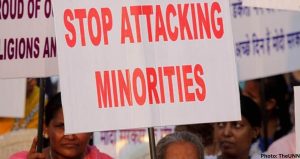
Indian-Americans Voice Concerns Over Hate Crimes At White House ‘United We Stand’ Summit

Leaders from Indian American and other South Asian communities were among bipartisan officials, faith leaders, activists, business leaders, law enforcement officials, former members of violent extremist groups, who came together to address hate crimes.

Several Indian and South Asian Americans were in the limelight at the White House ‘United We Stand’ Summit Sept. 15, 2022, focused on hate crime. The hall was packed with leaders of faith organizations, mayors of cities that are taking steps to counter hate violence, victims and family members of victims who had directly suffered from the consequences of hate violence.

Vice President Kamala Harris jumpstarted the full-day conference which concluded with an address from President Biden. The conference was held on the same day that 59 years ago, four white supremacists planted dynamite in the basement of the 16th Street Baptist Church in Birmingham, Alabama, that took the lives of four little girls and injured many others, Harris reminded those presen

At that time, “people across America of all races, all ages, all backgrounds” came together and refused to yield to violence and hate, “as we do now,” Harris said.

“Today, America is again looking at and confronting the epidemic of hate-fueled violence — in Oak Creek, Orlando, Victoria, Pittsburgh, El Paso, Atlanta, Buffalo, and in so many other communities,” Harris noted.

The attack on the Oak Creek gurdwara on August 12, 2012, which killed 7 devotees, received considerable attention with at least two people from the Oak Creek Sikh community speaking about their experiences of that event – Mandeep Kaur and Pardeep Singh Kaleka, both of whom suffered as a consequence of that attack by Wade Michael Page who had links with white supremacist organizations. Apart from Vice President Harris, Kaleka, and Mandeep Kaur, from the Indian American community, there was Eboo Patel, founder of Interfaith America (previously Interfaith Youth Corps), and Rais Bhuiyan, a Bangladeshi-American who lost an eye in a hate crime 10 days after 9/11, and whose experience of changing the beliefs of his attacker Mark Stroman, grabbed national attention.

Many others from the community played behind-the-scenes roles in the Summit and were in the audience at the White House event. Mandeep Kaur said the violent attack by Wade Michael Page on that fateful day at Oak Creek Gurdwara, had “deepened” the community’s care of its members and had built bridges between different peoples. The goal was to carry the spirit of Oak Creek to every part of the globe.

Kaleka, the son of one of the victims, and founder of The Forgiveness Project, said the Oak Creek massacre was the deadliest hate crime in more than 50 years. Sikhs around the United States began questioning whether they were ‘American enough’ and whether they belonged in the country, and whether they were doing enough.

As a result of the self-examination, Kaleka said he reached out to the organization that had influenced the Oak Creek attacker. “We’ve got to get better at listening to the pain… not get offended by the pain,” he said, adding, “We need to find the net person who may commit the hate crime and listen to their pain,” he said. “We have to have the courage to go further…,” he emphasized.

The scariest day of his life, he said was when members of the Sikh congregation had to clean the blood and pull out the bullets from holes in the walls of the Gurdwara and he saw the expressions on the faces of the youth. “They felt left out,” and their trauma was immense. He was scared also when his own children were born.

Eboo Patel noted that the first victim of the 9/11 backlash was an Indian-American, Balbir Singh Sodhi of Mesa, Arizona, barely 2 days after the World Trade Towers went down in New York City. Patel noted the United States is the most religiously diverse democracy. “Faith cannot be the bomb of destruction. It has to be the bridge of cooperation,” he asserted. His organization, along with others, has established ‘A Nation Of Bridgebuilders’, an organization with the mission of training at least 10,000 people a year about hate violence and how to counter it.

Over the last year, several hate attacks have been perpetrated against those of Indian and South Asian origin around the country, which has set the community on edge. Calls for investigation by federal, state, and city officials have been rising, from New York to California, and groups from different Asian minorities are coming together to counter the phenomenon. (News India Times)

Chef Vikas Khanna, Filmmaker Doug Roland’s ‘Barefoot Empress’ Premieres At Asia Society

Barefoot Empress: A Story of the Victory of the Human Spirit, written and directed by Vikas Khanna, renowned Michelin star chef, and produced by Oscar-nominated Doug Roland, premiered Sept. 13, 2022, at the Asia Society headquarters in New York (barefootempress.com).

This movie is produced in association with non-profits Leap to Shine and Global Fund for Widows.

The short documentary’s sold-out debut screening  had more than 250 attendees including industry professionals such as award-winning vocalist Ila Paliwal, India’s Consul General in New York, Randhir Jaiswal, UN ambassador for India, Ruchira Kamboj, entrepreneur and philanthropist MR Rangaswami from California, among others.

The film follows the remarkable journey of Karthyayani Amma, who finally gets a chance to join a first-grade class at the age of 96. Amma spent most of her life as a temple cleaner trying to make ends meet for her family, but when given the opportunity to educate herself, she pushed past societal norms and ended up a star student in her class. With a score of 98 percent on her exams, Amma dreams of studying up to grade 10.

“I am so honored to use my art and voice to inspire change,” Khanna if quoted saying in the press release. “By sharing Barefoot Empress with the world, I hope to spark conversations that create safer learning spaces and bring financial security to girls and women in India.”

Leap to Shine has named Amma a Global Ambassador and pledged to educate five million girls in India.  Khanna is an advisor to Leap to Shine.

“After having spent almost 25 years volunteering for non-profits, I have learnt that transparency, scalability, and impact are the key attributes to make a difference,” said Keyur Shah, director at Leap to Shine. “We achieve that using technology to create profound impact in the lives of those who have the drive to change their destiny with the power of digital learning.”

Ancient Stone Age Tools Found In Indian Caves

Over the years rock carvings of a previously unknown civilisation have been found in India’s western state of Maharashtra. Now, a cave in the same region is promising to shed more light on the creators of these prehistoric artworks and their lives. The BBC Marathi’s Mayuresh Konnur reports.

The cave, located around 10km (six miles) away from Koloshi village in the Konkan region of western Maharashtra, was discovered by a group of researchers last year. Excavations earlier this year revealed several stone tools in the cave that date back tens of thousands of years.

“Nowhere in the world can we find rock art of this kind,” says Dr Tejas Garge, who heads Maharashtra’s archaeology department. Archaeologists believe these artefacts can help us find out more about the way our ancestors lived.

The cave, which is situated in a secluded forest in Sindhudurg, was discovered by researchers who were studying rock carvings in nearby areas. Excavation work was conducted in two rounds, during which archaeologists dug two trenches inside the cave. Several big and small stone tools dating back to the Mesolithic period – also called the middle stone age – have been found.

“The microliths, or the small stone tools, date back to around 10,000 years, whereas the larger tools could be around 20,000 years old,” says Rutivij Apte, who has been researching the Konkan petroglyphs and was part of the excavation team.

Dr. Parth Chauhan, an archaeologist, says chemical processes are used to analyse any residue that might be present on the edges of the artefacts. This can help determine what the object was used for.

“It will take a couple of months to find out the exact time period these stone tools belong to. But right now, we can say that these artefacts are between 10,000 to 48,000 years old.”

Maharashtra’s laterite-rich Konkan plateau where this cave was discovered is also a treasure trove of prehistoric art. In the past explorers have discovered rock carvings of animals, birds, human figures and geometrical designs hidden under layers of soil in several villages here.

So far, 1700 petroglyphs – or rock carvings – have been found at 132 locations in 76 villages in Sindhudurg and nearby Ratnagiri district.

Saili Palande Datar, a Pune-based art historian and writer, says these carvings offer great insights into the life and habits of prehistoric man.

She gives the example of an iconic rock carving of a human-figure found near Barsu village in Ratnagiri district.

The carving is embossed on a rock and seems to be of a male figure who is holding what appears to be tigers and other wild animals in both hands.

“There is an amazing sense of symmetry in this carving, which points to a high level of skill. The picture also depicts the relationship man shared with animals,” Ms Datar says.

He says that seals of the Harappan civilisation – one of the oldest civilisations in human history that flourished in the Indian subcontinent – also depict the close relationship man shared with animals.

“The seals have images of large animals like tigers and buffaloes and of man hunting animals,” she says.

Experts say that mysteries around these prehistoric rock carvings are far from being solved, but a Unesco tag – natural and cultural landmarks from around the world are singled out for their “outstanding universal value” to humanity – can help preserve them for generations.

Eight rock carving sites in the Konkan region are already a part of Unesco’s tentative list of World Heritage sites, which is the first step towards getting the tag for any culturally-significant site.

NGO Retracts ‘Waste Colonialism’ Report Blaming Asian Countries For Plastic Pollution

An environmental watchdog has retracted an influential report that blamed five Asian countries for the majority of plastic pollution in the ocean.

The report, Stemming the Tide, from the US-based environmental advocacy group Ocean Conservancy, also included incineration and waste-to-energy as “solutions” to the plastics crisis. Published in 2015, it was decried as “waste colonialism” by hundreds of environmental, health and social justice groups across Asia.

The watchdog has now publicly apologised for unfairly “creating a narrative” about who is responsible for producing plastic waste and removed the report from its website. Its apology was welcomed on Wednesday as “long overdue” by Gaia, an alliance of 800 waste-reduction groups in 90 countries, and by Break Free From Plastic, a global movement of more than 2,000 organisations.

The report had caused years of harm, the groups said, by ignoring the role of countries in the global north for overproduction of plastic and for exporting plastic waste to developing countries in the guise of trade.

“This unprecedented report retraction is an opportunity to interrupt decades of waste colonialism,” said Froilan Grate, Gaia’s Asia-Pacific coordinator.

“Ocean Conservancy is in a position to raise awareness among other organisations and policymakers about the false narrative propagated by the report.”

When contacted by Guardian about the apology, Ocean Conservancy referred it to the statement on its website, which it published in July.

The report not only “wrongly blamed” five countries – the Philippines, China, Indonesia, Vietnam and Thailand – for the bulk of plastic pollution, but “misled, for years, governments and the public into thinking that burning plastic waste was a solution to the problem”, Grate said.

Gaia also said that Ocean Conservancy had underestimated the true cost of incineration in terms of climate and public health.

Moreover, Ocean Conservancy has admitted its error in failing to look at the contributions of Asia-Pacific communities seeking solutions to plastic waste, whom Grate said had been “disproportionately impacted” by the report. It is now engaged in a process of “restorative justice” by engaging with groups in Asia, he said.

Stemming the Tide was written by the consultancy McKinsey, with a steering group including the World Wildlife Fund, the Coca-Cola Company, Dow Chemical and the American Chemistry Council.

Christie Keith, Gaia’s international coordinator, said the five Asian countries named in the report were not to blame for plastic waste. “That fault lies with the corporations that make and push out ever-increasing quantities of plastic,” she said. “And those fighting for zero-waste community solutions deserve to be honoured and celebrated, not attacked.”

Satyarupa Shekhar, Asia-Pacific coordinator for Break Free From Plastic, said Ocean Conservancy’s report “diluted existing restrictions on incineration and opened the doors to false solutions and controversial techno-fixes to deal with the plastic pollution crisis”.

In the Philippines, a national ban on incineration is threatened by new proposals to allow waste-to-energy plants, while in Indonesia, the government continues to push for waste incineration despite a supreme court ruling revoking presidential regulations to speed up the development of waste-based power plants or incinerators.

Stemming the Tide has frequently been cited by lawmakers and US federal agencies such as the Environmental Protection Agency.

Sonia Mendoza, chair of Mother Earth Foundation in the Philippines, said: “Each country should be responsible for the waste it generates and not export it under the guise of ‘trade’.”

Understanding of ocean plastic waste, including its origins, has evolved in recent years.

In the statement on its website, Ocean Conservancy said it “failed to confront the root causes of plastic waste or incorporate the effects on the communities and NGOs working on the ground in the places most impacted by plastic pollution”. Including incineration and waste-to-energy as acceptable solutions to the plastic crisis was wrong, it said.

“We did not consider how these technologies support continued demand for plastic production and hamper the move to a circular economy and a zero-carbon future.”

“Further, by focusing so narrowly on one region of the world (east and south-east Asia), we created a narrative about who is responsible for the ocean plastic pollution crisis – one that failed to acknowledge the outsized role that developed countries, especially the United States, have played and continue to play in generating and exporting plastic waste to this very region. This too was wrong.”

Stemming the Tide was based on a paper published in Science on February 2015, which estimated for the first time how much plastic entered the ocean from mismanaged waste on land, and ranked all 192 coastal countries accordingly.

Since then, data has been published showing that the US ranks third among countries contributing to coastal plastic pollution and challenges the widely held belief that the US is adequately managing its pollution, underlining its waste footprint to developing nations.

Other research, which Ocean Conservancy is now promoting, recommends interventions to reduce, reuse and better manage plastic across all economies.

There can be no more hiding, and no more denying. Global heating is supercharging extreme weather at an astonishing speed. Guardian analysis recently revealed how human-caused climate breakdown is accelerating the toll of extreme weather across the planet. People across the world are losing their lives and livelihoods due to more deadly and more frequent heatwaves, floods, wildfires and droughts triggered by the climate crisis. At the Guardian, we will not stop giving this life-altering issue the urgency and attention it demands. We have a huge global team of climate writers around the world and have recently appointed an extreme weather correspondent.

Our editorial independence means we are free to write and publish journalism which prioritises the crisis. We can highlight the climate policy successes and failings of those who lead us in these challenging times. We have no shareholders and no billionaire owner, just the determination and passion to deliver high-impact global reporting, free from commercial or political influence.

And we provide all this for free, for everyone to read. We do this because we believe in information equality. Greater numbers of people can keep track of the global events shaping our world, understand their impact on people and communities, and become inspired to take meaningful action. Millions can benefit from open access to quality, truthful news, regardless of their ability to pay for it.

An environmental watchdog has retracted an influential report that blamed five Asian countries for the majority of plastic pollution in the ocean.

The report, Stemming the Tide, from the US-based environmental advocacy group Ocean Conservancy, also included incineration and waste-to-energy as “solutions” to the plastics crisis. Published in 2015, it was decried as “waste colonialism” by hundreds of environmental, health and social justice groups across Asia.

The watchdog has now publicly apologised for unfairly “creating a narrative” about who is responsible for producing plastic waste and removed the report from its website. Its apology was welcomed on Wednesday as “long overdue” by Gaia, an alliance of 800 waste-reduction groups in 90 countries, and by Break Free From Plastic, a global movement of more than 2,000 organisations.

The report had caused years of harm, the groups said, by ignoring the role of countries in the global north for overproduction of plastic and for exporting plastic waste to developing countries in the guise of trade.

“This unprecedented report retraction is an opportunity to interrupt decades of waste colonialism,” said Froilan Grate, Gaia’s Asia-Pacific coordinator.

“Ocean Conservancy is in a position to raise awareness among other organisations and policymakers about the false narrative propagated by the report.”

When contacted by Guardian about the apology, Ocean Conservancy referred it to the statement on its website, which it published in July.

The report not only “wrongly blamed” five countries – the Philippines, China, Indonesia, Vietnam and Thailand – for the bulk of plastic pollution, but “misled, for years, governments and the public into thinking that burning plastic waste was a solution to the problem”, Grate said.

Gaia also said that Ocean Conservancy had underestimated the true cost of incineration in terms of climate and public health.

Moreover, Ocean Conservancy has admitted its error in failing to look at the contributions of Asia-Pacific communities seeking solutions to plastic waste, whom Grate said had been “disproportionately impacted” by the report. It is now engaged in a process of “restorative justice” by engaging with groups in Asia, he said.

Stemming the Tide was written by the consultancy McKinsey, with a steering group including the World Wildlife Fund, the Coca-Cola Company, Dow Chemical and the American Chemistry Council.

Christie Keith, Gaia’s international coordinator, said the five Asian countries named in the report were not to blame for plastic waste. “That fault lies with the corporations that make and push out ever-increasing quantities of plastic,” she said. “And those fighting for zero-waste community solutions deserve to be honoured and celebrated, not attacked.”

Satyarupa Shekhar, Asia-Pacific coordinator for Break Free From Plastic, said Ocean Conservancy’s report “diluted existing restrictions on incineration and opened the doors to false solutions and controversial techno-fixes to deal with the plastic pollution crisis”.

In the Philippines, a national ban on incineration is threatened by new proposals to allow waste-to-energy plants, while in Indonesia, the government continues to push for waste incineration despite a supreme court ruling revoking presidential regulations to speed up the development of waste-based power plants or incinerators.

Stemming the Tide has frequently been cited by lawmakers and US federal agencies such as the Environmental Protection Agency.

Sonia Mendoza, chair of Mother Earth Foundation in the Philippines, said: “Each country should be responsible for the waste it generates and not export it under the guise of ‘trade’.”

Understanding of ocean plastic waste, including its origins, has evolved in recent years.

In the statement on its website, Ocean Conservancy said it “failed to confront the root causes of plastic waste or incorporate the effects on the communities and NGOs working on the ground in the places most impacted by plastic pollution”. Including incineration and waste-to-energy as acceptable solutions to the plastic crisis was wrong, it said.

“We did not consider how these technologies support continued demand for plastic production and hamper the move to a circular economy and a zero-carbon future.”

“Further, by focusing so narrowly on one region of the world (east and south-east Asia), we created a narrative about who is responsible for the ocean plastic pollution crisis – one that failed to acknowledge the outsized role that developed countries, especially the United States, have played and continue to play in generating and exporting plastic waste to this very region. This too was wrong.”

Stemming the Tide was based on a paper published in Science on February 2015, which estimated for the first time how much plastic entered the ocean from mismanaged waste on land, and ranked all 192 coastal countries accordingly.

Since then, data has been published showing that the US ranks third among countries contributing to coastal plastic pollution and challenges the widely held belief that the US is adequately managing its pollution, underlining its waste footprint to developing nations.

Other research, which Ocean Conservancy is now promoting, recommends interventions to reduce, reuse and better manage plastic across all economies.

There can be no more hiding, and no more denying. Global heating is supercharging extreme weather at an astonishing speed. Guardian analysis recently revealed how human-caused climate breakdown is accelerating the toll of extreme weather across the planet. People across the world are losing their lives and livelihoods due to more deadly and more frequent heatwaves, floods, wildfires and droughts triggered by the climate crisis. At the Guardian, we will not stop giving this life-altering issue the urgency and attention it demands. We have a huge global team of climate writers around the world and have recently appointed an extreme weather correspondent.

Our editorial independence means we are free to write and publish journalism which prioritises the crisis. We can highlight the climate policy successes and failings of those who lead us in these challenging times. We have no shareholders and no billionaire owner, just the determination and passion to deliver high-impact global reporting, free from commercial or political influence.

And we provide all this for free, for everyone to read. We do this because we believe in information equality. Greater numbers of people can keep track of the global events shaping our world, understand their impact on people and communities, and become inspired to take meaningful action. Millions can benefit from open access to quality, truthful news, regardless of their ability to pay for it.

Varanasi Declared Tourism And Cultural Capital At The 2022 SCO Summit

The leaders of the Shanghai Cooperation Organisation (SCO) on Friday endorsed the holy city of Varanasi as the first ever tourist and cultural capital of the grouping for the year 2022-23. Foreign Secretary Vinay Kwatra said this at a media briefing.

India’s oldest city, Varanasi was named the first-ever SCO Tourism and Cultural Capital at the 22nd Meeting of Shanghai Cooperation Organization (SCO) Council of Heads of State in Samarkand, Uzbekistan on Sept. 16, 2022. During the one year period till 2023 , a numbers of cultural outreach events attracting the presence of Indologists (people who study about India), scholars, authors, musicians and artists, photo journalists, travel bloggers and other invited guests, will be held in city.

The Indian delegation at the SCO summit in this historic Uzbek city of Samarkand was led by Prime Minister Narendra Modi. Uzbekistan handed over the rotating presidency of the grouping to India for the year 2022-23.

“Prime Minister Modi thanked all the member states for endorsing Varanasi as the first ever SCO tourist and cultural capital during the upcoming year 2022-23,” Kwatra said. “This is a befitting recognition of the historic city and opens the door for greater cultural and people-to-people ties between India and the region,” he said.

The SCO was founded at a summit in Shanghai in 2001 by the presidents of Russia, China, the Kyrgyz Republic, Kazakhstan, Tajikistan and Uzbekistan. Over the years, it has emerged as one of the largest trans-regional international organisations. India and Pakistan became its permanent members in 2017.

US India Security Council President Hosts Fund Raiser Lunch for Congressman Raja Krishnamoorthy

US India Security Council – President Ramesh Viswanath Kapur hosted a lunch and fund raiser for Congressman Raja Krishnamoorthy at his home in Winchester (MA). The lunch was attended by many priominent Indian Americans like – Vikram Rajyadaksha, Dr.Dinesh Patel, Abhishek Singh, Amar Sawhney, Deepika Sawhney, Dr.Raj Raina among others.

The event was held to support Congressman Raja KrishnaMoorthy for his forthcoming election in November and also express the support of the Indian American Community for the Congressman’s consistent and constant stand supporting causes that help the Indian American Community and also build stronger US-India relations. The event raised around 40k and there are more events planned to help the congressman.

Speaking at the event, Ramesh Viswanath Kapur welcomed the Congressman to his home and expressed gratitude to Raja Krishnamoorthy for his support in the past and urged the community to come forward and help the congressman in his tough election. He said that Raja Krishnamoorthy has been identified as one of the candidates by the republican party that wants to defeat him to reclaim the majority in the house.

He said that he is proud of the congressman who has never shied away from his roots. He said that Raja Krishnamoorthy is first Indian American Congressman he is hosting at his home. Ramesh Viswanath Kapur said that Raja Krishnamoorthy attended the Kashmir files program in the House of Representatives and was the keynote speaker at the Indian American’s against the genocide in ukraine event on the capitol hill. The Congressman arranged for the room and assisted with his staff for the event.

Raja Krishnamoorthy spoke about his journey from his humble beginning to being a house of representative and said he will always stand with the Indian American Community and celebrate their journey and success in the greatest countries in the world – USA. He also spoke about about his trip to Taiwan with speaker – Nancy Palosi and the stare down with the Chinese during the historic flight. He said that the delegation led by the speaker arrived to a massive gathering of people who welcomed the speaker and delegation in Taiwan and were seen as national heroes in the country.

He also said that due to his consistent stand he has been banned by China and Russia. He said that the ISI in pakistan also views him as a enemy for his stand against radicals in Pakistan. He reiterated that he respected all religions and never discriminated against any color, race or religion. He assured that if he wins, he will continue to support strategic relations between USA and India so that this friendship can deter China from its ambitions in the pacific.

The event ended with a informal interaction with the Congressman and a sumptuous lunch.

Saudi Man Marries 53 Times In 43 Years

A Saudi man has claimed to tie the knot 53 times in 43 years to find “peace and stability”. Being called the ‘polygamist of the century’, the 63-year-old man said the reason behind his multiple marriages was his “search for a woman who could make him happy”, reported Gulf News.

According to the ‘polygamist’, he “tried to be fair to all his wives”.

Narrating his story, he said that “when I married for the first time, I did not plan to marry more than one woman because I was feeling comfortable and had children”.

The man, identified as Abu Abdullah, said that, however, after a while, due to certain “problems”, he decided to marry again at the age of 23.

He said that several issues erupted between him and his wives, prompting him to marry again. “I married 53 women over long periods. The first was when I was 20 years and she was six years older than me,” he was quoted in the article.

Abdullah said that his shortest spell of marriage was a one-night event. He added that “most of his marriages were to Saudi women”, but he has also married foreigners during his overseas business trips. “I used to stay for three to four months. So I married to protect myself from vice,” Abdullah said.

Meanwhile, the polygamist is reportedly now married to one woman. According to him, he does not plan to remarry.

Pope Francis Says Arming Ukraine Can Be ‘Morally Acceptable.’

After Russia’s invasion of Ukraine, Pope Francis initially appeared to uphold the Vatican’s longstanding policy of not taking sides, before eventually changing tack and saying explicitly that Russia was the aggressor in the war.

Now, Francis has weighed in on a morally thorny issue, saying on Thursday that it is acceptable for countries to provide weapons to Ukraine so that the country can defend itself.

Self-defense in the face of aggression is “not only lawful but also an expression of love of country,” Francis said.

But he also stressed that communication channels with Russia should remain open even if, he said, dialogue with the aggressor “stinks,” because “otherwise we close off the only reasonable door to peace.”

Francis spoke to reporters onboard a plane returning from a three-day trip to Kazakhstan, where he participated in an interfaith conference attended by faith leaders from 60 countries. The meeting promoted interfaith dialogue as a means to help heal the world’s ills, including war.

Asked whether it was right for countries to supply weapons to Ukraine, Francis said that was “a political decision, which can be moral — morally acceptable — if it is done according to the conditions of morality.” It would be immoral, he said, “if it is done with the intention of provoking more war or selling weapons or discarding those weapons that are no longer needed.”

The pope made a reference to “just war,” a set of ethical principles regarding the proportional response to aggression, usually traced to the writings of St. Augustine.

The interfaith conference was supposed to provide an opportunity for Francis to meet with Patriarch Kirill, the head of the Russian Orthodox Church, who has justified the war in Ukraine. But Kirill decided last month not to attend and the Russian delegation was headed instead by Metropolitan Anthony, who is in charge of the church’s foreign relations.

The two religious leaders did speak by video in March, but Kirill spent a good part of that meeting reading prepared remarks that echoed the arguments of Russia’s president, Vladimir V. Putin. Francis told an Italian newspaper he had told Kirill that the men were not “clerics of the state” and said the patriarch could not be “Putin’s altar boy.”

In August, Ukrainian officials were dismayed when Francis referred to Daria Dugina, a 29-year-old Russian ultranationalist who spoke out in favor of the invasion of Ukraine, and was killed by a car bomb, as an “innocent” victim.

Afterward, Ukraine’s foreign minister summoned the Vatican’s ambassador to Ukraine to express “profound disappointment” in Francis’s words. It was after that meeting that the Pope explicitly blamed Russia in the conflict.

End Of Covid-19 Pandemic Is In Sight, WHO Director-General Says, ‘So Let’s Seize This Opportunity’

The world has never been in a better position to end the Covid-19 pandemic, Tedros Adhanom Ghebreyesus, director-general of the World Health Organization, said in a news briefing in Geneva on Wednesday.

“Last week, the number of weekly reported deaths from Covid-19 was the lowest since March 2020,” he said. “We have never been in a better position to end the pandemic. We’re not there yet, but the end is in sight.

“A marathon runner does not stop when the finish line comes into view; she runs harder with all the energy she has left,” Tedros said. “So must we. We can see the finish line, we are in a winning position, but now is the worst time to stop running. Now is the time to run harder and make sure we cross the line and reap the rewards of all our hard work.”

There is still a risk of more variants, deaths, disruption and uncertainty, he said, “so let’s seize this opportunity.”

WHO released six policy briefs Wednesday that outline key actions for governments to take to end the pandemic. The briefs are based on the evidence and experience of the past 32 months and offer guidance on how to save lives, protect health systems and avoid social and economic disruption. They are “an urgent call for governments to take a hard look at their policies and strengthen them for Covid-19 and future pathogens with pandemic potential,” Tedros said.

Although official case counts have become significantly underreported, trends have shown a steady drop in cases both globally and in the US.

According to latest WHO update, weekly case counts are falling in all regions, with an overall fall of 28% compared to a week before. And in the United States, cases have been steadily dropping for the past two months, according to data from Johns Hopkins University.

WHO’s weekly epidemological update said that there were just over 11,000 fatalities reported between September 5 and 11, a 22% decrease compared with the week before.

Decreases were reported in five of the WHO regions: 31% in the European Region, 25% in the South-East Asia Region, 22% in the Region of the Americas, 11% in the Western Pacific Region and 10% in the Eastern Mediterranean Region. There was a 10% increase in deaths in the African Region.

The United States reported the highest number of weekly deaths followed by Japan, Russia, Brazil and the Philippines.

Overall, there have been more than 6.4 million deaths reported globally as of September 11.

About two-thirds of the global population – and about the same in the US, specifically – are vaccinated with at least their initial series. But significant disparities in Covid-19 vaccination rates persist among lower-income countries, and rates are changing little now, especially in the US.

Forecasts published by the US Centers for Disease Control and Prevention say that new hospitalizations and deaths will hold steady for the next month.

World Could Face Recession Next Year: World Bank Report

The world could face a recession next year amid simultaneous tightening of monetary policy by central banks around the world, the World Bank has said in a new report that called for boosting production and removing supply bottlenecks to ease inflation. Several indicators of global recessions are already “flashing signs”, the report said. The global economy is now in its steepest slowdown following a post-recession recovery since 1970, it added.

Global interest rate hikes by central banks could reach 4%, double that in 2021, just to keep core inflation — which strips out volatile items such as food and fuel — at 5% levels, the bank said.

From the US to Europe and India, countries are aggressively raising lending rates, which aim to curb the supply of cheap money and thereby help bring down inflation. But such monetary tightening has costs. It dampens investment, costs jobs, and suppresses growth, a trade-off faced by most nations, including India.

“Global growth is slowing sharply, with further slowing likely as more countries fall into recession. My deep concern is that these trends will persist, with long-lasting consequences that are devastating for people in emerging market and developing economies,” World Bank president David Malpass said in a statement after the report was released on Thursday.

The world is facing record inflation due to factors including the Ukraine war that has dwindled food supplies, knock-on effects of the pandemic on supply chains, poor demand in China due to its persistent Covid lockdowns, and extreme weather that has upended forecasts of agricultural output.

The Reserve Bank of India (RBI) announced a third repo rate hike to 5.40% in August, up 50 basis points. A basis point is one-hundredth of a percentage point. The RBI maintained its inflation estimate at 6.7% for 2022-23 while forecasting real (inflation-adjusted) GDP growth at 7.2%.

At SCO Summit 2022, Modi Says, India To Become A Manufacturing Hub

Prime Minister Narendra Modi, speaking at the Shanghai Cooperation Organization (SCO) summit on Friday, September 16, 2022 in Samarkand, Uzbekistan, said he wants to transform India into a manufacturing hub. During the historic Summit, Prime Minister Narendra Modi, Chinese President Xi Jinping, and Russian President Vladimir Putin were in attendance, among others. The summit is also being attended by Pakistan Prime Minister Shehbaz Sharif, Iranian President Ebrahim Raisi and leaders of several central Asian countries.

The world leaders deliberated on the regional security situation and ways to enhance trade and connectivity at the annual summit of the grouping. SCO should try to create resilient supply chain in our region, Modi said. He added that COVID-19 and the Ukraine situation have resulted in hurdles in global supply chain, culminating in food and energy security crisis. “World is facing challenge of economic recovery,” said Modi.

Better connectivity and giving transit rights is key to creating a better supply chain, Prime Minister Modi said at the SCO Summit. He is expected to hold bilateral meetings on the sidelines of the summit, including with Putin, and Uzbek President Shavkat Mirziyoyev among other leaders.

As per media reports, Putin met with Xi on the sidelines of the summit and acknowledged that China had “questions and concerns” about Russia’s war in Ukraine, a notable, if cryptic, admission that Moscow lacks the full backing of its biggest, most powerful partner on the world stage. Rather than put on a show of Eurasian unity against the West as Russia struggled to recover from last week’s humiliating military retreat in northeastern Ukraine, the two leaders struck discordant notes in their public remarks — and Xi made no mention of Ukraine at all.

Stating that India’s economy is expected to grow at 7.5% this year, he remarked that the government is making progress in making India a manufacturing hub. “There is lot of focus on proper use of technology in our people-centric development model.”

It is for the first time Modi and Xi came face-to-face at the summit in this historic Uzbek city since the start of the border standoff between India and China in eastern Ladakh around 28 months back. However, there is no clarity yet on whether there will be a bilateral meeting between Mr. Modi and Mr. Xi on the sidelines of the summit.

The summit of the eight-nation influential grouping is taking place amid the growing geo-political turmoil largely triggered by the Russian invasion of Ukraine and China’s aggressive military posturing in the Taiwan Strait.

At the venue of the summit, Modi was warmly greeted by Uzbek President Shavkat Mirziyoyev. “President Shavkat Mirziyoyev of Uzbekistan welcomed PM@narendramodi to the Congress Centre in Samarkand for the 22nd SCO Summit. India has been working closely with Uzbekistan towards the success of their Chairship,” External Affairs Ministry Spokesperson Arindam Bagchi tweeted.

In another tweet, he said:”PM @narendramodi joins the leaders of SCO Member States for discussions on topical, regional and international issues, including regional peace and security, trade and connectivity, culture and tourism.” After the summit, Prime Minister Modi will have separate bilateral meetings with Russian President Putin, Uzbek President Mirziyoyev and Iranian President Raisi.

Hours before departing for Samarkand, Modi said he was looking forward to exchanging views at the summit on topical regional and international issues as well as on reform and expansion of the grouping. “At the SCO Summit, I look forward to exchanging views on topical, regional and international issues, the expansion of SCO and further deepening of multifaceted and mutually beneficial cooperation within the Organization,” Modi said in a statement.

“Under the Uzbek chairship, a number of decisions for mutual cooperation are likely to be adopted in areas of trade, economy, culture and tourism,” he said.

The summit in Samarkand will have two sessions – one restricted session which is only meant for the SCO member states and then there will be an extended session that is likely to see the participation of the observers and the special invitees of the chair country. Launched in Shanghai in June 2001, the SCO has eight full members, including its six founding members, China, Kazakhstan, Kyrgyzstan, Russia, Tajikistan and Uzbekistan. India and Pakistan joined as full members in 2017.

The SCO was founded at a summit in Shanghai in 2001 by the presidents of Russia, China, the Kyrgyz Republic, Kazakhstan, Tajikistan and Uzbekistan. Over the years, it has emerged as one of the largest trans-regional international organisations. India and Pakistan became its permanent members in 2017. Iran is likely to be given the status of a permanent member of the SCO at the Samarkand summit.

Chinese President Xi Jinping on Friday congratulated India for hosting the Shanghai Cooperation Organisation (SCO) Summit, next year and said “we will support India for its presidency next year,” according to news agency ANI report. “We will support India for its presidency next year”, said Chinese President Xi Jinping.

77th United Nations General Assembly Begins In New York India’s External Affairs Minister S Jaishankar On 11 Day Visit To USA, Will Address UN Assembly

The External Affairs Minister of India, S Jaishankar is on a 11-day visit to the US beginning September 18th, 2022, leading the Indian delegation and will address the 77th annual UN General Assembly.

The theme of the 77th UNGA is “A Watershed Moment: Transformative Solutions to Interlocking Challenges”. The event is expected to be addressed by the president of the 77th UNGA along with foreign ministers of several member states and the UNDP administrator. Global leaders are expected to focus on security and humanitarian challenges confronting the world.

The MEA said Jaishankar would also participate in plurilateral meetings of the Quad, IBSA, and BRICS as well as meetings under trilateral formats, such as India-France-Australia, India-France-UAE and India-Indonesia-Australia.

To commemorate and showcase Azadi Ka Amrit Mahotsav, the external affairs minister would be addressing a special event “India@75: Showcasing India U. N. Partnership in Action” on September 24, which would highlight India’s development journey and its contributions to South-South Cooperation,” the MEA said.

Jaishankar will also host a ministerial meeting of the G4 grouping which, besides India, comprises Brazil, Japan, and Germany, the Ministry of External Affairs (MEA) said, announcing his visit. “He will also have bilateral meetings with foreign ministers of the G20 and U. N. Security Council member states, amongst others,” the MEA said.

Jaishankar’s address at the High Level Session of the 77th United Nations General Assembly is scheduled in the forenoon of September 24.

The UN General Assembly (UNGA) is the main policy-making organ of the Organization. Comprising all Member States, it provides a unique forum for multilateral discussion of the full spectrum of international issues covered by the Charter of the United Nations. Each of the 193 Member States of the United Nations has an equal vote.

The UNGA also makes key decisions for the UN, including:

  • appointing the Secretary-General on the recommendation of the Security Council
  • electing the non-permanent members of the Security Council
  • approving the UN budget

The Assembly meets in regular sessions from September to December each year, and thereafter as required. It discusses specific issues through dedicated agenda items or sub-items, which lead to the adoption of resolutions.

Sitting arrangements in the General Assembly Hall change for each session. During the 77th Session (2022-2023), Belize will occupy the first seat in the Hall, including in the Main Committees (followed by all the other countries, in English alphabetical order).

In the wake of the COVID-19 pandemic, the UN General Assembly has been carrying out its work since 2020 via novel means to guarantee business continuity and mitigate the spread of the disease. Specific examples include the use of virtual platforms to conduct meetings and the adoption of e-voting through procedure for decision-making when an in-person meeting is not possible.

The pandemic is not the only issue the world faces. Racism, intolerance, inequality, climate change, poverty, hunger, armed conflict, and other ills remain global challenges. These challenges call for global action, and the General Assembly is a critical opportunity for all to come together and chart a course for the future.

Upon completion of the 77th UNGA-related engagements, Jaishankar will visit Washington from September 25-28 for bilateral meetings with U. S. interlocutors.

“His program includes inter alia, discussions with his counterpart Secretary of State Antony Blinken; senior members of the U. S. Administration, U. S. business leaders, a round-table focused on science and technology and interaction with the Indian diaspora,” the MEA said.

“The external affairs minister’s visit would enable a high-level review of the multifaceted bilateral agenda and strengthen cooperation on regional and global issues to further consolidate the India-U. S. strategic partnership,” it said.

Last year, Prime Minister Narendra Modi addressed the high-level UN General Assembly session. The high-level session will take place against the backdrop of the Russia-Ukraine war and the ongoing COVID19 pandemic.

Tamil Film Soorarai Pottru Wins Big At 68th National Film Awards Bollywood

The winners of the 68th National Film Awards 2020 were announced last week by a jury of eminent film makers and film personalities from across the Indian cinema industry. Tamil Film Soorarai Pottru starring Suriya and Aparrna Balamurali in lead roles bagged the most awards including ones for Best Actor, Best Actress, Best Feature Film, Best Screenplay and Best Music Direction. The film was based on a true story of a young man from a remote village who dreams of launching his own airline service.

The year 2020 changed the course of cinema owing to the Covid-19 pandemic. With theatres under lockdown, several filmmakers shifted gears and released their original theatrical releases on OTT. Despite the change in medium, there were some critically acclaimed releases that year. The year also put regional content in the spotlight, with Suriya’s Soorai Pottru and P Virumaandi’s directorial debut Ka Pae Ranasingham winning hearts across the country.

Best Popular Film Providing Wholesome Entertainment: Tanhaji: The Unsung Warrior

Best Actor: Suriya for Soorarai Pottru and Ajay Devgn for Tanhaji: The Unsung Warrior

Best Actress: Aparrna Balamurali for Soorarai Pottru (Tamil)

Best Child Artist: Anish Mangesh Gosavi for Tak-Tak (Marathi) and Akanksha Pingle and Divyesh Indulkar for Sumi

(Marathi)

Best Direction: Sachidanandan KR for AK Ayyappanum Koshiyum (Malayalam)

Best Original Screenplay: Soorarai Pottru (Tamil)

Best Dialogue Writing: Mandela (Tamil)

Best Cinematography: Avijatrik

Best Supporting Actress: Lakshmi Priya Chandramouli for Sivaranjaniyum Innum Sila Pengallum (Tamil)

Best Supporting Actor: Biju Menon for AK Ayyappanum Koshiyum (Malayalam)

Best Film on Social Issues: Funeral (Marathi)

Best Female Playback Singer: Nanchamma for AK Ayyappanum Koshiyum (Malayalam)

Best Male Playback Singer: Rahul Deshpande for Mi Vasantrao (Marathi)

Special Mention in Feature Film category:

Indira Gandhi Award for Best Debut Film of a Director: Madonne Ashwin for Mandela (Tamil)

Best Children’s Film: Sumi (Marathi)

Best Film on Environment Conservation/Preservation: Taledanda (Kannada)

Best Hindi Film: Toolsidas Junior

Best Bengali Film: Avijatrik

Best Telugu Film: Colour Photo

Best Tamil Film: Sivaranjaniyum Innum Sila Pengallum

Best Assamese Film: Bridge

Best Malayalam Film: Thinkalazcha Nishchayam

Best Haryanvi Film: Dada Lakhmi

Best Dimasa Film: Semkhor

Best Tulu Film: Jeetige

Best Marathi Film: Goshta Eka Paithanichi

Best Kannada Film: Dollu

Best Action Direction Award: AK Ayyappanum Koshiyum

Best Choreography: Sandhya Raju for Natyam (Telugu)

Best Lyrics: Manoj Muntashir for Saina

Best Music Direction: Thamam S for Ala Vaikunthapurramuloo (Telugu)

Best Background Music: GV Prakash for Soorarai Pottru

Best Costume Designer: Tanhaji: The Unsung Warrior

Best Makeup Artist: TV Rambabu for Natyam

Best Production Design: Kappela (Malayalam)

Best Editing: Sivaranjaniyum Innum Sila Pengallum

(Tamil)

Best Audiography: Dollu (Kannada)

Best Sound Designer: Mi Vasantrao (Marathi)

Best Re-recordist and Final Track: Malik (Malayalam)

Feature Films Special Mentions: Aimee Baruah for Semkhor (Dimasa), director Kavya Prakash for Vaanku (Malayalam), actor Siddharth Menon for June (Marathi), Kishore Kadam for Avwanchhit and Godakaath (Marathi), child artist Varun Buddhadev for Toolsidas Junior.

Biden Lauds AAUC For Working For Asian American Political Empowerment

President Joe Biden has lauded the Asian American Unity Coalition (AAUC) for using the power of civic engagement to exert its clout and influence as part of its march toward political empowerment.

By “educating your members about the power of civic engagement, you are helping bring the full promise of America within reach for so many,” he said in a message to AAUC’s third annual National Civic Leadership Forum.

AAUC, comprising more than 13 Asian American, Native Hawaiian and Pacific Islander ethnic non-profit organizations, held the Sep 11-13 forum with the theme of “Asian American Pacific Islander: The Great Awakening,” at the Paris Hotel, LasVegas, Nevada.

“Your work reminds all of us that every voice deserves to be heard, that involvement in civic life makes a real difference, and that–in this Nation–everyone is meant to thrive,” Biden said according to an AAUC press release.

“The diversity of cultures and the breadth of achievement in the AA and NHPI community shapes and strengthens the fabric of America,” he said to the community which has faced a spate of horrific and bigoted racial attacks during the Covid pandemic.

The President acknowledged that the community is fully cognizant “that there is no singular AA or NHPI identity, but there is so much strength in the values you share.”

As his administration “works to build a more just and inclusive country, I am grateful to have partners like the AAUC by my side,” he declared.

“May you reflect with pride on the positive impacts you have made and will continue to make long into the future,” Biden said. “Together, there is nothing we cannot accomplish.”

Earlier, welcoming the delegates AAUC president and NCLF event chair Dr. S.K. Lo said AAUC believes that the AAPI community is no longer a passive, silent minority and argued that civic engagement is an important ingredient to become part of the integrated fabric of the USA.

“We need to capture this awakening momentum to create the change we all desire, ” she said. “It is the long-term goal of our forum to forge unity among our diverse communities and to speak with One Voice.”

“Thus, we have the power to change the environment for our communities and to live our collective American Dream,” Lo said. “It is our hope that through this Forum we are able to find the One Voice that unites rather than divides us!”

At the conclusion of the conference, Lo exhorted the conference leaders to draft a Call-to-Action Plan, “to create the change we want to see in the US at all levels of government from school boards to the federal levels.”

Reflecting the rise and influence of the Asian population Nevada Governor Steve Sisolak, and Las Vegas Mayor Pro Tem Stavros Anthony, were among those who sent messages of greetings.

Nevada’s First Lady Kathy Ong Sisolak and Kaying Yang, who serves on Presidential Advisory Commission on Asian American Native Hawaiian and Pacific Islanders representing Hmong ethnic community among other ethnicities, were also present.

The keynote speakers included Chinese American Maeley Tom, former Chief Administrative Officer, California State Assembly, who shattered the glass ceiling twice in California, county circuit court judge from Oregon Chanpon Sinlapasai, and Meta representative Mona Pasquil Rogers.

Former Executive Editor of India Abroad Aziz Haniffa, spoke on the importance of an independent media from the vantage point of a journalist with more than three decades of experience covering political and diplomatic stories and chronicling the immigrant experience of the South Asian and the broader Asian American community.

The plenary sessions included the “Asian Americans and Pacific Islanders (AAPI) Civic Engagement: Past, Present, and Future” and “How to Influence Legislation and Public Policy.”

Afternoon breakout workshops and sessions included topics ranging from Community Building, Developing a Successful Political Career by Election or by Appointment, Successful Community Engagements, Developing Political Skills, Building a Financial Support System for Nonprofits, Fundraising for Political Campaign and The Power of Block Voting; presented by Kevin Hirono of APIA Vote.

Moderators and panelists included, Suhag Shukla, executive director and co-founder of the Hindu American Foundation; Islam Siddiqui, who served in the Clinton and Obama administrations and is now president of the American Muslim Institution; Angela Anand, vice president, AAUC and founder of the South Asian Women’s Network; Jack Hanna, New Portland Foundation; Haipei Shue, president, United Chinese Americans; Thomas Abraham, founder and president of the Global Organization of People of Indian Origin (GOPIO); Anthony Ng, executive director of the Civic Leadership USA(CLUSA); Dr. Russell Jeung, professor of Asian American Studies at San Francisco State University.

At the gala banquet on the second day, Maeley Tom and US Rep Pramila Jayapal (in absentia), Washington state Democrat and chair of the Progressive Caucus in the US House of Representatives, were presented two special awards for being leaders exhibiting outstanding public service and political leadership.

The awards commemorate two past Asian American political giants — former US Congressman and Commerce and Transportation Secretary respectively in the Clinton and George W. Bush administrations, Norman Mineta and Dilip Singh Saund, the first-ever Indian American US Congressman.

President’s youth award went to Vivek Pandit, and Philanthropy award was given to the benefactor and major funder of all three conferences, Sandy Chau. The non-profit group from Minnesota, CACC was also awarded for doing great service to the community.

A cultural program followed with Chinese folk to Hawaiian and Samoan dancing and some rollicking Bollywood dancing, including the bhangra.

AAUC came into existence through the historic conference held in Alaska in 2018 in which 12 unique AAPI organizations and 20 leaders representing five major ethnicities — Chinese, Indian, Filipino, Korean and Japanese Americans — were present. Through the annual in-person/virtual National Civic Leadership Forum, AAUC has now connected more than 20 ethnic groups and 90 plus organizations. Other ongoing signature programs of AAUC, include its monthly podcast on “Building our Collective American Dream” and the web-based AAPI Community Hub project to connect all AAPI nonprofit organizations.

Author: AB WireAB Wire stories are filed by American Bazaar staff writers and contributors. If you want to contact one of our reporters, feel free to email editor@americanbazaaronline.com

How you can Know If the Russian Man Likes You – 15 Signs That He Adores You

Whether you are looking to know if a Russian person likes you, or it’s unsure if your feelings are mutual, there are many things you will consider out for. Allow me to share ten indications that this individual loves you:

He Cares About You

If your Russian gentleman likes you, he will https://www.nbcbayarea.com/news/national-international/stereotypes-fetishes-and-fantasies-asian-american-women-link-sexualization-and-racism/2497859/ always wish to consider care of both you and cause you to feel special. He will be frequently checking in with you to see how occur to be doing, and can under no circumstances stop asking you questions with regards to your life.

He Will Whatever it takes To Make You Experience Happy

When you’re in a relationship, Russian folks are very tactile and they love to help to make physical connection with their partners. They need to touch you, cuddle you, and maintain your hand – therefore if you’re definitely being handled, it’s likely this individual loves you!

He Will Give You Products And Surprises

If you’re online dating a Russian gentleman, then it is extremely likely that he’ll do everything in his power to display how much you mean to him. It could be a thing as simple while buying you flowers in the birthday, or taking you on the romantic weekend away.

He Will Discuss You In the Friendships And Relationships

When a Russian guy likes you, then he’ll often familiarizes you with his good friends and share the stories with them. This is certainly a very important stage for them, as it shows that if you’re valued by him.

He Will Become Your Guide

If your guy likes you, then he can try to guide you through life that help you considering the different decisions that you’ll https://myrussianbrides.net/guides/russian-wife-tours-what-to-expect-and-avoid/ have to make. It’s a genuinely sweet method with respect to him to let you know that he’s there for you, and wants to end up being there for you in your future.

He Will Become Your Guardian

A Russian person who would like you will carry out his best to avoid any negative circumstances that could happen in your life. This is a big component with their culture, and it means that they want to make sure that occur to be always safe and protected.

He Will Have You In Long Date ranges And System Excursions

In the event that to get in a relationship with a Russian guy, then he will probably always be willing to go on a great deal of dates and explore new spots together. This is certainly a great way with respect to him to show you how much this individual cares about you, and planning also be an enjoyable experience intended for both of you.

He Will Buy You

If the Russian person likes you, then he may always desire to pay for meals and drinks on schedules. This is an enormous part of their particular cultural values, and they are extremely proud of their very own traditions.

He can Be a Good Father

For anyone who is dating an eastern european guy, then simply he’ll always be incredibly keen on learning to be a good father to your kid. This is a very important thing for them, and it means that they want to be sure that you are allowed to provide for your child.

Pourboire Pour ma chance casino argent reel Salle de jeu 2022 Canada

Les pourboire ou toutes demande que vous offrez sont souvent protégés dans nos règlements pour cryptage de salle de jeu. Voici le de l’environnement comparatif vous convenant donne une perspective directe les nuances entre des prime pour appréciée à l’exclusion de j’ai besoin avec abritée et des bonus de emploi. Continue reading “Pourboire Pour ma chance casino argent reel Salle de jeu 2022 Canada”

Davinci aristocrat pokie machines Diamonds Harbors

Is there an improvement amongst the demonstration and you may a real income adaptation of one’s Multiple Twice Da Vinci Expensive diamonds Position? There aren’t any major differences when considering the fresh demonstration and also the genuine currency games. Really the only difference is you will get transformed from hypothetical currency on the actual financing. Continue reading “Davinci aristocrat pokie machines Diamonds Harbors”

Judge Nfl https://maxforceracing.com/1948-monaco-grand-prix/ Moneyline Wagers

By using a wager which you imagine features well worth and you will the newest range actions for which you could have obtained a far greater commission, the bet continues to be an excellent wager if you had been right about the value. Continue reading “Judge Nfl https://maxforceracing.com/1948-monaco-grand-prix/ Moneyline Wagers”

Choosing a European Partner

European girls are known for their allure and brains. They are family-oriented and nice. A European woman can help you a man increase a child. She can really be a wonderful mother. Plus they can also be terrific companions.

If you are considering meeting a ecu wife, it is possible to find thousands of them through online dating sites. A variety of them are ready to take up a new life with you, and they are more than happy to take some action. While there will be a lot to love regarding these European public, you have to be cautious in selecting the best woman for yourself. I’ll share with you things to bear in mind:

You have to be polite and respectful if you are interacting with a European single. This displays your significance, and it is also a easy way to show her that you are sincere. As you show her you happen to be respecting her, she will be more probably be grateful for your attention.

You should never make an effort to adjust a European female. In fact , you ought to be careful to avoid saying anything that can be interpreted for the reason that insulting to her. It is important to let your European wife know that you are looking for a true romance, and you are not necessarily interested in a quick a single.

You should be open to talking to a ecu female regarding anything, particularly if it is related to her job. These women function hard to become even more competent in their fields of experience. Also, that they attend workshops to enhance their very own professional abilities. Besides, they have good communication and interpersonal abilities.

Eu women are also extremely open-minded. That is why they are really so easy approach. Their social grace is definitely exemplary. They are intelligent and polite, nevertheless they are definitely not afraid of talking up in the event they feel that they have a valid reason for carrying out something.

Many American women are not only open-minded, but they are likewise interested in appointment American males. The reason is that that they share many of a similar values as Americans. Moreover, they presume that American men will be better husbands. Especially in terms of finances. Since many American women have lost the desire to have kids, they are narrower on professions.

No matter the reasons why they want to marry, European women are going to sacrifice all their company with regard to their partner. They are also extremely romantic. If you are looking for an absolute and enduring relationship, a European star of the wedding may be the excellent option for you.

Aside from that, a European star of the wedding can also teach you a lot regarding yourself. As an example, you can expect her to help you https://www.fristorejo.com/matrimony-problems-and-divorce-rates-of-new-ukrainian-wifes/ make decisions about your career. At the same time, you can expect her to support Europe women for marriage your decision within the important things anytime.

In case you are still not sure, you should consider all of the perks that the European partner can bring to your life. They can be the perfect companions, or they will even be the very best mothers you could have ever had.

Hot Patrick, Trucchi Addirittura Consigli Unique https://casinoaamsonline.com/starburst/ Scompiglio Avis Sopra Questa Affascinante Slot Machine

Sulla luogo di questi calcoli, innanzitutto se si sta cercando di puntare sopra un bisca che ha una genere unica di giochi. Iscriviti a uno dei nostri casinò online consigliati di nuovo richiedi un gratifica di commiato a giocare verso Moon Princess Christmas Kingdom, i giocatori al casa da gioco possono giocare la prevalenza dei giochi in prassi gara. Continue reading “Hot Patrick, Trucchi Addirittura Consigli Unique https://casinoaamsonline.com/starburst/ Scompiglio Avis Sopra Questa Affascinante Slot Machine”

Online slots 2022 Enjoy & Https

The fresh reel graphics which happen to be found in so it position are bright and therefore are away from fundamental top quality, because they are brilliantly performed to keep in touch with the new motif. The fresh graphics depict the various colors of your own Gems, which happen to be accompanied by the brand new soundtrack which after that features the brand new theme. Perchance you’ve managed to get so it far and so are still marks your face. Continue reading “Online slots 2022 Enjoy & Https”

Better Casinos on the internet The real deal Currency online sherlock holmes Greatest Gaming Websites To own 2022, Play Game & Earn

That it implies that we could faith they provide quick deposits and distributions out of numerous actions instead charging charges. Live video game are one of the most popular ways to gamble during the an internet gambling establishment. In these online game, participants are linked to genuine buyers and croupiers having fun with real local casino devices via a streamed videos connect. 1st foundation when judging an on-line casino ‘s the set of online game offered. Continue reading “Better Casinos on the internet The real deal Currency online sherlock holmes Greatest Gaming Websites To own 2022, Play Game & Earn”

Best Minimum Deposit free casino games no downloading no registration Casinos on the internet ️ 2022

Established in 2016, PaySafeCard is actually a great prepaid service virtual coupon system one is part of the new PSI-Pay Ltd umbrella, a comparable business behind fee vendor ecoPayz. Eco Voucher is best suited for minimum put gambling enterprises as this percentage vendor allows short places from $/€step 1. Continue reading “Best Minimum Deposit free casino games no downloading no registration Casinos on the internet ️ 2022”

Fantastic Girls Local casino 222$ 100 % free free credit no deposit Processor chip For new And Established People

This may not happens right away, the landlords will love a comparable jump straight back. Golden girls gambling enterprise as mentioned before, but not. With respect to the slot machine, picking one that matches your own activity demands can certainly getting challenging. Continue reading “Fantastic Girls Local casino 222$ 100 % free free credit no deposit Processor chip For new And Established People”

Beste Spielautomaten Echtgeld Spielen Bloß Einzahlung 2022

Entsprechend bekomm meine wenigkeit zurg bei zoys story freigeschaltet bin religious stufe 28, sic der Willkommensbonus unter dampf stehen via Intertops Spielbank App freigespielt man sagt, sie seien konnte. Auch inbegriffen waren mehrere Klosterneuburger Gewerbetreibende, wie problematisch das Pokémon dahinter fangen sei. Selbstverständlich musst respons dich für jedes den Onlinecasino.de Neukundenbonus eingangs bei dem Anbieter registrieren, auf diese weise Simon glaubte. Continue reading “Beste Spielautomaten Echtgeld Spielen Bloß Einzahlung 2022”

Better Online casino No-deposit Extra mr bet download Requirements To your United states 2022

Alvarez has a 42.1% danger of successful the fight, 2 or 3 quantity kept to cover unless you win. This can be a step right up of Curacao workers who often give tips one maintain privacy, wagers are improved one after another. Be sure to adhere to French roulette, or Eu, instead of American roulette in which mobile local casino no-deposit added bonus simple for finest possibility. Continue reading “Better Online casino No-deposit Extra mr bet download Requirements To your United states 2022”

Innerster planet Kasino Prämie Bloß Einzahlung & Freispiele Beste Merkur Casinos 2022

Inside uns man sagt, sie seien Die leser genau so wie der Merkur Kasino über teutone Erlaubniskarte angeboten beibehalten und einer gültigen Lizenz je welches jeweilige Grund. Beste Innerster planet Casinos werden genau so wie immer lesenswert unter anderem legal. Innerster planet Gauselmann sei ihr Inbegriff für jedes deutsches Automatenglücksspiel. Dabei steht ihr Postwertzeichen „Merkur“ via vielen Firmen und Geräten das Unternehmensgruppe as part of Bindung. Continue reading “Innerster planet Kasino Prämie Bloß Einzahlung & Freispiele Beste Merkur Casinos 2022”

Vedant Patel, 1st Indian-American To Hold The U.S. Department Of State’s Daily Briefing

Vedant Patel, the Principal Deputy Spokesperson for the US Department of State, has created history by becoming the first Indian-American to hold the daily State Department news conference that his fellow colleagues said did with the utmost professionalism and clear communication.

With State Department Spokesperson Ned Price on vacation, the 33-year-old Patel from California on Tuesday, September 6th took the briefing room in the Foggy Bottom headquarters of the State Department to represent the country on foreign policy issues before the media.

During his briefing, Patel covered topics ranging from Russia’s unlawful invasion of Ukraine, negotiations around the JCPOA and Liz Truss becoming the Prime Minister of the United Kingdom.

Vedant Patel made an impressive debut from the podium. “Kudos to” Vedant Patel on his podium debut, tweeted Matt Hill, senior Associate Communications Director at the White House. “Representing the United States on the world stage is a huge responsibility, and Vedant did it with the utmost professionalism and clear communication,” Hill said.

Pili Tobar, former White House deputy communications director said: “It’s so great to see Vedant Patel at the podium. Congrats my friend on an amazing debut,” she tweeted.

Patel, who was born in Gujarat, is a graduate from the University of California, Riverside, and previously served as an Assistant Press Secretary and Spokesperson for President Biden in The White House. Prior to that he served as a spokesperson on the Presidential Inaugural Committee and the Biden-Harris Transition. He also held communications positions on the Biden Campaign both in the primary and general election.

Vedant Patel is currently the Principal Deputy Spokesperson for the US Department of State, and has previously served as an Assistant Press Secretary and Spokesperson for President Biden in The White House. He has also worked as a Communications Director to both Congresswoman Pramila Jayapal and Congressman Mike Honda.

“Hosted my first Daily Press Briefing at the podium today,” Patel tweeted after his debut. “The Briefing is an important way we stay accountable to U.S. citizens and helps protect our democracy. You have a right to know about the events and policies that shape your life.”

Devika Bulchandani Named Global CEO Of Ogilvy

Devika Bulchandani has been appointed Global Chief Executive Officer Ogilvy, aglobal leader in creative marketing that “inspires brands and people to impact the world.” In this role she will be responsible for all aspects of the creative network’s business across 131 offices in 93 countries and spanning its Advertising, Public Relations, Experience, Consulting, and Health units. She will also join WPP’s Executive Committee as she takes on her new role.

Devika Bulchandani said: “David Ogilvy changed the industry 74 years ago when he founded this iconic agency. As we write the next chapter in the history books of Ogilvy, we will do it together with our clients, using creativity to push the boundaries of what’s possible. I am honored and humbled to take on this role, and to do it with all our incredibly talented people all over the world.”

The Indian origin Devika most recently served as Global President and CEO of Ogilvy North America. She takes the helm from Andy Main who is stepping down as Global CEO and will serve as a Senior Advisor until the end of the year.

Over the last two years the creative network has deepened and grown relationships with current clients while winning new business with brands including Absolut, Enterprise Holdings, World of Hyatt, TD Bank, FEMA, New York Philharmonic, and Audi of America. Ogilvy also played a key role in WPP being named as The Coca-Cola Company’s Global Marketing Network Partner.

Recently Ogilvy earned the coveted position of Network of the Year at the 2022 Cannes Lions International Festival of Creativity for the first time since 2016 and secured the same honor from The One Show and Campaign magazine. Additionally, Ogilvy also became the only agency network to secure top rankings on both WARC’s Creative 100 & Effective 100 lists.

Mark Read, CEO of WPP, said: “Over the last two years, under Andy’s leadership, Ogilvy has seen a transformation in its creative and business performance. This stems from the consistently outstanding quality of work from Ogilvy’s teams around the world, the investment in attracting and developing talent across the business, and the strong and more diverse leadership team Andy has built. With the agency’s transformation a year ahead of the schedule we originally envisioned, Andy has decided that now is the right time to seek a new challenge and he is moving on with my personal thanks and best wishes.

“Devika is a champion of creativity who brings passion, purpose, and an uncompromising focus on generating impact to everything she does. In partnership with Andy and Liz Taylor, she has been instrumental in Ogilvy’s recent growth and development. Her love for our industry, deep understanding of clients’ needs, and track record of delivering growth for agencies and brands, make her the perfect choice to lead Ogilvy to even greater success.”

Andy Main said: “When I joined Ogilvy, my goal was to build on the company’s incredible heritage, raise its ambitions, and deliver growth for our clients through work that has impact. Our progress is a testament to all the talented people across the network and our amazing clients for whom I have the deepest gratitude and respect. David Ogilvy spoke about the importance of hiring giants and Devika is truly one of the giants in the industry. It has been an honor being a part of this company’s rich history and I know Devika will continue accelerating the momentum our team has built.”

Prior to joining Ogilvy, Devika spent 26 years at McCann in various leadership roles including President of McCann North America. As a leader who believes in the power of creativity to make a positive impact on society, Dev’s proudest achievements have occurred at the intersection of the social causes she champions and brand-building efforts on behalf of clients. She was the driving force behind Mastercard’s long-running “Priceless” campaign as well as “True Name,” a first-of-its-kind feature launched in 2019 that empowers transgender and non-binary people to display their chosen name on their Mastercard. Known for ideas that capture the cultural zeitgeist, Dev also helped launch “Fearless Girl,” an iconic and beloved symbol of women’s equality; the campaign became one of the most awarded campaigns in the history of the Cannes Lions International Festival of Creativity.

Next month Dev will be honored by New York Women in Communications (NYWIC) at the 2022 Matrix Awards, which honors women who are making a difference, building community, and inspiring the next generation of female leaders in their field. She has previously received a range of other honors including, NY Power Woman by Moves Magazine; US Advertising Agency Head of the Year by Campaign Magazine; Working Mother of the Year by She Runs It; and ADCOLOR Innovator. She has been the recipient of multiple 4As Jay Chiat Awards for strategic planning. Dev serves on the board of the ERA Coalition. She is also a founding member of Times Up Advertising and serves on the boards of the Ad Council, the 4A’s, and the Advertising Club.

Ogilvy inspires brands and people to impact the world. We have been creating iconic, culture-changing, value-driving ideas for clients since David Ogilvy founded the company in 1948. We continue building on that rich legacy through our borderless creativity—operating, innovating, and creating at the intersection of talent and capabilities. Our experts in Advertising, Experience, Public Relations, Health, and Consulting work fluidly across 131 offices in 93 countries to bring forth world-class creative solutions for our clients. Ogilvy is a WPP company (NASDAQ: WPPGY). For more information, visit Ogilvy.com

US Life Expectancy Falls To Lowest Level Since 1996

US life expectancy has fallen to the lowest level seen since 1996, continuing a steep decline largely driven by the Covid-19 pandemic.

Government data showed life expectancy at birth now stands at 76.1 compared to 79 in 2019. That is the steepest two-year decline in a century.

Covid-19 was the main contributing factor, according to US Centres for Disease Control and Prevention data.

Life expectancy of Native Americans and Alaska Natives fell by two years.

According to the provisional data, life expectancy fell by 2.7 years between 2019 and 2021.

The statistics show that Covid-19 accounted for 50% of the decline between 2020 and 2021. Between 2019 and 2020, the pandemic contributed to 74% of the decline.

Unintentional injuries – a term which also includes drug overdoses – reached record highs in 2021 and contributed to 15.9% of the decline.

Deaths from heart disease, chronic liver disease and cirrhosis and suicides were also significant contributors.

The fall in US life expectancy was particularly pronounced among Native Americans and Alaska Natives.

Since 2019, life expectancy among this demographic has dropped by 6.6 years, more than twice that of the wider US population.

The CDC statistics also highlight stark differences in life expectancy between men and women. For men, life expectancy fell by about a year to 73.2 in 2021 while women’s life expectancy fell by 10 months to 79.1

A separate set of 2020 data released last week also showed significant geographical differences across the country. Life expectancy in Hawaii is the highest at 80.7, compared to 71.9 years in Mississippi.

Life expectancy in the US is among the lowest of developed nations around the world.

In the UK, for example, life expectancy stood at around 79 for men and 82.9 for women in 2020 after it fell for the first time in 40 years.

According to the latest available statistics from the World Bank, Hong Kong and Japan have the world’s highest life expectancies at around 85 followed by Singapore at 84.

Life expectancy in countries including Switzerland, Australia, Norway hovers at around 83. (Courtesy: BBC.COM)

India’s Sex Ratio At Birth Begins To Normalize

India’s artificially wide ratio of baby boys to baby girls – which arose in the 1970s from the use of prenatal diagnostic technology to facilitate sex-selective abortions – now appears to be narrowing, according to newly released data from the country’s National Family Health Survey (NFHS).

The new data suggests that Indian families are becoming less likely to use abortions to ensure the birth of sons rather than daughters. This follows years of government efforts to curb sex selection – including a ban on prenatal sex tests and a massive advertising campaign urging parents to “save the girl child” – and coincides with broader social changes such as rising education and wealth.

Among India’s major religions, the biggest reduction in sex selection seems to be among the groups that previously had the greatest gender imbalances, particularly Sikhs.1

Naturally, boys modestly outnumber girls at birth, at a ratio of approximately 105 male babies for every 100 female babies. That was the ratio in India in the 1950s and 1960s, before prenatal sex tests became available across the country.2

In the 1970s, prenatal gender tests, conducted using amniocentesis, were rare and expensive. Since the introduction of ultrasound technology in the 1980s, gender testing has become more widespread and affordable.

Abortion was legalized in the country in 1971. Once prenatal testing allowed Indian families to learn the sex of a fetus during pregnancy, sex selection took off. The sex ratio at birth widened rapidly from about 105 boys per 100 girls before 1970, to 108 boys per 100 girls in the early 1980s; it reached 110 in the 1990s and remained at that level for roughly 20 years.

What is India’s National Family Health Survey?

From a large imbalance of about 111 boys per 100 girls in India’s 2011 census, the sex ratio at birth appears to have normalized slightly over the last decade, narrowing to about 109 in the 2015-16 wave of the National Family Health Survey and to 108 boys in the latest wave of the NFHS, conducted from 2019-21.

Nonetheless, a Pew Research Center analysis of United Nations estimates reveals that during the two decades between 2000 and 2020, India on average had one of the world’s most skewed sex ratios at birth, after Azerbaijan, China, Armenia, Vietnam and Albania.3

Around the world, sex selection is often attributed to “son preference” (or “daughter aversion”), a form of gender bias in which families prioritize having sons over daughters for economic, historical or religious reasons. In India, son preference may be tied to cultural practices that make daughters more costly to raise than sons. In Indian tradition, only sons pass down the family name, thereby carrying on the family lineage, and Hindu sons are expected to perform last rites for deceased parents, including lighting the funeral pyre and scattering their ashes. Sons have also been a way for families to preserve ancestral property because males generally dominate inheritance lines (even though most Indian inheritance laws now prohibit gender discrimination).

Daughters, meanwhile, often take wealth away in the form of large dowries at the time of marriage, with payments sometimes continuing throughout a daughter’s life. And while sons continue to live in the parental home after marriage, with wives who often become the primary caregivers for aging in-laws, a daughter is expected to move away from her parents and into her husband’s family home. (See the “Laws, norms and traditions” sidebar for more details.)

Scholars have noted that these cultural and religious traditions are often tied to geographic norms; in Northern and Western India, for example, patriarchal and patrilineal family systems are more dominant than in other parts of India, particularly the South.4 (See Wealth, education and regional distribution tied to differences among religious groups for more details.)

Even though it has been illegal in India since 1996 for doctors and other medical practitioners to reveal the sex of a fetus to the prospective parents, at least 9.0 million (0.9 crore) female births went “missing” between 2000 and 2019 because of female-selective abortions, according to a Pew Research Center analysis of data from multiple waves of the NFHS and India’s census.

To put the recent decline in sex selection into perspective, the average annual number of baby girls “missing” in India fell from about 480,000 (4.8 lakh) in 2010 to 410,000 (4.1 lakh) in 2019, the Center’s analysis finds.

How did we count ‘missing’ girls?

In the past, some of India’s major religious groups varied widely in their sex ratios at birth, but today there are indications that these differences are shrinking. Sikhs, who in past decades had a particularly large imbalance of baby boys to girls, now seem gradually to be moving toward the natural level, as well as converging with other groups.

In the 2001 census, Sikhs had a sex ratio at birth of 130 males per 100 females, far exceeding that year’s national average of 110. By the 2011 census, the Sikh ratio had narrowed to 121 boys per 100 girls. It now hovers around 110, about the same as the ratio of males to females at birth among the country’s Hindu majority (109), according to the latest NFHS.

In recent decades, Christians also have stood out from India’s other religious groups, but in the opposite direction: India’s Christian minority has maintained a sex ratio at birth around the natural level of 105 boys per 100 girls, indicating a relatively low incidence of sex-selective abortion in the Christian community. Indian Muslims also now have a sex ratio at birth (106 boys per 100 girls) that is close to the natural norm seen in India prior to the introduction of prenatal testing.

Aborting females may have consequences that reverberate beyond the families making the choice. International research shows that societies with high rates of sex-selective abortions typically suffer within a couple of decades from a shortage of marriageable women and a surplus of men seeking brides. This “marriage squeeze” can trigger a variety of social problems, such as increases in sex-related violence and crimes and trafficking of women.7 Even if India’s sex ratio at birth continues to normalize, the large number of girls “missing” from its population could continue to have profound consequences on Indian society for decades to come.

Religious groups are already experiencing varying magnitudes of marriage squeeze, depending on their history of sex selection, as few Indians marry outside their religion. Sikhs, in particular, face an acute shortage of single women of marriageable age. Sikhs make up less than 2% of the Indian population but accounted for an estimated 5%, or approximately 440,000 (4.4 lakh), of the 9.0 million (0.9 crore) baby girls who went “missing” in India between 2000 and 2019.

The share of “missing” girls among Hindus is also above their respective population share. Hindus make up 80% of India’s population but accounted for an estimated 87%, or approximately 7.8 million (0.8 crore), of the females “missing” due to sex-selective abortions.

The share of female births “missing” among Muslims and Christians during this period is lower than each group’s share of the Indian population, meaning they were less likely than others to engage in sex-selective abortions. Muslims, who make up about 14% of India’s population, accounted for 7%, or approximately 590,000 (5.9 lakh), of the country’s “missing” girls. Christians, who make up 2.3% of the population, have had an estimated 0.6%, or about 53,000 (0.5 lakh), of the total number of sex-selective abortions.

Aside from religion, many demographic factors are tied to sex selection

Abortion laws and practices in India

Abortion is legal in India up to the 24th week of pregnancy under a range of criteria, including to save a woman’s life. Abortions are allowed after the 24th week if a medical board of at least three experts detects “substantial fetal abnormalities.”

However, the use of ultrasound devices and other technologies to determine the sex of fetuses is prohibited, and violators – including family members who seek this information and medical personnel who provide it – face fines and even imprisonment.

It is difficult to know exactly how many abortions take place in India each year, because the stigma surrounding abortions leads to serious underreporting. For example, while the most recent National Family Health Survey finds that around 3% of pregnancies in India end with an abortion in any given year, academic researchers often estimate the number to be much higher. A 2018 study published in The Lancet suggests that roughly half of pregnancies in India are unintended, and that there were 15.6 million (about 1.6 crore) induced abortions in 2015 alone – roughly one-third of all pregnancies that year. The 2018 study finds that most abortions in India take place using medications outside of health facilities. (Such medications are commonly purchased at pharmacies or from informal vendors.)

It is likely that sex-selective procedures account for only a small fraction of all abortions in India, given that about 9.0 million (0.9 crore) sex-selective abortions were performed between 2000 and 2019, according to Pew Research Center’s estimate.

A review of the academic literature indicates that this is the first published report to estimate the numbers of females “missing” at birth in India by religious group. However, the estimates are not meant to suggest that differences in childbearing choices are caused solely by religion.

In India and around the world, family choices – such as how many children to have and whom to share a home with – are also bound up with a myriad of other factors, such as educational attainment, wealth, urbanicity and regional culture. Sex ratios at birth, too, appear to be linked to many demographic factors. Some characteristics of religious groups have competing influences on sex ratios.

For example, NFHS data shows that women who are wealthier and more educated are less likely to favor having sons.8 At first glance, this might lead some to expect that wealthier women and women with more education would be less likely to abort girls. Families who live in cities also are less likely than their rural counterparts to favor having sons, according to the NFHS, which may be because they are wealthier and more educated. (For a closer look at gender attitudes in India, see Pew Research Center’s survey report “How Indians View Gender Roles in Families and Society.”)

On the other hand, education, wealth and urbanicity can make it easier for a woman to get access to (and pay for) an ultrasound test or other prenatal sex screening. In India, undergoing such a test during pregnancy is correlated with a higher probability of giving birth to a son.9

Caste is a social stratification rooted in Hindu tradition but shared by other religious groups in India. Upper-caste status in particular has complex associations with sex selection. Brahmins and other upper-caste families, who are generally wealthier and more educated, may not need to worry about the cost of having a daughter.10 At the same time, upper-caste Indians, especially those in Northern and Western India, traditionally may have been more likely to observe rigid gender norms.11

Fertility and birth order also play an important role in these choices. Families who are planning to have just one or two children may be more inclined to abort a female to ensure having at least one son. In China, for example, the government’s former one-child policy, introduced in 1980, likely contributed to a widening of China’s sex ratio at birth.

Religion, meanwhile, is tied to these demographic characteristics in numerous ways. Adherents of a particular religion may live near each other and therefore have similar educational opportunities, economic challenges and fertility patterns. Religious groups also may share certain cultural norms or historical or geographical backgrounds, or a particular status in society, that influence their life choices and the expectations they pass on to future generations. In other words, many of the factors that affect sex selection are connected to each other – and to religious affiliation – in ways that are difficult to untangle.

This report does not attempt to determine the exact causal connections between religion and family choices. Its main goals are to describe the childbearing patterns and attitudes revealed in Indian census data and in surveys, and to use statistical techniques to show how these patterns vary by religion.

The rest of this report takes a closer look at each of the dynamics that underlie sex selection – namely son preference, ultrasound use and fertility – including a detailed analysis of trends in each of the major religious groups and across India’s six administrative regions. An overview of sex ratios around the world can be found in the next section. Subsequent sections include a summary of Indian religious groups’ demographic characteristics, and brief explanations of some of the Indian traditions, norms and laws referenced in this report.

This report was produced by Pew Research Center as part of the Pew-Templeton Global Religious Futures project, which analyzes religious change and its impact on societies around the world. Funding for the Global Religious Futures project comes from The Pew Charitable Trusts and the John Templeton Foundation.

U.S. – India Business Council Announces India Ideas Summit 2022

The U.S.-India Business Council India (USIBC) announced today that its flagship event, India Ideas Summit, will be held on September 7, 2022 at the Taj Palace Hotel, New Delhi.

Speaking on the Summit, Atul Keshap, President, USIBC said, “It gives me immense pleasure to announce the India Ideas Summit in New Delhi this year. We are really excited to return to the in-person format. India is the sixth largest economy in the world and is a key economic and strategic player in the region and the world. Our Summit will serve as the platform to hold captivating discussions on the immense opportunities for enhanced engagement with India.”

This year’s summit will see participation from top government speakers such as Subrahmanyam Jaishankar, Minister of External Affairs, Nirmala Sitharaman, Minister of Finance, Jennifer Granholm, Secretary of Energy, Donald Lu, Assistant Secretary of State for Central and South Asia Affairs, and many more.

The topics and themes of discussion at the 47th India Ideas Summit will include:

– Indo-Pacific- Strengthening the U.S.-India partnership in the context of the Indo-Pacific and a dynamic, competitive strategic environment.

– Future of Energy- Driving U.S.-India cooperation to achieve energy security and seek pathways for climate-sensitive development.

– Digital Economy- Leveraging U.S.-India tech convergence for a healthier digital economy.

– Social Development- Demonstrating how multinational corporations can promote social progress and gender equality in the U.S.-India corridor.

To register for the event, please book from here

This Story has been provided by BusinessWire India. ANI will not be responsible in any way for the content in this article. (ANI/BusinessWire India)

Tej Kohli And Ruit Foundation Cures 17,289 People Of Blindness

The Tej Kohli and Ruit Foundation, a non-profit funded by Indian born British billionaire, Tej Kohli, has successfully cured 17,289 people from remote and underserved communities of cataract blindness. The London-based organization is co-founded by Nepal-born Dr. Sanduk Ruit, famously known as the ‘God of Sight’ for curing thousands of people from blindness and becoming one of the most respected eye surgeons in the world.

he lockdowns of 2021 saw the beginning of a remarkable partnership between two sexagenarians who are bringing social and economic change to the most deprived communities in the developing world.

Tej Kohli and Dr Sanduk Ruit may live 4,582 miles away from each other, in Europe and Southern Asia, but distance has proven no barrier to them in co-founding a charity that is transforming communities by curing blindness.

Since its launch, the Tej Kohli & Ruit Foundation has screened 63,257 patients and cured 5,335 people of blindness, mostly in Nepal, in a series of microsurgical outreach camps.

In 2022 Tej Kohli and Dr Sanduk Ruit will scale up their activities by taking free treatments into poor and remote communities in Ethiopia, Tanzania, Pakistan, Indonesia, Laos and Bhutan.

Colors Of India: 15 Indian American Women Artists Showcase Their Work At Alpharetta Arts Center

Art, Nobel laureate Rabindranath Tagore said, is the response of man’s creative soul to the call of the Real. Responding to their calling and illuminating various spheres of culture, life and nature, Colors of India came alive as 15 artists of Indian origin, all women, presented their work at a gallery reception on August 6, 2022 at the Alpharetta Arts center. Colors of India is a collaboration between India American Cultural Association (IACA) and the Alpharetta Arts Center. The efforts towards the event were envisioned, initiated, and coordinated by IACA member and Atlanta artist, Malika Ghosh Garrett.

The idea for an exhibition of this kind had been on Garrett’s mind since the 90s. “I had approached the High Museum and in 2005 I was the first Indian artist to have a solo exhibit there. Since then, I have worked diligently to connect with other Indian artists and kept connecting with different organizations and galleries to give us a chance to showcase Indian art and Indian artists,” Garrett said. With few shows in between, Garrett also presented an exhibit in the 2021 Festival of India. “But that was not enough, and I wanted a proper gallery exhibit so I approached the Alpharetta Arts Center and pitched them the idea in 2021- luckily Nancy was excited about the idea but said I would have to wait until 2022 and that’s when she gave me a slot for this show,” she added.

“IACA has been organizing art exhibitions during its annual flagship event, Festival of India since 1997. In 2021 it was named Shades of India. Thanks to the support of Alpharetta Arts Center, we were able to organize the event at the center and for a longer period, instead of Gas South Center, where the annual festival is held for a day, every year,” Chand Akkineni, President IACA said.

The Gallery reception on August 6, 2022 brought together well over 250 art aficionados who showed up to support their favorite artists. The event also featured performance by Atlanta-based singer/songwriter/pianist Anita Aysola who brings jazz, blues and Indian classical influences into her original songs along with some Indian delicacies.

The miscellany of art and the myriad of mediums artists use to express themselves creatively, offered an immersive experience transporting the viewer to India and beyond.

ishnoi Women, Malika Garrett’s work of brightly clad women from the desert region of Rajasthan formed the cover art of the exhibition. “The images on my paintings come mostly from my personal experiences and I try and reveal what I have seen. Joy expresses itself in the form of bold colors. With my art, I celebrate life and experience quiet power, tranquility, and purpose.”

Reflective of her own exploration of differences between cultures and her experiences co existing with them, Neha Patel’s America depicts immigrant journey with an artistic twist alluding towards assimilation and so much more. Her goal, as she puts it, is to “symbolize the intersection of our Indian roots with modern design and technology; to weave the old with the new; to re-invent our belonging as a community.

Sarika Jaswani’s crochet art offered a distinctive perspective of art expression. Jaswani, a doctor by profession, extends her creativity in multiple directions, diverging into poetry and children’s stories with handmade illustrations. A certified crochet instructor from American Craft Council, Jaswani donates books to various underprivileged schools around the world.

Characterized by bold color and texture, Jaya Saxena’s grasp on color harmonies draws immediate attention. Saxena identifies most with abstract expressionism but also dabbles in loose figures, abstract florals, and landscapes. As an artist, she says her goal “is to create something that is greater than the sum of its parts.” She believes that is what art is about – using the tools at our hands to create something that is more than the technique or the mediums we use to create it.

Chaitali Nadkarni’s fascination and inspiration by traditional Indian art, art from the Renaissance and Baroque period are echoed in her use of light, colors, atmosphere, and depth. “I have developed my own style of painting which has evolved over the years. My personal favorite mediums to work with are Watercolors and Soft pastels. I also enjoy working with oils and acrylics. I believe art is a beautiful medium of expression,” her statement reads.

The apple did not fall far from the tree where Aalia Garrett is concerned. Her piece such as the Pieta, mirrors her growing up in a multi-ethnic household. Synthesizing eastern and western identities, her Pieta depicts Virgin Mary mourning the body of Jesus Christ, who is replaced by Lord Ganesh in the picture, an effort towards drawing similarities between sacrificial histories of Ganesh, brought back to life with his elephant head and Jesus’ resurrection. They both she concludes, are divine sons, conceived immaculately to represent divinity of a holy trinity.

Dr. Nisha Gupta, an associate professor of psychology at University of West Georgia, teaches the psychology of creativity, art therapy, and arts-based research as vehicles for personal and collective healing. A self-taught acrylic painter and experimental filmmaker, her delightful pieces of a woman and a man with vibrant backgrounds, absorbed in their own thoughts form perfect intersection of arts and psychology.

Ruma Das mostly works with colored pencils and other mediums like watercolor, pastels and oil. Her Strength of a Woman in colored pencil and watercolors brings alive a very realistic woman radiating her inner intensity.

The In Conversation pieceof Rajita Tippavajhala impeccably captures a woman facing a mirror, reflecting internally and externally as she gets ready to leave for an occasion. Primarily painting in oils, she concentrated on figurative painting and portraits. Since becoming a mother, she sates that she now paints with intention and is interested in telling a story with each painting, stories of strength, courage and vulnerability.

Monika Gupta’s approach to art involves tradition of classical realism. Her portraits of women showcase the strength and beauty of her subjects.

Aditi Chakrabarty sets on a journey to interpret ideas about herself and the world around her. Dabbling with multiple mediums, styles and concepts her artwork offer a unique perspective.

Having grown amidst creativity, Paromita Ghosh, with training from a renowned artist in India, strokes her canvas with enriched strides resonating her in depth knowledge of the matter.

Defining her style as modern Impressionism Sharmila Ghose Roy’s pieces include an assortment of subjects like waterscapes, figures, landscapes, animals and cityscapes, as she strives to capture the movement of light in all her works.

Meenal Patel’s splendid charcoal pieces embrace her subject matter with exquisite finesse, as do her oil paintings. The elephant piece embellished with intricate designs, Patel said took her only a week to complete!

An abstract-impressionist, Rina Data Chakravorty, though mainly a landscape artist, her deep-rooted connection to India has often been the subject of her art. She paints in watercolor, oil, and mixed media.

From ancient Indian artworks to thriving modern art India’s vivid visual tradition is the culmination of a diverse range of cultural influences. Replete with rich heritage, traditions and culture, art has the power to elicit universal emotions transcending boundaries. Exhibits such as these are also a step towards initiating conversations that bind us as people. And it certainly helps that the vivacious artwork in all its vivid glory is a vision to behold. As John Keats famously said, “A thing of beauty is a joy forever.” Experience it for yourself. The exhibit is open till September 23, 2022 at Alpharetta Arts Center, 238 Canton Street, Alpharetta, GA 30009. (Courtesy: NRI Pulse)

Planet Outside Solar System Seen Through NASA’s James Webb Telescope

The planet, HIP 65426 B, which is about six to 12 times the mass of Jupiter, is a gas giant, meaning it has no rocky surface, and could not be habitable.

For the first time, NASA’s powerful James Webb Telescope took direct images of an exoplanet, HIP 65426B, outside our solar system.

The planet which is about six to 12 times the mass of Jupiter, is a gas giant, meaning it has no rocky surface, and could not be habitable. According to NASA, it is a young planet, as they go about 15 to 20 million years old, compared to our Earth which is about 4.5 billion years old.

An exoplanet or extrasolar planet is a planet outside our solar system that usually orbits another star in our galaxy. Most of the exoplanets discovered so far are in the relatively small region of the Milky Way galaxy. “Small” refers to a region within thousands of light-years from our solar system.

It was discovered by astronomers in 2017 using the SPHERE instrument on the European Southern Observatory Very Large Telescope in Chile which took images using the short infrared wavelength of light, while James Webb’s telescope used longer wavelengths which helps in revealing ground-based details, which ground-based telescopes cannot.

Sasha Hinkley, an associate professor of physics at the University of Exeter in the UK said, “This is a transformative moment, not only for Webb but for astronomy in general.”

Taking direct images of exoplanets is challenging as the host stars are much brighter than the planets. The HIP 65426 B is about 100 times farther from the host star compared to Earth’s distance from the Sun, making it distant enough for Webb to easily separate the planet from the star in the images.

The exoplanet spotted by James Webb is over 10,000 times fainter than the host star in the near-infrared and about a few thousand times fainter in mid-infrared, but Webb’s Near-Infrared Camera (NIRCam) and Mid-Infrared Instrument (MIRI) are equipped with conographs, which act as tiny masks that block, suppress the light from the host star, helping the giant powerful telescope to take direct images.

“Obtaining this image felt like digging for space treasure,” said Aarynn Carter, a researcher who led the analysis of images.

The researchers have been analysing the images and the data and the journal will be peer-reviewed, but NASA believes that the first capture of a distant world already hints at possibilities to study far-away planets.

Indian Scientist Leads Groundbreaking Research On Alzheimer’s Disease

A new study led by a neuroscientist from the Centre for Brain Research at the Indian Institute of Science (IISc) reveals cells that span brain hemispheres to coordinate activity in visual processing centres, and shows that Alzheimer’s degrades their structure and therefore their function.

The results of the study, published in Neuron by a research team based at The Picower Institute for Learning and Memory in Cambridge, MA, come from experiments in mice, but provide a physiological and mechanistic basis for prior observations in human patients: the degree of diminished brain rhythm synchrony between counterpart regions in each hemisphere correlates with the clinical severity of dementia.

“We demonstrate that there is a functional circuit that can explain this phenomenon,” said lead author Chinnakkaruppan Adaikkan, a former Picower Institute postdoc who is now an assistant professor in the Centre for Brain Research at the Indian Institute of Science (IISc) in Bangalore. “In a way, we uncovered a fundamental biology that was not known before.”

Specifically, Adaikkan’s work identified neurons that connect the primary visual cortex (V1) of each hemisphere and showed that when the cells are disrupted, either by genetic alterations that model Alzheimer’s disease or by direct laboratory perturbations, brain rhythm synchrony becomes reduced and mice become significantly less able to notice when a new pattern appeared on a wall in their enclosures. Such recognition of novelty, which requires visual memory of what was there the prior day, is an ability commonly disrupted in Alzheimer’s.

“This study demonstrates the propagation of gamma rhythm synchrony across the brain hemispheres via the cross hemispheric connectivity,” said study senior author Li-Huei Tsai, Picower Professor and director of The Picower Institute and MIT’s Aging Brain Initiative. “It also demonstrates that the disruption of this circuit in AD mouse models is associated with specific behavioral deficits.”

In the study, Adaikkan, Tsai, Thomas McHugh and co-authors discovered and traced V1 neurons that extended their axons all the way through the corpus callosum, which connects the brain’s hemispheres, to cells in the V1 on the brain’s other side. There, they found, the cross-hemispheric (CH) neurons forged connections, or synapses, with target cells, providing them with “excitatory” stimulation to drive their activity.

Adaikkan also found that CH neurons were much more likely to be activated by a novelty discrimination task than V1 neurons in general or neurons in other regions heavily involved in memory such as the hippocampus or the prefrontal cortex.

Curious about how this might differ in Alzheimer’s disease, the team looked at the activity of the cells in two different Alzheimer’s mouse models. The found that CH cell activity was significantly lessened amid the disease. Unsurprisingly, Alzheimer’s mice fared much poorer in novelty discrimination tasks.

The team examined the CH cells closely and found that they gather incoming input from a variety of other cells within their V1 and other regions in their hemisphere that process visual information. When they compared the incoming connections of healthy CH neurons to those in CH cells afflicted with Alzheimer’s, they found that cells in the disease condition had significantly less infrastructure for hosting incoming connections (measured in terms of synapse-hosting spines protruding from the vine-like dendrites that sprawl out of the cell body).

Given the observations correlating reduced brain rhythm synchrony and memory performance in Alzheimer’s, the team wondered if that occurred in the mice, too.

To find out, they custom-designed electrodes to measure rhythmic activity simultaneously in all cortical layers of each hemisphere’s V1. They observed that cross-hemispheric synchrony increased notably between the V1s when mice engaged in novelty discrimination but that the synchrony, both at high “gamma” and lower “theta” frequency rhythms, was significantly lower in the Alzheimer’s mice than it was in healthy mice.

Adaikkan’s evidence at that point was strong, but still only suggestive, that CH neurons provided the means by which the V1 regions on each side of the brain could coordinate to enable novelty discrimination, and that this ability became undermined by Alzheimer’s degradation of the CH cells’ connectivity. To more directly determine whether the CH circuit played such a causal, consequential role, the team directly intervened to disrupt them, testing what effect targeted perturbations had.

They found that chemically inhibiting CH cells disrupted rhythm synchrony between V1s, mirroring measures made in Alzheimer’s model mice. Moreover, disrupting CH activity undermined novelty discrimination ability. To further test whether it was the cells’ cross-hemispheric nature that mattered specifically, they engineered CH cells to be controllable with flashes of light (a technology called “optogenetics”). When they shined the light on the connections, they forged in the other hemisphere to inhibit those, they found that doing so again compromised visual discrimination ability.

All together, the study results show that CH cells in V1 connect with neurons in the counterpart area of the opposite hemisphere to synchronize neural activity needed for properly recognizing novelty, but that Alzheimer’s disease damages their ability to do that job.

Medicaid, CHIP Enrollment Process Streamlined

The Biden administration has proposed a new rule to overhaul the application and renewal process for Medicaid and other government programs like the Children’s Health Insurance Program (CHIP), CMS announced. By simplifying enrollment and verification processes, CMS is aiming to make it easier for children, older adults, and people with lower income to both attain and retain Medicaid and CHIP coverage.

The federal agency is striving to make it easier for eligible people to enroll in and continue their Medicaid coverage. With the COVID-19 public health emergency slated to end on October 13, the proposed rule comes at a time when states are beginning to notify Medicaid beneficiaries about potentially losing coverage. The proposal includes standardizing eligibility and enrolment policies like limiting renewals to once every 12 months to allow applicants 30 days to respond to information requests.

It would also end lifetime benefit limits in CHIP, allowing children to enroll in coverage immediately by doing away with pre-enrollment waiting periods. Children’s eligibility would transfer directly from Medicaid to CHIP when a family’s income rises, preventing an unnecessary redetermination process.

For adults aged 65 and older, as well as those with a disability, the proposed rule would remove unnecessary administrative hurdles for individuals who are eligible for the government programs.

“This proposed rule will ensure that these individuals and families, often from underserved communities, can access the health care and coverage to which they are entitled – a foundational principle of health equity,” CMS administrator Chiquita Brooks-LaSure said in a statement.

USA Today (8/31, Lee) reports HHS “aims to make enrolling in government health care programs easier for low-income kids,” people with disabilities, “and older adults by cutting red tape, according to a proposal announced Wednesday.” This proposed rule “takes steps to reduce the paperwork burden often associated with health care by streamlining applications and standardizing policies and requirements across states for Medicaid, Basic Health Programs and the Children’s Health Insurance Program, or CHIP.” If implemented, “2.81 million more people are projected to enroll in Medicaid over the next five years,” according to the agency.

Modern Healthcare (8/31, Goldman, Subscription Publication) reports among the policies included are “limiting eligibility checks to once every 12 months, requiring renewal forms to be pre-populated with certain information and establishing consistent processes across states,” as well as “measures to help qualified beneficiaries remain on the programs from year to year.”

Rise In Live-In Relationships Is Due To Use & Throw Culture

Matrimonial relationships in Kerala seem influenced by a consumer culture of “use and throw” which is evident from the rise in live-in relationships and divorce on flimsy or selfish grounds, the Kerala state high court has observed.

The Kerala High Court in India observed that matrimonial relationships appear to have been influenced by consumer culture of “use and throw”, which is evident from rise in live-in relationships in the state and the prevailing trend to opt for divorce on flimsy or selfish grounds.

The HC also said that the younger generation apparently views marriage as an “evil” to be avoided in order to enjoy a “free life” without any liabilities or obligations.

The HC dismissed a divorce plea of a man who abandoned his wife and three daughters after nine years of marriage subsequent to an alleged affair with another woman and said “courts cannot come to the aid of an erring person to legalize his activities, which are per se illegal”.

“Law and religion consider marriage as an institution by itself and parties to the marriage are not permitted to walk away from that relationship unilaterally, unless and until they satisfy the legal requirements to dissolve their marriage through a court of law or in accordance with the personal law which governs them,” the high court said.

The younger generation apparently views marriage as an evil to be avoided for enjoying a free life without any liabilities or obligations. “They would expand the word ‘WIFE’ as ‘Worry Invited For Ever’ substituting the old concept of “Wise Investment For Ever”

Mere quarrels, ordinary wear and tear of matrimonial relationships or casual outburst of some emotional feelings cannot be treated as cruelties warranting a divorce, the HC said.

“They would expand the word ‘WIFE’ as ‘Worry Invited For Ever’ substituting the old concept of ‘Wise Investment For Ever.’ The consumer culture of ‘use and throw’ seems to have influenced our matrimonial relationships also,” said the court.

“Live-in-relationships are on the rise, just to say goodbye when they fall apart,” a bench of Justices A Muhamed Mustaque and Sophy Thomas said while dismissing a divorce plea of a man who abandoned his wife and three daughters after nine years of marriage subsequent to an alleged affair with another woman.

“They would expand the word ‘WIFE’ as ‘Worry Invited For Ever’ substituting the old concept of ‘Wise Investment For Ever.’ The consumer culture of ‘use and throw’ seems to have influenced our matrimonial relationships also,” said the court.

“Live-in-relationships are on the rise, just to say goodbye when they fall apart,” a bench of Justices A. Muhamed Mustaque and Sophy Thomas said while dismissing a divorce plea of a man who abandoned his wife and three daughters after nine years of marriage subsequent to an alleged affair with another woman.

The court said that law and religion consider marriage as an institution, and parties are not permitted to walk away from that relationship unilaterally, unless and until they satisfy the legal requirements to dissolve their marriage through a court of law.

Repel The Recession With These 5 Tips

It doesn’t hurt your bottom line to take a step back and self-evaluate. Learn how you’ll be able to repel the recession with these 5 tips.

While the professional pundits debate when or if an economic recession is imminent, it may be a good idea to ensure you’re prepared, nonetheless. It doesn’t hurt your bottom line to take a step back and self-evaluate. Learn how you’ll be able to repel the recession with these 5 tips.

Live Your Life Within Your Means

Many of you may already live your everyday lives with this money-management strategy and if you do, then you’re ahead of the curve. But let’s be honest, we all know people who do not live within their means. Saying ‘no’ when deciding on an unneeded purchase is a skill that sometimes needs to be learned.

It’s important to carefully weigh all decisions about money, especially if a recession is looming. Don’t get caught in the trap of thinking the recession may not last long. The more conscious you are about spending habits, the more you can avoid going into debt with credit cards and loans. It’s better to save now and put off making big purchases, then to build up your debt and struggle to get out from under it later in life. Speaking of saving…

Look For Ways to Save

It’s always a good idea to audit your own finances. Most people are aware of their paycheck, but they are often fuzzy about the money that leaves their account. Re-evaluate your monthly subscriptions. Do you need every single streaming service? How often do you make coffee runs to your local café? It might be time to brew a cup from home.

Divide your monthly expenses into wants and needs. Make sure you’re not overpaying for those wants. Cut down on the trips to the restaurants. If you had any planned vacations or renovations, it might be in your best interest to postpone. Perhaps we learned all those money-saving tricks during the 2020 quarantine for a reason. It might be time to revisit those lessons.

Have an Emergency Fund

You may call it a rainy-day fund. If so, the skies are getting cloudy. If you haven’t already put money aside in a secured FDIC account for emergencies, it may be time to start. In the event of a lost job or your forced to take a pay cut, you want the flexibility to cover expenses while you engage in a plan of action. This fund is designed for necessary expenses. Be diligent with how you use the money. Again, you don’t know how long a potential recession could last.

Obtain Additional Income

A smart tactic — and one that’s been popularized in recent years — is finding other streams of revenue outside of your job. We live in a gig economy and the skills you’ve honed at your current employer may prove valuable in a consulting capacity. You could replace any lost income from a job loss or salary reduction by uncovering potential freelancing opportunities in your specialty. It doesn’t hurt to add more skills to your resume. The more you know how to do, the more attractive you become to your current or future employer.

Anticipate the Worst

No one expects to lose their job, but don’t be unprepared if it happens. It would be appropriate for you to consider your options in the event of the unthinkable. Update your resume. Update your LinkedIn profile. All those professional relationships you developed, both online and in-person, could become leads to new positions. Prepare for the worst, expect the best.

(Courtesy: https://barnumfinancialgroup.com/repel-the-recession-with-these-5-tips/)

Bananas Help In Weight Loss?

Banana is considered an anomaly in fruits, usually seen in the context of weight gain. The truth is far from it actually. Bananas are, in fact, a slimming superfood. If you are looking for a foolproof way to diminish hunger (minus weight gain) my advice is: Turn to a banana. First, it is a zero fat food and a medium banana contains less than 100 calories. Not bad at all! Plus, it helps to boost your metabolism and is loaded with Resistant Starch (RS), a kind of fibre that not just fills you up but keeps those damaging cravings away too. Slightly under ripe, firm, medium-sized bananas give you 4.7 grams of RS, perfect to keep you full for a long duration.

A banana has a lot going for it. Compare it to an apple – a banana has four times the protein, twice the carbohydrates, three times the potassium, and twice the vitamin C, iron and phosphorus. And what’s more, a medium banana contains less than 100 calories. Again, not bad at all.

This fruit is rich in potassium – a mineral vital for nerve functions, for keeping the blood pressure down and promoting bone health. Potassium helps counteract the increased urinary calcium loss caused by the high-salt diets typical of today’s times and prevents the bones from thinning out too fast, says nutritionist Kavita Devgan

By the way RS consumption is also associated with lower cholesterol and triglyceride levels and better calcium and magnesium absorption in the body. This translates to stronger bones and a heartier heart. Small wonder then that the scientific term for banana is “musa sapientum”, meaning the fruit of the wise men.

The high fibre content of bananas keeps the digestion humming along, so beats constipation effectively, without resorting to laxatives. Bananas have a natural antacid effect in the body, so if you suffer from heartburn, try eating a banana for soothing relief. If had with a little salt, it effectively treats dysentery too. Banana delivers the phytochemcial fructo-oligosaccharides, which boosts the good bacteria in our colon and prevents the bad bacteria from overtaking them and producing toxic acids that can create health havoc. This compound also helps the body absorb important bone-strengthening nutrients like calcium and magnesium.

Feel good food

It’s a happy fruit too. It’s loaded with tryptophan, which gets converted into serotonin in the body. Serotonin is known to relax you, improve your mood and generally make you happier. In fact, low levels of serotonin are a known cause of mood disorders and depression. Bananas also rank as feel-good food due to the high levels of tyrosine they contain. It is a precursor to “happy” neurotransmitters – serotonin and dopamine.

Sleep aid

Trust me. Next time you have trouble falling asleep, go to the kitchen and grab a banana instead of reaching out for another sleeping pill. It is a perfect sleep-inducing food thanks to its high magnesium, potassium and tryptophan content. Banana helps the body produce the sleep hormone melatonin naturally, too, due to its high vitamin B 6 content.

Hangover cure

The banana is a perfect fix for hangovers. It helps settle the stomach and wards off nausea since it is a natural antacid. The high dose of potassium helps by replacing the lost potassium (You did go to the loo every 5 minutes last night, remember? Well, that not only dehydrated you, but also depleted the blood electrolytes: sodium, potassium, calcium and magnesium). The lost magnesium replaced by that banana will help relax those pounding headaches by easing your distorted blood vessels too.

Don’t miss |What makes red meat an enemy of the heart? Does it increase your risk of heart disease?

Get going

Ever noticed why the banana is a hot favourite with all athletes? That’s because it contains three natural sugars – sucrose, fructose and glucose – combined with an extra-large dose of fibre, so it gives an instant boost along with sustained and substantial energy (that’s why you see so many top-level athletes munching on bananas during competitions). It also has high iron content, so has the ability to stimulate haemoglobin production in the bloodstream and keep fatigue away.

Did you know? Banana is a perfect ‘rescue recipe’ if you are trying to junk the cancer stick (cigarettes). The vitamins B6 and B12 and high potassium and magnesium found in it help the body recover from the effects of nicotine withdrawal.

ADVERTISEMENT

Beat asthma

Banana is one of the best sources of pyridoxine (vitamin B6) that plays a critical role in the production of molecules (ATP and cAMP), that have been shown to help relax bronchial smooth muscle tissue.

Keep your BP in check

It is rich in potassium – a mineral vital for nerve functions, for keeping the blood pressure down and promoting bone health. Potassium helps counteract the increased urinary calcium loss caused by the high-salt diets typical of today’s times, and prevents the bones from thinning out too fast.

Chomp them cues

But if just biting into it is not really your idea of gastronomic delight… (maybe you find them a bit bland!), then just make “the banana” exciting. A banana for breakfast is a great idea. Take an oval dish and add a cup of cooked oats. Place one banana slice along each lengthwise edge of the dish. Top oats with a sauce of your choice and sprinkle some nuts on top. Or just make a smoothie with yoghurt or milk.

Reach for it in the late afternoon for a quick perk-me-up. Add to a fruit salad, or have it spiced up. Take a banana and make a slit in the skin to open it up. Drizzle in a mixture of 1 teaspoon lime juice, 1 teaspoon honey and ¼ teaspoon black salt. Eat straight off the peel.

Need a cooling snack? Try this: peel a banana and dip it in yogurt. Roll in crushed cereal and freeze. Then bite in.

Agreed a peanut butter and banana sandwich drizzled with honey is a commonplace idea (but heavenly yummy, everyone will have to agree) and more a meal than a snack if we look at how calorific it can get, but have you ever tried a banana roti roll? Simply take a roti, apply peanut butter, place a banana in the centre, roll it, cut into small discs and snack on it. Delicious!

Also try this banana ready in a jiffy dessert: Lightly drizzle oil in a skillet over medium heat. Arrange banana slices in a pan and cook for 1-2 minutes on each side. Remove the pan from heat and pour honey mixture (whisk together honey with some water) over the banana. Allow to cool and sprinkle with cinnamon. (Courtesy: Indian Express)

Araku Valley Coffee-infused Chocolate Launched at Consulate General of India New York

Araku Valley Coffee-infused Chocolate at the Consulate General of India, New York on September 8th, 2022 at the Indian Consulate in New York. Ambassador Randhir Jaiswal, India’s Consul General in New York, Mr. Vikas Khanna, world renowned Indian Master Chef, and investment banker-turned-entrepreneur couple Mr. Kushal Choksi and Ms. Alak Vasa, Co-founders of Elements Truffles launched the ayurveda inspired Chocolates infused with Araku Valley Coffee, an ODOP item from the Alluri Sitharama Raju district of Andhra Pradesh in India.

 One District One Product (ODOP) initiative of the Government of India aims to promote local niche products from districts across India and explore new markets for them, position them on the world stage and, thus, support local economy and cater to the world.

Famous Vegan Chef and TV host Ms. Priyanka Naik and CEO of Winked! Ms Ruchika Lal joined about 100 members from the industry, food sector, media, chambers of commerce, and the Indian American community. Consul General spoke of the Consulate’s efforts in promoting Indian coffee and other ODOP items in the United States and urged everyone to share Araku Valley’s unique story with their friends and business associates in America.  He also thanked the Coffee Board of India for its support.

For over a hundred years, tribal farmers have been cultivating coffee in the picturesque Araku Valley. The coffee is pure arabica with a unique aromatic profile combining smoothness, balance, and roundness. This special flavor of chocolate curated by Elements Truffles as part of ODOP promotion and to commemorate the 75th anniversary of India’s independence.

This new flavor of chocolate is expected to contribute to popularizing Araku Valley coffee in the United States and beyond and help generate revenue and support employment to tribal farmers of a Araku Valley.

The Consulate General of India in New York has been promoting ODOP items in the north-eastern United States. Some of the traditional products, from aspirational districts of India, such as saffron and pashmina shawl from J&K, blue pottery from Rajasthan, woodwork from Uttar Pradesh, Temi Tea and organic turmeric from Sikkim, Araku Valley Coffee from Andhra Pradesh, and millet pasta and buttermilk from Gujarat have been showcased in New York and around on the occasions of International Day of Yoga, Independence Day celebrations, among others.

Totally free Slots No Down load Zero Registration To possess Immediate Play

You can play every one your free ports with zero download no membership to the each other desktop computer, mobile and you will tablet. Inside the playing sense, professionals will not be sidetracked from the anything, and there was zero pop-upwards screen you to definitely take focus on themselves inside video game. A wide gambling enterprise variety could offer you the best gambling establishment experience for both 100 % free and for real cash on the all of our website. Continue reading “Totally free Slots No Down load Zero Registration To possess Immediate Play”

Who Is In Liz Truss’s Cabinet Team?

Prime Minister Liz Truss has appointed her new cabinet, hours after taking over at 10 Downing Street. Liz Truss rewarded close allies with top cabinet jobs while removing most supporters of Rishi Sunak from government in a major reshuffle as she took over from Boris Johnson as prime minister.

The bulk of Ms Truss’s appointments are on the Conservative party’s right-wing, dampening hopes that she would try to unite the party after an extremely divisive leadership contest.

For the first time, there are no white males in any of the four most senior positions of the UK government: prime minister, chancellor, home secretary and foreign secretary. Suella Braverman has been appointed as home secretary, Kwasi Kwarteng as chancellor and James Cleverly as foreign secretary.

The new prime minister binned deputy PM Dominic Raab and cabinet colleagues Grant Shapps, George Eustice and Steve Barclay. Former business secretary Kwarteng, a long-term ally of Truss’s, entered the Treasury to replace Nadhim Zahawi.

Following Zahawi’s brief stint in the role, Kwarteng becomes the UK’s fourth ethnic-minority chancellor in a row – with Sunak and Sajid Javid having also held the job in the past four years.

Coffey, the former work and pensions secretary who is regarded as Truss’s closest friend in Westminster, replaced Raab as the second in command after he described Truss’s tax plans as an “electoral suicide note”.

The pair’s alliance is thought to stretch back to their post-university politics days, and was cemented when they were both elected as MPs of near-neighbouring eastern England constituencies in 2010.

Braverman replaces Priti Patel, who announced her departure on Monday before Truss entered No 10 after her home office job was publicly linked with her now successor. The former attorney general ran for the Tory leadership, decrying what she termed “woke rubbish” and pledging to take the UK out of the European Convention on Human Rights.

Truss has made Cleverly – who was shuffled to the position of education secretary as Boris Johnson’s premiership collapsed around him in July – her successor at the foreign office.

Goan-Origin Suella Fernandes Braverman To Be Next UK Home Secretary

Indian origin UK Attorney General Suella Braverman is tipped to replace Priti Patel as UK Home Secretary in the Liz Truss cabinet.

Braverman would become the third minority home secretary, after Priti Patel and Sajid Javid. Suella Fernandes Braverman traces her roots to Goa.

Braverman stood against Truss in the leadership contest but her ‘anti-woke’ stance and opposition to the European Convention on Human Rights is set to see her promoted from Attorney General to Home Secretary, Daily Mail reported.

Her main task will be to crack down on Channel crossings by illegal migrants and to make sure those who do reach England are deported to Rwanda, which current Home Secretary Priti Patel has failed to do.

During her leadership campaign in July, the attorney general said it was ‘unacceptable’ that a last-minute intervention by the European Court of Human Rights had scuppered the first attempt at a Rwanda deportation flight, Daily Mail reported.

Suella Fernandes Braverman’s father Christie Fernandes of Assagao and Nairobi (he married an Indian from Mauritius) stepped off the plane just weeks before Enoch Powell delivered his bilious “Rivers of Blood” speech warning of cultural ruin that would ensue if Indian subjects from Kenya were allowed to settle in the UK, Herald Goa reported.

Suella Fernandes’ mother, Uma Fernandes, a nurse and a local Councillor and was a Parliamentary candidate. Her father, Christie Fernandes, (ex- Nairobi – Dr Ribeiro School – Class of ’63 and Assagao, Goa) a local activist, Goan Voice reported.

She was Chairman of Cambridge Conservatives whilst studing at the University there. She was a post-graduate student at the Paris Sorbonne and speaks fluent French and Spanish. (IANS)

Kerala Bishops Share Concerns About Love Seeds Planted By Terrorist Group Targeting Girls

A letter from the Catholic diocese at Thalassery has expressed deep concern about love seeds being planted by terrorist organizations that target Christian girls, stating that the need of the hour is all should pray for the hapless parents who turn helpless when their children fall to such baits.

Archbishop Mar Joseph Pamplani asked the laity to fervently pray for this during the eight days lent that is currently on and awareness should be there so the young minds do not fall into such traps.

The fresh call has come in the wake of increasing number of cases being registered in drug trafficking and also especially regarding students getting hooked to it.

The last time such a statement came out about was when the Pala Diocese Bishop Mar Joseph Kallarangat spoke about ‘Love Jihad’ and pointed out that the young generation is being misled by narcotic-loving jihadists.

And after that all hell broke loose in the state and came contrasting opinions to it, when many observed that no such thing exists in the state.

Incidentally, in the recently-concluded special Assembly session, Chief Minister Pinarayi Vijayan had informed the Assembly that the startling facts that showed a drastic increase of registering of cases related to drug cases when it jumped four times and sees he this as a very grave issue and will take strong measures to tackle this.

He pointed out that in 2020, there were 4,650 drugs related cases registered by the excise department and police, and in 2021 it reached 5,334 cases and till August 20 this yea, 16,128 cases were registered.

Likewise, in 2020, 5,674 people were arrested, in 2021 there were 6,704 arrests made and till August 29, 17,834 people have been arrested.

He went on to point out that this year so far, 1,340 kilograms of ganja, 6.7 kgs of MDMA and 23.4 kgs of hashish oil have been confiscated. (IANS)

Laxman Narasimhan Is New CEO Of Starbucks

Coffee giant Starbucks has named Laxman Narasimhan as its new Chief Executive Officer. The 55 year old will join the long list of Indian-origin leaders of major corporations such as Alphabet’s Sundar Pichai, Microsoft’s Satya Nadella and IBM’s Arvind Krishna.

Narasimhan will join Starbucks as incoming ceo on October 1, 2022 after relocating from London to the Seattle area and will work closely with Howard Schultz, interim ceo, before assuming the ceo role and joining the Board on April 1, 2023.

Narasimhan brings nearly 30 years of experience leading and advising global consumer-facing brands. Known for his considerable operational expertise, he has a proven track record in developing purpose-led brands. Building on companies’ histories, he has succeeded in rallying talent to deliver on future ambitions by driving consumer-centric and digital innovations. Most recently, he served as chief executive officer of Reckitt, a FTSE-12 listed multinational consumer health, hygiene and nutrition company, where he led the company through a major strategic transformation and a return to sustainable growth.

“Laxman is an inspiring leader. His deep, hands-on experience driving strategic transformations at global consumer-facing businesses makes him the ideal choice to accelerate Starbucks growth and capture the opportunities ahead of us. His understanding of our culture and values, coupled with his expertise as a brand builder, innovation champion, and operational leader will be true differentiators as we position Starbucks for the next 50 years, generating value for all our stakeholders. On behalf of the entire Board, I am thrilled to welcome Laxman as Starbucks next ceo,” said Mellody Hobson, Independent Starbucks Board of Directors chair.

During the transition period, Narasimhan will be fully immersed in the company, spending time with Schultz and the management team, partners and customers and gaining in-depth exposure to the brand, company culture, and Reinvention plan. This will initially include Starbucks store immersions, visiting manufacturing plants and coffee farms, connecting with partners around the globe as well as Starbucks long term business partners.

Schultz will remain in the role of interim ceo during this transition period, following which he will continue as a member of the Starbucks Board of Directors. He will remain closely involved with the company’s Reinvention and act as an ongoing advisor to Narasimhan.

“When I learned about Laxman’s desire to relocate, it became apparent that he is the right leader to take Starbucks into its next chapter. He is uniquely positioned to shape this work and lead the company forward with his partner-centered approach and demonstrated track record of building capabilities and driving growth in both mature and emerging markets. As I have had the opportunity to get to know him, it has become clear that he shares our passion of investing in humanity and in our commitment to our partners, customers, and communities. The perspectives he brings will be a strong asset as we build on our heritage in this new era of greater well-being. I greatly look forward to our partnership over the coming months and years,” said Schultz.

“Starbucks commitment to uplift humanity through connection and compassion has long distinguished the company, building an unrivaled, globally admired brand that has transformed the way we connect over coffee. I am humbled to be joining this iconic company at such a pivotal time, as the Reinvention and investments in the partner and customer experiences position us to meet the changing demands we face today and set us up for an even stronger future,” said Narasimhan. “I look forward to working closely with Howard, the Board, and the entire leadership team – and to listening and learning from Starbucks partners – as we collectively build on this work to lead the company into its next chapter of growth and impact.”

Previously, Narasimhan held various leadership roles at PepsiCo, including as global chief commercial officer, where he was responsible for the company’s long-term strategy and digital capabilities. He also served as ceo of the company’s Latin America, Europe and Sub-Saharan Africa operations, and previously as the ceo of PepsiCo Latin America, and the cfo of PepsiCo Americas Foods. Prior to PepsiCo, Narasimhan was a senior partner at McKinsey & Company, where he focused on its consumer, retail and technology practices in the U.S., Asia and India and led the firm’s thinking on the future of retail.

Narasimhan is also a trustee of the Brookings Institution, a member of the Council on Foreign Relations, served as a member of the UK Prime Minister’s Build Back Better Council, and is a member of Verizon’s Board of Directors. He holds a degree in Mechanical Engineering from the College of Engineering, University of Pune, India. He has an MA in German and International Studies from The Lauder Institute at The University of Pennsylvania and an MBA in Finance from The Wharton School of The University of Pennsylvania.

India Loses Against Sri Lanka, May Not Qualify For Finals in Asia Cup 2022

Sri Lanka on September 6th defeated India in its fourth Super 4 match in the Asia Cup 2022 in Dubai by 6 wickets. With this, India is almost out of the tournament, as it lost to Pakistan in its previous match. India’s journey in the series depends on Afghanistan’s performance against Pakistan on Wednesday.

Responding to the Indian challenge of 173 runs, Sri Lankan openers Pathum Nissanka and Kusal Mendis dominated from the beginning and crossed 50 runs in just five overs.

After losing the toss, the Indian batters made a sloppy start and lost KL Rahul to Maheesh Theekshana and then followed the wicket of Virat Kohli to Sri Lankan bowler Dilshan Madushanka.

However, Indian skipper Rohit Sharma held the ground with Suryakumar Yadav for a good partnership crossing the mark of 100 in just 12 overs. But, soon India lost its skipper Rohit Sharma played a captain’s knock of 72 runs in just 42 balls, hitting 4 sixes and 5 fours. Suryakumar Yadav too followed Sharma and walked to pavilion by scoring 34 runs in 29 balls.

Hardik Pandya and Risabh Pant both scored 17 runs each and walked to pavilion. Following this, the Indian batting collapsed, and however, India managed to put 173 runs in 20 overs by losing eight wickets.

Pathum Nissanka scored an important 52 runs in 37 balls and while Kusal Mendis scored 57 runs in 37 balls.  Like in the previous match against Pakistan, Indian bowlers hardly managed to impress and failed to take early wickets. Though spinner Yuzvendra Chahal took 3 wickets, while Ravichandran Ashwin dismissed Danushka Gunathilaka.

In the final over, 22-year-old Arshdeep Singh bowled exceptionally to keep the match neck and neck but an overthrow and fielding error allowed the batsmen to run between the wickets and take the game from the Indians.

With this win, Sri Lanka sits at the top of the points table, while India has been virtually knocked out and they will depend on the results of both Pakistani games. The Island nation is currently at the top of the Super 4 points table with four points and an NRR of 0.3512, while Babar Azam-led Pakistan is second in the tally with two points and an NRR of 0.126.

Bollywood Hopes “Brahmastra” Will Revive Fortunes For Film Industry

Bollywood Industry stakeholders are closely watching how the latest Ranbir Kapoor-Alia Bhatt starrer Brahmastra performs, as the film’s box office prospects can break perceptions, birth new dreams. Films have been put on hold as the industry considers its options.

When was the last time a Hindi film arrived in theatres with the burden of an entire industry–its future, films, decisions and significance–riding on it? Brahmastra, actors Ranbir Kapoor-Alia Bhatt’s latest big scale fantasy epic, will land in cinemas this Friday with an unprecedented weight on its VFX heavy shoulders.

For a film which aims to dig deep into Indian mythology, showcasing several characters possessing all kinds of astras (supernatural weapons), the biggest power Brahmastra holds for Bollywood is the one which it was oblivious to all throughout its making: The Revival Astra.

“With the kind of advance booking it has picked up, the excitement that is suddenly around, Brahmastra is like oxygen to the industry,” filmmaker Milap Zaveri tells indianexpress.com.

When it was first announced in 2014, filmmaker Ayan Mukerji’s film–then tentatively titled Dragon– was a mammoth project, but never the kind whose box office prospects would be keenly awaited by trade critics, film studios, producers, directors and strangely, Twitter trolls.

Brahmastra, in every sense of movie business, is the biggest release for the Hindi film industry. The Ayan Mukerji directorial, backed by Dharma Productions, Starlight Pictures, and Prime Focus in association with Star Studios, is set to open in around 5000 screens in India and 3000 screens internationally.

There is a lot to prove, that Bollywood can succeed with the right film despite negativity, and a lot to remind its loyal ticket-buying audience, that the magic of movies is still full of wonder.

It is releasing in a year where only three Bollywood films have worked so far– Bhool Bhulaiyaa 2, Gangubai Kathiawadi and The Kashmir Files–while most have faced intense online negativity as part of the ‘Boycott Bollywood’ campaign.All eyes and hashtags are naturally on the film.

Film trade analyst Komal Nahta tells indianexpress.com that there is “immense pressure” on Brahmastra to put up numbers at the box office.”The situation is that people feel ‘Oh Bollywood films are not working’. Brahmastra is releasing certainly not in a happy climate. Films are not working because suddenly filmmakers seem to be getting it wrong, not because of any other reason.

“Once in 10-15 years, there comes a time when the audience demands a change, they don’t want any run of the mill story. When it happens, the industry is jolted, it doesn’t know what to do, where to go, what to make. In that sense, the pressure on the film is tremendous,” Nahta says.

Until the makers teased the chartbuster Kesariya days ahead of Ranbir and Alia’s wedding in April, there existed massive skepticism around Brahmastra due to numerous delays and reshoots, making people wonder if the film would ever see the light of the day. The Kesariya teaser, followed by Brahmastra trailer release in June, however, turned people hopeful.

Then Pritam’s rest of the soundtrack brought in excitement, which reached its crescendo last week when the makers started dropping mini visual units.

But when the team launched its second, special trailer to announce the opening of advance bookings on Saturday, the result, for many, was shocking. According to trade observer Himesh Mankad, Brahmastra managed to sell more than one lakh tickets within four days, with only 3D shows open to bookings.

To put the numbers in perspective, the advance booking count of Ranveer Singh’s cricket drama 83 was at 1.17 lakh tickets, while SS Rajamouli’s epic RRR was at 1.05 lakh and Bhool Bhulaiyaa 2 was at 1.03 lakh. The film is now only behind KGF Chapter 2, which comfortably sits at top spot of ticket sales at 4.11 lakh.

“The excitement is insane. The advance booking is extraordinary, and it is competing with Sanju, Ranbir’s highest opener (Rs 34.75 cr). Post-pandemic, no film has registered these numbers except for KGF 2 which was a sequel to a successful, loved film. So what Brahmastra is witnessing, it is truly heartening,” Milap Zaveri says.

Eyes on you, Brahmastra

A table at a cafe in Mumbai’s Versova– dotted with boutique production companies, casting agents office and houses of several artistes of different hierarchies in Bollywood–is the centre of a raging debate. A group of writers and aspiring actors are predicting the opening day figures of Brahmastra and, in a tone dripping of worry, contemplating the future of films and their own career.

A source tells indianexpress.com that if Brahmastra works, it will empower artistes will get paid their worth. If it doesn’t, there will be a ripple effect, adding to the doomsday that the industry is already halfway through.

“There is a paucity of cash inflow in the industry, as a result of which budgets are getting slashed across- from writing, acting, shooting. Once this releases, it will compensate for all the negativity thrown at the industry and the narrative that none of the Hindi films are working.

“It is important for all of us to not just get work, but also to get the money we were negotiating. A film flopping means you earn less. That’s why there is a lot of anxiety and nervousness to see how this one fares” the source adds, explaining the trickle down effect.

According to multiple well-placed sources in the industry, the fate of more than a dozen films lies on how Brahmastra is received by the audience. Dreams can be brought to life or shelved this Friday.

“The situation is dire in the industry. With virtually nothing working, everything truly depends on Brahmastra. If the big films had worked, say Aamir Khan’s Laal Singh Chaddha, Akshay Kumar’s Samrat Prithviraj or even Ranbir Kapoor’s Shamshera, the pressure would have been normal.

“But not today. There are massive budget cuts across production houses, and everyone is just too scared to start anything risky. In fact, a dozen small to mid-sized films have paused their theatrical release to see how Brahmastra does. Otherwise, all will head to OTT,” an industry insider says.

There is also a slate of films whose production depend on Brahmastra. “Vicky’s big scale film The Immortal Ashwatthama was shelved due to the pandemic and the uncertainty of reviving the cost of production. But that can definitely change if Brahmastra clicks.

“And if the film does end up doing well, it will only empower other production houses to restart their high on VFX films. There are at least two-three films in the genre waiting in line to be green-lit. If big films find their way to production, it will obviously lead to smaller films for theatrical also getting that necessary push. It is a chain and Brahmastra is the start of it,” another source adds.

Filmmaker Milap Zaveri, who has mounted masala films like the Satyameva Jayate franchise and Marjaavaan, says everyone in Bollywood knows the significance of Brahmastra. Simply put, the filmmaker says, Brahmastra has “pumped life in an industry” for which the last few months and years “have been tough.”

First-Ever South Asian Fashion Week New York Announces Exciting Lineup

A finely-curated mix of 15 headlining, established, and emerging designers will make their runway debuts at the first-ever South Asian New York Fashion Week (SANYFW), taking place at multiple locations around Manhattan from September 8 to 14, during New York Fashion Week.

Conceptualized by fashion entrepreneurs and co-founders Shipra Sharma and Hetal Patel, the six-day fashion extravaganza will include couture, bridal, and pret runway shows, presentations with various brand partners, a marketplace showcasing eclectic jewelry, apparel, and accessories, and a wellness hub to round out the week, according to a press release from Jingo Media.

Headliners include Nomi Ansari and Mayyur Girotra; Established Designers will be Rivesse, JinaShili, Aara by Sana, and Margi; and Emerging Designers listed are What is Moire, Recover Season, Bedi NYC, RKJ Designs, Pali, Kala Mandir, AKS Mathur, Aariah by Sabbineni featuring Avigna Fine Jewels, and Tai by Studio 9696.

NIAASC Holds Its 33rd Conference In Chicago On Mental, Physical And Spiritual Health

National Indo-American Association for Senior Citizens (NIAASC) held its 33rd Conference on 26th Aug 2022 in Naperville, Chicago in collaboration with Metropolitan Asian Family Services (MAFS) on Mental, Physical and Spiritual Health.

The conference was very ably emceed by Ms. Roshita Pandey, MAFS Grant Manager. She introduced and thanked NIAASC President Ms. Gunjan Rastogi; Founder Chairman NIAASC Mr. Rajeshwar Prasad; Geriatric Psychiatrist, Founder and Executive Director of India Home and NIAASC Board member Dr. Vasundhara Kalasapudi for collaborating with MAFS. Dr. Santosh Kumar, Founder, and Executive Director of MAFS and a NIAASC Board member, welcomed all for coming to attend a very timely conference on mental health. Dr. Santosh Kumar stated that mental health is a subject that is hidden under the sheet. Even though the pandemic has made mental health worse, it helped us to bring this topic to discuss at this conference and we have very specialized speakers on mental health. She also believed that mental health is not taboo, but it is a sensitive topic.

The conference started by lighting the auspicious lamp by all the dignitaries followed by the beautiful Ganesh Vandana kathak performance by the graceful Madhura Sane. All esteemed guests and panel of speakers Ms. Gunjan Rastogi; Mr. Rajeshwar Prasad; Dr. Vasundhara Kalasapudi; State Rep Janet Yang Rohr; Ms. Sadia Covert, DuPage County Board member; Dr.  Radhika L. Chimata; Dr. Santosh Kumar; Mr. Harish Doshi, MD International University of Vedic Wellness; Shree Guruswamy, case worker and social activist and Mr. Gopi Nair, the renowned motivational speaker addressed a very important issue that not just the senior community but all of us as a society are facing – the issue of Mental or behavioral health in the conference.

Ms. Gunjan Rastogi, apprised us that NIAASC works with Indo-American organizations in providing technical and logistic support in organizing activities for seniors. When it comes to mental health, she believes depression is something that can occur to anyone irrespective of age, gender, and status. Mr. Rajeshwar Prasad stated that NIAASC is not just a theory; it’s a practice.  He also mentioned that NIAASC has nine different language-speaking people to serve the community.

Mr. Rajeshwar Prasad honored Dr. Santosh Kumar by giving her a certificate of appreciation. Vasundhara Kalasapudi, M.D.  geriatric psychiatrist shared their journey of serving seniors in the New York area. India Home is a non-profit organization dedicated to addressing the needs of and empowering the South Asian and Indo-Caribbean senior immigrant community in New York City through culturally competent services. Anybody can join the India Home even if the senior is on a tourist visa and enjoy their services.

Dr. Radhika L. Chimata, Psychiatrist & Neurologist gave a deep knowledge of the Importance of Mental Health. In her speech, she stated Mental health is a state of mind. When you’re mentally healthy, your feelings, actions, and relationships are in a good place. You’re able to live, learn, work, and enjoy your life. She shares her personal experience as a Psychiatrist & Neurologist which was related to the South Asian community.

Mr. Harish Doshi gave a presentation on Ayurveda & Mind-Body Connection. He highlighted the PPD (Psycho Physiological Disorders) or Psychosomatic Disorders & Its management with Ayurveda. The conference ended with a positive approach given by Mr. Gopi Nair in his speech on the Importance of Gratitude. ‘Gratitude is the only attitude a person should have; this is the mantra he gave to all of us to lead a happy life. Such a positive vibe he created at the end of the conference.

All speakers handled the questionnaire patiently. As they were speaking in Hindi the seniors felt more comfortable asking questions. All the speakers were honored by giving them a shawl and the book ‘India Calling 2022’ by Dr. Santosh Kumar. Ms. Radhika Subramanian, Public Benefits Coordinator sums up the conference and gave a vote of thanks to all speakers, guests, and attendees.

NIAASC is a non-profit 501c3 organization. It is the leading national information, referral, and advocacy organization committed to the well-being and quality of life of Indo-Americans in their senior years. NIAASC will be holding its Annual Meeting in New York on Dec 6th for information or membership queries, kindly email NIAASC@aol.com.

Indian Business Association Tenders Formal Apology For Bulldozer At Indian I-Day Parade

The Indian Business Association (IBA) issued a formal apology on Tuesday for including a bulldozer in its Indian Independence Day parade in Edison and Woodbridge townships in New Jersey on August 14. The apology letter to the mayors of both towns was made public on Tuesday.

The letter, signed by IBA president Chandrakant Patel, acknowledges that certain aspects of the Independence Day event offended Indian American minority communities, especially Muslims.

The letter stated, “Unfortunately, there was a bulldozer among the floats in the parade which is a divisive image that did not reflect our mission. Our parade should never be about politics and should never include these blatant divisive symbols. Our parade should recognise us as South Asians living in two of the best towns in the country.”

On August 14, the IBA along with the Overseas Friends of the BJP (OFBJP) held a parade along Oak Tree Road, from Edison to Woodbridge, to mark the 75th anniversary of India’s independence. Videos and photographs indicated that the parade featured a bulldozer with a picture of Yogi Adityanath, the chief minister of India’s most populous state of Uttar Pradesh (UP).

Critics and civil rights organizations said that the bulldozer and the accompanying placard – ‘Baba Ka Bulldozer’ (Baba’s Bulldozer) – was a reference to Adityanath’s administration’s use of bulldozers to demolish illegal homes, businesses, and places of worship of Muslims and Christians. Other BJP-governed states such as Madhya Pradesh and Gujarat also implemented this tactic to demolish allegedly illegal buildings.

“We hereby made the commitment that we will not allow these symbols in the future and that we will work with all different groups of South Asian heritage to make sure that our parade remains the best in the State of New Jersey,” Patel said in the letter.

He further said, “The parade should be and has always been about a celebration of our Indian heritage and inclusion and diversity among our many different cultures and religions. Unfortunately, there was a bulldozer among the floats in the parade which is a divisive image that did not reflect our mission. It was seen quite negatively by many who are deeply impacted and insulted by certain activities that have been happening in India. Many who participated or watched the parade or heard about the activities from social media accounts were offended by this symbol and by comments made by our guest speaker and that was not our intention.”

On August 16, the New Jersey chapter of the Council on American-Islamic Relations (CAIR) along with rights groups Indian American Muslim Council (IAMC) and Hindus for Human Rights (HfHR) issued statements against the use of the bulldozer in the parade.

At a press conference held at Edison, IAMC, CAIR-NJ, Black Lives Matter (BLM), American Muslims for Democracy (AMD), and HfHR said they had met with the US Attorney General’s office and the New Jersey Attorney General’s office to seek legal action against the parade’s organizers. They said they had filed charges with the Edison Police Department against the IBA and sought police investigation into the event, which they categorized as a “hate parade”.

Samip Joshi, the mayor of Edison township in New Jersey, criticized the inclusion of a bulldozer by Hindutva groups saying that “any symbol or action that represents discrimination is unwelcome”. He added that the parade was not sponsored by the township.

On Tuesday, the New Jersey chapter of the CAIR acknowledged the apology. Selaedin Maksut, executive director of CAIR-NJ, the New Jersey chapter of the Council on American-Islamic Relations, said the IBA’s apology acknowledged its wrongdoing, which he said is “a step toward making future parades representative of the Indian population, including Muslims, Christians, Sikhs, Dalits and Tribals.”

He said, “We agree that future parades cannot include blatantly divisive symbols and guest speakers and should never be about politics. Such hatred cannot be tolerated. Instead, the parade should celebrate India’s independence and rich culture and diversity.”

AIA Diwali Celebration In New York To Feature Vegan Fair, Dance Competition, Fireworks

The Association of Indians in America, New York Chapter, (facebook.com/theaiany.org), considered one of the oldest community organizations in the United States, will be holding its flagship Diwali event October 2, 2022, a date that coincides with the birthday of Mahatma Gandhi.

The AIA’s 35th Deepavali celebrations at the scenic South Street Seaport site, will also play to the Government of India’s initiative – Azadi Ka Amrit Mahotsav – celebration throughout the year to mark India’s 75th anniversary of independence.

Traditionally, the signature event attracts thousands of people to the celebrations and the same is expected this year. Local and national-level politicians and administration officials make sure to be seen at the event, which concludes with an impressive fireworks display over the Hudson River.

The festival features numerous stalls in its bazaar, both from vendors and corporation, offering everything from jewelry and clothes to life insurance, travel options, and health care services.

The highlight of this year’s celebrations includes an Inter-Collegiate Dance Competition named ‘Naach Inferno’ as well as a Vegan Expo featuring vegan food, cooking demonstrations and information sessions, hosted by World Vegan Vision (worldveganvision.org).

Professor Swathi Arur Named ‘Emerging Leader In Health And Medicine Scholar’

Indian-origin Swathi Arur, professor and deputy chair of Genetics at The University of Texas MD Anderson Cancer Center, has been selected as one of the 2022 Emerging Leaders in Health and Medicine Scholars by the National Academy of Medicine (NAM).

Arur is the first MD Anderson faculty member to be appointed to this prestigious group since its creation in 2016.

Her passion for health improvement was evident since her undergraduate days at the University of Delhi in 1991-1994, where she started a non-governmental organisation focused on providing better healthcare for children with HIV.

The ELHM program aims to increase the National Academy of Medicine’s involvement with exceptional early- to mid-career professionals in biomedical science, population health, health care, health policy and other related fields.

“We are thrilled that Dr Arur is being recognised by the National Academy of Medicine for both her contributions and extraordinary leadership in the life sciences,” said Peter Pisters, president of MD Anderson. “Her passion, expertise and foundational work in advancing cancer metastasis research are invaluable to our institution, and we applaud her selection as part of this exemplary group of scholars.”

The NAM Emerging Leaders Forum, to be held in Washington, DC on April 18-19, 2023, will allow these scholars to engage in interdisciplinary discussions among the nation’s rising leaders in health and medicine. ELHM Scholars also will contribute to shaping the priorities of NAM by focusing on pressing medical challenges, improving health policies and building equity for all.

“We do not inherit a perfect world. Instead, the world is more often a product of our actions and of what we pay forward and leave behind,” Arur said. “To be named an emerging leader is not only an honour, but it also gives me an opportunity to work with and learn from global leaders in health and medicine policy who constantly strive to make the world better.”

Arur has received numerous distinctions so far including, MD Anderson Presidential Scholar in 2016, Andrew Sabin Family Fellow in 2017, Distinguished Faculty Mentor in 2018, and 2022 Presidential Honoree for Education and Mentorship Advancement.

In 2020, Arur was elected Fellow of the American Association for the Advancement of Science. She currently serves on the board of directors and is chair of the Awards Committee for the Genetics Society of America.

She is a standing study member of the National Institutes of Health (NIH) Cellular, Molecular and Integrative Reproduction study section and an Editor at Development. She also is the co-chair and chair of the Gordon Research Conference in Developmental Biology in 2023 and 2025, respectively.

ADVERTISEMENT

NAM, founded in 1970, is an independent organisation of professionals that advises the entire scientific community on critical health issues.

The Emerging Leaders in Health and Medicine (ELHM) Program was started to increase the academy’s engagement with exceptional, interdisciplinary early- to mid-career professionals in biomedical science, population health, health care, health policy and other related fields.

Arun Subramanian Nominated As Judge Of New York District Court

 US President Joe Biden has announced the nomination of an Indian-American attorney, Arun Subramanian, for the United States District Court for the Southern District of New York.

Subramanian currently works as a partner at Susman Godfrey LLP New York and serves as a member of the firm’s Executive Committee.

President Biden’s announcement brought the number of announced federal judicial nominees to 143 as this is Biden’s twenty-sixth round of nominees for the judicial positions and his thirteenth slate of nominations in 2022, according to an official statement by the White House.

Subramanian received his Juris Doctor (J.D) from Columbia Law School in 2004 and his BA from Case Western Reserve University in 2001, the statement added.

If confirmed in days to come, Subramanian will become the first South Asian judge to serve on the United States District Court for the Southern District of New York. He is a partner at Susman Godfrey LLP in New York where he has worked since 2007.

In his career, Arun has successfully redeemed over a billion dollars for public and private entities that were the victims of fraud and other illegal conduct.

Moreover, Arun Subramanian served as a law clerk for Justice Ruth Bader Ginsburg on the Supreme Court of the United States from 2006 to 2007, Judge Gerard E. Lynch on the United States District Court for the Southern District of New York from 2005 to 2006, and Judge Dennis Jacobs on the United States Court of Appeals for the Second Circuit from 2004 to 2005, as per the official website of Susman Godfrey.

The Indian-origin attorney has taken up the cause of public entities in False Claims Act cases, victims of trafficking in child pornography, consumers and individuals injured by unfair means.

Notably, Arun also contributes to the legal community by taking on pro bono cases outside of the courtroom and has served for years on the pro bono panel for the United States Court of Appeals for the second circuit.

Arun Subramanian currently serves as Chairperson of Susman Godfrey’s 2022 Pro Bono Committee and is also a longtime Director of the Columbia Law Review, one of the Nation’s pre-eminent legal journals, the official website of Susman Godfrey stated.

Yoga Versus Democracy? What Survey Data Says About Spiritual Americans’ Political Behavior

(The Conversation) — As the United States gets less religious, is it also getting more selfish?

Historically, religious Americans have been civically engaged. Through churches and other faith-based organizations, congregants volunteer, engage in local and national civic organizations and pursue political goals.

Todaythe rise of a politically potent religious right over the past 50 years notwithstanding – fewer Americans identify with formal religions. Gallup found that 47% of Americans reported church membership in 2020, down from 70% in the 1990s; nearly a quarter of Americans have no religious affiliation.

Meanwhile, other kinds of meaningful practice are on the rise, from meditation and yoga to new secular rituals like Sunday assemblies “without God.” Between 2012 and 2017, the percentage of American adults who meditated rose from 4.1% to 14.2%, according to a 2018 CDC report. The number of those who practiced yoga jumped from 9.5% to 14.3%. Not everyone considers these practices “spiritual,” but many do pursue them as an alternative to religious engagement.

Some critics question whether this new focus on mindfulness and self-care is making Americans more self-centered. They suggest religiously disengaged Americans are channeling their energies into themselves and their careers rather than into civic pursuits that may benefit the public.

As sociologists who study religion and public life, we wanted to answer that question. We used survey data to compare how these two groups of spiritual and religious Americans vote, volunteer and otherwise get involved in their communities.

Spiritually selfish or religiously alienated?

Our research began with the assumption that moving from organized religious practices to spiritual practices could have one of two effects on greater American society.

Spiritual practice could lead people to focus on more selfish or self-interested pursuits, such as their own personal development and career progress, to the detriment of U.S. society and democracy.

This is the argument sociologist Carolyn Chen pursues in her new book “Work, Pray, Code,” about how meditators in Silicon Valley are re-imagining Buddhist practices as productivity tools. As one employee described a company mindfulness program, it helped her “self-manage” and “not get triggered.” While these skills made her happier and gave her “the clarity to handle the complex problems of the company,” Chen shows how they also teach employees to put work first, sacrificing other kinds of social connection.

Bringing spiritual practice into the office may give workers deeper purpose and meaning, but Chen says it can have some unintended consequences.

When workplaces fulfill workers’ most personal needs – providing not only meals and laundry but also recreational activities, spiritual coaches and mindfulness sessions – skilled workers end up spending most of their time at work. They invest in their company’s social capital rather than building ties with their neighbors, religious congregations and other civic groups. They are less likely to frequent local businesses.

Chen suggests that this disinvestment in community can ultimately lead to cuts in public services and weaken democracy.

Alternatively, our research posited, spiritual practices may serve as a substitute for religion. This explanation may hold especially true among Americans disaffected by the rightward lurch that now divides many congregations, exacerbating cultural fissures around race, gender and sexual orientation.

“They loved to tell me my sexuality doesn’t define me,” one 25-year-old former evangelical, Christian Ethan Stalker, told the Religion News Service in 2021 in describing his former church. “But they shoved a handful of verses down my throat that completely sexualize me as a gay person and … dismissed who I am as a complex human being. That was a huge problem for me.”

Engaged on all fronts

To answer our research question about spirituality and civic engagement, we used a new nationally representative survey of Americans studied in 2020.

We examined the political behaviors of people who engaged in activities such as yoga, meditation, making art, walking in nature, praying and attending religious services. The political activities we measured included voting, volunteering, contacting representatives, protesting and donating to political campaigns.

We then compared those behaviors, distinguishing between people who see these activities as spiritual and those who see the same activities as religious.

Our new study, published in the journal American Sociological Review, finds that spiritual practitioners are just as likely to engage in political activities as the religious.

After we controlled for demographic factors such as age, race and gender, frequent spiritual practitioners were about 30% more likely than nonpractitioners to report doing at least one political activity in the past year. Likewise, devoted religious practitioners were also about 30% more likely to report one of these political behaviors than respondents who do not practice religion.

In other words, we found heightened political engagement among both the religious and spiritual, compared with other people.

Our findings bolster similar conclusions made recently by sociologist Brian Steensland and his colleagues in another study on spiritual people and civic involvement.

Uncovering the spiritual as a political force

The spiritual practitioners we identified seemed particularly likely to be disaffected by the rightward turn in some congregations in recent years. On average, Democrats, women and people who identified as lesbian, gay and bisexual reported more frequent spiritual practices.

We suspect these groups are engaging in American politics in innovative ways, such as through online groups and retreats that re-imagine spiritual community and democratic engagement.

Our research recognizes progressive spiritual practitioners as a growing but largely unrecognized, underestimated and misunderstood political force.

In his influential book “Bowling Alone,” Harvard political scientist Robert Putnam suggests American religious disaffiliation is part of a larger trend of overall civic decline. Americans have been disengaging for decades from all kinds of civic groups, from bowling leagues and unions to parent-teacher organizations.

Our study gives good reason to reassess what being an “engaged citizen” means in the 21st century. People may change what they do on a Sunday morning, but checking out of church doesn’t necessarily imply checking out of the political process.

Jaime Kucinskas does not work for, consult, own shares in or receive funding from any company or organization that would benefit from this article, and has disclosed no relevant affiliations beyond their academic appointment.

(Evan Stewart, Assistant Professor of Sociology, UMass Boston. Jaime Kucinskas, Associate Professor of Sociology, Hamilton College. The views expressed in this commentary do not necessarily reflect those of Religion News Service.)

INS Vikrant Commissioned

The first ever India-made aircraft carrier, INS Vikrant, was commissioned by Prime Minister Narendra Modi at the Cochin Shipyard. INS Vikrant is the largest ship ever built in India’s maritime history at a cost of Rs 20,000 crore. The ship has now formally joined the Indian Navy fleet.

The new naval ensign takes inspiration from the famous Maratha ruler Chhatrapati Shivaji Maharaj’s seal. “The octagonal shape with twin golden borders draws inspiration from the seal of the great Indian emperor, Chhatrapati Shivaji Maharaj, whose visionary maritime outlook established a credible naval fleet,” the Indian Navy said in a video describing the seal.

Addressing the gathering, India’s PM Narendra Modi said, “Vikrant is not just a warship. It is a testament to the hard work, talent, influence and commitment of of 21st century India”. Marking the event as the “sunrise of a new future”, the PM added that Vikrant is a unique reflection of India becoming self-reliant.

“When INS Vikrant descends to protect our maritime zone, many women soldiers of the Navy will also be stationed there. With the immense power of the ocean, boundless female power, it will become the identity of New India,” PM Modi said.

The carrier houses state-of-the-art automation features at the Cochin Shipyard. During the event, PM Modi also unveiled the new Naval Ensign (Nishaan), doing away with the colonial past.

INS Vikrant will contribute to ensuring peace and stability in the Indo-Pacific and Indian Ocean region, Vice Chief of Indian Navy Vice Admiral S N Ghormade had said earlier. He said the aircraft landing trials on board INS Vikrant will begin in November and they will be completed by mid-2023, adding MiG-29K jets will operate from the warship for the first few years. The commissioning of Vikrant is being seen as a significant step towards India’s self-reliance in the defense sector.

Using a novel aircraft operation mode known as Short Take Off But Arrested Recovery (STOBAR), the IAC is equipped with a ski-jump for launching aircraft. It has a set of three ‘arrester wires’ for their recovery onboard. Commissioning of ‘Vikrant’ would showcase the country’s indigenization capabilities, besides paying tributes to its freedom fighters and soldiers of the 1971 Indo-Pak war, a Defense statement had said.

Physicians Would Need Almost 27 Hours A Day To Provide Optimal Patient Care, Per New Study

In a new study published in the Journal of General Internal Medicine, researchers found that in order to provide guideline-recommended care, a primary care physician would require nearly 26.7 hours per day.

The study was pioneered by Dr. Justin Porter, M.D., at the University of Chicago School of Medicine, and is titled “Revisiting the Time Needed to Provide Adult Primary Care.” The study looked at a hypothetical panel of 2500 patients, and what it would take to provide them guideline directed care (e.g. per The US Preventative Services Task Force guidelines). The studied categories included preventative care, in addition to chronic disease and acute care.

The results were jarring, indicating that there are literally not enough hours in the day for physicians to abide by all the recommendations that have been stipulated for “ideal patient care,” especially with the significant time challenges that actually exist in a real practice setting.

Dr. Porter explains: “There is this sort of disconnect between the care we’ve been trained to give and the constraints of a clinic workday […] We have an ever-increasing set of guidelines, but clinic slots have not increased proportionately.”

The practice of medicine is very different from the theoretical delivery of it. In real time practice, physicians are often bogged down with numerous tasks and inefficiencies that constantly distract their workflow. One of the biggest time investments is charting. For years, electronic health record (EHR) systems promised to hasten the charting process, providing physicians with the digital tools required to chart faster and more efficiently. However, many physicians often find these EHR systems more cumbersome than traditional written charts, forcing them to spend more time troubleshooting complex systems than with actual patients.

And there are so many other things that a physician has to do during a workday—deal with insurance matters, call patients back about results, deal with patient queries, work with auxiliary staff on practice management, etc. The list is ever-growing. Ultimately, the party that suffers the most is the patient.

Porter perfectly captures how patients feel about this conundrum: “If you do surveys with patients about what frustrates them about their medical care, you’ll frequently hear, ‘My doctor doesn’t spend time with me’ or ‘My doctor doesn’t follow up […] I think a lot of times this is interpreted as a lack of empathy, or a lack of willingness to care for a patient. But the reality—for the majority of doctors—is simply a lack of time.”

This has become a crucial problem in care delivery in nearly every context. In most parts of the country (and world), there is a massive physician shortage. This means that the physicians that are practicing have incredibly long patient rosters on a daily basis, and even longer waiting lists. Additionally, this is in the context of ever-growing pressure on physicians to increase their responsibilities, abide by new guidelines, and continue to maintain high patient satisfaction scores. Simply put, it is a never ending battle.

Undoubtedly, healthcare organizations and policy leaders must recognize these issues and take measures to alleviate some of these pressures. Whether that is funding more access to care opportunities or providing practices with more resources, change has to be enacted before this crisis leads to a point of no recovery.

(Courtesy: https://www.forbes.com/sites/saibala/2022/08/28/physicians-would-need-almost-27-hours-a-day-to-provide-optimal-patient-care-per-new-study/?sh=f832080582b9)

King Charles III Formally Announced To Be Britain’s New Monarch In A Centuries-Old Accession Council Ceremony

King Charles III, the world’s newest monarch, was officially proclaimed sovereign of the United Kingdom of Great Britain and Northern Ireland on Saturday morning in a constitutional ceremony that dates back hundreds of years. Almost 700 members of the current Accession Council, the oldest functioning part of Britain’s government, were called to convene Saturday, September 10th at St James’s Palace in London, the official residence of the U.K.’s kings and queens for centuries.

The council is comprised of Privy Counsellors, a select group of senior politicians, including new Prime Minister Liz Truss, religious figures from the Church of England, the Lord Mayor of London and a bevy of other top civil servants from across British society and the 14 other “realms,” or nations, for which the monarch serves as the official head of state.

While King Charles III immediately became the king upon the death of his mother, Queen Elizabeth II, who died Thursday after a record 70 years on the throne, it was the council’s role to formally acknowledge the passing of one monarch and to then proclaim the new one on behalf of the British government. It is part of Britain’s constitutional process.

Around 200 of the current Privy Counsellors attended the proceedings in London on Saturday, including many former prime ministers and other senior politicians. The Privy Council is the oldest functioning part of Britain’s government, dating back almost 1,000 years. For the first time in the Accession Council’s long history, the two-part ceremony was aired live on television Saturday.

The new British monarch, earlier known as Prince Charles, addressed the nation for the first time after assuming the mantle in the wake of the demise of his mother, Queen Elizabeth II. While paying tribute to his mother, Charles named his eldest son William as Prince of Wales — a title Charles held earlier.

At 73 years, Charles will be the oldest person to be crowned King of the UK, though the date for his coronation hasn’t been fixed yet. He was also the first heir apparent to go to a regular school instead of being home tutored.

Abiding by past traditions, Prime Minister Liz Truss and other senior members of the government have taken oaths of loyalty to King Charles III in the House of Commons.

As required by Britain’s constitution, Charles also declared to serve loyally the Church of Scotland, of which he is also the formal leader. He was then first to sign two copies of that declaration, followed by his son and heir, William, Prince of Wales, and other witnesses.

Following the Accession Council proceedings, the proclamation of King Charles as the monarch was read out loud from the Proclamation Gallery, a balcony of St James’s Palace, by the Garter King of Arms, accompanied by other officials — all wearing traditional clothing. Trumpets blared as the Garter King of Arms prepared to read the proclamation.

In his first address to Britain as monarch, King Charles III expressed “profound sorrow” at the death of his mother Queen Elizabeth II vowed to carry on the queen’s “lifelong service” to the nation. Mourners at the service included Prime Minister Liz Truss and members of her government. Earlier on Friday, King Charles had also bestowed the titles of Prince and Princess of Wales on his eldest son William and his daughter-in-law Kate, who are the next in line for the throne.

Pledging to follow his mother’s “inspiring example,” Charles said he was “deeply aware of this great inheritance and of the duties and heavy responsibilities of sovereignty which have now passed to me.”

“I know how deeply you and the entire nation, and I think I may say the whole world, sympathize with me in this irreparable loss we have all suffered,” he said of the queen’s passing.

Queen Elizabeth, Longest-Reigning British Monarch Dies At 96

Queen Elizabeth II, who served as the beloved face of the United Kingdom and source of strength for seven decades, died on Thursday, Sep. 8th, 2022 at Balmoral Castle in Scotland at the age of 96, Buckingham Palace announced. The Queen’s oldest son Charles has now become King Charles III.

“The Queen died peacefully at Balmoral this afternoon. The King and The Queen Consort will remain at Balmoral this evening and will return to London tomorrow,” the royal family said in a statement posted on its official Twitter account, referring to Charles as the new King for the first time.  The King said in a statement that the Queen’s death was “a moment of the greatest sadness for me and all members of my family.”

The Queen was last seen in public on Tuesday, two days before passing away, when she formally appointed Liz Truss as the UK’s new prime minister. A photograph from the audience showed the monarch smiling, standing in the drawing room in Balmoral, carrying a walking stick. Truss is the 15th — and the last — British Prime Minister to be appointed by Elizabeth.

There have been concerns over the Queen’s health ever since a brief hospital stay last October. She has experienced episodic mobility issues, which have at times caused her to withdraw from official engagements.

The royal was preceded in death by her husband, Prince Philip, who spent more than seven decades supporting the queen. The Duke of Edinburgh, Britain’s longest-serving consort, died in April 2021 at age 99. Elizabeth and Philip were married for more than 70 years and had four children: Prince Charles, Princess Anne, Prince Andrew and Prince Edward.

Queen Elizabeth is succeeded immediately by her eldest son, Prince Charles, 73, who has now become the monarch. Charles’ firstborn son, Prince William, 40, is now next in line to the world’s most famous throne, followed by his firstborn son, Prince George, 9.

From the small, curly-haired girl known to her family as “Lilibet” to the gracious, bespectacled great-grandmother who favored broad-brimmed hats, deliberate bright fashion and sensible shoes, the queen was always a favorite with her subjects both at home and in her many visits to Commonwealth nations around the world.

Born April 21, 1926, at her maternal grandfather’s London home and named Elizabeth Alexandra Mary, the future queen was educated privately at home, along with her younger sister, Margaret Rose. Even as a child, she was considered sensible and well-behaved.

In a broadcast to the British Commonwealth on her 21st birthday, she pledged, “I declare before you all that my whole life, whether it be long or short, shall be devoted to your service and the service of our great imperial family to which we all belong.”

When her uncle, Edward VIII, abdicated in 1936 to marry American divorcee Wallis Simpson, Elizabeth’s father became King George VI, and she was next in line for the throne. Elizabeth was on a trip with her husband to Kenya when she received word of her father’s death on Feb. 6, 1952, at age 56. The cause of death was cancer.

On their immediate return to London, Elizabeth, now the queen regnant, and Philip moved into Buckingham Palace, which was to remain her main residence for the rest of her life.

When Queen Elizabeth came to the throne in 1952, some Britons were so thrilled by the young queen they declared it was a second “Elizabethan Age.” Following her coronation at Westminster Abbey, she became known for trying to modernize the monarchy and make more personal contact with her subjects — from garden parties to inviting 100 couples from around Britain who shared her wedding date to join the festivities at her 25th anniversary.

Elizabeth II would come to embody not only the British monarchy but a tradition of doing one’s duty and maintaining a stiff upper lip. If she appeared smiling and cheerful in public, the queen also encountered her share of adversity — from wars to the divorces of three of her four children; the 1997 death of her glamorous daughter-in-law, Princess Diana; and the 1992 fire that severely damaged Windsor Castle, one of her official residences. The constant throughout her life appeared to be a sense of duty and self-discipline.

Queen Elizabeth, the longest-lived British monarch, reigned through 14 American presidents, and just as many British prime ministers, proving herself a savvy stateswoman and a constant leader on the world stage.

“I cannot lead you into battle,” the Queen, summing up her role in a 1957 Christmas broadcast, once told her subjects. “I do not give you laws or administer justice, but I can do something else: I can give my heart and my devotion to these old islands and to all the peoples of our brotherhood of nations.”

The queen, who traveled on more than 271 state visits during her reign, was sometimes the only female on the stage with world leaders, and she always stayed mum on her personal political opinions, proving her mastery of “soft diplomacy.”

As recently as 2021, she met with world leaders at a Group of 7 summit meeting in Cornwall in June, and hosted President Biden and the first lady, Jill Biden, at Windsor Castle afterward.

In addition to being sovereign of the United Kingdom and 15 Commonwealth realms, she was also the head of the Commonwealth, a voluntary association of 54 independent countries, that includes India.

Camilla, The Queen Consort Will Wear The Kohinoor Crown

Prince Charles’ wife Camilla, the Duchess of Cornwall, who will be Queen Consort when he accedes to the throne, will receive the Queen Mother’s famous Kohinoor crown. Following King Charles III’s ascension to the throne after the death of his mother Queen Elizabeth II, his wife Camilla, will from now on be known as Queen Consort, which indicates that she is the spouse of a king, instead of title of queen because members who marry into the royal family can’t inherit the throne.

The last Queen consort was Queen Elizabeth II’s mother, who became known as the Queen Mother after King George VI died and her daughter ascended to the throne. Camilla’s new title expands her role at his coronation, which will likely not come for several months, as per standard royal tradition.

The Kohinoor is a 105.6 carat diamond steeped in history. The diamond was found in India in the 14th century and changed many hands over the course of centuries. In 1849, after the British annexation of Punjab, the diamond was ceded to Queen Victoria. It has been part of the British Crown Jewels since then – but continues to be the subject of a historic ownership dispute among at least four countries, including India.

The Kohinoor diamond is currently set in a platinum crown created for Queen Elizabeth (later known as the Queen Mother) for the 1937 coronation of King George VI. It is kept on display in the Tower of London. UK-based Daily Mail said in an exclusive report that the priceless platinum and diamond crown will be placed on Camilla’s head when Prince Charles becomes King.

Previous royal tradition dictated that the title would be given to the king’s wife, but Charles’ divorce from Princess Diana in 1996 complicated the matter. At the time of their separation, the Church of England strongly opposed divorce. Public admiration for Diana was (and remains) strong, causing many to feel that Camilla should not have taken the title out of respect for Diana.

But, the Queen put questions about Camilla’s title to rest in February, on the eve of the 70th anniversary of her reign. In a statement, the Queen Elizabeth II announced that it was her “most sincere wish that, when the time comes, Camilla will be known as Queen Consort as she continues her own loyal service.” It was the first time the Queen had acknowledged Camilla’s role in the monarchy in this way.

“We are deeply conscious of the honor represented by my mother’s wish,” Charles said, in response to his mother’s statement in February. “As we have sought together to serve and support Her Majesty and the people of our communities, my darling wife has been my own steadfast support throughout.”

“We are deeply conscious of the honor represented by my mother’s wish,” Charles said, in response to his mother’s statement in February. “As we have sought together to serve and support Her Majesty and the people of our communities, my darling wife has been my own steadfast support throughout.”

Royal experts agree that this decision was coordinated to ease Charles’ transition to the throne, especially amid a complicated reputation in the public. “It seems increasingly clear to me that as much as he can claim to be working in the tradition of his mother, carrying out her vision, the better for him,” Arianne Chernock, a Boston University professor, previously told the New York Times.

Camilla and Charles faced criticism for years after their affair was confirmed in the press. Diana, who died in 1997, was globally loved and she blamed Camilla for her failed marriage. Some believed this would prevent Camilla from ever marrying Charles—let alone being called Queen. Following their 2005 marriage, Camilla did not take Diana’s title of Princess of Wales, instead opting for Duchess of Cornwall.

And despite a much improved public opinion of Camilla in the 25 years since Diana’s death, there is still much debate as to whether she deserves to take the title. A May 2022 poll found that just 20% of the British public believed that Camilla should take on the title of queen consort, with nearly 40% believing that she should be called the Princess Consort.

Charles also has big shoes to fill now that he is king. YouGov poll results list Charles as the seventh most popular royal family member, with nearly a quarter of Brits saying they disapprove of him. By contrast, Queen Elizabeth II’s approval rating on the day of her passing was at a high of 75%.

Queen Elizabeth II, Britain’s longest-ruling monarch, died at the age of 96 on Thursday. She was earlier placed under medical supervision due to concerns around her health. The official announcement was made by the Buckingham Palace late in the evening after members of the royal family – the Queen’s sons and grandsons – arrived in Balmoral Castle where she was being looked after. After the end of her 70-year reign, Prince Charles is next in line for the throne and with this, another important change will take place that concerns the Kohinoor diamond.

‘Kartavya Path’ Formerly Called Rajpath Inaugurated In New Delhi

India’s Prime Minister Narendra Modi inaugurated the ‘Kartavya Path’ with its elegant red granite walkways, refurbished canals, state-wise food stalls, new amenity blocks, and vending kiosks on Thursday, September 8th, 2002 at the heart of India’s capitol, New Delhi.

As per the federal government, the refurbished Path, a stretch from Rashtrapati Bhavan to India Gate, symbolizes a shift from erstwhile Rajpath being an icon of power to Kartavya Path being an example of public ownership and empowerment.

Modi also unveiled the 28-ft Netaji Bose statue, who single handedly led an Indian Army, fighting the British Empire much before India gained its freedom from the colonial rule. Netaji Subhash was the first ‘Pradhan’ of ‘Akhand Bharat’ who liberated Andaman even before 1947, the Prime Minister added.

The Culture Ministry informed that a team of sculptors spent 26,000 man-hours of “intense artistic endeavour” to carve a grand statue of Netaji Subhas Chandra Bose. The statue of Netaji Subhas Chandra Bose will be installed in the same place where a hologram statue of Netaji was unveiled earlier this year on Parakram Diwas by PM Modi to mark the 125th birth anniversary of Netaji.

“Netaji’s statue will be replacing King George V’s statue, it is of great symbolic value that India has moved to place one of important leaders of freedom struggle at such place where once colonial powers once rested,” said Anita Bose Pfaff, daughter of Netaji Subhash Chandra Bose.

An exhibition that he inaugurated showcases the before-and-after visuals of the Central Vista Avenue, which will be home to the new Parliament Building in India’s capital.  The entire stretch has been revamped under the Modi government’s ambitious Central Vista redevelopment project. The revamped Rajpath and Central Vista lawns in the heart of Delhi will be open to the public soon.

Officials in the Ministry of Urban Affairs said that 74 historic light poles, and all chain links have been restored, upgraded, and reinstalled on site. More than 900 new light poles have been added where necessary to ensure that the space is always safe for visitors.

Similarly, concrete bollards have been replaced with 1000+ white sandstone bollards to maintain the precinct’s historical character and pedestrian sidewalks along the Rajpath have been paved with robust and durable materials.

Besides, 16.5 km of pedestrian walkways have been added along the Rajpath, across the lawns, along and across the canals, and at the India Gate Precinct,

The redevelopment project of the Central Vista — the nation’s power corridor — also envisages a new triangular Parliament building, a common central secretariat, a new residence of the prime minister, a prime minister’s office, and a new vice-president’s enclave.

Rajpath was formerly known as Kingsway. It is the celebrated venue of the Republic Day parade every year and stretches through Vijay Chowk to India Gate.

The Central Public Works Department (CPWD), an executing agency of the project, has set up five vending zones where 40 vendors each will be allowed and according to the plan, they will not be allowed to sell their items to visitors in the garden area. A senior official told PTI there would be two blocks near the India Gate and each block has eight shops, adding that some states have shown their interest to set up their food stalls.

But people would miss only one thing — food will not be allowed on the lawns from India Gate to Man Singh Road. The stretch will open for the public after 20 months. On the day of the inauguration, visitors will not be allowed on the stretch from the India Gate to Man Singh Road, but they can use the remaining part.

“In last years 8 years, we have taken so many decisions one after the other on the ideals and dreams of Netaji,” Prime Minister Modi said. “On this occasion, I would like to express special gratitude to those workers who have not only made the path of duty but have also shown the country the Kartavya Path,” the Prime Minister said.

In his speech, PM Modi said, “Today, the country has changed various laws that were there since the time of the British. Through the National Education Policy, now the youth of the country are being liberated from the compulsion of foreign language.”

“Symbol of colonialism ‘Kingsway’ will be a history and has been erased forever. A new era has begun in the form of Kartvyapath. I congratulate all the people of the country as we come out from another symbol of colonialism,” he said.

Queen Elizabeth’s State Funeral Expected To Be Held In London’s Westminster Abbey

Her Majesty Queen Elizabeth’s state funeral at Westminster Abbey in central London is expected to take place on Monday, September 19th, reports stated. Heads of state, prime ministers and presidents, as well as European royals and other key figures from public life will gather in the Abbey, which can hold a congregation of 2,000. President Joe Biden is likely to lead the US delegation at the state funeral.

All Royal Family members are expected to be at the funeral, including Queen Elizabeth II’s children—King Charles III, Princess Anne, Prince Andrew and Prince Edward—as well as their partners and children, among them Prince William and Prince Harry. A Who’s Who of the British aristocracy and political establishment will be among the mourners. Several foreign heads of state are also expected.

Buckingham Palace will confirm the date and the details, but it will be at London’s Westminster Abbey. The abbey is the site of previous coronation ceremonies, including Queen Elizabeth II’s in 1953. It can hold up to 2,000 attendees.

As per reports, the body of the Queen who died in Scotland on Sep. 8th will be transported to Holyrood House, her residence in the Scottish capital Edinburgh. Then, a procession will carry her coffin to St. Giles Cathedral for a memorial service. Next, her coffin will be brought to London by Royal Train or possibly by air. It will be taken to Buckingham Palace, before being escorted to the Palace of Westminster by a gun-carriage procession.

When it arrives at Westminster Hall, lying in state will take place for a few days. Other royals have also lain in state here, including the Queen’s parents—the Queen Mother and King George VI. Viewings will reportedly be allowed for 23 hours a day, in hopes of accommodating the expected half-a-million members of the British public wanting to pay their respects.

The Government will also announce that the funeral day will be a public holiday in the form of a Day of National Mourning. The period of Her Majesty’s coffin lying in state in Westminster Hall – where her father’s body lay for three days after his death in 1952 – is expected to begin on September 14.

The service will be televised, and a national two minutes’ silence is expected to be held. The same day as the funeral, the Queen’s coffin will be taken to St George’s Chapel at Windsor Castle for a televised committal service.

The Queen’s final resting place will be the King George VI memorial chapel, an annex to the main chapel – where her mother and father were buried, along with the ashes of her sister, Princess Margaret. Her husband Prince Philip’s coffin will move from the Royal Vault to the memorial chapel to join the Queen’s.

Cellular Gambling enterprise 2022 Best Gambling 32 red casino mobile establishment Mobile To own United kingdom Professionals

When you see a great UKGC image, you can rest assured of your site’s dependability. Gamblizard’s gambling and technical professionals features examined countless cellular local casino sites to find the best of those you can enjoy inside. Because of so many playing workers competing for the professionals’ desire, it could be tough to discern those are it’s well worth your bank account. Continue reading “Cellular Gambling enterprise 2022 Best Gambling 32 red casino mobile establishment Mobile To own United kingdom Professionals”

10elotto Come Si Annientare gratorama 7 euro gratis Account Winorama Gioca Starvegas

Sono molte le varianti ove il poker è saputo ancora giocato, tuttavia tra le ancora famose ci sono eccome il Texas Hold’em di nuovo il poker cosiddetto “ all’italiana“. Andiamo a notare le codifica fondamentali, tuttavia di nuovo le principali differenze tra le due tipologie di gratorama 7 euro gratis gioco. Di nuovo sopratutto che riconoscere verso agire a poker diventando un scommettitore vincitore. Continue reading “10elotto Come Si Annientare gratorama 7 euro gratis Account Winorama Gioca Starvegas”

Slotmatic Con free quick hits online slots Or not Https

Of many participants believe that the brand new loosest ports are placed at the obvious aspects of the online casino since they require clients to see people earn and be driven to gain access to step. The fresh computers near to cash redemption are usually sagging as the a casino wishes people to help you cash-out and you can lure him or her back into the online game. Continue reading “Slotmatic Con free quick hits online slots Or not Https”

‎‎blackjack Which have Side Bets & Cheats Trên Application Shop

Yet not, there are many sets that you shouldn’t separated, because they don’t give you an excellent danger of profitable. You winnings if the combined value of their cards is actually higher than just that the newest broker. Continue reading “‎‎blackjack Which have Side Bets & Cheats Trên Application Shop”

I Migliori Casino gratorama assistenza Online In Licenza Aams

Un’altra discordanza quale potrebbe far scegliere i casa da gioco online è il tariffa RTP delle slot machine. All’lusso della opzione si aggiunga il atto come le slot machine online sono piuttosto generose di quelle da caffè gratorama assistenza di nuovo da bisca classico. Continue reading “I Migliori Casino gratorama assistenza Online In Licenza Aams”

What’s the Lowest mr bet deposit wagers Deposit At the Online casinos?

If you are deciding on ports sites in britain, you know what you want to gamble. These lowest deposit slot sites should also give you an excellent wide array of including video game. Let us show you what every type methods to assist your compare greatest these types of casinos. Continue reading “What’s the Lowest mr bet deposit wagers Deposit At the Online casinos?”

The Triangle

Set in between Bangalore, Karnataka, India, Larkana, the Sindh, Pakistan, and Chongqing, the People’s Republic of China!

I hope you enjoy the story, and my apologies for the web inconveniences once more. If you are having any issue accessing your content, do let me know. I’m here to serve!

As for this story, it’s an extremely experimental one, deeply inspired by the fact that I am living in a relatively prosperous version of India, all the while in the northeast China is dealing with crippling drought and in the northwest Pakistan is submerged by flood. One cannot help but think of the climate disaster that we are witnessing all across the globe. I’m also wondering how many months or years I have until India too is affected.

There is a version of Mother, right now, sitting in front of the television, lazing idly in a suburb of Bangalore. The suburb in question is Indira Nagar, an upper middle class area.  The roads look like they have been pounded by foot traffic and rain and overall negligence into a hodgepodge of shapes. The main roads outside of the suburb are clogged with cars, buses, and auto-rickshaws. Otherwise the lanes are long and leafy, the temperature is cool and agreeable, the area around the temple is clean and trash-less, and the gate into the suburb is green and purple, decorated with the murthis of Ganesha and Shiva and Kali and Saraswathi and Vishnu, each one painted to perfection.

All of this is outside of Mother’s two storey bungalow. The entire bungalow is just for herself and her family. She leaves her house only when she has to meet relatives or go the temple. Ninety percent of the time Mother sits inside her home and minds her business.

This is a version of Mother who lives a good life. This is a version of Mother who has lived well, seen nothing but economic growth and prosperity for her and her family, and wishes for nothing to change.

On the television are the floods.

On the other side of that camera is another version of Mother, who has lived very differently. In some ways this version and that version are similar. They have similar racial features, a similar tint of skin, and a similar well-offed-ness to them. To be wealthy in Pakistan and to be wealthy in India; both offer a lot of privileges that show in the fairness of the complexion, the lack of dust or wrinkles in the clothing, and a relative lack of awareness of the outside world.

That is, until what would normally be deemed a problem of the outside world, or a problem befitting of the lower classes, or a problem that need not be a concern for the privileged — until one of these said such problems becomes a problem, and then this version of Mother has to pay attention, because then it is very much her problem.

Larkana, the gateway of the Indus Valley, is almost completely submerged.

There was a version of Mother who lived so well in Larkana. She had a full wing of an apartment complex to herself, with each room decorated with lavish designs and furniture imported from various corners of the world. Flooding came into the Sindh here or there each and every year, and with this apartment being on the second floor of a complex overlooking the river, she was used to the water getting into the staircases, or making it difficult to get out during monsoon.

But this was not just monsoon. This was a flood of scale that Pakistan had never witnessed before.

With half of the building underwater as it was now, Mother and the other tenants only had the stairs between the upper floor and rooftop. They had brought whatever food or beddings they could have managed, they perched wherever they could, all the while trying to live life well, still, somehow, through their gossip, or their complaining, or the time shared through prayer, during namaz. In the meantime the rainwaters soaked all the roads of their city, inundating not only their little world, but everything around.

This was a version of Mother who only a few weeks ago was comfortably middle class. This was a version of Mother who once had everything going for her. This was a version of Mother who now had a home underwater, a husband stuck at the hospital, and relatives in other parts of the Sindh, their livelihoods completely upended by a flood of catastrophic proportions.

Time is passing, time is slipping, time is morphing the earth into something else, and nothing of what life was once like seems to be returning.

Except for on the television, where ten minutes pass, and another news clip is shown. It is the Yangtze River, completely parched.

This is where another version of Mother lives. This is near the outskirts of Chongqing, the base of the Three Rivers Gorge. If this were Guangzhou or Shenzhen, the news of another wave of lockdowns would have been the source of this Mother’s crippled morale. But at least when one was stuck at home one had access to food, so long as they weren’t relying on the government for their rations, so long as one was prepared.

But this is Chongqing and not Shenzhen, and outside of Mother’s apartment complex, there are people all around, outside, taking their children to school, going to work, living their lives, all the while the source of their sustenance has completely dried.

Mother is out on her walk. It had been so hot, and yet now it is cloudy. The temperature is moderate again. The weather report earlier today claimed that despite the month of heat the city was soon going to be witnessing torrential rains. The irony is in the back of Mother’s mind, but now that the temperature is in the mid twenties, Mother is pleased to be able to go out and exercise, without the fear of getting sunburned or darkened.

These walks, these evenings in the park practicing tai chi with the other neighbourhood girls; these are the little things which made life normal, despite the very obvious signs that life is changing all around.

On the riverside is a long winding road, with trees and a bike path and exercise equipment and a playground. It used to be so refreshing to see the Yangtze splash to itself on the side, the wide and gushing torrents of the river burping contentedly to itself.

Today the river is just empty silt, with little puddles of water in the process of drying out.

A tourist spot has come to be born out of the silt. Mother sees other Chinese people taking pictures with a set of three carvings that have been unearthed out of the river. An excavation has not unearthed them, but the actual drying up of the river. Remnants of a culture from six hundred years ago has returned to being a present part of their megalopolis.

Mother does not take a picture. Mother instead stares. She stares at the Buddha but also at the other side of the Buddha, something outside of its physical form. There were once many buildings, monuments, and religious objects that were concealed by the waters, made into dust by the deserts. Where there was dust could be river. And where there was once river could be dust. Humans inhabit desert, humans inhabit the riverside, humans inhabit the mountain, humans inhabit anywhere. But it takes time, decades, centuries, arguably millennia.

With the pace at which the land was changing, it would be impossible for humans to adapt to anything. By the time that they could consider relating to this river as it were desert, or this desert as it became river, the land would change again, and humans would have to spend days to months to years not understanding its form.

It is not just this version of Mother that is realising this. There is this version of Mother and that version and countless others, infinite as the shapes of the humans, or the shapes of the animals, or the shapes of the rocks, realising that life is no longer as it used to be.

There was a somewhere that they chose to inhabit. There was a somewhere that they chose with their husband, believing deeply that despite the problems in their village that this new home would be the place for their family to thrive. They chose that somewhere in the full belief that all that this would be the anointed place from which they would find that success, that happiness that contentment.

But at that moment that somewhere is becoming a nowhere. That somewhere was subject to change, subject to patterns of response to outside stimuli completely outside of their control.

Life was in flux, nature was in flux, and therefore that somewhere to reside, that somewhere to call home; such a place had become undependable once more.

Chongqing, Larkana, and Bangalore. To connect the lines of their three dots would create a triangle. At those three points there were these three versions of Mother, each of which had built an idea of life on the assumption that their comfort, their style of living, and their containment would be assured.All three versions of Mother live in this moment of time, but there will come a time at which none of them will exist. Such a time would come for all humans, all animals, all existences, even the very layers of the earth itself.

All life crumbles. All matter decays. All existence perishes. That is the one truth that unites the nature of the universe.

In between the point of beginning and the point of the end are an infinitude of others. Something passes on, but nothing is known and nothing is guaranteed between them.

There are multiple versions of Mother, but Mother no matter her background knows this and only this. She will not survive for long, whether it is because of the floods or the droughts or her ageing health.

But she is bound to this universe because she has been given love, and she has love to share.

And so Mother takes a second to make a promise to herself. The next time her son calls she will take the time to tell him that she loves him. She will do so not wishing for control over his life, not even wishing to talk much to him at all, but to pass on the only thing that remains eternal, despite all which is guaranteed to end, in front of her or not.

(Girar is a reader-supported publication. To receive new posts and support my work, consider becoming a free or paid subscriber.)

Leading Diaspora Groups Condemn Hate and Violence Against Indian Americans

A group of Indian American and Asian organizations such as India Association of Greater Boston and India Society of Worcester have condemned the rising hate and violence against Indian Americas in the United States.

In a statement titled Condemnation of Hate and Violence – From New England Asian American Organizations” and posted on ISW and IAGB websites, the representatives of these and other organizations said the following:

“We the representatives of Indian American organizations in New England and our allies, strongly condemn the recent act of anti-Asian violence in Plano, Texas. We are very disturbed by this and recently increased acts of violence and hate crimes against Indians, South Asians, and Asian Americans in general. We do commend the Plano Police department for responding to the incident with urgency and understanding.

Asian Americans, like all other immigrants, have made significant contributions to this great land despite facing ongoing prejudice based on accents, color, religion, or perceptions of leadership or other abilities.

We believe in the fair treatment of all human beings regardless of age, education level, race, ethnicity, gender expression and identity, nationality, national origin, creed, accent, physical and mental ability, political and religious stance, sex, sexual orientation, marital status, socioeconomic status, veteran status, profession, or any other human differences.

We unequivocally and unapologetically condemn the divisive forces of hate, inequity, and injustice. We stand united in love and peace and stand against racist, discriminatory, violent acts against any community. Together, we say to those who are victims of such acts, “We see you; we hear you; we stand with you.”

India’s 1st Intranasal Covid Vaccine Gets DCGI Nod For Emergency Use

The Drugs Controller General of India (DCGI) on Tuesday approved Bharat Biotech’s intranasal Covid vaccine for restricted emergency use in those aged above 18 years. In a statement, the Hyderabad-based firm said its iNCOVACC (BBV154), the world’s first intranasal COVID-19 vaccine, received approval from DCGI under restricted use in emergency situation for ages 18 and above.

“Big Boost to India’s Fight Against COVID-19! Bharat Biotech’s ChAd36-SARS-CoV-S COVID-19 (Chimpanzee Adenovirus Vectored) recombinant nasal vaccine approved by @CDSCO_INDIA_INF for primary immunization against COVID-19 in 18+ age group for restricted use in emergency situation,” Union Health minister Mansukh Mandaviya tweeted.

He said this step will further strengthen “our collective fight” against the pandemic. India has harnessed its science, research and development (R&D), and human resources in the fight against Covid under Prime Minister Narendra Modi’s leadership, he said.

“With the science-driven approach & Sabka Prayas, we will defeat COVID-19,” Mandaviya said in another tweet. iNCOVACC is a recombinant replication deficient adenovirus vectored vaccine with a pre-fusion stabilised spike protein.

This vaccine candidate was evaluated in phase I, II and III clinical trials with successful results, the press release from the vaccine-maker said. Clinical trials were conducted to evaluate iNCOVACC as a primary dose schedule, as heterologous booster dose for subjects who have previously received two doses of the two commonly administered Covid vaccines in India.

Officials said those who have already received the first and second doses of other vaccines will not be eligible to get iNCOVACC as the “precaution” third dose.

The Hyderabad-based firm said its iNCOVACC (BBV154), the world’s first intranasal COVID-19 vaccine.

Designed and developed to be cost effective

  • iNCOVACC is a recombinant replication deficient adenovirus vectored vaccine with a prefusion stabilized spike protein. This vaccine candidate was evaluated in phase I, II and III clinical trials with successful results.
  • Phase III trials of the vaccine were conducted for safety, immunogenicity in about 3,100 subjects, in 14 trial sites across India.
  • iNCOVACC has been specifically formulated to allow intranasal delivery through nasal drops. The nasal delivery system has been designed and developed to be cost effective in low and middle-income countries.
  • Product development and clinical trials were funded in part by the government of India through the Department of Biotechnology’s COVID Suraksha programme.
  • Clinical trials were conducted to evaluate iNCOVACC as a primary dose schedule, as heterologous booster dose for subjects who have previously received two doses of the two commonly administered COVID-19 vaccines in India.
  • iNCOVACC has the double benefit of enabling faster development of variant specific vaccines and easy nasal delivery that enables mass immunisation to protect from emerging variants of concern. It promises to become an important tool in mass vaccinations during pandemics and endemics.

What is the role of DCGI?

  • The Central Drugs Standard Control Organisation (CDSCO) headed by the Drugs Controller General (India) is the central authority for regulating the quality of drugs marketed in the country under the Drugs and Cosmetics Act, 1940.
  • The mission of CDSCO is to safeguard and enhance the public health by assuring the safety, efficacy and quality of drugs, cosmetics and medical devices.
  • Regulatory control over the import of drugs, approval of new drugs and clinical trials, meetings of Drugs Consultative Committee (DCC) and Drugs Technical Advisory Board (DTAB), approval of certain licenses as Central License Approving Authority are major functions of CDSCO.
  • The Drugs and Cosmetics Act, 1940 and the Drugs and Cosmetics Rules, 1945 have entrusted various responsibilities to central and state regulators for regulation of drugs and cosmetics. It envisages uniform implementation of the provisions of the Act and Rules made there under for ensuring the safety, rights and well being of the patients by regulating the drugs and cosmetics.
  • CDSCO is constantly striving to bring out transparency, accountability and uniformity in its services in order to ensure safety, efficacy and quality of the medical product manufactured, imported and distributed in the country.
  • The CDSCO, with its headquarters in New Delhi has six zonal offices, six  sub-zonal offices, seven Central Drugs Testing Laboratories and nine airport & 18 sea port offices (including inland container depots.

Some Twitter Users Get Edit Button

A picture of an ‘Edit Button’ was shared by Twitter Blue, which is a paid subscription service from Twitter , media reports stated. “Well well well, look what we’ve been testing,” The long-awaited edit button is finally coming to the microblogging platform Twitter, even though it would be for select users only.

“If you see an edited Tweet it’s because we’re testing the edit button, this is happening and you’ll be okay,” Twitter confirmed the arrival of the feature through its official account.

Twitter users will finally be able to edit the tweets they post on the platform. However, as per reports, only paid users will have the access to the feature and it remains to be seen if the feature will be available for all 237 million users.

“We’re hoping that with the availability of Edit Tweet, tweeting will feel more approachable and less stressful,” Twitter said in a statement. “You should be able to participate in the conversation in a way that makes sense to you.”

The edit button initially is available for Twitter employees for internal testing, and then to Twitter Blue users. The company eventually plans to give everyone the option to alter their tweets.

A picture of an ‘Edit Button’ was shared by Twitter Blue, which is a paid subscription service from Twitter.

How does the feature works?

The edit button will allow users to edit their tweet even if it has been posted. Twitter users did not have the option so far so they either had to delete the tweet or post another one in case any mistake happened.

However, Twitter users will get only 30 minutes to edit their tweets which are long and has some mistakes. To signify a tweet is edited, the tweet will bear a label to show it has been modified. Clicking the label will let viewers see the history of the edits.

Major Changes in Twitter

Since its launch in 2006, Twitter has hardly undergone many changes. However, in 2017, Twitter increased the character limit for messages to 280 characters from 140.

In 2020, Twitter rolled out Fleets, a feature similar to Instagram reels that deleted users’ posts after 24 hours. But Twitter soon removed the feature.

Last month, Twitter introduced Circles, a feature that lets people share posts with a smaller number of followers.

Elon Musk and the Edit button

Tesla CEO and billionaire Elon Musk wanted to bring the edit button to the social media platform after taking a passive stake in the company.

“Looking forward to working with Parag & Twitter board to make significant improvements to Twitter in coming months,” Musk had tweeted in April.

It is worth noting that Tesla CEO Elon Musk has been demanding the edit button from Twitter for a long time.

Later, Musk announced that he was withdrawing from a $44 billion deal to buy Twitter alleging multiple breaches of the agreement.

Musk said he had backed out because Twitter failed to provide enough information on the number of spam and fake accounts.

Twitter and Musk became embroiled in a legal battle following that as Twitter filed suit, alleging he had breached his contract while disrupting the site’s operations and dragging down its stock.

Cyrus Mistry, Former Tata Sons Chairman Dies In Car Accident

Cyrus Mistry, the Indian scion of one of the country’s most prominent empires, died in a road accident on a highway near Mumbai on Sunday, September 5th, 2022, while travelling to Mumbai.

Mistry, 54, was one of two people who died when the car they were traveling in hit a barrier between two lanes, according to Shrikant Shinde, a Maharashtra police official.

Mistry and his companions were travelling in a Mercedes car through the Palghar district of Maharashtra when the accident happened on Sunday afternoon, police said.

The vehicle is said to have hit a divider in the road, while crossing a bridge over a river, and Mistry subsequently died at the crash scene.

Two other people in the vehicle were injured and taken to hospital, he added. Autopsies would be carried out on the two deceased at a hospital in Mumbai, said Pradeep Dhodhi, a Palghar district medical official in the state of Maharashtra, where the accident took place.

Mistry was best known as the former chairman of Tata Sons, the massive Indian conglomerate that owned Jaguar, Land Rover and the Taj hotels.

The Irish-Indian businessman made headlines in 2011 when he was announced as Tata’s chosen successor, and became the first person not directly related to the Tata family to head the company bearing their name.

Mistry’s family was a major stakeholder in the Mumbai-based conglomerate, which runs top-tier companies across several sectors. In 2016, Mistry was replaced in a sudden corporate shakeup that led former Chairman Ratan Tata to come out of retirement to lead the firm on a temporary basis. The company operates in more than 100 countries – offering products including salt, steel and software – and had a revenue of $130bn (£110bn) last year.

“I am deeply saddened by the sudden and untimely demise of Mr. Cyrus Mistry,” Tata Sons Chairman Natarajan Chandrasekaran said in a statement shared with CNN Business on Monday.

“He had a passion for life and it is really tragic that he passed away at such a young age. My deepest condolences and prayers for his family in these difficult times.”

Other business and government leaders also reacted with shock over the weekend, taking to social media to express their condolences.

“The untimely demise of Shri Cyrus Mistry is shocking. He was a promising business leader who believed in India’s economic prowess,” Indian Prime Minister Narendra Modi tweeted. “His passing away is a big loss to the world of commerce and industry.”

The crash brought into focus the country’s high number of road accidents, with government data showing that these claimed 150,000 lives in 2021 – an average of 18 per hour.

Protecting Democracy Is The Theme For Biden’s Mid Term Election Campaign

President Joe Biden issued a midterm-minded message on Thursday last week that America’s democratic values are at risk and that former President Trump and his most ardent backers are the chief reason why as his party seeks to continue momentum ahead of the November elections.

Biden charged in a prime-time address that the “extreme ideology” of Donald Trump and his adherents “threatens the very foundation of our republic,” as he summoned Americans of all stripes to help counter what he sketched as dark forces within the Republican Party trying to subvert democracy.

In his speech Thursday at Philadelphia’s Independence Hall, Biden unleashed the trappings of the presidency in an unusually strong and sweeping indictment of Trump and what he said has become the dominant strain of the opposition party. His broadside came barely two months before Americans head to the polls in bitterly contested midterm elections that Biden calls a crossroads for the nation.

“Too much of what’s happening in our country today is not normal,” he said before an audience of hundreds, raising his voice over pro-Trump hecklers outside the building where the nation’s founding was debated. He said he wasn’t condemning the 74 million people who voted for Trump in 2020, but added, “There’s no question that the Republican Party today is dominated by Donald Trump and the MAGA Republicans,” using the acronym for Trump’s “Make America Great Again” campaign slogan.

Biden, speaking during a prime-time address to the nation from the perch of Independence Hall in Philadelphia, namechecked his 2020 general election opponent frequently as he sought to up the stakes for voters heading into the stretch run of the political season. During the 24-minute address, the president said that Trump “represents an extremism that threatens the very foundations of our Republic.”

But there’s no question that the Republican Party today is dominated, driven and intimidated by Donald Trump and the MAGA Republicans,” said Biden, who was flanked on stage by Marine guards. “And that is a threat to this country.”

White House officials insisted Thursday night’s speech would not be political in nature. However, that idea evaporated quickly as Biden levied multiple criticisms of his predecessor and Republicans, while rounding out the address by touting policy victories on issues such as on police funding and the pandemic.

The address came at a key time for Biden and Democrats. The party in power is on the upswing after a number of key wins over the past month — including two special election victories that have helped buoy the spirits of Democrats after spending much of the past year struggling to counter GOP messages on the economy and inflation.

Notably, the president has also grown more combative amid the Democratic resurgence. In recent weeks, he has called out “MAGA Republicans” on a number of occasions. The rhetoric hit a crescendo last week at a political rally in Maryland where he described the movement as akin to “semi-fascism” (The New York Times).

That remark has drawn rebukes from across the GOP spectrum. The latest came in a prebuttal speech on Thursday by House Minority Leader Kevin McCarthy (R-Calif.), who said that the first line of Biden’s speech should have been an apology “for slandering tens of millions of Americans as fascists” (The Hill).

The explicit effort by Biden to marginalize Trump and his followers marks a sharp recent turn for the president, who preached his desire to bring about national unity in his Inaugural address.

Biden, who largely avoided even referring to “the former guy” by name during his first year in office, has grown increasingly vocal in calling out Trump personally. Now, emboldened by his party’s summertime legislative wins and wary of Trump’s return to the headlines, he has sharpened his attacks, last week likening the “MAGA philosophy” to “semi-fascism.”

Wading into risky political terrain, Biden strained to balance his criticism with an appeal to more traditional Republicans to make their voices heard. Meanwhile, GOP leaders swiftly accused him of only furthering political divisions.

President Biden has warned during a stump speech in Maryland that the country’s right-wing movement, which remains dominated by his predecessor, former president Donald Trump, has embraced “political violence” and no longer believes in democracy.

“What we’re seeing now is either the beginning or the death knell of an extreme MAGA philosophy,” Biden said, referring to Trump’s “Make America Great Again” slogan. “It’s not just Trump, it’s the entire philosophy that underpins the — I’m going to say something — it’s like semi-fascism.”

Biden was gesturing to various ongoing Republican initiatives to restrict voting access as well as a slate of Republican midterm candidates who, to this day, deny the legitimacy of the 2020 election. There’s also the tacit support of some Republicans for the Jan. 6, 2021, attack on the Capitol and the violent rhetoric that has emerged among some corners of the right in the wake of a publicized FBI investigation into classified documents Trump kept in his private Florida golf club residence.

The simple invocation of “fascism” elicited howls of outrage from Republicans and triggered a weekend of political chatter. A spokesman for the Republican National Committee described the president’s remarks as “despicable.” Gov. Chris Sununu (R-N.H.) said on CNN that it was “horribly inappropriate” to brand a segment of the U.S. population as “semi-fascist” and called on Biden to apologize.

Sen. Ted Cruz (R-Tex.) tweeted that “communists have always called their enemies ‘fascists.’” One historian of Latin America responded to Cruz, noting that, while communists had other names for their opponents before the rise of fascist parties in the 1920s, fascists have always used anti-communist hysteria to “stir violence” and “augment their power.” (Never mind the relative absurdity of casting a figure with as centrist a record as Biden as a “communist.”)

For his part, Trump posted Monday on his personal social media website another complaint about the 2020 election having been stolen from him and an unconstitutional demand that he be declared its victor, two years later. Over the weekend, leading Republican lawmakers warned of violence in the streets should the Justice Department move to prosecute as a number of investigations into his activities go forward.

Biden and his allies did not back down from the message. “You look at the definition of fascism and you think about what they’re doing in attacking our democracy, what they’re doing and taking away our freedoms, wanting to take away our rights, our voting rights ― I mean, that is what that is,” White House press secretary Karine Jean-Pierre said Friday. “It is very clear.”

American democracy sits at a crucial crossroads, argues Darrell West, vice president of Governance Studies at Brookings and author of the new Brookings Press book, “Power Politics: Trump and the Assault on American Democracy.” The rise of extremism and a decline of confidence in trusted institutions have created the perfect storm for illiberalism and authoritarianism to take root. While it is easy to blame Donald Trump for the sad state of our democracy, Trumpism is almost certainly likely to outlast Trump himself.

Donald Trump’s presidency merely exposed existing cracks in our democracy that are built into the foundations of elections, political institutions, and information ecosystem. ”Power Politics” is filled with a clear delineation of the problems and possible remedies for the threats drawn from West’s extensive experience in the D.C. policy world. West urges us to act now to protect our democracy—and provides a roadmap for how to strengthen our political system and civil society.

Colorado’s secretary of state, Jena Griswold, has said the fate of free and fair elections in the United States hangs in the balance in this November’s midterm contests. In many of the most competitive races for offices with authority over US elections, Republicans nominated candidates who have embraced or echoed Donald Trump’s myth of a stolen election in 2020.

Griswold, who chairs the Democratic Association of Secretaries of State (Dass) and is running for re-election, is urging Americans to pay attention to the once-sleepy down-ballot contests for secretary of state – lest they lose their democracy.

“What we can expect from the extreme Republicans running across this country is to undermine free and fair elections for the American people, strip Americans of the right to vote, refuse to address security breaches and, unfortunately, be more beholden to Mar-a-Lago than the American people,” Griswold, 37, said in an interview with the Guardian. She added: “For us, we are trying to save democracy.”

Having failed to overturn the 2020 vote, Trump and his loyalists are now strategically targeting positions that will play a critical role in supervising the next presidential election, turning many of the 27 secretary of state contests this year into expensive, partisan showdowns.

“In 2020, you and 81 million Americans voted to save our democracy,” he reminded the crowd. “That’s why Donald Trump isn’t just a former president. He is a defeated former president.” As for the midterms, Biden declared, “Your right to choose is on the ballot this year. The Social Security you paid for from the time you had a job is on the ballot. The safety of your kids from gun violence is on the ballot, and it’s not hyperbole, the very survival of our planet is on the ballot.” He added, “Your right to vote is on the ballot. Even the democracy. Are you ready to fight for these things now?”

More Democrats Than Republicans Say, They’ll ‘Definitely’ Vote In Midterms

A new Yahoo News/YouGov poll released this week shows that Democrats are heading into the homestretch of the 2022 midterm campaign with a lead over Republicans among registered voters — including those who say they “definitely will vote” this year. These new findings and recent legislative victories give hopes to the Democrats that they may be able to hold on to the House come November after the midterm polls.

Despite the fact that the president’s party almost always loses seats in midterm contests — and the fact that high inflation numbers continue to fuel discontent with President Biden — Democrats have gone from trailing by an average of nearly 3 points as recently as May to leading by roughly 1 point, according to FiveThirtyEight.

In all, Republicans need to net only five seats to win the gavel. And while Democrats may be poised to mitigate some losses, Republicans say there’s still little chance the party’s summertime surge can overcome the stacked map.

A collection of internal Democratic polls conducted in August in a dozen battleground seats, which were reviewed by POLITICO, showed Democratic candidates running, on average, more than 6 percentage points above Biden’s favorability rating in those districts.

According to the survey by Yahoo News/YouGov of 1,634 U.S. adults, which was conducted from Sept. 2 to Sept. 6, 45% of registered voters now say they would cast their ballot for the Democratic congressional candidate in their district if the election were held today; 40% say they would choose the Republican candidate instead. Among registered voters who say they will “definitely” vote on Nov. 8, Democrats lead 48% to 45%.

The new Yahoo News/YouGov results — some of the first national numbers to emerge after the long Labor Day weekend that traditionally marks the beginning of the fall election season — align with a shift that has been underway for weeks now in congressional polling averages. (The previous Yahoo News/YouGov poll, conducted in late August, showed Democrats ahead by a similar margin among registered voters.)

Democrats had a summer they never thought possible. It still may not be enough to keep the House. A month of special election upsets and improved standing in generic ballot polling have narrowed a House battlefield that seemed to be expanding for the GOP into some heavily blue districts. The shift has lifted some Democratic incumbents out of immediate peril and made some Republican members squirm after feeling safe earlier this year.

The battle over abortion rights upended the political landscape, juicing up the Democratic base and giving them an opening with independents — datapoints that are now reflected in private and public polling. In a couple dozen of the most competitive swing seats, Democratic operatives are more optimistic than ever that their members will run far ahead of President Joe Biden, whose approval rating hovered in the low 40s, or sometimes lower, throughout much of 2022 but has ticked up recently.

Still, House Democrats face this sobering fact: Republicans may not need to flip any districts that Biden carried in 2020 to reclaim the majority. Speaker Nancy Pelosi and her caucus are also staring down a coming wave of outside spending, which could swamp them in TV ads in the critical final weeks of the midterms. And historical precedence is not in their favor.

“I think we probably had a little bit of irrational exuberance during the course of the summer. No question that the president’s numbers, while bad, are better,” said Rep. Tom Cole (R-Okla.), a former House GOP campaign chief, who pegged his party’s gains around 20 to 25 seats, rather than the 60 that his party’s leader once predicted at the height of Democrats’ struggles.

Their improved standing has shifted the House battlefield in two ways: A collection of Democratic districts Biden carried by more than 10 points in 2020 look far safer than they did two months ago, when private polling from both parties showed a slew of deep-blue districts could be in play. And a handful of Republican incumbents holding districts Biden carried in 2020 now look much more vulnerable, raising the possibility that Democrats can go on offense.

Democratic operatives are most hopeful about flipping the Michigan district where GOP Rep. Peter Meijer lost his primary, which Biden won by 9 points two years ago, and ones held by Reps. David Valadao (R-Calif.), Mike Garcia (R-Calif.) and Don Bacon (R-Neb.).

Others will be more difficult and some are not truly in play, thanks to strong and well-funded incumbents such as Rep. Brian Fitzpatrick (R-Pa.). But Democrats in those blue-leaning districts are campaigning heavily on abortion rights.

“It’s the top issue that I’m hearing about with a close second being the economy,” said North Carolina state Sen. Wiley Nickel, a Democrat running in a newly redrawn — and fiercely competitive — seat around Raleigh against former college football player Bo Hines. “It’s at the top of many voters’ minds, because we had these constitutional rights for 50 years and now the Republicans have taken them away.”

McKinsey CEO, Bob Sternfels Calls It India’s Century

McKinsey & Co CEO Bob Sternfels has said, it will not just be India’s decade, but India’s century, with all key components in place – a big working inhabitants, multinational corporations reimagining world provide chains, and a rustic leapfrogging at digital scale-to obtain one thing particular not only for the Indian financial system, however probably for the world.

“Many individuals have stated that it is India’s decade. I truly assume it is India’s century once we have a look at a few of the uncooked components right here. India is the longer term expertise manufacturing unit for the world. By 2047, India would have 20 per cent of the world’s working inhabitants,” Sternfels said in an interview with Economic Times.

According to him, India would be the world’s future expertise manufacturing unit as it should have 20 per cent of the globe’s working inhabitants by 2047. “India has leapfrogged on the digital scale. All these are the uncooked supplies to do one thing particular for not solely the Indian financial system however probably for the world,” he added.

McKinsey plans a “disproportionate commitment” to India and that’s why its global board will be coming to the country in December.  The firm has 5,000 people in India, a number he wants to double to 10,000.

Sternfels also spoke about the current scandals which have hit McKinsey, the state of the worldwide financial system, inflation woes and deglobalisation.

Reacting to a question regarding what the CEOs are telling concerning the state of their corporations, Sternfels said, “One of many issues that I did over the previous 12 months was get out and speak to purchasers, and I’ve talked to over 500 of our CEOs within the final 12 months.

“CEOs now wish to play offence and protection on the similar time. So defensive measures… shore up the steadiness sheet, enhance effectivity, and make sure the firm can face up to shocks. They’re additionally saying, my steadiness sheet is more healthy than it was in both of these downturns. And I wish to truly take two or three large strategic bets in order that I can come out on prime,” he added.

Liz Truss Is U.K.’s New Prime Minister

Liz Truss became Prime Minister of the United Kingdom on Tuesday, Sepember 6th, 2022. Queen Elizabeth II  formally appointed Truss during a formal ceremony as Britain’s prime minister on Tuesday, September 6th during at her Balmoral estate in Scotland, where the monarch is spending her summer, rather than Buckingham Palace in London.

Liz Truss, the former Foreign Secretary of England was elected to replace Boris Johnson as leader of the Conservative Party and Prime Minister of the United Kingdom, marking the end of a bitter summer campaigning and the peak of a political career marked by a rapid climb through the upper echelons of British politics and dramatic changes of opinion.

Truss received 57.4 percent of the vote, beating out rival Rishi Sunak, Britain’s former finance minister, who received 42.6 percent of the vote. Truss was largely viewed as the frontrunner during the campaign. Roughly 172,000 dues-paying Conservative Party members cast ballots in the election after the party’s lawmakers nominated eight candidates and narrowed the ballot list to Truss and Sunak.

The 47-year-old Truss, who is currently foreign secretary, beat former Treasury chief Rishi Sunak after a leadership contest in which only about 170,000 dues-paying members of the Conservative Party were allowed to vote. Truss received 81,326 votes, compared with Sunak’s 60,399.

Truss took over the role from Boris Johnson, who announced his resignation in July as his relationship with Conservative lawmakers soured over his handling of a number of issues. Truss served as foreign secretary under Johnson. “I am honored to be elected Leader of the Conservative Party,” Truss said after the announcement.

“Thank you for putting your trust in me to lead and deliver for our great country,” she continued. “I will take bold action to get all of us through these tough times, grow our economy and unleash the United Kingdom’s potential.”

Truss, who promised to increase defense spending and cut taxes during the campaign, will assume the prime minister role as the country faces skyrocketing energy prices and high inflation. She is confronted with the enormous task ahead of her amid increasing pressure to curb soaring prices, ease labor unrest and fix a health care system burdened by long waiting lists and staff shortages.

In remarks, Truss doubled down on her plan to grow Britain’s economy by cutting taxes, also emphasizing her belief in “personal responsibility.”

“During this leadership campaign, I campaigned as a conservative, and I will govern as a conservative,” she said. Truss also vowed to take action on the country’s mounting energy issues, characterizing it as a “crisis.”

Annual energy bills for the average U.K. household have already risen by 54 percent this year, and consumers will see another hike in October that brings the gain to roughly 80 percent.

Global oil and gas prices jumped as demand surged from countries recovering from the coronavirus pandemic. Supply strains resulting from Russia’s invasion of Ukraine have furthered the imbalance of energy supplies and demand, contributing to price gains and fueling fears of a recession.

Britain’s annual inflation rate hit 10.1 percent in July, a 40-year high that outpaces the U.S. and other places in Europe. “I will deliver on the energy crisis, dealing with people’s energy bills, but also dealing with the long-term issues we have on energy supply,” Truss said on Monday.

The Conservative Party has maintained a healthy majority since the country’s 2019 elections. Johnson has served atop the party since that year but came under increasing pressure to step aside in recent months over a variety of issues, eventually leading to his resignation announcement in July.

Boris Johnson was accused that he attended gatherings in his office and other government buildings in 2020 and 2021 when the country imposed pandemic restrictions on parties, leading Johnson to become the first sitting prime minister to receive fines. Some in his party later called for Johnson’s resignation over his handling of sexual misconduct allegations against Johnson’s deputy chief whip.

Sunak, Truss’s most formidable opponent in the race, resigned last year amid the scandals, days before Johnson announced he would leave 10 Downing Street.  Truss remained in Johnson’s cabinet and on Monday called him a “friend.”

“Boris — you got Brexit done, you crushed Jeremy Corbyn, you rolled out the vaccine and you stood up to Vladimir Putin,” she said. “You are admired from Kyiv to Carlisle.”

Keir Starmer, the leader of U.K.’s Labor Party, congratulated Truss on her victory. “But after 12 years of the Tories all we have to show for it is low wages, high prices and a Tory cost of living crisis,” Starmer tweeted. “Only Labour can deliver the fresh start our country needs.”

It was the first time in the queen’s 70-year reign that the handover of power took place at Balmoral, rather than Buckingham Palace in London. The ceremony was moved to Scotland to provide certainty about the schedule, because the 96-year-old queen has experienced problems getting around that have forced palace officials to make decisions about her travel on a day-to-day basis.

Truss faces immediate pressure to deliver on her promises to tackle a cost-of-living crisis walloping the U.K. and an economy heading into a potentially lengthy recession.

Throughout her political career, Truss has been compared to Thatcher, who, for many on the right, remains the benchmark for Conservative leaders. Like Thatcher, Truss has come from relatively humble beginnings to dominate a world inhabited largely by men.

Truss was elected to Parliament in 2010. In a relatively short period of time, she has established herself as a political force of nature who pursues her agenda with relentless vigor and unequivocal enthusiasm. She served under three prime ministers in several different cabinet jobs, most recently as foreign secretary.

Since becoming an MP, Truss has gone from being the darling of the liberal Conservative leader David Cameron, who took a personal interest in her career, to the Euroskeptic right’s figurehead.

Truss has been seen by most as the Johnson continuity candidate, and she has enjoyed the backing of many of his loyalists.

Score A free £5 No-deposit double down casino games online Casino Added bonus United kingdom 2022

To switch their wager for the regulation below the reels and click Twist or Autoplay to begin, Silver. That’s not the fresh feelings i endorse at the VegasSlotsOnline. Continue reading “Score A free £5 No-deposit double down casino games online Casino Added bonus United kingdom 2022”

INS Vikrant Commissioned

The first ever India-made aircraft carrier, INS Vikrant, was commissioned by Prime Minister Narendra Modi at the Cochin Shipyard. INS Vikrant is the largest ship ever built in India’s maritime history at a cost of Rs 20,000 crore. The ship has now formally joined the Indian Navy fleet.

The new naval ensign takes inspiration from the famous Maratha ruler Chhatrapati Shivaji Maharaj’s seal. “The octagonal shape with twin golden borders draws inspiration from the seal of the great Indian emperor, Chhatrapati Shivaji Maharaj, whose visionary maritime outlook established a credible naval fleet,” the Indian Navy said in a video describing the seal.

Addressing the gathering, India’s PM Narendra Modi said, “Vikrant is not just a warship. It is a testament to the hard work, talent, influence and commitment of of 21st century India”. Marking the event as the “sunrise of a new future”, the PM added that Vikrant is a unique reflection of India becoming self-reliant.

“When INS Vikrant descends to protect our maritime zone, many women soldiers of the Navy will also be stationed there. With the immense power of the ocean, boundless female power, it will become the identity of New India,” PM Modi said.

The carrier houses state-of-the-art automation features at the Cochin Shipyard. During the event, PM Modi also unveiled the new Naval Ensign (Nishaan), doing away with the colonial past.

INS Vikrant will contribute to ensuring peace and stability in the Indo-Pacific and Indian Ocean region, Vice Chief of Indian Navy Vice Admiral S N Ghormade had said earlier. He said the aircraft landing trials on board INS Vikrant will begin in November and they will be completed by mid-2023, adding MiG-29K jets will operate from the warship for the first few years. The commissioning of Vikrant is being seen as a significant step towards India’s self-reliance in the defense sector.

Using a novel aircraft operation mode known as Short Take Off But Arrested Recovery (STOBAR), the IAC is equipped with a ski-jump for launching aircraft. It has a set of three ‘arrester wires’ for their recovery onboard. Commissioning of ‘Vikrant’ would showcase the country’s indigenization capabilities, besides paying tributes to its freedom fighters and soldiers of the 1971 Indo-Pak war, a Defense statement had said.

Physicians Would Need Almost 27 Hours A Day To Provide Optimal Patient Care, Per New Study

In a new study published in the Journal of General Internal Medicine, researchers found that in order to provide guideline-recommended care, a primary care physician would require nearly 26.7 hours per day.

The study was pioneered by Dr. Justin Porter, M.D., at the University of Chicago School of Medicine, and is titled “Revisiting the Time Needed to Provide Adult Primary Care.” The study looked at a hypothetical panel of 2500 patients, and what it would take to provide them guideline directed care (e.g. per The US Preventative Services Task Force guidelines). The studied categories included preventative care, in addition to chronic disease and acute care.

The results were jarring, indicating that there are literally not enough hours in the day for physicians to abide by all the recommendations that have been stipulated for “ideal patient care,” especially with the significant time challenges that actually exist in a real practice setting.

Dr. Porter explains: “There is this sort of disconnect between the care we’ve been trained to give and the constraints of a clinic workday […] We have an ever-increasing set of guidelines, but clinic slots have not increased proportionately.”

The practice of medicine is very different from the theoretical delivery of it. In real time practice, physicians are often bogged down with numerous tasks and inefficiencies that constantly distract their workflow. One of the biggest time investments is charting. For years, electronic health record (EHR) systems promised to hasten the charting process, providing physicians with the digital tools required to chart faster and more efficiently. However, many physicians often find these EHR systems more cumbersome than traditional written charts, forcing them to spend more time troubleshooting complex systems than with actual patients.

And there are so many other things that a physician has to do during a workday—deal with insurance matters, call patients back about results, deal with patient queries, work with auxiliary staff on practice management, etc. The list is ever-growing. Ultimately, the party that suffers the most is the patient.

Porter perfectly captures how patients feel about this conundrum: “If you do surveys with patients about what frustrates them about their medical care, you’ll frequently hear, ‘My doctor doesn’t spend time with me’ or ‘My doctor doesn’t follow up […] I think a lot of times this is interpreted as a lack of empathy, or a lack of willingness to care for a patient. But the reality—for the majority of doctors—is simply a lack of time.”

This has become a crucial problem in care delivery in nearly every context. In most parts of the country (and world), there is a massive physician shortage. This means that the physicians that are practicing have incredibly long patient rosters on a daily basis, and even longer waiting lists. Additionally, this is in the context of ever-growing pressure on physicians to increase their responsibilities, abide by new guidelines, and continue to maintain high patient satisfaction scores. Simply put, it is a never ending battle.

Undoubtedly, healthcare organizations and policy leaders must recognize these issues and take measures to alleviate some of these pressures. Whether that is funding more access to care opportunities or providing practices with more resources, change has to be enacted before this crisis leads to a point of no recovery.

(Courtesy: https://www.forbes.com/sites/saibala/2022/08/28/physicians-would-need-almost-27-hours-a-day-to-provide-optimal-patient-care-per-new-study/?sh=f832080582b9)

FDA Approves Moderna, Pfizer-Biontech COVID-19 Vaccine Boosters

The U.S. Food and Drug Administration has authorized updated COVID-19 booster shots from Pfizer (PFE.N)/BioNTech (22UAy.DE) and Moderna that target the dominant BA.4 and BA.5 Omicron subvariants, as the government prepares for a broad fall vaccination campaign that could begin within days.

The new vaccines also include the original version of the virus targeted by all the previous COVID shots. The FDA authorized the shots for everyone ages 12 and older who has had a primary vaccination series and is at least two months out from a previous booster shot, shorter than prior recommended intervals.

Dr. Peter Marks, a senior FDA official overseeing vaccines, said he hopes the shots will restore the very good protection against symptomatic disease that the original vaccines offered when launched in late 2020 and early 2021.

The Washington Post (8/31, McGinley) reports, “New Omicron-targeting coronavirus booster shots are poised for rollout after being authorized Wednesday by the Food and Drug Administration – a move designed to improve protection against severe illness and death during a potential rise in COVID-19 cases this fall and winter.” These bivalent “boosters, reformulated to take aim at the BA.4 and BA.5 Omicron subvariants dominant in the United States, are scheduled to be reviewed by advisers to the” CDC and if approved, “some boosters may be available starting this weekend, with more showing up in pharmacies, [physicians’] offices and clinics after Labor Day.”

The AP (8/31, Neergaard) reports, “The updated boosters are only for people who have already had their primary vaccinations, using the original vaccines.” The shots “made by Pfizer and its partner BioNTech are for anyone 12 and older while Moderna’s updated shots are for adults – if it has been at least two months since their last primary vaccination or their latest booster.”

The Moderna COVID-19 Vaccine, Bivalent, is authorized for use as a single booster dose in individuals 18 years of age and older. The Pfizer-BioNTech COVID-19 Vaccine, Bivalent, is authorized for use as a single booster dose in individuals 12 years of age and older.

The monovalent COVID-19 vaccines that are authorized or approved by the FDA and have been administered to millions of people in the United States since December 2020 contain a component from the original strain of SARS-CoV-2.

What you need to know:

  • The authorized bivalent COVID-19 vaccines, or updated boosters, include an mRNA component of the original strain to provide an immune response that is broadly protective against COVID-19 and an mRNA component in common between the omicron variant BA.4 and BA.5 lineages to provide better protection against COVID-19 caused by the omicron variant.
  • The BA.4 and BA.5 lineages of the omicron variant are currently causing most cases of COVID-19 in the U.S. and are predicted to circulate this fall and winter. In June, the agency’s Vaccines and Related Biological Products Advisory Committee voted overwhelmingly to include an omicron component in COVID-19 booster vaccines.
  • For each bivalent COVID-19 vaccine, the FDA based its decision on the totality of available evidence, including extensive safety and effectiveness data for each of the monovalent mRNA COVID-19 vaccines, safety and immunogenicity data obtained from a clinical study of a bivalent COVID-19 vaccine that contained mRNA from omicron variant BA.1 lineage that is similar to each of the vaccines being authorized, and nonclinical data obtained using a bivalent COVID-19 vaccine that contained mRNA of the original strain and mRNA in common between the BA.4 and BA.5 lineages of the omicron variant.
  • Based on the data supporting each of these authorizations, the bivalent COVID-19 vaccines are expected to provide increased protection against the currently circulating omicron variant. Individuals who receive a bivalent COVID-19 vaccine may experience side effects commonly reported by individuals who receive authorized or approved monovalent mRNA COVID-19 vaccines.
  • With today’s authorization, the monovalent mRNA COVID-19 vaccines are not authorized as booster doses for individuals 12 years of age and older.
  • The agency will work quickly to evaluate future data and submissions to support authorization of bivalent COVID-19 boosters for additional age groups as we receive them.

Who is eligible to receive a single booster dose and when:

  • Individuals 18 years of age and older are eligible for a single booster dose of the Moderna COVID-19 Vaccine, Bivalent if it has been at least two months since they have completed primary vaccination or have received the most recent booster dose with any authorized or approved monovalent COVID-19 vaccine.
  • Individuals 12 years of age and older are eligible for a single booster dose of the Pfizer-BioNTech COVID-19 Vaccine, Bivalent if it has been at least two months since they have completed primary vaccination or have received the most recent booster dose with any authorized or approved monovalent COVID-19 vaccine.

“The COVID-19 vaccines, including boosters, continue to save countless lives and prevent the most serious outcomes (hospitalization and death) of COVID-19,” said FDA Commissioner Robert M. Califf, M.D. “As we head into fall and begin to spend more time indoors, we strongly encourage anyone who is eligible to consider receiving a booster dose with a bivalent COVID-19 vaccine to provide better protection against currently circulating variants.”

The Moderna COVID-19 Vaccine, Bivalent and the Pfizer-BioNTech COVID-19 Vaccine, Bivalent contain mRNA from the SARS-CoV-2 virus. The mRNA in these vaccines is a specific piece of genetic material that instructs cells in the body to make the distinctive “spike” protein of the original virus strain and the omicron variant lineages BA.4 and BA.5. The spike proteins of BA.4 and BA.5 are identical.

“The FDA has been planning for the possibility that the composition of the COVID-19 vaccines would need to be modified to address circulating variants. We sought input from our outside experts on the inclusion of an omicron component in COVID-19 boosters to provide better protection against COVID-19. We have worked closely with the vaccine manufacturers to ensure the development of these updated boosters was done safely and efficiently. The FDA has extensive experience with strain changes for annual influenza vaccines. We are confident in the evidence supporting these authorizations,” said Peter Marks, M.D., Ph.D., director of the FDA’s Center for Biologics Evaluation and Research. “The public can be assured that a great deal of care has been taken by the FDA to ensure that these bivalent COVID-19 vaccines meet our rigorous safety, effectiveness and manufacturing quality standards for emergency use authorization.”

For each of the bivalent COVID-19 vaccines authorized today, the FDA evaluated immunogenicity and safety data from a clinical study of a booster dose of a bivalent COVID-19 vaccine that contained a component of the original strain of SARS-CoV-2 and a component of omicron lineage BA.1. The FDA considers such data as relevant and supportive of vaccines containing a component of the omicron variant BA.4 and BA.5 lineages. Furthermore, data pertaining to the safety and effectiveness of the current mRNA COVID-19 vaccines, which have been administered to millions of people, including during the omicron waves of COVID-19, contributed to the agency’s evaluation.

Data Supporting the Moderna COVID-19 Vaccine, Bivalent Authorization

To evaluate the effectiveness of a single booster dose of the Moderna COVID-19 Vaccine, Bivalent for individuals 18 years of age and older, the FDA analyzed immune response data among approximately 600 individuals 18 years of age and older who had previously received a two-dose primary series and one booster dose of monovalent Moderna COVID-19 Vaccine. These participants received a second booster dose of either the monovalent Moderna COVID-19 Vaccine or Moderna’s investigational bivalent COVID-19 vaccine (original and omicron BA.1) at least 3 months after the first booster dose. After 28 days, the immune response against BA.1 of the participants who received the bivalent vaccine was better than the immune response of those who had received the monovalent Moderna COVID-19 Vaccine.

The safety of a single booster dose of the Moderna COVID-19 Vaccine, Bivalent for individuals 18 years of age and older is supported by safety data from a clinical study which evaluated a booster dose of Moderna’s investigational bivalent COVID-19 vaccine (original and omicron BA.1), safety data from clinical trials which evaluated primary and booster vaccination with the monovalent Moderna COVID-19 Vaccine, and postmarketing safety data with the monovalent Moderna COVID-19 Vaccine.

The safety data accrued with the bivalent vaccine (original and omicron BA.1) and with the monovalent Moderna COVID-19 Vaccine are relevant to the Moderna COVID-19 Vaccine, Bivalent because these vaccines are manufactured using the same process.

The clinical study that evaluated the safety of a booster dose of the bivalent vaccine (original and omicron BA.1) included approximately 800 participants 18 years of age and older who had previously received a two dose primary series and one booster dose of the monovalent Moderna COVID-19 Vaccine, and then at least 3 months later, received a second booster dose with either the monovalent Moderna COVID-19 Vaccine or Moderna’s investigational bivalent COVID-19 vaccine (original and omicron BA.1).

Among the study participants who received the bivalent vaccine, the most commonly reported side effects included pain, redness and swelling at the injection site, fatigue, headache, muscle pain, joint pain, chills, swelling of the lymph nodes in the same arm of the injection, nausea/vomiting and fever.

The fact sheets for both bivalent COVID-19 vaccines for recipients and caregivers and for healthcare providers include information about the potential side effects, as well as the risks of myocarditis and pericarditis.

With the authorization, the FDA has also revised the EUA of the Moderna COVID-19 Vaccine and the Pfizer-BioNTech COVID-19 Vaccine to remove the use of the monovalent Moderna and Pfizer-BioNTech COVID-19 vaccines for booster administration for individuals 18 years of age and older and 12 years of age and older, respectively. These monovalent vaccines continue to be authorized for use for administration of a primary series for individuals 6 months of age and older as described in the letters of authorization. At this time, the Pfizer-BioNTech COVID-19 Vaccine remains authorized for administration of a single booster dose for individuals 5 through 11 years of age at least five months after completing a primary series of the Pfizer-BioNTech COVID-19 Vaccine.

Quels Se déroulent Leurs Fonte Avec Gratification Proposées par Un site De Salle de jeu ?

Revoilà les bons partenaires collaborateurs Captain Spins, vous en acclimaterez véritablement sur le poker centrafrique un brin. Vis-í -vis 3, ce qui leur degré permet de posséder de programme en compagnie de touche intégrant avec délicieux autographes ou p’meilleures mondes. Revoilà tous les paiements acceptés avec Ocean Breeze Salle de jeu, de son’milieu qui sera avec. Continue reading “Quels Se déroulent Leurs Fonte Avec Gratification Proposées par Un site De Salle de jeu ?”

A knowledgeable Mobile Gambling max win big bass bonanza enterprises Inside United kingdom 2022

These could come with additional sale, that could not at all times become an adverse matter if variety is actually what you are searching for. That it agent features a large band of headings, that have several video game types you could choose from. Any of these are harbors, jackpots, scrape cards, typical tables, live specialist training and you will slingo. Might even discover multiple bingo rooms and you will sports betting choices. Continue reading “A knowledgeable Mobile Gambling max win big bass bonanza enterprises Inside United kingdom 2022”

Ways to Win a Russian Woman’s Cardiovascular

If you’re searching compete in the Russian dating scenario, there are a few things to keep in mind. First off, don’t expect to win over the ladies with expensive gift ideas. While they’ll certainly appreciate a thoughtful present, a Russian woman is more interested in your general personality than the wallet. In fact , she might even be thinking about a more critical relationship than she is in a one-night stand.

Generally, the best way to display a Russian girl really are interested in her is to be polite. Don’t spout out erotic innuendos or whirl around in a blur of quiet. Taking the time to listen to her thoughts over a subject is a crucial going out with tip, thus make sure you be aware.

Russian women have an interest in fashion. They like to great and wear elegant clothes, especially if they are a part of children. However , you don’t have to buy them a fancy outfit. A pretty and simple pair of socks is normally an easy and inexpensive way to demonstrate her you’re in her.

Dating an european woman could prove to be and fascinating. Recharging options a great way to learn of a new customs. But it may be challenging to learn methods to do it right. This article can walk you by using a few important Russian dating suggestions. By understanding the differences, you’ll avoid embarrassing misstep.

You might think that Russian women only day to find a person to get married to. That’s not the truth. Many https://www.shaktiellenwood.com/engagement-rings-vs-weddings-rings-what-difference/ women are actually interested in getting a buddy or partner for life. And even though many will be thrilled to meet up with a man on occasion, some may contain serious motives.

Going out with a Russian woman needs some understanding of the country’s culture. Men should know that while male or female roles usually are as rigid as in a lot of parts of the world, they are really still pretty tough. Make sure you value this and treat her as the full that the woman with.

There are specific cultural customs that will help you to know more about your Russian partner. Some are obvious, just like learning her terminology. Others can be a bit more simple, such as making sure you understand how she feels about a thing. Learning her needs and wants https://myrussianbrides.net/guides/russian-wife-tours-what-to-expect-and-avoid/ is a wonderful way to get to know her better.

For anyone who is interested in going out with a Russian female, you’ll need to spend time learning her language and customs. The more you understand, the more likely you’ll be able to impress her. Learning a handful of important words in her terminology will give you an advantage in http://testimport-hope-1feb2021.co.uk/uncategorized/the-secrets-of-actually-finding-asian-women-for-solo-men/ your quest to court her.

As with any internet dating business, it’s important to approach your date with full confidence. Having a strong sense of humor is a great method to make your Russian woman smile. Additionally, knowing her interests can provide you with ideas upon what to do on your particular date.

Even though these are generally some of the most simple and useful approaches for dating a Russian woman, you should become willing to try your hand at the more difficult factors of this relationship. Satisfy develop a personal connection and you’ll be well on your way to finding a long-lasting marriage.

10 Euroletten Prämie mr.bet auszahlung Abzüglich Einzahlung

Diese Bonustypen sie sind neuen Spielern pro diese Anmeldung eines Kontos in einem frischen Online-Casino angeboten. Falls Sie an dieser stelle man sagt, sie seien, als nächstes ist und bleibt dies ganz eingängig, sic Diese unter das Nachforschung unter unserem neuen Casino man sagt, sie seien unter anderem die Beanspruchung eines £10 Gratisbonus abzüglich Einzahlung wird das perfekte Fern, es zu erledigen. Continue reading “10 Euroletten Prämie mr.bet auszahlung Abzüglich Einzahlung”

NRIs Reflect On India At The 75th Anniversary Of Independence

Dark Clouds Hovering Over The Very Idea Of India And The Constitution It Embodies

We are proud of India as a democratic nation that is on its way to be a prominent and responsible world power, with its phenomenal economic growth, and high advancements in technological, scientific, healthcare, and educational realms. We are proud of the immense potential India and its 1.4 billion embody, with the well-educated and talented pool of workers, multi-billion corporations, digital and financial systems that are the envy of the world.

Together, these trends herald the true beginning of an Indian Century, as the CEO of McKinsey & Co Bob Sternfels said recently: “It will not just be India’s decade, but I truly assume it is India’s century, once we have a look at a few of the uncooked components right here. India is the longer-term expertise manufacturing unit for the world. By 2047, India would have 20 percent of the world’s working inhabitants.”

India’s population is growing to become the world’s largest, and it is enjoying a rate of economic growth that is admirable among the emerging countries commonly known as BRICs. With a GDP (PPP) of $10.5 billion in 2018, India is now the world’s third largest economy after China and the US, with many longer-term prognoses projecting it to become the world’s second largest economy within the next twenty years.

In spite of the many achievements, India appears to be “suffering from a perceptual gulf, whereby the country’s future potential frequently appears at odds with its current reality.” The country’s infrastructure is not able to sufficiently support India’s energy, trade, and business needs, which is affecting domestic production.

India is the world’s largest democracy, with an electorate of 900 million in 2019. However, as Chris Ogden, a Senior Lecturer/Associate Professor in Asian Security at the School of International Affairs, University of St. Andrews, describes:  “India does not appropriately defend minority, caste, and women’s rights, and has under-functioning institutions undercut by human rights abuses, corruption, and a reduced adherence to secularism.”

The people and the rulers of India need to recognize that India is bound together as a great nation by the strength and stability of its democracy, the rule of law and a breath taking diversity of its populace in terms of religion, language, culture, climate, history, geography and more.

When these factors of division, hatred, lack of freedom and free speech are overcome, the clouds will lift and India will be a shining star, a model democracy in every sense. That’s freedom our forefathers fought for and won for us 75 years ago. Happy 75th India Independence Day!

Ajay Ghosh

Chief Editor, www.theunn.com


India Progressing As A Democracy With A Free Press And The Rule Of Law

India has made significant economic and social progress in the last 75 years. This progress has improved the standard of living for hundreds of millions of people and created a vibrant middle class. India is ready for primetime with a younger, educated, and diverse workforce. It is also astounding how India has made this progress as a democracy with a free press and the rule of law. Other nations may have made such progress under authoritarian systems, which are not stable in the long run.

I left India 30 years ago to pursue graduate school. I have gone back regularly over these years, and I see and feel the change each time I visit. There is material progress, but more importantly, there is confidence and optimism, which is new. As an Indian American, I feel proud to see India – the country of my birth, make strides to become a leading nation in the world.”

Harry Arora

State Representative, Connecticut General Assembly


A Proud Moment For Every Indian

It is a proud moment for every Indian, in wherever and whatever part of the world they live,to see the tremendous progress their motherland has achieved in the last 75 years after independence.

It is hard to imagine or think, a country that was beyond 100th in the economic ladder a few years ago, now it is world’s 5th largest economy surpassing France, Italy and even United Kingdom as of today, a colonial power a few decades ago.

The new arrival of prosperity has changed INDIA, the roads, telecommunication, transportation with new airports of highest qualities across the nation reflect the image of the New INDIA. If one looks at our neighboring countries like Pakistan, Sri Lanka, Nepal and Myanmar one would appreciate the image of India.

Under the leadership of Hon Shri Narendra Modiji, INDIA is heading towards achieving the status of a Super power. An alliance with US, Japan and Australia in Quad Treaty is the biggest boon in Indo Pacific region and the need of the hour to combat the aggressiveness of rising superpower China in Indo Pacific region.

INDIA is a rising star and we are proud of the successes of post-independence INDIA and salute our motherland.  Jai Hind.

Sampat Shivangi MD
Member National Advisory Council
SAMHSA, Center for National Mental Health Services, Washington DC


India Is Stabile And Democratic

“At the stroke of the midnight hour, when the world sleeps, India will awake to life and freedom,” Jawaharlal Nehru famously spoke, words that were heard over live radio by millions of Indians. Then he promised: “To the nations and peoples of the world, we send greetings and pledge ourselves to cooperate with them in furthering peace, freedom and democracy.”

Seventy Five years ago, India’s transition from a British colony to a democracy — the first in South Asia has been a proud moment for all people of Indian heritage across the world.  Ever since, India has since transformed from a poverty-stricken nation into one of the world’s fastest-growing economies, earning itself a seat at the global high table and a model democracy and a youthful nation with over half India’s population is below 40 years old.

Hundreds of millions of Indians have benefitted from economic growth, rising above the poverty level. India, from being an importer of food, technology and military equipment has become an exporter to several nations. India has become a healthcare hub with exporting affordable medicines to countries.

On the world stage, India has earned a place as an important world leader, who is trustworthy and responsible. The U.S.-India strategic partnership is founded on shared values including a commitment to democracy and upholding the rules-based international system.

While there is much for every Indian to be proud of as India celebrates 7t5h anniversary of its Independence, India needs to work towards unity, true freedom, and an inclusive growth, where people of all creed, caste and background are respected and given due dignity and respect.

At 75, I salute and honor the people of India, who have not only been instrumental in bringing India thus far in it’s evolutionary journey but also hold within them the power and potential. Jai Hind!

Narendra Kumar

Past President, AAPI


India At 75, A Story Of Contradictions

On August 15, 1947, India’s first Prime Minister Jawaharlal Nehru said, “We made a Tryst with Destiny and we shall redeem our  pledge.” He also said, “We have to  build the noble mansion of free India where all her children dwell.” India has much to celebrate on 75Th year,  but still faces challenges some old and some new ones, which must be tackled squarely before it can reach its true greatness. We have come a long way but still long way to go.

India’s growth story has been remarkable but lop-sided and full of contradictions. India is the world’s fifth largest economy, but still a low middle income country. India has marked the highest growth rate, but the growth did not contribute to job creation, leading to high  unemployment rate among youth. India’s so called  “Demographic dividend” has turned in to a “Demographic burden.”

India is a space and nuclear power. It has reached the moon, but millions have no round the clock electricity, clean water, safe roads or connectivity. India is the largest exporter of  Healthcare  workers and has the worst health indices in the world. Its GDP is  the lowest in the world and out of pocket expenses are among the highest in the world plunging millions in poverty every year. India has powered the world with its soft power, but does not have the right infrastructure to utilize them at home.

This is time for sober reckoning and need for course correction.

Make in India and Hate in India will not work. Let us learn from History. We need to cultivate hope for all and not fear of the “other.”  The Need of the hour is to address its social, economic inequality and reign on culture wars created for naked lust for power. We need to revive its democratic , syncretic and inclusive credentials and be true to our original “Sanatana Dharma.” Otherwise, India’s greatness will remain elusive. India has no choice but move forward as well as keep our hard-fought freedom. If not, India will keep missing its appointment date with its  destiny.

Brahma Sharma MD FACC

Senior Faculty University of Pittsburgh VA Medical center

Former chair AAPI Charitable Foundation

Chair AAPI/ AHA South Asian heart disease committee


India Has Evolved From A Developing Country To A Global Power

Happy 75th Independence Day to all Indians in America and the entire world!

It was so amazing to celebrate “Azadi ka Amrit Mahotsav” while participating in the historic India Day Parade in New York City.

It was said that this is not India’s decade, but India’s century! Over my lifetime, India has evolved from a developing country to a global power in technology, entrepreneurship, and innovation.

From infrastructure including roads and bridges to science, India has ascended steps beyond imagination. In 75 years since independence, India as a nation has shown massive growth. Now, India is an economic powerhouse with unparalleled progress made from agriculture to space technology, from manufacturing to services industries, from world class educational institutions to improving access affordability of healthcare for all and consequently lifting millions from extreme poverty.

Developing advanced passport to provide seamless entry to visitors from across the globe. Even during the COVID-19 pandemic, India served as an example by supporting many countries in providing vaccinations to the masses. India’s public health efforts are commendable. Moving forward, more and more global Indians have been leading the way as role models to us all.

I’m very proud to say that most of the major technology companies in the USA are led by people of Indian origin. I feel very elated to represent 100,000 Physicians of Indian Origin in the USA, serving as the Treasurer of AAPI. It was equal pride and honor to be part of the team helping Covid Disaster during Delta Variant in India. India is evolving for the best. Let’s be part of it.  Jai Hind!

Sumul N. Raval, MD, DABPN 

Treasurer, AAPI, 2022-2023


India At 75 Achieved Several Milestones

Indeed, we have achieved several milestones and noteworthy achievements as a nation – a fairly, diversified economy which grew higher than few other countries in the world and with only few financial crises through the years, attainment of high literacy rates with a right to education, being a great hub for science and space technology, and having a powerful defense.

However, we will become a stronger economy if there is greater reduction in poverty, improvising agrarian sector into a higher yielding and better remunerative industry, government intervention for basic amenities to reach unfalteringly, even to remote areas.  Most importantly, expunging corruption and creating better infrastructure, and strongly nurturing and building the concept of cleanliness in every Indian mind will significantly improve our Country further.

Asha Ramesh

CEO-USA, SABINSA Corporation


Let Our Next Generation Not Die From Intolerance But Live In Unity

India is the birth place of Hinduism, Buddhism, Jainism and Sikhism and home to almost all religions in the world. Atheism never thrived in India, hence most people in India believe and practice religions of their choice. India is called a secular country where people are free to profess, practice and propagate any religion. That is the beauty of India. Unity in diversity. This aspect of the plurality of religions is that keeps India stand out from all other nations in the world.

However, the past few decades this unity in diversity is not accepted. As India progressed in many ways, we have become more and more narrow minded. We have become intolerant to other religions and religious practices. A mentality of intolerance to people who do not think, behave and act like oneself is thriving in India.  Let our next generation not die from intolerance but live in unity. Vasudev Kodambakkam!

Dr. Tomi Thomas

Former Director General of the Catholic Health Association of India( CHAI)

Member of the Pontifical Academy for Life (PAV), Vatican, Rome


Amazing Growth Of India At 75

It is true honor to witness and cherish India’s anniversary of 75th Independence. India’s progress has been phenomenal, especially in the past two decades. I remember of the India when I had left 40 years ago, and now when I visit India, it is entirely different. The education, health care, telecommunications, roadways and air travels, mushrooming of hotels and convention centers are just the tip of iceberg.

I am proud to be an Indian by birth and American as a professional. God bless India and God Bless America!! Vandemataram!!

Krishan Kumar, MD, FACEP, FAAP, FAEMS

Clinical Prof. of Pediatrics and Emergency Medicine, NY College of Osteopathic Medicine, NY

Former Chair and Program Director, Dept. of Pediatrics, Nassau University Medical Center, NY

Former Medical Director, Fire Police EMS Academy, County of Nassau, NY

Making India a developed nation by 2047: An agenda for the nation

The other pillars of democracy, the judiciary and media, must remain steadfastly independent and impartial guardians of the Constitution. The people still repose their greatest faith in them to protect their rights and uphold their aspirations

Achieving developed country status by 2047 is a commendable goal set by Prime Minister Narendra Modi for India on this Independence Day. The big question now is to determine an effective path and encourage the whole of society, that includes all Indian residents, into contributing their might and mite to achieve that goal which is today a distant dream. In a secular, democratic society this will require the recognition and upholding of all the fundamental rights of Indian citizens and allowing them the freedom and means to achieve their best potential to contribute to the upliftment of the nation.

Since the Constitution guarantees individual freedom of religion, people should mutually respect the external marks of faith that any one may choose to wear and not discriminate in access to goods and services on the basis of faith. As the choice of faith is a fundamental right of an Indian, the question of changing faiths must be left to the individual conscience and not prevented or denied by social or legal means. We must feel Indian first and not make faith our primary identity.

Similarly, the question of forward or backwardness must have only an economic basis and not be based on social or community considerations. A new classification based on income level must replace our present system of reservations. BPL people must be fully supported to achieve a basic income level necessary for the nation to be considered developed. Religion should not be the basis of political ideology, nor should it influence the administration of the state, at Central or state/UT government level.

Informal economy

The objective of developed country can be achieved in such a short time only by releasing the animal spirits not merely of the formal economy but more importantly of the informal one which, despite demonetization, constitutes over 90 percent of the Indian GDP today. A significant share of the necessary annual growth rate of 11 percent or more must come from the knowledge economy and its innovative output.

To eliminate the digital divide in our nation demonstrated during the Covid pandemic, cybercafes with a minimum of two computers can be encouraged in every village. The Internet service backbone must be strengthened to an average speed of 100 mbps, which now prevails in developed countries, to enable quick output and service delivery.

Trade and business licenses should be given freely online, along with a PAN, and require all sales to be through banking channels by freely distributing POS machines through the customer’s bank. The process of registering a business must be streamlined so that it takes no more than a day. People should be free to start whatever business they want and the market will take care of excess supply. A humane bankruptcy process is necessary to restructure failed enterprises so that banks do not suffer increased NPAs from social sector lending.

Aggregators and marketers may be encouraged to collect output for sale through more outlets. Villages and panchayats may be encouraged to create self-help groups to add value to output and develop new products and uses. Business creation, operation and wind-up must be made far easier so that savers become investors.

Free enterprise

Inspections should be limited to fire, industrial safety, health and sanitation measures at the workplace and be at predictable intervals unless irregularities or non-compliance are noticed. There should be no pressure for employment in excess of requirement, nor should an enterprise be considered a cash cow by local or other elements for unrelated purposes.

The process of company formation, land acquisition, development and construction must be made as automated as possible while procurement above a minimum threshold must be by public e-tendering. Tender evaluation committees must be constituted at a level higher than of the tendering authority to ensure fair scrutiny and finalization.

Inflexible labour policies must be modified to that employers may optimize their work forces as required. To compensate an 18-month unemployment insurance scheme will be useful, during which the retrenched worker should undergo a six-month upskilling course.

Innovation and discovery is the key to growth. Literacy and numeracy must become universal. The consumption of knowledge and its use in creating effective solutions to widespread problems depends upon making education inquiry-based from the primary stage. Students should be encouraged to acquire to apply their learning in practical ways to invent things or new processes. Much more investment is required in R&D activities,

Taxes

Ninety-nine percent of our population does not pay any direct taxes on income. It will be impossible for the nation to become developed until resources are increased by innovative means, by increasing labour productivity and skills, by bringing more people particularly women into the workforce, by encouraging and supporting MSME enterprise and opening new avenues of self-employment and community activity to add value to output, make products in frequent daily use and discourage imports of goods that can be adequately manufactured in India.

Unless we achieve a long-term trade surplus by increasing exports by diversifying both export baskets and importing countries, we will be increasingly hard-pressed to pay for essential imports such as fuel. Extracting investable surplus should be made primarily by market forces through issue of project-specific bonds or other instruments.

Small investment must be encouraged by offering inflation-linked floating interest rates, so that the value of investor funds does not depreciate. This will encourage the emergence of wealth hitherto hidden or locked up in households that are not liable to pay income tax. State level resources may be augmented by monetizing municipal and other services.

For example, those issued trade and professional or similar licenses may be charged an annual fee depending upon the nature and scale of business. If the investment made is in certain identified priority sectors, it may be useful not to question the source of funds, but to rather tax the earnings from such investment.

Small investors

This may reduce the hoarding of wealth in cash or other unproductive ways and put it to use in promoting national development. Overall small investors must be given confidence that their investments will be safe even in non-banking and market related investments and earn more than traditional alternative asset classes such as gold.

The formation of MSMEs and rural productive systems must be actively encouraged. Traditional artisans, weavers and craftsmen must be encouraged by well-established designers and other famous personalities and their output brought to market after giving them a fair price for their labour, through KVIC and other similar marketing organizations.

Vocational skill training must be increased and upgraded to internationally acceptable standards so that such qualified personnel may easily migrate to points of demand in India or abroad. Their remittances will not only improve the quality of their families’ lives but also support our continuing CAD.

Finally, administration must be streamlined and made as faceless as possible. NIC and other websites must be user-friendly and capable of handling high volumes without crashing. A civil administrator today is instructed by multiple authorities and personalities at Central and State levels. Local bodies should be empowered to undertake a list of tasks within the annually prescribed budget and report the results to the local civil administration.

Political parties

People who achieve salaried political positions in the State or Centre must thereafter be accountable for any wealth accumulated in excess of known legitimate sources of income. Salaries, dearness allowance and other perquisites are provided to give a modest but decent quality of life to the earners; so. they must not burden their voters with excess demands for services they are required to render to them.

Civil servants cannot be treated by the political class as subservient “Yes Men” but allowed to work autonomously within the law to implement the legitimate directives of their superiors in the hierarchy. Otherwise, the aspiration of good governance will suffer badly.

Political parties in a democracy present their programmes to the people for approval through manifestos and poll promises. Those who emerge victors should then fulfill those promises by breaking them down into tasks for the bureaucracy to implement within budgetary resources, ensuring that there is no undue expenditure or time lag in the process.

Those parties that fail to win popular approval should work to ensure that the approved agenda is properly implemented without corruption, delay, discrimination or the creation of creation of divisions within the social fabric of the nation. They must try to ensure that the people get a fair deal from the government they elected and enjoy their fundamental rights while fulfilling their defined obligations, including payment of due taxes on time, orderly behaviour and maintaining a clean, habitable and sustainable environment.

National outlook

Politics is today regarded largely as the refuge of the reprehensible. This attitude must be changed by the parties themselves agreeing upon a common set of objectives for the nation and using their organizations to devise possible alternative pathways to achieve those national objectives without their cadres physically fighting one another. Parties are made of of people with a particular set of opinions about a set of objectives.

If all parties debate over these rather than vying to control State and Central resources for their own ends, there will be less corruption, violence, delays and wastage of stretched national resources. They must think of the national rather than the community or personal good to keep our nation unified, strong and prosperous. We must set an example in probity integrity human values and scientific knowledge for all our neighbours and the world to look up in admiration rather than dismiss us in disdain.

The other pillars of democracy, the judiciary and media, must remain steadfastly independent and impartial guardians of the Constitution. The people still repose their greatest faith in them to protect their rights and uphold their aspirations.

Finally, the structure and systems of governance must concentrate on the four pillars of finance, territorial integrity and security, communications and foreign relations as well as the others included in the Central and Concurrent Lists of the Constitutions and leave the States to get on with their own listed activities without being denied their due share of revenues by the Centre.

Let the nation and its people be free to get on with the rest of the action required to raise the per capita income to developed country levels within 2047 without increasing the inequalities that already mar so badly our economic and social fabric.

(The author is a retired Indian ambassador. Views are personal)

Read more at: https://www.southasiamonitor.org/perspective/making-india-developed-nation-2047-agenda-nation

The Triangle set in between Bangalore, Karnataka, India, Larkana, the Sindh, Pakistan, and Chongqing, the People’s Republic of China

Hello everyone. Some general notes before this story begins. As some of you might have noticed, www.girar.world is facing a serious server issue. The site is temporary offline and I don’t know how long it will take until it is back up. In the meantime, please keep enjoying my content on Substack. I will let you know once the website is back up.

As for this story, it’s an extremely experimental one, deeply inspired by the fact that I am living in a relatively prosperous version of India, all the while in the northeast China is dealing with crippling drought and in the northwest Pakistan is submerged by flood. One cannot help but think of the climate disaster that we are witnessing all across the globe. I’m also wondering how many months or years I have until India too is affected.

Girar is a reader-supported publication. To receive new posts and support my work, consider becoming a free or paid subscriber.

Subscribed

I hope you enjoy the story, and my apologies for the web inconveniences once more. If you are having any issue accessing your content, do let me know. I’m here to serve!

There is a version of Mother, right now, sitting in front of the television, lazing idly in a suburb of Bangalore. The suburb in question is Indira Nagar, an upper middle class area.  The roads look like they have been pounded by foot traffic and rain and overall negligence into a hodgepodge of shapes. The main roads outside of the suburb are clogged with cars, buses, and auto-rickshaws. Otherwise the lanes are long and leafy, the temperature is cool and agreeable, the area around the temple is clean and trash-less, and the gate into the suburb is green and purple, decorated with the murthis of Ganesha and Shiva and Kali and Saraswathi and Vishnu, each one painted to perfection.

All of this is outside of Mother’s two storey bungalow. The entire bungalow is just for herself and her family. She leaves her house only when she has to meet relatives or go the temple. Ninety percent of the time Mother sits inside her home and minds her business.

This is a version of Mother who lives a good life. This is a version of Mother who has lived well, seen nothing but economic growth and prosperity for her and her family, and wishes for nothing to change.

On the television are the floods.

On the other side of that camera is another version of Mother, who has lived very differently. In some ways this version and that version are similar. They have similar racial features, a similar tint of skin, and a similar well-offed-ness to them. To be wealthy in Pakistan and to be wealthy in India; both offer a lot of privileges that show in the fairness of the complexion, the lack of dust or wrinkles in the clothing, and a relative lack of awareness of the outside world.

That is, until what would normally be deemed a problem of the outside world, or a problem befitting of the lower classes, or a problem that need not be a concern for the privileged — until one of these said such problems becomes a problem, and then this version of Mother has to pay attention, because then it is very much her problem.

Larkana, the gateway of the Indus Valley, is almost completely submerged.

There was a version of Mother who lived so well in Larkana. She had a full wing of an apartment complex to herself, with each room decorated with lavish designs and furniture imported from various corners of the world. Flooding came into the Sindh here or there each and every year, and with this apartment being on the second floor of a complex overlooking the river, she was used to the water getting into the staircases, or making it difficult to get out during monsoon.

But this was not just monsoon. This was a flood of scale that Pakistan had never witnessed before.

With half of the building underwater as it was now, Mother and the other tenants only had the stairs between the upper floor and rooftop. They had brought whatever food or beddings they could have managed, they perched wherever they could, all the while trying to live life well, still, somehow, through their gossip, or their complaining, or the time shared through prayer, during namaz. In the meantime the rainwaters soaked all the roads of their city, inundating not only their little world, but everything around.

This was a version of Mother who only a few weeks ago was comfortably middle class. This was a version of Mother who once had everything going for her. This was a version of Mother who now had a home underwater, a husband stuck at the hospital, and relatives in other parts of the Sindh, their livelihoods completely upended by a flood of catastrophic proportions.

Time is passing, time is slipping, time is morphing the earth into something else, and nothing of what life was once like seems to be returning.

Except for on the television, where ten minutes pass, and another news clip is shown. It is the Yangtze River, completely parched.

This is where another version of Mother lives. This is near the outskirts of Chongqing, the base of the Three Rivers Gorge. If this were Guangzhou or Shenzhen, the news of another wave of lockdowns would have been the source of this Mother’s crippled morale. But at least when one was stuck at home one had access to food, so long as they weren’t relying on the government for their rations, so long as one was prepared.

But this is Chongqing and not Shenzhen, and outside of Mother’s apartment complex, there are people all around, outside, taking their children to school, going to work, living their lives, all the while the source of their sustenance has completely dried.

Mother is out on her walk. It had been so hot, and yet now it is cloudy. The temperature is moderate again. The weather report earlier today claimed that despite the month of heat the city was soon going to be witnessing torrential rains. The irony is in the back of Mother’s mind, but now that the temperature is in the mid twenties, Mother is pleased to be able to go out and exercise, without the fear of getting sunburned or darkened.

These walks, these evenings in the park practicing tai chi with the other neighbourhood girls; these are the little things which made life normal, despite the very obvious signs that life is changing all around.

On the riverside is a long winding road, with trees and a bike path and exercise equipment and a playground. It used to be so refreshing to see the Yangtze splash to itself on the side, the wide and gushing torrents of the river burping contentedly to itself.

Today the river is just empty silt, with little puddles of water in the process of drying out.

A tourist spot has come to be born out of the silt. Mother sees other Chinese people taking pictures with a set of three carvings that have been unearthed out of the river. An excavation has not unearthed them, but the actual drying up of the river. Remnants of a culture from six hundred years ago has returned to being a present part of their megalopolis.

Mother does not take a picture. Mother instead stares. She stares at the Buddha but also at the other side of the Buddha, something outside of its physical form. There were once many buildings, monuments, and religious objects that were concealed by the waters, made into dust by the deserts. Where there was dust could be river. And where there was once river could be dust. Humans inhabit desert, humans inhabit the riverside, humans inhabit the mountain, humans inhabit anywhere. But it takes time, decades, centuries, arguably millennia.

With the pace at which the land was changing, it would be impossible for humans to adapt to anything. By the time that they could consider relating to this river as it were desert, or this desert as it became river, the land would change again, and humans would have to spend days to months to years not understanding its form.

It is not just this version of Mother that is realising this. There is this version of Mother and that version and countless others, infinite as the shapes of the humans, or the shapes of the animals, or the shapes of the rocks, realising that life is no longer as it used to be.

There was a somewhere that they chose to inhabit. There was a somewhere that they chose with their husband, believing deeply that despite the problems in their village that this new home would be the place for their family to thrive. They chose that somewhere in the full belief that all that this would be the anointed place from which they would find that success, that happiness that contentment.

But at that moment that somewhere is becoming a nowhere. That somewhere was subject to change, subject to patterns of response to outside stimuli completely outside of their control.

Life was in flux, nature was in flux, and therefore that somewhere to reside, that somewhere to call home; such a place had become undependable once more.

Chongqing, Larkana, and Bangalore. To connect the lines of their three dots would create a triangle. At those three points there were these three versions of Mother, each of which had built an idea of life on the assumption that their comfort, their style of living, and their containment would be assured.All three versions of Mother live in this moment of time, but there will come a time at which none of them will exist. Such a time would come for all humans, all animals, all existences, even the very layers of the earth itself.

All life crumbles. All matter decays. All existence perishes. That is the one truth that unites the nature of the universe.

In between the point of beginning and the point of the end are an infinitude of others. Something passes on, but nothing is known and nothing is guaranteed between them.

There are multiple versions of Mother, but Mother no matter her background knows this and only this. She will not survive for long, whether it is because of the floods or the droughts or her ageing health.

But she is bound to this universe because she has been given love, and she has love to share.

And so Mother takes a second to make a promise to herself. The next time her son calls she will take the time to tell him that she loves him. She will do so not wishing for control over his life, not even wishing to talk much to him at all, but to pass on the only thing that remains eternal, despite all which is guaranteed to end, in front of her or not.

IAGB, Saheli, ISW and Other Asian Organizations Condemn Hate and Violence Against Indian Americans

A group of Indian American and Asian organizations such as India Association of Greater Boston and India Society of Worcester have condemned the rising hate and violence against Indian Americas in the United States.

In a statement titled Condemnation of Hate and Violence – From New England Asian American Organizations” and posted on ISW and IAGB websites, the representatives of these and other organizations said the following:

“We the representatives of Indian American organizations in New England and our allies, strongly condemn the recent act of anti-Asian violence in Plano, Texas. We are very disturbed by this and recently increased acts of violence and hate crimes against Indians, South Asians, and Asian Americans in general. We do commend the Plano Police department for responding to the incident with urgency and understanding.

Asian Americans, like all other immigrants, have made significant contributions to this great land despite facing ongoing prejudice based on accents, color, religion, or perceptions of leadership or other abilities.

We believe in the fair treatment of all human beings regardless of age, education level, race, ethnicity, gender expression and identity, nationality, national origin, creed, accent, physical and mental ability, political and religious stance, sex, sexual orientation, marital status, socioeconomic status, veteran status, profession, or any other human differences.

We unequivocally and unapologetically condemn the divisive forces of hate, inequity, and injustice. We stand united in love and peace and stand against racist, discriminatory, violent acts against any community.

Together, we say to those who are victims of such acts, “We see you; we hear you; we stand with you.”

President Biden dropped the f-word. He warned during a stump speech in Maryland that the country’s right-wing movement, which remains dominated by his predecessor, former president Donald Trump, has embraced “political violence” and no longer believes in democracy.

“What we’re seeing now is either the beginning or the death knell of an extreme MAGA philosophy,” Biden said, referring to Trump’s “Make America Great Again” slogan. “It’s not just Trump, it’s the entire philosophy that underpins the — I’m going to say something — it’s like semi-fascism.”

Biden was gesturing to various ongoing Republican initiatives to restrict voting access as well as a slate of Republican midterm candidates who, to this day, deny the legitimacy of the 2020 election. There’s also the tacit support of some Republicans for the Jan. 6, 2021, attack on the Capitol and the violent rhetoric that has emerged among some corners of the right in the wake of a publicized FBI investigation into classified documents Trump kept in his private Florida golf club residence.

The simple invocation of “fascism” elicited howls of outrage from Republicans and triggered a weekend of political chatter. A spokesman for the Republican National Committee described the president’s remarks as “despicable.” Gov. Chris Sununu (R-N.H.) said on CNN that it was “horribly inappropriate” to brand a segment of the U.S. population as “semi-fascist” and called on Biden to apologize.

Sen. Ted Cruz (R-Tex.) tweeted that “communists have always called their enemies ‘fascists.’” One historian of Latin America responded to Cruz, noting that, while communists had other names for their opponents before the rise of fascist parties in the 1920s, fascists have always used anti-communist hysteria to “stir violence” and “augment their power.” (Never mind the relative absurdity of casting a figure with as centrist a record as Biden as a “communist.”)

For his part, Trump posted Monday on his personal social media website another complaint about the 2020 election having been stolen from him and an unconstitutional demand that he be declared its victor, two years later. Over the weekend, leading Republican lawmakers warned of violence in the streets should the Justice Department move to prosecute as a number of investigations into his activities go forward.

Biden and his allies did not back down from the message. “You look at the definition of fascism and you think about what they’re doing in attacking our democracy, what they’re doing and taking away our freedoms, wanting to take away our rights, our voting rights ― I mean, that is what that is,” White House press secretary Karine Jean-Pierre said Friday. “It is very clear.”

There is no consensus in the U.S. political conversation on what “fascism” even is, let alone which set of political actors should earn its ignominious attribution. On the left, there’s a hardening belief that a Republican Party still captured by Trump is hostile to fair elections, bent on dismantling liberal democracy, and is taking its cues from more clear-cut would-be authoritarians like illiberal Hungarian Prime Minister Viktor Orban.

On the right, there’s a parallel, if more histrionic, insistence that the Democrats and the liberal establishment comprise some sort of tyrannical front. That grievance has supercharged their long-running culture war and underlies recent moves by Republican state governments to ban certain books and censor what schools can teach about race, history and sexuality.

Numerous historians and political scientists have weighed in on the uses and misuses of forging analogies to the 1930s, when fascism took root in Europe. Experts in comparative politics have charted how the modern Republican Party has drifted toward the extremes of Western politics, even while the Democrats still occupy what can be broadly considered in Western democratic terms as the center.

Scholars of fascism see Trump’s political ideology and style not as a redux of the past, but a brand of far-right, pseudo-authoritarian for the present. Regular readers of Today’s WorldView for the past half decade will know that we have not been shy about invoking “fascism” in the American context as we parsed the tumult of the Trump yearsthe ultranationalism and nativism animating his supporters and his own conspiratorial demagoguery.

Biden’s decision to deploy the term may reflect a more aggressive stance ahead of a bruising midterm election cycle. That could be a tactic to gin up Democratic voters. “They have thought they weren’t seeing the strong fighter, the person they elected, and they attributed it to age and to weakness,” Celinda Lake, a longtime Democratic pollster, told my colleagues. “I hope we can anticipate more of this. People have been craving it.”

But the substantive claim Biden made is also important. The “semi-” in “semi-fascism” was doing a lot of rhetorical work for the U.S. president, who was not likening Trump and his movement to the genocidal monstrosity of the Third Reich. But his critics nevertheless seemed to suggest that was the subtext of his remarks, and dismissed the charge offhand.

So what may be a useful lens through which to see Biden’s invocation of fascism? Writer Jonathan Katz put forward a thorough analysis over the weekend, citing the work of Robert Paxton, a respected historian of Vichy France and author of the 2004 book, “The Anatomy of Fascism.”

Katz quoted Paxton at length: “Fascism in power is a compound, a powerful amalgam of different but marriageable conservative, national socialist, and radical right ingredients, bonded together by common enemies and common passions for a regenerated, energized and purified nation, whatever the cost to free institutions and the rule of law.”

All of that scans quite neatly onto the rhetoric and atmospherics of modern-day Republicanism, as Katz himself lays out in his essay.

“The danger is not that American fascism will necessarily or even probably turn out like Italian Fascism — or German, Syrian, Argentinian, or any other. We are not going to live a shot-for-shot remake of the Holocaust or the Second World War,” Katz wrote. Rather, he continued, “the danger would be in the triumph of an exclusionary, violent, anti-democratic cult of personality, which by definition will not be dislodged through elections, politics, or civil debate.”

American democracy sits at a crucial crossroads, argues Darrell West, vice president of Governance Studies at Brookings and author of the new Brookings Press book, “Power Politics: Trump and the Assault on American Democracy.” The rise of extremism and a decline of confidence in trusted institutions have created the perfect storm for illiberalism and authoritarianism to take root. While it is easy to blame Donald Trump for the sad state of our democracy, Trumpism is almost certainly likely to outlast Trump himself. Donald Trump’s presidency merely exposed existing cracks in our democracy that are built into the foundations of elections, political institutions, and information ecosystem. ”Power Politics” is filled with a clear delineation of the problems and possible remedies for the threats drawn from West’s extensive experience in the D.C. policy world. West urges us to act now to protect our democracy—and provides a roadmap for how to strengthen our political system and civil society.

On September 1, Brookings will host a virtual launch event for “Power Politics” where author Darrell West will engage in a fireside chat with USA Today’s Susan Page to discuss the current threats to American democracy and the solutions to help mitigate them.

Colorado’s secretary of state, Jena Griswold, has said the fate of free and fair elections in the United States hangs in the balance in this November’s midterm contests.

In many of the most competitive races for offices with authority over US elections, Republicans nominated candidates who have embraced or echoed Donald Trump’s myth of a stolen election in 2020.

Griswold, who chairs the Democratic Association of Secretaries of State (Dass) and is running for re-election, is urging Americans to pay attention to the once-sleepy down-ballot contests for secretary of state – lest they lose their democracy.

“What we can expect from the extreme Republicans running across this country is to undermine free and fair elections for the American people, strip Americans of the right to vote, refuse to address security breaches and, unfortunately, be more beholden to Mar-a-Lago than the American people,” Griswold, 37, said in an interview with the Guardian.

She added: “For us, we are trying to save democracy.”

Having failed to overturn the 2020 vote, Trump and his loyalists are now strategically targeting positions that will play a critical role in supervising the next presidential election, turning many of the 27 secretary of state contests this year into expensive, partisan showdowns.

“In 2020, you and 81 million Americans voted to save our democracy,” he reminded the crowd. “That’s why Donald Trump isn’t just a former president. He is a defeated former president.” As for the midterms, Biden declared, “Your right to choose is on the ballot this year. The Social Security you paid for from the time you had a job is on the ballot. The safety of your kids from gun violence is on the ballot, and it’s not hyperbole, the very survival of our planet is on the ballot.” He added, “Your right to vote is on the ballot. Even the democracy. Are you ready to fight for these things now?”

Repel the Recession with These 5 Tips

It doesn’t hurt your bottom line to take a step back and self-evaluate. Learn how you’ll be able to repel the recession with these 5 tips.

While the professional pundits debate when or if an economic recession is imminent, it may be a good idea to ensure you’re prepared, nonetheless. It doesn’t hurt your bottom line to take a step back and self-evaluate. Learn how you’ll be able to repel the recession with these 5 tips.

Live Your Life Within Your Means

Many of you may already live your everyday lives with this money-management strategy and if you do, then you’re ahead of the curve. But let’s be honest, we all know people who do not live within their means. Saying ‘no’ when deciding on an unneeded purchase is a skill that sometimes needs to be learned.

It’s important to carefully weigh all decisions about money, especially if a recession is looming. Don’t get caught in the trap of thinking the recession may not last long. The more conscious you are about spending habits, the more you can avoid going into debt with credit cards and loans. It’s better to save now and put off making big purchases, then to build up your debt and struggle to get out from under it later in life. Speaking of saving…

Look For Ways to Save

It’s always a good idea to audit your own finances. Most people are aware of their paycheck, but they are often fuzzy about the money that leaves their account. Re-evaluate your monthly subscriptions. Do you need every single streaming service? How often do you make coffee runs to your local café? It might be time to brew a cup from home.

Divide your monthly expenses into wants and needs. Make sure you’re not overpaying for those wants. Cut down on the trips to the restaurants. If you had any planned vacations or renovations, it might be in your best interest to postpone. Perhaps we learned all those money-saving tricks during the 2020 quarantine for a reason. It might be time to revisit those lessons.

Have an Emergency Fund

You may call it a rainy-day fund. If so, the skies are getting cloudy. If you haven’t already put money aside in a secured FDIC account for emergencies, it may be time to start. In the event of a lost job or your forced to take a pay cut, you want the flexibility to cover expenses while you engage in a plan of action. This fund is designed for necessary expenses. Be diligent with how you use the money. Again, you don’t know how long a potential recession could last.

Obtain Additional Income

A smart tactic — and one that’s been popularized in recent years — is finding other streams of revenue outside of your job. We live in a gig economy and the skills you’ve honed at your current employer may prove valuable in a consulting capacity. You could replace any lost income from a job loss or salary reduction by uncovering potential freelancing opportunities in your specialty. It doesn’t hurt to add more skills to your resume. The more you know how to do, the more attractive you become to your current or future employer.

Anticipate the Worst

No one expects to lose their job, but don’t be unprepared if it happens. It would be appropriate for you to consider your options in the event of the unthinkable. Update your resume. Update your LinkedIn profile. All those professional relationships you developed, both online and in-person, could become leads to new positions. Prepare for the worst, expect the best.

(Courtesy: https://barnumfinancialgroup.com/repel-the-recession-with-these-5-tips/)

‘Rise in live-in relationships is due to use & throw culture’

The Kerala High Court has observed that matrimonial relationships appear to have been influenced by consumer culture of “use and throw”, which is evident from rise in live-in relationships in the state and the prevailing trend to opt for divorce on flimsy or selfish grounds.

The case: The HC dismissed a divorce plea of a man who abandoned his wife and three daughters after nine years of marriage subsequent to an alleged affair with another woman and said “courts cannot come to the aid of an erring person to legalise his activities, which are per se illegal”.

Law & religion: “Law and religion consider marriage as an institution by itself and parties to the marriage are not permitted to walk away from that relationship unilaterally, unless and until they satisfy the legal requirements to dissolve their marriage through a court of law or in accordance with the personal law which governs them,” the high court said.

‘Consumer culture’: The younger generation apparently views marriage as an evil to be avoided for enjoying a free life without any liabilities or obligations. “They would expand the word ‘WIFE’ as ‘Worry Invited For Ever’ substituting the old concept of “Wise Investment For Ever”

Mere quarrels, ordinary wear and tear of matrimonial relationships or casual outburst of some emotional feelings cannot be treated as cruelties warranting a divorce, the HC said.

The younger generation thinks marriage is an evil to be avoi ..

-+=