Former US President Donald Trump has announced his fourth bid for the White House, kicking off the 2024 presidential election cycle. “To make America great again, I am today announcing my candidacy for the President of the US,” Trump said at an event on Tuesday at his Mar-a-Lago estate in Palm Beach, Florida.
Shortly before his announcement, Trump also filed paperwork to officially run for President.
At the event, a voice over the loudspeaker introduced Trump as “the next president of the United States”, the BBC reported. He started his speech by digging into his successor President Joe Biden’s record and told supporters that “America’s comeback starts right now”.
Picture : Business Insider
Surrounded by allies, advisers, and conservative influencers, Trump delivered a relatively subdued speech, rife with spurious and exaggerated claims about his four years in office.Despite a historically divisive presidency and his own role in inciting an attack on the US Capitol on January 6, 2021, Trump aimed to evoke nostalgia for his time in office, frequently contrasting his first-term accomplishments with the Biden administration’s policies and the current economic climate.
Many of those perceived accomplishments – from strict immigration actions to corporate tax cuts and religious freedom initiatives – remain deeply polarizing to this day.
Touting his four years in office, the former President said: “In four short years, everyone was doing great… Everyone was thriving like never before.” He further claimed that the country’s economy was making a swift recovery when he left office, after falling during the coronavirus pandemic. “Now we are a nation in decline,” he said, citing high inflation rates.
Trump also said that Biden has brought the US to the brink of nuclear war with its handling of the conflict in Ukraine. “Even just today a missile sent in, probably by Russia, to Poland. The people are going absolutely wild and crazy and they’re not happy. They’re very very angry,” the BBC quoted the former President as saying.
Prior to his announcement on Tuesday, Trump had said that he would make an important announcement on November 15. In the recent months, he had been dropping hints about a potential third campaign for the White House, the BBC reported.
In October, he told a rally in Texas that he “will probably have to do it again”, while in September at an event in Pennsylvania, the former President said: “I may just have to do it again.” Just before the November 8 midterm elections, he told a Republican campaign rally in Sioux City, Iowa, that he would “very, very, very probably” be running for the White House again.
On the heels of last week’s midterm elections, Trump has been blamed for elevating flawed candidates who spent too much time parroting his claims about election fraud, alienating key voters and ultimately leading to their defeats. He attempted to counter that criticism on Tuesday, noting that Republicans appear poised to retake the House majority and touting at least one Trump-endorsed candidate, Kevin Kiley of California. At one point, Trump appeared to blame his party’s midterm performance on voters not yet realizing “the total effect of the suffering” after two years of Democratic control in Washington.
“I have no doubt that by 2024, it will sadly be much worse and they will see clearly what has happened and is happening to our country – and the voting will be much different,” he claimed.
Various media outlets have said this is the third; however, they have not taken into account his bid in 1999-2000 after affiliating with the Reform Party. In October 1999, during an episode of Larry King Live, Trump had announced his candidacy for the Reform Party nomination. A few months later, however, he suspended his campaign. Trump’s four presidential runs were, therefore, in 2000 (suspended), 2016 (won), 2020 (lost) and now, in 2022 (just announced).
Consternation could be one of the reactions from New Delhi to a comment by State Department Principal Deputy Spokesperson Vedant Patel citing the reinstatement of Prime Minister Narendra’s Modi’s US visa in 2014 as part of an answer about granting sovereign immunity to Saudi crown prince and Prime Minister Mohammed bin Salman (MBS).
Patel’s reference to Modi’s US visa reinstatement in 2014 came during a media briefing on November 18 in the context of the now controversial sovereign immunity for MBS.
Although the MBS immunity is consistent with the US policy of affording such immunity to heads of state who might be in some serious legal jeopardy on account of their transgressions in their respective countries, Patel’s juxtaposition of Modi with MBS could be diplomatically fraught.
This is what Patel said in reply to repeated questions about the MBS immunity: “It is a longstanding and consistent line of effort. It has been applied to a number of heads of state previously, some examples, President (Jean-Bertrand) Aristide in Haiti in 1993, President (Robert) Mugabe in Zimbabwe in 2001, Prime Minister Modi in India in 2014 and President (Joseph) Kabila in the DRC (the Democratic Republic of the Congo) in 2018. This is a consistent practice we have afforded to heads of state.”
There is nothing objectionable about Patel’s comments on the sheer facts of what he is saying. These are just bare facts and as a spokesperson it is his duty to offer them unvarnished. However, international diplomacy, especially between Modi’s India and President Joe Biden’s America, is often fraught.
It is from that standpoint that the seeming bracketing of Modi with MBS and other strongmen could be problematic for its optics. Of course, no government, either here in America or that in India, should feel the need to finesse facts no matter how unedifying they may be.
India’s External Affairs Ministry may not necessarily respond to this merely because the assertion came in the context of MBS but Modi’s detractors, and it is a rapidly growing constituency, could cite this as yet another blot on him.
By itself sovereign immunity should be noncontroversial because countries offer it as part of the international law. In the specific context of MBS though, the immunity is rife with the prospects of being seen as the Biden administration going soft on the prime minister in a calibrated fashion at a time when the US-Saudi relations are perhaps at their most tense.
A particular sticking point has been the Saudi decision to slash oil production in an apparent alliance with Russia at a time gas prices are running so high in America. There were suggestions of the Saudis under MBS humiliating Washington by gouging oil prices.
With this as the backdrop, sovereign immunity for MBS looks at the very least curious notwithstanding the longstanding practice as cited by Patel. Of course, Patel was at pains to repeatedly insist that, “This Suggestion of Immunity does not reflect an assessment on the merits of the case. It speaks to nothing on broader policy or the state of relations. This was purely a legal determination.”
He kept saying again and again at the presser the MBS immunity was no reflection on the legal merits of the Khashoggi murder case and accusations. But it has caused a great deal of outrage among certain quarters, specifically the media.
In a statement on Twitter Fred Ryan, the Washington Post’s publisher and CEO, said yesterday that President Biden is “granting a license to kill to one of the world’s most egregious human-rights abusers who is responsible for the cold-blooded murder of Jamal Khashoggi.”
The Biden administration made its declaration of immunity in a court filing in the lawsuit filed by Khashoggi’s fiancée, Hatice Cengiz. In a tweet Cenzig said, “Jamal died again today.”
Despite the fact that immunity is a longstanding practice, affording it to MBS has opened the door for other prospective violators of human rights who might become heads of state. (Courtesy: iNdica News)
The Biden administration on Friday urged the Supreme Court to clear one of the legal obstacles blocking its student debt relief program, as part of the administration’s broader legal effort to have the policy reinstated.
The administration is currently fending off two separate rulings issued over the last two weeks that have effectively halted President Biden’s student loan forgiveness plan, which would give federal borrowers making less than $125,000 a year up to $10,000 debt relief.
In its Friday filing, the Department of Justice (DOJ), on behalf of the administration, urged the justices to lift a ruling issued Monday by the St. Louis-based U.S. Court of Appeals for the 8th Circuit that halted the loan relief program, saying its current legal status has left “vulnerable borrowers in untenable limbo.”
“The [8th Circuit’s] injunction thus frustrates the government’s ability to respond to the harmful economic consequences of a devastating pandemic with the policies it has determined are necessary,” U.S. Solicitor General Elizabeth Prelogar told the justices.
Biden’s policy, which the Congressional Budget Office estimates will cost about $400 billion over 30 years, has drawn numerous legal challenges. Its aim is to forgive up to $10,000 in federal student loan debt for those making under $125,000 annually and up to $20,000 for recipients of Pell Grants, which assist students from lower-income families.
The administration’s move on Friday comes after a unanimous three-judge panel on the 8th Circuit halted Biden’s massive debt relief plan, which had already been blocked nationwide by a separate court ruling.
The panel, which comprised two Trump-appointed judges and one appointee of former President George W. Bush, said its order would remain in effect until further notice by the 8th Circuit or the Supreme Court.
The ruling was a win for six conservative-led states — Nebraska, Missouri, Arkansas, Iowa, Kansas and South Carolina — that challenged the program on the grounds that they were harmed by a freeze on the collection of student loan payments and interest. The court’s six-page ruling singled out the impact on a large, Missouri-based holder of student loans called the Higher Education Loan Authority of the State of Missouri.
“The equities strongly favor an injunction considering the irreversible impact the Secretary’s debt forgiveness action would have as compared to the lack of harm an injunction would presently impose,” the panel wrote. “Among the considerations is the fact that collection of student loan payments as well as accrual of interest on student loans have both been suspended.”
The White House, for its part, maintains that its policy is authorized by a 2003 federal law known as the Higher Education Relief Opportunities for Students Act, which both the Trump and Biden administrations have drawn upon to alleviate student borrowers’ financial strain during the global pandemic.
In a related legal development last week, a Trump-appointed federal judge in Texas invalidated the program, saying the presidential action unlawfully encroached on Congress’s power. The Biden administration has asked the U.S. Court of Appeals for the 5th Circuit to halt that ruling while it mounts a formal appeal.
Several other similar challenges to Biden’s plan have so far proved unsuccessful. Among them were two cases that eventually sought emergency relief in the Supreme Court but were unilaterally rejected by Justice Amy Coney Barrett.
The Supreme Court may be more inclined to intervene now that the U.S. government is the party seeking relief and as courts across the country reach different conclusions about the program’s lawfulness.
The DOJ, in its Friday filing, told the justices they could choose to construe the government’s request as a formal petition for appeal and place it on a procedural fast-track.
The DOJ filing comes as student loan borrowers are anxiously awaiting for payments to restart at the beginning of 2023.
Advocates have been pressuring the Biden administration to extend the pause on payments, which began at the beginning of the pandemic, while the debt relief program is going through the courts.
Before the legal challenges, millions of borrowers applied for the debt relief through an application on the Department of Education’s website. Borrowers were told to apply before Tuesday in order to have a chance at their debt being forgiven before the payments began.
Since then, the applications have been taken down, and borrowers could have to wait months to get a final decision on the legality of the program from the courts.
The Washington Post previously reported talks were happening in the White House to extend the payment pause again due to the court challenges, despite Biden telling borrowers there would be no more extensions.
However, there has been no official word from the White House on the issue with only a month and a half left before payments resume. (Courtesy: The Hill)
Ahead of time, the script for the G-20 summit in Bali, Indonesia, seemed to write itself. A grouping conceived in the heyday of globalization was meeting in person for the first time under the shadow of the new Cold War. China and Russia would clash with the United States and its allies. Ukraine would hog center stage. Indonesia made no secret of the fact that it feared that the interests of the rest of the world—sometimes dubbed the new nonalignment—would take second place.
Picture : Foregin Policy
There were moments in Bali that did conform to this script. Russian President Vladimir Putin declined to attend. Russia was at first represented by Foreign Minister Sergey Lavrov, who gave pugnacious press conferences in which he denounced Ukrainian fascists and brandished conspiracy theories about U.S. biolabs. Then Lavrov departed and Russia’s representation was reduced to the finance minister, effectively the junior tier of the G-20. When the missiles landed in Poland, the Indonesian president was obliged to delay a scheduled tour with journalists of a mangrove plantation, while U.S. President Joe Biden convened a war council of the G-7.
But if one takes the occasion as a whole, what is striking is how far the G-20 meeting succeeded in defying expectations.
It was, in fact, a relief that Putin chose to absent himself. It spared China and India the embarrassment of having to distance themselves from him too publicly. In Bali, there was no one who was keen to ally themselves with Russia. Ahead of the meeting, Chinese officials briefed the Western media more openly than ever before about the degree to which Moscow had left them in the dark ahead of the invasion.
This does not mean that China, India, and Brazil were going to fall in line with the United States and Europe in condemning Putin. In that crucial respect, they preserved their stance of nonalignment. But there was no hiding the fact that they regard the war in Ukraine as a threat to the world economy and are aghast at Putin’s nuclear saber-rattling.
Indonesia, which voted with the West against Russia in the United Nations, pushed for an end to the war, even if there was no unanimity. India provided the mantra that this is “not a time for war.” President Recep Tayyip Erdogan of Turkey strutted his stuff as the man who brokered the U.N. grain deal.
The emerging-market nations that might once have been regarded as junior members of the G-20 demonstrated clout and independence. Unlike their European counterparts, their autonomy and influence have grown with the crisis.
Meanwhile, on the most fundamental axis of global conflict, that between the United States and China, President Xi Jinping and Biden decided to talk. After the rather reckless escalation of recent months, there seemed to be a sense that it was time to reduce tension and find new protocols for engagement.
As Xi made clear to Prime Minister Justin Trudeau of Canada, this does not mean reaching for cheap headlines by spilling the beans on a private conversation with your Chinese counterpart. The Chinese may be bunkering themselves in behind the Great Firewall, but they follow what happens on our side and do not appreciate media stunts at their expense. The Biden team has less need for grandstanding and can be counted on to be more discreet. Not until the archives are opened will we have much idea of what was said in the three-hour conversation between Xi and Biden. And that is probably for the best. Discretion is a sign that things are getting serious.
The G-20 meeting ended with a leaders’ declaration, which made few new pledges but affirmed basic agreements, such as the commitment to the Paris climate accord.
None of this alters the fact that Russia’s war on Ukraine continues. The risk of escalation is serious. The tensions between the United States and China are real. China upholds its claims on Taiwan. The United States will likely continue its campaign of sanctions. Neither side has any room in domestic politics to back down. On both sides, talk of actual war is increasingly commonplace.
The two conflicts—Russia vs. West and China vs. United States—split the world. But there are also countervailing forces.
The nonaligned powers are a force to be reckoned with, more individually than as a group. But even individually they are significant players. They may be nonaligned and wary of any overt alignment with Washington, but at least, as far as Ukraine is concerned, they are not blind to the disruption caused by Putin and the risks of escalation. Clearly, both Beijing and Washington recognize the need to keep channels of communication open.
As in the Cold War, there are existential risks that require active management. If Bali is anything to go by, the G-20 may be one of the arenas in which that management takes place.
Picture : FP
The G-20 may appear like the cliché of globalization, but it was in fact born out of crisis. Its origins lie in the mishandling of the Asian financial crisis of 1997-98 and the perception in the Clinton administration that a new forum was needed to give legitimacy to the International Monetary Fund and the World Bank. Initially, it was a meeting of finance ministers and economic officials. The meeting was raised to the status of a head-of-government meeting in 2008, when the Bush administration was desperately trying to coordinate its response to the financial crisis.
Today, we are in crisis once again, and once again the G-20 is providing a useful forum for diplomacy, both to defuse tension and, as Indonesia insisted, to balance the claims of geopolitics against the interests of economic development.
The format works because it encompasses 60 percent of the world’s population and 80 percent of GDP but is less unwieldy than the U.N. General Assembly or the U.N.’s climate conference.
The Bali G-20 demonstrated that conducting diplomacy in an age of crisis does not mean that things are destined to blow up or fall apart.
The word “crisis” derives from the Greek and captures a moment not of disintegration or explosion but of decision, a turning point, a moment in which you face choices that define your identity. That is true on multiple fronts right now—from the war in Ukraine to U.S.-China tension to climate change. You can manage the moment by deferring, fudging the issue, accepting a further escalation, or making a choice. In Bali, we saw a mixture of all these options.
After leading the Democrats for the last two decades, the House Speaker has announced that she will step down next year from her spot at the top of the party, closing a momentous run for the most powerful woman in U.S. history while clearing the way for a younger generation of up-and-coming lawmakers to climb into the leadership ranks.
“With great confidence in our caucus, I will not seek reelection to Democratic leadership in the next Congress. For me the hour has come for a new generation to lead the Democratic caucus that I so deeply respect,” Pelosi said in a speech on the House floor. “I’m grateful that so many are ready and willing to shoulder this awesome responsibility.”
Pelosi said she will continue to represent her San Francisco district in the House.
Picture : Rolling Stone
In her remarks, Pelosi warned that democracy is “majestic, but it is fragile” and said voters in 2022 sent a message to Congress that they would not support those who supported violence or insurrection. She also applauded the chamber for becoming more diverse over the course of her 35-year career. When she first entered Congress in 1987 there were 12 women in the Democratic caucus and now there are 90. “And we want more,” she said.
Her decision comes a day after Republicans officially won control of the chamber in the 2022 midterms, and three weeks after the violent assault on her husband, Paul, at their San Francisco home.
The GOP is expected to have a razor-thin majority after the “red wave” never materialized on Election Day. Democrats defied historical expectations and performed better in governor, Senate and House elections than anticipated.
There has been a quiet desire among rank and file Democrats to elect a younger slate of leaders to replace Pelosi, who is 82, and the two other top House Democratic leaders, Rep Steny Hoyer, D-Md., and Rep. Jim Clyburn, D-S.C., who are also in their 80s.
Following Pelosi’s announcement, Hoyer, who is currently the House Majority Leader, said he will not run for a
Picture : Washington Post
leadership position in the next Congress. “Now is the time for a new generation of leaders,” Hoyer said in a statement, adding that he would support Democratic Rep. Hakeem Jefferies for the top leadership role.
At the top of the list is Jeffries of New York, Katherine Clark of Massachusetts and Pete Aguilar of California. All three serve in lower-tier leadership roles now and are interested in moving up the ladder.
Jeffries, who is 52, Clark, who is 59, and Aguilar, who is 43, would make an African American, a white woman and a Hispanic the new faces of the party. Reps. Ami Bera and Tony Cárdenas, both of California, have already announced campaigns to run the Democratic Congressional Campaign Committee, the Democrats’ campaign arm, for the 2024 election.
“I know because I’ve seen her in action during my career as Senator, Vice President, and now as President,” Biden said in a statement following her announcement. “Because of Nancy Pelosi, the lives of millions and millions of Americans are better, even in districts represented by Republicans who voted against her bills and too often vilify her,” the statement reads. “That’s Nancy — always working for the dignity of all of the people.”
Three South Asian Democrats were elected to the Georgia State Legislature in the recently held mid-term elections.
Sheikh Rahman was re-elected from State District 5, while Nabila Islam won her first election from Senate District 7.
Farooq Mughal, the son of immigrant parents from Pakistan and a public policy expert, has won the race for Georgia House District 105.
Islam will have the honor of being the first Muslim woman to represent the Georgia Senate. Mughal will be the first Muslim to serve the Georgia House.
“We won with 53% of the vote in a challenging year. Our margin of victory is a testament to our brilliant team & hard-working volunteers. We ran a strong campaign & fought hard. My sincerest thank you to the voters who put their trust in me to be their voice in the State Senate,” Islam tweeted after her win.
The daughter of Bangladeshi immigrants, Islam was raised in Gwinnett County. She graduated from Gwinnett County Public Schools and Georgia State University.
Farooq Mughal owns a government affairs firm and coordinated the first Asian American Legislative Day at the Georgia Capitol. He is a business leader, public policy expert, mediator, and former chairman of the Gwinnett County Community Outreach Board.
In May 2012, he served on the Steering Committee of the White House Initiatives on Asian Americans and Pacific Islanders Southeast Regional Summit hosted in Atlanta at Emory University. He also was instrumental in coordinating the first Asian American Legislative Day at the Georgia Capitol. Recognized for his leadership and work, Farooq was invited to the White House in May 2013 to meet President Obama and then-Vice President Joe Biden.
Senator Sheikh Rahman, who grew up in Bangladesh, is the first immigrant and first Asian American to serve in the Georgia State Senate. He is also the first Muslim Georgia Legislator. Elected in 2018, he represents the 5th Senate District in the heart of Gwinnett — Georgia’s most diverse county. He is the Chairman of the Gwinnett Senate Delegation. In the Senate, Sen. Rahman is the Secretary of the Urban Affairs Committee.
He also serves on the Agriculture and Consumer Affairs, Economic Development and Tourism, Government Oversight, and Special Judiciary committees. During his first term, Sen. Rahman was appointed by the Lt. Governor Geoff Duncan to serve on the Senate Higher Education Outcome study committee and Surgical Smoke Evacuation study committee. He was also awarded the Freshman Legislator of the Year by the Democratic Legislative Caucus. In 2019, Georgia Asia Times named Sen. Rahman the 25th Most Influential Asian American in Georgia. In 2020, he was named one of the 100 Most Influential Georgia Muslims by Islamic Speakers Bureau of Georgia.
India is up. China is down. Very few U.S. students studied abroad during the first year of the pandemic. Those three points, in a nutshell, represent key findings from recent data released jointly on Nov. 14, 2022, by the U.S. Department of State and the Institute of International Education.
Most source countries see a growth in students heading to the U.S., including India sending 19% more students, due to steady decline in Chinese students studying in the U.S., its largest group of foreign students, has opened up opportunities for Indian students as the top global destination for higher education seeks to fill the gap in international enrolments since COVID-19.
For the second consecutive year, Chinese students in the U.S. saw a decline of 8.6% in 2021-2022 at 2.9 lakh students, according the Open Doors 2022 report on international students released on Monday and brought out by the U.S. Department of State’s Bureau of Educational and Cultural Affairs. The student numbers from China are the lowest since 2014-2015. In 2020-2021, China reported a decline of 14.8%.
Overall, in 2021-2022, there were a total 9.48 lakh international students in the U.S. — an improvement of 4% over the previous year when students from across the world reported a sharp decline due to travel restrictions during COVID-19. But international student enrolments continue to be behind pre-pandemic level (2019-2020) by 11.8%.
This year’s report shows a 91% decline in the total number of U.S. students who studied abroad during the 2020-2021 academic year. The pandemic also led colleges to develop more online global learning opportunities. In fact, 62% of colleges offered virtual internships with multinational companies, collaborative online coursework with students abroad and other experiences. While the COVID-19 pandemic contributed to a 45.6% decline in new international students in 2020, the latest data, covering the 2021-2022 academic year, indicates that the total number of international students in the U.S. – 948,519 – has started to recover. This can be seen in a 3.8% increase over the 914,095 international students in the U.S. in 2020. Still, the number is well below the nearly 1.1 million international students reported in 2018. Much of the recent growth is driven by an increase in the number of new international students – 261,961 – which is up 80% over the 145,528 from 2020 but still 2.14% below the 267,712 from 2019.
Students from China and India comprise more than half – 52% – of all international students. That isn’t anything new, but what is noteworthy is that during the 2021-2022 academic year, Chinese student enrollment fell 9% and the number of Indian students increased by 19% over the prior year. This has big implications for international diversity at U.S. colleges. This is because Chinese students tend to enroll in a range of majors, while most Indian students – 66.4% – study in just a handful of programs: engineering, math and computer science.
China and India each have around 1.4 billion people, but by 2023 the United Nations predicts that India will overtake China as the world’s most populous country. This continued growth will further strain India’s higher education system, leading to more students pursuing advanced degrees abroad. At the same time, poor job prospects at home are driving many Indian students to pursue academic and career pathways that lead away from India. This is especially true in high-paying, high-growth fields like computers and information technology.
Other contributing factors to the increase from India include a change in tone on the part of the U.S. government. The Biden administration is working to reestablish the U.S. as a welcoming destination for international students by enacting reversals of Trump-era immigration policies. Those policies caused uncertainty and fear among international students. The Biden administration has also prioritized the processing of student visas in India.
“My name is Nabeela Syed. I’m a 23-year-old Muslim, Indian-American woman,” she announced in a tweet on Wednesday.
“We just flipped a Republican-held suburban district.”
She added: “And in January, I’ll be the youngest member of the Illinois General Assembly.”
And as it invariably happens with these path-breakers, she has notched a few more firsts along the way: first Indian-American elected to the Illinois state House — man or woman of any faith — and along with Palestinian-American Abdel Nasser Rashid, the first Muslim elected to the state legislature.
Syed wears a hijab, and some publications noted it.
Kesha Ram, who is now serving in the Vermont state Senate, probably holds the record for being the youngest Indian-American ever elected to a state legislature. She was only 21 when she was elected to the state’s legislative body. She ran unsuccessfully for Lt. Governor in 2016. She belongs to the family of Sir Ganga Ram, the builder of modern Lahore who has a Delhi hospital named after him.
Syed was born in Illinois, but not much else could be ascertained about her family, other than that her parents, or one of them at least came from India.
Syed’s campaign website says she graduated from the University of California, Berkeley, with a degree in political science and business administration, where she served as the President of a pro-bono consulting organisation assisting local businesses and non-profits.
“It doesn’t seem real, but I am a state representative-elect now and I will be the youngest member of the General Assembly,” she told ABC News.
The 2022 midterm will go down in history as responsible for giving the US the first Generation Z member of the US Congress — Maxwell Alejandro Frost, a 25-year-old Democrat elected to the House of Representatives from Florida. President Joe Biden joined the national celebration of his election by congratulating him in a phone call.
Syed frames her election as part of this effort by youngsters to claim their place in politics, rather than wait for their turn, euphemism for waiting for someone to retire.
“It is so important for us to have a seat at the table, for us to have a voice in the legislative process,” Syed went on to say in the ABC interview.
“People say wait your turn or there is no space for you. We made space,” she added. (IANS)
Asian Americans voted in record numbers in the presidential elections of 2016 and 2020, as well as in the 2018 midterm elections.
They are also the fastest-growing racial group in the country, with the population increasing by 81% between 2000 and 2019.
(The Conversation) — Asian Americans voted in record numbers in the presidential elections of 2016 and 2020, as well as in the 2018 midterm elections.
They are also the fastest-growing racial group in the country, with the population increasing by 81% between 2000 and 2019.
As political scientistswho have written about electoral politics in America and abroad, we argue that the Asian American vote could have important ramifications for the 2022 midterms. That said, this group has historically not voted in lockstep but has shown a diversity of political preferences.
Asian Americans and the Democratic Party
Recent years have seen Asian Americans emerge as a Democratic voting bloc. This affinity for the Democratic Party manifests in public opinion polls, as well. In fact, the recent Asian American Voter Survey found that 56% of Asian Americans have either a “very favorable” or “somewhat favorable” view of President Joe Biden. By contrast, only 29% of Asian Americans had similar views of former President Donald Trump.
One potential reason for Asian Americans’ preference for the Democratic Party has to do with the demographics of Democratic candidates. Of the 20 Asian Americans currently serving in Congress, all but three are Democrats.
Picture : Las Vegas Sun
Political scientists have found evidence of Asian Americans’ desire for descriptive representation – a desire to see one’s race, ethnicity, gender or some other identity reflected in their member of Congress. In her recent analysis of state legislative elections, scholar Sara Sadhwani found that Asian American voter turnout increases when an Asian American is on the ballot, and Asian Americans make up a large proportion of the electorate.
On the other hand, Asian Americans may also be largely Democratic because of their policy preferences. A recent poll from Morning Consult, a public opinion outlet, found that only 23% of Asian Americans identified as ideologically conservative.
Not a monolith
Though Asian Americans are characterized by a general lean toward the Democratic Party, it would be misleading to refer to them as if they were a monolithic group. Indeed, despite a shared set of political views among these voters, there are also notable – and important – differences based upon Asian Americans’ particular ethnic identities.
This claim has a long history in political science scholarship. As scholar Wendy Choargued nearly three decades ago, “the monolithic Asian group is heterogeneous in several respects” when it comes to voting patterns. Accordingly, her work emphasizes that a failure to examine the unique groups that compose the Asian American community can lead to misleading conclusions.
Consequently, breaking up these groups on the basis of ethnicity provides an extremely complex account of the likely voting preferences of Asian Americans.
For example, a recent comprehensive national survey revealed that only 25% of all Asian Americans intend to vote for a Republican as opposed to 54% for a Democrat.
However, broken down along ethnic lines, a more complex set of preferences emerges. As many as 37% of Vietnamese Americans are inclined to vote Republican while only 16% of Indian Americans have similar leanings. These statistics, it can be surmised, would provide a portrait of even greater complexity if they were broken down along sociodemographic lines such as gender and educational attainment.
Though a plurality of Asian Americans identifies with the Democratic Party, there is substantial variation along ethnic lines. When broken down in terms of ethnicity, the highest levels of support for the Democratic Party come from Indians (56%) and Japanese (57%); Vietnamese (23%) and Chinese (42%) Americans register the lowest levels of support for the Democratic Party.
With elections being decided by small swings from one party to the other, Asian American voters could play a key role in determining who obtains political power. The heterogeneous preferences of this group, often falling along ethnic lines, provide ample opportunities for both political parties.
Steven Webster does not work for, consult, own shares in or receive funding from any company or organization that would benefit from this article, and has disclosed no relevant affiliations beyond their academic appointment.
(Sumit Ganguly is a distinguished professor of political science and the Tagore chair in Indian cultures and civilizations at Indiana University, where Steven Webster is assistant professor of political science. The views expressed in this commentary do not necessarily reflect those of Religion News Service.)
Stocks surged in their biggest rally in two years last week, after a better-than-expected inflation report showed that the galloping price increases that consumers have endured all year are beginning to slow.
The Dow Jones Industrial Average rose 1200 points, or more than 3.7%, over the course of the day to close at 33,715.37, the highest since the middle of August. The Nasdaq soared more than 7% and the S&P 500 more than 5%.
And the price hikes between September and October were significantly smaller than forecasters had expected.
Wall Street greeted the report as as a sign that the Federal Reserve may ease up on the gas in its current drive to contain inflation.
The Fed has been raising interest rates aggressively in an effort to tamp down demand and bring prices under control. After ordering jumbo rate hikes of 0.75 percentage points at each of its last four meetings, the Fed is widely expected to adopt a smaller increase of 0.5 points when policymakers next meet in December.
Wall Street analysts said that Thursday’s inflation reading will give the central bank good reason to go with a smaller hike.
Excluding volatile food and energy costs, annual inflation was 6.3% in October — down from 6.6% the month before.
Housing costs accounted for nearly half the monthly price increase, but rents showed their smallest increase in five months. Food costs rose at the slowest pace in 10 months. Gasoline prices rose 4% in October but remain well below their peak price in early summer.
“Today’s report shows that we are making progress on bringing inflation down,” President Biden said in a statement. “It will take time to get inflation back to normal levels – and we could see setbacks along the way – but we will keep at it and help families with the cost of living.”
While prices still rose a swift 7.7 percent over the past 12 months, the annual inflation rate was less than the 7.9 percent expected by economists and lower than the 8.2 percent rate seen in September. The 0.4 percent monthly increase in the consumer price index was also less than the 0.6 percent increase that economists had projected.
Inflation is still near levels not seen since the 1980s and hindering American households. Prices that have already shot up are continuing to rise for food, shelter and other basic needs, pinching the economy along the way.
But the October decline in inflation brought some relief to those struggling to get by.
Used car prices
One of the first pockets of the economy hit by the inflation surge is finally seeing prices come down.
“The run-up in prices for used cars is now unwinding as supply of cars is recovering and demand is hit hard by higher interest rates,” wrote Preston Caldwell, head of U.S. economics for Morningstar Research Services, in a Thursday analysis.
Prices for used cars and trucks fell 2.4 percent in October alone, marking the fourth straight month of declines. While prices are still far above pre-pandemic levels, Americans searching for a used car or truck may finally see relief after months of shortages and supply chain snarls.
Used car and truck prices soared throughout much of 2020 and 2021 as supply chain issues and shortages hindered automobile manufacturing around the world. But supply chains made progress in recovery, making it easier for buyers to trade in older cars for new ones.
Cheaper household supplies
Prices for a wide range of basic household goods fell in October as consumers spent more time bargain-hunting and less money on items once in higher demand.
Picture : WAMU
Household supplies and furnishings fell 0.2 percent in October broadly, with prices for appliances, dishware, furniture and bedding falling sharply. Many of these goods were popular among locked-down American households during the depths of the pandemic and limited by supply chain dysfunction, which boosted their prices.
“Retail promotions are a huge opportunity in inflation. Maybe it’s adjusting your promotions, eliminating profit-draining promotions altogether, or addressing lumpy inventory issues,” said Matt Pavich, senior director at consulting firm Revionics.
“Retailers are looking at all of their options right now to correct issues earlier in the supply chain,” he continued. “Pricing is the fastest lever to do this.”
Clothing and accessories
Prices for apparel dropped 0.7 percent in October after rising 4.1 percent over the past year. The biggest drops came in prices for jewelry, infant and toddler clothes, women’s outerwear and men’s formalwear.
The decline in apparel prices comes before a holiday shopping season that will be closely watched by economists for signs of fading consumer power.
The National Retail Federation expects spending from Nov. 1 to Dec. 31 could total as much as $960 billion, which would shatter records. Sales rose 13.5 percent between 2020 and 2021, but the group expects that pace of growth to slow after a booming year for the sector.
Household gas
Households with heating or cooking gas may have caught a break in October as prices for utility gas service plunged 4.6 percent. It was one of the few parts of the energy sector to see prices drop in October, a month when fuel oil prices shot up nearly 20 percent and gasoline prices rose 4 percent.
High prices for oil and gas have been one of the major forces behind the inflationary surge. While prices were destined to rise from 2020 levels — when global lockdowns curtailed energy usage — the war in Ukraine has fueled intense volatility in energy markets.
“We expect some easing in pipeline pressures and rather large negative base-year effects inside the energy complex that will bring down both headline and core inflation through the middle of next year,” wrote Joe Brusuelas, chief economist at audit and tax firm RSM, in a Thursday analysis.
A slower increase in food prices
Food prices are still on the rise, due largely to the war in Ukraine limiting the global supply of wheat and fertilizer. Prices for food are up 10.9 percent on the year, and groceries alone are up 12.4 percent since last October.
The October inflation report showed that while prices are still increasing, they are moving up at a slower rate — the first step toward a plateau.
Prices for food rose 0.6 percent in October, down from increases of 0.8 percent in August and September and three straight months of increases of at least 1 percent from May to July.
Monthly inflation in groceries also fell from 0.7 percent in September to 0.4 percent in October.
Signaling the emergence of India as a significant player on the global scene, India will officially assume the Presidency of the G20 (Group of 20) countries, one of the most consequential amongst current-day multilateral bodies, on December 1st, 2022 at the conclusion of the Indonesian presidency.
Releasing the logo, theme, and website of India’s G20 Presidency, India’s Prime Minister Narendra Modi said on November 8th, 2022, “India’s G20 presidency is coming at a time of crisis and chaos in the world. The world is going through the after-effects of a disruptive once-in-a-century pandemic, conflicts, and a lot of economic uncertainty.’’
Picture : The Quint
The current G20 Summit is being organized in Bali, Indonesia from November 15-16, 2022. Heads of states from the world’s largest economies are attending – although Russian President Vladimir Putin has decided not to attend in-person. With unstable global political conditions due to the COVID-19 pandemic, the war in Ukraine, energy issues, as well as global economic downturn, this is believed to be the most challenging G20 summit yet.
President Joe Biden is confronting competing issues at home and abroad while he’s at the Group of 20 Summit in Bali this week, using the moment on the world’s stage to lean into international support for condemning Russia’s aggression.
The G20 was conceived in 1999, while the repercussions of the Mexican peso crisis (1994), Asian financial crisis (1997) and the Russian ruble crisis (1998) were still being felt. The G20 forum was first established to respond to the global crisis, including the Asian financial crisis in 1997, the September 11 attacks in New York in 2001, the US subprime mortgage crisis in 2008, and the European debt crisis in 2011.
In a meeting of finance ministers and presidents of central banks of the G7, it was decided to expand the group and make it more representative in order to generate policies that would have a wider impact on the global economy. A group of key emerging economies was invited to a new forum of finance ministers and presidents of Central Banks. This became the G20.
The G20 was upgraded to the Summit level from the finance ministers and presidents of central banks, and became the main instrument to face the global financial crisis of 2007-’08 and beyond.
Picture : News 18
The G20 is an international forum that includes 19 of the world’s largest economies including both industrialized and developing nations, and the European Union. Its core mandate is to address the major challenges related to the global economy and financial architecture such as international financial stability, climate change mitigation, and sustainable development among others. It seeks to evolve public policies to resolve them.
Together, the G20 members represent 85% of the global gross product; 75% of international trade; two-thirds of the world population; 80% of global investments in research and development, and 60% of the world land area.
Because the G-20 is a forum, its agreements or decisions are not legally binding but they do influence countries’ policies and spur global cooperation. The G20 is small and cohesive enough to allow concrete in-person discussions to find solutions to the new challenges on the international economic and financial agenda, and is broad and inclusive enough to represent the vast majority of world economic production.
While economic and financial issues tend to lead the agenda, other areas have gained prominence in recent years. New additions include participation of women in the labour market, sustainable development, global health, fight against terrorism and inclusive ventures, among others.
The group’s stature has risen significantly during the past decade. It is, however, also criticized for its limited membership, lack of enforcement powers, and for the alleged undermining of existing international institutions. Summits are often met with protests, particularly by anti-globalization groups.
The G20 seeks to enrich the content of its dialogues by encouraging the participation of civil society through affinity groups. Each of them focuses on an issue of global importance and meets independently throughout the year. From the dialogue in the various meetings, each group delivers a series of recommendations to the G20. Currently, the affinity groups comprise of: Business 20 (B20), Civil 20 (C20), Labour 20 (L20), Science 20 (S20), Think 20 (T20), Women 20 (W20), Youth 20 (Y20).
Modi, Biden review India-U.S. ties during their meeting in Bali
Prime Minister Narendra Modi and US President Joe Biden on Tuesday reviewed the state of India-US strategic partnership including in sectors like critical and emerging technologies and artificial intelligence.
The two leaders also discussed topical global and regional developments in their meeting that took place on the margins of the G-20 summit in this Indonesian city, the Ministry of External Affairs (MEA) said. It is understood that the Ukraine conflict and its implications figured in the discussions.
The MEA said the two leaders expressed satisfaction about close cooperation between India and US in new groupings such as Quad and I2U2.
“Prime Minister Narendra Modi met President of USA, Joseph R Biden on the margins of G-20 Leaders’ Summit in Bali today,” the MEA said.
“They reviewed the continuing deepening of the India – US strategic partnership including cooperation in future oriented sectors like critical and emerging technologies, advanced computing, artificial intelligence, etc,” it said in a statement.
The MEA said the two leaders discussed topical global and regional developments.
“PM Modi thanked President Biden for his constant support for strengthening the India-US partnership. He expressed confidence that both countries would continue to maintain close coordination during India’s G-20 Presidency,” it said.
While the Quad comprises India, the US, Australia and Japan, the members of the I2U2 are the US, the United Arab Emirates and Israel.
India is currently part of the G20 Troika (current, previous, and incoming G20 Presidencies) comprising Indonesia, Italy, and India.
The prime minister is attending the summit at the invitation of Indonesian President Joko Widodo. Indonesia is the current chair of the G-20.
US President Joe Biden has promised there will be no “new Cold War” with China, following a conciliatory meeting with Chinese President Xi Jinping. He also said he did not believe China would invade Taiwan.
It was the first in-person meeting between the two superpower leaders since Mr Biden took office. The pair also discussed North Korea and Russia’s invasion of Ukraine at the talks in Bali, a day before the G20 summit on the Indonesian island.
In a three-hour meeting held at a luxury hotel shortly after Mr Xi’s arrival, the leaders discussed a wide range of topics including Taiwan.
Claimed by Beijing, the self-governed island counts the US as an ally, and has always been a thorny issue in US-China relations.
Tensions spiked in August when US House Speaker Nancy Pelosi visited Taiwan. China responded with large-scale military exercises around the island, prompting fears of a possible conflict between the US and China.
A readout to Chinese state media on Monday said Mr Xi had stressed that Taiwan remained “the core of China’s core interests… and the first red line in US-China relations that cannot be crossed”.
In recent weeks US officials have warned that China may escalate plans to invade Taiwan. Reporters on Monday asked Mr Biden if he believed this to be true, and if he thought a new Cold War was brewing.
“I absolutely believe there need not be a new Cold War. I have met many times with Xi Jinping and we were candid and clear with one another across the board. I do not think there is any imminent attempt on the part of China to invade Taiwan,” he said.
“I made it clear we want to see cross-strait issues to be peacefully resolved and so it never has to come to that. And I’m convinced that he understood what I was saying, I understood what he was saying.”
Mr Biden said the two leaders had agreed to set up a mechanism where there would be dialogues at key levels of government to resolve issues. Secretary of State Antony Blinken will also be visiting China soon, he said.
He added that he had made it clear to Mr Xi that “our policy on Taiwan has not changed at all. It’s the same exact position that we have had”.
Mr Biden has repeatedly said the US will defend Taiwan if it is attacked by China. It has been seen as a departure from the long-held US policy of “strategic ambiguity” over Taiwan, under which it does not commit to defending the island. Officials have rowed back on his statements.
The US has long walked a tightrope over the Taiwan issue. A cornerstone of its relationship with Beijing is the One China policy, where Washington acknowledges only one Chinese government – in Beijing – and has no formal ties with Taiwan.
But it also maintains close relations with Taiwan and sells arms to it under the Taiwan Relations Act, which states that the US must provide the island with the means to defend itself.
Competition, not conflict
Besides Taiwan, Mr Xi and Mr Biden’s discussion also covered concerns over North Korea and Russia’s invasion of Ukraine, according to readouts from both sides.
Mr Biden also raised concerns about human rights issues in China, including the treatment of the Uyghurs in Xinjiang, Hong Kong and Tibet.
Both leaders strove to signal to each other – and to the rest of the world watching their meeting – that they were aware that global stability rested on relations between their two countries, and that they would act responsibly.
In recent days Mr Biden and US officials have been at pains to signal their aim of conciliation, stressing repeatedly that the US does not want conflict with China, while maintaining a sense of strong competition.
Mr Xi appeared to be on the same page, acknowledging in the meeting’s opening remarks that “we need to chart the right course for the China-US relationship”, given that “the world has come to a crossroads”.
Later in the Chinese readout, Mr Xi said that “China-US relations should not be a zero-sum game in which you rise and I fall… the wide Earth is fully capable of accommodating the development and common prosperity of China and the United States”.
Wen-ti Sung, a political scientist who teaches with the Australian National University’s Taiwan Studies programme, noted that there were “few substantive agreements”.
Both leaders get a win, he said. “Xi shows he’s not intimidated by Biden, like US and China are true equals.”
Meanwhile Biden is given a pass on “the US pushing the envelope on Taiwan, and the two sides agreeing to improve dialogue reassures other countries”.
Political scientist Ian Chong of the National University of Singapore said: “The tone I think was overall positive. There’s some recognition that there’s common interests, and these include not letting the relationship spiral out of control.
“But I would still be somewhat cautious. Given the volatility in China-US relations, they have starts and stops.”
“The American people proved once again that democracy is who we are. There was a strong rejection of election deniers at every level from those seeking to lead our states and those seeking to serve in Congress and also those seeking to oversee the elections,” President Joe Biden summarized the outcome of the Mid Term Elections 2022, during a news conference in Bali, Indonesia this week, where Biden sought to cast the election results seen so far as a victory for the future of American democracy – a matter he had said was at stake at the polls.
Picture : The New Arab
As the dust settled on a most unusual election, most signs point to a defeat of falsehood, strong rejection of political violence and voter intimidation. In the US Senate, Republicans fell short of their hopes, with control of the chamber staying with the Democrats. Vulnerable House Democratic incumbents held onto contested seats from Arizona to Nevada, while snatching victory in Pennsylvania. Several Governor’s races, including the victory in Arizona vindicated that the American people proved that “democracy is who we are” and sent a strong rejection to “election deniers” who were seeking state offices and congressional seats. The Democrats flipped governor’s mansions in Maryland and Massachusetts while thwarting challenges from Donald Trump acolytes in Michigan, Wisconsin and Pennsylvania.
In Pennsylvania, Democratic Lt. Governor John Fetterman defeated celebrity doctor Mehmet Oz, taking a Senate seat previously in GOP hands. Democrats hung on in Senate races the Republicans targeted in New Hampshire, Colorado, Washington, and likely Arizona. The far-right GOP Congresswoman Lauren Boebert appeared in danger of a shocking loss in a deep-red Colorado district.
The ingredients had been there for a Republican rout: inflation at a four-decade high, real wages shrinking, gas prices up, an unpopular aging president. But the predicted red wave was barely a ripple. The abortion-rights side swept ballot initiatives in Michigan, Kentucky, California and Vermont.
Picture : PBS
After months of infighting, Biden’s legislative agenda revived, with bipartisan bills on infrastructure, veterans, China, NATO and even gun control, and a last-minute resurrection of his party-line climate-and-health-care bill, rebranded the Inflation Reduction Act. He succeeded in unifying the West against Russian aggression in Ukraine, bolstering the former Soviet state’s surprisingly effective resistance to Vladimir Putin.
While the balance of power in the Congress shifted in Republicans’ direction, their failure to capitalize on a favorable political environment will lead to more recriminations than celebrations. And while Democrats breathed a sigh of relief, voters’ dissatisfaction with the country’s direction was evident, particularly when it came to the economy and public safety. Caught between Democratic fecklessness and Republican lunacy, voters delivered a stalemate—not a vote of confidence, but a repudiation of sorts for both parties.
Despite the mixed verdict, messages emerged from the morass. Americans broadly support abortion rights and continue to consider them a high priority in the wake of the Supreme Court’s June overturning of Roe v. Wade. The electorate is angry, frustrated, pessimistic—and motivated, with turnout approaching 2018’s record levels. And in the first national election since Trump left office, his continued attempts to remake the GOP in his image appeared more poison pill than Midas touch, with Trumpist candidates underperforming across the map.
The mainstream Republicans who ignored Trump often prevailed, holding governorships in Georgia, Ohio and New Hampshire. Whether despite or because of panicked liberals’ insistence that democracy itself was under siege, election deniers were defeated in droves. Losing candidates conceded gracefully and election systems functioned as planned, bolstering confidence in institutions of governance. The two parties traded victories, but the election was a triumph for normal politics in abnormal times.
In the end, the U.S. midterm elections showed the strength and resiliency of U.S. democracy and was a rejection of so-called “election deniers” who have falsely argued the 2020 election was rigged. To quote President Biden, “What we saw was the strength and resilience of American democracy and we saw it in action.”
The United States House ‘Samosa Caucus’ gained a new member after the Mid term election held on November 8, 2022 as Shri Thanedar, a Democrat, won a seat in Detroit, Michigan. The four Indian-American incumbents — Ami Bera and Ro Khanna (California), Pramila Jayapal (Washington state), and Raja Krishnamoorthi (Illinois) — have been re-elected to the the US House of Representatives.
Thanedar’s victory was sure on Tuesday night, as he amassed 72 percent of the votes, while his opponent Republican Martell Bivings received 23 percent of the votes polled.
The millionaire entrepreneur, who grew up in poverty in Belgaum, poured $10 million into his race. The Detroit Free Press noted that it would be the first time since 1955 that the majority Black city would not have a Black representative in the House.
Republican Ritesh Tandon, who ran against Ro Khanna in California, and Democrat Sandeep Srivastava in Texas have lost. Rishi Kuma, who is running against a fellow Democrat under California’s system is also trailing.
India’s “son-in-law” J.D. Vance, who is married to Usha Chilukuri, has won the Senate seat from Ohio. He is a Republican allied with former President Donald Trump.
An entrepreneur and self-made millionaire, Democrat Thanedar, 67, who was born in Belgaum in India, beat a Republican rival in Detroit in Michigan state. Thanedar, who is now a Michigan state legislator, ran unsuccessfully for the Democratic party nomination for Governor in 2018.
He came to the US in 1979 and got his PhD in chemistry and an MBA. He took out loans to buy a company he worked for, Chemir, and built it from a $150,000 company to one with a revenue of $14 million before selling it for $26 million, according to his LinkedIn page.
He next started Avomeen Analytical Services, a chemical testing laboratory. He sold the majority stakes in it in 2016 and, according to his campaign bio, retired to get involved in public service to answer “the call to fight for social, racial and economic justice”.
Running in a constituency that covers a chunk of a city that is overwhelmingly African-American, Thanedar stressed in his campaign that he grew up in poverty in a family of ten in India and worked in odd jobs to support his family after his father retired.
“I’ll never forget what it’s like to live in poverty, and I’ll never stop working to lift Detroit families out of it,” he wrote on his campaign site. Thanedar is the seventh Indian-American to be ever elected to the House.
In Santa Clara County, Democrat Anna Eshoo, who has served in the House since 1993, held a respectable lead on election night against her challenger Rishi Kumar, a fellow Democrat. The race had not been called on Nov. 9 morning. With 49 percent of votes counted, Eshoo was leading by 58 percent. This is also Eshoo and Kumar’s second face-off.
Picture : TheUNN
Another closely-watched House race, in Southern California, Dr. Asif Mahmood, a Democrat, is said to have lost to Republican incumbent Young Kim. Mahmood, a pulmonologist, earned the endorsement of Vice President Kamala Harris. “I am proud to endorse Dr. Asif Mahmood, who is part of an accomplished slate of Californians up and down the ballot who are committed to, along with our Administration, deliver results on behalf of working families, confronting the climate crisis, lowering health care costs, and other critical priorities,” wrote Harris. “The stakes are high this year and I am confident Dr. Asif Mahmood will stand up for the values we hold dear.”
Chennai-born Jayapal, 57, who was first elected in 2016 from Washington State, is the senior whip of the Democratic Party in the House and the chair of the influential leftist Congressional Progressive Caucus. She has been a strong critic of Prime Minister Narendra Modi and the Bharatiya Janata Party.
In Washington state, Rep. Pramila Jayapal, a Democrat, thrashed her Republican challenger Cliff Moon, garnering 85 percent of all votes counted on election night. Jayapal is the first Indian American woman in the House, and chair of the House Progressive Caucus. She has served in Congress since 2017.
“Thank you from the bottom of my heart to voters in #WA07 for re-electing me with such a huge margin to serve another term in the House! I am humbled, honored & I promise I will keep fighting for our freedoms, for our families & for opportunity for everyone to thrive,” tweeted Jayapal on election night.
Rep. Ro Khanna, who serves Fremont and portions of the Silicon Valley, handily beat off Republican challenger Ritesh Tandon. The race was called for Khanna on election night. With 42 percent of the vote counted, the Democrat who has served in Congress since 2017, held 70 percent of votes counted. Tandon had amassed 28, 212 votes at that point. Khanna and Tandon also faced off in 2020.
Khanna, 46, is also a member of the Congressional Progressive Caucus, and Fox News reported that he is exploring a presidential run in 2024. He is close to Bernie Sanders, the leftist Senator who has unsuccessfully sought the Democratic Party’s presidential nomination.
Politico reported that top leaders from Sander’s camp have urged him to seek the Democratic Party nomination if President Joe Biden does not run again. A second-generation Indian American, he was born in Philadelphia and has a law degree from Yale University.
In Illinois, Rep. Raja Krishnamoorthi, a Democrat, fended off Republican challenger Chris Dargis. With 93 percent of votes counted, Krishnamoorthi gained 112, 884 votes, 56 percent. Krishnamoorthi has held his seat since 2017. The incumbent was born in New Delhi, and immigrated to the US with his parents when he was just three months old.
Krishnamoorthi, 49, who was born in New Delhi is politically a centrist and was a technology entrepreneur. He has worked with former President Barack Obama’s campaigns for Senator and President. A second-generation Indian American born in Elks Groce, California, Bera, 57, is a doctor.
Rep. Ami Bera, a Democrat who represents portions of Sacramento in California’s District 6, is predicted to win. But his battle to fend off Republican challenger Tamika Hamilton has not yet been called decisively. Early Nov. 9 morning, with 26 percent of votes counted, Bera had amassed 56 percent of the vote, while Hamilton garnered 44 percent.
Bera has served in Congress since 2013. His races have often been nailbiters, with a decisive victory coming in several days after election night. The former physician serves as chair of the powerful House Foreign Affairs subcommittee on Asia.
The growing influence of the Indian community in US politics was evident from its victories across various levels of government. Aruna Miller, the Andhra Pradesh-born daughter of immigrants, was elected as the Lieutenant Governor of Maryland, the second highest office in a crucial state adjoining the US capital of Washington DC.
Indian-Americans also did well in state races: In Illinois, 23-year old Nabeela Syed is set to become the youngest legislator in the state general assembly, and, in Pennsylvania, emergency physician Arvind Venkat is on his way to becoming a member of the state legislature.
A senior Indian-American political activist, who is with the Democratic Party but did not wish to be named, said, “We are playing an active role at three levels — as leaders, as donors, and as an active demographic bloc seen as a swing constituency. But while there may have been some shift towards Republicans in some states where the party is already dominant, Democrats, as the results show, have remained the natural home for the community’s political aspirations. The community’s values on social justice, equality and representation align with Democrats. All big Indian-American winners are Democrats.”
The midterms, which saw an especially diverse ballot this time, were also good for others of South Asian origin. Nabilah Islam, born to Bangladeshi immigrant parents, was elected to the Georgia State Senate, while Sarhana Shrestha of a Nepalese-origin, won a seat to the New York state legislature from upstate New York. Texas state legislature is going to have its first two Muslim representatives: Pakistani-American Salman Bhojani and physician Dr. Suleiman Lalani.
The former Israeli prime minister Benjamin Netanyahu has begun coalition negotiations on forming a government, after winning a decisive majority in Israel’s fifth election in four years with the help of ultra-Orthodox parties and a new alliance with the far right.
After a year in opposition, and years of political chaos triggered by his ongoing corruption trial, the veteran politician engineered a comeback in Tuesday’s vote. His majority means that the period of electoral deadlock is in all probability over for now, and Netanyahu – already the country’s longest serving prime minister – is set to stay in the job for at least the next four years. Back in office, the 73-year-old’s first priority will be seeking to get his trial dropped. He denies all charges.
Some of Israel’s allies abroad are concerned about the possibility that Benjamin Netanyahu will appoint far-right politicians to key positions as he forms a new government.
Jewish nationalist Itamar Ben-Gvir, who met with Netanyahu on Monday, is expected to become a senior Cabinet minister. He could face a boycott by the Biden administration, according to a former Obama administration official.
“I think the U.S. is likely to boycott him,” said David Makovsky of the Washington Institute for Near East Policy, who worked on Israeli-Palestinian peace talks under former President Barack Obama. “I have reason to think that they are strongly considering this.”
President Biden congratulated Netanyahu in a call Monday. Neither Netanyahu’s office nor the White House mentioned the topic of Ben-Gvir.
Convicted by an Israeli court in 2007 for inciting anti-Arab racism, Ben-Gvir stoked tension with Palestinians this year when he visited the Al-Aqsa Mosque compound, or Temple Mount, a contested religious site where there is often violence between Israeli police and Muslim worshippers. “We’re the master of the house here,” Ben-Gvir said.
Now Ben-Gvir hopes Netanyahu will appoint him as public security minister, whose duties would include policing and access at the site — though Netanyahu hasn’t announced his choice.
“Having someone who’s going to, I fear, play with matches, given this flammable piece of real estate, I think is a real danger,” Makovsky said. “I think [Netanyahu is] going to be swimming upstream if he feels that he’s going to be able to normalize the position of Itamar Ben-Gvir.”
Netanyahu has sought to calm fears, assuring his government’s policy would be “responsible” without “pointless adventures.” Ben-Gvir said in an op-ed Monday, “I have matured, moderated.”
Danny Danon, a Netanyahu ally hoping to be the next speaker of parliament, argues Israel will maintain good ties with the Biden administration because Netanyahu, not Ben-Gvir, will be in charge of that relationship.
“I think all the issue of Ben-Gvir, it’s overblown,” Danon told NPR. “We will be running the government, and we will be dealing with the important issues … and we proved in the past that we can be responsible about many of the issues, concerning foreign and domestic issues.”
Other potential members of Netanyahu’s emerging government are religious fundamentalists who support weakening Israel’s Supreme Court and have demonstrated hostility to LGBTQ rights and Palestinian citizens of Israel.
The Anti-Defamation League and the American Jewish Committee, two major U.S. Jewish groups, voiced concern. So has a Democratic member of Congress, and there are U.S. news reports of top American officials raising the issue as well. And according to Israeli news reports, the foreign minister of the United Arab Emirates also warned that including certain far-right politicians in the Israeli government could hurt their countries’ relations, even as Netanyahu hopes to forge more diplomatic deals with Arab countries.
Sara Greenberg, who served as Netanyahu’s adviser from 2018 to 2019 on foreign affairs and worldwide Jewish communities, warned about allowing “extremism” in the upcoming Cabinet.
“Any move perceived as infringing on Israel’s democratic and pluralistic nature will have a damaging effect on Israel’s relationship with world Jewry, not to mention the free world,” Greenberg told NPR. “The strength of Israel’s democracy — and also its relationship with world Jewry — hinges on how the government portfolios are assigned and how the coalition acts.” (Netanyahu’s far-right Israeli government allies could face U.S. boycott : NPR)
Millions of student loan borrowers find themselves on tenterhooks, waiting to see if they will actually get the relief proposed by President Biden as challenges to his debt forgiveness plan work their way through the courts.
The Biden administration opened up student loan forgiveness applications last month and was planning to start applying the relief this month, but those actions came to a halt after the U.S. Court of Appeals for the 8th Circuit temporarily blocked the measure.
Of the multiple court cases across the country, a challenge from six GOP-led states is the only one that has been successful so far in stopping the program, at least for now.
The administration is planning to forgive up to $10,000 in federal student loans for borrowers making less than $125,000 annually and up to $20,000 for Pell Grant recipients. But the 8th Circuit issued an order two weeks ago to prevent relief from being distributed while it considers arguments over whether the states have standing to sue over the plan.
A federal district judge previously ruled that the six Republican attorneys general who sued do not have standing because they could not demonstrate that Biden’s program directly harmed their states.
The 8th Circuit ended up pausing the relief program to give time for both parties to submit their briefings before making a full ruling on if the forgiveness should be paused until the whole case is settled.
Abby Shafroth, director of National Consumer Law Center’s Student Loan Borrower Assistance Project, told The Hill borrowers will “have a decision” from the 8th Circuit soon since those briefings have been submitted.
Legal experts said the court’s determination on whether the states have standing could be key to whether the administration will be allowed to provide relief in the next couple weeks or months from now, if at all.
Michael Sant’Ambrogio, a law professor and senior associate dean for faculty and academic affairs at Michigan State University, said a ruling on the states’ motion for a preliminary injunction should happen soon, but litigation is “rarely quick” if the full case goes to trial.
“If they grant the preliminary injunction, I would say all bets are off,” he said.
Picture: Mqashable
Biden said in an interview with Nexstar’s Reshad Hudson last week that he expected relief to be disbursed within two weeks, but experts said that is only possible if the injunction is denied.
Sant’Ambrogio said the Supreme Court has increasingly cut back on the power of the executive branch to take action without clear direction from Congress, and the states’ challenge could succeed based on the argument that Congress never expressly approved broad forgiveness.
“This is a very bold move by the administration, and there are certainly some questions given how the Supreme Court has been interpreting the power of the executive and federal agencies,” Sant’Ambrogio said.
While Shafroth acknowledged court cases can go on for a long time, she doesn’t expect the challenges against student debt relief to last for too long or for the courts to halt the program while they decide.
She said it is “unusual for courts to order a party to do or not do something before they’ve decided a case.”
“Normally, a judge would have to find the government was breaking the law before ordering them to stop,” Shafroth said.
The six states that sued –– Arkansas, Iowa, Kansas, Missouri, Nebraska and South Carolina –– pointed to multiple failed congressional attempts to cancel debt in recent years in their complaint as evidence of a lack of congressional authorization for the administration’s action.
If the appeals court decides the states have standing and grants the preliminary injunction, their briefs on the merits of the case would not be due until mid-December. The government would then have 30 days to respond, and the states would have 21 additional days to respond to that rebuttal, which would almost certainly cause the case to go into next year.
A COVID-19 pandemic-era pause on borrowers making payments on their loans is set to end on Dec. 31, but the Biden administration could seek to extend it again. The administration had been urging borrowers to request relief by mid-November to ensure they receive it in time for the pause to end.
“It’s hard for me to imagine this being wrapped up in less than at least a month. It could potentially be two or three months before the injunction is finally lifted,” said Thomas Bennett, an associate professor of law at the University of Missouri. “And of course, if appeals courts agreed with the states that they have standing, then it could be much longer.”
He said either side could appeal an eventual 8th Circuit ruling to the Supreme Court on an expedited basis, adding that the high court may be more likely to take it if the federal government loses at the appeals court level.
He said the Supreme Court may also be more likely to take up cases that challenge the program if multiple appeals courts issue different rulings on the constitutionality of the program.
Shafroth pointed out the Supreme Court has already rejected getting involved in one case regarding the debt relief program, Brown County Taxpayers Association v. Biden, and she didn’t expect them to get involved in Garrison v. Department of Education — a prediction that proved correct on Friday when Justice Amy Coney Barrett denied an emergency effort to block the forgiveness program in the Garrison case.
“It remains to be seen if any of the other cases will go up to the Supreme Court,” Shafroth said.
Bennett, in response to Biden’s prediction, said, “It’s not likely that there would be any actual loan forgiveness in the next two weeks.”
“But in the next four weeks, in the next six weeks, I think it just becomes increasingly plausible if they’re able to win,” he added, referring to the administration.
Although Shafroth said it is hard to put an exact timeline on when this could get solved in the courts, she said she does not expect a long timeframe for decisions.
“The parties are very clearly, on both sides, interested in resolving these cases quickly so they’re agreeing to fast briefing schedules. The courts are also recognizing the high importance of these cases and resolving them quickly,” she said. “I think, hopefully, we should have everything resolved fairly soon,” Shafroth said. (https://thehill.com/regulation/court-battles/3720140-when-could-student-loan-borrowers-know-if-theyre-actually-getting-relief/)
(AP) — “Cooperate or perish,” the United Nations chief told dozens of leaders gathered Monday for international climate talks, warning them that the world is “on a highway to climate hell” and urging the two biggest polluting countries, China and the United States, to work together to avert it.
This year’s annual U.N. climate conference, known as COP27, comes as leaders and experts have raised increasing alarm that time is running out to avert catastrophic rises in temperature. But the fire and brimstone warnings may not quite have the effect as they have had in past meetings because of multiple other challenges of the moment pulling leaders’ attention — from midterm elections in the U.S. to the Russia-Ukraine war.
More than 100 world leaders will speak over the next few days at the gathering in Egypt. Much of the focus will be on national leaders telling their stories of being devastated by climate disasters, culminating Tuesday with a speech by Pakistan Prime Minister Muhammad Sharif, whose country’s summer floods caused at least $40 billion in damage and displaced millions of people.
“Is it not high time to put an end to all this suffering,” the summit’s host, Egyptian President Abdel Fattah el-Sissi, told his fellow leaders. “Climate change will never stop without our intervention… Our time here is limited and we must use every second that we have.”
El-Sisi, who called for an end to the Russia-Ukraine war, was gentle compared to a fiery United Nations Secretary-General Antonio Guterres, who said the world “is on a highway to climate hell with our foot on the accelerator.”
He called for a new pact between rich and poor countries to make deeper cuts in emissions with financial help and phasing out of coal in rich nations by 2030 and elsewhere by 2040. He called on the United States and China — the two biggest economies — to especially work together on climate, something they used to do until the last few years.
“Humanity has a choice: cooperate or perish,” Guterres said. “It is either a Climate Solidarity Pact – or a Collective Suicide Pact.”
Guterres insisted, “Today’s urgent crises cannot be an excuse for backsliding or greenwashing.” But bad timing and world events were hanging over the gathering.
Most of the leaders are meeting Monday and Tuesday, just as the United States has a potentially policy-shifting midterm election. Then the leaders of the world’s 20 wealthiest nations will have their powerful-only club confab in Bali in Indonesia days later.
Leaders of China and India — both among the biggest emitters — appear to be skipping the climate talks, although underlings are here negotiating. The leader of the top polluting country, U.S. President Joe Biden, is coming days later than most of the other presidents and prime ministers on his way to Bali.
“There are big climate summits and little climate summits and this was never expected to be a big one,” said Climate Advisers CEO Nigel Purvis, a former U.S. negotiator.
United Kingdom Prime Minister Rishi Sunak was initially going to avoid the negotiations, but public pressure and predecessor Boris Johnson’s plans to come changed his mind. New King Charles III, a longtime environment advocate, won’t attend because of his new role. And Russia’s leader Vladimir Putin, whose invasion of Ukraine created energy chaos that reverberates in the world of climate negotiations, won’t be here.
“We always want more” leaders, United Nations climate chief Simon Stiell said in a Sunday news conference. “But I believe there is sufficient (leadership) right now for us to have a very productive outcome.”
In addition to speeches given by the leaders, the negotiations include “innovative” roundtable discussions that “we are confident, will generate some very powerful insights,” Stiell said.
“The historical polluters who caused climate change are not showing up,” said Mohammed Adow of Power Shift Africa. “Africa is the least responsible, the most vulnerable to the issue of climate change and it is a continent that is stepping up and providing leadership.”
“The South is actually stepping up,” Adow told The Associated Press. “The North that historically caused the problem is failing.”
For the first time, developing nations succeeded in getting onto the summit agenda the issue of “loss and damage” — demands that emitting countries pay for damage caused by climate-induced disasters.
Nigeria’s Environment Minister Mohammed Abdullahi called for wealthy nations to show “positive and affirmative” commitments to help countries hardest hit by climate change. “Our priority is to be aggressive when it comes to climate funding to mitigate the challenges of loss and damage,” he said.
Monday was heavily dominated by leaders of nations victimized by climate change — not those that have created the problem of heat-trapping gases warming up the atmosphere from the burning of fossil fuel. It will be mostly African nations and small island nations and other vulnerable nations that will be telling their stories.
And they are dramatic ones, droughts in Africa and floods in Pakistan, in places that could least afford it. For the first time in 30 years of climate negotiations, the summit “should focus its attention on the severe climate impacts we’re already seeing,” said World Resources International’s David Waskow.
“We can’t discount an entire continent that has over a billion people living here and has some of the most severe impacts,” Waskow said. “It’s pretty clear that Africa will be at risk in a very severe way.’’
Leaders come “to share the progress they’ve made at home and to accelerate action,” Purvis said. In this case, with the passage of the first major climate legislation and $375 billion in spending, Biden has a lot to share, he said.
While it’s impressive that so many leaders are coming to the summit, “my expectations for ambitious climate targets in these two days are very low,” said NewClimate Institute’ scientist Niklas Hohne. That’s because of Putin’s invasion of Ukraine which caused energy and food crises that took away from climate action, he said. (Follow AP’s climate and environment coverage at https://apnews.com/hub/climate-and-environment)
The election of Joe Biden as president has led to a dramatic shift in America’s international image. Throughout Donald Trump’s presidency, publics around the world held the United States in low regard, with most opposed to his foreign policies. This was especially true among key American allies and partners. Now, a new Pew Research Center survey of 16 publics finds a significant uptick in ratings for the U.S., with strong support for Biden and several of his major policy initiatives.
How we did this
In each of the 16 publics surveyed, more than six-in-ten say they have confidence in Biden to do the right thing in world affairs. Looking at 12 nations surveyed both this year and in 2020, a median of 75% express confidence in Biden, compared with 17% for Trump last year.
During the past two decades, presidential transitions have had a major impact on overall attitudes toward the U.S. When Barack Obama took office in 2009, ratings improved in many nations compared with where they had been during George W. Bush’s administration, and when Trump entered the White House in 2017, ratings declined sharply. This year, U.S. favorability is up again: Whereas a median of just 34% across 12 nations had a favorable overall opinion of the U.S. last year, a median of 62% now hold this view.
In France, for example, just 31% expressed a positive opinion of the U.S. last year, matching the poor ratings from March 2003, at the height of U.S.-France tensions over the Iraq War. This year, 65% see the U.S. positively, approaching the high ratings that characterized the Obama era. Improvements of 25 percentage points or more are also found in Germany, Japan, Italy, the Netherlands and Canada.
Still, attitudes toward the U.S. vary considerably across the publics surveyed. For instance, only about half in Singapore and Australia have a favorable opinion of the U.S., and just 42% of New Zealanders hold this view. And while 61% see the U.S. favorably in Taiwan, this is actually down slightly from 68% in a 2019 poll.
In most countries polled, people make a stark distinction between Biden and Trump as world leaders. Nearly eight-in-ten Germans (78%) have confidence in Biden to do the right thing in world affairs; a year ago, just 10% said this about Trump. Similar differences are found in Sweden, Belgium and the Netherlands, and in all nations where a trend is available from 2020 there is a difference of at least 40 percentage points.
As is the case with views of the United States as a whole, confidence in U.S. presidents has shifted dramatically over the past two decades, especially in Western Europe. In Germany, the United Kingdom, Spain and France – four nations Pew Research Center has surveyed consistently – ratings for Bush and Trump were similarly low during their presidencies, while this year confidence in Biden is fairly similar to the ratings Obama received while in office.
Biden’s high ratings are tied in part to positive assessments of his personal characteristics, and here again the contrast with Trump is stark. Looking at 12 countries polled during the first year of both their presidencies, a median of 77% describe Biden as well-qualified to be president, compared with 16% who felt this way about Trump. Few think of Biden as arrogant or dangerous, while large majorities applied those terms to Trump. Assessments of the two leaders are more similar when it comes to being a strong leader, although even on this measure, Biden gets much more positive reviews than his predecessor.
High levels of confidence in Biden are also tied to favorable views of his policies, several of which have emphasized multilateralism and reversed Trump administration decisions. The current survey examines attitudes toward four of the Biden administration’s key policies and finds widespread support for all four.
A median of 89% across the 16 publics surveyed approve of the U.S. rejoining the World Health Organization (WHO), which the U.S. withdrew from during Trump’s presidency. A median of 85% also support the U.S. rejoining the Paris climate agreement. Trump’s withdrawal from the Paris agreement was met with widespread criticism, and it was overwhelmingly unpopular in the surveys the Center conducted during his presidency. For example, in 2019 just 8% in France approved of Trump’s plans to withdraw support for international climate change agreements, compared with 91% who now back Biden’s reentry into the agreement.
Picture: AP News
Support for the Biden administration’s proposal to organize a summit of democracies from around the world is also widespread, with a median of 85% saying they approve. There is only slightly less support (a median of 76%) for Biden’s plan to allow more refugees into the U.S. (Biden campaigned on allowing more refugees into the country, briefly reversed his initial goal to raise the refugee cap from levels set by the Trump administration, and then walked back the reversal amid criticism.)
Although Biden’s more multilateral approach to foreign policy is welcomed, there is still a widespread perception that the U.S. mainly looks after its own interests in world affairs. More than half in most of the publics surveyed say the U.S. does not take their interests into account when it is making foreign policy decisions, although fewer feel this way in Japan, Greece and Germany.
Doubts about the U.S. considering the interests of other countries predate the Trump administration, and this has been the prevailing view – even among close U.S. allies – since the Center began asking the question in 2002.
Despite widely reported bilateral and multilateral tensions between the U.S. and many of its major allies and partners over the last four years, relatively few people describe the U.S. as an “unreliable partner.” But neither do they express great confidence in the U.S. as an ally. Across the 16 publics polled, a median of 56% say the U.S. is somewhat reliable, while just 11% describe America as very reliable.
In addition to the concerns some have about how America engages with other nations, there are also concerns about domestic politics in the U.S. The 16 publics surveyed are divided in their views about how well the U.S. political system is functioning, with a median of only 5o% saying it is working well.
And few believe American democracy, at least in its current state, serves as a good model for other nations. A median of just 17% say democracy in the U.S. is a good example for others to follow, while 57% say it used to be a good example but has not been in recent years. Another 23% do not believe it has ever been a good example.
In his first overseas trip as president, Biden is preparing to attend the G7 summit in the UK and the NATO summit in Brussels. Once there, he will meet with two other leaders widely trusted for their handling of world affairs.
German Chancellor Angela Merkel actually receives slightly higher ratings than Biden: A median of 77% across the 16 publics surveyed express confidence in Merkel’s international leadership. A smaller median of 63% voice confidence in French President Emmanuel Macron.
Relatively few trust Russian President Vladimir Putin to do the right thing in world affairs, while Chinese President Xi Jinping has the lowest ratings on the survey.
These are among the major findings from a Pew Research Center survey conducted among 16,254 respondents in 16 publics – not including the U.S. – from March 12 to May 26, 2021. The survey also finds that views toward the U.S. and President Biden often differ by ideology and age.
Spotlight: How views of the U.S. vary with political ideology and age
Ideology
In many of the publics surveyed, ideological orientation plays a role in how people view the U.S. and American democracy.
People who place themselves on the right of the political spectrum are more likely to have a positive view of the U.S. in nearly every country where ideology is measured. And this general pattern has not changed much over time, with those on the right holding a more favorable view of the U.S. during the Trump and Obama administrations as well.
In 11 countries, people on the right are more likely than those on the left to say democracy in the U.S. is a good example for other countries to follow. And in a similar set of countries, they are also more likely to think the U.S. political system works well.
Overall, majorities on the left, center and right of the political spectrum approve of the policies included in the survey. However, Biden’s decision to allow more refugees into the U.S. is decidedly more popular among people on the left. In about half the countries, those on the left are also more likely to approve of the U.S. rejoining the World Health Organization.
Age
In general, favorable views of the U.S. do not vary based on age in Europe or the Asia-Pacific region. But age is a factor when it comes to confidence in the U.S. president and other world leaders.
Across most places surveyed, adults ages 65 and older are significantly more likely than those ages 18 to 29 to have confidence in Biden to do the right things in world affairs. Trust in Biden is so high overall, however, that at least half in all age groups hold this view.
Older adults also have more confidence in Merkel in half of the surveyed areas. Trust in Putin shows the opposite pattern, with younger adults more likely to have confidence in the Russian president in most of the publics surveyed.
Adults under 30 also deviate from older adults in their views of American democracy. In about half of the publics surveyed, younger adults are more likely to think democracy in the U.S. has never been a good model for other countries to follow.
Favorable views of the U.S. have rebounded
In every place surveyed except New Zealand, around half or more have a favorable opinion of the U.S. Ratings are highest in South Korea, where 77% have positive views of the U.S., and around two-thirds or more in Japan, France and the UK say the same.
These broadly positive views reflect a sharp uptick since last summer, when ratings of the U.S. were at or near historic lows in most countries. For example, in Belgium, where only a quarter had favorable views of the U.S. last year, a 56% majority say the same today.
In France, the UK and Germany, positive views have increased even since this past November and December. Surveys in these three countries found tepid views of the U.S. last December – after major media outlets had called the election for now-President Joe Biden but before his inauguration and the violent storming of the U.S. Capitol on Jan. 6 by a mob of Trump’s supporters. Evaluations ranged from 40% favorable in Germany to 51% in the UK. Today, positive views have increased by double digits in all three countries, with around six-in-ten or more in each of these countries now saying they view the U.S. favorably.
In many places, favorable views of the U.S. have now rebounded to roughly the same levels that were seen toward the end of President Obama’s second term. Take France as an example: The share who have positive views of the U.S. has more than doubled since last year, from 31% – a record low – to 65%, which is comparable to the 63% who had favorable views of the U.S. at the end of the Obama administration.
Views of American democracy and foreign policy both factor into how people feel about the U.S. For example, those who think the U.S. political system is working well and those who think American democracy is a good example for other countries to follow are much more likely to have favorable views of the U.S. Similarly, those who think the U.S. is a reliable partner and who think the U.S. takes other countries’ interests into account also have more positive views of the superpower. And people who believe the U.S. is doing a good job of dealing with the COVID-19 pandemic are more likely to express a positive view of the country.
Some concerns about functioning of U.S. democracy
Majorities in New Zealand, Australia, Canada, Sweden and the Netherlands are skeptical of how the U.S. political system functions. On the flip side, majorities in South Korea, Greece, Italy, Japan, Taiwan and Spain express at least some confidence in the American system of government.
However, even among publics where majorities think the U.S. political system works at least somewhat well, this confidence is lukewarm: At most, about a fifth say the American political system functions very well. In most places surveyed, the share who say this is smaller than one-in-ten.
While attitudes are mixed about how well the U.S. political system functions, publics in the advanced economies surveyed are largely skeptical that democracy in the U.S. is a good example for other countries to follow. Across all publics surveyed, no more than about three-in-ten say the U.S. is currently setting a good example of democratic values.
Rather, majorities or pluralities say American democracy used to be a good example but has not been in recent years, and up to about a quarter reject the idea that the U.S. has ever been a good model of democracy.
Only about a third say the U.S. considers their interests in foreign policy
Despite the sharp uptick in favorable views of the U.S. and its president in 2021, most people surveyed continue to say the U.S. doesn’t take into account the interests of publics like theirs when making international policy decisions. Across the 16 publics, a median of 67% say the U.S. does not take their interests into account too much or at all, while only 34% say Washington considers their interests a great deal or fair amount.
Across the European countries surveyed, there is a fair amount of variation in this assessment. As few as 16% in Sweden say the U.S. considers Sweden’s interests when making foreign policy, but roughly half or more in Greece and Germany do. In Germany, this represents a 32 percentage point increase since 2018, when this question was last asked. Despite this uptick, replicated across many of the European nations surveyed in both years, majorities in the region say the U.S. does not consider their interests when making foreign policy decisions.
Asian-Pacific publics also tend to say Washington discounts their interests, including 85% among New Zealanders. Around seven-in-ten in Australia and South Korea, as well as 54% in Singapore, concur that the U.S. does not consider their interests when making foreign policy.
In Taiwan, which has a complicated unofficial relationship with the U.S., 51% say the U.S. does not consider their interests, while 44% say it does. Among Japanese adults, opinions are almost equally divided between people who say the U.S. takes their views into account when making foreign policy and those that say the U.S. does not. (During the survey fielding, Japanese Prime Minister Yoshihide Suga visited the U.S., attending what was Biden’s first face-to-face meeting with a foreign leader since he became president.)
There have been significant increases in the shares saying the U.S. considers their interests when making foreign policy since the question was last asked during the Trump presidency. In addition to the jump in Germany, there have been double-digit increases in such sentiment in Greece, the Netherlands, Japan, Canada, France, the UK and Spain. In Greece and Canada, this is the highest such reading in a Pew Research Center survey, even compared with the Obama era.
Still, the predominant sentiment, going back to 2002 when the question was first asked, is that the U.S. does not consider the interests of countries like theirs. The election of Joe Biden has not fundamentally changed that.
Most say that the U.S. is a somewhat reliable partner
Across the 16 publics surveyed, majorities or pluralities say the U.S. is a somewhat reliable partner. But in no public surveyed do more than two-in-ten say that the U.S. is a very reliable partner.
At the same time, fewer than four-in ten say the U.S. is a not too reliable partner, and in no public do more than one-in-seven say that the U.S. is a not at all reliable partner.
The sentiment that the U.S. is a very or somewhat reliable partner is highest in the Netherlands (80%), Australia (75%) and Japan (75%). But 44% in Taiwan and 43% in Greece say the U.S. is not too or not at all reliable.
Nearly all say relations with U.S. will stay the same or get better over the next few years
When asked whether relations with the U.S. will get better, worse or stay the same over the next few years, a median of 57% across the 16 publics say they will stay the same. While a continuation of current relations with the U.S. is the most common response, a median of 39% say relations will get better and only 5% say they will get worse.
The only place where a majority thinks relations with the U.S. will get better is Germany (60% say this), where attitudes about the transatlantic alliance have become increasingly pessimistic in recent years. Half of Canadians also say relations with their southern neighbor will get better over the next few years.
In 2017, when this question was asked specifically about then-newly elected President Trump and his effect on bilateral relations, the most common answer was also that they would remain the same. But back then, few said that relations with the U.S. would improve under Trump, and significant portions of the population thought they would deteriorate, including 56% in Germany who said this.
High confidence in Biden across Europe, Asia-Pacific
In the first year of his presidency, Biden enjoys positive ratings from majorities in each of the publics surveyed. Overall, a median of 74% have confidence in the U.S. president to do the right thing in world affairs.
Confidence is particularly high in the Netherlands, Sweden, Belgium, Germany and Canada, where about eight-in-ten or more trust Biden when it comes to international affairs. He receives his lowest ratings in Greece, South Korea and Taiwan, though more than six-in-ten in each trust his handling of world affairs.
Widespread confidence in Biden contrasts starkly with views of his predecessor. Trust in the U.S. president was historically low in most countries surveyed during Trump’s presidency. In many cases, however, the share who have confidence in Biden is not as high as the share who had confidence in Obama at the start or end of his presidency.
Germany is a good example of this pattern. In 2020, only 10% of Germans had confidence in Trump to do the right thing in world affairs (matching a previous all-time low earlier in Trump’s presidency). Once Biden took office, confidence in the U.S. president increased by 68 percentage points in Germany, but it is still lower there than the all-time high of 93% in 2009, Obama’s first year in office. A similar trend can be seen in Sweden, the Netherlands, France, Italy, Canada, Australia, South Korea and Japan.
However, in Greece, confidence in the U.S. president is the highest it has been since Pew Research Center first asked this question there. A much higher share of Greeks have confidence in Biden compared with Obama in 2016 and earlier. Notably, Biden has shared a positive relationship with Greek Prime Minister Kyriakos Mitsotakis, and Greeks are more than twice as likely now to say the U.S. takes their country’s interests into account when making policy decisions (53%) than they were when Obama was president (20% in 2013).
Biden more trusted than Putin and Xi, less trusted than Merkel
Publics express much more confidence in Biden than in Russian President Vladimir Putin or Chinese President Xi Jinping. Biden also fares well in comparison with French President Emmanuel Macron, but his ratings tend to trail those of German Chancellor Angela Merkel.
A median of 77% have confidence in Merkel to do the right thing in world affairs. She receives somewhat higher ratings in the Netherlands, Sweden, Spain, Belgium, France, New Zealand and Australia than in her home country, though a large majority of Germans still express confidence in the chancellor. Of the 16 publics surveyed, Greece is the only one where fewer than half hold this view. Faith in Merkel has also increased since the summer of 2020 in six of the 12 countries where data is available for both years.
A median of 63% have confidence in Macron when it comes to his handling of world affairs. Roughly eight-in-ten or more hold this view in Greece and Sweden. As with Merkel, Macron’s ratings in his home country are positive, but more subdued than in other publics; 53% of people in France trust the French president to do what is right in international affairs.
Medians of only around one-in-five express confidence in Putin or Xi. Singapore and Greece are the only countries where more than half trust either president; 55% in both Greece and Singapore say they have confidence in Putin, and 70% in Singapore say the same of Xi.
Ratings for the Chinese president have been consistently low in many countries, particularly across the Western European nations surveyed, since this question was first asked in 2014. Opinion of Putin in these countries extends back even further and shows a similarly negative pattern there.
Biden seen as well-qualified to be president
Reflecting high levels of confidence in the U.S. president, overwhelming majorities say Biden is well-qualified for the position, and many see him as a strong leader. Very few view Biden as either dangerous or arrogant. And in most cases, these views are in stark contrast to views of his predecessor.
A median of 77% think Biden is well-qualified for his role as president, ranging from 64% in Japan to 84% in Sweden. Among many of these same publics polled in 2017, only a third or fewer saw Trump as well-qualified.
The gap between perceptions of the two American presidents is especially wide in Sweden and Germany. Only 10% of Swedes thought Trump was well-qualified to be president during his first year in office. In the current survey, 84% see Biden as qualified, a 74 percentage point difference. Among Germans, 6% thought Trump was well-qualified, compared with eight-in-ten who say the same of Biden this year.
A difference of roughly 50 points or more on this question appears in nearly every country where data is available for both leaders.
Biden and Trump are viewed the most similarly when it comes to perceptions of them as strong leaders. In 2017, relatively large shares saw Trump as a strong leader, even in countries where few had confidence in him to do the right thing in world affairs. In countries where data is available for both leaders, more people tend to see Biden as a strong leader, but in several countries, the difference is comparatively small.
Very few people across the publics surveyed think Biden could be described as dangerous (median of 14%) or arrogant (median of 13%). This is a striking difference from how Trump was viewed early in his presidency.
For example, there is an 83-point difference in the Netherlands between those who viewed Trump as arrogant (92%) and those who currently say the same about Biden (9%). Differences of roughly 80 points or more on this question can also be seen in France, Sweden, Spain, Germany and Canada.
Similarly, majorities in each country saw Trump as dangerous in 2017, while no more than 21% hold this view of Biden, resulting in differences of roughly 40 points or more in countries where data is available for both leaders.
Biden’s foreign policy agenda broadly popular across advanced economies
The Biden administration’s foreign policies included on the survey enjoy widespread popularity. Of the four policies tested, the United States’ reentry into the World Health Organization (WHO) garners the most approval, with a median of 89% saying they support the move. Support for this policy is most prevalent in Europe, where shares ranging from 86% to 94% approve of the U.S. returning to the organization. The move is also broadly popular in Canada and the Asia-Pacific.
Biden’s decision to recommit to the Paris climate agreement is also very well received. A median of 85% approve of the U.S. rejoining the accord. Across Europe, about nine-in-ten or more across six countries polled favor the move, with respondents in the Netherlands, Germany and the UK following closely behind. Shares of roughly eight-in-ten or greater are also supportive in Canada and the Asia-Pacific region.
Rejoining the accord represents a reversal from former President Trump’s decision to withdraw the U.S. from the agreement, a move that was met with widespread disapproval when Pew Research Center asked about it in 2017.
In all countries the Center surveyed both this year and four years ago, Biden’s approach is considerably more popular than Trump’s. For instance, in Spain, only 8% approved of Trump withdrawing support for international climate agreements in 2017, while 93% approve of the U.S. rejoining the Paris agreement this year, an 85 percentage point difference. In every country, rejoining the agreement is met with approval from shares at least four times as large as the shares who supported leaving it.
In addition to Biden’s reversal of Trump-era withdrawals from international organizations and pacts, his plans for the U.S. to host a summit of democratic nations earns widespread approval. Across the 16 publics polled, a median of 85% express support for the convening, and in each, eight-in-ten or more say they favor the plan.
Attitudes toward this policy among several publics are divided by views of American democracy. Among most publics surveyed, those who think the U.S. is a good example of democracy for other countries to follow support the summit more than those who think the U.S. has never been a good example. For instance, in Sweden, 91% of those who think the U.S. is currently setting a good example of democratic values approve of the U.S. convening leaders from other democracies, compared with 71% of those who doubt the U.S. has ever set a good example of democracy, a 20-point difference.
Those who view the U.S. as a reliable partner are more likely to approve of the U.S. hosting a summit of democratic nations in 13 of the publics surveyed. For example, in Germany, 89% of those who think the U.S. is a reliable partner approve of this policy, whereas only 68% of those who view the U.S. as unreliable agree, a 21-point difference.
Approval of Biden’s plan to increase the number of refugees allowed into the U.S. is also widespread. A median of about three-quarters support the change, and nowhere do fewer than six-in-ten agree with the decision. This comes as Biden reversed his initial goal to raise the refugee cap in the U.S. from the levels set by the Trump administration, but then walked back the reversal amid criticism.
On the occasion of the 7th Ayurveda Day, Consulate General of India, New York, organized an ‘Ayurveda Summit’ on 29 October 2022. This year’s Ayurveda Day was celebrated with the theme “Har Din Har Ghar Ayurveda” so as to propagate the benefits of Ayurveda to a larger audience by underlining the centrality of families as the carrier of this ancient wisdom.
The event was organized as part of Azadi Ka Amrit Mahotsav, India@75 series. The focus of the Summit was how to make Ayurveda appealing for the young generation which has meaningfully embraced holistic health and nature-based wellness as a way of life. Prominent members of the community, media, yoga and Ayurveda practitioners and people from diverse backgrounds attended the Summit.
Picture: TheUNN
In his welcome remarks Consul General Mr. Randhir Jaiswal spoke on the growing popularity and acceptance of ayurveda in scientific terms. In this regard, he recalled the recently inaugurated World Health Organization’s Global Centre for Traditional Medicine in Jamnagar, Gujarat, India. Noting that Ayurveda brings people closer to nature, he urged the audience to adopt Mission LIFE – that is Lifestyle for Environment – and support the cause of planet Earth.
Prime Minister of India Shri Narendra Modi has recently launched Mission LIFE calling upon each and every member of the global community to contribute towards the well-being of the planet.
The program began with yoga, breathing and short meditation session led by Mr. Eddie Stern, a well-known yoga teacher, author and lecturer. Following this, a panel discussion was held on the topic – Ayurveda – From the Outside to Within – A timeless, universal science, moderated by Ms. Ruchika Lal.
The panelists were Ms. Raina Kumra (CEO, Spicewell), Ms. Smrita Choubey (Founder, Veda Farms), Ayurveda health counselor Ms. France Brunel (Founder and Editor-in-Chief, Yoom) and Ms. Kavita Khosa (Founder and Creative Director, PurEarth). A second panel discussion included Dr. Bhaswati Bhattacharya, nutrition consultant; Ms. Divya Alter, chef and ayurveda expert; Ms. Nidhi Pandya, ayurveda expert; and Ms. Alak Vasa and Mr. Kushal Choksi of Elements Truffles. Following this, talks were held by Ms. Nidhi Pandya and Dr. Srinivasa K. Rao, on how to develop a deeper scientific understanding of Ayurveda. Element Truffles and the Art of Living Foundation partnered the Consulate in organizing the ayurveda summit.
Miss World 2021 Runner-Up Shree Saini Implanted With New Pacemaker
Women, Entertainment, Health
Pacemakers are usually given to those who have lived a long life and now their heart needs an extra assistance. For me, I was born with a heart defect,” Shree, 26, wrote.
Indian-American model Shree Saini, who was declared the first runner-up at the Miss World 2021 pageant, recently revealed that she is undergoing heart surgery for a new pacemaker implant as her “current pacemaker batteries have died”. A heart patient, Shree, who got a pacemaker at the age of 12, went on to share that she has to “undergo a total of eight pacemaker replacement surgeries” in her lifetime.
Picture: TheUNN
“I would so greatly appreciate your prayers. There will be no visitors allowed at the hospital. I want to thank everyone who has been there for me. For those who may not know, I was born with a complete heart block, where my upper and bottom chambers did not communicate with each other. My block led me to me having a very low heart rate and feel terribly fatigued,” she mentioned in a note on Instagram.
“The pacemaker paces my heart to beat at a normal rate. It does this by using the pacemaker to send electric shocks to my heart which allows it to beat at a normal rate. Average age of a pacemaker recipient is age 80. Pacemakers are usually given to those who have lived a long life and now their heart needs an extra assistance. For me, I was born with a heart defect,” Shree, now 26, penned.
Adding that she is sharing her story to “encourage people to have a greater sense of hope even in their hardships”, she wrote, “Let’s rise up from our challenges with a victor, not a victim mindset.”
Shree, who was also adjudged Ambassador Beauty With Purpose at the 2021 Miss World, thanked her well-wishers for their constant support. “I still remember being a kid and being so confused, scared while waiting for my initial surgery. I do remember the teachers and peers who were there for me. I will forever be grateful for people who cared, reached out with comforting words and whose love filled me with strength. Thank you for keeping me in your thoughts. I am the sum of God’s blessings, parents’ unconditional love and the blessings of so many people. So grateful for scientists, doctors for creating this remarkable pacemaker technology, that literally allows me to live today!”
About the size of a pocket watch, artificial pacemakers are implanted under the skin through an incision in the chest. The device is connected to the heart through leads or wires that deliver electrical signals that regulate the heart’s activity. “Pacemakers are small machines placed to generate heart beats. When your heart beats slows down to less than 50-60 beats, with or without heart conduction tissue, it indicates damage to your heart’s wiring system, or in cases of heart failure where a patient’s heart do not beat in tandem to produce a good pulse or output, then the doctor recommends these small machines to improve the quality of life, said Dr Bipeenchandra Bhamre, consultant cardiac surgeon, Sir H. N. Reliance Foundation Hospital and Research Centre in Mumbai, adding that ECG and Holter monitoring tests help to determine the need of pacemakers.
According to the expert, two types of machines are widely used — single chamber and dual chamber — depending on the number of heart chambers affected. “Periodic check up, every year, is required to check for battery. Your doctor will recommend the type of machine better for you,” he said.
Dr Pankaj Batra, senior interventional cardiologist, Fortis Escorts Faridabad, told indianexpress.com that the PPI or Permanent Pacemaker Implantation procedure takes about an hour to be completed. “Permanent pacemaker insertion is considered a minimally invasive procedure. Transvenous access to the heart chambers under local anesthesia is the favored technique. It is not a surgery,” said Dr Batra, adding that “in case of congenital heart defects, pacemakers may be preferred for a long life.”
Picture: TheUNN
A National Center for Biotechnology Information (NCBI) review also suggested that the primary purpose of such a device is to maintain an adequate heart rate, either because the heart’s natural pacemaker is not fast enough, or there is a block in the heart’s electrical conduction system. “Modern pacemakers are externally programmable and allow the cardiologist to select the optimum pacing modes for patients on a case-to-case basis,” explained Dr Batra and further said that replacement is usually done after 10 to 15 years using a “minor procedure”.
While pacemakers can be temporary in cases of a heart attack, permanent pacemakers are used to control long-term heart issues. “Pacemaker can relieve some arrhythmia symptoms, such as fatigue and fainting. A pacemaker also can help a person who has abnormal heart rhythms resume a more active lifestyle,” mentioned the NCBI review. Agreed Dr Batra and mentioned that pacemakers are needed to “improve the quality of life”, and with minimal heart-related issues. (Courtesy: The Indian Express)
Micron Technology CEO Sanjay Mehrotra To Invest $100 Billion, Creating 50,000 Jobs In NY
Technology, Business
Indian American Sanjay Mehrotra, the CEO of Micron Technology has promised to invest $100 billion over the next 20 years which will be instrumental in the creation of thousands of jobs in New York.
In his LinkedIn post, Mehrotra said that he met President Joe Biden on October 28 and showcased Micron’s future plans and the creation of the largest semiconductor fabrication facility in Clay, New York.
Kanpur-born Indian-origin Mehrotra said in a LinkedIn post that he met US President Joe Biden, and showcased the future plans of his company and the creation of the largest semiconductor fabrication facility in the history of the US.
“Today, I was humbled to meet with President Biden, introduce him to some of the Micron team, and showcase Micron’s plans for our future megafab in Clay, New York. This $100B investment over the next two decades will create the largest semiconductor fabrication facility in the history of the United States,” he said in the post.
Mehrotra said in the post that their company will create 50,000 jobs in New York and will partner with local colleges, universities and community organisation to build the workforce. He said that they aim to make New York the hub of leading-edge semiconductor manufacturing.
he fabs, part of Micron’s manufacturing network, will create memory chips that can be used in the most demanding applications worldwide. “Clay, New York will be able to say with pride that they are home to some of the most advanced semiconductor facilities anywhere in the world. We are proud to drive a vision for high-tech manufacturing leadership here in America,” he said.
The company further stated in a release that it will invest $250 million in the Green CHIPS Community Investment Fund, with an additional $100 million invested from New York, with $150 million from local, other state and national partners. “To secure US leadership in semiconductor manufacturing, cultivate American innovation and ensure economic and national security, it is imperative we come together to build and transform a workforce for the future. Our commitments through the Community Investment Framework represent the first foundational steps toward Central New York’s transformation,” said Mehrotra on President Biden’s visit.
New York Governor Kathy Hochul said that the project’s $500 million community fund will sustain the region in the long term with investments in workforce, housing, and infrastructure.
Micron Technology is a Nasdaq-listed company that focuses on innovative memory and storage solutions.
Micron’s founder Sanjay Mehrotra was born in Kanpur, and completed his schooling from Delhi’s Sardar Patel Vidyalaya. He moved to the US at the age of 18, transferring from BITS Pilani to University of California, Berkeley. He earned his BA and MA degrees in Electrical Engineering and Computer Science from University of California. Mehrotra then enrolled in Stanford University for an executive business degree. He was awarded an honorary doctorate by Boise State University. Mehrotra also holds around 70 patents.
“We are honored to host you. This is the first Diwali reception of this scale in the White House ever to be held. We have more Asian Americans than ever before in history and we want to thank you for making the Diwali celebration a joyous part of American culture,” US President Joe Biden said, after lighting the traditional lamp, marking the largest-ever celebration of Diwali, the South Asian Festival of Lights at the White House in the nation’s capital on Monday, October 24th, 2022.
As described by President Biden as the largest ever Diwali Celebration, since the “People’s House” started celebrating the festival during the George Bush administration, the annual event was hosted by US President Joe Biden and First Lady Dr Jill Biden.
President Biden wished a happy Diwali to over a billion Hindus, Jains, Sikhs, and Buddhists celebrating the festival across the world. He thanked the Asian American community in the US for making the Diwali celebration a joyous part of American culture.
“As we host the official White House Diwali reception, we are honored to light the diya surrounded by members of the most diverse administration in American history, led by Vice President Kamala Harris, the first Black American and South Asian American to become vice president.”
More than 200 eminent Indian Americans attended the reception at the East Room, a venue, which has witnessed some of the landmark events related to the India-US relationship, including the signing of the nuclear deal and the joint press conference by then US President Barack Obama and Indian Prime Minister Manmohan Singh in November 2008.
“The incredible South Asian community all across America has helped the country emerge stronger from this pandemic, building an economy that works for everyone, teaching children and caring for elders, responding to the cry for action on climate, working to fix immigration system, defending rights and freedoms, building a more just and equitable country, serving and protecting our communities and the nation, informing, entertaining and inspiring,” Biden said.
Kamala Harris, the Vice President, in her remarks from the White House on the occasion of Diwali celebrations, said, “White House is the people’s house and together our president and first lady have made this place where every American can celebrate their honor and tradition.” Tonight, Vice President Harris said, the Biden administration joins over 1 billion people around the world to light the ‘Diya’ and celebrate the fight for good over evil, knowledge over ignorance and light over darkness.
First Lady Jill Biden praised the Asian American community in the US for “helping us light our way forward. With persistence, with faith, with love, I am grateful that today these diyas have guided you to this home. A home that belongs to all of you,” the first lady said.
President Biden thanked for the optimism, courage, and empathy demonstrated by the incredible South Asian community all across America. “Together, South Asian Americans reflect the soul of who we are as a nation, whether helping us emerge stronger from this pandemic, building an economy that works for everyone, or serving and protecting our communities and our country.”
As the world celebrates this gathering of light, he said, “as this community has experienced too often–that there is always darkness lurking. American history has been a constant struggle between the American ideal that we are all created equal and the harsh reality that we have never fully lived up to it. By marking the victory of light over darkness, Diwali is a reminder that each of us has the power to bring light to the world, whether here in America or around the world.”
The White House reception saw some enthralling cultural events, including performances by sitarist Rishab Sharma and dance troupe, The Sa Dance Company. The guests, dressed in traditional Indian attires such as saree, lehenga and sherwani, relished some mouthwatering Indian delicacies.
“The room is full at the East state dining room… This is a real celebration of what the Indian American community has achieved in the United States. It’s a wonderful recognition by the President and by the White House to host all of us on Diwali. I feel very privileged to be here as an Indian American,” Atul Keshap, president of US India Business Council said during the reception.
“It’s an honor and a privilege to be here to celebrate Diwali. Indian Americans thank the President and the First Lady for this,” said H R Shah, chairman and CEO of TV Asia, the largest South Asian television channel in the US.
Ajay Jain Bhutoria, a member of the President’s Advisory Commission on Asian Americans, Native Hawaiians and Pacific Islanders, said the event was held to recognize the South Asian community’s contributions in economic development and managing Covid crisis among others.
Lauding the Diwali celebration, Bhutoria said it sent a message “how much President Biden and this administration loves and respects the South Asian community”. Biden has appointed a record number of over 130 Indo-Americans at various high levels of the administrations, he said.
Diwali is an auspicious festival that symbolizes the triumph of good over evil. Spectacular lights, firecrackers, irresistible traditional sweets and exchanging gifts mark the festival. While, the Hindus celebrate this festival to commemorate the homecoming of Lord Rama after 14 year-long years in exile and his victory over Ravana, for the people of Jain faith, this festival carries the essence of spiritual upliftment because it marks the achievement of Nirvana or Moksha by Mahavira, the last Tirthankara.
Diwali is popularly known as the “festival of lights” and is observed incessantly for five days that kicks off in late Ashwin and concludes in the early Kartika month according to the lunisolar Hindu calendar. Each day of the festival is associated with six different principal stories. In North India, worshipping of Lord Ganesha and Lakshmi, the goddess of wealth, is an important part of Diwali that signifies the welcoming of prosperity and wealth.
An estimated 4 billion people worldwide were predicted to watch the funeral of Queen Elizabeth II on television and online, with Presidents Joe Biden of the U.S. and Emmanuel Macron of France and Canadian Prime Minister Justin Trudeau attending the obsequies in London’s Westminster Abbey in person. The medieval abbey, the sublime music and military processions were all a visual and aural feast, but the event was at its heart a Christian ceremony, with the coffin placed in front of the altar and presided over by robed clergymen.
The queen’s funeral, in this sense, was not entirely representative of Britain’s increasingly secular population. Even its believers are less likely to be Christian than at the start of Elizabeth’s reign, with 2.7 million Muslims, 800,000 Hindus and a half-million Sikhs, among many other faiths. Christians, who once consisted mostly of various Protestants — chiefly members of the Church of England, the Church of Scotland and the Church in Wales — and Roman Catholics, have been joined by a growing Pentecostal movement and other evangelical churches, according to the BBC.
There is nothing like a royal wedding or funeral to remind us that the Church of England remains the official, established church, with the monarch as its Supreme Governor, and since Elizabeth’s death on Sept. 8, we’ve seen it in the ascendant. Yet there are also signs that the late monarch, now-King Charles III and the Church of England have recognized that the time has come to adjust.
In a landmark speech in 2012 at Lambeth Palace, the London home of the Archbishop of Canterbury, the queen said of the Church of England that “Its role is not to defend Anglicanism to the exclusion of other religions. Instead, the Church has a duty to protect the free practice of all faiths in this country.”
She credited the established church with having done so already. “Gently and assuredly, the Church of England has created an environment for other faith communities and indeed people of no faith to live freely,” she said.
The new king has endorsed those words as recently as Sept. 9, the night after his mother died, in his first televised address to the British nation as its king. “The role and the duties of Monarchy also remain,” he said, “as does the Sovereign’s particular relationship and responsibility towards the Church of England — the Church in which my own faith is so deeply rooted.”
But he continued, ”In the course of the last 70 years we have seen our society become one of many cultures and many faiths.”
Nearly 30 years ago, as prince of Wales, Charles articulated concern about other faiths and Christian denominations in modern Britain not feeling included, and controversially suggested that when he became king he should be called Defender of Faiths — plural— rather than the title Defender of the Faith bestowed on Henry VIII by the pope in 1521 and used by England’s monarchs since.
Anglicans reacted harshly to Charles’ gambit, fearing he would not be fully wedded to assuming his role of Supreme Governor of the Church of England when the time came. Even after he rescinded his statement in 2014, the moment haunted Charles. His statement on Sept. 9 came in part to reassure doubters, who then heard him proclaimed king and Defender of the Faith the next day before the Accession Council, who proclaimed him the new monarch.
Then, bit by bit, we saw more evidence of how the king and his advisers, as well as the late queen, through her funeral plans, tried to embrace other traditions.
Britain’s King Charles III and Camilla, the queen consort, leave after a Service of Prayer and Reflection for the life of Queen Elizabeth II, at Llandaff Cathedral in Cardiff, Wales, Sept. 16, 2022. (AP Photo/Frank Augstein, Pool)
The Sept. 12 service of thanksgiving for the queen’s life was held at Edinburgh’s St Giles Cathedral, the main church of the Church of Scotland. Representatives of other faiths were in attendance, and the Gospel was read by Mark Strange, primus of the Scottish Episcopal Church, the other main Protestant church in Scotland besides the Church of Scotland.
More surprising, a passage from Paul’s Letter to the Romans was read by Leo Cushley, the Catholic archbishop of St. Andrews and Edinburgh, and included lines often interpreted as encouraging ecumenical dialogue: “We know that all things work together for good for those who love God, who are called according to his purpose.”
When Charles then paid a visit to Northern Ireland, more efforts were made to include the Catholic population, for whom the monarchy has long been a sensitive issue. At St. Anne’s Cathedral in Belfast — where the president of Ireland, Michael Higgins, and Taoiseach (as Ireland calls its prime minister) Micheál Martin were in attendance — Eamon Martin, the Catholic archbishop of Armagh and Primate of All Ireland, offered a prayer; others were said by Methodist and Presbyterian church leaders. At a service during Charles’ stop in Wales, prayers were said by Muslim and Jewish representatives as well as representatives of several Christian denominations.
But a reception at Buckingham Palace for 30 faith leaders on Friday (Sept. 16) — before the new king met any world leaders in London for the funeral, and even before he took part in a vigil with his siblings at the lying-in-state of his mother — spoke volumes about the importance Charles assigns religion in Britain.
Charles welcomed not only the Catholic archbishop of Westminster but Bishop Kenneth Nowakowski of the Ukrainian Catholic Eparchy and Imam Asim Yusuf, telling them that Britain’s sovereign has an “additional” duty — presumably in addition to being Supreme Governor of the Church of England — to protect “the space for faith itself” in Britain. This duty, he said, is “less formally recognized but to be no less diligently discharged.”
He added: “It is the duty to protect the diversity of our country, including by protecting the space for faith itself and its practice through the religions, cultures, traditions and beliefs to which our hearts and minds direct us as individuals. This diversity is not just enshrined in the laws of our country, it is enjoined by my own faith.”
That Charles’ words were backed up by his mother was evident in the state funeral Monday. The specialness of the Church of England and of multifaith, diverse Britain was acknowledged as a procession of religious representatives entered Westminster Abbey in advance of the main funeral party: Jews, Baha’is, Jains, Zoroastrians, Buddhists, Sikhs and Hindus, as well as Chief Rabbi Ephraim Mirvis; Pope Francis was represented by Archbishop Paul Gallagher, the Vatican’s secretary for relations with states.
Reading prayers during the service were the Rev. Iain Greenshields, moderator of the General Assembly of the Church of Scotland; Shermara Fletcher, principal officer for Pentecostal and charismatic relations for Churches Together in England; the Rev. Helen Cameron, moderator of the Free Churches; and Roman Catholic Cardinal Vincent Nichols.
This balancing act will be tested again in the next few months when the new king’s coronation takes place. By then, new coins embossed with Charles’ head will likely have been minted, with the legend “Charles DG Rex, FD”: Latin acronyms for Charles, by the Grace of God, King, Defender of the Faith. While proclaimed as that Defender, he has indeed reinterpreted what it means, even if not altering the wording as he once suggested. It looks as if the reign of King Charles III will be dedicated to offering that protection to believers.
But what of those in Britain of no faith? Soon the results of the most recent national census, of 2021, will be published, showing who believes what, and whether the nonbelievers have grown. Last time, in 2011, a quarter of the population said they had no religion. Finding a way to make them feel connected to a coronation blessed by the Church of England and replete with Christian justifications for monarchical power might be a far tougher test than organizing a procession of Buddhists, Jains and Catholics.
Former US President Bill Clinton said Democrats can retain control of Congress in the 2022 midterms, but warned Republicans will “scare the living daylights out of swing voters”.
The Congress – the House of Representatives goes to the polls to elect all of the 435 members and the Senate is on the ballot for 30 of its 100 seats.
A lot of Mayoral and Gubernatorial posts are up for grabs and both parties are struggling to retain their candidates with the backlash of inflation and MAGA campaign frittering out to save democracy threats sounded by the liberals.
In both houses, the Democrats have a wafer thin majority to pass legislation. In the Senate, Republicans and Democrats are divided 50:50 but the Vice President casts the tie breaking vote to give the Democrats the advantage on passing legislation with a simple majority.
“We could hold both these houses, but we have to say the right things because we know the Republicans can always close well,” Bill Clinton said in an interview with CNN’s Fareed Zakaria.
He was asked if Democrats, who have seen encouraging signs about their midterm prospects in recent weeks, can break the decades-long trend of the President’s party losing control of Congress in the midterm elections.
“Absolutely, we could hold both these Houses, but we have to say the right things,” Clinton told CNN in the interview, which aired Sunday. “And we have to know the Republicans always close well. Why? Because they find some new way to scare the living daylights out of swing voters about something. That’s what they did in 2021 when they made critical race theory sounds.
“They just scare people,” Clinton said. “And in the end, the breakpoint in American politics is not that much different than the 90s. You still have to get those people, it’s just that there’s so many fewer of them, because as the parties have gotten more ideological and clear and somehow psychically intolerant, they pull more and more people towards the extremes.”
Increased polarisation and partisanship since Clinton held office in the 1990s means fewer persuadable swing voters and fewer willing to cross party lines. The 2020 election, for example, saw record-low numbers of voters splitting their tickets between electors. But still “there’s some people who are hanging on there and trying to think, and trying to understand what’s going on,” the former President said in the interview.
Republicans face a potential backlash in November after the Supreme Court overturned Roe v. Wade on abortion rights bringing women electors together. A new WSJ poll shows Democrats gaining ground among independents, young and women voters.
Republicans spent much of the year pummeling Democrats on inflation and hoping to cruise on a “red wave” in the November midterm elections. But the huge swell they once envisioned may end up being more of a ripple instead, the Business Insider said in an analysis.
Part of it may also be tied to recent Democratic victories on their economic and climate agenda, gun safety, and improved healthcare access for veterans.
Some Republican lawmakers have released proposals meant to showcase the party’s support for families in more modest ways, reflecting a conservative reluctance to back a sizable expansion of the safety net. The GOP has staunchly opposed President Joe Biden’s ambitious proposals for childcare, paid leave, and monthly checks to parents. (IANS)
President Joe Biden’s plan to forgive $10,000 in federal student debt for most borrowers will cost the government about $400 billion, the nonpartisan Congressional Budget Office said in an estimate released Monday.
The CBO’s evaluation of the administration’s policy said the price tag is “a result of the action canceling up to $10,000 of debt issued on or before June 30, 2022.”
The estimate applies to the plan Biden announced last month to forgive $10,000 in federal student loan debt for borrowers earning less than $125,000 and $20,000 for borrowers who received Pell Grants.
The Congressional Budget Office (CBO) said 43 million borrowers shared $1.6 trillion in federal student loan debt as of June 30. Under Biden’s plan, about $430 billion of that debt will be wiped out, the reporting shows.
The CBO also estimated the costs for the Biden administration’s recent renewal of the moratorium on federal student loan payments and interest accrual, which had been set to lapse at the end of August. The extension, which punts the deadline to the end of the year, was projected to cost $20 billion in the new report.
As of the end of June, 43 million borrowers held $1.6 trillion in federal student loans and about $430 billion of that debt will be canceled, the CBO estimated. The White House, borrowing language from the CBO analysis, responded by focusing on the agency’s own assessment that its $400 billion estimate was “highly uncertain.”
“CBO called its own estimate ‘highly uncertain.’ We agree,'” the White House said in a memo. “By law, the federal budget computes the complete cost of student loan relief over the lifetime of the loans, and then records that cost in the year the loans are modified,” the memo continued. “But that’s not how this program will affect the bottom line in reality. The cost to the government is not the long-term score, but rather, the annual lost receipts.”
The “abrupt and unheralded change” in India’s stand on the Russian invasion of Ukraine, as reflected in Prime Minister Narendra Modi’s “public rebuke” of Russian President Vladimir Putin earlier this week, has been heard in official Washington DC with some relief and satisfaction.
Prime Minister Modi made it “clear to Putin’s face that the invasion is wrong”, said Ro Khanna, an Indian American lawmaker who has been critical of India’s refusal to condemn the invasion. Speaking at a community event on Wednesday, he went on to suggest Modi could also help in a “peaceful resolution and a ceasefire”.
Earlier the same day in New York, a senior White House official pointed to the new Indian position as testimony to the Biden administration’s strategy of just laying out the facts on Ukraine for other countries to see and judge for themselves instead of forcing them to change their stand.
“The US strategy has borne fruit insofar as you are seeing increasing signs of countries that did abstain, to include countries like India speaking out in a different way, including directly in front of Putin,” the official said. “And, you know, we’d like to see more than that, obviously, in the days ahead.”
India was among 34 countries that abstained in an UN general assembly vote in March that deplored Russia for invading Ukraine. China had also abstained.
New Delhi came under significant pressure from the US and its western allies to condemn the invasion and either stop buying Russian oil or not ramp it up, as it would enable Moscow to withstand the economic sanctions imposed on it to force it to end the war and leave Ukraine.
India did neither. Until last week. “Today’s era is not of war,” Prime Minister Modi told Putin in public remarks ahead of their bilateral meeting on the sidelines of the Shanghai Cooperation Organization’s meeting in Samarkand, Uzbekistan. That went much further than India’s expression of ‘grave concern’ over the killing of civilians in Ukraine’s Bucha, and call for respecting the UN charter that protects the sovereignty and integrity of all member nations.
US frustration with India’s refusal to condemn Russia and stop oil from it, had led to a rather unfortunate outburst from a senior White House official sent to New Delhi for these talks. He had warned India of “consequences”.
“I’ve been clear about India, and I think India ought to be condemning Putin and India ought not to be getting oil from Russia or China. We ought to rally the world to isolate Putin,” Khanna said on Fox News in days after the UN general assembly vote.
Khanna had gone on to say that it was time for India to choose between the US and Russia. “First, India should condemn Putin in the UN for the blatant human rights violations. Second, they need to realise, they have to pick sides,” he said, adding, “We, the United States, were with them when China invaded India. Putin wasn’t there. And it’s time for them to buy weapons from the United States, not Russia. We’ve got to look at how we can facilitate that and make that easier. We need India as an ally ultimately to contain China.” (IANS)
As the months-long Russia-Ukraine conflict continues to rage on, India on Saturday, September 24, 2022 told the United Nations General Assembly that it is on the side of peace and that it will remain firmly there. Speaking at the General Debate of the 77th session of the UN General Assembly, External Affairs Minister S Jaishankar said that India is on the side that respects the UN Charter and its founding principles.
“As the Ukraine conflict continues to rage, we are often asked whose side we are on. And our answer, each time, is straight and honest. India is on the side of peace and will remain firmly there,” he said. “We are on the side that respects the UN Charter and its founding principles. We are on the side that calls for dialogue and diplomacy as the only way out. We are on the side of those struggling to make ends meet, even as they stare at the escalating costs of food, of fuel and fertilizers,” Jaishankar added.
He also said that it is in our collective interest to work constructively, both within the United Nations and outside, in finding an “early resolution” to this conflict. In another note, Jaishankar has left the door open for a possible role for India in mediating the Ukraine-Russia war. Mexico proposed last week at the UN Security Council that a committee of Heads of state and government, including Indian Prime Minister Narendra Modi and Pope Francis, could help UN Secretary-General Antonio Guterres end the war.
Jaishankar’s response to a question about a possible role for India in mediating an end to the Ukraine-Russia war expertly framed. He did not rule it out. But he also made it clear India is not campaigning for it. “If we can help in some way we will be obviously responsible enough to do that,” the Minister said, adding, “I think the participants know that the rest of the world knows that. Beyond that what happens that’s in the realm of diplomacy so I can’t say anything.”
Mexico has proposed that Modi should mediate between Russia and Ukraine. Foreign Minister Marcelo Luis Ebrard Casaubon suggested it officially during a meeting of the UN Security Council debate on Ukraine in New York. “Based on its pacifist vocation, Mexico believes that the international community must now channel its best efforts to achieve peace,” Casaubon said.
“In this regard, I would like to share with you the proposal of the President of Mexico, Andres Manuel Lopez Obrador, to strengthen the mediation efforts of UN Secretary-General Antonio Guterres, through the formation of a Committee for Dialogue and Peace in Ukraine with the participation of other heads of state and government, including, if possible, His Excellency Narendra Modi and His Holiness Pope Francis.”
According to media reports, Jaishankar kicked off a four-day visit to Washington DC with a first-of-its-kind public interaction for an Indian External Affairs Minister with the Indian American community: a Q&A in which he took unscreened questions from the audience, which, it must be noted, comprised largely of old fans and new fans — the moderator, for instance, repeatedly called him a “rockstar”, and his every answer was greeted with multiple round of applause, with the most excited springing to their feet.
Noting that while the global attention has been on Ukraine, Jaishankar said that India has also had to contend with other challenges, especially “in its own neighbourhood”, in an apparent reference to the unresolved standoff with China in eastern Ladakh and strained relations with Pakistan.
“Having borne the brunt of cross-border terrorism for decades, India firmly advocates a ‘zero- tolerance’ approach. In our view, there is no justification for any act of terrorism, regardless of motivation. And no rhetoric, however sanctimonious, can ever cover up blood stains,” he said.
“The United Nations responds to terrorism by sanctioning its perpetrators. Those who politicise the UNSC 1267 Sanctions regime, sometimes even to the extent of defending proclaimed terrorists, do so at their own peril. Believe me, they advance neither their own interests nor indeed their reputation,” the external affairs minister stated.
The Minister answered a range of questions from Russia’s invasion of Ukraine and Pakistan to Kashmir, education, health and his own experiences as a long-time career diplomat. “Very honestly, it’s a relationship that has neither ended up serving Pakistan well, nor (is it) serving American interests,” the Minister said in response to the F-16 spares, which has greatly exercised some Indian-Americans. He framed his criticism of the package in the overall context of a bilateral relationship, which he argued, has been mutually dysfunctional for both Pakistan and the US.
“It is really for the US today to reflect … the merits of this relationship,” Jaishankar added, asking what it wants with this package. For someone to say I’m doing this because it is all counter-terrorism content and so, when you are talking of an aircraft like a capability of an F-16 where everybody knows, you know where they are deployed and what is their use,” the Minister said, and added, “You’re not fooling anybody by saying these things.”
He slammed the Biden administration’s proposal to provide $450 million worth of spares and services for Pakistan’s F-16s, saying no one is fooled by claims that these highly capable fighter aircraft are meant only for counter-terrorism operations.
The Biden administration informed the US congress earlier in September that it proposed to provide $450 million worth of spares and services for Pakistan’s US-made F-16 for their “sustainment”. No new capabilities or munitions are part of the package, which, it was stated, will also not alter the military balance in the region.
The US administration claimed in the notification that these F-16s are meant for counter-terrorism operations. But Pakistan has used them for other purposes as well, most recently in an air combat with Indian fighters jets in February 2019. India later said it shot down one of the F-16 deployed.
“If I were to speak to an American policy-maker, I would really make the case (that) look what you are doing,” Jaishankar said further. “Forget about us. It’s actually not good for you what you’re doing, reflect on the history, look at the last 20 years.”
Jaishankar will have the opportunity to convey his advice to plenty of American policy-makers he will be meeting over the next few days, including his US counterpart Antony Blinken. (IANS)
(AP) — The head of the United Nations had just warned of a world gone badly wrong — a place where inequity was on the rise, war was back in Europe, fragmentation was everywhere, the pandemic was pushing onward and technology was tearing things apart as much as it was uniting them.
“Our world is in big trouble. Divides are growing deeper. Inequalities are growing wider. Challenges are spreading farther,” Secretary-General Antonio Guterres said Tuesday morning as he opened the general debate at the 77th U.N. General Assembly. And he was, on all counts, incontrovertibly correct.
Yet barely an hour later, here were two U.N. delegates — one Asian, one African — grinning and standing in the sun-dappled lobby of the U.N. Secretariat Building, thrilled to be there in person on this particular morning as they snapped photos of each other, laughing along the way as they captured the moment.
Hope: It can be hard to find anywhere these days, much less for the people who walk the floors of the United Nations, where shouldering the world’s weight is central to the job description. After all, this is an institution that listened last year as the president of the not-yet-at-war nation of Ukraine described it as being “like a retired superhero who has long forgotten how great they once were.”
And when world leaders are trying to solve some of humanity’s thorniest problems — or, to be frank, sometimes to impede solutions to those same problems — it’s easy, from a distance, to lose sight of hope through the haze of negative adjectives.
Yet beneath the layers of existential gloom Tuesday — and this is no doubt a pandemic-exhausted group of people representing a world in a really bad mood from so many disquieting challenges — there were signs of brightness poking through like persistent clovers in the sidewalk cracks.
“For each and every one of us, the U.N. is a unique platform for dialogue and for cooperation,” Swiss President Ignazio Cassis said. Philippines President Ferdinand Marcos Jr. spoke of his country being an “optimistic” nation for whom “solutions are within our collective grasp.”
“There’s one friend of mine who is a neurosurgeon who said my problem is I’m a congenital optimist,” U.S. President Joe Biden said on Wednesday ahead of a meeting with Guterres. “But I am optimistic. I think we can make things better.”
And David Kabua, president of the ocean-besieged Marshall Islands — a man who has little reason to express optimism these days — came to the United Nations and spoke of “this iconic hall, the symbol of humanity’s hope and aspiration for world peace, prosperity, and international cooperation.”
“As humanity strives to defend freedom and build lasting peace, the U.N.’s role is indispensable,” said South Korean President Yoon Suk Yeol.
There were many other such moments Tuesday and Wednesday. Taken together, they are noteworthy: There seems a collective sense — echoed by leader after leader in different, sometimes oblique ways — that even when it disappoints or falters, the United Nations must be a place of hope amid the cold-eyed pragmatism.
Why is that? Part of it is the unswerving commitment since the U.N.’s very beginnings to the principle of multilateralism, a $10 word for playing nicely with each other. And to play nicely when your feuds are ancient or bloody or seemingly insurmountable — to even try — requires hope.
That’s always been true, though. There’s also something else, something unique to this year, to this moment. In the frightening early pandemic days of 2020, the U.N. General Assembly was all virtual, and leaders stayed home and made videos. Last year, despite a theme of “Building Resilience Through Hope,” the hybrid General Assembly produced spotty leader attendance and little sense of the world congregating.
Now, though the pandemic persists, the U.N. grounds are alive with people from most of the planet’s backgrounds and traditions, interacting and talking and generally doing what the United Nations was built to do — take nations and turn them into people, as the late Sen. William Fulbright
“It’s the only place in international organizations where there is this effort to define what is collectively shared,” says Katie Laatikainen, a professor of political science and international relations at Adelphi University in Garden City, New York, who studies the United Nations.
“They’re working to figure out what it means to be part of the international community,” she says. “They’ve learned the language of appealing to the `we,′ and it encourages others to define the `we’ and commit to the `we.’”
Guterres made sure to infuse that sensibility as he opened the proceedings with his doom-saturated speech. He told of a ship called the Brave Commander, loaded with Ukrainian grain and — helped by the warring nations of Ukraine and Russia — headed for the Horn of Africa, where it can help prevent famine.
It flew under a U.N. flag, and Guterres said it and the dozens of ships that followed were not only carrying grain; they were carrying “one of today’s rarest commodities” — hope.
“By acting as one,” he said, “we can nurture fragile shoots of hope.”
So, no: Hope is not absent at the United Nations this week. That much is certain. It’s contained, it’s muted, it’s tentative. But it is there, gossamer though it might be — even if some might find the notion naive. “Our opportunity is here and now,” said the president of the General Assembly, Csaba Kőrösi of Hungary.
The world, after all, is not an easy place. Was it ever? The second secretary-general of the United Nations, Dag Hammarskjöld, understood that. “The United Nations was not created in order to bring us to heaven,” he said, “but in order to save us from hell.”
The American Association of Physicians of Indian Origin (AAPI) organized the 75th Anniversary of the Independence of India/Azadi Ka Amrit Mahotsav on Capitol Hill on Wednesday, September 21st, 2022, where key US Senators and Congressmen participated and stressed the need to strengthen Indo-US relationship and praised the contributions and achievements of Physicians of Indian Origin and the larger Indian American community.
A strong India means a strong US, influential US lawmakers from both sides of the aisle said, as they pledged to work towards strengthening the relationship between the two largest democratic countries of the world at a time when the world is undergoing several changes and facing numerous challenges. Attended by dozens of leaders of AAPI and several community leaders, a first of its kind, the India Day on Capitol Hill was a celebration of India as a nation that is a model and strong democracy and a fast-growing economy that has taken a central place on world stage.
Dr. Sampat Shivangi, Chair of AAPI Legislative Committee, who has played a lead role in organizing the India Day celebrations on Capitol Hill said, Indian-Americans have a key role to play in the India-US relationship. “It is a proud moment for every Indian, living in every part of the world to see the progress that our motherland has achieved since its independence 75 years ago.” Dr. Shivangi, a member of the National Advisory Council, Center for National Mental Health Services referred to India which has now become the fifth largest economic superpower in the world even surpassing India’s Colonial Masters, the UK, France, and Germany.
Quoting a White House Press Release last month, Dr. Shivangi said, “The QUAD agreement is a testimony of this the role for the promotion of human freedom and dignity, and ways to restrain the Chinese expansionism that is not respecting international laws, friendships, and relationships. “The United States sees India as an indispensable partner and confident in a relationship the two countries are pursuing their own national interests in Ukraine. The US-India strategic partnership is grounded in their commitments to the advancement of the free and open Indo-Pacific region.”
In his welcome address, Dr. Ravi Kolli, President of AAPI, “India @ 75! It is a milestone filled with feelings of sense of pride and joy for all the accomplishments and progress we have made, while preserving our integrity, unity, core values of freedoms, democracy and respect for diverse cultures and the groups that live and thrive in our beloved motherland. India has made great strides in various sectors of economy lifting over 270 million out of poverty in the past decade or so.
Referring to the unprecedented growth of India, Dr. Kolli said, “It is the 5th largest economy in the world. In 1947 Maternal Mortality Rate was 2,000 for 100,000 births and Infant Mortality rate was 150 and now MMR is 150 and IMR is 27.6 in 2021. In the higher education sector India now has 1,043 universities and 42,000 colleges vs 27 universities and 578 colleges in 1950 and literacy rate is close to 75 % now as opposed to 20% in 1950. The number of medical colleges grew from mere 28 in 1950 to over 612 now in 2022. These accomplishments by themselves are worthy of a grand celebration, but India accomplished all this progress as a thriving democracy, with its steadfast commitment to freedoms with equity and inclusion of all faiths and creeds is a remarkable success story to be cherished and shared. We are proud to be part of this historic celebration of India on Capitol Hill, where we will have an opportunity to exchange views and express our concerns with the dozens of US Lawmakers, who will come to be part of the celebrations.”
“I am here today to say, thank you, from the bottom of my heart,” Senator Joe Manchin, a West Virginia Democrat said. Recalling his visits to India, he said, he saw in action “the greatness of the largest democracy in the world in full action.” While lauding the contributions of physicians of Indian Origin, “Had it not been for the Indian community that came to West Virginia to provide their services, most of rural West Virginia would not have health care today.” While observing that a major section of healthcare service in the rural US is provided by Indian American Doctors.
Senator Cindy Hyde-Smith, a Republican Senator representing the state of Mississippi stressed the importance of having strong relations between India and the United States. “The relationship between the United States and India is mutually beneficial for both of the countries and not just in the field of medicine and technology,” she said.
Senator Shelley Capito from West Virginia noted how the Indian American community is playing a key role in enriching the cultural experience of her state. “I live in Charleston, West Virginia, a small rural state. If we did not have any Indian American doctors, we would not have any kind of quality healthcare, we would not have the breadth and the depth and the richness of our communities that we have,” she said.
India’s Ambassador to the US Hon. Taranjit Singh, in his keynote address said that there is a close connection between the two countries and today it is driven by the leadership of the two largest democracies of the world. Indian American doctors have an especially key role to play in the India-US relationship, Sandhu said. “India today is one of the fastest-growing, major, emerging economies in the world,” he said. “We have such a vibrant and dynamic Indian American community represented in this country. The success of the Indian American community as professionals – doctors, technocrats, scientists and, entrepreneurs, has been an inspiration to many of us in India. And today, support of this community is vital to us” in forging a much stronger relationship with the US.
India and United States enjoy a comprehensive global strategic partnership covering almost all areas of human endeavor, driven by shared democratic values, convergence of interests on a range of issues, and vibrant people-to-people contacts, he said. Referring to the fact that within one month’s period, more than half a dozen senior Indian Ministers are visiting the US and a similar visit would happen from the US to India, he said. “This is a reflection of the relationship between India and the United States,” he pointed out.
Congressman Joe Wilson, a GOP lawmaker and co-chair of Indian Caucus in Congress, shared about his fond memories with India, going back to the days when his dad served in India during the World War. India and America – nations which respect individuals, freedom, human dignity, private property, and believe in free markets – have the potential to build on shared values, he said. “India has a major role to play in world peace, stabilizing world,” he added.
Rep. Michael Guest from Mississippi’s 3rd Congressional District, said, “We are so blessed to have you. I want to thank you for coming to the US from a great civilization.” Lauding the great contributions of AAPI fraternity, he said, “You reach out to when people are in crisis. You put yourself in arms way to serve your fellowmen, to serve others, especially during Covid.” Describing Indo-US partnership as “strategic relationship” the Congressman said, “We work together to protect freedom and democracies. We work together for the greater good of humanity.”
Indian American Congressman Ro Khanna from the California said, “US India relationship is more critical than ever for the world.” He said, “India should not be subject to (CAATSA) sanctions because of its historic relationship with Russia.” Praising the recent messaging of Prime Minister Narendra Modi to the Russian leadership, Khanna said India can play a critical role in a peaceful resolution of the Ukrainian conflict. He referred to Prime Minister Narendra Modi, who met Vladimir Putin last week on the sidelines of the 22nd meeting of the Shanghai Cooperation Organization in Uzbekistan’s Samarkand, had told the Russian leader that “today’s era is not of war.”
Rep. Pramila Jayapal, the first and only Indian-American woman in the US Congress, said India and the US, despite being a world apart, have shared a very unique and important relationship over the years. India and the US have made tremendous strides in the promotion of public health. With the help of more than USD 200 million in aid from the US, India surpassed an important milestone in the fight against COVID-19 by administering two billion doses of vaccines, the second most of any country in the world, she said.
Congressman Raja Krishnamoorthi said the Indian American community needs to make its presence known. Imploring more Indian Americans to run for office, Krishnamoorthi told the Capitol Hill gathering, “If you are not at the table, you will be on the menu.” India, he said, has done a lot in the last 75 years. “I want to talk a little bit about its (India’s) greatest export. Its greatest export is you – Indian Americans who are four million strong. They are the fastest-growing ethnic minority in America. They are the most prosperous ethnic minority and the most well educated.”
Congressman Ted Deutch said, India and the US are strategic partners and Indian Americans are the key assets in the India-US relationship. “We are not only strategic partners, but we are friends,” he said. Referring to the NRI community, he said, “This is the group in the US, of all the ethnic groups, with the highest income and the highest level of education.”
U.S. Congressman Pat Fallon (TX-04), who had attended both the Capitol Hill event as well as at the Embassy Reception compared India and the United States, as both have gained independence from Britain. Both are today the greatest democracies of the world, he said and added that India at 75th anniversary of Independence Day is doing better and greater than how the US did at its 75th anniversary. Lauding the contributions of Indian American Physicians and the larger Indian American community Rep. Fallon highlighted the strong and strategic relationship the United States and India have, that benefits not only the two nations, but the entire world.
“Indian American physicians have made vital contributions to the health care field,” said Dr. Kishore Challa, Co-Chair of AAPI’s Legislative Committee. “As physicians, we provide critical care to patients from rural & urban communities across the Country. Indian American doctors are playing a critical role in filling the nationwide physician shortage. The India Day on Capitol Hill is a unique opportunity for AAPI members to be part of the decision-making process on matters related to healthcare and advocate for stronger and closer ties between India and the United States.”
Dr. Anjana Samadder, President-Elect of AAPI said, “AAPI has been serving India and contributing to the effective healthcare delivery in the US and in India. In keeping with the mission of AAPI, the celebrations on the Hill provided us with a forum to facilitate and enable Indian American physicians share our concerns with the Lawmakers in pursuit of our aspirations in matters relating to professional and community affairs.”
“The historic 75th India Independence Day celebrations on Capitol Hill was an effective Forum to help renew our friendship with US administration under the leadership of President Joe Biden and Vice President Kamala Harris and brief the Congressional leaders on issues that are important to us,” said Dr. Satheesh Kathula, Vice President of AAPI.
“AAPI’s India Day celebrations on Capitol Hill helped members rekindle and renew our energy in bringing up the issues to the attention of national policymakers and leaders of the US Congress on Capitol Hill,” said Dr. Sumul Rawal, Treasurer of AAPI.
A reception and dinner hosted by Honorable Taranjit Singh Sandhu, Ambassador of India to the United States, with several dignitaries at the Indian Embassy was the grand finale to the day-long event at the nation’s capital. India and United States enjoy a comprehensive global strategic partnership covering almost all areas of human endeavor, driven by shared democratic values, convergence of interests on a range of issues, and vibrant people-to-people contacts. “The relationship is very strong,” noting India and the US are connected in culture, democratic traditions, entrepreneurship, and innovation. “And we are connected because the Indian American community in the US is so very strong,” Ambassador Sandhu told an enthusiastic audience said.
In his vote of thanks, Dr. Ravi Kolli expressed gratitude to Dr. Sampath Shivangi, for organizing the event and bringing powerful senators and Congress Members and giving a forum and opportunity for AAPI members to participate in conversations with them. “Both the Senators form Mississippi referring him as the ‘Rockstar of Mississippi’ is the true reflection of his leadership and contributions at the national level.” He said. “I deeply appreciate Dr. Kishore Challa for personally arranging for both the Senators of WV to attend, both of them spoke so highly of Dr. Challa and his leadership in healthcare matters in the state of West Virginia and nationally and how he was instrumental in making Telemedicine Audio Service approved by Federal Agencies during the pandemic.”
“AAPI has been seeking to collectively shape the best health care for everyone in the US, with the physicians at the helm, caring for the medically underserved as we have done for several decades when physicians of Indian origin came to the US in larger numbers,” said Dr. Ravi Kolli. For more information on AAPI and its several noble initiatives benefitting AAPI members and the larger society, please visit: www.aapiusa.org
There is no debate at this point that Joe Biden is in the midst of a political comeback. President Joe Biden’s popularity improved substantially from his lowest point this summer, but concerns about his handling of the economy persist, according to a poll from The Associated Press-NORC Center for Public Affairs Research.
President Joe Biden’s popularity improved substantially from his lowest point this summer, but concerns about his handling of the economy persist, according to a poll from The Associated Press-NORC Center for Public Affairs Research.
Support for Biden recovered from a low of 36% in July to 45%, driven in large part by a rebound in support from Democrats just two months before the November midterm elections. During a few bleak summer months when gasoline prices peaked and lawmakers appeared deadlocked, the Democrats faced the possibility of blowout losses against Republicans.
Their outlook appears better after notching a string of legislative successes that left more Americans ready to judge the Democratic president on his preferred terms: “Don’t compare me to the Almighty. Compare me to the alternative.”
From falling gas prices to the passage of the Inflation Reduction Act to the re-emergence of Donald Trump as a 2022 campaign issue, things have been going very well for the President of late. This, from a New York Times/Siena College poll released Friday, is telling on that front:
“[The] shift in political momentum has helped boost, in just two months, the president’s approval rating by nine percentage points and doubled the share of Americans who believe the country is on the right track.” The poll found that 42% of registered voters nationally approve of Biden’s job performance, up from 33% in July.
And a look at the CNN Poll of Polls on Biden’s average approval rating makes clear that the Times/Siena poll is not a one-off. Biden’s numbers hit rock bottom around late July/early August at 36% and have been, generally speaking, on the rise since, up to 41% now.
The key question to ask now, then, is not whether Biden is on the comeback trail. He clearly is. The real question is: How high Biden’s numbers will get between now and Election Day?
Biden says railroad agreement is a ‘big win for America’ 02:05
“In Gallup’s polling history, presidents with job approval ratings below 50% have seen their party lose 37 House seats, on average, in midterm elections. That compares with an average loss of 14 seats when presidents had approval ratings above 50%.”
As per Reuters, Biden has been plagued by 40-year highs in inflation, with Russia’s invasion of Ukraine restricting global fuel supply and supply chains still constrained by the COVID-19 pandemic. Amid these troubles, Biden’s support within his own Democratic Party has declined somewhat.
This week, 79% of Democrats approved of his performance, compared to about 85% in August 2021. Biden’s approval rating has approached – but has yet to reach – the lowest levels of his predecessor, Donald Trump, who had a 33% approval rating in December 2017.
Which is a pretty startling difference, right?
Now, it’s worth noting here that the margins in Congress are so tight that if even if Democrats lost 14 seats in the House this year, they would lose their majority. And if they lost even a single seat in the Senate, they would find themselves in the minority there, too.
That said, there’s no doubt that Biden at, say, 47% or 48% job approval, is a far better thing for Democrats than Biden at 37% or 38%. That’s particularly true if the trend line is, as it is right now, moving upward for Biden as the election approaches, helping provide Democrats with momentum where there was none before.
Still, the poll suggests Biden and his fellow Democrats are gaining momentum right as generating voter enthusiasm and turnout takes precedence. Can Biden get over the critical 50% barrier? It seems unlikely given that the election is now only 53 days away. The last time Biden’s job approval rating hit 50% in Gallup’s polling was more than a year ago — in July 2021.
President Biden said that America can’t remain silent when it comes to combating white supremacy and hate in an address at a White House summit on hate-based violence on Thirsday, September 15th.
The event, called the “United We Stand” summit, gathered experts and survivors and included bipartisan local leaders. It also honored communities that have been through hate-based attacks, including the mass shootings that took place at gay nightclub in Orlando in 2016; at a Walmart in El Paso, Texas, in 2019, where the assailant said he was targeting Mexicans; and the expressly racist shooting that killed 10 Black people in a Buffalo, N.Y., supermarket earlier this year.
Biden was introduced by Susan Bro, whose daughter Heather Heyer was killed during a white supremacist rally in Charlottesville, VA. in 2017. The rally, Biden has said since 2019, is the reason he decided to run for president.
“And that’s what so many of you have done for so long in your own way as survivors of hate-fueled violence, family, victims, you know, allies and advocates, mayors and community leaders, members of Congress. Your presence is a testament to the truth that we must and we can come together regardless of our backgrounds, our beliefs,” Biden said.
“We need to say clearly and forcefully, white supremacy, all forms of hate… have no place in America,” Biden said. “As to those who say, we bring this up, we just divide the country — bring it up, we silence it, instead of remaining silenced. For in silence, wounds deepen.”
The president added that too much oxygen has been given to hate in politics, media and online. “It’s about power and profit. Too much hate that’s extremist violence has been allowed to fester and grow,” he said, noting that intelligence agencies have determined that white supremacist violence is the greatest domestic terrorist threat today.
Thursday’s summit included remarks by Vice President Harris, a presentation on the state of hate-based violence in the United States and a conversation with a former neo-Nazi who has since disavowed the white supremacist movement.
The summit pushed a message of “unity” which has been central to Biden’s agenda in office — though some voters appear skeptical on whether Biden can accomplish the task.
The event also came just weeks after Biden’s speech in Philadelphia where he sent a warning message about how extremist Republicans are a threat to democracy.
“America must choose: to move forward or to move backwards. To build the future or obsess about the past. To be a nation of hope and unity and optimism, or a nation of fear, division and of darkness,” Biden said on Sept. 1.
“MAGA Republicans have made their choice,” he added. “They embrace anger. They thrive on chaos. They live not in the light of truth but in the shadow of lies.”=
White House officials, though, say the summit was not about political violence and that hate-based violence is an issue everyone should be able to agree on.
Deborah Lipstadt, the Biden administration’s special envoy to monitor and combat antisemitism, told NPR in May that there’s an increasing percentage of the American population who think America’s identity is under threat.
“Whether they read it online, whether they hear it in the media, whether they hear it from certain politicians — but they believe it,” she said. “People have to recognize that it’s this panoply of hatreds that constitute this threat to our democracy and threat to our country and to national security and foreign countries as well.”
The event also recognized communities that suffered hate-based attacks, including mass shootings at a gay nightclub in Orlando in 2016 and at a Buffalo, New York, supermarket earlier this year, in which 10 Black people were gunned down by an avowed racist. Hate crimes in the United States hit a 12-year high in 2020, the last available data, the FBI said last year.
In addition to the summit, the White House is announcing new actions from across the government that tackle hate-based violence as well as actions from tech companies like YouTube, Twitch, Microsoft and Meta. “Every tech company should be thinking about what they can do,” a senior administration official said. (Courtesy: NPR)
Queen Elizabeth II, Britain’s longest reigning monarch, has been buried in the King George VI Memorial Chapel in St George’s chapel, Windsor Castle, in a small private ceremony attended by family on Monday, September 19th.
Britain, joined by people from around the world said farewell to Queen Elizabeth II at a historic state funeral attended by world leaders, before a ceremonial journey past hundreds of thousands of mourners to her final place of rest.
Earlier on Monday 2,000 guests including heads of state gathered in Westminster Abbey for her funeral. The coffin was then taken to Wellington Arch in a procession featuring members of the armed forces and their bands.
The Queen’s children, including King Charles III followed behind the coffin on its journey after it left the abbey. His sons, Prince William and Prince Harry joined them. The Queen’s coffin was later driven to Windsor Castle.
To the tune of pipes and drums, the gun carriage — used at every state funeral since Queen Victoria’s in 1901 — was then drawn by 142 junior enlisted sailors in the Royal Navy to Westminster Abbey.
The thousand-year-old church’s tenor bell tolled 96 times at one-minute intervals — one for every year of her life — and stopped a minute before the service began at 11:00 am (1000 GMT).
In his funeral sermon, Archbishop of Canterbury Justin Welby praised the queen’s life of duty and service to the UK and the Commonwealth.
“People of loving service are rare in any walk of life. Leaders of loving service are still rarer,” he told the 2,000 guests, who included US President Joe Biden and Japan’s Emperor Naruhito.
A service of committal was held at St George’s chapel, where the Queen’s coffin was lowered in to the royal vault and her instruments of rule were placed on the altar.
Additionally, the coffin of Queen Elizabeth’s husband, Prince Philip—who died in April 2021 at the age of 99—was moved from its place in the Royal Vault at Windsor Castle and has now been reunited with his wife’s casket in the King George VI memorial chapel, with the two now buried together.
After the death of her father in 1952, Queen Elizabeth ascended to the throne at the age of 25. In 2015, she made history, surpassing the previous longest-reigning British monarch, her great-great-grandmother Queen Victoria. Queen Elizabeth would also go on to become the longest-serving female head of state in world history.
Following the Queen’s passing, her son King Charles reflected on his mother’s legacy moments after news broke of her death. “We mourn profoundly the passing of a cherished Sovereign and a much-loved Mother,” he wrote in a statement shared by Buckingham Palace on Sept. 8. I know her loss will be deeply felt throughout the country, the Realms and the Commonwealth, and by countless people around the world.”
Leaders from Indian American and other South Asian communities were among bipartisan officials, faith leaders, activists, business leaders, law enforcement officials, former members of violent extremist groups, who came together to address hate crimes.
Several Indian and South Asian Americans were in the limelight at the White House ‘United We Stand’ Summit Sept. 15, 2022, focused on hate crime. The hall was packed with leaders of faith organizations, mayors of cities that are taking steps to counter hate violence, victims and family members of victims who had directly suffered from the consequences of hate violence.
Vice President Kamala Harris jumpstarted the full-day conference which concluded with an address from President Biden. The conference was held on the same day that 59 years ago, four white supremacists planted dynamite in the basement of the 16th Street Baptist Church in Birmingham, Alabama, that took the lives of four little girls and injured many others, Harris reminded those presen
At that time, “people across America of all races, all ages, all backgrounds” came together and refused to yield to violence and hate, “as we do now,” Harris said.
“Today, America is again looking at and confronting the epidemic of hate-fueled violence — in Oak Creek, Orlando, Victoria, Pittsburgh, El Paso, Atlanta, Buffalo, and in so many other communities,” Harris noted.
The attack on the Oak Creek gurdwara on August 12, 2012, which killed 7 devotees, received considerable attention with at least two people from the Oak Creek Sikh community speaking about their experiences of that event – Mandeep Kaur and Pardeep Singh Kaleka, both of whom suffered as a consequence of that attack by Wade Michael Page who had links with white supremacist organizations. Apart from Vice President Harris, Kaleka, and Mandeep Kaur, from the Indian American community, there was Eboo Patel, founder of Interfaith America (previously Interfaith Youth Corps), and Rais Bhuiyan, a Bangladeshi-American who lost an eye in a hate crime 10 days after 9/11, and whose experience of changing the beliefs of his attacker Mark Stroman, grabbed national attention.
Many others from the community played behind-the-scenes roles in the Summit and were in the audience at the White House event. Mandeep Kaur said the violent attack by Wade Michael Page on that fateful day at Oak Creek Gurdwara, had “deepened” the community’s care of its members and had built bridges between different peoples. The goal was to carry the spirit of Oak Creek to every part of the globe.
Kaleka, the son of one of the victims, and founder of The Forgiveness Project, said the Oak Creek massacre was the deadliest hate crime in more than 50 years. Sikhs around the United States began questioning whether they were ‘American enough’ and whether they belonged in the country, and whether they were doing enough.
As a result of the self-examination, Kaleka said he reached out to the organization that had influenced the Oak Creek attacker. “We’ve got to get better at listening to the pain… not get offended by the pain,” he said, adding, “We need to find the net person who may commit the hate crime and listen to their pain,” he said. “We have to have the courage to go further…,” he emphasized.
The scariest day of his life, he said was when members of the Sikh congregation had to clean the blood and pull out the bullets from holes in the walls of the Gurdwara and he saw the expressions on the faces of the youth. “They felt left out,” and their trauma was immense. He was scared also when his own children were born.
Eboo Patel noted that the first victim of the 9/11 backlash was an Indian-American, Balbir Singh Sodhi of Mesa, Arizona, barely 2 days after the World Trade Towers went down in New York City. Patel noted the United States is the most religiously diverse democracy. “Faith cannot be the bomb of destruction. It has to be the bridge of cooperation,” he asserted. His organization, along with others, has established ‘A Nation Of Bridgebuilders’, an organization with the mission of training at least 10,000 people a year about hate violence and how to counter it.
Over the last year, several hate attacks have been perpetrated against those of Indian and South Asian origin around the country, which has set the community on edge. Calls for investigation by federal, state, and city officials have been rising, from New York to California, and groups from different Asian minorities are coming together to counter the phenomenon. (News India Times)
President Joe Biden has lauded the Asian American Unity Coalition (AAUC) for using the power of civic engagement to exert its clout and influence as part of its march toward political empowerment.
By “educating your members about the power of civic engagement, you are helping bring the full promise of America within reach for so many,” he said in a message to AAUC’s third annual National Civic Leadership Forum.
AAUC, comprising more than 13 Asian American, Native Hawaiian and Pacific Islander ethnic non-profit organizations, held the Sep 11-13 forum with the theme of “Asian American Pacific Islander: The Great Awakening,” at the Paris Hotel, LasVegas, Nevada.
“Your work reminds all of us that every voice deserves to be heard, that involvement in civic life makes a real difference, and that–in this Nation–everyone is meant to thrive,” Biden said according to an AAUC press release.
“The diversity of cultures and the breadth of achievement in the AA and NHPI community shapes and strengthens the fabric of America,” he said to the community which has faced a spate of horrific and bigoted racial attacks during the Covid pandemic.
The President acknowledged that the community is fully cognizant “that there is no singular AA or NHPI identity, but there is so much strength in the values you share.”
As his administration “works to build a more just and inclusive country, I am grateful to have partners like the AAUC by my side,” he declared.
“May you reflect with pride on the positive impacts you have made and will continue to make long into the future,” Biden said. “Together, there is nothing we cannot accomplish.”
Earlier, welcoming the delegates AAUC president and NCLF event chair Dr. S.K. Lo said AAUC believes that the AAPI community is no longer a passive, silent minority and argued that civic engagement is an important ingredient to become part of the integrated fabric of the USA.
“We need to capture this awakening momentum to create the change we all desire, ” she said. “It is the long-term goal of our forum to forge unity among our diverse communities and to speak with One Voice.”
“Thus, we have the power to change the environment for our communities and to live our collective American Dream,” Lo said. “It is our hope that through this Forum we are able to find the One Voice that unites rather than divides us!”
At the conclusion of the conference, Lo exhorted the conference leaders to draft a Call-to-Action Plan, “to create the change we want to see in the US at all levels of government from school boards to the federal levels.”
Reflecting the rise and influence of the Asian population Nevada Governor Steve Sisolak, and Las Vegas Mayor Pro Tem Stavros Anthony, were among those who sent messages of greetings.
Nevada’s First Lady Kathy Ong Sisolak and Kaying Yang, who serves on Presidential Advisory Commission on Asian American Native Hawaiian and Pacific Islanders representing Hmong ethnic community among other ethnicities, were also present.
The keynote speakers included Chinese American Maeley Tom, former Chief Administrative Officer, California State Assembly, who shattered the glass ceiling twice in California, county circuit court judge from Oregon Chanpon Sinlapasai, and Meta representative Mona Pasquil Rogers.
Former Executive Editor of India Abroad Aziz Haniffa, spoke on the importance of an independent media from the vantage point of a journalist with more than three decades of experience covering political and diplomatic stories and chronicling the immigrant experience of the South Asian and the broader Asian American community.
The plenary sessions included the “Asian Americans and Pacific Islanders (AAPI) Civic Engagement: Past, Present, and Future” and “How to Influence Legislation and Public Policy.”
Afternoon breakout workshops and sessions included topics ranging from Community Building, Developing a Successful Political Career by Election or by Appointment, Successful Community Engagements, Developing Political Skills, Building a Financial Support System for Nonprofits, Fundraising for Political Campaign and The Power of Block Voting; presented by Kevin Hirono of APIA Vote.
Moderators and panelists included, Suhag Shukla, executive director and co-founder of the Hindu American Foundation; Islam Siddiqui, who served in the Clinton and Obama administrations and is now president of the American Muslim Institution; Angela Anand, vice president, AAUC and founder of the South Asian Women’s Network; Jack Hanna, New Portland Foundation; Haipei Shue, president, United Chinese Americans; Thomas Abraham, founder and president of the Global Organization of People of Indian Origin (GOPIO); Anthony Ng, executive director of the Civic Leadership USA(CLUSA); Dr. Russell Jeung, professor of Asian American Studies at San Francisco State University.
At the gala banquet on the second day, Maeley Tom and US Rep Pramila Jayapal (in absentia), Washington state Democrat and chair of the Progressive Caucus in the US House of Representatives, were presented two special awards for being leaders exhibiting outstanding public service and political leadership.
The awards commemorate two past Asian American political giants — former US Congressman and Commerce and Transportation Secretary respectively in the Clinton and George W. Bush administrations, Norman Mineta and Dilip Singh Saund, the first-ever Indian American US Congressman.
President’s youth award went to Vivek Pandit, and Philanthropy award was given to the benefactor and major funder of all three conferences, Sandy Chau. The non-profit group from Minnesota, CACC was also awarded for doing great service to the community.
A cultural program followed with Chinese folk to Hawaiian and Samoan dancing and some rollicking Bollywood dancing, including the bhangra.
AAUC came into existence through the historic conference held in Alaska in 2018 in which 12 unique AAPI organizations and 20 leaders representing five major ethnicities — Chinese, Indian, Filipino, Korean and Japanese Americans — were present. Through the annual in-person/virtual National Civic Leadership Forum, AAUC has now connected more than 20 ethnic groups and 90 plus organizations. Other ongoing signature programs of AAUC, include its monthly podcast on “Building our Collective American Dream” and the web-based AAPI Community Hub project to connect all AAPI nonprofit organizations.
Author: AB WireAB Wire stories are filed by American Bazaar staff writers and contributors. If you want to contact one of our reporters, feel free to email editor@americanbazaaronline.com
Vedant Patel, the Principal Deputy Spokesperson for the US Department of State, has created history by becoming the first Indian-American to hold the daily State Department news conference that his fellow colleagues said did with the utmost professionalism and clear communication.
With State Department Spokesperson Ned Price on vacation, the 33-year-old Patel from California on Tuesday, September 6th took the briefing room in the Foggy Bottom headquarters of the State Department to represent the country on foreign policy issues before the media.
During his briefing, Patel covered topics ranging from Russia’s unlawful invasion of Ukraine, negotiations around the JCPOA and Liz Truss becoming the Prime Minister of the United Kingdom.
Vedant Patel made an impressive debut from the podium. “Kudos to” Vedant Patel on his podium debut, tweeted Matt Hill, senior Associate Communications Director at the White House. “Representing the United States on the world stage is a huge responsibility, and Vedant did it with the utmost professionalism and clear communication,” Hill said.
Pili Tobar, former White House deputy communications director said: “It’s so great to see Vedant Patel at the podium. Congrats my friend on an amazing debut,” she tweeted.
Patel, who was born in Gujarat, is a graduate from the University of California, Riverside, and previously served as an Assistant Press Secretary and Spokesperson for President Biden in The White House. Prior to that he served as a spokesperson on the Presidential Inaugural Committee and the Biden-Harris Transition. He also held communications positions on the Biden Campaign both in the primary and general election.
Vedant Patel is currently the Principal Deputy Spokesperson for the US Department of State, and has previously served as an Assistant Press Secretary and Spokesperson for President Biden in The White House. He has also worked as a Communications Director to both Congresswoman Pramila Jayapal and Congressman Mike Honda.
“Hosted my first Daily Press Briefing at the podium today,” Patel tweeted after his debut. “The Briefing is an important way we stay accountable to U.S. citizens and helps protect our democracy. You have a right to know about the events and policies that shape your life.”
The Biden administration has proposed a new rule to overhaul the application and renewal process for Medicaid and other government programs like the Children’s Health Insurance Program (CHIP), CMS announced. By simplifying enrollment and verification processes, CMS is aiming to make it easier for children, older adults, and people with lower income to both attain and retain Medicaid and CHIP coverage.
The federal agency is striving to make it easier for eligible people to enroll in and continue their Medicaid coverage. With the COVID-19 public health emergency slated to end on October 13, the proposed rule comes at a time when states are beginning to notify Medicaid beneficiaries about potentially losing coverage. The proposal includes standardizing eligibility and enrolment policies like limiting renewals to once every 12 months to allow applicants 30 days to respond to information requests.
It would also end lifetime benefit limits in CHIP, allowing children to enroll in coverage immediately by doing away with pre-enrollment waiting periods. Children’s eligibility would transfer directly from Medicaid to CHIP when a family’s income rises, preventing an unnecessary redetermination process.
For adults aged 65 and older, as well as those with a disability, the proposed rule would remove unnecessary administrative hurdles for individuals who are eligible for the government programs.
“This proposed rule will ensure that these individuals and families, often from underserved communities, can access the health care and coverage to which they are entitled – a foundational principle of health equity,” CMS administrator Chiquita Brooks-LaSure said in a statement.
USA Today (8/31, Lee) reports HHS “aims to make enrolling in government health care programs easier for low-income kids,” people with disabilities, “and older adults by cutting red tape, according to a proposal announced Wednesday.” This proposed rule “takes steps to reduce the paperwork burden often associated with health care by streamlining applications and standardizing policies and requirements across states for Medicaid, Basic Health Programs and the Children’s Health Insurance Program, or CHIP.” If implemented, “2.81 million more people are projected to enroll in Medicaid over the next five years,” according to the agency.
Modern Healthcare (8/31, Goldman, Subscription Publication) reports among the policies included are “limiting eligibility checks to once every 12 months, requiring renewal forms to be pre-populated with certain information and establishing consistent processes across states,” as well as “measures to help qualified beneficiaries remain on the programs from year to year.”
US President Joe Biden has announced the nomination of an Indian-American attorney, Arun Subramanian, for the United States District Court for the Southern District of New York.
Subramanian currently works as a partner at Susman Godfrey LLP New York and serves as a member of the firm’s Executive Committee.
President Biden’s announcement brought the number of announced federal judicial nominees to 143 as this is Biden’s twenty-sixth round of nominees for the judicial positions and his thirteenth slate of nominations in 2022, according to an official statement by the White House.
Subramanian received his Juris Doctor (J.D) from Columbia Law School in 2004 and his BA from Case Western Reserve University in 2001, the statement added.
If confirmed in days to come, Subramanian will become the first South Asian judge to serve on the United States District Court for the Southern District of New York. He is a partner at Susman Godfrey LLP in New York where he has worked since 2007.
In his career, Arun has successfully redeemed over a billion dollars for public and private entities that were the victims of fraud and other illegal conduct.
Moreover, Arun Subramanian served as a law clerk for Justice Ruth Bader Ginsburg on the Supreme Court of the United States from 2006 to 2007, Judge Gerard E. Lynch on the United States District Court for the Southern District of New York from 2005 to 2006, and Judge Dennis Jacobs on the United States Court of Appeals for the Second Circuit from 2004 to 2005, as per the official website of Susman Godfrey.
The Indian-origin attorney has taken up the cause of public entities in False Claims Act cases, victims of trafficking in child pornography, consumers and individuals injured by unfair means.
Notably, Arun also contributes to the legal community by taking on pro bono cases outside of the courtroom and has served for years on the pro bono panel for the United States Court of Appeals for the second circuit.
Arun Subramanian currently serves as Chairperson of Susman Godfrey’s 2022 Pro Bono Committee and is also a longtime Director of the Columbia Law Review, one of the Nation’s pre-eminent legal journals, the official website of Susman Godfrey stated.
Queen Elizabeth II, who served as the beloved face of the United Kingdom and source of strength for seven decades, died on Thursday, Sep. 8th, 2022 at Balmoral Castle in Scotland at the age of 96, Buckingham Palace announced. The Queen’s oldest son Charles has now become King Charles III.
“The Queen died peacefully at Balmoral this afternoon. The King and The Queen Consort will remain at Balmoral this evening and will return to London tomorrow,” the royal family said in a statement posted on its official Twitter account, referring to Charles as the new King for the first time. The King said in a statement that the Queen’s death was “a moment of the greatest sadness for me and all members of my family.”
The Queen was last seen in public on Tuesday, two days before passing away, when she formally appointed Liz Truss as the UK’s new prime minister. A photograph from the audience showed the monarch smiling, standing in the drawing room in Balmoral, carrying a walking stick. Truss is the 15th — and the last — British Prime Minister to be appointed by Elizabeth.
There have been concerns over the Queen’s health ever since a brief hospital stay last October. She has experienced episodic mobility issues, which have at times caused her to withdraw from official engagements.
The royal was preceded in death by her husband, Prince Philip, who spent more than seven decades supporting the queen. The Duke of Edinburgh, Britain’s longest-serving consort, died in April 2021 at age 99. Elizabeth and Philip were married for more than 70 years and had four children: Prince Charles, Princess Anne, Prince Andrew and Prince Edward.
Queen Elizabeth is succeeded immediately by her eldest son, Prince Charles, 73, who has now become the monarch. Charles’ firstborn son, Prince William, 40, is now next in line to the world’s most famous throne, followed by his firstborn son, Prince George, 9.
From the small, curly-haired girl known to her family as “Lilibet” to the gracious, bespectacled great-grandmother who favored broad-brimmed hats, deliberate bright fashion and sensible shoes, the queen was always a favorite with her subjects both at home and in her many visits to Commonwealth nations around the world.
Born April 21, 1926, at her maternal grandfather’s London home and named Elizabeth Alexandra Mary, the future queen was educated privately at home, along with her younger sister, Margaret Rose. Even as a child, she was considered sensible and well-behaved.
In a broadcast to the British Commonwealth on her 21st birthday, she pledged, “I declare before you all that my whole life, whether it be long or short, shall be devoted to your service and the service of our great imperial family to which we all belong.”
When her uncle, Edward VIII, abdicated in 1936 to marry American divorcee Wallis Simpson, Elizabeth’s father became King George VI, and she was next in line for the throne. Elizabeth was on a trip with her husband to Kenya when she received word of her father’s death on Feb. 6, 1952, at age 56. The cause of death was cancer.
On their immediate return to London, Elizabeth, now the queen regnant, and Philip moved into Buckingham Palace, which was to remain her main residence for the rest of her life.
When Queen Elizabeth came to the throne in 1952, some Britons were so thrilled by the young queen they declared it was a second “Elizabethan Age.” Following her coronation at Westminster Abbey, she became known for trying to modernize the monarchy and make more personal contact with her subjects — from garden parties to inviting 100 couples from around Britain who shared her wedding date to join the festivities at her 25th anniversary.
Elizabeth II would come to embody not only the British monarchy but a tradition of doing one’s duty and maintaining a stiff upper lip. If she appeared smiling and cheerful in public, the queen also encountered her share of adversity — from wars to the divorces of three of her four children; the 1997 death of her glamorous daughter-in-law, Princess Diana; and the 1992 fire that severely damaged Windsor Castle, one of her official residences. The constant throughout her life appeared to be a sense of duty and self-discipline.
Queen Elizabeth, the longest-lived British monarch, reigned through 14 American presidents, and just as many British prime ministers, proving herself a savvy stateswoman and a constant leader on the world stage.
“I cannot lead you into battle,” the Queen, summing up her role in a 1957 Christmas broadcast, once told her subjects. “I do not give you laws or administer justice, but I can do something else: I can give my heart and my devotion to these old islands and to all the peoples of our brotherhood of nations.”
The queen, who traveled on more than 271 state visits during her reign, was sometimes the only female on the stage with world leaders, and she always stayed mum on her personal political opinions, proving her mastery of “soft diplomacy.”
In addition to being sovereign of the United Kingdom and 15 Commonwealth realms, she was also the head of the Commonwealth, a voluntary association of 54 independent countries, that includes India.
Her Majesty Queen Elizabeth’s state funeral at Westminster Abbey in central London is expected to take place on Monday, September 19th, reports stated. Heads of state, prime ministers and presidents, as well as European royals and other key figures from public life will gather in the Abbey, which can hold a congregation of 2,000. President Joe Biden is likely to lead the US delegation at the state funeral.
All Royal Family members are expected to be at the funeral, including Queen Elizabeth II’s children—King Charles III, Princess Anne, Prince Andrew and Prince Edward—as well as their partners and children, among them Prince William and Prince Harry. A Who’s Who of the British aristocracy and political establishment will be among the mourners. Several foreign heads of state are also expected.
Buckingham Palace will confirm the date and the details, but it will be at London’s Westminster Abbey. The abbey is the site of previous coronation ceremonies, including Queen Elizabeth II’s in 1953. It can hold up to 2,000 attendees.
As per reports, the body of the Queen who died in Scotland on Sep. 8th will be transported to Holyrood House, her residence in the Scottish capital Edinburgh. Then, a procession will carry her coffin to St. Giles Cathedral for a memorial service. Next, her coffin will be brought to London by Royal Train or possibly by air. It will be taken to Buckingham Palace, before being escorted to the Palace of Westminster by a gun-carriage procession.
When it arrives at Westminster Hall, lying in state will take place for a few days. Other royals have also lain in state here, including the Queen’s parents—the Queen Mother and King George VI. Viewings will reportedly be allowed for 23 hours a day, in hopes of accommodating the expected half-a-million members of the British public wanting to pay their respects.
The Government will also announce that the funeral day will be a public holiday in the form of a Day of National Mourning. The period of Her Majesty’s coffin lying in state in Westminster Hall – where her father’s body lay for three days after his death in 1952 – is expected to begin on September 14.
The service will be televised, and a national two minutes’ silence is expected to be held. The same day as the funeral, the Queen’s coffin will be taken to St George’s Chapel at Windsor Castle for a televised committal service.
The Queen’s final resting place will be the King George VI memorial chapel, an annex to the main chapel – where her mother and father were buried, along with the ashes of her sister, Princess Margaret. Her husband Prince Philip’s coffin will move from the Royal Vault to the memorial chapel to join the Queen’s.
President Joe Biden issued a midterm-minded message on Thursday last week that America’s democratic values are at risk and that former President Trump and his most ardent backers are the chief reason why as his party seeks to continue momentum ahead of the November elections.
Biden charged in a prime-time address that the “extreme ideology” of Donald Trump and his adherents “threatens the very foundation of our republic,” as he summoned Americans of all stripes to help counter what he sketched as dark forces within the Republican Party trying to subvert democracy.
In his speech Thursday at Philadelphia’s Independence Hall, Biden unleashed the trappings of the presidency in an unusually strong and sweeping indictment of Trump and what he said has become the dominant strain of the opposition party. His broadside came barely two months before Americans head to the polls in bitterly contested midterm elections that Biden calls a crossroads for the nation.
“Too much of what’s happening in our country today is not normal,” he said before an audience of hundreds, raising his voice over pro-Trump hecklers outside the building where the nation’s founding was debated. He said he wasn’t condemning the 74 million people who voted for Trump in 2020, but added, “There’s no question that the Republican Party today is dominated by Donald Trump and the MAGA Republicans,” using the acronym for Trump’s “Make America Great Again” campaign slogan.
Biden, speaking during a prime-time address to the nation from the perch of Independence Hall in Philadelphia, namechecked his 2020 general election opponent frequently as he sought to up the stakes for voters heading into the stretch run of the political season. During the 24-minute address, the president said that Trump “represents an extremism that threatens the very foundations of our Republic.”
But there’s no question that the Republican Party today is dominated, driven and intimidated by Donald Trump and the MAGA Republicans,” said Biden, who was flanked on stage by Marine guards. “And that is a threat to this country.”
White House officials insisted Thursday night’s speech would not be political in nature. However, that idea evaporated quickly as Biden levied multiple criticisms of his predecessor and Republicans, while rounding out the address by touting policy victories on issues such as on police funding and the pandemic.
The address came at a key time for Biden and Democrats. The party in power is on the upswing after a number of key wins over the past month — including two special election victories that have helped buoy the spirits of Democrats after spending much of the past year struggling to counter GOP messages on the economy and inflation.
Notably, the president has also grown more combative amid the Democratic resurgence. In recent weeks, he has called out “MAGA Republicans” on a number of occasions. The rhetoric hit a crescendo last week at a political rally in Maryland where he described the movement as akin to “semi-fascism” (The New York Times).
That remark has drawn rebukes from across the GOP spectrum. The latest came in a prebuttal speech on Thursday by House Minority Leader Kevin McCarthy (R-Calif.), who said that the first line of Biden’s speech should have been an apology “for slandering tens of millions of Americans as fascists” (The Hill).
The explicit effort by Biden to marginalize Trump and his followers marks a sharp recent turn for the president, who preached his desire to bring about national unity in his Inaugural address.
Biden, who largely avoided even referring to “the former guy” by name during his first year in office, has grown increasingly vocal in calling out Trump personally. Now, emboldened by his party’s summertime legislative wins and wary of Trump’s return to the headlines, he has sharpened his attacks, last week likening the “MAGA philosophy” to “semi-fascism.”
Wading into risky political terrain, Biden strained to balance his criticism with an appeal to more traditional Republicans to make their voices heard. Meanwhile, GOP leaders swiftly accused him of only furthering political divisions.
President Biden has warned during a stump speech in Maryland that the country’s right-wing movement, which remains dominated by his predecessor, former president Donald Trump, has embraced “political violence” and no longer believes in democracy.
“What we’re seeing now is either the beginning or the death knell of an extreme MAGA philosophy,” Biden said, referring to Trump’s “Make America Great Again” slogan. “It’s not just Trump, it’s the entire philosophy that underpins the — I’m going to say something — it’s like semi-fascism.”
Biden was gesturing to various ongoing Republican initiatives to restrict voting access as well as a slate of Republican midterm candidates who, to this day, deny the legitimacy of the 2020 election. There’s also the tacit support of some Republicans for the Jan. 6, 2021, attack on the Capitol and the violent rhetoric that has emerged among some corners of the right in the wake of a publicized FBI investigation into classified documents Trump kept in his private Florida golf club residence.
The simple invocation of “fascism” elicited howls of outrage from Republicans and triggered a weekend of political chatter. A spokesman for the Republican National Committee described the president’s remarks as “despicable.” Gov. Chris Sununu (R-N.H.) said on CNN that it was “horribly inappropriate” to brand a segment of the U.S. population as “semi-fascist” and called on Biden to apologize.
Sen. Ted Cruz (R-Tex.) tweeted that “communists have always called their enemies ‘fascists.’” One historian of Latin America responded to Cruz, noting that, while communists had other names for their opponents before the rise of fascist parties in the 1920s, fascists have always used anti-communist hysteria to “stir violence” and “augment their power.” (Never mind the relative absurdity of casting a figure with as centrist a record as Biden as a “communist.”)
For his part, Trump posted Monday on his personal social media website another complaint about the 2020 election having been stolen from him and an unconstitutional demand that he be declared its victor, two years later. Over the weekend, leading Republican lawmakers warned of violence in the streets should the Justice Department move to prosecute as a number of investigations into his activities go forward.
Biden and his allies did not back down from the message. “You look at the definition of fascism and you think about what they’re doing in attacking our democracy, what they’re doing and taking away our freedoms, wanting to take away our rights, our voting rights ― I mean, that is what that is,” White House press secretary Karine Jean-Pierre said Friday. “It is very clear.”
American democracy sits at a crucial crossroads, argues Darrell West, vice president of Governance Studies at Brookings and author of the new Brookings Press book, “Power Politics: Trump and the Assault on American Democracy.” The rise of extremism and a decline of confidence in trusted institutions have created the perfect storm for illiberalism and authoritarianism to take root. While it is easy to blame Donald Trump for the sad state of our democracy, Trumpism is almost certainly likely to outlast Trump himself.
Donald Trump’s presidency merely exposed existing cracks in our democracy that are built into the foundations of elections, political institutions, and information ecosystem. ”Power Politics” is filled with a clear delineation of the problems and possible remedies for the threats drawn from West’s extensive experience in the D.C. policy world. West urges us to act now to protect our democracy—and provides a roadmap for how to strengthen our political system and civil society.
Colorado’s secretary of state, Jena Griswold, has said the fate of free and fair elections in the United States hangs in the balance in this November’s midterm contests. In many of the most competitive races for offices with authority over US elections, Republicans nominated candidates who have embraced or echoed Donald Trump’s myth of a stolen election in 2020.
Griswold, who chairs the Democratic Association of Secretaries of State (Dass) and is running for re-election, is urging Americans to pay attention to the once-sleepy down-ballot contests for secretary of state – lest they lose their democracy.
“What we can expect from the extreme Republicans running across this country is to undermine free and fair elections for the American people, strip Americans of the right to vote, refuse to address security breaches and, unfortunately, be more beholden to Mar-a-Lago than the American people,” Griswold, 37, said in an interview with the Guardian. She added: “For us, we are trying to save democracy.”
Having failed to overturn the 2020 vote, Trump and his loyalists are now strategically targeting positions that will play a critical role in supervising the next presidential election, turning many of the 27 secretary of state contests this year into expensive, partisan showdowns.
“In 2020, you and 81 million Americans voted to save our democracy,” he reminded the crowd. “That’s why Donald Trump isn’t just a former president. He is a defeated former president.” As for the midterms, Biden declared, “Your right to choose is on the ballot this year. The Social Security you paid for from the time you had a job is on the ballot. The safety of your kids from gun violence is on the ballot, and it’s not hyperbole, the very survival of our planet is on the ballot.” He added, “Your right to vote is on the ballot. Even the democracy. Are you ready to fight for these things now?”
A new Yahoo News/YouGov poll released this week shows that Democrats are heading into the homestretch of the 2022 midterm campaign with a lead over Republicans among registered voters — including those who say they “definitely will vote” this year. These new findings and recent legislative victories give hopes to the Democrats that they may be able to hold on to the House come November after the midterm polls.
Despite the fact that the president’s party almost always loses seats in midterm contests — and the fact that high inflation numbers continue to fuel discontent with President Biden — Democrats have gone from trailing by an average of nearly 3 points as recently as May to leading by roughly 1 point, according to FiveThirtyEight.
In all, Republicans need to net only five seats to win the gavel. And while Democrats may be poised to mitigate some losses, Republicans say there’s still little chance the party’s summertime surge can overcome the stacked map.
A collection of internal Democratic polls conducted in August in a dozen battleground seats, which were reviewed by POLITICO, showed Democratic candidates running, on average, more than 6 percentage points above Biden’s favorability rating in those districts.
According to the survey by Yahoo News/YouGov of 1,634 U.S. adults, which was conducted from Sept. 2 to Sept. 6, 45% of registered voters now say they would cast their ballot for the Democratic congressional candidate in their district if the election were held today; 40% say they would choose the Republican candidate instead. Among registered voters who say they will “definitely” vote on Nov. 8, Democrats lead 48% to 45%.
The new Yahoo News/YouGov results — some of the first national numbers to emerge after the long Labor Day weekend that traditionally marks the beginning of the fall election season — align with a shift that has been underway for weeks now in congressional polling averages. (The previous Yahoo News/YouGov poll, conducted in late August, showed Democrats ahead by a similar margin among registered voters.)
Democrats had a summer they never thought possible. It still may not be enough to keep the House. A month of special election upsets and improved standing in generic ballot polling have narrowed a House battlefield that seemed to be expanding for the GOP into some heavily blue districts. The shift has lifted some Democratic incumbents out of immediate peril and made some Republican members squirm after feeling safe earlier this year.
The battle over abortion rights upended the political landscape, juicing up the Democratic base and giving them an opening with independents — datapoints that are now reflected in private and public polling. In a couple dozen of the most competitive swing seats, Democratic operatives are more optimistic than ever that their members will run far ahead of President Joe Biden, whose approval rating hovered in the low 40s, or sometimes lower, throughout much of 2022 but has ticked up recently.
Still, House Democrats face this sobering fact: Republicans may not need to flip any districts that Biden carried in 2020 to reclaim the majority. Speaker Nancy Pelosi and her caucus are also staring down a coming wave of outside spending, which could swamp them in TV ads in the critical final weeks of the midterms. And historical precedence is not in their favor.
“I think we probably had a little bit of irrational exuberance during the course of the summer. No question that the president’s numbers, while bad, are better,” said Rep. Tom Cole (R-Okla.), a former House GOP campaign chief, who pegged his party’s gains around 20 to 25 seats, rather than the 60 that his party’s leader once predicted at the height of Democrats’ struggles.
Their improved standing has shifted the House battlefield in two ways: A collection of Democratic districts Biden carried by more than 10 points in 2020 look far safer than they did two months ago, when private polling from both parties showed a slew of deep-blue districts could be in play. And a handful of Republican incumbents holding districts Biden carried in 2020 now look much more vulnerable, raising the possibility that Democrats can go on offense.
Democratic operatives are most hopeful about flipping the Michigan district where GOP Rep. Peter Meijer lost his primary, which Biden won by 9 points two years ago, and ones held by Reps. David Valadao (R-Calif.), Mike Garcia (R-Calif.) and Don Bacon (R-Neb.).
Others will be more difficult and some are not truly in play, thanks to strong and well-funded incumbents such as Rep. Brian Fitzpatrick (R-Pa.). But Democrats in those blue-leaning districts are campaigning heavily on abortion rights.
“It’s the top issue that I’m hearing about with a close second being the economy,” said North Carolina state Sen. Wiley Nickel, a Democrat running in a newly redrawn — and fiercely competitive — seat around Raleigh against former college football player Bo Hines. “It’s at the top of many voters’ minds, because we had these constitutional rights for 50 years and now the Republicans have taken them away.”
A group of Indian American and Asian organizations such as India Association of Greater Boston and India Society of Worcester have condemned the rising hate and violence against Indian Americas in the United States.
In a statement titled Condemnation of Hate and Violence – From New England Asian American Organizations” and posted on ISW and IAGB websites, the representatives of these and other organizations said the following:
“We the representatives of Indian American organizations in New England and our allies, strongly condemn the recent act of anti-Asian violence in Plano, Texas. We are very disturbed by this and recently increased acts of violence and hate crimes against Indians, South Asians, and Asian Americans in general. We do commend the Plano Police department for responding to the incident with urgency and understanding.
Asian Americans, like all other immigrants, have made significant contributions to this great land despite facing ongoing prejudice based on accents, color, religion, or perceptions of leadership or other abilities.
We believe in the fair treatment of all human beings regardless of age, education level, race, ethnicity, gender expression and identity, nationality, national origin, creed, accent, physical and mental ability, political and religious stance, sex, sexual orientation, marital status, socioeconomic status, veteran status, profession, or any other human differences.
We unequivocally and unapologetically condemn the divisive forces of hate, inequity, and injustice. We stand united in love and peace and stand against racist, discriminatory, violent acts against any community.
Together, we say to those who are victims of such acts, “We see you; we hear you; we stand with you.”
President Biden dropped the f-word. He warned during a stump speech in Maryland that the country’s right-wing movement, which remains dominated by his predecessor, former president Donald Trump, has embraced “political violence” and no longer believes in democracy.
“What we’re seeing now is either the beginning or the death knell of an extreme MAGA philosophy,” Biden said, referring to Trump’s “Make America Great Again” slogan. “It’s not just Trump, it’s the entire philosophy that underpins the — I’m going to say something — it’s like semi-fascism.”
Biden was gesturing to various ongoing Republican initiatives to restrict voting access as well as a slate of Republican midterm candidates who, to this day, deny the legitimacy of the 2020 election. There’s also the tacit support of some Republicans for the Jan. 6, 2021, attack on the Capitol and the violent rhetoric that has emerged among some corners of the right in the wake of a publicized FBI investigation into classified documents Trump kept in his private Florida golf club residence.
The simple invocation of “fascism” elicited howls of outrage from Republicans and triggered a weekend of political chatter. A spokesman for the Republican National Committee described the president’s remarks as “despicable.” Gov. Chris Sununu (R-N.H.) said on CNN that it was “horribly inappropriate” to brand a segment of the U.S. population as “semi-fascist” and called on Biden to apologize.
Sen. Ted Cruz (R-Tex.) tweeted that “communists have always called their enemies ‘fascists.’” One historian of Latin America responded to Cruz, noting that, while communists had other names for their opponents before the rise of fascist parties in the 1920s, fascists have always used anti-communist hysteria to “stir violence” and “augment their power.” (Never mind the relative absurdity of casting a figure with as centrist a record as Biden as a “communist.”)
For his part, Trump posted Monday on his personal social media website another complaint about the 2020 election having been stolen from him and an unconstitutional demand that he be declared its victor, two years later. Over the weekend, leading Republican lawmakers warned of violence in the streets should the Justice Department move to prosecute as a number of investigations into his activities go forward.
Biden and his allies did not back down from the message. “You look at the definition of fascism and you think about what they’re doing in attacking our democracy, what they’re doing and taking away our freedoms, wanting to take away our rights, our voting rights ― I mean, that is what that is,” White House press secretary Karine Jean-Pierre said Friday. “It is very clear.”
There is no consensus in the U.S. political conversation on what “fascism” even is, let alone which set of political actors should earn its ignominious attribution. On the left, there’s a hardening belief that a Republican Party still captured by Trump is hostile to fair elections, bent on dismantling liberal democracy, and is taking its cues from more clear-cut would-be authoritarians like illiberal Hungarian Prime Minister Viktor Orban.
On the right, there’s a parallel, if more histrionic, insistence that the Democrats and the liberal establishment comprise some sort of tyrannical front. That grievance has supercharged their long-running culture war and underlies recent moves by Republican state governments to ban certain books and censor what schools can teach about race, history and sexuality.
Numerous historians and political scientists have weighed in on the uses and misuses of forging analogies to the 1930s, when fascism took root in Europe. Experts in comparative politics have charted how the modern Republican Party has drifted toward the extremes of Western politics, even while the Democrats still occupy what can be broadly considered in Western democratic terms as the center.
Biden’s decision to deploy the term may reflect a more aggressive stance ahead of a bruising midterm election cycle. That could be a tactic to gin up Democratic voters. “They have thought they weren’t seeing the strong fighter, the person they elected, and they attributed it to age and to weakness,” Celinda Lake, a longtime Democratic pollster, told my colleagues. “I hope we can anticipate more of this. People have been craving it.”
But the substantive claim Biden made is also important. The “semi-” in “semi-fascism” was doing a lot of rhetorical work for the U.S. president, who was not likening Trump and his movement to the genocidal monstrosity of the Third Reich. But his critics nevertheless seemed to suggest that was the subtext of his remarks, and dismissed the charge offhand.
So what may be a useful lens through which to see Biden’s invocation of fascism? Writer Jonathan Katz put forward a thorough analysis over the weekend, citing the work of Robert Paxton, a respected historian of Vichy France and author of the 2004 book, “The Anatomy of Fascism.”
Katz quoted Paxton at length: “Fascism in power is a compound, a powerful amalgam of different but marriageable conservative, national socialist, and radical right ingredients, bonded together by common enemies and common passions for a regenerated, energized and purified nation, whatever the cost to free institutions and the rule of law.”
All of that scans quite neatly onto the rhetoric and atmospherics of modern-day Republicanism, as Katz himself lays out in his essay.
“The danger is not that American fascism will necessarily or even probably turn out like Italian Fascism — or German, Syrian, Argentinian, or any other. We are not going to live a shot-for-shot remake of the Holocaust or the Second World War,” Katz wrote. Rather, he continued, “the danger would be in the triumph of an exclusionary, violent, anti-democratic cult of personality, which by definition will not be dislodged through elections, politics, or civil debate.”
American democracy sits at a crucial crossroads, argues Darrell West, vice president of Governance Studies at Brookings and author of the new Brookings Press book, “Power Politics: Trump and the Assault on American Democracy.” The rise of extremism and a decline of confidence in trusted institutions have created the perfect storm for illiberalism and authoritarianism to take root. While it is easy to blame Donald Trump for the sad state of our democracy, Trumpism is almost certainly likely to outlast Trump himself. Donald Trump’s presidency merely exposed existing cracks in our democracy that are built into the foundations of elections, political institutions, and information ecosystem. ”Power Politics” is filled with a clear delineation of the problems and possible remedies for the threats drawn from West’s extensive experience in the D.C. policy world. West urges us to act now to protect our democracy—and provides a roadmap for how to strengthen our political system and civil society.
On September 1, Brookings will host a virtual launch event for “Power Politics” where author Darrell West will engage in a fireside chat with USA Today’s Susan Page to discuss the current threats to American democracy and the solutions to help mitigate them.
Colorado’s secretary of state, Jena Griswold, has said the fate of free and fair elections in the United States hangs in the balance in this November’s midterm contests.
In many of the most competitive races for offices with authority over US elections, Republicans nominated candidates who have embraced or echoed Donald Trump’s myth of a stolen election in 2020.
Griswold, who chairs the Democratic Association of Secretaries of State (Dass) and is running for re-election, is urging Americans to pay attention to the once-sleepy down-ballot contests for secretary of state – lest they lose their democracy.
“What we can expect from the extreme Republicans running across this country is to undermine free and fair elections for the American people, strip Americans of the right to vote, refuse to address security breaches and, unfortunately, be more beholden to Mar-a-Lago than the American people,” Griswold, 37, said in an interview with the Guardian.
She added: “For us, we are trying to save democracy.”
Having failed to overturn the 2020 vote, Trump and his loyalists are now strategically targeting positions that will play a critical role in supervising the next presidential election, turning many of the 27 secretary of state contests this year into expensive, partisan showdowns.
“In 2020, you and 81 million Americans voted to save our democracy,” he reminded the crowd. “That’s why Donald Trump isn’t just a former president. He is a defeated former president.” As for the midterms, Biden declared, “Your right to choose is on the ballot this year. The Social Security you paid for from the time you had a job is on the ballot. The safety of your kids from gun violence is on the ballot, and it’s not hyperbole, the very survival of our planet is on the ballot.” He added, “Your right to vote is on the ballot. Even the democracy. Are you ready to fight for these things now?”
President Biden issued a midterm-minded message on Thursday that America’s democratic values are at risk and that former President Trump and his most ardent backers are the chief reason why as his party seeks to continue momentum ahead of the November elections.
Biden, speaking in prime-time from the perch of Independence Hall in Philadelphia, namechecked his 2020 general election opponent frequently as he sought to up the stakes for voters heading into the stretch run of the political season. During the 24-minute address, the president said that Trump “represents an extremism that threatens the very foundations of our Republic.”
“But there’s no question that the Republican Party today is dominated, driven and intimidated by Donald Trump and the MAGA Republicans,” said Biden, who was flanked on stage by Marine guards. “And that is a threat to this country.”
According to The Hill’s Brett Samuels and Morgan Chalfant, White House officials insisted Thursday night’s speech would not be political in nature. However, that idea evaporated quickly as Biden levied multiple criticisms of his predecessor and Republicans, while rounding out the address by touting policy victories on issues such as on police funding and the pandemic.
The address came at a key time for Biden and Democrats. The party in power is on the upswing after a number of key wins over the past month — including two special election victories that have helped buoy the spirits of Democrats after spending much of the past year struggling to counter GOP messages on the economy and inflation.
Notably, the president has also grown more combative amid the Democratic resurgence. In recent weeks, he has called out “MAGA Republicans” on a number of occasions. The rhetoric hit a crescendo last week at a political rally in Maryland where he described the movement as akin to “semi-fascism” (The New York Times).
That remark has drawn rebukes from across the GOP spectrum. The latest came in a prebuttal speech on Thursday by House Minority Leader Kevin McCarthy (R-Calif.), who said that the first line of Biden’s speech should have been an apology “for slandering tens of millions of Americans as fascists” (The Hill).
President Joe Biden charged in a prime-time address that the “extreme ideology” of Donald Trump and his adherents “threatens the very foundation of our republic,” as he summoned Americans of all stripes to help counter what he sketched as dark forces within the Republican Party trying to subvert democracy.
In his speech Thursday at Philadelphia’s Independence Hall, Biden unleashed the trappings of the presidency in an unusually strong and sweeping indictment of Trump and what he said has become the dominant strain of the opposition party. His broadside came barely two months before Americans head to the polls in bitterly contested midterm elections that Biden calls a crossroads for the nation.
“Too much of what’s happening in our country today is not normal,” he said before an audience of hundreds, raising his voice over pro-Trump hecklers outside the building where the nation’s founding was debated. He said he wasn’t condemning the 74 million people who voted for Trump in 2020, but added, “There’s no question that the Republican Party today is dominated by Donald Trump and the MAGA Republicans,” using the acronym for Trump’s “Make America Great Again” campaign slogan.
The explicit effort by Biden to marginalize Trump and his followers marks a sharp recent turn for the president, who preached his desire to bring about national unity in his Inaugural address.
Biden, who largely avoided even referring to “the former guy” by name during his first year in office, has grown increasingly vocal in calling out Trump personally. Now, emboldened by his party’s summertime legislative wins and wary of Trump’s return to the headlines, he has sharpened his attacks, last week likening the “MAGA philosophy” to “semi-fascism.”
Wading into risky political terrain, Biden strained to balance his criticism with an appeal to more traditional Republicans to make their voices heard. Meanwhile, GOP leaders swiftly accused him of only furthering political divisions.
Delivering a preemptive rebuttal from Scranton, Pennsylvania, where Biden was born, House Republican leader Kevin McCarthy said it is the Democratic president, not Republicans, trying to divide Americans.
Shortly after winning the November 2020 US presidential polls, then president-elect Joseph Biden promised to pick a cabinet that will be “more representative of the American people than any other cabinet in history”. True to his word, Biden’s staffing decisions—both within and beyond the cabinet—reveal many firsts, such as the first Native American interior secretary and the first Black secretary of defense.
The growing clout of Indian Americans is visible more than ever as reports find, there are as many as 130 Indian Americans hold key roles and in many cases leading important departments in the US administration under Joe Biden-Kamala Harris Presidency. In doing so he has not only fulfilled his promise to the community that he had made as a presidential candidate in 2020, but also shattered the record of his predecessor Donald Trump, who had appointed more than 80 Indian-Americans and his previous boss Barack Obama, who had appointed over 60 Indian-Americans to key positions during his eight years of presidency.
Described as the best representation from the community that makes up around one per cent of the American population, the important roles they occupy speak for their talents, skills, resourcefulness and the many ways they have come to be recognized as thoughtful leaders and partners in contributing to continuing to keep and make the United States, the adopted land of theirs a great nation.
More than 40 Indian-Americans has been elected at various state and federal levels including four in the U.S. House of Representatives. Not to miss the more than 20 Indian-Americans leading top U.S. companies.
While the first-ever presidential appointment was done during the time of Ronald Regan, this time Biden has appointed Indian-Americans to almost all departments and agencies of his administration.
“Indian-Americans have been imbued with the sense of seva (service) and this is reflected in their enthusiasm to pursue positions in public service instead of the private sector,” Silicon Valley-based entrepreneur, philanthropist and venture capitalist M. R. Rangaswami told PTI.
“The Biden administration has now appointed or nominated the largest group to date and needless to say we are proud of our people and their accomplishments for the United States,” Mr. Rangaswami said. Mr. Rangaswami is founder and head of Indiaspora, a U.S.-based global organization for Indian-origin leaders. Indiaspora keeps a track of Indian-origin leaders.
Biden, who has maintained a close relationship with the community since his Senator days, often jokes around about his Indian relationship. He made history in 2020 by selecting Indian-origin Kamala Harris as his running mate.
The list of Indian-Americans in the White House reflects that there would be only a few meetings inside the White House or in Mr. Biden’s Oval Office that would not have an Indian-American presence.
His speech writer is Vinay Reddy, while his main advisor on COVID-19 is Dr. Ashish Jha, his advisor on climate policy is Sonia Aggarwal, special assistant on criminal justice is Chiraag Bains, Kiran Ahuja heads the Office of Personnel Management, Neera Tanden is his senior advisor, and Rahul Gupta is his drug czar.
Last week when India’s Ambassador to the U.S., Taranjit Singh Sandhu, hosted a reception at India House on the occasion of Independence Day, Indian-Americans from his administration were representing almost all major branches of the U.S. government.
Young Vedant Patel is now the Deputy Spokesperson at the Department of State, while Garima Verma is the Digital Director in the Office of the First Lady. Mr. Biden has also nominated several Indian-Americans to key ambassadorial positions.
Led by Indian-Americans Sunder Pichai of Google and Satya Nadella of Microsoft, there are over two dozen Indian-Americans heading U.S. companies. Among others include Shantanu Narayen of Adobe, Vivek Lall of General Atomics, Punit Renjen of Deloitte, Raj Subramaniam of FedEx.
The very first Indians came to America when the British East India Company brought them over to the American colonies to work as servants. The next, more significant wave of Indians came in the 19th century, when a group of over 2,000 Sikhs came from both India and Canada for economic opportunities and to escape environmental, financial and racial issues, mostly settling in California.
Throughout the early 20th century, Indian and other Asian immigrants faced racial discrimination in the U.S., struggling to gain citizenship and property ownership rights. Indians began gaining social acceptance by pursuing higher education, gaining more employment opportunities and making their mark in various fields.
Being one of the largest immigrant populations in the United States, Indians have become a powerful force in various sectors, including tech, business and government. The prominence of Indians in the American political sphere is especially apparent this year, as Kamala Harris, a woman who is half Indian on her mother’s side, has become the Vice President of the United States.
What the program means for you, and what comes next
President Biden, Vice President Harris, and the U.S. Department of Education have announced a three-part plan to help working and middle-class federal student loan borrowers transition back to regular payment as pandemic-related support expires. This plan includes loan forgiveness of up to $20,000. Many borrowers and families may be asking themselves “what do I have to do to claim this relief?” This page is a resource to answer those questions and more. There will be more details announced in the coming weeks. To be notified when the process has officially opened, sign up at the Department of Education subscription page.
The Biden Administration’s Student Loan Debt Relief Plan
Part 1. Final extension of the student loan repayment pause
Due to the economic challenges created by the pandemic, the Biden-Harris Administration has extended the student loan repayment pause a number of times. Because of this, no one with a federally held loan has had to pay a single dollar in loan payments since President Biden took office.
To ensure a smooth transition to repayment and prevent unnecessary defaults, the Biden-Harris Administration will extend the pause a final time through December 31, 2022, with payments resuming in January 2023.
Frequently Asked Questions:
Do I need to do anything to extend my student loan pause through the end of the year?
No. The extended pause will occur automatically.
Part 2. Providing targeted debt relief to low- and middle-income families
To smooth the transition back to repayment and help borrowers at highest risk of delinquencies or default once payments resume, the U.S. Department of Education will provide up to $20,000 in debt cancellation to Pell Grant recipients with loans held by the Department of Education and up to $10,000 in debt cancellation to non-Pell Grant recipients. Borrowers are eligible for this relief if their individual income is less than $125,000 or $250,000 for households.
In addition, borrowers who are employed by non-profits, the military, or federal, state, Tribal, or local government may be eligible to have all of their student loans forgiven through the Public Service Loan Forgiveness (PSLF) program. This is because of time-limited changes that waive certain eligibility criteria in the PSLF program. These temporary changes expire on October 31, 2022. For more information on eligibility and requirements, go to PSLF.gov.
Frequently Asked Questions:
How do I know if I am eligible for debt cancellation?
To be eligible, your annual income must have fallen below $125,000 (for individuals) or $250,000 (for married couples or heads of households)
If you received a Pell Grant in college and meet the income threshold, you will be eligible for up to $20,000 in debt cancellation.
If you did not receive a Pell Grant in college and meet the income threshold, you will be eligible for up to $10,000 in debt cancellation.
What does the “up to” in “up to $20,000” or “up to $10,000” mean?
Your relief is capped at the amount of your outstanding debt.
For example: If you are eligible for $20,000 in debt relief, but have a balance of $15,000 remaining, you will only receive $15,000 in relief.
What do I need to do in order to receive loan forgiveness?
Nearly 8 million borrowers may be eligible to receive relief automatically because relevant income data is already available to the U.S. Department of Education.
If the U.S. Department of Education doesn’t have your income data – or if you don’t know if the U.S. Department of Education has your income data, the Administration will launch a simple application in the coming weeks.
The application will be available before the pause on federal student loan repayments ends on December 31st.
What is the Public Service Loan Forgiveness Program?
The Public Service Loan Forgiveness (PSLF) program forgives the remaining balance on your federal student loans after 120 payments working full-time for federal, state, Tribal, or local government; military; or a qualifying non-profit.
Temporary changes, ending on Oct. 31, 2022, provide flexibility that makes it easier than ever to receive forgiveness by allowing borrowers to receive credit for past periods of repayment that would otherwise not qualify for PSLF.
Enrollments on or after Nov. 1, 2022 will not be eligible for this treatment. We encourage borrowers to sign up today. Visit PSLF.gov to learn more and apply.
Part 3. Make the student loan system more manageable for current and future borrowers
Income-based repayment plans have long existed within the U.S. Department of Education. However, the Biden-Harris Administration is proposing a rule to create a new income-driven repayment plan that will substantially reduce future monthly payments for lower- and middle-income borrowers.
The rule would:
Require borrowers to pay no more than 5% of their discretionary income monthly on undergraduate loans. This is down from the 10% available under the most recent income-driven repayment plan.
Raise the amount of income that is considered non-discretionary income and therefore is protected from repayment, guaranteeing that no borrower earning under 225% of the federal poverty level—about the annual equivalent of a $15 minimum wage for a single borrower—will have to make a monthly payment.
Forgive loan balances after 10 years of payments, instead of 20 years, for borrowers with loan balances of $12,000 or less.
Cover the borrower’s unpaid monthly interest, so that unlike other existing income-driven repayment plans, no borrower’s loan balance will grow as long as they make their monthly payments—even when that monthly payment is $0 because their income is low.
The growing influence of doctors of Indian heritage is evident, as increasingly physicians of Indian origin hold critical positions in the healthcare, academic, research and administrative positions across the nation. With their hard work, dedication, compassion, and skills, they have thus carved an enviable niche among the American medical community. The role being played by American Association of Physicians of Indian Origin (AAPI) has come to be recognized as vital among Lawmakers as wells by the Federal and State governments as many Indian Americans play important roles in shaping healthcare policies and programs.
In this context, AAPI, the largest ethnic medical organization in the United States, representing the interests of ovewr120,000 physicians/Fellows of Indian Origin has planned to honor India, their motherland on the occasion of India’s 75th anniversary of Independence with a Special Celebration on Capitol Hill at the US Senate Hart Building, Room # 902 in Washington, DC on September 21st, 2022 at 2 pm.
“India @ 75! It’s a milestone with mixed feelings, one with a sense of pride and joy for all the accomplishments and progress we have made, while preserving our integrity, unity, core values of freedoms, democracy and respect for different cultures and the groups that live and thrive in our beloved motherland,” said Dr. Ravi Kolli, President of AAPI. “We are proud to be part of this historic celebration of India on Capitol Hill, where we will have an opportunity to exchange views and express our concerns with the dozens of US Lawmakers, who will come to be part of the celebrations.”
“Indian American physicians have made vital contributions to the health care field,” said Dr. Sampat Shivangi, Chair of AAPI’s Legislative Committee. “As physicians, we provide critical care to patients from rural & urban communities across the Country. Indian American doctors are playing a critical role in filling the nationwide physician shortage. The India Day on Capitol Hill will be a unique opportunity for AAPI members to be part of the decision-making process on matters related to healthcare and advocate for stronger and closer ties between India and the United States, the two largest democracies of the world. We expect to have the participation from dozens of key Congressmen and Senators.”
“Our India day Celebrations on the Hill will include interactive sessions with the US Lawmakers. That evening, a reception and dinner hosted by Honorable Taranjit Singh Sandhu, Ambassador of India to the United States, with several dignitaries at the Indian Embassy,” said Dr. V. Ranga, Chair of AAPI BOT.
Dr. Anjana Samadder, President-Elect of AAPI said, “AAPI has been serving India and contributing to the effective healthcare delivery in the US and in India. In keeping with the mission AAPI, the celebrations on the Hill will provide us with a forum to facilitate and enable Indian American physicians share our concerns with the Lawmakers in pursuit of our aspirations in matters relating to professional and community affairs.”
“The historic 75th India Independence Day Day celebrations on Capitol Hill will provide us with an effective Forum to help renew our friendship with US administration under the leadership of President Joe Biden and Vice President Kamala Harris and brief the Congressional leaders on issues that are important to us,” said Dr. Satheesh Kathula, Vice President of AAPI.
Dr. Meher Medevaram, Secretary of AAPI said, “The Executive Committee is working hard to ensure active participation of young physicians, increasing membership, and enabling AAPI’s voice to be heard in the corridors of power, and thus taking AAPI to new heights.”
“AAPI events on Capitol Hill are eagerly awaited by members as they rekindle and renew our energy in bringing up the issues that we need to bring to the attention of national policy makers and leaders of the US Congress on Capitol Hill,” said Dr. Sumul Rawal, Treasurer of AAPI.
According to Dr. Shivangi, “While the celebrations of India’s 75th anniversary will focus on India and its growing influence on world stage, it will also give AAPI members to meet and interact with Indian Ambassador to USA Hon. Taranjit Singh Sandhu and the Embassy officials during an evening dinner to be hosted by the Ambassador. I look forward to meeting with many of our friends in Washington, DC region and from all across the nation on September 21st.” Dr. Shivangi added.
“AAPI has been seeking to collectively shape the best health care for everyone in the US, with the physicians at the helm, caring for the medically underserved as we have done for several decades when physicians of Indian origin came to the US in larger numbers,” says Dr. Ravi Kolli.
“AAPI is once again in the forefront in bringing many burning health care issues facing the community at large and bringing this to the Capitol and to the US Congress.” Dr. Kolli urged his all AAPI colleagues and everyone interested in or connected with providing health care to attend this event and ensure that our concerns and needs are heard by our lawmakers and ensure that they act on them.”
For more information on AAPI and its several noble initiatives benefitting AAPI members and the larger society, please visit: www.aapiusa.org
Indian Americans for Biden-Harris, a recently formed grassroots group, celebrates the groundbreaking announcement on August 11th of Senator Kamala Devi Harris as the vice-presidential running mate of the presumptive Democratic presidential nominee, Joe Biden. The group Indian Americans for Biden was formed in July 2020 to establish a unified Indian American voice to support and help elect Joe Biden as the 46th President of the United States. With the addition to the 2020 ticket of Senator Harris, proud daughter of Indian immigrant Mrs. Shyamala Gopalan, the rapidly growing grassroots group saw a phenomenal number of requests to join the group within hours of the announcement which has grown by over 1,000% since July.
The Indian American community in the U.S., which is now over 4 million strong has achieved incredible success on the path paved by the U.S. civil rights movement led by Martin Luther King and John Lewis, who as Senator Harris notes, were inspired by the non-violence philosophy of Mahatma Gandhi. “Senator Harris has got this, and we as a community have got her back. She knows what it means to operate on multiple identity levels in America. The Indian American community is overwhelmingly Democratic, and we will see unprecedented levels of organizing and voting in the Indian American community, as well as the larger Asian American community.” said Seema Nanda, former DNC CEO, the first Indian American CEO of any U.S. political party.
It is befitting now that we mobilize to elect the first woman of both Black and Indian descent to the White House along with VP Biden, who appreciates that Senator Harris represents the essence of America as VP Biden was quoted to say “Her Story is America’s Story”. With this first major decision as President, VP Biden has ignited energy and hope not only for Indian Americans and South Asians, but for all women of color that hard work, courage and determination are still the path to achieving the American Dream. “This is the America we must fight to protect with everything we have and elect the Biden-Harris ticket this November” said group’s co-founder Anu Kosaraju. Another co-founder Dr. Suresh Kumar, noted that VP Biden, has suffered unimaginable tragedies and understands what’s at stake in this election for all Americans, particularly immigrants. “We as immigrants who left our birth-country and worked hard to build our lives in America should feel the same urgency. Being the swing voters in battleground states, we have an extraordinary responsibility in this election,”said Dr. Suresh Kumar.
To cap off this historic week, on August 15, the Indian American community had an opportunity to hear a special message from both VP Biden and Senator Harris at a virtual celebration to mark Indian Independence Day. In a strong show of support to India, and recalling the countries’ mutual special bond and his efforts over 15 years to deepen ties with India, VP Biden reiterated his belief that the US becoming closer friends and partners with India will make the world a safer place and if elected President, will stand with India in confronting the threats in the region. Senator Harris’s fondly reminisced about her trips to Madras (former name of Chennai) and how listening from her grandfather about the heroes of India’s Independence fight and watching her mother march in the civil rights movement instilled in her to fight against injustice and that these values shaped her. The trifecta of historic events culminated with the Biden-Harris campaign releasing a policy statement for Indian Americans which underscores the contributions and importance of our community in the beautiful quilted fabric of America.
For decades, Indian Americans have contributed significantly to the economic growth of the United States, but were conspicuously absent from political discourse, civic engagement and a formal recognition by political parties. “The rising xenophobia coupled with the onslaught of American and democratic values and institutions in the last three years, has driven the community to get politically engaged but has yet to develop a collective and unique Indian American narrative within the Democratic Party even though we immigrated from the largest democracy in the world,” said Satish Korpe, a co-founder of the group.
“While Indians make up 80% of the South Asians diaspora and share the same, political challenges values and goals of the broader Asian American and Pacific Islander community as well, we are also proud of our unique Indian heritage,” Dr. Suresh Kumar said. Through extensive conversations with Indian American community leaders the group’s founders realized that the immigrant Indian community which makes up about two-thirds of the total Indian American voting bloc wanted to coalesce around their common ties to India and the issues that particularly impact them and US-India relationship, and so the group Indian Americans for Biden was formed and has evolved this week to Indian Americans for Biden-Harris.
According to the group’s founding members, Satish Korpe, Dr Suresh Kumar and Anu Kosaraju, Facebook was the platform they found to be the fastest way to bring together people from across the country to unite in the mission to get Joe Biden, and now Senator Kamala Devi Harris elected this November, while also solidifying an Indian American identity within the Democratic Party. With less than 80 days to November 3, the group is working tirelessly inspired by Senator Harris’ call to action, “Our children and grandchildren will ask us where we were when the stakes were so high. They will ask us what it was like. I don’t want us to tell them how we felt. I want us to tell them what we did.
Speaking in Geneva, Tedros Adhanom Ghebreyesus said the Spanish flu of 1918 had taken two years to overcome. But he added that current advances in technology could enable the world to halt the virus “in a shorter time”.
“Of course with more connectiveness, the virus has a better chance of spreading,” he said.
“But at the same time, we have also the technology to stop it, and the knowledge to stop it,” he noted, stressing the importance of “national unity, global solidarity”. The flu of 1918 killed at least 50 million people.
Coronavirus has so far killed 800,000 people. Nearly 23 million infections have been recorded but the number of people who have actually had the virus is thought to be much higher due to inadequate testing and asymptomatic cases.
Prof Sir Mark Walport, a member of the UK’s Scientific Advisory Group for Emergencies (Sage) – on Saturday said that Covid-19 was “going to be with us forever in some form or another. So, a bit like flu, people will need re-vaccination at regular intervals,” he told the media.
In Geneva, Dr Tedros said corruption related to supplies of personal protective equipment (PPE) during the pandemic was “unacceptable”, describing it as “murder”. “If health workers work without PPE, we’re risking their lives. And that also risks the lives of the people they serve,” he added, in response to a question.
Although the question related to allegations of corruption in South Africa, a number of countries have faced similar issues. On Friday, protests were held in the Kenyan capital Nairobi over alleged corruption during the pandemic, while doctors from a number of the city’s public hospitals went on strike over unpaid wages and a lack of protective equipment.
The same day, the head of the WHO’s health emergencies programme warned the scale of the coronavirus outbreak in Mexico was “clearly under-recognised”.
Dr. Mike Ryan said the equivalent of around three people per 100,000 were being tested in Mexico, compared with about 150 per 100,000 people in the US.
Mexico has the third highest number of deaths in the world, with almost 60,000 fatalities recorded since the pandemic began, according to Johns Hopkins University.
In the US, Democratic nominee Joe Biden pledged to introduce a national mandate to wear masks if elected, and attacked President Donald Trump’s handling of the pandemic.
“Our current president’s failed in his most basic duty to the nation. He’s failed to protect us. He’s failed to protect America,” Mr Biden said.
More than 1,000 new deaths were announced in the US on Friday, bringing the total number of fatalities to 173,490.
What’s happening elsewhere?
On Friday, a number of countries announced their highest numbers of new cases in months.
South Korea recorded 324 new cases – its highest single-day total since March.
Media captionAnother church, the Shincheonji Church of Jesus, was identified earlier this year as South Korea’s biggest virus cluster
A number of European countries are also seeing rises.
Poland and Slovakia both announced record new daily infections on Friday, with 903 and 123 cases respectively, while Spain and France have seen dramatic increases in recent days.
Indian Ambassador to the United States, Taranjit Sandhu hosted a reception at India House to celebrate the 75th anniversary of India’s independence and to commemorate 75 years of U.S.-India relations.
Indian Ambassador to the United States, Taranjit Singh Sandhu addressing guests at the reception on August 15th at India House in Washington DC. PHOTO: T. Vishnudatta Jayaraman, News India Times
Addressing guests at the reception, Sandhu stated “when India became independent in 1947 predictions on its ability to survive challenges, political, economic, and social were rather mixed. 75 years later, India is here strong, full of hope and optimism for the future of humanity,” adding that India’s strength lay in its diversity. Sandhu went on to highlight India’s progress in different areas, and emphasized how India and U.S. are ‘indispensable partners’ whose strength would keep growing.
The chief guest at the reception, United States Trade Representative Katherine Tai said, “As we commemorate India’s 75 years of independent history and 75 years of US-India relations, I want to say what a privilege it is to be a part of this bilateral relationship at a moment when it’s perhaps never been stronger.” Leaders of both countries are clearly committed to addressing challenges together, she said, and reminisced about her trip to India last November.
“I came away with a real flavor of your nation’s vibrant culture. Rich and very long history and dynamic economy. And while I’m always reluctant to draw comparisons among our very important trading partners around the world, I will acknowledge that Indian hospitality is hard to beat.”
The Governor of Pennsylvania, Tom Wolf while addressing guests said he was honored to be at the anniversary celebrations. “I’m here as an ordinary citizen, who has a great personal regard for India and a grand admiration for the way especially India won its independence, becoming the largest democracy in the world on August 15, 1947.
White House Coronavirus Response Coordinator, Dr. Ashish Jha, said it’s an incredible honor and pleasure to celebrate 75 years of Indian independence, Indian democracy, and US-India friendship. As a proud Indian-American, Dr. Jha said he was grateful to President Biden for crediting the three-and-a-half million Indian-Americans and its vibrant community for making America more innovative, inclusive, and a stronger nation.
“Now, I spent a lot of time in the last two-and-a-half years thinking about and working on this pandemic. And I can’t think of two nations that have done more to vaccinate and protect their own populations and to donate, support and vaccinate, and protect the world, than India and the United States.”
Director of National Drug Control Policy, Dr. Rahul Gupta, said “Knowledge is the lever that moves mountains and that’s where India invested its power, its mind, and its youth all the way from 1947. It is that what is paying off today,” adding, “and that is a very important reason why working in the White House right now, I feel not only comfortable but enthusiastic. We’re looking at a future of two countries, the largest and the oldest democracies, working together to solve some of the most complex, and difficult often turbulent problems.”
Deputy Secretary of State for Management and Resources, Brian McKeon, Deputy Secretary of Treasury Department, Wally Adeyemo, Deputy Secretary of US Department of Commerce, Don Graves, and Secretary of United States Air Force, Frank Kendall spoke at the reception in which Vice Chairman of the Joint Chiefs of Staff, Admiral Christopher Grady, Astronaut and Deputy Administrator of NASA, Pamela Melroy, Deputy Administrator for Policy and Programming at USAID, Isobel Coleman, Nobel laureate Dr. William Phillips, several members of the US-India CEOs forum, Punit Renjen, Rajesh Subramaniam, and Venkatesh Sharma along with other members from industry, US government, and others were also present.
The legislation includes the most substantial federal investment in history to fight climate change — some $375 billion over the decade — and would cap prescription drug costs at $2,000 out-of-pocket annually for Medicare recipients. It also would help an estimated 13 million Americans pay for health care insurance by extending subsidies provided during the coronavirus pandemic.
The measure is paid for by new taxes on large companies and stepped-up IRS enforcement of wealthy individuals and entities, with additional funds going to reduce the federal deficit.
In a triumphant signing event at the White House, Biden pointed to the law as proof that democracy — no matter how long or messy the process — can still deliver for voters in America as he road-tested a line he will likely repeat later this fall ahead of the midterms: “The American people won, and the special interests lost.”
“In this historic moment, Democrats sided with the American people, and every single Republican in the Congress sided with the special interests in this vote,” Biden said, repeatedly seizing on the contrast between his party and the GOP. “Every single one.”
The House on Friday approved the measure on a party-line 220-207 vote. It passed the Senate days earlier with Vice President Kamala Harris breaking a 50-50 tie in that chamber.
“In normal times, getting these bills done would be a huge achievement,” Senate Majority Leader Chuck Schumer, D-N.Y., said during the White House ceremony. “But to do it now, with only 50 Democratic votes in the Senate, over an intransigent Republican minority, is nothing short of amazing.”
Biden signed the bill into law during a small ceremony in the State Dining Room of the White House, sandwiched between his return from a six-day beachside vacation in South Carolina and his departure for his home in Wilmington, Delaware. He plans to hold a larger “celebration” for the legislation on Sept. 6 once lawmakers return to Washington.
With Biden’s approval rating lagging, Democrats are hoping that the string of successes will jump-start their chances of maintaining control in Washington in the November midterms. The 79-year-old president aims to restore his own standing with voters as he contemplates a reelection bid.
The White House announced Monday that it was going to deploy Biden and members of his Cabinet on a “Building a Better America Tour” to promote the recent victories. One of Biden’s trips will be to Ohio, where he’ll view the groundbreaking of a semiconductor plant that will benefit from the recent law to bolster production of such computer chips. He will also stop in Pennsylvania to promote his administration’s plan for safer communities, a visit that had been planned the same day he tested positive for COVID-19 last month.
Biden also plans to hold a Cabinet meeting to discuss how to implement the new climate and health care law. Biden’s initial 10-year, $3.5 trillion proposal also envisioned free prekindergarten, paid family and medical leave, expanded Medicare benefits and eased immigration restrictions. That crashed after centrist Sen. Joe Manchin, D-W.Va., said it was too costly, using the leverage every Democrat has in the evenly divided Senate.
The measure is a slimmed-down version of the more ambitious plan to supercharge environment and social programs that Biden and his party unveiled early last year.
During the signing event, Biden addressed Manchin, who struck the critical deal with Schumer on the package last month, saying, “Joe, I never had a doubt” as the crowd chuckled. Later, outside the White House, Manchin said he has always maintained a “friendly relationship” with Biden and it has “never been personal” between the two, despite Manchin breaking off his negotiations with the White House last year.
Though the law is considerably smaller than their initial ambitions, Biden and Democrats are hailing the legislation as a once-in-a-generation investment in addressing the long-term effects of climate change, as well as drought in the nation’s West.
The bill will direct spending, tax credits and loans to bolster technology like solar panels, consumer efforts to improve home energy efficiency, emission-reducing equipment for coal- and gas-powered power plants, and air pollution controls for farms, ports and low-income communities.
Rep. Jim Clyburn, D-S.C., a powerful political ally to Biden, noted during the White House ceremony that his late wife, Emily, who battled diabetes for three decades, would be “beyond joy” if she were alive today because of the insulin cap. “Many seem surprised at your successes,” Clyburn told Biden. “I am not. I know you.”
Anthony Fauci, the chief medical adviser to the president and longtime director of the National Institute of Allergy and Infectious Diseases (NIAID), said he will be leaving those positions to “pursue the next chapter in my career.” Fauci, 81, has led the NIAID for 38 years, and has advised every president since Ronald Reagan.
“While I am moving on from my current positions, I am not retiring,” Fauci said in a statement Monday. “After more than 50 years of government service, I plan to pursue the next phase of my career while I still have so much energy and passion for my field.”
Fauci has become a household fixture during the Covid-19 pandemic, battling back misinformation — sometimes from the highest levels of government. His steadfast commitment to science, challenging former President Donald Trump on everything from the use of hydroxychloroquine to mask mandates, made him a quasi-celebrity in the process.
The 81-year-old has advised seven U.S. presidents, starting with Ronald Reagan through the HIV/AIDS epidemic, West Nile virus, the 2001 anthrax attacks, pandemic influenza, various bird influenza threats, Ebola, Zika and, most recently, Covid and monkeypox.
In a statement, President Biden praised Fauci as a dedicated public servant with a “steadying hand” who helped guide the country through some of “the most dangerous and challenging” public health crises.
ADVERTISING
Fauci has been at the forefront of every new and re-emerging infectious disease threat the country has faced over the past four decades, including HIV/AIDS, West Nile virus, the 2001 anthrax attacks, pandemic influenza, Ebola and Zika, and most recently the COVID-19 pandemic.
“Because of Dr. Fauci’s many contributions to public health, lives here in the United States and around the world have been saved. As he leaves his position in the U.S. Government, I know the American people and the entire world will continue to benefit from Dr. Fauci’s expertise in whatever he does next,” Biden said.
Biden worked closely with Fauci during the Zika and Ebola outbreaks when he was vice president, and has leaned heavily on Fauci’s expertise during the COVID-19 pandemic. Biden noted one of his first calls as president-elect was to ask Fauci to become his chief medical advisor.
Fauci previously said he does not plan to stay beyond the end of President Biden’s first term in 2025, but had yet to give a formal announcement.
“I want to use what I have learned as NIAID Director to continue to advance science and public health and to inspire and mentor the next generation of scientific leaders as they help prepare the world to face future infectious disease threats,” Fauci said.
Fauci said he would use his remaining time in government to “continue to put my full effort, passion and commitment into my current responsibilities” and to help prepare his institute for a leadership transition.
Fauci has been one of the leading infectious diseases researchers for decades, but he became a household name at the beginning of the COVID-19 pandemic during the Trump administration as part of the White House pandemic response team.
It was in this role that Fauci became a political lightning rod. He fell out of favor with Trump after numerous public disagreements over unproven COVID-19 treatments as well as the level of danger posed by the virus.
Fauci’s embrace of mitigation measures like masks and temporary business closures early in the pandemic made him a villain to conservatives, who view him as a symbol of government overreach and “lockdown culture.”
Threats from the public led to Fauci needing a security detail. Fauci has clashed repeatedly with Republicans in Congress, who are are eagerly floating investigations into the Biden administration’s response to the coronavirus pandemic if they win back control of the House or Senate in November’s midterm elections.
Fauci’s fiercest clashes have come against Sen. Rand Paul (R-Ky.), a libertarian ophthalmologist who has repeatedly antagonized Fauci over the benefits of masks, vaccinations and the origins of COVID-19.
“Fauci’s resignation will not prevent a full-throated investigation into the origins of the pandemic. He will be asked to testify under oath regarding any discussions he participated in concerning the lab leak,” Paul tweeted Monday.
Following Fauci’s announcement Monday, House Republicans also indicated Fauci’s decision to leave government won’t shield him from any potential investigations.
Rep. James Comer (R-Ky.), the top Republican on the House Oversight Committee, said in a statement Monday Fauci needs to answer questions about what he knows about the origins of the coronavirus, including whether the National Institutes of Health helped fund controversial research that led to the virus’s creation in a lab in Wuhan, China.
“Retirement can’t shield Dr. Fauci from congressional oversight,” Comer said. “The American people deserve transparency and accountability about how government officials used their taxpayer dollars, and Oversight Committee Republicans will deliver.”
The U.S. intelligence community has ruled out the possibility that COVID-19 was a bioweapon developed by China, but beyond that the origins of the virus are unclear.
Some scientists have said the idea that it escaped from a lab needs further investigation but acknowledge that won’t happen without China’s help. Many others think that it spilled into the human population from animals sold in a Wuhan market. Still, there is little evidence to suggest it was created in a lab or with funding help from the National Institutes of Health or Fauci.
Former President Trump could be facing mounting legal troubles as new details emerge about the Department of Justice (DOJ) investigation that prompted an FBI search of his Mar-a-Lago estate.
Trump has called for the release of more information tied to the search, an effort that corresponds with bashing the agency for what he claims is a politically motivated attack.
Meanwhile, the DOJ has fought to limit how much information will come out about an ongoing investigation with Trump as its target.
Here’s what we’ve learned this week. Trump eyed for “willful” violations of the Espionage Act
Although the most highly sensitive materials underlying the Mar-a-Lago search warrant remained under seal this week, the judge presiding over the case did make one court record newly available to the public. That document, known as a criminal cover sheet, provided additional insight into the nature of the crime under investigation, according to some legal experts.
It was already known that investigators believed the materials housed at Trump’s residence were linked to a likely violation of the Espionage Act, a WWI-era statute designed to help safeguard the country’s vital national security secrets. What the criminal cover sheet revealed, after it was unsealed Thursday, is that law enforcement had probable cause to think a “willful retention of national defense information” occurred.
That new detail appeared to lend further support to the theory — one that was already widely assumed — that Trump himself is the target of the investigation.
“This aligns with what we know so far from public media reporting, as well as the minimal information we have derived from the unsealed court filings,” Bradley Moss, a national security lawyer and partner in the law office of Mark S. Zaid, told The Hill in an email.
“All indications are that the government’s argument will amount to three things: (1) Trump took the properly marked classified records with him to Florida; (2) he left them in boxes in the basement; (3) when confronted about it, he willfully held onto records despite demands from NARA and later the FBI to return them,” he added, referring to the National Archives and Records Administration, which takes custody of White House records when a president leaves office.
DOJ appears to be investigating Trump’s claims around a “standing order”
In a sign the Department of Justice is not content to have simply secured the return of classified materials, its investigators appear to be contacting former Trump-era officials about his claims of having declassified the contents removed from his Florida home.
According to reporting from Rolling Stone, the FBI has thus far been conducting voluntary interviews with those who could have knowledge of such an order, including former staff on the National Security Council.
Shortly after the warrant was executed, Trump claimed the documents removed from his home were “all declassified.” He later elaborated in a statement to Fox News that he had “a standing order” to declassify any documents.
“If the DOJ was really focused on recovering the classified material and was not criminally investigating the former president, they would not be calling in former NSC officials to question them about Trump’s supposed “standing order” declassifying documents,” Renato Mariotti, a former federal prosecutor, wrote on Twitter.
National security law experts who previously spoke with The Hill noted that while Trump would have broad powers as president to declassify documents, such a practice is usually done on a case-by-case basis, and also triggers notification to other agencies that hold classified information, so that they can reclassify them appropriately in their own system.
“Realistically, no one actually believes that Trump had such an order. It was not written down anywhere, doesn’t make a lot of sense (as some of his own appointees have pointed out), and was never raised by Trump’s lawyers during their communications with DOJ,” Mariotti continued.
Even if Trump did declassify documents, that isn’t a defense for the Espionage Act, one of the three statutes cited in the warrant. That law only requires mishandling national defense information to trigger a violation.
Trump wants it all released
Former President Trump and his allies have responded to the government’s desire for redactions with calls for the release of the full document.
“Pres. Trump has made his view clear that the American people should be permitted to see the unredacted affidavit related to the raid and break-in of his home. Today, magistrate Judge Reinhard rejected the DOJ’s cynical attempt to hide the whole affidavit from Americans,” Taylor Budowich, a spokesperson for the former president, said Thursday.
Trump separately posted on Truth Social, his social media platform, calling for the “immediate release” of the unredacted affidavit, citing the need for transparency. He also called for Reinhart to recuse himself from the case without giving a clear reason.
The former president and his allies have attacked the credibility of the FBI and DOJ ever since the search was executed earlier this month, pointing to the handling of the Russia investigation to allege it is the latest politically biased attack on Trump.
By calling for the unredacted affidavit to be released when the government opposes such a move, Trump will likely further fuel distrust in the Department of Justice among his supporters.
DOJ is working through redactions
The Department of Justice, however, does not want its affidavit for the warrant fully released.
The department argued that the affidavit should remain under seal in its entirety, saying the information it contained laid out a “roadmap” to its ongoing investigation, “highly sensitive information about witnesses,” and “specific investigative techniques.”
But a federal magistrate judge on Thursday dismissed efforts by the DOJ to maintain the affidavit entirely under seal.
“I find that on the present record the Government has not met its burden of showing that the entire affidavit should remain sealed,” Judge Bruce Reinhart said in a brief order.
According to The New York Times, Reinhart said there were parts of the affidavit that “could be presumptively unsealed.”
The DOJ has until noon Thursday to submit their proposed redactions, after which Reinhart, who approved the initial warrant, will review them — meaning a redacted version of the affidavit could be released as early as next week.
What it means for Trump and 2024
Casting a cloud over the entire proceeding is the fact that Trump is likely to announce a 2024 White House bid in the coming months, though he may wait until after the midterm elections.
Trump denied in an interview last month with New York Magazine that any presidential run would be a way to insulate himself from criminal consequences as he faces investigations over election interference in Georgia, business dealings in New York, the Jan. 6, 2021, Capitol riots and now his handling of classified information.
And while some experts believe it’s unlikely Trump will ultimately be indicted over the documents he kept at Mar-a-Lago, the political consequences could still loom large over his desire to return to the White House.
A Reuters-Ipsos poll conducted this week found that 54 percent of Republicans believe the FBI behaved irresponsibly following the Mar-a-Lago search, compared to 23 percent who said the agencies behaved responsibly.
Comparatively, 71 percent of Democrats felt law enforcement had acted responsibly, as did 50 percent of independent voters. It is the latter category that bears watching in determining how the search could swing Trump’s political fortunes.
Former President Trump has shifted his defenses for taking classified documents to his Mar-a-Lago residence in the wake of the FBI search of the estate last week, when agents seized 33 items including nearly a dozen sets of classified items.
Trump has ripped the FBI and Department of Justice while giving varying explanations for why he did nothing wrong.
On Monday, in an interview with Fox News he said the “temperature has to be brought down” but then added that his supporters would not “stand for another scam,” repeating his criticisms. Those statements came amid worries that law enforcement could come under attack given the fierce criticism of the FBI coming from some voices on the right.
An unsealed warrant shows the FBI executed the warrant while investigating whether the Espionage Act had been violated. Agents seized 11 sets of classified documents from the estate. The warrant was approved by a federal judge.
Here’s what Trump has said about the FBI’s actions and his shifting explanations about the documents. Trump told the world that the FBI had executed a search warrant at his Mar-a-Lago home, calling it “not necessary or appropriate.”
He said at the time he had been “working and cooperating with the relevant government agencies” and described his home as “under siege” by FBI agents.
Investigators had provided Trump’s attorneys with their own copy of the search warrant and a receipt that would have itemized the materials seized during the search, which follows standard practice.
Trump at the time also decried the search as “political persecution” and included a link for donations to his political action committee in his statement. The investigation comes amid growing speculation over how soon the former president might announce he’s running again in 2024.
Trump and his supporters also in the days that followed floated a conspiracy theory that the FBI had planted evidence at Mar-a-Lago.
Trump’s initial reaction led to a flurry of finger-pointing from his supporters, including Republican lawmakers who blamed President Biden and claimed the president had used the FBI and Department of Justice (DOJ) to go after his political opponent.
Attorney General Merrick Garland made his first public appearance since the search to say he personally made the decision to seek a warrant and that it was not done “lightly.” He announced at the time that the DOJ would move to unseal the warrant authorizing the search.
The Trump camp put out a statement later, saying “everyone ends up having to bring home their work from time to time” and that Trump would take documents, including classified documents, to his residence to “prepare for work the next day.”
“He had a standing order that documents removed from the Oval Office and taken to the residence were deemed to be declassified the moment he removed them,” the statement said.
The 33 items that were seized from the property included the executive order of clemency for longtime Trump ally Roger Stone, information regarding the “President of France,” binders of photographs, and a handwritten note. The FBI reportedly sought documents containing information about nuclear weapons in the search, but it’s unclear if such records were seized.
Thousands of miles away from India, our hearts long for India, our motherland. A land with rich traditions, history and culture. A land that gave to the world so much and welcomed everyone with open arms. The generosity and spirit of warmth that we all inherited for centuries from generation to generation, with its unparalleled glorius past makes us all stand tall.
Today, after centuries of enslavement, plundering, destruction and marginalization, India has begun to raise its head, seeking and finding its rightful seat among the nations of the world. We are an young nation, full of energy and power; talent, skills and education; future-oriented and willing and able to accomplish our goals.
India Today gives us hope. In India, transfer of power happens peacefully through ballots at local, state and federal levels. And, not by force and intimidation. The vibrant and the largest democracy makes us all proud even though it has its own limitations, with certain groups trying to abuse power and threaten the very foundation of democracy and personal freedom and liberty.
The people of Indian origin are rising. They have made a name for themselves in India across the globe, wherever they are today, and wherever they made their homes. They are appreciated for what they are and what they bring to their adopted lands. They are much sought after for their integrity and caliber.
The President of the United States, Joe Biden on the occasion of India’s 75th anniversary of India’s Independence Day hailed India as an “indispensable partner” He said, “The United States joins the people of India to honor its democratic journey, guided by Mahatma Gandhi’s enduring message of truth and non-violence.” Biden expressed his commitment to further strengthen the U.S.-India Strategic Partnership that is formed on the ideals of law and democracy and most importantly on their people-to-people ties. I echo these positive sentiments and hope foir better future for all Indiuans, and peoples of all nations, all faiths and all humanity,
Happy 75th Anniversary of India’s Glorious Independence Day!
Sharing here with our readers reflections from some eminent Indian Americans on India and what they perceive India to be “Today – Tomorrow:”
Ajay Ghoish
Chief Editor, Theunn.com
Reflecting On How The Great Accomplishments Of India Are Impacting The Rest Of The World
“As the first elected AAPI Legislator in Middlesex County, representation has always been important to me. It reflects achievements made here in America as well as in India. On the 75th anniversary of Indian Independence Day, we celebrate how far we have come as a community and a nation. It is our job to look back and reflect on all of the great accomplishments India has made to impact the rest of the world and remember we are always moving forward.”
Assemblyman Sterley Stanley
New Jersey General Assembly
18th Legislative District, New Jersey
India – Past – Present – Future
India is an exceptional nation with a rich civilizational history dating back over 5,000 years, and includes a rich tapestry of cultures, religions, peoples, and a strong economy. India’s glorious past and profound diversity make it unique. Its robust economy, having almost one-third of the total world’s GDP, despite its infancy as an independent nation speaks volumes of the determination of its people. India continues to be advanced in almost all fields of the Arts, Science, Medicine, Engineering, Architecture, Literature, and Public Administration. It is noted that the engineering skills of its people were “remarkable”, with great achievements in measurement, accuracy, and craftsmanship. The subcontinent boasts the longest history of jewelry making in the world, stemming back 5,000 years.
However, with the invasion and subsequent rule by Islamic and British forces, India’s richness in society and wealth was plundered away over the last 1000 years. People were murdered, Temples were destroyed. The freedom and the lifestyle along with the remarkable advancements in science and technology was stalled.
India became the 1st nation in the world to attain freedom by peaceful means, or Satyagraha, from the British empire. While India made gradual and moderate progress over the past seven decades, the pace of advancement accelerated under the dynamic leadership of Shri Narendra Modi. India is today stronger than ever, and well respected among the nations of the world. India’s economy is growing faster than ever, and many programs and initiatives are benefiting the people of India even more. India has earned its rightful place in the world. We are proud of our mother nation of India and what it has accomplished in the span of 75 years. India’s contributions to the world will continue to make our planet a better one and I look forward to a brighter and stronger India, a nation that will be looked upon as a world leader in the years to come.
By Dr. Vinod K Shah
Founder, Medstar Shah Medical Group
Past President of AAPI
The Ancient Indian Values Of Respect For Diversity, Peaceful Coexistence, And Respect For Nature Are Needed More Urgently Than Ever
On the 75th anniversary of India, so many Indian American organizations and the Consulate General of India in New York, organized a series of programs showcasing India’s cultural diversity, antiquity, and contemporary relevance. Participants in New York or online anywhere in the world, are able to enjoy music concerts, literary gatherings and dance performances throughout the year as part of the Azadi ka Amrit Mahotsav.
Seventy-Five years ago, when India became an independent country after centuries of colonial rule, all eyes were on India. As a new society, the Gandhian message of Ahinsa, freedom through to non-violence, and its ancient message of Vasudhaiva Kutumbakam, that the world is one family became the new Mantra.
Today, in our world of polarization, increasing tribalism, new conflict and extreme environmental degradation, the ancient Indian values of respect for diversity, peaceful coexistence, and respect for Nature are needed more urgently than ever.
These activities aim at bringing the Indo-American bonds closer, with cultural exchanges.
Please participate in the programs like the parade along with family and friends and experience the wondrous imagination and inspiring dynamism of the Indian arts to the fullest. Please join us in wishing India a joyous 75th birthday and a bright future ahead. Jai Hind
Anil Bansal, President of First National Realty Management; Founder of Bansal Charitable Foundation; BOD Member of IAAC; Past President of FIA NY/NJ/CT
India Today and Tomorrow
As we celebrate this year India@75, Azadi Ka Amrit Mahotsav, India as a multi cultural, diverse nation has emerged as a significant respected player on the world stage. With its highly successful vaccination program, more than 2 billion doses of vaccines have been administered in the last 18 months. India is the third largest energy consuming country in the world and also ranks third as the world’s largest renewable energy producer. It hopes to meet fifty percent of its electricity requirements by 2070 from renewable energy. Like any other country, the pandemic has taken a severe toll on the economy along with rising inflation and unemployment crisis. But there is a silver lining and according to the projections by the economists at Morgan Stanley, India’s GDP growth is expected to be at 8%-8.5% for 2022-2023 making it as Asia’s strongest economy. However, unless there is gender parity, there can be no sustained economic growth. and India has one of the worlds’ lowest female workforce participation.
Fast forward to India 2040 and beyond we will see it as one of the world’s largest working age population with growing urbananization. Some of the crucial challenges will be to address gender inequities, sustain the momentum of its economic development and trade, accelerate expansion of higher education and build smart cities with digital technologies. I dream of India that resonates with Mahatma Gandhi’s philosophy of Truth and Non Violence— where there is peace, harmony and justice for all. Happy 75th anniversary India.
Renee Mehrra, Eminent Journalist, TV Anchor, Community Leader
A Dream For the Medical Fraternity
Enhancing national unity and democracy are amongst the great achievements of the people of India. To augment medical education, patient care and research the Government of India should take services of the willing US doctors of Indian origin, who are over 100,000 practicing US Physicians are of Indian origin.
I have lobbied fa or such program for many years. Hope the Health Ministry will initiate and funds for such a project. It will help all parts of india, as these US Doctors hail from all parts of India and they want to effectively serve their motherland, India.
Navin Shah MD
Founder and former President, AAPI
My Small Hope For India
Independence Day is a reminder of the sacrifices for valiant freedom fighters. We have come a long way in the last 75 years. However, to fulfill the dreams of our founding fathers and see a prosperous India, we will need to work hard and contribute towards most successful and vibrant India.
To get the disclaimers out of the way: it doesn’t, by any means, solve the whole climate problem. We still need to do plenty more to get to zero carbon emissions. And we’re still in for more warming regardless. The heat waves, wildfires, floods and the rest of what we’re starting to see as routine will still get worse for decades more, at least. The bill also has some negatives from a climate perspective, like its new offshore oil leases, presumably added to appease Sen. Manchin, whose vote was crucial to the legislation’s passage.
But still: HUGE!
Consider the history here. For almost the entire 30-year history of international climate negotiations, the US has been more of a problem for the rest of the world than the leader we should have been.
Congress couldn’t find its way to ratify the Kyoto Protocol or any other agreement that mandated actual emissions reductions. The Waxman-Markey bill, the last major climate legislation to come before Congress during a time when Democrats controlled both chambers of Congress and the White House, passed in the House and failed in the Senate in 2010, in the face of a challenging economic climate, intense fossil fuel industry lobbying and GOP opposition (sound familiar?).
Then, in 2015, when Obama reversed the trend and got the Paris Agreement through, it specified only voluntary contributions from participating nations, because that’s the only way he could skip Congressional approval, which would surely have killed it too. (Then-President Donald Trump’s statements of intent to pull us out of the agreement are hard to see as anything but climate- and treaty-hating spite, since one could in fact abide by the agreement while doing nothing to reduce emissions.)
It has always seemed possible, even likely — depending where one falls on the optimism/pessimism spectrum — that some nations would fail to meet their Paris commitments, or simply decide to reduce them by insignificant levels. The US has looked like one of the most likely candidates for such failure, given our dysfunctional political system and the deep allegiance of the Republican Party to the fossil fuel industry.
Then, starting in early 2021, it seemed like maybe we’d actually live up to the Paris Agreement after all… then, not. The last year and a half have been a painful roller-coaster ride for those of us who care about the future of human beings and other species on planet earth, and who accept the global scientific consensus about how climate change threatens us.
When the Democrats narrowly took both the Presidency and both houses of Congress in 2021, there was a period of hope that the “Build Back Better” bill might pass, representing a major triumph for the climate movement as well as addressing many other social justice goals. But after a long period of inscrutable dithering, Manchin pulled the rug out from under BBB, and seemingly any hope for meaningful climate legislation.
Why did Manchin finally change his mind and decide to support the Inflation Reduction Act? I don’t know, and I don’t care. The IRA may have lost much of the non-climate content of BBB, but it has most of the climate stuff. It is expected to deliver somewhere in the vicinity of a 40% reduction in the nation’s carbon emissions by 2030, compared to 2005 levels, most of the way towards President Biden’s pledge of 50-52% over the same time period.
This is the real thing.
There has never — never — been climate legislation anywhere near this substantial passed in the United States. Not only do these emissions reductions truly matter on their own, but they show that it’s politically possible — that enough people care about the climate problem that it can be addressed by our political system. And they allow us to look other nations in the eye as we ask them to do their parts too.
With regards to politics, the IRA does its work to fight climate change mostly through investment, rather than regulation or taxes. It gives people and businesses money — some directly and some through tax breaks — to spend on electric cars, heat pumps, wind and solar electricity generation, and many other emissions-reducing measures.
It will stimulate growth and good jobs in the private sector. They will make further emissions reductions possible, as technologies improve more quickly than they otherwise would. Maybe the industries that grow out of this will even gain political power comparable to that of the fossil fuel industry, creating a countervailing force. (One can dream.)
The US is currently responsible for about 11% of global emissions, according to a report by research and consulting firm Rhodium Group. Cutting 40% of that by 2030 is a meaningful contribution on its own. But to get to zero emissions globally, we will need the rest of the world, including countries like China and India, to agree to cuts as well. Until now, our credibility in climate negotiations has been weak, due to our own poor record (including our status as the nation responsible for the most emissions historically, when we add up all past years rather than just considering the most recent ones).
The IRA transforms the US from ineffective negotiators to leaders by example. And the technological development the IRA’s investments will induce will make the necessary global emissions cuts easier, in the same way that past investments in solar panels, for example, have driven down the costs of the necessary technologies and increased their effectiveness.
This investment approach reflects a change in thinking in recent years among some climate policy experts — not least those in the Biden administration — away from carbon taxes or cap-and-trade systems like the one that failed to become law in Waxman-Markey. This rethinking places increased emphasis on overcoming real-life political constraints, including the failure of Waxman-Markey itself and the increasing partisan polarization since then, with a decreased emphasis on doing what economists’ models (which don’t generally account for politics) say is optimal. The passage of the IRA seems to have proven this right.
There has been a huge focus on Manchin, for obvious reasons, but this should be said: every Republican who voted against the IRA — which is all of them — should be profoundly ashamed of themselves.
Their repeated claims about taxes and inflation can’t disguise where they really stand: somewhere between flat-out denial that the climate problem exists and grudging acknowledgment of it, coupled with delay tactics and a total lack of interest in doing anything about it. It may have moved a bit away from the denial in recent years, but the practical result is still inaction. Manchin wouldn’t have mattered nearly so much if any GOP senator had shown any inclination whatsoever to be constructively engaged.
No, the real change is that the Democratic Party, which has for many years been either unwilling or unable to do much about climate change, has finally placed it at the top of its agenda and mustered the will to pass the historic legislation against difficult odds.
This cannot be taken for granted for one microsecond. In my view, the youth climate movement — along with its older allies — should get the lion’s share of the credit for turning up the pressure and bringing the issue to the forefront of people’s minds. (And, perhaps, let’s acknowledge the contributions from my colleagues, the hard-working scientists, who have spent decades doing research, writing papers, and compiling them into IPCC reports and National Climate Assessments to spell out the ever-grimmer facts.)
But in a time when the twin, slow-moving catastrophes that are US politics and the global climate crisis make it so painful for so many of us to read the news every day, it’s important to take a moment and celebrate when something good happens. This is such a something. It really is. Well done, President Biden and team — even Joe Manchin, who was for many months reluctant to support such a bill — and everyone else who pushed it to this point
President Joe Biden has appointed more judges to the federal courts at this stage in his tenure than any president since John F. Kennedy, and his appointees include a record number of women and racial and ethnic minorities, according to a Pew Research Center analysis of data from the Federal Judicial Center.
As of Aug. 8, the first day of the U.S. Senate’s August break, Biden has successfully appointed 75 judges to the three main tiers of the federal judicial system: the district courts, appeals courts and U.S. Supreme Court. That’s far more than the number appointed by Donald Trump (51) and Barack Obama (42) at the same stage in their presidencies, and slightly more than the number appointed by several other recent presidents – including George W. Bush (72), Bill Clinton (74) and Ronald Reagan (72) – by this point in their tenures.
Among all presidents going back to Dwight D. Eisenhower, only Kennedy had appointed more federal judges than Biden at the same stage of his tenure. Kennedy had appointed 102 judges by then, far outpacing the total of every other modern president in the same amount of time. (This analysis begins with Eisenhower because he was the first president to be inaugurated to a first term on Jan. 20.)
How we did this
Most of Biden’s appointed judges to date (57 out of 75, or 76%) have been district court judges, who preside over criminal and civil trials. A much smaller share (18 out of 75, or 24%) have been appeals court judges – the powerful jurists who are a level above district court judges, hear federal legal appeals and often have the last word on interpretations of federal law. Biden has also appointed one justice to the nation’s highest court: Ketanji Brown Jackson, who formally joined the Supreme Court in June. Biden had previously appointed Jackson to an appeals court position.
Trump, by comparison, had appointed a much smaller share of district court judges at this point in his presidency than Biden (26 of 51, or 51%), but a much larger share of appeals court judges (24 of 51, or 47%). Like Biden, Trump had also successfully appointed one Supreme Court justice by this point in his tenure: Neil Gorsuch. Over the full course of his presidency, Trump reshaped the federal judiciary – particularly the higher courts – by filling a large number of vacancies on the appeals courts and the Supreme Court.
Federal judicial appointments are consequential not only because of the important rulings that judges issue, but because federal judges have lifetime tenure and typically serve for many years after the presidents who appointed them have left office. The average Supreme Court justice, for example, has served on the court for nearly 17 years, according to a 2017 Center analysis of all former justices at the time.
Biden’s fast pace of judicial appointments to date partly reflects the fact that Democrats control the U.S. Senate, which considers and confirms presidential appointees. It also reflects the fact that judicial nominees can now be confirmed with a simple majority vote in the Senate – unlike in the past, when such nominees needed 60 votes to overcome the threat of a filibuster. The current Senate is evenly divided between Democrats and Republicans, but Democrats control the chamber due to the tiebreaking vote of Vice President Kamala Harris.
There are currently 72 vacancies for judgeships in the nation’s district and appeals courts (including some territorial courts), according to the Administrative Office of the U.S. Courts, suggesting that Biden still could fill dozens of seats in the months ahead. But the pace of his judicial appointments will depend on several factors, including whether Republicans take control of the Senate next year.
Most of Biden’s appointed judges have been women, racial and ethnic minorities
In addition to the large overall number of judges Biden has appointed so far, the 46th president stands out for the many women and racial and ethnic minorities he has appointed to the bench.
As of Aug. 8, around three-quarters of Biden’s confirmed federal judges (57 of 75, or 76%) have been women. Biden has appointed by far the highest number and share of women judges of any president at this point in his tenure.
Biden has also appointed the highest number and share of non-White federal judges of any president at this stage in his administration (49 of 75, or 65%). His confirmed judges so far include a record number who are Hispanic (13) and Asian (10), but he has appointed slightly fewer Black federal judges than Bill Clinton had at the same point in his tenure (18 vs. 20).
Most of the Black judges Biden has appointed to date (14 of 18) are women. That includes Jackson, who is the first-ever Black woman to serve on the Supreme Court. So far, only four of Biden’s 75 judicial appointees (5%) have been White men, by far the lowest share among all presidents analyzed.
In addition to demographic diversity, Biden has emphasized professional diversity in his judicial appointments to date. An analysis by the Brookings Institution in January found that Biden had appointed a record number of former public defenders to federal judgeships in his first year in office.
Biden has appointed around one-in-ten currently active federal judges
Another way of looking at the effect that each president has had on the federal judiciary is to evaluate the share of currently active judges who were appointed by each chief executive.
As of Aug. 8, there are 790 active federal judges serving in the 91 district courts and 13 appeals courts governed by Article III of the U.S. Constitution, as well as the Supreme Court. Biden appointed 9% of those judges, a relatively small figure that reflects the fact that he has only been in office for about a year and a half.
Other recent presidents have appointed larger shares of currently active judges. Trump appointed 28% of active federal judges, while Obama appointed 35% and George W. Bush appointed 17%. Not surprisingly, relatively few judges who are still active today were appointed by presidents who served more than two decades ago – including Clinton, George H.W. Bush and Reagan.
The current federal judiciary is closely divided between appointees of Democratic presidents, who comprise 52% of all active judges, and of Republican presidents, who account for 48%. But that breakdown varies by type of court. More than half of currently active district court judges were appointed by Democratic presidents (53%), while a smaller share (47%) were appointed by GOP presidents. The reverse is true in the appeals courts, where 53% of active judges were appointed by Republican presidents and 47% were appointed by Democrats. The Supreme Court consists of six justices appointed by Republican presidents and three justices appointed by Democrats, a 67%-33% split in favor of GOP appointees.
Seven people died when a white supremacist opened fire at Oak Creek‘s Sikh Temple on Aug. 5, 2012, and the community continues to remember the victims a decade later. For some, the journey to mark the anniversary began thousands of miles away. Thousands of people from across the nation came together to remember and honor those who lost their lives on that tragic day in Wisconsin.
United States President Joe Biden on Friday observed the 10th anniversary of the Oak Creek shooting which is considered the most brutal attack on Sikh Americans in the US history by issuing a statement. Mourning the loss of the six individuals who lost their lives during the attack and one more who survived but died a few years after, the President said, “Jill and I know that days like today bring back the pain like it happened yesterday, and we mourn with the victims’ families, the survivors, and the community devastated by this heinous act.
“When generations of Sikh-Americans in Oak Creek, Wisconsin, constructed their own place of worship after years of renting local halls, it was a sacred place of their own and a connection shared with the broader community. That sense of peace and belonging was shattered on the morning of August 5, 2012, when a white supremacist wielding a semiautomatic handgun arrived at the Gurdwara and began shooting,” President Joe Biden stated in a statement issued by the White House.
“It’s a chance to reflect on the Sikh-American experience and how the Sikh community has responded to these sort of events,” said Tejpaul Singh Bainiwal, who was part of the Sikh Motorcycle Club left Stockton, California.
On the morning of Sunday, Aug. 5, 2012, the gurdwara (a Sikh house of worship) in Oak Creek, Wisconsin, was attacked by a white supremacist and U.S. Army veteran. The gunman killed six worshippers and injured several others, including Baba Punjab Singh, a community elder who was paralyzed (and ultimately died from his injuries in 2020), and Lt. Brian Murphy, a heroic responding police officer who was shot some 15 times in an exchange of gunfire.
The assault remains the worst-ever attack on Sikhs in our country, and at the time, it was the deadliest attack on a U.S. house of worship of any kind in decades.
Schumer and Senator Joe Manchin clinched an unexpected deal on the massive over $485 billion bill that would combat climate change, reduce prescription drug prices and lower the federal deficit
The US Congress moved much closer to the passage of President Joe Biden’s much articulated but modified Build Back Better (BBB) initiative on climate, healthcare and tax spending as bleary-eyed Senators worked through a series of amendments to a wide-ranging bill that was eventually adopted by the Senate with 50 votes plus the tie breaking ballot by Vice President Kamala Harris.
For Democrats, the long hours paid off when the Senate on Sunday, August 7th eventually passed the inflation reduction bill originally proposed by Biden and adopted with several amendments, including those by Senators Joe Manchin and Krysten Sinema on the financial provisions, media reports said. The Senate saw a rare weekend session for the Democrats push hard to pass their ambitious bill known before leaving Capitol Hill for their traditional August recess.
According to media reports, Democrats advanced the bill, called the Inflation Reduction Act, through the budget reconciliation process, which means they had to clear a few procedural hurdles to send the bill to the House for expected passage and eventually the President’s desk. “The Democrats in our Senate caucus have stayed unified throughout the night,” Senator Chris Coons told ABC News during a break between votes.
“Every single amendment vote of the dozens we’ve taken so far we’ve defeated Republican efforts to knock down this important, even landmark piece of legislation that will reduce prescription drug prices, reduce health care costs, reduce the deficit and make a big down payment on combating climate change.”
Also speaking to ABC News, South Dakota Republican Mike Rounds said party members would keep fighting passage of the bill. “It’s not going to do much to help inflation. We’re still going to have a problem there,” he also said on the Sunday show. “And yet at the same time, they’re going to be collecting about real close to $740 billion in new tax revenue over the next supposedly 5 to 10 years, but most certainly it’s not going to help get us through a tight time in which we’re worried about coming out of a recession.”
What’s the budget reconciliation process?
Senate Democrats used the budget reconciliation process to move the bill, allowing them to avoid the 60-vote threshold to overcome a Republican filibuster. The process allowed the bill to pass with 50 votes, meaning all they needed was a strict-party line vote with their 50-50 majority (Vice President Harris cast the tie-breaking vote). No Republicans supported the final version.
The process had one major caveat — provisions in the bill must be related to the budget in some capacity. Any bill that is on track to reconciliation must first go through the Senate Parliamentarian, who combs through the bill for any violation of what’s been dubbed the Byrd Rule. It was named after Virginia Democratic Senator Harry F. Byrd, considered a fiscal hawk.
On Saturday morning, Democrats got a good start with the good news when Parliamentarian Elizabeth Macdonough deemed that reconciliation could be applied to large parts of the bill regarding climate initiatives and allowing Medicare to negotiate lower drug costs for seniors.
“We are one step closer to finally taking on Big Pharma and lowering Rx drug prices for millions of Americans,” Senate Majority Leader Chuck Schumer said in a statement.
Last week, Schumer and Senator Joe Manchin clinched an unexpected deal on the massive over $485 billion bill that would combat climate change, reduce prescription drug prices and lower the federal deficit.
The New York Times described the Democrats’ victory as being within a shouting distance of getting the climate change bill endorsed which has wide ranging provisions on carbon emissions and tax breaks for using non fossil fuels and electric vehicles instead of gasoline driven cars.
On Saturday evening, the Senate agreed by a party-line vote of 50-50 with Harris breaking the tie and starting what could have been up to 20 hours of debate, equally divided between Democrats and Republicans. But leaders of both parties opted to move straight to votes on amendments after only a few hours of debate.
Later in the night, Democrats received more welcome news as Schumer’s office announced that the Congressional Budget Office confirmed that the Inflation Reduction Act of 2022 meets reconciliation instructions, allowing the bill to move forward on the Senate floor.
The bill will “lower costs for American families. It’s going to address some of the basic need’s families have been having for generations in terms of daily costs of life that are too expensive that are going to be lowered because of this work”, Harris told reporters after casting the tie-breaking vote.
Once debate ended, a “Vote-a-Rama” on amendments to the bill began. Independent Senator from Vermont Bernie Sanders, a former presidential candidate, had called the voting process a circus of “Vote-a-Rama” after he was disappointed that Schumer had made the BBB initiative tepid with the amendments of Manchin and Sinema.
What’s a “Vote-a-Rama”?
In a “Vote-a-Rama”, Senators can offer up an unlimited number of amendments to a bill but the process is expedited. There is only one minute allocated for debate, equally divided between both sides. Then, Senators are given 10 minutes to vote. This process repeats for every single amendment. The first amendment was offered by Sanders, shortly after 11.30 p.m. Saturday. His proposal would have sped up Medicare’s ability to negotiate lower pharmaceutical costs and expanded the list of drugs on which they could impose price caps. It failed 99-1.
The Senate last held a “Vote-a-Rama” a year ago when it adopted a budget resolution for fiscal year 2022. In that instance, Senators offered up 43 amendments for a vote, leading to a session that lasted around 14 hours.
This weekend’s “Vote-a-Rama” was even longer, lasting nearly 16 hours before a final vote was held. The majority of amendments were proposed by Republicans, on issues like the IRS, energy production, and immigration. Many failed 50-50 with no Senator crossing party lines.
Sanders proposed the most amendments on the Democratic side of the aisle. None of the amendments overnight passed. Republicans blocked a proposed $35 cap on insulin copays on Sunday morning, arguing the scope of the cap didn’t fall under reconciliation. The amendment only targets the insulin cap on private insurers; Democrats’ plan to lower insulin costs under Medicare remains intact.
Ten Republican Senators needed to vote with Democrats to protect the cap, but only seven voted to keep the cap in place: Bill Cassidy of Louisiana, Susan Collins of Maine, Josh Hawley of Missouri, Cindy Hyde-Smith of Mississippi, John Kennedy of Louisiana, Lisa Murkowski of Alaska and Dan Sullivan of Alaska.
Just when the end of amendment votes became imminent on Sunday afternoon, Senate Minority Whip John Thune began negotiations with Sinema to exempt some businesses owned by private equity from the 15 per cent corporate income tax. Democratic Senators Catherine Cortez Masto of Nevada, Maggie Hassan of New Hampshire, Mark Kelly of Arizona, Jon Ossoff of Georgia, Jacky Rosen of Nevada and Raphael Warnock of Georgia joined Sinema and all Republicans senators in support, with the amendment passing 57-43.
The exemptions eliminate $35 billion in revenue from the bill — which has been a sticking point for Manchin, who has prioritized deficit savings throughout months of negotiations. To offset the lost revenue, Senator Mark Warner offered an amendment to extend loss limitations that some businesses can use for tax deductions. The amendment passed by a party-line vote before the bill moved for final passage.
What’s the point of it? Most amendments from Republicans, who were furious over the deal which was negotiated without their input.
Republican-proposed amendments mostly failed, with the exception of Thune’s amendment exempting some businesses from the 15 per cent corporate tax rate. But the “Vote-a-Rama” allowed Republicans to make Democrats vote on tough issues that could be used for ads on the campaign trail this fall.
The deal also incited the anger of some on the left, who have criticized the bill’s investment in new fossil fuel development a concession likely due to the importance natural gas and coal are to the economy of Manchin’s home state.
Sanders on the Senate floor last week had urged lawmakers “to do everything possible to take on the greed of the fossil fuel industry”, and promised to offer an amendment nixing fossil fuel investments in the bill. ((IANS)
U.S. Senator Tom Carper (D-Del.), Chairman of the Senate Committee on Environment and Public Works, applauded President Biden’s nomination of Shailen Bhatt to serve as Administrator of the Federal Highway Administration (FHWA).
Bhatt is Senior Vice President of Global Transportation Innovation and Alternative Delivery at AECOM, a consulting firm. Bhatt previously served as the Executive Director of the Colorado Department of Transportation, and as a presidential appointee at the U.S. Department of Transportation.
According to a White House release, “Bhatt spearheaded innovative solutions, collaborations, and partnerships to support the delivery of safe, sustainable, and cost-effective transportation systems for the 21st century. He previously worked as the CEO of the Intelligent Transportation Society of America, Chair of the Board of Directors for the National Operations Center of Excellence (NOCoE), Chair of the Executive Committee of the I-95 Corridor Coalition, and was a member of the World Economic Forum’s Global Agenda Council on the Future of Automotive and Personal Transport.”
“From the day he took office, President Biden has made rebuilding our nation’s infrastructure—and doing so in a way that reduces emissions, boosts resilience, improves safety, and connects communities—a top priority. After much consideration, I’m delighted to see him nominate such a thoughtful, accomplished person to be the Administrator of the FHWA.
“Shailen Bhatt’s resume is nearly perfect for leading a transportation agency with such a critical infrastructure mission. In addition to serving as a presidential appointee at the U.S. Department of Transportation, he has also experience at the state level, leading the Colorado and Delaware Departments of Transportation. I have a long history of working with Shailen, and he is an outstanding choice. I’m confident that he won’t need any on-the-job training and look forward to doing my part to expeditiously advance his nomination and confirm him for this important role.”
Bhatt was one of a number of people brought in by the administration of Gov. Jack Markell, who departed from the usual pattern of governors not looking outside the state for administrative talent. Markell’s predecessor John Carney has mainly relied on current state employees to fill cabinet posts.
Bhatt shared Markell’s love of bicycling that, along with Congressional action, led to the continuing expansion of the trail system in Delaware. Bhatt dealt with numerous issues at DelDOT, which had seen its share of scandals and controversies that included a questionable real estate transaction in Milford involving a wholesale beer distributor during the tenure of the late Gov. Ruth Ann Minner.
The United States killed the leader of al Qaeda, Ayman Al Zawahri in a “successful” counterterrorism operation in Afghanistan over the weekend that senior Biden administration officials say “deals a significant blow” to the terror network and degrades its ability to operate, including against the U.S. homeland, media reports stated.
The operation marks a major milestone for the U.S. Al-Zawahiri succeeded Osama bin Laden as the leader of the terror group in 2011 and helped lead the September 11, 2001, terror attacks against the U.S.
President Biden spoke to the American people to announce the strike, saying Monday: “the United States continues to demonstrate our resolve and our capacity to defend the American people against those who seek to do us harm. You know, we make it clear again tonight that no matter how long it takes, no matter where you hide, if you are a threat to our people, the United States will find you and take you out.”
Biden said U.S. intelligence officials tracked al-Zawahri to a home in downtown Kabul where he was hiding out with his family. The president approved the operation last week and it was carried out on Sunday.
Al-Zawahiri, who was 71, had been rumored to be dead but appeared in a video on the 20th anniversary of 9/11 last year. The Associated Press first reported that a U.S. operation had killed al-Zawahiri.
“Over the weekend, the United States conducted a counterterrorism operation against a significant al Qaeda target in Afghanistan,” a senior administration official said Monday, without naming Zawahiri as the target. “The operation was successful and there were no civilian casualties.”
The news was particularly notable coming so close to the one-year anniversary of the chaotic U.S. military withdrawal from Afghanistan. Al-Zawahiri’s killing represents a major success for the U.S. government and Biden is likely to point to it as an illustration that the U.S. does not need to be engaged in combat in order to take down threats to the homeland.
The United States government, on July 30 at 9:48 p.m. ET, and 6:18 a.m. Kabul time, undertook a “precision counterterrorism operation,” killing Al Zawahiri, who served as Usama bin Laden’s deputy during the 9/11 attacks, and as his successor in 2011, following bin Laden’s death.
A US official said that the U.S. government identified Zawahiri at a location in Kabul. “The Al Zawahiri family exercised longstanding terrorist tradecraft that we assessed was designed to prevent anyone from following them to Zawahiri,” the official explained, noting that the government identified Zawahiri’s wife, daughter and her children at a safe house in Kabul this year.
The official explained that “only a very small and select group of officials at key agencies were brought into the process and the deliberations at the early stage” and briefed on the developing intelligence.
“The president convened over the course of the last few weeks several meetings with his key advisers and cabinet members to carefully scrutinize the intelligence and evaluate the best course of action for targeting Zawahri,” the official explained, noting that Biden received updated on the developments of the targets throughout May and June.
“We are confident through our intelligence sources and methods, including multiple streams of intelligence, that we killed Zawahiri and no other individual,” the official said, noting that members of his family were present “in other parts of the safe house at the time of the strike and were purposefully not targeted and were unharmed.”
After several months being in limbo, and constantly criticized for lack of action on crucial items on Biden’s election manifesto, Senate Democrats are aiming to pass a major spending bill
While the most comprehensive deal on Climate, Tax Reforms was the primary points of agreement in a deal by Sen. Joe Manchin (D-W.Va.) and Senate Majority Leader Chuck Schumer, the focus is on Sen. Kyrsten Sinema (D-AZ), who remains the biggest wildcard to passing a Democrat-only spending bill ahead of the midterm elections.
After several months being in limbo, and constantly criticized for lack of action on crucial items on Biden’s election manifesto, Senate Democrats are aiming to pass a major spending bill this week that includes funding for climate change, health care and tax increases on corporations.
Last week, Majority Leader Chuck Schumer announced a surprise deal with conservative West Virginia Democrat Joe Manchin on a 10-year, $739 billion domestic policy package that seeks to reduce U.S. carbon emissions by roughly 40% by the end of this decade. All eyes are now on Arizona Democratic Senator Kyrsten Sinema, who has yet to announce whether she’ll support the legislation.
Sinema’s vote could make or break the bill. Democrats, with no hope of winning Republican support, need every member of their caucus to be present and voting — not guaranteed given recent absences of senators infected with Covid — for it to clear the Senate.
“Kyrsten Sinema is a friend of mine, and we work very close together. She has a tremendous, tremendous input in this legislation,” Manchin said on NBC’s Meet the Press. “She basically insisted [on] no tax increases, [we’ve] done that. And she was very, very adamant about that, I agree with her.”
Manchin has stated that he will talk to fellow centrist Sen. Kyrsten Sinema (D-Ariz.) about supporting a broad tax reform and climate bill he’s negotiated with Senate Majority Leader Charles Schumer (D-N.Y.) that would reduce carbon emissions by 40 percent by 2030. Sinema has kept silent about whether she will support the deal, which needs the votes of all 50 members of the Senate Democratic caucus to pass.
The Arizona senator expressed opposition last year to closing the carried interest tax loophole for asset managers, something that Manchin insisted be part of the deal.
Manchin said last week that he was “adamant” about keeping a proposal to close the carried interest loophole, which lets money managers pay a capital gains tax rate on the income they earn from profitable investments. Sinema’s staff said the senator is reviewing the legislation.
“Rather than risking more inflation with trillions in new spending, this bill will cut the inflation taxes Americans are paying, lower the cost of health insurance and prescription drugs, and ensure our country invests in the energy security and climate change solutions we need to remain a global superpower through innovation rather than elimination,” Manchin said.
Manchin indicated that he would likely vote to protect the budget reconciliation package from amendments that would alter it significantly, arguing that he and Schumer have struck the right balance after months of difficult negotiations.
“I’m just saying, we have a good balanced piece of legislation. It’s taken me eight months to get here. We’ve listened to everybody along the way,” he said when asked whether he would vote for amendments to change the bill, which would raise $739 billion in new revenue and reduce the deficit by more than $300 billion.
An analysis by the Joint Committee on Taxation, for example, shows people earning between $50,000 and $75,000 would see their taxes increase by 0.8 percent in 2023.
Bloomberg reported that the bill would increase a lapsed tax on crude and imported petroleum products to 16.4 cents per barrel. “We have to agree to disagree. My Republican colleagues are my friends and I’ve worked with them tremendously and I’ll continue to work with them in any way, shape or form,” he said. “But these are things we have all talked about in bipartisan groups. How can we start paying down our debt and take our finances seriously?”
Details of the New Proposal
The provisions would invest $369.75 billion in Energy Security and Climate Change programs over 10 years.
Proponents said the package would cut about 40% of the country’s carbon emissions by 2030.
Package would raise a total of $739 billion in revenue through programs including a 15% corporate minimum tax, prescription drug pricing reform and IRS tax enforcement. The bill would impose a 15% corporate minimum tax, while raising taxes on carried interest, and raising another $124 billion through IRS tax enforcement. Families making less than $400,000 per year would not be affected. Democrats say it would reduce the deficit by $300 billion.
Besides climate spending, the bill will also spend $64 billion on extending the Affordable Care Act (ObamaCare) subsidies through the 2024 election and the first term of Biden’s presidency, taking a big political headache off the table for Democrats. Manchin said that “helps people because you just can’t throw [increases] on them during inflammatory times like this.”
For the first time, Medicare would be empowered to negotiate drug prices, something Democrats say would raise $288 billion, and it would cap out-of-pocket costs at $2,000 for drugs.
Manchin said the final deal does not leave out new incentives for electric vehicles, which he’d resisted in what became a major sticking point in the negotiations. Manchin said the bill gives incentives to make new car batteries in America “and not only be able to assemble them but be able to extract the minerals that we need, critical minerals, in North America.” The deal includes a methane fee as well as a $4,000 tax credit for the purchase of used electric vehicles. The bill also includes efforts to make fossil fuels cleaner, Manchin said, and to increase production to help American allies amid Russia’s invasion of Ukraine, which has limited European fuel supplies.
There are many forces that are assaulting journalism around the world: misinformation, intimidation, pressures on revenue models, and a growing trend of autocrats attacking press freedom
“Finally it is also an important right in a free society to be freely allowed to contribute to society’s well-being. However, if that is to occur, it must be possible for society’s state of affairs to become known to everyone, and it must be possible for everyone to speak his mind freely about it. Where this is lacking, liberty is not worth its name,” Peter Forsskål, a philosopher, theologian, botanist and orientalist wrote in his pamphlet, Thoughts on Civil Liberty, published in Stockholm in 1759.
And, it’s noteworthy that The World Press Freedom Day in Helsinki in 2016 adopted the Access to Information and Fundamental Freedoms, which is the right of every human being around the world, and its three perspectives: freedom of information as a fundamental freedom and a human right; protecting press freedom from censorship and surveillance overreach; and ensuring safety
for journalism online and offline.
Freedom of expression is a fundamental human right, and a prerequisite for several other democratic rights. It is a right, but it implies responsibility and respect for the rights of others. The role of media has been changing rapidly, especially in recent times, with the advent of social media platforms where not only the news and views of the trained and well-established journalists are published, but anyone has the right reports, post a comment and be appreciative or critical of people, programs and policies for their worth.
The media is expected to be the “watchdog” of the other three branches of the government. Promoting the safety of journalists and combatting impunity for those who attack them are central elements within UNESCO’s support for press freedom on all media platforms. Media is described as the Fourth Estate after the executive, legislature, and judiciary and
However, media has been constantly criticized, intimidated and their rights taken away for being the “watchdog.’ There are many forces assaulting journalism around the world: misinformation, intimidation, pressures on revenue models, and a growing trend of autocrats attacking press freedoms. Journalists are attacked, and imprisoned and their rights to disseminate news and views taken away in numerous countries across the globe.
According to UNESCO, on average, every five days a journalist is killed for bringing information to the public. Attacks on media professionals are often perpetrated in non-conflict situations organized crime groups, militia, security personnel, and even local police, making local journalists among the most vulnerable. These attacks include murder, abductions, harassment, intimidation, illegal arrest, and arbitrary detention.”
These organized crimes and strategies to prevent journalists, media and media platforms are not unique to the Third World or autocratic/tyrant rule d states alone. They are occurring on a daily basis well-established democracies, using so called “democratic laws” as well as in those nations and their rulers who have no regards for freedom of speech and do not tolerate dissent or criticism.
It’s noteworthy, after four years of contestant attacks on the media by his predecessor, President Jose Biden of the United States has kept the media at arm’s length while being decidedly less combative than his predecessor with reporters, an approach that was on display when he attended the White House Correspondents’ Association dinner this year. It’s an approach that administration officials say is deliberate, and that Democrats say is part of Biden’s effort to return the White House to a more normal rapport with the media.
Meanwhile, the US Department of Justice and Federal Trade Commission (FTC) under the Trump and Biden administrations are now going after tech giants in antitrust lawsuits, based on deals that were solidified under Obama’s watch. The FTC’s case against Facebook seeks to undo the company’s acquisitions of WhatsApp and Instagram that were approved under the former president.
Filipino American media executive and Nobel Peace Prize laureate Maria Ressa, founder of the digital media outlet Rappler in the Philippines in 2012, has become the target of a series of attacks. Ressa has been arrested several times. This month, with the new administration of Bongbong Marcos in place, Rappler was ordered to shut down, for being the voice of the people.
Rana Ayyub, a senior journalist summarized the state of today’s journalistic fraternity: “The burden of bearing witness and speaking truth to power comes at great personal risk for journalists in many countries around the world. They live a relentless struggle, slapped with lawsuits and criminal cases for sedition, defamation, tax evasion and more. Their lives, and too often the lives of their families, are made miserable.”
Ayyub points to the heinous crimes inflicted on “Gauri Lankesh, Daphne Caruana Galizia and Jamal Khashoggi—all journalists with a profile, all brazenly killed in broad daylight. Their murders dominated the front pages of international publications. But their killers, men in power, remain unquestioned not just by the authorities but often by publishers and editors who develop a comfortable amnesia when meeting those in power. They do not want to lose access to them.”
The Committee to Protect Journalists (CPJ) Termed the recent murders of British journalist Dom Phillips and Indigenous issues expert Bruno Pereira, whom police suspect were killed by people with ties to illegal fishing in the Amazon, amounted to a “nightmare” come true. “Central African Republic authorities should investigate the threats made against journalist Erick Ngaba and ensure his safety,” said Angela Quintal, CPJ’s Africa program coordinator, in Durban, South Africa. “The security situation in the Central African Republic is worrisome enough for media professionals without additional online harassment.”
India’s record on violations against Journalists has been among the worst in recent times. A nation, said to be the “beacon of hope” and the “largest democracy” in the world dropped eight laces to 150 — out of 180 countries — on the World Press Freedom Index compiled by the Paris-based Reporters Without Borders (RSF) for 2022. The index’s report notes that “with an average of three or four journalists killed in connection with their work every year, India is one of the world’s most dangerous countries for the media.” In the current year alone, it states, while one journalist has been killed, another 13 are behind bars.
In fact in the last 20 years, India, which was ranked 80th on the index in 2002, has seen its press freedom ranking progressively plummet. The country profile by RSF on India also says that “the Indian press used to be seen as fairly progressive but things changed radically in the mid-2010s, when Narendra Modi became prime minister and engineered a spectacular rapprochement between his party, the BJP, and the big families dominating the media.”
Twitter’s latest transparency report, for July-December 2021 says that the country made the highest number of legal demands to remove content posted by verified journalists and news outlets on Twitter. Of the total 326 legal demands Twitter received globally, against 349 accounts of verified journalists, India sent in 114 legal demands. India in fact also raised the second highest number of information requests, after the US, accounting for 19% of global information requests and 27% of the global accounts specified. Information requests seek details about an account and are issued by law enforcement or government agencies.
Terming the Indian press as “a colossus with feet of clay”, RSF adds that Indian “journalists are exposed to all kinds of physical violence including police violence, ambushes by political activists, and deadly reprisals by criminal groups or corrupt local officials” by “supporters of Hindutva” with the situation “very worrisome in Kashmir where reporters are often harassed by police and paramilitaries.”
If the powerful rulers of the countries use their power to intimidate the media world, the public are not immune to such ill thought out and narrow views. For some it’s their ideology that motivates them, for others it’s the belief in their “leader” who spreads lies and the flock follow them blindly, and for some who are so called well educated and well informed, it’s their goals to attain power, position and prestige in the society.
Recently, I came across on a WhatsApp media posting, where a picture of half a dozen veteran, well respected and award-winning journalists meeting with a Justice of the Supreme Court of India were called as “traitors of India” because they criticize and point to the the ruling party for its policies that do not benefit the people of India, but the members of the ruling regime.
Speaking at a Stanford University event, former US President Barack Obama called the present as “another tumultuous, dangerous moment in history,” where social media platforms are well-designed to destroy democracies. “Disinformation is a threat to our democracy, and will continue to be unless we work together to address it,” he said.
According to analysts, while free speech is protected by both the EU Charter of Fundamental Rights and the European Convention on Human Rights, these legal instruments offer governments much greater leeway than the First Amendment of the U.S. Constitution when it comes to defining categories, such as hate speech, that can be regulated.
Reports state. the European Union is in the midst of finalizing the Digital Services Act (DSA), an ambitious legislative attempt to create a “global gold standard” on platform regulation. After five trilogues, on April 23, the European Parliament and European Council reached a provisional political agreement on the DSA. As such, the DSA is likely to affect the practical exercise of free speech on social media platforms, whether located in Silicon Valley or owned by American tech billionaires.
Freedom of expression is a vital part of democracy, considering it does not cross the “Lakshman Rekha” of public order and morality, said former Chief Justice of India Ranjan Gogoi.
Gogoi, while expressing his views on action against individuals over social media posts, said, “Now on social media — is a critical part of healthy democracy, so long as it does not cross the Lakshman Rekha of public order and morality, be it against an individual or an institution. If the opinion is within the line (of public order), it should not be restrained…,” said Gogoi.
Adding that such an opinion should be based on facts and bonafide information, the former CJI said, “If it is an opinion not based on facts and disturbs public order and transgresses morality or creates distrust among the public for the institution, posing a threat to national interest, action needs to be taken. Nothing can be bigger than national interest.”
Gogoi also said that the present generation youth in the country are fortunate to have the power of social media. “It is a powerful tool, but it can be misused, which is unfortunate… Youth today, who wish to enter public life or politics must be aware that they cannot be successful unless they work hard and base their journey on facts. This is because it is very easy for misinformation to be spread…”
Media reports pointed out that in the first quarter of 2018, Facebook removed 2.5 million pieces of content for the transgression of community standards on hate speech. By the third quarter of 2021, the number had increased almost tenfold to 22.3 million. This was mainly the result of increased reliance on AI-based content-filtering algorithms. In 2018, AI caught 4 out of 10 transgressions before any user complaint, but in the third quarter of 2021, this rose to 96.5 percent.
“We’ve come a long way towards realizing freedom of expression, and other fundamental freedoms. The right to access to information is entrenched in law in over a hundred countries,” said Secretary-General Guterres of the United Nations during the 70th anniversary of the Geneva Association of UN Correspondents (ACANU). “But despite these advances, in recent years, civic space has been shrinking worldwide at an alarming rate.”
In the midst of all these, some recommend a model that would “encourage the implementation of human-rights standards as a framework of first reference in the moderation practices of large social media platforms. This would result in a social media environment that would be both more transparent and protective of users’ free speech on categories such as hate speech and disinformation. Using human rights law as the standard of content moderation would also provide platforms with norms and legitimacy to resist demands to censor dissent made by authoritarian states keen to exploit the well-intentioned but misguided attempts by democracies to rein in harmful online speech.”
Stating that Journalism and the media are “essential to peace, justice, sustainable development and human rights for all – and to the work of the United Nations,” Guterres noted, paying tribute to reporters who “go to the most dangerous places on earth, to bring us important information, to give a voice to people who are being ignored and abused, and to hold the powerful to account. Your work reminds us that truth never dies, and that our attachment to the fundamental right that is freedom of expressions must also never die… Informing is not a crime.”
Indian American Frank Islam will be one of the 21 members of the Commission on Presidential Scholars. Islam will be a part of the 21-member commission which includes prominent Americans from different walks of life. According to the White House press release, the commission will be led by Margaret Aitken Haggerty, a communications professional who served as the spokesperson and press secretary for Biden during his Senate days.
The Commission on Presidential Scholars is responsible for selecting 161 Presidential Scholars from academics, the arts, career, and technical education.
Islam is currently the head of the FI Investment Group which is a private investment holding company. Previously, he owned an information technology firm called QSS Group which he sold in 2007. He has also served on several boards and advisory councils such as the John F. Kennedy Center for the Performing Arts, the U.N. Foundation, the US Institute of Peace, and the Woodrow Wilson Center.
Moreover, Islam has been a part of the boards and councils at different universities including John Hopkins, American University, George Mason University, the University of Maryland, and Harvard University, according to the White House press release.
A prolific writer, Islam has also written about American politics for The Quint. In an interview with the American Bazaar, Islam expressed that the new appointment was an honor. “I look forward to serving on the Commission with the other members and collaborating with them to choose Scholars who will use this experience and already impressive accomplishments in order to build an even stronger and better America,” Islam said.
Islam has authored books on the American political landscape, including: Working the Pivot Points: To Make America Work Again and Renewing the American Dream: A Citizen’s Guide for Restoring Our Competitive Advantage
He is a regular blogger on Medium and has been contributing to the Huffington Post for almost a decade. In 2018, Islam created the Frank Islam Institute for 21st Century Citizenship which tackles the civic engagement deficit and challenges to democracy within the US and on a global scale through its website and monthly newsletter.
Born in Aligarh, India, Islam moved to the United States in early 1970s to pursue a Bachelor’s Degree at the University of Colorado, in Boulder. After earning a bachelor’s and master’s degrees in computer science from the university, he worked for different companies for 20 years before creating his own, the QSS Group.
After exiting from the QSS, Islam and his wife, Debbie Driesman built a philanthropic foundation with an aim to promote education, art and culture, and peace and conflict-resolution.
Currently residing in Potomac, Maryland, just outside of Washington DC, Islam is a popular Democratic donor, and has raised millions of dollars for Democratic presidential nominees including Barack Obama, Hilary Clinton, and Joe Biden. (Courtesy: The Quint)
U.S. Vice President Kamala Harris draws mostly positive reviews across 18 countries surveyed by Pew Research Center this spring.
A median of 55% of adults in these countries have confidence in Harris to do the right thing regarding world affairs, including half or more who hold that view in 14 countries. Confidence in Harris is particularly high in Sweden, where 77% of adults view her positively.
Trust in Harris is lowest in Hungary, where only 23% say they have confidence in the vice president to do the right thing regarding world affairs. Hungary is also the country where the greatest share did not answer the question (36%).
Confidence in Harris is roughly comparable to international confidence in U.S. President Joe Biden, as well as French President Emmanuel Macron and German Chancellor Olaf Scholz. A median of about six-in-ten have confidence in each of those three leaders to do the right thing regarding world affairs – slightly more than the median of 55% who have confidence in the U.S. vice president. Harris’s ratings far outpace those of Chinese President Xi Jinping, who is seen positively by a median of 18% of adults, and Russian President Vladimir Putin, who is seen positively by a median of just 9% across the surveyed countries.
Harris has taken on a variety of internationally focused responsibilities during her time as vice president. Those responsibilities have included a high-profile trip to Europe at the beginning of the war in Ukraine and coordination of relations with Central American leaders to stem the flow of migrants coming to the southern border of the United States.
Confidence in Harris is tied to gender in some countries, with women significantly more likely than men to express confidence in her handling of world affairs. For example, 68% of Canadian women have a positive view of Harris, while only about half of Canadian men (51%) say the same. Significant differences between men and women also appear in Singapore, Australia, Italy, Malaysia, Sweden and the Netherlands.
In some countries, older people are more likely to have confidence in Harris than younger people. This age gap is largest in Belgium, where 73% of those ages 50 and older have confidence in Harris, compared with just 51% of 18- to 29-year-olds. Older people are also more likely to have confidence in the U.S. vice president in Canada, France, Germany and Greece. In Singapore, Poland and Malaysia, the opposite is true: Younger people report more confidence in Harris than older people. Older adults in Malaysia are also less likely to provide a response to the question.
Ideology is also related to views of Harris in some places. In six countries, those who place themselves on the ideological left are significantly more likely than those on the right to have confidence in Harris. Greece is the only country where the reverse is true: 54% of Greeks on the ideological right are confident in Harris, compared with just 32% of those on the left.
In addition to gender, age and ideological differences in some places, views of Harris are closely related to views of the U.S. president.
For example, people in Sweden, the Netherlands and Poland report some of the most positive views of Harris, with around seven-in-ten or more saying they’re confident in her to do the right thing regarding world affairs. People in these countries also report some of the highest levels of confidence in Biden. On the opposite end of the spectrum, people in Hungary are the least likely to express confidence in both Harris and Biden.
The prime-time hearing revealed that the president resisted using the word ‘peaceful’ in a tweet even as Mike Pence’s Secret Service agents feared for their lives.
(AP) — Despite desperate pleas from aides, allies, a Republican congressional leader and even his family, Donald Trump refused to call off the Jan. 6 mob attack on the Capitol, instead “pouring gasoline on the fire” by aggressively tweeting his false claims of a stolen election and celebrating his crowd of supporters as “very special,” the House investigating committee showed Thursday night.
The next day, he declared anew, “I don’t want to say the election is over.” That was in a previously unaired outtake of an address to the nation he was to give, shown at the prime-time hearing of the committee.
The panel documented how for some 187 minutes, from the time Trump left a rally stage sending his supporters to the Capitol to the time he ultimately appeared in the Rose Garden video that day, nothing could compel the defeated president to act. Instead, he watched the violence unfold on TV.
“President Trump didn’t fail to act,” said Rep. Adam Kinzinger, a fellow Republican but frequent Trump critic who flew combat missions in Iraq and Afghanistan. “He chose not to act.”
After months of work and weeks of hearings, the prime-time session started the way the committee began — laying blame for the deadly attack on Trump himself for summoning the mob to Washington and sending them to Capitol Hill.
The defeated president turned his supporters’ “love of country into a weapon,” said the panel’s Republican vice chair Rep. Liz Cheney of Wyoming.
Far from finishing its work after Thursday’s hearing, probably the last of the summer, the panel will start up again in September as more witnesses and information emerge. Cheney said “the dam has begun to break” on revealing what happened that fateful day, at the White House as well as in the violence at the Capitol.
“Donald Trump made a purposeful choice to violate his oath of office,” Cheney declared.
“Every American must consider this: Can a president who is willing to make the choices Donald Trump made during the violence of Jan. 6 ever be trusted in any position of authority in our great nation?” she asked.
Trump, who is considering another White House run, dismissed the committee as a “Kangaroo court,” and name-called the panel and witnesses for “many lies and misrepresentations.”
Plunging into its second prime-time hearing on the Capitol attack, the committee aimed to show a “minute by minute” accounting of Trump’s actions with new testimony, including from two White House aides, never-before-heard security radio transmissions of Secret Service officers fearing for their lives and behind-the-scenes discussions at the White House.
With the Capitol siege raging, Trump was “giving the green light” to his supporters by tweeting condemnation of Vice President Mike Pence’s refusal to go along with his plan to stop the certification of Joe Biden’s victory, a former White House aide told the committee.
Two aides resigned on the spot.
“I thought that Jan. 6 2021, was one of the darkest days in our nation’s history,” Sarah Matthews told the panel. “And President Trump was treating it as a celebratory occasion. So it just further cemented my decision to resign.”
The committee played audio of Gen. Mark Milley, chairman of the Joint Chiefs of Staff, reacting with surprise to the president’s inaction during the attack.
“You’re the commander-in-chief. You’ve got an assault going on on the Capitol of the United States of America. And there’s Nothing? No call? Nothing, Zero?” he said.
On Jan. 6, an irate Trump demanded to be taken to the Capitol after his supporters had stormed the building, well aware of the deadly attack, but his security team refused.
“Within 15 minutes of leaving the stage, President Trump knew that the Capitol was besieged and under attack,” said Rep. Elaine Luria, D-Va.
At the Capitol, the mob was chanting “Hang Mike Pence,” testified Matt Pottinger, the former deputy national security adviser, as Trump tweeted his condemnation of his vice president.
Pottinger, testifying Thursday, said that when he saw Trump’s tweet he immediately decided to resign, as did Matthews, who said she was a lifelong Republican but could not go along with what was going on. She was the witness who called the tweet “a green light” and “pouring gasoline on the fire.”
Meanwhile, recordings of Secret Service radio transmissions revealed agents at the Capitol trying to whisk Pence to safety amid the mayhem and asking for messages to be relayed telling their own families goodbye.
The panel showed previously unseen testimony from the president’s son, Donald Trump, Jr., with a text message to his father’s chief of staff Mark Meadows urging the president to call off the mob.
U.S. consulates deny a large majority (61 percent) of employer‐sponsored immigrant visas for prospective legal permanent residents because it claims to have found a problem with their job offers. The denials reverse labor certifications and petitions approved by the Departments of Labor (DOL) and Homeland Security (DHS) and contrast with rare denials by DHS (4 percent) for workers applying for green cards while already inside the United States. Although this astounding denial rate has existed for decades, the State Department has never publicly explained it, and no one has previously reported on it.
It appears that the denials are so high partly because the department grants so little weight to earlier approvals by DOL and DHS. The much greater difficulty in obtaining a green card abroad has important consequences for U.S. immigration. It encourages many immigrants to apply for easier‐to‐obtain temporary visas, which unnecessarily uses limited cap spots under those programs, while others may give up on legal immigration and seek to enter illegally.
Legal immigrants to the United States have two ways to receive a green card (denoting legal permanent residence). The first way is to obtain an immigrant visa from the State Department authorizing travel to the United States at a U.S. consulate or embassy abroad. The other approach is to adjust from temporary to permanent status in the United States. Employer‐sponsored immigrants usually obtain a temporary work visa and only then proceed through the employer‐sponsored green card adjustment of status process in the United States.
In 2021, 161,451 employer‐sponsored immigrants adjusted status in the United States, while just 15,026 (9 percent) received immigrant visas abroad. The ease of obtaining temporary work visas over difficult immigrant visas certainly contributes to this huge disparity. Employer‐sponsored green cards typically require a permanent labor certification from the DOL, a process that currently takes more than 500 days to complete at great expense and risk. Then employers submit a petition to DHS requesting approval for the worker to apply, either domestically or abroad.
Since the green card or immigrant visa application is the final step and follows vetting by two different departments, denials should be rare, and they are for workers in the United States. DHS denied just 4 percent of employer‐sponsored immigrants seeking adjustment of status to permanent residence in 2021. But it’s a completely different story at consulates abroad. The State Department does not report the total denial rate for employer‐sponsored immigrants under every ground of ineligibility. It only reports denials under the labor certification ground of ineligibility. The labor certification ground only applies to employer‐sponsored immigrants in the EB‑2 and EB‑3 categories (which excludes the EB‑1 category that has a lesser number of outstanding researchers, executives, and people with extraordinary ability). Immigrants are only denied under this ground if the State Department claims to have found a problem with their job offers.
As per reports, denials shot up in 1995 and stayed extraordinarily high through the present. Another significant spike occurred in the 2000s when denials eventually reached an all‐time high of 79 percent in 2009. It has come down somewhat since then, but both in 2019 and 2020, 61 percent of applicants were denied. These denials occurred because the State Department claimed to have found a problem with their job offer. If all the different grounds for denial were included—such as misrepresentation, public charge, and criminal bars—the denial rate would be even higher.
According to reports, new official numbers show that the U.S. government failed to issue a quarter of the available employment‐based green cards for legal immigrants in fiscal year 2021. Despite about 1.4 million immigrants waiting for an employment‐based green card in 2021, the government only used 195,507 of the 262,288 available green card numbers, wasting 66,781 green cards.
The official, final number of wasted green cards is somewhat more than the 62,000 number government officials told the press at the end of FY 2021. Table 1 shows the cap for each of the five employment‐based categories and the number of green cards wasted in each category. With 84 percent unused, the EB‑5 investor category had the most green card waste in FY 2021 as a percentage of available green cards. In absolute terms, the greatest waste came from the EB‑3 category for (mostly) bachelor’s degree holders, which wasted 19,774 green cards last fiscal year.
If any EB‑4 and EB‑5 numbers are going to go unused, those numbers are supposed to be used by EB‑1, and if EB‑1 doesn’t use all of them, they can be used by EB‑2, and then any unused for EB‑2 can be used by EB‑3. This means that EB‑2 could have used as many as 107,000 green cards, and EB‑3 as many as 122,000 (assuming all the other categories failed to use the same amount).
This cap system that flows unused numbers from one category to the next is supposed to guarantee that all the numbers are used every year, but last fiscal year, the system broke down. For reasons that I explained in the Washington Post last year, the U.S. government simply failed to make the necessary changes fast enough to ensure that every green card was issued, so those green cards were wasted.
Green card waste affects Indian immigrants far more than any other group of immigrants because they make up 82 percent of the immigrants waiting as a result of the caps. This is because the law limits immigrants from any single birthplace to no more than 7 percent of the green cards available in a year, and for many years, Indians have made up about half of all the new applicants. New Indian applicants enter the backlog, while immigrants from other countries get to pass them in line and receive a green card as soon as their applications are adjudicated.
But there’s a very important exception to this “per‐country cap”: if the rest of the world will not use all the green cards, Indians can receive more than 7 percent of the total. In 2021, the employment‐based cap was increased by more than 120,000 because the law dictates that any unused family‐based green card numbers should be reassigned to the employment‐based categories in the following year.
The influx meant that Indians could finally bypass the country caps and get green cards far in excess of the 7 percent limit, and they did. For the EB‑2 and EB‑3 categories in which most Indian applicants are waiting, issuances went from 5,793 in FY 2020 to 43,200 in FY 2021. The additional employment‐based green cards in FY 2021 effectively provided Indians with six and a half years’ worth of issuances in a single fiscal year.
But that’s exactly what makes the waste of nearly 67,000 green cards so frustrating for anyone in the backlog. The failure to process these green cards basically means that the administration has (illegally) added 11.5 additional years of waiting for Indian immigrants. I say “illegally” because the government is required to implement the laws that Congress enacts, and it has violated the law. Unfortunately, courts failed to hold them accountable, so Congress must step in and force the agencies to follow the law.
The employment‐based cap is even higher in FY 2022 than it was in FY 2021: 281,430. Based on numbers from the first quarter of FY 2022 as well as statements from agency officials and attorneys, it seems clear that the agencies will duplicate their poor performance in FY 2021. As of January 2022, the agency was on pace to waste more than 100,000 employment‐based green cards in FY 2022. The Biden administration must show its commitment to legal immigration by making sure that every available green card is used this year.
Would it be an exaggeration to say that the US is a more dangerous place for living than Afghanistan? It may sound absurd but the abnormal is becoming the normal in a proud ‘civilised’ democratic nation like the US. President Biden vows to end ‘the gun violence’ time after time. Maybe before that the US needs to shed its Gun Blindness. His rival Donald Trump and the Republicans are hell bent on continuing the mayhem as they depend for their political prosperity on the massive funds from the gun lobby. The juvenile cowboy mentality of yesteryears continues to rule the national psyche in the US prioritising the right to carry arms in public over the lives of its citizens.
Two factors contribute potently to this assault on the lives of citizens. One, practically anyone over the age of 18 can bear arms in America, even military grade assault rifles, in public. Two, there are enough depressed and mentally deranged citizens in the US who will use the guns to cool their rage. So, we have almost week after week chilling reports of some mass shooting or other in a mall or school or any other crowded place. The USA has become no doubt, a crazy ‘never never land’ where a former President recently organised an armed attack on the Capitol. Could you believe your eyes as they witnessed the violent and shocking visuals on our TV screens with security men running for cover like hunted-down rats? Has killing become a national obsession in the US?
It is a country that is terribly upset over a recent Supreme Court ruling regarding so-called abortion rights for killing unborn humans. A cloud can only cover the sun, not wipe it out. The hidden behind-the -scene killings of the unborn could be at the root of all this national malaise. Maybe the offended spirits of the slain innocents have invaded the minds of deranged US citizens. Perhaps, this is a parallel to the boiling cauldron scene of the three witches in the tragedy of Macbeth.
The latest episode in this mayhem was the July 4 mass shooting in Chicago during the Independence Day Parade. Maybe all the crazy citizens of the US are celebrating their independence with shooting at anyone in sight. And their remorseless inner demons find some solace in the pitiful shrieks and wailing of scampering fellow citizens. You are comparatively safer in Afghanistan because at least civilians cannot carry arms there. You need to watch out only for the typically clad Taliban fighters. In the US, all can carry weapons and use them at will as we all carry cell phones everywhere nowadays. In such a scenario, why do you need armed state police at all? Disband them and save money for the nation. Citizens can administer whimsical cowboy justice themselves.
The remedies suggested for this most worrying situation are still more baffling. To buffer up security in schools convert them into armed fortresses where you can carry more guns than school books. School masters have to turn into armed guards, maybe. Perhaps they should turn all their schools into military academies right from the KG and learn to shoot instead of getting shot.
Who can advise this advanced world leader of nations about the absurdity of everyone bearing arms in public? If you carry arms you must use them sometimes or else they grow rusty. If you are crazy you need them any time. It will sound cynical to say so, but it is the truth that frequent national lamentations over mass killings seem to be the current national occupation in the US. The rest of the world is wondering how such a great nation which considers itself the policeman of the world has regressed to being a callow political novice in keeping domestic peace.
In such a self-created situation news of mass shootings in the US is no more news for the rest of the world. It is something like the ever-increasing petrol price notifications which have become routine exercise. This great nation is paradoxically wasting its time and energy monitoring freedom index in other nations when it has no clue as to how to protect its own citizens from maniacs. When your own house is in chaos preaching homilies to the rest of the world is a pointless waste of breath which will fall on deaf ears. What a fall for such a great nation, fellow citizens of the world!
U.S. President Joe Biden remarked in a March 2021 phone call with Swati Mohan, an Indian-origin scientist charged with overseeing the highly anticipated landing of the Perseverance Mars rover for the National Aeronautics and Space Administration: “It’s amazing. Indian—of descent—Americans are taking over the country: you, my vice president [Kamala Harris, whose mother was born in India], my speechwriter, Vinay [Indian American Vinay Reddy]. . . . You guys are incredible.”1
While some in the media interpreted Biden’s off-the-cuff remark as an unfortunate gaffe, others viewed it as affirmation of the growing influence of the Indian American diaspora. In the same exchange, Biden later added: “One of the reasons why we’re such an incredible country is we’re such a diverse country. We bring the best out of every single solitary culture in the world here in the United States of America, and we give people an opportunity to let their dreams run forward.”
Indian Americans are the second-largest immigrant group in the United States. As the number of Indian-origin residents in the United States has swelled north of 4 million, the community’s diversity too has grown.
Today, Indian Americans are a mosaic of recent arrivals and long-term residents. While the majority are immigrants, a rising share is born and raised in the United States. Many Indian immigrants might have brought with them identities rooted in their ancestral homeland, while others have eschewed them in favor of a nonhyphenated “American” identity. And despite the overall professional, educational, and financial success many Indian Americans enjoy, this has not inoculated them from the forces of discrimination, polarization, and contestation over questions of belonging and identity.
There is surprisingly little systematic data about the everyday social realities that Indian Americans experience. How do Indian Americans perceive their own ethnic identity? How do they respond to the dual impulses of assimilation and integration? And how might their self-conception influence the composition of their social networks?
These are not merely academic questions. As the profile of the Indian American community has grown, so too has its economic, political, and social influence. But how Indian Americans choose to deploy this influence remains an open question. To what extent do people of Indian origin encounter discriminatory behavior—on what grounds and by whom? As the United States witnesses a resurgence of violence and hate speech targeting Asian Americans, how might it affect Americans of Indian origin?
This study draws on a new source of empirical data to answer these and other questions. Its findings are based on a nationally representative online survey of 1,200 Indian American residents in the United States—the 2020 Indian American Attitudes Survey (IAAS)—conducted between September 1 and September 20, 2020, in partnership with the research and analytics firm YouGov. The survey, drawing on both citizens and non-citizens in the United States, was conducted online using YouGov’s proprietary panel of 1.8 million Americans and has an overall margin of error of +/- 2.8 percent.
This study is the third in a series on the social, political, and foreign policy attitudes of Indian Americans. The major findings are briefly summarized below.
Indian Americans exhibit very high rates of marriage within their community. While eight out of ten respondents have a spouse or partner of Indian origin, U.S.-born Indian Americans are four times more likely to have a spouse or partner who is of Indian origin but was born in the United States.
Religion plays a central role in the lives of Indian Americans but religious practice varies. While nearly three-quarters of Indian Americans state that religion plays an important role in their lives, religious practice is less pronounced. Forty percent of respondents pray at least once a day and 27 percent attend religious services at least once a week.
Roughly half of all Hindu Indian Americans identify with a caste group. Foreign-born respondents are significantly more likely than U.S.-born respondents to espouse a caste identity. The overwhelming majority of Hindus with a caste identity—more than eight in ten—self-identify as belonging to the category of General or upper caste.
“Indian American” itself is a contested identity. While Indian American is a commonly used shorthand to describe people of Indian origin, it is not universally embraced. Only four in ten respondents believe that “Indian American” is the term that best captures their background.
Civic and political engagement varies considerably by one’s citizenship status. Across nearly all metrics of civic and political participation, U.S.-born citizens report the highest levels of engagement, followed by foreign-born U.S. citizens, with non-citizens trailing behind.
Indian Americans’ social communities are heavily populated by other people of Indian origin. Indian Americans—especially members of the first generation—tend to socialize with other Indian Americans. Internally, the social networks of Indian Americans are more homogenous in terms of religion than either Indian region (state) of origin or caste.
Polarization among Indian Americans reflects broader trends in American society. While religious polarization is less pronounced at an individual level, partisan polarization—linked to political preferences both in India and the United States—is rife. However, this polarization is asymmetric: Democrats are much less comfortable having close friends who are Republicans than the converse. The same is true of Congress Party supporters vis-à-vis supporters of the Bharatiya Janata Party (BJP).
Indian Americans regularly encounter discrimination. One in two Indian Americans reports being discriminated against in the past one year, with discrimination based on skin color identified as the most common form of bias. Somewhat surprisingly, Indian Americans born in the United States are much more likely to report being victims of discrimination than their foreign-born counterparts.
To some extent, divisions in India are being reproduced within the Indian American community. While only a minority of respondents are concerned about the importation of political divisions from India to the United States, those who are identify religion, political leadership, and political parties in India as the most common factors. (Courtesy: Carnegie Endowment for International Peace)
President Joe Biden prepares to travel to the Middle East, his administration faces several challenges in its relations with Israel, Saudi Arabia, and other regional (non-treaty) allies. At the most basic level, the United States and these allies do not share the same priorities. Part of why Biden is traveling to Saudi Arabia is to convince the country’s leaders to pump more oil as global prices soar. In addition, the United States seeks to maintain pressure on the Islamic State group (IS) to prevent the terror organization from rebuilding. Yet both the Russia-Ukraine war and the struggle against the remnants of IS are ancillary concerns for regional states, and they are concerned that the U.S. focus on Asia and Europe will make the United States a less useful security partner.
Iran, the foreign policy priority for Israel, Saudi Arabia, and many other regional states, is a major sticking point. Indeed, most regional allies oppose the Biden administration’s efforts to restore the Iran nuclear deal, seeing it as making too many concessions to Tehran and fearing that the United States in general will not stand up to Iranian aggression and subversion. With regular Iranian missile strikes on Iraq and missile strikes from Iran’s Houthi allies in Yemen on Saudi Arabia and the United Arab Emirates, this fear is quite strong. Nuclear talks appear to be floundering, and the Biden administration will need to decide whether to try to revive them at the risk of further alienating regional states or abandon them only to work on the next challenge — how to create other diplomatic — and military — options that will stop the Iranian bomb and ensure regional security. Iran, for its part, will interpret the Biden visit as the United States further siding with its regional enemies.
Russia is another sticking point. The United States is trying to create a global coalition to oppose Russian aggression in Ukraine. Middle Eastern states, however, see Russia as a source of wheat, while their populations question why Ukraine should be the subject of global solidarity while Syria was not. Many are more anti-American than pro-Ukraine. Regardless of regime views on Ukraine, Russia is also a military player in Syria, and Israel works with Moscow to ensure that Israel can strike Iranian assets in Syria without interference from Russian forces.
In order to win over regional leaders, Biden will also need to curtail some of his critical rhetoric. This is especially true with his condemnation of the Saudi murder of journalist Jamal Khashoggi and the brutal Saudi and UAE war in Yemen. These are the right stances from a human rights perspective, but Riyadh and its allies will not be accommodating in other areas if they are the subject of regular, public criticism.
Actually walking back his comments on these grave human rights issues would be politically difficult even if Biden were inclined to openly abandon the moral high ground. In practice, refraining from future criticism, the legitimacy bestowed by the trip itself, and other steps that make it clear that Riyadh is being embraced, not shunned. As in the past, the United States is again emphasizing that pragmatic concerns like oil prices and Iran, not human rights, will drive U.S. policy toward the kingdom.
Making these problems more difficult, the Biden administration inherited a weak hand from its predecessors. U.S. engagement with the Middle East has declined dramatically since the George W. Bush administration, when 9/11 and the Iraq War put the region at the center of U.S. foreign policy. President Barack Obama tried to reduce U.S. involvement in the Middle East, and President Donald Trump, while more sympathetic to autocratic Arab allies, also favored limited U.S. involvement in the region. The Biden administration has emphasized great power competition, with the war in Ukraine and the rivalry with China dominating strategic thinking. Biden’s trip is thus occurring with a regional perception that the United States is focused on other parts of the world and at home, with little appetite for resolving regional disputes and leading regional allies as it sought to in the past. Indeed, Biden’s understandable focus on energy and Russia will reinforce this, making it clear that it is non-regional concerns that are driving his visit rather than shared interests. The Biden administration also claims the trip is to encourage Saudi Arabia to formally make peace with Israel, though U.S. officials almost certainly recognize a formal peace is highly unlikely even though Riyadh and Israel have stepped up their security partnership.
Making the job even harder, Middle Eastern allies have preferred Republican presidents. Gulf state rulers believe Republican leaders are more anti-Iran and less concerned about human rights. Israeli leaders too believe Republicans are more pro-Israel and more likely to stand up to Tehran. In addition, regional allies rightly recognize that Trump or another disruptive leader may again assume the U.S. presidency. The United States, in other words, will be considered an erratic ally, with policies and interest in the Middle East varying wildly by administration.
One goal that may have more success is encouraging U.S. allies to work together. The United States historically has preferred bilateral cooperation, with countries working with Washington more than with one another. As the U.S. limits its involvement, however, it will want regional states to step up and combine their efforts, whether this is to counter Iran or to resolve regional wars like those in Yemen and Libya. Israel, with its formidable military and intelligence services, can play an important role here, offering high-end capabilities, such as providing radar systems to Bahrain and the UAE, when the United States is reluctant to do so for political reasons.
The United States is also likely to have help from partners in sustaining the fighting against IS and other dangerous jihadi groups. Although this struggle is less of a priority for allies, they too worry about violent jihadism and will continue longstanding intelligence and military cooperation. Jihadi groups also remain weak compared with their past selves, limiting the effort required.
Regional partners will be aware of U.S. pivoting to focus on Asia and Europe, and Biden’s visit will not change this perception. The best the administration can hope for is to make clear, both in private and in public, that the United States will remain diplomatically and militarily involved in the Middle East, whether it be to counter IS or deter Iran. The president’s visit is thus a useful signal, even if regional states will remain unsatisfied.
Perhaps the best that can be hoped from this trip is simply to restart the U.S. engagement with its allies in the region. Such a goal doesn’t promise big wins — there may at best be modest concessions like a Saudi announcement it will pump a small amount of additional oil — but it offers the hope of future improvements. For now, the U.S. relationship with regional allies is transactional, with little trust or respect on either side. Repeated visits by high-level officials will make them more likely to listen to Washington and consider U.S. interests rather than see U.S. concerns as irrelevant, or even opposed, to their day-to-day problems.
Concerns over Russia’s intentions in Ukraine mounted after talks in Geneva between Russia and the U.S.-led NATO security alliance ended last week without success. Russia has amassed more than 100,000 troops and moved heavy weapons along its border with Ukraine in recent weeks and has begun positioning forces along the Belarus-Ukraine border.
The Pentagon accused Moscow of deploying armed saboteurs into Eastern Ukraine to start violence as a pretext for moving its troops into the country, a tactic Russia used in 2014 during its invasion and occupation of the Crimean Peninsula. The Russians said they would withdraw if NATO agreed to a series of security measures, including permanently banning Ukraine from the Western military alliance, a proposal that has been flatly refused. Secretary of State Antony Blinken ’84 will meet with Russian foreign minister, Sergey Lavrov, Friday in an attempt to find a resolution to the standoff.
U.S. President Joe Biden said on Friday he was convinced Russian President Vladimir Putin had made a decision to invade Ukraine, and though there was still room for diplomacy, he expected Russia to move on the country in the coming days. Russia has repeatedly denied preparing to invade Ukraine.
Acknowledging the “real possibility” of war, US Vice President Kamala Harris Harris tried to make the case to American allies that rapidly spiraling tensions on the Ukraine-Russia border meant European security was under threat and there should be unified support for economic penalties if the Kremlin invades its neighbor, Reuters reported.
As Western leaders warn of an imminent Russian invasion, Belarus defense minister Sunday said that in a step that further intensifies pressure on Ukraine, Russia and Belarus are extending military exercises that were due to end on Sunday.
Meanwhile, the Indian Embassy in Ukraine, meanwhile, advised all Indian nationals, whose stay is not deemed essential, to temporarily leave Ukraine. Indian students were also advised to also get in touch with respective student contractors for updates on chartered flights.
NATO Secretary General Jens Stoltenberg has posed the question that’s kept the world on edge for weeks: will Russia attack Ukraine? Not even those in the Russian government — besides President Vladimir Putin — appear to know the answer, but the fact remains that there has been a steady buildup of Russian troops and military hardware near the Ukraine border; the largest since the end of the Cold War.
“They have all the capabilities in place, Russia, to launch an attack on Ukraine without any warning at all. No one is denying that Russia has all these forces in place,” Stoltenberg told CNBC’s Hadley Gamble at the Munich Security Conference on Saturday. “The question is, will they launch an attack?”
Over 150,000 Russian troops are stationed at various points along the border with Ukraine. Russian forces have also been posted in Belarus, an ally that lies to the north of Ukraine.
According to reports, multiple explosions could be heard late Saturday and early Sunday in the center of the separatist-controlled city of Donetsk in eastern Ukraine. The origin of the explosions was not clear. Meanwhile, UK Prime Minister Boris Johnson told the BBC that the plans that the West is seeing at Ukraine’s border suggest that a Russian invasion could be “the biggest war in Europe since 1945 in terms of sheer scale”.
Almost 2,000 ceasefire violations were registered in eastern Ukraine by monitors for the Organization for Security and Cooperation in Europe Saturday, a diplomatic source told Reuters Sunday. The Ukrainian government and separatist forces have been fighting in eastern Ukraine since 2014. An upsurge in shelling has thrust the region to the center of tensions between Moscow and the West over a Russian military buildup near Ukraine.
“The fact is that this directly leads to an increase in tension. And when tension is escalated to the maximum, as it is now, for example, on the line of contact (in eastern Ukraine), then any spark, any unplanned incident or any minor planned provocation can lead to irreparable consequences,” he added. So all this has – may have – detrimental consequences. The daily exercise of announcing a date for Russia to invade Ukraine is a very bad practice,” a report by Reuters, quoting Biden stated.
Repeated Western predictions of a Russian invasion of Ukraine are provocative and may have adverse consequences, Kremlin spokesperson Dmitry Peskov said on Sunday. Putin takes no notice of such Western statements, Peskov told Rossiya 1 state TV.
Moscow has insisted it has no plans to invade Ukraine and its forces in Belarus are there for military drills set to take place in the coming days. The U.S. and its Western allies have warned of severe economic and diplomatic sanctions against Russia should an invasion go ahead.
The number of Russian troops along Ukraine’s borders have continued to build in recent days, with U.S. officials estimating that 169,000 to 190,000 personnel are in place near Ukraine or in Russian-occupied Crimea.
President Biden spoke about the situation on Friday, saying that U.S. intelligence now believes Russian President Vladimir Putin has decided to proceed with an invasion.
“We have reason to believe the Russian forces are planning to and intend to attack Ukraine in the coming week, in the coming days,” Biden said. “We believe that they will target Ukraine’s capital, Kyiv, a city of 2.8 million innocent people.”
Biden has signaled to the American public that it, too, may feel effects if Russia invades Ukraine.
“If Russia decides to invade, that would also have consequences here at home. But the American people understand that defending democracy and liberty is never without cost,” he said in a speech Tuesday. “I will not pretend this will be painless.”
Russia says it is not preparing to invade, and it is not a certainty that Putin will decide to do so. World leaders are continuing diplomatic talks in a high-stakes effort to avoid that outcome.
Still, the possibility of an invasion has raised the specter of consequences — sanctions, countersanctions, energy supply issues, a flood of refugees — that would be felt far beyond Ukraine’s borders. Here’s what to know.
The U.S. has promised severe sanctions if Russia invades — and Russia could retaliate
“If Russia proceeds, we will rally the world and oppose its aggression. The United States and our allies and partners around the world are ready to impose powerful sanctions and export controls,” Biden said Tuesday.
Those sanctions could include restrictions on major Russian banks that would dramatically affect Russia’s ability to conduct international business. Severe U.S. sanctions could drive up prices for everyday Russians or cause Russia’s currency or markets to crash.
Because the U.S. does not rely much on trade with Russia, it is somewhat insulated from direct consequences. Europe is more directly affected. But certain sectors of the U.S. economy rely on highly specific Russian exports, primarily raw commodities.
“The premise of sanctions is to hurt the other guy more than you hurt your own interests. But that does not mean there will not be some collateral damage,” said Doug Rediker, a partner at International Capital Strategies.
Energy prices could soar
Russia is a major exporter of oil and natural gas, especially to Europe. As a result, officials have reportedly shied away from severe sanctions on Russian energy exports.
But there are other ways the energy market could be disrupted. Nearly 40% of the natural gas used by the European Union comes from Russia. President Biden has said the not-yet-operational Nord Stream 2 pipeline would not move ahead if Russia invaded Ukraine.
For one, Russia could choose to cut off or limit oil and gas exports to Europe as retaliation for sanctions. Nearly 40% of the natural gas used by the European Union comes from Russia — and no European country imports more than Germany, a key ally of the United States.
Even if Russia chooses not to limit exports, supplies could still be affected by a conflict in Ukraine because multiple pipelines run through the country, carrying gas from Russia to Europe. “They could simply be casualties of a military invasion,” Rediker said.
Either way, if Europe’s natural gas supply is pinched, that could cause energy prices — which have already been climbing — to rise even further. And even though the U.S. imports relatively little oil from Russia, oil prices are set by the global market, meaning local prices could rise anyway. On Tuesday, Biden promised to work with Congress to address “the impact of prices at the pump.”
Other industries, from food to cars, might also be hurt
Russia is a major exporter of rare-earth minerals and heavy metals — such as titanium used in airplanes. Russia supplies about a third of the world’s palladium, a rare metal used in catalytic converters, and its price has soared in recent weeks over fears of a conflict.
And a major conflict in Ukraine would disrupt Ukrainian industries too. Ukraine is a major source of neon, which is used in manufacturing semiconductors.
As a result, U.S. officials have warned various sectors to brace for supply chain disruptions, including the semiconductor and aerospace industries.
Fertilizer is produced in major quantities in both Ukraine and Russia. Disruptions to those exports would mostly affect agriculture in Europe, but food prices around the world could rise as a result.
The shock to international stability could hit global markets
Beyond sanctions and countersanctions, global financial markets would likely have a negative reaction to a European military invasion of a scale not seen since World War II.
Americans with exposure to the stock market — like those with 401(k)s and other retirement accounts — could feel an effect, though it would most likely be short term.
“Markets are fundamentally not prepared for a land war in Europe in the 21st century,” Rediker said. “It’s something people just have not contemplated.”
The U.S. stock market has already been unusually volatile in recent weeks, churning over inflation, possible moves by the Federal Reserve and the possible conflict in Ukraine.
Historically, the market has bounced back relatively quickly after geopolitical events. That’s what’s most likely today too, analysts say.
But if a major Russian invasion and subsequent conflict cause long-lasting disruption of energy markets and other exports, investors could rethink that conventional wisdom.
“You’re potentially at a point where not only are we looking at Russia potentially invading Ukraine and sanctions and countermeasures, but you are also looking at a rise of China that doesn’t necessarily agree with the American perspective on the world anyway,” Rediker said. “Are we looking at a point in which some of the major premises that people take for granted have to be reassessed?”
Russia might respond with disruptive cyberattacks on U.S. targets
Another way Russia could respond to U.S. sanctions is through cyberattacks and influence campaigns.
Various federal agencies, including the Treasury and the Department of Homeland Security, have warned of possible cyberattacks on targets like big banks and power grid operators. And just last week, U.S. cybersecurity officials held a tabletop exercise to ensure that federal agencies are prepared for possible Russian retaliation, The Washington Post reported.
“They have been warning everyone about Russia’s very specific tactics about the possibility of attacks on critical infrastructure,” Katerina Sedova, a researcher at Georgetown University’s Center for Security and Emerging Technology, told NPR.
Russian cyberattacks have targeted Ukraine relentlessly in recent years, including attacks on the capital city of Kyiv’s power grid in 2015 and 2016. But a major escalation could shift focus to U.S. targets.
Power grids, hospitals and local governments could all be targets, she said. For now, Sedova said she is more worried about subtler attacks — like influence campaigns that aim to “sow discord between us and our allies in our resolve” to act jointly against Russia.
“Oftentimes, cyber-operations go hand in hand with influence,” she said. “They’re targeting a change of decision-making, a change in policy in that direction, a change in public opinion.”
A major invasion would likely spark a refugee crisis
A full Russian invasion could send 1 million to 5 million refugees fleeing Ukraine, U.S. officials and humanitarian agencies have warned.
“It will be a continent-wide humanitarian disaster with millions of refugees seeking protection in neighbouring European countries,” Agnès Callamard, secretary-general of Amnesty International, said last month in statement.
Poland, which shares a border with Ukraine and is already home to more than a million Ukrainians, would likely see the most refugees. Over the weekend, Polish Interior Minister Mariusz Kaminski said his country was preparing for an “influx of refugees” from Ukraine.
The U.S. military says that the thousands of soldiers deployed to Poland this month are prepared to assist with a large-scale evacuation.
“Assistance with evacuation flow is something they could do, and could do quite well. They are going to be working with Polish authorities on what that looks like and how they would handle that,” Defense Department spokesperson John Kirby said this week.
At the largest scale, a refugee crisis would not be contained to Europe — the U.S. would likely see refugees seeking asylum too.
Activities bettors around the world esteem Bet365 because the best gaming webpages and it’s obvious why. The british bookie gives the most satisfactory real time gambling feel to your the market and you will a seamless system manufactured full of gambling locations out of around the world. Or no gambling company is in order to difficulty DraftKing and you can FanDuel supposed forward, it is Bet365. Continue reading “Syracuse Football Vs Minnesota On the corals football betting Pinstripe Bowl Anticipate And you may Chance”
McDaniel knows everything about Shanahan’s strategy and you may tendencies. You to definitely degree, with his predilection to possess analytics, provides your the top turn in that it matchup. It can’t getting subtle, even though, how important it’s to the Dolphins one to leftover deal with Terron Armstead could possibly play. Continue reading “Nfl Game acca insurance explained Opportunity”
America’s hoteliers applauded the Biden administration’s announcement that it will allow fully vaccinated foreign nationals from Canada and Mexico to enter the United States starting in early November after a 19-month freeze. For air travel, the policy would require travelers to be fully vaccinated and to test negative for the virus. No testing will be required to enter the country by land or sea, as long as travelers meet the vaccination requirements.
AAHOA is working with the administration to promote vaccine awareness in the hospitality industry and called for new measures to restart international travel safely earlier this year. “This is a big win for our Members, families, business, and tourism industries, especially those living in Texas and in the states bordering Canada,” said AAHOA President & CEO Ken Greene. “Cross-border operations were halted at the start of the pandemic, and AAHOA pressed the administration on the financial toll the travel ban took on small businesses.”
Travel industry studies estimate that international travel spending in the U.S. fell 76% year-over-year compared to 34% for domestic travel in 2020. “Lifting the COVID-19 restrictions on foreign travelers from Mexico and Canada is a significant step in the right direction and signals yet another phase of recovery for the hotel industry,” said AAHOA Chair Vinay Patel. “This decision from the Biden Administration will help return two significant sources of travel and tourism to the U.S., visitors who have historically visited by the tens of millions annually.”
AAHOA is the largest hotel owners association in the nation, with Member-owned properties representing a significant part of the U.S. economy. AAHOA’s 20,000 members own 60% of the hotels in the United States and are responsible for 1.7% of the nation’s GDP. More than one million employees work at AAHOA member-owned hotels, earning $47 billion annually, and member-owned hotels support 4.2 million U.S. jobs across all sectors of the hospitality industry. AAHOA’s mission is to advance and protect the business interests of hotel owners through advocacy, industry leadership, professional development, member benefits, and community engagement.
After a nearly 19-month pause, the U.S. has announced that fully vaccinated international travelers will be able to enter the country as of November 8. This follows a Wednesday announcement from the White House, saying the U.S. would open its land borders and ferry ports of entry from Canada and Mexico for non-essential purposes—but only to those who have completed their approved vaccination doses.
That means travelers looking to enter the country, whether it’s to reunite with family and friends or as a tourist, will be able to do so again for the first time since the start of the pandemic in March 2020. The policy will start November 8, “in alignment with the new international air travel system,” Secretary of Homeland Security Alejandro Mayorkas said in a statement, referring to the newly announced date given by the White House for when all international plane passengers coming into the U.S. will need to be vaccinated.
The reopening of the Canadian and Mexican land borders will happen in two steps. First, international travelers with non-essential business will be able to enter starting November 8 by showing documentation that they are fully inoculated with an approved vaccine, while those who haven’t been vaccinated still won’t be able to enter the country for non-essential reasons. Then, in the second phase starting in January 2022, even those who do have essential travel purposes—like students, truckers, and health care workers—will also need to have proof of full vaccination to cross the borders.
“These new vaccination requirements deploy the best tool we have in our arsenal to keep people safe and prevent the spread of [COVID-19] and will create a consistent, stringent protocol for all foreign nationals traveling into the United States whether by land or air,” a senior administration official told reporters, according to CNN.
While international travelers coming in by plane will also need to show a negative COVID test in addition to being fully vaccinated, those crossing the borders by land will only need proof of vaccination, The New York Times explained. Any of the vaccines that have been approved for emergency use by the World Health Organization will be accepted, including Moderna, Pfizer/BioNTech, Janssen/Johnson & Johnson, Astrazeneca-SK Bio, Serum Institute of India, and Sinopharm. The procedure for those who received doses of different vaccines —which was commonplace in Canada—is still being determined, according to the Associated Press.
Since both the northern and southern borders were sealed off in March 2020, the timeline for reopening had been continually pushed back, most recently in 30-day increments, with the latest one in effect until October 21. But the reciprocal policy hadn’t been the same, as Canada reopened to American travelers August 9, while Mexico never shut down its border.
The reopening news is being lauded by the travel industry, with many expecting the relaxed restrictions to rev up leisure tourism. “U.S. Travel has long called for the safe reopening of our borders, and we welcome the Biden administration’s announcement of a set date to welcome back vaccinated international travelers,” U.S. Travel Association President and CEO Roger Dow said in a statement on Friday. In a previous statement, Dow noted that the closed borders have meant losses of about $700 million per month to the U.S. economy, totaling an estimated $250 billion in lost export income and likely more than a million lost jobs in the U.S.
The news is especially welcome at border cities, where restrictions have had a serious impact on their bottom line for the last 19 months. “Cross-border travel creates significant economic activity in our border communities and benefits our broader economy,” Mayorkas said. “We are pleased to be taking steps to resume regular travel in a safe and sustainable manner.”
Those steps have been slowly coming, as news of the November welcoming of vaccinated air passengers first was limited to those in the U.K. and European Union, but started to become more general as a White House senior administration official said in September, “We’ll be moving to a consistent requirement for all international air travelers coming to the United States,” explaining that “strict protocols” would be put into place in early November “requiring that adult foreign nationals traveling here be fully vaccinated.”
As of now, vaccination requirements for domestic travel aren’t on the books, though they have been talked about. President Biden’s chief medical adviser Dr. Anthony Fauci said on CNN Sunday: “It’s always discussable, we always wind up discussing it, but right now I don’t see that immediately.”
AAHOA’s enhanced advocacy and education efforts are continuing to help AAHOA Members and the industry get back on track. The Small Business Administration (SBA) just announced more help is on the way for the hotel industry. Over the past several months, AAHOA has worked with the SBA and the Biden Administration to advocate for expansion and improvement of the Economic Injury Disaster Loan (EIDL) program, and the SBA heard AAHOA and our Members loud and clear that help is still needed.
The announcement of the program’s changes and improvements represent a significant step toward meaningful and tangible COVID-19 relief and our industry.
The EIDL program provides economic relief to small businesses and nonprofit organizations that are currently experiencing a temporary loss of revenue. These loans help businesses meet financial obligations and operating expenses that could have been met had the disaster not occurred.
For months, AAHOA has worked with the SBA, the Small Business Committees, and Members of Congress to push for more relief when it comes to an increase in EIDL caps and parity between the Paycheck Protection Program (PPP) and EIDL with regards to a waiver of the affiliation rules. This week, AAHOA cohosted a webinar with the SBA to walk through the soon-to-be-announced revisions to the EIDL program that mirror AAHOA’s asks – a huge win for our nearly 20,000 Members and the industry at large.
The expected enhancements and expansion of the EIDL program include:
Raising the threshold up to $2 million per property
Raising the aggregate loan cap up to $10 million
A waiver of affiliation rules (that mirrors that of the Paycheck Protection Program)
A waiver of the credit-elsewhere requirement
Priority for NAICS Code 72 businesses
A 30-year fixed amortization period with a low 3.75% interest rate
Funds can now be used to pay down prior commercial debt and make monthly payments towards federal debt (including principal and interest payments)
It is anticipated that SBA will officially announce and begin accepting new applications and increase requests for existing EIDL holders as soon as next week. Hoteliers who are interested in applying for a loan can review EIDL FAQ here, and more information on how to apply here. Note that AAHOA will keep hoteliers informed on updated documents to reflect the expanded program.
“AAHOA applauds the Biden Administration and the SBA for their work in making the EIDL program more accessible and helpful for America’s hoteliers,” said AAHOA Interim President & CEO Ken Greene. “The EIDL program’s enhancements break down barriers for hoteliers to access critical funds that are needed as hoteliers still struggle to deal with the ramifications of the pandemic.”
AAHOA recently hosted the 2021 AAHOA Convention & Trade Show, which was the first major convention in Dallas since the onset of the COVID-19 pandemic. We’re grateful for SBA Administrator Isabella Casillas Guzman, who addressed attendees and highlighted the importance of small businesses getting back on their feet to help our economy.
“Coming together as an industry is paramount to economic recovery, especially as new variants threaten to inhibit the reopening of the country,” said AAHOA Chair Vinay Patel. “Industry estimates continue to project a full recovery some time in late 2023 or 2024, and until then, AAHOA is committed to continuing its advocacy efforts and outreach to the Biden Administration and lawmakers as we lead the way on the road to recovery.”
AAHOA is the largest hotel owners association in the world. The nearly 20,000 AAHOA Members own 60 percent of hotels in the United States. With billions of dollars in property assets and over one million employees, AAHOA Members are core economic contributors in virtually every community. AAHOA is a proud defender of free enterprise and the foremost current-day example of realizing the American dream.
The United States served notice this week that it will keep existing COVID-19 restrictions on international travel in place for now due to concerns about the surging infection rate because of the delta variant. It was the latest sign that the White House is having to recalibrate its thinking around the coronavirus pandemic as the more infectious variant surges across the U.S. and a substantial chunk of the population resists vaccination.It was also a reversal from the sentiment President Joe Biden voiced earlier this month when he said his administration was “in the process” of considering how soon the U.S. could lift the ban on European travel bound for the U.S. after the issue was raised by German Chancellor Angela Merkel during her visit to the White House.
The United States said it would maintain restrictions on international travel into the country, sidestepping European pressure, pointing to a surge of cases of the COVID-19 Delta variant at home and abroad. “We will maintain existing travel restrictions at this point,” White House Press Secretary Jen Psaki told reporters. “The more transmissible Delta variant is spreading both here and around the world.” White House press secretary Jen Psaki said the restrictions would continue for now. “Driven by the delta variant, cases are rising here at home, particularly among those who are unvaccinated, and appears likely to continue in the weeks ahead,” she said.
The rising cases also are causing the administration to take a closer look at policies on wearing masks. On Monday, the Department of Veterans Affairs became the first major federal agency to require its health care workers to get COVID-19 vaccines. And over the weekend, U.S. health officials acknowledged they’re considering changing the federal government’s recommendations on wearing masks. The delta variant is a mutated coronavirus that spreads more easily than other versions. It was first detected in India but now has been identified around the world. Last week, U.S. health officials said the variant accounts for an estimated 83% of U.S. COVID-19 cases, and noted a 32% increase in COVID hospitalizations from the previous week.
The rise in cases has prompted some state and local officials to reinstate masking guidance, even for vaccinated Americans.The White House follows the Centers for Disease Control and Prevention guidance released in May, which states those who are unvaccinated don’t have to wear masks indoors. They’ve thus far made no changes to Biden’s public events, and the president is still traveling the country and participating in events unmasked.
But Dr. Anthony Fauci, the nation’s top infectious disease expert, said on CNN’s State of the Union this Sunday that recommending that the vaccinated wear masks is “under active consideration” by the government’s leading public health officials. “We’re going in the wrong direction,” Fauci said, describing himself as “very frustrated.” The surge in the delta variant poses a major political challenge for Biden, who called it a “great day” for Americans when the CDC released its relaxed masking guidance in May and on July 4 declared that “the virus is on the run and America is coming back.” He’s spent the past few months shifting his focus from dire warnings to Americans to get vaccinated to public events pitching his infrastructure, education and jobs proposals, which are currently in the middle of fevered negotiations on Capitol Hill.
The administration has touted strong economic growth as fears about the pandemic waned, states relaxed their coronavirus restrictions and their economies opened back up. But the surging delta variant risks undermining that economic progress and drawing Biden’s attention away from his domestic agenda and Democratic Party priorities like gun, voting and policing reforms, back to the risks posed by the coronavirus pandemic. It could also highlight one of the administration’s greatest struggles thus far: The sluggish vaccination rate nationwide. As of Sunday, 69% of American adults had received one vaccination shot, according to the CDC — still slightly below the 70% goal Biden had set for July 4. Sixty percent of Americans have been fully vaccinated.
When asked Monday if he had confidence he could get unvaccinated Americans to get the shot, Biden said, “we have to,” but ignored a follow-up question on how. And prior to the VA’s announcement, White House press secretary Jen Psaki skirted questions from reporters on why the administration hadn’t yet issued its own vaccination mandates for healthcare workers, deferring to the CDC for guidance and hospitals and healthcare associations on the ultimate decision.
Psaki acknowledged that the administration runs the risk of undermining its vaccination goals by further politicizing an already fraught issue if the president becomes the face of vaccine mandates. “The president certainly recognizes that he is not always the right voice to every community about the benefits of getting vaccinated, which is why we have invested as much as we have in local voices and empowering local trusted voices,” she said. Still, it’s clear the administration is taking steps to address the continued impact of the pandemic. Biden announced Monday that those Americans dealing with so-called “long COVID” — sometimes debilitating side effects caused by the illness that last for months after the initial infection — would have access to disability protections under federal law.
“These conditions can sometimes, sometimes, rise to the level of a disability,” he said, adding they’d have accommodations in schools and workplaces “so they can live their lives in dignity and get the support they need.”And the CDC advised Americans against travel to the United Kingdom this past Monday given a surge in cases there. Most of continental Europe has relaxed restrictions on Americans who are fully vaccinated, although the United Kingdom still requires quarantines for most visitors arriving from the U.S. Airlines say, however, that the lack of two-way travel is limiting the number of flights they can offer and seats they can sell. But the rise and prevalence of COVID-19 variants in Europe, especially the delta mutation, has caused the Biden administration to tread slowly about increasing transatlantic travel.
The Canadian government has announced that the Canada-US border agreement on travel restrictions will be extended for another month to July 21. “In coordination with the US, we are extending restrictions on non-essential international travel and with the US until July 21st, 2021,” Public Safety Minister Bill Blair said in a tweet on Friday.
Blair also said the government is planning measures for fully vaccinated Canadians, permanent residents, and others who are currently permitted to enter the country and will provide further details on June 21.
The new extension comes a day after Prime Minister Justin Trudeau and provincial premiers met to discuss the possibility of opening the land border between the two countries, which has been closed for non-essential travel since March 2020. The restrictions, which do not cover trade or travel by air, has been extended several times. he current restrictions were to expire on June 21.
Trudeau said on June 13 he had spoken with US President Joe Biden about how to lift the restrictions, but added that no breakthrough has been achieved. The Trudeau government closed its borders to non-essential travellers in March 2020. Since then, it has adjusted the rules to require Covid-19 testing before and after arrival, as well as a period of mandatory quarantine. Canada also limited international flights to just four airports in Toronto, Vancouver, Montreal and Calgary. In the fall of 2020, Canada expanded the list of travellers who were exempt from travel restrictions.
International students going to a Designated Learning Institution with a Covid-19 readiness plan were allowed to come to Canada to study. The exemptions also included extended family members, as well as travelers coming to Canada for compassionate reasons such as a funeral. In February 2021, Canada also added the mandatory hotel quarantine on incoming international travelers. New airport arrivals were to go immediately to wait for the results of a Covid-19 test at a government-approved hotel at their own expense.
The U.S Embassy in India encourages U.S. citizens who wish to depart India to take advantage of currently available commercial flights. Airlines continue to operate multiple direct flights weekly from India to the United States; additional flight options remain available via transfers in Paris, Frankfurt, and Doha.
President Joe Biden has issued a proclamation restricting entry into the United States of certain nonimmigrant travelers who have been physically present in India. These restrictions will go into effect on Tuesday, May 4, 2021 at 12:01 AM EDT. The full text of the proclamation is available here.
The U.S Embassy in India encourages U.S. citizens who wish to depart India to take advantage of currently available commercial flights. Airlines continue to operate multiple direct flights weekly from India to the United States; additional flight options remain available via transfers in Paris, Frankfurt, and Doha.
The policy will not apply to American citizens, lawful permanent residents (LPR), or other people with these specific exceptions:
Any immigrant who has an unused or unexpired immigrant visa;
Any non-U.S. citizen spouse of a U.S. citizen or LPR;
Any non-U.S. citizen who is the parent or legal guardian of a U.S. citizen or LPR, provided that the U.S. citizen or LPR child is unmarried and under the age of 21;
Any non-U.S. citizen who is the sibling of a U.S. citizen or LPR, provided that both the non-U.S. citizen and the U.S. citizen or LPR sibling are unmarried and under the age of 21;
Any non-U.S. citizen who is the child, foster child, or ward of a U.S. citizen or LPR, or who is a prospective adoptee seeking to enter the United States pursuant to the IR-4 or IH-4 visa classifications;
Any holders of nonimmigrant visas in the following categories: C-1, D, C-1/D air and sea crew, A-1, A-2, C-2, C-3, E-1, G-1, G-2, G-3, G-4, NATO-1 through NATO-4, or NATO-6; or
Students who already possess a valid student (F or M) visa and who will begin their studies on or after August 1, 2021. (Note that direct travel to the United States from India with a student visa may begin no more than 30 days prior to the start date of a student’s classes.)
Visa holders with definite plans to travel who can demonstrate qualification for a National Interest Exception (NIE) may contact the U.S Embassy or Consulate that issued their visa to request a national interest exception prior to travel. (The contact email for the Embassy in New Delhi is NewDelhiNIE@State.gov.) Your request must include the following information to seek an exception: last name, first name, date of birth, place of birth, country of citizenship, passport number, visa Number and category, travel dates, travel purpose, and national interest category–including a clear justification for receipt of a NIE.
Qualifying family members do not need a NIE or any pre-approval from the embassy or consulates. Travelers should bring proof of relationship when initiating travel to the United States. More details on NIEs are available here.
If you currently have a flight booked, or plans to travel to the United States but do not fall into an exception category, contact the embassy or consulate that issued your visa before departing, as you may not be allowed to travel at this time. General travel information between India and the U.S as well as information about COVID-19 within India, is available via the U.S. Embassy here.
This proclamation will remain in effect until terminated by President Biden. Thirty days after the proclamation, and then at the end of every calendar month, Secretary of Health and Human Services Xavier Becerra will recommend whether the president should continue, modify, or terminate this proclamation.
Note that the Centers for Disease Control and Prevention (CDC) has issued a Level 4 Travel Health Notice and the Department of State has issued a Level 4 Travel Advisory recommending against all travel to India. Level 4 is the highest advisory level due to greater likelihood of life-threatening risks. U.S. citizens who must travel to India are strongly urged to get fully vaccinated before travel and to continue to take personal health safety measures to protect themselves, including practicing social and physical distancing, cleaning hands with soap/hand sanitizer frequently, wearing masks, and avoiding crowded areas with poor ventilation.
The CDC’s broader guidance for fully vaccinated people–including information about when you should still wear masks and maintain social and physical distancing–is here; be sure to review our other vaccine availability and safety resources as well.
The U.S. told its citizens to get out of India as soon as possible as the country’s covid-19 crisis worsens at an astonishing pace.
In a Level 4 travel advisory — the highest of its kind issued by the State Department — U.S. citizens were told “not to travel to India or to leave as soon as it is safe to do so.” There are 14 direct daily flights between India and the U.S. and other services that connect through Europe, the department said.
Indian authorities and hospitals are struggling to cope with unprecedented covid infections and deaths. Official data on Thursday showed new cases rose by a staggering 379,257 over the prior 24 hours, another record, while 3,645 additional lives were lost. More than 204,800 people have died.
“U.S. citizens are reporting being denied admittance to hospitals in some cities due to a lack of space,” the website of the U.S. Embassy and Consulates in India said in a health alert. “U.S. citizens who wish to depart India should take advantage of available commercial transportation options now.” All routine U.S. citizen services and visa services at the U.S. Consulate General Chennai have been canceled.
According to the U.S. Centers for Disease Control and Prevention, anyone returning to the U.S. from overseas must have a viral Covid-19 test between three and five days after travel. Individuals who haven’t been vaccinated should also stay at home and self-quarantine for a week.
The South Asian nation now has the world’s fastest-growing caseload with 18.4 million confirmed instances. The virus has gripped India’s populace with a severity not seen in its first wave. Mass funeral pyres, lines of ambulances outside overcrowded hospitals and desperate pleas on social media for oxygen underscore how unprepared India’s federal and state governments are to tackle the latest outbreak.
The unfolding tragedy is prompting some of the world’s biggest corporations to organize aid. Amazon.com is harnessing its global logistics supply chain to airlift 100 ICU ventilator units from the U.S., and the equipment will reach India in the next two weeks. Microsoft Chief Executive Officer Satya Nadella said he was “heartbroken” by the situation and the tech behemoth is using its voice, resources and technology to aid relief efforts and help buy oxygen concentrators.
Blackstone Group Chairman Stephen Schwarzman said his private equity firm is committing $5 million to support India’s covid relief and vaccination services to “marginalized communities.” Local companies, too, are wading in, with the philanthropic arm of India’s most valuable company — Reliance Industries Ltd., controlled by Asia’s richest man Mukesh Ambani — pledging to create, commission and manage 100 ICU beds that will become operational mid next month.
As thousands of doctors, nurses and non-medical professionals work around-the-clock to save what patients they can, countries around the rest of the world are drawing up their bridges.
Within Asia, Hong Kong banned flights from India, as well as Pakistan and the Philippines, for 14 days from April 20. Singapore has barred long-term pass holders and short-term visitors who have recently been in India from entering. Indonesia is also denying entry to people traveling from India.
Further afield, the U.K. has added India to its travel ban list, and the United Arab Emirates and Kuwait have halted passenger flights from India. Canada last week banned flights from India and Pakistan for 30 days. Australia banned flights from India this week.
The COVID-19 pandemic has changed life as we know it, severely affecting businesses across various industries. While some were able to survive with a shift to online sales and services, not every sector was as fortunate.
One of the most affected industries was tourism, and in the past year, it has struggled to bounce back from a dismal 2020, which saw a massive decline in tourist arrivals in and out of America. However, tourism in the U.S. may be on the rise again sooner than previously thought.
Limitations on travel have severely affected our pandemic-stricken country. The statistics are astounding, surpassing even the impact on the travel industry after 9/11, according to the American Hotel and Lodging Association (AHLA). As a result, tourism across the country is affected across different levels and state lines.
Popular destinations like California and New York have polarized projections. While California is expected to recover more quickly than the rest of the country thanks to strong fiscal relief and the waning pandemic, tourism in New York paints a very different picture. Highly anticipated events such as the Macy’s Thanksgiving parade, the tree lighting at Rockefeller Center, and the New Year’s Eve ball drop saw a significant reduction in spectators, leading to a glum outlook. This leaves many wondering when pre-pandemic levels will be restored.
Las Vegas is another major tourist spot that was not spared from the effects of COVID-19, susceptible to the same sudden drop in visitors between 2019 and 2020. Fortunately, things are starting to look up for the city and its hotels a year after the pandemic gripped the country. As the number of COVID-19 cases drops and more people are vaccinated, fewer restrictions address much of the pent-up demand. Casino floors and restaurants can now operate at 50% capacity as large gatherings capped at half the limit can also take place.
The newfound attraction to Las Vegas is not only due to the confidence in lower COVID-19 cases and its respective recovery. It also helps that there’s a diverse range of tourist attractions here, to begin with, as highlighted by this list of things to do in Sin City by Poker.org. The Strip is home to resorts like the Aria, Bellagio, and the Venetian – all iconic destinations in their own right. You’ll also find well-loved restaurants like Peppermill that are absolutely worth the visit. Exploring Vegas goes beyond the city lights as tourists can also take in the majestic views of Red Rock Canyon. These attractions are just some of the highlights that visitors can enjoy when in Nevada as the COVID-19 outlook continues to look even more promising in the coming months.
As some tourist hotspots like Vegas boast a positive path to recovery, others are still very much clouded in uncertainty. States such as Florida and equally sunny Hawaii fall somewhere in the middle, with more than half of Hawaiians opposing the return of tourists while others seek to encourage more movement in tourism.
What’s Next for Tourism in the U.S.?
The varying states of progress in these tourist hotspots illustrate how the fight against COVID-19 still has a long way to go, especially when it comes to the tourism industry. However, there is one fact present in all these examples: Progress is well underway. The Biden administration’s goal to vaccinate 100 million people in the first quarter provides much needed support for local businesses, especially smaller-sized enterprises. Whether you’re a local hotel hoping for guests or a restaurant that needs diners, there is a silver lining yet to be reached akin to Vegas’ impressive and optimistic trajectory.
AAHOA President & CEO Cecil P. Staton issued the following statement in response to new guidelines issued by the Centers for Disease Control and Prevention (CDC) that greenlight fully vaccinated people to resume travel. Over 100 million Americans have had at least one dose of a coronavirus vaccine, and evidence of the vaccine’s efficacy continues to grow:
“The new CDC travel guidelines are welcome news for America’s hoteliers and the millions of Americans who are fully vaccinated against COVID-19. For more than a year, lockdowns, curfews, and quarantines in response to the pandemic decimated the travel and tourism industry as people simply stopped traveling.
The Biden administration’s aggressive vaccination goals and recent studies on the different vaccines’ real-world effectiveness are giving people the confidence they need to safely resume pre-pandemic activities like travel. It could not have come at a better time for hoteliers, for the gradual reopening of America now could lead to significant increases in occupancy and revenue during the summer season. The hotel industry’s road to economic recovery is long. A full recovery remains unlikely until at least 2023, but this news is a shot in the arm to the hotel owners and hospitality professionals who are eager to welcome guests back into their hotels and communities.”
HOA is the largest hotel owners association in the world. The nearly 20,000 AAHOA members represent almost one in every two hotels in the United States. With billions of dollars in property assets and hundreds of thousands of employees, AAHOA members are core economic contributors in virtually every community. AAHOA is a proud defender of free enterprise and the foremost current-day example of realizing the American dream.
The COVID-19 pandemic has changed life as we know it, severely affecting businesses across various industries. While some were able to survive with a shift to online sales and services, not every sector was as fortunate.
One of the most affected industries was tourism, and in the past year, it has struggled to bounce back from a dismal 2020, which saw a massive decline in tourist arrivals in and out of America. However, tourism in the U.S. may be on the rise again sooner than previously thought.
Tourism in Pandemic-Stricken America
Limitations on travel have severely affected our pandemic-stricken country. The statistics are astounding, surpassing even the impact on the travel industry after 9/11, according to the American Hotel and Lodging Association (AHLA). As a result, tourism across the country is affected across different levels and state lines.
Popular destinations like California and New York have polarized projections. While California is expected to recover more quickly than the rest of the country thanks to strong fiscal relief and the waning pandemic, tourism in New York paints a very different picture. Highly anticipated events such as the Macy’s Thanksgiving parade, the tree lighting at Rockefeller Center, and the New Year’s Eve ball drop saw a significant reduction in spectators, leading to a glum outlook. This leaves many wondering when pre-pandemic levels will be restored.
Las Vegas is another major tourist spot that was not spared from the effects of COVID-19, susceptible to the same sudden drop in visitors between 2019 and 2020. Fortunately, things are starting to look up for the city and its hotels a year after the pandemic gripped the country. As the number of COVID-19 cases drops and more people are vaccinated, fewer restrictions address much of the pent-up demand. Casino floors and restaurants can now operate at 50% capacity as large gatherings capped at half the limit can also take place.
The newfound attraction to Las Vegas is not only due to the confidence in lower COVID-19 cases and its respective recovery. It also helps that there’s a diverse range of tourist attractions here, to begin with, as highlighted by this list of things to do in Sin City by Poker.org. The Strip is home to resorts like the Aria, Bellagio, and the Venetian – all iconic destinations in their own right. You’ll also find well-loved restaurants like Peppermill that are absolutely worth the visit. Exploring Vegas goes beyond the city lights as tourists can also take in the majestic views of Red Rock Canyon. These attractions are just some of the highlights that visitors can enjoy when in Nevada as the COVID-19 outlook continues to look even more promising in the coming months.
As some tourist hotspots like Vegas boast a positive path to recovery, others are still very much clouded in uncertainty. States such as Florida and equally sunny Hawaii fall somewhere in the middle, with more than half of Hawaiians opposing the return of tourists while others seek to encourage more movement in tourism.
What’s Next for Tourism in the U.S.?
The varying states of progress in these tourist hotspots illustrate how the fight against COVID-19 still has a long way to go, especially when it comes to the tourism industry. However, there is one fact present in all these examples: Progress is well underway. The Biden administration’s goal to vaccinate 100 million peoplein the first quarter provides much needed support for local businesses, especially smaller-sized enterprises. Whether you’re a local hotel hoping for guests or a restaurant that needs diners, there is a silver lining yet to be reached akin to Vegas’ impressive and optimistic trajectory.SAG top honours for ‘Chicago 7’ sets up intriguing Oscar raceThe Trial Of The Chicago 7 — Aaron Sorkin’s 1969 courtroom drama for Netflix — was judged the year’s best performance by a motion picture cast at the Screen Actors Guild (SAG) Awards for film and television on Sunday. Starring the likes of Sacha Baron Cohen, Eddie Redmayne, Frank Langella and Mark Rylance, it marked the first time a film from any streaming service won the guild’s ensemble award.
The win now strengthens the film’s case for the Oscars (April 25). This even as modern recession-era movie Nomadlandgrabbed many of the pre-Oscar awards, including the Golden Globes.
The SAG awards though remain a key predictor of Oscar glory, where actors form the largest voting bloc. FYI: Last year, South Korea’s Parasitebegan its historic charge to the Best Picture Oscar by winning SAG’s top prize.
Also:For the first time in SAG awards’ 27-year history, all four of the winning film actors were people of colour. The late Chadwick Boseman and Viola Davis picked up the best actor and best actress awards, respectively, for jazz period film Ma Rainey’s Black Bottom.
And while Daniel Kaluuya won best supporting actor for portraying Black Panther leader Fred Hampton in Judas and the Black Messiah, South Korea’s Yuh-jung Youn won best supporting actress for Minari, an immigrant tale set in 1980s Arkansas.
WHASHINGTON, D.C., Jan. 20 – AAHOA President & CEO Cecil P. Staton issued the following statement today following the inauguration of President Joseph Biden as the 46th President of the United States:
“America’s hoteliers congratulate President Biden and Vice President Kamala Harris on this historic day for our nation. We look forward to the vision and leadership offered by the Biden administration as our nation works to contain the COVID-19 pandemic and get our economy back on track. The ambitious plan to vaccinate 100 million people in the next 100 days, if achieved, would give a much-needed boost to consumer confidence that could lead to a resumption of travel, tourism, and in-person events. Such a significant increase in vaccinations and testing will go a long way towards alleviating the uncertainty that surrounds the viability and safety of resuming these pre-pandemic activities. Small business owners are struggling with the pandemic’s economic fallout, and the plan outlined by President Biden looks to target those industries, such as hospitality, that are experiencing a disproportionate amount of hardship. We are optimistic that the new administration’s focus on the public good will speed along our recovery, and we look forward to working with President Biden and his team to do right by America’s small businesses.”
About AAHOA: AAHOA is the largest hotel owners association in the world. The over 19,500 AAHOA members represent almost one in every two hotels in the United States. With billions of dollars in property assets and hundreds of thousands of employees, AAHOA members are core economic contributors in virtually every community. AAHOA is a proud defender of free enterprise and the foremost current-day example of realizing the American dream.
AAHOA is the largest hotel owners association in the world. AAHOA’s 20,000 members own almost one in every two hotels in the United States. With billions of dollars in property assets and hundreds of thousands of employees, AAHOA members are core economic contributors in virtually every community. AAHOA is a proud defender of free enterprise and the foremost current-day example of realizing the American dream.
Indian-American entrepreneur from Silicon Valley Ajay Jain Bhutoria has been elected as a delegate for Democratic presidential nominee Joe Biden for the party’s national convention in August.
The Democratic National Convention (DNC) in Wisconsin in August would formally nominate Biden, 77, as the party’s candidate for the November 3 presidential elections.
In the presidential elections, Biden will challenge Republican incumbent Donald Trump, 73, who is seeking re-election.
On the National Finance Committee for the former vice president, Bhutoria is a prominent national bundler for the Democratic Party.
He was elected as a Biden Delegate for the California District 17th National Convention District-Level Caucus this week. The election was held through online ballot.
As a strong supporter of Biden, Bhutoria has been instrumental in bringing together the issues of Asian Americans to forefront. He is working with the DNC to have the Democratic Party website translated into Asian American languages.
Also on Asian American Pacific Islander Leadership Council for Biden, Bhutoria is bringing together the Asian Americans to vote for him, primarily South Asians.
He worked on the National Finance committee for Hillary Clinton’s election in 2016, raising between USD 500 to USD 1 million.
Bhutoria has also worked with the Obama-Biden administration on many issues, including free community college initiative around the country.
The veteran Democrat served as the 47th vice president of the United States from 2009 to 2017 during the presidency of Barack Obama.
As the coronavirus pandemic dominates global news in the United States, progress toward the next presidential election scheduled to be held on Nov. 3 moves slowly forward. President Donald Trump had no real opposition in the Republican party and is running for re-election. And it has now become apparent that former Vice President Joe Biden will be his opponent as the Democratic candidate for president.
What would a Trump victory bode for the future of U.S.-India relations? What would a Biden victory bode? Let me answer each of those questions in turn.
Given the love fests of Prime Minister Narendra Modi’s ‘Howdy Modi’ event in Houston, Texas, in which Trump participated in September of 2019, and Trump’s ‘Namaste Trump’ event hosted by Modi in India in February of this year, it might be assumed that the future for U.S.-India relations is a splendid one. This would be an incorrect assumption.
Both of these events were more symbolic than substantive. Trump’s participation in them undoubtedly helped to persuade some – perhaps many – Indian American Modi supporters who voted for Hillary Clinton in 2016 to cast their ballots for Trump in 2020. Trump’s campaign team took steps to ensure this by holding an event at his Mar-a-Lago resort in which a group of prominent Indian Americans announced their plans to work for his re-election and to mobilize Indian Americans on his behalf.
To understand the future potential of India’s relations with the U.S. with Trump as president, however, it is necessary to look beyond these political moves and to examine the present state of those relations and Trump’s personal style.
In a word, the best way to characterize the current relations between the U.S. and India is “functional.” The relationship was relatively good for the first two years of Trump’s presidency. In fact, near the end of 2018, Alice Wells, the Acting Assistant Secretary of State for South and Central Asia, was quoted in the media as saying: “This has been a landmark year for U.S.-India ties as we build out stronger relationships across the board.”
Then, in 2019, the relations went off the track in the first half of the year after the U.S. and India got into a tit-for-tat tariff war after the U.S. terminated India’s Generalized System of Preferences which allowed India to send certain goods to the U.S. duty-free. There have been continuing efforts to structure a “modest” trade deal since then. It was thought there might be some type of deal done in September of 2019 while Modi was in the U.S. by year’s end, and then during Trump’s India visit. But, as of today, there is still no deal.
This inability to get any meaningful trade agreement in place speaks volumes about India’s potential future relations with India with Trump as president. So, too does Trump’s style.
Trump’s campaign slogans this time around are “Keep America Great” and “Promises Made, Promises Kept.” Trump is not a policy wonk and most of his effort will go toward “America First.” This involves making the U.S. more isolated by withdrawing from international agreements, restructuring trade agreements, emphasizing building walls to stop immigrants at the border, using tariffs to block trade with countries who are taking away American jobs, and confronting businesses who are allegedly stealing American trade secrets.
This perspective suggests what India can expect for its relations with the U.S. if it has to deal with Trump for a second term as president. The relations will stay functional at best. As I have said before, that’s because the words partnership, cooperation and collaboration are not in Trump’s vocabulary. Nationalism, isolationism and protectionism are.
Joe Biden stands in stark contrast to President Trump both professionally and personally. Biden is a strategic thinker and doer with a solid eight-year track record of leadership experience as vice-president in forging alliances that have made a difference around the world and he has also been a long-standing friend of India.
He was chairman of the Senate Foreign Relations Committee and a leading advocate for the Congressional passage of the Indo-US civic nuclear deal in 2005.
At a dinner convened 10 years later in 2015 by the Confederation of Indian Industry and the Carnegie Endowment for International Peace, Vice President Biden discussed the tremendous joint progress that had been made by the two countries in the past and declared, “We are on the cusp of a sea change decade.”
Early in his campaign for the Democratic nomination for president in July of 2019, in laying out his foreign policy vision, Biden stated that the U.S. had to reach out to India and other Asian partners to strengthen ties with them. The items on Biden’s foreign policy agenda for strengthening which are of importance for India include climate change, nuclear proliferation and cyberwarfare.
During his vice presidency, Biden worked side by side with President Barack Obama to do things that would contribute to achieving Obama’s vision stated in 2010 of India and America being “indispensable partners in meeting the challenges of our time.” In 2020, those challenges are even greater than they were a decade ago.
That is why it is so essential that India and the U.S. develop a strategic relationship that enables them to become those indispensable partners. That can happen if Biden assumes the presidency on January 20, 2021. It cannot happen if Donald Trump remains as president for a second term.
The results of this upcoming election in the U.S. matter greatly for the future of the United States. They matter greatly for the future of India-U.S. relations as well. Time and the American electorate will tell what that future will be.
(Frank F. Islam is an Indian American entrepreneur, civic and thought leader based in Washington, DC. The views expressed here are personal.)
Amit Jani, an Indian-American has been hired by the Biden campaign to head its outreach to Asian Americans and Pacific Islanders. Amit Jani, currently in Governor of New Jersey Phil Murphy’s administration, is quitting to join Democratic Presidential candidate Joe Biden’s campaign Sept. 16, 2019. (Photo njlead.org)
Amit Jani, currently with the New Jersey Governor Phil Murphy’s administration, is going to join former Vice President Joe Biden’s campaign as his National Asian American Pacific Islander director. Jani told News India Times he starts in his new position Sept. 16.
In an interview with this writer immediately after the first round of presidential candidate debates, Jani saw Biden as a front runner. “I like Joe Biden because he is more centrist. A lot of folks are going far left. Biden is more in line with the South Asian community which tends to generally be more centrist,” Jani said at that time.
In a press release from South Asians for America, Jani says, “It’s an honor to join a candidate in Vice President Joe Biden, with whom the Asian American Pacific Islander community can trust to represent and reflect the community’s values and principles.”
Jani has also served as the Director of Asian American and Pacific Islander (AAPI) Outreach for the Murphy-Oliver Gubernatorial Campaign, U.S. Senator Bob Menendez and the New Jersey Democratic State Committee. This is a significant step up as Jani will be working on a national level in a front-runner’s race. Biden continues to lead the pack of more than 10 presidential contenders for the Democratic Party primaries in various states concluding with the national convention.
“It is encouraging that campaigns like that of Vice President Joe Biden are making the Asian American Pacific Islander community a priority, given the community’s rapid growth and success in the United States,” said Neha Dewan, co-chair of South Asians For America, adding, “We are proud that Amit Jani will be representing the community at this level and know he will do a tremendous job at making sure the community is visible and it’s input is considered at the grassroots level nationally.”
Jani previously served as a Congressional aide for Congressman Frank Pallone, Jr., D-N.J., in the state’s 6th Congressional District. He is also savvy about matters inside the Beltway, having worked in a legislative capacity for Congresswoman Judy Chu in Washington, D.C., as well as the Congressional Asian Pacific American Caucus (CAPAC).
He has also served as Committeeman for the Middlesex County Democratic Committee and currently serves on the Advisory Board for the Hudson County Schools of Technology Foundation.
Jani helped establish the New Jersey Leadership Program (njlead) in 2015, a non-profit that helps place South-Asian youth in local government summer internships, and schools them on government, politics and community engagement.
The former vice president draws the support of 26% of voters nationally who plan to vote in 2020 Democratic nominating contests, the survey released Thursday found. Sen. Elizabeth Warren, D-Mass., trails him at 19%.
Sens. Kamala Harris, D-Calif., and Bernie Sanders, I-Vt., each get 13% of support, according to the poll. South Bend Mayor Pete Buttigieg rounds out the top five contenders at 7%. Former Rep. Beto O’Rourke and entrepreneur Andrew Yang both garner 2% of support, and no other candidate in the field of about two dozen draws more than 1%.
The survey largely squares with what recent polls have found about the contenders in the race to challenge President Donald Trump next year. While Biden jumped out to a more substantial lead in early polls, surveys suggest a tighter contest after the first Democratic debate last month introduced more voters to the field.
Much can change before Democratic voters start choosing their nominee. The first-in-the-nation Iowa caucus sits about seven months away.
Only 12% of respondents to the NBC/WSJ poll say they definitely made up their minds about who they will support next year. Asked about their second choices for president, 14% of respondents chose Harris. She was followed by Warren at 13% and Sanders at 12%. Meanwhile, 10% of respondents picked Biden as their second choice, and 8% chose Buttigieg.
The former vice president comfortably leads the field among African-American Democratic primary voters, according to the NBC/WSJ poll. He garners 46% of support, trailed distantly by Harris at 17%. Among non-white primary voters, Biden draws 33% of support, followed by Harris at 16%, Sanders at 15% and Warren at 14%.
Biden leads among primary voters who consider themselves moderate or conservative. Warren has an edge over Sanders among liberal respondents.
Do voters want big or small changes?
One core issue that will define the Democratic primary is whether voters want sweeping overhauls or incremental change. For example, Sanders and Warren have backed a single-payer “Medicare for All” system and massive student debt forgiveness. Biden and others have cautioned against Medicare for All or widespread debt cancellation, calling the plans too expensive.
More than half, or 54%, of Democratic primary voters said they want a candidate who “proposes larger scale policies that cost more and might be harder to pass into law, but could bring major change” on issues such as health care, climate change, college affordability and economic opportunity. Meanwhile, 41% responded that they prefer a candidate who “proposes smaller scale policies that cost less a Among all registered voters, 44% support a single-payer health care system, versus 49% who oppose it.
The poll also questioned voters about whether they back a candidate based more on ideology or their ability to deny Trump a second term in the White House. Among Democrats primary voters, 51% said they want a candidate who comes close to their views on issues. Meanwhile, 45% responded that they want a candidate with the best chance to defeat the president.
Out of those who consider beating Trump most important, 34% choose Biden, followed by Warren at 21% and Harris at 16%. Among respondents who say they prefer to agree on issues, Biden and Warren are tied at 18%, while Harris garners 17% of support.
The survey was taken after the first Democratic debate in Miami, which appeared to reflect well on Harris and Warren. Nearly half — 47% — of Democratic primary voters who watched at least some of the debates or paid close attention to news coverage of them said Harris most impressed them. About a third responded that Warren impressed them most.
A suspicious package addressed to California Senator Kamala Harris was intercepted Friday morning in Sacramento, Senator Harris’s office confirmed to CBS13. The package is similar to 13 others addressed to other elected officials and political figures this week.
Sen. Kamala Harris’ office said Oct. 26 that authorities in Sacramento, California, are investigating a suspicious package mailed to her. The office of the Indian American U.S. senator says the package was similar to those that have been sent to other prominent Democrats.
The senator’s office says it was informed that the package was identified at a Sacramento mail facility. The FBI responded to the facility in a South Sacramento neighborhood that’s been blocked off by caution tape.
News of the package comes as authorities arrested a Florida man suspected of sending more than 10 mail bombs in recent days. Harris is a Democrat serving her first term in the U.S. Senate.
“Our understanding is a trained postal employee identified the package at a Sacramento mail facility and reported it to the authorities,” a statement from Sen. Harris’ office read. A heavy law enforcement presence, including FBI, US Postal Inspector, postal police, and the sheriff’s department personnel was visible at the facility throughout the morning. Firefighters from Sacramento Metro Fire Department also responded to the report. CNN first reported the incident.
FBI special agents have arrested Cesar Altieri Sayoc, 56, in connection with the packages. Federal officials say these were “improvised explosive devices” made with PVC pipe, clocks, batteries, wiring, and explosive material. None of the bombs detonated.
The Sacramento Sheriff’s office says the package addressed to Harris resembled the other suspicious packages sent this week. A postal employee at a Sacramento mail facility identified the package and reported it to authorities. No one was injured.
Justice Department officials revealed that a latent fingerprint found on one package helped them identify their suspect as Sayoc, 56, of Aventura, Florida. The criminal complaint charges Sayoc with illegally mailing explosives, illegally transporting explosives across state lines, making threats against former presidents, assaulting federal officers and threatening interstate commerce.
Court records show Sayoc, an amateur body builder with social media accounts that denigrate Democrats and praise Trump, has a history of arrests for theft, illegal steroids possession and a 2002 charge of making a bomb threat.
The development came amid a nationwide manhunt for the person responsible for at least 13 explosive devices addressed to prominent Democrats including former President Barack Obama, former Vice President Joe Biden and Hillary Clinton. The case continued widening Oct. 26 even as Sayoc was detained.
In Washington, Attorney General Jeff Sessions cautioned that Sayoc had only been charged, not convicted. But he said, “Let this be a lesson to anyone regardless of their political beliefs that we will bring the full force of law against anyone who attempts to use threats, intimidation and outright violence to further an agenda. We will find you, we will prosecute you to the fullest extent of the law.”
In Florida, law enforcement officers were seen on television examining a white van, its windows covered with an assortment of stickers, outside the Plantation auto parts store. Authorities covered the vehicle with a blue tarp and took it away on the back of a flatbed truck.
The stickers included images of Trump, American flags and what appeared to be logos of the Republican National Committee and CNN, though the writing surrounding those images was unclear.
Trump, while calling to take strict actions against political violence, complained that “this ‘bomb’ stuff” was taking attention away from the upcoming election and said critics were wrongly blaming him and his heated rhetoric.
Law enforcement officials said they had intercepted a dozen packages in states across the country. None had exploded, and it wasn’t immediately clear if they were intended to cause physical harm or simply sow fear and anxiety.
Earlier in the day, authorities said suspicious packages addressed to New Jersey Sen. Cory Booker and former National Intelligence Director James Clapper — both similar to those containing pipe bombs sent to other prominent critics of Trump— had been intercepted.
Investigators believe the mailings were staggered. The U.S. Postal Service searched their facilities 48 hours ago and the most recent packages didn’t turn up. Officials don’t think they were sitting in the system without being spotted. They were working to determine for sure. The officials spoke to The Associated Press on condition of anonymity to discuss an ongoing investigation.
Online court records show that Sayoc in 2002 was arrested and served a year of probation for a felony charge of threatening to throw or place a bomb. No further details were available about the case.
Most of those targeted were past or present U.S. officials, but one was sent to actor Robert De Niro and billionaire George Soros. The bombs have been sent across the country – from New York, Delaware and Washington, D.C., to Florida and California, where Rep. Maxine Waters was targeted. They bore the return address of Florida Rep. Debbie Wasserman Schultz, the former chairwoman of the Democratic National Committee.
The common thread among the bomb targets was obvious: their critical words for Trump and his frequent, harsher criticism in return.
Sen. Kamala Harris, a rising star in the Democratic Party who is sometimes cited as a possible presidential contender in 2020, has a book deal.
Penguin Press announced that Harris’ “The Truths We Hold: An American Journey” will come out Jan. 8, 2019. According to Penguin, Harris will write about “the core truths” in American life and how to learn what they are.
The 53-year-old Harris was formerly California’s attorney general. She was elected to the U.S. Senate in 2016.
For politicians, books have long been a standard part of developing a national profile, from John F. Kennedy’s “Profiles in Courage” to Barack Obama’s “The Audacity of Hope.”
Scott Moyers, vice president and publisher of Penguin Press, according to the Times praised Harris’s “authentic” voice, and said her back story was especially compelling, including her “fascinating and formidable” mother.
The memoir and current-events primer, in a mixture well-known to campaign books, will include sketches of both Ms. Harris’s upbringing and her governing principles.
It’s the second book by Harris. The first, “Smart on Crime,” was published in 2009 — the year before she was elected California attorney general. Harris won her Senate seat in 2016.
Publishing books is a rite of passage for presidential prospects. Harris is the latest possible Democratic contender to publish a book since the 2016 presidential election. She joins former Vice President Joe Biden, Sen. Elizabeth Warren of Massachusetts and former New Orleans Mayor Mitch Landrieu. Former Housing and Urban Development Secretary Julián Castro’s book is expected this fall, and independent Sen. Bernie Sanders of Vermont, who published a book last year, has another one — titled “Where We Go From Here” — due after November’s midterm elections.
Penguin said that in the book Harris is “reckoning with the big challenges we face together, drawing on the hard-won wisdom and insight from her own career and the work of those who have most inspired her.”
“Through the arc of her own life, on into the great work of our day, she communicates a vision of shared struggle, shared purpose, and shared values,” Penguin said. “In a book rich in many home truths, not least is that a relatively small number of people work very hard to convince a great many of us that we have less in common than we actually do, but it falls to us to look past them and get on with the good work of living our common truth. When we do, our shared effort will continue to sustain us and this great nation, now and in the years to come.”
There are several hopefuls who want to beat Trump in the next presidential elections, but one of the leading candidates is none other than, a first-term U.S. Senator from California, considered a rising star, hoping to lead the party in the 2020 presidential race. The newly-minted California senator is avoiding any talk about her future ambitions. But her history-making Senate bid — she’s the first Indian American and first black senator from California — and the state’s size and massive Democratic dominance makes her appealing, CNN commented last month.
She is Kamala Harris who, according to her Senate bio, “was the first African-American and first woman to serve as Attorney General of California and the second African-American woman to be elected to the United States Senate in history.”
And in the wake of Hillary Clinton’s failure to become the first female president, the Huffington Post has suggested Harris could be “the next best hope for shattering that glass ceiling.” Both outlets compared her rise to that of former President Obama who also ran with just one Senate term under his belt.
Kamala Harris, the first Indian-American to be elected to the US Senate, is a potential Democratic presidential candidate for 2020 elections, Washington Post, a leading American newspaper stated last week. Harris, 51, whose mother was from Chennai and father from Jamaica, is one among the six Democratic leaders, whom The Washington Post said are the top contenders to bag the party’s nomination for the 2020 presidential elections.
Interestingly four of these are women. The other three being outgoing First Lady Michelle Obama, Senator Amy Klobuchar from Minnesota and Senator Kirsten Gillibrand from New York. Other two potential Democratic presidential candidates according to the US daily are Senator Cory Booker from New Jersey and Governor John Hickenlooper from Colorado.
“Harris will not officially become a US senator from California for more than a month, but she is already regarded as national-candidate material in four years,” Washington Post columnist Chris Cillizza had written in his article last year.
“It is not hard to see why. She is the first African American woman elected to the Senate since Carol Moseley Braun in 1992. Harris also represents the largest and most Democratic state in the country, a huge financial launchpad to a presidential bid,” he said, noting that through mid-October, she had raised more than $13 million for her Senate candidacy.
“Her law-and-order background – she was elected and reelected attorney general in California – also will appeal to many Democrats. Whether Harris wants to – or will be ready to run for national office so soon after being elected to the Senate remains to be seen,” Cillizza said.
Harris is a two-term popular Attorney General of California. She was elected to the United States Senate from California in a landslide. She was endorsed by outgoing US President Barack Obama, in her Senate race.
“No matter how many people said I couldn’t do it, I won my races for District Attorney and Attorney General,” Harris said. “I’m a fighter – I’ve fought for the people of California, especially those most in need. This campaign for Senate has ended, but the work is just beginning. And now I’m ready to take that fight to Washington.” For now, Senator-elect Kamala Harris will take the oath of office as the US Senator representing California on January 3, 2017.
There are over two years and the 2020 presidential election. But, with Donald Trump in the White House, Democratic politicians are already eagerly jockeying for position with the expectation that the party’s nominee will have a very good chance of ousting the incumbent — if his poll numbers stay anywhere as low as they are at the moment.
While she has denied interest in running in 2020, she appears to making the moves that a potential candidate would, including speaking to key groups and on high-profile panels, fundraising for fellow Democrats, and connecting with journalists.
As Democratic political adviser Bob Shrum told the news outlet, “From everything I’ve seen of her she’d be an attractive candidate, she could be a compelling candidate, and I think she’d have a lot of appeal for primary voters.” Others have agreed, with the Washington Post calling her “formidable” due to her “California fundraising and activist base coupled with her historic status in the party…”
Even if she decides to join the race in 2020, she may have some tough competition for the Democratic nomination in the form of former Vice President Joe Biden, Senators Bernie Sanders of Vermont and Elizabeth Warren of Massachusetts. Andrew Cuomo, a two-term governor of New York with a record of liberal accomplishments and a famous last name.
However, when the Los Angeles Times‘ Patt Morrison asked her about running for the top job a few months ago, Harris deflected the question, saying, “I don’t know why my name is in that context. I’m focused on being the junior senator from California and very proud to be representing our beautiful state.”
A record five Indian Americans were sworn into office in Washington, D.C., om January 3rd. making it a truly a memorable year for people of Indian origin in the United States. The election of these six is a historic symbol of the rightly recognizable Indian American community’s growing political influence in the mainstream American politics.
Kamala Harris, D-Calif, a former state attorney general who had won the U.S. Senate election on November 8 in a landslide became the first Indian American U.S. senator. Harris, 52, joined by friends and family in the Capitol Building, was sworn in by Vice President Joe Biden with Sen. Dianne Feinstein, D-Calif., looking on. “I am humbled and honored to serve you and the people of California. Let’s get to work,” Harris tweeted following her swearing-in ceremony. The new senator, one of seven new senators sworn in, replaces Barbara Boxer, who retired after 24 years in office.
Pramila Jayapal, D-Wash., representing the state’s 7th Congressional District; Raja Krishnamoorthi, D-Ill., representing the 8th Congressional District; Ro Khanna, D-Calif., representing the 17th Congressional District; and Ami Bera, D-Calif., representing the 7th Congressional District, were the Congressmen of Indian origin who were sworn into office last week.
Krishnamoorthi won in the November election in Illinois’ 8th Congressional District, which includes some Chicago suburbs. The Indian American entrepreneur — president of Sivananthan Labs & Episolar Inc. — served as a policy adviser to President Barack Obama in 1999 when the community organizer ran for Congress. The relationship continued as Obama ran for the U.S. Senate in 2002. Krishnamoorthi was endorsed by the president leading up to the election.
“I will continue to focus on the middle class and our commitment to ensure that hard work is rewarded. I am ready to join and lead the efforts to make sure that working families who play by the rules are not left off the agenda in Washington,” Krishnamoorthi said in a statement. “I am humbled by the trust the people of our district have placed in me to fight for them in Congress.”
Jayapal, the first Indian American woman in the U.S. House of Representatives, the first person of color in the state’s Democratic delegation and the first woman to represent the seventh Congressional District, said this position is all about the community, not just her.
“Today is not about me. It’s about we,” said Jayapal in a statement. “It’s about the movement of hundreds of thousands of people in Washington’s 7th Congressional District, a diverse coalition of people from all walks of life, who want to ensure we continue to provide opportunity for all. Jayapal, who takes over for Jim McDermott, is one of only 23 members of Congress born in another country.
Ami Bera has been voted to Congress in California’s 7th Congressional District since 2013. “Today I’m honored to be sworn in to the 115th Congress — grateful to serve and ready for the work ahead,” Bera, the only 3rd term Indian American ever to be in the US Congress, tweeted moments after being sworn in.
Ro Khanna won in California’s 17th Congressional District after a very bitter fight against longtime Rep. Mike Honda. The Indian American lawyer won by more than 20 points in the 2016 election. “Even as the nation continues to heal from the political divisiveness of the past year, I am proud to begin 2017 by representing Silicon Valley in Congress,” Khanna said in a statement. “We need bold ideas and sound policies that provide opportunities to those our changing economy and technological revolution has left behind, and invest in policies that support working families to better prepare all children for the future.
“As a son of immigrants and grandson to a freedom fighter during India’s independence movement,” Khanna added, “the protection of civil rights no matter a person’s gender, race, or sexual orientation, will always be side-by-side with my commitment of economic fairness for all.”
Neera Tanden is among a four-member transition team appointed by Democratic presidential nominee Hillary Clinton. The team — called the Clinton-Kaine Transition Project — will be based in Washington and will be led by longtime Clinton confidants and supporters.
Neera Tanden, a Clinton policy advisor who has been with Clinton since her time as first lady, Maggie Williams, Clinton’s chief of staff in the first lady’s office, Tom Donilon, former Michigan Gov. Jennifer Granholm are the three members of the team. Former Interior Secretary Ken Salazar is the chair of the team which has the critical job of building a government -in-waiting during the 73 days between the Nov. 8 election and the presidential inauguration.
Among other massive tasks before it, the transition team has to find candidates for some 4,000 political appointments, and draft a budget for the $4 trillion federal government,Neera Tanden, head of the Washington, D.C. – based think tank, Center for American Progress, has been working with Hillary Clinton for decades. As per reports, Tanden’s visibility in the Clinton campaign has been rising, specifically her nationwide involvement in turning out the vote during the primaries. She also connected more closely with Indian-Americans as the community geared up for a more visible role in swing states and formed several ‘Indian-Americans for Hillary’ organizations.
Neera Tanden is the President and CEO of the Center for American Progress and the Center for American Progress Action Fund. Tanden has served in both the Obama and Clinton administrations, as well as presidential campaigns and think tanks. Most recently, Tanden served as the Chief Operating Officer for the Center, where she oversaw strategic planning, operations, and fundraising.
Tanden previously served as senior advisor for health reform at the Department of Health and Human Services, working on President Barack Obama’s health reform team in the White House. In that role, she developed policies around reform and worked with Congress and stakeholders on particular provisions of the legislation.
Prior to that, Tanden was the director of domestic policy for the Obama-Biden presidential campaign, where she managed all domestic policy proposals. Tanden had also served as policy director for the Hillary Clinton presidential campaign, where she directed all policy work, ranging from domestic policy to the economy to foreign affairs, and managed day-to-day policy announcements. In that role, she also oversaw the debate preparation process for then-Sen. Clinton (D-NY).
Before the presidential campaign, Tanden was Senior Vice President for Academic Affairs at CAP. Prior to that, she was one of the first senior staff members at the Center, joining as Senior Vice President for Domestic Policy when CAP first opened its doors. In between, Tanden was legislative director for Sen. Clinton, where she oversaw all policy and legislation in the Senate office. In 2000, she was Hillary Clinton’s deputy campaign manager and issues director for her Senate campaign in New York. Tanden also served as associate director for domestic policy in the Clinton White House and senior policy advisor to the first lady.
Tanden has appeared on NBC’s “Meet the Press,” ABC’s “This Week,” CBS’s “Face the Nation,” “The NewsHour with Jim Lehrer,” MSNBC, CNN, and Fox. She was named one of the “Most Influential Women in Washington” by National Journal and received the India Abroad Publisher’s Award for Excellence in 2011. Tanden was recently included on Elle magazine’s “Women in Washington Power List” and recognized as one of Fortune magazine’s “Most Powerful Women in Politics.” She received her bachelor of science from UCLA and her law degree from Yale Law School. A longtime supporter of and advisor to Hillary Clinton, Neera Tanden is expected by many to play a key role in any future Clinton administration—maybe even as Hillary’s White House Chief of Staff.
President Obama and Vice President Joe Biden on Tuesday, July 19, announced they are backing California state Attorney General Kamala Harris, a longtime political ally of the president, in the historic Democrat-on-Democrat U.S. Senate race.
The president praised Harris as a “lifelong courtroom prosecutor” who fought international gangs, oil companies and the big banks responsible for the mortgage crisis. “Kamala’s experience has taught her that if you’re going to give everybody a fair shot, you’ve got to take on the special interests that too often stand in the way of progress,” Obama said.
“Kamala Harris fights for us. That’s why I’m so proud to endorse her for United States senator,” the president said in a statement released by the Harris campaign and Democratic National Committee. “And if you send her to the Senate, she’ll be a fearless fighter for the people of California — all the people of California — every single day.”
President Obama is popular in the Democratic-leaning state, and his involvement could provide a boost for Harris in a race that represents a historic first in California — two minority women, both Democrats, in a runoff to replace retiring Sen. Barbara Boxer.
Biden said the Senate “needs people like her — leaders who will always fight to make a difference and who never forget where they come from.” The dual endorsements represent a political coup for the Indian American candidate, who faces fellow Democrat Loretta Sanchez, a 10-term congresswoman, in November.
The president’s nod caps a string of major endorsements for Harris, the candidate of choice among the Democratic Party’s power barons and some of the left’s most influential interest groups. It also sends a clear signal to Democratic donors, many of whom have stayed on the sidelines this election.
Sanchez supporters expressed dismay that the administration would attempt to tip the scales in this intra-party contest. “In this historic Democrat versus Democrat race, we have two strong, qualified women of color and it is unfortunate that instead of letting the voters decide, the Democratic party along with President Obama are picking sides,” said Martín Diego Garcia, Director of Campaign for Latino Victory Fund, a political action committee that supports Latino candidates.
Lori Cox Han, a political science professor at Chapman University in Orange, said the endorsements by Obama and Biden just solidified the message that Harris was the Democratic Party’s chosen one from the get-go. “It just kind of says that it’s really not going to be that competitive going forward,” Cox Han said.
The matchup marks the first time since voters started electing senators a century ago that Republicans will be absent from California’s general election ballot for the Senate. Under California election rules, only two candidates — the top vote-getters — advance to the November election, regardless of party affiliation.
If elected this fall, Harris, the daughter of immigrants from India and Jamaica, would set historical marks. She would become the first Indian American woman to be elected to the Senate.
Raj Shah, an Indian American entrusted with the Republican National Committee’s opposition research arm, a beehive of two dozen tech-savvy idealists who have already spent two years searching through decades of government documents, tax filings, TV footage and news archives, has been leading research on Hillary Clinton, the possible Democratic Party candidate in the US General Elections this year.
Searching in the Clinton presidential library to probe the Clintons’ accumulated past, and requesting more than 330 Freedom of Information Act, the teamhas netted 11,000 pages of records, and counting. Clinton “may not like those of us willing to hold her accountable, but she only has herself to blame,” Shah says. “We’re simply citing her own past words, positions and actions.”
“In this political cycle Republican investigators have been given a rare gift: a clear front-runner with a long and public history,” The New York Times wrote of Hillary Clinton. The Republicans boast that their research shop is bigger and better than the Democratic National Committee’s, but in fact the Republicans’ biggest advantage is Mrs. Clinton herself. Over 40 years of public life, she has changed roles, funding mechanisms, policy positions, even regional accents.
“We’ve got all sorts of fun and interesting things that reinforce” Clinton’s image as “untrustworthy, dishonest … whether its policy flip-flops, secret emails, and things about her life story,” Raj Shah, the deputy communications director at RNC, who wrote an operational handbook on GOP strategy against Clinton, said on the nationally syndicated “The Alan Colmes Show” on Fox News Radio April 19.
Clinton, Shah said, was the “architect” of seemingly unpopular policies relating to Libya and the nuclear deal with Iran and other Obama administration policies she staunchly supports even after leaving office. Add to that, her administration of the State Department which he said, showed “failure after failure” revealed in reports such as those routinely issued by the Government Accountability Office, on various government operations. “Donor and special interests rather than those in need … get in the front of the line,” those reports show, Shah contended.
Denying that his work digging the dirt on Clinton supported her contention of a “right wing conspiracy” Shah countered all parties have “professionalized opposition research.”
While admitting that Republican candidates such as billionaire Donald Trump and Senator Ted Cruz had negatives, he said, “But Hillary Clinton is extremely well defined, and defined in a negative way.
Shah also said the GOP has a big file on Sen. Bernie Sanders, and explained why the GOP plans to focus on the negative aspects of the Iran nuclear deal. “We are prepared for several scenarios including the potential ‘White Night’ scenario with (Vice President) Joe Biden stepping in,” Shah said, “But we are most prepared for Hillary Clinton.”
These revelations can be very damaging to any candidate who is running for public office. For instance, when Mrs. Clinton said recently that she is opposed to the Trans-Pacific Partnership — a trade pact she called a “gold standard” when she was secretary of state — they were able to send out her contradictory quotes on social media almost instantly. They did the same thing when she introduced a broad plan for gun control after largely opposing it in her last presidential run.
In New Hampshire this month, when Mrs. Clinton repeated a questionable story about wanting to join the Marines in her youth, the Republicans could catalog the times she made that claim in the past and the shifting reasons she gave. Recently they compiled a list of all the groups with ties to the financial sector and other industries with business before the federal government that paid Bill and Hillary Clinton millions in speaking fees well before the Clintons released lists on their own.
Americans may hate what this dredging enterprise says about modern campaigning, but it’s a legitimate part of the process, and any seasoned politician is likely to have inconsistencies, failures and embarrassments. What really keeps the opposition research machine humming are efforts by the candidates themselves to be all things to all voters, sacrificing their credibility.
Neil Makhija, a young Indian-American is running for Pennsylvania state Assembly from District 122, and as a son-of-the-soil born and raised in Carbon County, he hopes to build a grassroots campaign. Neil Makhija, 29, is a first-generation American, a Harvard Law School graduate and former aide to U.S. Senator Kirsten Gillibrand, D-NY, and to Vice President Joe Biden.
“Neil is a stellar candidate in his own right, but he’s also from an incredibly competitive district that Democrats can win,” according to Manan Trivedi, an Iraq War veteran who has tried twice to win a seat in the U.S. Congress. The Pennsylvania Democratic Party has identified Makhija’s hometown region as a top pickup opportunity in 2016, Trivedi notes.
The 122nd district, just north of Allentown in the Lehigh Valley, was held for decades by the former Democratic Speaker of the Pennsylvania House of Representatives, Keith McCall. When Speaker McCall retired, the GOP won the seat in the Republican wave of 2010. “The county still is Democratic and 2016 is the right time to take back this seat,” Trivedi says.
On his election website neilforPA.com, Makhija says his parents witnessed the power of the American Dream in just one generation. “My father worked in a thread factory in India for under a dollar a day, and was determined to provide his children with a better way of life,” His parents left India and moved to a small town in Pennsylvania thirty five years ago, the place where he was born and brought up.
Makhija says he learnt the values of hard work, empathy, and resilience from his parents, and growing up worked small jobs and rose up the ladder – from scooping ice cream at Leiby’s Restaurant and washing bikes at Pocono Whitewater, to working for the Office of Vice President Joe Biden and in the United States Senate.
He attended Harvard on a scholarship endowed by a Carbon County coal magnate. “That gift – a reminder of our region’s role powering America’s Industrial Revolution – inspired me to use my education to fight for a new vision of economic prosperity in Carbon County,” he says, and he is now ready to give back.
His priorities he says are to invests in the people and harness 21st-century innovation, fight for the middle class, and for world-class education for children, helping seniors, as well as for protecting the environment.
PepsiCo chairman Indra Nooyi and Hindustan Times Group chairperson Shobhana Bharatia were honored with the 2015 Global Leadership Award by the U.S. India Business Council Sept. 21 at its annual gala for their commitment to driving a more inclusive global economy and their roles as women leaders. U.S. Vice President Joe Biden and Secretary of State John Kerry were among those who spoke at the gala.
Noting that USIBC plays an important role in strengthening the India-U.S. relationship, Nooyi said there are tremendous opportunities ahead to work together in new ways that capitalize on their collective strengths, paving the way to shared prosperity.
In other news, a venture capital fund backed by Reliance Industries Ltd. and a United States-based technology firm have signed an agreement to bring cutting-edge software technologies to India. Reliance-backed GenNext Ventures and Ecorithm’s partnership was announced on the sidelines of the inaugural India-U.S. Strategic and Commercial Dialogue.
Ecorithm’s powerful suite of technologies can be applied to build systems and various other enterprise solutions to improve operations, optimize systems, and minimize energy use, a media release said.
“As we bring Ecorithm into India, we are keen to deploy the technology to optimize the energy efficiency of our buildings and raise the standard of environmental design and operation for buildings and enterprises to global levels,” said Vivek Rai Gupta, managing director of GenNext Ventures. Asserting that India offers immense opportunities, External Affairs Minister Sushma Swaraj sought investments from United States industry leaders in public and private sectors.
In her address at U.S. India Business Council’s 40th annual gala Sept. 22, Swaraj said U.S. businesses are “best placed” to make their business decisions. “But it would help if I underline here the scale of India’s economic ambition and the size of economic opportunity that it represents for both our countries,” she said.
“We have plans to boost urbanization, and we are determined to provide affordable power and housing for all. We want to connect manufacturing in India with global supply chains… to develop product-based and service-based industrial and governance platforms around Digital India,” she said.
All of these initiatives and plans present commercial and business opportunities for U.S. industries to partner with India’s public and private sectors for a “win-win outcome,” the minister said. Meanwhile, John T. Chambers, executive chairman of Cisco, has been elected as the new chairman of the U.S. India Business Council.
Washington, D.C., September 21, 2015 – Kicking off the inaugural U.S.-India Strategic and Commercial Dialogue and commemorating the 40th anniversary of the U.S.-India Business Council (USIBC), the annual USIBC Leadership summit featured addresses by Vice President Joe Biden, Secretary of State John Kerry, Indian Minister of External Affairs Sushma Swaraj, and other high-ranking officials from both governments and industry leaders.
Continuing the dialogue established by President Obama and Prime Minister Modi in the last year, Vice President Biden delivered an address highlighting the importance of the U.S.-India trade relationship and the U.S. commitment to growing bilateral trade to $500 billion over the next few years. Secretary of State John Kerry spoke to the importance of building stronger U.S.-India ties and reinforcing India’s position as an ally in the region.
USIBC Chairman Ajay Banga – who is President and CEO of MasterCard – delivered the State of the Council address. “The eyes of history remain fixed on India and the United States as they move closer to ushering in what could be a whole new era. A new era for India. A new era for India-U.S. Relations. It’s a new era that could see global trade accelerate and increase with Indian membership in organizations like the Asia-Pacific Economic Cooperation forum,” said Banga.
The summit welcomed addresses from Penny Pritzker, Secretary of Commerce, Smt. Nirmala Sitharaman, Minister of State, Independent Charge, for the Ministry of Commerce & Industry, and Shri Piyush Goyal, Minister of State (Independent Charge) for Power, Coal and New & Renewable Energy.
The summit also featured a panel discussion on “Why Make in India?” moderated by CNBC anchor Seema Mody, featuring Secretary, Department of Industrial Policy and Promotion Amitabh Kant; Emerson President Ed Monser; Chairman of HDFC Deepak Parekh and Founder and Chairman of Bharti Enterprises Sunil Bharti Mittal.
Indra Nooyi, Chairman and CEO of PepsiCo
USIBC presented its prestigious Global Leadership Awards to Indra Nooyi, Chairman and CEO of PepsiCo, and Shobhana Bhartia, Chairperson and Editorial Director of HT Media, one of India’s largest publicly listed media companies. Both were honored for their contributions and commitment to driving a more inclusive global economy and for their roles as women leaders.
The awardees were introduced by Purna Saggurti, Chairman Global Corporate & Investment Banking, Bank of America Merrill Lynch who also serves as one of USIBC’s board of directors.
“These extraordinary leaders have made a lasting impact on their industries and on U.S.-India relations,” said Saggurti. “They have been a true inspiration to business and leaders across the globe and have raised the bar for all of us.”
“The USIBC plays a critically important role in strengthening the relationship between two great nations,” said Indra Nooyi. “There are tremendous opportunities ahead to work together in new ways that capitalize on our collective strengths and pave the way to shared prosperity for our countries, our companies and our citizens. PepsiCo is deeply committed to being part of this dialogue, and it is humbling to be honored at this year’s historic celebration.”
“As the representative of a media group that realizes the importance of looking at both India Shining, and the Other India to get a real picture of what is happening in our country, and as a woman leader in a nation where women are finally coming into their own, I am delighted to receive this award. Our two countries, both democracies, have a strong and free media and I see increasing opportunities for collaboration as media and technology companies from India and the U.S. navigate the evolving digital landscape,” said Shobhana Bhartia.
Renowned Indian-American artist, Natvar Bhavasr who is known for his abstract expressionism and “color-field” painting was awarded the Artistic Achievement Award. “My work aims to transcend boundaries and I am honored to receive this award that recognizes my Indian roots and my training in arts that took place in the United States. I would not be the artist I am today had it not been for the inspirations that have guided me in my absorbing the gifts offered by both cultures, my birthplace India and my half a century’s participation in the creative life of New York City,” said Natvar Bhavsar.
USIBC President Mukesh Aghi said, “In a world filled with complex security and economic challenges, the U.S.-India relationship matters more now than ever before. It is no surprise that Prime Minister Modi’s next stop is in Silicon Valley, the bedrock of entrepreneurship and innovation – those are the areas that will grow our economies, but also an area that requires strong talent and a continual commitment to foster a strong business environment. To achieve this end a crucial step is being taken to launch U.S. Business Centers in India to support the entry of U.S. small and mid-sized companies, universities, and skills’ providers into the market.”
Attending companies included leaders from MasterCard, PepsiCo, Bank of America, Boeing, American Tower Corp, Amway, Cigna, Dow, Pfizer, and UST Global.
The popular 78-year-old Argentina-born Pope Francis, who has softened the church’s tone, focused on climate change and the poor, and seized a spot on the global stage, launched his maiden visit to the United States with a characteristic gesture of humility on Tuesday, September 22, 2015 and sent a conciliatory message to the world’s wealthiest nation about his frequent criticism of capitalism. He plans to visit the White House and address Congress and the United Nations.
Obama, his family and Vice President Joe Biden greeted the pope in an honor given only to a select world leaders. The pope took off his white skullcap as he walked down the steps from the jet to the windy tarmac to greet first lady Michelle Obama, Vice President Biden, Jill Biden and Cardinal Donald Wuerl, archbishop of Washington, among others. After a red carpet welcome by President Barack Obama at an air base near the capital, the 78-year-old Argentine headed off to Washington not in a limousine as is customary but in a modest Fiat. According to reports, schoolchildren cheered the pontiff as his Alitalia plane landed, chanting “We love Francis, yes we do. We love Francis, how about you?” In a news conference held in the District after the pope’s arrival, the Rev. Federico Lombardi, a Vatican spokesman, called the visit a “new encounter.” Francis “has an attitude of one to receive, not just to give,” he said.
Pope Francis Arrives in the U.S. To A Rousing Welcome
On Wednesday, the pope is scheduled to visit the White House and Washington’s Cathedral of St. Matthew the Apostle. On Wednesday afternoon, the pope is scheduled to celebrate a Mass with 25,000 people to canonize Junípero Serra, an 18th-century Franciscan priest who founded historic missions in California. The Mass is scheduled to take place at the Basilica of the National Shrine of the Immaculate Conception in Northeast Washington.
He will also greet tens of thousands of people during a pope-mobile parade around the Ellipse, south of the White House. Large crowds from across the region are expected to gather early, and streets will be thronged and periodically cordoned off across the city as the pope crisscrosses the District on Wednesday. On Thursday, Francis will make the first address by a pope to a joint meeting of the U.S. Congress, in the Capitol. Afterward, he is scheduled to appear on the balcony of the West Front of the Capitol to greet a crowd of about 50,000 that is expected to gather.
The pope has drawn attention with recent statements about the dangers of global warming. He softened the tone of the church on its opposition to homosexuality and recently moved to ease the granting of marriage annulments. He is scheduled to leave for New York on Thursday, then travel Saturday to Philadelphia to visit Independence Hall, where he will speak at the lectern used by Abraham Lincoln for the Gettysburg Address, and celebrate Mass on Sunday at the World Meeting of Families. He will return to Rome on Sunday evening.
Washington, D.C., September 15, 2015 – Vice President Joe Biden, Secretary of State John Kerry, Indian Minister of External Affairs Sushma Swaraj, and other high-ranking officials from both governments, along with captains of industry from both countries, will address the U.S.-India Business Council on the occasion of its 40th anniversary on September 21 in Washington, DC, to kick off the first U.S.-India Strategic and Commercial Dialogue.
“It’s a privilege for USIBC to host government and business leaders from both countries on the eve of the U.S.-India Strategic and Commercial Dialogue and on the occasion of the council’s 40th anniversary. The founding principle of the council four decades ago – which grew out of the vision of then-U.S. Secretary of State, Henry Kissinger – remains even more true today: the world’s largest democracies share a love of freedom and an entrepreneurial spirit that – if nurtured – can help realize the full potential of India-U.S. relations,” said USIBC Chairman and MasterCard President and CEO, Ajay Banga.
“The U.S. business relationship with India is one of the most valuable in the world, and we have seen great progress over the last 40 years,” said President of USIBC Mukesh Aghi. “We are honored to welcome these distinguished speakers from both countries – from both public and private sectors – on the occasion of this milestone anniversary. This level of bilateral engagement and commitment to furthering trust and cooperation has been one of USIBC’s hallmarks for the past four decades and will be for decades more to come,” said USIBC President, Mukesh Aghi.
The government to government dialogue at this year’s summit will also include U.S. Secretary of Commerce Penny Pritzker, Minister of State for Commerce and Industry Nirmala Sitharaman, Minister of State with Independent Charge for Power, Coal and New & Renewable Energy Piyush Goyal.
The Council also honors business and government leaders for their commitment towards building a more inclusive global economy. This year’s honorees include CEO and Chairman of PepsiCo Indra Nooyi and Chairperson and Editorial Director of the Hindustan Times Group, Shobhana Bhartia.
Formed in 1975 at the request of the U.S. and Indian governments, the U.S.-India Business Council is the premier business advocacy organization, comprised of top-tier U.S. and Indian companies advancing U.S.-India commercial ties. USIBC is the largest bilateral trade association in the United States, with liaison presence in New York, Silicon Valley, and New Delhi.
“We are committed to take this relationship further” for the well being of both the US and India as also for the advancement of the international community, Joe Biden said suggesting that the world was “at the cusp of another sea change decade.” To seize this “historic moment, Biden said “the US was pursuing a strategy of rebalancing to the Asia Pacific region” and “America’s deepening friendship with India is an indispensable part of our Asia rebalance strategy.”
“US-India partnership has reached a new level” under President Barack Obama, he said last week in keynote speech on the future of the US-India partnership to mark the tenth anniversary of the landmark India-US civil nuclear deal. The nuclear deal “removed the single largest irritant in the relationship between the two greatest democracies,” he said on the conclusion of a conference hosted by the Carnegie Endowment for International Peace and the Confederation of Indian Industry (CII).
“Together we transformed the bilateral relationship into a global partnership based on shared values, interests, responsibilities,” he said. “All of these will go to shape the next century if we stay the course. India’s Act East and US Rebalance in Asia is good news for the region as well as good news for the partnership,” he said.
The joint strategic vision for the Asia Pacific and Indian Ocean region that Obama and Prime Minister Narendra Modi had issued in January “serves as a beacon,” Biden said. “And every day we are working to try to make this vision a reality,” he said recalling that Obama had during his January visit to India had “declared that the US can be India’s best partner.”
“That’s our goal,” he said. “Change is taking place,” Biden said. “It’s a historic moment in the world, let’s seize it. We have a chance to bend history just a little bit,” he said. “This is one of those moments when our common interests are going to continue to converge and our countries have the potential to reach new heights.”
Earlier, addressing the Conference, Assistant Secretary of State for South and Central Asia, Nisha Desai Biswal recalled that “Ten years ago, access to nuclear, space, and other forms of high technology were among the most contentious issues between India and the United States.”
“Today those issues are part of the foundation on which we’re building a lasting partnership,” she said.
“In defence, the US is now India’s largest supplier, and we are launching new co-development and co-production projects that will expand our ties and advance Prime Minister Modi’s Make in India initiative,” she noted.
“Clearly, our relationship with the US has transformed rapidly in the last ten years to become a full-spectrum relationship, covering virtually all fields of human endeavour,” said the Indian ambassador Arun Singh.
Indian ambassador Arun Singh
“It is now embedded in the larger vision of a global strategic partnership,” he said asserting “that no relationship between India and another country can today match the range, depth, quality and intensity of the India-US partnership. Going forward, I see the US continuing to play a role in India’s transformation, and see India and the US joining hands to make the world a better place for our two nations and the rest of the world,” Singh said.

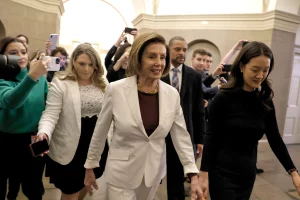
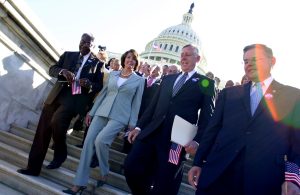


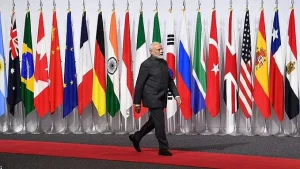
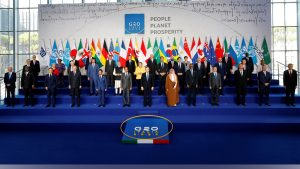
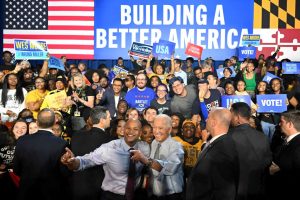

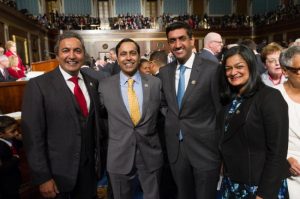
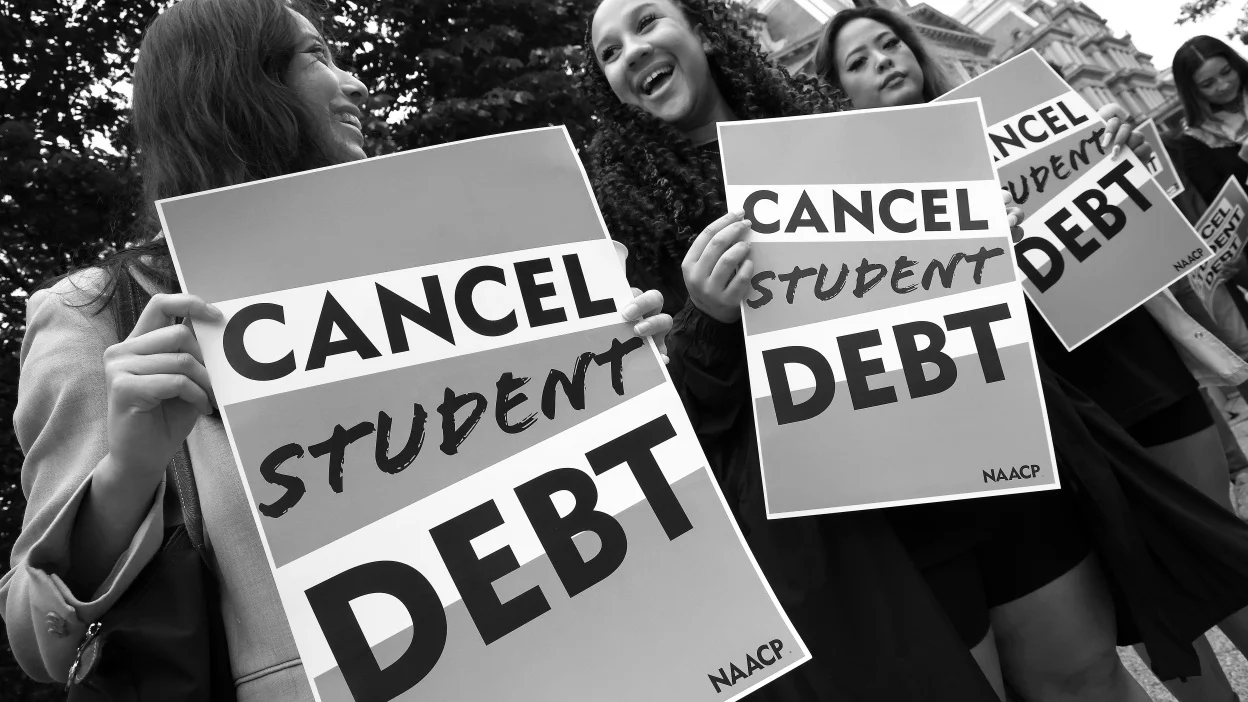
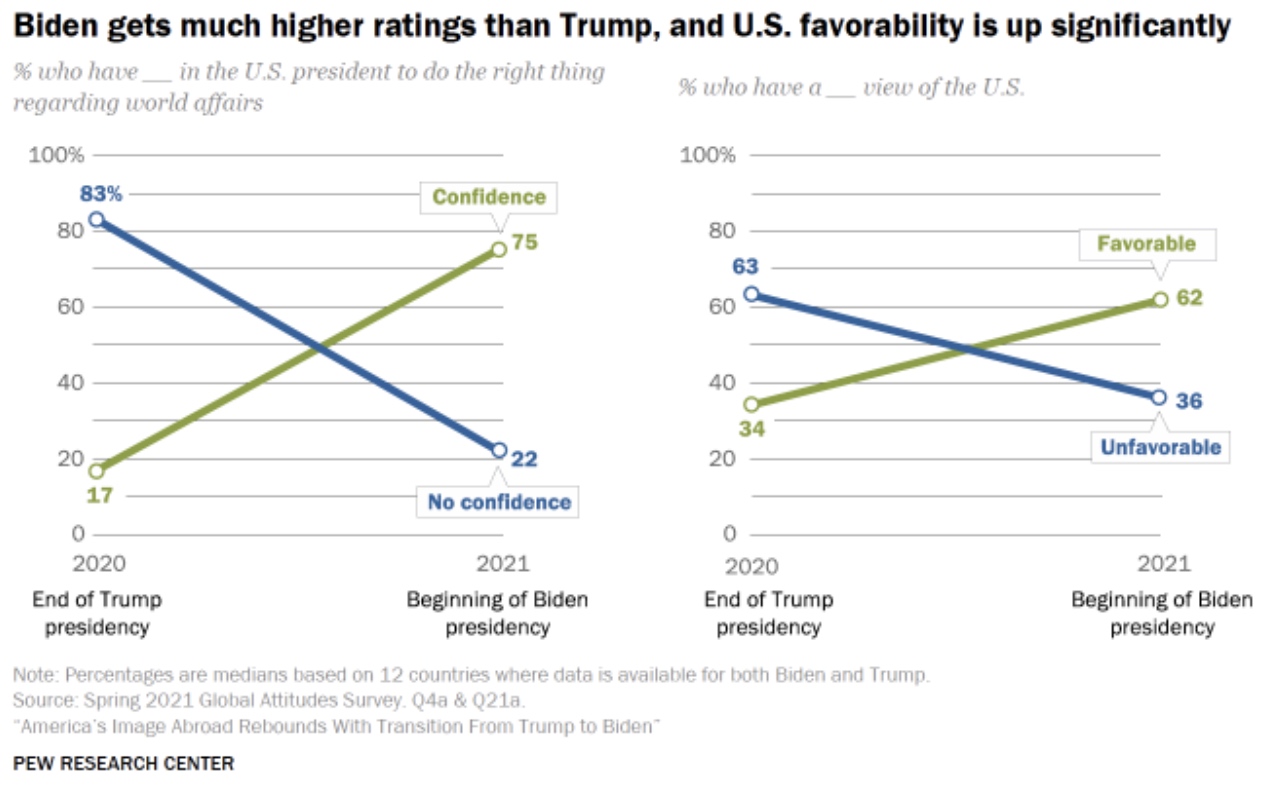
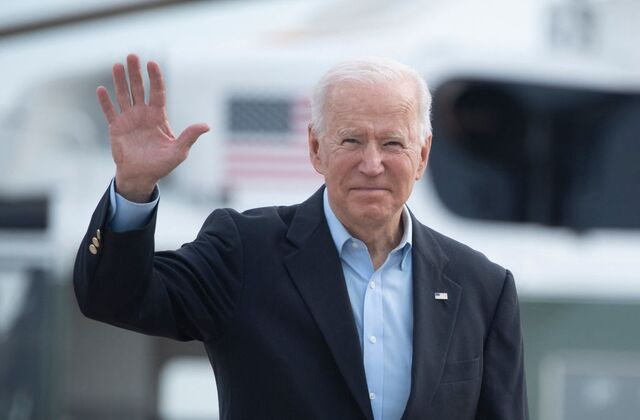

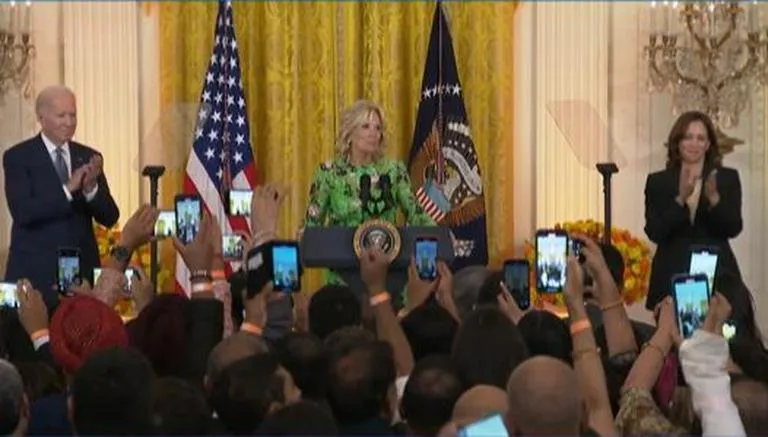 “The incredible South Asian community all across America has helped the country emerge stronger from this pandemic, building an economy that works for everyone, teaching children and caring for elders, responding to the cry for action on climate, working to fix immigration system, defending rights and freedoms, building a more just and equitable country, serving and protecting our communities and the nation, informing, entertaining and inspiring,” Biden said.
  “The room is full at the East state dining room… This is a real celebration of what the Indian American community has achieved in the United States. It’s a wonderful recognition by the President and by the White House to host all of us on Diwali. I feel very privileged to be here as an Indian American,” Atul Keshap, president of US India Business Council said during the reception.
 U.S. President Joe Biden said on Friday he was convinced Russian President Vladimir Putin had made a decision to invade Ukraine, and though there was still room for diplomacy, he expected Russia to move on the country in the coming days. Russia has repeatedly denied preparing to invade Ukraine.
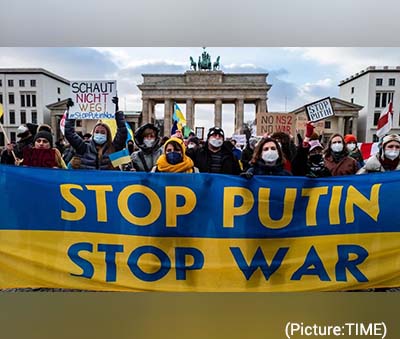 The shock to international stability could hit global markets
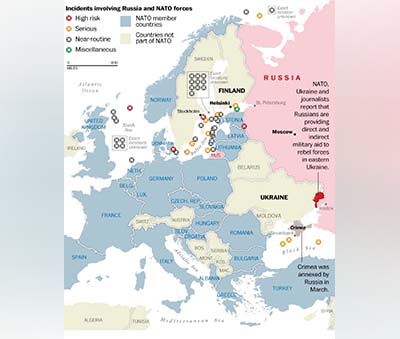 Russian cyberattacks have
  AAHOA is working with the administration to promote vaccine awareness in the hospitality industry and called for new measures to restart international travel safely earlier this year. “This is a big win for our Members, families, business, and tourism industries, especially those living in Texas and in the states bordering Canada,” said AAHOA President & CEO Ken Greene. “Cross-border operations were halted at the start of the pandemic, and AAHOA pressed the administration on the financial toll the travel ban took on small businesses.”
 That means travelers looking to enter the country, whether it’s to reunite with family and friends or as a tourist, will be able to do so again for the first time since the start of the pandemic in March 2020. The policy will start November 8, “in alignment with the new international air travel system,” Secretary of Homeland Security Alejandro Mayorkas said in
  In a Level 4 travel advisory — the highest of its kind issued by the State Department — U.S. citizens were told “not to travel to India or to leave as soon as it is safe to do so.” There are 14 direct daily flights between India and the U.S. and other services that connect through Europe, the department said.