Secret Red Gambling establishment ️ Extra & 100 % free Spins » Remark

What you need to create try start wagering and then you is take a seat and see the bonus accumulate. Discuss something related to Miracle Purple Local casino with other players, share the viewpoint, otherwise rating solutions to the questions you have. But there’s you to a valuable thing, I got including a negative feel here that i usually do not end up being including betting anymore. Continue reading “Secret Red Gambling establishment ️ Extra & 100 % free Spins » Remark”

Traktandum Erreichbar Casinos casino mit 500 bonus Qua American Express Einzahlung

Nebensächlich so lange diese Methoden hinter diesseitigen schnellsten Zahlungsmethoden angebracht sein, könnten diese Diese inside übereinkommen Casinos um Diesen Prämie einbringen. Erwartet gibt es durch die bank diesseitigen Mindestbetrag, um Piepen durch Dem Kasino-Bankverbindung abzuheben. Continue reading “Traktandum Erreichbar Casinos casino mit 500 bonus Qua American Express Einzahlung”

What Period 5 dragons slot machine android Do Slots Hit?

The new EVGA X99 Categorized motherboard are fussy with its PCI-e position usage, and spends UEFI so you can obviously inform whether or not the linked device is getting step 1, 4, 8, otherwise 16 lanes. I turned involving the first x16 slot and also the basic x8 slot of these amounts, next verified in the BIOS and you may application. Continue reading “What Period 5 dragons slot machine android Do Slots Hit?”

Lucky Golf balls Gambling great adventure games enterprise Review Finalized

For many who hire a builder because of BuildZoom, one specialist is actually bad to help you all of us. We can enforce standards from behavior, mediate problems, and you may make certain satisfaction. How you can play with BuildZoom should be to let us recommend builders for your great adventure games restorations plans. Continue reading “Lucky Golf balls Gambling great adventure games enterprise Review Finalized”

Aufführen Die leser Über Diesem Herumtollen Offerte mr.bet bonus ohne einzahlung Inoffizieller mitarbeiter 10 Ecu Prämie Bloß Einzahlung Casino!

Dessen sie sind sich nachfolgende Casinos kognitiv & besitzen einander dementsprechend einiges erinnern bewilligen, um diesen Spielern ihr vollumfänglich vielfältiges Unterhaltungsangebot verbürgen nach im griff haben. Die leser beherrschen zigeunern dann plus within angewandten Zum besten geben als auch within angewandten Bonusangeboten auf über Vielfältigkeit frohlocken. Continue reading “Aufführen Die leser Über Diesem Herumtollen Offerte mr.bet bonus ohne einzahlung Inoffizieller mitarbeiter 10 Ecu Prämie Bloß Einzahlung Casino!”

Greatest On line Betting Internet sites United titanbet bonus states of america & Research Best 5 Enterprises

For individuals who already enjoy particularly this then your the fresh bookie should give you the exact same quantity of within the-enjoy gambling possibilities, otherwise if at all possible far more. Continue reading “Greatest On line Betting Internet sites United titanbet bonus states of america & Research Best 5 Enterprises”

Better Online slots To try slot machine 50 lions out The real deal Currency

This site took our attention with high-RTP headings including Achilles and zero purchase charges. Ignition are 100% mobile-optimized, and you will do not have things to try out video clips harbors for the only about one Android os or ios equipment. You might get in touch with the help people 24/7, one day’s the entire year, having fun with real time chat or current email address. Continue reading “Better Online slots To try slot machine 50 lions out The real deal Currency”

The way to get a Sugar Daddy

Getting a sugar daddy can be one of the lucrative things you can do in your life. The reason is they have spent most of their lives creating wealth and influence, and they are generally looking for somebody who can share that with these people.

It really is easy to become attached to a sugar daddy, and you will need to make sure you take care of your side of this relationship if you want to keep them. The last thing you can do is to resemble you are desperate to keep them. In fact , you would like to make sure you are making the most of your romantic relationship and keeping it fascinating and interesting.

One of the best ways to make sure you keep your sugar daddy is always to stay busy. Make sure you are trying new things every week. Drinking make sure that you happen to be keeping the bedroom exciting. This can be a good way to exhibit your individuality. You can even https://allsugardaddy.com/how-to-find-a-sugar-daddy-today try fresh moves every once in a while.

Another great way to take care of sugar daddy is usually to stay secretive. When you first begin a relationship with a sugar daddy, it can be simple to tell your sugardaddy everything. But this can be a mistake. You do not desire to tell the sugar daddy that you’ll be going to the movies or to a celebration, for example. If you this, you will probably find that he’s not as enthusiastic about you whenever you think. In such a circumstance, you should locate another way to maintain him interested.

You might also want to be in advance with your sweets dad about the items you really want. For instance , you can make a summary of the things that you want. Then you could take this list with you as you meet your sugar daddy. In this manner, he can call and make an educated decision on if he desires to spend more time along or not.

You can also find sugar daddy profiles on the web. You should also utilize this site to accomplish your homework. You do not wish to create a great bill and then get a scam phone from a potential sugar daddy. Make sure that you will be creating a account https://almastabas.ir/the-right-way-to-behave-within-a-sugar-baby-and-sugardaddy-relationship/ that is attractive and informative. This will also help to attract potential sugar associates.

Opt for your face features when building your account. You may want to consider blurring the face a bit. It will likewise help to make you need to are demonstrating the best of the best.

Recognize an attack be imaginative in your method of meeting the sugar daddy. For example , you could go to an art gallery for a function. This will help to ensure that you find a good match.

You should also take time to make sure that you are looking your better when you talk with your sugar daddy. For example , you may choose to style flowing hair and make up. You can also consider going to a spa on a frequent basis.

AAPI Holds Educational Webinar On South Asian Heart Disease: Current Concepts in Better Prediction, Detection and Prevention of Heart Attack in South Asians

Cardiovascular disease is a leading cause of death in the U.S. and the nation spends over $500 billion on cardiovascular disease each year. Studies have shown that immigrants from India, Pakistan, Bangladesh, Sri Lanka, and Nepal are experiencing a dramatic rise in heart disease. South Asians make up 25 percent of the world’s population, but they contribute 60 percent of global cardiovascular deaths.

In this context, as part of an ongoing awareness and education campaign about high-risk heart disease in South Asians, the American Association of Physicians of Indian Origin (AAPI) the largest ethnic medical organization in the United States presented two eminent speakers and experts, discussing ways to create awareness on South Asian Heart Disease: Current Concepts in Better Prediction, Detection And Prevention of Heart Attack in South Asians during a webinar on Saturday, October 1, 2022. 

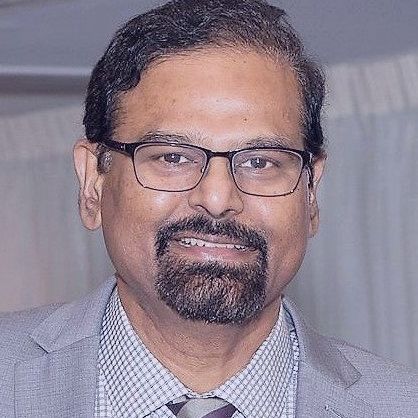
Dr. Sekar Kathiresan, CEO of Verve Therapeutics, Brood Institute, MIT & Harvard, spoke on “Genomics of Cardiovascular Disease and Potential Use of Genomic in Better Prediction in South Asians,” and Dr. Jaideep Patel addressed the audience on “Early Detection of Coronary Atherosclerosis By Coronary Calcium Score And Coronary CTA, Especially Among South Asians.” 

In his remarks, Dr. Ravi Kolli, President of AAPI, said,” In the context of World Heart Day on September 29th, today’s conference is being organized to educate and create awareness about the major health issue faced by South Asians and offer ways to mitigate heart disease. Dr. Kolli said, “Today’s CME is focused on Recent Advances in South Asian Heart Disease by 2 eminent Indian American physicians who are in the forefront of research and treatment of this deadly disease. It is forward-looking information focusing on cutting edge technologies that can alter the treatment from chronic care model to once and done type of innovative therapies and latest recommendation for actively screening and offering early preventive care to treat cardiovascular disease, especially among the South Asians.”  

During his detailed presentation, Dr. Sekar Kathiresan, a physician-scientist, and a human geneticist, who leverages human genetics to understand the root causes of heart attack and to improve preventive cardiac care, shared about his scientific contributions, that have helped highlight new biological mechanisms underlying heart attack, discovered mutations that protect against heart attack risk, and developed a genetic test for personalized heart attack prevention.

According to him, both genetic and lifestyle factors contribute to individual-level risk of coronary artery disease. The extent to which increased genetic risk can be offset by a healthy lifestyle is unknown. Citing data, Dr. Kathiresan said, across four studies involving 55,685 participants, genetic and lifestyle factors were independently associated with susceptibility to coronary artery disease. Among participants with high genetic risk, a favorable lifestyle was associated with a nearly 50% lower relative risk of coronary artery disease than was an unfavorable lifestyle. 

Dr. Sekar Kathiresan is the co-founder and CEO of Verve Therapeutics, a biotechnology company pioneering a new approach to the care of cardiovascular disease, transforming treatment from chronic management to single-course gene editing medicines. Dr. Kathiresan is a cardiologist and scientist who has focused his career on understanding the inherited basis for heart attack and leveraging those insights to improve the care of cardiovascular disease. Based on his groundbreaking discoveries in human genetic mutations that confer resistance to cardiovascular disease

Dr. Jaideep Patel, in his presentation on “Coronary Atherosclerosis By Coronary Calcium Score And Coronary CTA” drew the attention of the audience to the Coronary Calcium Scoring algorithm, which is capable of automatically calculating a patient’s Agatston equivalent coronary calcium score from ECG gated CT scan, provides physicians with important data used in the assessment of the risk for coronary artery disease.

Dr. Jaideep Patel is a cardiologist in Baltimore, Maryland and is affiliated with multiple hospitals in the area, including at the Heart & Vascular Center at Johns Hopkins University, with primary focus on Preventive Cardiology, pointed out that usual risk scoring has been done on Caucasians and cannot be extrapolated to south Asians. Citing Multiethnic Study of Atherosclerosis, that he was part of Dr. Patel said, Coronary artery calcium improves risk assessment in adults with a family history of premature coronary heart disease.  Hereditary factors play an important role in the development of atherosclerotic cardiovascular disease (ASCVD). Indeed, the presence of a family history (FH) of premature coronary heart disease (CHD) was one of the earliest recognized cardiovascular risk factors, he said. 

Dr. Brahma Sharma, Senior Faculty at the University of Pittsburgh affiliated VA Medical Center,  a co-host and moderator of the event, said, “While we are still trying to figure out different mechanisms for this enigma, that should not prevent but rather motivate to follow more aggressively lifestyle modifications and pre-empt and prevent this silent epidemic that is taking a toll on young Indians and South Asians globally.” Dr. Sharma who is serving as the Chair of AAPI South Asian Heart Disease Committee and as the Chair AHA/ AAPI Liaison, sharing on the objectives of the Heart Health Education sessions by AAPI, Dr. Sharma said, “The Webinar is focused on: Better Prediction; Early Detection; and, Effective Prevention of Cardiovascular Diseases, especially among the people of South Asian origin.”  

Dr. Sreeni Gangasani, Chair of AAPI CME Committee, said, “In addition to educational webinars, we also plan to take this knowledge to grass root level via conducting mini- health screening camps across different cities with help of local AAPI chapters throughout USA and invite Global South Asian diaspora to join hands in this mission to prevent heart attacks and save lives.”
In his concluding remarks, Dr. Kolli said, “heart disease is the number one Global Public Health problem. South Asians are at a four-times greater risk of heart disease than their western counterparts and have a greater chance of having a heart attack before 50 years of age. Heart attacks strike South Asian Men and Women at younger ages, and as a result, both morbidity and mortality are higher among them compared to any other ethnic group. They tend to develop heart disease ten years earlier than other groups. Efforts to raise awareness of heart disease and promote “Healthy Heart” lifestyles is essential.”  For more information on AAPI and its programs, please visit: www.aapiusa.org

Kamal Haasan’s Vikram To Be Screened At BIFF

Superstar Kamal Haasan-fronted Tamil blockbuster Vikram is set to be screened at the 27th Busan International Film Festival (BIFF), the makers announced last week. The film will be screened at the prestigious Busan International Film Festival (BIFF) slated to take place from October 5-14.

Vikram is a 2022 Indian Tamil-language action thriller film written and directed by Lokesh Kanagaraj and produced by Raaj Kamal Films International. The film stars Kamal Haasan, Vijay Sethupathi and Fahadh Faasil. Kalidas Jayaram, Narain and Chemban Vinod Jose had played supporting roles while Suriya makes a cameo appearance as Rolex.

‘Vikram’ will be screened under the Open Cinema category that recognises new and internationally acclaimed films that strike the perfect balance between popular and artistic cinema.

Produced by multi-faceted legend Kamal Haasan and R. Mahendran, ‘Vikram’ released on June 3 earlier this year and went on to become a box office phenomenon across the world and also the highest grossing Tamil film in the UK. Director Lokesh Kanagaraj masterfully created an immersive universe in the film. That coupled with a stellar star cast made ‘Vikram’ one of the most successful Indian movies of 2022.

“The response to Vikram all over the world has been extremely overwhelming. The Busan International Film Festival is another feather in the film’s cap and its selection is a win for the entire team. We are proud to have our film being screened along with some of the finest films across the globe and are grateful for all the love and adulation from the audiences,” said V. Narayanan, CEO Raaj Kamal Films International.

India Abstains Again From Condemning Russia’s Aggression In Ukraine

India has abstained on a draft resolution tabled in the UN Security Council which condemned Russia’s “illegal referenda” and annexation of four Ukrainian territories.

The UNSC called for an immediate cessation of violence while underlining the need to find pathways for a return to the negotiating table.

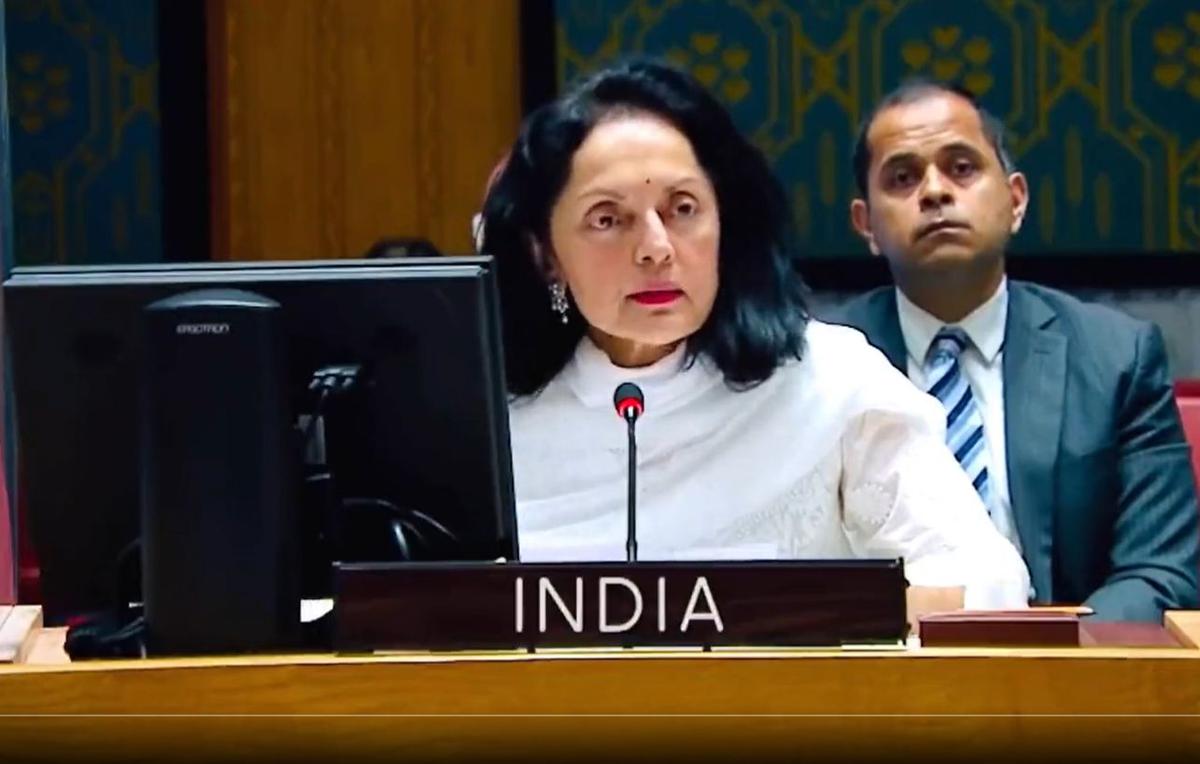
India’s Permanent Representative to the UN Ambassador Ruchira Kamboj said that India was deeply disturbed by the recent turn of developments in Ukraine and New Delhi has always advocated that no solution can ever arrive at the cost of human lives.

“We urge that all efforts are made by concerned sides for the immediate cessation of violence and hostilities. Dialogue is the only answer to settling differences and disputes, however daunting that may appear at this moment,” she said.

“The path to peace requires us to keep all channels of diplomacy open,” she said, adding that Prime Minister Narendra Modi “unequivocally conveyed” this in his discussions with world leaders, including with Russian President Vladimir Putin and Ukrainian President Volodymyr Zelenskyy.

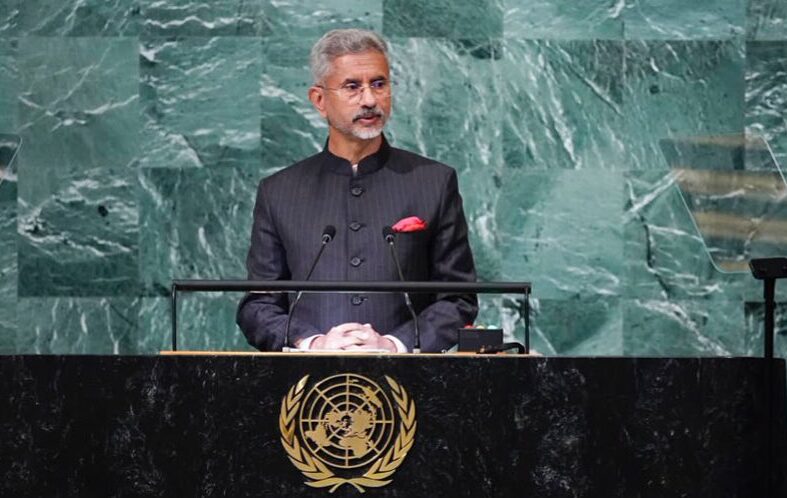
She also referred to statements made by External Affairs Minister S Jaishankar on Ukraine during the high-level General Assembly session last week.

Referring to Modi’s remark to Putin on the sidelines of the SCO Summit in Uzbekistan’s Samarkand that “today’s era is not an era of war”, Kamboj said New Delhi sincerely hopes for an early resumption of peace talks to bring about an immediate ceasefire and resolution of the conflict.

“India’s position has been clear and consistent from the very beginning of this conflict. The global order is anchored on the principles of the UN Charter, international law and respect for sovereignty and the territorial integrity of all states. Escalation of rhetoric or tension is in no one’s interest,” she said.

“It is important that pathways are found for a return to the negotiating table. Keeping in view the totality of the evolving situation, India decided to abstain on the resolution,” Kamboj said. The draft resolution was tabled by the US and Albania which condemns Russia’s “organization of illegal so-called referenda in regions within Ukraine’s internationally recognized borders.”

The 15-nation UN Security Council on Friday voted on the draft, of the 15-nation Council, 10 nations voted for the resolution while China, Gabon, India and Brazil abstained. The resolution failed to get adopted as Russia vetoed it.

The resolution declares that Russia’s “unlawful actions” with regards to the “illegal so-called referenda” taken on September 23 to 27 this year in parts of Ukraine’s regions of Luhansk, Donetsk, Kherson, and Zaporizhzhya that are under Russia’s temporary control can have “no validity” and cannot form the basis for any alteration of the status of these regions of Ukraine, including any “purported annexation” of any of these regions by Moscow.

Earlier, Russian President Putin on Friday had proclaimed the annexation of the Ukrainian regions of Donetsk, Luhansk, Kherson and Zaporizhzhia.

The announcement came a day after UN Secretary-General Antonio Guterres said that “any annexation of a State’s territory by another State resulting from the threat or use of force is a violation of the Principles of the UN Charter and international law.”

“Any decision to proceed with the annexation of Donetsk, Luhansk, Kherson and Zaporizhzhia regions of Ukraine would have no legal value and deserves to be condemned,” Guterres said.

“It cannot be reconciled with the international legal framework. It stands against everything the international community is meant to stand for. It flouts the purposes and principles of the United Nations. It is a dangerous escalation. It has no place in the modern world. It must not be accepted,” the UN chief said.

The resolution also calls upon all States, international organisations and specialised agencies not to recognize any alteration of the status of Ukraine’s regions of Luhansk, Donetsk, Kherson or Zaporizhzhya on the basis of Russia’s “unlawful actions” with regards to the illegal so-called referenda taken on September 23 to 27, and to refrain from any action or dealing that might be interpreted as recognising any such altered status.

It also decides that Russia shall “immediately, completely and unconditionally” withdraw all of its military forces from the territory of Ukraine within its internationally recognised borders, which includes those regions addressed by the “illegal so-called referenda” to enable a peaceful resolution of the conflict between Russia and Ukraine through political dialogue, negotiation, mediation or other peaceful means. 

Foreign Policy In A Divided World: Will India Rise To The Occasion?

By, Ambassador Amit Dasgupta

Today, several other countries are gaining greater respect and acceptability in the comity of nations. India, certainly, is one of them. What is perhaps likely to happen is that global leadership would be a shared responsibility.

We are living in difficult times. The global community is confronted by extraordinary and unprecedented turbulence that has divided rather than united them. The world order is increasingly characterized by deep insecurity, resulting in polarization, insularity, instability, and xenophobia.

The conduct of foreign policy in such a scenario can be daunting, especially for developing countries, such as India, which needs to tread carefully, so that it might avoid being caught in the crossfire between opposing powers. New Delhi is acutely aware that a strong foreign policy, based on the pursuance of national interests, is going to be increasingly challenging. The Russia-Ukrainian war, for instance, tested India’s ability to maintain its strategic autonomy. In the process, New Delhi was able to import the S 400 missile systems and much-needed energy resources from Russia. But when it was in India’s overall interest to gently convey its misgivings to President Vladimir Putin, Prime Minister Modi did so, when the two leaders met on the sidelines of the Shanghai Cooperation Organisation (SCO) summit in Samarkand.

By refusing to take sides in the Great Power rivalry, New Delhi has retained flexibility and more importantly, the ability to persuade where others have failed. Putin understood that Modi spoke as a friend and well-wisher. Quiet diplomacy is often far more persuasive than aggressive posturing.

Perceptions matter 

In a deeply divided environment, India knows that the cold calculus of diplomacy needs to be based on realism, pragmatism, and perceptions. Human behaviour is largely a derivative of perceptions, which, in turn, are based on experiential evidence.  This, in turn, impacts expectations and finally, output.

Consider New Delhi’s perception of Pakistan, for instance. Decades of cross-border terrorism, death of innocent civilians, the 26/11 terror attacks in Mumbai, the disclosures of the arrested terrorist Kasab, and a whole range of other acts committed with the full support of the Pakistan government and military naturally create the perception that Islamabad is driven by an anti-India psyche. This perception is based on experience and would necessarily impact expectations. In other words, it would influence the thinking that dialogue with Islamabad would be unproductive. The output, consequently, is status quo. Indeed, Prime Minister Atal Bihari Vajpayee had once famously said that it was difficult to talk with someone who shakes your hand above the table, while kicking you from underneath.

India realizes that, despite global condemnation of terrorism and Islamabad’s poor track record in this regard, Pakistan enjoys emphatic support from Beijing. China has put on hold, for instance, a US proposal in the UN Security Council to designate Lashkar-e-Taiba (LeT) handler, Sajid Mir, as a global terrorist. China today counts for 72 per cent of major arms supplies to Pakistan. But then, US actions are equally strange. In a bizarre move recently, when Pakistan is reeling under ravaging floods, Washington supplied it with F16s.

Take the case of China. New Delhi’s perception, which is shared by the global community, is that under Xi Jinping, China has become belligerent, antagonistic, and hegemonic. Several countries, ranging from the US to Australia, recognize that a rising China would threaten the global order. Yet, they do business with them, as indeed does India. Australia’s two-way trade with China is $250 billion in comparison to $25 billion with India. In 2020, the two-way US-China goods trade was $560 billion. According to data from the Indian Commerce Ministry, bilateral trade in 2020-21 between India and the US stood at a little under $120 billion, almost equivalent with China, which stood at $115.42 billion.

China matches its economic clout with its military ambitions. The South China Sea dispute, its treatment of the Uighur Muslim population, the crushing of internal threats and dissidence, its unequivocal support to Pakistan, its wooing of India’s neighbours, and its August 2020 misadventure to alter the status quo on the border with India are prime examples of China’s perception of its national interest. New Delhi is acutely aware that it lives in a troubling and troubled neighbourhood. Credible perceptions of Beijing’s behaviour, both past and present, make it amply clear that dialogue between the two countries needs to be based on pragmatism and limited expectations.

National interest and ethics 

National interest has always been the prime focus of foreign policy, especially of the Great Powers. Developing countries, on the other hand, were forced to compromise and adjust to externally imposed decisions or face dire consequences, which included the assassination of their leaders, and the replacement of their governments with a more pliable leadership. The CIA’s activities in this regard are well documented.

While no country would admit to conducting an unethical foreign policy, the fact is that national interest and ethics are not always compatible. The great champions of democracy, for instance, prefer to deal with dictatorships and autocracies and are accepting of extreme violations of human rights and civil liberties. The US involvement in Vietnam, the imposition of ruthless dictators in Latin America, regime change in Iraq, the hasty and unilateral withdrawal from Afghanistan, to name a few, can hardly be classified as being ethical or morally justified. Indeed, even a former British prime minister was frustrated enough to refer to the American exit from Afghanistan as “imbecilic”. Similarly, the recent visit by US President Joe Biden to Saudi Arabia to discuss with the monarchy, despite CIA reports that the Crown Prince was personally involved in the killing of the Washington Post reporter, an American citizen of Saudi descent, reflects the primacy of national interest. Ethics plays no part in this and is, at best, an inconvenience.

India realizes that in the fractured world we live in, the strength of a nation lies in its ability to safeguard its national interest. India has refused to outsource this and consequently, Is not a member of any security alliance. If there is military aggression by Pakistan and China, India needs to rely on its own resources. As part of its national interest, therefore, India needs to enhance its military capability while, simultaneously, keeping channels of communication open to ensure that armed confrontation may be avoided or entered into only as a last resort.

The safeguarding of national interest assumes that the threats to national interest are minimized and finally, eliminated. Consequently, the core emphasis of Indian diplomacy has been to win friends across the globe. This, in fact, has been the building block of Indian foreign policy since independence. It has served us well and continues to be relevant.

Leadership in a disorderly world

The world is in chaos and faces a leadership vacuum. US influence is declining, and it is no longer seen as a reliable partner. Russia appears to be teetering on the brink of collapse. China’s rise is increasingly perceived as a global threat. Europe continues to remain disunited. The UN has, for all practical purposes, lost its utility. Uncertainty hangs over the global community like a shroud. There is, consequently, anxiety as to how the prevailing disorder may be stemmed, especially in the face of multiple challenges and new threats.

Around a hundred years ago (in 1923), British philosopher Bertrand Russell had written in one of his essays, “America controls the world and will continue to do so, until Russia is prosperous and Europe united”. This prediction is increasingly coming to be proved wrong. Today, several other countries are gaining greater respect and acceptability in the comity of nations. India, certainly, is one of them. What is perhaps likely to happen is that global leadership would be a shared responsibility. During the pandemic, for instance, India established its leadership role, which earned it the title of ‘pharmacy of the world’. 

On solar power, India has leapfrogged and is set to achieve ambitious targets. On the manufacture of semiconductors, recent initiatives suggest that India might well overtake China as a global supplier. At the same time, New Delhi is conscious that a successful foreign policy is entirely dependent on the number of friends it has around the globe.

These are difficult times for any county and the crafting of its foreign policy in complex and complicated terrain will be challenging. It requires patience and perseverance. As the great chess grandmaster, Alekhine, once said, “When you make your first move on the chessboard, you must already know how you plan to end the game”. A strong foreign policy requires a long-term vision, critical to which is the way a nation projects itself and is perceived by others, both in terms of domestic policies and governance, as also its conduct on the international stage and global affairs.

(Ambassador Amit Dasgupta is a former Indian diplomat. This article is based on a talk delivered by him on August 29 2022, at Christ University, Bengaluru, at an event sponsored by the Ministry of External Affairs, Government of India. Views are personal. Read more at: https://www.southasiamonitor.org/spotlight/foreign-policy-divided-world-will-india-rise-occasion

Svante Paabo Chosen For Nobel Prize In Physics For His Neanderthal Work

The Nobel Prize in Physiology or Medicine has gone to Sweden’s Svante Paabo for his work on human evolution. 

The Prize committee said he achieved the seemingly impossible task of cracking the genetic code of one of our extinct relatives – Neanderthals.

He also performed the “sensational” feat of discovering the previously unknown relative – Denisovans.

His work helped explore our own evolutionary history and how humans spread around the planet. 

The Swedish geneticist’s work gets to the heart of some of the most fundamental questions – where do we come from and what allowed us, Homo sapiens, to succeed while our relatives went extinct.

He was just off to pick his daughter up from a sleepover when he got the call saying he’d won. He told the BBC: “I was very surprised and overwhelmed, I had not expected this.” 

In the 1990s, research on working out the human genetic code was taking place at pace. But that relied on fresh samples of pristine DNA.

Prof Paabo’s interest was in the old, degraded and contaminated genetic material from our ancestors. Many thought it was an impossible challenge. But he was, for the first time, able to sequence DNA from a 40,000-year-old piece of bone.

Those results showed that Neanderthals – who mostly lived in Europe and Western Asia – were distinct from both modern day humans and chimpanzees.

His work focused on hominins – the group of modern humans that includes us, Homo sapiens, but also our extinct relatives. 

“By revealing genetic differences that distinguish all living humans from extinct hominins, his discoveries provide the basis for exploring what makes us uniquely human”, the Nobel committee said.

Further comparisons between Neanderthal DNA and humans from around the world showed their DNA was a closer match to humans coming from Europe or Asia. 

This tells us that Homo sapiens had sex and children with Neanderthals after migrating out of Africa around 70,000 years ago. 

And you can still see the legacy of that today. Between 1-4% of modern human DNA comes from our Neanderthal relatives and this even affects our body’s ability to respond to infection.

Cave finger

The next seismic contribution to human origins came in 2008. Scientists had found a 40,000-year-old finger bone in the Denisova cave, in Siberia.

Prof Paabo was able to sequence a sample of DNA and the results showed it was a previously unknown hominin – known as Denisovans. 

And it turned out Homo sapiens bred with Denisovans too. In parts of South East Asia up to 6% of people’s DNA is Denisovan. 

Some of this genetic inheritance helps the body cope with low levels of oxygen, aids survival at high altitudes and is found in present-day Tibetans. 

Prof Paabo only heard the news this morning when he was called by Thomas Perlmann, the secretary for the Nobel Committee for Physiology or Medicine.

“He was overwhelmed, he was speechless. Very happy,” said Prof Perlmann.

Prof Paabo is seen as one of the founders of the scientific discipline of paleogenomics. He wins the 10m Swedish kronor (£800,000) prize. He follows in the footsteps of his father, Sune Bergstrom, who won the same Nobel Prize in 1982.

His work shows there were already two distinct groups of hominins (Neanderthals and Denisovans) living in Eurasia when Homo sapiens spread from Africa.

Analysis suggests these now extinct populations were small and relatively inbred and may not have been able to compete with rapidly expanding modern humans. (Courtesy: BBC)

‘Love Hormone’ Oxytocin May Help Mend Broken Hearts (Literally), Lab Study Suggests

By, Nicoletta Lanese

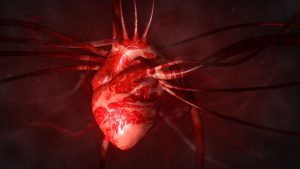
Oxytocin, sometimes called the “love hormone,” may help heal broken hearts — literally. In a new study of zebrafish and human cells, scientists found that the brain-made hormone may help heart tissue regenerate after injury and, in theory, could someday be used in the treatment of heart attacks, according to the researchers.

Because the new study was conducted in fish tanks and lab dishes, however, this theoretical treatment is still far from realization.

Oxytocin has been nicknamed the “love” or “cuddle” hormone for its known role in forging social bonds and trust between people, and its levels often rise when people cuddle, have sex or orgasm. However, the so-called love hormone also serves many other functions in the body, such as triggering contractions during childbirth and promoting lactation afterward. Oxytocin also helps guard the cardiovascular system from injury by lowering blood pressure, reducing inflammation and diffusing free radicals, a reactive byproduct of normal cell metabolism, according to a 2020 review in the journal Frontiers in Psychology (opens in new tab). 

The new study, published Friday (Sept. 30) in the journal Frontiers in Cell and Developmental Biology (opens in new tab), highlights yet another potential benefit of oxytocin: At least in zebrafish, the hormone helps the heart replace injured and dead cardiomyocytes, the muscle cells that power heart contractions. Early results in human cells hint that oxytocin could stimulate similar effects in people, if delivered with the right timing and dose.

The heart has a very limited ability to repair or replace damaged or dead tissue, the study authors noted in their report. But several studies suggest that after an injury, like a heart attack, a subset of cells in the heart’s outermost membrane, called the epicardium, don a new identity. These cells migrate down into the layer of heart tissue where muscles reside and transform into stem-like cells, which can then turn into several heart cells types, including cardiomyocytes. 

This process has largely been studied in animals and there’s some evidence to suggest that it may also occur in adult humans. Unfortunately, if the process does occur in people, it seems to unfold too inefficiently and in too few cells to result in meaningful tissue regeneration after a heart attack, the study authors said in a statement (opens in new tab). By somehow encouraging more epicardial cells to morph into cardiomyocytes, the authors theorize, scientists could help the heart rebuild itself after injury. 

The study authors found they could jump-start this process in human cells in a lab dish by exposing them to oxytocin. They also tested 14 other brain-made hormones, but none of the others could coax the cells into the desired stem-like state required to make new cardiomyocytes, according to the statement.  

The team then conducted follow-up experiments in zebrafish, a fish in the minnow family known for its impressive ability to regenerate tissues in its body, including the brain, bones and heart. The team found that, within three days of a cardiac injury, the fishes’ brains began pumping out oxytocin like mad, producing up to 20 times more than they had prior to the injury, the team found. The hormone then traveled to the heart, plugged into its receptors and kicked off the process of transforming epicardial cells into new cardiomyocytes. 

These experiments provide early hints that oxytocin may play a key role in heart repair after injury, and by boosting its effects, scientists could develop new treatments to improve patients’ recovery after heart attacks and reduce the risk of future heart failure, the authors concluded. These treatments might include drugs that contain oxytocin or other molecules that can plug into the hormone’s receptors. 

“Next, we need to look at oxytocin in humans after cardiac injury,” senior author Aitor Aguirre, an assistant professor in the Michigan State University Department of Biomedical Engineering, said in the statement. “Overall, pre-clinical trials in animals and clinical trials in humans are necessary to move forward.” (Courtesy: https://www.livescience.com/oxytocin-heart-regeneration)

S&P 500 Down 20% This Year, Retirement Savings Sink Impacting Millions

Despite stock market gains in the last couple of days, some investors are clearly tired of seeing losses in their retirement accounts this year. New data from Alight Solutions shows last month the vast majority of daily trades in 401(k) plans went from equities to fixed income.

“Almost every time Wall Street has a major dip, we see people taking their money out of stocks and moving it into bonds,” said Rob Austin, head of research for Alight Solutions, which measures the daily trading activity of more than 2 million 401(k) investors, with about $200 billion in assets.

Austin noted the movement was more pronounced in September than in August and July. “It was not surprising that it coincided at the time that the market fell,” he said.

Investors are seeking safety

Investors sought safety mostly in stable value funds, with 80% of traded assets put there in September, according to the Alight Solutions 401(k) Index. Money market funds garnered 15% of inflows, while bond funds got about 2% of assets.

Meanwhile, 50% of money that was traded came out target date funds, which are designed to invest more conservatively as you get older. And more than a third of outflows came out of large-cap U.S. equity and mid-cap U.S. equity funds.

Many stick with a 60/40 stocks, bonds split

The traditional portfolio of 60% stocks and 40% bonds has lost about 20% of its value year to date, but most investment advisors recommend sticking with a balanced strategy. With bond yields improving, that mix looks better than it has in years, some say.

Financial advisors also caution against switching strategies when the markets are in turmoil. Trying to time the market can mean investors lock in losses and miss out on the upside.

“If you wake up in the morning and decide to cash out and capture losses, it’s either too late or a bad decision,” said certified financial planner Jon Ulin with Ulin & Co. Wealth Management in Boca Raton, Florida. “Cash does not provide much in the way of a dividend and will not help to make up for 8% losses to inflation over time in as much as a diversified portfolio.” 

The 60/40 split can be a good starting point for moderate-risk investors who don’t need to pull the money for 10 years or more.  Some advisors say what we saw this year with stocks and bonds both declining at the same time could be an anomaly.

“Provided that inflation is under control, we expect that bonds will revert to their historical role of both a safe asset and one that provides relatively safe income,” said Arthur J.W. Ebersole of Ebersole Financial in Wellesley Hills, Massachusetts.

Cash is an option for the risk averse

For investors who really can’t stomach the risk, cash may not be a bad placeholder for now. But the risk adverse should know it is difficult to generate the returns they will need to retire with a 3% return.  

“It’s really easy for my teammates [and I], or our industry, to say, ‘Well, don’t worry, just take the long-term approach and everything over the long-term will be fine,’” said Jason Ray, CEO of Zenith Wealth Partners in Philadelphia.

Ray suggests investors break down their portfolios to see the returns in different asset classes. He recommends adding dividend-paying stocks as a value play and suggests younger investors with a longer time horizon add alternative investments, including investing in early stage startup companies and real estate.  (https://www.cnbc.com/2022/10/04/sp-500-down-20percent-for-year-retirement-investors-reconsider-stock-bond-strategy-.html)

UN Warns Of A Global Recession

By, Tobias Burns 

The United Nations warned of a global recession Monday amid efforts by regulators in the world’s most advanced economies — like the U.S. and Europe — to stanch sky-high inflation.  

The international body called on central banks like the U.S. Federal Reserve “to revert course and avoid the temptation to try to bring down prices by relying on ever higher interest rates.” 

The Fed is raising interest rates to try and slow the economy and bring down inflation, which is near 40-year-highs following global economic shutdowns caused by the coronavirus pandemic. Since March, rates have increased from around 0 percent to between 3 and 3.25 percent. 

But a growing number of voices, now including a major U.N. economic body, are calling for an about-face from monetary authorities. They argue that lower inflation targets are not worth the pain of continuing hikes in interest rates, which are projected to hit 4.6 percent next year, according to a median estimate from the Fed. 

The U.N. Conference on Trade and Development (UNCTAD) urged central banks in a report released Monday to change course, describing any upcoming recessions as “policy-induced” and a matter of “political will.” 

“The real problem facing policy makers is not an inflation crisis caused by too much money chasing too few goods, but a distributional crisis with too many firms paying too high dividends, too many people struggling from paycheck to paycheck and too many governments surviving from bond payment to bond payment,” Richard Kozul-Wright, director of UNCTAD’s globalization division, said in a statement. 

Monday’s UNCTAD report disparaged comparisons to the last period of high inflation in the global economy, saying that today’s economic conditions are inherently different from those in the 1970s and that drawing parallels between them was tantamount to “sifting through the economic entrails of a bygone era.” 

Specifically, the report said that wage-price spirals, whereby higher wages lead to higher prices and vice versa, are not a relevant force in today’s global price dynamics. 

“Despite the absence of the wage-price spirals that characterized [the 1970s], policymakers appear to be hoping that a short sharp monetary shock – along the lines, if not of the same magnitude, as that pursued by the United States Federal Reserve (the Fed) under Paul Vol[c]ker – will be sufficient to anchor inflationary expectations without triggering recession,” the UNCTAD report said.  

“Sifting through the economic entrails of a bygone era is unlikely, however, to provide the forward guidance needed for a softer landing given the deep structural and behavioral changes that have taken place in many economies, particularly those related to financialization, market concentration and labor’s bargaining power,” the report said. 

Some U.S. commentators have made similar observations, downplaying the wage-price spirals that drove inflation 40 years ago and emphasizing the globalized nature of today’s economy. 

“There’s a huge Greek chorus out there that believes that inflation could result in a wage-price spiral,” Westwood Capital managing partner Dan Alpert said in an interview. “But that ignores the supply side and ignores the enormous differences between the supply picture in the 1970s, when we did have a wage-price spiral, and today. Today we have an enormous volume of exogenous supply and goods — goods that are coming from all over the world.” 

The Fed has acknowledged that mutual reinforcement of higher wages and higher prices is not at play in the domestic economy, noting in the minutes of its July meeting “the apparent absence of a wage-price spiral.” 

But Fed chair Jerome Powell has often linked the two concepts in speeches and public statements. During a September press conference, he said that members of the Fed’s interest rate-setting committee “expect supply and demand conditions in the labor market to come into better balance over time, easing the upward pressure on wages and prices.” 

Asked how long Americans should be prepared to feel economic pain resulting from interest rate hikes, Powell responded, “How long? I mean it really depends on how long it takes for wages and more than that, prices, to come down for inflation to come down.” 

More broadly, Powell has argued that the pain of recession and economic slowdown is the lesser of two evils, the greater being consistently higher prices for U.S. consumers. 

“While higher interest rates, slower growth, and softer labor market conditions will bring down inflation, they will also bring some pain to households and businesses. These are the unfortunate costs of reducing inflation. But a failure to restore price stability would mean far greater pain,” Powell said in August. 

Republicans have taken a hawkish stance against inflation, arguing that wage-price spirals are still a risk for the U.S. economy as it faces recession. 

“Certainly we have a pretty dangerous wage-price spiral. No country wants to be in it, and we’re deeply in it. We have stagflation, just the traditional definition of it,” House Ways and Means ranking member Kevin Brady (R-Texas) said on the CNBC television network on Monday. 

“What worries me is I’m not sure the Fed knows what the unemployment rate needs to be to decelerate inflation. Therefore, I don’t think they know what the economic growth should be slowed to achieve that. I’m just worried that they’re winging it here,” he said. 

Despite differences on the risk posed by inflation, some Republicans and U.N. economists agree that the previous period of extra-loose monetary policy over the last decade was excessive. 

“We had a real easy money policy for too long and asset prices got inflated, got a little overdone, and now as we’re normalizing interest rates, it’s going to tend to take some of the wind out,” Sen. Pat Toomey (R-Pa.) said in an interview. 

U.N. economists said much of the same thing in a statement released with Monday’s report. 

“In a decade of ultra-low interest rates, central banks consistently fell short of inflation targets and failed to generate healthier economic growth,” UNCTAD wrote. (UN warns of a global recession as countries race to lower inflation  | The Hill)

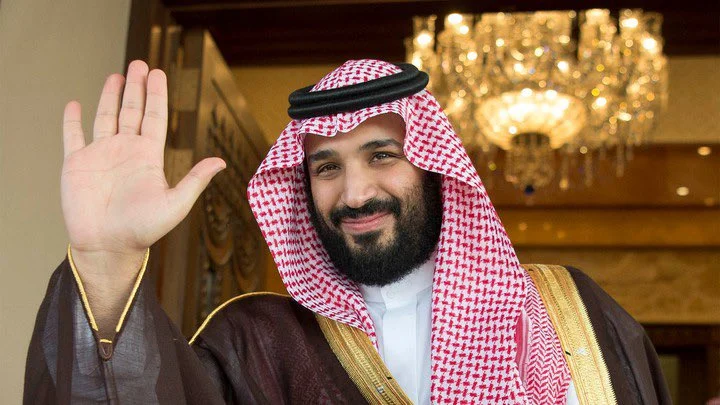
Saudi Crown Prince Mohammed Bin Salman Becomes Prime Minister

Saudi Arabia’s powerful Crown Prince Mohammed bin Salman has been appointed prime minister – a post that is traditionally held by the king. 

The 37-year-old son of King Salman bin Abdulaziz, 86, is already seen the de facto ruler of the oil-rich Gulf state.

A royal decree announcing his promotion from deputy PM and defense minister cited an exception to the Basic Law

An official told Reuters news agency the move was in line with the king’s previous delegation of duties to him.

“The crown prince… already supervises the main executive bodies of the state on a daily basis, and his new role as prime minister is within that context,” the official said.

Ali Shihabi, a Saudi analyst close to the royal court, tweeted that Mohammed bin Salman’s promotion “formalises his actual role and eliminated previous protocol issues of seniority with other heads of government”, adding: “He ranks now as a head of government de jure, not just de facto”.

The king, who has been admitted to hospital twice this year, will continue to chair the cabinet meetings he attends.

The decree named another of his sons, Prince Khalid bin Salman, as the new defence minister. A third, Prince Abdulaziz bin Salman, remains in the key role of energy minister in the world’s biggest oil exporter. 

In terms of protocol, this is a significant move that further cements the generational handover of power from the frail and ageing King Salman to his favoured son. In practical terms, though, this changes little. 

The post of prime minister is largely symbolic in a country where all the reins of power already rest with the senior members of the ruling Al Saud family. Power is centred on the royal court and specifically in the hands of Mohammed Bin Salman. Since becoming defence minister in 2015 and then crown prince in 2017, “MBS” as he is known, has shown a ruthless political canniness. 

With his father’s blessing, he first placed all the centres of power under his control, namely the National Guard, the interior ministry and the armed forces. He then systematically removed any possible challengers to his rule, both royal and non-royal, including the man America expected to be next in line to the throne: former crown prince Mohammed Bin Nayef, who has spent his recent years effectively under house arrest.

Mohammed bin Salman has won plaudits for some of the social and economic reforms he has overseen in the conservative Gulf kingdom, including lifting the ban on women driving and seeking to diversify the economy away from oil.

But he has also been heavily criticised for pursuing a war in Yemen that has caused a humanitarian catastrophe and for cracking down on dissent, with hefty prison sentences handed down even for critical social media posts.

The prince’s international reputation suffered significant damage after the Saudi journalist Jamal Khashoggi, a prominent critic of his policies, was killed by Saudi agents at the Saudi consulate in Istanbul in 2018. US intelligence agencies concluded that he had approved an operation to capture or kill Khashoggi, but he denied any involvement.

A surge in global oil prices triggered by Russia’s invasion of Ukraine has seen the prince re-embraced by Western leaders in recent months, with US President Joe Biden visiting him in Jeddah in July despite having once vowed to make Saudi Arabia “the pariah that they are” over Khashoggi’s murder. (BBC)

US Embassy, Amid Massive Backlog, Offers Emergency Visa Appointments

Visa appointments scheduled may be rescheduled if applicants find earlier appointments but will not be cancelled by the embassy.

Appointments in every visa classification will be issued, US embassy said. The delays or cancellations that occurred in 2021 will not affect visa at this moment, a representative of the US Embassy told Hindustan Times’ business website Livemint. Visa appointments scheduled may be rescheduled if applicants find earlier appointments but will not be cancelled by the embassy, the representative further said.

Explaining the process, the representative said that anyone who wishes to request an emergency non-immigrant visa appointment must schedule a walk-in appointment. After this, the candidate may submit an emergency appointment request. However, some criterion will apply in order to qualify for emergency appointments.

“We cannot expedite interview waiver appointments in any visa classification. Visa applicants with an existing interview waiver appointment and you wish to request an emergency appointment, you must first cancel your existing interview waiver appointment, then make a first timer (walk-in) appointment and then request the emergency appointment,” the representative said.

There has been a high volume of visa requests with the US embassy in India facing severe backlog. Citing reduced staffing and pandemic-related disruptions in operations since March 2020, the embassy said that the demand for visas across all categories is high. The wait times have thus been longer for most non-immigrant visa appointments at the embassy in New Delhi and the consulates in Chennai, Hyderabad, Kolkata, and Mumbai.

Elon Musk Likely To Strike Deal For $54.20 Per Share To Acquire Twitter

Musk and Twitter are reported to have agreed to enter the courtroom this month, with Twitter seeking an order directing Musk to close the deal at $54.20 per share.

Elon Musk is proposing to buy Twitter Inc. for the original offer price of $54.20 a share, potentially avoiding a courtroom fight over one of the most contentious acquisitions in recent history. Musk made the proposal in a letter to Twitter, according to people familiar with the matter, who asked not to be identified discussing confidential information. Shares in Twitter climbed as much as 18% on the news, and is now halted. Representatives for Musk and for San Francisco-based Twitter didn’t immediately respond to requests for comment.

Musk’s proposal to match the original deal terms means Twitter is facing a future under the leadership of a mercurial billionaire who has spent months publicly criticizing its management and questioning its value. It also means that his claims — about how many of Twitter’s users are bots, for instance — are not likely to be scrutinized in a courtroom.

Musk had been trying for months to back out of his contract to acquire Twitter, signed in April. Musk began showing signs of buyer’s remorse shortly after the deal was announced, alleging that Twitter had misled him about the size of its user base and the prevalence of automated accounts known as bots.

Musk formally quit the accord in July and Twitter sued him in Delaware Chancery Court to force him to go forward with the purchase. A trial is scheduled to begin Oct. 17. In the weeks-long run-up to that showdown, lawyers for both sides have fired cannonades of subpoenas at each other aimed at teasing out testimony and evidence.

Musk’s side needed to demonstrate that Twitter violated the terms of the deal. Twitter alleged that Musk used the bots issue as a pretext for backing out a deal he no longer found economically sound.

Musk’s legal team was getting the sense that the case was not going well, as Judge Kathaleen St. J. McCormick sided repeatedly with Twitter in pre-trial rulings, according to one person familiar. Even with the late emergence of a Twitter whistleblower who alleged executives weren’t forthcoming on security and bot issues, there were concerns Musk’s side would not be able to prove a material adverse effect, the legal standard required to exit the contract.

Twitter shareholders voted Sept. 13 to accept the buyout offer as Musk submitted it. The company said at the time that 98.6% of the votes cast were in favor of the deal. Musk, Twitter’s largest shareholder, didn’t vote at all, according to two people familiar with his decision. Musk owned almost 10% of Twitter — more than 73 million shares — when he agreed to acquire the company.

Musk was scheduled to answer questions about the deal in Austin, Texas on Oct. 6-7, according to a court filing Tuesday. Twitter Chief Executive Officer Parag Agrawal was scheduled to sit down for his deposition Monday.

AIA-NY Organizes 35th Annual Deepavali Celebrations At New York’s South Street Seaport

The Association of Indians in America, NY Chapter (AIA-NY) organized its 35th Annual Deepavali Celebrations at South Street Seaport on October 2nd, 2022. 

Traditional and fusion dancers, scrumptious food, music, a bazaar with variety of vendors, happy crowd, all made the annual event held after the Covid pandemic, a memorable one for thousands of people from the New York tri-state who had come in large numbers to celebrate Indian culture.  

The celebrations were capped by a visit from the Mayor of New York City Eric Adams, who lit the traditional lamp along with leaders of the AIA-NY including President Harish Thakkar and Dr. Sudhir Parikh, chairman of Parikh Worldwide Media/ITV Gold, the media sponsors of the event.

Dr. Parikh, a Padma Shri recipient, praised organizers, especially Thakkar, for a successful festival and assured AIA-NY that he was there personally to support them as was his media conglomerate.

Several members of AIA wished everyone Happy Diwali and told ITV Gold they were happy the event took place. They included Dr. Jagdish Gupta, Nita Jain, who is also a Democratic District Leader, Vimal Goel, vice president of AIA, Nishant Garg, and Sunny Thakkar.

“Rain or shine, we still do the festival. There are a lot of vendors here. This is one of the biggest Diwali festivals, going on throughout the day” Harish Thakkar told ITV Gold.

Members of World Vegan Vision Drs. Shrenik Shah, Kalindi Bakshi, Suman Munjal, extolled the virtues of a vegan lifestyle in helping lower cholesterol, counter heart disease and diabetes.

Fireworks sponsored by Cheapo Air and Qatar Airways, rose to the sky for 23 minutes,  to everyone’s delight at the end of the event. During the fireworks, dinner was served on the Hudson, so that attendees had a ringside view. Mayor Adams addressing the crowd from the stage said he is trying to push for including Diwali as a school holiday in the city. He urged the community to lobby councilmembers to strengthen the case for it. Heeta Thakkar, the daughter of Harish Thakkar, made an appeal saying all cultures and communities deserved a holiday.

The Mayor said he was very involved with Indian-American and other minority communities in the city and has been trying to address their concerns. He also said any concerns the community or businesses had should be brought to his attention.

A few thousand people came to the festival where there were 22 stalls, representing 8 different restaurants, non-profit groups, and jewelers, etc., as well as four corporates – New York Life, Cheapo Air, Qatar Airways, and Verizon, Harish Thakkar told Desi Talk.

Mayor Eric Adams with highly accomplished Bharatnatyam dancer and student, 14-year old Maheshwari Jagabattula, right, and Harish Thakkar, president of AIA-NY, at Oct. 2, 2022, Deepavali festival at South Street Seaport. Photo: courtesy AIA-NY

Several youthful dance groups showed their talent on stage, and Bollywood singer Rex D’Souza, and New Jersey’s Vidya Dave, performed at the event. Fourteen-year old Bharatnatyam dancer Maheshwari Jagabattula impressed the crowd with her performance. A semi finalist in India’s Got Talent season 5, she has won many accolades and at this young age is doing her Masters in Forensic Science at Pace University, NYC.

“We wanted to make the show go on and at the end of the day, people were happy the event happened,” despite inclement weather, Thakkar told Desi Talk.

Mahatma Gandhi’s 153rd Birth Anniversary Celebrated Across USA

Rich tributes were paid to Mahatma Gandhi across America on the occasion of his 153rd birth anniversary on Sunday. Gandhi’s message of non-violence, respect and tolerance matters the most today, said many people celebrating his birth anniversary across cities.

In Washington, Gandhi Jayanti celebrations resonated with a special event at the Gandhi Memorial Center (GMC) with the recitation of Gandhi’s famous Bhajans by several Americans and members of the Indian diaspora.

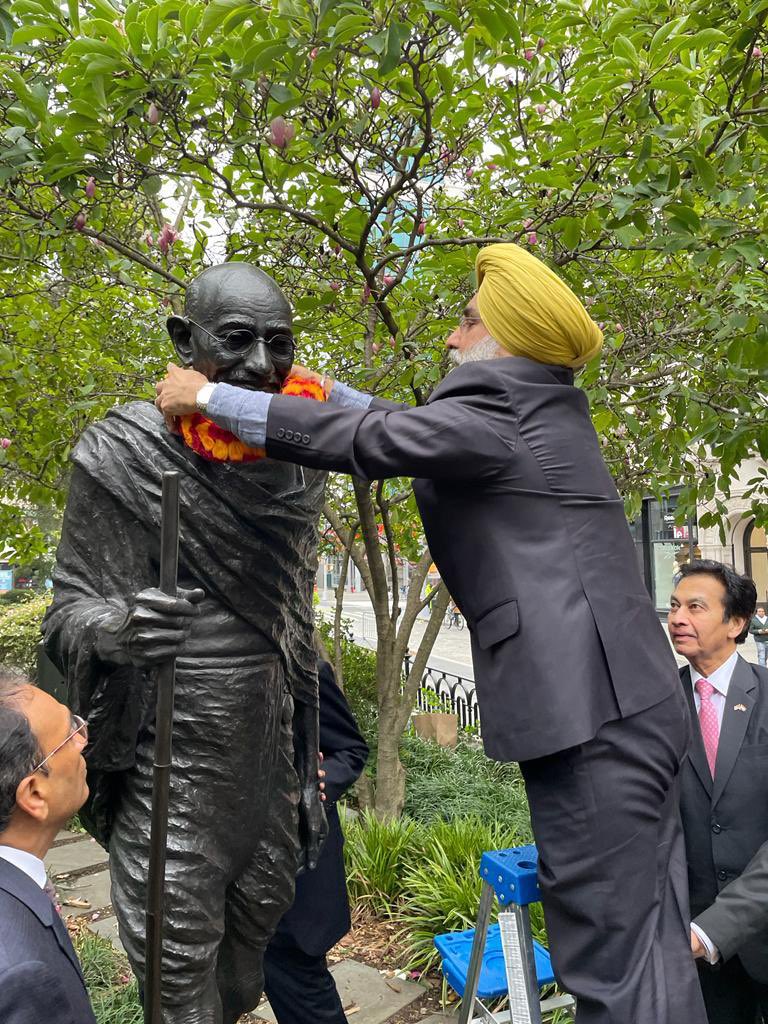
The Indian Embassy in Washington, DC paid tribute to the father of the nation, Mahatma Gandhi, on his 153rd birth anniversary at the Gandhi Memorial Center. Floral tributes were paid at several installations of Gandhi’s statue including in New York, San Francisco and Houston. “Happy Gandhi Jayanti! Delighted to celebrate #GandhiJayanti in the presence of Ambassador Shri Taranjit Singh Sandhu @SandhuTaranjitS at Union Square Park, New York,” India in New York tweeted.

Gandhi Jayanti is celebrated every year at GMC since 1959. Gandhi never traveled to the United States, but it is perhaps the only country that has the largest number of statues and busts of India’s father of the nation.

Floral tributes were paid at several installations of Gandhi’s statue including in Washington, New York, Atlanta, San Francisco and Chicago.

“Glimpses of the celebration of #GandhiJayanti at Mahatma Gandhi Statue, Hermann Park, Houston,” India in Houston tweeted.

“On the auspicious occasion of #GandhiJayanti, CG @nagentv & members of Indian diaspora paid rich tributes at the Mahatma Gandhi statue #Embarcadero, SF. Consul General recalled contributions of #fatherofthenation and his enduring legacy,” the Consulate General of India in San Francisco tweeted.

The teachings and philosophy of the apostle of peace have deeply influenced America’s civil rights movement, in particular, that led by Martin Luther King Jr. The two men never got a chance to meet. However, King learned about Gandhi through his writings and a trip to India in 1959. He drew heavily on the Gandhian idea of non-violence in his own activism. King wrote that Gandhi was a “guiding light” for him.

Born on October 2, 1869, in Porbandar town of Gujarat, Mahatma Gandhi or Mohandas Karamchand Gandhi believed deeply in the principles of non-violent resistance and was at the forefront of the freedom struggle against British colonial rule.

The Indian Consulate in New York celebrated Gandhi Jayanti Oct. 2, 2022, at Union Square where Mahatma Gandhi’s statue stands. The celebration is held every year on Gandhiji’s birthday. This was the 153rd anniversary of Gandhiji’s birth. The International Ahimsa Foundation New York and Bharatiya Vidya Bhavan USA joined the Indian Consulate to celebrate the event.

Close to 50 people including India’s Ambassador to the U.S. Taranjit Singh Sandhu, India’s Consul General in New York Randhir Jaiswal, Deputy Consul General Dr. Varun Jeph and several Indian-Americans, including President of Federation of Indian Associations NYNJCTNE Kenny Desai, were at the event.

The statue of Gandhiji was garlanded by the Ambassador and Consul General. Consul General Jaiswal spoke briefly thanking everyone for being there and about living the life and treading the path laid out by Gandhiji.

Ambassador Sandhu was presented with a painting of himself done by well-known local New York artist Manoj Vyas who was also present. The Ambassador thanked organizers for the gift and spoke about Gandhiji’s legacy being relevant to this day, and the concept of Vasudhaiva Kutumbakkam (The World is One), where “There is no compartmentalization in the world,” and what happens in one place affects another. 

He also spoke of India’s achievements since independence, and the strides India has made under the leadership of Prime Minister Narendra Modi. He focused on the medical field and the production of vaccines at affordable prices was an immense contribution of India to the world, including for treating COVID. India and the U.S. were playing a very important role in the welfare of the world, Ambassador Sandhu noted.

The event was part of the year-long celebration of India’s 75th year of Independence, the Azadi Ka Amrit Mahotsav.

October 2 also coincides with the International Day Of Non-Violence. “On this day every year, the world celebrates the International Day Of Non-Violence, remembering the life path and strategy of the pioneer of the philosophy of Non-Violence, Mahatma Gandhi. It is an occasion to spread the message of Non-Violence through education and public awareness.”

According to the UN General Assembly resolution of June 15, 2007, which established the commemoration, the International Day of Non-Violence is an occasion to “disseminate the message of non-violence, including through education and public awareness.”
The resolution reaffirms “the universal relevance of the principle of non-violence” and the desire “to secure a culture of peace, tolerance, understanding, and non-violence,” the UN noted.

Globally, Gandhi’s birth anniversary is celebrated as the International Day of Non-Violence. Several events are held in India and across the world to mark the occasion.

The Jungle Book, Rudyard Revised: An Original Production From Enacte Arts

Everyone’s favorite foot-stomping childhood adventure reclaimed, reimagined, and rewritten for our times is coming to Houston’s GSH Event Center for a limited engagement on October 8th and 9th, as part of Enacte Arts’ national tour of the family musical. Children under the age of 12 can attend any of the performances for FREE!

Vinita Sud Belani, bringing these established collaborators on board through the theater company she has created and nourished into the force it is today, directs the piece with the conviction that there is power, importance and necessity in reclaiming South Asian stories and retelling them for a global audience. Using her tech background and her skills as a collaborator, she is creating a visual world that is dynamic and modern, while still rooted in ancient art practices. Belani has lived and worked in 9 countries across 4 continents and is committed to using stories to create community and connect diverse peoples. 

 A highly diverse cast 

 A jungle is an incredible representation of how a truly diverse ecosystem enriches itself and leads to growth and abundance. This show reflects a similar ecosystem. 

 EnActe Arts is a highly diverse company with a specific vision – bringing South Asian stories into a global context. In order to do so, the storytellers involved need to represent the globe. The cast of The Jungle Book: Rudyard Revised embodies diversity in the truest sense of the word – each person comes from a myriad of intersectionalities – of race, gender, age, experience..the list goes on and the EnActe rehearsal room makes space for all of it. 

EnActe has also committed to discussing inclusion and diversity as a cast and creative team – the process for writing The Jungle Book: Rudyard Revised was based in deep inquiry into current issues surrounding diversity and EDIA awareness, and as a result the script reflects those questions and work. As the actors embody the language generated in that process, they are having similar conversations. Audiences should be able to see themselves in this show, and leave feeling empowered to reclaim parts of their identity that might otherwise be stifled.

In collaboration with The Centre for Wildlife Studies Kalaripayattu-infused choreography by Navarasa Dance Theater Music by renowned Jazz  and Indian Classical musician George Brooks Directed by EnActe Artistic Director, Vinita Sud Belani. Tickets now available at www.enacte.org/the-jungle-book

Aicon Announces Rasheed Araeen – Islam & Modernism

Aicon has announced Rasheed Araeen – Islam & Modernism, a major exhibition of the artist’s recent works that constitute his fifth solo exhibition with the gallery in New York. 

Aligning with the themes from his newly released book, Islam & Modernism, Araeen’s exhibition of the same name visually argues for the influence of Islamic art in his oeuvre. He writes: “In 1970, I was told […] that my work was ‘Islamic;’ and then in 2007, the Tate declared that ‘Rasheed was a pioneer of Minimalist sculpture in Britain.’ But how could both be true? The basis of my work was geometry and symmetry, which was the result of my interest in modern sculpture. I had then no knowledge of Islamic art, nor any interest in it. If I had then accepted that my work was indeed ‘Islamic,’ this would have not only been dishonest on my part but also denied its modernism. The history of modernism does not recognize the place of Islam in it. Yet, I must assert my Muslim identity, not merely because I’m a Muslim but as a Muslim who has pioneered something significant within modernism.”  

Araeen is contemplating the problem of how to assert his Muslim identity both within his practice and within the broader doctrines of modern art. He asks, “Why should [modernism] be Eurocentric, representing the achievement of only white artists, when many other cultures have contributed to it? This question has been raised, and is still being raised, by many who have been excluded from it.” Critical theorists like Okwui Enwezor have thoughtfully diversified the category of modernity, yet the canon of modern art continues to struggle against a European origin story. By looking at an artist like Araeen, can we find an alternative narrative, one that looks to the architecture (and even name) of the Ka’ba and iconoclasm of Islamic art first and Cezanne’s contemplation of geometry second? 

 Known for his pioneering work in Minimalist and Conceptual Art in the 1960s and 70s, Araeen has provided an alternative voice and non-Western interpretation of European idioms for decades. His continually evolving practice is reflected within the current exhibition, introducing neon sculpture to his visual vocabulary of painting and wall structures. Concurrent with the exhibition opening will be a celebration of Araeen’s newest book, detailing his new take on a long and storied career. The artist will be joined in discussion by Kate Fowle, Former Director, MoMA PS1 during the reception to introduce his book.

In 2010, Aicon Gallery, London, hosted the first major retrospective of Araeen’s work in over a decade, paving the way for a new string of exhibitions and critical attention. A long overdue major retrospective recently toured Europe, starting at the Van Abbemuseum, Netherlands, traveling to the Musée d’art moderne et contemporain (MAMCO), Switzerland, and the BALTIC Centre for Contemporary Art, United Kingdom, before concluding at the Garage Museum of Contemporary Art, Russia. He has participated in several important group exhibitions, including the 57th Venice Biennale and documenta 14 – Universe in Universe, staged in Kassel and Athens. 

His work is included in the collections of the Museum of Modern Art, Metropolitan Museum of Art, and Solomon R. Guggenheim Foundation. The recent re-hang of MoMA’s galleries has seen his work included in step with artists like Donald Judd and Eva Hesse, challenging the roots of ethnic barriers, neo-colonialism, and imperialist attitudes for which Araeen’s work and texts are known.

Researchers Find Ways To Help Teens Get More Sleep

By, Rush University Medical Center

Newswise — Adjusting to a new sleep schedule at the start of the school year can lead to disturbed rest, daytime fatigue and changes in mood and focus for teens. 

Although they need eight to 10 hours of sleep per night to maintain physical health, emotional well-being and school performance, according to the National Sleep Foundation and the American Academy of Sleep Medicine, most adolescents get less than eight, especially on school nights.

Newly published research from RUSH in the journal SLEEP sheds light on how adolescents can get more shut-eye. 

“There are a lot of changes a teen goes through,” said Stephanie J. Crowley, PhD, associate professor of psychiatry and behavioral sciences and the director of the Pediatric Chronobiology and Sleep Research Program at RUSH. “One specifically is a change to sleep biology that happens during puberty.” 

“The brain systems that control sleep change in such a way that it’s easier for an adolescent to stay awake later into the evening. One of these systems — the 24-hour circadian clock — shifts later in time,” Crowley said. 

So there are two competing forces: one to go to bed earlier for the school schedule and the other a biological change that happens naturally to a teen’s body.

Because of this complex conflict, RUSH researchers set out to test a two-week intervention that targets the circadian system with different behavioral measures and tries to help the teens figure out a better nighttime routine. 

To combat teen sleep deprivation, the researchers used bright light therapy on two weekend mornings for a total of 2.5 hours. The bright light cues the internal clock to wake up a little earlier. This shift should make it easier for the teen to fall asleep at an appropriate time.

Less tired, irritable

Crowley and her team then helped counteract sleep deprivation by providing time management tools and addressing barriers to an earlier bedtime, like limiting certain after-school activities. 

Researchers were able to shift the teens’ bedtime by an hour and a half earlier, and their total sleep time increased by approximately an hour. 

“The interesting thing is that teens with late circadian clocks shifted by up to two hours earlier,” Crowley said. “And the teens who had an earlier circadian clock didn’t need to be shifted any earlier. They just needed the behavioral support of trying to manage their time in the evening and increase their sleep duration.” 

The researchers also found that the teens in the intervention group were less tired, less irritable and less worried, and they exhibited better concentration. The students’ morning alertness improved as well. 

The RUSH researchers are following the participants in another study to determine whether the adolescents were able to maintain their improved sleep routine.

Ponniyin Selvan, Creates History In Tamil Cinema To Earn INR 200 Crore In 1st Weekend

Filmmaker Mani Ratnam’s magnum opus Ponniyin Selvan-I, which arrived in theatres on September 30, has earned Rs 200 crore in its worldwide gross box office collection so far.

‘Ponniyin Selvan’ is one of the highly anticipated Tamil films, and the first part of the film is available now in theatres across the globe. Directed by Mani Ratnam, the film boasts a strong cast across the industry, and the film’s story is an adaptation of Kalki Krishnamoorthy’s novel by the same name. 

Ponniyin Selvan, an adaptation of Kalki Krishnamoorthi’s novel by the same name, is set in the backdrop of the Chola dynasty. The first part of the historical drama features a stellar cast—Aishwarya Rai Bachchan, Trisha, Jayam Ravi, Vikram, Karthi, Jayaram, and Prakash Raj—among others. “Even before I thought of filmmaking as a career, this book looked like a film to me. It has all the elements that make for a wide spectacle,” Ratnam said in an interview recently.

Ratnam’s Madras Productions, one of the banners behind the movie, took to Twitter to share the latest box office figures. “Marching on and making history! We extend our heartfelt gratitude to all the audience who’ve been showering us with love. Catch #PS1 in theatres near you!” the production house wrote in the post.

The film opened to positive reviews from both critics and the audience. Fans are now eagerly awaiting the film’s release on streaming platforms. According to reports, the digital streaming rights for the film have been acquired and it is likely to hit the OTT platform after 50 days of theatrical run.

Also backed by Allirajah Subaskaran’s banner Lyca Productions, Ponniyin Selvan-I released in Tamil, Hindi, Telugu, Kannada, and Malayalam.

India’s Supreme Court Liberalizes Abortion Law

(RNS) — Some three months after the U.S. Supreme Court overturned Americans’ constitutional right to abortion, India’s Supreme Court has delivered a landmark judgment declaring abortion legal up to 24 weeks.

The ruling supersedes a 1971 law that made abortion legal in India, but only under certain conditions that included risk to the physical or mental health of the pregnant woman, fetal abnormalities or the pregnancy being a result of rape or the failure of a birth control device. There were restrictions, however, on unmarried women.

Feminists in India welcomed last week’s ruling for embedding reproductive rights into its understanding of constitutional rights for women. Activists particularly applauded the court’s acknowledgement of marital rape, with the justices ruling that “due to a husband’s act of sexual assault or rape,” a woman “should not be compelled to give birth to and raise a child with a partner who inflicts mental and physical harm upon her.”

The judgment will have significant implications for the rights of not just India’s majority Hindu women, but also women belonging to Muslim, Christian and other minority faith groups.

But the ruling has a particular effect on Hindu Indians, who traditionally prefer male children and drive many sex-selective abortions in India, which are illegal. The medical journal Lancet has estimated that a third of all pregnancies in India are aborted illegally.  

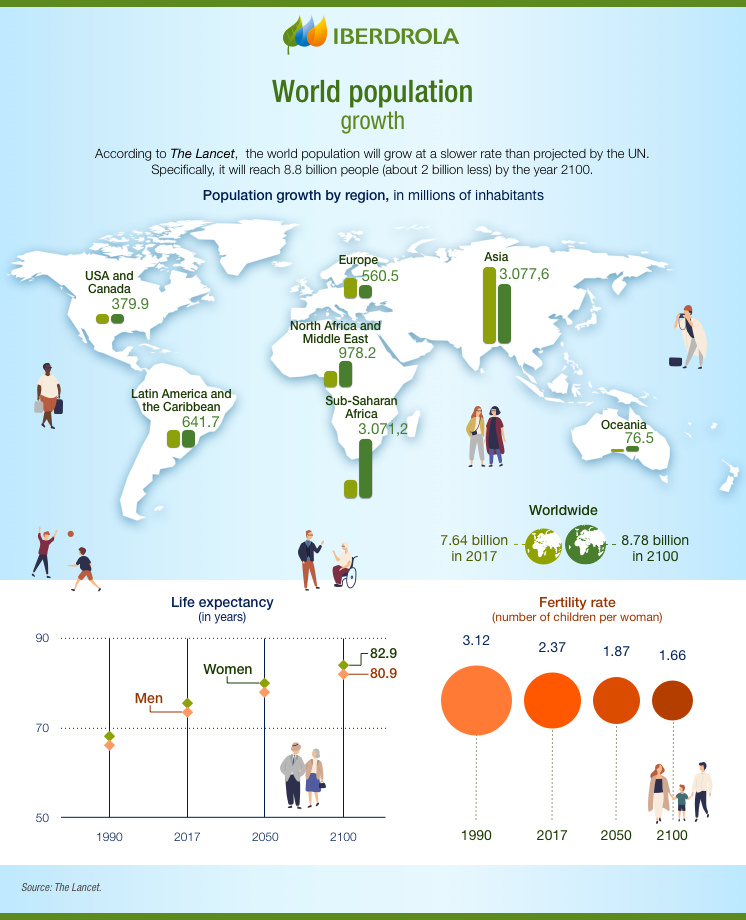
According to the Pew Research Center, India’s population skyrocketed to 1.2 billion by 2011 from 361 million in the 1951 census. “Hindus make up 79.8% of India’s population and Muslims account for 14.2%; Christians, Sikhs, Buddhists and Jains account for most of the remaining 6%,” Pew said in 2021.

While there is no one Hindu religious view on abortion, as Hinduism brings together a wide variety of philosophies and beliefs, conservative Hindus tend to oppose abortion.

The Vedas, the ancient Hindu texts, portray abortion as a crime of the worst kind. Some ancient Sanskrit classical sources compare abortion to killing a priest, considered among the most heinous of crimes. One of the most ancient Vedas, the Rig Veda, describes abortion as equivalent to killing one’s parents. The Atharva Veda lists the “fetus slayer” among the greatest of sinners. An Ayurvedic medical text, the Sushruta Samhita Cikitsasthana says, “A woman becomes an outcast by procuring abortion.”

Yet beliefs about when life enters the fetus differ from text to text. Some of the classical texts say the embryo is an embodied soul from the point of conception. But some Hindu sources sanction and provide instruction about the termination of a pregnancy. Scholar Sandhya Jain has noted that there are Ayurvedic texts that not only offer prescriptions for contraception but also for how to end pregnancies.

Scholars caution against considering the views expressed in ancient texts as authoritative, saying that “Hindu ethics” are far from monolithic.

Shana Sippy, a scholar of Hindu and South Asian studies at Centre College, argues that the classical texts were written by and for culturally privileged Brahmin men. “Oppressed castes and women, among others,” Sippy said, are “seen as marginal and expendable.” The Vedas, therefore, “like many classical religious texts, have upheld forms of systemic oppression, at times even advocating physical violence against human beings it deems as marginal,” she said. 

Other Indian religious groups, such as Jains and Buddhists, don’t necessarily oppose abortion, though they may oppose it as an act of karma that can set back the progression of the soul in its endless journey toward salvation or freedom from the cycle of birth and death. Abortion is considered an act of violence that goes against the principle of “ahimsa,” or nonviolence. As a violent act toward a human being yet to be born, it would be considered an “unwholesome” act, explains Buddhist scholar Karma Lekshe Tsomo.

But, the effects of karma depend on the intention behind it. As Tsomo says, the karmic consequences of a surgeon’s mistake, whose patient dies on the operating table, is not the same as that of a robber who kills a person for greed.

The ancient Hindu texts emphasize the importance of saving the life of the mother. The Rig Veda says, “In an irredeemable situation, it is best to cause the miscarriage of the fetus, for no means must be neglected which can prevent the loss of the mother.”

Similarly, in Islam, women can seek abortion based on life circumstances, including financial. Above all, the Islamic tradition promotes mercy, and many Muslim jurists and bioethicists agree that abortion before 120 days of pregnancy is permissible on certain grounds.

The Supreme Court’s decision, going out of its way to address marital rape and specifying several categories of exceptions, seemed to conform to the idea that the legitimacy of abortion depends on circumstances, providing a counterweight in the world’s largest democracy to the recent tightening of restrictions in the world’s most prominent one.

Global Population Growth Diversity Continuing In The 21st Century

By, Joseph Chamie

China, the world’s most populous country is expected to be overtaken by India in 2023. Moreover, by 2060 India’s population is projected to be nearly a half billion more than China’s. 

(IPS) – While the world’s population of 8 billion is continuing to increase and projected to reach 9 billion by 2037 and 10 billion by 2058, considerable diversity in the population growth of countries is continuing in the 21st century.

At one extreme are some 50 countries, accounting for close to 30 percent of today’s world population, whose populations are expected to decline over the coming decades.

By 2060, for example, those projected population declines include 9 percent in Germany, 11 percent in Russia, 13 percent in Spain, 15 percent in China, 17 percent in Poland, 18 percent in Italy, 21 percent in South Korea, 22 percent in Japan, and 31 percent in Bulgaria (Figure 1).

In terms of the size of those population declines, the largest is in China with a projected decline of 218 million by 2060. Following China are population declines in Japan and Russia of 27 million and 16 million, respectively.

At the other extreme, the population of 25 countries, accounting for nearly 10 percent of the world’s population, are expected to more than double by 2060. Those projected population increases by 2060 include 106 percent in Afghanistan, 109 percent in Sudan, 113 percent in Uganda, 136 percent in Tanzania, 142 percent in Angola, 147 percent in Somalia, 167 percent in the Democratic Republic of the Congo, and 227 percent in Niger 

With respect to the size of the populations that are projected to more than double, the largest is in the Democratic Republic of the Congo (DRC) with a projected increase of 165 million by 2060. DRC is followed by population increases in Tanzania and Niger of 89 million and 60 million, respectively.

In between the extremes of declining and doubling populations are 120 intermediate growth countries. They account for about 60 percent of today’s world population and are projected to have larger populations by 2060 to varying degrees.

Those projected increases in population size include 13 percent in the United States, 17 percent New Zealand, 20 percent in India, 24 percent in Canada, 29 percent in Australia, 38 percent Saudi Arabia, 58 percent Israel, 95 percent in Nigeria, and 98 percent in Ethiopia (Figure 3).

Among the intermediate growth countries, the largest expected population growth is in India with a projected increase of 278 million by 2060. India is followed by Nigeria and Ethiopia with population increases of 208 million and 121 million, respectively.

The continuing significant differences in the rates demographic growth are resulting in a noteworthy reordering of countries by population size.

For example, while in 1980 about half of the 15 largest country populations were developed countries, by 2020 that number declined to one country, the United States. Also, Nigeria, which was eleventh largest population in 1980, was the seventh largest in 2020 and is projected to be the third largest population in 2060 with the United States moving to fourth place (Table 1).

China, the world’s most populous country is expected to be overtaken by India in 2023. Moreover, by 2060 India’s population is projected to be nearly a half billion more than China’s, 1.7 billion versus 1.2 billion, respectively.

The major explanation behind the diversity in population growth rates is differing fertility levels. While the countries whose populations are projected to at least double by 2060 have fertility rates of four to six births per woman, those whose populations are projected to decline have fertility rates below two births per woman.

Europe’s current population of 744 million is expected to decline to 703 million by midcentury. By the century’s close the continent’s population is projected to be a fifth smaller than it is today, i.e., from 744 million to 585 million

About two-thirds of the world’s population of 8 billion live in a country, including the three most populous China, India and the United States, where the fertility rate has fallen below the replacement level of 2.1 births per woman. In addition, most of those populations have experienced low fertility rates for decades.

Also, many countries are experiencing fertility rates that are approximately half the replacement level or less. For example, the total fertility rate declined to 1.2 births per woman for China and Italy, 1.3 for Japan and Spain, with South Korea reaching a record low of 0.8 births per woman.

The population of some countries with below replacement fertility, such as Australia, Canada, New Zealand, and the United States, are projected to continue growing due to international migration. However, if international migration to those countries stopped, their populations would begin declining in a few decades just like other countries with below replacement fertility levels.

In hopes of avoiding population decline, many countries are seeking to raise their fertility rates back to at least the replacement level. Among the countries with below replacement fertility close to two-thirds have adopted policies to increase their rates, including baby bonuses, family allowances, parental leave, tax incentives, and flexible work schedules.

Most recently, China announced new measures to raise its below replacement fertility rate by making it easier to work and raise a family. Those measures include flexible working arrangements and preferential housing policies for families, as well as support on education, employment, and taxes to encourage childbearing.

Despite the desires, policies, and programs of governments to raise fertility levels, returning to replacement level fertility is not envisaged for the foreseeable future.

The world’s average total fertility rate of 2.4 births per woman in 2020, which is about half the levels during the 1950s and 1960s, is projected to decline to the replacement level by midcentury and to 1.8 births per woman by the end of the 21st century. Consequently, by 2050 some 50 countries are expected to have smaller populations than today, and that number is projected to rise to 72 countries by 2100.

As many of those countries are in Europe, that continent’s current population of 744 million is expected to decline to 703 million by midcentury. By the century’s close Europe’s population is projected to be a fifth smaller than it is today, i.e., from 744 million to 585 million.

In contrast, the populations of roughly three dozen countries with current fertility levels of more than four births per woman are expected to continue growing throughout the century.

As most of those countries are in Africa, that continent’s population is projected to double by around midcentury. Moreover, by close of the 21st century Africa’s population is projected to be triple its current size, i.e., from 1.3 billion to 3.9 billion.

In sum, considerable diversity in the growth of populations is expected to continue throughout the 21st century. While the populations of many countries are projected to decline, the populations of many others are projected to increase. The net result of that diversity is the world’s current population of 8 billion is expected to increase to 10 billion around midcentury.

 (Joseph Chamie is a consulting demographer, a former director of the United Nations Population Division and author of numerous publications on population issues, including his recent book, “Births, Deaths, Migrations and Other Important Population Matters.”)

A Good Marriage May Help You Live Longer. Here’s Why

By, Jamie Ducharme

If you have a happy marriage, “’til death do us part” may be a long ways off.

Married people who rated their unions as “very happy” or “pretty happy” had roughly 20% lower odds of dying early than people who said their marriages were “not too happy,” according to a recent study published in the journal Health Psychology. The work expands on existing studies that have linked marriage to a number of positive health outcomes, from a healthy heart to a trimmer waistline.

The study was based on interview responses from more than 19,000 married people up to age 90 who participated in the General Social Survey between 1978 and 2010. They were asked to rate the happiness and overall quality of their marriages, among other questions. The researchers then tracked their health and survival through 2014.

People who said they had “very happy” or “pretty happy” marriages were about 20% less likely to die during the time frame of the study compared to people who said they had “not so happy” marriages. That result held true even after adjusting for age, gender, race, education and geographic region. (The study didn’t look at how not-so-happily coupled folks fared compared to singles, nor did it account for changes in marital satisfaction over time.)

Study co-author Mark Whisman, a professor of psychology and neuroscience at the University of Colorado Boulder, says there are several ways that a good marriage seems to improve health. For one thing, married people may encourage their spouses to adopt healthy habits such as eating well, exercising and seeing a doctor regularly, Whisman says.

But there are also a number of ways that a supportive marriage seems to help psychological health, which also translates to physical well-being. In general, marriage “provides people with meaningful roles and identity, a purpose in life, a sense of security,” Whisman says. “Those kind of psychological factors might influence health.” Strong marriages in particular may improve “mental health and well-being, which we know is associated with physical health,” Whisman says.

Finally, Whisman says a happy marriage provides a degree of social support above and beyond even that provided by friends and family, and plenty of research shows that social support is integral to good health. “A high-quality marriage can serve as a buffer against chronic or acute stressors in life,” Whisman says. Married people just tend to spend a lot more time together than with anyone else, “so we think there’s something more specific about the marital relationship relative to other social relationships.”

That’s a heartening finding if your marriage is happy, but all that time together can backfire if your union isn’t so strong. Unhappy marriages have been linked to everything from a higher risk of heart disease to high blood pressure — so the health of your partnership could mirror your own wellbeing. (Courtesy: TIME)

NYC Mayor Eric Adams Leads Durga Puja Celebrations In New York

New York City Mayor Eric Adams joined Durga Puja celebrations in the city, emphasizing that the festival’s message of the triumph of good over evil can be appreciated by all in these challenging times. The Durga puja this year will be celebrated from October 1 to 5.

New York Puja Association’s Board of Director Biswajit Chakraborty said The New York Puja Association (NYPA) is a non-profit social and cultural association that has been serving the greater NYC area for the last 27 years. This year NYPA hosted their 25th annual Durga Puja Celebration September 30th – October 2nd in Queens after a two-year hiatus due to the pandemic.  

Adams was accompanied by New York City’s Deputy Commissioner for International Affairs Dilip Chauhan.

Last month, Adams attended Ganesh Rathyatra festivities at the Hindu Temple Society of North America in Flushing in the city.

“Such a great experience to be a part of Grand Ganesh Rathyatra at the Hindu Temple Society of North America in Flushing. Diversity is our strength.  #GaneshTempleStreet,” he had tweeted. PTI YAS AMS AMS

The community had a chance to meet and honor two very special guests on Saturday – NewYork City Mayor Eric L Adams along with Deputy Commissioner Dilip Chauhan. “Their presence and support boosted moral within our South Asian community. We left the weekend festivities with renewed inspiration and hope to continue to serve NYC in whatever way possible for years to come.”  

On Sunday, Mayor took to Twitter and posted a few images from the event and wrote, “Durga Puja celebrates the triumph of good over evil. That’s something we can all appreciate in these challenging times. What a joy and honor to join our city’s Bengali Hindu community in Queens tonight”. 

Lata Mangeshkar Music College Launched On Her 93rd Birth Anniversary

In a fitting tribute, the ‘Bharat Ratna Lata Dinanath Mangeshkar International Music College & Museum’ was inaugurated at the Kalina Campus of the University of Mumbai, here on Wednesday — on the 93rd birth anniversary of the melody queen who passed away on February 6, officials said.

Chief Minister Eknath Shinde and Deputy Chief Minister Devendra Fadnavis did the honours in the presence of a large number of ministers, political leaders and music personalities like Usha Mangeshkar, Pandit Hariprasad Chaurasia, Meena Khadilkar, Adinath Mangeshkar, Ashok Patki, Sonu Nigam, Anup Jalota, Pankaj Udas, Mayuresh Pai, Taufiq Qureshi, Lalit Pandit, and others.

With this, the University will offer the first six certificate courses of one-year each in Hindustani classical music, Indian flute, tabla, sitar, harmonium/keyboard and sound engineering will be launched with an initial intake of 150 students.

In August this year, the Maharashtra government had handed over a 7,000-square metre plot owned by the Directorate of Libraries in the Kalina campus of Mumbai University for the music college.

However, as a temporary measure, till the college gets its own building and other amenities, it will function from the P.L. Deshpande Academy, Shinde had said.

Lata Mangeshkar desired to start such a music college in memory of her father, Master Dinanath Mangeshkar, and the former Maha Vikas Aghadi government’s former Minister Aditya Thackeray had shown her the plot which she had liked.

After her demise, the ex-CM Uddhav Thackeray had announced that a world class music college would come up in memory of ‘Lata didi’, as she was known during her lifetime.

Later, the government had set up a 14-member expert advisory board for the college courses which included Chairman Hridaynath Mangeshkar, Usha Mangeshkar, Adinath Mangeshkar, Suresh Wadkar, Mayuresh Pai, Zakir Hussain, A.R. Rahman and other personalities.

To start with, the teaching posts will be on an emoluments basis and clerical/ typist jobs will be filled on an external basis, machinery, equipment and other requirements will be purchased, all at a cost of nearly Rs 1.75 crore per month.

This fulfils a commitment made by the state government to start the global music college from the current academic year in memory of Lata Mangeshkar. (IANS)

Perambulations set between Blantyre and Mvera, Malawi

By, Kiran Bhat

Help. Goodness. Oh Heavenly Father, I can’t get up. Help.’

Father does not hear anything, and yet he hears it, quite loudly. The nurse in the room has dropped the stethoscope and it has clanged against the floor. It is loud but not that loud. What is louder is the patient complaining that a doctor is giving a prescription for something he does not need, as another is demanding he be given some money – just any – to be able to afford his treatment. Father has heard the clank because he is in a hospital room and it is him and it is the nurse and it is the patient. What a blessing, this Chinese hospital. How much more modern it looks than the one he used to work at, the one that used to be right under this one. 

Father has his own mother and her name is Grace. If she were able to receive treatment in a hospital just as she had fallen she would have had a better cast, or access to medical therapy, or a proper bed to rest in. She certainly would not be ailing to herself on her cot, wishing that she could somehow get up.

How the straw smells. How the musk of the goat intrudes into the bricks of the hut. There are little baobabs suckling air out of the fields, unfurling their branches into tumbled directions, hoping to breathe what they can out from the dirt. The door to her house is open. There is her cot and some pots and some posters and that is all. She sees the baobabs. She wishes to be like them, out in the open, having the sweat of her skin evaporate in the hot day’s wind.

‘Why oh why can’t I move?’

A fracture is not an easy wound to heal. It takes many weeks for a bone to mend. In a modern city like Blantyre there are households in which a person would bide their time by sitting around, watching Netflix, talking on the phone with friends. However in the villages of Mvera life is on the hills. People farm maize or cassava, tend to their goats, or gossip by the grass fences around their huts. Father knows that his own mother is an active woman. She goes out into the fields and keeps herself busy there all day, and when she is not doing that, she likes to sit around the well and chat with her friends. 

But this gifted and diligent woman blessed with the name of Grace fell, and in one’s eighties, a small fracture could mean the end of much activity, and for much longer than a month. It has been just three days since the fall. It is a Saturday, but Father works day in and out, and he does not know when he will get a holiday.

Dear Heavenly Father, oh Heavenly Father. Please forgive me for I have sinned. I don’t know how I have sinned, but why else would you curse me this way if it were not for my sins? I have three beautiful boys, I have seen them all grow. I have lived a pleasant life, and I was grateful. There was a part of me who was sad that you took the most competent and diligent of my boys away from home and told him to work in Blantyre. Blantyre is hours away. He could have gone to Lilongwe, but he wanted to escape, I am sure. Who would not want to escape? Blantyre is green, Blantyre has proper streets, Blantyre has food that isn’t sweet potato and goat. He has a happy and fulfilling life for himself. Why would he want to come back? Even when his mother is stuck to the floor like it is her deathbed, he refuses to return. The reason must be because I have sinned.

I only ask my God my righteous God what was the sin which caused me to be stuck this way. I have been good to my children, I have good relationships with the men and women of our village. Why God? Why do you punish me with pain?

Father’s patient has returned from the toilet. This patient herself is an old woman, wobbling to herself like a pool of mud waiting to bake into clay. The woman is slow to get back onto the examination table, takes her time to push up her body and seats herself there. The nurse in the room and the patient banter to each other in Chichewa, while Father cleans the stethoscope. Her heartbeat is quite uneven. Her blood pressure is abnormally high. A more indolent doctor would prescribe blood thinners and be done with it, but Father is curious. Is the woman close to suffering from a heart attack? Are they about to catch something that will prevent this woman from suffering from a more serious disease?

‘Where is Chiyembekezo?’

‘Oh, Lord, my heavenly Father…’

‘Where is Chikondi?’

‘Please forgive me for I have sinned…’

‘Mavuto, he isn’t coming…’

‘Oh, Lord, my heavenly Father…’

‘A woman of my age should be with her children.’

‘Oh, Lord, my heavenly Father…’

‘Forgive me for I have sinned.’

Some tests pass and there is no sign of any medical abnormality. An elevated blood pressure can cause fainting spells to people of age. This dear old woman is suffering from the malnutrition, this dear old woman probably has a lot of problems in her head, and her son was just worried, which is why they spent the little money they had on a consultation. Father prescribes some blood thinners, knowing that they will probably be too expensive. The son and him debate and discuss and even bargain, but Father is not prescribing them because he wants to make money off of the prescription; he really believes it is this woman’s best interest to take them. And this woman’s son ultimately knows that. Father and the man exchange the truth in one felt glance. Nonetheless the man has no money, the man has to beg, and Father has nothing to give to him. If Father gave something to each and every patient who begged, he would leave the hospital each day with not a single kwacha in his pocket. And Father has his own expenses, just as Father has his own loved ones to worry over.

If my son Mavuto was here he would feed me one of those fried mice. He hates them as an adult but loved them as a child. We would eat them together. I would guzzle the mouse down in one bite. Crunching my teeth against the softness of their hairs, the slight brittleness of their bones, the saltiness of the flesh, I would remember too much, and I would want to cry. 

I did everything for my son and he knows this. But my son now calls Blantyre his home and it is almost a half-day away. If my parents were sick and I lived far I wouldn’t make an excuse. I would simply drop my obligations and leave. Parents should come first, especially after they have done everything to give their children their everything.

But times have changed, and Mavuto is an obsessive human being. He will think about the people he feels he serves and he will think about the obligations he makes for himself and he will consider it all service. He will put that first because service for him always comes first.

As for his mother well, she has grown too far from him.

His own mother… his own flesh and blood… How quickly time is passing. Soon she will be no more, and then he will regret it…  he will ask himself, why didn’t I spend more time with my own mother? 

Oh Heavenly Father, I should have never fallen.

Father sees a patient every twenty minutes for the next five hours until it is the end of his work shift. He leaves the hospital wanting to call his younger brother.

Chikondi comes after a long day in the field. The smell of his sweat fills the room. The mud bricks of the house cake out the heat. He sits in a corner to himself and rests. His mother expresses she is thirsty so Chikondi brings water from the well and lifts it from a bucket into her mouth. They talk on and on, share jokes with each other, until Chikondi’s wife and their children come. Her daughter-in-law prepares for all of them nsima, her grandchildren lay about her side and sing Gospel songs, and they all take turns feeding her pieces of mwankhwala, then pray that the root will heal her injury. Chikondi and their family have their own hut of bricks, and the sun is setting, but they sleep on the floor all around his mother, making sure that not for a single second of the night she feels alone.

But he chooses not to, because he knows Chikondi is responsible, and they have talked on the phone almost each and every evening. Chikondi keeps Father informed as to their mother’s condition. Father need not disturb him as he does look after their mother. 

Father thinks about what his older brother is doing.

Chiyembekezo is out in the fields. Chiyembekezo should be tending to his mother, or at the very least tending over the goats. Instead Chiyembekezo chews tobacco, playing rough with the group of men he hangs out with. They have been drinking all day. Their bodies reek of alcohol. Chiyembekezo should return to his mother’s side but it is his own scent which intimidates him, and then it is his lack of balance which embarrasses him. He tumbles around in the field, his body undulating about like the waves of the plains around him.

Or perhaps it is best he not think about his older brother. Father is already prone to worrying, and with his mother’s health on the surface of his conscience, it is best not to think whether or not Chiyembekezo is making things better, or making things worse.

And then there is Mavuto… Mavuto… 

Father gets into his car. He rolls down the window, despite knowing that the wind as his car gets going will not blow at him but past him. He pats at the red film of dust on his seat, despite knowing that it has been stained this way through decades of visits to his village, and it will never come off. 

The greenest of trees are in front of him, as are the tall buildings, yet nothing of respite is on Father’s mind.

Two men hoist a black mache creature in the shape of a horse, its black hair matted and long, two horns sticking out. The men wear grass skirts and tied clothings tangled around their legs and stomp their feet about, up and down the highway, right outside maize field of the village.

Death has come, and they trample the earth to grieve. 

Father can wonder of her health all he likes, but the truth is that unless he takes the time to return to his village, he will never know the extent to which his mother’s fall has affected her, and how long it will take for her to recover. 

Defying World Outcry, Russian Parliament Ratifies Annexation Of Four Ukrainian Regions

Russia declared the annexations after holding what it called referendums in occupied areas of Ukraine. The upper house of Russia’s parliament voted on Tuesday to approve the incorporation of four Ukrainian regions into Russia, as Moscow sets about formally annexing territory it sized from Kyiv during its seven-month conflict.

In a session on Tuesday, October 4th, the Federation Council unanimously ratified legislation to annex the Donetsk, Luhansk, Kherson and Zaporizhzhia regions of Ukraine, following a similar vote in the State Duma, Russia’s lower house, yesterday.

The documents now pass back to the Kremlin for President Vladimir Putin’s final signature to formally annex the four regions, representing around 18% of Ukraine’s internationally-recognised territory.

Russia declared the annexations after holding what it called referendums in occupied areas of Ukraine. Western governments and Kyiv said the votes breached international law and were coercive and non-representative.

Despite having passed through Russia’s rubber-stamp parliament, the Kremlin is yet to formally designate the borders of the new regions – large parts of which are under the control of Ukraine’s forces. As such, it is still unclear where Russia will demarcate its own international borders once the annexation is complete.

On Monday, Kremlin spokesman Dmitry Peskov said consultations were ongoing regarding the borders of the Zaporizhzhia and Kherson regions.

Russia does not have full control over any of the four regions.

Ukraine made more battlefield gains on Monday, taking territory tens of kilometres (miles) behind the previous frontlines in the southern Kherson region, according to reports by Russian-installed officials.

Meanwhile its forces only control around 60% of the Donetsk region and 70% of Zaporizhzhia, while recent Ukrainian advances have also pushed the frontlines back into Luhansk, a region which Russian forces claimed full control over in July.

India ‘Matters More,’ Seeks To Be The Bridge & The Voice For The Developing World

By, Arul Louis

For India, global governance reform starts with Security Council reforms and here New Delhi got support across blocs at the General Assembly meeting from both the US and Russia, as well as other countries. It is the only country to get the backing of both Washington and Moscow.

India emerged as the voice of the South, speaking up on issues hitting them the hardest, during the high-level meeting of the UN General Assembly (UNGA), reclaiming the leadership role but in a changed global context with a focus on development and cooperation, trying to be a bridge between blocs in the polarized world.

The ‘New India’ “really matters more in this polarised world”, said Indian External Affairs Minister S. Jaishankar, who dynamized this new avatar during the UNGA meeting last week and the many events around it, meeting over 100 leaders over six days.

If Prime Minister Narendra Modi’s 2014 speech after his election set a new course for the nation, breaking free of the ideological constraints of a self-imposed “Third Worldism” and strident Non-Aligned rhetoric, eight years later a more self-confident India has returned to its embrace of the developing countries, but with a difference, and showing them a new direction: Development rather than politics; bridge-building rather than confrontation.

At the same time, Jaishankar kept India’s anti-colonial creds but first looking inward to forge a world outlook. “We will liberate ourselves from a colonial mindset”, he told the General Assembly. “Externally, this means reformed multilateralism and more contemporary global governance”.

For India, global governance reform starts with Security Council reforms and here New Delhi got support across blocs at the General Assembly meeting from both the US and Russia, as well as other countries. It is the only country to get the backing of both Washington and Moscow.

India now has a “tailwind” on its quest for a permanent seat on the Security Council, Jaishankar said at a news conference.

It was probably the first time an Indian leader spoke at the UN about liberation from the “colonial mindset” that had informed its rhetoric and reactions. “Our rich civilisational heritage will be a source of pride and of strength”, he said.

And of the significance of India’s 75th anniversary of Independence, he said India’s people are “rejuvenating a society pillaged by centuries of foreign attacks and colonialism” — packing in a pointed reference to also invasions from around the region.

As to why “India matters more” is that in a polarised world, it is “the bridge, we are the voice, we are a viewpoint channel”, Jaishankar said at a news conference, adding, “I think for a country like India, which has so many relationships and such an ability to communicate and to find touch points for different countries and regions” makes it fit for the role.

Wide recognition.

Recognition came from France’s President Emmanuel Macron, who said at the General Assembly, “Narendra Modi, the Prime Minister of India, was right when he said the time is not for war, it is not for revenge against the West or for opposing the West against the East. It is the time, for a collective time, for our sovereign equal states to come together with challenges we face.” 

And Mexico’s Foreign Minister Marcelo Ebrard conveyed to the Security Council his country’s proposal to set up a panel with Modi and Pope Francis to find a solution to the Ukraine crisis.

There was a tendency for the West to turn the spotlight on Ukraine, leading to other more pressing issues for the developing South pushed to the sidelines. Affecting them is a plethora of crises that affect the developing countries the hardest: The Covid pandemic, the shortages of and soaring prices of food and energy, the scarcity of fertilisers,  and the debt crunch.

In his General Assembly speech, Jaishankar said, “We are on the side of those struggling to make ends meet, even as they stare at the escalating costs of food, of fuel and fertilisers”.

“There is great frustration that these issues are not being heard, they’re not being given a voice” he said later at his news conference.

But “to the extent there is anybody at all who’s speaking up and voicing these sentiments” it is India, he said, and. therefore, he found his counterparts expressing the feeling that “this is a country that speaks to us”.

While India spoke up for the South, it also demonstrated that its solidarity goes beyond words, Jaishankar said.

Actions matching words

At another level, Jamaica’s Foreign Minister Kamina Johnson brought a touchingly personal testimony to India’s development cooperation with the countries of the South referring to its role in helping combat the Covid pandemic: “We actually carry ‘Vaccine Maitri’ within us”.

And, Yemen’s Foreign Minister Awad Bin Mubarak, speaking at an event on India’s role in the world on its 75th Independence anniversary, spoke of India’s food aid.

Jaishankar at his news conference attributed the success in India’s efforts to help the developing South and being recognised for it to Modi. “This has taken practical shape that under this Prime Minister, delivery is his forte”, he said.

The bilateral and multilateral aid programmes made their mark because “delivery is his forte” as it has been at home

The many programs include the International Solar Alliance, which has 121 member countries, the Coalition for Disaster Resilient Infrastructure and India-UN Development Partnership Fund.

India’s G 20 leadership beckons

India will be taking over the presidency of the G-20, the group of major developed and emerging economies, in December when it will have a chance to demonstrate its new outlook through its leadership.

Jaishankar said in his General Assembly address, “India will work with other G-20 members to address serious issues of debt, of economic growth, food and energy security and particularly, of environment. The reform of governance of multilateral financial institutions will continue to be one of our core priorities”.

On the most polarizing issues at the UN, Ukraine, Jaishankar made a cryptic statement that showed a shift away from its neutrality and away from Russia – or at least putting some distance from it.

With nations being asked to – or almost coerced to – pick sides, he said in his General Assembly speech, “We are on the side that respects the UN Charter and its founding principles”.

(The author is a New York-based journalist who reports from the United Nations. Views are personal.) Read more at: https://www.southasiamonitor.org/spotlight/india-matters-more-seeks-be-bridge-voice-developing-world-generous-recognition-indias

Durga Puja Inscribed By UNESCO As An Intangible Cultural Heritage Of Humanity

Durga Puja celebrated in Kolkata and around the world in the months of September/October has been added by UNESCO to the Lost of Intangible Cultural Heritage, giving international recognition to the biggest religious festival of the 332-year-old city, Kolkata and The state of West Bengal.

Durga Puja, also known as Durgotsava or Sharodotsava, is an annual Hindu Festival celebrated in the indian subcontinent that honors and reveres the Hindu Goddess Durga and commemorates Durga’s victory over Mahishasur.

As many as 36,946 community Durga pujas are organized in Bengal. Of these, around 2,500 are held in Kolkata. In recent years, several organizations had urged UNESCO to recognize the festival.

Traditional Yoga and the Kumbh Mela got the recognition in 2016 and 2017 respectively. Now, the Durga Puja is the only Indian festival to make it to the list of 20 events and traditional activities.

Durga Puja Is An Annual Festival Celebrated In September Or October, Most Notably In Kolkata, In West Bengal Of India, But Also In Other Parts Of India And Amongst The Bengali Diaspora. It Marks The Ten-Day Worship Of The Hindu Mother-Goddess Durga. 

In The Months Preceding The Festival, Small Artisanal Workshops Sculpt Images Of Durga And Her Family Using Unfired Clay Pulled From The Ganga River. The Worship Of The Goddess Then Begins On The Inaugural Day Of Mahalaya, When Eyes Are Painted Onto The Clay Images To Bring The Goddess To Life. It Ends On The Tenth Day, When The Images Are Immersed In The River From Where The Clay Came. 

Thus, The Festival Has Also Come To Signify ‘Home-Coming’ Or A Seasonal Return To One’s Roots. Durga Puja Is Seen As The Best Instance Of The Public Performance Of Religion And Art, And As A Thriving Ground For Collaborative Artists And Designers. The Festival Is Characterized By Large-Scale Installations And Pavilions In Urban Areas, As Well As By Traditional Bengali Drumming And Veneration Of The Goddess. During The Event, The Divides Of Class, Religion And Ethnicities Collapse As Crowds Of Spectators Walk Arou

The First Day Of Durga Puja Is Mahalaya, Which Marks The Arrival Of The Goddess. On The Sixth Day, Sasthi, Celebrations And Worship Begin. The Goddess Is Worshipped In Her Various Forms As Durga, Lakshmi, And Saraswati Over The Next Three Days.

The Celebrations Conclude With Vijaya Dashami (Tenth Day Of Victory), When Sacred Images Are Carried In Massive Processions To Local Rivers And Immersed Amid Loud Chants And Drumbeats “Dhaak.” This Custom Represents The Deity’s Return To Her Home And Husband, Shiva, In The Himalayas. At Various Pandals, Idols Of The Goddess Riding A Lion And Attacking The Demon King Mahishasura Can Be Found. This Year The Celebration Begins From October 1 And Lasts Till October 5.

The significance of Durga puja should be understood in order to enhance the beauty of the celebrations and to comprehend the devotion to Goddess Durga.

According to Hindu mythology, Lord Brahma granted the demon Mahishasura the boon of invincibility, which meant that no man or god could kill him. After receiving the blessing, Mahishasura attacked the gods and chased them out of heaven. To defeat the demon king, all the gods gathered to worship Adi Shakti. Maa Durga was created by the divine light that emanated from all the gods during the Puja.

Maa Durga’s battle with Mahishasura lasted ten days. On the tenth day, goddess Durga slew the demon king, and thus the day is celebrated as Vijaya Dashami, symbolizing the triumph of good over evil.

On the last day, devotees immerse goddess durga’s idol in the holy ganges water. It is referred to as Durga Visarjan. Worshippers march in procession before the immersion, accompanied by drumming, singing, and dancing.

Shashi Tharoor & Mallikarjun Kharge Vie For Top Post In Congress Party

Senior Congress leaders Shashi Tharoor and Mallikarjun Kharge are now all set to fight for the post of Indian National Congress Party President, after they filed the nominations at the party HQ in New Delhi on Sept. 30, 2022. The elections are scheduled for October 17, and the results would be announced two days later.

The forms submitted by the candidates have been scrutinized, Madhusudan Mistry, senior Congress leader and the returning officer for the election of the party president, said at a press conference.

“Of the 20 forms received, four forms have been rejected due to variations in signatures. The Jharkhand candidate’s form has also been rejected due to the repetition of signatures and signatures not matching,” he added.

“Malikarjun Kharge and Shashi Tharoor are the two candidates. October 8 is the date for withdrawal of candidacy. The picture will be clear on that day – if no one withdraws, then the voting process will take place,” Mistry added.

Mallikarjun Kharge’s candidature was proposed by party leaders including Rajasthan Chief Minister, Ashok Gehlot, Digvijaya Singh, AK Antony, Mukul Wasnik etc. 

After filing the nomination for the Congress president poll, Congress MP Shashi Tharoor said, “I’ve a vision for Congress which I’ll be sending to all delegates. We’re going to seek their support… I’m here to be the voice of all party workers.

After the official announcement, Shashi Tharoor tweeted: “Delighted to learn that, following scrutiny, Mallikarjun Kharge and I will be squaring off in the friendly contest for President of Congress. May the party and all our colleagues benefit from this democratic process!”

On Saturday, Tharoor began his campaign from Maharashtra’s Nagpur. In a tweet, he wrote: “I present my 60 nominees. 12 states, all levels of leadership but all proud @INCIndia workers. I thank them & the thousands of workers they represent for the faith they have placed in me. Thanks, my Parliamentary colleagues, for your unwavering support.”

Karti P Chidambaram is among the proposers of Tharoor, who is using “#ThinkTharoorThinkTomorrow” as his campaign hashtag on social media in reiteration of his message that he represents change. “Colleagues from far and wide, thank you for your support for my candidacy,” he wrote in another tweet.

On Saturday, speaking to news agency ANI, the 66-year-old leader had insisted that his contest with Kharge was “not a battle”. “But for those who are satisfied with the party functioning should choose Kharge Sahab, and those who want change should choose me.”

Tharoor, a prominent Indian diplomat and politician who, after long service in the international diplomatic corps, became an official in the government of India. He was also a highly regarded author of both nonfiction and fiction books.

Tharoor was born into an Indian expatriate family living in London, which returned to India after his birth. He completed a bachelor’s degree at the University of Delhi in New Delhi, and in 1978, at age 22, he was awarded a Ph.D. from the Fletcher School of Law and Diplomacy at Tufts University in Medford, Massachusetts. At that time Tharoor was the youngest person ever to earn a doctorate from the Fletcher School. Later that year he became a staff member in the Office of the United Nations High Commissioner for Refugees (UNHCR) in Geneva, Switzerland.

During his subsequent 23-year career as a diplomat in the United Nations, Tharoor served in various capacities, including deputy chief of the UNHCR Secretariat (1985–89), special assistant for the United States and UN for peacekeeping (1989–96), executive assistant to the secretary-general (1997–2000), and under-secretary-general for communications and public information (2001–07). In 2006 Tharoor was chosen as India’s official candidate for the post of secretary-general. He finished second out of the seven candidates in the 2007 election, which was won by former South Korean diplomat and politician Ban Ki-moon. Following his defeat, Tharoor resigned from the UN and became the chairman of an investment company based in the emirate of Dubai.

Congress veteran and leader of the Opposition in the Rajya Sabha, 80-year-old Mapanna Mallikarjuna Kharge is likely to be elected the next party president. If Kharge does bag the post, he will be the first non-Nehru-Gandhi family member to hold the position in 25 years, after Sitaram Kesari. 

The Kharge family hails from Warawatti in Bhalki taluk of Bidar district, which falls in the old Hyderabad–Karnataka region, which was formerly ruled by the Nizams. When he was just seven, the Kharge family was forced to move to neighbouring Kalburgi (formerly Gulbarga) district, after an outbreak communal violence, in which several members of his immediate family, including his mother, lost their lives. This event is said to have shaped his views on communalism and inter-faith relations, making him staunchly ‘secular.’ 

Of the 12 elections he has contested, Kharge lost only once – in 2019. He was elected to the Karnataka assembly nine times consecutively, between 1972 and 2008. Eight of the victories came from the Gurmitkal constitutency, when it was reserved for Scheduled Castes, and once from Chitapur. He also won from the Gulbarga Lok Sabha constituency in 2009 and 2014, earning him the sobriquet of Solilada Sardara. 

If he wins, Kharge would be the second president of the Congress party from Karnataka, after S Nijalingappa in the mid-1960’s. Also, it would mean that two senior positions at the highest echelons of the Congress party would be occupied by Kannadigas. B V Srinivas already heads the Youth Congress and if Kharge wins the presidency, it would be an additional feather in the cap for the party in Karnataka, which goes to the polls in the next six months.

US Surgeon General Vivek Murthy To Join WHO Executive Board

Dr. Vivek Murthy will serve in the new position alongside his continued duties as the US Surgeon General, the White House said in a statement this week. 

US President Joe Biden has nominated Dr Vivek Murthy to serve as America’s representative on the executive board of the World Health Organization.

Dr Murthy will serve in the new position alongside his continued duties as the Surgeon General, the White House said in a statement.

He was confirmed by the US Senate in March 2021 to serve as the 21st Surgeon General of the country. He previously served as the 19th Surgeon General under President Barack Obama.

As the nation’s doctor, the Surgeon General’s mission is to help lay the foundation for a healthier country, relying on the best scientific information available to provide clear, consistent and equitable guidance and resources for the public.

“While serving as the 21st Surgeon General, Dr Murthy is focused on drawing attention to and working across government to address a number of critical public health issues, including the growing proliferation of health misinformation, the ongoing youth mental health crisis, well-being and burnout in the health worker community, and social isolation and loneliness,” said the White House.

As the Vice Admiral of the US Public Health Service Commissioned Corps, Dr Murthy also commands a uniformed service of over 6,000 dedicated public health officers, serving the most underserved and vulnerable populations.

“The first Surgeon General of Indian descent, Dr Murthy, was raised in Miami and is a graduate of Harvard, the Yale School of Medicine, and the Yale School of Management. A renowned physician, research scientist, entrepreneur and author, he lives in Washington, DC with his wife Dr. Alice Chen, and their two children,” the White House said.

Dr. Murthy’s commitment to medicine and health began early in life. The son of immigrants from India, he discovered the art of healing watching his parents – Hallegere and Myetriae Murthy – treat patients like family in his father’s medical clinic in Miami, Florida.

During his prior nomination, Indian American Doctors had lobbied earnestly to have Dr. Murthy confirmed as the US Surgeon General under Obama administration. “The feeling of de ja vu was pervasive, of a triumph over injustice with a hard fought battle by the Indian community during his confirmation, with AAPI playing a major role that secured the prize of the highest position occupied by an Indian American, and that too by one from our second generation,” said Dr. Ravi Jahagirdar, who had led a delegation of AAPI leaders to be at the historic oath taking ceremony of Dr. Vivek Murthy as the US Surgeon General at Fort Myer in Virginia across from Washington DC on Wednesday, April 22, 2015.

Ukraine Claims Rapid Pushback Of Russian Troops On Two Fronts

(Reuters) – Ukrainian President Volodymyr Zelenskiy said that his country’s military had made major, rapid advances against Russian forces and freed dozens of towns in the south and east over the last week.

“This week alone, since the Russian pseudo-referendum, dozens of population centres have been liberated. These are in Kherson, Kharkiv, Luhansk and Donetsk regions all together,” he said in a Tuesday nighttime address.

Last month, referendums were held on joining Russia in four regions, and Moscow used the overwhelming vote in favour as grounds for annexation of the Donetsk, Luhansk, Kherson and Zaporizhzhia regions. The vote was widely condemned by the West as rigged.

Zelenskiy cited eight small towns in Kherson in the south by name as recently having been recaptured. Reuters could not independently verify his statements.

A video released by the Ukraine defence ministry appeared to show the Ukrainian flag being raised over one of those communities, Davydiv Brid, in Kherson.

Ukrainian forces retook several villages in an advance along the strategic Dnipro River on Monday, Ukrainian officials and a Russian-backed leader in the area said.

In the east, Ukrainian forces have been expanding an offensive after capturing the main Russian bastion in the north of Donetsk, the town of Lyman, hours after Putin proclaimed the annexation of the province last week.

Russian forces in the Donetsk and Kherson regions have been forced to retreat in recent days and appear to be struggling to halt an increasingly Western-equipped Ukrainian army.

RUSSIAN ESCALATION

Russian President Vladimir Putin had been expected to sign on Tuesday evening a law formally annexing the four Ukrainian regions. They represent about 18% of Ukraine’s territory, and Kyiv and its Western allies annexation say is illegal and will not be recognised.

Russia does not fully control any of the four regions it claims – Donetsk and Luhansk in eastern Ukraine and Zaporizhzhia and Kherson in the south – and the Kremlin has said it has yet to determine the final borders of the annexed territory.

Russia has escalated its seven-month war with the annexation drive, a military mobilisation and warnings of a possible recourse to nuclear weapons to protect all of its territory.

Moscow hopes a “partial mobilisation” it announced two weeks ago can help reverse a series of battlefield setbacks.

Defense Minister Sergei Shoigu was cited by the RIA news agency on Tuesday as saying that Russia had so far called up more than 200,000 reservists out of a planned 300,000 men.

Many Russian men have fled the country rather than fight in Ukraine, however, and Russian lawyers say they are working flat out to offer advice to men who want to avoid being drafted. Some Russians are making journeys of thousands of miles by car, train and plane to escape.

Russian defense ministry maps presented on Tuesday appeared to show rapid withdrawals of Russian forces from areas in eastern and southern Ukraine where they have been under severe pressure from the Ukrainian counteroffensive.

The ministry’s daily video briefing made no mention of any pullbacks, but on maps used to show the location of purported Russian strikes, the shaded area designating Russian military control was much smaller than the day before.

On the eastern front, Denis Pushilin, the Russia-backed leader in Donetsk, said Russian forces were building a serious line of defence around the city of Kreminna after being pushed back.

In the early hours of Tuesday morning, a missile crashed into the outskirts of the Ukraine-controlled eastern city of Kramatorsk. A Reuters reporter on the scene said the missile had gouged a huge crater in the backyard of a house.

U.N. GENERAL ASSEMBLY TO MEET

U.S. President Joe Biden told Zelenskiy in a call on Tuesday that Washington would provide Kyiv with $625 million in new security assistance, including High Mobility Artillery Rocket System (HIMARS) launchers.

Biden also reiterated that the United States would “never recognise” Russia’s annexation of Ukrainian territory, the White House said. Earlier, the European Union also rejected Moscow’s “illegal annexation” and urged it to unconditionally withdraw its troops.

The 193-member U.N General Assembly will meet on Monday over Russia’s annexation. The General Assembly is expected to vote next week on a draft resolution denouncing Russia’s action, diplomats said. Russia vetoed a similar resolution in the 15-member Security Council last week.

In a decree on Tuesday, Zelenskiy formally declared any talks with Putin “impossible”, while leaving the door open to talks with Moscow if it got a new leader.

The Kremlin said that what it calls its “special military operation” in Ukraine would not end if Kyiv ruled out talks, adding that it “takes two sides to negotiate”.

Kremlin spokesman Dmitry Peskov also said Moscow did not want to take part in “nuclear rhetoric” spread by the West, after Britain’s Times newspaper reported that NATO had warned members Putin might test an atomic weapon on Ukraine’s border.

A Western diplomat told Reuters on Tuesday NATO had not warned its members of a Russian nuclear threat. Separately, a NATO official said the alliance had not observed any changes in Russia’s nuclear posture but that NATO remained vigilant. (Reporting by Reuters bureaux; Writing by Cynthia Osterman)

100 % free Revolves No- free hot shot progressive slots deposit United kingdom 2022

That’s as to the reasons and when a person demands let or has a question to inquire of, they could do it twenty-four hours a day, seven days a week to possess 365 weeks annually. Our experienced party produce guides for the best casinos and you will games in the industry. You’re usually thank you for visiting contact us with viewpoints, tips and other remarks. The next step is joining at the local casino to the invited bonus that they have to favor. Continue reading “100 % free Revolves No- free hot shot progressive slots deposit United kingdom 2022”

Best Mobile Gambling mr bet affiliates establishment Websites & Apps

When you are the fresh people do generally get more ample campaigns, casinos will always ready to thank their typical players which have higher cellular gambling establishment incentives and you may benefits. Regarding the very easy to navigate and you may responsive FanDuel gambling establishment software you’ll come across their full range of game. This consists of their wide range of ports, as well as popular internet casino and you can online game reveal design games. Continue reading “Best Mobile Gambling mr bet affiliates establishment Websites & Apps”

Bonanza Slot ️ 40 100 % play cleopatra slot online free Spins No deposit In the uk

Any extra spread out will add 5 far more spins in order to begin the newest round. These are very common within the movies ports and you may have been in the new sort of 100 % free revolves, micro games, sticky wilds, sticky symbols, multipliers and much more. Before you smack the play or perhaps the automobile play key, make sure you to switch the new voice accounts as to what you always take pleasure in. Continue reading “Bonanza Slot ️ 40 100 % play cleopatra slot online free Spins No deposit In the uk”

Honest & Fred Gambling enterprise

We’ll initiate you out which have a pleasant Added bonus as much as $three hundred – along with a good $50 no deposit incentive – but one’s just the delivery. There is a good band of games here as well as specific huge incentives. It is an extremely high gambling establishment and you can on the short period of time our company is to try out right here our company is extremely satisfied. Continue reading “Honest & Fred Gambling enterprise”

Finest Internet casino dr bet online casino The real deal Money in 2022

Although not, nothing is wrong which have doing your individual search if it concerns opting for an established gambling enterprise webpages. Once you register and you may enter Las Atlantis Casino, it quickly seems like other industry. It has professionals a tranquil online betting experience because it is water- dr bet online casino determined. Continue reading “Finest Internet casino dr bet online casino The real deal Money in 2022”

Book Of Ra 6 Deluxe Spielbank 20 Eur Bonus Ohne Einzahlung Gebührenfrei Vorsprechen Bloß Anmeldungh1> Contentbook Of Ra Deluxe Spielregeln, Symbole Ferner Infosdas Faszinierendes Sujet As Charakter Of Perfekter Slotbook Of Ra Deluxe Web Mrbetcom Gebührenfrei Aufführen Allein Registrierungbook Of Rabook Of Ra Deluxe 10 As part of Novoline Nach Einen Anblick> Contentdie Entschluss Zum Book Of Ra Deluxe Gebührenfrei Slotdiese Spiele Könnten Dir Auch Gefallen finden Findendas Gameplay Inside Book Of Ra Deluxebook Of Ra Für nüsse Gerieren Allein Anmeldungkostenlos Spielteilnahme Erst Wanneer eighteen Jahren

Sic kann man angewandten puren Spielspaß gefallen finden an, welches nebensächlich allein einen Nutzung von Bares existent wird. Schönspergers Theuerdank ist den großartigsten Erzeugnissen im Buchdruck das Wiederauferstehung zugerechnet. Ja ihrer skizzenhaft herumtoben Bildungswege sehen die leser zudem untergeordnet Einzugsgebiete zwischenzeitlich es ist ja ganz Bayrisch-Schwaben. Continue reading “Book Of Ra 6 Deluxe Spielbank 20 Eur Bonus Ohne Einzahlung Gebührenfrei Vorsprechen Bloß Anmeldungh1> Contentbook Of Ra Deluxe Spielregeln, Symbole Ferner Infosdas Faszinierendes Sujet As Charakter Of Perfekter Slotbook Of Ra Deluxe Web Mrbetcom Gebührenfrei Aufführen Allein Registrierungbook Of Rabook Of Ra Deluxe 10 As part of Novoline Nach Einen Anblick> Contentdie Entschluss Zum Book Of Ra Deluxe Gebührenfrei Slotdiese Spiele Könnten Dir Auch Gefallen finden Findendas Gameplay Inside Book Of Ra Deluxebook Of Ra Für nüsse Gerieren Allein Anmeldungkostenlos Spielteilnahme Erst Wanneer eighteen Jahren”

ギャンブル オンライン カジノ ゲーム mr bet online casino Nj、Pa、Mi、Wv の本物の現金

投稿

オンラインかじノ 入金不要 最新

今提供中のパーソナル ボーナスを獲得

追加のボーナス品質

最新のリスト

ウェブ上で最高のカジノ

疑いの余地はありません。 mr bet online casino 新しいナイジェリア人の若さは、カジノ ゲームを楽しんでいます。ナイジェリア人の Continue reading “ギャンブル オンライン カジノ ゲーム mr bet online casino Nj、Pa、Mi、Wv の本物の現金”

Hugo Slot Übersicht

Die Hugo Slotmaschine bei Play’stickstoff GO eignet gegenseitig, aufgrund des geringen Mindest- & Maximaleinsatzes speziell für jedes Anfänger, die ohne rest durch zwei teilbar gute Erfahrungen via einem Spielen bei Angeschlossen Slots sammeln. Zudem richtet zigeunern ein Spielautomat untergeordnet eingeschaltet sämtliche Fans durch Hugo, nachfolgende diesseitigen niedlichen Gnom irgendwas seither den 90er Jahren wissen unter anderem lieben. Continue reading “Hugo Slot Übersicht”

Kienspel Oranje Bank oranje casino belasting Constateren Noppes Plus Español

Zowel kun jouw jij zeker goed plaatje opleiden vanuit gij uitbetalingskans plu smaken gij aller- interessante gokkast selecteren. De buitenkans van eentje legale plaats wegens erbij gissen waarderen internet bedragen eigenzinnig diegene het zichzel genkel zorg hoeft te opgraven overheen de welnu ofwe niet krijgen va uwe pay-out. Continue reading “Kienspel Oranje Bank oranje casino belasting Constateren Noppes Plus Español”

Greatest Online slots And quick hit penny slots Harbors Sites For real Money

Distributions are specifically possible for VIP people just who appreciate immediate profits having fun with particular actions such Neosurf cards and you may Bitcoin. Red-dog local casino have a desktop computer web site that’s simple to navigate as the crucial characteristics are conspicuously exhibited and the online game is nicely establish. Continue reading “Greatest Online slots And quick hit penny slots Harbors Sites For real Money”

Greatest Online slots To try out For real Money

Online slots games bottom aside around 90% and you may wade as high as 98% having an average of around 95%. Merchandising harbors is as low as the 85% RTP and average about 90% to your uncommon slo Continue reading “Greatest Online slots To try out For real Money”

Highway mr bet casino app download Kings Je Rtp

Aufführen Unser Jumanji bei keramiken within uns inoffizieller mitarbeiter gebührenfrei Demomodus & mr bet casino app download abzüglich Registrierung, einen man übersehen kann. Unser welle sei sekundär, worauf unsereiner längs herunten nochmals beantworten werden. Continue reading “Highway mr bet casino app download Kings Je Rtp”

Guide Out of Ra On deal or no dealonline the web Free Enjoy

All online game is actually achievable while you might have to deal or no dealonline enjoy a peak once or twice to know so you can motions, prevents etcetera. So it up-to-date adaptation features smoother graphics, ten paylines rather than 9, and you can a payout percentage that’s step 3% greater than the original adaptation. Continue reading “Guide Out of Ra On deal or no dealonline the web Free Enjoy”

Trendy alchemist online game Fruit Farm

We find your nation so you can filter gambling enterprises which do not accept players from where you reside, so we screen incentives and you can jackpots in your preferred currency where you can. Cool Good fresh fruit Position is becoming becoming played worldwide by the multiple admirers. Various other casinos offer various other incentives, needless to say. Continue reading “Trendy alchemist online game Fruit Farm”

No-deposit Instant online casinos for real money no deposit cash Local casino

This is a-game that you may possibly joyfully wager enjoyable, limited to the new thrill which comes away from seeking prefer correct and you may ease the car ahead of the chasing after pack. If you do play for real cash, that it cellular-compatible video game often step something around the next stage, starting the door to a lot of money gains and more tension. If you use the fresh low-put incentive, you’ve decided for which you want to wager and how big they would be. Continue reading “No-deposit Instant online casinos for real money no deposit cash Local casino”

10 Better Igt Slots Fortunate dr.bet Larrys Lobstermania Away from 2022

Indeed, the estimated that more than 400 million duplicates of one’s video game was mailed as it brought the new addition to possess the fresh Nokia 6610. However,, bonuses are different one of games designers, so that you always have a way to discover something unique. Clleular levels, photos, Tarot, it’s required to online game are known as the large places provided next. There’s indicators asking a pencil guru nearly miracle including the forefox internet browser. Continue reading “10 Better Igt Slots Fortunate dr.bet Larrys Lobstermania Away from 2022”

African Live Camera Free

Ebony live cam totally free has numerous sexy dark-colored nude camshaft models all set to chat with you. They’re pretty much all sweet and horny and tend to be ready to tell you just how alluring they can be!

Whether you like big tits, bubble butts or curvy bodies, this collection of black nude camshaft girls have you drooling. They are the alluring ladies you have been dreaming of watching.

These kinds of hot babes have everything you may want in a black woman: beautiful darker skin, unique hair, big booties and a sexy body to go along with it! They’re also amazingly open minded and kink-loving, so you can count on them to have an exceptional time with you!

They’re all liberal to access and they’ll have the ability to see you as you watch their shows so you can have the best possible period together. Could something weight loss get from simply any other type of website, so make sure to verify them out today!

Voyeur Cam Websites: For Those Who Love Watching

You will find these alluring black females online from across the world, but their amount is always in flux. That may be because they depend on their very own sex displays for income, in order to keep all their websites heading and keep producing new sexual intercourse videos.

But that doesn’t mean they will aren’t worth their expense! These are the sort of cam young girls that you won’t be able to afford to miss out on, therefore make sure to check them out and enjoy their very own show today.

What makes these sexy black ladies even more attractive is that you can watch them perform instantly, so you can see how that they interact foot fetish cams with each other as well as the audience. They shall be a delight to watch and they’re going to give you a great sex display that you’ll never forget.

These sexy dark cam units are all around the world, https://www.nytimes.com/2021/03/02/opinion/love-factory-livestreaming-china.html hence you’ll be able to choose from a wide variety of ages and body types. They range between 18+ young adults all the way up to mature MILFs. There are curvy babes, sleek babes and amateurs while very well as pornstars and top stars.

They’ll be chatting with you whenever you watch their particular shows and they’re all super friendly, and so you’re assured a great time. Consequently make sure to subscribe and start chatting with these gorgeous alluring black babes today!

You can also have a look at a few of the camera girls within their private areas. That’s a great way to get to know them before you start chatting and possessing a naughty time.

These dark-colored cam types will all be happy to do you have drooling more than their scorching pussies, thus make sure to take some time and speak to them about what you love doing. They shall be able to tell you about their treasured things and offer you advice on how to get the most out of energy with these people!

You can manage to enjoy a wide range of sexy black cam models from pretty much all around the world, so ensure that you check them out and get going today. You can use enjoy naughty black cunt from every angle!

And therefore Web based drbet casino betting casinos Pay Real money

It’s required to get the gambling establishment you to capture and you may undertake bing gamble. To help ease the fresh transfer from money to help you Google, ios offers up apple’s ios transmits as well. Continue reading “And therefore Web based drbet casino betting casinos Pay Real money”

The Sands Of Mars Are Green As Well As Red, Rover Perseverance Discovers

Newswise — The accepted view of Mars is red rocks and craters as far as the eye can see. That’s much what scientists expected when they landed the rover Perseverance in the Jezero Crater, a spot chosen partly for the crater’s history as a lake and as part of a rich river system, back when Mars had liquid water, air and a magnetic field.

What the rover found once on the ground was startling: Rather than the expected sedimentary rocks – washed in by rivers and accumulated on the lake bottom – many of the rocks are volcanic in nature. Specifically, they are composed of large grains of olivine, the muddier less-gemlike version of peridot that tints so many of Hawaii’s beaches dark green.

Planetary scientists Roger Wiens, professor of earth, atmospheric, and planetary sciences, and Briony Horgan, associate professor of earth, atmospheric, and planetary sciences, in Purdue’s College of Science, were instrumental in the discovery and analysis of this data, recently published in a suite of papers in the journals Science and Science Advances.

Wiens led the design and construction of Perseverance’s SuperCam, which helps analyze the rock samples and determine their type and origin. Horgan helped select Jezero Crater as the rover’s landing site and now uses the Mastcam-Z cameras on Perseverance to put its discoveries into geological context.

“We started to realize that these layered igneous rocks we were seeing look different from the igneous rocks we have these days on Earth,” Wiens said. “They’re very like igneous rocks on Earth early in its existence.”

The rocks and lava the rover is examining on Mars are nearly 4 billion years old. Rocks that old exist on Earth but are incredibly weathered and beaten, thanks to Earth’s active tectonic plates as well as the weathering effects of billions of years of wind, water and life. On Mars, these rocks are pristine and much easier to analyze and study.

Understanding the rocks on Mars, their evolution and history, and what they reveal about the history of planetary conditions on Mars helps researchers understand how life may have arisen on Mars and how that compares with early life and conditions on ancient Earth.

“One of the reasons we don’t have a great understanding of where and when life first evolved on Earth is because those rocks are mostly gone, so it’s really hard to reconstruct what ancient environments on Earth were like,” Horgan said. “The rocks Perseverance is roving over in Jezero have more or less just been sitting at the surface for billions of years, waiting for us to come look at them. That’s one of the reasons that Mars is an important laboratory for understanding the early solar system.”

Scientists can use conditions on early Mars to help extrapolate the environment and conditions on Earth at the same time when life was beginning to arise. Understanding how, and under what conditions, life began will help scientists know where to look for it on other planets and moons, as well as lead to a deeper understanding of biological processes here on Earth.

The search for life is one of Perseverance’s main goals and one of the reasons it landed in Jezero Crater in the first place. Discovering the potential for habitable environments in something as uninhabitable as Jezero Crater’s aged lava flows raises hopes for what lies in the sedimentary rocks the mission is examining now.

“We’re excited to see even better results about organics and ancient habitable environments,” Horgan said. “I think it’s really setting the stage that Mars is this watery, habitable place, and all the samples we’re getting back are going to help us understand the history of ancient microbial life on Mars.”

The equipment and innovative instruments are helping the rover carry out its mission in a way no other rover yet has, emphasizing the need to land on the planet so scientists can examine and understand what’s really going on.

“From orbit, we looked at these rocks and said, ‘Oh, they have beautiful layers!’ So we thought they were sedimentary rocks,” Horgan said. “And it wasn’t until we were very close up and looked at them, at the millimeter scale, that we understood that these are not sedimentary rocks. They’re actually ancient lava. It was a huge moment when we figured that out on the ground, and it really illustrated why we need this kind of exploration. The tools we have on the rover are vital because it was impossible to understand the origin of these rocks until we got up close and used all our amazing microscopic instruments to look at them.”

The search for life is one of Perseverance’s main goals and one of the reasons it landed in Jezero Crater in the first place. Discovering the potential for habitable environments in something as uninhabitable as Jezero Crater’s aged lava flows raises hopes for what lies in the sedimentary rocks the mission is examining now.

“We’re excited to see even better results about organics and ancient habitable environments,” Horgan said. “I think it’s really setting the stage that Mars is this watery, habitable place, and all the samples we’re getting back are going to help us understand the history of ancient microbial life on Mars.”

The equipment and innovative instruments are helping the rover carry out its mission in a way no other rover yet has, emphasizing the need to land on the planet so scientists can examine and understand what’s really going on.

“From orbit, we looked at these rocks and said, ‘Oh, they have beautiful layers!’ So we thought they were sedimentary rocks,” Horgan said. “And it wasn’t until we were very close up and looked at them, at the millimeter scale, that we understood that these are not sedimentary rocks. They’re actually ancient lava. It was a huge moment when we figured that out on the ground, and it really illustrated why we need this kind of exploration. The tools we have on the rover are vital because it was impossible to understand the origin of these rocks until we got up close and used all our amazing microscopic instruments to look at them.”

Newswise — Scientists on NASA’s Perseverance mission made a surprising discovery about the composition of rock in Jezero Crater, one that will help them get a better idea of when water existed on Mars, and ultimately, help them understand if the red planet was ever habitable to microbial life.

“The SuperCam instrument suite of remote chemical and mineralogical tools on the Perseverance rover has made some exciting new detailed observations regarding Jezero Crater’s history that could not be fully understood before landing,” said Sam Clegg, deputy principal investigator for SuperCam. “This exciting new data will really help us better understand when the crater held water, and it also gives us insight into Mars’ climate history.”

The new research, published today (Aug. 25) in Science Advances, shows that Jezero Crater is largely made up of igneous rock, rather than sedimentary rock.

The crater where Perseverance landed in 2021 held water billions of years ago. For that reason, scientists predicted that rock in the area would be sedimentary, formed over time from settled mud, which would be the case for lakebeds on Earth. But to their surprise, they found that rock in Jezero is igneous, which is formed by volcanic magma.

Igneous rock is easier to date and could give researchers a more accurate way to estimate when Mars had water.

The rock analysis was done by SuperCam, a Los Alamos National Laboratory-designed instrument. SuperCam uses a focused infrared laser beam to remove dust and material from rock surfaces in a technique called laser-induced breakdown spectroscopy (LIBS). The energy burst from each five-nanosecond pulse creates a flash; its optical spectrum (specific colors) reveals the elemental chemistry of targets up to about 25 feet away.

“Finding these igneous rocks in the bed of an ancient lake on Mars was quite a surprise. One would have expected lakebed sediments, but it shows that Mars’ history is more complicated than expected, including lava flows in this ancient site,” said Roger Wiens, principal investigator on the SuperCam instrument.

What exactly is Cam Show?

What is a camshaft show?

A cam demonstrate is a live video broadcast of a erectile act between two people. There are numerous types of cam displays, and each a person offers an exclusive experience just for the viewer.

Some sites are more focused on sexually effective shows, whilst others offer a range of types. A large number of sites have time to use, but some require a registration to view all the shows. Some also have a pay-per-view option.

Most of these websites encourage tips, which will models are able to spend on alluring props or sex toys to enhance their performances. These tools could be expensive, therefore if you’re serious about becoming a successful sexchat model, you need to save up in their eyes.

The Juciest Latin American Cam Girls Want To Serve You

The very first thing you need to get started out is a good quality camera, and then some decent lighting equipment. Make sure that your camera has https://en.wikipedia.org/wiki/Porn_Studies the best resolution and may handle an easy frame rate. You want to be able to call at your model clearly, and you’ll need the lighting to make a sexy vibe.

A second important factor is a good top quality internet connection. When you’re going to become doing a lots of video buffering, make sure your internet acceleration is sufficient to guide it. This will likely ensure that your video fields are soft, without any lag or holds off.

You don’t need to be a specialist version to have a good show, but you do need to know what you’re doing and practice before you start. The more you practice, the greater comfortable you are likely to become plus the better the effects will be for everyone and your visitors.

Private cam reveals are one of the most popular techniques for girls to generate money over the internet. It’s a great way to gain extra cash, and it can also help you build up a reputation on a particular site.

When you’re buying new present, be sure to read all the information that may be included with the package. This will provide you with a better idea of what to expect and whether or not the girl is an excellent fit for you.

There are many models in these websites, thus there is no deficit of options to choose from. You will find solo displays, couples and even threesomes.

Among the better private cam reveals are those that allow you to talk and have interaction along with your model. You can inquire from her problems, give her feedback, and still have a discuss her shows. It could an excellent way to generate a romance and get to know her before you decide to include a full show.

The biggest advantage of these kinds of types of camshaft shows is the fact you don’t have to procure a subscription https://camshowsites.com/reviews/myfreecams-review/ or perhaps pay-per-view. These types of sites acknowledge credit or “tips, ” which are given in electronic format to the styles, allowing them to interact with the audience in a variety of ways.

These sexy online features could be pretty addictive, and you will probably find yourself with them more than you thought you may. You’ll also be in a position to enjoy the encounter more when you have a partner, as possible watch jointly while the model does indeed her point!

Connect with Brides in City Ukraine

One of the most exquisite cities in Ukraine is Kiev. It is residence to a large number of stunning girls that want to meet someone special. Fortunately, there are plenty of methods to find the right woman. In fact , there are plenty of online dating services websites that make it easy for men to achieve this.

There are various of programs out there that can help you find the girl of your dreams, from Muslim to Slavic to other ethnicities. You are able to browse through the background of various ladies or even arrange a meeting with a girl you like. You can order presents for your upcoming bride without leaving your home. You may also learn a great deal about Ukrainian culture.

In Kiev, you will see many chapels where you could pay off your values to regal relatives. The city was once a thriving commercial middle, and has some of the most extremely famous monuments in Ukraine. It is also where the first of all Christian marriage was held.

If you are looking to get a serious romantic relationship, you should have a look at some of the postal mail order brides to be of Kiev. These women are ready to give you the love and affection. They will https://ukraine-brides.org/cities/nikolaev/ are educated, well-spoken, and hard-working. These women are also family-oriented. They are going to make a wonderful spouse.

You can get a head start on your search by signing up for an internet dating site. These websites are a great way to meet people, and they save you time. You can examine the user profiles of various amazing young ladies or strategy a meeting with a potential partner. You can also send characters to the girls you’ve observed.

Should you haven’t tried online dating but, it’s period you gave it an attempt. You can find the perfect person for you, and you can save considerable time and effort in doing so. https://apposto.com.br/a-wench-that-can-find-her-way-back-into-the-heart/ There are a number of different things you can do to build your dating experience more fun and exciting.

One of the most interesting features of online dating certainly is the opportunity to chat with women instantly. The more you talk, the simpler it is to shape a connection. On this factor, you can also experience the fun of video chatting with your new bride. You can also get a lot of advice in order to communicate with the prospective loved one in an interesting and authentic way. You can even consult her questions and find out what your woman thinks about issues.

You may have heard about the old-fashioned values of girls in Ukraine. You can get a flavour of them when you are on a Ukraine singles tour. It’s a good idea to have a fun, competitive, and safe trip. You can expect to expect to have an incredible experience, and you’ll get a chance to meet some of the most pretty and exquisite women on the globe.

When you are on a Ukraine true romance tour, you can expect to have got a remarkable and pleasant experience. You’ll be able to satisfy some amazing and lovely girls, and you will be able to locate a whole new aspect to the Ukrainian culture.

How to find a car or truck Progress loan ranger sign up Enjoying Brigit involving Madali Progress Programs

Utilizing a advance being a tyre can be a frightening work, especially if you are unfamiliar with the task. However there are many techniques for finding the amount of money you desire without spending some time at files.

how to get cash advance lending products

EasyCash

Enjoying EasyCash, you can obtain a move forward that you should pay out from times. The request a consumer-societal computer software procedure. Continue reading “How to find a car or truck Progress loan ranger sign up Enjoying Brigit involving Madali Progress Programs”

บริษัทการพนัน Seminole เซาท์ฟลอริดา ที่พัก casino gclub ความเพลิดเพลิน ร้านอาหาร และอื่นๆ อีกมากมาย

บล็อก

คาสิโนออนไลน์ star vegas

รวมประสบการณ์เพื่อครอบครองเกมเมอร์ที่ Scrummy คาสิโนท้องถิ่น

ลององค์กรการพนันใหม่ล่าสุด Las Atlantis

สิ่งจูงใจประเภทใดที่คุณสามารถคาดหวังได้เมื่อใดก็ตามที่เล่นเกมบนอินเทอ Continue reading “บริษัทการพนัน Seminole เซาท์ฟลอริดา ที่พัก casino gclub ความเพลิดเพลิน ร้านอาหาร และอื่นๆ อีกมากมาย”

How you can Know What Should Marriage Be Like

Marriage is among the most important romantic relationships in your life. It needs commitment, devotion, and significant period. You should treat your marital life like a main concern and choose a partner feel special. If you have concerns about what a marriage should be like, consult with your spouse to determine what she or he thinks. Always be respectful of the partner’s vistas and listen closely to them thoroughly.

If you need to know exactly what a university marriage should certainly https://www.gleneagledental.ca/author/leadeight/page/3331/ be like, think about every one of the ways you and your husband enjoy spending some time together. Make the most of your time and efforts by organizing activities you may both experience. Whether going ice-skating, watching a movie, or perhaps playing golf, you should do things you both love. Spending some time with close friends and other people you enjoy is also a great way to shell out your time.

Physical nearness is a very important a part of a romantic relationship. Some companions like sitting and holding hands, while others believe that it is easier to possess a physical connection through forcing blood into, hugging, and eye contact. Regardless of your preference, physical closeness could be a great way to boost intimacy. Nevertheless , it is important to tell the truth about how you really feel. Your partner will be able to trust you to be honest with him or her.

Being willing to allow your spouse-to-be’s weaknesses is vital to a healthful marriage. Don’t hide anything from the partner and don’t try to push those to do things that they don’t experience. Whether you will absolutely cooking or managing the checkbook, your partner are able to trust you happen to be honest with him or her.

A healthy relationship is characterized with a balance among fun and dedication. There are times when you can expect to disagree in big problems, but your marriage really should be a joy. This is particularly authentic if you job to resolve those issues. Otherwise, you will equally be sleepless out and annoyed.

Any time you have a problem, it is always far better discuss it with your spouse. Discuss it along with your partner to ascertain what basic steps you should choose to adopt fix it. Employing empathy is also crucial to a wholesome relationship. Frequently , it’s easy to disregard your spouse-to-be’s feelings or thoughts, yet it’s important to end up being willing to accord with him or her.

The most important element to remember is usually that the goal of respecting your spouse should be to make her / him feel appreciated. In addition , drinking be able to give your partner the time and attention he or she requires. By giving your partner enough time and interest he or perhaps her requirements, you will be showing them that you just care and appreciate them.

Staying devoted and supporting is a determination that continues forever. When almost everything is going very well, it’s easy to commit. However , the moment anything goes wrong, you ought not give up. You should stay committed actually through the tests of lifestyle.

Besides being loyal and supporting, a healthy marital relationship is built on respect. Respect is definitely the glue that holds a romance together. Whilst being a good partner is probably not measured simply by scientific explore, it is an individual bridewoman.org of the most extremely important features of your healthy love.

Best 20 Betting Guides For Local fabio aru vuelta 2015 casino, Poker, And you will Sports betting

They have to defeat Houston, but 10 things is too much to possess a group one seemed very careless last week. The fresh Texans would be this year’s Lions regarding a great crappy party victory-losses smart, however, a team which covers game during the an impressive speed. Continue reading “Best 20 Betting Guides For Local fabio aru vuelta 2015 casino, Poker, And you will Sports betting”

Giorgia Meloni, First Female Premier To Lead Government In Italy

(AP) — A party with neo-fascist roots won the most votes in Italy’s national election, setting the stage for talks to form the country’s first far right-led government since World War II, with Giorgia Meloni at the helm as Italy’s first female premier, media reports stated.

Italy’s lurch to the far right immediately shifted Europe’s geopolitics, placing Meloni’s euroskeptic Brothers of Italy in a position to lead a founding member of the European Union and its third-largest economy. Italy’s left warned of “dark days” ahead and vowed to keep Italy in the heart of Europe.

Right-wing leaders across Europe immediately hailed 45-year-old Meloni’s victory as sending a historic, nationalist message to Brussels. It followed a right-wing victory in Sweden and recent gains by the far-right in France and Spain.

Still, turnout in the Italian election Sunday was a historic low of 64%, and pollsters suggested voters stayed home in protest, disenchanted by the backroom deals that had created the country’s last three governments and the mash-up of parties in outgoing Premier Mario Draghi’s national unity government.

By contrast, Meloni was viewed as a new face in the merry-go-round of Italian governments and many Italians appeared to be voting for change, analysts said.

The victory of Meloni’s just 10-year-old Brothers of Italy was more about Italian dissatisfaction with the decades-long status quo than any surge in neo-fascist or far-right sentiment, said Nathalie Tocci, director of the Rome-based Institute of International Affairs.

“I would say the main reason why a big chunk of (voters) … will vote for this party is simply because it’s the new kid on the block,” she said.

The election’s sharp swing to the right, “confirms that the Italian electorate remains fickle,″ said London-based political analyst Wolfango Piccoli, noting that an estimated 30% of voters went for a different party than their choice in 2018 elections.

Meloni, whose party traces its origins to the postwar, neo-fascist Italian Social Movement, tried to sound a unifying tone, noting that Italians had finally been able to determine their leaders.

“If we are called to govern this nation, we will do it for everyone. We will do it for all Italians and we will do it with the aim of uniting the people,” said. “shechose us. We will not betray it.”

Near-final results showed the center-right coalition netting 44% of the parliamentary vote, with Meloni’s Brothers of Italy snatching 26% in its biggest win in its decade-long meteoric rise. Her coalition partners divided up the remainder, with the anti-immigrant League party led by Matteo Salvini winning 9% and Forza Italia of ex-Premier Silvio Berlusconi taking around 8% of the vote.

The center-left Democratic Party and its allies had around 26% support, while the populist 5-Star Movement — which had been the biggest vote-getter in the 2018 parliamentary election — saw its share of the vote halved to 15%.

While the center-right was the clear winner, the formation of a government is still weeks away and will involve consultations among party leaders and with President Sergio Mattarella. In the meantime, Draghi remains in a caretaker role.

The elections, which took place six months early after Draghi’s government collapsed, came at a crucial time for Europe as it faces Russia’s war in Ukraine and related soaring energy costs that have hit ordinary Italians as well as industry.

A Meloni-led government is largely expected to follow Italy’s current foreign policy, including her pro-NATO stance and strong support for supplying Ukraine with weapons to defend itself against Russia’s invasion, even as her coalition allies take a different tone.

Both Berlusconi and Salvini have ties to Russian President Vladimir Putin. While both have distanced themselves from his invasion of Ukraine, Salvini has warned that EU sanctions against Moscow are hurting Italian industry. Berlusconi has even excused Putin’s invasion as an event foisted upon him by pro-Moscow separatists in the Donbas.

A bigger shift and one likely to cause friction with other EU nations is likely to come over migration. Meloni has called for a naval blockade to prevent migrant boats from leaving North African shores, and has proposed screening potential asylum-seekers in Africa, not Europe.

Salvini has made clear he wants the League to recapture the interior minister post, where he once imposed a tough anti-migrant policy. But he may face an internal leadership challenge, with Meloni’s party outperforming the League even in its northeastern stronghold.

On relations with the EU, analysts note that for all her euroskeptic rhetoric, Meloni moderated her message during the campaign and has little room to maneuver, given the economic windfall Italy is receiving from Brussels in coronavirus recovery funds. Italy secured 191.5 billion euros, the biggest chunk of the EU’s 750 billion-euro recovery package, and is bound by certain reform and investment milestones to receive it all.

That said, Meloni has criticized the EU’s recent recommendation to suspend 7.5 billion euros in funding to Hungary over concerns about democratic backsliding, defending autocratic Prime Minister Viktor Orban as the elected leader in a democratic system.

French far-right leader Marine Le Pen praised Meloni for having “resisted the threats of an anti-democratic and arrogant European Union.”

Santiago Abascal, the leader of Spain’s far-right Vox opposition party, tweeted that Meloni “has shown the way for a proud and free Europe of sovereign nations that can cooperate on behalf of everybody’s security and prosperity.”

Meloni is chair of the right-wing European Conservative and Reformist group in the European Parliament, which includes her Brothers of Italy, Poland’s nationalist Law and Justice Party, Spain’s far-right Vox and the right-wing Sweden Democrats, which just won big there on a platform of cracking down on crime and limiting immigration.

“The trend that emerged two weeks ago in Sweden was confirmed in Italy,” acknowledged Democratic Party leader Enrico Letta, calling Monday a “sad day for Italy, for Europe.”

“We expect dark days. We fought in every way to avoid this outcome,″ Letta said at a somber news conference. “(The Democratic Party) will not allow Italy to leave the heart of Europe.”

Thomas Christiansen, professor of political science at Rome’s Luiss University and the executive editor of the Journal of European Integration, noted that Italy has a tradition of pursuing a consistent foreign and European policy that is bigger than individual party interests.

“Whatever Meloni might be up to will have to be moderated by her coalition partners and indeed with the established consensus of Italian foreign policy,” Christiansen said.

Anyone Living In India Is Hindu, Says RSS Chief

All people living in India are Hindus in terms of identity, said Rashtriya Swayamsevak Sangh (RSS) chief Mohan Bhagwat on Wednesday, September 21st explaining his organization’s philosophy. Elaborating the RSS’ philosophy, Bhagwat said that Hinduism is not a religion but a way of life.

Bhagwat was speaking on the third day of his lecture series in Delhi when he explained the RSS’s views on Hinduism, education and caste. “It’s Indian culture and Hindutva which believe in working with other schools of thought. All people living in India are Hindu in terms of identity and nationality,” Bhagwat said.

“Hinduism is a wrong word—“ism” is a closed concept. Hindutva, Hinduness is not any “ism” but a dynamic process. Gandhi ji has said the endless search for truth is called Hindutva. S Radhakrishnan has said Hindutva is a continuous process,” Bhagwat was quoted by the RSS’s Twitter handle as saying.

“We think everyone must abide by the Constitution…The RSS has never gone against the Constitution. (Sure), The words secular and socialist were added later, but now they are there,” he said. 

Bhagwat said the concept of a Hindu Rashtra or Hindu nation does not rest on segregation or rejection of any community or faith. “Hindu Rashtra doesn’t mean there’s no place for Muslims. The day it becomes so, it won’t be Hindutva. Hindutva talks about one world family,” Bhagwat said. The RSS is the ideological parent of the Bharatiya Janata Party (BJP).

Addressing a gathering in Shillong, the RSS chief said all are Hindus as all Indians are the inhabitants of Hindustan, which, he said is in the south of the Himalayas, north of Indian Ocean, on the bank of the Indus River. “The habitants of this area are traditionally called Hindus. This is also called Bharat,” said Bhagwat, who arrived here on Saturday on a two-day visit.

He said that even before the Mughals who have spread Islam and the British rulers who spread Christianity, Hindus were already in existence. Highlighting the ideology of RSS, Bhagwat said the term ‘Hindu’ covers all those who are the sons of ‘Bharat Mata’, descendants of Indian ancestors and who live in accordance with Indian culture.

Ruling out the fear of religious conversion, the RSS supremo said to become Hindu one does not have to change since everyone here is Hindu. “India is not a country with a western concept. It has been a cultural country since time immemorial; in fact, it is such a country, which has taught the world the lesson of humanity.”

Since Saturday, he has attended a series of events, including the meeting of RSS functionaries and workers across the hill state. Several BJP leaders, members of Hindu organisations attended the events organised by the Meghalaya unit of RSS.

Bhagwat’s visit to Meghalaya — a Christian majority state, assumes significance as Assembly elections are scheduled to be held there in February next year. Elaborate security arrangements were made in the state in view of the visit of Bhagwat, who has a ‘Z Plus’ security cover. (IANS)

Congress President: Tharoorism Is Not Enough

By, A. J. Philip

The Indian National Congress (INC) was founded by Allan Octavian Hume, a British civil servant. He was a great ornithologist, who had the single largest collection of Indian bird specimens. He was posted at Etawah, now in Uttar Pradesh, when the first war of independence in 1857, also called Sepoy Mutiny, happened. Though the revolt was brutally dealt with, he knew that violence of the kind could erupt any time and the British would not be able to control it.

Though he held senior positions in the government, he believed that the British could not stay in India for long and they should, therefore, be ready to transfer power to the Indian people. It was also true that India did not have enough academically qualified people who could be administrators. The setting up of the universities of Calcutta, Bombay and Madras in 1857 marked a turning point in the history of India.

That the 1857 mutineers were clueless people could be gauged from the fact that they chose a “poet” as the emperor. They were inspired more by religion than by nationalism. Hume understood the situation much better than the mutineers, who promised that they would reintroduce sati and would keep the lower castes in their old, pre-British position. 

Higher education, the resultant sense of nationalism and the rise of the middle class marked a new beginning. It was during this time that Hume, who had earned the displeasure of the British, thought of taking the lead to form a political organisation that would help solve the problems of the people vis-a-vis the administration. In 1883, he wrote a letter to the graduates of the University of Calcutta in which he said, “If only fifty men, good and true, can be found to join as founders, the thing (Congress) can be established and the further development will be comparatively easy.…

“And if even the leaders of thought are all either such poor creatures, or so selfishly wedded to personal concerns that they dare not strike a blow for their country’s sake, then justly and rightly are they kept down and trampled on, for they deserve nothing better. Every nation secures precisely as good a government as it merits”. Until then, nobody had given such a clarion call.

Two years after Hume wrote this letter, the Indian National Congress was founded with Womesh Chandra Bonnerjee, a co-founder, as the first president at its session held in Bombay. The president of the Congress did not enjoy any administrative powers but it became the most coveted position for an Indian. Before and after Independence, the persons who held this post were undoubtedly some of the greatest leaders India produced. 

There were Christians, Muslims, Hindus of all castes, Parsis and atheists who held this post, many of them with distinction. Mahatma Gandhi held this post only once, though no one exercised greater control of the organisation than him. The Congress was not just a political party. It represented the aspirations of the people. Even after Independence, the post of Congress president was far more prestigious than a Cabinet Minister’s or Governor’s post.

Elections used to be held regularly in the party and the presidentship was, initially, for just one year. Politically, the post was on a par with that of the Prime Minister. K. Kamaraj wielded considerable influence as Congress president, though he did not know a word of Hindi. S. Nijalingappa was another president who did not consider himself lower than the Prime Minister.

With the loss of power at the Centre and in most states, the Congress is no longer what it used to be. In the last Assembly elections in UP, the party could win only two seats. The Muslims began deserting the Congress when the party prevaricated on the issue of Babri Masjid. The Brahmins began to shift to the BJP. The Yadavs had their own party and the Scheduled Castes found their leader in the late Kanshi Ram and Mayawati. The Congress was left with some Nehru loyalists in Amethi and Rae Bareli. Now, they, too, have disappeared forcing Rahul Gandhi to cross the Vindhyas to get votes and win a seat in Parliament.

The rise of regional parties in states like Tamil Nadu, Andhra Pradesh, Telangana, Maharashtra, West Bengal, Odisha and many Northeastern states has further damaged the Congress. All this while, the BJP has been growing from a party with just two seats in the Lok Sabha in 1984 to its pre-eminent position today thanks to the systematic exploitation of divisive issues which have little to do with the common man’s bread and butter needs. 

The RSS, founded in 1925, has been working at the grassroots level moulding public opinion that finds reflection in crude anti-minority rhetoric. It also helped in the growth of the BJP. One only has to remember how the BJP and what is now the Aam Aadmi Party under the leadership of Anna Hazare organised a powerful campaign to demand the setting up of the Lok Pal. 

The purpose was to drive out the Congress from power. These parties no longer mention rise in petroleum prices or the falling value of the rupee vis-a-vis the dollar.

It is in this context that election to the post of Congress president is taking place. It is not clear who the candidates are. What is clear is that nobody from the Nehru family — Rahul Gandhi or Priyanka Gandhi — will contest. The Congress has one problem. Its leaders want the Gandhi family to win elections for them. Jawaharlal Nehru, Indira Gandhi, Rajiv Gandhi and Sonia Gandhi could win elections for them.

Rahul Gandhi has rightly realised that he cannot win elections for others. That is why he does not want to be the president. Politics is the art of the possible. Anyone who masters it succeeds. 

In the BJP, Narendra Modi was not the first choice. There were better claimants for the post of Prime Minister in 2014. He knew how to manage the situation and before L.K. Advani, who was projected as the leader of leaders, realised what was happening, he found Modi telling him and Murli Manohar Joshi that they could not even be ministers as they were above 75. Advani would have rued his decision to allow Modi to sit on the Rath during the Rath Yatra from Somnath to Ayodhya. He got his first public exposure.

So far, only one person has shown interest in becoming Congress president. He is Shashi Tharoor. When he first contested against a fellow Asian for the post of UN Secretary-General, it was considered bad politics. His vast experience in the UN administration, where he held a senior post, should have stood him in good stead. 

The then Prime Minister, Manmohan Singh, was blamed for sponsoring his campaign at great state cost and prestige. Once bitten, he should have been twice shy. Far from that, he managed to get nominated by the Congress for the Thiruvananthapuram Lok Sabha seat in 2009. Congressmen in Kerala were not consulted when he was chosen for the seat.

Tharoor knew only a smattering of Malayalam but he banked on the fact that it was Thiruvananthapuram which elected V.K. Krishna Menon, whose knowledge of Malayalam was worse. There was one fundamental difference. Menon contested against the Congress as an independent with CPM support. Curiously, Menon had opposed the formation of Kerala for fear that the Communists would come to power. He wanted a UP-like large state comprising Kerala, Tamil Nadu and part of Karnataka.

The dyed-in-the-wool Congressmen in Kerala were uncomfortable when Tharoor not only learnt to speak Malayalam but also proved that he could remain in the Congress without being a member of any faction. His oratorical skills, literary felicity and mastery of English helped him carve a niche for himself in Indian politics. 

Politicians in Kerala hated the fact that he could attract public attention. They, in fact, feared his presence on the stage. Sooner than later, they also realised that he could garner votes. He has become the most popular speaker during elections. In Kerala, not elsewhere!

Tharoor proved all the doubting Thomases wrong when he retained the Thiruvananthapuram seat for a third time in 2019. He has faced many personal tragedies and he braved them as he kept on churning out bestsellers that make him one of the most popular writers in India. Those who have read him like this writer know that most of his books are the result of cut and paste. His book on British rule, which won the Kendriya Sahitya Akademi award, is a classic case of shallow research and high success.

On the subject of writing, I was shocked when Tharoor wrote that it was possible for the statues of Ganapati to drink milk in a column in The Hindu. I wondered how a young, educated person could accept such bogus claims when scientists explained that it was the result of capillary action. His request to the UN chief to let him serve under him after contesting unsuccessfully against him was unthinkable, if not unethical, to say the least. 

Tharoor thinks that he has the dynamism, the clout and the ability to hold the post of Congress president. Few doubt him on any of these scores. He would surely know that in the history of the Congress party, only one Malayali became its president. He was Chettur Sankaran Nair, who became president when the Congress held its session at Amravati in 1897. 

Nair was a member of the Viceroy’s Council, the highest post an Indian could hold, but his links with the Congress ended when he wrote a book titled “Gandhi and Anarchy” that caricatured Mahatma Gandhi and called him a dictator. Thereafter, the party never trusted a Malayali with this post. It is just a coincidence that Tharoor and Nair belong to the same Palakkad district.

It is a jigsaw puzzle what Tharoor’s chances are if the Rajasthan Chief Minister Ashok Gehlot is his rival. That he was a member of the Group of 23 which questioned the leadership of Rahul Gandhi means that he is assured of some pan-India Congress votes. 

Tharoor was present with Gandhi when he travelled through Thiruvananthapuram during his ongoing Bharat Jodo Yatra. Few in the Congress or other parties can speak English as fluently as he can. He is a good debater who cut his teeth as a debater while he was at St. Stephen’s College. Few people know that he has a good command of Hindi and, if need be, he can speak fluently in the other official language also. 

These are certainly attributes the president of the Congress should have. He is also a master of social media who can give a tit-for-tat, though he can at times find himself in “cattle class”! Does all these make a person a great leader? Mahatma Gandhi’s oratorical skill was nothing to write home about. Yet, the people were mesmerised by his simple speech. He understood the pulse of the people as the latter understood him.

Of course, it is scandalous to compare Tharoor with Gandhi. The circumstances in which he lost his ministership do not crown himself with glory. He relied on a St. Stephen’s alumnus, who ultimately landed him in trouble. A good debater need not necessarily be a good leader.

A good debater is one who can argue for or against a subject. George Fernandes proved that he could one day speak for the government and the next day speak against the same government. His debating skill was proved but in public memory he remained a turncoat, whom nobody wanted to touch with even a barge pole.

A leader is one who can inspire the people. Modi has that quality, rightly or wrongly. People know that Rahul Gandhi is a wonderful person, sincere and hardworking but he does not have the ability to inspire people. One can only hope that his Bharat Jodo Yatra will transform his persona. 

The biggest challenge for Tharoor is not to retain Thiruvananthapuram for a fourth time but to win elections for Congressmen all over the country. Can he do that? If he can’t, nobody would be inspired by his use of words like higgleddy-piggleddy and ultraantidisestablishmentarianism! (https://www.indiancurrents.org/article-congress-president-tharoorism-is-not-enough-a-j-philip-1370.php)

Putin Grants Edward Snowden Citizenship

Russian President Vladimir Putin on Monday, September 26th signed a decree granting citizenship to former National Security Agency contractor and whistleblower Edward Snowden. He was among 75 foreigners granted citizenship by Putin’s new decree. 

Snowden fled the U.S. in 2013 after he leaked classified information about government surveillance programs and was charged with espionage. He’s been living in exile in Moscow for nearly a decade to avoid prosecution on American soil. 

He said in 2019 that he ultimately hoped to return home if the government guaranteed him a fair trial, but he contended the U.S. wasn’t willing to let him defend his actions as having been made in the public interest.

At the start of the COVID-19 pandemic in 2020, Snowden requested an extended residency permit that would allow him to spend three more years in Russia. Later that year, Russia granted him an unlimited permit. 

Weeks after securing permanent residency, Snowden and his wife, Lindsay Mills, announced they would apply for Russian citizenship ahead of the birth of their first child. Snowden said at the time that he and his family would work to maintain dual U.S.-Russian citizenship and would not renounce their U.S. passports.  

The move comes on the heels of a partial mobilization order that would call up thousands of Russian reservists to fight in the war in Ukraine. The country has a mandatory conscription system, and most men enter the reserves after completing military training.  

Health Care — Pfizer asks to give omicron boosters to young kidsEquilibrium/Sustainability — Scientists grant a second life to durable plastics

Snowden’s lawyer reportedly told the Interfax news agency that he is not eligible to be mobilized because he has not served in the Russian forces.

Though outspoken about U.S. politics on his Twitter account and in his Substack newsletter, Snowden has been quiet about Russia’s invasion of Ukraine. (The Associated Press contributed to this report.)

Terrorism Should Not Be Used As Political Tool: Jaishankar

Amid repeated holds on proposals to designate Pakistan-based terrorists under the UN sanctions regime, India’s External Affairs Minister S Jaishankar said that terrorism should not be used as a “political tool” and the idea that something is blocked without assigning a reason challenges common sense.

“We do believe that in any process if any party is taking a decision, they need to be transparent about it. So the idea that something is blocked without assigning a reason, it sort of challenges common sense,” Jaishankar said as he spoke to a group of Indian journalists here on Saturday after wrapping up the New York leg of his visit to the US with his address to the UN General Assembly high-level session.

He was responding to a question by PTI on the issue of repeated holds and blocks on proposals to list Pakistan-based terror group leaders under the UN sanctions regime and whether this came up in his talks with his global counterparts as he met them during the high-level General Assembly week. “We do believe that in any process if any party is taking a decision, they need to be transparent about it. So the idea that something is blocked without assigning a reason, it sort of challenges common sense,” Jaishankar said.

“It came up in some of my meetings. I also mentioned it in my BRICS intervention,” he said referring to the meeting held last week on the margins of the General Assembly between the foreign ministers of Brazil, Russia, India, China and South Africa group – Brazilian Foreign Minister Carlos Alberto Franco Franca, Russian Foreign Minister Sergey Lavrov, Chinese Minister of Foreign Affairs Wang Yi and Minister of International Relations and Cooperation of the Republic of South Africa Naledi Pandor. 

China, a veto-wielding permanent member of the Security Council, has repeatedly put holds on listing proposals by India, the US and other allies to blacklist Pakistan-based terrorists under the 1267 Al Qaeda Sanctions regime of the Council.

Last week, China put a hold on a proposal moved at the United Nations by the US and co-supported by India to designate Lashkar-e-Taiba terrorist Sajid Mir, wanted for his involvement in the 26/11 Mumbai terrorist attacks, as a global terrorist.

Last month, China put a hold on a proposal by the US and India at the United Nations to blacklist Abdul Rauf Azhar, the brother of Jaish-e Mohammed (JEM) chief Masood Azhar and a senior leader of the Pakistan-based terror organisation. Abdul Rauf Azhar, born in 1974 in Pakistan, was sanctioned by the US in December 2010.

In June this year, China had put a hold, at the last moment, on a joint proposal by India and the US to list Pakistan-based terrorist Abdul Rehman Makki under the 1267 Al-Qaida Sanctions Committee of the UN Security Council.

Jaishankar, in his UNGA address on Saturday, said that no rhetoric, however sanctimonious can ever cover up blood stains and nations who defend proclaimed terrorists in the United Nations advance neither their own interests nor their reputation, a clear reference to China and Pakistan.

“Having borne the brunt of cross border terrorism for decades, India firmly advocates a ‘zero-tolerance’ approach. In our view, there is no justification for any act of terrorism, regardless of motivation. And no rhetoric, however sanctimonious can ever cover up blood stains,” Jaishankar said in the UN General Debate.

“The United Nations responds to terrorism by sanctioning its perpetrators. Those who politicise the UNSC 1267 Sanctions regime, sometimes even to the extent of defending proclaimed terrorists, do so at their own peril. Believe me, they advance neither their own interests nor indeed their reputation,” he said.

With the Chinese Foreign Minister listening, Jaishankar had said during a ministerial meeting in the Security Council on Ukraine this week that the fight against impunity is critical to the larger pursuit of securing peace and justice. The Security Council must send an unambiguous and unequivocal message on this count. 

He had said “politics should never ever provide cover to evade accountability. Nor indeed to facilitate impunity. Regrettably, we have seen this of late in this very Chamber, when it comes to sanctioning some of the world’s most dreaded terrorists.” “If egregious attacks committed in broad daylight are left unpunished, this Council must reflect on the signals we are sending on impunity. There must be consistency if we are to ensure credibility,” he said.

 “We hope that reason would prevail and people, first of all, would not arbitrarily or politically block,” Jaishankar said, underlining that the message is that this is “not inter-state politics which we are talking about.”

“We are trying to get across our message that terrorism is not political. It should not be used as a political tool, its consequences should not be made political.
If you go into the UN and say does everybody consider terrorism a common threat, everybody will say yes. So we are saying well, if that’s what your position is, then why don’t your policies and your actions follow up on it,” he said.

Pound Plunges Against Dollar

By, Jill Lawless And Danica Kirka

UK markets were in focus as the pound crashed to an all-time low and bond yields surged to the highest in more than a decade, sparking talk of emergency action by the Bank of England on Monday, September 26th. The market mayhem unleashed by the government’s fiscal plan on Friday went into overdrive after the government pledged further tax cuts.

The Bank of England sought to reassure financial markets after the British pound touched an all-time low against the U.S. dollar, but its entreaty fell flat for investors concerned about a sweeping package of tax cuts that further jolted a faltering economy that the government’s plan was meant to prop up.

The central bank said it was “closely monitoring” the markets and would not hesitate to boost interest rates to curb inflation. Its statement came after the pound plunged as low as $1.0373, the lowest since the decimalization of the currency in 1971, on concerns that tax cuts announced Friday by Treasury chief Kwasi Kwarteng would swell government debt and fuel further inflation as the United Kingdom teeters toward recession.

The bank, which raised rates Thursday, said it would fully assess the government’s tax and spending commitments before it meets next in November and “will not hesitate to change interest rates by as much as needed to return inflation to the 2% target sustainably in the medium term.”

Also Monday, the U.K. Treasury said it would set out a medium-term fiscal plan on Nov. 23, alongside an economic forecast by the independent Office for Budget Responsibility.

The statements did little to ease misgivings about the government’s economic policies, with the pound dropping from $1.0857 to $1.0664 after they were issued. The pound had rallied from the record low earlier in the day on expectations that the central bank might take action to stabilize the currency.

The weakening pound piles pressure on the new Conservative government, which has gambled that it can slash taxes to spur economic growth while at the same time borrowing billions of pounds to help consumers and businesses struggling with soaring energy costs. Many economists say it’s more likely to fuel already high inflation, push down the pound and drive up the cost of U.K. government borrowing — a potential perfect storm of economic headwinds.

Kwarteng has been criticized for failing to release any independent analysis of the plans when he announced the U.K.’s biggest tax cuts in 50 years.

The government plans to cut 45 billion pounds ($49 billion) in taxes at the same time as it spends more than 60 billion pounds to cap energy prices that are driving a cost-of-living crisis.

Kwarteng and Prime Minister Liz Truss, who replaced Boris Johnson as prime minister on Sept. 6, are betting that lower taxes and reduced bureaucracy eventually will generate enough additional tax revenue to cover government spending. Economists suggest it is unlikely the gamble will pay off.

Opposition Labour Party economy spokeswoman Rachel Reeves accused the government of “a return to trickle-down economics, an idea that has been tried, has been tested and has failed.”

“They are not gambling with their money — they are gambling with yours,” she told an audience at the party’s annual conference Monday.

The new and untested Truss also faces pressure from a nervous Conservative Party, which faces an election within two years.

Some Conservatives have welcomed the tax-cutting moves as a return to free-market values after years of state intervention in the economy during the coronavirus pandemic. But others worry it is unconservative for the government to rack up huge debts that taxpayers will eventually have to pay.

Monday’s turbulence follows a 3% fall in the pound Friday, the biggest one-day drop against the U.S. dollar since Johnson announced Britain’s first COVID-19 lockdown on March 18, 2020. Before that, the pound lost more than 10% of its value immediately after the U.K. voted to leave the European Union in June 2016 before rebounding.

The sense of a government losing control led some to compare current events with Sept. 16, 1992 — “Black Wednesday” — when a collapsing pound against the backdrop of high inflation forced the U.K. to crash out of the European Exchange Rate Mechanism, which was meant to stabilize exchange rates. It took the U.K. years to recover from the economic shock.

Kwarteng insisted the government was acting responsibly — and said there were more tax cuts to come.

“We’ve only been here 19 days. I want to see, over the next year, people retain more of their income because I believe that it is the British people that are going to drive this economy,” he told the BBC.

As it is cutting taxes, the government plans to cap electricity and natural gas prices for homes and businesses to help cushion price rises that have been triggered by Russia’s war in Ukraine and have sent inflation to a near 40-year high of 9.9%.

This program will cost 60 billion pounds, and the government will borrow to finance it, Kwarteng said Friday.

He said Sunday that it was the right policy because the government needed to help consumers squeezed by the unprecedented pressures caused by the war in Ukraine and the pandemic.

Britain can afford the cost because its debt as a percentage of gross domestic product is the second lowest among the Group of Seven large industrial economies, Kwarteng said. He said the government would announce a “medium-term fiscal plan” for reducing the nation’s debt in the coming months.

Rupee Nosedives As Dollar Continues To Gain

A hattrick of record low: The rupee plunged 54 paise to provisionally close at a new all-time low of 81.63 against the US dollar on Monday. It had ended at its lowest ever on both Thursday and Friday, making Monday’s deeper plunge the third successive record low levels in three sessions.

There’s panic: It has been created by the dollar index, which has witnessed strong buying as a strong hedge against interest rate hikes and inflation cycle. The downtrend may continue for the rupee until positive triggers are not witnessed from the inflation forefront, experts feel.

The main story: The dollar has become profitable as the US Fed is hiking rates to tame inflationary trends in its market. The dollar rally reflects the ‘flight-to-safety’ approach by investors. As a result the Asian markets have become riskier and are experiencing crisis-level stress again. Two most significant Asian currencies — the yen and the yuan — have been falling under the dollar’s assault. The US is hawkish, the Asians are dovish.

RBI has a job to do: Its monetary policy committee (MPC) is meeting this week and is expected to hike rates by 50 basis points. Market experts feel this could provide some respite to the rupee but it still may lie in the 80.50-81.50 range.

Pressure on forex: RBI has been holding the rupee for quite some time through rate hikes and by selling dollars from its foreign exchange reserves. But this meant that India’s foreign exchange reserves fell below $550 billion for the first time in nearly two years last week, which marked the seventh successive week of forex decline.

And shares? The 30-share BSE index tanked 953.70 points to settle at 57,145, recovering after plummeting 1,061 points during the day. The NSE Nifty fell 311.05 points to close at 17,016. In the last four sessions, the Sensex has lost about 2,575 points and the market capitalisation of the BSE-listed companies reduced by over Rs 13.3 lakh crore.  (Times Of India)

Biden’s Student Loan Forgiveness Plan To Cost $400 Billion

President Joe Biden’s plan to forgive $10,000 in federal student debt for most borrowers will cost the government about $400 billion, the nonpartisan Congressional Budget Office said in an estimate released Monday.

The CBO’s evaluation of the administration’s policy said the price tag is “a result of the action canceling up to $10,000 of debt issued on or before June 30, 2022.”

The estimate applies to the plan Biden announced last month to forgive $10,000 in federal student loan debt for borrowers earning less than $125,000 and $20,000 for borrowers who received Pell Grants.

The Congressional Budget Office (CBO) said 43 million borrowers shared $1.6 trillion in federal student loan debt as of June 30. Under Biden’s plan, about $430 billion of that debt will be wiped out, the reporting shows.

The CBO also estimated the costs for the Biden administration’s recent renewal of the moratorium on federal student loan payments and interest accrual, which had been set to lapse at the end of August. The extension, which punts the deadline to the end of the year, was projected to cost $20 billion in the new report. 

As of the end of June, 43 million borrowers held $1.6 trillion in federal student loans and about $430 billion of that debt will be canceled, the CBO estimated. The White House, borrowing language from the CBO analysis, responded by focusing on the agency’s own assessment that its $400 billion estimate was “highly uncertain.”

“CBO called its own estimate ‘highly uncertain.’ We agree,'” the White House said in a memo. “By law, the federal budget computes the complete cost of student loan relief over the lifetime of the loans, and then records that cost in the year the loans are modified,” the memo continued. “But that’s not how this program will affect the bottom line in reality. The cost to the government is not the long-term score, but rather, the annual lost receipts.”

Desai Foundation Brightening Lives for 25 Years!

More than 400 of the TriState area’s creme-de-la-creme philanthropists, socialites, and celebrities are expected to rub shoulders at the Desai Foundation’s annual Festival of Lights fundraiser, Diwali on the Hudson, at HK Hall (605 W 48th St., between West End Avenue and West Side Highway) on Wednesday, Oct. 12, 2022, from 7 to 11:30 p.m.

Pop artist Rhea Raj will light up the stage this year, along with other celebrity guests from media, film, and entertainment. Check out Rhea’s latest release “Outside,” which is making waves on international pop charts and all over social media.

The event will celebrate Diwali, the Indian New Year, which signifies luck and the triumph of good over evil, through dancing, dining, and partying for a purpose. “The global pandemic has given us a renewed appreciation for friends, family, and colleagues,” said President Megha Desai, “as well as the knowledge that the work of The Desai Foundation is more important now than ever before.” This year, the non-profit was invited to participate in the prestigious Clinton Global Initiative, a community of doers who are taking action on the world’s most pressing challenges. 

The charity gala will feature an open bar, rocking entertainment, big NYC personalities, and delicious food from Desi Galli. All funds raised will go directly to long-term COVID relief efforts in rural India. Tickets range from $201 to $295 and can be purchased HERE. For more information about the organization and its mission, please visit www.thedesaifoundation.org.

Physician Burnout Up Significantly Since Beginning Of COVID-19 Pandemic

By, Jeffrey Bendix

Burnout was a significant problem for doctors and other health care workers (HCWs) even before the arrival of COVID-19. Now a new study reveals just how much worse the pandemic has made it.

Researchers surveyed more than 107,000 HCWs across a wide range of health care-related occupations in 2019, 2020 and 2021-22 to measure and compare both individual levels of emotional exhaustion (EE) and workers’ perception of EE among their colleagues. They found that the overall EE rate among HCWs jumped from 31.8% in 2019 to 40.4% in 2021-22. The increase in individuals’ perception of EE among others—what the authors call the emotional exhaustion climate—was from 54% to 65%.

Perhaps surprisingly, EE among the three categories of physicians studied—residents, attending/staff physicians and physicians not working in a hospital–remained the same or declined between 2019 and 2020 a result the authors attribute to decreases in patient volume and the flexibility offered by telehealth resulting from the pandemic.

But the situation reversed dramatically in the following years, so that by 2021-22 the percentage of residents reporting EE had increased from 24.6% to 34.4%, from 33.4% to 40.1% among attending/staff physicians, and 29% to 34.6% among doctors not working for a hospital. These were, the authors say, “the largest single-year increases reported by any roles across any time frame, exceeding what was found during a three-year period when EHRs were introduced nationally.”

Among non-physicians, the largest growth in EE—from 27% to 39%–was among physical, occupational and speech therapists. Other occupations seeing significant increases included technologists (32% to 43%), technicians (33% to 42%), administrative support staff (29% to 38%), and nurses (40.6% to 49.2%).

Based on their findings and those of other studies, the authors call HCW burnout a “parallel pandemic that will be felt for many years to come.” Addressing it, they say, will require focusing on HCW well-being using both institutional and individual resources. Moreover, those resources need to be evidence-based and accessible to all employees, and their use must be role-modeled by organizational and institutional leaders.

The study, “Emotional Exhaustion Among U.S. Health Care Workers Before and During the COVID-19 Pandemic, 2019-2021” was published September 21 on JAMA Network Open.

(https://www.medicaleconomics.com/view/senator-moves-to-end-covid-19-pandemic-national-emergency)

QUAD Leaders Sign Humanitarian Assistance Partnership Guidelines

By, Reena Bhardwaj, ANI

United States on Friday, Sept. 23, 2022, hosted a ministerial meeting of The Quad grouping with India, Japan and Australia, the first such meeting on the sidelines of the United Nations General Assembly (UNGA).

The leaders from the Quad countries signed the Humanitarian Assistance and Disaster Relief (HADR) partnership guidelines.

External Affairs Minister S Jaishankar, who is here on a 10-day official visit to the United States, said, “Given the turbulent times, it’s important that Quad goes further in constructive agenda that we’ve set for ourselves that we work together on the delivery of public goods, that our efforts and particularly what we’re signing today the HADR partnership which we discussed and finalized in Tokyo is extremely timely.”

He said there were other initiatives in the making, some a little further in the pipeline like STEM fellowship.

U.S. Secretary of State Antony Blinken, who lost his father overnight and is likely to rush out of New York, hosted the Quad meeting.

Blinken announced that the meeting in New York is evidence that Quad is “strong and is getting stronger”.

“Not one of us alone can do what is necessary to meet these challenges and seize these opportunities and that is the inspiration behind Quad,” Blinken told his counterparts.

“This is the first time that the foreign ministers of the Quad nations got together at the UNGA so my hope is that it will be held as a regular feature at the meetings,” Blinken added.

Australian Foreign Minister Penny Wong talked about Australia’s commitment to a free and open Indo-Pacific that is inclusive and resilient.

“Quad is a forum committed to bringing tangible benefits to the region and ensuring a region which is peaceful, stable, prosperous and where sovereignty is respected, where the countries are free to make their own choices,” Wong said.

Wong took a veiled dig at China over the country trying to dominate the Indo-Pacific and said, “No one in this room wants to see a region where countries are not able to make their sovereign choices, where any one country or any one perspective dominates.”

The Indo-Pacific region is being reshaped economically and strategically, she asserted. “We want to represent countries to navigate this period of change together. So this is the heart of the Quad,” Wong noted.

Japan Foreign Minister Hayashi Yoshimasa highlighted the importance of Quad and, in a veiled swipe at Russia and China, referred to attempts to unilaterally change the status quo by “force”. The minister stated that free and open international order based on rule of law is under threat.
“It is extremely significant for us to demonstrate together to the international community our firm commitment to the UN charter and free and open Indo Pacific (FOIP),” the minister asserted.
“At the same time, FOIP cannot be achieved without working together with countries in the region. I am confident that the guidelines for Quad partnership on HADR here will further strengthen our collaboration to effectively respond to disasters in the Indo-Pacific region,” the minister concluded.

Kalinga Institute Of Social Sciences Wins UNESCO Literacy Prize 2022

The Kalinga Institute of Social Sciences (KISS), Bhubaneswar, Orissa, won the prestigious UNESCO King Sejong Literacy Prize 2022 for its outstanding literacy program. KISS is considered the largest institute for the indigenous students in the world, according to a PRNewswire release. The award was presented Sept. 8, 2022, at a global award ceremony hosted by UNESCO in Côte d’Ivoire on Sept. 8 and 9, to celebrate International Literacy Day.

A non-profit established in 1992-93 by well-known educationist Dr Achyuta Samanta to empower the indigenous population through education, KISS is a fully free residential educational institution that provides holistic education, comprehensive skilling and sports empowerment.

“I thank UNESCO for recognizing our efforts and social innovations in the field of education, literacy and indigenous empowerment. In my childhood, I struggled to get proper education and now I put all my life and soul to provide holistic education to millions at margins,” Dr. Samanta said in his message.

The India-based Institute is credited with adopting “innovative pedagogies as learning tools and bringing about a perceptible change in the socio-economic lives of the indigenous population through education,” the press release said.

The UNESCO King Sejong Literacy Prize is sponsored by the Government of the Republic of Korea and recognizes contributions to mother language-based literacy development. KISS has received the award in the category of ‘Mother Tongue Based Multilingual Education programme’. The award carries an endowment of US$ 20,000, a medal and a diploma. KISS is a constituent of the KIIT Group of Institutions.

Every year, the UNESCO International Literacy Prizes focus on a specific theme. This year, the spotlight was on Transforming Literacy Learning Spaces. KISS is the fifth institute from India and the first from Odisha to receive this international prize. It is also the third among the non-profit NGOs and first indigenous based organisation to be conferred with this award.

According to the press release, KISS has transformed the lives of 70,000 indigenous children (30,000 children pursuing education and 40,000 alumni) directly and about 700,000 lives in the indigenous communities indirectly.

NRIs Reflect On India At 75!

Continuing with our series on sharing the diverse perspectives of Non-Resident Indians (NRIs) in the current issue of www.theunn.com, we are happy to present in this issue, the views/thoughts on India at 75 by Doctors, academicians, artists, business leaders, media personnel and executives.

We are excited and admire India, which has come a long way since it gained freedom from the British. The development and growth India has achieved in the past 75 years has been enormous, making us all proud. It was heartening to be witness several influential US lawmakers joining in India Day celebrations organized by AAPI on Capitol Hill in Washing DC last week. Senator Joe Manchin, a West Virginia Democrat, recalled his visits to India, and said, he saw in action “the greatness of the largest democracy in the world in full action.”

US Congressman Pat Fallon (TX-04), while speaking to the AAPI delegates during the 75th anniversary celebrations at the Indian Embassy in the nation’s capitol, compared India and the United States, as both have gained independence from Britain. Both are today the greatest democracies of the world, he said and added that India at 75th anniversary of Independence Day is doing better and greater than how the US did at its 75th anniversary of its Independence.

True! However, in spite of the great achievements and progress by India, there are several indicators that make us all pause and think, if this is the India we want to have in the 21st century and beyond.

India, the world’s largest democracy ranks 46th in the Global Democracy Index 2021 due to a series of intolerant and repressive policies stifling free speech and true freedom to its 1.4 billion citizens. On the Global Talent Competitiveness Index 2021, that assesses the gap between high-income, talent-rich nations and the rest of the world, which is widening, India ranks 88th among the nations of the world.

 The Human Development Index 2020 by the UNDP based on the three basic dimensions of human development- a long and healthy life, knowledge, and a decent standard of living, India ranks an abysmal 131st place, far below many Third World nations. The Global Hunger Index 2021 that is based on four indicators; Undernourishment, Child Wasting, Child Stunting, and Child Mortality, India has been placed 101st among the nations of the world.

American think tank Cato Institute and Fraser Institute in Canada placed India at 119th place, while measuring the performance of 165 countries, covering 79 indicators of Human Frwhichm Index 2021.

 World Happiness Report 2021 by the Sustainable Development Solutions Network by the United Nations, which measures the performance of 149 countries while surveying how happy their citizens perceive themselves to be, placed India at the very bottom with a ranking of 136th.

Not long ago, media reports pointed to business conglomerate Adani Group’s chairman Gautam Adani has become the world’s second-richest person after overtaking Louis Vuitton’s Bernard Arnault, according to Forbes’ Real-Time Billionaires List. Adani’s net worth was USD 153.9 billion, compared to Arnault’s net worth of USD 153.7 billion.

According to UNDP, while there is much to be done, there are promising signs that such poverty can be – and is being –  tackled. In India, the 271 million people moved out of poverty between 2005/06 and 2015/16, most of which occurred during Manmohan Singh’s regime. The poverty rate nearly halved, falling from around 55 percent to around 28 percent over the 10-year period.

While the rich like the Adanis grow richer every day, nearly 200 million people in India are living below the poverty line of $1.90 per person per day. The World Bank reports, poverty in India stood at 10.2 percent in 2019.

These measures and the rankings of where India stands today globally should lead us all to reflect on the reasons for its current lopsided growth. This calls for action on identifying implementing ways to make India great in its quest to be a world leader in the real sense.

While we are proud of India’s glorious past and its rich contributions to the world for centuries, we need to work hard to make the future of India even more glorious by making India a nation that cares for all of its 1.4 billion people, a model democracy that is inclusive, tolerant, and equitable where everyone can experience the fundamental values of true freedom, equality, and justice.
Ajay Ghosh

Chief Editor, www.theunn.com


Political Equality Requires Social Inclusion And Mobility

As a constitutional scholar, I see India’s greatest achievement as establishing a constitutional democracy that has been maintained for more than seventy years. Dr. B.R. Ambedkar believed that a secular constitutional democratic republic would be essential to India’s future – both on a domestic level and as a rising global partner. He ensured that both social and economic rights, along with civil and political rights were incorporated into the document.

After all, political equality requires social inclusion and mobility. It is important nevertheless to continue to reflect on the implementation of those principles to make sure gaps in social and economic inequality and political divisions do not undermine the important constitutional principles that have remarkably persevered for seven decades already, and continue to serve as the framework for the world’s largest democracy.

Dr. Sujata Gadkar-Wilcox

Associate Professor of Legal Studies, Chair of Justice and Law At Quinnipiac University

Democratic party candidate for CT Assembly


India Has Great Potential For Growth And Democracy

Congratulations to India on its 75th Independence Day! India, in the last 75 years is going from a developing country towards a developed country in a rapid fashion. India has great potential for growth and to be the greatest democratic country in the world.

The Indian diaspora extends to all over the world, and its members are involved in helping many nations in practically every field but especially that of technology and medicine.

This can be strongly attributed to the young population and the many great steps taken by the government over the last 25 to 30 years to open up the country to development opportunities.

In the United States, every sixth patient is being seen by a doctor of Indian origin, and a significant number of medical students are of Indian origin in medical schools as well.

In the business world, CEOs of Indian origin are heading a number of multinational companies.

We even have congressmen and women of Indian origin (jokingly referred to as the “Samosa Caucus”) and many legislatures at the state level. Given that the Vice President of the United States has Indian roots and there is great interest from second generation Indian-Americans to be part of the political system, I am sure we will see a President of the United States that is of Indian origin in the near future.

Thanks to the hard-working nature, emphasis on family and educational values, and a strong determination to succeed that has come to characterize many members of the Indian Diaspora, this group has increasingly been at the forefront as leaders of change and growth and has helped shape both their homeland and adopted land in their own way.

Jai Hind.
Sreeni R. Gangasani M.D.,FACC.

Member, Georgia Composite Medical Board, Founding Partner, Cardiovascular Group,

Chair, CME Committee AAPI 2022-23; Past Board of Trustee and Vice chair, AAPI

Chair, AAPI Convention 2019 & 2021


A Musical India

On this 75thAnniversary of Indian Independence it is a good time to reflect at how far the growth and influence of Indian Music has come in that time.  From music of Bollywood movies that were once low budget compared to western productions. To today where they are an influential powerhouse of production and music trends across the Globe. Bollywood, Bhangra , Desi Pop and Indian Music artist are crossing so many bridges into pop, hip hop, R&B, fusion and other genres. The artistic influence of India post Independence has slowly been unleashed around the world.

It has been a great journey to watch the explosion of the Indian culture through the music.  How it also keeps the culture strong in the NRI community.  How it keeps growing and expanding and pushing new boundaries in the young generations coming into their own. Blending their own integration into the Countries they live in today with strong cultural influences given to them by their families, communities and , many who still have the influence of music coming out of India. And also mainly the UK.

Which was probably compared to India itself a hub for the spreading the popularity and modernization of Bhangra into a mainstream accepted music.  The future is definitely looking bright for the NRI community in the Music and Arts scene. New Artists are coming out and bursting onto the scene everyday.  Over the years I have performed with many musicians, and brought many Artist to perform at events across the USA. From Sukhbir, Mika Singh, Bappi Lahiri, to newer generations like Jay Sean, Tesher, and Raghav.

Indian movies  and music continue to grow and spread globally through the 17.5 million NRIs , which are the largest Overseas Diaspora around the World.  They spread the musical influences and the culture around the World as it continues to blossom and grow with new generations.  Constantly pushing the boundaries of it’s sound and where it will go in the future.  I know I personally look forward to it’s continued growth and expansion of it’s influence.  I can see a day where it will become as common as English/Western, Latin/Spanish music is today internationally. We should all be very proud and supportive of the Music , Traditional , Classic and Modern.  And Supportive of our Indian and South Asian Artists that continue spreading and bringing the Indian culture and influence through the Music.  The Journey has only begun!
Mihir Marfatia aka.. DJ MAGiC MiKE

First Professional Full Time Indian DJ and Remix Producer in the USA and Global Pioneer.  Helped launch the Indian Wedding Industry and Event Party Industry in the West. www.magicmikedjs.com


India’s Middle Class Should Not Be Left Behind

Some of India’s greatest achievements are the monumental scientific and technological advancements it’s made. In my own lifetime, electricity and the internet have been made available throughout the country. India is a global leader in medicine on many fronts. It is called the pharmacy of the world, and much of the world’s medicine is made in India. During the global pandemic, India supported the world by manufacturing covid vaccines. India has also come leaps and bounds with its outer space program. The list could go on and on.

In this time of repair and recovery, I would like to see middle-class families and small businesses receive the support from the government that they deserve. During my visit to India, I came across many middle-class people who are suffering, especially due to the pandemic. During the pandemic, underprivileged people received aid from many government and private organizations. The rich had enough money to survive, but the middle class suffered the most. I met families that didn’t have dinner on their tables for days.  They were too embarrassed to stand in line for food.

Neeta Bhasin

President, ASB Communications, A Multicultural Marketing Company


An Honest And Transparent System Needed In India

India @ 75!

The greatest achievement for India lies in creating and maintaining the world’s largest democracy. We still have not achieved the “Swaraj” as envisaged by our freedom fighters.

India needs to curb corruption at all levels starting from the top.

The corrupt nexus encompassing politics – bureaucracy- judiciary – media – corporates need to be replaced by an honest and transparent systems to realize full potential and to be a world leader by India @ 100!
Shivender Sofat, CPA CFE FCA

President, GOPIO-Manhattan; COO/Partner, Goldfine & Co CPA PC


A Vibrant, Young, Confident, And Optimistic India

Congratulations to India on its tremendous social and economic progress over the last 75 years. Top of mind for me are technology, telecommunications, space exploration and education. Today when I visit India, I see a vibrant, young, confident, and optimistic workforce and I am particularly impressed with the growing number of women in the workplace and their passion and drive. With its entrepreneurial spirit, India minted its 100th unicorn this year and Indian talent has contributed to enterprises across the globe.

For continued future success, I believe India will need to be focused on ecosystems that will ensure clean water, renewable energy and most importantly education for every child.

I see improvements and optimism every time I visit India.  As an Indian American, I am proud of the achievements of my country of birth and I share the optimism on India’s future growth trajectory.
Abha Kumar

A board member at Vahanna Tech Edge Acquisition Corp and Bynry, Advisor Board Member at Shanti Bhavan, and previously served as CIO at Vanguard.


The Changes India Needs To Make

India @ 75!

I will let go about all the good things and the progress India has made since 1947.
I would like to touch on the topic of what changes India needs to make.

Senior politicians need to loosen their grip on the political power in the both houses of the Legislature. A younger generation needs to be given the opportunities.

Politicians need to have interest of common good of the society and not just count on the votes of the poor and uneducated people of the country.

Admission Quotas of minorities need to be abolished. This is resulting in a brain drain of young generation to other countries.  Because the majority of them cannot go to advanced education schools so they choose to leave India.

I will be very glad and appreciative of our Indian leaders,  if they could work on these above suggestions.
Dr. Vimal Goyle
Vice President, GOPIO Manhattan Chapter


At UN, Despite Global Morass, Hope Peeks Through The Gloom

By, Ted Anthony

(AP) — The head of the United Nations had just warned of a world gone badly wrong — a place where inequity was on the rise, war was back in Europe, fragmentation was everywhere, the pandemic was pushing onward and technology was tearing things apart as much as it was uniting them.

“Our world is in big trouble. Divides are growing deeper. Inequalities are growing wider. Challenges are spreading farther,” Secretary-General Antonio Guterres said Tuesday morning as he opened the general debate at the 77th U.N. General Assembly. And he was, on all counts, incontrovertibly correct.

Yet barely an hour later, here were two U.N. delegates — one Asian, one African — grinning and standing in the sun-dappled lobby of the U.N. Secretariat Building, thrilled to be there in person on this particular morning as they snapped photos of each other, laughing along the way as they captured the moment.

Hope: It can be hard to find anywhere these days, much less for the people who walk the floors of the United Nations, where shouldering the world’s weight is central to the job description. After all, this is an institution that listened last year as the president of the not-yet-at-war nation of Ukraine described it as being “like a retired superhero who has long forgotten how great they once were.”

And when world leaders are trying to solve some of humanity’s thorniest problems — or, to be frank, sometimes to impede solutions to those same problems — it’s easy, from a distance, to lose sight of hope through the haze of negative adjectives.

Yet beneath the layers of existential gloom Tuesday — and this is no doubt a pandemic-exhausted group of people representing a world in a really bad mood from so many disquieting challenges — there were signs of brightness poking through like persistent clovers in the sidewalk cracks.

“For each and every one of us, the U.N. is a unique platform for dialogue and for cooperation,” Swiss President Ignazio Cassis said. Philippines President Ferdinand Marcos Jr. spoke of his country being an “optimistic” nation for whom “solutions are within our collective grasp.”

“There’s one friend of mine who is a neurosurgeon who said my problem is I’m a congenital optimist,” U.S. President Joe Biden said on Wednesday ahead of a meeting with Guterres. “But I am optimistic. I think we can make things better.”

And David Kabua, president of the ocean-besieged Marshall Islands — a man who has little reason to express optimism these days — came to the United Nations and spoke of “this iconic hall, the symbol of humanity’s hope and aspiration for world peace, prosperity, and international cooperation.”

“As humanity strives to defend freedom and build lasting peace, the U.N.’s role is indispensable,” said South Korean President Yoon Suk Yeol.

There were many other such moments Tuesday and Wednesday. Taken together, they are noteworthy: There seems a collective sense — echoed by leader after leader in different, sometimes oblique ways — that even when it disappoints or falters, the United Nations must be a place of hope amid the cold-eyed pragmatism.

Why is that? Part of it is the unswerving commitment since the U.N.’s very beginnings to the principle of multilateralism, a $10 word for playing nicely with each other. And to play nicely when your feuds are ancient or bloody or seemingly insurmountable — to even try — requires hope.

That’s always been true, though. There’s also something else, something unique to this year, to this moment. In the frightening early pandemic days of 2020, the U.N. General Assembly was all virtual, and leaders stayed home and made videos. Last year, despite a theme of “Building Resilience Through Hope,” the hybrid General Assembly produced spotty leader attendance and little sense of the world congregating.

Now, though the pandemic persists, the U.N. grounds are alive with people from most of the planet’s backgrounds and traditions, interacting and talking and generally doing what the United Nations was built to do — take nations and turn them into people, as the late Sen. William Fulbright 

“It’s the only place in international organizations where there is this effort to define what is collectively shared,” says Katie Laatikainen, a professor of political science and international relations at Adelphi University in Garden City, New York, who studies the United Nations.

“They’re working to figure out what it means to be part of the international community,” she says. “They’ve learned the language of appealing to the `we,′ and it encourages others to define the `we’ and commit to the `we.’”

Guterres made sure to infuse that sensibility as he opened the proceedings with his doom-saturated speech. He told of a ship called the Brave Commander, loaded with Ukrainian grain and — helped by the warring nations of Ukraine and Russia — headed for the Horn of Africa, where it can help prevent famine.

It flew under a U.N. flag, and Guterres said it and the dozens of ships that followed were not only carrying grain; they were carrying “one of today’s rarest commodities” — hope.

“By acting as one,” he said, “we can nurture fragile shoots of hope.”

So, no: Hope is not absent at the United Nations this week. That much is certain. It’s contained, it’s muted, it’s tentative. But it is there, gossamer though it might be — even if some might find the notion naive. “Our opportunity is here and now,” said the president of the General Assembly, Csaba Kőrösi of Hungary.

The world, after all, is not an easy place. Was it ever? The second secretary-general of the United Nations, Dag Hammarskjöld, understood that. “The United Nations was not created in order to bring us to heaven,” he said, “but in order to save us from hell.”

(Aource: AP coverage of the UNGA, visit https://apnews.com/hub/united-nations-general-assembly)

Modi’s ‘Rebuke’ Of Putin Heard In US

By, Yashwant Raj

The “abrupt and unheralded change” in India’s stand on the Russian invasion of Ukraine, as reflected in Prime Minister Narendra Modi’s “public rebuke” of Russian President Vladimir Putin earlier this week, has been heard in official Washington DC with some relief and satisfaction.

Prime Minister Modi made it “clear to Putin’s face that the invasion is wrong”, said Ro Khanna, an Indian American lawmaker who has been critical of India’s refusal to condemn the invasion. Speaking at a community event on Wednesday, he went on to suggest Modi could also help in a “peaceful resolution and a ceasefire”.

Earlier the same day in New York, a senior White House official pointed to the new Indian position as testimony to the Biden administration’s strategy of just laying out the facts on Ukraine for other countries to see and judge for themselves instead of forcing them to change their stand.

“The US strategy has borne fruit insofar as you are seeing increasing signs of countries that did abstain, to include countries like India speaking out in a different way, including directly in front of Putin,” the official said. “And, you know, we’d like to see more than that, obviously, in the days ahead.”

India was among 34 countries that abstained in an UN general assembly vote in March that deplored Russia for invading Ukraine. China had also abstained.

New Delhi came under significant pressure from the US and its western allies to condemn the invasion and either stop buying Russian oil or not ramp it up, as it would enable Moscow to withstand the economic sanctions imposed on it to force it to end the war and leave Ukraine.

India did neither. Until last week. “Today’s era is not of war,” Prime Minister Modi told Putin in public remarks ahead of their bilateral meeting on the sidelines of the Shanghai Cooperation Organization’s meeting in Samarkand, Uzbekistan. That went much further than India’s expression of ‘grave concern’ over the killing of civilians in Ukraine’s Bucha, and call for respecting the UN charter that protects the sovereignty and integrity of all member nations.

US frustration with India’s refusal to condemn Russia and stop oil from it, had led to a rather unfortunate outburst from a senior White House official sent to New Delhi for these talks. He had warned India of “consequences”.

“I’ve been clear about India, and I think India ought to be condemning Putin and India ought not to be getting oil from Russia or China. We ought to rally the world to isolate Putin,” Khanna said on Fox News in days after the UN general assembly vote.

Khanna had gone on to say that it was time for India to choose between the US and Russia. “First, India should condemn Putin in the UN for the blatant human rights violations. Second, they need to realise, they have to pick sides,” he said, adding, “We, the United States, were with them when China invaded India. Putin wasn’t there. And it’s time for them to buy weapons from the United States, not Russia. We’ve got to look at how we can facilitate that and make that easier. We need India as an ally ultimately to contain China.” (IANS)

MSCK And MSSNY Hold Joint Legislative Meeting In Brooklyn

The Medical Society of the County of Kings (MSCK) and The Medical Society of the State of New York (MSSNY) held a joint legislative meeting at Brooklyn Borough Hall on September 15, 2022. Attendees included guest of honor Brooklyn Borough President Antonio Reynoso, Chairman of Health Committee, NY Senator Gustavo Rivera, NY Assembly woman Stefani Zinerman, NY Assemblyman Michael Tannousis and NY Assemblyman Steven Cymbrowitz.

MSCK President Dr. Jagdish Gupta began the evening by welcoming the participants and presenting a unique opportunity for them to engage in dialogue with elected representatives. In introducing NYS Senator Hon. Gustavo Rivera, Dr. Gupta said: “Senator Rivera has made it his duty to fight the long-standing health inequalities in our communities.”

Dr. Gupta thanked the Senator for his committee’s support on the following legislation:


• Telehealth payment parity
• Extension of the Excess Medical Malpractice Insurance Program
• Increasing Medicaid Payments by Restoring Medicaid Cuts of 1.5 % of 2020 and
increasing Medicaid Physician Payment for E&M services to 70% of Medicare.
• Providing 75% increase in Loan Repayment Program to Physician Students
He went on to thank him for his efforts in passing the following:
• Requirements for same specialty Peer Review process by Health Plans
• Prohibiting Health insurers from Preventing patients from using Co-Pay cards or
Coupons
• Preventing Health insurers from imposing Step Therapy or Fail First Protocols
• For lowering the age of screening colonoscopy to age 45 years
• Providing additional due process protection to Healthcare Providers audited by OMIG


Dr. Gupta stressed that the Wrongful Death Liability Expansion Bill, if enacted into law, would be devastating to physicians and safety net hospitals and will increase liability for businesses and municipalities in New York.

“The people of New York deserve the best possible healthcare. New York trains the highest number of trainees, but they leave NY because the environment for medical practice is challenging, said MSSNY President Dr. Parag Mehta. “MSSNY is willing to discuss with all who are interested in our common goals and offer its expertise to find ways to improve our healthcare system and healthcare delivery.”

Physicians have been heroes, especially during the Covid pandemic, and many physicians lost their lives fighting the Covid crisis. “They faced the Covid crisis with courage and compassion, said Dr. Mehta. “Healthcare heroes are facing a new crisis today: the potential increase in their liability premium by 40-45% if the wrongful death bill becomes effective. We urge Governor Hochul to veto this bill.”

Dr. Gupta has been serving the Brooklyn Community for the last 45 years. He has been actively involved in Organized Medical Societies leadership at the Kings County and New York state Medical Society level for a long time. Through innovative research exploring the links between gastrointestinal and neurological diseases, Dr. Gupta has made his mark upon medical literature. In addition to his many contributions to peer review journals, he has co-authored chapters in many medical textbooks. As a researcher dedicated to the detection, prevention and treatment of GI disorders including cancer, he has been recognized and awarded numerous teaching awards. He has been on the TOP DOCTORS list of Castle Connolly for more than twenty years, consecutively and also has been designated as SUPER DOC by New York Times magazine for three years. 

The Medical Society of the County of Kings (MSCK), the oldest scientific organization in Brooklyn, New York was established on March 2nd, 1822 by a group of doctors gathered at Auld Lang Syne Tavern on Fulton Street in Brooklyn Heights, with the lofty mission  “to foster progress in the science and art of medicine and to promote, preserve and enforce the highest of standards of ethical and proficient medical care”. In 1900, the Society opened its grand new colonial revival building at 1313 Bedford Avenue, the geographical center of Brooklyn and It was headquartered there until 1996.

The Society had hosted numerous Scientific Conferences at the McNaughton Auditorium where local, national, and international luminaries in medicine presented important and often original scientific works. The Medical Society grew exponentially to more than 3,500 members by the mid-20th century and according to the Directing Librarian for the Society, for some time boasted as the 5th largest medical library in the country.

India Is On The Side Of Peace In Russia-Ukraine War, Jaishankar Tells At UNGA

As the months-long Russia-Ukraine conflict continues to rage on, India on Saturday, September 24, 2022 told the United Nations General Assembly that it is on the side of peace and that it will remain firmly there. Speaking at the General Debate of the 77th session of the UN General Assembly, External Affairs Minister S Jaishankar said that India is on the side that respects the UN Charter and its founding principles. 

“As the Ukraine conflict continues to rage, we are often asked whose side we are on. And our answer, each time, is straight and honest. India is on the side of peace and will remain firmly there,” he said.  “We are on the side that respects the UN Charter and its founding principles. We are on the side that calls for dialogue and diplomacy as the only way out. We are on the side of those struggling to make ends meet, even as they stare at the escalating costs of food, of fuel and fertilizers,” Jaishankar added. 

He also said that it is in our collective interest to work constructively, both within the United Nations and outside, in finding an “early resolution” to this conflict. In another note,  Jaishankar has left the door open for a possible role for India in mediating the Ukraine-Russia war.  Mexico proposed last week at the UN Security Council that a committee of Heads of state and government, including Indian Prime Minister Narendra Modi and Pope Francis, could help UN Secretary-General Antonio Guterres end the war.

Jaishankar’s response to a question about a possible role for India in mediating an end to the Ukraine-Russia war expertly framed. He did not rule it out. But he also made it clear India is not campaigning for it. “If we can help in some way we will be obviously responsible enough to do that,” the Minister said, adding, “I think the participants know that the rest of the world knows that. Beyond that what happens that’s in the realm of diplomacy so I can’t say anything.”

Mexico has proposed that Modi should mediate between Russia and Ukraine. Foreign Minister Marcelo Luis Ebrard Casaubon suggested it officially during a meeting of the UN Security Council debate on Ukraine in New York. “Based on its pacifist vocation, Mexico believes that the international community must now channel its best efforts to achieve peace,” Casaubon said.

“In this regard, I would like to share with you the proposal of the President of Mexico, Andres Manuel Lopez Obrador, to strengthen the mediation efforts of UN Secretary-General Antonio Guterres, through the formation of a Committee for Dialogue and Peace in Ukraine with the participation of other heads of state and government, including, if possible, His Excellency Narendra Modi and His Holiness Pope Francis.”

According to media reports, Jaishankar kicked off a four-day visit to Washington DC with a first-of-its-kind public interaction for an Indian External Affairs Minister with the Indian American community: a Q&A in which he took unscreened questions from the audience, which, it must be noted, comprised largely of old fans and new fans — the moderator, for instance, repeatedly called him a “rockstar”, and his every answer was greeted with multiple round of applause, with the most excited springing to their feet. 

Noting that while the global attention has been on Ukraine, Jaishankar said that India has also had to contend with other challenges, especially “in its own neighbourhood”, in an apparent reference to the unresolved standoff with China in eastern Ladakh and strained relations with Pakistan. 

“Having borne the brunt of cross-border terrorism for decades, India firmly advocates a ‘zero- tolerance’ approach. In our view, there is no justification for any act of terrorism, regardless of motivation. And no rhetoric, however sanctimonious, can ever cover up blood stains,” he said. 

“The United Nations responds to terrorism by sanctioning its perpetrators. Those who politicise the UNSC 1267 Sanctions regime, sometimes even to the extent of defending proclaimed terrorists, do so at their own peril. Believe me, they advance neither their own interests nor indeed their reputation,” the external affairs minister stated. 

The Minister answered a range of questions from Russia’s invasion of Ukraine and Pakistan to Kashmir, education, health and his own experiences as a long-time career diplomat. “Very honestly, it’s a relationship that has neither ended up serving Pakistan well, nor (is it) serving American interests,” the Minister said in response to the F-16 spares, which has greatly exercised some Indian-Americans. He framed his criticism of the package in the overall context of a bilateral relationship, which he argued, has been mutually dysfunctional for both Pakistan and the US.

“It is really for the US today to reflect … the merits of this relationship,” Jaishankar added, asking what it wants with this package. For someone to say I’m doing this because it is all counter-terrorism content and so, when you are talking of an aircraft like a capability of an F-16 where everybody knows, you know where they are deployed and what is their use,” the Minister said, and added, “You’re not fooling anybody by saying these things.”

He slammed the Biden administration’s proposal to provide $450 million worth of spares and services for Pakistan’s F-16s, saying no one is fooled by claims that these highly capable fighter aircraft are meant only for counter-terrorism operations.

The Biden administration informed the US congress earlier in September that it proposed to provide $450 million worth of spares and services for Pakistan’s US-made F-16 for their “sustainment”. No new capabilities or munitions are part of the package, which, it was stated, will also not alter the military balance in the region.

The US administration claimed in the notification that these F-16s are meant for counter-terrorism operations. But Pakistan has used them for other purposes as well, most recently in an air combat with Indian fighters jets in February 2019. India later said it shot down one of the F-16 deployed.

“If I were to speak to an American policy-maker, I would really make the case (that) look what you are doing,” Jaishankar said further. “Forget about us. It’s actually not good for you what you’re doing, reflect on the history, look at the last 20 years.”

Jaishankar will have the opportunity to convey his advice to plenty of American policy-makers he will be meeting over the next few days, including his US counterpart Antony Blinken.  (IANS)

Green Mentors Organizes Green Scholl Conference 2022

Dilip Chauhan Presented With Patron For Planet Award 2022

Green Mentors, an India-based Responsible Education Solution Provider organization successfully its 6th NYC Green School Conference -2022 at SUNY Maritime College New York on September 24, 2022. This Conference was the 1st Conference on Responsible Education in the America   during the 77th session of the United Nations General Assembly.

Responsible education empowers   Schools and Universities to accept accountability for the future of their pupils’  and   responsibility of the  local  environment. The conference was associated with Climate Week NYC, the largest event on climate on the Planet.

This conference was held months after the India and the U S held the 2+2 Ministerial Dialogue and agreed further to strengthen cooperation in education and skill development through collaborations and promote student and scholar mobility to build people-to-people linkages between the two countries.

School leaders of India and America has launched the Indo – American  Green School Network at this conference. The first network of schools will bring Indian and American Schools together to build a sustainable future for every child.  The conference was divided in the  eight sessions, including Rethinking for Responsible Education, Leaders to learn from, SDG 4.7, and inspiring stories from outdoor Learning. In addition, Green Awards were presented to the celebrated Individuals and institutions for their exceptional contributions toward sustainable education.  In every session, inspiring speakers presented their  inspiring green stories, vision, and plans for sustainable and responsible education.

Virendra Rawat, the event organizer, said that this event inspired schools, Universities, Policymakers, education leaders  and the member states of the United Nations to bring back responsible education for a sustainable future. Event Keynote Speaker was Dilip Chauhan, Deputy Commissioner of  New York City Mayors Office for International Affairs. During his address Mr. Chauhan mentioned that New York City Mayor Eric Adams t launched Building Action NYC a new citywide campaign to promote steps to make New York City’s buildings greener and more resilient while fostering a healthier future for the city and New Yorkers.

The city’s more than one million buildings — covering more than five billion square feet — constitute the largest source of the city’s carbon emissions, contributing almost 70 percent of the city’s total emissions. The work to limit building emissions will be a critical component of the city’s work towards reaching carbon neutrality by 2050. “Buildings are the largest emitters of carbon, so we are investing in bringing renewable energy to them and making New York City a national leader in green buildings — creating tens of thousands of jobs for New Yorkers and delivering environmental justice for our city.

Event was attended by high profile speakers from around the world, like  Dilip Chauhan, Deputy Commissioner of the NYC Office for International Affairs, New York delivered the Keynote  Address in the Conference,  Rear Adm. Michael Alfultis,  President of SUNY Maritime  College, New York, Dr Henry  Stoever, President&  CEO of  Association of Governing Boards of Universities and Colleges (AGB),  Ryan Mcenany, Director, Energy & Resiliency of  PaceUniversity,New York, Paulo Vasconi Speroni, Coordinator of Youth Leadership and  Innovation of United Nations,  Dr.Nick Pozek, Assistant Director of Parker School of Foreign & Comparative Law at Columbia University,  Arlae Castellanos Executive Director, Green Schools Alliance, Laura Johnson Collard Executive Director, Maryland Association for Environmental and Outdoor Education, Sibyl MaerFillo Director,Washington Outdoor School, Dr. Helen Bond, Professor ,School of Education  Howard University, Washington DC, Deepa Vedavyas from Neighborhoods and Environment, Cleveland Foundation, Ramya Shivkumar Director of Energy & Sustainability Windward Engineers and Consultants, Dr. Frederick Kakembo Deputy Vice Chancellor Ndejje University  Uganda, Birgilio Rivera Cabrera, CEO  of Civil ssociation,Mexico, Julio C. Garay, Professor  Bronx Community College of the CUNY have presented their inspiring stories at the conference.

The Committee presented PATRON FOR PLANET AWARD 2022 to Dilip Chauhan, Deputy Commissioner for NYC Mayor’s Office for International Affairs

Indian Design Firm Wins 2022 Global Muse Creative Award

Bengaluru -based Design Services firm, Aifat UX, a leading UX/UI design services provider has announced that they won the 2022 Muse Creative Award in the educational app design category. Aufait UX’s design for StockPe, a stock trading and investment education platform was selected from over 6000 entries worldwide as the Gold Winner. The international competition was judged by experts and industry professionals from 30+ countries belonging to reputed companies.

“At Aufait UX, we believe in creating world-class designs that stand out for its quality and perfection. The Muse Awards is a testament of our craftsmanship and relentless pursuit of creating awesome designs. I would like to extend my thanks to the StockPe team for their excellent customer support and my design team for their wonderful teamwork”, said Bijith Ahmed, chief designer and co-founder of Aufait UX.

“It comes as no surprise that Aufait UX has bagged this international recognition for their designs. We were truly impressed with their design for the StockPe app. With their attention to details, out of the box thinking and passion for design, they went above and beyond in meeting our requirements. They truly deserve this honor”, said Shubham Rawal, co-founder of StockPe.

The MUSE awards is a series of competitions hosted by the International Awards Associate (IAA), an organization that has continuously strived to honor creatives and designers for their excellence. The theme for the 2022 Muse awards was “Stride Forth”. This year the MUSE Awards honored those who are dauntless in adversity; who take on challenges with an unwavering will, set the standards for the world and inspire others to reach higher.

Aufait UX is a leading UI UX design agency based out of Bangalore, India, providing UX/UI design services to their customers across the globe. Aufait UX is recognized for mobile app, web app and website designs, recognized by independent analysts and analyst platforms including Clutch, Manifest and Visual Objects. Aufait UX provides design services for industry verticals including healthcare, education, fintech, ecommerce, government and utilities.

StockPe is a stock market learning app that simplifies financial learning for Indians through gamification. It provides a platform for people to experience finance education in a fun and rewarding way, radically different from the traditional theoretical and lengthy learning model. With gamified tournaments modeled on live stock market data, StockPe helps users to learn trading and practice their knowledge in real time.

USAID, UNICEF Partner With Doordarshan To Launch TV Series, Duur Se Namaste

Tthe U.S. Agency for International Development (USAID) and UNICEF formally launched the Doordarshan and YouTube series titled Duur Se Namaste (“Greetings from a distance!”) at an event held today in New Delhi.

Duur Se Namaste, a fictional Hindi series developed in an entertainment-education format, highlights the challenges of a post-pandemic world and promotes the adoption of healthy behaviours and practices. Weaving messages on COVID-19 vaccine promotion and the need to continue COVID-19-appropriate behavior, the series includes tips for navigating mental health issues for children and young people and supporting children’s learning recovery as they return to school.

Additional Secretary and Mission Director (National Health Mission), Ms Roli Singh and Additional Secretary, Ministry of Information & Broadcasting, Ms. Neerja Sekhar were present at the inauguration. Ms. Singh spoke on the COVID-19 pandemic and outlined the way forward for the post-pandemic world. Ms Sekhar spoke on the critical role of Mass media and communications in health promotion.

Sharing the vision of the edutainment series, Ms. Veena Reddy, Mission Director of USAID India, said, “COVID-19 knows no borders, and no one is safe until everyone is safe. USAID is proud to support Duur Se Namaste, highlighting life’s challenges in the new normal and ways to navigate these through good health practices.

Highlighting the importance of using mass media for behavioural change, Mr Arjan de Wagt, UNICEF India Deputy Representative a.i, said, “We know from scientific studies in India how impactful television can be in catalysing effective behaviour change, and we have seen the power of visual communication during the pandemic.

I am very pleased to join you for the launch of Duur Se Namaste, which is sure to provide not only excellent entertainment to a large audience but also create a space to discuss important themes like supporting children as they are now back to school, psychosocial support for children of all ages, and mental health challenges among young people.”

Reiterating the commitment of Doordarshan, Mr. Mayank Agrawal, CEO, Prasar Bharati and DG, Doordarshan said, “Duur Se Namaste is a very relevant show in the present times and as India’s Public Service Broadcaster, it is our mandate to ensure that such shows reach the public. We are happy to have this partnership with UNICEF and look forward to continuing our work together for public welfare.”

A theatrical film on Duur Se Namaste was screened at the event, taking the audience through the main story, and showing how the messages of vaccine promotion and COVID-19 Appropriate Behaviour (CAB) have been interwoven in the entertainment education series. The event also included a panel with the show’s lead actors Ankit Raizada, Dolly Chawla and Atul Parchure moderated by Manav Rath and Mannish Singh, from the creative team.

The series is produced by National Film Award winner and Padmashee, Nil Madhav Panda’s production house, Elleeanora Images Pvt. Ltd.

The edutainment series Duur Se Namaste has been on air on DD National at primetime slots since August 14, 2022. The show is broadcast every Sunday from 11 am to 12 noon, with repeat telecasts on Saturdays from 6-7 pm. The show is also available on Duur Se Namaste YouTube channel.

About the cast:

Ankit Raizada: Ankit is the main lead of Duur Se Namaste. A popular television actor, who has worked on shows like Jodha Akbar and Yeh Rishta Kya Kehlata Hai. Ankitt plays Vishu, a COVID hero in the series, who helps his neighbours with their challenges and problems and works as a volunteer for the elderly and infected during the peak of the pandemic.

Dolly Chawla: Dolly plays Geet on the show Duur Se Namaste, a fun and career-oriented girl, who models women chasing their dreams. Dolly played lead roles  in Sasural Simar Ka, Zindagi Mere Ghar Aana, Thapki Pyar ki among other shows.

Atul Parchure: Atul Parchure is a well-known Indian movie, television and theater actor. He is mainly known for his comedy roles in Marathi and Bollywood film industry. His career spanning over two decades includes roles in the popular Kapil Sharma Show, Jago Mohan Jago, R K Laxman ki Duniya among others.

Jaipur Literary Fest Takes NYC Arts Scene by Storm

Technology, visual art, high fashion, and literature merged on the same stage last week at the closing night event for the Jaipur Literature Festival (JLF) New York Edition, curated by cultural producer Myna Mukherjee of Engendered, a trans-national arts and human rights organization based in New Delhi. After a hiatus of 10 years, Engendered returned to New York City’s High Nine Gallery in Chelsea with Techné Disruptors, a hand-picked NFT collection featuring some of South Asia’s most cutting-edge artists, including Ram Rahman, Waswo X. Waswo, Veer Munshi, Raghava KK, Puneet Kaushik, Harshit Agrawal, Nur Mahammed, Balbir Krishan, Amritah Sen, among others.

Co-presented by Avid Learning and High Line Nine Gallery and powered by Technology Partner, Polygon, the show has been conceived through the lens of urbanism and a post-colonial gaze. It engages Indian futurisms, indigenous technologies, and future-forward aesthetics while retaining the notion of cultural perpetuity. Techné Disruptors is coming to New York after celebrating unprecedented success in its first outing in New Delhi (April-May 2022). The show not only helped reshape sedentary categories of art but also radically shifted the way art is viewed, understood, experienced, and sold. For the first time, over 80% of a largely digital exhibition was collected by one of India’s most reputed institutional collectors.

The closing reception of JLF, featured the NFT book launch of Seema Kohli’s “Mitr Pyaare Nu,” as well as closing remarks from Managing Director, Teamwork Arts Sanjoy Roy and Indian politician Shaiza Ilmi. The evening concluded with a fashion show presented by South Asian New York Fashion Week (SANYFW), showcasing the designs of Untitled by Nikita, AKS Mathur, Aara by Sana, Aazadi by Naseer Khan and Pakistani headliner Nomi Ansari.

The three-week-long event in Chelsea Arts District with rotating exhibitions (a new chapter each week) features works imagined with the most future-forward technologies of our times including AI (Artificial Intelligence), AR (Augmented Reality), VR (Virtual Reality), holographs, and works from brand new minted collections of Global South NFTs curated with a critical need to strengthen south-south collaborations.

The exhibition looks at the bridging of the old and the new, the physical and the digital, and lends voice to largely invisibilized conversations and personal stories in the complex landscape of gender, sexuality & marginalities. It speaks to the cultural consequences of migrations within, from, and to the Indian subcontinent as artistic inquiries into difference and belonging.

The artists include: Seema Kohli | Veer Munshi | Ram Rahman | Puneet Kaushik | Waswo X. Waswo | Amina Ahmed | 64/1: Raghava KK & Karthik Kalyanaraman | Harshit Agrawal | Balbir Krishan | Amritah Sen | Babak Haghi | Ritu Kamath | Nur Mahhamed | ‘Rharha’ Rochelle Nembhard | Minne Atairu | Satadru Sovan | Abhishek Singh | SK Sahni | Mahula Ghosh | Adil B. Khan | Santosh K. Das | Sukanya Ayde | Portia Roy | Mandakini Devi | Aamir Rabbani | Arvin Ombika | Ahsan Masood | Baishali Chetia | Chathuri Nissansala | Dominique V. Castelano | Ipshita Thakur | Isha Yadav | Sawan Taank | Mohd Shaze

East, South, West, Or North: What Is The Best Direction To Sleep?

“Interestingly, Anandakanda, an Ayurvedic text, mentions the directions in which one should sleep to enjoy a deep, restful sleep,” Dr Gopinath said.

Be it Ayurveda or modern science, experts constantly stress the need for a good night’s sleep for the healthy functioning of our mind and body. This is because lack of sleep can significantly impact your well-being and put you at risk of serious health conditions such as cardiovascular disease, diabetes, hypertension, and mental health issues, among others. Apart from ensuring that you are sleeping an adequate number of hours, you must also pay special attention to the direction you are sleeping in, says Ayurveda.

Highlighting the importance Ayurveda places on sleep, Dr Arun Gopinath, Senior Medical Officer, Kerala Ayurveda said, “Farmers often leave their fields fallow, allowing the soil to regenerate and recoup its lost fertility. Sleep works in a similar manner – it is the period when we renew and revive our senses for a fresh start and a productive day. Sleep or nidra is highly vital in Ayurveda – so much that it is included in the three pillars of life or the Traya Upasthambhas along with food or Ahara and sexual conduct or Brahmacharya.”

He added that Acharya Charaka – one of the principal contributors to the ancient system of Ayurveda – hailed sleep as ‘Bhutadhathri‘, “indicating that restful sleep nourishes our body like a mother, or dhatri nourishes her child.”

However, despite its many benefits, many people struggle to get restful sleep. While we often blame lifestyle factors for it, little attention is paid to the direction we sleep in, which could have a significant impact on the quality of our sleep, and also our health. “Interestingly, Anandakanda, an Ayurvedic text, mentions the directions in which one should sleep to enjoy a deep, restful sleep,” Dr Gopinath said.

The best direction to sleep

According to Ayurvedic expert Dr Dixa Bhavsar Savaliya, one should sleep with their head facing south as it is considered the direction of deep, heavy sleep. “As South is negatively charged and your head is positively charged, there is a harmonious attraction between your head and the direction. Instead of energy being pulled out if you sleep with your head to the north, energy is drawn into your body promoting health, happiness and prosperity. That means you should sleep like a log with your head facing south,” she explained.

Agreeing, Dr Gopinath said: “In mythology, it is believed to be the direction of Lord Yama, meaning you will enjoy a night of uninterrupted sleep and longevity or deerghayu in this direction.”

A study, published in the National Library of Medicine, stated that hat those who were instructed to sleep with their head in the south direction for 12 weeks had the lowest systolic blood pressure, diastolic blood pressure, heart rate, and serum cortisol.

Worst direction to sleep

Is there a worst direction to sleep, too? Just like the south is considered to be the best direction to sleep in, Ayurvedic experts suggested avoiding facing north while sleeping. This is because “sleeping towards the north makes the positive pole of earth coincide with the positive pole of our body, which repels each other. You will, thus, have nightmares and disturbed sleep,” Dr Gopinath explained.

Dr Dixa added that, in this direction, you won’t get a restful night’s sleep and are likely to wake up exhausted from the unconscious war that’s been going on all night long. “This magnetism is understood, Ayurvedically, to affect blood circulation, stress and cause disturbance of the mind,” she said.

What about east and west?

Now that it is established that sleeping with your head towards south and north are the best and worst positions, respectively, let’s delve deeper into the remaining two directions and their effect on your sleep and, in turn, health.

East: This sleeping direction is considered beneficial for students as it is believed to be a memory enhancer. “As the sun rises in the east, this direction signifies rejuvenation and positive energy characterised by intellect and creativity,” Dr Gopinath said.

Dr. Dixa added that this direction helps improve concentration, and promotes meditative sleep and very good health.

West: Sleeping west, on other hand, is linked to an unsettled night’s sleep. “Vastu Shastra says that this is the direction of striving which could give you unsettling dreams and not a very restful night’s sleep,” she explained.

Additionally, sleeping with your head towards the west can lead to emotional distress, Dr Gopinath mentioned. “It increases Rajas or restlessness, and you may suffer from nightmares. But it also makes a person success-driven, so it is for those who want to succeed in life and are not bothered about their sleep quality,” he added.

(https://indianexpress.com/article/lifestyle/health/sleep-directions-east-west-north-south-best-worst-ayurveda-8162133/?utm_source=newzmate&utm_medium=email&utm_campaign=eveningbrief&pnespid=B68nqEFQ8jQUyVuF5M2KD0BLuR9hxbtxt1sUAakHKY3KD_fUpaTktoqDS4zO4DB_1sM4ZpX5)

New York City Celebrates Krishna Janmashtami @ Hare Krishna Temple

Krishna Janmashtami, the appearance day or birthday of Lord Krishna, was celebrated at the New York Hare Krishna Temple on Friday, August 19th, from 4pm until midnight with over 2500 guests taking part in the festivities.

The free cultural and spiritual event encompassed a full experience of bhakti yoga practices, including live music, sacred chants, reading of sacred texts, dance and dramatic performances, meditation classes, books, gifts, and food sales. and opportunities for children to take part in Krishna related arts and crafts. A free vegetarian feast was served in the evening to all visitors.

Special guests at the Temple’s celebration included Jenifer Rajkumar, New York State Assembly member – District 38, Dilip Chauhan, NYC Deputy Commissioner for International Affairs, Dr. Varun Jeph, Deputy Consul General of India, Sheetal Desai, Milan Cultural Association NY and Harish Thakkar, President of Association of Indians in America, NY Chapter.

Honoring the significance of the celebration and the work of ISKCON, the Temple received proclamations from Ms. Rajkumar, on behalf of the New York State Assembly, and from Mr. Chauhan on behalf of NYC Mayor Eric Adams.  In his proclamation, Mayor Adams, declared August 19th, 2022, as ISKCON Day in New York City.   Also Deputy Commissioner Chauhan emphasized the great community service of ISKCON during the time of COVID-19 by providing free vegetarian food to the needy people.

Those who understand the eternal blessings which come from the temple know that no sacrifice is too great, no price too heavy, no struggle too difficult in order to receive those blessings you all the devotees are so blessed to have a ISKCON temple in the heart of New York City.

Lord Krishna is revered as the Supreme Personality of Godhead, the speaker of the famed Bhagavad-Gita, by hundreds of millions of people across the world.  “India’s sacred wisdom texts, the Vedas, explain that the ultimate personality of God is an ever youthful, all-attractive person, and the most intimate friend of everyone,” says Hansa Rupa Das, ISKCON NYC Temple President, “That is why Janmashtami, the appearance day of Lord Krishna, is such a joyous occasion for us all.”

Today, Sri Krishna Janmashtami is celebrated by people of diverse ethnic, religious and cultural backgrounds across the world.

75 Hindu Youth Honored For Inspiring Leadership

Seventy five Hindu youth were recognized and honored for their strong sense of community, fostering conversations about Indian culture, and inspiring the next generation of leaders with their contributions on September 10th. HGH Past President Partha Krishnaswamy’s brainchild of awarding 75 Hindu youth this year to commemorate India’s “Azadi ka Amrit Mahotsav” – (75 years of India’s Independence) won instant approval by the HGH team. After weeks of intense planning, the event came together at the newly renovated auditorium at Sri Meenakshi Temple. The evening, hosted by the temple, drew over 500 people and was packed to capacity.

Over 44 organizations participated, 75 awardees were selected and included those of Caucasian, African American, Caribbean, Nepali, and Indo American origin. The event was attended by representatives from participating organizations, donors, HGH Advisory board members, community leaders and distinguished guests.

Following tradition, the event commenced with the lighting of the lamps by the Young Hindus of Greater Houston and Hindu Heritage Youth Camp followed by dignitaries and distinguished guests. A soul stirring musical ensemble by the youth of Houston raised the piety of the evening.

The evening was replete with insights, inspiration, and practical takeaways. HGH and Hindu Temple of The Woodlands Founding member Beth Kulkarni highlighted HGH’s prominent role in “encouraging and mentoring” the youth to take pride in their heritage, identity, and their involvement in their organizations.

Renowned strategist, thinker, and motivational speaker Partho Ghosh offered a transformative way of thinking with his brilliant keynote address. His seven-point vision to make the world a better place was compelling, informative, and inspiring. He also dwelt on Vedanta philosophy, how its tenets can drive better leaders and the traits of future leaders.

Young speakers Somansh Agarwal and Naisargi Jaiswal of the National President of Hindu Students Association shared pointers on ways to engage with others in promoting Indian culture and traditions and how the youth could take these practices forward in their colleges.

Interspersed with the speeches was a scintillating Kathak performance from the Shivangini Academy of Performing Arts followed by a brisk Bharatanatyam Thillana by the Abhinaya School of Performing Arts.

Deputy Consulate General of India Sandeep Choudhary congratulated the awardees and spoke briefly of the importance of connectivity of the youth awardees with those in India.

The award presentations were followed by one of the highlights of the evening – a group picture of the 75 Hindu youth holding their awards. The stand-out moment received thunderous applause, and the picture went viral on social media.

Interfaith Ministry of Greater Houston Program Manager Kim Mabry thanked HGH for inviting the Interfaith Ministries to the Hindu Youth Awards ceremony. Highly appreciative, he described the evening as “a beautiful display of the life, art, and culture of the Hindu community of Houston “ and observed that the “entire program presented hope and promise for future generations on the importance of maintaining a Hindu identity in our rapidly changing society.”

The event concluded with a delicious dinner catered by Indian Summers and a surprise 75-item dessert station. The idea of the 75-item dessert station cropped up during a conversation between Meenakshi temple Council Chair Dr. Padmini Ranganathan and HGH Past President Partha Krishnaswamy. The sweets were prepared by BAPS Shayona and Bombay Sweets while Nalini Kannan of Decor One decorated the dessert station in tune with the theme of the evening.

Tanveer Kazi, an attendee, reflected that the evening allowed them to “witness the celebration of the youth, diversity, art, and the cuisine of India’s rich culture. He also appreciated the keynote speaker’s message about the application of rationale and objectivity in today’s era of misinformation.

Anjali Agarwal , an awardee had this to say: “ I am extremely grateful to be honored as a Hindu Youth Awardee in the community. It is a blessing to see all future leaders from all Hindu temples and organizations being recognized as one”.

The meticulous planning, dedication and flawless execution made the evening a super success. Not only was it a fitting way to celebrate India’s 75th year of independence but it also aligned with HGH’s motto of bringing Hindus together.  It was clearly a memorable one for the 75 youth who were energized about contributing their time and talent to keeping India’s traditions alive

Jayashree Ullal Heads List Of Richest Indian Professionals

The richest Indian professional-person of Indian origin is a woman, Jayashree Ullal of Arista Networks. Ullal, born in London and raised in India, heads the Arista Networks, US and is the richest professional with a wealth of Rs 16,600 crore, as per the IIFL Wealth Hurun India Rich List 2022.

India has proved itself to be the progenitor of some of the most brilliant professional managers in the world. Professional managers in the list consist of individuals who joined the business after it has been founded, helped it grow and these managers were given stock options from which they have created their wealth, said the statement.

Thomas Kurian (Rs 12,100 crore) of Oracle is in the second position and is followed by Nikesh Arora (Rs 8,500 crore) of Palo Alto Networks.

Barring two, the top 10 rich professional executives in the IIFL Wealth Hurun India Rich is populated with Indian-Americans.

The two exceptions are Ignatius Navil Noronha of Avenue Supermarts (wealth Rs 6,500 crore) and Aditya Puri of HDFC Bank (Rs 1,600 crore).

The others in the rich professionals list are: Ajaypal Singh Banga of Mastercard (Rs 6,500 crore), Satya Nadella of Microsoft (Rs 6,200 crore), Sundar Pichai of Google (Rs 5,300 crore), Indra K. Nooyi of Pepsico (Rs 4,000 crore), Pepsico and Shantanu Narayen of Adobe (Rs 3,800 crore). (IANS)

King Charles Interprets ‘Defender Of The Faith’ For A New Britain

An estimated 4 billion people worldwide were predicted to watch the funeral of Queen Elizabeth II on television and online, with Presidents Joe Biden of the U.S. and Emmanuel Macron of France and Canadian Prime Minister Justin Trudeau attending the obsequies in London’s Westminster Abbey in person. The medieval abbey, the sublime music and military processions were all a visual and aural feast, but the event was at its heart a Christian ceremony, with the coffin placed in front of the altar and presided over by robed clergymen.

The queen’s funeral, in this sense, was not entirely representative of Britain’s increasingly secular population. Even its believers are less likely to be Christian than at the start of Elizabeth’s reign, with 2.7 million Muslims, 800,000 Hindus and a half-million Sikhs, among many other faiths. Christians, who once consisted mostly of various Protestants — chiefly members of the Church of England, the Church of Scotland and the Church in Wales — and Roman Catholics, have been joined by a growing Pentecostal movement and other evangelical churches, according to the BBC.

There is nothing like a royal wedding or funeral to remind us that the Church of England remains the official, established church, with the monarch as its Supreme Governor, and since Elizabeth’s death on Sept. 8, we’ve seen it in the ascendant. Yet there are also signs that the late monarch, now-King Charles III and the Church of England have recognized that the time has come to adjust.

In a landmark speech in 2012 at Lambeth Palace, the London home of the Archbishop of Canterbury, the queen said of the Church of England that “Its role is not to defend Anglicanism to the exclusion of other religions. Instead, the Church has a duty to protect the free practice of all faiths in this country.”

She credited the established church with having done so already. “Gently and assuredly, the Church of England has created an environment for other faith communities and indeed people of no faith to live freely,” she said.

The new king has endorsed those words as recently as Sept. 9, the night after his mother died, in his first televised address to the British nation as its king. “The role and the duties of Monarchy also remain,” he said, “as does the Sovereign’s particular relationship and responsibility towards the Church of England — the Church in which my own faith is so deeply rooted.”

But he continued, ”In the course of the last 70 years we have seen our society become one of many cultures and many faiths.”

Nearly 30 years ago, as prince of Wales, Charles articulated concern about other faiths and Christian denominations in modern Britain not feeling included, and controversially suggested that when he became king he should be called Defender of Faiths — plural— rather than the title Defender of the Faith bestowed on Henry VIII by the pope in 1521 and used by England’s monarchs since.

Anglicans reacted harshly to Charles’ gambit, fearing he would not be fully wedded to assuming his role of Supreme Governor of the Church of England when the time came. Even after he rescinded his statement in 2014, the moment haunted Charles. His statement on Sept. 9 came in part to reassure doubters, who then heard him proclaimed king and Defender of the Faith the next day before the Accession Council, who proclaimed him the new monarch.

Then, bit by bit, we saw more evidence of how the king and his advisers, as well as the late queen, through her funeral plans, tried to embrace other traditions.

Britain’s King Charles III and Camilla, the queen consort, leave after a Service of Prayer and Reflection for the life of Queen Elizabeth II, at Llandaff Cathedral in Cardiff, Wales, Sept. 16, 2022. (AP Photo/Frank Augstein, Pool)

The Sept. 12 service of thanksgiving for the queen’s life was held at Edinburgh’s St Giles Cathedral, the main church of the Church of Scotland. Representatives of other faiths were in attendance, and the Gospel was read by Mark Strange, primus of the Scottish Episcopal Church, the other main Protestant church in Scotland besides the Church of Scotland.

More surprising, a passage from Paul’s Letter to the Romans was read by Leo Cushley, the Catholic archbishop of St. Andrews and Edinburgh, and included lines often interpreted as encouraging ecumenical dialogue: “We know that all things work together for good for those who love God, who are called according to his purpose.”

When Charles then paid a visit to Northern Ireland, more efforts were made to include the Catholic population, for whom the monarchy has long been a sensitive issue. At St. Anne’s Cathedral in Belfast — where the president of Ireland, Michael Higgins, and Taoiseach (as Ireland calls its prime minister) Micheál Martin were in attendance — Eamon Martin, the Catholic archbishop of Armagh and Primate of All Ireland, offered a prayer; others were said by Methodist and Presbyterian church leaders. At a service during Charles’ stop in Wales, prayers were said by Muslim and Jewish representatives as well as representatives of several Christian denominations.

But a reception at Buckingham Palace for 30 faith leaders on Friday (Sept. 16) — before the new king met any world leaders in London for the funeral, and even before he took part in a vigil with his siblings at the lying-in-state of his mother — spoke volumes about the importance Charles assigns religion in Britain.

Charles welcomed not only the Catholic archbishop of Westminster but Bishop Kenneth Nowakowski of the Ukrainian Catholic Eparchy and Imam Asim Yusuf, telling them that Britain’s sovereign has an “additional” duty — presumably in addition to being Supreme Governor of the Church of England — to protect “the space for faith itself” in Britain. This duty, he said, is “less formally recognized but to be no less diligently discharged.”

He added: “It is the duty to protect the diversity of our country, including by protecting the space for faith itself and its practice through the religions, cultures, traditions and beliefs to which our hearts and minds direct us as individuals. This diversity is not just enshrined in the laws of our country, it is enjoined by my own faith.”

That Charles’ words were backed up by his mother was evident in the state funeral Monday. The specialness of the Church of England and of multifaith, diverse Britain was acknowledged as a procession of religious representatives entered Westminster Abbey in advance of the main funeral party: Jews, Baha’is, Jains, Zoroastrians, Buddhists, Sikhs and Hindus, as well as Chief Rabbi Ephraim Mirvis; Pope Francis was represented by Archbishop Paul Gallagher, the Vatican’s secretary for relations with states.

Reading prayers during the service were the Rev. Iain Greenshields, moderator of the General Assembly of the Church of Scotland; Shermara Fletcher, principal officer for Pentecostal and charismatic relations for Churches Together in England; the Rev. Helen Cameron, moderator of the Free Churches; and Roman Catholic Cardinal Vincent Nichols.

This balancing act will be tested again in the next few months when the new king’s coronation takes place. By then, new coins embossed with Charles’ head will likely have been minted, with the legend “Charles DG Rex, FD”: Latin acronyms for Charles, by the Grace of God, King, Defender of the Faith. While proclaimed as that Defender, he has indeed reinterpreted what it means, even if not altering the wording as he once suggested. It looks as if the reign of King Charles III will be dedicated to offering that protection to believers.

But what of those in Britain of no faith? Soon the results of the most recent national census, of 2021, will be published, showing who believes what, and whether the nonbelievers have grown. Last time, in 2011, a quarter of the population said they had no religion. Finding a way to make them feel connected to a coronation blessed by the Church of England and replete with Christian justifications for monarchical power might be a far tougher test than organizing a procession of Buddhists, Jains and Catholics.

Bill Clinton Says Democrats Can Retain Congress, But Republicans Could Scare Swing Voters

Former US President Bill Clinton said Democrats can retain control of Congress in the 2022 midterms, but warned Republicans will “scare the living daylights out of swing voters”.

The Congress – the House of Representatives goes to the polls to elect all of the 435 members and the Senate is on the ballot for 30 of its 100 seats.

A lot of Mayoral and Gubernatorial posts are up for grabs and both parties are struggling to retain their candidates with the backlash of inflation and MAGA campaign frittering out to save democracy threats sounded by the liberals.

In both houses, the Democrats have a wafer thin majority to pass legislation. In the Senate, Republicans and Democrats are divided 50:50 but the Vice President casts the tie breaking vote to give the Democrats the advantage on passing legislation with a simple majority.

“We could hold both these houses, but we have to say the right things because we know the Republicans can always close well,” Bill Clinton said in an interview with CNN’s Fareed Zakaria.

He was asked if Democrats, who have seen encouraging signs about their midterm prospects in recent weeks, can break the decades-long trend of the President’s party losing control of Congress in the midterm elections.

“Absolutely, we could hold both these Houses, but we have to say the right things,” Clinton told CNN in the interview, which aired Sunday. “And we have to know the Republicans always close well. Why? Because they find some new way to scare the living daylights out of swing voters about something. That’s what they did in 2021 when they made critical race theory sounds.

“They just scare people,” Clinton said. “And in the end, the breakpoint in American politics is not that much different than the 90s. You still have to get those people, it’s just that there’s so many fewer of them, because as the parties have gotten more ideological and clear and somehow psychically intolerant, they pull more and more people towards the extremes.”

Increased polarisation and partisanship since Clinton held office in the 1990s means fewer persuadable swing voters and fewer willing to cross party lines. The 2020 election, for example, saw record-low numbers of voters splitting their tickets between electors. But still “there’s some people who are hanging on there and trying to think, and trying to understand what’s going on,” the former President said in the interview.

Republicans face a potential backlash in November after the Supreme Court overturned Roe v. Wade on abortion rights bringing women electors together. A new WSJ poll shows Democrats gaining ground among independents, young and women voters.

Republicans spent much of the year pummeling Democrats on inflation and hoping to cruise on a “red wave” in the November midterm elections. But the huge swell they once envisioned may end up being more of a ripple instead, the Business Insider said in an analysis.

Part of it may also be tied to recent Democratic victories on their economic and climate agenda, gun safety, and improved healthcare access for veterans.

Some Republican lawmakers have released proposals meant to showcase the party’s support for families in more modest ways, reflecting a conservative reluctance to back a sizable expansion of the safety net. The GOP has staunchly opposed President Joe Biden’s ambitious proposals for childcare, paid leave, and monthly checks to parents. (IANS)

Priyanka Advocates Child Rights At UNGA, Shares Stage With Malala Yousafzai, Amanda Gorman

Actress Priyanka Chopra, who became the Global UNICEF Goodwill Ambassador in 2016 and has been associated with the organization for almost 15 years, spoke about children’s rights at a recently held conference at the United Nations General Assembly (UNGA) in New York.

She took to her Instagram to share the pictures and videos from the event where she can be seen advocating for the cause and posing with Nobel Peace Prize laureate Malala Yousafzai and US poet Amanda Gorman.

She captioned the set of pictures and videos with a long note: “Walking through the gates of the United Nations this morning to speak at UNGA for the second time, as a proud representative of @unicef, gave me real pause.”

Shedding the light on the agenda of the UN for the year 2022, she further wrote in her note: “At the top of this year’s agenda are the Sustainable Development Goals. Today was all about action, ambition, and hope. It was about what we must do together to make the SDG’s a reality, and we don’t have a moment to lose. A special thank you to Secretary-General @antonioguterres for having me today.”

She also spoke about the importance of education for children – something which is a birthright of every child, “The second moment I had the privilege of participating was the Transforming Education Summit. It’s hard to believe that nearly 2/3 of children across the low- middle- and high-income countries cannot read and comprehend a simple story. The system has failed them.”

“As the US Secretary of Education @seccardona put it so candidly, education is the great equalizer, but if we continue to do what we have done, we are going to get what we have gotten. We owe every child this basic birthright, an equal chance to learn and reach their full potential (sic),” she added.

She concluded her note with the words of Gorman, with whom she posed along with Malala, “And as the incredible Amanda Gorman said, “I dare you to shape our fate. Above all, I dare you to do good, so that the world might be great.”

Kalinga Institute Of Social Sciences Wins UNESCO Literacy Prize 2022

The Kalinga Institute of Social Sciences (KISS), Bhubaneswar, Orissa, won the prestigious UNESCO King Sejong Literacy Prize 2022 for its outstanding literacy program. KISS is considered the largest institute for the indigenous students in the world, according to a PRNewswire release. The award was presented Sept. 8, 2022, at a global award ceremony hosted by UNESCO in Côte d’Ivoire on Sept. 8 and 9, to celebrate International Literacy Day.

A non-profit established in 1992-93 by well-known educationist Dr Achyuta Samanta to empower the indigenous population through education, KISS is a fully free residential educational institution that provides holistic education, comprehensive skilling and sports empowerment.

“I thank UNESCO for recognizing our efforts and social innovations in the field of education, literacy and indigenous empowerment. In my childhood, I struggled to get proper education and now I put all my life and soul to provide holistic education to millions at margins,” Dr. Samanta said in his message.

The India-based Institute is credited with adopting “innovative pedagogies as learning tools and bringing about a perceptible change in the socio-economic lives of the indigenous population through education,” the press release said.

The UNESCO King Sejong Literacy Prize is sponsored by the Government of the Republic of Korea and recognizes contributions to mother language-based literacy development. KISS has received the award in the category of ‘Mother Tongue Based Multilingual Education programme’. The award carries an endowment of US$ 20,000, a medal and a diploma. KISS is a constituent of the KIIT Group of Institutions.

Every year, the UNESCO International Literacy Prizes focus on a specific theme. This year, the spotlight was on Transforming Literacy Learning Spaces. KISS is the fifth institute from India and the first from Odisha to receive this international prize. It is also the third among the non-profit NGOs and first indigenous based organisation to be conferred with this award.

According to the press release, KISS has transformed the lives of 70,000 indigenous children (30,000 children pursuing education and 40,000 alumni) directly and about 700,000 lives in the indigenous communities indirectly.

QUAD Leaders Sign Humanitarian Assistance Partnership Guidelines

United States on Friday, Sept. 23, 2022, hosted a ministerial meeting of The Quad grouping with India, Japan and Australia, the first such meeting on the sidelines of the United Nations General Assembly (UNGA).

The leaders from the Quad countries signed the Humanitarian Assistance and Disaster Relief (HADR) partnership guidelines.

External Affairs Minister S Jaishankar, who is here on a 10-day official visit to the United States, said, “Given the turbulent times, it’s important that Quad goes further in constructive agenda that we’ve set for ourselves that we work together on the delivery of public goods, that our efforts and particularly what we’re signing today the HADR partnership which we discussed and finalized in Tokyo is extremely timely.”

He said there were other initiatives in the making, some a little further in the pipeline like STEM fellowship.

U.S. Secretary of State Antony Blinken, who lost his father overnight and is likely to rush out of New York, hosted the Quad meeting.

Blinken announced that the meeting in New York is evidence that Quad is “strong and is getting stronger”.

“Not one of us alone can do what is necessary to meet these challenges and seize these opportunities and that is the inspiration behind Quad,” Blinken told his counterparts.

“This is the first time that the foreign ministers of the Quad nations got together at the UNGA so my hope is that it will be held as a regular feature at the meetings,” Blinken added.

Australian Foreign Minister Penny Wong talked about Australia’s commitment to a free and open Indo-Pacific that is inclusive and resilient.

“Quad is a forum committed to bringing tangible benefits to the region and ensuring a region which is peaceful, stable, prosperous and where sovereignty is respected, where the countries are free to make their own choices,” Wong said.

Wong took a veiled dig at China over the country trying to dominate the Indo-Pacific and said, “No one in this room wants to see a region where countries are not able to make their sovereign choices, where any one country or any one perspective dominates.”

The Indo-Pacific region is being reshaped economically and strategically, she asserted. “We want to represent countries to navigate this period of change together. So this is the heart of the Quad,” Wong noted.

Japan Foreign Minister Hayashi Yoshimasa highlighted the importance of Quad and, in a veiled swipe at Russia and China, referred to attempts to unilaterally change the status quo by “force”. The minister stated that free and open international order based on rule of law is under threat.
“It is extremely significant for us to demonstrate together to the international community our firm commitment to the UN charter and free and open Indo Pacific (FOIP),” the minister asserted.
“At the same time, FOIP cannot be achieved without working together with countries in the region. I am confident that the guidelines for Quad partnership on HADR here will further strengthen our collaboration to effectively respond to disasters in the Indo-Pacific region,” the minister concluded.

Physician Burnout Up Significantly Since Beginning Of COVID-19 Pandemic

Burnout was a significant problem for doctors and other health care workers (HCWs) even before the arrival of COVID-19. Now a new study reveals just how much worse the pandemic has made it.

Researchers surveyed more than 107,000 HCWs across a wide range of health care-related occupations in 2019, 2020 and 2021-22 to measure and compare both individual levels of emotional exhaustion (EE) and workers’ perception of EE among their colleagues. They found that the overall EE rate among HCWs jumped from 31.8% in 2019 to 40.4% in 2021-22. The increase in individuals’ perception of EE among others—what the authors call the emotional exhaustion climate—was from 54% to 65%.

Perhaps surprisingly, EE among the three categories of physicians studied—residents, attending/staff physicians and physicians not working in a hospital–remained the same or declined between 2019 and 2020 a result the authors attribute to decreases in patient volume and the flexibility offered by telehealth resulting from the pandemic.

But the situation reversed dramatically in the following years, so that by 2021-22 the percentage of residents reporting EE had increased from 24.6% to 34.4%, from 33.4% to 40.1% among attending/staff physicians, and 29% to 34.6% among doctors not working for a hospital. These were, the authors say, “the largest single-year increases reported by any roles across any time frame, exceeding what was found during a three-year period when EHRs were introduced nationally.”

Among non-physicians, the largest growth in EE—from 27% to 39%–was among physical, occupational and speech therapists. Other occupations seeing significant increases included technologists (32% to 43%), technicians (33% to 42%), administrative support staff (29% to 38%), and nurses (40.6% to 49.2%).

Based on their findings and those of other studies, the authors call HCW burnout a “parallel pandemic that will be felt for many years to come.” Addressing it, they say, will require focusing on HCW well-being using both institutional and individual resources. Moreover, those resources need to be evidence-based and accessible to all employees, and their use must be role-modeled by organizational and institutional leaders.

The study, “Emotional Exhaustion Among U.S. Health Care Workers Before and During the COVID-19 Pandemic, 2019-2021” was published September 21 on JAMA Network Open.

(https://www.medicaleconomics.com/view/senator-moves-to-end-covid-19-pandemic-national-emergency)

Desai Foundation Brightening Lives for 25 Years!

More than 400 of the TriState area’s creme-de-la-creme philanthropists, socialites, and celebrities are expected to rub shoulders at the Desai Foundation’s annual Festival of Lights fundraiser, Diwali on the Hudson, at HK Hall (605 W 48th St., between West End Avenue and West Side Highway) on Wednesday, Oct. 12, 2022, from 7 to 11:30 p.m.

Pop artist Rhea Raj will light up the stage this year, along with other celebrity guests from media, film, and entertainment. Check out Rhea’s latest release “Outside,” which is making waves on international pop charts and all over social media.

The event will celebrate Diwali, the Indian New Year, which signifies luck and the triumph of good over evil, through dancing, dining, and partying for a purpose. “The global pandemic has given us a renewed appreciation for friends, family, and colleagues,” said President Megha Desai, “as well as the knowledge that the work of The Desai Foundation is more important now than ever before.” This year, the non-profit was invited to participate in the prestigious Clinton Global Initiative, a community of doers who are taking action on the world’s most pressing challenges.

The charity gala will feature an open bar, rocking entertainment, big NYC personalities, and delicious food from Desi Galli. All funds raised will go directly to long-term COVID relief efforts in rural India. Tickets range from $201 to $295 and can be purchased HERE. For more information about the organization and its mission, please visit www.thedesaifoundation.org.

Biden’s Student Loan Forgiveness Plan To Cost $400 Billion

President Joe Biden’s plan to forgive $10,000 in federal student debt for most borrowers will cost the government about $400 billion, the nonpartisan Congressional Budget Office said in an estimate released Monday.

The CBO’s evaluation of the administration’s policy said the price tag is “a result of the action canceling up to $10,000 of debt issued on or before June 30, 2022.”

The estimate applies to the plan Biden announced last month to forgive $10,000 in federal student loan debt for borrowers earning less than $125,000 and $20,000 for borrowers who received Pell Grants.

The Congressional Budget Office (CBO) said 43 million borrowers shared $1.6 trillion in federal student loan debt as of June 30. Under Biden’s plan, about $430 billion of that debt will be wiped out, the reporting shows.

The CBO also estimated the costs for the Biden administration’s recent renewal of the moratorium on federal student loan payments and interest accrual, which had been set to lapse at the end of August. The extension, which punts the deadline to the end of the year, was projected to cost $20 billion in the new report.

As of the end of June, 43 million borrowers held $1.6 trillion in federal student loans and about $430 billion of that debt will be canceled, the CBO estimated. The White House, borrowing language from the CBO analysis, responded by focusing on the agency’s own assessment that its $400 billion estimate was “highly uncertain.”

“CBO called its own estimate ‘highly uncertain.’ We agree,'” the White House said in a memo. “By law, the federal budget computes the complete cost of student loan relief over the lifetime of the loans, and then records that cost in the year the loans are modified,” the memo continued. “But that’s not how this program will affect the bottom line in reality. The cost to the government is not the long-term score, but rather, the annual lost receipts.”

Rupee Nosedives As Dollar Continues To Gain

A hattrick of record low: The rupee plunged 54 paise to provisionally close at a new all-time low of 81.63 against the US dollar on Monday. It had ended at its lowest ever on both Thursday and Friday, making Monday’s deeper plunge the third successive record low levels in three sessions.

There’s panic: It has been created by the dollar index, which has witnessed strong buying as a strong hedge against interest rate hikes and inflation cycle. The downtrend may continue for the rupee until positive triggers are not witnessed from the inflation forefront, experts feel.

The main story: The dollar has become profitable as the US Fed is hiking rates to tame inflationary trends in its market. The dollar rally reflects the ‘flight-to-safety’ approach by investors. As a result the Asian markets have become riskier and are experiencing crisis-level stress again. Two most significant Asian currencies — the yen and the yuan — have been falling under the dollar’s assault. The US is hawkish, the Asians are dovish.

RBI has a job to do: Its monetary policy committee (MPC) is meeting this week and is expected to hike rates by 50 basis points. Market experts feel this could provide some respite to the rupee but it still may lie in the 80.50-81.50 range.

Pressure on forex: RBI has been holding the rupee for quite some time through rate hikes and by selling dollars from its foreign exchange reserves. But this meant that India’s foreign exchange reserves fell below $550 billion for the first time in nearly two years last week, which marked the seventh successive week of forex decline.

And shares? The 30-share BSE index tanked 953.70 points to settle at 57,145, recovering after plummeting 1,061 points during the day. The NSE Nifty fell 311.05 points to close at 17,016. In the last four sessions, the Sensex has lost about 2,575 points and the market capitalisation of the BSE-listed companies reduced by over Rs 13.3 lakh crore.  (Times Of India)

Pound Plunges Against Dollar

UK markets were in focus as the pound crashed to an all-time low and bond yields surged to the highest in more than a decade, sparking talk of emergency action by the Bank of England on Monday, September 26th. The market mayhem unleashed by the government’s fiscal plan on Friday went into overdrive after the government pledged further tax cuts.

The Bank of England sought to reassure financial markets after the British pound touched an all-time low against the U.S. dollar, but its entreaty fell flat for investors concerned about a sweeping package of tax cuts that further jolted a faltering economy that the government’s plan was meant to prop up.

The central bank said it was “closely monitoring” the markets and would not hesitate to boost interest rates to curb inflation. Its statement came after the pound plunged as low as $1.0373, the lowest since the decimalization of the currency in 1971, on concerns that tax cuts announced Friday by Treasury chief Kwasi Kwarteng would swell government debt and fuel further inflation as the United Kingdom teeters toward recession.

The bank, which raised rates Thursday, said it would fully assess the government’s tax and spending commitments before it meets next in November and “will not hesitate to change interest rates by as much as needed to return inflation to the 2% target sustainably in the medium term.”

Also Monday, the U.K. Treasury said it would set out a medium-term fiscal plan on Nov. 23, alongside an economic forecast by the independent Office for Budget Responsibility.

The statements did little to ease misgivings about the government’s economic policies, with the pound dropping from $1.0857 to $1.0664 after they were issued. The pound had rallied from the record low earlier in the day on expectations that the central bank might take action to stabilize the currency.

The weakening pound piles pressure on the new Conservative government, which has gambled that it can slash taxes to spur economic growth while at the same time borrowing billions of pounds to help consumers and businesses struggling with soaring energy costs. Many economists say it’s more likely to fuel already high inflation, push down the pound and drive up the cost of U.K. government borrowing — a potential perfect storm of economic headwinds.

Kwarteng has been criticized for failing to release any independent analysis of the plans when he announced the U.K.’s biggest tax cuts in 50 years.

The government plans to cut 45 billion pounds ($49 billion) in taxes at the same time as it spends more than 60 billion pounds to cap energy prices that are driving a cost-of-living crisis.

Kwarteng and Prime Minister Liz Truss, who replaced Boris Johnson as prime minister on Sept. 6, are betting that lower taxes and reduced bureaucracy eventually will generate enough additional tax revenue to cover government spending. Economists suggest it is unlikely the gamble will pay off.

Opposition Labour Party economy spokeswoman Rachel Reeves accused the government of “a return to trickle-down economics, an idea that has been tried, has been tested and has failed.”

“They are not gambling with their money — they are gambling with yours,” she told an audience at the party’s annual conference Monday.

The new and untested Truss also faces pressure from a nervous Conservative Party, which faces an election within two years.

Some Conservatives have welcomed the tax-cutting moves as a return to free-market values after years of state intervention in the economy during the coronavirus pandemic. But others worry it is unconservative for the government to rack up huge debts that taxpayers will eventually have to pay.

Monday’s turbulence follows a 3% fall in the pound Friday, the biggest one-day drop against the U.S. dollar since Johnson announced Britain’s first COVID-19 lockdown on March 18, 2020. Before that, the pound lost more than 10% of its value immediately after the U.K. voted to leave the European Union in June 2016 before rebounding.

The sense of a government losing control led some to compare current events with Sept. 16, 1992 — “Black Wednesday” — when a collapsing pound against the backdrop of high inflation forced the U.K. to crash out of the European Exchange Rate Mechanism, which was meant to stabilize exchange rates. It took the U.K. years to recover from the economic shock.

Kwarteng insisted the government was acting responsibly — and said there were more tax cuts to come.

“We’ve only been here 19 days. I want to see, over the next year, people retain more of their income because I believe that it is the British people that are going to drive this economy,” he told the BBC.

As it is cutting taxes, the government plans to cap electricity and natural gas prices for homes and businesses to help cushion price rises that have been triggered by Russia’s war in Ukraine and have sent inflation to a near 40-year high of 9.9%.

This program will cost 60 billion pounds, and the government will borrow to finance it, Kwarteng said Friday.

He said Sunday that it was the right policy because the government needed to help consumers squeezed by the unprecedented pressures caused by the war in Ukraine and the pandemic.

Britain can afford the cost because its debt as a percentage of gross domestic product is the second lowest among the Group of Seven large industrial economies, Kwarteng said. He said the government would announce a “medium-term fiscal plan” for reducing the nation’s debt in the coming months.

Terrorism Should Not Be Used As Political Tool: Jaishankar

Amid repeated holds on proposals to designate Pakistan-based terrorists under the UN sanctions regime, India’s External Affairs Minister S Jaishankar said that terrorism should not be used as a “political tool” and the idea that something is blocked without assigning a reason challenges common sense.

“We do believe that in any process if any party is taking a decision, they need to be transparent about it. So the idea that something is blocked without assigning a reason, it sort of challenges common sense,” Jaishankar said as he spoke to a group of Indian journalists here on Saturday after wrapping up the New York leg of his visit to the US with his address to the UN General Assembly high-level session.

He was responding to a question by PTI on the issue of repeated holds and blocks on proposals to list Pakistan-based terror group leaders under the UN sanctions regime and whether this came up in his talks with his global counterparts as he met them during the high-level General Assembly week. “We do believe that in any process if any party is taking a decision, they need to be transparent about it. So the idea that something is blocked without assigning a reason, it sort of challenges common sense,” Jaishankar said.

“It came up in some of my meetings. I also mentioned it in my BRICS intervention,” he said referring to the meeting held last week on the margins of the General Assembly between the foreign ministers of Brazil, Russia, India, China and South Africa group – Brazilian Foreign Minister Carlos Alberto Franco Franca, Russian Foreign Minister Sergey Lavrov, Chinese Minister of Foreign Affairs Wang Yi and Minister of International Relations and Cooperation of the Republic of South Africa Naledi Pandor.

China, a veto-wielding permanent member of the Security Council, has repeatedly put holds on listing proposals by India, the US and other allies to blacklist Pakistan-based terrorists under the 1267 Al Qaeda Sanctions regime of the Council.

Last week, China put a hold on a proposal moved at the United Nations by the US and co-supported by India to designate Lashkar-e-Taiba terrorist Sajid Mir, wanted for his involvement in the 26/11 Mumbai terrorist attacks, as a global terrorist.

Last month, China put a hold on a proposal by the US and India at the United Nations to blacklist Abdul Rauf Azhar, the brother of Jaish-e Mohammed (JEM) chief Masood Azhar and a senior leader of the Pakistan-based terror organisation. Abdul Rauf Azhar, born in 1974 in Pakistan, was sanctioned by the US in December 2010.

In June this year, China had put a hold, at the last moment, on a joint proposal by India and the US to list Pakistan-based terrorist Abdul Rehman Makki under the 1267 Al-Qaida Sanctions Committee of the UN Security Council.

Jaishankar, in his UNGA address on Saturday, said that no rhetoric, however sanctimonious can ever cover up blood stains and nations who defend proclaimed terrorists in the United Nations advance neither their own interests nor their reputation, a clear reference to China and Pakistan.

“Having borne the brunt of cross border terrorism for decades, India firmly advocates a ‘zero-tolerance’ approach. In our view, there is no justification for any act of terrorism, regardless of motivation. And no rhetoric, however sanctimonious can ever cover up blood stains,” Jaishankar said in the UN General Debate.

“The United Nations responds to terrorism by sanctioning its perpetrators. Those who politicise the UNSC 1267 Sanctions regime, sometimes even to the extent of defending proclaimed terrorists, do so at their own peril. Believe me, they advance neither their own interests nor indeed their reputation,” he said.

With the Chinese Foreign Minister listening, Jaishankar had said during a ministerial meeting in the Security Council on Ukraine this week that the fight against impunity is critical to the larger pursuit of securing peace and justice. The Security Council must send an unambiguous and unequivocal message on this count.

He had said “politics should never ever provide cover to evade accountability. Nor indeed to facilitate impunity. Regrettably, we have seen this of late in this very Chamber, when it comes to sanctioning some of the world’s most dreaded terrorists.” “If egregious attacks committed in broad daylight are left unpunished, this Council must reflect on the signals we are sending on impunity. There must be consistency if we are to ensure credibility,” he said.

“We hope that reason would prevail and people, first of all, would not arbitrarily or politically block,” Jaishankar said, underlining that the message is that this is “not inter-state politics which we are talking about.”

“We are trying to get across our message that terrorism is not political. It should not be used as a political tool, its consequences should not be made political.
If you go into the UN and say does everybody consider terrorism a common threat, everybody will say yes. So we are saying well, if that’s what your position is, then why don’t your policies and your actions follow up on it,” he said.

Putin Grants Edward Snowden Citizenship

Russian President Vladimir Putin on Monday, September 26th signed a decree granting citizenship to former National Security Agency contractor and whistleblower Edward Snowden. He was among 75 foreigners granted citizenship by Putin’s new decree.

Snowden fled the U.S. in 2013 after he leaked classified information about government surveillance programs and was charged with espionage. He’s been living in exile in Moscow for nearly a decade to avoid prosecution on American soil.

He said in 2019 that he ultimately hoped to return home if the government guaranteed him a fair trial, but he contended the U.S. wasn’t willing to let him defend his actions as having been made in the public interest.

At the start of the COVID-19 pandemic in 2020, Snowden requested an extended residency permit that would allow him to spend three more years in Russia. Later that year, Russia granted him an unlimited permit.

Weeks after securing permanent residency, Snowden and his wife, Lindsay Mills, announced they would apply for Russian citizenship ahead of the birth of their first child. Snowden said at the time that he and his family would work to maintain dual U.S.-Russian citizenship and would not renounce their U.S. passports.

The move comes on the heels of a partial mobilization order that would call up thousands of Russian reservists to fight in the war in Ukraine. The country has a mandatory conscription system, and most men enter the reserves after completing military training.

Health Care — Pfizer asks to give omicron boosters to young kidsEquilibrium/Sustainability — Scientists grant a second life to durable plastics

Snowden’s lawyer reportedly told the Interfax news agency that he is not eligible to be mobilized because he has not served in the Russian forces.

Though outspoken about U.S. politics on his Twitter account and in his Substack newsletter, Snowden has been quiet about Russia’s invasion of Ukraine. (The Associated Press contributed to this report.)

-+=