(New York, NY: August 25, 2024) “On behalf of AAPI, I had an opportunity to meet with Deputy Consul General Hon. Varun Jeph to discuss various collaborative initiatives between AAPI and the Government of India,” said Dr. Satheesh Kathula, President of the American Association of Physicians of Indian Origin (AAPI).
Dr. Kathula along with dozens of physicians of Indian origin, who flew in from many parts of the United States to join in and participate at the 78th India’s Independence Day celebrations and the Inda Day Parade in New York City, met with the officials at the Indian Consulate in New York on Sunday, August 18th.
Hon. Jeph and the Indian Consulate in New York tweeted on X after the meeting: “Deputy Consul General Hon. Varun Jeph and AAPI President Dr. Satheesh Kathula met in New York today. Had constructive discussions on the role of Indian physicians in the US in strengthening Indo-US healthcare collaborations and empowering the vibrant Diaspora community. Wished him the best for his tenure as AAPI President.”
Dr. Kathula described the meeting as very productive. While elaborating on the discussions he had with Hon. Jeph, he said, “The discussions highlighted key projects that AAPI will be undertaking in India, including programs focused on the prevention of cancer and heart attacks, as well as widespread CPR training initiatives aimed at improving emergency response capabilities across the country.”
Dr. Kathula pointed to the next edition of the Global Health Summit, planned to be held in New Delhi from October 18-20, 2024. This summit is expected to bring together healthcare professionals and experts from around the world to share knowledge, explore innovative healthcare solutions, and strengthen global health partnerships.
The flagship annual event of AAPI, the Global Healthcare Summit has contributed to ushering in new ways of providing healthcare to India’s 1.4 Billion people, who live in the congested urban centers and in the rural/remote regions of the country. The 18th annual GHS will build on past initiatives and add several new programs, Dr. Kathula added.
Dr. Kathula has served AAPI in various capacities. He was the Regional Director, a member of the Board of Trustees. He was elected overwhelmingly by AAPI members as the national Treasurer, Secretary, and Vice President of AAPI, and has served as the President-Elect of AAPI during the year 2023-34. In his inaugural note, Dr. Kathula assured all AAPI members and all physicians of Indian origin that “I will sincerely work for the betterment of our beloved organization, AAPI.”
Pavel Durov, co-founder and CEO of the messaging platform Telegram, was arrested on Saturday at Le Bourget Airport near Paris, according to reports from the French media. Durov, who was arriving on his private jet from Azerbaijan, was detained by law enforcement officials, with details about the situation expected to be released by the Paris prosecutor’s office on Monday.
The arrest stems from an ongoing investigation into Telegram’s role in failing to prevent illegal activities on its platform. French news agency AFP has reported that an arrest warrant was issued for Durov over suspicions that Telegram has not done enough to combat criminal activities such as drug trafficking, terrorism promotion, and various forms of fraud. Additionally, the French newspaper Le Monde highlighted that the investigation is also looking into whether Durov has resisted cooperating with law enforcement on other issues, including cyber scams and the spread of child pornography on Telegram.
In response to the arrest, Telegram released a statement on Sunday, asserting that “Telegram’s CEO Pavel Durov has nothing to hide and travels frequently in Europe.” The company further criticized the allegations, stating, “It is absurd to claim that a platform or its owner are responsible for abuse of that platform.” Telegram also emphasized its commitment to adhering to European Union laws, noting that its moderation practices are “within industry standards and constantly improving.”
Following Durov’s detention, the Russian Embassy in France issued a statement expressing its concern and requesting an explanation from French authorities. The embassy also demanded that Durov’s rights be respected and that he be granted access to consular services.
Pavel Durov, a 39-year-old Russian-born billionaire, holds dual citizenship in France and the United Arab Emirates (UAE). He manages Telegram from its base in Dubai, overseeing a platform that boasts nearly one billion users worldwide. Durov’s journey in the tech world began in 2007 when he founded VKontakte, a social media platform similar to Facebook that quickly became the most popular social network in Russia. Due to his role in creating VKontakte, he is often referred to as “Russia’s Mark Zuckerberg.”
In 2013, Pavel Durov, along with his brother Nikolai, launched Telegram. However, Durov left Russia a year later after he refused to comply with the Russian government’s demands to provide data on Ukrainian users of VKontakte. Since then, Telegram has become a favorite among cryptocurrency enthusiasts and has gained prominence as a leading messaging service globally. The platform is particularly known for providing real-time, unfiltered updates on conflicts such as the wars in Ukraine and Gaza.
Despite its popularity, Telegram has faced criticism for its hands-off approach to content moderation. Researchers have raised concerns that the platform’s lax policies have allowed the spread of misinformation, extremism, and illegal activities, including drug sales and child pornography. Some experts have even speculated that Telegram might have connections to the Kremlin, a claim that Durov has denied. In a rare interview with the Financial Times in March, his first press appearance since 2017, Durov dismissed the allegations as “inaccurate.”
Durov is known for his unique personal style and enigmatic public persona. His Instagram account often features him bare-chested, showcasing his muscular build in scenic desert landscapes or in luxurious infinity pools. He is also frequently seen wearing all-black outfits, reminiscent of Neo, the iconic character from “The Matrix” film series.
On Telegram, content often quickly spreads to other social networks, where it might be subject to the content moderation rules of those platforms. However, Durov has consistently promoted Telegram as a platform that supports free expression, often positioning it as an “anything-goes” service. This stance has won him admiration from free speech advocates, who see him as a defender of open communication.
Despite the ongoing controversy, Telegram remains a highly influential platform with a significant user base. The outcome of the current investigation and Durov’s detention could have important implications for the future of the platform and its approach to content moderation. As the world waits for further details from French authorities, the case underscores the ongoing tension between tech companies and regulatory bodies over the balance between free speech and responsible content management.
An Indian-origin doctor, Dr. Ramesh Babu Peramsetty, tragically lost his life in Tuscaloosa, a city in Alabama, on Friday. The esteemed physician was declared dead at the scene. Dr. Peramsetty, who was originally from the Tirupati district in Andhra Pradesh, India, was a respected medical professional in the United States, known for operating several hospitals and making significant contributions to the healthcare sector.
Dr. Peramsetty was one of the founding members and the medical director of a group of local medical practitioners known as the Crimson Network. His commitment to healthcare and his role as a practicing physician in Tuscaloosa earned him a reputation for his dedication and service to the community. The Crimson Care Network team, in a Facebook post, expressed their grief over his untimely demise: “As many are aware at this moment, we have been informed of Dr. Ramesh Peramsetty’s passing. The Peramsetty family ask for us to give them privacy as they grieve his passing. They have received abundant outpouring of love and faith. We will continue to honor him as he would want us to do. Thank you for your understanding.” The network also indicated that it would release further statements in the coming days.
Who Was Dr. Ramesh Babu Peramsetty?
Dr. Ramesh Babu Peramsetty graduated from the Medical College of Wisconsin, Sri Venkateswara Medical College in 1986, as mentioned on his WebMD profile. He had a long and distinguished career spanning 38 years. Dr. Peramsetty specialized in Emergency Medicine and Family Medicine and was affiliated with the Diploma in Child Health (DCH) at the Regional Medical Center. In addition to his work in Tuscaloosa, he also served in four other locations, contributing greatly to each community.
Local reports highlight Dr. Peramsetty’s impact on Tuscaloosa, where a street was named in his honor, recognizing his significant contributions to the medical profession. His efforts were particularly notable during the Covid-19 pandemic, during which he was actively involved in the response and received several accolades for his service. He is survived by his wife, two sons, and two daughters, all of whom reside in the United States.
Dr. Peramsetty’s philanthropic efforts extended beyond the United States. In his home country of India, he donated ₹14 lakh to Menakuru High School in Andhra Pradesh, where he studied. He also contributed to the construction of a Sai temple in his village, reflecting his commitment to giving back to his roots.
The news of Dr. Peramsetty’s death has deeply affected the Telugu community both in the United States and India. Many people began searching for more details about the circumstances surrounding his death and who might have been responsible for the tragic incident. Initially, reports suggested that Dr. Peramsetty had been shot dead in Tuscaloosa. However, further investigation with American local news sources revealed no confirmation of a criminal shooting involving Dr. Peramsetty.
Conflicting accounts have surfaced regarding the circumstances of his death. One account suggests that a bullet was accidentally discharged, striking him in the head while he was cleaning his gun at home. Another version of events implies that he may have taken his own life due to personal reasons. However, no source has provided conclusive evidence that another person was involved in his death.
The loss of Dr. Peramsetty, a dedicated and beloved physician, is a significant blow to the communities he served. His passing leaves a void that cannot easily be filled. As his family mourns their loss, they have asked for privacy and understanding from the public. The outpouring of support and condolences reflects the deep impact Dr. Peramsetty had on those who knew him and the broader community.
In these difficult times, we can only hope that Dr. Peramsetty’s family finds the strength and support they need to cope with their grief. The exact circumstances of his death remain unclear, and the community awaits further updates from local authorities and the Crimson Care Network regarding this tragic incident.
The Malayalam film industry is facing significant turmoil following the release of the Justice K. Hema committee’s report on issues confronting women in the industry. The controversy escalated on Sunday, August 25, 2024, with the resignations of two prominent figures. Under mounting pressure from the Opposition and the film community, the Kerala government has established a Special Investigation Team (SIT) to conduct a preliminary inquiry into multiple sexual harassment allegations against actors.
Actor Siddique resigned as the general secretary of the Association of Malayalam Movie Artistes (AMMA) after being accused of sexual assault by a young actress. Concurrently, Kerala State Chalachitra Academy chairperson Ranjith stepped down following allegations of inappropriate behavior made by Bengali actress Sreelekha Mitra.
The Hema Committee’s report has stirred intense debates in the public domain, seemingly encouraging more women to come forward with their experiences of harassment. Over the past few days, several women, including Sreelekha Mitra and the young actress, have publicly accused various actors and filmmakers of misconduct.
Siddique confirmed his resignation to The Hindu, stating that he had submitted his resignation letter to Mohanlal, AMMA’s president, due to the allegations against him. “I submitted the resignation voluntarily since it is inappropriate to continue in that position when I am facing such an allegation. No one demanded for my resignation. Let the truth come out,” said Siddique. He added that he would respond in detail after receiving legal counsel.
The young actress detailed her accusations against Siddique during a media interaction on Saturday evening. She claimed that Siddique had contacted her through social media, offering a role in a Tamil film in which his son would also be acting. Trusting his intentions because he addressed her as “daughter,” she traveled to Thiruvananthapuram to pursue the offer. However, she described it as a trap, alleging that the film did not exist and that Siddique sexually assaulted her in a hotel room for an hour. “He hit and kicked me when I resisted. Some of my friends too had similar experiences from him. I had to give up my dreams and go through a lot of mental health issues,” she said.
Siddique’s resignation came just two days after he addressed the media with AMMA’s initial response to the Hema committee report, during which he asserted that the organization had not received any complaints about a ‘casting couch.’
Shortly after Siddique’s resignation, Ranjith also announced his decision to step down. He confirmed to The Hindu that he had submitted his resignation to Kerala’s Minister for Cultural Affairs, Saji Cherian. In a voice message to the media, Ranjith explained that he did not want the allegations against him to be used to tarnish the State government’s image, which had appointed him. He expressed confidence that the truth would eventually come to light and indicated that he would respond to the accusations legally.
Sreelekha Mitra accused Ranjith of behaving inappropriately with her during the pre-production of the 2009 Malayalam film *Paleri Manikyam: OruPathirakolapathakathinteKatha.* Her allegations were supported by documentary filmmaker Joshy Joseph, who stated that she had confided in him about the incident on the same day. Although Ranjith denied the allegations, he acknowledged that she had met him during an audition for the role in the presence of other crew members.
The accusations against Ranjith, first made public on Friday, August 22, 2024, led to intense pressure on the State government from various quarters, including the film industry, the Opposition, and even members of the Left Democratic Front (LDF), to demand his resignation. However, Minister Cherian had initially defended Ranjith, emphasizing that an acclaimed filmmaker like him could not be punished solely based on accusations. Cherian indicated that strong action would be taken only if a formal complaint was lodged.
By Sunday, August 25, 2024, Minister Cherian announced that the government would accept Ranjith’s resignation as soon as it was submitted. The Bharatiya Janata Party (BJP) also staged a protest march to Ranjith’s residence in Kozhikode on Sunday, demanding his resignation.
The ongoing controversy has not only led to the resignations of Siddique and Ranjith but has also implicated other prominent figures in the Malayalam film industry. Several women have accused former AMMA general secretary Edavela Babu, along with actors Mukesh, Sudheesh, and Riyas Khan, of sexual harassment or misconduct. These public revelations reportedly forced the State government to reconsider its earlier stance that it required a formal complaint or legally substantiated evidence to take action on the allegations and the Hema Committee report.
The situation has ignited a political storm in Kerala, with the Opposition accusing the government of shielding those responsible for sexual violence by failing to act on the report, which was submitted almost four years ago. The Opposition is now preparing to escalate pressure on the government by initiating legal proceedings in response to the allegations.
In response to the growing controversy, the Kerala government has formed a Special Investigation Team (SIT) to conduct a preliminary investigation into the sexual harassment allegations. The SIT, led by Inspector General G. Sparjan Kumar, includes four senior women police officers and will carry out the inquiry under Section 173 (1) of the Bharatiya Nagarik Suraksha Sanhita. This section mandates that a woman police officer should record the information provided by a woman who has been subjected to or faced an attempt of sexual offenses.
The SIT’s formation reflects the government’s response to the mounting pressure to take decisive action following the release of the Hema Committee report and the subsequent wave of allegations. As the investigation unfolds, the Malayalam film industry and the political landscape of Kerala are likely to remain in the spotlight, with many closely watching the developments that will follow.
A senior member of the Janata Dal (United), a significant ally in the BJP-led National Democratic Alliance (NDA) government, has joined leaders from the Opposition parties—Congress, Samajwadi Party (SP), and Aam Aadmi Party (AAP)—in calling for the Indian government to halt the supply of arms and ammunition to Israel. The call comes amid escalating tensions following Israel’s invasion of Gaza after the deadly attacks by the Palestinian militant group Hamas in October last year. These leaders, including several parliamentarians, issued a joint statement condemning what they described as “ongoing Zionist aggression and the heinous genocide of the Palestinian people by Israel.” They argued that India “cannot be complicit” in these actions.
The statement was released after a lunch meeting in New Delhi with Mohammed Makram Balawi, the Secretary General of the League of Parliamentarians for Al Quds. During the meeting, Balawi discussed in detail Israel’s alleged violations of international law. The meeting was co-organized by K C Tyagi, JD(U) General Secretary, and Javed Ali Khan, a Rajya Sabha MP from SP. Other signatories to the statement included SP Lok Sabha MP Mohibullah Nadvi, former MP and Rashtrawadi Samaj Party’s ex-president Mohammed Adeeb, AAP MP Sanjay Singh, AAP MLA Pankaj Pushkar, Congress spokesperson Meem Afzal, and former Lok Sabha MP Kunwar Danish Ali from the Congress.
The joint statement declared, “We, the undersigned, unequivocally condemn the ongoing Zionist aggression and the heinous genocide of the Palestinian people by Israel. This brutal assault is not only an affront to humanity but also a gross violation of international law and the principles of justice and peace.” The leaders urged the Indian government to stop supplying arms and ammunition to Israel, emphasizing, “As a nation that has always championed the cause of justice and human rights, India cannot be complicit in this genocide.”
The signatories invoked the legacies of Mahatma Gandhi and former Prime Minister Atal Bihari Vajpayee to highlight India’s historical support for Palestine. They noted that India was the first non-Arab country to recognize Palestine in 1988 and has consistently supported the Palestinian people’s right to “self-determination, sovereignty, and liberation.” The statement added, “We stand in solidarity with the people of Palestine and call upon the Government of India and the international community to act swiftly to implement the UNSC resolutions and to end this aggression and ensure peace and justice for the victims of the ongoing genocide in Palestine.”
Since the conflict began in October last year, India has maintained a balanced position. While condemning Hamas, India has also urged Israel to respect international humanitarian law. In October, India abstained from voting in the UN General Assembly on the Israel-Hamas war. Amid the Opposition’s criticism of the government, the BJP has maintained that India’s stance on the Israel-Palestine issue has been “steadfast and consistent.” The party has also warned that those who choose to “side with terror” do so at their own risk.
Commenting on JD(U)’s stance on the Israel-Palestine conflict, K C Tyagi told The Indian Express, “Since the time of the Janata Party, we have been in support of Palestine. The Indian government, including that of former Prime Minister Atal Bihari Vajpayee, has also supported the Palestinian cause. We want the killing of elderly, women, and children to stop in Gaza and also want UN resolutions regarding Israel and Palestine to be respected.”
The participation of two Congress leaders in the joint statement comes against the backdrop of Congress general secretary Priyanka Gandhi Vadra’s sustained criticism of the Israeli government led by Benjamin Netanyahu. This is noteworthy given the Congress party’s historically “measured stance” on the issue.
In a statement released in July, Priyanka framed the conflict as a struggle between “barbarism and civilization.” She wrote on X (formerly Twitter), “It is no longer enough to speak up for the civilians, mothers, fathers, doctors, nurses, aid workers, journalists, teachers, writers, poets, senior citizens, and the thousands of innocent children who are being wiped out day after day by the horrific genocide taking place in Gaza.” She continued, “It is the moral responsibility of every right-thinking individual, including all those Israeli citizens who do not believe in hatred and violence, and every government in the world to condemn the Israeli government’s genocidal actions and force them to stop. Their actions are unacceptable in a world that professes civility and morality. Instead, we are subjected to the image of the Israeli Prime Minister being given a standing ovation in the US Congress.”
Last October, Priyanka also accused Israel of violating international laws. She remarked, “There is no international law that has not been trampled upon. There is no such limit which has not been crossed. There is no such rule which has not been flouted… When will humanity wake up? After losing how many lives. After sacrificing how many children. Does the consciousness of being human remain? Did it ever exist? Even after the killing of 7,000 people in Gaza, the cycle of bloodshed and violence has not stopped. Out of these 7,000 people, 3,000 were innocent children.”
The joint statement and calls for a halt to arms supplies to Israel reflect the growing tension within the NDA and signal potential discord between the BJP and its allies. The involvement of senior leaders from JD(U), a key ally, adds a significant dimension to the ongoing political debate over India’s foreign policy stance on the Israel-Palestine conflict. The government’s response to these demands will be closely watched, especially given the historical context of India’s support for Palestinian rights and its diplomatic ties with Israel.
Though many Americans are taught to learn all 50 U.S. states at a young age, we know far less about the etymological origins behind each name. While some are inspired by Native American languages and others by natural water sources and rock formations, the naming process behind every state offers a fascinating glimpse into our country’s history and culture.
While some namesakes may be more obvious like that of the state of Washington, the backstory behind state names like Kentucky is steeped in uncertainty. From Alabama to Wyoming, here are 50 eye-opening tales about how each U.S. state earned its name.
The state of Alabama owes its modern name to Spanish explorer Hernando De Soto, whose 16th-century expedition brought him to the region. There he encountered Native American inhabitants known to De Soto as the Alabamans, who would become the namesake for both the river and the state. The word itself roughly translates to “vegetation gatherers” in the Choctaw language, as Alabama is a combination of the words “alba” meaning vegetation, and “amo” meaning a picker or gatherer. Given Alabama’s lush vegetation — thanks in no small part to its proximity to the Gulf of Mexico and other major rivers — it’s no surprise that the name makes reference to the state’s incredible natural beauty.
Long before Russian explorers first landed in Alaska in 1741, the native Unangan people of the Aleutian Islands and the Sugpiaq people of the Alaska Peninsula called the region home. Those groups were collectively dubbed as the Aleut by the Russians, and it’s the Aleut language that we have to thank for Alaska’s name. Natives referred to the Alaska Peninsula and mainland as alaxsxag, a word that’s also sometimes spelled as alyeska. That word translates to “great land,” which is perhaps the most appropriate phrase to describe Alaska, as the state’s impressive breadth makes it larger than Texas, California, and Montana combined. This “great land” of the American northwest is also home to the largest national park in the United States, where you can witness Alaska’s ethereal and expansive beauty firsthand.
There are competing theories as to how the Grand Canyon State got its name. Some scholars believe it originated with the native Pima people, who called the region Al Shon (meaning “place of little spring”), a term that was later adopted by Spanish explorers as Arizonac. Other historians believe the name originated with explorers from the Spanish Basque region, specifically the phrase artiz onak which translates to “the good oak tree.” The latter theory is especially apt, given Arizona is home to species of oak trees that are native to the Sonoran Desert region. These trees remain leafy for most of the year and add an element of unique natural beauty to the state’s desert environment.
The name Arkansas acknowledges both the original Native American inhabitants as well as the first Europeans to land in the area. The region was once home to the Quapaws, who were referred to as the Arkansas, or “south wind,” by the Alngonquian-speaking Natives of the Ohio Valley. 1673 saw the arrival of French explorers; this group was later honored in 1881, as it was declared the state’s official spelling should be Arkansas (not “Arkansaw”) in a nod to the dialect of those early French explorers. Though French influence later dissipated throughout the region, their legacy remains. The French term “Aux Arc” — which named a 1700s-era trading post — is believed to have inspired the naming of the extraordinary Ozark mountain range in northern Arkansas, which is one of America’s most striking natural wonders.
Given its marvelous oceanside location, it’s fitting that California would owe its name to a mythical island from a work of fiction, specifically a romance novel. Spanish author Garci Rodríguez de Montalvo’s 1510 book Las Sergas de Esplandián (“The Adventures of Esplandián”) described an island named California that was filled with gold and ruled by Queen Calafia and other powerful women. Upon arriving on what is now Baja California in 1539, Spanish explorers believed they had stumbled upon this opulent, albeit fictitious land. Though there’s some dispute over this theory, it remains widely accepted. It’s also quite an appropriate hypothesis considering that California’s gorgeous and varied scenery is storybook in nature.
Few concert venues are as spectacular as Colorado’s Red Rocks Amphitheater, but the region’s stunning red rocks have given us more than just a beautiful place to see a show. In fact, the red rocks are responsible for the state’s name, at least according to one theory. The name Colorado undoubtedly comes from the Spanish language wordcolorado, which translates to the color red. Initially, the prevailing belief was that in the early 16th century, Spanish explorers discovered a red-colored river carrying silt down from the mountains and named it Rio Colorado. However, some state historians believe that the state was actually named after Colorado City, thanks to lobbyists who believed naming the whole territory Colorado would help promote their town. According to one of the founders of Colorado City, they took that name due to the town’s proximity to the region’s alluring red rocks.
Connecticut may be a small state, but it’s also home to part of the longest river in all of New England, that being the Connecticut River. That flowing water source lends its name to the state as a whole, as the river was one called Quinnehtukqut — an Algonquian word that aptly means “long river place” — by the state’s native Mohegan tribe. Connecticut owes both its name and verdant landscape to the serene waters that run through it and add to the calm atmosphere of this quiet northeastern state.
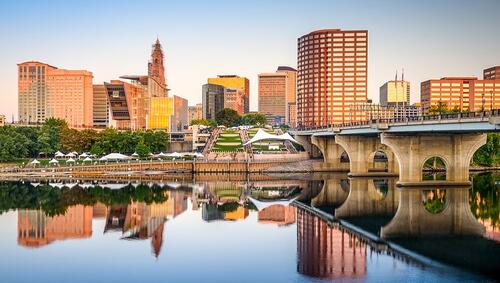
It’s appropriate that this small, yet naturally spectacular jewel of the Atlantic coast owes its name to a water source. In 1610, English explorer Samuel Argall was sailing from Virginia when a storm blew him off course and into modern day Cape Henlopen. After his arrival, Argall would go on to pay tribute to his governor, Thomas West, Lord De La Warr, the first governor of the colony of Virginia, by naming the waterway Delaware Bay. The state takes its name from both that bay and the Delaware River.
The Sunshine State is justly named in part after the bright and colorful plant life that can be found throughout the Florida peninsula. In April 1513, famous Spanish explorer Juan Ponce de León made his first European expedition to Florida, landing near what is now St. Augustine (America’s oldest city). It’s believed that the region’s spectacular plant life and the fact that the date was very close to Easter (or Pascua in Spanish) inspired the name Pascua Florida after one of Spain’s celebrations of the religious holiday, the Feast of Flowers. Every year, on April 2, Florida celebrates de León’s discovery with its official state day, Pascua Florida Day. You don’t need to wait until then to experience Florida’s beauty, however, as its stunning flora and unique natural sites like the Everglades can be enjoyed year round.
Despite America’s quest for independence from the British, the influence of English royalty can still be felt stateside, as evidenced by Georgia’s name. British philanthropist James Oglethorpe sought to create a U.S. colony where the debt-ridden people of England could get back on their feet and take ownership over their lives. During these efforts, he named the state after King George II for the king’s role in granting the charter that made his vision possible. Though Oglethorpe’s social-reform brainchild didn’t pan out as he hoped, Georgia still blossomed into a state that perfectly encapsulates all that the American southeast has to offer, from its rich history to scenic beauty.
In the early 1810s, King Kamehameha I of Hawaii united the islands as the Kingdom of Hawaii, though the etymology behind the name is unclear. One theory is that British explorer Captain James Cook asked the Natives where he was when he landed in 1778, and wrote it down as “Owhyhee,” which translates to “homeland.” Others suggest that the name comes from a blend of similar Proto-Polynesian words or that it is named after the Hawaiian legend Hawaiʻiloa, who is said to have settled the big island of Hawaii. All that being said, it’s hard to worry too much about which theory holds true when you can simply shut off your brain and relax on the sandy beaches of this Pacific paradise instead.
While Idaho is very real, its name was entirely made up to begin with. In 1860, the name Idaho was proposed for the territory by George Willing, a mining lobbyist who claimed it was a Native American word meaning “gem of the mountains.” It turned out that Willing had actually made the name up; Congress found out about the fraud and rejected the name, instead naming it Colorado. But a few years later, in 1863, after the naming hoax fiasco had been forgotten, the mining territory was officially named Idaho after all. The story really makes you wonder how many place names we can owe to a curious imagination.
Spanning nearly 400-miles North to South, Illinois is home to a wide array of climates and cultures that make the state fascinating to learn about, but when it comes to its name, there’s a simple explanation. Illinois is a French pronunciation of the Illiniwek Native American tribe that French explorers Louis Jolliet and Jacques Marquette encountered upon arriving in 1673. The explorers believed the word to mean “the men,” but more recent studies of the language indicate it could mean “he speaks in the ordinary way.” In 1818, when the territory was made a state, Congress confirmed the name. Nowadays the word Illinois is synonymous with the state’s great residents who have gone on to achieve profound success in the worlds of politics, art, music, and more.
The story behind why Indianans are called “Hoosiers” is a lot more uncertain than the state’s name as a whole. The name Indiana simply means “land of the Indians,” though how it got that name is a tumultuous story. After the French and Indian War, the state was owned by a Philadelphia trading company who named it after the Native Americans that originally had claim to the land. But a large portion of the land actually belonged to Virginia, and after years of legal dispute, Indiana was reabsorbed by the territory, no longer bearing an official name. It wasn’t until 1800, when Congress reassigned territory boundaries that the old name Indiana was restored, and this key region from America’s Heartland became what we know it as today.
With endless fields of glorious corn, the lands of Iowa are majestic. In fact, the state’s name has been translated to mean “the beautiful land” by Iowa officials in the past, but the more likely explanation is that it came from the Ioway Native American tribe who originally inhabited the region. The tribe’s actual name, Ayuhwa, was given to the tribe by the Dakota Sioux and means “sleepy people,” though it was later adapted into Ioway by Europeans. Either way you look at it, the name Iowa is appropriate for such a visually appealing state whose residents live a calm and serene lifestyle.
Kansas is derived from a Siouan language, and means “people of the south wind.” How appropriate, considering the winds that sweep through Kansas’ vast plains. The state got its name from the Native American Sioux tribe called the Kaws — also known as the Kansa — for whom French explorers also named the Kansas River. It’s believed that a French explorer once wrote the name on a map, and from that point on, the name Kansas was used for the region. Who knew that the simple stroke of a pen could have such a long-lasting impact?
Knowing your namesake can be a point of pride, as it carries on the legacy of those who came before. But for Kentuckians, they may never know exactly where their state’s name came from. There are several prevailing theories, all primarily derived from Iroquois names. One includes a word for “prairie”; another, kentahten, means “land of tomorrow.” Other experts say it originated from an Algonquian term, kinathiki, which refers to a river bottom, or a Shawnee word meaning “at the head of a river.” Some records indicate that the Wyandot people’s Iroquois word for “plain” is in fact the true origin, and that it was first recorded in 1753. One thing’s certain: The Bluegrass State’s official name origins remain a mystery.
Take a trip down to the Bayou and you’ll see French influence everywhere you look. If you can’t make it down South, then just take one look at a map of the United States. There you’ll see the name Louisiana, which was named by French explorer René-Robert Cavelier Sieur de La Salle in 1682. He named LouisianaLe Louisiane in honor of the French King Louis XIV, and after the territory was divided up as part of the 1803 Louisiana Purchase, the state of Louisiana retained its name.
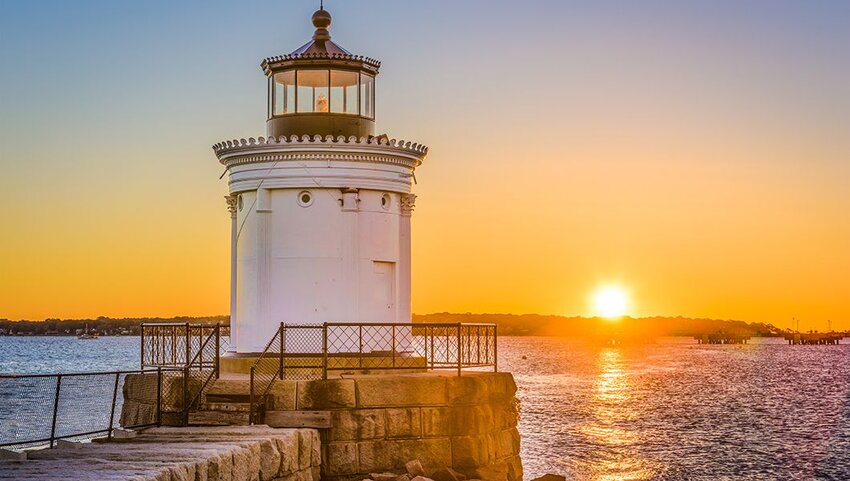
Similar to Louisiana, we sort of have the French to thank for the name Maine, at least according to the modern day state legislature. The first recorded use of the name Maine was in a 1622 land patent from King Charles calling the area “the Province or County of Mayne.” While some historians believe the name was used to differentiate it as the mainland, the Maine legislature adopted a resolution in 2001 stating that Maine’s name was taken from a nearby French province by the same name. It only took 379 years, but we can finally put that debate to rest.
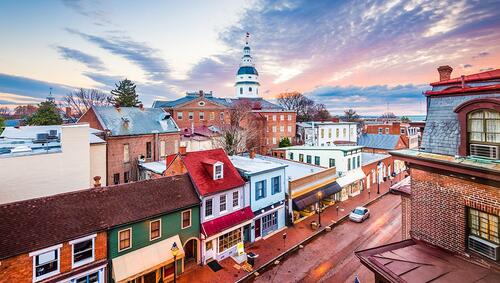
Women have played an undeniably important role in America’s history, yet only three states are named after female individuals. Maryland is one of them, named after English King Charles I’s wife, Queen Henrietta Maria. Some religious scholars, however, point out that Maryland’s founder George Calvert intended the colony to be a refuge for Catholics, and believe its name to be biblical in nature, named it after Mary, the mother of Jesus. No matter which way you cut it, Maryland’s name pays homage to a powerful and influential woman.
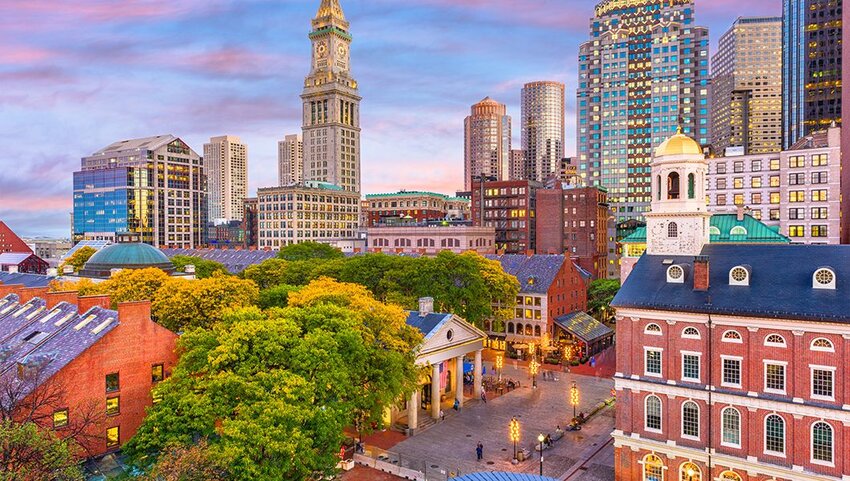
The Bay State takes its official name from the Massachusett tribe of Native Americans who lived south of present-day Boston; that Algonquian term roughly translates to “at the Great Hill.” How appropriate given the pivotal American Revolution battle that took place in Massachusetts at Bunker Hill. The name Massachusetts first appeared on record in explorer John Smith’s 1616 book, A Description of New England, and in that text he described the place as though its name had already been assigned by the Native inhabitants.
Michigan not only looks like a glove, but its name fits like a glove. Explorer Jacques Marquette settled the region in 1668 and named it such as a French derivation of the Chippewa word michigama, meaning “great or large lake.” Whale Marquette may not have realized it at the time, Michigan is the only state that borders four of the five Great lakes, an impressive geographic achievement for this northern lacustrine paradise.
Though it’s nicknamed the “Land of 10,000 Lakes” — and that’s selling it short, given there are a staggering 11,842 lakes found throughout the state! — Minnesota actually takes its name from a river. That river was named by the Native American Dakota tribe who inhabited present-day Minnesota. Mni is the Dakota word for “water”; sota is largely said to mean “cloudy or muddy,” while others say it means “sky-tinted.” For a definitive answer, state historians point to the Treaty of 1851 in which the Dakota included the direct translation as “land where the water is so clear it reflects the sky,” which is a beautiful description of this lush northern territory.
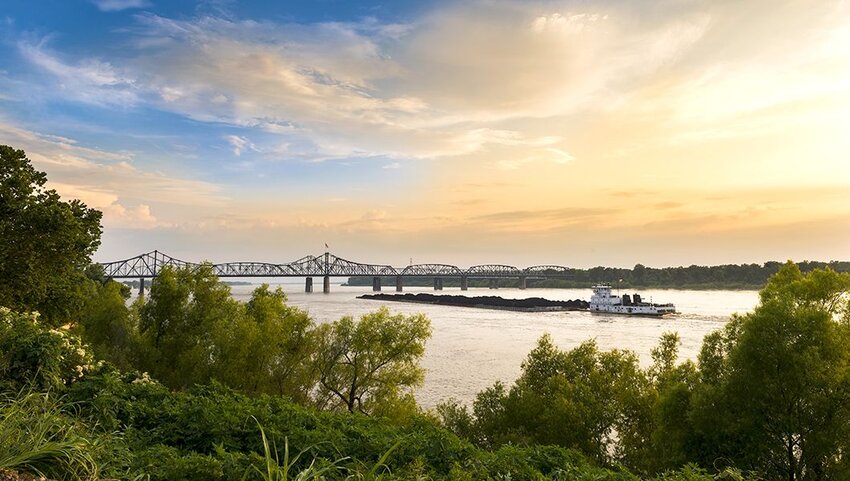
Though its glistening waters weave through 10 states, the Mississippi River lent its name to just one. The river was named by the area’s Native Ojibwe tribe, who called the river misi sipi, which translates to “big river.” It has also been said that the Native American communities, who long used the water for transportation and food, referred to it as the “Father of Waters.” How apt, given that this namesake of Mississippi continues to provide in those ways even today.
From one watery state to another, Missouri was also named after the river that bears its name. In 1673, a Native American Sioux tribe named the Missouris — a name given to them by the Fox tribe — called the area home. That name was initially thought to mean “muddy water,” but in later years it was determined to mean “people with big canoes.” You’d need big canoes to navigate the Missouri River, which believe it or not is actually the longest river in the United States! The river was named after these original inhabitants, which in turn gave its name to the future territory and eventual state.
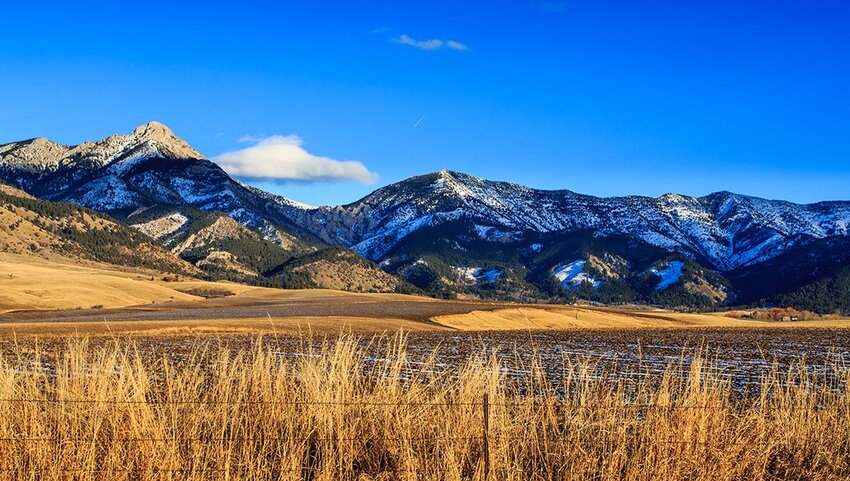
Though its elevation falls shy of the nearby Rocky Mountain region, the towering crags of Montana are undeniably abundant. Its rocky terrain is what inspired the name Montana, which is Latin for “mountainous.” Montana was first proposed as a name in 1864, when the Dakota territory was split into smaller portions, though the mountains have loomed large over the state for tens of millions of years prior to that.
Like many states throughout the Great Plains, the name Nebraska comes from a Native American term. In this case the word nebrathka comes from the Otoe people, and means “flat water,” a reference to the region’s Platte River. Nebraska likely owes its modern name to American explorer and politician John C. Frémont, who used the river’s Native name in a report to the Secretary of War. Fear not, though, there’s no warring with the state’s borders. Nebraska is a peaceful place nestled perfectly in the center of this great nation we call home.
Nevada’s name actually comes from a mountain range primarily located in nearby California. The Sierra Nevada mountains were named such by Spanish explorers who discovered the area in awe during the 1770s, and came upon the snow-covered peaks. Sierra is Spanish for “mountain range,” and nevada means “snowfall.” Nevada wouldn’t be comprehensively explored until the 1820s, at which point the groundwork was laid for the modern gambling and entertainment mecca we know it as today.
There’s no place like home. This mantra is believed by many, including a settler named John Mason. In 1623, the land that would eventually become the New England state of New Hampshire was granted to Mason, and in 1629, he named it after his home, Hampshire county in England. Though Mason died in 1635 before ever voyaging over to live in the new province, his indelible impact on the Granite State remains.
The name New Jersey is the result of a breakup, but not the romantic kind. In 1664, when the British seized the colony of New Netherland from the Dutch, the land was divided in half, with the east side granted to English statesman George Carteret. He had once served as governor of the Isle of Jersey, an island in the English Channel, and named the colony after it. Given its namesake, it only makes sense that New Jersey also borders the waters of the Atlantic, albeit many thousands of miles away.
New Mexico was obviously named after the modern day country it borders, right? Wrong! You’d be surprised to learn that New Mexico was settled long before the country of Mexico was even named. In the 1500s, Spanish settlers referred to the upper area of the Rio Grande as Nuevo México, after the Aztec Valley of Mexico. The name comes from the Nahuatl word mexihco, and while the exact meaning is unclear, it seems most likely that the Aztecs named themselves after the tribal god of sun and war Huitzilopochtli, who was also referred to as Mēxihtli. So the next time someone ponders which came first, Mexico or New Mexico, keep this bit of trivia handy to wow them.
For a brief time in the 1600s, the city nicknamed the Big Apple was named after an entirely different fruit. In 1664, the British took power of the region of New Amsterdam and renamed it New York after King Charles I’s son, the Duke of York. However, for a short time, the city was actually called New Orange. In 1673, the Dutch regained control of the state and named it after the Dutch Prince of Orange. The following year, however, the British repossessed the region and renamed it New York for good, which later gave its name to the entire state. Yes, it’s hard to imagine Frank Sinatra singing “New Orange, New Orange,” but for a brief moment in history that was almost a reality.
Naming a state after yourself is quite the power move, but that’s exactly what happened in 1629. King Charles I of England decided to name a new province Carolina (although it also appeared as “Carolana” in the charter), which is derived from Carolus, the Latin form of his name. Ah, to be king. In 1663, King Charles II granted a new charter for the same territory to the Lords Proprietors, who in 1710, appointed a separate governor to the northern part of the region. In 1729, the Carolina colony was officially divided in two, making Charles the namesake for double the amount of states he initially intended.
Much like the Carolinas, the Dakotas were once a singular, larger territory before being split into separate states in 1889. The name Dakota was taken from that of the Native American Dakotas, a Sioux tribe who originally inhabited the region; the word means “friend,” though is also often translated as “allies.” Will the region be divided even further leading to an East and West Dakota someday? Probably not, but anything is possible.
You can’t find any U.S. state names shorter than Ohio, but it was named after an even shorter Iroquoian word: O-Y-O, meaning “great river.” The Seneca Native Americans settled along what is now the Ohio River in the 1650s, and though the region was briefly named La Belle Riviere by French explorers in the late 1600s, the English restored its Native Ohio name when they took control in the mid-1700s.
No, it’s not named after a frying pan, though Oklahoma’s shape certainly resembles ones. The first recorded use of the name Oklahoma actually came from Spanish explorer Francisco Vázquez de Coronado in 1541, and is based on the Choctaw words okla and humma, which mean “people” and “red,” and were used by the Choctaw to describe their people. In 1866, it was Allen Wright, then Chief of the Choctaw Nation, who suggested the name for the territory during treaty negotiations.
The story behind Oregon’s name is as murky as the state’s muddy banks along the Pacific Ocean. The first written record of the name appeared in 1765 by English army officer Major Robert Rogers, who stated that a local river was called Ouragon by Native Americans. Other theories were once popular enough to be printed in school textbooks, including that the name had Spanish roots and was adapted either from oregano, or orejon, a word meaning “big ears.” Though we may never be sure of Oregon’s true namesake, it’s certain that Oregon boasts an incredible natural beauty unique to the Pacific Northwest region.
While Pennsylvania played a key role in helping to achieve American independence, its name has less to do with its political history and more with the state’s lush greenery. The Province of Pennsylvania — a name meaning “Penn’s Woods” — was inspired by the surname of its founder, William Penn, and also by the new province’s forests, sylva (or “forest trees”). Penn envisioned a “a green country town” that encouraged religious freedom, which in turn led to Pennsylvania becoming one of the most culturally diverse among the 13 original colonies.
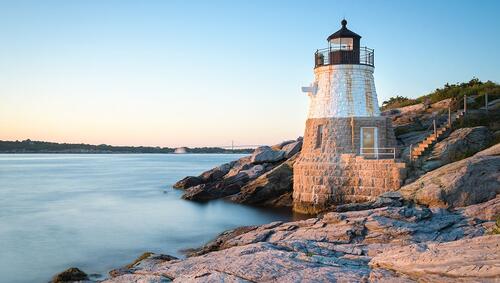
You’ll have to forgive early explorers for assuming Rhode Island was an island. The New England state’s official stance on the origin of its name is that Dutch explorer Adriaen Block, on his 1614 expedition, called it “Roodt Eylandt” (“red island”) after seeing the red clay that lined the shore. One other popular theory however, is that explorer Giovanni da Verrazzano anchored near present-day Providence and compared the region to the Greek island of Rhodes. Though it’s not an island, Rhode Island still offers incredible oceanside views of the Atlantic that have earned it the very appropriate nickname, the Ocean State.
It’s no surprise that South Carolina shares an origin story with North Carolina, as described above. Despite this, South Carolina possesses a unique identity and southern charm that differentiate it from its neighbor to the North.
Once again, there’s no unique origin story for South Dakota, as it shares that history with North Dakota. But what makes South Dakota particularly stunning compared to its northern neighbor are South Dakota’s Black Hills and Badlands that make it a must-visit site for nature lovers.
It’s an unfortunate truth that sometimes details get lost in the annals of history. While that’s the case with regards to Tennessee’s naming origins, one agreed-upon fact is that Spanish explorer Juan Pardo was the first to record the name in 1567. He and his crew are believed to have traveled through a Cherokee village called Tanasqui, or, potentially Tanasi. The meanings of those words are not known, but have been theorized to be derivations of “winding river” and “river of the great bend.” With both the Tennessee and Mississippi Rivers winding through its borders, it’s very possible if not likely that they could have inspired the state’s name.
Texans have that sweet southern charm, so it’s fitting that its name translates to “friends or allies.” Spanish explorers encountered the Native American Caddo tribe in present-day Texas in the 1540s, and are believed to have interpreted their word teyshas as the tribe name, recording it as Teyas or Tejas. While the errors were corrected and the usage stopped over time, the name eventually lived on. “Friendship” has even been the Texas state motto since 1930, so if you don’t have a pal from Texas already then be sure to find yourself one.
From its crystal clear Great Salt Lake to the mountainous peaks that make the state distinct, Utah has a natural beauty as rich as its deep history. When Spanish settlers arrived in the area in the late 1500s, they encountered the Native American Ute tribe, from which the state takes its name. The meaning of this tribe’s name is “people of the mountains”; it’s also believed that this name could potentially have come from the Apache word for the tribe, yuttahih, which roughly translates to “those that are higher up.” Despite the association with the state’s elevation, in the Ute tribe’s language, their own name actually means “land of the sun.”
While many of the names on this list date back to pre-American independence, Vermont’s name was first documented just one year after the country’s creation. The words vert and mont translate to “green mountain,” as the state is home to the glorious Green Mountain range. On April 11, 1777, Philadelphia doctor and revolutionary Thomas Young became the first to use the name Vermont in print, writing, ““To the Inhabitants of Vermont, a Free and Independent State.” Young is believed to be the originator of the name, which was likely as much a tribute to his friend Ethan Allen and his Green Mountain Boys militia as it was a description of the stunning scenery.
Much like Maryland, yet another powerful and influential woman lends her name to the state of Virginia (and in turn, West Virginia, but we’ll get to that later). Virginia was named for Queen Elizabeth I of England, who was also known as the “Virgin Queen” for her reluctance to marry. In 1584, Elizabeth granted English explorer and soldier Walter Raleigh permission to start the colony, and he would go on to name the new land in her honor.
Few individuals have had a more prolific impact on our country’s history than the first U.S. President George Washington, so it’s only sensible to have named a state after him. The territory was initially going to be named Columbia, after the Columbia River, but Congress worried it might get confused with the national capital, the District of Columbia. Washington is the only U.S. state named after a president, though if there’s one man who deserves the honor, it’s George.
West Virginia retained the name of the state from which it separated (Virgina), meaning it is also named after Queen Elizabeth I and is the third and final (alphabetically) U.S. state named for a female individual. During the Civil War, when the State of Virginia withdrew from the Union in 1861 to join the Confederacy, the state’s western region — which had long felt alienated from the eastern region’s politics — refused to do so. In 1863, President Abraham Lincoln proclaimed West Virginia as its own state. This beautiful Appalachian state received its first national park in 2021, the New River Gorge.
Doctors famously have bad handwriting, but in one historic case, so do explorers. In 1673, French explorer Jacques Marquette adapted the word Meskousing from the region’s Algonquin-speaking tribes to describe a river he had traveled. The word, written in cursive, was then misread as “Ouisconsin” by French explorers. It was written that way until 1830, when the U.S. House of Representatives first printed it as it sounds: Wisconsin.
Last but not least we come to Wyoming. The name comes from the Native American Algonquian word mecheweamiing (meaning “at the big plains”), and was first used by the Lenape people as a name for their home region, Pennsylvania’s Wyoming Valley. In 1865, the name was suggested for the Wyoming territory. Though U.S. Representative James M. Ashley (who was born in the Wyoming Valley) later expressed regret upon learning of the new territory’s poor soil quality, the name stuck. Hopefully Ashley’s descendents don’t feel the same way, as Wyoming is home to some of the most awe-inspiring nature found anywhere in the U.S.A.
In a series of recent polls, Vice President Kamala Harris has significantly reduced former President Donald Trump’s lead. This marks a shift in the competitive landscape of the upcoming presidential race. According to a Rasmussen Reports poll conducted between August 11 and 14, Trump’s lead over Harris has decreased to 4 points. The survey found Trump at 49 percent and Harris close behind at 45 percent. This is a notable drop from a July poll by the same organization, which showed Trump leading by 7 points, with 50 percent to Harris’ 43 percent.
Trump, who frequently highlights favorable polls from Rasmussen Reports on his Truth Social account, may find these results surprising. The pollster, which AllSides media bias rating describes as “lean right,” has typically shown Trump with a more substantial lead. Despite this, Trump’s overall lead in the latest poll has narrowed by one point over the past week. However, there is a silver lining for Trump in terms of his appeal to independent voters.
Interestingly, Trump’s support among independents has increased by 2 points since last week. In the latest poll, Trump has secured 51 percent of the independent vote, compared to Harris’ 40 percent. Just a week prior, Trump held a 9-point advantage among these unaffiliated voters, which has now grown even larger. This could suggest a solidifying of support among a key voter demographic, despite the tightening race overall. As Rasmussen mused in a post on X (formerly known as Twitter), “Is Trump getting a DNC Convention bounce?”
While Trump has made gains with independents, Harris has made progress in winning over women voters. The latest poll shows that Harris has flipped a 2-point deficit among women to a 2-point lead, with 48 percent compared to Trump’s 46 percent. Historically, women voters have leaned heavily Democratic, and Harris appears to be benefiting from this trend. Most polls continue to show Harris leading among women, which could be a critical factor in the final election outcome.
Since Harris announced her candidacy, national polls have generally shown her overtaking Trump. According to FiveThirtyEight’s poll tracker, Harris has been consistently ahead of Trump since July 26 in six of the seven key swing states. During this period, only four national polls have placed Trump in the lead, underscoring the challenges he faces in regaining ground. Overall, Harris now holds a 3.6-point lead over Trump nationally, which is her largest average lead to date.
However, the dynamics of the race could shift if independent candidate Robert F. Kennedy Jr. decides to drop out. Reports suggest that Kennedy’s participation as a third-party candidate has been siphoning more votes away from Trump than from Harris. In various state and national polls, including a Fox News survey conducted among 1,034 Pennsylvania voters between July 22 and 24, 10 percent of Trump’s two-way supporters indicated they would prefer another candidate if third-party options were available. In contrast, only 7 percent of Harris supporters said the same.
The influence of third-party candidates is just one factor that could change the current standings. Some pollsters caution against viewing Harris’ recent gains as a guaranteed victory. A memo from July by Tony Fabrizio, a pollster for the Trump campaign, predicted a “short term” increase in Harris’ poll numbers, which he attributed to a temporary surge in enthusiasm following her entry into the race. He referred to this period as the “Harris Honeymoon,” suggesting that her bump in the polls might not be a lasting trend.
Mark Mellman, who was the lead pollster for then-Senator John Kerry, echoed a similar sentiment. He stated that Harris’ lead is not “unreal” or “unnatural” but also “not necessarily permanent.” Mellman explained to Politico, “I can certainly imagine a situation where both candidates’ favorabilities decline a little bit.” His comments reflect a broader uncertainty in the race, with many factors still at play that could influence voter sentiment before the election.
As the race continues to evolve, both candidates are likely to experience shifts in their polling numbers. The inclusion or exclusion of third-party candidates like Robert F. Kennedy Jr., demographic shifts among key voter groups, and the overall political climate will all play crucial roles in determining the final outcome. For now, Harris seems to have the momentum, but whether she can maintain and build on her lead remains to be seen. The coming weeks and months will be critical for both campaigns as they seek to solidify their bases and sway undecided voters in what is shaping up to be a highly competitive election.
Prime Minister Narendra Modi is set to return to the United Nations General Assembly (UNGA) for a significant address on September 26. This marks his first appearance at the high-level session since 2021, underscoring India’s active involvement on the international stage. The 79th session of the UNGA, which will bring together global leaders in New York, comes at a crucial time as the world faces multiple challenges, from geopolitical tensions to global health emergencies.
Modi’s speech is eagerly awaited as it will reflect India’s foreign policy priorities and its contributions to addressing global issues. The UNGA session is expected to cover several key themes, including international security, climate action, and sustainable development, all while emphasizing the importance of strengthening multilateralism. This year’s assembly will also focus on the adoption of the Pact for the Future, a framework aimed at enhancing global governance. Key components of this pact include the Global Digital Compact and a Declaration on Future Generations, both of which are intended to promote cooperation on technological advancements and protect the interests of future generations.
As the leader of the world’s largest democracy, Prime Minister Modi’s participation in the UNGA is pivotal in shaping global initiatives towards peace, stability, and prosperity. His address is expected to outline India’s strategies and commitments to fostering international cooperation and addressing the pressing needs of developing nations. This engagement highlights India’s proactive role in global diplomacy and its readiness to contribute to a more stable and equitable international order.
India’s voice at the UNGA carries significant weight, particularly in discussions about global governance and international cooperation. “India’s participation in the UNGA is crucial in shaping the global agenda,” noted a senior diplomat. Modi’s speech is likely to emphasize India’s support for multilateralism and its call for reforms in international institutions, such as the United Nations, to make them more inclusive and representative of the current global realities.
During his address, Modi is expected to focus on key issues such as international security, with an emphasis on combating terrorism and promoting peace. He will likely reiterate India’s commitment to playing a constructive role in maintaining global peace and stability. Given the increasing geopolitical tensions, Modi’s stance on these matters will be closely watched by the international community.
Another significant theme of Modi’s speech is expected to be climate action. As a country that is highly vulnerable to the impacts of climate change, India has been at the forefront of advocating for stronger global commitments to combat climate change. “India has always advocated for climate justice and equitable solutions that consider the needs of developing countries,” Modi has previously stated. His address at the UNGA is expected to reinforce India’s commitment to sustainable development and highlight its efforts to transition to a greener economy.
The UNGA session will also focus on the Pact for the Future, which aims to improve global governance frameworks. A key element of this pact is the Global Digital Compact, which seeks to establish principles for digital cooperation and governance. This initiative is particularly relevant as the world becomes increasingly digitalized, and issues such as data privacy, cybersecurity, and digital inequality become more pressing. Modi’s address is expected to support this initiative and highlight India’s digital advancements and contributions to global digital governance.
Furthermore, the Declaration on Future Generations, another component of the Pact for the Future, aims to ensure that the rights and needs of future generations are considered in today’s decision-making processes. India is expected to advocate for stronger international cooperation to safeguard the planet for future generations, reflecting its long-standing emphasis on sustainable development and intergenerational equity.
Modi’s return to the UNGA also symbolizes India’s growing influence and assertiveness on the global stage. Over the past few years, India has been actively participating in various international forums and has been vocal about its stance on key global issues. “India’s proactive engagement in global diplomacy showcases its readiness to contribute to a more stable and equitable international order,” said an analyst. Modi’s speech will likely highlight India’s achievements and aspirations, emphasizing its role as a leading voice for developing countries and a champion of global peace and prosperity.
In addition to outlining India’s foreign policy priorities, Modi’s address at the UNGA will likely include a call for greater international solidarity and cooperation in addressing global challenges. The COVID-19 pandemic, for instance, has underscored the importance of global cooperation in health and economic recovery. Modi is expected to urge the international community to work together to build a more resilient and inclusive global health system.
Modi’s participation in the UNGA comes at a time when India is increasingly seen as a key player in global affairs. With its rapidly growing economy, large population, and strategic location, India’s role in shaping the global agenda is more important than ever. The country’s leadership in various international initiatives, such as the International Solar Alliance and the Coalition for Disaster Resilient Infrastructure, has further cemented its position as a global leader in promoting sustainable development and resilience.
As Modi prepares to address the UNGA, there is a sense of anticipation and expectation about the messages he will convey and the positions he will take. His speech will be an opportunity for India to reaffirm its commitment to multilateralism, sustainable development, and global cooperation. It will also be a chance to showcase India’s achievements and highlight its contributions to global peace, stability, and prosperity.
The Malayalam film industry, an integral part of India’s cinematic landscape, is under intense scrutiny following the release of the Hema Committee report. This report has exposed issues of sexual abuse, gender discrimination, and the inhuman treatment of women that have long been concealed. It has reignited discussions about the pervasive influence of powerful men in suppressing women in Kerala, often referred to as “God’s own country.” The report’s findings highlight a disturbing reality where women’s voices are silenced, and justice remains elusive. The perpetrators are often shielded by government institutions, further complicating the pursuit of justice.
The Hema Committee report exposes a troubling culture of silence within the Malayalam film industry. Women, from junior artists to well-established actresses, have faced sexual harassment, exploitation, and discrimination, with little to no recourse to justice. The report has documented instances where women were coerced into providing sexual favors in exchange for work. Directors and producers who wield significant power have fostered an environment where compliance is rewarded, while resistance leads to ostracization across the industry. This dynamic was starkly evident in the case of actress Bhavana, who was blacklisted by the industry. Meanwhile, efforts were made by influential figures in the industry to reinstate actor Dileep, who was alleged to be the mastermind behind a serious offense.
Fear is a significant factor sustaining this culture—fear of losing employment, public shaming, and physical harm. Women who dare to speak out against their abusers often face severe consequences. This fear is intensified by the criminal influence within the industry, where powerful men are known to use their connections with gangs and the mafia to suppress any attempts at holding them accountable.
Additionally, the lack of basic facilities, such as toilets and changing rooms for women, has further exacerbated their plight. Female artists are forced to endure harsh working conditions, with no avenues to voice their grievances or seek redress. This neglect is not merely a result of gender discrimination; it reflects a deeper issue where women’s rights and dignity are routinely ignored.
The Kerala government’s handling of the Hema Committee report exemplifies how governmental actions can inadvertently suppress women’s rights. The report, submitted four years ago, was only recently made public, and even then, significant portions were redacted. These redactions, which exceeded the recommendations of the Kerala State Information Commissioner, have led to suspicions regarding the government’s intentions. The omitted sections reportedly contained details about prominent individuals in the industry who have been involved in sexual harassment over the years.
The media response to the Hema Committee report has been mixed. While some outlets have reported on its findings, others have remained silent. This selective reporting perpetuates the culture of silence, ultimately denying justice to the victims.
Society also plays a role in sustaining this culture of suppression. The stigma surrounding sexual harassment and the tendency to blame victims rather than perpetrators discourage women from coming forward. This victim-blaming mentality is deeply ingrained in our society, where women who report sexual harassment are often accused of seeking attention or attempting to ruin a man’s career.
Governments, through their policies and actions, have the power to challenge or reinforce the status quo. In many cases, they have chosen the latter, allowing powerful men to continue their abusive behavior with impunity. This is evident in the lack of enforcement of laws designed to protect women from sexual harassment and the slow pace of legal proceedings. For instance, in the Malayalam film industry, the government has been slow to act on the findings of the Hema Committee report, allowing the culture of abuse to persist unchecked.
The Indian government has enacted several laws aimed at protecting women from sexual harassment, such as the Sexual Harassment of Women at Workplace (Prevention, Prohibition, and Redressal) Act, 2013. However, implementing these laws has been inconsistent, and many women in the film industry are unaware of their rights. This lack of awareness, combined with the fear of retaliation, means that many cases of sexual harassment go unreported. Victims often face barriers in accessing justice, including a lack of legal representation, a slow and cumbersome judicial process, and the stigma associated with being a public figure.
The Hema Committee report makes several recommendations to address the issues faced by women in the Malayalam film industry. The report suggests the mandatory establishment of Internal Complaints Committees (ICC) under the Sexual Harassment of Women at Workplace (Prevention, Prohibition, and Redressal) Act, 2013. These committees should include members from the Film Employees Federation of Kerala (FEFKA) and the Association of Malayalam Movie Artists (AMMA) to ensure that complaints are handled impartially and with the necessary expertise.
Some committee members have proposed creating an independent tribunal to handle cases of harassment and discrimination within the cinema industry. This tribunal would operate with in-camera proceedings to ensure complete privacy for the victims, with their identities being withheld from media reports. Establishing a tribunal could provide a safe and supportive environment for victims to seek justice without fear of public scrutiny or professional backlash.
The report also recommends that written contracts be made mandatory for all categories of employees, including coordinators of junior artists. These contracts would protect workers’ rights by clearly outlining the terms of employment, including remuneration, working hours, and conditions. Written contracts would also serve as a legal safeguard against exploitation, ensuring that all parties are held accountable to the agreed terms.
To address the underlying issues of sexism and gender discrimination, the report suggests that all cast and crew members should attend a basic gender awareness training program before the start of production. These programs would educate industry professionals on gender equality, sexual harassment, and respectful workplace behavior.
The report emphasizes the need for greater representation of women in key decision-making roles within the industry, particularly as producers. To achieve this, it recommends providing adequate and timely budgetary support to incentivize films that promote gender justice both thematically and in their production processes. A single-window system could be established to provide loans at nominal interest rates for films produced by women, streamlining permissions for shooting and making it easier for women to enter the industry.
By encouraging more women to take on producer roles, the industry can shift towards creating a more inclusive and safe environment. This change could pave the way for a more equitable and just future for women in the Malayalam film industry, ensuring their rights and dignity are upheld.
Independent White House candidate Robert F. Kennedy Jr. has withdrawn from the presidential race and endorsed Republican nominee Donald Trump. Kennedy, a longtime Democrat and a prominent member of the Kennedy political dynasty, made this announcement at a rally in Arizona, standing beside Trump on stage. He stated that the same principles that drove him away from the Democratic Party now compel him to support Trump.
At a press conference in Phoenix on Friday, Kennedy, 70, revealed plans to remove his name from the ballot in ten crucial battleground states. Before bringing Kennedy to the stage, Trump promised to release all remaining documents related to the 1963 assassination of President John F. Kennedy if he is elected. At the rally in Glendale later, Trump lauded Kennedy as “phenomenal” and “brilliant.”
Democratic rival Kamala Harris, meanwhile, responded to Kennedy’s move by stating her intention to “earn” the support of his voters. As the November election approaches, Kennedy’s polling numbers have declined sharply from their earlier double-digit highs, largely due to dwindling funds and reduced national media coverage.
Kennedy, the son of U.S. Senator Robert F. Kennedy and nephew of President John F. Kennedy, belongs to one of the most storied families in Democratic politics. His decision to back a Republican candidate for the White House has provoked outrage among his relatives. Earlier this year, they had criticized his use of the family name in a Super Bowl advertisement. His sister, Kerry Kennedy, described his endorsement of Trump as a “betrayal of the values that our father and our family hold most dear,” adding, “It is a sad ending to a sad story.”
Addressing the personal difficulties arising from his decision, Kennedy stated, “This decision is agonising for me because of the difficulties it causes my wife and my children and my friends.” However, he also expressed a sense of clarity and peace, saying, “I have the certainty that this is what I’m meant to do. And that certainty gives me internal peace, even in storms.” His wife, Cheryl Hines, an actress known for her role in HBO’s “Curb Your Enthusiasm,” voiced her support for his decision to suspend his campaign in a post on X (formerly Twitter), though she did not comment on his endorsement of Trump.
Kennedy emphasized that Trump’s commitment to ending the war in Ukraine through negotiations with Russia was a major factor in his decision to support Trump’s campaign, stating, “Trump’s insistence he could end the war in Ukraine by negotiating with Russia alone would justify my support for his campaign.” He acknowledged that they still have “very serious differences” on many issues but are aligned on key matters.
Kennedy has already begun removing his name from the ballots in key battleground states like Arizona and Pennsylvania. However, election officials indicated that it is too late for him to withdraw from swing states such as Michigan, Nevada, and Wisconsin. Kennedy initially launched his campaign in April 2023 as a Democrat, citing the legacy of his father and uncle as “champions of the Constitution.” However, he claimed he left the party because it had transformed into one of “war, censorship, corruption, big pharma, big tech, big money.”
Kennedy cited “media control” and efforts by the Democratic Party to thwart his campaign as reasons for suspending his run. “In my heart, I no longer believe I have a realistic path to victory in the face of relentless and systematic censorship,” he explained. At his peak, Kennedy polled between 14% and 16% but has since seen his support diminish to single digits, particularly after Kamala Harris secured the Democratic nomination.
Despite Kennedy’s offer to collaborate with Harris on her presidential bid, Democrats appeared largely unconcerned by his withdrawal and subsequent endorsement of Trump. Mary Beth Cahill, a senior adviser for the Democratic National Committee, commented, “Donald Trump isn’t earning an endorsement that’s going to help build support; he’s inheriting the baggage of a failed fringe candidate. Good riddance.”
Kennedy’s campaign has been closely associated with the anti-vaccine movement, stemming from his leadership role in the Children’s Health Defense organization, formerly the World Mercury Project. His controversial actions, such as recounting a 2014 incident where he dumped a dead bear cub in New York’s Central Park as a joke, have drawn significant public and media attention. Additionally, earlier in his campaign, it was revealed that Kennedy had suffered from a brain parasite over a decade ago, which led to severe memory loss and brain fog.
Rumors have swirled in recent days that Kennedy’s endorsement of Trump could be an attempt to secure a position in a potential future Trump administration. While Trump told CNN he would be “certainly open” to the idea, Trump’s son, Donald Trump Jr., suggested Kennedy might be suited to “blow up” a federal department. This speculation reflects broader concerns about the two-party system in the U.S. and the challenges new ideas and candidates face in breaking through the political process. As Merrill Matthews, a resident scholar with the conservative Institute for Policy Innovation, noted to the BBC, Kennedy’s decision underscores “how difficult it is to get new ideas and fresh people into the process.”
Kennedy’s withdrawal and endorsement of Trump mark a significant turn in the 2024 presidential race, reshaping the dynamics just months before Americans head to the polls.
Two astronauts who traveled to the International Space Station (ISS) aboard Boeing’s Starliner will be returning to Earth on a different spacecraft next year, as announced by NASA officials on Saturday. Astronauts Barry “Butch” Wilmore and Sunita “Suni” Williams, who participated in the first crewed test flight of Boeing’s Starliner, are now scheduled to return in February 2025 aboard the SpaceX Crew-9 mission, according to NASA. The Boeing Starliner, meanwhile, will return to Earth separately in an uncrewed flight.
NASA Administrator Bill Nelson emphasized that this decision was made with safety as the primary concern. “The decision to keep Butch and Suni aboard the International Space Station and bring the Boeing Starliner home uncrewed is a result of a commitment to safety,” Nelson stated at a news conference.
Wilmore and Williams launched to the ISS on June 5, with the original plan for a short one-week stay and return on June 14. However, their return has been postponed multiple times due to ongoing assessments and safety checks. While on the ISS, Wilmore and Williams have integrated into the “Expedition 71” crew, contributing to research and other station responsibilities. This extended stay has led to increased usage of supplies initially designated for the ISS crew, NASA officials have reported.
Steve Stich, the program manager for NASA’s Commercial Crew Program, explained that NASA’s decision was influenced by concerns regarding the Starliner’s thrusters. “There was too much risk for the crew,” Stich stated, reflecting the caution exercised by NASA after a summer spent analyzing data on the spacecraft.
Boeing responded to the situation, affirming their commitment to safety. “We continue to focus, first and foremost, on the safety of the crew and spacecraft,” a Boeing spokesperson said. “We are executing the mission as determined by NASA, and we are preparing the spacecraft for a safe and successful uncrewed return.”
During their extended stay, Wilmore and Williams will continue to support scientific experiments, conduct maintenance, and possibly participate in spacewalks on the ISS. The upcoming SpaceX Dragon Crew-9 mission, slated for launch in September, will now carry only two of its originally planned four astronauts to make room for Wilmore and Williams on the return trip. Additional spacesuits will be provided to accommodate the extra passengers.
“As we started looking at various options, it was obvious to both of us that the easiest and best option was to configure the Crew-9 vehicle with a couple of empty seats on the way up,” Stich explained.
A significant factor in the decision to leave Starliner uncrewed for its return is its current inability to autonomously undock from the ISS. To achieve autonomous undocking, Starliner would require a software update and additional training for Boeing’s flight control team.
Starliner is part of NASA’s broader Commercial Crew Program, which aims to certify various spacecraft for routine missions to and from the ISS. The spacecraft has faced multiple challenges throughout its development. Initially planned for launch on May 6, the test flight was delayed due to an issue with an oxygen valve on a rocket built by United Launch Alliance (ULA), the company responsible for the rockets used to launch the spacecraft into orbit. A subsequent launch date of May 25 was also postponed after a small helium leak was detected in the service module, which contains the support systems and instruments necessary for spacecraft operation.
Further complications arose with additional helium leaks and a thruster issue, which posed potential delays to Starliner’s docking. Even after docking with the ISS, NASA and Boeing reported the spacecraft had five “small” helium leaks, butassured that enough helium remained for the return mission.
To address these concerns, teams at NASA’s White Sands Test Facility in New Mexico conducted ground tests on Starliner’s thrusters, simulating conditions similar to those experienced on the journey to the ISS to assess the spacecraft’s behavior during undocking.
Stich acknowledged that these developments have been challenging for all involved. “The crew has gone through a lot of emotions concerning the changes to the mission and the test flight,” he said. He further reflected on the long-term implications of the changes, noting, “In the ultimate long-term view, we have not lost anything, because Boeing … is committed to finding the solutions and flying Starliner again. But I probably can not express what it’s like in words when you commit to a mission so long and then we make a fairly dramatic change which we have not in human space flight in a long time.”
Norm Knight, NASA’s director of flight operations directorate, also acknowledged the difficulties faced by the families of Wilmore and Williams, who now face a longer wait for their loved ones to return. “I care deeply about their families, I know this is a huge impact on their families and it means a lot,” Knight said. He expressed gratitude for the support of the families, saying, “I tell their families thank you for their support, thank you for what they do.”
Despite the setbacks and changes to their mission, Wilmore and Williams remain committed to their extended stay on the ISS, continuing to support NASA’s objectives in space exploration and research. The decision to bring them back aboard a different spacecraft underscores NASA’s prioritization of safety and thorough assessment in its manned missions. As the space agency continues to evaluate and refine its spacecraft capabilities, the commitment to safety and successful mission outcomes remains paramount.
Michelle Fang, a tech community manager based in San Francisco, observed a significant shift when she visited her father in their New Jersey home last year. Her father, a first-generation Chinese American, had started using ChatGPT to write emails and create work presentations. This was a stark change from the past when Fang would print out his PowerPoints and help edit his English. “I would go in with a pen to mark everything up,” Fang, 25, recalls. Now, her father no longer asks for her help with English grammar or technical language; instead, he relies on ChatGPT. “He’s replaced me with ChatGPT,” Fang noted.
This is not an isolated experience. Many adult children of immigrants who grew up assisting their parents with language barriers are finding that these duties are gradually being taken over by artificial intelligence tools like ChatGPT.
Monica Mikael, a 30-year-old nurse practitioner in Los Angeles, shared a similar experience. Her Egyptian American parents, who have struggled with written English since they immigrated to the U.S. 30 years ago, relied on her for years to help with their communications. Since high school, Mikael has been writing and rewriting emails for her parents, who run a small medical practice, to help them coordinate with patients and staff.
For many immigrants who learn English as a second language, even minor grammar mistakes can create significant anxiety in professional settings. A survey of over 200 East, Southeast, and South Asian women in the tech industry found that many felt discriminated against because of their accents and grammar usage.
When ChatGPT was launched in November 2022, Mikael saw an opportunity. She quickly introduced her parents to the tool, teaching them how to use it to ask questions and draft communications. “I downloaded ChatGPT onto their phones and showed them how to ask it questions,” Mikael said. “After a month or so, they were using it entirely on their own.” Now, her parents rarely ask for her help with basic communication tasks like sending simple emails. While Mikael still assists with more important matters, she noted a decrease in daily interruptions. “It’s net positive for our relationship,” she said. “Our interactions are less task-based, so it’s made us closer.”
The trend of adopting AI tools like ChatGPT is particularly pronounced among Asian American adults. According to a 2023 Pew Research Center poll, they are the most likely racial group to have used generative artificial intelligence tools for purposes such as entertainment, work tasks, or learning something new. They are more than twice as likely to use these tools compared to their white peers.
However, for many adult children of immigrants, watching their parents adopt new technology comes with a mix of feelings. Sheeta Verma, a tech marketer in San Francisco, has guided her parents through both the benefits and pitfalls of using ChatGPT. “AI tools aren’t always correct,” Verma said. “I had to teach them how to use prompts and to spot misinformation.” She is also concerned that her parents’ co-workers might detect their use of AI or that the rapid pace of technological change could leave her aging parents behind. Her mother, who was laid off from her company last year, is now navigating the challenges of AI-scanned resumes. “There’s a lot of learning that has to accompany AI. It’s changing so fast, and there’s not a lot of time to walk older people through it,” Verma explained.
Not all adult children are entirely relieved by this technological shift. Some miss the bonding that came with helping their parents. “It’s a little bittersweet, but I’m glad he has the 24/7 support that I can’t give him,” Fang said, reflecting on her father’s growing independence from her help.
Verma, too, has mixed feelings. She noticed a decrease in calls from her mother and initially wondered if her mother was upset with her. “And then I realized she and all my Indian aunties are using ChatGPT,” Verma said. Despite the initial skepticism, she is ultimately happy that her mother is embracing this new tool. “I’m happy that she’s embracing this new tool,” she added.
The advent of ChatGPT and similar AI tools is redefining the dynamics between immigrant parents and their adult children. While it eases the burden on these children, it also alters a significant aspect of their relationship with their parents, shifting interactions away from practical support toward a more emotional and personal connection. The new technology represents both a challenge and an opportunity as families navigate this evolving landscape.
Vice President Kamala Harris accepted the Democratic Party’s nomination for the 2024 presidential election on August 22, setting a new direction for her political career while contrasting herself with her Republican opponent, Donald Trump. In her acceptance speech, she emphasized her desire to lead the United States as a unifying figure, standing in stark opposition to what she described as Trump’s divisive tactics.
“On behalf of everyone whose story could only be written in the greatest nation on Earth, I accept your nomination for president of the United States,” Harris declared, her words met with roaring applause from the Democratic supporters gathered at their national convention.
Harris’s ascent to the Democratic nomination occurred just over a month ago, after President Joe Biden, at 81 years old, was pressured to withdraw from the race by his own supporters. If Harris succeeds in her bid, she will make history as the first woman elected to the U.S. presidency.
The four-day Democratic National Convention was a star-studded event, drawing major figures from both the political and entertainment worlds. On the final night, the United Center in Chicago was filled to capacity, with its 23,500 seats occupied, prompting staff to temporarily prevent more attendees from entering due to safety concerns declared by the city’s fire marshal.
Prior to her speech, Biden personally called Harris to offer his best wishes, according to a White House spokesperson. Harris, in her address, aimed to set a tone of inclusivity, promising to “be a president for all Americans,” a statement that directly counters Trump’s often polarizing rhetoric on the campaign trail.
Four Years of Challenges and Ambition
Kamala Harris, who previously served as California’s attorney general, has long harbored presidential aspirations. Her 2020 campaign was fraught with challenges and missteps, which also marked her nearly four-year tenure as vice president. However, she now sees the 2024 election as an opportunity for the nation to “move past the bitterness, cynicism and divisive battles of the past,” and to embark on what she called “a New Way Forward.” Harris emphasized that this new direction should be driven not by partisan loyalties but by a collective identity as Americans.
Entertainment for the evening included a performance by country band The Chicks, who sang the national anthem, and Pink, who energized the crowd with her music. The convention also featured a moving appearance by the Central Park Five—Black men who were wrongfully convicted of rape as teenagers and spent years in prison before being exonerated. They received a standing ovation from the crowd and criticized Trump, who had vocally condemned them during their trial and never retracted his statements even after their exoneration.
Senator Elizabeth Warren, a former presidential candidate in 2020, delivered a passionate endorsement of Harris, becoming emotional as she described Trump as “the felon.” Warren’s words were met with enthusiastic approval from the audience, further intensifying the anti-Trump sentiment that permeated the convention. The event also featured victims of gun violence, including former U.S. Representative Gabby Giffords, who survived an assassination attempt in 2011.
Former U.S. Representative Adam Kinzinger, one of the few Republicans who voted to impeach Trump, also spoke at the convention. “Democracy knows no party,” he said, appealing to his fellow Republicans by emphasizing that “Democrats are as patriotic as us. They love this country as much as we do.”
Throughout the convention, Democrats positioned themselves as the party embodying true American values, resonating with voters from small towns to urban centers. Harris’s dynamic speeches have generated considerable enthusiasm among voters ahead of the upcoming November 5 election. Her campaign has raised an unprecedented $500 million in just a month, and she has either narrowed the gap or taken the lead in many battleground state polls.
Contentious Issues Beyond the Convention
While the atmosphere inside the United Center was one of unity and hope, outside the convention, a different scene was unfolding. Thousands of Palestinian supporters gathered to protest U.S. support for Israel amidst its ongoing conflict in Gaza. This issue remains one of the most contentious within the Democratic Party and was largely avoided during the convention, a decision that could potentially affect voter turnout in the upcoming election.
Adding to the controversy, delegates from the Uncommitted National Movement—who rallied nearly 750,000 voters to withhold support from Biden during the primaries—entered the venue in a show of protest. These delegates had camped outside the convention the previous night to demonstrate against the Democratic National Committee’s refusal to include a Palestinian speaker in the program.
Despite her high-profile acceptance speech, Harris has yet to fully articulate her comprehensive vision for the nation. Critics, particularly from the Republican side, argue that the Democrats have focused more on attacking Trump than on outlining their policy proposals. To address this, Harris’s aides have indicated that she plans to discuss a range of domestic and economic issues, including tax cuts for most Americans, efforts to increase the housing supply, and measures to combat what she calls “price gouging” by grocery chains. Additionally, her campaign has proposed raising the corporate tax rate from 21 percent to 28 percent.
Her upcoming speeches are expected to cover various aspects of foreign policy and will include narratives from women affected by abortion restrictions and other limitations on reproductive rights, according to her campaign aides and advisers.
As Harris gears up for the final stretch of her campaign, the stakes are high, not just for her but for the Democratic Party as a whole. With the election drawing near, her ability to consolidate support and articulate a clear, inclusive vision for America’s future will be critical in determining whether she can break yet another glass ceiling and become the nation’s first female president.
U.S. Deputy Secretary of State Richard Verma praised the Indian diaspora in the United States for their critical role in strengthening the U.S.-India relationship, emphasizing their courage and determination. During an event organized by the Centre for Social and Economic Progress (CSEP) in New Delhi on August 21, Verma shared personal reflections on the contributions of Indian immigrants, drawing on his own family history to illustrate the broader significance of these ties.
Verma began his remarks by recalling his late father, Kamal Verma’s, journey from a small village in Punjab to New York City in 1963. He described his father’s story as emblematic of the courage and determination that have defined the Indian diaspora’s experience in the U.S. “This is what the U.S. and India relationship is built upon – the courage and determination of millions who have set out to build stronger ties through their work and enormous contributions,” Verma said.
Verma highlighted the substantial presence of the Indian community in the United States, noting that there are over 4 million Americans of Indian descent. Indian immigrants now constitute the second-largest immigrant group in the country. Verma also pointed out the deepening of these people-to-people ties, as evidenced by the record 1.3 million U.S. visas issued to Indians last year.
He referred to the observations made by U.S. Ambassador to India, Eric Garcetti, who framed the progress in U.S.-India relations around the “four P’s”: peace, prosperity, planet, and people. Verma expanded on this framework, discussing how these principles guide the partnership between the two countries.
On the subject of peace and security, Verma emphasized that the U.S. and India have evolved into trusted and integrated security partners. He noted that the bilateral relationship has advanced significantly, moving beyond simple arms sales to include co-production and the development of some of the world’s most advanced defense systems. This evolution reflects a deep level of trust and confidence between the two nations.
Verma highlighted India’s unique status as the only country in the world designated as a “Major Defense Partner” by the United States. He explained that this special designation has been crucial in elevating the sophistication of defense trade and joint military exercises between the two countries. “This status is not just symbolic; it reflects our shared commitment to advancing defense cooperation and ensuring regional stability,” he said.
He also spoke about the shared vision of the United States and India for the Indo-Pacific region, which has been a cornerstone of their partnership. This vision has reinforced a post-World War II international order based on democratic values, the rule of law, and the peaceful resolution of disputes. Verma pointed out that this alignment has been particularly evident in the Quad, a strategic security dialogue between the United States, India, Japan, and Australia.
“When like-minded nations come together as they have in the Quad to deliver greater peace and prosperity, maritime security, to battle climate change, and so much more, our citizens are empowered, and they are more secure,” Verma stated. He underscored the importance of these partnerships in addressing global challenges and promoting regional stability.
Verma also highlighted the exemplary coordination between India and the United States across various fields, including health, innovation, space, economic prosperity, and climate change. He noted that the two nations have achieved significant progress in these areas, often leading collaborative efforts to address global challenges. “On any objective scale, we have done well, very well,” he remarked. However, he cautioned against complacency, urging continued vigilance and effort to build on these successes. “We cannot rest on these successes; we can’t assume they will continue; and we also have to now focus again on what President Biden and Prime Minister Modi said about delivering for the world,” Verma added.
Reflecting on the future, Verma emphasized the importance of continuing to build on the strong foundation of the U.S.-India relationship. He expressed confidence in the partnership’s potential to contribute positively to global peace, security, and prosperity. “The U.S.-India relationship is more than just a bilateral partnership; it is a force for good in the world,” he concluded.
Throughout his speech, Verma reiterated the significance of the Indian diaspora in shaping the U.S.-India relationship. He acknowledged their contributions not only to the American economy and society but also to fostering deeper cultural and diplomatic ties between the two countries. He called on both nations to recognize and celebrate these contributions while continuing to work together towards common goals.
In closing, Verma reiterated his commitment to advancing the U.S.-India partnership, highlighting the need for continued collaboration and mutual respect. He expressed optimism about the future, noting that the relationship between the two countries is stronger than ever, thanks in large part to the efforts and contributions of the Indian diaspora. “The ties that bind our countries are strong, and they will only get stronger as we continue to work together for the betterment of our people and the world,” Verma said.
The event underscored the importance of the U.S.-India partnership in addressing global challenges and promoting a stable, prosperous, and secure world. It highlighted the role of the Indian diaspora as a bridge between the two countries, fostering understanding, cooperation, and shared progress. Verma’s remarks served as a reminder of the enduring strength of the U.S.-India relationship and the many opportunities that lie ahead for both nations.
At the Democratic National Convention this week, party members confidently predicted that Kamala Harris would emerge victorious against Donald Trump. They hailed her as a historic leader, a beacon of hope, and referred to her as “the president of joy.” Amid this overwhelming optimism, however, former First Lady Michelle Obama issued a sobering caution: “No matter how good we feel tonight or tomorrow or the next day, this is going to be an uphill battle.” Her warning was soon overshadowed by the excitement of the 17,000 attendees at the convention in Chicago, but it underscored a pressing reality for Harris: the real challenge is only beginning.
More than a month after President Joe Biden endorsed her, Harris has yet to present detailed plans on how she would tackle the nation’s most significant issues, such as immigration, crime, and climate change. She has not yet sat down for a comprehensive media interview to address tough questions about her past policy shifts, leadership style, and the scrutiny surrounding her race and gender as a historic candidate. As John Anzalone, a pollster for the last three Democratic presidential nominees, pointed out, “We can’t put our heads in the sand. She’s a Black woman. The bar is going to be higher for everything. And guess what? That means, even mistakes. Mistakes are going to be magnified.”
Harris’ supporters acknowledge that she remains largely undefined to many voters, having spent much of the past four years in Biden’s shadow. This relative anonymity presents both opportunities and risks. David Axelrod, a former chief strategist for President Barack Obama, noted, “The bad thing about vice presidents is that nobody knows who you are. The good thing about vice presidents is nobody knows who you are.”
With just over two weeks to prepare for her only scheduled presidential debate against Trump on September 10, which could significantly influence the race’s trajectory, Harris’ team feels no urgency to release a comprehensive policy platform or engage in media interviews that might disrupt the positive momentum her campaign has generated. So far, her advisers have positioned her policy agenda as an extension of Biden’s first-term accomplishments, especially in economic matters, though some specifics may differ.
For instance, Harris has abandoned her opposition to fracking and her previous support for Medicare for All, key positions in her 2019 presidential run. Her aides argue that while her values remain consistent, she has adopted more centrist policies out of practicality. “She’s going to work to support and lead pragmatic common sense policies that are going to directly relate to improving the lives of Americans,” said Brian Nelson, a senior campaign policy adviser.
Meanwhile, Harris’ allies anticipate that Trump will eventually settle on an effective line of attack against her. In recent days, he has employed a broad-based strategy, targeting her racial identity, demeanor, record as vice president, and perceived liberalism. “He’ll figure out how to get a message and land a political punch,” said Pennsylvania Governor Josh Shapiro. “What you’ve seen with her is an ability to absorb the criticism and just keep going. And that is a really, really important political trait.”
However, some acknowledge that as Election Day approaches, the scrutiny on Harris will intensify. Sarah Longwell, a leader of Republican Voters Against Trump, commented, “People ask this question: Will people vote for a Black woman? And I actually think that’s always the wrong question. I think the question is, Will they vote for Kamala Harris, with her particular set of both skills and baggage? The biggest problem for Kamala Harris is that people view her as too progressive, and that’s going to hurt her with these swing voters.”
Polls indicate that public perception of Harris has shifted since Biden withdrew and she became the presumptive nominee. In a June AP-NORC poll, only 39% of Americans viewed her favorably, with 12% unsure. By August, those figures had improved to 48% favorable, with only 6% expressing uncertainty. Additionally, 27% of respondents reported a “very” favorable opinion, up from 14% in June. This rapid change suggests that public opinion could shift again as voters learn more about Harris.
This shift also suggests that Harris’ current surge might be less about her candidacy and more about Democrats’ relief over Biden stepping aside. Before he withdrew, nearly two-thirds of Democrats expressed opposition to another Biden run, with about half stating they would be dissatisfied if he were the nominee. Quentin Wathum-Ocama, president of Young Democrats of America, expressed mixed feelings of relief and excitement over Harris. “Do people know her? People are aware of her,” he said. “I can be excited, but I still want more.”
However, he may have to wait, as Harris has yet to release comprehensive policy details. Randi Weingarten, president of the American Federation of Teachers, noted that past Democratic efforts to provide detailed policy plans did not resonate with voters. “We used to do 10-point plans; they weren’t even satisfied with five-point plans,” Weingarten said. “I think that that’s not where Americans are.”
So far, Harris has provided a glimpse of her policy intentions. She has proposed federal limits on price increases for food producers and grocers, pledged to make permanent a $3,600 per child tax credit for eligible families, and introduced a new $6,000 tax credit for families with newborns. Additionally, she plans to build three million new housing units over four years and expand down payment assistance for renters. She also wants to accelerate a Biden initiative to allow Medicare to negotiate drug prices, aiming to reduce costs by 40% to 80% by 2026.
Trump’s campaign has focused on the lack of specifics in Harris’ platform and her avoidance of media interviews. At a recent rally in Asheboro, North Carolina, Jerry Zimmerman, a Trump supporter, acknowledged the challenge of defeating Harris, saying, “If they can prove that everything went fair, I’ll be cool with it. I think a lot of people will be cool with the outcome.”
With the election timeline compressed, both candidates have little time to pivot dramatically. Early voting in key states like Pennsylvania begins on September 16, with more states following shortly after. Both campaigns have already committed substantial resources to television ads, with Democrats planning to spend over $270 million compared to the Republicans’ $120 million.
Michelle Obama warned that mistakes are inevitable and urged Democrats to stay focused on defeating Trump. “The minute something goes wrong, the minute a lie takes hold, folks, we cannot start wringing our hands,” she said. “We cannot get a Goldilocks complex about whether everything is just right. And we cannot indulge our anxieties about whether this country will elect someone like Kamala, instead of doing everything we can to get someone like Kamala elected.”
Indian Prime Minister Narendra Modi arrived in Kyiv on Friday for a highly anticipated meeting with Ukrainian President Volodymyr Zelensky. The visit is being closely watched by Russia, as its ongoing military campaign in Ukraine continues to face international scrutiny and resistance.
This marks Modi’s first visit to Ukraine since it gained independence and comes shortly after his recent trip to Moscow. That visit, the first foreign trip of his new term, included discussions with Russian President Vladimir Putin. These talks were met with criticism from Kyiv, highlighting the delicate diplomatic position India occupies amid the ongoing conflict.
Following the discussions in Kyiv, India’s Minister of External Affairs, S. Jaishankar, reiterated India’s commitment to facilitating an end to the war. “We are very, very keen that this conflict should come to an end,” Jaishankar stated during a press briefing.
Despite calls for a ceasefire and peace in Ukraine, India has refrained from condemning Russia’s invasion outright. This stance is part of India’s strategy to maintain its relationship with Moscow, a key arms supplier and a long-standing partner that India views as important in balancing its strained relations with China.
India has also become an economic lifeline for Russia, significantly increasing its purchase of Russian crude oil. This surge in oil imports follows global sanctions imposed on Russia, which have economically isolated the country. According to trade and industry data cited by Reuters, India recently surpassed China to become the world’s largest importer of Russian oil.
Defending India’s decision to buy oil from Russia, Jaishankar emphasized that it was a matter of energy needs rather than political alignment. “India is a big oil consumer; it is a big oil importer, because we do not have oil. It is not like there is a political strategy to buy oil, there is an oil strategy to buy oil, there is a market strategy to buy oil,” he explained.
Throughout the conflict, Ukraine has sought to persuade countries with close ties to Russia, such as India and China, to influence Putin toward accepting Kyiv’s peace terms. Zelensky praised Modi’s visit as “historic” and “symbolic,” expressing gratitude to India for its “support of our sovereignty and territorial integrity” over the two-and-a-half years of war.
Modi’s arrival in Kyiv occurred just a day before Ukraine’s Independence Day. This followed a two-day visit to Poland, where Modi strengthened India’s ties with the NATO member. During a press conference in Warsaw, referencing conflicts in Ukraine and the Middle East, Modi reiterated India’s position that “no problem can be solved on the battlefield.”
“We support dialogue and diplomacy for the early restoration of peace and stability. For this, India, along with its friendly countries, is ready to provide all possible support,” Modi stated alongside Polish Prime Minister Donald Tusk.
Tusk lauded Modi’s “intention to help end the war in Ukraine in a quick, peaceful, and fair manner.”
A Pivotal Moment in the Ukraine Conflict
Modi’s visit to Ukraine comes at a crucial juncture in the ongoing conflict. Earlier this month, Ukrainian forces launched a significant offensive into Russian-held territory, a move that Moscow is now struggling to counter. In response, Zelensky and Ukrainian officials are urgently seeking to expand international support for their peace plan, which centers on the withdrawal of Russian troops from Ukrainian soil.
The looming U.S. presidential election has also raised concerns in Kyiv about the possibility of diminished American support if Republican candidate Donald Trump, who has been critical of NATO and U.S. aid to Ukraine, is elected.
Ukraine has consistently urged countries with strong Russian ties, like India and China, to press Putin toward negotiating peace on Kyiv’s terms. However, while India participated in a Kyiv-backed international peace summit in Switzerland in June, it stopped short of endorsing the summit’s final statement. India maintained that resolving the conflict requires “sincere and practical engagement between the two parties to the conflict.”
During Modi’s visit to Ukraine, discussions with Zelensky are expected to cover a wide range of topics related to bilateral relations, including trade, infrastructure, and defense, according to India’s Foreign Ministry. “This landmark visit, of course, takes place against the backdrop of the ongoing conflict in Ukraine, which will also form part of discussions,” said Tanmaya Lal, the ministry’s secretary for the West.
The Ukrainian presidential office stated that Modi and Zelensky would “discuss issues of bilateral and multilateral cooperation” and that several documents would be signed. Later, Jaishankar confirmed that four agreements were signed during the visit, covering community development projects, drug control standards, cultural exchange, and agriculture.
In recent months, officials from both India and Ukraine have expressed a desire to restore trade relations, which have suffered during the war. Annual data from Ukraine shows a significant drop in trade with India.
Modi and Zelensky have met twice on the sidelines of G7 summits since the conflict began, most recently in June in Italy. However, Zelensky was critical of Modi’s recent meeting with Putin, which coincided with a Russian assault on several Ukrainian cities, including a deadly strike on a children’s hospital.
Following that meeting, Zelensky expressed deep disappointment with Modi, calling it “a huge disappointment and a devastating blow to peace efforts to see the leader of the world’s largest democracy hug the world’s most bloody criminal in Moscow on such a day.”
Modi did not directly address the strikes during his visit to Moscow, but he made what were perceived as some of his most critical remarks on the war to date. “Any person who believes in humanity is troubled when there are deaths, especially when innocent children die,” he stated, also calling for a “path to peace through dialogue.”
Modi’s trip to Ukraine underscores India’s complex role in global diplomacy amid the ongoing conflict. As a nation striving to balance its relationships with both Russia and the West, India remains committed to its stance on promoting dialogue and diplomacy while navigating the geopolitical tensions of the current era.
Afghanistan’s Taliban regime has issued a set of new orders that further restrict the freedoms of women in the country. According to a 114-page document reviewed by The Telegraph, the Taliban has banned women from looking at men and speaking loudly, both in public and inside their homes. These rules mark another step in the regime’s stringent control over the everyday lives of Afghan citizens, particularly targeting female behavior.
One of the new rules explicitly states, “It is forbidden for adult women to look at strange men.” In addition, women have been instructed to cover their faces to “avoid temptation and tempting others” and are prohibited from speaking in the presence of men who are not their husbands or close relatives. Inside their homes, women are ordered not to speak loudly to ensure their voices are not heard outside.
“The international community’s engagement with the Taliban has emboldened them to further suppress women,” said Zainab, a former civil servant in Kabul, expressing her concern over the new regulations. She added, “These are radical individuals in power who refuse to acknowledge our existence.”
These new restrictions require women to cover their bodies fully whenever they are in public. If a woman must leave her home, she is mandated to cover her face and ensure her voice is not audible to men. Women are also prohibited from singing or reciting the Koran in public. Furthermore, their clothing must not be thin, tight, or short, to maintain what the Taliban deems appropriate modesty.
The crackdown on women’s freedoms extends to public transportation and social behavior. Taxi drivers have been ordered not to transport women unless they are wearing a hijab and accompanied by an adult male guardian. Playing music in vehicles and allowing any interaction between men and women is also strictly prohibited. Women found in violation of these rules face arrest and imprisonment, according to the Taliban.
The restrictions are not limited to women. Men are also forbidden from looking at women’s faces in public and from wearing tight or short clothing while in public or exercising. The rules also bar men from trimming or shaving their beards, aligning with the Taliban’s interpretation of Islamic law.
These new rules have sparked widespread outrage among Afghan women, who have already faced numerous restrictions since the Taliban regained power in 2021. Women have been barred from working with aid agencies, entering parks, and traveling without a male guardian, among other limitations. Girls over the age of 12 have been excluded from education, leaving many without any formal schooling since the Taliban’s return.
“They’ve essentially created a massive cage for us called Afghanistan. I’m very concerned about what lies ahead,” said Zainab, one of the many women who lost their jobs after the Taliban took control. She continued, “They’ve threatened to prosecute women without hijabs, but they haven’t clarified what type of hijab they consider acceptable. They’re arresting women on the streets and pulling them out of taxis if they’re not accompanied by a male guardian.”
The Taliban’s harsh measures have been reinforced by its “ministry for the propagation of virtue and the prevention of vice,” which was established in the premises of the former women’s affairs department in 2021. This ministry has played a key role in enforcing the Taliban’s interpretation of Islamic law, often through fear and intimidation.
A UN report from July 2024 highlighted the ministry’s influence in creating a climate of fear among the Afghan population. The report noted that the ministry’s authority is expanding into other aspects of public life, including media monitoring and efforts to eradicate drug addiction.
“They’re dragging us back to the stone age,” lamented Zainab. “Society is no longer normal.” This sentiment echoes the growing frustration and hopelessness among Afghan women, who feel that their country is regressing under the Taliban’s rule.
In addition to their crackdown on women’s freedoms, the Taliban’s new rules have sparked criticism from human rights organizations around the world. These organizations argue that the Taliban’s actions are a violation of basic human rights and dignity. The international community has repeatedly called on the Taliban to respect women’s rights and allow them the freedom to participate fully in society.
However, the Taliban’s engagement with the international community has not resulted in any significant change in their stance. Instead, it seems to have emboldened them to impose even more severe restrictions on women. “The international community’s engagement with the Taliban has emboldened them to further suppress women,” reiterated Zainab.
The future for Afghan women under the Taliban regime appears increasingly bleak, with few signs of improvement. The Taliban’s strict interpretation of Islamic law continues to dictate nearly every aspect of life in Afghanistan, particularly for women, who have been systematically stripped of their rights and freedoms.
As the Taliban’s oppressive rules continue to restrict women’s rights, many fear that the situation in Afghanistan could deteriorate even further. The ongoing repression has left Afghan women with few options and little hope for change, reinforcing the belief that the Taliban’s return to power has created a “massive cage” for the women of Afghanistan.
At an underground auditorium bustling with thousands of healthcare executives this week, Judy Faulkner, CEO of Epic Systems, took to the stage dressed as a swan, complete with feathers. While her costume choice might have surprised some newcomers, those familiar with the health-tech industry, especially Epic’s community, knew that this was just the start of their annual Users Group Meeting (UGM). This year’s event, held on Tuesday, focused heavily on how new artificial intelligence (AI) features could benefit both doctors and patients.
Epic Systems is a major player in healthcare software, with its technology implemented in thousands of hospitals and clinics across the United States. The company manages medical records for over 280 million Americans, although patient data is often spread across various vendors.
An Enchanting Atmosphere
Every year, Epic’s headquarters in Verona, Wisconsin, becomes a hive of activity as thousands converge to learn about the company’s newest products and strategies. UGM is one of Epic’s biggest annual events, and this year was no exception. The 1,670-acre campus, adorned with farm animals, wizard statues, and buildings themed around “Alice in Wonderland” and “The Wizard of Oz,” provided a fitting backdrop for the “storytime” theme of the conference.
Faulkner and her team embraced the whimsical theme by dressing up as characters from children’s literature. The presentations were lively, featuring skits and songs, as the executives highlighted updates across Epic’s suite of products. Key offerings discussed included MyChart, an app allowing patients to access their medical records, and Cosmos, a de-identified patient dataset used for clinical research.
AI Takes Center Stage
A significant portion of Epic’s announcements at the conference revolved around artificial intelligence. According to Faulkner, the company is developing over 100 AI features, although many are still in the early stages. One of the key advancements coming by the end of this year is a generative AI tool that will assist doctors in rewriting messages, letters, and instructions in plain language, making them more comprehensible to patients.
Epic also aims to simplify routine tasks for doctors by using AI to queue up orders for prescriptions and laboratory tests automatically. Many physicians face the burden of time-consuming duties, such as drafting letters for insurance denial appeals and reviewing prior authorization requirements. To alleviate this, Epic plans to introduce AI tools this year to streamline these processes.
Looking ahead to 2025, Epic’s generative AI is expected to advance further, with capabilities to integrate results, medications, and other critical details into a doctor’s responses through the MyChart platform. Specific features, such as AI-driven wound measurement calculations from images, are also slated for release next year.
In addition, Epic unveiled a new scheduling application for healthcare staff, “Teamwork,” designed for both physicians and nurses. Faulkner mentioned that Epic is “investigating” the possibility of enabling direct claims submission through its software, potentially eliminating the need for intermediaries like clearinghouses. Should Epic succeed, this could represent a significant shift in how insurance claims are processed within the healthcare industry.
The viability and adoption of these AI features by health systems remain uncertain, but Epic’s presentation concluded on a high note with a visionary demonstration of the future potential of its technology.
A Glimpse Into the Future
Seth Hain, Epic’s senior vice president of research and development, led the futuristic demo. He interacted with an AI agent through the MyChart app, discussing his recovery from a fictional wrist surgery and answering questions about his pain levels. The AI agent instructed Hain to use his camera to capture his wrist movement, which it then analyzed to assess his healing progress. Based on data from similar patients in Epic’s Cosmos database, the agent determined that Hain’s wrist extension, measured between 60 to 75 degrees, indicated he was ahead of schedule in his recovery.
Curious about his ability to resume playing pickleball, Hain asked the AI agent for advice. The response was cautious, advising him to “still wait a little longer” before returning to the game.
After the presentation, Hain met with reporters and clarified that the demo was performed in real-time without any human intervention. However, he emphasized that this capability is still in its infancy. “It is very, very, very early in regards to how and where the community, the broader medical community, will adopt that type of thing, but it’s viable,” Hain explained. He added that it would likely take several years before such technology is widely available and accepted within the healthcare sector.
As Epic Systems continues to innovate with AI, the company’s efforts signal a potential transformation in the way healthcare is delivered. By enhancing the efficiency of medical professionals and improving patient outcomes, these advancements could usher in a new era for the industry. For now, however, the road to fully realizing these technological capabilities remains long and filled with challenges.
The United States and India have signed a Security of Supply Arrangement (SOSA) on August 22, marking a significant milestone in their defense relationship. This non-binding agreement aims to enhance defense cooperation between the U.S. Department of Defense (DoD) and India’s Ministry of Defence (IN MoD).
The agreement was signed by Dr. Vic Ramdass, Principal Deputy Assistant Secretary of Defense for Industrial Base Policy, and Mr. Samir Kumar Sinha, Additional Secretary and Director General (Acquisitions) of the IN MoD. The SOSA is designed to ensure that both countries provide each other with priority access to essential goods and services necessary for national defense. It allows for the acquisition of critical industrial resources from one another and helps manage unexpected supply chain disruptions that could threaten national security.
“This Security of Supply Arrangement represents a pivotal moment in the U.S.-India Major Defense Partner relationship and will be a key factor in strengthening the U.S.-India Defense Technology and Trade Initiative (DTTI),” said Dr. Ramdass. He underscored the importance of enhancing collaboration between the defense industries of the two countries.
Dr. Ramdass also highlighted that the upcoming DTTI meeting this fall, which will be hosted by the Office of the Under Secretary of Defense for Acquisition and Sustainment (OUSD(A&S)), will present an opportunity to explore joint development, production, and sustainment initiatives. This meeting is seen as a crucial step in advancing defense technology and trade cooperation between the U.S. and India.
Under the terms of the SOSA, both the U.S. and India commit to honoring each other’s priority delivery requests for critical defense resources. The U.S. will provide assurances to India under its Defense Priorities and Allocations System (DPAS). Decisions on these assurances will be made by the DoD, with rating authorization granted by the Department of Commerce (DOC). On the other hand, India will implement a government-industry Code of Conduct with its defense industrial base. This will encourage Indian firms to prioritize support for U.S. defense needs on a voluntary basis.
As global supply chains become more complex, agreements like the SOSA are increasingly vital for improving interoperability with U.S. defense trade partners. The SOSA framework establishes working groups, communication channels, and streamlined DoD processes to address potential supply chain challenges proactively. These challenges could arise during peacetime, emergencies, or armed conflicts. Moreover, SOSAs are instrumental in formulating investment strategies that ensure redundancy and security in defense supply chains.
The inclusion of India in the SOSA network brings the total number of U.S. partners to 18. Other countries with similar agreements include Australia, Canada, Denmark, Estonia, Finland, Israel, Italy, Japan, Latvia, Lithuania, the Netherlands, Norway, the Republic of Korea, Singapore, Spain, Sweden, and the United Kingdom.
By joining the SOSA, India is now part of a select group of nations that benefit from enhanced defense cooperation with the United States. This agreement not only strengthens the defense relationship between the U.S. and India but also promotes greater integration of their defense industries.
In conclusion, the formalization of the SOSA between the United States and India marks a significant step forward in their defense partnership. It underscores both nations’ commitment to enhancing their defense cooperation and ensuring the security of their supply chains. As Dr. Ramdass emphasized, this agreement will play a crucial role in advancing the U.S.-India Defense Technology and Trade Initiative, and it sets the stage for further collaboration in defense technology and trade in the future.
Mindy Kaling, the renowned comedian, author, actor, and filmmaker, made a notable appearance at the National Democratic Convention held at the United Center in Chicago from August 19-22, 2024. Kaling, whose full name is Vera Mindy Chokalingam, was among several young influencers invited by the Democratic Party to engage with the younger demographic.
On August 21, Kaling was given a significant role, tasked with introducing two prominent Democratic figures. She first introduced Congressman Hakeem Jeffries, the current Speaker of the House of Representatives, and later returned to the stage to introduce former Speaker of the House, Nancy Pelosi, a trailblazing woman in American politics.
Kaling opened her speech with a characteristic display of self-deprecating humor, pretending not to take her own fame too seriously. “For those of you who don’t know me, I am an incredibly famous Gen Z actress,” she quipped, prompting laughter from the energized audience. She went on to remind the crowd of her well-known television roles, including her appearances in “The Office” and “The Mindy Project,” before humorously referring to herself as “the woman who famously outed Kamala Harris as Indian in an Instagram cooking video. You’re welcome!”
Expressing her support for Kamala Harris, whom she described as “my friend,” Kaling again resorted to humor. “But the reason I’m here is that – true – deep down, I truly believe that as a woman of color and a single mother of three, it is incredibly important that I be appointed Ambassador to Italy,” she joked, sparking laughter throughout the hall. “That’s how it works, right? It’s why I’m here. I’ve never been. I’m dying to go, and, guys, I just really need a break,” she added, further amusing the audience.
Reflecting on her presence at the convention, Kaling expressed wonder at the opportunity to speak about the Vice President. “… just think about it. I’m actually here because I have known the Vice President for a long time, and I want to tell you a story about the first time I ever met her,” she began.
“She was not Madame Vice President then. She was my Senator. And we were filming a video where she came to my home. And we cooked a South Indian dish… dosa. It’s not every day a Senator comes over, and I was pretty nervous,” Kaling recalled.
The encounter was evidently a memorable one, as Kaling described how well they connected. “We talked about the love we have for our moms who had both passed away from cancer. Both of our mothers were immigrants from India who came to America and committed their lives to serving others,” she said.
Kaling went on to provide more details about their conversation, noting that her mother had been an OB/GYN, while Harris’s mother was a scientist dedicated to finding a cure for cancer. “After speaking to Kamala, it was clear to me that her mother had passed down the same optimism and fearlessness to her daughter,” Kaling remarked.
Kaling then shared a personal anecdote, saying, “But the thing I remember most about the Vice President is that Kamala Harris can cook. Guys, she was so much better than me. But she also knew that my family was watching, so she gently corrected my sloppiness, she complimented me every step of the way. She has no desire to be seen as better than anyone else. She just wanted mom to look good in front of her kid.”
She continued with another humorous observation: “When we sat down to eat, she took a bite, and said, ‘mmm, good,’ and never took another bite. That generosity of spirit is what I know she will bring to the presidency.”
Kaling concluded her initial speech by introducing Hakeem Jeffries, who then addressed the convention. After Jeffries finished his speech, Kaling returned to the stage to introduce Nancy Pelosi, the first woman Speaker in U.S. history.
Introducing Pelosi, Kaling praised her pioneering role in politics. “This woman was doing ‘brat’ before ‘brat’ was ‘brat’,” she said, referencing Pelosi’s reputation for being tough and uncompromising. The term “brat” had gained popularity among young voters after pop star Charli XCX described Harris as a “Brat,” a label that quickly became a meme and contributed to Harris’s rising popularity among younger audiences.
Kaling’s speech was a mix of humor, personal anecdotes, and insightful commentary, effectively engaging the diverse audience and demonstrating her support for the Democratic Party and its prominent leaders. Her lighthearted yet meaningful address helped to underscore the party’s efforts to connect with younger voters as the November 5 election approaches.
New COVID-19 vaccines have been developed to target the KP.2 strain of the SARS-CoV-2 virus, reflecting the virus’s ongoing evolution. In June, the Food and Drug Administration (FDA) initially directed vaccine manufacturers to focus on the JN.1 variant. However, they later advised shifting focus to the KP.2 strain, considering the virus’s rapid changes.
The updated vaccine has been approved for individuals aged 12 and older. For children between the ages of 6 months and 4 years, the vaccine is available under emergency use authorization. The urgency of updating vaccines comes in response to the diminishing immunity seen in the population. Immunity has been waning due to both natural virus exposure and the effects of previous vaccinations wearing off. To combat this, health authorities are encouraging those eligible to receive the latest vaccine version to better guard against currently circulating variants. “Given waning immunity of the population from previous exposure to the virus and from prior vaccination, we strongly encourage those who are eligible to consider receiving an updated COVID-19 vaccine to provide better protection against currently circulating variants,” said Peter Marks, director of the FDA’s Center for Biologics Evaluation and Research, in a statement.
The current data from the Centers for Disease Control and Prevention (CDC) shows the highest viral activity in the western United States. However, almost every state reports “high” or “very high” levels of COVID-19 virus in wastewater. This indicates a significant spread of the virus across the country. Notably, the nationwide viral levels are higher than they were at this time last year, and the increase started earlier in the summer. According to federal wastewater data, viral activity has been on the rise since mid-May, suggesting a steady upward trend in cases.
The vaccine manufacturers are preparing for rapid distribution. Moderna has announced that its updated vaccine is expected to be available in the “coming days.” Pfizer has similarly stated that it will “begin shipping immediately.” The prompt availability of these new vaccines aims to offer an additional protective layer for the American public, especially those most vulnerable to severe infections.
While a large portion of the American population has acquired some immunity through previous vaccinations, natural infections, or both, not all groups have the same level of protection. Older adults and those who are immunocompromised often cannot mount as robust an immune response and thus remain at a heightened risk for severe outcomes if infected. The new vaccines are particularly important for these groups to help mitigate that risk.
Despite the availability of vaccines, there has been a notable gap between supply and uptake. For instance, only about 20 percent of Americans received last year’s updated COVID-19 shot, highlighting a disconnect between vaccine availability and public willingness to get vaccinated. This lower-than-expected uptake poses a challenge for public health officials who are striving to increase vaccination rates, especially among high-risk groups.
In summary, as the SARS-CoV-2 virus continues to evolve, updated vaccines targeting newer strains like KP.2 are crucial for maintaining public health. Health officials emphasize the importance of these vaccines, especially for older and immunocompromised individuals who are at higher risk. With vaccines becoming available soon, there is a renewed push to encourage eligible individuals to get vaccinated to protect themselves and others from the ongoing threat of COVID-19.
A recent study has uncovered a troubling disparity in suicide rates among female doctors, revealing that they face a significantly higher risk compared to the general population. The research, published in the BMJ, indicates that female physicians are 76% more likely to die by suicide than the average person. Meanwhile, male doctors have a suicide risk comparable to that of the general public but still exhibit an 81% higher risk when compared to other professionals.
The study, led by Eva Schernhammer, an epidemiologist at the Harvard T.H. Chan School of Public Health in Boston, suggests a persistent and gender-specific vulnerability among medical professionals. “Suicide rate ratios for physicians appear to have decreased over time, but are still increased for female physicians,” the research team concluded. This finding points to a significant gender disparity that has persisted despite overall declines in suicide rates within the medical community.
Physicians have long been recognized as a high-risk group for suicide. According to the study’s background notes, it is estimated that in the United States, one doctor dies by suicide every day, while in Britain, the rate is approximately one doctor every ten days. This longstanding issue has been highlighted in previous research as well; a 2004 analysis found that both male and female doctors had a higher overall risk of death, with suicides contributing significantly to this trend.
The new study builds on this foundation by analyzing data collected from 39 studies conducted in 20 countries between 1935 and 2020. The researchers specifically examined changes over time, finding that while there has been a decrease in suicide rates among both male and female doctors, the rate for female doctors still remains 24% higher than that of the general population. This suggests that while some progress has been made, female doctors continue to face unique challenges that elevate their risk of suicide.
Several factors may contribute to the observed decline in suicide rates among doctors. Increased awareness of mental health issues and enhanced support systems within the workplace are likely contributing factors. As mental health issues become less stigmatized and more openly discussed, doctors may feel more empowered to seek help and support when needed. However, these improvements have not fully addressed the underlying causes of suicide risk among female doctors.
According to an editorial accompanying the study, co-written by Dr. Clare Gerada, patron of Doctors in Distress—a charity providing emotional support to physicians in Britain—certain personality traits common among doctors may also contribute to their higher suicide rates. Doctors are often characterized by traits such as perfectionism, obsessiveness, and competitiveness. “These traits,” the editorial notes, “in highly stressful work environments can result in a triad of guilt, low self-esteem, and a persistent sense of failure.” Such emotional states are particularly dangerous in high-stress professions like medicine, where the stakes are constantly high and errors can have serious consequences.
Additionally, doctors’ access to potentially lethal medications could contribute to the high suicide rates observed in this profession. The editorial points out that “doctors also have access to potentially dangerous drugs, including opiates and anaesthetic agents such as propofol, which have been implicated in the relatively high rate of suicide documented among anaesthetists.” This easy access to powerful drugs may provide a means for suicide that is not as readily available to the general population.
The editorial further stresses that to effectively reduce the suicide risk among doctors, it is essential to address systemic issues within the healthcare environment. This includes tackling work stress, promoting a better work-life balance, and addressing unmet emotional and psychological needs among physicians. By fostering a more supportive and less stressful work environment, healthcare institutions could help mitigate some of the factors that contribute to higher suicide rates among doctors.
Given the gravity of the situation, the study underscores the need for continued efforts to improve mental health support for doctors. The persistent higher suicide risk among female doctors, despite some reductions over time, suggests that more targeted interventions are needed to address the specific challenges faced by women in the medical field. This might include mentorship programs, peer support networks, and other resources tailored to the unique experiences of female doctors.
Moreover, addressing the culture within medicine that often discourages vulnerability and seeking help is crucial. Many doctors may feel pressure to appear strong and capable at all times, which can prevent them from seeking the support they need. Efforts to change this culture and encourage doctors to prioritize their own mental health could be vital in reducing suicide rates further.
The findings of this study have significant implications for healthcare systems worldwide. It calls for a reevaluation of how the mental health and well-being of doctors are managed and supported. This is not only crucial for the doctors themselves but also for the patients they serve, as a mentally healthy workforce is essential for providing high-quality care.
In conclusion, while the study presents some hopeful signs of improvement in terms of declining suicide rates among doctors, the ongoing elevated risk for female doctors remains a pressing concern. More comprehensive and sustained efforts are needed to support the mental health of doctors, particularly women, to ensure they can continue to provide care without compromising their own well-being.
If you or someone you know is experiencing a mental health crisis, expert and confidential advice is available 24/7 on the 988 Suicide & Crisis Lifeline.
Hundreds of California sea lions have taken over San Carlos Beach in Monterey, California, leading local officials to close the area to the public. In response to the unexpected influx of marine mammals, caution tape has been set up around the beach, although this has not deterred crowds from gathering to witness the unusual spectacle. Visitors continue to flock to the beach, snapping photos of the sea lions as they rest on the sand and frolic in the water.
Sea lions, which are a type of eared seal, are a common sight along various beaches up and down the California coast. However, local residents have noted that they have never seen such a large number of these animals congregating in Monterey before. This gathering has sparked both curiosity and concern among locals and experts alike.
Lisa Uttal, a marine biologist affiliated with the Monterey Bay National Marine Sanctuary, explained that the reason behind the sea lions’ choice of San Carlos Beach is not entirely clear. However, she speculated that the rich diversity of food available in the area’s ecosystem might be a key factor in attracting the animals. She also pointed out that nearly all the sea lions currently on the beach are male.
“They migrate up here down from Ventura and the Channel Islands … They are incredibly mobile. They’re usually chasing the food, and because Monterey Bay National Marine Sanctuary is so productive out here, the productivity is really rich,” Uttal stated. She added that the sea lions are expected to remain at San Carlos Beach for about three to four weeks.
The presence of these marine mammals at San Carlos Beach has brought attention to the U.S. Marine Mammal Protection Act of 1972, which provides protections for sea lions and other marine species. According to Marge Brigadier, a volunteer with the Monterey Bay National Marine Sanctuary’s Bay Net program, this law prohibits any actions that would alter the sea lions’ natural behavior. This means that getting too close to the animals or doing anything that might scare them away is against the law.
“People just need to think about how they would feel if they were resting on their bed taking a nap and something big kept coming and chasing them out of the house,” Brigadier commented, drawing a parallel between human and animal behavior to emphasize the importance of respecting the sea lions’ space.
With their arrival in such large numbers, the sea lions have created a unique situation at San Carlos Beach. The community, while intrigued by the rare event, is also being reminded of the importance of maintaining a respectful distance to avoid disturbing these marine animals. As these sea lions take a temporary residence at the beach, both officials and wildlife experts are closely monitoring the situation, ensuring that the necessary precautions are in place to protect both the animals and the public.
India has won 41 Olympic medals in 124 years, while China won 88 in the last 16 days of the 2024 Olympics. Is there any correlation between Olympic medals and a country’s development? Yes! There is a strong correlation between development, medals, and sports! A cursory glance at the medals tally shows that highly developed countries have many medals. In that order, America, China, Japan, Australia, France, Netherlands, Great Britain, South Korea, and Italy have stood on top of the table. Their development indices, too, show that they are at the top of the table.
India claims to be the fifth largest economy in the world, and its stakeholders claim it is a Vishwaguru. However, it needs factual support of high development indices and consequent sports development. Unfortunately, our leaders want to be world leaders but appear like emperors without clothes.
India is touted to be the fifth-largest economy in the world. However, it has slipped in many key indices. In the Human Development Index, it is 134; in the 2023 Global Hunger Index, it ranks 111 out of 125 countries. Of course, there are other pathetic indices, such as freedom of expression and the status of the media in India.
Indian economy claims to be robust on account of GDP. There is no doubt that the Indian economy has grown. But is there equity in the distribution of growth to all citizens? In a high tide, all boats rise. But has that been the case in the development of the Indian economy? Have all sections of people benefitted or only a few?
According to the report, out of the 1.4 billion people in India, over a billion could not afford a healthy diet in 2021, raising the question of why only 813 million are covered by food assistance programs in India. The country reported the highest child-wasting rate, at 18.7 per cent. How can anyone expect them to take part in sports and athletics?
Sports and entertainment are also indicators of leisure time activities. If people are busy earning their livelihood and have no leisure time, how can they indulge in sports or entertainment?
The number of players who participated at the Paris Olympics from Gujarat is two, and from Haryana is 24. Gujarat won zero medals, and Haryana won 5. The budget sanctioned for Gujarat was 500 crores (20 per cent of the total for sports) and 60 cores (2 per cent) for Haryana. The government has spent unevenly in different states, so one must examine its logic. Despite the fat budget allocation for sports, Gujarat has sent just two persons to participate in the Paris Olympics and won no medals. Yet, one speaks of a Gujarat model of development!
Even in Haryana, which has sent most participants to the Olympics, individual initiatives have won medals with some state incentives. The Haryana wrestling federation has been in the public eye for a couple of years for the abuses of sportsmen and women.
It is said that the Gujarat development model has been replicated at the Centre. Subsequently, it shows no correlation between economic development and sports achievement or between the amount spent and subsequent sports achievement. The medals also show that individual events have succeeded in winning medals, except hockey, which has shown some resurgence. Hence, the hypothesis that economic development also leads to sports achievements does not hold in India as in other developed countries.
Apart from the state incentives, which are mismanaged and do not produce nurseries for athletics or sports, the individual initiative has brought some results in India.
One needs to question why, in India, sports and athletics are not rising globally. Why are our young men and women not keen on sports? Poverty and hunger levels may be one reason. However, one must question where the energies of our youth are spent. One may venture to say that the kind of activities that our young men and women are subjected to in India, such as communal riots, lynchings, para-militant organisations, engaging in state-sponsored “religious activities” like “pilgrimages,” hate-mongering against minority communities. If the energies of our young men and women are spent on such activities, how could they take an interest in sports? Can our young men and women take a greater interest in sports than in the superficialities of religion? Most developed countries have less interest in the superficiality of religious behaviour.
Cricket has mesmerised and hypnotised this country. It has invested more money in this game than all others put together! This sport has caused obesity and stunted sports.
To claim to be a Vishwaguru is easy. But to achieve that status, one has to raise the economy and invest in sports. It has to 1) incentivise the young men and women by economically supporting them; 2) cut down the toxic atmosphere promoted by elements of a particular nationalism and promote civic nationalism; 3) liberate people from hunger so that they have the leisure to indulge in sports.
We in India make the noises at every Olympics and forget until the next Olympics. It is time to seriously consider raising our economic growth, distributing it equitably, and fostering systematic interest in young people to indulge in sports.
The real estate company Redfin reported a slight decrease in median mortgage payments over the four weeks ending August 18, with payments dropping by 0.1 percent to $2,587 at an interest rate of 6.49 percent. This minor reduction reflects a recent downward trend in mortgage rates from the 20-year high of 7.8 percent reached last October. The rates have gradually decreased over the past year, with the current rate at 6.49 percent as of earlier this month, according to data from Freddie Mac, a national mortgage backer.
Bob Broeksmit, CEO of the Mortgage Bankers Association, noted the decline in rates, highlighting that “the late-summer decline in mortgage rates continued last week, with the 30-year fixed rate dropping to 6.5 percent — the lowest since May 2023.” This drop in rates provides some relief to potential homebuyers and those looking to refinance. However, it hasn’t significantly boosted mortgage applications, which fell last week due to still-high housing prices.
Broeksmit further explained, “Applications to refinance and buy a home both fell last week, which may be an indication that some prospective borrowers are hoping that rates decrease even more before they decide to apply.” Despite the slight improvement in rates and lower monthly payments, high home prices continue to pose a challenge for many potential buyers.
The housing market remains in a state of flux, with interest rates playing a crucial role in buyer behavior. While the slight dip in rates offers some optimism, the overall high cost of homes continues to impact market activity. Many potential buyers may be holding off on applying for mortgages in the hope that rates will drop further, allowing them to secure a better deal.
As the market adjusts to these changes, it remains to be seen whether the decline in rates will be sufficient to drive a significant increase in mortgage applications or if potential buyers will continue to wait for more favorable conditions.
At a packed underground auditorium filled with thousands of healthcare executives this week, Judy Faulkner, the CEO of Epic Systems, made a memorable entrance. Dressed in a full swan costume, complete with feathers, Faulkner delivered her keynote speech at Epic’s annual Users Group Meeting (UGM). While some first-time attendees might have been surprised by her attire, for many seasoned healthcare industry professionals and Epic employees, it was a familiar sight signaling the start of the much-anticipated event. This year, the central theme at Epic’s gathering was clear: the integration of artificial intelligence (AI) to enhance the experiences of both doctors and patients.
Epic Systems is a prominent healthcare software company whose technology is used by thousands of hospitals and clinics across the United States. The company’s platform houses medical records for over 280 million individuals in the country, although it is common for patient data to be spread across multiple vendors.
A Unique Conference Setting
Each year, Epic’s headquarters in Verona, Wisconsin, becomes a focal point for thousands who come to learn about the company’s latest products and innovations. UGM is one of Epic’s largest annual on-campus events, and on Tuesday, CNBC was there to cover it. The sprawling 1,670-acre campus is adorned with whimsical features, including farm animals, wizard statues, and buildings themed after stories like “Alice in Wonderland” and “The Wizard of Oz.” Appropriately, this year’s conference embraced a “storytime” theme. Faulkner, along with other Epic executives, took to the stage dressed as characters inspired by various children’s books.
Throughout the event, there were numerous skits and jingles as executives provided updates on Epic’s major products, including MyChart, an application that allows patients to access their medical records, and Cosmos, a de-identified patient dataset used by clinicians for research.
Focus on Artificial Intelligence
A significant portion of the announcements at the conference revolved around how Epic is incorporating AI into its products. Faulkner revealed that Epic has over 100 AI features in development, although many are still in the early stages. For example, by the end of the year, Epic plans to introduce generative AI that will assist doctors in rewriting message responses, letters, and instructions into simpler language that patients can easily understand. The AI will also help physicians by automatically preparing orders for prescriptions and laboratory tests.
Recognizing that many physicians spend a substantial amount of time on administrative tasks, such as drafting insurance denial appeal letters and reviewing prior authorization requirements, Epic is developing AI tools to streamline these processes. These tools are expected to roll out by the end of the year.
Looking ahead, Epic aims to further enhance its generative AI capabilities. By the end of 2025, the AI will be able to gather relevant test results, medications, and other crucial information needed when responding to patient messages through the MyChart app. Additionally, specialized functions, such as using AI to calculate wound measurements from images, are expected to become available next year.
Epic also announced the forthcoming launch of a new staff scheduling application for physicians and nurses, named “Teamwork.” Furthermore, Faulkner mentioned that Epic is “investigating” the possibility of enabling direct claims submissions through its software, potentially eliminating the need for intermediaries like clearinghouses. If successful, this could revolutionize the way insurance claims are processed across the healthcare industry.
While it remains uncertain if all these features will come to fruition or be widely adopted by health systems, Epic concluded Tuesday’s presentation with a bold demonstration showcasing its vision for the future of healthcare technology.
A Glimpse into the Future
Seth Hain, Epic’s senior vice president of research and development, led the demo, interacting with an AI agent via the MyChart app about his recovery following a fictional wrist surgery. The AI agent asked Hain questions about his pain level and instructed him to use his camera to capture his wrist’s range of motion, allowing the AI to assess his recovery progress. The AI determined that Hain’s wrist extension ranged from 60 to 75 degrees, indicating that his recovery was ahead of schedule compared to data from similar patients in Epic’s Cosmos database.
When Hain inquired about resuming his pickleball activities, the AI advised him to “wait a little longer” before engaging in such activities again.
After the presentation, Hain met with reporters and clarified that the demo was conducted in real-time without any human intervention. However, he acknowledged that the technology is still very new, to the point where it does not even have a name yet. Hain suggested that it could be several years before such AI capabilities are widely available in the medical community. “It is very, very, very early in regards to how and where the community, the broader medical community, will adopt that type of thing, but it’s viable,” he explained.
Epic’s forward-looking approach, demonstrated through their commitment to AI innovation, indicates the potential for significant advancements in healthcare delivery and patient engagement. As the company continues to refine these technologies, the industry will closely watch how Epic’s AI-driven tools and applications evolve and impact daily healthcare practices.
Three cases of brutal rape and murder of three women in three states of India were reported in the first three weeks of August. Although these three cases got wide publicity in the media, there were also many unreported cases. Most prominent among the three cases is the rape and murder of the 31-year-old post-graduate trainee doctor at the RG Medical College and Hospital in Kolkata. The Supreme Court of India has taken it as a suo motu case and has given a slew of instructions to the authorities concerned. In the words of SC judges, “it has shocked the nation’s conscience”. The top court has set up a 14-member National Task Force (NTF) to evolve protocols to prevent sexual attacks and other kinds of attacks on medical professionals.
The second case is the rape and murder of a 14-year Dalit girl in Bihar’s Muzaffarpur. According to the media reports, the girl was raped and murdered by Sanjay Rai and his aids after the victim’s family rejected his proposal of getting married to the teenager. In the FIR filed, the girl’s mother alleged that Rai, who was married with three children, wanted to marry his teenage daughter. A day before the crime, he had threatened the family with dire consequences for turning down his marriage proposal.
The third case is the rape and murder of a nurse of a private hospital on the border of UP and Uttarakhand. According to the police, the 33-year-old woman used to work as a nurse in a private hospital on Nainital Road in the Rudrapur area of US Nagar. She went to work on July 30 but didn’t return home. The next day, her sister filed a missing complaint at Rudrapur police station as she hadn’t returned the previous night. On August 13, the US Nagar police of Uttarakhand arrested a man from the Jodhpur area of Rajasthan for the alleged crime of rape and murder. The Uttarakhand Police also constituted a Special Investigation Team (SIT) to investigate the case.
Besides these three cases, a woman resident doctor was allegedly assaulted by a patient and his relatives, who were all in an inebriated state, at Mumbai’s Sion Hospital on Sunday, August 18. This came amid growing outrage over the horrific rape-murder of the trainee doctor at RG Medical College and Hospital in Kolkata.
The reports published by the National Crime Records Bureau (NCRB) present a picture of various crimes in India, including crimes against women. According to the NCRB report 2022, 4,45,256 cases of crime against women were registered in 2022, an increase of 4% compared to 4,28,278 in 2021. This translates to nearly 51 FIRs every hour. The crimes against women include kidnapping and abduction of women (19.2%), assault on women with intent to outrage her modesty (18.7%), rape (7.1%), and 13,479 cases under the Dowry Prohibition Act. The other crimes against women include female infanticide, sexual harassment, acid attacks, domestic violence, etc. According to the NCRB report 2022, Uttar Pradesh, Maharashtra, Rajasthan, West Bengal, and Madya Pradesh are the states where the largest number of crimes were registered.
There could be various factors responsible for the increase in crimes against women. Although there are many laws to deal with the crimes against women, what is lacking is their proper implementation. After the Nirbhaya case in 2012, the Criminal Law Amendment Act of 2013, commonly known as the Anti-rape Act, brought about substantial changes in the legal landscape. This law expanded the ambit of rape by incorporating new offences such as stalking, acid attacks, and voyeurism into its definition. Madhya Pradesh was the first state in India to enact a law to provide capital punishment to those who rape children, but MP continued to report most cases of rape of minors as per the NCRB report 2020.
Lack of awareness and legal knowledge about laws, lack of inculcation of moral and ethical values in people, especially children, substance abuse that makes a person intoxicated and leads to a mental state in which he is not able to distinguish between right and wrong, and stigmatisation of victims are other factors that contribute to the increase in crimes against women.
Increased use of the internet and mobile phones have also added their share to the increase in crimes against women and girl children. The Indian Express, on July 28, 2024, reported that a 13-year-old boy allegedly sexually assaulted and killed his younger sister in Madhya Pradesh’s Rewa district after watching a pornographic video.
Two factors that seem to be the root causes of increasing crimes against women are objectification of women and gender inequality along with gender discrimination. According to a report published by UNICEF-USA in January 2021, sexual violence is a consequence of a dehumanised perception of female bodies that aggressors acquire through their exposure and interpretation of objectified body images. When women are repeatedly objectified and their bodies hypersexualised, the media contributes to harmful gender stereotypes that often trivialise violence against girls and women. Advertisements, television shows, movies, music videos, printed media, and pornography all rampantly depict sexually objectifying images of women and thereby contribute to an increase in violence against women.
Women face discrimination in Indian society from the time of conception itself. Female foeticide is being resorted to despite having regulatory laws because of various misconceptions like a preference for male children, girls being considered as a burden upon parents, etc. It is reported that states like Haryana, Rajasthan, Maharashtra and Bihar have pre-natal sex determination clinics operating illegally.
In a patriarchal society like India, women are considered inferior to men in many communities. From childhood onwards, their freedom is restricted with regard to travel, education, choice of profession and choice of their life partners. Despite a ban on child marriage, thousands of child marriages are taking place in India every year. National Family Health Survey-5 estimates show that 23.3% of women in the 20-24 age group were married before they were 18. The main objective of love jihad laws passed by the BJP governments under the guise of preventing religious conversion appears to deny women their rights.
According to Manu Smriti, women have no right to choose their husbands in normal circumstances. Despite many progressive legislations, there is a long way to go to achieve gender equality in India. The literacy rate among women (64.63% in 2011) is lower than that of men (80.9% in 2011). According to the Periodic Labour Force Survey (PLFS), the labour force participation rate (LFPR) for men in India was 74.7% and 70.4% in urban areas during the April–June 2024 period, while the LFPR for women was 25.2% and 23.0%, respectively.
Women’s representation in legislative assemblies and the Parliament continues to be very low. Currently, 15% of Lok Sabha MPs and 13% of Rajya Sabha MPs are women. No state has more than 20% women representation in its Assembly. Chhattisgarh has the highest representation, with 18% women MLAs, while Himachal Pradesh has just one woman MLA, and Mizoram has none.
Most religions discriminate against women in leading religious rites. Although women are more religious than men in almost all religions, men dominate in leading religious rites and making decisions. In the Catholic Church, women are not allowed to become priests and bishops. When the apostle Paul wrote: “The head of the woman is the man” (1 Corinthians 11:3), or “Let your women keep silent in the assemblies, for it is not permitted for them to speak” (1 Corinthians 14:34), he was simply expressing what was being practised in the society of his time. The same tradition is being followed with a few changes in the Catholic Church. Some Protestant Churches and the Anglican Church have started ordaining women as pastors and bishops. Religions, in general, have not contributed to gender equality, but their contribution has been just the opposite.
In order to prevent violent crimes against women in India, first of all, the laws related to women’s safety and security are to be implemented strictly. It is not the lack of laws that is responsible for the increase in crimes against women; it is the lousy lack of implementation of laws.
Secondly, respect for the dignity of women should be safeguarded in advertisements, television shows, movies, printed media, etc. The presentation of women as an object is to be stopped.
The most important step is to inculcate in children and young people respect for the dignity of women through moral/value education. This process is to be started in families and continued in schools and colleges. If men in families do not respect women, children will not learn to respect women. Worship or veneration of the feminine in religions should lead to respect for women and gender equality.
Although Pope Francis did not concede the demand to ordain women in the Catholic Church, he has taken decisive steps to increase women’s participation in the church’s governance. He appointed women to two Vatican posts previously held only by men. French Sister Nathalie Becquart was appointed as co-undersecretary of the Synod of Bishops, which organises meetings of world bishops. Italian magistrate Catia Summaria was appointed to be the first woman prosecutor in the Vatican’s Court of Appeals.
When people of all religions accept humanity as the greatest religion and see the Divine presence in every human being, their attitude towards other human beings, including women, will be one of respect and reverence, and that is the best way to stop monstrous crimes like rape and murder of women.
Democrats are placing their bets on the belief that American voters are eager to move beyond the divisive era shaped by former President Donald Trump. At the Democratic National Convention (DNC) in Chicago, the party showcased a strategy centered on “joy,” with Vice President Kamala Harris being positioned as the candidate to lead the nation into a more hopeful future.
Former President Bill Clinton emphasized this theme by declaring that Harris brings “sheer joy” to the 2024 presidential race. Meanwhile, Oprah Winfrey encouraged the nation to “choose joy.” Transportation Secretary Pete Buttigieg further contrasted Trump’s “darkness” with the more uplifting political approach offered by Harris and her running mate, Minnesota Governor Tim Walz, stating, “it just feels better to be part of.”
This messaging shift highlights how quickly the dynamics of the 2024 presidential race have changed since President Joe Biden exited the race last month. While Biden’s campaign was heavily focused on the dangers Trump posed to democracy, Harris has taken those concerns and wrapped them in a more forward-looking narrative centered on themes of freedom and joy. The convention was designed to reflect this new tone, complete with a party-like atmosphere.
The evening’s entertainment featured performances by John Legend, drummer Sheila E., and Stevie Wonder, who delivered a rousing rendition of “Higher Ground.” The celebratory mood extended to the appearance of alumni from Mankato West High School’s football team, which had previously won a state championship under Walz’s guidance as an assistant coach. They appeared on stage in their old jerseys as a pep band played the school’s fight song. “Thank you for bringing the joy to this fight,” Walz told the audience.
Six Key Moments from the DNC’s Third Night
Tim Walz, the ‘Happy Warrior,’ Makes His Case
Governor Tim Walz, relatively new to the national stage, used his moment to introduce himself as more than just a politician. Before becoming Harris’s running mate, Walz had never delivered a speech to a national audience, let alone used a teleprompter. Yet, instead of leaning on his political credentials as a two-term governor and former congressman, he presented himself as a high school teacher, football coach, hunter, and neighbor.
Walz used his speech to argue that Democrats are the true champions of freedom. “In Minnesota, we respect our neighbors and the choices they make. Even if we wouldn’t make the same choices ourselves, we’ve got a golden rule: Mind your own damn business,” Walz said. He linked this philosophy to Harris’s policy positions on health care, abortion rights, and homeownership, speaking in tones reminiscent of the late Minnesota Senator Paul Wellstone.
“When we Democrats talk about freedom, we mean the freedom to make a better life for yourself and the people you love,” he said. “Freedom to make your own health care decisions. And yeah, your kids’ freedom to go to school without worrying about being shot dead in the hall.”
The governor’s heartfelt address also touched on personal struggles, particularly the fertility challenges he and his wife, Gwen, faced. He emotionally addressed his family, saying, “Hope, Gus, and Gwen, you are my entire world, and I love you.” His son Gus stood up with tears in his eyes, applauding his father.
Walz concluded his speech with a call to action, urging Democrats to give their all in the remaining 76 days of the campaign, saying, “We’re gonna leave it on the field.” He exited the stage to Neil Young’s “Rockin’ in the Free World,” a song that Harris’s campaign received special permission to use, marking a sharp contrast to Young’s previous legal battle to prevent Trump from using it.
Oprah Winfrey Ties Harris to a Legacy of Progress
Oprah Winfrey took the stage to draw a historical connection between Harris and previous generations of African American trailblazers, portraying the vice president as representing “the best of America.” Winfrey recounted the story of Tessie Prevost, who passed away last month, and three other Black girls who, at the age of six, bravely began desegregating New Orleans elementary schools in 1960.
Winfrey noted that the “New Orleans Four” paved the way for Harris, who nine years later became part of the second class to integrate public schools in Berkeley, California. Now, Winfrey declared, Harris is on the cusp of making history.
“Soon and very soon, we’re going to be teaching our daughters and sons about how this child of an Indian mother and a Jamaican father, two idealistic and energetic immigrants… grew up to become the 47th president of the United States,” Winfrey said, to a roaring crowd chanting “U-S-A.” She also addressed Ohio Senator JD Vance’s derogatory remarks about childless women, making a powerful statement about the shared humanity of all Americans.
Bill Clinton’s Stark Choice: ‘For the People’ or ‘Me, Myself, and I’
Former President Bill Clinton framed the election as a choice between Harris, who is “for the people,” and Trump, who he described as being solely about “me, myself, and I.” Clinton, whose influence within the party has diminished over the years, still holds a unique appeal to White working-class voters, making his appearances at conventions particularly noteworthy.
Clinton discussed Harris’s policies on housing, health care, and job growth, while also painting Trump as a self-centered figure. He quipped, “So the next time you hear him, don’t count the lies. Count the I’s.” This line drew attention to Trump’s focus on his grievances, vendettas, and conspiracy theories.
A Generational Shift in the Democratic Party
The convention in Chicago also symbolized a generational shift within the Democratic Party. While the primary goal was to build momentum for Harris, the event also highlighted the passing of the torch from seasoned figures like Biden, Clinton, and former House Speaker Nancy Pelosi to newer leaders.
Bill Clinton, aware of his own mortality, reminded the crowd of his long history with the Democratic National Convention and urged voters to support Harris, saying, “If you vote for this team… you’ll be proud of it for the rest of your life. Your children will be proud of it. Your grandchildren will be proud of it.”
The Struggles of Hostage Families
In a poignant moment, Rachel Goldberg-Polin, mother of a hostage taken by Hamas, expressed the agony that she and her husband, Jon Polin, have endured. She thanked the Biden-Harris administration for their support, while also acknowledging the suffering on all sides of the Israel-Hamas conflict.
Defending Democracy: Trump Betrayed Us
Even as Harris reframed the Democratic message, the convention retained a strong focus on defending democracy. Aquilino Gonell, a former U.S. Capitol Police sergeant, accused Trump of betraying the officers who defended the Capitol on January 6, 2021. His emotional testimony was a reminder of the stakes in the upcoming election, underscoring the enduring relevance of the fight to preserve democratic values.
Oscar-winning composer A. R. Rahman has released the soundtrack for his latest project, the film ‘Le Musk’. This album comprises 12 tracks, blending a mix of ethereal compositions, jazz, orchestral, and eclectic elements, designed to take listeners on a sensory journey.
‘Le Musk’ is not just any film—it’s a virtual reality (VR) thriller that Rahman himself wrote, directed, and co-produced. The film features actors Nora Arnezeder, Guy Burnet, Munirih Grace, and Mariam Zohrabyan. ‘Le Musk’ aims to offer an innovative cinematic experience by merging music, fragrance, and visual storytelling to engage audiences in an entirely new way.
Discussing the soundtrack, Rahman expressed, “Music is the heartbeat of ‘Le Musk’. It carries the soul of the film, guiding the audience through an emotional and sensory journey. The film is a labor of a lot of hard work and love, where we tried to push the boundaries of how we use technology to create something truly immersive.” He further added, “I am thrilled to finally share this soundtrack with the world and offer a glimpse into the world we’ve created.”
‘Le Musk’ has already been showcased at prestigious venues such as Cannes XR, Los Angeles, and Toronto, generating considerable buzz. The film’s story explores themes of love, memory, and sensory exploration, and its soundtrack echoes these motifs, promising a unique listening experience for both dedicated Rahman fans and those new to his work.
The album is a collaborative effort, featuring contributions from various artists, including Nora Arnezeder, Sana Moussa, Linda Lind, Mayssa Karaa, Hiral Viradia, Simona Gilbert, The Firdaus Orchestra, and the Budapest Orchestra. The soundtrack also highlights the involvement of award-winning music engineer Greg Penny, whose expertise further elevates the project.
Released under the label of Believe Music, the soundtrack of ‘Le Musk’ is expected to make waves in the music world. Rahman’s recent album, ‘Amar Singh Chamkila’, was also a major success, further establishing his prowess in the industry. For that album, Rahman collaborated with director Imtiaz Ali, lyricist Irshad Kamil, and singer Mohit Chauhan—a team often celebrated as the “dream team” for their previous successes like ‘Rockstar’ and ‘Tamasha’.
The 12 tracks in the ‘Le Musk’ album are crafted to resonate with the film’s story, enhancing the overall experience of the movie. For Rahman, who is known for pushing creative boundaries, this soundtrack is another step forward in his illustrious career. The fusion of different musical styles in the album reflects Rahman’s vision of creating a soundscape that is both innovative and deeply connected to the narrative of the film.
In ‘Le Musk’, Rahman explores the use of VR technology to its fullest potential. By combining music, scent, and visuals, the film seeks to create a multi-sensory experience that is groundbreaking in the world of cinema. Rahman’s dedication to exploring new technological frontiers is evident in this project, which has been years in the making.
The release of the soundtrack marks a significant milestone in the film’s journey, providing audiences with a taste of what to expect from the full VR experience. The album’s diverse range of tracks, from orchestral pieces to more eclectic sounds, mirrors the complexity and depth of the film’s narrative.
Rahman’s ability to collaborate with a wide range of artists is also showcased in this album. The inclusion of both established and emerging talents adds a fresh dimension to the soundtrack, making it a rich and varied listening experience. The presence of orchestras like The Firdaus and Budapest Orchestra adds a grand, cinematic quality to the music, while the individual contributions of artists like Nora Arnezeder and Mayssa Karaa bring a personal, emotive touch to the tracks.
The involvement of Greg Penny, a seasoned music engineer known for his work with top-tier artists, ensures that the technical quality of the soundtrack is on par with its creative ambition. Penny’s expertise in sound engineering has been instrumental in bringing Rahman’s vision to life, adding layers of depth and clarity to the music that are essential for a VR film of this scale.
As the soundtrack gains attention, it is likely to draw listeners into the world of ‘Le Musk’ even before they experience the film itself. The music serves as an entry point into the narrative, setting the stage for the immersive experience that Rahman and his team have crafted.
Rahman’s work on ‘Le Musk’ reflects his ongoing commitment to innovation in music and film. His ability to seamlessly blend different genres and styles, while also incorporating cutting-edge technology, has made him one of the most respected and influential figures in the industry.
The soundtrack of ‘Le Musk’ is expected to resonate with audiences long after the film’s release. Its combination of musical diversity, technical excellence, and emotional depth makes it a standout project in Rahman’s already impressive body of work.
A. R. Rahman’s latest project, ‘Le Musk’, is not just a film, but an experience that transcends traditional boundaries. The soundtrack plays a crucial role in this, offering a preview of the sensory journey that awaits viewers. As Rahman continues to explore new creative avenues, ‘Le Musk’ stands as a testament to his vision and dedication to pushing the limits of what is possible in music and film.
Cristiano Ronaldo, widely regarded as one of the greatest footballers of all time, has embarked on a new chapter in his illustrious career. After dominating the world of football for nearly two decades, Ronaldo has taken a surprising turn by venturing into content creation. He has marked this new beginning by launching his YouTube channel, aptly named ‘UR Cristiano.’ The response from his fans was nothing short of phenomenal, as Ronaldo shattered a world record by becoming the fastest person to reach 1 million subscribers on the platform.
The launch of his YouTube channel was met with extraordinary enthusiasm, and within just a couple of hours, Ronaldo had already set a new world record. His channel reached 1 million subscribers in record time, a feat that no one had ever accomplished so quickly on YouTube. But Ronaldo didn’t stop there. In an astonishing 24 hours, his subscriber count soared to 10 million, setting yet another world record.
Ronaldo’s popularity on social media platforms is well-known. He boasts an impressive 112.5 million followers on X (formerly known as Twitter), 170 million followers on Facebook, and a staggering 636 million followers on Instagram. With such a massive following across various platforms, it was only natural for Ronaldo’s YouTube channel to attract millions of subscribers almost instantly.
Announcing the launch of his channel on social media, Ronaldo posted: “The wait is over. My @YouTube channel is finally here! SIUUUbscribe and join me on this new journey.” His message was met with overwhelming excitement from fans around the world who eagerly subscribed to his channel.
Ronaldo expressed his gratitude to his fans for their support, posting, “A present for my family. Thank you to all the SIUUUbscribers!” His post included a link to his YouTube channel and a video clip to mark the occasion.
On the opening day of his channel, Ronaldo treated his fans to a variety of content. He uploaded a teaser trailer that gave viewers a glimpse of what to expect from his channel. He also posted a fun quiz game that he played with his partner, Georgina Rodriguez. Additionally, there was a clip showing Ronaldo meeting his wax figure at the famous Madame Tussauds museum. The content was well-received by fans, who eagerly engaged with the videos.
The record for reaching 10 million subscribers on YouTube was previously held by the channel Hamster Kombat, which took seven days to achieve the milestone. Ronaldo’s channel, however, smashed that record in just 24 hours. By the time his channel had crossed the 12 million subscribers mark, it was clear that Ronaldo’s YouTube journey was off to an unprecedented start.
Given his immense popularity and the rapid growth of his YouTube channel, it wouldn’t be surprising if Ronaldo continues to break more records in the days to come. The veteran striker, who currently plays for the Saudi Arabian club Al-Nassr, has once again proven that his influence extends far beyond the football field. Whether on the pitch or online, Ronaldo’s ability to captivate and engage his audience is unmatched. His transition into content creation has been nothing short of spectacular, and fans around the world are eagerly waiting to see what he will do next on his channel.
Tamil Nadu’s Chief Minister, M.K. Stalin, is set to embark on a visit to the United States on August 27, 2024, with a mission to draw more foreign investment to the state. This initiative aligns with Tamil Nadu’s broader economic ambitions and comes shortly after the Tamil Nadu Investment Conclave 2024, held on August 21, where Stalin inaugurated and laid the foundation for industrial projects totaling an impressive US$8.26 billion (INR 68,773 crore).
Stalin’s visit to the U.S. is part of a larger strategy to position Tamil Nadu as a key global investment hub, accelerating its economic growth trajectory. The Chief Minister’s itinerary includes visits to several major cities where he will meet with industry leaders, potential investors, and entrepreneurs. His goal is to secure investments that will bolster Tamil Nadu’s aspiration to become a trillion-dollar economy by 2030.
Addressing a DMK district secretaries’ meeting in Chennai recently, Stalin confirmed his upcoming U.S. trip, emphasizing the importance of attracting investments to Tamil Nadu. He stated, “I will leave for the United States on August 27 to attract investments into Tamil Nadu. I will continue to manage party affairs and monitor the activities of party workers from there.” This visit is seen as a critical follow-up to the commitments made during the Global Investors Meet 2024, which took place in January and resulted in investment pledges worth US$6.13 billion (INR 51,000 crore). These pledges are now beginning to materialize, as evidenced by the 19 projects inaugurated and the 28 additional projects for which foundations were laid during the recent conclave.
One of the most significant announcements at the August 21 conclave was a major investment by Singapore-based Semcorp, which pledged around US$4.27 billion (INR 36,000 crore) to establish a green hydrogen facility in Tamil Nadu. This project highlights Tamil Nadu’s growing attractiveness as a destination for green energy and sustainable development, sectors that are increasingly important on the global stage.
Another notable development from the conclave was the signing of a Memorandum of Understanding (MoU) with Greenko Company. This agreement is set to bring in US$2.39 billion (INR 20,114 crore) through the development of three closed-loop pump storage facilities. These projects are expected to create 1,500 jobs and significantly boost Tamil Nadu’s renewable energy capacity, aligning with the state’s long-term environmental goals.
During the conclave, Chief Minister Stalin proudly showcased Tamil Nadu’s progress over the past three years, noting that the state has attracted investments totaling approximately US$117.5 billion (INR 9.74 lakh crore), which has created direct and indirect employment for over 3.1 million people. Stalin attributed this remarkable success to Tamil Nadu’s stable law and order situation, its skilled workforce, and its investor-friendly policies.
Stalin’s upcoming U.S. visit is also expected to place significant emphasis on attracting investments in emerging technologies. A key initiative in this regard is the TN ENGINE project, for which the foundation stone was laid during the conclave. This project, a joint venture with Tata Technologies, aims to establish an advanced engineering facility at Anna University in Coimbatore, with an initial investment of US$20 million (INR 166.88 crore).
The Chief Minister’s trip underscores Tamil Nadu’s commitment to driving economic growth through strategic global partnerships and investments. By focusing on cutting-edge technologies and sustainable development, the state is positioning itself at the forefront of India’s economic future. With such efforts, Tamil Nadu is not only seeking to secure its place as a leading investment destination within India but also to enhance its reputation on the global stage.
As Stalin prepares for his U.S. visit, the state’s administration continues to build on the momentum generated by the recent investment conclave. The projects announced and initiated during this event reflect a forward-thinking approach, one that integrates environmental sustainability with economic development. This approach is not just about meeting immediate investment targets but also about laying the groundwork for long-term growth that will benefit future generations.
Stalin’s strategy is clear: by attracting international investments, especially in high-growth and environmentally sustainable sectors, Tamil Nadu can achieve its ambitious goal of becoming a trillion-dollar economy by 2030. His visit to the United States is expected to play a pivotal role in achieving this vision, as he seeks to forge new relationships and strengthen existing ones with key industry players in one of the world’s largest economies.
Chief Minister M.K. Stalin’s upcoming visit to the U.S. represents a significant step in Tamil Nadu’s ongoing efforts to position itself as a global leader in investment and sustainable development. The outcomes of this trip could have far-reaching implications not just for the state’s economy, but for its role in the broader global economic landscape. As Tamil Nadu continues to attract large-scale investments, it is well on its way to achieving its ambitious economic goals, ensuring prosperity and progress for its people.
Television icon Oprah Winfrey made an unexpected appearance at the Democratic National Convention (DNC) in Chicago, her hometown, urging both Democrats and independent voters to choose “common sense over nonsense.” The 70-year-old Winfrey, who has largely stayed away from the political limelight in recent years, took to the stage to support Vice-President Kamala Harris and her running mate, Minnesota Governor Tim Walz, during the third night of the four-day convention.
Addressing a cheering crowd on Wednesday, Winfrey stated, “Let us choose truth, let us choose honour, let us choose joy,” adding, “Because that is the best of America.” Her words resonated with the audience, underscoring her call for unity and integrity in the upcoming elections. Winfrey’s appearance, timed just before Walz’s primetime speech to formally accept the party’s nomination for vice-president, added a significant boost of star power to the event. Her endorsement helped energize the convention, which had already featured other well-known figures, such as rapper Lil Jon.
The DNC’s tradition of featuring celebrities at party conventions was mirrored by the Republicans, who last month filled their own gathering with notable figures, including musician Kid Rock and wrestler Hulk Hogan. Winfrey’s speech, however, went beyond mere star appearances. She subtly criticized the Republican challengers, former President Donald Trump and Ohio Senator JD Vance, without naming them directly.
“Despite what some would have you think, we are not so different from our neighbours,” Winfrey remarked, offering a message of unity. “When a house is on fire, we don’t ask about the homeowner’s race or religion, we don’t wonder who their partner is or how they voted. No. We just try to do the best we can to save them.” This analogy highlighted the shared humanity that should transcend political differences.
In a pointed jab at Vance, Winfrey added, “And if the place happens to belong to a childless cat lady, well, we try to get that cat out, too.” This comment was a clear reference to a controversial 2021 interview in which Vance had labeled Democratic politicians as “a bunch of childless cat ladies who are miserable at their own lives and the choices that they’ve made and so they want to make the rest of the country miserable, too.” Vance’s remarks had gone viral after Trump announced him as his running mate, drawing widespread criticism. Notably, Oprah Winfrey does not have any children, making her comment particularly pointed.
Winfrey’s involvement in the convention marked her return to the political stage after a significant hiatus. In 2007, she had endorsed then-Illinois Senator Barack Obama in his bid for the presidency, a move that was seen as pivotal in his campaign. At that time, Winfrey, who shared a close connection with Obama through their Chicago roots, hosted fundraisers and actively campaigned for him in Iowa. However, in recent years, Winfrey had distanced herself from political endorsements, focusing on her media empire and personal projects.
On Wednesday night, however, Winfrey embraced her political voice once again, casting herself as an Independent. She urged other like-minded voters to rally behind the Democratic ticket in the upcoming November elections. “You’re looking at a registered Independent who’s proud to vote again and again and again because I’m an American, and that’s what Americans do,” she declared, emphasizing the importance of participating in the democratic process.
The impact of Winfrey’s speech was immediate. Tracy Prince and Kathy Sykes, who were in attendance at the convention, leaped out of their seats when they saw Winfrey take the stage. Both Prince and Sykes hail from Mississippi, Oprah’s birthplace, and they felt a deep connection to her. “We love Oprah so much,” Mrs. Sykes told BBC News, expressing the pride Mississippians feel in claiming Oprah as one of their own. She added that Oprah’s speech was a “powerful message” specifically directed at independent voters, encouraging them to support Kamala Harris. “She gave very good reasons why – to choose common sense over nonsense,” Mrs. Sykes said, reflecting on the resonating message from the convention hall.
Wednesday night’s program was not only about Oprah Winfrey’s star-studded return to the political scene; it also included appearances by other celebrities like Stevie Wonder, Mindy Kaling, and Kenan Thompson. The Democratic Party has been strategically leveraging the influence of its famous supporters to draw attention to the convention, hoping that their involvement will encourage more voters to engage with the electoral process and cast their votes for Kamala Harris in November.
The effectiveness of celebrity endorsements in political campaigns has been a topic of debate. Research suggests that while big-name endorsements can generate significant publicity for a party, their impact on actual voting behavior is less certain. Some studies indicate that personal relationships, such as those with friends and family, may have a more substantial influence on an individual’s voting choices. In certain instances, celebrity endorsements might even deter some voters, depending on the celebrity’s public persona and the context of their support.
Nonetheless, Oprah Winfrey’s appearance at the DNC served as a powerful reminder of her enduring influence and the weight her words carry in the public sphere. As the Democratic Party gears up for the final stretch of the campaign season, they are undoubtedly hoping that Winfrey’s call for “truth, honour, and joy” will resonate with voters across the nation, motivating them to choose common sense over nonsense when they head to the polls in November. The convention’s emphasis on unity and integrity, highlighted by Winfrey’s speech, sets the tone for what promises to be a fiercely contested election, with both parties vying for the hearts and minds of the American electorate.
Mark Zuckerberg, one of the wealthiest and most influential individuals in the world, boasts a staggering net worth of $187 billion, according to the Bloomberg Billionaires Index. The CEO of Meta, formerly known as Facebook, is among the elite group of centibillionaires. His vast wealth allows him to indulge in a variety of luxuries, from Italian sports cars to sprawling estates, and even a towering statue of his wife. Here’s a closer look at how Zuckerberg chooses to spend his billions.
Cars: A Mix of Modesty and Extravagance
Zuckerberg’s taste in vehicles is a blend of practicality and indulgence. Despite his immense fortune, he has been seen driving relatively modest cars. For instance, he owns an Acura TSX and a Honda Fit, both known for their affordability rather than luxury. However, his signature vehicle is a black Volkswagen Golf GTI, which he purchased even after amassing his fortune. This car, with a starting price slightly above $30,000, showcases Zuckerberg’s preference for understated yet reliable transportation.
But not all of his car choices are modest. Zuckerberg has also splurged on high-end vehicles, such as the Italian Pagani Huayra, a supercar that sells for over $1 million. In July 2022, he revealed on Instagram two newly refurbished vintage Ford Broncos, one in baby blue and the other in black, with the caption “his and hers,” though their price remains undisclosed.
Real Estate: A Billionaire’s Playground
Zuckerberg’s spending on real estate is where his wealth truly becomes apparent. In May 2011, he purchased a 5,000-square-foot home in Palo Alto for $7 million. Since then, he has significantly upgraded the property, including the addition of a custom-made artificially intelligent assistant. To ensure his privacy, he also bought four neighboring homes, spending an additional $43 million.
In addition to his Palo Alto estate, Zuckerberg owned a townhouse in San Francisco, which he and his wife, Priscilla Chan, bought for $10 million. However, in July 2022, they sold the property for $31 million in an off-market deal, marking the most expensive residential real estate transaction in San Francisco at that time.
One of Zuckerberg’s most significant real estate investments is in Hawaii. In 2014, he expanded his property portfolio by purchasing two properties on the island of Kaua’i: the 357-acre Kahu’aina Plantation and the 393-acre Pila’a Beach, spending a total of $100 million. These properties include a former sugarcane plantation and a pristine white-sand beach.
However, his Hawaiian acquisitions have not been without controversy. In 2016, Zuckerberg faced backlash from locals after constructing a 6-foot wall around his property, and in 2017, he filed lawsuits against Hawaiian families with legal claims to land parcels within his estate. Although he eventually dropped the lawsuits, he was accused of “neocolonialism” by the residents.
Undeterred, Zuckerberg continued to expand his Hawaiian estate. In March 2021, he spent $53 million on nearly 600 additional acres on Kaua’i, and in December of the same year, he acquired 110 more acres for $17 million. Reports suggest that he is constructing a 5,000-square-foot underground bunker on the property, featuring amenities like an escape hatch and a blast-resistant door.
When Zuckerberg isn’t acquiring land, he enjoys spending time on his Hawaiian estate, where he indulges in various hobbies. He has been photographed riding a $12,000 hydrofoil off the coast of Kaua’i, and he practices archery and spear throwing on his property. He is also passionate about mixed martial arts (MMA) and has built an octagon fighting cage in his backyard.
Zuckerberg’s real estate investments aren’t limited to Hawaii and Palo Alto. In 2018, he expanded his portfolio with the purchase of two lakefront properties on Lake Tahoe, costing a combined $59 million. One of the properties, known as the Brushwood Estate, covers 5,233 square feet and sits on six acres of land. The estate includes a guest house and a private dock. Between the two properties, Zuckerberg owns about 600 feet of private shoreline along Lake Tahoe’s west shore, further demonstrating his penchant for privacy.
Yachts and Fashion: Living Large
In addition to his impressive real estate holdings, Zuckerberg also owns a megayacht named Launchpad. The 118-meter yacht, built in the Netherlands, was spotted this summer, reflecting yet another of Zuckerberg’s lavish expenditures.
While Zuckerberg’s wardrobe was once known for its simplicity, with his trademark grey t-shirts, he has recently embraced a more stylish and expensive look. He has been seen wearing designer shirts, such as a $1,150 Balmain tee, and sporting gold chain necklaces, signaling a shift in his fashion preferences as he continues to reinvent his public image.
Philanthropy: Giving Back to Society
Beyond material possessions, Zuckerberg is committed to philanthropy. In 2015, he and his wife, Priscilla Chan, established the Chan Zuckerberg Initiative (CZI) to address some of society’s most pressing challenges, including eradicating disease, improving education, and supporting local communities. Since its inception, CZI has awarded over $6.91 billion in grants.
Zuckerberg is also a signatory of the Giving Pledge, a commitment made by the world’s wealthiest individuals to donate the majority of their wealth to charitable causes. He joined this initiative alongside Bill Gates, Warren Buffett, and over 200 other billionaires and millionaires. Zuckerberg has pledged to sell 99% of his Facebook shares during his lifetime, with the proceeds going toward philanthropy.
In September 2017, Zuckerberg announced plans to sell between 35 and 75 million shares over the following 18 months, raising an estimated $6 billion to $12 billion for the Chan Zuckerberg Initiative. The organization has already made significant contributions, including $4.2 million for a jobs program in Kaua’i and $1 million to combat COVID-19 in the region. Additionally, CZI has funded initiatives related to criminal justice reform and affordable housing.
A significant portion of CZI’s efforts focuses on medical research. Zuckerberg and Chan have committed billions to researching cures for the world’s diseases, with the ambitious goal of curing all major diseases by the end of the century. To support this endeavor, CZI launched Biohub, a nonprofit organization dedicated to research in areas such as genomics, infectious diseases, and implantable devices. In a 2018 interview with The New Yorker, Zuckerberg expressed his optimism, stating, “We’ll basically have been able to manage or cure all of the major things that people suffer from and die from today. Based on the data that we already see, it seems like there’s a reasonable shot.”
A Final Note: A Sculptural Tribute
In one of his most recent and personal purchases, Zuckerberg commissioned a 7-foot-tall turquoise statue of his wife, Priscilla Chan. He shared a photo of the sculpture on Instagram, playfully noting that he was “bringing back the Roman tradition of making sculptures of your wife.” This unique piece of art is yet another example of how Zuckerberg uses his vast fortune to express his personal tastes and interests.
Through his various investments and philanthropic endeavors, Mark Zuckerberg continues to shape his legacy as one of the most influential figures of the 21st century. His spending habits, while often extravagant, also reflect a commitment to giving back to society and tackling some of the world’s most significant challenges.
For nearly two decades, scientists have been delving into the phenomenon of “cognitive motor dissociation,” a condition in which patients appear unresponsive to standard cognitive tests yet exhibit signs of consciousness when examined through advanced techniques like fMRI and EEG. A recent 15-year study has revealed that nearly one-quarter of such patients may indeed experience a form of hidden consciousness, a discovery that underscores the importance of improving the quality of life for these individuals.
Consciousness remains one of science’s greatest enigmas, with numerous theories attempting to explain its existence. Some even speculate that consciousness may arise from quantum processes beyond our current understanding. Despite the ongoing debates in both scientific and philosophical circles, experts have become increasingly skilled at detecting consciousness, even in individuals who show no overt signs of it.
This progress can largely be attributed to our growing understanding of brain function and the development of sophisticated technologies like functional MRI (fMRI) and electroencephalography (EEG). These tools provide researchers with unprecedented insight into how the brain responds to external stimuli. In a 15-year study involving 241 patients in an unresponsive, “vegetative” state across six research institutions in the U.S., U.K., and Europe, nearly one-quarter of the patients exhibited evidence of consciousness when examined using fMRI and EEG.
This finding sheds light on the relatively understudied disorder known as “cognitive motor dissociation,” where patients do not respond to traditional cognitive tests but show signs of consciousness when asked to imagine specific tasks. The study’s results were published in *The New England Journal of Medicine*.
“Some patients with severe brain injury do not appear to be processing their external world,” explained Yelena Bodien of Massachusetts General Hospital, the study’s lead author. “However, when they are assessed with advanced techniques such as task-based fMRI and EEG, we can detect brain activity that suggests otherwise. These results bring up critical ethical, clinical, and scientific questions—such as how can we harness that unseen cognitive capacity to establish a system of communication and promote further recovery?”
While the discovery of hidden cognition in unresponsive patients is not entirely new, the prevalence of this condition was previously unknown. In 2006, scientists identified consciousness in a patient in Cambridge, England, by asking her to imagine playing tennis. When the brain activity was compared to that of a healthy individual imagining the same task, the results were strikingly similar. To further explore the prevalence of this condition, Nicolas Schiff, a leading neuroscientist at Cornell University and senior author of the new study, decided to conduct additional tests on patients in similar states.
The researchers selected 241 patients who did not respond to conventional bedside cognitive tests. These tests typically include various tasks and questions designed to assess consciousness, as well as executive function, memory, and attention. Like the 2006 patient, the study participants were asked to imagine specific tasks, such as “imagine opening and closing your hand,” and healthy volunteers were asked to perform the same function. The data collected was then analyzed by statisticians at the Icahn School of Medicine at Mount Sinai, who were unaware of which results came from which research group. The analysis revealed that 60 out of the 241 patients displayed signs of consciousness similar to the healthy control group.
“We find that this kind of sharp dissociation of retained cognitive capabilities and no behavioral evidence of them is not uncommon,” Schiff noted in a press statement. “I think we now have an ethical obligation to engage with these patients, to try to help them connect to the world. What we need here is what we in our consortium have been trying to get started for twenty years: a sustained effort to benefit patients who have disorders of consciousness with systematic medical research, technology development, and better clinical infrastructure.”
The growing awareness of the widespread nature of cognitive motor dissociation, coupled with ongoing advancements in brain implant technology, could significantly mitigate the trauma experienced by these patients. Now that we understand that some “vegetative” patients may be aware of their surroundings, it becomes a moral imperative to assist them in leading more fulfilling lives.
U.S. Vice President Kamala Harris’ 2024 election campaign has garnered significant financial support, amassing an unprecedented $500 million since she officially became the Democratic presidential candidate, according to sources familiar with the matter. This substantial fundraising achievement reflects the strong enthusiasm among donors as the November 5 election approaches.
Four individuals closely involved with the fundraising efforts disclosed to Reuters that Harris’s campaign had successfully accumulated this considerable sum in the four weeks following her entry into the race on July 21. The rapid inflow of campaign funds highlights the critical role that financial resources play in modern elections, particularly in financing advertising and voter mobilization initiatives aimed at swaying undecided voters.
Harris’s decision to enter the presidential race came after President Joe Biden stepped down from the top of the Democratic ticket, a move that reignited a wave of funding that had largely dried up following Biden’s challenging debate performance against Republican contender Donald Trump. In the initial week of her campaign, Harris raised an impressive $200 million, quickly securing the support needed to become the party’s nominee.
In total, Harris’s team raised $310 million in July alone, bringing the combined fundraising total for her and Biden, before he exited the race, to over $1 billion. This rapid accumulation of funds marks the quickest achievement of such a significant fundraising milestone in U.S. political history, according to the Harris campaign.
On the Republican side, Donald Trump’s campaign reported raising $138.7 million in July, with cash reserves amounting to $327 million. Trump’s campaign had previously outpaced Biden’s in fundraising during the second quarter of the year.
Despite the competition, enthusiasm for Harris has remained strong. Her campaign reported having $377 million in cash on hand as of July, with the momentum continuing into August. This ongoing support is evident not only from large donors but also from small-dollar contributors, as thousands of people have been attending her rallies in key swing states across the nation.
To put this fundraising success in perspective, Biden’s campaign committee raised a total of $1.04 billion during the 2020 election cycle, a figure that swelled to $1.62 billion when combined with contributions from outside groups, as reported by OpenSecrets, a watchdog organization that tracks money in politics.
At the Democratic National Convention in Chicago, Harris expressed her appreciation for Biden’s leadership, while the president himself took the opportunity to highlight his record and urge voters to support Harris and her running mate, Minnesota Governor Tim Walz, in the upcoming election.
Former President Barack Obama, a significant figure in Democratic fundraising, also played a role in bolstering Harris’s campaign. Obama delivered a speech at the convention on August 20, while Harris continued her efforts to energize voters in nearby Wisconsin. Obama has already participated in two major fundraisers with Biden and has offered his assistance to Harris in organizing additional fundraising events.
Throughout her campaign, Harris has consistently referred to herself as the underdog in the race against Trump, a tactic intended to prevent complacency among her supporters and maintain a high level of engagement from both her voter base and her donors.
With less than three months remaining until Election Day, Harris’s fundraising prowess and strong donor enthusiasm place her campaign in a formidable position as she continues to rally support across the country in her bid to become the next President of the United States.
The Democratic National Convention on Tuesday night was dominated by the Obamas, highlighting an extraordinary reality: the party’s two most compelling orators are married to each other. The only debate among Democrats seemed to be which of the two delivered the more impactful speech.
Former President Barack Obama aimed to elevate the conversation, drawing on former President Lincoln’s call for Americans to summon the “better angels” of their nature, hoping for a future where the nation could transcend its current turmoil. Meanwhile, former First Lady Michelle Obama delivered a more impassioned and confrontational address, directing several pointed critiques at former President Trump, albeit without frequently mentioning his name. She urged Democrats to take decisive action to prevent his reelection.
The Obamas overshadowed other speakers, including second gentleman Douglas Emhoff, who didn’t attempt to compete. Here are the five major takeaways from the evening:
Barack Obama Calls for Unity Amid Division
Twenty years ago, at the Democratic National Convention in Boston, a state senator gained national attention with a speech arguing that the differences between “blue” and “red” America were overstated, particularly by those who benefit from such division. That state senator was Barack Obama, who would be elected to the U.S. Senate later that year and to the White House—becoming the nation’s first Black president—just four years later.
On Tuesday night, Obama’s address echoed similar themes but was tempered by experience, marked by more battles, and acutely aware of the deepening divisions in the country. “We live in a time of such confusion and rancor,” Obama said, “with a culture that puts a premium on things that don’t last—money, fame, status, likes.” However, he maintained that “away from all the noise, the ties that bind us together” still endure.
Obama’s political message was that Democrats must articulate their belief in those ties to win in November. He also emphasized the importance of freedom, aligning with Vice President Kamala Harris’s campaign theme. Obama defined freedom broadly, including same-sex marriage, religious freedom, and environmental rights. He also criticized Trump, mocking his “weird obsession with crowd size” and his “whining about his problems.”
Obama praised President Joe Biden as a leader who “defended democracy at a time of great danger.” Ultimately, the speech was a display of the soaring rhetoric that propelled Obama to the presidency, still thrilling his party as much as it ever did.
Michelle Obama’s Fiery Address
Michelle Obama’s speech was even more impassioned than her husband’s, targeting Trump repeatedly while refraining from naming him until later in her address. She criticized the advantages of the wealthy and privileged, making it clear that Trump was her target. “Most of us will never be afforded the grace of failing forward,” she stated, adding that not everyone has “an escalator waiting to take us to the top”—a clear reference to Trump’s famous descent down the escalator in Trump Tower in 2015 to announce his first presidential run.
The crowd at the United Center in Chicago, Michelle Obama’s hometown, erupted with applause at her pointed reference to “the affirmative action of generational wealth.” This was a jab at both Trump’s background as the son of a wealthy developer and Republican criticisms of programs designed to support marginalized communities, especially Black communities.
Obama drew parallels between herself and Harris, portraying them as two women of color from modest backgrounds who had to fight for their achievements, which in turn gave them a greater capacity for empathy. “Kamala knows, like we do, that regardless of where you come from, what you look like, who you love, how you worship, or what’s in your bank account, we all deserve the opportunity to build a decent life. All of our contributions deserve to be accepted and valued,” she said.
She also cautioned Democrats to prepare for the kind of attacks on Harris that she and her husband had previously faced. At the same time, Obama warned that the stakes in the election were too high for voters to approach it with a “Goldilocks complex about whether everything is just right.”
Harris as the People’s Champion, Trump as Self-Serving
The overarching theme of the convention was clear: Harris is a champion of the middle class, while Trump is only interested in serving himself. The convention’s purpose was not just to energize the base but also to craft a compelling campaign message. Democrats aimed to portray Harris as a forward-thinking leader dedicated to the middle class, in contrast to Trump’s self-serving nature.
Republicans, of course, reject this narrative, arguing that Democrats are too liberal for the average American. However, nearly every speech on Tuesday reinforced the central theme of Harris as a leader for the people.
Senate Majority Leader Chuck Schumer (D-N.Y.) highlighted this when he spoke of working with Harris in the Senate, saying, “I saw a leader who was fearless, who stood up for middle-class families like the one she was raised in.” Whether the electorate will accept this portrayal remains to be seen, but Democrats are united in their message.
Emhoff’s Personal Touch
Second gentleman Douglas Emhoff, aware that he couldn’t match the grand rhetoric of the Obamas, opted for a more personal approach. He shared anecdotes about his early relationship with Harris, including leaving a “rambling” message on her voicemail. Emhoff’s self-deprecating humor was evident when he quipped that “my mother is the only person in the whole world who thinks Kamala is the lucky one for marrying me.”
Emhoff presented himself as an everyman, still connected to his high school friends and somewhat awed by his current position. While his speech may not have swayed many opinions, it effectively served its purpose.
Biden’s Quick Fade from the Spotlight
One of the most striking aspects of the second day of the convention was how rapidly President Biden seemed to recede from prominence. While Barack Obama praised Biden, Michelle Obama didn’t mention him at all. The party’s relief in rallying around Harris was palpable.
Biden had already left Chicago for California, a move that, while perhaps strategic, also highlighted his swift marginalization. The convention underscored the party’s shift of focus toward Harris, signaling a new chapter in Democratic leadership.
On August 20, a bipartisan group of lawmakers, led by Indian American Representative Raja Krishnamoorthi, urged the Biden administration to intensify oversight of U.S. clinical trials being conducted in China. Their concerns center on the potential theft of intellectual property and the risk of forced participation of Uyghurs in these trials.
Representative John Moolenaar, a Republican who chairs the House Select Committee on China, and Democratic Representative Raja Krishnamoorthi highlighted that U.S. pharmaceutical companies have collaborated with Chinese military-run hospitals to conduct numerous clinical trials over the past decade. These trials have even been conducted in Xinjiang, the region where China’s Uyghur minority resides.
“Given the historical suppression and medical discrimination against ethnic minorities in this region, there are significant ethical concerns around conducting clinical trials in (Xinjiang),” Moolenaar and Krishnamoorthi expressed in a letter dated August 19, which was directed to Robert Califf, the head of the U.S. Food and Drug Administration (FDA).
The letter, co-signed by Democratic Representative Anna Eshoo and Republican Representative Neal Dunn, further stated, “These collaborative research activities raise serious concerns that critical intellectual property is at risk of being transferred to the (People’s Liberation Army) or being co-opted under the People’s Republic of China’s National Security Law.”
As of the article’s publication, the FDA had not provided a response to requests for comment.
In response to these concerns, the Chinese embassy in Washington rejected the accusations, labeling claims of intellectual theft as “groundless” and dismissing allegations of genocide in Xinjiang as “sheer falsehood.” The embassy emphasized, “China-US cooperation in health care…is mutually beneficial in essence,” and added that “politicizing and instrumentalizing normal cooperation” was not in anyone’s interest.
This letter reflects a growing unease among U.S. lawmakers about China’s expanding role in the biotechnology industry.
Earlier this year, in April, Representatives Krishnamoorthi and John Moolenaar’s predecessor, Republican Representative Michael Gallagher, urged the Biden administration to add seven Chinese biotechnology companies to a list managed by the U.S. Department of Defense. This list identifies firms that are allegedly collaborating with Beijing’s military.
Additionally, U.S. lawmakers are contemplating legislation that would limit business dealings with certain Chinese biotechnology companies, including WuXi AppTec and BGI.
The letter to the FDA requests answers to a series of questions about these clinical trials by October 1, reflecting the urgency and importance of this matter to the concerned lawmakers.
Finance Minister Nirmala Sitharaman’s Union Budget 2024 has introduced a crucial amendment targeting individuals planning to relocate abroad from India. The new regulation stipulates that people domiciled in India must settle all their tax dues and obtain ‘clearance certificates’ before leaving the country. However, on Sunday, the government clarified that not everyone is required to secure a tax clearance certificate under this provision.
Instead, the amendment is designed to apply selectively, requiring only specific individuals who meet particular criteria, such as those involved in financial irregularities or having significant tax arrears, to obtain this certificate. This approach aims to ensure that the requirement is focused and justified, affecting only those who fall within these defined categories.
The Finance Ministry, through the Finance Bill 2024, has proposed to include a reference to the Black Money Act, 2015, in the list of Acts under which an individual must clear their liabilities to obtain the tax clearance certificate.
“As per section 230 of the Income-tax Act, 1961, every person is not required to obtain a tax clearance certificate. Only in the case of certain persons, in respect of whom circumstances exist which make it necessary to obtain a tax clearance certificate, will be required to obtain such certificate,” the notification stated.
Who Needs a Tax Clearance Certificate?
The need for a tax clearance certificate will primarily affect individuals involved in serious financial misconduct or those with outstanding direct tax arrears exceeding Rs 10 lakh. Specifically:
Involvement in Serious Financial Irregularities: If a person is suspected of engaging in serious financial misconduct, and their presence is deemed crucial for ongoing investigations under the Income-tax Act or the Wealth-tax Act, they will be required to obtain a tax clearance certificate, particularly if it’s likely that a tax demand will be raised against them.
Outstanding Direct Tax Arrears: If a person has direct tax arrears exceeding Rs 10 lakh that have not been stayed by any authority, they must obtain a tax clearance certificate before leaving the country.
Before an individual is asked to obtain a tax clearance certificate, the reasons for this requirement must be thoroughly documented. Additionally, approval must be secured from the Principal Chief Commissioner of Income-tax or the Chief Commissioner of Income-tax. The certificate itself is issued by the income-tax authority and confirms that the person has no outstanding liabilities under the Income-tax Act, the Wealth-tax Act, 1957, the Gift-tax Act, 1958, or the Expenditure-tax Act, 1987.
Inclusion of the Black Money Act
Given that the Black Money (Undisclosed Foreign Income and Assets) and Imposition of Tax Act, 2015, is also administered by the Central Board of Direct Taxes (CBDT), the recently introduced Finance (No. 2) Bill, 2024, proposes to include the Black Money Act in the list of Acts under which liabilities must be cleared to obtain a tax clearance certificate.
Revised Mandate for Domiciled Individuals
The revised mandate specifies that “no person who is domiciled in India shall leave India unless he obtains a certificate from the income-tax authorities stating that he has no liabilities under the Income-tax Act, or the Wealth-tax Act, 1957, or the Gift-tax Act, 1958, or the Expenditure-tax Act, 1987.”
The government has emphasized that any individual who owes taxes or has yet to clear any tax dues will not be permitted to leave the country until their taxes are fully settled. This new provision is set to come into effect on October 1, 2024. However, it should be noted that the existing provisions under the Income-tax Act for taxpayers planning to leave India will remain unchanged.
The introduction of this new mandate reflects the government’s ongoing efforts to tighten controls on tax compliance, especially for those involved in financial misconduct or who have significant tax liabilities. While the amendment primarily targets individuals with specific circumstances, it underscores the importance of ensuring tax obligations are met before any plans to relocate abroad are finalized.
This change marks a significant shift in how the Indian government manages tax compliance for its residents, especially in the context of increasing global mobility and the need to address financial irregularities. As the October deadline approaches, those who might be affected by this amendment are advised to carefully review their tax status and ensure all dues are cleared to avoid any disruptions to their travel plans.
The Asian American Hotel Owners Association (AAHOA), recognized as the largest hotel owners association worldwide, has expressed strong support for the U.S. Small Business Administration (SBA) and its Administrator, Isabel Casillas Guzman, following the signing of a historic Memorandum of Understanding (MOU) with India’s Ministry of Micro, Small, and Medium Enterprises (MSMEs). This landmark agreement is set to enhance international growth, strategic partnerships, and collaborative efforts between the two major democracies.
The announcement of this MOU on August 16 marks a significant step for the SBA, as it is their first formal partnership with India aimed at expanding the global footprint of MSMEs. The MOU is a direct outcome of the 2023 state visit between U.S. President Joe Biden and Indian Prime Minister Narendra Modi, during which both leaders emphasized the critical role MSMEs play in fostering inclusive economic growth. The agreement is intended to bolster bilateral initiatives, focusing on increasing MSME participation in global markets, investment opportunities, commercialization efforts, supply chain integration, and potential future trade avenues.
“This MOU underscores the importance of bilateral trade between the U.S. and India and the importance of the two countries working together to support small businesses,” stated Miraj S. Patel, Chairman of AAHOA. “With a focus on entrepreneurial training, access to capital, trade and export financing, and leveraging technology and digital services, this partnership will significantly enhance small businesses’ ability to compete globally.”
Administrator Guzman, speaking at the AAHOACON22 event, highlighted the crucial role hoteliers and small business owners play in the U.S. economy. She emphasized, “As the federal agency dedicated to delivering the American Dream of business ownership to more Americans, we are committed to ensuring that you have the capital, revenue growth opportunities, and support networks needed to start, grow, and build thriving, resilient businesses.”
Laura Lee Blake, President and CEO of AAHOA, also praised the agreement, particularly noting its focus on promoting women’s entrepreneurship. “AAHOA commends the SBA and India’s Ministry of MSMEs for this visionary agreement,” Blake said. “We are particularly encouraged by the emphasis on promoting women’s entrepreneurship, which is crucial for driving inclusive growth in the global economy.”
AAHOA continues to advocate for policies and initiatives that empower its members and the broader small business community, ensuring their success in an increasingly interconnected global economy.
The religious composition of Indians who emigrate shows a stark contrast to those who remain in India, according to an analysis by the Pew Research Center, based in the United States. While approximately 80% of India’s population identifies as Hindu, they account for only 41% of the country’s emigrants. This significant difference highlights a unique migration pattern among Indian religious groups.
On the other hand, Muslims, who make up about 15% of India’s population, represent 33% of those born in India but now living abroad. Christians, a smaller minority in India at just 2%, are notably overrepresented among Indian emigrants, making up 16% of those who have left the country. “Many more Muslims and Christians have left India than have moved there,” noted Stephanie Kramer, the lead researcher of the analysis. She added, “People of other, smaller religions, like Sikhs and Jains, are also disproportionately likely to have left India.”
Globally, over 280 million people, or 3.6% of the world’s population, are classified as international migrants. According to Pew Research Center’s analysis, as of 2020, Christians comprised 47% of the global migrant population, followed by Muslims at 29%, Hindus at 5%, Buddhists at 4%, and Jews at 1%. The analysis also found that 13% of global migrants are religiously unaffiliated, including atheists and agnostics.
The analysis included anyone living outside their birthplace, regardless of age or when they were born, as long as they are still alive. When it comes to India, the religious composition of people who have migrated to the country closely resembles that of India’s overall population.
Interestingly, Hindus are notably underrepresented among international migrants, accounting for just 5% of global migrants compared to their 15% share of the world population. This underrepresentation is attributed to the fact that Hindus are largely concentrated in India, with people born in India being less likely to emigrate. “This seems to be because Hindus are so concentrated in India, and people born in India are very unlikely to leave,” Ms. Kramer explained. She further noted, “More people who were born in India are living elsewhere than from any other country of origin, but these millions of emigrants represent a small fraction of India’s population.”
As of 2010, 99% of Hindus lived in Asia, mostly in India and Nepal. Researchers do not expect this percentage to decrease significantly in the future. Since the partition of India in 1947, the country has not experienced a mass migration event, and many who migrated at that time are no longer alive. “In contrast, other religious groups are more dispersed globally and face more push factors that drive emigration,” Ms. Kramer added.
This raises the question: are Hindus a global outlier when it comes to migration? According to researchers, Hindus indeed stand out compared to other religious groups. “They’re less likely to leave home than people of other faiths, and their global migration patterns mostly depend on who leaves and arrives in India, rather than a broad collection of countries like other major religions,” said Ms. Kramer.
Another interesting finding from the analysis is that Hindus have the longest average migration distance, traveling an average of 4,988 kilometers (3,100 miles). This distance is often covered when moving from India to distant countries like the United States and the United Kingdom. Researchers suggest that the lack of recent crises forcing Hindus to flee to nearby countries plays a role in this. Instead, most Hindu emigrants are economic migrants seeking better job opportunities in distant locations.
India is not the only country with an emigrant population that differs religiously from those still living in the country. The survey highlights that Hindus are overrepresented among emigrants from Bangladesh as well. While fewer than 10% of Bangladesh’s residents are Hindu, they account for 21% of those who have left the country. Conversely, Muslims make up around 90% of Bangladesh’s population but represent only 67% of its emigrants.
Similarly, in Pakistan, Hindus constitute only about 2% of the population, yet 8% of those who were born in Pakistan and now live elsewhere are Hindu. In Myanmar, Muslims make up 4% of the resident population but 36% of the emigrant population, reflecting a similar trend of religious minorities being more likely to migrate.
The Pew report provides valuable insights into the religious composition of the world’s migrants. It reveals that people often migrate to places where their religion is more prevalent, and that those from minority religious groups within their country of birth are more inclined to emigrate. “We find that people often go to places where their religion is common, and that those from minority religious groups within their country of birth are more likely to leave,” concluded Ms. Kramer.
The U.S. economy added 818,000 fewer jobs between March 2023 and March 2024 than previously reported, according to recent data from the Bureau of Labor Statistics (BLS). This significant downward revision in job growth marks a larger-than-usual adjustment compared to typical annual revisions.
Each year, the BLS revises its job gain estimates, but the latest revision reflects a 0.5 percent decrease from the originally reported employment growth figures for 2023. Historically, these revisions usually alter the previous year’s employment numbers by only about 0.1 percent, making this year’s correction notably substantial.
Economists and financial experts were already anticipating a significant downward revision. Goldman Sachs had projected a potential decrease of up to 1 million jobs, and both Goldman Sachs and Wells Fargo predicted that the revised figures would show at least 600,000 fewer jobs than earlier estimates. Meanwhile, forecasters at JPMorgan Chase expected a decline of around 360,000 jobs. The BLS’s final revision, which turned out to be the largest since 2009, exceeded even the most pessimistic forecasts.
This major revision has sparked concerns that the Federal Reserve may not be keeping up with the economic changes needed to adjust interest rates accordingly. Over the past year and a half, the Fed has raised interest rates significantly, from nearly zero in March 2022 to a range of 5.25 percent to 5.5 percent by July 2023. These rate hikes, which have pushed interest rates to a 23-year high, were intended to combat inflation, which has been a pressing issue for the U.S. economy.
The Federal Reserve’s goal has been to reduce inflation to a 2 percent target, but the impact of these rate hikes has been a source of debate among economists and policymakers. Although inflation finally dropped below 3 percent in July 2023 for the first time since the pandemic, the Federal Reserve is expected to consider cutting interest rates at its upcoming meeting in September.
The implications of this job growth revision extend beyond economic policy. Vice President Kamala Harris is currently tasked with shaping a strong economic message as the Biden administration faces continued criticism over its handling of the economy and inflation. President Biden has faced considerable challenges in addressing concerns over the economic recovery and the spike in inflation, which reached a pandemic-driven peak of 9 percent in June 2022.
The Federal Reserve operates independently of the executive branch, meaning it does not take direction from the president or other elected officials regarding interest rate decisions. However, the political fallout from economic conditions is unavoidable, particularly as Americans grapple with the dual pressures of rising prices and increased borrowing costs. Inflation has become a central issue in the political arena, with former President Donald Trump and other Republicans frequently using it as a key point of criticism against the Biden administration in the run-up to the November election.
Despite these economic challenges, recent polls indicate a close race between Vice President Harris and former President Trump. According to an analysis of polling data by The Hill and Decision Desk HQ, Harris currently holds a narrow 3-point lead over Trump. However, Trump still maintains a strong advantage when it comes to public trust in his ability to manage the economy.
A recent poll conducted by ABC News, Washington Post, and Ipsos revealed that Trump leads by 9 points over Harris in terms of trust to handle the economy and inflation. These issues are particularly significant to the majority of Americans, as they directly impact their daily lives. The poll results underscore the importance of economic issues in the upcoming election and suggest that voters remain deeply concerned about the current state of the economy.
The BLS’s substantial downward revision of job growth figures for 2023 highlights significant challenges for the U.S. economy and presents potential risks for the Biden administration’s economic agenda. As the Federal Reserve weighs its next steps in response to inflation and job market conditions, the political implications of these economic factors will undoubtedly play a central role in the upcoming 2024 election.
At the Democratic National Convention, Hillary Clinton expressed her hope that Kamala Harris will shatter the “highest, hardest glass ceiling” by becoming the first female president of the United States. Clinton, who herself made history by being the first woman to secure a major party’s presidential nomination, drew parallels between her journey and Harris’s potential achievement.
“When a barrier falls for one of us, it clears the way for all of us,” Clinton stated, reflecting on her 2016 convention speech. Despite her historic bid for the presidency in 2016, which ended in defeat to Donald Trump, Clinton remains optimistic about Harris’s prospects. As the Democratic Party seeks to put a woman in the White House, Clinton emphasized the progress made and the future possibilities.
“Together, we’ve put a lot of cracks in the highest, hardest glass ceiling,” Clinton said. “On the other side of that glass ceiling is Kamala Harris raising her hand and taking the oath of office as our 47th President of the United States.”
Delegates and politicians at the 2024 DNC in Chicago observed that the political landscape has evolved since Clinton’s campaign. Unlike Clinton, Harris has chosen not to emphasize her gender prominently in her campaign. The effectiveness of this strategy and whether it is sufficient to propel her to the presidency remains uncertain.
Minyon Moore, chair of the Democratic National Convention Committee, acknowledged Clinton’s impact but noted the ongoing challenges. “Mrs Clinton shattered a lot of glass for many people,” Moore said. “But it’s not easy. We’re trying to shift the mindset of people.”
Women in politics continue to face obstacles both in running for office and while serving. Mallory McMorrow, a state senator from Michigan, recalled a comment made by a constituent during her 2018 campaign. The woman questioned McMorrow’s suitability for office because of her status as a mother, stating, “This is not a job for a mom.” Despite this, McMorrow became the second senator in Michigan history to give birth while in office.
Judy Mount, the first African-American female chair of the Florida Democrats, highlighted the slow progress for women in leadership roles. “People just do not want to see a woman in charge of anything,” she said. “They do not.”
During her 2016 presidential run, Clinton faced significant criticism related to her appearance, clothing, and even the sound of her voice. Deloris Hudson, an Ohio delegate at the DNC, noted that Clinton entered the race with more “baggage” compared to other candidates, including public scrutiny of her relationship with former President Bill Clinton. Hudson pointed out that many women judged Clinton harshly for staying with her husband after his affair with Monica Lewinsky, a White House intern.
Clinton’s loss to Trump in 2016 was a pivotal moment that ignited widespread activism, including women’s marches and a surge in female candidates in 2018. As a result, women now make up 28.5% of the House of Representatives, up from 19.1% in 2017, according to Pew Research Center. Furthermore, the percentage of Americans who believe men are better suited for politics than women has steadily decreased over the past decade, as reported by the University of Chicago’s National Opinion Research Center.
Today, Kamala Harris faces a different environment than Clinton did. McMorrow observed that the increased number of women in politics has provided more freedom and flexibility for female candidates. “Since then, we’ve seen more women running and winning at every single level,” McMorrow said. “It allows us more freedom and flexibility to be ourselves.”
While Harris’s aides and supporters have highlighted the sexism she has encountered throughout her career, Harris has opted to focus on her achievements rather than her gender. Unlike Clinton, who built her campaign around the slogan “I’m with Her,” Harris has avoided emphasizing her gender identity. This shift reflects both an intentional strategy and a natural evolution in the political landscape, according to McMorrow. “There are so many more of us [women politicians] that I don’t think you have to mention it anymore,” she said.
Harris’s supporters, including women and voters of color, have been instrumental in her campaign, raising substantial funds and presenting her as a dynamic alternative to the 78-year-old Trump. Her candidacy has injected momentum into the Democratic ticket as the election approaches.
For some Democrats, like U.S. Congresswoman Debbie Dingell of Michigan, Harris’s potential victory represents significant progress for women in politics. However, Dingell emphasized that there is still work to be done to ensure inclusivity. “We need to make sure that we include everybody, that no demographic feels left behind because someone else succeeds,” Dingell said. “As a country, I think that’s something we’ve got to continue to work at.”
It was not the speech Joe Biden had envisioned for this year, especially under the current circumstances. However, given his experiences with tragedy and adversity, the president understands how swiftly fortunes can shift.
At the Democratic National Convention’s opening night in Chicago, Biden delivered a passionate defense of his presidency, revisiting many themes from his 2020 campaign and his more recent bid before his mid-July withdrawal following a poor debate performance.
“Like many of you, I gave my heart and soul to this nation,” Biden said towards the end of his nearly hour-long speech, which was met with enthusiastic shouts of “Thank you, Joe.”
Introduced by his daughter Ashley and his wife, Jill, Biden took the stage with visible emotion. Jill described witnessing Biden’s deep reflection as he decided to withdraw from the presidential race, and Biden dabbed at his eyes with a tissue, touched his heart, and straightened up at the lectern, smiling broadly as the crowd cheered.
His address reflected on his historical significance and also praised his vice president, whom he hopes will succeed him. “Selecting Kamala was the very first decision I made when I became our nominee and it’s the best decision I made my whole career,” Biden remarked. “She’s tough, she’s experienced, and she has enormous integrity.”
While Biden did not explicitly mention passing the torch to a new generation, the sentiment was evident. Following his remarks, Vice President Kamala Harris and her husband, Doug Emhoff, joined Biden and Jill on stage. Harris mouthed “I love you” to Biden after their embrace.
Although Biden’s focus was on Harris, acknowledging that her performance against Donald Trump in the upcoming election could shape how history and his party view him, earlier speakers paid tribute to the current president.
The evening began with a surprise appearance by Harris, who received a standing ovation as she took the stage. “Joe, thank you for your historic leadership and for your lifetime of service to our nation and for all you continue to do,” she said. “We are forever grateful to you.”
Delaware Senator Chris Coons, a close ally of Biden, also praised the president. “I’ve never known a more compassionate man than Joe Biden,” Coons said. “I’ve never known a man who has taken from his own loss and his own faith and delivered so much for the future of so many others.”
Hillary Clinton, who appeared earlier in the evening, lauded Biden for restoring “dignity, decency and competence” to the White House. She received a long ovation and highlighted that while she did not break the “highest, hardest glass ceiling” by becoming the first woman president, “on the other side of that glass ceiling is Kamala Harris taking the oath of office.”
The reception Biden received from the packed Democratic convention hall was vibrant. The Chicago Democrats had been jubilant all day, but the applause for Biden also seemed to acknowledge his reluctant decision to step aside, alongside honoring his lengthy political career that began in 1972 when he was first elected to Congress at 29.
Former Presidents Barack Obama and Bill Clinton are set to address the convention later this week. Unlike them, Biden will not have the opportunity to run for re-election. Instead, he used his speech to define and defend his legacy as a one-term president, a speech that may stand as his final address to a large American audience unless a significant national event occurs in the next five months.
At the speech’s conclusion, Biden quoted a line from the song “American Anthem.” “Let me know in my heart when my days are through, that America, America, I gave my best to you,” he said, eliciting another round of applause from the audience.
Eight years ago, Biden chose not to run for president in favor of Hillary Clinton, partly due to pressure from Obama. Four years ago, although he won the nomination, the Covid pandemic prevented him from enjoying the full Democratic convention experience with a celebratory balloon drop.
This convention marked one of Biden’s closest experiences to a traditional Democratic convention moment in the spotlight. After his speech, he departed for Air Force One and a flight to California for a holiday. His time in Chicago was brief, and despite his hopes from a few months prior, his remaining term as president will be limited to months rather than years.
India’s Supreme Court has sharply criticized the authorities for their response to the recent rape and murder of a trainee doctor in West Bengal, an event that has stirred widespread outrage across the nation. The case, involving the brutal killing of a 31-year-old woman in Kolkata, has been described by the court as one that has “shocked the conscience of the nation.”
The victim, a trainee doctor, was found dead earlier this month in a seminar room of a government-run hospital where she worked. A volunteer worker at the hospital has been arrested in connection with the crime, and the investigation has since been transferred to the Central Bureau of Investigation (CBI).
Chief Justice of India (CJI) DY Chandrachud, presiding over the case on Tuesday, expressed deep concern over the handling of the investigation. The Chief Justice highlighted a range of issues within medical institutions, including inadequate resting facilities, the absence of functional CCTV cameras, lack of security personnel, and insufficient screening for weapons at hospital entrances. In response, the Supreme Court ordered the establishment of a National Task Force (NTF) to recommend safety protocols for healthcare workers at their workplaces. This task force, comprising top doctors and government officials, has been instructed to submit an interim report within three weeks and a final report in two months.
During the court proceedings, Chief Justice Chandrachud criticized the West Bengal government and the local police for delays in registering the First Information Report (FIR) in the case. He expressed dismay that the victim’s name and photographs had been shared on social media, a violation of Indian laws that prohibit the identification of rape victims. The Chief Justice noted, “I am deeply concerned that the name of the victim and her photographs were shared on social media,” emphasizing that those responsible could face fines or up to two years in prison.
The court also condemned the recent attack on RG Kar Medical College, where the crime took place. It questioned why sufficient security measures were not implemented to prevent the violence that erupted during last week’s “Reclaim the Night” protest. Tens of thousands of women participated in this protest, during which a mob vandalized the emergency ward of the hospital. Chief Justice Chandrachud remarked, “The power of the state should not be unleashed on peaceful protesters.”
The murder of the trainee doctor has ignited a wave of anger across India, with particularly intense reactions in West Bengal, where Kolkata is the capital. Over the weekend, doctors nationwide participated in a strike organized by the Indian Medical Association (IMA). Elective surgeries and outpatient treatments were halted, with only emergency services available at major hospitals. The IMA presented a list of demands, including stronger legal protections for medical staff against violence, enhanced security at hospitals, and the creation of safe resting spaces for healthcare workers.
The case has also sparked a political controversy in West Bengal, where Chief Minister Mamata Banerjee’s government faces accusations of mishandling the situation. The Bharatiya Janata Party (BJP), which is in opposition in the state, has accused Ms. Banerjee’s administration of suppressing peaceful protests. The Kolkata High Court has also criticized local police for their lapses and subsequently transferred the case to the CBI.
The parents of the victim have expressed their dissatisfaction with the state government’s response, rejecting compensation offered by the authorities. They have criticized the management of the medical college for failing to ensure their daughter’s safety and have publicly stated that they no longer trust Chief Minister Mamata Banerjee. They accused her of trying to suppress public anger over the incident.
In her defense, Ms. Banerjee claimed that the state police had completed 90% of the investigation before the case was handed over to the CBI. She has also accused opposition parties of politicizing the tragedy for their gain. Despite this, Ms. Banerjee has called for a swift conclusion to the investigation and demanded that those responsible for the crime be given the death penalty.
In response to the widespread protests and criticism, the West Bengal government announced several new safety measures for women in the workplace. These include the creation of designated resting rooms and CCTV-monitored “safe zones” in state-run hospitals.
Meanwhile, the Kolkata police have issued notices to over 200 individuals, including students, activists, and members of political parties, for allegedly spreading “false information” about the case and for revealing the victim’s identity.
With just three months remaining until the 2024 election, thousands of individuals have convened in Chicago for the Democratic National Convention (DNC). This event, rooted in tradition since the 1830s, marks a significant moment for the Democratic Party, as delegates gather to solidify their platform and energize their base.
The convention’s origins can be traced back to the 1830s when Democratic delegates supporting President Andrew Jackson assembled in Baltimore to nominate him for a second term. Over time, this gathering has evolved into a major event, filled with speeches, celebrity appearances, and political strategy.
This year’s convention, taking place at the United Center Arena in Chicago, began on Monday, August 19, and will continue through Thursday, August 22. While the event will uphold many longstanding traditions, it comes with some notable changes. The most significant is that the party has already officially nominated Vice-President Kamala Harris through a virtual roll call, following President Joe Biden’s decision to withdraw from the race.
As a result, the convention’s focus has shifted to speeches from key Democratic figures and the finalization of the party’s platform. The platform, which has already been drafted, addresses a wide array of issues, such as reducing inflation, combating climate change, and curbing gun violence. The draft also contrasts the Democratic Party’s positions with those outlined in Project 2025, a conservative blueprint developed by the Heritage Foundation for a potential second Trump administration. Although Trump has distanced himself from the project, several of his allies were involved in its creation.
Throughout the week, the convention will feature speeches from a range of prominent Democrats. On Tuesday, former President Barack Obama and former First Lady Michelle Obama are expected to deliver remarks. Senate Majority Leader Chuck Schumer, Vermont Senator Bernie Sanders, and Illinois Senator Tammy Duckworth are also slated to speak. Other notable speakers include Illinois Governor JB Pritzker, New Mexico Governor Michelle Lujan Grisham, Mesa, Arizona Mayor John Giles, and Second Gentleman Doug Emhoff, the husband of Kamala Harris.
Wednesday’s lineup is expected to feature former President Bill Clinton and former Speaker of the House Nancy Pelosi, among others. Minnesota Governor Tim Walz, Harris’s running mate, will deliver the prime-time speech on Wednesday night after his official nomination. However, the most significant moment of the convention will occur on Thursday when Vice-President Harris takes the stage to formally accept the presidential nomination and deliver her speech, which will be the culmination of the event. House Minority Leader Hakeem Jeffries will also make an appearance during the week.
Already, several notable figures have addressed the convention. President Joe Biden, who was the headline speaker on Monday, delivered an emotional speech defending his presidency. Introduced by his wife Jill and daughter Ashley, Biden stated, “America, I gave my best to you.” The same evening, 2016 presidential candidate Hillary Clinton praised Biden and expressed hope that Kamala Harris could finally shatter the “highest, hardest glass ceiling” by becoming the first female president. Other speakers on Monday included progressive lawmaker Alexandria Ocasio-Cortez, individuals affected by abortion bans in Republican-led states, and representatives from the labor movement, including United Auto Workers head Shawn Fain.
The convention is expected to draw around 50,000 attendees, including thousands of delegates chosen by state Democratic parties and super delegates, who are significant elected officials and members of the Democratic Party. The media presence will also be substantial, with thousands of members of the press covering the event.
In addition to the political figures, the convention will feature appearances from various celebrities. In previous years, actors such as Julia Louis-Dreyfus, Eva Longoria, Elizabeth Banks, and America Ferrera have attended the DNC. This year, rumors have circulated about potential appearances by mega-stars Beyoncé and Taylor Swift, although neither has confirmed their attendance.
While the convention itself is a highly orchestrated event, it is not without controversy. Demonstrations have been organized outside the DNC venue, primarily opposing U.S. support for Israel’s war in Gaza. On Monday, thousands of protesters marched, calling for a ceasefire in Gaza and an end to U.S. support for Israel. Although the protest was mostly peaceful, several arrests were made when some demonstrators breached a security fence. The turnout was reportedly lower than expected, falling short of the 15,000 participants claimed by organizers.
During his speech on Monday, President Biden acknowledged the protesters, stating, “The activists have a point,” and added, “A lot of innocent people are being killed, on both sides.”
For those unable to attend the convention in person, there are multiple ways to follow the coverage. Members of the public can only attend by volunteering, but national media outlets are providing extensive coverage. The convention itself is offering live streams on social media platforms, ensuring that the public can stay informed. BBC News is among the media organizations providing in-depth coverage, with special reporting and analysis available on their website and app, as well as on their live-stream. The BBC News Channel is also airing special coverage each night from 20:00 ET (01:00 BST). Additionally, special episodes of The Global Story and Americast podcasts can be found on BBC Sounds and other podcast platforms.
As the 2024 election draws nearer, the Democratic National Convention serves as a critical moment for the party to rally its supporters and present a unified front. With speeches from key figures, the adoption of a comprehensive platform, and the nomination of Kamala Harris as the presidential candidate, the convention will set the stage for the final stretch of the campaign.
As the EU-India human rights dialogue approaches, five leading human rights organizations are calling on the European Union to pressure the Indian government to address severe human rights abuses in the country. The dialogue, scheduled for August 20, 2024, presents a critical opportunity for the EU to demand that India take immediate action to reverse discriminatory policies and laws that have increasingly targeted Muslims, Christians, and other minority groups.
The organizations—Human Rights Watch, Amnesty International, Front Line Defenders, World Organisation against Torture (OMCT), and Christian Solidarity Worldwide (CSW)—emphasize the need for India to uphold basic human rights, such as freedom of expression and peaceful assembly. They also call for the release of human rights defenders, journalists, and others who have been unjustly detained. “The EU should urge the Indian government to immediately release all arbitrarily detained human rights defenders, journalists, and other critics,” the groups stated.
The annual human rights dialogue between the EU and India is a platform where both sides can express their concerns regarding human rights issues. The human rights organizations, however, argue that this dialogue is insufficient in itself and needs to be part of a broader strategy to hold India accountable. The EU is urged to insist that India protect the rights to freedom of speech, assembly, and religion. Concurrently, India is encouraged to address the growing problem of racist and xenophobic attacks in Europe, particularly against migrants and minorities.
The dialogue takes place in the context of Indian Prime Minister Narendra Modi’s recent re-election. Modi’s third consecutive term in office was marked by a campaign filled with rhetoric that incited hostility and violence against marginalized communities, particularly Muslims. The Modi administration’s decade-long tenure has seen a rise in violence and discrimination against minorities, leading to the normalization of such abuses. “Modi and several other BJP leaders repeatedly made statements inciting hostility and violence against marginalized groups,” the report highlighted.
The Indian government has implemented several policies that systematically discriminate against religious minorities. One of the most notable is the Citizenship Amendment Act, which effectively excludes Muslim asylum seekers. Furthermore, BJP-led state governments have demolished Muslim-owned properties without due process as collective punishment for communal unrest or dissent, actions that some BJP officials have termed “bulldozer justice.” The situation has deteriorated since Modi’s re-election, with 28 reported attacks on religious minorities, resulting in the deaths of 12 Muslim men and one Christian woman.
The Modi government has also intensified its crackdown on the media, political opponents, and civil society groups. Allegations of financial misconduct and anti-terrorism laws have been used to harass and prosecute human rights activists, journalists, students, government critics, peaceful protesters, and members of minority communities. The Financial Action Task Force, an intergovernmental organization that includes the European Commission, has urged India to prevent the misuse of anti-terror policies against non-governmental organizations (NGOs). Despite these recommendations, the Indian government continues to wield its Foreign Contribution (Regulation) Act (FCRA) to arbitrarily cancel licenses and shut down foreign funding for NGOs. Over the past decade, more than 20,600 NGOs, many of which promote human rights and democracy, have lost their licenses.
In July 2024, the Indian government enacted three new criminal laws—Bharatiya Nyaya Sanhita (BNS), Bharatiya Nagarik Suraksha Sanhita (BNSS), and Bharatiya Sakshya Adhinayam (BSA)—replacing the Indian Penal Code, the Code of Criminal Procedure, and the Indian Evidence Act. These new laws have expanded police powers, raising concerns about potential infringements on the rights to freedom of expression, association, peaceful assembly, and fair trial. One of the most contentious aspects of the new BNSS is the provision allowing police to seek 15-day custody of an accused at any time before the completion of the remand period, increasing the risk of torture and ill-treatment. Critics also argue that while the new penal code ostensibly abolishes the colonial-era sedition clause, it introduces a similarly repressive provision against acts “endangering sovereignty, unity and integrity of India.”
The Modi administration has also introduced regulations that expand governmental control over online content, notably through the Information Technology Rules. These rules could weaken encryption and undermine media freedoms, the right to privacy, and freedom of expression online. The Indian government has a history of applying these laws to block online content critical of its actions, a trend that has only grown more concerning as India continues to lead the world in internet shutdowns. These shutdowns not only restrict fundamental freedoms but also disproportionately affect impoverished communities who rely on the internet for access to government services, thereby denying them access to essential resources like food and livelihoods.
One of the most troubling examples of human rights violations under the Modi government is the ongoing ethnic violence in Manipur state. Since May 2023, clashes between the predominantly Hindu Meitei community and the mostly Christian Kuki tribal groups have led to over 200 deaths, the displacement of more than 60,000 people, and the destruction of hundreds of homes and churches. The state government has failed to curb the violence and has even been accused of protecting violent groups allied with the Meitei community. “The Manipur state government continues to protect violent groups that support the dominant Meitei community,” the report asserts.
In Jammu and Kashmir, the Indian government has maintained severe restrictions on freedom of speech and assembly since revoking the region’s special autonomous status in August 2019. The media faces increasing pressure, with several journalists and human rights defenders arrested on dubious terrorism charges. Despite these oppressive measures, the government has failed to protect minority Hindus from militant attacks, exacerbating the region’s tensions.
The Modi administration has also faced criticism for its use of the Unlawful Activities Prevention Act (UAPA), a stringent anti-terrorism law, to arrest activists advocating for the rights of marginalized Dalit and Adivasi communities. Although courts have granted bail to six of the 16 prominent activists detained under this law, nine remain imprisoned without trial. The case of Jesuit priest Stan Swamy, who died in custody after advocating for Adivasi rights, has drawn particular outrage. Forensic reports have suggested that malware was used to plant evidence on the computers of at least three accused individuals.
There are also growing concerns about India’s involvement in transnational repression, with accusations that Indian intelligence agencies have targeted terrorism suspects and separatist leaders for assassination in countries like Canada, the United States, and Pakistan. Additionally, India has reportedly canceled the visas of overseas critics and barred them from entering the country.
In response to these escalating abuses, the European Parliament adopted a resolution in January 2024 that raised urgent human rights concerns regarding India. The resolution highlighted “violence, increasing nationalistic rhetoric and divisive policies” against minorities and recommended that the EU-India Human Rights Dialogue be upgraded to a biannual, headquarters-level discussion, preceded by a civil society dialogue that sets concrete commitments and benchmarks for progress.
As the EU-India human rights dialogue approaches, the EU is urged to ensure that the outcomes are followed up in public communications and diplomatic efforts. The EU should integrate these findings into its broader strategy on human rights within the framework of the planned Strategic EU-India Agenda.
The EU should prioritize urging the Indian government to release all arbitrarily detained human rights defenders, journalists, and other critics, repeal or amend repressive laws, implement the Financial Action Task Force’s recommendations, and publicly condemn and prosecute those responsible for attacks on religious minorities. It is also crucial for the Indian government to allow UN experts and international human rights monitors access to regions like Jammu and Kashmir and Manipur to ensure accountability and transparency.
The India Day parade in New York City, a renowned annual event celebrating Indian democracy and the diaspora’s diversity, has become a source of controversy this year. The parade, scheduled for Sunday, August 18, is the largest of its kind outside India, typically featuring grand marshals, often Bollywood stars, leading the procession down Madison Avenue. This year, the theme is “Vasudhaiva Katumbakum,” which means “the world is one family” in Sanskrit.
Avinash Gupta, president of the parade’s organizing body, the Federation of Indian Associations (FIA), emphasized that the parade is meant to celebrate the unity and inclusiveness of India. “We celebrate our unity in diversity, and we celebrate inclusiveness—that’s our India,” Gupta stated. He further explained that the event is a tribute to all Indians, regardless of their regional, linguistic, or religious backgrounds, marking the 78th anniversary of India’s independence from British rule. It also highlights the achievements of the Indian diaspora in fields like science, technology, and politics.
Gupta, who is Hindu, celebrated India’s Independence Day on Thursday, August 15, by hoisting the Indian flag in Times Square alongside individuals of different faiths, including Muslims, Sikhs, and Christians. However, this year’s parade has drawn criticism due to a float that features an 18-foot-long statue of the Hindu deity Ram and a replica of the newly constructed Ram Mandir in Ayodhya, India. Critics argue that the float represents anti-Muslim sentiment and distorts the values of Indian culture and Hinduism.
The Ram Mandir, which opened earlier this year, was built on the site where a 16th-century mosque was demolished in 1992 by a Hindu extremist mob. The mosque’s destruction, based on claims that it was built on the birthplace of Lord Ram, led to deadly riots across India, killing over 2,000 people, primarily Muslims. After years of legal disputes, India’s Supreme Court ruled in 2019 that the temple could be constructed on the site.
While many Hindus view the temple as a long-overdue homecoming for Lord Ram and a rejection of past Islamic rule, others see it as a symbol of Hindu exclusivism, reminding them of the deep divisions it exacerbated between Hindus and Muslims. David Kalal, communications director for Hindus for Human Rights, expressed his concerns at a press conference, stating, “The inclusion of the Ram Mandir float in this year’s parade is not a celebration of cultural pride, but a glorification of both a violent history and a violent ambition.” Kalal also noted that the debates within the Indian American community have broader implications for American society, given the growing political influence of Indian Americans.
On Wednesday, August 14, various faith-based organizations, including Hindus for Human Rights, the Indian American Muslim Council, the Council on American-Islamic Relations, and the New York State Council of Churches, held a press conference outside City Hall to denounce the float and called for its removal. Over 20 groups signed a letter addressed to Mayor Eric Adams and Governor Kathy Hochul, arguing that the parade’s sponsors, the Hindu nationalist group Vishwa Hindu Parishad of America and the Hindu denomination BAPS Swaminarayan Sanstha, intended to use the event to spread fear among American Muslims. Mayor Adams responded by saying, “If there is a float or a person in the parade that is promoting hate, they should not [be there].”
In contrast, the Hindu American Foundation, the largest Hindu advocacy group in the U.S., defended the float in a letter to Mayor Adams on Friday, August 16. The letter urged the mayor to “support freedom of expression” and allow the float’s inclusion, arguing that the common narratives surrounding the mosque dispute lack historical context.
Gupta noted that no city officials or law enforcement agencies had contacted the FIA to request the float’s removal. To him, the float is merely a proud tribute to the temple. “There are a lot of people here who cannot go to India to visit the temple because of their age, because they have medical conditions, or they simply cannot afford to go, so this will be a good opportunity for them to see the replica of the mandir, which was built after a 500-year wait,” Gupta explained.
While the Ram float will remain in the parade, Gupta does not want it to overshadow the entire event, which also features floats from Muslim, Sikh, and Christian Indian organizations. He hopes that non-Indians will view the parade as a celebration of the diaspora’s growing influence, which now numbers over 5.4 million people. “I feel very proud that we collect, we gather, we bring together all of the Indian diaspora, of all states, all faiths, all religions, and we march together,” Gupta said. “We all have to be united, and that way, we’ll have our voice heard.”
The Rev. Chloe Breyer of the Interfaith Center of New York, a well-established organization that collaborates with various faith groups in the city, acknowledged the complexity of the situation. She recognized “the deep ties between Hindu New Yorkers and the sacred geography of India” and affirmed the group’s right to religious freedom. However, she also noted that the float seemed less about religious freedom and more about “religious boasting,” which she believes contradicts the very values being celebrated. In a statement issued on August 12, Breyer and the Interfaith Center urged the parade organizers to be more aware of the current religious dynamics in the U.S. and abroad.
“That question of this contested site is not one that a press conference is going to solve, and it’s not one I’m going to solve,” Breyer remarked. “However, if you’re in New York City and you’re having a parade to celebrate your heritage, I would just say, know your people and know your context. Your neighbors are some Hindus and some not Hindus.”
Uma Mysorekar, president of the Hindu Temple Society of North America in Flushing, Queens, and a partner of the Interfaith Center, expressed concern that the controversy surrounding the float was casting Hindus in an intolerant light, which she believes undermines the purpose of an Independence Day parade. Describing herself as “a very religious person,” Mysorekar said she understands why many Hindu Americans take pride in the float. However, she also acknowledged that the timing of the float’s inclusion might be “adding more fuel to the fire,” given that the temple was completed less than a year ago. She believes that there are “so many other ways” to represent India’s rich and diverse culture. In private conversations, Mysorekar noted that many Hindus attending the parade share her concerns.
“Indian Independence Day has nothing to do with religion,” Mysorekar emphasized. “Independent India consists of all kinds of people, and we represent the beliefs and thoughts of everybody. … I think we must respect that and uphold India’s integrity. That’s really important.”
In an unanticipated event, Pope Francis welcomed Jeff Bezos, the founder of Amazon and one of the wealthiest individuals globally, to Casa Santa Marta for a private audience. Bezos, whose fortune is estimated to surpass $200 billion, attended the meeting with his fiancée, Lauren Sánchez. The Vatican did not announce the visit, and it was absent from the official agenda, leading to widespread curiosity and speculation regarding the topics that were discussed.
Lauren Sánchez provided some insights into the meeting through her social media, where she expressed the couple’s profound honor at being received by the Pope. She described the encounter as deeply moving, emphasizing Pope Francis’ wisdom, warmth, and humor. Sánchez also shared photos that captured the special moment, allowing the public a glimpse into the private audience.
One of the key topics of discussion during the meeting was the urgent need for climate action, a cause that resonates deeply with both Bezos and Pope Francis. Bezos launched the Bezos Earth Fund in 2020, committing $10 billion to combating climate change. This initiative found common ground with the Pope’s environmental advocacy, a subject he has passionately championed throughout his papacy. Sánchez noted that Pope Francis expressed his appreciation for the work of the Bezos Earth Fund, which made a lasting impression on both her and Bezos.
In addition to discussing environmental concerns, the conversation between Pope Francis and the couple also delved into more personal and philosophical subjects. Sánchez recounted how they spoke about the importance of maintaining a sense of humor and not taking life too seriously. She expressed particular admiration for the Pope’s encouragement for priests to engage with poetry and literature. This practice, which Pope Francis emphasized in a letter to seminarians, was highlighted as a valuable tool for nurturing the human spirit.
While the Vatican has not disclosed details about this private meeting, the encounter between the leader of the Catholic Church and one of the most influential figures in global business suggests a convergence of interests that extend beyond their usual domains. It reflects a merging of faith, philanthropy, and a shared commitment to addressing some of the world’s most urgent challenges.
Gita Gopinath, the first deputy managing director of the International Monetary Fund (IMF), indicated that widening the Goods and Services Tax (GST) base in India could potentially increase the country’s revenue by up to 1% of its Gross Domestic Product (GDP). Speaking at the Delhi School of Economics’ diamond jubilee conference, Gopinath highlighted that enhancing the GST framework could help meet India’s growing development expenditure needs.
Addressing a question from economist and former chairperson of the Fifteenth Finance Commission, NK Singh, Gopinath explained that India’s current development phase requires a different approach to fiscal management. “Given that India has to make public spending, any fiscal consolidation has to come from the channel of raising revenues,” Gopinath stated. She emphasized that reducing spending alone would not provide sufficient fiscal space at this stage of development.
Gopinath elaborated on strategies for nations to mobilize resources amid high debt and interest rates. “One example of how India can raise revenue as a share of GDP has to do with GST,” she said. “GST has begun to deliver good results. As we see it, there is a way to simplify it further, so there are fewer rates and a broader base. You can end up with an additional 1% of GDP as revenue through this,” she added.
In addition to GST reform, Gopinath suggested that India could make financial savings by targeting specific subsidies, such as the fertilizer subsidy. “Having a much broader base for personal income tax will also be helpful,” she noted.
Regarding India’s aspirations to become a developed country, Gopinath outlined several key requirements. She pointed out that consistent and broad-scale efforts across various sectors are necessary for India to achieve developed status. Despite being the world’s fastest-growing major economy, she highlighted the need for sustained economic advancement to elevate per-capita income to levels comparable to advanced economies. “The question is how does one keep that up and raise it so that per-capita income reaches the levels seen in advanced economies,” Gopinath said.
Improving workforce skills and education was another critical factor Gopinath identified. “If you look at the years of formal education in India compared to that of its G20 peers, it is on the lower end. Increasing education, the depth of that education, and the depth of the skills that students pick up are going to be absolutely critical if one has to get to upper-middle and high-income status,” she remarked.
Investment in public infrastructure was also emphasized as a crucial component for development. Gopinath acknowledged the Indian government’s efforts in advancing public and digital infrastructure but noted a significant gap between current provisions and actual needs. “The government has done a lot on that front – in public infrastructure and digital infrastructure. But there is a big gap between what is needed and where the country is. Clearly, the government has every intention to do that,” she said.
Additionally, Gopinath discussed the importance of supportive institutions, ease of doing business, an efficient judiciary, and reduced import tariffs. “Being open to trade is important. We are in an environment where trade integration is getting questioned. It is very important for India to open up to trading more,” she stated. She pointed out that India’s trade tariffs are currently higher than those in many peer economies, which could hinder the country’s role in global trade and supply chains. “Trade tariffs in India are higher than in its peer economies. If India wants to be an important player in the world stage and an important player in global supply chains, it is going to require reducing those tariffs,” Gopinath concluded.
Kerala-born rapper Hanumankind, originally named Sooraj Cherukat, has made a remarkable entrance into the global music arena with his latest music video, “Big Dawgs.” Released just four weeks ago, the video has already amassed over 45 million views on YouTube, marking him as a rising sensation in the Indian hip-hop scene.
Hanumankind’s journey to fame is as distinctive as his stage name. Growing up in Malappuram, Kerala, in a family deeply rooted in spirituality, his choice of the name “Hanumankind” reflects a nod to the Hindu deity Hanuman. However, he emphasizes that there is no direct religious connection to the name.
His upbringing took him across various parts of the world, including Houston, Texas, where he attended Houston Community College, as well as time spent in Nigeria, Saudi Arabia, and Italy. This diverse global exposure is evident in his eclectic musical style. Returning to India in 2012, Hanumankind pursued a business course in Coimbatore before fully immersing himself in the world of music, channeling his varied experiences into his work.
His debut EP, *Kalari,* was his initial foray into the Indian hip-hop landscape, but it was his collaboration with producer Kalmi on the project *Surface Level* that truly captured significant attention. Today, at 32 years old, Hanumankind stands as a prominent figure in Indian hip-hop, with an estimated net worth of $3 million (₹25 crores).
The music video for “Big Dawgs” has particularly stood out, not just for its powerful beats and assertive lyrics but also for its audacious visuals. The video was shot in Ponnani, a coastal district in Kerala often referred to as the “Mecca of Kerala.” Directed by Bijoy Shetty and produced by Brown Crew Productions’ Kalmi, the video showcases Hanumankind performing inside the “Wall of Death,” a stunt that has captivated audiences globally.
In an interview with Rolling Stone, the rapper shared that the video was about more than just artistic expression; it was also about embracing risk. “If you want something, take that risk, man, or else it won’t happen. Even if you fail, it’s still the act of doing,” Hanumankind explained. The video’s gritty, compelling visuals, captured by cinematographer Abhinay Pandit, perfectly complement the song’s explosive blend of desi swagger and punk-infused energy.
The overwhelming success of “Big Dawgs” highlights Hanumankind’s ability to transcend boundaries and elevate Indian hip-hop to an international platform. The track’s rapid rise has seen it surpass international hits, reaching the number one spot on Spotify’s global chart. What makes this achievement even more remarkable is that the song was written in just 20 minutes, with the recording process taking only slightly longer.
Hanumankind is quickly becoming one of the prominent voices in Indian hip-hop, alongside other trailblazers like Sidhu Moosewala, Honey Singh, and Badshah. His work on “Big Dawgs” has not only sparked conversation but has also set a new benchmark for what Indian hip-hop can achieve on the global stage.
The Justice Hema Committee’s report, investigating the hardships faced by women in the Malayalam film industry, has shed light on widespread issues such as sexual harassment, gender discrimination, inadequate facilities, and the absence of a formal mechanism to address these grievances. The report, which had been under wraps for nearly four and a half years, was finally made public following multiple legal battles.
Formed in July 2017, the three-member committee, led by retired High Court judge Justice K. Hema, was established in response to the sexual assault of a prominent actress in a moving vehicle earlier that year. The committee’s findings reveal disturbing accounts of misconduct involving influential figures in the industry. “It is very painful to hear some incidents narrated by witnesses in which very highly placed men in cinema were involved. These are the people whom society looks up to with great reverence and admiration. Incident by incident, as narration progressed, many icons started crumbling. These are the people who have the influence and power to change the course of Malayalam movies. Unfortunately, these are the people contributing to the degeneration of the profession,” the report stated.
The report describes the harrowing experiences of women in the industry, many of whom had kept their ordeals hidden even from close family members. The committee noted that this silence is unsurprising, given the industry’s environment and the potential consequences of speaking out. “Surprisingly, in the course of study, we came to know that certain men had also suffered a lot of issues in the industry, and many of them, including some very prominent artistes, were banned, without authorisation, from working in cinema… They would have, knowingly or unknowingly, invited the wrath of one or other person from the powerful lobby in the industry that rules the industry,” the report added.
The committee’s conclusions were drawn from the oral testimonies of both men and women who appeared before it, along with various documents, audio clips, video clips, screenshots, WhatsApp messages, and chats provided by the witnesses. One of the report’s key observations is that many women refrain from filing police complaints due to the fear of facing online abuse.
A notable testimony came from a prominent actor, who informed the committee of a powerful lobby within the industry capable of influencing outcomes, including the banning of actors, producers, and directors. This so-called “mafia” presence, according to the report, complicates the effectiveness of internal complaints committees (ICC) in resolving the issues faced by women in the Malayalam film industry.
The report also highlights the pervasive problem of the ‘casting couch’, where women are subjected to sexual demands in exchange for job opportunities. The committee noted that in many cases, ability and qualifications are insufficient to secure a role in the industry, as sexual favors are often expected.
The report goes on to describe instances where intoxicated men harass women by repeatedly knocking on or banging on the doors of their hotel rooms. This behavior has led many women to feel unsafe, forcing them to bring a family member along when they go to work. The committee also emphasized the urgent need for a dedicated authority to address the grievances of women in the industry.
According to the report, women who are perceived as troublemakers risk being blacklisted, which further discourages them from speaking out about the injustices they face. The Justice Hema Committee submitted its findings to the state government in December 2019. However, the Cultural Affairs Department initially denied multiple RTI requests for the report’s release, citing concerns over the privacy of witnesses.
In July, the State Information Commission ordered the report’s release, provided the identities of the witnesses were not disclosed. Despite this directive, a film producer secured an interim stay on the release of the report. Last week, the Kerala High Court lifted the stay, instructing the government to make the report public within a week. Actor Ranjini also sought to be heard before the report’s release, but her plea was rejected by the court on Monday. Following this, the report, originally 295 pages long, was released with 63 pages redacted.
The Justice Hema Committee report outlines 17 critical issues that women face in the Malayalam film industry. These include:
Women are subjected to sexual advances from the moment they enter the industry.
Sexual harassment, abuse, and assault occur at workplaces, during transportation, and at accommodation facilities.
Women who resist or reject sexual demands are subjected to torture.
Basic facilities for women, such as toilets and changing rooms, are lacking at workplaces.
Women face safety concerns at their workplaces and accommodations.
Unauthorised and illegal banning of individuals in the industry is prevalent.
Women are silenced under the threat of being blacklisted from the industry.
The industry is dominated by men, leading to gender bias and discrimination.
The use of drugs and alcohol, along with disorderly conduct, leads to gross indiscipline at workplaces.
Women are subjected to demeaning or vulgar comments in the workplace.
There is a failure to execute contracts between employers and employees according to individual requirements.
Agreed-upon remuneration is often not paid.
There is a significant disparity in pay between men and women, along with gender discrimination in remuneration.
There is resistance or reluctance to allow women to work in technical roles in the industry.
Women face online harassment.
Women lack legal awareness of their rights.
There is no legally constituted authority to address their grievances.
The Justice Hema Committee’s report has exposed the deep-seated issues within the Malayalam film industry, particularly the systemic discrimination and harassment faced by women. The revelations have underscored the urgent need for structural reforms and the establishment of a formal mechanism to protect the rights and dignity of women in the industry.
The Department of Homeland Security (DHS) has introduced a new initiative, Keeping Families Together, aimed at reuniting noncitizen spouses and stepchildren of U.S. citizens with their families. This program, announced through a Federal Register notice, seeks to strengthen family unity, enhance the economic well-being of American communities, and support diplomatic relations with partner countries. Moreover, it aligns with broader objectives of national security, public safety, and border security.
Ur M. Jaddou, Director of U.S. Citizenship and Immigration Services (USCIS), emphasized the importance of this program in addressing the uncertainty that many noncitizen spouses of U.S. citizens face due to existing barriers in the immigration system. “Too often, noncitizen spouses of U.S. citizens – many of them mothers and fathers – live with uncertainty due to undue barriers in our immigration system,” Jaddou stated. She further explained that this new process will alleviate these barriers for those who qualify to live and work legally in the United States. The program is designed to create efficiencies in the immigration system, improve screening and vetting processes, and focus on noncitizens who have deep-rooted connections within American communities.
Starting on August 19, 2024, USCIS will begin accepting applications from eligible individuals. Applicants must submit Form I-131F, known as the Application for Parole in Place for Certain Noncitizen Spouses and Stepchildren of U.S. Citizens, online through a myUSCIS account. The filing fee for this application is set at $580, with no option for a fee waiver.
Eligibility criteria for noncitizen spouses include:
– Being present in the United States without admission or parole.
– Continuous physical presence in the United States since at least June 17, 2014, through the application date.
– A legally valid marriage to a U.S. citizen on or before June 17, 2024.
– A clean criminal record with no threats to public safety, national security, or border security.
– Submission of biometrics and completion of required background checks and vetting for national security and public safety.
For noncitizen stepchildren, eligibility requirements include:
– Being under the age of 21 and unmarried as of June 17, 2024.
– Being present in the United States without admission or parole.
– Continuous physical presence in the United States since at least June 17, 2024, through the application date.
– A noncitizen parent who was legally married to a U.S. citizen on or before June 17, 2024, and before the stepchild’s 18th birthday.
– A clean criminal record with no threats to public safety, national security, or border security.
– Submission of biometrics and completion of required background checks and vetting for national security and public safety.
USCIS has highlighted its commitment to maintaining program integrity and preventing fraud. The agency will utilize existing training and practices to scrutinize submitted evidence, ensuring the legitimacy of marriages presented as part of the application process. Rigorous procedures will be in place to identify potential fraud, ensuring that fraudulent marriages do not serve as a basis for granting adjustment of status.
DHS has estimated that approximately 500,000 noncitizen spouses and 50,000 noncitizen stepchildren of U.S. citizens may meet the eligibility criteria for this program. If granted parole, these individuals could potentially apply for lawful permanent residence without the need to leave the country, provided they meet other eligibility requirements.
The Keeping Families Together initiative aligns with longstanding policies supported by Congress, including similar processes available to family members of certain U.S. military personnel and veterans. USCIS has made additional information available regarding eligibility criteria, the application process, and examples of required evidence. Guidance on creating an online account and filing Form I-131F online is also provided, along with advice on avoiding scams during this process. Detailed information can be found on the Keeping Families Together page.
This new program represents a significant step forward in the U.S. government’s efforts to support family unity while also ensuring that national security and public safety remain a top priority.
World Photography Day, celebrated annually on August 19, pays tribute to the art, craft, science, and history of photography. Photography has evolved into one of the most captivating art forms, inspiring photographers globally to share images that encapsulate their unique perspectives. This day serves as a platform for photographers to connect with others by showcasing a single shot that captures the essence of their world.
Seerat Kapoor, an actress known for her role as Mannat in the television show *Rabb Se Hai Dua*, shared her deep connection with photography. She explained, “Photography is more than just a hobby for me; it’s a way to connect with the world around me.” Seerat emphasized that for her, photography is a means of capturing moments that resonate on a personal level. She enjoys photographing a wide range of subjects, from the intricate details of a flower petal to the vibrant hues of a busy street. The act of holding a camera during an evening walk through nature provides her with a sense of serenity and peace. She described the experience as meditative, allowing her to slow down, appreciate the present, and find tranquility amid the chaos of daily life.
Seerat’s passion for photography is evident in her approach to capturing the beauty of the world around her. Whether it’s the delicate patterns found in nature or the dynamic colors of urban life, she finds joy in documenting these fleeting moments. For her, photography is not just about taking pictures; it’s about being present in the moment and finding peace in the process. The practice allows her to connect with her surroundings on a deeper level, offering a form of therapy and mindfulness.
Beyond her love for photography, Seerat also discussed her challenging yet fulfilling journey in portraying Mannat, a character that is quite different from her real self. She reflected on how her role in *Rabb Se Hai Dua* has been both demanding and rewarding. “Portraying Mannat has been an incredible journey. Her evolution from a loving sister to a character filled with jealousy and deceit has been challenging yet immensely rewarding,” she shared.
Seerat highlighted the difficulties of portraying a character so different from her own personality. Mannat’s transformation into a more complex and darker character has required Seerat to tap into emotions and motivations that are far removed from her everyday life. She admitted that portraying Mannat on-screen every day can be tough, as the character’s cynical emotions are the opposite of her own. However, this contrast has also made the role fascinating for her. Delving into Mannat’s intricate layers and understanding her motivations has been a key part of Seerat’s process.
To bring Mannat to life, Seerat has relied heavily on the guidance of her director. She mentioned how her director has played a crucial role in helping her navigate the complexities of Mannat’s character. By offering insights into Mannat’s motivations and helping Seerat understand the character’s darker side, the director has been instrumental in shaping her portrayal. “Often, I would sit with my director, who would guide me through Mannat’s intricate layers, offering insights into her motivations and helping me tap into her darker side. His guidance has been instrumental in shaping my portrayal,” Seerat revealed.
The experience of playing Mannat has pushed Seerat to explore different aspects of her acting abilities. She has had to dig deep to portray the character’s emotions authentically, which has been both a challenge and a learning opportunity. Seerat expressed gratitude for the chance to bring such a multi-dimensional character to life, as it has allowed her to grow as an actress. She acknowledged that the role has expanded her understanding of acting and provided her with valuable experience in portraying complex emotions on screen.
Seerat’s reflections on both photography and acting highlight her dedication to her craft. Whether behind the camera or in front of it, she approaches her work with passion and a desire to connect with the world around her. Photography, for Seerat, is more than just capturing images; it’s a way of experiencing life more fully and finding peace in the process. Similarly, her role as Mannat has been more than just a job; it’s been a journey of self-discovery and artistic growth.
As the world celebrates World Photography Day, Seerat’s words remind us of the power of photography to connect us with the present moment and the world around us. Her story also underscores the importance of embracing challenges in our creative endeavors, whether in photography, acting, or any other art form. Through her experiences, Seerat Kapoor exemplifies the idea that art, in all its forms, can be a source of peace, reflection, and growth.
The 2024 electoral race has seen a significant shift since Vice President Kamala Harris took the helm of the Democratic ticket, altering the political map that once appeared to be a rematch between an unpopular, aging incumbent president and the former president, now a convicted felon, whom he defeated four years ago.
This latest analysis of the “Road to 270” electoral map shows several moves favoring Harris, indicating she has more pathways to securing the 270 electoral votes needed to win the presidency than President Joe Biden had when he led the Democratic Party. The current outlook resembles the situation in the final days of the 2020 campaign, focusing on seven battleground states and one congressional district in Nebraska. These areas are expected to receive the most attention and resources from both campaigns as they vie for the White House. In the month since Biden announced he would not run for re-election, these seven states have witnessed $240 million in advertising spending, split almost evenly between the two parties, according to AdImpact.
Previously, former President Donald Trump held a clear advantage in the race to 270 electoral votes. However, Harris’ entry into the race and her swift success in unifying the Democratic Party and regaining support from key groups, including voters of color, young voters, and women, has erased that advantage. Although the momentum has shifted in Harris’ favor, the race remains extremely close, with no clear frontrunner. Both Trump and Harris have multiple routes to achieving the necessary 270 electoral votes.
In this new analysis, four states have shifted from leaning Republican to being classified as toss-up battlegrounds: Michigan, Georgia, Nevada, and North Carolina. Together, these states account for 53 electoral votes, which were previously considered to lean toward Trump.
Trump now has 24 states and one congressional district in Maine either solidly in his favor or leaning in his direction, giving him a total of 219 electoral votes, 51 short of the 270 needed to win. Meanwhile, Harris has 19 states plus the District of Columbia either solidly in her favor or leaning her way, totaling 225 electoral votes, 45 votes shy of the required 270.
Currently, seven states and one Nebraska congressional district, amounting to 94 electoral votes, are classified as true toss-ups as the Democratic National Convention approaches and the summer draws to a close.
It is crucial to understand that this electoral outlook is a snapshot of the current state of the electoral college, not a prediction of the final outcome in November. The analysis is based on public and private polling, discussions with campaign advisers, political operatives from both parties, members of Congress, and professionals involved with outside groups active in the race.
As some Sun Belt states, such as Arizona, Nevada, Georgia, and North Carolina, have become more competitive with Harris in the race, her most straightforward path to 270 electoral votes likely involves maintaining the “Blue Wall” states—Pennsylvania, Michigan, and Wisconsin—and retaining the Omaha-area congressional district in Nebraska in the Democratic column.
For Trump, the most direct route to 270 electoral votes would involve holding onto all the states he won in 2020 and flipping Georgia and Pennsylvania—two states he won in 2016—back to his column. Keeping North Carolina from slipping away is also critical for Trump, which may explain his recent focus on the state, including two visits in as many weeks and increased spending on television ads there.
Leans Democratic (50 Electoral Votes): Colorado (10), Minnesota (10), New Hampshire (4), New Mexico (5), Oregon (8), Virginia (13).
Solid Democratic (175 Electoral Votes):California (54), Connecticut (7), Delaware (3), District of Columbia (3), Hawaii (4), Illinois (19), Maine (3), Maryland (10), Massachusetts (11), New Jersey (14), New York (28), Rhode Island (4), Vermont (3), Washington (12).
For decades, nuclear power plants have enjoyed protection from attacks even in wartime, as stipulated by the Additional Protocol to the Geneva Conventions. This protocol mandates that nuclear facilities should not be targeted, even in pursuit of strategic military advantages. However, this long-held taboo was breached recently, setting a perilous precedent as Moscow and Kyiv disregard the sanctity of nuclear exclusion zones.
Last week, the situation at the Zaporizhzhia nuclear plant exemplified this dangerous shift. Reports emerged that Russian troops had set tire fires beneath one of the plant’s cooling towers in response to Ukraine’s incursion into its territory. This incident underscores President Vladimir Putin’s readiness to use nuclear threats as a means of provocation.
Legally, nuclear power plants are always classified as civilian infrastructure. Endangering these facilities can lead to widespread blackouts, compromise essential services like hospitals, and increase dependence on environmentally harmful fossil fuels. As tensions rise with a potential conflict between Israel and Iran, there is an urgent need to ensure that the Ukraine conflict does not set a precedent for endangering nuclear energy as a strategic pawn.
Calls have been made for new legal and political frameworks to safeguard nuclear power stations during wartime. However, there is concern that new legislation could weaken the existing Geneva Conventions and complicate legal adherence, potentially allowing rogue states to selectively follow regulations.
Historically, the protection of nuclear facilities was universally accepted as fundamental. The legal frameworks of major powers like Russia, Israel, and the United States acknowledge these facilities as protected zones. Yet, on March 4, 2022, when Russian forces attacked the Zaporizhzhia plant, they not only provoked international outrage but also violated their own national policies.
Following this, Russia assaulted the decommissioned Chernobyl nuclear plant and its sarcophagus. By March 9, Chernobyl had lost external power due to the fighting and had to rely on backup power sources. Although the site has since returned to Ukrainian control, Zaporizhzhia remains under Russian occupation.
What can be done to address this situation? Shutting down nuclear energy production entirely is neither realistic nor sensible. Presently, nuclear reactors supply 50 percent of Ukraine’s domestic energy, with four being of Russian design and located within Russian-occupied areas.
Nuclear power stations are designed to endure terrorist attacks and aircraft strikes, but they are not equipped for the repeated accidental strikes and environmental damages that can occur during prolonged conflicts. If Russia fails to maintain Zaporizhzhia properly, there is a significant risk that accidents or counterattacks could release hazardous isotopes such as Iodine, Caesium, and Strontium into both Russia and Ukraine.
Russia’s reckless behavior poses a threat to the safety and security of Eastern Europe. Putin’s actions against Ukraine’s nuclear energy infrastructure represent an unprecedented breach of international humanitarian law, a law that has traditionally been respected even among adversarial states. For instance, in 1988, India and Pakistan, despite their historical tensions, agreed to exclude nuclear installations from attack to prevent the catastrophic risks associated with targeting such facilities.
In response to the seizure of Zaporizhzhia, Ukraine has called for sanctions against Rosatom, the Russian State Atomic Energy Corporation. However, such measures could harm the broader European energy infrastructure. The European Union relies on Russian fuel for fourteen of its nuclear reactors, and the global nuclear industry is not yet equipped to address this shortfall.
The end of Europe’s reliance on Russian nuclear resources could send a strong message that exploiting nuclear power plants during warfare carries severe consequences. Nevertheless, sanctions are currently impractical without a viable alternative.
There is a glimmer of hope in the form of diversifying Europe’s nuclear fuel sources. Efforts are underway to develop nuclear fuel conversion, enrichment, and fabrication capabilities outside of Russia. This transition is already underway, with European power stations forging new long-term contracts with non-Russian suppliers. The shift away from Russian dependency is opening new economic opportunities in the sector, exemplified by collaborations between companies like Westinghouse and Enusa to produce fuel for Russian-designed reactors, effectively reducing Moscow’s influence.
Ultimately, Europe’s move away from Russian nuclear resources should signal that exploiting nuclear facilities during conflicts will have significant repercussions. It is imperative for the international community to act decisively and restore the long-standing safeguards around nuclear energy infrastructure in conflict zones. Both Moscow and Kyiv must cease their attacks that endanger nuclear infrastructure and commit to upholding the principles that have historically prevented disaster.
Doctors across India participated in a national strike, escalating their protest against the rape and murder of a female colleague in Kolkata, West Bengal. The strike saw the participation of over a million people, leading hospitals and clinics nationwide to refuse non-emergency patients.
The Indian Medical Association (IMA) condemned the killing, labeling it a “crime of barbaric scale due to the lack of safe spaces for women,” and urged the nation to support their “struggle for justice.” The intensity of protests has surged following a recent attack where a mob vandalized the hospital where the incident occurred.
The IMA confirmed that emergency and casualty services would remain operational during the strike, which concluded at 06:00 local time on Sunday (00:30 GMT). The association’s president, R. V. Asokan, expressed to the BBC that while doctors have long protested violence, this incident was “qualitatively different.” He emphasized that if such a crime could occur in a medical college in a major city, it indicates “everywhere doctors are unsafe.”
Earlier this week, doctors at several government hospitals announced a halt to elective procedures indefinitely. The IMA also made several demands, including strengthening laws to protect medical staff from violence, enhancing security at hospitals, and creating safe spaces for rest. They called for a “meticulous and professional investigation” into the murder and the prosecution of those involved in vandalizing the hospital, along with compensation for the victim’s family.
The rape and murder of the 31-year-old female trainee doctor has sent shockwaves across the country. Her body, found severely injured and half-naked, was discovered in a seminar hall at R G Kar Medical College after she was reported to have gone there to rest during her shift. A volunteer at the hospital has been arrested in connection with the crime.
In response to the criticism over the slow progress of the investigation, the case has been transferred from local authorities to India’s Central Bureau of Investigation (CBI). The Prime Minister, Narendra Modi, has stated that “monstrous behaviour against women should be severely and quickly punished.”
The incident has also ignited a political debate in West Bengal, with the opposition Bharatiya Janata Party (BJP) accusing the ruling Trinamool Congress Party (TMC) of orchestrating the attack. The TMC has denied these allegations, attributing the violence to “political outsiders.”
On Wednesday night, tens of thousands of women in West Bengal took part in the Reclaim the Night march, demanding “independence to live in freedom and without fear.” Although the protests were mostly peaceful, there were clashes between police and a small group of unidentified men who entered the RG Kar Hospital and ransacked its emergency ward. So far, at least 25 people have been arrested in connection with the incident.
Demonstrations have spread to other Indian cities including Delhi, Hyderabad, Mumbai, and Pune. Sumita Datta, a demonstrator, shared with AFP, “It feels like hope is being reignited,” as thousands marched through the streets of Kolkata on Friday.
Astronauts Sunita Williams and Butch Wilmore are currently waiting for a decision from the National Aeronautics and Space Administration (NASA) regarding their return to Earth aboard the Boeing Starliner spacecraft. NASA has yet to finalize several key details, including the exact date for the astronauts’ return, whether to send the spacecraft back uncrewed, or to transport them back using either the Starliner or a SpaceX Dragon spacecraft.
Ken Bowersox, NASA’s Associate Administrator for Space Operations, provided an update, stating, “We’re reaching a point where that last week in August we really should be making a call, if not sooner.” Bowersox further explained, “Everybody will like a date, but we got some working dates, but I know we need to maintain that flexibility…right now, Butch and Sunny are well engaged on board the ISS…I know that they are making the best of the time, but I am sure they are eager for a decision just like the rest of us, and when we have that, we will be sure to get together with the rest of you and share that information.”
Williams and Wilmore launched aboard the Starliner on June 5 and arrived at the International Space Station (ISS) on June 6. Their initial plan was to return to Earth by mid-June. However, this schedule was disrupted when the Starliner was found to have several issues, including problems with its propulsion system, helium leaks, and thruster malfunctions. As a result, the spacecraft has now been in space for over two months.
Efforts are underway to identify the root cause of these problems and ensure a safe return for the astronauts. While the primary goal is to bring Williams and Wilmore back on the Starliner, NASA is also considering the possibility of using a SpaceX Dragon spacecraft if the Starliner remains unfit for the return journey.
Joel Montalbano, Deputy Associate Administrator of NASA’s Space Operations Mission Directorate, emphasized the inherent risks of human spaceflight. He noted, “Butch and Suni [Sunita Williams] said ahead of their launch that they know that this mission might not be perfect. Human spaceflights are inherently risky, and as astronauts, we accept that.”
If Williams and Wilmore do not return on the Starliner and remain aboard the ISS, they could spend up to eight months in orbit. Should they return on a SpaceX spacecraft, their journey back to Earth would be scheduled for February 2025. In the event that the Starliner is not used, SpaceX, which is a competitor of Boeing, could potentially launch NASA’s Crew-9 mission to the ISS on September 24 with only two astronauts instead of the usual four. This would allow the Crew Dragon capsule to bring Williams and Wilmore back in February 2025.
NASA officials have indicated that if the mission plan is altered and the crew returns on a different vehicle, this change should not automatically be considered a NASA mishap. They clarified, “Our big concern is having a successful deorbit burn and making…the propulsion system work just the way it needs to all the way through the deorbit burn and that’s why we are looking so closely at the thruster jets and even thinking about how the largest thrusters work.”
The issues with the Starliner’s propulsion system are primarily related to the spacecraft’s “service module,” which is essential for maneuvering the capsule away from the ISS and preparing it for re-entry into Earth’s atmosphere. Many of the spacecraft’s thrusters have overheated, and helium leaks, used to pressurize the thrusters, seem to be related to their frequent use.
Regarding the astronauts’ return attire, Montalbano mentioned the possibility of the astronauts returning without suits in an emergency situation. He said, “Joel Montalbano, deputy associate administrator at NASA’s Space Operations Mission Directorate, said the two astronauts could return unsuited in Crew-8 in the event of an emergency.” However, he assured that extra SpaceX flight suits would be sent up with the Crew-9 Dragon for their scheduled return. Montalbano clarified, “From a suits standpoint, they are really not interchangeable. You can’t have a Boeing suit in SpaceX or a SpaceX suit in a Boeing vehicle, so that would not be the plan. If the Starliner undocks and there’s only Dragon, they could come home unsuited in the Dragon…” He added, “Once Crew-9 gets there we’ll have suits,” ensuring, “They would come home suited on Crew-9.”
Throughout history, towering structures have symbolized the power of empires, rulers, religions, and corporations. Today, the trend of erecting tall buildings continues to rise, but skyscrapers may soon serve a new function: storing renewable energy.
One of the significant challenges in transitioning to a power grid dominated by clean energy is dealing with the intermittency of renewable sources. Solar panels and wind turbines can be unreliable—clouds can obscure the sun when solar energy is needed, and calm winds can halt turbine operations. Conversely, there are times when these sources generate excess energy beyond what is required.
To balance energy production and consumption, effective storage solutions are crucial. A mix of technologies, including various types of batteries and other storage methods, will likely be necessary to enhance energy storage capacity.
Enter the concept of battery skyscrapers. At the end of May, Skidmore, Owings & Merrill (SOM), renowned for designing some of the world’s tallest buildings, partnered with Energy Vault to explore new gravity-based energy storage solutions.
The proposed design involves a skyscraper equipped with a motor powered by electricity from the grid to lift massive blocks when energy demand is low. These blocks would store energy as “potential” energy. When energy demand increases, the blocks would be lowered, releasing stored energy that would be converted back into electricity.
SOM has a history of designing iconic tall buildings, including New York’s One World Trade Center, Chicago’s Willis Tower (formerly Sears Tower), and the Burj Khalifa in Dubai, which stands over 828 meters (2,700 feet) tall. Bill Baker, a consulting partner at SOM and structural engineer for the Burj Khalifa, remarked, “Here’s an opportunity to take this expertise … and use it for energy storage, enabling us to wean ourselves [off] fossil fuels.”
Achieving net zero emissions by 2050 necessitates scaling up grid-scale storage technologies that can store and deploy energy when needed, according to the International Energy Agency. Lithium-ion batteries, popular in electric vehicles, are insufficient on their own for this task, as they cannot store energy for extended periods.
While lithium-ion batteries are effective for short-term energy shifts, such as moving energy from sunny afternoons to evening peak times, longer-term storage solutions are required. Pumped storage hydropower, already widely utilized, involves pumping water from a lower to a higher reservoir during off-peak hours and releasing it through a turbine during peak demand. However, this method needs hilly terrain and significant space.
SOM and Energy Vault’s proposed superstructure tower, ranging from 300 to 1,000 meters (985 to 3,300 feet) in height, would feature hollowed-out elevator-like shafts for moving the blocks. These designs would leave space for residential and commercial tenants. Additionally, the companies are considering integrating pumped storage hydropower into skyscrapers, using water instead of blocks.
Ultimately, such skyscrapers could store multi-gigawatt-hours of energy, sufficient to power multiple buildings, as noted by Energy Vault CEO Robert Piconi. However, experts have questioned the economic viability of skyscraper batteries due to the space required for energy storage and the structural modifications needed to support the additional weight.
Despite these concerns, Energy Vault and SOM are confident in the commercial feasibility of their solutions. Energy Vault has completed a project in China, which it claims is the world’s first commercial-scale, non-pumped hydro gravitational energy storage system. This 150-meter-tall (492 feet) building has a storage capacity of 100 megawatt-hours and is designed solely for energy storage without space for tenants.
The use of renewable energy in skyscrapers could help mitigate the carbon footprint of tall buildings. Currently, the buildings and construction sector account for nearly 40% of global greenhouse gas emissions. Efforts are underway to address this issue through better insulation and alternative, less carbon-intensive materials, such as timber.
Some buildings are also incorporating greenery. Italian architect Stefano Boeri has designed towers adorned with trees and shrubs in Milan, and a similar concept is planned for Dubai.
As buildings continue to grow taller to accommodate rapid urbanization and limited space, the potential for gravity-energy storage structures increases. According to Daniel Safarik of the Council on Tall Buildings and Urban Habitat, 235 buildings taller than 200 meters (656 feet) were built globally between 1900 and 1999. Last year alone saw the construction of 179 such buildings.
For gravity-energy storage structures, height is advantageous. A very tall gravity storage structure could offset its embodied carbon, from construction and materials, within two to four years. “If you’re going high in a superstructure anyway, we’re just piggybacking on that,” said Piconi.
SOM and Energy Vault are now seeking development partners to bring their designs to life. Piconi believes SOM’s reputation in the tall buildings sector will be instrumental in overcoming the challenge of constructing the first such skyscraper.
As concerns grow about a more severe variant of mpox spreading in Africa, infectious disease experts are cautiously optimistic that this strain may not spread as widely in the United States or cause as severe health impacts. The potential threat to the U.S. from this mpox subtype, known as clade I, could be minimized due to several factors, including immunity from previous vaccination and infection during the 2022 outbreak of a different variant, lack of viral circulation in wild animals, and better healthcare access and living standards.
On Wednesday, the World Health Organization (WHO) reinstated mpox as a public health emergency of international concern due to a large outbreak of clade I in the Democratic Republic of Congo (DRC), which has spread to other African nations. Sweden reported the first case of clade I outside Africa on Thursday.
“It was only a matter of time before we saw this extend beyond the African continent,” said Dr. Boghuma Titanji, an infectious disease specialist at Emory University.
On Friday, Dr. Pamela Rendi-Wagner, director of the European Centre for Disease Prevention and Control, announced that the agency had raised the risk level of clade I to the general European population from “very low” to “low,” citing the close connections between Europe and Africa. “We must be prepared for more imported clade I cases,” she added.
The Centers for Disease Control and Prevention (CDC) confirmed on Friday that no cases of clade I have been reported in the U.S. so far.
Clade I is generally considered more transmissible and severe than clade II, the variant responsible for the global mpox outbreak that peaked in August 2022, which had a death rate of 0.2%. People with weakened immune systems, particularly those with untreated, advanced HIV, have been most at risk of severe disease, hospitalization, and death from clade II. The U.S. continues to see low-level transmission of clade II.
Anne Rimoin, an epidemiologist at the University of California, Los Angeles, and a leading mpox expert, emphasized the importance of context when comparing how mpox might behave in Western countries versus Africa. “I think we have to be very, very cautious about saying that this is more dangerous,” she said of clade I. “The data on the severity, associated mortality — all of that is scant. There are a lot of questions about whether or not the perceived severity might have more to do with the population that it’s spreading in, their immune system, the route of transmission, the infectious dose.”
On Thursday, the National Institutes of Health (NIH) reported that the antiviral TPOXX did not reduce clade I symptom duration in a DRC clinical trial. However, only 1.7% of participants died, compared to the typical clade I death rate of 3.6% or higher in the DRC. NIH experts credited better medical care provided to study participants for the lower death rate.
Epidemiologist Dr. Jennifer McQuiston, the lead for the CDC’s mpox clade I response, expressed hope that high-quality healthcare in the U.S. could help minimize deaths from the disease. Dr. Dan Barouch, a virologist at Harvard Medical School, acknowledged the possibility of clade I cases in the U.S. but stated, “The absolute risk in the U.S. is currently low, although we need to remain vigilant.”
The CDC first alerted doctors and healthcare providers in December to be on the lookout for clade I, updating the advisory on August 7. When U.S. clinics order testing for potential mpox cases, some testing centers can directly screen for the clade type, while others send samples to the CDC for analysis. All positive results must be reported to the CDC. Additionally, numerous sites across the country monitor wastewater for signs of the virus in local populations.
“We are more worried about clade I than we are about clade II,” McQuiston said, highlighting the CDC’s continued domestic vigilance.
The CDC recently reported that receiving both doses of the Jynneos vaccine appears to reduce the risk of mpox. The vaccine is expected to protect against both clades. Throughout the clade II outbreak, which is now at low levels, mpox has primarily spread through sexual contact between men. The CDC continues to urge men with multiple male partners to receive both doses of the Jynneos vaccine. However, only about one in four of those considered at high risk in the U.S. have been fully vaccinated.
In the DRC outbreak, clade I has spread significantly through sexual transmission among both gay men and female sex workers. Children have been particularly affected, accounting for two-thirds of the roughly 20,000 suspected cases and three-quarters of the 975 suspected deaths in the DRC since January 2023, according to the CDC.
There is speculation that recent mutations in the virus may have increased its transmissibility. Rimoin suggested that close physical contact, whether sexual or nonsexual household contact, likely remains necessary for transmission. In the DRC, people often live in much more cramped conditions compared to the U.S.
“We don’t hear reports of people getting it at the market,” McQuiston noted, adding that household spread might be occurring in the DRC due to family members caring for the sick without adequate protection and limited ability to isolate those who are infected.
The vaccine remains scarce in the DRC, while in the U.S., where supply is sufficient, household contacts of infected people can seek the vaccine prophylactically. In rural DRC, people also likely contract mpox from an unknown wild animal host, possibly a rodent. No animals in the U.S. are believed to carry the virus.
Dr. Jeffrey Klausner, an infectious disease expert at the University of Southern California, pointed out that differences in sexual behavior between gay men and heterosexuals in the U.S. might limit the spread of mpox among the broader American population. Unlike the general heterosexual population, gay and bisexual men include a smaller group whose behaviors could sustain an mpox outbreak outside of Africa, Klausner explained in a commentary published in The Lancet Microbe on August 7.
Klausner also argued that infectious disease researchers may have underestimated the rate of natural immunity from previous infections. For now, he believes that a combination of natural and vaccine-induced immunity is sufficient among those engaging in high-risk sexual behavior to largely prevent a substantial outbreak.
However, research suggests that natural immunity from the 2022 outbreak may wane over time, and mpox may mutate to evade these defenses. Additionally, the extent to which immunity from clade II will protect against clade I is still unknown, according to Dr. Chloe Orkin, an infectious disease expert at Queen Mary University of London.
Emory’s Titanji added a note of caution, saying of clade I, “I don’t want people to get into a complacency and think that we cannot see this in a heterosexual network” in the U.S.
India, with its vast population of approximately 1.43 billion people, leads the world in emigration rates. Between 1990 and 2020, around 78.26 million Indians emigrated from the country, according to United Nations data. As of May 2024, the global Indian diaspora numbers approximately 35.42 million, comprising 15.85 million non-resident Indians (NRIs) and 19.57 million people of Indian origin (PIOs), according to the Indian Ministry of Foreign Affairs.
Overseas Indians have a significant impact on their home country’s economy, contributing approximately 3.5% to India’s GDP through remittances. In 2023, India received about $120 billion in remittances, nearly double the amount received by Mexico, which was $66 billion. This marked an increase of over 7.5% from the previous year, driven by high demand for both skilled and unskilled Indian workers in Gulf Cooperation Council (GCC) countries. The United Arab Emirates (UAE) was the largest source of remittances, contributing nearly 18% of the total inflow, followed by the United States. The UAE, known for its favorable working conditions and zero income tax, is particularly attractive to Indian workers, most of whom belong to the working class and send a portion of their earnings back home.
Indians have made remarkable contributions in various sectors globally, including science, food, and business. Indian-origin executives head 24 Fortune 500 companies, according to The Times of India. In the U.S. alone, these executives employ over 2.7 million Americans and generate more than $1 trillion in revenue. Additionally, Indian-Americans have made a significant mark in the startup ecosystem, co-founding 72 of the 648 U.S. unicorns, which are valued at approximately $195 billion and provide jobs to more than 55,000 people. The presence of Indian-Americans is also strongly felt in small businesses across the U.S., with over 60% of all hotels being owned by Indians.
In terms of tax contributions, Indian-Americans play a vital role in supporting the U.S. economy, accounting for an estimated 5%-6% of all income taxes, which translates to approximately $250-$300 billion in revenue. The Indian diaspora has also been instrumental in driving research, innovation, and academic advancements in the U.S. The percentage of U.S. patents held by Indian-Americans increased from 2% in 1975 to nearly 10% in 2019.
One prominent example of an Indian leading a global company is Sundar Pichai, CEO of Alphabet Inc. (NASDAQ: GOOG). Pichai, originally from India, joined Google in 2004, where he spearheaded the development of Google Toolbar and later Google Chrome, which went on to become the world’s most widely used internet browser. By 2014, Pichai was leading product and engineering efforts for all of Google’s products and platforms, overseeing significant advancements in various applications. Under his leadership, Google has made substantial investments in emerging technologies such as machine learning, quantum computing, and artificial intelligence (AI). Google Cloud and YouTube have grown significantly, becoming leaders in their respective sectors. As of 2024, Alphabet Inc. (NASDAQ: GOOG) ranks as the third-largest cloud service provider, trailing only Microsoft and Amazon in market share.
Alphabet Inc. (NASDAQ: GOOG) recently released its earnings report for the second quarter of 2024, surpassing earnings-per-share (EPS) expectations by $0.05, reporting $1.89 per share. The company’s revenue was approximately $84.74 billion, exceeding projections by $445.49 million. This represented a 13.6% increase in revenue year-over-year, driven primarily by substantial growth in Google Cloud, which generated $10.35 billion in Q2, marking an almost 30% increase from the previous year and surpassing the $10 billion mark for the first time. Google’s Search platform continues to be its largest revenue source, bringing in approximately $48.51 billion, up by 13.8% year-over-year. AI has become a critical factor in Alphabet’s success, enhancing performance across Search, YouTube ads, Google Services, and other segments.
Sundar Pichai commented on the Q2 2024 earnings, highlighting key achievements: “In Q2, Cloud reached some major milestones. Quarterly revenues crossed the $10 billion mark for the first time, at the same time passing the $1 billion mark in quarterly operating profit. Year-to-date, our AI infrastructure, and generative AI solutions for Cloud customers have already generated billions in revenues and are being used by more than 2 million developers. As I spoke about last quarter, we are uniquely well-positioned for the AI opportunity ahead.”
He also discussed the importance of Alphabet’s AI advancements, stating, “Our AI product advances come from our long-standing foundation of research leadership, as well as our global network of infrastructure. In Q2, we announced our first data center and cloud region in Malaysia, and expansion projects in Iowa, Virginia, and Ohio. Our TPUs are a key bet here, too. Trillium is the sixth generation of our custom AI accelerator, and it’s our best performing and most energy-efficient TPU to date. It achieves a nearly 5 times increase in peak compute performance per chip and is 67% more energy-efficient compared to TPU v5e. And the latest Nvidia Blackwell platform will be coming to Google Cloud in early 2025.”
Considering Alphabet Inc. (NASDAQ: GOOG)’s overall performance and growth, the company is well-positioned to capitalize on AI development. It is projected to earn $7.65 per share in 2024, representing an increase of nearly 31% year-over-year. As of August 3, Alphabet’s stock is trading at a discount of approximately 14.77% compared to its 5-year average. The stock has an average price target of $205, indicating a potential upside of 22% from current levels, with 78% of 64 analysts giving it a ‘Buy’ rating.
With Sundar Pichai guiding Alphabet Inc. (NASDAQ: GOOG) to new heights, it is also essential to consider the broader context of the Indian diaspora. Below is a detailed look at the 20 countries with the highest Indian populations globally.
Using data from the Ministry of Foreign Affairs of India as of May 2024, here is a list of the top 20 countries with the largest Indian populations, ranked by the number of overseas Indians residing in each country:
1. United States: With a population of 5,409,062 Indians, the United States tops the list. Indian-Americans have made substantial contributions to various sectors, including technology, business, and academia. Notably, Sundar Pichai of Alphabet and Satya Nadella of Microsoft are among the most prominent Indian-origin leaders in the U.S.
2. United Arab Emirates: The UAE has a substantial Indian population of 3,568,848, drawn by the country’s favorable working conditions and zero income tax.
3. Malaysia: Malaysia has an Indian population of 2,914,127, with a significant number of Tamil Indians.
4. Canada: Canada is home to 2,875,954 Indians, with a large Punjabi community that has also made inroads into Canadian politics.
5. Saudi Arabia: Saudi Arabia hosts 2,463,509 Indians, attracted by job opportunities in the kingdom’s growing economy.
6. Myanmar: Myanmar has 2,002,660 Indians, with a mix of NRIs and individuals of Indian origin.
7. United Kingdom: The U.K. has 1,864,318 Indians, forming one of the largest Indian communities in Europe.
8. South Africa: With 1,700,000 Indians, South Africa has a significant Indian diaspora, primarily of South Indian origin.
9. Sri Lanka: Sri Lanka’s Indian population stands at 1,607,500, mostly of South Indian descent.
10. Kuwait: Kuwait has 995,528 Indians, encompassing a mix of unskilled, semi-skilled, and skilled workers.
11. Australia: Australia is home to 976,000 Indians, involved in various sectors of the economy.
12. Mauritius: Mauritius has an Indian population of 894,848, with deep historical ties dating back to the 1700s.
13. Qatar: Qatar has 836,784 Indians, primarily non-resident workers.
14. Nepal: Nepal’s Indian population is 700,004, benefiting from the open border between the two countries.
15. Oman: Oman has 686,635 Indians, comprising various levels of skilled workers.
16. Singapore: Singapore hosts 650,000 Indians, with a vibrant cultural presence, including the famous Little India district.
17. Trinidad & Tobago: Trinidad & Tobago has 549,545 Indians, who are mainly engaged in the food industry.
18. Bahrain: Bahrain’s Indian population is 327,807, with many employed in the construction sector.
19. Guyana: Guyana is home to 321,500 Indians, descendants of laborers brought to replace African workers on plantations.
20. Fiji: Fiji’s Indian population stands at 316,081, with many tracing their roots to laborers brought in for plantation work.
These countries reflect the global presence of the Indian diaspora, which continues to contribute significantly to the economies and cultures of their host countries.
Americans, regardless of their political beliefs, are united in acknowledging that rent costs are high and purchasing a home feels almost out of reach. The housing affordability crisis in the United States is rooted in fundamental economic principles of supply and demand. The housing market is suffering from a severe shortage of available homes, as many sellers are reluctant to put their properties on the market. This hesitancy is largely due to the fear that moving to a new home will result in higher mortgage payments, given the current historic mortgage rates. Meanwhile, demand for homes surged during the pandemic and has remained strong, despite rising prices and interest rates.
Although there are indications that the worst of the housing affordability crisis may have passed, the market remains constrained. This issue is so pressing that it has become a key topic for voters in the 2024 presidential election. On Friday, Vice President Kamala Harris introduced a comprehensive plan aimed at making housing more affordable. While some analysts welcomed certain aspects of her proposals, others expressed concern that some elements might exacerbate existing issues in the housing market.
Harris’ plan, which builds on previously announced proposals by President Joe Biden, includes several key initiatives:
– Up to $25,000 in down-payment assistance for first-time homebuyers.
– A $10,000 tax credit for first-time homebuyers.
– Tax incentives for developers who build starter homes intended for first-time buyers.
– Expansion of tax incentives for the construction of affordable rental housing.
– The creation of a $40 billion innovation fund to encourage innovative housing construction methods.
– The repurposing of federal land for affordable housing projects.
– A ban on the use of algorithm-driven tools that landlords use to set rental prices.
– The removal of tax benefits for investors who purchase large numbers of single-family rental homes.
Several economists concurred that adding more homes to the market through these incentives would help alleviate the affordability issue by increasing inventory and potentially driving down prices. However, there was skepticism about the effectiveness of capping rent.
Joe Brusuelas, principal and chief economist at RSM US, commented on the plan, saying, “What I’ve seen is three parts substance and one part symbolism.” He praised the focus on increasing housing supply through financial channels, describing it as a solid and forward-thinking proposal. However, he viewed the rent caps as more symbolic than practical.
President Biden’s July proposal to limit rent increases to 5% is likely to resonate with the public, according to Brusuelas. However, he noted that the current economic conditions are already easing rent pressures, making such caps potentially redundant. The Consumer Price Index data for July, released on Wednesday, showed that the “rent of shelter” index had risen by 5.1% annually, according to the Bureau of Labor Statistics. Despite this, recent trends indicate that rents are decreasing, with landlords offering incentives like free parking and rent-free months to attract tenants. Brusuelas believes that this makes the proposed price caps ineffective.
Lanhee Chen, director of domestic policy studies at the Hoover Institute at Stanford University and a former campaign adviser for Republicans like Senator Mitt Romney, criticized the rent control measures in Harris’ plan. “What is effectively a federal rent-control measure… was a bad idea when President Biden proposed it a few weeks ago,” Chen said. He also expressed concerns about the $40 billion innovation fund, suggesting that it might be another financial giveaway to local governments without clear accountability for results.
Chen also voiced apprehension about the down-payment assistance initiative. While it may seem appealing to potential homebuyers, it could inadvertently increase demand and drive up housing costs even further. Brusuelas shared a similar viewpoint, noting that while the down-payment assistance might appeal to Gen Z voters, its overall impact on the market is uncertain.
Despite these concerns, Brusuelas emphasized that the most substantial part of Harris’ plan is the proposal to add 3 million housing units to the market. Long before the pandemic and the subsequent supply chain disruptions and rise in remote work, the U.S. housing market was already struggling with chronically low inventory levels. This scarcity of homes has been a significant factor in driving up prices and worsening the affordability crisis.
“The proposal released Thursday from the Harris campaign is the only one I’ve seen that directly addresses the concerns around the supply of housing,” Brusuelas said. He highlighted the need for a coordinated effort by federal, state, and local governments to increase housing supply, as the nation currently faces a shortage of approximately 3 million homes.
Chen agreed that increasing housing supply is the most commendable aspect of Harris’ plan. “There’s bipartisan support for repurposing federal lands for the construction of affordable housing, and the concept of creating the right tax and economic incentives for builders to construct more new housing,” he said. However, Chen expressed some concerns about the targeting of these incentives but acknowledged that these “supply-side” reforms are long overdue.
Former President Donald Trump has also proposed using federal land to address the housing shortage. During a news conference on Thursday, Trump stated, “We’re going to open up tracts of federal land for housing construction. We desperately need housing for people who can’t afford what’s going on now.”
The Republican National Committee’s platform also emphasizes the importance of promoting homeownership through tax incentives and support for first-time buyers. The platform includes a commitment to reducing unnecessary regulations that increase housing costs and lowering mortgage rates by curbing inflation.
Jeffrey Zabel, an economics professor at Tufts University, expressed cautious optimism about Harris’ plan. However, he noted that turning these promises into reality will be challenging. “While this is a step in the right direction, let’s wait and see what they can actually implement,” Zabel said. He emphasized that proposing such measures is one thing, but successfully implementing them is another. Even if these proposals are enacted, Zabel believes that much more needs to be done to restore balance to the housing supply.
While Vice President Kamala Harris’ housing plan has sparked debate, it addresses the critical issue of increasing housing supply, which many experts agree is essential to solving the housing affordability crisis. The effectiveness of rent caps and down-payment assistance remains uncertain, but the proposal to build 3 million new homes may be the key to alleviating the strain on the housing market.
India’s Ambassador to the United States, Vinay Kwatra, marked India’s 78th Independence Day on August 15, 2024, by unfurling the Indian flag at India House. Kwatra, who assumed his role as the Indian Ambassador on August 12, emphasized the Embassy’s commitment to enhancing the vital partnership between India and the U.S., stating, “The Embassy of India will continue to work intensely to strengthen this crucial partnership.”
During his address, Kwatra highlighted that the celebrations symbolize the pride of 1.4 billion Indians and extended the President’s greetings to the Indian diaspora. He underscored the significance of the day, reflecting on the collective joy of being part of such a historic occasion.
The festivities also included a televised address from India’s President, Droupadi Murmu, who expressed the emotional impact of the day’s events. “Witnessing the tri-color unfurl on this occasion, be it at the Red Fort, at state capitals, or in local neighborhoods, always thrills our hearts…” Murmu said. She acknowledged the contributions of the diaspora, noting, “You are part of our family, making us proud with your achievements” and described them as “great representatives of India’s culture and heritage.”
In her speech, President Murmu also honored the legacy of Indian freedom fighters such as Mahatma Gandhi, Sardar Patel, Netaji Subhas Chandra Bose, Babasaheb Ambedkar, and Bhagat Singh. She highlighted India’s economic progress, stating, “From 2021 to 2024, India has been among the fastest growing major economies, with an average growth rate of 8 percent annually. This has not only put more money in the hands of people, it has also drastically reduced the number of people living below the poverty line…” Murmu also praised the country’s achievements in sports, noting the significant advancements made over the past decade.
Adding to the day’s celebrations, the Indian Men’s Cricket Team for the Blind, currently touring the U.S., participated in the Independence Day events at India House. The team’s tour includes stops in nine cities: Boston, New York City, Chicago, Detroit, Dallas, Los Angeles, Seattle, San Francisco, and New Jersey. Dhiraj Sequeira, the team manager, shared with News India Times, “The main reason why the Indian Men’s Cricket Team for the Blind is in the USA is to promote cricket for the blind amongst the public, specifically the Indian diaspora and the visually impaired across the country.” He expressed hope that the tour would inspire visually impaired individuals from various institutions to engage with the sport and aimed to establish the first men’s and women’s American Blind Cricket Teams in the future.
Former Director-General of Police of Bihar, Gupteshwar Pandey, who attended the event, conveyed his pride in being Indian and his happiness at witnessing the flag-raising ceremony, telling News India Times, “I feel proud to be an Indian. I am very happy to witness the unfurling of the tri-color flag by Ambassador Kwatra.”
The Embassy also organized a painting competition themed “My idea of India/Mother Earth” in honor of the 78th Independence Day. With over 250 entries from across the country, Ambassador Kwatra awarded certificates to the winners across various age groups. The celebration concluded with a special Bharatnatyam performance by the Natananjali School of Dance, set to the song “Jayate Jayate Bharat Mata.”
The Indian Medical Association (IMA) has issued a nationwide call to action following the horrific rape and murder of a resident doctor at a Kolkata hospital. The IMA announced on Friday, August 16, 2024, that non-emergency medical services would be withdrawn for 24 hours starting from 6 a.m. on August 17, 2024, in protest. Despite the strike, essential services, including emergency care and casualty management, will remain operational to ensure that critical patient care is not compromised.
The doctors’ association is not merely reacting to this tragic incident but is also demanding systemic changes to protect healthcare workers. The IMA has listed five key demands, the foremost of which is a comprehensive overhaul of the working and living conditions for resident doctors. These young doctors often endure grueling work schedules, including 36-hour shifts, as was the case with the victim at the time of the incident. The IMA is calling for these extreme working hours to be reconsidered to prevent such tragedies from recurring.
Additionally, the IMA is demanding that hospitals be declared “safe zones.” The association insists that the security protocols in hospitals should be comparable to those found at airports. This would include mandatory security measures such as the installation of CCTVs, the deployment of security personnel, and the establishment of stringent security protocols to safeguard both staff and patients. “Declaring the hospitals as safe zones with mandatory security entitlements is the first step. CCTVs, deployment of security personnel and the protocols can follow,” the IMA emphasized in its statement.
The IMA’s demands also extend to the investigation and legal aftermath of the crime. The association has called for a meticulous and professional investigation of the incident within a specified time frame, ensuring that justice is served swiftly and fairly. Furthermore, the IMA insists on identifying and punishing those responsible for the vandalism that took place at the hospital following the crime. The association believes that setting an example through stringent punishment will deter future acts of violence and vandalism against healthcare facilities.
In addition to these demands, the IMA is advocating for appropriate compensation for the family of the deceased doctor. They argue that the compensation should reflect the severity and cruelty of the crime, offering some measure of justice to the bereaved family.
The incident at R.G. Kar Hospital has not only shocked the medical community but has also stirred the conscience of the entire nation. The IMA’s statement highlights two critical aspects of the violence that unfolded at the hospital: the barbaric crime itself, which was facilitated by the lack of safe spaces for women, and the subsequent hooliganism that ensued due to the absence of an organized security protocol. “The crime and the vandalism have shocked the conscience of the nation. Today, both the medical fraternity and the nation are victims,” the IMA’s statement poignantly noted.
The strike, which will impact routine outpatient department (OPD) services and elective surgeries across the country, is a significant move by the IMA to draw attention to the dire need for reforms in the healthcare system. The association has made it clear that this is not just about the incident in Kolkata but about the broader issue of safety and security for healthcare professionals across the nation.
The IMA’s decision to withdraw services nationwide reflects the gravity of the situation and the urgent need for the government to address the systemic issues that put healthcare workers at risk. By calling for hospitals to be designated as safe zones, the IMA is advocating for a fundamental change in how healthcare facilities are perceived and protected. The association’s demands for better working conditions and comprehensive security measures are aimed at preventing such tragedies from happening again.
As the nation prepares for the strike, the IMA’s actions have garnered widespread support from the medical community, with many doctors expressing solidarity with the association’s demands. The incident has also sparked a broader conversation about the safety of healthcare professionals and the need for systemic reforms to ensure that those who dedicate their lives to saving others are themselves protected.
The IMA’s call for a nationwide strike is not just a protest but a plea for change. It is a call to the government and the public to recognize the sacrifices made by healthcare workers and to ensure that they can work in an environment that is both safe and supportive. The association’s demands are a reflection of the deep-seated issues within the healthcare system that need to be addressed to prevent further tragedies.
The IMA’s strike and demands highlight the urgent need for reforms in the healthcare system to protect the lives and well-being of healthcare professionals. The association’s calls for better working conditions, enhanced security measures, and justice for the victims are not just demands but necessities that must be addressed to ensure the safety and security of all healthcare workers in the country. The tragic incident in Kolkata has brought these issues to the forefront, and the IMA’s actions are a crucial step towards bringing about the necessary changes in the healthcare system.
Indian Prime Minister Narendra Modi is scheduled to visit the United States in September for the high-level United Nations General Assembly session. As part of his visit, Modi is also set to engage with the Indian American community, marking a significant event during his time in the US. The highlight of this visit will be Modi’s address at a large diaspora event at the 16,000-seater Nassau Coliseum in Long Island on September 22.
The United Nations has released a provisional list of speakers for the General Assembly session, indicating that Modi will deliver his address on September 26. This upcoming speech is highly anticipated, given Modi’s history of engaging with the Indian diaspora during his international visits.
It has been a decade since Modi last addressed a large community gathering at Madison Square Garden in New York in September 2014. That event was notable for its scale and the enthusiasm of the Indian American community, which came out in large numbers to listen to the Prime Minister. Five years later, in 2019, Modi once again addressed a massive community event, this time titled ‘Howdy Modi,’ at the NRG Stadium in Houston, Texas. Both events were seen as significant moments in Modi’s efforts to connect with the Indian diaspora and strengthen ties between India and the United States.
As Modi prepares for this upcoming visit, there is a palpable excitement within the Indian American community. Many see these events as opportunities to connect with their roots and engage with India’s political leadership. Modi’s previous visits have been marked by high-energy gatherings and speeches that have resonated deeply with the diaspora, creating lasting impressions and strengthening the bonds between India and its overseas community.
The Nassau Coliseum event is expected to be a grand affair, with thousands of Indian Americans coming together to hear Modi speak. This event, like the ones before it, is likely to be a showcase of the strength and vibrancy of the Indian diaspora in the United States. Modi’s address is expected to cover a range of topics, including the role of the Indian American community in fostering closer ties between India and the United States, as well as broader themes of India’s growth and its role on the global stage.
The United Nations General Assembly session, where Modi is slated to speak, will also be a significant platform for India. Modi’s speech at the UN is expected to touch on key global issues, reflecting India’s perspective on pressing matters such as climate change, global security, and economic development. His address will be closely watched by global leaders and diplomats, as India continues to assert its position as a key player on the world stage.
In preparation for Modi’s visit, there is considerable diplomatic activity underway, with Indian officials working closely with their American counterparts to ensure that the visit is a success. The Indian government sees this visit as an important opportunity to further strengthen ties with the United States, a country that has emerged as one of India’s key strategic partners in recent years.
As Modi prepares to address both the United Nations and the Indian American community, there is a sense of anticipation and excitement. These events are not just about the speeches themselves, but about the broader message they send about India’s place in the world and the strength of its global diaspora. For many Indian Americans, Modi’s visit is a chance to celebrate their heritage and connect with their homeland, while also engaging with India’s leadership on important global issues.
Overall, Modi’s upcoming visit to the United States is set to be a significant moment, both for India and for the Indian American community. His addresses at the Nassau Coliseum and the United Nations General Assembly will be closely watched, as they are expected to underscore India’s growing influence on the global stage and the importance of the Indian diaspora in shaping the future of India-US relations.
In a competitive atmosphere at the 54th Kerala State Film Awards, both veteran actor Mammootty and rising star Prithviraj emerged victorious in different categories. The announcement was made on Friday by Saji Cherian, Minister for Culture and Films, in Thiruvananthapuram.
Prithviraj secured the Best Actor award for his remarkable performance in the film Goat Life, directed by the acclaimed Blessy. Goat Life dominated the awards, bagging nine honors, including Best Director for Blessy and Best Screenplay Adaptation. The film’s technical brilliance was also recognized, with K.S. Sunil winning Best Cameraman, and Oscar winner Resul Pookutty and Sharath Mohan taking home the award for Best Sound Mixing. Renjith Ampadi was honored as the Best Makeup Artist, and the film was named the Most Popular Film of the year. Additionally, actor Gokul received a special mention from the jury for his contribution to the film.
On the other hand, Mammootty, despite not winning the Best Actor award, celebrated a significant achievement by receiving the Best Film award for *Kathal*. He not only produced the film but also starred in it, showcasing his versatility in the industry.
The Best Actress award was jointly won by seasoned actresses Urvasi for her role in Ullaozhuku and Beena R. Chandran for Thadavu. This year’s awards also featured some unexpected wins, such as popular music director Vidhyadaran Master claiming the Best Male Singer award, while Ann Amy was recognized as the Best Female Singer.
The jury for the 54th Kerala State Film Awards was led by veteran Indian director Sudhir Mishra. Minister Cherian highlighted that this year marked the highest number of entries in the history of the awards, with 160 films contending, including 38 from debut directors. He explained, “The two sub-committees were led by Priyanandan and N. Alagappan, each reviewing 80 films, and 38 films were subsequently evaluated by the main jury.”
Reflecting on his win, Prithviraj expressed both excitement and humility. “This is my third state award, and it stands out as the toughest one. I feel excited and happy as this film came out like this because of a huge team effort. I am most happy as Blessy, the director, got the Best Director award. The award is for the entire team, as this, in 2009, looked only like a dream, and finally, it became a reality. Blessy’s single-minded focus and a very detailed screenplay were the crucial factors. As an actor, I had enough and more material. I feel blessed, and he gave me a lot of freedom. As an actor, it was really challenging as physical transformation—losing weight—is just one aspect, but the biggest challenge was to get into the character. And more so because the film shooting took four years, and maintaining the character for that long is tough, and hence this will be the toughest. I wish I get more such roles,” said Prithviraj.
Blessy, celebrating his third Best Director award out of the eight films he has directed, was overjoyed by the film’s success. “Of course, I am happy, and getting around nine awards is huge. I am most happy for Gokul for the special jury mention, and it’s a great beginning for him. An award is not the biggest challenge, but to reach the audience and how they accept it. The biggest struggle was to visualize the book into a film,” said Blessy.
The event highlighted the diverse talents in the Malayalam film industry, with both veterans and newcomers being recognized for their contributions. The awards ceremony, marked by the presence of notable figures from the industry, celebrated the artistic achievements and hard work of everyone involved in the filmmaking process. The success of Goat Life at the awards reflects its impact not just on critics but also on audiences, while Mammootty’s recognition for Kathal underscores his enduring influence in Malayalam cinema.
The Kerala State Film Awards continue to be a prestigious platform, showcasing the best of Malayalam cinema and honoring those who contribute to its rich legacy. This year’s awards, with their wide-ranging categories and competitive entries, have once again highlighted the vibrant and dynamic nature of the industry.
Who’s Receiving U.S. Green Cards: A Look at the Leading Countries of Origin
The United States remains a beacon for many around the world who aspire to live in a country known for its opportunities, safety, and freedom. Whether driven by the hope for better prospects or the need to escape adverse conditions, people from across the globe see the U.S. as a land of promise. In fact, the U.S. hosts more immigrants than any other country, with its numbers surpassing those of Germany, Saudi Arabia, Russia, and the United Kingdom combined.
In 2022, over a million people realized their dream of permanent residency in the U.S., with the exact figure standing at 1,018,340. This data, provided by the Office of Homeland Security Statistics, reveals the diversity of immigrants and highlights the nations most represented among new green card holders. Among the top 15 countries of origin, Mexico and India lead the pack, reflecting longstanding migration trends and the search for opportunities in the U.S.
Mexico and India Lead in U.S. Green Card Distribution
Mexico continues to be the primary source of immigrants to the U.S., with a staggering 10.7 million Mexican-born individuals currently residing in the country. This longstanding migration pattern is also evident in the number of green cards issued, with Mexicans receiving 139,000 green cards in 2022 alone. The reasons for this substantial movement are varied but often include the pursuit of economic opportunities, improved living conditions, and the chance to reunite with family members already in the U.S.
India, on the other hand, holds the second position in terms of green cards granted, with 127,000 Indian nationals becoming permanent residents in 2022. The surge in Indian immigration is closely tied to the country’s growing population of skilled professionals. Many Indian immigrants are drawn to the U.S. by the promise of better job prospects, especially in the technology and healthcare sectors, as well as the chance to pursue higher education in some of the world’s leading universities.
The Growth of Indian Immigration
The flow of immigrants from India to the U.S. has seen significant fluctuations in recent years. Notably, in 2020, the number of new permanent residents from India dropped to a decade-low figure of 46,363. This decline was largely attributed to the COVID-19 pandemic, which led to stricter travel restrictions and disruptions in global mobility. However, this downward trend did not last long, as the numbers began to rise again in the following years. By 2021, the figure had climbed to 93,450, and by 2022, it reached 127,012.
The combined total of green cards issued to immigrants from Mexico and India in 2022 was 265,784, representing 26% of the total green cards distributed that year. This significant share underscores the importance of these two countries in the broader landscape of U.S. immigration.
This analysis sheds light on the patterns and trends that shape U.S. immigration today, illustrating how people from different parts of the world continue to view the U.S. as a land of opportunity and a place to build a new life.
The World Health Organization (WHO) has declared a public health emergency due to the rapid and deadly spread of a new strain of mpox in Africa. This is the second such declaration in three years, with the previous emergency having been lifted in May 2023. However, the current threat is considered to be much more severe.
“The detection and rapid spread of a new clade of mpox in eastern [Democratic Republic of the Congo], its detection in neighbouring countries that had not previously reported mpox, and the potential for further spread within Africa and beyond is very worrying,” WHO Director-General Tedros Adhanom Ghebreyesus said.
The Democratic Republic of the Congo (DRC) has been particularly hard-hit, reporting a record 15,600 mpox cases and 537 deaths. The outbreak has also affected 13 countries, including several that had never previously reported cases of the disease.
This outbreak is linked to a strain of mpox that descends from clade I, which is endemic to the DRC and the Republic of the Congo. Those most at risk from the current outbreak are women and children under the age of 15.
In response to the worsening situation, the U.S. Centers for Disease Control and Prevention (CDC) issued a health alert last week, urging both clinicians and the general public to remain vigilant for signs of the virus. The Africa Centers for Disease Control and Prevention also declared a “public health emergency of continental security” on Tuesday.
The U.S. Department of Health and Human Services has expressed its support for both the WHO and Africa CDC declarations. In a statement, the department emphasized the importance of international cooperation in addressing the outbreak. “The United States will continue to work closely with African governments, Africa CDC and WHO to ensure an effective response to the current outbreak and to protect the health and lives of people of the region,” the agency said.
As of now, no cases of this clade I mpox have been detected outside the affected African countries. However, the WHO’s declaration is intended to encourage other nations to prepare for a possible spread of the virus and to coordinate a response, including sharing resources like vaccines.
The declaration of a public health emergency by the WHO highlights the seriousness of the situation and the need for a coordinated global response. The rapid spread of this new strain of mpox in Africa, particularly in the DRC, underscores the potential for the virus to spread to other regions if not contained.
The WHO’s decision to declare a public health emergency is not taken lightly, as it is a rare and significant step that signals the need for immediate action. The last time the WHO declared an emergency over mpox, it was due to a less severe outbreak that was eventually brought under control. However, the current outbreak presents a much greater threat, both in terms of its rapid spread and its potential impact on vulnerable populations.
The situation in the DRC is particularly concerning, as the country has reported a record number of cases and deaths from mpox. The virus has spread to 13 countries in total, including some that had never previously reported mpox cases. This suggests that the outbreak is not confined to a specific region and has the potential to spread even further if not contained.
The WHO’s declaration is also a call to action for other countries to prepare for the possibility of the virus spreading beyond Africa. By coordinating a response and sharing resources like vaccines, countries can work together to prevent the virus from becoming a global threat.
The U.S. CDC’s health alert is another indication of the seriousness of the situation. The alert urges clinicians and the public to be on the lookout for signs of the virus and to take precautions to prevent its spread. This is particularly important in light of the fact that the current outbreak is linked to a strain of mpox that is endemic to the DRC and the Republic of the Congo.
The Africa CDC’s declaration of a “public health emergency of continental security” is another significant development, as it underscores the need for a coordinated response across the continent. The declaration highlights the potential for the virus to spread beyond Africa if not contained, and the importance of international cooperation in addressing the outbreak.
The U.S. government’s support for both the WHO and Africa CDC declarations is a positive sign that the international community is taking the outbreak seriously. By working closely with African governments and international organizations, the U.S. can help ensure an effective response to the outbreak and protect the health and lives of people in the region.
The current outbreak of mpox in Africa is a stark reminder of the importance of global health security and the need for a coordinated response to emerging infectious diseases. The WHO’s declaration of a public health emergency is a call to action for the international community to come together and address the outbreak before it becomes a global threat.
In the meantime, countries must remain vigilant and take steps to prepare for the possibility of the virus spreading beyond Africa. This includes monitoring for signs of the virus, sharing resources like vaccines, and coordinating a response to prevent the virus from becoming a global threat.
The rapid spread of the new mpox strain in Africa, particularly in the DRC, underscores the urgency of the situation and the need for immediate action. The international community must work together to contain the outbreak and prevent the virus from spreading further. The WHO’s declaration of a public health emergency is a critical step in this effort, and it is up to the global community to respond accordingly.
As the situation continues to evolve, it will be important for countries to stay informed and prepared for the possibility of the virus spreading beyond Africa. By working together and sharing resources, the international community can help ensure an effective response to the outbreak and protect the health and lives of people around the world.
Madhabi Puri Buch, the head of India’s Securities and Exchange Board (SEBI), is facing scrutiny for allegedly breaching regulations during her seven-year tenure by continuing to earn revenue from a consultancy firm, according to public documents examined by Reuters.
Hindenburg Research has raised concerns about a potential conflict of interest involving Buch in her investigations into the Adani Group. The allegations, which surfaced in January of the previous year, led to a significant drop in the share prices of Adani Enterprises and other affiliated firms. Although these shares later recovered, the SEBI is currently investigating the matter.
In response to the allegations, Buch issued a statement on August 11, rejecting the claims as an attempt at “character assassination” and denying any conflict of interest. The U.S. short-seller Hindenburg Research has also highlighted two consultancy firms, Agora Partners based in Singapore and Agora Advisory in India, run by Buch and her husband.
Buch, who joined SEBI in 2017 and became its chairperson in March 2022, had a notable financial stake in Agora Advisory Pvt Ltd, which she owned 99% of. Public documents reviewed by Reuters show that Agora Advisory earned 37.1 million rupees ($442,025) during her tenure. This financial activity potentially conflicts with a 2008 SEBI policy that prohibits officials from holding an office of profit or receiving professional fees from other activities.
Buch asserted that the consultancy firms were disclosed to SEBI, and her husband utilized these firms for his consulting business following his retirement from Unilever in 2019. However, Buch and SEBI have not responded to inquiries seeking further comment.
Hindenburg’s latest report notes that Buch transferred all her shares in Agora Partners to her husband in March 2022, yet company records for the fiscal year ending March 2024 indicate that Buch still retains shares in the Indian consultancy firm.
The documents reviewed do not provide details about the business conducted by these consultancy firms, nor is there any evidence suggesting that the revenue generated was linked to the Adani Group. Subhash Chandra Garg, a former senior Indian government official and SEBI board member during Buch’s tenure, criticized Buch’s ongoing ownership of the firm as a “very serious” breach of conduct.
Garg stated, “There was no justification for her to continue to own the firm after she joined the board. She could not have been allowed even after making disclosures.” He added, “This makes her position completely untenable at the regulator.”
Buch has yet to clarify whether she received a waiver to maintain her shareholding in the Indian consulting firm, and a specific query on this issue has not been addressed. The controversy has spurred calls for Buch’s resignation, including from opposition leaders, while a spokesperson for the ruling Bharatiya Janata Party (BJP) labeled the allegations as baseless.
Garg and another SEBI board member revealed that no disclosures regarding Buch’s business interests were made to the board. According to the board member, “There was a requirement to make annual disclosures, but board members’ disclosures were not placed in front of the board for information or scrutiny.” This member, who preferred to remain anonymous, added, “To be sure, no members’ disclosures were discussed. If the disclosures were made only in front of Ajay Tyagi, the then chairperson, I am not privy to that.”
Inquiries to Ajay Tyagi about whether he had received disclosures were not answered.
The investigation into Buch’s consultancy activities continues amid ongoing debates about regulatory oversight and conflict of interest in India’s financial sector.
Barely a week after experiencing a significant global sell-off, US stocks have made a remarkable recovery. The turbulence was initially triggered by the Bank of Japan’s decision to raise interest rates for the second time this year in late July. This action led to the unwinding of the yen carry trade, a strategy where investors borrow yen at low interest rates to invest in higher-yielding assets elsewhere. The unraveling reached its peak last week when Japanese stocks faced their worst day in decades. In the US, a disappointing July jobs report stoked fears of an impending recession, causing a sharp decline in both stocks and bond yields.
However, a series of positive economic data released this week has helped the market regain some of its lost ground. The Dow Jones Industrial Average has risen above 40,000 once again. All three major US stock indexes recorded their best week of the year, with the Dow gaining 2.9%, the Nasdaq Composite surging by 5.3%, and the S&P 500 rising by 3.9%. Both the Nasdaq and the S&P 500 have not only recovered last week’s steep losses but are also showing gains for the month.
The Cboe Volatility Index (VIX), often referred to as Wall Street’s fear gauge, dropped to 15, a sharp decline from over 65 just a week ago. The index had experienced its most significant single-day point increase since March 2020 last Monday. Ed Clissold and Thanh Nguyen from Ned Davis Research noted in a Thursday report, “The bull market has not been derailed. While more aftershocks are possible, traders seem to be moving past the initial earthquake of the yen carry trade unwind.”
Despite the recent calm, investors remain cautious and are closely monitoring economic data as they anticipate the Federal Reserve’s next meeting in September. Geoffrey Strotman, senior vice president at Segal Marco Advisors, pointed out that the Fed will closely analyze the July Personal Consumption Expenditures price index, as well as labor and inflation data from August, before making its policy decision on September 18.
While many traders are anticipating an interest rate cut in September, some Federal Reserve officials have recently expressed a more cautious stance. Raphael Bostic, the President of the Atlanta Fed, remarked on Tuesday that while inflation has cooled in recent months, he wants to see more sustained progress in bringing prices down. “We need to make sure that the trend is real,” Bostic stated at a conference organized by the American College of Financial Services. “So, I’m willing to wait, but [a cut is] coming.”
Recent data does indicate that inflation is indeed cooling. According to the Bureau of Labor Statistics, consumer prices rose by 2.9% over the 12 months ending in July, dipping below 3% for the first time since March 2021. Additionally, the rate of wholesale price increases has also slowed.
Further good news came from the latest retail sales report, which showed that sales at US retailers increased by 1% in July compared to the previous month. This was a significant improvement from June’s downwardly revised decline and far exceeded economists’ expectations. This strong performance by the US consumer, a crucial pillar of the economy, suggests that consumer spending remains resilient.
This string of encouraging economic reports has strengthened the case for a rate cut in September, though it remains uncertain whether the Fed will opt for a quarter-point or a half-point reduction. According to the CME FedWatch Tool, traders have lowered their expectations for a half-point cut from 51% a week ago to 26%.
The Russell 2000 index, which tracks the performance of US small-cap stocks, climbed by 3% this week, reflecting traders’ bets that the Fed will reduce rates in September. Small-cap stocks often perform well following the Fed’s initial rate cut in an easing cycle.
Before the Fed’s September meeting, however, all eyes will be on Fed Chair Jerome Powell’s upcoming speech at the annual economic summit in Jackson Hole, Wyoming, next week. Powell has historically used this event to signal the Fed’s future policy direction. His remarks have sometimes led to significant market volatility. For instance, after last year’s speech, stocks fluctuated before ultimately closing slightly higher. In contrast, in 2022, stocks plummeted, with the Dow dropping more than 1,000 points after Powell warned of further economic pain due to higher interest rates.
In other market developments, US crude oil prices declined this week following the Organization of the Petroleum Exporting Countries’ (OPEC) decision to cut its global oil demand growth forecast for both 2024 and 2025. OPEC now anticipates demand will increase by 2.11 million barrels per day in 2024, down from the 2.25 million barrels per day it had projected last month, citing weakening economic expectations in China.
In corporate news, Starbucks shares surged by 26.3% this week after the company announced that CEO Laxman Narasimhan would be stepping down immediately. He is set to be succeeded next month by Brian Niccol, currently the CEO of Chipotle. Niccol is credited with revitalizing Chipotle following its 2018 E. coli outbreak crisis, which resulted in the hospitalization of 22 people.
Walmart also experienced a significant boost, with its shares rising by 8.1% this week. The retail giant reported that sales at US stores open for at least one year had jumped last quarter, and its operating income saw substantial growth.
As the US stock market continues its recovery, investors remain focused on the upcoming Federal Reserve meeting and other key economic indicators. While the market has shown resilience, uncertainty lingers, and traders are closely watching for any signals that could influence future market movements.
The nomination of Vice President Kamala Harris as the Democratic presidential candidate has introduced a significant shift in the race, with implications that are still unfolding. Her potential to become the first female U.S. president brings the role of the women’s vote into sharp focus for the upcoming November election.
Looking back at the 2022 midterm elections, the women’s vote played a crucial role in countering the expected “red wave,” leading Democrats to perform better than anticipated. This election took place shortly after the Supreme Court’s Dobbs decision, which overturned Roe v. Wade, allowing states to impose strict limitations on abortion access. The ruling galvanized a higher-than-expected turnout among women, particularly young women, who supported Democratic candidates in the House of Representatives and state elections.
Now, with Vice President Harris stepping into the role of the Democratic candidate, there is a renewed wave of enthusiasm among Democrats, especially women. Polls conducted weeks before Harris’ nomination showed President Joe Biden trailing behind his Republican opponent, Donald Trump. However, Harris’ emergence has energized many, with women’s health, abortion rights, and reproductive freedom—issues Harris has long championed—taking center stage in the campaign. According to Brookings Institution’s Elaine Kamarck, these issues will be pivotal in the election. Harris has also advocated for policies important to women, including paid parental leave, child care, and economic policies that resonate with younger and minority women. The support for Harris from women’s groups is already visible through increased funding and outreach efforts.
With Harris leading the ticket, the question arises: Will this newfound enthusiasm and potential surge in female voter turnout be sufficient to secure her victory in November? To explore this, it’s essential to review the role of women’s votes in recent presidential elections, identify the demographics most favorable to Democratic candidates, and examine how gender differences in voter turnout could provide women with an electoral advantage. Additionally, analyzing the demographic shifts among female voters from 2012 to the present reveals a rise in Democratic-leaning groups within this electorate. Finally, a simulation of the 2024 election, based on recent polling data, offers insights into Harris’ chances if this enthusiasm translates into increased voter turnout and support among women.
Historically, women have shown a consistent preference for Democratic candidates in presidential elections. Since 1984, women have consistently voted for Democrats over Republicans. This trend is evident in recent elections, as illustrated by the Democratic-Republican (D-R) vote margins by gender from 2000 to 2020. In each election, the D-R margins have been positive for women, who have leaned more Democratic than men, regardless of the party that ultimately won the presidency.
The 2020 election, in particular, highlighted significant gender disparities in voting patterns across battleground states. In seven key states, only one of which (North Carolina) was won by Trump, women exhibited positive D-R margins, while men showed negative margins. The most pronounced gender disparities were observed in Wisconsin, Pennsylvania, Michigan, and Georgia, where women’s votes were crucial in securing Democratic victories.
These gender differences extended across various demographic groups in the 2020 election. Women’s D-R margins were higher than men’s in groups that traditionally lean Democratic, such as Black voters, Hispanic voters, and young voters aged 18 to 29. Even among non-college-educated white women, who generally favor Republicans, the negative D-R margins were smaller compared to their male counterparts. The only exception was among Asian American voters, where men’s D-R margins were higher than women’s.
Beyond partisan preferences, voter turnout rates will play a crucial role in determining women’s influence in the upcoming election. Since 1980, women have consistently exhibited higher turnout rates than men in presidential elections. In the 2020 election, these turnout rates reached their highest levels in decades. Due to their higher turnout and longer life expectancy, there were 9.7 million more female voters than male voters in 2020.
Women’s higher turnout rates also contributed to their majority share of the electorate, comprising 53% of all voters in 2020. However, this share varies across different demographic groups. For instance, women accounted for 58% of Black voters, 55% of Asian voters, and 54% of Hispanic voters. Among voters aged 65 and older, 54% were women. Even within the white non-college graduate group, which tends to favor Republicans, women still made up a majority of 52%.
As the size of the female electorate continues to grow, its demographic composition is also evolving. Between 2012 and 2024, there have been notable shifts in the profile of eligible female voters by race and education. Specifically, there have been gains in women’s groups that are more likely to vote Democratic—such as white college graduates and women of color—and a decline in the women’s group that tends to favor Republicans—white non-college graduates. For the first time in a presidential election, the latter group will comprise less than 40% of the female electorate.
Similar demographic shifts are evident in the battleground states, where the female electorate has become more diverse and Democratic-leaning. In states like Wisconsin, Pennsylvania, Michigan, Arizona, Nevada, Georgia, and North Carolina, there has been a decline in the share of white non-college-educated women and an increase in the share of women of color. For example, in Nevada, the proportion of white non-college-educated women decreased from 48% in 2012 to 35% in 2024, while the proportion of women of color increased from 36% to 47% over the same period. These demographic changes have contributed to a more Democratic-leaning voter profile among women in these states.
As polls conducted before and after Harris’ nomination reveal, there are early indications of how the 2024 election might unfold. Three polls of likely voters conducted by the New York Times/Siena College on June 26, July 3, and July 25—after Biden’s endorsement of Harris—show shifts in D-R voting margins among men and women. Notably, the D-R margin for women stood at 14% in favor of Harris versus Trump on July 25, while the negative D-R margin for men remained high at 17%.
Vice President Kamala Harris’ nomination as the Democratic presidential candidate has the potential to reshape the dynamics of the 2024 election, particularly with regard to the women’s vote. The enthusiasm and support for Harris among women, coupled with the changing demographic composition of the female electorate, suggest that women will play a decisive role in the outcome of the election. If this newfound enthusiasm translates into higher voter turnout and increased support for Harris among women, it could significantly boost her chances of winning the presidency in November.
Rahul Gandhi, in his inaugural trip abroad as the Leader of the Opposition, is scheduled for a week-long visit to the United States during the first week of September. This trip will involve addressing the Indian diaspora, engaging with students at two prominent universities, and meeting with U.S. lawmakers.
According to sources, Gandhi is expected to depart India on September 7 and will remain in the U.S. until September 14-15. His itinerary includes visits to several cities across the country, such as Washington DC, New Jersey, Los Angeles, and Texas. During his stay, he is anticipated to interact with students at the University of Texas at Austin and Howard University in Washington DC.
“In every city, there will be a diaspora event and a meeting with business leaders, followed by a dinner organized by the Indian Overseas Congress. However, in Washington DC, there won’t be a diaspora event. Instead, we will have meetings with lawmakers from both the Republican and Democratic parties,” a Congress leader mentioned.
Kamala Harris, the U.S. Vice President and a Democratic Presidential candidate, is an alumnus of Howard University. Sam Pitroda, who has resumed his role as head of the Indian Overseas Congress, is coordinating Gandhi’s meetings with U.S. lawmakers in Washington DC. “There is a lot of interest in the U.S. regarding Indian politics after the elections,” stated a Congress leader. Rahul Gandhi had previously visited the U.S. in May last year.
Vice President Kamala Harris is intensifying her focus on high food and housing costs, a central concern for voters, as she prepares to deliver an economic policy speech in North Carolina. In her speech, Harris is expected to advocate for a federal ban on price gouging in groceries and outline strategies to reduce other living costs, positioning these initiatives as extensions of the current administration’s efforts.
Although inflation has recently hit its lowest point in over three years, food prices remain significantly elevated, with a 21% increase compared to three years ago. Former President Donald Trump, now the Republican presidential nominee, has been critical of the Biden administration’s handling of inflation, making it a key issue in his campaign.
Housing costs, another major contributor to inflation, are also a focal point of Harris’s policy proposals. She plans to leverage federal resources to facilitate the construction of three million new housing units, legislate to curb rent hikes, and offer $25,000 in down-payment assistance to first-time homebuyers if elected. Harris is aligning herself closely with President Joe Biden’s legislative and economic record, framing her plans as continuations of their joint work over the past three and a half years.
The proposed Harris housing plan includes the introduction of a tax credit for builders who develop starter homes aimed at first-time buyers and the expansion of a $20 billion “innovation fund” from the Biden administration to support housing construction. The down-payment assistance plan would also significantly build on Biden’s existing proposal to offer federal aid to first-time homebuyers.
Earlier this week, both Biden and Harris celebrated their administration’s achievements in lowering prescription drug prices at an event in Maryland. This marked Harris’s first joint speaking engagement with Biden since she assumed the lead on the Democratic ticket nearly four weeks ago. During the event, they announced that negotiated drug prices would reduce the costs of ten of Medicare’s most expensive drugs, cutting prices by hundreds or even thousands of dollars. This program, a result of the 2022 Inflation Reduction Act focused on health care and climate, was made possible through Harris’s tiebreaking vote in the Senate, which allowed Democrats to overcome unified Republican opposition. As Biden noted, “The tiebreaking vote of Kamala made that possible,” adding his confidence that Harris would be a formidable president.
Biden has also undertaken initiatives to combat rising food prices, including the establishment of a “competition council” aimed at reducing costs by fostering competition within the meat industry. This is part of a broader strategy to demonstrate that his administration is actively working to tackle inflation. When questioned on Thursday about whether he was concerned Harris might distance herself from his economic policies, Biden assured reporters, “She’s not going to.”
Public opinion, however, reveals a mixed response to Harris’s economic capabilities. According to the latest poll from the Associated Press-NORC Center for Public Affairs Research, 45% of Americans believe Trump is better suited to handle the economy, while 38% favor Harris. Notably, about one in ten respondents expressed trust in neither candidate regarding economic management.
Speaking at his golf club in Bedminster, New Jersey, Trump criticized Harris’s proposals, labeling them as “communist price controls” that would exacerbate shortages, hunger, and inflation. As he made these remarks, Trump was flanked by popular grocery items to underscore his point about rising food costs.
Harris’s housing plan also includes measures to address data-sharing and price-setting tools used by landlords to determine rents and the elimination of a tax incentive that has led investment firms to acquire substantial portions of the nation’s housing stock. Harris plans to contrast her approach with Trump’s, referencing a lawsuit brought against him by the Justice Department five decades ago for housing discrimination.
Consumer confidence surveys indicate that high prices continue to frustrate shoppers, especially those in lower-income brackets, despite the overall cooling of inflation. Prices across the board are about 21% higher than they were before the pandemic, although average incomes have risen slightly more, sustaining consumer spending even as many Americans report a pessimistic outlook on the economy.
Certain meat prices have risen even more steeply than overall inflation: beef prices have surged nearly 33% since the pandemic began, chicken by 31%, and pork by 21%, according to government data. Pandemic-related supply chain disruptions played a role in these increases, as many meat processing plants temporarily shut down due to COVID-19 outbreaks among workers.
The Biden administration, however, has argued that corporate consolidation in the meat processing industry has been a more significant factor, enabling a few large companies to hike prices beyond their costs. In late 2021, the White House noted that four major companies control between 55% and 85% of the beef, chicken, and poultry markets, naming Tyson Foods and JBS among the dominant players. These companies have paid out hundreds of millions of dollars to settle price-fixing lawsuits for chicken, beef, and pork, though they have not admitted to any wrongdoing.
Some economists have suggested that large food and consumer goods companies took advantage of pandemic-era disruptions, a phenomenon economist Isabella Weber at the University of Massachusetts, Amherst, termed “seller’s inflation.” Others have referred to it as “greedflation.”
Harris’s proposals to curb price gouging come at a time when there is some evidence that this “seller’s inflation” is easing. Consumers are becoming more selective and are opting for lower-cost alternatives over more expensive options. The government reported Wednesday that grocery prices, on average nationwide, have risen just 1.1% in the past year, aligning with pre-pandemic price increases.
The meat industry has long been defending against allegations of price gouging and price-fixing. Major players in the industry dispute claims that their consolidation is responsible for high prices. Glynn Tonsor, an agricultural economist at Kansas State University, explained that the increased costs of raising animals, processing meat, and delivering it to consumers have contributed to higher prices. “Yes, consumers are seeing higher prices, but it doesn’t necessarily mean somebody is gouging them,” Tonsor said.
Julie Anna Potts, President, and CEO of the Meat Institute trade group, echoed this sentiment, arguing that Harris’s proposal would not address the underlying causes of inflation. “Consumers have been impacted by high prices due to inflation on everything from services to rent to automobiles, not just at the grocery store,” Potts said. “A federal ban on price gouging does not address the real causes of inflation.”
The winners of the 70th National Film Awards were disclosed at the National Media Center in New Delhi on Friday. The awards ceremony, scheduled for a future date, will celebrate the finest Indian films produced in various languages throughout 2022. The honorees will be recognized by the President of India. To be eligible for these awards, feature and non-feature films needed to be certified by the Central Board of Film Certification (CBFC) between January 1, 2022, and December 31, 2022. This year’s jury was led by Rahul Rawail, Chairperson of the Feature Film Jury, with Nila Madhab Panda heading the Non-Feature Film Jury, and Gangadhar Mudalair overseeing the Best Writing on Cinema Jury.
The Malayalam-language film Aattamemerged as the Best Feature Film, while Rishab Shetty was awarded Best Actor, and the Best Actress title was shared between Nithya Menen and Manasi Parekh. The film Ponniyin Selvan: 1 stood out, clinching four awards.
Full List of Winners at the 70th National Film Awards:
Feature Film Categories
Best Feature Film: Aattam
Best Actor: Rishab Shetty for Kantara
Best Actress: Nithya Menen for Tiruchitrabalam, Manasi Parekh for Kutch Express
Best Director: Sooraj Barjatya for Uunchai
Best Supporting Actress: Neena Gupta for Uunchai
Best Supporting Actor: Pawan Malhotra for Fouja
Best Feature Film Providing Wholesome Entertainment: Kantara
Best Debut: Pramod Kumar for Fouja
The regional film awards were also part of the announcement, recognizing outstanding works in various Indian languages:
Best Telugu Film: Karthikeya 2
Best Tamil Film: Ponniyin Selvan – Part 1
Best Punjabi Film: Baaghi Di Dhee
Best Odia Film: Daman
Best Malayalam Film: Saudi Velakka CC.225/2009
Best Marathi Film: Vaalvi
Best Kannada Film: KGF: Chapter 2
Best Hindi Film: Gulmohar
Best Tiwa Film: Sikaisal
Best Bengali Film: Kaberi Antardhan
Best Assamese Film: Emuthi Puthi
The jury also provided special mentions, recognizing Manoj Bajpayee for his performance in Gulmohar and Sanjoy Salil Chowdhury for his work in Kadhikan.
Additional Feature Film Awards:
Best Action Direction: KGF: Chapter 2
Best Choreography: Tiruchitrabalam
Best Lyrics: Fouja
Best Music Director: Pritam (Songs), AR Rahman (Background Score)
Best Makeup: Aparajito
Best Costumes: Kutch Express
Best Production Design: Aparajito
Best Editing: Aattam
Best Sound Design: Ponniyin Selvan – Part 1
Best Screenplay: Aattam
Best Dialogues: Gulmohar
Best Cinematography: Ponniyin Selvan – Part 1
Best Female Playback Singer: Bombay Jayashri for Saudi Velakka CC.225/2009
Best Male Playback Singer: Arijit Singh for Brahmastra
Best Child Artist: Sreepath in Mallikappuram
Best Film in Animation, VFX, Gaming, and Comic (AVGC): Brahmastra
Best Non-Feature Film Promoting Social and Environmental Values: Kutch Express
Film Writing and Criticism Awards:
Best Critic: Deepak Dua
Best Book on Cinema: Kishore Kumar: The Ultimate Biography
Non-Feature Film Categories:
Best Non-Feature Film: Ayena
Best Debut Film: Madhyantara
Best Biographical/Historical/Compilation Film: Aanakhi Ek Mohenjo Daro
Best Arts/Culture Film: Ranga Vibhoga/Varsa
Best Script: Mono No Aware
Best Narrator: Murmurs of the Jungle
Best Music Direction: Fursat
Best Editing: Madhyantara
Best Sound Design: Yaan
Best Cinematography: Mono No Aware
Best Direction: From the Shadow
Best Short Film: Xunyota
Best Animated Film: The Coconut Tree
Best Non-Feature Film Promoting Social and Environmental Values: On the Brink Season 2 – Gharial
Best Documentary: Murmurs of the Jungle
The National Film Awards ceremony was delayed by two years due to the COVID-19 pandemic. The 69th National Film Awards took place in 2023, recognizing films certified in 2021. Rocketry won Best Feature Film, while Allu Arjun was named Best Actor, and Alia Bhatt and Kriti Sanon shared the Best Actress title. The 68th National Film Awards honored Soorarai Pottru as Best Feature Film, while the late filmmaker Sachy won Best Director for Ayyappanum Koshiyum. Ajay Devgn and Suriya shared the Best Actor award, and Aparna Balamurali received Best Actress.
The National Film Awards, established in 1954, are administered by the Directorate of Film Festivals. The first-ever Best Feature Film award was given to the Marathi film Shyamchi Aai. The most honored film in the awards’ history is Ashutosh Gowariker’s Lagaan, which secured eight awards in 2002. Alongside recognizing the nation’s best films, the awards also celebrate regional cinema and industry legends with the Dadasaheb Phalke Award for lifetime achievement, with last year’s award going to Waheeda Rehman.
Thousands of protesters took to the streets in several Indian cities on Friday, rallying against the rape and murder of a trainee doctor at a government hospital. The demonstrations, calling for justice and improved security at medical institutions, were marked by people holding signs and demanding accountability. The most significant gatherings occurred near Parliament in New Delhi, while other protests were reported in Kolkata, the capital of West Bengal, where the crime occurred, as well as in Mumbai and Hyderabad.
The nationwide protests began on August 9, following the discovery of the bloodied body of the 31-year-old trainee doctor at the state-run R.G. Kar Medical College and Hospital in Kolkata. Found in a seminar hall, the body’s condition immediately raised suspicions. An autopsy later confirmed that the victim had been sexually assaulted. A police volunteer was subsequently detained in connection with the crime. However, the victim’s family alleged that this was a case of gang rape and insisted that more individuals were involved in the heinous act.
Initially, the case was handled by state government officers, who have since faced accusations of mishandling the investigation. As public outrage grew, the case was transferred to federal investigators, following a court directive. The situation has escalated into nationwide indignation, sparking protests against violence towards women and prompting thousands of doctors and paramedics to strike, demanding safer working conditions in hospitals across the country.
Sexual violence against women is a pervasive issue in India. According to the National Crime Records Bureau, there were 31,516 reported rapes in 2022, marking a 20% increase from the previous year. However, these figures are believed to represent just a fraction of the actual cases, as many incidents go unreported due to the stigma associated with sexual violence and a lack of trust in law enforcement. This problem is particularly pronounced in rural areas, where victims often face social ostracism, and families are concerned about their reputation.
Richa Garg, a doctor participating in the New Delhi protests, expressed her fears for her safety at work, stating, “As a woman, it boils my blood. The culprits of this crime should be found immediately… and our workplaces should be made safer.”
On Wednesday night, the hospital where the trainee doctor was murdered came under attack. While police have not yet identified those responsible, they have arrested 19 individuals so far. The Indian Medical Association (IMA), the nation’s largest body of medical professionals, responded to the escalating situation by calling for a “nationwide withdrawal of services,” excluding essential services, for 24 hours starting Saturday. In a statement issued on the social media platform X, the IMA emphasized the vulnerability of doctors, particularly women, to violence due to the nature of their profession. “It is for the authorities to provide for the safety of doctors inside hospitals and campuses,” the IMA declared.
The crime has also drawn reactions from political figures, Bollywood celebrities, and other high-profile personalities, all of whom have condemned the incident and demanded harsher penalties for perpetrators of such crimes. Prime Minister Narendra Modi addressed the nation on its 78th Independence Day, stating, “Monstrous behavior against women should be severely and promptly punished.”
For many, this attack has evoked memories of the brutal 2012 gang rape and murder of a 23-year-old student on a New Delhi bus. That case sparked massive protests across the country, sometimes violent, and led to significant changes in India’s laws regarding sexual violence. In response to public pressure, lawmakers enacted stricter penalties for such crimes, including the creation of fast-track courts dedicated to handling rape cases. The government also introduced the death penalty for repeat offenders as part of these legal reforms. The 2013 amendment to the rape law also expanded the definition of sexual violence to include stalking and voyeurism and lowered the age for being tried as an adult from 18 to 16.
Despite these legal reforms, the current case demonstrates that the issue of sexual violence in India remains deeply entrenched, with widespread calls for more effective implementation of the laws and greater accountability from authorities. The ongoing protests reflect a nation grappling with the persistent threat to women’s safety and the need for systemic change to protect them.
Several South Asian American organizations and lawmakers are expressing strong disapproval of a planned float at the upcoming India Day Parade in New York City, claiming it promotes anti-Muslim sentiments.
The contentious float, featured in a promotional video, will showcase a large replica of the Ram Mandir, a Hindu temple constructed on a disputed religious site in Ayodhya, a city in northern India. This temple was erected on the remnants of the Babri Masjid, a 16th-century mosque demolished by Hindu nationalist groups in 1992. The destruction of the mosque sparked widespread riots across India during the 1990s, resulting in the deaths of thousands, most of whom were Muslims.
In 2019, India’s Supreme Court approved the construction of the Hindu temple on this contested site. Earlier this year, the temple was officially opened by Prime Minister Narendra Modi. For Hindus, Ayodhya is a sacred city, believed by some to be the birthplace of the deity Ram. However, for Muslims, the temple’s grand opening is seen as further marginalization under Modi’s right-wing Hindu nationalist government.
The India Day Parade in New York City has historically attracted tens of thousands of participants. However, advocates are concerned that featuring the Ram Mandir float could convey a divisive message.
“A float celebrating the construction of the Ram Temple would be divisive, and runs counter to the values of New York City,” stated a letter addressed to NYC Mayor Eric Adams. The letter was signed by three South Asian lawmakers in New York: councilmembers Shekar Krishnan and Shahana Hanif, and state assembly member Zohran Mamdani.
Mayor Adams, responding to the public outcry during a larger news conference on Tuesday, emphasized that hate has no place in the city. “I want to send the right symbolic gesture that the city’s open to everyone and there’s no room for hate,” he said. “If there is a float or a person in the parade that’s promoting hate, they should not.” Adams added that while he has participated in the parade in previous years, this year he was neither invited nor informed about the event. Addressing concerns raised by Muslim New Yorkers, he affirmed his long-standing support for the Muslim community, saying, “I have a long record on standing up on behalf of the Muslim community, probably a record that’s more impressive than any other elected officials. I’m not going to be judged by man, God judges me.”
The event organizers, in a July press release, highlighted that the parade is intended to celebrate the diversity of all Indian communities. “This celebration is an inclusive event that proudly represents the rich tapestry of India’s cultural diversity and will feature floats from various communities, including Hindu, Muslim, Sikh, and Christian faiths, underscoring the belief that we are all integral parts of this community, regardless of caste, creed, or religion,” said Dr. Avinash Gupta, president of the Federation of Indian Associations, which organizes the parade.
Despite these reassurances, Muslim and progressive South Asian groups argue that the inclusion of the Ram Mandir float is contrary to the event’s inclusive intent. “Allowing such a hateful and bigoted celebration in NYC is an affront to American values and to harmony and peaceful coexistence among our diverse communities,” stated another letter addressed to Mayor Adams and Governor Kathy Hochul by a coalition of 22 organizations. “It emboldens Hindu extremists to advance their supremacist agenda in the United States and glorifies acts of violence, injustice, and discrimination against Muslims.”
The lawmakers underscored the importance of considering the sentiments of all South Asian communities in New York. “As proud Indian-American and Bangladeshi-American, Hindu and Muslim elected officials representing New York City communities, we welcome the celebration of Indian culture and heritage on the streets of our great city. However, such public celebrations should not include symbols of division or bigotry,” they wrote.
The controversy surrounding the Ram Mandir float has sparked a broader debate about the role of religious symbolism in public celebrations and the need for inclusivity in multicultural events like the India Day Parade. While the organizers maintain that the parade aims to reflect the cultural diversity of India, critics argue that certain symbols and representations, particularly those tied to contentious historical and religious events, can alienate and marginalize specific communities.
As the India Day Parade approaches, the debate over the Ram Mandir float highlights the complexities of balancing cultural celebration with the need for sensitivity to the diverse communities that make up New York City’s vibrant social fabric. The response from both city officials and community leaders will likely influence how such events are organized and perceived in the future, with implications for the broader discourse on multiculturalism and inclusion in the United States.
A recent study has found that Americans continue to have the shortest life expectancy among English-speaking countries. The research, published in the BMJ Open journal, highlights that people in the United States are more likely to die at younger ages due to accidental deaths, homicides, and chronic diseases.
In contrast, Australians enjoy the longest life expectancy of any English-speaking nation, despite living in a country known for its dangerous wildlife, including sharks, spiders, and snakes. On average, Australian women live nearly four years longer than their American counterparts, while Australian men outlive American men by about five years.
The study also found that the United States lags behind other English-speaking nations such as Canada, Ireland, the United Kingdom, and New Zealand in terms of life expectancy. The researchers suggest that these findings should serve as motivation for Americans to set and achieve better health goals.
“Yes, we’re doing badly, but this study shows what can we aim for,” said Jessica Ho, a senior researcher and associate professor of sociology and demography at Penn State. “We know these gains in life expectancy are actually achievable because other large countries have already done it.”
The researchers analyzed data from the World Health Organization and the international Human Mortality Database, comparing life expectancy across English-speaking nations. The data revealed that the United States has consistently ranked last in life expectancy among these countries since the early 1990s.
Currently, American women have an average life expectancy of 81.5 years, while men have a life expectancy of 76.5 years. Meanwhile, the Irish have seen the largest improvements in life expectancy, with men’s lifespans increasing by about eight years and women’s by more than 6.5 years.
The study also pointed out that life expectancy within the United States varies significantly depending on the state in which a person lives. States like California and Hawaii have some of the highest life expectancies in the country, with women living 83 to 84 years and men living 77.5 to 78.4 years on average.
On the other hand, states in the American South have some of the lowest life expectancies observed among all the nations in the study, with women living an average of 72.6 to 80 years and men living an average of 69.3 to 74.4 years.
“One of the main drivers of why American longevity is so much shorter than in other high-income countries is our younger people die at higher rates from largely preventable causes of death, like drug overdose, car accidents and homicide,” said Ho.
She also noted that middle-aged Americans, particularly those aged 45 to 64, have higher death rates from drugs, alcohol, and chronic illnesses such as heart disease. “Some of the latter could be related to sedentary lifestyle, high rates of obesity, unhealthy diet, stress and a history of smoking,” Ho explained. “It’s likely that these patterns of unhealthy behaviors put Americans at a disadvantage in terms of their health and vitality.”
Australia’s success in achieving the highest life expectancy among English-speaking nations is attributed to several factors. Ho pointed out that despite being a large country where many people use cars for transportation and own firearms, Australia has implemented policies like gun control laws that have significantly reduced gun deaths and homicides. This, in turn, has helped Australia attain a high ranking in life expectancy.
“What the study shows is that a peer country like Australia far outperforms the U.S. and was able to get its young adult mortality under control,” Ho said. “It has really low levels of gun deaths and homicides, lower levels of drug and alcohol use and better performance on chronic diseases, the latter of which points to lifestyle factors, health behaviors and health care performance.”
In conclusion, Ho emphasized that Australia serves as a model for the United States, demonstrating how Americans can improve their life expectancy and reduce geographic inequality in health outcomes. “Australia is a model for how Americans can do better and achieve not only a higher life expectancy but also lower geographic inequality in life expectancy,” she said.
This study sheds light on the disparities in life expectancy between the United States and other English-speaking nations, offering insights into how public health strategies and policies could be improved to enhance the longevity and well-being of Americans.
The standard 30-year fixed-rate mortgage saw a slight increase this week, reaching 6.49%, according to Freddie Mac’s report on Thursday. While this rate is slightly higher than last week, it remains significantly below this year’s peak and last fall’s two-decade high, which has motivated many homeowners to refinance their mortgages.
Last week, mortgage applications rose by 17%, driven mainly by a remarkable 35% increase in refinancing applications, as reported by the Mortgage Bankers Association on Wednesday. Freddie Mac’s data shows that mortgage rates fell to their lowest level in over a year last week.
Looking ahead, borrowing costs are expected to decrease further this year if the Federal Reserve implements the interest rate cuts that economists and investors widely anticipate.
Despite the decline in mortgage rates, the housing market in the United States remains out of reach for many, especially for those with low incomes living in urban areas experiencing rapid home-price growth, such as San Diego and New York. Home prices have hit record highs multiple times this year, based on data from S&P Global and the National Association of Realtors.
“Housing has a lot of challenges ahead of it, not the least of which are high mortgage rates, high home prices and a lack of inventory,” Tom Porcelli, chief U.S. economist at PGIM Fixed Income, shared with CNN in an interview. He noted that the average mortgage payment is still double what it was four years ago.
A persistent shortage of available housing in many markets across the country continues to drive home prices up. Although there has been progress toward a more affordable market, with total housing inventory improving each month in 2024, as per NAR data, demand continues to outpace supply.
In some areas like Tampa, Denver, and Minneapolis, a rise in residential construction has helped ease housing costs. The pace of homebuilding in these areas depends on factors such as local zoning laws, land availability, and population growth trends. In Tampa, the combination of an influx of new residents and ample land availability has spurred home construction, leading to a significant slowdown in shelter-cost growth. This deceleration in housing costs has contributed to a substantial reduction in overall inflation in the metropolitan area, bringing it down to 2.4% for the year ending in May, a significant decrease from over 11% in 2022.
However, the persistently high cost of housing continues to be a challenge for the Federal Reserve’s ongoing efforts to combat inflation. Although inflation has decreased significantly from the 40-year highs observed in the summer of 2022, reaching an annual rate of 2.9% in July—marking the first time in more than three years that the Consumer Price Index (CPI) has been below 3%—the Fed’s target remains at 2% year over year. Shelter costs accounted for nearly 90% of the increase in consumer prices last month.
When excluding shelter costs, the CPI was up 1.7% for the 12 months ending in July, according to the Labor Department.
For Americans concerned about the country’s housing affordability crisis, there is some hope in the form of expected lower interest rates. As inflation has been brought under enough control and the job market has shown signs of weakening, economists believe the Federal Reserve may begin lowering borrowing costs as early as next month. The unemployment rate, currently at 4.3%, the highest since October 2021, could potentially climb higher in the coming months, adding to the argument for reducing rates.
However, the expected rate cuts are not anticipated to be substantial. The Fed is likely to lower its benchmark lending rate, which influences borrowing costs throughout the economy, by a quarter-point in September. Some traders speculate that the Fed might opt for a larger cut of half a point, though other economic indicators suggest the economy remains strong. Data released by the Commerce Department on Thursday indicated that consumer spending is still driving economic growth.
Federal Reserve officials have indicated that the enduring strength of the economy has allowed them to take a cautious approach, waiting for clear evidence that inflation is under control and on a path to the Fed’s 2% target. Additionally, recent comments from central bankers do not suggest any plans for aggressive action in the upcoming month.
Although the Federal Reserve does not directly set mortgage rates, its actions do influence them through movements in the benchmark 10-year U.S. Treasury yield. Bond yields typically decrease after weak economic data increases the likelihood of the Fed cutting rates, and they tend to rise when strong economic data suggests the Fed may keep rates higher for longer.
While mortgage rates are expected to decline further this year, it remains uncertain whether they will drop below 6%. Despite the anticipated decrease, rates are still higher than those seen in the decade leading up to 2022, the year when the Federal Reserve began aggressively raising interest rates to combat inflation.
Global debt has reached a staggering $91 trillion, with the United States alone responsible for over a third of this amount. The U.S. debt has soared to $35 trillion, a figure that has raised alarms at the International Monetary Fund (IMF) due to its potential risks to the global economy.
To put this colossal number into perspective, if $35 trillion worth of dollar bills were laid end to end, they would reach far beyond our planet. Even the moon, which is about 2.5 billion dollar bills away, pales in comparison to this astronomical sum. The sheer magnitude of U.S. debt is difficult to fathom, emphasizing the gravity of the situation.
“Yeah, these are big numbers,” remarked Peter Blair Henry, an economist at Stanford University’s Hoover Institution. Henry joined in visualizing just how far $35 trillion in dollar bills could stretch. This massive trail of debt would easily pass Mars, which is approximately 140 million miles away, requiring roughly 1.5 trillion dollar bills. Even Jupiter, the largest planet in our solar system, would not be far enough. It would take around 4.5 trillion bills to reach Jupiter, but the U.S. debt continues beyond this point. Next in line is Saturn, but with an average distance requiring only 9 trillion dollar bills, even Saturn can’t encapsulate the U.S. debt.
The journey continues past Uranus and finally reaches Neptune, nearly 30 trillion dollar bills away. By the time we reach the last official planet in our solar system, we still have about $6 trillion of U.S. debt left. A dollar bill measures just over 6 inches, and 35 trillion of them would nearly reach Pluto. The realization of this vast amount of debt is truly shocking, making the IMF’s concerns all the more understandable.
“Honestly, the best way to deal with huge numbers like that is to think about ratios,” said Blair Henry. “What really matters is: How big is the debt relative to the size of the economy?” In simpler terms, America’s near-Pluto debt might not be problematic if the U.S. economy was producing an equivalent amount of wealth. However, this isn’t the case. The U.S. economy is generating roughly $30 trillion in gross domestic product (GDP) this year, while the debt has climbed to $35 trillion. The current debt-to-GDP ratio stands at about 120%, meaning the nation owes more than it produces—a situation that worries Henry.
“As your debt ratio rises, your finances are just getting tighter and tighter,” he explained. “And the danger is, at some point, your creditors look at your debt situation and say, ‘Oh my gosh, you are not going to be able to pay me.’” This shift in perception among creditors could lead to higher interest rates on borrowed money, driving up borrowing costs significantly.
“Your borrowing costs go up dramatically, and that can lead to a financial crisis,” Henry added.
This concern isn’t just theoretical—it’s already happening. For a long time, the U.S. enjoyed low borrowing costs, with creditors confident in the country’s ability to repay its debts. The size of the debt seemed irrelevant. However, as the debt has ballooned, lenders have begun demanding higher interest rates from the U.S. “We’ve hit a turning point,” said Harvard economist Kenneth Rogoff. “At least I believe that.”
Rogoff, who served as chief economist at the IMF for years, sees the rising interest on U.S. debt as a significant economic problem. “This is the biggest thing that’s happened in the global economy in the last five or 10 years,” he said. The U.S. debt has reached a level where even a small increase in interest rates can have massive consequences.
“The interest payments that we have to make on U.S. debt have soared,” Rogoff noted. “I think the interest payments alone are the equivalent of our military budget.” This year, interest payments on the debt are expected to approach $1 trillion—a substantial amount that could otherwise be spent on infrastructure, healthcare, or economic growth. The size of the debt is not only immense but is also siphoning resources from other critical areas.
“People got this idea that it was just free—‘Don’t worry about what your debt is!’” Rogoff commented. “That’s the big change that’s happened in the world, is a bucket of cold water on this idea that debt doesn’t matter.” He cautioned that if another global crisis, akin to COVID-19, were to occur, the U.S. might need to spend large amounts of money quickly, making borrowing even more expensive. This scenario could become risky, potentially destabilizing the economy, especially since other major economies are also heavily indebted.
Rogoff emphasized that while debt can be a valuable tool, it should not be used without restraint. “You want to use debt for a rainy day, but you don’t want to just declare every day a rainy day,” he said.
Interestingly, Neptune is known for its diamond rain, but until such a resource becomes accessible, the solution to managing the debt seems straightforward to Rogoff. It would require Congress to make difficult choices, including cutting spending and raising taxes. The country would need to adopt more stringent fiscal policies, and compromise would be essential in Congress.
However, given the political climate, this might be more challenging than reaching for Neptune’s diamonds.
Federal Reserve officials and leading economists now agree that the U.S. has made significant progress in controlling inflation. The challenge now falls on Vice President Kamala Harris to convince voters that the economy will remain stable in the wake of this achievement.
The job market is beginning to show signs of slowing down. Major banks such as JPMorgan Chase and Goldman Sachs are revising their forecasts, increasingly predicting a U.S. recession. Additionally, a growing number of Americans are defaulting on credit card and auto loan payments, with delinquency rates—indicating the likelihood of missed debt payments—reaching their highest levels since the peak of the Covid-19 lockdowns.
These economic concerns are arising just as various indicators suggest that the Federal Reserve’s prolonged battle against inflation is nearing its end.
According to the Labor Department’s announcement on Wednesday, inflation has slowed to its lowest rate since early 2021. Prices increased at an annual rate of 2.9 percent, bringing inflation closer to the Fed’s target of 2 percent, and even the growth in “core” economic sectors has moderated.
This new data indicates that the primary concern has shifted from runaway inflation to the broader health of the economy. While controlling prices remains a priority, Federal Reserve policymakers are increasingly focusing on the impact of two years of high interest rates on consumers—particularly those with low or moderate incomes—along with businesses and the labor market.
“This gives [the Fed] permission to do whatever they need to for the employment side of the mandate,” said Jason Furman, a Harvard University professor and former chief economist for President Barack Obama, in a post on X following the release of the Consumer Price Index report. He added that if the August jobs report is as weak as July’s, the markets might expect the Fed to cut interest rates by as much as half a percentage point—twice the usual adjustment.
As these dynamics shift, Harris and other Democrats will need to recalibrate how they present their economic policies to voters. The White House and its supporters have spent months emphasizing how their policies have maintained the economy’s stability despite rising prices and high borrowing costs. Now, just as inflation reaches a point where the Fed might consider lowering interest rates, that economic stability is beginning to show signs of strain.
“I’m glad I’m not responsible for messaging about the economy,” remarked Jim Manley, a veteran Democratic strategist and former adviser to ex-Senate Majority Leader Harry Reid (D-Nev.). “You can’t just go out there and tell everyone everything is fine.”
“If you try to jam it, they’re going to balk,” he cautioned.
Instead, Harris is expected to refine her economic message in a speech in Raleigh, North Carolina, on Friday. She plans to outline how her administration intends to lower costs for middle-class families and tackle corporate price gouging.
This speech could bolster her surprising rise in the polls against former President Donald Trump on economic issues. While President Joe Biden has consistently received low marks from voters on economic policy, Harris has enjoyed more favorable ratings.
Trump is scheduled to hold a rally in Asheville, North Carolina, later the same day, where he plans to criticize Harris for the “economic hardships” that he claims are the result of the Biden administration’s policies, according to his campaign.
Trump’s strategy is to tap into the dissatisfaction among voters. A majority of Americans already believe the U.S. is in a recession—although technically it is not, or at least probably not. High prices continue to be a significant burden for many families, particularly in areas like housing. Even if consumer sentiment adjusts to disinflation, voter perceptions of the economy are not solely driven by price increases.
As inflation has slowed through the first half of this year, the percentage of registered voters identifying it as the top issue influencing their vote has decreased from 14 percent to 6 percent, according to surveys conducted by NYT/Siena. A larger portion of voters now express concern about the overall state of the economy—including the labor and stock markets—rather than just cost-of-living issues.
Despite this, the drop in inflation could make Harris’ economic messaging “simpler and cleaner,” noted Tobin Marcus, a former aide who now leads U.S. Policy and Politics at Wolfe Research.
He pointed out that most people will not face job losses or wage cuts, and “it’s already too late for [an economic] softening around the margins to be a political problem.” Instead, he said, “the benefit of lower rates is more immediate.”
Should the Fed decide to cut rates in September, the effects could quickly be seen in reduced credit card borrowing costs, lower rates on new mortgages, and other forms of financing. This could encourage businesses to expand after two years of holding back due to higher interest rates.
“Inflation has fallen below 3 percent and core inflation has fallen to the lowest level since April 2021,” President Biden stated on Wednesday. “We have more work to do to lower costs for hardworking Americans, but we are making real progress.”
The United States is on high alert, anticipating possible significant attacks by Iran or its proxies in the Middle East as soon as this week, according to John Kirby, the White House national security spokesperson. Kirby announced this heightened state of readiness on Monday, emphasizing the seriousness of the potential threat.
The U.S. has ramped up its military presence in the region, aligning with Israel’s concerns about a possible retaliatory strike orchestrated by Iran. This increased vigilance comes in the wake of accusations from both Iran and the Palestinian Islamist group Hamas, who blame Israel for the assassination of a Hamas leader in Tehran last month.
Kirby elaborated on the shared concerns between the U.S. and Israel, stating, “We share the same concerns and expectations that our Israeli counterparts have with respect to potential timing here. Could be this week.” This statement underscores the urgency of the situation, suggesting that an attack could be imminent. He further stressed the need for preparedness, noting, “We have to be prepared for what could be a significant set of attacks.”
Israel has been on edge since last month when a missile strike claimed the lives of 12 young people in the Israeli-occupied Golan Heights. In retaliation, Israel launched an operation that resulted in the death of a senior Hezbollah commander in Beirut. The situation escalated further the following day when Ismail Haniyeh, the political leader of Hamas, was assassinated in Tehran. This assassination has led to Iranian vows of retaliation against Israel, adding to the already volatile situation in the region.
Kirby expressed the U.S.’s stance on the situation, saying, “We obviously don’t want to see Israel have to defend itself against another onslaught, like they did in April. But, if that’s what comes at them, we will continue to help them defend themselves.” This statement highlights the U.S.’s commitment to supporting Israel in the face of potential aggression.
In a related move, the Pentagon announced on Sunday that Defense Secretary Lloyd Austin had ordered the deployment of a guided missile submarine to the Middle East. Additionally, the Abraham Lincoln carrier strike group has been directed to accelerate its deployment to the region. These actions are part of a broader strategy to deter potential attacks and to reinforce the U.S. military presence in the area.
However, a U.S. official disclosed to Reuters that the Lincoln carrier strike group is currently near the South China Sea, and it would likely take over a week to reach the Middle East. This timeline suggests that while preparations are underway, the full deployment of U.S. forces to the region will take some time.
The anticipation of a widening conflict in the Middle East has already had an impact on global markets. On Monday, oil prices surged by more than 3%, marking the fifth consecutive session of rising prices. This increase is driven by concerns that an escalation in Middle Eastern tensions could disrupt global crude supplies, leading to tighter market conditions.
Meanwhile, Israeli forces continue their operations near the southern Gaza city of Khan Younis. These military activities are ongoing despite international efforts to broker a ceasefire and prevent the conflict from expanding into a larger regional war involving Iran and its allied groups.
The situation remains fluid, with diplomatic efforts aimed at de-escalating tensions running parallel to military preparations. The U.S. and its allies are closely monitoring developments, aware that any misstep could lead to a broader conflict that could have far-reaching consequences not only in the Middle East but also globally.
As the week progresses, the world watches with bated breath, aware that the region is on the brink of a potentially devastating conflict. The U.S.’s increased military posture and its close coordination with Israel signal a readiness to respond to any threat, but the hope remains that diplomacy will prevail and avert a new wave of violence in the region.
Kamala Harris, the current Vice President, has quickly risen to the forefront of the presidential race just three weeks into her campaign. This surge has put her ahead in horserace polling, a challenge that former President Joe Biden struggled to overcome during his time as a candidate. However, the sustainability of this momentum remains uncertain.
The political landscape in the United States has been particularly tumultuous in recent weeks. Significant events, such as the July 13 assassination attempt on Donald Trump, the Republican convention, Trump’s selection of a running mate, Biden’s decision to exit the presidential race, and Harris’s choice of a vice-presidential candidate, have all contributed to the current dynamics. Each of these events alone would typically cause a temporary shift in polling numbers. However, the cumulative impact of these occurrences makes it difficult to determine the true state of the race. With the Democratic convention approaching, yet another potential shift in voter sentiment looms.
As the race evolves, questions arise about its structural changes and the possibility of Trump regaining the lead. A surge of polling in the coming days will begin to shed light on these uncertainties, followed by a critical two-month period of intense polling. Several key metrics have emerged as indicators of Harris’s early success, including her rising personal favorability and the narrowing gap in Trump’s advantage on economic issues, a core aspect of his campaign.
Neil Newhouse, lead pollster for Mitt Romney’s 2012 presidential campaign, commented on the nature of the race, saying, “Presidential campaigns are a marathon, and this one has turned into a sprint. And that tends to favor the candidate who is new on the horizon.”
To gain a deeper understanding of the current state of the race, five key numbers should be closely monitored beyond the basic horserace polling.
Kamala Harris’ Favorability Rating
On June 27, Harris’s favorability rating stood at 39 percent, according to a RealClearPolitics average. As of now, that number has climbed to 45 percent. Voters are beginning to see Harris in a new light since she became the Democratic presidential candidate.
For the past three years, there has been a significant disparity between the number of voters who viewed Harris favorably and those who held an unfavorable opinion of her. However, that gap has narrowed. In a recent New York Times/Siena College poll, likely voters in key battleground states such as Michigan, Pennsylvania, and Wisconsin were nearly evenly split in their views of Harris, with 50 percent holding a favorable opinion and 48 percent an unfavorable one.
Despite this improvement, there is no guarantee that it will last. Trump’s campaign has already launched an advertising blitz in battleground states, attempting to portray Harris as “dangerously liberal.” This negative campaigning could potentially erode her favorability ratings, particularly as her record faces increased scrutiny following the initial excitement of her campaign rollout.
“Image is a precursor to ballot change,” said Newhouse. “You’ll see her image change before the ballot changes. You’ll see her unfavs go up, her very unfavs in particular.”
Trump, too, is experiencing a high point in his favorability, at least since the 2020 election. This surge follows the assassination attempt and the Republican convention, but it’s possible that his numbers might also recede to more typical levels, which have generally been unfavorable.
“With Kamala Harris, it’s like ‘A Star is Born,’” observed Mark Mellman, lead pollster for then-Sen. John Kerry in the 2004 presidential race. “It’s not unreal. It’s not unnatural. It’s not fake. But it’s not necessarily permanent. I can certainly imagine a situation where both candidates’ favorabilities decline a little bit.”
Third-Party Vote Share
On July 21, the percentage of voters indicating support for one of the three independent or third-party candidates—Robert F. Kennedy Jr., Cornel West, or Jill Stein—stood at 12.2 percent, according to a RealClearPolitics average. Today, that number has dropped to 7.1 percent.
While this metric is technically part of the horserace question, it also provides insight into an election where a larger portion of voters now appears to favor their primary options. This shift is attributed to Harris’s surge in popularity and the post-assassination and post-conviction rise in Trump’s favorability. Before Harris replaced Biden on the Democratic ticket, a significant portion of voters expressed dislike for both Biden and Trump, with as many as a quarter of voters falling into this category.
These voters, often referred to as “double-haters,” were seen as potentially decisive in the election. However, their numbers have dwindled. A recent Monmouth University poll revealed that only 8 percent of registered voters now hold unfavorable views of both major-party candidates. Consequently, there are fewer voters inclined to support Kennedy, West, or Stein.
Voter Enthusiasm
Among Democrats, 62 percent are “very enthusiastic” about the election, according to a New York Times/Siena College poll of likely voters in Michigan, Pennsylvania, and Wisconsin. Among Republicans, the figure is slightly higher, at 63 percent.
While higher enthusiasm doesn’t always translate into victory, as seen in the 2012 election where Romney supporters were more enthusiastic than Obama’s, Harris has managed to energize the Democratic base in a way that Biden and the fear of a second Trump term had not. In the New York Times/Siena College polls, Democrats and Harris supporters expressed enthusiasm for voting at levels comparable to Republicans and Trump supporters.
The enthusiasm gap is even more pronounced in the Monmouth poll, where 85 percent of Democrats described themselves as enthusiastic about the Harris-Trump race, compared to 71 percent of Republicans. The level of enthusiasm among Republicans remained unchanged from June, when Monmouth pollsters inquired about a potential Trump-Biden rematch. However, for Democrats, this represents a significant shift, as only 46 percent expressed enthusiasm about the rematch before the debate.
While enthusiasm alone doesn’t guarantee more votes, it could play a crucial role in a close race by closing the energy gap between supporters of different candidates.
Perceptions on Economic Leadership
In June, Trump held a substantial lead over Biden on the economy, with 54 percent of voters favoring him compared to Biden’s 45 percent, according to an NPR/PBS News/Marist College poll. Now, the gap has narrowed significantly, with Trump at 51 percent and Harris at 48 percent.
Trump’s strong advantage on economic issues has been a central feature of his campaign. However, Harris’s entry into the race has disrupted this dynamic. Polls now show a much closer contest on economic leadership between Trump and Harris, with Trump holding a slight edge of 3 points in a national NPR/PBS News/Marist College poll and 6 points in the Rust Belt battlegrounds surveyed by the New York Times/Siena College.
Harris is eager to establish her own record on the economy. She has planned an event in North Carolina to present her plan to lower costs, signaling her intent to differentiate herself from Biden’s record on inflation, which could be a significant challenge for her campaign.
National Direction Perception
On June 27, 25 percent of voters believed the country was heading in the right direction, while 65 percent thought it was on the wrong track. Today, these figures remain unchanged.
Although this metric hasn’t shifted, voters’ perceptions of it may be evolving. Previously, Trump was seen as the candidate representing change, a favorable position given that two-thirds of voters viewed the country as heading in the wrong direction. However, Harris’s entry into the race has complicated Trump’s status as the candidate of change. She is now positioning herself as the fresh, new face of the campaign, with an emphasis on her youth and vision for the future. This contrasts with Trump, who at 78 years old, is the first person in 80 years to be his party’s presidential nominee in three consecutive elections.
Trump and his supporters will likely focus on convincing voters that Harris, as vice president, bears responsibility for the current state of the country and should be held accountable for the perceived wrong direction.
The Israel-Hamas war, often summarized through numbers and statistics, is a conflict deeply embedded in the daily lives of those caught in its midst. For the past ten months, the war has not only instilled a pervasive sense of insecurity but has also worsened the humanitarian crisis in Gaza, where famine, contaminated water, and diminishing resources have become everyday realities. Compounding these hardships is the looming threat of a broader regional conflict, particularly with Iran.
On Thursday, U.S. and Arab mediators are set to initiate new talks aimed at securing a cease-fire between Israel and Hamas. However, the assassination of key figures such as Hamas leader and negotiator Ismail Haniyeh and Hezbollah’s Fuad Shukr has dampened hopes for easing the conflict.
The statistics reveal a grim picture: since October 7, at least 39,929 Palestinians have been killed in Gaza, and 92,240 have been injured, according to the Gaza Ministry of Health. These deaths follow the October 7 Hamas attack, which claimed the lives of 1,200 people at a musical festival in Israel. In addition, approximately 250 hostages were taken by Hamas and other attackers, with 115 of those hostages still in Gaza, 41 of whom are believed to be dead. One Israeli citizen remains missing since October 7, according to the Israeli government.
Amid these developments, skepticism surrounds the possibility of a cease-fire. President Biden has repeatedly expressed confidence in the prospect of a cease-fire over the past several months, yet each effort has faltered. The question now is whether anything will be different this time.
NPR international correspondent Daniel Estrin suggests that a new sense of urgency among the mediators could lead to a different outcome. “They say there is a ticking clock here because they’re hoping that a Gaza cease-fire can dissuade Iran from its threat to attack Israel. They want to prevent a wider regional war through this Gaza cease-fire. And it really is a dramatic moment. You have this military buildup with the U.S. sending warships and combat jets to the region to fend off a possible attack. And at the same time, you also have this very dramatic diplomatic push. We have a senior Israeli delegation on its way to Qatar. The CIA chief is expected to be there, too.”
The basic framework of the cease-fire deal, which includes a hostage-prisoner exchange and the return of Palestinian civilians to North Gaza, has been on the table for months. However, unresolved issues remain. Estrin outlines the key questions: “How many Israeli hostages would be released in the first stage of this deal? What about Palestinian detainees? Who would be released in exchange? Will Israel get to screen Palestinians returning to North Gaza and prevent armed militants from going there, too? What about Israeli soldiers? Will they withdraw from the Gaza Egypt border? And then the biggest question is, will this be the end of the war, the actual permanent end of the war?”
Hamas is seeking a guarantee that the cease-fire will mark the end of the conflict, a goal shared by U.S. and Arab mediators. At the same time, Israel wants the option to resume combat if Hamas drags out the negotiations.
In the end, the success of any cease-fire agreement hinges on the desires of the leaders involved. Estrin notes, “It comes down to whether the leader of Israel and the leader of Hamas want it.” There is uncertainty about whether Israeli Prime Minister Benjamin Netanyahu will ultimately agree to a cease-fire. “He has said all along that he is not succumbing to pressure to end the war. He’s standing up to his security chiefs. They’re all telling him that now is the time to strike a deal with Hamas. They want to shift focus to Iran and to Hezbollah. And then you have the far right in Netanyahu’s government. They actually want to prolong the campaign in Gaza against Hamas much longer.”
This campaign is part of a religious, ultranationalist ideology that envisions permanent Israeli dominion over Gaza, with some even dreaming of establishing Jewish settlements there. Although Netanyahu does not openly endorse these far-right ideologies, many analysts in Israel believe that delaying a cease-fire deal could serve his personal interests. A deal with Hamas could lead to new elections, potentially resulting in Netanyahu losing power or facing a national reckoning for what is considered the worst security failure in Israel’s history. As Estrin explains, “That’s something he wants to avoid as long as possible.”
The path to peace remains uncertain, with deep divisions among the key players and unresolved issues still on the negotiating table. The outcome of the new cease-fire talks, set against the backdrop of ongoing violence and regional tensions, is far from guaranteed.
China’s rapid expansion in the tourism sector is increasingly challenging neighboring countries such as Thailand and India. Through aggressive strategies, including disruptive market tactics and the introduction of expansive visa-free travel policies, China is altering the tourism landscape across Asia, presenting a significant threat to the tourism industries of these countries.
Chinese Investments and Market-Disrupting Tours in Thailand
In Thailand, Chinese investments in the tourism sector have seen a rapid increase, particularly through small-scale operations that challenge local businesses. The Association of Thai Travel Agents (ATTA) has expressed concerns about the rise of “market-busting tours,” where Chinese travel agencies use Thai nominees to establish businesses and offer tours at unsustainably low prices. These underpriced packages disrupt the market, making it difficult for local operators to remain competitive and harming Thailand’s reputation when these tours do not meet expectations.
Sisdivachr Cheewarattanaporn, the president of ATTA, stated, “These market-busting tours are even more damaging than the infamous ‘zero-dollar’ tours.” The situation becomes dire when these low-cost tours turn unprofitable, and tourists may be pressured into spending more or even held until they agree to pay additional fees, leading to negative experiences and tarnishing Thailand’s image as a tourist-friendly destination.
To counter these challenges, ATTA is advocating for the regulation of tour package prices to ensure they reflect true market conditions and promote fair competition. This move is crucial in protecting the local tourism industry from long-term harm. Meanwhile, the hotel sector appears to be less vulnerable due to its higher investment requirements and the fact that most Chinese investments in this area involve formal partnerships, making it more stable and less susceptible to such market disruptions.
China’s Expanding Visa-Free Policies and Their Regional Impact
Beyond its economic influence in Thailand, China is expanding its regional reach by implementing new visa-free travel policies as of August 2024, which are set to alter tourist flows in Asia. Starting in early 2024, China introduced a visa-free travel program that initially included 11 European countries, such as Spain, Italy, and France, along with Malaysia. The program has now expanded to include countries like Poland, Australia, and New Zealand. This visa-free policy, valid until the end of 2025, aims to attract more international visitors and further boost China’s tourism sector.
Citizens from Austria, Belgium, France, Germany, Hungary, Ireland, Italy, Luxembourg, the Netherlands, Spain, and Switzerland are now able to enter China without a visa until the end of next year. This expansion is part of China’s broader strategy to encourage business travel, luxury tourism, and cultural exchanges. Additionally, China’s Hainan Province has opened up to visa-free travel for citizens of 59 countries, including significant markets like Russia, the United Kingdom, and the United States. This policy allows for stays of up to 30 days and aims to promote a variety of activities, ranging from tourism and business to medical treatment and sports competitions.
This initiative is expected to attract large numbers of tourists who might have otherwise chosen destinations such as Thailand and India, thereby intensifying competition in the regional tourism market. China has also introduced a 144-hour visa-free policy for citizens of 54 countries, allowing them to visit 23 major cities, including Beijing, Shanghai, Guangzhou, and Xi’an. This initiative is intended to boost short-term tourism and promote cultural exchange, potentially diverting tourists from other popular Asian destinations.
Furthermore, China has launched a new policy permitting visa-free entry for foreign tour groups arriving by cruise ships. Starting May 15, these groups can enter and stay in China for up to 15 days without a visa, according to the National Immigration Administration. This move is part of China’s broader strategy to attract more international visitors and strengthen its tourism sector, which has faced challenges in recent years. By easing entry requirements for cruise tourists, China aims to boost its appeal as a top destination and compete more effectively with neighboring countries like Thailand and India.
Thailand’s Strategic Visa Regulations
To maintain its status as a leading tourist destination, Thailand is implementing new visa regulations designed to attract a diverse range of international visitors. These measures, set to launch on July 15, 2024, include a 60-day visa-free scheme, an expanded Visa on Arrival (VOA) program, and the introduction of the Destination Thailand Visa (DTV) aimed at remote workers, digital nomads, and students.
Thailand has witnessed a significant surge in tourist arrivals, with a 35% increase as of July 7, 2024, compared to the same period in 2023. This influx has bolstered the local economy, contributing approximately 858 billion baht ($24 billion). The primary sources of these tourists have been China, Malaysia, and India, demonstrating a strong interest in Thailand despite growing competition from China’s tourism sector.
The new visa waiver program expands eligibility to citizens from 93 nations, up from 57, allowing them to enter Thailand without a visa for up to 60 days. This initiative is part of Thailand’s broader strategy to enhance its appeal as a top destination for both tourists and short-term business visitors. The expanded VOA program now includes nationals from 31 countries, an increase from 19, allowing for short-term tourist visits of up to 15 days. The introduction of the Destination Thailand Visa (DTV) is particularly noteworthy, as it targets long-term visitors, including remote workers and students, who can stay in Thailand for up to five years with multiple entries. This initiative positions Thailand as a hub for digital nomads and professionals seeking flexibility in their travel arrangements.
India’s Strategic Expansion of Visa Facilities
India, facing similar challenges from China’s expanding tourism influence, has also introduced new visa-on-arrival facilities and expanded its e-visa program. On August 5, 2024, Union Minister for Tourism and Culture, Gajendra Singh Shekhawat, announced the launch of a visa-on-arrival facility for nationals of Japan, South Korea, and the UAE. This facility allows visitors to enter India for tourism, business, conferences, and medical purposes, with a stay of up to 60 days and the possibility of double entry.
The visa-on-arrival service is available at six major international airports across India—Delhi, Mumbai, Chennai, Kolkata, Bangalore, and Hyderabad—making it easier for travelers from these countries to visit. This initiative is part of India’s broader strategy to attract more international visitors and boost its tourism sector.
In addition to the visa-on-arrival program, India has expanded its e-visa facility to 167 countries, allowing for entry through 30 designated international airports and six major seaports. This expansion significantly improves accessibility for travelers from around the world, positioning India as a more convenient and attractive destination.
India’s efforts to enhance its visa facilities reflect its commitment to competing in the increasingly competitive regional tourism market. By making travel more accessible, India aims to draw more visitors to its diverse cultural and natural attractions, from the snow-capped peaks of the Himalayas to the sun-kissed beaches of Goa.
Navigating Regional Tourism Challenges
As China continues to expand its influence through aggressive tourism policies and strategic investments, neighboring countries like Thailand and India are responding with their own measures to remain competitive. Both nations are implementing new visa regulations and enhancing their tourism offerings to attract international visitors and maintain their appeal in a rapidly evolving regional landscape.
The competition for international tourists is intensifying, and the strategies adopted by these countries will play a crucial role in shaping the future of tourism in Asia. As Thailand and India strive to navigate these challenges, their ability to adapt and innovate will determine their success in the face of China’s growing dominance in the region.
The ongoing mpox outbreak in the Democratic Republic of the Congo (DRC) has prompted the World Health Organization (WHO) to once again declare it a public health emergency of international concern. This declaration mirrors a similar one made in 2022 when the virus began spreading to countries where it was not previously endemic. While wealthy Western nations managed to control the outbreak rapidly, African countries, including the DRC, received little assistance, leaving them at the heart of the epidemic.
Currently, infection rates in the DRC are on the rise, the virus is evolving, and the WHO has raised alarms again. Here’s what you need to know about the situation.
WHO’s Concern and Response
WHO Director-General Tedros Adhanom Ghebreyesus expressed serious concern about the outbreak, stating that everyone should be vigilant. The WHO intends to increase the distribution of diagnostics, treatments, and vaccines to the DRC. However, experts caution that it may take several months for these vaccines to reach the DRC and other affected African regions.
Understanding Mpox
Previously referred to as “monkeypox,” mpox is characterized by a rash of flat sores that develop into liquid-filled blisters, which can be itchy or painful. In addition to the rash, mpox can cause flu-like symptoms such as fever, headaches, body aches, swollen lymph nodes, chills, and overall fatigue. The majority of cases in the outbreak that began in 2022 have not been life-threatening. However, the disease can be fatal for individuals with compromised immune systems. Mpox spreads through close contact and has primarily affected men who have sex with men in the U.S. and Europe, where it has mainly spread within gay and bisexual communities.
Reasons for the Current Situation
There are several factors contributing to the current outbreak, according to Dr. Boghuma Titanji, an assistant professor in Emory University’s infectious disease department. More than 14,000 mpox cases have been reported in the DRC this year, surpassing the total number of cases for all of 2023. Tragically, over 524 people have died, including 240 children. According to the WHO and Save the Children, the infection is four times more deadly for children under the age of 15 than it is for adults.
Titanji notes that it remains unclear why the disease has become so lethal for children, but a variation or subclade of the virus, which has developed mutations making it more adept at human transmission, is suspected. This new subclade might also be responsible for the virus spreading across borders to other African countries, including Burundi, the Central African Republic, Kenya, and Rwanda. This situation led the Africa Centres for Disease Control and Prevention to declare a continent-wide public health emergency on August 13. However, Titanji points out that, so far, no cases of this new subclade have been detected outside of the African subregion.
Assessing the Risk of Mpox
For those outside Central Africa, the risk of contracting mpox has not increased. Although the Centers for Disease Control and Prevention (CDC) warned in May that the outbreak in the DRC poses a “global threat,” the agency still considers the overall risk to the general American public to be “very low.” For men who have sex with other men and have multiple partners, the risk is categorized as “low to moderate.” However, the CDC notes that this group could be at risk if the latest version of mpox reaches the U.S.
Even though the U.S. has an ample stockpile of vaccines and treatments for mpox, Dr. Titanji emphasizes the interconnectedness of the world today, stating, “We live in a very, very interconnected global village.” There are now outbreaks in 13 African countries. “These outbreaks are connected to the U.S. or Europe by just a couple of hours because it’s easy to get on a flight and travel,” Titanji explains. “If we don’t address problems when they’re still small and affecting a relatively confined geographic location, then we could potentially have to deal with it within our own shores.”
Implications of WHO’s Declaration for Africa
The practical implications of the WHO’s declaration remain uncertain, according to Titanji. “The global outbreak has been going on since 2022,” she points out, “and we still haven’t really seen containment of the outbreak in the African region.” She questions what will be different this time.
The WHO’s declaration is intended to act as a signal, emphasizing the gravity of the emergency in the hope that it will rally resources to the affected areas, thereby preventing the outbreak from spreading further. Ideally, this would mean that the international community would come together to provide funding, diagnostics, treatments, and vaccines to the DRC and other severely impacted African regions. However, Titanji recalls that in 2022, the declaration “did not necessarily translate to the tools needed to fight the outbreak in Africa.” She highlights that about 10% of mpox cases in the DRC remain unconfirmed due to a lack of diagnostic tools. Additionally, the vaccines and antiviral medications that were instrumental in controlling the outbreak in the U.S. are still in short supply in Africa.
During the press conference announcing the public health emergency declaration, the WHO estimated that an initial investment of $15 million would be required to fund surveillance, response, and preparedness measures. While the WHO has released $1.5 million toward this effort, they have called on donors to contribute additional funds to meet the necessary requirements.
Navigating the world of dating and relationships can often feel like venturing into an unknown territory without a clear path. You’re drawn to her, and you believe she might feel the same, but how can you be sure? This uncertainty may have kept you awake on more than one occasion. The signals aren’t always clear or obvious, often leaving you questioning if you’re overanalyzing her behavior.
Rather than expecting grand gestures or straightforward conversations, it’s often the smallest signs that reveal the most about her true feelings. Below is a guide to help you recognize those subtle cues that often indicate a woman is highly attracted to you, even if they are not as evident as one might hope.
Increased Eye Contact
Attraction is frequently communicated through our eyes, an instinctual behavior that’s difficult to conceal. When a woman is significantly attracted to you, you may catch her making more eye contact than what is considered typical. This is not in a way that feels invasive but rather one that shows genuine interest. It’s as if she’s trying to capture every detail about you, observing your expressions and mannerisms closely. You might even notice her pupils dilating when she looks at you, a physiological response commonly linked to attraction.
It’s important to note that this doesn’t necessarily mean she’ll maintain constant eye contact. Some people are naturally shy or uncomfortable with prolonged eye contact. However, if you notice that her eyes often find their way back to you, it’s a good sign she’s attracted. The way she looks at you matters as well—if her gaze lingers, if she smiles with her eyes, or seems genuinely engaged when you’re talking, these are all subtle indicators of her attraction.
Of course, this is just one sign and should not be taken as definitive proof of her feelings. But it certainly suggests a promising beginning.
Laughter at Your Jokes
Laughter is a universal sign of enjoyment and comfort. When a woman finds you funny, it indicates that she feels at ease around you and appreciates your company. A personal experience of this is when I was out with friends, and a woman in the group laughed at even my most lackluster jokes. I’m aware that I’m not a stand-up comedian, but she found everything I said amusing. It wasn’t just polite laughter; it was genuine, hearty laughter that caused her eyes to crinkle at the corners. At first, I assumed she was simply a cheerful person, but when I noticed she didn’t laugh as much or as heartily with others, I realized she might be attracted to me.
Laughter is a potent sign of attraction because it shows that she appreciates your sense of humor and enjoys being around you. So if you observe her laughing more with you than others, consider it a positive indication of her feelings.
Initiating Physical Contact
Ralph Waldo Emerson once said, “We touch things to know if they are real,” and this applies to attraction as well. When a woman is attracted to you, she may find subtle ways to initiate physical contact. This could be a light touch on your arm while laughing at your joke, brushing off lint from your shirt, or even a playful punch when you say something teasing.
These touches, though brief, are not accidental. They represent her way of establishing a connection with you and gauging your reaction. These touches often carry a certain energy that’s difficult to define but easy to feel.
Naturally, some individuals are more touchy-feely than others by nature. However, if she doesn’t touch others the way she touches you, it’s a strong indication of her attraction. Remember, consent is essential. If her touches make you uncomfortable, it’s important to communicate that clearly and respectfully.
Mirroring Your Actions
Mirroring is a psychological phenomenon where people subconsciously mimic the gestures, speech patterns, or attitudes of those they interact with. If you notice her copying your body language, it’s a sign that she’s attuned to you and trying to establish rapport. For instance, if you lean in while talking, she might do the same. If you touch your face during the conversation, she might mirror that action.
This behavior is typically subconscious and happens when we’re trying to connect with someone. So the next time you’re with her, pay close attention to her body language. If she’s mirroring your actions, it’s a promising sign that she’s attracted to you.
Initiating Conversations
Imagine you’re at a social gathering and notice that she’s often the one starting conversations with you. Or perhaps she’s sending more texts than you are. This behavior clearly indicates that she’s interested in getting to know you better.
When a woman is highly attracted to you, she will want to keep communication open and will not wait for you to initiate every conversation. She may ask about your day, your interests, and your thoughts on various topics, all of which are signs that she genuinely wants to understand you better.
It’s about more than just small talk. Her desire to create deeper connections and understandings signifies her attraction. If she’s making an effort to engage in conversation regularly, it’s a strong indication that she’s drawn to you.
Compliments
Receiving compliments from someone we’re attracted to is always a wonderful feeling. When a woman is highly attracted to you, she will often express her feelings through compliments. These could range from comments on your appearance to your intellect, sense of humor, or even your taste in music. Essentially, she appreciates you and isn’t afraid to show it.
While friends also compliment each other, there’s usually a different tone when it comes from someone who’s attracted to you—it feels more personal, more intimate. So pay attention to her words. If her compliments feel genuine and personal, it’s likely she’s attracted to you.
Genuine Interest in Your Life
When a woman is attracted to you, she becomes genuinely interested in your world. She wants to know the details of your day, your likes and dislikes, and your dreams and fears. She will ask about your family, hobbies, work, and even the most mundane aspects of your life. And when you speak, she listens—really listens.
Attraction goes beyond just physical appearance; it’s about connection, compatibility, and mutual interest. If she’s showing genuine interest in your life, it means she wants to understand you deeply, not just on a surface level.
Making Time for You
Perhaps the most telling sign of all is when a woman makes time for you. No matter how busy her schedule is, if she’s attracted to you, she’ll find a way to fit you in. This is because, despite our busy lives filled with commitments and responsibilities, when we’re truly attracted to someone, we prioritize them.
If she’s always there, willing to make time for you, it’s a very good sign that she values the connection you share.
Final Thoughts
Decoding attraction is an intriguing journey. While these signs offer guidance, it’s essential to remember that each woman is unique and may express her interest differently. Mutual respect and understanding are key in any interaction. Authentic attraction is about more than just surface-level signs; it’s about shared values and genuine connection.
Don’t rush to conclusions based on a few signs. Take your time to understand her, respect her individuality, and allow the relationship to develop naturally. As Maya Angelou wisely said, “People will forget what you said, people will forget what you did, but people will never forget how you made them feel.” If she’s truly attracted to you, she’ll make you feel valued and respected. Ultimately, that’s what really matters.
At least three major news outlets, including Politico, The New York Times, and The Washington Post, have been leaked confidential materials from inside Donald Trump’s campaign, including a report that vetted JD Vance as a potential vice presidential candidate. Despite receiving this sensitive information, each outlet has chosen not to disclose the specific details of what they obtained.
These media organizations have instead focused on reporting about the potential breach of the Trump campaign and have described the materials they received only in broad terms. This approach contrasts sharply with the 2016 presidential campaign, when a Russian hack led to the exposure of emails related to Hillary Clinton’s campaign manager, John Podesta. The website Wikileaks published these emails, leading mainstream news outlets to cover the content extensively.
Politico reported over the weekend that it began receiving emails on July 22 from an individual identified only as “Robert.” These emails included a 271-page campaign document about JD Vance and a partial vetting report on Senator Marco Rubio, who was also considered as a possible vice president. Both Politico and The Washington Post stated that two sources independently confirmed the authenticity of these documents.
The New York Times described the Vance report, noting that “like many such vetting documents, they contained past statements with the potential to be embarrassing or damaging, such as Mr. Vance’s remarks casting aspersions on Mr. Trump.”
The source of the leaked materials remains unknown. Politico reported that it did not know the identity of “Robert,” and when they communicated with the supposed leaker, he advised them not to inquire about the origins of the documents.
The Trump campaign claimed that it had been hacked and suggested that Iranian agents were behind the breach. However, the campaign has not provided any evidence to support this assertion. This accusation surfaced a day after a Microsoft report outlined an attempt by an Iranian military intelligence unit to compromise the email account of a former senior advisor to a presidential campaign, though the report did not specify which campaign was targeted.
Steven Cheung, a spokesperson for Trump’s campaign, stated over the weekend, “any media or news outlet reprinting documents or internal communications are doing the bidding of America’s enemies.”
On Monday, the FBI released a brief statement confirming that they are investigating the matter.
The New York Times declined to discuss the reasons behind its decision not to publish the details of the internal communications. Meanwhile, a spokesperson for The Washington Post commented, “As with any information we receive, we take into account the authenticity of the materials, any motives of the source, and assess the public interest in making decisions about what, if anything, to publish.”
Brad Dayspring, a spokesperson for Politico, explained that the editors there determined “the questions surrounding the origins of the documents and how they came to our attention were more newsworthy than the material that was in those documents.”
In fact, it didn’t take long after Vance was announced as Trump’s running mate for various news outlets to uncover unflattering statements that the Ohio senator had made about Trump.
Reflecting on the 2016 campaign, it’s easy to recall how candidate Trump and his team eagerly encouraged media coverage of documents related to the Clinton campaign that Wikileaks had obtained from hackers. The coverage was widespread: for instance, a BBC story highlighted “18 revelations from Wikileaks’ hacked Clinton emails,” and Vox even detailed Podesta’s advice on making superb risotto.
At that time, Brian Fallon, a spokesperson for the Clinton campaign, remarked on how quickly the initial concern about Russian hacking gave way to a fascination with the content of the emails. “Just like Russia wanted,” he noted.
Unlike the current situation, the Wikileaks material in 2016 was made publicly available, creating significant pressure on news organizations to publish. This led to some regrettable decisions, as in certain cases, outlets misrepresented some of the material to be more damaging to Clinton than it actually was, according to Kathleen Hall Jamieson, a communications professor at the University of Pennsylvania who authored “Cyberwar,” a book about the 2016 hacking.
Jamieson believes that news organizations have made the right decision this year not to publish details from the Trump campaign materials because they cannot be certain of the source. “How do you know that you’re not being manipulated by the Trump campaign?” she questioned, adding that she takes a cautious approach to publishing decisions “because we’re in the misinformation age.”
Thomas Rid, director of the Alperovitch Institute for Cybersecurity Studies at Johns Hopkins, also agrees that the news outlets made the correct choice, but for different reasons. He believes that an effort by a foreign agent to influence the 2024 presidential campaign is more newsworthy than the leaked material itself.
However, some journalists believe that the media could have done more. Jesse Eisinger, a senior reporter and editor at ProPublica, suggested that the outlets could have provided more insight than they did. While he acknowledged that many of Vance’s past statements about Trump are easily accessible, he argued that the vetting document could have revealed which statements were of most concern to the campaign or disclosed information that journalists were previously unaware of.
Once the accuracy of the material is confirmed, Eisinger believes that newsworthiness should take precedence over the source. “I don’t think they handled it properly,” he said, adding, “I think they overlearned the lesson of 2016.”
During a news conference on August 12, White House Press Secretary Karine Jean-Pierre highlighted President Joe Biden’s continued dedication to enhancing the relationship between the United States and India. Addressing the administration’s priorities for the next six months, Jean-Pierre stressed the importance of this partnership.
Jean-Pierre remarked, “We look forward to continuing to expand our critical and critically important partnership and how it’s going to benefit the American people.” She emphasized that the administration remains focused on fostering a more prosperous and secure Indo-Pacific region and global environment, stating, “That is going to continue to be our focus as we move forward.”
Jean-Pierre further underscored the president’s view of the US-India relationship as “one of the most consequential in the world.” She noted, “We work closely with India on our most vital priorities, including through the Quad and the US-India initiative on Critical and Emerging Technology.”
Earlier in the day, Vinay Mohan Kwatra, India’s Ambassador-designate to the US, arrived in Washington, D.C. Kwatra, who previously served as Minister of Commerce at the Indian Embassy, is expected to present his credentials to President Biden soon. His arrival comes during a period marked by an intense presidential election campaign, significant developments in Bangladesh, and ongoing US involvement in two international conflicts.
Looking ahead, high-level diplomatic engagements between India and the US are anticipated, including visits by cabinet-level officials from both countries. The US-India relationship has seen notable growth, particularly following Prime Minister Narendra Modi’s state visit to Washington last June and President Biden’s participation in the G20 summit in India last September.
India’s stock market has been abuzz recently, with hashtags about it trending on social media. The surge in attention is not just due to investor activity but rather due to issues surrounding its regulator, the Securities and Exchange Board of India (Sebi). Here’s a detailed look at the situation.
The controversy began when Hindenburg Research, a US-based activist-investor firm, hinted at a major development over the weekend via X (formerly Twitter). Shortly after, it published a report alleging that Madhabi Puri Buch, the chairperson of Sebi, had connections with offshore funds associated with the Adani Group. Both Ms. Buch and the Adani Group have denied any wrongdoing.
Hindenburg had previously accused the Adani Group, founded by Indian billionaire Gautam Adani, of extensive stock manipulation and accounting fraud. The group, which encompasses ten publicly traded companies across diverse sectors like commodities, airports, utilities, ports, and renewable energy, had firmly rejected these allegations. Despite this, the scandal significantly impacted its market value, although it has since largely recovered. Sebi is continuing its probe into these claims.
According to Hindenburg, Ms. Buch’s connections with the offshore funds have influenced Sebi’s investigation. Ms. Buch, however, has refuted any conflict of interest, stating that the investment in question was made before she joined Sebi. Furthermore, there is no concrete evidence linking her investment with Adani Group stocks or Sebi’s investigation.
The latest allegations resulted in a $2.43 billion drop in Adani Group’s market value by the end of trading on Monday, although it managed to recover from earlier losses.
Hindenburg’s report referenced previous articles by the Financial Times and the Organized Crime and Corruption Reporting Project that connected obscure offshore funds in Bermuda and Mauritius to Adani’s business associates. The firm claimed that Ms. Buch and her husband, Dhaval Buch, invested in these sub-funds in 2015. It alleged that before Ms. Buch joined Sebi as a whole-time member in 2017, her husband requested to be the sole person authorized to operate these accounts. The report also noted that Ms. Buch used her personal email to seek redemption of her husband’s entire investment in the fund.
Hindenburg suggested that Sebi’s reluctance to take decisive action against the Adani Group’s offshore shareholders might be due to Ms. Buch’s involvement with the same funds used by Vinod Adani, Gautam Adani’s brother. The report also criticized Ms. Buch’s husband for becoming an adviser to US investment manager Blackstone in 2019, alleging that Sebi’s regulatory changes under Ms. Buch’s tenure directly benefited firms like Blackstone.
In response, Ms. Buch and her husband have stated that their investments were made in 2015 when they were private citizens in Singapore, almost two years before Ms. Buch joined Sebi. They attributed their investment to Mr. Buch’s longstanding friendship with Anil Ahuja, the fund’s then-chief investment officer. They also clarified that the fund did not invest in any Adani group securities. The couple criticized Hindenburg’s report as an attack on Sebi’s credibility and a character assassination of its chairperson. They asserted that Blackstone was listed on Ms. Buch’s recusal list maintained with Sebi.
Sebi has responded by asserting that it has thoroughly investigated Hindenburg’s allegations against the Adani Group. The regulator also stated that Ms. Buch had made all necessary disclosures regarding her securities holdings and recused herself from matters involving potential conflicts of interest.
The Adani Group, in a statement, labeled the allegations as recycled and discredited claims. It emphasized that its overseas holding structure is transparent and all relevant details are regularly disclosed. The group clarified that Anil Ahuja had been a nominee director of its 3i investment fund and a director of Adani Enterprises but had no commercial relationship with the individuals or issues mentioned in the allegations.
Hindenburg’s previous report had led to a significant decline in the Adani Group’s market value, though it has largely rebounded. In January, India’s top court had dismissed requests for an additional investigation into these allegations and gave Sebi three months to complete its probe. Despite the deadline passing, Sebi reported that it had completed 23 inquiries and was nearing completion of the final one.
In June, Sebi issued a “show-cause notice” to Hindenburg Research for allegedly violating US securities laws by collaborating with an investor who shorted the Adani Group before the report’s release. Hindenburg dismissed these allegations.
The controversy has sparked a political debate. Rahul Gandhi, the leader of India’s opposition, claimed that the allegations have severely undermined Sebi’s integrity, which is tasked with protecting small investors. The Congress party has called for a parliamentary inquiry into the accusations and urged the government to eliminate any conflicts of interest in Sebi’s investigation of the Adani Group.
Adani is seen as close to Prime Minister Narendra Modi, and opposition politicians have long alleged that he has benefited from political ties, which he denies. The BJP has accused Congress of creating economic chaos and harboring anti-India sentiments.
A top finance ministry official stated that the government had no additional comments as Sebi and Ms. Buch had already addressed the issue.
Moving forward, Hindenburg has reiterated its accusations, suggesting that Ms. Buch’s responses raise new critical questions. Sebi, Ms. Buch, and the Adani Group have yet to react to these latest comments. The opposition is expected to continue raising the issue, indicating that the controversy is far from over.
Vyjayanthimala, whose name evokes images of a precious pearl necklace adorning Lord Vishnu, remains a mesmerizing figure even at 91, captivating audiences with her timeless dancing skills. Her legacy in Indian cinema is profound, though her personal life often drew mixed reactions. Despite achieving unparalleled fame for her acting and dancing, her relationships sparked controversy. She was labeled a “home-breaker” for her romance with a married man and was linked with the legendary actor Dilip Kumar. Rumors suggested that Kumar was so enchanted by her that he personally selected the sarees she wore in every scene of the classic film *Gunga Jumna* (1961). Another prominent rumor connected her with Raj Kapoor, which Vyjayanthimala dismissed as mere publicity, leading to a public spat with Kapoor’s son, Rishi Kapoor.
Vyjayanthimala’s journey into the film industry began at the age of 16, shortly after her arangetram, the debut performance of a Bharatnatyam dancer. She quickly defied societal norms, not only with her acting but also by transitioning into politics, challenging conventional expectations at every turn.
Her cinematic debut came with the Tamil film *Vaazhkai* in 1949, followed by a successful career in Tamil, Telugu, and Hindi cinema. Her role as Chandramukhi in Bimal Roy’s *Devdas* (1955) was a turning point, although she was far from the first choice for the role. The part was initially offered to actresses Nargis, Suraiya, and Bina Rai, all of whom turned it down. Vyjayanthimala was cast with little confidence from the filmmakers, and the scriptwriter Nabendu Ghosh expressed doubts, believing she was too young for the role. However, her stellar performance proved the skeptics wrong, earning her the Filmfare Award for Best Supporting Actress. Demonstrating her maturity, she declined the award, insisting she was as much a leading lady as Suchitra Sen, who played Paro.
Vyjayanthimala also broke cultural barriers by becoming the first South Indian actress to wear a swimsuit on screen, a daring move considering her orthodox Tamil Brahmin Iyengar background. This was during a time when actresses were expected to embody traditional values, and such bold choices were often met with disapproval. She made this bold statement in Raj Kapoor’s *Sangam*, cementing her status as arguably India’s first female superstar, dominating three film industries and becoming one of the earliest pan-India stars.
At the height of her career, Vyjayanthimala made the surprising decision to retire from acting after marrying Dr. Chamanlal Bali, the love of her life. In her memoir *Bonding*, she recalls how she fell ill while shooting in Kashmir, prompting Chamanlal to travel from Bombay to treat her. Though he was already married with three children, their love flourished, leading Chamanlal to divorce his first wife and marry Vyjayanthimala. The couple later had a son, Suchindra Bali.
Beyond her success in cinema, Vyjayanthimala also made significant strides in politics. She joined the Indian National Congress (INC) in 1984 and won the Tamil Nadu General Election that year with a substantial margin, overcoming skepticism. Reflecting on her entry into politics, she wrote in her memoir *Bonding*, “Being a member of Parliament also meant facing people’s preconceived notions about her. ‘How would she fare?’ they asked derisively. A pretty fairy from the arena of fine arts, what was she doing in the hard-as-nails battleground of politics? Would she make it? She won like she had always done, by silently proving the detractors wrong.”
Her political career continued to flourish as she secured another victory in 1989 and was later nominated to the Rajya Sabha for a six-year term in 1993. However, by 1999, she became disillusioned with the direction of the INC and resigned. In her resignation letter to Sonia Gandhi, she expressed her concerns, stating, “Painfully watching the party drifting from its avowed principles after the death of Rajiv Gandhi, the party has lost touch with its grassroots and one can see day in and day out that sincere party workers are being steadily ignored.” Subsequently, she joined the Bharatiya Janata Party (BJP) in 1999.
In recognition of her contributions to Indian cinema and society, Vyjayanthimala was awarded the Padma Shri by the Government of India in 1968. More recently, she was honored with the Padma Vibhushan, India’s second-highest civilian award. Despite her age, she remains deeply connected to dance, continuing to practice and perform. Her 90th birthday celebrations were marked by a graceful dance performance that took the internet by storm, proving that her passion and talent remain undiminished.
Vyjayanthimala’s life is a testament to her indomitable spirit, her ability to break boundaries, and her unwavering dedication to her craft and beliefs. From her groundbreaking roles in Indian cinema to her successful political career, she has left an indelible mark on both fields, continuing to inspire generations with her achievements and grace.
Chief Minister Revanth Reddy of Telangana wrapped up his inaugural official visit to the United States with a successful outcome, securing approximately $3.8 billion (INR 31,500 crore) in investments for the state.
The tour, characterized by its high profile, involved over 50 business meetings, three roundtable conferences, and numerous field visits. These activities culminated in 19 investment agreements and memorandums of understanding, promising to create 30,750 new jobs in Telangana.
The delegation, which included IT and Industries Minister D. Sridhar Babu along with key officials, showcased Telangana as the “Future State” and its capital city Hyderabad as “Hyderabad 4.0” to American business leaders. Their interactions with CEOs, founders, and various business groups across major cities like New York, Washington D.C., Dallas, and California were aimed at positioning Telangana as a viable alternative to China for U.S. investments.
The visit resulted in significant deals across diverse sectors, including IT, AI, Pharma, Life Sciences, Electric Vehicles, Data Centres, and Manufacturing. Notable announcements featured the establishment of a new Global Capability Center (GCC) by Charles Schwab, substantial expansions by global IT giants Cognizant and Arcesium, and a new research and development tech facility by the biotech leader Amgen.
Chief Minister Revanth Reddy reflected on the visit, stating, “The trip opened up myriad areas for accelerated partnerships, setting new horizons and showcasing our wealth of potential for newer opportunities. From our plans in AI to building the Future City, corporations, startups, and business leaders have agreed to take our breathtaking vision forward.”
Minister D. Sridhar Babu expressed his satisfaction with the results, noting, “We have exceeded our goals, which were audacious to begin with. I am delighted we could generate so much excitement in the American business world, which will lead to a multifold impact on investments and new jobs. The pipeline ahead is exciting, and we will rigorously follow up to ensure many more closures in the coming months.”
In groundbreaking research, scientists have identified a molecule that may reverse cognitive decline and restore lost memories in Alzheimer’s disease, at least in mouse models. The study, published in the Proceedings of the National Academy of Sciences, was conducted by researchers at the University of California at Los Angeles (UCLA) and represents a novel approach to tackling the debilitating effects of Alzheimer’s.
Unlike existing Alzheimer’s treatments, the new molecule, synthesized at UCLA’s Drug Discovery Lab and named DDL-920, operates through a different mechanism. Traditional Alzheimer’s treatments focus on the accumulation of amyloid plaques in the brain, which is widely believed to be a key driver in the disease’s progression. Over the years, scientists have developed various strategies to eliminate these plaques, but with limited success. Recent studies have revealed that even though monoclonal antibodies can remove these plaques, they fail to restore cognitive abilities or reverse memory loss.
UCLA neurologist and lead researcher Istvan Mody pointed out this limitation. “They leave behind a brain that is maybe plaqueless,” Mody explained, “but all the pathological alterations in the circuits and the mechanisms in the neurons are not corrected.” This statement underscores the need for treatments that go beyond plaque removal and address the underlying neuronal dysfunctions associated with Alzheimer’s.
In addition to plaque buildup, another hallmark of Alzheimer’s, particularly in its early to mid-stages, is the disruption of gamma oscillations in the brain. These oscillations are crucial for functions like memory recall, such as remembering a phone number. The decline in these gamma oscillations is one of the processes that DDL-920 aims to target.
The UCLA research team conducted trials using both “wild-type” mice and mice genetically engineered to develop Alzheimer’s-like symptoms, a method that, while effective for research, has raised ethical concerns among some experts. The researchers hypothesized that DDL-920 could counteract the mechanisms that slow down these vital gamma oscillations.
Following two weeks of oral administration of the drug containing DDL-920, the mice with Alzheimer’s were able to perform on par with the wild-type mice in maze tests designed to measure memory and cognitive function. Remarkably, the treated mice also did not exhibit any abnormal behaviors after receiving the drug, suggesting that DDL-920 may not have adverse effects on behavior, which is an encouraging sign for the molecule’s potential as a treatment.
Despite these promising results, Mody emphasized that there is still a significant amount of research needed to determine whether DDL-920 is safe and effective for use in humans. The transition from mouse models to human clinical trials is a complex and often lengthy process, with many promising treatments failing to make it through. However, if successful, DDL-920 could also have implications for other neurological disorders characterized by disrupted gamma oscillations, including autism spectrum disorder, depression, and schizophrenia.
“We are very enthusiastic about that,” Mody said, reflecting on the broader potential of this research, “because of the novelty and the mechanism of action that has not been tackled in the past.” His optimism highlights the significance of this discovery, which could open new avenues for understanding and treating Alzheimer’s and possibly other neurological conditions.
This study marks an important step forward in the quest to find effective treatments for Alzheimer’s, a disease that affects millions of people worldwide and currently has no cure. While the journey from laboratory research to a marketable treatment is fraught with challenges, the discovery of DDL-920 offers a glimmer of hope for those affected by this devastating condition.
The ongoing mental health crisis among children in the United States has become increasingly evident within schools, where students spend much of their time. In response, Google’s philanthropic branch is taking direct action by funding mental health projects in high schools through a classroom crowdfunding platform.
On Monday, Google.org announced a major initiative, flash funding all mental health-related projects listed on DonorsChoose, an online charity where public school teachers can request supplies. With an infusion of $10 million and the involvement of actress Selena Gomez, Google aims to make mindfulness a central focus as the new school year begins.
The COVID-19 pandemic has exacerbated issues like childhood depression, anxiety, and behavioral problems, prompting school districts to seek help from teachers in addressing these challenges. However, experts have noted that while awareness of mental health issues has grown, it has not been matched by a significant increase in philanthropic funding for mental health initiatives.
Google.org had previously pledged support for nonprofits working on children’s mental health and online safety. Monday’s announcement boosts this commitment to $25 million, including the provision of $500 vouchers for eligible DonorsChoose campaigns in the near future.
This move by Google comes amid growing criticism and legal action against Google-owned YouTube and other social media platforms, which have been accused of contributing to the mental health crisis among children by incorporating addictive features into their designs.
Justin Steele, Director for Google.org in America, emphasized that this initiative is part of Google’s effort to lead a crucial conversation and contribute positively to addressing the mental health crisis. He pointed out that searches for “teen mental health” have doubled over the past four years, highlighting the rising concern.
“Obviously, we want people to be able to take advantage of all the amazing things technology has to offer,” Steele stated. “But we also want them to be able to do it in a healthy and safe way.”
Google.org’s contributions include $6 million to DonorsChoose. Additionally, the company announced donations totaling $1.5 million to the Jed Foundation, the Steve Fund, and the Child Mind Institute—organizations that focus on the emotional wellbeing of young adults, people of color, and children, respectively. These groups will develop 30-minute training sessions to help educators manage new mental health challenges, with teachers earning $200 DonorsChoose credits upon completing the course.
Selena Gomez’s Rare Impact Fund, which seeks to increase funding in this underfunded area, will receive $1.25 million. Gomez, who has been open about her own bipolar diagnosis, stressed the importance of having supportive adults in teenagers’ lives.
In a blog post on Monday, Gomez wrote, “As young people find their way through the world, it’s crucial that they get guidance in building healthy, positive and productive mental health habits. Few people are in a better position to help do this than teachers.”
The urgency to address behavioral issues in schools was underscored by a recent report from the Centers for Disease Control and Prevention, which revealed that students are experiencing higher rates of bullying and school absences due to safety concerns compared to previous years.
Yes, there has been an uptick in funding for mental health initiatives, noted Mindful Philanthropy Executive Director Alyson Niemann, but she added that the financial support still falls short of meeting the elevated awareness and needs. One significant challenge, according to Niemann, is that donors are often uncertain about which solutions are effective. Nevertheless, school-based mental health support is one of the most promising strategies, as it is often the first place where students seek help and find trusted adults like teachers or coaches.
DonorsChoose CEO Alix Guerrier clarified that while teachers are not a replacement for mental health professionals, there has been a fourfold increase in the number of mental health-related requests from teachers on their platform over the last four years. These requests often include items like saucer chairs for a “calm corner” or meditative stuffed animals that aid in deep breathing exercises.
“There is no limit to teachers’ creativities,” Guerrier remarked.
Aileen Gendrano Adao, a high school English teacher in Los Angeles, has long prioritized mental health in her classroom. She begins her classes by asking students to ground themselves with three deep breaths and has decorated her classroom walls with posters that affirm students’ self-worth.
Adao appreciates the flexibility that DonorsChoose offers, allowing her to creatively engage with her students, especially when district funding falls short of meeting immediate needs. During the pandemic, when Asian Americans were facing racially motivated attacks, she used DonorsChoose to acquire graphic novels about Asian American identity for her students.
She hopes that this additional funding will inspire more educators to prioritize mental health in their classrooms.
“Schools are transforming in a way that’s needed and necessary to heal from post-pandemic chaos,” she said. “There’s an investment. People are seeing us and wanting us to be better and whole again.”
This comprehensive effort by Google.org and its partners reflects a broader recognition of the critical need to support the mental health of students. By providing resources and training for educators, they aim to create a more supportive and mindful educational environment for children facing unprecedented mental health challenges.
In a recent episode of the podcast “The Diary of a CEO,” neuroscientist Dr. Wendy Suzuki issued a stark warning about the detrimental effects of smartphone addiction. Speaking with host Steven Bartlett, she emphasized that excessive screen time and reliance on digital devices can stunt brain development and inhibit the potential for genuine happiness. “Screen addiction limits your potential for brain growth, for brain plasticity. It is going to limit your possibility for joy in your life,” Dr. Suzuki stated.
The conversation highlighted how the overuse of smartphones is metaphorically “frying” our brains. This phrase refers to the negative impact of constant phone usage, suggesting that the brain is being overstimulated and potentially harmed by the frequent dopamine hits and stress responses triggered by smartphone use. Dr. Suzuki pointed out that this over-reliance on digital devices is rewiring our neural pathways, diminishing our capacity for brain growth, and ultimately affecting our overall well-being.
The neuroscientist expressed particular concern over the correlation between increased screen time and rising levels of anxiety and depression. She explained that prolonged exposure to social media, in particular, is contributing to these mental health issues while also reducing meaningful human connections, which are essential for brain health.
Smartphones and social media are designed to be addictive, according to Dr. Suzuki. She likened the experience to gambling, where the constant flow of notifications, likes, and new content acts like a slot machine that users can’t resist. “Social media is … like pulling the slot machine handle. I pull down on the feed and I get a ping. ‘Oh look there’s a nice picture’. ‘Oh ping, there’s notifications and comments’. It’s that constant… dopamine hit,” she said. This steady stream of dopamine release in the brain’s reward centers can condition users to crave this stimulation, leading to compulsive behaviors such as constantly checking their phones or social media apps.
Dr. Suzuki also highlighted the significant impact of smartphone use on young people. She noted that the widespread availability of smartphones and the increasing amount of time spent on social media correlate with “huge increases in depression and anxiety levels, particularly in young girls.” She expressed concern about how the constant comparison and instant access to metrics like likes and reach are adding unprecedented stress to adolescents.
The neuroscientist warned that this alarming addiction to smartphones is impairing our ability to form genuine human connections. “There’s no substitute for real human connections when it comes to brain health and emotional wellbeing,” she asserted. She explained that face-to-face interactions activate key regions of the brain in ways that digital interactions cannot replicate. “A lot of the social interaction areas including the insula…part of the brain right in the side here just in the area near the ear deep into the cortex gets activated,” she explained.
Moreover, Dr. Suzuki cautioned that by constantly reaching for our smartphones instead of engaging with the people around us, we might be “atrophying” the neural pathways responsible for empathy, emotional intelligence, and deep relationships. This atrophy could lead to a diminished capacity for these essential aspects of human connection and emotional well-being.
To address these concerns, Dr. Suzuki offered several strategies for developing a healthier relationship with digital devices. She suggested that people take long breaks from their smartphones to reset habitual behaviors such as frequently checking their phones. This “digital detox” can lead to healthier ways of spending time and reduce the compulsive urge to stay connected.
In addition to digital detoxes, Dr. Suzuki recommended physical activity as an effective way to combat the negative effects of smartphone addiction. “Exercise immediately decreases anxiety and depression levels… Ten minutes of walking can significantly decrease your anxiety and depression levels,” she said. Physical activity provides a natural mood boost and helps reduce stress, offering a healthier alternative to the constant stimulation provided by digital devices.
Conscious breathing is another technique Dr. Suzuki advocated for managing the stress that comes with constant connectivity. She suggested taking “three deep breaths” as a simple yet powerful way to activate the relaxation response and slow down the heart rate, helping to counteract the stress induced by frequent smartphone use.
Mindful meditation is another practice Dr. Suzuki encouraged for strengthening one’s ability to be present in the moment instead of constantly seeking stimulation. This practice can help individuals resist the urge to constantly check their phones and instead focus on more fulfilling, real-life interactions. Having more face-to-face interactions can satisfy one of our most innate needs — that of human connection.
Rather than trying to eliminate anxiety entirely, Dr. Suzuki proposed a different approach: reframing anxiety as a warning system that reveals what we truly care about. By viewing anxiety in this way, individuals can use it as a tool for personal growth rather than something to be feared or avoided.
Despite the challenges posed by smartphone addiction, Dr. Suzuki remains optimistic about our ability to adapt and thrive. She emphasized that humans have the capacity to take control of their brain health and well-being by making conscious choices in their daily lives. “We have an opportunity every single day to make our brain as healthy as it could be,” she concluded.
In sum, Dr. Suzuki’s insights serve as a powerful reminder of the importance of mindful technology use and the need to prioritize real human connections over digital interactions. By adopting healthier habits and practices, individuals can protect their brain health, reduce stress, and enhance their overall quality of life.
Paris wrapped up an unforgettable two-and-a-half weeks of Olympic sports and emotional moments with a vibrant, celebrity-filled closing ceremony at France’s national stadium on Sunday. The city ceremoniously passed the torch to Los Angeles, the next host of the Summer Games in 2028.
The event featured a dramatic display of Hollywood flair as Tom Cruise made a spectacular entrance, descending from the top of the stadium to the iconic “Mission Impossible” theme. He greeted athletes before receiving the Olympic flag from gymnastics star Simone Biles. Cruise then placed the flag on a motorcycle and exited the stadium. In a prerecorded segment, he continued his adventure, riding past the Eiffel Tower, boarding a plane, and skydiving over the Hollywood Hills. As he descended, three rings were added to the famous Hollywood sign, transforming it into the five interlaced Olympic rings.
This scene was just one of many highlights of the closing ceremony, which marked the end of Paris’ first Olympic Games in a century. The artistic show celebrated Olympic themes with dazzling fireworks, and thousands of athletes joined in the festivities, dancing and celebrating late into the night.
Amidst the excitement, athletes enthusiastically rushed the stage during a highlight reel of the Games, prompting stadium announcements in both French and English to encourage them to return to their seats. Some athletes lingered, surrounding the Grammy-winning French pop-rock band Phoenix as they performed, before security and volunteers gradually cleared the stage.
For Los Angeles, following in Paris’ footsteps could prove to be a formidable challenge. The French capital brilliantly utilized its iconic landmarks, such as the Eiffel Tower, to enhance the spectacle of the Games, making the city itself a star. These landmarks served as backdrops and, in some cases, even as venues for competitions, adding a unique and memorable dimension to the event.
However, Los Angeles is bringing its own star power to the table. Music icons such as Billie Eilish, the Red Hot Chili Peppers, and Snoop Dogg — a familiar face at the Paris Olympics — along with his longtime collaborator Dr. Dre, performed at Venice Beach as part of the handover ceremony from Paris to LA. Each of these artists hails from California, and H.E.R., another California native, performed the U.S. national anthem live at the Stade de France, which hosted Olympic track and field events as well as rugby sevens. The ceremony was attended by an audience expected to exceed 70,000.
The closing ceremony began with a roar from the stadium crowd as French swimmer Léon Marchand, dressed sharply in a suit and tie instead of his usual swimwear, was shown on giant screens collecting the Olympic flame from the Tuileries Gardens in Paris. During the Games, the Olympic cauldron, powered by electricity instead of fossil fuels, lit up the French capital each night, thrilling crowds as it ascended into the sky on a balloon.
As the sun set, casting a pink glow over the stadium, athletes from 205 countries and territories marched in, waving their national flags in a powerful display of global unity. This scene unfolded against the backdrop of global tensions, including conflicts in Ukraine and Gaza, with stadium screens bearing the message, “Together, united for peace.”
With 329 medal events completed, an estimated 9,000 athletes, many proudly wearing their medals, filled the arena, dancing and cheering to the pulsating music. In contrast to the 2021 Tokyo Games, which were delayed by the COVID-19 pandemic and held with minimal fan attendance, the athletes and the crowd in Paris celebrated with unrestrained joy, singing along to Queen’s “We Are the Champions.” French athletes crowd-surfed, while members of the U.S. team jumped and cheered in their Ralph Lauren jackets.
International Olympic Committee President Thomas Bach, who sat alongside French President Emmanuel Macron during the ceremony, delivered a speech emphasizing the Games’ power to foster cultural peace. He highlighted how the athletes “respected each other even if your countries are divided by conflict.”
The Stade de France, France’s largest stadium, has a dark history, having been one of the targets of the Islamic State attacks on November 13, 2015, which claimed 130 lives in and around Paris. The joy and celebration that filled the city during these Games, as Marchand and other French athletes won a total of 64 medals, including 16 golds, marked a significant milestone in the city’s recovery from that night of terror.
The closing ceremony also featured the awarding of the final medals, each containing a piece of the Eiffel Tower. In a fitting gesture for the first Olympics aimed at achieving gender parity, the last medals were awarded to the women’s marathon winners — gold, silver, and bronze — earlier that Sunday. This marked a significant shift from previous Games, where the men’s marathon traditionally closed the event. Paris made a concerted effort to shine a brighter light on the achievements of female athletes, an endeavor fittingly tied to the city that first saw women participate in the Olympics in 1900.
The U.S. team once again topped the medal table, with a total of 126 medals, including 40 golds. Among these, three gold medals were won by Simone Biles, who made a triumphant return to the Olympic stage after prioritizing her mental health over competition at the Tokyo Games in 2021.
In contrast to the rain-soaked but spirited opening ceremony along the Seine River, the closing ceremony took on a more subdued tone, blending space-age and Olympic themes. A golden figure descended spider-like from the sky into a darkened world of smoke and swirling stars, with Olympic symbols taking center stage, including the Greek flag, representing the birthplace of the ancient Games, and the five Olympic rings illuminated in white as tens of thousands of lights glittered in the stadium like fireflies.
Thomas Jolly, the artistic director behind both the opening and closing ceremonies, faced criticism for elements of the opening ceremony. The show was condemned by figures including former U.S. President Donald Trump and French bishops, who believed it mocked Christianity. Jolly and his creative team received death threats and faced online abuse, leading them to file police complaints. The controversy centered on a segment featuring drag queens and a DJ who is also an LGBTQ+ icon, which some critics believed parodied Leonardo Da Vinci’s painting “The Last Supper.” Jolly and his team vehemently denied any such intention, receiving support from President Macron, who expressed his dismay at the backlash, stating he was “outraged and sad” by the controversy.
The Indian Institute of Technology Madras (IIT-M) has maintained its status as the premier educational institution in India for the sixth consecutive year, as revealed by the National Institutional Ranking Framework (NIRF) rankings released recently. Union Education Minister Dharmendra Pradhan announced the ninth edition of these rankings in the national capital, underscoring IIT-M’s consistent excellence in the overall category.
In a significant shift in the rankings, Delhi University’s Hindu College has overtaken Miranda House as the best college in the country, ending Miranda House’s seven-year streak at the top. Minister Pradhan highlighted the significance of these rankings, stating, “Rankings, ratings, and accreditation is a vital recommendation of NEP 2020,” and congratulated institutions for their “excellence in teaching, innovation, research, graduation outcomes and other parameters.”
The Indian Institute of Science (IISc), Bengaluru, and IIT Bombay secured the second and third positions in the overall category, with IIT Delhi, previously ranked third, dropping to fourth place. This year’s NIRF introduced three new categories: State Public Universities, Skill Universities, and Open Universities. Anna University in Chennai led the State Public Universities category, while the Indira Gandhi National Open University (IGNOU) topped the Open Universities ranking.
Anil Sahasrabuddhe, chairman of the National Board of Accreditation, which is responsible for preparing the rankings, announced that a Sustainability Ranking would be launched next year, reflecting an increasing focus on carbon neutrality and sustainability within educational institutions.
The NIRF 2024 edition witnessed participation from 6,517 unique institutions, a significant rise from 2,426 in 2016, when the rankings were first introduced. The total number of applications across various categories reached 10,845, indicating a 204.21% increase since the framework’s inception.
Institutions were assessed based on five key parameters: Teaching, Learning, and Resources; Research and Professional Practice; Graduation Outcomes; Outreach and Inclusivity; and Perception. Additional criteria aligned with the G20 Mission LIFE, based on Sustainable Development Goals, were also incorporated this year.
In specific category rankings, IISc Bengaluru took the top position among universities, followed by Jawaharlal Nehru University and Jamia Millia Islamia. In the engineering category, IIT Madras continued to lead, with IIT Delhi and IIT Bombay following in second and third places, respectively.
In the field of management, the Indian Institute of Management (IIM) Ahmedabad maintained its top spot among management institutions, followed by IIM Bangalore and IIM Kozhikode. The All India Institute of Medical Sciences (AIIMS) Delhi was ranked as the best medical institution, while in the dental category, Saveetha Institute of Medical and Technical Sciences in Chennai, along with Manipal College of Dental Sciences, retained the top two positions, with Maulana Azad Institute of Dental Sciences, New Delhi, ranking third.
In the category of law colleges, the National Law School of India University, Bengaluru, was ranked first. Other top state public universities, apart from Anna University, included Jadavpur University in Kolkata and Savitribai Phule Pune University in Pune.
Minister Pradhan emphasized the importance of comprehensive evaluation, stating, “Knowing the quality, performance, and strengths of an academic institution is a right of students and parents. Therefore, all the 58,000 HEIs (higher education institutions) in the country must come under the ranking and rating framework.” He also advocated for the inclusion of employability and skills as ranking parameters and encouraged institutions to “set ambitious goals and strive for higher rankings in future editions.”
University Grants Commission (UGC) Chairman Jagadesh Kumar praised the participating institutions and urged others to join the process. He remarked, “The NIRF is not merely a ranking exercise but an indicator for institutional change. It encourages institutions to compare their performance with peers, identify strengths, and address areas of improvement.” He further noted, “Let us remember that the NIRF ranking is a signpost, not a destination. It is a continuous process of self-evaluation and growth. I am confident that the collective efforts of our higher education institutions will elevate the standards of education in India.”
The consistent performance of IIT Madras in the NIRF rankings showcases its continued commitment to excellence in various fields, including research, teaching, and overall academic standards. As these rankings evolve and expand to include new categories and criteria, institutions across India are increasingly motivated to improve their standards and aim for higher positions. This spirit of healthy competition is expected to drive further advancements in the Indian education system, aligning with global standards and meeting the diverse needs of students across the country.
The NIRF rankings serve as a crucial tool for evaluating the quality and performance of higher education institutions in India. They provide valuable insights for students, parents, and educators alike, helping them make informed decisions about educational choices. With the continued support and participation of institutions across the nation, the NIRF framework is poised to play an even more significant role in shaping the future of education in India, fostering a culture of excellence, innovation, and sustainability in the years to come.
Shah Rukh Khan’s universal appeal knows no bounds, recently resonating at Lake Maggiore, where he was bestowed with the prestigious Pardo Alla Carriera award at the Locarno Film Festival. This accolade recognized Shah Rukh for his substantial contributions to Indian cinema. Following the award ceremony, he engaged in an insightful discussion with the festival’s artistic director, Giona A Nazarro, offering a glimpse into his thoughts and reflections on cinema. The conversation was rich, with Shah Rukh sharing his quick wit and profound understanding of how his mind processes the vast landscape of Indian cinema, encompassing its diverse languages and cultures.
A significant part of the dialogue revolved around the diversity inherent in Indian cinema, which is often misunderstood or oversimplified. Shah Rukh emphasized that Indian cinema cannot be confined to regional categories. He articulated, “Honestly, to regionalise Indian cinema is wrong. The country is so vast that we don’t have different dialects across the nation, but different languages altogether. Be it Tamil, Telugu, Marathi, Odia, Bengali, Hindi, Gujarati… it is all Indian cinema.” His words underscore the complexity and richness of Indian cinema, which spans multiple languages, each with its own unique storytelling traditions.
Having collaborated with many prominent figures across these languages, Shah Rukh’s observation was astute and grounded in experience. He remarked, “Some of the best storytelling comes from the South of India. Some of the greatest superstars of Indian cinema are from Tamil, Malayalam, Telugu, etc… Of course, we know of them in India, but with films like Jawan, Baahubali, and RRR, everybody is noticing it.” Shah Rukh has often incorporated South Indian technicians into his Hindi films, recognizing their cinematic and technical expertise. He credited his work with Mani Ratnam on the film “Dil Se” for igniting his desire to explore the “South” genre further. However, working with a South Indian director was not enough; Shah Rukh sought to immerse himself deeper into the vibrant and dynamic world of South Indian cinema.
This desire eventually led to his collaboration with Tamil director Atlee on the film “Jawan.” Shah Rukh explained that different regions of India have distinct approaches to storytelling, with the South known for its grand, larger-than-life narratives. He shared, “South has a larger-than-life approach. It is very robust with a lot of music going on. They love their heroes to be larger-than-life. I really enjoyed acting in such a film. It was very theatrical. It was very colourful, and lovely.” This experience was a new and enriching one for Shah Rukh, who also touched upon the linguistic barriers he faced while working with Atlee. Despite these challenges, they found ways to communicate, often relying on gestures. Shah Rukh recalled, “After a point, we just started gesticulating. Atlee is a wonderful guy, and he was kind enough to name his son after my dad. Whenever I asked him if a take was okay, he would say ‘Mass’. It meant good. It was a lot of shaking of hands, eating idly, dosa, and chilli chicken.”
Shah Rukh’s enthusiasm for South Indian cinema was evident as he highlighted the talent involved in “Jawan.” The film featured acclaimed South Indian actors like Vijay Sethupathi and Nayanthara, with editing by Ruben, making it a unique fusion of Hindi and South Indian cinema. “We had some wonderful actors from the South. We had Vijay Sethupathi. We had Nayanthara ji. We had editing by Ruben. In fact, Jawan was the first fusion of Hindi and South Indian cinema that transcended boundaries. People loved the film, and it did a lot of business. Jawan was such a great experience,” he noted. The film’s success is a testament to the growing recognition and appreciation of South Indian cinema on a global scale, driven by its distinctive style and storytelling prowess.
Looking ahead, Shah Rukh Khan revealed his upcoming project, “King,” directed by Sujoy Ghosh. Describing the film as an “age-centric actioner,” Shah Rukh shared that it required him to undergo rigorous training. This project is particularly special as it reportedly marks the first on-screen collaboration between Shah Rukh and his daughter, Suhana Khan, adding a personal touch to the anticipation surrounding the film. Shah Rukh’s continued dedication to his craft and his willingness to embrace new challenges and collaborations illustrate his enduring passion for cinema.
Shah Rukh Khan’s presence at the Locarno Film Festival and his receipt of the Pardo Alla Carriera award serve as a reminder of his significant impact on Indian cinema. His reflections on the diversity and richness of Indian cinema, coupled with his own experiences working across different regional industries, highlight the evolving landscape of Indian filmmaking. Shah Rukh’s journey, from his work with Mani Ratnam to his recent collaboration with Atlee, reflects a deepening connection with South Indian cinema and a desire to explore new narratives and cinematic expressions. As he continues to push boundaries and take on new roles, both on and off-screen, Shah Rukh Khan remains a pivotal figure in the ever-expanding world of Indian cinema.
In a bid to address the ongoing violence against Hindus and other minority groups in Bangladesh, interim leader Muhammad Yunus has scheduled a crucial meeting with Hindu students and community representatives on Monday. The interim government indicated that the dialogue would center on resolving the current crisis and ensuring the safety and security of the Hindu population.
Reports indicate that minority communities in Bangladesh have experienced at least 205 incidents of violence across 52 districts since the fall of the Sheikh Hasina-led government on August 5. “The attacks on religious minorities in some places have been noted with grave concern,” the interim government stated on Sunday. This marked the administration’s first official communication since the new cabinet members were sworn in.
In light of the escalating situation, minority groups have been vocally demanding the introduction of a minority protection law to secure their rights. A group of Hindu students has compiled an eight-point list of demands, which they plan to present to Yunus during the meeting.
Among their demands are the establishment of a fast-track tribunal for swift prosecution of cases involving attacks on Hindus, the urgent passing of a minority protection law, upgrading the Hindu Religious Welfare Trust to a foundation, modernizing the Pali Education Board, declaring a five-day holiday during the Sharadiya Durga Puja, and creating a Ministry of Minority Affairs.
Muhammad Yunus has previously condemned the violence against minority communities, labeling the attacks as “heinous.” He has also called on the youth to actively protect Hindu, Christian, and Buddhist families.
The Sri Ashtalakshmi Temple, located in Sugarland, Texas, is preparing to unveil a massive 90-foot statue of Lord Hanuman, which will be the tallest statue in Texas and the third-largest in the United States. This grand statue, referred to as the ‘Statue of Union,’ is intended to serve as a symbol of unity and strength, inspired by the vision of the Indian spiritual leader Chinna Jeeyaar Swami. Chinna Jeeyaar Swami, who also inspired the creation of the Statue of Equality in Hyderabad, India, will be present to inaugurate the statue during a ceremony scheduled to take place from August 15-18 at the temple.
The temple officials describe the Statue of Union as “North America’s tallest statue of Lord Hanuman, an embodiment of strength, devotion, and selfless service.” Hanuman, revered for his loyalty and unwavering service to Lord Rama, is celebrated in Hindu tradition for his role in reuniting Sri Rama with Sita, which is the inspiration behind the statue’s name. The official statement elaborates that “The Statue of Union is about creating a spiritual epicenter where hearts find solace, minds find peace, and souls find a path to transcendence.”
Support for this monumental project has been overwhelming, with well-wishers from India and around the world showing their enthusiasm. Bollywood music director Dilip Sen, known for his work on “Hanuman Tandav” along with Anup Jalota, has expressed his support. He has also contributed Bhajans, devotional songs, sung by Anuradha Paudwal for the Ram Sita Milan, and another devotional track on Lord Ram featuring Udit Narayan.
The inauguration of this significant religious monument is being meticulously organized by a dedicated team led by prominent community leader Arun Mundra, who serves as the international coordinator for Mein BHARAT Hoon and NRI Global, along with Heemanshu Maheshwari.
India is poised to overtake China as the largest two-wheeler (2W) market globally by the end of this year, driven by strong economic growth, a preference for two-wheelers for short commutes, and rising demand in the shared mobility sector, according to a report from Counterpoint Research released on Friday.
The electric two-wheeler (E2W) market is experiencing rapid growth, with the penetration of electric two-wheelers expected to be 1.5 times that of four-wheeler passenger electric vehicles (EVs) by 2024.
Despite an overall sales growth of less than 1% year-on-year in 2023, the E2W segment is projected to see significant expansion, with more than a quarter of all two-wheelers sold in 2024 anticipated to be electric.
Soumen Mandal, a senior analyst, noted that the two-wheeler market is approaching maturity, but the shift towards electrification is expected to accelerate, particularly after 2025. “Especially, Southeast Asian countries and India will witness mainstream adoption of E2Ws with a faster transition to EVs in these markets,” Mandal stated.
India’s emergence in the E2W market is highlighted by the presence of three Indian brands among the top ten in the segment—Ola Electric, TVS Motor, and Ather Energy. Ola and Ather are greenfield “EV-first” companies that are challenging established players like TVS, Hero, and Bajaj.
“In the premium 2W segment, we are seeing the entry of newer players such as Ultraviolet, Revolt Motors, Energica Motor, Damon, and ARC Vehicle to compete with Harley Davidson, Enfield, Yamaha, and others,” the report added.
The global share of electric two-wheelers in the overall two-wheeler market is projected to reach 44% by 2030. Cumulative sales of electric two-wheelers are expected to exceed 150 million units between 2024 and 2030, significantly driving the global scale for the emerging E2W value chain.
Research Vice President Neil Shah commented on the transformation of the two-wheeler market, which, similar to the four-wheeler market, is embracing connectivity against the backdrop of increasing electrification. “Electrification entails ubiquitous wide area network connectivity, like 4G now or 5G RedCap in the future, along with related software and services,” Shah explained. He also predicted that the overall semiconductor consumption by two-wheelers would increase to 15% by 2030.
Ellis Island, located under the shadow of the Statue of Liberty, served as the entry point for millions of immigrants arriving in the United States at the turn of the 20th century. From 1892 to 1954, the U.S. Immigration Station on Ellis Island processed over 12 million immigrants, shaping the diverse cultural landscape of America. Today, this 27.5-acre island holds a significant yet complex place in American history. Here are five key facts that highlight its pivotal role.
An Island of Many Names
Before European settlers arrived in North America, the island was known as Kioshk or Gull Island by the Mohegan Indigenous peoples. In 1630, the Dutch purchased the island and named it Little Oyster Island due to its abundance of oysters. By the 1700s, the island had become a site for public executions, earning the grim nickname “Gibbet Island,” which refers to gallows. Over the years, it was also called Bucking Island, Dyre Island, and Anderson’s Island. The island’s name changed to Ellis Island in 1774 when Samuel Ellis, who owned a tavern on the island, purchased it. Following Ellis’ death in 1794, his family retained ownership until 1806, when the island was sold to John A. Berry. In 1808, Berry sold it to the U.S. government, marking the beginning of its role in American history.
The Immigration Process: A Half-Day of Hope and Fear
For many European immigrants, arriving at Ellis Island marked the start of a new life. Those who disembarked from their ships in good health and with proper documentation underwent a half-day inspection process. This included medical examinations, reading tests, and a series of questions about their background, such as whether they had family in America, had ever been imprisoned, or held anarchist beliefs. These inquiries were partly influenced by the rising fears of communism and anarchy in the United States at that time. While most immigrants passed through without issue, about 20% were detained for political, legal, or health reasons, and approximately 2% were sent back to their home countries.
A Record-Breaking Year in 1907
Ellis Island saw its busiest day on April 17, 1907, when 11,747 immigrants were processed. That year was the peak of activity for the immigration station, with over 1 million newcomers arriving in the United States. However, the flow of immigrants significantly declined after 1924, following the passage of the National Origins Act, which was part of the Immigration Act of 1924. This legislation imposed strict quotas on the number of immigrants allowed into the country, marking the end of Ellis Island’s golden era as an immigration hub.
Tracing the Roots of Nearly Half of America
A significant number of immigrants who passed through Ellis Island were from Southern and Eastern Europe, fleeing hardships such as poverty, religious persecution, and ethnic discrimination. Today, it is estimated that around 40% of Americans can trace their ancestry back to Ellis Island. The Ellis Island National Museum of Immigration offers visitors the opportunity to delve into their family histories at the Family History Center, providing a tangible connection to the island’s rich heritage.
A Unique Geographical Position
Ellis Island is uniquely situated in New York Harbor, lying between the states of New York and New Jersey. Despite being federally owned as a historic site, the island is officially part of both states. In a 1998 ruling, the U.S. Supreme Court determined that both New York and New Jersey have jurisdiction over the island. The main building, which is a popular tourist attraction, is located in New York, while a 21-acre portion of the island, created through land reclamation, falls within New Jersey’s borders.
Ellis Island’s history is not only a testament to the millions who passed through its gates but also a reflection of the broader immigrant experience in America. Its legacy continues to resonate with the many descendants of those who sought a new life on its shores