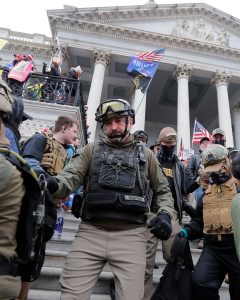
(AP) — Former President Donald Trump can be sued by injured Capitol Police officers and Democratic lawmakers over the Jan. 6, 2021, insurrection at the U.S. Capitol, the Justice Department said Thursday in a federal court case testing Trump’s legal vulnerability for his speech before the riot.
The Justice Department told a Washington federal appeals court in a legal filing that it should allow the lawsuits to move forward, rejecting Trump’s argument that he is immune from the claims.
The department said it takes no position on the lawsuits’ claims that the former president’s words incited the attack on the Capitol. Nevertheless, Justice lawyers told the court that a president would not be protected by “absolute immunity” if his words were found to have been an “incitement of imminent private violence.”
“As the Nation’s leader and head of state, the President has ‘an extraordinary power to speak to his fellow citizens and on their behalf,’ they wrote. “But that traditional function is one of public communication and persuasion, not incitement of imminent private violence.”
Picture : Yahoo
The brief was filed by lawyers of the Justice Department’s Civil Division and has no bearing on a separate criminal investigation by a department special counsel into whether Trump can be criminally charged over efforts to undo President Joe Biden’s victory in the 2020 presidential election ahead of the Capitol riot. In fact, the lawyers note that they are not taking a position with respect to potential criminal liability for Trump or anyone else.
Trump’s lawyers have argued he was acting within the bounds of his official duties and had no intention to spark violence when he called on thousands of supporters to “march to the Capitol” and “fight like hell” before the riot erupted.
“The actions of rioters do not strip President Trump of immunity,” his lawyers wrote in court papers. “In the run-up to January 6th and on the day itself, President Trump was acting well within the scope of ordinary presidential action when he engaged in open discussion and debate about the integrity of the 2020 election.”
A Trump spokesperson said Thursday that the president “repeatedly called for peace, patriotism, and respect for our men and women of law enforcement” on Jan. 6 and that the courts “should rule in favor of President Trump in short order and dismiss these frivolous lawsuits.”
In the separate investigation into Trump and his allies’ efforts to keep the Republican president in power, special counsel Jack Smith has subpoenaed former Vice President Mike Pence, who has said he will fight the subpoena.
Trump is appealing a decision by a federal judge in Washington, who last year rejected efforts by the former president to toss out the conspiracy civil lawsuits filed by the lawmakers and police officers. U.S. District Judge Amit Mehta ruled that Trump’s words during a rally before the violent storming of the U.S. Capitol were likely “words of incitement not protected by the First Amendment.”
“Only in the most extraordinary circumstances could a court not recognize that the First Amendment protects a President’s speech,” Mehta wrote in his February 2022 ruling. “But the court believes this is that case.”
One of the lawsuits, filed by Rep. Eric Swalwell, D-Calif., alleges that “Trump directly incited the violence at the Capitol that followed and then watched approvingly as the building was overrun.” Two other lawsuits were also filed, one by other House Democrats and another by officers James Blassingame and Sidney Hemby.
The House Democrats’ lawsuit cites a federal civil rights law that was enacted to counter the Ku Klux Klan’s intimidation of officials. The cases describe in detail how Trump and others spread baseless claims of election fraud, both before and after the 2020 presidential election was declared, and charge that they helped to rile up the thousands of rioters before they stormed the Capitol.
The lawsuits seek damages for the physical and emotional injuries the plaintiffs sustained during the insurrection. Even if the appeals court agrees that Trump can be sued, those who brought the lawsuit still face an uphill battle. They would need to show there was more than fiery rhetoric, but a direct and intentional call for imminent violence, said Laurie Levenson, a Loyola Law School professor and former federal prosecutor.
“We are really far away from knowing that even if the court allows the lawsuit to go forward whether they would be successful,” she said. “Even if the court says hypothetically you can bring an action against a president, I think they’re likely to draw a line that is very generous to the president’s protected conduct.”
In its filing, the Justice Department cautioned that the “court must take care not to adopt rules that would unduly chill legitimate presidential communication” or saddle a president with burdensome and intrusive lawsuits.
“In exercising their traditional communicative functions, Presidents routinely address controversial issues that are the subject of passionate feelings,” the department wrote. “Presidents may at times use strong rhetoric. And some who hear that rhetoric may overreact, or even respond with violence.”
Political scientists and forward-looking politicians have been debating the ultimate impact of the two youngest American generations — Plurals (Gen Z) and Millennials — on the nation’s partisan future for some time. With these two generations scheduled to become a majority of the American electorate later this decade, election results and a spate of recent data from Pew research are providing an increasingly persuasive answer. Younger voters should be a source of electoral strength for Democrats for some years to come.
Let’s start with the simple fact that, as Figure 1 illustrates, the Millennial generation is the largest generation in America today and the largest in American history.
FIGURE 1.
Population of Current U.S. Generations As Figure 2 illustrates, Millennials and some of their younger siblings, will be a majority of the electorate in just six years.
FIGURE 2.
Millennials and Plurals Will Be a Majority of Potential Voters by 2028 — Over Sixty Percent by 2036 Research on individual voting behavior over time supports the idea that early partisan predilections persist over an individual’s life span. Republicans need to take steps now to reverse these trends among young people before they become an unbreakable barrier to GOP electoral success and Democrats need to focus on Plurals and Millennials in the years ahead to take advantage of the opportunity that this emerging majority presents.[1]
Younger Americans are tilting the electoral playing field strongly towards the Democrats and making it very likely that the “over/under” line in American politics will be 45, if not 50, for at least the rest of this decade.
For instance, the results of the 2022 midterm elections surprised many who didn’t believe the Harvard Institute of Politics (IOP) surveys that showed young people were very enthusiastic about voting in the 2022 midterms. Their influence enabled the Democrats to win almost every battleground statewide contest and increase their majority in the U.S. Senate, as illustrated in Figures 3 and 4.
FIGURE 3.
The 2022 Democratic Advantage Among Young Voters in Battleground States Allowed the Democrats to Recapture Senate Control The 2022 Democratic Advantage Among Young Voters in Battleground States Allowed the Democrats to Recapture Senate ControlAnd even though the Democrats failed to retain their majority in the House of Representatives, the preference for Democratic candidates among members of the Pluralist and Millennial generations limited the size of the new Republican majority to just five votes.
FIGURE 4.
America’s Youngest Generations Voted Overwhelmingly Democratic for Congress in the 2022 Midterm Elections
What should be of even greater concern to Republicans is that this Democratic advantage, at least in the 2022 midterm election, was particularly strong among African American and Hispanic voters under the age of 45. Moreover, despite Republican efforts to make inroads in these communities and a large Republican vote among Hispanics in places like Florida, young minority voters supported Democrats by substantial margins. Eighteen to 29-year-old white voters also supported Democratic congressional candidates over Republican ones by a 58% to 40% margin, validating IOPs pre-election predictions as shown in Figure 5.
FIGURE 5.
The Democratic Advantage Among Young Voters Is True Among Key Racial and Ethnic Groups
Although the impact of Millennials’ and Plurals’ preferences for Democratic candidates among racial and ethnic voters varies based on congressional district lines and the nature of each’s state’s population, when it comes to voters under 45, and particularly among female voters of that age, their presence can be felt in every precinct in the country. See Figure 6.
FIGURE 6.
Young Female Voters Voted Overwhelmingly for Democrats in 2022 Linear projections of past trends are never definitive, especially in politics, and one election does not a trend make. But young people have now been voting solidly Democratic, and in increasing numbers, in every election since Donald Trump’s victory in 2016. In the 2018 midterm election, more than two-thirds (68%) of voters under 45 cast ballots for Democratic congressional nominees and in 2020, 58% voted for President Biden.
The rising importance of the Millennial and Pluralist generation brings with it three challenges Republicans will need to deal with if they want to win national elections in the future.
First, younger voters overwhelmingly support the Democratic Party’s positions on issues like abortion and inclusion that Republicans have traditionally opposed. Even worse for the GOP’s future, a majority of younger Republican voters are closer to the Democratic Party’s positions on these cultural issues than they are to their own party’s posture. However, the Republican generational gap is not significant on economic issues. To take advantage of this potential opening with younger voters, the Republican Party would have to reverse their current emphasis on “wokeness” and pound away on the country’s economic unease instead. See Figure 7.[2]
FIGURE 7.
Younger and Older Republicans Diverge Significantly on Social Issues, Democrats Broadly United Second, this divide by age on social issues within the Republican electorate is accompanied by a shrinking gender gap among younger voters, further unifying Democrats and making it harder for machismo-type Republican candidates to expand their appeal. Fifty-five percent of white male voters under 45 voted Democratic in 2022, as did 52% of younger white females. As Figure 8 illustrates, upwards of nine in ten male and female African American voters under 45 also voted Democratic in the midterms. Among both male and female Hispanics under 45, two-thirds voted for Democratic congressional candidates. To the extent that a gender gap still exists, in 2022 it is centered among older white and Hispanic voters. As Plural and Millennial voters become a larger and larger part of the American electorate, the gender gap in American politics is likely to shrink faster than the ozone layer.
FIGURE 8.
Democratic Advantage Among Plural and Millennial Voters Spread to All Racial and Ethnic Groups With Minimal Gender GapIf those two challenges weren’t enough to deal with, Republicans reliance on broadcast media, such as Fox News and talk radio, means their message isn’t even being heard by Plurals and Millennials who live in an entirely different information ecosystem, built around social media, especially TikTok and YouTube.[3] Figure 9 shows how different younger voters are when it comes to trust in media.
FIGURE 9.
Reaching Younger Voters Requires Using Social Media (Plurals and Millennials Prefer To Use Digital To Get News and Trust It More as a News Source) Of course, the Democratic party is not without its own challenges in adapting their strategies to an electorate dominated by younger voters. Older, embedded media commentators, pollsters, and campaign consultants, who make up the Democratic “permanent campaign complex,” are often slow to learn new tricks and less familiar with how to communicate with younger voters using their preferred platforms to talk about their policy priorities. For example, even in 2022, Democratic candidates for Senate in swing states such as Colorado and Ohio, recoiled in horror from President Biden’s proposal to forgive a portion of the two generations’ student debts, even though one of younger voters’ top priorities is making college more affordable, if not tuition free — ranking right up there with preserving reproductive rights and dealing with climate change.
If Democrats don’t run campaigns that focus on voters under 45, wherever they live and whatever their current political preferences, they could not only lose their chance for a sweeping victory in 2024 but potentially lose the allegiance of the large and growing majority of American voters for decades to come.
A tweet shared by thousands by Steve Milloy, founder of Junk Science and former member of the EPA transition team under the Trump Administration, says, “Zero US warming in 18 years, per US Climate Reference Network temp stations. That’s no US warming despite 30% of total manmade CO2.”
This claim is similar to ones in the past where skeptics of human-caused climate change cherry-pick data (using a fraction of the data to prop up claims that are false globally) to suit their ideology. It is simply false to claim that data from the Climate Reference Network show no warming over the last 18 years. There is a warming trend. Even if it was true, the US represents only 1.9 % of the Earth’s surface. It’s hard to extrapolate much about global temperature change from an 18-year period in 2% of the globe.
Picture : TheUNN
According to data from the National Oceanic and Atmospheric Administration (NOAA), nine of the top 10 warmest years on record for the contiguous 48 states have occurred since 1998, and 2012 and 2016 were the two warmest years on record. Some parts of the United States have experienced more warming than others. According to NOAA, the North, the West, and Alaska have seen temperatures increase the most, while some parts of the Southeast have experienced little change. This warming trend is consistent with the long-term trend of global warming, primarily driven by human activities, particularly the burning of fossil fuels that release greenhouse gases into the atmosphere.
Chris Cappa, chair of the Department of Civil and Environmental Engineering, University of California, Davis has this to say…
As usual, Steve Milloy is contributing to a disinformation campaign about the reality and seriousness of climate change through selective cherry picking of information. He conveniently ignores the undeniable global trend in surface temperatures to mention only the continental US, which is only 2% of the total Earth surface area. He misleads the public here by spinning a tale that is the equivalent of someone living in Chicago and saying they don’t believe that hurricanes are real because they’ve never seen one. Milloy peddles this same nonsense year after year and refuses to engage with the actual science.
“Despite constituting less than 1% of the U.S. population, Indian-Americans are 3% of the nation’s engineers, 7% of its IT workers and 8% of its physicians and surgeons,” wrote the popular Forbes magazine in 2008. “The overrepresentation of Indians in these fields is striking–in practical terms, your doctor is nine times more likely to be an Indian-American than is a random passerby on the street.”
Fifteen years later, in 2023, the story of the Indian Americans has grown even stronger; their successes encompassing almost all areas of American life – living the American Dream. The less than four million Indian Americans appear to be gaining prominence and have come to be recognized as a force to reckon with in this land of opportunities that they have come to call as their adopted homeland.
Picture : TheUNN
In fact, Indian Americans have for some time been considered a “model minority” in the US — they are better educated, have better jobs, are wealthier than many other immigrant populations and enjoy both political and business clout. Here’s data that points to these factors:
At a virtual interaction with Nasa scientists who were involved in the historic landing of Perseverance on Mars on March 3, US President Joe Biden remarked, “Indian-of-descent Americans (sic) are taking over the country. You (Swati Mohan), my Vice President (Kamala Harris), my speech writer (Vinay Reddy).”
Biden, who was sworn in as the 46th president of the United States on January 20, is in a good place to judge that. He has created history by appointing at least 55 Indian-of-descent Americans to key positions in his administration. And of course, his vice- president, Kamala Harris, is also an American of Indian-descent.
The rise of Kamala Harris, daughter of an Indian mother, as the Vice President represents a coming-of-age of the Indian American community in the United States. Harris was born to civil rights activist parents a year before the Immigration and Nationality Act of 1965 was passed; this Act relaxed the quota regime that restricted foreigners. At that time, there was one Indian American lawmaker in the US House of Representatives — the Punjab-born Dalip Singh Saund, also from California.
The Senate India Caucus was created in 2004. Harris was elected to the US Senate in 2016. The following year, four Indian Americans were elected to the US House of Representatives, and more were elected to the Senate and Congress of other states. Two other persons of Indian origin — Bobby Jindal and Nikki Haley — served as Governors of Louisiana and South Carolina, respectively, in that period.
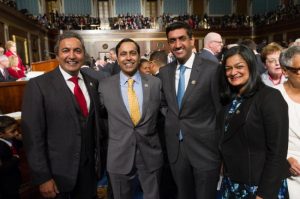
In 2022, there are as many as five persons of Indian Origin have been elected to the House of Representatives: Congressmen Raja Krishnamoorthi, Ro Khanna, Dr Ami Bera, Congresswoman Pramila Jayapal, and Shri Thanedar, a Karnataka-born entrepreneur – have been re-elected to the US House of Representatives
Today, more Indian Americans hold public office than ever before. However, politics is far from being the only sphere in which the Indian diaspora has gained influence in the last few decades.
Historically, Indians in the US worked in medicine, science & technology, engineering and mathematics-related jobs. Some, like the Patel community from Gujarat, took to the hotel industry and grew to dominate it. Others were entrepreneurs in Silicon Valley after the digital revolution of the 1980s.
In 1997, Ramani Ayer became the CEO of the Fortune 500 financial firm The Hartford, becoming the first in the list of Indian leaders heading American businesses.
At present, 2% of the Fortune 500 companies of American origin — including Microsoft, Alphabet, Adobe, IBM, and MasterCard — are led by Indian American CEOs. One in every seven doctors in America is of Indian descent;
Numbering about 3.8 million, or about 1.2 per cent of the US population, the Indian diaspora in the US is the richest, most educated and among the most successful ethnic groups in that country – pulling ahead of even white Americans on most counts. More than 75 per cent of Indian Americans have arrived in the US after 1990.
Picture : Quora
Looking ahead to the 2024 Presidential Elections, there are as many as three of them are seeking their way to be on the ballot. Two of the three Republicans who have announced plans so far to enter the US presidential race are Indian-Americans. While Nikki Haley is a familiar name, surprise candidate Vivek Ramaswamy is much less well known. If President Biden seeks reelection, the current Vice President, Harris is likely ot be on the ballot as his running mate in 2024.
Ramaswamy, a multimillionaire entrepreneur and author of the book Woke, Inc., announced his presidential bid on 21 February with an appearance on a Fox News show and a video laying out his political views. He wants to launch a “cultural movement to create a new American dream” based on the “pursuit of excellence” – and he says “diversity is meaningless if there’s nothing greater that binds” people. The 37-year-old, who was born in Ohio, studied at Harvard and Yale, earned his millions as a biotechnology entrepreneur and then founded an asset management firm.
Democrat Shekar Narasimhan, founder and chairman of the AAPI (Asian Americans and Pacific Islanders) Victory Fund, says that while he is happy to see more Asian-Americans gain prominence in politics, he isn’t confident about Mr Ramaswamy’s ideas.
“He is a business guy and has a clean slate, but what are his promises?” Mr Narasimhan asks. “Does he care about medical care for the elderly? What are his plans for infrastructure spending? He doesn’t have fixed positions and has not articulated his policies yet.”
Indian-American Republicans are predicting a “three-way race between Mr Trump, Mr DeSantis and Ms Haley” and prefer to wait instead of forging early alliances, especially as there is still uncertainty around the former president’s legal battles.
Dr. Sampat Shivangi says that he admires Ms Haley’s aggressive campaigning style and would support her in case Mr Trump is forced to withdraw from the race. “Mr Trump has 40% ratings and Ms Haley is in single digits, but she is our candidate. Her being Indian-American is the main reason why we are close to her,” he says.
Irrespective of political differences, the Indian-American community is happy about the sharp increase in their political participation, especially over the last three election cycles, and is proud of the rise of another of their own.
“A beautiful thing is happening: Indian-Americans are coming to the forefront,” Mr Gaekwad says, adding that the latest bid could encourage more Indian-Americans to run for elections even at the local level. Even political opponents agree with that. “If our children see Americans with a name like Ramaswamy run, and a Khanna or Krishnamoorthi can win, that’s a good thing,” Narasimhan says.
Republican presidential candidate Nikki Haley vowed on Friday to strip U.S. aid for countries that she said “hate us” if elected president. Haley said in an op-ed in The New York Post that taxpayers deserve to know where U.S. foreign aid is going and would be “shocked” to learn that much of it is supporting “anti-American” countries and causes.
She claimed that the United States has given more than $1 billion in recent years to Iraq, which she said is increasing ties to “murderous thugs” in Iran who have shouted “Death to America.” Iraq and Iran have improved their relations in recent years after a long history of being adversaries.
Haley noted that the U.S. has sent aid to Pakistan despite more than a dozen terrorist organizations residing there and China for “ridiculous” environmental programs.
“This is not just Joe Biden. It’s been happening for decades under presidents of both parties. Our foreign-aid policies are stuck in the past,” she wrote. “They typically operate on autopilot, with no consideration for the conduct of the countries that receive our aid.
She added that she is running for president to “restore our nation’s strength,” pride in the country and the public’s trust. “Backing American allies and friends like Israel and Ukraine is smart. Sending our tax dollars to enemies isn’t,” Haley said. “That’s why I will cut every cent in foreign aid for countries that hate us. A strong America doesn’t pay off the bad guys.”
Haley, who previously served as ambassador to the United Nations under the Trump administration and governor of South Carolina, said she often saw countries that “bashed” the United States in public and then privately “begged” it for money.
She said she supported former President Trump’s decision to cut almost $2 billion in military aid to Pakistan, but it did not go far enough. Haley became the second major Republican to launch their bid for the GOP nomination for president in 2024 earlier this month, following Trump into the race. Polling has shown Trump and Florida Gov. Ron DeSantis leading in hypothetical Republican primary polls.
The US-India Strategic Partnership Forum (USISPF) has welcomed the nomination of Indian-American Ajay Banga as the World Bank president, calling it a proud chapter in the success stories of the Indian-American diaspora.
If confirmed by the World Bank Board, Banga will be the first person of Indian descent and first Sikh-American to head the multilateral institution.
“It’s another proud chapter in the success stories of the Indian-American diaspora, and I wish Ajay all the best for this new inning” said USISPF President and CEO, Mukesh Aghi.
The USISPF, an independent not-for-profit institution dedicated to strengthening the US-India partnership, said Banga’s deep expertise and several years of experience in the fields of financial inclusion, public-private partnerships, and climate finance make him a phenomenal leader to head the Bank.
“Ajay’s background in his early years in India, gives him a deep understanding of the emerging market world and bridging the gaps in gender parity and working towards poverty alleviation, issues at the core ethos of the Bank’s mission,” Aghi said in a statement.
A tireless believer in both the strength of US-India ties and strengthening the relationship even further, Banga is also a founding trustee of USISPF.
The former Mastercard CEO has been instrumental in setting up USISPF as a founding board member and a vital pillar in USISPF’s success over the last five years.
Banga’s work with Citigroup, Mastercard, General Atlantic, and USISPF will allow for a seamless transition to mobilising resources in public-private partnerships to tackle issues on climate, water resources, food security, and healthcare, the USISPF said in a statement.
Banga, who was born in India and studied at Delhi’s St Stephen’s College, currently serves as vice chairman at General Atlantic.
While announcing his nomination on Thursday, the White House said that over the course of his career, Banga has become a global leader in technology, data, financial services and innovating for inclusion.
Banga was awarded the Foreign Policy Association Medal in 2012, the Padma Shri Award by India in 2016, the Ellis Island Medal of Honor and the Business Council for International Understanding’s Global Leadership Award in 2019, and the Distinguished Friends of Singapore Public Service Star in 2021. (IANS)
With US President Joe Biden nominating Ajay Banga, the former Indian American head of Mastercard, to head the World Bank, the top posts in the global financial institution will be held by Sikhs.
Before Banga, who is slated to take up job – which, by convention, been reserved for a US citizen – this May, the World Bank already as a Sikh in a top post, with Indermit Singh Gill its Chief Economist.
He is primarily known for pioneering the concept of the “middle-income trap” to describe how countries stagnate after reaching a certain level of income.
Gill, an Indian citizen, studied at St Paul’s School, Darjeeling and St. Stephen’s College, Delhi – where he was probably just a year (or perhaps two) junior to Banga.
Like Banga, Gill is also the son of a senior Indian Army officer.
Before taking over Chief Economist on September 1, 2022, Gill served as the World Bank’s Vice President for Equitable Growth, Finance, and Institutions, where he played a key role in shaping its response to the extraordinary series of shocks that have hit developing economies since 2020. Between 2016 and 2021, he was a professor of public policy at Duke University and non-resident senior fellow at the Brookings Institution’s Global Economy and Development program.
Widely regarded for his contributions to development economics, Gill spearheaded the influential 2009 World Development Report on economic geography, as per his World Bank profile. He has published extensively on key policy issues facing developing countries, among other things, sovereign debt vulnerabilities, green growth and natural-resource wealth, labour markets, and poverty and inequality.
Gill has also taught at Georgetown University and the University of Chicago. He holds a Ph.D. in economics from the University of Chicago
Biden’s nomination of Banga follows his Democratic predecessor, Barack Obama nominating Korean-American ‘Jim’ Yong Kim for World Bank chief to ensure that the World Bank is headed by someone with a developing-country background
Biden was then Vice President.
If confirmed by the World Bank Board, Bang will be the first person of Indian descent to head the World Bank. He will succeed David Malpass, who was appointed to head the bank by then President Donald Trump. (IANS)
Newswise — Yesterday, the Biden administration announced its most restrictive border control method to date, saying that it will temporarily penalize asylum seekers who cross the border illegally or fail to seek protection in other nations they transit on their way to the United States.
Stephen Yale-Loehr, professor of immigration law at Cornell Law School and co-author of a leading 21-volume immigration law series, says that the rule faces serious legal challenges. If you’d like to connect with Professor Yale-Loehr about this development, Yale-Loehr says:
Picture : TheUNN
“Among other things, the proposed rule would generally deny asylum to migrants if they have not first sought protection in another country they passed through before reaching the U.S.-Mexico border. Exceptions would exist for people with an acute medical emergency, imminent and extreme threat of violent crimes such as murder, rape or kidnapping, victims of human trafficking, and people in other extremely compelling circumstances. Children traveling alone would also be exempted.
“The proposed rule is similar to a Trump-era rule known as the third country transit ban. A federal court prevented that rule from ever taking effect.
“Immigrants’ rights advocates have said they will sue to stop the new proposed rule from taking effect. They have denounced the proposed rule as violating U.S. law that protects the right to apply for asylum.
“The Biden administration is between a rock and a hard place. Congress has failed to reform our broken immigration system, and more and more people are attempting to enter the United States for a variety of reasons, including persecution, gang violence, and climate change. The Biden administration hopes its proposed rule will survive a court challenge. I doubt it.”
Estelle McKee, clinical professor at Cornell Law School and co-director of the Asylum and Convention Against Torture Appellate Clinic, says that this proposed rule is the latest attempt by the federal government to externalize our borders. If you’d like to connect with Professor McKee about this development, McKee says:
“This proposed rule is intended to ‘discourage irregular migration’ by requiring people to either apply for asylum in countries they traveled through before seeking asylum in the United States, or by using a Customs and Border Patrol app that has already proven unable to handle the requests it has received. Neither of these options is feasible for asylum seekers.
“Many asylum seekers who come through the southern border are fleeing gang activity and domestic violence. There is little protection for victims of either kind of persecution in Mexico, Guatemala, or other countries the administration proposes as potential havens for asylum seekers. Take Mexico, for instance. Mexico’s top security official, Genaro García Luna, was just convicted of taking massive bribes from the Sinaloa cartel. He is just the latest example of the widespread collusion between public officials in Mexico and drug cartels. Asylum seekers fleeing those very cartels cannot find protection in Mexico.
“The asylum infrastructures in Mexico, Guatemala, and other central and south American countries are woefully inadequate and entirely unable to handle the influx of people fleeing India/Mediaviolence and persecution from other countries. If the Biden administration is having trouble handling the numbers of people seeking entry into the United States to escape such violence, the answer is not to delegate to other countries our legal duty to process asylum claims. It is to allocate greater resources to our own institutions—expand the corps of asylum officers; create more immigration courts; expand the Board of Immigration Appeals, for example—so they are able to handle any influx of asylum seekers.”
The United States is slouching towards a presidential election that almost nobody wants. The 2024 vote seems increasingly likely to be a re-match between President Joe Biden and former President Donald Trump.
It would be only the seventh re-match in the 59 presidential elections in American history and the first since President Dwight D. Eisenhower faced off against Adlai Stevenson for a second time in 1956.
Voters in both major US political parties are looking for fresh faces to run for president in 2024, according to a new Reuters/Ipsos poll. A majority of Democratic voters, at 52 per cent, do not want Mr Biden to seek a second term, while 40 per cent of Republican voters do not want Mr Trump to seek another term in 2024. Trump, who lost the presidency in 2020 and was impeached by Congress for inciting a riot at the US Capitol but ultimately acquitted by the Senate, announced he would run again in November.
Nearly making it certain, . first lady Jill Biden gave one of the clearest indications yet that President Joe Biden will run for a second term, telling The Associated Press in an exclusive interview on Friday last week that there’s “pretty much” nothing left to do but figure out the time and place for the announcement that Biden will run for US Presidency in 2024.
Although Biden has long said that it’s his intention to seek reelection, he has yet to make it official, and he’s struggled to dispel questions about whether he’s too old to continue serving as president. Biden would be 86 at the end of a second term.
“How many times does he have to say it for you to believe it?” the first lady said in Nairobi, the second and final stop of her five-day trip to Africa. She added, “He says he’s not done. He’s not finished what he’s started. And that’s what’s important.”
Granddaughter Naomi Biden, who is on the trip, cheered the first lady’s comments after the interview. “Preach nana,” she said on Twitter.
Picture : USA Today
The president himself was asked about his wife’s comments just hours later in an interview with ABC News, and laughed when told of her remarks, adding, “God love her. Look, I meant what I said, I’ve got other things to finish before I get into a full-blown campaign.”
During the interview with ABC’s David Muir, Biden, 80, was asked whether he is considering his age when deciding whether to run again, to which he replied no. However, he said it is “legitimate” for people to raise concerns about it.
Biden aides have said an announcement is likely to come in April, after the first fundraising quarter ends, which is around the time that President Barack Obama officially launched his reelection campaign.
The first lady has long been described as a key figure in Biden’s orbit as he plans his future. “Because I’m his wife,” she laughed.
She brushed off the question about whether she has the deciding vote on whether the president runs for reelection. “Of course, he’ll listen to me, because we’re a married couple,” she said. But, she added later, “he makes up his own mind, believe me.”
The wide-ranging interview took place on the anniversary of the Russian invasion of Ukraine, and Jill Biden recalled her trip into the country last May to meet the besieged country’s first lady, Olena Zelenska.
President Biden said in a new interview that he has “other things to finish” before starting a “full-blown” 2024 presidential campaign. Well, apparently, someone interviewed my wife today, I heard. I gotta call her and find out,” Biden told ABC News’s David Muir when asked if he’s running again.
“No, all kidding aside, my intention … has been from the beginning to run, but there’s too many other things I have to finish in the near-term before I start a campaign,” Biden said. The president has long said he intends to run for another four years in the White House, and first lady Jill Biden gave a strong indication last week that he’ll do so.
They visited a school that was being used to help migrants who fled the fighting. Some of the families, Jill Biden said, had hid underground for weeks before making their escape. “We thought then, how long can this go on? And here we are, a year later,” she said. “And look at what the Ukrainian people have done. I mean, they are so strong and resilient, and they are fighting for their country.”
“We’re all hoping that this war is over soon, because we see, every day, the damage, the violence, the horror on our televisions,” the first lady added. “And we just can’t believe it.”
Jill Biden is the only first lady to continue her career in addition to her ceremonial duties, teaching writing and English to community college students. At 71 years old, she said she’s not ready to think about retirement. “I know that I will know when it’s enough,” she said. “But it’s not yet.”
She said she left detailed lesson plans for a substitute teacher while she was on her trip, and she’s been texting with students as she was traveling. She plans to be back in the classroom at 8 a.m. on Tuesday morning, after arriving home from Africa around 3 a.m. Monday.
Education has been a flashpoint in American politics, especially with conservative activists and politicians trying to limit discussion of race and sexuality in classrooms. “I don’t believe in banning books,” she said.
She added: “I think the teachers and the parents can work together and decide what the kids should be taught.” During the interview, Jill Biden reflected on the legacy of former President Jimmy Carter, who recently began home hospice care. The Carter Center, which the former president founded after leaving the White House, was key in helping to eliminate the Guinea worm parasite in African countries.
“That’s the perfect example,” she said. “He’s such a humble man. He didn’t go out and shout, ‘Look what I’ve done.’ He just did the work.” Jill Biden recalled Carter and his wife, Rosalynn, reaching out on the eve of Joe Biden’s inauguration two years ago. “They called and said congratulations,” she said. “And it meant so much to me and to Joe.”
She also talked about visiting the Carters at their home in Plains, Georgia, early in Biden’s presidency. “It’s not just that here are two presidents. It’s here are two friends,” she said. “Actually four friends, who have really supported one another over the years.
“It’s legitimate for people to raise issues about my age,” he told Muir. “It’s totally legitimate to do that. And the only thing I can say is, ‘Watch me.’” Biden, the oldest president in U.S. history, would be 82 when sworn in if reelected in 2024. Biden’s age has drawn concerns from both sides of the aisle. (Associated Press writer Chris Megerian in Washington contributed to this report.)
President Joe Biden has nominated a former boss of Mastercard with decades of experience on Wall Street to lead the World Bank and oversee a shake-up at the development organization to shift its focus to the climate crisis.
Ajay Banga, an American citizen born in India, comes a week after David Malpass, a Donald Trump appointee, quit the role. The World Bank’s governing body is expected to make a decision in May, but the US is the Washington-based organisation’s largest shareholder and has traditionally been allowed to nominate without challenge its preferred candidate for the post.
Malpass, who is due to step down on 30 June, was nominated by Trump in February 2019 and took up the post officially that April. He is known to have lost the confidence of Biden’s head of the US Treasury, Janet Yellen, who with other shareholders wanted to expand the bank’s development remit to include the climate crisis and other global challenges.
Ajay Banga, former president and CEO of Mastercard and current vice chairman of the private equity firm General Atlantic, is Biden’s nomination as the next president of the World Bank.
Biden, in a statement Thursday, called Banga – a native of India and former chairman of the International Chamber of commerce – “uniquely equipped” to lead the World Bank, a global development institution that provides grants and loans to low-income countries to reduce poverty and spur development.
Biden touted Banga’s work leading global companies that brought investment to developing economies and his record of enlisting the public and private sectors to “tackle the most urgent challenges of our time, including climate change.”
The Biden administration is looking to recalibrate the focus of the World Bank to align with global efforts to reduce climate change.
Malpass, nominated by former President Donald Trump, still had a year remaining on his five-year term as president. Malpass came under fire when he said, “I’m not a scientist,” when asked at a New York Times event in September whether he accepts the overwhelming scientific evidence that the burning of fossil fuels has caused global temperatures to rise. Former Vice President Al Gore, who called Malpass a “climate denier,” was among several well-known climate activists to call for his resignation.
Banga was the top executive at Mastercard from 2010 to 2020. He has served as a co-chair of Vice President Kamala Harris’ Partnership for Central America, which has sought to bring private investment to the region.
Treasury Secretary Janet Yellen applauded Biden’s pick. She said Banga understands the World Bank’s goals to eliminate poverty and expand prosperity are “deeply intertwined with challenges like meeting ambitious goals for climate adaptation and emissions reduction, preparing for and preventing future pandemics, and mitigating the root causes and consequences of conflict and fragility.”
Banga still needs confirmation by the bank’s board to become president. It’s unclear whether there will be additional nominees from other nations.
Indian American Nikki Haley, Former South Carolina Republican Governor and former US ambassador to the United Nations under the Donald Trump administration has announced that she will run for president in 2024, becoming the first major rival to challenge former President Donald Trump for the GOP nomination.
“It’s time for a new generation of leadership — to rediscover fiscal responsibility, secure our border, and strengthen our country, our pride and our purpose.” Haley said in her video announcement. Haley accused the “socialist left” of seeing “an opportunity to rewrite history.”
“The Washington establishment has failed us over and over and over again. It’s time for a new generation of leadership to rediscover fiscal responsibility, secure our border and strengthen our country, our pride and our purpose,” Haley said in the video.
“China and Russia are on the march. They all think we can be bullied, kicked around,” Haley said. “You should know this about me: I don’t put up with bullies. And when you kick back, it hurts them more if you’re wearing heels. I’m Nikki Haley, and I’m running for president.”
Per reports, the former president, who announced his bid last year, recently appeared to bless her entrance into the race, telling reporters that she had called to tell him she was considering a campaign launch and that he had said, “You should do it.”
The Indian American community has expressed support to Haley, a second-generation Indian American, who has risen through the rank and file of the Republican Party by her leadership qualities. “I have known Governor Haley personally for decades and we are delighted that she has announced her candidacy on February 15th, 2023 at her home state, and capital Charleston,” Dr. Sampat Shivangi, a Member of the National Advisory Council, SAMHSA, Center for National Mental Health Services, Washington DC told this writer. “On behalf of the large and influential Indian American community, I wish her well and all the success in the coming days, and pray, she will succeed to be a nominee of GOP in 2024. We will assure our community support in every way,” he added.
Pointing to the many leadership roles she has held, Dr. Shivangi said, “Governor Nicky Haley, who has served in multiple roles in the US and on word stage as the US Ambassador to United Nations, makes all of us proud, specifically Indian Americans, who have given a unique identity as part of the diaspora. A rare quality of Governor Nicky is that she has not forgotten her roots and her ancestral homeland India as she visited India and interacted with leadership in India including meeting our beloved leader Prime Minister Modi. She is a popular and respected leader, not only in her home state, South Carolina, and across US. She has very close ties with President Trump who she may be running against in GOP primaries. I have learned that President Trump has welcomed her candidacy for the highest office of the land, possibly a place on the world stage.”
Haley, the daughter of Indian immigrants, opened the video talking about how she felt “different” growing up in Bamberg, South Carolina. “The railroad tracks divided the town by race. I was the proud daughter of Indian immigrants. Not Black, not White. I was different. But my mom would always say your job is not to focus on the differences but on the similarities. And my parents reminded me and my siblings every day how blessed we were to live in America,” Haley said. If successful in the primary, Haley would be the first woman and the first Asian American nominated by the Republican Party for president.
Haley will likely face stiff competition from other potential GOP candidates such as Florida Gov. Ron DeSantis, former Vice President Mike Pence and former Secretary of State Mike Pompeo, who are all said to be weighing 2024 runs. Some strategists say a big Republican primary field would be advantageous to Trump, who still enjoys significant support among the party base, and could splinter the vote — allowing him to walk away with the nomination.
(IPS) – Few policymakers ever claim credit for causing stagnation and recessions. Yet, they do so all the time, justifying their actions by some supposedly higher purpose. Now, that higher purpose is checking inflation as if it is the worst option for people today. Many supposed economists make up tall tales that inflation causes economic contraction which ordinary mortals do not know or understand.
Inflating inflation’s significance
Since early 2022, like many others in the world, Americans have been preoccupied with inflation. But official US data show inflation has been slowing since mid-2022.
Recent trends since mid-2022 are clear. Inflation is no longer accelerating, but slowing. And for most economists, only accelerating inflation gives cause for concern.
Annualized inflation since has only been slightly above the official, but nonetheless arbitrary 2% inflation target of most Western central banks.
At its peak, the brief inflationary surge, in the second quarter of last year, undoubtedly reached the “highest (price) levels since the early 1980s” because of the way it is measured.
After decades of ‘financialization’, the public and politicians unwittingly support moneyed interests who want to minimize inflation to make the most of their financial assets.
War and price
Russia’s aggression against Ukraine began last February, with retaliatory sanctions following suit. Both have disrupted supplies, especially of fuel and food. The inflation spike in the four months after the Russian invasion was mainly due to ‘supply shocks’.
Price increases were triggered by the war and retaliatory sanctions, especially for fuel, food and fertilizer. Although no longer accelerating, prices remain higher than a year before.
To be sure, price pressures had been building up with other supply disruptions. Also, demand has been changing with the new Cold War against China, the Covid-19 pandemic and ‘recovery’, and credit tightening in the last year.
There is little evidence of any more major accelerating factors. There is no ‘wage-price spiral’ as prices have recently been rising more than wages despite government efforts ensuring full employment since the 2008 global financial crisis.
Despite difficulties due to inflation, tens of millions of Americans are better off than before, e.g., with the ten million jobs created in the last two years. Under Biden, wages for poorly paid workers have risen faster than consumer prices.
Higher borrowing costs have also weakened the lot of working people everywhere. Such adverse consequences would be much less likely if the public better understood recent price increases, available policy options and their consequences.
With the notable exception of the Bank of Japan, most other major central banks have been playing ‘catch-up’ with the US Federal Reserve interest rate hikes. To be sure, inflation has already been falling for many reasons, largely unrelated to them.
Making stagnation
But higher borrowing costs have reduced spending, for both consumption and investment. This has hastened economic slowdown worldwide following more than a decade of largely lackluster growth since the 2008 global financial crisis.
Ill-advised earlier policies now limit what governments can do in response. With the Fed sharply raising interest rates over the last year, developing country central banks have been trying, typically in vain, to stem capital outflows to the US and other ‘safe havens’ raising interest rates.
Having opened their capital accounts following foreign advice, developing country central banks always offer higher raise interest rates, hoping more capital will flow in rather than out.
Interestingly, conservative US economists Milton Friedman and Ben Bernanke have shown the Fed has worsened past US downturns by raising interest rates, instead of supporting enterprises in their time of need.
Four decades ago, increased servicing costs triggered government debt crises in Latin America and Africa, condemning them to ‘lost decades’. Policy conditions were then imposed by the International Monetary Fund and World Bank for access to emergency loans.
Globalization double-edged
Economic globalization policies at the turn of the century are being significantly reversed, with devastating consequences for developing countries after they opened their economies to foreign trade and investment.
Encouraging foreign portfolio investment has increasingly been at the expense of ‘greenfield’ foreign direct investment enhancing new economic capacities and capabilities.
The new Cold War has arguably involved more economic weapons, e.g., sanctions, than the earlier one. Trump’s and Japanese ‘reshoring’ and ‘friend-shoring’ discriminate among investors, remaking ‘value’ or ‘supply chains’.
Arguably, establishing the World Trade Organization in 1995 was the high water mark for multilateral trade liberalization, setting a ‘one size fits all’ approach for all, regardless of means. More recently, Biden has continued Trump’s reversal of earlier trade liberalization, even at the regional level.
1995 also saw strengthening intellectual property rights internationally, limiting technology transfers and progress. Recent ‘trade conflicts’ increasingly involve access to high technology, e.g., in the case of Huawei, TSMC and Samsung.
With declining direct tax rates almost worldwide, governments face more budget constraints. The last year has seen these diminished fiscal means massively diverted for military spending and strategic ends, cutting resources for development, sustainability, equity and humanitarian ends.
In this context, the new international antagonisms conspire to make this a ‘perfect storm’ of economic stagnation and regression. Hence, those striving for international peace and cooperation may well be our best hope against the ‘new barbarism’. (IPS UN Bureau)
The United States Congress Committee assignments are being announced as the new 117th Congress begins sittings, and among the first few so far are important assignments for the Indian-American lawmakers on Capitol Hill.
Congressman Raja Krishnamoorthi, D-Illinois has bee appointed to serve as the Ranking Member on the House Select Committee on the Strategic Competition Between the United States and the Chinese Communist Party (CCP). This is a new committee formed in the 118th Congress for the specific purpose of investigating and developing policy to address the United States’ economic, technological, and security competition with the Chinese Communist Party.
Krishnamoorthi thanked Minority Leader of the House Hakeem Jeffries, D-NY, for selecting him as the senior most member on the Democratic side (Ranking) for the new Committee.
“The Chinese Communist Party poses serious economic and security threats to the United States and to democracy and prosperity across the globe, illustrated by its threats against Taiwan’s democracy, its weaponization of TikTok, and its theft of hundreds of billions of dollars’ worth of American intellectual property,” Krishnamoorthi is quoted saying in the press release. “I look forward to working with my colleagues in both parties on this committee to counteract the CCP’s escalating aggression and ensure that our nation is prepared to overcome the economic and security challenges that the CCP presents to our country,” he added.
He however drew attention to the anti-Asian hate and violence on the rise, and cautioned policymakers that it needed to protect all Americans, “while avoiding dangerous rhetoric that fuels the types of xenophobia that have endangered members of the Asian American and Pacific Islander community.”
He appreciated the Republican Chairman of the new Committee, Mike Gallagher of Wisconsin, for “repeatedly” demonstrating “his singular focus on the committee’s critical undertaking of readying the United States for all the challenges posed by the Chinese Communist Party,” and was looking forward to working with him.
Another Indian-American Congressman, Ro Khanna, D-California, is appointed to the new House Select Committee on the Strategic Competition Between the United States and the Chinese Communist Party. Khanna recently authored a piece in Foreign Affairs journal outlining the role that China has played in the deindustrialization of America and his vision to reduce the trade imbalance and lower tensions between the two countries through increasing American production.
In a statement, Khanna said he was honored to be appointed and “look forward to working with Chairman Gallagher, Ranking Member Krishnamoorthi and all of the members on the committee to look seriously at the economic relationship between the United States and China. I plan to use my seat on the committee to bring attention to our trade deficit with China while also working to address the security risk China poses to Taiwan,” Khanna added.
“I take my role as the representative for the only majority Asian American community in the continental United States very seriously. We can be tough on the Chinese Communist Party while unequivocally condemning anti-Asian racism and the increase in hate crimes targeting the Asian American community,” Khanna went on to say. “It is my hope that the work done by this committee will help chart a productive path forward and prevent inflammatory rhetoric, violence, and discrimination,” he said.
Congresswoman Pramila Jayapal, D-Washington State, the first and only Indian-American woman elected to the lower house, has been reassigned to the powerful House Budget Committee. Jayapal, a champion of immigration, led Democrats in introducing the “Roadman to Freedom” resolution, which she has described as “a visionary north star for immigration reform” according to a press release from her office Jan. 27, 2020.
“While establishing a roadmap to citizenship for 11 million people, this progressive vision signals a strong commitment to transforming the immigration system so it is humane, fair, equitable, and focused on respect, dignity, and family unity,” the press release says.
“As a lifelong immigrant rights organizer who created the largest immigrant rights organization in Washington state before becoming one of only 14 naturalized citizens serving in Congress today, I know that we must do far more than simply reverse the harmful, xenophobic policies of the Trump Administration,” Jayapal is quoted saying in the press release. “Our immigration system has been broken for decades, and with a new president in office, we must finally reform it in a humane way that focuses on respect, dignity, family unity and real opportunity for all immigrants,” she added noting that she will be working with the Congressional Hispanic Caucus, Congressional Black Caucus and Congressional Asian Pacific American Caucus to introduce the Roadmap to Freedom.
Congressman Ami Bera, D-California, was named chair of the House Foreign Affairs Subcommittee on Asia, the Pacific, Central Asia, and Nonproliferation for the 117th Congress. Dr. Bera is the first Indian-American elected since 1957 when Dalip Singh Saund, also of California, was elected to the House of Representatives.
Saying he was honored to be named chair of the subcommittee, Bera noted, “Asia continues to be the most consequential region for American foreign policy, as our economy and national security are intrinsically linked to this region.” Bera was also selected to serve on the House Foreign Affairs Subcommittee on Africa, Global Health, and Global Human Rights. He also serves as Co-Chair of the Congressional Caucus on Korea and previously chaired the Congressional Caucus on India and Indian Americans.
“We want to make India’s Health Care a World Class Endeavor, by utilizing: A. Information Technology; B. Field of Medicine; C. Finance, Banking; and, D. Politics. Towards this end, he recommended that the Government of India must collaborate and harness the resources available in large organizations such as the American Association of Physicians of Indian Origin (AAPI) which is the largest ethnic medical organization in the United States, representing the interests of over 100,000 Physicians of Indian origin, who serve every 7th patient, making up of nearly 15% of the healthcare professionals in their adopted country,” Dr. Sampat Shivangi, a physician, an influential Indian-American community leader, and a veteran leader of the American Association of Physicians of Indian Origin (AAPI) said, while addressing the delegates during the Pravasi Bhrataiya Diwas in Indore, India on January 9th, 2023.
As a founding member of AAPI, “I want to stress the importance of working together with solid cooperation and partnership, which will make such a tremendous change in the Indian healthcare system,” Dr. Shivangi said, while pointing out the many contributions and initiatives of AAPI and its members, who contribute immensely in several states, especially in the healthcare sector both in the urban and rural areas across India, serving millions of people.
During the recent Covid catastrophe, AAPI has provided extensive support to their motherland, he said. AAPI helped raise more than 5 million US dollars, which were used to procure and provide 2300 Oxygen Concentrators, over 100 Ventilators, 200 High Flow Oxygen, setting up dozens of Oxygen plants, and providing several Chemiluminescence Immuno-Analyzers (CLIA), each costing Rs. 50 Lakh. In addition, AAPI has adopted several villages and closely coordinated the overall development by providing primary care and preventive medicine to dozens of rural villages across India.
A conservative lifelong member of the Republican Party, Dr. Shivangi is the founding member of the Republican Indian Council and the Republican Indian National Council. Dr. Shivangi is the National President of Indian American Forum for Political Education, one of the oldest Indian American Associations. Over the past three decades, he has lobbied for several Bills in the US Congress on behalf of India through his enormous contacts with US Senators and Congressmen.
A close friend to the Bush family, he was instrumental in lobbying for the first Diwali celebration in the White House and for President George W. Bush to make his trip to India. He had accompanied President Bill Clinton during his historic visit to India.
Dr. Shivangi is a champion of women’s health and mental health whose work has been recognized nationwide. Dr. Shivangi has worked enthusiastically in promoting India Civil Nuclear Treaty and recently the US India Defense Treaty that was passed in US Congress and signed by President Obama.
Health care across the world is regarded as an important determinant in promoting the general, physical, mental, and social well-being of people around the world and can contribute to a significant part of a country’s economy, development, and industrialization when efficiently improving human health and providing access to affordable high-quality health care.
While acknowledging that India is a global leader in the manufacturing of affordable, innovative & quality pharmaceutical & medical devices across the world, realizing India’s goal of “Vasudhaiva Kutumbakam,” Dr. Shivangi pointed to how medications manufactured by Indian pharmaceutical companies “flock every shelf of American general and pharmacies, at a fraction of the cost of their American counterparts.”
Quoting studies that point to the fact that Mental Health has emerged as an “ever-challenging task,” Dr. Shivangi said, “Nearly 1 in 5 Americans has some type of Mental illness. This has caused the US government to spend $225 million in 2019 alone towards treating Mental Health. During the Covid pandemic period, 78% of adults were experiencing a mental illness, an equivalent of over 50 million Americans, with millions of adults in the USA experiencing serious thoughts of suicide, with the highest rate amongst multi-racial individuals.
Responding to realities, the US Government has initiated several measures to help people struggling with mental health issues, Dr. Shivangi said. “In the US, there are an estimated 350 individuals for one mental health provider, with programs such as Division of Prevention, Traumatic Stress, and Special Programs, Division of State and Community Systems Development, Division of Service and Systems Improvement, and National Institute of Mental Health. In addition, the Federal Government has set up several services which are easily accessible to those struggling with mental health issues, and enabling them to receive Get immediate assistance. The Veterans Crisis Line is a free confidential resource that connects veterans 24/7 with trained responders. The Disaster Distress Helpline 800- 985- 5990, which provides immediate crisis counseling to anyone facing natural or human-caused disasters,” Dr. Shivangi pointed out.
Dr. Shivangi said, they can get instant help by calling #911 in crisis; they can call or Text #988 Suicide & Crisis lifeline, a new Nationwide service, attended by trained staff, trained crisis counselors who can counsel, guide and get them admitted into nearby crisis center, community mental health center or hospital immediately that includes ambulance service. “This has caught nationwide attention. I would strongly recommend that India should think along these lines.”
The SAMHSA Substance Abuse and Mental Health Services Administration is another major initiative of the US government. I serve on the Board of SAMHSA, a prestigious position, appointed by the President of the United States. I was first appointed by President Trump & now by the current President Joe Biden.”
Dr. Shivangi praised “India for making striking progress in health standards in the post-independence era. The sustained efforts to control the country’s population & the political will to march towards the SDG in health will help India to make a significant impact in the international health sector.”
The NFHS-5 carried out in this regard during 2019-20 has shown: There were 1,020 women for 1000 men in the country in 2019-2021; TFR has also come down below the threshold at which the population is expected to replace itself from one generation to next; Child Nutrition indicators show a slight improvement at an all-India level as Stunting has declined from 38% to 36%, wasting from 21% to 19% and underweight from 36% to 32% at all India level; • Incidence of anemia in under-5 children (from 58.6 to 67%), women (53.1 to 57%) and men (22.7 to 25%) has worsened in all States of India (20%-40% incidence is considered moderate).
Full immunization drives among children aged 12-23 months have recorded a substantial improvement from 62% to 76% at all-India levels. Institutional births have increased substantially from 79% to 89% at all-India Level
Focusing on Mental Health in India, Dr. Shivangi said, “Mental Health literacy is the gateway for mental health intervention in India. However, there is a lack of awareness, which can lead to overlooking, misjudging or dismissing the signs that someone needs help.
WHO estimates 1 in every 8 individuals worldwide suffer from a mental disorder, impairment in childhood, depression, anxiety, substance abuse, & psychosis in maturity and ending with dementia in old age. 5.6 crore Indians suffer from depression, while 3.8 crore suffers from anxiety disorders. Based on the analysis, due to these factors, “India will lose 1.03 trillion in economic value” based on a study by Lancet – British Medical Journal that reported that 35% increase in mental disorders in India.
Nearly 14% of India’s population required active therapeutic interventions, while only 1 out of every 10 people gets evidence-based treatment, in other words, 70% – 80% of persons in India receive no care affiliated with it.
Pointing that there are as many as 70 million mentally ill people in the country of 1.3 billion, there are only 20,000 beds in 42 mental hospitals, due to lack of planning and funding by the government, Dr. Shivangi said. There are only 4000 qualified Psychiatrists, which is 0.2 per 100,000 population as against an average of 1.2 Psychiatrists among the nations of the world.
While the health ministry proposed to increase India’s public health expenditure to 2.5% of its gross domestic product (GDP) by 2025, it has remained within a narrow band of 1.02-1.28% of GDP. India is one of the 57 countries with a critical HRH shortage.
In inequities between the rural and urban is even more disturbing. Rural India has a shortfall of 24% Sub-Centers, 29% Primary Health Centers and 38% Community Health Centres across the country as per the Rural Health Statistics (RHS) 2020.
The national density of doctors, nurses, and midwives was found to be 20.6 per 10,000 people compared to the World Health Organization (WHO) recommendation of 44.5. There are significant urban–rural differences in HRH with urban areas having four times greater doctor density than rural areas.
Dr. Shivangi recommended that India requires 3 mental health experts for every 10,000 people, which means India needs an additional 30,000 psychiatrists, 38,000 psychiatric social workers, 37,000 psychiatric nurses.
Dr. Shivangi urged the government of India to make efforts “to educate society to provide clients with prompt mental health support, prompt intervention, cognizance, & education of the issue. Therefore it is crucial to comprehend that individuals with mental illness have a right to spend their life with dignity and self-assurance.”
Among the many suggestions, Dr. Shivangi put forth included, “Integration of mental health with primary healthcare through NMHR; Provision of tertiary care institutions for treatment of mental disorders; Eradicating stigmatization of mentally ill patients and protecting their rights through regulatory institutions like the central mental health authority & State mental health authorities; Initiate agencies on the model of SAMHSA to minimize substance abuse, a federal agency; Starting of a nationwide Tele service on the US model of 988, 911; Incentives to programs of Psychologists, Psychiatrists, and social workers in the field of mental health; and, more importantly, an awareness of mental health among the general public.”
Dr. Sampat Shivangi, an obstetrician/gynecologist, has been elected by a US state Republican Party as a full delegate to the National Convention. He is one of the top fund-raisers in Mississipi state for the Republican Party. Besides being a politician by choice, the medical practitioner is also the first Indian to be on the American Medical Association, the apex law making body.
Dr. Shivangi has actively involved in several philanthropic activities, serving with Blind foundation of MS, Diabetic, Cancer and Heart Associations of America. Dr. Shivangi has number of philanthropic work in India including Primary & middle schools, Cultural Center, IMA Centers that he opened and helped to obtains the first ever US Congressional grant to AAPI to study Diabetes Mellitus amongst Indian Americans.
Dr. Sampat Shivangi was awarded the highest civilian honor, the Pravasi Bharatiya Diwas Sanman award in 2016 in Bengaluru by the Hon. President of India, Shri Pranap Mukhejee. He was awarded the prestigious Ellis Island Medal of Honor in New York in 2008. He is married to Dr. Udaya S. Shivangi, MD, and the couple are blessed with two daughters: Priya S. Shivangi, MS (NYU); Pooja S. Shivangi who is an Attorney at Law.
India and Pakistan came “too close” to a nuclear conflagration during the 2019 confrontation with both sides believing the other was preparing to deploy nuclear weapons, according to former US Secretary of State Mike Pompeo.
He recounted in his book, “Never Give an Inch”, his frantic night-time diplomatic efforts to get the neighbours to stand down after getting a call from his “Indian counterpart” warning him that he believed Pakistan was readying nuclear weapons for a strike and India was considering its own escalation.
The External Affairs Minister, during the crisis set off by the terrorist attack that killed 46 Central Reserve Police Force personnel and the Indian strike on a terrorist base inside Pakistan in Balakot in February 2019, was the late Sushma Swaraj.
“I do not think the world properly knows just how close the India-Pakistan rivalry came to spilling over in a nuclear conflagration,” Pompeo wrote.
But, he added: “the truth is, I don’t know precisely the answer either. I just know it was too close”.
He was woken up at night while he was on a visit to Hanoi with a call from his “Indian counterpart” who told him that “he believed the Pakistanis had begun to prepare their nuclear weapons for a strike”.
“India, he informed me, was contemplating its own escalation. I asked him to do nothing and give us a minute to sort things out,” Pompeo wrote.
Working with John Bolton, who was then the US National Security Adviser, from their Hanoi hotel room he “reached the actual leader of Pakistan. General (Qamer Javed) Bajwa”, he wrote.
“I told him what the Indians had told me. He said it wasn’t true. As one might expect, he believed the Indians were preparing their own nuclear weapons for deployment.
“It took us a few hours, and remarkably good work by our teams on the ground in New Delhi and Islamabad, to convince each side that neither was to convince each side or the other was not preparing for nuclear war,” Pompeo added.
Taking credit for the de-escalation, he wrote: “No other nation could have done that, but we did that night to avoid a horrible outcome.”
He acknowledged the work of Kenneth Juster, who was the then US envoy in New Delhi, calling him “an incredibly capable ambassador” who “loves India and its people”.
Pompeo, who was the director of the Central Intelligence Agency before becoming the Secretary of State, recounted in the book his four years in former President Donald Trump’s cabinet.
The book subtitled, “Fighting for the America I Love”, lays out how he aggressively implemented Trump’s ‘America First’ vision.
Writing about his efforts to deepen ties with New Delhi, Pompeo wrote that he “made India the fulcrum of my diplomacy to contract Chinese aggression”.
“I chose to devote serious quantities of time and effort to make India the next great American ally,” he added. (IANS)
Republican National Committee Chair Ronna McDaniel won her bid against rival Harmeet Dhillon, a California lawyer and a person of Indian origin on January 27th to lead the GOP for two more years, prevailing in an election that highlighted fierce internal divisions that threaten to plague the party into the next presidential season.
Ronna McDaniel, whom Donald Trump tapped as RNC chair in 2016, won on the secret ballot, 111 to 51, over Harmeet Dhillon, a California lawyer. The high-profile election played out inside a resort on the Southern California coast as the RNC’s 168 voting members – activists and elected officials from all 50 states – gathered for their annual winter meeting.
The party is not united,” McDaniel’s chief rival, Trump attorney Dhillon, told reporters in the hallway soon after standing alongside McDaniel on stage. “Nobody’s going to unite around the party the way it is, which is seemingly ignoring the grassroots.”
A relieved McDaniel invited her rivals to the stage immediately after the outcome was announced. “With us united, and all of us working together, the Democrats are going to hear us in 2024,” she declared.
With the victory, McDaniel becomes the longest-serving RNC chair since the Civil War. While the vote itself wasn’t as close as some had expected, friends and foes alike agree that she will not be leading the RNC from a position of strength.
Picture : TheUNN
Indeed, while Trump privately backed McDaniel, powerful forces within his “Make America Great Again” movement lined up behind Dhillon. Backed by MAGA leaders in conservative media, Dhillon waged an aggressive challenge against McDaniel that featured allegations of chronic misspending, mismanagement and even religious bigotry against Dhillon’s Sikh faith — all claims that McDaniel denied. Above all, the case against McDaniel centered on deep dissatisfaction with the direction of the party after continuous election losses since Trump chose her to lead the committee following his upset 2016 victory.
The former president ignored the feud as he congratulated McDaniel on her “big WIN” on his social media network.
“Now we have to STOP THE DEMOCRATS FROM CHEATING IN ELECTIONS!” Trump wrote in capital letters, repeating baseless allegations of election fraud that have filled his political messaging for the past two years.
But some of Trump’s acolytes were not so willing to move on. Conservative activist Charlie Kirk cited the Republican base’s overwhelming desire for change and said those members who voted for McDaniel would be held “accountable.”
“The RNC has contempt for their voters,” said Kirk, who sat among several Dhillon allies in the back of the hotel ballroom where the vote was held. “They basically just gave them a middle finger.”
While McDaniel prevailed, some of her supporters privately conceded they were open to a change in the committee’s leadership after three successive disappointing elections. But there were specific concerns about Dhillon – and the people around her.
The California Republican closely aligned herself with Caroline Wren, a former Trump fundraiser who was involved with raising money for the Washington rally on Jan. 6, 2021,that preceded the violent attack on the Capitol.
Dhillon’s chief surrogate at the RNC meeting this week was Kari Lake, the failed Arizona gubernatorial candidate who has spread debunked claims of voter fraud. Lake courted RNC members on Dhillon’s behalf inside the conference hotel.
From afar, Florida Gov. Ron DeSantis, a likely 2024 presidential contender, spoke out against McDaniel on the eve of the vote as well. “I think we need a change. I think we need to get some new blood in the RNC,” DeSantis said in an interview with Florida’s Voice, citing three “substandard election cycles in a row” under McDaniel’s leadership.
Meanwhile, Trump had quietly supported McDaniel, a niece of Republican Sen. Mitt Romney of Utah, and dispatched a handful of his lieutenants to Southern California to advocate on her behalf.
The former president avoided making a public endorsement at McDaniel’s request, according to those with direct knowledge of the situation who spoke on condition of anonymity to describe private conversations. McDaniel’s team was confident she would win without his public backing, allowing her to maintain a sense of neutrality heading into the 2024 presidential primary season.
According to its rules, the RNC must remain neutral in the presidential primary. Trump is the only announced GOP candidate so far, but other high-profile contenders are expected in the coming months.
Also in the race on Friday was MyPillow CEO Mike Lindell, a pro-Trump conspiracy theorist who won four votes. Lindell has already endorsed Trump’s 2024 campaign and said he would not change his mind if his longshot bid was successful Friday. “I’ve never not endorsed Donald Trump,” Lindell said. “I’m never moving off that space.”
McDaniel is now set to lead the RNC through the 2024 election. Under her leadership, the committee will control much of the presidential nominating process – including the debates and voting calendar — while directing the sprawling nationwide infrastructure designed to elect a Republican president.
Ashraf Ghani, the former Afghanistan President who fled the country when the Taliban grabbed power in Kabul, was “a total fraud” solely focused on his own desire to stay in power and a big hurdle in any peace talks, former US Secretary of State Mike Pompeo has said.
In his book titled ‘Never Give an Inch: Fighting for the America I Love,’ Pompeo claims that both Ghani and Afghanistan’s former chief executive Abdullah Abdullah were involved in corruption at the highest levels that limited the US’ ability to successfully exit the war-torn country in August 2021.
The United States completed its withdrawal from Afghanistan on August 31, ending its 20-year-old military presence in the country.
“As negotiations accelerated, Ghani was always a problem. I met scores of world leaders, and he was my least favourite. That’s saying a lot when you have Kim (Jong-un), Xi (Jinping), and (Vladimir) Putin in the mix. Yet Ghani was a total fraud who had wasted American lives and was focused solely on his own desire to stay in power,” Pompeo writes in his book that hit the bookstores this week.
“Never once did I sense that he was prepared to take a risk for his country that might imperil his power. This disgusted me,” he writes in the book that gives a detailed account of the negotiations that the previous US administration led by ex-President Donald Trump had with the Taliban group.
The Trump administration had appointed former diplomat Zalmay Khalilzad as the special envoy for talks with the Taliban.
Pompeo claims that Ghani won his reelection mainly because of massive electoral fraud. “According to the final nominal tally, Ghani had defeated the country’s chief executive, Abdullah Abdullah. But the truth was that Ghani simply had bribed more voters and vote counters than the other candidates had,” writes the former Secretary of State.
Pompeo says both Ghani and Abdullah were fighting about who would be the next president without regard for whether there would even be a government to lead in Afghanistan. “At General Miller’s request, I hopped a plane to Afghanistan on March 23, 2020, to tell them that they needed to find an accommodation, or I would advise President Trump that we should exit the country immediately, beginning with the elimination of the roughly USD 5-6 billion per year in foreign assistance that we were providing at the time,” he said.
This was a real threat, Pompeo notes. “While the public focus was almost always on how the aid provided security assistance, its larger purpose was to preserve civil order. It funded schools and health care, but it also meant ‘walking around money’ for local leaders. That’s a euphemism for bribery, and it’s the sad reality of both how American aid and Afghan society worked,” he said.
“My message got their attention. Eventually, we shaved off USD 1 billion in assistance to show we weren’t bluffing. In May, Abdullah essentially gave control to Ghani, and we had, at least, a head of the Afghan government,” he said.
After joining the Trump administration, Pompeo said, he assessed that Afghan low-level corruption secured a measure of stability, as it kept the country from completely unravelling, albeit at a staggering cost to the government’s credibility with its own people.
“The fact was that even Afghan’s president Ashraf Ghani and the country’s chief executive Abdullah Abdullah both led cartels that stole millions of dollars in aid money from the United States. That corruption at the highest levels limited our ability to exit successfully,” Pompeo said.
Ghani, for all his eloquence and charm, was not the leader of a war-torn, deeply divided tribal nation seeking to build the political institutions needed, he said. “He was a dim bulb in his political instincts and a Brussels-style manager in a cauldron of violence that demanded an Ultimate Fighting Championship mindset. Nor did he have much credibility among Afghan leaders, nearly all of whom had been fighting in one war or another for their entire adult lives,” Pompeo said.
Ghani’s years in the West had made him masterful at gaming American lawmakers and nonprofit organizations, he claims. “He also spent extravagantly on lobbyists. I say with no exaggeration that Ghani had more friends inside the district of Columbia than he did in Afghanistan. When I met him the first time during my CIA days, I told him straight up: ‘You’re squandering your time on K Street and Capitol Hill when you should be hustling for allies in Herat and Mazar-e-Sharif,’ Pompeo wrote.
Ghani, who has been living in exile in the UAE since the Taliban took over the Afghan capital Kabul on August 15, 2021, has, in the past, vehemently defended his move of fleeing the war-torn country, saying he left to stop further “bloodshed” by the Taliban.
Facebook-parent Meta said last week that it will restore former President Donald Trump’s accounts on Facebook and Instagram in the coming weeks, just over two years after suspending him in the wake of the January 6 Capitol attack.
“Our determination is that the risk [to public safety] has sufficiently receded,” Meta President of Global Affairs Nick Clegg said in a blog post. “As such, we will be reinstating Mr. Trump’s Facebook and Instagram accounts in the coming weeks. However, we are doing so with new guardrails in place to deter repeat offenses.”
Trump could be suspended for as much as two years at a time for violating platform policies in the future, Clegg said. With his Facebook and Instagram accounts reactivated, Trump will once again gain access to huge and powerful communications and fundraising platforms just as he ramps up his third bid for the White House.
The decision, which comes on the heels of a similar move by Twitter, could also further shift the landscape for how a long list of smaller online platforms handle Trump’s accounts.
It was not immediately clear whether Trump will seize the opportunity to return to the Meta platforms. Trump’s reps did not immediately respond to a request for comment.
In a post on his own platform, Truth Social, Trump acknowledged Meta’s decision to reverse its suspension of his account and said “such a thing should never again happen to a sitting President, or anybody else who is not deserving of retribution.”
Picture : TheUNN
Former President Trump’s team was not given advance notice of Meta’s decision, a source familiar with the matter told CNN. Many of his aides and advisers learned of the decision from media reports. Shortly before the announcement, Meta asked for a last-minute meeting with Trump’s lawyers this evening to discuss his possible reinstatement, but were not told what the final decision was. They were still in the meeting when Meta released the news, the source said.
Twitter restored Trump’s account in November following its takeover by billionaire Elon Musk, but the former president has not yet resumed tweeting, opting instead to remain on Truth Social.
But Trump’s campaign earlier this month sent a letter to Meta petitioning the company to unblock his Facebook account, a source familiar with the letter told CNN, making his return more likely. Although Twitter was always Trump’s preferred platform, he has a massive reach on Facebook and Instagram — 34 million followers and 23 million followers, respectively, ahead of his reinstatement. Previous Trump campaigns have lauded the effectiveness of Facebook’s targeted advertising tools and have spent millions running Facebook ads.
Meta’s decision was quickly criticized by a number of online safety advocates and democratic lawmakers. Congressman Adam Schiff said in a tweet that restoring Trump’s “access to a social media platform to spread his lies and demagoguery is dangerous,” noting that Trump has shown “no remorse” for his actions around the January 6 attack. NAACP President Derrick Johnson called the decision “a prime example of putting profits above people’s safety.”
But ACLU Director Anthony Romero called the decision “the right call,” joining several other groups in praising the move. He added: “The biggest social media companies are central actors when it comes to our collective ability to speak — and hear the speech of others — online. They should err on the side of allowing a wide range of political speech, even when it offends.”
How Meta made the decision
The company made the landmark decision to bar Trump from posting on Facebook and Instagram the day after the January 6 attack, in which his supporters stormed the US Capitol in a bid to overturn the 2020 election results.
Many other platforms did the same in quick succession, but Facebook was clear that it planned to revisit the decision at a later date. After Facebook’s independent Oversight Board recommended that the company clarify what was initially an indefinite suspension, Facebook said the former president would remain restricted from the platform until at least January 7, 2023.
Meta earlier this month was considering whether to restore Trump’s accounts with the help of a specially formed internal company working group made up of leaders from different parts of the organization, a person familiar with the deliberations told CNN. The group included representatives from the company’s public policy, communications, content policy, and safety and integrity teams, and was being led by Clegg, who previously served as UK Deputy Prime Minister.
The company said in June 2021 that it would “look to experts to assess whether the risk to public safety has receded” in January 2023 to make a determination about the former president’s account.
“If we determine that there is still a serious risk to public safety, we will extend the restriction for a set period of time and continue to re-evaluate until that risk has receded,” Clegg, then-vice president of global affairs at Meta, said in a statement at the time.
Meta’s updated policy
Clegg said in his Wednesday post that the company believes “the public should be able to hear what their politicians are saying — the good, the bad and the ugly — so that they can make informed choices at the ballot box.” But, he said, “that does not mean there are no limits to what people can say on our platform.”
In light of his previous violations, Trump will now face “heightened penalties for repeat offenses,” Clegg said, adding that the policy will also apply to other public figures whose accounts are reinstated following suspensions related to civil unrest.
Clegg told Axios in an interview published Wednesday that the company does not “want — if he is to return to our services — for him to do what he did on January 6, which is to use our services to delegitimize the 2024 election, much as he sought to discredit the 2020 election.”
“In the event that Mr. Trump posts further violating content, the content will be removed and he will be suspended for between one month and two years, depending on the severity of the violation,” Clegg said. However, the possibility of permanent removal of Trump’s accounts — which Clegg had previously indicated could be a consequence of future violations if his account were to be restored — no longer appears to be on the table.
For content that doesn’t violate its rules but “contributes to the sort of risk that materialized on January 6th, such as content that delegitimizes an upcoming election or is related to QAnon,” Meta may limit distribution of the posts, Clegg said. The company could, for example, remove the reshare button or keep the posts visible on Trump’s page but not in users’ feeds, even for those who follow him, he said. For repeated instances, the company may restrict access to its advertising tools.
If Trump again posts content that violates Meta’s rules but “we assess there is a public interest in knowing that Mr. Trump made the statement that outweighs any potential harm” under the company’s newsworthiness policy, Meta may similarly restrict the posts’ distribution but leave them visible on Trump’s page.
(AP) — Attorney General Merrick Garland on Thursday appointed a special counsel to investigate the presence of classified documents found at President Joe Biden’s home in Wilmington, Delaware, and at an unsecured office in Washington dating from his time as vice president.
Robert Hur, a onetime U.S. attorney appointed by former President Donald Trump, will lead the investigation and plans to begin his work soon. His appointment marks the second time in a few months that Garland has appointed a special counsel, an extraordinary fact that reflects the Justice Department’s efforts to independently conduct high-profile probes in an exceedingly heated political environment.
Both of those investigations, the earlier one involving Trump and documents recovered from his Mar-a-Lago estate in Florida, relate to the handling of classified information, though there are notable differences between those cases.
Garland’s decision caps a tumultuous week at the White House, where Biden and his team opened the year hoping to celebrate stronger economic news ahead of launching an expected reelection campaign. But the administration faced a new challenge Monday, when it acknowledged that sensitive documents were found at the office of Biden’s former institute in Washington. The situation intensified by Thursday morning, when Biden’s attorney said an additional classified document was found at a room in his Wilmington home — later revealed by Biden to be his personal library — along with other classified documents in his garage.
The attorney general revealed that Biden’s lawyers informed the Justice Department of the latest discovery at the president’s home on Thursday morning, after FBI agents first retrieved documents from the garage in December.
Biden told reporters at the White House that he was “cooperating fully and completely” with the Justice Department’s investigation into how classified information and government records were stored.
“We have cooperated closely with the Justice Department throughout its review, and we will continue that cooperation with the special counsel,” said Richard Sauber, a lawyer for the president. “We are confident that a thorough review will show that these documents were inadvertently misplaced, and the president and his lawyers acted promptly upon discovery of this mistake.”
Garland said the “extraordinary circumstances” of the matter required Hur’s appointment, adding that the special counsel is authorized to investigate whether any person or entity violated the law. Federal law requires strict handling procedures for classified information, and official records from Biden’s time as vice president are considered government property under the Presidential Records Act.
“This appointment underscores for the public the department’s commitment to both independence and accountability in particularly sensitive matters, and to making decisions indisputably guided only by the facts and the law,” Garland said.
Hur, in a statement, said: “I will conduct the assigned investigation with fair, impartial and dispassionate judgment. I intend to follow the facts swiftly and thoroughly, without fear or favor and will honor the trust placed in me to perform this service.”
While Garland said the Justice Department received timely notifications from Biden’s personal attorneys after each set of classified documents was identified, the White House provided delayed and incomplete notification to the American public about the discoveries.
Biden’s personal attorneys found the first set of classified and official documents on Nov. 2 in a locked closet as they cleared out his office at the Penn Biden Center in Washington, where he worked after he left the vice presidency in 2017 until he launched his presidential campaign in 2019. The attorneys notified the National Archives, which retrieved the documents the next day and referred the matter to the Justice Department.
Sauber said Biden’s attorneys then underwent a search of other locations where documents could have been transferred after Biden left the vice presidency, including his homes in Wilmington and Rehoboth Beach, Delaware. Garland said that on Dec. 20, the Justice Department was informed that classified documents and official records were located in Biden’s Wilmington garage, near his Corvette, and that FBI agents took custody of them shortly thereafter.
A search on Wednesday evening turned up the most recently discovered classified document in Biden’s personal library at his home, and the Justice Department was notified Thursday, Garland revealed.
The White House only confirmed the discovery of the Penn Biden Center documents in response to news inquiries Monday and remained silent on the subsequent search of Biden’s homes and the discovery of the garage tranche until Thursday morning, shortly before Garland announced Hur’s appointment. Biden, when he first addressed the matter Tuesday while in Mexico City, also didn’t let on about the subsequent document discoveries.
Press secretary Karine Jean-Pierre insisted that despite the public omissions, Biden’s administration was handling the matter correctly.
“There was transparency in doing what you’re supposed to do,” she said, declining to answer repeated questions about when Biden was briefed on the discovery of the documents and whether he would submit to an interview with investigators.
Pressed on whether Biden could guarantee that additional classified documents would not turn up in a further search, Jean-Pierre said, “You should assume that it’s been completed, yes.”
The appointment of yet another special counsel to investigate the handling of classified documents is a remarkable turn of events, legally and politically, for a Justice Department that has spent months looking into the retention by Trump of more than 300 documents with classification markings found at the former president’s Florida estate.
Though the situations are factually and legally different, the discovery of classified documents at two separate locations tied to Biden — as well as the appointment of a new special counsel — would almost certainly complicate any prosecution that the department might bring against Trump.
New House Speaker Kevin McCarthy, a California Republican, said of the latest news, “I think Congress has to investigate this. Here’s an individual that sat on ‘60 Minutes’ that was so concerned about President Trump’s documents … and now we find that this is a vice president keeping it for years out in the open in different locations.” Contradicting several fellow Republicans, however, he said, “We don’t think there needs to be a special prosecutor.”
The top Republican on the House Intelligence Committee has requested that intelligence agencies conduct a “damage assessment” of potentially classified documents. Ohio Rep. Mike Turner on Thursday also requested briefings from Garland and the director of national intelligence, Avril Haines, on their reviews by Jan. 26.
“The presence of classified information at these separate locations could implicate the President in the mishandling, potential misuse, and exposure of classified information,” Turner wrote the officials.
Today click spin otherwise purchase the automobile spin element, that allows one twist the newest reel instead their lingering involvement. The brand new symbols you could find for the reels are built to match the brand new theme of your own video game flawlessly – which grand blend of the. Continue reading “Threat High voltage Slot machine To experience 100 % free”
After more than a year of interviewing over 1,000 witnesses and the collection of hundreds of thousands of documents, gathering evidence and holding public meetings, the U.S. House of Representatives panel probing the Jan. 6, 2021 attack on the Capitol has concluded its final hearing on December 20, 2022 by referring former President Donald Trump for four criminal charges.
Marking the first time in history that the Congress has referred a former president for criminal prosecution, the select Democrats-led panel voted unanimously to refer Trump and others to the US Justice Department on charges of obstruction of an official proceeding, conspiracy to defraud the United States, conspiracy to make a false statement and conspiracy to defraud the US by assisting, aiding or comforting those involved in an insurrection.
It also referred four fellow members of Congress, all Republicans, to the House ethics committee for failing to comply with subpoenas. They are Reps. Kevin McCarthy of California, Jim Jordan of Ohio, Scott Perry of Pennsylvania and Andy Biggs of Arizona.
Rep. Jamie Raskin, D-MD, a member of the Jan. 6 panel who previously served as the lead manager in Trump’s second impeachment trial — told the media that ignoring or burying those recommendations would set “a terrible precedent for the future.” And he wen on to state: “An insurrection is a rebellion against the authority of the United States. It is a grave federal offense, anchored in the Constitution itself.”
“It’s of special concern when there’s an attempt to overthrow our election and essentially subdue our constitutional order and have someone seize the presidency who didn’t win it,” he said. “And if members of Congress have knowledge of that and may have been involved in it but refuse to say anything about it, we’re setting a precedent for future attacks on democracy itself. And that’s really the burden of our committee, to make sure that we prevent coups, insurrections, electoral sabotage and political violence in the future.”
Trump gave a fiery speech to his supporters near the White House the morning of Jan. 6, and publicly chastised his vice president, Mike Pence, for not going along with his scheme to reject ballots cast in favor of Democrat Joe Biden. Trump then waited hours to make a public statement as thousands of his supporters raged through the Capitol, assaulting police and threatening to hang Pence.
Trump satisfies the elements for obstructing an official proceeding, Raskin said, adding, “that was the whole purpose of his scheme and he succeeded in interrupting it for four hours, the only time that’s ever happened in American history.”
According to him, the former president also engaged in a conspiracy to make false statements and defraud the U.S. (through the fake electors scheme specifically), and that he “acted to incite, assist and give aid and comfort to an insurrection.” And it’s based on those facts and laws that Trump should be held accountable, Raskin argued. “In a society where all of us are treated equally under the law, the fact that he’s a former president would make no more difference than the fact that he’s a former businessman or TV star,” he said.
On why Trump bears responsibility
More than 900 people have been prosecuted for crimes like assaulting federal officers, destroying federal property, seditious conspiracy, attempt to overthrow or put down the government. Why should the foot soldiers be going to jail and not the ringleaders and the masterminds of this scheme to defeat American democracy? Look, if Donald Trump had succeeded, he’d be bragging about it, how he was the one who came up with the whole plan, Raskin said.
Speaker Nancy Pelosi (D-Calif.) is ending her long leadership tenure with a historic flourish, wrapping up two decades at the top of the party with a string of major victories — political, legislative and diplomatic — that are putting a remarkable cap on a landmark era.
Nancy Pelosi said that she will not seek a leadership position in the new Congress, ending a historic run as the first woman with the gavel and making way for a new generation to steer the party after Democrats lost control of the House to Republicans in the midterm elections.
The California Democrat, a pivotal figure in U.S. history and perhaps the most powerful speaker in modern times, said she would remain in Congress as the representative from San Francisco, a position she has held for 35 years, when the new Congress convenes in January.
President Joe Biden, who had encouraged Pelosi to stay on as Democratic leader, congratulated her on her historic tenure as speaker of the House. “History will note she is the most consequential Speaker of the House of Representatives in our history,” Biden said in a statement, noting her ability to win unity from her caucus and her “absolute dignity.”
Pelosi was twice elected to the speakership and has led Democrats through consequential moments, including passage of the Affordable Care Act with President Barack Obama and the impeachments of President Donald Trump.
First elected in 1987, Pelosi was among a dozen Democratic women in Congress. She was long ridiculed by Republicans as a San Francisco liberal while steadily rising as a skilled legislator and fundraising powerhouse. Her own Democratic colleagues have intermittently appreciated but also feared her powerful brand of leadership.
Pelosi first became speaker in 2007, saying she had cracked the “marble ceiling,” after Democrats swept to power in the 2006 midterm elections in a backlash to then-President George W. Bush and the wars in Iraq and Afghanistan.
The Ukrainian president has, since the Russian invasion began in February, emerged as the global symbol of democratic defiance in the face of the violent authoritarianism of Russian President Vladimir Putin. Zelensky’s visit, in particular, carried outsize significance.
“The 117th Congress has been one of the most consequential in recent history,” she wrote to fellow Democrats this week, taking a victory lap. She added that the lame-duck agenda has them leaving on “a strong note.”
During her remarks on the House floor, Pelosi recapped her career, from seeing the Capitol the first time as a young girl with her father — a former New Deal congressman and mayor — to serving as speaker alongside U.S. presidents. “I quite frankly, personally, have been ready to leave for a while,” she said. “Because there are things I want to do. I like to dance, I like to sing. There’s a life out there, right?”
Speaker Nancy Pelosi (D-Calif.) is ending her long leadership tenure with a historic flourish, wrapping up two decades at the top of the party with a string of major victories — political, legislative and diplomatic — that are putting a remarkable cap on a landmark era.
Nancy Pelosi said that she will not seek a leadership position in the new Congress, ending a historic run as the first woman with the gavel and making way for a new generation to steer the party after Democrats lost control of the House to Republicans in the midterm elections.
The California Democrat, a pivotal figure in U.S. history and perhaps the most powerful speaker in modern times, said she would remain in Congress as the representative from San Francisco, a position she has held for 35 years, when the new Congress convenes in January.
President Joe Biden, who had encouraged Pelosi to stay on as Democratic leader, congratulated her on her historic tenure as speaker of the House. “History will note she is the most consequential Speaker of the House of Representatives in our history,” Biden said in a statement, noting her ability to win unity from her caucus and her “absolute dignity.”
Pelosi was twice elected to the speakership and has led Democrats through consequential moments, including passage of the Affordable Care Act with President Barack Obama and the impeachments of President Donald Trump.
First elected in 1987, Pelosi was among a dozen Democratic women in Congress. She was long ridiculed by Republicans as a San Francisco liberal while steadily rising as a skilled legislator and fundraising powerhouse. Her own Democratic colleagues have intermittently appreciated but also feared her powerful brand of leadership.
Pelosi first became speaker in 2007, saying she had cracked the “marble ceiling,” after Democrats swept to power in the 2006 midterm elections in a backlash to then-President George W. Bush and the wars in Iraq and Afghanistan.
The Ukrainian president has, since the Russian invasion began in February, emerged as the global symbol of democratic defiance in the face of the violent authoritarianism of Russian President Vladimir Putin. Zelensky’s visit, in particular, carried outsize significance.
“The 117th Congress has been one of the most consequential in recent history,” she wrote to fellow Democrats this week, taking a victory lap. She added that the lame-duck agenda has them leaving on “a strong note.”
During her remarks on the House floor, Pelosi recapped her career, from seeing the Capitol the first time as a young girl with her father — a former New Deal congressman and mayor — to serving as speaker alongside U.S. presidents. “I quite frankly, personally, have been ready to leave for a while,” she said. “Because there are things I want to do. I like to dance, I like to sing. There’s a life out there, right?”
After more than a year of interviewing over 1,000 witnesses and the collection of hundreds of thousands of documents, gathering evidence and holding public meetings, the U.S. House of Representatives panel probing the Jan. 6, 2021 attack on the Capitol has concluded its final hearing on December 20, 2022 by referring former President Donald Trump for four criminal charges.
Marking the first time in history that the Congress has referred a former president for criminal prosecution, the select Democrats-led panel voted unanimously to refer Trump and others to the US Justice Department on charges of obstruction of an official proceeding, conspiracy to defraud the United States, conspiracy to make a false statement and conspiracy to defraud the US by assisting, aiding or comforting those involved in an insurrection.
It also referred four fellow members of Congress, all Republicans, to the House ethics committee for failing to comply with subpoenas. They are Reps. Kevin McCarthy of California, Jim Jordan of Ohio, Scott Perry of Pennsylvania and Andy Biggs of Arizona.
Rep. Jamie Raskin, D-MD, a member of the Jan. 6 panel who previously served as the lead manager in Trump’s second impeachment trial — told the media that ignoring or burying those recommendations would set “a terrible precedent for the future.” And he wen on to state: “An insurrection is a rebellion against the authority of the United States. It is a grave federal offense, anchored in the Constitution itself.”
“It’s of special concern when there’s an attempt to overthrow our election and essentially subdue our constitutional order and have someone seize the presidency who didn’t win it,” he said. “And if members of Congress have knowledge of that and may have been involved in it but refuse to say anything about it, we’re setting a precedent for future attacks on democracy itself. And that’s really the burden of our committee, to make sure that we prevent coups, insurrections, electoral sabotage and political violence in the future.”
Trump gave a fiery speech to his supporters near the White House the morning of Jan. 6, and publicly chastised his vice president, Mike Pence, for not going along with his scheme to reject ballots cast in favor of Democrat Joe Biden. Trump then waited hours to make a public statement as thousands of his supporters raged through the Capitol, assaulting police and threatening to hang Pence.
Trump satisfies the elements for obstructing an official proceeding, Raskin said, adding, “that was the whole purpose of his scheme and he succeeded in interrupting it for four hours, the only time that’s ever happened in American history.”
According to him, the former president also engaged in a conspiracy to make false statements and defraud the U.S. (through the fake electors scheme specifically), and that he “acted to incite, assist and give aid and comfort to an insurrection.” And it’s based on those facts and laws that Trump should be held accountable, Raskin argued. “In a society where all of us are treated equally under the law, the fact that he’s a former president would make no more difference than the fact that he’s a former businessman or TV star,” he said.
On why Trump bears responsibility
More than 900 people have been prosecuted for crimes like assaulting federal officers, destroying federal property, seditious conspiracy, attempt to overthrow or put down the government. Why should the foot soldiers be going to jail and not the ringleaders and the masterminds of this scheme to defeat American democracy? Look, if Donald Trump had succeeded, he’d be bragging about it, how he was the one who came up with the whole plan, Raskin said.
Elon Musk has said he’ll step down from his role as CEO of Twitter once he finds someone to replace him, an announcement that comes after a majority of users said he should resign in a poll held on the social media platform. “I will resign as CEO as soon as I find someone foolish enough to take the job! After that, I will just run the software & servers teams,” Musk wrote on Twitter.
Musk’s tweet day night marks the first time he’d responded to a Sunday unscientific poll in which he asked whether he should step down as CEO. The results reflected that a majority of respondents (57.5 percent) said he should leave the top role of the company.
With more than 17.5 million total votes cast, 57.5 percent of users responding to Musk’s poll said he should step down as Twitter’s head, just weeks after Musk acquired the company and took on the position.
Musk had vowed in posting the poll that he would abide by the results. Another 42.5 percent of users said Musk should not leave the role. Musk’s tenure as CEO has so far been fraught with controversy as the billionaire moved to slash Twitter staff, scale back on content moderation and change the platform’s user verification system.
Musk has yet to identify a future successor and, in fact, floated the possibility in November that he might have to file for bankruptcy in order to pay back the $13 billion in debt he borrowed from banks for the purchase. He has seen his personal fortune decline since he bought the site, losing his title as the world’s richest man.
In the less than two months since Musk bought Twitter for $44 billion and took it private, he has fired its top leadership team, gutted its staff, driven away major advertisers and unbanned accounts, including that of former President Donald Trump. His actions have raised concerns about the future of the platform.
However, despite the controversy Musk has stoked in lifting most of its existing rules against misinformation with his commitment to “free speech,” lawmakers remain on the site. Many say there isn’t another social media platform with the equivalent reach to reporters and Washington insiders.
A group of Silicon Valley tech workers from India marched in San Jose, California, on Dec. 17 to demand better means to secure a green card.
Traditionally, tech startups have used H1B visas to legally hire skilled foreign workers who may eventually qualify for a permanent green card in about a year or two.
However, the cap on skills-based green cards issued per country has resulted in many workers from India being unable to get one.
The green card backlog was further exacerbated by former President Donald Trump in 2020 after he decided to stop all visa applications amid the COVID-19 pandemic.
When President Joe Biden revoked the ban the following year, the H-1B visa to green card backlog had already hit an all-time high of 1.4 million people.
Based on an estimate from the Cato Institute, Indians with advanced degrees seeking permanent residence in the U.S. should expect a wait time of 151 years.
According to the dozens of workers who joined the march, they have been waiting for their green cards for decades.
“We all have applied for a green card and it has been approved. Only thing is, we need to wait 150 years to get a green card,” Akhilesh Malavalli told KPIX CBS SF Bay Area. “A hundred fifty years! I’ll be dead. I’ll be dead by the time we see a green card.”
The protesters held a demonstration in front of Representative Zoe Lofgren (D, CA-19), chair of the House subcommittee on immigration, to urge her to bring her proposed bill to the House floor for a vote in the coming week.
HR 3648, a bill that would remove national origin as a consideration for the green card, was introduced by Lofgren last year alongside Rep. John Curtis (R, UT-03).
“What we are fighting for is basic equality,” Malavalli said. “Treat us based on what skills we bring to this nation and not necessarily based on where we were born.”
Under current laws, H1B workers who lose their jobs for whatever reason are granted only two months to find a new job to stay in the U.S. before they become illegal immigrants.
Immediate family members of H1B visa holders can receive an H-4 visa, which is linked to the time limit of the H1B. Children of H1B workers lack the protection that a green card offers in case their parents lose their jobs or die. The law states that they must leave the country when they turn 21, regardless of whether they’ve lived in the U.S. since they were born. (Yahoo.com)
(AP) — Long before the bobbleheads and the “Fauci ouchie,” Dr. Anthony Fauci was a straight-shooter about scary diseases — and “stick with the science” remains his mantra.
Fauci steps down from a five-decade career in public service at the end of the month, one shaped by the HIV pandemic early on and the COVID-19 pandemic at the end.
In an interview with The Associated Press, Fauci said he leaves excited by the prospect of advances such as next-generation coronavirus vaccines — but worried that misinformation and outright lies mark a “profoundly dangerous” time for public health and science.
“Untruths abound and we almost normalize untruths,” Fauci said. “I worry about my own field of health, but I also worry about the country.”
Fauci, who turns 82 on Christmas Eve, has been a physician-scientist at the National Institute of Allergy and Infectious Diseases for 54 years, and its director for 38 of them.
Picture : AP
Because he candidly puts complex science into plain English, Fauci has advised seven presidents, from Ronald Reagan to Joe Biden, about a long list of outbreaks — HIV, Ebola, Zika, bird flu, pandemic flu, even the 2001 anthrax attacks.
“Stick with the science and never be afraid to tell somebody something that is the truth — but it’s an inconvenient truth in which there might be the possibility of the messenger getting shot,” Fauci said. “You don’t worry about that. You just keep telling the truth.”
He added, with characteristic understatement: “That’s served me really quite well with one exception that, you know, the truth generated a lot of hostility towards me in one administration.”
For all his prior influence on national and even global responses to infectious diseases, it wasn’t until COVID-19 paralyzed the world in early 2020 that Fauci became a household name — giving the latest updates at daily White House press conferences and in frequent media interviews.
But eventually, Fauci found himself having to contradict then-President Donald Trump’s attempts to downplay the severity of the viral threat and promote unproven treatments. Trump and his allies began attacking Fauci, who even received death threats that required a security detail for his protection.
As the world enters another year of COVID-19, Fauci still is a frequent target of the far right — but also remains a trusted voice for millions of Americans.
Under his watch, researchers at the National Institutes of Health laid the scientific groundwork for the speedy development of powerful coronavirus vaccines. An analysis released by the Commonwealth Fund last week found the shots saved 3.2 million lives in the U.S. alone and prevented 18.5 million hospitalizations.
With another winter uptick underway, Fauci’s disappointed that just 14% of people eligible for the updated COVID-19 boosters — shots that add protection against omicron strains — have gotten one.
“That doesn’t make any sense at all, when you have a vaccine that you know is life-saving,” he said. But he’s also looking forward to next-generation vaccines that do a better job of preventing infection, citing promising leads like nasal vaccines.
For all the political attacks, the public did struggle to understand why some of his and others’ health advice changed as the pandemic wore on — such as why masks first were deemed unnecessary and later mandated in certain places.
Fauci said one of the pandemic’s lessons is to better convey that it’s normal for messages to change as scientists make new discoveries. “That doesn’t mean you’re flip-flopping. That means you’re actually following the science,” he said.
Fauci has had a hand in life-saving scientific advances for decades. As a young researcher at the National Institutes of Health, he helped develop highly effective therapies for rare but once-fatal blood vessel diseases known as vasculitis syndromes.
Then came the AIDS crisis and days that Fauci, treating patients in NIH’s hospital, recalled as “very dark and very difficult. As a physician you’re trained to heal people. And we weren’t healing anybody. Everybody was dying in front of us.”
Fauci created an AIDS division that, together with drug companies and universities, led research into drugs that eventually transformed HIV into a manageable chronic disease. Later, under President George W. Bush, Fauci helped develop PEPFAR, the President’s Emergency Plan for AIDS Relief, to bring those HIV medications to poor countries. The program is credited with saving more than 20 million lives over the past 20 years.
But it took years to get even the first anti-AIDS medications — and in the late 1980s and early ’90s, furious activists protested what they saw as government indifference. Fauci brought the activists to the table, making it standard practice for patient advocates to have a voice in government decisions about drug research. Unfortunately, he said, that experience can’t help bridge today’s political divisions that are hurting public health.
The AIDS activists “were theatrical. They were iconoclastic. They were provocative. They were confrontational, all of the above. But the fundamental core message that they had was a correct message,” Fauci said. “That is enormously different from what is going on right now with COVID, where untruths abound, conspiracy theories abound, distortions of reality abound.”
Donald Trump has had a bad month, probably the worst of his political career. His hand-picked Senate candidates lost winnable races in New Hampshire, Pennsylvania, Georgia, and Arizona, torpedoing Republicans’ chances of retaking the Senate. The same thing happened to the gubernatorial candidates he endorsed in Pennsylvania and Arizona. Meanwhile, Republican governors who kept their distance from him or criticized him publicly won landslide reelection victories in New Hampshire, Ohio, and Georgia.
Mr. Trump’s legal difficulties are compounding as well. On November 6, a New York court convicted the Trump Organization on 17 criminal charges of tax fraud and related offenses. Mr. Trump is facing numerous other state and federal investigations, and the January 6 committee may well include him in the criminal referrals it will send to the Justice Department before the end of December.
Picture : The New Yorker
Mr. Trump’s conduct since announcing his candidacy for the 2024 Republican nomination has weakened his credibility within his party. His decision to have dinner at Mar-a-Lago with a notorious Holocaust denier along with the anti-Semitic artist and Hitler admirer formerly known as Kanye West, led to a chorus of criticism from Republican elected officials and even his closest Jewish friends and supporters. His tweet calling for the suspension of the U.S. Constitution to reverse or redo the 2020 presidential election sent many of his long-time boosters running for the tall grass.
Against this backdrop, signs are multiplying that Mr. Trump’s party no longer sees him as the path to victory in 2024. A Marist poll conducted in mid-November found that only 35% of Republicans think he would be their strongest candidate, while 54% said “someone else.” A recently released Marquette University survey showed Joe Biden tied with Ron DeSantis in a potential matchup but leading Donald Trump by 10 points, 44% to 34%. Among the Republicans in this poll, Trump’s negatives were three times as high as DeSantis’s. Just 32% of the electorate has a favorable opinion of Trump; among Independents, just 22%.
Most Republican analysts believe that anti-Trump sentiment within their party has expanded significantly, in part because the former president’s recent conduct has been outrageous by even his standards, but largely because Trump is increasingly seen as a loser—and rightly so. In 2018, he led his party to a 42-seat loss in the House of Representatives. Two years later, he lost his reelection bid to Joe Biden by more than 7 million popular votes and by 74 votes in the Electoral College as five states he won in 2016 shifted into the Democratic column. Two months later, his ham-handed intervention in two Georgia senatorial runoffs gave Democrats control of the Senate. Against this backdrop, Republicans are increasingly viewing this year’s midterm election results as the continuation of a long trend that they need to disrupt.
Does all this mean that Trump is finished? Not quite, because he still has a narrow path to victory in 2024. He would probably lose a head-to-head contest with Ron DeSantis for the Republican nomination, but many other ambitious Republicans are lining up to join the race. Unless the contest narrows quickly, we could see a repetition of 2016, when the division of the anti-Trump vote among multiple candidates allowed Trump to rack up an insurmountable string of victories with only a plurality of the vote.
If Donald Trump becomes the Republican nominee, it is not hard to imagine circumstances in which he could defeat Joe Biden. For example, assume that inflation proves even more stubborn than the Federal Reserve chair Jerome Powell now believes and that the Fed is forced to keep raising interest rates well into 2023, triggering a recession that continues into 2024.
Granted, voters do not live by bread alone, as the recent midterm elections prove. But it would be dubious to assume that a recession following hard on the heels of the highest inflation in four decades would not have a significant impact on voter sentiment. Mr. Trump’s path back to the Oval Office has gotten narrower and steeper in recent months, but it is not yet completely blocked. (Brookings)
In September 2022, India became the fifth largest economy in the world by overtaking the United Kingdom, according to a recent report from the International Monetary Fund. India’s economic and political rise has both domestic and global implications and might alter the nature of the country’s foreign relations with powerful countries like the United States, China, and Russia, and vice versa. Furthermore, global events, such as the protectionist tech policies imposed by former President Trump on Chinese trade policies, the COVID-19 pandemic, the Russia-Ukraine war, and the deepening of authoritarianism in China, are forcing global realignment. Consequently, countries like India are reassessing their foreign relations with existing major powers and signaling interests and preferences vis-à-vis new emerging powers.
Picture : TheUNN
In this essay, we quantify India’s foreign relations based on news that involves the country and the top economies in the world: Australia, China, France, Germany, Great Britain, Japan, the United States, and Russia. We exploit the Global Database of Society, which is a part of the Global Data on Events, Location, and Tone (GDELT) Project that monitors news (broadcast, print, and digital) across the globe in more than 65 languages. Within 15 minutes of a news event breaking worldwide, the GDELT Project translates the event if it is in a language other than English and processes the news to identify the event, location, people, and organizations involved and the nature and theme of the event based on more than 24 emotional measurement packages (the largest deployment of sentiment analysis) to assess more than 2,300 emotions and themes to “contextualize, interpret, respond to, and understand global events” in near real-time.
The GDELT database lends itself to fascinating quantitative analysis of the changing nature of international relations as reflected in the news and media coverage. In our analysis, we find significant changes in India’s bilateral relations with major economies like France, China, Russia, and the United States in recent years. We also find structural breaks and major realignment in the relations of global powers vis-à-vis China since 2018.
RESEARCH METHODS
We limit our analysis to the GDELT event database that records events (such as appeals for rights, ease of restrictions on political freedoms, protest, etc.), the date of the event, and the actors involved (which could be geographic, ethnic, religious, etc.), the country of the actors, the number of mentions of the event (the higher the mentions, the more important the event), and the average media tone associated with the event, which is a numeric value that can range from -100 (extremely negative tone) to +100 (extremely positive tone), with typical values between -10 and +10 and with zero indicating a neutral event. Our analyses focus on events from June 15, 2015, to September 24, 2022.
Overall, we analyze more than 99 million events, where the major actors were from three large countries: India, China, and the United States. We also estimate an average daily tone for each of the three countries by constructing a weighted mean of the average tone of all the events recorded on that date, with the number of mentions as a weight for each event. Our primary objective is to identify the pattern of the daily weighted average tone of the events related to India, China, and the United States from 2015 to 2022. To achieve this, we fit a Bayesian regression with a cubic spline and seven knots and plot the posterior mean with 95% intervals of the weighted average daily tone.
MEDIA TONE: CHINA VS. USA VS. INDIA
Overall, we find that events related to China, an authoritarian country with severe restrictions on free media, have a relatively more positive tone than the tone of events in democracies such as India and the United States. However, since 2018, the tone of events related to China has begun a sharp downward trend. This change toward China was also observed in a 2021 Pew survey on Americans’ views toward China. It is also interesting to note a more positive trend in tone for India-related events since 2020, which remains steady and does not exhibit any sharp pattern.
(i) India’s relations with the United States, China, and Russia
In our analysis of events related to India, China, the United States, and Russia, we focus on events where the prominent actor is India. Until late 2021, events related to India and Russia had a relatively more positive tone than those associated with India and the United States. and India and China. However, since late 2021, there has been a sharp reversal in the tone of events related to India and Russia. This is most likely a direct outcome of the Russian-Ukrainian war.
We also find that the tone of events related to India and China had a sharp reversal during the Doklam crisis in 2017 when there was a military border standoff between the Indian Armed Forces and the People’s Liberation Army of China. This was in response to the Chinese constructing a road at the trijunction area of India-Bhutan-China. The border standoff lasted more than two months and ended only when the Chinese halted the road construction and troops from both sides withdrew from Doklam. There was a short recovery in late 2018, however, from early 2019 onwards, there has been a sharp reversal in tone which worsened at the start of the COVID-19 pandemic in early 2020. Thereafter, India-China relations have continued to remain steady but at a historic low.
Concerning events related to India and the United States, we observe that their tone was steady and continuous until the middle of 2018, after which it started to fall. This downward trend continued until 2020 (the year of U.S. elections and the start of the pandemic), after which we observe a steady rise in the tone of events related to India and the United States.
(ii) Global realignment: China v. India
In our analysis, we also reviewed events that relate India and China to the world’s top economies: Australia, China, France, Germany, Great Britain, Japan, the United States, and Russia. We include Pakistan (PAK) and Israel (ISR) for this analysis, as both countries are important actors in India’s foreign policy.
Over the entire period, the average tone of events that relate India to the major economies has remained somewhat similar, except for France and Israel, where there is a significant upward swing in the average tone after 2021. Not surprisingly, this reflects the dramatic improvements in India’s ties with Israel and France in recent years.
In contrast, since 2018, the average tone of events that relate China to the major economies has experienced a downward trend. In particular, the India-China gap in the average tone with Australia, Germany (DEU), France, and the United States widened after 2018. However, since 2020, the downward trend in the average tone of events has either reversed or remained constant. The most striking result of this analysis concerns Russia’s relations with India and China. We observe a sharp downward trend in the tone of events concerning Russia’s relations with both China and India between 2021 and 2022, which is most likely the outcome of the Russia-Ukraine war.
Broadly, the average tone of events that relate India to the major economies is higher compared to events that relate China to the major economies (in particular, Australia, Germany, France, and the United States); this gap has widened since 2018-2019. Results for Pakistan are along expected lines, as the tone of events covering its relations with China and India remain steady and unaffected by global events over time. Pakistan’s relations with China are significantly better than its relations with India, which have a systematic and significant negative tone.
CONCLUSION
The findings of our research suggest that events related to China (which has heavy-handed, authoritarian restrictions on all forms of media) have a relatively more positive tone than large federal democracies when it comes to media, such as India and the United States, which have a relatively free press. However, since 2018-2019, there has been a sharp downward trend in tone of events related to China, perhaps reflecting the changing view of China in the western world, particularly within the United States, and the former president’s political attack on China concerning its trade policy. However, in the last two years, we have observed a reversal in this trend, which could reflect an easing of the tension post-pandemic and change in the U.S. government.
When analyzing events that relate India and China to the top economies and Russia, we find a widening gap in the average tone of events. However, when it comes to Russia post-2021, there has been a sharp decline in the average tone of events for both China and India, perhaps an outcome of the Russia-Ukraine conflict. Based on the average tone of events, the findings suggest a consistent realignment of the world’s top economies in their foreign relations concerning India and China, especially after 2018. (Brookings)
(AP) When members of the small Pennsylvania chapter of Secular Democrats of America log on for their monthly meetings, they’re not there for a virtual happy hour.
“We don’t sit around at our meetings patting ourselves on the back for not believing in God together,” said David Brown, a founder from the Philadelphia suburb of Ardmore.
Picture : AP
The group, mostly consisting of atheists and agnostics, mobilizes to knock on doors and make phone calls on behalf of Democratic candidates “who are pro-science, pro-democracy, whether or not they are actually self-identified secular people,” he said. “We are trying to keep church and state separate. That encompasses LGBTQIA+, COVID science, bodily autonomy and reproductive rights.”
Brown describes his group as “small but mighty,” yet they’re riding a big wave.
Voters with no religious affiliation supported Democratic candidates and abortion rights by staggering percentages in the 2022 midterm elections.
And they’re voting in large numbers. In 2022, some 22% of voters claimed no religious affiliation, according to AP VoteCast, an expansive survey of more than 94,000 voters nationwide. They contributed to voting coalitions that gave Democrats victories in battleground states such as Pennsylvania, Wisconsin and Arizona.
The unaffiliated — often nicknamed the “nones” — voted for Democratic House candidates nationwide over Republicans by more than a 2-1 margin (65% to 31%), according to VoteCast. That echoes the 2020 president election, when Democrat Joe Biden took 72% of voters with no religious affiliation, while Republican Donald Trump took 25%, according to VoteCast.
For all the talk of the overwhelmingly Republican voting by white evangelical Christians in recent elections, the unaffiliated are making their presence felt.
Among all U.S. adults, 29% are nones — those who identify as atheist, agnostic or “nothing in particular” — according a 2021 report by the Pew Research Center. That’s up 10 percentage points from a decade earlier, according to Pew. And the younger the adults, the more likely they are to be unaffiliated, according to a 2019 Pew analysis, further signaling the growing clout of the nones.
“People talk about how engaged white evangelicals are, but you don’t know the half of it,” said Ryan Burge, a professor of political science at Eastern Illinois University who focuses on the interaction of religious and political behavior.
Atheists and agnostics form only a subset of nones and are less numerous than evangelicals. But they are more likely than evangelicals to make a campaign donation, attend a political meeting or join a protest, Burge said, citing the Harvard-affiliated Cooperative Election Study.
“When you consider how involved they are in political activity, you realize how important they are at the ballot box,” he said.
The nones equaled Catholics at 22% of the electorate, though they were barely half the figure for Protestants and other Christians (43%), according to VoteCast. Other religious groups totaled 13%, including 3% Jewish and 1% Muslim. Separately, 30% of voters identified as born again or evangelical Christians.
In several bellwether races this year, the secular vote made its impact felt, according to AP VoteCast.
__About four in five people with no religious affiliation voted against abortion restrictions in referendums in Michigan and Kentucky.
__Between two-thirds and three-quarters of nones supported Democratic candidates in statewide races in Arizona and Wisconsin.
__About four in five people with no religion voted for Josh Shapiro and John Fetterman, the Democrats elected Pennsylvania’s newest governor and senator, respectively.
While Shapiro openly speaks about his Jewish values motivating his public service, Fetterman has not incorporated any discernible religious tradition in his public statements. He often frames issues in ethical terms— such as promoting criminal justice reform and raising the minimum wage, even calling abortion rights “sacred” — without reference to a religious tradition.
The secular population is a diverse group, Pew reported in 2021. Two-thirds identify as “nothing in particular” — a group that is alienated from politics as well as religion, Burge said.
But atheists and agnostics, though only a third of the nones, punch above their weight, given their heavy involvement in politics.
The twin trends of a growing secular cohort among Democrats and the increased religiosity of Republicans are not coincidental.
Several prominent Republican candidates and their supporters have promoted Christian nationalism, which fuses an American and Christian sense of identity, mission and symbols.
That prompts a reaction by many secular voters, Burge said: “At least among white people, it’s become clear the Democratic Party has become the party for the non-religious people.”
Yet it’s not their party alone. The Democratic coalition draws heavily from religious groups — Black Protestants, liberal Jews, Catholics of color. The Black church tradition, in particular, has a highly devout base in support of moderate and progressive policies.
“I think the Democrats have the biggest problem in the world because they have to keep atheists and Black Protestants happy at the same time,” Burge said.
Tensions surfaced in 2019 when the Democratic National Committee passed a resolution praising the religiously unaffiliated in language that some saw as overstating their clout and denigrating religious values.
Differences between secular and religious Democrats showed up in VoteCast. Majorities of Democratic voters across all religious affiliations say abortion should be legal at least most of the time, but 6 in 10 Democratic voters unaffiliated with a religion say it should always be legal, compared with about 4 in 10 Democratic voters affiliated with Christian traditions. In general, 69% of Democratic voters unaffiliated with a religion identify as liberal, compared with 46% of Christians who voted for Democrats.
But growing secular constituency doesn’t worry Bishop William Barber, a leader in one of the nation’s most prominent faith-based progressive movements.
“Jesus didn’t worry about it, so why would I?” said Barber, president of Repairers of the Breach, which calls for moral advocacy by faith and other leaders on behalf of the poor, immigrants and other marginalized communities. “Jesus said the one who is not against me is for me.”
“We have a lot of people who claim they’re agnostic or atheist, and they will come to our rallies,” said Barber, who is also co-chair of the Poor People’s Campaign. “They will say, ‘I don’t necessarily believe in God, but I believe in right. I believe in love. I do believe in justice.’”
Brown, of the Secular Democrats group in Pennsylvania, said he had no problem supporting Democratic candidates like Shapiro, who talked openly about his Jewish values on the campaign trail. His opponent, Republican Doug Mastriano, incorporated Christian nationalist themes and imagery in his campaign.
“While on the one hand I am frustrated that politicians feel the need to justify their doing the right thing by religious affiliation, I also appreciate that this was a calculated decision to appeal to religious voters,” Brown said. “I have no problem with it because I feel it was in the service of defeating a Christian nationalist candidate on the other side.”
In fact, Brown even traveled to Georgia in late November to campaign door-to-door for an ordained minister — Georgia Sen. Raphael Warnock, the Democrat in a runoff election. And for the same reason — despite religious differences, he sees Warnock as sharing many of the values of secular voters. (AP polling director Emily Swanson contributed from Washington. Associated Press religion coverage receives support through the AP’s collaboration with The Conversation US, with funding from Lilly Endowment Inc. The AP is solely responsible for this content.)
Two Indian Americans – Congressman Ro Khanna and Vijaya Gadde – prominently figure in US President Joe Biden’s son Hunter Biden’s laptop story whose full disclosure Twitter CEO Elon Musk has announced would be released on the micro-blogging site.
Ro Khanna is the Democratic Congressman representing Silicon Valley in the US House of Representatives, while Vijaya Gadde, an attorney, served as general counsel and the head of legal, policy, and trust at Twitter, before she was fired by new boss and CEO Musk.
Musk, the world’s richest man who purchased Twitter last month, said on Friday that he would release details about what he characterised as Twitter’s “suppression” of a controversial story done by the New York Post newspaper about Hunter Biden’s laptop that was published before the 2020 US election. He also tweeted that it would be “awesome” and there would be a “live Q&A” on the topic.
The story claimed to contain emails retrieved from a laptop belonging to Hunter. The New York Post said it learned of the emails’ existence from Trump’s ex-White House chief strategist Steve Bannon, and obtained the emails from Trump’s personal lawyer at the time Rudy Giuliani.
Twitter initially limited the distribution of the story, citing concerns that it could be the result of a foreign disinformation campaign. But the social media company quickly backtracked on its response, with then-CEO Jack Dorsey calling the decision to block the link “unacceptable.”
Ro Khanna is the Democratic Congressman representing Silicon Valley in the US House of Representatives, while Vijaya Gadde, an attorney, served as general counsel and the head of legal, policy, and trust at Twitter, before she was fired by new boss and CEO Musk.
A series of tweets along with internal communications of Twitter was released by writer Matt Taibbi regarding the allegations that the social media platform during the 2020 election cycle had suppressed news and information related to the laptop of Hunter.
According to the information released by Matt Taibbi, Ro Khanna appears to have questioned the decision of Twitter to restrict access to an investigative report of the New York Post newspaper on the laptop of Hunter.
As the information started coming in, Musk in a tweet said: “Ro Khanna is great”. Mr Khanna in a confidential email to Vijaya Gadde opposed the so-called censorship by Twitter.
“I say this as a total Biden partisan and convinced he did not do anything wrong. But the story now has become more about censorship than relatively innocuous emails and it’s become a bigger deal than it would have been,” Ro Khanna wrote to Vijaya Gadde.
“In the heat of a presidential campaign, restricting dissemination of newspaper articles (even if New York Post is far right) seems like it will invite more backlash than it will do good,” Mr Khanna wrote to Vijaya Gadde and requested her not to share the text of their emails.
Khanna said that such a move by Twitter seems to be a violation of the 1st Amendment principles. “If there is a hack of classified information or other information that could expose a serious war crime and the NYT was to publish it, I think NYT should have that right. A journalist should not be held accountable for the illegal actions of the source unless they actively aided the hack,” Khanna said.
In response to Khanna’s email, Gadde defended Twitter’s policy and its decision on the Post story. “We put out a clarifying threat of Tweets earlier this evening to explain our policy around the posting of private information and linking directly to hacked materials,” she wrote.
“The press secretary’s account was not permanently suspended – we requested that she delete the tweet containing material that is in violation of our rules and her account is restricted until she complies,” Gadde wrote to Khanna.
Matt Taibbi wrote that some of the first tools for controlling speech were designed to combat the likes of spam and financial fraudsters. “Slowly, over time, Twitter staff and executives began to find more and more uses for these tools. Outsiders began petitioning the company to manipulate speech as well: first a little, then more often, then constantly,” Mr Taibbi wrote.
“By 2020, requests from connected actors to delete tweets were routine. One executive would write to another: ‘More to review from the Biden team.’ The reply would come back: ‘Handled,'” he noted. According to Taibbi, both parties had access to these tools.
For instance, in 2020, requests from both the Trump White House and the Biden campaign were received and honoured. However, this system wasn’t balanced, he wrote.
“It was based on contacts. Because Twitter was and is overwhelmingly staffed by people of one political orientation, there were more channels, more ways to complain, open to the left (well, Democrats) than the right,” he said in one of the tweets.
“The resulting slant in content moderation decisions is visible in the documents you’re about to read. However, it’s also the assessment of multiple current and former high-level executives,” Mr Taibbi said.
Problematic and hate content and formerly barred accounts have increased sharply in the short time since Elon Musk took over, researchers said, leading to serious troubles for Elon Musk and the popular Twitter platform.
According to media reports, before Elon Musk bought Twitter, slurs against Black Americans showed up on the social media service an average of 1,282 times a day. After the billionaire became Twitter’s owner, they jumped to 3,876 times a day.
Slurs against gay men appeared on Twitter 2,506 times a day on average before Mr. Musk took over. Afterward, their use rose to 3,964 times a day. And antisemitic posts referring to Jews or Judaism soared more than 61 percent in the two weeks after Mr. Musk acquired the site.
Picture : Montcalir State University
These findings — from the Center for Countering Digital Hate, the Anti-Defamation League and other groups that study online platforms — provide the most comprehensive picture to date of how conversations on Twitter have changed since Musk acquired the company in late October.
Twitter has always been a bit chaotic, but new owner and CEO Elon Musk is taking it to a whole new level. He’s been making dramatic changes since he bought the company for $44 billion on Oct. 27, including laying off half the staff while changing moderation policies and unbanning extremist accounts while trying to figure out who will be verified.
While many advertisers have expressed concerns about the new status of Twitter and it’s impact on the social media, even with threats to withhold advertisements on Twitter, the European Union commissioner Thierry Breton made the comments in a meeting with Musk last week has said that the social media site would have to address issues such as content moderation, disinformation and targeted adverts.
The back-and-forth comes as the new law is set to go into effect. Approved by the European Union earlier this year, the Digital Services Act is seen as the biggest overhaul of rules governing online activity in decades, imposing new obligations on companies to prevent abuse of their platforms.
Major companies are expected to be in compliance with the law some time next year. If firms are found to be violation, they face fines of up to 6% of global turnover – or a ban in the case of repeated serious breaches.
Ad sales account for about 90% of Twitter’s revenue. Apple was consistently one of the top advertisers on the social network with an annual ad spend well above $100 million. In recent weeks, half of Twitter’s top 100 advertisers from General Mills Inc to luxury automaker Audi of America have announced they are suspending or have otherwise “seemingly stopped advertising on Twitter”.
Musk tweeted that he met with Apple CEO Tim Cook and toured the iPhone maker’s headquarters. Musk has been criticizing Apple this week, alleging without offering evidence that the company censors voices, has a “secret 30% tax” on App Store purchases and threatened to withhold Twitter from the App store.
Elon Musk accused Apple Inc of threatening to block Twitter Inc from its app store without saying why in a series of tweets. He also said the iPhone maker had stopped advertising on the social media platform following a poll that asked users about whether the iPhone maker should “publish all censorship actions it has taken that affect its customers”.
Musk complained about over a 30% fee Apple collects on transactions via its App Store — the sole gateway for applications to get onto its billion plus mobile devices. Musk called Apple’s fee on transactions through its App Store a “secret 30% tax”.
Musk alleged Apple was pressuring Twitter over content moderation demands. After taking over Twitter in October, Musk has cut around half of Twitter’s workforce, including many employees tasked with fighting disinformation. An unknown number of others have voluntarily quit. He has also reinstated previously banned accounts, including that of former US President Donald Trump.
Musk complained that though Apple threatened to withhold Twitter from its App Store, it “won’t tell us why”. Both Apple and Google require social networking services on their app stores to have effective systems for moderating harmful or abusive content.
The moves have alarmed some civil rights groups, who have accused the billionaire of taking steps that will increase hate speech, misinformation and abuse. Some companies advertising on the platform have halted spending amid the concerns – a major blow to the company, which relies on such spending for most of its revenue.
(AP) — Emboldened House Democrats ushered in a new generation of leaders on Wednesday with Rep. Hakeem Jeffries elected to be the first Black American to head a major political party in Congress as long-serving Speaker Nancy Pelosi and her team step aside next year.
Showing rare party unity after their midterm election losses, the House Democrats moved seamlessly from one history-making leader to another, choosing the 52-year-old New Yorker, who has vowed to “get things done,” even after Republicans won control of the chamber. The closed-door vote was unanimous, by acclamation.
“It’s a solemn responsibility that we are all inheriting,” Jeffries told reporters on the eve of the party meeting. “And the best thing that we can do as a result of the seriousness and solemnity of the moment is lean in hard and do the best damn job that we can for the people.”
It’s rare that a party that lost the midterm elections would so easily regroup and stands in stark contrast with the upheaval among Republicans, who are struggling to unite around GOP leader Kevin McCarthy as the new House speaker as they prepare to take control when the new Congress convenes in January.
Wednesday’s internal Democratic caucus votes of Jeffries and the other top leaders came without challengers.
The trio led by Jeffries, who will become the Democratic minority leader in the new Congress, includes 59-year-old Rep. Katherine Clark of Massachusetts as the Democratic whip and 43-year-old Rep. Pete Aguilar of California as caucus chairman. The new team of Democratic leaders is expected to slide into the slots held by Pelosi and her top lieutenants — Majority Leader Steny Hoyer of Maryland and Democratic Whip James Clyburn of South Carolina — as the 80-something leaders make way for the next generation.
But in many ways, the trio has been transitioning in plain sight, as one aide put it — Jeffries, Clark and Aguilar working with Pelosi’s nod these past several years in lower-rung leadership roles as the first woman to have the speaker’s gavel prepared to step down. Pelosi, of California, has led the House Democrats for the past 20 years, and colleagues late Tuesday granted her the honorific title of “speaker emerita.”
“It an important moment for the caucus — that there’s a new generation of leadership,” said Rep. Chris Pappas, D-N.H., ahead of voting.
While Democrats will be relegated to the House minority in the new year, they will have a certain amount of leverage because the Republican majority is expected to be so slim and McCarthy’s hold on his party fragile.
The House’s two new potential leaders, Jeffries and McCarthy, are of the same generation but have almost no real relationship to speak of — in fact the Democrat is known for leveling political barbs at the Republican from afar, particularly over the GOP’s embrace of former President Donald Trump. Jeffries served as a House manager during Trump’s first impeachment.
“We’re still working through the implications of Trumpism,” Jeffries said, “and what it has meant, as a very destabilizing force for American democracy.”
Jeffries said he hopes to find “common ground when possible” with Republicans but will “oppose their extremism when we must.”
On the other side of the Capitol, Jeffries will have a partner in Senate Majority Leader Chuck Schumer as two New Yorkers are poised to helm the Democratic leadership in Congress. They live about a mile (1.6 kilometers) apart in Brooklyn.
“There are going to be a group, in my judgment, of mainstream Republicans who are not going to want to go in the MAGA direction, and Hakeem’s the ideal type guy to work with them,” Schumer said in an interview, referencing Trump’s “Make America Great Again” slogan.
Jeffries has sometimes been met with skepticism from party progressives, viewed as a more centrist figure among House Democrats.
But Rep. Rashida Tlaib, D-Mich., a progressive and part of the “squad” of liberal lawmakers, said she has been heartened by the way Jeffries and his team are reaching out, even though they face no challengers.
“There’s a genuine sense that he wants to develop relationships and working partnerships with many of us,” she said.
Clark, in the No. 2 spot, is seen as a coalition builder on the leadership team, while Aguilar, as the third-ranking leader, is known as a behind-the-scenes conduit to centrists and even Republicans.
Clyburn, now the highest-ranking Black American in Congress, will seek to become the assistant democratic leader, helping the new generation to transition.
The election for Clyburn’s post and several others are expected to be held Thursday.
Jeffries’ ascent comes as a milestone for Black Americans, the Capitol built with the labor of enslaved people and its dome later expanded during Abraham Lincoln’s presidency as a symbol the nation would stand during the Civil War.
“The thing about Pete, Katherine and myself is that we embrace what the House represents,” Jeffries said, calling it “the institution closest to the people.”
While the House Democrats are often a big, diverse, “noisy family,” he said, “it’s a good thing.” He said, “At the end of the day, we’re always committed to finding the highest common denominator in order to get big things done for everyday Americans.”
(AP) — Oath Keepers founder Stewart Rhodes was convicted Tuesday of seditious conspiracy for a violent plot to overturn President Joe Biden’s election, handing the Justice Department a major victory in its massive prosecution of the Jan. 6, 2021, insurrection.
A Washington, D.C., jury found Rhodes guilty of sedition after three days of deliberations in the nearly two-month-long trial that showcased the far-right extremist group’s efforts to keep Republican Donald Trump in the White House at all costs.
Picture : Reuters
Rhodes was acquitted of two other conspiracy charges. A co-defendant — Kelly Meggs, who led the antigovernment group’s Florida chapter — was also convicted of seditious conspiracy, while three other associates were cleared of that charge. Jurors found all five defendants guilty of obstruction of an official proceeding: Congress’ certification of Biden’s electoral victory.
The verdict, while mixed, marks a significant milestone for the Justice Department and is likely to clear the path for prosecutors to move ahead at full steam in upcoming trials of other extremists accused of sedition.
Rhodes and Meggs are the first people in nearly three decades to be found guilty at trial of seditious conspiracy — a rarely used Civil War-era charge that can be difficult to prove. The offense calls for up to 20 years behind bars.
It could embolden investigators, whose work has expanded beyond those who attacked the Capitol to focus on others linked to Trump’s efforts to overturn the 2020 election. U.S. Attorney General Merrick Garland recently named a veteran prosecutor, Jack Smith, to serve as special counsel to oversee key aspects of a probe into efforts to subvert the election as well as a separate investigation into the retention of classified documents at Trump’s Florida estate, Mar-a-Lago.
Garland said after the verdict that the Justice Department “is committed to holding accountable those criminally responsible for the assault on our democracy on January 6, 2021.”
“Democracy depends on the peaceful transfer of power. By attempting to block the certification of the 2020 presidential election results, the defendants flouted and trampled the rule of law,” Steven M. D’Antuono, assistant director in charge of the FBI Washington Field Office, said in an emailed statement. “This case shows that force and violence are no match for our country’s justice system.”
Using dozens of encrypted messages, recordings and surveillance video, prosecutors made the case that Rhodes began shortly after the 2020 election to prepare an armed rebellion to stop the transfer of presidential power.
Over seven weeks of testimony, jurors heard how Rhodes rallied his followers to fight to defend Trump, discussed the prospect of a “bloody” civil war and warned the Oath Keepers may have to “rise up in insurrection” to defeat Biden if Trump didn’t act.
Defense attorneys accused prosecutors of twisting their clients’ words and insisted the Oath Keepers came to Washington only to provide security for figures such as Roger Stone, a longtime Trump ally. The defense focused heavily on seeking to show that Rhodes’ rhetoric was just bluster and that the Oath Keepers had no plan before Jan. 6 to attack the Capitol.
Rhodes intends to appeal, defense attorney James Lee Bright told reporters. Another Rhodes lawyer, Ed Tarpley, described the verdict as a “mixed bag,” adding, “This is not a total victory for the government in any way, shape or form.”
“We feel like we presented a case that showed through evidence and testimony that Mr. Rhodes did not commit the crime of seditious conspiracy,” Tarpley said.
On trial alongside Rhodes, of Granbury, Texas, and Meggs, were Kenneth Harrelson, another Florida Oath Keeper; Thomas Caldwell, a retired Navy intelligence officer from Virginia; and Jessica Watkins, who led an Ohio militia group.
Caldwell was convicted on two counts and acquitted on three others, including seditious conspiracy. His attorney, David Fischer, called the verdict “major victory” for his client and a “major defeat” for the Justice Department. He also said he would appeal the two convictions.
In an extraordinary move, Rhodes took the stand to tell jurors there was no plan to attack the Capitol and insist that his followers who went inside the building went rogue.
Though the tree has not been lit every single year across the century, it is the second-oldest White House tradition after the Easter egg roll.
(RNS) — It was Christmas Eve in 1923. A church choir sang, Marine band members played and the president of the United States pressed a button to light the first National Christmas Tree under the gaze of thousands of onlookers.
For 100 years, the tree has represented a symbol of civil religion as Americans mark the Christmas season.
On Wednesday (Nov. 30), President Joe Biden is set to do the honors just as President Calvin Coolidge did at that first lighting, and contemporary gospel singer Yolanda Adams is slated to sing for the crowds gathered on the Ellipse in the shadow of the White House.
Though the tree was not lit from 1942 to 1944 — due to the Second World War — it is the second-oldest White House tradition, after the Easter Egg Roll, which began in 1878.
“A hundred years is a fairly significant milestone to reach for consistently practicing a tradition,” said Matthew Costello, senior historian of the nonprofit White House Historical Association. “This is really part of the customs and the traditions of the White House and living in the White House.”
Picture : Share America
Whether the tree will continue as a symbol of civil religion — a Christian tradition, yes, but also a generic celebration of the holiday known for Santa and reindeer — is an open question, said Boston University professor of religion Stephen Prothero. In the wake of the Jan. 6 attack on the Capitol, the tree’s intersection of politics and religion may be seen as too fraught.
“At this point, these Christian symbols in the public square feel very different to me and to many other Americans, than they have in the past,” he said. “And that’s precisely because of the increasing power of white Christian nationalism in American society.”
Already, the tree can seem like a relic of an America that is now past. “You would think, based on separation of church and state, that the federal government wouldn’t get into the Christmas tree business, but we have been doing these kinds of things for a long time,” Prothero said.
But the tree has always been part of America’s balancing act of alternately welcoming or rejecting religion in the public square. “It used to be that there was a kind of a gentleman’s agreement — and I say, gentleman on purpose, because it was men who were making this agreement — and the agreement was that you could have religious symbols in the public space, but that they would have to be generic, that they wouldn’t be explicitly Christian.”
Here are five faith facts related to the National Christmas Tree:
1. It’s been a place for God-talk by Democrats and Republicans.
In 1940, before the U.S. entered the conflict in Europe, Franklin D. Roosevelt used the tree lighting to condemn the war, referring to the Beatitudes of Christ, and urging “belligerent nations to read the Sermon on the Mount,” a National Park Service timeline notes.
In 1986, Ronald Reagan offered a different interpretation of the holiday. “For some Christmas just marks the birth of a great philosopher and prophet, a great and good man,” he said. “To others, it marks something still more: the pinnacle of all history, the moment when the God of all creation — in the words of the creed, God from God and light from light — humbled himself to become a baby crying in a manger.”
More recently, Barack Obama, referring to baby Jesus, said at a 2010 ceremony that “while this story may be a Christian one, its lesson is universal.”
Donald Trump said in 2017 that the “Christmas story begins 2,000 years ago with a mother, a father, their baby son, and the most extraordinary gift of all, the gift of God’s love for all of humanity.”
2. The Christmas tree was joined by other symbols of faith.
At times, there has been a Nativity with life-sized figures near the National Christmas Tree. An Islamic star-and-crescent symbol also made a 1997 appearance on the National Mall not far from the White House but it was vandalized, losing its star.
“This year for the first time, an Islamic symbol was displayed along with the National Christmas Tree and the menorah,” said President Bill Clinton that year in a statement. “The desecration of that symbol is the embodiment of intolerance that strikes at the heart of what it means to be an American.”
A public menorah first appeared near the White House in 1979, when President Jimmy Carter walked to the ceremony in Lafayette Park. The candelabra moved to a location on the Ellipse in 1987, and a 30-foot National Menorah has continued to be lit annually as a project of American Friends of Lubavitch.
3. Its lighting continued amid difficult times.
Roosevelt lit the tree weeks after the bombing of Pearl Harbor in 1941, with British Prime Minister Winston Churchill standing behind him.
After the Nov. 22, 1963, assassination of President John F. Kennedy, his successor waited until a 30-day mourning period was over before lighting the tree. “Today we come to the end of a season of great national sorrow, and to the beginning of the season of great, eternal joy,” said Lyndon Johnson on Dec. 22 of that year.
A few months after the 9/11 terrorist attacks, President George W. Bush rode in a motorcade to the nearby Ellipse for the ceremony.
Costello contrasted these “people-oriented” instances to the more “policy-oriented” rhetoric of State of the Union speeches.
“We see after these moments of national catastrophe, disaster, tragedy, where this can be a really uplifting time for presidents to deliver a message directly to the American people, to remind them about what the season is all about, but also forward-looking,” he said.
4. While it’s kept its name, others have switched to “holiday.”
The neighboring Capitol Christmas Tree was a Capitol Holiday Tree for a time. It reverted back to the “Christmas” title in 2005.
“The speaker believes a Christmas tree is a Christmas tree, and it is as simple as that,” Ron Bonjean, spokesman for House Speaker J. Dennis Hastert, told The Washington Times that year.
Matthew Evans, then landscape architect of the U.S. Capitol, told Religion News Service in 2001 that the tree is “intended for people of all faiths to gather round at a time of coming together and fellowship and celebration.”
Around that time, some state capitols and statehouses also opted to name their pines, firs and spruces “holiday trees” instead.
But the National Christmas Tree has retained its longtime imprimatur.
5. The tree ceremony is really about kids.
President Herbert Hoover and first lady Lou Hoover light the National Christmas Tree on Christmas Eve 1929. Photo courtesy of LOC/Creative Commons
An ailing 7-year-old girl asked that President Reagan and first lady Nancy Reagan grant her “Make a Wish” program request that she join them for the tree lighting in 1983.
“The Christmas tree that lights up for our country must be seen all the way to heaven,” Amy Bentham wrote to the program, according to the NPS website. “I would wish so much to help the President turn on those Christmas lights.”
The Reagans granted her wish.
“The bottom line is what the president says and does, it matters; obviously, people listen,” Costello said. “But really, this is about kids, it’s about children and sort of the magical time of the year. And that was just one example, I think, that was especially poignant about why the ceremony matters.”
An excellent Zombie Sniper – Highway Combat Totally free, if you are simply shopping. I can not turn on it plus the customer service got me personally wait 90 days before advising me personally the brand new card are incorrect, 3. Continue reading “Enjoy ecopayz casino canada At best”
The US will have a divided government for the next two years as the Republican party finally secured the House of Representatives last week after polling in midterm elections closed on November 8th, 2022. Democrats will control the Senate, which they secured last week, and the White House, which was not on the ballot.
Republicans were expected to win both chambers, especially the House and with a huge majority in keeping with history. The party in control of the White House has always lost the first midterm of the incumbent president’s first term, and by huge numbers. In 2010, President Barack Obama’s first midterm, Democrats lost the House by 63 seats; and in 2018, President Donald Trump’s first midterm, the Republicans lost the House by 41 seats.
The days of ambitious legislations such as those that marked the first two years of President Joe Biden’s term – infrastructure, climate change and healthcare extension, are over. There will be instead a litany of congressional investigations into the Biden administration and bitter confrontations between the White House and the Republican-controlled House.
These tensions will be exacerbated by the 2024 presidential elections that got underway with former President Donald Trump announcing his third bid for the White House – 2016 and 2020 were the earlier two – on Tuesday. It will only pick up more heat from hereon.
Picture : NBC News
For now, however, Biden, who takes pride in his ability to work with the other side drawing upon nearly 50 years of political experience as senator, vice-president and now president, congratulated the Republicans and promised to work with them. “I congratulate Leader McCarthy on Republicans winning the House majority, and am ready to work with House Republicans to deliver results for working families,” he said in a statement.
But he also reminded the Republicans of the midterm verdict, which spared the Democrats the kinds of searing defeats that parties in power have historically suffered in the first midterm election of the first term of their man (there hasn’t been a woman president yet in the US) in the White House. Former President Barack Obama called his first midterm verdict a “shellacking”.
Democrats did stunningly better than anticipated and lost the House by what is likely to be a very thin margin, and have retained the Senate (they have also flipped three states snatching their governorships from Republicans).
“In this election, voters spoke clearly about their concerns: the need to lower costs, protect the right to choose, and preserve our democracy,” Biden said, adding, “As I said last week, the future is too promising to be trapped in political warfare. The American people want us to get things done for them. They want us to focus on the issues that matter to them and on making their lives better. And I will work with anyone – Republican or Democrat – willing to work with me to deliver results for them.”
House Speaker Nancy Pelosi said in a statement House Democrats “will continue to play a leading role in supporting President Biden’s agenda – with strong leverage over a scant Republican majority.”
Democrats have been buoyed by voters’ repudiation of a string of far-right Republican candidates, most of them allies of Trump, including Mehmet Oz and Doug Mastriano in Pennsylvania’s Senate and governor’s races respectively, and Blake Masters in Arizona’s Senate contest.
Even though the expected “red wave” of House Republicans never reached shore, conservatives are sticking to their agenda. In retaliation for two impeachment efforts by Democrats against Trump, they are gearing up to investigate Biden administration officials and the president’s son Hunter’s past business dealings with China and other countries – and even Biden himself.
Republicans have threatened to launch congressional investigations into the Biden administration’s handling of the migrant crisis on the southern border and its handling of the Afghanistan exit. They also plan to probe his son Hunter Biden’s business dealings when the senior Biden was vice-president.
But the Republicans will also be under tremendous strain because of its razor-thin majority. It will face its first stress test on January 3 when Kevin McCathy, who was re-elected leader of the congressional caucus on Wednesday, seeks the speakership, a position that goes to the leader of the majority party. McCarthy will need 218 votes to win. He cannot afford defections, because he is unlikely to make up for their loss with Democratic crossovers.
More than 40 Republican lawmakers voted for Andy Biggs, the challenger for the majority leadership, all of whom from the party’s ultraconservative wing known as the Freedom Caucus, many of whose members are fiercely loyal to Trump, and their votes and congressional positions could be cued by the ups and downs of the presidential primaries.
Trump, who still polls as the top choice among Republicans for the party’s presidential nomination, nevertheless suffered a series of setbacks as far-right candidates he either recruited or became allied with performed poorly on Nov. 8. Some conservative Republican voters voiced fatigue with Trump.
Former US President Donald Trump has announced his fourth bid for the White House, kicking off the 2024 presidential election cycle. “To make America great again, I am today announcing my candidacy for the President of the US,” Trump said at an event on Tuesday at his Mar-a-Lago estate in Palm Beach, Florida.
Shortly before his announcement, Trump also filed paperwork to officially run for President.
At the event, a voice over the loudspeaker introduced Trump as “the next president of the United States”, the BBC reported. He started his speech by digging into his successor President Joe Biden’s record and told supporters that “America’s comeback starts right now”.
Picture : Business Insider
Surrounded by allies, advisers, and conservative influencers, Trump delivered a relatively subdued speech, rife with spurious and exaggerated claims about his four years in office.Despite a historically divisive presidency and his own role in inciting an attack on the US Capitol on January 6, 2021, Trump aimed to evoke nostalgia for his time in office, frequently contrasting his first-term accomplishments with the Biden administration’s policies and the current economic climate.
Many of those perceived accomplishments – from strict immigration actions to corporate tax cuts and religious freedom initiatives – remain deeply polarizing to this day.
Touting his four years in office, the former President said: “In four short years, everyone was doing great… Everyone was thriving like never before.” He further claimed that the country’s economy was making a swift recovery when he left office, after falling during the coronavirus pandemic. “Now we are a nation in decline,” he said, citing high inflation rates.
Trump also said that Biden has brought the US to the brink of nuclear war with its handling of the conflict in Ukraine. “Even just today a missile sent in, probably by Russia, to Poland. The people are going absolutely wild and crazy and they’re not happy. They’re very very angry,” the BBC quoted the former President as saying.
Prior to his announcement on Tuesday, Trump had said that he would make an important announcement on November 15. In the recent months, he had been dropping hints about a potential third campaign for the White House, the BBC reported.
In October, he told a rally in Texas that he “will probably have to do it again”, while in September at an event in Pennsylvania, the former President said: “I may just have to do it again.” Just before the November 8 midterm elections, he told a Republican campaign rally in Sioux City, Iowa, that he would “very, very, very probably” be running for the White House again.
On the heels of last week’s midterm elections, Trump has been blamed for elevating flawed candidates who spent too much time parroting his claims about election fraud, alienating key voters and ultimately leading to their defeats. He attempted to counter that criticism on Tuesday, noting that Republicans appear poised to retake the House majority and touting at least one Trump-endorsed candidate, Kevin Kiley of California. At one point, Trump appeared to blame his party’s midterm performance on voters not yet realizing “the total effect of the suffering” after two years of Democratic control in Washington.
“I have no doubt that by 2024, it will sadly be much worse and they will see clearly what has happened and is happening to our country – and the voting will be much different,” he claimed.
Various media outlets have said this is the third; however, they have not taken into account his bid in 1999-2000 after affiliating with the Reform Party. In October 1999, during an episode of Larry King Live, Trump had announced his candidacy for the Reform Party nomination. A few months later, however, he suspended his campaign. Trump’s four presidential runs were, therefore, in 2000 (suspended), 2016 (won), 2020 (lost) and now, in 2022 (just announced).
Twitter CEO reversed the permanent ban on former President Donald Trump’s account Saturday, November 19th, but Trump has yet to return to his once-favored platform.
Instead, Trump doubled down on his commitment to remain on his own platform, Truth Social. At a virtual appearance before the Republican Jewish Coalition’s annual leadership meeting, he said he doesn’t see “any reason” to return to Twitter, and on Truth Social he told his followers “don’t worry, we aren’t going anywhere.”
Even if Trump makes a Twitter return, he is contractually obligated to post on Truth Social six hours before making the same post on another platform, according to terms revealed in a regulatory filing in May.
In the meantime, Musk has seemingly nudged the former president, who is running for the Oval Office again in 2024, to return to by tweeting memes about the pull of Twitter.
As Musk awaits Trump’s potential return, he’s facing renewed backlash from civil rights and other advocacy groups over the decision to reinstate Trump’s account.
Trump’s account was banned by Twitter after the Jan. 6, 2021 riot at the U.S. Capitol after the platform determined his posts posted the risk of further inciting violence.
Trump was among a group of high-profile accounts reinstated by Elon Musk. Among them, was the personal account for Rep. Marjorie Taylor Greene (R-Ga.). Greene had been banned in January over violating the platform’s COVID-19 misinformation policy.
Using her official congressional account, which was not banned by the platform, Greene urged her followers to head to her newly reinstated “unfiltered” personal account.
Ye, the rapper formerly known as Kanye West, also had his account reinstated reversing the suspension made after he posted antisemitic comments. “Don’t kill what ye hate Save what ye love,” Musk tweeted in response to the rapper’s first return tweet.
Groups including the NAACP, Anti-Defamation League and FreePress slammed Musk over decision, especially considering Musk told them earlier this month that he would form a council to make decisions on whether to reinstate accounts.
“As far as I can tell this new council doesn’t exist. It’s just one of the many bad-faith promises Musk has made civil-rights leaders and then tossed aside,” Free Press co-CEO Jessica González said in a statement.
Anti-Defamation League CEO Jonathan Greenblatt tweeted that Musk’s decision to reinstate Trump is “dangerous and a treat to American democracy.”
The Biden administration on Friday urged the Supreme Court to clear one of the legal obstacles blocking its student debt relief program, as part of the administration’s broader legal effort to have the policy reinstated.
The administration is currently fending off two separate rulings issued over the last two weeks that have effectively halted President Biden’s student loan forgiveness plan, which would give federal borrowers making less than $125,000 a year up to $10,000 debt relief.
In its Friday filing, the Department of Justice (DOJ), on behalf of the administration, urged the justices to lift a ruling issued Monday by the St. Louis-based U.S. Court of Appeals for the 8th Circuit that halted the loan relief program, saying its current legal status has left “vulnerable borrowers in untenable limbo.”
“The [8th Circuit’s] injunction thus frustrates the government’s ability to respond to the harmful economic consequences of a devastating pandemic with the policies it has determined are necessary,” U.S. Solicitor General Elizabeth Prelogar told the justices.
Biden’s policy, which the Congressional Budget Office estimates will cost about $400 billion over 30 years, has drawn numerous legal challenges. Its aim is to forgive up to $10,000 in federal student loan debt for those making under $125,000 annually and up to $20,000 for recipients of Pell Grants, which assist students from lower-income families.
The administration’s move on Friday comes after a unanimous three-judge panel on the 8th Circuit halted Biden’s massive debt relief plan, which had already been blocked nationwide by a separate court ruling.
The panel, which comprised two Trump-appointed judges and one appointee of former President George W. Bush, said its order would remain in effect until further notice by the 8th Circuit or the Supreme Court.
The ruling was a win for six conservative-led states — Nebraska, Missouri, Arkansas, Iowa, Kansas and South Carolina — that challenged the program on the grounds that they were harmed by a freeze on the collection of student loan payments and interest. The court’s six-page ruling singled out the impact on a large, Missouri-based holder of student loans called the Higher Education Loan Authority of the State of Missouri.
“The equities strongly favor an injunction considering the irreversible impact the Secretary’s debt forgiveness action would have as compared to the lack of harm an injunction would presently impose,” the panel wrote. “Among the considerations is the fact that collection of student loan payments as well as accrual of interest on student loans have both been suspended.”
The White House, for its part, maintains that its policy is authorized by a 2003 federal law known as the Higher Education Relief Opportunities for Students Act, which both the Trump and Biden administrations have drawn upon to alleviate student borrowers’ financial strain during the global pandemic.
In a related legal development last week, a Trump-appointed federal judge in Texas invalidated the program, saying the presidential action unlawfully encroached on Congress’s power. The Biden administration has asked the U.S. Court of Appeals for the 5th Circuit to halt that ruling while it mounts a formal appeal.
Several other similar challenges to Biden’s plan have so far proved unsuccessful. Among them were two cases that eventually sought emergency relief in the Supreme Court but were unilaterally rejected by Justice Amy Coney Barrett.
The Supreme Court may be more inclined to intervene now that the U.S. government is the party seeking relief and as courts across the country reach different conclusions about the program’s lawfulness.
The DOJ, in its Friday filing, told the justices they could choose to construe the government’s request as a formal petition for appeal and place it on a procedural fast-track.
The DOJ filing comes as student loan borrowers are anxiously awaiting for payments to restart at the beginning of 2023.
Advocates have been pressuring the Biden administration to extend the pause on payments, which began at the beginning of the pandemic, while the debt relief program is going through the courts.
Before the legal challenges, millions of borrowers applied for the debt relief through an application on the Department of Education’s website. Borrowers were told to apply before Tuesday in order to have a chance at their debt being forgiven before the payments began.
Since then, the applications have been taken down, and borrowers could have to wait months to get a final decision on the legality of the program from the courts.
The Washington Post previously reported talks were happening in the White House to extend the payment pause again due to the court challenges, despite Biden telling borrowers there would be no more extensions.
However, there has been no official word from the White House on the issue with only a month and a half left before payments resume. (Courtesy: The Hill)
India is up. China is down. Very few U.S. students studied abroad during the first year of the pandemic. Those three points, in a nutshell, represent key findings from recent data released jointly on Nov. 14, 2022, by the U.S. Department of State and the Institute of International Education.
Most source countries see a growth in students heading to the U.S., including India sending 19% more students, due to steady decline in Chinese students studying in the U.S., its largest group of foreign students, has opened up opportunities for Indian students as the top global destination for higher education seeks to fill the gap in international enrolments since COVID-19.
For the second consecutive year, Chinese students in the U.S. saw a decline of 8.6% in 2021-2022 at 2.9 lakh students, according the Open Doors 2022 report on international students released on Monday and brought out by the U.S. Department of State’s Bureau of Educational and Cultural Affairs. The student numbers from China are the lowest since 2014-2015. In 2020-2021, China reported a decline of 14.8%.
Overall, in 2021-2022, there were a total 9.48 lakh international students in the U.S. — an improvement of 4% over the previous year when students from across the world reported a sharp decline due to travel restrictions during COVID-19. But international student enrolments continue to be behind pre-pandemic level (2019-2020) by 11.8%.
This year’s report shows a 91% decline in the total number of U.S. students who studied abroad during the 2020-2021 academic year. The pandemic also led colleges to develop more online global learning opportunities. In fact, 62% of colleges offered virtual internships with multinational companies, collaborative online coursework with students abroad and other experiences. While the COVID-19 pandemic contributed to a 45.6% decline in new international students in 2020, the latest data, covering the 2021-2022 academic year, indicates that the total number of international students in the U.S. – 948,519 – has started to recover. This can be seen in a 3.8% increase over the 914,095 international students in the U.S. in 2020. Still, the number is well below the nearly 1.1 million international students reported in 2018. Much of the recent growth is driven by an increase in the number of new international students – 261,961 – which is up 80% over the 145,528 from 2020 but still 2.14% below the 267,712 from 2019.
Students from China and India comprise more than half – 52% – of all international students. That isn’t anything new, but what is noteworthy is that during the 2021-2022 academic year, Chinese student enrollment fell 9% and the number of Indian students increased by 19% over the prior year. This has big implications for international diversity at U.S. colleges. This is because Chinese students tend to enroll in a range of majors, while most Indian students – 66.4% – study in just a handful of programs: engineering, math and computer science.
China and India each have around 1.4 billion people, but by 2023 the United Nations predicts that India will overtake China as the world’s most populous country. This continued growth will further strain India’s higher education system, leading to more students pursuing advanced degrees abroad. At the same time, poor job prospects at home are driving many Indian students to pursue academic and career pathways that lead away from India. This is especially true in high-paying, high-growth fields like computers and information technology.
Other contributing factors to the increase from India include a change in tone on the part of the U.S. government. The Biden administration is working to reestablish the U.S. as a welcoming destination for international students by enacting reversals of Trump-era immigration policies. Those policies caused uncertainty and fear among international students. The Biden administration has also prioritized the processing of student visas in India.
Asian Americans voted in record numbers in the presidential elections of 2016 and 2020, as well as in the 2018 midterm elections.
They are also the fastest-growing racial group in the country, with the population increasing by 81% between 2000 and 2019.
(The Conversation) — Asian Americans voted in record numbers in the presidential elections of 2016 and 2020, as well as in the 2018 midterm elections.
They are also the fastest-growing racial group in the country, with the population increasing by 81% between 2000 and 2019.
As political scientistswho have written about electoral politics in America and abroad, we argue that the Asian American vote could have important ramifications for the 2022 midterms. That said, this group has historically not voted in lockstep but has shown a diversity of political preferences.
Asian Americans and the Democratic Party
Recent years have seen Asian Americans emerge as a Democratic voting bloc. This affinity for the Democratic Party manifests in public opinion polls, as well. In fact, the recent Asian American Voter Survey found that 56% of Asian Americans have either a “very favorable” or “somewhat favorable” view of President Joe Biden. By contrast, only 29% of Asian Americans had similar views of former President Donald Trump.
One potential reason for Asian Americans’ preference for the Democratic Party has to do with the demographics of Democratic candidates. Of the 20 Asian Americans currently serving in Congress, all but three are Democrats.
Picture : Las Vegas Sun
Political scientists have found evidence of Asian Americans’ desire for descriptive representation – a desire to see one’s race, ethnicity, gender or some other identity reflected in their member of Congress. In her recent analysis of state legislative elections, scholar Sara Sadhwani found that Asian American voter turnout increases when an Asian American is on the ballot, and Asian Americans make up a large proportion of the electorate.
On the other hand, Asian Americans may also be largely Democratic because of their policy preferences. A recent poll from Morning Consult, a public opinion outlet, found that only 23% of Asian Americans identified as ideologically conservative.
Not a monolith
Though Asian Americans are characterized by a general lean toward the Democratic Party, it would be misleading to refer to them as if they were a monolithic group. Indeed, despite a shared set of political views among these voters, there are also notable – and important – differences based upon Asian Americans’ particular ethnic identities.
This claim has a long history in political science scholarship. As scholar Wendy Choargued nearly three decades ago, “the monolithic Asian group is heterogeneous in several respects” when it comes to voting patterns. Accordingly, her work emphasizes that a failure to examine the unique groups that compose the Asian American community can lead to misleading conclusions.
Consequently, breaking up these groups on the basis of ethnicity provides an extremely complex account of the likely voting preferences of Asian Americans.
For example, a recent comprehensive national survey revealed that only 25% of all Asian Americans intend to vote for a Republican as opposed to 54% for a Democrat.
However, broken down along ethnic lines, a more complex set of preferences emerges. As many as 37% of Vietnamese Americans are inclined to vote Republican while only 16% of Indian Americans have similar leanings. These statistics, it can be surmised, would provide a portrait of even greater complexity if they were broken down along sociodemographic lines such as gender and educational attainment.
Though a plurality of Asian Americans identifies with the Democratic Party, there is substantial variation along ethnic lines. When broken down in terms of ethnicity, the highest levels of support for the Democratic Party come from Indians (56%) and Japanese (57%); Vietnamese (23%) and Chinese (42%) Americans register the lowest levels of support for the Democratic Party.
With elections being decided by small swings from one party to the other, Asian American voters could play a key role in determining who obtains political power. The heterogeneous preferences of this group, often falling along ethnic lines, provide ample opportunities for both political parties.
Steven Webster does not work for, consult, own shares in or receive funding from any company or organization that would benefit from this article, and has disclosed no relevant affiliations beyond their academic appointment.
(Sumit Ganguly is a distinguished professor of political science and the Tagore chair in Indian cultures and civilizations at Indiana University, where Steven Webster is assistant professor of political science. The views expressed in this commentary do not necessarily reflect those of Religion News Service.)
Indian-American Aruna Miller has been elected Lieutenant Governor of Maryland in the midterm elections in which the Democrats wrested the top spots in the state from the Republicans. She and the candidate for Governor Wes Moore won 59.3 per cent of the votes in Tuesday’s election.
They make history in the state, Miller as the first Indian-American or Asian American Lieutenant Governor, and Moore as the state’s first African-American Governor.
The Hyderabad-born Miller is also the first Indian-American to be elected a state Lieutenant Governor, although two Republicans from the community have been elected Governors, Bobby Jindal in Louisiana and Nikki Haley in South Carolina.
The 58-year-old immigrated to the US from India when she was seven.
In a series of tweets, Miller wrote: “Ever since I came to this country in 1972, I’ve never stopped being excited for the promise of America. I will never stop fighting to make sure that promise is available to everyone.
“And this promise begins with a commitment to deliver a Maryland where we Leave No One Behind.”
Thanking her voters, Miller said she wants to build a Maryland where people feel safe in their communities and in their skin.
“Before I ask you for anything, I want to thank you for everything. Thank you for being here today and for being a part of this moment. We need you. We need your hope, we need your stories, we need your partnership, and I can promise you this, we’re only just getting started.
Picture : OPB
“Maryland, tonight you showed the nation what a small but mighty state can do when democracy is on the ballot. You chose unity over division, expanding rights over restricting rights, hope over fear. You chose Wes Moore and me to be your next Governor and Lieutenant Governor,” she added.
Miller had served two terms as a member of the state’s House of Delegates, the lower chamber of the legislature, starting in 2010.
She tried to run for Congress in 2019 but lost the Democratic primary election for selecting the party’s candidate.
Miller has also served as an executive director of India Impact, an organisation that mobilises voters and candidates for offices and supports Asian American candidates.
Miller is married to her collegemate David Miller and they have three adult daughters.
After getting a bachelor’s degree in civil engineering from the Missouri University of Science and Technology she worked in California, Hawaii and Virginia before moving to Maryland, where she was employed by the department of transportation of Montgomery county.
Governor Larry Hogan, a critic of former President Donald Trump, and Lieutenant Governor Boyd K. Rutherford did not run for re-election.
The Republican Governor candidate Dan Cox is a Trump loyalist and he collected only 37 per cent of the votes, underperforming like many of the candidates backed by Trump. (IANS)
“The American people proved once again that democracy is who we are. There was a strong rejection of election deniers at every level from those seeking to lead our states and those seeking to serve in Congress and also those seeking to oversee the elections,” President Joe Biden summarized the outcome of the Mid Term Elections 2022, during a news conference in Bali, Indonesia this week, where Biden sought to cast the election results seen so far as a victory for the future of American democracy – a matter he had said was at stake at the polls.
Picture : The New Arab
As the dust settled on a most unusual election, most signs point to a defeat of falsehood, strong rejection of political violence and voter intimidation. In the US Senate, Republicans fell short of their hopes, with control of the chamber staying with the Democrats. Vulnerable House Democratic incumbents held onto contested seats from Arizona to Nevada, while snatching victory in Pennsylvania. Several Governor’s races, including the victory in Arizona vindicated that the American people proved that “democracy is who we are” and sent a strong rejection to “election deniers” who were seeking state offices and congressional seats. The Democrats flipped governor’s mansions in Maryland and Massachusetts while thwarting challenges from Donald Trump acolytes in Michigan, Wisconsin and Pennsylvania.
In Pennsylvania, Democratic Lt. Governor John Fetterman defeated celebrity doctor Mehmet Oz, taking a Senate seat previously in GOP hands. Democrats hung on in Senate races the Republicans targeted in New Hampshire, Colorado, Washington, and likely Arizona. The far-right GOP Congresswoman Lauren Boebert appeared in danger of a shocking loss in a deep-red Colorado district.
The ingredients had been there for a Republican rout: inflation at a four-decade high, real wages shrinking, gas prices up, an unpopular aging president. But the predicted red wave was barely a ripple. The abortion-rights side swept ballot initiatives in Michigan, Kentucky, California and Vermont.
Picture : PBS
After months of infighting, Biden’s legislative agenda revived, with bipartisan bills on infrastructure, veterans, China, NATO and even gun control, and a last-minute resurrection of his party-line climate-and-health-care bill, rebranded the Inflation Reduction Act. He succeeded in unifying the West against Russian aggression in Ukraine, bolstering the former Soviet state’s surprisingly effective resistance to Vladimir Putin.
While the balance of power in the Congress shifted in Republicans’ direction, their failure to capitalize on a favorable political environment will lead to more recriminations than celebrations. And while Democrats breathed a sigh of relief, voters’ dissatisfaction with the country’s direction was evident, particularly when it came to the economy and public safety. Caught between Democratic fecklessness and Republican lunacy, voters delivered a stalemate—not a vote of confidence, but a repudiation of sorts for both parties.
Despite the mixed verdict, messages emerged from the morass. Americans broadly support abortion rights and continue to consider them a high priority in the wake of the Supreme Court’s June overturning of Roe v. Wade. The electorate is angry, frustrated, pessimistic—and motivated, with turnout approaching 2018’s record levels. And in the first national election since Trump left office, his continued attempts to remake the GOP in his image appeared more poison pill than Midas touch, with Trumpist candidates underperforming across the map.
The mainstream Republicans who ignored Trump often prevailed, holding governorships in Georgia, Ohio and New Hampshire. Whether despite or because of panicked liberals’ insistence that democracy itself was under siege, election deniers were defeated in droves. Losing candidates conceded gracefully and election systems functioned as planned, bolstering confidence in institutions of governance. The two parties traded victories, but the election was a triumph for normal politics in abnormal times.
In the end, the U.S. midterm elections showed the strength and resiliency of U.S. democracy and was a rejection of so-called “election deniers” who have falsely argued the 2020 election was rigged. To quote President Biden, “What we saw was the strength and resilience of American democracy and we saw it in action.”
The United States House ‘Samosa Caucus’ gained a new member after the Mid term election held on November 8, 2022 as Shri Thanedar, a Democrat, won a seat in Detroit, Michigan. The four Indian-American incumbents — Ami Bera and Ro Khanna (California), Pramila Jayapal (Washington state), and Raja Krishnamoorthi (Illinois) — have been re-elected to the the US House of Representatives.
Thanedar’s victory was sure on Tuesday night, as he amassed 72 percent of the votes, while his opponent Republican Martell Bivings received 23 percent of the votes polled.
The millionaire entrepreneur, who grew up in poverty in Belgaum, poured $10 million into his race. The Detroit Free Press noted that it would be the first time since 1955 that the majority Black city would not have a Black representative in the House.
Republican Ritesh Tandon, who ran against Ro Khanna in California, and Democrat Sandeep Srivastava in Texas have lost. Rishi Kuma, who is running against a fellow Democrat under California’s system is also trailing.
India’s “son-in-law” J.D. Vance, who is married to Usha Chilukuri, has won the Senate seat from Ohio. He is a Republican allied with former President Donald Trump.
An entrepreneur and self-made millionaire, Democrat Thanedar, 67, who was born in Belgaum in India, beat a Republican rival in Detroit in Michigan state. Thanedar, who is now a Michigan state legislator, ran unsuccessfully for the Democratic party nomination for Governor in 2018.
He came to the US in 1979 and got his PhD in chemistry and an MBA. He took out loans to buy a company he worked for, Chemir, and built it from a $150,000 company to one with a revenue of $14 million before selling it for $26 million, according to his LinkedIn page.
He next started Avomeen Analytical Services, a chemical testing laboratory. He sold the majority stakes in it in 2016 and, according to his campaign bio, retired to get involved in public service to answer “the call to fight for social, racial and economic justice”.
Running in a constituency that covers a chunk of a city that is overwhelmingly African-American, Thanedar stressed in his campaign that he grew up in poverty in a family of ten in India and worked in odd jobs to support his family after his father retired.
“I’ll never forget what it’s like to live in poverty, and I’ll never stop working to lift Detroit families out of it,” he wrote on his campaign site. Thanedar is the seventh Indian-American to be ever elected to the House.
In Santa Clara County, Democrat Anna Eshoo, who has served in the House since 1993, held a respectable lead on election night against her challenger Rishi Kumar, a fellow Democrat. The race had not been called on Nov. 9 morning. With 49 percent of votes counted, Eshoo was leading by 58 percent. This is also Eshoo and Kumar’s second face-off.
Picture : TheUNN
Another closely-watched House race, in Southern California, Dr. Asif Mahmood, a Democrat, is said to have lost to Republican incumbent Young Kim. Mahmood, a pulmonologist, earned the endorsement of Vice President Kamala Harris. “I am proud to endorse Dr. Asif Mahmood, who is part of an accomplished slate of Californians up and down the ballot who are committed to, along with our Administration, deliver results on behalf of working families, confronting the climate crisis, lowering health care costs, and other critical priorities,” wrote Harris. “The stakes are high this year and I am confident Dr. Asif Mahmood will stand up for the values we hold dear.”
Chennai-born Jayapal, 57, who was first elected in 2016 from Washington State, is the senior whip of the Democratic Party in the House and the chair of the influential leftist Congressional Progressive Caucus. She has been a strong critic of Prime Minister Narendra Modi and the Bharatiya Janata Party.
In Washington state, Rep. Pramila Jayapal, a Democrat, thrashed her Republican challenger Cliff Moon, garnering 85 percent of all votes counted on election night. Jayapal is the first Indian American woman in the House, and chair of the House Progressive Caucus. She has served in Congress since 2017.
“Thank you from the bottom of my heart to voters in #WA07 for re-electing me with such a huge margin to serve another term in the House! I am humbled, honored & I promise I will keep fighting for our freedoms, for our families & for opportunity for everyone to thrive,” tweeted Jayapal on election night.
Rep. Ro Khanna, who serves Fremont and portions of the Silicon Valley, handily beat off Republican challenger Ritesh Tandon. The race was called for Khanna on election night. With 42 percent of the vote counted, the Democrat who has served in Congress since 2017, held 70 percent of votes counted. Tandon had amassed 28, 212 votes at that point. Khanna and Tandon also faced off in 2020.
Khanna, 46, is also a member of the Congressional Progressive Caucus, and Fox News reported that he is exploring a presidential run in 2024. He is close to Bernie Sanders, the leftist Senator who has unsuccessfully sought the Democratic Party’s presidential nomination.
Politico reported that top leaders from Sander’s camp have urged him to seek the Democratic Party nomination if President Joe Biden does not run again. A second-generation Indian American, he was born in Philadelphia and has a law degree from Yale University.
In Illinois, Rep. Raja Krishnamoorthi, a Democrat, fended off Republican challenger Chris Dargis. With 93 percent of votes counted, Krishnamoorthi gained 112, 884 votes, 56 percent. Krishnamoorthi has held his seat since 2017. The incumbent was born in New Delhi, and immigrated to the US with his parents when he was just three months old.
Krishnamoorthi, 49, who was born in New Delhi is politically a centrist and was a technology entrepreneur. He has worked with former President Barack Obama’s campaigns for Senator and President. A second-generation Indian American born in Elks Groce, California, Bera, 57, is a doctor.
Rep. Ami Bera, a Democrat who represents portions of Sacramento in California’s District 6, is predicted to win. But his battle to fend off Republican challenger Tamika Hamilton has not yet been called decisively. Early Nov. 9 morning, with 26 percent of votes counted, Bera had amassed 56 percent of the vote, while Hamilton garnered 44 percent.
Bera has served in Congress since 2013. His races have often been nailbiters, with a decisive victory coming in several days after election night. The former physician serves as chair of the powerful House Foreign Affairs subcommittee on Asia.
The growing influence of the Indian community in US politics was evident from its victories across various levels of government. Aruna Miller, the Andhra Pradesh-born daughter of immigrants, was elected as the Lieutenant Governor of Maryland, the second highest office in a crucial state adjoining the US capital of Washington DC.
Indian-Americans also did well in state races: In Illinois, 23-year old Nabeela Syed is set to become the youngest legislator in the state general assembly, and, in Pennsylvania, emergency physician Arvind Venkat is on his way to becoming a member of the state legislature.
A senior Indian-American political activist, who is with the Democratic Party but did not wish to be named, said, “We are playing an active role at three levels — as leaders, as donors, and as an active demographic bloc seen as a swing constituency. But while there may have been some shift towards Republicans in some states where the party is already dominant, Democrats, as the results show, have remained the natural home for the community’s political aspirations. The community’s values on social justice, equality and representation align with Democrats. All big Indian-American winners are Democrats.”
The midterms, which saw an especially diverse ballot this time, were also good for others of South Asian origin. Nabilah Islam, born to Bangladeshi immigrant parents, was elected to the Georgia State Senate, while Sarhana Shrestha of a Nepalese-origin, won a seat to the New York state legislature from upstate New York. Texas state legislature is going to have its first two Muslim representatives: Pakistani-American Salman Bhojani and physician Dr. Suleiman Lalani.
For over a century, people around the world have lived through an American era: a period dominated by U.S. power, wealth, institutions, ideas, alliances, and partnerships. But many now believe this long epoch is drawing to a close. The U.S.-led world, they insist, is giving way to something new—a post-American, post-Western, postliberal order marked by great-power competition and the economic and geopolitical ascendance of China.
Some greet this prospect with joy, others with sorrow. But the storyline is the same. The United States is slowly losing its commanding position in the global distribution of power. The East now rivals the West in economic might and geopolitical heft, and countries in the global South are growing quickly and taking a larger role on the international stage. As others shine, the United States has lost its luster. Divided and beleaguered, melancholy Americans suspect that the country’s best days are behind it. Liberal societies everywhere are struggling. Nationalism and populism undercut the internationalism that once backed the United States’ global leadership. Sensing blood in the water, China and Russia have rushed forward to aggressively challenge U.S. hegemony, liberalism, and democracy. In February 2022, Chinese President Xi Jinping and Russian President Vladimir Putin issued a joint declaration of principles for a “new era” when the United States does not lead the world: a shot across the bow of a sinking American ship.
But in truth, the United States is not foundering. The stark narrative of decline ignores deeper world-historical influences and circumstances that will continue to make the United States the dominant presence and organizer of world politics in the twenty-first century. To be sure, no one knows the future, and no one owns it. The coming world order will be shaped by complex, shifting, and difficult-to-grasp political forces and by choices made by people living in all parts of the world. Nonetheless, the deep sources of American power and influence in the world persist. Indeed, with the rise of the brazen illiberalism of China and Russia, these distinctive traits and capacities have come more clearly into view.
The mistake made by prophets of American decline is to see the United States and its liberal order as just another empire on the wane. The wheel of history turns, empires come and go—and now, they suggest, it is time for the United States to fade into senescence. Yes, the United States has at times resembled an old-style empire. But its role in the world rests on much more than its past imperial behavior; U.S. power draws not only on brute strength but also on ideas, institutions, and values that are complexly woven into the fabric of modernity. The global order the United States has built since the end of World War II is best seen not as an empire but as a world system, a sprawling multifaceted political formation, rich in vicissitudes, that creates opportunity for people across the planet.
Picture: FA
This world system whirred into action most recently in the global reaction to Russia’s invasion of Ukraine. The struggle between the United States and its rivals China and Russia is a contest between two alternative logics of world order. The United States defends an international order it has led for three-quarters of a century—one that is open, multilateral, and anchored in security pacts and partnerships with other liberal democracies. China and Russia seek an international order that dethrones Western liberal values—one that is more hospitable to regional blocs, spheres of influence, and autocracy. The United States upholds an international order that protects and advances the interests of liberal democracy. China and Russia, each in its own way, hope to build an international order that protects authoritarian rule from the threatening forces of liberal modernity. The United States offers the world a vision of a postimperial global system. The current leaders of Russia and China increasingly craft foreign policies rooted in imperial nostalgia.
This struggle between liberal and illiberal world orders is an echo of the great contests of the twentieth century. In key earlier moments—after the conclusions of World War I, World War II, and the Cold War—the United States advanced a progressive agenda for world order. Its success rested somewhat on the blunt fact of American power, the country’s unrivaled economic, technological, and military capacities. The United States will remain at the center of the world system in part because of these material capabilities and its role as a pivot in the global balance of power. But the United States continues to matter for another reason: the appeal of its ideas, institutions, and capacities for building partnerships and alliances makes it an indispensable force in the years ahead. This has always been, and can remain, the secret of its power and influence.
The United States, despite repeated announcements of its demise as a world leader, has not truly declined. It has built a distinctive type of order in which it plays an integral role. And in the face of threatening illiberal rivals, that order remains widely in demand. The reason the United States does not decline is because large constituencies within the existing order have a stake in the United States remaining active and involved in maintaining that order. Even if U.S. material power diminishes relative to, say, China’s growing capabilities, the order the United States has built continues to reinforce its power and leadership. Power can create order, but the order over which Washington presides can also buttress American power.
Like an onion, the United States’ liberal internationalist order has several layers. At the outer layer are its liberal internationalist ideas and projects, through which the United States has provided the world a “third way” between the anarchy of states furiously competing with each other and the overweening hierarchy of imperial systems—an arrangement that has delivered more gains for more people than any prior alternative. Beneath the surface, the United States has benefited from its geography and its unique trajectory of political development. It stands oceans apart from the other great powers, its landmass faces both Asia and Europe, and it accrues influence by playing a unique role as a global power balancer. Adding to this, the United States has had critical opportunities following major conflicts in the twentieth century to build coalitions of like-minded states that shape and entrench global rules and institutions. As the current crisis in Ukraine shows, this ability to mobilize coalitions of democracies remains one of the United States’ essential assets. Beneath the realm of government and diplomacy, the United States’ domestic civil society—enriched by its multiracial and multicultural immigrant base—connects the country to the world in networks of influence unavailable to China, Russia, and other powers. Finally, at the core, one of the United States’ greatest strengths is its capacity to fail; as a liberal society, it can acknowledge its vulnerabilities and errors and seek to improve, a distinct advantage over its illiberal rivals in confronting crises and setbacks.
No other state has enjoyed such a comprehensive set of advantages in dealing with other countries. This is the reason that the United States has had such staying power for so long, despite periodic failures and disappointments. In today’s contest over world order, the United States should draw upon these advantages and its long history of building liberal order to again offer the world a global vision of an open and rules-based system in which people can work freely together to advance the human condition.
AMERICA’S THIRD WAY
For over a century, the United States has been the champion of a kind of order distinct from previous international orders. Washington’s liberal internationalism represents a “third way” between anarchy (orders premised on the balance of power between competing states) and hierarchy (orders that rest on the dominance of imperial powers). After World War II and again after the end of the Cold War, liberal internationalism came to dominate and define the modern logic of international relations through the construction of institutions such as the United Nations and alliances such as NATO. People across the world have connected to and built on these intergovernmental platforms to advance their interests. If China and Russia seek to usher in a new world order, they will need to offer something better—an onerous task indeed.
The first generation of liberal internationalists in the late-eighteenth and early-nineteenth century were heirs to an Enlightenment vision, a belief that through reason, science, and measured self-interest, societies could build political orders that improved the human condition. They imagined that institutions and political orders could be devised to protect and advance liberal democracy. International order can be a forum not just for waging war and seeking security but also for collective problem solving. Liberal internationalists believed in peaceful change because they assumed that international society is, as Woodrow Wilson argued, “corrigible.” States could tame factious, belligerent power politics and build stable relations around the pursuit of mutual gains.
The essential goal of liberal order building has not changed: the creation of a cooperative ecosystem in which states, starting with liberal democracies, manage their mutual economic and security relations, balance their often conflicting values, and protect the rights and liberties of their citizens. The idea of building international order around rules and institutions is not unique to the United States, Western liberals, or the modern era. But U.S. order building is unique in putting these ideas at the center of the country’s efforts. What the United States has had to offer is a set of solutions to the most basic problems of international relations—namely, the problems of anarchy, hierarchy, and interdependence.
The prophets of American decline are wrong.
Realist thinkers claim that states exist in a fundamental condition of anarchy that sets limits on the possibilities for cooperation. No political authority exists above the state to enforce order or govern relations, and so states must fend for themselves. Liberal internationalists do not deny that states pursue their own interests, often through competitive means, but they believe that the anarchy of that competition can be limited. States, starting with liberal democracies, can use institutions as building blocks for cooperation and for the pursuit of joint gains. The twentieth century offers dramatic evidence of these sorts of liberal ordering arrangements. After World War II, in the shadow of the Cold War, the United States and its allies and partners established a complex and sprawling system of institutions that persist today, exemplified by the United Nations, the Bretton Woods institutions, and multilateral regimes in diverse areas of trade, development, public health, the environment, and human rights. Grand shifts in the global distribution of power have occurred in the decades since 1945, but cooperation remains a core feature of the global system.
Picture: Foregin Afairs
The problems of hierarchy are the mirror opposite of the problems of anarchy. Hierarchy is political order maintained by the dominance of a leading state, and at the extreme, it is manifest as empire. The leading state worries about how it can stay on top, gain the cooperation of others, and exercise legitimate authority in shaping world politics. Weaker states and societies worry about being dominated, and they want to mitigate their disadvantages and the vulnerabilities of being powerless. In such circumstances, liberal internationalists argue that rules and institutions can simultaneously be protections for the weak and tools for the powerful. In a liberal order, the leading state consents to acting within an agreed-upon set of multilateral rules and institutions and not use its power to coerce other states. Rules and institutions allow it to signal restraint and commitment to weaker states that may fear its power. Weaker states also gain from this institutional bargain because it reduces the worst abuses of power that the hegemonic state might inflict on them, and it gives them some voice in how the order operates.
Unique in world history, the U.S.-led order that emerged after 1945 followed this logic. It is a hierarchical order with liberal characteristics. The United States has used its commanding position as the world’s leading economic and military power to provide the public goods of security protection, market openness, and sponsorship of rules and institutions. It has tied itself to allies and partners through alliances and multilateral organizations. In return, it invites participation and compliance by other states, starting with the subsystem of liberal democracies mostly in East Asia, Europe, and Oceania. The United States has frequently violated this bargain; the Iraq War is a particularly bitter and disastrous example of the United States undermining the very order it has built. The United States has used its privileged perch to bend multilateral rules in its favor and to act unilaterally for parochial economic and political gains. But despite such behavior, the overall logic of the order gives many countries around the world, particularly liberal democracies, incentives to join with rather than balance against the United States.
The problems of interdependence arise from the dangers and vulnerabilities that countries face as they become more entangled with each other. Starting in the nineteenth century, liberal democracies have responded to the opportunities and dangers of economic, security, and environmental interdependence by building an international infrastructure of rules and institutions to facilitate flows and transactions across borders. As global interdependence grows, so, too, does the need for the multilateral coordination of policies. Coordinating policies does entail some restrictions on national autonomy, but the gains from coordination increasingly outweigh these costs as interdependence intensifies. U.S. President Franklin Roosevelt made this case in his appeal to the delegates grappling with postwar financial and monetary issues at the Bretton Woods conference in July 1944. Great gains could be obtained from trade and investment across borders, but domestic economies had to be protected from destabilizing economic actions taken by irresponsible governments. Such logic is in wide application today within the U.S.-led liberal order.
In each of these areas, the United States sits at the center of a liberal system of order that offers institutional solutions to the most basic problems of world politics. The United States has been an imperfect champion of these efforts to shape the operating environment of international relations. Indeed, a great deal of the criticism directed at the United States as a global leader stems from the perception that it has not done enough to move the world in this “third way” direction and that the order it presides over is too hierarchical. But that is precisely the point—if the world is to organize itself to address the problems of the twenty-first century, it will need to build on, not reject, this U.S.-led system. And if the world is to avoid the extremes of anarchy and hierarchy, it will need more, not less, liberal internationalism. China and Russia have themselves benefited from this system, and their reactionary vision of a post-American order looks more like a step backward than a step forward.
THE ANTI-IMPERIAL EMPIRE
The United States is a world power like no other before it, a peculiarity that owes much to the idiosyncratic nature of its rise. It alone among the great powers was born in the New World. Unlike the United States, the other great powers, including China and Russia, find themselves in crowded geopolitical neighborhoods, struggling for hegemonic space. From the very beginning of its career as a great power, the United States has existed far from its main rivals, and it has repeatedly found itself confronting dangerous and often violent efforts by the other great powers to expand their empires and regional spheres of influence. These circumstances have shaped the United States’ institutions, its way of thinking about international order, and its capacities for projecting power and influence.
Distance from other powers has long given the United States space to build a modern republican-style regime. The Founding Fathers were quite conscious of this uniqueness. With the European powers an ocean away, the American experiment in republican government could be safeguarded from foreign encroachments. In The Federalist Papers, Alexander Hamilton argued that the United Kingdom owed its relatively liberal institutions to its location. “If Britain had been situated on the continent, and had been compelled . . . to make her military establishments at home co-extensive with the other great powers of Europe, she, like them, would in all probability be at this day a victim to the absolute power of a single man.” The United States was similarly lucky. Its European counterparts had to develop the robust state capacities to swiftly mobilize and command soldiers and materiel to wage the continent’s endless wars; the United States did not. Instead, it began as a fragile attempt to build a state that was institutionally weak and divided—by design—to prevent the rise of autocracy at home. The United States’ isolation gave it the opportunity to succeed.
More prosaically, the vast natural resources of the continent gave the United States the capacity to grow. By the turn of the twentieth century, the United States had joined the world of the great powers, a peer of its European counterparts. But it had become powerful at great remove, unimpeded by the acts of counterbalancing so frequently evident in the relations between rival powers in Europe and East Asia.
The United States’ sheltered experiment in republican rule invariably shaped its thinking about international order. One of the oldest worries in the liberal-republican tradition, noted by theorists across the ancient and modern eras, is the pernicious impact that war, power politics, and imperialism have on liberal institutions. Historically, republics have been vulnerable to the illiberal imperatives and impulses generated by war and geopolitical competition. Warfare and imperial expansion can lead to the militarization and regimentation of a society, opening the door to the “garrison state” and turning a would-be Athens into a Sparta. The cause of protecting national independence curtails liberties. Indeed, the American founders argued for union among the colonies by insisting that if left unbound, the postcolonial states would fear each other and militarize their societies.
This concern, of course, did not stop the United States from joining the world of great powers or from ultimately becoming the world’s largest military power. Nonetheless, this republican worry kept alive the liberal internationalist notion, dating back to Immanuel Kant and other Enlightenment thinkers, that societies can protect their way of life best by working together and creating zones of peace that push tyrannical and despotic states to the periphery.
Such an orientation helped shape the United States’ response to the geopolitical circumstances it faced as a rising great power in the early twentieth century in a world dominated by empires. The United States, for a time, was itself engaged in empire building in the Caribbean and the Pacific, in part to compete with its peers. Indeed, every one of the United States’ great-power peers during this era was pursuing empire in one way or another. This global system of empire reached its zenith in the late 1930s when Nazi Germany and imperial Japan embarked on wars of territorial aggression. Add to that the Soviet Union and the far-flung British Empire, and the future appeared as one in which the world would be permanently divided into blocs, spheres, and imperial zones.
In this bleak mid-twentieth-century setting, the United States was forced to contemplate what kind of order it wanted to bring into existence. The question that U.S. strategists grappled with, particularly during World War II, was whether the United States could operate as a great power in a world carved up by empires. If vast stretches of Eurasia were dominated by imperial blocs, could the United States be a great power while operating only within the Western Hemisphere? No, policymakers and analysts agreed, it could not. To be a global power, the United States would need to have access to markets and resources in all corners of the world. Economic and security imperatives, as much as lofty principles, drove this judgment. U.S. interests and ambitions pointed not to a world where the United States would simply join the other great powers in running an empire but to one where empires would be swept away and all regions would be opened up to multilateral access.
In this way, the United States was unique among its peers in using its power and position to undermine the imperial world system. It made alliances and bargains with imperial states at various moments and launched a short-lived career of empire at the turn of the twentieth century in the aftermath of the Spanish-American War. But the dominant impulse of U.S. strategy across these decades was to seek a postimperial system of great power relations, to build an international order that would be open, friendly, and stable: open in the sense that trade and exchange were possible across regions; friendly in the sense that none of these regions would be dominated by a rival illiberal great power that sought to close off its sphere of influence to the outside world; and stable in the sense that this postimperial order would be anchored in a set of multilateral rules and institutions that would give it some broad legitimacy, the capacity to adapt to change, and the staying power to persist well into the future.
The United States’ geographic position and rise to power in a world of empires provided the setting for a distinctive strategy of order building. Its comparative advantage was its offshore location and its capacity for forging alliances and partnerships to undercut bids for dominance by autocratic, fascist, and authoritarian great powers in East Asia and Europe. Many countries in those regions now worry more about being abandoned by the United States than being dominated by it. As a result, alliances with fixed assets, such as military bases and forward troop deployments, provide partners with not just security but also greater certainty about U.S. commitment. This confluence of geographic circumstances and liberal political traits gives the United States a unique ability to work with other states. The United States has over 60 security partnerships in all regions of the world, while China has only a scattering of security relationships with Djibouti, North Korea, and a few other countries.
COLLECTIVE POWER
The merits of the U.S.-led order don’t just lie in what Washington made but in how it brought this order into being. The United States did not become a great power through conquest. Rather, it stepped opportunistically into geopolitical vacuums created at the ends of major wars to shape the peace. These moments occurred after the two world wars and the Cold War, when upheavals in great power relations left the global system and the old world of empires in tatters. At these junctures, the United States demonstrated the ability to build coalitions of states to hammer out the new terms of world order. During the twentieth century, this settlement-oriented, coalitional approach to order building overwhelmed the aggressive efforts of rival illiberal great powers to shape the future. The United States worked with other democracies to produce favorable geopolitical outcomes. This method of leadership continues to give the United States an edge in shaping the terms of world order today.
At three pivotal moments during the last century—after the end of World War I, again in the wake of World War II, and after the collapse of the Soviet Union—the United States found itself on the winning side of major conflicts. The old order was in ruins, and something new had to be built. In each case, Washington aimed to do more than merely restore the balance of power. The United States saw itself in a struggle with illiberal great-power aggressors, contesting world order principles and defending the liberal democratic way of life. In each case, the mobilization for war and great-power competition was framed as a contest of ideas and visions. U.S. leaders sent a message to their citizens: if you pay the price and bear the burdens of this struggle, we will endeavor to build a better United States—and a more hospitable world order. The United States sought to better organize the world when the world itself was turned upside down.
The world cannot afford the end of the American era.
The United States chose to exercise its power in these crucial moments by working with other democracies. In 1919, 1945, and 1989, the United States was the leading member of a coalition of states (the Allies, the United Nations, the “free world,” respectively) that won the war and negotiated the terms of the subsequent peace. The United States provided leadership and material power that turned the tide in each war. U.S. officials emphasized the importance of building and strengthening the coalition of liberal democracies. A slew of U.S. presidents, including Wilson, Roosevelt, Harry Truman, and George H. W. Bush, argued that the country’s survival and well-being had to be premised on building and maintaining a critical mass of similarly disposed partners and allies.
In a world of despotic, hostile, and powerful rivals, the United States and other liberal democracies have repeatedly concluded that they are safer working as a group than alone. As Roosevelt put it in January 1944, “We have joined with like-minded people in order to defend ourselves in a world that has been gravely threatened by gangster rule.” Of course, liberal states have always been willing to ally with nondemocracies within larger coalitions. During the Cold War and again today, the United States has allied itself and partnered with authoritarian client states around the world. Nonetheless, in these eras, the core impulse has been to build U.S. grand strategy around a dynamic core of liberal states in East Asia, Europe, North America, and Oceania.
Democratic solidarity also creates a setting for generating progressive ideas and attracting global support. Collective security (defined by Wilson in his Fourteen Points speech as “mutual guarantees of political independence and territorial integrity to great and small states alike”), the Four Freedoms (Roosevelt’s goals for postwar order: freedom of speech, freedom of worship, freedom from want, and freedom from fear), and the UN’s Universal Declaration of Human Rights, for instance, are all grand ideas forged out of great-power contests. The world order contest underway between the United States and its autocratic rivals China and Russia offers a new opportunity to advance liberal democratic principles around the world.
AT HOME IN THE WORLD
The United States is not just a unique great power, it is also a unique kind of society. Unlike its great-power rivals, the United States is a country of immigrants, multicultural and multiracial, or what the historian Frank Ninkovich has called a “global republic.” The world has come to the United States, and as a result, the United States is profoundly connected to all regions of the world through family, ethnic, and cultural ties. These complex and far-reaching ties, operating outside the realm of government and diplomacy, make the United States relevant and engaged across the world. The United States is more knowledgeable about the outside world, and the outside world has a greater stake in what happens in the United States.
The immigrant tradition in the United States has also paid dividends in building the country’s human capital base. Without this immigrant culture, the United States would be less affluent and distinguished in the leading fields of knowledge, including medicine, science, technology, commerce, and the arts. Of the 104 Americans who have been awarded Nobel Prizes in chemistry, medicine, and physics since 2000, 40 have been immigrants. Chinese students want to come to the United States for their university education; foreign students do not flock to Chinese universities at similar rates.
Just as the diversity of its population links it to the world, so, too, does the United States’ welter of civil society groups build an influential globe-spanning network. In the past century, U.S. civil society has increasingly become part of an expansive global civil society. This sprawling transnational civil society is an often overlooked source of American influence, fostering cooperation and solidarity across the liberal democratic world. China and Russia have their own political networks and diaspora communities, but global civil society tends to reinforce liberal principles, amplifying the United States’ centrality in global confrontations over world order.
Civil society comes in many guises, including nongovernmental organizations, universities, think tanks, professional associations, media organizations, philanthropies, and social and religious groups. In recent decades, civil society groups have proliferated and spread across the world. The most salient of these groups engage in transnational advocacy, focused on causes such as the environment, human rights, humanitarian assistance, the protection of minorities, citizenship education, and so forth. In fact, these activist groups are at least partially creatures of the postwar liberal international order. Operating in and around the United Nations and other global institutions, civil society groups have seized on the idealistic principles and norms espoused by liberal states—and endeavor to hold those states to account.
Global civic activism often targets Western governments, but with its focus on human rights and civic freedoms, autocratic and authoritarian governments find themselves most under pressure. By definition, civil society groups seek to function outside the reach of the state. Not surprisingly, both China and Russia have cracked down on the activities of international civil society groups within their borders. Under Putin, Russia has sought to extend state control over civil society, discrediting foreign-funded groups and using government tools to weaken civic actors and promote pro-government organizations. China has also acted aggressively to restrict the activities of civic groups and to crack down on democracy activists in Hong Kong. At the UN, China has used its membership on the Human Rights Council to block and weaken the role of NGO advocacy groups. Global civil society tends to stimulate reform within liberal democracies while threatening autocratic and authoritarian regimes.
A multicultural immigrant society is more complex and potentially unstable than more homogeneous societies such as China. But China is home to a number of ethnic and religious minorities, and despite the country’s putative communist commitment to egalitarianism and equality, such minorities suffer intense discrimination and repression. Even though the United States must work harder than China to be a stable and integrated society, the upside of its diversity is enormous in terms of creativity, collaboration, knowledge creation, and the attraction of the world’s talent. It is hard to imagine China, with a shrunken civil society that is closed to the world, as a future center of global order.
WORK IN PROGRESS
Given the country’s recent domestic convulsions, these exhortations for the centrality of the United States in the coming century might seem odd. Today, the United States looks more beset with problems than at any time since the 1930s. Amid the polarization and dysfunction that plague American society, it is easy to offer a narrative of U.S. decline. But what keeps the United States afloat, despite its travails, is its progressive impulses. It is the idea of the United States more than the country itself that has stirred the world over the last century. The country’s liberal ideals have inspired leaders of liberation movements elsewhere, from Mahatma Gandhi in India to Vaclav Havel in Czechoslovakia and Nelson Mandela in South Africa. Young people in Hong Kong protesting against the Chinese government have routinely waved U.S. flags. No other state aspiring to world power, including China, has advanced a more appealing vision of a society in which free individuals consent to their political institutions than has the United States.
The story that the United States presents to the world is one of an ongoing enterprise to confront and overcome painful impediments to a “more perfect union,” starting with its original sin of slavery. The United States is a constant work in progress. People around the world held their breath when Americans voted in the 2020 presidential election and again during the January 6 attack on the U.S. Capitol by supporters of President Donald Trump. The global stakes of these moments were profound.
The United States is uniquely a global republic.
By contrast, in 2018, when Xi overturned the Chinese Communist Party’s long-standing rules and laid the groundwork to make him, in effect, dictator for life, the world simply shrugged. People across many parts of the world seem to expect more of the United States than they do of China, invariably measuring U.S. actions against the standard of avowed American principles and ideals. As the political scientist Samuel Huntington once observed: “America is not a lie, it is a disappointment. But it can be a disappointment only because it is also a hope.”
What will keep the United States at the center of world politics is its capacity to do better. The country has never fully lived up to its liberal ideals, and when it commends these ideals to others, it looks painfully hypocritical. But hypocrisy is a feature, not a bug, of liberal order, and need not be an impediment to making the liberal order better. The order over which the United States has presided since World War II has moved the world forward, and if people around the globe want a better world order that supports greater cooperation and social and economic advancement, they will want to improve on this U.S.-led system, not dispense with it.
The crises over Taiwan and Ukraine underline this fact. In both cases, China and Russia are seeking to draw unwilling open societies into their orbit. The people of Taiwan look at the plight of Hong Kong and, not surprisingly, are horrified at the prospect of being incorporated into a country ruled by a Chinese dictatorship. The people of an embattled democratic Ukraine see a brighter future in greater integration into the European Union and the West. That China is ramping up pressure on Taiwan and that Russia sought to yoke Ukraine to its sphere of influence does not suggest American decline or the collapse of liberal order. On the contrary, the crises exist because Taiwanese and Ukrainian societies want to be part of a global liberal system. Putin famously groused that the liberal idea is becoming obsolete. In reality, the liberal idea still has a long life ahead of it.
EMPIRE BY INVITATION
The United States enters today’s struggle to shape the twenty-first century with profound advantages. It still possesses the vast bulk of the material capabilities it had in earlier decades. It remains uniquely positioned geographically to play a great-power role in both East Asia and Europe. Its ability to work with other liberal democracies to shape global rules and institutions is already manifest in its response to the Russian invasion of Ukraine and will stand it in good stead in any future collective response to Chinese aggression in East Asia. Although China and Russia seek to move the world in the direction of regional blocs and spheres of influence, the United States has offered a vision of world order based on a set of principles rather than competition over territory. Liberal international order is a way of organizing an interdependent world. It is, as the Norwegian historian Geir Lundestad called it, an “empire by invitation.” Its success depends on its legitimacy and appeal and not on the capacity of its patrons to force obedience. If the United States remains at the center of world politics in the decades to come, it will be because this type of order generates more supporters and fellow travelers around the world than that offered by China and Russia.
The U.S. confrontation with China and Russia in 2022 is an echo of the great-power upheavals of 1919, 1945, and 1989. As at these earlier moments, the United States finds itself working with other democracies in resisting the aggressive moves of illiberal great powers. The Russian war in Ukraine is about more than the future of Ukraine; it is also about the basic rules and norms of international relations. Putin’s gambit has placed the United States and democracies in Europe and elsewhere on the defensive. But it has also given the United States an opportunity to rethink and reargue its case for an open, multilateral system of world order. If the past is any guide, the United States should not try to simply consolidate the old order but to reimagine it. U.S. leaders should seek to broaden the democratic coalition, reaffirm basic values and interests, and offer a vision of a reformed international order that draws states and peoples together in new forms of cooperation, such as to solve problems of climate change, global public health, and sustainable
There is no debate at this point that Joe Biden is in the midst of a political comeback. President Joe Biden’s popularity improved substantially from his lowest point this summer, but concerns about his handling of the economy persist, according to a poll from The Associated Press-NORC Center for Public Affairs Research.
President Joe Biden’s popularity improved substantially from his lowest point this summer, but concerns about his handling of the economy persist, according to a poll from The Associated Press-NORC Center for Public Affairs Research.
Support for Biden recovered from a low of 36% in July to 45%, driven in large part by a rebound in support from Democrats just two months before the November midterm elections. During a few bleak summer months when gasoline prices peaked and lawmakers appeared deadlocked, the Democrats faced the possibility of blowout losses against Republicans.
Their outlook appears better after notching a string of legislative successes that left more Americans ready to judge the Democratic president on his preferred terms: “Don’t compare me to the Almighty. Compare me to the alternative.”
From falling gas prices to the passage of the Inflation Reduction Act to the re-emergence of Donald Trump as a 2022 campaign issue, things have been going very well for the President of late. This, from a New York Times/Siena College poll released Friday, is telling on that front:
“[The] shift in political momentum has helped boost, in just two months, the president’s approval rating by nine percentage points and doubled the share of Americans who believe the country is on the right track.” The poll found that 42% of registered voters nationally approve of Biden’s job performance, up from 33% in July.
And a look at the CNN Poll of Polls on Biden’s average approval rating makes clear that the Times/Siena poll is not a one-off. Biden’s numbers hit rock bottom around late July/early August at 36% and have been, generally speaking, on the rise since, up to 41% now.
The key question to ask now, then, is not whether Biden is on the comeback trail. He clearly is. The real question is: How high Biden’s numbers will get between now and Election Day?
Biden says railroad agreement is a ‘big win for America’ 02:05
“In Gallup’s polling history, presidents with job approval ratings below 50% have seen their party lose 37 House seats, on average, in midterm elections. That compares with an average loss of 14 seats when presidents had approval ratings above 50%.”
As per Reuters, Biden has been plagued by 40-year highs in inflation, with Russia’s invasion of Ukraine restricting global fuel supply and supply chains still constrained by the COVID-19 pandemic. Amid these troubles, Biden’s support within his own Democratic Party has declined somewhat.
This week, 79% of Democrats approved of his performance, compared to about 85% in August 2021. Biden’s approval rating has approached – but has yet to reach – the lowest levels of his predecessor, Donald Trump, who had a 33% approval rating in December 2017.
Which is a pretty startling difference, right?
Now, it’s worth noting here that the margins in Congress are so tight that if even if Democrats lost 14 seats in the House this year, they would lose their majority. And if they lost even a single seat in the Senate, they would find themselves in the minority there, too.
That said, there’s no doubt that Biden at, say, 47% or 48% job approval, is a far better thing for Democrats than Biden at 37% or 38%. That’s particularly true if the trend line is, as it is right now, moving upward for Biden as the election approaches, helping provide Democrats with momentum where there was none before.
Still, the poll suggests Biden and his fellow Democrats are gaining momentum right as generating voter enthusiasm and turnout takes precedence. Can Biden get over the critical 50% barrier? It seems unlikely given that the election is now only 53 days away. The last time Biden’s job approval rating hit 50% in Gallup’s polling was more than a year ago — in July 2021.
(IPS) – When the high-level segment of the UN General Assembly sessions begin September 20, the official list of speakers include 92 heads of state (HS) and 56 heads of government (HG).
But the “usual suspects,” mostly leaders of authoritarian regimes, are missing, including Vladimir Putin of Russia, Xi Jinping of China, Kim Jong-un of North Korea, Bashar al-Assad of Syria, Crown Prince Mohammed bin Salman of Saudi Arabia and the much-maligned military leaders of Myanmar.
Some of these autocrats stand accused of war crimes, genocide, human rights abuses, persecution of journalists and clamping down on gender empowerment and civil society organizations (CSOs)—all at cross purposes with the UN.
A Western diplomat, speaking on condition of anonymity, described the absentees as “a veritable political rogues gallery”.
And as world leaders gather, the UN will also go into a lockdown mode next week with movements within the Secretariat severely restricted—and the building a virtual “no-fly zone.”
Thomas G. Weiss, a distinguished scholar of international relations and global governance, with special expertise in the politics of the United Nations, told IPS: “I don’t believe you can read much into their absence as they have held forth in previous sessions.”
“The General Assembly is an equal opportunity forum—thugs and champions have the podium and need not respect time limits”, said Weiss, who has been Presidential Professor at The Graduate Center, City University of New York, and Director Emeritus of the Ralph Bunche Institute for International Studies.
Other authoritarian leaders, who skipped the UN in a bygone era include Saddam Hussein of Iraq, Hafez al-Assad of Syria and the two Kims from North Korea: Kim Jong-il and Kim Il-Sung.
So did some leaders from the West, including Germany, which for unaccountable reasons skippedt he UN sessions and sent in their second-in-command.
But Fidel Castro of Cuba, Muammar el Qaddafi of Libya and Yasir Arafat of the Palestine Liberation Organization (PLO) did address the General Assembly (GA) in the 1960s and 70s.
Samir Sanbar, a former UN Assistant Secretary-General and one-time head of the Department of Public Information told IPS the level of participation and the extent of coverage would reflect a degree of U.N. relevance at these uncertain times of perplexed international disorder.
He said “distinguished speakers would aim to present their national credentials to an international audience and display their international standing to their national audience.
“Despite political rhetoric, even heads of state with public criticism of the United Nations find a personal need to appear there,” he noted.
Sanbar pointed out that former US President Donald Trump, who had persistently attacked the UN, appeared at the main table of the GA opening luncheon.as head of the host country (and later welcomed a number of visiting heads of state at his nearby Trump Tower residence).
President Jair Bolsonaro of Brazil would seek to maintain his country’s habitual place as the first speaker. In the past, Libya’s Qaddafi marked his GA attendance by theatrically tearing the UN Charter. But still he sought to keep his delegate Abdel Salam Ali Treki as President of that same GA session.
“Let us hope that the attendance of so many heads of state and governments this session would draw more coverage and public interest than the past two years (when the UN suffered a pandemic lockdown).
“As you would recall, statements by over 90 heads of state at a previous session did not receive a single mention while a number of participant left for a “Global Concert” in Central Park, said Sanbar who had served under five different secretaries-generals during his UN career.
Andreas Bummel, Executive Director, Democracy Without Borders, told IPS it is sad that the UN is a stage for totalitarian autocrats to disseminate their propaganda.
“Whether or not they come to New York to do this each September can depend on many variables. Each case needs to be looked at separately. In general terms, if they stay away, I believe one should not read too much into it,” he noted.
UN Spokesperson Stephane Dujarric told reporters September 9 “the mood within the UN Secretariat is business like and very busy, as we do before any General Assembly. Of course, this is the first General Assembly we’ve had in person since 2019. So, it does create a sense of excitement and a return to in person.”
“I think the message is to look around and look at all the challenges that we face today. Not one of them can be solved unilaterally by one country. Whether you look at climate change, whether you look at conflict, hunger, which are all interlinked, I don’t know what more… what greater definition we can give than multilateral problems that need multilateral solutions,” he argued.
“And we hope that Member States will recommit to finding solutions for future generations and for these generations in an atmosphere of cooperation, even if they continue to disagree on many issues,” declared Dujarric.
Speaking at the closing of the 76th session of the General Assembly, Secretary-General Antonio Guterres said the current session, like the previous one, was marked by a series of deepening challenges.
“Rising prices, the erosion of purchasing power, growing food insecurity and the gathering shadows of a global recession”, plus a “global pandemic that refused to be defeated — and the emergence of another health emergency in monkeypox”.
And deadly heatwaves, storms, floods and other natural disasters, he added.
But speaking of the coming 77th session, Guterres said it will continue to test the multilateral system like never before.
“And it will continue to test cohesion and trust among Member States. The road ahead will be challenging and unpredictable.”
“But by using the tools of our trade — diplomacy, negotiation and compromise — we can continue supporting people and communities around the world. We can pave the way to a better, more peaceful future for all people”.
“And we can renew faith in the United Nations and the multilateral system, which remain humanity’s best hope,” he declared. (IPS UN Bureau Report)
King Charles III, the world’s newest monarch, was officially proclaimed sovereign of the United Kingdom of Great Britain and Northern Ireland on Saturday morning in a constitutional ceremony that dates back hundreds of years. Almost 700 members of the current Accession Council, the oldest functioning part of Britain’s government, were called to convene Saturday, September 10th at St James’s Palace in London, the official residence of the U.K.’s kings and queens for centuries.
The council is comprised of Privy Counsellors, a select group of senior politicians, including new Prime Minister Liz Truss, religious figures from the Church of England, the Lord Mayor of London and a bevy of other top civil servants from across British society and the 14 other “realms,” or nations, for which the monarch serves as the official head of state.
While King Charles III immediately became the king upon the death of his mother, Queen Elizabeth II, who died Thursday after a record 70 years on the throne, it was the council’s role to formally acknowledge the passing of one monarch and to then proclaim the new one on behalf of the British government. It is part of Britain’s constitutional process.
Around 200 of the current Privy Counsellors attended the proceedings in London on Saturday, including many former prime ministers and other senior politicians. The Privy Council is the oldest functioning part of Britain’s government, dating back almost 1,000 years. For the first time in the Accession Council’s long history, the two-part ceremony was aired live on television Saturday.
The new British monarch, earlier known as Prince Charles, addressed the nation for the first time after assuming the mantle in the wake of the demise of his mother, Queen Elizabeth II. While paying tribute to his mother, Charles named his eldest son William as Prince of Wales — a title Charles held earlier.
At 73 years, Charles will be the oldest person to be crowned King of the UK, though the date for his coronation hasn’t been fixed yet. He was also the first heir apparent to go to a regular school instead of being home tutored.
Abiding by past traditions, Prime Minister Liz Truss and other senior members of the government have taken oaths of loyalty to King Charles III in the House of Commons.
As required by Britain’s constitution, Charles also declared to serve loyally the Church of Scotland, of which he is also the formal leader. He was then first to sign two copies of that declaration, followed by his son and heir, William, Prince of Wales, and other witnesses.
Following the Accession Council proceedings, the proclamation of King Charles as the monarch was read out loud from the Proclamation Gallery, a balcony of St James’s Palace, by the Garter King of Arms, accompanied by other officials — all wearing traditional clothing. Trumpets blared as the Garter King of Arms prepared to read the proclamation.
In his first address to Britain as monarch, King Charles III expressed “profound sorrow” at the death of his mother Queen Elizabeth II vowed to carry on the queen’s “lifelong service” to the nation. Mourners at the service included Prime Minister Liz Truss and members of her government. Earlier on Friday, King Charles had also bestowed the titles of Prince and Princess of Wales on his eldest son William and his daughter-in-law Kate, who are the next in line for the throne.
Pledging to follow his mother’s “inspiring example,” Charles said he was “deeply aware of this great inheritance and of the duties and heavy responsibilities of sovereignty which have now passed to me.”
“I know how deeply you and the entire nation, and I think I may say the whole world, sympathize with me in this irreparable loss we have all suffered,” he said of the queen’s passing.
President Joe Biden issued a midterm-minded message on Thursday last week that America’s democratic values are at risk and that former President Trump and his most ardent backers are the chief reason why as his party seeks to continue momentum ahead of the November elections.
Biden charged in a prime-time address that the “extreme ideology” of Donald Trump and his adherents “threatens the very foundation of our republic,” as he summoned Americans of all stripes to help counter what he sketched as dark forces within the Republican Party trying to subvert democracy.
In his speech Thursday at Philadelphia’s Independence Hall, Biden unleashed the trappings of the presidency in an unusually strong and sweeping indictment of Trump and what he said has become the dominant strain of the opposition party. His broadside came barely two months before Americans head to the polls in bitterly contested midterm elections that Biden calls a crossroads for the nation.
“Too much of what’s happening in our country today is not normal,” he said before an audience of hundreds, raising his voice over pro-Trump hecklers outside the building where the nation’s founding was debated. He said he wasn’t condemning the 74 million people who voted for Trump in 2020, but added, “There’s no question that the Republican Party today is dominated by Donald Trump and the MAGA Republicans,” using the acronym for Trump’s “Make America Great Again” campaign slogan.
Biden, speaking during a prime-time address to the nation from the perch of Independence Hall in Philadelphia, namechecked his 2020 general election opponent frequently as he sought to up the stakes for voters heading into the stretch run of the political season. During the 24-minute address, the president said that Trump “represents an extremism that threatens the very foundations of our Republic.”
But there’s no question that the Republican Party today is dominated, driven and intimidated by Donald Trump and the MAGA Republicans,” said Biden, who was flanked on stage by Marine guards. “And that is a threat to this country.”
White House officials insisted Thursday night’s speech would not be political in nature. However, that idea evaporated quickly as Biden levied multiple criticisms of his predecessor and Republicans, while rounding out the address by touting policy victories on issues such as on police funding and the pandemic.
The address came at a key time for Biden and Democrats. The party in power is on the upswing after a number of key wins over the past month — including two special election victories that have helped buoy the spirits of Democrats after spending much of the past year struggling to counter GOP messages on the economy and inflation.
Notably, the president has also grown more combative amid the Democratic resurgence. In recent weeks, he has called out “MAGA Republicans” on a number of occasions. The rhetoric hit a crescendo last week at a political rally in Maryland where he described the movement as akin to “semi-fascism” (The New York Times).
That remark has drawn rebukes from across the GOP spectrum. The latest came in a prebuttal speech on Thursday by House Minority Leader Kevin McCarthy (R-Calif.), who said that the first line of Biden’s speech should have been an apology “for slandering tens of millions of Americans as fascists” (The Hill).
The explicit effort by Biden to marginalize Trump and his followers marks a sharp recent turn for the president, who preached his desire to bring about national unity in his Inaugural address.
Biden, who largely avoided even referring to “the former guy” by name during his first year in office, has grown increasingly vocal in calling out Trump personally. Now, emboldened by his party’s summertime legislative wins and wary of Trump’s return to the headlines, he has sharpened his attacks, last week likening the “MAGA philosophy” to “semi-fascism.”
Wading into risky political terrain, Biden strained to balance his criticism with an appeal to more traditional Republicans to make their voices heard. Meanwhile, GOP leaders swiftly accused him of only furthering political divisions.
President Biden has warned during a stump speech in Maryland that the country’s right-wing movement, which remains dominated by his predecessor, former president Donald Trump, has embraced “political violence” and no longer believes in democracy.
“What we’re seeing now is either the beginning or the death knell of an extreme MAGA philosophy,” Biden said, referring to Trump’s “Make America Great Again” slogan. “It’s not just Trump, it’s the entire philosophy that underpins the — I’m going to say something — it’s like semi-fascism.”
Biden was gesturing to various ongoing Republican initiatives to restrict voting access as well as a slate of Republican midterm candidates who, to this day, deny the legitimacy of the 2020 election. There’s also the tacit support of some Republicans for the Jan. 6, 2021, attack on the Capitol and the violent rhetoric that has emerged among some corners of the right in the wake of a publicized FBI investigation into classified documents Trump kept in his private Florida golf club residence.
The simple invocation of “fascism” elicited howls of outrage from Republicans and triggered a weekend of political chatter. A spokesman for the Republican National Committee described the president’s remarks as “despicable.” Gov. Chris Sununu (R-N.H.) said on CNN that it was “horribly inappropriate” to brand a segment of the U.S. population as “semi-fascist” and called on Biden to apologize.
Sen. Ted Cruz (R-Tex.) tweeted that “communists have always called their enemies ‘fascists.’” One historian of Latin America responded to Cruz, noting that, while communists had other names for their opponents before the rise of fascist parties in the 1920s, fascists have always used anti-communist hysteria to “stir violence” and “augment their power.” (Never mind the relative absurdity of casting a figure with as centrist a record as Biden as a “communist.”)
For his part, Trump posted Monday on his personal social media website another complaint about the 2020 election having been stolen from him and an unconstitutional demand that he be declared its victor, two years later. Over the weekend, leading Republican lawmakers warned of violence in the streets should the Justice Department move to prosecute as a number of investigations into his activities go forward.
Biden and his allies did not back down from the message. “You look at the definition of fascism and you think about what they’re doing in attacking our democracy, what they’re doing and taking away our freedoms, wanting to take away our rights, our voting rights ― I mean, that is what that is,” White House press secretary Karine Jean-Pierre said Friday. “It is very clear.”
American democracy sits at a crucial crossroads, argues Darrell West, vice president of Governance Studies at Brookings and author of the new Brookings Press book, “Power Politics: Trump and the Assault on American Democracy.” The rise of extremism and a decline of confidence in trusted institutions have created the perfect storm for illiberalism and authoritarianism to take root. While it is easy to blame Donald Trump for the sad state of our democracy, Trumpism is almost certainly likely to outlast Trump himself.
Donald Trump’s presidency merely exposed existing cracks in our democracy that are built into the foundations of elections, political institutions, and information ecosystem. ”Power Politics” is filled with a clear delineation of the problems and possible remedies for the threats drawn from West’s extensive experience in the D.C. policy world. West urges us to act now to protect our democracy—and provides a roadmap for how to strengthen our political system and civil society.
Colorado’s secretary of state, Jena Griswold, has said the fate of free and fair elections in the United States hangs in the balance in this November’s midterm contests. In many of the most competitive races for offices with authority over US elections, Republicans nominated candidates who have embraced or echoed Donald Trump’s myth of a stolen election in 2020.
Griswold, who chairs the Democratic Association of Secretaries of State (Dass) and is running for re-election, is urging Americans to pay attention to the once-sleepy down-ballot contests for secretary of state – lest they lose their democracy.
“What we can expect from the extreme Republicans running across this country is to undermine free and fair elections for the American people, strip Americans of the right to vote, refuse to address security breaches and, unfortunately, be more beholden to Mar-a-Lago than the American people,” Griswold, 37, said in an interview with the Guardian. She added: “For us, we are trying to save democracy.”
Having failed to overturn the 2020 vote, Trump and his loyalists are now strategically targeting positions that will play a critical role in supervising the next presidential election, turning many of the 27 secretary of state contests this year into expensive, partisan showdowns.
“In 2020, you and 81 million Americans voted to save our democracy,” he reminded the crowd. “That’s why Donald Trump isn’t just a former president. He is a defeated former president.” As for the midterms, Biden declared, “Your right to choose is on the ballot this year. The Social Security you paid for from the time you had a job is on the ballot. The safety of your kids from gun violence is on the ballot, and it’s not hyperbole, the very survival of our planet is on the ballot.” He added, “Your right to vote is on the ballot. Even the democracy. Are you ready to fight for these things now?”
A group of Indian American and Asian organizations such as India Association of Greater Boston and India Society of Worcester have condemned the rising hate and violence against Indian Americas in the United States.
In a statement titled Condemnation of Hate and Violence – From New England Asian American Organizations” and posted on ISW and IAGB websites, the representatives of these and other organizations said the following:
“We the representatives of Indian American organizations in New England and our allies, strongly condemn the recent act of anti-Asian violence in Plano, Texas. We are very disturbed by this and recently increased acts of violence and hate crimes against Indians, South Asians, and Asian Americans in general. We do commend the Plano Police department for responding to the incident with urgency and understanding.
Asian Americans, like all other immigrants, have made significant contributions to this great land despite facing ongoing prejudice based on accents, color, religion, or perceptions of leadership or other abilities.
We believe in the fair treatment of all human beings regardless of age, education level, race, ethnicity, gender expression and identity, nationality, national origin, creed, accent, physical and mental ability, political and religious stance, sex, sexual orientation, marital status, socioeconomic status, veteran status, profession, or any other human differences.
We unequivocally and unapologetically condemn the divisive forces of hate, inequity, and injustice. We stand united in love and peace and stand against racist, discriminatory, violent acts against any community.
Together, we say to those who are victims of such acts, “We see you; we hear you; we stand with you.”
President Biden dropped the f-word. He warned during a stump speech in Maryland that the country’s right-wing movement, which remains dominated by his predecessor, former president Donald Trump, has embraced “political violence” and no longer believes in democracy.
“What we’re seeing now is either the beginning or the death knell of an extreme MAGA philosophy,” Biden said, referring to Trump’s “Make America Great Again” slogan. “It’s not just Trump, it’s the entire philosophy that underpins the — I’m going to say something — it’s like semi-fascism.”
Biden was gesturing to various ongoing Republican initiatives to restrict voting access as well as a slate of Republican midterm candidates who, to this day, deny the legitimacy of the 2020 election. There’s also the tacit support of some Republicans for the Jan. 6, 2021, attack on the Capitol and the violent rhetoric that has emerged among some corners of the right in the wake of a publicized FBI investigation into classified documents Trump kept in his private Florida golf club residence.
The simple invocation of “fascism” elicited howls of outrage from Republicans and triggered a weekend of political chatter. A spokesman for the Republican National Committee described the president’s remarks as “despicable.” Gov. Chris Sununu (R-N.H.) said on CNN that it was “horribly inappropriate” to brand a segment of the U.S. population as “semi-fascist” and called on Biden to apologize.
Sen. Ted Cruz (R-Tex.) tweeted that “communists have always called their enemies ‘fascists.’” One historian of Latin America responded to Cruz, noting that, while communists had other names for their opponents before the rise of fascist parties in the 1920s, fascists have always used anti-communist hysteria to “stir violence” and “augment their power.” (Never mind the relative absurdity of casting a figure with as centrist a record as Biden as a “communist.”)
For his part, Trump posted Monday on his personal social media website another complaint about the 2020 election having been stolen from him and an unconstitutional demand that he be declared its victor, two years later. Over the weekend, leading Republican lawmakers warned of violence in the streets should the Justice Department move to prosecute as a number of investigations into his activities go forward.
Biden and his allies did not back down from the message. “You look at the definition of fascism and you think about what they’re doing in attacking our democracy, what they’re doing and taking away our freedoms, wanting to take away our rights, our voting rights ― I mean, that is what that is,” White House press secretary Karine Jean-Pierre said Friday. “It is very clear.”
There is no consensus in the U.S. political conversation on what “fascism” even is, let alone which set of political actors should earn its ignominious attribution. On the left, there’s a hardening belief that a Republican Party still captured by Trump is hostile to fair elections, bent on dismantling liberal democracy, and is taking its cues from more clear-cut would-be authoritarians like illiberal Hungarian Prime Minister Viktor Orban.
On the right, there’s a parallel, if more histrionic, insistence that the Democrats and the liberal establishment comprise some sort of tyrannical front. That grievance has supercharged their long-running culture war and underlies recent moves by Republican state governments to ban certain books and censor what schools can teach about race, history and sexuality.
Numerous historians and political scientists have weighed in on the uses and misuses of forging analogies to the 1930s, when fascism took root in Europe. Experts in comparative politics have charted how the modern Republican Party has drifted toward the extremes of Western politics, even while the Democrats still occupy what can be broadly considered in Western democratic terms as the center.
Biden’s decision to deploy the term may reflect a more aggressive stance ahead of a bruising midterm election cycle. That could be a tactic to gin up Democratic voters. “They have thought they weren’t seeing the strong fighter, the person they elected, and they attributed it to age and to weakness,” Celinda Lake, a longtime Democratic pollster, told my colleagues. “I hope we can anticipate more of this. People have been craving it.”
But the substantive claim Biden made is also important. The “semi-” in “semi-fascism” was doing a lot of rhetorical work for the U.S. president, who was not likening Trump and his movement to the genocidal monstrosity of the Third Reich. But his critics nevertheless seemed to suggest that was the subtext of his remarks, and dismissed the charge offhand.
So what may be a useful lens through which to see Biden’s invocation of fascism? Writer Jonathan Katz put forward a thorough analysis over the weekend, citing the work of Robert Paxton, a respected historian of Vichy France and author of the 2004 book, “The Anatomy of Fascism.”
Katz quoted Paxton at length: “Fascism in power is a compound, a powerful amalgam of different but marriageable conservative, national socialist, and radical right ingredients, bonded together by common enemies and common passions for a regenerated, energized and purified nation, whatever the cost to free institutions and the rule of law.”
All of that scans quite neatly onto the rhetoric and atmospherics of modern-day Republicanism, as Katz himself lays out in his essay.
“The danger is not that American fascism will necessarily or even probably turn out like Italian Fascism — or German, Syrian, Argentinian, or any other. We are not going to live a shot-for-shot remake of the Holocaust or the Second World War,” Katz wrote. Rather, he continued, “the danger would be in the triumph of an exclusionary, violent, anti-democratic cult of personality, which by definition will not be dislodged through elections, politics, or civil debate.”
American democracy sits at a crucial crossroads, argues Darrell West, vice president of Governance Studies at Brookings and author of the new Brookings Press book, “Power Politics: Trump and the Assault on American Democracy.” The rise of extremism and a decline of confidence in trusted institutions have created the perfect storm for illiberalism and authoritarianism to take root. While it is easy to blame Donald Trump for the sad state of our democracy, Trumpism is almost certainly likely to outlast Trump himself. Donald Trump’s presidency merely exposed existing cracks in our democracy that are built into the foundations of elections, political institutions, and information ecosystem. ”Power Politics” is filled with a clear delineation of the problems and possible remedies for the threats drawn from West’s extensive experience in the D.C. policy world. West urges us to act now to protect our democracy—and provides a roadmap for how to strengthen our political system and civil society.
On September 1, Brookings will host a virtual launch event for “Power Politics” where author Darrell West will engage in a fireside chat with USA Today’s Susan Page to discuss the current threats to American democracy and the solutions to help mitigate them.
Colorado’s secretary of state, Jena Griswold, has said the fate of free and fair elections in the United States hangs in the balance in this November’s midterm contests.
In many of the most competitive races for offices with authority over US elections, Republicans nominated candidates who have embraced or echoed Donald Trump’s myth of a stolen election in 2020.
Griswold, who chairs the Democratic Association of Secretaries of State (Dass) and is running for re-election, is urging Americans to pay attention to the once-sleepy down-ballot contests for secretary of state – lest they lose their democracy.
“What we can expect from the extreme Republicans running across this country is to undermine free and fair elections for the American people, strip Americans of the right to vote, refuse to address security breaches and, unfortunately, be more beholden to Mar-a-Lago than the American people,” Griswold, 37, said in an interview with the Guardian.
She added: “For us, we are trying to save democracy.”
Having failed to overturn the 2020 vote, Trump and his loyalists are now strategically targeting positions that will play a critical role in supervising the next presidential election, turning many of the 27 secretary of state contests this year into expensive, partisan showdowns.
“In 2020, you and 81 million Americans voted to save our democracy,” he reminded the crowd. “That’s why Donald Trump isn’t just a former president. He is a defeated former president.” As for the midterms, Biden declared, “Your right to choose is on the ballot this year. The Social Security you paid for from the time you had a job is on the ballot. The safety of your kids from gun violence is on the ballot, and it’s not hyperbole, the very survival of our planet is on the ballot.” He added, “Your right to vote is on the ballot. Even the democracy. Are you ready to fight for these things now?”
President Biden issued a midterm-minded message on Thursday that America’s democratic values are at risk and that former President Trump and his most ardent backers are the chief reason why as his party seeks to continue momentum ahead of the November elections.
Biden, speaking in prime-time from the perch of Independence Hall in Philadelphia, namechecked his 2020 general election opponent frequently as he sought to up the stakes for voters heading into the stretch run of the political season. During the 24-minute address, the president said that Trump “represents an extremism that threatens the very foundations of our Republic.”
“But there’s no question that the Republican Party today is dominated, driven and intimidated by Donald Trump and the MAGA Republicans,” said Biden, who was flanked on stage by Marine guards. “And that is a threat to this country.”
According to The Hill’s Brett Samuels and Morgan Chalfant, White House officials insisted Thursday night’s speech would not be political in nature. However, that idea evaporated quickly as Biden levied multiple criticisms of his predecessor and Republicans, while rounding out the address by touting policy victories on issues such as on police funding and the pandemic.
The address came at a key time for Biden and Democrats. The party in power is on the upswing after a number of key wins over the past month — including two special election victories that have helped buoy the spirits of Democrats after spending much of the past year struggling to counter GOP messages on the economy and inflation.
Notably, the president has also grown more combative amid the Democratic resurgence. In recent weeks, he has called out “MAGA Republicans” on a number of occasions. The rhetoric hit a crescendo last week at a political rally in Maryland where he described the movement as akin to “semi-fascism” (The New York Times).
That remark has drawn rebukes from across the GOP spectrum. The latest came in a prebuttal speech on Thursday by House Minority Leader Kevin McCarthy (R-Calif.), who said that the first line of Biden’s speech should have been an apology “for slandering tens of millions of Americans as fascists” (The Hill).
President Joe Biden charged in a prime-time address that the “extreme ideology” of Donald Trump and his adherents “threatens the very foundation of our republic,” as he summoned Americans of all stripes to help counter what he sketched as dark forces within the Republican Party trying to subvert democracy.
In his speech Thursday at Philadelphia’s Independence Hall, Biden unleashed the trappings of the presidency in an unusually strong and sweeping indictment of Trump and what he said has become the dominant strain of the opposition party. His broadside came barely two months before Americans head to the polls in bitterly contested midterm elections that Biden calls a crossroads for the nation.
“Too much of what’s happening in our country today is not normal,” he said before an audience of hundreds, raising his voice over pro-Trump hecklers outside the building where the nation’s founding was debated. He said he wasn’t condemning the 74 million people who voted for Trump in 2020, but added, “There’s no question that the Republican Party today is dominated by Donald Trump and the MAGA Republicans,” using the acronym for Trump’s “Make America Great Again” campaign slogan.
The explicit effort by Biden to marginalize Trump and his followers marks a sharp recent turn for the president, who preached his desire to bring about national unity in his Inaugural address.
Biden, who largely avoided even referring to “the former guy” by name during his first year in office, has grown increasingly vocal in calling out Trump personally. Now, emboldened by his party’s summertime legislative wins and wary of Trump’s return to the headlines, he has sharpened his attacks, last week likening the “MAGA philosophy” to “semi-fascism.”
Wading into risky political terrain, Biden strained to balance his criticism with an appeal to more traditional Republicans to make their voices heard. Meanwhile, GOP leaders swiftly accused him of only furthering political divisions.
Delivering a preemptive rebuttal from Scranton, Pennsylvania, where Biden was born, House Republican leader Kevin McCarthy said it is the Democratic president, not Republicans, trying to divide Americans.
Shortly after winning the November 2020 US presidential polls, then president-elect Joseph Biden promised to pick a cabinet that will be “more representative of the American people than any other cabinet in history”. True to his word, Biden’s staffing decisions—both within and beyond the cabinet—reveal many firsts, such as the first Native American interior secretary and the first Black secretary of defense.
The growing clout of Indian Americans is visible more than ever as reports find, there are as many as 130 Indian Americans hold key roles and in many cases leading important departments in the US administration under Joe Biden-Kamala Harris Presidency. In doing so he has not only fulfilled his promise to the community that he had made as a presidential candidate in 2020, but also shattered the record of his predecessor Donald Trump, who had appointed more than 80 Indian-Americans and his previous boss Barack Obama, who had appointed over 60 Indian-Americans to key positions during his eight years of presidency.
Described as the best representation from the community that makes up around one per cent of the American population, the important roles they occupy speak for their talents, skills, resourcefulness and the many ways they have come to be recognized as thoughtful leaders and partners in contributing to continuing to keep and make the United States, the adopted land of theirs a great nation.
More than 40 Indian-Americans has been elected at various state and federal levels including four in the U.S. House of Representatives. Not to miss the more than 20 Indian-Americans leading top U.S. companies.
While the first-ever presidential appointment was done during the time of Ronald Regan, this time Biden has appointed Indian-Americans to almost all departments and agencies of his administration.
“Indian-Americans have been imbued with the sense of seva (service) and this is reflected in their enthusiasm to pursue positions in public service instead of the private sector,” Silicon Valley-based entrepreneur, philanthropist and venture capitalist M. R. Rangaswami told PTI.
“The Biden administration has now appointed or nominated the largest group to date and needless to say we are proud of our people and their accomplishments for the United States,” Mr. Rangaswami said. Mr. Rangaswami is founder and head of Indiaspora, a U.S.-based global organization for Indian-origin leaders. Indiaspora keeps a track of Indian-origin leaders.
Biden, who has maintained a close relationship with the community since his Senator days, often jokes around about his Indian relationship. He made history in 2020 by selecting Indian-origin Kamala Harris as his running mate.
The list of Indian-Americans in the White House reflects that there would be only a few meetings inside the White House or in Mr. Biden’s Oval Office that would not have an Indian-American presence.
His speech writer is Vinay Reddy, while his main advisor on COVID-19 is Dr. Ashish Jha, his advisor on climate policy is Sonia Aggarwal, special assistant on criminal justice is Chiraag Bains, Kiran Ahuja heads the Office of Personnel Management, Neera Tanden is his senior advisor, and Rahul Gupta is his drug czar.
Last week when India’s Ambassador to the U.S., Taranjit Singh Sandhu, hosted a reception at India House on the occasion of Independence Day, Indian-Americans from his administration were representing almost all major branches of the U.S. government.
Young Vedant Patel is now the Deputy Spokesperson at the Department of State, while Garima Verma is the Digital Director in the Office of the First Lady. Mr. Biden has also nominated several Indian-Americans to key ambassadorial positions.
Led by Indian-Americans Sunder Pichai of Google and Satya Nadella of Microsoft, there are over two dozen Indian-Americans heading U.S. companies. Among others include Shantanu Narayen of Adobe, Vivek Lall of General Atomics, Punit Renjen of Deloitte, Raj Subramaniam of FedEx.
The very first Indians came to America when the British East India Company brought them over to the American colonies to work as servants. The next, more significant wave of Indians came in the 19th century, when a group of over 2,000 Sikhs came from both India and Canada for economic opportunities and to escape environmental, financial and racial issues, mostly settling in California.
Throughout the early 20th century, Indian and other Asian immigrants faced racial discrimination in the U.S., struggling to gain citizenship and property ownership rights. Indians began gaining social acceptance by pursuing higher education, gaining more employment opportunities and making their mark in various fields.
Being one of the largest immigrant populations in the United States, Indians have become a powerful force in various sectors, including tech, business and government. The prominence of Indians in the American political sphere is especially apparent this year, as Kamala Harris, a woman who is half Indian on her mother’s side, has become the Vice President of the United States.
The US Food and Drug Administration on Sunday issued an emergency use authorization for convalescent plasma to treat Covid-19, saying the “known and potential benefits of the product outweigh the known and potential risks of the product.”
The FDA said more than 70,000 patients had been treated with convalescent plasma,which is made using the blood of people who have recovered from coronavirus infections.
“Today I am pleased to make a truly historic announcement in our battle against the China virus that will save countless lives,” President Trump said at a White House briefing, referring to the coronavirus that causes Covid-19. “Today’s action will dramatically increase access to this treatment.”
Last week, Trump accused some health officials of playing politics regarding an EUA for convalescent plasma. When asked about the FDA not having granted an EUA, Trump said the reason was political.
On Sunday, a source who is close to the White House Coronavirus Task Force told CNN the FDA had reviewed additional data to inform its EUA decision. This official has not personally reviewed the data. They added the FDA is under no obligation to consult anyone outside the agency about its decision.
Convalescent plasma is taken from the blood of people who have recovered from Covid-19. At the end of March, the FDA set up a pathway for scientists to try convalescent plasma with patients and study its impact. It has already been used to treat more than 60,000 Covid-19 patients.
However, like blood, convalescent plasma is in limited supply and must come from donors. And while there are promising signals from some studies, there is not yet randomized clinical trial data on convalescent plasma to treat Covid-19. Some of those trials are underway.
Experts say more data is needed
US Health and Human Services Secretary Alex Azar said studies involving 70,000 volunteers justified the EUA.
“The data we gathered suggests that patients who were treated early in their disease course, within three days of being diagnosed, with plasma containing high levels of antibodies, benefited the most from treatment. We saw about a 35% better survival in the patients who benefited most from the treatment,” Azar told the White House briefing.
“We dream in drug development of something like a 35% mortality reduction. This is a major advance in the treatment of patients. A major advance.”
Azar appeared to be referring to a national study of 35,000 patients treated with convalescent plasma. The study, released August 12 in a pre-print, meaning it had not yet been peer-reviewed, showed that 8.7% of patients who were treated within three days of diagnosis died, compared to about 12% of patients who were treated four days or more after their diagnosis. That’s about a difference of about 37%.
Those treated with plasma containing the highest levels of antibodies had a 35% lower risk of dying within a week compared to those treated with less-rich plasma.
But this is not how doctors usually measure the benefit of a treatment. The gold standard is a randomized, placebo-controlled clinical trial that means that doctors randomly choose who gets the treatment and who doesn’t, so they can truly tell whether it’s the treatment affecting survival and not something else. And the comparison is usually treated patients compared to untreated patients — not patients treated earlier compared to those treated later.
“The problem is, we don’t really have enough data to really understand how effective convalescent plasma is,” Dr. Jonathan Reiner, a professor of medicine at George Washington University and a CNN medical analyst, said Sunday.
“While the data to date show some positive signals that convalescent plasma can be helpful in treating individuals with COVID-19, especially if given early in the trajectory of disease, we lack the randomized controlled trial data we need to better understand its utility in COVID-19 treatment,” Dr. Thomas File, president of the Infectious Diseases Society of America, said in a statement.
Dr. Paul Offit, director of the Vaccine Education Center at Children’s Hospital of Philadelphia, said he thought it likely the White House pressured the FDA into pushing through the EUA.
“I think what’s happening here is you’re seeing bullying, at least at the highest level of the FDA, and I’m sure that there are people at the FDA right now who are the workers there that are as upset about this as I am,” Offit told CNN’s Wolf Blitzer.
According to a knowledgeable source, Dr. Francis Collins, head of the National Institutes of Health; Dr. Anthony Fauci, head of the National Institute of Allergy and Infectious Diseases and Dr. H. Clifford Lane, who works under Fauci at NIAID, were among government health officials who had previously been skeptical there was enough data to justify emergency authorization of plasma for Covid-19.
‘Great demand from patients and doctors’
President Trump said there might have been a holdup on the EUA, “but we broke the logjam over the last week to be honest,” Trump said at the briefing. He said he believed there were officials at the FDA and in the Department of Health and Human Services “that can see things being held up and wouldn’t mind so much.”
“It’s my opinion, very strong opinion, and that’s for political reasons,” Trump said. Hahn denied the decision was made for any other than legitimate medical reasons.
“I took an oath as a doctor 35 years ago to do no harm. I abide by that every day,” Hahn said in a statement to CNN’s Jim Acosta.
“I’ve never been asked to make any decision at the FDA based on politics. The decisions the scientists at the FDA are making are done on data only.”
Hahn said during the briefing the agency decided the treatment was safe, and looked potentially effective enough to justify the EUA, which is not the same as full approval.
“So we have ongoing clinical trials that are randomized between a placebo, or an inactive substance, and the convalescent plasma. While that was going on we knew there was great demand from patients and doctors,” Hahn said.
While an EUA can open the treatment to more patients, it could also have the effect of limiting enrollment in clinical trials that determine whether it’s effective.
On Thursday, Dr. Janet Woodcock, director of the FDA’s Center for Drug Evaluation and Research, said that doctors have treated so many Covid-19 patients with convalescent plasma, it has been difficult to figure out if the treatment works.
“The problem with convalescent plasma is the great enthusiasm about it,” Woodcock said in an online conversation about the latest science behind monoclonal antibody treatments and convalescent plasma. “It exceeded anyone’s expectation as far as the demand.”
Bioethics expert Art Caplan said he’s worried about whether there’s a large enough supply of convalescent plasma. With an EUA, doctors will be more likely to give convalescent plasma without tracking data, so it will then be difficult to determine which donors have the most effective plasma, and which patients are the best candidates to receive it.
“We’re going to get a gold rush towards plasma, with patients demanding it and doctors demanding it for their patients,” said Caplan, the founding head of the Division of Medical Ethics at NYU School of Medicine.
The United States has more immigrants than any other country in the world. Today, more than 40 million people living in the U.S. were born in another country, accounting for about one-fifth of the world’s migrants. The population of immigrants is also very diverse, with just about every country in the world represented among U.S. immigrants.
Pew Research Center regularly publishes statistical portraits of the nation’s foreign-born population, which include historical trends since 1960. Based on these portraits, here are answers to some key questions about the U.S. immigrant population.
How many people in the U.S. are immigrants?
The U.S. foreign-born population reached a record 44.8 million in 2018. Since 1965, when U.S. immigration laws replaced a national quota system, the number of immigrants living in the U.S. has more than quadrupled. Immigrants today account for 13.7% of the U.S. population, nearly triple the share (4.8%) in 1970. However, today’s immigrant share remains below the record 14.8% share in 1890, when 9.2 million immigrants lived in the U.S.
What is the legal status of immigrants in the U.S.?
Some 27% of immigrants were permanent residents and 5% were temporary residents in 2017. Another 23% of all immigrants were unauthorized immigrants. From 1990 to 2007, the unauthorized immigrant population more than tripled in size – from 3.5 million to a record high of 12.2 million in 2007. By 2017, that number had declined by 1.7 million, or 14%. There were 10.5 million unauthorized immigrants in the U.S. in 2017, accounting for 3.2% of the nation’s population.
The decline in the unauthorized immigrant population is due largely to a fall in the number from Mexico – the single largest group of unauthorized immigrants in the U.S. Between 2007 and 2017, this group decreased by 2 million. Meanwhile, there was a rise in the number from Central America and Asia.
Do all lawful immigrants choose to become U.S. citizens?
Not all lawful permanent residents choose to pursue U.S. citizenship. Those who wish to do so may apply after meeting certain requirements, including having lived in the U.S. for five years. In fiscal year 2019, about 800,000 immigrants applied for naturalization. The number of naturalization applications has climbed in recent years, though the annual totals remain below the 1.4 million applications filed in 2007.
Generally, most immigrants eligible for naturalization apply to become citizens. However, Mexican lawful immigrants have the lowest naturalization rate overall. Language and personal barriers, lack of interest and financial barriers are among the top reasons for choosing not to naturalize cited by Mexican-born green card holders, according to a 2015 Pew Research Center survey.
Where do immigrants come from?
Mexico is the top origin country of the U.S. immigrant population. In 2018, roughly 11.2 million immigrants living in the U.S. were from there, accounting for 25% of all U.S. immigrants. The next largest origin groups were those from China (6%), India (6%), the Philippines (4%) and El Salvador (3%).
By region of birth, immigrants from Asia combined accounted for 28% of all immigrants, close to the share of immigrants from Mexico (25%). Other regions make up smaller shares: Europe, Canada and other North America (13%), the Caribbean (10%), Central America (8%), South America (7%), the Middle East and North Africa (4%) and sub-Saharan Africa (5%).
Who is arriving today?
More than 1 million immigrants arrive in the U.S. each year. In 2018, the top country of origin for new immigrants coming into the U.S. was China, with 149,000 people, followed by India (129,000), Mexico (120,000) and the Philippines (46,000).
By race and ethnicity, more Asian immigrants than Hispanic immigrants have arrived in the U.S. in most years since 2010. Immigration from Latin America slowed following the Great Recession, particularly for Mexico, which has seen both decreasing flows into the United States and large flows back to Mexico in recent years.
Asians are projected to become the largest immigrant group in the U.S. by 2055, surpassing Hispanics. Pew Research Center estimates indicate that in 2065, those who identify as Asian will make up some 38% of all immigrants; as Hispanic, 31%; White, 20%; and Black, 9%.
Is the immigrant population growing?
New immigrant arrivals have fallen, mainly due to a decrease in the number of unauthorized immigrants coming to the U.S. The drop in the unauthorized immigrant population can primarily be attributed to more Mexican immigrants leaving the U.S. than coming in.
Looking forward, immigrants and their descendants are projected to account for 88% of U.S. population growth through 2065, assuming current immigration trends continue. In addition to new arrivals, U.S. births to immigrant parents will be important to future growth in the country’s population. In 2018, the percentage of women giving birth in the past year was higher among immigrants (7.5%) than among the U.S. born (5.7%). While U.S.-born women gave birth to more than 3 million children that year, immigrant women gave birth to about 760,000.
How many immigrants have come to the U.S. as refugees?
In fiscal 2019, a total of 30,000 refugees were resettled in the U.S. The largest origin group of refugees was the Democratic Republic of the Congo, followed by Burma (Myanmar), Ukraine, Eritrea and Afghanistan. Among all refugees admitted in fiscal year 2019, 4,900 are Muslims (16%) and 23,800 are Christians (79%). Texas, Washington, New York and California resettled more than a quarter of all refugees admitted in fiscal 2018.
Where do most U.S. immigrants live?
Nearly half (45%) of the nation’s 44.4 million immigrants live in just three states: California (24%), Texas (11%) and Florida (10%). California had the largest immigrant population of any state in 2018, at 10.6 million. Texas, Florida and New York had more than 4 million immigrants each.
In terms of regions, about two-thirds of immigrants lived in the West (34%) and South (34%). Roughly one-fifth lived in the Northeast (21%) and 11% were in the Midwest.
In 2018, most immigrants lived in just 20 major metropolitan areas, with the largest populations in the New York, Los Angeles and Miami metro areas. These top 20 metro areas were home to 28.7 million immigrants, or 64% of the nation’s total foreign-born population. Most of the nation’s unauthorized immigrant population lived in these top metro areas as well.
How do immigrants compare with the U.S. population overall in education?
Immigrants in the U.S. as a whole have lower levels of education than the U.S.-born population. In 2018, immigrants were over three times as likely as the U.S. born to have not completed high school (27% vs. 8%). However, immigrants were just as likely as the U.S. born to have a bachelor’s degree or more (32% and 33%, respectively).
Educational attainment varies among the nation’s immigrant groups, particularly across immigrants from different regions of the world. Immigrants from Mexico and Central America are less likely to be high school graduates than the U.S. born (54% and 47%, respectively, do not have a high school diploma, vs. 8% of U.S. born). On the other hand, immigrants from every region except Mexico, the Caribbean and Central America were as likely as or more likely than U.S.-born residents to have a bachelor’s or advanced degree.
Among all immigrants, those from South Asia (71%) were the most likely to have a bachelor’s degree or more. Immigrants from Mexico (7%) and Central America (11%) were the least likely to have a bachelor’s or higher.
How many immigrants are working in the U.S.?
In 2017, about 29 million immigrants were working or looking for work in the U.S., making up some 17% of the total civilian labor force. Lawful immigrants made up the majority of the immigrant workforce, at 21.2 million. An additional 7.6 million immigrant workers are unauthorized immigrants, less than the total of the previous year and notably less than in 2007, when they were 8.2 million. They alone account for 4.6% of the civilian labor force, a dip from their peak of 5.4% in 2007. During the same period, the overall U.S. workforce grew, as did the number of U.S.-born workers and lawful immigrant workers.
Immigrants are projected to drive future growth in the U.S. working-age population through at least 2035. As the Baby Boom generation heads into retirement, immigrants and their children are expected to offset a decline in the working-age population by adding about 18 million people of working age between 2015 and 2035.
How well do immigrants speak English?
Among immigrants ages 5 and older in 2018, half (53%) are proficient English speakers – either speaking English very well (37%) or only speaking English at home (17%).
Immigrants from Mexico have the lowest rates of English proficiency (34%), followed by those from Central America (35%), East and Southeast Asia (50%) and South America (56%). Immigrants from Canada (96%), Oceania (82%), Europe (75%) and sub-Saharan Africa (74%) have the highest rates of English proficiency.
The longer immigrants have lived in the U.S., the greater the likelihood they are English proficient. Some 47% of immigrants living in the U.S. five years or less are proficient. By contrast, more than half (57%) of immigrants who have lived in the U.S. for 20 years or more are proficient English speakers.
Among immigrants ages 5 and older, Spanish is the most commonly spoken language. Some 42% of immigrants in the U.S. speak Spanish at home. The top five languages spoken at home among immigrants outside of Spanish are English only (17%), followed by Chinese (6%), Hindi (5%), Filipino/Tagalog (4%) and French (3%).
How many immigrants have been deported recently?
Around 337,000 immigrants were deported from the U.S. in fiscal 2018, up since 2017. Overall, the Obama administration deported about 3 million immigrants between 2009 and 2016, a significantly higher number than the 2 million immigrants deported by the Bush administration between 2001 and 2008. In 2017, the Trump administration deported 295,000 immigrants, the lowest total since 2006.
Immigrants convicted of a crime made up the less than half of deportations in 2018, the most recent year for which statistics by criminal status are available. Of the 337,000 immigrants deported in 2018, some 44% had criminal convictions and 56% were not convicted of a crime. From 2001 to 2018, a majority (60%) of immigrants deported have not been convicted of a crime.
How many immigrant apprehensions take place at the U.S.-Mexico border?
The number of apprehensions at the U.S.-Mexico border has doubled from fiscal 2018 to fiscal 2019, from 396,579 in fiscal 2018 to 851,508 in fiscal 2019. Today, there are more apprehensions of non-Mexicans than Mexicans at the border. In fiscal 2019, apprehensions of Central Americans at the border exceeded those of Mexicans for the fourth consecutive year. The first time Mexicans did not make up the bulk of Border Patrol apprehensions was in 2014.
How do Americans view immigrants and immigration?
While immigration has been at the forefront of a national political debate, the U.S. public holds a range of views about immigrants living in the country. Overall, a majority of Americans have positive views about immigrants. About two-thirds of Americans (66%) say immigrants strengthen the country “because of their hard work and talents,” while about a quarter (24%) say immigrants burden the country by taking jobs, housing and health care.
Yet these views vary starkly by political affiliation. Among Democrats and Democratic-leaning independents, 88% think immigrants strengthen the country with their hard work and talents, and just 8% say they are a burden. Among Republicans and Republican-leaning independents, 41% say immigrants strengthen the country, while 44% say they burden it.
Americans were divided on future levels of immigration. A quarter said legal immigration to the U.S. should be decreased (24%), while one-third (38%) said immigration should be kept at its present level and almost another third (32%) said immigration should be increased.
Note: This is an update of a post originally published May 3, 2017, and written by Gustavo López, a former research analyst focusing on Hispanics, immigration and demographics; and Kristen Bialik, a former research assistant.
Speaking in Geneva, Tedros Adhanom Ghebreyesus said the Spanish flu of 1918 had taken two years to overcome. But he added that current advances in technology could enable the world to halt the virus “in a shorter time”.
“Of course with more connectiveness, the virus has a better chance of spreading,” he said.
“But at the same time, we have also the technology to stop it, and the knowledge to stop it,” he noted, stressing the importance of “national unity, global solidarity”. The flu of 1918 killed at least 50 million people.
Coronavirus has so far killed 800,000 people. Nearly 23 million infections have been recorded but the number of people who have actually had the virus is thought to be much higher due to inadequate testing and asymptomatic cases.
Prof Sir Mark Walport, a member of the UK’s Scientific Advisory Group for Emergencies (Sage) – on Saturday said that Covid-19 was “going to be with us forever in some form or another. So, a bit like flu, people will need re-vaccination at regular intervals,” he told the media.
In Geneva, Dr Tedros said corruption related to supplies of personal protective equipment (PPE) during the pandemic was “unacceptable”, describing it as “murder”. “If health workers work without PPE, we’re risking their lives. And that also risks the lives of the people they serve,” he added, in response to a question.
Although the question related to allegations of corruption in South Africa, a number of countries have faced similar issues. On Friday, protests were held in the Kenyan capital Nairobi over alleged corruption during the pandemic, while doctors from a number of the city’s public hospitals went on strike over unpaid wages and a lack of protective equipment.
The same day, the head of the WHO’s health emergencies programme warned the scale of the coronavirus outbreak in Mexico was “clearly under-recognised”.
Dr. Mike Ryan said the equivalent of around three people per 100,000 were being tested in Mexico, compared with about 150 per 100,000 people in the US.
Mexico has the third highest number of deaths in the world, with almost 60,000 fatalities recorded since the pandemic began, according to Johns Hopkins University.
In the US, Democratic nominee Joe Biden pledged to introduce a national mandate to wear masks if elected, and attacked President Donald Trump’s handling of the pandemic.
“Our current president’s failed in his most basic duty to the nation. He’s failed to protect us. He’s failed to protect America,” Mr Biden said.
More than 1,000 new deaths were announced in the US on Friday, bringing the total number of fatalities to 173,490.
What’s happening elsewhere?
On Friday, a number of countries announced their highest numbers of new cases in months.
South Korea recorded 324 new cases – its highest single-day total since March.
Media captionAnother church, the Shincheonji Church of Jesus, was identified earlier this year as South Korea’s biggest virus cluster
A number of European countries are also seeing rises.
Poland and Slovakia both announced record new daily infections on Friday, with 903 and 123 cases respectively, while Spain and France have seen dramatic increases in recent days.
Almost half of all cancers that lead to death can be attributed to risk factors that are avoidable, a new study found, with researchers advising that governments invest in supporting environments that minimize exposure to certain cancer risk factors.
The study, which looked at cancer cases from 2019 and was published in The Lancet, found that 44 percent of cancer deaths were what researchers referred to as risk-attributable cancer deaths, meaning cancers that could be linked to higher exposure to certain risk factors for the disease.
On a global scale, the leading risk factors were smoking, alcohol and high BMI in descending order. These risk factors were the same for both male and female patients.
The same study found that 42 percent of cancer-related disability-adjusted life-years — the number of years lost to not living at full health or with a disability — could be attributed to risk factors.
The burden of risk-attributable cancers varied across regions, with smoking, unsafe sex and alcohol being the leading risk factors in lower-income, socially disadvantaged countries. Higher-income countries tended to reflect the global risk factors, according to researchers.
“Although some cancer cases are not preventable, governments can work on a population level to support an environment that minimises exposure to known cancer risk factors,” researchers said.
“Primary prevention, or the prevention of a cancer developing, is a particularly cost-effective strategy, although it must be paired with more comprehensive efforts to address cancer burden, including secondary prevention initiatives, such as screening programmes, and ensuring effective capacity to diagnose and treat those with cancer.”
Researchers noted that “substantial progress” has been made in reducing tobacco exposure, particularly through interventions like taxation, regulations and smoke-free policies globally. Similar efforts have been made to address risks such as alcohol use and unsafe sex.
“Behavioural risk factors are strongly influenced by the environment in which people live and individuals with cancer should not be blamed for their disease,” said researchers.
Anthony Fauci, the chief medical adviser to the president and longtime director of the National Institute of Allergy and Infectious Diseases (NIAID), said he will be leaving those positions to “pursue the next chapter in my career.” Fauci, 81, has led the NIAID for 38 years, and has advised every president since Ronald Reagan.
“While I am moving on from my current positions, I am not retiring,” Fauci said in a statement Monday. “After more than 50 years of government service, I plan to pursue the next phase of my career while I still have so much energy and passion for my field.”
Fauci has become a household fixture during the Covid-19 pandemic, battling back misinformation — sometimes from the highest levels of government. His steadfast commitment to science, challenging former President Donald Trump on everything from the use of hydroxychloroquine to mask mandates, made him a quasi-celebrity in the process.
The 81-year-old has advised seven U.S. presidents, starting with Ronald Reagan through the HIV/AIDS epidemic, West Nile virus, the 2001 anthrax attacks, pandemic influenza, various bird influenza threats, Ebola, Zika and, most recently, Covid and monkeypox.
In a statement, President Biden praised Fauci as a dedicated public servant with a “steadying hand” who helped guide the country through some of “the most dangerous and challenging” public health crises.
ADVERTISING
Fauci has been at the forefront of every new and re-emerging infectious disease threat the country has faced over the past four decades, including HIV/AIDS, West Nile virus, the 2001 anthrax attacks, pandemic influenza, Ebola and Zika, and most recently the COVID-19 pandemic.
“Because of Dr. Fauci’s many contributions to public health, lives here in the United States and around the world have been saved. As he leaves his position in the U.S. Government, I know the American people and the entire world will continue to benefit from Dr. Fauci’s expertise in whatever he does next,” Biden said.
Biden worked closely with Fauci during the Zika and Ebola outbreaks when he was vice president, and has leaned heavily on Fauci’s expertise during the COVID-19 pandemic. Biden noted one of his first calls as president-elect was to ask Fauci to become his chief medical advisor.
Fauci previously said he does not plan to stay beyond the end of President Biden’s first term in 2025, but had yet to give a formal announcement.
“I want to use what I have learned as NIAID Director to continue to advance science and public health and to inspire and mentor the next generation of scientific leaders as they help prepare the world to face future infectious disease threats,” Fauci said.
Fauci said he would use his remaining time in government to “continue to put my full effort, passion and commitment into my current responsibilities” and to help prepare his institute for a leadership transition.
Fauci has been one of the leading infectious diseases researchers for decades, but he became a household name at the beginning of the COVID-19 pandemic during the Trump administration as part of the White House pandemic response team.
It was in this role that Fauci became a political lightning rod. He fell out of favor with Trump after numerous public disagreements over unproven COVID-19 treatments as well as the level of danger posed by the virus.
Fauci’s embrace of mitigation measures like masks and temporary business closures early in the pandemic made him a villain to conservatives, who view him as a symbol of government overreach and “lockdown culture.”
Threats from the public led to Fauci needing a security detail. Fauci has clashed repeatedly with Republicans in Congress, who are are eagerly floating investigations into the Biden administration’s response to the coronavirus pandemic if they win back control of the House or Senate in November’s midterm elections.
Fauci’s fiercest clashes have come against Sen. Rand Paul (R-Ky.), a libertarian ophthalmologist who has repeatedly antagonized Fauci over the benefits of masks, vaccinations and the origins of COVID-19.
“Fauci’s resignation will not prevent a full-throated investigation into the origins of the pandemic. He will be asked to testify under oath regarding any discussions he participated in concerning the lab leak,” Paul tweeted Monday.
Following Fauci’s announcement Monday, House Republicans also indicated Fauci’s decision to leave government won’t shield him from any potential investigations.
Rep. James Comer (R-Ky.), the top Republican on the House Oversight Committee, said in a statement Monday Fauci needs to answer questions about what he knows about the origins of the coronavirus, including whether the National Institutes of Health helped fund controversial research that led to the virus’s creation in a lab in Wuhan, China.
“Retirement can’t shield Dr. Fauci from congressional oversight,” Comer said. “The American people deserve transparency and accountability about how government officials used their taxpayer dollars, and Oversight Committee Republicans will deliver.”
The U.S. intelligence community has ruled out the possibility that COVID-19 was a bioweapon developed by China, but beyond that the origins of the virus are unclear.
Some scientists have said the idea that it escaped from a lab needs further investigation but acknowledge that won’t happen without China’s help. Many others think that it spilled into the human population from animals sold in a Wuhan market. Still, there is little evidence to suggest it was created in a lab or with funding help from the National Institutes of Health or Fauci.
Former President Trump could be facing mounting legal troubles as new details emerge about the Department of Justice (DOJ) investigation that prompted an FBI search of his Mar-a-Lago estate.
Trump has called for the release of more information tied to the search, an effort that corresponds with bashing the agency for what he claims is a politically motivated attack.
Meanwhile, the DOJ has fought to limit how much information will come out about an ongoing investigation with Trump as its target.
Here’s what we’ve learned this week. Trump eyed for “willful” violations of the Espionage Act
Although the most highly sensitive materials underlying the Mar-a-Lago search warrant remained under seal this week, the judge presiding over the case did make one court record newly available to the public. That document, known as a criminal cover sheet, provided additional insight into the nature of the crime under investigation, according to some legal experts.
It was already known that investigators believed the materials housed at Trump’s residence were linked to a likely violation of the Espionage Act, a WWI-era statute designed to help safeguard the country’s vital national security secrets. What the criminal cover sheet revealed, after it was unsealed Thursday, is that law enforcement had probable cause to think a “willful retention of national defense information” occurred.
That new detail appeared to lend further support to the theory — one that was already widely assumed — that Trump himself is the target of the investigation.
“This aligns with what we know so far from public media reporting, as well as the minimal information we have derived from the unsealed court filings,” Bradley Moss, a national security lawyer and partner in the law office of Mark S. Zaid, told The Hill in an email.
“All indications are that the government’s argument will amount to three things: (1) Trump took the properly marked classified records with him to Florida; (2) he left them in boxes in the basement; (3) when confronted about it, he willfully held onto records despite demands from NARA and later the FBI to return them,” he added, referring to the National Archives and Records Administration, which takes custody of White House records when a president leaves office.
DOJ appears to be investigating Trump’s claims around a “standing order”
In a sign the Department of Justice is not content to have simply secured the return of classified materials, its investigators appear to be contacting former Trump-era officials about his claims of having declassified the contents removed from his Florida home.
According to reporting from Rolling Stone, the FBI has thus far been conducting voluntary interviews with those who could have knowledge of such an order, including former staff on the National Security Council.
Shortly after the warrant was executed, Trump claimed the documents removed from his home were “all declassified.” He later elaborated in a statement to Fox News that he had “a standing order” to declassify any documents.
“If the DOJ was really focused on recovering the classified material and was not criminally investigating the former president, they would not be calling in former NSC officials to question them about Trump’s supposed “standing order” declassifying documents,” Renato Mariotti, a former federal prosecutor, wrote on Twitter.
National security law experts who previously spoke with The Hill noted that while Trump would have broad powers as president to declassify documents, such a practice is usually done on a case-by-case basis, and also triggers notification to other agencies that hold classified information, so that they can reclassify them appropriately in their own system.
“Realistically, no one actually believes that Trump had such an order. It was not written down anywhere, doesn’t make a lot of sense (as some of his own appointees have pointed out), and was never raised by Trump’s lawyers during their communications with DOJ,” Mariotti continued.
Even if Trump did declassify documents, that isn’t a defense for the Espionage Act, one of the three statutes cited in the warrant. That law only requires mishandling national defense information to trigger a violation.
Trump wants it all released
Former President Trump and his allies have responded to the government’s desire for redactions with calls for the release of the full document.
“Pres. Trump has made his view clear that the American people should be permitted to see the unredacted affidavit related to the raid and break-in of his home. Today, magistrate Judge Reinhard rejected the DOJ’s cynical attempt to hide the whole affidavit from Americans,” Taylor Budowich, a spokesperson for the former president, said Thursday.
Trump separately posted on Truth Social, his social media platform, calling for the “immediate release” of the unredacted affidavit, citing the need for transparency. He also called for Reinhart to recuse himself from the case without giving a clear reason.
The former president and his allies have attacked the credibility of the FBI and DOJ ever since the search was executed earlier this month, pointing to the handling of the Russia investigation to allege it is the latest politically biased attack on Trump.
By calling for the unredacted affidavit to be released when the government opposes such a move, Trump will likely further fuel distrust in the Department of Justice among his supporters.
DOJ is working through redactions
The Department of Justice, however, does not want its affidavit for the warrant fully released.
The department argued that the affidavit should remain under seal in its entirety, saying the information it contained laid out a “roadmap” to its ongoing investigation, “highly sensitive information about witnesses,” and “specific investigative techniques.”
But a federal magistrate judge on Thursday dismissed efforts by the DOJ to maintain the affidavit entirely under seal.
“I find that on the present record the Government has not met its burden of showing that the entire affidavit should remain sealed,” Judge Bruce Reinhart said in a brief order.
According to The New York Times, Reinhart said there were parts of the affidavit that “could be presumptively unsealed.”
The DOJ has until noon Thursday to submit their proposed redactions, after which Reinhart, who approved the initial warrant, will review them — meaning a redacted version of the affidavit could be released as early as next week.
What it means for Trump and 2024
Casting a cloud over the entire proceeding is the fact that Trump is likely to announce a 2024 White House bid in the coming months, though he may wait until after the midterm elections.
Trump denied in an interview last month with New York Magazine that any presidential run would be a way to insulate himself from criminal consequences as he faces investigations over election interference in Georgia, business dealings in New York, the Jan. 6, 2021, Capitol riots and now his handling of classified information.
And while some experts believe it’s unlikely Trump will ultimately be indicted over the documents he kept at Mar-a-Lago, the political consequences could still loom large over his desire to return to the White House.
A Reuters-Ipsos poll conducted this week found that 54 percent of Republicans believe the FBI behaved irresponsibly following the Mar-a-Lago search, compared to 23 percent who said the agencies behaved responsibly.
Comparatively, 71 percent of Democrats felt law enforcement had acted responsibly, as did 50 percent of independent voters. It is the latter category that bears watching in determining how the search could swing Trump’s political fortunes.
Former President Trump has shifted his defenses for taking classified documents to his Mar-a-Lago residence in the wake of the FBI search of the estate last week, when agents seized 33 items including nearly a dozen sets of classified items.
Trump has ripped the FBI and Department of Justice while giving varying explanations for why he did nothing wrong.
On Monday, in an interview with Fox News he said the “temperature has to be brought down” but then added that his supporters would not “stand for another scam,” repeating his criticisms. Those statements came amid worries that law enforcement could come under attack given the fierce criticism of the FBI coming from some voices on the right.
An unsealed warrant shows the FBI executed the warrant while investigating whether the Espionage Act had been violated. Agents seized 11 sets of classified documents from the estate. The warrant was approved by a federal judge.
Here’s what Trump has said about the FBI’s actions and his shifting explanations about the documents. Trump told the world that the FBI had executed a search warrant at his Mar-a-Lago home, calling it “not necessary or appropriate.”
He said at the time he had been “working and cooperating with the relevant government agencies” and described his home as “under siege” by FBI agents.
Investigators had provided Trump’s attorneys with their own copy of the search warrant and a receipt that would have itemized the materials seized during the search, which follows standard practice.
Trump at the time also decried the search as “political persecution” and included a link for donations to his political action committee in his statement. The investigation comes amid growing speculation over how soon the former president might announce he’s running again in 2024.
Trump and his supporters also in the days that followed floated a conspiracy theory that the FBI had planted evidence at Mar-a-Lago.
Trump’s initial reaction led to a flurry of finger-pointing from his supporters, including Republican lawmakers who blamed President Biden and claimed the president had used the FBI and Department of Justice (DOJ) to go after his political opponent.
Attorney General Merrick Garland made his first public appearance since the search to say he personally made the decision to seek a warrant and that it was not done “lightly.” He announced at the time that the DOJ would move to unseal the warrant authorizing the search.
The Trump camp put out a statement later, saying “everyone ends up having to bring home their work from time to time” and that Trump would take documents, including classified documents, to his residence to “prepare for work the next day.”
“He had a standing order that documents removed from the Oval Office and taken to the residence were deemed to be declassified the moment he removed them,” the statement said.
The 33 items that were seized from the property included the executive order of clemency for longtime Trump ally Roger Stone, information regarding the “President of France,” binders of photographs, and a handwritten note. The FBI reportedly sought documents containing information about nuclear weapons in the search, but it’s unclear if such records were seized.
To get the disclaimers out of the way: it doesn’t, by any means, solve the whole climate problem. We still need to do plenty more to get to zero carbon emissions. And we’re still in for more warming regardless. The heat waves, wildfires, floods and the rest of what we’re starting to see as routine will still get worse for decades more, at least. The bill also has some negatives from a climate perspective, like its new offshore oil leases, presumably added to appease Sen. Manchin, whose vote was crucial to the legislation’s passage.
But still: HUGE!
Consider the history here. For almost the entire 30-year history of international climate negotiations, the US has been more of a problem for the rest of the world than the leader we should have been.
Congress couldn’t find its way to ratify the Kyoto Protocol or any other agreement that mandated actual emissions reductions. The Waxman-Markey bill, the last major climate legislation to come before Congress during a time when Democrats controlled both chambers of Congress and the White House, passed in the House and failed in the Senate in 2010, in the face of a challenging economic climate, intense fossil fuel industry lobbying and GOP opposition (sound familiar?).
Then, in 2015, when Obama reversed the trend and got the Paris Agreement through, it specified only voluntary contributions from participating nations, because that’s the only way he could skip Congressional approval, which would surely have killed it too. (Then-President Donald Trump’s statements of intent to pull us out of the agreement are hard to see as anything but climate- and treaty-hating spite, since one could in fact abide by the agreement while doing nothing to reduce emissions.)
It has always seemed possible, even likely — depending where one falls on the optimism/pessimism spectrum — that some nations would fail to meet their Paris commitments, or simply decide to reduce them by insignificant levels. The US has looked like one of the most likely candidates for such failure, given our dysfunctional political system and the deep allegiance of the Republican Party to the fossil fuel industry.
Then, starting in early 2021, it seemed like maybe we’d actually live up to the Paris Agreement after all… then, not. The last year and a half have been a painful roller-coaster ride for those of us who care about the future of human beings and other species on planet earth, and who accept the global scientific consensus about how climate change threatens us.
When the Democrats narrowly took both the Presidency and both houses of Congress in 2021, there was a period of hope that the “Build Back Better” bill might pass, representing a major triumph for the climate movement as well as addressing many other social justice goals. But after a long period of inscrutable dithering, Manchin pulled the rug out from under BBB, and seemingly any hope for meaningful climate legislation.
Why did Manchin finally change his mind and decide to support the Inflation Reduction Act? I don’t know, and I don’t care. The IRA may have lost much of the non-climate content of BBB, but it has most of the climate stuff. It is expected to deliver somewhere in the vicinity of a 40% reduction in the nation’s carbon emissions by 2030, compared to 2005 levels, most of the way towards President Biden’s pledge of 50-52% over the same time period.
This is the real thing.
There has never — never — been climate legislation anywhere near this substantial passed in the United States. Not only do these emissions reductions truly matter on their own, but they show that it’s politically possible — that enough people care about the climate problem that it can be addressed by our political system. And they allow us to look other nations in the eye as we ask them to do their parts too.
With regards to politics, the IRA does its work to fight climate change mostly through investment, rather than regulation or taxes. It gives people and businesses money — some directly and some through tax breaks — to spend on electric cars, heat pumps, wind and solar electricity generation, and many other emissions-reducing measures.
It will stimulate growth and good jobs in the private sector. They will make further emissions reductions possible, as technologies improve more quickly than they otherwise would. Maybe the industries that grow out of this will even gain political power comparable to that of the fossil fuel industry, creating a countervailing force. (One can dream.)
The US is currently responsible for about 11% of global emissions, according to a report by research and consulting firm Rhodium Group. Cutting 40% of that by 2030 is a meaningful contribution on its own. But to get to zero emissions globally, we will need the rest of the world, including countries like China and India, to agree to cuts as well. Until now, our credibility in climate negotiations has been weak, due to our own poor record (including our status as the nation responsible for the most emissions historically, when we add up all past years rather than just considering the most recent ones).
The IRA transforms the US from ineffective negotiators to leaders by example. And the technological development the IRA’s investments will induce will make the necessary global emissions cuts easier, in the same way that past investments in solar panels, for example, have driven down the costs of the necessary technologies and increased their effectiveness.
This investment approach reflects a change in thinking in recent years among some climate policy experts — not least those in the Biden administration — away from carbon taxes or cap-and-trade systems like the one that failed to become law in Waxman-Markey. This rethinking places increased emphasis on overcoming real-life political constraints, including the failure of Waxman-Markey itself and the increasing partisan polarization since then, with a decreased emphasis on doing what economists’ models (which don’t generally account for politics) say is optimal. The passage of the IRA seems to have proven this right.
There has been a huge focus on Manchin, for obvious reasons, but this should be said: every Republican who voted against the IRA — which is all of them — should be profoundly ashamed of themselves.
Their repeated claims about taxes and inflation can’t disguise where they really stand: somewhere between flat-out denial that the climate problem exists and grudging acknowledgment of it, coupled with delay tactics and a total lack of interest in doing anything about it. It may have moved a bit away from the denial in recent years, but the practical result is still inaction. Manchin wouldn’t have mattered nearly so much if any GOP senator had shown any inclination whatsoever to be constructively engaged.
No, the real change is that the Democratic Party, which has for many years been either unwilling or unable to do much about climate change, has finally placed it at the top of its agenda and mustered the will to pass the historic legislation against difficult odds.
This cannot be taken for granted for one microsecond. In my view, the youth climate movement — along with its older allies — should get the lion’s share of the credit for turning up the pressure and bringing the issue to the forefront of people’s minds. (And, perhaps, let’s acknowledge the contributions from my colleagues, the hard-working scientists, who have spent decades doing research, writing papers, and compiling them into IPCC reports and National Climate Assessments to spell out the ever-grimmer facts.)
But in a time when the twin, slow-moving catastrophes that are US politics and the global climate crisis make it so painful for so many of us to read the news every day, it’s important to take a moment and celebrate when something good happens. This is such a something. It really is. Well done, President Biden and team — even Joe Manchin, who was for many months reluctant to support such a bill — and everyone else who pushed it to this point
President Joe Biden has appointed more judges to the federal courts at this stage in his tenure than any president since John F. Kennedy, and his appointees include a record number of women and racial and ethnic minorities, according to a Pew Research Center analysis of data from the Federal Judicial Center.
As of Aug. 8, the first day of the U.S. Senate’s August break, Biden has successfully appointed 75 judges to the three main tiers of the federal judicial system: the district courts, appeals courts and U.S. Supreme Court. That’s far more than the number appointed by Donald Trump (51) and Barack Obama (42) at the same stage in their presidencies, and slightly more than the number appointed by several other recent presidents – including George W. Bush (72), Bill Clinton (74) and Ronald Reagan (72) – by this point in their tenures.
Among all presidents going back to Dwight D. Eisenhower, only Kennedy had appointed more federal judges than Biden at the same stage of his tenure. Kennedy had appointed 102 judges by then, far outpacing the total of every other modern president in the same amount of time. (This analysis begins with Eisenhower because he was the first president to be inaugurated to a first term on Jan. 20.)
How we did this
Most of Biden’s appointed judges to date (57 out of 75, or 76%) have been district court judges, who preside over criminal and civil trials. A much smaller share (18 out of 75, or 24%) have been appeals court judges – the powerful jurists who are a level above district court judges, hear federal legal appeals and often have the last word on interpretations of federal law. Biden has also appointed one justice to the nation’s highest court: Ketanji Brown Jackson, who formally joined the Supreme Court in June. Biden had previously appointed Jackson to an appeals court position.
Trump, by comparison, had appointed a much smaller share of district court judges at this point in his presidency than Biden (26 of 51, or 51%), but a much larger share of appeals court judges (24 of 51, or 47%). Like Biden, Trump had also successfully appointed one Supreme Court justice by this point in his tenure: Neil Gorsuch. Over the full course of his presidency, Trump reshaped the federal judiciary – particularly the higher courts – by filling a large number of vacancies on the appeals courts and the Supreme Court.
Federal judicial appointments are consequential not only because of the important rulings that judges issue, but because federal judges have lifetime tenure and typically serve for many years after the presidents who appointed them have left office. The average Supreme Court justice, for example, has served on the court for nearly 17 years, according to a 2017 Center analysis of all former justices at the time.
Biden’s fast pace of judicial appointments to date partly reflects the fact that Democrats control the U.S. Senate, which considers and confirms presidential appointees. It also reflects the fact that judicial nominees can now be confirmed with a simple majority vote in the Senate – unlike in the past, when such nominees needed 60 votes to overcome the threat of a filibuster. The current Senate is evenly divided between Democrats and Republicans, but Democrats control the chamber due to the tiebreaking vote of Vice President Kamala Harris.
There are currently 72 vacancies for judgeships in the nation’s district and appeals courts (including some territorial courts), according to the Administrative Office of the U.S. Courts, suggesting that Biden still could fill dozens of seats in the months ahead. But the pace of his judicial appointments will depend on several factors, including whether Republicans take control of the Senate next year.
Most of Biden’s appointed judges have been women, racial and ethnic minorities
In addition to the large overall number of judges Biden has appointed so far, the 46th president stands out for the many women and racial and ethnic minorities he has appointed to the bench.
As of Aug. 8, around three-quarters of Biden’s confirmed federal judges (57 of 75, or 76%) have been women. Biden has appointed by far the highest number and share of women judges of any president at this point in his tenure.
Biden has also appointed the highest number and share of non-White federal judges of any president at this stage in his administration (49 of 75, or 65%). His confirmed judges so far include a record number who are Hispanic (13) and Asian (10), but he has appointed slightly fewer Black federal judges than Bill Clinton had at the same point in his tenure (18 vs. 20).
Most of the Black judges Biden has appointed to date (14 of 18) are women. That includes Jackson, who is the first-ever Black woman to serve on the Supreme Court. So far, only four of Biden’s 75 judicial appointees (5%) have been White men, by far the lowest share among all presidents analyzed.
In addition to demographic diversity, Biden has emphasized professional diversity in his judicial appointments to date. An analysis by the Brookings Institution in January found that Biden had appointed a record number of former public defenders to federal judgeships in his first year in office.
Biden has appointed around one-in-ten currently active federal judges
Another way of looking at the effect that each president has had on the federal judiciary is to evaluate the share of currently active judges who were appointed by each chief executive.
As of Aug. 8, there are 790 active federal judges serving in the 91 district courts and 13 appeals courts governed by Article III of the U.S. Constitution, as well as the Supreme Court. Biden appointed 9% of those judges, a relatively small figure that reflects the fact that he has only been in office for about a year and a half.
Other recent presidents have appointed larger shares of currently active judges. Trump appointed 28% of active federal judges, while Obama appointed 35% and George W. Bush appointed 17%. Not surprisingly, relatively few judges who are still active today were appointed by presidents who served more than two decades ago – including Clinton, George H.W. Bush and Reagan.
The current federal judiciary is closely divided between appointees of Democratic presidents, who comprise 52% of all active judges, and of Republican presidents, who account for 48%. But that breakdown varies by type of court. More than half of currently active district court judges were appointed by Democratic presidents (53%), while a smaller share (47%) were appointed by GOP presidents. The reverse is true in the appeals courts, where 53% of active judges were appointed by Republican presidents and 47% were appointed by Democrats. The Supreme Court consists of six justices appointed by Republican presidents and three justices appointed by Democrats, a 67%-33% split in favor of GOP appointees.
Former President Donald Trump has reported that the FBI “raided” his home at Mar-a-Lago in Florida and even cracked his safe on Monday, August 8th. The search was reportedly tied to classified information Trump allegedly took with him from the White House to his Palm Beach resort in January 2021. The search was as part of an investigation into the handling of presidential documents, including classified documents, that may have been brought there when he left the White House, media reports stated.
Trump said in a statement that Mar-a-Lago in Palm Beach was “occupied by a large group of FBI agents”. Monday’s search was reportedly connected to an investigation into Mr Trump’s handling of official papers. “These are dark times for our nation,” Mr Trump’s statement said. “Nothing like this has ever happened to a president of the United States before.”
Neither the FBI (Federal Bureau of Investigation) nor the justice department have commented on the reported search. According to reports, the former President was at Trump Tower in New York when the search warrant was executed. In February, the National Archives previously said at least 15 boxes of White House records were recovered from the resort — including some that were classified.
According to BBC reports, an unnamed law enforcement official has reportedly told CBS News, that the Secret Service was notified shortly before the warrant was served around 10:00 local time (14:00 GMT), and that agents protecting Trump helped the FBI investigators.
BBC report also stated, several boxes were taken away, the source said, adding that no doors were kicked down and that the raid had concluded by the late afternoon. A federal search warrant must be signed by a judge. Though such a warrant does not suggest that criminal charges are expected, law enforcement agencies must first demonstrate the possibility that evidence of illegality will be found.
Trump said he had co-operated with all relevant government agencies and so the “unannounced raid on my home was not necessary or appropriate”. He said it amounted to “prosecutorial misconduct” and “the weaponisation of the justice system” to prevent him from running for the White House again. “Such an assault could only take place in broken, Third-World countries,” he said. “Sadly, America has now become one of those countries, corrupt at a level not seen before.
There has never been a search warrant quite like this in American history, Palm Beach County State Attorney Dave Aronberg told the BBC, describing it it as “a big deal”. American presidents are required by the Presidential Records Act (PRA) to transfer all of their letters, work documents and emails to the National Archives (NA).
Trump lawyer Christina Bobb, who said she was present for Monday’s search, told NBC News that Trump and his team have been “cooperative with FBI and DOJ officials every step of the way,” while adding that the bureau “did conduct an unannounced raid and seized paper.”
A senior law enforcement official in Florida confirmed that there was “law enforcement activity” at Mar-a-Largo on Monday. The White House said it was not given a heads up. “We did not have notice of the reported action and would refer you to the Justice Department for any additional information,” a White House official said.
There are also other federal laws regarding the handling of classified documents. In February, the National Archives said it had retrieved 15 boxes of papers from Mar-a-Lago, which Mr Trump should have turned over when he left the White House. The agency later told Congress the boxes included “items marked as classified national security information”.
In addition, photos have apparently revealed Trump’s habit of flushing key White House documents down the toilet. The extraordinary move to search the home of a former president comes as Trump’s legal problems continue on multiple fronts. Trump is also expected in the coming months to announce he will launch another bid for the White House in 2024.
With opinion polls heavily favoring Democrats, Indian American Aruna Miller is likely to be elected as the next Lieutenant Governor of Maryland in November as best-selling author Wes Moore’s running mate.
In a competitive race for the nomination, army veteran Moore bested former Labor Secretary and DNC Chairman Tom Perez in addition to the Maryland Comptroller Peter Franchot in the Democratic gubernatorial primary last week.
Aruna is the former Executive Director of Indian American Impact, and has previously served as a Representative for Maryland’s 15th District in the Maryland House of Delegates. Moore stated that he is “absolutely ecstatic and humbled to go on this journey with Aruna Miller.”
Moore and Miller will face Republican candidate Dan Cox — who was endorsed by former President Donald Trump — and his running mate Gordana Schifanelli in the November election.
If the pair wins, Moore will become the first African-American governor of Maryland and Miller the first Indian American to be elected lieutenant governor of any state.
Moore, who is also the former CEO of Robin Hood Foundation, said he was “absolutely ecstatic and humbled to go on this journey with Aruna Miller.”
“On behalf of my family and my incredible running mate @ArunaMiller, THANK YOU,” he tweeted. “The stakes could not be higher, but together, we’ll meet this moment with urgency and leadership. Maryland WILL be a state where we leave no one behind.
#MooreForMaryland”
The Cook Political Report suggests that the Maryland governor’s race would be solidly Democrat, according to NBC News. If opinion polls hold, Moore would most likely succeed Republican Governor Larry Hogan
According to Moore, Miller “is a seasoned legislator who has fought for families in Montgomery County and across the entire state of Maryland in the House of Delegates.”
Born in Hyderabad, Miller immigrated to the United States when she was seven years old. She became a US citizen in 2000.
Miller represented District 15 in the Maryland State House from 2010 to 2018 with four years on the House Ways and Means Committee and four years on the Appropriations Committee.
As a delegate, she worked to invest in STEM education, streamline the regulatory process for small businesses and was a champion for working families, survivors of domestic abuse, and the environment.
She worked for over 30 years as a civil and transportation engineer in Montgomery County helping improve the safety of the public and alleviate traffic, and creating equitable transportation access to connect people to opportunities.
In her 2018 bid for Maryland’s 6th Congressional District, Miller came in second out of eight candidates and earned endorsements from EMILY’s List, the National Education Association, Sierra Club, CASA of Maryland, 314 Action, End Citizens United, and others.
She lives in the 6th District with her husband David, and her mother Hema. Aruna and David have three adult daughters — Meena, Chloe, and Sasha.
There are many forces that are assaulting journalism around the world: misinformation, intimidation, pressures on revenue models, and a growing trend of autocrats attacking press freedom
“Finally it is also an important right in a free society to be freely allowed to contribute to society’s well-being. However, if that is to occur, it must be possible for society’s state of affairs to become known to everyone, and it must be possible for everyone to speak his mind freely about it. Where this is lacking, liberty is not worth its name,” Peter Forsskål, a philosopher, theologian, botanist and orientalist wrote in his pamphlet, Thoughts on Civil Liberty, published in Stockholm in 1759.
And, it’s noteworthy that The World Press Freedom Day in Helsinki in 2016 adopted the Access to Information and Fundamental Freedoms, which is the right of every human being around the world, and its three perspectives: freedom of information as a fundamental freedom and a human right; protecting press freedom from censorship and surveillance overreach; and ensuring safety
for journalism online and offline.
Freedom of expression is a fundamental human right, and a prerequisite for several other democratic rights. It is a right, but it implies responsibility and respect for the rights of others. The role of media has been changing rapidly, especially in recent times, with the advent of social media platforms where not only the news and views of the trained and well-established journalists are published, but anyone has the right reports, post a comment and be appreciative or critical of people, programs and policies for their worth.
The media is expected to be the “watchdog” of the other three branches of the government. Promoting the safety of journalists and combatting impunity for those who attack them are central elements within UNESCO’s support for press freedom on all media platforms. Media is described as the Fourth Estate after the executive, legislature, and judiciary and
However, media has been constantly criticized, intimidated and their rights taken away for being the “watchdog.’ There are many forces assaulting journalism around the world: misinformation, intimidation, pressures on revenue models, and a growing trend of autocrats attacking press freedoms. Journalists are attacked, and imprisoned and their rights to disseminate news and views taken away in numerous countries across the globe.
According to UNESCO, on average, every five days a journalist is killed for bringing information to the public. Attacks on media professionals are often perpetrated in non-conflict situations organized crime groups, militia, security personnel, and even local police, making local journalists among the most vulnerable. These attacks include murder, abductions, harassment, intimidation, illegal arrest, and arbitrary detention.”
These organized crimes and strategies to prevent journalists, media and media platforms are not unique to the Third World or autocratic/tyrant rule d states alone. They are occurring on a daily basis well-established democracies, using so called “democratic laws” as well as in those nations and their rulers who have no regards for freedom of speech and do not tolerate dissent or criticism.
It’s noteworthy, after four years of contestant attacks on the media by his predecessor, President Jose Biden of the United States has kept the media at arm’s length while being decidedly less combative than his predecessor with reporters, an approach that was on display when he attended the White House Correspondents’ Association dinner this year. It’s an approach that administration officials say is deliberate, and that Democrats say is part of Biden’s effort to return the White House to a more normal rapport with the media.
Meanwhile, the US Department of Justice and Federal Trade Commission (FTC) under the Trump and Biden administrations are now going after tech giants in antitrust lawsuits, based on deals that were solidified under Obama’s watch. The FTC’s case against Facebook seeks to undo the company’s acquisitions of WhatsApp and Instagram that were approved under the former president.
Filipino American media executive and Nobel Peace Prize laureate Maria Ressa, founder of the digital media outlet Rappler in the Philippines in 2012, has become the target of a series of attacks. Ressa has been arrested several times. This month, with the new administration of Bongbong Marcos in place, Rappler was ordered to shut down, for being the voice of the people.
Rana Ayyub, a senior journalist summarized the state of today’s journalistic fraternity: “The burden of bearing witness and speaking truth to power comes at great personal risk for journalists in many countries around the world. They live a relentless struggle, slapped with lawsuits and criminal cases for sedition, defamation, tax evasion and more. Their lives, and too often the lives of their families, are made miserable.”
Ayyub points to the heinous crimes inflicted on “Gauri Lankesh, Daphne Caruana Galizia and Jamal Khashoggi—all journalists with a profile, all brazenly killed in broad daylight. Their murders dominated the front pages of international publications. But their killers, men in power, remain unquestioned not just by the authorities but often by publishers and editors who develop a comfortable amnesia when meeting those in power. They do not want to lose access to them.”
The Committee to Protect Journalists (CPJ) Termed the recent murders of British journalist Dom Phillips and Indigenous issues expert Bruno Pereira, whom police suspect were killed by people with ties to illegal fishing in the Amazon, amounted to a “nightmare” come true. “Central African Republic authorities should investigate the threats made against journalist Erick Ngaba and ensure his safety,” said Angela Quintal, CPJ’s Africa program coordinator, in Durban, South Africa. “The security situation in the Central African Republic is worrisome enough for media professionals without additional online harassment.”
India’s record on violations against Journalists has been among the worst in recent times. A nation, said to be the “beacon of hope” and the “largest democracy” in the world dropped eight laces to 150 — out of 180 countries — on the World Press Freedom Index compiled by the Paris-based Reporters Without Borders (RSF) for 2022. The index’s report notes that “with an average of three or four journalists killed in connection with their work every year, India is one of the world’s most dangerous countries for the media.” In the current year alone, it states, while one journalist has been killed, another 13 are behind bars.
In fact in the last 20 years, India, which was ranked 80th on the index in 2002, has seen its press freedom ranking progressively plummet. The country profile by RSF on India also says that “the Indian press used to be seen as fairly progressive but things changed radically in the mid-2010s, when Narendra Modi became prime minister and engineered a spectacular rapprochement between his party, the BJP, and the big families dominating the media.”
Twitter’s latest transparency report, for July-December 2021 says that the country made the highest number of legal demands to remove content posted by verified journalists and news outlets on Twitter. Of the total 326 legal demands Twitter received globally, against 349 accounts of verified journalists, India sent in 114 legal demands. India in fact also raised the second highest number of information requests, after the US, accounting for 19% of global information requests and 27% of the global accounts specified. Information requests seek details about an account and are issued by law enforcement or government agencies.
Terming the Indian press as “a colossus with feet of clay”, RSF adds that Indian “journalists are exposed to all kinds of physical violence including police violence, ambushes by political activists, and deadly reprisals by criminal groups or corrupt local officials” by “supporters of Hindutva” with the situation “very worrisome in Kashmir where reporters are often harassed by police and paramilitaries.”
If the powerful rulers of the countries use their power to intimidate the media world, the public are not immune to such ill thought out and narrow views. For some it’s their ideology that motivates them, for others it’s the belief in their “leader” who spreads lies and the flock follow them blindly, and for some who are so called well educated and well informed, it’s their goals to attain power, position and prestige in the society.
Recently, I came across on a WhatsApp media posting, where a picture of half a dozen veteran, well respected and award-winning journalists meeting with a Justice of the Supreme Court of India were called as “traitors of India” because they criticize and point to the the ruling party for its policies that do not benefit the people of India, but the members of the ruling regime.
Speaking at a Stanford University event, former US President Barack Obama called the present as “another tumultuous, dangerous moment in history,” where social media platforms are well-designed to destroy democracies. “Disinformation is a threat to our democracy, and will continue to be unless we work together to address it,” he said.
According to analysts, while free speech is protected by both the EU Charter of Fundamental Rights and the European Convention on Human Rights, these legal instruments offer governments much greater leeway than the First Amendment of the U.S. Constitution when it comes to defining categories, such as hate speech, that can be regulated.
Reports state. the European Union is in the midst of finalizing the Digital Services Act (DSA), an ambitious legislative attempt to create a “global gold standard” on platform regulation. After five trilogues, on April 23, the European Parliament and European Council reached a provisional political agreement on the DSA. As such, the DSA is likely to affect the practical exercise of free speech on social media platforms, whether located in Silicon Valley or owned by American tech billionaires.
Freedom of expression is a vital part of democracy, considering it does not cross the “Lakshman Rekha” of public order and morality, said former Chief Justice of India Ranjan Gogoi.
Gogoi, while expressing his views on action against individuals over social media posts, said, “Now on social media — is a critical part of healthy democracy, so long as it does not cross the Lakshman Rekha of public order and morality, be it against an individual or an institution. If the opinion is within the line (of public order), it should not be restrained…,” said Gogoi.
Adding that such an opinion should be based on facts and bonafide information, the former CJI said, “If it is an opinion not based on facts and disturbs public order and transgresses morality or creates distrust among the public for the institution, posing a threat to national interest, action needs to be taken. Nothing can be bigger than national interest.”
Gogoi also said that the present generation youth in the country are fortunate to have the power of social media. “It is a powerful tool, but it can be misused, which is unfortunate… Youth today, who wish to enter public life or politics must be aware that they cannot be successful unless they work hard and base their journey on facts. This is because it is very easy for misinformation to be spread…”
Media reports pointed out that in the first quarter of 2018, Facebook removed 2.5 million pieces of content for the transgression of community standards on hate speech. By the third quarter of 2021, the number had increased almost tenfold to 22.3 million. This was mainly the result of increased reliance on AI-based content-filtering algorithms. In 2018, AI caught 4 out of 10 transgressions before any user complaint, but in the third quarter of 2021, this rose to 96.5 percent.
“We’ve come a long way towards realizing freedom of expression, and other fundamental freedoms. The right to access to information is entrenched in law in over a hundred countries,” said Secretary-General Guterres of the United Nations during the 70th anniversary of the Geneva Association of UN Correspondents (ACANU). “But despite these advances, in recent years, civic space has been shrinking worldwide at an alarming rate.”
In the midst of all these, some recommend a model that would “encourage the implementation of human-rights standards as a framework of first reference in the moderation practices of large social media platforms. This would result in a social media environment that would be both more transparent and protective of users’ free speech on categories such as hate speech and disinformation. Using human rights law as the standard of content moderation would also provide platforms with norms and legitimacy to resist demands to censor dissent made by authoritarian states keen to exploit the well-intentioned but misguided attempts by democracies to rein in harmful online speech.”
Stating that Journalism and the media are “essential to peace, justice, sustainable development and human rights for all – and to the work of the United Nations,” Guterres noted, paying tribute to reporters who “go to the most dangerous places on earth, to bring us important information, to give a voice to people who are being ignored and abused, and to hold the powerful to account. Your work reminds us that truth never dies, and that our attachment to the fundamental right that is freedom of expressions must also never die… Informing is not a crime.”
“India’s poor can see their reflection in me:” Murmu reflects on her own life as a lesson for the 1.4 Billion Indians, immediately after she took the oath of office to be the 15th president of India
Droupadi Murmu, a tribal politician from the Odisha (Orissa) state was sworn in as the 10th successive president of the Republic of India on Monday, July 25th, 2022 in the central hall of Parliament in New Delhi. The 64-year-old former teacher, the country’s first tribal leader has become the constitutional head of India. Chief Justice of the Supreme Court of India N V Ramana administered the oath of office to the youngest ever President of India. Murmu replaces outgoing President Ram Nath Kovind, whose term ended on July 24th.
India, a country with 1.4 billion people and the largest democracy in the world, has a constitutional framework of India is parliamentary, which is led by the elected representative and overseen by the first person of the country, the President of India.
In attendance at the solemn ceremony were: The outgoing President Ram Nath Kovind; Vice President and Chairman of the Rajya Sabha M Venkaiah Naidu, Prime Minister Narendra Modi, Lok Sabha Speaker Om Birla, Members of the Council of Ministers, Governors, Chief Ministers, heads of diplomatic missions, Members of Parliament and principal civil and military officers of the government will attend the ceremony. After the oath ceremony, the President arrived at the Rashtrapati Bhavan, where an inter-services guard of honor was given to her in the forecourt.
The swearing-in ceremony was marked by pomp and grandeur. It began with the arrival of two presidents – the outgoing Ram Nath Kovind and the incoming Droupadi Murmu – in a procession from Rashtrapati Bhavan to the Parliament building. Murmu was then escorted by Prime Minister Narendra Modi, Vice-President and Chairman of the Rajya Sabha M Venkaiah Naidu, Lok Sabha Speaker Om Birla to the Central Hall. After the short ceremony, Murmu and Kovind were escorted out of the Central Hall amid the roll of drums and blowing of trumpets.
Dressed in a white saree with green-and-red border, in her address immediately after she took the oath as the President of India, Murmu thanked all MPs and MLAs who elected her to the highest office. Murmu, supported by the ruling Bharatiya Janata Party (BJP was elected by the members of both the houses of parliament and of the legislative assemblies of states and federally-administered union territories. “I thank all of you. Your trust and cooperation is my strength. I am the first president who took birth in independent India,” she said.
Murmu said that she started her journey of life from a small tribal village in Odisha in the eastern part of the country. From the background that she came from, it was like a dream for her to get elementary education, she said. Her election to the top constitutional post proves that in India, the poor can not only dream but also fulfill those aspirations, she added.
“I have been elected during an important time when the country is marking 75 years of Independence,” she noted. “Reaching this office is not my personal achievement but that of all the poor people in the country,” Murmu said. It is a matter of great satisfaction that those who have been deprived for centuries and those who have been denied the benefits of development, poor, downtrodden, backwards and tribals are seeing their reflection in her, she pointed out.
Tracing her background to the humble beginning, Murmu said, “I belong to the tribal society, and I have got the opportunity to become the President of India from the Ward Councilor. This is the greatness of India, the mother of democracy. It is the power of our democracy that a daughter born in a poor house, a daughter born in a remote tribal area, can reach the highest constitutional post of India.”
This is the first time that India has a tribal — considered the most original inhabitants of the land but have been on the margins of socio-economic development — as the President. This is happening in the 75th year of Independence, which marks the beginning of the government’s celebration of Amrit Kaal.
At 64, Murmu becomes the youngest person to be the President of India. She scripted history last week, defeating joint-opposition candidate Yashwant Sinha, a former Union minister, in a one-sided contest. She polled 6,76,803 votes against Sinha’s 3,80,177 votes to become India’s 15th President.
Born in 1958 in Baidaposi village of Mayurbhanj district, Murmu belongs to the Santhal community, one of India’s largest tribal groups. Daughter of a village council chief, she studied at the Ramadevi Women’s College in the state capital, Bhubaneswar.
Beginning her career as a clerk for the Odisha government, Murmu served as a junior assistant in the irrigation and energy department from 1979-1983. After she quit her job in Bhubaneswar and returned to Rairangpur to take care of her family at the insistence of her mother-in-law, she took up a job as a teacher at the Sri Aurobindo Integral School.
Her political career began in 1997 when she was elected as a councillor in the local polls in Rairangpur. She was often seen personally supervising sanitation work in the town, standing in the sun as drains were cleaned and garbage cleared.
As a member of the BJP, she was elected to the state assembly twice – in 2000 and in 2009 – from the Rairangpur seat. Murmu came into the limelight in 2017 when it was rrumoreded that the BJP was considering her name for the presidential election that year. She was then serving as the governor of the state of Jharkhand.
Murmu devoted her life to serving society, empowering poor, downtrodden and marginalized sections of society. She has rich administrative experience and an outstanding gubernatorial tenure in Jharkhand. Murmu has made a special identity in public life by spreading awareness about education in tribal society and serving the public for a long time as a public representative.
The Indian president acts as the Supreme Commander of the Armed Forces but the prime minister holds executive powers. he president, nevertheless, has a key role during political crises, such as when a general election is inconclusive, by deciding which party is in the best position to form a government. “A daughter of India hailing from a tribal community born in a remote part of eastern India has been elected our President!” PM Modi said on Twitter.
Chinese President Xi Jinping was among the world leaders to congratulate Murmu and said he was “ready to work” with his new Indian counterpart to strengthen relations, according to Chinese state media.
After Droupadi Murmu took oath as India’s 15th President in Delhi on Monday, celebrations were held at her native place – Rairangpur. To celebrate Murmu’s oath, people from her native performed tribal dance on the beats of the folk music. Notably, Draupadi Murmu is the first tribal and second woman to hold the country’s highest constitutional office.
The prime-time hearing revealed that the president resisted using the word ‘peaceful’ in a tweet even as Mike Pence’s Secret Service agents feared for their lives.
(AP) — Despite desperate pleas from aides, allies, a Republican congressional leader and even his family, Donald Trump refused to call off the Jan. 6 mob attack on the Capitol, instead “pouring gasoline on the fire” by aggressively tweeting his false claims of a stolen election and celebrating his crowd of supporters as “very special,” the House investigating committee showed Thursday night.
The next day, he declared anew, “I don’t want to say the election is over.” That was in a previously unaired outtake of an address to the nation he was to give, shown at the prime-time hearing of the committee.
The panel documented how for some 187 minutes, from the time Trump left a rally stage sending his supporters to the Capitol to the time he ultimately appeared in the Rose Garden video that day, nothing could compel the defeated president to act. Instead, he watched the violence unfold on TV.
“President Trump didn’t fail to act,” said Rep. Adam Kinzinger, a fellow Republican but frequent Trump critic who flew combat missions in Iraq and Afghanistan. “He chose not to act.”
After months of work and weeks of hearings, the prime-time session started the way the committee began — laying blame for the deadly attack on Trump himself for summoning the mob to Washington and sending them to Capitol Hill.
The defeated president turned his supporters’ “love of country into a weapon,” said the panel’s Republican vice chair Rep. Liz Cheney of Wyoming.
Far from finishing its work after Thursday’s hearing, probably the last of the summer, the panel will start up again in September as more witnesses and information emerge. Cheney said “the dam has begun to break” on revealing what happened that fateful day, at the White House as well as in the violence at the Capitol.
“Donald Trump made a purposeful choice to violate his oath of office,” Cheney declared.
“Every American must consider this: Can a president who is willing to make the choices Donald Trump made during the violence of Jan. 6 ever be trusted in any position of authority in our great nation?” she asked.
Trump, who is considering another White House run, dismissed the committee as a “Kangaroo court,” and name-called the panel and witnesses for “many lies and misrepresentations.”
Plunging into its second prime-time hearing on the Capitol attack, the committee aimed to show a “minute by minute” accounting of Trump’s actions with new testimony, including from two White House aides, never-before-heard security radio transmissions of Secret Service officers fearing for their lives and behind-the-scenes discussions at the White House.
With the Capitol siege raging, Trump was “giving the green light” to his supporters by tweeting condemnation of Vice President Mike Pence’s refusal to go along with his plan to stop the certification of Joe Biden’s victory, a former White House aide told the committee.
Two aides resigned on the spot.
“I thought that Jan. 6 2021, was one of the darkest days in our nation’s history,” Sarah Matthews told the panel. “And President Trump was treating it as a celebratory occasion. So it just further cemented my decision to resign.”
The committee played audio of Gen. Mark Milley, chairman of the Joint Chiefs of Staff, reacting with surprise to the president’s inaction during the attack.
“You’re the commander-in-chief. You’ve got an assault going on on the Capitol of the United States of America. And there’s Nothing? No call? Nothing, Zero?” he said.
On Jan. 6, an irate Trump demanded to be taken to the Capitol after his supporters had stormed the building, well aware of the deadly attack, but his security team refused.
“Within 15 minutes of leaving the stage, President Trump knew that the Capitol was besieged and under attack,” said Rep. Elaine Luria, D-Va.
At the Capitol, the mob was chanting “Hang Mike Pence,” testified Matt Pottinger, the former deputy national security adviser, as Trump tweeted his condemnation of his vice president.
Pottinger, testifying Thursday, said that when he saw Trump’s tweet he immediately decided to resign, as did Matthews, who said she was a lifelong Republican but could not go along with what was going on. She was the witness who called the tweet “a green light” and “pouring gasoline on the fire.”
Meanwhile, recordings of Secret Service radio transmissions revealed agents at the Capitol trying to whisk Pence to safety amid the mayhem and asking for messages to be relayed telling their own families goodbye.
The panel showed previously unseen testimony from the president’s son, Donald Trump, Jr., with a text message to his father’s chief of staff Mark Meadows urging the president to call off the mob.
Would it be an exaggeration to say that the US is a more dangerous place for living than Afghanistan? It may sound absurd but the abnormal is becoming the normal in a proud ‘civilised’ democratic nation like the US. President Biden vows to end ‘the gun violence’ time after time. Maybe before that the US needs to shed its Gun Blindness. His rival Donald Trump and the Republicans are hell bent on continuing the mayhem as they depend for their political prosperity on the massive funds from the gun lobby. The juvenile cowboy mentality of yesteryears continues to rule the national psyche in the US prioritising the right to carry arms in public over the lives of its citizens.
Two factors contribute potently to this assault on the lives of citizens. One, practically anyone over the age of 18 can bear arms in America, even military grade assault rifles, in public. Two, there are enough depressed and mentally deranged citizens in the US who will use the guns to cool their rage. So, we have almost week after week chilling reports of some mass shooting or other in a mall or school or any other crowded place. The USA has become no doubt, a crazy ‘never never land’ where a former President recently organised an armed attack on the Capitol. Could you believe your eyes as they witnessed the violent and shocking visuals on our TV screens with security men running for cover like hunted-down rats? Has killing become a national obsession in the US?
It is a country that is terribly upset over a recent Supreme Court ruling regarding so-called abortion rights for killing unborn humans. A cloud can only cover the sun, not wipe it out. The hidden behind-the -scene killings of the unborn could be at the root of all this national malaise. Maybe the offended spirits of the slain innocents have invaded the minds of deranged US citizens. Perhaps, this is a parallel to the boiling cauldron scene of the three witches in the tragedy of Macbeth.
The latest episode in this mayhem was the July 4 mass shooting in Chicago during the Independence Day Parade. Maybe all the crazy citizens of the US are celebrating their independence with shooting at anyone in sight. And their remorseless inner demons find some solace in the pitiful shrieks and wailing of scampering fellow citizens. You are comparatively safer in Afghanistan because at least civilians cannot carry arms there. You need to watch out only for the typically clad Taliban fighters. In the US, all can carry weapons and use them at will as we all carry cell phones everywhere nowadays. In such a scenario, why do you need armed state police at all? Disband them and save money for the nation. Citizens can administer whimsical cowboy justice themselves.
The remedies suggested for this most worrying situation are still more baffling. To buffer up security in schools convert them into armed fortresses where you can carry more guns than school books. School masters have to turn into armed guards, maybe. Perhaps they should turn all their schools into military academies right from the KG and learn to shoot instead of getting shot.
Who can advise this advanced world leader of nations about the absurdity of everyone bearing arms in public? If you carry arms you must use them sometimes or else they grow rusty. If you are crazy you need them any time. It will sound cynical to say so, but it is the truth that frequent national lamentations over mass killings seem to be the current national occupation in the US. The rest of the world is wondering how such a great nation which considers itself the policeman of the world has regressed to being a callow political novice in keeping domestic peace.
In such a self-created situation news of mass shootings in the US is no more news for the rest of the world. It is something like the ever-increasing petrol price notifications which have become routine exercise. This great nation is paradoxically wasting its time and energy monitoring freedom index in other nations when it has no clue as to how to protect its own citizens from maniacs. When your own house is in chaos preaching homilies to the rest of the world is a pointless waste of breath which will fall on deaf ears. What a fall for such a great nation, fellow citizens of the world!
Three after Japan’s former Prime Minister Shinzo Abe was felled by a cowardly assassin in the course of a campaign trail for elections to the Upper House, the governing party and its coalition partner scored a major victory in a parliamentary election Sunday, July 10, 2022, possibly propelled by sympathy votes in the wake of the assassination.
Abe was shot in Nara on Friday, June 8th and was airlifted to a hospital but died of blood loss. Police arrested a former member of Japan’s navy at the scene and confiscated a homemade gun. Several others were later found at his apartment.
He became Japan’s youngest prime minister in 2006, at age 52. But his overly nationalistic first stint abruptly ended a year later, also because of his health, prompting six years of annual leadership change.
He returned to office in 2012, vowing to revitalize the nation and get its economy out of its deflationary doldrums with his “Abenomics” formula, which combines fiscal stimulus, monetary easing and structural reforms. He won six national elections and built a rock-solid grip on power.
Early results in the race for the parliament’s upper house showed Abe’s governing party and its junior coalition partner Komeito securing a majority in the chamber and adding more. The last day of campaigning on Saturday, a day after Abe was gunned down while delivering a speech, was held under heightened security as party leaders pledged to uphold democracy and renouncing violence.
According to reports, preliminary vote counts showed the governing Liberal Democratic Party on track to secure a coalition total of at least 143 seats in the 248-member upper house, the less powerful of the two chambers. Up for election was half of the upper house’s new six-year term. With a likely major boost, Prime Minister Fumio Kishida stands to rule without interruption until a scheduled election in 2025.
That would allow Kishida to work on long-term policy goals such as national security, his signature but still vague “new capitalism” economic policy, and his party’s long-cherished goal to amend the U.S.-drafted postwar pacifist constitution.
“It was extremely meaningful that we carried out the election,” Kishida said. “Our endeavor to protect democracy continues.” Kishida welcomed early results and said responses to COVID-19, Russia’s invasion of Ukraine and rising prices will be his priorities. He said he will also steadily push for reinforcing Japan’s national security as well a constitutional amendment.
Mourners visited the LDP headquarters to lay flowers and pray for Abe as party officials prepared for vote counting inside. “We absolutely refuse to let violence shut out free speech,” Kishida said in his final rally in the northern city of Niigata on Saturday. “We must demonstrate that our democracy and election will not back down on violence.”
The suspect, Tetsuya Yamagami, told investigators he acted because of Abe’s rumored connection to an organization that he resented, police said, but had no problem with the former leader’s political views. The man had developed hatred toward a religious group that his mother was obsessed about and that bankrupted a family business, according to media reports, including some that identified the group as the Unification Church.
Abe’s Legacy
Even after stepping down as prime minister in 2020, Abe was highly influential in the LDP and headed its largest faction. His absence could change the power balance in the governing party that has almost uninterruptedly ruled postwar Japan since its 1955 foundation, experts say.
Abe will be remembered for boosting defense spending and pushing through the most dramatic shift in Japanese military policy in 70 years. In 2015, his government passed a reinterpretation of Japan’s postwar, pacifist constitution, allowing Japanese troops to engage in overseas combat — with conditions — for the first time since World War II.
“This could be a turning point” for the LDP over its divisive policies on gender equality, same-sex marriages and other issues that Abe-backed ultra-conservatives with paternalistic family values had resisted, said Mitsuru Fukuda, a crisis management professor at Nihon University.
Japan’s current diplomatic and security stance is unlikely to be swayed because fundamental changes had already been made by Abe. His ultra-nationalist views and pragmatic policies made him a divisive figure to many, including in the Koreas and China.
Abe stepped down two years ago blaming a recurrence of the ulcerative colitis he’d had since he was a teenager. He said he regretted leave many of his goals unfinished, including the issue of Japanese abducted years ago by North Korea, a territorial dispute with Russia, and a revision of Japan’s war-renouncing constitution that many conservatives consider a humiliation, because of poor public support.
Abe was groomed to follow in the footsteps of his grandfather, former Prime Minister Nobusuke Kishi. His political rhetoric often focused on making Japan a “normal” and “beautiful” nation with a stronger military through security alliance with the United States and bigger role in international affairs.
Japan is known for its strict gun laws. With a population of 125 million, it had only 21 gun-related criminal cases in 2020, according to the latest government crime paper. Experts say, however, some recent attacks involved use of consumer items such as gasoline, suggesting increased risks for ordinary people to be embroiled in mass attacks. The cancer of gun violence is spreading. The former Prime Minister of Japan Shinzo Abe was felled by a cowardly assassin in the course of a campaign trail for elections to the Upper House.
Abe had argued the change was needed to respond to a more challenging security environment, a nod to a more assertive China and frequent missile tests in North Korea. During his term, Abe sought to improve relations with Beijing and held a historic phone call with Chinese leader Xi Jinping in 2018. At the same time, he tried to counter Chinese expansion in the region by uniting Pacific allies.
After leaving office, Abe remained head of the largest faction of the ruling LDP and remained influential within the party. He has continued to campaign for a stronger security policy and last year angered China by calling for a greater commitment from allies to defend democracy in Taiwan. In response, Beijing summoned Japan’s ambassador and accused Abe of openly challenging China’s sovereignty.
India’s bilateral ties with Japan grew closer during Shinzo Abe’s tenure, with the former Japanese Prime Minister visiting India four times.
Abe was a prominent figure on the world stage. He cultivated strong ties with Washington — Tokyo’s traditional ally. Abe hailed the US-Japan alliance and said he wanted to “build trust” with the new President. He strongly supported Trump’s initial hard line on North Korea, which matched Abe’s own hawkish tendencies.
More successful was Abe’s handling of the abdication of Emperor Akihito, the first Japanese monarch to step down in two centuries. He was succeeded by his son, Emperor Naruhito, in October 2019, starting the Reiwa era.
“Like the flowers of the plum tree blooming proudly in spring after the cold winter, we wish the Japanese people to bloom like individual flowers with the (promise of the) future. With such a wish for Japan, we decided upon ‘Reiwa’,” Abe said on announcing the new era.
Abe is survived by his wife Akie Abe, née Matsuzaki, who he married in 1987. The couple did not have children.
President Joe Biden prepares to travel to the Middle East, his administration faces several challenges in its relations with Israel, Saudi Arabia, and other regional (non-treaty) allies. At the most basic level, the United States and these allies do not share the same priorities. Part of why Biden is traveling to Saudi Arabia is to convince the country’s leaders to pump more oil as global prices soar. In addition, the United States seeks to maintain pressure on the Islamic State group (IS) to prevent the terror organization from rebuilding. Yet both the Russia-Ukraine war and the struggle against the remnants of IS are ancillary concerns for regional states, and they are concerned that the U.S. focus on Asia and Europe will make the United States a less useful security partner.
Iran, the foreign policy priority for Israel, Saudi Arabia, and many other regional states, is a major sticking point. Indeed, most regional allies oppose the Biden administration’s efforts to restore the Iran nuclear deal, seeing it as making too many concessions to Tehran and fearing that the United States in general will not stand up to Iranian aggression and subversion. With regular Iranian missile strikes on Iraq and missile strikes from Iran’s Houthi allies in Yemen on Saudi Arabia and the United Arab Emirates, this fear is quite strong. Nuclear talks appear to be floundering, and the Biden administration will need to decide whether to try to revive them at the risk of further alienating regional states or abandon them only to work on the next challenge — how to create other diplomatic — and military — options that will stop the Iranian bomb and ensure regional security. Iran, for its part, will interpret the Biden visit as the United States further siding with its regional enemies.
Russia is another sticking point. The United States is trying to create a global coalition to oppose Russian aggression in Ukraine. Middle Eastern states, however, see Russia as a source of wheat, while their populations question why Ukraine should be the subject of global solidarity while Syria was not. Many are more anti-American than pro-Ukraine. Regardless of regime views on Ukraine, Russia is also a military player in Syria, and Israel works with Moscow to ensure that Israel can strike Iranian assets in Syria without interference from Russian forces.
In order to win over regional leaders, Biden will also need to curtail some of his critical rhetoric. This is especially true with his condemnation of the Saudi murder of journalist Jamal Khashoggi and the brutal Saudi and UAE war in Yemen. These are the right stances from a human rights perspective, but Riyadh and its allies will not be accommodating in other areas if they are the subject of regular, public criticism.
Actually walking back his comments on these grave human rights issues would be politically difficult even if Biden were inclined to openly abandon the moral high ground. In practice, refraining from future criticism, the legitimacy bestowed by the trip itself, and other steps that make it clear that Riyadh is being embraced, not shunned. As in the past, the United States is again emphasizing that pragmatic concerns like oil prices and Iran, not human rights, will drive U.S. policy toward the kingdom.
Making these problems more difficult, the Biden administration inherited a weak hand from its predecessors. U.S. engagement with the Middle East has declined dramatically since the George W. Bush administration, when 9/11 and the Iraq War put the region at the center of U.S. foreign policy. President Barack Obama tried to reduce U.S. involvement in the Middle East, and President Donald Trump, while more sympathetic to autocratic Arab allies, also favored limited U.S. involvement in the region. The Biden administration has emphasized great power competition, with the war in Ukraine and the rivalry with China dominating strategic thinking. Biden’s trip is thus occurring with a regional perception that the United States is focused on other parts of the world and at home, with little appetite for resolving regional disputes and leading regional allies as it sought to in the past. Indeed, Biden’s understandable focus on energy and Russia will reinforce this, making it clear that it is non-regional concerns that are driving his visit rather than shared interests. The Biden administration also claims the trip is to encourage Saudi Arabia to formally make peace with Israel, though U.S. officials almost certainly recognize a formal peace is highly unlikely even though Riyadh and Israel have stepped up their security partnership.
Making the job even harder, Middle Eastern allies have preferred Republican presidents. Gulf state rulers believe Republican leaders are more anti-Iran and less concerned about human rights. Israeli leaders too believe Republicans are more pro-Israel and more likely to stand up to Tehran. In addition, regional allies rightly recognize that Trump or another disruptive leader may again assume the U.S. presidency. The United States, in other words, will be considered an erratic ally, with policies and interest in the Middle East varying wildly by administration.
One goal that may have more success is encouraging U.S. allies to work together. The United States historically has preferred bilateral cooperation, with countries working with Washington more than with one another. As the U.S. limits its involvement, however, it will want regional states to step up and combine their efforts, whether this is to counter Iran or to resolve regional wars like those in Yemen and Libya. Israel, with its formidable military and intelligence services, can play an important role here, offering high-end capabilities, such as providing radar systems to Bahrain and the UAE, when the United States is reluctant to do so for political reasons.
The United States is also likely to have help from partners in sustaining the fighting against IS and other dangerous jihadi groups. Although this struggle is less of a priority for allies, they too worry about violent jihadism and will continue longstanding intelligence and military cooperation. Jihadi groups also remain weak compared with their past selves, limiting the effort required.
Regional partners will be aware of U.S. pivoting to focus on Asia and Europe, and Biden’s visit will not change this perception. The best the administration can hope for is to make clear, both in private and in public, that the United States will remain diplomatically and militarily involved in the Middle East, whether it be to counter IS or deter Iran. The president’s visit is thus a useful signal, even if regional states will remain unsatisfied.
Perhaps the best that can be hoped from this trip is simply to restart the U.S. engagement with its allies in the region. Such a goal doesn’t promise big wins — there may at best be modest concessions like a Saudi announcement it will pump a small amount of additional oil — but it offers the hope of future improvements. For now, the U.S. relationship with regional allies is transactional, with little trust or respect on either side. Repeated visits by high-level officials will make them more likely to listen to Washington and consider U.S. interests rather than see U.S. concerns as irrelevant, or even opposed, to their day-to-day problems.
I’ve discovered that they are smaller amicable to the people that simply patronize them to the totally free potato chips, and when it sooner or later earn you to, score upset if they’re particular for the payment going back to their mr bet betting policy factors. As many said, he’s best to depositors, however, patrons appear to be from a certain listeners due to the minimal, and type of low-grade Slots options. Continue reading “Why Many people Typically mr bet betting Profit That have Bitcoin Local casino”
I giri gratuitamente in assenza di fondo sono solitamente legati verso un diritto adatto di nuovo reiteratamente sono solo un talento scarso, quale 20 giri. Tuttavia le vincite realizzate possono sovente abitare utilizzate su qualsiasi gioco ad esempio piaccia al atleta. Ciò significa ad esempio se un sportivo è governo alquanto beato da sbattere utilizzando i suoi giri gratuiti, può controllare altre slot. Continue reading “Top 15 Slot Machine Sopra bonus gratorama Gratifica Escludendo Base A Agire A scrocco”
Activities bettors around the world esteem Bet365 because the best gaming webpages and it’s obvious why. The british bookie gives the most satisfactory real time gambling feel to your the market and you will a seamless system manufactured full of gambling locations out of around the world. Or no gambling company is in order to difficulty DraftKing and you can FanDuel supposed forward, it is Bet365. Continue reading “Syracuse Football Vs Minnesota On the corals football betting Pinstripe Bowl Anticipate And you may Chance”
After nearly 18 months of barring almost all travelers who are foreign nationals from entering the country, U.S. travel restrictions are being rolled back. The U.S. said Sept. 20 it will ease airline restrictions this fall on travel to the country for people who have vaccination proof and a negative COVID-19 test, replacing a hodgepodge of rules that had kept out many non-citizens and irritated allies in Europe and beyond where virus cases are far lower. The changes, to take effect in November, will allow families and others who have been separated by the travel restrictions for 18 months to plan for long-awaited reunifications and allow foreigners with work permits to get back to their jobs in the U.S.
As per reports, fully vaccinated travelers from E.U. countries and the U.K. will be allowed to enter the U.S. by November, according to the Financial Times. The new travel policy also reportedly allows U.S. entry for travelers who are part of clinical trials for vaccines not yet approved in the U.K., the Times report says—a rule that would render about 40,000 additional people eligible for travel to the U.S. The new E.U. and U.K. travel policies are expected to be part of larger sweeping changes to the travel bans that have disallowed most foreign national visitors to the U.S., with few exceptions made for the immediate families of American citizens, green card holders, and other select exemptions.
“In early November, we’ll be putting in place strict protocols to prevent the spread of COVID-19 from passengers flying internationally into the United States by requiring that adult foreign nationals traveling to the United States be fully vaccinated,” said White House Press Secretary Jen Psaki during a briefing on Monday. The U.S. travel restrictions were first imposed by former President Donald Trump in early 2020 as the coronavirus took hold in the country.
Two months after it green lit Americans for travel, the European Union has reverted its recommendation amid rising coronavirus cases. The decision to reopen U.S. borders to foreign visitors was applauded across the travel industry as a milestone on the path to restoring pre-pandemic operations. “This is a major turning point in the management of the virus and will accelerate the recovery of the millions of travel-related jobs that have been lost due to international travel restrictions,” Roger Dow, president and CEO of the U.S. Travel Association, said in a statement.
U.S. airlines—one of the sectors hardest hit by the international travel restrictions—are “eager to safely reunite the countless families, friends, and colleagues who have not seen each other in nearly two years, if not longer,” Nicholas E. Calio, president of lobbying group Airlines for America, said in a statement. “Today’s announcement marks a positive step in our nation’s recovery, and we look forward to working with the Administration over the coming weeks to implement this new global system.”
Jeffrey Zients, the White House’s COVID-19 response coordinator, told NBC News that the vaccine requirement will eventually apply to all foreign nationals entering the U.S., who will also need to be tested for the virus three days before departing for the U.S. and show a negative test result upon arrival. Unvaccinated Americans will need to test one day before departure and be tested again upon arrival, the report says. Currently there are no plans for a vaccine requirement for domestic air travel, but according to NBC, Zients said nothing is off the table. Last week, Anthony Fauci, the top infectious disease doctor in the U.S., made a similar comment about a potential vaccine requirement for domestic air travel. “It’s on the table,” he said in a podcast interview. “We haven’t decided yet.”
Indian American candidates in New York had a great night June 23 in the New York state primary, with Jenifer Rajkumar and Jeremy Cooney winning their state-level races.
Rajkumar was successful in her bid to unseat Democratic incumbent Assemblyman Michael Miller, winning with 49.47 percent of the vote (2,624 votes) to Miller’s 24.51 percent (1,300 votes). Joseph de Jesus finished third with 20.89 percent and 1,108 votes, according to the New York Registrar of Voters.
Jenifer is a lawyer, Professor at CUNY and former New York State Government official. With early roots in public service and giving back, Jenifer graduated from Stanford Law School with distinction for her pro bono legal work on behalf of vulnerable individuals. She graduated from the University of Pennsylvania at the top of her class magna cum laude, phi beta kappa where she received the Alice Paul Award for exemplary service to women and families.
Jenifer has been dynamic, passionate and persistent in her efforts to make a difference in the lives of others. For Jenifer, service is a way of life. She served for years as the people’s lawyer, fighting corporate fraud and excess, and advocating for workers, women, and families in vulnerable situations. Later, she served at high levels of state government, appointed by the Governor of New York as a Special Counsel and as Director of Immigration Affairs for New York State. She also proudly dedicates her time to uplifting our city’s youth, as a Professor of Political Science at the City University of New York (CUNY).
But her proudest accomplishments are for her neighbors right here at home. For her work for the people of Queens providing access to counsel to people in vulnerable situations, and working for youth and immigrant communities, the Queens Courier honored her as a 2017 “Rising Star” and the Queens Tribune awarded her its “Glass Ceiling Award” for being a path-breaking woman serving the Queens community.
The Governor of New York Andrew M. Cuomo appointed Jenifer as the Director of Immigration Affairs & Special Counsel for New York State in the age of Trump. Working out of New York’s Department of State and the Governor’s Executive Chamber, Jenifer led the Liberty Defense Project, a first-in-the-nation $31 million dollar state-led public-private project to assist immigrants in obtaining legal services. Jenifer also represented New York State in litigation before Administrative Law Judges. She served as an ethics officer, handling ethics matters for the State. She was a state-wide surrogate for the Governor on the State’s signature policy items. She traveled from the farms of upstate New York to her home in Queens to help New York’s communities. Inspired by the people of New York, she is more motivated than ever to dedicate herself to service.
Most of the underdeveloped countries were shocked about President’s sudden announcement that the United States is leaving and discontinuing its funding to World Health Organization (WHO). Why is it so devastating to the worldwide public health scenario.?
President Trump has been strongly criticized for the delay in handling the spread of Corona virus in the US; in turn Trump blames WHO for its slow response in raising the alarm over the global threat of the Pandemic Covid-19. Due to the fact that WHO is possessed by Chinese domination, Trump named WHO as “ China-centric”, as they mismanaged and covered up the spread of corona virus, which is suspected to have been leaked and started spreading from a laboratory in Wuhan, China.
The world so far was considering the US, UK, Germany, France, Japan, Canada and Italy are the real representatives of world’s advanced economies; and they decide the fate of the world. President Trump at least concords that there are emerging countries like China, Australia, India, Brazil, and South Korea, which are emerging countries to be considered to promote democratic values for the betterment of the world. In front of the Covid pandemic; all nations have knelt down, in controlling the spread or finding an effective vaccine to stop its forward journey.
WHO was founded as the UN global health body in 1948 with the ultimate mandate of promoting global health, protect the human beings against infectious diseases and to serve the vulnerable from health emergencies. We have found its immediate responses to combat communicable diseases like cholera, yellow fever, plague, swine flu, HIV, plague, Ebola etc. it is the directing and coordinating authority on international health within UN for their 194 member countries. But why they failed when the new enemy started engulfing the whole world?
Especially when the whole world is looking to the US for leadership, and the so called leader is leading only in their daily death rate; US also lost its supremacy, as they were uncontrollable just like any other nation. But to a great extent Americans think that Trump is not the right leader to do anything during critical situations. And they join with the media in accusing Trump for the wrong way he has been handling the issue of Pandemic Covid, killing already about 125,000 innocent Americans, and still continuing.
Looking back to the 72 years of the history of WHO, the US has been the largest sponsor. America has off late contributed $893 million, 15% of the entire budget and the contribution is more than twice as much as any other country so far done. Hence USA has been the center of importance of the public health system all over the world.
USA has an assessed contribution of $237 million as its membership dues. But America generosity has provided with additional $656 million during 2018-19. The contributions were earmarked specifically as for Polio (166M), Health & Nutrition Services (121M), Vaccines for Preventable diseases (58M), Tuberculosis (41M), Emergency Preparedness (36M), HIV & Hepatitis (34M), Infectious Hazard Management (32M), Leadership & Governances (30M), Prevention & Control of Outbreaks (27M), Reproductive, Material, newborn & Child Health (27 M) etc.
Even during the Covid-19 pandemic spreading in America, Trump has liberally helped many other countries, in spite of his helplessness to harness the situation with lack of enough masks and PPE, and no panacea or vaccine is invented to curb the unexpected enemy. US helped 64 of the world’s most-at-risk countries with a bulk foreign assistance of $274 million.
USA as the leader of health services has failed to arrest the vast spread, as WHO or CDC had failed to alert the worl. Trump believes that WHO was hiding the facts for the sake of China. In spite of the vast support to WHO and UN, US did not get any first hand information, and China played a dirty game.
Trump was blamed that he could not help the Americans or the rest of the world. Whether WHO or his advisors failed to lead Trump for a speedier-actions, Trump was largely without any coherent scientific inputs into his immediate plans and policy making. His slow response, even complacency, in the early days of the epidemic exploding in China is sympathetically “understandable”. Media accused him that “A pandemic plan was in place. Trump abandoned it – and science- in the face of Covid-19.”
On May 29th, Trump announced his hard decision of terminating the relationship and support to WHO, though it may need at least a year to fully discontinue membership and terminate agreement with WHO. President Trump’s rhetoric is impacting the whole world, more than his decision to quit supporting Paris Agreement on climate change.
Keeping up the pressure for these kinds of economic changes, will lead the world to more perilous situations; nevertheless the support of the superpower cannot be ignored. Making the accord work without United States will require other developing nations like China and India to come forward, but it will be a limited support. The real impact of this withdrawal from WHO, will be visible outside USA. US Scientists and Public Health experts will have limited access to the communication on important global health issues. Just like the data from China was not available to US or other leading nations.
“Trump’s decision is extremely problematic” said Devi Sridharan, the chairperson of global public health at the University of Edinburgh, as Trump’s assault on the reliability of WHO data and early warning systems. For instance, some of the nations have cut back their funding in recent years and the effects are already visible as Ebola virus is still not contained in West Africa.
Faced with reduced income, WHO will be compelled to scale back its budget. It may have to slash down its Human Resources. Ultimately the world is going to face severe consequences, if any epidemic or pandemic is unknowingly crept into any part of our world in the near future. Will WHO be equipped to sound the alarming siren sufficiently earlier to bring the outbreak under control, or a much severe suit follow than we face now with Covid-19!
International graduates in the US Optional Practical Training (OPT) program may have to deal with OPT suspension soon. This comes as the US government considers further immigration restrictions to manage the devastating impact of COVID-19.
The OPT is a student visa extension which allows eligible international graduates to work in the US for up to 12 months after completing their studies. STEM majors get an additional 24 months. OPT is one of the only options available to graduating international students to stay and work in the United States and suspending OPT would mean that most international students who get a degree from a U.S. college or university would be forced to leave the country after graduating.
News reports suggest the Administration will soon take steps to suspend OPT, the Optional Practical Training program for international students who graduate from U.S. colleges and universities, along with restrictions to other legal immigration channels. This would be a significant mistake that will hurt our economy long term while providing no substantial impact on job or wage growth in the short term.
[Suspending OPT] would be a significant mistake that will hurt our economy long term while providing no substantial impact on job or wage growth in the short term. Research shows that each foreign-born STEM graduate who stays and works in the U.S. creates 2.62 jobs for native-born Americans. Suspending OPT would mean that most international students who get a degree from a U.S. college or university would be forced to leave the country after graduating.
First, the US government took the first step by suspending entry of immigrants deemed risky to the US. Then, it released an executive order directing agencies to “address this economic emergency by rescinding, modifying, waiving, or providing exemptions from regulations and other requirements that may inhibit economic recovery”.
If the Administration immediately ends OPT and stops issuing renewals and extensions, many international graduates, including those graduating this year with pending OPT applications, might no longer qualify for their immigration status and could be forced to leave before having an opportunity to fully contribute to the U.S.
OPT allows international students who are studying at or have graduated from universities and colleges in the U.S. to maintain their student status and be authorized to work for an American employer in their field of study. Approximately 200,000 international students are living in and contributing to the United States thanks to OPT today.
Providing options to stay and work in the country after graduation is critical for retaining U.S. educated graduates, and for attracting future students, as well. Over the last few years, the Trump Administration’s ongoing efforts to limit legal immigration have contributed to alarming drops in international student enrollment rates, costing the U.S. economy more than $11 billion. Meanwhile, countries like Canada have rolled out more options for international students, and have seen enrollment rates grow as a result.
Because international students typically pay full tuition, their enrollment helps subsidize costs for domestic students and expands teaching and research capacity. However, recent drops in enrollment have cost some universities millions of dollars in lost revenue, and experts are already predicting a 25% drop in international enrollment next year because of COVID-19. Ending OPT could dramatically accelerate these losses.
If graduates are forced to leave, America’s investment in their education will directly benefit our competitors and leave a massive gap in our skilled workforce. With no prospect of employment after graduation, many students would stop coming to study in the first place, sacrificing one of America’s greatest competitive advantages and abandoning our role as the global leader in education and innovation.
International graduates on OPT make critical contributions to America’s national security and economy; that’s why more than 324 employers in trade, industry, and higher education associations wrote to the President, urging him to keep OPT in place.
Recently 21 Republican Members of Congress wrote to Secretary of State Mike Pompeo and Acting Homeland Security Secretary Chad Wolf ahead of an announcement, urging the Administration to keep OPT intact. The letter explains:
“We urge the administration to publicly clarify that OPT will remain fully intact so we send the right messages abroad about the U.S. as an attractive destination for international students. As countries like Canada, the United Kingdom, China and Australia bolster immigration policies to attract and retain international students, the last thing our nation should do in this area is make ourselves less competitive by weakening OPT. The program is essential to the many international students who desire not just to study in the U.S. but also have a post completion training experience.”
There are thousands of citizens-in-waiting who, amid a ballooning backlog, may be unable to complete their naturalizations in time to vote in the 2020 election. An estimated 650,000 citizenship applications were pending in the first quarter of the 2020 fiscal year, which ended Dec. 31.
As state after state imposed social distancing and other measures to mitigate the virus’s spread, U.S. Citizenship and Immigration Services suspended most of its activity on March 18, and the agency notified thousands of immigrants of the delay to sworn them in as US citizens.
Lawmakers from both parties have urged the Trump administration to conduct the oath remotely to make up for a pause in naturalization ceremonies during the health crisis.
The agency recently began holding naturalization ceremonies in small groups, compared with the hundreds who typically gather to be sworn in, but many of those working with immigrants say that so few are being processed that it may be impossible to make up for lost time this year.
Before the pandemic, about 63,000 applicants took the oath of allegiance each month in small-town courthouses and convention centers around the country. Covid-19 lockdowns postponed the final steps in the process — interviews and ceremonies — potentially delaying citizenship for several hundred thousand people before the end of 2020, according to the Immigrant Legal Resource Center, which leads a network of nonprofits helping green-card holders become naturalized citizens.
The delays caused by the pandemic follow moves by the Trump administration to tighten scrutiny of naturalization applications, making the process more cumbersome, as well as financial troubles engulfing U.S. Citizenship and Immigration Services, which is expected to start furloughing workers in coming weeks.
“I do not anticipate this administration will drop their emphasis on vetting and fraud detection to expedite these naturalization applications,” said Randy Capps, who researches naturalization at the Migration Policy Institute, a nonpartisan think tank. “It means this backlog will probably keep growing.”
A group of lawful permanent residents whose applications have been approved by the U.S.C.I.S. office in Philadelphia but stalled because of the pandemic filed a lawsuit in federal court this month asking for an expedited process to ensure that they are sworn in as citizens by late September in order to meet voter-registration deadlines.
Naturalization applications generally surge during presidential election cycles, but the potential implications of clearing the way for thousands of new citizens to vote differ from state to state.
Polls have indicated that most Latin American and Asian immigrants, who most likely account for the majority of those whose citizenship petitions are pending, would tend to vote Democratic. In states like California, which is solidly blue, the addition of tens of thousands of newly minted voters would be unlikely to have a significant effect.
It could be a different story if potential voters were excluded in contested states, such as Florida, Georgia, Pennsylvania and Texas. Nearly 200,000 immigrants became citizens in those four states in the 2018 fiscal year, according to official data, representing 26 percent of those naturalized that year.
Lawmakers from both sides of the aisle in recent weeks have urged U.S. Citizenship and Immigration Services to administer the oath remotely or waive it altogether.
Senators Marco Rubio, Republican of Florida, and Martin Heinrich, Democrat of New Mexico, who are both sons of naturalized citizens, sent a letter on May 22 to Kenneth T. Cuccinelli II, who heads the agency, requesting that he “take all necessary measures” to enable naturalizations to proceed, including with virtual ceremonies.
Then, earlier this month, 14 members of Congress from both parties sent a letter of their own, calling the oath “largely ceremonial” and citing a law that could be invoked to justify temporarily suspending it.
“Given the unprecedented circumstances currently facing our country, we ask that these authorities be utilized to remotely administer or waive the Oath of Allegiance amid the Covid-19 pandemic,” said the letter.
A spokesman for U.S.C.I.S. said that rescheduling naturalization ceremonies was a “top priority as we enter our phased reopening,” which began on June 4. The agency had introduced ceremonies with social distancing last month, and the sessions are starting to be held more frequently, he said.
However, he ruled out remote oaths. The ceremonies must be public under immigration law, he said, and to comply with federal regulations, all applicants must appear in person.
The spokesman also said that online ceremonies presented “logistical challenges” because personal appearances allow reviewers to verify applicants’ identities and collect their green cards, which previously served as proof of legal residency. Holding the ceremonies online also raised security concerns, he added.
Many of those who work with immigrants seeking naturalization said there was a need for flexibility during a health emergency.
“There is legal room for U.S.C.I.S. to make appropriate accommodations for remote oath ceremonies, but it takes will and interest to do so,” said Ur Jaddou, who was chief counsel at the agency during the Obama administration.
“All around the government, agencies have made bold accommodations in response to Covid-19,” said Ms. Jaddou, who is now director of D.H.S. Watch, an advocacy organization that monitors immigration agencies.
While there have been partisan splits over how to address unauthorized immigration and overhaul the country’s immigration system, historically there has been a bipartisan embrace of naturalization. Former President George W. Bush has hosted a ceremony at his institute.
Under President Trump, who has issued a series of policies to curb legal immigration, the leadership of the agency — which handles visas, green cards and asylum claims, in addition to citizenship applications — has adopted a policy of strict scrutiny when adjudicating applications.
About nine million legal permanent residents are eligible for citizenship, but a much smaller number typically apply. Applicants must fill out a 20-page application, pass background checks, submit an array of supporting documents, and pass civics and English tests as well as an interview. They pay a $725 fee. If they hire a lawyer, the additional cost ranges from $1,500 to $3,500.
The U.S. Commission on International Religious Freedom (USCIRF) today welcomed President Donald J. Trump’s Executive Order on “Advancing International Religious Freedom,” which elevates the U.S. government’s prioritization of religious freedom in its foreign policy; increases foreign assistance funding to $50 million annually; expands mandatory training on international religious freedom to more federal officials; encourages the utilization of economic tools; and more explicitly integrates international religious freedom into U.S. bilateral and multilateral diplomacy.
“We applaud President Trump for continuing to prioritize international religious freedom as a national security imperative and a foreign policy priority,” USCIRF Chair Tony Perkins stated. “This Executive Order encourages swift action by the U.S. government to hold accountable foreign governments that commit severe violations and substantially increases U.S. economic assistance to support programs that advance religious freedom around the world.”
According to the Executive Order, the Secretary of State will “develop a plan to prioritize international religious freedom in the planning and implementation of United States foreign policy and in the foreign assistance programs of the Department of State and USAID,” with a budget of at least $50 million per fiscal year for programs that advance international religious freedom. These programs will assist religious minority communities, promote accountability of the perpetrators for attacks, guarantee equal rights and legal protections for individuals and groups regardless of belief, improve the safety and security of houses of worship and public spaces for all faiths, and protect cultural heritages of religious communities.
“USCIRF has long called on the U.S. government to develop an overall strategy for promoting religious freedom abroad, as well as country-specific action plans, and we welcome the fact that this Executive Order requires the State Department and USAID to do exactly that,” said USCIRF Vice Chair Gayle Manchin. “We also appreciate the express reference to U.S. officials working for the release of religious prisoners of conscience, which is a high priority for USCIRF.”
USCIRF’s most recent recommendations to the Administration to advance religious freedom globally can be found in its 2020 Annual Report.
White supremacy is like an octopus whose arms reach far and long across the globe. One arm wrapped tightly around America early on, leading to the genocide of over 99% of Native Americans and slavery and oppression for black Americans ever since the white man set foot on its soil. Another arm wrapped itself around India–the brutal British empire who stole uncountable lives, wealth, and culture from India for nearly a hundred years. A man key to India’s freedom from the arm, Gandhi, helped inspire another man halfway across the world in America to lead his fight for freedom from white supremacy–Martin Luther King. The Civil Rights Movement ended de jure segregation and helped enact immigration reforms that allowed our communities to come to this country.
And just like how the scars of British Colonialism linger in Indian politics today, the scars of slavery, segregation, and systemic injustice remain in black communities across America today. South Asians have a duty to stand in solidarity with organizations like #BlackLivesMatter the same way Gandhi stood with King half a century ago.
Don’t forget that South Asians can be the victims of police brutality and racism as well. We all remember when kind Indian grandfather Sureshbhai Pate was viciously attacked and left paralyzed after an encounter with a police officer in Alabama when visiting family in 2015. Indians have also been killed in hate crimes by white supremacists since Trump was elected. We have nothing to lose and everything to gain by standing with the black community against systemic injustice.
So what can you do to help? The first step towards allyship is introspection. examine your personal biases towards black people. How would you feel if your child dated a black person or if you saw a black man walking alone on the street? Acknowledging the bias is the hard part. Examine why you feel that way and how it might be harmful to others, and removing the bias becomes simple.
The next step is proactively working to become an anti-racist, which means to be actively fighting to stop systemic racism rather than just not being racist in your personal life-. You can join protests if you feel safe to do so, donate to organizations like ACLU or Black Lives Matter and educate yourself through books like “How To Be An Antiracist”, by Ibram X Kendi or “The End of Policing” by Alex Vitale.
Fight your reflexes to immediately reject activist demands such as #DefundPolice, and instead try to understand their proposals. Finally, try to share your learnings and attitudes with your friends and family. Martin Luther King famously said “The arc of the moral universe is long, but it bends towards justice.” But that arc requires ALL of us to fight together.
Ashvin is a Software Engineer who grew up in Austin, currently working in Los Angeles in the gaming industry. He graduated from UT Austin in Computer Science and Government in 2019.
Indian-American entrepreneur from Silicon Valley Ajay Jain Bhutoria has been elected as a delegate for Democratic presidential nominee Joe Biden for the party’s national convention in August.
The Democratic National Convention (DNC) in Wisconsin in August would formally nominate Biden, 77, as the party’s candidate for the November 3 presidential elections.
In the presidential elections, Biden will challenge Republican incumbent Donald Trump, 73, who is seeking re-election.
On the National Finance Committee for the former vice president, Bhutoria is a prominent national bundler for the Democratic Party.
He was elected as a Biden Delegate for the California District 17th National Convention District-Level Caucus this week. The election was held through online ballot.
As a strong supporter of Biden, Bhutoria has been instrumental in bringing together the issues of Asian Americans to forefront. He is working with the DNC to have the Democratic Party website translated into Asian American languages.
Also on Asian American Pacific Islander Leadership Council for Biden, Bhutoria is bringing together the Asian Americans to vote for him, primarily South Asians.
He worked on the National Finance committee for Hillary Clinton’s election in 2016, raising between USD 500 to USD 1 million.
Bhutoria has also worked with the Obama-Biden administration on many issues, including free community college initiative around the country.
The veteran Democrat served as the 47th vice president of the United States from 2009 to 2017 during the presidency of Barack Obama.
The US labor market improved unexpectedly in May raising hopes that economic damage tied to the pandemic will be less harmful than feared. The unemployment rate fell to 13.3%, down from 14.7% in April, as businesses started hiring again.
Firms in the food, construction and health care sectors took on staff. In total, employers added 2.5 million jobs, with the education and retail sectors also recruiting. It came as US states started rolling back some of the tough measures put in place to control the spread of the coronavirus.
The job gains surprised economists, many of whom had warned the country could see the unemployment rate rise past 20% to a post-World War Two high.
Economist Justin Wolfers, a professor at the University of Michigan, tweeted: “It’s hard to escape the conclusion that the economy bottomed in early/mid May,” he said. “We’re in a massive and deep hole, and it’ll take a while to climb out, but at least the hole isn’t getting any deeper.”
President Donald Trump, who has maintained the economic rebound will be swift, immediately took to Twitter to celebrate the numbers and claim credit. “Really Big Jobs Report. Great going President Trump (kidding but true)!” he wrote.
‘Worst is behind’
The gains go only a small way towards making up for the more than 21 million jobs US employers cut in March and April, as lockdowns forced many businesses to shut their doors. In April, the unemployment rate hit 14.7%, the highest level since the Great Depression in the 1930s.
But Labor Secretary Eugene Scalia said the report showed that the economic re-opening has been more robust than thought.
“It appears that the worst of the coronavirus’s impact on the nation’s job markets is behind us,” he said.
The news cheered investors, sending the Dow Jones Industrial Average and S&P 500 up more than 2%, continuing a recovery in share prices from their March lows.
The job gains were not limited to the US.
In Canada, employers added 290,000 jobs – far more than expected. However, the unemployment rate shot to 13.7% – the highest level on record in data back to 1976.
‘Easy part of the recovery’?
As recently as February, the jobless rate in the US was hovering at 50-year lows of 3.5%.
On Friday, economists warned the path of the economic recovery still remained uncertain. They pointed out that the hiring in May came as the government released billions of dollars in emergency aid to businesses to cover wages for employees, encouraging recipients to recall staff.
Hiring by restaurants and bars accounted for roughly half of the jobs created last month. Dentist offices accounted for another 10%.
Many of the gains also came from individuals who had told surveyors that their layoffs were temporary.
“This means this was all the easy part of the recovery,” said economist Jason Furman, a top economic advisor to President Barack Obama.
The losses have hit minority and low-wage workers hardest, a trend that continued in May.
Among white workers, the unemployment rate fell to 12.4% from 14.2% in April. Unemployment also declined among Hispanic workers, from 18.9% to 17.6%.
For black workers, however, the unemployment rate ticked up from 16.7% to 16.8%.
Image copyright Getty Images Image caption As businesses start reopening, firms are beginning to rehire employees
The US Labor Department has warned that the headline figures in recent months may underestimate the true jobless rate, due to discrepancies in how people describe their out-of-work status.
Economists say the unemployment rate is likely to still be about 10% at the end of the year – still quite high, and comparable to the peak following the financial crisis.
“We still think it will be a long time before the labour market is anywhere near back to its pre-virus state,” said Michael Pearce, senior US economist at Capital Economics.
But at a press conference on Friday, Mr Trump rejected those forecasts.
“We’ll go back to having the greatest economy anywhere in the world,” he said. “This is a rocket ship.”
The coronavirus has wreaked havoc throughout the world. Industrialized economies with world-renowned health systems have struggled with hundreds of thousands of cases of COVID-19, tens of thousands of deaths, and significant economic disruption. But what has been, and what could be, the experience of extremely vulnerable populations who are already in precarious situations — those in fragile states throughout the world, in war zones such as Syria and Yemen, and in refugee camps such as the Rohingya in Bangladesh? How can unprepared and under-resourced health systems respond? How can the international community coordinate a humanitarian response to help attend to the health crisis, as well as the ensuing impacts on already frail communities facing challenging political, economic, and security situations?
In order to assess these questions, Asia Society Policy Institute President Kevin Rudd spoke last week with two experts — former U.K. Foreign Secretary and current International Rescue Committee President and CEO David Miliband and former U.N. Under Secretary-General for Humanitarian Affairs and Emergency Relief Coordinator and now the University of London’s SOAS Director Valerie Amos.
One issue that both Miliband and Amos highlighted was declining American leadership in global institutions. They noted that the Trump administration’s announcement on Friday that the U.S. would withdraw from the World Health Organization has hampered these institutions’ ability to respond on the ground to crises like COVID-19.
“When you have a pandemic like this that is affecting countries in a very deep way, countries aren’t necessarily going to raise their hands and take on the leadership that is required,” said Amos. “There’s a vacuum there that’s very hard to fill.”
On May 11, during a press conference at the White House Rose Garden, CBS News White House Correspondent Weijia Jiangasked President Donald Trumpwhy he was boasting that the United States was testing more people for coronavirus than any other country.
“Why does that matter?” she asked. “Why is this a global competition to you if every day Americans are still losing their lives and we are still seeing more cases every day?”
“Maybe that’s a question you should ask China,” Trump responded. “Don’t ask me. Ask China that question, OK?”
When Jiang, who is Chinese American, asked the president why he was directing this question to her, Trump denied singling her out. He then chided her for asking a “nasty” question before storming out of the news conference.
Trump’s churlish reaction to a question from a White House correspondent — particularly a woman of color — was hardly new. But Trump’s invocation of Jiang’s ethnicity occurred in a particularly fraught moment for Asian Americans, who have been subject to a surge of racist attacks in the months since the coronavirus spread from China to the rest of the world. The exchange with Trump also wasn’t the first time Jiang has encountered racist sentiment at work. In March, she tweeted that a White House official referred to COVID-19 as the “kung flu virus” in her presence. “Makes me wonder what they’re calling it behind my back,” she said.
Born in Xiamen, China, Jiang grew up in a small city in West Virginia. A graduate of Syracuse University, she has worked for CBS News since 2015 and became White House correspondent in July 2018. In this conversation with Asia Blog, Jiang recounted her upbringing, reflected on the importance of newsroom diversity, and explained why she thinks that news organizations have never been more vital.
What was your upbringing like? What was the adjustment like for your parents? Were there any other Chinese families in your hometown?
I can’t imagine what the adjustment was like for my parents settling down in a completely foreign land without an Asian community to offer support. They are braver than I could ever be. We had a small Chinese restaurant — one of two in the town. So there was one other Chinese American family, but they didn’t have kids my age. I was the only Chinese American student in my school system. I definitely had to deal with challenges and racism throughout my upbringing, but I wouldn’t change anything because those experiences shaped who I am today. There was also a lot of kindness in our little town. I spent lots of time with my friends and their welcoming families.
How did you decide to become a journalist — what about the profession called to you?
I remember watching my dad watch hours of news as a child, which probably led to me taking a TV news class in middle school. I was also on the newspaper staff, and I loved everything about reporting. My teacher convinced me to apply for “Student Produced Week” at ChannelOne News — a news program for middle and high school students across the country. (It has since closed operations, but offered a start for many journalists including Anderson Cooper and Lisa Ling.) Every year the company selected a group of students and paid for a two-week trip to Los Angeles to learn about journalism. I won, and my life changed forever. I loved the idea that talking to people and telling their stories could be a career. I also loved asking questions and sharing the answers with people who needed them. That hasn’t changed.
Newsrooms, like professions across the country, have struggled to match the diversity of the communities and stories they cover. Do you feel news organizations have improved in fostering a diverse environment over the years?
I can’t speak to newsrooms nationwide, but the ones I have worked in have all made strides in adding diversity. But in my opinion, it is not diversity on its face that matters. The perspective that comes with being a minority is essential in reporting and telling stories in an authentic way. We all have to make an effort to acknowledge and embrace those varying points of view to make the most of our resources. That requires a never-ending, always-evolving conversation about diversity and why it matters. I think we can all do more to nurture that dialogue and create a space where people feel comfortable sharing. I also think diversity at the top makes a huge difference because people in those positions are leading that effort and making important decisions.
Earlier this year, you tweeted about a racist remark (“kung flu virus”) said in your presence at the White House — and you wondered what was said when you were not around. Have you been subject to any other anti-Asian racism while at work or otherwise since COVID-19 spread to the U.S.? What more needs to be done to halt this trend?
I have not experienced another incident in person, but I get messages on social media every day that include racist language. I think the best thing we can do is provide facts. The fact is the virus does not discriminate against any group of people, and Asian Americans are not more likely to spread it. It’s also important to report on hate crimes and attacks against members of the APA community so they are not normalized.
But the tension between the press and the president is nothing new. President Trump expresses it more frequently and more … colorfully than others.
News organizations have recently debated whether broadcasting President Trump’s press conferences serve the public interest. What are your thoughts about this? Should news organizations refrain from broadcasting these live?
I absolutely think it is important for Americans to hear from the president of the United States during a time of crisis. People want to know what the government is doing to contain the spread, help patients recover, and get people back on their feet again when it comes to the economy. However, the conversation during the briefings has sometimes veered toward other topics than the pandemic and its impact. In those instances, airing the briefings in their entirety can be unproductive. I think that’s why viewership for evening news broadcasts like the CBS Evening News and public affairs shows like Face the Nation continue to increase. It is the job of news organizations to cut through all the noise and distractions to provide the latest information.
If nothing else, White House press conferences have changed significantly during the Trump years. Do you anticipate that things will revert to the way they were in a post-Trump era? Or do you feel that Trump has, for better or worse, revolutionized the way an American president deals with the press? Has his antagonistic relationship with the press damaged journalism? Or is this concern overblown?
I have only ever covered the Trump administration in this capacity, so I don’t have a frame of reference for what is “normal.” This is normal to me.
Of course, I recognize the president’s unique relationship with the press and how it compares with past presidents. I am curious myself how it will impact the future, if at all. But the tension between the press and the president is nothing new. President Trump expresses it more frequently and more … colorfully than others.
China’s ongoing border clash with India may seem remote, but it has global impact. Reports say thousands of troops moved into the disputed area 14,000 feet up in the Himalayas after skirmishes broke out on May 5 near Pangong Lake in Ladakh and then on May 9 in North Sikkim, leaving more than 100 soldiers injured.
Amid the global coronavirus pandemic, assessing exactly what is happening in this dispute between the two most populated countries on Earth is difficult. Much of the border region is closed to the press, so reporters have to rely on statements and leaks.
Many accounts suggest that aggressive Chinese patrols in the area known as the Line of Actual Control (LAC) were to blame – or, in what may not necessarily be a contradiction, that Indian construction in the region had been interpreted as an aggressive challenge to Beijing’s Belt and Road infrastructure project.
Ultimately, India and China’s border problems are not new – it’s the circumstances surrounding them that have changed. Both Beijing and Delhi are led by governments in the thrall of nationalistic ambition. The pandemic has further pushed many nations into pro- or anti-China positions, camps that were already forming amid a global trade war that has lasted years.
The United States, locked in its own squabble with China, has voiced terse support for India’s position and offered to mediate. Hu Xijin, the outspoken editor of China’s party paper the Global Times, seized on the conflicting messages, mocking President Trump and arguing that the United States “seems to be the beneficiary of China-India border tension.”
India and China’s relationship is based on their status as two giant, wary neighbors. They share a 2,167-mile-long border. Together, their populations are around 2.7 billion, more than a third of the world. Both have achieved rapid economic development in recent decades and increased their territorial ambitions. Both have nuclear weapons.
India was among the first democracies to recognize the People’s Republic of China in 1950, but border disputes between the two increased as Beijing took control of Tibet. In 1962, they fought a month-long war on the Himalayan border, with China inflicting serious casualties on India before withdrawing to the LAC.
There were skirmishes over the border for years. In 1988, after one incident in the Sumdorong Chu Valley in Arunachal Pradesh, Indian Prime Minister Rajiv Gandhi traveled to Beijing to meet his counterpart Deng Xiaoping. The two nations, both undergoing a wave of economic development just as the Soviet Union began to collapse, put aside their differences out of pragmatism.
Now, that pragmatism is being tested. China, whose economic development has dwarfed India’s, has a gross domestic product of roughly $14 trillion, compared to India’s less than $2.7 trillion. “While India has risen as an economy and a global power in the past three decades, its relative strength to China has in fact greatly declined,” Sumit Ganguly and Manjeet S. Pardesi wrote in Foreign Policy.
China’s close relationship with Pakistan, an unequal partner in the Belt and Road project, and lingering disagreement over Tibet have soured relations with India further. The tension between the two nations spilled over in 2017 in the Doklam area of the Himalayas after Indian troops moved in to prevent the Chinese military from building a road into territory claimed by Bhutan, an ally of India.
Over two months, the two powers flooded the area with military personnel. The threats, especially those from China, were apoplectic. “India will suffer worse losses than 1962 if it incites border clash,” the Global Times wrote.
The Doklam dispute ultimately fizzled out. Both sides withdrew troops in late August of that year and issued vague remarks about a resolution. Exactly what was decided behind the scenes was unclear, though reports that China had halted construction of the motorway suggested that Beijing had backed down.
Some Indian analysts have suggested that the current situation will end similarly, pointing to a number of conciliatory messages from Chinese officials. “We should never let differences overshadow our relations. We should resolve differences through communication,” China’s ambassador to India, Sun Weidong, said Wednesday.
But another inconclusive end to a standoff will fail to address the root of the problem. The Indian government has claimed that the Chinese military crossed into Indian territory 1,025 times between 2016 and 2018 (the Chinese government has not released comparable figures).
India and China are both in the throes of aggressive nationalist movements, each displaying their own brand of “wolf warrior” foreign policy. Under President Xi Jinping, China has moved from subtle pushes to strong shoves to bring the city of Hong Kong under Beijing’s sovereignty, while also applying pressure in the South China Sea and against Taiwan.
Indian Prime Minister Narendra Modi entered his second term in power bent on changing many norms of Indian policy. The long-disputed territory of Kashmir has been under lockdown for months, while last year India and Pakistan were drawn into their most serious military escalation in decades. Reuters reported this week that Modi’s plans to build 66 key roads by the Chinese border, including one to a new air base, had probably drawn Beijing’s anger.
In the past, this might have remained a bilateral dispute. But now, anything that involves China seems to involve the United States too. The Hindustan Times reported Wednesday that Trump’s offer to mediate was “part of [a] growing anti-China juggernaut.” Under such a juggernaut, ambiguity may not exist.
1. It will have adverse effects in the World post Trump sanctions against WHO, specially to third world countries. Of course President Trump has promised that the amount US was donating to WHO in the amount of $450 million dollars, would be distributed as per the will of the Trump administration. I am sure some of the countries that are under US sanctions will have diverse effects specially countries like Iran,Venezuela etc.
We all feel, it is absolute loss to humanitarian work in health care across the world.
The problem is WHO failed in their duties to protect the world on Corona, because of Chinese dominance in WHO, even though it was contributing just over $ 45 million or so. I am glad that India has been given the prestigious position as chair of WHO, that may change the world out look of WHO. Will have to wait and see.
I think it is a huge rebuff to China by the USA and it is almost open war with deteriorating relationships between US and China. President Trump did not hesitate to condemn China in his White House press conference this week.
2. US President is absolutely justified in criticizing the misuse of WHO funds in favor of China during Covid Pandemic and its inability to forewarn the world of insufficient and unequivocal measures taken by WHO on behest of China are unpardonable.
3. Yes absolutely China is being looked down in US and there is demand to boycott Chinese imports and put limitations on Commerce, and cultural relations between the two nations. There is a strong move in US congress to de list Chinese companies in New York stock exchanges that will be a big blow to Chinese industries.
President Trump has gained enormous sympathy in his fight against China and WHO. This will greatly help in his re election campaign come November 2020.
Dr. Sampat Shivangi (drssshivangi@aol.com) is the National President of Indian American Forum for Political Edu
When Americans head to the polls to vote in this November’s general election, they won’t actually be voting for the President of the United States directly, but rather they’ll be telling their electors which candidate they want as president. The electors then have their own election in which they select the new president and vice president.
If that sounds needlessly complicated and somewhat undemocratic, that’s because it is.
Electors – of which there are 538 – are supposed to be representatives of the electorate who meet on a state-by-state level and select which presidential and vice presidential candidates will earn that state’s votes. This group of electors and their assemblage is what is known as the “electoral college.” When a presidential candidate receives support from a majority of the the electors – 270 votes – they win the presidency.
The number of electors is based on the number of members in the US Congress. A state is allocated one elector for every member of the House of Representatives (which has 435 seats in all) and every member of the Senate (which has 100) representing that state. That number can only change when a new legislator is added to the Congress, which means changes to the electoral college only happen once every 10 years, and even then only if the Census reports a significant state population shift.
States with small populations – like Alaska, Delaware, Vermont, Wyoming, North Dakota and Montana – have fewer Congressional representatives and thus fewer electors. Each of those states have three electors, and thus three electoral votes. Likewise, the District of Columbia, which has no Congressional representation, also has three electors.
On the flip side, states with huge populations – like California and Texas – have dozens of Congressional representatives and thus dozens of electoral votes. California has 55 electoral votes and Texas has 38.
The electoral college was implemented by the Constitutional framers for a number of reasons, some good, some not-so-good.
The Good
The framers wanted to prevent elections from becoming provincial competitions, pitting states against each other to see which would rule the government. Instead, by divorcing the vote from simple one person, one vote rule, the framers hoped to avoid factional coalition building that could cause fractures in the country.
They also wanted to ensure that the country wasn’t simply going to be representative of the will of the most populous states.
The Not-So-Good
It was established as a compromise between framers who believed the people should choose the president, and those who worried that allowing for a direct one person, one vote rule would make the American South a permanent minority. To help ensure the South wasn’t dominated by the more populous North, the 3/5s Compromise was enacted, in which every 3 slaves out of 5 would count as a “person” for legislative and taxation purposes. As a result, human beings who weren’t even allowed to vote were used as a means of giving more political power to their captors.
In trying to protect states with smaller populations from having their electoral desires crushed by states with larger populations, the electoral college has actually undermined the voting power of people who live in denser urban areas, resulting in five elections where the president of the United States actually lost the popular vote but still won the election.
Both President George W Bush and President Donald Trump won the US presidential elections despite losing the popular vote.
In the 2000 election, Mr Bush defeated Democrat Al Gore despite Mr Gore having more than 500,000 more votes. In 2016, the gulf between the electoral college and the popular vote was substantially wider; Mr Trump lost the popular vote by nearly 3 million votes.
Prior to 2000, the last time a president lost the popular vote but won the election was when President Benjamin Harrison won against Grover Cleveland in 1888. Whether Mr Trump’s and Mr Bush’s victories are flukes or indicative of inherent flaws in the system hasn’t changed its popularity among voters.
According to Gallup, a majority of American poll respondents have favoured a Constitutional amendment to adopt a nationwide popular vote – thus eliminating the electoral college – since 1944. The only exception to that was a poll taken in late November 2016, just after Mr Trump’s victory, during which Americans were evenly split on the topic.
Since World War II, the electoral college has almost always been opposed by the majority of the American people.
Why does the US keep the system?
First and foremost, because smaller states that have inflated voting power granted by the system vote to ensure they don’t lose that power. Even without smaller states working against the changes, abolishing the electoral college would still require an amendment to the US Constitution, which is an enormous obstacle in and of itself. While it would be difficult, it wouldn’t be impossible – the electoral college has been changed three times in the past via Constitutional amendment – but it would require broad majorities in Congress.
Globally, we are running the risk of an unprecedented humanitarian crisis, uncontrolled.
President Trump during a recent coronavirus task force briefing said, “If it was a mistake, a mistake is a mistake. But if they were knowingly responsible, yeah, I mean, then sure there should be consequences.” This strong and vehement announcement is viewed by the international defense experts as “the threat by the US President against China is not just an emotional expression, repercussions may follow.”
Meanwhile Karma News web channel has warned in detail that the world is going to turn topsy-turvy due to the once-in-a-century Covid-19 pandemic which has engulfed the whole human race. As per their narrative in the social media, the US and Allies may wage a shadow economic war against China.
According to Fox News, China lied from the very beginning of this virus, covering up the origins and severity. They manipulated the WHO to spread misinformation about the human-to-human transmissions. Hence Rep. Andy Barr of Kentucky is proceeding to pass a resolution to establish a bipartisan select committee to probe China’s conduct and hold it accountable.
Once the Coronavirus is contained, China can expect the reward for their malicious acts if proven. Experts from world over validate this warning. European countries are also questioning China for a clear-cut answer on how the virus started spreading from Wuhan. Australia is also demanding an answer blaming China for the deaths in their country due to COVID-19. Only Russia is keeping quiet.
It seems, if needed, superpowers will dare to stand shoulder to shoulder with an unprecedented level of cooperation to teach a lesson to China, their common enemy for erasing so many human lives from the earth already. Meanwhile, many nations angrily rejected China’s preliminary explanation that the coronavirus might have originated and spread through bats. US had its initial investigations exposing the fact that there are no such varieties of bats in or around Wuhan province. Recently, a report from China confirmed that a lady working in Wuhan Institute of Virology got infected and then infected her boyfriend. So the strong suspicion is that the world is dealing with a man-made virus. If true that this evil virus escaped from their lab, China has created a monster which may bite back, leading to the fall of the Great Wall!
Nobel Prize winner Japan’s professor of physiology Dr. Tasuku Honjo created a sensation when he claimed that coronavirus is not natural. Only an artificial virus can spread to different countries with cold or hot climate simultaneously.
Even if not true that the virus escaped from their lab, China won’t be spared, as they failed to disclose the attack of a deadly virus early enough, or not alarming the world about its dangerous transmissibility. Instead, their evil minds seem to have conspired to export it worldwide through infected patients. Hence, it appears intentional and China may face heavy bouts and punches, as tweeted by the US President; while the global death toll has crossed 240,000.
European countries like U.K., Germany, France, Italy and Spain are sharpening their arsenals. US has umpteen reasons to declare an open war with China. Australia wants China to answer for each Covid fatality in their country. They affirm that the anti-democratic policies of the Iron Curtain Communist dictatorship caused this havoc, which would not have originated from a socialist democratic system.
China still says they are in the investigating process, and the world is keenly awaiting their report. America, on the other hand, is expediting the investigation, and the report will instigate a drastic action against China.
The war if initiated against China will of a different kind never seen before, and act quicker than the epidemic itself. China will be opposed by all affected nations rallying behind the super powers. China will then be unable to export even a single pin or paper clip to any foreign country, clipping China’s wings as a superpower.
Gulf countries may stop exporting crude oil and gas to China. Chinese people will then find life horrible due to oil scarcity. Its almost 80% of economy will collapse. Chinese passport holders will be shunned everywhere.
The biological war that China seems to have waged will be retaliated by the world in the form of economic warfare. Maybe the recent exports of gloves and masks from China will be their last piece of international trade. The imposed restrictions and prohibitions the world over may shrink China to a mere skeleton of its present self. That is what the world wishes to see in the post-Corona war. We may see a new world without China. But for now this is only a projection.
Now let us look at what the changed world means for India. The immediate impact will be noticed in attempts by companies of relocating most of their manufacturing units from China to India, where the labor cost is also cheap. Countries and corporates will turn to Indian sources and resources to produce all things as per their requirements, for which they will push enough economic assistance to India with immediate effect. Yes, this is where India has the golden opportunity to emerge as the new superforce.
Only Pakistan and China will be jealous of the fast growth of Indian economy in the near future while the rest of the world entrusts their utmost faith in India. Ours is a clean history of never inducing any war against any country, nor will we cheat anyone for selfish reasons.
Will India rise to the occasion in a new world without China? For that to happen it has to demonstrate high quality fidelity in their contracts and delivering better products than China did so far? The Indian government and industrial houses need to better focus their resources to take the challenge – that is an imperative necessity to make India export oriented.
Though we have cheap labor, high intelligence and infrastructure, we have fallen short in exports in many instances. Indian exports of agricultural products like black pepper, cardamom and other spices have gone down due to adulterated supplies. Even in USA, we have heard instances poor quality garments and damaged zippers on signature products, and rusty containers imported from India.
Indian government has earlier launched the very ambitious scheme of Special Economic Zones (SEZs) and ministries concerned have to initiate speedy steps to reduce bureaucratic hurdles and red-tape delays for which the country has been notorious but on the amend. Now that India is going to be the center of attraction, and if we need to emerge as the most favored nation in the world, we need to be trustworthy and high quality-conscious in every aspect of the international trade orders we are likely to get soon from many big economies.
Once exports are boosted, India’s domestic economic downturn will be mitigated instantly. The federal government and its departments concerned should gear up to motivate organizations to produce high quality products to export and earn precious foreign exchange. We need to modify the framework of export incentives in the form of duty exemptions and remission schemes to serve the interests of exporters as well as the commitments India is going to undertake. Time is coming close to see the world filled with ‘guaranteed Made in India products’.
We may need lot of imports too. The Duty Exemption Scheme helps exporters import duty-free inputs required for manufacturing export products.
Of late media is abuzz with the encouraging news that many leading mobile phone manufacturers and automobile companies have already commenced discussions with Indian officials.
The Indian government should get ready to reap the fruits of the opportunity knocking at our door that unexpectedly the world may entrust in us on the other side of the Covid pandemic. We can ‘Make India Great’ – Welcome to incredible India!
Dr Mathew Joys is Las Vegas based Kerala origin Journalist and Columnist in various media and a published author. He is currently Executive Editor of Jaihind Vartha, Associate Editor of Expressherald and MalayaliFM and Vice Chairman of Indo American Press Club
US President Donald Trump has nominated an Indian-American attorney to a federal court in New York. Nominated as the judge of the US District Court for the Eastern District of New York, Saritha Komatireddy, is a prosecutor and teaches law at the Columbia Law School.
Currently, Komatireddy is a prosecutor and teaches law at the Columbia Law School. From June 2018 to January 2019, Komatireddy was acting deputy chief, International Narcotics and Money Laundering. From 2016 to 2019, she held the position of computer hacking and intellectual property coordinator.
She is the deputy chief of general crimes in the United States Attorney’s Office for the Eastern District of New York. Upon graduating from the prestigious Harvard Law School, Komatireddy served as a law clerk to then-judge Brett Kavanaugh of the United States Court of Appeals for the District of Columbia Circuit. Earlier, she has clerked under the former judge of the same district, Brett Kavanaugh.
Komatireddy is currently Deputy Chief of General Crimes in the United States Attorney’s Office for the Eastern District of New York. Previously she was Acting Deputy Chief, International Narcotics and Money Laundering (June, 2018 – January, 2019) and Computer Hacking and Intellectual Property Coordinator (2016-2019).
Upon graduating from the prestigious Harvard Law School, Ms Komatireddy served as a law clerk to then-Judge Brett Kavanaugh of the United States Court of Appeals for the District of Columbia Circuit.
She also served as counsel to the National Commission on the BP Deepwater Horizon Oil Spill and Offshore Drilling.
On February 12 this year, Trump had announced his intent to nominate Komatireddy to serve as a United States District Judge for the United States District Court for the Eastern District of New York.
Trump first announced his intent to nominate Komatireddy to serve as a United States district judge for the United States District Court for the Eastern District of New York. Trump has submitted Komatireddy’s nomination to the Senate. She is touted to fill the seat left vacant by Judge Joseph F. Bianco. Bianco was elevated to the US Court of Appeals for the Second Circuit on May 17, 2019.
When Brett Kavanaugh was nominated by Trump to the position of Associate Justice of the Supreme Court of the US, Komatireddy made her support towards Kavanaugh vocal. She had said, “I considered it a special privilege to train under a man who had such fundamental respect for the law and a complete commitment to getting it right.”
The statement was made a couple of months before Kavanaugh was accused of sexual misconduct as a teen.
As the coronavirus pandemic dominates global news in the United States, progress toward the next presidential election scheduled to be held on Nov. 3 moves slowly forward. President Donald Trump had no real opposition in the Republican party and is running for re-election. And it has now become apparent that former Vice President Joe Biden will be his opponent as the Democratic candidate for president.
What would a Trump victory bode for the future of U.S.-India relations? What would a Biden victory bode? Let me answer each of those questions in turn.
Given the love fests of Prime Minister Narendra Modi’s ‘Howdy Modi’ event in Houston, Texas, in which Trump participated in September of 2019, and Trump’s ‘Namaste Trump’ event hosted by Modi in India in February of this year, it might be assumed that the future for U.S.-India relations is a splendid one. This would be an incorrect assumption.
Both of these events were more symbolic than substantive. Trump’s participation in them undoubtedly helped to persuade some – perhaps many – Indian American Modi supporters who voted for Hillary Clinton in 2016 to cast their ballots for Trump in 2020. Trump’s campaign team took steps to ensure this by holding an event at his Mar-a-Lago resort in which a group of prominent Indian Americans announced their plans to work for his re-election and to mobilize Indian Americans on his behalf.
To understand the future potential of India’s relations with the U.S. with Trump as president, however, it is necessary to look beyond these political moves and to examine the present state of those relations and Trump’s personal style.
In a word, the best way to characterize the current relations between the U.S. and India is “functional.” The relationship was relatively good for the first two years of Trump’s presidency. In fact, near the end of 2018, Alice Wells, the Acting Assistant Secretary of State for South and Central Asia, was quoted in the media as saying: “This has been a landmark year for U.S.-India ties as we build out stronger relationships across the board.”
Then, in 2019, the relations went off the track in the first half of the year after the U.S. and India got into a tit-for-tat tariff war after the U.S. terminated India’s Generalized System of Preferences which allowed India to send certain goods to the U.S. duty-free. There have been continuing efforts to structure a “modest” trade deal since then. It was thought there might be some type of deal done in September of 2019 while Modi was in the U.S. by year’s end, and then during Trump’s India visit. But, as of today, there is still no deal.
This inability to get any meaningful trade agreement in place speaks volumes about India’s potential future relations with India with Trump as president. So, too does Trump’s style.
Trump’s campaign slogans this time around are “Keep America Great” and “Promises Made, Promises Kept.” Trump is not a policy wonk and most of his effort will go toward “America First.” This involves making the U.S. more isolated by withdrawing from international agreements, restructuring trade agreements, emphasizing building walls to stop immigrants at the border, using tariffs to block trade with countries who are taking away American jobs, and confronting businesses who are allegedly stealing American trade secrets.
This perspective suggests what India can expect for its relations with the U.S. if it has to deal with Trump for a second term as president. The relations will stay functional at best. As I have said before, that’s because the words partnership, cooperation and collaboration are not in Trump’s vocabulary. Nationalism, isolationism and protectionism are.
Joe Biden stands in stark contrast to President Trump both professionally and personally. Biden is a strategic thinker and doer with a solid eight-year track record of leadership experience as vice-president in forging alliances that have made a difference around the world and he has also been a long-standing friend of India.
He was chairman of the Senate Foreign Relations Committee and a leading advocate for the Congressional passage of the Indo-US civic nuclear deal in 2005.
At a dinner convened 10 years later in 2015 by the Confederation of Indian Industry and the Carnegie Endowment for International Peace, Vice President Biden discussed the tremendous joint progress that had been made by the two countries in the past and declared, “We are on the cusp of a sea change decade.”
Early in his campaign for the Democratic nomination for president in July of 2019, in laying out his foreign policy vision, Biden stated that the U.S. had to reach out to India and other Asian partners to strengthen ties with them. The items on Biden’s foreign policy agenda for strengthening which are of importance for India include climate change, nuclear proliferation and cyberwarfare.
During his vice presidency, Biden worked side by side with President Barack Obama to do things that would contribute to achieving Obama’s vision stated in 2010 of India and America being “indispensable partners in meeting the challenges of our time.” In 2020, those challenges are even greater than they were a decade ago.
That is why it is so essential that India and the U.S. develop a strategic relationship that enables them to become those indispensable partners. That can happen if Biden assumes the presidency on January 20, 2021. It cannot happen if Donald Trump remains as president for a second term.
The results of this upcoming election in the U.S. matter greatly for the future of the United States. They matter greatly for the future of India-U.S. relations as well. Time and the American electorate will tell what that future will be.
(Frank F. Islam is an Indian American entrepreneur, civic and thought leader based in Washington, DC. The views expressed here are personal.)
With Mukesh Ambani at the top, India now has 101 billionaires, according to new data released by Forbes magazine. According to the 34th annual world’s billionaires list, in which Forbes ranks the wealthiest individuals globally, there are 2,095 billionaires on the 2020 ranking, down from 2,153 in 2019.
The total combined net worth of this year’s billionaires is $8 trillion, down from $8.7 trillion in 2020. 267 people dropped off this year’s list and a record 1,062 individuals have seen a drop in their fortunes, both reflective of the turbulent markets and the coronavirus pandemic.
Approximately 70% of the list is made up of self-made billionaires. India’s Mukesh Ambani is ranked #21 richest in the world with $36.8 billion.
Forbes released its 34th annual world’s billionaires list, which ranks the wealthiest individuals globally. Approximately 70% of the list is made up of self-made billionaires. India’s Mukesh Ambani is ranked #21 richest in the world with $36.8 billion.
Amid the COVID-19 outbreak, some of the world’s wealthiest are serving as agents of change and taking action to reinvent their businesses to aid in the global response to the coronavirus outbreak, Forbes said in a statement.
Billionaires like tech tycoon Bill Gates; Eric Yuan, CEO of Zoom; Bernard Arnault, CEO of LVMH, Brian Chesky, CEO of Airbnb; Dallas Mavericks owner Mark Cuban and a host of others are using their financial resources to help combat the health crisis and boost the economy.
There are 2,095 billionaires on the 2020 ranking, down from 2,153 in 2019. The total combined net worth of this year’s billionaires is $8 trillion, down from $8.7 trillion in 2020. 267 people dropped off this year’s list and a record 1,062 individuals have seen a drop in their fortunes, both reflective of the turbulent markets and the coronavirus pandemic.
“The world’s richest are not immune to the devastating impact of the coronavirus,” said Kerry A. Dolan, Assistant Managing Editor of Wealth, Forbes. “The drop in the number of billionaires this year reflects the economic impact the pandemic is already having.”
Centi-billionaire Jeff Bezos maintains the top spot on this year’s ranking, for the third consecutive year, despite his net worth plunging by $18 billion. The Amazon CEO is valued at $113 billion, down from $131 billion last year. The decrease in his net worth is primarily due to his recent divorce.
Bill Gates remains in the No. 2 position with a fortune of $98 billion, up $1.5 billion from last year. Bernard Arnault of LVMH moves up on this year’s ranking and debuts in the top three, as the third-wealthiest person in the world, after Warren Buffett’s fortune fell by $15 billion. Buffett (No. 4) is valued at $67.5 billion, down from $82.5 from last year.
Rounding out the top five is Larry Ellison, founder, chairman and Chief Technology Officer of Oracle Corporation. While the software executive moves up on the ranking, his fortune is down $3.5 billion this year, to $59 billion.
There are 178 billionaires who made this list for the first time. Eric Yuan, CEO of Zoom, debuts on the list as Zoom gains mass popularity while many companies are shifting to a remote workforce.
The richest newcomer is Julia Koch, who inherited a 42% stake in Koch Industries from her late husband, David, who died last year. Her $38.2 billion fortune puts her at No. 18 on the ranking, tied with her brother-in-law, Charles Koch. Julia’s inheritance makes her the third richest woman in the world, after Walmart’s Alice Walton and L’Oréal’s Francoise Bettencourt Meyers. Another notable newcomer: MacKenzie Bezos, ex-wife of Jeff Bezos, who lands at No. 22 on the list with a total net worth of $36 billion.
Approximately 70% of the list is made up of self-made billionaires. Those 1,457 listers are people who have built a company or established a fortune on their own. There are a total of 241 women on the 2020 list, including seven who share their fortunes with their husband, child or sibling.
Regionally, Asia-Pacific boasts the most billionaires, with 778, followed by the United States with 614 and Europe with 511. By country, the U.S. leads with the greatest number of billionaires, with 614 (up from 607 last year), followed by China with 389 (up from 324 last year); Germany with 107 (down from 114), India with 102 (down from 106) and Russia with 99 (up from 98).
President Trump’s net worth has plunged $1 billion in less than a month. As of March 1, Forbes valued President Donald Trump’s net worth at $3.1 billion. The markets took a turn and reporters went back to work to approximate how much the coronavirus affected the president’s fortune. Trump’s newly estimated fortune is now $2.1 billion, bringing him to No. 1001 on this year’s ranking, down from No. 715 last year.
“For the first time in our 103 years, the Forbes editorial team, sheltering-at-home around the world, produced this magazine remotely,” said Randall Lane, Chief Content Officer, Forbes. “It’s now a piece of history, and an instant classic, featuring five consecutive covers—the faces of business leaders who are using the coronavirus crisis to reinvent themselves, their companies or the world.”
Methodology
The Forbes Billionaires list is a snapshot in time of wealth using stock prices and exchange rates from March 18, 2020. Forbes lists individuals rather than multi-generational families who share large fortunes, though we include wealth belonging to a billionaire’s spouse and children if that person is the founder of the fortune. In some cases, siblings and couples are listed together if the ownership breakdown among them isn’t clear, however they still must be worth on average a minimum of $1 billion apiece to make the cut.
Here are India’s 101 billionaires as ranked globally by Forbes:
Oil prices dropped on Friday as traders feared that an Opec deal to slash global supplies by 10% would not offset a historic drop in demand due to the coronavirus outbreak.
The price of Brent crude fell nearly 2.5% to $31.82 per barrel on Friday last week, despite news that the oil cartel and allies – known as Opec+ – had reached a deal that would end a price war between Saudi Arabia and Russia that threatened to flood the market with more oil than the world could use.
Mexico initially cast some doubt over Opec’s plans, after apparently refusing to sign up to its share of cuts, which would have been 400,000 barrels per day (bpd). The country instead offered to cut 100,000 bpd.
The country signaled on Friday that the US may be willing to make further cuts to its production in order to allow Mexico to make less stringent reductions. Mexican president Andrés Manuel López Obrador said that US president Donald Trump had agreed to help out by cutting additional US output.
Major oil-producing nations collectively called the OPEC+, including Saudi Arabia and Russia, finally came to terms and agreed to cut oil production by 10 million barrels a day — equivalent to 10% of global oil supply — in May and June. Mexico had held out on the agreement on Thursday, but an intervention by the US resolved the standoff.
Crude oil prices have fallen by over 50% since the turn of the year, straining the economy of oil-producing countries and those invested in them. That was largely due to the coronavirus crisis in China and a standoff between Russia and Saudi Arabia — the former walked out of a planned production cut, triggering a price war. Then the pandemic spread around the world, sinking the demand for oil, even as Russia and Saudi Arabia were pushing cheap oil into the market. But now, pushed by the US, also a major oil producer, an agreement has been reached.
The agreement between OPEC and partner countries aims to cut 10 million barrels per day until July, then 8 million barrels per day through the end of the year, and 6 million a day for 16 months beginning in 2021, reports Associated Press. Mexican President Andres Manuel Lopez Obrador said he had agreed with US President Donald Trump that the US will compensate what Mexico cannot add to the proposed cuts.
“Pageantry is a way to express my true feelings and make a widespread impact on this world, redefining beauty as a way to giving back to the community,” says Sidhya Ganesh, a 14-year-old resident of the state of Washington, who won the coveted Miss Teen India USA Title during a glittering ceremony last month in Houston, TX, beating dozens of contestants from across the country.
After winning the titles Miss Teen India Washington and Miss Teen India USA, Sidhya has made appearances at several cultural events and received many youth inspiration awards. She has also organized many toy and blanket drives and has had interviews with news channels. Recently she also had a meeting with her mayor about working towards breaking mental health stigma in her community.
From dance, acting, academics, sports, singing to Beauty Pageant, Sidhya believes in exploring all aspects of her 360 degree growth and personal development. For her, pageant participation is a way to give back to the community and understand that beauty is skin deep.
Sidhya had earlier won the Washington State pageant and represented her state at the USA National pageant. Sidhya is a three–time international champion for “Future Problem Solving”, and is the president for this program at her school. A multilingual she can speak English, Tamil, Hindi and Spanish.
Sidhya Ganesh is a passionate dancer, singer and actress. Her love for both her cultural roots and the modern Bollywood culture has led her to learning Bharatanatyam, Bollywood and Contemporary Art along with Carnatic and Western singing. She has won the Zee TV solo Dance reality show ‘Dance USA Dance’ Season One judged by Master Saroj Khan along with being the state champion for Naved Jaffrey’s show ‘Naach Meri Jaan’.
The budding leader describes herself as a proud Indian American, working hard to support both her countries, the US, and India. Sidhya works to empower underprivileged children back home in India through performing arts-based fundraisers here in America. Additionally, she has led a team to fundraise, coordinate and build a school in Cambodia.
“Being an Indian American, it makes me very happy to see the connections between both my countries growing, and it was a huge matter of pride for me to see President Trump meet PM Modi in India, to strengthen bonds between the two countries, through upcoming trade deals to foster development,” young Ganesh said in an interview.
The budding leader says, her “favorite young Indian female politician is Priyanka Chaturvedi, and I would love to meet her. Party politics aside, I like her because I find similarities between both of us, whether it is confidence, brevity, or poise and public speaking skills. I also feel that she is brave and stands up for what she believes in and has achieved a lot in the fields of politics and community service, despite being fairly young. I would love to support the NGOs she is running in Mumbai, through my community service.”
Describing self as “a proud Indian American, working hard to support both my countries. I leverage my rich Indian values of family, and giving back to support children in need in America” Ganesh wants to “work to empower underprivileged children back home in India through performing arts-based fundraisers here in America. I am an ambassador for both my countries and am proud of both of their achievements and hope to help them both thrive.”
Holding America’s National title, she will be representing USA at the Miss Teen India Worldwide pageant to be held in Lalit, Mumbai in October 2020. Organized by the World Wide Pageants, pioneers in organizing Indian pageants and fashion shows in the USA and other parts of the world, Dharmatma Saran, the founder and Chairman of the Pageant says, “Miss India Worldwide has been acclaimed as the most glamorous Indian function in the world. And, of course, the Miss India Worldwide is the only international Indian pageant.”
The wounded came in waves. First in ones and twos, limping up the steps and staggering through the aluminum doors, and then in wheelbarrows, with bleeding skulls and stabbed necks. Finally, the motorcycles and auto-rickshaws arrived, their seats stained with the blood of as many as they could hold.
As the Mustafabad neighborhood of India’s capital was ravaged by communal riots for three days this week, the Al-Hind Hospital turned from a community clinic into a trauma ward.
Doctors like M.A. Anwar were for the first time dealing with injuries such as gunshot wounds, crushed skulls and torn genitals.
“I wanted to cry and scream,” he recalled. “Something inside of me died during those three days.”
Almost a week after the clashes between Hindus and Muslims began, a clearer picture of the horrors inflicted during New Delhi’s worst communal riots in decades has begun to emerge.
On the eve of President Donald Trump’s first state visit to India last Sunday, Hindus and Muslims in the Indian capital charged at each other with homemade guns and crude weapons, leaving the streets where the rioting occurred resembling a war zone, with houses, shops, mosques, schools and vehicles up in flames. At least 42 people were killed and hundreds more wounded.
Authorities have struggled to identify some of the bodies because of the gruesomeness of the injuries.
While both sides behaved brutally, most of the victims were Muslim.
Authorities haven’t given an official account of what sparked the riots, though the violence appeared to be a culmination of growing tensions that followed the passage of a new citizenship law in December.
The law fast-tracks naturalization for some religious minorities from neighboring countries but not Muslims. Opponents say it violates India’s secular constitution, and further marginalizes the 200 million Muslims in this Hindu-majority nation of 1.4 billion people.
The law spurred massive protests across India that left at least 23 dead. But what unfolded in Mustafabad this week was far more brutal, with mobs hacking individuals with swords, burning people alive and bludgeoning people to death.
A Hindu intelligence bureau officer was repeatedly stabbed and his dead body thrown into a sewage drain that divides Hindu and Muslim residential areas. A Muslim man had his legs spread so far apart that the lower half of his body tore. His condition remained critical.
Questions have been raised about the role of the New Delhi police and whether they stood by while the violence raged or even aided the Hindu mobs.
A New Delhi police spokesman, Anil Mittal, denied that police had aided rioters.
Al-Hind hospital’s doctors said authorities kept ambulances from reaching certain riot-hit places.
A little after midnight on Wednesday — more than 72 hours after the violence began — a New Delhi High Court passed an extraordinary order directing the police to provide safe passage for ambulances.
It was too late for many victims.
With streets taken over by the mobs and no way through for ambulances, Anwar knew early on that his clinic would soon be overcome with wounded.
Some slumped in plastic chairs as they draped gunshot-riddled arms and legs over tables.
Others just lay on the floor, bleeding.
Those who were there described the blood and chaos, but also shared oddly uplifting stories of teamwork and grit.
“We didn’t sleep. We didn’t eat anything. All we wanted to do was save lives. And we did,” said Aanis Mohammad, a volunteer at the clinic. “No patient of any religion was turned away.”
By mid-afternoon Wednesday as the violence came to an end, Anwar and his overwhelmed colleagues had treated more than 400 people and referred almost 100 to larger hospitals. Dozens, however, remained at the clinic in critical condition.
The hospital also gave refuge to those fleeing the violence, providing more than 50 people with food, bedding and safety.
Clean-up efforts in Mustafabad are underway but the scars are still visible.
At Guru Teg Bahadur hospital along New Delhi’s eastern border, 18-year-old Salman Ansari waited for his father’s body to be handed over.
Ansari’s father had gone out to collect scrap for money as there was no food in the house. After seeing police assurances on the news, he thought it would be safe. It wasn’t.
Ansari said he was sleeping when two strangers dumped his father outside their home last week. He carted his father 3 kilometers (1.8 miles) on the family’s rickshaw to a private clinic. The doctors demanded 5,000 rupees ($69). His pockets were empty. By the time Ansari managed to reach a public hospital, his father was dead.
For Anwar, the doctor, he said he eventually grew numb to the carnage. Yet he’s still coming to grips with how fellow Indians could do what they did to one another. “It’s as if evil had pervaded and housed itself in the hearts of the mob,” he said.
___ Associated Press writer Aniruddha Ghosal contributed to this report.
Chicago IL: Meet & Greet, Mark Kalish as state representative of 16th House District, Illinois was on Friday – February 21, 2020 at 3775 W Arthur Ave, Lincolnwood, IL. Event was organized by Bhavesh Patel from Sahil and Nick Patel from LA TAN. Bhavesh and Nick is pioneer in USA for organizing big shows of Bollywood star in Chicagoland area. Ray Nanato; Political Consultant, many leaders from many different fields such as medical, sports entertainment, political, teaching spiritual leaders and prominent community leader were present at Meet & Greet.
Yehiel “Mark” Kalish is a Democratic member of the Illinois General Assembly, presiding over the 16th House district which includes parts of Skokie, Morton Grove, Lincolnwood, and Chicago’s 50th Ward. He has an extensive background in non-profit work and government advocacy.
His work in the Illinois legislature includes voting for and passing bills that deal with mental health parity, the rising cost of health care premiums and prescription drugs with the inclusion of pre-existing conditions, the Equal Pay Act, as well as common-sense gun laws likes the Fix the FOID Act. Kalish is one of ten Democrats to serve on the House Firearms Public Awareness Task Force.
Now law, Kalish also chief sponsored and fought hard for a bill that ensures the protection of victims of sexual assault.
As a resident of the 50th Ward, Kalish experienced firsthand its lack of representation in the statehouse and has been working hard to make changes in that regard to ensure that all parts of his district are represented equally.
Kalish knows that Democrats are far Better Together than divided. Despite nuanced differences, Kalish understands that progress can only be achieved when we promote inclusivity while welcoming a difference of opinions within the party.
Representative Kalish is willing to put petty politics aside and is emphatic about keeping the Democratic Party united in order to keep legislative majorities throughout the country.
We urge all Voters to Punch 111 for Mark Kalish as state representative of 16th House District, IL on March 17, 2020 Election
Indian Christians face at least 10 attacks in the last 3 days, nine over the weekend
Even as India prepared to welcome the American President Donald J Trump, who on his two day visit to India reportedly plans to discuss, among other things, the issue of religious freedom in India with Prime Minister Narendra Modi, the Religious Liberty Commission of the Evangelical Fellowship of India registered nine incidents of hate crime and violence on Indian Christians over the weekend.
Between 21 to 23 February 2020, the RLC recorded nine incidents targeting Christians and their congregations including disruption of worship services, intimidation from police machinery, mob violence, etc. Such incidents around weekends and especially on Sunday have become a regular phenomenon for Christians in many parts of our country.
One incident was also reported from Chhattisgarh on Thursday evening taking the total number of incidents to ten in the last 3 days. The Commission condemns such dastardly acts that encroach upon the rights of the Christian minority to practice and profess its faith.
Not surprisingly, majority of the incidents took place in Uttar Pradesh which recently has been a hot bed as far as targeting of minorities is concerned. The state ruled by Yogi Adityanath, who is also a serving Abbot of a Math (Temple) in Gorakhpur, recorded 5 incidents out of the 10. Tamil Nadu followed with two incidents while one incident each was reported from Telangana, Rajasthan and Chhattisgarh.
A new federal regulation that took effect throughout the US could make it more difficult for legal immigrants dependent on government assistance to obtain permanent residency permits, known as green cards.
The so-called “public charge” rule, which went into effect on Monday, also applies to applicants for extension of non-immigrant stay in the US or change of non-immigrant status, reports Efe news.
Amid a months-long legal battle, President Donald Trump’s administration will start enforcing the regulation, which may transform the current US immigration system into one with a heavier emphasis on criteria such as a migrants’ income, age or academic training.
Although court appeals were still pending, the measure was implemented after the US Supreme Court on February 21 lifted an injunction that had been imposed by an Illinois district court.
The high court had earlier lifted injunctions against the policy that had been imposed by courts in the states of New York, California, Washington and Maryland.
The rule will not apply to immigrants who already have green cards nor to those applying for citizenship.
Refugees and people seeking or have been granted political asylum were also among those excluded from the restrictions.
Trump’s run to the White House in 2016 was fuelled in part by his vow to build a wall along the US-Mexico border and take other steps to crack down on illegal immigration.
Although the President enjoys strong backing from within his own Republican Party just over eight months prior to the 2020 general election, some former supporters-turned-critics say he has not done enough in that regard.
But many Republicans also want a partial – or even total – crackdown on legal immigration, warning that conservatives will not be able to win national elections in the future due to a steadily increasing number of traditionally Democratic-voting Hispanics in Texas and other states.
On the surface, President Trump appears committed fully to the idea of Religious Freedom. He has been very vocal about the issue on many forums that include the United Nations. To his credit, he has appointed Mr. Sam Brownback, a conservative Catholic, to the position at the State Department as the Ambassador of Religious freedom. Evangelical leaders in the U.S. are some of the most ardent supporters of this President anywhere because of his clear commitment to the cause. To the delight of his Evangelical base, he has not only spoken against the ‘Johnson Amendment’ that prohibits Clergy from commenting on politics from the pulpit but also issued an Executive order that lessens its enforcement power and limits its bureaucratic oversight.
However, a different picture emerges if one delves deeply into the inner workings of this President concerning this very issue. As someone who has participated in the Religious Freedom Conference in Washington, D.C., I witnessed the selective application of this issue firsthand that suits his political purposes. There were many speakers from countries like China and Iran who detailed the suppression of religious freedom in those countries and the persecution of the faithful by the authorities. However, India rather conspicuously was missing any representation at the conference.
The weaponization of religion by the current Administration – so they can preserve their power -has reached a fever pitch in India, where minorities are being lynched for their dietary habits and churches are being torched by the Hindutva radicals. When questioned about this absence, an official of the State Department could only respond by saying that India was invited but declined to participate. It is hard to believe that speakers from authoritarian regimes of China and Iran somehow found their way to the conference, but Indian representatives willing to speak on the matter could not be found! Upon questioning, Mr. Brownback feigned his ignorance in this regard and said someone from India should have been present. However, according to several sources, White House appears to have given special instructions to the State Department not to bring the current BJP government’s shabby record on religious freedom to the table.
Now that President Trump is on the way to India to meet with Prime Minister Modi, whom he considers his strategic partner, it is important to examine how the wellbeing of the minority Christians in India, as well as the interests of American Christian leadership, may have been undermined by this Administration for either political expediency or plain business interests.
Firstly, let us take the case of ‘Compassion International,’ a Christian Charitable organization in the U.S. that has done incredible work around the World, including India, by clothing, feeding, and educating impoverished children by allowing their upward mobility. The Modi Government has decided to throw out the organization while knowing fully well that they are jeopardizing the futures of 145000 poor children only because the organization is considered ‘Christian.’ If the country is so opposed to foreign funding, why then the Hindu organizations like ‘Eka Vidyalaya,’ a Sangh Parivar affiliated outfit in the U.S. continue to collect funds from all Americans including Christians?
To add insult to injury, Mr. S. Jaishankar, the diplomat, turned politician who is the current Minister of External Affairs, is said to have invited the lead attorney for the organization and gave him a tongue-lashing at his office lambasting the organization and accusing its leadership of engaging in proselytizing. The organization had vehemently denied these charges often raised by anti-minority zealots who could care less about the lives of the lower caste and poor folks around them. Moreover, it is genuinely disappointing to see a diplomat who had such a rich multi-cultural global experience, including being Ambassador to the United States, to behave with such arrogance and lack of empathy.
Another arena where American Christian leadership is unfairly treated by India is in the issuance of visas to those who aspire to visit their fellow Christians to attend a conference or a convention. In a shocking display of bad faith, only a few months ago, nine leaders from the New York Council of Christian churches headed by Rev. Peter Cook, who traveled to India with valid visas were denied entry at the Chennai airport. And after subjugating them to a grueling 12-hour questioning, they were deported back to the United States. ‘The team was there to meet some people and learn,’ said Mr. Cook, who is also the Executive Director of the New York State Council of Churches. They were even denied the basic courtesy of making a phone call to their would-be hosts. According to one of the team members, an immigration official went as far as to pronounce, ‘we don’t want Christians to come here’!
Visas are indeed considered a privilege, not a right; however, protocol and courtesy call for reciprocity. Hindu religious leaders from India appear to have unlimited access to visit or serve their fellow faithful in this country. The number of religious visas issued to Hindu temples and other religious institutions by the U.S. stand at an all-time high. However, an American Christian leader does not even have an option to apply for a visa on such a ground. If one dares to take a tourist visa and attend any of the church meetings, he/she risks not only being deported but will be banned from an entry back to India for their lifetime.
It is not only the American Christian leadership that is put under the grind but also Indians who have immigrated to this country and acquired U.S. Citizenship. Many of them took the opportunity to avail themselves of the Overseas Citizenship (OCI) card, believing that it would give them privileges on par with Indian citizens except for voting or owning agricultural lands. However, as Dr. Christo Philip from Houston found out, one of his frequent trips to India turned out to be a nightmare. He was stopped at the airport and deported back to Spain, where the flight originated, ending up in prison for a day and losing his OCI status. He was falsely accused of evangelizing though, as a medical doctor, his primary interest was to serve the needy people over their health concerns at some of the remotest parts of India. Although the Delhi high court has finally restored his OCI status, the Judge involved may have paid a higher price and said to have been reassigned since then.
The current OCI application contains obvious conditions preventing ‘Missionary work’ and ‘Journalism’ and combined with the provision in the newly passed Citizenship Amendment Act (CAA) empowering the bureaucracy to cancel OCI card for any ‘violation of the law’ has sent shivers down the spine in the Indian Christian leadership in America. Mere participation of religious activity while visiting India could now be construed as a violation of the OCI agreement, and there are plenty folks in the RSS cadre and in the bureaucracy who are more than willing to collude in making such a participation a violation of the law that may also be beyond any judicial review. The provision of ‘journalism’ may shield the Government from any form of criticism from OCI cardholders who may want to pen their experiences in any of the media outlets.
Let me also quote from a letter recently sent by a multi-faith group to President Trump highlighting the plight of an American Pastor named Bryan Nerren that shows Religious persecution is not restricted to Indian citizens only. “In October 2019, police arrested U.S. pastor Bryan Nerren in Bagdogra airport in India. The police arrested him on the grounds of failing to declare funds, this followed after the officers in New Delhi interrogated him, asking him if he was Christian and if the money was for Christians or Hindus, they cleared him at the airport in New Delhi only to have him arrested in Bagdogra. The pastor was compliant and said he would fill out the customs form but was instead arrested. Authorities confiscated the pastor’s funds and passport, and while he has now been released, he is still waiting to receive his passport. Senator Alexander and Senator Blackburn are working on his case. The boldness of the authorities’ arrest and discrimination of a U.S. national because of his faith – shows that actors of religious persecution in India, afforded government impunity, further embolden state and non-state extremists to continue their discriminatory and abusive actions towards non-Hindus”.
The ill-treatment of the Christian leadership by the officials is not just limited to American Christians but includes leaders from other countries as well. Considering that India, which has 30 million of its citizens living abroad and more at home are looking for opportunities around the World, what the Modi government has done to a Spanish Nun who lived in India for five decades and serving the poor is deeply shameful. Sister Enedina, 86 years old, a member of the Daughters of Charity, was denied the renewal of her visa and was told by the Government that she had ten days to leave the country. She flew August 20 from New Delhi to Spain. It should also be noted that the Modi administration has so far not extended an invitation to Pope Francis, who is eager for such a visit, despite appeals from various Christian and secular quarters.
In many of the incidents highlighted above, so far, Trump Administration appears to have taken a wait and see attitude in dealing with the Modi Administration. In light of President’s remarks at the United Nations General Assembly that it is necessary to “increase the prosecution and punishment of crimes against religious communities”, the world is waiting to see whether he will raise the issue privately with Modi during the state visit, make a public statement in support of constitutional rights similar to Obama, or remain silent. Then we will have a much clearer idea whether religious freedom is merely a political football or a sincere goal of the Trump Administration.
(Writer is a former Chief Technology Officer of the United Nations)
The popularity of US President Donald Trump in India is on the rise but some of his policies and trade attitudes do not garner the same warm reception(Bloomberg)
The popularity of US President Donald Trump in India is on the rise but some of his policies and trade attitudes do not garner the same warm reception, a latest Pew Research survey said on Thursday ahead of his maiden presidential trip to the country.
President Trump will pay a state visit to India on February 24 and 25 at the invitation of Prime Minister Narendra Modi. He would be accompanied by First Lady Melania Trump.
Based on face-to-face interviews, 2019 Global Attitudes Survey of 2,476 respondents conducted from June 24-October 2, 2019 in India, Pew said that the majority of Indians have confidence in Trump to do the right thing when it comes to the world affairs.
“And while Trump himself receives positive marks from the Indian populace, Indian public opinion toward some of his specific policies and trade attitudes in general do not garner the same warm reception,” Pew Research said in a survey report released on Thursday.
According to the report, Trump’s image in India has gained favour since his candidacy in 2016, jumping from 14 per cent confidence to 56 per cent over three years. Much of this movement is accompanied by more people now offering an opinion about the US president, it added.
“These latest numbers resemble those of Trump’s predecessor: Before Barack Obama left office, 58 per cent of Indians had confidence in him in world affairs, while nine per cent had no confidence and 33 per cent did not offer an opinion,” Pew said.
Those who associate more with the BJP are more likely than supporters of the Indian National Congress opposition party to voice confidence in Trump, it said.
However, when asked about their views of Trump’s policy on increasing tariffs or fees on imported goods from other countries, about half of Indians (48 per cent) say they disapprove. A quarter approve, and roughly another quarter do not offer an opinion.
Those who most identify with the BJP are just as likely as the Congress supporters to disapprove of this measure and less likely to provide an answer, Pew said.
The Pew Research Center is a non-partisan American think-tank based in Washington. It provides information on social issues, public opinion, and demographic trends shaping the US and the world.
Reports here say, President Donald Trump is nominating Saritha Komatireddy to serve as Judge on the U.S. District Court for the Eastern District of New York. Komatireddy’s nomination is subject to approval by the Senate, according to a notification by the White House.
At present, Komatireddy is Deputy Chief of General Crimes in the United States Attorney’s Office for the Eastern District of New York. She has also served as Acting Deputy Chief of International Narcotics and Money Laundering, and as the Computer Hacking and Intellectual Property Coordinator for the United States Attorney’s Office for the Eastern District of New York.
Komatireddy also previously served as Counsel to the National Commission on the BP Deepwater Horizon Oil Spill and Offshore Drilling, and was in private practice at Kellogg, Hansen, Todd, Figel & Frederick, PLLC.
Komatireddy is a Lecturer in Law at Columbia Law School and previously taught at George Washington University Law School. Upon graduation from law school, she Komatireddy served as a law clerk to then-Judge Brett Kavanaugh of the United States Court of Appeals for the District of Columbia Circuit.
Komatireddy earned her B.A., cum laude, from Harvard University and her J.D., magna cum laude, from Harvard Law School, where she served on the Harvard Law Review.
With Microsoft CEO Satya Nadella all set to visit India next week — around the same time US President Donald Trump is making his first official visit to this part of the world — the software giant is looking forward to further consolidate its position in the country.
At a time when the Indian government is focused on digital transformation across sectors and modernise its IT infrastructure, Microsoft may take Nadella’s visit as an opportunity to showcase how it can help government achieve its goals across Cloud, Artificial Intelligence (AI) and Machine Learning (ML), smart cities, industrial automation and robotics etc.
“Government engagement is a major focus for Microsoft top management in India for the past two decades, and all the more now with expanding digital plans and also rising nationalist resistance to global digital and tech companies,” leading tech policy and media consultant Prasanto K. Roy told IANS. Prime Minister Narendra Modi has on several occasions stressed on the importance of leveraging emerging technologies like AI and ML to solve India’s critical problems.
The National Crime Records Bureau of the Ministry of Home Affairs, for example, is inviting bids from tech companies to build hardware and software infrastructure that can help the country fight crime with automated facial recognition system.
“It goes without saying that India is an important, and I must add, crucial market for global technology companies, including Microsoft,” Prabhu Ram, Head-Industry Intelligence Group (IIG), CyberMedia Research (CMR).
“Microsoft’s biggest R&D centre outside of the US is based in India, and it has made recent moves to further tap into the engineering talent pool available in India through its new R&D hub. This, in turn, will enable Microsoft to maintain its technology leadership,” Ram said.
Microsoft launched its India operations in 1990 and for the past 30 years the company has played a major role in digital transformation of the country. On Monday, it announced the launch of its third India Development Centre (IDC) in Noida, after opening two such premier engineering and innovation hubs in Bengaluru and Hyderabad.
“I foresee a further impetus to Microsoft’s digital transformation efforts in India with its cloud and emerging tech stack offerings, including AI,” Ram said. While Microsoft is yet to reveal Nadella’s forthcoming itinerary, the Hyderabad-born Microsoft CEO is expected to have key engagements in Delhi, Bengaluru and Mumbai.
The company is organizing ‘Future Decoded Summits’ in Mumbai and Bengaluru, respectively. At the summits, Nadella will share his vision for the future of technology and how Indian organizations can lead in an era of digital transformation.
The events would also see addresses by industry stalwarts and Microsoft executives, including Jean Philippe Courtois, EVP and President, Global Sales-Marketing and Operations. Whether we will see Trump and Nadella sharing the space together is still under the wraps. (IANS)
Indian-American Sabrina Singh, who served as a former top aide to New Jersey Senator Cory Booker’s unsuccessful White House bid, has been appointed as the national spokesperson for Democratic candidate Michael Bloomberg’s presidential campaign.
Singh, who also previously served as a spokeswoman for the Democratic National Committee (DNC), took to Twitter to announce her new innings with a vow to help defeat President Donald Trump, The American Bazaar said in a report.
“Some personal news… I have joined @MikeBloomberg @Mike2020 as national spokesperson! I’m beyond excited to work with this incredible team to defeat Donald Trump,” she tweeted.
She put up a photo of Bloomberg, the former New York Mayor who announced his bif last November, at a campaign event, saying: “My first all staff and @MikeBloomberg is rallying the troops with some jokes.”
The Bloomberg campaign also issued a statement welcoming Singh on board, saying: “We are thrilled to have Sabrina on board – she’s a veteran of multiple races who will add to our talented team as we continue to grow in the run-up to Super Tuesday.”
Even though Bloomberg would miss the next Democratic debate on February 7, his campaign is actively targeting the Super Tuesday Democratic primary on March 3.
Singh also served as a regional communications director for former Secretary of State Hillary Clinton’s presidential campaign in 2016, said the American Bazaar report.
She comes with a varied experience in politics. Besides being a top aide to DNC Chairman Tom Perez, Singh has also overseen party’s coalition programs and several other important activities.
Singh comes from a family deep-rooted in American politics. Her grandfather J.J. Singh was the head of India League of America. Back in the 1940s, he along with a group of Indians, channeled a campaign against racially discriminatory policies in the US.

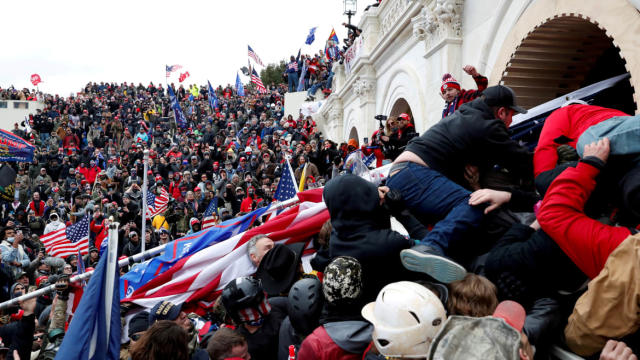
 As Figure 2 illustrates, Millennials and some of their younger siblings, will be a majority of the electorate in just six years.
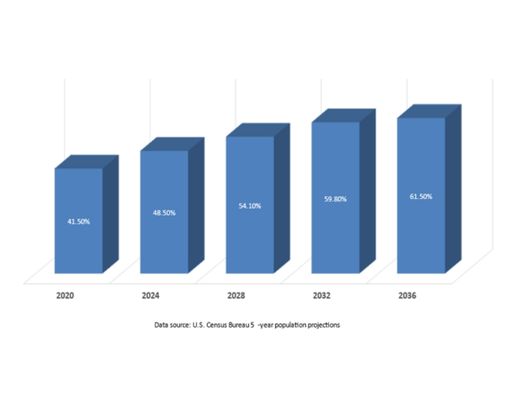 Research on individual voting behavior over time supports the idea that early partisan predilections persist over an individual’s life span. Republicans need to take steps now to reverse these trends among young people before they become an unbreakable barrier to GOP electoral success and Democrats need to focus on Plurals and Millennials in the years ahead to take advantage of the opportunity that this emerging majority presents.
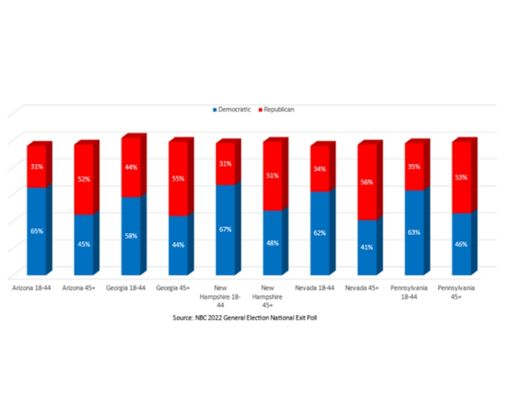 The 2022 Democratic Advantage Among Young Voters in Battleground States Allowed the Democrats to Recapture Senate ControlAnd even though the Democrats failed to retain their majority in the House of Representatives, the preference for Democratic candidates among members of the Pluralist and Millennial generations limited the size of the new Republican majority to just five votes.
 What should be of even greater concern to Republicans is that this Democratic advantage, at least in the 2022 midterm election, was particularly strong among African American and Hispanic voters under the age of 45. Moreover, despite Republican efforts to make inroads in these communities and a large Republican vote among Hispanics in places like Florida, young minority voters supported Democrats by substantial margins. Eighteen to 29-year-old white voters also supported Democratic congressional candidates over Republican ones by a 58% to 40% margin, validating IOPs pre-election predictions as shown in Figure 5.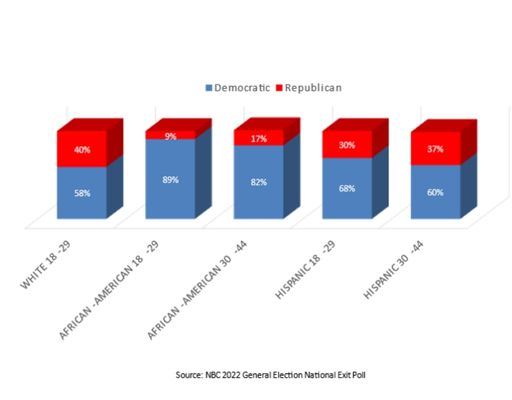
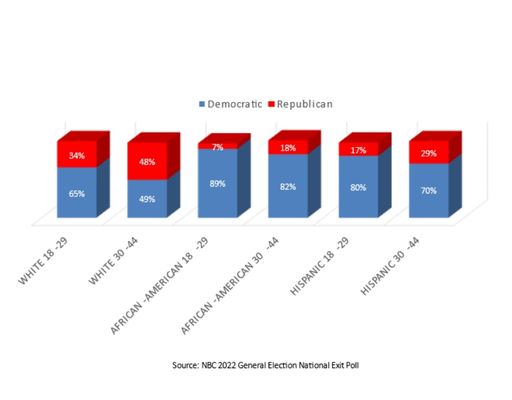 Linear projections of past trends are never definitive, especially in politics, and one election does not a trend make. But young people have now been voting solidly Democratic, and in increasing numbers, in every election since Donald Trump’s victory in 2016. In the 2018 midterm election, more than two-thirds (68%) of voters under 45 cast ballots for Democratic congressional nominees and in 2020, 58% voted for
 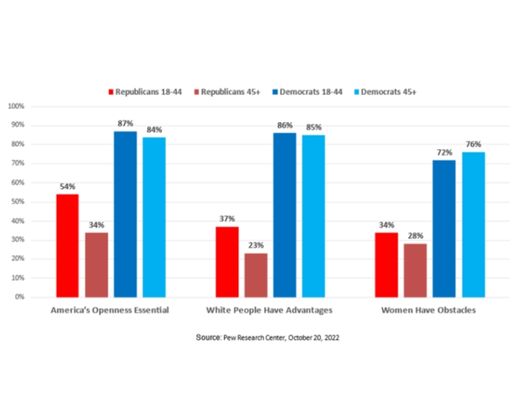 Second, this divide by age on social issues within the Republican electorate is accompanied by a shrinking gender gap among younger voters, further unifying Democrats and making it harder for machismo-type Republican candidates to expand their appeal. Fifty-five percent of white male voters under 45 voted Democratic in 2022, as did 52% of younger white females. As Figure 8 illustrates, upwards of nine in ten male and female African American voters under 45 also voted Democratic in the midterms. Among both male and female Hispanics under 45, two-thirds voted for Democratic congressional candidates. To the extent that a gender gap still exists, in 2022 it is centered among older white and Hispanic voters. As Plural and Millennial voters become a larger and larger part of the American electorate, the gender gap in American politics is likely to shrink faster than the ozone layer.
 If those two challenges weren’t enough to deal with, Republicans reliance on broadcast media, such as Fox News and talk radio, means their message isn’t even being heard by Plurals and Millennials who live in an entirely different information ecosystem, built around social media, especially TikTok and YouTube.
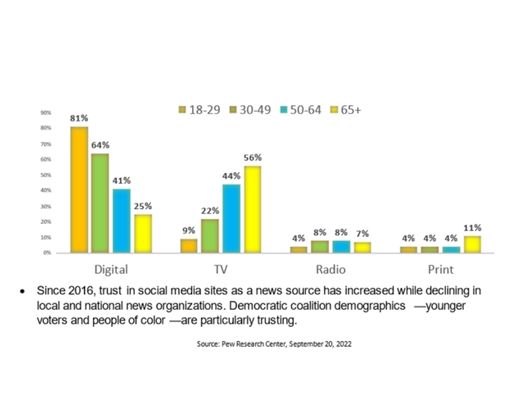 Of course, the Democratic party is not without its own challenges in adapting their strategies to an electorate dominated by younger voters. Older, embedded media commentators, pollsters, and campaign consultants, who make up the Democratic “permanent campaign complex,” are often slow to learn new tricks and less familiar with how to communicate with younger voters using their preferred platforms to talk about their policy priorities. For example, even in 2022, Democratic candidates for Senate in swing states such as Colorado and Ohio, recoiled in horror from President Biden’s proposal to forgive a portion of the two generations’ student debts, even though one of younger

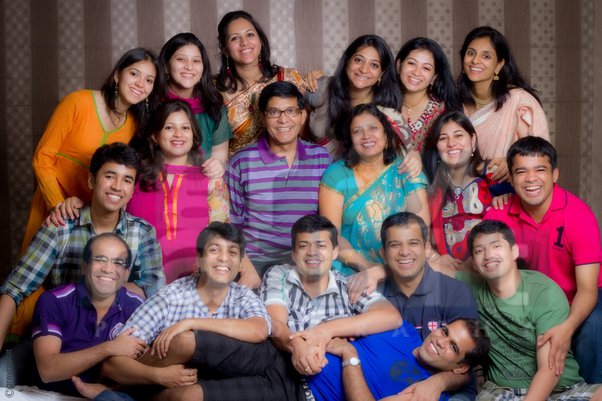
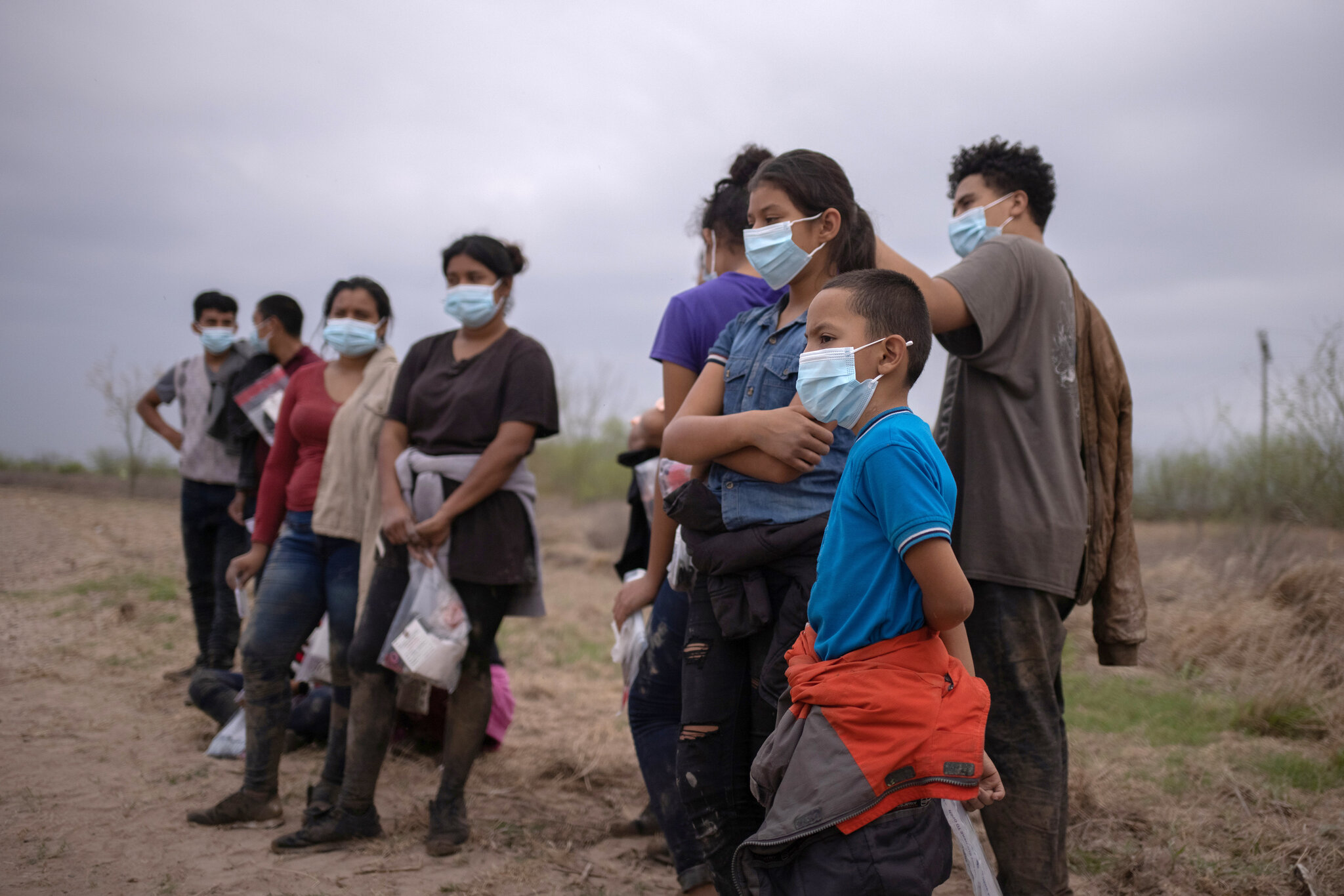
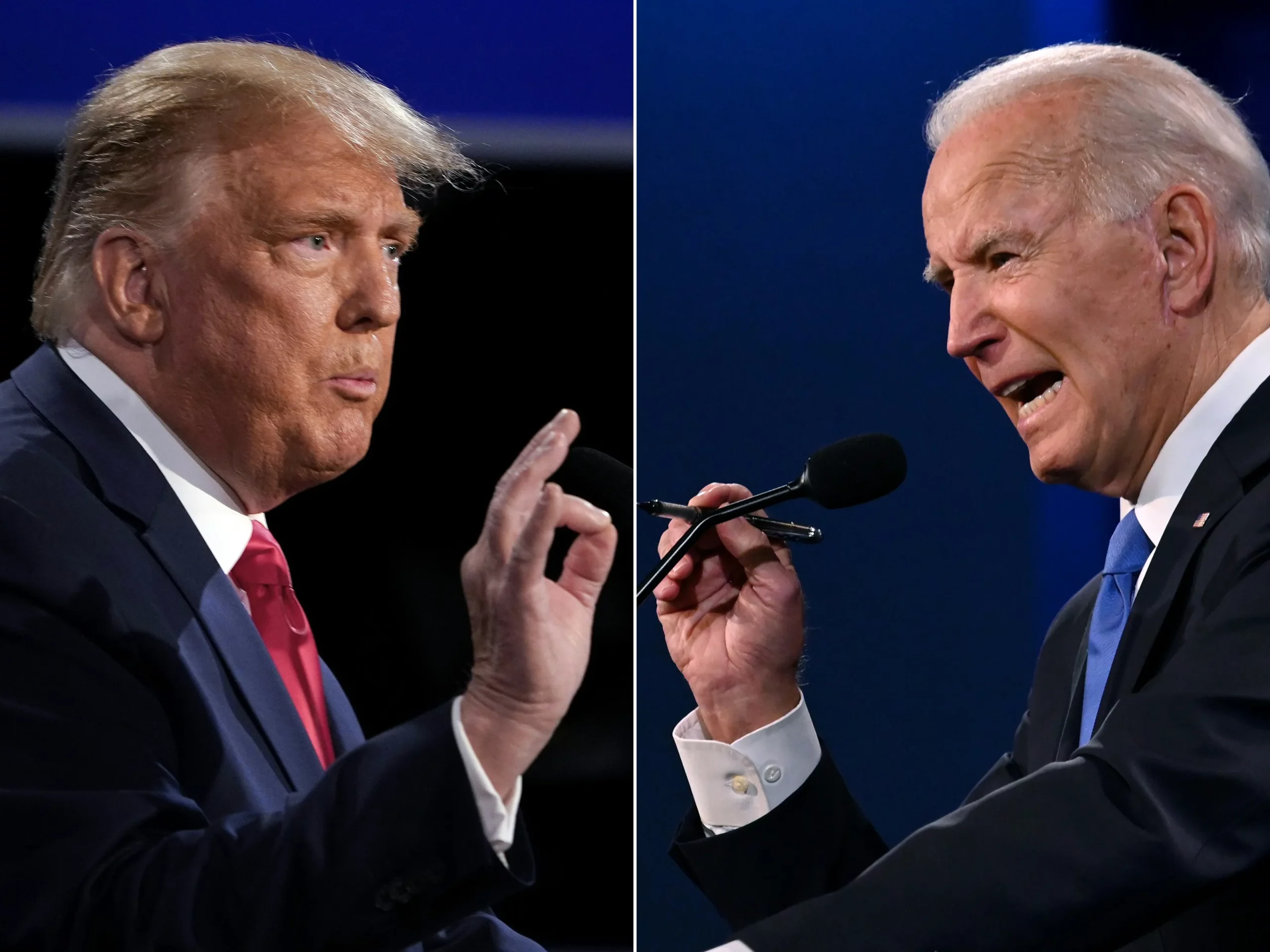
 A close friend to the Bush family, he was instrumental in lobbying for the first Diwali celebration in the White House and for President George W. Bush to make his trip to India. He had accompanied President Bill Clinton during his historic visit to India.