This spring, India is scheduled to hold its 18th general election. Surveys suggest that the incumbent, Prime Minister Narendra Modi, is very likely to win a third term in office. That triumph will further underline Modi’s singular stature. He bestrides the country like a colossus, and he promises Indians that they, too, are rising in the world. And yet the very nature of Modi’s authority, the aggressive control sought by the prime minister and his party over a staggeringly diverse and complicated country, threatens to scupper India’s great-power ambitions.
background, Modi dominates the Indian political landscape as only two of his 15 predecessors have done: Jawaharlal Nehru, prime minister from Indian independence in 1947 until 1964, and Nehru’s daughter, Indira Gandhi, prime minister from 1966 to 1977 and then again from 1980 to 1984. In their pomp, both enjoyed wide popularity throughout India, cutting across barriers of class, gender, religion, and region, although—as so often with leaders who stay on too long—their last years in office were marked by political misjudgments that eroded their standing.
Nehru and Indira Gandhi both belonged to the Indian National Congress, the party that led the country’s struggle for freedom from British colonial rule and stayed in power for three decades following independence. Modi, on the other hand, is a member of the Bharatiya Janata Party, which spent many years in opposition before becoming what it now appears to be, the natural party of governance. A major ideological difference between the Congress and the BJP is in their attitudes toward the relationship between faith and state. Particularly under Nehru, the Congress was committed to religious pluralism, in keeping with the Indian constitutional obligation to assure citizens “liberty of thought, expression, belief, faith and worship.” The BJP, on the other hand, wishes to make India a majoritarian state in which politics, public policy, and even everyday life are cast in a Hindu idiom.
Modi is not the first BJP prime minister of India—that distinction belongs to Atal Bihari Vajpayee, who was in office in 1996 and from 1998 to 2004. But Modi can exercise a kind of power that was never available to Vajpayee, whose coalition government of more than a dozen parties forced him to accommodate diverse views and interests. By contrast, the BJP has enjoyed a parliamentary majority on its own for the last decade, and Modi is far more assertive than the understated Vajpayee ever was. Vajpayee delegated power to his cabinet ministers, consulted opposition leaders, and welcomed debate in Parliament. Modi, on the other hand, has centralized power in his office to an astonishing degree, undermined the independence of public institutions such as the judiciary and the media, built a cult of personality around himself, and pursued his party’s ideological goals with ruthless efficiency.
Despite his dismantling of democratic institutions, Modi remains extremely popular. He is both incredibly hardworking and politically astute, able to read the pulse of the electorate and adapt his rhetoric and tactics accordingly. Left-wing intellectuals dismiss him as a mere demagogue. They are grievously mistaken. In terms of commitment and intelligence, he is far superior to his populist counterparts such as former U.S. President Donald Trump, former Brazilian President Jair Bolsonaro, or former British Prime Minister Boris Johnson. Although his economic record is mixed, he has still won the trust of many poor people by supplying food and cooking gas at highly subsidized rates via schemes branded as Modi’s personal gifts to them. He has taken quickly to digital technologies, which have enabled the direct provision of welfare and the reduction of intermediary corruption. He has also presided over substantial progress in infrastructure development, with spanking new highways and airports seen as evidence of a rising India on the march under Modi’s leadership.
Nonetheless, the future of the Indian republic looks considerably less rosy than the vision promised by Modi and his acolytes. His government has not assuaged—indeed, it has actively worked to intensify—conflicts along lines of both religion and region, which will further fray the country’s social fabric. The inability or unwillingness to check environmental abuse and degradation threatens public health and economic growth. The hollowing out of democratic institutions pushes India closer and closer to becoming a democracy only in name and an electoral autocracy in practice. Far from becoming the Vishwa Guru, or “teacher to the world”—as Modi’s boosters claim—India is altogether more likely to remain what it is today: a middling power with a vibrant entrepreneurial culture and mostly fair elections alongside malfunctioning public institutions and persisting cleavages of religion, gender, caste, and region. The façade of triumph and power that Modi has erected obscures a more fundamental truth: that a principal source of India’s survival as a democratic country, and of its recent economic success, has been its political and cultural pluralism, precisely those qualities that the prime minister and his party now seek to extinguish.
PORTRAIT IN POWER
Between 2004 and 2014, India was run by Congress-led coalition governments. The prime minister was the scholarly economist Manmohan Singh. By the end of his second term, Singh was 80 and unwell, so the task of running Congress’s campaign ahead of the 2014 general elections fell to the much younger Rahul Gandhi. Gandhi is the son of Sonia Gandhi, a former president of the Congress Party, and Rajiv Gandhi, who, like his mother, Indira Gandhi, and grandfather Nehru, had served as prime minister. In a brilliant political move, Modi, who had previously been chief minister of the important state of Gujarat for a decade, presented himself as an experienced, hard-working, and entirely self-made administrator, in stark contrast to Rahul Gandhi, a dynastic scion who had never held political office and whom Modi portrayed as entitled and effete.
Sixty years of electoral democracy and three decades of market-led economic growth had made Indians increasingly distrustful of claims made on the basis of family lineage or privilege. It also helped that Modi was a more compelling orator than Rahul Gandhi and that the BJP made better use of the new media and digital technologies to reach remote corners of India. In the 2014 elections, the BJP won 282 seats, up from 116 five years earlier, while the Congress’s tally went down from 206 to a mere 44. The next general election, in 2019, again pitted Modi against Gandhi; the BJP won 303 seats to the Congress’s 52. With these emphatic victories, the BJP not only crushed and humiliated the Congress but also secured the legislative dominance of the party. In prior decades, Indian governments had typically been motley coalitions held together by compromise. The BJP’s healthy majority under Modi has given the prime minister broad latitude to act—and free rein to pursue his ambitions.
Modi presents himself as the very embodiment of the party, the government, and the nation, as almost single-handedly fulfilling the hopes and ambitions of Indians. In the past decade, his elevation has taken many forms, including the construction of the world’s largest cricket stadium, named for Modi; the portrait of Modi on the COVID-19 vaccination certificates issued by the government of India (a practice followed by no other democracy in the world); the photo of Modi on all government schemes and welfare packages; a serving judge of the Supreme Court gushing that Modi is a “visionary” and a “genius”; and Modi’s own proclamation that he had been sent by god to emancipate India’s women.
In keeping with this gargantuan cult of personality, Modi has attempted, largely successfully, to make governance and administration an instrument of his personal will rather than a collaborative effort in which many institutions and individuals work together. In the Indian system, based on the British model, the prime minister is supposed to be merely first among equals. Cabinet ministers are meant to have relative autonomy in their own spheres of authority. Under Modi, however, most ministers and ministries take instructions directly from the prime minister’s office and from officials known to be personally loyal to him. Likewise, Parliament is no longer an active theater of debate, in which the views of the opposition are taken into account in forging legislation. Many bills are passed in minutes, by voice vote, with the speakers in both houses acting in an extremely partisan manner. Opposition members of Parliament have been suspended in the dozens—and in one recent case, in the hundreds—for demanding that the prime minister and home minister make statements about such important matters as bloody ethnic conflicts in India’s borderlands and security breaches in Parliament itself.
Sadly, the Indian Supreme Court has done little to stem attacks on democratic freedoms. In past decades, the court had at least occasionally stood up for personal freedoms, and for the rights of the provinces, acting as a modest brake on the arbitrary exercise of state power. Since Modi took office, however, the Supreme Court has often given its tacit approval to the government’s misconduct, by, for example, failing to strike down punitive laws that clearly violate the Indian constitution. One such law is the Unlawful Activities (Prevention) Act, under which it is almost impossible to get bail and which has been invoked to arrest and designate as “terrorists” hundreds of students and human rights activists for protesting peacefully on the streets against the majoritarian policies of the regime.
The civil services and the diplomatic corps are also prone to obey the prime minister and his party, even when the demands clash with constitutional norms. So does the Election Commission, which organizes elections and frames election rules to facilitate the preferences of Modi and the BJP. Thus, elections in Jammu and Kashmir and to the municipal council of Mumbai, India’s richest city, have been delayed for years largely because the ruling party remains unsure of winning them.
The Modi government has also worked systematically to narrow the spaces open for democratic dissent. Tax officials disproportionately target opposition politicians. Large sections of the press act as the mouthpiece of the ruling party for fear of losing government advertisements or facing vindictive tax raids. India currently ranks 161 out of 180 countries surveyed in the World Press Index, an analysis of levels of journalistic freedom. Free debate in India’s once vibrant public universities is discouraged; instead, the University Grants Commission has instructed vice chancellors to install “selfie points” on campuses to encourage students to take their photograph with an image of Modi.
This story of the systematic weakening of India’s democratic foundations is increasingly well known outside the country, with watchdog groups bemoaning the backsliding of the world’s largest democracy. But another fundamental challenge to India has garnered less attention: the erosion of the country’s federal structure. India is a union of states whose constituent units have their own governments elected on the basis of universal adult franchise. As laid down in India’s constitution, some subjects, including defense, foreign affairs, and monetary policy, are the responsibility of the government in New Delhi. Others, including agriculture, health, and law and order, are the responsibility of the states. Still others, such as forests and education, are the joint responsibility of the central government and the states. This distribution of powers allows state governments considerable latitude in designing and implementing policies for their citizens. It explains the wide variation in policy outcomes across the country—why, for example, the southern states of Kerala and Tamil Nadu have a far better record with regard to health, education, and gender equity compared with northern states such as Uttar Pradesh.
As a large, sprawling federation of states, India resembles the United States. But India’s states are more varied in terms of culture, religion, and particularly language. In that sense, India is more akin to the European Union in the continental scale of its diversity. The Bengalis, the Kannadigas, the Keralites, the Odias, the Punjabis, and the Tamils, to name just a few peoples, all have extraordinarily rich literary and cultural histories, each distinct from one another and especially from that of the heartland states of northern India where the BJP is dominant. Coalition governments respected and nourished this heterogeneity, but under Modi, the BJP has sought to compel uniformity in three ways: through imposing the main language of the north, Hindi, in states where it is scarcely spoken and where it is seen as an unwelcome competitor to the local language; through promoting the cult of Modi as the only leader of any consequence in India; and through the legal and financial powers that being in office in New Delhi bestows on it.
Since coming to power, the Modi government has assiduously undermined the autonomy of state governments run by parties other than the BJP. It has achieved this in part through the ostensibly nonpartisan office of the governor, who, in states not run by the BJP, has often acted as an agent of the ruling party in New Delhi. Laws in domains such as agriculture, nominally the realm of state governments, have been passed by the national Parliament without the consultation of the states. Since several important and populous states—including Kerala, Punjab, Tamil Nadu, Telangana, and West Bengal—are run by popularly elected parties other than the BJP, the Modi government’s undisguised hostility toward their autonomous functioning has created a great deal of bad blood.
In this manner, in his decade in office, Modi has worked diligently to centralize and personalize political power. As chief minister of Gujarat, he gave his cabinet colleagues little to do, running the administration through bureaucrats loyal to him. He also worked persistently to tame civil society and the press in Gujarat. Since Modi became prime minister in 2014, this authoritarian approach to governance has been carried over to New Delhi. His authoritarianism has a precedent, however: the middle period of Indira Gandhi’s prime ministership, from 1971 to 1977, when she constructed a cult of personality and turned the party and government into an instrument of her will. But Modi’s subordination of institutions has gone even further. In his style of administration, he is Indira Gandhi on steroids.
A HINDU KINGDOM
For all their similarities in political style, Indira Gandhi and Modi differ markedly in terms of political ideology. Forged in the crucible of the Indian freedom struggle, inspired by the pluralistic ethos of its leader Mahatma Gandhi (who was not related to her) and of her father, Nehru, Indira Gandhi was deeply committed to the idea that India belonged equally to citizens of all faiths. For her, as for Nehru, India was not to be a Hindu version of Pakistan—a country designed to be a homeland for South Asia’s Muslims. India would not define statecraft or governance in accordance with the views of the majority religious community. India’s many minority religious groups—including Buddhists, Christians, Jains, Muslims, Parsis, and Sikhs—would all have the same status and material rights as Hindus. Modi has taken a different view. Raised as he was in the hardline milieu of the Hindu nationalist movement, he sees the cultural and civilizational character of India as defined by the demographic dominance—and long-suppressed destiny—of Hindus.
The attempt to impose Hindu hegemony on India’s present and future has two complementary elements. The first is electoral, the creation of a consolidated Hindu vote bank. Hinduism does not have the singular structure of Abrahamic religions such as Christianity or Islam. It does not elevate one religious text (such as the Bible or the Koran) or one holy city (such as Rome or Mecca) to a particularly privileged status. In Hinduism, there are many gods, many holy places, and many styles of worship. But while the ritual universe of Hinduism is pluralistic, its social system is historically highly unequal, marked by hierarchically organized status groups known as castes, whose members rarely intermarry or even break bread with one another.
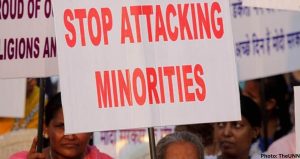
The BJP under Modi has tried to overcome the pluralism of Hinduism by seeking to override caste and doctrinal differences between different groups of Hindus. It promises to construct a “Hindu Raj,” a state in which Hindus will reign supreme. Modi claims that before his ascendance, Hindus had suffered 1,200 years of slavery at the hands of Muslim rulers, such as the Mughal dynasty, and Christian rulers, such as the British—and that he will now restore Hindu pride and Hindu control over the land that is rightfully theirs. To aid this consolidation, Hindu nationalists have systematically demonized India’s large Muslim minority, painting Muslims as insufficiently apologetic for the crimes of the Muslim rulers of the past and as insufficiently loyal to the India of the present.
Hindutva, or Hindu nationalism, is a belief system characterized by what I call “paranoid triumphalism.” It aims to make Hindus fearful so as to compel them to act together and ultimately dominate those Indians who are not Hindus. At election time, the BJP hopes to make Hindus vote as Hindus. Since Hindus constitute roughly 80 percent of the population, if 60 percent of them vote principally on the basis of their religious affiliation in India’s multiparty, first-past-the-post system, that amounts to 48 percent of the popular vote for the BJP—enough to get Modi and his party elected by a comfortable margin. Indeed, in the 2019 elections, the BJP won 56 percent of seats with 37 percent of the popular vote. So complete is the ruling party’s disregard for the political rights of India’s 200 million or so Muslims that, except when compelled to do so in the Muslim-majority region of Kashmir, it rarely picks Muslim candidates to compete in elections. And yet it can still comfortably win national contests. The BJP has 397 members in the two houses of the Indian parliament. Not one is a Muslim.
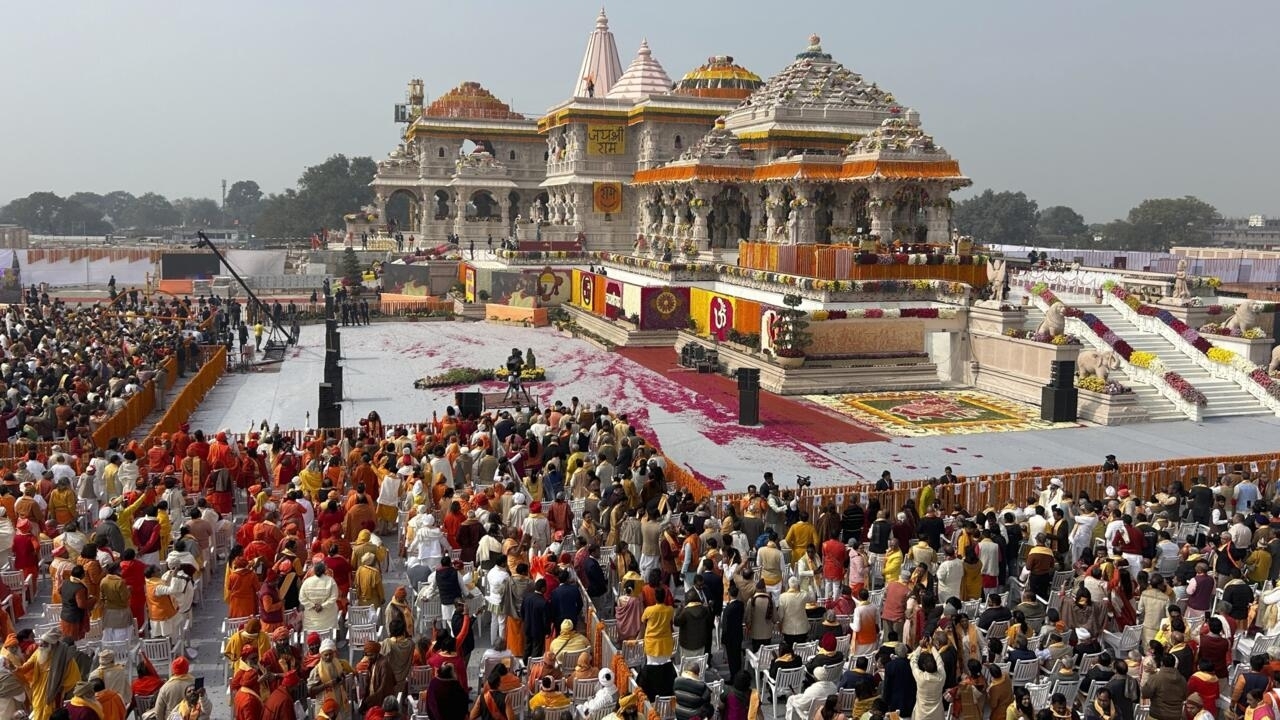
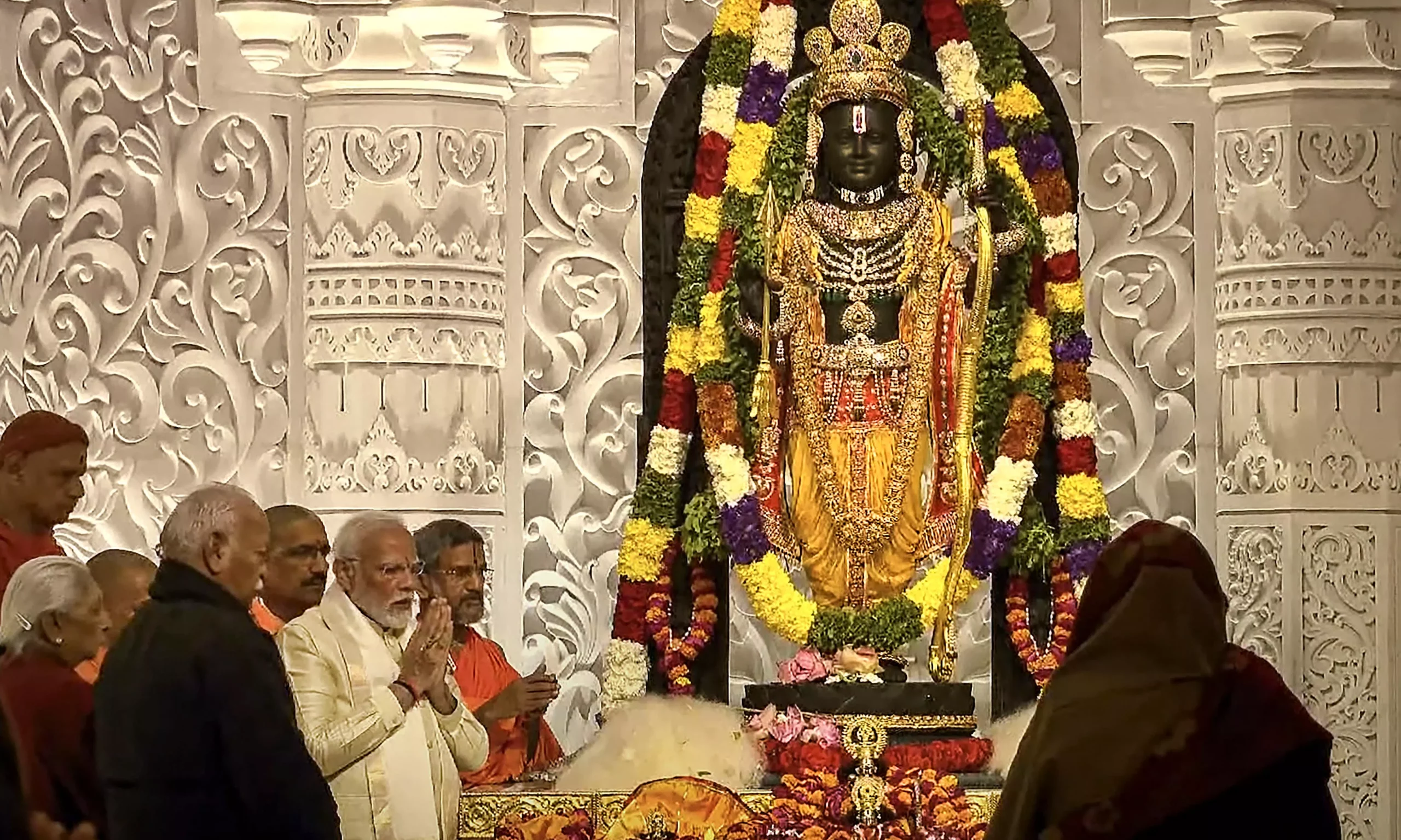
Electoral victory has enabled the second element of Hindutva—the provision of an explicitly Hindu veneer to the character of the Indian state. Modi himself chose to contest the parliamentary elections from Varanasi, an ancient city with countless temples that is generally recognized as the most important center of Hindu identity. He has presented himself as a custodian of Hindu traditions, claiming that in his youth, he wandered and meditated in the forests of the Himalaya in the manner of the sages of the past. He has, for the first time, made Hindu rituals central to important secular occasions, such as the inauguration of a new Parliament building, which was conducted by him alone, flanked by a phalanx of chanting priests, but with the members of Parliament, the representatives of the people, conspicuously absent. He also presided, in similar fashion, over religious rituals in Varanasi, with the priests chanting, “Glory to the king.” In January, Modi was once again the star of the show as he opened a large temple in the city of Ayodhya on a site claimed to be the birthplace of the god Rama. Whenever television channels obediently broadcast such proceedings live across India, their cameras focus on the elegantly attired figure of Modi. The self-proclaimed Hindu monk of the past has thus become, in symbol if not in substance, the Hindu emperor of the present.
THE BURDENS OF THE FUTURE
The emperor benefits from having few plausible rivals. Modi’s enduring political success is in part enabled by a fractured and nepotistic opposition. In a belated bid to stall the BJP from winning a third term, as many as 28 parties have come together to fight the forthcoming general elections under a common umbrella. They have adopted the name the Indian National Development Inclusive Alliance, an unwieldy moniker that can be condensed to the crisp acronym INDIA.
Some parties in this alliance are very strong in their own states. Others have a base among particular castes. But the only party in the alliance with pretensions to being a national party is the Congress. Despite his dismal political record, Rahul Gandhi remains the principal leader of the Congress. In public appearances, he is often flanked by his sister, who is the party’s general-secretary, or his mother, reinforcing his sense of entitlement. The major regional parties, with influence in states such as Bihar, Maharashtra, and Tamil Nadu, are also family firms, with leadership often passing from father to son. Although their local roots make them competitive in state elections, when it comes to a general election, the dynastic baggage they carry puts them at a distinct disadvantage against a party led by a self-made man such as Modi, who can present himself as devoted entirely and utterly to the welfare of his fellow citizens rather than as the bearer of family privilege. INDIA will struggle to unseat Modi and the BJP and may hope, at best, to dent their commanding majority in Parliament.
The prime minister also faces little external pressure. In other contexts, one might expect a certain amount of critical scrutiny of Modi’s authoritarian ways from the leaders of Western democracies. But this has not happened, partly because of the ascendance of the Chinese leader Xi Jinping. Xi has mounted an aggressive challenge to Western hegemony and positioned China as a superpower deserving equal respect and an equal say in world affairs as the United States—moves that have worked entirely to Modi’s advantage. The Indian prime minister has played the U.S. establishment brilliantly, using the large and wealthy Indian diaspora to make his (and India’s) importance visible to the White House.
In April 2023, India officially overtook China as the most populous country in the world. It has the fifth-largest economy. It has a large and reasonably well-equipped military. All these factors make it ever more appealing to the United States as a counterweight to China. Both the Trump and the Biden administrations have shown an extraordinary indulgence toward Modi, continuing to hail him as the leader of the “world’s largest democracy” even as that appellation becomes less credible under his rule. The attacks on minorities, the suppression of the press, and the arrest of civil rights activists have attracted scarcely a murmur of disapproval from the State Department or the White House. The recent allegations that the Indian government tried to assassinate a U.S. citizen of Sikh descent are likely to fade without any action or strong public criticism. Meanwhile, the leaders of France, Germany, and the United Kingdom, seeking a greater share of the Indian market (not least in sales of sophisticated weaponry), have all been unctuous in their flattery of Modi.
The rampant environmental degradation across the country further threatens the sustainability of economic growth. Even in the absence of climate change, India would be an environmental disaster zone. Its cities have the highest rates of air pollution in the world. Many of its rivers are ecologically dead, killed by untreated industrial effluents and domestic sewage. Its underground aquifers are depleting rapidly. Much of its soil is contaminated with chemicals. Its forests are despoiled and in the process of becoming much less biodiverse, thanks to invasive nonnative weeds.
This degradation has been enabled by an antiquated economic ideology that adheres to the mistaken belief that only rich countries need to behave responsibly toward nature. India, it is said, is too poor to be green. In fact, countries such as India, with their higher population densities and more fragile tropical ecologies, need to care as much, or more, about how to use natural resources wisely. But regimes led by both the Congress and the BJP have granted a free license to coal and petroleum extraction and other polluting industries. No government has so actively promoted destructive practices as Modi’s. It has eased environmental clearances for polluting industries and watered down various regulations. The environmental scholar Rohan D’ Souza has written that by 2018, “the slash and burn attitude of gutting and weakening existing environmental institutions, laws, and norms was extended to forests, coasts, wildlife, air, and even waste management.” When Modi came to power in 2014, India ranked 155 out of 178 countries assessed by the Environmental Performance Index, which estimates the sustainability of a country’s development in terms of the state of its air, water, soils, natural habitats, and so on. By 2022, India ranked last, 180 out of 180.
The effects of these varied forms of environmental deterioration exact a horrific economic and social cost on hundreds of millions of people. Degradation of pastures and forests imperils the livelihoods of farmers. Unregulated mining for coal and bauxite displaces entire rural communities, making their people ecological refugees. Air pollution in cities endangers the health of children, who miss school, and of workers, whose productivity declines. Unchecked, these forms of environmental abuse will impose ever-greater burdens on Indians yet unborn.
These future generations of Indians will also have to bear the costs of the dismantling of democratic institutions overseen by Modi and his party. A free press, independent regulatory institutions, and an impartial and fearless judiciary are vital for political freedoms, for acting as a check on the abuse of state power, and for nurturing an atmosphere of trust among citizens. To create, or perhaps more accurately, re-create, them after Modi and the BJP finally relinquish power will be an arduous task.
The strains placed on Indian federalism may boil over in 2026, when parliamentary seats are scheduled to be reallocated according to the next census, to be conducted in that year. Then, what is now merely a divergence between north and south might become an actual divide. In 2001, when a reallocation of seats based on population was proposed, the southern states argued that it would discriminate against them for following progressive health and education policies in prior decades that had reduced birth rates and enhanced women’s freedom. The BJP-led coalition government then in power recognized the merits of the south’s case and, with the consent of the opposition, proposed that the reallocation be delayed for a further 25 years.
In 2026, the matter will be reopened. One proposed solution is to emulate the U.S. model, in which congressional districts reflect population size while each state has two seats in the Senate, irrespective of population. Perhaps having the Rajya Sabha, or upper house, of the Indian Parliament restructured on similar principles may help restore faith in federalism. But if Modi and the BJP are in power, they will almost certainly mandate the process of reallocation based on population in both the Lok Sabha, the lower house, and the Rajya Sabha, which will then substantially favor the more populous if economically lagging states of the north. The southern states are bound to protest. Indian federalism and unity will struggle to cope with the fallout.
If the BJP achieves a third successive electoral victory in May, the creeping majoritarianism under Modi could turn into galloping majoritarianism, a trend that poses a fundamental challenge to Indian nationhood. Democratic- and pluralistic-minded Indians warn of the dangers of India becoming a country like Pakistan, defined by religious identity. A more salient cautionary tale might be Sri Lanka’s. With its educated population, good health care, relatively high position of women (compared with India and all other countries in South Asia), its capable and numerous professional class, and its attractiveness as a tourist destination, Sri Lanka was poised in the 1970s to join Singapore, South Korea, and Taiwan as one of the so-called Asian Tigers. But then, a deadly mix of religious and linguistic majoritarianism reared its head. The Sinhala-speaking Buddhist majority chose to consolidate itself against the Tamil-speaking minority, who were themselves largely Hindus. Through the imposition of Sinhalese as the official language and Buddhism as the official religion, a deep division was created, provoking protests by the Tamils, peaceful at first but increasingly violent when crushed by the state. Three decades of bloody civil war ensued. The conflict formally ended in 2009, but the country has not remotely recovered, in social, economic, political, or psychological terms.
India will probably not go the way of
Sri Lanka. A full-fledged civil war between Hindus and Muslims, or between north and south, is unlikely. But the Modi government is jeopardizing a key source of Indian strength: its varied forms of pluralism. One might usefully contrast Modi’s time in office with the years between 1989 and 2014, when neither the Congress nor the BJP had a majority in Parliament. In that period, prime ministers had to bring other parties into government, allocating important ministries to its leaders. This fostered a more inclusive and collaborative style of governance, more suitable to the size and diversity of the country itself. States run by parties other than the BJP or the Congress found representation at the center, their voices heard and their concerns taken into account. Federalism flourished, and so did the press and the courts, which had more room to follow an independent path. It may be no coincidence that it was in this period of coalition government that India experienced three decades of steady economic growth.
When India became free from British rule in 1947, many skeptics thought it was too large and too diverse to survive as a single nation and its population too poor and illiterate to be trusted with a democratic system of governance. Many predicted that the country would Balkanize, become a military dictatorship, or experience mass famine. That those dire scenarios did not come to pass was largely because of the sagacity of India’s founding figures, who nurtured a pluralist ethos that respected the rights of religious and linguistic minorities and who sought to balance the rights of the individual and the state, as well as those of the central government and the provinces. This delicate calculus enabled the country to stay united and democratic and allowed its people to steadily overcome the historic burdens of poverty and discrimination.
The last decade has witnessed the systematic erosion of those varied forms of pluralism. One party, the BJP, and within it, one man, the prime minister, are judged to represent India to itself and to the world. Modi’s charisma and popular appeal have consolidated this dominance, electorally speaking. Yet the costs are mounting. Hindus impose themselves on Muslims, the central government imposes itself on the provinces, the state further curtails the rights and freedoms of citizens. Meanwhile, the unthinking imitation of Western models of energy-intensive and capital-intensive industrialization is causing profound and, in many cases, irreversible environmental damage.
Modi and the BJP seem poised to win their third general election in a row. This victory would further magnify the prime minister’s aura, enhancing his image as India’s redeemer. His supporters will boast that their man is assuredly taking his country toward becoming the Vishwa Guru, the teacher to the world. Yet such triumphalism cannot mask the deep fault lines underneath, which—unless recognized and addressed—will only widen in the years to come.


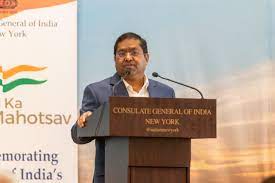
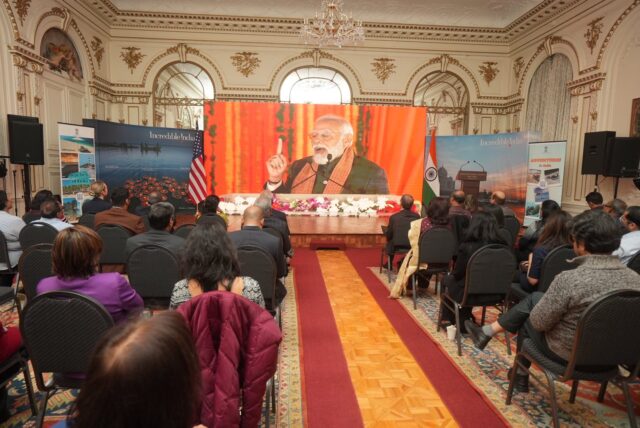 India’s Consul General in New York Binaya S. Pradhan, speaking at March 7, 2024 event at Consulate. PHOTO: X @IndiainNewYork
 only 2% in terms of tourist spending, which is around $20 billion.
 How did colonialism affect South Asia in particular? South Asia was predominantly a feudal society, ruled by the landlord-kings legitimized by the clergy. The British succeeded in colonizing most parts of South Asia, the Indian subcontinent in particular. Their primary focus was on plundering its wealth and creating markets for the goods being produced in England. It had to lay the structure of a colonial state in which transport, education and foundations of modern administration were laid down. Incidentally, they also supported the eradication of some of the ghastly practices like sati. For other reforms, the likes of Jotirao Phule, Savitribai Phule, B R Ambedkar and Mahatma Gandhi moved the mountains to bring in reforms and cultural changes.
 In short, excessive phone usage is going to do you and your children harm. And what you may be passing off as a lifestyle aberration, may be the symptom of a larger disorder taking shape for e.g. eye strain and lack of concentration may be the trigger point for ADHD (attention deficit hyperactivity disorder) aggravated by years of mobile phone usage.
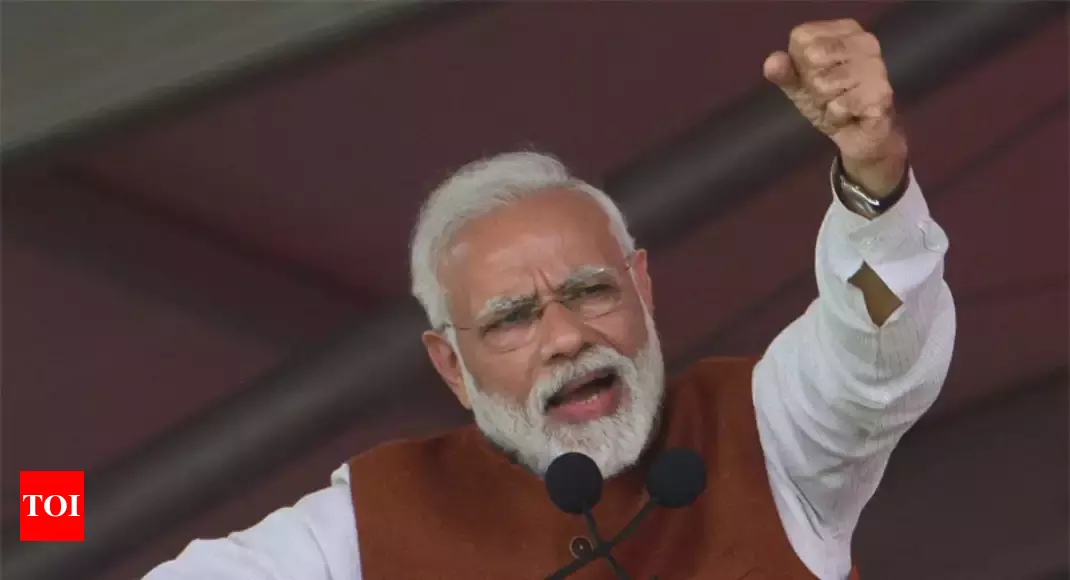 The recent offensives against the Opposition Party leaders by the Central Bureau of Investigation (CBI) and the Enforcement Directorate (ED) may owe partly to the BJP’s objective of winning the 2024 general election with a much bigger margin, which requires it to “discredit and disunite” its opponents, analysts across India say.
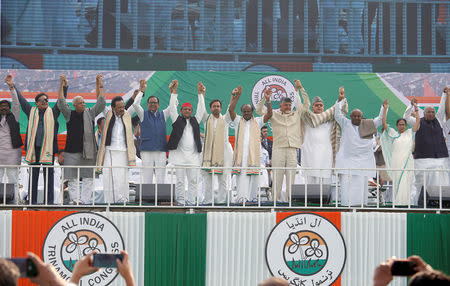 former Chhattisgarh chief minister Bhupesh Baghel and his associates were accused by the ED of being involved in an illegal online betting case. Baghel was named by the ED days ahead of the state’s assembly polls, which allowed the BJP to carry out a political campaign against the chief minister’s alleged corruption.
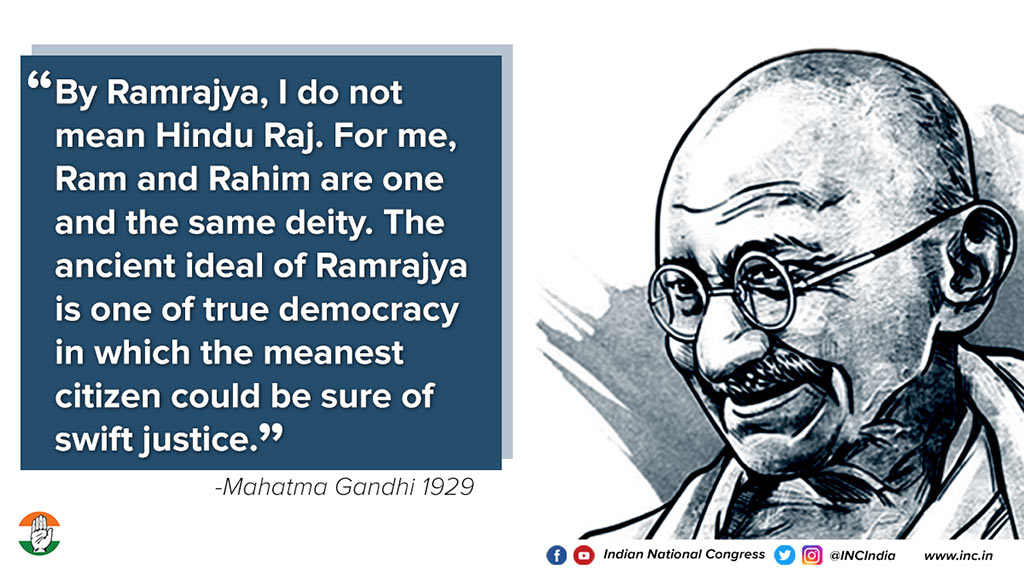 For Gandhi, the state embodies a relationship between the government and its citizens. The state unites its people into a community and provides all possible means for its well-being, security and development. The state functions in the common interest without neglecting the last individual’s interest (Anthyodaya). Gandhi’s concept of Ramarajya is inspired by morality, ethics, and spirituality, as Rama is believed to embody all these virtues. Therefore, in Ramarajya, laws are guided by morality, power is decentralised, and the interests of every individual are attended to.
 during the past ten years, its relentless attempts with phenomenal success to communalise and polarise the Indian society and how it has undermined the democratic values of the Indian Constitution.
 The Sixteenth Finance Commission has been requested to make its recommendations available by October 31, 2025, covering an award period of 5 years commencing 1st April, 2026. The Finance Commission usually takes about two years to consult stakeholders in the States and Centre and arrive at their conclusions.

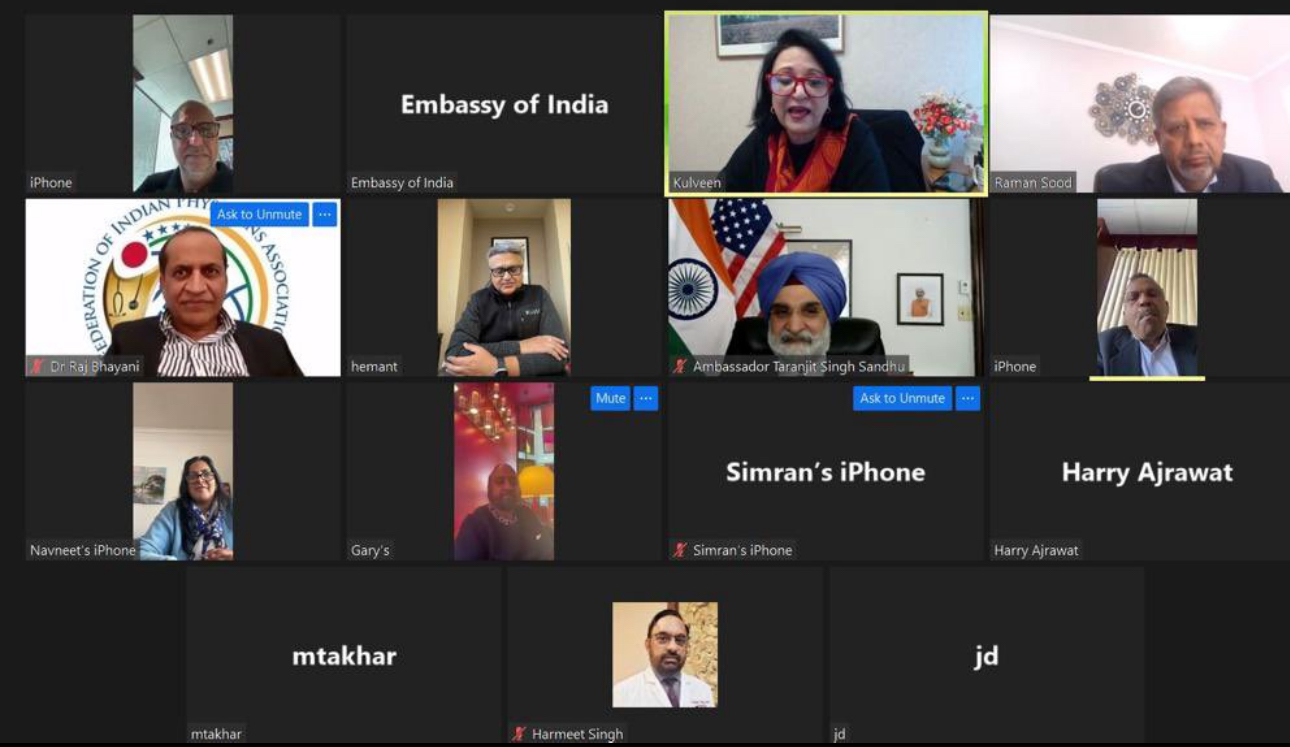 Dr Hemant Dhingra said in his remarks how the economic ties between two countries have reached a new high under leadership of Ambassador
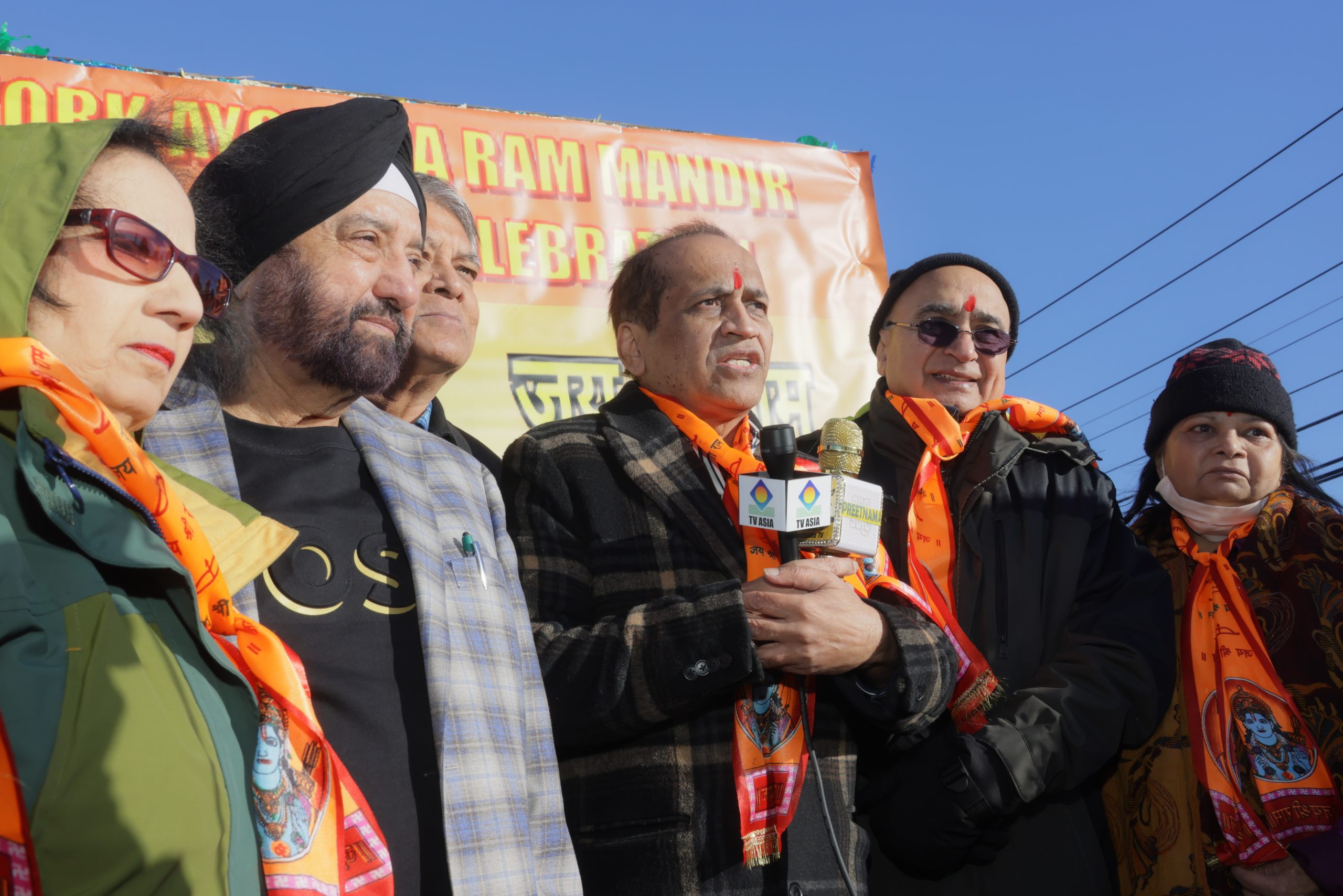 Braving the sub-zero temperatures, hundreds of enthusiastic Non-Resident Indians filled the streets of New York with a Car Rally on January 21st, 2024. Devotion to Lord Ram filled up the air in New York as over 150 cars drove through the busy streets starting in Hicksville, NY, while thousands of devotees gathered to celebrate and show their devotion and solidarity to Ram Mandir’s consecration in Ayodhya.
 Sita, Laxman, and Hanuman, brought the experience and excitement to the rally. Each car was adorned with saffron-colored flags. The huge lineup of cars finally reached the beautiful AsaMai temple in Hicksville. LED Truck displayed Ramayana and float carried the banners celebrating Ram Mandir. The entire event was telecast live on AASTHA TV AND radio Zindagi.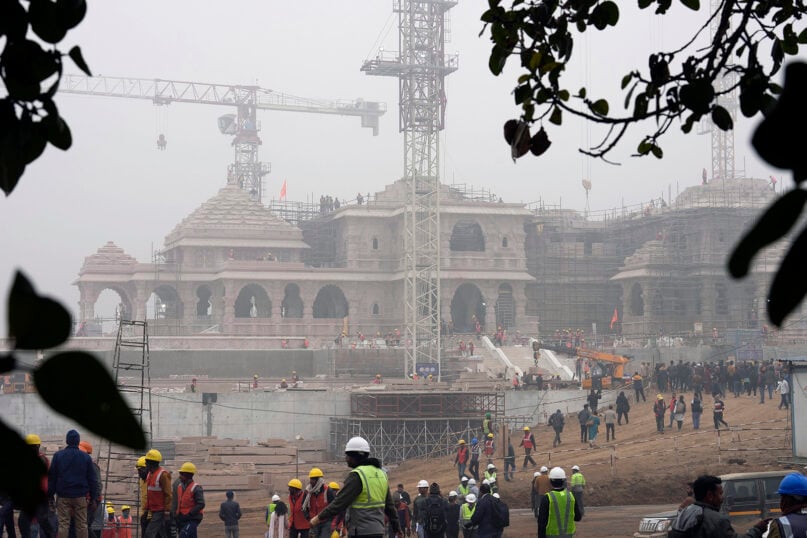


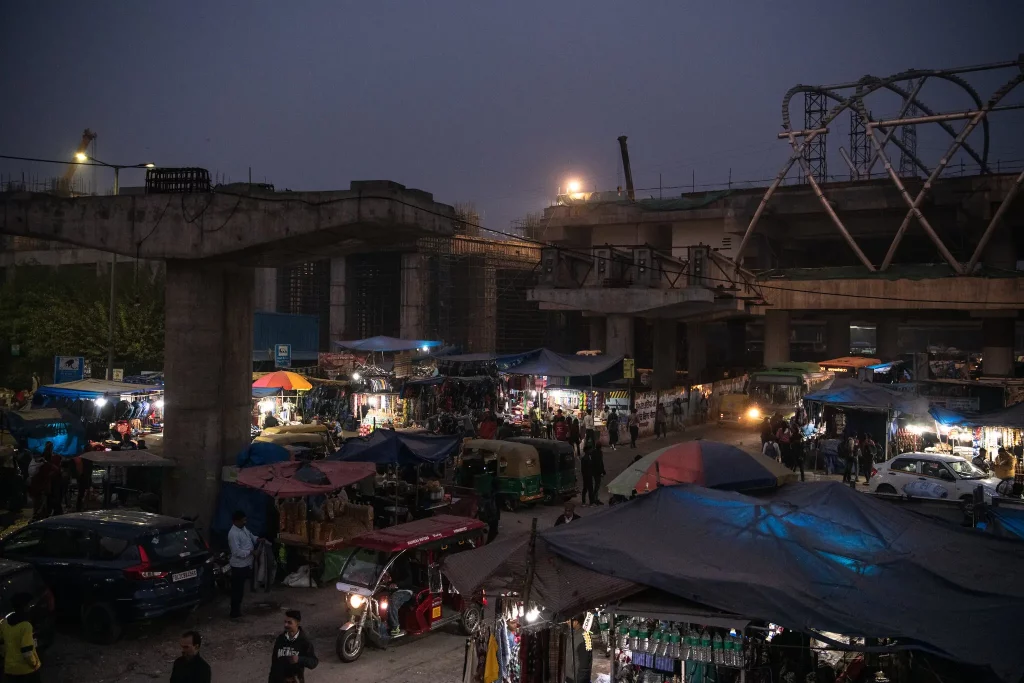
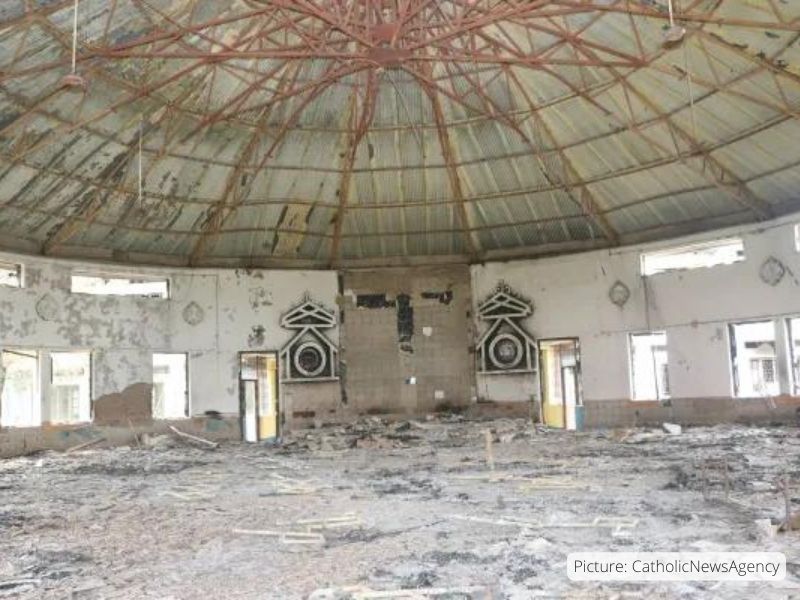
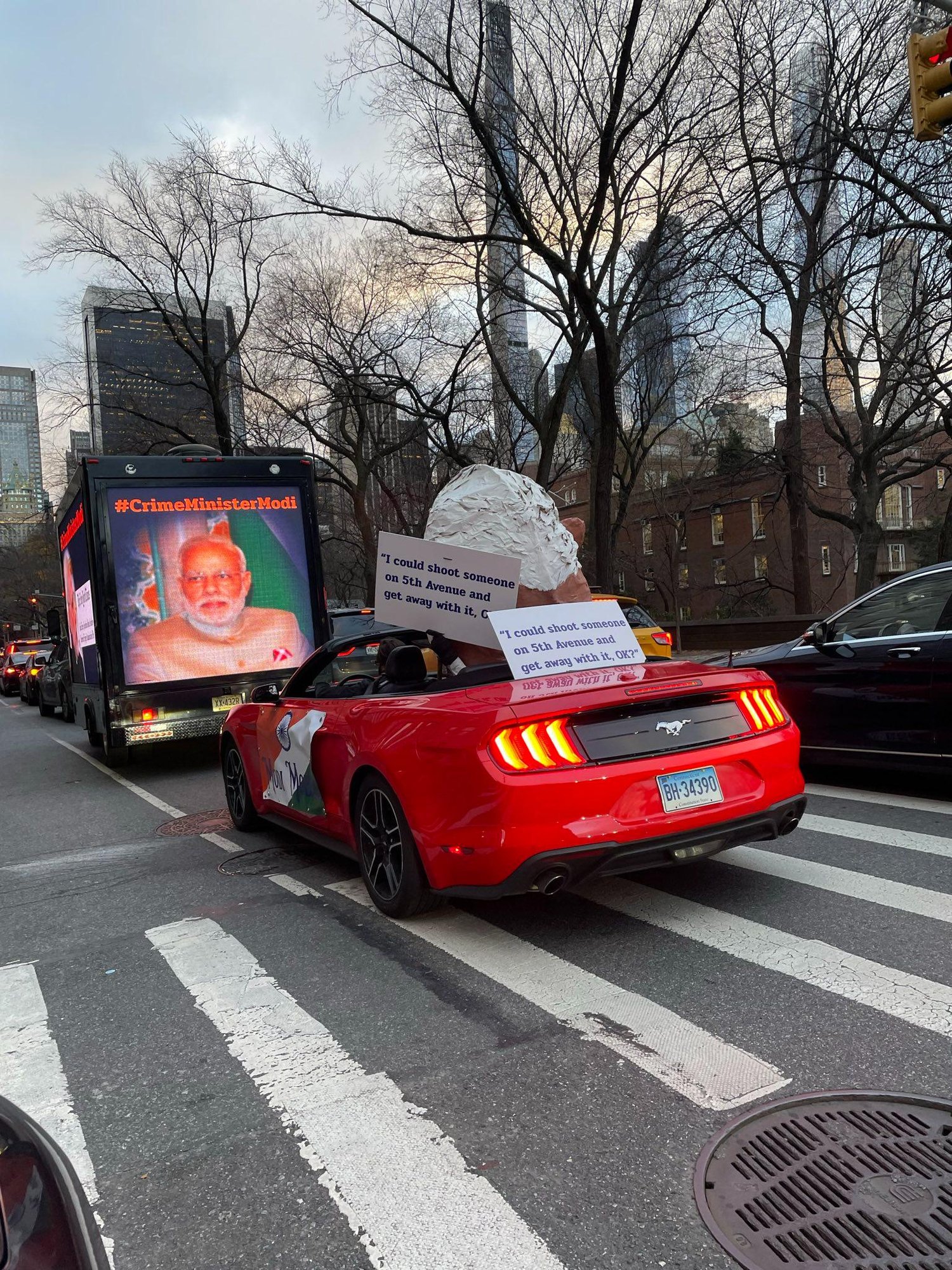 The backdrop to this protest is a series of troubling events that have unfolded both in the United States and Canada. In June, reports emerged of an alleged attempt by Indian authorities to assassinate a US citizen in New York. This harrowing incident occurred simultaneously with the killing of a prominent Canadian Sikh activist. The situation escalated to such an extent that the FBI felt compelled to warn several activists in California about similar threats. These incidents are not random or isolated; they represent a clear and disturbing pattern of behavior that has caught the attention of US prosecutors and the international community.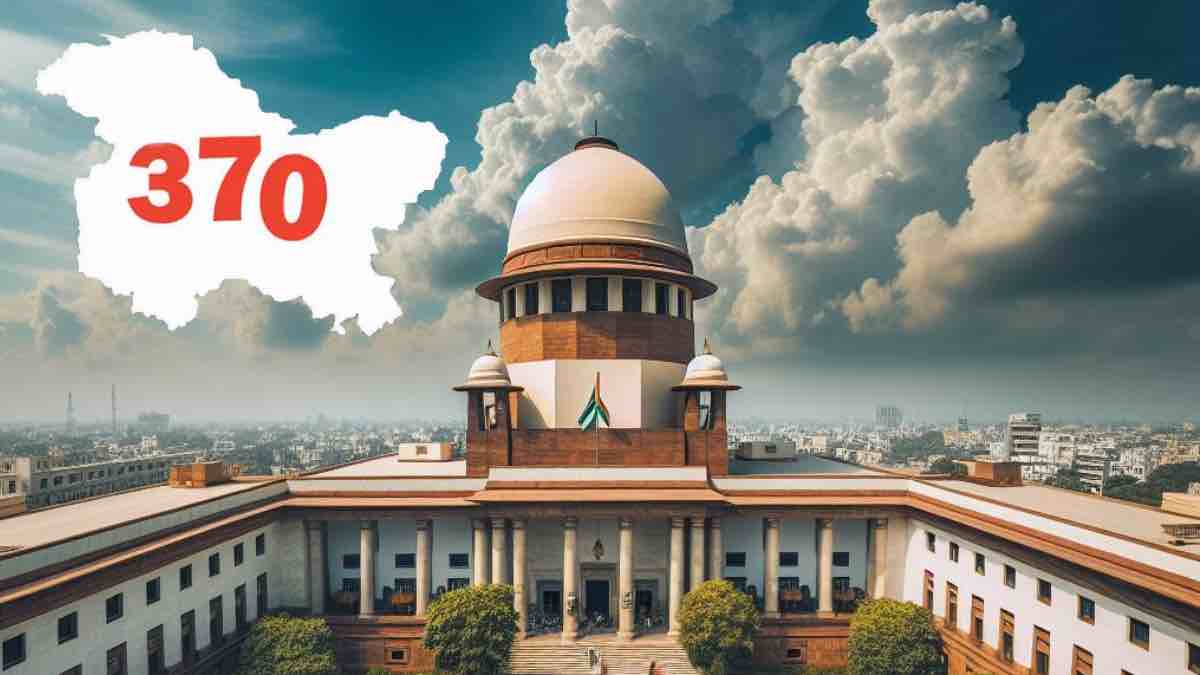
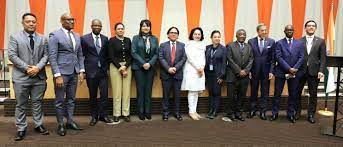 Mission LiFE, a global initiative for ‘Lifestyle for Environment’ is a groundbreaking step towards sustainable living, according to Ruchira Kamboj, India’s Permanent Representative to the UN. Kamboj was speaking at a reception hosted by India’s Permanent Mission to the UN on December 4, 2023 at the UN headquarters in New York to highlight 2023 as the International Year of the Millet.
 At least 17 people were killed in rain-related incidents in Chennai, which suffered the most damage from the cyclone, according to city police. These deaths were caused by collapsing walls, electrocution, drowning, and falling trees. More than ten people were injured in the city and taken to various hospitals for treatment. Despite Michaung making landfall with sustained winds of 90-100 kmph, no casualties were reported in Andhra Pradesh.
 “If they’re going to continue to bring in record numbers of students, that they are being part of the solution as well by making sure that they have a place to live,” Fraser had said. He called out institutions for exploiting students by enrolling more than they had space for, which in turn also hurt the housing market.
 The program which started 0n December 1st, aims to have around 20,000 work visa renewals, constituting approximately 10% of the anticipated 583,420 H-1B visa holders. The program was initially proposed in February gained formal announcement and recognition during PM Modi’s visit to the US in September.
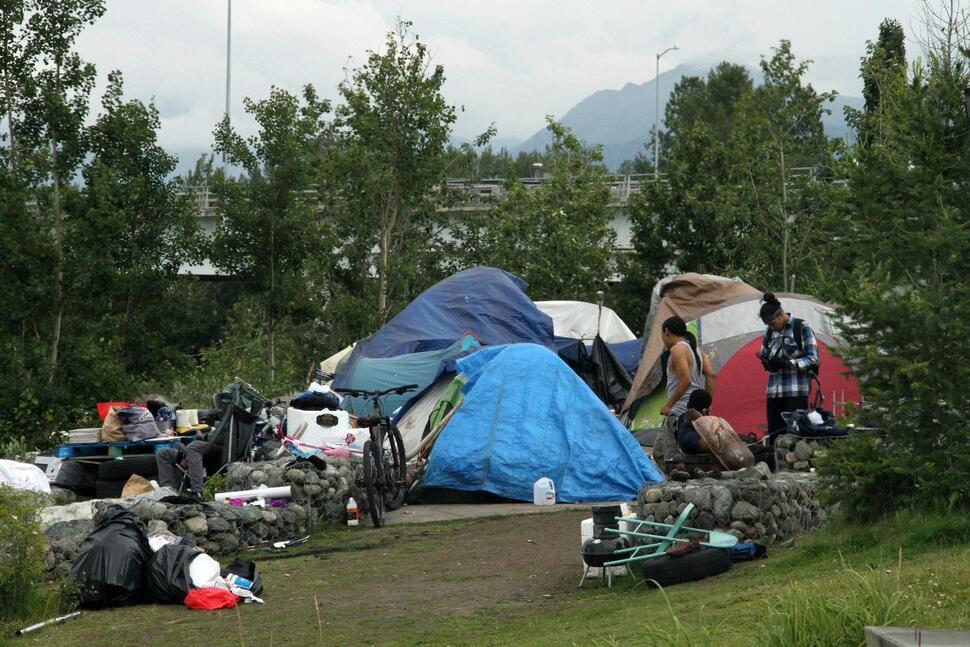 But when the dark streets of most American cities, especially Los Angeles and San Francisco, in the state of California, are turning into the ‘mecca of homeless’, it is just hypocritical to laugh at the broad-mindedness of this great country and not hide it by applying “Modi tech ” here.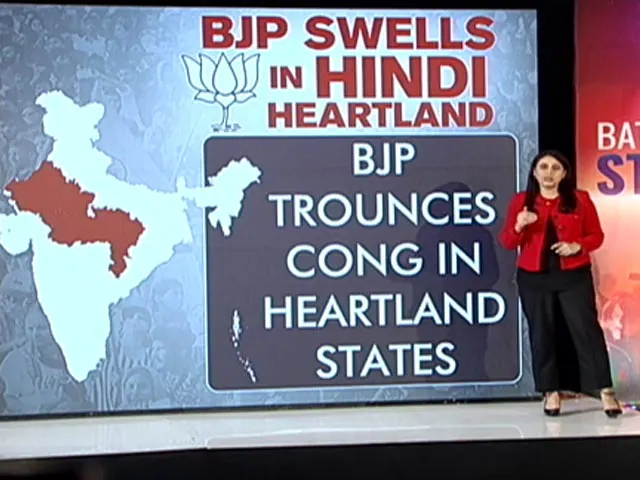
 Nearly 400 people attended the Federation of Indian Association’s farewell for one of the most memorable diplomats in recent history from India, one who had weathered the storm of COVID, brought the diaspora of Indian Americans closer to the Consulate, and who oversaw the delivery of consular services to the doors of many communities in the 10 states of the United States which were under his jurisdiction – for a period of 3 years.
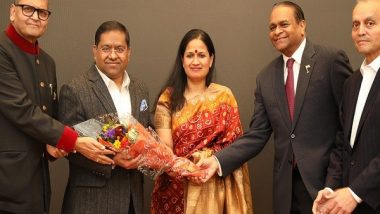 those in his jurisdiction. Whether it was opening the Consulate to numerous community events, or going to many other events where he was honored and where he was making the presence of India felt in the diaspora.