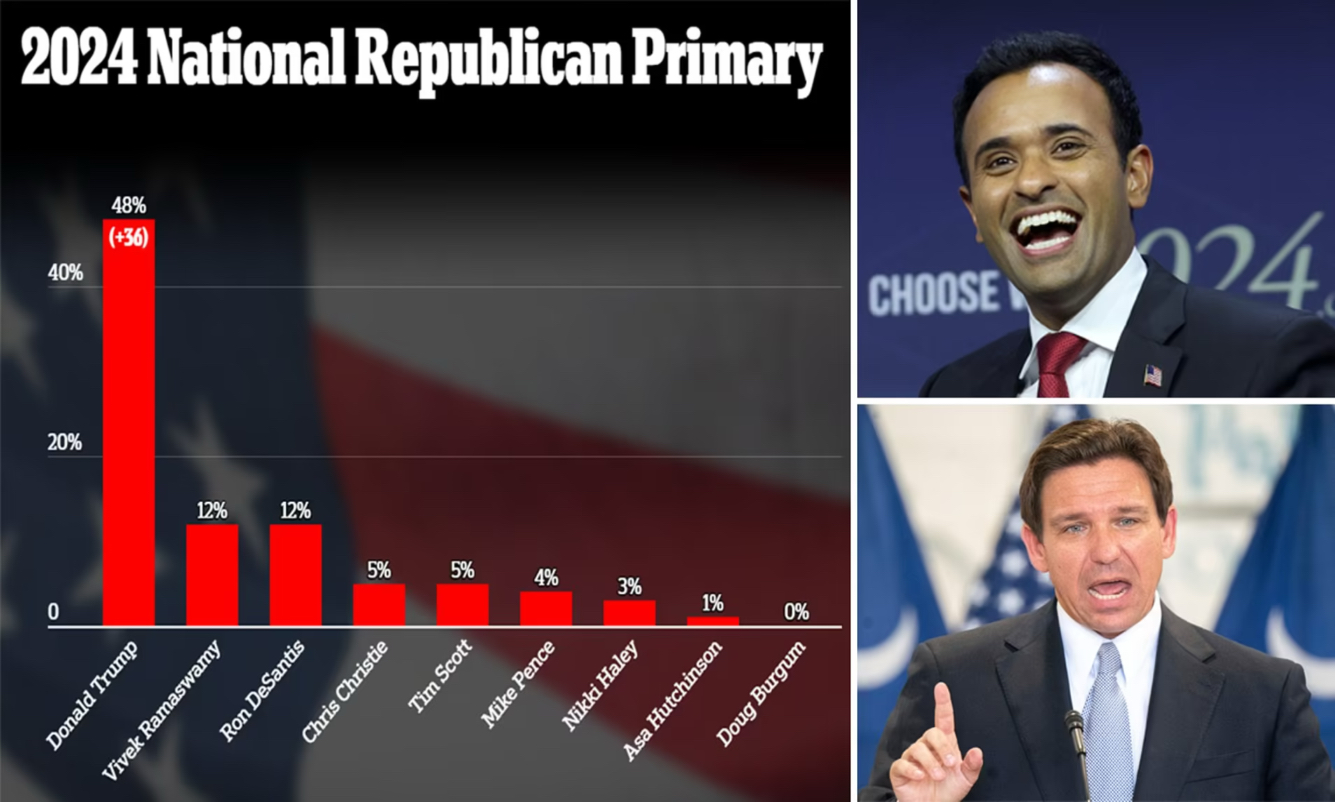
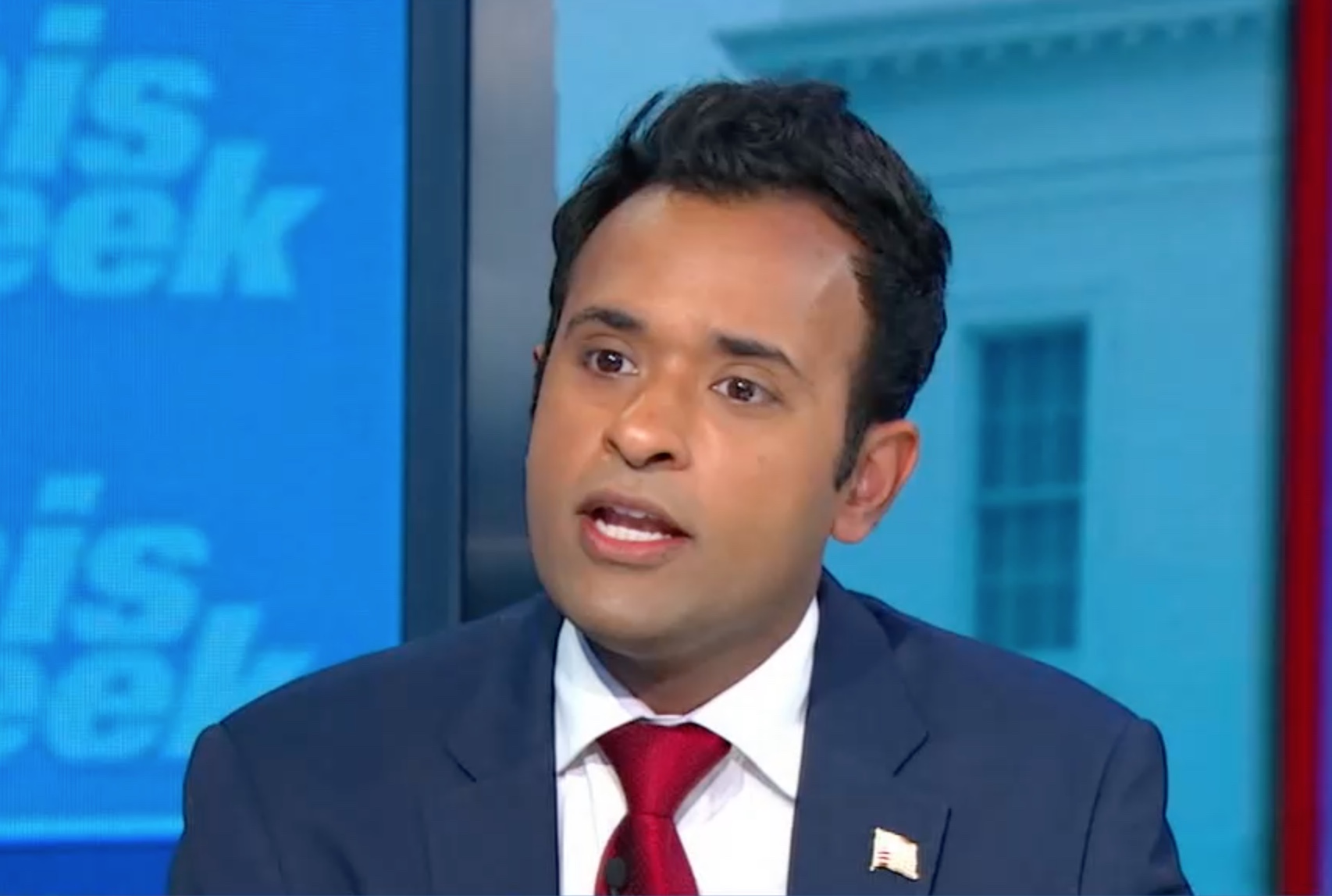
This spring, Bristol Smith, a manager at a McDonald’s in Maryville, Tennessee, came across the name Vivek Ramaswamy shortly after the entrepreneur Mr. Ramaswamy announced that he was running for president. Mr. Smith was drawn in. He liked Mr. Ramaswamy’s plan to send the military to the southern border to fight drug cartels and the way he “stands up against the wokeness.” He regarded Mr. Ramaswamy’s insight as a money manager worth countless dollars.
Then, at that point, Mr. Smith, 25, looked for Mr. Ramaswamy’s confidence. Mr. Smith is an evangelical Christian who recently established a modest church at his parents’ house.
He recalled, “I looked up his religion and saw he is Hindu.” I planned to decide in favor of him until that surfaced.” Mr. Smith believes that the nation needs to be “put back under God,” and he doesn’t want to risk it with a non-Christian.
By then, he said, “I got back on President Trump’s train.”
Mr. Ramaswamy, 37, is a practicing Hindu who was brought up in India by immigrants. Some conservative Christian voters, who make up a significant portion of the Republican primary electorate and are accustomed to evaluating candidates not only based on their policy proposals but also on their biographies and personal beliefs, including religious faith, face a dilemma as a result of this.
A candidate’s faith is a sign of a candidate’s values, lifestyle, loyalties, and priorities as a leader for many conservative voters. It’s the classic Sunday morning question about which candidate you’d like to have a beer with most: Who is a good fit for your church?
“It’s another obstacle individuals need to cross to go to him,” Weave Vander Plaats, a powerful fervent forerunner in Iowa, said of Mr. Ramaswamy.
Mr. Vander Plaats as of late had Mr. Ramaswamy’s family over for Sunday dinner at his home, where the feast opened with a request and the perusing of an entry from the Good book. He said that Mr. Ramaswamy’s message aligned with the priorities of many evangelical voters and that he left impressed. He referred to Mr. Ramaswamy’s list of ten fundamental “truths,” the first of which is as follows: God really exists. The subsequent: There are men and women.”)
“I believe he’s truly interfacing with the crowds in Iowa,” said Mr. Vander Plaats, who has not embraced an up-and-comer. ” He is open to more in-depth inquiries. In the most recent national polls, Mr. Ramaswamy receives less than 5% of the vote.
Mr. Ramaswamy has taken the direct approach of addressing the issue and arguing that he shares more similarities with observant Christians than they might think.
“I’m not Christian. In June, he addressed Mr. Vander Plaats in front of a small audience at the Family Leader’s headquarters. “I was not raised in a Christian household.” However, we truly do have the very Christian qualities that this country was established on.”
In a meeting in late June, in the wake of leaving a gathering with a couple dozen ministers in New Hampshire, Mr. Ramaswamy said his confidence instructed him that Jesus was “a child of God, totally.” ( That “a” will be a sharp qualification from the focal Christian conviction that Jesus is the child of God. Many Hindus believe in a plethora of deities, and some even consider Jesus to be a single teacher or god.) Hinduism is a fluid and expansive religion.
Mr. Ramaswamy pointed out that even though he is not a Christian, he openly discusses why belief in God is important, why increasing secularism in the United States is bad for the country, and values like marriage fidelity, duty, religious liberty, and self-sacrifice.
Regarding the theological differences between Hinduism and Christianity, he stated, “I don’t have a quick pitch to say, ‘No, no, that doesn’t matter.'” It’s that I see precisely why that would make a difference to you.”
Mr. Ramaswamy cites Thomas Aquinas and makes references to Bible stories at campaign stops, including the crucifixion of Jesus. He frequently discusses his time spent attending a Cincinnati “Christian school” (Catholic St. Xavier High School). Also, he differentiates “religions like our own,” which have gone the distance, with the contending perspectives of “wokeism, climatism, transgenderism, orientation belief system, Covidism,” as he put it to a group of people in New Hampshire.
The campaign of Mr. Ramaswamy has distributed videos of him responding to a New Hampshire man who asked about his “spiritual beliefs” at a town hall and of a pastor in Iowa comparing him to King David from the Bible. A woman blessed Mr. Ramaswamy in the name of Jesus Christ by placing her hand on his chest in Iowa.
“So be it,” Mr. Ramaswamy said as she closed her request.
Mr. Ramaswamy will be able to win over evangelical primary voters in the crowded Republican field in part because of outside forces. Rather than seeking a “pastor-in-chief,” many conservative voters now say they are looking for someone who shares their political and cultural goals and will fight on their behalf.
“The culture has changed, but theology is important. America has changed,” said David Brody, the boss political expert for the Christian Telecom Organization, who has talked with Mr. Ramaswamy. Mr. Brody stated that the fight against “cultural Marxism” and reversing the course of “a country gone haywire” are currently the most important goals.
He compared evangelical priorities in the Iowa caucuses the following year to those in 2008 and 2012, when conservative Christian candidates Rick Santorum and Mike Huckabee won.
Mr. Brody stated, “I don’t buy it at all the lazy narrative that he’s Hindu so he can’t appeal to evangelicals.”
As political divides have widened, theological boundaries have become increasingly muddled. Few temples split nowadays over old discussions like the specific timing of the final days or the job of through and through freedom in salvation. About portion of American Protestants presently say they like to go to a congregation with individuals who share their political perspectives, as per surveying from Lifeway Exploration.
Mr. Ramaswamy’s accentuation on his faith in one God has a long history for Hindus in the US, particularly those addressing white Christian crowds, said Michael Altman, a teacher of strict examinations at the College of Alabama.
Master Vivekananda, who addressed Hinduism at the Parliament of the World’s Religions in Chicago in 1893, went to considerable lengths to portray his confidence as monotheistic, rather than the generalizations of its devotees as “pagan” polytheists. Although the religion has a number of deities, they are typically subordinate to a single supreme “reality.” Its theology, according to many scholars and Hindus, is too complicated to be classified as either entirely monotheistic or entirely polytheistic.
“The polytheism obstacle is the principal thing that must be tended to” for the majority American Christian crowds, Mr. Altman said. He believes that Mr. Ramaswamy’s argument against “wokeism” is a way to dispel myths that Hinduism is synonymous with yoga, hippies, and vegetarianism.
According to evangelical observers, former President Donald J. Trump paved the way for Republican candidates who weren’t necessarily the kind of people voters would expect to sit next to on Sunday mornings at church. Numerous fervent citizens embraced the rough, threefold wedded gambling club financier not on the grounds that he was one of them but since they accepted he would battle in the public square for their benefit.
Most Indian Americans, including Hindus, are leftists. However, a segment of the population that places a high value on family, marriage, and education presents a chance for conservatives. Mr. Trump celebrated Diwali at the White House while serving as president, and the Republican National Committee introduced a brand-new Republican Hindu and Indian American Coalition in April. When he appeared with President Trump in Houston in 2019, Indian Prime Minister Narendra Modi drew a crowd of 50,000 people, making him a well-known figure to a growing group of right-wing Indian Americans. Mr. Ramaswamy talked last year at a celebration coordinated by the conservative U.S. bunch HinduPACT, which is lined up with Mr. Modi’s style of patriotism.
Nikki Haley, one more Indian American competitor in the 2024 essential, has also underlined her experience as the girl of foreigners. However, Ms. Haley converted to Christianity and now attends a large Methodist church in South Carolina, despite the fact that she was raised Sikh. Bobby Jindal, a Republican from Louisiana who ran for president in 2016, was born and raised Hindu, but he has said that he is an “evangelical Catholic.”
Mr. Ramaswamy goes to a similar sanctuary in Dayton, Ohio, that he did as a youngster that his folks actually do.
In 2015, he had his wedding in New York City officiated by one of the priests from the temple. His wife, Dr. Apoorva Ramaswamy, stated that he, his wife, and their two young sons attend the temple on holidays and for special occasions, including the younger son’s first birthday in early July.
Dr. Ramaswamy, who has spoken out about the family’s faith on the campaign trail, stated that serious and nominal adherents to the same faith share more similarities than committed believers from different traditions.
Dr. Ramaswamy stated, “The fact that we are believers, that we have that sense of humility, that we raise our children with true respect, fear, and love of God — that is so much more unifying than the name of the God to whom people pray.”
The inquiry for her significant other’s mission is whether enough Christian citizens will concur.
Ken Bosse, the pastor of New Life Church in Raymond, New Hampshire, said that he is “an extreme follower of Jesus Christ” and that, all things considered, he would rather have a Christian in the White House. But because “we have had some professing Christians in that position who didn’t follow biblical principles,” he would be open to the right candidate who is not a Christian.
Mr. Bosse welcomed Mr. Ramaswamy to convey a concise discourse at his congregation on a Sunday morning in April. He enjoyed the competitor’s accentuation on recovering a positive American personality, he expressed, and on his story as an independent tycoon who is the offspring of workers. Right now, in any case, Mr. Bosse is inclining in the direction of supporting Mr. Trump. (Courtesy: The New York Times)

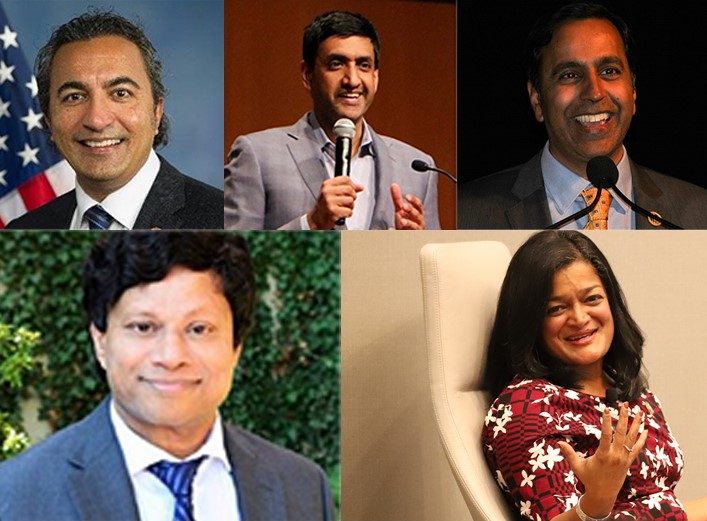
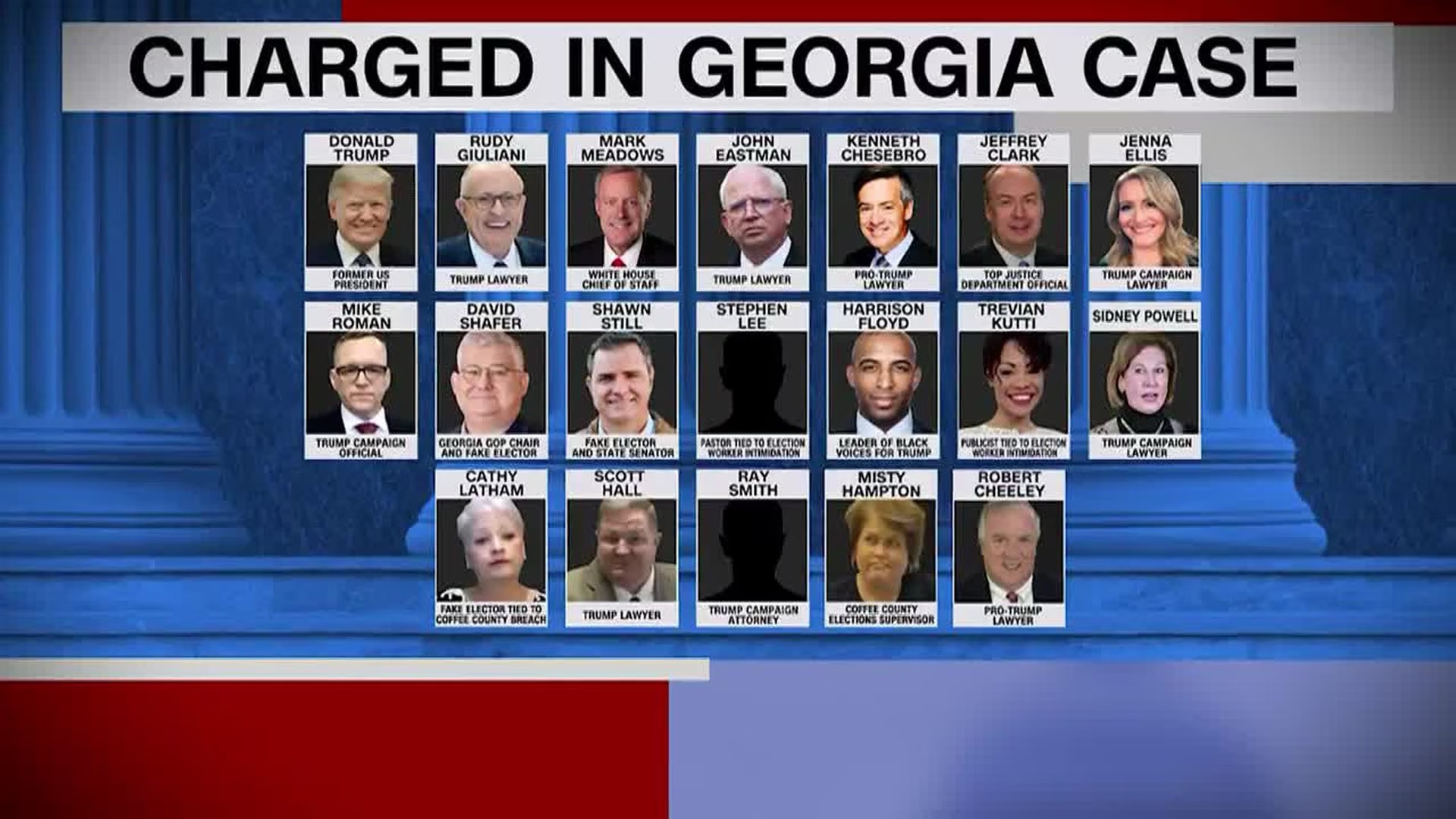
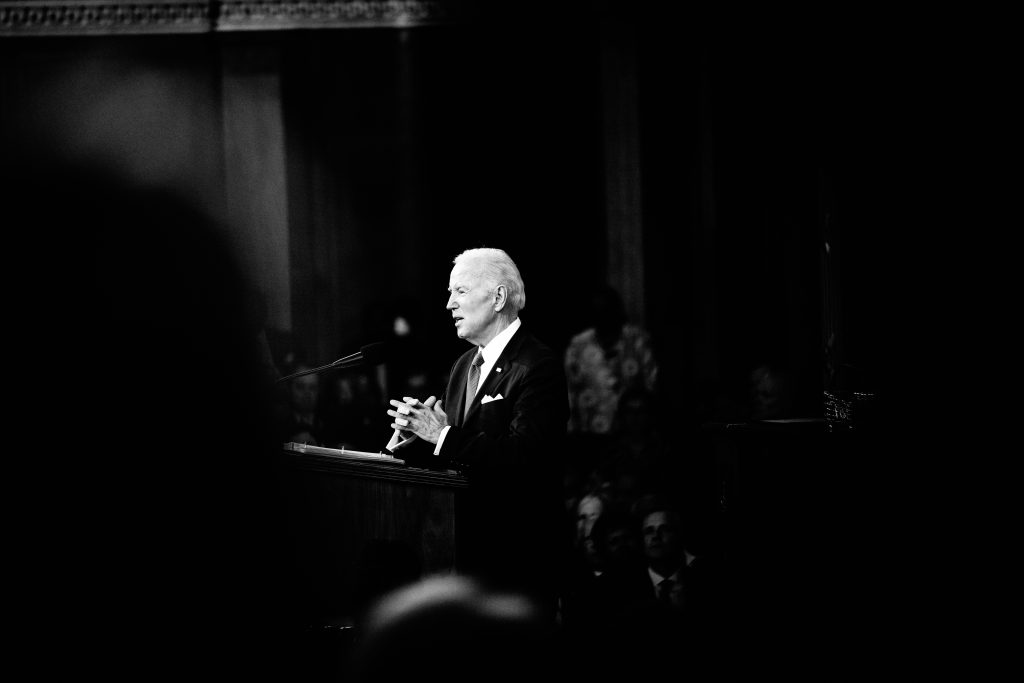 The second impeachment article accuses President Biden of obstructing justice, citing testimony from an IRS whistleblower. This testimony asserts that “members of the Biden campaign inappropriately collaborated with officials from the Justice Department (DOJ) to improperly interfere with investigations into potential tax violations involving Hunter Biden.” Both the Justice Department and special counsel David Weiss, who was appointed to investigate Hunter Biden, have denied any interference by the Biden administration in Weiss’ work.
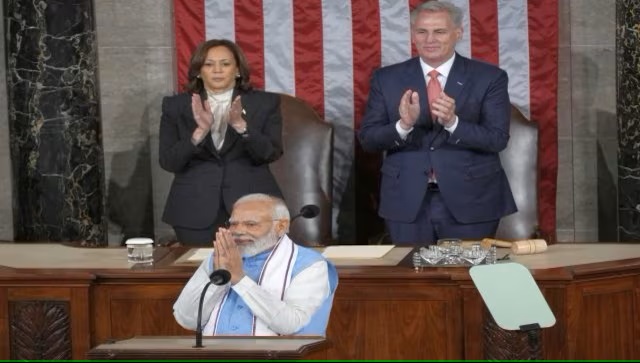
 The House of Representatives and the Senate

 In 2019, before the
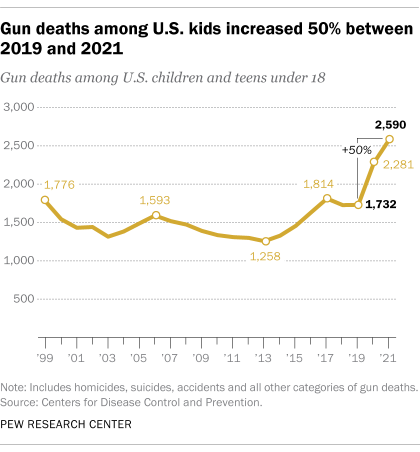
 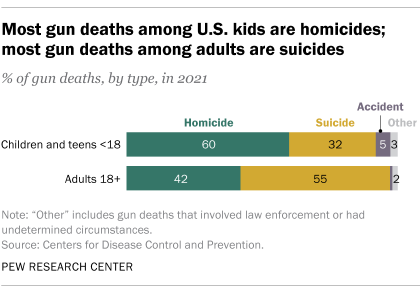 Homicide was the largest single category of gun deaths among children and teens in 2021, accounting for 60% of the total that year. It was followed by suicide at 32% and accidents at 5%. Among U.S. adults, by contrast, suicides accounted for a 55% majority of gun deaths in 2021.
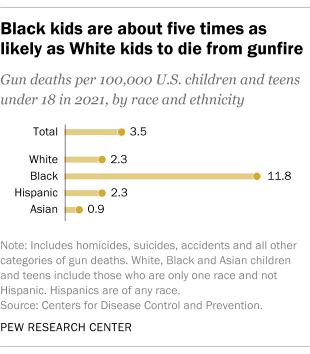 Looked at another way, Black children and teens were roughly five times as likely as their White counterparts to die from gunfire in 2021. There were 11.8 gun deaths per 100,000 Black children and teens that year, compared with 2.3 gun deaths per 100,000 White children and teens. The gun death rate among Hispanic children and teens was also 2.3 deaths per 100,000 in 2021, while it was lower among Asian children and teens (0.9 per 100,000).
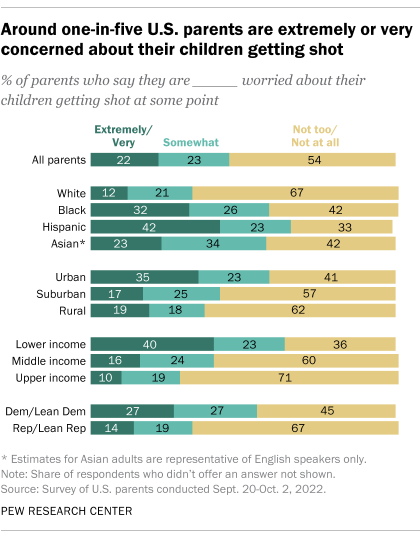 A sizable share of American parents are worried about their kids getting shot. In a
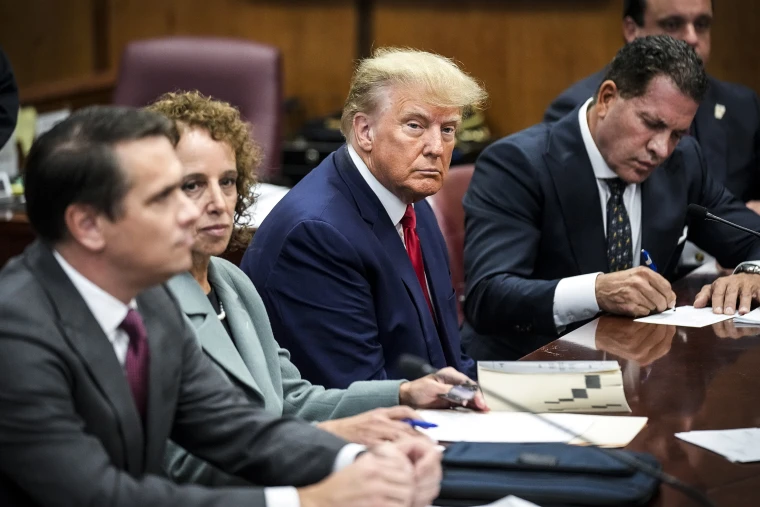
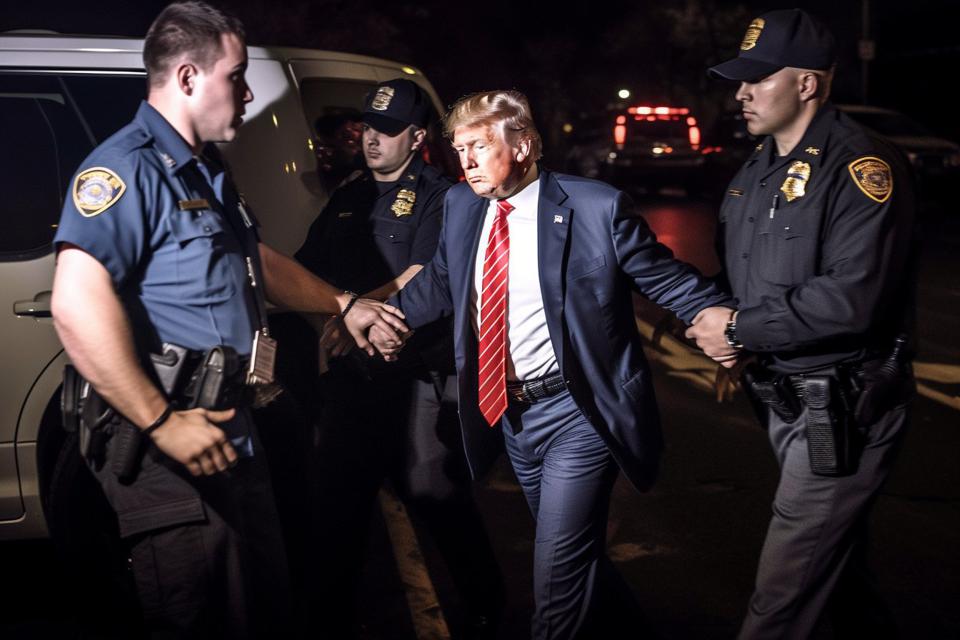
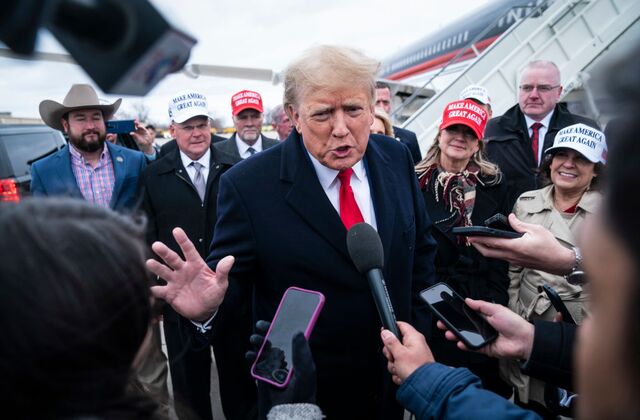 The Stormy Daniels case is about how Trump reimbursed his lawyer Michael Cohen after Cohen paid Ms Daniels $130,000. The record for the payment reimbursing Cohen says the payment was for “legal fees”. Prosecutors may say this amounts to Trump falsifying business records, a misdemeanor in New York.
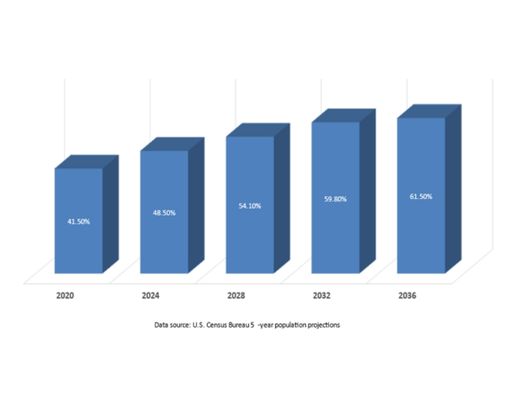
 As Figure 2 illustrates, Millennials and some of their younger siblings, will be a majority of the electorate in just six years.
 Research on individual voting behavior over time supports the idea that early partisan predilections persist over an individual’s life span. Republicans need to take steps now to reverse these trends among young people before they become an unbreakable barrier to GOP electoral success and Democrats need to focus on Plurals and Millennials in the years ahead to take advantage of the opportunity that this emerging majority presents.
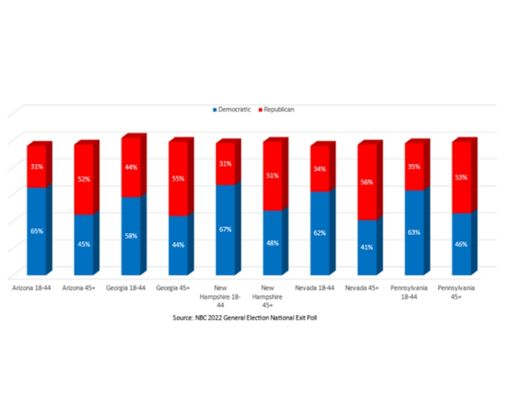 The 2022 Democratic Advantage Among Young Voters in Battleground States Allowed the Democrats to Recapture Senate ControlAnd even though the Democrats failed to retain their majority in the House of Representatives, the preference for Democratic candidates among members of the Pluralist and Millennial generations limited the size of the new Republican majority to just five votes.
 What should be of even greater concern to Republicans is that this Democratic advantage, at least in the 2022 midterm election, was particularly strong among African American and Hispanic voters under the age of 45. Moreover, despite Republican efforts to make inroads in these communities and a large Republican vote among Hispanics in places like Florida, young minority voters supported Democrats by substantial margins. Eighteen to 29-year-old white voters also supported Democratic congressional candidates over Republican ones by a 58% to 40% margin, validating IOPs pre-election predictions as shown in Figure 5.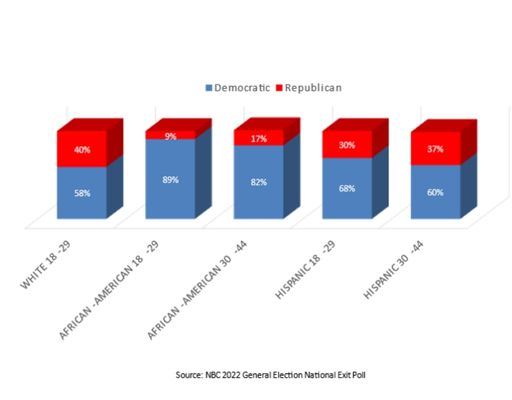
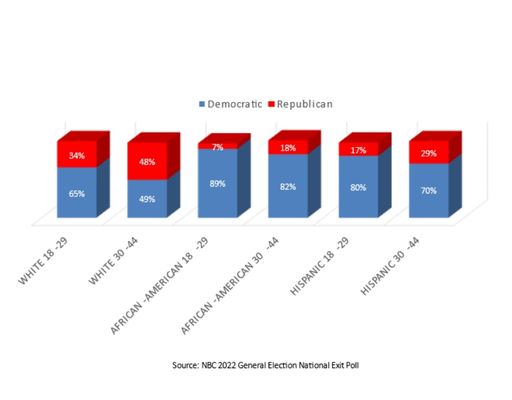 Linear projections of past trends are never definitive, especially in politics, and one election does not a trend make. But young people have now been voting solidly Democratic, and in increasing numbers, in every election since Donald Trump’s victory in 2016. In the 2018 midterm election, more than two-thirds (68%) of voters under 45 cast ballots for Democratic congressional nominees and in 2020, 58% voted for
 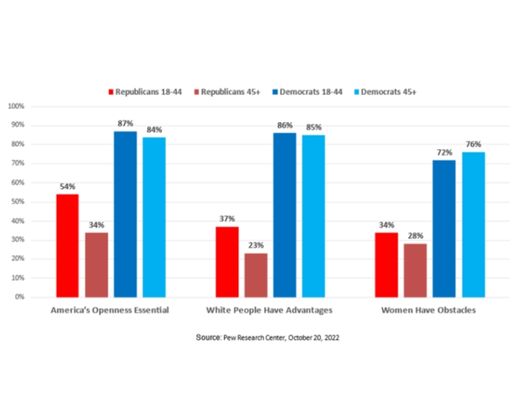 Second, this divide by age on social issues within the Republican electorate is accompanied by a shrinking gender gap among younger voters, further unifying Democrats and making it harder for machismo-type Republican candidates to expand their appeal. Fifty-five percent of white male voters under 45 voted Democratic in 2022, as did 52% of younger white females. As Figure 8 illustrates, upwards of nine in ten male and female African American voters under 45 also voted Democratic in the midterms. Among both male and female Hispanics under 45, two-thirds voted for Democratic congressional candidates. To the extent that a gender gap still exists, in 2022 it is centered among older white and Hispanic voters. As Plural and Millennial voters become a larger and larger part of the American electorate, the gender gap in American politics is likely to shrink faster than the ozone layer.
 If those two challenges weren’t enough to deal with, Republicans reliance on broadcast media, such as Fox News and talk radio, means their message isn’t even being heard by Plurals and Millennials who live in an entirely different information ecosystem, built around social media, especially TikTok and YouTube.
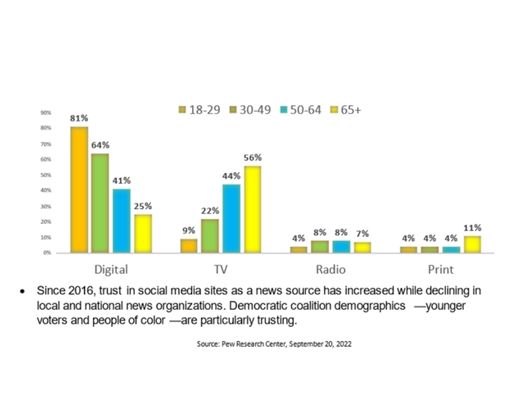 Of course, the Democratic party is not without its own challenges in adapting their strategies to an electorate dominated by younger voters. Older, embedded media commentators, pollsters, and campaign consultants, who make up the Democratic “permanent campaign complex,” are often slow to learn new tricks and less familiar with how to communicate with younger voters using their preferred platforms to talk about their policy priorities. For example, even in 2022, Democratic candidates for Senate in swing states such as Colorado and Ohio, recoiled in horror from President Biden’s proposal to forgive a portion of the two generations’ student debts, even though one of younger