Scientists Forecast Underwater Volcano Eruption 300 Miles Off Oregon

Scientists predict that the Axial Seamount, an underwater volcano located 300 miles off the Oregon coast, may erupt later this year, but it poses no threat to land or seismic stability.

The Axial Seamount, situated more than 4,900 feet beneath the Pacific Ocean and approximately 300 miles off the Oregon coast, is exhibiting signs that it may erupt for the first time since 2015. According to experts, this underwater volcano is formed by a geological hot spot, an area in the Earth’s mantle where molten material rises into the crust. This process has resulted in the formation of long chains of volcanoes over time, as the crust moves over the stationary hot spot.

“Over two-thirds of the Earth’s surface was formed by volcanic eruptions at these mid-ocean ridges,” said Maya Tolstoy, a marine geophysicist and dean of the University of Washington’s College of the Environment. “Axial Seamount is a direct result of these fundamental processes that continue to shape our planet today.”

Despite the potential for an eruption, scientists assert that it poses no danger to people on land. “Axial Seamount is much too deep and far from shore for people on land to even notice when it erupts,” the university’s blog post explains. “An eruption at Axial Seamount also has nothing to do with seismic activity on land, so Pacific Northwesterners don’t need to worry about this event triggering a major earthquake or tsunami.”

The initial indication of an impending eruption will be a notable increase in the number of earthquakes occurring around the volcano. Deborah Kelley, a professor at the University of Washington’s School of Oceanography and director of the Regional Cabled Array, noted that the volcano has already surpassed the inflation levels observed in 2015. However, current earthquake activity remains relatively low.

<p”We’re seeing 200 to 300 earthquakes per day, with some spikes around 1,000 per day due to the tides,” Kelley explained. “If what we learned in 2015 is correct, I would expect to see more than 2,000 per day for a few months before the eruption.”

The earthquakes are caused by magma moving toward the surface. William Wilcock, also a professor at the University of Washington’s School of Oceanography, elaborated on the eruption process. “That period lasts about an hour, and then the magma reaches the surface,” he said. “Lava flows spread across the caldera, and lava-filled fissures open up to the north or the south, reaching as far as 40 kilometers (about 25 miles).”

Wilcock added that while seismic activity tends to decrease quickly in the days following an eruption, the volcanic activity itself may continue slowly for about a month.

As scientists continue to monitor the Axial Seamount, they emphasize the importance of understanding these underwater geological processes. The research not only sheds light on the dynamics of volcanic activity but also contributes to broader knowledge about the Earth’s geological history.

According to the University of Washington, the Axial Seamount serves as a vital site for studying the interactions between tectonic activity and oceanic processes, providing insights that are crucial for both scientific understanding and public safety.

Artemis II Astronauts Return After First Moon Mission in Over 50 Years

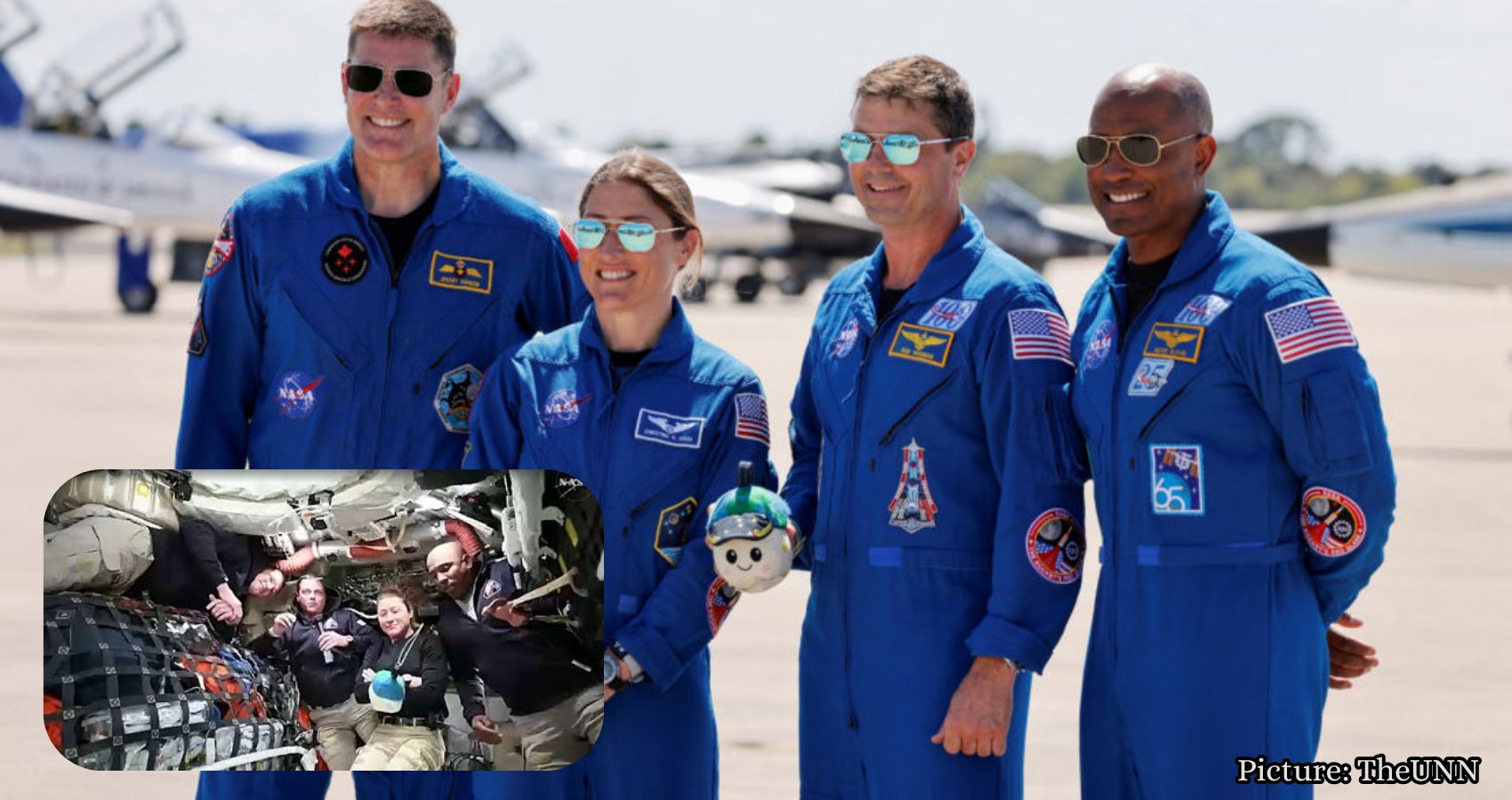
Four astronauts from the Artemis II mission successfully splashed down off the coast of San Diego, marking humanity’s first manned moon mission in over 50 years.

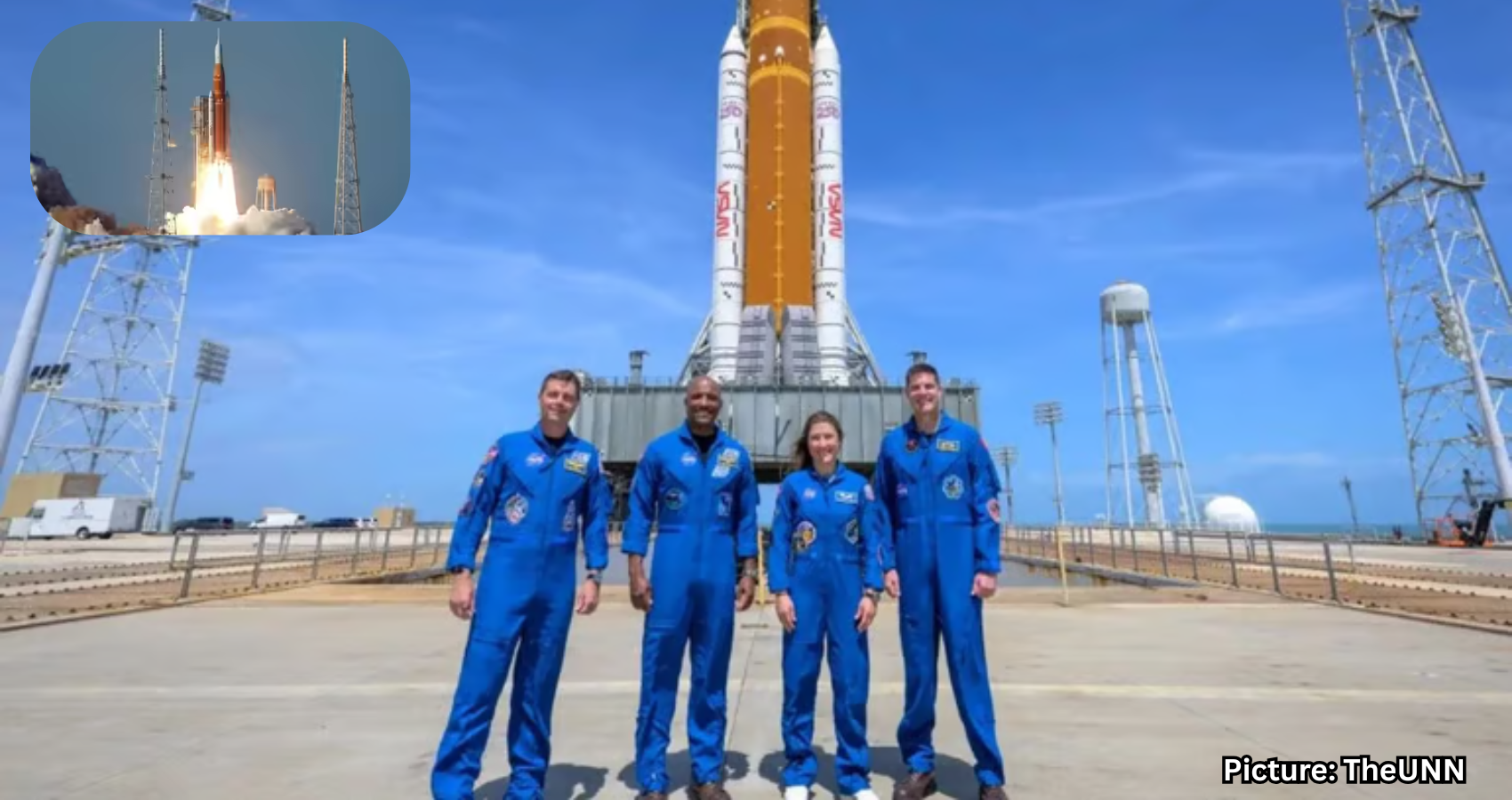
Four astronauts from the Artemis II mission completed a historic 10-day journey around the moon, splashing down off the coast of San Diego on Friday evening at 5:07 p.m. Pacific Time. This mission represents the first manned lunar expedition in more than half a century.

The crew launched from the Kennedy Space Center on April 1, embarking on a journey that took them approximately 252,000 miles from Earth, further than any previous human spaceflight mission. NASA Administrator Jared Isaacman, who landed on the USS John P. Murtha ahead of the splashdown, expressed confidence in the recovery team’s ability to assist the astronauts.

“I have no doubt that you’re all going to execute this flawlessly as we get these astronauts who have just completed an absolute historic mission, traveling further into space than any humans have gone before,” Isaacman stated.

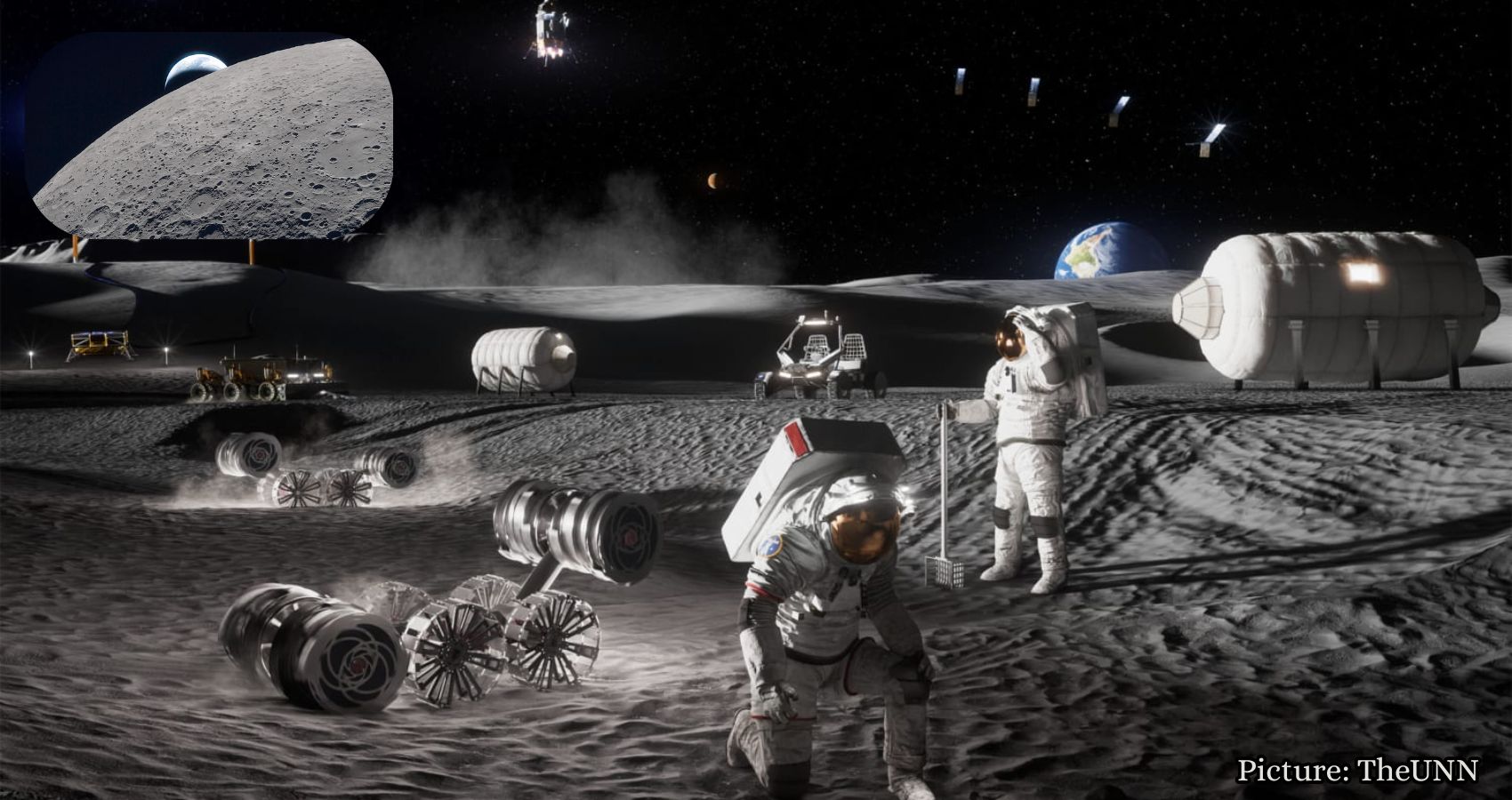
He emphasized the significance of the mission, noting, “For the first time, we’ve gone into the lunar environment in more than half a century. We are back in the business of sending astronauts to the moon again.” Isaacman also highlighted future plans, mentioning that once Artemis III launches in 2028 for the first moon landing in decades, NASA intends to establish a permanent presence on the moon.

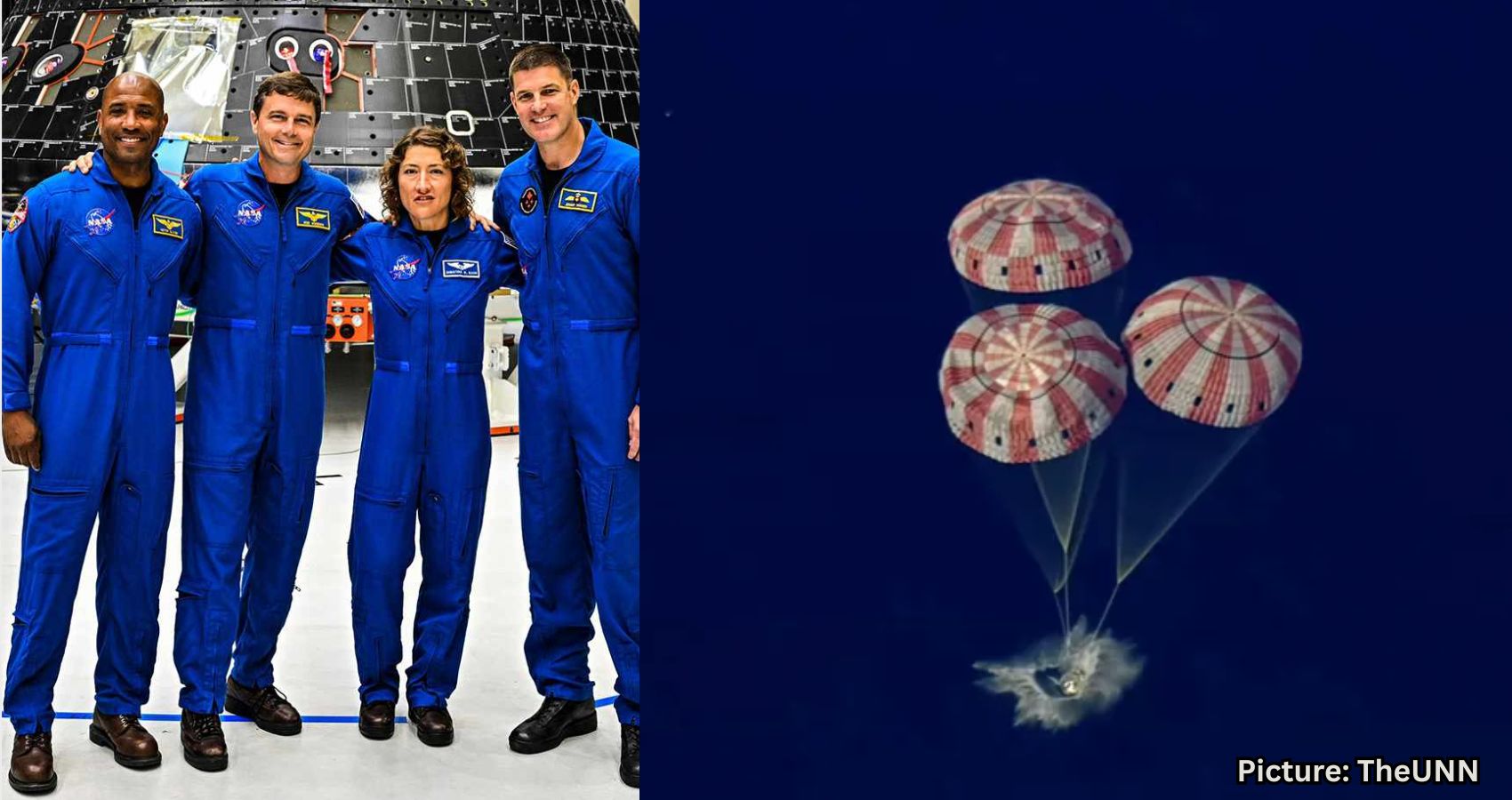
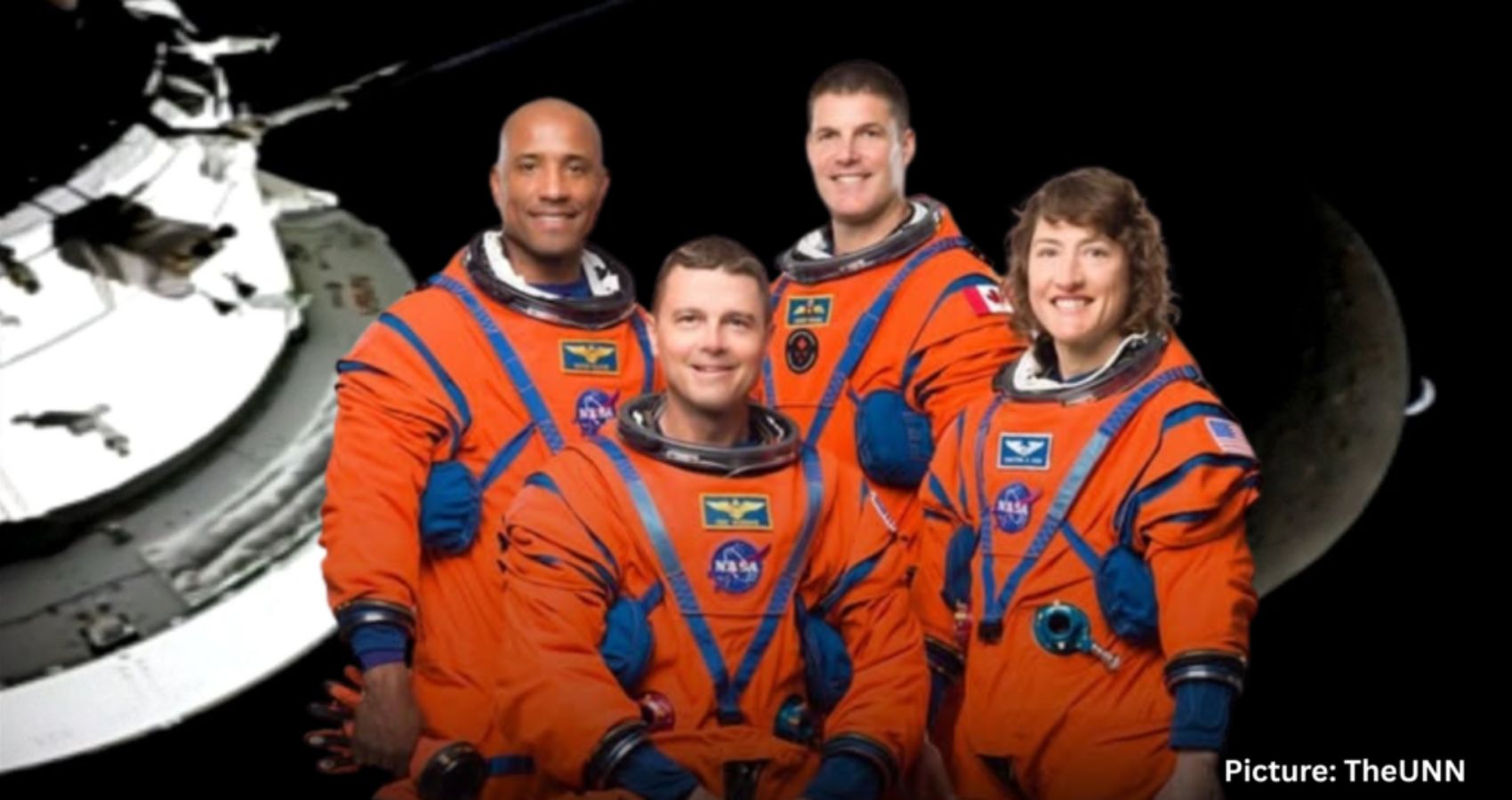
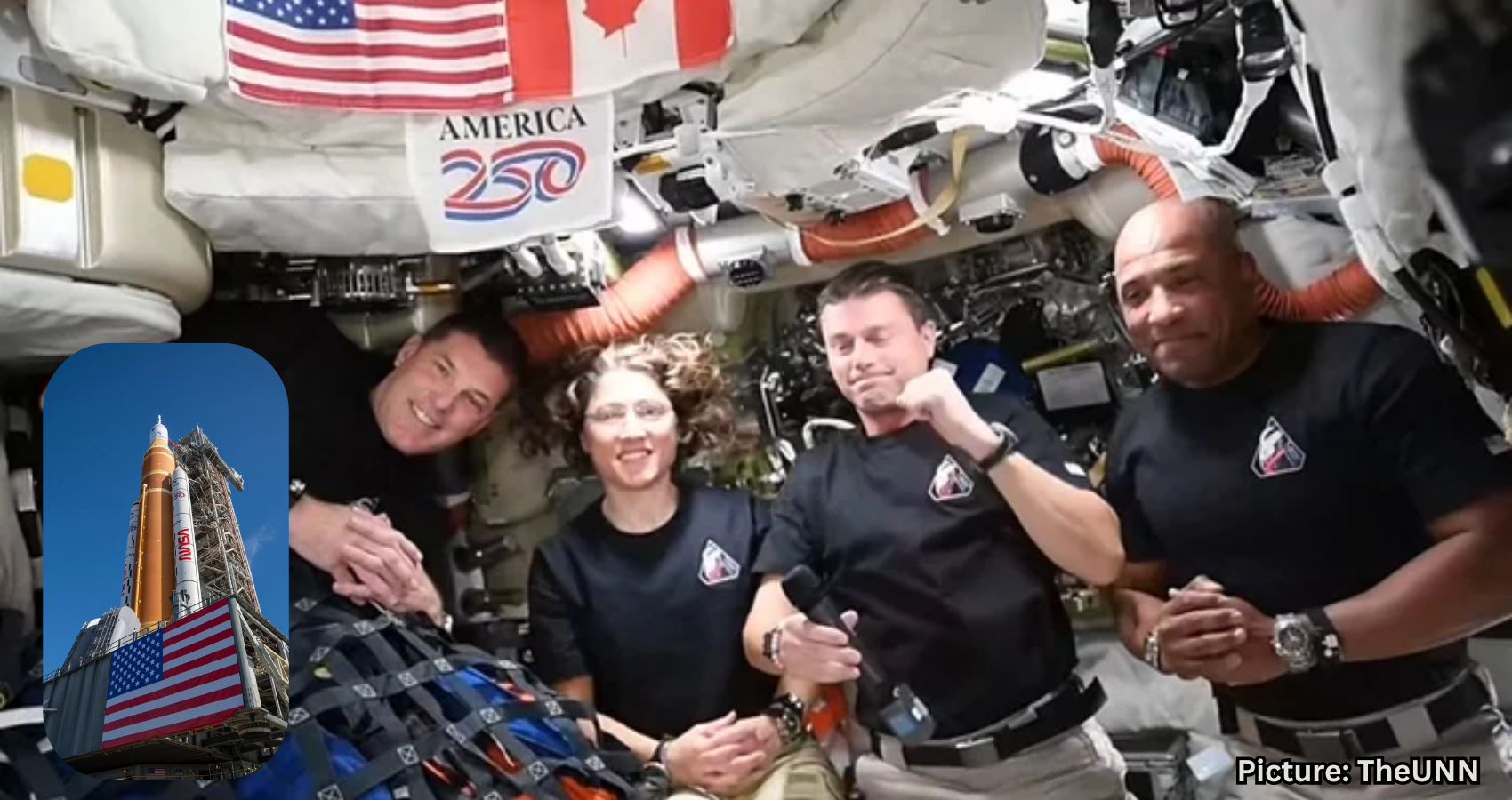
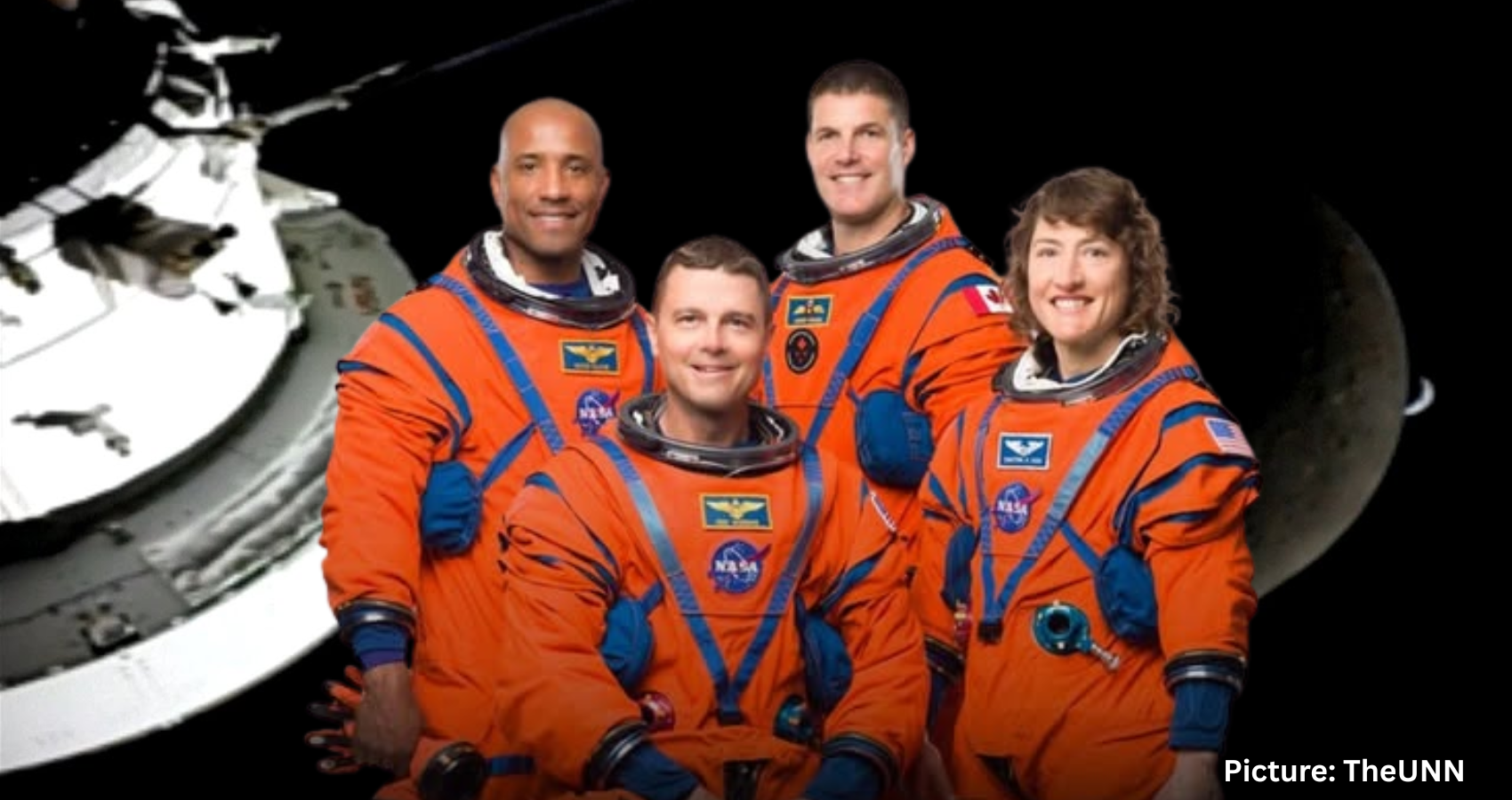
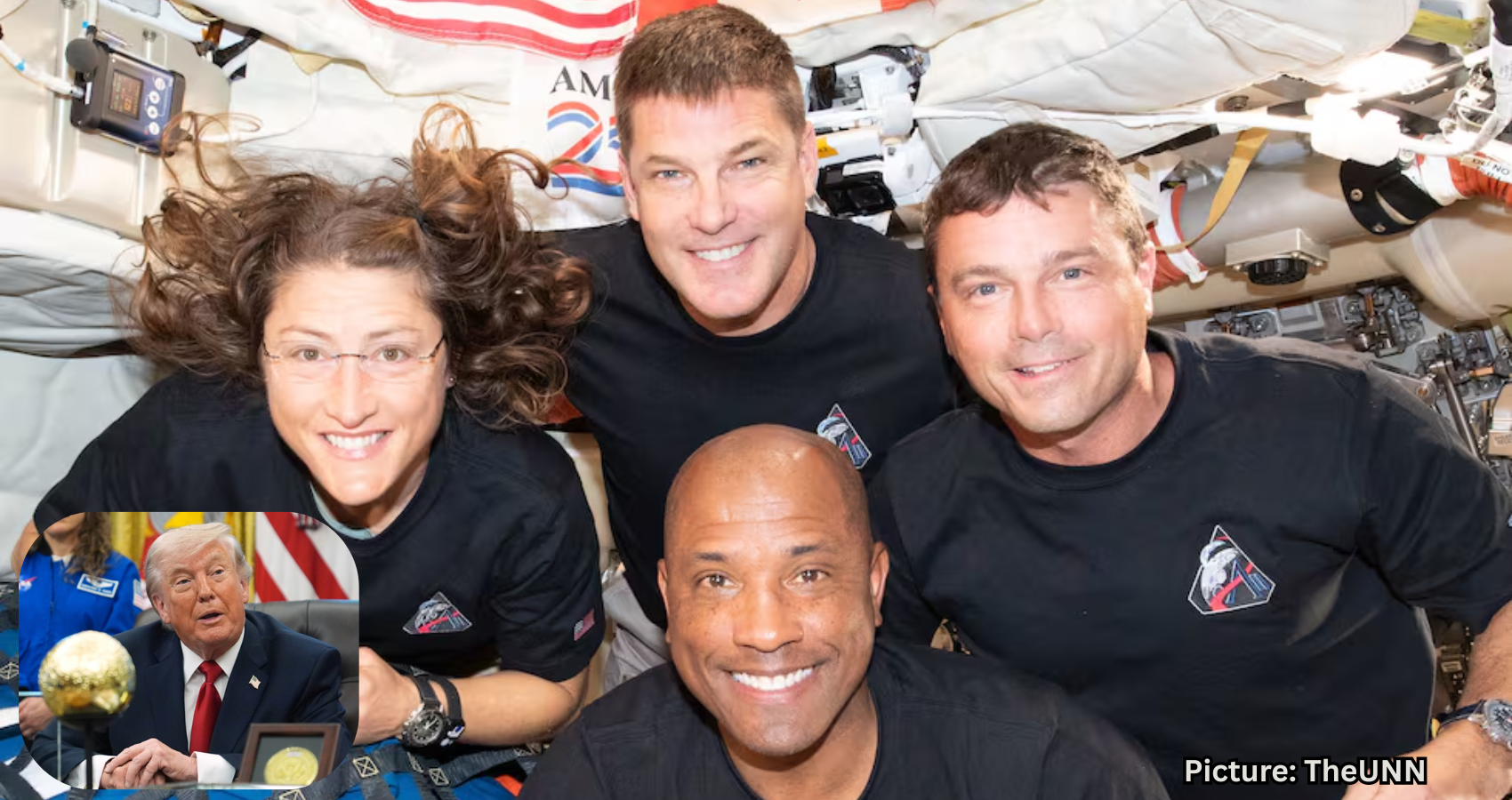
After their successful mission, the four astronauts—Commander Reid Wiseman, Pilot Victor Glover, Mission Specialist Christina Koch, and Mission Specialist Jeremy Hansen—were assisted out of the Orion crew module and taken aboard the USS John P. Murtha for medical evaluations.

The Orion spacecraft reentered Earth’s atmosphere at approximately 25,000 mph, utilizing an 11-parachute sequence to slow down to about 20 mph before landing in the ocean, roughly 60 miles off the coast. During reentry, temperatures outside the spacecraft soared to around 5,000 degrees Fahrenheit.

The last time astronauts traveled to the moon was in December 1972 during the Apollo 17 mission, three years after the historic Apollo 11 mission, which marked humanity’s first landing on the lunar surface in 1969.

This successful splashdown not only signifies a monumental achievement in space exploration but also paves the way for future lunar missions and the potential establishment of a moon base, according to Fox News.

Oceans Worldwide Growing Darker, Posing Threats to Marine Life

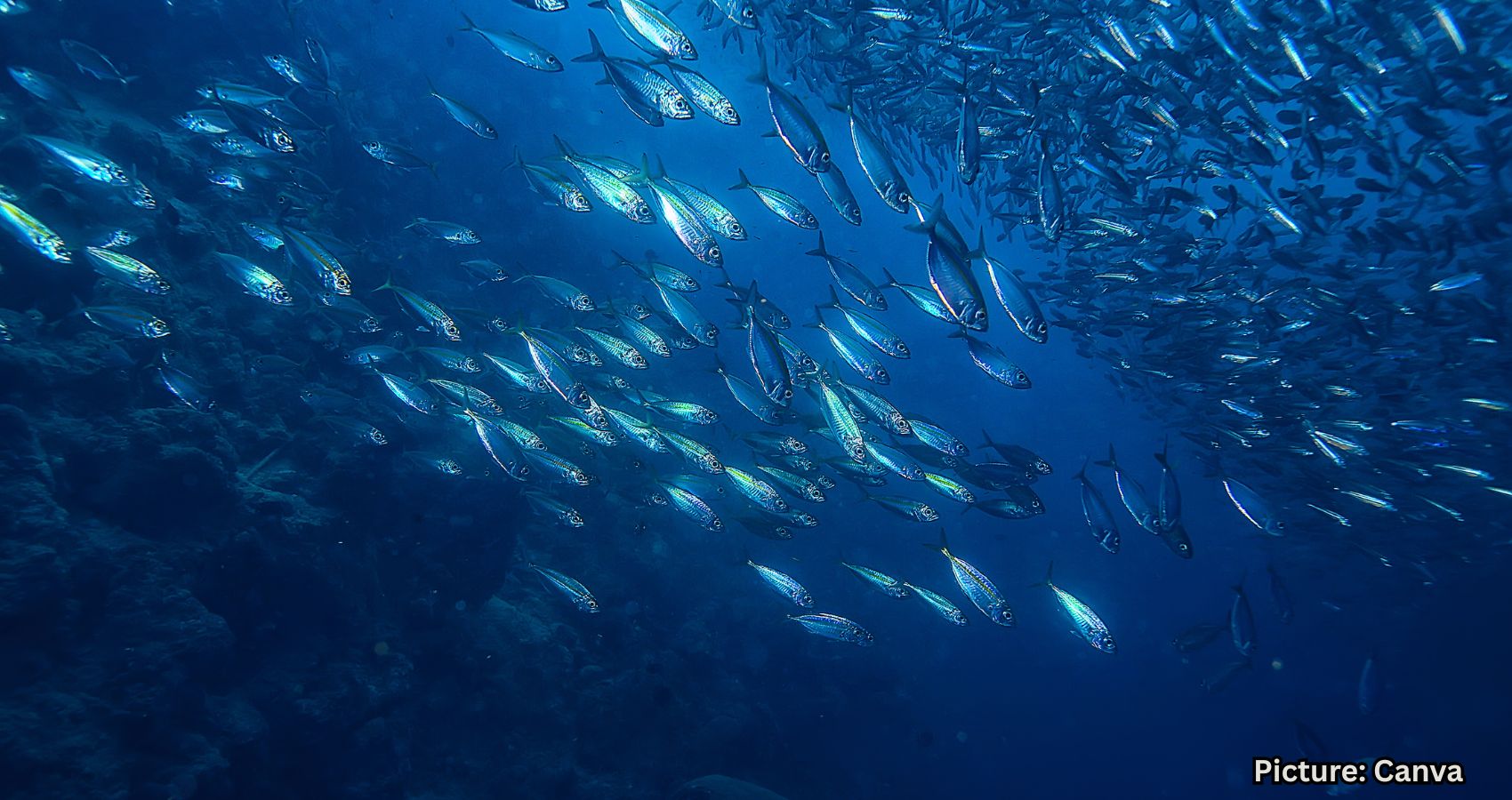
Oceans worldwide have darkened significantly over the past two decades, raising alarms about the potential impacts on marine ecosystems and life, according to a recent study.

Oceans around the globe have experienced a notable darkening over the last two decades, prompting concerns among researchers about the implications for marine life. A study led by Professor Thomas Davies from the University of Plymouth, published in the journal Global Change Biology, highlights the alarming trend observed through satellite data.

Data from NASA’s Ocean Color Web indicates that 21% of the planet’s oceans have darkened between 2003 and 2022. This change poses a significant threat to the marine ecosystem, particularly in the photic zones, where light penetrates sufficiently to support vital photobiological processes.

The photic zone extends to about 200 meters deep and is crucial for sustaining global nutrients and carbon budgets, which in turn support the world’s fish markets. Many marine organisms rely on both moonlight and sunlight for essential activities such as hunting, mating, and reproduction.

As the oceans darken, species that depend on light may be forced to migrate closer to the surface, potentially leading to overcrowding in these vital habitats. This shift could disrupt the delicate balance of marine ecosystems.

Using satellite data and an algorithm to assess light attenuation in seawater, Davies measured the depth of photic zones worldwide. The findings revealed that in areas where the oceans have darkened, 9% of photic zones have become 50 meters shallower, while 3% have decreased by 100 meters.

The reasons behind the darkening of oceans, particularly in offshore areas, remain unclear. However, the study suggests that global warming and changes in ocean currents may play a role in this phenomenon. Despite the overall trend of darkening, approximately 10% of the oceans, or 37 million square kilometers, have actually become lighter over the past two decades.

Interestingly, the study also found that most coastal regions have seen an increase in light. However, this increase does not lead to a net reduction in photic zone depth near shorelines, indicating a complex interplay between various environmental factors.

Davies warns that the consequences of ocean darkening could be severe, affecting marine food webs, global fisheries, and the overall carbon and nutrient budgets of the oceans. The implications of these changes could resonate throughout the marine ecosystem, impacting not only marine life but also human communities that rely on these resources.

As researchers continue to investigate the causes and effects of this darkening trend, the need for awareness and action to protect marine ecosystems becomes increasingly urgent, according to Fox News.

Space Travel Tickets Return as Prices Continue to Climb

Virgin Galactic has resumed ticket sales for suborbital space flights, but the price has risen to $750,000 per seat, reflecting the challenges and costs of commercial space travel.

Virgin Galactic has officially reopened ticket sales for its suborbital space flights, but prospective travelers will need to dig deeper into their pockets. The cost per seat has increased to $750,000, up from the previous price of $600,000. This price hike comes as the company prepares to accommodate over 675 customers who are eagerly waiting for their chance to experience space travel.

After nearly two years of pausing ticket sales, Virgin Galactic is making 50 new spots available for its upcoming flights. The company anticipates that flight testing will commence in the third quarter of 2026, with commercial service expected to begin in the fourth quarter of the same year. For those considering a booking, the waitlist is already substantial, indicating a strong interest in this unique experience.

However, it’s important to note that purchasing a ticket does not equate to a permanent move to space. The flights are short suborbital journeys lasting approximately 90 minutes. Virgin Galactic’s spaceplane is launched from a carrier aircraft at high altitude. Once released, the spaceplane ignites its rocket engine and ascends to the edge of space, allowing passengers to experience a few minutes of weightlessness before gliding back to Earth. This experience is more akin to a thrilling amusement park ride than a lengthy space mission, yet the allure of viewing Earth from above the atmosphere remains a significant draw for many.

While the prospect of traveling to space is undoubtedly exciting, the financial implications are considerable. The development and operation of reusable spacecraft are costly endeavors. Extensive testing is required, and safety regulations are stringent. When setbacks occur, they can significantly delay progress and increase costs.

Virgin Galactic has faced its share of challenges, including technical difficulties and tragic incidents. Notably, a test flight in 2014 resulted in the death of co-pilot Michael Alsbury, which has led the company to adopt a cautious approach to its operations. This history of setbacks contributes to the high ticket prices, as the limited number of flights and passengers necessitates premium pricing to sustain the business.

The company’s financial reports underscore the economic realities of the space tourism industry. In 2025, Virgin Galactic reported a net loss of $279 million and a negative free cash flow of $438 million, highlighting the substantial costs associated with building and scaling commercial spaceflight. CEO Michael Colglazier has indicated that ticket prices may continue to rise as the company increases production and testing efforts.

This latest ticket release is part of a new development phase for Virgin Galactic. The company plans to begin ground testing of its next-generation SpaceShip in April 2026, with flight testing slated for the third quarter of that year. Commercial flights using this new vehicle are still on track to launch in the fourth quarter of 2026. Additionally, a second SpaceShip is already in development and is expected to enter service between late 2026 and early 2027, which could further enhance flight frequency.

“We completed pivotal milestones during the first quarter of 2026, and with assembly of our first SpaceShip nearly complete and ground testing set to begin in April, we have released a limited number of Virgin Galactic Spaceflight Expeditions, each priced at $750,000,” said CEO Michael Colglazier. The company aims to transition from monthly flights to a twice-weekly schedule per ship, which could eventually lead to more accessible pricing.

The timing of this ticket relaunch is strategic, as Blue Origin has paused its tourist flights for at least two years. Meanwhile, SpaceX is currently focused on satellite launches, cargo missions, and government contracts. This leaves Virgin Galactic as the only active option for private individuals seeking a ticket to space at this time. Although the market for space tourism remains small, Virgin Galactic currently holds a unique position.

The overarching question for the industry remains: despite two decades of space tourism efforts, why have so few individuals actually traveled to space? The dream of making space travel more accessible is still a work in progress. Companies are striving to scale operations, and Virgin Galactic plans to increase its flight frequency from approximately four per month to as many as ten. If successful, this could eventually lead to lower ticket prices. However, the current equation remains straightforward: limited supply combined with high operational costs results in expensive tickets.

Even for those who may not be inclined to spend $750,000 on a 90-minute journey, the reopening of ticket sales is significant. It signals that space travel is inching closer to becoming a tangible consumer experience, albeit still out of reach for most. Moreover, the technological advancements developed for these flights often have broader applications, influencing various industries over time. This situation serves as a reminder of the nascent stage of space tourism; while it exists, it is far from mainstream and primarily funded by wealthy early adopters.

Virgin Galactic’s decision to resume ticket sales is a clear indication that the space tourism industry is not fading away but rather evolving. However, the elevated price point reflects the ongoing challenges of making space travel a viable option for the masses. For now, the view from above remains one of the most exclusive experiences that money can buy. Would you consider paying for a trip to space if prices became more affordable, or do the risks outweigh the thrill for you?

For further insights and updates on technology and security, visit CyberGuy.com.

Potential Discovery of New Dwarf Planet Challenges Planet Nine Theory

The potential discovery of a new dwarf planet, 2017OF201, may provide further evidence for the existence of the elusive theoretical Planet Nine in our solar system.

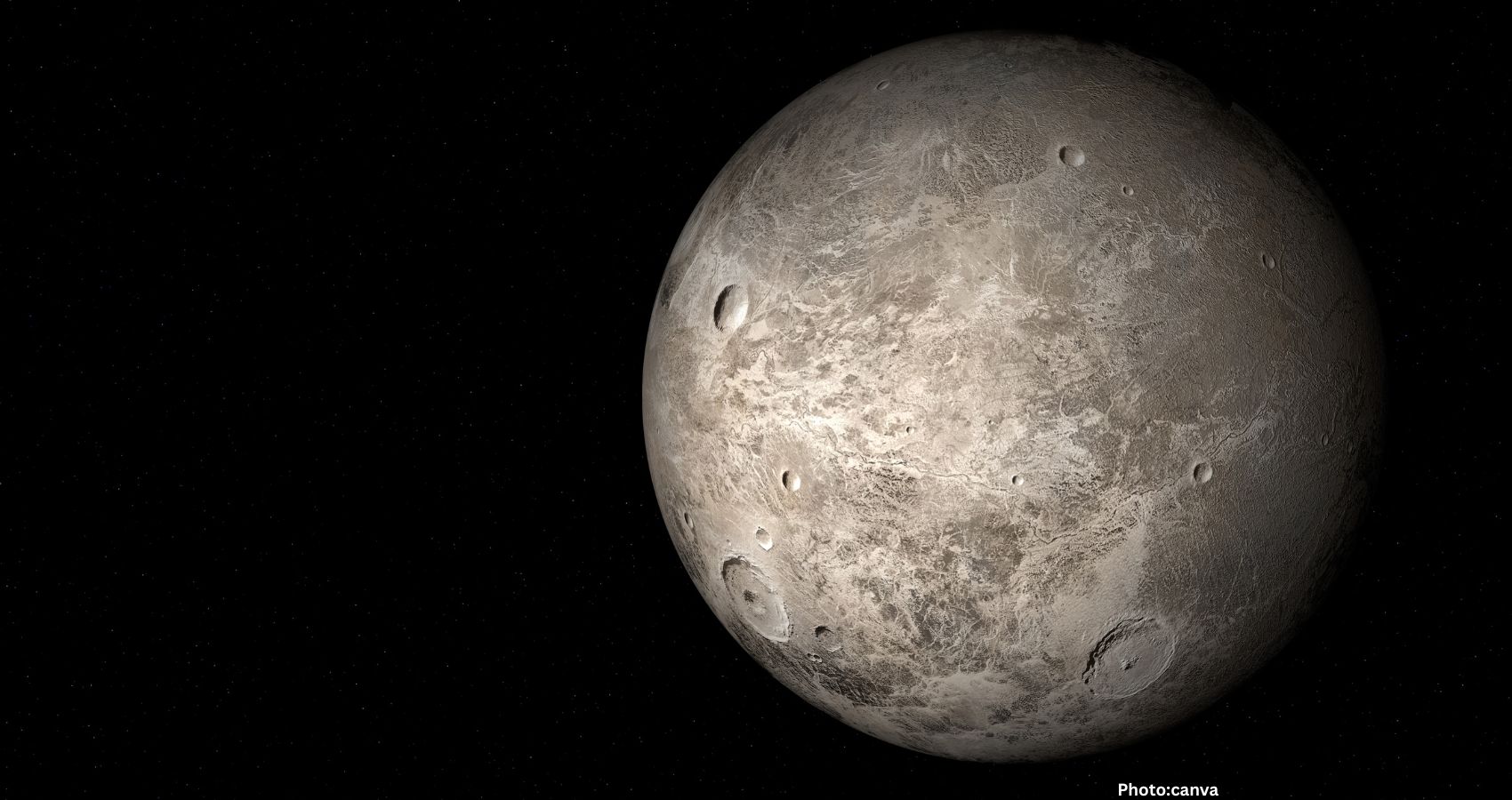
A team of scientists at the Institute for Advanced Study School of Natural Sciences in Princeton, New Jersey, has announced the potential discovery of a new dwarf planet, designated as 2017OF201. This large trans-Neptune Object (TNO) is located beyond the icy expanse of the Kuiper Belt and may challenge existing beliefs about the structure of our solar system.

TNOs are minor planets that orbit the Sun at distances greater than that of Neptune. While many such objects exist, 2017OF201 stands out due to its significant size and unusual orbit. The discovery was made by researchers Sihao Cheng, Jiaxuan Li, and Eritas Yang, who utilized advanced computational techniques to analyze the object’s unique trajectory.

“The object’s aphelion—the farthest point in its orbit from the Sun—is more than 1,600 times that of Earth’s orbit,” Cheng explained in a news release. “Meanwhile, its perihelion—the closest point to the Sun—is 44.5 times that of Earth’s orbit, which is similar to Pluto’s orbit.” The orbital period of 2017OF201 is estimated to be around 25,000 years, suggesting that it has undergone significant gravitational interactions with larger planets, leading to its current wide orbit.

Cheng further speculated on the object’s migration history, suggesting that it may have initially been ejected into the Oort Cloud, the most distant region of our solar system, before being drawn back into its current orbit. This hypothesis indicates a more complex dynamic in the outer solar system than previously understood.

The implications of this discovery are substantial, particularly concerning the ongoing search for Planet Nine, a theoretical planet proposed to exist in the outer solar system. In January 2016, astronomers Konstantin Batygin and Mike Brown from the California Institute of Technology (Caltech) presented research suggesting the presence of a planet approximately 1.5 times the size of Earth, located far beyond Pluto. However, Planet Nine remains unobserved, with its existence inferred from gravitational patterns affecting smaller objects in the Kuiper Belt.

According to the theory, if Planet Nine exists, it could be similar in size to Neptune and possess a mass up to ten times that of Earth. It is theorized to orbit the Sun at a distance of up to 30 times that of Neptune, taking between 10,000 and 20,000 Earth years to complete one orbit.

The discovery of 2017OF201 suggests that the region beyond the Kuiper Belt, previously thought to be largely empty, may harbor more celestial bodies than anticipated. Cheng noted that only about 1% of 2017OF201’s orbit is currently visible from Earth, underscoring the vastness of our solar system and the potential for future discoveries.

“Even though advances in telescopes have enabled us to explore distant parts of the universe, there is still a great deal to discover about our own solar system,” Cheng remarked.

As researchers continue to investigate the outer reaches of our solar system, the existence of Planet Nine remains a tantalizing possibility, with the gravitational influences of objects like 2017OF201 potentially providing critical insights into its nature. The ongoing study of such trans-Neptune Objects may ultimately reshape our understanding of the solar system’s architecture.

This research adds a new dimension to the ongoing exploration of our cosmic neighborhood, highlighting the complexity and dynamism of the solar system’s outer regions. The findings were reported in a recent news release, emphasizing the importance of continued observation and study of these distant celestial bodies.

According to NASA, the search for Planet Nine and the study of TNOs like 2017OF201 could help clarify the gravitational patterns observed in the outer solar system, potentially leading to a deeper understanding of our cosmic environment.

Artemis Astronauts Experience Communication Blackout on Moon’s Far Side

The Artemis II crew experienced a historic 40-minute communication blackout as they passed behind the Moon, marking a significant milestone in deep space exploration.

The Artemis II crew officially entered a communications blackout on Monday evening as their spacecraft moved behind the Moon’s far side, setting new distance records in the process. This unprecedented moment began at approximately 6:44 p.m. ET, during which the astronauts—Reid Wiseman, Victor Glover, Christina Koch, and Canadian astronaut Jeremy Hansen—became the most isolated humans in deep space history.

The blackout occurred as the spacecraft lost line of sight to Earth, with the Moon obstructing satellite communications entirely. Contact is anticipated to resume around 7:25 p.m. ET, coinciding with a moment known as “Earthrise,” when Earth reappears over the Moon’s horizon.

NASA has assured that there are no specific dangers anticipated during this mission, although ground control is prepared for potential contingencies. The astronauts have practiced essential tasks, such as consuming protein shakes and administering medication, while wearing their bulky orange launch and entry suits. This preparation is crucial in case they need to remain in their gear for an extended period.

In addition to the communication blackout, the Artemis II crew will achieve several significant milestones. At approximately 7:05 p.m. ET, the spacecraft is expected to reach its farthest point from Earth, at a distance of 252,760 miles. This surpasses the Apollo 13 record by roughly 4,105 miles, marking a notable achievement in space exploration.

At their closest approach, the Moon will appear about the size of a basketball held at arm’s length, according to NASA. Although ground control and the science evaluation room will not be able to communicate with the astronauts during this blackout period, the crew will continue to execute their lunar targeting plan and conduct scientific observations.

The astronauts are set to track historic Apollo sites, scout potential future landing zones, and capture rare views of nearby planets, including Mercury, Venus, Mars, and Saturn. They will also have the unique opportunity to observe a solar eclipse from the Orion spacecraft’s vantage point.

Earlier in the day, the crew broke a distance record previously held by Apollo 13, which was set in 1970. This achievement underscores the significance of the Artemis II mission as a pivotal step in humanity’s exploration of deep space.

According to NASA, the Artemis II mission is not only a remarkable technical achievement but also a historic moment in the ongoing journey of human exploration beyond Earth.

Human Adaptations to Extreme Environments Explored in Evolutionary Biology

Humans exhibit remarkable adaptations to extreme environments, from high altitudes in the Himalayas to underwater lifestyles among the Sama people, showcasing our species’ incredible versatility.

Throughout history, humans have demonstrated an extraordinary ability to adapt to some of the most challenging environments on Earth. From the high peaks of the Himalayas to the depths of the ocean, our species has established permanent settlements on every continent except Antarctica. This adaptability is particularly evident in groups that have faced sustained environmental pressures, leading to distinct biological solutions that enhance survival and reproductive success.

One of the most striking examples of human adaptation can be observed in populations residing at high altitudes, such as those in the Himalayas and the Andes. These communities have developed physiological changes that enable them to thrive in low-oxygen environments. Herman Pontzer, a professor of evolutionary anthropology at Duke University, notes that these adaptations arise from the necessity to respond to persistent environmental challenges.

At high altitudes, humans encounter a significant reduction in oxygen availability. To counteract this, the body increases the production of red blood cells, a process stimulated by the hormone erythropoietin (EPO). When oxygen levels in the blood decrease, the kidneys and liver produce more EPO, signaling the bone marrow to generate additional red blood cells. While this adaptation is beneficial, it can also lead to complications such as altitude sickness, which is characterized by symptoms including headaches and nausea, and in severe cases, fluid buildup in the lungs or brain.

In the Andes, native populations have adapted to these conditions by maintaining elevated red blood cell counts throughout their lives. They also possess larger lung capacities, a result of both genetic adaptations and the environmental pressures they have faced. Despite these adaptations, approximately 15 percent of Andean adults still experience chronic mountain sickness, underscoring the inherent risks associated with high-altitude living.

Conversely, Himalayan populations exhibit a different set of adaptations that allow them to thrive without experiencing the same degree of altitude sickness. Research indicates that these groups carry a specific allele of the EPAS1 gene, which enables lower levels of EPO and red blood cells, thereby reducing the risks associated with high altitude.

The presence of the advantageous EPAS1 allele in Himalayan populations is believed to have originated from interbreeding with Denisovans, a closely related hominin species. This genetic mingling occurred approximately 50,000 years ago as early humans migrated across Asia. Initially neutral, the allele became advantageous as populations began to inhabit higher elevations, leading to its predominance in the gene pool of modern Himalayan communities.

This phenomenon of genetic adaptation highlights the complexity of human evolution, illustrating how interbreeding with other hominin species has contributed to our survival in various environments. As populations adapted to their specific ecological niches, their genetic makeup evolved to meet the unique challenges they faced.

In addition to high-altitude adaptations, humans have also developed unique physiological traits suited for life underwater. The Sama people, who inhabit regions around the Philippines, Indonesia, and Malaysia, exemplify this adaptation. Traditionally, the Sama have spent significant portions of their lives submerged, engaging in a hunter-gatherer lifestyle that includes spearfishing and foraging at depths sometimes exceeding 200 feet.

This underwater existence presents its own set of oxygen delivery challenges. To address these, the human body has evolved a response commonly seen in marine mammals: the contraction of the spleen. The spleen serves as a reservoir for red blood cells, and when diving, it releases these cells to optimize oxygenation throughout the body. Research suggests that the Sama possess an allele of the PDE10A gene that enhances spleen size, allowing them to store and utilize red blood cells more efficiently while underwater.

Furthermore, training in breath-holding has been shown to contribute to increased spleen size among the Sama, indicating a blend of genetic adaptation and learned behavior. This adaptation has enabled them to maintain a lifestyle that has persisted for thousands of years, despite modern pressures that threaten their traditional way of life.

The study of human adaptations to extreme environments not only highlights the remarkable resilience of our species but also raises important questions about the future of human evolution. As climate change and environmental challenges continue to reshape our planet, understanding how humans have adapted over millennia can provide insights into how we might navigate future challenges.

Pontzer’s work in evolutionary anthropology emphasizes the importance of recognizing the intricate balance between adaptation and risk inherent in our biology. The evolutionary journey of humans, marked by adaptations that enhance survival while introducing new vulnerabilities, serves as a reminder of the complex interplay between environment and physiology.

As we continue to explore the depths of human adaptability, it becomes increasingly clear that our ability to survive and thrive in diverse environments is not merely a product of our biology but also a testament to our shared history and interconnectedness with the world around us, according to Source Name.

NASA Chief Credits Trump for Enabling Artemis II Mission

NASA Administrator Jared Isaacman credits President Trump for the success of the Artemis II mission, which is set to pass the far side of the Moon as it prepares for its historic journey.

NASA Administrator Jared Isaacman has stated that the ongoing Artemis II mission would not be at its current stage without the contributions of former President Donald Trump. As the Orion spacecraft approaches the far side of the Moon, Isaacman emphasized the significance of Trump’s policies in shaping the Artemis program during an interview with Fox News Digital.

“I want to be incredibly clear, we would not be at this moment right now with Artemis II if it wasn’t for President Trump,” Isaacman remarked. “And we certainly would not have an achievable path now to get back to the lunar surface and build that enduring presence.”

Isaacman recalled that on his first day as NASA administrator during Trump’s second term, he received a national space policy directive that mandated regular missions to the Moon, the construction of a lunar base, and advancements in nuclear power and propulsion technology. These initiatives are aimed at enabling American astronauts to eventually plant the Stars and Stripes on Mars.

The Artemis II mission successfully launched from Cape Canaveral, Florida, last week, marking a historic milestone as it aims to send humans farther from Earth than ever before. The mission’s objective is to orbit the Moon and return to Earth, with a planned landing in San Diego later this week.

“In the next 24 hours or so, they’re gonna pass behind the far side of the Moon,” Isaacman explained. “These four astronauts will have traveled farther away from Earth than any humans ever before, about 250,000 miles away. We are putting the spacecraft through all its paces, testing out its various systems, including manual controls.”

Isaacman noted that the spacecraft is “performing better than we would have expected” prior to launch. Once the astronauts complete their orbit around the Moon, they will begin their return journey to Earth.

He compared the Artemis II mission to the Apollo programs of the 1960s and 1970s, highlighting the significant advancements in technology that NASA has at its disposal today. “It is not even a close comparison,” Isaacman stated. “The operator consoles or flight controllers have multiple screens, lots of computing power that’s available to them right now. There is certainly an army here supporting NASA, but not the hundreds of thousands of people that you would have had during the Apollo era that had to bubble into that enormous endeavor.”

“That’s why when we pick up where Apollo 17 left off with this mission,” he continued, “it is not to return to the Moon to plant the flag and leave the footprints, but to build an enduring presence, to build a Moon base where we will turn the south pole of the Moon into a scientific and technological proving ground for the capabilities we will need to master.”

Isaacman, who was sworn in as NASA administrator last December, is a longtime space enthusiast and previously commanded the first-ever commercial spacewalk in September 2024. When asked about the personal significance of the Artemis II mission, he credited the NASA workforce and the team behind him for the agency’s achievements.

While acknowledging the team’s efforts, Isaacman also emphasized the importance of focusing on the upcoming Artemis III mission, scheduled for mid-2027. This mission will test docking capabilities in preparation for a planned return of humans to the lunar surface in 2028.

“For everybody else, we got to start working on Artemis III,” Isaacman explained. “You go back to the Apollo era, Apollo 10, as those astronauts were orbiting in lunar orbit, just miles above the surface, two months later, Apollo 11 launched where Neil and Buzz walked on the Moon. That means we have to be able to do multiple world-changing missions in near parallel.”

According to Fox News Digital, Isaacman’s leadership and vision for NASA are pivotal as the agency embarks on this new chapter in space exploration.

Penn Medicine Scientists Use AI for Innovative Problem-Solving Techniques

Penn Medicine scientists are revolutionizing mRNA gene editing and personalized therapies, merging artificial intelligence with innovative thinking to redefine modern medicine.

Penn Medicine scientists are at the forefront of a medical revolution, blending artificial intelligence (AI) with ingenuity to transform mRNA gene editing and personalized therapies. This innovative approach is redefining the landscape of modern medicine.

The inspiration for this transformation can be traced back to the iconic television character Angus MacGyver, portrayed by Richard Dean Anderson from 1985 to 1992. MacGyver became a cultural symbol of resourcefulness, relying on scientific knowledge and creativity rather than brute force. His ability to turn everyday objects into life-saving tools resonated with viewers, instilling a belief that intelligence and creativity could overcome any obstacle.

Today, this philosophy is vividly exemplified by researchers at Penn Medicine, who are applying MacGyver-like thinking to solve complex medical challenges. One notable figure in this movement is Drew Weissman, a physician-scientist at Penn’s Perelman School of Medicine. For decades, the concept of using messenger RNA (mRNA) as a therapeutic tool was dismissed as fringe science. However, Weissman, alongside biochemist Katalin Karikó, refused to accept this verdict. They dedicated years to developing a method for chemically modifying mRNA to evade the body’s immune response.

In 2005, Weissman and Karikó published their groundbreaking discovery, which remained largely unnoticed until the emergence of the COVID-19 pandemic in 2020. Their modified mRNA technology became the foundation for the Pfizer/BioNTech and Moderna vaccines, marking a significant milestone in medical history. In 2023, both scientists were awarded the Nobel Prize in Physiology or Medicine, solidifying Penn Medicine’s legacy of medical breakthroughs.

Weissman’s work continues as he explores the next frontier of mRNA technology. Penn Medicine is actively developing mRNA vaccines targeting various infectious diseases. Weissman has even discussed working on treatments for “every imaginable infectious disease.” Early research has already yielded a promising mRNA vaccine aimed at preventing allergic reactions, potentially offering relief to millions suffering from seasonal and food allergies.

Another remarkable story emerging from Penn Medicine is that of KJ Muldoon, who was born in August 2024 with a rare genetic disorder known as severe carbamoyl phosphate synthetase 1 deficiency (CPS1). This condition, affecting only one in 1.3 million infants, prevents the body from eliminating ammonia, leading to severe health complications. KJ was given a grim prognosis, with only six months to live.

However, two scientists at Penn, Kiran Musunuru and Rebecca Ahrens-Nicklas, embodied the MacGyver spirit as they sought innovative solutions for KJ’s condition. Musunuru, a professor at Penn Medicine, had been developing CRISPR-based therapies for cardiovascular diseases, while Ahrens-Nicklas focused on rare metabolic disorders. Together, they collaborated with Jennifer Doudna’s team, co-discoverer of CRISPR technology, to create a bespoke gene therapy targeting KJ’s specific mutation.

In an unprecedented achievement, KJ became the first person to receive a personalized CRISPR gene editing therapy in February 2025. After three infusions, he began to thrive, celebrating his first birthday with improved health. This groundbreaking work was published in the *New England Journal of Medicine* and recognized as one of the Top 10 Clinical Research Achievements for 2026.

More than 30 million Americans live with rare genetic diseases, and KJ’s therapy has set a new precedent for personalized medicine, where treatments are tailored to individual genetic mutations rather than generalized conditions. Musunuru and Ahrens-Nicklas, along with their colleagues at Penn, are paving the way for a new era of medical innovation.

While the MacGyver analogy is compelling, it is essential to acknowledge that the scientists at Penn Medicine are not working in isolation. They are leveraging an extraordinary array of tools and resources. With a research budget of $1.33 billion in 2026, Penn Medicine ranks among the top research institutions in the nation. AI has become an integral part of their research infrastructure, enhancing their capabilities in groundbreaking ways.

Professor Christos Davatzikos is leading one of the first AI-guided radiation therapy projects, utilizing machine learning to analyze brain MRI scans and predict the progression of neurological diseases. Meanwhile, David Fajgenbaum, a physician at Penn who has battled Castleman disease, co-founded Every Cure, a nonprofit that employs AI to match existing drugs with rare diseases. This initiative has received significant federal funding to expedite its mission.

In early 2026, Penn AI announced the recipients of its “Discovering the Future of AI” awards, including a project called ApexMol, led by César de la Fuente. This initiative aims to develop an AI system that designs biomolecules by integrating natural language with three-dimensional molecular structures, significantly accelerating drug discovery and democratizing access to molecular science.

Another key figure at Penn Medicine is Carl June, the architect of CAR T cell therapy, which has revolutionized cancer treatment. After years of skepticism, June’s work led to the first personalized cellular therapy receiving FDA approval in 2017. His team continues to innovate, with a next-generation CAR T cell therapy showing remarkable success in treating resistant B-cell lymphomas.

The potential of AI in drug discovery is immense. The global market for AI-driven drug discovery is projected to grow significantly, with more than 200 AI-designed drugs currently in clinical development. AI’s ability to streamline the drug development process is transforming the landscape, reducing the time from hypothesis to approval and increasing the likelihood of success.

As Penn Medicine continues to harness the power of AI, the possibilities for medical advancements are boundless. The integration of AI into their research processes is not just enhancing individual discoveries; it is reshaping the very framework of medical research.

Penn Medicine’s legacy, spanning 261 years, is a testament to the power of creativity and determination in the face of challenges. From the first medical school in the Americas to the forefront of gene editing and AI-powered drug discovery, the institution exemplifies the MacGyver ethos. The innovative spirit of its scientists, combined with cutting-edge technology, positions Penn Medicine at a pivotal moment in the history of medicine.

As they continue to push boundaries, the future of medicine is being written along University Avenue, where the extraordinary potential of AI and human ingenuity converge to create a healthier world.

According to The American Bazaar.

Industrial Exoskeletons Enhance Worker Efficiency While Reducing Strain

Industrial exoskeletons are transforming the workplace by reducing physical strain on workers, enabling them to perform demanding tasks more efficiently and with less fatigue.

Industrial exoskeletons are innovative wearable systems designed to assist workers by sharing the physical load during demanding tasks, such as overhead lifting and repetitive bending. These devices help alleviate muscle strain and fatigue, allowing employees to maintain productivity throughout their shifts.

For those who have spent long hours lifting, drilling overhead, or bending over conveyor belts, the onset of fatigue can be rapid and debilitating. This is where industrial exoskeletons come into play. By strapping onto the body, these systems help distribute the weight, allowing workers to rely less on their muscles and more on the supportive technology. As a result, workers experience reduced strain and can work longer without succumbing to fatigue. This technology is already being implemented on job sites across the United States.

Industrial exoskeletons fall into three primary categories, each tailored to different types of work environments and tasks. Passive systems, for instance, do not rely on motors or batteries. Instead, they utilize springs or mechanical structures to redistribute weight effectively. A notable example of this is the Hilti EXO-O1, a shoulder harness that transfers the weight of the arms to the hips using spring-loaded supports. Testing has shown that it can reduce shoulder muscle load by up to 47% during overhead tasks, making tools feel significantly lighter by the end of the day.

Another passive system is the Laevo Flex, which provides spring-based assistance to support the lower back during bending and lifting. This system is designed for dynamic movement, allowing workers to walk and lift without needing to activate or deactivate the device. The Laevo Flex is also adjustable and built for extended wear in various environments, including outdoor settings. Like other passive systems, it effectively reduces strain on the lower back during repetitive tasks without the need for motors or batteries.

While passive systems are relatively lightweight, typically weighing between 4.4 and 8.8 pounds, they do not adapt automatically to different tasks in real time. In contrast, powered exoskeletons utilize motors, sensors, and onboard processors to actively assist movement. The German Bionic Exia is an example of a battery-powered back exoskeleton designed for warehouse and logistics work. This system actively supports the lower back during lifting, helping to reduce strain and fatigue over time. Powered exoskeletons can track motion using sensors and provide almost instantaneous support, making the assistance feel seamless and natural.

These powered systems can significantly lessen the effort required for repetitive lifting tasks, particularly in high-volume environments. However, they come with trade-offs. Some powered exoskeletons can weigh over 40 pounds, depending on their design, and they are often much more expensive, costing tens of thousands of dollars. As a result, many companies introduce them through pilot programs before broader implementation.

Soft exosuits represent another advancement in this technology. Using fabric, straps, and tension systems instead of rigid frames, these lightweight systems, such as the HeroWear Apex 2, weigh about three pounds and assist with lifting movements. Testing in warehouse environments has demonstrated that soft exosuits can enhance productivity while reducing reported lower back discomfort among workers engaged in repetitive tasks. These systems allow for more natural movement than their rigid counterparts, although they provide less force and are better suited for repetitive tasks rather than heavy lifting.

The benefits of exoskeletons are particularly evident in everyday tasks that place significant strain on the body. For example, holding tools overhead can lead to considerable shoulder and neck strain. Systems like the Hilti EXO-O1 can reduce muscle load by up to 47%, making tools feel much lighter. Back support systems, such as the Laevo FLEX, can decrease muscle effort by up to 30% during lifting, while soft systems like the HeroWear Apex 2 help mitigate fatigue during constant bending.

Despite their advantages, exoskeletons are not without limitations. Proper fit is crucial; if a device does not align correctly with a worker’s body, it can lead to discomfort or restricted movement. Additionally, even lightweight systems add extra load, and powered systems can be particularly cumbersome. Cost remains a significant barrier for many companies, with passive systems typically costing a few thousand dollars and powered systems often exceeding tens of thousands. Experts recommend using exoskeletons in conjunction with proper ergonomics and regular movement to avoid potential long-term issues, such as reduced muscle engagement.

For workers involved in physical labor, this technology has the potential to transform daily experiences. Employees may find themselves feeling less sore at the end of their shifts, reducing the risk of injury over time and enabling longer work periods without the same level of fatigue. For employers, the advantages are clear: fewer injuries, reduced absenteeism, and enhanced productivity. As adoption of this technology continues to grow, many workplaces are currently testing these systems before implementing them more broadly.

While it may be tempting to think of ordering an exoskeleton like any other piece of equipment, most industrial exoskeletons are sold directly to companies rather than individuals. Manufacturers typically engage with employers through pilot programs or bulk orders, making them less accessible through standard retail channels. Some lighter systems, particularly passive or soft exosuits, may be easier to obtain, but many brands still prefer to sell through business channels or approved partners.

For those interested in exploring this technology, starting with the manufacturer’s website is advisable. Look for options such as “request a demo” or “contact sales,” which are often the first steps toward any potential purchase. As adoption increases, access to these systems may become more widespread.

Industrial exoskeletons are rapidly transitioning from experimental trials to real-world applications. They are not intended to replace human workers but rather to assist them in working smarter and safer. As technology continues to advance, we can expect lighter designs, improved comfort, and more intelligent assistance, potentially redefining the landscape of physically demanding work in the years to come. According to CyberGuy, the future of work may be significantly altered by these innovations.

Researchers Create E-Tattoo to Monitor Mental Workload in High-Stress Jobs

Researchers have developed a novel electronic tattoo, or “e-tattoo,” designed to monitor mental workload in high-stress professions by measuring brain activity and cognitive performance.

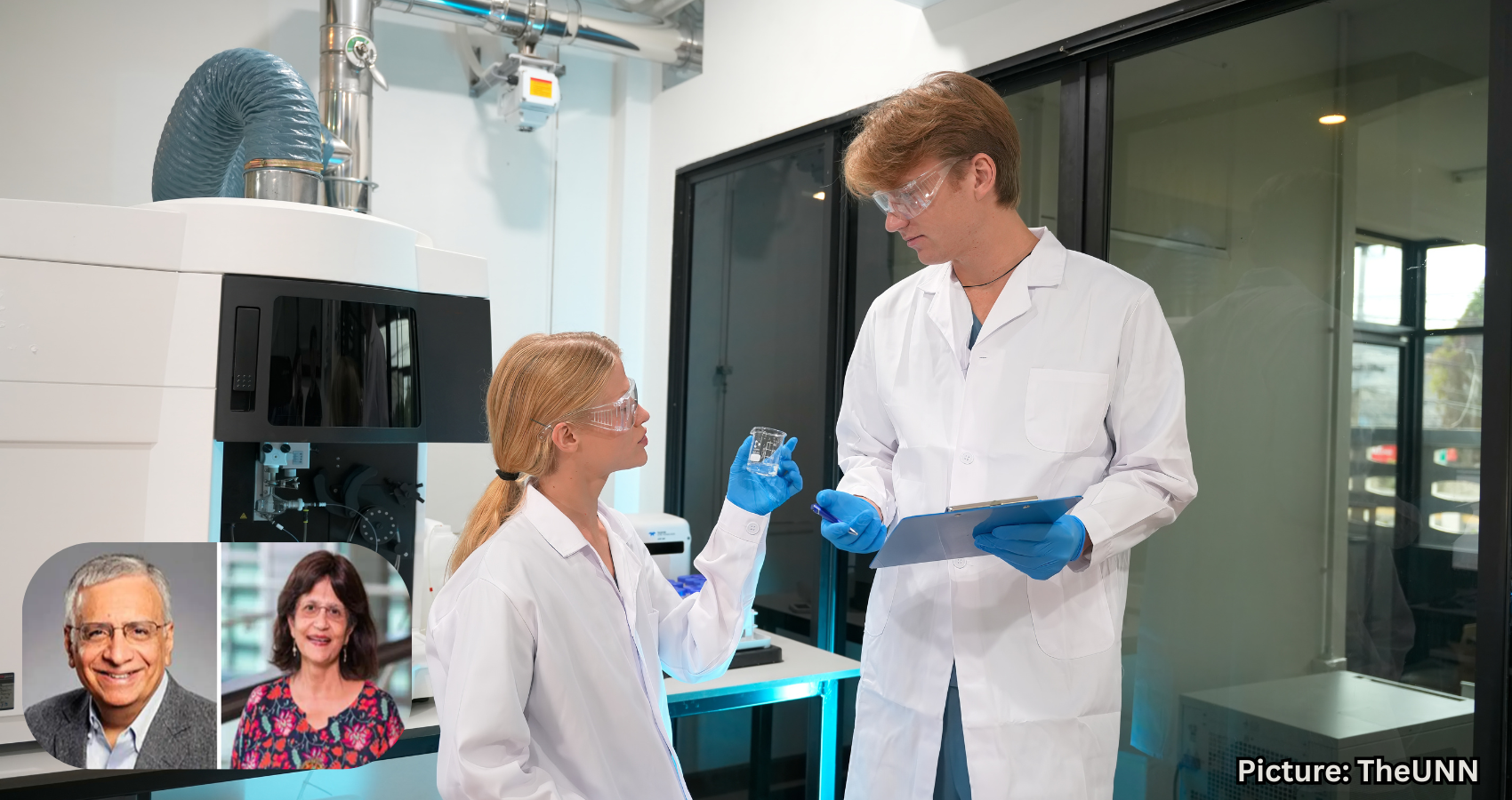
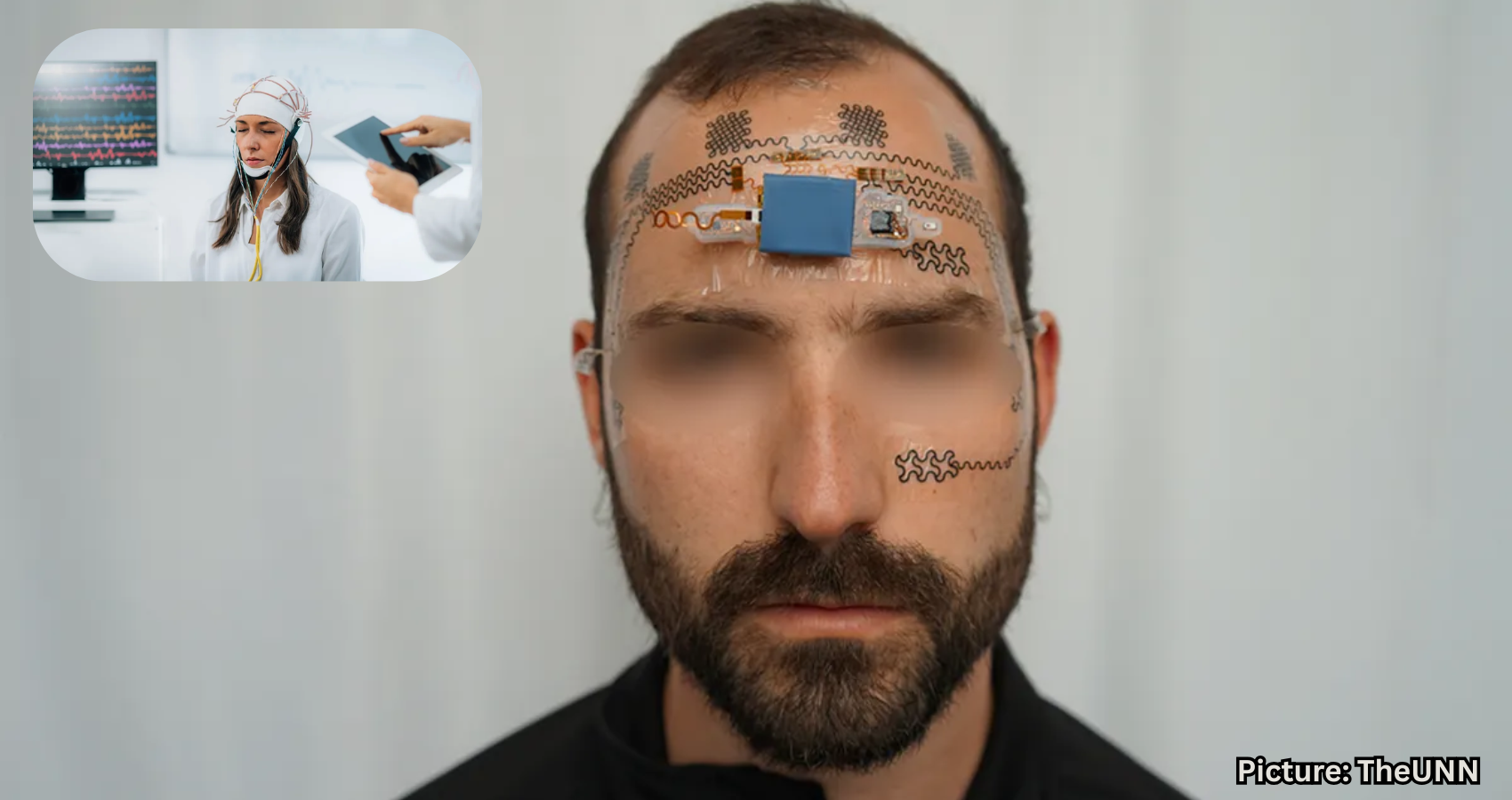
In a groundbreaking study published in the journal Device, scientists have introduced an innovative electronic tattoo device, or “e-tattoo,” that can be applied to the forehead to help individuals in high-pressure work environments track their brainwaves and cognitive performance.

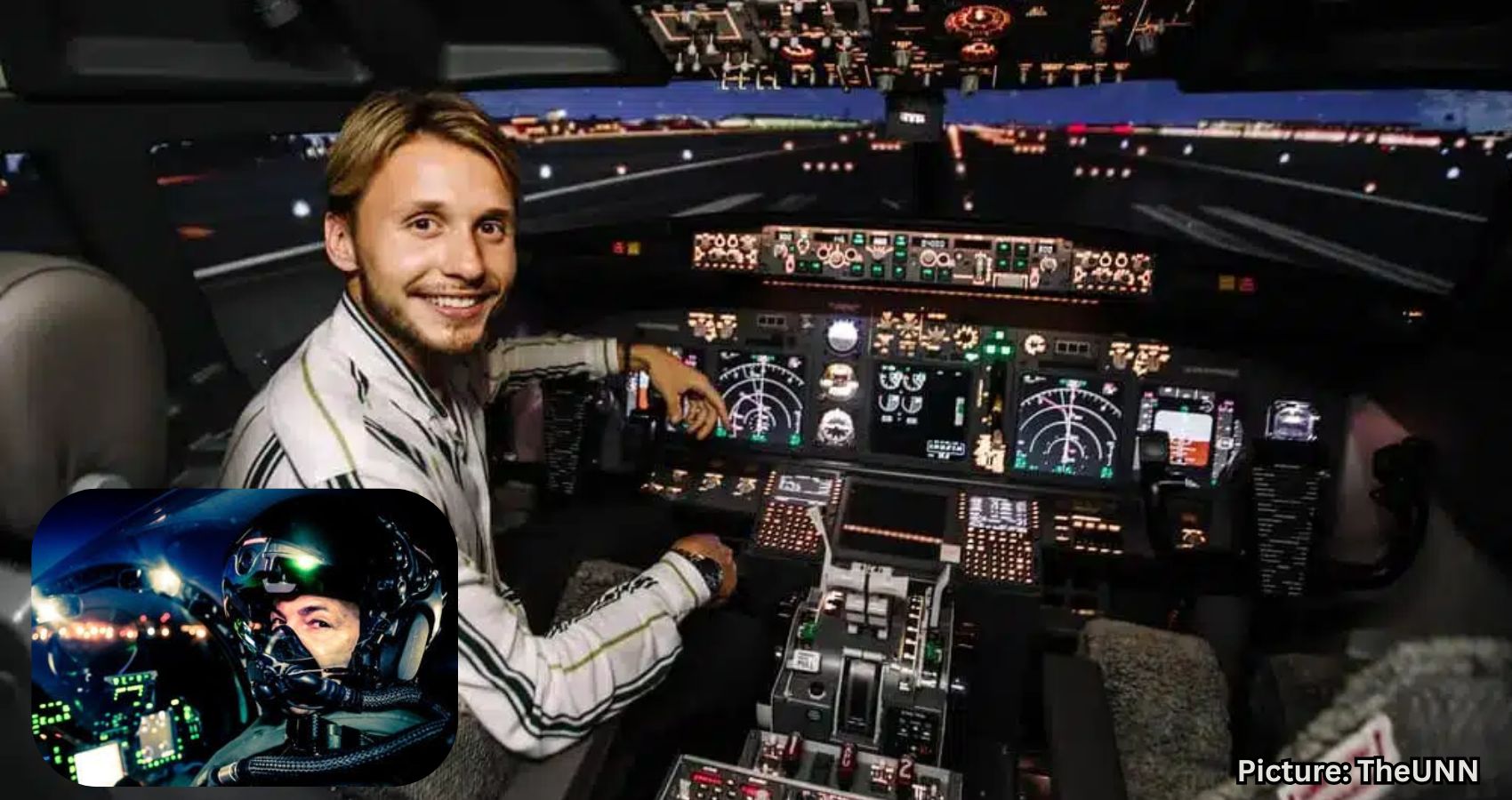
Dr. Nanshu Lu, the senior author of the research from the University of Texas at Austin, emphasized the significance of mental workload in human-in-the-loop systems, noting its direct influence on cognitive performance and decision-making. The e-tattoo is particularly aimed at professionals in demanding roles such as pilots, air traffic controllers, doctors, and emergency dispatchers.

According to Dr. Lu, the technology could also benefit emergency room doctors and operators of robots and drones, enhancing their training and performance. One of the primary objectives of the study was to develop a method for measuring cognitive fatigue in high-stakes careers.

The e-tattoo is designed to be temporarily affixed to the forehead and is notably smaller than existing devices. It operates by utilizing electroencephalogram (EEG) and electrooculogram (EOG) technology to measure brain waves and eye movements, offering a compact and cost-effective alternative to traditional EEG and EOG machines, which tend to be bulky and expensive.

Dr. Lu explained that the e-tattoo is “as thin and conformable to the skin as a temporary tattoo sticker,” making it a practical solution for real-time monitoring of mental workload. She highlighted that understanding human mental workload is essential in the fields of human-machine interaction and ergonomics due to its impact on cognitive performance.

The study involved six participants who were tasked with identifying letters displayed on a screen. The letters flashed one at a time in various locations, and participants were instructed to click a mouse if either the letter or its location matched a previously shown letter. Each participant completed the task multiple times, with varying levels of difficulty.

The researchers observed that as the difficulty of the tasks increased, the brainwave activity detected by the e-tattoo shifted, indicating a corresponding rise in mental workload. The device comprises a battery pack, reusable chips, and a disposable sensor, making it both practical and efficient.

Currently, the e-tattoo exists as a lab prototype, with a production cost of approximately $200. Dr. Lu noted that further development is necessary before it can be commercialized, including real-time mental workload decoding and validation in more realistic environments.

This innovative technology holds promise for enhancing performance and well-being in high-stress jobs, providing a new tool for monitoring cognitive load and potentially improving decision-making processes in critical situations.

For more information, refer to the study published in Device.

New Study Finds Leprosy in the Americas Before European Arrival

New research indicates that leprosy existed in the Americas long before European explorers arrived, challenging previous assumptions about the disease’s history.

A recent study has revealed that the bacterium Mycobacterium lepromatosis was present in the Americas long before the arrival of European explorers, fundamentally altering the historical understanding of leprosy, also known as Hansen’s disease.

Researchers from the Institut Pasteur in Paris, France, in collaboration with a U.S. university, have announced the discovery of a second species of bacteria responsible for leprosy in the Americas. Historically, it was believed that the bacterium Mycobacterium leprae was the sole cause of the disease and that it was introduced to the continent by early European settlers. However, this new finding suggests that an existing strain of leprosy was already endemic among Indigenous populations in the New World.

Dr. Maria Lopopolo, the first author of the study and a researcher at the Laboratory of Microbial Paleogenomics at the Institut Pasteur, emphasized the significance of this discovery. “This discovery transforms our understanding of the history of leprosy in America. It shows that a form of the disease was already endemic among Indigenous populations well before the Europeans arrived,” she stated in a news release.

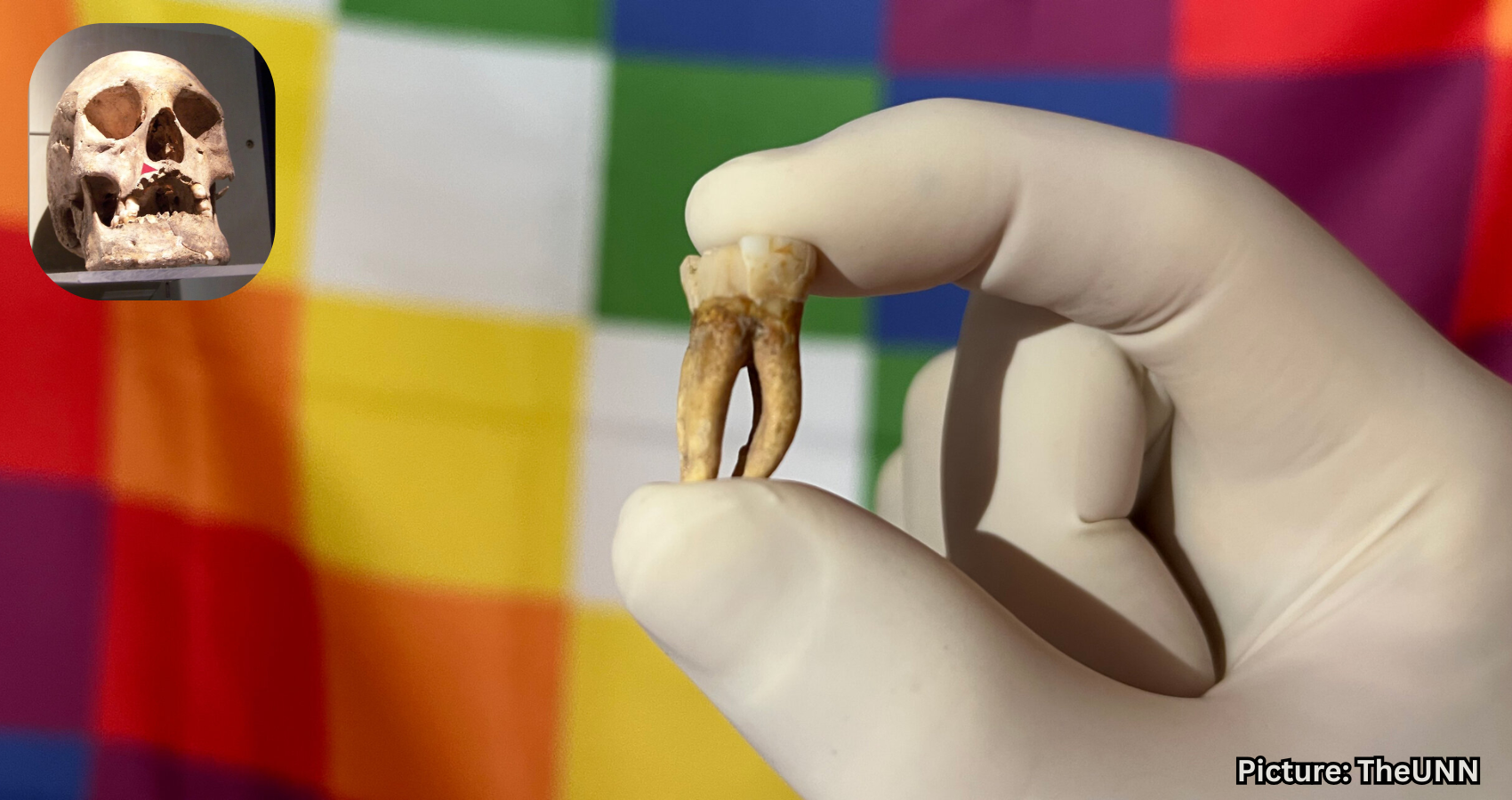
The study, which involved scientists from the Laboratory of Microbial Paleogenomics at the Institut Pasteur, the French National Center for Scientific Research, and the University of Colorado, was initiated after Mycobacterium lepromatosis was identified in a Mexican patient in 2008 and in red squirrels in the British Isles in 2016. By employing advanced genetic techniques, researchers reconstructed the genomes of Mycobacterium lepromatosis from ancient individuals in Argentina and Canada.

The findings revealed that the two strains of the bacterium from different regions were genetically similar, indicating that the bacteria spread rapidly across the continent. The results confirmed that Mycobacterium lepromatosis had already established itself throughout North and South America prior to European contact.

Collaboration was key to this research, as scientists worked alongside Indigenous communities, various international institutions, and archaeologists. They analyzed over 800 DNA samples from ancient human remains and recent medical cases that exhibited signs of leprosy.

Nicolás Rascovan, the lead author of the study at the Institut Pasteur, noted the broader implications of their findings. “We are just beginning to uncover the diversity and global movements of this recently identified pathogen,” he said. “This study allows us to hypothesize that there might be unknown animal reservoirs.”

The Centers for Disease Control and Prevention (CDC) states that leprosy can affect the nerves, skin, and eyes of patients, but it is treatable with antibiotics. Currently, there are up to 225 reported cases in the U.S. and approximately 250,000 cases worldwide, according to the CDC.

This groundbreaking research not only reshapes the narrative surrounding leprosy in the Americas but also opens the door for further exploration into the disease’s origins and its impact on Indigenous populations long before European contact.

According to Fox News, this study highlights the importance of understanding the historical context of diseases and their effects on different populations.

Artemis II Performs Key Lunar Burn for Historic Deep-Space Mission

The Artemis II mission has successfully transitioned to a lunar trajectory, marking a significant milestone in human space exploration with its four-member crew set for a historic journey.

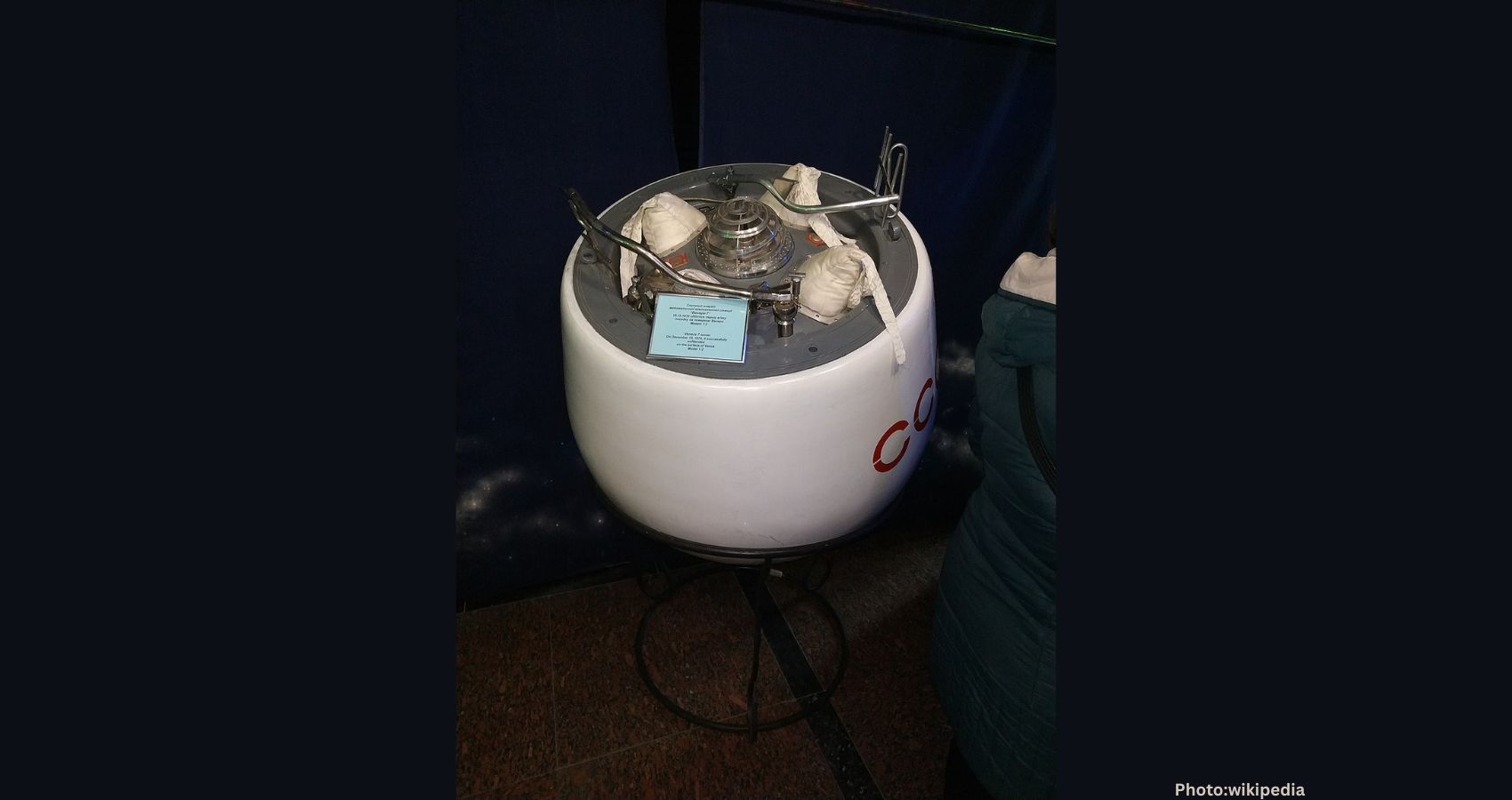
The four-member crew of NASA’s Artemis II mission has successfully transitioned from Earth’s orbit to a lunar trajectory following a flawless translunar injection (TLI) burn. This maneuver, executed late Thursday, officially commits the Orion spacecraft to a high-stakes, eight-day journey that will carry humans to the vicinity of the moon for the first time since 1972. As the first crewed flight of the Space Launch System (SLS) rocket and the Orion capsule, Artemis II serves as a pivotal stress test for deep-space life-support systems and navigation. By the end of this mission, the crew is expected to set a new record for the farthest distance humans have ever traveled from Earth, surpassing the benchmark set by the Apollo 13 mission over five decades ago.

CAPE CANAVERAL, Fla. — NASA’s Artemis II mission entered its most ambitious phase on Thursday evening as the Orion spacecraft’s main engine fired for nearly six minutes, accelerating the vehicle to escape velocity and setting a course for the moon. The maneuver, known as the translunar injection (TLI) burn, took place approximately 25 hours after the mission’s historic liftoff from Kennedy Space Center’s Launch Complex 39B.

With the successful completion of the burn, the crew—Commander Reid Wiseman, Pilot Victor Glover, Mission Specialist Christina Koch, and Canadian Space Agency (CSA) Mission Specialist Jeremy Hansen—is now on a “free-return” trajectory. This orbital path ensures that the moon’s gravity will naturally pull the spacecraft around its far side and sling it back toward Earth for a Pacific Ocean splashdown, currently scheduled for April 10, 2026.

The Artemis II mission is designed to push the boundaries of human reach. While the Apollo missions of the late 1960s and early 1970s focused on lunar landings, Artemis II is a “shakedown” flight intended to validate the Orion spacecraft’s performance with a human crew. On the sixth day of the mission, the crew is projected to reach a point roughly 4,600 miles beyond the far side of the moon.

At its maximum distance, Orion will be approximately 230,000 miles from Earth. This will eclipse the standing record of 248,655 miles (400,171 kilometers) from Earth set by the crew of Apollo 13 in 1970, who were forced into a high-altitude lunar loop following an onboard explosion. Unlike the emergency nature of the 1970 record, the Artemis II trajectory is a deliberate test of the Space Launch System’s (SLS) precision and the Orion’s ability to sustain life in the harsh radiation environment of deep space.

“Humanity has once again shown what we are capable of, and it’s your hopes for the future that carry us now on this journey around the moon,” Jeremy Hansen said in his first address to Mission Control following the TLI burn. Hansen’s inclusion marks the first time a non-American has traveled beyond low-Earth orbit, a nod to the international coalition-building that defines the Artemis program.

The TLI burn utilized an Orbital Maneuvering System (OMS) engine with a storied pedigree. The engine used for this mission was salvaged and refurbished from the Space Shuttle program, having previously flown on 19 different shuttle missions. This hardware evolution underscores NASA’s strategy of blending legacy technology with modern computing power.

The Orion capsule itself offers a stark contrast to the Apollo-era Command Modules. While the Apollo capsules provided 210 cubic feet of habitable volume for three men, Orion provides 331 cubic feet—a 50% increase—to accommodate its four-member crew. This extra space is critical for the mission’s various objectives, which include testing a $23 million waste management system and exercise equipment designed to prevent bone density loss during longer voyages to Mars.

“With this burn to the moon, we do not leave Earth. We choose it,” Mission Specialist Christina Koch noted before the burn, emphasizing the mission’s role in gathering data to protect the home planet and its future explorers. Koch, who already holds the record for the longest single spaceflight by a woman, is now poised to become the first woman to reach the lunar vicinity.

The Artemis program represents a significant shift in U.S. space policy, moving away from the “flags and footprints” approach of the mid-20th century toward a sustainable lunar economy. This mission is the second of several planned phases, following the uncrewed Artemis I in 2022. It sets the stage for Artemis III and IV, which aim to land the first woman and person of color on the lunar surface later this decade.

However, the program faces intense scrutiny regarding its fiscal and temporal milestones. Originally slated for an earlier launch, Artemis II was delayed due to technical refinements and budget reallocations. The SLS rocket, standing 322 feet tall, carries a per-launch price tag estimated at $2.2 billion, part of a broader program that has seen costs climb into the tens of billions.

The geopolitical stakes are equally high. The United States is currently in a de facto space race with China, which has announced plans to land taikonauts on the moon by 2030. The Artemis Accords, a set of non-binding principles for space cooperation, now boast over 40 signatories, positioning Artemis II as a diplomatic tool as much as a scientific one.

As the crew settles into the “coast” phase of the mission, their daily schedule is packed with system checks. They have already addressed minor issues typical of a test flight, including a brief glitch in the communication system and a small leak in the waste management suction line, both of which were resolved by Mission Control in Houston.

Over the next 48 hours, the crew will focus on optical navigation, radiation monitoring, and CO2 scrubbing to ensure the life-support system effectively filters the air for four active adults over a prolonged period.

As Orion moves further away, the Earth will appear as a shrinking marble in the spacecraft’s windows. For Commander Reid Wiseman and his crew, the next eight days are not just a journey through the vacuum of space, but a bridge between the legacy of the 20th century and the aspirations of the 21st, according to NASA.

Astronauts Return to Earth After Successful ISS Mission Relief

NASA astronauts and their international crewmates successfully splashed down in the Pacific Ocean, marking the agency’s first such landing in 50 years after a mission to the International Space Station.

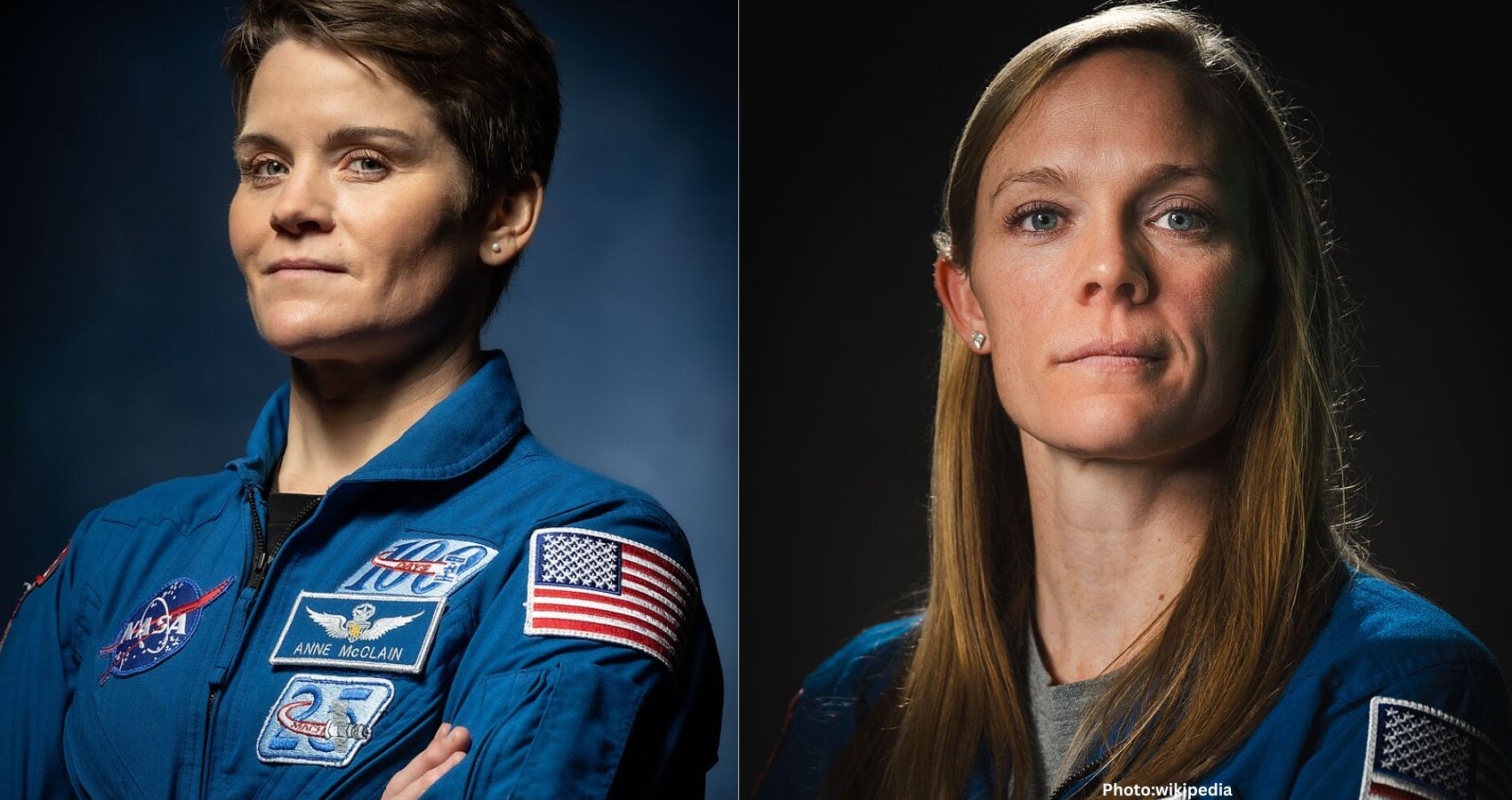
NASA astronauts Anne McClain and Nichole Ayers, along with Japan’s Takuya Onishi and Russia’s Kirill Peskov, splashed down in the Pacific Ocean off the coast of Southern California on Saturday morning at 11:33 a.m. ET. This event marks NASA’s first Pacific splashdown in five decades and the third for SpaceX with crew members on board.

The crew had launched earlier this year to the International Space Station (ISS) to relieve two astronauts who had been stranded due to issues with their space capsule. Suni Williams and Butch Wilmore were left at the ISS for nine months, far exceeding their intended week-long mission after the Boeing Starliner they arrived in experienced thruster problems and helium leaks.

NASA ultimately determined that returning the stranded astronauts in the Starliner was too risky, leading to a crewless return of the capsule. Wilmore and Williams were finally brought back to Earth in a SpaceX capsule in March after their replacements arrived.

In a poignant moment before departing the ISS, McClain expressed hope that their mission would serve as a reminder of the power of collaboration and exploration during challenging times on Earth. She also mentioned her eagerness to enjoy some well-deserved rest upon returning home, while her crewmates looked forward to hot showers and burgers.

Earlier this year, SpaceX made the decision to shift their splashdown locations from Florida to California, a move intended to minimize the risk of debris falling on populated areas.

Following their splashdown, the crew underwent medical checks before being transported via helicopter to meet a NASA aircraft bound for Houston. Steve Stich, manager of NASA’s Commercial Crew Program, expressed satisfaction with the mission, stating, “Overall, the mission went great, glad to have the crew back. SpaceX did a great job of recovering the crew again on the West Coast.”

Dina Contella, deputy manager for NASA’s International Space Station program, shared her happiness at the Crew 10 team’s return, noting, “They looked great, and they are doing great.” During their 146 days at the space station, the crew orbited the Earth 2,368 times and traveled over 63 million miles.

As the space community celebrates this successful mission, the return of the astronauts highlights the ongoing advancements in space exploration and international cooperation in the field.

According to Fox News, the successful splashdown not only marks a significant milestone for NASA but also reinforces the capabilities of commercial spaceflight through partnerships with companies like SpaceX.

Anish Pyne Receives Carnegie Mellon’s People’s Choice Award

Anish Pyne, an Indian American researcher, has won the People’s Choice Award at Carnegie Mellon University’s Three Minute Thesis Championship for his engaging presentation on microbiology and drinking water systems.

Indian American researcher Anish Pyne has been awarded the People’s Choice Award at the Carnegie Mellon University Libraries’ Three Minute Thesis (3MT) Championship. His winning presentation focused on his microbiology research concerning bacteria and drinking water systems.

Pyne, an alumnus of the Indian Institute of Technology Kharagpur, was one of ten doctoral students who participated in the championship finals held on March 25. The event challenged participants to present their cutting-edge research in a clear and compelling manner to a general audience, all within a strict three-minute timeframe.
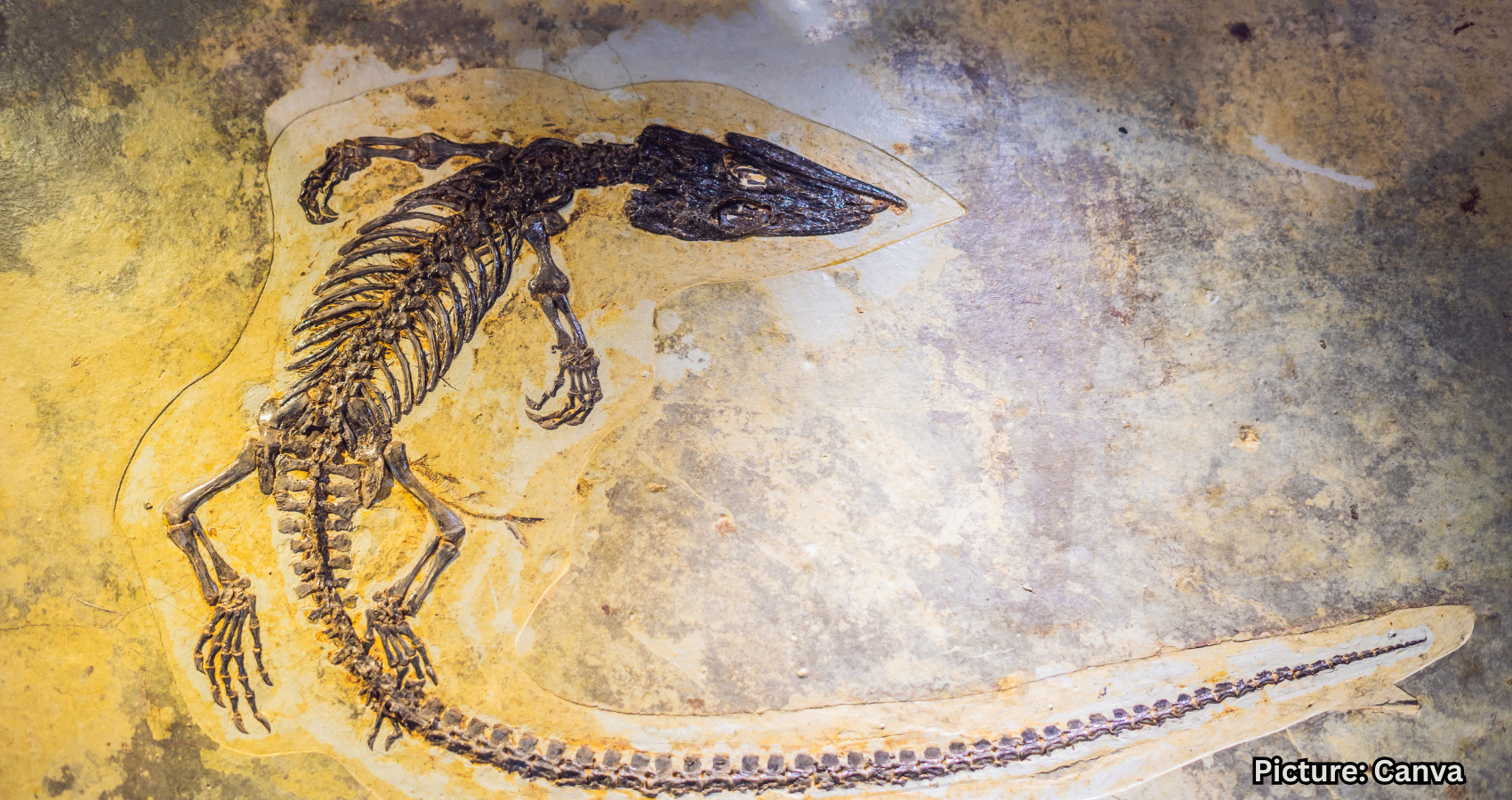
“The Three Minute Thesis competition is all about presenting your research to a general audience, so I’m glad I was able to communicate with the audience in the auditorium and that they voted for me,” said Pyne, who is currently a PhD candidate in Biological Sciences.

Inspired by his friends’ participation in the previous year’s championship, Pyne decided to enter the competition himself. After witnessing three of his fellow doctoral students compete in the 2025 championship, he was motivated to craft a presentation that would effectively convey his research to a broader audience.

“One of my primary goals, both in pursuing a PhD and also as a long-term career goal, is to make science more accessible,” he explained. “It really inspired me that this platform challenged me to cater my talk to be understood by anyone and everyone. You don’t need to be an expert in my subject to benefit from the knowledge of what I’m doing.”

Pyne’s academic achievements include receiving the Institute Proficiency Prize for the ‘Best Master’s Project Work’ in 2022 from IIT Kharagpur, as well as a Silver Medal for being the top student in MSc Molecular Medical Microbiology for the 2021-2022 academic year. Additionally, he was awarded the Tata Trust Scholarship for Excellent Academic Performance across all four semesters of his MSc program in 2022 and received the SPARK Fellowship at IIT Roorkee in 2021.

The Three Minute Thesis Championship, now in its 11th year at Carnegie Mellon, originated at the University of Queensland in 2008. Since then, it has been adopted by over 900 universities in more than 85 countries, promoting the importance of effective communication in research.

According to The American Bazaar, Pyne’s achievement highlights the significance of making scientific research accessible and engaging for all audiences.

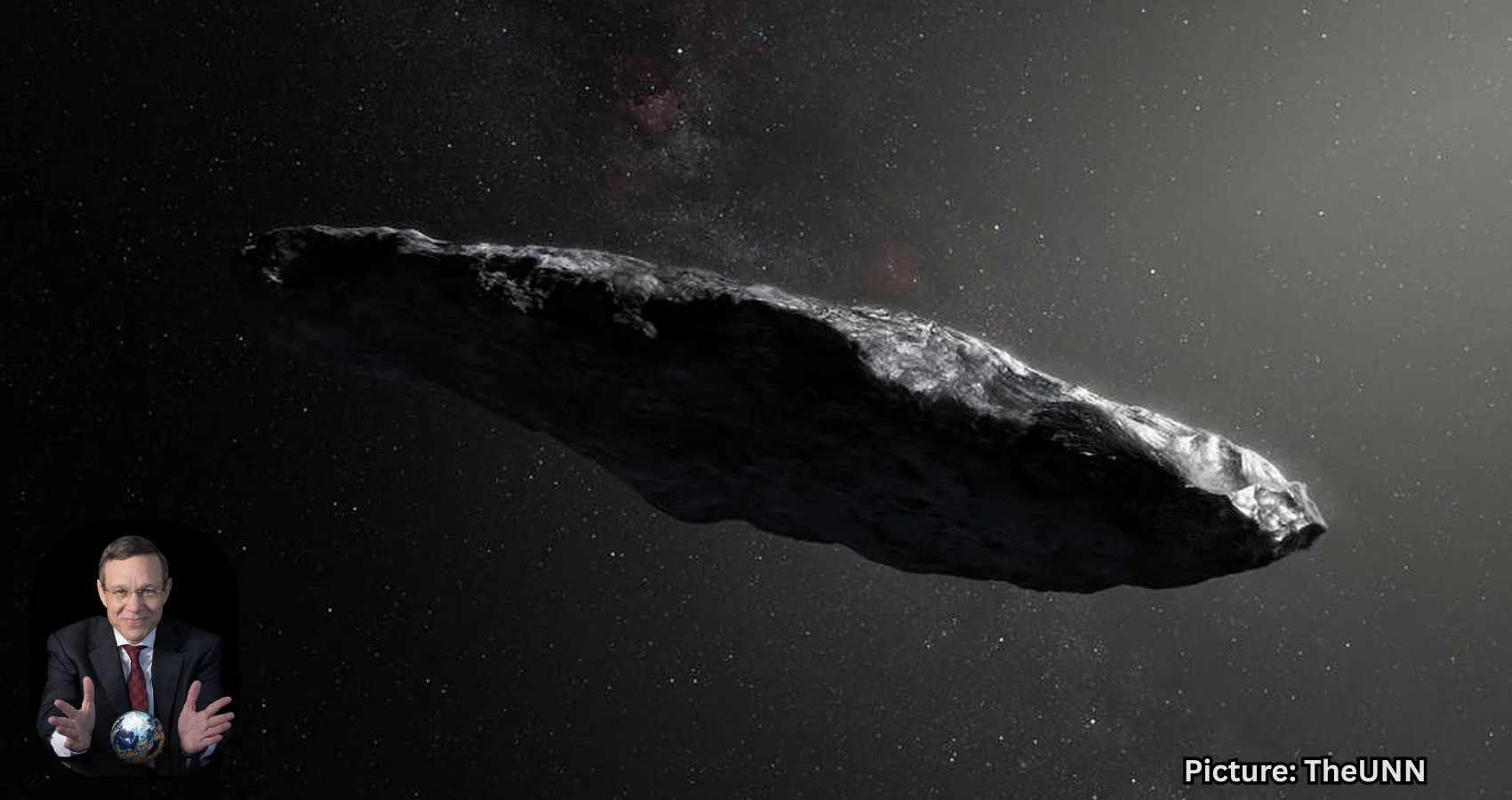
Harvard Physicist Suggests Interstellar Object May Be Alien Probe

Harvard physicist Dr. Avi Loeb suggests that the interstellar object 3I/ATLAS may be an alien probe due to its unusual characteristics and trajectory.

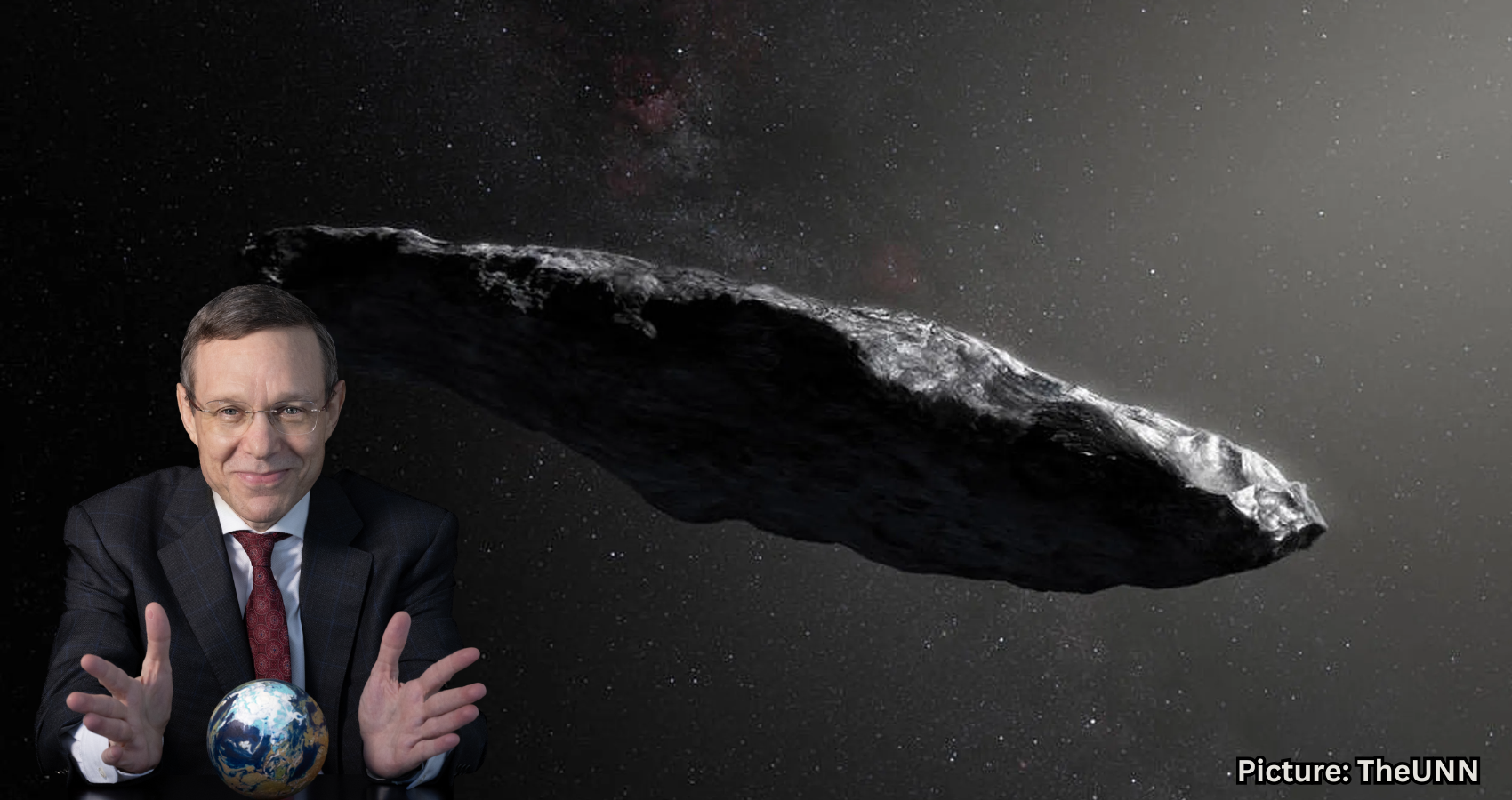
A recently discovered interstellar object, designated 3I/ATLAS, has sparked intrigue among astronomers and scientists alike. Harvard physicist Dr. Avi Loeb posits that the object’s peculiar features could indicate it is more than a typical comet, potentially serving as a reconnaissance mission from an extraterrestrial source.

3I/ATLAS was first identified in early July by the Asteroid Terrestrial-impact Last Alert System (ATLAS) telescope in Chile. This marks only the third time an interstellar object has been observed entering our solar system, according to NASA.

While NASA has classified 3I/ATLAS as a comet, Dr. Loeb points out that an image of the object reveals an unexpected glow in front of it, rather than the typical tail that comets exhibit. “Usually with comets, you have a tail, a cometary tail, where dust and gas are shining, reflecting sunlight, and that’s the signature of a comet,” he explained. “Here, you see a glow in front of it, not behind it.” This anomaly has raised questions about the object’s true nature.

Measuring approximately 20 kilometers across, 3I/ATLAS is larger than Manhattan and is notably bright given its distance from the sun. However, Dr. Loeb emphasizes that the most striking aspect of the object is its trajectory. He notes that if one were to imagine objects entering the solar system from random directions, only one in 500 would be aligned so precisely with the orbits of the planets.

Furthermore, 3I/ATLAS is expected to pass near Mars, Venus, and Jupiter, which Dr. Loeb argues is highly improbable to occur by chance. “It also comes close to each of them, with a probability of one in 20,000,” he stated.

The object is projected to reach its closest point to the sun, approximately 130 million miles away, on October 30. Dr. Loeb expresses the potential implications of the object’s technological origins, stating, “If it turns out to be technological, it would obviously have a big impact on the future of humanity. We have to decide how to respond to that.”

In a related context, earlier this year, astronomers from the Minor Planet Center at the Harvard-Smithsonian Center for Astrophysics mistakenly identified a Tesla Roadster, launched into orbit by SpaceX CEO Elon Musk seven years ago, as an asteroid.

As the scientific community continues to analyze 3I/ATLAS, the implications of its characteristics and trajectory remain a topic of significant interest and debate. The possibility of it being an alien probe invites further investigation and discussion about our understanding of interstellar objects.

A spokesperson for NASA did not immediately respond to requests for comment regarding the findings and implications surrounding 3I/ATLAS, according to Fox News Digital.

Two Indian-American Penn Students Awarded Goldwater Scholarships

Two Indian American students from the University of Pennsylvania, Shreya Nair and Pranav Sompalle, have been awarded the prestigious 2026 Goldwater Scholarships for their promising research careers in science and engineering.

Shreya Nair and Pranav Sompalle, both third-year undergraduates at the University of Pennsylvania, have been honored with the 2026 Goldwater Scholarships. This prestigious award recognizes students who are committed to pursuing research careers in the fields of science, engineering, and mathematics.

Nair and Sompalle are among 454 students selected as Goldwater Scholars from a pool of over 5,000 nominees representing 482 academic institutions across the United States, according to the Barry Goldwater Scholarship & Excellence in Education Foundation.

The Goldwater Scholarship provides recipients with up to $7,500 per year for a maximum of two years of undergraduate study. Since its establishment by Congress in 1986 to honor U.S. Senator Barry Goldwater, the University of Pennsylvania has seen 72 of its students receive this esteemed scholarship.

Shreya Nair hails from Allen, Texas, and is majoring in biology while minoring in engineering entrepreneurship. She is also submatriculating for a master’s degree in bioengineering. Nair conducts research in Ben Stagger’s laboratory under the guidance of Minh Than at Penn’s Perelman School of Medicine. Her research focuses on cancer interception using KRAS inhibitors in pancreatic ductal adenocarcinoma. Additionally, she collaborates with Michael Andreeff at MD Anderson Cancer Center, studying the combined use of menin inhibitors and c-MYC degraders in KMT2A-rearranged acute myeloid leukemia.

At the University of Pennsylvania, Nair actively contributes to the academic community as a research peer advisor for the Center for Undergraduate Research and Fellowships (CURF). She is also a member of the Department of Biology’s student advisory committee and participates in the Venture Lab and Wharton Undergraduate Entrepreneurship Club, where she is in the process of building her startup. Nair aims to further her studies in cancer engineering.

Pranav Sompalle, from Cleveland, Ohio, is majoring in biochemistry and biophysics, with a minor in history. He is also submatriculating for a master’s degree in chemistry through the Vagelos MLS program. Sompalle is passionate about making precision medicine more accessible by developing artificial intelligence tools that can predict new diagnostic insights from low-cost imaging. He is also focused on innovating care delivery methods.

In addition to his academic pursuits, Sompalle serves as the policy and outcomes lead for Penn’s Shelter Health Outreach Program and is the undergraduate coordinator at the University City Hospitality Coalition Free Medical Clinic. He is a U.S. Presidential Scholar and a recipient of the Roy and Diana Vagelos Science Challenge Award. Sompalle aspires to become a physician-scientist, integrating biomedical engineering and artificial intelligence with community health initiatives.

Both Nair and Sompalle exemplify the innovative spirit and dedication to research that the Goldwater Scholarship seeks to promote, and their achievements reflect the growing impact of Indian American students in the fields of science and engineering.

The information regarding the Goldwater Scholarships and the accomplishments of Nair and Sompalle was reported by The American Bazaar.

Virginia Tech Study Finds Dogs Can Detect Invasive Lanternflies

Researchers at Virginia Tech have found that dogs can effectively detect the invasive spotted lanternfly, offering a promising solution to combat its rapid spread.

Early detection of the spotted lanternfly is crucial, yet locating its eggs poses a significant challenge. This is where dogs come into play, utilizing their exceptional sense of smell to aid in the effort.

According to researchers at Virginia Tech, dogs may serve as a vital ally in the fight against this invasive pest. For the first time, a study has demonstrated that pet dogs can assist in curbing the swift proliferation of the spotted lanternfly.

The spotted lanternfly feeds on various plants and excretes a sugary substance known as honeydew, which fosters mold growth. Due to their destructive nature, some states have initiated campaigns encouraging residents to stomp on these pests upon sight. Experts emphasize that the key to controlling their population lies in eliminating their egg masses, which can be challenging to locate as they often resemble dried mud and blend into their surroundings.

“Dogs have one dominant sense. It’s their nose. We use our eyes. Dogs use their nose like their eyes,” said Katie Thomas, a participant in the study.

Thomas, along with her nine-year-old pit bull mix, Finch, took part in the study with the hope of applying their years of recreational scent work to a pressing environmental issue. They underwent a series of indoor and outdoor tests, successfully sniffing out egg masses, with Finch receiving recognition for his accurate detections.

“To be able to do things that we already do, that we are having a lot of fun with… Train our dogs to sniff stuff, being able to apply that to something like a real problem that affects our community is really fulfilling,” Thomas remarked.

The spotted lanternfly, originally from Asia, was first identified in the United States over a decade ago in Pennsylvania. Since then, it has spread to 19 states, according to the United States Department of Agriculture (USDA).

“They are everywhere, and we need to search out the eggs. The problem is it’s too late once we have the lanternfly,” said Carolyn Shelburne, another study participant.

Shelburne, along with her nine-year-old border collie, Hermes, was among the first five K9 and handler teams to successfully complete their field tests. In total, 182 volunteer teams from across the United States participated in the study.

During indoor tests, dogs correctly identified the scent of the lanternfly more than 80% of the time. In real-world outdoor tests, they achieved a correct identification rate of over 60%, which surpasses the accuracy of most human searches.

“Hopefully, more people will see that you can train any dog to do this, and it gives you something fun to do with your dog,” Shelburne expressed.

Researchers are optimistic that this initiative marks the beginning of a broader role for dogs in protecting local ecosystems. Even in regions where spotted lanternflies are not yet a concern, dogs could be trained to detect other invasive species, enhancing efforts to safeguard the environment.

As the fight against the spotted lanternfly continues, the collaboration between humans and dogs may prove to be an invaluable asset in preserving local flora and fauna, according to Virginia Tech.

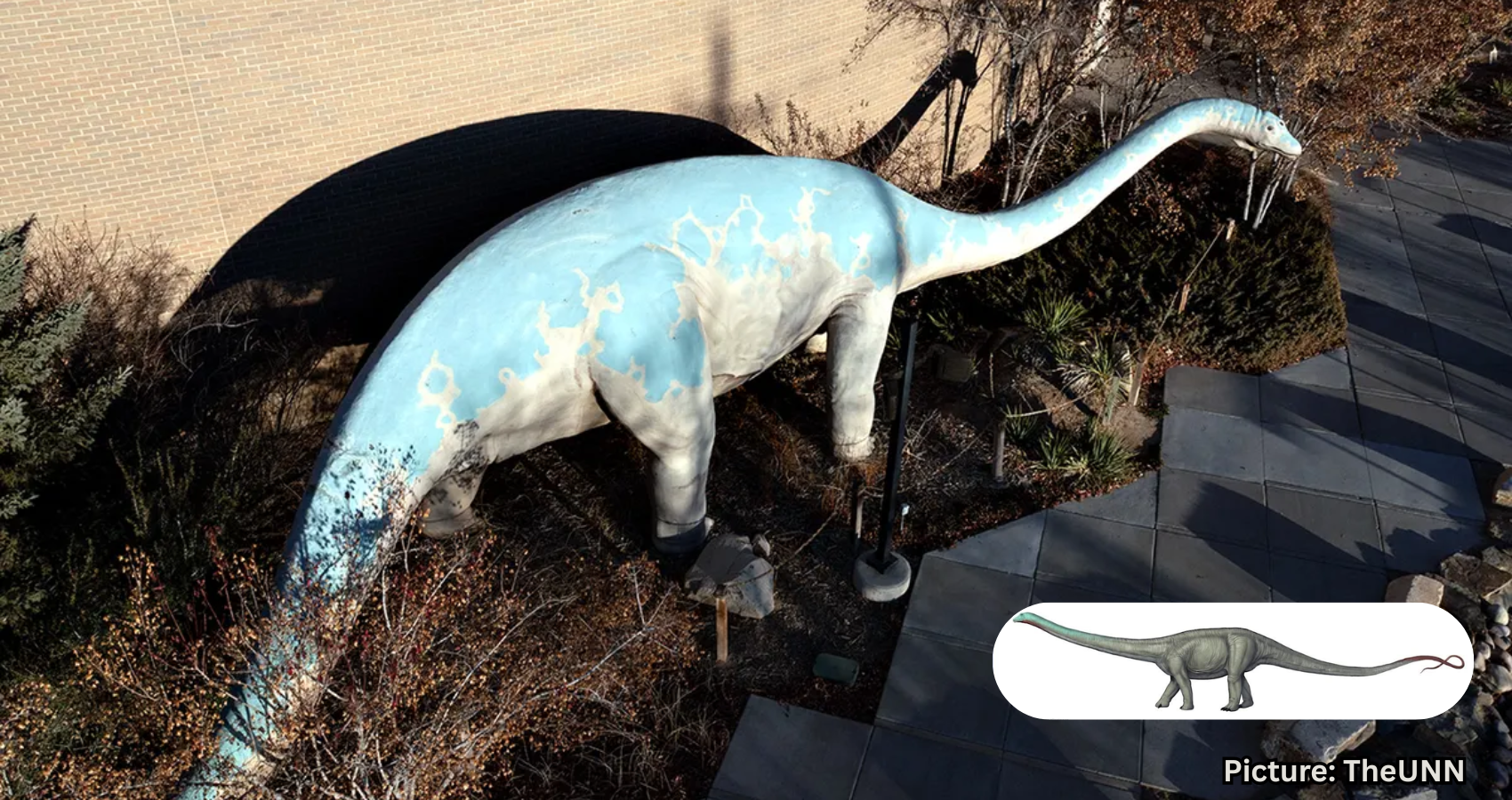
Dinosaur Fossils Discovered During Parking Lot Construction at National Park

Construction workers at Dinosaur National Monument have uncovered fossils believed to belong to the Diplodocus during a parking lot renovation, marking the first significant find in over a century.

In a remarkable turn of events, construction workers at Dinosaur National Monument made an extraordinary discovery while working on a parking lot renovation. The project unearthed fossils believed to belong to the Diplodocus, a large, long-necked dinosaur.

This significant find occurred during a routine parking lot project near the Quarry Exhibit Hall, where workers removed asphalt in mid-September. Upon exposing dinosaur-bearing sandstone, park staff identified the remains on September 16, prompting an immediate halt to construction to allow paleontologists to assess the discovery.

The Diplodocus fossils are particularly notable as this species is commonly found in the area’s historic bonebed. Park officials reported that a collaborative effort involving park staff, a Utah Conservation Corps crew, volunteers, and construction workers facilitated the excavation of the remains.

Between mid-September and mid-October, crews successfully removed approximately 3,000 pounds of fossils and surrounding rock. The extracted material is currently undergoing cleaning and study at the Utah Field House of Natural History State Park Museum in Vernal, where visitors have the unique opportunity to observe the preparation process in the museum’s fossil lab.

The site where these fossils were found had not been excavated since 1924, when fossil removal efforts ceased following a series of early 20th-century digs led by prominent institutions such as the Carnegie Museum, the Smithsonian National Museum of Natural History, and the University of Utah. Dinosaur National Monument itself was established in 1915.

Some of the newly uncovered fossils are already on display at the Quarry Exhibit Hall, often referred to as the “Wall of Bones.” This exhibit hall is the park’s most popular attraction and is situated atop the original Carnegie quarry, where visitors can view approximately 1,500 dinosaur fossils still embedded in rock.

Following the excavation, crews completed the parking lot and road improvement project, which included new concrete and asphalt work, as well as accessibility upgrades around the exhibit hall. The discovery not only enhances the park’s paleontological significance but also enriches the visitor experience.
This exciting find underscores the ongoing potential for discovery within Dinosaur National Monument, a site that continues to reveal its prehistoric past. According to National Park Service, the collaboration among various teams exemplifies the dedication to preserving and studying these remarkable remnants of the Earth’s history.
Giant Golden Spiders May Spread This Summer, Experts Assess Health Risks

Joro spiders, with their striking appearance and large webs, are spreading across the eastern U.S., but experts emphasize that they pose little health risk to humans.

The Joro spider, known for its impressive 4-inch leg span and vibrant markings of neon yellow, blue-black, and red, is making its presence felt across the eastern United States. First recorded in Georgia in 2013, this large arachnid has been steadily moving northward since its arrival, likely hitching a ride on shipping containers or airplanes from Asia.

Currently, Joro spiders have been spotted in Georgia, North Carolina, South Carolina, and Tennessee. According to experts from Penn State, they are expected to spread throughout eastern North America, potentially reaching as far north as Pennsylvania and other warmer coastal areas.

One of the unique ways Joro spiders travel is through a method known as “ballooning.” This technique involves hatchlings releasing fine silk threads that catch air currents, allowing them to be carried over long distances.

Ian Williams, an entomologist with Orkin, noted that he counted around 200 adult Joro spiders on his one-acre property near Atlanta by September of last year. “They’re quite intimidating looking spiders, and they make very large webs,” Williams told Fox News Digital. “The webbing itself, if it catches the sunlight, has a golden hue to it. And it’s very strong.”

Despite their striking appearance, experts urge the public not to panic. Research indicates that Joro spiders are among the “shyest” spiders documented. When disturbed, they often remain motionless for over an hour instead of attacking.

<p”While they’re large spiders, they don’t have large fangs. And, so, it’s difficult for them to bite humans,” Williams explained. In the rare event of a bite, he added, the venom is weak and comparable to a localized bee sting, carrying “no medical importance.”

As an invasive species, the ecological impact of the Joro spider is still under investigation. Williams expressed concern that these spiders may out-compete native species for resources. “One of the big concerns is that they potentially out-compete native species of spiders,” he said. The Joro spider is a prolific hunter, preying on everything from mosquitoes to larger insects like cicadas. However, it remains unclear whether they compete directly with native garden spiders for food.

To prevent Joro spiders from nesting on porches or properties, experts recommend using a broom or a long pole to knock down their webs. “Spiders may get the message, ‘Hey, I’m not going to keep remaking my same web in the same area,'” Williams suggested.

Physical removal of the webs is generally more effective than using pesticides, which often fail to reach spiders in their high, open-air webs. For those who encounter a Joro spider in a new location, experts advise logging the sighting on apps like iNaturalist to assist researchers in tracking their northern migration.

Overall, while the Joro spider’s spread is noteworthy, experts maintain that there is no need for alarm regarding health risks associated with these fascinating creatures, according to Fox News.

Srikant Appointed to Lead National Center for Supercomputing Applications

R. Srikant, an IIT Madras alumnus, has been appointed the new director of the National Center for Supercomputing Applications, a leading hub for high-performance computing and data science.

Indian-born engineering scholar R. Srikant has taken the helm as the new director of the National Center for Supercomputing Applications (NCSA), one of the world’s foremost centers for high-performance computing and data science. His appointment marks a significant milestone for the center as it continues to play a crucial role in advancing research in various fields.

Srikant, who holds the Grainger Distinguished Chair in Engineering and is a professor at the University of Illinois Urbana-Champaign, officially assumed his role on January 1, 2026. He succeeds Bill Gropp, the previous director, and also serves as co-director of the C3.ai Digital Transformation Institute, which is a collaborative effort with the University of California, Berkeley.

His journey to leading NCSA began in India, where he established his academic foundation at the Indian Institute of Technology, Madras. After earning his undergraduate degree in 1985, Srikant moved to the United States to pursue advanced studies at the University of Illinois, where he joined the faculty in 1995.

Srikant’s deep connections to both his alma mater and his early education in India have significantly influenced his career, which is characterized by the integration of complex theoretical mathematics with practical technological applications.

His new role at NCSA comes at a critical juncture, as artificial intelligence and extensive data processing are becoming increasingly vital to global research initiatives. NCSA is tasked with providing the infrastructure necessary to support breakthroughs in diverse areas, including genomics and climate modeling.

“I’m very excited to begin this new journey with NCSA,” Srikant expressed. “My focus is on supporting our excellent researchers and staff, strengthening collaboration across the center, and ensuring that NCSA continues to thrive in its research, service, and impact missions.”

NCSA is not unfamiliar territory for Srikant. He previously served as the acting director of operations at NCSA for several months in 2023 and has engaged in numerous research collaborations between his home department and the high-performance computing experts at NCSA.

His research interests encompass a wide range of topics, including artificial intelligence, machine learning, communication networks, quantum computing, and applied probability. Srikant has received significant recognition for his work on the mathematical analysis and design of algorithms for the internet, wireless networks, and data centers. His accolades include the IEEE Koji Kobayashi Field Award for Computers and Communications and the ACM SIGMETRICS Achievement Award. Additionally, he is a fellow of the Institute of Electrical and Electronics Engineers (IEEE).

For Srikant, this new role represents a full-circle moment in a career that began with a degree in Chennai and has now culminated in a leadership position at a premier American computational research institution. His vision for NCSA is poised to drive innovation and collaboration in the rapidly evolving landscape of supercomputing and data science.

According to The American Bazaar, Srikant’s leadership is expected to enhance NCSA’s impact on research and technology development.

Parkinson’s Risk Linked to Exposure to Common Chemical, Study Finds

New research from UCLA indicates that prolonged exposure to the pesticide chlorpyrifos may significantly increase the risk of developing Parkinson’s disease.

Recent findings from UCLA have established a concerning link between prolonged exposure to the pesticide chlorpyrifos and an increased risk of Parkinson’s disease. This study, published in the journal Springer Nature Link, draws on evidence from both human and animal research.

Chlorpyrifos is a pesticide commonly utilized in the United States agricultural sector, particularly on crops such as soybeans, fruit and nut trees, broccoli, and cauliflower, as noted by the U.S. Environmental Protection Agency (EPA).

The study analyzed data from 829 individuals diagnosed with Parkinson’s disease and 824 control subjects without the disease over a span of 45 years, focusing on their proximity to chlorpyrifos. Additionally, researchers conducted experiments on mice, which were exposed to the pesticide through inhalation for 11 weeks, mimicking human exposure. Zebrafish were also used in experiments to investigate cellular brain damage.

Results from the human study indicated that long-term exposure to chlorpyrifos was associated with a more than 2.5-fold increase in the risk of developing Parkinson’s disease. In animal studies, mice exhibited movement difficulties akin to Parkinson’s symptoms, experienced a loss of dopamine-producing neurons, and showed increased brain inflammation along with the accumulation of harmful proteins. Zebrafish, on the other hand, suffered from brain cell death and damage linked to a failure in the cell’s cleanup mechanisms.

Dr. Jeff Bronstein, director of the Movement Disorders Program at UCLA and a professor of neurology and molecular toxicology, expressed surprise at the consistency of the toxicity mechanisms observed across both mice and zebrafish. “We rarely find such consistent results in different animal models,” he stated.

Bronstein emphasized that the correlation between pesticide exposure and Parkinson’s disease is “very strong,” noting that the risk increases with the duration of exposure. He advised the public to minimize exposure to chlorpyrifos and similar organophosphate pesticides by avoiding their use at home, opting for organic produce, and thoroughly washing fruits and vegetables before consumption.

While the study presents compelling evidence, the researchers acknowledged certain limitations. The observational nature of the study means it can only establish an association rather than prove causation. Furthermore, exposure estimates were based on participants’ locations without accounting for dietary habits, indoor exposure, or personal lifestyle factors. The study also noted that chlorpyrifos is often used in conjunction with other chemicals, complicating the assessment of its specific impact.

Chlorpyrifos is employed to manage various pests, including termites, mosquitoes, and roundworms, in agricultural settings, according to the National Pesticide Information Center at Oregon State University. Individuals can be exposed to the chemical through inhalation or by consuming contaminated food or water.

In 2021, the EPA banned the use of chlorpyrifos on food crops, but a federal appeals court overturned this decision in 2023, allowing its use to resume on certain crops while the agency revisits the regulation. In January 2026, the EPA announced plans to advance a rule that would prohibit most uses of chlorpyrifos.

“Chlorpyrifos is subject to registration review, a process required under the Federal Insecticide, Fungicide, and Rodenticide Act (FIFRA), in which registered pesticides are evaluated every 15 years against current safety standards and the latest scientific evidence,” the EPA stated in a communication to Fox News Digital. “The EPA is currently developing a revised human health risk assessment for chlorpyrifos as part of that review and will consider this study alongside any other relevant submissions. Where the science calls for stronger protections or tolerance revocations, the EPA will act without hesitation and without delay.”

Fox News Digital reached out to several manufacturers of chlorpyrifos for comments. Corteva, an Indiana-based agrichemical company formed in 2019 through the merger of Dow Chemical and DuPont, announced in 2020 its decision to cease production of chlorpyrifos, citing declining sales. In April 2022, the German chemical company BASF requested the cancellation of its pesticide registrations for products containing chlorpyrifos. BASF clarified that it does not manufacture chlorpyrifos and does not hold any pesticide registrations issued by the U.S. EPA for chlorpyrifos-containing products.

No products from Corteva or BASF were included in the study linking chlorpyrifos to Parkinson’s disease, according to the research findings.

This study underscores the importance of ongoing research into the health impacts of pesticides and the need for regulatory bodies to consider new evidence in their assessments.

For more information, refer to the study published in Springer Nature Link.

Robot Engages in Real-Time Tennis Matches with Human Players

A humanoid robot has demonstrated the ability to play tennis with a human in real time, utilizing AI technology to track and respond to shots without pre-programmed scripts or remote control.

A humanoid robot has made headlines by rallying tennis shots with a human player in real time. This innovative robot operates without a script or remote control, allowing it to react instantly on the tennis court.

Standing at approximately 4 feet tall, the robot features a compact, human-like frame. Developed by Galbot Robotics, a recent video showcased the robot engaging in a series of shots with a human opponent. The underlying technology, known as LATENT, operates on the Unitree G1 platform.

Unlike many athletic robots that follow pre-programmed routines or rely on remote control, this robot reacts dynamically to its human counterpart. It tracks fast-moving tennis balls, adjusts its position on the court, and returns shots with impressive accuracy. The robot is capable of adapting to changing trajectories and unpredictable shots during rallies, demonstrating significant advancements in robotic performance.

Researchers have noted that the robot can sustain long rallies with millisecond-level reaction times and full-body coordination, marking a major leap forward in robotic capabilities.

Training a robot to play tennis presents a complex challenge. Capturing comprehensive data on human gameplay is difficult, prompting researchers to adopt a different approach. Instead of recording entire matches, they concentrated on smaller segments of movement.

Over the course of their research, the team gathered approximately five hours of motion data from five players. These training sessions took place on a compact 10-by-16-foot court, which is more than 17 times smaller than a standard tennis court.

The robot’s ability to play tennis during live rallies is rooted in its learning process. Initially, the system learns individual movements, which are then combined into coordinated sequences. This method allows the robot to improve its performance significantly.

To further enhance its capabilities, the research team trained the model in simulated environments, varying physical conditions such as mass, friction, and aerodynamics. This simulation training enables the robot to adapt to real-world unpredictability, allowing it to respond dynamically rather than adhering to a fixed routine.

In testing, the system achieved an impressive success rate of up to 96% on forehand shots in simulation. In real-world trials, the robot has demonstrated the ability to sustain rallies with a human player and consistently return the ball over the net.

Observing the demonstration, the robot appears competitive, occasionally placing shots strategically away from the human player. This behavior suggests that the robot is capable of more than mere reaction; it indicates early forms of decision-making abilities.

Despite these advancements, there are still limitations. At times, the robot may appear unstable, and its movements are not yet as fluid as those of a trained athlete. Additionally, high or unpredictable shots can still pose challenges. Nevertheless, the progress made thus far is evident.

This breakthrough in robotics extends beyond the realm of tennis. It illustrates how robots can learn complex human skills without the necessity of perfect data. The methodologies employed in this research could potentially be applied to various tasks that lack complete motion data.

The future of robotic capabilities in sports is becoming increasingly clear. Today, the robot is able to rally; tomorrow, it may compete against human players. In the not-so-distant future, robots could train alongside or challenge professional athletes, and exhibition matches between humans and machines may become a regular feature in the sport.

This demonstration highlights the rapid advancements in robotic technology. Robots are no longer limited to following scripts; they can now react, adjust, and compete in real-time scenarios. What once seemed like a distant possibility is now becoming a reality.

The question remains: If a robot could outperform you on the tennis court, would you still be eager to compete, or would you prefer to train alongside it? Share your thoughts with us at Cyberguy.com.

According to CyberGuy, the implications of this technology could reshape not only sports but also various fields that require complex human-like skills.

German Researcher Uncovers Brain’s Navigational System, Advancing Memory Insights

Professor Christian Doeller’s groundbreaking research at the Max Planck Institute reveals the brain’s navigational system, enhancing our understanding of memory organization and cognitive processes.

LEIPZIG, Germany — A significant advancement in neuroscience has been achieved by Professor Dr. Christian Doeller at the Max Planck Institute for Human Cognitive and Brain Sciences. His research focuses on the brain’s navigational system and its integral role in memory, learning, and decision-making processes. Utilizing advanced imaging techniques, Doeller and his team have conducted experiments that reveal how spatial navigation is not merely about physical movement but is deeply intertwined with cognitive functions.

In a series of innovative experiments, students at the Leipzig institute participated in interactive computer games designed to simulate real-world navigation tasks. While navigating a virtual city as taxi drivers, test subjects transported virtual passengers from point A to point B. Their brain activity was meticulously monitored through functional magnetic resonance imaging (fMRI), allowing researchers to analyze the underlying cognitive mechanisms at play.

“Test subjects with high navigational performance, who navigate the virtual paths accurately and efficiently, exhibit significantly higher brain activity,” stated Doeller. This correlation suggests that superior navigational skills are linked to enhanced cognitive processing, indicating that the brain’s navigational capabilities extend far beyond spatial awareness.

According to Professor Doeller, the brain operates analogously to a sophisticated navigation system, effectively organizing memory and knowledge in a spatially structured manner. He likens this organizational strategy to that of noted sociologist Niklas Luhmann, who famously organized his 90,000 handwritten notes spatially, a method still studied at Bielefeld University today. “Spatial strategies can profoundly enhance memory retention and information retrieval,” Doeller explained, drawing attention to how individuals often utilize similar techniques in everyday life, such as categorizing newspaper articles by placing them in specific locations on their desks.

This research underscores the potential for spatial reasoning to facilitate cognitive tasks, suggesting that the brain’s navigation system is activated whenever individuals employ spatial strategies to organize information.

This latest study builds on prior research conducted by Doeller in 2010, where he and his team first demonstrated grid cells in humans—cells previously identified in rodents that help track location and spatial perception. Their findings, published in the journal Nature, indicated that humans share a similar biological framework for navigation with other mammals, reinforcing the idea that spatial perception is a fundamental component of cognitive processing.

Doeller’s ongoing research also explores the use of virtual reality environments for both animals and humans. In these studies, rodents are often placed on spinning balls to assess their navigational capabilities, further bridging the gap between spatial navigation and cognitive function.

The recent award of the prestigious Gottfried Wilhelm Leibniz Prize, valued at 2.5 million euros, positions Professor Doeller to expand his research into more intricate cognitive tasks. With this funding, he plans to investigate how the brain processes social interactions during collaborative learning experiences, a study that involves observing pairs of subjects solving complex problems together.

“This research is technically complex as it requires the synchronization of the two scanners while both subjects engage in the cognitive task,” Doeller noted. This unique approach aims to unravel how social dynamics impact cognitive functions, potentially leading to a greater understanding of collaborative learning and its neurological underpinnings.

Additionally, the Max Planck Institute is actively engaged in clinical research, particularly focusing on early-stage Alzheimer’s disease and the cognitive challenges associated with Long Covid. While the results of these studies have yet to be published, they highlight the institute’s commitment to applying foundational neuroscience research to address pressing health issues.

Professor Doeller’s pioneering work on the brain’s navigational system not only enhances our understanding of spatial information processing but also opens new avenues for research into its broader cognitive implications. By identifying how navigation affects other cognitive functions, such as decision-making and learning, this research could inform educational strategies and therapeutic approaches for cognitive impairments.

The intersection of navigation and cognition presents a promising frontier for neuroscience, with the potential to improve educational methodologies and clinical practices in treating neurological disorders. As this research progresses, the insights gained may significantly contribute to the fields of psychology, education, and health care, promising new strategies for enhancing cognitive function and addressing cognitive decline.

In conclusion, Doeller’s research at the Max Planck Institute is not only a remarkable scientific achievement but also a vital step towards understanding the complexities of human cognition. As researchers continue to explore the brain’s navigational system, they pave the way for future explorations that could reshape our understanding of memory, learning, and social interaction, according to GlobalNetNews.

Indian-American Jainendra Jain to Lead New Physics Institute in India

Jainendra K. Jain, a prominent Indian American physicist, has been appointed as the founding director of the Lodha Theoretical Physics Institute in India, aiming to nurture future scientists.

Jainendra K. Jain, a renowned Indian American physicist, is set to return to his academic roots as the founding director of the Lodha Theoretical Physics Institute (LTPI) in India. This appointment, announced by the Lodha Foundation, signifies a full-circle moment for Jain, who hails from a rural village in Rajasthan and has risen to prominence in the field of theoretical physics.

As director of the LTPI, Jain will oversee the establishment of a world-class research hub designed to foster international collaboration and mentor the next generation of scientific minds. “This is a very special opportunity for me to educate and nurture a new generation of scientists in my country of birth,” Jain expressed.

Jain’s journey began in Sambhar, Rajasthan, where he developed a passion for physics despite facing significant challenges. He earned his bachelor’s degree from Maharaja College in Jaipur and a master’s degree from the Indian Institute of Technology (IIT) Kanpur. His academic path was nearly derailed by a childhood accident that left him on crutches, but a locally developed “Jaipur Foot” prosthesis enabled him to continue his education and ultimately pursue a doctorate at Stony Brook University in the United States.

Now a naturalized U.S. citizen, Jain has spent decades at the forefront of condensed matter physics. He is best known for his groundbreaking discovery of “composite fermions” in 1988, which are exotic particles that explain the fractional quantum Hall effect. This work, often referred to as “Jain states,” revolutionized the understanding of quantum matter and earned him the prestigious 2025 Wolf Prize in Physics, one of the highest honors in the field.

The new institute in India aims to align with the “Viksit Bharat” initiative, a government vision to transform India into a developed nation by 2047. The LTPI intends to create an ecosystem of innovation that bridges the gap between Indian talent and global scientific standards.

While leading the Indian institute, Jain will also maintain his faculty position and research program at Penn State, where he has taught since 1998. His dual role underscores the increasing mobility and influence of the Indian American scientific diaspora in strengthening bilateral academic ties.

“We hope to establish India as a leading center for high-quality research,” said Ashish Kumar Singh, chief mentor at the Lodha Foundation. Jain’s appointment is viewed as a pivotal step in this mission, blending his extensive American academic experience with a deep understanding of the Indian educational landscape.

As the LTPI prepares to launch, Jain’s leadership is expected to inspire a new generation of physicists in India, fostering an environment conducive to scientific discovery and innovation.

The post Penn’s Jainendra Jain to lead new India physics institute appeared first on The American Bazaar.

Kirtish Gaood Wins Silver in ERV Design Challenge for Indian-Americans

Kirtish Gaood, an Indian American automotive designer, has won silver in an international design challenge for his innovative emergency response vehicle concept aimed at rapid evacuation during natural disasters.

Kirtish Gaood, an Indian American automotive designer, has secured the second prize in the sixth edition of the International Design Challenge held in Rovaniemi, Finland. His design focuses on an emergency response vehicle (ERV) tailored for the rapid evacuation of individuals during natural disasters, particularly mudslides in Northern India.

This year’s competition attracted around 70 students from eight universities across Finland, Canada, the United States, France, and the United Kingdom. Participants were tasked with envisioning an innovative vehicle architecture for an ERV that integrates several of the United Nations’ Sustainable Development Goals, as stated by the organizers, BRP Inc., a leader in powersports products, propulsion systems, and boats.

Gaood, a student at the College for Creative Studies in Detroit, Michigan, drew inspiration from the challenges posed by mudslides in Northern India. The jury recognized the versatility of his concept, which is named in homage to traditional Sherpas, known for their expertise in navigating difficult terrains.

His design features a minimalist product architecture and a narrow footprint that enhance agility and responsiveness, allowing the vehicle to access damaged areas effectively. This capability is crucial for facilitating the swift evacuation of people to safe zones. Gaood’s project emphasizes the importance of deploying multiple units in critical situations where every second is vital. As the second-place winner, he has been awarded a monetary prize of 3,000 euros.

Endorsed by the World Design Organization, the BRP International Design Challenge provides students with an opportunity to apply their design thinking and creative skills, benefiting from mentorship from both their professors and BRP design professionals.

Gaood has been passionate about automotive design since childhood, having begun sketching vehicles and developing ideas at the age of five. According to his LinkedIn profile, he states, “Mixing the science of production with the art of styling and attention to detail is what design is for me. My goal is to develop a design process that enables me to look at a product as a result of a system, the result of in-depth research and strategy with a human-centric approach.”

Currently, Gaood is pursuing a Master of Fine Arts in Transportation Design at the College for Creative Studies. He previously earned a Bachelor of Science in Design, Product, and Transportation from Strate School of Design in Bangalore, India.

The recognition of Gaood’s work in this prestigious competition highlights the innovative spirit and potential of young designers in addressing real-world challenges through effective design solutions.

The post Kirtish Gaood wins silver in ERV design challenge appeared first on The American Bazaar.

Astronauts Arrive at ISS for Eight-Month Mission After Medical Emergency

Four astronauts have arrived at the International Space Station for an eight-month mission, following a recent medical emergency that led to an early evacuation of some crew members.

Four new astronauts have successfully arrived at the International Space Station (ISS), restoring the facility to full capacity after a recent medical emergency forced an early evacuation of several crew members. The international team, which includes NASA Commander Jessica Meir, launched from Cape Canaveral aboard a SpaceX rocket on Friday, embarking on a journey that lasted approximately 34 hours.

<p”That was quite the ride,” Meir remarked shortly after the launch, as reported by BBC News. “We have left the Earth, but the Earth has not left us.” The launch had been delayed twice prior due to weather concerns.

Joining Meir for the upcoming eight to nine months on the ISS are NASA astronaut Jack Hathaway, France’s Sophie Adenot, and Russian cosmonaut Andrei Fedyaev. Both Meir and Fedyaev are seasoned space travelers, having previously visited the ISS. Notably, Meir participated in the first all-female spacewalk in 2019. Adenot, a military helicopter pilot, is only the second French woman to travel to space, while Hathaway holds the rank of captain in the U.S. Navy.

The spacecraft is expected to autonomously dock with the space station’s Harmony module at 3:15 p.m. CT on Saturday, traveling at a speed of 17,000 mph in Earth orbit. “What an absolutely wonderful start to the day,” said NASA Administrator Jared Isaacman following the launch. “This mission has shown in many ways what it means to be mission-focused at NASA.”

Isaacman also highlighted the recent adjustments made to the crew schedule, stating, “In the last couple of weeks, we brought Crew-11 home early, we pulled forward Crew-12 to the launch date today, all while simultaneously making preparations for the Artemis 2 mission, which its next window will open up in early March.”

This flight marks the 12th crew rotation with SpaceX as part of NASA’s Commercial Crew Program. Crew-12 will engage in scientific investigations and technology demonstrations aimed at preparing humans for future exploration missions to the Moon and Mars, while also benefiting life on Earth.

NASA confirmed that the capsule’s hatch opened at 4:14 p.m. CT after docking with the ISS. “We are so excited to be here and get to work,” Meir stated upon the crew’s arrival. Adenot shared her awe, saying, “The first time we looked at the Earth was mindblowing. … We saw no lines, no borders.”

Prior to the arrival of the new crew, only one American and two Russians remained aboard the ISS, ensuring the station continued to operate smoothly. The medical evacuation that took place in January was a significant event, marking the first such incident in 65 years. NASA reported that a crew member experienced a serious health issue, but the agency has not disclosed the nature of the condition or the name of the astronaut involved, citing medical privacy.

The astronaut who faced the medical emergency, along with three other crew members who had launched together, returned to Earth more than a month earlier than planned after the decision was made to bring them home.

According to The Associated Press, the successful arrival of the new crew marks a significant step forward for the ISS and its ongoing scientific missions.

Integrating Vedic Wisdom and Modern Science at Patanjali Research Foundation

At the Patanjali Research Foundation in Haridwar, ancient Ayurvedic practices are being integrated with modern scientific methods to validate traditional Indian medicine and promote its acceptance in global healthcare.

Across the expansive grounds of the Patanjali Research Foundation (PRF) in Haridwar, the lines between ancient Ayurvedic philosophy and contemporary molecular biology are being systematically blurred. Under the guidance of Acharya Balkrishna, the foundation has transformed from a grassroots initiative focused on traditional medicine into a Scientific and Industrial Research Organization (SIRO) recognized by the Government of India. With the creation of a 111-volume World Herbal Encyclopedia documenting over 50,000 plant species and a suite of NABL-accredited laboratories, the foundation aims to provide a rigorous, evidence-based framework for a 5,000-year-old healing system. This ambitious endeavor seeks to elevate Ayurveda from the periphery of “alternative” medicine into the global mainstream through clinical validation and standardized pharmacological research.

Located on the Delhi-Haridwar National Highway, a climate-controlled laboratory at the PRF is home to a team of researchers clad in white coats, diligently monitoring a high-performance liquid chromatography (HPLC) machine. They are not analyzing synthetic compounds; instead, they are examining the molecular profile of Tinospora cordifolia, commonly known as Giloy. This scene encapsulates the core mission of the Patanjali Research Foundation: to systematically reimagine Ayurveda through the lens of 21st-century science.

Founded with the goal of bridging the gap between Vedic intuition and empirical data, the PRF has expanded into a substantial enterprise. It currently employs over 300 scientists, many of whom possess international experience, tasked with validating traditional Indian medicine (TIM) using modern methodologies. The foundation’s objective has evolved beyond mere preservation of ancient practices; it now seeks to translate this knowledge into a language that can be understood and accepted by global regulatory bodies and the international scientific community.

The World Herbal Encyclopedia stands as a monumental testament to the foundation’s commitment to documentation. Conceptualized and authored under Acharya Balkrishna’s guidance, this 111-volume compendium is arguably the largest modern undertaking in the field of ethnobotany. The project is supported by staggering data points, including 50,000 documented plant species, 1.2 million vernacular names captured in over 2,000 languages, and 600,000 bibliographic references ranging from ancient manuscripts to contemporary peer-reviewed journals. Additionally, it features 35,000 botanical line drawings and 30,000 hand-painted canvas illustrations for precise morphological identification.

“Only knowledge can be treasured for eternity,” Acharya Balkrishna remarked during a recent lecture series, his tone measured yet resolute. “Our goal is to ensure that the wisdom of our ancient sages is not lost to time or dismissed as myth, but is instead seen as a precursor to modern pharmacology.”

The transition from anecdotal evidence to an evidence-based approach necessitates rigorous testing. The PRF operates through several specialized divisions, including Drug Discovery and Development, In-Vivo Biology, and Clinical Research. The foundation’s laboratories hold certifications from the National Accreditation Board for Testing and Calibration Laboratories (NABL) and the Department of Scientific and Industrial Research (DSIR). This infrastructure facilitates “Reverse Pharmacology,” a process in which traditional formulations are studied to identify their active chemical constituents, followed by randomized, placebo-controlled trials.

During the height of the COVID-19 pandemic, the foundation published a pilot clinical trial in the Journal of the American Medical Association, later featured in PMC, involving 72 participants. The study indicated that an Ayurvedic treatment regimen, compared to a placebo, achieved a 100% recovery rate within seven days for asymptomatic and mildly symptomatic patients, with a viral clearance rate of 67% within three days. While such studies have faced intense scrutiny from the global medical community, they signify a notable shift in how Ayurvedic institutions engage with the scientific method.

In addition to its clinical work, the foundation serves as a significant repository for botanical conservation. The Patanjali Research Foundation Herbarium (PRFH), accredited by the New York Botanical Garden, houses over 14,000 herbarium sheets. Field scientists conduct extensive vegetation surveys across India’s floral hotspots, including the Himalayan regions and the Gangetic Plains. These surveys have led to the discovery of new plant records for India, such as Premna micrantha Schauer and Sterculia euosma W.W. Smith. By identifying and preserving these species, the PRF ensures a sustainable supply of raw materials for future research and production, addressing the growing demand for herbal products that has seen an annual increase of 15% to 20% in global markets.

The rise of the PRF is also intertwined with the broader political shift toward “Atmanirbhar Bharat” (Self-Reliant India). The foundation was inaugurated by Prime Minister Narendra Modi, marking a significant endorsement of the integration of traditional systems into the national healthcare framework. However, critics often highlight the tension between traditional beliefs and scientific skepticism. The PRF addresses this by hosting a continuous Research Lecture Series, inviting professors from esteemed institutions like the University of Pennsylvania and the International Centre for Genetic Engineering and Biotechnology (ICGEB). By fostering these academic exchanges, the foundation aims to mitigate the “outsider” status of Ayurveda.

The financial commitment to this endeavor is substantial. As a nonprofit trust, the PRF benefits from 100% income tax exemptions under Section 35(1)(ii) of the Income Tax Act, allowing it to reinvest millions of dollars into advanced analytical equipment such as stereomicroscopes, DNA sequencers, and BOD incubators.

Looking ahead, the PRF is expanding its focus into Nutrigenomics—the study of how diet and herbal supplements interact with the human genome. Recent publications in 2025 and early 2026 have explored the role of Ayurvedic interventions in treating Polycystic Ovarian Syndrome (PCOS) and managing the “Circadian Body Clock.”

The foundation’s mission remains dual: to serve as a guardian of the past while pioneering the future. By maintaining a library of rare ancient manuscripts alongside a state-of-the-art animal house and microbiology lab, the PRF is positioning itself to demonstrate that the future of global medicine may not solely rely on synthetic solutions, but rather on a synthesis of the old and the new.

According to GlobalNetNews, the Patanjali Research Foundation is at the forefront of integrating traditional Ayurvedic practices with modern scientific research, paving the way for a new era in holistic health.

Exploring the Unconscious Depths of Vision and Consciousness in Psychology

Recent research reveals that much of our visual experience occurs outside of conscious awareness, challenging long-held beliefs about the relationship between vision and consciousness.

New research has uncovered fundamental insights into how the brain processes visual information, suggesting that a significant portion of our visual experience happens outside of conscious awareness. The intricate relationship between vision and consciousness has become a focal point of investigation in contemporary neuroscience and psychology.

Recent studies indicate that our brains engage in substantial visual processing without our conscious awareness. This revelation challenges long-held assumptions about the nature of consciousness and perception, paving the way for deeper inquiries into how we understand our own experiences of reality.

The Phenomenon of Blindsight

Blindsight is a neurological condition that occurs when damage affects specific regions of the brain responsible for visual processing, particularly the primary visual cortex. Individuals diagnosed with blindsight often report a lack of conscious awareness regarding their visual field, yet paradoxically, they can accurately identify visual stimuli that they claim not to see.

For instance, a significant study published in 2004 documented an individual with blindsight who was presented with a black bar in an area of their visual field where they reported being blind. Despite denying any conscious awareness of the bar, the participant was able to guess its orientation with a level of accuracy significantly above chance. This phenomenon suggests a degree of unconscious processing that allows individuals to respond to visual stimuli even without conscious acknowledgment.

Moreover, the participant demonstrated faster reaction times when cued to the bar’s location, indicating that there is some awareness of the visual information, and it is possible to attend to it without conscious perception. This leads to critical discussions about how perception operates independently from consciousness and the implications this has for our understanding of the mind.

Inattentional Blindness: A Classic Experiment

Complementing the concept of blindsight is a well-documented phenomenon known as inattentional blindness. This occurs when individuals fail to notice significant visual stimuli while focusing attention on a specific task. A classic experiment from 1999 effectively illustrates this concept: participants were instructed to count the number of basketball passes made by players wearing white shirts. Many participants were so engrossed in the task that they completely overlooked a large gorilla that walked through the scene, beating its chest before exiting. Despite being clearly visible, the gorilla went unnoticed, revealing the limitations of focused attention in our visual processing.

In a subsequent study published in 2013, radiologists were presented with lung scans and asked to identify nodule formations indicative of potential health issues. In a surprising twist, a large image of a dancing gorilla was superimposed on one of the scans. Astonishingly, 83% of the radiologists failed to notice the gorilla, which was 48 times larger than the nodules they were actively searching for. This finding underscores the capacity of our attentional focus to selectively filter out even the most prominent visual information, further complicating our understanding of conscious awareness.

Theoretical Implications for Consciousness

These experiments raise essential questions about why certain types of information enter conscious awareness while other information remains unconscious. The ongoing discourse in the fields of philosophy, psychology, and neuroscience is centered on deciphering the mechanisms behind this selective consciousness. A prominent theory in this realm is the global neuronal workspace theory. This theory posits that consciousness is centered in a specific area of the brain, often referred to as the “workspace,” which serves as a hub for processing information.

According to the global neuronal workspace theory, this workspace has a limited capacity, meaning that only a small amount of information can be consciously processed at any given moment. The workspace effectively broadcasts unconscious information to various neural networks throughout the brain, amplifying certain stimuli to the level of conscious awareness. This concept aligns with the late philosopher Daniel Dennett’s characterization of consciousness as “fame in the brain.” The idea suggests that consciousness is not a continuous stream of awareness, but rather a series of discrete instances where information is broadcast and made available for cognitive processing.

The Capacity of Consciousness and Broader Implications

The implications of the global neuronal workspace theory are profound. It suggests that what we consciously perceive is merely the “tip of the iceberg,” where a vast expanse of information is processed outside our conscious awareness. While some theorists argue that consciousness may overflow this workspace, leading to a broader awareness than the theory accounts for, the framework still provides valuable insights into the mechanisms of consciousness.

Understanding consciousness through the lens of visual perception continues to evolve, prompting researchers to investigate the intricacies of human awareness further. As studies on blindsight and inattentional blindness reveal the limitations of conscious perception, they challenge our preconceptions about the mind-brain relationship. Ongoing inquiries into the nature of consciousness not only deepen our understanding of human cognition but also have far-reaching implications across various domains, including psychology, neuroscience, and philosophy.

This report draws from a synthesis of research findings and theoretical frameworks addressing the complexities of consciousness and perception, highlighting significant advancements and ongoing debates within the field. The exploration of how we process visual information, often beyond our conscious awareness, invites a reevaluation of what it means to be aware and how we understand the world around us, according to GlobalNetNews.

Purdue Researcher Develops 3D Detection System for Self-Driving Vehicles

Purdue University’s Somali Chaterji has developed AGILE3D, a groundbreaking 3D detection system that enhances real-time perception for self-driving vehicles and other autonomous technologies.

A team at Purdue University, led by Indian American researcher Somali Chaterji, has unveiled a revolutionary 3D detection system that could significantly impact the manufacturing of autonomous vehicles, industrial robotics, delivery robots, and drones. This innovative system, known as AGILE3D, is currently patent-pending and is designed to outperform traditional 3D lidar perception pipelines, particularly during resource contention.

“AGILE3D is the first adaptive, contention- and content-aware 3D object detection system specifically tailored for embedded GPUs, or graphics processing units,” explained Chaterji, who serves as an associate professor of agricultural and biological engineering in Purdue’s College of Agriculture and College of Engineering. She also holds a courtesy appointment in the Elmore Family School of Electrical and Computer Engineering.

The AGILE3D system can dynamically adjust its detection strategies based on real-time hardware constraints and varying input data. This adaptability is crucial for applications that require rapid 3D perception while operating within the limited computational resources of onboard systems.

Research findings presented at prestigious conferences, including the Conference on Neural Information Processing Systems (NeurIPS), the European Conference on Computer Systems (EuroSys), and the IEEE/CVF Conference on Computer Vision and Pattern Recognition (CVPR), indicate that AGILE3D meets stringent latency objectives. It delivers an accuracy improvement of over 3% compared to adaptive controllers and up to 7% over commonly used static 3D detectors.

Chaterji emphasized the broad applicability of AGILE3D, stating that it is particularly well-suited for autonomous driving, where real-time processing of lidar frames is essential for safety. “Beyond cars, AGILE3D can enhance the performance of delivery robots, drones, industrial and mobile robotics, as well as augmented reality and virtual reality applications,” she noted. “This is especially important in fields like digital agriculture and forestry, where platforms rely on embedded GPUs and require predictable latency for smoother and safer operations.”

As multiple onboard workloads—such as perception, tracking, planning, and in-cabin infotainment—compete for GPU resources, maintaining performance becomes increasingly challenging. Chaterji explained that resource contention arises when these various processes share the same embedded GPU and memory system simultaneously. An example of this is a ride-hailing robotaxi, where camera perception, lidar processing, tracking, mapping, and planning must all function concurrently.

One of the primary limitations of 3D lidar technology is its update rate, which dictates how frequently the sensor can provide a new point cloud frame, essentially a fresh 3D snapshot of the surrounding environment. AGILE3D addresses this challenge by employing two coordinated layers: a multibranch execution framework (MEF) and a contention- and content-aware reinforcement learning (CARL) controller. These components work together to maintain high accuracy even under varying levels of hardware contention and latency budgets ranging from 100 to 500 milliseconds.

Chaterji and her team are continuing to develop AGILE3D to facilitate dense scene understanding on onboard computers, ensuring that 3D semantic segmentation can operate reliably within tight compute and memory constraints. Funding for this project has been provided through Chaterji’s National Science Foundation CAREER grant, as well as a separate NSF grant for their CHORUS center.

Chaterji holds a PhD in Biomedical Engineering from Purdue University, where she has received several accolades, including the Chorafas International Award and the College of Engineering Best Dissertation Award in 2010. She completed her post-doctoral fellowship at the University of Texas at Austin in the Department of Biomedical Engineering and has been a scientific advisor to the IC2 Institute at the University of Texas at Austin since 2014. In 2016, she was honored with Purdue’s Seed-for-Success Award for securing a research grant exceeding $1 million.

The development of AGILE3D marks a significant advancement in the field of autonomous technology, promising to enhance the safety and efficiency of various applications reliant on real-time 3D perception.

According to a media release from Purdue University, the AGILE3D system represents a pivotal step forward in the integration of advanced perception capabilities into autonomous systems.

NASA Finalizes Strategy for Sustaining Human Presence in Space

NASA has finalized its strategy for maintaining a human presence in space, focusing on the transition from the International Space Station to future commercial platforms.

This week, NASA announced the finalization of its strategy aimed at sustaining a human presence in space, particularly in light of the planned de-orbiting of the International Space Station (ISS) in 2030. The new strategy emphasizes the necessity of maintaining the capability for extended stays in orbit after the ISS is retired.

The document, titled “NASA’s Low Earth Orbit Microgravity Strategy,” outlines the agency’s vision for the next generation of continuous human presence in orbit. It aims to facilitate greater economic growth and uphold international partnerships. However, the strategy comes amid uncertainties regarding the readiness of upcoming commercial space stations.

NASA Deputy Administrator Pam Melroy acknowledged the challenges posed by budget constraints, stating, “Just like everybody has to make hard decisions when the budget is tight, we’ve made some choices over the last year to cut back programs or cancel them altogether to ensure that we’re focused on our highest priorities.”

Commercial space company Voyager is among those working on potential replacements for the ISS. Jeffrey Manber, Voyager’s president of international and space stations, expressed support for NASA’s strategy, emphasizing the need for a commitment to reassure investors. “We need that commitment because we have our investors saying, ‘Is the United States committed?’” he noted.

The initiative to maintain a permanent human presence in space dates back to President Reagan, who highlighted the importance of private partnerships in his 1984 State of the Union address. “America has always been greatest when we dared to be great. We can reach for greatness,” he stated, while also warning that the market for space transportation could exceed the nation’s capacity to develop it.

Since the launch of the first piece of the ISS in 1998, the station has hosted over 28 individuals from 23 countries, maintaining continuous human occupation for 24 years. The Trump administration’s national space policy, released in 2020, called for a “continuous human presence in Earth orbit” and emphasized the transition to commercial platforms—a policy that has been upheld by the Biden administration.

NASA Administrator Bill Nelson addressed the potential for extending the ISS’s operational life, stating, “Let’s say we didn’t have commercial stations that are ready to go. Technically, we could keep the space station going, but the idea was to fly it through 2030 and de-orbit it in 2031.”

Recent discussions have raised questions about the meaning of “continuous human presence.” Melroy remarked at the International Astronautical Congress in October that there is still ongoing dialogue about whether this presence constitutes a “continuous heartbeat” or merely a “continuous capability.” She emphasized the importance of understanding this concept, especially in light of concerns from commercial and international partners regarding the potential loss of the ISS without a commercial station ready to take its place.

<p”Almost all of our industry partners agreed. Continuous presence is continuous heartbeat. And so that’s where we stand,” Melroy stated. She further underscored the United States’ leadership in human spaceflight, noting that the only other space station in orbit when the ISS de-orbits will be the Chinese space station. “We want to stay and remain the partner of choice for our industry and for our goals for NASA,” she added.

Three companies, including Voyager, are collaborating with NASA to develop commercial space stations. Axiom signed an agreement with NASA in 2020, while contracts were awarded to Nanoracks, now part of Voyager Space, and Blue Origin in 2021.

Melroy acknowledged the challenges posed by budget caps resulting from agreements between the White House and Congress for fiscal years 2024 and 2025, which have limited investment opportunities. “What we do is we co-invest with our commercial partners to do the development. I think we’re still able to make it happen before the end of 2030, though, to get a commercial space station up and running so that we have a continuous heartbeat of American astronauts on orbit,” she said.

Voyager remains optimistic about its development timeline, with plans to launch its starship space station in 2028. Manber stated, “We’re not asking for more money. We’re going ahead. We’re ready to replace the International Space Station.” He emphasized the importance of maintaining a permanent presence in space, warning that losing it would disrupt the supply chain that supports the burgeoning space economy.

Additional funding has been allocated to the three companies since the initial space station contracts, and a second round of funding could prove crucial for some projects. NASA may also consider funding new space station proposals, such as Long Beach, California’s Vast Space, which recently unveiled concepts for its Haven modules and plans to launch the Haven-1 as soon as next year.

Melroy concluded by stressing the importance of competition in the development of commercial space stations. “This is a development project. It’s challenging. It was hard to build the space station. We’re asking our commercial partners to step up and do this themselves with some help from us. We think it’s really important that we carry as many options going forward to see which one really pans out when we actually get there,” she said.

According to Fox News, NASA’s finalized strategy reflects a commitment to maintaining a human presence in space, while navigating the complexities of budget constraints and commercial partnerships.

NOAA Predicts El Niño Shift by Summer 2026, Concerns Grow

The National Oceanic and Atmospheric Administration forecasts a significant shift to El Niño conditions by summer 2026, raising concerns about the potential for a powerful “Godzilla” event.

The National Oceanic and Atmospheric Administration (NOAA) has issued an El Niño Watch, predicting a 62% chance that this climate pattern will emerge between June and August 2026. This forecast follows a weakening La Niña phase and a brief period of ENSO-neutral conditions expected through the spring. While federal forecasts remain cautious about the event’s ultimate intensity, independent meteorologists and historical data models indicate the possibility of a “very strong” or “Godzilla” El Niño, reminiscent of the record-breaking events of 1997-1998 and 2015-2016. Such a development could significantly alter global weather patterns, potentially suppressing Atlantic hurricanes while intensifying Pacific swells and extreme precipitation across the Southern United States.

In a recent briefing, federal climate scientists confirmed that the global weather system is shifting back toward a warming phase, marking the end of the recent La Niña cycle. The Climate Prediction Center (CPC) at NOAA now estimates a 62% likelihood of El Niño conditions forming by summer 2026, a transition that could have far-reaching implications for global agriculture, disaster preparedness, and coastal communities.

This transition is expected to be preceded by a short period of ENSO-neutral conditions, with a 55% probability of such conditions prevailing through May and July. However, experts have raised alarms about the rapid accumulation of subsurface heat in the equatorial Pacific, suggesting that the upcoming cycle may not be a typical warming event but could evolve into a “Super El Niño.”

An El Niño occurs when the trade winds that typically blow from east to west along the equator weaken or reverse. This change allows a massive “warm pool” of water to migrate from the western Pacific toward the Americas. When this warming is extreme—typically defined by sea surface temperature (SST) anomalies exceeding +2.0°C in the Niño-3.4 region—it is often referred to as a “Godzilla” or “Super” El Niño.

One NOAA scientist described the current atmospheric conditions as “primed” for a significant shift, noting that a considerable amount of heat stored in the deeper ocean is being “unearthed” and moving toward the surface.

Historically, these powerful El Niño events have dramatically reshaped the planet’s thermal profile. The 1997-1998 El Niño, for example, was linked to an estimated $5.7 trillion in global income losses and thousands of deaths due to extreme weather. More recently, the 2015-2016 event saw SST anomalies reach an astonishing +3.5°C, resulting in the most energetic wave season ever recorded on the U.S. West Coast, with beach erosion levels hitting up to 10 feet in some areas of California.

The implications of a “Godzilla” El Niño are complex, particularly for the surfing community and coastal industries. While it promises historically large swells for the Pacific, it also poses risks of infrastructure damage and coastal flooding.

On the West Coast, experts anticipate more frequent hurricane-driven swells during the summer, followed by a winter characterized by powerful North Pacific swells. However, these conditions are often accompanied by “south-wind” storms that can disrupt local surf conditions and lead to severe flash flooding.

On the East Coast, El Niño typically increases vertical wind shear over the Atlantic, which can “tear apart” developing tropical storms. This generally results in a quieter-than-average hurricane season, although warmer-than-normal Atlantic temperatures, exacerbated by climate change, may mitigate this protective effect.

In Hawaii, the islands often experience a “washout” winter during strong El Niño years, marked by massive, unruly swells and persistent rainfall.

Politically and economically, the stakes are equally high. Andrew Kruczkiewicz, a senior researcher at the Columbia Climate School, emphasized that while the impacts of ENSO on weather patterns are nuanced and vary by season, they are never neutral for the economy. He noted that El Niño can serve as a “drought buster” for the parched Southern Plains, which have faced a six-year water deficit, but the resulting heavy rains can overwhelm aging infrastructure.

The 2026 forecast comes at a time when the planet’s baseline temperature has already been elevated due to human-induced climate change. The year 2024 currently holds the record for the hottest year in history, achieved through a combination of a strong El Niño and greenhouse gas emissions.

Scientific consensus suggests that while El Niño is a natural cycle, a warming planet makes its effects more volatile. Data from the North American Multi-Model Ensemble (NMME) indicates a 1-in-3 chance that the 2026 event will reach “strong” status by the October–December quarter. If these projections hold, 2027 is statistically likely to surpass 2024 as the warmest year on record.

In California, the memory of the 2015-2016 “Monster” El Niño remains fresh. During that cycle, despite significant oceanic warming, Southern California experienced slightly below-average rainfall, while Northern California faced heavy inundation. This “predictability barrier” continues to challenge forecasters and emergency managers alike.

As the Pacific trade winds begin to weaken, governments are already shifting their focus toward mitigation strategies. In South America, countries such as Peru and Ecuador are reinforcing riverbanks and clearing drainage systems in anticipation of the torrential rains that typically accompany such a significant shift.

In the United States, the emphasis is on the “Relative Oceanic Niño Index” (RONI). Unlike older metrics, RONI measures equatorial warming relative to the rest of the world’s oceans, providing a more accurate picture of how these shifts will influence global storm tracks.

“The whispers of El Niño are becoming a roar,” said Dashel Pierson, an editor specializing in maritime conditions. “Whether it turns into the ‘Godzilla’ some fear or remains a more manageable ‘monster’ depends on how the ocean-atmosphere coupling develops over the next 90 days.”

As of mid-March 2026, the global community remains on “El Niño Watch.” The next comprehensive update from the Climate Prediction Center is scheduled for April 9, 2026, at which point the “spring predictability barrier” will begin to lift, offering a clearer view of the impending storm.

According to GlobalNetNews, the potential impacts of this forecast are significant and warrant close monitoring as the situation develops.

Orbiter Photos Reveal Lunar Modules from First Two Moon Landings

Recent aerial images from India’s Chandrayaan 2 orbiter reveal the Apollo 11 and Apollo 12 lunar landing modules more than 50 years after their historic missions.

Photos captured by India’s Space Research Organization (ISRO) moon orbiter, Chandrayaan 2, provide a stunning view of the Apollo 11 and Apollo 12 landing sites over half a century after these historic missions. The images, taken in April 2021, were recently shared on the Curiosity page on X, a platform dedicated to space exploration.

“Image of Apollo 11 and 12 taken by India’s Moon orbiter. Disapproving Moon landing deniers,” Curiosity posted, accompanied by the overhead photographs that clearly depict the lunar landing vehicles resting on the moon’s surface.

Apollo 11, which made its historic landing on July 20, 1969, marked a monumental achievement in human space exploration, with astronauts Neil Armstrong and Buzz Aldrin becoming the first men to walk on the lunar surface. Their fellow astronaut, Michael Collins, remained in lunar orbit during their historic excursion.

The lunar module, known as Eagle, was left in lunar orbit after it successfully rendezvoused with the command module, where Collins was stationed. The Eagle eventually returned to the moon’s surface after completing its mission.

Following Apollo 11, Apollo 12 became NASA’s second crewed mission to land on the moon, occurring on November 19, 1969. During this mission, astronauts Charles “Pete” Conrad and Alan Bean made history as the third and fourth men to walk on the lunar surface.

The Apollo program continued until December 1972, culminating in the final mission when astronaut Eugene Cernan became the last person to walk on the moon.

The Chandrayaan-2 mission was launched on July 22, 2019, precisely 50 years after the Apollo 11 mission, and it took two years for the orbiter to capture these remarkable images of the 1969 lunar landers.

In addition to Chandrayaan-2, India also launched Chandrayaan-3 last year, which successfully landed near the moon’s south pole, marking another significant achievement in lunar exploration.

These recent images serve not only as a testament to the enduring legacy of the Apollo missions but also highlight the ongoing advancements in space exploration technology, as nations around the world continue to explore the mysteries of the moon and beyond.

According to Fox News, the images from Chandrayaan 2 reaffirm the historical significance of the Apollo landings and contribute to the ongoing dialogue about space exploration and its impact on humanity.

Dr. Kavita Radhakrishnan Appointed Dean of UT Austin School of Nursing

Dr. Kavita Radhakrishnan has been appointed interim dean of the University of Texas at Austin’s School of Nursing, marking a significant step towards interdisciplinary innovation in healthcare education.

The University of Texas at Austin has appointed Dr. Kavita Radhakrishnan as the interim dean of its School of Nursing, effective March 11, 2026. Radhakrishnan, a pioneer in digital health and gerontological nursing, brings a unique blend of engineering and healthcare expertise to one of the nation’s premier nursing institutions during a time of rapid technological advancement in the medical field.

Dr. Radhakrishnan has been a member of the UT Austin faculty since 2012, where she has established a reputation for high-impact research and administrative excellence. Her previous roles include Associate Dean for Research, Assistant Dean for Research, and Director of the Luci Baines Johnson and Ian J. Turpin Center for Gerontological Nursing. Her extensive experience within the university’s “Remarkable Community” of scholars is expected to facilitate a smooth transition as the school aims to expand its research initiatives.

What sets Dr. Radhakrishnan apart is her unconventional academic background. Born and raised in India, she initially pursued a degree in electrical engineering in Mumbai. However, a volunteer experience at a Boston hospital changed the trajectory of her career. While working in the hospital, she identified a disconnect between the engineering of medical tools and the actual needs of healthcare practitioners and patients.

“The technology they needed to support patient care simply wasn’t available or effective,” Radhakrishnan recalled. This insight prompted her to earn a PhD and a Bachelor of Science in Nursing (BSN) from the University of Massachusetts Amherst, in addition to her Master’s degree in electrical engineering from UT Arlington.

Dr. Radhakrishnan’s research focuses on digital health solutions and chronic disease management, particularly in the context of “aging in place.” This approach emphasizes the use of technology to enable older adults to manage their health safely and independently within their own homes.

Her work has garnered consistent funding from the National Institutes of Health (NIH) and the Texas Department of Health and Human Services. By leveraging her engineering background, she has developed tools that are not only technically advanced but also ethically sound and user-friendly for geriatric populations.

The announcement of her appointment follows a series of professional accolades. In 2025, Dr. Radhakrishnan was inducted into the Sigma Theta Tau International Nursing Researcher Hall of Fame, one of the highest honors in the nursing profession. She is also a Fellow of both the American Academy of Nursing and the American Heart Association, highlighting her significant influence in both clinical and policy-making arenas.

As interim dean, Radhakrishnan will oversee the school’s academic, research, and service missions. Her appointment signals UT Austin’s commitment to interdisciplinary innovation, merging the rigor of engineering with the compassionate care models of nursing. This unique perspective positions her to prepare the next generation of nurses for a future where telehealth, AI-driven diagnostics, and remote monitoring are integral to patient care.

“I am humbled to serve,” Radhakrishnan stated during the announcement. “In the weeks ahead, I look forward to meeting with many of my colleagues, listening to their ideas, and learning from the expertise across this remarkable community.”

The transition comes at a pivotal moment for the nursing profession, which is facing nationwide staffing shortages and an aging population that requires increasingly complex, long-term care. Under Dr. Radhakrishnan’s leadership, the UT Austin School of Nursing is expected to continue its role as a leader in addressing these challenges through a combination of human empathy and advanced technology.

According to GlobalNetNews, Dr. Radhakrishnan’s appointment is a strategic move that reflects the evolving landscape of healthcare education.

Indian-American Researchers Develop Tool to Prevent Identity Leaks in AI Photo Editing

Three Indian American researchers from Purdue University have developed a groundbreaking system to safeguard personal identities during AI photo editing by limiting the detection of key attributes.

Three Indian American researchers at Purdue University have created a patent-pending system designed to protect against identity leakage during AI photo editing. This innovative tool reduces the ability of artificial intelligence to detect sensitive attributes such as eye color and facial hair.

The system, developed by Vaneet Aggarwal, Dipesh Tamboli, and Vineet Punyamoorty, is utilized before and after photos are uploaded to an AI editing platform. According to a media release from the West Lafayette, Indiana-based public research university, this technology aims to assist consumers, businesses, and institutions in editing and sharing profile photos, ID images, and personal pictures without compromising their private identities.

“Results of validation testing show that we can preserve editing quality while dramatically reducing what AI models can learn about your identity,” Aggarwal stated. “This is a critical step toward trustworthy generative AI.” Their research has been published in the peer-reviewed journal IEEE Transactions on Artificial Intelligence.

Aggarwal holds the title of University Faculty Scholar and serves as the Reilly Professor of Industrial Engineering, with additional appointments in the Department of Computer Science and the Elmore Family School of Electrical and Computer Engineering. Both Tamboli, a doctoral alumnus, and Punyamoorty, a doctoral candidate in computer and electrical engineering, have worked in Aggarwal’s research group.

“Our system allows users to mask sensitive regions on their photo, like the face, from an AI editing service,” Tamboli explained. “Those regions are masked locally on the user’s device using a detailed outline of the region.” He added that only the masked image is sent to the AI editing service. “After the image is edited by AI, our system reintegrates the sensitive region back into the edited image using geometric alignment and blending,” he noted.

Aggarwal emphasized that the Purdue system is the first solution to provide full privacy, as sensitive data never leaves the user’s device. This approach not only produces seamless, natural results in the final edited image but is also compatible with any commercial generative AI model, eliminating the need for retraining.

“It’s privacy by design,” Aggarwal said. “With our system, the AI platform never sees the face, but the final edited image still looks completely natural.” The researchers have disclosed their system to the Purdue Innovates Office of Technology Commercialization, which has applied for a patent to protect the intellectual property.

Addressing the privacy risks associated with AI editing tools, Tamboli noted that modern generative AI technologies edit photos with impressive realism but require users to upload full, unaltered images to cloud-based systems. These images often contain private details, including facial features and identifying characteristics.

“Requiring full, unaltered images creates serious privacy and security risks,” he said. “Once a photo is uploaded, users lose control over where their biometric data goes, how it is stored, or how it might be misused.” Tamboli criticized previous privacy approaches that relied on blurring sensitive regions, locking parts of an image, using stylization filters, or avoiding cloud uploads entirely, stating that these methods fail to fully protect personal identity.

The research team validated their system by testing how well leading AI foundation models could infer biometric attributes from masked versus unmasked images. They discovered that the Purdue system significantly reduced the ability of AI models to detect attributes such as eye color, facial hair, and age group. In some instances, the accuracy of attribute classification dropped by more than 80%, demonstrating robust protection against identity leakage.

The researchers are actively working to bring this technology closer to real-world deployment, with plans to expand the system’s capabilities to protect additional sensitive features, including medical details, ID documents, and other privacy-critical content.

This innovative development highlights the ongoing efforts of researchers to address privacy concerns in the rapidly evolving landscape of AI technology, ensuring that personal identities remain secure in the digital age.

According to The American Bazaar, the Purdue Innovates Office of Technology Commercialization is committed to advancing this technology for broader application.

Newly Discovered Asteroid Identified as Tesla Roadster in Space

Astronomers recently identified a Tesla Roadster, launched into orbit by SpaceX in 2018, as an asteroid, leading to a swift retraction of the discovery.

Astronomers from the Minor Planet Center at the Harvard-Smithsonian Center for Astrophysics in Massachusetts mistakenly classified a Tesla Roadster, launched into orbit by SpaceX in 2018, as an asteroid earlier this month. This confusion arose shortly after the object was registered as 2018 CN41, which was promptly deleted on January 3 when it was confirmed to be Musk’s roadster.

The Minor Planet Center clarified on its website that the registry for 2018 CN41 was removed after it was determined that the orbit of the object matched that of an artificial satellite, specifically the Falcon Heavy Upper Stage carrying the Tesla Roadster. The center stated, “The designation 2018 CN41 is being deleted and will be listed as omitted.”

The Tesla Roadster was launched during the maiden flight of SpaceX’s Falcon Heavy rocket in February 2018. Initially, the vehicle was expected to enter an elliptical orbit around the sun, extending slightly beyond Mars before returning toward Earth. However, it appears to have exceeded the orbit of Mars and continued its trajectory toward the asteroid belt, as noted by Musk at the time.

When the roadster was misidentified as an asteroid, it was located less than 150,000 miles from Earth, which is closer than the moon’s orbit. This proximity raised concerns among astronomers about the need to monitor the object’s path and its potential closeness to Earth.

Jonathan McDowell, an astrophysicist at the Center for Astrophysics, commented on the incident, highlighting the challenges posed by untracked objects in space. He remarked, “Worst case, you spend a billion launching a space probe to study an asteroid and only realize it’s not an asteroid when you get there,” emphasizing the importance of accurate tracking and identification of celestial bodies.

As the situation unfolded, Fox News Digital reached out to SpaceX for further comment regarding the misidentification of the Tesla Roadster.

This incident serves as a reminder of the complexities involved in space exploration and the ongoing need for precise monitoring of objects in orbit, whether they are natural or man-made.

According to Astronomy Magazine, the mix-up underscores the challenges faced by astronomers in distinguishing between asteroids and artificial objects, particularly as the number of satellites and other debris in space continues to grow.

Rice University and IIT Madras Announce Inaugural Research Partnership Winners

Rice University and IIT Madras have announced the first recipients of their Strategic Partnership Collaboration Awards, funding innovative projects addressing global challenges in sustainability, social dynamics, and subatomic science.

Rice University and the Indian Institute of Technology Madras have unveiled the inaugural recipients of their Strategic Partnership Collaboration Awards, marking a significant milestone in their academic alliance. This partnership aims to foster collaboration between two prestigious institutions located nearly 9,000 miles apart.

Announced on Friday, the awards will support three interdisciplinary faculty-led initiatives that tackle pressing global issues, ranging from sustainability in the construction industry to the socioeconomic dynamics surrounding women-led entrepreneurship.

The partnership was formalized through an agreement signed in late 2024, with the intent of bridging the expertise of both universities. “The goal is to foster projects that address complex global challenges,” said Amy Dittmar, Rice University’s Howard R. Hughes Provost. “By investing in these teams, we are creating new pathways for discovery and long-term institutional collaboration.”

One of the awarded projects, led by Rice’s Kai Gong and IIT Madras’ Piyush Chaunsali, focuses on leveraging artificial intelligence to address a significant environmental challenge: the carbon footprint of the construction industry. Their research aims to explore methods for upcycling industrial byproducts, such as red mud, into sustainable cement binders. This innovative approach has the potential to significantly reduce greenhouse gas emissions associated with construction activities.

In the social sciences, researchers Diana Jue-Rajasingh from Rice and Rupashree Baral from IIT Madras are examining the impact of corporate social responsibility (CSR) programs on the perception of female entrepreneurs in India. Their study seeks to determine whether these CSR initiatives genuinely support women-led businesses or inadvertently perpetuate stigmas. The ultimate goal is to enhance resource access for female entrepreneurs, fostering a more equitable business environment.

The third project awarded focuses on advancements in subatomic science. Rice physicist Wei Li and IIT Madras’ Prabhat Pujahari are collaborating on innovations in detector technology for the Large Hadron Collider and the upcoming Electron-Ion Collider. This initiative includes the establishment of a permanent silicon sensor testing laboratory at IIT Madras, ensuring that the partnership leaves a lasting legacy of infrastructure for future generations of scientists.

These awards are a key component of the “Rice Global India” initiative, a strategy launched by Rice University to expand its presence in South Asia. By emphasizing student mobility and joint research efforts, the program aims to transform academic curiosity into meaningful global impact.

The collaboration comes at a time of growing synergy between American and Indian higher education systems. As researchers from both institutions prepare for joint workshops and field experiments, this partnership serves as a model for how international cooperation can translate high-level theoretical research into practical, human-centered solutions.

According to The American Bazaar, these initiatives not only highlight the commitment of both universities to address global challenges but also pave the way for future collaborations that can lead to substantial advancements in various fields.

Yale’s Ranjit Bindra Elected to Connecticut Academy of Science and Engineering

Dr. Ranjit Bindra, a physician-scientist at Yale, has been elected to the Connecticut Academy of Science and Engineering for his significant contributions to cancer research and treatment.

Dr. Ranjit Bindra, an Indian American physician-scientist at the Yale School of Medicine, has been elected to the Connecticut Academy of Science and Engineering (CASE) for 2026. This prestigious recognition highlights his contributions to the fields of science, technology, engineering, mathematics, and medicine.

As the Co-Director of the Yale Brain Tumor Center at Smilow Cancer Hospital, Bindra is among eight faculty members selected for this year’s cohort of leading experts. The election to CASE is open to scientists and engineers who reside or work in Connecticut, with consideration based on significant original contributions to theory or applications, as well as pioneering accomplishments in emerging fields of applied science and technology.

The new members will be formally inducted during the academy’s 51st annual dinner, scheduled for May 19.

In his research, Dr. Bindra’s laboratory recently led a collaborative effort involving four major laboratories at Yale, resulting in a groundbreaking discovery. The team found that tumors with IDH1/2 mutations exhibit a significant DNA repair defect, making them particularly sensitive to PARP inhibitors. This pivotal work was published in esteemed journals, including Science Translational Medicine and Nature, and has garnered international attention due to its major clinical implications.

Currently, Dr. Bindra is translating these findings into clinical practice through four phase I/II clinical trials. One of these trials is an innovative, biomarker-driven study specifically targeting the Adolescent and Young Adult (AYA) cancer patient population. Additionally, he serves as the lead co-principal investigator for a 35-site, National Cancer Institute-sponsored Phase II trial that tests the PARP inhibitor olaparib in adult patients with IDH1/2-mutant solid tumors.

Beyond his academic and clinical work, Dr. Bindra is also a biotech entrepreneur. He recently co-founded Cybrexa Therapeutics, a company focused on developing a novel class of small molecule DNA repair inhibitors that specifically target the tumor microenvironment. This initiative reflects his commitment to advancing cancer treatment through innovative research and development.

Dr. Bindra’s academic journey began at Yale University, where he earned his undergraduate degree in Molecular Biophysics and Biochemistry in 1998. He continued his education at the Yale School of Medicine, obtaining both his MD and PhD in 2007. Following his education, he completed his medical internship, radiation oncology residency, and post-doctoral research at the Memorial Sloan-Kettering Cancer Center, finishing in 2012.

Dr. Bindra’s election to the Connecticut Academy of Science and Engineering underscores his significant impact on cancer research and treatment, as well as his ongoing commitment to improving patient outcomes through innovative therapies. According to The American Bazaar, his work continues to inspire and lead advancements in the medical field.

Mars’ Red Color May Indicate Habitable Conditions in the Past

The reddish hue of Mars may be linked to a mineral called ferrihydrite, suggesting the planet once had conditions suitable for liquid water, according to a recent study.

A new study reveals that the mineral ferrihydrite, found in Mars’ dust, is likely responsible for the planet’s distinctive red color. This mineral forms in the presence of cool water, indicating that Mars may have once had an environment capable of sustaining liquid water before transitioning to its current dry state billions of years ago.

The research, published in *Nature Communications*, analyzed data from various Mars missions, including several rovers. The findings were compared to laboratory experiments where researchers tested how light interacts with ferrihydrite particles and other minerals under simulated Martian conditions.

“The fundamental question of why Mars is red has been considered for hundreds, if not thousands, of years,” said Adam Valantinas, the study’s lead author and a postdoctoral fellow at Brown University. Valantinas began this research as a Ph.D. student at the University of Bern in Switzerland. He noted, “From our analysis, we believe ferrihydrite is everywhere in the dust and probably in the rock formations as well.” While previous studies have suggested ferrihydrite as a reason for Mars’ red color, this research provides new observational data and innovative laboratory methods to simulate Martian dust.

Jack Mustard, the study’s senior author and a professor at Brown University, described the research as a “door-opening opportunity.” He emphasized the importance of returning samples from Mars, which are currently being collected by the Perseverance rover. “When we get those back, we can actually check and see if this is right,” Mustard said.

The study suggests that Mars likely had a cool, wet, and potentially habitable climate in its ancient past. Currently, the planet’s atmosphere is too cold to support life, but billions of years ago, it had an abundance of water, as evidenced by the presence of ferrihydrite in its dust.

Geronimo Villanueva, Associate Director for Strategic Science of the Solar System Exploration Division at NASA’s Goddard Space Flight Center and a co-author of the study, remarked, “These new findings point to a potentially habitable past for Mars and highlight the value of coordinated research between NASA and its international partners when exploring fundamental questions about our solar system and the future of space exploration.”

Valantinas expressed the researchers’ desire to understand not only the ancient Martian climate but also the chemical processes occurring on Mars today. He stated, “Then there’s the habitability question: Was there ever life? To understand that, you need to understand the conditions that were present during the time of this mineral’s formation.” The study indicates that for ferrihydrite to form, specific conditions must have existed where oxygen from the atmosphere or other sources reacted with iron in the presence of water. These conditions were markedly different from the current dry and cold environment of Mars.

As Martian winds spread this dust across the planet, they contributed to the iconic red appearance that Mars is known for today.

According to NASA, this research underscores the importance of understanding Mars’ geological history and its potential for past habitability.

For further details, refer to the study published in *Nature Communications*.

Pixar’s ‘Hoppers’ Sparks Discussion on Environmental Issues Beyond Children’s Film

Pixar’s ‘Hoppers’ transcends its children’s movie label, sparking vital conversations about environmental threats and the consequences of human expansion on nature.

Pixar films have long been a gateway for children into vibrant worlds filled with adventure and imagination. The studio’s latest release, Hoppers, initially appears to fit this mold, following a spirited 19-year-old who infiltrates the animal kingdom by taking on the form of a robotic beaver. This imaginative premise captures the curiosity of young viewers, drawing them into a colorful narrative.

However, a closer examination reveals that Hoppers offers much more than mere entertainment. Beneath its humor and fantasy lies a poignant message about environmental conservation. Central to the story is a struggle to save a local glade from destruction at the hands of the town’s mayor, a plotline that resonates with current environmental issues.

The film’s depictions of rapidly spreading wildfires, collapsing habitats, and the growing discord between the animal and human worlds do not feel like exaggerated fiction. Instead, they reflect the environmental crises that are unfolding globally today. The narrative subtly echoes concerns about the environmental costs associated with technological advancements, particularly artificial intelligence.

Throughout Hoppers, human-built structures increasingly encroach upon forests and natural habitats, forcing animals into marginal spaces that were once their homes. This shrinking wilderness leaves these creatures struggling to survive without the ecosystems that have sustained them for generations.

A striking twist in the film imagines an animal inhabiting a robotic, human-like body to confront those responsible for its home’s destruction. While this concept may be fictional, it raises a pressing question: what occurs when nature, pushed to the brink by human expansion, finds a way to challenge those who have displaced it?

This theme gains even more significance when viewed against the backdrop of the rapid expansion of artificial intelligence infrastructure. The massive data centers that power modern AI systems consume vast amounts of electricity and water to keep servers operational and cool.

Researchers estimate that AI-driven data centers could produce between 32.6 million and 79.7 million tons of carbon emissions annually, a figure comparable to the yearly emissions of a major city like New York. Additionally, these facilities are projected to account for roughly 1 to 2 percent of the world’s electricity consumption, a percentage expected to rise sharply as AI systems become more powerful and widespread. Environmental advocates caution that while artificial intelligence holds the promise of efficiency and innovation, its infrastructure could exacerbate existing environmental stresses if sustainability is not prioritized.

Amidst this backdrop, a line from the film resonates powerfully: “We are all in this together.” This sentiment encapsulates the delicate balance that connects humans, animals, and the natural world. In the relentless pursuit of technological dominance and economic progress, humanity often overlooks the environmental costs of its ambitions. Hoppers serves as a reminder that the equilibrium of our planet cannot be taken for granted.

This message may explain why the film has resonated so deeply with both critics and audiences. With an impressive 97 percent score on Rotten Tomatoes, Hoppers stands out as one of the best-reviewed Pixar films of the decade. Its success lies not only in its engaging storytelling but also in the uncomfortable truths it reflects: the choices humanity makes today regarding forests and man-made constructions will shape the world that future generations inherit.

As discussions surrounding environmental conservation and the impact of technology continue to evolve, Hoppers emerges as a timely and relevant film that encourages viewers of all ages to reflect on their relationship with the natural world.

According to The American Bazaar, the film’s ability to spark these conversations is a testament to its depth and relevance in today’s society.

Private Lunar Lander Blue Ghost Successfully Lands on Moon for NASA

A private lunar lander, Blue Ghost, successfully landed on the moon on Sunday, delivering equipment for NASA and marking a significant milestone for commercial space exploration.

A private lunar lander carrying equipment for NASA successfully touched down on the moon on Sunday, with Mission Control confirming the landing from Texas. This achievement highlights the growing involvement of private companies in lunar exploration as they prepare for future astronaut missions.

Firefly Aerospace’s Blue Ghost lander made its descent from lunar orbit on autopilot, targeting the slopes of an ancient volcanic dome located in an impact basin on the moon’s northeastern edge. The company’s Mission Control, situated outside Austin, Texas, celebrated the successful landing.

“You all stuck the landing. We’re on the moon,” said Will Coogan, chief engineer for the lander at Firefly Aerospace.

This upright and stable landing makes Firefly the first private company to successfully place a spacecraft on the moon without crashing or tipping over. Historically, only five countries—Russia, the United States, China, India, and Japan—have accomplished this feat, with some government missions having failed in the past.

The Blue Ghost lander, named after a rare species of firefly found in the U.S., stands 6 feet 6 inches tall and spans 11 feet wide, providing enhanced stability during its lunar operations.

Approximately half an hour after landing, Blue Ghost began transmitting images from the lunar surface. The first photo sent back was a selfie, albeit somewhat obscured by the sun’s glare.

In addition to Blue Ghost, two other companies are preparing to launch their lunar landers, with the next mission expected to join Blue Ghost on the moon later this week.

This successful landing marks a significant step forward in the commercial space sector, as private companies continue to explore opportunities on Earth’s natural satellite.

According to The Associated Press, the advancements in lunar exploration by private entities could pave the way for more ambitious missions in the future.

Athena Lunar Lander Reaches Moon; Condition Still Uncertain

Athena lunar lander successfully reached the moon, but mission controllers remain uncertain about its condition and landing site.

Mission controllers have confirmed that the Athena lunar lander successfully touched down on the moon, but the status of the spacecraft remains unclear. The landing occurred earlier on Thursday, yet officials have not been able to ascertain the condition of the lander or the precise location of its touchdown, according to a report from the Associated Press.

Athena, owned by Intuitive Machines, was equipped with an ice drill, a drone, and two rovers. While the lander has reportedly been able to communicate with its controllers, the details of its condition are still being evaluated. Tim Crain, mission director and co-founder of Intuitive Machines, was heard instructing his team to “keep working on the problem,” despite receiving apparent “acknowledgments” from the spacecraft in Texas.

The uncertainty surrounding Athena’s status follows a challenging history for Intuitive Machines. Last year, their Odysseus lander reached the moon but landed sideways, which added pressure to the current mission. Athena’s landing marks a significant milestone, as it is the second lunar craft to land this week, following Firefly Aerospace’s Blue Ghost, which successfully touched down on Sunday.

Firefly’s chief engineer, Will Coogan, celebrated the achievement, stating, “You all stuck the landing. We’re on the moon.” The successful landing of Blue Ghost has made Firefly Aerospace the first private company to place a spacecraft on the moon without it crashing or landing in an unstable position.

As the situation develops, NASA and Intuitive Machines concluded their online live stream and announced plans to hold a news conference later on Thursday to provide updates on Athena’s status.

According to the Associated Press, the outcome of this mission is being closely monitored as the space community awaits further information about the lander’s condition and operational capabilities.

Rishi Sharma Awarded SBB Research Group Scholarship for Cancer Research

Rishi Sharma, a University of Chicago student, has been awarded a $2,500 scholarship from the SBB Research Group Foundation for his innovative work in AI tools for cancer diagnosis and drug repurposing.

Rishi Sharma, an Indian American medical student at the University of Chicago, has been awarded a $2,500 STEM scholarship from the SBB Research Group Foundation. This scholarship supports students who are committed to creating societal value through interdisciplinary studies in Science, Technology, Engineering, and Mathematics (STEM).

Sharma is currently in his second year of medical school and is focused on developing artificial intelligence tools aimed at diagnosing rare cancers and facilitating low-cost drug repurposing. His research is pivotal in the field of oncology, where he explores both therapeutic and diagnostic applications of AI, as well as DNA-launched immunotherapies for cancer treatment.

“Sharma isn’t just committed to medicine; he’s committed to the future of medicine and ensuring it’s better for patients. I’m pleased we could support him in his endeavors,” said Matt Aven, co-founder and board member of the SBB Research Group Foundation.

Sharma’s contributions to the field are reflected in his research publications, which include titles such as “Digital Pathology: Deep Learning Can Differentiate Histological Subtypes of Thymic Epithelial Tumours” and “Cancer Treatment: Co-delivery of Bispecific Antibodies Targeting FSHR and Her2 Overcomes Treatment Resistance in Ovarian Cancer.” These works highlight his commitment to advancing cancer research through innovative methodologies.

In addition to his academic pursuits, Sharma has a wealth of practical experience. He previously served as Project Director at PBG Healthcare Consulting, where he led consulting projects for both a biopharma client and an academic spinout. His leadership extends to his role as Co-Director of the Seva Free Clinic, where he has developed a strong background in harm reduction and patient navigation.

Currently, Sharma is pursuing a dual MD/MBA degree at the University of Chicago, further enhancing his ability to integrate medical knowledge with business acumen. He also holds a Master of Engineering from the University of Pennsylvania, underscoring his commitment to interdisciplinary education.

The SBB Research Group Foundation is dedicated to philanthropic efforts that align with the mission of SBB Research Group LLC, a Chicago-based investment management firm. The Foundation not only sponsors the STEM scholarship but also provides grants to organizations that address unmet needs through thoughtful, long-term strategies.

Sharma’s work exemplifies the type of innovative thinking that the SBB Research Group Foundation aims to support, as he seeks to make a meaningful impact in the field of cancer research.

According to The American Bazaar, Sharma’s scholarship is a testament to his dedication and potential in the medical field.

ISS Crew Member Plays Prank as SpaceX Team Arrives

Russian cosmonaut Ivan Vagner welcomed the Crew-10 astronauts to the International Space Station with a humorous twist, donning an alien mask during their arrival on March 16, 2025.

In a lighthearted moment aboard the International Space Station (ISS), Russian cosmonaut Ivan Vagner greeted the Crew-10 astronauts with a playful twist. As the SpaceX Crew Dragon capsule successfully docked at 12:04 a.m. EDT on March 16, 2025, Vagner welcomed the newcomers while wearing an alien mask, showcasing that even astronauts have a sense of humor.

The Crew-10 mission launched from NASA’s Kennedy Space Center in Florida at 7:03 p.m. on Friday, March 14, and arrived at the ISS approximately 29 hours later. As the ISS crew prepared the capsule for deboarding, Vagner was seen floating around in his alien disguise, complete with a hoodie, pants, and socks, creating a memorable and amusing atmosphere for the new arrivals.

NASA astronauts Anne McClain and Nichole Ayers, JAXA (Japan Aerospace Exploration Agency) astronaut Takuya Onishi, and Roscosmos cosmonaut Kirill Peskov entered the ISS shortly after the hatches between the space station and the SpaceX Dragon spacecraft were opened at 1:35 a.m. EDT. This moment was marked by the ringing of the ship’s bell, a tradition that signifies the arrival of new crew members.

Following the hatch opening, the Crew-10 astronauts floated into the station, where they were greeted with handshakes and hugs from the Expedition 72 crew, including Vagner. “It was a wonderful day. Great to see our friends arrive,” said Suni Williams, who was among those welcoming the newcomers.

Williams and fellow astronaut Butch Wilmore are expected to guide the new arrivals through the operations of the space station before they prepare to return home after a nine-month mission. Initially, their mission was scheduled to last only one week following the launch of Boeing’s first astronaut flight. However, complications led to a delay, forcing NASA to bring the Boeing Starliner back to Earth without a crew.

As part of the ongoing operations aboard the ISS, Crew-9 commander Nick Hague and Russian cosmonaut Aleksandr Gorbunov are scheduled to depart the station on Wednesday, March 19, at approximately 4 a.m. EDT, before splashing down off the coast of Florida.

This playful encounter highlights the camaraderie and lighthearted spirit that exists among astronauts, even in the challenging environment of space. Such moments not only provide entertainment but also strengthen the bonds between international crew members working together in orbit.

According to Fox News, the Crew-10 mission continues to exemplify the collaborative efforts of space agencies around the world as they explore the final frontier.

Rare Sighting of ‘Sharktopus’ Captured on Camera by Scientists

The University of Auckland scientists captured a rare sighting of an octopus riding atop a mako shark off the coast of New Zealand, showcasing an unusual marine interaction.

A rare sighting of an octopus riding on a shark has been documented by scientists from the University of Auckland. This unusual encounter occurred off the coast of New Zealand and was captured on video, revealing a Maori octopus perched atop a mako shark, known for being the fastest shark species in the world.

The incident took place in December 2023, and the university described it as “one of the strangest things University of Auckland marine scientists had ever seen.” The researchers noted that the sighting was particularly mysterious, as octopuses typically inhabit the seabed, while shortfin mako sharks prefer shallower waters.

During their research in the Hauraki Gulf near Kawau Island, the scientists were investigating shark feeding frenzies when they encountered a mako shark with a distinctive orange patch on its head. To document the sighting, the team deployed a drone and a GoPro camera into the water, leading to the unforgettable moment when they observed the octopus clinging to the shark’s head with its tentacles.

Professor Rochelle Constantine, a marine scientist at the University of Auckland, recounted the experience in a recent article for the university. She expressed her astonishment at the sighting, stating, “At first, I was like, ‘Is it a buoy?’ Is it entangled in fishing gear or had a big bite?’”

After approximately ten minutes of observation, the researchers moved on, leaving the fate of the “sharktopus” unknown. Constantine speculated that the octopus may have had quite the adventure, as mako sharks can swim at speeds of up to 46 miles per hour.

Despite the unusual pairing, both the shark and the octopus appeared unbothered by the encounter. Constantine noted, “The shark seemed quite happy, and the octopus seemed quite happy. It was a very calm scene.” This observation highlights the intriguing dynamics of marine life and the unexpected interactions that can occur in the ocean.

The sighting has garnered attention not only for its rarity but also for the insights it provides into the behaviors of these two species. As researchers continue to explore the mysteries of marine ecosystems, such encounters remind us of the wonders that lie beneath the surface of the sea.

According to The New York Times, this remarkable footage adds to the growing body of knowledge regarding the behaviors and interactions of marine creatures, further emphasizing the importance of ongoing research in oceanic environments.

New Research Shows Global Coastal Vulnerability Underestimated Amid Rising Tides

A recent study reveals that up to 132 million more people are at risk from rising sea levels than previously estimated, highlighting significant flaws in historical ocean height measurements.

A groundbreaking study published in the journal Nature indicates that up to 132 million more people than previously calculated reside in zones threatened by rising sea levels. This discrepancy arises from a “methodological blind spot” in historical satellite modeling that has consistently undervalued current ocean heights by approximately 10 inches.

The scientific community is facing a sobering recalibration of global climate risk. For decades, projections that have shaped international policy and maritime defense relied on a baseline that may now be fundamentally flawed. New evidence suggests that the physical starting point of the world’s oceans is significantly higher than models assumed, meaning the encroachment of saltwater into human settlements is occurring on a much more aggressive timeline than previously communicated to world leaders.

As the planet warms, the mechanics of sea-level rise are well-documented: melting glaciers and polar ice caps discharge freshwater into ocean basins, while thermal expansion—the tendency of water to occupy more space as it heats—compounds the volume. However, the true scale of the threat has been obscured by how we measure the “zero point” of the sea. According to a study led by Philip Minderhoud, an associate professor at Wageningen University in the Netherlands, the vast majority of existing research uses ocean heights that are roughly 10 inches lower than their actual current levels.

This 10-inch gap is not merely a rounding error; it represents a catastrophic oversight in topographical mapping. When this missing height is integrated into future projections, the number of people in the path of a three-foot sea-level rise—a scenario widely expected by the middle of the next century—jumps by 132 million. This represents a 68% increase in the human toll compared to previous global estimates.

The error traces back to the reliance on geoid models, which are mathematical simulations of the Earth’s surface based on gravity and rotation. While these models provide a theoretical “level” for a calm ocean, they often fail to account for the dynamic reality of the seas. Factors such as persistent trade winds, complex ocean currents, and tidal cycles create a “piling up” of water in certain regions.

Minderhoud’s realization began not in a laboratory, but in the muddy stretches of Vietnam’s Mekong Delta. While conducting field research, he noted that the water was consistently higher than what the global data sets suggested. Upon reviewing 385 separate sea-level studies conducted between 2009 and 2025, Minderhoud and his colleagues discovered that 90% of them were working from an artificially low baseline.

“In a way, a geoid gives you the surface of the ocean in a calm situation, without disturbances,” Minderhoud explained. By ignoring the “disturbances” of a living, moving ocean, scientists inadvertently drew a map where dry land appeared safer than it actually was. The underestimate is most acute in Southeast Asia and the Indo-Pacific, where actual sea levels are currently more than three feet higher than standard research assumes.

The economic implications of this data shift are staggering. Coastal real estate, infrastructure, and agricultural hubs—particularly in developing nations—are facing an existential threat that is already “priced in” to the environment but not yet fully accounted for in global financial risk assessments. For low-lying island nations, these findings provide a powerful, if grim, new tool for international climate negotiations.

At summits like COP, vulnerable nations have long argued for “Loss and Damage” funding, seeking compensation from wealthier, high-emitting countries for the destruction already underway. A 68% increase in the projected human impact strengthens the moral and economic argument for massive transfers of wealth to fund climate adaptation.

However, the report also highlights a divide between global modeling and local reality. Bob Kopp, a professor of Earth and planetary sciences at Rutgers University, notes that while the global “screening” might have been off, local engineers are rarely fooled by a computer model when the water is at their boots. “If you’re actually doing adaptation planning, presumably any responsible planner is going to know where the water actually is,” Kopp said. He emphasized that local municipalities typically use direct measurements and “tide gauges” rather than global gravitational models to build their sea walls and drainage systems.

Even if local planners are aware of their immediate risks, the global data remains vital for long-term strategy. The study suggests that up to 37% more land area will be subject to permanent inundation or frequent “sunny day” flooding. This type of flooding occurs during high tides even in the absence of a storm, turning streets into canals and corroding the foundations of urban centers.

On the U.S. East Coast, where land is simultaneously sinking due to geological processes, the combined effect of rising water and subsiding soil is accelerating the timeline for “managed retreat”—the controversial policy of moving entire communities inland.

The urgency now shifts to how quickly global leaders can narrow the gap between these new scientific realities and current policy. With millions more lives in the balance, the margin for error has evaporated. The “methodological blind spot” has been illuminated; the question remains whether the world will find the political will to act before the tide officially arrives, according to Nature.

Drone Technology and AI Transforming Modern Warfare Tactics

Artificial intelligence and advanced computer vision are revolutionizing drone capabilities, reshaping modern warfare, and redefining the dynamics of the battlefield.

As an ophthalmologist and technology commentator, I have been captivated by the transformative impact of artificial intelligence (AI) and computer vision on drone technology and its implications for modern warfare. In this new era of conflict, the advantage lies not solely with the largest bombers or stealth fighters, but with drones that possess the ability to see and act with superhuman precision.

Unmanned aerial vehicles (UAVs), once merely remote-controlled flying cameras, have evolved into autonomous warriors. Their vision systems, powered by AI, are now central to defining military strategy, tactics, and geopolitical maneuvers. This transformation is particularly evident in the ongoing conflict in Iran, where drones have inundated the airspace, turning it into a contested battlefield dominated by AI-driven vision and autonomous targeting.

The evolution of drones has been remarkable. From the early days of unmanned flight, which began with Austrian explosive balloons in 1849, to the World War I Kettering Bug and the mass-produced Radioplane OQ-2, the groundwork for contemporary aerial systems was laid. By the 1970s, platforms like Israel’s Tadiran Mastiff showcased the potential of real-time video surveillance. Today, drones operate across both civilian and military domains, transitioning from passive cameras to intelligent agents capable of interpreting their surroundings, making decisions, and executing complex missions.

The integration of AI and computer vision has revolutionized drone capabilities. Modern drones can autonomously avoid collisions, detect and track objects, navigate intricate environments, and create three-dimensional maps for mission planning. In military contexts, these vision systems facilitate real-time reconnaissance, target identification, adaptive mission execution, and swarm tactics that can overwhelm defenses. By combining rapid data processing with autonomous decision-making, drones extend human perception, operate in hazardous conditions, and perform tasks that would be perilous for human operators.

Human vision is remarkably sophisticated, adapting instantly to varying light conditions, interpreting depth and motion, and integrating context, memory, and experience to recognize patterns and make quick decisions. Soldiers spotting camouflage, pilots navigating shifting terrain, and commanders assessing intent rely on these faculties daily. In contrast, drone vision is engineered for speed, scale, and consistency. Modern drones utilize AI-powered systems that combine high-resolution cameras, infrared sensors, and sometimes LIDAR to capture visual data. Neural networks analyze this information in real-time, detecting objects, calculating movement, and predicting hazards.

Unlike humans, drones can track hundreds of objects simultaneously, operate in total darkness or inclement weather, and process inputs in milliseconds. While humans excel at interpretation, drones dominate in relentless detection and rapid reaction.

At the heart of today’s military drones is computer vision. Cameras, infrared sensors, and LIDAR feed streams of visual data into convolutional neural networks (CNNs) and other AI models that classify targets, estimate distances, and prioritize threats. This data fusion creates three-dimensional maps for navigation, obstacle avoidance, and autonomous target tracking. In conflict zones like Iran, this capability allows drones to detect incoming threats, evade counter-fire, and hunt other drones with minimal human oversight. Unlike human eyes, which interpret context and cues, drone AI converts raw pixels into actionable intelligence at speeds unmatched by human operators.

The use of low-cost attack drones in swarms by Iran has posed significant challenges to traditional U.S. and allied air defenses. These drones employ a saturation tactic: deploying hundreds of inexpensive, autonomous drones equipped with vision systems that can overwhelm radar and missile batteries, forcing costly interceptors to neutralize relatively low-cost threats. This has prompted the U.S. and Gulf allies to adopt AI-powered interceptors and collaborate with Ukraine, which has pioneered similar drone countermeasures during its conflict with Russia. Expertise from Ukraine is now in high demand as nations scramble to defend against Iran’s swarm drone tactics. Drone vision has evolved into a force multiplier, a shield, and a weapon all in one.

Despite the sophistication of AI-powered drone vision, human oversight remains crucial. Human perception brings context, ethical reasoning, and intuition that machines cannot replicate. Commanders must interpret intent, weigh collateral impact, and make strategic decisions. However, drones increasingly blur the line: AI vision enables autonomous detection, tracking, and engagement, performing in milliseconds what would take humans much longer. The result is a battlefield where the ability to see first and act fastest can decisively alter outcomes.

Current drones that rely on computer vision and machine learning still face limitations in context and interpretation, which highlight the challenges of today’s AI models. While AI systems excel at recognizing visual patterns, they often lack a deeper understanding of meaning, intent, and cultural context. For instance, a neural network trained to identify buildings might classify structures based on shapes or rooftops, but a school, mosque, temple, hospital, or apartment complex can appear visually similar from the air. Without additional contextual data—such as signage, activity patterns, or human oversight—the model may misclassify a building, particularly in conflict zones where training data may be limited or biased.

Another limitation is that AI models struggle with generalization and ambiguity. Many vision systems are trained on large datasets, but these datasets may not encompass the diversity of buildings, cultural architecture, or real-world conditions found in conflict zones. A mosque dome might be mistaken for another round structure, or a school playground might be confused with a public courtyard. Models can also fail when buildings are partially damaged, obscured by smoke or shadows, or when viewing angles change.

Because neural networks rely on statistical patterns rather than true understanding, they can make confident but incorrect predictions, underscoring the need for human oversight in military drone operations. These limitations highlight a key challenge in AI vision: recognizing objects is not the same as understanding their significance in the real world.

China currently dominates the global drone manufacturing market, producing the majority of commercial and consumer unmanned aerial vehicles and supplying key technologies that have shaped global markets. Government-backed industrial policy and subsidies have enabled Chinese firms to control approximately 90% of the global consumer drone market and over 70% of enterprise drones. In contrast, India is emerging as one of the fastest-growing drone markets in the Asia-Pacific region, with projected market value expected to rise from hundreds of millions to several billion dollars over the next decade. While Indian manufacturers are scaling up and benefiting from innovation, much of the current supply chain still relies on imported components, and local production has not yet reached the level of China’s integrated drone ecosystem.

In the defense sector, the United States is rapidly working to catch up, particularly as drones play an increasingly central role in conflicts like the Iran war. High-profile private investment is now intertwined with national strategy, as evidenced by Eric Trump and Donald Trump Jr. backing a domestic drone venture called Powerus, which aims to supply advanced autonomous systems to the Pentagon amid rising military demand and bans on Chinese imports.

To enhance drone capabilities, significant improvements in vision systems are necessary. Drones require better three-dimensional perception and depth understanding to navigate safely through complex environments without GPS. Enhanced object recognition in low light, adverse weather, smoke, or partial obstructions will enable them to operate where humans and current sensors struggle. Drones also need real-time scene understanding to interpret context—distinguishing civilians from combatants, moving vehicles from obstacles, or recognizing dangerous areas—and long-range visual tracking to follow multiple moving targets and predict their movements.

Integrating AI-powered autonomous decision-making will allow drones to interpret complex visual data and make mission-critical choices without human input. Swarm coordination and distributed vision will enable groups of drones to share visual information, create a unified environmental map, detect threats collectively, and execute coordinated strategies. Miniaturization and energy-efficient computing will allow drones to carry these advanced vision systems without sacrificing flight time or maneuverability, unlocking fully autonomous and intelligent flight in challenging environments.

In this new reality, dominance in the sky is defined not just by the size of the aircraft fleet but by the effectiveness of drones in seeing, interpreting, and responding to threats. AI-driven drone vision has become the defining edge in modern warfare, and countries that fail to integrate these advancements risk falling behind.

The ongoing conflict in Iran illustrates a broader trend: nations now face adversaries capable of deploying swarms of low-cost, AI-guided drones that can evade defenses and strike critical targets. Vision-powered drones are prompting a reevaluation of air power, air defense, and tactical doctrine.

According to The American Bazaar, the future of warfare will increasingly hinge on the capabilities of intelligent drones and their vision systems.

Scientists Discover Factor Influencing Brain Health and Alzheimer’s Risk

Researchers have identified a subtle factor that may significantly affect brain health and increase the risk of Alzheimer’s disease.

Recent studies have uncovered a previously overlooked factor that could play a crucial role in brain health and the development of Alzheimer’s disease. This discovery has significant implications for understanding the complexities of cognitive decline and the risk factors associated with neurodegenerative disorders.

Alzheimer’s disease, a progressive neurological disorder, is characterized by memory loss, cognitive decline, and changes in behavior. It is the most common form of dementia, affecting millions of individuals worldwide. As the global population ages, the urgency to identify risk factors and potential preventative measures has never been greater.

The new research highlights the importance of examining not only genetic predispositions but also environmental and lifestyle factors that may contribute to brain health. Scientists have long recognized that a combination of genetics, lifestyle choices, and environmental influences can impact the likelihood of developing Alzheimer’s. However, this recent study sheds light on a specific factor that has been less understood.

While the details of the factor itself remain under investigation, researchers emphasize the need for a holistic approach to brain health. This includes maintaining a healthy diet, engaging in regular physical activity, and fostering social connections, all of which have been shown to support cognitive function.

The findings suggest that even subtle changes in daily habits or environmental exposures could have a significant impact on brain health over time. As researchers continue to explore the mechanisms behind this factor, there is hope that new strategies for prevention and intervention can be developed.

Understanding the interplay between various risk factors is essential for developing effective treatments and preventative measures for Alzheimer’s disease. The ongoing research aims to provide clearer insights into how this sneaky factor influences brain health and contributes to the onset of Alzheimer’s.

As the scientific community delves deeper into this topic, it is crucial for individuals to remain informed about the potential risks associated with brain health. Staying proactive about cognitive wellness may help mitigate the effects of this newly identified factor.

In conclusion, the discovery of this sneaky factor marks a significant step forward in the quest to understand Alzheimer’s disease and its risk factors. Continued research in this area will be vital for developing effective strategies to combat this debilitating condition.

According to GlobalNetNews, the implications of these findings could reshape how we approach brain health and Alzheimer’s prevention in the future.

Researchers Identify Source of Black Hole’s 3,000-Light-Year Jet Stream

A new study connects the M87 black hole to its powerful cosmic jet, revealing how it launches particles at nearly the speed of light.

A recent study has successfully linked the renowned M87 black hole, the first black hole ever captured in an image, to its impressive cosmic jet. This research sheds light on the mechanisms behind the black hole’s ability to launch particles at nearly the speed of light.

Published in the journal “Astronomy & Astrophysics,” the findings reveal that scientists have traced a 3,000-light-year-long cosmic jet back to its likely source point. This breakthrough was made possible through “significantly enhanced coverage” provided by the global Event Horizon Telescope network.

M87, a supermassive black hole located in the Messier 87 galaxy, is approximately 55 million light-years from Earth and boasts a mass 6.5 billion times that of the sun. The first image of M87 was unveiled to the public in 2019, following data collection by the Event Horizon Telescope in 2017.

Dr. Padi Boyd of NASA highlighted the significance of the discovery, noting that M87 is not only supermassive but also active. “Just a few percent are active at any given time,” she explained in a video about the black hole. “Are they turning on and then turning off? That’s an idea… We know there are very high magnetic fields that launch a jet. This image provides observational evidence that what we’ve been seeing for a while is actually being launched by a jet connected to that supermassive black hole at the center of M87.”

The black hole is known to consume surrounding gas and dust while simultaneously emitting powerful jets of charged particles from its poles, which form the extensive jet stream. This dual behavior has been reported by outlets such as Scientific American and Space.com.

Saurabh, the team leader at the Max Planck Institute for Radio Astronomy, stated, “This study represents an early step toward connecting theoretical ideas about jet launching with direct observations.” He emphasized the importance of identifying the jet’s origin and its connection to the black hole’s shadow, calling it a crucial piece in understanding how the central engine operates.

The Event Horizon Telescope is a global network of eight radio observatories that work together to detect radio waves emitted by astronomical objects, such as galaxies and black holes. This collaboration effectively creates an Earth-sized telescope capable of capturing detailed images and data.

The term “Event Horizon” refers to the boundary surrounding a black hole beyond which no light can escape, as defined by the National Science Foundation.

The recent findings stem from data collected by the Event Horizon Telescope in 2021. However, the authors of the study caution that while the results are robust under the assumptions and tests performed, definitive confirmation and more precise constraints will necessitate future observations with higher sensitivity. This will require additional stations and an expanded frequency range to improve intermediate-baseline coverage.

As researchers continue to explore the mysteries of black holes, these findings represent a significant advancement in our understanding of how these cosmic giants operate and influence their surroundings, according to Space.com.

Spectacular Blue Spiral Light Likely Originates from SpaceX Rocket

A stunning blue spiral light, likely from a SpaceX Falcon 9 rocket, illuminated the night sky over Europe, captivating viewers and sparking discussions on social media.

A mesmerizing blue light, reminiscent of a cosmic whirlpool, lit up the night sky over Europe on Monday. This extraordinary phenomenon was captured in striking video footage and is believed to have been caused by the SpaceX Falcon 9 rocket booster re-entering the Earth’s atmosphere.

The time-lapse video, recorded in Croatia around 4 p.m. EST (9 p.m. local time), showcases the glowing spiral as it traverses the sky. Many social media users compared the sight to a spiral galaxy, highlighting its ethereal beauty. The full video, when played at normal speed, lasts approximately six minutes.

The Met Office in the U.K. reported receiving numerous accounts of an “illuminated swirl in the sky.” Experts indicated that the light was likely a result of the SpaceX rocket, which had launched from Cape Canaveral, Florida, at around 1:50 p.m. EST as part of the classified NROL-69 mission for the National Reconnaissance Office (NRO), the U.S. government’s intelligence and surveillance agency.

“This is likely to be caused by the SpaceX Falcon 9 rocket, launched earlier today,” the Met Office stated on X. “The rocket’s frozen exhaust plume appears to be spinning in the atmosphere and reflecting the sunlight, causing it to appear as a spiral in the sky.”

This glowing spectacle is often referred to as a “SpaceX spiral,” according to Space.com. Such spirals occur when the upper stage of a Falcon 9 rocket separates from its first-stage booster. As the upper stage continues its journey into space, the lower stage descends back to Earth, releasing any remaining fuel. This fuel freezes almost instantly at high altitudes, and sunlight reflects off the frozen particles, creating the striking glow observed in the sky.

Fox News Digital reached out to SpaceX for further comment but did not receive an immediate response. The stunning display in the sky came just days after a SpaceX team, in collaboration with NASA, successfully returned two astronauts who had been stranded in space.

The captivating blue spiral not only delighted onlookers but also served as a reminder of the intricate and often spectacular phenomena associated with space exploration and rocket launches. As technology continues to advance, such displays may become more common, sparking curiosity and wonder among those who gaze upward.

According to Space.com, these phenomena highlight the remarkable interplay between human ingenuity and the natural world, as we continue to push the boundaries of what is possible in space travel.

Well-Preserved Baby Mammoth from Ice Age Dissected by Scientists

A well-preserved baby mammoth, nicknamed “Yana,” was recently dissected by Russian scientists, revealing insights into its life over 130,000 years ago.

A female baby mammoth, affectionately named “Yana,” was dissected by Russian scientists at North-Eastern Federal University in Yakutsk on March 27. This remarkable specimen dates back more than 130,000 years and was preserved in permafrost until its discovery last year in the cold region of Yakutia, Russia.

Stunning images from the necropsy depict a team of scientists gathered around the 397-pound mammoth, which bears a striking resemblance to a modern baby elephant. The creature’s mouth was open, and its trunk was curled as researchers carefully examined its skin.

Initially, scientists estimated that Yana lived around 50,000 years ago. However, further analysis of the permafrost layer where she was found led to an updated dating of over 130,000 years.

Maxim Cherpasov, head of the Lazarev Mammoth Museum Laboratory, shared insights with Reuters about Yana’s life. He noted that the mammoth was just over a year old at the time of her death. Unfortunately, her remains had already been partially consumed by predators when she was unearthed.

“As a rule, the part that thaws out first, especially the trunk, is often eaten by modern predators or birds,” Cherpasov explained. “Here, for example, even though the forelimbs have already been eaten, the head is remarkably well-preserved.”

The discovery of a well-preserved mammoth is a rare occurrence, though not entirely unprecedented. In June 2024, a fisherman stumbled upon a mammoth bone along the banks of the Raba River in Książnice, near Gdów, Poland. Additionally, in August of the same year, a fossil collector found a portion of a Columbian mammoth tusk in an embankment in Madison County, Mississippi.

This recent dissection of Yana not only provides a glimpse into the life of this ancient creature but also contributes to the broader understanding of mammoths and their existence during the Ice Age.

According to Reuters, the findings from Yana’s dissection may offer valuable insights into the environmental conditions and ecological dynamics of the time in which she lived.

Wolf Species Made Famous in ‘Game of Thrones’ Revived, Company Claims

A Dallas-based company claims to have resurrected the dire wolf, an extinct species made famous by “Game of Thrones,” using advanced genetic technologies.

A Dallas-based biotechnology company, Colossal Biosciences, has announced that it has successfully brought back the dire wolf, a species that last roamed the Earth over 12,500 years ago. The dire wolf gained popularity through the hit HBO series “Game of Thrones,” where it is depicted as a larger and more intelligent version of the common wolf, fiercely loyal to the Stark family.

Colossal Biosciences asserts that it has created three dire wolves through genome-editing and cloning techniques, marking what it claims to be the world’s first successful “de-extinction” of an animal. However, some experts question the validity of this claim, suggesting that the company has merely genetically modified existing gray wolves rather than truly resurrecting the extinct species.

According to Colossal, dire wolves inhabited the American midcontinent during the Ice Age, with the oldest confirmed fossil dating back approximately 250,000 years, discovered in the Black Hills of South Dakota. The three new wolves include two adolescent males named Romulus and Remus, and a female puppy called Khaleesi.

The scientists at Colossal utilized blood cells from a living gray wolf and employed CRISPR technology—short for “clustered regularly interspaced short palindromic repeats”—to make genetic modifications at 20 different sites. These alterations were designed to replicate traits believed to have helped dire wolves survive in cold climates, such as larger body size and longer, lighter-colored fur. Of the 20 edits made, 15 correspond to genes found in actual dire wolves.

The ancient DNA used for the project was extracted from two dire wolf fossils: a tooth from Sheridan Pit, Ohio, estimated to be around 13,000 years old, and an inner ear bone from American Falls, Idaho, which dates back approximately 72,000 years. The modified genetic material was then transferred into an egg cell from a domestic dog. Afterward, the embryos were implanted into surrogate domestic dogs, leading to the birth of the genetically engineered pups 62 days later.

Ben Lamm, CEO of Colossal Biosciences, described the achievement as a significant milestone in the company’s efforts to demonstrate the effectiveness of its de-extinction technology. “It was once said, ‘any sufficiently advanced technology is indistinguishable from magic,’” Lamm stated. “Today, our team gets to unveil some of the magic they are working on and its broader impact on conservation.”

Colossal has previously announced similar projects aimed at genetically altering cells from living species to create animals resembling other extinct species, including woolly mammoths and dodos. In conjunction with the announcement of the dire wolves, the company also revealed the birth of two litters of cloned red wolves, which are critically endangered. This development, according to Colossal, demonstrates the potential of their de-extinction technology to aid in conservation efforts.

In late March, Colossal’s team met with officials from the U.S. Department of the Interior to discuss their projects. Interior Secretary Doug Burgum praised the work on social media, calling it a “thrilling new era of scientific wonder.” However, some scientists remain skeptical about the feasibility of restoring extinct species.

Corey Bradshaw, a professor of global ecology at Flinders University in Australia, expressed doubts regarding Colossal’s claims. “So yes, they have slightly genetically modified wolves, maybe, and that’s probably the best that you’re going to get,” Bradshaw remarked. “And those slight modifications seem to have been derived from retrieved dire wolf material. Does that make it a dire wolf? No. Does it make a slightly modified gray wolf? Yes. And that’s probably about it.”

Colossal Biosciences reports that the newly created wolves are thriving in a 2,000-acre ecological preserve in Texas, which is certified by the American Humane Society and registered with the USDA. Looking ahead, the company aims to restore the species in secure ecological preserves, potentially on indigenous lands.

As the debate continues regarding the ethical implications and scientific validity of de-extinction efforts, the work of Colossal Biosciences represents a bold step into the future of genetic engineering and conservation.

According to Fox News, the implications of such advancements could reshape our understanding of extinct species and their potential return to the ecosystem.

Shreya Parchure Uses AI to Aid Stroke Survivors in Speech Recovery

Shreya Parchure, an Indian American doctoral student, is pioneering an AI tool to personalize speech therapy for stroke survivors, enhancing recovery prospects for those affected by post-stroke aphasia.

Shreya Parchure, an Indian American researcher and doctoral student at the University of Pennsylvania, is making significant strides in the field of speech therapy for stroke survivors. Her innovative approach utilizes artificial intelligence (AI) to personalize treatment for individuals suffering from post-stroke aphasia, a condition that impairs the ability to understand or produce speech and affects approximately one-third of stroke survivors.

Growing up across two continents, Parchure developed a deep appreciation for the importance of language in enhancing quality of life. Her clinical rotations in a neurocritical care unit further solidified her commitment to advancing research and care for patients with aphasia. During her interactions with patients, she witnessed firsthand the profound impact that speech therapy can have on recovery. One patient, who initially struggled to speak, gradually regained her ability to communicate through dedicated therapy. “She was overjoyed,” Parchure recalls, highlighting how progress in speech therapy can instill hope in patients.

Traditional speech therapies for post-stroke aphasia often follow standardized protocols. However, Parchure and her team at the Laboratory for Cognition and Neural Stimulation (LCNS) are exploring the potential of “explainable AI.” This set of machine learning methods focuses on providing clear rationales behind AI-generated results, enabling healthcare providers to interpret and trust the recommendations made by the technology.

While some AI models have utilized neuroimaging and the duration since a stroke to assess aphasia severity, Parchure’s research expands on these methods by incorporating how language is formed and processed in the brain. “Explainable AI can integrate clinically available data—such as age, education, or the size of a stroke—with the linguistic difficulty of words,” she explains. This multifaceted approach allows the AI model to predict recovery timelines and suggest tailored treatments based on individual patient circumstances.

“When we have an AI making a prediction, we really want to know why,” Parchure emphasizes. She has leveraged speech samples from patients with post-stroke aphasia to train an explainable AI algorithm, testing its ability to account for various language tasks and make recovery predictions based on a diverse array of clinically relevant information. The tool also considers personal attributes, such as the size of the stroke and the level of social support available to the patient.

“Incorporating language into the fold adds a new layer of considering human and brain complexity,” Parchure notes. The explainable AI tool can predict speech performance on a word-by-word basis, which can help clinicians identify the underlying factors affecting a patient’s speech abilities. This granularity informs more nuanced treatment plans and recovery predictions.

“It’ll help tailor speech therapy for where exactly people are having trouble,” Parchure states. “We can really meet patients where they are in a more personalized manner.” To facilitate this, Parchure and her colleagues have developed an AI-powered application for use in both clinical and research settings. A particularly innovative aspect of this research is the creation of a “digital twin” for each patient, which serves as a predictive tool for language recovery.

The simulated “twin” allows for a comparative analysis of how a patient may respond to different treatments, enhancing the efficiency of clinical trials by enabling researchers to compare projected outcomes with actual recovery results. “The goal of my MD-PhD training has been to translate advances in research in a way that will benefit patients,” Parchure explains. Her work has already garnered recognition, including the Best Poster award in Translational Research at the 2025 PSOM Student Research Symposium.

Looking ahead, Parchure envisions a future where AI plays a crucial role in personalizing speech therapy, ultimately helping stroke survivors with aphasia reconnect with the joy of language. “Over the next decade, I believe we will see significant advancements in this area,” she concludes.

According to Penn Today, Parchure’s research represents a promising development in the intersection of technology and healthcare, offering hope to countless individuals affected by stroke.

Google Uses AI to Decode Dolphin Communication

Google is leveraging artificial intelligence to decode dolphin communication, aiming to facilitate human interaction with these intelligent marine mammals.

Google is embarking on an ambitious project to harness artificial intelligence (AI) in order to decode the complex communication of dolphins, with the ultimate goal of enabling humans to converse with these intelligent creatures.

Dolphins have long been celebrated for their remarkable intelligence, emotional depth, and social interactions with humans. In collaboration with researchers from the Georgia Institute of Technology and the Wild Dolphin Project (WDP), a Florida-based non-profit that has dedicated over 40 years to studying and recording dolphin sounds, Google is developing a new AI model named DolphinGemma.

The WDP has been instrumental in correlating different types of dolphin sounds with specific behavioral contexts. For example, signature whistles are often used by mothers to reunite with their calves, while burst pulse “squawks” are typically observed during aggressive encounters among dolphins. Additionally, “click” sounds are frequently employed during courtship or when dolphins are pursuing sharks.

Utilizing the extensive data collected by the WDP, Google has created DolphinGemma, which builds upon its existing lightweight AI model known as Gemma. This innovative model is designed to analyze the vast library of dolphin vocalizations, detecting patterns, structures, and potential meanings behind their communications.

Over time, DolphinGemma aims to categorize dolphin sounds in a manner akin to human language, organizing them into what could resemble words, sentences, or expressions. According to a blog post by Google, “By identifying recurring sound patterns, clusters, and reliable sequences, the model can help researchers uncover hidden structures and potential meanings within the dolphins’ natural communication—a task previously requiring immense human effort.”

The project also envisions the creation of a shared vocabulary between dolphins and humans. By augmenting the identified sound patterns with synthetic sounds that refer to objects dolphins enjoy, researchers hope to establish a basis for interactive communication.

DolphinGemma employs advanced audio recording technology from Google’s Pixel phones, which enables the capture of high-quality sound recordings of dolphin vocalizations. This technology is capable of filtering out background noise, such as waves, boat engines, and underwater static, ensuring that the AI model receives clear audio data. Researchers emphasize that clean recordings are crucial for the effectiveness of AI models like DolphinGemma, as noisy data can lead to confusion.

Google plans to release DolphinGemma as an open model this summer, allowing researchers worldwide to utilize and adapt it for their own studies. Although the model has been primarily trained on Atlantic spotted dolphins, it has the potential to assist in the study of other species, such as bottlenose or spinner dolphins, with some adjustments.

In the words of Google, “By providing tools like DolphinGemma, we hope to give researchers worldwide the means to mine their own acoustic datasets, accelerate the search for patterns, and collectively deepen our understanding of these intelligent marine mammals.”

As this groundbreaking project unfolds, it holds the promise of not only enhancing our understanding of dolphin communication but also fostering a deeper connection between humans and these remarkable creatures.

According to Google, the advancements made through DolphinGemma could pave the way for unprecedented interactions with dolphins, enriching both scientific knowledge and human experience.

Study Finds Scientists Have Underestimated Global Sea Levels

Recent research indicates that scientists have significantly underestimated global sea level rise, highlighting the urgent need for improved climate models and adaptation strategies for vulnerable coastal regions.

Recent research has revealed a critical underestimation of global sea level rise, emphasizing the increased vulnerability of coastal regions worldwide. This finding calls for a reassessment of current climate change models and adaptation strategies.

The latest insights into sea level rise serve as a stark reminder of the complexities inherent in climate science and the urgent need for robust, adaptive strategies to mitigate the impacts of climate change. For decades, scientists have diligently measured and modeled changes in sea levels, but recent studies suggest that these efforts may have underestimated the extent of the threat posed by rising waters. This revelation comes at a crucial time as global warming accelerates, driven by human activities that release greenhouse gases into the atmosphere at unprecedented rates.

Sea level rise is a multifaceted issue influenced by various factors, including the thermal expansion of seawater, the melting of glaciers and ice caps, and the loss of ice from Greenland and Antarctica. Historically, predictions have relied heavily on satellite data and tide gauge readings, which, while invaluable, have limitations. The new study employs advanced techniques and methodologies that provide a more comprehensive understanding of the situation. This includes the use of improved satellite altimetry and gravimetry data, which offer more precise measurements of changes in sea level and the mass balance of ice sheets.

The implications of underestimating sea level rise are profound. Coastal regions, home to billions of people, are particularly vulnerable to even modest increases in sea levels. Low-lying areas, such as Bangladesh, parts of Florida, and island nations in the Pacific, face existential threats from rising waters. The economic, social, and environmental impacts of these changes are staggering. Increased flooding and storm surges, loss of arable land, and depletion of freshwater resources are just a few of the repercussions that could unfold. Moreover, the displacement of populations from these areas could trigger significant humanitarian crises, with millions potentially becoming climate refugees.

Historically, the scientific community has faced challenges in accurately predicting sea level rise due to the complex interplay of contributing factors. For instance, the thermal expansion of oceans is influenced by ocean currents, temperature gradients, and even salinity levels. Similarly, the melting of ice sheets is affected by atmospheric temperatures, precipitation patterns, and the dynamics of ice flow. These complexities necessitate sophisticated models that can integrate diverse datasets and account for a wide range of variables.

In light of these new findings, it is imperative for policymakers and planners to reassess current coastal protection and adaptation strategies. Many existing plans are based on outdated or overly conservative estimates of sea level rise, which may not adequately prepare communities for the challenges ahead. Enhanced infrastructure, such as sea walls and flood barriers, will be essential in protecting vulnerable areas. However, these measures must be complemented by sustainable land use planning and ecosystem-based approaches that enhance natural resilience to sea level rise.

Moreover, the financial implications of adapting to higher-than-anticipated sea levels are significant. Governments and international organizations will need to allocate substantial resources to bolster coastal defenses and support affected communities. This includes not only physical infrastructure but also social safety nets and economic support for those whose livelihoods are threatened by rising waters. The private sector also has a critical role to play, both in terms of investment in resilient infrastructure and the development of innovative solutions to address the challenges posed by climate change.

On a broader scale, these findings underscore the urgency of addressing the root causes of climate change. While adaptation is crucial, mitigation efforts to reduce greenhouse gas emissions remain paramount. The Paris Agreement, which aims to limit global temperature rise to well below 2°C, provides a framework for international cooperation on climate action. However, achieving these targets will require unprecedented levels of commitment and collaboration from all sectors of society.

The underestimation of sea level rise serves as a cautionary tale about the inherent uncertainties in climate science and the need for continuous refinement of models and methodologies. It highlights the importance of investing in scientific research and technology to improve our understanding of climate dynamics and enhance our predictive capabilities. As we move forward, it is essential that we remain vigilant and proactive in our efforts to address the challenges posed by sea level rise and climate change more broadly, according to GlobalNetNews.

Soviet-Era Spacecraft Returns to Earth After 53 Years in Orbit

Soviet spacecraft Kosmos 482 reentered Earth’s atmosphere on Saturday after 53 years in orbit, following a failed attempt to launch toward Venus.

A Soviet-era spacecraft made its descent back to Earth on Saturday, marking the end of a 53-year journey that began with an unsuccessful mission to Venus. The European Union Space Surveillance and Tracking confirmed the spacecraft’s uncontrolled reentry, noting its absence from subsequent orbital observations.

The European Space Agency’s space debris office also reported that Kosmos 482 reentered the atmosphere after failing to appear on radar at a German station. Details regarding the exact location of the reentry and whether any fragments of the half-ton spacecraft survived the fiery descent remain unclear.

Experts had anticipated that some or all of the spacecraft could crash to Earth, given its design to withstand the extreme conditions of a landing on Venus, the hottest planet in the solar system. However, scientists reassured the public that the likelihood of anyone being harmed by falling debris was exceedingly low.

Launched in 1972 by the Soviet Union, Kosmos 482 was part of a series of missions intended for Venus exploration. Unfortunately, a rocket malfunction left the spacecraft stranded in low Earth orbit, preventing it from achieving its intended destination. Most components of the spacecraft had already reentered the atmosphere within a decade of its launch, but the spherical lander, which measures approximately 3 feet (1 meter) in diameter and weighs over 1,000 pounds (495 kilograms), was the last piece to return.

As scientists and military experts monitored the spacecraft’s downward trajectory, they faced challenges in predicting the precise time and location of its reentry. Factors such as solar activity and the spacecraft’s deteriorating condition after decades in orbit contributed to the uncertainty surrounding its descent.

As of Saturday morning, the U.S. Space Command had not yet confirmed the spacecraft’s reentry, as it continued to gather and analyze data from orbit. The U.S. Space Command routinely tracks dozens of reentries each month, but Kosmos 482 garnered additional attention from both government and private space trackers due to its potential to survive the reentry process.

Unlike many other pieces of space debris, Kosmos 482 was coming in uncontrolled, without the intervention of flight controllers who typically aim to direct old satellites and debris toward vast ocean areas to minimize risks.

According to Fox News, the reentry of Kosmos 482 serves as a reminder of the long-lasting legacy of space exploration efforts and the challenges associated with managing space debris in Earth’s orbit.

Nobel Laureate Develops Machine to Harvest Water from Desert Air

A Nobel Prize-winning chemist has created a solar-powered device that extracts potable water from desert air, offering hope to over two billion people facing water scarcity.

A Nobel Prize-winning chemist has developed a groundbreaking solar-powered device that extracts potable water from arid desert air, potentially transforming the lives of billions facing water scarcity.

In an era where climate change and resource scarcity dominate global headlines, the development of a solar-powered machine capable of harvesting water from the air presents a beacon of hope. This innovation comes from a Nobel laureate whose work promises to address one of the most pressing challenges of our time: access to clean drinking water. With over two billion people living in regions plagued by water scarcity, the implications of this technology are profound, offering a potential lifeline to those in dire need.

The machine can extract up to 1,000 liters of water per day, operating through a combination of solar energy and advanced materials science. At its core, the device employs a metal-organic framework (MOF), a class of compounds known for their ability to trap and release water molecules. These MOFs are engineered to be highly efficient, even in low-humidity environments, making them ideal for desert conditions where traditional water sources are scarce.

The potential impact of this technology cannot be overstated. As global temperatures rise and precipitation patterns become increasingly erratic, traditional water sources such as rivers and aquifers are under unprecedented stress. In many regions, particularly in parts of Africa, the Middle East, and Asia, communities are already experiencing severe water shortages. This scarcity not only threatens human health but also exacerbates food insecurity and economic instability. By providing a sustainable source of clean water, the new device could alleviate some of these pressures and improve the quality of life for millions.

Historically, attempts to extract water from the air have faced significant challenges. Traditional methods, such as dehumidifiers, require substantial energy inputs and are often impractical in remote or resource-poor areas. The innovation here lies in the integration of solar power, which not only makes the device sustainable but also economically viable in regions with abundant sunlight. This aligns with global efforts to transition towards renewable energy sources and reduce carbon emissions.

The development of this technology also highlights the crucial role of interdisciplinary research in addressing complex global issues. The project is a testament to the power of collaboration between chemists, engineers, and environmental scientists, each contributing their expertise to solve a multifaceted problem. Such collaborations are increasingly essential as the challenges we face grow more interconnected and complex.

Moreover, the deployment of this water-harvesting technology could have significant geopolitical implications. Water scarcity is a known driver of conflict, with disputes over access to water resources contributing to tensions between communities and even nations. By providing a decentralized and independent water source, this device could help mitigate such conflicts, promoting peace and stability in vulnerable regions.

Despite the promise of this technology, several challenges remain. The initial cost of production and deployment may be prohibitive for some communities, necessitating support from governments and international organizations to ensure widespread access. Additionally, ongoing maintenance and technical support will be essential to ensure the long-term functionality of the devices, particularly in remote areas.

Nevertheless, the potential benefits far outweigh these challenges. As the global population continues to grow, the demand for freshwater will only increase. Innovations like this water-harvesting machine are crucial to meeting this demand sustainably. Furthermore, they exemplify the kind of forward-thinking solutions required to address the myriad environmental challenges posed by climate change.

In conclusion, the development of a solar-powered machine capable of extracting water from desert air represents a significant step forward in the quest for sustainable water solutions. By harnessing the power of the sun and the ingenuity of modern materials science, this technology has the potential to transform lives and communities across the globe. As we look to the future, innovations like this will be essential in building a more resilient and equitable world, where access to clean water is a universal right, not a privilege, according to GlobalNetNews.

Pankhuri Gupta Receives 2026 Richard King Award for Genetic Research

Pankhuri Gupta, an Indian American researcher, has received the 2026 Richard King Trainee Award for her groundbreaking work in identifying gaps in clinical genetic data reporting and patient care.

Pankhuri Gupta, an Indian American researcher, has gained national recognition for addressing a critical issue in modern medicine: the disconnect between genetic knowledge and its application in patient care. Gupta, a research genetic counselor at the University of Washington, has been awarded the 2026 Richard King Trainee Award, presented by the American College of Medical Genetics and Genomics (ACMG) Foundation. This honor recognizes the most outstanding research publication by a trainee in the journal *Genetics in Medicine*.

Her award-winning study, titled “Imprecision Medicine,” focuses on the concept of “variants of uncertain significance” (VUS). In the intricate realm of DNA sequencing, VUS refers to genetic alterations whose effects on an individual’s health are not yet fully understood. As scientific knowledge advances, many of these uncertain variants are eventually reclassified as either benign or pathogenic.

Gupta’s research revealed a significant issue: the transition from laboratory findings to clinical records is often flawed. She discovered that at least 1.6% of genetic classifications in electronic health records were outdated when compared to current global databases. While this percentage may appear minor, it represents a considerable number of patients who are relying on clinical information that is no longer accurate, particularly in the context of life-altering diagnoses.

Working under the guidance of Dr. Andrew Stergachis, Gupta illustrated how these systematic reporting gaps can obstruct the potential of personalized medicine. “Uncertainty in genomic medicine can be challenging for patients,” Gupta remarked, emphasizing her motivation to enhance transparency in the process.

The editorial board of *Genetics in Medicine* selected Gupta’s work from a competitive pool of international submissions. Robert D. Steiner, the journal’s editor-in-chief, noted that while many high-quality papers were received, Gupta’s manuscript distinguished itself through its scientific merit and practical implications for the field.

Gupta’s path to this prestigious award is rooted in her commitment to the medical community in the Pacific Northwest. After obtaining her master’s degree in genetic counseling from the University of Washington in 2024, she was chosen as one of only ten fellows nationwide for a distinguished program supported by the Warren Alpert Foundation.

Currently, she leads initiatives at the Brotman Baty Institute to reclassify uncertain variants within a database that includes records for over 8,000 patients. In addition to her laboratory work, Gupta serves on the advisory board for the University of Washington’s genetic counseling program, where she mentors the next generation of specialists who will tackle these genomic challenges.

The Richard King Trainee Award is named in honor of the founding editor-in-chief of *Genetics in Medicine*. It aims to support early-career professionals in producing high-level research that advances the application of genetic information in saving lives.

According to *Genetics in Medicine*, Gupta’s contributions are paving the way for more accurate and effective patient care in the field of genetics.

China Advances in Ultrasound Brain Technology Development

Chinese company Gestala is pioneering non-invasive ultrasound brain-computer interfaces, aiming to treat chronic pain without the need for surgical implants.

In the evolving landscape of brain-computer interfaces (BCIs), the image of surgical procedures and implanted devices is being challenged by innovative non-invasive technologies. One such advancement comes from Gestala, a company based in Chengdu, China, with additional offices in Shanghai and Hong Kong. Gestala is developing ultrasound-based BCIs that utilize focused sound waves to stimulate and study brain activity, offering a promising alternative to traditional surgical methods.

This approach leverages the same ultrasound technology commonly used in medical imaging, but instead of visualizing internal organs, it aims to target neural circuits. Unlike conventional BCI systems, which often rely on electrodes to detect electrical signals from neurons, Gestala’s method employs high-frequency sound waves. These waves can be finely tuned in terms of intensity and focus to interact with specific brain regions.

Current ultrasound treatments have already been approved for conditions such as Parkinson’s disease, uterine fibroids, and certain tumors. This established clinical background provides a solid foundation for companies like Gestala as they venture into the more complex realm of interpreting brain signals through ultrasound.

Gestala’s inaugural product focuses on chronic pain management. The company plans to target the anterior cingulate cortex, a brain region associated with the emotional experience of pain. Preliminary pilot studies indicate that stimulating this area could reduce pain intensity for up to a week in some patients. Initially, the device will be a stationary system used in clinical settings, requiring patients to visit hospitals for treatment sessions. However, Gestala envisions a future where a wearable helmet could be developed for supervised use at home.

Beyond chronic pain, Gestala has ambitious plans to explore applications for depression, other mental health conditions, stroke rehabilitation, Alzheimer’s disease, and sleep disorders. Each of these conditions presents unique challenges, as they involve different brain networks and require tailored clinical approaches.

In addition to treatment, Gestala is investigating the potential of ultrasound technology to interpret brain activity. The long-term vision is to create a device capable of detecting patterns associated with chronic pain or depression and delivering targeted stimulation in response. Unlike traditional brain implants that capture electrical signals from limited areas, an ultrasound-based system could potentially access broader regions of the brain, which is why researchers are closely monitoring these developments.

However, the journey toward practical applications is fraught with challenges. Ultrasound technology faces inherent limitations, such as the distortion of sound waves by the skull, which complicates the acquisition of precise signals. In research environments, detailed readings of neural activity often necessitate the use of specialized implants that facilitate clearer ultrasound transmission through bone.

Moreover, ultrasound measures changes in blood flow, which occurs at a slower rate than the electrical firing of neurons. This delay may restrict applications that require rapid, detailed signal decoding, such as real-time speech translation. Thus, while stimulation presents one challenge, accurately reading brain activity introduces an additional layer of complexity.

At present, this technology remains experimental, and consumers are unlikely to find brain helmets available for purchase in electronics stores anytime soon. However, the direction of this research is significant. If non-invasive ultrasound devices can effectively alleviate chronic pain or enhance mental health treatments, they may encourage more patients to seek therapy without the fear of undergoing brain surgery.

As the field progresses, the introduction of devices capable of analyzing brain states raises important privacy concerns. Data related to brain activity is deeply personal, necessitating clear regulations regarding its storage, sharing, and protection. Furthermore, the intersection of artificial intelligence and brain interface startups highlights the growing relationship between digital technology and neuroscience, which could transform medicine, wellness, and human interaction with technology.

Brain-computer interfaces, once viewed as distant and experimental, are now at the forefront of global research and investment. China’s initiative to develop ultrasound-based BCIs adds momentum to a field already influenced by established companies like Neuralink and emerging ventures supported by OpenAI. While progress is steady, the technical hurdles remain significant. The future trajectory of this technology will depend on researchers’ ability to translate promising laboratory results into safe, reliable treatments for real-world applications.

As the potential for sound waves to interpret mental states unfolds, important questions arise regarding the ethical use of such information. Who should have access to this data, and how should it be utilized? These are critical considerations as the field of brain-computer interfaces continues to advance, shaping the future of healthcare and technology.

According to Fox News, the ongoing developments in this area reflect a broader trend in the integration of neuroscience and technology, paving the way for innovative solutions to complex health challenges.

Scientists Forecast Underwater Volcano Eruption Off Oregon Coast

Scientists predict that the Axial Seamount, an underwater volcano located 300 miles off the Oregon coast, may erupt later this year, but it poses no threat to land or seismic stability.

The Axial Seamount, an underwater volcano situated more than 4,900 feet beneath the Pacific Ocean, is showing signs of a potential eruption later this year. Located approximately 300 miles off the coast of Oregon, this volcano has not erupted since 2015, but recent observations indicate that it may be preparing for another event.

According to the University of Washington’s College of the Environment, the Axial Seamount is formed by a geological phenomenon known as a hot spot. This occurs when hot plumes of molten material rise from the Earth’s mantle into the crust. As tectonic plates move over this stationary hot spot, it leads to the formation of long chains of volcanoes over time.

Maya Tolstoy, a marine geophysicist and dean of the College of the Environment, explained the significance of these underwater volcanic systems. “Over two-thirds of the Earth’s surface was formed by volcanic eruptions at these mid-ocean ridges,” she stated. “Axial Seamount is a direct result of these fundamental processes that continue to shape our planet today.”

Despite the potential for an eruption, scientists have reassured the public that there is no cause for alarm. The depth and distance of Axial Seamount from the shore mean that any eruption will not affect people on land. “Axial Seamount is much too deep and far from shore for people on land to even notice when it erupts,” the university’s blog post notes. Furthermore, the event is unrelated to seismic activity on land, so residents of the Pacific Northwest need not worry about it triggering major earthquakes or tsunamis.

The first indication of an impending eruption will be a noticeable increase in the frequency of earthquakes in the vicinity of the volcano. Deborah Kelley, a professor at the UW School of Oceanography and director of the Regional Cabled Array, highlighted the current seismic activity. “The volcano has already surpassed the inflation we observed in 2015, but the earthquake activity is still quite low,” she said. “We’re seeing 200 to 300 earthquakes per day, with some spikes around 1,000 per day due to the tides. If what we learned in 2015 is correct, I would expect to see more than 2,000 per day for a few months before the eruption.”

The increase in seismic activity is attributed to magma moving toward the surface. Kelley elaborated on the eruption process, stating, “That period lasts about an hour, and then the magma reaches the surface.” Once the eruption begins, lava flows will spread across the caldera, with fissures opening up to the north or south, potentially reaching distances of up to 40 kilometers (about 25 miles).

Following the initial eruption, seismic activity is expected to decrease relatively quickly over the next few days, although the eruption itself may continue at a slower pace for about a month.

As scientists continue to monitor the Axial Seamount, they remain vigilant in their efforts to understand the dynamics of this underwater volcano and its potential impact on the surrounding environment. The ongoing research not only contributes to our knowledge of volcanic activity but also enhances preparedness for future geological events.

For more information, refer to the University of Washington’s College of the Environment.

Falcons From Manipur Embark on Remarkable Journey to Africa

Three Amur falcons from Manipur have completed a remarkable migration to Africa, showcasing the extraordinary journey of these birds and the conservation efforts behind their protection.

NEW DELHI – Three Amur falcons from Manipur have achieved a record-breaking migration to Africa, underscoring one of the most impressive journeys in the avian world. Tagged with satellite transmitters in November 2025, these birds were tracked to Somalia, Zimbabwe, and Botswana after covering thousands of kilometers in just nine to ten days. This successful tracking represents a significant milestone for conservation and research efforts led by the Manipur Forest Department in collaboration with the Wildlife Institute of India.

The falcons, named Ahu, Alang, and Apapang, were released from the Chiuluan roosting site in the Tamenglong district, a forest-rich area that serves as a vital stopover during their annual migration. Tamenglong, along with neighboring districts and villages such as Chiuluan and Guangram, has long been a hub for these birds, locally referred to as Akhuaipuina in Manipur and Molulem in Nagaland. Each year, thousands of Amur falcons arrive in early October to rest and feed before embarking on their extensive journey to southern and eastern Africa.

Amur falcons breed in northern China and southeastern Siberia, traveling up to 22,000 kilometers each year, which makes their migration one of the longest of any bird species. They spend the winter months across several African countries before returning to their breeding grounds in early autumn. The use of satellite tagging has provided researchers with valuable insights into their precise routes, stopover points, and survival rates, enhancing the understanding of their ecology.

The conservation program has played a crucial role in protecting the species. In the Tamenglong and Noney districts, strict bans on hunting, trapping, or selling the falcons are enforced during their seasonal stay. Similar measures in Nagaland have transformed the region into a safe haven for these birds, which previously faced significant hunting pressures. Thanks to sustained efforts by local communities, casualties have been reduced to nearly zero since 2013. The Amur falcon is now fully protected under the Wildlife (Protection) Act of 1972.

Beyond research and protection, the migration of the falcons has stimulated eco-tourism and community engagement. The Forest Department organizes the annual Amur Falcon Festival in November to raise awareness about conservation and celebrate the spectacle of thousands of birds roosting together. In Nagaland, flocks can sometimes number up to 100,000, providing visitors with a rare opportunity to witness nature’s aerial marvels while highlighting the ecological role of the species in controlling insect populations.

Past tracking efforts have revealed extraordinary feats, including a female falcon flying non-stop for over five days and covering more than 5,700 kilometers before reaching Somalia. Such journeys emphasize both the endurance of the birds and the importance of protecting their habitats along the entire migratory route.

The successful migration of Ahu, Alang, and Apapang is a testament to the collaborative efforts of researchers, local communities, and wildlife authorities. As technology continues to enhance conservation efforts, the epic journey of the Amur falcons stands as a symbol of nature’s resilience and the growing commitment to preserving it, according to IANS.

Earth’s Oceans Becoming Darker, Posing Risks to Marine Life Worldwide

Oceans worldwide have darkened significantly over the past two decades, raising concerns about the impact on marine life and ecosystems, according to a recent study.

Oceans around the globe have become darker over the last two decades, prompting researchers to express growing concern for marine ecosystems. A study led by Professor Thomas Davies from the University of Plymouth, published in the journal Global Change Biology, highlights the alarming trend observed in satellite data.

According to data from NASA’s Ocean Color Web, 21% of the planet’s oceans have darkened between 2003 and 2022. This change poses a significant threat to marine life, particularly in the photic zones of the ocean, where light penetrates sufficiently to support vital photobiological processes.

The photic zone extends to depths of about 200 meters and is crucial for sustaining global nutrients and carbon budgets that underpin the world’s fisheries. Marine organisms that inhabit this zone depend on both sunlight and moonlight for essential activities such as hunting, mating, and reproduction.

As the oceans darken, species that rely on light may be forced to migrate closer to the surface, potentially leading to overcrowding in these vital habitats. The upper layers of the ocean are home to microscopic organisms and various types of plankton, which are foundational to the marine food web.

Using satellite data and an algorithm to measure light attenuation in seawater, Davies assessed the depth of photic zones globally. The findings revealed that in areas where the oceans have darkened, 9% of the photic zones have become 50 meters shallower, while 3% have decreased by 100 meters.

The reasons behind the darkening of oceans, particularly in offshore areas, remain unclear. However, the study suggests that global warming and changes in ocean currents may play a role in this phenomenon. Interestingly, despite the overall trend of darkening, approximately 10% of the oceans, covering around 37 million square kilometers, have actually become lighter over the past two decades.

Coastal areas, in particular, have experienced an increase in light; however, this does not equate to a net reduction in the depth of photic zones near shorelines. Davies warns that the implications of ocean darkening could be severe, affecting marine food webs, global fisheries, and the balance of carbon and nutrient budgets.

These findings underscore the urgent need for further research and monitoring to understand the full impact of changing ocean conditions on marine life and ecosystems, according to Fox News.

Common Nighttime Noise Exposure Linked to Heart Problems, Study Finds

Exposure to nighttime traffic noise above 50 decibels is linked to increased cholesterol levels and cardiovascular risks, according to a comprehensive European study involving over 272,000 adults.

Living near busy roads may pose a significant risk to heart health, according to a recent European study published in the journal Environmental Research. The research indicates that exposure to nighttime road traffic noise is associated with detrimental changes in blood composition, leading to elevated cholesterol levels and increased cardiovascular risks.

The study analyzed data from the U.K. Biobank, the Rotterdam Study, and the Northern Finland Birth Cohort 1966, encompassing over 272,000 adults aged 30 and older. Researchers estimated nighttime road noise exposure at the homes of participants using national noise maps, and they collected blood samples to assess various metabolic biomarkers associated with disease.

Findings revealed that individuals exposed to higher levels of nighttime noise—particularly those exceeding 55 decibels—exhibited changes in 48 different blood substances. Notably, 20 of these associations remained consistent across all study cohorts.

Increased exposure to loud noise correlated with higher concentrations of cholesterol-related biomarkers, including low-density lipoprotein (LDL), intermediate-density lipoprotein (IDL), and unsaturated fatty acids. The study indicated that as noise levels rose, starting at around 50 decibels, cholesterol markers increased steadily.

The authors concluded that their findings provide compelling evidence that nighttime road traffic noise exposure above 50 dB is linked to alterations in blood cholesterol and lipid profiles in adults. Yiyan He, a doctoral researcher at the University of Oulu in Finland and co-author of the study, emphasized that while small effect sizes are typical in this type of research, the associations observed were statistically robust and consistent across multiple biomarkers, particularly those related to LDL and IDL lipoproteins.

He noted, “Despite the modest nature of environmental exposures like traffic noise, we observed clear exposure-response patterns beginning at around 50 dB, indicating that metabolic changes become more pronounced with increasing noise levels.” This finding aligns with public health recommendations, as the World Health Organization suggests maintaining nighttime noise levels around 40 to 45 dB.

He further explained that the 55 dB level is often regarded as a benchmark associated with significant noise annoyance and sleep disturbances. In their study, researchers found associations not only at this level but also indicated effects beginning at around 50 dB.

The strength and consistency of the cholesterol-related associations were unexpected, as such changes are typically subtle. He stated, “We found consistent associations across multiple large European cohorts, which strengthens confidence that the findings may reflect real biological patterns.” The study also suggested a potential threshold effect, with minimal impacts observed below approximately 50 dB.

Importantly, the research indicated that these findings were consistent across various demographics, including gender, education levels, and obesity status. However, the study was limited to White Europeans, which may affect the generalizability of the results. Additionally, there was a lack of data regarding fasting status in the U.K. Biobank, which can influence levels of certain metabolites, particularly fatty acids.

He acknowledged that fewer than 10% of participants were fasting for at least eight hours, and the primary focus of the findings was on cholesterol-related biomarkers, which are generally less sensitive to short-term fasting. The researchers also faced limitations regarding bedroom location, indoor noise exposure, and the amount of time spent at home, which could introduce non-differential exposure misclassification.

Despite these limitations, He noted that many would likely bias results toward the null, making the consistent associations observed noteworthy. “Our findings suggest that nighttime traffic noise is a health-relevant exposure, not merely an annoyance,” she stated. “While the changes in cholesterol and lipid levels for any individual may be small, traffic noise affects a large population, indicating a potentially substantial public health impact.”

To mitigate these risks, He recommends improving sound insulation, employing noise-reducing strategies, and positioning bedrooms away from noisy areas when possible. “Since sleep is a crucial pathway linking noise to health, protecting the nighttime sleep environment is especially important,” she added.

These insights underscore the need for further investigation into the health implications of environmental noise, particularly as urban areas continue to grow and traffic noise becomes an increasingly prevalent issue.

According to Fox News, the study highlights the importance of addressing nighttime noise exposure as a significant factor in public health considerations.

Potential Discovery of New Dwarf Planet Challenges Planet Nine Theory

The potential discovery of a new dwarf planet, 2017OF201, challenges existing theories about the Kuiper Belt and may provide insights into the elusive Planet Nine.

A team of scientists at the Institute for Advanced Study School of Natural Sciences in Princeton, New Jersey, has announced the potential discovery of a new dwarf planet. This finding could lead to further evidence supporting the existence of a theoretical super-planet known as Planet Nine.

The object, designated 2017OF201, is classified as a trans-Neptune Object (TNO), which refers to minor planets orbiting the Sun at distances greater than Neptune. Located at the edge of our solar system, 2017OF201 stands out due to its large size and extreme orbit.

Led by Sihao Cheng, along with colleagues Jiaxuan Li and Eritas Yang, the team utilized advanced computational methods to identify the object’s distinctive trajectory in the sky. Cheng noted that the object’s aphelion—the farthest point in its orbit from the Sun—is more than 1,600 times that of Earth’s orbit. In contrast, its perihelion, or the closest point to the Sun, is 44.5 times that of Earth’s orbit, which is similar to Pluto’s orbit.

2017OF201 takes approximately 25,000 years to complete one orbit around the Sun. Yang suggested that the object likely experienced close encounters with a giant planet, which may have caused it to be ejected into its wide orbit.

Cheng further elaborated on the object’s migration history, proposing that it may have initially been ejected into the Oort Cloud, the most distant region of our solar system that contains many comets, before being sent back toward its current position.

This discovery has significant implications for our understanding of the outer solar system’s layout. In January 2016, astronomers Konstantin Batygin and Mike Brown from the California Institute of Technology (Caltech) presented research suggesting the existence of a planet approximately 1.5 times the size of Earth located in the outer solar system. However, the existence of this so-called Planet Nine remains purely theoretical, as neither astronomer has directly observed the planet.

The theory posits that Planet Nine could be roughly the size of Neptune, situated far beyond Pluto in the Kuiper Belt region where 2017OF201 was found. If it exists, it is theorized to possess a mass up to ten times that of Earth and to orbit the Sun at a distance up to 30 times greater than that of Neptune. Such a planet would take between 10,000 and 20,000 Earth years to complete a single orbit around the Sun.

Previously, the area beyond the Kuiper Belt, where 2017OF201 is located, was thought to be largely empty. However, the team’s discovery suggests that this region may be more populated than previously believed.

Cheng emphasized that only about 1% of 2017OF201’s orbit is currently visible to astronomers. “Even though advances in telescopes have enabled us to explore distant parts of the universe, there is still a great deal to discover about our own solar system,” he stated.

Nasa has indicated that if Planet Nine does exist, it could help explain the unique orbits of some smaller objects in the distant Kuiper Belt. As of now, the existence of Planet Nine remains a theoretical concept, resting on gravitational patterns observed in the outer solar system.

According to NASA, the potential discovery of 2017OF201 adds a new layer to the ongoing exploration and understanding of our solar system.

Common Vision Issues Linked to Home Lighting Choices in America

New research indicates that dim indoor lighting, rather than screen time, may contribute to the rising rates of myopia, which could affect nearly half of the global population by 2050.

Recent studies have highlighted a concerning trend: nearsightedness, or myopia, is on the rise worldwide. The World Health Organization estimates that by 2050, nearly half of the global population will be affected by this vision issue.

While heavy use of smartphones and other digital devices has been linked to an 80% increased risk of myopia—especially when combined with excessive computer usage—new research suggests that dim indoor lighting may also play a significant role in this epidemic.

For years, scientists have sought to understand the various triggers of myopia. Laboratory experiments have shown that myopia can be induced by blurring vision or using different lenses. Conversely, spending time outdoors has been found to slow its progression, indicating that environmental factors are at play.

According to the American Optometric Association (AOA), myopia occurs when the eyeball elongates too much from front to back. This elongation causes light to focus in front of the retina, resulting in distant objects appearing blurry.

Researchers at the State University of New York (SUNY) College of Optometry have identified a potential trigger for this elongation. When individuals focus on close objects, such as smartphones or books, their pupils naturally constrict. However, this constriction is not solely a response to brightness; it also serves to sharpen the image.

Urusha Maharjan, a doctoral student at SUNY Optometry who conducted the study, explained, “In bright outdoor light, the pupil constricts to protect the eye while still allowing ample light to reach the retina.” She further noted that in dim lighting, the combination of focusing on close objects and a narrowed pupil can significantly reduce the amount of light reaching the retina.

The researchers propose that when the retina is deprived of adequate light during prolonged close-up tasks, it sends signals for the eye to grow. In dim environments, the limited light reaching the retina may not be sufficient to halt this growth, leading to an increased risk of myopia.

In contrast, outdoor environments provide much brighter light levels than indoor settings. This ensures that even when the pupil narrows to focus on nearby objects, the retina still receives a strong signal, promoting healthy eye development.

The research team acknowledged some limitations of their study, including a small subject group and the challenge of directly measuring internal lens changes. The bright backgrounds used to simulate outdoor conditions resulted in pupils being too small for standard measurement equipment.

“This is not a final answer,” said Dr. Jose-Manuel Alonso, a distinguished professor and senior author of the study. “But the study offers a testable hypothesis that reframes how visual habits, lighting, and eye focusing interact.”

The findings of this study were published in the journal Cell Reports, and they open new avenues for understanding the relationship between lighting conditions and eye health.

As the prevalence of myopia continues to rise, it becomes increasingly important to consider how our indoor environments may contribute to this global health issue. Adjusting lighting conditions and encouraging outdoor activities could be vital steps in mitigating the myopia epidemic.

For more information on this topic, refer to the research conducted by the SUNY College of Optometry.

Researchers Create E-Tattoo to Monitor Mental Workload in High-Stress Jobs

Researchers have developed a face-mounted electronic tattoo, or “e-tattoo,” designed to monitor mental workload in high-stress professions using advanced brainwave technology.

In an innovative study published in the journal Device, scientists have introduced a groundbreaking electronic tattoo device, referred to as an “e-tattoo,” that can help individuals in high-pressure work environments monitor their brain activity and cognitive performance.

The research team, led by Dr. Nanshu Lu from the University of Texas at Austin, emphasizes that mental workload is a crucial element in human-in-the-loop systems, significantly affecting cognitive performance and decision-making processes. This device aims to provide a more cost-effective and user-friendly method for tracking mental workload, particularly in demanding fields such as aviation, healthcare, and emergency response.

Dr. Lu noted that the e-tattoo could be particularly beneficial for professionals like pilots, air traffic controllers, doctors, and emergency dispatchers, who often operate under intense stress. Additionally, the technology could enhance training and performance for emergency room doctors and operators of robots and drones.

The primary objective of the study was to develop a means of measuring cognitive fatigue among individuals in high-stakes careers. The e-tattoo is designed to be temporarily affixed to the forehead and is significantly smaller than existing monitoring devices.

Utilizing electroencephalogram (EEG) and electrooculogram (EOG) technologies, the e-tattoo measures both brain waves and eye movements. Traditional EEG and EOG equipment tends to be bulky and expensive, but the e-tattoo presents a compact and affordable alternative.

Dr. Lu explained that the device is designed to be as thin and flexible as a temporary tattoo sticker, allowing for comfortable wear while providing accurate readings. She stated, “Human mental workload is a crucial factor in the fields of human-machine interaction and ergonomics due to its direct impact on human cognitive performance.”

The study involved six participants who were tasked with identifying letters displayed on a screen. Each letter appeared sequentially at various locations, and participants were instructed to click a mouse when they recognized either the letter or its position from a previously shown set. The difficulty of the tasks increased progressively, and the researchers observed shifts in brainwave activity that indicated a heightened mental workload as challenges intensified.

The e-tattoo consists of a battery pack, reusable chips, and a disposable sensor, making it a practical solution for real-time monitoring. Currently, the device is a lab prototype, with a production cost of approximately $200.

Dr. Lu highlighted that further development is necessary before the e-tattoo can be commercialized. This includes enhancing the device’s ability to decode mental workload in real-time and validating its effectiveness with a larger group of participants in more realistic settings.

As the demand for effective stress management tools in high-pressure jobs continues to grow, the e-tattoo represents a promising advancement in cognitive performance monitoring, potentially transforming how professionals manage their mental workload.

According to Fox News, the e-tattoo could pave the way for improved performance and training in various high-stakes occupations.

Rare Alignment of Planets to Occur in Night Sky, NASA Reports

Stargazers will have a rare opportunity to witness an alignment of six planets in the night sky, as announced by NASA, offering a captivating celestial event for observers worldwide.

Stargazers are in for a celestial treat as NASA announces an upcoming alignment of six planets, providing a rare opportunity to witness a cosmic ballet in the night sky.

In a universe as vast and mysterious as ours, moments of cosmic alignment offer a unique glimpse into the orchestrated dance of celestial bodies. The upcoming planetary alignment, as revealed by NASA, is one such event that promises to captivate both amateur astronomers and seasoned stargazers alike. This rare occurrence, where six planets will appear to line up in the night sky, serves as a reminder of the intricate mechanics governing our solar system and the profound beauty it holds.

While planetary alignments are not uncommon, they vary in visibility and the number of planets involved. The forthcoming event is particularly noteworthy due to the number of planets participating in this celestial lineup. Typically, planetary alignments involve two or three planets, but having six in a visible alignment is a rarity that occurs only once every few decades. This event will feature Mercury, Venus, Mars, Jupiter, Saturn, and Uranus, each contributing to a spectacle that is as scientifically fascinating as it is visually stunning.

The alignment is set to occur over several nights, allowing for multiple viewing opportunities. For observers in the Northern Hemisphere, the best time to witness this phenomenon will be just after sunset when the sky is dark enough for the planets to be visible but not so late that they dip below the horizon. Those in the Southern Hemisphere will also have a chance to view the alignment, although the timing may vary slightly due to differences in latitude.

Historically, planetary alignments have held significant cultural and scientific importance. In ancient times, such events were often seen as omens or messages from the gods, influencing decisions in areas ranging from agriculture to warfare. Today, while we understand the scientific principles behind these alignments, they continue to inspire awe and wonder, reminding us of our place in the universe and the interconnectedness of celestial phenomena.

From a scientific perspective, planetary alignments offer valuable opportunities for research and observation. They allow astronomers to study the gravitational interactions between planets and their effects on each other’s orbits. These interactions, while subtle, provide insights into the dynamics of our solar system and contribute to our understanding of planetary motion. Additionally, alignments can enhance the study of planetary atmospheres, as the planets reflect sunlight in unique ways during such events, offering a chance to analyze their compositions and weather patterns.

The upcoming alignment also highlights the importance of public engagement with astronomy. Events like these serve as gateways for the general public to connect with science, fostering curiosity and a deeper appreciation for the universe. Planetariums and observatories around the world often host special viewing events, providing telescopes and expert guidance to help people make the most of these celestial occurrences. For many, witnessing a planetary alignment can be a transformative experience, sparking a lifelong interest in astronomy and science.

Technological advancements have made it easier than ever to observe celestial events. With the proliferation of high-quality telescopes and smartphone apps, even novice stargazers can track the movement of planets and identify them in the night sky. Apps like Star Walk and SkySafari provide real-time data and augmented reality features, allowing users to point their devices at the sky and instantly learn about the stars and planets they are viewing. These tools democratize access to astronomy, making it accessible to anyone with an interest in the night sky.

As we prepare for this celestial event, it is worth reflecting on the broader implications of planetary alignments. They serve as reminders of the vastness and complexity of the universe, encouraging us to look beyond our immediate surroundings and consider the larger forces at play. In a world often dominated by the mundane and the routine, such events provide a momentary escape, inviting us to pause and marvel at the beauty and mystery of the cosmos.

In conclusion, the upcoming alignment of six planets is more than just a visual spectacle; it is an opportunity to engage with the universe in a meaningful way. Whether viewed through a telescope, a smartphone app, or simply with the naked eye, this rare cosmic event promises to inspire wonder and curiosity. As we gaze up at the night sky, we are reminded of the intricate dance of the planets and the enduring allure of the stars, beckoning us to explore and understand the universe we call home, according to NASA.

Genetic Analysis Sheds Light on Ancient Human-Neanderthal Interactions

The latest genetic analysis reveals that interbreeding between ancient humans and Neanderthals was more common than previously believed, particularly involving female Homo sapiens and male Neanderthals.

Recent genetic research has provided new insights into the intricate interactions between ancient humans and Neanderthals, suggesting that interbreeding was far more prevalent than previously thought. This study highlights a notable trend of couplings between female Homo sapiens and male Neanderthals, challenging long-held assumptions about these ancient relationships.

The evolving narrative of human ancestry has always captivated both scientists and the public. The latest findings come from a comprehensive study that explores the genetic remnants found in modern human DNA, offering a glimpse into the intimate encounters that have influenced our evolutionary history.

Conducted by a multidisciplinary team of geneticists, anthropologists, and archaeologists, the study employed advanced DNA sequencing technologies to analyze the genomes of contemporary humans from various populations. The primary focus was on identifying Neanderthal genetic markers that persist in modern human DNA, which provide valuable clues about the nature of ancient interbreeding events.

The results reveal a significant skew in genetic contributions, with a higher prevalence of Neanderthal DNA being passed down through the maternal line. This finding suggests that pairings between female Homo sapiens and male Neanderthals were more common than the reverse, indicating a more structured interaction than previously assumed.

This genetic evidence challenges the notion that interbreeding was a rare occurrence, driven solely by chance encounters between these two hominin groups. Instead, it points to the possibility of social dynamics that favored specific pairings, prompting a reevaluation of the cultural exchanges that may have occurred during these prehistoric interactions.

Traditionally, the relationship between Homo sapiens and Neanderthals has been portrayed as a brief and sporadic affair, primarily taking place in Europe and the Middle East around 50,000 to 40,000 years ago. However, the new genetic data suggests a more complex picture, with interbreeding events potentially spanning a longer timeframe and a broader geographical range. This perspective aligns with recent archaeological findings that indicate overlapping habitats and shared technologies between the two groups.

One of the most compelling aspects of this study is the insight it offers into the social structures of both Homo sapiens and Neanderthals. The preference for pairings of female Homo sapiens with male Neanderthals raises intriguing questions about the societal norms and mating strategies of these ancient populations. It is plausible that female humans were integrated into Neanderthal groups through established social practices, possibly as a means of alliance-building or resource sharing. Alternatively, these unions may have been driven by a scarcity of mates within isolated communities, leading to strategic pairings that enhanced the survival prospects of their offspring.

The genetic legacy of these ancient couplings is evident in modern human populations, with varying degrees of Neanderthal ancestry observed across different regions. For instance, populations in Europe and Asia exhibit a higher percentage of Neanderthal DNA compared to those in Africa. This variation reflects historical migration patterns and interbreeding events that occurred as Homo sapiens expanded out of Africa.

This genetic mosaic enriches our understanding of human diversity and underscores the interconnectedness of our species’ evolutionary journey. Beyond the academic implications, these findings resonate with broader cultural and philosophical questions about identity and heritage. The enduring presence of Neanderthal DNA in modern humans serves as a reminder of the shared history and common ancestry that unite all people.

These revelations challenge the notion of distinct and isolated human lineages, instead highlighting the fluidity and adaptability that have characterized our species’ evolution. As researchers continue to unravel the genetic tapestry of our past, advancements in technology and methodology promise to further illuminate the complex interactions between ancient hominin groups.

Future studies may uncover additional layers of genetic exchange, revealing even more about the social and environmental factors that shaped the lives of our ancestors. In the meantime, the current findings invite us to reconsider the narratives we construct about our origins and to embrace the rich tapestry of influences that have contributed to the human story.

In conclusion, the latest genetic analysis offers a fascinating glimpse into an ancient world where humans and Neanderthals not only coexisted but also intertwined their destinies through meaningful interactions. This research enriches our understanding of human evolution and encourages reflection on the enduring connections that bind us to our distant relatives. As we look to the future, the lessons of our past continue to inform and inspire, reminding us of the shared journey that has led us to where we are today, according to ABC News.

Three Indian Americans Recognized as New Voices in STEM Leadership

Three Indian American professionals have been selected for the National Academies of Sciences, Engineering, and Medicine’s New Voices program, aimed at addressing critical national and global challenges.

Three Indian American professionals—Siva Pilli, Nikitha Sambamurthy, and Sutyajeet Soneja—have been named to the 2026-2028 cohort of the National Academies of Sciences, Engineering, and Medicine’s New Voices program. This initiative seeks to broaden the expertise involved in the work of the National Academies while fostering a network of U.S. leaders dedicated to tackling pressing national and global challenges.

“Now more than ever, we need to nurture the next generation of talented American researchers, who are the future leaders of the U.S. science and innovation enterprise,” stated Marcia McNutt, president of the National Academy of Sciences, during the announcement of the new cohort.

Siva Pilli, who resides in Richland, Washington, serves as the director of strategic planning at Dassault Systèmes. In this role, he supports long-range planning across various sectors, including advanced manufacturing, life sciences and healthcare, as well as infrastructure and urban development. Pilli’s career encompasses a diverse range of experiences in global industry, national laboratories, and professional engineering organizations.

Prior to his position at Dassault Systèmes, Pilli worked at the Pacific Northwest National Laboratory, where he led programs funded by the U.S. Department of Energy. These initiatives aimed to connect government, industry, academia, and small businesses to facilitate the advancement of emerging technologies from research to practical application. He has also held leadership positions in the American Society of Mechanical Engineers and the National Society of Professional Engineers, representing the United States at various international engineering forums.

Nikitha Sambamurthy, the founder of Building Better Learning in Avon, Ohio, operates at the intersection of engineering education, learning science, and digital learning. Her work emphasizes evidence-based design and evaluation of educational technologies, including tools powered by artificial intelligence. Over the past decade, Sambamurthy has contributed to the development of digital learning products that have reached over one million STEM students, focusing on assessment design and the measurement of student reasoning and critical thinking on a large scale. She holds a doctorate in engineering education from Purdue University and has been honored with the university’s “38 by 38” award for outstanding alumni.

Sutyajeet Soneja is an associate scientist at the Center for Outbreak Response and Innovation at the Johns Hopkins Bloomberg School of Public Health, based in Ellicott City, Maryland. With more than 15 years of experience in global environmental health, exposure science, and science policy, Soneja has held various significant roles. His previous work includes involvement with MITRE on nationwide COVID-19 testing efforts in collaboration with the Centers for Disease Control and Prevention, as well as contributions to health security initiatives like the launch of ARPA-H.

Additionally, Soneja has served as a senior epidemiologist with Resolve to Save Lives, advised local COVID-19 response efforts in North Carolina, and worked as a science diplomat at the U.S. Embassy in Italy. His research interests encompass air pollution, climate change, and maternal and child health, with a particular focus on South Asia.

During their two-year term, the new cohort of 20 distinguished mid-career scientists, engineers, and medical professionals will engage in the National Academies’ consensus and convening activities, develop their own interdisciplinary projects, and continue to cultivate a robust network of emerging STEM leaders both in the U.S. and internationally.

Members of previous cohorts have participated in over 40 National Academies committees and represented U.S. mid-career STEM voices in more than 100 engagements at major international and domestic events, serving as speakers, planning committee members, and attendees.

According to a media release, the New Voices program is a vital platform for fostering innovation and collaboration among the next generation of leaders in science, technology, engineering, and mathematics.

Olive Oil May Enhance Brainpower During Aging, Study Finds

New research indicates that extra virgin olive oil may enhance brain health by improving gut bacteria and cognitive function in older adults.

A recent study conducted by researchers at Universitat Rovira i Virgili in Spain has revealed that extra virgin olive oil may play a significant role in protecting brain health, particularly in older adults. This finding adds to the existing body of evidence that highlights the cardiovascular benefits of olive oil.

The study specifically examined the effects of virgin olive oil compared to refined olive oil on cognitive function and gut microbiota diversity. Researchers found that individuals who consumed virgin olive oil exhibited improved cognitive abilities and a more diverse gut microbiome, which is considered an important indicator of intestinal and metabolic health.

“This is the first prospective study in humans to specifically analyze the role of olive oil in the interaction between gut microbiota and cognitive function,” stated Jiaqi Ni, the lead author of the study and a researcher at the Department of Biochemistry and Biotechnology at URV.

The research involved a two-year analysis of over 600 participants aged 55 to 75, all of whom were classified as overweight or obese and had metabolic syndrome—conditions that elevate the risk of heart disease. Throughout the study, the researchers monitored the participants’ consumption of both refined and virgin olive oil, alongside their gut microbiota.

Findings from the study suggest that the increase in gut bacteria diversity may be a key factor in the enhanced brain health observed in those consuming virgin olive oil. In contrast, participants who primarily consumed refined olive oil demonstrated a decline in gut microbiota diversity over time.

The distinction between refined and virgin olive oils lies in their processing methods. Refined olive oil undergoes industrial treatments that remove impurities, which can degrade the oil and strip it of beneficial antioxidants and vitamins.

In a follow-up assessment, researchers evaluated changes in cognitive function among participants. Those who regularly consumed extra virgin olive oil showed notable improvements in memory, attention, and executive function over the two-year period. Conversely, refined olive oil did not yield similar cognitive benefits.

“Not all olive oils have benefits for cognitive function,” Ni emphasized, highlighting the importance of choosing high-quality oils.

This research underscores the notion that the quality of dietary fats is as crucial as their quantity, according to Jordi Salas-Salvadó, the principal investigator of the study. “Extra virgin olive oil not only protects the heart but can also help preserve the brain during aging,” he remarked.

It is important to note that this observational study focused on older Mediterranean adults with specific health risks, which may limit the applicability of the findings to the broader population. Additionally, the study does not establish a direct causal relationship between olive oil consumption and cognitive changes.

Researchers acknowledged that factors such as smoking and lower education levels were more prevalent among participants who used refined oil, which could potentially skew the results despite their efforts to adjust the data. Furthermore, the reliance on self-reported dietary habits introduces a risk of inaccuracies.

The study has been published in the journal Microbiome.

According to Fox News, the implications of this research could encourage individuals to reconsider their dietary choices, particularly when it comes to the type of olive oil they incorporate into their diets.

New Study Finds Leprosy in the Americas Before European Arrival

The discovery of Mycobacterium lepromatosis indicates that leprosy existed in the Americas long before European explorers arrived, reshaping historical perceptions of the disease.

Recent research has revealed that leprosy, also known as Hansen’s disease, was present in the Americas long before the arrival of European explorers. This finding challenges the long-held belief that the disease was introduced to the continent by settlers.

Scientists from the Institut Pasteur in Paris, France, in collaboration with a U.S. university, announced the discovery of a second species of bacteria responsible for leprosy. Previously, it was widely accepted that Mycobacterium leprae was the sole bacterium causing the disease, which was thought to have been brought to the Americas by early European explorers and settlers.

The identification of Mycobacterium lepromatosis suggests that this bacterium has been infecting humans in the Americas for at least 1,000 years prior to European contact. Dr. Maria Lopopolo, the first author of the study and a researcher at the Laboratory of Microbial Paleogenomics at the Institut Pasteur, emphasized the significance of this discovery. “This discovery transforms our understanding of the history of leprosy in America. It shows that a form of the disease was already endemic among Indigenous populations well before the Europeans arrived,” she stated.

The study was initiated after Mycobacterium lepromatosis was first identified in a Mexican patient in 2008, followed by its detection in red squirrels in the British Isles in 2016. Researchers utilized advanced genetic techniques to reconstruct the genomes of Mycobacterium lepromatosis from ancient individuals in Argentina and Canada. Their findings indicated that the two strains from these regions were closely related, suggesting that the bacteria spread rapidly throughout the continent.

The results confirmed that Mycobacterium lepromatosis had already established itself across both North and South America. The research team collaborated with Indigenous communities, various international institutions, and archaeologists, analyzing over 800 DNA samples from ancient human remains and recent medical cases exhibiting signs of leprosy.

Nicolás Rascovan, the lead author of the study at the Institut Pasteur, remarked on the implications of their findings. “We are just beginning to uncover the diversity and global movements of this recently identified pathogen,” he noted. “This study allows us to hypothesize that there might be unknown animal reservoirs.”

According to the Centers for Disease Control and Prevention (CDC), leprosy can affect the nerves, skin, and eyes of patients, but it is treatable with antibiotics. In the United States, up to 225 people are diagnosed with Hansen’s disease each year, while approximately 250,000 cases are reported globally, as stated by the CDC.

This groundbreaking research not only alters the historical narrative surrounding leprosy in the Americas but also opens new avenues for understanding the disease and its transmission. The study highlights the importance of interdisciplinary collaboration in uncovering the complexities of human health and disease.

As scientists continue to investigate the origins and spread of Mycobacterium lepromatosis, the findings underscore the need for ongoing research into the historical interactions between Indigenous populations and infectious diseases, reshaping our understanding of public health in the context of global history.

These revelations about leprosy’s presence in the Americas prior to European contact prompt a reevaluation of the historical context of the disease and its impact on Indigenous communities. The research serves as a reminder of the intricate relationship between humans and pathogens throughout history, emphasizing the importance of studying ancient diseases to inform modern public health strategies.

For further details, refer to the study published by the Institut Pasteur.

Sheel Dodani Receives $100,000 Hackerman Award for Protein Research

Indian American scientist Sheel Dodani has been awarded the prestigious $100,000 Hackerman Award for her innovative research in protein technology aimed at enhancing human health and environmental sustainability.

Sheel Dodani, an Indian American scientist, has received the esteemed 2026 Norman Hackerman Award in Chemical Research from The Welch Foundation. This award, which includes a $100,000 prize and a bronze sculpture, recognizes her groundbreaking work in the field of engineered proteins, specifically their application as anion sensors in biological systems.

Dr. Dodani is an associate professor of chemistry and biochemistry at the University of Texas at Dallas. Her research has been described as “using creative and daring chemistry to engineer technologies” that significantly contribute to human health and environmental improvement. Fred Brazelton, chair and director of The Welch Foundation, praised her achievements, stating, “Dr. Dodani is using creative and daring chemistry to engineer technologies that can measure and manipulate anions in living systems for the betterment of human health and the environment.”

The Hackerman Award is named after the foundation’s former scientific advisory board chair and aims to honor the accomplishments of early-career chemical scientists in Texas who are committed to advancing the fundamental understanding of chemistry. The award not only highlights individual achievement but also underscores the importance of innovative research in the scientific community.

Dr. David Hyndman, dean of the School of Natural Sciences and Mathematics at UT Dallas, remarked on the significance of Dodani’s work, stating, “Sheel Dodani’s research is opening an important new window into the chemistry of life.”

Dodani’s research group has developed the first coherent suite of genetically engineered fluorescent proteins that serve as biosensors for inorganic anions. While much attention has been given to cations—positively charged particles that are crucial for biological processes—anions, or negatively charged particles, have not been as thoroughly explored. This gap in understanding is particularly notable given the vital role that anions play in various biological functions.

One prominent example of an anion is chloride, which is essential for regulating fluid balance, blood pressure, and pH levels in the human body. The biosensors developed by Dodani have revolutionized researchers’ ability to track and visualize the behavior and interactions of these biologically significant anions in real time within living systems.

By utilizing fluorescent biosensors, researchers can now observe how anions behave in cells, paving the way for new therapeutic avenues. This includes the potential identification of small molecules that could treat chloride channel dysfunctions associated with diseases such as cystic fibrosis.

Reflecting on her research journey, Dodani noted, “This work began with a fundamental question: How can we bind an anion in water?” She explained that her team turned to nature’s supramolecular machines—proteins—to find answers. Through protein engineering, they have unlocked new functionalities in fluorescent proteins that enable the observation of anion biology, which has traditionally been challenging to study directly in living cells.

Dodani expressed gratitude for the support from The Welch Foundation, stating, “The Welch Foundation gave us the opportunity to pursue this direction early on. At the time, there was no established framework for investigating anions in water, let alone in living systems. By integrating concepts from different disciplines, we have started to answer questions that were previously out of reach.”

The Welch Foundation plays a crucial role in providing resources that allow researchers like Dodani to take risks in their scientific inquiries. This support is vital for those who aim to tackle complex questions that could have significant implications for human health and the environment.

Born and raised in Plano, Texas, Dodani completed her Bachelor of Science in chemistry at UT Dallas. She then pursued her PhD at the University of California, Berkeley, followed by a postdoctoral fellowship at the California Institute of Technology. In 2016, she returned to UT Dallas as a faculty member in the School of Natural Sciences and Mathematics, where she continues to make impactful contributions to the field of chemistry.

According to The American Bazaar, Dodani’s innovative research not only enhances our understanding of anions but also holds promise for future advancements in medical and environmental applications.

Living at High Altitudes May Lower Risk of Common Diseases

Living at high altitudes may lower the risk of diabetes, as red blood cells absorb glucose more effectively in low-oxygen environments, according to a new study from the Gladstone Institutes.

Research suggests that residing at high altitudes could significantly reduce the risk of developing diabetes. A study conducted by the Gladstone Institutes in San Francisco has shed light on this phenomenon, revealing how red blood cells behave in low-oxygen environments.

The findings, published in the journal Cell Metabolism, indicate that at elevated altitudes, red blood cells take on the role of “sponges,” absorbing substantial amounts of glucose from the bloodstream. This adaptation occurs as oxygen levels drop, prompting these cells to modify their metabolism to enhance oxygen delivery throughout the body.

This metabolic shift also results in lower levels of circulating blood sugar, which researchers believe accounts for the reduced diabetes risk observed in populations living in mountainous regions. A previous study involving over 285,000 adults in the United States found that individuals residing at altitudes between 1,500 and 3,500 meters were significantly less likely to develop diabetes compared to those living at sea level, even after controlling for variables such as diet, age, and ethnicity.

“Red blood cells represent a hidden compartment of glucose metabolism that has not been appreciated until now,” said Isha Jain, a senior investigator at Gladstone and a professor of biochemistry at UC San Francisco. “This discovery could open up entirely new ways to think about controlling blood sugar.”

In earlier experiments, Jain’s team studied mice to gain insights into hypoxia, a condition characterized by reduced oxygen levels in the blood. They observed that mice exposed to thin air cleared sugar from their bloodstream almost immediately after eating, a characteristic typically associated with a lower risk of diabetes. However, the researchers initially struggled to determine where the sugar was being directed.

“We looked at muscle, brain, liver—all the usual suspects—but nothing in these organs could explain what was happening,” said Yolanda Martí-Mateos, a postdoctoral scholar in Jain’s lab and the study’s first author.

The breakthrough came when the team employed an alternative imaging method, which revealed that the red blood cells themselves were the missing “glucose sink.” Under hypoxic conditions, the mice produced an increased number of red blood cells, each of which absorbed significantly more glucose than they did under normal conditions.

To further explore this phenomenon, the researchers developed a drug called HypoxyStat, which mimics the effects of high altitude. In laboratory tests, this drug was able to completely reverse high blood sugar levels in diabetic mice.

Despite the promising results, the researchers acknowledged certain limitations in their study. The research focused on a specific strain of mice known for its sensitivity to blood sugar. While similar results have been observed in humans, testing additional strains would be necessary to confirm the universality of the findings.

Additionally, the team only studied young male mice, as age and sex can significantly influence red blood cell production. More research is needed to determine whether these findings apply to female and older populations.

“This is just the beginning,” Jain stated. “There’s still so much to learn about how the whole body adapts to changes in oxygen, and how we could leverage these mechanisms to treat a range of conditions.”

As researchers continue to investigate the implications of these findings, they may pave the way for new strategies in diabetes management and treatment, potentially benefiting millions of individuals at risk of this common disease.

According to Fox News, the study highlights the intricate relationship between environmental factors and metabolic health, opening new avenues for research and potential therapeutic interventions.

Astronauts Return to Earth After ISS Mission Rescues Stranded Crew

A NASA crew successfully splashed down in the Pacific Ocean after completing a mission to the International Space Station, marking the agency’s first Pacific landing in 50 years.

NASA astronauts Anne McClain and Nichole Ayers, along with international crew members Takuya Onishi from Japan and Kirill Peskov from Russia, returned to Earth on Saturday, splashing down in the Pacific Ocean off the coast of Southern California. The landing occurred at 11:33 a.m. ET in a SpaceX capsule, marking a significant milestone as it was NASA’s first Pacific splashdown in five decades.

The crew’s mission involved relieving two astronauts, Suni Williams and Butch Wilmore, who had been stranded aboard the International Space Station (ISS) for nine months. Their extended stay was due to issues with the Boeing Starliner capsule, which had experienced thruster problems and helium leaks. NASA ultimately deemed it too risky to return Williams and Wilmore in the Starliner, which flew back to Earth without a crew. Instead, the two astronauts returned home in a SpaceX capsule after their replacements arrived.

Wilmore announced his retirement from NASA earlier this week after a distinguished 25-year career. Reflecting on their mission, McClain expressed hopes that it would serve as a reminder of the power of collaboration and exploration, especially during challenging times on Earth. She shared her anticipation of enjoying some downtime upon her return, while her crewmates looked forward to indulging in hot showers and burgers.

This mission also marked a change for SpaceX, which opted to switch its splashdown locations from Florida to California to minimize the risk of debris falling on populated areas. After exiting the spacecraft, the crew underwent medical checks before being transported by helicopter to meet a NASA aircraft bound for Houston.

Steve Stich, manager of NASA’s Commercial Crew Program, expressed satisfaction with the mission’s outcome during a post-splashdown press conference. “Overall, the mission went great, glad to have the crew back,” he stated. “SpaceX did a great job of recovering the crew again on the West Coast.”

Dina Contella, deputy manager for NASA’s International Space Station program, echoed this sentiment, noting her happiness at seeing the Crew 10 team back on Earth. She remarked that the crew had orbited the Earth 2,368 times and traveled more than 63 million miles during their 146 days in space.

This successful mission underscores the ongoing collaboration between NASA and commercial partners like SpaceX, as they work together to advance human space exploration.

According to Fox News, the mission’s success highlights the resilience and adaptability of space travel in the modern era.

Four Indian-American Researchers Selected as 2026 Sloan Research Fellows

Four Indian American researchers have been awarded the 2026 Sloan Research Fellowships, recognizing their contributions to science and innovation in their respective fields.

Four Indian American researchers have been named among the 126 recipients of the prestigious 2026 Sloan Research Fellowships. Aayush Jain, Arun Kumar Kuchibhotla, and Aditi Raghunathan from Carnegie Mellon University, along with Anand Natarajan from the Massachusetts Institute of Technology (MIT), have been honored for their exceptional research accomplishments.

The Sloan Research Fellowships, awarded annually by the Alfred P. Sloan Foundation, celebrate early-career researchers who demonstrate creativity and innovation in their fields. Each fellowship includes a two-year grant of $75,000, which can be utilized flexibly to support the fellow’s research initiatives.

Stacie Bloom, president and CEO of the Alfred P. Sloan Foundation, remarked, “The Sloan Research Fellows are among the most promising early-career researchers in the U.S. and Canada, already driving meaningful progress in their respective disciplines. We look forward to seeing how these exceptional scholars continue to unlock new scientific advancements, redefine their fields, and foster the well-being and knowledge of all.”

Aayush Jain serves as an assistant professor in the Computer Science Department at Carnegie Mellon University. His research focuses on theoretical and applied cryptography, particularly the mathematical foundations that ensure the security of modern cryptographic systems. Jain aims to identify new sources of computational hardness and strengthen the long-term security of encrypted computation, addressing critical gaps in post-quantum cryptography. Additionally, he is dedicated to training graduate students in foundational cryptographic theory.

Arun Kumar Kuchibhotla, an associate professor in the Department of Statistics and Data Science at Carnegie Mellon, tackles foundational challenges in statistical inference and predictive learning. His work has significant applications in machine learning and artificial intelligence, where he develops robust, “assumption-lean” frameworks for uncertainty quantification. Kuchibhotla’s research also contributes to financial time series forecasting and causal inference significance testing. He has pioneered “honest inference” procedures, such as the Hull-based Confidence Method (HulC), which maintain validity in high-dimensional and irregular settings where traditional methods often falter.

Aditi Raghunathan, also an assistant professor in the Computer Science Department at Carnegie Mellon, focuses on understanding the vulnerabilities of AI systems and developing models that are safe, accurate, and reliable in real-world applications. She leads the AI Reliability Lab, which is dedicated to creating trustworthy AI through rigorous analysis and principled methodologies. Raghunathan’s research has garnered recognition at prestigious conferences and plays a crucial role in promoting responsible AI system design and deployment.

Anand Natarajan, an associate professor in Electrical Engineering and Computer Science at MIT, is a principal investigator at the Computer Science and Artificial Intelligence Lab and the MIT-IBM Watson AI Lab. His research primarily revolves around quantum complexity theory, exploring the power of interactive proofs and arguments within a quantum framework. Natarajan’s work aims to evaluate the complexity of computational problems in quantum settings, assessing both the capabilities and the reliability of quantum computers. He holds a PhD in physics from MIT, along with an MS in computer science and a BS in physics from Stanford University. Before joining MIT in 2020, he was a postdoctoral researcher at the Institute for Quantum Information and Matter at Caltech.

The recognition of these four researchers underscores the significant contributions of Indian Americans in advancing scientific knowledge and innovation. Their work not only enhances their respective fields but also sets a foundation for future breakthroughs in technology and research.

According to The American Bazaar, the Sloan Research Fellowships continue to highlight the importance of supporting early-career scientists who are poised to make substantial impacts in their disciplines.

Harvard Physicist Suggests Interstellar Object May Be Alien Probe

Harvard physicist Dr. Avi Loeb suggests that the interstellar object 3I/ATLAS may be more than a comet, potentially serving as an alien probe on a reconnaissance mission.

A massive interstellar object, known as 3I/ATLAS, has recently captured the attention of astronomers and scientists alike due to its unusual characteristics. Harvard physicist Dr. Avi Loeb has raised the possibility that this object could be more than just a typical comet, suggesting it may be on a reconnaissance mission.

Dr. Loeb, a science professor at Harvard University, expressed his concerns in an interview with Fox News Digital. “Maybe the trajectory was designed,” he said. “If it had an objective to sort of be on a reconnaissance mission, to either send mini probes to those planets or monitor them… It seems quite anomalous.”

The object was first detected in early July by the Asteroid Terrestrial-impact Last Alert System (ATLAS) telescope in Chile. This discovery marks only the third time an interstellar object has been observed entering our solar system, according to NASA.

While NASA has classified 3I/ATLAS as a comet, Dr. Loeb pointed out an intriguing detail: an image of the object shows an unexpected glow appearing in front of it, rather than trailing behind, which is typical for comets. “Usually with comets, you have a tail, a cometary tail, where dust and gas are shining, reflecting sunlight, and that’s the signature of a comet,” he explained. “Here, you see a glow in front of it, not behind it.”

Measuring approximately 20 kilometers across, 3I/ATLAS is larger than Manhattan and is notably bright for its distance from the sun. However, Dr. Loeb emphasized that the most striking feature of this interstellar visitor is its trajectory.

“If you imagine objects entering the solar system from random directions, just one in 500 of them would be aligned so well with the orbits of the planets,” he stated. The object, which originates from the center of the Milky Way galaxy, is predicted to pass near Mars, Venus, and Jupiter—an event that, according to Loeb, is highly improbable to occur by chance. “It also comes close to each of them, with a probability of one in 20,000,” he added.

NASA has indicated that 3I/ATLAS will reach its closest point to the sun—approximately 130 million miles away—on October 30. Dr. Loeb remarked on the potential implications of the object’s nature, stating, “If it turns out to be technological, it would obviously have a big impact on the future of humanity. We have to decide how to respond to that.”

In a related note, astronomers from the Minor Planet Center at the Harvard-Smithsonian Center for Astrophysics previously confused a Tesla Roadster launched into orbit by SpaceX CEO Elon Musk with an asteroid, highlighting the complexities of identifying celestial objects.

A spokesperson for NASA did not immediately respond to requests for comment from Fox News Digital.

According to Fox News Digital, the ongoing investigation into 3I/ATLAS may provide insights into the nature of interstellar objects and their potential significance in our understanding of the universe.

Virginia Tech Study Finds Dogs Can Detect Invasive Lanternfly Species

Researchers at Virginia Tech have demonstrated that dogs can effectively detect the invasive spotted lanternfly, offering a potential new method for controlling its spread.

Catching the spotted lanternfly early is crucial, but locating its eggs can be a challenging task. This is where dogs come into play, utilizing their exceptional sense of smell to assist in the effort.

Researchers at Virginia Tech have found that dogs, often referred to as man’s best friend, may also serve as a valuable ally in combating this invasive pest. For the first time, a study indicates that pet dogs can help curb the rapid spread of the spotted lanternfly.

The spotted lanternfly feeds on various plants and excretes a sugary substance known as honeydew, which fosters mold growth. Due to their destructive nature, some states have initiated campaigns encouraging residents to stomp on these pests whenever they are spotted. Experts emphasize that the most effective strategy is to eliminate their egg masses, which can be difficult to locate as they often resemble dried mud and blend into their surroundings.

“Dogs have one dominant sense. It’s their nose. We use our eyes. Dogs use their nose like their eyes,” explained Katie Thomas, a participant in the study.

Thomas, along with her nine-year-old pit bull mix, Finch, took part in the study with the aim of applying their years of recreational scent work to a pressing environmental issue. They underwent both indoor and outdoor tests, successfully sniffing out egg masses, with Finch receiving praise for his accuracy.

“To be able to do things that we already do, that we are having a lot of fun with… train our dogs to sniff stuff, being able to apply that to something like a real problem that affects our community is really fulfilling,” Thomas remarked.

The spotted lanternfly is native to Asia and was first identified in the United States in Pennsylvania over a decade ago. Since then, it has spread to 19 states, according to the United States Department of Agriculture (USDA).

“They are everywhere, and we need to search out the eggs. The problem is it’s too late once we have the lanternfly,” stated Carolyn Shelburne, another study participant.

Shelburne and her nine-year-old border collie, Hermes, were among the first five K9 and handler teams to pass their field tests. In total, 182 volunteer teams from across the U.S. participated in the study.

During indoor tests, dogs successfully identified the lanternfly scent more than 80% of the time. In real-world outdoor tests, they achieved a correct identification rate of over 60%, which is still superior to most human searches.

“Hopefully, more people will see that you can train any dog to do this, and it gives you something fun to do with your dog,” Shelburne added.

Researchers are optimistic that this study marks the beginning of a broader role for dogs in protecting local environments. Even in regions where spotted lanternflies are not yet a concern, dogs could potentially be trained to detect other invasive species.

According to Virginia Tech, the findings from this study could pave the way for innovative approaches to managing invasive pests and safeguarding ecosystems.

Dinosaur Fossils Discovered During Construction at National Park

Construction workers at Dinosaur National Monument made a remarkable discovery when they unearthed fossils believed to belong to the Diplodocus during a routine parking lot project.

In a surprising turn of events at Dinosaur National Monument, construction workers uncovered dinosaur fossils while working on a parking lot project. This significant find marks the first time fossils have been discovered at the site in over a century.

The discovery occurred in mid-September when workers removed asphalt near the Quarry Exhibit Hall, revealing dinosaur-bearing sandstone. The National Park Service reported that park staff identified the remains on September 16, prompting an immediate halt to construction to allow paleontologists to evaluate the fossils.

Experts believe the fossils belong to a large, long-necked dinosaur known as the Diplodocus, a species commonly found in the area’s historic bonebed. Park officials noted that the excavation involved collaboration among park staff, a Utah Conservation Corps crew, volunteers, and construction workers.

Between mid-September and mid-October, crews successfully removed approximately 3,000 pounds of fossils and surrounding rock. The extracted material is currently being cleaned and studied at the Utah Field House of Natural History State Park Museum in Vernal. Visitors to the museum can observe the preparation process in the facility’s fossil lab.

This site had not seen excavation efforts since 1924, when fossil removal ceased following a series of early 20th-century digs conducted by prominent institutions, including the Carnegie Museum, the Smithsonian National Museum of Natural History, and the University of Utah. Dinosaur National Monument itself was established in 1915.

Some of the newly uncovered fossils are already on display at the Quarry Exhibit Hall, often referred to as the “Wall of Bones.” Additional specimens are showcased at the Utah Field House museum. The Quarry Exhibit Hall is the park’s most popular attraction, built atop the original Carnegie quarry, where visitors can view approximately 1,500 dinosaur fossils still embedded in rock.

Following the excavation, crews completed the parking lot and road improvement project, which included new concrete and asphalt work, as well as accessibility upgrades around the exhibit hall. This enhancement aims to improve visitor experience while preserving the rich paleontological history of the area.

The discovery of these fossils not only adds to the scientific understanding of the region’s prehistoric life but also enhances the educational opportunities available to visitors at Dinosaur National Monument.

According to National Park Service, this remarkable find underscores the importance of ongoing research and preservation efforts in national parks.

Nobel Laureate Supports Musk and Gates on Future Job Reduction

As automation and artificial intelligence reshape the workforce, a Nobel laureate suggests that future generations may enjoy more free time and fewer traditional jobs.

On a serene morning in Stockholm, a Nobel Prize-winning physicist observes a robotic arm pouring coffee with remarkable precision. This small act serves as a microcosm of a much larger transformation taking place in the world of work.

“Your grandchildren will probably work less than you,” he states calmly. “Maybe a lot less.”

While offices outside buzz with activity and deadlines loom, inside research labs and warehouses, machines are increasingly capable of performing tasks that once required human intellect. From drafting emails and analyzing contracts to diagnosing illnesses and even generating software code, the capabilities of automation are expanding rapidly.

The pressing question many individuals find themselves pondering is no longer a matter of science fiction: If machines can do my job, what happens to me?

A Structural Shift, Not Just Another Tech Cycle

When Nobel laureates align their views with influential figures like Elon Musk and Bill Gates, it captures public attention. Several esteemed scientists, including theoretical physicist Giorgio Parisi, contend that the rise of artificial intelligence and robotics signifies a shift akin to the Industrial Revolution rather than merely an evolution of technology.

Musk envisions a future characterized by “universal high income,” where the necessity of work becomes optional. Gates similarly foresees AI systems generating “a lot of free time” by managing mundane tasks.

According to these Nobel physicists, productivity is set to soar, human labor hours will diminish, and the conventional notion of a lifelong job may not endure through the century. The trajectory they suggest points toward a future with significantly less compulsory work.

Automation Is Already Here

The evidence of this shift is evident and does not require a telescope to observe. Modern warehouses operate with fleets of autonomous robots, while call centers utilize AI agents to manage thousands of conversations simultaneously. Hospitals are deploying algorithms to analyze scans and identify anomalies.

Historically, automation has eliminated certain jobs while creating new ones; farmers transitioned to factory workers, and factory workers evolved into office employees. However, this time, the landscape may be different.

AI is not limited to replacing physical labor; it also takes on cognitive tasks. It can draft reports, design systems, optimize logistics, and even write self-improving code. Consequently, the economy may maintain or even increase productivity with fewer full-time workers, leading to a society that is richer in productivity but potentially poorer in traditional employment opportunities.

The Paradox of Abundance

Theoretically, this shift should yield greater prosperity. If machines can produce more with less human labor, everyone stands to benefit. Yet, wages remain tethered to hours worked, raising concerns about income distribution. Musk refers to this era as the “age of abundance,” while economists explore models for guaranteed income or taxation of AI-driven capital.

The more profound question, however, is psychological: What occurs when work ceases to be the organizing principle of daily life?

The Hidden Risk: Emptiness

Jobs, even those that are less than ideal, provide a structure to our lives—waking up, commuting, completing tasks, taking breaks, and experiencing small victories. Removing this structure can lead to a sense of disorientation.

The potential danger of a world with fewer jobs is not laziness but rather a sense of meaninglessness. Without intentional design, free time may devolve into passive consumption—endless scrolling, distractions, and algorithm-driven habits.

A Nobel laureate recently articulated this concern: “I’m not afraid of machines working. I’m afraid of humans forgetting what to do when they are not working.”

How to Prepare for a Low-Work Future

If automation continues on its current trajectory, preparation may shift from traditional career paths to resilience. Discussions among technologists, economists, and scientists often highlight three key themes:

First, individuals should cultivate skills driven by curiosity rather than solely for employment. Interests such as art, language, gardening, programming, and music can endure beyond the fluctuations of job markets.

Second, prioritizing financial stability over status can provide flexibility in a world characterized by shifting roles and shorter contracts.

Lastly, strengthening community ties becomes essential as traditional work structures weaken. Those who thrive may not be the busiest individuals today but rather those who have learned to navigate life without constant direction.

A Future That Feels Like a Long Sunday

Imagine a weekday that resembles a leisurely Sunday afternoon. Your AI assistant has efficiently sorted your inbox, autonomous vehicles glide silently outside, and grocery stores operate largely through automation.

You may still work, but perhaps only 10 to 15 focused hours per week, engaging in distinctly human activities such as creativity, empathy, negotiation, and invention. Income might derive from state support or productivity-sharing mechanisms, supplemented by flexible, chosen contributions.

This future will not arrive abruptly; rather, it will gradually unfold—one automated system at a time.

A Civilizational Crossroads

For centuries, technological advancements have reduced the need for physical labor. Electricity, machinery, and computing have consistently shortened work hours. We may now be approaching a pivotal moment where compulsory labor declines significantly.

The central challenge is no longer merely about how we earn a living but rather how we derive meaning when work is no longer the core of our identity. The traditional 40-year, full-time career may prove to be a fleeting historical phase.

The next phase prompts a deeper inquiry: If work becomes optional, what will give life its purpose?

As experts continue to analyze these shifts, the implications for society remain profound. Will AI eliminate most jobs? While many routine tasks are already automated, experts suggest that total human working hours may significantly decline. Will individuals personally lose their jobs? It is more likely that unstable, contract-based, or part-time work will replace lifelong employment. Which jobs are more resilient? Roles requiring complex human interaction, creativity, care, and physical presence tend to adapt more slowly to automation. Ultimately, whether less work is beneficial depends on income policy, social structures, and how individuals choose to utilize their newfound free time. Managed effectively, it could enhance well-being; poorly managed, it could exacerbate inequality and social disconnection.

These insights reflect the evolving landscape of work and the need for society to adapt to a future where the nature of employment is fundamentally transformed, according to GlobalNetNews.

Bay Area Youth Learn Responsible AI Use from 11th Grader

Param Raval, an 11th grader from the Bay Area, is educating youth on the responsible use of artificial intelligence, emphasizing critical thinking over blind reliance on technology.

In a world where artificial intelligence (AI) is often viewed as either a miraculous advancement or a looming threat, Param Raval, an 11th grader from the Bay Area, California, is striving to provide clarity on the subject.

Param has centered his work around a crucial message that is often overlooked: AI is powerful, but it is neither magic nor harmless. Rather than allowing fear-driven narratives or unwarranted confidence to dictate how students engage with AI, he aims to equip this generation with a comprehensive understanding of what AI tools can and cannot do, as well as the importance of critical thinking in their usage.

“The most important thing for every student to understand about AI is that it has a lot of benefits but also a lot of harm,” Param stated in an interview with Rooted, an initiative by India Currents that amplifies the voices of second and third-generation Indian Americans. “They should try to be as educated as possible before they start integrating it into their daily lives.”

His commitment to education and balance inspired him to establish his nonprofit organization, The AI Compass, which is currently developing its online presence. The organization aims to teach students about AI—its workings, benefits, risks, and responsible usage. So far, Param reports that The AI Compass has educated 200 students through over a dozen workshops held in libraries and at his school.

What distinguishes his workshops is his balanced approach: “not only focusing on the harms and discouraging AI development, while simultaneously not being blinded by the potential and benefits that AI holds,” he explained.

Param’s journey into the world of AI began with his acceptance into Stanford’s AI4ALL summer program, where he learned machine learning at a technical level. This experience provided him with the foundational knowledge necessary to understand the complexities of AI.

Building on this foundation, he founded a school club dedicated to emerging technology, which eventually evolved into The AI Compass, a broader initiative aimed at bringing AI education to younger students throughout the Bay Area.

His goal is to help students “find the middle ground,” allowing them to harness the advantages of AI without becoming overly dependent on it. This includes teaching them the basics of how large language models operate, recognizing bias and misinformation, and understanding the dangers of treating AI-generated content as infallible.

Param emphasizes the importance of using AI tools ethically and effectively. He advises students to view AI as a tool rather than a replacement for their own critical thinking. “ChatGPT is helpful and can make you more productive, but it should not be the end-all, be-all or something you rely on to do your homework,” he cautioned.

For many students, the concept of “AI safety” may seem remote and irrelevant. However, Param’s perspective shifted dramatically during a school debate. As a member of his school’s speech and debate team, he researched artificial general intelligence, which can match human-level intelligence. This exploration forced him to confront the reality that AI is fundamentally different from other technologies.

“AI is basically categorically different from other technologies,” he asserted. While every technological advancement carries risks, he believes that AI has the potential to instigate changes that society is not adequately prepared for.

Despite this, he does not advocate for students to shy away from AI. Instead, he urges them to use it mindfully. Param points out that the allure of quick results can often overshadow the importance of deep learning and independent thought, especially when peers are using AI to expedite their work.

“The quick satisfaction of completing an assignment early” can easily overshadow the pursuit of long-term growth, he explained. His advice is to leverage AI for repetitive tasks without allowing it to replace critical thinking. “Use it for busy work, not the thinking,” he said.

Across schools nationwide, students are discovering that AI can accelerate their work. However, the critical question remains: what are they sacrificing in the process? Param advocates for using AI to eliminate mundane tasks while ensuring that schoolwork remains meaningful, enabling students to synthesize, evaluate, and create.

He likens this transition to the introduction of calculators in math education. Rather than abandoning math instruction, educators adapted assessments to focus on more complex problems. He believes a similar evolution is necessary with AI: allowing it to handle repetitive tasks while ensuring that students engage with more meaningful assignments that require critical thinking.

For instance, instead of manually formatting a table for an assignment, Param utilized AI to generate the structure, allowing him to concentrate on the underlying problem-solving aspects. “Instead of just manually creating a table and adding rows one by one, I told ChatGPT to create the empty table for me. Then I was able to complete the assignment a lot faster and spend more time actually solving the problem instead of just adding rows and columns,” he explained.

This encapsulates his core message: AI should serve to remove obstacles, not replace the effort required for learning.

One of the most significant challenges Param faces in teaching AI safety is the perception that the associated risks are distant. Students may recognize that overreliance on AI can undermine their critical thinking skills, but the long-term consequences often feel less urgent when immediate deadlines loom.

He draws a parallel to climate change, where individuals are aware of the environmental impact of gas-powered vehicles but find the transition to electric cars inconvenient. Similarly, many students understand the risks of AI but are drawn to its convenience.

Another factor influencing teens’ perceptions of AI is social media. Param has observed that extreme narratives dominate online discussions, with sensational headlines like “AI will replace everyone” or “AI will solve everything” fostering fear and misinformation.

“The only videos and articles that actually go viral… are the ones that are very extreme,” he noted. “It creates a positive feedback loop where there is more anger, more uncertainty.”

His workshops aim to disrupt this cycle. He seeks to empower students with enough knowledge to form their own conclusions rather than relying on sensationalized content. Each session includes a breakdown of how AI systems function, real-world examples of their benefits and risks, and practical guidance on using AI responsibly.

When discussing the cultural values that shaped his approach, Param highlighted the importance of education, a principle that resonates with many South Asians. He attributes his commitment to learning to his parents’ emphasis on education from an early age and the belief in delving deeper than surface-level narratives.

He also embodies the South Asian value of embracing challenges without waiting for complete readiness. This mindset, often cultivated in immigrant households, fosters independence and resilience—qualities he sees as vital in navigating the complexities of AI safety.

Looking ahead, Param believes that young people must focus on what makes humans unique in an era where AI can outperform them in various tasks. He advocates for the cultivation of emotional intelligence, values, social understanding, hard work, and experience—qualities that AI cannot replicate.

“The things that make us human are our cultures, values, our emotions, our experiences,” he stated. He also stressed the importance of developing critical thinking skills, as the advantage will belong to those who can judge, decide, and lead wisely in a world filled with powerful tools.

For Param, leading with integrity in technology means being honest, responsible, and proactive, rather than merely accepting things at face value.

As he looks to the future, Param expresses both excitement and caution regarding AI. “What excites me most about AI is the vast potential it has to unlock new possibilities,” he remarked, drawing parallels to how the internet once spawned unforeseen industries.

However, he is also wary of society’s preparedness to handle these changes on technical, social, and ethical fronts. His work with The AI Compass is not solely about teaching students how to use AI; it is about shaping their understanding of power, responsibility, and the choices they make when no one is watching.

In the midst of the noise surrounding artificial intelligence, Param Raval’s message stands out for its emphasis on balance and critical engagement rather than extremes.

According to India Currents, Param Raval’s initiatives aim to empower the next generation to navigate the complexities of AI responsibly.

Eight-Year-Old Ranvir Sachdeva Becomes Youngest Speaker at India AI Summit

Eight-year-old Ranvir Sachdeva made history as the youngest speaker at the India AI Impact Summit, advocating for AI literacy and the integration of traditional values with modern technology.

While global tech leaders and policymakers convened at the Bharat Mandapam in Delhi for the India AI Impact Summit 2026, the spotlight shone brightly on an unlikely figure: eight-year-old Ranvir Sachdeva. This third-grader, an author and budding technologist, captured the audience’s attention as the youngest keynote speaker at the prestigious event.

With the poise of a seasoned executive and the infectious curiosity of his generation, Sachdeva articulated a vision of artificial intelligence that intertwines heritage with innovation. “I am linking ancient Indian philosophies to modern-day technologies,” he told reporters on the sidelines of the summit. His address centered on how timeless concepts from Indian tradition can offer an ethical and philosophical framework for responsible AI development, a theme that resonated throughout the 2026 summit.

Ranvir Sachdeva is not just a theorist; he also showcased a practical application of a recently released Indian AI model, illustrating how indigenous innovation can bolster the national economy. For him, AI is not a distant concept but a tangible reality for what he refers to as “Generation AI.” He underscored that his peers in Generation Alpha are the “true changemakers” who must adapt to and refine the digital landscape being created today.

Sachdeva’s journey to the summit stage has been nothing short of remarkable. He first gained international recognition at the age of five for his coding abilities, impressing tech luminaries such as Apple CEO Tim Cook with his Swift programming skills. By the age of seven, he was addressing the United Nations in Geneva, and he is also the author of “Are You Born With AI?”, a book that advocates for AI literacy among children.

Beyond the technical discussions surrounding neural networks and economic contributions, Sachdeva’s presence at the summit humanized the high-stakes debate over technology. He spoke passionately about democratizing AI to bridge the digital divide, emphasizing that the “human touch” remains the most critical element of any algorithm.

As the summit approaches its conclusion, Sachdeva’s message is clear: the future belongs to those who can harmonize the wisdom of the past with the tools of tomorrow. For this eight-year-old prodigy, the aim is not merely to create smarter machines but to ensure they contribute to a more literate and ethically grounded society.

According to The American Bazaar, Sachdeva’s insights and youthful perspective have sparked conversations about the role of AI in shaping a more inclusive future.

Wearable Robotics Transforming Human Mobility in Walking and Running

Wearable robotics, including Nike’s Project Amplify and the Hypershell X exoskeleton, are transforming how we walk and run, aiming to enhance movement rather than replace it.

In recent years, the field of robotics has expanded beyond the confines of factories and laboratories, making its way into our daily lives. Wearable robotics, which include powered footwear and lightweight exoskeletons, are emerging as a new consumer category designed to assist movement rather than replace physical effort.

Historically, innovations in sports technology have focused on enhancing speed and performance, often benefiting elite athletes. However, the focus is shifting towards accessibility and support for everyday users. Nike’s Project Amplify exemplifies this trend. Developed in collaboration with robotics partner Dephy, this system integrates a carbon plate within the shoe and a motorized cuff worn above the ankle. The cuff uses sensors to monitor stride patterns in real time, providing subtle assistance that feels natural and smooth, rather than forcing movement.

Previous attempts at creating powered footwear faced challenges due to the weight of batteries and motors, which made the devices feel cumbersome and unbalanced. Modern designs have addressed these issues by relocating energy storage to the ankle or hips, thereby reducing strain on the feet and improving overall balance. Enhanced battery technology and advanced motion sensors allow these systems to adapt to users’ strides dynamically, making the experience feel like an extension of the body. Nike aims for a commercial release of Project Amplify around 2028.

However, Nike is not the only player in this evolving market. The Hypershell X is another notable example, designed as a lightweight outdoor exoskeleton for hikers and long-distance walkers. This system wraps around the waist and legs, employing small motors to alleviate fatigue during climbs and on uneven terrain. The goal is straightforward: to help users go farther without feeling drained. Hypershell has also introduced the X Ultra, a more robust version tailored for steeper terrains and longer excursions, providing stronger assistance while remaining compact enough to wear under standard outdoor gear.

Dnsys has also entered the market with the X1 all-terrain exoskeleton, aimed at hikers and outdoor enthusiasts. Unlike earlier lab prototypes, the X1 has been successfully sold through crowdfunding and direct online orders, marking it as one of the early consumer-ready entries in the wearable robotics space.

Another innovative product is WIM from WIRobotics, a wearable robot that weighs approximately 3.5 pounds and supports natural hip movement while walking. This device is targeted at older adults, active individuals, and those recovering from minor injuries, providing assistance without the bulkiness of traditional medical devices.

The medical applications of wearable robotics have been developing for a longer time. Companies like Ekso Bionics and ReWalk have created powered exoskeletons that assist individuals with spinal cord injuries or strokes in standing and walking. These systems are primarily used in rehabilitation clinics and select personal mobility programs, demonstrating how wearable robotics have evolved from medical settings to consumer-oriented designs.

What unites these diverse products is a common goal: to actively assist movement rather than merely track it. Many individuals face barriers to physical activity that are not solely related to injury; hesitation often plays a significant role. Concerns about knee pain, fatigue, or the fear of slowing down others can deter people from engaging in physical activity. Wearable robotics aim to bridge this confidence gap by reducing fatigue and supporting joints, making movement feel more attainable for those who might otherwise avoid it.

Comparatively, the rise of e-bikes serves as a relevant analogy. Electric assistance has not eliminated cycling; instead, it has broadened the demographic of people who feel comfortable riding a bike. Similarly, powered footwear and wearable robotics could democratize walking and running, making these activities more accessible to a wider audience.

For some, this technology might mean replacing short car trips with walking, while for older adults, it could facilitate prolonged activity without excessive fatigue. Casual runners may find they can complete their workouts with energy to spare, rather than struggling through the final stretch. This shift is not about creating super athletes; it is about empowering more individuals to participate in physical activities.

Even if you are not inclined to use a powered exoskeleton or are not eagerly awaiting the arrival of motorized shoes in 2028, the implications of this technology are significant. For those who experience discomfort during long walks or skip runs due to fatigue concerns, wearable robotics are designed with these challenges in mind. The aim is not to transform anyone into a super athlete but to make movement feel more achievable.

For some, this could translate to walking an extra mile effortlessly, while for others, it might mean keeping pace with friends or feeling more confident about starting a new fitness routine. Wearable robotics are reshaping the conversation around fitness, shifting the focus from speed and performance to comfort and accessibility.

As wearable robotics continue to evolve, the question is not whether they will improve, but how society will choose to integrate them into daily life. If these technologies can help you walk and run with less strain, would you consider using them, or would you prefer to rely solely on your own efforts? This is a conversation worth having as we navigate the future of movement.

According to Fox News, the potential of wearable robotics to enhance everyday mobility is becoming increasingly clear.

AI Summit Sees Strong Attendance on Opening Day

The AI Summit in New Delhi attracted a significant crowd on its opening day, showcasing India’s growing role in the global artificial intelligence landscape.

The bustling metropolis of New Delhi, renowned for its vibrant culture and historic landmarks, has added another highlight to its profile by hosting the much-anticipated AI Summit. On its opening day, the conference drew an impressive crowd, reflecting the increasing interest and investment in artificial intelligence across India. The event served as a melting pot of innovation and collaboration, underscoring India’s expanding prowess in the AI sector.

India, with its vast pool of tech-savvy talent and a rapidly digitizing economy, has emerged as a formidable player in the global AI arena. The summit, held at the expansive Pragati Maidan, showcased this evolution. Attendees, ranging from industry leaders to tech enthusiasts, were greeted with a plethora of exhibits that highlighted the country’s advancements in AI technologies.

The significance of the summit extends beyond the impressive turnout. It marks a pivotal moment in India’s technological journey, as the nation seeks to position itself as a global hub for AI development. With a government eager to foster innovation and a private sector keen to capitalize on AI’s potential, the summit serves as a platform to bridge these ambitions. It is a space where ideas are exchanged, collaborations are forged, and future pathways are charted.

The opening day featured keynote speeches from prominent figures in the tech industry, both domestic and international. These speeches set the tone for the event, emphasizing the transformative potential of AI across various sectors, including healthcare, agriculture, finance, and education. The narrative was clear: AI is not merely a technological advancement but a powerful tool for societal change.

However, India’s AI journey is not without its challenges. As the country embraces this technology, it must navigate issues related to data privacy, ethical AI deployment, and the digital divide. The summit’s robust agenda, which includes panel discussions and workshops on these critical topics, indicates a proactive approach to addressing these concerns.

The event also highlighted the role of startups in driving AI innovation. India’s startup ecosystem, one of the largest in the world, is a hotbed of AI-driven solutions. Many of these startups were present at the summit, showcasing cutting-edge technologies that promise to revolutionize industries. Their participation underscores the entrepreneurial spirit fueling India’s AI ambitions.

International participation at the summit further emphasizes India’s growing influence in the AI sector. Delegates from various countries attended, exploring opportunities for collaboration and investment. This international interest reflects India’s strategic importance in the global tech landscape, particularly as nations seek to diversify their tech partnerships.

The AI Summit is more than just an exhibition; it is a reflection of India’s aspirations and capabilities. As the world grapples with the implications of AI, India is positioning itself not just as a participant but as a leader in shaping the future of this technology. The massive turnout on day one is a testament to the excitement and interest surrounding India’s AI journey.

As the summit progresses, it will be intriguing to see how the dialogues and discussions unfold, particularly in areas such as AI ethics, policy-making, and international collaboration. The outcomes of these conversations could significantly influence the trajectory of AI development in India and beyond.

In conclusion, the AI Summit in New Delhi is a landmark event that highlights India’s commitment to embracing and leading in the AI revolution. It is a celebration of innovation, a forum for critical discussions, and a catalyst for future growth. As the summit continues, all eyes will be on New Delhi, eager to see what the next chapter in India’s AI story will bring, according to GlobalNetNews.

Dhireesha Kudithipudi Leads First U.S. Open-Access Neuromorphic Computing Hub

Dhireesha Kudithipudi is spearheading the first open-access neuromorphic computing hub in the U.S. at the University of Texas at San Antonio, aiming to democratize artificial intelligence research.

Indian American computer scientist Dhireesha Kudithipudi is transforming the landscape of artificial intelligence (AI) in the United States. As the founding director of the MATRIX AI Consortium at the University of Texas at San Antonio (UTSA), she is at the forefront of launching THOR: The Neuromorphic Commons, the first open-access hub of its kind in the country.

Funded by the National Science Foundation, the THOR project seeks to democratize access to neuromorphic computing, a field that emulates the architecture of the human brain to process information. Unlike traditional silicon chips, which consume significant amounts of electricity regardless of the task, neuromorphic systems operate on an “event-based” model, activating only when new data is detected.

“THOR is the U.S. national hub for neuromorphic computing,” Kudithipudi stated. She also holds the Robert F. McDermott Chair in Engineering at UTSA. “We are democratizing the technology, expanding industry-academia partnerships, and serving as a catalyst for bringing neuromorphic computing closer to real-world applications.”

Historically, access to such advanced hardware has been limited to elite corporate laboratories or well-funded academic institutions. In contrast, UTSA’s new initiative functions similarly to a public library, allowing researchers and students nationwide to apply for free access to run experiments. This approach significantly lowers the barrier to entry for the next generation of engineers.

At the core of the hub is the SpiNNaker2 system, a substantial platform featuring approximately 400,000 processing elements. Developed in collaboration with SpiNNcloud, this hardware utilizes energy-efficient ARM-based cores, akin to those found in smartphones, to simulate the pulsing signals of biological neurons and synapses.

The practical implications of this energy efficiency are profound. According to the research team, neuromorphic chips have the potential to revolutionize medical devices. For instance, they could enable pacemakers to adapt in real-time to a patient’s physical distress or allow hearing aids to intelligently filter background noise without quickly draining their batteries.

In addition to energy savings, Kudithipudi and her colleagues are addressing the issue of “catastrophic forgetting,” a common flaw in AI systems where machines lose previously acquired knowledge when learning new information. By mimicking the brain’s “lifelong learning” capabilities, THOR could facilitate the development of AI that evolves continuously.

This initiative involves a nationwide collaboration, with contributions from experts at UT Knoxville, UC San Diego, and Harvard University. The official launch of THOR is scheduled for February 23, marking a significant milestone for UTSA’s newly established College of AI, Cyber and Computing.

For Kudithipudi, the overarching goal is to ensure that the future of computing is not only more powerful but also more accessible and sustainable for all.

The information for this article was sourced from The American Bazaar.

Department of War Transports Next-Generation Reactor in Nuclear Energy Milestone

The Department of War successfully airlifted a next-generation nuclear reactor from California to Utah, marking a significant step in advancing U.S. nuclear energy capabilities for military use.

The Department of War transported a next-generation nuclear reactor aboard a C-17 aircraft from California to Utah on Sunday. This operation is part of President Donald Trump’s executive order aimed at modernizing America’s nuclear energy infrastructure and enhancing national security.

The reactor was flown from March Air Reserve Base in California to Hill Air Force Base in Utah. Following its arrival, it is expected to be moved to the Utah San Rafael Energy Lab in Orangeville for testing and evaluation. This process is crucial for assessing how advanced nuclear systems can support military installations and remote defense operations.

Images shared by the Department of War on social media platform X depicted the reactor being loaded onto the C-17 aircraft. The agency stated, “We’re advancing President Trump’s executive order on nuclear energy. Moments from now, we will airlift a next-generation nuclear reactor.”

Officials from the Department of War emphasized that the successful delivery and installation of the reactor will create new opportunities for energy resilience and strategic independence for the nation’s defense. They described their approach as agile, innovative, and focused on commercial solutions to critical infrastructure challenges.

“By harnessing the power of advanced nuclear technology, we are not only enhancing our national security but championing a future of American energy dominance,” the agency noted in a press release. “This event is a testament to the ingenuity of the American spirit and a critical advancement in securing our nation’s freedom and strength for generations to come.”

In May, President Trump signed several executive orders aimed at expanding domestic nuclear energy development. At that time, Interior Secretary Doug Burgum remarked that America had led the postwar world in nuclear technology until it became “stagnated” and burdened by overregulation.

War Secretary Pete Hegseth asserted that the U.S. would maintain operational capabilities, stating, “We are going to have the lights on and AI operating when others are not because of our nuclear capabilities.”

One of Trump’s directives focused on reforming research and development within the Energy Department, expediting reactor testing at national laboratories, and establishing a pilot program for new construction.

The White House has indicated that nuclear energy is essential for powering next-generation technologies that secure the nation’s industrial, digital, and economic dominance while achieving energy independence and safeguarding national security.

This nuclear expansion initiative is part of a broader administration effort to bolster domestic energy production and enhance grid reliability across various sectors. Shortly after the reactor transport, Trump signed another executive order directing the Department of War to collaborate with coal-fired power plants on long-term power purchasing agreements. This move aims to ensure “more reliable power and stronger and more resilient grid power.”

The order, titled “Strengthening United States National Defense with America’s Beautiful Clean Coal Power Generation Fleet,” emphasizes the importance of a resilient and reliable electric grid, stating that it should not rely on intermittent energy sources. It further declares, “The foundation of our national defense as well as our economic stability” lies within the electric grid.

In conclusion, the Department of War’s successful airlift of the next-generation nuclear reactor marks a pivotal moment in the U.S. commitment to advancing nuclear energy capabilities for military applications, reinforcing both national security and energy independence, according to Fox News Digital.

Certain Bitter Foods May Trigger Brain Response Similar to Exercise

New research indicates that certain bitter foods, such as dark chocolate and red wine, may enhance memory and attention by activating brain responses similar to those triggered by exercise.

Recent studies in sensory nutrition have uncovered intriguing links between bitter foods and cognitive function. Foods like dark chocolate, red wine, tea, and berries may boost memory and attention through a unique brain activation process triggered by their bitter taste.

Research conducted in Japan suggests that flavanols—plant compounds present in these foods—stimulate the brain not by entering the bloodstream but by activating sensory responses associated with their bitterness. Professor Naomi Osakabe from the Shibaura Institute of Technology explained, “The key finding of this experiment is that it first demonstrated how flavanol intake stimulation—likely the bitter taste—is transmitted to the central nervous system, triggering a stress response reaction that enhances short-term memory and produces beneficial effects on the circulatory system.”

Osakabe noted that the brain activity-enhancing effects of flavanols were observed even at low doses. In experiments involving mice, a single dose of flavanols was found to increase spontaneous activity and improve performance on memory tests. The study, published in Current Research in Food Science, also revealed rapid activation of brain regions responsible for attention, arousal, and stress regulation.

This research aligns with findings from other studies that suggest certain foods may offer protective benefits for heart health, particularly for those who lead sedentary lifestyles.

The researchers propose that the minimal absorption of flavanols into the bloodstream may mean they influence the brain and heart by stimulating sensory nerves. This concept falls under the emerging field of sensory nutrition, which posits that the taste and physical sensations of food can directly regulate biological functions. Such insights could pave the way for new food products that combine appealing flavors with beneficial physiological effects.

The brain’s response to these foods resembles the effects of mild exercise, which activates the sympathetic nervous system and can enhance focus and alertness. “While it is clear that healthy foods contribute to maintaining and enhancing homeostasis, the mechanisms remain largely unclear,” Osakabe said. “Notably, this study identified the potential for the taste of food components to regulate biological functions.”

However, the study does have limitations, as it was conducted on animals. The complexity of food, which consists of various compounds that may interact with one another, necessitates further research. Larger human studies are required to determine whether the effects observed in mice are applicable to people.

Dr. Johnson Moon, a neurologist at Providence St. Jude Medical Center in California, emphasized the need for caution. He remarked, “I do not believe people, including most doctors, are aware that a taste of a specific molecule or compound can rapidly trigger major changes in the brain.” He also pointed out that more data is needed before recommending foods like dark chocolate, especially since factors such as calories, sugar, and fat could negate potential benefits.

Despite these concerns, Osakabe highlighted that previous long-term studies on cocoa flavanols have indicated cardiovascular and cognitive benefits. She advocates for a balanced, plant-forward diet, stating, “I believe consuming plant-based foods like cocoa, berries, and red wine, along with fruits and vegetables, can help maintain health.”

Major health organizations advise that if adults choose to consume alcohol, it should be done in moderation—up to one drink per day for women and two for men—and emphasize that no amount of alcohol is entirely risk-free.

As research in this area continues to evolve, the potential for bitter foods to enhance cognitive function presents an exciting avenue for future exploration.

According to Fox News Digital, the findings underscore the importance of understanding how the sensory experiences of food can influence our health.

Astronauts Arrive at ISS for Eight-Month Mission Following Medical Emergency

Four astronauts arrived at the International Space Station for an eight-month mission, following an early evacuation due to a medical emergency last month.

Four new astronauts arrived at the International Space Station (ISS) on Saturday, restoring the lab to full capacity after a medical emergency forced an early evacuation of several crew members last month. The international crew, which includes NASA Commander Jessica Meir, launched from Cape Canaveral in a SpaceX rocket on Friday, embarking on a journey that lasted approximately 34 hours.

“That was quite the ride,” Meir remarked shortly after the launch, as reported by BBC News. “We have left the Earth, but the Earth has not left us.” The launch had faced delays due to weather concerns prior to takeoff.

Joining Meir for the next eight to nine months aboard the ISS are NASA astronaut Jack Hathaway, France’s Sophie Adenot, and Russian cosmonaut Andrei Fedyaev. Both Meir and Fedyaev have previous experience aboard the ISS, with Meir notably participating in the first all-female spacewalk in 2019. Adenot, a military helicopter pilot, is only the second French woman to travel to space, while Hathaway serves as a captain in the U.S. Navy.

NASA reported that the spacecraft is set to autonomously dock with the space station’s Harmony module at 3:15 p.m. CT on Saturday, traveling at a speed of 17,000 mph in Earth orbit. “What an absolutely wonderful start to the day,” said NASA Administrator Jared Isaacman following the launch. “This mission has shown in many ways what it means to be mission-focused at NASA.”

Isaacman also highlighted the recent adjustments made by NASA, including the early return of Crew-11 and the expedited launch of Crew-12, all while preparing for the upcoming Artemis 2 mission, which is scheduled to begin in early March.

This mission marks the 12th crew rotation with SpaceX as part of NASA’s Commercial Crew Program. Crew-12 will engage in scientific investigations and technology demonstrations aimed at preparing humans for future exploration missions to the Moon and Mars, as well as providing benefits for people on Earth.

After docking, the capsule’s hatch opened at 4:14 p.m. CT, allowing the crew to enter the space station. “We are so excited to be here and get to work,” Meir expressed upon arrival. Adenot added, “The first time we looked at the Earth was mind-blowing. … We saw no lines, no borders.”

Prior to the arrival of the new crew, only one American and two Russians remained at the space station, ensuring its continued operation. The medical evacuation that took place in January was the first of its kind in 65 years, as NASA reported that a crew member experienced a serious health issue. The agency has not disclosed the nature of the medical condition or the identity of the astronaut involved, citing medical privacy.

The astronaut who faced the medical emergency, along with three other crew members who had launched with them, returned to Earth more than a month earlier than planned after the decision was made to bring them home.

According to the Associated Press, the successful arrival of the new crew marks a significant step forward for ongoing research and exploration efforts aboard the ISS.

Popular Honeymoon Destination Faces Threat from Avian Malaria Outbreak

New research indicates that nearly all Hawaiian forest birds are carriers of avian malaria, heightening extinction risks for native wildlife in this popular honeymoon destination.

Recent studies have revealed alarming findings regarding avian malaria in Hawaii, a popular honeymoon destination. Almost every forest bird species in the state is now implicated in the spread of this disease, raising significant concerns for local wildlife.

The research, published in Nature Communications, was conducted by scientists from the University of Hawaii at Mānoa and the University of California. They analyzed blood samples from over 4,000 birds across 64 sites throughout Hawaii, uncovering a troubling trend in avian health.

To further investigate the transmission dynamics, the researchers conducted feeding trials where mosquitoes were allowed to feed on infected birds. They tracked whether these mosquitoes could spread the disease under various temperature conditions. The findings indicated that both native and introduced species of forest birds can infect mosquitoes, even when they carry only small amounts of the malaria-causing parasites. Remarkably, these mosquitoes can harbor the disease for months or even years.

“Avian malaria has taken a devastating toll on Hawaii’s native forest birds, and this study shows why the disease has been so difficult to contain,” stated Christa M. Seidl, a researcher involved in the study and a PhD candidate at the University of California, Santa Cruz. “When so many bird species can quietly sustain transmission, it narrows the options for protecting native birds and makes mosquito control not just helpful, but essential,” she added.

The implications of this research are particularly concerning given that mosquitoes, which are not native to Hawaii, could significantly increase the risk of extinction for the islands’ forest birds. The ʻakikiki, a bird endemic to Kauai, has already been declared extinct in the wild due to the impacts of avian malaria.

While avian malaria is caused by protozoa from the same family that leads to malaria in humans, the strains affecting birds cannot be transmitted to people, according to the National Audubon Society. However, even non-fatal cases of avian malaria can have detrimental effects on birds. The disease can shorten telomeres, which are critical components of DNA that influence lifespan. This shortening can also be passed on to offspring, resulting in a new generation of birds with reduced lifespans.

The researchers acknowledged some limitations in their study. Primarily, they used lab-controlled canaries to assess transmission dynamics for different levels of the parasite, which may not accurately represent all wild bird species. Additionally, they encountered technical challenges in measuring the exact quantity of malaria-carrying saliva produced by mosquitoes at varying temperatures, although their models largely accounted for these variables.

Furthermore, tracking every mosquito bite in the wild is not feasible. Instead, the researchers relied on infection patterns as an indirect method to estimate the feeding preferences of mosquitoes. If a particular bird species is infected more frequently, it suggests that mosquitoes are biting them more often.

As the threat of avian malaria looms over Hawaii’s unique bird populations, the need for effective mosquito control measures becomes increasingly urgent. The findings of this study underscore the complex interplay between disease dynamics and wildlife conservation, highlighting the challenges faced by native species in an evolving ecosystem.

According to the National Park Service, the ongoing spread of avian malaria poses a significant threat to the biodiversity of Hawaii’s forests, making it imperative for conservation efforts to adapt in response to these emerging challenges.

ATS Breathe Easy: Thakur Challenges Trump Administration’s Science Funding Cuts

Neeta Thakur, MD, discusses the impact of abrupt research grant terminations on scientific studies and health outcomes, as she joins a lawsuit to restore funding for critical research.

In 2025, scientific research grants were unexpectedly terminated for hundreds of researchers, including many within the American Thoracic Society (ATS) community. This abrupt decision has left numerous important studies, some in their final stages, at risk of being discarded. The implications of these cuts extend beyond individual projects, threatening collaborative research efforts that are vital for community health.

One researcher affected by these funding cuts is Neeta Thakur, MD, from the University of California, San Francisco. Dr. Thakur was working on a significant project funded by the Environmental Protection Agency (EPA) that aimed to study the effects of wildfire smoke on vulnerable communities. The termination of her grant has not only halted her research but also raised concerns about the broader impact on public health.

In a recent episode of the ATS Breathe Easy podcast, Dr. Thakur shared her experience with the funding cuts and discussed the collaborative efforts among researchers to challenge these decisions in court. The lawsuit seeks to restore the necessary funding to complete critical research that could inform health policies and improve patient outcomes.

Dr. Thakur emphasized the importance of her research, which aims to understand how wildfire smoke affects populations that are already at risk due to various health disparities. The sudden loss of funding has not only disrupted her work but has also jeopardized the potential benefits that could arise from her findings.

During her conversation with Air Health Our Health host Erika Moseson, MD, MA, Dr. Thakur outlined the broader implications of these funding cuts for scientific research and public health. She expressed concern that the termination of grants could lead to a significant setback in understanding environmental health issues, particularly as climate change continues to exacerbate conditions like wildfires.

The lawsuit filed by Dr. Thakur and her colleagues aims to highlight the detrimental effects of these funding cuts on scientific progress. They argue that such abrupt terminations undermine years of collaborative research efforts and threaten the health of communities that rely on this vital information.

As the legal battle unfolds, Dr. Thakur remains hopeful that the courts will recognize the importance of restoring funding for scientific research. She believes that the outcome of this case could set a precedent for how future funding decisions are made and could help safeguard the integrity of scientific inquiry.

For those interested in the ongoing discussion about funding cuts and their implications, previous episodes of the ATS Breathe Easy podcast delve into related topics. These include the real costs of federal budget cuts and the human impact of reductions in National Institutes of Health (NIH) funding.

The challenges faced by researchers like Dr. Thakur underscore the critical need for sustained investment in scientific research. As the landscape of funding continues to evolve, the commitment to supporting research that addresses pressing health issues remains paramount.

According to Newswise, the outcome of this lawsuit could have far-reaching consequences for the future of health research and the communities that depend on it.

Indian-American Family Legacy Transforms Operating Rooms into Living Classrooms

Medical students from UC Irvine gain invaluable insights into healthcare and community through a transformative clinical exchange program in Rajkot, India, supported by a family legacy of education and perseverance.

IRVINE, CA – Alicia Wells, a fourth-year medical student at the University of California, Irvine, embarked on a transformative journey when she entered the bustling wards of a government hospital in Rajkot, India. While she anticipated differences in healthcare systems, she did not expect how profoundly this experience would shape her understanding of medicine, care, and her own identity as a future physician.

Wells traveled to Gujarat as part of a short clinical exchange program, applying for residency in Child Neurology. Within days, her experience began to redefine not only her approach to medicine but also her perspective on community and personal responsibility.

“I thought I was going there to observe another healthcare system,” Wells said. “Instead, it made me reflect on the kind of doctor I want to become.”

During her rotation at Zanana Hospital, where she worked in obstetrics and gynecology, Wells was struck by the scale and efficiency of care. The hospital manages nearly 10,000 births annually and handles hundreds of outpatient visits each day. Procedures such as tubal ligations were completed in five to ten minutes, a stark contrast to the hours such procedures can take in the United States. Wells was impressed not only by the speed but also by the calm coordination among physicians, residents, and interns, who adapted to limited resources while meeting overwhelming demand.

“The efficiency was incredible,” she noted. “But what stood out even more was how composed everyone remained despite the volume and resource limitations.”

Wells’ time in the pediatric and neonatal intensive care units further deepened her understanding of healthcare. She encountered clinical conditions she had previously only read about, such as congenital CMV, cobra bites, and Guillain-Barré syndrome. However, what resonated most with her was the role of families in the care process. Parents and relatives were consistently present, providing bedside care that would typically be the responsibility of nursing staff in American hospitals. Across various departments, families acted as integral members of the care team, united by a sense of responsibility and resilience.

“In the U.S., we talk about family-centered care,” Wells reflected. “In Rajkot, I saw it lived out every day.”

The learning experience extended beyond the hospital environment. A visit to Gondal High School became one of the most emotional highlights of her trip. Hundreds of students welcomed the visiting medical students with enthusiasm, teaching them traditional Garba dance, playing games, and proudly showcasing their classrooms. As Wells hugged a long line of girls goodbye, she felt a mix of gratitude and humility, acutely aware of the privilege that brought her there and the responsibility she would carry forward.

Equally impactful were the friendships Wells formed with interns at Pandit Deendayal Upadhyay Medical College. After long days in the hospital, these interns made time to show the visitors around Rajkot, navigating busy streets on mopeds, sharing meals at local restaurants, and introducing them to the local culture. What began as hospitality quickly blossomed into meaningful connections.

A small yet significant moment encapsulated this spirit of camaraderie. When Wells realized she might miss the closing time for a required yellow fever vaccine, one intern immediately dropped everything to ensure she made it on time, racing through traffic to get her there just minutes before closing. By the end of her two-week rotation, her colleagues felt like family.

Mihir Solanki, an intern at the medical college, described hosting the UCI students as both academically enriching and personally meaningful. “Their curiosity during ward rounds and the way they engaged with our professors made discussions more dynamic,” Solanki said. “It pushed us to think more deeply about our own approaches.”

Solanki reflected on how observing medical education in another country prompted him to reconsider his own training while reinforcing the shared values that transcend borders. “Despite differences in infrastructure, our core values were the same,” he noted. “Empathy, service, and commitment to patients do not change with geography.”

Outside the hospital, Solanki appreciated the informal time spent together, riding mopeds, trying local cuisine, visiting temples, shopping in markets, and playing sports. “Those moments made the exchange feel natural rather than formal,” he added. The experience left him eager for more global exchanges and hopeful for an opportunity to visit UCI in the future.

The India Summer Travel Program, which facilitates these exchanges, is rooted in the belief that medicine is best learned through exposure and humility. This philosophy is embodied by Dr. Rimal Bera, Clinical Professor of Psychiatry and Human Behavior at the UC Irvine School of Medicine, whose family played a pivotal role in establishing the program.

In 2020, the Bera family donated $100,000 to UCI to permanently support medical student travel to Rajkot. This generous gift reflects a family history shaped by education and perseverance. Dr. Bera’s parents, Kanta and Babulal Bera, grew up in modest circumstances in Gujarat before immigrating to the United States in the late 1950s. They worked multiple jobs, pursued higher education, and raised three sons, instilling in them the belief that education is both an opportunity and a responsibility.

This philosophy has now carried two generations of the Bera family to the UC Irvine School of Medicine and back to India, creating a bridge between personal history and global learning. For Dr. Bera, the program is not merely an act of charity but a continuation of a legacy, preparing future physicians for a world where medicine is practiced under vastly different conditions yet guided by shared values.

For students like Wells and interns like Solanki, this exchange offers something increasingly rare in modern medical training: the time and space to view medicine through a different lens. They return with sharper clinical instincts, deeper cultural awareness, and a renewed respect for collaboration with families and colleagues alike.

Across crowded wards, school courtyards, and bustling hospital corridors, the program quietly accomplishes what education does best. It builds understanding, forges connections, and reminds future doctors on both sides of the world why they chose this path in the first place.

According to India-West, the impact of such exchanges is profound, fostering a sense of global citizenship among future healthcare professionals.

IIT Alumni Gather in California for Global Innovation Conference

Thousands of Indian Institute of Technology alumni will gather in Long Beach, California, next April for the Global Pan-IIT Conference, focusing on innovation and collaboration across various sectors.

LONG BEACH, CA – The Global Pan-IIT Conference is set to take place in Long Beach, California, from April 22 to 25, 2026, bringing together thousands of Indian Institute of Technology (IIT) alumni, entrepreneurs, and executives. This four-day event aims to highlight the significant impact that this relatively small community of Indian-origin technologists has had on innovation, capital, and public life in both India and the United States.

Under the theme “Innovate, Ignite and Thrive,” the conference is expected to attract over 2,500 participants from around the globe. Shashi Tripathi, a venture capitalist and chair of the 2026 gathering, emphasized the importance of convening “some of the world’s brightest minds and industry leaders” during a time when technology, geopolitics, and economic power are rapidly evolving.

The conference will address various themes that reflect both opportunities and challenges in the global economy. Topics will include artificial intelligence, health and sustainability, investment and venture capital, private equity and exit planning, as well as what organizers describe as “global connect geopolitical issues.”

Tripathi noted that the event is designed to be inclusive, stating, “Anyone can attend. You don’t need to be from IIT, you don’t need to be Indian.” This openness aims to foster a diverse environment where ideas can flourish.

For decades, IIT graduates have been recognized for their contributions to Silicon Valley and the broader technology sector. However, Tripathi pointed out that the community has expanded its influence into healthcare, startups, venture capital, and corporate leadership. “We are now moving beyond tech,” he explained. “We are in healthcare. We are in businesses. We are into startups. We are creating the economy as part of this ecosystem.”

In addition to panels and policy discussions, the conference will offer an immersive experience for attendees. Organizers plan to include curated lunch discussions focused on careers and hiring, evening cultural programming, morning yoga sessions, and workshops for children. Audience engagement will be enhanced through a conference app, allowing for real-time questions and interactions.

The Pan-IIT conference series has previously featured notable figures such as Narendra Modi, Bill Gates, Bill Clinton, Satya Nadella, and Sundar Pichai. However, Tripathi emphasized that the 2026 edition is less about celebrity appearances and more about continuity. It serves as a reminder that a network forged in India’s engineering classrooms now spans two economies and increasingly, two futures.

According to IANS, the Global Pan-IIT Conference represents a significant opportunity for collaboration and innovation among a diverse group of leaders and thinkers.

Complete Mastodon Jaw Discovered in New York Homeowner’s Backyard

A complete mastodon jaw discovered in a New York backyard will undergo scientific analysis before being displayed to the public in 2025, marking a significant find in the region’s Ice Age history.

A remarkable discovery has been made in Scotchtown, New York, where a homeowner unearthed a complete mastodon jaw in their backyard. This extinct mammal, closely related to modern elephants, has intrigued researchers from the New York State Museum and SUNY Orange, who are now involved in the excavation and analysis of the find.

The jaw, along with several bone fragments, was uncovered after the homeowner noticed two unusual teeth hidden among plant fronds. Curious about the discovery, they began digging and soon found two additional teeth just inches below the surface. Recognizing the significance of the find, the homeowner contacted experts for further investigation.

“When I found the teeth and examined them in my hands, I knew they were something special and decided to call in the experts,” the homeowner stated, as quoted by the museum. “I’m thrilled that our property has yielded such an important find for the scientific community.”

The New York State Museum has announced that the fossils will undergo carbon dating and extensive scientific analysis to determine the mastodon’s age, diet, and habitat. Once the research is complete, the jaw and associated findings are set to be showcased in public programming in 2025, providing visitors with insight into New York’s rich Ice Age history.

This discovery is particularly noteworthy, as it is the first of its kind in New York in 11 years. Museum officials have described it as a “prehistoric treasure.” Alongside the well-preserved mastodon jaw, researchers also recovered a piece of a toe bone and a rib fragment, which will offer valuable additional clues about the mastodon’s life and environment.

<p”Excavation efforts by the New York State Museum and SUNY Orange unearthed a full, well-preserved mastodon jaw belonging to an adult individual,” the museum stated. “These additional toe and rib fragments provide context and the potential for further research.”

According to museum officials, approximately 150 mastodon fossils have been found across New York, with a third of those discoveries originating from Orange County, where this jaw was located. Cory Harris, Chair of SUNY Orange’s Behavioral Sciences Department, expressed optimism about the potential for further discoveries in the area.

“While the jaw is the star of the show, the additional toe and rib fragments offer valuable context and the potential for additional research,” Harris said. “We are also hoping to further explore the immediate area for more bones that may have been preserved.”

This significant find not only contributes to the scientific understanding of mastodons but also highlights the rich paleontological history of New York. As researchers continue their work, the community eagerly anticipates the insights that will emerge from this extraordinary discovery.

According to Fox News, the excavation and analysis of the mastodon jaw will pave the way for a deeper understanding of the Ice Age and its inhabitants.

Posture-Driven Retinal Signals May Predict Diabetic Retinopathy Progression

Researchers have found that posture-driven retinal signals can predict the progression of diabetic retinopathy in individuals with type 2 diabetes, offering a new approach to early disease detection.

Diabetic retinopathy is a complex condition characterized by microvascular damage resulting from chronic hyperglycemia. Traditional risk factors, such as the duration of diabetes and glycemic control, only partially account for individual risk levels. The retina provides a unique, non-invasive perspective on microvascular health, where early functional abnormalities may manifest before visible retinal lesions appear.

Under normal circumstances, retinal vessels automatically constrict or dilate to maintain stable blood flow when a person’s body position changes. However, in individuals with diabetes, this autoregulatory function is often compromised, indicating underlying endothelial and neurovascular dysfunction. Evaluating these dynamic vascular responses has been challenging due to the limitations of bulky imaging systems, prompting researchers to investigate whether posture-induced changes in retinal vascular behavior could serve as early indicators of disease progression.

A team from The Chinese University of Hong Kong conducted a study published in January 2026 in the journal Eye and Vision, exploring the relationship between retinal vascular responses to postural changes and the progression of diabetic retinopathy in people with type 2 diabetes. Utilizing smartphone-based fundus imaging, the researchers captured retinal images of participants in both sitting and supine positions and monitored them over a five-year period.

The study revealed that abnormal posture-related changes in specific retinal vascular parameters were strongly associated with the future worsening of diabetic retinopathy, independent of established clinical risk factors. The researchers compared retinal vascular responses among three groups: healthy individuals, patients with diabetes but no retinopathy, and patients with existing diabetic retinopathy.

In healthy eyes, transitioning from a sitting to a supine position triggered a normal constriction of both arterioles and venules, indicating intact autoregulatory control. Conversely, participants with diabetes exhibited blunted or even paradoxical vascular responses, suggesting impaired microvascular regulation.

Long-term follow-up indicated that two posture-dependent vascular features were particularly predictive. Greater increases in retinal arteriolar tortuosity during postural changes were associated with more than a two-fold higher risk of retinopathy progression. This exaggerated vascular bending likely reflects structural fragility and endothelial dysfunction stemming from chronic hyperglycemia. In contrast, wider venular branching angles during posture changes correlated with a significantly lower risk of disease progression, suggesting preserved vascular adaptability.

Importantly, incorporating these dynamic vascular measures enhanced predictive accuracy beyond conventional factors such as HbA1c levels, diabetes duration, and baseline retinopathy severity. The findings imply that the response of retinal vessels to everyday physiological stressors may reveal subclinical disease activity that static imaging techniques cannot detect.

“Our findings suggest that the retina’s ability to adapt to routine physiological changes carries meaningful information about future disease risk,” said the study’s senior investigator. “By observing how retinal vessels respond to a simple change in body position, we can detect early microvascular dysfunction that may otherwise go unnoticed. This dynamic approach moves beyond traditional snapshot imaging and highlights the potential of functional vascular biomarkers to support more personalized monitoring strategies for people with diabetes.”

This research underscores a practical pathway toward more accessible and individualized risk assessment for diabetic retinopathy. Smartphone-based retinal imaging is portable, cost-effective, and well-suited for primary care or resource-limited settings where conventional ophthalmic equipment may not be available. Integrating posture-responsive vascular metrics into screening programs could facilitate the early identification of high-risk patients and allow for more precise tailoring of follow-up intervals.

Combined with telemedicine platforms and automated image analysis, this innovative approach could transform diabetic eye care from a reactive treatment model to a proactive prevention strategy. This shift has the potential to reduce unnecessary screenings while ensuring timely interventions for those most at risk, ultimately improving patient outcomes.

According to Eye and Vision, this study highlights the importance of dynamic assessments in understanding diabetic retinopathy progression and emphasizes the need for further research in this area.

NASA Finalizes Strategy for Sustaining Human Presence in Space

NASA has finalized its strategy for maintaining a human presence in space, focusing on the transition from the International Space Station to future commercial platforms by 2030.

This week, NASA announced the completion of its strategy aimed at sustaining a human presence in space, particularly in light of the planned de-orbiting of the International Space Station (ISS) in 2030. The agency’s document underscores the necessity of ensuring extended stays in orbit following the retirement of the ISS.

“NASA’s Low Earth Orbit Microgravity Strategy will guide the agency toward the next generation of continuous human presence in orbit, enable greater economic growth, and maintain international partnerships,” the document states.

The commitment to this strategy comes amid concerns regarding the readiness of new space stations. With the incoming administration’s focus on budget cuts through the Department of Government Efficiency, there are apprehensions that NASA may face funding reductions.

“Just like everybody has to make hard decisions when the budget is tight, we’ve made some choices over the last year to cut back programs or cancel them altogether to ensure that we’re focused on our highest priorities,” said NASA Deputy Administrator Pam Melroy.

Commercial space company Voyager is actively developing one of the potential replacements for the ISS. The company has expressed support for NASA’s strategy to maintain a human presence in space. “We need that commitment because we have our investors saying, ‘Is the United States committed?’” stated Jeffrey Manber, Voyager’s president of international and space stations.

The initiative to maintain a permanent human presence in space dates back to President Reagan, who emphasized the importance of private partnerships in his 1984 State of the Union address. “America has always been greatest when we dared to be great. We can reach for greatness,” he said, highlighting the potential for the space transportation market to exceed national capabilities.

The ISS, which has been continuously occupied for 24 years, was launched in 1998 and has hosted over 28 astronauts from 23 countries. The Trump administration’s national space policy, released in 2020, called for a “continuous human presence in Earth orbit” and stressed the need to transition to commercial platforms—a policy that has been maintained by the Biden administration.

“Let’s say we didn’t have commercial stations that are ready to go. Technically, we could keep the space station going, but the idea was to fly it through 2030 and de-orbit it in 2031,” NASA Administrator Bill Nelson remarked in June.

Recent discussions have raised questions about the continuity of human presence in space. “I just want to talk about the elephant in the room for a moment, continuous human presence. What does that mean? Is it continuous heartbeat or continuous capability?” Melroy noted during the International Astronautical Congress in October.

NASA’s finalized strategy has taken into account the concerns of commercial and international partners regarding the potential loss of the ISS without a commercial station ready to take its place. “Almost all of our industry partners agreed. Continuous presence is continuous heartbeat. And so that’s where we stand,” Melroy explained. “I think this continuous presence, it’s leadership. Today, the United States leads in human spaceflight. The only other space station that will be in orbit when the ISS de-orbits, if we don’t bring a commercial destination up in time, will be the Chinese space station. We want to remain the partner of choice for our industry and for our goals for NASA.”

Three companies, including Voyager, are collaborating with NASA to develop commercial space stations. Axiom signed an agreement with NASA in 2020, while contracts were awarded to Nanoracks, now part of Voyager Space, and Blue Origin in 2021.

“We’ve had some challenges, to be perfectly honest with you. The budget caps that were a deal cut between the White House and Congress for fiscal years 2024 and 2025 have left us without as much investment,” Melroy acknowledged. “So, what we do is we co-invest with our commercial partners to do the development. I think we’re still able to make it happen before the end of 2030, though, to get a commercial space station up and running so that we have a continuous heartbeat of American astronauts on orbit.”

Voyager has stated that it is on track with its development timeline and plans to launch its starship space station in 2028. “We’re not asking for more money. We’re going ahead. We’re ready to replace the International Space Station,” Manber asserted. “Everyone knows SpaceX, but there are hundreds of companies that have created the space economy. If we lose permanent presence, you lose that supply chain.”

Additional funding has been allocated to the three companies since the initial space station contracts, and a second round of funding could be crucial for some projects. NASA may also consider funding new space station proposals, including concepts from Long Beach, California’s Vast Space, which recently unveiled plans for its Haven modules, aiming to launch Haven-1 as soon as next year.

“We absolutely think competition is critical. This is a development project. It’s challenging. It was hard to build the space station. We’re asking our commercial partners to step up and do this themselves with some help from us. We think it’s really important that we carry as many options going forward to see which one really pans out when we actually get there,” Melroy concluded.

According to Fox News, NASA’s strategy reflects a commitment to ensuring a sustainable human presence in space as the agency navigates the transition from the ISS to future commercial platforms.

Common Vision Issue May Cause Missed Cancer Warnings, Study Finds

A recent Stanford Medicine study indicates that colorblind men are at a significantly higher risk of dying from bladder cancer due to difficulties in recognizing early warning signs.

A new study from Stanford Medicine has revealed that men with colorblindness face a 52% higher risk of mortality from bladder cancer, primarily because they may not notice critical early warning signs.

Color vision deficiency (CVD), which predominantly affects men, is estimated to impact about 8% of the male population compared to only 0.5% of women. This condition alters the way individuals perceive and identify colors, potentially causing them to overlook blood in their urine—a crucial indicator of bladder cancer.

According to researchers, blood in the urine is the most common initial symptom of bladder cancer and often prompts further medical investigation. The study, published in the journal Nature Health, analyzed health records and found that colorblind bladder cancer patients had a significantly higher mortality rate over a 20-year period compared to those with normal vision.

Individuals with colorblindness typically struggle to differentiate between red and green hues, which can lead to everyday challenges, including the inability to recognize blood in their urine. This oversight may result in delayed medical attention, ultimately leading to poorer health outcomes.

Dr. Ehsan Rahimy, the senior author of the study and an adjunct clinical associate professor of ophthalmology at Stanford Medicine, expressed hope that the findings will raise awareness among both patients with colorblindness and healthcare providers. “This study highlights the importance of recognizing the challenges faced by colorblind patients,” he stated in a press release.

Dr. Douglas Lazzaro, a professor in the Department of Ophthalmology at NYU Langone, emphasized the real risk associated with the inability to recognize the color red in this context. “It is crucial for patients, their families, and medical professionals to be aware of this potential gap in diagnosis,” he noted, adding that many doctors may overlook color vision issues in medical records, which can delay diagnosis.

While the challenges posed by colorblindness may not be entirely preventable, Lazzaro suggested that awareness could mitigate risks. He encouraged colorblind patients to inform their healthcare providers about their vision limitations.

Dr. Don Railsback, an optometrist and CEO of Vision Care Direct in Kansas, echoed this sentiment, stating that both patients with known CVD and their clinicians should pay close attention to the implications of color vision deficiency. “This small detail in a medical history can significantly influence how we counsel patients regarding symptoms they should never ignore,” he remarked.

Railsback further advised that patients should not rely solely on color to identify health issues. “Bladder cancer can manifest as painless bleeding, and if you suspect blood in your urine, it is essential to alert your doctor,” he said. He also recommended that colorblind individuals request a urine test during their annual check-ups, especially if they notice any unusual changes in the color of their urine, such as a tea-colored or unusually dark appearance.

“Colorblindness does not cause bladder cancer, but it may make the earliest warning signs easier to miss,” Railsback concluded. “The solution lies in awareness and simple testing, not fear.” The study serves as a vital reminder to tailor health guidance to account for variations in color vision.

For more information on this study, please refer to Fox News Digital.

Orbiter Images Reveal Lunar Modules from First Two Moon Landings

Recent images from India’s Chandrayaan 2 orbiter reveal the Apollo 11 and Apollo 12 lunar landing modules over 50 years after their historic missions.

Photos captured by the Indian Space Research Organization’s moon orbiter, Chandrayaan 2, have provided a stunning view of the Apollo 11 and Apollo 12 landing sites, showcasing the lunar modules more than five decades after their historic landings.

The images, taken in April 2021, were recently shared on Curiosity’s X page, a platform dedicated to space exploration. The post highlighted the significance of the photos, stating, “Image of Apollo 11 and 12 taken by India’s Moon orbiter. Disapproving Moon landing deniers,” alongside the overhead images that clearly depict the landing vehicles resting on the lunar surface.

Apollo 11, which made its historic landing on July 20, 1969, marked a monumental achievement in space exploration, with astronauts Neil Armstrong and Buzz Aldrin becoming the first humans to walk on the moon. Their colleague, astronaut Michael Collins, remained in orbit aboard the command module while Armstrong and Aldrin explored the lunar surface.

The lunar module, known as Eagle, was left in lunar orbit after its rendezvous with Collins’ command module the following day. Eagle eventually returned to the moon’s surface, leaving a lasting legacy of human achievement.

Following Apollo 11, Apollo 12 became NASA’s second crewed mission to land on the moon, occurring on November 19, 1969. During this mission, astronauts Charles “Pete” Conrad and Alan Bean followed in the footsteps of their predecessors, becoming the third and fourth men to walk on the moon.

The Apollo program continued until December 1972, culminating in the final mission when astronaut Eugene Cernan became the last person to walk on the moon.

The Chandrayaan-2 mission was launched on July 22, 2019, exactly 50 years after the Apollo 11 mission. It took two years for the orbiter to capture the remarkable images of the 1969 lunar landers.

In addition to Chandrayaan-2, India also launched Chandrayaan-3 last year, which successfully landed near the moon’s south pole, marking another significant achievement in lunar exploration.

These recent images serve as a powerful reminder of humanity’s journey to the moon and the enduring legacy of the Apollo missions, as well as the ongoing exploration efforts by countries like India.

According to Fox News, the photographs underscore the historical significance of the Apollo landings and provide compelling evidence against moon landing deniers.

Newly Discovered Asteroid Identified as Tesla Roadster in Space

Astronomers recently misidentified a Tesla Roadster launched into space by SpaceX in 2018 as an asteroid, prompting a swift correction from the Minor Planet Center.

Astronomers from the Minor Planet Center at the Harvard-Smithsonian Center for Astrophysics in Massachusetts recently made an amusing error when they mistook a Tesla Roadster for an asteroid. This incident occurred earlier this month, nearly seven years after the car was launched into orbit by SpaceX CEO Elon Musk.

The object, initially designated as 2018 CN41, was registered by the Minor Planet Center but was deleted from the registry just one day later on January 3. The center clarified that the object’s orbit matched that of an artificial object, specifically the Falcon Heavy upper stage with the Tesla Roadster attached. In a statement on their website, they noted, “The designation 2018 CN41 is being deleted and will be listed as omitted.”

The Tesla Roadster was launched during the maiden flight of SpaceX’s Falcon Heavy rocket in February 2018. At the time, it was expected to enter an elliptical orbit around the sun, extending just beyond Mars before looping back toward Earth. However, Musk later indicated that the vehicle exceeded Mars’ orbit and continued on toward the asteroid belt.

When the Roadster was misidentified as an asteroid earlier this month, it was located less than 150,000 miles from Earth—closer than the moon’s orbit. This proximity raised concerns among astronomers, who felt it necessary to monitor the object closely.

Jonathan McDowell, an astrophysicist at the Center for Astrophysics, commented on the implications of this mix-up. He pointed out the challenges associated with untracked objects in space, stating, “Worst case, you spend a billion launching a space probe to study an asteroid and only realize it’s not an asteroid when you get there,” highlighting the potential risks of misidentification.

The incident serves as a reminder of the complexities involved in tracking artificial objects in space, especially as more private companies like SpaceX continue to launch vehicles into orbit.

Fox News Digital has reached out to SpaceX for further comment regarding the incident.

According to Astronomy Magazine, the mix-up illustrates the ongoing challenges in space observation and the importance of accurate tracking systems as the number of objects in orbit continues to grow.

Mars’ Red Color Linked to Potentially Habitable Past, Study Finds

Mars’ reddish hue may be linked to a mineral called ferrihydrite, suggesting the planet had a habitable environment capable of sustaining liquid water in its ancient past, according to a new study.

A recent study has revealed that the distinctive red color of Mars is primarily due to a mineral known as ferrihydrite, which forms in the presence of cool water. This finding challenges previous assumptions that hematite was the main contributor to the planet’s iconic hue.

Ferrihydrite is unique in that it forms at lower temperatures than other minerals found on Mars, indicating that the planet may have once had conditions suitable for liquid water before transitioning to its current dry state billions of years ago. NASA highlighted this potential in a news release this week, noting that the agency partially funded the study.

The research, published in the journal Nature Communications, involved an analysis of data collected from various Mars missions, including those conducted by several rovers. The team compared this data to laboratory experiments designed to simulate Martian conditions, where they tested how light interacts with ferrihydrite particles and other minerals.

Adam Valantinas, the study’s lead author and a postdoctoral fellow at Brown University, explained the historical context of the research. “The fundamental question of why Mars is red has been considered for hundreds, if not thousands, of years,” he stated. Valantinas, who began this research as a Ph.D. student at the University of Bern in Switzerland, emphasized the significance of their findings. “From our analysis, we believe ferrihydrite is present in the dust and likely in the rock formations as well,” he added.

While ferrihydrite’s role in Mars’ coloration has been suggested before, this study provides a more robust framework for testing the hypothesis using both observational data and innovative laboratory techniques that replicate Martian dust.

Jack Mustard, the senior author of the study and a professor at Brown University, described the research as a “door-opening opportunity.” He noted the importance of the ongoing sample collection by the Perseverance rover, stating, “When we get those back, we can actually check and see if this is right.” Mustard’s comments underline the potential for future discoveries regarding Mars’ geological history.

The study suggests that Mars may have once had a cool, wet climate that could have supported life. Although the planet’s current atmosphere is too cold to sustain life, evidence indicates that it once had an abundance of water, as reflected in the presence of ferrihydrite in its dust.

Geronimo Villanueva, Associate Director for Strategic Science at NASA’s Goddard Space Flight Center and a co-author of the study, remarked on the implications of the findings. “These new discoveries point to a potentially habitable past for Mars and highlight the value of coordinated research between NASA and its international partners when exploring fundamental questions about our solar system and the future of space exploration,” he said.

Valantinas further elaborated on the research objectives, stating, “What we want to understand is the ancient Martian climate and the chemical processes on Mars—not only ancient but also present.” He also addressed the habitability question, asking, “Was there ever life?” To answer this, researchers need to understand the conditions that existed during the formation of ferrihydrite.

According to Valantinas, the formation of ferrihydrite requires specific conditions where oxygen from the atmosphere or other sources interacts with iron in the presence of water. These conditions were markedly different from today’s dry and cold environment. As Martian winds spread the dust across the planet, they contributed to Mars’ iconic red appearance.

As research continues, the findings from this study may reshape our understanding of Mars’ geological history and its potential to have supported life in the past, paving the way for future exploration and discovery.

According to NASA, the implications of this research extend beyond just understanding Mars’ color; they may also provide insights into the planet’s capacity to host life in its ancient past.

Private Lunar Lander Blue Ghost Successfully Lands on the Moon

A private lunar lander, Blue Ghost, successfully landed on the moon on Sunday, delivering equipment for NASA and marking a significant milestone for commercial space exploration.

A private lunar lander carrying essential equipment for NASA successfully touched down on the moon on Sunday. The landing was confirmed by the company’s Mission Control team, based in Texas.

Firefly Aerospace’s Blue Ghost lander made its descent from lunar orbit using autopilot technology, targeting the slopes of an ancient volcanic dome located in an impact basin on the moon’s northeastern edge. The successful landing was a significant achievement in the growing field of commercial lunar exploration.

Will Coogan, Firefly’s chief engineer for the lander, expressed excitement upon confirmation of the landing, stating, “You all stuck the landing. We’re on the moon.” This upright and stable landing positions Firefly as the first private company to successfully deliver a spacecraft to the moon without crashing or tipping over, a feat that has eluded some government space programs in the past. Historically, only five countries—Russia, the United States, China, India, and Japan—have achieved successful lunar landings.

The Blue Ghost lander, named after a rare species of firefly found in the United States, stands 6 feet 6 inches tall and spans 11 feet wide, providing enhanced stability during its lunar operations. Approximately half an hour after landing, the Blue Ghost began transmitting images from the lunar surface, with its first picture being a selfie, albeit partially obscured by the sun’s glare.

Looking ahead, two other companies are preparing to launch their lunar missions, with the next lander expected to join Blue Ghost on the moon later this week. This surge in private lunar exploration reflects a broader trend of increasing commercial interest in space, paving the way for future astronaut missions and scientific research on the moon.

According to The Associated Press, the successful landing of Blue Ghost marks a pivotal moment for Firefly Aerospace and the burgeoning commercial space industry.

Satyajayant Misra Appointed Co-Chair of Tokyo INFOCOM 2026 Committee

An Indian American professor has been appointed co-chair of the Technical Program Committee for the prestigious IEEE INFOCOM 2026 conference in Tokyo.

Satyajayant “Jay” Misra, an Indian American professor and associate dean of research at the New Mexico State University College of Engineering, has been appointed as the Technical Program Committee co-chair for the Institute of Electrical and Electronics Engineers (IEEE) International Conference on Computer Communications 2026. This conference is recognized as one of the most prestigious events in the field of computer networking and communications.

Misra will co-chair the event alongside Professor Tian Lan from George Washington University. The IEEE INFOCOM conference serves as a premier international forum for presenting advances in computer communications, drawing leading researchers, industry experts, and academics from around the globe.

Scheduled to take place from May 18 to May 21, 2026, in Tokyo, Japan, the conference will feature a variety of activities, including keynote addresses, technical paper presentations, panels, workshops, tutorials, poster sessions, and programming aimed at students. This event continues a tradition that spans over four decades, dedicated to advancing the state of the art in networking research.

“INFOCOM continues to be one of the selective conferences for which networking and cybersecurity researchers work for a year or more to submit a high-quality paper,” Misra stated. “When I was a student, it was my dream to get a paper into INFOCOM any given year. It continues to be a high-impact venue. INFOCOM 2026 will bring researchers from all continents to spend four days in Tokyo, presenting and discussing cutting-edge research ideas.”

As co-chair of the Technical Program Committee, Misra will oversee the highly selective peer-review process, which involves more than 400 researchers from around the world. His responsibilities include building the technical program and ensuring the overall quality and impact of the research presented at the conference.

This role is considered one of the highest forms of professional service in the field, typically reserved for researchers who have made significant and sustained contributions. Misra joins a distinguished lineage of technical leaders associated with IEEE INFOCOM.

David Jáuregui, interim dean of the NMSU College of Engineering, remarked on Misra’s appointment, stating, “Dr. Misra’s appointment as Technical Program Committee co-chair of IEEE INFOCOM 2026 is a significant achievement. Serving in this role places NMSU alongside leading research institutions from around the world, underscoring the growing international visibility of our research efforts. It reflects not only Dr. Misra’s sustained scholarly leadership but also NMSU’s expanding contributions to advancing research in computer science, engineering, and emerging technologies on the global stage.”

For INFOCOM 2026, nearly 1,800 research papers were submitted from institutions worldwide, with approximately 330 papers accepted for presentation. Misra noted that this reflects the competitive nature and high standards for scholarly excellence associated with the conference.

“This year we had an increase of more than 20 percent in submitted papers, and this shows the growing interest in INFOCOM,” Misra explained. “The paper selection process is multi-level with significant oversight by seasoned researchers in the community, and it is rigorous and selective.”

The selection process lasts over five months and involves several rounds of anonymous interactions among reviewers for each paper. This culminates in a technical program committee meeting where borderline papers are adjudicated.

Misra’s role at INFOCOM 2026 highlights not only his personal achievements but also the increasing prominence of New Mexico State University in the global research community.

According to The American Bazaar, this appointment underscores the importance of collaboration and innovation in the rapidly evolving field of computer communications.

-+=