Eligible Immigrant Voters Influence Elections in Key Swing Districts

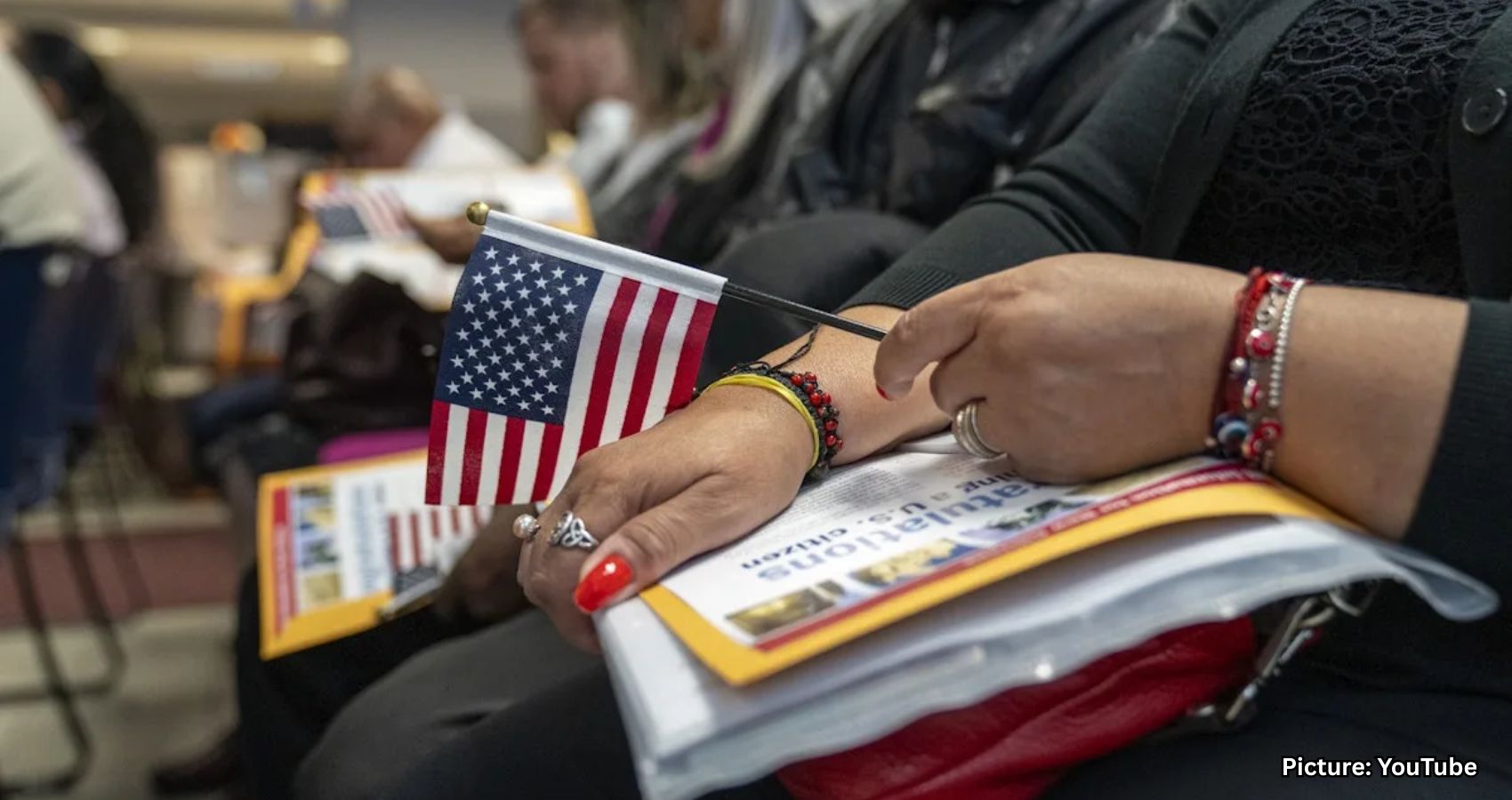
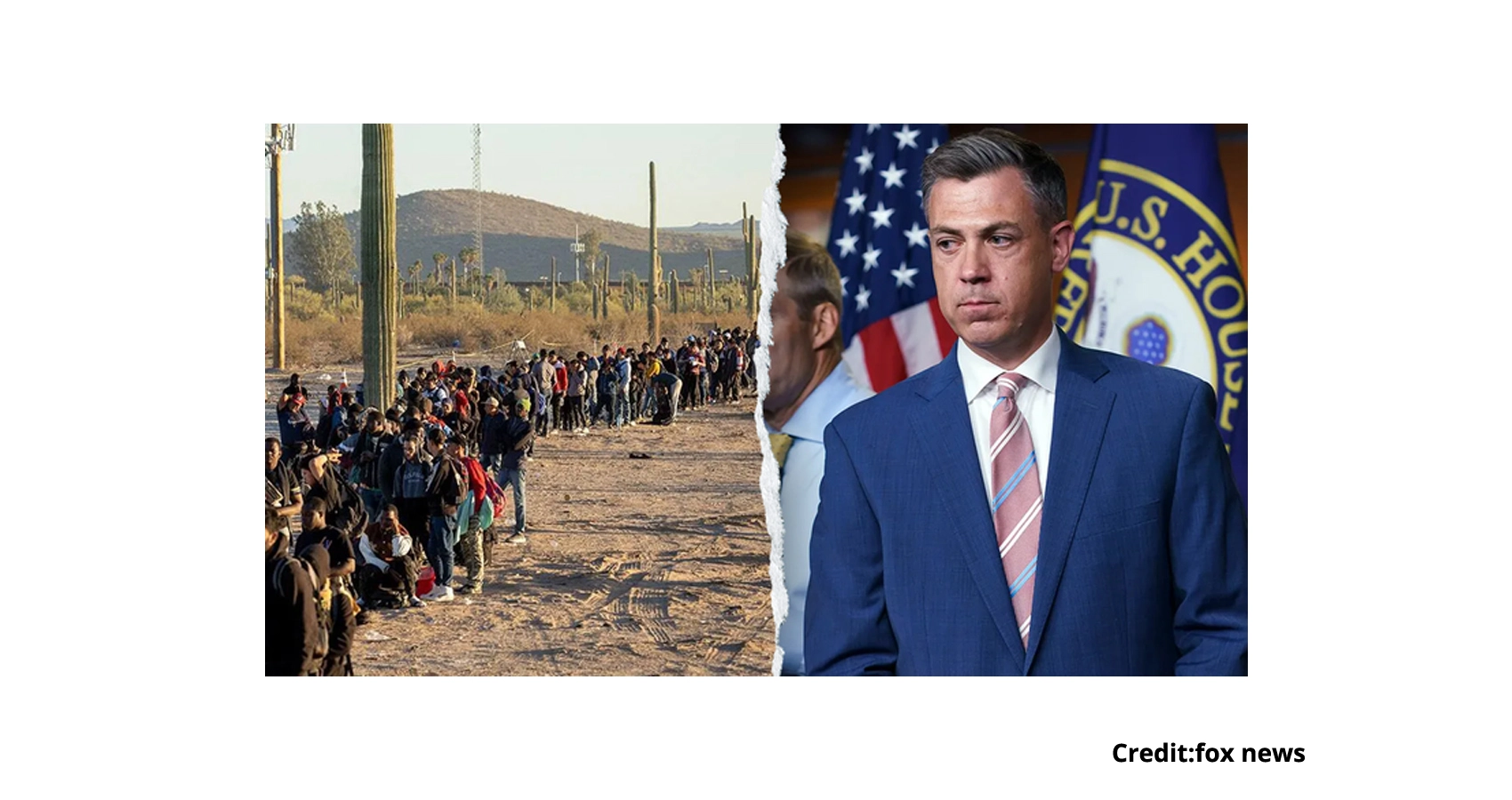
Millions of eligible immigrant voters are poised to significantly influence elections in 284 congressional districts, according to a new analysis by the American Immigration Council.

April 16, Washington, D.C. — A recent analysis from the American Immigration Council reveals that millions of immigrant voters who are U.S. citizens play a crucial role in shaping the electorate across 284 congressional districts where elections are set to take place this year.

This analysis focuses on voting data that reflects only eligible and registered voters, as federal law stipulates that only U.S. citizens are permitted to vote in federal elections.

Utilizing the latest available data from the 2024 American Community Survey, the findings indicate that immigrants constitute nearly one in five residents in the districts examined. They significantly contribute to the workforce, tax base, and local economies, which in turn influence voters’ priorities.

Key findings from the analysis highlight the following points:

Registered immigrant voters, who are naturalized U.S. citizens, are positioned to play a pivotal role in close elections. An estimated 16 million registered immigrant voters reside in the districts analyzed. In 44 percent of these districts (126 out of 284), the number of eligible immigrant voters exceeds the margin of victory anticipated in the 2024 elections.

For instance, Florida’s 25th congressional district is home to approximately 135,500 immigrant voters. This district flipped from Republican to Democratic control in 2022, and Democrats secured victory again in 2024 by a narrow margin of just 30,700 votes.

Similarly, in New Jersey’s 9th district, Democrats won by a margin of just over 12,600 votes in 2024. This district boasts nearly 165,000 immigrants who are U.S. citizens aged 18 and older, making them eligible to vote.

The analysis also emphasizes the importance of language and outreach. On average, 83.1 percent of immigrants in these districts speak a language other than English at home, underscoring the necessity for outreach efforts that reflect the diversity of these communities.

Moreover, immigrants are integral to local communities. They account for nearly 20 percent of residents across the 284 districts analyzed, with some districts reporting that immigrants represent more than half of the population.

“Immigrant voters who are U.S. citizens are a meaningful part of the electorate in many communities, especially in close races,” said Nan Wu, director of research at the American Immigration Council. “Like other voters, they care about jobs, housing, and the economy, and they are deeply embedded in the communities they help sustain.”

The analysis further illustrates that the influence of immigrants extends beyond the electoral process. In the districts studied, immigrants contribute to economic growth, support key industries, and shape the issues dominating elections, including inflation, housing, and workforce shortages.

In summary, the findings indicate that immigrants are not merely a niche population; rather, they are a core component of the communities, economies, and electorates that define numerous congressional districts.

According to the American Immigration Council, this analysis highlights the significant role that eligible immigrant voters play in shaping the outcomes of elections across the nation.

Q1 2026 Presents Challenges for Malayalam Cinema Amid Mixed Film Reception

The first quarter of 2026 has been a challenging period for Malayalam cinema, marked by a lack of impactful releases until the success of Vaazha 2 and the mixed reception of Aadu 3.

The first quarter of 2026 has proven turbulent for Malayalam cinema, characterized by a series of underwhelming releases that failed to engage audiences. However, the release of director Savin SA’s Vaazha 2 on April 2 has provided a much-needed boost, emerging as a blockbuster poised to join the select group of Malayalam films that have crossed the Rs 200 crore mark. This achievement would make Vaazha 2 only the fifth film in the history of Malayalam cinema to reach such financial success, injecting new life into theaters after a dismal three-month period.

When comparing the first quarter of 2026 to the same period in previous years (2021-2025), it is evident that this year’s offerings were markedly disappointing. The downturn is particularly striking given that past Januarys and Februarys typically showcased a blend of both big-budget and critically acclaimed smaller films.

January 2026 began with a modest selection of films, where only Pennu Case, featuring Nikhila Vimal, managed to create a ripple at the box office. Despite its serviceable plot, it struggled to compete against Sarvam Maya, which continued its successful run from December, dominating audience attention. The arrival of Chatha Pacha, a much-anticipated film inspired by WWE wrestling and featuring a cameo by megastar Mammootty, was met with high expectations. However, it ultimately disappointed, grossing only Rs 33.48 crore worldwide, according to industry tracker Sacnilk.

The following weeks saw the releases of Magic Mushrooms and Baby Girl, with the latter receiving particularly harsh criticism. This downturn marked a notable decline for Nivin Pauly, who had enjoyed recent successes. The only film that managed to gain any traction during this lackluster month was Prakambanam, which grossed over Rs 22 crore, benefiting from the audience’s craving for horror-comedies amidst a drought of quality releases. The only noteworthy films released during this period, Appuram and Sheshippu, opted for direct-to-OTT platforms, indicating a shift in distribution strategies.

February 2026 was even more disheartening for the industry. Traditionally, February is a vibrant month for Malayalam cinema, filled with numerous releases. In contrast, this year witnessed a cavernous absence of buzz-worthy films. Notable releases in previous years included titles like Iratta, Romancham, and Drishyam 2, which had set box office records and captivated audiences. However, 2026 saw a series of uninspired offerings, with even critically acclaimed films like Aashaan failing to draw crowds. The lack of significant releases was further compounded by poor promotional strategies employed for many films.

The sole film that managed to catch the audience’s attention was Pennum Porattum, a debut directorial venture by Rajesh Madhavan. While it did not enjoy a long theatrical run, it succeeded in cultivating a niche audience, indicating a shift towards more experimental storytelling. The end of February brought Masthishka Maranam, directed by Krishand, which attempted to explore new genres with its cyberpunk themes. Despite its innovative approach, the film struggled to resonate with mainstream audiences, further emphasizing the industry’s disconnect with viewer preferences.

The beginning of March was subdued, coinciding with examination periods for students and the observance of Ramadan, which limited theatrical releases. The only film to generate discussion was Sambhavam Adhyayam Onnu, though its commercial performance was hindered by poor timing. Ultimately, the industry was reliant on the release of Aadu 3, the highly anticipated third installment of the popular franchise. The film entered theaters amid significant hype, particularly due to its promise of a nonsensical comedy spanning multiple timelines.

Despite strong opening weekend numbers, grossing over Rs 120 crore worldwide, Aadu 3 received mixed to negative reviews, raising concerns about its longevity at the box office. Vijay Babu, the film’s co-producer, noted that the film was produced on a budget of approximately Rs 60-65 crore, which necessitated higher returns for it to be deemed a financial success. While its gross earnings surpassed Rs 50 crore, the returns did not meet the lofty expectations set by earlier installments in the franchise. The film’s performance, while notable, left many questioning the strategic choices made by its producers.

As Vaazha 2 continues to thrive, other films, such as Bharathanatyam 2 Mohiniyattam, are struggling to find their footing amid its overwhelming success. The landscape for Malayalam cinema is set to become even more crowded as numerous films are slated for release in April and May. High-profile projects, including Madhuvidhu, featuring Sharaf U Dheen, and Drishyam 3 starring Mohanlal, are among those anticipated, along with films featuring popular actors like Tovino Thomas and Vineeth Sreenivasan.

However, the saturation of the market raises concerns regarding the overall performance of individual films. The Malayalam film industry must navigate these challenges carefully, ensuring that their release strategies do not suffer from the pitfalls observed in the first quarter of 2026. As the industry seeks to rebound from a rocky start, the success of Vaazha 2 might serve as a crucial turning point, but sustaining momentum will require meticulous planning and a keen understanding of audience preferences moving forward, according to Source Name.

Right-Wing Activist Laura Loomer Alleges Immigration Fraud in USPS

Far-right activist Laura Loomer claims the U.S. Postal Service has issued new directives to combat alleged immigration fraud involving non-domiciled commercial drivers.

Laura Loomer, a controversial figure known for her far-right activism, recently took to X (formerly Twitter) to share what she describes as a significant revelation regarding the U.S. Postal Service (USPS). Her post claims that the USPS has issued a directive titled “Non-Domiciled CDL Drivers” in response to her previous statements about unauthorized workers handling mail.

According to Loomer, the directive states that starting May 1, 2026, non-domiciled commercial driver’s license (CDL) holders will no longer be allowed to transport mail under USPS contracts unless they have undergone screening and received clearance from the U.S. Postal Inspection Service (USPIS). This policy is purportedly designed to enhance mail security and ensure that all drivers assigned to USPS work meet specific screening and authorization requirements.

The directive reportedly places the onus on contractors to verify the eligibility of their drivers and to provide necessary documentation through designated administrative officials. Loomer’s post attributes the directive to Peter Routsolias, who is described as the Acting Chief Logistics Officer at USPS.

In her post, Loomer shared an image of the letter outlining the new policy, along with a photo containing information about Routsolias. She stated, “Following my viral tweet and report about how illegal aliens have been working at the @USPS where they are handling mail, which means they will have access to mail-in ballots ahead of the 2026 midterms, the USPS sent out a correspondence today to all of their suppliers titled, ‘Non-Domiciled CDL Drivers,’ prohibiting non-domiciled CDL operators from transporting mail under Postal Service contracts or ordering agreements!”

Loomer first gained notoriety in the late 2010s for her provocative activism, which often centers on issues related to immigration, Islam, and technology companies. Her controversial statements have led to multiple bans from social media platforms, although she has regained access to some over time. Loomer has also run unsuccessfully for a seat in the U.S. Congress in both 2020 and 2022.

Despite her polarizing reputation, Loomer remains active in conservative political commentary and online media. She is often described as being part of former President Donald Trump’s political orbit and is believed to have informal influence on discussions surrounding personnel and political decisions within that sphere.

Supporters of Loomer view her as an anti-establishment figure, while critics accuse her of spreading misinformation and promoting extremist rhetoric. The recent claims regarding USPS and immigration have further fueled the ongoing debate surrounding her activism and the broader implications of her statements.

The information about Loomer’s claims and the USPS directive was reported by various outlets, highlighting the ongoing tensions surrounding immigration policy and security in the United States.

According to The American Bazaar, Loomer’s assertions have sparked renewed discussions about the intersection of immigration and postal services, particularly in the context of upcoming elections.

Harvard Analysis Estimates Iran War Costs Could Exceed $1 Trillion

The ongoing military operations in Iran could cost U.S. taxpayers over $1 trillion, according to a Harvard analysis, raising concerns about long-term fiscal implications for the nation.

The ongoing military operations in Iran may incur costs for U.S. taxpayers that exceed $1 trillion, according to a recent analysis by a Harvard expert. This projection raises significant concerns about the long-term fiscal implications for the nation.

As the United States engages in joint military operations with Israel against Iran, early estimates suggest that the financial burden on U.S. taxpayers could far exceed initial projections. Professor Linda Bilmes, a public policy expert at the Harvard Kennedy School, conducted a detailed analysis indicating that the costs associated with this conflict could reach an astonishing $1 trillion. This figure is driven by both immediate military expenditures and long-term fiscal obligations.

The Pentagon’s briefing to Congress revealed that within the first six days of the operation, which commenced on February 28, the financial cost had already reached approximately $11.3 billion. This amount represents only the initial phase of military engagement, following U.S. forces’ decision to enforce a blockade on Iranian ports after peace talks failed over the weekend.

In her research, published just before the announcement of a temporary ceasefire on April 8, Bilmes projected that the short-term costs of the conflict could average around $2 billion per day over an estimated 40 days of active fighting. This estimate encompasses a range of expenses, including costs related to munitions, troop deployments, and damage to military assets. Notably, operational challenges have led to incidents such as the downing of three F-15 fighter jets due to friendly fire from Kuwait.

Bilmes argues that the Pentagon’s financial reporting often underestimates actual costs. She explained, “These gaps are one reason why the reported $11.3 billion is closer to $16 billion, reflecting a persistent mismatch between what the Pentagon reports in real time and what the war actually costs.” This discrepancy stems from the Pentagon’s tendency to value its inventory based on historical figures rather than current replacement costs, which can be significantly higher.

Furthermore, contracts with defense contractors such as Lockheed Martin and Boeing for military interceptors and missiles could significantly escalate costs. Bilmes highlighted that replenishing interceptors is estimated to cost around $4 million each, in stark contrast to the significantly lower production costs of Iranian drones, which can be manufactured for approximately $30,000.

Beyond the immediate financial outlay, Bilmes emphasizes that the long-term repercussions of the conflict may impose severe financial burdens. The costs associated with the reconstruction of damaged infrastructure and military assets, both for U.S. forces and allied nations in the Gulf, will further strain taxpayers. Additionally, potential lifetime disability benefits for approximately 55,000 deployed troops exposed to environmental hazards will create ongoing fiscal obligations for the government.

In response to these escalating costs, the White House has requested Congress to approve an increase in the defense budget, proposing a total expenditure of $1.5 trillion. This request represents the largest expansion in military spending since World War II and notably does not include an additional $200 billion earmarked specifically for the conflict in Iran. Bilmes remarked, “Even if Congress does not agree to approve the full increase, it is highly likely that at least $100 billion per year will be added to the base defense budget that would not have been approved in the absence of this war.”

The financial implications of the Iran conflict are further compounded by the current state of U.S. national debt, which has escalated to over $31 trillion—up from under $4 trillion during the Iraq War, which ultimately cost around $2 trillion. Bilmes stated, “We are borrowing to finance this war at higher rates, on top of a much larger debt base.” She further explained that interest costs alone will add billions to the overall expenditure of the conflict, presenting a significant financial burden that future generations will inherit.

In comparing the current situation to past military engagements, the stark contrast in fiscal conditions is striking. During the Iraq War, the national debt was significantly lower, which means that the current circumstances are more precarious. The additional costs associated with ongoing military operations are expected to exacerbate the already ballooning national debt, leading to greater financial implications for taxpayers.

In summary, while the immediate costs of the military operation against Iran are staggering, the long-term fiscal consequences could impose lasting implications for U.S. taxpayers. As discussions regarding military funding and national debt continue to unfold, Professor Bilmes’ findings serve as a critical reminder of the financial realities associated with sustained military engagements. The analysis raises urgent questions about fiscal responsibility and the implications of continued military operations in regions of conflict, urging policymakers to consider the long-term effects on the nation’s financial health, according to GlobalNet News.

Ex-Biden Official Faces Scrutiny Over Pay-to-Play Allegations in Gubernatorial Race

Former Atlanta Mayor Keisha Lance Bottoms faces scrutiny over ethics allegations as she campaigns for governor in Georgia, reigniting concerns about her past conduct in city government.

Keisha Lance Bottoms, the former mayor of Atlanta and a Democratic candidate for governor of Georgia, is under renewed scrutiny as her gubernatorial campaign brings to light past ethics controversies from her tenure in city government. Allegations of a pay-to-play scheme have emerged, raising questions about her conduct while in office.

During her time as mayor, Bottoms faced criticism for her use of public resources, including taxpayer-funded mailers featuring her own images and city-paid travel expenses that controversially included her husband’s airfare to the Super Bowl. These issues have resurfaced as she seeks higher office, prompting discussions about the implications of her past actions on her current campaign.

One significant point of contention involves Bottoms’ relationship with a contractor, Con-Real, which secured lucrative contracts with the city shortly after she signed a consulting agreement with the firm while serving as the executive director of the Atlanta Fulton County Recreation Authority (AFCRA). This occurred just days before she left the city council to become mayor. The CEO of Con-Real later contributed to and helped fundraise for her campaign.

Jennifer Ide, a former Atlanta City Council leader who chaired the city’s ethics committee during Bottoms’ tenure, expressed concern over the implications of these allegations. “I think it’s concerning,” Ide told Fox News Digital. “I don’t think that the voters want to feel like special interests impact the outcome of an election.”

As executive director of AFCRA, Bottoms awarded the first of three contracts to Con-Real in April 2017, valued at less than $100,000, according to the Atlanta Journal-Constitution. Just days later, she was preparing to exit her position as mayoral candidate. In June 2017, Con-Real won a second contract worth $2.4 million, despite having submitted a bid that was approximately double that of its competitor. Reports indicate that these contracts were executed without the necessary approval from the recreation authority’s board, raising further ethical concerns.

Ide noted that the lack of board approval for the contracts was troubling, although she acknowledged she was not fully versed in AFCRA’s procurement rules. Kyle Gomez-Leineweber, policy director at watchdog group Common Cause Georgia, confirmed that AFCRA amended its contracting process in response to the controversy surrounding Bottoms. “There were serious concerns that were raised around ethics,” he stated.

Gerald Alley, the founder and CEO of Con-Real, reportedly hosted a fundraiser for Bottoms’ mayoral campaign in August 2017. Campaign finance records reveal that he donated nearly $4,000 to her campaign shortly after the firm secured a lucrative contract with the city. In 2018, while Bottoms was still mayor, Con-Real won a third contract for $1.4 million, again as the highest bidder, which raised eyebrows among observers. Ide remarked, “It sure looked fishy that Con-Real was not the lowest bidder.” She emphasized that the city typically selects the lowest responsive bidder for contracts.

In June 2025, shortly after Bottoms announced her gubernatorial candidacy, Alley contributed the maximum allowable amount of $8,400 for the primary election, further fueling speculation about the nature of their relationship.

Humberto Garcia, a Democrat and founder of the anti-Buckhead City movement Neighbors for a United Atlanta, expressed skepticism about Bottoms’ fitness for office. “I really believe that as people start to dig under the surface, they’re going to see that she’s not fit for office,” he said.

Beyond the Con-Real controversy, Bottoms has faced a series of ethics-related incidents, including a $37,000 state ethics fine for campaign finance violations and backlash over her use of public funds for personal expenses, such as her husband’s Super Bowl trip and significant limousine costs. Both Ide and Garcia criticized Bottoms for being “absent-minded” during her tenure as mayor, questioning whether she would prioritize the interests of Georgians if elected governor.

“If you’re going to run for the highest office in the state, there needs to be no questions about whether you’re being influenced by your campaign donations in that kind of way,” Ide stated.

Fox News Digital reached out to both Bottoms’ campaign and Con-Real for comment but did not receive a response. The Democratic primary for Georgia’s gubernatorial race is scheduled for May 19, with Bottoms currently leading in most major polls. Former Georgia General Assemblyman and CEO of DeKalb County, Michael Thurmond, is trailing in second place in many of the same surveys, according to The New York Times.

Beijing’s Actions Impact a Generation’s Hopes for Change

In the wake of the 1989 Tiananmen Square crackdown, the hopes of a generation for political reform in China were crushed, leaving a legacy of silence and repression that continues to shape the nation.

A poignant photograph captures a moment on May 19, 1989, just days before the military crackdown in Tiananmen Square. In the image, a grey-haired man stands amidst the throngs of students, tears streaming down his face. This man was Zhao Ziyang, the General Secretary of the Chinese Communist Party, who had come to speak to the demonstrators.

“We came too late,” he told the students, his voice breaking. This would be his last public appearance. Following this moment, Zhao was placed under house arrest, spending the next sixteen years confined to his home in Beijing, effectively erased from the annals of official history.

This moment encapsulates the essence of the Tiananmen Square protests: it was not merely a confrontation between protesters and the state, but a profound struggle within the state itself, one that ultimately saw the reformists defeated.

The unrest had its roots in the death of former Communist Party General Secretary Hu Yaobang in April 1989. Many students believed his death was linked to his forced resignation, as Hu had symbolized accountability and openness in governance. Initially, the student movement sought to commemorate him, but this quickly evolved into a broader call for significant political change.

The students’ demands were not as radical as the government later portrayed. They sought freedom of the press, an end to corruption among party officials, and genuine dialogue with their leaders. As the protests progressed, they garnered widespread public support, drawing in pensioners, veterans, farmers, and millions of others who participated in peaceful demonstrations across China. At one point, an estimated one million people gathered in Beijing alone.

However, the spectacle of mass mobilization incited panic among the party leadership, leading to a bitter internal divide. Throughout April and May, the Politburo was sharply split: reformers, led informally by Zhao Ziyang, advocated for dialogue and de-escalation, while hardliners, spearheaded by Premier Li Peng, pushed for a decisive crackdown. On May 4, Zhao visited the protesters to listen to their concerns, an extraordinary act for a sitting party leader.

On May 20, the day martial law was declared, Deng Xiaoping made the decision to remove Zhao from his position as party general secretary. Zhao later recounted in his smuggled memoirs that he was never officially informed of his removal and received no further communication regarding his duties.

With the reformists silenced, the hardliners seized control. On the same day martial law was imposed, Premier Li Peng signed the order deploying hundreds of thousands of troops toward Beijing. For two more weeks, the protesters held their ground, but the situation escalated dramatically.

On the night of June 3, tanks and heavily armed troops advanced toward Tiananmen Square, opening fire on anyone who attempted to block their path. The majority of the violence did not occur within the square itself; instead, the deadliest confrontations took place in the western suburbs along Chang’an Avenue, where civilians were shot or crushed in the streets.

The exact death toll from the crackdown remains uncertain, with estimates ranging from a few hundred to over 10,000. The official Chinese government figure of around 200 deaths is widely regarded as a significant undercount. The true number may never be known, not due to a lack of evidence, but because the state has spent over three decades suppressing it.

Tiananmen and the events of 1989 remain a taboo subject in China. There is no official death toll, and any attempts to discuss, commemorate, or seek justice for the events are met with severe repression. Even vague references, such as “May 35” or emojis depicting a tank, are swiftly removed from the Chinese internet. The Tiananmen Mothers, a group of families of the deceased, have spent years compiling their own records of fatalities and calling for accountability from the government, despite facing intimidation and threats.

Zhao Ziyang remained under house arrest until his death from a stroke in January 2005. His secret memoirs were smuggled out and published in 2009, yet his legacy continues to be censored within China. He became another victim of June 4, not through violence, but through a quiet erasure from history.

The international response to the crackdown was initially loud, with sanctions imposed and condemnations issued. However, this outcry was soon muted as trade resumed. The allure of economic engagement and the vast Chinese market proved more compelling than the pursuit of accountability. This calculation, made quietly in diplomatic circles worldwide, conveyed a message to Beijing: mass repression could occur without significant repercussions.

The ramifications of Tiananmen have echoed through the decades. Hopes for political reform and liberalization in China were stifled, and the reformers within the party were sidelined. Attempts to move China’s political system toward democracy have stagnated since then. The situations in Tibet, Xinjiang, and Hong Kong have each become, in their own ways, sequels to the events of 1989. The precedent was set: dissent would be absorbed, suppressed, or erased, while the world found ways to move on.

The students who filled Tiananmen Square in the spring of 1989 were not seeking to overthrow their government; they were asking for it to be better. The response they received—tanks, bullets, and decades of enforced silence—speaks volumes about the system they faced.

Zhao Ziyang understood this reality in the end. “We came too late,” he lamented. He was correct, but not in the way he intended.

According to The Sunday Guardian, the legacy of Tiananmen continues to shape the political landscape in China today.

GOP Senator Proposes Advance Tax Credits to Address Healthcare Costs

Senator Bill Cassidy has unveiled a proposal aimed at making healthcare more affordable for Americans by introducing advance tax credits for out-of-pocket expenses.

Senator Bill Cassidy, chairman of the Senate Health, Education, Labor and Pensions (HELP) Committee, has introduced a plan designed to enhance the affordability of healthcare coverage for Americans. The proposal includes providing advance tax credits to help individuals cover out-of-pocket medical expenses.

In an interview with FOX Business, Cassidy highlighted the financial struggles many American families face, noting that a significant number would struggle to pay for unexpected medical costs. “We’ve got to put money in people’s pockets to pay for their out-of-pocket,” he stated.

The senator’s proposal suggests that individuals could receive tax credits of up to $2,000 for a family of four. These funds would be deposited into a health savings account (HSA), which can be utilized to cover deductibles or other out-of-pocket expenses associated with their health plans.

“What’s really novel here is putting more money in people’s pockets with an advanceable tax credit, pre-funding a health savings account,” Cassidy explained. He emphasized that the current system incentivizes higher-income individuals to utilize HSAs, but his plan aims to pre-fund these accounts, making them accessible to families regardless of their tax bracket.

According to Cassidy, pre-funded HSAs could enable households to select health insurance policies with lower premiums that focus on major medical expenses. This would provide families with the necessary resources to manage routine healthcare costs effectively. “It’s a virtuous cycle that ends up in many ways benefiting the patient’s health and benefiting their pocketbook,” he added.

Furthermore, Cassidy’s plan seeks to build on the previous administration’s efforts to promote price transparency within the healthcare sector. This initiative requires healthcare providers to disclose the costs of various procedures, such as X-rays, making it easier for Americans to identify affordable options for their medical needs.

“Oftentimes, they’ll be paying with this pre-funded health savings account, and they’ll have the tools to find the best price because federal legislation has mandated these prices be made available,” Cassidy noted. He also pointed out that technological advancements have led to the development of applications that assist consumers in locating the most cost-effective healthcare services.

In addition to the tax credit proposal, Cassidy aims to implement changes to food labeling to indicate the health risks associated with various items. He envisions a straightforward labeling system that categorizes foods based on their likelihood of contributing to conditions like diabetes. “Green would be less likely, red would be more likely, and yellow would be somewhere in between,” he explained. This approach would simplify the decision-making process for consumers, allowing them to make healthier choices without needing to decipher complex nutritional information.

Ultimately, Cassidy’s initiative is focused on empowering patients by enhancing their financial capabilities and providing them with the necessary information to make informed healthcare decisions. “It’s about giving power to the patient over a pocketbook, power to the patient in terms of knowing the prices of things, power to the patients with these apps that people are developing, and then power to the patient with information,” he concluded.

According to The American Bazaar, Cassidy’s proposal represents a significant step toward addressing the financial barriers many Americans face in accessing healthcare.

Silicon Valley Congressional Race Addresses Integrity and Accountability Issues

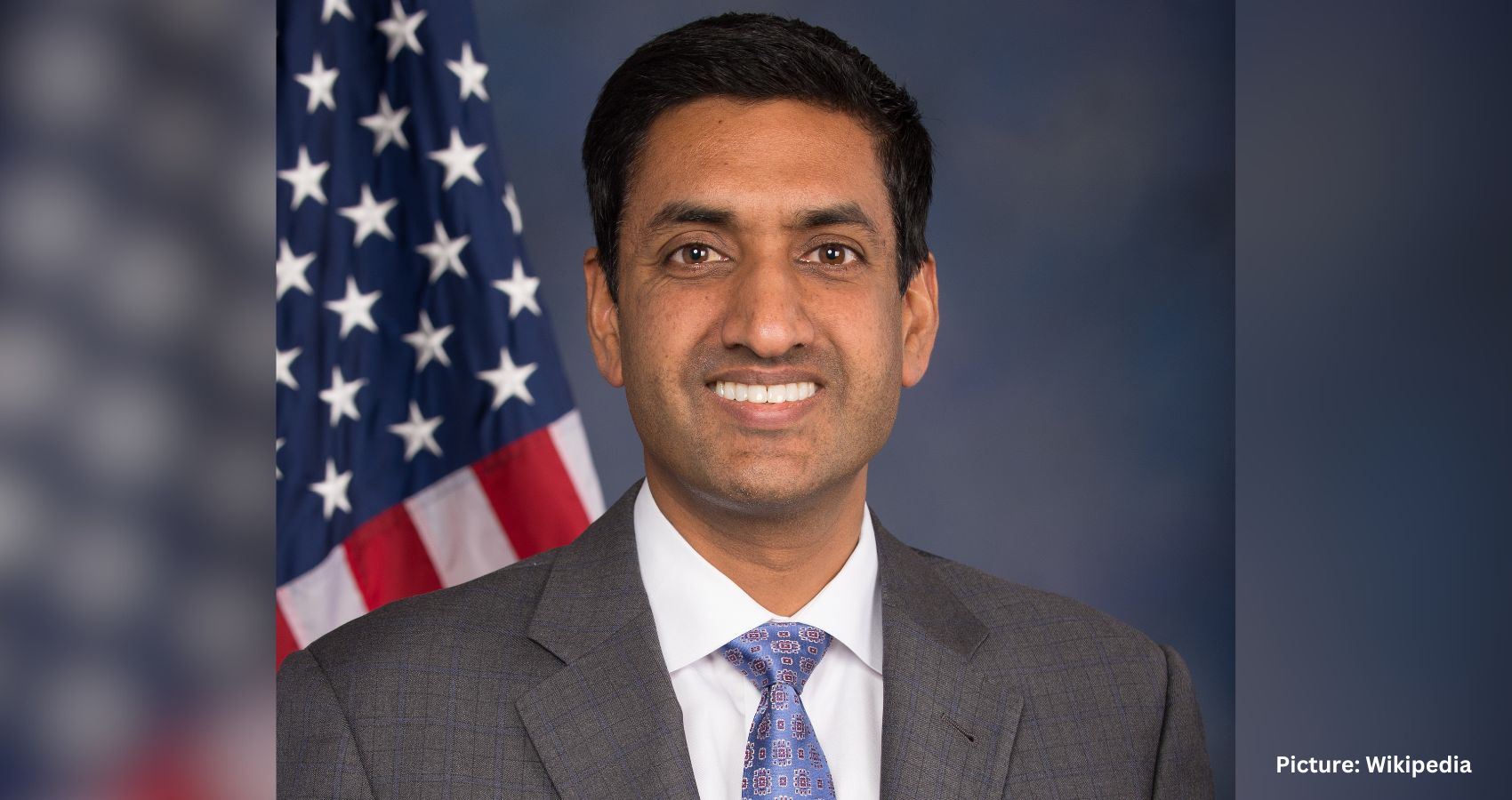
Integrity has emerged as a central theme in the contentious congressional race between Rep. Ro Khanna and challenger Ethan Agarwal in Silicon Valley.

Integrity has become the focal point of Silicon Valley’s highly competitive congressional race, where incumbent Rep. Ro Khanna faces off against his challenger, Ethan Agarwal. Agarwal has criticized Khanna for his family’s involvement in stock trading, raising questions about ethical conduct in politics.

However, scrutiny is also falling on Agarwal’s own past as a tech entrepreneur, which is marred by significant legal challenges, including millions of dollars in debts and allegations of unpaid business expenses.

According to court records, Agarwal, who previously resided in New York, admitted in 2020 to owing $2 million to Universal Music Group due to a licensing dispute related to Aaptiv, the digital fitness company he founded. Subsequent filings reveal that Agarwal failed to pay $300,000 of a settlement he had agreed to prior to selling the company in 2021. Additionally, a lawsuit was filed against Agarwal’s company by the landlord of One World Trade Center in 2023 for $2 million over unpaid rent during his tenure as CEO, although the proceedings were discontinued that same year. The outcomes of these legal matters remain unclear.

Agarwal contends that all debts have been settled. “I ran a company that was worth $300 million 10 years ago,” he told San José Spotlight. “You get sued all the time and you settle those lawsuits, and every single one of the things that you mentioned was settled.”

Despite Agarwal’s claims, representatives for both Universal Music Group and the landlord of One World Trade Center did not respond to inquiries regarding whether he had fulfilled his financial obligations.

Davina Hurt, director of the government ethics program at Santa Clara University’s Markkula Center for Applied Ethics, emphasized the importance of scrutinizing a candidate’s history. “When a documented record includes unpaid obligations, a confessed judgment, and a subsequent default on that very settlement, that’s not a single incident. That’s a pattern that persists even after legal compulsion,” she stated. “The first question voters should ask isn’t, ‘What does this candidate promise to do?’ It’s, ‘When this candidate made a promise before, did they keep it?’”

Agarwal, who relocated to Palo Alto from New York in 2020, previously entered the California gubernatorial race last year, positioning himself as a Democrat who supports capitalism. He withdrew from that race earlier this month to focus on the Congressional District 17 seat, following Khanna’s support for a controversial California billionaire tax proposal that has drawn criticism from Silicon Valley’s affluent tech community.

While Agarwal shares Democratic views on issues like gun control and reproductive rights, he opposes the billionaire tax, arguing it could drive wealthy individuals out of the state and burden the middle class. His campaign platform also includes proposals for public health care options to compete with private insurers and expanding Medicare’s ability to negotiate lower drug prices.

Agarwal, a 40-year-old political newcomer, has frequently targeted Khanna online for his extensive stock trading activities. According to California Common Cause, Khanna executed more than 4,000 trades in 2025, with a total volume of $55.7 million, ranking him third among the year’s top congressional traders.

In response to the allegations, Khanna has co-sponsored reforms aimed at regulating congressional stock trading and has authored a resolution calling for a ban on such practices. He maintains that he does not personally own or trade individual stocks, asserting that the trades in question belong to his wife, whose premarital assets are held in an independently managed trust.

Agarwal argues that his legal troubles are minor compared to the ethical concerns surrounding Khanna. “Aside from the stock trades, I would point voters to a 2022 New York Times article that shows Ro Khanna had 149 conflicts of interest between the committees he sits on,” Agarwal said. “I was not representing public citizens at the time of the Aaptiv lawsuits. And those happened eight years ago.”

If elected, Agarwal has pledged to ban stock trading by congressional leaders and their family members. Court records indicate he was married for nearly a decade before filing for divorce in 2025, but he declined to comment on the separation.

“I’ll be divesting my personal account, pushing for a ban on stock trading by members of Congress and their families, and fighting for term limits,” Agarwal stated on social media.

Khanna’s campaign has dismissed Agarwal’s attacks as “baseless personal attacks” and characterized them as hypocritical given Agarwal’s own financial history. “The lies Ethan is spreading about Ro are sad, but also deeply hypocritical given his checkered financial and personal past,” said Khanna’s spokesperson, Sarah Drory. “We should have a conversation in our district and California about real ideas and plans to improve the lives of people in the community.”

Hurt noted that while legal issues are common among entrepreneurs, they do not solely define a candidate’s character. “One or two lawsuits can be unfortunate circumstances. Three begins to look like a pattern, and patterns are exactly what voters should be paying attention to,” she said. “Does a candidate’s history of honoring or not honoring financial and legal obligations tell us something meaningful about how they would handle public trust and taxpayer resources?”

John Sims, a professor emeritus at the University of the Pacific’s McGeorge School of Law, echoed these sentiments. “We don’t know all the details of this, but if someone is repeatedly involved in disputes of this sort where they’re accused of not telling the truth or living up to their obligation and not holding up to a settlement, what does that tell me about your character?” he asked. “The other thing I wonder about is, what does it say about your motivations for running?”

This article was first published in San José Spotlight.

GOP Candidates Seek Re-election While Emphasizing Trump Support

Republican incumbents facing primary challenges are leveraging Trump imagery in their campaign ads, despite the former president endorsing their rivals.

Republican incumbents who are facing primary challenges are increasingly incorporating imagery of former President Donald Trump into their campaign advertisements, even when Trump has publicly endorsed their opponents. This strategy highlights the enduring influence of Trump within the Republican Party, where his approval ratings remain notably high among party members.

Despite a decline in his overall poll numbers, Trump’s grip on the Republican Party, which he has reshaped over the past decade, remains strong. His endorsements in GOP primaries are considered highly influential. “The Trump endorsement is king in any primary,” said Jesse Hunt, a longtime Republican strategist and communicator. Veteran GOP consultant Matt Gorman echoed this sentiment, stating that a “Trump endorsement is extremely powerful… it’s an undeniable force.”

With this in mind, how should a Republican incumbent facing a primary challenge from a Trump-backed candidate navigate their campaign? In two prominent cases this year, incumbents are attempting to project an image of support from Trump, despite his endorsements of their challengers.

Senator Bill Cassidy of Louisiana is currently facing primary challenges from two Republicans: Representative Julia Letlow and former Representative John Fleming, who is now the state treasurer. Earlier this year, Trump endorsed Letlow, complicating Cassidy’s re-election efforts. Cassidy was one of only seven Senate Republicans who voted to convict Trump in early 2021 after the House impeached him for his role in the January 6 attack on the U.S. Capitol. Despite this, Cassidy has supported Trump’s agenda and nominees since the beginning of Trump’s second term.

In his first campaign commercial following Trump’s endorsement of Letlow, Cassidy, a physician, emphasized a bill he authored that increased penalties for those convicted of manufacturing and distributing fentanyl. “President Trump said it was the most important legislation he would sign this year,” Cassidy stated in the ad, which featured images of Trump. Another advertisement highlighted Cassidy’s collaboration with Trump on tax cuts, showcasing visuals of both men with the phrase “Trump & Cassidy” prominently displayed.

In Kentucky’s 4th Congressional District, Representative Thomas Massie is facing a challenge from Trump-backed candidate Ed Gallrein in the upcoming primary. Massie has been one of Trump’s vocal critics in Congress, often criticizing the former president on various issues, including foreign policy. However, he has recently featured an old photograph of himself with Trump in a campaign ad, attempting to leverage their past connection.

In Texas, long-serving GOP Senator John Cornyn is also fighting for his political future as he prepares for a late May primary runoff against state Attorney General John Paxton, a staunch Trump supporter. Although Trump has remained neutral in this contest, Cornyn has consistently highlighted his support for Trump during his campaign and has incorporated this messaging into his advertisements. One recent ad featured a clip of Trump expressing gratitude for Cornyn’s support, with visuals of the two men together giving a thumbs-up.

While Cornyn’s ads may not be misleading, as he has not received an endorsement from Trump and neither has Paxton, the messaging from Cassidy and Massie does not acknowledge that their opponents have the former president’s backing. This strategy could potentially backfire, as Hunt warns that misrepresenting support from Trump could provoke his ire. “If you haven’t earned it but portray as though you have, it could be the end of your campaign,” Hunt cautioned, noting the risks involved in this approach.

As Republican incumbents navigate these challenging primary contests, their strategies reflect the complex dynamics of loyalty and endorsement within the party, particularly in the shadow of Trump’s continued influence.

According to Fox News.

Women Lead Voter Turnout in Assam, Kerala, and Puducherry

Women voters significantly outperformed men in turnout percentages during the April 9 Assembly elections in Assam, Kerala, and Puducherry, with record participation noted in Assam and Puducherry.

GUWAHATI – In a notable trend observed during the April 9 Assembly elections, women voters in Assam, Kerala, and Puducherry surpassed men in voter turnout percentages, according to data from the Election Commission of India.

In Assam, the turnout for women reached an impressive 86.50 percent, outpacing the male turnout of 85.33 percent. This contributed to an overall voting percentage of 85.91 percent, which is a new record for the state, exceeding the previous high of 84.67 percent recorded during the 2016 Assembly elections.

Puducherry also witnessed remarkable participation from women, with a turnout of 91.40 percent, compared to 88.13 percent for men. This strong female engagement helped achieve an overall polling percentage of 89.87 percent in the Union Territory.

In Kerala, the turnout for women was recorded at 81.19 percent, significantly higher than the 75.19 percent turnout among men. This figure surpasses the previous record of 80.58 percent set during the 1987 Assembly elections. However, the overall turnout in Kerala was 78.27 percent, which remains below the all-time high of 85.77 percent achieved in 1960.

Election officials have attributed the high overall turnout in both Assam and Puducherry largely to the strong participation of women voters. This trend underscores the increasing engagement of women in the electoral process across these regions.

According to IANS, the data reflects a growing trend of female voter participation, which could have significant implications for future elections and the political landscape in these states.

George Abraham, Indian-American, Returns to Vote in Kerala Elections

George Abraham, a veteran political activist, returned to Kerala to vote in the Assembly elections, highlighting the importance of democratic engagement and his enduring connection to India.

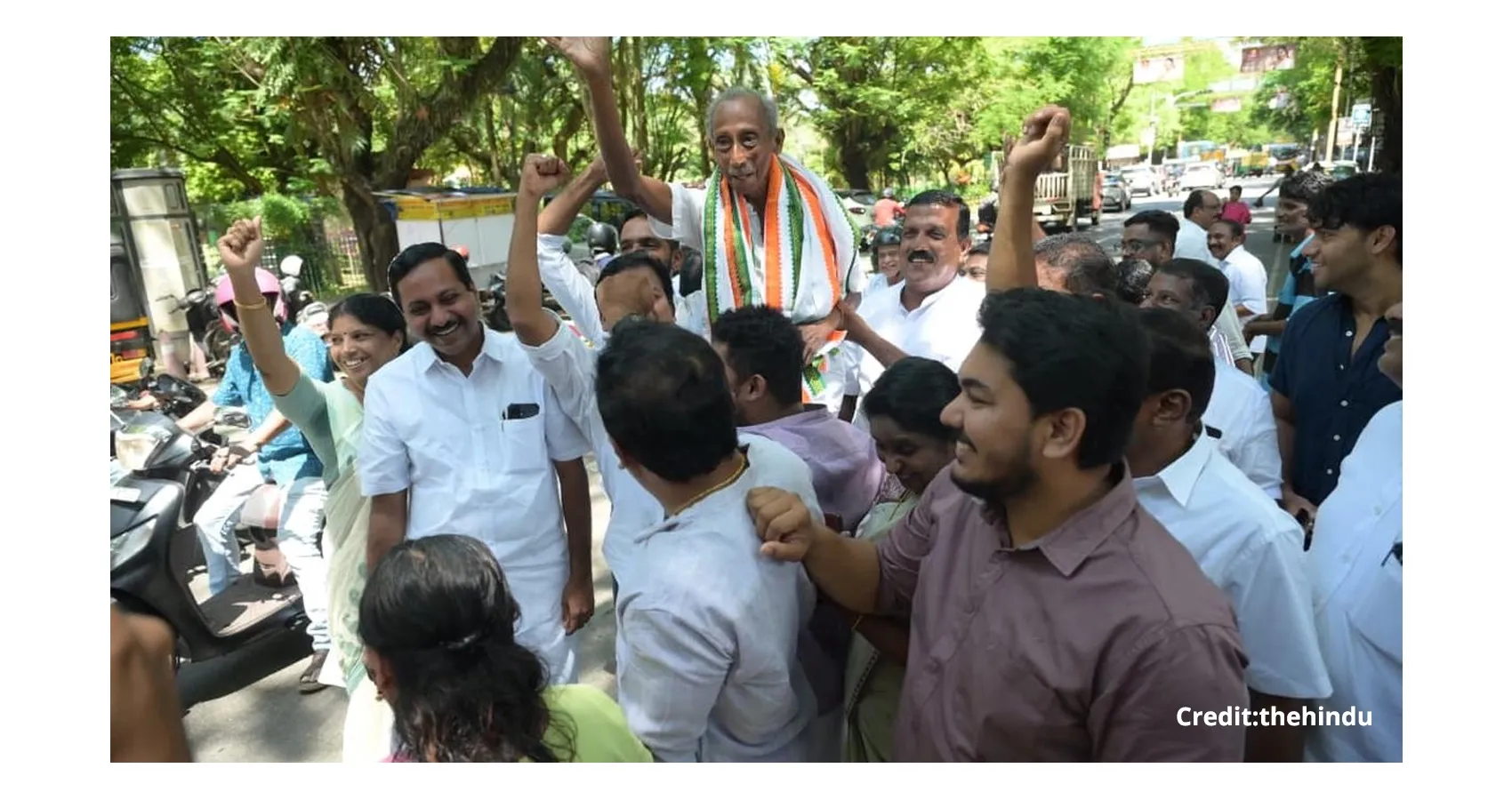
George Abraham, a veteran political activist and expatriate, has made a significant return to Kerala to exercise his voting rights in the Assembly elections for his home constituency of Changannur. For Abraham, this journey transcends a mere civic obligation; it embodies a profound personal commitment to his homeland, a sentiment he has maintained throughout his nearly six decades of life abroad.

Reflecting on his motivations for returning to India to vote, Abraham expressed a deep emotional connection to his roots: “It is a sentiment for my motherland and a passion for the very idea of India.” His introspection reveals a sense of nostalgia, as he pondered, “I often wonder why people like me had to leave this incredible land, so rich in natural beauty and heritage, to build lives elsewhere.” After casting his vote, he remarked, “I have exercised my democratic right, and I hope this small act contributes to keeping the spirit of democracy alive.”

For nearly 58 years, Abraham has resided abroad, primarily in the United States, where he has had a distinguished career in international service. He spent 36 years working at the United Nations, retiring as Chief Technology Officer of the United Nations Pension Fund. Despite his extensive professional accolades and experiences on the global stage, his dedication to India’s political and democratic processes has remained steadfast.

Abraham’s political engagement is deeply rooted in his past, reflecting a lifelong passion for civic participation. In 1998, motivated by a desire to organize and mobilize the Indian diaspora, he co-founded the Indian Overseas Congress (IOC) alongside veteran Congress worker John Philipose Thengumcherry. This initiative emerged at a time when there was no comparable platform for Congress supporters living outside India. The organization’s formal launch gained momentum during a visit from the late Oommen Chandy, then Chief Minister of Kerala, which provided a significant platform for its promotion.

Since its inception, the IOC has experienced substantial growth, receiving official recognition in 2001 during a significant event in New York that featured prominent national leaders, including Sonia Gandhi, Manmohan Singh, Natwar Singh, and Murli Deora. Today, the IOC operates as a well-established global network that spans over 30 countries, advocating for the interests of the Indian diaspora and fostering a connection to India’s political landscape.

Currently, Sam Pitroda serves as Chairman of the IOC, while Abraham holds the position of Vice-Chairman of IOC USA and Global Coordinator for its IT and Social Media initiatives. In recognition of his decades of service to the Indian community abroad, he was awarded a Lifetime Achievement Award by Rahul Gandhi during the latter’s visit to New York in 2023.

Abraham’s commitment to political activism began in his youth. As a teenager, he was actively involved with the All Kerala Balajana Sakhyam, a youth organization under the aegis of Malayala Manorama, where he served as State Treasurer in 1967. He credits the late Pala K.M. Mathew, a prominent journalist and social reformer, as a mentor who significantly shaped his early political and social consciousness.

In his reflections, Abraham emphasizes the crucial role that the Indian diaspora plays in safeguarding the democratic and secular values of India. He stated, “It is essential that we uphold the democratic and secular fabric of India. Without that, the nearly 35 million Indians living abroad would have little moral standing when advocating for justice, equality, and religious freedom globally.” This perspective highlights the responsibility of expatriates to engage with and support the democratic processes of their home country.

For Abraham, returning to India to vote is not merely an act of participation; it is a reaffirmation of his identity, responsibility, and belief in the enduring promise of India’s democracy. His actions underscore the importance of active engagement in political processes, not only for those residing in India but also for the global Indian community.

As the Assembly elections unfold, the participation of expatriates like Abraham signifies a broader commitment to the democratic process, illustrating how individuals can maintain their ties to their homeland while contributing to its political landscape from afar. In doing so, they uphold the values of democracy, a fundamental principle that resonates deeply within both the Indian diaspora and the global community, according to Source Name.

Immigrants Drive Ohio’s Workforce Growth and Contribute Billions in Taxes

New research highlights the significant economic contributions of immigrants in Ohio, revealing they earned $27.3 billion and paid $7.3 billion in taxes in 2023.

Immigrants in Ohio play a vital role in the state’s economy, according to a recent report from the American Immigration Council. The study, conducted in partnership with Ohio Business for Immigration Solutions, reveals that immigrants not only fill essential roles in critical industries but also contribute billions in taxes annually.

In 2023, immigrants in Ohio earned an impressive $27.3 billion in income and paid $7.3 billion in local, state, and federal taxes. This financial contribution underscores their importance to the state’s economic landscape, as they help sustain local businesses and communities.

“Immigrants are essential to Ohio’s future, powering the state’s workforce, strengthening critical industries, and paying billions in taxes that communities depend on every day,” said Rich André, Director of State and Local Initiatives at the American Immigration Council.

The report highlights the ongoing workforce shortages in Ohio, which are placing significant strain on businesses. Jaclyn Ringstmeier, Executive Director of the Greater Medina Chamber of Commerce, emphasized the importance of immigrants in addressing these challenges. “As this new report highlights, immigrants play a vital role in driving economic growth and sustaining Ohio’s future,” she stated.

Key findings from the report illustrate the critical contributions of immigrants to Ohio’s workforce:

First, immigrants are helping to fill the state’s workplace shortages and are well-positioned to meet future labor needs. From 2019 to 2024, the number of online job postings in Ohio increased by 8.2 percent. In 2023, 75.5 percent of immigrants were active in the labor force, and they were 29.4 percent more likely to be of working age compared to their U.S.-born counterparts. This demonstrates that immigrants are already addressing the growing demand for workers and are poised to continue contributing actively to the workforce.

Second, the financial impact of immigrants in Ohio is substantial. In addition to earning $27.3 billion, their tax contributions of $7.3 billion leave them with $20 billion in spending power. This spending supports local businesses and fuels economic growth, helping to keep local economic corridors vibrant.

Moreover, immigrants are uniquely positioned to meet critical multilingual needs in the workforce. From 2019 to 2024, the number of job postings requiring or prioritizing bilingual skills in Ohio surged by 39.2 percent. Immigrants often possess the multilingual skills necessary to fill these positions, further enhancing their value in the job market.

Despite their contributions, Ohio is underutilizing its immigrant talent. Many immigrants with specialized training and skills acquired abroad face barriers such as relicensing and language proficiency, preventing them from working in their fields. As a result, in 2023, 43.7 percent of immigrants with a college education were employed in jobs that did not require a college degree.

The report emphasizes the need for policies that can better integrate immigrants into the workforce, allowing them to utilize their skills and education effectively. By doing so, Ohio can harness the full potential of its immigrant population, driving further economic growth and stability.

For more detailed information on how immigrants are supporting Ohio’s workforce, tax base, and economic growth, the full factsheet is available for review.

About the American Immigration Council: The American Immigration Council works to create a more welcoming and fair immigration system. Through litigation, research, and programs that expand access to legal assistance, the Council ensures that immigrants are embraced, communities are enriched, and justice prevails for all.

About Ohio Business for Immigration Solutions: Ohio Business for Immigration Solutions (OBIS) is a coalition of over 100 Ohio businesses, trade associations, chambers of commerce, and economic development groups advocating for the modernization of the immigration system to benefit the state’s economy. Launched on December 10, 2020, OBIS released the Ohio Compact on Immigration, a set of principles aimed at promoting immigration reforms that will strengthen the economy, attract global talent, and foster new business growth in the Buckeye State. OBIS supports sensible public policy solutions that transcend partisanship and rhetoric while recognizing the valuable contributions immigrants make to Ohio.

According to the American Immigration Council, the findings of this report highlight the essential role immigrants play in Ohio’s economy.

Rep. Ro Khanna Explores 2028 Presidential Run Focused on Economic Equity

Congressman Ro Khanna has expressed interest in a potential presidential bid for 2028, focusing on economic equity and a commitment to anti-colonialism in U.S. foreign policy.

During the National Action Network’s annual convention on April 8, 2023, Congressman Ro Khanna, a Democratic representative from California’s 17th District, entertained the idea of launching a presidential campaign in 2028. In a conversation with civil rights leader Al Sharpton, Khanna shared insights into his motivations and political priorities, emphasizing his vision for economic justice and a progressive foreign policy.

When Sharpton inquired about Khanna’s presidential aspirations, the congressman humorously responded, “Will you be my running mate?” This light-hearted exchange soon transitioned into a more serious discussion about the political landscape and his ambitions. While Khanna stated that his immediate goal is to support Hakeem Jeffries in becoming the Speaker of the House, he acknowledged that he is also contemplating a run for the presidency.

Khanna articulated a comprehensive economic strategy designed to ensure that all Americans have a stake in the nation’s economic future. He remarked, “I represent the economic future, and I have a clear roadmap of how we’re going to make sure every part of this country has an economic stake in the future.” His plan encompasses several key components, including equitable worker compensation, integrating marginalized communities into the evolving artificial intelligence sector, and ensuring families achieve economic independence through access to healthcare and childcare.

“I have a comprehensive economic vision, and I believe that people need an economic vision,” Khanna stated, reflecting a growing trend among progressive Democrats who are centering their platforms around economic issues. This focus resonates with many voters who are increasingly concerned about economic disparities, particularly in light of ongoing discussions about inflation and job security.

In addition to his economic ambitions, Khanna expressed a personal commitment to rejecting colonial models of governance and international relations, a perspective he attributes to the influence of his grandfather. He has previously criticized former President Donald Trump, accusing him of perpetuating a colonial mindset. “At our best, America fights wars of liberation, not conquest. We are not the Roman or British Empire engaged in colonialism. We defeated Nazism and authoritarian communism. Trump is betraying our values,” Khanna asserted. This statement reflects his broader critique of U.S. foreign policy and its implications for global equity and justice.

As the Democratic field begins to take shape for the 2028 presidential election, Khanna is positioning himself among a growing list of potential candidates. Prominent figures such as California Governor Gavin Newsom and former Vice President Kamala Harris are currently viewed as frontrunners, although neither has formally declared their candidacies. Other Democrats, including Michigan Governor Gretchen Whitmer and Pennsylvania Governor Josh Shapiro, have also signaled potential interest in the race.

Since his election to Congress in 2017, Khanna has emerged as a leading voice within the progressive wing of the Democratic Party, advocating for policies such as Medicare for All, economic patriotism, and the revitalization of American manufacturing. His potential candidacy could introduce a distinctive perspective to the Democratic primary, particularly as issues of economic justice become increasingly central to voter concerns.

Khanna’s remarks have generated significant interest regarding his political future as he balances his legislative responsibilities with the prospect of a presidential run. His emphasis on economic equity and anti-colonialism positions him uniquely within the Democratic Party, appealing to voters who seek transformative change in both domestic and foreign policy.

As the 2028 election approaches, discussions about candidates like Khanna are expected to intensify, particularly as economic justice and international relations continue to dominate the national conversation. His ability to articulate a clear vision and engage with critical issues may enhance his profile as a noteworthy contender in the electoral landscape.

Furthermore, Khanna’s approach reflects a broader shift within the Democratic Party, where an increasing number of candidates are prioritizing economic issues in response to constituents’ needs. As voters grapple with the realities of a post-pandemic economy, candidates who can effectively communicate their plans for economic revitalization and social justice may resonate more deeply with the electorate.

With Khanna’s progressive agenda and commitment to anti-colonial values, his potential campaign could energize a segment of the Democratic base that seeks comprehensive reform. As the political narrative evolves, it will be crucial for Khanna and other candidates to effectively address the pressing issues that matter most to voters, setting the stage for a competitive and dynamic primary season, according to Global Net News.

Rep. Randy Fine Joins House Freedom Caucus, Emphasizes Conservative Values

Rep. Randy Fine of Florida has officially joined the House Freedom Caucus, emphasizing his commitment to conservative principles and the MAGA agenda.

Republican Representative Randy Fine, who serves Florida’s 6th Congressional District, has announced his membership in the conservative House Freedom Caucus.

In a post on X, Fine expressed his enthusiasm, stating, “HUGE NEWS: I’m proud to announce that I have officially joined the strongest group of conservative patriots in Congress.” He highlighted the caucus’s mission, saying, “The House @freedomcaucus exists to save our country and preserve freedom, not manage our decline. That’s what I love about this group.” Fine looks forward to collaborating with his colleagues in the caucus to advance the MAGA agenda and uphold conservative values.

Fine, who took office last year after winning a special election to succeed Republican Mike Waltz, received significant support from former President Donald Trump during his campaign. Trump endorsed Fine shortly before he announced his candidacy, stating in a November 2024 Truth Social post, “Should he decide to enter this Race, Randy Fine has my Complete and Total Endorsement. RUN, RANDY, RUN!”

In a previous Truth Social post, Trump praised Fine’s performance, asserting, “He is doing a fantastic job representing Florida’s 6th Congressional District!” The endorsement underscores Fine’s alignment with Trump’s vision for the Republican Party.

Reflecting on his experiences in Congress, Fine remarked, “I found in my first year that there are two types of Republicans: those who want to save America and those who want to manage our decline politely.” He emphasized that the House Freedom Caucus aligns closely with his values, stating, “They were unquestionably the group whose values were most in line with mine.”

Fine further elaborated on his motivations for joining the caucus, noting, “Trying to manage the budget, trying to get the government under control, trying to stand up to the Left—they seemed to be the group whose values were most in line with mine,” according to The Daily Signal.

Fact Check: Did Sanjiv Goenka Gift ₹4.10 Crore Mercedes to Mukul Choudhary?

After an impressive performance in the IPL, rumors have surfaced about Sanjiv Goenka gifting Mukul Choudhary a luxury car, but no verified reports confirm this claim.

In a stunning display of talent, 21-year-old Mukul Choudhary led the Lucknow Super Giants (LSG) to an unexpected victory against the Kolkata Knight Riders (KKR) at Eden Gardens on April 9, 2026. Following his remarkable performance, unverified social media claims emerged suggesting that LSG owner Sanjiv Goenka would reward Choudhary with a Mercedes-Maybach GLS valued at ₹4.10 crore. However, it is essential to examine the authenticity of these claims.

Choudhary’s innings was nothing short of spectacular. Coming to the crease in the 13th over, he quickly turned the tide of the match by hitting seven sixes during his 27-ball stay at the wicket. Despite the Super Giants appearing to be in trouble after the dismissal of Ayush Badoni, who scored 54 runs, Choudhary’s explosive batting brought LSG back into contention. The match concluded with LSG needing 13 runs off the final over, and Choudhary’s efforts, which included two sixes and a bye, secured the win, leaving him unbeaten on 54 runs.

Social media posts celebrating Choudhary’s performance fueled speculation about the alleged gift from Goenka. One such post read: “After a sensational knock against KKR, Sanjiv Goenka has announced a massive reward: a brand new Mercedes GLS worth ₹4 crore as a gift! What a way to celebrate a match-winning performance.” However, this claim remains unverified, as no credible sources have reported on Goenka’s intention to gift the car.

In the post-match presentation, LSG captain Rishabh Pant expressed his admiration for Choudhary’s performance. Pant stated, “I do not have words to describe but what a fantastic effort. One thing I made sure is that personally, that trust and when you believe in someone, a player can do wonders. The character, with each and every match like this, it shows something is building. We don’t want to talk much about it but something is cooking inside.”

The victory propelled the Super Giants to fifth place in the IPL points table, keeping their hopes alive for a top-four finish. Conversely, the Knight Riders faced their third consecutive loss, remaining winless alongside the Chennai Super Kings (CSK).

As the IPL season progresses, fans and analysts alike will be watching closely to see how the Lucknow Super Giants build on this momentum and whether any further rewards or recognitions are bestowed upon players like Mukul Choudhary. For now, the rumors surrounding the luxury car gift remain just that—rumors.

According to The Sunday Guardian, the claims regarding the Mercedes-Maybach GLS gift have not been substantiated by any verified sources.

Colorado Supreme Court Ruling Contributes to Ongoing Culture War Defeats

Colorado’s recent Supreme Court loss regarding its conversion therapy ban highlights a series of legal defeats for the state in culture war disputes centered on First Amendment rights.

Colorado’s conversion therapy ban was recently struck down by the Supreme Court on First Amendment grounds, marking yet another significant legal defeat for the state in ongoing culture war battles.

The ruling in the case of Kaley Chiles last week represents the third major rebuke from the Supreme Court in recent years, as the justices have consistently overturned Colorado’s attempts to enforce its own interpretations of speech, religion, and anti-discrimination laws. This decision adds to a troubling pattern for the state, following previous losses involving a cake baker and a website designer who successfully challenged state mandates that conflicted with their religious beliefs.

Conservative legal experts assert that these setbacks are not mere coincidences. Carrie Severino, president of the legal watchdog Judicial Crisis Network, commented, “Colorado seems hell-bent on enforcing its own new orthodoxy of thought, and the Supreme Court has had to come back time and time again to correct them and to remind them that the First Amendment protects freedom of speech and freedom of religion, even when the state may disagree with a person’s opinions.”

In its recent ruling, the Supreme Court determined that Colorado’s conversion therapy ban, enacted in 2019 by Democratic Governor Jared Polis, violated the First Amendment. The law specifically restricted talk therapy aimed at preventing minors from embracing their gender identity or sexual orientation.

In response to inquiries about the state’s legal trajectory, Alliance Defending Freedom attorney Jim Campbell stated, “The State of Colorado has shown an utter disregard for the First Amendment rights of people like Kaley Chiles.” Campbell represented Chiles during the Supreme Court’s oral arguments and emphasized that the state’s actions are indicative of a broader trend of disregarding constitutional rights.

In the case of Chiles v. Salazar, the Supreme Court ruled 8-1 that Colorado’s law discriminated based on viewpoint. Justice Neil Gorsuch, writing for the majority, described such laws as an “egregious” assault on the Constitution. He asserted, “The First Amendment stands as a shield against any effort to enforce orthodoxy in thought or speech in this country.”

The case revolved around Chiles, a licensed faith-based counselor in Colorado Springs, who argued that her practice aimed to help youths achieve their own stated goals, which could include counseling related to sexuality and gender identity.

Colorado’s defense of the ban rested on the premise that it was regulating professional conduct to protect minors from what it deemed harmful counseling practices. However, the Supreme Court’s decision followed a landmark ruling earlier this year in 303 Creative LLC v. Elenis, where the Court found that the First Amendment prohibited Colorado from compelling a website designer to create wedding websites for same-sex couples. This ruling was seen as a significant victory for free speech, reinforcing the idea that the state cannot force individuals to produce content that contradicts their beliefs.

That earlier decision followed the Supreme Court’s 2018 ruling in Masterpiece Cakeshop v. Colorado Civil Rights Commission, where the justices sided with baker Jack Phillips. In that case, the Court found that the Colorado Civil Rights Commission had exhibited unconstitutional hostility toward Phillips’ religious beliefs, a sentiment that has persisted in subsequent rulings against the state.

Severino noted, “The Supreme Court found, at least at the time of Masterpiece Cakeshop, that Colorado’s state agency was acting in a way biased against a certain set of beliefs, and from what we can see, that hasn’t changed in the intervening years. Unfortunately, each time the Supreme Court has corrected them, they’ve only doubled down.”

Terry Schilling, president of the conservative American Principles Project, remarked on the trend in Colorado, stating that Democrats in the state “will stomp on the rights of anyone who stands in the way of the well-heeled gay and transgender lobby, whether it is bakers, doctors, or desperate families.” He expressed concern that it should not require extensive legal battles or Supreme Court intervention to address what he termed the “liberal war against reality.” Schilling’s organization is actively working to pass conservative ballot initiatives aimed at protecting children from what they view as extremist policies.

Beyond First Amendment issues, Colorado has also been a battleground for other contentious legal disputes that have reached the Supreme Court. In the case of Trump v. Anderson, the justices unanimously reversed a state Supreme Court decision that sought to remove former President Donald Trump from the 2024 presidential primary ballot over allegations of inciting an insurrection, ruling that the state lacked the authority to take such action.

As Colorado continues to navigate these legal challenges, the implications of the Supreme Court’s rulings may resonate well beyond the state’s borders, influencing similar debates across the nation.

According to Fox News, the ongoing legal battles in Colorado underscore a broader national conversation about the intersection of free speech, religious liberty, and state regulation.

West Bengal Elections 2026: PM Modi Promises Six Guarantees and Anti-Corruption Drive

Prime Minister Narendra Modi has announced six key guarantees for West Bengal ahead of the 2026 Assembly elections, focusing on anti-corruption measures, the implementation of the 7th Pay Commission, and reforms in various sectors.

As the 2026 West Bengal Assembly elections approach, Prime Minister Narendra Modi has unveiled six significant guarantees aimed at addressing various issues in the state. During a recent public rally, Modi emphasized a commitment to combating corruption, reopening pending cases, ensuring refugee rights, and implementing the 7th Pay Commission. Additionally, he outlined plans to enhance the fisheries and seafood sectors to promote economic self-reliance.

Modi’s six guarantees for West Bengal include:

1. Restore Trust and Rule of Law: Modi pledged to replace the current atmosphere of fear under the Trinamool Congress (TMC) regime with a system grounded in trust, fairness, and accountability. His goal is to restore citizens’ confidence in government institutions.

2. Administrative Accountability: The Prime Minister promised that under a BJP government, all administrative bodies would be fully accountable to the public. This includes ensuring transparency in decision-making and efficient governance across various departments.

3. Reopen Corruption and Scam Cases: Modi stated that all files related to scams, corruption, and injustices—including those affecting women and students—would be reopened. This move aims to ensure justice and legal accountability for past misdeeds.

4. Equal Enforcement of Law: The Prime Minister asserted that every individual involved in wrongdoing, regardless of their position, would face legal action. No TMC-affiliated individual would be allowed to evade the law.

5. Rights for Refugees and Action Against Infiltrators: Modi assured that genuine refugees would receive all constitutional rights and privileges, while illegal infiltrators would be identified and removed from the state to maintain law and order.

6. Implementation of the 7th Pay Commission: He promised that the 7th Pay Commission would be implemented for state employees immediately after forming a BJP government in West Bengal, ensuring that salaries and benefits align with central government standards.

The West Bengal Assembly elections are scheduled to take place in two phases on April 23 and April 29, 2026. The notification dates for the elections are set for March 30 and April 2, 2026, with the last dates for filing nominations on April 6 and April 9, 2026. The scrutiny of nominations will occur on April 7 and April 10, with the withdrawal of nominations allowed until April 9 and April 13. Votes will be counted on May 4, 2026, and the electoral process is expected to be completed by May 6, 2026.

In terms of political landscape, the major parties contesting the elections include the Trinamool Congress (TMC), led by Mamata Banerjee, and the BJP, led by Suvendu Adhikari. Other key players in the elections include the Left Front+, Indian National Congress, and the AJUP–AIMIM alliance.

Key constituencies to watch during the elections include Nadia and North 24 Parganas, where strong contests between the BJP and TMC are anticipated. Kolkata urban seats will also be crucial due to the influence of urban voters. The Darjeeling Hills will see a contest between the BJP and regional Gorkha parties, while Howrah and Hooghly have historically been swing constituencies. Additionally, South Bengal coastal seats will focus on fisheries and rural development issues.

As of 2026, West Bengal’s estimated population is around 100.4 million, with approximately 31% residing in urban areas and 69% in rural regions. The state has a population density of about 1,029 people per square kilometer, making it one of the most densely populated states in India. This demographic distribution significantly influences voter dynamics and election outcomes.

In terms of registered voters, West Bengal has 67,534,952 voters for the 2026 elections. This figure includes 36,022,642 men, 34,435,260 women, and 1,382 third-gender voters. This represents an 11.88% decrease from October 2025, when the total was 76,637,529, due to the removal of over 9 million ineligible or duplicate entries from the electoral rolls.

Voter turnout in the 2021 West Bengal Assembly elections was recorded at 81.73%, slightly lower than the 82.95% in 2016. This indicates a consistent trend of high electoral participation, with more than four-fifths of eligible voters engaging in the democratic process across successive elections.

According to The Sunday Guardian, the upcoming elections are poised to be a significant event in West Bengal’s political landscape, with Modi’s guarantees likely to play a crucial role in shaping voter sentiment.

Gen Z Candidate Jay Vaingankar Responds to Racist Attacks by Laura Loomer

Gen Z congressional candidate Jay Vaingankar condemns racist attacks from Laura Loomer after he shared a campaign video in Hindi, highlighting the importance of diversity in American politics.

Jay Vaingankar, a Gen Z congressional candidate for New Jersey’s 12th Congressional District, has faced racist attacks from far-right activist Laura Loomer following the release of a campaign video aimed at reaching voters in Hindi.

On the social media platform X, Loomer, known for her controversial views and conspiracy theories, criticized Vaingankar, stating, “New Jersey Democrat U.S. House candidate Jay Vaingankar just released an entire campaign ad in a non-English language. Leave it to House Democrats and their candidates to force Americans to read translations just to understand their ads.”

In response, Vaingankar, a former official at the Department of Energy under the Biden Administration, expressed his dismay at the attacks, calling them “disturbing.” He noted, “Over the weekend, Trump confidante Laura Loomer and her far-right allies attacked me by name in a series of racist posts calling me ‘un-American’ and accusing my campaign of putting ‘America Last’ – all because I posted a video reaching out to voters in Hindi.”

Vaingankar further revealed that the backlash included a flood of messages containing death threats, racial slurs, and calls for his deportation, which he described as “even more disturbing.” He emphasized that the current political climate in the United States enables extremists like Loomer to intimidate individuals who do not conform to a narrow definition of American identity. “They try to silence campaigns that are actually doing outreach in every community,” he stated.

At just 28 years old, Vaingankar was raised in Hightstown, New Jersey, by parents who immigrated from Mumbai. His hometown is known for its diversity, with residents speaking over 63 different languages. Fluent in Spanish, Vaingankar is committed to using his language skills to connect with communities that are often marginalized in political discourse.

“As the son of Hindi speakers and a Spanish speaker myself, I’m proud to use my language skills to connect with diverse communities that are too often left out of our politics,” he said.

After earning his degree from the University of Pennsylvania, Vaingankar became a community organizer and subsequently worked for four years in the Biden White House and the Department of Energy, focusing on clean energy initiatives. Back in New Jersey, he has been involved in community solar projects aimed at increasing energy supply and reducing costs for local families.

According to his campaign, Vaingankar’s priorities include advancing clean energy, which he argues is essential for lowering utility bills, creating union jobs, and protecting the environment. He also plans to tackle the pressing issue of unaffordable housing, noting that New Jersey has the highest rate of young adults aged 25 to 35 living with their parents in the nation. Additionally, he advocates for an end to indiscriminate immigration raids and the militarization of communities, stating, “Cruel, fear-based immigration policy tears communities apart.”

Vaingankar emphasized the diversity of New Jersey’s 12th Congressional District, highlighting that one in every three residents is foreign-born and two in five households speak a language other than English. “While Loomer calls this ‘un-American,’ in Central Jersey, we know that this diversity represents the best of America,” he asserted.

As the campaign progresses, Vaingankar remains focused on promoting inclusivity and addressing the needs of all constituents in his district, despite the challenges posed by extremist rhetoric.

According to India Currents, Vaingankar’s commitment to diversity and community engagement reflects a broader trend among younger political candidates who seek to reshape the narrative around American identity and representation.

Ilhan Omar Criticizes Trump, Calls for His Removal from Office

Democratic Rep. Ilhan Omar has labeled President Donald Trump an “unhinged lunatic,” calling for his removal from office following controversial remarks he made regarding Iran.

Rep. Ilhan Omar, a Democrat from Minnesota, has publicly condemned President Donald Trump, referring to him as an “unhinged lunatic” in a post on X (formerly Twitter) on Monday. She urged for his removal from office, stating, “This is not ok. Invoke the 25th amendment. Impeach. Remove. This unhinged lunatic must be removed from office.”

Omar’s comments came in response to a controversial post made by Trump on Easter Sunday. In the post, he threatened to attack Iranian power plants and bridges, which has drawn significant criticism from various lawmakers.

In his post, Trump wrote, “Tuesday will be Power Plant Day, and Bridge Day, all wrapped up in one, in Iran. There will be nothing like it!!! Open the F[—]in’ Strait, you crazy bastards, or you’ll be living in Hell – JUST WATCH! Praise be to Allah,” referring to the strategic Strait of Hormuz.

Senator Mark Kelly, a Democrat from Arizona, also weighed in on the matter, warning in a Monday post on X that “threatening to target power plants and other non-military targets is not strength.” He emphasized that if such threats were to become orders, they could violate the laws of armed conflict, stating, “America leads best with strength, discipline, and professionalism. Illegal orders to make civilians suffer would be a black mark on our military and our country.”

Similarly, Senator Jeff Merkley from Oregon characterized Trump’s remarks as the “words of a frustrated and immoral madman.” He stated in a Sunday post on X, “President Trump’s profanity-laden Easter threat to attack Iran’s civilian infrastructure—power plants and bridges—are the words of a frustrated and immoral madman. Many experts agree that such attacks would be war crimes under international law. To our military leaders, remember this: You are legally required to refuse orders to commit war crimes.”

Senator Bernie Sanders, an independent from Vermont, echoed these sentiments, describing Trump’s comments as “the ravings of a dangerous and mentally unbalanced individual.” He urged Congress to take immediate action, stating, “Congress has got to act NOW. End this war.”

In a separate address on Monday, Trump suggested that the U.S. has a plan to “decimate” Iranian infrastructure, claiming, “where every bridge in Iran will be decimated by 12 o’clock tomorrow night, where every power plant in Iran will be out of business, burning, exploding, and never to be used again, I mean complete demolition by 12 o’clock.” He added, “We don’t want that to happen.”

Fox News Digital reached out to the White House for comment early Tuesday morning regarding the escalating tensions and the reactions from lawmakers.

The situation continues to unfold as various political figures express their concerns over Trump’s rhetoric and the potential implications for U.S.-Iran relations, highlighting the ongoing debate about military engagement and the responsibilities of leadership.

According to Fox News, the reactions from lawmakers underscore a growing unease about the president’s approach to foreign policy and the potential consequences of his statements.

Santa Clara County Launches First-Ever I Voted Sticker Design Contest

The Santa Clara County Registrar of Voters has launched its inaugural “I Voted” sticker design contest, inviting students to create the official sticker for the upcoming General Election.

The County of Santa Clara Registrar of Voters’ Office (ROV) has announced the opening of its first-ever “I Voted” sticker design contest. This initiative invites students from across Santa Clara County to contribute their artistic talents by designing the county’s next official voter sticker, which will be distributed during the General Election on November 3, 2026.

The contest will run for six weeks, starting from March 24 and concluding on April 30. Students of all ages and skill levels are encouraged to participate, making this a unique opportunity for young artists to showcase their creativity.

Participants can submit their designs in one of three categories: Elementary/Middle School (grades K–8), High School (grades 9–12), and College & Trade School. This structure ensures that students at various educational levels can compete fairly and have their work recognized.

Artwork submissions can be made online, by mail, or in person at the ROV office. Detailed instructions, design rules, and the official submission template are available on the contest website at sccvote.org/sticker, where participants can also upload their entries.

Following the submission period, ROV staff will review all entries and select finalists in each category. These finalists will be showcased online for public voting from late May to early June, allowing residents of Santa Clara County to cast their votes for their favorite designs. The winners of the contest are expected to be announced in late June.

“We are thrilled to open this contest and invite our community to show us their creativity,” said Matt Moreles, the Registrar of Voters. “Santa Clara County is filled with imaginative, talented students, and we can’t wait to see the artwork that will bring our next ‘I Voted’ sticker to life.”

For complete rules and submission guidelines, interested participants can visit sccvote.org/sticker. For any questions, they can reach out via email at outreach@rov.sccgov.org. Media inquiries can be directed to rov.media@rov.sccgov.org.

This contest not only encourages civic engagement among young people but also fosters a sense of community pride as students contribute to the democratic process through their art.

According to Santa Clara County Registrar of Voters, this initiative aims to inspire creativity and participation in the electoral process among the youth of the county.

Kerala’s Political Landscape: Navigating Beyond Two Leftist Narratives

Kerala’s political landscape is at a critical juncture, urging its citizens to reconsider their allegiances to the Indian National Congress and the Communist Party of India-Marxist for a more prosperous economic future.

For decades, Kerala has oscillated between the Indian National Congress (INC) and the Communist Party of India-Marxist (CPM), operating under the illusion that these parties offer distinct paths for the state. However, both parties fundamentally adhere to the same ideological framework of control and socialism, which has hindered Kerala’s economic growth.

The state is rich in talent, education, and global exposure, yet it suffers from a lack of political integrity. The citizens have been led to believe they are choosing between two different options: the United Democratic Front (UDF) or the Left Democratic Front (LDF). In reality, the INC and CPM are two sides of the same coin, both entrenched in an ideological space that stifles innovation and opportunity.

This ideological convergence has left Kerala in a paradoxical state. It is socially vibrant and highly educated, yet economically stagnant and constrained. Both political formations favor an expanded role for the state, heavy regulation, and bureaucratic control, viewing private enterprise with skepticism rather than respect. The result is a system that rewards compliance over creativity, limiting opportunities for the average citizen.

Kerala’s global standing was not achieved due to these political parties; rather, it was accomplished in spite of them. The reality is that across India, the INC and CPM have formed alliances and cooperative arrangements that span 27 states and 8 Union Territories. As state BJP President Rajeev Chandrasekhar has pointed out, this collaboration reflects a significant ideological alignment between the two parties. While they may appear to be rivals in Kerala, they often unite elsewhere when it serves their interests.

Historically, Kerala’s Christian and Muslim communities have thrived through trade and entrepreneurship rather than state patronage. These communities have a legacy built on mobility, commerce, and global engagement, from the spice routes to modern-day migration. Yet, there exists a striking contradiction: the most business-oriented communities in India continue to support political formations that fundamentally distrust business.

The situation is further complicated by the rhetoric of political leaders. V.D. Satheesan, a prominent Congress leader and potential chief ministerial candidate, has openly claimed to be “more left” than Chief Minister Pinarayi Vijayan of the CPM. This statement is not merely a slip of the tongue; it underscores the lack of a genuine ideological alternative within Kerala’s political landscape. Both parties share a core belief in state control and regulatory expansion, which has led to high unemployment among educated youth and a weak industrial ecosystem.

Another dimension of this issue is the use of state machinery by both the UDF and LDF. Over time, government positions and public institutions have increasingly been treated as extensions of political patronage rather than instruments of governance. This has fostered a perception that political appointees are rewarded based on party loyalty rather than merit, creating unnecessary barriers for entrepreneurs and independent thinkers.

The stagnation of Kerala’s economy is evident in the real estate sector. Under CPM Chief Minister Achuthanandan, rigid policies stifled organic growth, and when Congress assumed power, it failed to reverse these detrimental policies. This continuity reinforces the notion that, despite political rivalry, both parties share an identical economic mindset that prioritizes control over encouragement.

In contrast, the national landscape has shifted under the Bharatiya Janata Party (BJP)-led government, which has implemented significant changes in infrastructure, digital systems, and business facilitation. Initiatives such as the Goods and Services Tax (GST) and digital payment platforms have transformed India’s economy, positioning it as one of the leading startup ecosystems globally. Despite challenges, the country has maintained stability and growth during this period.

Kerala’s unique social composition and history necessitate a different political approach. The deep roots of Christianity and Islam in the state cannot be overlooked. Leaders like Rajeev Chandrasekhar have recognized this, engaging with community concerns and demonstrating respect for Kerala’s cultural fabric. The fear that a political force could alter Kerala’s food culture or identity is unfounded and politically manufactured.

Ultimately, Kerala’s challenges stem not from a lack of talent or resources but from a lack of political balance. When two dominant forces operate within the same ideological framework, the system fails to correct itself, leading to lost opportunities. A modest shift in this election, such as the BJP securing a few seats, could disrupt the status quo and encourage a more balanced political landscape.

As Kerala stands at this crossroads, the question is not merely about religion but about economics, opportunity, and the future of the next generation. The people of Kerala, especially Christians and Muslims, must recognize that their identity and way of life are not under threat. What is at stake is economic stagnation and the outflow of talent seeking better opportunities elsewhere.

In conclusion, Kerala does not need another election between two versions of the left. It requires a political realignment that fosters genuine competition and innovation. A stronger BJP presence could break the longstanding monopoly that has limited Kerala’s potential for decades, paving the way for a future that finally moves forward.

According to The American Bazaar, the time has come for Kerala to embrace a new political paradigm that prioritizes economic growth and opportunity for all its citizens.

Rini Sampath Makes History as First South Asian Mayoral Candidate in DC

Rini Sampath has made history as the first South Asian candidate for Mayor of Washington, D.C., officially announcing her candidacy on April 3, 2026.

Rini Sampath has officially become the first South Asian individual to appear on the ballot for Mayor in Washington, D.C.’s history. She announced her candidacy in a statement released on April 3, 2026.

Born in Theni, India, Sampath moved to the United States at the age of seven. Her journey reflects the aspirations of many immigrants seeking the American dream.

“It’s so meaningful to me to be the first South Asian person to make the ballot for D.C. Mayor. I moved to the United States when I was seven years old in pursuit of the American dream, and I’m in this race to make sure that dream actually works for D.C. residents,” Sampath stated.

She expressed her gratitude for the support she has received, noting that over 4,500 people signed her petition to qualify for the ballot. “South Asians contribute so much to our economy but see very little representation in government. I hope my candidacy inspires others to run and do good for their neighbors, and I hope you’ll join our campaign,” she added.

Sampath outlined her priorities for her mayoral campaign, emphasizing the need to address fundamental issues such as safer streets, reliable services, accountable government, and a lower cost of living.

Her campaign, titled “DC Deserves Better. Let’s Fix the Basics,” highlights the challenges many residents face. “Right now, too many residents feel like the city isn’t working for them. When emergency response times lag, when housing sits vacant for months, when small businesses struggle just to open their doors, that’s not a values problem, it’s an execution problem. And we can fix it,” she stated.

According to Sampath, the election presents a clear choice: continue with established insiders or elect new leadership focused on delivering tangible results. “I’m running to fix what isn’t working and restore trust in city government,” she said.

She emphasized that her campaign is driven by ordinary people who believe in a better future for D.C. “I’m not a career politician, and I don’t owe special interests. This campaign is powered by people like you, neighbors who believe D.C. can work better,” Sampath remarked.

To support her campaign, Sampath is participating in the Traditional Financing program, which allows contributions of up to $2,000 per individual. “If you’re able, I’d be grateful for your support at any level,” she concluded.

Rini Sampath’s candidacy marks a significant milestone in Washington, D.C.’s political landscape, reflecting the growing diversity and representation within the city’s leadership.

According to India Currents, her campaign is poised to address the pressing needs of the community while inspiring others to engage in public service.

Letting Stranded H-1B Employees Work From India Poses Tax Risks

Thousands of H-1B workers stranded in India face significant tax risks for U.S. employers due to prolonged visa delays and remote work complications.

Thousands of H-1B workers are currently stranded in India, facing months-long delays in visa interviews primarily due to new U.S. social media screening requirements. These immigration delays are not only affecting the lives of these workers but are also spilling over into tax and business operations, compelling companies to rethink their global workforce strategies. This situation is causing both financial and mental stress for H-1B holders.

For U.S. employers, the implications of allowing these employees to work remotely from India are significant. While it may seem like a viable workaround, this arrangement creates serious tax risks that could have long-lasting consequences.

One of the primary concerns is the risk of establishing a “permanent establishment” in India. If employees work from India for an extended period, companies may be deemed to have a taxable business presence in the country. This classification could lead to several consequences, including the obligation to pay corporate taxes in India, compliance with local reporting and regulatory requirements, and potential exposure to double taxation, which adds further complexity to the situation.

Employers are faced with several trade-offs as they navigate this challenging landscape. They must weigh the option of allowing remote work, which exposes them to tax liabilities, against the possibility of suspending or terminating employees. Additionally, companies may need to explore alternative workforce arrangements to mitigate risks.

For H-1B workers, the situation has transformed what was intended to be a short trip for visa stamping into a prolonged period of legal and financial uncertainty. These employees find themselves caught between immigration policy, tax law, and their employers’ risk management decisions, often with little control over their circumstances. The dual living costs associated with maintaining commitments in both India and the U.S., combined with tax uncertainties and potential disruptions to pay, are contributing to increased financial stress.

One of the most pressing issues for these workers is the risk of double taxation and the complexities of their tax status. If they remain in India for an extended period—typically around 182 to 183 days—they may become subject to Indian income tax, which could alter how their global income is taxed. This necessitates careful tracking of the number of days spent in each country, filing taxes in multiple jurisdictions, and navigating intricate treaty rules.

Additionally, salary and payroll complications arise as pay may need to be processed under Indian payroll rules. This includes tax withholding and potentially social security contributions, leading to inconsistent compensation for employees. Some may experience reduced pay or unclear arrangements regarding their salaries. Furthermore, restricted stock units (RSUs) and stock grants may be taxed differently across jurisdictions, resulting in unexpected liabilities.

Job security is another critical concern. Some companies may threaten termination if employees cannot return after their leave period expires. Others may opt not to retain them due to the associated tax and legal risks, compelling workers to seek new roles under challenging circumstances.

The uncertainty surrounding immigration status adds another layer of complexity. Extended stays abroad can complicate re-entry into the U.S., affect visa stamping outcomes, and disrupt the continuity of their immigration status. For those in employment-based green card queues, delays in the PERM process, I-140 petitions, and adjustments of status may occur, particularly given the long backlogs faced by Indian nationals.

On a personal level, many of these workers are separated from their families, leading to difficult decisions regarding schooling and living arrangements. The need to work night shifts to align with U.S. hours can result in burnout and decreased productivity over time.

As the situation continues to evolve, both employers and H-1B workers must navigate a complex web of tax implications, immigration policies, and personal challenges. The current landscape underscores the need for careful planning and consideration to mitigate risks and support affected employees.

According to India Currents, the ongoing delays and complications highlight the urgent need for solutions that address the challenges faced by H-1B workers and their employers.

Former Rep. MTG Criticizes Trump’s Address as ‘WAR WAR WAR’

Former Rep. Marjorie Taylor Greene criticized President Trump’s recent address, expressing disappointment over his focus on military action rather than domestic issues affecting Americans.

Former Representative Marjorie Taylor Greene took to X to voice her discontent with President Donald Trump’s address to the nation on Wednesday night, stating that all she heard was “WAR WAR WAR.”

In her post, Greene expressed her desire for Trump to prioritize American interests, saying, “I wanted so much for President Trump to put America First. That’s what I believed he would do. All I heard from his speech tonight was WAR WAR WAR.”

Greene’s critique continued as she highlighted what she perceived as a lack of attention to pressing domestic issues. “Nothing to lower the cost of living for Americans. Nothing to reduce our near $40 trillion in debt. Nothing to save Social Security, which goes bankrupt in just a few years. Nothing to lower the cost of insurance. Nothing to address jobs for Americans. Nothing about education for our children. Nothing about our children’s future. Nothing for America’s future,” she lamented.

Concluding her remarks, Greene stated, “I’m so beyond done. I pray for our military and their families. I pray for innocent people all over the world. I pray for peace and prosperity for all.”

Trump’s speech came more than four weeks after the United States initiated military action against Iran, in conjunction with Israel. During his address, he asserted, “Because of the actions we have taken, we are on the cusp of ending Iran’s sinister threat to America and the world. And I’ll tell you, the world is watching. And when we do … the United States will be safer, stronger, more prosperous and greater than it has ever been before.”

He emphasized the progress made, stating, “Thanks to the progress we’ve made, I can say tonight that we are on track to complete all of America’s military objectives shortly, very shortly. We are going to hit them extremely hard over the next two to three weeks. We are going to bring them back to the stone ages where they belong. In the meantime, discussions are ongoing.”

As the conflict continues, Americans have been grappling with rising fuel prices, with the AAA national average for regular gas reaching $4.081 as of April 2. Trump mentioned that once the conflict concludes, the Strait of Hormuz “will open up naturally” and gas prices will “rapidly come back down.”

He also asserted the strength of the U.S. economy, claiming, “Our economy is strong and improving by the day, and it will soon be roaring back like never before.”

Fox News Digital reached out to the White House for comment on Thursday morning but did not receive an immediate response. Greene’s comments reflect a growing concern among some Republicans regarding the focus on military engagement over domestic policy issues, particularly as the nation faces economic challenges.

According to Fox News, Greene’s remarks highlight a significant divide within the party regarding priorities and the direction of future policies.

Anil Agarwal and Adani Clash Over Bankruptcy Deal and F1 Track

Anil Agarwal has challenged the Supreme Court’s approval of Adani Enterprises’ resolution plan for Jaiprakash Associates, igniting a high-stakes dispute over assets valued at nearly $4 billion.

NEW DELHI—Vedanta Chairman Anil Agarwal has taken his fight to the Supreme Court, contesting the approval of Adani Enterprises’ resolution plan for Jaiprakash Associates. This legal move follows the National Company Law Appellate Tribunal’s refusal to stay the implementation of the plan.

The plea was filed on March 25, shortly after the appellate tribunal declined to halt the ₹14,543 crore (approximately $1.76 billion) resolution plan. The ongoing dispute centers around assets valued at nearly $4 billion, which include power and cement units, residential projects, and the Buddh International Circuit located near New Delhi.

The Buddh International Circuit, notable for hosting the annual Formula One Indian Grand Prix, has not seen a race since 2013. Plans to revive the event have been linked to the Adani Group’s potential control of the circuit, heightening the stakes of this corporate clash.

Jaiprakash Associates entered insolvency proceedings in June 2024 after defaulting on loans exceeding ₹57,000 crore (around $6.9 billion). The resolution process attracted competing bids from both Vedanta and the Adani Group. Vedanta’s bid amounted to ₹16,726 crore, significantly higher than Adani Enterprises’ ₹14,535 crore offer.

Despite Vedanta’s higher bid, the Committee of Creditors ultimately approved Adani’s proposal, which was subsequently sanctioned by the National Company Law Tribunal. Sources familiar with the matter informed Reuters that Adani’s plan includes an upfront payment of approximately ₹6,000 crore and a more accelerated two-year repayment schedule, in contrast to Vedanta’s longer payout timeline.

Agarwal has publicly contested the outcome of the bidding process, asserting on social media platform X that the process was “transparent” and that Vedanta had been “declared the highest bidder publicly.” He claimed that he received written confirmation of Vedanta’s victory, only to see the decision reversed later. “We will place the facts in the right way,” he stated.

This legal battle not only underscores the fierce competition between two of India’s most prominent industrialists but also raises questions about the future of significant assets tied to the Jaiprakash Associates bankruptcy. As the case unfolds, the implications for both companies and the broader market will be closely monitored.

According to Reuters, the outcome of this dispute could have lasting effects on the corporate landscape in India, particularly in sectors tied to infrastructure and entertainment.

Indian-American Author Padma Lakshmi Supports ‘No Kings’ Protests Against Trump

Indian American author Padma Lakshmi has publicly supported the nationwide “No Kings” protests against President Trump’s policies, joining millions in advocating for democratic values across the United States.

Indian American author and television personality Padma Lakshmi has expressed her support for the “No Kings” protests that have swept across the United States. These demonstrations have emerged as a significant response to what many perceive as increasingly authoritarian governance under President Donald Trump.

As millions of demonstrators took to the streets in all 50 states, Lakshmi joined a growing number of public figures voicing their opposition to the current administration’s policies. The protests, which have been characterized by their unified message against concentrated executive power, aim to protect democratic values and assert that the United States is not a monarchy.

The “No Kings” movement has rapidly evolved into one of the largest waves of protests in recent U.S. history. Organizers estimate that participation has reached into the millions, with over 3,000 coordinated events held nationwide, spanning from major urban centers like New York and Washington, D.C., to smaller communities.

Demonstrators have raised a variety of concerns, including strict immigration enforcement, civil liberties, and U.S. foreign policy, particularly regarding the ongoing conflict in Iran. Many participants argue that recent policy decisions reflect an alarming expansion of presidential authority that undermines democratic norms.

Lakshmi’s involvement in the protests underscores the increasing engagement of Indian Americans in the political landscape of the United States. As a prominent cultural figure with Indian heritage, her support resonates deeply with diaspora communities that are closely monitoring developments related to immigration and civil rights.

While the White House has dismissed the protests, organizers maintain that the “No Kings” movement represents a broad-based push for accountability and institutional balance in governance. The protests serve as a reminder of the vital role that civic engagement plays in shaping the future of democracy in the U.S.

According to The American Bazaar, Lakshmi’s stance reflects a growing trend among public figures to advocate for democratic principles and challenge policies perceived as overreaching. The “No Kings” protests continue to galvanize citizens across the nation, emphasizing the importance of collective action in the face of political challenges.

Nationwide Protests Rally Against Authoritarianism and Demand Democracy

Thousands participated in ‘No Kings’ protests on March 28, 2026, across the U.S. and internationally, uniting against perceived authoritarianism linked to former President Donald Trump and his supporters.

On March 28, 2026, large-scale demonstrations known as ‘No Kings’ took place in cities across the United States and internationally. These rallies drew tens of thousands of participants who united to express their opposition to what they perceive as rising authoritarianism, particularly in connection with former President Donald Trump and his supporters. The protests not only highlighted concerns about civil liberties but also showcased a growing movement that spans diverse demographics.

According to police estimates, approximately 40,000 individuals participated in the San Diego rally alone. The protests were especially notable for their reach beyond major urban areas, with organizers reporting that two-thirds of RSVPs came from outside metropolitan centers. This included communities in traditionally conservative states such as Idaho, Wyoming, Montana, Utah, South Dakota, and Louisiana, as well as electorally competitive suburbs in pivotal states like Pennsylvania, Georgia, and Arizona. This demographic diversity reflects a widespread national concern regarding civil rights and the political landscape.

The flagship rally took place at the Minnesota State Capitol, where renowned musician Bruce Springsteen headlined the event. Before his performance, attendees were treated to a video message from actor Robert De Niro, who expressed his frustrations with Trump’s leadership but found hope in the protests. De Niro praised the people of Minnesota for their efforts in removing Immigration and Customs Enforcement (ICE) from their community, underscoring the local activism that has gained national attention.

The Minnesota event also featured other prominent figures, including singer Joan Baez, actress Jane Fonda, and Vermont U.S. Senator Bernie Sanders. They were joined by a coalition of activists, labor leaders, and elected officials who spoke against Trump’s policies. One striking moment of the rally was the display of a massive sign on the Capitol steps reading, ‘We had whistles, they had guns. The revolution starts in Minneapolis.’ Randi Weingarten, president of the American Federation of Teachers, emphasized the significance of the protests, stating that ‘Donald Trump may pretend that he’s not listening, but he can’t ignore the millions in the streets today.’

The ‘No Kings’ protests extended beyond the United States, with demonstrations organized in over a dozen countries across Europe, Latin America, and Australia. Ezra Levin, co-executive director of Indivisible, noted that in nations with constitutional monarchies, the protests were branded as ‘No Tyrants.’ This framing reflects a shared global sentiment against authoritarian governance.

In Rome, thousands marched in a demonstration primarily targeting Italian Premier Giorgia Meloni following the recent failure of her government’s referendum aimed at streamlining the judiciary. Additionally, many protesters expressed their opposition to U.S. and Israeli military actions against Iran, showing the interconnectedness of international grievances. In London, demonstrators carried banners with messages such as ‘Stop the far right’ and ‘Stand up to Racism,’ indicating a broader critique of rising populism in Europe.

In Paris, several hundred participants, most of whom were Americans living in France, gathered at the Bastille alongside labor unions and human rights organizations. Organizer Ada Shen articulated her opposition to U.S. foreign policy, stating, ‘I protest all of Trump’s illegal, immoral, reckless, and feckless, endless wars.’

During a news conference, Donna Lieberman, executive director of the New York Civil Liberties Union, characterized the protests as a vital response to perceived threats posed by Trump and his supporters. She expressed concern that the former president’s administration aims to instill fear among the populace, saying, ‘They want us to be afraid that there’s nothing we can do to stop them. But you know what? They are wrong — dead wrong.’

The ‘No Kings’ rallies exemplify a significant movement among citizens seeking to reclaim democratic ideals and challenge narratives of authoritarianism. The protests underscore a widespread discontent with current political leadership, galvanizing communities across the political spectrum to unite for a common cause. As the movement evolves, it reflects a growing determination among citizens to hold their leaders accountable and advocate for civil liberties.

The ‘No Kings’ protests are part of a larger historical context of civil disobedience and grassroots activism in the United States and around the world. They evoke memories of previous movements that have sought to challenge authoritarian regimes and demand democratic reforms. The significance of these demonstrations lies not only in their immediate political implications but also in their potential to inspire future activism and reshape public discourse around governance and accountability.

As these protests continue to unfold, they highlight the importance of civic engagement in a democratic society and the role of public demonstrations in influencing political discourse. The ‘No Kings’ rallies represent a collective effort to affirm the principles of democracy and justice in the face of perceived threats, suggesting that while the political landscape may be contentious, the spirit of activism remains resilient and vibrant, according to Source Name.

Insurgent Virginia Democrat Criticizes Party Stance on Gun Rights and Gerrymandering

Mark Moran, a Democratic primary challenger in Virginia, has sparked controversy by criticizing his party’s stance on gun rights and gerrymandering, positioning himself against established party norms.

Mark Moran, a newcomer to Virginia politics and a former reality television star, is making waves in the Democratic senatorial primary by openly challenging his party’s positions on gun rights and gerrymandering. Moran, who gained fame as a contestant on the HBO Max series “FBoy Island,” is running against long-serving Senator Mark R. Warner, D-Va., whom he has labeled an “oligarch” disconnected from the needs of his constituents.

Warner, who is seeking a fourth term, has a substantial net worth estimated at over $200 million, making him one of the wealthiest senators in the United States. Moran has pointed to a past statement from Warner where he pledged to serve only two terms, suggesting that the senator is out of touch with the electorate.

In a recent post on X, Moran stated, “Since the establishment is already mad at me, here’s another truth: Virginia Democrats are completely wrong on the Second Amendment.” His remarks come in response to criticism from Virginia’s top Senate Democrat regarding his opposition to a politically charged redistricting effort.

After experiencing a personal safety issue, Moran purchased a firearm, which he claims has given him insight into the extreme positions his party has adopted regarding gun control. He specifically criticized a recent ban proposed by Democratic state delegate Dan Helmer, which he argues would classify standard handguns as “assault firearms,” thereby enabling the government to confiscate them.

Helmer, who is also running for a seat in one of the newly drawn congressional districts, did not respond to requests for comment on Moran’s statements. Moran emphasized that the Second Amendment was designed by the Founding Fathers to protect citizens from tyranny, whether that tyranny arises from a political figure like Donald Trump or from legislative actions aimed at disarming the populace.

His comments have drawn ire from various Democratic leaders, including strategist Adam Parkhomenko, who responded on X, urging Moran to “go be a p—- in someone else’s party.” Virginia Senate President L. Louise Lucas, D-Portsmouth, also criticized Moran’s stance, asserting that anyone opposing the party’s redistricting efforts does not share Democratic values. Lucas publicly endorsed Warner, reinforcing the divide within the party.

Moran has described the current redistricting efforts as “extremely anti-democratic,” arguing that they are a reactionary response to Donald Trump, crafted by political consultants in Washington, D.C. He pointed out that Virginia voters had previously approved a resolution in 2019 to remove the legislature from the redistricting process, and he condemned the new maps for diluting the voices of residents outside Northern Virginia.

“In every local Democratic committee I’ve been in, when this issue comes up, nobody can defend it,” Moran stated. “It’s just ‘well this is what the party says is best’ — NO. The Democratic Party loses because of reactionary maneuvers and because it doesn’t have a big bold vision for the future,” he added.

Moran has also voiced concerns about the proliferation of data centers in Virginia, which he claims are straining the power grid and raising costs for residential consumers. He proposed a tax on these data centers to fund a free college initiative, showcasing a moderate approach to some issues.

However, his campaign platform reportedly includes more progressive stances, such as abolishing ICE and advocating for Medicare-for-All, positioning him to the left of Warner on these key issues. Moran has called for a “peaceful revolution” against what he describes as the influence of billionaires and tech oligarchs in the political sphere, particularly as the nation approaches its 250th anniversary.

As the primary race heats up, Moran’s willingness to challenge party norms could resonate with voters seeking a fresh perspective, but it also risks alienating him from the established Democratic base in Virginia. Fox News Digital reached out to both Warner’s and Moran’s campaigns for comment but did not receive a response.

According to Fox News, Moran’s candidacy represents a significant shift in the Democratic landscape of Virginia, as he seeks to redefine the party’s approach to critical issues like gun rights and electoral fairness.

Nationwide ‘No Kings’ Protests Challenge Trump Administration Policies

Nationwide “No Kings” protests have mobilized demonstrators across the U.S. to express opposition to the Trump administration ahead of the November midterm elections, despite concerns about their effectiveness.

On March 28, 2026, demonstrators gathered in cities and towns across the United States for the third round of the nationwide “No Kings” protests. This series of demonstrations, which took place in all 50 states, aimed to voice opposition to President Donald Trump’s policies and mobilize millions of Americans disillusioned by recent electoral outcomes and the president’s return to power.

The “No Kings” protests serve as a rallying point for those who feel their democratic rights are being undermined. Mitch Campbell, a 72-year-old protester in Oxford, Mississippi, captured the sentiment of many attendees when he said, “It’s reached a point now where — how can people ignore this? They’re just trampling on the Constitution.” His sign, reading “No Kings Except Elvis,” reflected the lighthearted yet serious nature of the protests, which featured a mix of humorous slogans and urgent calls for action on pressing issues like immigration and the rising cost of living.

Organizers aimed for the March 28 protests to surpass previous turnout figures, which they claimed reached seven million participants during earlier demonstrations held in October and June. However, these numbers have not been independently verified, raising questions about their accuracy.

As the protests unfolded, demonstrators highlighted a diverse array of issues. Signs varied widely, with messages addressing topics such as immigration enforcement—“ICE Needs to Melt”—and calls for peace—“We Can’t Afford the War or the Gas.” This lack of a single, unifying demand reflects a broader strategy to engage a wide range of anti-Trump sentiments, according to organizers.

Unlike prior movements, the “No Kings” protests have not coalesced around a recognizable leader or a central figure. While figures such as Bernie Sanders and Alexandria Ocasio-Cortez are acknowledged as champions of progressive causes, they are not seen as focal points of the anti-Trump effort. Leah Greenberg, co-founder of Indivisible, a progressive organization involved in organizing the protests, stated, “You might think his consolidation of power is inevitable, but it isn’t.” This sentiment aims to encourage broader participation from various anti-Trump factions.

The protests featured a blend of political engagement and community building. In Washington, D.C., for example, a live band performed as protesters gathered, while volunteers distributed care packages and collected signatures for initiatives aimed at reducing the presence of ICE detention centers. The atmosphere in many locations fostered a sense of camaraderie among attendees, such as Bob Norberg from Gainesville, Florida, who expressed hopes that the protests would “invigorate the community” and build momentum for future activism.

However, some observers have pointed out that the lack of a clear message might dilute the impact of the protests. Dana R. Fisher, a professor at American University, noted that while the gatherings provide a sense of collective support, they risk becoming ineffective if they do not translate into actionable political organizing. “What we really need to do is the work of defending democracy in our communities,” she remarked.

Some anti-Trump organizers have drawn parallels between the “No Kings” movement and the Tea Party, which effectively mobilized conservative voters during the Obama administration. The Tea Party’s success was attributed to a strong organizational infrastructure and financial backing, a contrast that the current protests lack. Tim Phillips, a conservative activist, elaborated on the motivations behind both movements, stating that both groups feel their respective presidents are leading the country toward a precipice.

Despite Trump’s approval rating falling to 36 percent as of March 23, down from 45 percent at the beginning of his term, the efficacy of the “No Kings” protests remains a topic of debate. While the organized opposition has successfully harnessed public outrage at strategic moments, quantifying the influence of these protests on electoral outcomes is complex. Lara Putnam, a history professor at the University of Pittsburgh, noted that the number of protests has surged since Trump took office, with 80 events recorded in Pennsylvania alone last October, compared to just 27 on the day of the Women’s March in 2017.

As the midterm elections approach, the question remains whether the “No Kings” protests can sustain their momentum and translate their energy into electoral victories. The ambiguity of their message may resonate with a broad audience, but it also poses challenges in rallying concrete political action. Organizers and participants alike will need to navigate the delicate balance of fostering community engagement while ensuring that the protests lead to meaningful political change.

According to GlobalNetNews, the future of the “No Kings” protests will depend on their ability to unify their message and mobilize effective political action as the elections draw near.

Cruz Remains Neutral in High-Stakes GOP Senate Clash Between Cornyn and Paxton

Sen. Ted Cruz remains neutral in the Texas GOP Senate runoff, citing friendships with both John Cornyn and Ken Paxton amid a high-stakes nomination battle.

Senator Ted Cruz has announced his decision to remain neutral in the contentious GOP Senate runoff in Texas, which features longtime Senator John Cornyn and state Attorney General Ken Paxton. Cruz, a three-term Republican senator, emphasized his close relationships with both candidates, stating, “I like John. I like Ken. They’re both friends of mine. I have supported both of them in the past. I’ve worked closely with both of them. I’ve endorsed both of them. I’ve campaigned with both of them, and so I’m staying out.”

The runoff election is scheduled for May 26, and the winner will face Democratic nominee state Representative James Talarico in the general election this fall. This race is considered critical, as it could play a significant role in determining whether the GOP retains its Senate majority in the upcoming midterms. Currently, Republicans hold a narrow advantage in the chamber, with a 53-47 split.

In the initial primary held on March 3, Cornyn narrowly defeated Paxton by just one percentage point, making them the top two contenders in a crowded field of Republican candidates. Since neither candidate secured more than 50% of the vote, the race advanced to a runoff.

While some of Cruz’s top political advisors have expressed support for Paxton, the senator has chosen not to endorse either candidate. “I trust the voters of Texas to make this decision,” he remarked, reinforcing his stance of neutrality.

Talarico, a rising star within the Democratic Party, emerged victorious in his primary against progressive candidate Rep. Jasmine Crockett, who is known for her vocal criticism of former President Donald Trump. Talarico aims to become the first Democrat in nearly four decades to win a Senate election in Texas, a state that has traditionally leaned Republican.

The Cornyn campaign, along with affiliated super PACs, has invested heavily in advertising that targets Paxton, warning that a nomination of Paxton could jeopardize the GOP’s chances in the general election. Cornyn and his supporters, including the National Republican Senatorial Committee (NRSC), have highlighted the numerous scandals and legal issues that have plagued Paxton over the years, as well as his ongoing contentious divorce.

Paxton, a staunch ally of Trump and a prominent figure in the MAGA movement, has gained national attention for his legal battles against the Obama and Biden administrations. He has countered Cornyn’s criticisms by questioning the senator’s conservative credentials and past support for Trump.

Despite the ongoing primary campaign, Trump has maintained a neutral position. Shortly after Cornyn and Paxton advanced to the runoff, Trump announced on social media that he would be making an endorsement soon, adding that he would “be asking the candidate that I don’t Endorse to immediately DROP OUT OF THE RACE!” While many anticipated Trump would back Cornyn, he has yet to make a public endorsement, leaving the door open for Paxton’s supporters to remain hopeful.

Last weekend, Paxton visited Trump’s Mar-a-Lago residence for a GOP dinner in Palm Beach County, where he reportedly had a brief meeting with the former president. Sources familiar with the encounter described it as a “check in” between Trump and Paxton, a meeting that was first reported by Politico.

Although there has been limited public opinion polling regarding the runoff, the two surveys that have been conducted suggest that Paxton currently holds a slight lead over Cornyn. The contest between these two candidates is perceived by many Republicans as a pivotal struggle between the grassroots MAGA movement and the party establishment, reflecting broader tensions within the GOP.

As the runoff approaches, the stakes are high for both candidates, and the outcome could have lasting implications for the Republican Party in Texas and beyond, according to Fox News.

Vance’s Strategic Approach to Iran and 2028 Presidential Aspirations

JD Vance’s recent diplomatic efforts regarding Iran reflect a strategic balancing act aimed at securing his political future while navigating complex voter dynamics.

JD Vance’s reported visit to Pakistan to negotiate a ceasefire in the ongoing Iran conflict, alongside a tense phone conversation with Israeli Prime Minister Benjamin Netanyahu, represents a high-stakes maneuver in his preparations for the 2028 presidential election. This approach is not merely a foreign policy initiative; it is a calculated effort to present himself as a pragmatic leader capable of ending a costly war without escalating tensions in the region, all while managing the expectations of both the MAGA base and pro-Israel advocates.

By positioning himself as a key U.S. negotiator and taking a firm stance against Netanyahu’s overly optimistic war projections, Vance aims to mitigate the political fallout of being perceived as “soft” on Iran. His recent communication with Netanyahu conveys two critical messages: to the broader electorate, he is a serious leader who challenges unrealistic military strategies; to the MAGA and pro-Israel factions, he remains an ally while privately critiquing ineffective tactics.

This nuanced approach allows Vance to potentially claim credit for a successful ceasefire or diplomatic off-ramp, while also deflecting blame onto Netanyahu and the more hawkish elements if the negotiations falter or appear weak.

The dynamics of the MAGA movement significantly influence Vance’s strategy. This movement lacks a unified stance on foreign policy, encompassing a range of factions. On one hand, there are Christian-Zionist and pro-Israel hardliners who view Israel as both a biblical and strategic ally. On the other, there are nativist and anti-immigration groups that often harbor hostility toward individuals from the Global South, despite their vocal support for Israel.

Consequently, the MAGA movement’s pro-Israel position is more about cultural alignment than a comprehensive pro-peace agenda. Vance’s diplomatic efforts regarding the Palestinian and Iranian conflicts directly challenge the factions within MAGA that advocate for perpetual warfare. However, they also resonate with other MAGA themes, such as skepticism towards “endless wars” and foreign entanglements, particularly if he frames these negotiations as a controlled exit rather than a capitulation.

From an electoral risk management perspective, Vance’s decisions present a complex landscape of risks and rewards. The potential risks include alienating MAGA hardliners who view any ceasefire as a betrayal, as well as pro-Israel groups that may hold him accountable for curbing Netanyahu’s aggressive stance, especially if the negotiations do not yield positive results. Additionally, he risks being perceived as a “compromiser” by MAGA voters who prioritize confrontation and toughness over negotiation.

Conversely, the rewards of his strategy could be significant. If a ceasefire stabilizes the situation, Vance could position himself as the leader who “ended the war without boots on the ground.” This could appeal to swing-state voters and independents who are weary of ongoing conflicts, allowing him to brand himself as a pragmatic leader rather than an ideological one. Furthermore, by partially distancing himself from the more maximalist tendencies associated with Donald Trump, Vance could enhance his electability among a broader, more diverse electorate while still aligning with MAGA principles.

As Vance navigates this complex political landscape, his ability to balance these competing interests will be crucial in shaping his future as a presidential candidate. His recent diplomatic efforts signal a strategic pivot that could redefine his political identity as he prepares for the upcoming election cycle.

According to Source Name.

Trump’s Disapproval Rating Rises Amid Ongoing Iran Conflict, Poll Shows

President Trump’s disapproval rating has reached a record high amid escalating tensions in Iran, according to a recent Fox News poll highlighting significant voter dissatisfaction with his foreign policy.

President Donald Trump’s disapproval rating has surged to its highest level across both of his terms, as revealed by a recent Fox News poll. The survey, conducted between March 20 and 23, 2026, and released on March 29, shows that 59 percent of registered voters disapprove of Trump’s performance in office. This figure marks the highest disapproval rating recorded during his presidency, with 47 percent of respondents expressing strong disapproval.

In contrast, only 41 percent of those surveyed approved of Trump’s presidency, with just 22 percent indicating strong support for his actions. The poll, which included responses from 1,001 registered voters, has a margin of error of 3 percentage points.

The new polling data reflects a significant shift in public sentiment, coinciding with rising tensions in Iran and the recent U.S. military operation, dubbed Operation Epic Fury, which was launched in collaboration with Israel. Previously, Trump’s disapproval rating peaked at 58 percent during his second term in November 2025 and at 57 percent during his first term in October 2017, according to the same polling organization.

Voter sentiment regarding Trump’s foreign policy is particularly critical. The Fox News poll indicates that 62 percent of respondents disapprove of his overall approach to foreign affairs. Among these, 64 percent specifically criticized Trump’s handling of the ongoing conflict with Iran. These disapproval rates represent a notable increase from earlier polling during Trump’s presidency, where his highest disapproval ratings for foreign policy were recorded at 56 percent in late 2019 and early 2020. Additionally, disapproval of Trump’s Iran policy peaked at 55 percent in October 2017.

Public sentiment regarding U.S. military operations in Iran appears overwhelmingly negative. More than half of registered voters, specifically 58 percent, oppose the military intervention, with 37 percent stating they strongly oppose it. Conversely, 42 percent expressed support for the military actions in the Middle East; however, only 20 percent indicated strong support, while 22 percent reported somewhat supporting the operations.

These findings from Fox News are echoed by a separate poll conducted by Reuters/Ipsos, released on March 28, which reported that Trump’s approval rating has plummeted to 36 percent, with 62 percent of respondents disapproving of his job performance. This decline in approval is particularly significant following the initiation of Operation Epic Fury. In the Reuters/Ipsos survey, 52 percent of respondents believed that U.S. actions in Iran are not going well, while only 47 percent thought otherwise. Additionally, 44 percent expressed concerns that military operations in Iran would compromise U.S. safety, compared to 33 percent who felt it would enhance safety.

The geopolitical landscape between the U.S. and Iran has become increasingly fraught, especially as both nations engage in ceasefire negotiations. In recent discussions, both sides have proposed peace plans, with Iran rejecting a 15-point proposal from the U.S. in favor of its own. Iran’s plan emphasizes its sovereignty over the strategically important Strait of Hormuz, calls for reparations from the U.S., and demands an end to all hostilities.

In response to these developments, President Trump has conveyed a stern message to Iran’s negotiators, asserting that they must “get serious soon, or else there would be NO TURNING BACK, and it won’t be pretty!” This ultimatum underscores the administration’s urgency in addressing the escalating conflict and highlights the precarious nature of U.S.-Iran relations as diplomatic efforts unfold.

The results of the Fox News poll provide a revealing snapshot of public opinion during a period marked by international tensions and domestic political scrutiny. As the U.S. approaches the next electoral cycle, prevailing voter sentiment may have significant implications for Trump’s reelection efforts and the broader political landscape. With disapproval ratings at an all-time high, the political ramifications of these polling results could influence not only Trump’s strategies but also the positioning of potential challengers within the Republican Party and Democratic candidates looking to capitalize on voter dissatisfaction.

The growing disapproval of Trump’s foreign policy and military actions aligns with historical trends observed during periods of international conflict, where public support often wanes in response to perceived failures or escalations in military engagements. The interplay between domestic approval ratings and international relations will be crucial as the Trump administration navigates not only its foreign policy objectives but also its political survival in an increasingly polarized environment.

The Fox News survey serves as a critical indicator of the challenges facing President Trump as he seeks to maintain support among the electorate while managing complex international issues. As voter sentiment continues to evolve, the administration’s ability to address public concerns regarding foreign policy and military engagement will likely shape its trajectory in the months leading up to the election, according to Fox News.

House GOP Advances DHS Funding Plan Amid Ongoing Shutdown Concerns

The House of Representatives passed a stopgap funding measure for the Department of Homeland Security, but the government shutdown is expected to persist as lawmakers head into a two-week recess.

The House of Representatives approved a stopgap measure late Friday aimed at temporarily funding the Department of Homeland Security (DHS). However, the ongoing 43-day government shutdown is anticipated to extend for several more weeks as lawmakers depart Washington for the Easter recess.

The two-month funding extension passed by the House is likely to face significant challenges in the Senate, where any funding bill must secure a 60-vote threshold, necessitating support from a number of Democrats. Despite this, House GOP leadership remains steadfast in their belief that rejecting a Senate-passed deal and proposing an alternative DHS funding plan is the solution to the current impasse.

“We’re not going to split apart two of the most important agencies in the government and leave them hanging like that,” House Speaker Mike Johnson, R-La., stated to reporters as he left the U.S. Capitol on Friday night. “We just couldn’t do it.”

Earlier in the day, Johnson criticized the Senate-passed deal during an appearance on “The Ingraham Angle,” asserting that House Republicans would not support measures that would reopen the border or halt illegal immigration enforcement. He pointed out that the Senate deal fell short of funding key agencies like Immigration and Customs Enforcement (ICE) and portions of U.S. Customs and Border Protection (CBP).

Despite the House Republicans’ efforts to rally support for their bill, it appears that their calls for the Senate to reconvene are likely to go unheeded. A GOP aide remarked that “the easiest way to end this shutdown is for the House to pass the Senate-passed bill,” highlighting the challenges they face in garnering bipartisan support.

Senators left Washington, D.C., for a two-week Easter recess after unanimously approving a DHS funding measure early Friday morning, with some members traveling abroad for congressional delegations. House Republican Conference Chairwoman Lisa McClain expressed disappointment, urging the Senate to return and take a vote on the funding measure. “That is what they were elected to do,” she said. “So they’re going to stay out on recess for two weeks and not come back while people don’t get paid. That’s pretty sad.”

Republican Study Committee Chairman August Pfluger, R-Texas, echoed McClain’s sentiments, calling for the Senate to return “immediately” to address the House-passed measure. Meanwhile, tens of thousands of DHS employees are left in limbo, working without pay during the ongoing shutdown.

In an effort to mitigate the financial strain on Transportation Security Administration (TSA) agents, President Donald Trump took executive action on Friday, directing DHS to utilize existing funds to pay those employees. Approximately 50,000 TSA agents have missed two full paychecks during the funding lapse, prompting hundreds to resign and others to face increasing financial difficulties.

While Trump’s action may help alleviate immediate concerns at TSA security checkpoints, senior officials have warned of potential long-term impacts due to the departure of over 500 agents during the funding lapse. Other DHS personnel, including those working for the Federal Emergency Management Agency (FEMA), the Cybersecurity and Infrastructure Security Agency (CISA), the U.S. Coast Guard, and certain support staff for ICE and CBP, will continue to have their paychecks withheld until funding is restored.

“Anybody who shows up to work deserves to get a paycheck, and the Senate needs to come back and at least do their job,” McClain told Fox News on Friday.

Democratic lawmakers are expected to place the blame for the ongoing impasse squarely on Republicans, particularly following Johnson’s decision to reject the Senate deal. House Minority Leader Hakeem Jeffries, D-N.Y., stated on the House floor, “We’re here dealing with a partisan spending bill that the Senate has already indicated is dead on arrival. And so Republicans have taken the decision to own this shutdown decisively. There is no doubt.”

The short-term DHS funding measure passed by the House is a clean extension of government funding, devoid of any partisan policy riders. Trump also voiced his opposition to the bill during an interview with Fox News, noting that it does not include any of the reforms that Democrats have sought for six weeks to address immigration enforcement, such as tightening warrant requirements and prohibiting agents from wearing masks.

Senate Majority Leader John Thune, R-S.D., who has consistently warned that no one benefits from a government shutdown, indicated that Democrats are now less likely to achieve their demands than they were at the onset of the funding stalemate. “I mean, I think that ship has sailed, and they kind of kissed that opportunity goodbye by failing to provide funding for those agencies,” Thune remarked.

The ongoing standoff between the House and Senate underscores the complexities of bipartisan governance and the challenges of navigating funding disputes in a divided Congress. As lawmakers prepare for their recess, the fate of DHS funding—and the livelihoods of thousands of employees—remains uncertain.

According to Fox News, the situation continues to evolve as both parties grapple with the implications of the shutdown.

Entrepreneur Ethan Agarwal Calls on Trump to Reassess Iran Immigration Ban

Ethan Agarwal, a Silicon Valley entrepreneur and congressional candidate, calls on President Trump to lift the immigration ban affecting Iranian students, emphasizing their potential contributions to the U.S. economy.

Ethan Agarwal, a Silicon Valley entrepreneur, is advocating for the rights of Iranian students facing immigration challenges in the United States. Agarwal, who is running for Congress in California’s 17th District, is challenging incumbent Ro Khanna in the Democratic primary. He has urged President Donald Trump to reconsider the immigration ban on Iran, which could force thousands of Iranian students to leave the U.S. as they prepare to graduate this May.

“These are young people who want to contribute to America; who are in school at places like Berkeley, Santa Clara University, and Stanford,” Agarwal stated. “Without lifting the pause, they will have to return to Iran in 60 days. We want these young, brilliant people staying and working in America, paying taxes in America, and creating jobs here.”

Agarwal has specifically requested that the pause on immigration for Iranian students graduating in 2026 be lifted. He highlighted that these students, currently on F-1 visas, would be unable to enroll in Optional Practical Training (OPT), STEM OPT, or H-1B visa programs if the immigration processing for Iran remains on hold.

At 40 years old, Agarwal is not new to the political arena. He previously considered a bid for California governor before focusing on the congressional race. Known for founding and investing in technology startups, Agarwal positions himself as a moderate alternative within the Democratic Party. His campaign emphasizes economic growth and local issues rather than national political conflicts.

The primary election on June 2, 2026, will determine whether Agarwal or Khanna secures the Democratic nomination for the general election. Agarwal’s public support for Iranian students reflects a strategy aimed at appealing to immigrant and international communities in California’s 17th District, which is home to several tech hubs and universities.

By advocating for the lifting of immigration pauses and underscoring the contributions of highly educated young individuals, Agarwal seeks to establish himself as a candidate who values global talent, economic innovation, and humanitarian concerns. This approach may resonate with voters who prioritize diversity, education, and the role of skilled immigrants in fostering local economic growth, although it remains uncertain how much it will influence the broader electorate.

The focus on F-1 visa holders and STEM graduates could help Agarwal garner support from students, university faculty, and tech professionals—groups that have historically played a significant role in voter turnout in Silicon Valley districts. However, the effectiveness of this issue in mobilizing enough voters to challenge a well-established incumbent like Ro Khanna is still in question, given Khanna’s entrenched base.

Taking a public stance on immigration also presents political risks for Agarwal. Opponents may criticize his advocacy as being too narrowly focused or question his experience in addressing broader policy matters. The overall impact of his position on his campaign will likely depend on how well he balances this issue with other important topics such as economic development, infrastructure, and social issues relevant to the district.

Agarwal’s emphasis on the plight of Iranian students may also serve to define his identity as a candidate willing to take principled stands on pressing issues. As he navigates the complexities of his campaign, the outcome will hinge on his ability to connect with voters on multiple fronts while maintaining a clear and compelling message.

According to The American Bazaar, Agarwal’s advocacy for Iranian students highlights his commitment to addressing immigration issues that impact the future of young talent in the United States.

Air Taxis Expected to Launch in the U.S. This Summer

New federal initiatives may pave the way for air taxis to operate in select U.S. cities as early as summer 2026, marking a significant step toward integrating electric vertical takeoff and landing (eVTOL) aircraft into everyday airspace.

For years, the concept of air taxis has lingered in the realm of futuristic technology, often described as “almost here.” With sleek designs and promises of quiet flights, lower costs, and the ability to bypass traffic, the anticipation has been palpable. However, the reality of air taxis may soon shift from concept to reality, thanks to a new federal initiative that could see electric air taxis taking to the skies as early as this summer.

This initiative represents the first program of its kind aimed at integrating air taxis into everyday U.S. airspace. While operations will not be widespread or fully scaled initially, the program is set to establish a foothold for air taxi services in various locations across the country.

Air taxis, also known as eVTOLs (electric vertical takeoff and landing vehicles), are small electric aircraft designed to take off and land vertically. They promise to transport passengers over short distances within urban areas, potentially allowing individuals to skip traffic and travel from one part of a city to another in mere minutes.

The appeal of air taxis is clear, but the journey to their introduction has been fraught with challenges. The primary obstacle has not been technological; rather, it has been regulatory. The Federal Aviation Administration (FAA) mandates that commercial aircraft adhere to stringent safety standards, with failure rates expected to align more closely with those of commercial airlines than with automobiles.

This regulatory landscape poses a challenge for eVTOLs, which are fundamentally different from traditional aircraft. Their unique design allows for vertical takeoff and landing, followed by a transition into forward flight, adding layers of complexity and risk. Companies such as Joby Aviation and Archer Aviation have invested years in testing their aircraft, logging thousands of flights, yet full regulatory approval has remained elusive.

In response to these challenges, the government has introduced the eVTOL Integration Pilot Program (eIPP), aimed at expediting the approval process without compromising safety standards. This program allows companies to initiate limited operations in designated areas rather than waiting for comprehensive nationwide approval. This shift in regulatory approach enables companies to demonstrate safety in real-world conditions and gradually expand their operations.

Eight pilot programs have already been approved across 26 states, creating one of the largest real-world testing environments for next-generation aircraft. These eVTOLs will not only transport passengers but will also facilitate cargo delivery, emergency medical response, and regional transportation. Data collected from these pilot programs will assist the FAA in developing new regulations to safely broaden the use of air taxis across the nation.

“This is the clearest sign yet from the White House, the FAA, and the DOT that bringing air taxis to market in the United States is a real priority,” said Adam Goldstein, founder and CEO of Archer. “We appreciate Secretary Duffy and Administrator Bedford’s leadership and are excited to bring Midnight to the skies of some of America’s largest cities.”

The push for air taxis is not merely about enhancing urban mobility; it is also a response to international competition. Countries like China have already made significant strides in drone technology and air mobility, with companies there conducting commercial passenger flights since 2023. The U.S. aims to reclaim its leadership position in this domain, accelerating innovation across both civilian and military sectors.

Many of the eVTOLs being developed are designed with autonomy in mind. Initially, pilots will be on board during flights, but the long-term vision is to eliminate the need for human pilots. This shift is driven by the desire to reduce weight, lower costs, and enhance scalability. Companies are actively testing automated systems capable of making complex flight decisions in real time, suggesting that the air taxis of the near future may differ significantly from their initial iterations.

While air taxis are unlikely to replace personal vehicles overnight, they could fundamentally alter urban transportation. For residents in major metropolitan areas, air taxis may soon offer a new option that significantly reduces travel time. Additionally, medical flights and disaster response could become faster and more efficient, potentially transforming emergency services.

Initially, rides may come at a premium price, but as the technology matures and demand increases, costs could align more closely with traditional rideshare services. The move toward autonomous air taxis could signal a broader transformation across various modes of transportation.

The timeline for air taxi operations is becoming clearer, with limited flights expected to commence as early as summer 2026. However, this does not imply that consumers will be able to book flights through an app immediately. Initial operations will likely focus on specific areas and applications.

Once the door to air taxi operations opens, expansion is expected to occur rapidly, similar to the trajectories seen with rideshare services and electric vehicles. “The first time I saw a Waymo on the road in San Francisco, it was a big deal. Now, self-driving cars are just part of everyday life there. I believe the eIPP will do the same thing for air taxis,” Goldstein added. “Every safe flight builds towards public acceptance, and we need to build that acceptance in parallel with our certification efforts.”

Air taxis have long been categorized as a technology on the verge of realization. Now, they are poised to enter the realm of practicality. Despite the challenges that remain—such as safety, cost, and infrastructure—the new regulatory approach is set to accelerate progress. As the public begins to experience this mode of travel firsthand, perceptions and expectations are likely to evolve rapidly.

If given the opportunity to bypass traffic and fly across your city in minutes, would you take the leap, or would you prefer to wait and see how others fare? Share your thoughts with us at Cyberguy.com.

According to Fox News.

Immigration Detention Expands in Size and Severity Amid Accountability Concerns

A recent report highlights the Trump administration’s expansion of immigration detention, targeting individuals with no criminal records and creating a system that pressures them to abandon their legal cases.

Washington, D.C., January 14 — A new report from the American Immigration Council reveals that the Trump administration has significantly intensified its immigration detention practices, locking up hundreds of thousands of individuals, most of whom have no criminal records. This harsh system makes it exceedingly difficult for detainees to contest their cases or secure their release.

The report, titled *Immigration Detention Expansion in Trump’s Second Term*, outlines how historic funding increases and aggressive enforcement tactics have propelled immigration detention to unprecedented levels in U.S. history. Rather than addressing genuine public safety concerns, the government is allocating billions of dollars toward mass detention, coercing individuals who pose no threat into surrendering their legal rights and accepting deportation.

As the Trump administration broadens its mass deportation agenda, the ramifications extend well beyond detention centers. The Department of Homeland Security’s (DHS) aggressive tactics during large-scale enforcement actions in neighborhoods across the country have already resulted in tragic, preventable deaths, underscoring the human cost of an immigration enforcement system that operates with minimal oversight or accountability.

“This has absolutely nothing to do with law and order. Under mass deportation, we’re witnessing the construction of a mass immigration detention system on a scale the United States has never seen, where individuals with no criminal records are routinely incarcerated without a clear path to release,” said Aaron Reichlin-Melnick, senior fellow at the American Immigration Council. “Over the next three years, billions more dollars will be funneled into a detention system that is on track to rival the entire federal criminal prison system. The goal is not public safety, but to pressure individuals into relinquishing their rights and accepting deportation.”

According to the report, the number of individuals held in U.S. Immigration and Customs Enforcement (ICE) detention surged nearly 75 percent in 2025, rising from approximately 40,000 at the beginning of the year to 66,000 by early December, marking the highest level ever recorded. With Congress authorizing $45 billion in new detention funding, the report warns that the system could more than triple in size over the next four years.

Key findings from the report include a significant shift in the demographics of those being detained. Arrests of individuals with no criminal records skyrocketed by 2,450 percent during Trump’s first year, driven by tactics such as “at-large” arrests, roving patrols, worksite raids, and re-arrests of individuals attending immigration court hearings or ICE check-ins. The percentage of individuals arrested by ICE and held in detention without a criminal record increased from 6 percent in January to 41 percent by December.

The rapid expansion of the detention system has exacerbated already troubling conditions. By early December, ICE was utilizing over 100 more facilities for detaining immigrants than at the start of the year. For the first time, thousands of immigrants arrested in the interior are being held in hastily constructed tent camps, where conditions are reported to be brutal. More individuals died in ICE detention in 2025 than in the previous four years combined.

Moreover, detainees are increasingly stripped of their opportunity to petition a judge for release. New policies have normalized prolonged, indefinite detention, with the Trump administration pursuing measures that deny millions of individuals the right to a bond hearing, where they could argue for release into their communities while their immigration cases are pending, even for those who have lived in the United States for decades.

The administration is also using detention as a means to escalate deportations. By November 2025, for every individual released from ICE detention, more than fourteen were deported directly from custody, a stark contrast to the one-to-two ratio observed a year earlier.

As the administration expands detention, it simultaneously undermines oversight. The rapid growth of the detention system has coincided with significant cuts to internal watchdogs and new restrictions on congressional inspections. This erosion of oversight has far-reaching consequences: as ICE operates with fewer checks on its authority, aggressive enforcement actions in cities have led to preventable harm and deaths, highlighting the dangers posed by a lack of accountability.

“The Trump administration continues to falsely claim it’s going after the ‘worst of the worst,’ but public safety is merely a pretext for detaining immigrants and pressuring them to abandon their cases,” said Nayna Gupta, policy director at the American Immigration Council. “Horrific conditions inside detention facilities compel individuals to accept deportation, which fuels the administration’s inhumane deportation quotas and goals.”

The report profiles three individuals whose experiences illustrate the real-world impact of this unprecedented expansion of detention:

One case involves a green card holder and father of two, who was detained by ICE at an airport due to a past conviction that he was assured would not jeopardize his legal status. During his detention, ICE neglected to address his medical issues for months.

Another case features an asylum seeker who was granted humanitarian protection by an immigration judge but remains detained months later without explanation, as ICE seeks to deport her to a third country. She reports that her treatment in federal prison for an immigration offense was better than her current conditions.

Lastly, a DACA recipient was detained following a criminal arrest and transferred repeatedly across the country as ICE searched for available bed space, witnessing consistently poor conditions across various detention centers.

With billions in additional funding already approved, the report warns that immigration detention is set to expand even further, exacerbating the human, legal, and financial costs for families, communities, and the nation as a whole.

“This is a system built to produce deportations, not justice,” said Reichlin-Melnick. “When detention becomes the default response to immigration cases, the costs are borne by everyone. Families are torn apart, due process is set aside, and billions of taxpayer dollars are squandered on these unnecessary and cruel policies that do nothing to enhance public safety,” according to American Immigration Council.

Bipartisan Congressional Efforts Focus on Prediction Markets and Energy Policy

Lawmakers are introducing bipartisan legislation to regulate prediction markets and advance energy policies, addressing integrity and affordability ahead of the midterm elections.

In a significant bipartisan effort, lawmakers from both parties are moving to introduce legislation aimed at regulating government officials’ participation in prediction markets. At the same time, Senate Minority Leader Chuck Schumer has unveiled a new energy agenda focused on affordability and climate change as the midterm elections approach.

Representatives Nikki Budzinski (D-Ill.) and Adrian Smith (R-Neb.) are set to introduce the Preventing Real-time Exploitation and Deceptive Insider Congressional Trading Act, or PREDICT Act. This legislation seeks to prohibit members of Congress, the president, and senior executive branch officials from trading in specific prediction markets. The bill, which is expected to be unveiled on Tuesday, also extends its reach to the dependents and spouses of lawmakers, senior congressional staff, and political appointees.

Budzinski emphasized the importance of integrity in political decision-making, stating, “The American people are tired of politicians using their influence for personal gain, and the rise of prediction markets has made those concerns even more relevant.” The PREDICT Act responds to growing worries about the potential misuse of insider information, particularly as prediction markets like Polymarket and Kalshi have gained popularity in recent months.

Analysts note that the PREDICT Act arrives at a time when the political prediction market has expanded, attracting interest from high-profile investors, including members of former President Trump’s family. The proposed legislation would impose a fine of 10% on the value of any violating transactions, with profits from such trades directed to the U.S. Treasury.

In parallel, Senate Minority Leader Chuck Schumer introduced a comprehensive five-point energy and climate change plan on Wednesday. He framed it as a proactive response to affordability concerns and environmental sustainability. Schumer’s agenda aims to restore clean energy tax incentives that were rolled back during the Trump administration and seeks to ease permitting processes for renewable energy sources.

During his address at the League of Conservation Voters’ annual Capital Dinner, Schumer remarked, “We can bring new voters and allies into the fight for a cleaner environment by showing how clean energy is affordable energy.” He argued that clean energy not only addresses climate change but also provides a pathway to lower electricity bills and new job opportunities.

The proposed energy plan includes provisions for expanding electricity transmission and storage capacities, ensuring that data centers contribute fairly to energy costs, and enhancing consumer protections against rising electricity bills. Notably, it elevates geothermal and nuclear energy alongside traditional renewables like wind and solar, reflecting an evolved perspective on the energy landscape.

While many components of Schumer’s proposal align with long-standing Democratic priorities, the plan also signals a shift towards a more aggressive stance on permitting legislation. It states that Democrats would provide legislative certainty for clean energy projects without compromising environmental protections.

Currently, Democrats hold 47 seats in the Senate and need a net gain of four seats to regain the majority. As they strategize for the upcoming elections, candidates like former Governor Roy Cooper in North Carolina and Governor Janet Mills in Maine are viewed as pivotal for bolstering Democratic representation.

In a related health policy initiative, a new bipartisan Senate bill introduced by Senators Jeanne Shaheen (D-N.H.) and Raphael Warnock (D-Ga.), along with Republicans Susan Collins (Maine) and John Kennedy (La.), aims to cap insulin costs at $35 for Americans on private insurance. This legislation, known as the INSULIN Act, also seeks to provide similar benefits for the uninsured through a pilot program.

If enacted, the INSULIN Act would mark a significant milestone as the first nationwide out-of-pocket cost cap for a non-preventive drug treatment. Currently, a $35 cap exists for Medicare patients established under the Inflation Reduction Act of 2022, but this new legislation would extend similar protections to those in private insurance plans.

As part of the broader narrative surrounding healthcare affordability, the proposed legislation aims to address disparities in access to necessary medications. Insulin prices have continued to escalate, with reports indicating that the average monthly cost for patients on private insurance was approximately $63 in 2019.

Back in Congress, House Budget Committee Chair Jodey Arrington (R-Tex.) is advocating for spending cuts in state and social safety net programs to finance additional funding for potential military actions in Iran. Arrington’s push underscores the intricate balance lawmakers are navigating as they address both international conflicts and domestic budgetary constraints.

As the political landscape evolves, the introduction of the PREDICT Act, Schumer’s energy plan, and the INSULIN Act reflects a concerted effort among lawmakers to tackle pressing issues of integrity, affordability, and healthcare in the lead-up to the elections. The implications of these proposals for policy direction and party dynamics will continue to unfold in the coming months, according to GlobalNetNews.

Democrats Collaborate with Controversial Streamer Over Political Issues

Progressive Michigan Senate candidate Abdul El-Sayed is partnering with controversial streamer Hasan Piker and Rep. Summer Lee for an event at Michigan State University aimed at energizing voters ahead of the 2026 midterms.

Abdul El-Sayed, a progressive candidate for the U.S. Senate from Michigan, is set to host an event featuring far-left streamer Hasan Piker and Rep. Summer Lee at Michigan State University on April 7. This collaboration comes amid a competitive Democratic primary as El-Sayed seeks to solidify his position within the party.

Piker, known for his provocative statements, including a past remark that “America deserved 9/11,” has gained notoriety for his political commentary and has made several appearances alongside Democratic lawmakers in recent years. In a social media post, Piker expressed enthusiasm for the upcoming event, stating, “Get ready. We’re coming.” He will be joined by Lee, a fellow progressive, along with unnamed “special guests.”

El-Sayed’s campaign emphasizes key issues such as affordability and the role of government. His platform includes proposals for lowering housing costs, advocating for Medicare for All, opposing corporate tax breaks, and supporting tuition-free higher education. These policies have garnered support from prominent progressives, including Senators Bernie Sanders and Alexandria Ocasio-Cortez, as well as Rep. Rashida Tlaib.

Sanders praised Piker last year, acknowledging his influence in reaching audiences that have turned away from traditional media. Despite El-Sayed’s claims of rejecting political labels, his association with figures like Piker has positioned him firmly within the progressive wing of the Democratic Party.

When asked about the rationale behind partnering with Piker, El-Sayed’s campaign declined to provide a comment. Piker has become a polarizing figure, rising to prominence in 2018 through his political commentary and gaming content. His controversial remarks have often sparked backlash, including his assertion in 2019 that “America deserved 9/11,” a statement he later deemed “inappropriate” after facing significant criticism.

In recent months, Piker has continued to make headlines, particularly following the October 7, 2023, attack that escalated tensions in the Israel-Gaza conflict. He controversially referred to Hamas as the “lesser of two evils” and has made statements distancing himself from both the United States and Israel. His comments regarding the “brave” mujahideen who injured Rep. Dan Crenshaw during the war in Afghanistan further fueled controversy.

Despite his contentious history, Piker has found a niche within the far-left factions of the Democratic Party, collaborating with other progressive figures. He has appeared alongside Ocasio-Cortez in videos encouraging voter participation and has interviewed Sanders as part of the senator’s “Fight Oligarchy Tour.” Additionally, Piker has frequently streamed with Rep. Ro Khanna, showcasing his alignment with progressive causes.

Most recently, Piker has actively supported the election of New York Mayor Zohran Mamdani, a self-identified socialist who made waves in Democratic politics in 2025. El-Sayed and Piker have appeared together in New York, further solidifying their alliance.

The upcoming event at Michigan State University aims to “re-energize voters, young and old, ahead of the 2026 midterms in Michigan university towns,” according to the press release. It will focus on themes of economic justice, student debt relief, and workers’ rights.

Michigan’s Senate primaries are scheduled for August 4, as noted by the state’s secretary of state website. As the political landscape continues to evolve, El-Sayed’s collaboration with Piker and Lee highlights the ongoing efforts of progressive candidates to mobilize support within the party.

Fox News Digital reached out for comments from Piker and Summer Lee regarding the upcoming event.

March Madness Drives Unexpected Increase in Men’s Sexual Procedures

Surgeons report a notable increase in vasectomies during March Madness, as many men choose to recover while enjoying college basketball games.

March Madness is not just about filling out brackets; for many men, it marks the ideal time to schedule a vasectomy. Surgeons have observed a significant uptick in demand for the procedure during the NCAA Division I men’s and women’s college basketball tournaments, which take place each spring.

The phenomenon is largely attributed to the continuous stream of games that provide a perfect distraction for men recovering on the couch. A vasectomy is a straightforward surgical procedure that blocks the vas deferens, the tube responsible for transporting sperm, making it a permanent form of contraception. Recovery typically lasts from a few days to a week, with doctors advising patients to rest for 48 hours before gradually resuming light activities.

Dr. David Gentile, chief of the department of urology at Highland Hospital, recently discussed the trend with the University of Rochester Medical Center. “We tell patients they should plan on going home and putting their feet up after a vasectomy, so timing the procedure to watch some games while you recover works well,” he said. “And it’s a great excuse to watch without interruption, as you won’t be able to do physical labor around the house while you’re recovering.”

Dr. Jim Dupree, an associate professor of urology at Michigan Medicine, echoed these sentiments. “Major sporting events are a popular time for men to schedule a vasectomy because we advise them to take it easy for two to three days after the procedure,” he explained in a press release. “For most men, this means sitting on the couch in front of their television, and sporting events offer them something to watch while resting.”

Dr. Ali Dabaja, director of male reproductive and sexual medicine at the Vattikuti Urology Institute at Henry Ford Hospital in Detroit, also weighed in on the trend. “After a vasectomy, we ask men to rest, not to lift anything heavy, and to go back to light duties during that week,” he noted. “So, timing the procedure for watching some games while you recover works well, and it’s a great excuse to watch March Madness without interruption.”

Dr. Dabaja added that historically, there has been a noticeable increase in vasectomy consultations and procedures during March Madness. Other urology offices have reported a rise in vasectomies ranging from 20% to 40% during this time.

A study published in 2018 in the journal *Urology* found that March is one of the higher-volume months for vasectomy procedures. However, the study indicated that the highest peaks typically occur later in the year, particularly in November and December.

It is important to note that the study had some limitations, primarily that the monthly variation was observational and lacked context regarding patients’ behaviors and scheduling.

As March Madness approaches, it seems that for some men, the excitement of the tournament is not just about the games but also about making a significant life decision while enjoying their favorite pastime.

According to Michigan Medicine, the trend of scheduling vasectomies during major sporting events continues to gain traction, providing both a practical and entertaining recovery period for many men.

Supreme Court May Change Mail-In Ballot Deadlines Ahead of 2026 Midterms

The U.S. Supreme Court may be on the verge of changing mail-in ballot regulations, potentially impacting the 2026 midterm elections and voter access across multiple states.

The United States Supreme Court appeared poised on Monday to fundamentally alter the landscape of federal elections, signaling a readiness to invalidate state laws that allow mail-in ballots to be counted if received after Election Day. During two hours of intense oral arguments, the Court’s conservative majority expressed skepticism toward a Mississippi statute that permits ballots postmarked by Election Day to be tallied up to five business days later. This potential shift follows a decade-long trend of the Court narrowing voter protections and could have immediate ramifications for the 2026 midterm elections, where control of Congress hangs in the balance.

While liberal justices warned of massive voter disenfranchisement and pointed to the lack of evidence regarding fraud, the conservative wing focused on the literal interpretation of 19th-century federal statutes and the potential for post-election chaos.

At the heart of the dispute is whether federal law mandates that all ballots be physically received by the time polls close on Election Day, or if the act of voting is completed once a citizen places their marked ballot in the mail. This case arrives as the 2026 midterm cycle begins to intensify, pitting the Republican National Committee (RNC) and the Trump administration against the State of Mississippi’s own Republican-led legislature. In an unusual legal alignment, Mississippi Solicitor General Scott Stewart found himself defending a state law against members of his own party, arguing that the Election Day statutes of 1845 do not explicitly bar states from counting timely postmarked mail.

Under the U.S. Constitution, states are granted the primary authority to manage the “times, places, and manner” of elections, though Congress holds the power to “make or alter” those regulations. The challengers, represented by veteran litigator Paul Clement, argue that by allowing ballots to arrive days or weeks after the first Tuesday after the first Monday in November, states are effectively extending “Election Day” beyond the window authorized by Congress nearly 180 years ago.

The atmosphere in the courtroom was marked by a sharp ideological divide that transcended mere legal theory, touching on the very mechanics of modern democracy. Conservative Justice Brett Kavanaugh repeatedly pivoted to concerns regarding the integrity of the vote, echoing arguments from the RNC that late-arriving ballots create a window for potential misconduct.

“Would you say that the states that require receipt by Election Day are disenfranchising voters?” Kavanaugh asked, challenging the notion that a strict deadline is inherently burdensome. Stewart replied that while a reasonable deadline is not disenfranchising, “practical barriers” remain for specific groups, such as overseas military personnel who rely on the postal system’s unpredictable timelines.

Justice Samuel Alito furthered the skeptical line of questioning, raising the specter of “radically flipped” election results. Alito noted that public confidence could be “seriously undermined” if an apparent winner on election night is overtaken by a “big stash of ballots” processed days later. Despite these concerns, Stewart noted that the challengers “haven’t cited a single example of fraud from post-Election Day ballot receipt in this century.”

On the other side of the bench, the Court’s liberal wing, led by Justice Sonia Sotomayor and Justice Elena Kagan, expressed profound frustration with the Court’s willingness to intervene in state administrative matters. Sotomayor argued that the “people who should decide this issue are not the courts but Congress,” suggesting that a judicial mandate to invalidate these laws would ignore the reliance of millions of voters—particularly the elderly, the disabled, and those in the military—who have spent years operating under the assumption that a timely postmark guarantees their vote will count.

This case does not exist in a vacuum. It is the first of two major rulings expected this term that could reshape the American electorate. The second involves a challenge to a Louisiana congressional map, testing the reach of the 1965 Voting Rights Act (VRA). The Court is currently weighing whether “majority-minority” districts—designed to ensure Black and Hispanic voters have an opportunity to elect candidates of their choice—remain a constitutional necessity or have become an outdated form of race-conscious social engineering.

Historically, the Supreme Court has moved steadily toward a more restrictive interpretation of federal voting oversight. Since the 2013 landmark decision in Shelby County v. Holder, which gutted the “preclearance” formula of the VRA, and the 2021 decision in Brnovich v. DNC, which made it harder to challenge state voting laws, the conservative majority has signaled a preference for state-level autonomy—unless that autonomy conflicts with a strict, originalist reading of federal statutes.

The financial and political stakes are immense. In the 2022 midterms, mail-in ballots accounted for over 30% of all votes cast nationally. In states like California, Washington, and Colorado, that number is significantly higher. If the Court rules that receipt-by-Election-Day is a federal requirement, it could effectively nullify hundreds of thousands of ballots in the 2026 cycle, potentially shifting the margin in razor-thin battleground races.

The justices also struggled with the technicalities of where a “deadline” should exist if not on Election Day. Justice Alito pressed Stewart on the “line-drawing problems,” pointing out that some states accept ballots for up to two weeks after the polls close. “So there’s no limit?” Alito asked, suggesting that without a federal hard stop, the “election” could theoretically bleed into the date when presidential electors are appointed.

Clement, representing the RNC, argued that the current patchwork of state laws creates a “lack of uniformity” that the 1845 statutes were designed to prevent. He contended that the “truthful answer” to who won an election should not be “we don’t know yet” for weeks on end.

However, Justice Kagan countered that a ruling in favor of the RNC could have “significant preemptive effects” on other state practices that the Court has not yet considered. She questioned whether the Court was overstepping its bounds by interpreting silence in federal law as an affirmative prohibition against state-level flexibility.

As the arguments concluded, the tension between the two camps remained unresolved. A decision is expected by June 2026, just as primary season shifts into high gear. The ruling will likely serve as a definitive statement on whether the “Election Day” of the 19th century can coexist with the administrative realities of the 21st, according to GlobalNetNews.

Supreme Court Hears Arguments on Trump’s Immigration Turnback Policy

Immigration advocates presented their case before the Supreme Court, arguing that the Trump administration’s turnback policy unlawfully denied thousands the right to seek asylum, with significant implications for refugee rights.

On March 24, 2026, in Washington, D.C., immigration advocates argued before the Supreme Court that the Trump administration’s turnback policy violated federal immigration law. This now-defunct policy allowed immigration officers at official border crossings to physically and indefinitely block individuals seeking safety from entering the United States, disregarding their legal obligation to inspect and process asylum requests.

Kelsi Corkran, Supreme Court Director of the Institute for Constitutional Advocacy and Protection, who argued the case, emphasized that for over 45 years, Congress has guaranteed the right to seek asylum for those arriving at U.S. borders, in accordance with international treaty obligations. “Yet this Administration believes that Congress gave it discretion to completely ignore those requirements, and turn back those who are seeking refuge from persecution at its whim. Nothing in the law supports that result,” Corkran stated.

The turnback policy, referred to as “metering” by government officials, marked a departure from longstanding practices and was deemed unlawful by the courts in 2022 and 2024. Although the policy has not been in effect since 2021, the Trump administration sought to overturn the Ninth Circuit Court of Appeals’ decision that declared the policy unlawful.

Nicole Elizabeth Ramos, Border Rights Project Director at Al Otro Lado and a plaintiff in the case, highlighted the humanitarian implications of the policy. “The right to seek asylum is not a policy preference or a loophole—it is a promise to human beings in their most desperate hour,” she said. Ramos underscored that families fleeing violence, including rape, torture, and death threats, should not be turned away from the border due to political convenience. “The question before the Court is whether that promise still means something—or whether it can be discarded when it becomes politically uncomfortable,” she added.

U.S. immigration laws have historically required government officials to inspect individuals seeking asylum at designated ports of entry along the U.S.-Mexico border. This requirement is intended to ensure that vulnerable individuals are not sent back to dangerous situations without the opportunity to seek protection. Melissa Crow, Director of Litigation at the Center for Gender & Refugee Studies (CGRS), criticized the turnback policy, stating, “It fueled chaos and dysfunction at the southern border. And it was a complete humanitarian catastrophe, returning thousands of vulnerable refugees to grave harm.” Crow emphasized that for many, the turnback policy amounted to a death sentence.

Baher Azmy, Legal Director of the Center for Constitutional Rights, expressed hope that the Court would reject the administration’s attempts to manipulate the meaning of the border to evade fundamental protections under international law. “Our humanitarian treaty obligations, forged out of the horrors of WWII, are too important to suffer from the whims of CBP,” Azmy remarked.

Skye Perryman, President and CEO of Democracy Forward, condemned the Trump administration’s actions as an unlawful overreach that jeopardized the lives of thousands, including children. “Democracy Forward is proud to work with these brave plaintiffs and our partners to protect the rights of people seeking asylum,” she stated.

Rebecca Cassler, Senior Litigation Attorney at the American Immigration Council, reiterated the importance of the case, stating, “The Trump administration’s illegal turnback policy has flouted both U.S. and international law, all while creating massive dysfunction at our southern border.” She urged that the focus should remain on the individuals affected by the policy, noting that hundreds of thousands of vulnerable asylum seekers were sent back to danger, and in some cases, death. “They deserve justice most of all,” Cassler concluded.

For further information about the case, interested parties can visit the campaign website, No Turning Back.

Al Otro Lado provides comprehensive legal and humanitarian support to refugees, deportees, and other migrants in the U.S. and Tijuana, employing a multidisciplinary approach to protect the rights of immigrants and asylum seekers.

The American Immigration Council works to enhance America by shaping perceptions and actions toward immigrants and advocating for a fair and just immigration system. Through litigation, research, and advocacy, the Council aims to open doors for those in need of protection.

The Center for Gender & Refugee Studies is dedicated to defending the human rights of refugees seeking asylum in the United States, focusing on challenging cases and promoting policies that ensure safety and justice.

The Center for Constitutional Rights has been fighting for justice and liberation since 1966, addressing issues such as structural racism and governmental overreach through litigation and advocacy.

The Democracy Forward Foundation advances democracy and social progress through litigation and public education, working to protect the rights of individuals seeking asylum.

The Institute for Constitutional Advocacy and Protection, a non-partisan organization within Georgetown Law, engages in litigation and public education to defend constitutional rights and uphold democratic processes.

According to American Immigration Council, the implications of this case extend beyond legal technicalities, reflecting a broader commitment to human rights and the protection of vulnerable populations.

Senate Republicans Aim to Prevent DHS Shutdown Amid Trump Skepticism

Senate Republicans have proposed a plan to end the Department of Homeland Security shutdown, but President Trump remains skeptical about the emerging bipartisan deal.

President Donald Trump has expressed dissatisfaction with ongoing negotiations regarding funding for the Department of Homeland Security (DHS). Despite a potential bipartisan agreement taking shape in the Senate, Trump has sent mixed signals about his support for the deal.

During a recent press conference, Trump stated, “I’m going to look at it and we’re going to take a good hard look at it.” He emphasized his desire to support Republican initiatives but expressed frustration over Democratic positions on issues such as voter ID laws and participation of transgender athletes in sports. “Sometimes it’s awfully hard to get votes when you have Democrats that don’t want to have voter ID, they don’t want to have proof of citizenship,” he added.

Following the swearing-in of Markwayne Mullin as Secretary of Homeland Security, Trump reiterated his skepticism about the negotiations. “I guess they’re getting fairly close, but I think any deal they make, I’m pretty much not happy with it,” he remarked.

When asked about the impact of the partial DHS shutdown on Transportation Security Administration (TSA) employees who have gone unpaid, Trump placed the blame on Democrats. “Well, some of them are needing money, you know, because the Democrats cut off their money. I blame the Democrats more than anything else,” he said.

In response to the ongoing situation, many TSA employees have opted not to work, prompting the Trump administration to deploy Immigration and Customs Enforcement (ICE) representatives to airports to maintain normal operations.

The proposal currently under discussion would provide funding for DHS, excluding the portion of ICE responsible for arresting and deporting undocumented immigrants. According to sources familiar with the negotiations, Senate Republicans have presented a new plan aimed at ending the partial shutdown.

This proposal would allocate resources to Customs and Border Protection (CBP), which oversees Border Patrol, and would also fund a segment of ICE known as Homeland Security Investigations, which focuses on drug smuggling and other criminal activities. However, the plan would not extend funding to the part of ICE involved in immigration enforcement.

Despite the efforts of several Republican senators to garner Trump’s support at the White House, the president has refrained from committing to the potential compromise. “I don’t want to comment until I see the deal, but as you know, they’re negotiating a deal,” Trump told reporters in the Oval Office. “I guess they’re getting fairly close. But I think any deal they make, I’m pretty much not happy with it.”

Trump has also taken to his social media platform, Truth Social, urging Republicans not to “make any deal” with Democrats. His focus remains on supporting the Save America Act, a voting bill that has faced unanimous rejection from Senate Democrats.

The White House has been engaged in discussions with Democrats for over a month, but an agreement has yet to be reached. This impasse has resulted in long wait times at security checkpoints in major airports, prompting Trump to deploy additional ICE officers to alleviate pressure on TSA staff.

DHS encompasses various agencies, including Customs and Border Protection, the TSA, the Federal Emergency Management Agency, and ICE. The proposed funding plan aims to address the needs of these agencies while navigating the contentious political landscape.

As negotiations continue, the outcome remains uncertain, with both sides grappling with differing priorities and the looming deadline to resolve the funding issues.

According to The American Bazaar, the situation highlights the ongoing challenges in achieving bipartisan cooperation on critical issues affecting national security and immigration policy.

Indian-American County Judge KP George Found Guilty of Money Laundering

KP George, the first Indian American judge in Fort Bend County, Texas, has been convicted of money laundering, facing a potential sentence of two to ten years in prison.

KP George, who made history as the first Indian American elected as a judge in Fort Bend County, Texas, in 2018, has been found guilty of money laundering following a felony trial that lasted over a week.

George was accused of misappropriating campaign funds by transferring a total of $46,500 from his campaign account to his personal account. His defense team argued that the transactions were not theft but rather repayments.

The trial took place at the Fort Bend County Justice Center in Richmond, concluding with George being taken from the courtroom in handcuffs, as reported by Houston-based KTRK.

He faced two felony charges related to money laundering and was convicted of a third-degree felony, which carries a potential sentence of two to ten years in prison. The jury chose not to convict him of a state felony that would have resulted in a shorter sentence of 180 days to two years.

George opted for the judge to determine his sentence, which is scheduled to be announced on June 16. According to the Fort Bend County District Attorney’s Office, he will not be removed from his position until the trial concludes with his sentencing. However, should he appeal the conviction, he may remain in office, although the DA’s office could seek a suspension.

Political science professor Mark Jones from Rice University noted that George’s removal from office would not occur until all appeals are exhausted, which is expected to happen before the end of his term.

Following his conviction, George was taken into custody but subsequently posted bail on Friday evening.

This is not George’s first encounter with legal issues. In 2023, he was indicted alongside his former chief of staff, Taral Patel, for allegedly orchestrating fake racist attacks against his 2022 campaign by creating fraudulent social media accounts.

Born in Kerala, India, George immigrated to the United States in 1993 on a work visa for a financial firm. After several years in the financial sector, he established his own financial planning business. He and his wife, Sheeba, settled in Sugar Land, Texas, in 1999.

George was first elected as Fort Bend County Judge in 2018 and was re-elected in 2022. His conviction marks a significant moment in the local political landscape.

For more information, see The American Bazaar.

Revised Form I-129 for Indian-Americans Now Available for Use

USCIS has released a revised version of Form I-129, which will be the only accepted edition starting May 1, 2015.

The U.S. Citizenship and Immigration Services (USCIS) has announced the availability of a revised Form I-129, officially known as the Petition for a Nonimmigrant Worker. This updated form is marked with an edition date of October 23, 2014.

Individuals and organizations interested in filing Form I-129 can download the revised version along with detailed instructions from the USCIS forms website. It is important to note that starting May 1, 2015, USCIS will only accept the October 23, 2014 edition of Form I-129.

After this date, previous editions of the form—including those dated October 7, 2011, January 19, 2011, and November 23, 2010—will no longer be accepted. USCIS encourages all applicants to use the latest version to ensure a smoother processing experience.

The revisions to Form I-129 are designed to enhance clarity and completeness, which will ultimately aid USCIS in processing the petitions more efficiently. By filling out the revised form completely, applicants can help facilitate a more streamlined review process.

For more information and to access the revised form, please visit the USCIS website.

According to USCIS, the new form is part of ongoing efforts to improve the immigration process.

CDC’s Reliability as Vaccine Information Source Questioned by Pediatrician

The CDC is no longer considered a credible source for vaccine information, according to Dr. Richard Besser, a pediatrician and CEO of the Robert Wood Johnson Foundation.

The Centers for Disease Control and Prevention (CDC) has lost its credibility as a reliable source for vaccine information, according to Dr. Richard Besser, a pediatrician and CEO of the Robert Wood Johnson Foundation. Besser expressed his concerns during a news briefing on February 20, stating, “It is absolutely heartbreaking to me to say. I worked at the CDC for 13 years with dedicated employees. But I do not recommend looking to the CDC for information around vaccines.”

His remarks come in the wake of significant changes within the CDC, particularly following the dismissal of all 17 members of the Advisory Committee on Immunization Practices (ACIP) by Health and Human Services Secretary Robert F. Kennedy Jr. Besser criticized the newly appointed panel, describing it as “loaded with anti-vaccine zealots,” and noted that many members lack expertise in public health or vaccination.

In recent months, there has been a resurgence of measles in the United States, a disease that was declared eradicated in 2000. This resurgence is attributed to declining vaccination rates. The Johns Hopkins Bloomberg School of Public Health reported 1,099 measles cases in just the first two months of 2026, including a significant outbreak in South Carolina with 674 cases. For the entirety of 2025, the vaccine tracker recorded 2,213 measles cases, with severe outbreaks occurring in Texas, Utah, South Carolina, and Arizona.

Besser expressed alarm over ongoing efforts to remove vaccination requirements for children attending school. “To me, that is one of the most frightening ideas that I’ve seen in my lifetime,” he stated. He emphasized the potential risks for vaccinated children who may be in close proximity to unvaccinated peers, raising concerns about their health and safety.

The ACIP was scheduled to meet from February 25 to 27, but that meeting was canceled. On January 13, the American Academy of Pediatrics (AAP) filed a lawsuit against the CDC, claiming that a memo on vaccine recommendations was not based on scientific evidence and bypassed ACIP recommendations. The lawsuit aims to halt changes to the existing vaccine schedule for children and restore it to its status as of April 15, 2025.

“Children’s health depends on vaccine recommendations based on rigorous, transparent science,” said AAP President Andrew D. Racine, M.D., Ph.D., FAAP. “Unfortunately, recent decisions by federal officials have abandoned this standard, causing unnecessary confusion for families, compromising access to lifesaving vaccines, and weakening community protection.”

In a notable shift, the AAP’s vaccine schedule for this year diverges from ACIP recommendations, particularly concerning vaccines for Hepatitis A and B, COVID-19, RSV, and the measles, mumps, rubella, and varicella (MMRV) vaccines. Besser advised parents to consult the AAP schedule rather than relying on the CDC.

During the briefing, Besser addressed concerns from parents who are uncertain about vaccine information. He advised, “I don’t recommend taking your medical advice from politicians. My advice is if you’re fortunate enough to have a medical provider who you know and trust, ask them what you should do.” He acknowledged the challenge many face in accessing medical care, noting a decline in the number of people with a primary care physician, which could exacerbate health disparities.

Besser also discussed the recent changes made by ACIP, which have shifted several vaccines from a category of universal recommendation to one of shared decision-making. He found this change perplexing, stating, “Every decision I made with a family was shared decision-making.” He emphasized the importance of involving families in health decisions and ensuring their questions are addressed.

The COVID-19 pandemic has contributed to a rise in vaccine skepticism, as many individuals who received vaccinations still contracted the virus. Besser noted that during the pandemic, the CDC was largely cut off from public communication, leading to a perception that public health officials were inconsistent in their recommendations. “There was no opportunity to bring the public along and maintain trust during that pandemic,” he remarked.

Addressing the implications of ACIP Chair Dr. Kirk Milhoan’s recommendations to make polio vaccinations optional, Besser expressed concern about the potential resurgence of polio in the United States. He highlighted the global efforts to eradicate polio and the importance of ensuring every child has access to vaccines that protect their health.

Regarding Hepatitis B vaccinations, Besser described the vaccine as “miraculous,” noting its role in reducing not only hepatitis B infections but also liver cancer and cirrhosis. He criticized ACIP’s recent decision to remove the recommendation for administering the hepatitis B vaccine to newborns, warning that this could lead to a rise in hepatitis B cases in the future.

As the landscape of vaccine recommendations continues to evolve, experts like Dr. Besser urge parents to seek guidance from trusted medical professionals and stay informed through credible sources.

For further details, refer to the original report from India Currents.

Dad Loses Custody of Autistic Son Amid Gender Transition Dispute

A father in Iceland claims he lost custody of his autistic son after opposing the child’s sex reassignment, arguing that the courts prioritized ideology over parental rights.

A father in Iceland has reported that he lost custody of his 11-year-old autistic son after opposing the child’s sex reassignment. Alexandre Rocha, a French national who has lived in Iceland for 25 years, asserts that the courts favored progressive ideology over his parental rights and the well-being of his child.

Rocha’s custody battle culminated in December when he lost parental rights to his son’s mother. He believes the judge’s decision was influenced by his concerns regarding the long-term effects of puberty blockers and hormone therapies. “It should be a crime,” Rocha stated, describing the medical interventions as akin to “molesting kids” and castrating boys. He emphasized that such actions should not be permissible, arguing that they reflect an ideology that is inappropriate for children.

According to Rocha, his son, who was diagnosed with autism spectrum disorder just eight months ago, is not equipped to understand the permanent consequences of sex reassignment. “Naturally, every kid [after a separation and autism diagnosis] will have a mental challenge,” he explained. “The transition is a happy place. They do feel validated, they like the attention… To me, the concern is the long-term. Will they still be happy in four years from now, or six years, from having blockers and having more hormones?”

Despite his child’s recent autism diagnosis, Rocha claims that the court and medical professionals largely overlooked this critical aspect during the trial. He pointed out that children on the autism spectrum often grapple with feelings of not being “right in their skin” or wanting to be something else. He recounted instances where his son expressed a desire to be a cat, wearing a tail or cat ears.

When Rocha raised these concerns in court, he said an Icelandic endocrinologist dismissed his worries, asserting under oath that the hormone treatments posed “no problem” and refusing to consider any underlying mental health issues. Now excluded from the medical decision-making process, Rocha expressed anxiety over what treatments his son may be receiving without his knowledge. “It could very well be that he is being treated with hormones and I don’t know anything about it,” he lamented.

Rocha also noted that the child’s mother is increasingly advocating for a “stronger ideology,” stating that he had to rely on advanced artificial intelligence programs like ChatGPT to understand terms such as “deadname,” which refers to a person’s birth name prior to a sex change.

“I can’t support this kind of speech. This, to me, is diabolical. It’s beyond love,” he said. “When you talk about a kid, you can’t talk about death. It just doesn’t make sense to me.” In February, Rocha learned that the child’s mother had formally changed his son’s name to a female name, which means that his identification will now reflect this change.

Rocha believes that the court’s ruling was not genuinely concerned with his child’s welfare but was instead part of a broader effort to silence dissenting voices. “It is to control parents. It is to control me,” he asserted. “It is to silence me. It is to give all power to this ideology.”

Rocha’s situation has attracted international attention, including from billionaire Elon Musk. Musk, who has been vocal about transgender issues following the transition of his own child, expressed his support for Rocha’s story on social media. He remarked, “The woke mind virus even affects Iceland,” in response to a post about Rocha’s case.

Rocha expressed surprise and gratitude that Musk shared his story, stating, “I think we have a common fight going on. Because at the end of the day, we’re all parents, no matter the borders or nationalities.” Musk did not immediately respond to requests for further comment.

Beyond the political implications of his custody battle, Rocha shared his deep emotional pain over missing everyday moments with his son, whom he has not seen since January. “I miss story time at night and cooking together,” he reflected, recalling how much he enjoyed sharing classic 1990s Steven Spielberg films like “Jurassic Park” with his child.

Recently, Rocha filed a request for daily fines against the child’s mother for obstructing his court-ordered visitation rights. The mother has denied intentionally blocking visits, claiming that the child refuses to attend because Rocha does not acknowledge his transgender identity or use his new name. However, Rocha provided a witness affidavit indicating that their last visit went smoothly and that the child appeared happy and secure in his presence.

He recounted a recent visit where his son expressed that he “missed it, to be with grandma and my sister.” Rocha expressed concern over the emotional distance growing between him and his son, stating, “When you don’t know what’s happening on the other side, as a parent, you get really worried. We are slowly drifting apart, and that’s a very sad outcome of this.”

Despite the pressure to remain silent, Rocha encouraged other parents to trust their instincts, speak out, and seek professional guidance. “I’m here for my kid and for his future,” he declared. “That’s the only thing I care about. I am campaigning for him, for his future.” The child’s mother could not be reached for comment regarding Rocha’s allegations.

According to Fox News Digital, Rocha’s case continues to raise questions about parental rights and the treatment of children with gender dysphoria.

Laura Loomer Transforms from Critic to Admirer of India as Next Superpower

American far-right activist Laura Loomer has expressed admiration for India during her recent visit, calling it a potential superpower despite facing backlash for her controversial views.

Laura Loomer, an American far-right political activist, has recently experienced a notable change in her perspective during her visit to India. This shift comes amid significant criticism regarding her presence in the country, particularly from Indian American communities.

Loomer was invited to speak at the India Today Conclave 2026, a decision that sparked backlash online and raised questions about why a figure known for her provocative and polarizing views was given a platform. Journalist Mehdi Hasan was among those who voiced concerns, highlighting a broader unease about her participation.

The criticism stems from Loomer’s long-standing positions, particularly her outspoken opposition to the H-1B visa program. She argues that the program disadvantages American workers and has consistently advocated for hardline stances against mass immigration and Islam. These views have drawn significant controversy both in the United States and internationally.

During her time in India, Loomer reiterated some of her previous arguments, urging Indian citizens to empathize with American students and workers who, she claims, are adversely affected by the visa system. However, her experiences while in India led her to adopt a markedly different tone in her social media posts.

In a post on X, Loomer expressed her admiration for India, stating, “Honestly, as someone who has traveled a lot, India is the best country I have ever traveled to. It’s incredible.” She noted that even after spending nearly nine days in the country, she felt there was still much more to explore: “I will have been here for 9 days when I leave, and there is still so much to see and do.”

Loomer also challenged the negative portrayals of India often found in Western media. She remarked, “My experience has been amazing and India is portrayed negatively in the media as a place Americans should avoid, but I realize a lot of that is completely made up.” This statement suggests that her visit has significantly altered her previous assumptions about the country.

In her reflections, Loomer praised India’s social and cultural fabric, stating, “The people, food, culture, and hospitality are just incredible. I have felt safe and comfortable the entire time I have been here, and India will truly be the next big superpower.” She emphasized that India’s potential is frequently underestimated.

Loomer highlighted the disparity between perception and reality, asserting, “This country has incredible potential, and you have to see it yourself to understand because the media only makes it out to be 3rd world. That couldn’t be further from the truth.”

Her most effusive praise was directed at the people she met during her visit. “Indian people are the nicest people I have ever met. I am very grateful for my time in India. I have enjoyed it so much, and I hope I can come back every year,” she wrote.

Looking to the future, Loomer expressed a desire to explore more of India, particularly South India. “Next time I want to visit South India. I have tried to do as much as possible these last 9 days, but there is still so much to see and do,” she said.

Concluding her reflections, she noted, “All good things come to an end. I’ll be back (hopefully soon). I love India. My misconceptions have been corrected. I have nothing but nice things to say.”

This visit marks a significant moment for Loomer, who has transitioned from a critic to an admirer of India, highlighting the complexities of her views and the impact of firsthand experience. Her comments underscore a broader conversation about perceptions of India in the West and the potential for greater understanding through personal engagement.

According to The American Bazaar, Loomer’s transformation during her trip may resonate with others who hold preconceived notions about the country.

DHS Shutdown Exceeds One Month as Democrats Seek ICE Funding Changes

As the partial government shutdown surpasses one month, Democrats are advocating for funding the Department of Homeland Security while excluding Immigration and Customs Enforcement from any new financial agreements.

As the partial government shutdown continues beyond the one-month mark, Democrats in Congress are pushing for a funding strategy that would support the Department of Homeland Security (DHS) while excluding Immigration and Customs Enforcement (ICE). This stance has drawn criticism from Republicans, who argue that such a position is untenable.

Senator Sheldon Whitehouse, a Democrat from Rhode Island, stated, “We already said we’d open everything in the department except ICE, so the answer is yes.” He accused Republicans of holding national security “hostage” in their refusal to agree to partial funding.

Representative Ro Khanna, a Democrat from California, echoed Whitehouse’s sentiments, emphasizing the need to fund all aspects of DHS except for ICE. “We’re going to fight on the ICE funding. I mean, they already have $75 billion,” Khanna noted, referencing the funding ICE received through previous appropriations during Donald Trump’s administration.

Republicans, however, contend that Democrats have adopted an unsustainable position by rejecting full funding for DHS. Representative Brian Mast, a Republican from Florida, criticized the Democrats’ approach, stating, “They’re not interested in reopening, right? Their whole thing is: ‘Okay, we’re doing a shutdown to go out there and affect ICE and Border Patrol.’ But ICE and Border Patrol are the ones that are not even affected by this shutdown.” He pointed out that these agencies are funded by a previous bill that passed with bipartisan support.

The calls for a partial funding approach have intensified since the shutdown began. Funding for DHS originally lapsed on February 14 when Democrats refused to advance spending legislation that did not include specific demands for reforming ICE. These demands include a ban on masks for ICE agents, stricter warrant requirements for apprehending suspects in public, and a prohibition on roaming patrols.

Republicans have rejected these demands, arguing that they would hinder President Trump’s immigration enforcement efforts. The current political standoff has significant implications, as Republicans require at least seven Democratic votes to overcome a filibuster in the Senate, where they hold only 53 seats.

The ongoing shutdown has raised concerns among Republicans regarding the nation’s preparedness to respond to domestic threats. Recent incidents, including a vehicle-ramming attack at a synagogue in Michigan, a university shooting in Virginia, attempted bombings in New York, and another shooting in Texas, have prompted some Democrats, such as Seth Magaziner from Rhode Island, to advocate for passing non-ICE funding for DHS.

“If it takes more time to negotiate those changes to ICE, then the right thing to do is to fund the rest of DHS, TSA, Coast Guard, FEMA, counterterrorism, all of that, while we continue to negotiate over ICE,” Magaziner said.

Senator Richard Blumenthal, a Democrat from Connecticut, has also expressed support for this position. He stated, “Ready, willing, and eager to approve funding for TSA, for FEMA, and for the Coast Guard through the separate bill that we’ve offered and Republicans have rejected. There’s an easy solution here.”

The impasse continues as both parties remain entrenched in their positions, with the future of DHS funding and the fate of ICE hanging in the balance. The ongoing discussions reflect broader ideological divides over immigration policy and national security priorities.

According to Fox News, the resolution of this standoff will require significant negotiation and compromise from both sides to ensure the continued functioning of critical government services.

Far-Left Activist Faces Scrutiny Over Bodyguard’s Criminal Background

Rep. Jasmine Crockett faces scrutiny after hiring a bodyguard with a criminal history, who was later killed in a standoff with police in Dallas.

Rep. Jasmine Crockett, a Democrat from Texas, is under fire for hiring a security guard with a criminal history, following the news of his fatal encounter with law enforcement in Dallas. The bodyguard, identified as Diamon-Mazairre Robinson, 39, who also went by the alias “Mike King,” was killed during an armed standoff last week.

When questioned about the hiring process, Crockett deflected inquiries, stating, “I’m going to refer you to my page. I made a statement and I said there would be no additional statements.” She added, “You need someone to read it for you? I can find someone to do that,” indicating her unwillingness to elaborate further.

Robinson’s criminal record has garnered national attention, revealing a history of legal troubles that included theft, probation violations, and impersonating law enforcement. His death occurred after he barricaded himself inside a garage at a children’s hospital while police sought to detain him based on an active warrant. Authorities reported recovering 11 firearms during the incident.

Crockett acknowledged that she had known Robinson as “Mike King” and claimed he had been employed by her office for several years without raising any red flags. “During that time, he had not given me reason to suspect him of wrongdoing,” she stated.

In response to the controversy, Crockett’s office released a statement asserting that her team had followed the necessary vetting protocols for security personnel. “We are saddened and shocked by some of the concerning revelations. Our team followed all protocols outlined by the House to contract additional security,” the statement read. It also noted that the vendor had provided security services for other local entities and had worked closely with law enforcement, including Capitol Police.

Despite her office’s claims of adherence to vetting standards, Crockett expressed surprise that Robinson’s criminal background was not uncovered until after his death. “The fact that an individual was able to somehow circumvent the vetting processes for something as sensitive as security for members of Congress highlights the loopholes and shortcomings in many of our systems,” the statement continued.

The incident has raised questions about the effectiveness of the vetting processes in place for security personnel hired by lawmakers. As scrutiny continues, Crockett’s handling of the situation may have implications for her political standing and future endeavors.

According to Fox News, the controversy surrounding Robinson’s hiring and subsequent death has sparked a broader discussion about security protocols for congressional representatives.

Arizona Charges Kalshi With Illegal Election Betting Practices

Arizona Attorney General Kris Mayes has filed criminal charges against Kalshi, alleging the prediction market platform operated an illegal gambling business by accepting bets on state elections without a license.

Kalshi, a prediction market platform, is facing serious legal challenges after Arizona Attorney General Kris Mayes filed a complaint accusing the company of operating an illegal gambling business within the state. The complaint, which consists of 20 counts, was submitted to the Maricopa County court on March 17 and alleges that Kalshi conducted unlicensed gambling activities, specifically engaging in election wagering.

The complaint details that Kalshi accepted bets from Arizona residents on various events, including state elections, which is prohibited under Arizona law. The charges specifically target KalshiEx LLC and Kalshi Trading LLC, citing four counts of election wagering. Allegedly, the platform accepted bets on significant upcoming political events, including the 2028 presidential race, the 2026 Arizona gubernatorial race, the 2026 Arizona Republican gubernatorial primary, and the 2026 Arizona Secretary of State race.

This legal action marks a notable first, as it is the initial instance of a state pursuing criminal charges against Kalshi, highlighting a growing tension between state regulators and the prediction market industry. Attorney General Mayes remarked, “Kalshi may brand itself as a ‘prediction market,’ but what it’s actually doing is running an illegal gambling operation and taking bets on Arizona elections, both of which violate Arizona law.”

Reports indicate that the charges are classified as misdemeanors, following a wave of cease-and-desist letters and enforcement actions from various states. Authorities have expressed concerns that Kalshi’s operations have led to numerous complaints and may represent an attempt to circumvent state gambling regulations.

Mayes’ office has criticized Kalshi for allegedly evading accountability. “Kalshi is making a habit of suing states rather than following their laws. In the last three weeks alone, the company has filed lawsuits against Iowa and Utah, and now Arizona,” Mayes stated. “Rather than work within the legal frameworks that states like Arizona have established, Kalshi is running to federal court to try to avoid accountability.”

In defense of its operations, Kalshi maintains that it is not violating state laws and asserts that it falls under the jurisdiction of federal oversight through the Commodity Futures Trading Commission. On March 12, Kalshi preemptively filed a lawsuit against the State of Arizona in federal court, challenging the state’s authority over its business practices. In response, Mayes emphasized, “No company gets to decide for itself which laws to follow.”

Additionally, Kalshi filed a lawsuit against the Arizona Department of Gaming on the same day, arguing that the state’s regulatory actions infringe upon the federal government’s exclusive authority to regulate derivatives trading on exchanges. The company has employed similar arguments in its legal battles against Iowa and Utah.

Elisabeth Diana, head of communications at Kalshi, criticized the criminal charges as “seriously flawed,” suggesting they are a strategic maneuver linked to the company’s ongoing litigation. “Four days after Kalshi filed suit in federal court, these charges were filed to circumvent federal court and short-circuit the normal judicial process,” Diana stated. “They attempt to prevent federal courts from evaluating the case based on the merits — whether Kalshi is subject to exclusive federal jurisdiction. These charges are meritless, and we look forward to fighting them in court.”

The unfolding legal situation surrounding Kalshi underscores the complexities and challenges faced by prediction market platforms as they navigate state and federal regulations. As the case progresses, it will likely draw further attention to the evolving landscape of gambling laws and the role of prediction markets within it.

According to The American Bazaar, the outcome of this case could have significant implications for the future of prediction markets in the United States.

LPG Supply Crisis in India: Government Efforts to Stabilize Situation

India is facing a significant LPG crisis due to supply disruptions linked to geopolitical tensions, prompting government efforts to stabilize the situation amid rising demand and public concern.

NEW DELHI – India is currently experiencing a severe liquefied petroleum gas (LPG) crisis, primarily driven by supply disruptions through the Strait of Hormuz. This situation has escalated due to increasing tensions in the ongoing Iran–US–Israel conflict, with noticeable distress affecting both households and industries across the nation.

On the ground, the impact of the crisis is becoming increasingly apparent. Long queues have formed outside LPG distribution centers in various cities, as residents and businesses scramble to secure their supplies. Reports of hoarding and even cylinder theft have emerged, further exacerbating the situation. Small eateries, bakeries, and food processing units are scaling back their operations, with some establishments temporarily closing due to the tightening supply.

Households are particularly affected, with a surge in demand leading to the booking of hundreds of thousands of cylinders nationwide in recent days. This spike in demand reflects the uncertainty surrounding LPG availability, prompting many to act quickly to secure refills.

In response to the crisis, hotels and corporate cafeterias have begun to adjust their menus, opting to avoid dishes that require extensive gas usage. Additionally, factories that rely heavily on LPG, particularly those in the biscuit and packaged food sectors, have reported a reduction in output. Industry representatives have voiced concerns that the disruption could ripple through supply chains, potentially leading to broader economic implications if shortages continue.

India’s reliance on imports for approximately 60 percent of its LPG needs makes the country particularly vulnerable to geopolitical shocks. Nearly 90 percent of these imports are typically routed through the Persian Gulf, underscoring the critical nature of the Strait of Hormuz in maintaining steady supply.

Despite the widespread effects of the crisis, the Indian government is working to reassure the public. Sujata Sharma, Joint Secretary in the Petroleum and Natural Gas Ministry, stated that oil marketing companies are actively diversifying their procurement strategies. They are sourcing LPG from multiple global suppliers, including the United States, to mitigate dependence on shipments from the Gulf region.

Sharma emphasized that there is no shortage of LPG at any distributor, assuring consumers that supplies remain stable. She urged citizens to refrain from panic buying and to avoid engaging in black-market purchases.

Officials have also reported that refineries are operating at full capacity and that adequate stocks of petrol and diesel are being maintained across the country. Oil marketing companies have indicated that there are no significant shortages at fuel stations or LPG distributorships, further supporting the government’s message of stability.

The situation remains fluid, and the government’s proactive measures will be crucial in managing the ongoing crisis. As the nation navigates these challenges, the focus will be on ensuring that households and industries have reliable access to LPG in the coming weeks.

According to IANS, the government continues to monitor the situation closely, aiming to stabilize LPG supplies and alleviate the concerns of consumers and businesses alike.

Mullin Faces Democratic Scrutiny in Bid to Lead DHS Amid Shutdown

Sen. Markwayne Mullin faces a challenging confirmation hearing as Senate Democrats push for significant reforms in immigration enforcement at the Department of Homeland Security.

Sen. Markwayne Mullin, R-Okla., is set to undergo a confirmation hearing on Wednesday for the position of Homeland Security chief, marking his first significant hurdle in the appointment process. This hearing comes at a critical time as the Department of Homeland Security (DHS) remains in a state of uncertainty due to ongoing demands from Senate Democrats for stringent reforms in immigration enforcement.

Democrats on the Senate Homeland Security and Governmental Affairs Committee plan to scrutinize Mullin’s commitment to reform the agency during the hearing. They have expressed concerns that changes at DHS must extend beyond mere personnel shifts, particularly following the reassignment of former DHS Secretary Kristi Noem.

Sen. Richard Blumenthal, D-Conn., has voiced strong reservations about Mullin’s qualifications, citing “incendiary statements” that suggest a resistance to the necessary reforms. Blumenthal emphasized the need for Mullin to provide a clear explanation and possibly retract past statements to gain the committee’s support. “If he fails to make commitments to far-reaching and fundamental reform, he should be defeated and rejected,” Blumenthal stated.

Complicating matters further, Mullin’s relationship with Sen. Rand Paul, R-Ky., the committee chair, is reportedly strained. When asked about the upcoming hearing, Paul offered a cryptic response: “Come tomorrow, and you’ll find out more.”

Sen. Gary Peters, D-Mich., the highest-ranking Democrat on the committee, has indicated that he intends to approach Mullin’s nomination fairly, but he also has pressing questions regarding Mullin’s vision for the agency. “Certainly, I’d like to get his assessment of how he sees things currently and what he might change,” Peters remarked.

As Senate Republicans work swiftly to advance Mullin’s nomination, they are aware of the urgency, with President Donald Trump eager to see Mullin in place and Noem out by March 31. The confirmation hearing is a crucial step, and despite the anticipated Democratic pushback, Mullin is expected to navigate this initial challenge successfully, paving the way for a full Senate vote later this month.

Senate Majority Leader John Thune, R-S.D., noted that while his leadership team has not actively sought votes for Mullin, he believes that Democrats may face a dilemma in opposing one of their own after achieving their goal of replacing Noem. “He’s got good, strong relationships on the other side of the aisle,” Thune commented, highlighting the Democrats’ previous calls for a leadership shake-up at DHS.

Despite the contentious atmosphere, Mullin does have some bipartisan support. Sen. John Fetterman, D-Pa., has publicly backed Mullin’s nomination and is engaging in discussions with him about potential reforms at DHS. Fetterman expressed his commitment to maintaining an open dialogue with Mullin, stating, “You know, I’ve said it, he’s a good dude, and I got to know him on a CODEL over the years.”

As the confirmation hearing approaches, all eyes will be on Mullin to see how he addresses the pressing concerns raised by his colleagues and whether he can secure the necessary support to lead the Department of Homeland Security.

According to Fox News, the outcome of this hearing could significantly impact the future direction of immigration enforcement policies at DHS.

Sonia Devgan-Kacker Joins Race for California’s Open Congressional Seat

Dr. Sonia Devgan-Kacker, a Ventura County physician and small business owner, is vying for the Democratic nomination for California’s 26th Congressional District following the retirement of Rep. Julia Brownley.

Dr. Sonia Devgan-Kacker, a board-certified family physician and small business owner, has announced her candidacy for the Democratic nomination for California’s 26th Congressional District. This seat has become open due to the retirement of longtime incumbent Rep. Julia Brownley.

Born in India, Devgan-Kacker’s journey embodies the narrative of academic achievement and community service that is prevalent among the Indian American diaspora. She completed her undergraduate studies at Stanford University and earned her medical degree from the University of California, Irvine.

For over 26 years, she has operated Westlake Village Urgent Care and Occupational & Family Medical Clinic, a practice that has seen more than 200,000 patient visits. Devgan-Kacker expressed her commitment to public service, stating, “After 26 years serving this community, it’s time for this doctor to make a ‘House Call’ to Washington.”

Her campaign platform focuses on the intersection of healthcare and economic policy, drawing from her dual experience as a frontline clinician and a small business owner. The 26th District, which encompasses much of Ventura County, is an important economic hub characterized by agricultural land, aerospace innovation, and technology sectors. Devgan-Kacker believes her experience running a small business provides her with a unique understanding of the regulatory challenges and rising costs that local entrepreneurs face.

In addition to economic issues, Devgan-Kacker has made wildfire preparedness a personal and political priority. As a resident of Ventura County, she understands the realities of living in an area prone to wildfires and keeps an evacuation bag ready, a sentiment shared by many of her potential constituents.

“When Congress writes healthcare laws, physicians should have a seat at the table to ensure policies work for patients and communities in the real world,” she stated, criticizing the influence of private equity and corporate bureaucracy on medical affordability.

Devgan-Kacker raised her two children in Thousand Oaks, where they attended local public schools. In addition to her clinical practice, she maintains academic ties as a clinical teacher with institutions such as UCLA and USC.

The race for the 26th District is anticipated to be highly competitive. As an open seat during a presidential election cycle, it has attracted interest from a diverse array of candidates. Devgan-Kacker joins a Democratic primary that includes several local figures, while Republicans are looking to flip a seat that has been held by Democrats for over a decade. The primary election is scheduled for June 2.

According to The American Bazaar, Devgan-Kacker’s candidacy reflects a growing trend of healthcare professionals entering politics to advocate for policies that directly impact their communities.

Hawaii Democrat Explains Decision to Remain Seated During Trump’s SOTU Address

Hawaii Democrat Jill Tokuda explains her decision to remain seated during President Trump’s State of the Union address, emphasizing her interpretation of his challenge regarding prioritizing American citizens.

Rep. Jill Tokuda, a Democrat from Hawaii, recently addressed her decision to remain seated during a contentious moment in President Donald Trump’s 2026 State of the Union address. The president had challenged lawmakers to stand if they agreed that the U.S. government should prioritize the safety of its citizens over that of illegal immigrants. While Republicans stood in support for over a minute, Tokuda, along with her Democratic colleagues, chose to stay seated.

At a town hall event, a voter named Arline questioned Tokuda about her choice, specifically asking, “I noticed you did not stand. I’d like to know your reasoning why you did not stand.” The inquiry prompted a brief round of applause from the audience, reflecting the engagement of those present.

In response, Tokuda expressed her gratitude for the question, acknowledging that lawmakers often face challenging inquiries at such events. She explained that her decision was straightforward, rooted in her interpretation of Trump’s challenge. “If it had been a genuine question, a true question — not a ploy to be able to put on some commercial later on to say ‘look at all those Democrats who don’t believe in protecting Americans’ — I absolutely would have stood,” she stated.

Tokuda’s comments highlight her belief that the president’s challenge was not sincere, but rather a strategic move intended to create a narrative against Democrats. She did not address the moment in her immediate reactions following the State of the Union, instead choosing to focus on other issues on her website, particularly criticizing Trump’s tariffs.

“If you consider tariffs and the hundreds of billions of dollars that tariffs have taxed on everyday Americans … the hundreds of billions of dollars he’s collecting in tariffs have been a tax on everyday people,” Tokuda remarked, emphasizing the financial impact of such policies on her constituents.

In previous statements, Tokuda has voiced her concerns regarding Trump’s immigration policies, which she believes have a profound effect on individuals and families in her community. “We’re all one degree of separation from knowing somebody who is right now living in fear, worried that they could be picked up off the streets or they could be deported, even if they have no grounds to,” she told the American Civil Liberties Union (ACLU) last year. “There [are] too many looking over their shoulder and fearing for their lives right now.”

Tokuda’s office did not respond immediately to requests for further comments regarding her stance during the State of the Union address.

According to Fox News, her decision to remain seated has sparked discussions about the broader implications of Trump’s rhetoric on immigration and public safety, particularly among Democratic lawmakers.

Data Brokers Allegedly Conceal Opt-Out Pages from Google Users

Major data brokers have been accused of obscuring opt-out pages from search engines, complicating consumers’ efforts to stop the sale of their personal information, according to a recent Senate investigation.

A recent investigation by the U.S. Senate has revealed that several prominent data brokers allegedly concealed their opt-out pages from search engines, making it increasingly difficult for consumers to prevent the sale of their personal information.

For anyone who has attempted to opt out of a data broker’s services, the experience can be frustrating. Users often find themselves navigating through layers of legal jargon and complex web pages, leading to the unsettling question: Do these companies even want you to find the exit? The Senate’s findings suggest that the answer is a resounding no.

The investigation uncovered that major data brokers implemented coding on their opt-out pages that effectively blocked search engines from indexing them. This means that consumers could not easily locate the pages necessary to request the cessation of their data sales.

Following pressure from Senator Maggie Hassan, four companies have since removed the obstructive code from their sites. The firms implicated in the report are known for collecting and selling personal information for various purposes, including marketing, analytics, and identity verification. The types of data they handle can range from browsing habits and device details to location history and sensitive identifiers.

Earlier investigations conducted by The Markup and CalMatters had already indicated that numerous data brokers employed “no index” code to obscure opt-out instructions from Google search results. While some companies removed the code after being contacted by reporters, Senator Hassan’s office later confirmed that the four companies in question still had their opt-out pages hidden from search engines. They have now taken steps to rectify this issue.

However, one company, Findem, has not yet removed the “no index” code from its “Do not sell or share my personal information” page. In response, Findem stated that an email from the senator’s office did not reach its CEO due to spam filtering, but assured that its privacy channels are actively monitored. The Senate Committee’s report highlighted this lack of action as a significant concern regarding the responsiveness to privacy requests and the accessibility of opt-out rights.

In a statement, a spokesperson for 6sense emphasized their commitment to privacy transparency, noting that their Privacy Center, where individuals can exercise their opt-out rights, has always been fully indexed. They acknowledged that a “no index” directive was previously included on their Privacy Policy page to mitigate spam but confirmed that it was removed immediately after the issue was raised by the Committee.

Opt-out pages are not merely a courtesy; in many states, they are mandated by law. When companies obscure these pages from search engines, they create barriers that hinder consumers from taking control of their personal information. This is particularly concerning given the financial repercussions of data broker breaches, which have cost U.S. consumers over $20 billion due to identity theft linked to four major data broker incidents.

The implications of these breaches extend beyond privacy concerns; they pose significant risks to consumer protection. Criminal networks can exploit personal data such as Social Security numbers and home addresses to craft convincing scams, making the issue of data broker breaches a pressing consumer protection matter.

Senator Hassan’s investigation is part of a broader initiative to combat scams, which now account for nearly half a trillion dollars in losses annually and have evolved into one of the largest illicit industries worldwide. She has also initiated inquiries into the roles of satellite internet providers, online dating platforms, AI companies, and federal agencies in preventing fraud.

The uncomfortable reality is that your personal data likely resides in numerous databases you may not even be aware of. You did not consent to this; your information is traded within a vast marketplace. Even when opt-out forms are available, the process can feel overwhelming and time-consuming. With the absence of a comprehensive federal privacy law similar to the European GDPR, regulations vary significantly from state to state.

While the recent changes have made opt-out pages easier to locate, the overarching system remains largely unchanged. Completely erasing your presence from the internet is not feasible overnight, but there are steps you can take to minimize your exposure.

One effective method is to search your full name and city on Google to identify data broker listings, many of which contain opt-out links hidden within their privacy policies. California residents can utilize a free state-run tool called DROP at privacy.ca.gov/drop/ to request deletion from over 500 registered brokers, with other states beginning to implement similar systems.

Additionally, visiting the privacy or “Do not sell my information” pages on broker sites and carefully following the provided instructions can help you take control of your data. Keeping track of confirmation emails is also crucial.

For those seeking a more automated approach, data removal services can streamline opt-out requests across various brokers. While these services may not be perfect, they can save significant time. You can also explore expert-reviewed password managers and enable two-factor authentication (2FA) for financial and social accounts to enhance your security.

The data broker industry operates legally and transparently, yet many individuals remain unaware of the extent to which their information is traded. Until Congress enacts a national privacy law, oversight will continue to be fragmented, leaving consumers to navigate the complexities of data management on their own.

This situation transcends the issue of hidden code; it is fundamentally about control. When companies obscure opt-out pages from search engines, they create an uneven playing field. Although recent scrutiny has made these pages more accessible, the broader ecosystem remains designed to profit from personal data.

The pressing question is not merely whether opt-out pages are now visible on Google, but rather how much of your personal life you are comfortable entrusting to companies you may never have heard of. For further insights and assistance, visit CyberGuy.com.

Virtual Bharat: Bharat Bala’s Film Series Explores Life in India

Documentary filmmaker Bharat Bala’s series “Virtual Bharat” captures the essence of life in India, showcasing diverse stories of human dignity and resilience across the country.

The India Experience: Season 1 opens with a breathtaking view of the renowned boat race in Kerala’s backwaters. As the boats glide across the screen, the excitement builds, and the viewer is drawn into the mesmerizing synchrony of movement. The documentary, titled “Thaalam,” directed by Bharat Bala, highlights the unity and precision of a rowing team composed of everyday individuals—carpenters, auto rickshaw drivers, and shopkeepers—who come together to create a thrilling experience. With each blow of a small trumpet, over a hundred men synchronize their movements, embodying the spirit of teamwork and shared purpose.

In a recent conversation, Bharat Bala shared insights into his creative vision behind the inaugural season of his series, “Virtual Bharat.” This collection of eight documentaries takes viewers on a journey across India, illuminating the diverse stories of resilience and dignity among its people. Bala notes, “Social media is filled with photos, reels, and videos of people showcasing their experiences. I removed the narrator from the frame, allowing the people to tell their own stories in their own words.”

Bala, a successful advertising filmmaker, transitioned into documentaries inspired by his father’s keen observation. His father, a Gandhian and passionate photographer, posed a thought-provoking question: could films about India and its people inspire future generations? This inquiry ignited Bala’s passion for storytelling, leading to his ambitious project, “Virtual Bharat,” which aims to produce 1,000 documentaries that capture the spirit of the nation through its people. His first notable work in this genre was the widely acclaimed video accompanying A.R. Rahman’s “Vande Mataram.”

Last week, the Bay Area community gathered at the Alamo Drafthouse in Mountain View for a screening of “The India Experience: Season 1.” Attendees were captivated by the series, which traverses the vast landscapes of India, from Kerala to Maharashtra, Tamil Nadu, Punjab, and even the remote regions of Orissa and Nagaland. The documentaries emphasize the incredible diversity of the country, showcasing a rich tapestry of stories, languages, and cultures. English subtitles ensure that all viewers can engage with the narratives being shared.

Bala emphasizes that the individuals featured in his films are not professional actors. “They are not accustomed to being in front of the camera,” he explains. “Our task is to make them feel real and trustworthy on screen.” Building trust through deep conversations is integral to his filmmaking process, allowing him to capture their authentic voices. This approach often leads to a creative “hook” that encapsulates the essence of each story.

The filmmaking process, as described by Bala, is both sincere and demanding. It involves extensive travel across India with bulky equipment, conducting in-depth research, and creating anthropological studies of various communities. Filmmakers must connect with local individuals who can assist with translations and ensure that unique festivals are captured at the right moment. Despite the challenges, the end result is a cinematic experience that celebrates India and its most valuable asset: its people.

After watching Season 1 of “Virtual Bharat,” viewers are left with uplifting images of ordinary individuals who embody purpose and dignity. These stories stand in stark contrast to the often superficial narratives found in mainstream cinema, which can leave audiences feeling disheartened. Instead, Bala’s documentaries illuminate the human spirit, showcasing lives filled with integrity and sincerity.

With over 90 documentaries to his credit, Bharat Bala remains committed to his vision. “We are just getting started,” he asserts. “My dream is to create 1,000 films in India through the voices of its people.” His ambitious goal not only reflects a groundbreaking approach to storytelling but also captures the soul of a nation striving for dignity and purpose.

Applauding the visionary creator of “Virtual Bharat,” along with his dedicated team and supporters, is a celebration of human dignity and resilience. In a world where stories of goodness often fade into the background, Bala’s work shines brightly, igniting hope and inspiration within viewers. His films are not just visual narratives; they are heartfelt testimonies to the enduring spirit of humanity.

According to India Currents, Bharat Bala’s “Virtual Bharat” series is a testament to the power of storytelling in capturing the essence of life in India.

Virginia Democrats Propose Comprehensive Gun Ban Amid West Virginia Debate on Machine Guns

Virginia Democrats have advanced a sweeping gun-control package while West Virginia lawmakers propose expanding access to machine guns, illustrating the stark political divide on gun policy in the two states.

Virginia Democrats have sent a comprehensive gun-control package to Governor Abigail Spanberger’s desk, while West Virginia lawmakers are considering a proposal that would allow residents to legally obtain machine guns. These contrasting legislative efforts underscore the significant divergence in gun policy across the historic Virginia border.

More than 160 years after West Virginia separated from Virginia during the Civil War, the two states are again pursuing very different political paths. In Virginia, Democrats in Richmond are advancing new firearm restrictions, while Republicans in Charleston are exploring ways to expand Second Amendment rights.

Governor Spanberger has expressed her intention to review the sweeping firearms ban proposed by state Senator Saddam Salim, D-Dunn Loring, when it arrives at her desk next week. “As the mother of three daughters in Virginia public schools and a former federal law enforcement officer who carried a gun every day, Governor Spanberger knows how important it is to make sure kids and families are safe,” her office stated in a message to Richmond’s ABC affiliate.

Spanberger’s office did not respond to inquiries about whether she plans to sign Salim’s bill before publication. The push for stricter gun laws comes as the political landscape in Virginia and West Virginia continues to diverge. Republicans hold a commanding majority in West Virginia’s legislature, with supermajorities of 31-2 in the Senate and 91-9 in the House of Delegates. Notably, West Virginia is one of only two states—along with Oklahoma—without any Democrat-majority counties. In contrast, Democrats have strengthened their control over Virginia’s government, capturing the governor’s mansion in 2025.

The assault weapons ban was introduced in January at the onset of the expanded Democratic majority’s rule in Richmond. Salim has stated that there are “so many assault weapons in circulation” and that his bill aims to “gradually” remove them from the streets without retroactively criminalizing possession of any newly categorized “assault weapons.” The Bangladesh-born lawmaker has also raised concerns about how schools can remain safe spaces for children without implementing active-shooter drills.

The proposed legislation would prohibit a wide range of firearms and features, including semi-automatic center-fire pistols with magazines exceeding 15 rounds, rifles with detachable magazines, and weapons with specific characteristics such as collapsible or thumbhole stocks and threaded barrels. The scope of these restrictions has drawn criticism from Republican lawmakers.

State Senator Mark Obenshain, R-Harrisonburg, created a mashup video featuring Virginia Democrats discussing the need for the bill, captioning it: “Clueless Confident Dangerous and still writing the law.” State Senator Bill Stanley Jr., R-Rocky Mount, remarked, “On this list, pretty much everything is a bad firearm. We should stop harming the people who are law-abiding citizens, especially in my region.”

During the floor debate, Senate Majority Leader Scott Surovell, D-Mount Vernon, argued that determining whether a firearm has a threaded barrel requires an inspection of the weapon itself. Stanley countered by reminding lawmakers that “millions of Virginians own firearms” and “billions of pieces of ammunition.” He added, “If we were the problem, you would know about it,” as the debate shifted to light-hearted remarks about “turkey rifles,” a phrase that quickly gained traction on social media.

Meanwhile, in West Virginia, lawmakers are considering how to expand Second Amendment rights for residents. State Senators Chris Rose, R-Monongalia, and Zachary Maynard, R-Chapmanville, have introduced the Public Defense and Provisioning Act, which would permit the transfer of machine guns to residents, among other provisions.

The lawmakers cited the Second Amendment’s language and referenced the favorable decision in D.C. v. Heller, which clarified “unrestricted access” under the militia clause to “resist tyranny.” They also invoked Tench Coxe’s assertion that “Congress has no power to disarm the militia.” Rose stated that the bill aims to address “a longstanding issue in federal firearms law” and to reaffirm the constitutional protections afforded to West Virginians under the Second Amendment and Article III, Section 22 of the West Virginia Constitution.

Rose emphasized his commitment to Second Amendment rights, stating, “I have long been clear that I am a Second Amendment absolutist, and I believe the Constitution means exactly what it says when it states that the right of the people to keep and bear arms shall not be infringed.” However, the bill faced obstacles as West Virginia’s legislative session nears its conclusion, with Senate President Randy Smith, R-Blackwater Falls, deciding not to advance it after it passed through the Judiciary Committee, citing potential legal challenges.

Smith noted, “With an issue as critical as the protection of our Second Amendment rights, we must ensure the legislation we pass will survive legal challenge. This would not have.” The proposal raises questions regarding the federal 1986 Hughes Amendment, which prohibits civilian transfers of machine guns manufactured after that year. A Judiciary Committee attorney indicated that the restriction might not apply if the transfer were conducted through a state agency such as the West Virginia State Police.

During a hearing, Senator Joey Garcia, D-Fairmont, also raised concerns about potential conflicts with federal firearms laws. Gun Owners of America reportedly collaborated with Rose on the legislation and has defended its legal standing. With Smith’s decision and the session nearing its end, lawmakers are expected to revisit the proposal next year. A source within the West Virginia House Republican caucus indicated that discussions are already underway to revive the bill.

Smith expressed openness to a new bill next year but advised proponents to pay closer attention to the legislative calendar to avoid last-minute issues. “For now, [we’re] probably going to have to let this stand,” a West Virginia Senate Republican source told Fox News Digital.

In a related development, Charleston recently approved a bill from Delegate Charles Horst, R-Falling Waters, allowing license-free concealed carry for individuals aged 18 to 20.

As the debate over gun rights and regulations continues, the contrasting approaches of Virginia and West Virginia serve as a reflection of the broader national conversation surrounding firearms and public safety.

According to Fox News.

U.S. Senate Approves Bipartisan Housing Bill to Enhance Affordability

Senate passes a bipartisan housing bill aimed at improving affordability, marking a significant legislative effort to address rising housing costs and supply shortages across the United States.

Those looking to buy a home may soon find some relief as the U.S. Senate has passed bipartisan legislation aimed at improving housing affordability. This bill, reportedly the largest housing measure in decades, is designed to enhance housing availability and affordability through deregulation, the expansion of existing programs, and restrictions on institutional investors purchasing single-family homes, with certain exceptions.

“It’s Democrats. It’s Republicans. It’s pieces they built out together,” said Senator Elizabeth Warren, D-Mass., a co-sponsor of the bill, in an interview with NPR. “That is the strength of this bill.”

The legislation passed with a significant majority, receiving a vote of 89 to 10. Many of its provisions focus on increasing the housing supply in the United States and addressing long-standing shortages that have contributed to rising costs.

Senator Tim Scott, R-S.C., the other sponsor of the bill, emphasized its bipartisan nature, stating, “It’s not a Republican issue or a Democrat issue. It’s an issue about helping moms like the one who raised me, the amazing woman that she was, become homeowners.”

Analysts have examined the role of institutional investors in housing markets. A report from Freddie Mac indicated that while institutional investors may contribute to price increases, they are not the primary drivers of the current housing crisis. Instead, factors such as limited housing construction and migration to high-cost cities are more significant contributors.

“If we want to bring down the cost of housing, we’ve got to build a lot more,” Warren noted. “And what I love about this bill is that it has more than 40 different provisions in it, all of which aim in the same direction, which is to give a push toward building more housing.”

Warren further emphasized the bill’s intent, stating, “We put this bill together with the deep-seated belief that it is families who should live in homes and that’s what homes are for. They’re not there simply as investment vehicles for Wall Street private equity.”

As housing costs continue to exert pressure on households across various regions, policymakers from different political backgrounds are increasingly motivated to seek practical solutions that address the root causes of the problem. Efforts to expand housing availability, update existing programs, and reconsider the role of large investors in residential markets reflect a broader attempt to reshape housing policy in response to modern economic challenges.

The legislation underscores the importance of cooperation in tackling issues that affect large segments of the population. Housing affordability impacts not only individuals and families but also the stability of communities, local economies, and long-term financial security. When policymakers can find common ground on such issues, it creates opportunities for more comprehensive policy approaches that integrate multiple strategies rather than relying on a single solution.

This measure also signals a shift in how governments perceive housing within the broader economic framework. Rather than being viewed solely as a private market activity, housing is increasingly recognized as a critical component of social and economic stability. Access to stable and affordable housing can influence employment opportunities, educational outcomes, and overall quality of life for many families, although the extent of these impacts may vary.

Ultimately, the broader significance of the bill lies in its attempt to address a complex challenge through coordinated policy efforts. While the long-term impact will depend on implementation and market responses, this initiative reflects a growing commitment to tackling housing shortages and affordability concerns that continue to affect communities across the country, according to Source Name.

Donny Osmond Utilizes AI Technology to Duet with His Younger Self

Donny Osmond’s Las Vegas residency features a groundbreaking digital duet with his 14-year-old self, showcasing the intersection of nostalgia and modern technology in entertainment.

Donny Osmond has long been a figure of evolution in the entertainment industry, and his latest venture in Las Vegas exemplifies this spirit. During his residency at Harrah’s, the legendary performer engages audiences with a digital duet featuring a virtual version of his 14-year-old self, the same teenage sensation who won hearts with hits like “Puppy Love.” This innovative performance not only captivates but also reflects Osmond’s willingness to embrace technology as a means of reinterpreting his storied career.

Osmond’s ability to connect with multiple generations is a testament to his enduring appeal. Older fans remember him as the teen idol who burst onto the scene, while others know him from his iconic variety show with sister Marie. Theater enthusiasts recall his role in “Joseph and the Amazing Technicolor Dreamcoat,” and younger audiences recognize him as the voice of Captain Shang in Disney’s “Mulan.” Additionally, reality TV fans may remember his appearances on “Dancing With the Stars” and “The Masked Singer.” This diverse portfolio allows Osmond to transcend eras, and he embraces this multifaceted identity rather than shying away from it.

In a recent conversation for the “Beyond Connected” podcast, Osmond shared insights into the technology behind his performance. The concept of singing alongside a digital version of himself has been a long-held dream. “Even when I was a teenager, I thought someday there’s going to be technology where John Wayne could be Obi-Wan Kenobi. And I was right,” he remarked, reflecting on his fascination with the possibilities of future technology.

Osmond’s curiosity led him to ponder, “Why can’t I sing ‘Puppy Love’ with my 14-year-old self on stage?” The answer involved a blend of advanced digital production techniques, AI modeling, and innovative stage design. He explained, “The face is actually my 14-year-old face taken from pictures, the voice is my voice from interviews when I was 14, and the body is my 14-year-old grandson.” This combination creates a stunning illusion where both versions of Osmond appear to share the stage simultaneously.

Contrary to popular belief, the younger Osmond is not a hologram. “It’s not a projection, like a laser projection. It’s not like a hologram. It’s a totally different technology,” he clarified. The illusion relies on a hollow box technology integrated into the stage set, designed to resemble a vintage recording booth. Inside, advanced visual systems merge CGI, AI modeling, and stage lighting to produce a full-size, three-dimensional image of the younger Osmond, animated by his grandson’s movements. This setup allows Osmond to interact with his younger self in real time, creating a captivating experience for the audience.

Even after performing this sequence night after night, Osmond finds the experience exhilarating. “I do it every night, and it never gets old. It’s like looking in the mirror 54 years ago,” he said. For longtime fans, this moment serves as a bridge between the youthful star they once adored and the seasoned performer he has become, illustrating a career that spans generations.

Osmond’s enthusiasm for technology is evident in his approach to his performances. “Ever since I was a teenager, I’ve always been kind of a geek or nerd about technical things,” he admitted. This passion drives him to explore new tools and methods to keep his show fresh and engaging. He even revealed a surprising hobby: “I’d have to say, uh, Google Sheets because, uh, I’ve created algorithms.” His interest in data analysis and technology extends beyond the stage, as he employs smart home systems to monitor his properties and ensure security.

As discussions around artificial intelligence continue to evolve in the entertainment industry, Osmond maintains a balanced perspective. “Any technology put in the wrong hands can turn into nefarious things, but look at the good it can do,” he stated. He believes that AI has the potential to drive significant advancements across various fields, including medicine and entertainment. “What a great time to be alive with today’s technology. It’s amazing to watch it all happen in real time,” he added, emphasizing the importance of staying engaged with technological progress.

Osmond also shared an intriguing anecdote about his music’s reach beyond Earth. He mentioned that one of his songs, “Start Again,” was reportedly used to test the sound system on a spacecraft capsule. “They actually used my song to test the sound system on one of the capsules,” he said, adding that his voice may even be sitting on the moon, as he contributed background vocals to a song that was taken there during the Apollo missions.

Reflecting on how digital platforms might have transformed his early career, Osmond mused, “Can you imagine what I could have done during the ‘Puppy Love’ years with social media?” He noted that the connections fans once sought in person are now often facilitated through social media and digital communities, illustrating how technology has reshaped the entertainment landscape.

Osmond’s career began with his brothers as part of the Osmonds, a family group that became a television sensation in the late 1960s and early 1970s. He later gained fame alongside his sister Marie in their hit variety series “Donny & Marie.” Today, he continues to headline his own residency at Harrah’s Las Vegas, with performances extended through May 2026, reflecting his ongoing popularity.

To keep fans engaged, Osmond has developed the Donny app, which consolidates news, videos, tour updates, and a timeline of his career. Fans can also access tickets and show information through his official website, Donny.com. By blending nostalgia with modern technology, Osmond remains connected to fans across generations while pushing the boundaries of his performances.

Donny Osmond’s journey illustrates how curiosity and adaptability can propel an artist forward. Rather than resisting change, he continues to explore the technologies shaping today’s world, from AI-enhanced performances to data-driven applications and smart home systems. His enthusiasm for innovation mirrors the passion he brings to his craft, making him a unique figure in the entertainment industry. For more insights into his experiences and thoughts on technology, be sure to listen to the “Beyond Connected” conversation with Donny Osmond.

For those curious about their own digital habits, a quick quiz is available at Cyberguy.com to assess device and data protection.

According to CyberGuy, Donny Osmond’s career exemplifies the power of curiosity and innovation in the ever-evolving landscape of entertainment.

U.S. State Department Reinstates Passport Requirement for Green Card Lottery

The U.S. State Department has reinstated a passport requirement for Diversity Immigrant Visa Program applicants to enhance the integrity of the green card lottery and combat fraud.

The U.S. State Department has finalized a new rule mandating that all applicants for the Diversity Immigrant Visa (DV) Program possess a valid, unexpired passport at the time of entry. This regulatory change aims to strengthen the integrity of the green card lottery by requiring digital scans of applicants’ biographic pages, thereby deterring fraudulent and duplicate submissions.

Known informally as the green card lottery, the DV program is a unique aspect of American immigration policy. Unlike many other visa categories, it does not necessitate an employer sponsor or a familial connection to a U.S. citizen. Instead, it offers a chance for up to 55,000 individuals annually from countries with historically low immigration rates to the United States. The new rule raises the entry barrier, requiring prospective applicants to secure formal travel documentation from their home countries before entering the digital lottery.

The decision to implement this passport requirement stems from a desire to modernize the vetting process and eliminate systemic vulnerabilities. According to the State Department’s final rule, which will take effect 30 days after its publication in the Federal Register, applicants must provide their passport information and upload a high-quality scan of the passport’s biographic and signature pages. Previously, applicants were only required to present a passport later in the process, specifically during the interview stage at a U.S. consulate if selected. By moving this requirement to the beginning, federal officials aim to ensure that every entrant’s identity is verifiable from day one.

John L. Armstrong, Principal Deputy Assistant Secretary in the Bureau of Consular Affairs at the State Department, emphasized the necessity of this change in the rule’s executive summary. He noted that the rule improves the integrity of the DV program and combats fraud, particularly targeting “bad actors” who submit multiple entries under various aliases or misrepresent their nationality to increase their chances of selection.

The administrative history of this rule has faced significant procedural challenges. A nearly identical passport mandate was introduced in the previous decade but was ultimately struck down by a federal court in 2022. Legal analysts at Bloomberg Law indicated that the ruling did not find the passport requirement itself unconstitutional or unlawful; rather, it concluded that the government had failed to adhere to the proper rulemaking procedures outlined in the Administrative Procedure Act. By finalizing this new rule through a formal public comment and review process, the State Department hopes to ensure that the mandate withstands judicial scrutiny.

This policy shift reflects a broader trend toward enhanced digital vetting and biometric verification. In addition to the passport requirement, the rule includes updates to the language used in the application process. For example, the department is replacing the term “gender” with “sex” and “age” with “date of birth” to align more closely with the data fields found on international travel documents, thereby streamlining the data-matching process utilized by federal law enforcement agencies.

Critics of the new rule argue that it imposes a financial and bureaucratic burden on applicants from developing nations, where obtaining a passport can be both costly and time-consuming. For a program intended to provide an “on-ramp” for individuals from diverse backgrounds, the upfront investment in a passport may inadvertently favor wealthier applicants. However, the State Department contends that the risks associated with identity fraud and the administrative burden of processing illegitimate entries outweigh these concerns. Limited exemptions remain for those unable to obtain a passport, such as individuals from Communist-controlled countries or those who cannot secure a passport from a government that does not issue them to its nationals.

The stakes for the DV program are exceptionally high. In a typical year, the number of entrants can exceed 10 million to 20 million, resulting in a selection rate of less than 1%. Winning the lottery is merely the first step; selected individuals must still meet stringent educational or work experience requirements, undergo thorough background checks, and complete an in-person interview. The issuance of a visa is never guaranteed, and the process is governed by strict statutory requirements that often leave many selected “winners” without a green card if they fail to complete their paperwork before the end of the fiscal year.

As Washington continues to navigate broader questions regarding border security and the future of legal migration, the Diversity Visa program remains a contentious topic. Some lawmakers advocate for its abolition in favor of a purely merit-based system, while others view it as a vital tool for American soft power and cultural enrichment. For now, the State Department’s new rule signals a clear message: while the lottery remains open, the U.S. government is demanding a higher level of accountability and transparency from every individual seeking a chance at the American Dream, according to Bloomberg Law.

Geeta Gandbhir’s Oscar-Nominated Documentary Explores Tragedy in Indian-American Community

Geeta Gandbhir’s Oscar-nominated documentary, *The Perfect Neighbor*, explores the tragic shooting of Ajike Owens by her neighbor, Susan Lorincz, through raw footage and personal narratives.

*The Perfect Neighbor*, a 90-minute documentary by Indian American filmmaker Geeta Gandbhir, delves into the harrowing story of Ajike Owens, a mother of four, who was fatally shot by her neighbor, Susan Lorincz. The film is constructed almost entirely from police body camera footage, doorbell recordings, and 9-1-1 calls, offering a stark and unfiltered view of the events leading up to this tragedy. Notably, Gandbhir was present at the scene on the night of the murder, attempting to support Owens’ family during their time of crisis.

The incident occurred on June 2, 2023, in a seemingly peaceful Florida neighborhood, where the sounds of children playing were commonplace. That evening, however, turned into a nightmare when Lorincz, described as “the perfect neighbor,” shot Owens through a closed door following a verbal confrontation. Lorincz is currently serving a 25-year sentence for manslaughter.

The documentary highlights Lorincz’s escalating hostility towards the neighborhood’s Black children, who often played in an empty lot near her property. Her repeated calls to the police about noise disturbances reveal a pattern of racial animosity and entitlement. Gandbhir’s narrative captures the anxiety and tension that permeated the community, providing viewers with a chilling account of the events that unfolded.

The film also addresses the archetype of the “Karen,” a term used to describe entitled individuals who leverage their privilege against marginalized groups. Throughout the timeline, which spans from a February 2022 police call to the fatal shooting in June 2023, neighbors recount Lorincz’s troubling behavior, including derogatory remarks and incessant complaints about children playing nearby.

In a poignant moment captured on camera, an attending officer expresses his frustration with Lorincz’s frequent calls, suggesting that he would prefer children playing outside rather than engaging in criminal activities. This sentiment underscores the absurdity of her complaints and the broader implications of her actions.

The fatal evening began with an altercation involving Owens’ children, prompting Owens to confront Lorincz at her door. In a panic, Lorincz called 9-1-1, claiming she felt threatened. Just two minutes after her call, gunshots rang out, striking Owens. The documentary captures the frantic moments that followed, including the desperate pleas of Owens’ 14-year-old son, who was left to grapple with the aftermath of the tragedy.

As bewildered neighbors attempted to comprehend the gravity of the situation, the film poignantly illustrates the impact of the shooting on the community. One neighbor reflects on the innocence of childhood play, highlighting the stark contrast to the violence that shattered their neighborhood.

Gandbhir’s work has garnered significant recognition, as she is nominated for two Academy Awards this year. *The Perfect Neighbor* is in contention for Best Documentary Feature, while her short film, *The Devil Is Busy*, is nominated for Best Documentary Short Film. During an interview on *The Daily Show*, Gandbhir shared that her decision to create *The Perfect Neighbor* was deeply personal, as she had known Ajike Owens.

After obtaining approximately 30 hours of body camera footage through legal channels, Gandbhir was able to piece together the events leading to the crime. She emphasizes how one individual weaponized racism and fear within a diverse community, emboldened by Florida’s controversial “Stand Your Ground” laws.

The “Stand Your Ground” law, enacted in 2005, permits individuals to use deadly force in self-defense without the obligation to retreat. This law has been linked to increased homicide rates and has raised concerns about racial disparities in its application. Studies indicate that justifiable shootings of Black individuals by white individuals are significantly more likely to be deemed acceptable in states with these laws.

In the case of Owens’ death, the “Stand Your Ground” law may have influenced the police’s initial response, delaying immediate arrest of Lorincz. While justice was ultimately served, Gandbhir reflects on the bittersweet nature of the outcome, acknowledging the profound loss experienced by Owens’ family.

*The Perfect Neighbor* is currently available for streaming on Netflix. The 98th Academy Awards ceremony is scheduled for March 15, 2026, at the Dolby Theatre in Hollywood, and will be broadcast live on ABC and streaming on Hulu.

According to *India Currents*, Gandbhir’s documentary serves as a powerful reminder of the complexities surrounding race, privilege, and the tragic consequences of unchecked animosity.

New Bill Aims to Curb Foreign Governments’ Use of U.S. Courts

Two U.S. senators have introduced bipartisan legislation aimed at preventing foreign governments from using American courts to intimidate critics and dissidents through costly legal battles.

WASHINGTON, DC – In a significant move to protect free speech, two senior U.S. senators have introduced bipartisan legislation designed to prevent foreign governments and their proxies from utilizing American courts to intimidate critics and dissidents through expensive legal battles.

The legislation, known as the End Foreign Abuse of United States Courts Act, was introduced by Senators Jeanne Shaheen, the ranking member of the Senate Foreign Relations Committee, and Bill Cassidy. The bill specifically targets the misuse of strategic lawsuits against public participation, commonly referred to as SLAPP suits, which are often employed by foreign actors against individuals in the United States.

According to the senators, authoritarian regimes are increasingly resorting to legal tactics to silence dissent abroad. “We’re seeing a worrying trend of foreign governments, like the People’s Republic of China (PRC), and their proxies, taking advantage of U.S. courts to wage a legal war against people who are exercising their First Amendment rights,” Shaheen stated.

She emphasized that these SLAPP suits are designed with a singular goal: to silence and harass individuals who speak out against oppressive regimes. “American courts shouldn’t be working in the service of authoritarian regimes,” Shaheen added. “Our legislation would put a stop to these malicious suits and put the power back where it belongs, in the hands of the people.”

The proposed bill aims to establish a new legal framework that would enable courts to swiftly dismiss lawsuits filed by foreign governments or their proxies when such cases appear intended to suppress political speech or activism. Currently, lawmakers argue that it is relatively easy for foreign actors to file claims in U.S. courts, forcing critics and dissidents to expend significant time and resources in their defense.

To combat this issue, the legislation proposes the creation of a Foreign Sovereign Anti-SLAPP statute. This statute would raise the legal burden on foreign government plaintiffs and expedite the dismissal of meritless cases. Under the new proposal, defendants would be permitted to file a special motion seeking dismissal of lawsuits brought by foreign governments or their agents if the claims are connected to political speech or public participation.

Courts would be mandated to dismiss such cases if the plaintiff fails to establish a credible legal basis for the claim or if there is no genuine issue of material fact. Additionally, the legislation would pause other legal proceedings once a motion to dismiss is filed and require courts to rule on the motion within 90 days.

If the defendant prevails, courts would have the authority to award attorney’s fees and costs. Furthermore, judges would be empowered to impose punitive damages if they determine that the lawsuit was filed with the intent to harass or deliberately increase the cost of litigation.

The bill also clarifies that foreign states would not be immune from penalties if found to have engaged in abusive litigation practices in U.S. courts. This proposed law would apply to lawsuits initiated by governments of countries designated as foreign adversaries, as well as individuals or entities substantially controlled by them, particularly when the cases target protected speech or political activity.

This legislative effort underscores a growing recognition of the need to safeguard the rights of individuals against foreign attempts to suppress dissent through legal intimidation. The introduction of the End Foreign Abuse of United States Courts Act marks a critical step in reinforcing the integrity of the U.S. legal system and protecting the fundamental rights of free expression.

According to IANS, the proposed legislation reflects a bipartisan commitment to uphold democratic values and ensure that American courts are not misused as tools of political pressure.

House Conservative Proposes Immigration Overhaul to End Chain Migration

Rep. Andy Ogles has introduced a comprehensive bill aimed at overhauling U.S. immigration by ending chain migration and the diversity visa lottery, shifting to a merit-based system focused on national interests.

Rep. Andy Ogles, a member of the conservative House Freedom Caucus, has unveiled a significant piece of legislation that proposes the most extensive overhaul of legal immigration in decades. The bill seeks to transition the U.S. immigration system from its current family-based focus to one that prioritizes individuals who serve the “national interest” of the country.

According to a draft version of the legislative text obtained by Fox News Digital, the proposed law states, “All immigration to the United States shall serve the economic, cultural, and security interests of the United States as determined by Congress.” This shift would effectively end chain migration, which allows U.S. citizens and lawful permanent residents to sponsor relatives for immigration.

Additionally, the bill aims to eliminate the diversity visa lottery, a program that allocates 55,000 immigrant visas annually to individuals from countries with low migration rates to the U.S. Under the new proposal, individuals seeking to immigrate would need to meet an expanded set of “good moral character requirements.”

Prospective immigrants could face disqualification if they are accused of gang affiliation or have prior arrests related to domestic violence or driving under the influence, even if they have not been convicted. Other factors that may hinder eligibility include misuse of public benefits, any immigration violations such as visa overstays, and tax delinquency.

The legislation would also mandate rigorous vetting processes to confirm “good moral character,” which would include enhanced background checks, social media reviews, and in-person interviews.

While Republicans have historically maintained a tough stance on illegal immigration, a growing faction within the party has begun to express concerns regarding the legal immigration process as well. Ogles’ bill seeks to reverse key aspects of the Immigration and Nationality Act of 1965, commonly referred to as the “Hart-Celler Act.” This landmark legislation abolished longstanding immigration quotas that predominantly favored individuals from Northern and Western Europe, thereby opening the door to increased migration from Asia, Latin America, Africa, and Eastern Europe.

The Hart-Celler Act established a system that prioritized family reunification, refugees, and individuals with specific skills deemed beneficial to the U.S. economy. Ogles has previously called for the repeal of the Hart-Celler Act, stating on social media in December 2025, “The Hart-Celler Act scrapped the highly effective national-origins quota system and replaced it with an immigration regime built to favor third-world migration.”

As the debate over immigration reform continues, Ogles’ proposal represents a significant shift in the conversation, emphasizing a merit-based approach that aligns with the interests of the nation.

For more details on this legislation, refer to Fox News.

Transgender Triple Killer Removed from Home With Foster Children

Australian authorities have removed a transgender convicted triple killer from a foster home where he lived with two children, following widespread criticism and an apology from officials.

Australian authorities have faced significant backlash after it was revealed that two foster children had been living with a convicted transgender triple killer for several months. The situation, described by officials as “entirely unacceptable,” has prompted an apology from the New South Wales (NSW) government.

Reginald Arthurell, who began transitioning to a woman shortly after his release from prison in 2020, was removed from the home during a police raid on Monday. Reports indicate that he had been residing with a 12-year-old and a 14-year-old for several months, despite authorities being aware of the arrangement since late December 2025.

Kate Washington, the NSW Minister for Families and Communities, expressed her deep regret over the situation, stating, “It is entirely unacceptable for a vulnerable child in the care of the state to be living with a triple murderer.” She acknowledged that “very poor decisions were made” when authorities first learned of the living arrangement and promised a thorough review to prevent similar incidents in the future.

The circumstances surrounding Arthurell’s placement in the foster home have raised serious concerns. He reportedly moved into the home in Sydney late last year, where he lived with two children under the care of an elderly woman. The woman, who had previously met Arthurell while he was a patient at a hospital, invited him to live with her as a housemate. This arrangement went unnoticed by authorities until the carer’s daughter raised concerns late last year.

The backlash has been swift, with calls for the resignation of officials who allowed the situation to persist. Critics argue that the decision to place Arthurell in a home with children demonstrates a failure in the system designed to protect vulnerable individuals.

Arthurell’s criminal history is extensive, spanning over three decades and involving the murders of three people. His first conviction was for manslaughter in 1974, when he stabbed his stepfather to death in Sydney. In 1981, he fatally assaulted a 19-year-old sailor during a robbery, and in 1995, while on parole, he killed his fiancée by beating her to death with a piece of wood. Following this murder, he was found photographing himself in one of her dresses.

All three killings were reportedly linked to alcohol, and court documents reveal that Arthurell spent nearly 39 years in custody due to these offenses. After his release in November 2020, he began transitioning and adopted the name Regina. Public appearances and self-introductions as a transgender woman began appearing on social media in May 2021, and he has expressed intentions to undergo gender-affirming surgery.

Following his removal from the foster home, Arthurell is now in private accommodation. The NSW government has committed to reviewing its policies and practices to ensure that similar situations do not occur in the future, emphasizing the need for systemic changes to protect vulnerable children in care.

This incident serves as a stark reminder of the complexities involved in foster care placements and the critical importance of safeguarding the welfare of children.

According to ABC Australia, the review process is already underway to address the failures that allowed this situation to occur.

Nearly Half of Seniors Show Improvement with Age, Researchers Find

New research from Yale University reveals that nearly half of seniors show cognitive or physical improvement over time, challenging the stereotype of inevitable decline in aging.

Aging is frequently portrayed as a period marked by decline, but recent research indicates that many older adults may actually experience improvements as they age. A study conducted by researchers at Yale University analyzed over a decade’s worth of data from a large, representative sample of older Americans, revealing that nearly half of adults aged 65 and older demonstrated enhancements in cognitive function, physical ability, or both.

The findings, published in the journal *Geriatrics*, suggest that these improvements are closely linked to the participants’ attitudes and beliefs about aging. Lead author Becca Levy, a professor of social and behavioral sciences at Yale, emphasized the significance of the study’s results. “In contrast to a predominant belief or stereotype that age is a time of continuous and inevitable decline, we found evidence that a meaningful number of older persons actually show improvement over 12 years in cognitive and/or physical health,” she stated.

The research utilized data from the Health and Retirement Study, a federally supported, long-term survey that tracks the health and economic well-being of older Americans. Researchers assessed changes in cognitive abilities through global performance tests and evaluated physical function based on walking speed, which is considered a crucial indicator due to its strong associations with disability, hospitalization, and mortality.

Over the 12-year study period, 45% of participants exhibited improvements in either cognitive or physical functions. Specifically, about 32% of participants showed cognitive gains, while 28% experienced enhancements in physical abilities.

<p”While the average results may indicate decline, examining individual trajectories reveals a different narrative,” Levy explained. “A meaningful percentage of the older participants … got better.” This highlights the importance of looking beyond general trends to understand the diverse experiences of aging individuals.

Interestingly, the study found that participants’ beliefs about aging significantly influenced their outcomes. Those who held more positive views about aging were notably more likely to show improvements in both cognitive performance and walking speed. This correlation persisted even after adjusting for variables such as age, sex, education, chronic disease, depression, and the duration of follow-up.

Improvements were observed even among participants who began with “normal” levels of function, not solely those recovering from injuries or illnesses. Levy noted, “Individuals who have taken in more positive age beliefs … tend to have a lower stress response and lower stress biomarkers.” Given that age beliefs can be modified, there is potential for fostering improvements later in life.

While the study presents compelling findings, the researchers acknowledged certain limitations. The research did not investigate how muscle or brain cell changes might contribute to the observed improvements. Future studies are encouraged to explore improvement patterns in other cognitive areas, such as spatial memory.

Additionally, although the study’s participants were drawn from a nationally representative sample, the researchers expressed a desire to examine improvement patterns in more diverse cohorts that better represent various ethnic minority groups.

The authors aim to challenge the prevailing notion that continuous physical and cognitive decline is an unavoidable aspect of aging. Levy remarked, “We found evidence that there could be psychological pathways, behavioral pathways, and physiological pathways [by which age beliefs impact health]. It’s common, and it should be included in our understanding of the aging process.”

As society continues to grapple with the implications of an aging population, this research offers a hopeful perspective on the potential for growth and improvement in later life, encouraging a shift in how aging is perceived and understood.

According to Fox News, these findings may help reshape conversations around aging and promote a more positive outlook on the later stages of life.

Mamdani Administration Backs Controversial Municipal Data-Sharing Initiative

Mayor Zohran Mamdani’s administration is backing a controversial initiative to share city employees’ prescription drug data with third-party administrators in exchange for significant insurance discounts, raising privacy concerns among labor unions.

Mayor Zohran Mamdani is endorsing a contentious plan that would allow the sharing of prescription drug data of city employees with third-party administrators. This initiative aims to secure $100 million in annual insurance discounts as the city faces a daunting budget deficit. However, the proposal has sparked intense backlash from public sector unions, who argue that it infringes on medical privacy and raises ethical concerns.

The Mamdani administration has formally supported a high-stakes effort to collect and analyze the prescription drug data of hundreds of thousands of municipal workers. Originally a remnant of the previous administration, this policy has now been embraced by City Hall as a means to leverage the private medical information of city employees to negotiate substantial discounts from insurance providers. With the city confronting a staggering $5 billion budget shortfall, this move highlights the urgent fiscal challenges shaping public policy decisions.

Under the proposed arrangement, insurance companies EmblemHealth and UnitedHealthcare have offered the city a $100 million annual discount on premiums. However, this offer comes with a significant condition: the city must provide detailed prescription information for at least 75% of the approximately 750,000 active and retired employees enrolled in the municipal health plan. This data would be processed by UMR, a third-party administrator that employs artificial intelligence for a process known as “risk stratification.”

Risk stratification involves categorizing patients based on their medical histories and pharmaceutical usage to predict future healthcare needs and costs. Proponents argue that this approach enables “proactive care,” allowing insurers to identify individuals who may be neglecting essential prescriptions or who might require specialized medical interventions.

Dora Pekec, a spokesperson for Mayor Mamdani, confirmed the administration’s support for the initiative, framing it as a clinical benefit rather than merely a financial strategy. “This is information typically held by health insurance companies, and we are encouraging union welfare funds to provide it with the goal of better coordination and quality of care for members,” Pekec stated. She emphasized that the program would facilitate “better, coordinated care” across the city’s extensive workforce.

However, many frontline workers perceive the city’s notion of “coordination” as a form of surveillance. The idea of an AI-driven database flagging a worker’s mental health prescriptions or chronic illness treatments has provoked strong opposition from labor leaders.

The timing of the data-sharing initiative is particularly sensitive, as several major unions are set to enter contract negotiations later this year. Trust between the “neophyte mayor,” who campaigned on a platform of labor solidarity, and municipal unions is reportedly waning.

“There have been a lot of breaches in databases throughout the country. Nothing is ever secure, no matter what they tell you,” said Oren Barzilay, president of FDNY EMS Local 2507. His members, who have been without a contract for three years, are reportedly outraged by the proposal. “Regardless of that, my members believe it’s just unethical to sell data like this for money,” he added, questioning the legality of the arrangement under the Health Insurance Portability and Accountability Act (HIPAA).

The Police Benevolent Association (PBA), which represents nearly 50,000 officers, has also expressed strong opposition. PBA President Patrick Hendry stated unequivocally that his union would not share unredacted personal health data, calling the provision a “troubling precedent.” Similar sentiments were echoed by Andrew Ansbro, president of the Uniformed Firefighters Association, who noted that he had “not heard from a single member who wants their data shared like this.”

The political landscape for Mayor Mamdani is becoming increasingly complex. His preferred solution for addressing the city’s fiscal challenges—taxing millionaires and corporations—has stalled in Albany under Governor Kathy Hochul. Without a significant influx of state aid, the mayor is compelled to seek savings within the city’s own budget, which exceeds $100 billion.

The Municipal Labor Committee (MLC), an umbrella organization for city unions, plays a crucial role in determining access to the proposed $100 million in savings. While MLC leadership has collaborated with City Hall to implement the plan, the 75% participation threshold remains a formidable obstacle. Alan Klinger, counsel for the MLC, acknowledged in a recorded information session that the savings are “not there” unless the threshold is met. Individual unions currently have the option to opt out, resulting in a patchwork of privacy protections across the workforce.

Despite skepticism from many unions, the United Federation of Teachers (UFT)—one of the city’s most influential labor groups—has already expressed support for the initiative. “Secure data sharing allows health networks to improve communication and is considered a best practice for quality healthcare,” said UFT spokesperson Alison Gendar. The UFT and DC 37, the city’s largest union, hold considerable influence within the MLC’s weighted voting system. Their backing could potentially advance the proposal, even in the face of vocal opposition from uniformed services like the NYPD and FDNY.

As the implementation date approaches, the debate has shifted from budgetary considerations to the fundamental rights of public servants. For many, the $100 million “discount” appears less like a financial victory and more like a price tag on the personal privacy of the individuals who keep the city functioning.

According to GlobalNetNews, the outcome of this initiative could have lasting implications for the relationship between the city administration and its workforce.

Senate Republicans Anticipate Blame Game as Trump-Backed SAVE Act Faces Defeat

Senate Republicans are preparing for the likely defeat of the Trump-backed SAVE America Act while strategizing to shift blame onto Democrats for its failure.

Senate Republicans are bracing for the impending defeat of the Trump-backed voter ID legislation known as the Safeguarding American Voter Eligibility (SAVE) America Act. As they anticipate this setback, party leaders are strategizing to assign blame to Senate Democrats for the bill’s failure.

Senate Majority Leader John Thune, R-S.D., has indicated plans to bring the bill to the Senate floor next week. However, he acknowledged that Republicans do not have the votes necessary to initiate a talking filibuster, despite pressure from former President Donald Trump and the GOP base to pursue this route. “We don’t have the votes either to proceed, get on a talking filibuster, nor to sustain one if we got on it,” Thune stated. “But that is just a function of math, and there isn’t anything I can do about that. I mean, I understand the president’s got a passion to see this issue addressed, as we all do.”

While a lengthy debate could potentially allow Republicans to pass the SAVE America Act with a simple majority, Thune has repeatedly warned that there are not enough Republican votes to block Democratic amendments that could significantly alter the legislation. Despite this, Trump and a network of online conservative voices are insisting that the bill must pass at any cost. Trump has cautioned that failure to do so could jeopardize Republican prospects in the upcoming midterm elections. “It will guarantee the midterms. If you don’t get it, big trouble,” Trump told House Republicans at their annual policy retreat earlier this week.

Senate Democrats remain largely united in their opposition to the SAVE America Act, with the exception of Sen. John Fetterman, D-Pa., making its defeat in the upper chamber almost certain. Senate Minority Leader Chuck Schumer, D-N.Y., has reiterated his stance against the bill, describing it as legislation aimed at “destroying” and “purging” voter rolls nationwide. “This is a bill that destroys the country,” Schumer asserted. “And it is not about showing ID when you show up to vote.”

One potential avenue for the GOP would be to eliminate the filibuster to facilitate the passage of the SAVE America Act. Some argue that Democrats might resort to this tactic if they regain control of the Senate in the future. However, there appears to be little appetite among Republicans to dismantle the filibuster. “I suggest our first goal will be to try and pass it, but I understand how difficult that is, and I’m sympathetic with the position of not ending the filibuster,” said Sen. Ron Johnson, R-Wis. “But short of that, our next goal ought to be to make sure the Democrats get blamed, because they’re the ones that are truly blocking this.”

Republicans may adopt a strategy reminiscent of a talking filibuster, albeit without the extended debate and amendment votes that typically accompany such a process. Johnson, along with Senators Mike Lee, R-Utah, and Rick Scott, R-Fla., recently met with Trump to advocate for the SAVE America Act. Instead of a straightforward vote on the bill, Republicans could inundate the Senate floor with amendments aimed at reshaping the legislation. These amendments could include changes requested by Trump, such as limiting mail-in ballots to specific exceptions, banning transgender women from competing in women’s sports, and prohibiting transgender surgical procedures for minors. “We’re getting the Democrats on record voting, ‘Oh, you want to keep mutilating children on the altar of transgenderism,’” Johnson remarked.

Another potential pathway for the bill’s passage could involve the budget reconciliation process, which Republicans successfully employed to advance Trump’s previous legislative initiatives. Senator John Kennedy, R-La., has emerged as a prominent advocate for this approach. However, for the SAVE America Act to qualify for reconciliation, it must comply with the Byrd Rule, which stipulates that any provisions included in a reconciliation package must have a budgetary impact.

Kennedy emphasized the importance of legal expertise in navigating this process. “It really comes down to what the [Senate] parliamentarian says, and I would get the best minds I could find to try to draft a provision that would survive Byrd,” he stated. “When you argue or debate with the parliamentarian, you’ve got to be ready. You can’t just walk in there and pull it out of your orifices.”

As the Senate prepares for the upcoming vote on the SAVE America Act, the dynamics within the Republican Party and their strategies for addressing the legislation’s anticipated failure will be closely watched. The outcome may have significant implications for the party’s positioning heading into the midterm elections, as they seek to navigate the complex landscape of voter ID laws and party unity.

According to Fox News, the Republican leadership is keenly aware of the challenges ahead as they attempt to rally support for the SAVE America Act while managing the expectations of their base.

Former Freedom Caucus Chair Bob Good Critiques Trump’s Endorsement Record

Former Rep. Bob Good criticized Donald Trump’s endorsement record, claiming it is more useful for identifying candidates to avoid than to support.

Former Representative Bob Good has publicly criticized President Donald Trump’s endorsement track record, asserting that it may be more beneficial for voters to use Trump’s endorsements as a guide for whom not to support in elections.

In a pointed post on X, Good stated, “Truth…face it…Trump IS the problem…not his advisors (that he picks because they say nice things about him on TV)…Trump himself…you would literally do better by using Trump’s endorsement to know who NOT to vote for.”

Good’s remarks come from personal experience, as he faced off against a Trump-backed candidate in a GOP congressional primary. In 2024, while serving as chair of the House Freedom Caucus, Good lost to John McGuire, who had received Trump’s endorsement. McGuire subsequently won the general election and took over Good’s former seat in Virginia’s 5th Congressional District.

Trump has not held back in his criticism of Good, previously labeling him as “BAD FOR VIRGINIA, AND BAD FOR THE USA” on Truth Social. Just last week, Good took to X again, stating, “Trump LIKES RINOS…based on his endorsement history.” He has also claimed that “Trump has never made an endorsement based on the principles, character, policy positions, or qualifications of a candidate or elected official.”

Good is not alone in his assessment of Trump’s endorsements. Former Rep. Marjorie Taylor Greene, a long-time Trump ally, has also voiced her concerns about the former president’s endorsement strategy. After a falling out with Trump last year, Greene criticized his endorsements, stating that they “do not drain the swamp, his endorsements solidify the swamp and ensure the swamp is never drained.” This comment was made in a January post on X.

Fox News Digital reached out to the Republican National Committee for comment regarding Good’s statements but had not received a response as of Wednesday morning.

As the political landscape continues to evolve, the implications of Trump’s endorsement record may play a significant role in shaping future elections and the Republican Party’s direction.

According to Fox News, Good’s criticisms reflect a growing sentiment among some Republicans who question the effectiveness of Trump’s influence in the party.

Shuchita Patel Announces Candidacy for County Commission Seat in Georgia

Shuchita Patel, an Indian American finance professional, is running for the Forsyth County Board of Commissioners in Georgia, advocating for sustainable growth and inclusive representation.

Shuchita Patel, an Indian American finance professional, is entering the political arena with a vision to reshape the conversation in one of Georgia’s most rapidly evolving districts. By officially qualifying to run for the Forsyth County Board of Commissioners in District 3, Patel, a Democrat, aims to serve as a bridge between the county’s rich history and its promising future.

A first-generation American and a graduate of Georgia State University, Patel credits her parents’ immigration journey for shaping her perspectives on work and community. “My parents came to this country with a dream, and I grew up watching them build something from nothing,” she reflected.

As a longtime resident with strong ties to local advocacy, Patel’s campaign is driven by the personal interactions she has had with neighbors who are feeling the pressures of the area’s growth. For her, understanding the “human side” of policy is crucial. She emphasizes how decisions, such as new zoning permits, can affect a family’s daily commute or how the loss of a local park can impact a neighborhood’s spirit.

“I’ve spent years listening to the concerns of our community, from the dinner table to the town square,” Patel stated. “People aren’t just looking for a representative; they are looking for a neighbor who understands that every decision made by this board touches their lives in a tangible way.”

Her campaign platform prioritizes “smart growth,” a strategy designed to balance the county’s rapid economic development with the necessary infrastructure to support it. Patel argues that without a proactive approach to traffic management and public services, the very quality of life that attracts people to Forsyth County could be jeopardized. She is particularly focused on ensuring that both long-term residents and newcomers have a voice in discussions about the district’s future.

In addition to infrastructure, Patel is a strong advocate for government transparency. She believes that the Board of Commissioners should function as more than just a legislative body; it should be an accessible resource for every citizen. Her goal is to create more direct lines of communication between the county government and its constituents, ensuring that residents are not merely informed of changes but are active participants in the decision-making process.

Patel’s candidacy comes at a crucial juncture for District 3, which has experienced a shift in its demographic makeup and political landscape. As a candidate who values inclusivity, she seeks to represent the diverse array of voices that now characterize the region.

Supporters describe Patel as a leader who approaches issues with empathy, often highlighting her history of volunteer work and community organizing as evidence of her commitment to the community. As the campaign progresses toward the general election, Patel plans to concentrate on “doorstep issues,” which encompass fundamental concerns regarding public safety, education, and responsible spending that resonate across party lines.

Patel’s vision for Forsyth County reflects her deep understanding of the community’s needs and her dedication to fostering an inclusive environment for all residents. As she embarks on this political journey, her focus remains on creating a sustainable future that honors the past while embracing the opportunities ahead.

According to The American Bazaar, Patel’s campaign is gaining traction as she articulates her commitment to the community and her vision for a more inclusive and sustainable Forsyth County.

How Global Conflicts Are Impacting India’s Cooking Gas Prices

Ongoing geopolitical tensions are causing a rise in cooking gas prices in India, impacting households and complicating daily life for many families across the country.

For residents of India, the effects of distant geopolitical conflicts are becoming increasingly tangible. The ongoing tensions involving the United States, Israel, and Iran may seem far removed, yet their consequences are already being felt in Indian households.

As of March 7, 2026, the price of a 14.2 kg domestic LPG cylinder has risen by ₹60 ($0.65) nationwide. In major cities, the non-subsidized prices now hover around ₹913 ($9.93) in Delhi, ₹912.50 in Mumbai, ₹939 in Kolkata, and ₹928.50 in Chennai. Additionally, commercial cylinders weighing 19 kg have seen an even steeper increase, rising by ₹115.

The issue extends beyond just the rising costs; many families are also facing challenges in securing timely deliveries of their cooking gas cylinders. Under normal circumstances, a household can expect delivery within three to four days after booking an LPG cylinder through the official system. However, recent reports indicate that many consumers are experiencing delays without any clear delivery dates assigned.

This situation is not an isolated incident affecting only a few households. Reports of delivery delays are surfacing from various metropolitan areas. If urban centers, which typically have more robust supply chains, are experiencing these issues, it raises concerns about the conditions in smaller towns and rural regions.

This latest price hike marks the second increase in less than a year. According to the Indian Oil Corporation, a non-subsidized domestic LPG cylinder in Kolkata now costs approximately ₹939. This increase is reflective of a broader surge in global energy prices, largely driven by instability in the Middle East, a region critical to the global oil and gas trade.

Much of the anxiety centers around the Strait of Hormuz, a vital maritime route through which a significant portion of the world’s oil and gas shipments transit. Nearly half of India’s crude oil and LPG imports pass through this corridor.

Recent military actions by the United States and Israel against Iranian positions, coupled with warnings from Iran to vessels operating in the region, have created uncertainty in shipping routes. Some insurers have reportedly withdrawn coverage for tankers navigating these waters, complicating cargo movement further.

The result is a chain reaction that ultimately impacts the daily lives of ordinary people. Supply disruptions lead to rising global prices, prompting governments to adjust domestic rates, which in turn leaves households that depend on LPG for cooking to bear the brunt of these increases.

For policymakers and analysts, these developments are primarily about geopolitics, security, and global markets. For families in India, however, the situation is much more straightforward: a cylinder costs more, deliveries are uncertain, and the simple act of preparing a meal becomes unnecessarily complicated.

In times like these, the distance between international conflict and everyday life appears surprisingly small.

According to The American Bazaar, the implications of these geopolitical tensions are being felt acutely by Indian households.

California Rep. Darrell Issa Announces Retirement, Endorses Jim Desmond

California Rep. Darrell Issa has announced his retirement after 25 years in Congress, endorsing San Diego County Supervisor Jim Desmond to succeed him in the newly redrawn 48th District.

Rep. Darrell Issa, a Republican from California, confirmed on Friday that he will retire at the end of his current term. He has endorsed San Diego County Supervisor Jim Desmond to succeed him in the newly redrawn 48th District, which has been modified to favor Democratic candidates under the state’s Proposition 50.

In a statement to Fox News, Issa expressed his support for Desmond, saying, “Today I’m announcing my enthusiastic endorsement of Supervisor Jim Desmond for Congress — to represent California’s new 48th district. Jim is not only a personal friend, he’s a true patriot, a Navy veteran, a successful businessman, and has a 20-year record of public service. He understands this community, was born and raised here, and will make a terrific Congressman.”

Issa’s decision to step down after a quarter-century in Congress, along with an additional 25 years in the business sector, was not made lightly. He noted the overwhelming support he received during his tenure, including backing from former President Trump, and emphasized that his polling indicated a strong chance of victory in the upcoming race.

“First, we built the right campaign infrastructure, support has been overwhelming — including from President Trump — and our polling was unmistakable: We would win this race,” Issa stated. “But after a quarter-century in Congress — and before that, a quarter-century in business — it’s the right time for a new chapter and new challenges.”

Among his notable achievements, Issa highlighted his efforts to secure the Congressional Medal of Honor for retired Navy Captain Royce Williams. He credited President Trump for facilitating the award, reflecting on the long struggle to achieve this recognition.

“For a decade, my team and I waged a nonstop fight for Royce, and we were turned down on his behalf more times than I can remember,” Issa said. “But that all changed this year. President Trump made Royce’s award possible, and when I witnessed the First Lady place the Medal of Honor on my hero, it was more than just a job done. It felt like a career accomplishment.”

Despite his retirement announcement, Issa intends to remain focused on his responsibilities through 2026. He stated, “There is still work to be done throughout 2026 both in Washington and my beloved current 48th District — and as many days that remain, I’ll dedicate each one of them to the people I serve and the indispensable nation I have sworn to protect as a soldier in the Army and as a proud and grateful Member of the People’s House of Representatives.”

In a phone interview with Fox News, Issa expressed concerns about the current state of Congress, noting that it has “diminished itself.” He pointed to stagnant pay and the increasing influence of outside money in elections as significant issues.

“They have really, unfortunately, allowed outside money to exceed inside money in elections,” he remarked. “And more people live and die with social media rather than substance, so, I’m hoping that there’s a pendulum there. You know, some of only Congress can change.”

The National Republican Congressional Committee (NRCC) commended Issa for his long-standing service. NRCC Spokesman Christian Martinez stated, “We are grateful for Congressman Darrell Issa’s decades of dedicated service to the people of California and our nation. Throughout his career, he has embodied the spirit of public service, championed our military, and fought tirelessly for a stronger America.”

Martinez expressed optimism that the 48th District will continue to be represented by a Republican who will advocate for common sense and oppose what he described as the radical agenda of progressive candidates like Marni von Wilpert and socialist Ammar Campa-Najjar.

As Issa prepares to step away from Congress, his endorsement of Desmond marks a significant transition for the newly redrawn district, which will face new political dynamics in the upcoming elections.

According to Fox News, Issa’s retirement signifies the end of an era in California politics, as he leaves behind a legacy of service and dedication.

GOPIO Women Council Hosts Webinar on Domestic Violence Awareness

The GOPIO Women’s Council recently hosted a webinar aimed at raising awareness and discussing actionable solutions to combat domestic violence, featuring speakers from multiple countries.

The Women’s Council Wing of the Global Organization of People of Indian Origin (GOPIO) hosted a significant webinar on February 23, titled “Understanding Action Against Domestic Violence.” This virtual event attracted speakers and participants from the United States, Canada, India, Australia, and New Zealand, fostering a global dialogue on a critical issue affecting communities worldwide.

GOPIO Chairman Dr. Thomas Abraham welcomed attendees and underscored the organization’s commitment to advocating for the Indian diaspora. He emphasized the importance of addressing violence against women, which remains a pressing concern for the diaspora community. Dr. Abraham called for the involvement of service provider organizations globally to combat this issue effectively.

GOPIO Women’s Council Chair Charu Shivakumar introduced the session, highlighting its purpose: to raise awareness and provide solutions for domestic violence. The webinar aimed to educate participants and inspire action against this pervasive issue, featuring a panel of experts who shared insights and recommendations.

The first speaker, Ms. Zoya Salim Kara, Team Leader for Ethnic Services at Sahaayta in Auckland, New Zealand, discussed the concept of “family harm,” a term used in New Zealand to encompass the broader impact of domestic violence on family members. She introduced tools such as the Power and Control Wheel and the Wheel of Equality, which help assess and educate individuals about healthy versus unhealthy relationships. Zoya also addressed specific challenges faced by Indian communities, including honor killings, dowry-related violence, and the misuse of immigration status as a means of control. She stressed the need to differentiate between arranged and forced marriages and highlighted cultural variations in expressions of anger and violence.

In her presentation, Zoya noted the prevalence of domestic and elder abuse in New Zealand, emphasizing the importance of legal rights, community support, and available resources, such as the 0800-refuge number. She called for increased awareness and action against violence, regardless of gender or cultural background.

GOPIO Women’s Council Co-Chair Kritilata Ram from Mauritius shared insights on local responses to domestic violence, including a rapid response system involving police and support agencies. Boston native Ms. Kumu Gupta discussed her work in the U.S., which includes a phone drive program for victims of domestic violence and efforts to raise awareness about deepfake images. GOPIO Health Council Co-Chair Aparna Hande, a survivor and educator, intended to share her personal journey and discuss the signs and symptoms of domestic violence, but her presentation was interrupted by technical difficulties.

Aparna did manage to share her experience of overcoming domestic violence and her subsequent efforts to assist other survivors. She described how she created a model family that has sheltered 25 individuals over the years. Aparna emphasized the necessity of breaking the silence surrounding domestic violence and creating safe spaces for survivors.

Co-Chair Jayashri Chintalapudi, a former lawyer in India and current entrepreneur, recounted a tragic story of a friend who was murdered by her husband due to domestic violence. This poignant narrative underscored the urgent need for awareness about the various forms of abuse and the dangers associated with leaving an abusive relationship. Both Aparna and Jayashri called for proactive measures to prevent domestic violence and support survivors, with Aparna advocating for GOPIO’s involvement in these efforts.

The meeting focused on raising awareness about domestic violence and exploring actionable steps to support victims. Ms. Rachana Srivastava shared a poem that highlighted the importance of addressing domestic violence, while Charu emphasized the need for education and collaboration among organizations. Kumu suggested that Indian consulates list organizations that assist victims of domestic violence on their websites, while Ms. Shweta Goyal, a researcher in Australia, discussed developing frameworks to support multicultural women facing stigma.

Participants engaged in discussions about domestic violence prevention and intervention services for the South Asian community in the United States. The service organization Saahas from Southern California explained its community-based initiatives aimed at preventing domestic violence, which include home visits, financial empowerment, and cultural sensitivity training. GOPIO Associate Secretary Vatsala Upadhyay, a former president of My Family Services in the Detroit area, highlighted the need for better collaboration among organizations and suggested providing information about available resources to immigrants during visa processing.

The conversation underscored the importance of culturally competent services and data-driven approaches to address domestic violence within the South Asian diaspora. One participant shared her experience as a survivor, emphasizing that abuse often continues even after separation or child custody arrangements. She criticized organizations for not adequately addressing the serious issues faced by survivors. Another survivor, Vasu Pawar, shared her story of enduring abuse while working in the U.S., stressing the need for organizations to take survivors’ problems seriously and to address various forms of abuse, including financial abuse.

The meeting also addressed domestic violence affecting senior women and discussed strategies to support victims. GOPIO Life Member Suman Kapoor from New Zealand highlighted the necessity of education and empowerment in tackling such situations. Charu and others emphasized the importance of maintaining trust and connection with victims. The group discussed the possibility of creating a fund under the GOPIO Foundation to support women’s causes and the need for a global network of women’s representatives.

Looking ahead, the Council has planned a Women’s Conference Webinar on March 14 to mark International Women’s Day, focusing on the theme “Diaspora Women Scaling Educational, Political, Social and Corporate World.”

For more information on GOPIO, contact Sid Jain at +1 (201) 889-8888 or email Secretary@GOPIO.net.

This article is based on information provided by GlobalNetNews.

Nomination Period for June 2 Statewide Primary Elections Ends This Week

The nomination period for the June 2, 2026, Statewide Direct Primary Election in Santa Clara County closes on March 6, with potential extensions for certain offices.

SANTA CLARA COUNTY, CALIF. – The nomination period for offices participating in the June 2, 2026, Statewide Direct Primary Election will close on Friday, March 6, at 5:00 p.m. However, this deadline may be extended to Wednesday, March 11, for offices where an eligible incumbent does not file.

The Registrar of Voters’ (ROV) Office provides an updated unofficial list of candidates who have filed their documents and qualified in Santa Clara County. This information can be accessed online at the June 2, 2026, Statewide Direct Primary Election Resources webpage.

“Our experienced staff is available to guide those running for office through the complex filing process,” said Matt Moreles, Registrar of Voters. “We encourage all candidates to file in a timely manner to ensure they appear on the June ballot.”

To ensure all paperwork is accurately completed and submitted on time, the ROV Office encourages candidates to file all originally signed nomination documents, including a Declaration of Candidacy and nomination signatures, together in one packet as early as possible before the end of the nomination period.

It is important to note that eligibility to run for office must be established before the issuance of nomination documents. Candidates are required to pay all necessary filing fees prior to receiving their nomination documents and, if applicable, must also pay any candidate statement deposits when filing their nomination documents.

Nomination documents can be filed by candidates or an authorized representative at the Candidate Services Division, located at 1555 Berger Drive, Building 2, 3rd Floor, San Jose. The final deadline for submission is 5:00 p.m. on Friday, March 6, 2026. If the nomination period is extended due to an incumbent not filing, the new deadline will be Wednesday, March 11, 2026.

The following state and local offices are up for election:

United States Representative in Congress for Districts 16, 17, 18, and 19; State Senator for District 10; Member of the Assembly for Districts 23, 24, 25, 26, 28, and 29; Governor; Lieutenant Governor; Secretary of State; Controller; Treasurer; Attorney General; Insurance Commissioner; State Superintendent of Public Instruction; Member of the State Board of Equalization for District 2; Superior Court Judges for Office Numbers 1-28; Board of Supervisors for Districts 1 and 4; County Assessor; Sheriff; and District Attorney.

A candidate guide for the June 2, 2026, Statewide Direct Primary Election is available to assist those running for office. This guide includes valuable information regarding qualifications, terms of office, procedures, fees, forms, and important deadlines. It can be obtained at no cost from the ROV or downloaded from the June 2, 2026, Statewide Direct Primary Election Resources webpage.

For candidates interested in running for a City of San Jose office, different filing requirements and deadlines apply. These candidates should obtain and file their nomination documents with the Office of the City Clerk, located at 200 E. Santa Clara Street, Tower 14th Floor, San Jose. They can be reached at (408) 535-1260 or via email at city.clerk@sanjoseca.gov.

Election results will be certified and posted on the ROV website on July 2, 2026. In any contest where no individual candidate receives a majority of the vote, the top two candidates will advance to the runoff in the November 3, 2026, General Election.

For more information, candidates can contact the Candidate Services Division directly at (408) 299-8639 or via email at candidateservices@rov.sccgov.org. General inquiries can be directed to the Registrar of Voters’ Office at (408) 299-VOTE (8683) or toll-free at (866) 430-VOTE (8683). More details are also available at www.sccvote.org.

According to India Currents, the nomination period is a crucial step for candidates aiming to secure their place on the ballot for the upcoming election.

Pooja Sethi Secures Victory in Texas Democratic Primary, Emphasizing Heritage

Pooja Sethi, an Indian American civil rights lawyer, won the Texas Democratic primary for House District 47, emphasizing cultural representation and inclusivity in her campaign.

A wave of Indian American candidates navigated a complex political landscape during Tuesday’s primaries, securing pivotal wins while facing significant setbacks in high-stakes races across the United States.

From the tech hubs of Texas to the suburbs of California, the results underscored the growing influence and internal challenges of a community increasingly visible in the American legislative process.

In Texas House District 47, Pooja Sethi emerged victorious in the Democratic primary, a race that gained national attention after she publicly defended her Indian heritage against what she described as attacks.

Sethi decisively defeated 20-year U.S. Army veteran Joseph Kopser, receiving 76% of the votes compared to Kopser’s 24%. She will now face Republican nominee Jennifer Mushtaler in the November general election.

As an attorney and community advocate, Sethi framed her campaign around inclusivity and civil rights. Her victory sets the stage for a general election where she hopes to leverage her background in grassroots organizing to influence policy in the state capital of Austin. Supporters celebrated her win as a testament to the resilience of minority candidates facing cultural scrutiny.

However, the night was not without disappointments for the Indian American community. In the race for Texas’s 22nd Congressional District, Sri Preston Kulkarni, who had previously come close to flipping the seat, struggled to regain momentum in a reshaped political landscape.

Despite a robust fundraising effort and a platform focused on healthcare and climate change, Kulkarni’s campaign faced challenges that illustrated the volatility of swing districts in a polarized climate.

In California, the results were equally mixed. Incumbent Representative Ami Bera easily advanced in his bid for reelection, maintaining his status as one of the longest-serving Indian Americans in the U.S. Congress. Bera’s steady hand in foreign policy and healthcare has made him a fixture in Sacramento-area politics.

Meanwhile, in the Silicon Valley area, several younger Indian American candidates vying for local and state assembly seats experienced varying degrees of success, with some advancing to the general election and others falling short in crowded “top-two” primary fields.

These outcomes highlight a “human element” often lost in the data: the personal sacrifices of first and second-generation immigrants stepping into the political arena.

For winners like Sethi, the primary was about more than policy; it was an assertion of belonging. For those who lost, the results often reflected the grueling reality of gerrymandering and the difficulty of building multi-ethnic coalitions in a divided nation.

As the focus shifts to November, the primary results suggest that the Indian American electorate is no longer a monolith. The diverse array of platforms, ranging from Sethi’s civil rights focus to Bera’s pragmatic centrism, indicates a community that is refining its voice and expanding its reach within both the Democratic and Republican parties.

Though the “Samosa Caucus” in Washington may see shifts in its roster, the March 3 primaries proved that the drive for South Asian representation remains a permanent fixture of the American narrative, according to The American Bazaar.

Indian-American Researchers Launch AI Legislation Tracking Portal

Researchers at Brown University, led by Indian American professor Suresh Venkatasubramanian, have launched a portal to track and analyze pending AI legislation across the United States.

A team of researchers from Brown University, under the leadership of Indian American professor Suresh Venkatasubramanian, has unveiled a new tool designed to track and analyze pending artificial intelligence (AI) legislation at both the federal and state levels in the United States. This initiative aims to address the rapidly evolving landscape of AI technologies and their regulation.

The CNTR AISLE Portal serves as a public database that aggregates information on AI legislation currently pending across all 50 states and at the federal level. It also provides in-depth analyses conducted by trained evaluators, detailing the various aspects of AI policy that these bills encompass.

Developed by a collaborative team of faculty, students, and staff at the Center for Technological Responsibility, Reimagination and Redesign (CNTR), the portal is a significant step toward enhancing public understanding of AI legislation. Venkatasubramanian, who is a professor of computer science and data science at Brown, emphasized the importance of this tool in the context of the growing number of AI-related bills introduced in the U.S. “Over the last three years, over 1,000 AI-related bills have been introduced in the U.S.,” the AISLE team noted at the launch. “With AISLE, we will help the public, journalists, researchers, and policymakers identify key policy trends and assess the maturity of these proposals.”

The AISLE Portal features a comprehensive bill library that compiles all AI-related legislation from a larger legislative database known as LegiScan. A subset of these bills has been evaluated by the AISLE policy team, which consists of 17 undergraduate students and five graduate students trained to assess legislation using the AISLE framework.

This framework includes a set of 159 questions designed to evaluate the extent to which each bill pertains to six general categories: accountability and transparency, data protection, bias and discrimination, education, synthetic content, and the labor force. For each bill assessed, the portal provides a “bill profile” that summarizes its content according to the AISLE framework.

Venkatasubramanian highlighted the team’s commitment to developing objective standards for evaluating legislation. “The goal here is not for us to say which bills we think are good and which ones are bad,” he explained. “Instead, we want to provide an easily digestible format for people to see what kinds of topics each bill covers and better understand where policymakers are in terms of addressing developments in AI.”

As of now, the team has evaluated approximately 100 bills, with plans to continue adding analyses on a rolling basis. Their ultimate goal is to evaluate enough legislation to identify large-scale trends in AI governance and legislation.

“With the analysis data that AISLE has provided, it is possible to understand which topics come in and out of the spotlight in each year’s legislative session, such as the rise in attention paid to the consequences of AI-generated synthetic content,” Venkatasubramanian noted. “We were also able to analyze similarities between bills to understand how ideas spread and diffuse across different states, and how ‘template’ bills influence how legislators draft legislation.”

The CNTR AISLE project is still in its early stages, with plans to introduce new features to the portal in the coming weeks. As legislative sessions for 2026 commence across the country, the team hopes that the portal will prove beneficial to a diverse range of users, including policymakers, journalists, and the general public.

“When we started work on AISLE, we hoped that the system we were building would be useful to policymakers, the press, and the public,” Venkatasubramanian said. “But as our team has grown, and as the work has developed, I’ve come to realize how invaluable AISLE is as an educational experience for the many students in technical and non-technical disciplines interested in AI policy. It has also become clear that AISLE lays the foundation for long-term scholarly research on how efforts to shape this critical and transformative technology are evolving over time.”

Venkatasubramanian has an impressive background, having served as the Assistant Director for Science and Justice in the White House Office of Science and Technology Policy during the Biden-Harris administration, where he co-authored the Blueprint for an AI Bill of Rights. He has also received several accolades for his research, including a CAREER award from the National Science Foundation for his work in the geometry of probability, a test-of-time award at ICDE 2017 for his contributions to privacy, and a KAIS Journal award for his work on auditing black-box models.

As the CNTR AISLE project continues to evolve, it promises to be a vital resource in understanding the legislative landscape surrounding AI technologies in the United States, fostering informed discussions and decisions about the future of AI policy.

According to The American Bazaar, the launch of the AISLE Portal marks a significant advancement in the effort to track and analyze AI legislation nationwide.

Diversity Is Our Strength, Says Indian-American Politician Aruna Miller

Diversity is a cornerstone of Maryland’s governance, says Lieutenant Governor Aruna Miller, who emphasizes the importance of community engagement and interfaith collaboration in her political journey.

In the fall of 2025, Maryland Lieutenant Governor Aruna Miller first encountered the Buddhist monks on their “Walk for Peace” through social media. Accompanied by Aloka, their loyal canine companion from India, the monks had journeyed over 2,000 miles for more than 100 days, making their way from Fort Worth, Texas, to Washington, D.C.

Miller reached out to the monks, inviting them to make a stop at the Maryland State House. On February 12, 2026, nearly 12,000 Marylanders gathered to welcome the monks, marking the largest peaceful assembly ever recorded by the Maryland Capitol Police.

“Many of us in the world right now need that comfort of peace, light, and hope,” Miller remarked in an interview. “I think that’s missing in the national and global dialogue.”

Raised in an interfaith household, Miller’s principles of empathy and peace are central to her political ethos. “From the moment I wake up to the moment I close my eyes, I want to be able to give the world the best of me,” she stated.

In 2022, Miller made history as the first South Asian woman elected as Lieutenant Governor of Maryland. She is also the first immigrant and the first woman of color to hold statewide office in the state. This year, she is seeking a second term alongside Governor Wes Moore, with Maryland’s primary election set for June 23.

The monks’ mission resonates with Miller’s role as chair of Maryland’s inaugural Council on Interfaith Outreach, which she established in 2023. “Maryland is an intersection of so many different ethnic backgrounds, cultures, and religions. We know the impact faith communities have on individuals; they’re often the first place people turn to during times of distress,” she explained.

For the council, which now comprises over a dozen members, Miller engaged several local faith-based organizations, including the Islamic Society of Baltimore, the Celebration Church Columbia, the Baltimore Hebrew Congregation, and the Shri Mangal Mandir Temple. “I thought, why don’t we bring all those faith leaders together and work on policies and shared values that we can collectively support?”

Miller’s upbringing in an interfaith household deeply influenced her worldview. Her father was a devout Hindu, while her mother, originally Hindu, was raised in the Catholic tradition. Miller recalls her mother’s aspirations for her to become a nun, which she finds amusing today.

“My father prayed to Hindu gods, while my mother sent us to Sunday school. Both of them worked beautifully together,” she reflected. “There was never any ‘my faith is better than yours.’ As long as you have faith and believe in the greater goodness in this world, that’s what makes all of us better.” These values continue to shape her life with her husband David, their three daughters, and her mother, who lives with them. Although not a regular temple-goer, Miller practices the values of Hinduism daily, stating, “Any faith that teaches you to be a good human being, to be caring, to be compassionate and empathetic, I’m open to all of it.”

Miller’s journey began in 1972 when she arrived in New York from Hyderabad at the age of seven. She spoke no English and had just been reunited with her family after being raised by her maternal grandmother. Her father, who pursued a PhD in mechanical engineering, could only afford to bring his family to the United States one at a time.

“I remember getting off the plane in New York and thinking, wow, look at all these people waiting at the airport for my dad and me! I thought they were all welcoming us to this new country. I got so excited because I thought they were throwing confetti to welcome us! But it wasn’t confetti; it was snow! I had never seen snow in my life, and it made me feel warm – like I love this country already!” Miller reminisced.

Inspired by her father, Miller pursued a degree in civil engineering and spent 25 years as a transportation engineer for Montgomery County’s Department of Transportation. However, her path took an unexpected turn into public service.

Miller often describes herself as an “accidental politician,” initially uninterested in running for office. It wasn’t until she became a newly minted citizen and voted for the first time in the 2000 presidential election that she recognized the importance of civic engagement. “A lot happens before a candidate is actually elected. There’s a lot of boots on the ground,” she noted.

After volunteering for the Democratic Party, she was encouraged to run for office. Despite her initial doubts about whether her community would support a candidate who looked like her, Miller was elected to the Maryland House of Delegates from 2010 to 2019 and later became Governor Wes Moore’s running mate. “When you’re running on ideas that you believe will benefit the community and they feel they can trust you, they’ll vote for you,” she said.

Miller acknowledges that engaging in politics can be daunting for immigrants, but she emphasizes that not participating is no longer an option. “Politics is very conflict-oriented, and many immigrants want to avoid conflict. But if you have the ability to vote and you’re not voting, you’re giving power to those who are,” she warned.

When immigrants or members of minority communities run for office, it encourages broader community participation in public life. “Candidates and elected officials reflect the diversity of their communities; racial, ethnic, and religious minorities feel less political alienation and have more trust in government,” Miller explained.

Under Miller and Governor Moore’s leadership, Maryland has established the most diverse cabinet in its history, reflecting the state’s demographic makeup. The 2020 Census identified Maryland as the most diverse of the mid-Atlantic states, with over half of its population identifying as non-White and 2.5 percent as South Asian.

“Diversity is what Governor Moore and I see as our strength,” Miller asserted. “We had the most Asian American cabinet secretaries in the continental United States.”

Despite this progress, rising anti-immigrant sentiments and online attacks against South Asians pose challenges. A report from Stop AAPI Hate indicates a significant increase in online hate directed at the Asian community, with South Asians being particularly targeted since November 2024.

Miller attributes the anonymity of the internet to the rise of online hate. “We’re living in an age where people can hide behind screens and make terrible attacks on individuals,” she said. She also highlighted a troubling narrative that blames the successes of one community for the struggles of another.

In response to these challenges, the state has provided grants to places of worship to enhance security and educate communities. “It’s important that we speak as one voice and protect one another, our brothers and sisters of different ethnic backgrounds and religions,” Miller emphasized.

Maryland has also taken a stand on immigration issues, joining a coalition of 19 states that sued the Trump administration over a $100,000 fee imposed on new H-1B visa petitions. The state relies heavily on H-1B hires to support its educational and healthcare systems.

“Anytime you shut out individuals who want to contribute to our economy and share their innovative ideas, we’re the ones at a loss,” Miller stated, advocating for urgent reform of the H-1B program to make it more efficient and accessible.

Maryland has faced economic challenges, including the loss of 25,000 federal jobs, the highest in the nation. In response, Miller noted that the state is working to redirect displaced workers into education roles to address teacher shortages exacerbated by the pandemic.

“We can’t just lean on the feds, eds, and meds,” Miller concluded, emphasizing the need for economic diversification and support for small businesses.

These insights into Miller’s journey and her vision for Maryland illustrate her commitment to fostering a diverse and inclusive community, highlighting the importance of interfaith dialogue and civic engagement in shaping the future of the state.

According to India Currents.

Raja Krishnamoorthi Casts Early Ballot in Illinois Primary Election

Raja Krishnamoorthi, aiming to become the first Indian American elected to the U.S. Senate, cast his early ballot in the Illinois Primary on March 2, marking a crucial phase in his campaign.

SCHAUMBURG, IL — Raja Krishnamoorthi is making a bid to become the first Indian American elected to the U.S. Senate. On March 2, he cast his early ballot in the Illinois Primary Election, signaling the beginning of the final 15-day stretch of his campaign.

Krishnamoorthi voted at the Trickster Cultural Center in Schaumburg, a community he has represented in Congress for nearly a decade. He was joined by his wife, Priya, along with friends, neighbors, and supporters.

After casting his ballot, Krishnamoorthi addressed voters, emphasizing the significance of civic engagement. “Today, alongside my wife, Priya, I was proud to cast my ballot and take part in the most fundamental act of our democracy,” he stated. “I encourage every Illinoisan to make a plan to vote and make your voice heard in this historic primary election. Over the next 15 days, my team and I will leave it all on the field, working nonstop to meet voters where they are and bring our message to every corner of Illinois.”

As early voting continues and the primary date approaches, Krishnamoorthi’s campaign is ramping up its outreach efforts across the state, aiming to connect with voters as they finalize their decisions in the closing weeks of the race.

According to India-West, the campaign is focused on ensuring that every voice is heard during this pivotal election period.

Rising Star Talarico Defeats Progressive Crockett in Texas Senate Primary

State Rep. James Talarico has won the Texas Democratic Senate primary, positioning himself to become the first Democrat elected to the Senate in nearly four decades.

AUSTIN, TEXAS – James Talarico, a Democratic state lawmaker from Texas, has emerged victorious in the Democratic Senate primary, defeating Rep. Jasmine Crockett, a prominent progressive figure and vocal critic of former President Donald Trump. This win sets Talarico on a historic path to potentially become the first Democrat elected to the Senate from Texas in nearly four decades, according to the Associated Press.

Talarico, 36, will now face the winner of a contentious Republican primary runoff between longtime incumbent Sen. John Cornyn and Texas Attorney General Ken Paxton. The upcoming Senate election in Texas is one of several critical races nationwide that could influence whether Republicans maintain their majority in the chamber during the midterm elections, where the GOP currently holds a 53-47 advantage.

In the weeks leading up to the primary, race became a significant factor in the contest between Talarico, a former middle school teacher and Presbyterian seminarian, and Crockett, a civil rights attorney who was first elected to Congress in 2022. Talarico is viewed as a rising star within the Democratic Party.

Recently, Talarico faced accusations from social media influencer Morgan Thompson, who claimed he referred to former Rep. Colin Allred, a rival for the 2026 Senate nomination, as a “mediocre Black man” in a private conversation. Allred, who lost to Republican Sen. Ted Cruz by eight points in 2022, ended his Senate campaign late last year, shortly before Crockett announced her candidacy. He is now running for his former House seat.

In response to the allegations, Talarico clarified that his comments were intended to critique Allred’s campaign strategy rather than his character, stating, “I would never attack him on the basis of race.” Allred, in a social media video, urged Talarico to compliment Black women without disparaging Black men.

Crockett, 44, who is Black, expressed her support for Allred, stating that he “drew a line in the sand” regarding the allegations against him. She emphasized that his response was not just about himself but about standing up for all individuals who have faced derogatory remarks in a divided country.

In the weeks leading up to the primary, Crockett accused a Talarico-aligned super PAC of using racially insensitive tactics by darkening her skin tone in campaign advertisements. She also criticized narratives suggesting she was unelectable statewide, labeling them as “dog whistles” aimed at undermining a Black woman’s candidacy.

Talarico, who first won a seat in the Texas House in 2018 by flipping a traditionally Republican district in northeast Austin and its suburbs, emphasized his ability to attract Republican voters. He questioned whether Crockett could mount a competitive campaign in the general election.

Despite significantly outspending Crockett in the lead-up to the primary, Talarico portrayed himself as the underdog in the race against the more widely recognized congresswoman. He has gained national attention through viral social media appearances and significant media coverage, including a notable appearance on Joe Rogan’s podcast, where Rogan suggested he consider a presidential run.

In September, Talarico officially launched his Senate campaign. He garnered further national attention last month when his scheduled appearance on “The Late Show with Stephen Colbert” was unexpectedly moved to YouTube, leading to accusations that CBS had censored the interview. Following this incident, Talarico’s campaign reported raising $2.5 million in just 24 hours.

As Talarico prepares for the general election, he is positioned to make history in a state that has not elected a Democrat to the Senate since 1988. The upcoming race is anticipated to be closely watched, reflecting broader national trends and the evolving political landscape in Texas.

According to the Associated Press, Talarico’s victory marks a significant moment for Texas Democrats as they aim to reclaim a foothold in a historically Republican stronghold.

Texas Senate Primaries Heat Up as Cornyn Warns of Paxton Risks

The Texas Senate primaries are heating up as John Cornyn warns that Ken Paxton’s nomination could jeopardize Republican control, while Democrats Jasmine Crockett and James Talarico vie for their party’s nomination.

The 2026 primary season is set to commence on Tuesday, featuring critical contests in Texas, North Carolina, and Arkansas. These races could ultimately determine whether Republicans maintain their majorities in the House and Senate during the midterm elections. Central to this week’s focus are the contentious Democratic and Republican Senate primaries in Texas, a state known for its conservative leanings.

On the Democratic side, progressive Rep. Jasmine Crockett, a prominent critic of former President Donald Trump, is facing off against rising star James Talarico, a state lawmaker. The winner of this primary will attempt to become the first Democrat to win a Senate election in Texas in nearly four decades. They will face the victor of a fierce three-way Republican primary involving incumbent Sen. John Cornyn, Texas Attorney General Ken Paxton, and Rep. Wesley Hunt.

Cornyn’s campaign, along with affiliated super PACs, has invested nearly $100 million in advertisements targeting Paxton and Hunt. In the final weeks of the primary campaign, Cornyn has warned that if Paxton secures the GOP nomination, Democrats could flip the seat in the general election. He has pointed to Paxton’s history of scandals and ongoing legal issues as significant liabilities.

“If I’m the nominee, I’ll help President Trump by ensuring we carry the five new congressional seats and maintain this Senate seat,” Cornyn stated in an interview with Fox News Digital. He emphasized that nominating a candidate with “incredible baggage” like Paxton could jeopardize Trump’s agenda and the success of other Republican candidates down ballot.

Paxton, a MAGA supporter who gained national attention for his lawsuits against the Obama and Biden administrations, countered Cornyn’s claims. “I’m 3-0. I’ve won three statewide races,” he told Fox News Digital. He cited public opinion polls indicating he has an advantage over Cornyn and asserted that the senator’s comments stem from desperation as he faces a challenging primary.

The GOP nomination battle initially appeared to be a two-person race until Hunt, a West Point graduate and military veteran, entered the fray last autumn. Recent polling suggested Paxton leading Cornyn, with Hunt trailing in third. If no candidate secures more than 50% of the vote in the primary, the top two finishers will advance to a runoff in late May. Cornyn expressed confidence that a runoff is likely, while Paxton indicated that such a scenario would improve his chances.

Hunt, in an interview with Fox News Digital, asserted that he is the strongest candidate to win both the primary and the general election. He pointed to the significant financial resources spent against him by Cornyn and his allies, suggesting that his candidacy poses a real threat. “DC will not decide who will be the next senator from Texas. Texans will,” Hunt declared.

Former President Trump, who remains a significant figure within the GOP, has not yet endorsed any candidate in the Republican primary. All three contenders attended a recent event hosted by Trump in Corpus Christi, where he remarked on the competitive nature of the race.

On the Democratic front, the primary has become increasingly contentious, with race emerging as a focal point in the contest between Crockett and Talarico. Crockett, who is Black, accused a Talarico-aligned super PAC of using racially insensitive tactics in their advertising. She has also criticized claims that she is unelectable statewide as a “dog whistle” aimed at undermining her candidacy.

Talarico, who is White, has emphasized his ability to attract Republican voters and questioned Crockett’s viability in a general election. He faced accusations of making racially insensitive remarks about former Rep. Colin Allred, who recently ended his Senate campaign to pursue his old House seat.

Crockett, who has garnered attention for her outspoken opposition to Trump, has argued that Democrats must focus on mobilizing low-propensity voters rather than attempting to convert Republican supporters. “I don’t know that we’ll necessarily convert all of Trump’s supporters. That’s not our goal,” she stated in a December interview.

Meanwhile, Talarico has gained national recognition through viral social media appearances and interviews, including a notable appearance on Joe Rogan’s podcast. His campaign reported a significant fundraising boost following a controversial incident where his interview on “The Late Show with Stephen Colbert” was moved to YouTube, which his team claimed was a form of censorship.

In the final days leading up to the primary, Crockett received endorsements from high-profile figures, including former Vice President Kamala Harris and rapper Cardi B, both of whom have urged voters to support her candidacy.

Democrats are optimistic about their chances in Texas this year, given the challenging political landscape for Republicans. In addition to the Senate primaries, several House races in Texas are also drawing attention, including a tough primary for embattled Republican Rep. Tony Gonzales and a challenge to conservative Rep. Dan Crenshaw.

In North Carolina, former Republican National Committee chair Michael Whatley is the frontrunner for the GOP Senate nomination, while former Democratic Gov. Roy Cooper is expected to secure his party’s nomination, setting the stage for a competitive general election.

As the primary season unfolds, all eyes will be on Texas, where the outcomes could have significant implications for the future of both parties in the upcoming midterm elections, according to Fox News.

US Supreme Court Declines Review of AI-Generated Art Copyright Case

The U.S. Supreme Court has opted not to address the copyright eligibility of art created by artificial intelligence, leaving lower court decisions intact.

The U.S. Supreme Court declined on Monday to consider whether art generated by artificial intelligence (AI) can be copyrighted under U.S. law. This decision comes in response to a case involving Stephen Thaler, a computer scientist from Missouri, who was denied copyright protection for a piece of visual art created by his AI technology.

Thaler had approached the Supreme Court after lower courts upheld a ruling from the U.S. Copyright Office, which stated that works produced by AI are ineligible for copyright protection due to the absence of a human creator. Thaler, based in St. Charles, Missouri, applied for federal copyright registration in 2018 for his artwork titled “A Recent Entrance to Paradise.” The piece depicts train tracks leading into a portal, surrounded by vibrant green and purple plant imagery.

In 2022, Thaler’s application was rejected on the grounds that copyright law requires a human author for creative works. The Supreme Court’s refusal to hear the case means that this decision remains in effect.

The Trump administration had previously urged the Supreme Court not to take up Thaler’s appeal. The Copyright Office has also denied copyright requests from other artists seeking protection for images generated with the AI platform Midjourney. Unlike Thaler, these artists claimed they deserved copyright for images they created with AI assistance, while Thaler argued that his AI system independently generated “A Recent Entrance to Paradise.”

A federal judge in Washington upheld the Copyright Office’s decision in Thaler’s case in 2023, emphasizing that human authorship is a fundamental requirement for copyright eligibility. This ruling was later affirmed by the U.S. Court of Appeals for the District of Columbia Circuit in 2025.

Thaler’s legal team expressed concern over the implications of the Copyright Office’s stance, stating, “Even if it later overturns the Copyright Office’s test in another case, it will be too late. The Copyright Office will have irreversibly and negatively impacted AI development and use in the creative industry during critically important years.”

The administration reiterated its position, noting that while the Copyright Act does not explicitly define the term “author,” various provisions indicate that it refers to a human rather than a machine.

This is not the first time the Supreme Court has declined to address issues surrounding AI and intellectual property. Thaler previously sought the Court’s intervention in a separate case regarding whether AI-generated inventions could qualify for U.S. patent protection. His patent applications were similarly rejected by the U.S. Patent and Trademark Office on grounds consistent with those applied to his copyright claims.

The Supreme Court’s decision not to engage with the complexities of AI-generated art and its copyright implications leaves significant questions unanswered, particularly as AI technology continues to evolve and permeate various creative fields.

As the debate over AI and intellectual property rights continues, the implications of these rulings may have lasting effects on artists, technologists, and the broader creative industry.

According to The American Bazaar, the Supreme Court’s decision underscores the ongoing challenges faced by creators and innovators in navigating the intersection of technology and copyright law.

Former President Bill Clinton Deposed in Epstein Investigation Related to Congress

Former President Bill Clinton’s recent deposition in the House Oversight Committee’s investigation into Jeffrey Epstein raises significant questions about executive power and congressional precedent.

The House Oversight Committee has compelled former President Bill Clinton to testify as part of its investigation into Jeffrey Epstein, a move that could set a new precedent regarding the ability of Congress to summon former presidents. This unprecedented event took place in the snowy village of Chappaqua, New York, where Clinton testified under subpoena, marking a significant moment in congressional history.

Lawmakers have suggested that the committee’s ability to compel testimony from a former president could have lasting implications, particularly in future investigations involving other high-profile figures, including former President Donald Trump. According to congressional historians, this is the first instance of a congressional committee deposing a former president. The day prior, Hillary Clinton, the former First Lady and Secretary of State, also testified before the committee, further highlighting the unusual nature of these proceedings.

During her nearly six-hour closed-door testimony, Hillary Clinton stated, “I do not recall ever encountering Mr. Epstein. I never flew on his plane or visited his island, homes or offices.” This statement came in response to questions regarding her husband’s connections to Epstein, as lawmakers noted that Bill Clinton had previously acknowledged knowing Epstein and traveling with him on several occasions.

House Oversight Committee Chairman James Comer, a Republican from Kentucky, remarked that Hillary Clinton had referred to her husband more than a dozen times during her deposition. While there are no allegations of wrongdoing against either Clinton in relation to Epstein, the former president’s past associations have prompted scrutiny from lawmakers.

“It’s very difficult to get people in for these depositions of great power and great wealth,” Comer noted, emphasizing the challenges faced by the committee in securing the Clintons’ testimonies. The depositions took seven months to arrange, with the Clintons testifying at the Chappaqua Performing Arts Center, a venue chosen for its significance rather than a typical congressional setting.

Rep. Lauren Boebert, a Republican from Colorado, drew attention when she appeared to take a photo of Hillary Clinton during the deposition, later sharing it with conservative media outlets. Boebert defended her actions, stating, “I admire [Hillary Clinton’s] blue suit,” while critics like Rep. Yassamin Ansari, a Democrat from Arizona, accused lawmakers of prioritizing photo opportunities over serious inquiry.

After her deposition, Hillary Clinton expressed her surprise at the line of questioning, which included inquiries about conspiracy theories such as Pizzagate, a false narrative that emerged during the 2016 presidential campaign. She described the questions as “quite unusual,” reflecting the bizarre nature of some of the topics discussed during her testimony.

Rep. Nancy Mace, a Republican from North Carolina, characterized Hillary Clinton’s demeanor during her deposition as “unhinged,” expressing hope that Bill Clinton would be more composed during his own testimony. Meanwhile, Rep. Anna Paulina Luna, a Republican from Florida, speculated on the nature of Epstein’s operations, suggesting that they could have involved intelligence gathering, although she provided no evidence to support her claims.

One of the key areas of questioning for both Clintons focused on how Epstein leveraged his connections with powerful individuals to conceal his criminal activities. This inquiry has brought figures like Bill Clinton and Donald Trump into the spotlight, as both have been mentioned in previously released documents related to Epstein.

Even Donald Trump, who has faced his own scrutiny regarding Epstein, expressed some sympathy for Bill Clinton’s situation. “I don’t like seeing him deposed. But they certainly went after me a lot more than that,” Trump remarked. When asked about the Epstein files, he claimed ignorance, stating, “I don’t know anything about the Epstein files. I’ve been totally exonerated.”

Republicans on the Oversight Committee have echoed Trump’s sentiment, with Comer asserting that the evidence suggests Trump has been exonerated regarding any connections to Epstein. However, Democrats have raised concerns about the selective nature of the committee’s inquiries, questioning why Clinton was called to testify while Trump has not yet been summoned.

Rep. Robert Garcia, a Democrat from California, emphasized the implications of this new precedent, stating, “We now want President Trump to come in and to testify under oath in front of the Oversight Committee.” He further argued that the committee should also seek testimony from Trump’s wife, Melania Trump, given her past associations with Epstein.

The issue of separation of powers remains a critical aspect of the American constitutional framework. Historically, only a few presidents have testified before Congress, and none have been deposed as former presidents. The proceedings in Chappaqua could signal a shift in how congressional oversight is conducted, potentially leading to more frequent testimonies from former presidents in the future.

As the investigation into Epstein continues, the implications of the Clintons’ depositions may resonate throughout Congress and the White House for years to come, establishing a new standard for accountability among the nation’s highest officeholders.

According to Fox News, the ramifications of this unprecedented event are still unfolding, with both political and legal observers closely monitoring the situation.

New Report Links Trump’s Deportation Agenda to Childcare Crisis

A new report highlights the potential catastrophic impact of President Trump’s mass deportation agenda on the already strained U.S. childcare system.

A recent report from the American Immigration Council warns that the U.S. childcare system, which is already grappling with rising costs, staffing shortages, and high demand, is at risk of catastrophic disruption due to President Donald Trump’s mass deportation agenda. The report emphasizes that even a small loss of the childcare workforce could leave families without adequate coverage and hinder their ability to work.

The report, titled Immigrant Workers and the Childcare Crisis: What’s at Stake for Families and the Economy, reveals that immigrant workers constitute one in five childcare workers nationwide. This percentage is even higher in major metropolitan areas such as Miami and San Jose. Notably, more than half of these workers are non-citizens, and nearly a third are undocumented, making them particularly vulnerable to deportation or loss of work authorization.

In addition to statistical analysis, the report includes in-depth profiles of ten childcare providers and parents whose livelihoods and family stability are being threatened by enforcement crackdowns and visa uncertainties.

“Working parents already feel the strain of a childcare system that’s barely holding together. Parents can’t clock in if they don’t have safe, stable childcare, and immigrants play a key role in providing that,” said Jeremy Robbins, executive director of the American Immigration Council. “Mass deportation pulls that foundation out from under families and jeopardizes parents’ ability to stay in the labor force.”

The report documents how intensified enforcement has already disrupted childcare availability in various communities. For instance, in South Philadelphia, a daycare center that primarily serves low-income immigrant families saw its enrollment drop from 158 children to 97 following enforcement actions, leading to layoffs and classroom closures. Similarly, at a preschool in Washington, D.C., teachers were compelled to resign due to new barriers affecting their work authorization.

Among the report’s key findings is that 20.1 percent of childcare workers are immigrants, totaling over 282,000 individuals, predominantly women. In cities like San Jose and Miami, immigrants represent over two-thirds of childcare workers, while in Los Angeles, New York, and San Francisco, they account for nearly half.

Staffing shortages in the childcare sector are already severe. The U.S. Bureau of Labor Statistics projects that 160,200 childcare jobs will open each year over the next decade due to turnover. Immigrant childcare workers are more likely to be self-employed and work full-time, filling roles that have proven difficult to staff with U.S.-born workers.

Aggressive immigration enforcement has already led to closures, empty classrooms, and absenteeism in daycare centers across some communities. The report includes testimonies from ten individuals, including childcare providers and parents, detailing the potential consequences of further tightening in the childcare system due to mass raids and increased visa restrictions. One mother in New York City, identified as ‘Jen,’ expressed her concerns: “I want to be productive. I want to be part of the workforce. As things ratchet up, there’s always a little voice in my head, ‘Please, please don’t revoke visas.’ But if my au pair goes, then I would have to quit my job.”

The disruptions to the U.S. childcare system resulting from Trump’s immigration policies will not only impact individual households but also the broader labor market. According to U.S. census data analyzed in the report, in 2025, 12.8 million households with children under the age of 14, or 41.9 percent of those households, had at least one adult whose job was affected after losing access to childcare. This includes 2.5 million households that took unpaid leave, 2 million that reduced work hours, 1.3 million that did not seek employment, and over 600,000 that quit their jobs.

“From hospitals to retail to tech, U.S. employers depend on parents being able to work,” said Nan Wu, director of research at the American Immigration Council. “Removing the workers who make childcare possible would choke off workforce participation and weaken our economy at a time when it’s already struggling.”

For more information, the full report is available for review.

According to American Immigration Council.

Mamdani’s Comments on Trump’s Iran Strike Draw Conservative Criticism

New York City Mayor Zohran Mamdani faces significant conservative backlash following his condemnation of the U.S. military strike that resulted in the death of Iranian leader Ayatollah Khamenei.

New York City’s socialist Mayor Zohran Mamdani is under fire from conservatives after he publicly condemned the recent U.S. military strike in Iran that led to the death of Ayatollah Ali Khamenei. His remarks, made via a post on X, have sparked widespread criticism, particularly from those who believe his response is overly sympathetic to the Iranian regime.

On Saturday, as a coordinated strike by the United States and Israel unfolded, Mamdani expressed his disapproval of the Trump administration’s actions. In his post, which has garnered approximately 20 million views, he described the military strikes as a “catastrophic escalation in an illegal war of aggression.” He emphasized the consequences of such actions, stating, “Bombing cities. Killing civilians. Opening a new theater of war. Americans do not want this. They do not want another war in pursuit of regime change.”

Mamdani further highlighted the pressing issues facing Americans, advocating for relief from the ongoing affordability crisis. He also reached out directly to the Iranian community in New York City, saying, “You are part of the fabric of this city — you are our neighbors, small business owners, students, artists, workers, and community leaders. You will be safe here.”

However, his comments quickly drew sharp criticism from various conservative figures on social media. Many accused him of appearing to support Iran’s oppressive regime while neglecting to acknowledge the plight of Iranian protesters who have suffered under Khamenei’s rule. Republican Senator Ted Cruz responded to Mamdani’s remarks by stating, “Comrade Mayor is rooting for the Ayatollah. They can chant together.”

Fox News host Brian Kilmeade also weighed in, questioning Mamdani’s stance: “Do you say anything pro-American? Do you know any Iranians? They hate Khamenei; they celebrate his death. You should be celebrating his death! He’s killed thousands of Americans and just killed 30,000 Iranians. Did you even say a word about that? You are an embarrassment! Please quit.”

Iranian American journalist Masih Alinejad expressed her concerns as well, stating, “I don’t feel safe in New York listening to someone like you, Mamdani, who sympathizes with the regime that killed more than 30,000 unarmed Iranians in less than 24 hours.” She criticized Mamdani for his perceived lack of solidarity with the Iranian people, saying, “You were busy celebrating the hijab while women of my beloved country Iran were jailed and raped by Islamic Security forces for removing it. And NOW you find your voice to defend the regime? No. I will not let you claim the moral high ground.”

Billionaire hedge fund manager Bill Ackman also chimed in, questioning Mamdani’s moral clarity: “How is it that you can’t differentiate between good and evil? Why is this so hard for you?”

GOP Representative Nancy Mace criticized Mamdani’s approach, suggesting it was audacious for a city mayor to position himself as a moral authority on foreign policy while local issues persist. “It takes a particular kind of audacity, or ignorance, for a city mayor to appoint himself the conscience of American foreign policy while his constituents step over garbage on their way to work,” she said. “History will not remember his bravery. It will not remember him at all.”

Republican New York City Councilwoman Vickie Paladino expressed skepticism about Mamdani’s support among Iranian New Yorkers, stating, “Iranian New Yorkers are thrilled today and see right through you.” Councilwoman Inna Vernikov added, “When Kuwait, Saudi Arabia, Qatar, Turkey, UAE, Bahrain all support today’s operation eliminating the world’s #1 sponsor of terror, but New York City’s Mayor @ZohranMamdani is shilling for Iran.”

Shortly after Mamdani’s post, President Trump and Israeli officials confirmed that the military operation had resulted in Khamenei’s death. Israeli leaders reported that Khamenei’s compound and offices were destroyed in a targeted strike in downtown Tehran.

Behnam Ben Taleblu, senior director of the Foundation for Defense of Democracies’ Iran program, commented on Khamenei’s legacy, stating, “Khamenei was the contemporary Middle East’s longest-serving autocrat. He did not get to be that way by being a gambler. Khamenei was an ideologue, but one who ruthlessly pursued the preservation and protection of his ideology, often taking two steps forward and one step back.”

As the fallout from Mamdani’s comments continues, it remains to be seen how this controversy will impact his political standing and the broader discourse surrounding U.S. foreign policy in the Middle East.

According to Fox News, Mamdani’s office has not yet responded to requests for comment regarding the backlash.

Texas GOP Candidate Nick Plumb Alleges ‘Backdoor’ in University Admissions Through H-4 Visa

Texas GOP House candidate Nick Plumb claims that H-4 visa holders exploit a loophole in university admissions, bypassing international student requirements and impacting American students.

Nick Plumb, a Republican candidate for Congress in Texas’ 2nd District and former Head of AI Enablement at Amazon, recently shared his views on immigration and employment visas during Episode 19 of his podcast, Nick’s Right.

In this episode, Plumb delved into a contentious policy debate surrounding the H-1B visa program, corporate hiring practices, university admissions, federal contracting, labor policy, and proposed immigration reforms. He argues that the current immigration system disadvantages American workers and is in dire need of modernization.

Plumb began with a personal narrative about his daughter’s college admissions experience, which he believes exemplifies broader issues within the admissions process. “I think I’d really put it down to my daughter’s story,” he stated.

He described his daughter, a 19-year-old high achiever, as a standout student who graduated high school with a GPA between four and five, earned 32 college credits, excelled as a varsity swimmer, and led various extracurricular initiatives. Despite her impressive credentials, she was rejected not only from the University of Texas at Austin but also from the entire UT system.

This experience prompted Plumb to investigate wider trends in university admissions and workforce demographics. Reflecting on his time at Amazon, he noted a significant shift in his team’s composition: “I had seen my team shift from 95 percent American to within five or six years, I was the only one.” This observation led him to examine the data more closely, which he described as “absolutely alarming.”

Plumb cited enrollment statistics from UT Austin, claiming that white female enrollment had decreased by 21 percent and white male enrollment by 30 percent in recent years. In contrast, he noted a 50 percent increase in Asian female enrollment and a 25 percent increase in Asian male enrollment. “There are more Asian females at the University of Texas in Austin than there are Black and Hispanic males combined,” he remarked, calling these figures “a really telling story.”

The discussion then shifted to visa classifications, particularly the H-1B program and its dependent H-4 visas. Plumb described what he perceives as a “back door” in university admissions. He explained that children of H-1B workers on H-4 visas are considered residents for certain purposes, allowing them to bypass the F-1 student visa requirements. However, they are neither U.S. citizens nor permanent residents, which, according to Plumb, means they are not counted under caps that some universities may impose on international students.

<p“What you see when these kids come over as a dependent of an H-1B, they’re H-4 students,” Plumb explained. “So they’re classified as residents. They’re not international students.”

When questioned about whether this classification grants them citizenship, Plumb clarified, “That’s not a measure. When you go look at how UT classifies their students, it doesn’t show citizen, non-citizen. It’s resident or international student.”

He argued that this distinction has significant implications for university admissions. “All those safeguards that we have in place to try to make sure that the universities remain X amount American or X amount in-state are all out the window because we have a ton of foreign students classified as Texas residents, eating up all these slots in our universities,” he asserted.

Plumb contends that this structure leads to unintended consequences in competitive admissions environments. Tying the policy discussion back to his daughter’s experience, he emphasizes the need for clearer rules and updated immigration laws.

To address these issues, Plumb is proposing a two-year pause on certain employment-based visa programs. He argues that Congress should utilize this time to reassess and modernize the immigration system, ensuring that it balances economic growth with protections for American workers.

The insights shared by Plumb highlight ongoing debates surrounding immigration policy and its impact on education and employment in the United States. His perspective underscores the complexities of navigating these issues in a rapidly changing demographic landscape, as he calls for reforms that prioritize American students and workers.

According to The American Bazaar, Plumb’s views reflect a growing concern among some lawmakers regarding the implications of current visa classifications and their effects on university admissions.

Democratic Lawmaker Acknowledges Border Issues Amid Trump’s SOTU Criticism

Democratic lawmakers criticized President Trump’s State of the Union address, yet one senator acknowledged improvements in border security amidst the backlash.

Following President Donald Trump’s State of the Union address, House and Senate Democrats expressed strong disapproval, labeling his claims about health care and immigration as “lies.” Many Democrats contended that Trump’s assertions about his administration’s successes were misleading.

Senators Mark Warner of Virginia and Richard Blumenthal of Connecticut were among those who criticized Trump for blaming former President Joe Biden for current economic challenges, arguing that such claims were outdated. Senator Ed Markey of Massachusetts went so far as to leave the speech early, describing Trump’s remarks about improving American health as a “lie.” Other Democrats, including Senator Cory Booker of New Jersey and Representative Ilhan Omar of Minnesota, echoed similar sentiments, accusing Trump of dishonesty during his address.

Booker, when asked about Trump’s speech, stated, “I don’t want to respond to all of Dr. Trump’s lies,” highlighting the frustration among Democrats regarding the president’s rhetoric.

However, amidst the criticism, Blumenthal made a noteworthy admission regarding border security. While he condemned Trump’s tactics, he acknowledged, “the border is more secure.” This statement, though, was quickly followed by a critique of the administration’s methods. Blumenthal expressed his long-standing support for border security but emphasized the need for reforms to address what he termed “regrettable and inhumane” tactics that violate laws and constitutional rights.

Representative Omar also voiced her concerns regarding immigration enforcement, particularly the actions of Immigration and Customs Enforcement (ICE). She remarked on the frequency of presidential falsehoods, stating, “It happens all the time when a president is lying and clearly forgets that his administration killed two of my constituents.” Omar’s comments reflect the ongoing tensions surrounding immigration policy and enforcement practices.

When discussing her position on defunding ICE, Omar expressed a desire for accountability, stating, “I look forward to doing it.” She further emphasized the need for justice for individuals affected by ICE actions, specifically referencing the deaths of constituents Renee Good and Alex Pretti. Omar articulated that accountability and legal repercussions for those responsible would be prerequisites for her support of ICE funding.

The contrasting views within the Democratic Party highlight the complexities of immigration policy and border security, as lawmakers navigate their positions amidst a politically charged environment. While some acknowledge progress in border security, others remain critical of the administration’s overall approach and the implications for human rights.

As the political landscape continues to evolve, the dialogue surrounding immigration and border security remains a pivotal issue for both parties, influencing legislative priorities and public opinion moving forward.

According to Fox News, the reactions from Democratic lawmakers illustrate the ongoing debate over immigration policy and the challenges faced by the Biden administration in addressing these issues.

Only 70 Employers Paid Trump’s $100K H-1B Fee, Court Informed

Only 70 employers have paid the $100,000 H-1B fee introduced by the Trump administration, raising questions about its intended purpose, as revealed in a recent court hearing.

A legal battle in an Oakland courtroom regarding President Donald Trump’s $100,000 fee on certain H-1B workers has taken an unexpected turn. During a recent hearing, a government attorney disclosed that only around 70 employers have paid this fee thus far, according to Bloomberg.

This increased fee applies to H-1B workers hired from outside the United States and was introduced through a White House proclamation in September 2025 as part of a broader immigration crackdown.

During the hearing, the government’s counsel highlighted the limited number of companies that have complied with the fee, suggesting that this statistic speaks volumes about the policy’s effectiveness and intent.

Tiberius Davis, an attorney with the Department of Justice, argued that the small number of employers paying the $100,000 fee undermines claims that the policy serves as a revenue-generating measure. He suggested that if the fee were truly intended to raise funds, the participation numbers would be significantly higher.

“The small number of fee payers goes to show it’s not a tax because it’s not raising revenue,” Davis stated, as reported by Bloomberg.

This legal debate unfolds at a critical moment, particularly following a recent ruling by the Supreme Court of the United States that struck down the Trump administration’s global tariffs framework. The Court ruled that the Constitution grants Congress, not the president, the authority to impose taxes.

In light of this ruling, the government has maintained that the H-1B fee is not intended to generate revenue and therefore does not require the explicit approval from Congress that a tax would necessitate.

The lawsuit in Oakland was initiated by Global Nurse Force, a nurse recruitment company, along with other plaintiffs who argue that the $100,000 H-1B fee effectively excludes small employers from participating in the specialty occupation visa program.

The H-1B program allows U.S. companies to employ skilled foreign professionals for specialized roles. According to the plaintiffs, the steep fee renders participation financially unfeasible for smaller businesses.

Global Nurse Force has expanded on its challenge by asserting that Congress only authorized immigration fees to cover the administrative costs of visa programs, not to create financial barriers. The lawsuit characterizes the $100,000 charge as “arbitrary and capricious,” alleging that the government circumvented the notice and comment process mandated by the Administrative Procedure Act.

Attorneys opposing the fee argue that the recent Supreme Court ruling strengthens their case. Esther Sung, legal director at the Justice Action Center and counsel for the plaintiffs, emphasized that the Court has clarified that the distinction between regulatory fees and revenue measures cannot be used to evade constitutional limits.

“The Supreme Court has reiterated that when Congress delegates discretionary authority to the executive to impose monetary assessments of any kind, regardless of whether they are characterized as fees or taxes, it must do so clearly,” she stated. “That delegation has to be expressed.”

Sung also referenced the decision in Learning Resources, Inc. v. Trump, which reaffirmed the principle that the authority to levy taxes resides with Congress, not the executive branch.

In response, Davis countered in court, arguing that the fee was established through a presidential proclamation rather than an executive order, placing it outside the purview of review under the Administrative Procedure Act.

The hearing took place at the U.S. District Court for the Northern District of California before Judge Haywood S. Gilliam Jr. While the judge did not make a ruling on the plaintiffs’ request for a preliminary injunction or their motion for class certification, he rejected the government’s request to pause the case while a related matter is under appeal in Washington.

Judge Gilliam also instructed both parties to submit additional written arguments addressing how the Supreme Court’s recent tariffs decision might impact the legal questions surrounding the H-1B fee.

The implications of this ongoing legal battle could significantly affect the future of the H-1B program and the ability of small businesses to participate in it, as the court weighs the arguments presented by both sides.

According to Bloomberg, the outcome of this case could set important precedents regarding the authority of the executive branch in imposing fees and the constitutional limits on such actions.

Democratic Voter Enthusiasm Dips During Trump’s Fentanyl Crackdown Remarks

Real-time voter data from President Trump’s State of the Union address revealed a partisan divide, with Democrats showing less enthusiasm for his remarks on drug cartels and fentanyl compared to Republicans and Independents.

During President Donald Trump’s recent State of the Union address, real-time voter data indicated a significant partisan split in reactions to his comments about drug cartels and fentanyl. While Republican and Independent voters responded positively to Trump’s remarks, Democrats displayed notably less enthusiasm.

Trump emphasized his administration’s efforts to combat drug cartels, stating, “For years, large swaths of territory in our region, including large parts of Mexico, really large parts of Mexico, have been controlled by murderous drug cartels. That’s why I designated these cartels as foreign terrorist organizations, and I declared illicit fentanyl as a weapon of mass destruction.” His comments were met with applause, particularly from Republican lawmakers.

A panel assembled by polling group Maslansky & Partners, which included 29 Democrats, 30 Independents, and 40 Republicans, tracked real-time reactions during the address. The data showed that Democrats’ enthusiasm dipped slightly below baseline levels when Trump began discussing his aggressive foreign policy stance, particularly regarding drug cartels in Central and South America. This included references to his administration’s bombing campaigns against these organizations, which have reportedly involved operations in the open ocean off the South American coastline and in the eastern Pacific.

In contrast, Republicans and Independents exhibited a much stronger favorable reaction to Trump’s assertions about the actions taken against drug cartels and the illegal fentanyl trade. The president also highlighted the recent U.S. assistance in capturing drug kingpin “El Mencho,” the leader of the Jalisco New Generation Cartel (CJNG), who was killed earlier this month in a military operation in Mexico. Although the operation was conducted by Mexican forces, U.S. efforts were instrumental in paving the way for El Mencho’s downfall.

On his first day in office, Trump signed an executive order directing the State Department to designate several cartels and international criminal groups as “foreign terrorist organizations” (FTOs). This designation allows for military-grade surveillance and “material support” prosecutions against these groups. The CJNG, while less known than other cartels like MS-13, was among those designated as an FTO by the Trump administration.

Following the executive order, Attorney General Pam Bondi issued a memorandum to Department of Justice employees, announcing a “fundamental change in mindset and approach” toward cartels and transnational criminal organizations, shifting to a policy of “total elimination.”

Throughout 2025 and 2026, the Trump administration engaged in an aggressive bombing campaign targeting cartel boats, alongside non-lethal maritime drug interdiction efforts. In early 2026, Venezuelan President Nicolás Maduro was captured by U.S. forces and extradited to New York on charges of drug trafficking and narco-terrorism, with Trump labeling him a “kingpin of a vast criminal network.”

The recent violence and the capture of El Mencho have raised concerns for American tourists in Mexico. White House Press Secretary Karoline Leavitt stated that the State Department has been receiving “hundreds of calls a day” from Americans seeking travel support and advice. She reassured the public, saying, “We are unaware of any reports of any Americans being hurt, kidnapped, or killed, and the Mexican drug cartels know not to lay a finger on a single American or they will pay severe consequences under this president – and they already are.”

As the political landscape continues to evolve, the differing reactions from voters underscore the challenges faced by the Trump administration in garnering bipartisan support for its policies on drug cartels and fentanyl.

According to Fox News, the partisan divide in enthusiasm highlights the complexities of addressing drug-related issues in the current political climate.

Trump Claims U.S. is ‘Winning So Much’ During State of the Union

In a lengthy State of the Union address, President Donald Trump proclaimed that the U.S. is ‘winning so much,’ emphasizing economic growth, military funding, and voter ID laws.

In a marathon State of the Union address, President Donald Trump declared that the United States was “winning so much,” highlighting a booming economy, advocating for increased military spending, and calling for tighter voter ID laws. Delivered in a record-setting 108 minutes, the speech was punctuated by frequent applause as Trump laid out his administration’s accomplishments and future goals.

Trump’s address was a sweeping narrative of American triumphalism, delivered with characteristic bravado and marked by moments of political theatre. In a speech that stretched beyond the usual hour, he presented a vision of America that was robust, prosperous, and secure, while also drawing lines in the sand on contentious issues such as military funding and voter ID laws.

The address, marked by enthusiastic applause from Republican lawmakers, aimed to project an image of a nation on the rise. Trump extolled the virtues of a booming economy, citing low unemployment rates and a stock market that was reaching unprecedented highs at the time. These economic indicators, he argued, were proof of his administration’s success in steering the country toward greater prosperity. However, the economic narrative was not without its critics. Economists and political analysts have pointed out that while the economy was performing well, factors such as wage growth and income inequality remained areas of concern.

Trump’s call for increased military funding was another key highlight of the address. Framing it as a necessary measure to ensure national security, he argued for a stronger military presence as a deterrent against global threats. This stance was consistent with his administration’s broader foreign policy approach, which emphasized military strength and readiness. Critics, however, have raised concerns about the implications of such spending on the national budget and the potential for escalating international tensions.

Perhaps the most polarizing aspect of Trump’s address was his endorsement of stricter voter ID laws. Framing it as a measure to protect the integrity of elections, Trump argued that tighter controls were necessary to prevent voter fraud. This assertion has been met with skepticism by many who argue that voter fraud is not widespread and that such laws could disenfranchise vulnerable populations. The debate over voter ID laws is emblematic of the broader partisan divide in American politics, where issues of electoral integrity and access are hotly contested.

The State of the Union address also served as a platform for Trump to tout his administration’s achievements in other areas, such as criminal justice reform and health care. He highlighted bipartisan efforts to pass the First Step Act, which aimed to reduce recidivism and reform sentencing laws. On health care, Trump reiterated his commitment to lowering prescription drug prices, a promise that resonated with many Americans concerned about rising health care costs.

In addition to policy discussions, the address was laden with symbolic gestures and moments designed to evoke emotional responses. Trump’s introduction of guests in the audience, a long-standing tradition in State of the Union addresses, included figures such as military veterans and individuals who had benefited from his administration’s policies. These moments were carefully orchestrated to underscore the human impact of policy decisions and to rally public support.

As with previous addresses, Trump’s rhetoric was a mix of optimism and confrontation. While he painted a picture of a nation on the upswing, he also took swipes at political opponents and the media, whom he accused of undermining his administration’s achievements. This dual approach of promoting unity while stoking division is a hallmark of Trump’s political style and reflects the deeply polarized nature of contemporary American politics.

Overall, Trump’s State of the Union address was a testament to his unique brand of leadership. It blended policy discussion with political theatre, aimed at consolidating support among his base while attempting to appeal to a broader audience. The address, like much of Trump’s presidency, was both celebrated and criticized, reflecting the complex and often contentious landscape of American politics.

As the nation continues to grapple with issues of economic inequality, national security, and electoral integrity, the themes and proposals outlined in Trump’s address will likely remain central to political discourse. Whether the country is indeed “winning so much” is a question that will continue to be debated by policymakers, analysts, and the public alike, according to AP News.

Apple Warns Users of Scam Emails Targeting App Passwords

A recent phishing scam impersonating Apple warns users of a fraudulent $2,990 PayPal charge, urging them to call a fake support number, prompting cybersecurity experts to issue warnings.

A new phishing scam targeting Apple users has emerged, featuring a deceptive email claiming that an app-specific password was generated for the recipient’s account. The email falsely states that the user authorized a $2,990.02 charge through PayPal and includes a confirmation number, urging the recipient to call a support number immediately. However, this message is a classic example of a phishing scam.

The email is designed to instill panic and urgency in recipients. It appears to be professionally crafted, using Apple branding and mentioning Apple Support. However, upon closer inspection, several red flags indicate that the message is not legitimate.

One of the most significant warning signs is the “To” field, which displays an email address that does not match the recipient’s actual Apple ID. Legitimate emails from Apple are sent directly to the email address associated with the user’s Apple ID. If the visible recipient address differs from yours, it is likely a mass-mailed or spoofed message, a common tactic used by scammers.

Scammers often use large sums of money, like the nearly $3,000 charge mentioned in this email, to provoke fear and prompt quick action from recipients. The goal is to create a sense of urgency that leads individuals to act without thinking critically about the situation.

The email also instructs recipients to call a specific phone number, which does not belong to Apple. Authentic Apple security communications typically direct users to log into their accounts directly rather than pressuring them to call an unfamiliar support line. If a recipient calls this number, they may be connected to a scammer who could extract personal information or financial details.

Additionally, the email contains links that appear to lead to official Apple resources, such as “Apple Account” and “Apple Support.” However, these links may be disguised, leading to malicious websites instead. It is crucial to avoid clicking on links in suspicious emails and instead navigate to official websites by typing the URL directly into a browser.

Another red flag is the mismatch between the email’s subject and its content. While the subject mentions an app-specific password, the body of the email suddenly shifts to discussing a PayPal transaction. This inconsistency is a common tactic used by scammers to heighten urgency and confusion.

The email begins with a generic greeting, “Dear Customer,” rather than addressing the recipient by name. This impersonal approach is typical of bulk phishing emails, which often lack the personalization found in legitimate communications from trusted companies.

Moreover, the email’s Reply-To field may show an address that appears to be from Apple, such as appleid-usen@email.apple.com. However, scammers can easily spoof sender information, making it look like the message is coming from a trusted source. Users should be cautious and evaluate all red flags collectively rather than relying solely on the sender’s address.

The language used in the email is also a telltale sign of a scam. Phrases like “You authorized a USD 2,990.02 payment to apple.com using PayPal” sound awkward and unnatural. Genuine Apple receipts typically reference specific products or subscriptions rather than vague payment notifications tied to password alerts.

Furthermore, the email may display a masked address or an unusual domain, such as relay.quickinvoicesus.com, which does not conform to standard Apple formatting. Legitimate Apple communications will reference the user’s Apple ID directly, not an unrelated invoice-style domain.

Scammers often create a sense of urgency by urging recipients to call immediately to report an unauthorized transaction. This tactic is a hallmark of phishing schemes, as legitimate companies encourage users to log in securely to their accounts rather than rushing them into calling a third-party number.

Once on the phone with a scammer, victims may be led to provide sensitive information or even financial details, resulting in losses that far exceed the fake $2,990 charge mentioned in the email.

If you receive an email of this nature, it is essential to take a moment to pause and assess the situation. Instead of clicking on links or calling numbers provided in the email, verify the details by visiting the official Apple and PayPal websites directly. If you did not generate an app-specific password and see no suspicious charges, you are likely safe.

To protect yourself from phishing scams, consider implementing a few smart habits. Enable two-factor authentication (2FA) on your Apple ID, PayPal, and email accounts. This additional layer of security can prevent unauthorized access even if someone guesses your password.

Always be cautious when an email urges you to call support or click on links. Instead, navigate directly to official websites by typing the addresses into your browser. Ensure that you have strong antivirus software installed on your devices, as it can help detect malicious links and block phishing sites.

Regularly update your software to fix vulnerabilities that attackers may exploit. Outdated software can make it easier for phishing and malware attacks to succeed. Additionally, avoid reusing passwords across different accounts, as this practice can put your entire digital life at risk if one account is compromised.

If you suspect that your email has been exposed in a data breach, consider using a password manager that includes a breach scanner to check for compromised credentials. Reducing the amount of personal information available online can also help decrease your risk of falling victim to phishing scams.

Lastly, report any suspicious emails to Apple at reportphishing@apple.com and mark them as phishing through your email provider. This action helps improve filters and protects others from becoming victims.

In the face of increasingly sophisticated phishing scams, it is vital to remain vigilant and informed. If you receive an email claiming to be from Apple regarding an app-specific password and a large PayPal charge, trust your instincts—it’s likely a scam. Always verify through official channels to protect your personal and financial information.

According to a PayPal spokesperson, “PayPal does not tolerate fraudulent activity, and we work hard to protect our customers from evolving phishing scams. We always encourage consumers to practice vigilance online and to learn how to spot the warning signs of common fraud.”

Unforgettable Highlights from Trump’s Record-Breaking State of the Union Address

President Donald Trump’s State of the Union address featured emotional tributes and political confrontations, highlighting his administration’s achievements and ongoing challenges, while breaking records for length.

During his historic State of the Union address on Tuesday evening, President Donald Trump honored notable figures, including the U.S. Olympic hockey team and seven-year-old crash survivor Dalilah Coleman. The speech, which lasted approximately one hour and 48 minutes, set a record as the longest State of the Union address in modern history.

Trump’s address focused heavily on the economy, emphasizing his administration’s efforts to cut taxes, reduce housing costs, and secure the nation’s borders. He framed his speech as a declaration of a national “turnaround,” showcasing what he described as significant progress under his leadership.

Among the most memorable moments was the presence of the U.S. men’s hockey team, who had recently secured a gold medal victory over Canada at the Winter Olympics. As Trump welcomed the team, the chamber erupted in chants of “USA,” with lawmakers from both parties standing to honor the athletes. Goaltender Connor Hellebuyck received particular recognition, as Trump announced he would be awarded the Presidential Medal of Freedom for his outstanding performance during the Olympic games.

“I will soon be presenting Connor with our highest civilian honor,” Trump stated. “It’s called the Presidential Medal of Freedom.” Hellebuyck’s contributions, including making 41 saves in a crucial game against Canada, were highlighted as exemplary of American triumph.

Trump also took the opportunity to criticize Democrats for their opposition to tax cuts, which he referred to as part of a “big, beautiful bill.” He accused them of contributing to rising inflation and worsening the housing crisis. At one point, he directly challenged lawmakers to reaffirm their commitment to protecting American citizens over illegal immigrants, prompting a stark divide in the chamber.

“The first duty of the American government is to protect American citizens, not illegal aliens,” Trump asserted, inviting legislators to stand in support of this principle. While Republicans rose to applaud, many Democrats remained seated, leading Trump to admonish them for their lack of support.

In a heated exchange, Minnesota Democratic Rep. Ilhan Omar shouted accusations at Trump, claiming he had “killed Americans.” This outburst came as Trump addressed issues related to immigration and crime, including a fraud scandal linked to Minnesota’s Somali community.

Throughout the evening, Trump honored several military heroes, delivering emotional tributes that resonated with the audience. He awarded the Medal of Honor to 100-year-old naval aviator Royce Williams, who had a storied career spanning World War II, the Korean War, and Vietnam. Trump recounted Williams’ bravery during a legendary dogfight against Soviet fighter planes, emphasizing the remarkable nature of his service.

Additionally, Trump recognized Army Chief Warrant Officer Eric Slover, who played a pivotal role in capturing Venezuelan dictator Nicolás Maduro, and presented Purple Hearts to U.S. Air Force Staff Sgt. Andrew Wolfe and Army Spc. Sarah Beckstrom, who was posthumously honored after a tragic attack in Washington, D.C.

Another poignant moment came when Trump honored Coast Guard rescue swimmer Scott Ruskan, who received the Legion of Merit for his extraordinary heroism during the Texas floods. Trump reunited Ruskan with an 11-year-old girl he had rescued, highlighting the personal connections forged through acts of bravery.

Among the guests invited to the address was Dalilah Coleman, a young girl who survived a life-threatening car crash in 2024. Trump shared her inspiring recovery story, noting that doctors had initially doubted her ability to walk or talk again. “But against all odds, she is now in the first grade, learning to walk,” he said, as lawmakers applauded her resilience.

Trump’s State of the Union address encapsulated a mix of celebration, confrontation, and emotional storytelling, reflecting both the achievements and challenges facing his administration. As he continues to navigate the political landscape, the address served as a platform for Trump to assert his vision for the country moving forward.

According to Fox News Digital, the address was marked by a blend of triumph and tension, showcasing the complexities of American politics today.

PBKS Star Nehal Wadhera Reflects on IPL 2025 Final Heartbreak

Punjab Kings’ Nehal Wadhera reflects on the team’s heartbreaking loss in the IPL 2025 final, urging fans to remain supportive despite the disappointment.

The IPL 2025 season was a rollercoaster of emotions for fans of the Punjab Kings, culminating in a heartbreaking finale that left many supporters reeling.

Nehal Wadhera, a key player for the Punjab Kings, recently shared his thoughts on the team’s journey throughout the season and the disappointment of falling short in the final match.

Wadhera emphasized the importance of maintaining a positive outlook, stating that it would not be fair to continue blaming the team for the loss. He acknowledged the passion and dedication of the fans, who had high hopes for the season.

“We understand the pain of the fans,” Wadhera said. “But it’s crucial for us to focus on the positives and learn from our experiences. Cursing the team won’t help us grow or improve.”

The Punjab Kings had a remarkable season, showcasing their talent and determination. However, the final match did not go as planned, leading to disappointment among players and supporters alike.

Wadhera’s comments reflect a broader sentiment within the team, as they look to build on their experiences and come back stronger in future seasons. The players are committed to working hard and addressing the areas that need improvement.

As the team prepares for the next season, Wadhera called for unity among fans and players alike. “We need our supporters to stand by us, even in tough times. Their encouragement means everything to us,” he said.

The Punjab Kings are determined to turn the page on this season and focus on the future. With a strong roster and a dedicated fan base, the team is hopeful for a successful comeback in the upcoming IPL seasons.

As the dust settles on the IPL 2025 final, Wadhera’s message resonates: it is essential to support the team through both triumphs and tribulations. The journey continues, and the Punjab Kings are ready to take on new challenges ahead, according to NDTV Sports.

DHS Shutdown Enters Second Week Amid Iran Threat and SOTU Dispute

The partial government shutdown over Homeland Security funding continues into its second week, complicated by potential military action against Iran and the upcoming State of the Union address.

The funding standoff over the Department of Homeland Security (DHS) remains unresolved as Congress grapples with multiple pressing issues in Washington. The current partial government shutdown has stretched into its tenth day, with Senate Democrats and the White House at an impasse regarding funding. Recent negotiations have seen little progress, and neither side appears willing to compromise.

Former President Donald Trump, who previously played a crucial role in negotiating a funding agreement with Senate Minority Leader Chuck Schumer, D-N.Y., in January, has not been directly involved in the latest discussions. White House Press Secretary Karoline Leavitt stated that Trump has not engaged in any direct conversations or correspondence with congressional Democrats recently. Instead, she emphasized that the White House and its representatives are managing the dialogue.

Leavitt attributed the shutdown to Democratic actions, claiming, “They have chosen to act against the American people for political reasons.” In response, Senate Democrats presented a counterproposal to the White House’s offer, which was swiftly dismissed as “unserious” by Leavitt. This ongoing shutdown marks the third during Trump’s second term, and there is no indication that either side is eager to resolve the situation.

Senate Majority Leader John Thune, R-S.D., expressed some optimism regarding negotiations, stating there is “some room for give and take.” However, he reaffirmed the GOP’s stance against requiring Immigration and Customs Enforcement (ICE) agents to obtain judicial warrants or implement other reforms sought by Democrats, which could potentially increase risks for agents in the field.

“I felt like the last offer the White House put out there was a really — it was a good faith one, and it was clear to me that they’re attempting, in every way, to try and land this thing so we can get DHS funded,” Thune remarked.

Funding the DHS remains a priority for the Senate, but winter storms affecting the East Coast have delayed a vote on the original spending bill until Tuesday night, just ahead of Trump’s State of the Union address.

In addition to the shutdown, other significant issues are complicating negotiations, including the potential for military conflict with Iran and Trump’s desire to advance tariffs without congressional approval. On Friday, Trump indicated that he was “considering” a limited military strike against Iran, a prospect that has raised concerns among some lawmakers who are calling for congressional input on any military action.

Senator Tim Kaine, D-Va., announced that he has prepared a war powers resolution aimed at blocking an attack on Iran. He challenged his colleagues to take a stand on the issue, stating, “If some of my colleagues support war, then they should have the guts to vote for the war and to be held accountable by their constituents, rather than hiding under their desks.”

In the wake of the Supreme Court’s recent ruling that undermined Trump’s extensive duties, the former president is also contemplating bypassing Congress to implement a new set of global tariffs at a rate of 10%. This development has led to mixed reactions within the Republican Party, with some members quietly celebrating the end of previous tariffs while others remain open to collaborating with the administration on future trade policies.

A Republican aide noted that the GOP is “waiting to see what POTUS does next” regarding tariffs, adding, “The State of the Union should be interesting.” As Congress continues to navigate these complex issues, the implications of the ongoing shutdown and potential military action loom large over the political landscape.

According to Fox News, the situation remains fluid as lawmakers attempt to balance their priorities amid the shutdown and other pressing matters.

Supreme Court Leaves Billions in Tariff Refunds Unresolved

In a recent ruling, the Supreme Court struck down significant tariffs imposed by Donald Trump, leaving unresolved questions about refunds for over $130 billion already collected by the federal government.

In a decisive 6–3 ruling on Friday, the Supreme Court of the United States invalidated a substantial portion of tariffs that were enacted during Donald Trump’s presidency. This landmark decision has sparked a new legal dispute concerning more than $130 billion that has already been collected by the federal government.

While the ruling effectively dismantled key components of the tariff program, it did not clarify whether importers are entitled to refunds for duties they have already paid. The justices also refrained from providing any guidance on how such repayments, if mandated, should be executed. Consequently, the matter is expected to transition to the U.S. Court of International Trade, which specializes in customs-related disputes. Should refunds be ordered, they would be processed by U.S. Customs and Border Protection (CBP).

Speaking at the White House following the ruling, Trump expressed his disappointment with the court’s failure to address the refund issue. He criticized the justices for spending months on their opinion without clarifying whether the government should retain or return the funds. Trump predicted that this uncertainty would lead to prolonged litigation over the next several years.

In a dissenting opinion, Justice Brett Kavanaugh warned that resolving the refund question could become a “mess.” His concerns echoed those raised during oral arguments by Justice Amy Coney Barrett, who ultimately sided with the majority in striking down the tariffs. Kavanaugh noted that the court provided no direction on whether or how the government should repay importers, cautioning that returning billions of dollars could have significant implications for the U.S. Treasury.

Prior to the ruling, Trump and senior economic officials had repeatedly cautioned about the potential financial fallout. In a post on Truth Social last month, Trump claimed that overturning the tariffs could compel the government to repay “many hundreds of billions of dollars,” possibly even “trillions” when considering related investments.

Trade experts anticipate that any repayment process will be lengthy and complicated. Former Commerce Secretary Wilbur Ross predicted that further legal challenges would arise, suggesting that the administration might contest broad refund efforts. Scott Lincicome, vice president of general economics at the Cato Institute, noted that smaller importers could face disproportionate difficulties, lacking the resources to engage in extended litigation over refunds.

The Justice Department and various litigants have already requested that the trade court establish a steering committee to coordinate over 1,000 refund-related cases currently pending, a standard procedure in large-scale trade disputes.

In court filings, the Justice Department acknowledged that if the tariffs are ultimately found to be unlawful, importers would likely be entitled to refunds. Any payments would primarily be processed through CBP’s Automated Commercial Environment system as the agency transitions to fully electronic refunds.

Nazak Nikakhtar, a former official at the Commerce Department now affiliated with the law firm Wiley Rein, indicated that Customs is in the process of developing procedures to manage claims gradually. She cautioned that companies should not expect immediate repayments, especially those that did not negotiate independent tariff reimbursement agreements, as their avenues for recovery may be limited.

Industry groups are advocating for prompt action. The American Apparel & Footwear Association expressed confidence that CBP can provide clear guidance and act swiftly to return unlawfully collected duties.

However, Trump has signaled that refunds remain uncertain. When asked whether companies could anticipate repayments, he reiterated that the court’s ruling did not address the issue and forecasted extended litigation in the years to come.

This ongoing legal saga highlights the complexities surrounding tariff policies and their financial implications for importers, as the nation grapples with the fallout from the Supreme Court’s recent decision.

According to GlobalNetNews, the resolution of this matter is likely to take considerable time and may lead to further legal entanglements.

Souls of India to Showcase ‘NAVA YUVA: The Next Chapter’ at Marran Theater

The Boston-based arts collective Souls of India will present “NAVA YUVA: The Next Chapter,” an afternoon of Indian classical music and dance, at the Marran Theater on March 7.

The Boston-based arts collective Souls of India is set to host an afternoon of Indian classical music and dance on March 7 at 3 p.m. at the Marran Theater in Cambridge. The event, titled “NAVA YUVA: The Next Chapter,” promises to be a vibrant showcase of live Hindustani classical music and traditional Indian dance.

Featured in the program will be performances by two local artists, alongside special guest Satyaprakash Mishra, who hails from Mumbai, India. The event will also highlight the talents of Meghma “Meg” Banerjee and Samadrita Bhattacharyya, the co-founders and artistic directors of Souls of India, who will perform Indian classical dance.

Founded in 2020, Souls of India is dedicated to preserving and presenting Indian classical traditions while fostering cross-cultural dialogue throughout Massachusetts. The organization has made a significant impact in the region, staging performances across the state and receiving recognition and support from various organizations, including the Mass Cultural Council, Cambridge Arts Council, and the NAACP Mystic Valley Branch.

The upcoming performance on March 7 aims to celebrate the richness and beauty of Hindustani classical music and traditional Indian dance, offering audiences an immersive cultural experience. Organizers emphasize that the event reflects their commitment to thoughtful artistic curation, creating performances that resonate with members of the Indian diaspora while also inviting the wider community to participate.

Tickets and additional information about the event are available online. In the lead-up to the performance, Souls of India has been actively sharing artist highlights and updates through its social media channels, engaging with the community and building anticipation for the event.

The Marran Theater presentation is part of Souls of India’s broader mission to cultivate artistic connections across Greater Boston through live performance, education, and collaboration. The organization continues to strive for a cultural exchange that enriches the local arts scene.

According to Souls of India, the event promises to be a celebration of heritage and artistry, inviting everyone to experience the beauty of Indian classical music and dance.

Bangladesh Swears In First Male Prime Minister in 35 Years

Bangladesh has sworn in its first male prime minister in 35 years, marking a significant shift in the nation’s political landscape following a recent parliamentary election.

In Bangladesh, the scent of democracy has often been overshadowed by the acrid smell of burning tires. For nearly four decades, elections in this delta nation have been marred by strikes, violence, and the ominous silence of the “hartal” (strike). However, on February 13, as the sun rose over the Buriganga River, the atmosphere was markedly different. The 13th Parliamentary Election, held the previous day, concluded without bloodshed, offering a rare moment of hope for the nation.

For the first time since 2008, Bangladeshis participated in an election where their votes were counted, resulting in a decisive verdict that is both significant and regressive. The Bangladesh Nationalist Party (BNP) has emerged from political obscurity with a commanding two-thirds majority, signaling a potential shift in the country’s governance.

As the final tallies were reported at the Election Commission’s headquarters, the initial excitement transformed into the cold reality of electoral statistics. The BNP, led by Tarique Rahman, secured 212 out of 300 seats, granting him the authority to reshape the republic. Rahman, the son of the late President Ziaur Rahman and former Prime Minister Khaleda Zia, who recently passed away, has returned to power after nearly two decades in self-imposed exile in London.

Voter participation in the election was approximately 60%, a notable turnout that raises questions about the absence of supporters from the proscribed Awami League. The BNP garnered nearly half of the total votes, with 49.97%, while the Jamaat-e-Islami party emerged as the second-largest bloc with 31.76% of the national popular vote, securing 77 seats. The National Citizen’s Party and independent candidates accounted for 3.05% and 5.79% of the votes, respectively, according to The Daily Star.

These statistics carry significant implications. If the proposed reforms are enacted, the establishment of an upper house with 100 members will be based on the proportion of total national popular votes received by the parties. With its substantial majority, the BNP is well-positioned to pass legislation in both houses.

However, the new parliament will include only seven women MPs, a disappointing figure compared to previous assemblies. This lack of representation reflects the limited number of women candidates fielded by the parties, particularly Jamaat. The decline of women’s leadership in a nation that has been led by women for three decades raises concerns about the return of patriarchal norms.

Notably, Tarique Rahman will be Bangladesh’s first male prime minister in 35 years, a distinction few nations can claim. Despite Jamaat’s anticipated surge, it fell short of expectations, although it did significantly increase its presence from 18 seats in 1991 to 77 in this election.

This election represents a fundamental shift in the ideological landscape of Bangladesh. The BNP campaigned on a platform of “restoring democracy,” while Jamaat positioned itself as a “cleaner” alternative, leveraging grassroots support and capitalizing on perceptions of corruption within the BNP during the interim period.

Alongside the parliamentary vote, citizens were also asked to vote on the July Charter, a package of constitutional reforms aimed at preventing the rise of another autocrat. With a 68% approval rate, the mandate for these reforms is clear. The Charter introduces term limits, ensuring that no individual can serve as prime minister for more than two terms, and establishes judicial independence to protect judges from executive influence.

While this is a victory for the “Gen Z” protesters who sparked the July 2024 uprising, the reality remains that the BNP’s two-thirds majority gives it the power to amend the constitution at will. Historically, politicians in Bangladesh have failed to deliver on their promises, both before and after independence. This election presents yet another opportunity for leaders to rebuild the nation.

The peaceful and participatory nature of the elections indicates that a vast majority of Bangladeshis—regardless of age, gender, or religion—desire a stable and prosperous nation where they can exercise their democratic rights. The electorate is calling for accountability from their leaders.

There are early signs of positive engagement among political leaders. Many losing candidates have graciously accepted the results, expressing gratitude to their supporters and promising to work towards future elections. Rahman has also reached out to opposition parties, emphasizing collaboration.

However, significant challenges lie ahead. These include rebuilding the economy, addressing social issues, and managing geopolitical relations, particularly with India, which has been sheltering Awami League leaders. The BNP must also navigate the complexities of governing a nation with a substantial Awami League support base.

In the past, political leaders have squandered opportunities by resorting to violence and street protests instead of engaging in constructive parliamentary debate. The 1991 elections and the 2008 polls serve as reminders of this pattern, where political discord led to instability.

Moreover, a rift has already emerged between the BNP and Jamaat regarding the implementation of the July Charter. Disagreements over the formation of the “Constitution Reform Council” could foreshadow a tumultuous political landscape. While such differences are common in any democracy, they could signal a troubling start for the new administration.

Bangladesh has a long history of political disappointments. The July Charter, supported by elected parties, offers a framework for meaningful reform, including improvements in freedom of expression and press freedom. Successive governments have stifled free speech, and Bangladesh currently ranks 149th in global press freedom indices.

Addressing the economy and institutional integrity will require sustained effort, but prioritizing the rule of law and allowing for diverse voices in public discourse can be immediate goals for the new administration.

The recent election was a credible exercise in democracy, marking a significant triumph for the electorate. The voters have made their choice, clearing the path for the new leadership.

Now, Tarique Rahman faces a pivotal decision. He can choose to perpetuate the old ways of governance, relying on patronage and coercion, or he can embrace the opportunity to limit his own power and foster institutions that endure beyond his tenure. The legacy of the “Monsoon Revolution” may not lie in his return but in the renewal of the nation itself.

As the streets of Dhaka resonate with the energy of a new beginning, there is a cautious hope for the future. The people have spoken, and their aspirations for a better Bangladesh are now at the forefront.

According to sapannews.com, the recent elections represent a critical juncture for Bangladesh’s political future.

Alaska Senate Staffer Charged in Federal Child Sex Trafficking Case

Craig Scott Valdez, chief of staff to Alaska state Sen. George Rauscher, has been arrested and charged with sex trafficking minors following a federal grand jury indictment.

The Federal Bureau of Investigation (FBI) has arrested Craig Scott Valdez, the chief of staff for Alaska state Senator George Rauscher, after he was indicted by a federal grand jury on charges of sex trafficking minors. Valdez, 36, was taken into custody in Juneau on Friday, with prosecutors alleging that he used social media to target underage girls. Investigators are looking into whether at least 11 additional juveniles across Alaska may have been affected by his actions.

According to court records, Valdez, who has identified himself on LinkedIn as serving in the Alaska Legislature for the past year, allegedly used the messaging platform Snapchat to locate, groom, and entice juvenile females for sexual exploitation. Following his arrest, Senator Rauscher stated that he was informed of the situation only after federal authorities had acted.

In a press release issued at 6:22 p.m. on the day of the arrest, Rauscher, a Republican from Sutton, expressed his shock at the allegations. “I was informed today of the arrest of a member of my staff in a federal investigation involving extremely serious charges,” he said. “I learned of this matter after law enforcement action was taken and then from the press. I trust the Department of Justice to handle this appropriately.”

Rauscher confirmed that Valdez is no longer employed in his office, describing the situation as unexpected. “This is a shock to my office. The employee was terminated,” he added. “I do not have anything more to say, other than we need the justice system to take its course as the process continues.”

Newly unsealed court records reveal further allegations against Valdez, detailing an encounter that investigators claim was arranged through Snapchat. The documents indicate that Valdez coordinated with a juvenile to pick them up from their family’s home and drove them to his residence on Endicott Street in Anchorage. Prosecutors allege that this meeting was intended for sexual exploitation and occurred on Valdez’s birthday.

The incident came to light when the minor’s sibling alerted their mother, who then used a family tracking application to locate the juvenile at Valdez’s home. Upon arriving, the mother reported hearing her child express a desire to leave. She entered the residence and confronted Valdez, striking him in the face before taking her child out of the home, according to court filings.

Records indicate that the minor exhibited signs of severe intoxication and struggled to walk or remain conscious. Officers from the Anchorage Police Department arrived shortly thereafter, but by that time, Valdez had fled the scene.

Following the incident, the mother discovered that the juvenile’s cellphone had been left at Valdez’s residence. Using a linked iPad, she accessed the minor’s Snapchat account and took screenshots of conversations with a user identified as “noname20233132,” who referred to himself as “Big Daddy Griffin.” A law enforcement memo states that the messages indicated Valdez encouraging the juvenile to meet him for sexual purposes. As the mother reviewed the conversation, it appeared that the account holder was attempting to erase messages and block the minor.

Later that morning, the mother took the juvenile to a hospital for a forensic sexual assault examination. Detectives from the Crimes Against Children Unit of the Anchorage Police Department subsequently interviewed both the minor and the mother, with both identifying Valdez as the individual at the Endicott Street home.

The juvenile informed investigators that they had first been introduced to Valdez by other children approximately a year earlier, suggesting that initial contact may have occurred when the minor was around 13 or 14 years old, according to the memo.

The Alaska State Crime Lab later identified a DNA sample collected from the minor, and the FBI has since obtained a warrant to collect Valdez’s DNA for comparison.

Federal prosecutors have charged Valdez with four felony counts: sex trafficking of children; sexual exploitation of children through the production of child pornography; coercion and enticement of children; and sexual exploitation of a child involving the receipt of child pornography. If convicted, he faces a mandatory minimum sentence of 15 years and could be sentenced to life in federal prison. Any sentence would be determined by a federal district court judge, taking into account U.S. Sentencing Guidelines and other statutory factors.

Valdez is scheduled to make his initial appearance on February 23, 2026, before U.S. Magistrate Judge Kyle F. Reardon of the U.S. District Court for the District of Alaska. Prosecutors have requested that he remain in custody while the case proceeds, arguing that no release conditions would adequately ensure community safety.

In a detention memo filed on the day of the arrest, prosecutors described Valdez as a “compulsive child exploitation offender” engaged in “high-volume conduct” involving minors as young as 13. Although the indictment focuses on one alleged victim linked to an incident in October 2025, investigators believe that a preliminary review of his communications suggests a broader pattern of behavior.

Authorities have cited activity on Snapchat accounts under the usernames “noname20233132” and “dochank,” as well as transactions on Cash App, as evidence that at least 11 additional juveniles may have been targeted in Anchorage and Juneau. Court filings allege that Valdez used the payment platform to pay, or attempt to pay, minors to engage in prostitution and to create child sexual abuse material at his direction.

The investigation remains ongoing, with Alaska Senate Minority Leader Mike Cronk, a Republican from Tok/Northway, confirming that Valdez is no longer employed by the Legislature. He described the allegations and the arrest as “shocking,” highlighting the serious nature of the charges against Valdez.

As the legal proceedings unfold, the case has raised significant concerns about the safety and protection of minors in the community.

According to The American Bazaar, the investigation is still in progress.

Federal Court Blocks ICE Detention of Immigrant Teens Turning 18

On December 12, 2025, a federal court in Washington, D.C., ruled against ICE’s policy of detaining immigrant teens as they turn 18, reinforcing protections for unaccompanied minors.

Washington, D.C., December 12, 2025 — A federal court in Washington, D.C., has ordered U.S. Immigration and Customs Enforcement (ICE) to adhere to a long-standing court order that safeguards immigrant teens from being placed in adult detention centers. This ruling blocks a recent ICE policy that mandated the automatic transfer of unaccompanied children to adult detention facilities upon turning 18.

The court’s order specifically addresses children who entered the United States as unaccompanied minors and who “age out” of the custody of the Office of Refugee Resettlement (ORR). The ORR is the federal program responsible for the care of unaccompanied children, which includes placing them in shelters and eventually with family members or guardians.

This federal court decision reinforces a permanent injunction established in the 2021 case of Garcia Ramirez v. ICE. The injunction requires ICE to fulfill its statutory obligations by considering the least restrictive setting available for every unaccompanied child who turns 18, ensuring that all age-outs are eligible for alternatives to detention.

Suchita Mathur, a senior litigation attorney with the American Immigration Council, commented on the ruling, stating, “This ruling makes clear that ICE cannot secretly flout the law or blatantly ignore court orders. ICE tried to detain newly-18-year-olds as a matter of course. These are kids that ICE officers have found, in almost all cases, do not pose a danger or flight risk, with sponsors, families, and community support waiting for them. This decision puts a stop to that.”

The controversial policy, which was published on October 1, instructed shelters and attorneys that all unaccompanied children turning 18 would be transferred to adult detention, regardless of the availability of safe homes and sponsors. Critics argue that adult detention poses significant risks to the teenagers’ short- and long-term development. Currently, ICE is holding a record number of individuals in detention, leading to overcrowded and dehumanizing conditions, including inadequate medical care, abusive treatment, and limited access to legal and psychological support. The court determined that the automatic transfer of teens to adult detention, without evaluating safer, age-appropriate alternatives, constitutes a violation of the law.

Mark Fleming, associate director of federal litigation at the National Immigrant Justice Center, emphasized the importance of the ruling, stating, “Today’s ruling sends a powerful message: ICE can’t put teenagers in dangerous, overcrowded facilities just because they turned 18. There are safer, lawful options that keep young people connected to school, family, and community. That’s what the law requires, and that’s what this order restores.”

The court’s ruling mandates that ICE immediately cease following its October 1 guidance and remove anyone who was placed in detention as a result of that policy.

For further details, read the court order and the opinion.

This ruling marks a significant step in the ongoing legal battles surrounding the treatment of unaccompanied minors in the United States, reinforcing the need for humane and lawful practices in immigration enforcement, according to the American Immigration Council.

India-Pakistan T20 World Cup 2026 Match Achieves Historic Viewership Records

The recent India vs. Pakistan match at the T20 World Cup 2026 achieved historic viewership records, showcasing a significant increase in audience engagement compared to previous tournaments.

The thrilling encounter between India and Pakistan in the T20 World Cup 2026 has set new benchmarks for viewership, reflecting the intense rivalry and passion surrounding these two cricketing nations.

India’s impressive performance not only captivated fans but also resulted in a remarkable 56% increase in digital reach compared to their previous clash in the ICC Men’s T20 World Cup 2024.

This surge in viewership highlights the growing popularity of cricket, particularly in high-stakes matches that feature traditional rivals. The match drew in millions of viewers, underscoring the significance of the event on a global scale.

As cricket continues to evolve with the advent of digital platforms, the ability to engage fans through various channels has become crucial. The record-breaking numbers from this match are a testament to the sport’s enduring appeal and the excitement it generates among fans worldwide.

According to NDTV, the match not only entertained but also showcased the potential for future tournaments to attract even larger audiences, further solidifying cricket’s status as a leading global sport.

Buttigieg, Newsom, AOC Lead 2028 Poll in Key Primary State

Former Transportation Secretary Pete Buttigieg leads a new poll in New Hampshire for the 2028 Democratic presidential nomination, followed closely by Gavin Newsom and Alexandria Ocasio-Cortez.

MANCHESTER, N.H. — A recent poll conducted in New Hampshire reveals that former Transportation Secretary Pete Buttigieg is the frontrunner among potential Democratic presidential candidates for the 2028 election. The survey indicates that 20% of Democratic primary voters in the state would support Buttigieg if the nomination contest were held today.

California Governor Gavin Newsom and Representative Alexandria Ocasio-Cortez of New York are tied for second place, each garnering 15% support. Former Vice President Kamala Harris and Senator Mark Kelly of Arizona follow closely behind at 10% each, while all other candidates remain in single digits.

The University of New Hampshire Survey Center released the poll on Thursday, just hours before Buttigieg arrived in the state to campaign alongside Democratic candidates for the upcoming midterm elections. When asked about the poll results by Fox News Digital, Buttigieg acknowledged, “I’m not on any ballot right now,” but expressed gratitude for the positive reception he has received in New Hampshire, a state where he previously finished a close second in the 2020 Democratic primary.

This visit marks Buttigieg’s third trip to an early voting state since stepping down as transportation secretary at the end of the Biden administration. His previous visits included stops in South Carolina and Iowa. While he has largely avoided discussions about the 2028 election, Buttigieg has indicated that he is considering what he can contribute to a potential campaign.

During his three-day visit to New Hampshire, Buttigieg is supporting Rep. Chris Pappas, who is the leading candidate for the Democratic Senate nomination to succeed retiring Senator Jeanne Shaheen. Shaheen’s seat is considered a top target for Republicans in the upcoming midterms. Buttigieg is also scheduled to participate in additional events with New Hampshire Democrats, including a grassroots mobilization event aimed at rallying support from his 2020 campaign backers.

Looking ahead, Buttigieg plans to travel to battleground Nevada next week, with intentions to campaign for candidates in Ohio, Georgia, and Pennsylvania in the coming weeks. He emphasized the importance of engaging with voters across a diverse geographical landscape, stating, “I’m a big believer in going everywhere across the media landscape and geographically. Some are well-known places on the political map. Some are a little bit off the beaten path. All of them deserve attention.”

Meanwhile, Newsom is set to make his own appearance in New Hampshire as part of a promotional tour for his new book, “Young Man in a Hurry.” His visit to Portsmouth on March 5 will mark his first trip to the state in two years. Recently, Newsom made headlines by participating in the high-profile Munich Security Conference in Germany, where he was one of the few potential Democratic presidential contenders to speak.

Ocasio-Cortez also attended the Munich conference, but her participation has drawn criticism following a gaffe during a panel discussion. When asked whether the U.S. should send troops to defend Taiwan from a potential Chinese invasion, Ocasio-Cortez appeared to hesitate for nearly 20 seconds before suggesting that the U.S. should aim to avoid conflict with China over Taiwan. Her comments sparked backlash on social media, with some critics labeling her remarks as incoherent.

Even within her own party, Ocasio-Cortez faced scrutiny. A veteran Democratic strategist, speaking anonymously, remarked to Fox News Digital, “It is abundantly clear that AOC is not ready for prime time given her remarks in Europe.”

As the 2028 presidential race begins to take shape, the dynamics among these leading candidates will be closely watched, particularly as they navigate the challenges of campaigning in a politically charged environment.

According to Fox News Digital, the early polling results reflect the shifting landscape of Democratic leadership as potential candidates position themselves for the future.

Mumbai to Host Prince William’s Earthshot Prize in 2026

Mumbai will host The Earthshot Prize in November 2026, marking the first time the prestigious environmental award will be held in India.

MUMBAI – The Earthshot Prize, one of the world’s most prestigious environmental awards, will take place in Mumbai in November 2026. This announcement, made on February 17, signifies a significant milestone for India as it enhances its role in global climate leadership.

Founded in 2020 by Prince William, the Prince of Wales, The Earthshot Prize draws inspiration from John F. Kennedy’s iconic 1962 Moonshot speech. The initiative aims to foster urgent environmental solutions over a ten-year period. Now five years into what organizers refer to as the Earthshot decade, the prize has identified over 5,600 environmental innovations from 156 countries, awarded £25 million to winners, and facilitated more than $500 million in investments and philanthropic support for finalists.

In his statement regarding the selection of Mumbai as the host city, Prince William expressed his delight, highlighting India as a crucial player in the global climate and nature conversation. He noted that successful solutions developed in India could serve as a source of inspiration for worldwide progress. The urgency and optimism needed to repair and restore the planet by 2030 must guide these efforts, he emphasized.

The multi-day celebration in Mumbai will culminate in an awards ceremony where five environmental leaders will each receive £1 million to advance their innovative solutions. The event is expected to attract business leaders, investors, philanthropists, and environmental innovators, serving as a broader summit focused on practical climate action.

India has demonstrated a strong commitment to the goals of The Earthshot Prize, boasting more winners and finalists than any other nation, including four winners. Notable Indian recipients include S4S Technologies, recognized in 2023 for its innovative approach to reducing food waste through solar-powered processing for small farmers, and Boomitra, which promotes regenerative agriculture and soil carbon capture. Other honored Indian innovators, such as Kheyti and Takachar, have made significant strides in climate-resilient farming and reducing agricultural burning.

Devendra Fadnavis, Chief Minister of Maharashtra, remarked that hosting The Earthshot Prize would draw global attention to India’s leadership in sustainability and its dedication to translating climate goals into actionable results.

With this announcement, Mumbai joins the ranks of previous host cities such as Rio de Janeiro, Cape Town, Singapore, Boston, and London, all of which have served as global platforms for environmental ambition.

According to India-West, the upcoming event in Mumbai is poised to be a landmark occasion for both the city and the nation as they continue to address pressing environmental challenges.

-+=