
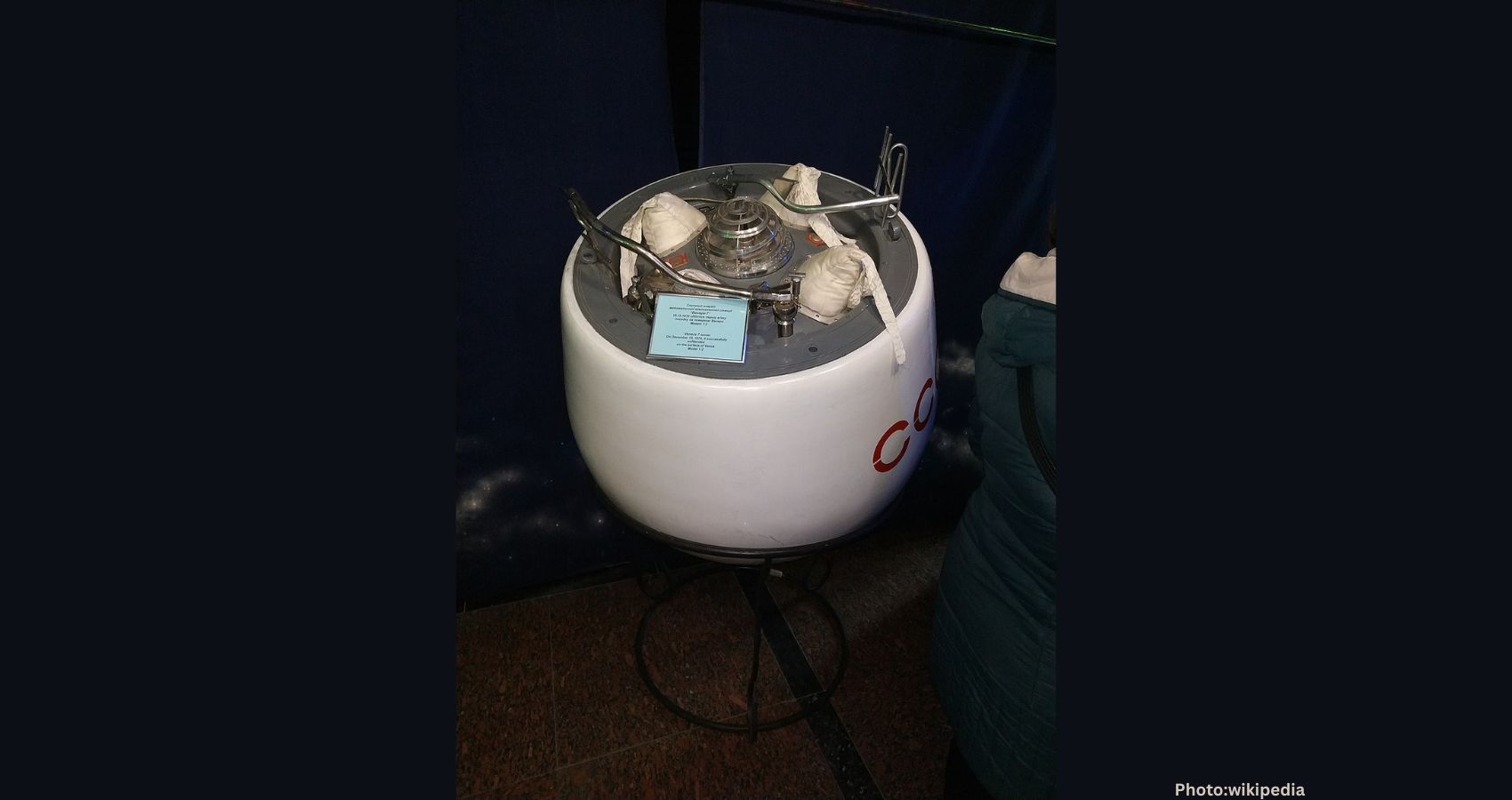
Soviet-era spacecraft Kosmos 482 reentered Earth’s atmosphere on Saturday after 53 years in orbit, following a failed attempt to launch toward Venus.
A Soviet spacecraft, known as Kosmos 482, made its uncontrolled reentry into Earth’s atmosphere on Saturday morning, marking the end of a 53-year journey that began with a failed mission to Venus.
The European Union Space Surveillance and Tracking confirmed the spacecraft’s reentry, noting that it had not been detected in subsequent orbits. The European Space Agency’s space debris office also reported the spacecraft’s reentry after it failed to appear on radar at a German monitoring station.
Details regarding the exact location of the spacecraft’s descent and whether any remnants survived the fiery reentry remain unclear. Experts had indicated prior to the event that some parts of the spacecraft, if not all, could potentially survive the descent, given its construction designed to withstand the extreme conditions of Venus, the hottest planet in the solar system.
Scientists assured the public that the likelihood of anyone being struck by debris from the spacecraft was exceedingly low.
Kosmos 482 was launched in 1972 by the Soviet Union as part of a series of missions aimed at exploring Venus. However, this particular mission was thwarted by a rocket malfunction, leaving the spacecraft stranded in Earth’s orbit.
Most of the spacecraft had already fallen back to Earth within a decade of its failed launch, but the spherical lander—estimated to be about 3 feet (1 meter) in diameter—was the last component to succumb to gravity’s pull. Encased in titanium, the lander weighed more than 1,000 pounds (495 kilograms).
As scientists and military experts tracked the spacecraft’s downward trajectory, they encountered challenges in predicting the exact timing and location of its reentry. Solar activity and the spacecraft’s deteriorating condition after decades in space contributed to the uncertainty surrounding its descent.
As of Saturday morning, the U.S. Space Command had not yet confirmed the spacecraft’s reentry, as it continued to collect and analyze data from orbit. The U.S. Space Command routinely monitors dozens of reentries each month, but Kosmos 482 garnered additional attention from both government and private space trackers due to its potential to survive the reentry process.
Unlike many other reentering objects, Kosmos 482 was coming in uncontrolled, without any intervention from flight controllers, who typically aim to direct old satellites and space debris toward vast expanses of water, such as the Pacific Ocean.
According to Fox News, the event marks a significant moment in the history of space exploration, highlighting the long-lasting legacy of Soviet space missions and the ongoing challenges of tracking and managing space debris.