
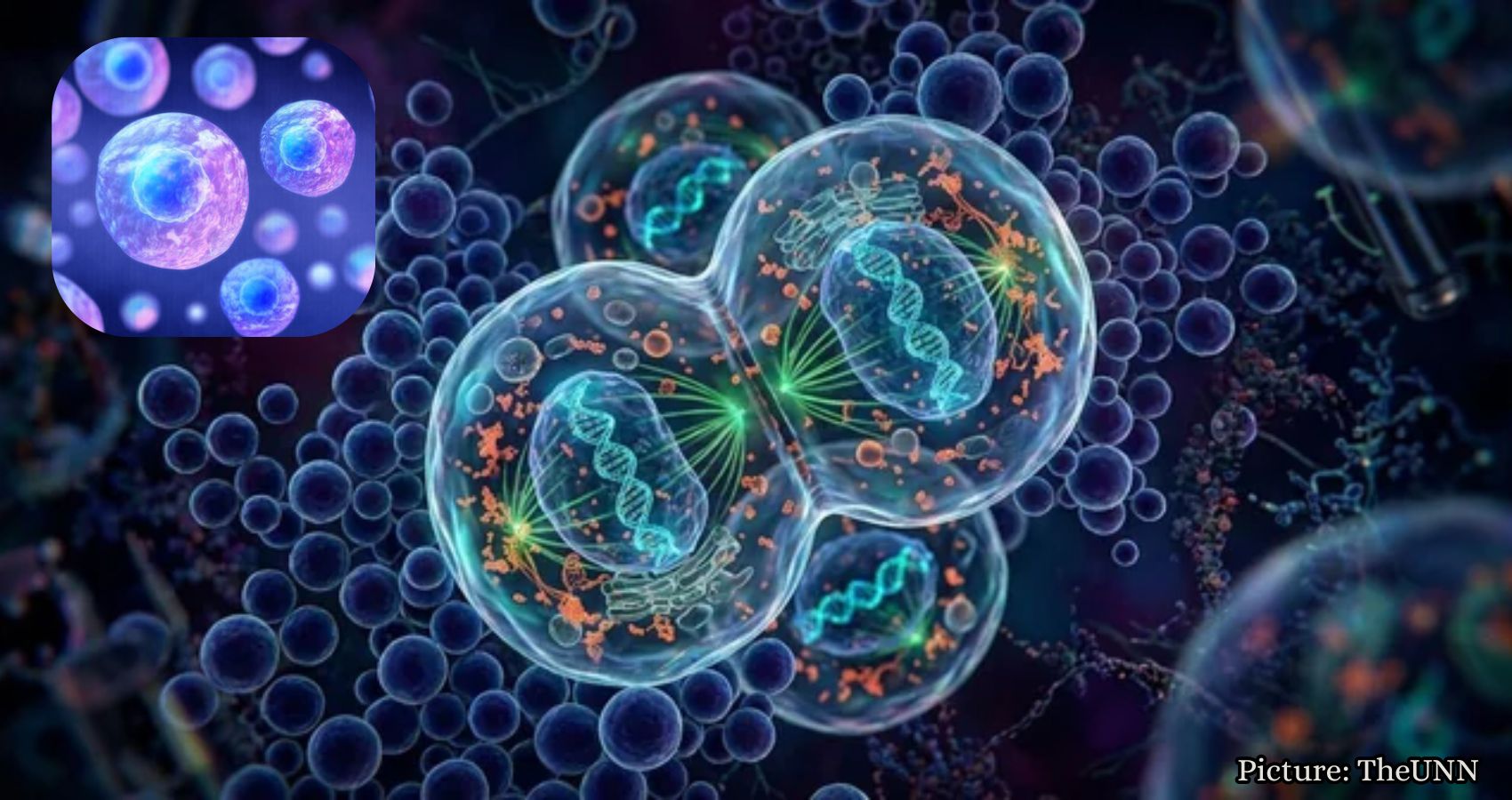
Researchers at the University of Minnesota have developed “SpudCell,” a synthetic cell that can grow, divide, and pass traits to offspring, marking a significant step toward artificial life.
Scientists at the University of Minnesota have announced the creation of “SpudCell,” which they describe as the most life-like synthetic cell to date. This laboratory-engineered system is composed entirely of nonliving components and is capable of growing, replicating its genetic material, dividing, and even passing beneficial traits to future generations.
The researchers view this achievement as a major milestone in the quest to construct artificial life. However, they caution that these synthetic cells are not equipped to survive outside of carefully controlled laboratory environments. They depend on externally supplied nutrients and specialized components to grow and divide.
The findings were published as a preprint on bioRxiv, indicating that the research has not yet undergone peer review. The team emphasized that one of the most ambitious goals in bioengineering is to create a biochemical system that transitions from mere chemistry to life itself.
According to the researchers, this work represents the first minimal cell with a cell cycle, genetically encoded growth and division, all coupled with selection and competition. The synthetic cell’s genome consists of 90,000 base pairs, enabling it to produce proteins, replicate its DNA, and undergo growth and division into daughter cells.
In an innovative twist, the researchers introduced a genetic mutation that enabled some synthetic cells to grow faster than others. Over several generations, these faster-growing cells produced more offspring, demonstrating a basic form of natural selection within the synthetic population.
The team believes that their work signifies key milestones toward the construction of synthetic life and could eventually lay the groundwork for fully artificial organisms designed for various biotechnology applications. Nevertheless, they acknowledge that the current system is significantly less capable than even the simplest living cells.
The limitations of SpudCell are notable; it cannot survive outside laboratory conditions and relies on ribosomes purified from E. coli bacteria. After five generations, only about 30% of the daughter cells retained the complete synthetic genome, highlighting the challenges that remain in achieving self-sustaining artificial life.
Despite these hurdles, the researchers assert that their work demonstrates the potential to recreate many of life’s defining characteristics using nonliving materials. However, they also recognize that advancements in synthetic cell technology could raise new biosafety and biosecurity concerns.
The authors of the study stated, “This project offers a significant milestone towards the evolvability of synthetic cells, making it more likely that more robust, autonomous systems will be available soon.” They further emphasized the urgent need to develop a safety and security framework for future synthetic cell engineering.
Future research will focus on enhancing the self-sufficiency of synthetic cells by enabling them to regenerate more of their own molecular machinery, improving the distribution of genomes during cell division, and allowing mutations to arise naturally rather than being artificially introduced by researchers.
As the field of synthetic biology continues to evolve, the implications of this research could be profound, paving the way for innovations that may redefine our understanding of life itself. The University of Minnesota research team has not yet commented on the broader implications of their findings.
According to Fox News, the progress made with SpudCell highlights both the potential and the challenges of creating life-like systems from nonliving materials.