
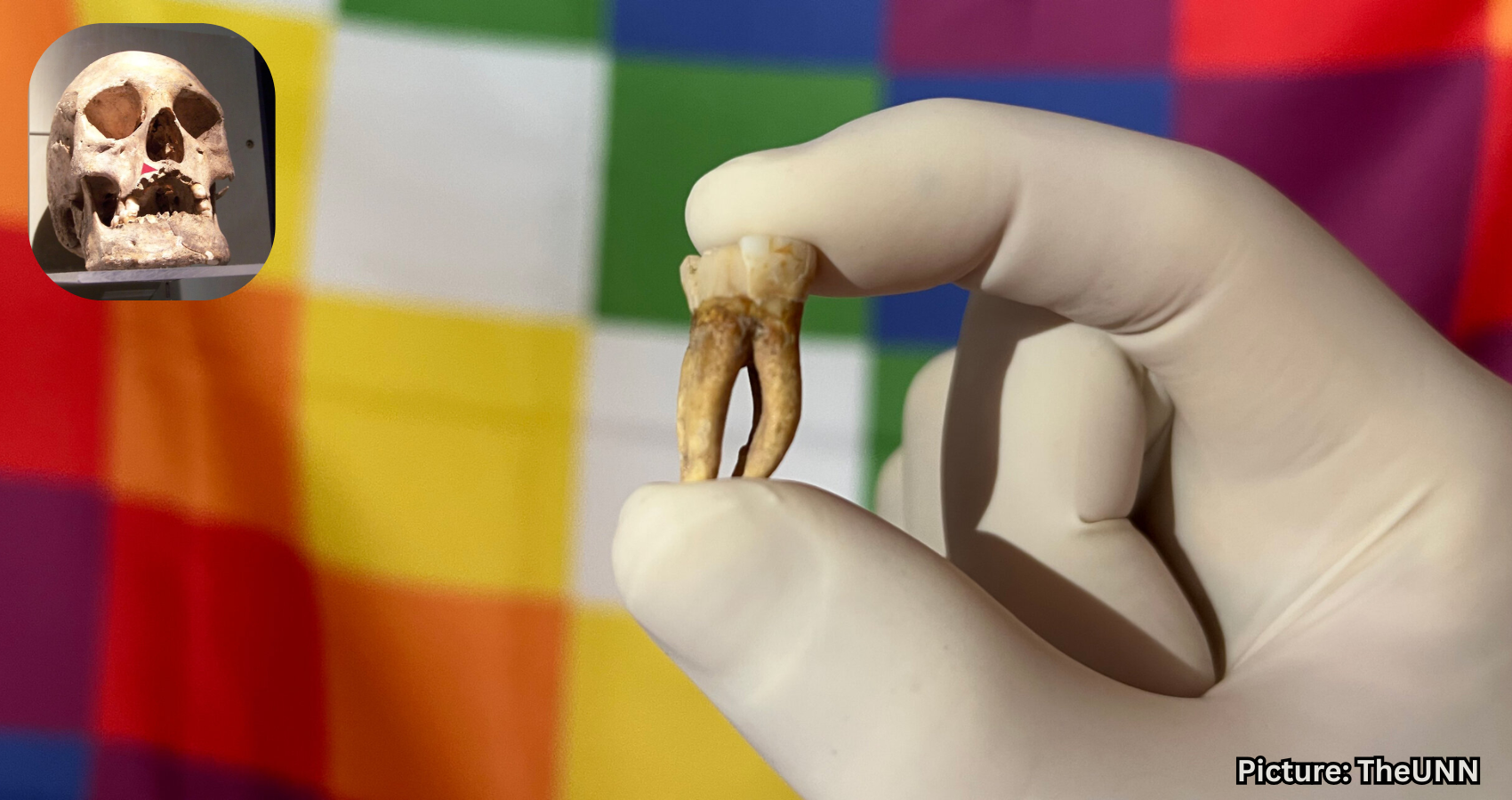
New research indicates that leprosy, caused by the bacterium Mycobacterium lepromatosis, existed in the Americas long before European explorers arrived, challenging previous historical assumptions about the disease.
Recent findings from scientists at the Institut Pasteur in Paris, France, have revealed that leprosy, also known as Hansen’s disease, was present in the Americas well before the arrival of European explorers. This discovery fundamentally alters the historical understanding of the disease and its origins in the region.
Traditionally, it was believed that leprosy was solely caused by the bacterium Mycobacterium leprae, which was thought to have been introduced to the Americas by early European settlers. However, the identification of a second bacterium, Mycobacterium lepromatosis, suggests that leprosy was already endemic among Indigenous populations in the Americas for over a millennium prior to European contact.
Dr. Maria Lopopolo, the first author of the study and a researcher at the Laboratory of Microbial Paleogenomics at the Institut Pasteur, emphasized the significance of this finding. “This discovery transforms our understanding of the history of leprosy in America. It shows that a form of the disease was already endemic among Indigenous populations well before the Europeans arrived,” she stated in a recent news release.
The study, which involved collaboration with the French National Center for Scientific Research and the University of Colorado, was initiated after Mycobacterium lepromatosis was detected in a Mexican patient in 2008 and later in red squirrels in the British Isles in 2016. Utilizing advanced genetic techniques, researchers reconstructed the genomes of Mycobacterium lepromatosis from ancient individuals in Argentina and Canada. The genetic analysis revealed that the two strains from these different regions were closely related, indicating that the bacteria spread rapidly across the continent.
According to the research, Mycobacterium lepromatosis had already disseminated throughout North and South America prior to European exploration. The study involved extensive collaboration with Indigenous communities, various international institutions, and archaeologists, allowing researchers to analyze over 800 DNA samples from ancient human remains and recent medical cases exhibiting signs of leprosy.
Nicolás Rascovan, the lead author of the study at the Institut Pasteur, remarked on the broader implications of the research. “We are just beginning to uncover the diversity and global movements of this recently identified pathogen,” he said. “This study allows us to hypothesize that there might be unknown animal reservoirs.” This statement highlights the potential for further discoveries regarding the transmission and history of leprosy.
The Centers for Disease Control and Prevention (CDC) notes that leprosy can affect the nerves, skin, and eyes of patients, but it is treatable with antibiotics. In the United States, approximately 225 individuals are diagnosed with Hansen’s disease each year, while around 250,000 cases are reported globally, according to the CDC.
This groundbreaking research not only reshapes the narrative surrounding leprosy in the Americas but also opens the door for further investigation into the disease’s history and its impact on Indigenous populations. The findings underscore the importance of understanding the complex interactions between humans and pathogens throughout history.
As scientists continue to explore the implications of this research, it serves as a reminder of the evolving nature of our understanding of infectious diseases and their historical contexts, challenging long-held beliefs and encouraging a reevaluation of the past.
For more information, refer to the original study conducted by researchers at the Institut Pasteur.