India on November 14, 2022 announced its long-term strategy to transition to a “low emissions” pathway at the United Nations Conference of Parties (COP) ongoing in Sharm el-Sheikh, Egypt, which is premised on expanding its nuclear power capacity by at least three-fold in the next decade, apart from becoming an international hub for producing green hydrogen and increasing the proportion of ethanol in petrol.
These steps, Environment Minister Bhupendra Yadav said, were consonant with India’s “five-decade journey” to net zero, or being carbon neutral by 2070 — a commitment made by Prime Minister Narendra Modi at Glasgow, where the 26th COP was held last year.
India on Monday released its long-term climate action strategy, detailing how it will take steps like rapidly expanding renewable energy sources and exploring a greater role for nuclear power to reach net zero emissions by 2070, but separately also turned up the heat on developed countries to do more.
Environment minister Bhupender Yadav, representing India at the UN Climate Conference (COP 27) at Sharm El Sheikh in Egypt, used two occasions at the summit to call on rich countries to do more: first, he said, some of them must reach net zero emissions even before 2030, and, second, they must elaborate on their immediate plans on how they plan to reach their targets since some have “turned back to fossil fuels” due to the ongoing energy crisis.
The first stance was made during the ministerial high-level roundtable on the pre-2030 ambition, where Yadav pointed out that rich nations had not met their commitments for the 2020 deadline. “So pre-2030 ambition must be measured in terms of whether countries are staying within their fair share of the carbon budget, taking note of both the historical period and in the future. By this scientific criterion, some developed countries must reach net zero even before 2030 and 2050 is not enough at all,” Yadav said in his intervention.
The other calls on rich countries to do more were articulated during the launch of India’s long-term low emission development strategy (LT-LEDS), which India released on Monday, becoming one of only 57 countries to do so.
“We also call upon developed countries to elaborate on their immediate plans on how they would achieve their targets. We see that following the current energy crisis, many have turned back to increased fossil fuels for energy security. It is not enough to say that targets for emissions reduction will be met, when the reality is that they will unequally consume even more of the carbon budget,” Yadav said.
“In a COP of Implementation, it is essential to make progress on adaptation and loss and damage. Now is the time to tell the developing world how the promise of USD 100 billion is to be met. We, at Glasgow, noted with regret that it is indeed not being met. The world would like to know how the resources for meeting the world’s adaptation needs, whose estimates are rising constantly, are to be mobilised.”
First, India has contributed little to global warming despite being home to a sixth of the world’s population; Second, India has significant energy needs for development; Third, India is committed to pursuing low-carbon strategies for development and, fourth, India need’s climate resilience.
“The LT-LEDS has been prepared in the framework of India’s right to an equitable and fair share of the global carbon budget. This is the practical implementation of India’s call for “climate justice,” he said.
Developments over recent days suggest rifts are widening over developing nations such as India and developed countries over the climate crisis action plan.
US Special Climate Envoy John Kerry said on Sunday that a few countries have resisted mentioning a global goal of limiting warming to 1.5°C in the official text of the COP 27, Euronews reported.
Picture : Outlook India
A senior delegate from India also said on Saturday that during meetings on mitigation work programmes (MWP) – measures that relate to lowering emissions — rich countries outlined the top 20 emitters and insisted that the measures be addressed to these.
This is key because many of the top emitters in absolute terms are developing countries like India, China and Brazil, but in per capita terms, and when historical emissions are considered, their role in the warming of the planet has demonstrably lower than industrialised western nations.
Observers also said US and other Annex 1 countries were trying to selectively push a language on 1.5°C goal that goes against principles of equity and “common but differentiated responsibilities” that were agreed upon under the Paris Agreement, and indirectly pushes all countries to embrace net zero emission goals by 2050.
“You cannot selectively use the 1.5°C goal for cover text when finance to achieve that goal has not come through. We will oppose such moves because it’s not equitable” said a member of the Indian delegation, asking not to be named.
Scientists and independent experts have already said that the 1.5 degree C goal seems practically impossible to achieve under current circumstances and the world needs to immediately cut emissions to levels last recorded in 2020, when widespread lockdowns shut industrial and civilian activity across the world for months on end.
“It’s developing countries who will face far more severe consequences if we breach the target of limiting the global temperature rise to 1.5°C. Rich industrialised countries are cherry-picking language from the climate talks at COP 27 to shift the blame to poorer nations, while using all possible tricks to delink emissions reduction targets with equity and their obligation to provide scaled up finance,” said Harjeet Singh, Head of Global Political Strategy, Climate Action Network International.
INDIA’S LONG-TERM PLAN
The submission to the LT-LEDS builds on India’s nationally determined contributions (NDCs) declared at the UN Framework Convention on Climate Change in August, as part of the binding commitments that have to be made under the Paris Agreement.
Picture : The New YOrk Times
The NDCs articulate a net zero commitment by 2070, and vow that India will reduce the emissions intensity of its gross domestic product (GDP) by 46% from 2005 levels by 2030, and achieve about 50% cumulative electric power installed capacity from non-renewable sources by the end of this decade.
The long-term plan now builds on the 2070 goal with six elements: These include: expanding renewables and strengthening the grid; exploring a greater role for nuclear energy and enhancing support for R&D into future technologies such as green hydrogen, fuel cells, and biofuels; appropriate demand-side measures such as energy efficiency improvements; rational utilisation of fossil fuel resources; enabling a focused transition towards low carbon development; and optimum energy mix complimenting national development scenarios.
The strategic transitions will be sectors including electricity, transport, urbanisation, industry, CDR (carbon dioxide removal), forests, finance and investment, research and innovation, adaptation and resilience, LiFE – Lifestyle for Environment, and international cooperation. Under electricity for example, the focus will be on expanding renewables and strengthening the grid.
On carbon removal, the focus will be on economic, technical and political feasibility of carbon capture utilisation and storage (CCUS), which is highly uncertain according to officials from the Indian delegation.
A transition to a low-carbon development pathway will involve costs, pertaining to the deployment of new technologies, development of new infrastructure, and other transaction costs. “In the longer term, such a transition will also have broader economic impacts. Several estimates regarding India’s financial needs exist. Many of them focus on the energy sector, including industry, buildings, and transport. Estimates vary across studies due to differences in assumptions, coverage, and modelling approaches, but fall in the range of trillions of dollars by 2050. In general, finance needs – and the domestic financing gap – are considerable, indicating a need for greater international support,” the LT-LEDS report has said.
Meeting finance needs require mobilising and scaling up financial resources internationally as well as mobilising domestic finance. International sources include multilateral and bilateral sources, dedicated climate funds, international institutional investors, and the private sector will be key.
“India’s LT-LEDS is an important statement of intent to pursue low-carbon strategies for development, and a sound beginning toward doing so,” said Navroz K Dubash, professor, Centre for Policy Research, which anchored the research for India’s long-term strategy. The strategy is firmly, and appropriately, anchored in considerations of climate equity. It calls for developed countries to undertake early net-zero and to provide adequate finance and technology in support of India’s plans for low-carbon development, CPR said in a statement.
“India’s LT-LEDS should be viewed as a living document. Future iterations should emphasize robust and transparent modelling towards net-zero by 2070, clearer identification of sectoral co-benefits and trade-offs, and more detailed discussion with states,” Dubash added.
PUSH ON FINANCE
At the ministerial that Yadav addressed earlier, India also made it clear that carbon offsets of the kind US announced on November 9, called the Energy Transition Accelerator (ETA), may not be able address climate finance needs of developing countries. “Leaving it to markets alone will not help. Markets function well in normal times, but either do not function or function very inequitably in moments of crises. We see this with the energy crisis in developed countries,” Yadav said.
Yadav called for an “ambitious flow of financial resources from various sources”, with “with developed countries playing a pivotal role in incentivising flows to developing countries so that finance-the key means of implementation- is at grant/concessional rates”.
“Access to finance and technology in developing countries is a must-have if we expect to protect our Earth and ourselves from apocalyptic changes. The commitment made by the developed countries to mobilize $100bn from diverse sources by 2020 was a meagre amount and remains unachieved till now. The current needs of developing countries are estimated to be in the order of trillions,” Yadav said.
There are several estimates of climate finance flown till now. The Organisation for Economic Co-operation and Development (OECD) estimates the flows to be USD 83.3 billion in 2020 and USD79.9 billion in 2018, while Oxfam estimates the amount to be in the range of US$19-22.5 billion per year since 2017-18. Other estimates from UNFCCC put it at $ 45.4 billion in 2017 and $51.8 billion in 2018, the minister’s statement said.
“Evidently, there is no understanding of what really comprises climate finance. Transparency and Trust are the backbones of all multilateral discussions,” Yadav said.
Signaling the emergence of India as a significant player on the global scene, India will officially assume the Presidency of the G20 (Group of 20) countries, one of the most consequential amongst current-day multilateral bodies, on December 1st, 2022 at the conclusion of the Indonesian presidency.
Releasing the logo, theme, and website of India’s G20 Presidency, India’s Prime Minister Narendra Modi said on November 8th, 2022, “India’s G20 presidency is coming at a time of crisis and chaos in the world. The world is going through the after-effects of a disruptive once-in-a-century pandemic, conflicts, and a lot of economic uncertainty.’’
Picture : The Quint
The current G20 Summit is being organized in Bali, Indonesia from November 15-16, 2022. Heads of states from the world’s largest economies are attending – although Russian President Vladimir Putin has decided not to attend in-person. With unstable global political conditions due to the COVID-19 pandemic, the war in Ukraine, energy issues, as well as global economic downturn, this is believed to be the most challenging G20 summit yet.
President Joe Biden is confronting competing issues at home and abroad while he’s at the Group of 20 Summit in Bali this week, using the moment on the world’s stage to lean into international support for condemning Russia’s aggression.
The G20 was conceived in 1999, while the repercussions of the Mexican peso crisis (1994), Asian financial crisis (1997) and the Russian ruble crisis (1998) were still being felt. The G20 forum was first established to respond to the global crisis, including the Asian financial crisis in 1997, the September 11 attacks in New York in 2001, the US subprime mortgage crisis in 2008, and the European debt crisis in 2011.
In a meeting of finance ministers and presidents of central banks of the G7, it was decided to expand the group and make it more representative in order to generate policies that would have a wider impact on the global economy. A group of key emerging economies was invited to a new forum of finance ministers and presidents of Central Banks. This became the G20.
The G20 was upgraded to the Summit level from the finance ministers and presidents of central banks, and became the main instrument to face the global financial crisis of 2007-’08 and beyond.
Picture : News 18
The G20 is an international forum that includes 19 of the world’s largest economies including both industrialized and developing nations, and the European Union. Its core mandate is to address the major challenges related to the global economy and financial architecture such as international financial stability, climate change mitigation, and sustainable development among others. It seeks to evolve public policies to resolve them.
Together, the G20 members represent 85% of the global gross product; 75% of international trade; two-thirds of the world population; 80% of global investments in research and development, and 60% of the world land area.
Because the G-20 is a forum, its agreements or decisions are not legally binding but they do influence countries’ policies and spur global cooperation. The G20 is small and cohesive enough to allow concrete in-person discussions to find solutions to the new challenges on the international economic and financial agenda, and is broad and inclusive enough to represent the vast majority of world economic production.
While economic and financial issues tend to lead the agenda, other areas have gained prominence in recent years. New additions include participation of women in the labour market, sustainable development, global health, fight against terrorism and inclusive ventures, among others.
The group’s stature has risen significantly during the past decade. It is, however, also criticized for its limited membership, lack of enforcement powers, and for the alleged undermining of existing international institutions. Summits are often met with protests, particularly by anti-globalization groups.
The G20 seeks to enrich the content of its dialogues by encouraging the participation of civil society through affinity groups. Each of them focuses on an issue of global importance and meets independently throughout the year. From the dialogue in the various meetings, each group delivers a series of recommendations to the G20. Currently, the affinity groups comprise of: Business 20 (B20), Civil 20 (C20), Labour 20 (L20), Science 20 (S20), Think 20 (T20), Women 20 (W20), Youth 20 (Y20).
Modi, Biden review India-U.S. ties during their meeting in Bali
Prime Minister Narendra Modi and US President Joe Biden on Tuesday reviewed the state of India-US strategic partnership including in sectors like critical and emerging technologies and artificial intelligence.
The two leaders also discussed topical global and regional developments in their meeting that took place on the margins of the G-20 summit in this Indonesian city, the Ministry of External Affairs (MEA) said. It is understood that the Ukraine conflict and its implications figured in the discussions.
The MEA said the two leaders expressed satisfaction about close cooperation between India and US in new groupings such as Quad and I2U2.
“Prime Minister Narendra Modi met President of USA, Joseph R Biden on the margins of G-20 Leaders’ Summit in Bali today,” the MEA said.
“They reviewed the continuing deepening of the India – US strategic partnership including cooperation in future oriented sectors like critical and emerging technologies, advanced computing, artificial intelligence, etc,” it said in a statement.
The MEA said the two leaders discussed topical global and regional developments.
“PM Modi thanked President Biden for his constant support for strengthening the India-US partnership. He expressed confidence that both countries would continue to maintain close coordination during India’s G-20 Presidency,” it said.
While the Quad comprises India, the US, Australia and Japan, the members of the I2U2 are the US, the United Arab Emirates and Israel.
India is currently part of the G20 Troika (current, previous, and incoming G20 Presidencies) comprising Indonesia, Italy, and India.
The prime minister is attending the summit at the invitation of Indonesian President Joko Widodo. Indonesia is the current chair of the G-20.
A baby born somewhere on November 15 was the world’s eighth billionth person, according to a projection by the United Nations. “The milestone is an occasion to celebrate diversity and advancements while considering humanity’s shared responsibility for the planet,” U.N. Secretary-General Antonio Guterres said in a statement.
The world’s population reached 8 billion people on Tuesday, November 15, 2022 representing a “milestone in human development” before birth rates start to slow, according to a projection from the United Nations.
Picture : News 18
In a statement, the UN said the figure meant 1 billion people had been added to the global population in just 12 years. “This unprecedented growth is due to the gradual increase in human lifespan owing to improvements in public health, nutrition, personal hygiene and medicine. It is also the result of high and persistent levels of fertility in some countries,” the UN statement read.
Middle-income countries, mostly in Asia, accounted for most of the growth over the past decade, gaining some 700 million people since 2011. India added about 180 million people, and is set to surpass China as the world’s most populous nation next year.
But even while the global population reaches new highs, demographers note the growth rate has fallen steadily to less than 1% per year. This should keep the world from reaching 9 billion people until 2037. The UN projects the global population will peak at around 10.4 billion people in the 2080s and remain at that level until 2100.
Most of the 2.4 billion people to be added before the global population peaks will be born in sub-Saharan Africa, according to the UN, marking a shift away from China and India.
Environmental impact
Reaching an 8 billion global population “is an occasion to celebrate diversity and advancements while considering humanity’s shared responsibility for the planet,” UN Secretary General António Guterres said in the UN statement.
Picture : Visual Capitalist
Having more people on Earth puts more pressure on nature, as people compete with wildlife for water, food and space. Meanwhile, rapid population growth combined with climate change is also likely to cause mass migration and conflict in coming decades, experts say.
And whether it’s food or water, batteries or gasoline, there will be less to go around as the global population grows. But how much they consume is equally important, suggesting policymakers can make a big difference by mandating a shift in consumption patterns.
Carbon emissions of the richest 1%, or about 63 million people, were more than double the emissions of the poorest half of humanity between 1990 and 2015, according to a 2020 analysis by the Stockholm Environment Institute and non-profit Oxfam International.
Resource pressure will be especially daunting in African nations, where populations are expected to boom, experts say. These are also among the countries most vulnerable to climate impacts, and most in need of climate finance. Since 1800, the world’s population has jumped eight-fold, from an estimated one billion to eight billion.
US President Joe Biden has promised there will be no “new Cold War” with China, following a conciliatory meeting with Chinese President Xi Jinping. He also said he did not believe China would invade Taiwan.
It was the first in-person meeting between the two superpower leaders since Mr Biden took office. The pair also discussed North Korea and Russia’s invasion of Ukraine at the talks in Bali, a day before the G20 summit on the Indonesian island.
In a three-hour meeting held at a luxury hotel shortly after Mr Xi’s arrival, the leaders discussed a wide range of topics including Taiwan.
Claimed by Beijing, the self-governed island counts the US as an ally, and has always been a thorny issue in US-China relations.
Tensions spiked in August when US House Speaker Nancy Pelosi visited Taiwan. China responded with large-scale military exercises around the island, prompting fears of a possible conflict between the US and China.
A readout to Chinese state media on Monday said Mr Xi had stressed that Taiwan remained “the core of China’s core interests… and the first red line in US-China relations that cannot be crossed”.
In recent weeks US officials have warned that China may escalate plans to invade Taiwan. Reporters on Monday asked Mr Biden if he believed this to be true, and if he thought a new Cold War was brewing.
“I absolutely believe there need not be a new Cold War. I have met many times with Xi Jinping and we were candid and clear with one another across the board. I do not think there is any imminent attempt on the part of China to invade Taiwan,” he said.
“I made it clear we want to see cross-strait issues to be peacefully resolved and so it never has to come to that. And I’m convinced that he understood what I was saying, I understood what he was saying.”
Mr Biden said the two leaders had agreed to set up a mechanism where there would be dialogues at key levels of government to resolve issues. Secretary of State Antony Blinken will also be visiting China soon, he said.
He added that he had made it clear to Mr Xi that “our policy on Taiwan has not changed at all. It’s the same exact position that we have had”.
Mr Biden has repeatedly said the US will defend Taiwan if it is attacked by China. It has been seen as a departure from the long-held US policy of “strategic ambiguity” over Taiwan, under which it does not commit to defending the island. Officials have rowed back on his statements.
The US has long walked a tightrope over the Taiwan issue. A cornerstone of its relationship with Beijing is the One China policy, where Washington acknowledges only one Chinese government – in Beijing – and has no formal ties with Taiwan.
But it also maintains close relations with Taiwan and sells arms to it under the Taiwan Relations Act, which states that the US must provide the island with the means to defend itself.
Competition, not conflict
Besides Taiwan, Mr Xi and Mr Biden’s discussion also covered concerns over North Korea and Russia’s invasion of Ukraine, according to readouts from both sides.
Mr Biden also raised concerns about human rights issues in China, including the treatment of the Uyghurs in Xinjiang, Hong Kong and Tibet.
Both leaders strove to signal to each other – and to the rest of the world watching their meeting – that they were aware that global stability rested on relations between their two countries, and that they would act responsibly.
In recent days Mr Biden and US officials have been at pains to signal their aim of conciliation, stressing repeatedly that the US does not want conflict with China, while maintaining a sense of strong competition.
Mr Xi appeared to be on the same page, acknowledging in the meeting’s opening remarks that “we need to chart the right course for the China-US relationship”, given that “the world has come to a crossroads”.
Later in the Chinese readout, Mr Xi said that “China-US relations should not be a zero-sum game in which you rise and I fall… the wide Earth is fully capable of accommodating the development and common prosperity of China and the United States”.
Wen-ti Sung, a political scientist who teaches with the Australian National University’s Taiwan Studies programme, noted that there were “few substantive agreements”.
Both leaders get a win, he said. “Xi shows he’s not intimidated by Biden, like US and China are true equals.”
Meanwhile Biden is given a pass on “the US pushing the envelope on Taiwan, and the two sides agreeing to improve dialogue reassures other countries”.
Political scientist Ian Chong of the National University of Singapore said: “The tone I think was overall positive. There’s some recognition that there’s common interests, and these include not letting the relationship spiral out of control.
“But I would still be somewhat cautious. Given the volatility in China-US relations, they have starts and stops.”
The former Israeli prime minister Benjamin Netanyahu has begun coalition negotiations on forming a government, after winning a decisive majority in Israel’s fifth election in four years with the help of ultra-Orthodox parties and a new alliance with the far right.
After a year in opposition, and years of political chaos triggered by his ongoing corruption trial, the veteran politician engineered a comeback in Tuesday’s vote. His majority means that the period of electoral deadlock is in all probability over for now, and Netanyahu – already the country’s longest serving prime minister – is set to stay in the job for at least the next four years. Back in office, the 73-year-old’s first priority will be seeking to get his trial dropped. He denies all charges.
Some of Israel’s allies abroad are concerned about the possibility that Benjamin Netanyahu will appoint far-right politicians to key positions as he forms a new government.
Jewish nationalist Itamar Ben-Gvir, who met with Netanyahu on Monday, is expected to become a senior Cabinet minister. He could face a boycott by the Biden administration, according to a former Obama administration official.
“I think the U.S. is likely to boycott him,” said David Makovsky of the Washington Institute for Near East Policy, who worked on Israeli-Palestinian peace talks under former President Barack Obama. “I have reason to think that they are strongly considering this.”
President Biden congratulated Netanyahu in a call Monday. Neither Netanyahu’s office nor the White House mentioned the topic of Ben-Gvir.
Convicted by an Israeli court in 2007 for inciting anti-Arab racism, Ben-Gvir stoked tension with Palestinians this year when he visited the Al-Aqsa Mosque compound, or Temple Mount, a contested religious site where there is often violence between Israeli police and Muslim worshippers. “We’re the master of the house here,” Ben-Gvir said.
Now Ben-Gvir hopes Netanyahu will appoint him as public security minister, whose duties would include policing and access at the site — though Netanyahu hasn’t announced his choice.
“Having someone who’s going to, I fear, play with matches, given this flammable piece of real estate, I think is a real danger,” Makovsky said. “I think [Netanyahu is] going to be swimming upstream if he feels that he’s going to be able to normalize the position of Itamar Ben-Gvir.”
Netanyahu has sought to calm fears, assuring his government’s policy would be “responsible” without “pointless adventures.” Ben-Gvir said in an op-ed Monday, “I have matured, moderated.”
Danny Danon, a Netanyahu ally hoping to be the next speaker of parliament, argues Israel will maintain good ties with the Biden administration because Netanyahu, not Ben-Gvir, will be in charge of that relationship.
“I think all the issue of Ben-Gvir, it’s overblown,” Danon told NPR. “We will be running the government, and we will be dealing with the important issues … and we proved in the past that we can be responsible about many of the issues, concerning foreign and domestic issues.”
Other potential members of Netanyahu’s emerging government are religious fundamentalists who support weakening Israel’s Supreme Court and have demonstrated hostility to LGBTQ rights and Palestinian citizens of Israel.
The Anti-Defamation League and the American Jewish Committee, two major U.S. Jewish groups, voiced concern. So has a Democratic member of Congress, and there are U.S. news reports of top American officials raising the issue as well. And according to Israeli news reports, the foreign minister of the United Arab Emirates also warned that including certain far-right politicians in the Israeli government could hurt their countries’ relations, even as Netanyahu hopes to forge more diplomatic deals with Arab countries.
Sara Greenberg, who served as Netanyahu’s adviser from 2018 to 2019 on foreign affairs and worldwide Jewish communities, warned about allowing “extremism” in the upcoming Cabinet.
“Any move perceived as infringing on Israel’s democratic and pluralistic nature will have a damaging effect on Israel’s relationship with world Jewry, not to mention the free world,” Greenberg told NPR. “The strength of Israel’s democracy — and also its relationship with world Jewry — hinges on how the government portfolios are assigned and how the coalition acts.” (Netanyahu’s far-right Israeli government allies could face U.S. boycott : NPR)
(AP) — “Cooperate or perish,” the United Nations chief told dozens of leaders gathered Monday for international climate talks, warning them that the world is “on a highway to climate hell” and urging the two biggest polluting countries, China and the United States, to work together to avert it.
This year’s annual U.N. climate conference, known as COP27, comes as leaders and experts have raised increasing alarm that time is running out to avert catastrophic rises in temperature. But the fire and brimstone warnings may not quite have the effect as they have had in past meetings because of multiple other challenges of the moment pulling leaders’ attention — from midterm elections in the U.S. to the Russia-Ukraine war.
More than 100 world leaders will speak over the next few days at the gathering in Egypt. Much of the focus will be on national leaders telling their stories of being devastated by climate disasters, culminating Tuesday with a speech by Pakistan Prime Minister Muhammad Sharif, whose country’s summer floods caused at least $40 billion in damage and displaced millions of people.
“Is it not high time to put an end to all this suffering,” the summit’s host, Egyptian President Abdel Fattah el-Sissi, told his fellow leaders. “Climate change will never stop without our intervention… Our time here is limited and we must use every second that we have.”
El-Sisi, who called for an end to the Russia-Ukraine war, was gentle compared to a fiery United Nations Secretary-General Antonio Guterres, who said the world “is on a highway to climate hell with our foot on the accelerator.”
He called for a new pact between rich and poor countries to make deeper cuts in emissions with financial help and phasing out of coal in rich nations by 2030 and elsewhere by 2040. He called on the United States and China — the two biggest economies — to especially work together on climate, something they used to do until the last few years.
“Humanity has a choice: cooperate or perish,” Guterres said. “It is either a Climate Solidarity Pact – or a Collective Suicide Pact.”
Guterres insisted, “Today’s urgent crises cannot be an excuse for backsliding or greenwashing.” But bad timing and world events were hanging over the gathering.
Most of the leaders are meeting Monday and Tuesday, just as the United States has a potentially policy-shifting midterm election. Then the leaders of the world’s 20 wealthiest nations will have their powerful-only club confab in Bali in Indonesia days later.
Leaders of China and India — both among the biggest emitters — appear to be skipping the climate talks, although underlings are here negotiating. The leader of the top polluting country, U.S. President Joe Biden, is coming days later than most of the other presidents and prime ministers on his way to Bali.
“There are big climate summits and little climate summits and this was never expected to be a big one,” said Climate Advisers CEO Nigel Purvis, a former U.S. negotiator.
United Kingdom Prime Minister Rishi Sunak was initially going to avoid the negotiations, but public pressure and predecessor Boris Johnson’s plans to come changed his mind. New King Charles III, a longtime environment advocate, won’t attend because of his new role. And Russia’s leader Vladimir Putin, whose invasion of Ukraine created energy chaos that reverberates in the world of climate negotiations, won’t be here.
“We always want more” leaders, United Nations climate chief Simon Stiell said in a Sunday news conference. “But I believe there is sufficient (leadership) right now for us to have a very productive outcome.”
In addition to speeches given by the leaders, the negotiations include “innovative” roundtable discussions that “we are confident, will generate some very powerful insights,” Stiell said.
“The historical polluters who caused climate change are not showing up,” said Mohammed Adow of Power Shift Africa. “Africa is the least responsible, the most vulnerable to the issue of climate change and it is a continent that is stepping up and providing leadership.”
“The South is actually stepping up,” Adow told The Associated Press. “The North that historically caused the problem is failing.”
For the first time, developing nations succeeded in getting onto the summit agenda the issue of “loss and damage” — demands that emitting countries pay for damage caused by climate-induced disasters.
Nigeria’s Environment Minister Mohammed Abdullahi called for wealthy nations to show “positive and affirmative” commitments to help countries hardest hit by climate change. “Our priority is to be aggressive when it comes to climate funding to mitigate the challenges of loss and damage,” he said.
Monday was heavily dominated by leaders of nations victimized by climate change — not those that have created the problem of heat-trapping gases warming up the atmosphere from the burning of fossil fuel. It will be mostly African nations and small island nations and other vulnerable nations that will be telling their stories.
And they are dramatic ones, droughts in Africa and floods in Pakistan, in places that could least afford it. For the first time in 30 years of climate negotiations, the summit “should focus its attention on the severe climate impacts we’re already seeing,” said World Resources International’s David Waskow.
“We can’t discount an entire continent that has over a billion people living here and has some of the most severe impacts,” Waskow said. “It’s pretty clear that Africa will be at risk in a very severe way.’’
Leaders come “to share the progress they’ve made at home and to accelerate action,” Purvis said. In this case, with the passage of the first major climate legislation and $375 billion in spending, Biden has a lot to share, he said.
While it’s impressive that so many leaders are coming to the summit, “my expectations for ambitious climate targets in these two days are very low,” said NewClimate Institute’ scientist Niklas Hohne. That’s because of Putin’s invasion of Ukraine which caused energy and food crises that took away from climate action, he said. (Follow AP’s climate and environment coverage at https://apnews.com/hub/climate-and-environment)
India’s External Affairs Minister (EAM) S. Jaishankar met with Russian Deputy Prime Minister Denis Manturov and the Russian Foreign Minister Sergey Lavrov in Moscow on Tuesday, during his first visit to Russia since the war in Ukraine began, and amidst a number of U.S.-based reports on a possible role for India to mediate in the conflict.
In his opening remarks, he also said that the Covid-19 pandemic, financial pressures and trade difficulties had taken a toll on the global economy.
“We are now seeing the consequences of the Ukraine conflict on top of that. There are also the more perennial issues of terrorism and climate change, both of which have a disruptive impact on progress and prosperity,” he said.
“Our talks will address the overall global situation as well as specific regional concerns,” he said.
Jaishankar arrived in Moscow on Monday evening on a two-day visit amid growing global concerns over increasing hostilities between Russia and Ukraine.
“India and Russia engage each other in an increasingly multi-polar and re-balanced world. We do so as two polities who have had an exceptionally steady and time-tested relationship. In that background, I look forward to our talks,” he said.
Dr. Jaishankar’s meeting with Manturov, who is also the Minister for Trade and Industry, focus sed on improving bilateral economic cooperation at a time when India-Russia bilateral trade has reportedly tripled, and Indian imports of Russian oil have grown more than 20 times in the past year.
Responding to a question on imports of Russian oil, External Affairs Minister S Jaishankar Tuesday stated that buying oil from Moscow works to India’s advantage and asserted that he would “like to keep that going”. India’s procurement of discounted Russian crude oil has seen a massive increase in the last few months, despite rising disquiet in many Western capitals. Jaishankar’s remarks came in the backdrop of his meeting with Russian Foreign Minister Sergey Lavrov in Moscow.
According to the latest figures for October, Russia is now India’s largest supplier of oil, surpassing Saudi Arabia and Iraq, leaping from 43,400 barrels per day (bpd), which made up just 0.2% of total exports last year, to 9,35,556 bpd which is about 22% of the total intake this year. Indian and Russian Central banks have also been in talks in the past few months about developing the Rupee-Rouble payment mechanism that will allow them to circumnavigate U.S. and European Union sanctions on Russia over the war.
Cooperation at multilateral formats, including the UN, Shanghai Cooperation Organisation (SCO), G-20, and Russia-India-China dialogues will also be on the agenda for talks. India’s steadfast refusal to vote against Russia at any of the United Nations votes on the war in Ukraine has been appreciated by Moscow, and President Vladimir Putin praised India and Prime Minister Narendra Modi twice in the past few weeks, for India’s “talented” population, and the “independent foreign policy” it has chosen. Mr. Putin also said Russia had increased fertilizer supplies to India “7.6” times after a request from Mr. Modi.
“Our meeting today, is of course, devoted to assessing the state of our bilateral cooperation; exchanging perspectives on the international situation and what that means to our respective interests,” Jaishankar said.
“Our position on the conflict in Ukraine is pretty clear. We have always emphasised on the need for return to dialogue and diplomacy. I’m sure that External Affairs Minister would certainly be reiterating. But beyond that, I cannot say what they will discuss or what not,” Ministry of External Affairs spokesperson Arindam Bagchi said, when asked about whether Dr. Jaishankar would speak to Mr. Lavrov about ending the war.
“Russia and India stand for the active formation of a more just and equal polycentric world order, and proceed from the inadmissibility of promoting the imperialist diktat on the global arena,” the Russian Foreign Ministry added, in a veiled reference to Western countries, which are working on the next round of economic sanctions against Russia. In a meeting last week, G-7 countries announced a coordination mechanism for efforts to support Ukraine, and France plans to host an international conference on December 13 to discuss the war.
The election of Joe Biden as president has led to a dramatic shift in America’s international image. Throughout Donald Trump’s presidency, publics around the world held the United States in low regard, with most opposed to his foreign policies. This was especially true among key American allies and partners. Now, a new Pew Research Center survey of 16 publics finds a significant uptick in ratings for the U.S., with strong support for Biden and several of his major policy initiatives.
How we did this
In each of the 16 publics surveyed, more than six-in-ten say they have confidence in Biden to do the right thing in world affairs. Looking at 12 nations surveyed both this year and in 2020, a median of 75% express confidence in Biden, compared with 17% for Trump last year.
During the past two decades, presidential transitions have had a major impact on overall attitudes toward the U.S. When Barack Obama took office in 2009, ratings improved in many nations compared with where they had been during George W. Bush’s administration, and when Trump entered the White House in 2017, ratings declined sharply. This year, U.S. favorability is up again: Whereas a median of just 34% across 12 nations had a favorable overall opinion of the U.S. last year, a median of 62% now hold this view.
In France, for example, just 31% expressed a positive opinion of the U.S. last year, matching the poor ratings from March 2003, at the height of U.S.-France tensions over the Iraq War. This year, 65% see the U.S. positively, approaching the high ratings that characterized the Obama era. Improvements of 25 percentage points or more are also found in Germany, Japan, Italy, the Netherlands and Canada.
Still, attitudes toward the U.S. vary considerably across the publics surveyed. For instance, only about half in Singapore and Australia have a favorable opinion of the U.S., and just 42% of New Zealanders hold this view. And while 61% see the U.S. favorably in Taiwan, this is actually down slightly from 68% in a 2019 poll.
In most countries polled, people make a stark distinction between Biden and Trump as world leaders. Nearly eight-in-ten Germans (78%) have confidence in Biden to do the right thing in world affairs; a year ago, just 10% said this about Trump. Similar differences are found in Sweden, Belgium and the Netherlands, and in all nations where a trend is available from 2020 there is a difference of at least 40 percentage points.
As is the case with views of the United States as a whole, confidence in U.S. presidents has shifted dramatically over the past two decades, especially in Western Europe. In Germany, the United Kingdom, Spain and France – four nations Pew Research Center has surveyed consistently – ratings for Bush and Trump were similarly low during their presidencies, while this year confidence in Biden is fairly similar to the ratings Obama received while in office.
Biden’s high ratings are tied in part to positive assessments of his personal characteristics, and here again the contrast with Trump is stark. Looking at 12 countries polled during the first year of both their presidencies, a median of 77% describe Biden as well-qualified to be president, compared with 16% who felt this way about Trump. Few think of Biden as arrogant or dangerous, while large majorities applied those terms to Trump. Assessments of the two leaders are more similar when it comes to being a strong leader, although even on this measure, Biden gets much more positive reviews than his predecessor.
High levels of confidence in Biden are also tied to favorable views of his policies, several of which have emphasized multilateralism and reversed Trump administration decisions. The current survey examines attitudes toward four of the Biden administration’s key policies and finds widespread support for all four.
A median of 89% across the 16 publics surveyed approve of the U.S. rejoining the World Health Organization (WHO), which the U.S. withdrew from during Trump’s presidency. A median of 85% also support the U.S. rejoining the Paris climate agreement. Trump’s withdrawal from the Paris agreement was met with widespread criticism, and it was overwhelmingly unpopular in the surveys the Center conducted during his presidency. For example, in 2019 just 8% in France approved of Trump’s plans to withdraw support for international climate change agreements, compared with 91% who now back Biden’s reentry into the agreement.
Picture: AP News
Support for the Biden administration’s proposal to organize a summit of democracies from around the world is also widespread, with a median of 85% saying they approve. There is only slightly less support (a median of 76%) for Biden’s plan to allow more refugees into the U.S. (Biden campaigned on allowing more refugees into the country, briefly reversed his initial goal to raise the refugee cap from levels set by the Trump administration, and then walked back the reversal amid criticism.)
Although Biden’s more multilateral approach to foreign policy is welcomed, there is still a widespread perception that the U.S. mainly looks after its own interests in world affairs. More than half in most of the publics surveyed say the U.S. does not take their interests into account when it is making foreign policy decisions, although fewer feel this way in Japan, Greece and Germany.
Doubts about the U.S. considering the interests of other countries predate the Trump administration, and this has been the prevailing view – even among close U.S. allies – since the Center began asking the question in 2002.
Despite widely reported bilateral and multilateral tensions between the U.S. and many of its major allies and partners over the last four years, relatively few people describe the U.S. as an “unreliable partner.” But neither do they express great confidence in the U.S. as an ally. Across the 16 publics polled, a median of 56% say the U.S. is somewhat reliable, while just 11% describe America as very reliable.
In addition to the concerns some have about how America engages with other nations, there are also concerns about domestic politics in the U.S. The 16 publics surveyed are divided in their views about how well the U.S. political system is functioning, with a median of only 5o% saying it is working well.
And few believe American democracy, at least in its current state, serves as a good model for other nations. A median of just 17% say democracy in the U.S. is a good example for others to follow, while 57% say it used to be a good example but has not been in recent years. Another 23% do not believe it has ever been a good example.
In his first overseas trip as president, Biden is preparing to attend the G7 summit in the UK and the NATO summit in Brussels. Once there, he will meet with two other leaders widely trusted for their handling of world affairs.
German Chancellor Angela Merkel actually receives slightly higher ratings than Biden: A median of 77% across the 16 publics surveyed express confidence in Merkel’s international leadership. A smaller median of 63% voice confidence in French President Emmanuel Macron.
Relatively few trust Russian President Vladimir Putin to do the right thing in world affairs, while Chinese President Xi Jinping has the lowest ratings on the survey.
These are among the major findings from a Pew Research Center survey conducted among 16,254 respondents in 16 publics – not including the U.S. – from March 12 to May 26, 2021. The survey also finds that views toward the U.S. and President Biden often differ by ideology and age.
Spotlight: How views of the U.S. vary with political ideology and age
Ideology
In many of the publics surveyed, ideological orientation plays a role in how people view the U.S. and American democracy.
People who place themselves on the right of the political spectrum are more likely to have a positive view of the U.S. in nearly every country where ideology is measured. And this general pattern has not changed much over time, with those on the right holding a more favorable view of the U.S. during the Trump and Obama administrations as well.
In 11 countries, people on the right are more likely than those on the left to say democracy in the U.S. is a good example for other countries to follow. And in a similar set of countries, they are also more likely to think the U.S. political system works well.
Overall, majorities on the left, center and right of the political spectrum approve of the policies included in the survey. However, Biden’s decision to allow more refugees into the U.S. is decidedly more popular among people on the left. In about half the countries, those on the left are also more likely to approve of the U.S. rejoining the World Health Organization.
Age
In general, favorable views of the U.S. do not vary based on age in Europe or the Asia-Pacific region. But age is a factor when it comes to confidence in the U.S. president and other world leaders.
Across most places surveyed, adults ages 65 and older are significantly more likely than those ages 18 to 29 to have confidence in Biden to do the right things in world affairs. Trust in Biden is so high overall, however, that at least half in all age groups hold this view.
Older adults also have more confidence in Merkel in half of the surveyed areas. Trust in Putin shows the opposite pattern, with younger adults more likely to have confidence in the Russian president in most of the publics surveyed.
Adults under 30 also deviate from older adults in their views of American democracy. In about half of the publics surveyed, younger adults are more likely to think democracy in the U.S. has never been a good model for other countries to follow.
Favorable views of the U.S. have rebounded
In every place surveyed except New Zealand, around half or more have a favorable opinion of the U.S. Ratings are highest in South Korea, where 77% have positive views of the U.S., and around two-thirds or more in Japan, France and the UK say the same.
These broadly positive views reflect a sharp uptick since last summer, when ratings of the U.S. were at or near historic lows in most countries. For example, in Belgium, where only a quarter had favorable views of the U.S. last year, a 56% majority say the same today.
In France, the UK and Germany, positive views have increased even since this past November and December. Surveys in these three countries found tepid views of the U.S. last December – after major media outlets had called the election for now-President Joe Biden but before his inauguration and the violent storming of the U.S. Capitol on Jan. 6 by a mob of Trump’s supporters. Evaluations ranged from 40% favorable in Germany to 51% in the UK. Today, positive views have increased by double digits in all three countries, with around six-in-ten or more in each of these countries now saying they view the U.S. favorably.
In many places, favorable views of the U.S. have now rebounded to roughly the same levels that were seen toward the end of President Obama’s second term. Take France as an example: The share who have positive views of the U.S. has more than doubled since last year, from 31% – a record low – to 65%, which is comparable to the 63% who had favorable views of the U.S. at the end of the Obama administration.
Views of American democracy and foreign policy both factor into how people feel about the U.S. For example, those who think the U.S. political system is working well and those who think American democracy is a good example for other countries to follow are much more likely to have favorable views of the U.S. Similarly, those who think the U.S. is a reliable partner and who think the U.S. takes other countries’ interests into account also have more positive views of the superpower. And people who believe the U.S. is doing a good job of dealing with the COVID-19 pandemic are more likely to express a positive view of the country.
Some concerns about functioning of U.S. democracy
Majorities in New Zealand, Australia, Canada, Sweden and the Netherlands are skeptical of how the U.S. political system functions. On the flip side, majorities in South Korea, Greece, Italy, Japan, Taiwan and Spain express at least some confidence in the American system of government.
However, even among publics where majorities think the U.S. political system works at least somewhat well, this confidence is lukewarm: At most, about a fifth say the American political system functions very well. In most places surveyed, the share who say this is smaller than one-in-ten.
While attitudes are mixed about how well the U.S. political system functions, publics in the advanced economies surveyed are largely skeptical that democracy in the U.S. is a good example for other countries to follow. Across all publics surveyed, no more than about three-in-ten say the U.S. is currently setting a good example of democratic values.
Rather, majorities or pluralities say American democracy used to be a good example but has not been in recent years, and up to about a quarter reject the idea that the U.S. has ever been a good model of democracy.
Only about a third say the U.S. considers their interests in foreign policy
Despite the sharp uptick in favorable views of the U.S. and its president in 2021, most people surveyed continue to say the U.S. doesn’t take into account the interests of publics like theirs when making international policy decisions. Across the 16 publics, a median of 67% say the U.S. does not take their interests into account too much or at all, while only 34% say Washington considers their interests a great deal or fair amount.
Across the European countries surveyed, there is a fair amount of variation in this assessment. As few as 16% in Sweden say the U.S. considers Sweden’s interests when making foreign policy, but roughly half or more in Greece and Germany do. In Germany, this represents a 32 percentage point increase since 2018, when this question was last asked. Despite this uptick, replicated across many of the European nations surveyed in both years, majorities in the region say the U.S. does not consider their interests when making foreign policy decisions.
Asian-Pacific publics also tend to say Washington discounts their interests, including 85% among New Zealanders. Around seven-in-ten in Australia and South Korea, as well as 54% in Singapore, concur that the U.S. does not consider their interests when making foreign policy.
In Taiwan, which has a complicated unofficial relationship with the U.S., 51% say the U.S. does not consider their interests, while 44% say it does. Among Japanese adults, opinions are almost equally divided between people who say the U.S. takes their views into account when making foreign policy and those that say the U.S. does not. (During the survey fielding, Japanese Prime Minister Yoshihide Suga visited the U.S., attending what was Biden’s first face-to-face meeting with a foreign leader since he became president.)
There have been significant increases in the shares saying the U.S. considers their interests when making foreign policy since the question was last asked during the Trump presidency. In addition to the jump in Germany, there have been double-digit increases in such sentiment in Greece, the Netherlands, Japan, Canada, France, the UK and Spain. In Greece and Canada, this is the highest such reading in a Pew Research Center survey, even compared with the Obama era.
Still, the predominant sentiment, going back to 2002 when the question was first asked, is that the U.S. does not consider the interests of countries like theirs. The election of Joe Biden has not fundamentally changed that.
Most say that the U.S. is a somewhat reliable partner
Across the 16 publics surveyed, majorities or pluralities say the U.S. is a somewhat reliable partner. But in no public surveyed do more than two-in-ten say that the U.S. is a very reliable partner.
At the same time, fewer than four-in ten say the U.S. is a not too reliable partner, and in no public do more than one-in-seven say that the U.S. is a not at all reliable partner.
The sentiment that the U.S. is a very or somewhat reliable partner is highest in the Netherlands (80%), Australia (75%) and Japan (75%). But 44% in Taiwan and 43% in Greece say the U.S. is not too or not at all reliable.
Nearly all say relations with U.S. will stay the same or get better over the next few years
When asked whether relations with the U.S. will get better, worse or stay the same over the next few years, a median of 57% across the 16 publics say they will stay the same. While a continuation of current relations with the U.S. is the most common response, a median of 39% say relations will get better and only 5% say they will get worse.
The only place where a majority thinks relations with the U.S. will get better is Germany (60% say this), where attitudes about the transatlantic alliance have become increasingly pessimistic in recent years. Half of Canadians also say relations with their southern neighbor will get better over the next few years.
In 2017, when this question was asked specifically about then-newly elected President Trump and his effect on bilateral relations, the most common answer was also that they would remain the same. But back then, few said that relations with the U.S. would improve under Trump, and significant portions of the population thought they would deteriorate, including 56% in Germany who said this.
High confidence in Biden across Europe, Asia-Pacific
In the first year of his presidency, Biden enjoys positive ratings from majorities in each of the publics surveyed. Overall, a median of 74% have confidence in the U.S. president to do the right thing in world affairs.
Confidence is particularly high in the Netherlands, Sweden, Belgium, Germany and Canada, where about eight-in-ten or more trust Biden when it comes to international affairs. He receives his lowest ratings in Greece, South Korea and Taiwan, though more than six-in-ten in each trust his handling of world affairs.
Widespread confidence in Biden contrasts starkly with views of his predecessor. Trust in the U.S. president was historically low in most countries surveyed during Trump’s presidency. In many cases, however, the share who have confidence in Biden is not as high as the share who had confidence in Obama at the start or end of his presidency.
Germany is a good example of this pattern. In 2020, only 10% of Germans had confidence in Trump to do the right thing in world affairs (matching a previous all-time low earlier in Trump’s presidency). Once Biden took office, confidence in the U.S. president increased by 68 percentage points in Germany, but it is still lower there than the all-time high of 93% in 2009, Obama’s first year in office. A similar trend can be seen in Sweden, the Netherlands, France, Italy, Canada, Australia, South Korea and Japan.
However, in Greece, confidence in the U.S. president is the highest it has been since Pew Research Center first asked this question there. A much higher share of Greeks have confidence in Biden compared with Obama in 2016 and earlier. Notably, Biden has shared a positive relationship with Greek Prime Minister Kyriakos Mitsotakis, and Greeks are more than twice as likely now to say the U.S. takes their country’s interests into account when making policy decisions (53%) than they were when Obama was president (20% in 2013).
Biden more trusted than Putin and Xi, less trusted than Merkel
Publics express much more confidence in Biden than in Russian President Vladimir Putin or Chinese President Xi Jinping. Biden also fares well in comparison with French President Emmanuel Macron, but his ratings tend to trail those of German Chancellor Angela Merkel.
A median of 77% have confidence in Merkel to do the right thing in world affairs. She receives somewhat higher ratings in the Netherlands, Sweden, Spain, Belgium, France, New Zealand and Australia than in her home country, though a large majority of Germans still express confidence in the chancellor. Of the 16 publics surveyed, Greece is the only one where fewer than half hold this view. Faith in Merkel has also increased since the summer of 2020 in six of the 12 countries where data is available for both years.
A median of 63% have confidence in Macron when it comes to his handling of world affairs. Roughly eight-in-ten or more hold this view in Greece and Sweden. As with Merkel, Macron’s ratings in his home country are positive, but more subdued than in other publics; 53% of people in France trust the French president to do what is right in international affairs.
Medians of only around one-in-five express confidence in Putin or Xi. Singapore and Greece are the only countries where more than half trust either president; 55% in both Greece and Singapore say they have confidence in Putin, and 70% in Singapore say the same of Xi.
Ratings for the Chinese president have been consistently low in many countries, particularly across the Western European nations surveyed, since this question was first asked in 2014. Opinion of Putin in these countries extends back even further and shows a similarly negative pattern there.
Biden seen as well-qualified to be president
Reflecting high levels of confidence in the U.S. president, overwhelming majorities say Biden is well-qualified for the position, and many see him as a strong leader. Very few view Biden as either dangerous or arrogant. And in most cases, these views are in stark contrast to views of his predecessor.
A median of 77% think Biden is well-qualified for his role as president, ranging from 64% in Japan to 84% in Sweden. Among many of these same publics polled in 2017, only a third or fewer saw Trump as well-qualified.
The gap between perceptions of the two American presidents is especially wide in Sweden and Germany. Only 10% of Swedes thought Trump was well-qualified to be president during his first year in office. In the current survey, 84% see Biden as qualified, a 74 percentage point difference. Among Germans, 6% thought Trump was well-qualified, compared with eight-in-ten who say the same of Biden this year.
A difference of roughly 50 points or more on this question appears in nearly every country where data is available for both leaders.
Biden and Trump are viewed the most similarly when it comes to perceptions of them as strong leaders. In 2017, relatively large shares saw Trump as a strong leader, even in countries where few had confidence in him to do the right thing in world affairs. In countries where data is available for both leaders, more people tend to see Biden as a strong leader, but in several countries, the difference is comparatively small.
Very few people across the publics surveyed think Biden could be described as dangerous (median of 14%) or arrogant (median of 13%). This is a striking difference from how Trump was viewed early in his presidency.
For example, there is an 83-point difference in the Netherlands between those who viewed Trump as arrogant (92%) and those who currently say the same about Biden (9%). Differences of roughly 80 points or more on this question can also be seen in France, Sweden, Spain, Germany and Canada.
Similarly, majorities in each country saw Trump as dangerous in 2017, while no more than 21% hold this view of Biden, resulting in differences of roughly 40 points or more in countries where data is available for both leaders.
Biden’s foreign policy agenda broadly popular across advanced economies
The Biden administration’s foreign policies included on the survey enjoy widespread popularity. Of the four policies tested, the United States’ reentry into the World Health Organization (WHO) garners the most approval, with a median of 89% saying they support the move. Support for this policy is most prevalent in Europe, where shares ranging from 86% to 94% approve of the U.S. returning to the organization. The move is also broadly popular in Canada and the Asia-Pacific.
Biden’s decision to recommit to the Paris climate agreement is also very well received. A median of 85% approve of the U.S. rejoining the accord. Across Europe, about nine-in-ten or more across six countries polled favor the move, with respondents in the Netherlands, Germany and the UK following closely behind. Shares of roughly eight-in-ten or greater are also supportive in Canada and the Asia-Pacific region.
Rejoining the accord represents a reversal from former President Trump’s decision to withdraw the U.S. from the agreement, a move that was met with widespread disapproval when Pew Research Center asked about it in 2017.
In all countries the Center surveyed both this year and four years ago, Biden’s approach is considerably more popular than Trump’s. For instance, in Spain, only 8% approved of Trump withdrawing support for international climate agreements in 2017, while 93% approve of the U.S. rejoining the Paris agreement this year, an 85 percentage point difference. In every country, rejoining the agreement is met with approval from shares at least four times as large as the shares who supported leaving it.
In addition to Biden’s reversal of Trump-era withdrawals from international organizations and pacts, his plans for the U.S. to host a summit of democratic nations earns widespread approval. Across the 16 publics polled, a median of 85% express support for the convening, and in each, eight-in-ten or more say they favor the plan.
Attitudes toward this policy among several publics are divided by views of American democracy. Among most publics surveyed, those who think the U.S. is a good example of democracy for other countries to follow support the summit more than those who think the U.S. has never been a good example. For instance, in Sweden, 91% of those who think the U.S. is currently setting a good example of democratic values approve of the U.S. convening leaders from other democracies, compared with 71% of those who doubt the U.S. has ever set a good example of democracy, a 20-point difference.
Those who view the U.S. as a reliable partner are more likely to approve of the U.S. hosting a summit of democratic nations in 13 of the publics surveyed. For example, in Germany, 89% of those who think the U.S. is a reliable partner approve of this policy, whereas only 68% of those who view the U.S. as unreliable agree, a 21-point difference.
Approval of Biden’s plan to increase the number of refugees allowed into the U.S. is also widespread. A median of about three-quarters support the change, and nowhere do fewer than six-in-ten agree with the decision. This comes as Biden reversed his initial goal to raise the refugee cap in the U.S. from the levels set by the Trump administration, but then walked back the reversal amid criticism.
In just three years, Luiz Inácio Lula da Silva has gone from prisoner to president-elect. After being jailed on corruption charges, the left-wing da Silva engineered a stunning political resurrection on Sunday by winning Brazil’s presidential runoff election — in a nail-biter — over right-wing incumbent President Jair Bolsonaro.
Official returns gave da Silva, who is a former two-term president, 50.9% of the vote compared to 49.1% for Bolsonaro. Da Silva will be sworn-in for a four-year term on Jan. 1st.
“I’m really happy,” said Victor Costelo, 33, who works in advertising, as he celebrated on the streets of Sao Paulo that were crowded with da Silva supporters, many of them wearing the red colors of his Workers Party. After four years of Bolsonaro, who Costelo described as an authoritarian, he said, “the next four years will be more hopeful for us.”
The extremely tight race showed how politically polarized Brazil has become in recent years. Although the balloting was largely peaceful, there were several violent incidents during the campaign with authorities reporting the killings of at least four da Silva supporters at the hands of pro-Bolsonaro fanatics.
Bolsonaro, 67, a populist in the mold of former U.S. President Donald Trump, served as an army captain during Brazil’s military dictatorship that lasted from 1964-85 and filled his cabinet with former officers. He repeatedly challenged the legitimacy of the election and the reliability of Brazil’s electronic voting machines and hinted that he might not accept the results if he lost.
His anti-democratic rhetoric alarmed many Brazilians, while 77-year-old da Silva promised a return to normality.
“We are going to fix the country and you are going to be happy again,” he told voters in the run-up to Sunday’s balloting.
Da Silva and Bolsonaro were the two top finishers in a first round of presidential voting on Oct. 2 that featured 11 candidates. But neither da Silva nor Bolsonaro secured more than half the votes required for an outright victory, forcing this weekend’s runoff election.
Da Silva has promised to increase the minimum wage and jump-start the economy, which has been flagging since the COVID-19 pandemic hit Brazil and caused nearly 700,000 deaths – the world’s second-highest death toll after the U.S. He has also pledged to protect the Amazon rainforest after deforestation hit a 15-year high under Bolsonaro.
Sunday’s victory was perhaps the most spectacular in da Silva’s roller-coaster political career.
After three failed runs for the presidency, da Silva was elected to the post in 2002 then reelected in 2006. As president, he oversaw an economic boom that helped lift millions out of poverty, making him an icon of the Latin American left.
However, after leaving office, Lula became ensnared in a wide-ranging bribery scandal that landed him in prison for 580 days. His political career appeared to be over. But he was released on a technicality in 2019 and launched yet another run for the presidency that quickly garnered enthusiastic support.
His victory will help consolidate a leftward shift in Latin America where, from Mexico to Argentina, the biggest countries are run by leftist presidents.
World leaders were quick to congratulate da Silva on his victory. “I send my congratulations to Luiz Inácio Lula da Silva on his election to be the next president of Brazil following free, fair, and credible elections,” President Biden said in a statement. “I look forward to working together to continue the cooperation between our two countries in the months and years ahead.”
Canadian Prime Minister Justin Trudeau said in a tweet that he anticipated working with the leader on mutual priorities, like protecting the environment. “The people of Brazil have spoken,” Trudeau said.
There was no immediate comment from Bolsonaro. But two of his close political allies, finance minister Paulo Guedes and Arthur Lira, president of the lower house of Congress, seemed to acknowledge that Bolsonaro had lost.
Guedes tweeted “Thank you for everything, Jair Bolsonaro.” Lira told reporters that it was time for pro-Bolsonaro forces to reach out to the other side, adding “long live democracy in Brazil.”
Da Silva, speaking at a victory rally in São Paulo, acknowledged the divided nature of the electorate and called for national unity. But he couldn’t resist crowing about his ability to come back from a political near-death, saying of his adversaries: “They tried to bury me alive, but I’m here. … Today, we are saying to the world that Brazil is back.”
A two-day meeting of the UN Security Council Counter-Terrorism Committee in India has ended with the adoption of a document committing Member States to prevent and combat digital forms of terror, notably using drones, social media, and online terrorist financing.
The non-binding document, known as The Delhi Declaration on countering the use of new and emerging technologies for terrorist purposes was adopted in the Indian capital on Saturday, following a series of panels that involved Member States representatives, UN officials, civil society entities, the private sector, and researchers.
The declaration aims to cover the main concerns surrounding the abuse of drones, social media platforms, and crowdfunding, and create guidelines that will help to tackle the growing issue.
“The Delhi declaration lays out the foundation for the way ahead,” said David Scharia from the Counter-Terrorism Executive Committee. “It speaks about the importance of human rights, public-private partnership, civil society engagement, and how we are going to work together on this challenge. It also invites the CTED [the Secretariat for the Committee] to develop a set of guiding principles, which will result from intensive thinking with all the partners.”
Human Rights at the core
Respect for human rights was highly stressed in the document, and during the debates. The UN Secretary-General, António Guterres, underscored that there must be “concrete measures to reduce these vulnerabilities while committing to protect all human rights in the digital sphere.”
In a video message, Mr. Guterres added that human rights could only be achieved through effective multilateralism and international cooperation, with responses that are anchored in the values and obligations of the United Nations Charter and the Universal Declaration of Human Rights.
Picture: Indiua TV News
Representing the Human Rights Office, Scott Campbell, who leads the digital technology team, echoed the Secretary-General, explaining that “respecting rights when countering terrorism is fundamental to ensuring sustainable and effective efforts to protect our security.”
“Approaches that cross these important lines not only violate the law, but they also undermine efforts to combat terrorism by eroding the trust, networks, and community that is essential to successful prevention and response,” he said.
Mr. Campbell argued that international law and human rights present many answers to the issue, recalling that the Member States have a duty to protect the security of their population and to ensure that their conduct does not violate the rights of any person.
Regulation and censorship
He also stressed that companies and States should be cautious when filtering and blocking social media content, as it can “affect minorities and journalists in disproportionate ways.”
To overcome the issue, Mr. Campbell suggested that restrictions should be based on precise and narrowly tailored laws, and should not incentivize the censoring of legitimate expression. He argued that they should have transparent processes, genuinely independent and impartial oversight bodies, and that civil society and experts should be involved in developing, evaluating, and implementing regulations.
During the closing session of the meeting, the Committee chairperson, Ambassador Ruchira Kamboj of India, stated that the outcome document takes note of the challenges, and proposes “practical, operational, and tactical possibilities of addressing the opportunities and the threats posed by the use of new and emerging technologies for terrorist purposes.”
She added that the global policymaking community “must be agile, forward-thinking, and collaborative” to meet the changing needs of States facing new challenges from digital terror.
Delhi Declaration highlights:
In the Delhi Declaration, Member States agree that guidelines and implemented actions should be based on international law and human rights.
Members of the Committee will draft recommendations to counter the terrorist exploitation of Information and Communications Technology, such as payment technologies and fundraising methods and misuse of unmanned aerial systems (UAS, or drones).
The body will assist Member States in the implementation of all relevant Security Council resolutions to countering the use of technologies for terrorist purposes, while respecting human rights and fundamental freedoms.
A new set of non-binding guiding principles to assist Member States in countering the digital terrorism threat will be issued, with a compilation of good practices on the opportunities offered by the same set of technologies to tackle threats.
The relevant offices will commit to deepening engagement and cooperation with civil society, including women and women’s organizations, relevant private-sector entities, and other stakeholders, and build partnerships.
(AP) — Chanting crowds marched in the streets of Berlin, Washington DC and Los Angeles on Saturday in a show of international support for demonstrators facing a violent government crackdown in Iran, sparked by the death of 22-year-old Mahsa Amini in the custody of that country’s morality police.
On the U.S. National Mall, thousands of women and men of all ages — wearing green, white and red, the colors of the Iran flag — shouted in rhythm. “Be scared. Be scared. We are one in this,” demonstrators yelled, before marching to the White House. “Say her name! Mahsa!”
The demonstrations, put together by grassroots organizers from around the United States, drew Iranians from across the Washington D.C. area, with some travelling down from Toronto to join the crowd.
In Los Angeles, home to the biggest population of Iranians outside of Iran, a throng of protesters formed a slow-moving procession along blocks of a closed downtown street. They chanted for the fall of Iran’s government and waved hundreds of Iranian flags that turned the horizon into a undulating wave of red, white and green. “We want freedom,” they thundered.
Shooka Scharm, an attorney who was born in the U.S. after her parents fled the Iranian revolution, was wearing a T-shirt with the slogan “Women, Life, Freedom” in English and Farsi. In Iran “women are like a second-class citizen and they are sick of it,” Scharm said.
Iran’s nationwide antigovernment protest movement first focused on the country’s mandatory hijab covering for women following Amiri’s death on Sept. 16. The demonstrations there have since transformed into the greatest challenge to the Islamic Republic since the 2009 Green Movement over disputed elections. In Tehran on Saturday, more antigovernment protests took place at several universities.
Iran’s security forces have dispersed gatherings in that country with live ammunition and tear gas, killing over 200 people, including teenage girls, according to rights groups.
The Biden administration has said it condemns the brutality and repression against the citizens of Iran and that it will look for ways to impose more sanctions against the Iranian government if the violence continues.
Between chants, protesters in D.C. broke into song, singing traditional Persian music about life and freedom — all written after the revolution in 1979 brought religious fundamentalists to power in Iran. They sang one in particular in unison — “Baraye,” meaning because of, which has become the unofficial anthem of the Iran protests. The artist of that song, Shervin Hajipour, was arrested shortly after posting the song to his Instagram in late September. It accrued more than 40 million views. “Because of women, life, freedom,” protesters sang, echoing a popular protest chant: “Azadi” — Freedom.
The movement in Iran is rooted in the same issues as in the U.S. and around the globe, said protester Samin Aayanifard, 28, who left Iran three years ago. “It’s forced hijab in Iran and here in America, after 50 years, women’s bodies are under control,” said Aayanifard, who drove from East Lansing, Michigan to join the D.C. march. She referred to rollbacks of abortion laws in the United States. “It’s about control over women’s bodies.”
Several weeks of Saturday solidarity rallies in the U.S. capital have drawn growing crowds. In Berlin, a crowd estimated by German police at several tens of thousands turned out to show solidarity for the women and activists leading the movement for the past few weeks in Iran. The protests in Germany’s capital, organized by the Woman(asterisk) Life Freedom Collective, began at the Victory Column in Berlin’s Tiergarten park and continued as a march through central Berlin.
Some demonstrators there said they had come from elsewhere in Germany and other European countries to show their support.
“It is so important for us to be here, to be the voice of the people of Iran, who are killed on the streets,” said Shakib Lolo, who is from Iran but lives in the Netherlands. “And this is not a protest anymore, this is a revolution, in Iran. And the people of the world have to see it.”(Follow AP’s coverage of Iran at: https://apnews.com/hub/iran)
Rishi Sunak, the leader of the Conservative Party in England met King Charles III at Buckingham Palace on October 25th, where the monarch officially asked the new leader of the governing Party to form a government, as is tradition. Sunak clinched the leadership position Monday, seen by his party as a safe pair of hands it hopes will stabilize an economy sliding toward recession, and stem its own plunging popularity, after the brief, disastrous term of Liz Truss.
In his first speech as British prime minister, Rishi Sunak warned his country that tough economic times — and tough decisions — were ahead, that mistakes had been made by his predecessors, that he would work hard to earn the people’s trust. He promised to govern with “integrity, professionalism and accountability at every level,” qualities he suggested were lacking when he resigned from former prime minister Boris Johnson’s government and led a revolt against his former boss.
Rishi Sunak assumes charge of Britain and is the third prime minister of the year, tasked with taming an economic crisis that has left the country’s finances in a precarious state and millions struggling to pay their food and energy bills.
Sunak is the fifth British prime minister in six years, the third in less than two months. He is Britain’s first leader of South Asian descent, its first Hindu prime minister, and the nation’s first leader of color. He is the youngest prime minister of modern times.
He won an internal party contest to be the country’s new leader following Truss’ Oct. 20 resignation. Her tenure was the shortest ever for a British prime minister and was marked by economic turmoil. British voters elect a party, not a specific leader, meaning the ruling party has latitude to change a prime minister without calling an election. Sunak won the party contest after his challenger Penny Mordaunt dropped out of the race.
History was made as Rishi Sunak, a British citizen of Indian Heritage has been chosen as Britain’s youngest Prime Minister on Monday, October 24th, 2002. As the leader of the United Kingdom, Sunak has been tasked to steer the economically floundering nation days after his predecessor Liz Truss stepped down, conceding defeat. At age 42, he is the youngest and the first person of color to hold the post. The former Goldman Sachs analyst will be the United Kingdom’s first prime minister of Indian origin.
Rishi Sunak becomes Britain’s next prime minister after he won the race to lead the Conservative Party, leaving him with the task of steering a deeply divided country through an economic downturn set to leave millions of people poorer. In his first address to the people after being named Prime Minister, Rishi Sunak said it was the “Greatest privilege of my life…Will work day in and out to deliver”.
Sunak, one of the wealthiest politicians in Westminster has been asked to form a government by King Charles, replacing Liz Truss, the outgoing leader who only lasted 44 days in the job before she resigned. He defeated centrist politician Penny Mordaunt, who failed to get enough backing from lawmakers to enter the ballot, while his rival, the former prime minister Boris Johnson, withdrew from the contest saying he could no longer unite the party.
“This decision is a historic one and shows, once again, the diversity and talent of our party,” Ms Mordaunt said in a statement as she withdrew from the race just minutes before the winner was due to be announced. “Rishi has my full support.”
Sunak, the former finance minister, becomes Britain’s third prime minister in less than two months, tasked with restoring stability to a country reeling from years of political and economic turmoil. The multi-millionaire former hedge fund boss will be expected to launch deep spending cuts to try to rebuild Britain’s fiscal reputation, just as the country slides into a recession, dragged down by the surging cost of energy and food.
He will also inherit a political party that has fractured along ideological lines, a challenge that damaged the fortunes of several former Conservative leaders. Britain has been locked in a state of perma-crisis ever since it voted in 2016 to leave the European Union, unleashing a battle at Westminster over the future of the country that remains unresolved to this today.
Boris Johnson, the face of the Brexit vote, led his party to a landslide victory in 2019, only to be driven out of office less than three years later after a series of scandals. His successor Liz Truss lasted just over six weeks before she quit over an economic policy that trashed the country’s economic credibility.
Economists have questioned whether Sunak can tackle the country’s finances while holding the party’s multiple warring factions together. Rishi Sunak came to national attention when, aged 39, he became finance minister under Boris Johnson just as the COVID-19 pandemic hit Britain, developing the successful furlough scheme.
Sunak’s family migrated to Britain in the 1960s, a period when many people from Britain’s former colonies moved to the country to help it rebuild after the Second World War. After graduating from Oxford University, he went to Stanford University where he met his wife Akshata Murthy, whose father is Indian billionaire N. R. Narayana Murthy, founder of outsourcing giant Infosys Ltd.
The fact such a senior political leader in Britain has a family background that is nonwhite — with both his parents of Indian origin — has only become commonplace in the past handful of years. “That is a very, very recent development,” says Sunder Katwala, director of British Future, a think tank that researches issues around immigration, integration, race and identity.
He says since David Cameron became prime minister, the Conservative Party has placed an emphasis on putting more ethnic minorities in senior positions inside the government. “Ethnic diversity has become a new normal at the top table of British politics,” Katwala acknowledges. “In the last five years, we’ve seen ethnic minority chancellors of the Exchequer, home secretaries, foreign secretaries at a remarkable pace. Everyone’s got used to that and everybody thinks you shouldn’t make too much of that.”
Bronwen Maddox, the chief executive of the London-based think tank Chatham House, says that one silver lining amid all the chaos of recent weeks is that it “has forced someone with economic competence to the top of the Conservative field, and it has also forced Labour, the main opposition party, to put together a platform based on a claim to financial coherence, competence, things that Labor hasn’t always been associated with in the past.”
Congratulating Rishi Sunak, Prime Minister Narendra Modi tweeted, “I look forward to working closely together on global issues, and implementing Roadmap 2030. Special Diwali wishes to the ‘living bridge’ of UK Indians, as we transform our historic ties into a modern partnership”.
Considered a centrist and pragmatic politician, he emerged in the latest leadership contest as a safe pair of hands to guide the U.K., after Liz Truss’ policy proposals around tax cuts and spending shook the government’s credibility and spooked markets.
Sunak’s rise in British politics has been nothing short of meteoric. After entering Parliament in 2015 after a career in banking, Boris Johnson appointed him just five years later as finance minister — a role formally known as chancellor of the Exchequer, the U.K.’s Treasury.
Financial markets have reacted calmly as it emerged that Rishi Sunak is set to be the UK’s next prime minister. The pound was broadly unchanged against the dollar on Monday afternoon and government borrowing costs stayed lower after Commons leader Penny Mordaunt dropped out of the leadership race.
(AP) —President Xi Jinping, China’s most powerful leader in decades, increased his dominance on Oct. 23rd, 2022 when he was named to a 3rd term as the head of the ruling Communist Party in a break with tradition as he promoted his allies who support his vision of tighter control over society and the struggling economy.
Xi, who took power in 2012, was awarded a third five-year term as general secretary, discarding a custom under which his predecessor left after 10 years. The 69-year-old leader is expected by some to try to stay in power for life.
The party also named a seven-member Standing Committee, its inner circle of power, dominated by Xi allies after Premier Li Keqiang, the No. 2 leader and an advocate of market-style reform and private enterprise, was dropped from the leadership Saturday. That was despite Li being a year younger than the party’s informal retirement age of 68.
“Power will be even more concentrated in the hands of Xi Jinping,” said Jean-Pierre Cabestan, a Chinese politics expert at Hong Kong Baptist University. The new appointees are “all loyal to Xi,” he said. “There is no counterweight or checks and balances in the system at all.”
The world faces the prospect of more tension with China over trade, security and human rights after Xi Jinping, the country’s most powerful leader in decades, awarded himself another term as leader of the ruling Communist Party.
Xi has tightened control at home and is trying to use China’s economic heft to increase its influence abroad. Washington accused Beijing this month of trying to undermine U.S. alliances, global security and economic rules. Activists say Xi’s government wants to deflect criticism of abuses by changing the U.N.’s definition of human rights.
Xi says “the world system is broken and China has answers,” said William Callahan of the London School of Economics. “More and more, Xi Jinping is talking about the Chinese style as a universal model of the world order, which goes back to a Cold War kind of conflict.”
At a Communist Party congress that wrapped up Saturday, Xi gave no sign of plans to change the severe “zero-COVID” strategy that has frustrated China’s public and disrupted business and trade. He called for more self-reliance in technology, faster military development and protection of Beijing’s “core interests” abroad. He announced no changes in policies that have strained relations with Washington and Asian neighbors.
Xi says “the world system is broken and China has answers,” said William Callahan of the London School of Economics. “More and more, Xi Jinping is talking about the Chinese style as a universal model of the world order, which goes back to a Cold War kind of conflict.”
At a Communist Party congress that wrapped up Saturday, Xi gave no sign of plans to change the severe “zero-COVID” strategy that has frustrated China’s public and disrupted business and trade. He called for more self-reliance in technology, faster military development and protection of Beijing’s “core interests” abroad. He announced no changes in policies that have strained relations with Washington and Asian neighbors.
By 2035, the Communist Party wants economic output per person to match a “medium-level developed country,” Xi said in a report to the congress. That suggests doubling output from 2020 levels, according to Larry Hu and Yuxiao Zhang of Macquarie, an Australian financial services group. Meanwhile, however, the ruling party is building up subsidy-devouring state industry and tightening control over entrepreneurs who generate wealth and jobs. That prompts warnings that economic growth that sank to 2.2% over a year earlier in the first half of 2022 will suffer. The economy faces challenges from tension with Washington, curbs on China’s access to Western technology, an aging population and a slump in its vast real estate industry.
“If top leaders take the target seriously, they might have to adopt a more pro-growth policy stance,” Hu and Zhang said in a report. Analysts are watching for details after the party’s Central Economic Work Conference in early December. Xi promised to “build China’s self-reliance and strength in science and technology.”
He gave no details, but earlier efforts to reduce reliance on the West and Japan by creating Chinese sources of renewable energy, electric vehicle, computer and other technologies have prompted complaints that Beijing violates its free-trade commitments by shielding its companies from competition. American officials worry Chinese competition might erode U.S. industrial leadership. China faces growing limits on access to Western technology, especially from the United States, which warns it might be used to make weapons. China is building its own chip industry, but analysts say it is generations behind global leaders. Beijing doesn’t appear to be trying to isolate China but wants to reduce strategic unease by catching up with other countries, said Alicia Garcia Herrero of Natixis, a French investment bank. She said that will involve increased state-led investment. “That is going to create some tension,” she said.
Xi says “external and internal security” are the “bedrock of national rejuvenation.” In a speech that used the word security 26 times, he said Beijing will “work faster” to modernize the party’s military wing, the People’s Liberation Army, and “enhance the military’s strategic capabilities.” China already has the world’s second-highest military spending after the United States and is trying to extend its reach by developing ballistic missiles, submarines and other technologies. Xi refused to renounce the use of force to unite Taiwan with the mainland. Xi also called for improved security for supplies of energy, food and industrial goods. The party also sees “ideological security” as a priority, which is leading to more internet censorship.
Beijing increasingly uses its economic muscle as the biggest trading partner for all of its neighbors as leverage in politics and security. China blocked imports of Australian wine, meat and other goods after its government called for an investigation into the origins of COVID-19. Beijing tried unsuccessfully to persuade 10 Pacific island governments to sign a security pact this year, but is making inroads with some. Police officers from the Solomon Islands are being trained in China. Beijing wants a “China-centered security system,” said Callahan.
“Beijing wants to be a world leader, and part of that, according to Beijing, is to be a leader in the hard politics of global security.” Chinese diplomats, in a trend dubbed “wolf warrior diplomacy,” are more confrontational and sometimes violent. This month, Chinese diplomats in Manchester, England, beat a protester after dragging him onto the grounds of their consulate. Diplomats have “carried forward the fighting spirit,” said a deputy foreign minister, Ma Zhaoxu. He said the diplomatic corps will “improve its fighting skills and always stand at the forefront of safeguarding national interests and national dignity.”
COVID-19: Xi gave no indication China’s “zero-COVID” strategy might ease despite public frustration with its costs. While other countries have eased travel curbs, China is sticking to a strategy that has kept infection rates low but shut down major cities. The party newspaper People’s Daily tried to dispel expectations of a relaxation once the congress ended. The strategy “must be sustained,” it argued. Public health experts say more of the elderly need to be vaccinated before the ruling party can relax the COVID-19 restrictions. That might take months. Forecasters say that means it might be the end of 2023 before controls might ease.
CLIMATE: Xi promised a “proactive and steady” approach to reducing climate-changing carbon emissions, but at the same time the ruling party is increasing coal production to avert a repeat of last year’s power shortages and blackouts. A Cabinet official said coal output will rise to 4.6 billion tons in 2025. That would be 12% more than 2021. Xi said in a 2020 speech to the United Nations that China’s emissions should peak in 2030 but didn’t say at what level. China already emits more carbon than the United States and other developed economies combined, according to Rhodium Group. China is building more coal-fired power plants, which activists warn might cause higher emissions. Meanwhile, Beijing suspended a climate dialogue with Washington in August in retaliation for House Speaker Nancy Pelosi’s visit to rival Taiwan.
History was made as Rishi Sunak, a British citizen of Indian Heritage has been chosen as Britain’s youngest Prime Minister on Monday, October 24th, 2002. As the leader of the United Kingdom, Sunak has been tasked to steer the economically floundering nation days after his predecessor Liz Truss stepped down, conceding defeat. At age 42, he is the youngest and the first person of color to hold the post. The former Goldman Sachs analyst will be the United Kingdom’s first prime minister of Indian origin.
Rishi Sunak becomes Britain’s next prime minister after he won the race to lead the Conservative Party, leaving him with the task of steering a deeply divided country through an economic downturn set to leave millions of people poorer. In his first address to the people after being named Prime Minister, Rishi Sunak said it was the “Greatest privilege of my life…Will work day in and out to deliver”.
Sunak, one of the wealthiest politicians in Westminster has been asked to form a government by King Charles, replacing Liz Truss, the outgoing leader who only lasted 44 days in the job before she resigned. He defeated centrist politician Penny Mordaunt, who failed to get enough backing from lawmakers to enter the ballot, while his rival, the former prime minister Boris Johnson, withdrew from the contest saying he could no longer unite the party.
“This decision is a historic one and shows, once again, the diversity and talent of our party,” Ms Mordaunt said in a statement as she withdrew from the race just minutes before the winner was due to be announced. “Rishi has my full support.”
Sunak, the former finance minister, becomes Britain’s third prime minister in less than two months, tasked with restoring stability to a country reeling from years of political and economic turmoil. The multi-millionaire former hedge fund boss will be expected to launch deep spending cuts to try to rebuild Britain’s fiscal reputation, just as the country slides into a recession, dragged down by the surging cost of energy and food.
He will also inherit a political party that has fractured along ideological lines, a challenge that damaged the fortunes of several former Conservative leaders. Britain has been locked in a state of perma-crisis ever since it voted in 2016 to leave the European Union, unleashing a battle at Westminster over the future of the country that remains unresolved to this today.
Boris Johnson, the face of the Brexit vote, led his party to a landslide victory in 2019, only to be driven out of office less than three years later after a series of scandals. His successor Liz Truss lasted just over six weeks before she quit over an economic policy that trashed the country’s economic credibility.
Economists have questioned whether Sunak can tackle the country’s finances while holding the party’s multiple warring factions together. Rishi Sunak came to national attention when, aged 39, he became finance minister under Boris Johnson just as the COVID-19 pandemic hit Britain, developing the successful furlough scheme.
Sunak’s family migrated to Britain in the 1960s, a period when many people from Britain’s former colonies moved to the country to help it rebuild after the Second World War. After graduating from Oxford University, he went to Stanford University where he met his wife Akshata Murthy, whose father is Indian billionaire N. R. Narayana Murthy, founder of outsourcing giant Infosys Ltd.
The fact such a senior political leader in Britain has a family background that is nonwhite — with both his parents of Indian origin — has only become commonplace in the past handful of years. “That is a very, very recent development,” says Sunder Katwala, director of British Future, a think tank that researches issues around immigration, integration, race and identity.
He says since David Cameron became prime minister, the Conservative Party has placed an emphasis on putting more ethnic minorities in senior positions inside the government. “Ethnic diversity has become a new normal at the top table of British politics,” Katwala acknowledges. “In the last five years, we’ve seen ethnic minority chancellors of the Exchequer, home secretaries, foreign secretaries at a remarkable pace. Everyone’s got used to that and everybody thinks you shouldn’t make too much of that.”
Bronwen Maddox, the chief executive of the London-based think tank Chatham House, says that one silver lining amid all the chaos of recent weeks is that it “has forced someone with economic competence to the top of the Conservative field, and it has also forced Labour, the main opposition party, to put together a platform based on a claim to financial coherence, competence, things that Labor hasn’t always been associated with in the past.”
Congratulating Rishi Sunak, Prime Minister Narendra Modi tweeted, “I look forward to working closely together on global issues, and implementing Roadmap 2030. Special Diwali wishes to the ‘living bridge’ of UK Indians, as we transform our historic ties into a modern partnership”.
Considered a centrist and pragmatic politician, he emerged in the latest leadership contest as a safe pair of hands to guide the U.K., after Liz Truss’ policy proposals around tax cuts and spending shook the government’s credibility and spooked markets.
Sunak’s rise in British politics has been nothing short of meteoric. After entering Parliament in 2015 after a career in banking, Boris Johnson appointed him just five years later as finance minister — a role formally known as chancellor of the Exchequer, the U.K.’s Treasury.
Financial markets have reacted calmly as it emerged that Rishi Sunak is set to be the UK’s next prime minister. The pound was broadly unchanged against the dollar on Monday afternoon and government borrowing costs stayed lower after Commons leader Penny Mordaunt dropped out of the leadership race.
On Sunday, October 16th, a collection of 2,300 delegates from the Communist Party of China convened for a weeklong conference to choose China’s next leader. The victor is almost certain to be current President and General Secretary Xi Jinping, who would be the first to serve more than two terms as the Party’s leader since Mao Zedong.
As with most Chinese political events, little information has been released beforehand and the congress’ outcome will only be announced after several days of closed-door sessions. How much has been decided in advance and how much is still to be hashed out in face-to-face meetings also remains unknown.
The changes will “incorporate the major theoretical views and strategic thinking” concluded in the five years since the last congress, said the congress’ spokesperson Sun Yeli, a deputy head of the Chinese Communist Party’s Propaganda Department who is not well known outside party circles.
The amendment or amendments will “meet new requirements for advancing the party’s development and work in the face of new circumstances and new tasks,” Sun said.
That start date is in line with tradition – in recent decades, the party has always held its congresses between September and November. The highly choreographed affairs usually last about a week, bringing together some 2,000 delegates from across the country in a show of unity and legitimacy.
But this year’s congress is anything but conventional. Xi, who has consolidated enormous power since taking office a decade ago, is widely expected to seek an unprecedented third term as China’s top leader, breaking with convention set by his predecessors since the early 1990s.
While some have resented XI’s trampling on what few freedoms Chinese citizens still enjoyed under the one party state, others say China’s various and acute challenges require that a “strong leader is needed to keep at bay the recipes for chaos and dysfunction,” Torigian said.
Xi’s third term is a break with an unofficial two-term limit that other recent leaders had followed. What’s not clear is how long he will remain in power, and what that means for China and the world.
“I see Xi having his way at the 20th congress, mostly. It is a question of how much more powerful he will be coming out of it,” said Steve Tsang, director of the China Institute at the London University School of Oriental and African Studies. “He is not coming out looking weaker.”
It’s a plan years in the making, ever since Xi removed the presidential term limits from the country’s constitution in 2018. But for an authoritarian leader obsessed with stability, the months leading up to it haven’t exactly been a smooth ride.
Since coming to power, Xi has waged a sweeping anti-corruption crackdown to purge opponents, silence dissent and instill loyalty. He has revamped and secured a firm grip over the military, and other critical levers of power.
“Very often, when there are challenges, it’s not necessarily bad for the supreme leader at all,” said Dali Yang, a political scientist at the University of Chicago. “In fact, authoritarian leaders like Xi thrive on challenges – and often use such crises to enhance their power.”
Indian origin congressman Ro Khanna has introduced legislation in the House of Representatives to declare Pakistan Army’s actions during the 1971 Bangladesh liberation war as “genocide” and “crime against humanity”. The legislation introduced by Ro Khanna, along with Congressman Steve Chabot, recognizes that such atrocities against ethnic Bengalis and Hindus constitute crimes against humanity, war crimes, and genocide. “…condemns the atrocities committed by the Armed Forces of Pakistan against the people of Bangladesh from March 1971 to December 1971; recognizes that such atrocities against ethnic Bengalis and Hindus constitute crimes against humanity, war crimes, and genocide; calls on the President of the United States to recognize the atrocities committed against ethnic Bengalis and Hindus by the Armed Forces of Pakitan during 1971 as crimes against humanity war crimes, and genocide,” the legislation read, a copy of which was posted by Chabot on his Twitter handle. Congressman Chabot said legislation looks to recognize that the mass atrocities committed against Bengalis and Hindus, in particular, were indeed a genocide. “The Bangladesh Genocide of 1971 must not be forgotten. With help from my Hindu constituents in Ohio’s First District, @RepRoKhanna and I introduced legislation to recognize that the mass atrocities committed against Bengalis and Hindus, in particular, were indeed a genocide,” Congressman Chabot tweeted. “We must not let the years erase the memory of the millions who were massacred. Recognizing the genocide strengthens the historical record, educates our fellow Americans, and lets would-be perpetrators know such crimes will not be tolerated or forgotten,” he added. The eight-page legislation also mentions March 28, 1971 telegram sent by United States Consul General in Dacca, Archer Blood titled “Selective Genocide”. In this message, the US Consul General wrote, “Moreover, with support of Pak military, non-Bengali Muslims are systematically attacking poor people’s quarters and murdering Bengalis and Hindus. Streets of Dacca are aflood with Hindus and others seeking to get out of Dacca. Many Bengalis have sought refuge in homes of Ameri cans, most of whom are extending shelter.” Bangladesh Liberation War Affairs Minister AKM Mozammel Haque last month called the greater push for international recognition of genocide carried out on unarmed Bangalees, Bangladesh News Agency reported. Addressing a press conference in Dhaka, Haque said international recognition of the genocide of 1971 could not be realized in 51 years after independence, Bangladesh Sangbad Sangstha (BSS). However, Bangladesh Prime Minister Sheikh Hasina’s government declared March 25 as National Genocide Day. The minister sought international recognition for March 25 as “International Genocide Day” side by side with the existing December 9. The genocide in Bangladesh began on 25 March 1971 with the launch of Operation Searchlight, as the government of Pakistan, dominated by West Pakistan, began a military crackdown on East Pakistan (now Bangladesh) to suppress Bengali calls for self-determination. During the nine-month-long Bangladesh Liberation War, members of the Pakistan Armed Forces and supporting pro-Pakistani Islamist militias from Jamaat-e-Islami killed between 300,000 and 3,000,000 people and raped between 200,000 and 400,000 Bengali women, in a systematic campaign of genocidal rape. The Government of Bangladesh states 3,000,000 people were killed during the genocide, making it the largest genocide since the Holocaust during World War II.
On the high end, Bangladeshi authorities claim that as many as 3 million people were killed; the lowest estimate comes from the controversial Hamoodur Rahman Commission, the official Pakistani government investigation, which claimed the figure was 26,000 civilian casualties. The figure of 3 million has become embedded in Bangladeshi culture and literature.
Shrinivas Dempo is not one to mince words. The president of the All India Management Association (AIMA) – the country’s apex non-profit, non-lobbying body for management professionals with over 38,000 members – is not optimistic about the current geopolitical and economic situation, even as he is hopeful about the future. “These are extremely difficult times,” he told indica in an exclusive interview on the sidelines of the 5th US-India Conference jointly hosted by AIMA and Haas School of Business at UC Berkeley, on October 11. “We are facing all sorts of crises – climate, energy, interest rates, foreign exchange. But when there are challenges there are also opportunities.” The 1969-born Dempo, who hails from the state of Goa in western India, is the chairman of the Dempo Group of Companies – a diversified conglomerate with interests in industries such as calcined petroleum coke, shipbuilding, food processing, real estate and newspaper publishing. The company also owns a popular football club. The theme for this year’s conference was ‘US-India Partnership: A New Paradigm in a Changed World’. In his speech, Dempo acknowledged the issues faced by the world and not just India. “We believe in the strength of people,” he said, “and together we (the US and India) can achieve.” He told indica, “With so much uncertainty, thought leaders will have to come up more ideas for our economies to collaborate. India is one of the world’s most promising nations. Our demographic dividend, our younger population is our greatest strength.” He added that the Russia-Ukraine conflict and the China-Taiwan geopolitical tensions give an opportunity for India and the US to collaborate on a higher scale. “India in the east and US in the west will play a major role in sorting out the issues.” He said collaboration is better than competition, and for that to happen, he proposed a summit where industry and academia from the two countries can come together. Dempo said the AIMA is not like other business associations, “nor are we an advocacy organization,” but added that AIMA talks about adapting better management practices. “AIMA not only addresses corporate leaders but we also manage students that are our future corporate leaders. The idea of hosting the summit is to collaborate with education institutes and work on a common theme.” Apart from hosting the US-India Conference, the AIMA delegation visited Silicon Valley tech companies to see innovation first hand and perhaps take back some lessons for Indian industry. The delegation has people from manufacturing, transportation and logistics sectors. “The dialog can evolve into specific business opportunities,” Dempo said. “When things are bad, it is the best time to get things at a good price.” He said India’s current growth rate (7% annually) can sustain for at least 30 more years and “while we cannot compare with the US, we will probably make India the best destination for investment.” He opined that the Indian government needs to pay greater attention to the tourism sector. “Tourism potential remains largely untapped, even though we have made great progress. The past need not be an indicator, but we need to focus on heritage tourism, nature tourism, ecological tourism, and much more. Infrastructure needs to be set up on a much larger scale… more hotels, better facilities.” He said in his speech that India’s industrialization and digitization has improved leaps and bounds, but “we still have a long way to go. “Indian youth today have an unprecedented opportunity to be entrepreneurs. I know the US has traditionally done well in this area and so we need greater collaboration in this field. Prime Minister Modi is bullish on Make in India and Start-up India.” Dempo has a personal connection with America. He is a graduate of the Tepper School of Business at Carnegie Mellon University and serves as a trustee at the university. In 2011, he made a $3 million gift to endow a professorship at Tepper called the Vasantrao Dempo Reflective Chair, to support teaching and research on India-relevant issues. There are two simultaneous reflective chair professors – one in the US and the other in India. Prof Sudhir Kekre was appointed the first such professor in 2017.
HM Nerurkar, chairman of TRL Krosaki Refractories Limited has one-line advice for new-age entrepreneurs – Silicon Valley is where you get cutting-edge tech and this is where you can learn the most. Nerurkar was a keynote speaker at the 5th US-India Conference jointly organized by the All India Management Association and the Haas School of Business at the University of California, Berkeley, on October 11. In an exclusive interview with indica, Nerurkar said that despite several agencies lowering India’s GDP growth forecast for 2023, “It is quite pessimistic and I believe it will be around 7 percent.” He said this is possible because India is still not an export-led economy, and India cannot suffer thanks to its domestic consumption. “I think we will still manage to retain the 7 percent GDP growth target.” Nerurkar, who has spent more than half his professional career with the Tata group, still serves on its board. He is also an advisor to several multi-billion-dollar conglomerates such as the Adani group. The soft-spoken Nerurkar earned a bachelor’s degree in metallurgical engineering from the College of Engineering, Pune (CoEP). He joined Tata Steel in 1972 and rose to becoming its managing director in charge of India and South East Asia operations. He commented on the Deloitte report that stated that India is a more challenging business destination compared to countries such as China and Vietnam. “There is some truth (in the report). Our rank is still not where it should be on ease of doing business. There are issues and the government is trying to address them.” He added that India still lacks the infrastructure needed to become a fast-growing exporting nation. “If you improve the operational efficiency and improve the export infrastructure, we can become a bigger export house.” He is an optimist, though. “I think India will not allow any opportunity to slip away at this juncture. For example, Adani group is trying to be number one. That kind of ambition and that kind of leadership was not something you have dreamt of 10 years back.” He said this is the right time for India to grab US investors, given the tension between China and the US. In his short speech at the conference, Nerurkar spoke about his ideas on the metaverse. “All of us in business and in government have to ensure that the younger generation gets training or the skill development that is appropriate for the jobs that are coming up.” (IndicaNews)
The United Nations General Assembly on Wednesday overwhelmingly condemned Russia’s “attempted illegal annexation” of four partially occupied regions in Ukraine and called on all countries not to recognize the move, strengthening a diplomatic international isolation of Moscow since it invaded its neighbor.
The United Nations General Assembly has voted overwhelmingly to condemn Russia’s attempts to annex four regions of Ukraine. The resolution was supported by 143 countries, while 35 states – including China and India – abstained. In addition to Russia, only four countries rejected the vote, namely Belarus, North Korea, Syria and Nicaragua. Although symbolic, it was the highest number of votes against Russia since the invasion.
India’s abstention was in keeping with its voting posture on all substantive Ukraine-related resolutions since the war began. It, however, expressed deep concern at the escalation of the conflict in Ukraine, called for an immediate ceasefire, reiterated its traditional position in favor of peace, diplomacy, and dialogue, and advocated keeping diplomatic channels open.
India said it was abstaining since there were “other pressing issues” not covered adequately by the resolution. The non-binding resolution, titled “Territorial Integrity of Ukraine: Defending the Principles of the UN Charter”, was brought to the UNGA after the Russians vetoed a similar text condemning its referendum and annexation at the UN Security Council.
The UN resolution calls on the international community not to recognize any of Russia’s annexation claims and demands its “immediate reversal”. It welcomes and “expresses its strong support” for efforts to de-escalate the conflict through negotiation.
“It’s amazing,” Ukraine’s U.N. Ambassador Sergiy Kyslytsya told reporters after the vote as he stood next to U.S. Ambassador to the United Nations, Linda Thomas-Greenfield, who said the result showed Russia could not intimidate the world. “Today it is Russia invading Ukraine. But tomorrow it could be another nation whose territory is violated. It could be you. You could be next. What would you expect from this chamber?” Thomas-Greenfield told the General Assembly before the vote.
Moscow in September proclaimed its annexation of four partially occupied regions in Ukraine – Donetsk, Luhansk, Kherson and Zaporizhzhia – after staging what it called referendums. Ukraine and allies have denounced the votes as illegal and coercive. Last week, in a ceremony in the Kremlin, President Vladimir Putin signed documents to make the eastern Ukrainian regions of Luhansk, Donetsk, Zaporizhzhia and Kherson part of Russia. The agreements were signed with the Moscow-installed leaders of the four regions, and came after self-proclaimed referendums in the areas that were denounced as a “sham” by the West.
China and India, which have attempted to remain neutral on the conflict, parties that abstained from the vote included 19 nations in Africa. Many African countries have avoided taking sides in the war – which has been seen as a reflection of efforts to maintain longstanding trade ties, or of historic non-alignment policies.
Three of four states that were visited by Russian Foreign Minister Sergei Lavrov in July – Congo-Brazzaville, Ethiopia and Uganda – chose to abstain. Meanwhile, all four nations that featured on a recent trip by Ukraine’s own foreign minister – Ghana, Ivory Coast, Kenya and Senegal – voted at the UN to condemn Russia.
Dmytro Kuleba made his tour in an apparent effort to counter Russian influence in Africa, although he cut short his visit after major Ukrainian cities came under missile fire on Monday. Ukraine’s President Volodymyr Zelensky said he was grateful to the countries that did support the resolution. “The world had its say – [Russia’s] attempts at annexation is [sic] worthless and will never be recognised by free nations,” he tweeted, adding that Ukraine would “return all its lands”.
US President Joe Biden said the vote sent a “clear message” to Moscow. “The stakes of this conflict are clear to all, and the world has sent a clear message in response – Russia cannot erase a sovereign state from the map,” he said.
Dame Barbara Woodward, Britain’s ambassador to the UN, said Russia had failed on the battlefield and at the UN, adding that countries had united to defend the world body’s charter. “Russia has isolated itself, but Russia alone can stop the suffering. The time to end the war is now,” she said.
“All countries deserve respect for their sovereignty and territorial integrity,” said Chinese Foreign Ministry spokesperson Mao Ning, told the New York Times. She added that “support should be given to all efforts that are conducive to peacefully resolving the crisis.”
“India is deeply concerned at the escalation of the conflict in Ukraine, including targeting of infrastructure and deaths of civilians,” said Arindam Bagchi, spokesperson for India’s Ministry of External Affairs.
China abstained on Wednesday because it did not believe the resolution will be helpful, China’s Deputy U.N. Ambassador Geng Shuang said. “Any action taken by the General Assembly should be conducive to the de-escalation of the situation, to be conducive to the early resumption of dialogue and should be conducive to the promotion of a political solution to this crisis,” he said.
That’s a far cry from the US condemnation of the strikes, and Axios notes that neither statement contains “strong criticism” of the Russian missile strikes. But the “statements are the latest indicator that both countries are continuing to distance themselves from Russia as the war in Ukraine drags on,” per the story.
Both countries have provided crucial economic support to Moscow in recent months by buying more Russian oil as European nations do the opposite, notes the Times. A story at Politico, meanwhile, notes that calls are growing for India and China to make clear to Putin that any kind of nuclear strike should be off the table. The Russian leader has refused to rule that out.
Earlier, India on Monday, Oct. 10, 2022, voted to reject Russia’s call to hold a secret ballot at United Nations General Assembly (UNGA) on a draft resolution to condemn Moscow’s “attempted illegal annexation” of four regions in Ukraine. Albania requested an open vote after Russia proposed a secret ballot on the resolution on Ukraine. India voted in favor of a procedural vote called by Albania. The Albanian proposal received 107 votes in favour, with 13 countries opposed to the vote and 39 abstentions. Twenty-four countries including China, Iran and Russia did not vote.
Albanian diplomat while dismissing the proposal said that “conducting secret ballot will undermine the practices of assembly.” Speaking first at the emergency meeting, Ukraine’s envoy Sergiy Kyslytsya told members states that he had already lost family members to Russian aggression. He said that around 84 missiles and around two dozen drones had deliberately targeted civilians and civilian infrastructure during Monday’s multiple attacks on Ukrainian cities, including schools and universities.
“The entire world has once again, seen the true face of the terrorist State that kills our people. Suffering defeats on the battlefield, Russia takes it out on the peaceful residents of Ukrainian cities,” he said.
The Ukrainian envoy said that voting for the draft resolution would be “for each country, for each of our citizens, for your families, for our children – a vote for justice”. He accused Ukraine of an act of terrorism in “sabotaging” Russia’s bridge to Crimea, adding that Russia could not stand by and let Ukraine act “with impunity”. This vote comes after Russia conducted large-scale strikes on the Ukrainian capital Kyiv and other locations on Monday, which drew condemnation from several countries.
UN chief Antonio Guterres said he was deeply shocked and represented “another unacceptable escalation” of the war. The strikes which have reportedly caused widespread damage to civilian areas and led to dozens of deaths and injuries showed that “as always”, civilians were paying the highest price for Russia’s invasion of February 24, the statement released by the UN Spokesperson added.
The General Assembly vote was triggered after Russia used its veto power to prevent action at the Security Council – the body in charge of maintaining international peace and security. As permanent members, China, the United States, France and the United Kingdom also hold vetoes on the council. There have been calls for Russia to be stripped of its veto power after the Ukraine invasion.
In June 2020, the Chinese and Indian militaries clashed in the Galwan Valley, a rugged and remote area along the disputed border between the two countries. Twenty Indian and at least four Chinese soldiers were killed, and debate flared about the long-term implications of the skirmishes. Some analysts believed the Sino-Indian relationship would soon return to normal, with regular high-level meetings, increased Chinese investment in India, defense exchanges, and multilateral coordination. Record-high bilateral trade and Chinese Foreign Minister Wang Yi’s trip to India in March 2022 seemed to support the notion that the two countries could set aside the border dispute and keep strengthening ties. So, too, did Chinese and Indian officials’ agreement in September to pull back from confrontational positions along one of the sections of the border in the Ladakh region where the militaries had been facing off since 2020.
That appearance of rapprochement obscures real ruptures. Indian policymakers were shocked by the outbreak of the border crisis in 2020, which they blamed on Chinese aggression and which remains an ongoing source of tension and concern. India’s domestic and foreign policies have shifted in significant ways in response to the perceived threat of China, and any restoration of the prior status quo in the bilateral relationship is unlikely. For the foreseeable future, India’s approach to China has moved from what can be described as competitive engagement to one of competitive coexistence—if not “armed coexistence,” as former Indian foreign secretary Vijay Gokhale put it. Two years ago, I had suggested in Foreign Affairs that China’s actions could result in Beijing “losing India.” Now, it’s safe to say that China has lost India.
CLASHING IN THE KARAKORAM
India has perceived China as a threat since at least the late 1950s when their differences over Tibet (the Himalayan state China annexed in 1951) and their undemarcated border came to the fore. These disputes precipitated a full-blown war in 1962 that ended disastrously for India, with the loss of territory. But following a crisis in 1986–87, the border remained relatively peaceful, a state of affairs facilitated by several agreements that New Delhi and Beijing negotiated over a 25-year period. This detente also enabled broader Sino-Indian engagement, particularly in the economic and multilateral arenas. It was only after Chinese President Xi Jinping took office that the boundary situation reared up again, with military standoffs in 2013, 2014, 2015, and 2017, and with China and India also competing more intensely elsewhere, jockeying for position in South Asian countries and within international organizations.
Even given this context, events in Ladakh in 2020 did not just constitute another border spat. The violence crossed several thresholds, including the first fatalities in 45 years, and the first known shots fired in decades. The standoffs occurred at more locations, at greater scale, and over a longer period of time than in previous crises. India has accused China of violating the border agreements, and consequently Indian policymakers worry about the prospect of Chinese forces taking further military action. This breakdown of trust has long-term implications for the unsettled border and the broader relationship between the two countries.
Beijing has called for the border crisis to be set aside and for diplomatic, defense, and economic cooperation to resume now that Chinese and Indian troops have disengaged at some of the points of friction. But New Delhi has called for further disengagement—the standing down of troops from more flash points—and for de-escalation—that is, a reversal of the military and infrastructure buildups that have taken place on both sides of the border over the last two and a half years. China is unlikely to agree to the latter, and India will not unilaterally de-escalate. Moreover, India does not believe the border issue can be set aside. It sees peace and tranquility at the border as a precondition for a normal Sino-Indian relationship. Prime Minister Narendra Modi did not meet with Xi on the sidelines of the Shanghai Cooperation Organization (SCO) summit in September, the first time such a meeting did not occur—a clear signal that India is not yet willing to return to business as usual with China.
The 2020 clash hardened official and public views of China in India, including among a new generation for whom the 1962 Sino-Indian war had been a distant memory. Coupled with China’s lack of transparency about the COVID-19 pandemic, the fighting on the border has left many Indians convinced that China poses an imminent and acute challenge to their country. These developments put an end to the idea that the two countries could alleviate political strains through border agreements and broader—especially economic—cooperation. They also reduced the reluctance in India, stemming from concern about provoking China, to strengthen certain kinds of military capabilities, infrastructure, and partnerships, particularly with the United States.
The appearance of rapprochement between China and India obscures real ruptures. The perception of China as an adversarial and untrustworthy actor has, in turn, produced changes at the border that will likely outlast this crisis. Both sides have beefed up their military presence at the border, with many more forward-deployed troops—the Line of Actual Control between Indian-held and Chinese-held territories now looks more like the heavily militarized Line of Control between India and Pakistan. India has also redeployed some forces from facing Pakistan or engaging in counterinsurgency operations in northeastern India toward defending the border with China. It is building up both military and dual-purpose infrastructure across the entire border region to match Beijing’s equivalent buildup. These efforts will persist regardless of any bilateral agreement to resolve the current border crisis because India will remain concerned about further Chinese attempts to seize Indian land.
The heightened concern about China has also manifested in domestic policy. The Modi government has gone from initially seeking increased economic ties with China to imposing restrictions or extra scrutiny on a range of Chinese activities in India. It does not seek to decouple from China so much as it wants to disentangle India from China—an approach designed not to eliminate economic ties but to identify and reduce India’s vulnerabilities in critical sectors. Skeptics point to record-high bilateral trade as a measure of the failure of this approach, but India’s trade with China has grown nearly 15 percent more slowly than its trade with the rest of the world over the last year. Moreover, an accurate assessment of the approach will have to wait a few years. Indian officials have placed restrictions on Chinese investment, Chinese access to Indian public procurement contracts, and Chinese companies’ or organizations’ activities in critical economic, technology, telecommunications, civil society, and education sectors. Indian state governments and state-owned companies have suspended or withdrawn from some agreements with Chinese companies. India has banned several popular Chinese apps, including the social media platform TikTok, and excluded Chinese telecommunications companies from its 5G network. And Indian enforcement authorities are targeting Chinese companies for alleged tax or data transfer violations.
Tensions with Beijing have also driven New Delhi to try to reduce India’s economic dependence on China and take advantage of other countries’ desire to do so, as well. The Modi government has moved from criticizing trade agreements on the grounds that they adversely affected Indian businesses, farmers, and workers to exploring or signing deals with Australia, Canada, Israel, the United Arab Emirates, the United Kingdom, and the European Union. India is also seeking greater investment from alternate sources, not just in the West but also in the Indo-Pacific and Middle East—particularly in sectors such as solar power, pharmaceuticals, and electronics where it is trying to boost domestic production and reduce overreliance on imports from China.
On broader foreign policy choices, the border crisis has resulted in India further aligning with countries that can help strengthen its position in relation to China in the defense, economic security, and critical technology arenas. Such partners include Australia, France, Japan, South Korea, the United Kingdom, and the United States.
TAKING SIDES
India has long sought to maintain its strategic autonomy, refusing to be drawn into alliances. Now, however, it is at least aligning with countries to address the threat China poses. India is willing now to cooperate more closely with the United States, even at the risk of angering China. It signed a geospatial intelligence agreement with the United States in October 2020; is conducting high-altitude exercises with the U.S. army near the Chinese-Indian border this month; has become more involved in the Indo-Pacific partnership known as the Quad (that features Australia, India, Japan, and the United States) despite Chinese and Russian objections; has participated in a range of maritime exercises with its Quad partners; signed a logistics-sharing agreement with Vietnam in June 2022; and in January 2022 reached a deal to sell BrahMos missiles (jointly developed by India and Russia) to the Philippines.
India once tiptoed around China’s sensitivities regarding perceived threats to its sovereignty. New Delhi is no longer being as deferential. Modi has publicly acknowledged calls he has made with the Dalai Lama, the Tibetan spiritual leader, a departure from his past reluctance to do so. And the Indian Air Force facilitated the Dalai Lama’s month-long visit to Ladakh in July 2022. In a departure from common practice, the Indian foreign ministry in September did not punt on a question about Xinjiang, the Muslim-majority province in the west of China. It twice noted that a UN human rights report had highlighted “the serious maltreatment of minorities” inside China. In recent weeks, the Indian government has also spoken critically about the “militarization of the Taiwan Strait,” refused to reiterate a “one China” policy (that would acknowledge Taiwan as a part of China and the People’s Republic of China as the only legal government of China) despite Beijing’s calls to do so, and urged restraint and warned against any unilateral change to the status quo after U.S. House Speaker Nancy Pelosi’s visit to Taipei in August.
The border crisis has also encouraged India’s more receptive view of U.S. power and presence in South Asia and the Indian Ocean region. In recent years, New Delhi has welcomed a U.S.-Maldivian defense agreement, permitted the refueling of an American reconnaissance aircraft in the Andaman Islands in the Bay of Bengal, backed the U.S.-Nepalese Millennium Challenge Corporation compact that seeks to facilitate infrastructure development, and helped block Chinese attempts to sink the security partnership among Australia, the United Kingdom, and the United States known as AUKUS. Moreover, India is cooperating with the United States and other partners such as Japan to offer diplomatic, security, and economic alternatives and counter growing Chinese influence in neighboring South Asian countries.
At the same time as India has drawn closer to the United States and traditional U.S. allies, its ties with China and Russia-backed groupings are stalling. The border crisis has made apparent the limitations of associations such as BRICS (featuring Brazil, Russia, India, China, and South Africa), RIC (Russia, India, and China), and the SCO. As non-Western platforms, they were useful for India when it felt ignored by the West. But today, India sees China posing a greater constraint on its regional and global interests than any Western country. Moreover, Beijing and Moscow’s efforts to reshape these associations into anti-Western platforms limit their utility for India. That does not mean India will exit these groupings—it will not want to leave a vacuum for China to fill—but it has been more concertedly deepening its own relations with countries in the “global South,” outside of any groupings with China and Russia.
NOT SO FAST
Western policymakers, however, will have to reckon with the factors that could limit the speed and extent of Indian alignment with countries such as the United States against China. For one, India prioritizes Chinese threats differently than do its partners. Even as the latter focus on maritime challenges in the Indo-Pacific, India will devote considerable attention and resources to meeting the Chinese and Pakistani challenge at its border. This continental imperative will shape India’s approach to other Indo-Pacific issues. For instance, New Delhi remains cautious about making statements about Taiwan with other countries out of a concern that they could provoke China into putting more pressure on the border or on restive Indian regions such as Kashmir and in the northeast of the country. Indian officials also do not want China to see their border dispute through the lens of U.S.-Chinese competition; Beijing’s decision to go to war with India in 1962 was motivated by its sense that New Delhi and Washington were colluding to undermine Chinese interests in Tibet.
India’s dependence on Russia as a defense trade and technology partner will also slow any swift realignment. New Delhi’s initial cautious response to the Russian invasion of Ukraine was in no small part shaped by its concerns about potential Chinese escalation at the border. New Delhi has not wanted to jeopardize its military preparedness by upsetting Russia, a key defense supplier. Moreover, it does not want to push Russia from a position of relative neutrality to China’s side in the event of another Sino-Indian crisis. New Delhi also wants to give Moscow some alternatives to partnership with Beijing to delay or even disrupt the further deepening of Sino-Russian ties.
Another impediment to India’s realignment might be if its economic and technology regulations that target China deliberately or inadvertently reinforce protectionism. This could limit Indian economic and technological cooperation with Western and Indo-Pacific partners.
India may also be slow to take the right steps to address the threat posed by China in the security and economic domains due to domestic or other security priorities. It could try to buy time (or stability) with China that could curb the pace, albeit not the trajectory, of its cooperation with like-minded partners. Indian policymakers also harbor doubts about how willing and able many of its partners will continue to be to balance against China. Moreover, the Indian debate about China might have narrowed considerably, but the debate continues about how far and fast to deepen relations with the United States, in particular, and about the balance to strike between the desire for strategic autonomy and the need for alignment.
TACKING WEST With its 2020 actions at the border, Beijing has stalled, if not reversed, years of deepening Sino-Indian ties. It has also, counterproductively, facilitated the strengthening of Indian partnerships with many Chinese rivals. Subrahmanyam Jaishankar, the Indian foreign minister, recently alluded to the broad scope of competition between the two countries, sketching a very different vision of Asia than the one proposed by Beijing. On their part, India’s partners, including the United States, have wondered to what extent India can be brought onside in an alignment against China. These countries should approach India with both pragmatism and ambition. They should have realistic expectations about what New Delhi might be able to do in the Indo-Pacific, given its border-related, regional, and domestic priorities. And they should recognize that while India will compete with China, it will not compete in exactly the same way as the United States or Japan do. But they should not have too little ambition, assuming India will reject deeper cooperation—after all, New Delhi’s traditional diffidence has turned to more willing engagement in recent years. India will steer its own ship, but it is tacking in the direction of those interested in balancing Chinese power and influence in the region and around the world.
(AP) — North Korea’s recent barrage of missile launches were the simulated use of its tactical battlefield nuclear weapons to “hit and wipe out” potential South Korean and U.S. targets, state media reported Monday, as its leader Kim Jong Un signaled he would conduct more provocative tests.
The North’s statement, released on the 77th birthday of its ruling Workers’ Party, is seen as an attempt to burnish Kim’s image as a strong leader at home amid pandemic-related hardships as he’s defiantly pushing to enlarge his weapons arsenal to wrest greater concessions from its rivals in future negotiations.
“Through seven times of launching drills of the tactical nuclear operation units, the actual war capabilities … of the nuclear combat forces ready to hit and wipe out the set objects at any location and any time were displayed to the full,” the North’s official Korean Central News Agency said.
KCNA said the missile tests were in response to recent naval drills between U.S. and South Korean forces, which involved the nuclear-powered aircraft carrier USS Ronald Reagan for the first time in five years.
Viewing the drills as a military threat, North Korea decided to stage “the simulation of an actual war” to check and improve its war deterrence and send a warning to its enemies, KCNA said.
North Korea considers U.S.-South Korean military drills as an invasion rehearsal, though the allies have steadfastly said they are defensive in nature. Since the May inauguration of a conservative government in Seoul, the U.S. and South Korean militaries have been expanding their exercises, posing a greater security threat to Kim.
The launches — all supervised by Kim — included a nuclear-capable ballistic missile launched under a reservoir in the northeast; other ballistic missiles designed to launch nuclear strikes on South Korean airfields, ports and command facilities; and a new-type ground-to-ground ballistic missile that flew over Japan, KCNA reported. It said North Korea also flew 150 warplanes for separate live-firing and other drills in the country’s first-ever such training.
Cheong Seong-Chang at the private Sejong Institute in South Korea said the missile launches marked the first time for North Korea to perform drills involving army units tasked with the operation of tactical nuclear weapons.
The North’s public launch of a missile from under an inland reservoir was also the first of its kind, though it has previously test-launched missiles from a submarine.
Kim Dong-yub, a professor at Seoul’s University of North Korean Studies, said North Korea likely aims to diversify launch sites to make it difficult for its enemies to detect its missile liftoffs in advance and conduct preemptive strikes.
KCNA said when the weapon launched from the reservoir was flying above the sea target, North Korean authorities confirmed the reliability of the explosion of the missile’s warhead, apparently a dummy one, at the set altitude.
Kim, the professor, said the missile’s estimated 600-kilometer (370-mile) flight indicated the launch could be a test of exploding a nuclear weapon above South Korea’s southeastern port city of Busan, where the Reagan previously docked. He said the missile tested appeared to be a new version of North Korea’s highly maneuverable KN-23 missile, which was modeled on Russia’s Iskander missile.
North Korea described the missile that flew over Japan as a new-type intermediate-range weapon that traveled 4,500 kilometers (2,800 miles). Some foreign experts earlier said the missile was likely North Korea’s existing nuclear-capable Hwasong-12 missile, which can reach the U.S. Pacific territory of Guam. But Kim, the professor, said the missile tested recently appeared to be an improved version of the Hwasong-12 with a faraway target like Alaska or Hawaii.
North Korea released a slew of photos on the launches. One of them showed Kim and his wife Ri Sol Ju, both wearing ochre field jackets, frowning while covering their ears. Some observers say the image indicated Ri’s elevated political standing because it was likely the first time for her to observe a weapons launch with her husband.
Worries about North Korea’s nuclear program deepened in recent months as the country adopted a new law authorizing the preemptive use of its bombs in certain cases and took reported steps to deploy tactical nuclear weapons along its frontline border with South Korea. This year, North Korea carried out more than 40 missile launches.
Some experts say Kim Jong Un would eventually aim to use his advanced nuclear arsenal to win a U.S. recognition of North Korea as a legitimate nuclear state, which Kim sees as essential in getting crippling U.N. sanctions on his country lifted.
Kim Jong Un said the recent launches were “an obvious warning” to Seoul and Washington, informing them of North Korea’s nuclear attack capabilities. Kim repeated that he has no intentions of resuming the stalled disarmament diplomacy with the United States now, according to KCNA.
“The U.S. and the South Korean regime’s steady, intentional and irresponsible acts of escalating the tension will only invite our greater reaction, and we are always and strictly watching the situation crisis,” Kim was quoted as saying.
Kim also expressed conviction that the nuclear combat forces of his military would maintain “their strongest nuclear response posture and further strengthen it in every way” to perform their duties of defending the North’s dignity and sovereign rights.
South Korean officials recently said North Korea maintains readiness to perform its first nuclear test in five years. Some experts say the nuclear test would be related to an effort to build warheads to be mounted on short-range missiles targeting South Korea.
“North Korea has multiple motivations for publishing a high-profile missile story now,” said Leif-Eric Easley, a professor at Ewha University in Seoul. “Kim Jong Un’s public appearance after a month-long absence provides a patriotic headline to mark the founding anniversary of the ruling Workers’ Party.”
“Pyongyang has been concerned about military exercises by the U.S., South Korea and Japan, so to strengthen its self-proclaimed deterrent, it is making explicit the nuclear threat behind its recent missile launches. The KCNA report may also be a harbinger of a forthcoming nuclear test for the kind of tactical warhead that would arm the units Kim visited in the field,” Easley said.
(AP) — The exquisite golden tiara, inlaid with precious stones by master craftsmen some 1,500 years ago, was one of the world’s most valuable artifacts from the blood-letting rule of Attila the Hun, who rampaged with horseback warriors deep into Europe in the 5th century.
The Hun diadem is now vanished from the museum in Ukraine that housed it — perhaps, historians fear, forever. Russian troops carted away the priceless crown and a hoard of other treasures after capturing the Ukrainian city of Melitopol in February, museum authorities say.
The Russian invasion of Ukraine, now in its eighth month, is being accompanied by the destruction and pillaging of historical sites and treasures on an industrial scale, Ukrainian authorities say.
In an interview with The Associated Press, Ukraine’s culture minister alleged that Russian soldiers helped themselves to artifacts in almost 40 Ukrainian museums. The looting and destruction of cultural sites has caused losses estimated in the hundreds of millions of euros (dollars), the minister, Oleksandr Tkachenko, added.
“The attitude of Russians toward Ukrainian culture heritage is a war crime,” he said.
For the moment, Ukraine’s government and its Western backers supplying weapons are mostly focused on defeating Russia on the battlefield. But if and when peace returns, the preservation of Ukrainian collections of art, history and culture also will be vital, so survivors of the war can begin the next fight: rebuilding their lives.
“These are museums, historical buildings, churches. Everything that was built and created by generations of Ukrainians,” Ukraine’s first lady, Olena Zelenska, said in September when she visited a Ukrainian museum in New York. “This is a war against our identity.”
Workers at the Museum of Local History in Melitopol first tried hiding the Hun diadem and hundreds of other treasures when Russian troops stormed the southern city. But after weeks of repeated searches, Russian soldiers finally discovered the building’s secret basement where staff had squirrelled away the museum’s most precious objects — including the Hun diadem, according to a museum worker.
The worker, who spoke to the AP on condition of anonymity, fearing Russian punishment for even discussing the events, said the Ukrainians don’t know where Russian troops took the haul, which included the tiara and some 1,700 other artifacts.
Dug up from a burial chamber in 1948, the crown is one of just a few Hun crowns worldwide. The museum worker said other treasures that disappeared with Russian soldiers include 198 pieces of 2,400-year-old gold from the era of the Scythians, nomads who migrated from Central Asia to southern Russia and Ukraine and founded an empire in Crimea.
“These are ancient finds. These are works of art. They are priceless,” said Oleksandr Symonenko, chief researcher at Ukraine’s Institute of Archaeology. “If culture disappears, it is an irreparable disaster.”
Russia’s Culture Ministry did not respond to questions about the Melitopol collection.
Mariupol’s exiled city council said Russian forces pilfered more than 2,000 items from the city’s museums. Among the most precious items were ancient religious icons, a unique handwritten Torah scroll, a 200-year-old bible and more than 200 medals, the council said.
Also looted were art works by painters Arkhip Kuindzhi, who was born in Mariupol, and Crimea-born Ivan Aivazovsky, both famed for their seascapes, the exiled councillors said. They said Russian troops carted off their stolen bounty to the Russian-occupied Donetsk region of eastern Ukraine.
The invasion has also wrought extensive damage and destruction to Ukraine’s cultural patrimony. The U.N.’s cultural agency is keeping a tally of sites being struck by missiles, bombs and shelling. With the war now in its eighth month, the agency says it has verified damage to 199 sites in 12 regions.
They include 84 churches and other religious sites, 37 buildings of historic importance, 37 buildings for cultural activities, 18 monuments, 13 museums and 10 libraries, UNESCO says.
Ukrainian government tallies are even higher, with authorities saying their count of destroyed and damaged religious buildings alone is up to at least 270.
While invasion forces hunted for treasures to steal, Ukrainian museum workers did what they could to keep them out of Russian hands. Tens of thousands of items have been evacuated away from the front lines and combat-struck regions.
In Kyiv, the director of the Museum of Historical Treasures of Ukraine lived in the building, guarding its artifacts, during the invasion’s first weeks when Russian forces sought, unsuccessfully, to encircle the capital.
“We were afraid of the Russian occupiers, because they destroy everything that can be identified as Ukrainian,” recalled the director, Natalia Panchenko.
Fearing Russian troops would storm the city, she sought to confuse them by taking down the plaque on the museum’s entrance. She also dismantled exhibits, carefully packing away artifacts into boxes for evacuation.
One day, she hopes, they’ll go back into their rightful place. For now, the museum is just showing copies.
“These things were fragile, they survived hundreds of years,” she said. “We couldn’t stand the thought they could be lost.” (AP journalist John Leicester in Paris contributed. Efrem Lykatsky contributed from Kyiv. Follow AP’s coverage of the war in Ukraine at https://apnews.com/hub/russia-ukraine)
The UN Human Rights Council, a 47-member top UN rights body has accepted the draft text presented by all European Union countries with the exception of Hungary, with 17 nations voting in favor of appointing a so-called special rapporteur to monitor Russia. Twenty-four countries abstained, while six voted ‘no’, including China, Cuba and Venezuela.
As per reports, the UN Human Rights Council agreed to monitor the rights situation in Russia, marking the first-ever resolution focused on violations inside the country.
The vote comes a few months after Russia was kicked off the council over its war in Ukraine, and marks the first time the rights body has decided to delve into the situation inside the country.
It also came less than two hours after this year’s Nobel Peace Prize was symbolically awarded to rights champions from Belarus, Russia and Ukraine, three nations at the centre of President Vladimir Putin’s war.
Ahead of the vote, Russian ambassador Gennady Gatilov slammed the move, saying it was just another example of “the way in which Western countries are using the council to attain their political goals.”
‘Draconian laws’
The resolution, adopted on Putin’s 70th birthday, calls for the appointment of a special rapporteur to monitor “the situation of human rights in the Russian Federation for a period of one year”.
The rapporteur would “collect, examine and assess relevant information from all relevant stakeholders, including Russian civil society both inside and outside of the country,” and present a report in a year’s time, and another to the UN General Assembly in New York.
Luxembourg’s ambassador Marc Bichler, who presented the resolution on behalf of 26 EU countries, pointed to the years-long “deterioration as regards the human rights situation” in Russia, warning that it had “been exacerbated over recent months.”
“Recent draconian laws seeking to stifle independent media as well as undesirable organisations, severe sanctions for anyone calling into question the government, with a huge number of people who’ve been arrested at demonstrations, are just a few recent examples of the systematic repressive policies that have been documented by numerous independent sources,” he said.
While the decision was the first-ever targeting the situation inside Russia, the council has recently adopted other resolutions condemning Moscow’s war in Ukraine, and ordering a high-level probe of violations by Russian troops there.
The vote came on the 16th anniversary of the killing of Russian journalist Anna Politkovskaya, which several diplomats pointed to.
German ambassador Katharina Stasch was also among a number of diplomats to highlight Friday’s Nobel win, pointing out that laureate organization Memorial was “one of those organizations having been oppressed and even shut down by Russia for speaking up.”
French ambassador Jerome Bonnafont agreed, telling the council that the award “clearly shows the growing attention and concern about the dangerous downward slide” of rights in Russia.
Western countries were breathing a sigh of relief with the passage of Friday’s resolution, which came a day after they suffered a crushing defeat at the council when a first-ever attempted resolution on China was narrowly rejected.
That one — which called for a debate about a UN report warning of serious violations and possible crimes against humanity in China’s Xinjiang region — flopped after intense lobbying by Beijing. The failure indicated a shifting power balance and even raised questions about the credibility of the council itself, rights groups said.
By Ellen Knickmeyer, Chris Megerian, & Kevin Freking
(AP) — President Joe Biden effectively acknowledged the failure of one of his biggest and most humiliating foreign policy gambles: a fist-bump with the de facto leader of Saudi Arabia, the crown prince associated with human rights abuses.
Biden’s awkward encounter with Mohammed bin Salman in July was a humbling attempt to mend relations with the world’s most influential oil power at a time when the US. was seeking its help in opposing Russia’s invasion of Ukraine and the resulting surge in oil prices.
That fist bump three months ago was followed by a face slap this week from Prince Mohammed: a big oil production cut by OPEC producers and Russia that threatens to sustain oil-producer Russia in its war in Ukraine, drive inflation higher, and push gas prices back toward voter-angering levels just before U.S. midterms, undercutting the election prospects of Biden and Democrats.
Asked about Saudi Arabia’s action, Biden told reporters Thursday it was “a disappointment, and it says that there are problems” in the U.S.-Saudi relationship.
A number of Democrats in Congress called on the U.S. Thursday to respond by pulling back on its decades-old provision of arms and U.S. military protection for Saudi Arabia, charging that Prince Mohammed had stopped upholding Saudi Arabia’s side of a more than 70-year strategic partnership. The relationship is based on the U.S. providing the kingdom with protection against its outside enemies, and on Saudi Arabia providing global markets with enough oil to keep them stable.
Calling the oil production cuts “a hostile act,” New Jersey Democratic Rep. Tom Malinowski led two other lawmakers in introducing legislation that would pull U.S. troops and Patriot missile batteries out of the kingdom.
“What Saudi Arabia did to help Putin continue to wage his despicable, vicious war against Ukraine will long be remembered by Americans,” Senate Majority Leader Chuck Schumer said, adding, “We are looking at all the legislative tools to best deal with this appalling and deeply cynical action.”
The U.S. has no plans at the moment to withdraw military personnel or equipment from Saudi Arabia, State Department deputy spokesman Vedant Patel said Thursday.
Congress and the administration were reacting to the announcement of a bigger than expected cut of 2 million barrels a day by the OPEC-plus group, led by Saudi Arabia and Russia. The production cut is likely to drive up prices, bolstering the oil revenue Russia is using to keep waging its war in Ukraine despite U.S.-led international sanctions and further shaking a global economy already struggling with short energy supply.
Saudi oil minister Abdulaziz bin Salman, a half-brother of the crown prince, insisted at the OPEC-plus session there was no “belligerence” in the action.
The administration says it’s looking for ways to blunt the impact of OPEC’s decision, and notes that the cost at the pump has still dropped in recent months.
Foreign arms sales ultimately are Congress’s to approve or disapprove, a U.S. official argued Thursday, so it was up to lawmakers to choose whether to try to make good on cutting U.S. weapons to Saudi Arabia. The official spoke on condition of anonymity to discuss the government’s take on the matter.
The official called Biden’s trip to Saudi Arabia, and meetings with Middle East leaders there, steps toward building relations across the region, and said Biden’s meeting with the crown prince was in line with other face-to-face sessions with allies, rivals and adversaries, including Putin.
As a candidate, Biden had made a passionate promise to make the Saudi royal family a “pariah” over human rights abuses, especially Saudi officials’ killing of U.S.-based journalist Jamal Khashoggi inside the Saudi consulate in Istanbul in 2018.
The U.S. intelligence community formally concluded that Prince Mohammed, who wields much of the power in Saudi Arabia in the stead of his aging father, King Salman, had ordered or approved of Khashoggi’s killing.
Biden as president disappointed rights activists when he opted not to penalize Prince Mohammed directly, citing his senior position in the kingdom and the U.S. strategic partnership with Saudi Arabia.
Then Russia’s February invasion of Ukraine worsened an already tight global oil market, driving up gasoline prices and inflation overall. Ally Israel and some in the administration argued that smooth relations between Riyadh and Washington had to be the U.S. priority.
As U.S. prices at the pump rose and Biden’s poll ratings fell further, senior administration officials began shuttling to the Gulf, seeking to soothe Prince Mohammed’s anger at Biden’s campaign remarks and the U.S. findings in Khashoggi’s killing. That led to Biden paying his first visit as president to Saudi Arabia in July, putting presidential prestige behind the attempt to get U.S.-Saudi relations, and the global oil supply, back on steadier ground.
In Jeddah, Biden stopped short of offering a much-anticipated handshake. Instead, Biden, looking frailer and more stooped in comparison with Prince Mohammed, who is in his late 30s, leaned in to offer an out-of-character fist bump. Prince Mohammed reciprocated. Any smiles on the two men’s faces as their knuckles touched were fleeting.
Critics deplored Biden’s outreach to a prince accused of ordering the imprisonment, abduction, torture and killing of those, even fellow royals and family members, who oppose him or express differing views.
Even if “you’re not willing to use the sticks with MBS, then don’t give up the carrots for free,” Khalid al Jabri, the son of a former Saudi minister of state, Saad al Jabri, said Thursday, using the prince’s initials.
The senior al Jabri accuses Prince Mohammed of sending a hit squad after him in 2018, and of detaining two of his children to try to force his return. Prince Mohammed denies any direct wrongdoing, although he says as a Saudi leader he accepts responsibility for events on his watch.
Khalid al Jabri, who like his father now lives in exile, offered an argument echoed by rights advocates, Democratic lawmakers and others:
“That is one major flaw of the Biden policy so far, that in this kind of U.S.-Saudi rapprochement, it has been lopsided, it’s been one-way concessions. And that doesn’t work for MBS.”
Saudi Arabia has made a couple of moves that benefited the U.S. since Biden’s visit. Saudi Arabia was among the intermediaries who recently won the release of two Americans and other foreigners captured by Russia as they fought for Ukraine. And OPEC-plus made a modest increase in oil output shortly after the visit. The U.S. official cited Saudi Arabia’s agreement to allow Israeli civilian overflights of Saudi territory as one gain from Biden’s trip.
The subsequent oil production cuts have far offset the earlier gains, however. Prince Mohammed and other Saudi officials also have kept up outwardly warm dealings with Russian officials. And rights advocates point to a series of multidecade prison terms handed down to Saudi men and women over the mildest of free speech, especially tweets, since Biden’s visit.
By November, the Biden administration will have to decide whether to make another major concession to the prince. A U.S. court set that deadline for the U.S. to determine whether it will weigh in to agree or disagree with Prince Mohammed’s lawyer that the prince has legal immunity from a lawsuit in U.S. federal court over the killing of Khashoggi.
Lawmakers are scheduled to be out of Washington until after the Nov. 8 midterm elections and when they return will be focused on funding federal agencies for the full fiscal year through September 2023. Prospects for a lame-duck Congress taking up the bill introduced by Malinowski and the two other lawmakers are slight.
Rising gas prices would be bad news for Democrats heading into the final stretch of the midterm elections, while Republicans remain eager to capitalize on the decades-high inflation and rising cost of living, with high gas prices a constant reminder as voters fill up their tanks.
Sen. Dick Durbin, the second-highest ranking Democrat in the Senate, had one of the more scathing reactions to OPEC’s announcement.
“From unanswered questions about 9/11 & the murder of Jamal Khashoggi, to conspiring w/ Putin to punish the US w/ higher oil prices, the royal Saudi family has never been a trustworthy ally of our nation. It’s time for our foreign policy to imagine a world without their alliance,” he tweeted last week.
Human rights activist Charles remembers a time when civil society was blossoming in China, and he could dedicate his time to helping improve the lives of people struggling in blue-collar jobs. Now, 10 years into President Xi Jinping’s rule, community organisations such as Charles’s have been dismantled and hopes of a rebirth crushed. Charles has fled China and several of his activist friends are in jail. “After 2015, the whole of civil society began to collapse and become fragmented,” he told AFP.
Human rights activist Charles remembers a time when civil society was blossoming in China, and he could dedicate his time to helping improve the lives of people struggling in blue-collar jobs.
Now, 10 years into President Xi Jinping’s rule, community organisations such as Charles’s have been dismantled and hopes of a rebirth crushed.
Charles has fled China and several of his activist friends are in jail.
“After 2015, the whole of civil society began to collapse and become fragmented,” he told AFP, using a pseudonym for safety reasons.
Xi, on the brink of securing a third term at the apex of the world’s most populous country, has overseen a decade in which civil society movements, an emergent independent media and academic freedoms have been all but destroyed.
As Xi sought to eliminate any threats to the Communist Party, many non-governmental organisation workers, rights lawyers and activists were threatened, jailed or exiled.
AFP interviewed eight Chinese activists and intellectuals who described the collapse of civil society under Xi, though a few remain determined to keep working despite the risks.
Some face harassment from security officers who summon them weekly for questioning, while others cannot publish under their own names.
“My colleagues and I have frequently experienced interrogations lasting over 24 hours,” an LGBTQ rights NGO worker told AFP on condition of anonymity, adding that psychological trauma from the repeated questioning has compounded his woes.
“We’ve become more and more incapable, regardless of whether it’s from a financial or operational perspective, or on a personal level.”
‘709 crackdown’
The collapse of China’s civil society has been a long process riddled with obstacles for activists.
In 2015, more than 300 lawyers and rights defenders were arrested in a sweep named the “709 crackdown” after the date it was launched — July 9.
Many lawyers remained behind bars or under surveillance for years, while others were disbarred, according to rights groups.
Another watershed moment was the adoption in 2016 of the so-called foreign NGO law, which imposed restrictions and gave police wide-ranging powers over overseas NGOs operating in the country.
“In 2014, we could unfurl protest banners, conduct scientific fieldwork and collaborate with Chinese media to expose environmental abuses,” an environmental NGO worker told AFP on condition of anonymity for fear of reprisal.
“Now we must report to the police before we do anything. Each project must be in cooperation with a government department that feels more like a supervisory committee.”
Zero-tolerance
Today’s landscape is markedly different from even a few years ago, when civil society groups were able to operate in the relatively permissive climate that started under previous president Hu Jintao.
“At universities, several LGBTQ and gender-focused groups sprung up around 2015,” said Carl, an LGBTQ youth group member, although he felt a “tightening pressure”.
By 2018, the government’s zero-tolerance of activism came to a head with the authorities suppressing a budding #MeToo feminist movement and arresting dozens of student activists.
“Activities quietly permitted before were banned, while ideological work like political education classes ramped up”, said Carl.
In July 2022, Beijing’s prestigious Tsinghua University handed two students official warnings for distributing rainbow flags, while dozens of LGBTQ student groups’ social media pages were blocked.
‘Like grains of corn’
Another harbinger of regression was a 2013 internal Party communique that banned advocating what was described as Western liberal values, such as constitutional democracy and press freedom.
“It treated these ideologies as hostile, whereas in the 1980s we could discuss them and publish books about them,” said Gao Yu, a Beijing-based independent journalist who was either in prison or under house arrest between 2014 and 2020 for allegedly leaking the document.
“In a normal society, intellectuals can question the government’s mistakes. Otherwise… isn’t this the same as in the Mao era?” he asked, referring to Communist China’s founder Mao Zedong.
Now, 78-year-old Gao endures social media surveillance, has virtually no income and is blocked from overseas calls or gathering with friends.
“We are all like grains of corn ground down by the village millstone,” she said.
Replacing Gao and her peers are celebrity academics who parrot hawkish nationalist ideology, while others have been forced out of their positions or endure classroom surveillance from students.
“A kind of tattle-tale culture has flourished in China’s intellectual realm over the past decade,” said Wu Qiang, a former Tsinghua political science professor and Party critic.
“Students have become censors reviewing their professor’s every sentence, instead of learning through mutual discussion.”
‘Unwinnable war’
Faced with the increasingly harsh climate, many activists have either fled China or put their work on hold.
Only a handful persevere, despite growing hostility including online bullying.
“Perhaps right now we are at the bottom of a valley… but people are still tirelessly speaking out,” said Feng Yuan, founder of gender rights group Equity.
For others, like the environmental organisation worker, it is an “unwinnable war” against nationalist trolls who claim all NGO staff are “anti-China and brainwashed by the West”.
“It makes me feel like all my efforts have been wasted,” they said.
Charles’s friends, #MeToo advocate Huang Xueqin and labour activist Wang Jianbing, have been detained without trial for over a year on subversion charges.
He believes authorities viewed their gatherings of young activists as a threat — and the threshold for prosecution is getting lower.
“The government is now targeting individuals who do small-scale, subtle, low-key activism,” he said. “They have made sure there is no new generation of activists.” (This story is auto-generated from a syndicated feed.)
India’s Prime Minister Narendra Modi on October 4th told Ukrainian President Volodymyr Zelenskiy that his country is ready to contribute to peace efforts in the ongoing conflict with Russia that has raged for seven months.
“I know that today’s era is not of war,” Mr. Modi told Mr. Putin had told Putin, describing global challenges like the food and energy crises that were hitting developing countries especially hard. “Today we will get a chance to discuss how we can move forward on the path of peace.”
However, NY Times reported that “After India’s prime minister said that now is not the time for war, an increasingly isolated Mr. Putin threatened “more serious” actions in Ukraine while insisting he was ready for talks.”
The war hasn’t gone Putin’s way. The Pentagon said in August that Russian casualties could be as high as 80,000, and that number has likely risen in recent months. In an effort to address Russia’s manpower problems, Putin recently announced a partial military mobilization, as well as various stop-loss measures, but things are not going well. There’s been local resistance to the draft, and tens of thousands of Russians have fled the country.
Putin also signed the annexation of four Ukrainian regions last week, despite the fact that Russia does not fully control or occupy these regions. In the time since, Ukrainian forces have recaptured territory in these areas. Recent reporting suggests that even members of Putin’s inner circle have begun to openly criticize the botched invasion, an action that can be dangerous and even deadly.
“He expressed his firm conviction that there can be no military solution to the conflict and conveyed India’s readiness to contribute to any peace efforts,” the Indian prime minister’s office said in a statement after a telephone conversation between Modi and Zelenskiy.
India is articulating its position against the Ukraine war more robustly to counter criticism that it is soft on Russia, but it still has neither held Moscow responsible for the invasion nor altered its policy on importing cheap Russian oil and coal. Russia invaded Ukraine on Feb. 24.
The “Prime Minister emphasized the importance India attaches to the safety and security of nuclear installations, including in Ukraine,” the statement said.
He also reiterated the importance of respecting the UN Charter, International Law, and the sovereignty and territorial integrity of all states.
During his conversation with the Ukrainian president, Modi emphasised the importance India attaches to the safety and security of nuclear installations, including in Ukraine.
The prime minister underlined that endangerment of nuclear facilities could have far-reaching and catastrophic consequences for public health and the environment, the statement said.
The two leaders also touched upon important areas of bilateral cooperation, following up on their last meeting in Glasgow in November 2021, it said.
Ukraine and Russia have blamed each other for the attacks on the Zaporizhzhia plant, Europe’s largest atomic power complex.
Also, Russian President Vladimir Putin on Friday signed treaties to absorb the Luhansk, Donetsk, Kherson and Zaporizhzhia regions of Ukraine, including the area around the nuclear plant.
The International Atomic Energy Agency had said Saturday that Russia told it that the “director-general of the Zaporizhzhia nuclear power plant was temporarily detained to answer questions”.
The Vienna-based IAEA has said, “in line with its nuclear safety mandate”, it “has been actively seeking clarifications and hopes for a prompt and satisfactory resolution of this matter”.
The conversation between Modi and Zalenskyy comes a couple of weeks after the former had pressed Putin to end the conflict in Ukraine soon, saying “today’s era is not of war”. Modi had also called for finding ways to address the global food and energy security crisis.
In a bilateral meeting with Putin on the sidelines of the annual summit of the Shanghai Cooperation Organisation (SCO) in Samakand last month, Modi had underlined the importance of “democracy, dialogue and diplomacy” while calling for an early cessation of hostilities in Ukraine.
“Today the biggest worry before the world, especially developing countries, is food security, fuel security, fertilisers. We must find ways on these problems and you will also have to consider it. We will get an opportunity to talk about these issues,” Modi had said during his meeting with Putin.
It was the first in-person meeting between the two leaders after the Ukraine conflict began in February. “I know today’s era is not of war. We discussed this issue with you on phone several times, that democracy, diplomacy and dialogue touch the entire world. We will have the opportunity to talk today about how we can move forward on the road of peace in the coming days,” Modi had said.
On September 30, 2022, Russian President Vladimir Putin signed agreements illegally incorporating the Ukrainian oblasts of Luhansk, Donetsk, Zaporizhzhia, and Kherson into Russia. He said Moscow would “defend our land with all the forces and resources we have.” He previously hinted this could include nuclear arms. Nuclear threats are no trivial matter, but Ukraine and the world should not be intimidated. The West should respond with political and military signals of its own.
Bogus referenda
The annexation of the four oblasts came 31 weeks after Putin’s disastrous decision to invade Ukraine and four days after Russian occupiers concluded so-called “referenda” on joining Russia. Those “referenda” were illegal under international law, had no credible independent observers, and, in some cases, required people to vote literally at gunpoint. No account was taken of the views of the millions of Ukrainian citizens who earlier had fled Russian occupation.
On that flimsy basis, Putin declared Luhansk, Donetsk, Zaporizhzhia, and Kherson to be parts of Russia, even though the Russian military does not control all those territories. Indeed, the Russian army finds itself on the defensive and retreating as Ukraine presses counter-attacks. Nevertheless, on October 3 and 4, Russia’s rubber-stamp legislative bodies, the Federal Assembly and Federal Council, each unanimously approved the annexations.
Putin’s territorial grab has two apparent motives. First, he seeks to divert domestic attention from the war’s costs (including tens of thousands of dead and wounded Russian soldiers), recent battlefield reverses and a chaotic mass mobilization. He wants to sell the Russian public on the idea that Russia has gained territory, so it must be winning.
Second, he hopes to dissuade Ukraine from continuing its counteroffensive and the West from supporting Kyiv. On September 30, Putin said the four Ukrainian oblasts would be Russian “forever” and would be defended “by all the means we possess.” Kremlin spokesperson Dmitry Peskov said that attacks on the four oblasts would be considered attacks on Russia itself.
Putin has hinted at a nuclear threat, seeking to intimidate Ukraine and the West. Russian declaratory policy envisages the possible use of nuclear weapons in the event of a conventional attack on Russia “when the very existence of the state is in jeopardy.” Putin seeks to put a nuclear umbrella over the territories that Russia has seized.
Putin’s Nuclear Gambit
One cannot ignore Putin’s ploy: after all, a nuclear threat is involved. But one should also understand that he has made a serious overreach.
Russia could lose this war — that is, its military could be pushed back to the lines before Russia’s February 24 invasion or even before Russia seized Crimea — and Russia’s existence would not be in jeopardy. Ukraine’s goal is to drive the Russians out of Ukraine. The Ukrainian army will not march on Moscow; indeed, the Ukrainians have been extremely judicious in conducting only a small number of attacks against targets on Russian territory (that is, Russian territory as agreed by the post-Soviet states in 1991 following the Soviet Union’s collapse).
Moscow pundits try to portray the war as a conflict with the West, which they claim aims to destroy Russia. Perhaps it feels better to be losing to the West, not just Ukraine. Still, Western leaders have made clear that, while they will support Kyiv with arms and other assistance, they will not send troops to defend Ukraine. They do not seek Russia’s demise or dismemberment; they want to see Russia out of Ukraine.
Losing the war thus would not be existential for Russia. It could well prove so for Putin, or at least for his political future. The nuclear fear arises because Putin, as he grows more desperate, may see Russia’s fate and his own as one and the same.
However, Putin likely understands that, were Russia to use nuclear weapons, it would open a Pandora’s box full of unpredictable and potentially catastrophic consequences, including for Russia. Moreover, more sober-minded Russian political and military officials understand those risks. Would they allow Putin to put Russia in such peril? The decision to go to war was Putin’s; losing may be existential for him, but it need not be for others in Moscow.
While minimizing nuclear risks is an understandable concern, the West also must weigh the price of acceding to Putin’s gambit. If he can use vague nuclear threats to persuade the West to accept illegal annexations following sham “referenda,” what next? Putin himself has suggested Narva, a city in NATO-member Estonia, is “historically Russian” land. If his ploy succeeds in Ukraine, might he be tempted to seize portions of the Baltic states, annex them, and declare a nuclear threat to try to secure his ill-gotten gains?
Western messaging
Putin seeks to create a new geopolitical reality in Europe, one that few, if any, others will accept. The West should respond with pointed messaging of its own, some of which has begun.
First, Washington has set the right tone. On September 18, U.S. President Joe Biden warned Putin against using nuclear weapons, saying the U.S. response would be “consequential.” U.S. National Security Advisor Jake Sullivan reiterated the point on September 25, noting “that any use of nuclear weapons will be met with catastrophic consequences for Russia, that the U.S. and our allies will respond decisively.” Both correctly left the specific nature of the U.S. and allied response ambiguous. Strategic ambiguity lets Russians worry about what might happen.
Washington has sent private messages to Moscow warning against nuclear use. U.S. Secretary of Defense Lloyd Austin and Chairman of the Joint Chiefs of Staff Mark Milley have periodically talked with their Russian counterparts and should now speak to Russian Defense Minister Sergei Shoigu and to the Chief of the General Staff of the Russian Armed Forces Valery Gerasimov. Shoigu and Gerasimov would be closely involved in any consideration of using nuclear arms. They may well have a more serious understanding of what nuclear use could entail for Russia than does Putin, and what is existential for Putin need not be existential for them.
Second, Washington and Kyiv’s other friends in the West should communicate their position to the Russian people, perhaps in a joint public statement. Such a statement should underscore that the West’s goal is not Russia’s destruction but withdrawal of the Russian army from Ukrainian territory or, at a minimum, a negotiated settlement on terms acceptable to Kyiv.
Third, Western diplomats should engage their counterparts in Beijing, Delhi, and other Global South capitals about Russia’s threat. Moscow needs to understand that any resort to nuclear weapons in a failing war against Ukraine would make Russia an international pariah.
Fourth, the West should increase military assistance so the Ukrainians can press forward and liberate more territory from Russian occupation. In particular, Washington should provide ATACMS — surface-to-surface missiles with a range of 200 miles — with the proviso, as currently applies to shorter-range U.S-supplied rockets, that they not target Russia (in its 1991 borders). But the door should be left ajar for ending that restriction should Russia escalate.
As the Kremlin continues to prosecute a war of aggression and tries to persuade the world that its annexations are legitimate, Putin has chosen to play a risky game. Western messaging should ensure that Russian political and military elites understand that the game poses serious risks as well for Russia and for them personally.
China, the world’s most populous country is expected to be overtaken by India in 2023. Moreover, by 2060 India’s population is projected to be nearly a half billion more than China’s.
(IPS) – While the world’s population of 8 billion is continuing to increase and projected to reach 9 billion by 2037 and 10 billion by 2058, considerable diversity in the population growth of countries is continuing in the 21st century.
At one extreme are some 50 countries, accounting for close to 30 percent of today’s world population, whose populations are expected to decline over the coming decades.
By 2060, for example, those projected population declines include 9 percent in Germany, 11 percent in Russia, 13 percent in Spain, 15 percent in China, 17 percent in Poland, 18 percent in Italy, 21 percent in South Korea, 22 percent in Japan, and 31 percent in Bulgaria (Figure 1).
In terms of the size of those population declines, the largest is in China with a projected decline of 218 million by 2060. Following China are population declines in Japan and Russia of 27 million and 16 million, respectively.
At the other extreme, the population of 25 countries, accounting for nearly 10 percent of the world’s population, are expected to more than double by 2060. Those projected population increases by 2060 include 106 percent in Afghanistan, 109 percent in Sudan, 113 percent in Uganda, 136 percent in Tanzania, 142 percent in Angola, 147 percent in Somalia, 167 percent in the Democratic Republic of the Congo, and 227 percent in Niger
With respect to the size of the populations that are projected to more than double, the largest is in the Democratic Republic of the Congo (DRC) with a projected increase of 165 million by 2060. DRC is followed by population increases in Tanzania and Niger of 89 million and 60 million, respectively.
In between the extremes of declining and doubling populations are 120 intermediate growth countries. They account for about 60 percent of today’s world population and are projected to have larger populations by 2060 to varying degrees.
Those projected increases in population size include 13 percent in the United States, 17 percent New Zealand, 20 percent in India, 24 percent in Canada, 29 percent in Australia, 38 percent Saudi Arabia, 58 percent Israel, 95 percent in Nigeria, and 98 percent in Ethiopia (Figure 3).
Among the intermediate growth countries, the largest expected population growth is in India with a projected increase of 278 million by 2060. India is followed by Nigeria and Ethiopia with population increases of 208 million and 121 million, respectively.
The continuing significant differences in the rates demographic growth are resulting in a noteworthy reordering of countries by population size.
For example, while in 1980 about half of the 15 largest country populations were developed countries, by 2020 that number declined to one country, the United States. Also, Nigeria, which was eleventh largest population in 1980, was the seventh largest in 2020 and is projected to be the third largest population in 2060 with the United States moving to fourth place (Table 1).
China, the world’s most populous country is expected to be overtaken by India in 2023. Moreover, by 2060 India’s population is projected to be nearly a half billion more than China’s, 1.7 billion versus 1.2 billion, respectively.
The major explanation behind the diversity in population growth rates is differing fertility levels. While the countries whose populations are projected to at least double by 2060 have fertility rates of four to six births per woman, those whose populations are projected to decline have fertility rates below two births per woman.
Europe’s current population of 744 million is expected to decline to 703 million by midcentury. By the century’s close the continent’s population is projected to be a fifth smaller than it is today, i.e., from 744 million to 585 million
About two-thirds of the world’s population of 8 billion live in a country, including the three most populous China, India and the United States, where the fertility rate has fallen below the replacement level of 2.1 births per woman. In addition, most of those populations have experienced low fertility rates for decades.
Also, many countries are experiencing fertility rates that are approximately half the replacement level or less. For example, the total fertility rate declined to 1.2 births per woman for China and Italy, 1.3 for Japan and Spain, with South Korea reaching a record low of 0.8 births per woman.
The population of some countries with below replacement fertility, such as Australia, Canada, New Zealand, and the United States, are projected to continue growing due to international migration. However, if international migration to those countries stopped, their populations would begin declining in a few decades just like other countries with below replacement fertility levels.
In hopes of avoiding population decline, many countries are seeking to raise their fertility rates back to at least the replacement level. Among the countries with below replacement fertility close to two-thirds have adopted policies to increase their rates, including baby bonuses, family allowances, parental leave, tax incentives, and flexible work schedules.
Most recently, China announced new measures to raise its below replacement fertility rate by making it easier to work and raise a family. Those measures include flexible working arrangements and preferential housing policies for families, as well as support on education, employment, and taxes to encourage childbearing.
Despite the desires, policies, and programs of governments to raise fertility levels, returning to replacement level fertility is not envisaged for the foreseeable future.
The world’s average total fertility rate of 2.4 births per woman in 2020, which is about half the levels during the 1950s and 1960s, is projected to decline to the replacement level by midcentury and to 1.8 births per woman by the end of the 21st century. Consequently, by 2050 some 50 countries are expected to have smaller populations than today, and that number is projected to rise to 72 countries by 2100.
As many of those countries are in Europe, that continent’s current population of 744 million is expected to decline to 703 million by midcentury. By the century’s close Europe’s population is projected to be a fifth smaller than it is today, i.e., from 744 million to 585 million.
In contrast, the populations of roughly three dozen countries with current fertility levels of more than four births per woman are expected to continue growing throughout the century.
As most of those countries are in Africa, that continent’s population is projected to double by around midcentury. Moreover, by close of the 21st century Africa’s population is projected to be triple its current size, i.e., from 1.3 billion to 3.9 billion.
In sum, considerable diversity in the growth of populations is expected to continue throughout the 21st century. While the populations of many countries are projected to decline, the populations of many others are projected to increase. The net result of that diversity is the world’s current population of 8 billion is expected to increase to 10 billion around midcentury.
(Joseph Chamie is a consulting demographer, a former director of the United Nations Population Division and author of numerous publications on population issues, including his recent book, “Births, Deaths, Migrations and Other Important Population Matters.”)
India has abstained on a draft resolution tabled in the UN Security Council which condemned Russia’s “illegal referenda” and annexation of four Ukrainian territories.
The UNSC called for an immediate cessation of violence while underlining the need to find pathways for a return to the negotiating table.
India’s Permanent Representative to the UN Ambassador Ruchira Kamboj said that India was deeply disturbed by the recent turn of developments in Ukraine and New Delhi has always advocated that no solution can ever arrive at the cost of human lives.
“We urge that all efforts are made by concerned sides for the immediate cessation of violence and hostilities. Dialogue is the only answer to settling differences and disputes, however daunting that may appear at this moment,” she said.
“The path to peace requires us to keep all channels of diplomacy open,” she said, adding that Prime Minister Narendra Modi “unequivocally conveyed” this in his discussions with world leaders, including with Russian President Vladimir Putin and Ukrainian President Volodymyr Zelenskyy.
She also referred to statements made by External Affairs Minister S Jaishankar on Ukraine during the high-level General Assembly session last week.
Referring to Modi’s remark to Putin on the sidelines of the SCO Summit in Uzbekistan’s Samarkand that “today’s era is not an era of war”, Kamboj said New Delhi sincerely hopes for an early resumption of peace talks to bring about an immediate ceasefire and resolution of the conflict.
“India’s position has been clear and consistent from the very beginning of this conflict. The global order is anchored on the principles of the UN Charter, international law and respect for sovereignty and the territorial integrity of all states. Escalation of rhetoric or tension is in no one’s interest,” she said.
“It is important that pathways are found for a return to the negotiating table. Keeping in view the totality of the evolving situation, India decided to abstain on the resolution,” Kamboj said. The draft resolution was tabled by the US and Albania which condemns Russia’s “organization of illegal so-called referenda in regions within Ukraine’s internationally recognized borders.”
The 15-nation UN Security Council on Friday voted on the draft, of the 15-nation Council, 10 nations voted for the resolution while China, Gabon, India and Brazil abstained. The resolution failed to get adopted as Russia vetoed it.
The resolution declares that Russia’s “unlawful actions” with regards to the “illegal so-called referenda” taken on September 23 to 27 this year in parts of Ukraine’s regions of Luhansk, Donetsk, Kherson, and Zaporizhzhya that are under Russia’s temporary control can have “no validity” and cannot form the basis for any alteration of the status of these regions of Ukraine, including any “purported annexation” of any of these regions by Moscow.
Earlier, Russian President Putin on Friday had proclaimed the annexation of the Ukrainian regions of Donetsk, Luhansk, Kherson and Zaporizhzhia.
The announcement came a day after UN Secretary-General Antonio Guterres said that “any annexation of a State’s territory by another State resulting from the threat or use of force is a violation of the Principles of the UN Charter and international law.”
“Any decision to proceed with the annexation of Donetsk, Luhansk, Kherson and Zaporizhzhia regions of Ukraine would have no legal value and deserves to be condemned,” Guterres said.
“It cannot be reconciled with the international legal framework. It stands against everything the international community is meant to stand for. It flouts the purposes and principles of the United Nations. It is a dangerous escalation. It has no place in the modern world. It must not be accepted,” the UN chief said.
The resolution also calls upon all States, international organisations and specialised agencies not to recognize any alteration of the status of Ukraine’s regions of Luhansk, Donetsk, Kherson or Zaporizhzhya on the basis of Russia’s “unlawful actions” with regards to the illegal so-called referenda taken on September 23 to 27, and to refrain from any action or dealing that might be interpreted as recognising any such altered status.
It also decides that Russia shall “immediately, completely and unconditionally” withdraw all of its military forces from the territory of Ukraine within its internationally recognised borders, which includes those regions addressed by the “illegal so-called referenda” to enable a peaceful resolution of the conflict between Russia and Ukraine through political dialogue, negotiation, mediation or other peaceful means.
Today, several other countries are gaining greater respect and acceptability in the comity of nations. India, certainly, is one of them. What is perhaps likely to happen is that global leadership would be a shared responsibility.
We are living in difficult times. The global community is confronted by extraordinary and unprecedented turbulence that has divided rather than united them. The world order is increasingly characterized by deep insecurity, resulting in polarization, insularity, instability, and xenophobia.
The conduct of foreign policy in such a scenario can be daunting, especially for developing countries, such as India, which needs to tread carefully, so that it might avoid being caught in the crossfire between opposing powers. New Delhi is acutely aware that a strong foreign policy, based on the pursuance of national interests, is going to be increasingly challenging. The Russia-Ukrainian war, for instance, tested India’s ability to maintain its strategic autonomy. In the process, New Delhi was able to import the S 400 missile systems and much-needed energy resources from Russia. But when it was in India’s overall interest to gently convey its misgivings to President Vladimir Putin, Prime Minister Modi did so, when the two leaders met on the sidelines of the Shanghai Cooperation Organisation (SCO) summit in Samarkand.
By refusing to take sides in the Great Power rivalry, New Delhi has retained flexibility and more importantly, the ability to persuade where others have failed. Putin understood that Modi spoke as a friend and well-wisher. Quiet diplomacy is often far more persuasive than aggressive posturing.
Perceptions matter
In a deeply divided environment, India knows that the cold calculus of diplomacy needs to be based on realism, pragmatism, and perceptions. Human behaviour is largely a derivative of perceptions, which, in turn, are based on experiential evidence. This, in turn, impacts expectations and finally, output.
Consider New Delhi’s perception of Pakistan, for instance. Decades of cross-border terrorism, death of innocent civilians, the 26/11 terror attacks in Mumbai, the disclosures of the arrested terrorist Kasab, and a whole range of other acts committed with the full support of the Pakistan government and military naturally create the perception that Islamabad is driven by an anti-India psyche. This perception is based on experience and would necessarily impact expectations. In other words, it would influence the thinking that dialogue with Islamabad would be unproductive. The output, consequently, is status quo. Indeed, Prime Minister Atal Bihari Vajpayee had once famously said that it was difficult to talk with someone who shakes your hand above the table, while kicking you from underneath.
India realizes that, despite global condemnation of terrorism and Islamabad’s poor track record in this regard, Pakistan enjoys emphatic support from Beijing. China has put on hold, for instance, a US proposal in the UN Security Council to designate Lashkar-e-Taiba (LeT) handler, Sajid Mir, as a global terrorist. China today counts for 72 per cent of major arms supplies to Pakistan. But then, US actions are equally strange. In a bizarre move recently, when Pakistan is reeling under ravaging floods, Washington supplied it with F16s.
Take the case of China. New Delhi’s perception, which is shared by the global community, is that under Xi Jinping, China has become belligerent, antagonistic, and hegemonic. Several countries, ranging from the US to Australia, recognize that a rising China would threaten the global order. Yet, they do business with them, as indeed does India. Australia’s two-way trade with China is $250 billion in comparison to $25 billion with India. In 2020, the two-way US-China goods trade was $560 billion. According to data from the Indian Commerce Ministry, bilateral trade in 2020-21 between India and the US stood at a little under $120 billion, almost equivalent with China, which stood at $115.42 billion.
China matches its economic clout with its military ambitions. The South China Sea dispute, its treatment of the Uighur Muslim population, the crushing of internal threats and dissidence, its unequivocal support to Pakistan, its wooing of India’s neighbours, and its August 2020 misadventure to alter the status quo on the border with India are prime examples of China’s perception of its national interest. New Delhi is acutely aware that it lives in a troubling and troubled neighbourhood. Credible perceptions of Beijing’s behaviour, both past and present, make it amply clear that dialogue between the two countries needs to be based on pragmatism and limited expectations.
National interest and ethics
National interest has always been the prime focus of foreign policy, especially of the Great Powers. Developing countries, on the other hand, were forced to compromise and adjust to externally imposed decisions or face dire consequences, which included the assassination of their leaders, and the replacement of their governments with a more pliable leadership. The CIA’s activities in this regard are well documented.
While no country would admit to conducting an unethical foreign policy, the fact is that national interest and ethics are not always compatible. The great champions of democracy, for instance, prefer to deal with dictatorships and autocracies and are accepting of extreme violations of human rights and civil liberties. The US involvement in Vietnam, the imposition of ruthless dictators in Latin America, regime change in Iraq, the hasty and unilateral withdrawal from Afghanistan, to name a few, can hardly be classified as being ethical or morally justified. Indeed, even a former British prime minister was frustrated enough to refer to the American exit from Afghanistan as “imbecilic”. Similarly, the recent visit by US President Joe Biden to Saudi Arabia to discuss with the monarchy, despite CIA reports that the Crown Prince was personally involved in the killing of the Washington Post reporter, an American citizen of Saudi descent, reflects the primacy of national interest. Ethics plays no part in this and is, at best, an inconvenience.
India realizes that in the fractured world we live in, the strength of a nation lies in its ability to safeguard its national interest. India has refused to outsource this and consequently, Is not a member of any security alliance. If there is military aggression by Pakistan and China, India needs to rely on its own resources. As part of its national interest, therefore, India needs to enhance its military capability while, simultaneously, keeping channels of communication open to ensure that armed confrontation may be avoided or entered into only as a last resort.
The safeguarding of national interest assumes that the threats to national interest are minimized and finally, eliminated. Consequently, the core emphasis of Indian diplomacy has been to win friends across the globe. This, in fact, has been the building block of Indian foreign policy since independence. It has served us well and continues to be relevant.
Leadership in a disorderly world
The world is in chaos and faces a leadership vacuum. US influence is declining, and it is no longer seen as a reliable partner. Russia appears to be teetering on the brink of collapse. China’s rise is increasingly perceived as a global threat. Europe continues to remain disunited. The UN has, for all practical purposes, lost its utility. Uncertainty hangs over the global community like a shroud. There is, consequently, anxiety as to how the prevailing disorder may be stemmed, especially in the face of multiple challenges and new threats.
Around a hundred years ago (in 1923), British philosopher Bertrand Russell had written in one of his essays, “America controls the world and will continue to do so, until Russia is prosperous and Europe united”. This prediction is increasingly coming to be proved wrong. Today, several other countries are gaining greater respect and acceptability in the comity of nations. India, certainly, is one of them. What is perhaps likely to happen is that global leadership would be a shared responsibility. During the pandemic, for instance, India established its leadership role, which earned it the title of ‘pharmacy of the world’.
On solar power, India has leapfrogged and is set to achieve ambitious targets. On the manufacture of semiconductors, recent initiatives suggest that India might well overtake China as a global supplier. At the same time, New Delhi is conscious that a successful foreign policy is entirely dependent on the number of friends it has around the globe.
These are difficult times for any county and the crafting of its foreign policy in complex and complicated terrain will be challenging. It requires patience and perseverance. As the great chess grandmaster, Alekhine, once said, “When you make your first move on the chessboard, you must already know how you plan to end the game”. A strong foreign policy requires a long-term vision, critical to which is the way a nation projects itself and is perceived by others, both in terms of domestic policies and governance, as also its conduct on the international stage and global affairs.
(Ambassador Amit Dasgupta is a former Indian diplomat. This article is based on a talk delivered by him on August 29 2022, at Christ University, Bengaluru, at an event sponsored by the Ministry of External Affairs, Government of India. Views are personal. Read more at: https://www.southasiamonitor.org/spotlight/foreign-policy-divided-world-will-india-rise-occasion
China, the world’s most populous country is expected to be overtaken by India in 2023. Moreover, by 2060 India’s population is projected to be nearly a half billion more than China’s.
(IPS) – While the world’s population of 8 billion is continuing to increase and projected to reach 9 billion by 2037 and 10 billion by 2058, considerable diversity in the population growth of countries is continuing in the 21st century.
At one extreme are some 50 countries, accounting for close to 30 percent of today’s world population, whose populations are expected to decline over the coming decades.
By 2060, for example, those projected population declines include 9 percent in Germany, 11 percent in Russia, 13 percent in Spain, 15 percent in China, 17 percent in Poland, 18 percent in Italy, 21 percent in South Korea, 22 percent in Japan, and 31 percent in Bulgaria (Figure 1).
In terms of the size of those population declines, the largest is in China with a projected decline of 218 million by 2060. Following China are population declines in Japan and Russia of 27 million and 16 million, respectively.
At the other extreme, the population of 25 countries, accounting for nearly 10 percent of the world’s population, are expected to more than double by 2060. Those projected population increases by 2060 include 106 percent in Afghanistan, 109 percent in Sudan, 113 percent in Uganda, 136 percent in Tanzania, 142 percent in Angola, 147 percent in Somalia, 167 percent in the Democratic Republic of the Congo, and 227 percent in Niger
With respect to the size of the populations that are projected to more than double, the largest is in the Democratic Republic of the Congo (DRC) with a projected increase of 165 million by 2060. DRC is followed by population increases in Tanzania and Niger of 89 million and 60 million, respectively.
In between the extremes of declining and doubling populations are 120 intermediate growth countries. They account for about 60 percent of today’s world population and are projected to have larger populations by 2060 to varying degrees.
Those projected increases in population size include 13 percent in the United States, 17 percent New Zealand, 20 percent in India, 24 percent in Canada, 29 percent in Australia, 38 percent Saudi Arabia, 58 percent Israel, 95 percent in Nigeria, and 98 percent in Ethiopia (Figure 3).
Among the intermediate growth countries, the largest expected population growth is in India with a projected increase of 278 million by 2060. India is followed by Nigeria and Ethiopia with population increases of 208 million and 121 million, respectively.
The continuing significant differences in the rates demographic growth are resulting in a noteworthy reordering of countries by population size.
For example, while in 1980 about half of the 15 largest country populations were developed countries, by 2020 that number declined to one country, the United States. Also, Nigeria, which was eleventh largest population in 1980, was the seventh largest in 2020 and is projected to be the third largest population in 2060 with the United States moving to fourth place (Table 1).
China, the world’s most populous country is expected to be overtaken by India in 2023. Moreover, by 2060 India’s population is projected to be nearly a half billion more than China’s, 1.7 billion versus 1.2 billion, respectively.
The major explanation behind the diversity in population growth rates is differing fertility levels. While the countries whose populations are projected to at least double by 2060 have fertility rates of four to six births per woman, those whose populations are projected to decline have fertility rates below two births per woman.
Europe’s current population of 744 million is expected to decline to 703 million by midcentury. By the century’s close the continent’s population is projected to be a fifth smaller than it is today, i.e., from 744 million to 585 million
About two-thirds of the world’s population of 8 billion live in a country, including the three most populous China, India and the United States, where the fertility rate has fallen below the replacement level of 2.1 births per woman. In addition, most of those populations have experienced low fertility rates for decades.
Also, many countries are experiencing fertility rates that are approximately half the replacement level or less. For example, the total fertility rate declined to 1.2 births per woman for China and Italy, 1.3 for Japan and Spain, with South Korea reaching a record low of 0.8 births per woman.
The population of some countries with below replacement fertility, such as Australia, Canada, New Zealand, and the United States, are projected to continue growing due to international migration. However, if international migration to those countries stopped, their populations would begin declining in a few decades just like other countries with below replacement fertility levels.
In hopes of avoiding population decline, many countries are seeking to raise their fertility rates back to at least the replacement level. Among the countries with below replacement fertility close to two-thirds have adopted policies to increase their rates, including baby bonuses, family allowances, parental leave, tax incentives, and flexible work schedules.
Most recently, China announced new measures to raise its below replacement fertility rate by making it easier to work and raise a family. Those measures include flexible working arrangements and preferential housing policies for families, as well as support on education, employment, and taxes to encourage childbearing.
Despite the desires, policies, and programs of governments to raise fertility levels, returning to replacement level fertility is not envisaged for the foreseeable future.
The world’s average total fertility rate of 2.4 births per woman in 2020, which is about half the levels during the 1950s and 1960s, is projected to decline to the replacement level by midcentury and to 1.8 births per woman by the end of the 21st century. Consequently, by 2050 some 50 countries are expected to have smaller populations than today, and that number is projected to rise to 72 countries by 2100.
As many of those countries are in Europe, that continent’s current population of 744 million is expected to decline to 703 million by midcentury. By the century’s close Europe’s population is projected to be a fifth smaller than it is today, i.e., from 744 million to 585 million.
In contrast, the populations of roughly three dozen countries with current fertility levels of more than four births per woman are expected to continue growing throughout the century.
As most of those countries are in Africa, that continent’s population is projected to double by around midcentury. Moreover, by close of the 21st century Africa’s population is projected to be triple its current size, i.e., from 1.3 billion to 3.9 billion.
In sum, considerable diversity in the growth of populations is expected to continue throughout the 21st century. While the populations of many countries are projected to decline, the populations of many others are projected to increase. The net result of that diversity is the world’s current population of 8 billion is expected to increase to 10 billion around midcentury.
(Joseph Chamie is a consulting demographer, a former director of the United Nations Population Division and author of numerous publications on population issues, including his recent book, “Births, Deaths, Migrations and Other Important Population Matters.”)
Russia declared the annexations after holding what it called referendums in occupied areas of Ukraine. The upper house of Russia’s parliament voted on Tuesday to approve the incorporation of four Ukrainian regions into Russia, as Moscow sets about formally annexing territory it sized from Kyiv during its seven-month conflict.
In a session on Tuesday, October 4th, the Federation Council unanimously ratified legislation to annex the Donetsk, Luhansk, Kherson and Zaporizhzhia regions of Ukraine, following a similar vote in the State Duma, Russia’s lower house, yesterday.
The documents now pass back to the Kremlin for President Vladimir Putin’s final signature to formally annex the four regions, representing around 18% of Ukraine’s internationally-recognised territory.
Russia declared the annexations after holding what it called referendums in occupied areas of Ukraine. Western governments and Kyiv said the votes breached international law and were coercive and non-representative.
Despite having passed through Russia’s rubber-stamp parliament, the Kremlin is yet to formally designate the borders of the new regions – large parts of which are under the control of Ukraine’s forces. As such, it is still unclear where Russia will demarcate its own international borders once the annexation is complete.
On Monday, Kremlin spokesman Dmitry Peskov said consultations were ongoing regarding the borders of the Zaporizhzhia and Kherson regions.
Russia does not have full control over any of the four regions.
Ukraine made more battlefield gains on Monday, taking territory tens of kilometres (miles) behind the previous frontlines in the southern Kherson region, according to reports by Russian-installed officials.
Meanwhile its forces only control around 60% of the Donetsk region and 70% of Zaporizhzhia, while recent Ukrainian advances have also pushed the frontlines back into Luhansk, a region which Russian forces claimed full control over in July.
For India, global governance reform starts with Security Council reforms and here New Delhi got support across blocs at the General Assembly meeting from both the US and Russia, as well as other countries. It is the only country to get the backing of both Washington and Moscow.
India emerged as the voice of the South, speaking up on issues hitting them the hardest, during the high-level meeting of the UN General Assembly (UNGA), reclaiming the leadership role but in a changed global context with a focus on development and cooperation, trying to be a bridge between blocs in the polarized world.
The ‘New India’ “really matters more in this polarised world”, said Indian External Affairs Minister S. Jaishankar, who dynamized this new avatar during the UNGA meeting last week and the many events around it, meeting over 100 leaders over six days.
If Prime Minister Narendra Modi’s 2014 speech after his election set a new course for the nation, breaking free of the ideological constraints of a self-imposed “Third Worldism” and strident Non-Aligned rhetoric, eight years later a more self-confident India has returned to its embrace of the developing countries, but with a difference, and showing them a new direction: Development rather than politics; bridge-building rather than confrontation.
At the same time, Jaishankar kept India’s anti-colonial creds but first looking inward to forge a world outlook. “We will liberate ourselves from a colonial mindset”, he told the General Assembly. “Externally, this means reformed multilateralism and more contemporary global governance”.
For India, global governance reform starts with Security Council reforms and here New Delhi got support across blocs at the General Assembly meeting from both the US and Russia, as well as other countries. It is the only country to get the backing of both Washington and Moscow.
India now has a “tailwind” on its quest for a permanent seat on the Security Council, Jaishankar said at a news conference.
It was probably the first time an Indian leader spoke at the UN about liberation from the “colonial mindset” that had informed its rhetoric and reactions. “Our rich civilisational heritage will be a source of pride and of strength”, he said.
And of the significance of India’s 75th anniversary of Independence, he said India’s people are “rejuvenating a society pillaged by centuries of foreign attacks and colonialism” — packing in a pointed reference to also invasions from around the region.
As to why “India matters more” is that in a polarised world, it is “the bridge, we are the voice, we are a viewpoint channel”, Jaishankar said at a news conference, adding, “I think for a country like India, which has so many relationships and such an ability to communicate and to find touch points for different countries and regions” makes it fit for the role.
Wide recognition.
Recognition came from France’s President Emmanuel Macron, who said at the General Assembly, “Narendra Modi, the Prime Minister of India, was right when he said the time is not for war, it is not for revenge against the West or for opposing the West against the East. It is the time, for a collective time, for our sovereign equal states to come together with challenges we face.”
And Mexico’s Foreign Minister Marcelo Ebrard conveyed to the Security Council his country’s proposal to set up a panel with Modi and Pope Francis to find a solution to the Ukraine crisis.
There was a tendency for the West to turn the spotlight on Ukraine, leading to other more pressing issues for the developing South pushed to the sidelines. Affecting them is a plethora of crises that affect the developing countries the hardest: The Covid pandemic, the shortages of and soaring prices of food and energy, the scarcity of fertilisers, and the debt crunch.
In his General Assembly speech, Jaishankar said, “We are on the side of those struggling to make ends meet, even as they stare at the escalating costs of food, of fuel and fertilisers”.
“There is great frustration that these issues are not being heard, they’re not being given a voice” he said later at his news conference.
But “to the extent there is anybody at all who’s speaking up and voicing these sentiments” it is India, he said, and. therefore, he found his counterparts expressing the feeling that “this is a country that speaks to us”.
While India spoke up for the South, it also demonstrated that its solidarity goes beyond words, Jaishankar said.
Actions matching words
At another level, Jamaica’s Foreign Minister Kamina Johnson brought a touchingly personal testimony to India’s development cooperation with the countries of the South referring to its role in helping combat the Covid pandemic: “We actually carry ‘Vaccine Maitri’ within us”.
And, Yemen’s Foreign Minister Awad Bin Mubarak, speaking at an event on India’s role in the world on its 75th Independence anniversary, spoke of India’s food aid.
Jaishankar at his news conference attributed the success in India’s efforts to help the developing South and being recognised for it to Modi. “This has taken practical shape that under this Prime Minister, delivery is his forte”, he said.
The bilateral and multilateral aid programmes made their mark because “delivery is his forte” as it has been at home
The many programs include the International Solar Alliance, which has 121 member countries, the Coalition for Disaster Resilient Infrastructure and India-UN Development Partnership Fund.
India’s G 20 leadership beckons
India will be taking over the presidency of the G-20, the group of major developed and emerging economies, in December when it will have a chance to demonstrate its new outlook through its leadership.
Jaishankar said in his General Assembly address, “India will work with other G-20 members to address serious issues of debt, of economic growth, food and energy security and particularly, of environment. The reform of governance of multilateral financial institutions will continue to be one of our core priorities”.
On the most polarizing issues at the UN, Ukraine, Jaishankar made a cryptic statement that showed a shift away from its neutrality and away from Russia – or at least putting some distance from it.
With nations being asked to – or almost coerced to – pick sides, he said in his General Assembly speech, “We are on the side that respects the UN Charter and its founding principles”.
(The author is a New York-based journalist who reports from the United Nations. Views are personal.) Read more at: https://www.southasiamonitor.org/spotlight/india-matters-more-seeks-be-bridge-voice-developing-world-generous-recognition-indias
(Reuters) – Ukrainian President Volodymyr Zelenskiy said that his country’s military had made major, rapid advances against Russian forces and freed dozens of towns in the south and east over the last week.
“This week alone, since the Russian pseudo-referendum, dozens of population centres have been liberated. These are in Kherson, Kharkiv, Luhansk and Donetsk regions all together,” he said in a Tuesday nighttime address.
Last month, referendums were held on joining Russia in four regions, and Moscow used the overwhelming vote in favour as grounds for annexation of the Donetsk, Luhansk, Kherson and Zaporizhzhia regions. The vote was widely condemned by the West as rigged.
Zelenskiy cited eight small towns in Kherson in the south by name as recently having been recaptured. Reuters could not independently verify his statements.
A video released by the Ukraine defence ministry appeared to show the Ukrainian flag being raised over one of those communities, Davydiv Brid, in Kherson.
Ukrainian forces retook several villages in an advance along the strategic Dnipro River on Monday, Ukrainian officials and a Russian-backed leader in the area said.
In the east, Ukrainian forces have been expanding an offensive after capturing the main Russian bastion in the north of Donetsk, the town of Lyman, hours after Putin proclaimed the annexation of the province last week.
Russian forces in the Donetsk and Kherson regions have been forced to retreat in recent days and appear to be struggling to halt an increasingly Western-equipped Ukrainian army.
RUSSIAN ESCALATION
Russian President Vladimir Putin had been expected to sign on Tuesday evening a law formally annexing the four Ukrainian regions. They represent about 18% of Ukraine’s territory, and Kyiv and its Western allies annexation say is illegal and will not be recognised.
Russia does not fully control any of the four regions it claims – Donetsk and Luhansk in eastern Ukraine and Zaporizhzhia and Kherson in the south – and the Kremlin has said it has yet to determine the final borders of the annexed territory.
Russia has escalated its seven-month war with the annexation drive, a military mobilisation and warnings of a possible recourse to nuclear weapons to protect all of its territory.
Moscow hopes a “partial mobilisation” it announced two weeks ago can help reverse a series of battlefield setbacks.
Defense Minister Sergei Shoigu was cited by the RIA news agency on Tuesday as saying that Russia had so far called up more than 200,000 reservists out of a planned 300,000 men.
Many Russian men have fled the country rather than fight in Ukraine, however, and Russian lawyers say they are working flat out to offer advice to men who want to avoid being drafted. Some Russians are making journeys of thousands of miles by car, train and plane to escape.
Russian defense ministry maps presented on Tuesday appeared to show rapid withdrawals of Russian forces from areas in eastern and southern Ukraine where they have been under severe pressure from the Ukrainian counteroffensive.
The ministry’s daily video briefing made no mention of any pullbacks, but on maps used to show the location of purported Russian strikes, the shaded area designating Russian military control was much smaller than the day before.
On the eastern front, Denis Pushilin, the Russia-backed leader in Donetsk, said Russian forces were building a serious line of defence around the city of Kreminna after being pushed back.
In the early hours of Tuesday morning, a missile crashed into the outskirts of the Ukraine-controlled eastern city of Kramatorsk. A Reuters reporter on the scene said the missile had gouged a huge crater in the backyard of a house.
U.N. GENERAL ASSEMBLY TO MEET
U.S. President Joe Biden told Zelenskiy in a call on Tuesday that Washington would provide Kyiv with $625 million in new security assistance, including High Mobility Artillery Rocket System (HIMARS) launchers.
Biden also reiterated that the United States would “never recognise” Russia’s annexation of Ukrainian territory, the White House said. Earlier, the European Union also rejected Moscow’s “illegal annexation” and urged it to unconditionally withdraw its troops.
The 193-member U.N General Assembly will meet on Monday over Russia’s annexation. The General Assembly is expected to vote next week on a draft resolution denouncing Russia’s action, diplomats said. Russia vetoed a similar resolution in the 15-member Security Council last week.
In a decree on Tuesday, Zelenskiy formally declared any talks with Putin “impossible”, while leaving the door open to talks with Moscow if it got a new leader.
The Kremlin said that what it calls its “special military operation” in Ukraine would not end if Kyiv ruled out talks, adding that it “takes two sides to negotiate”.
Kremlin spokesman Dmitry Peskov also said Moscow did not want to take part in “nuclear rhetoric” spread by the West, after Britain’s Times newspaper reported that NATO had warned members Putin might test an atomic weapon on Ukraine’s border.
A Western diplomat told Reuters on Tuesday NATO had not warned its members of a Russian nuclear threat. Separately, a NATO official said the alliance had not observed any changes in Russia’s nuclear posture but that NATO remained vigilant. (Reporting by Reuters bureaux; Writing by Cynthia Osterman)
(AP) — A party with neo-fascist roots won the most votes in Italy’s national election, setting the stage for talks to form the country’s first far right-led government since World War II, with Giorgia Meloni at the helm as Italy’s first female premier, media reports stated.
Italy’s lurch to the far right immediately shifted Europe’s geopolitics, placing Meloni’s euroskeptic Brothers of Italy in a position to lead a founding member of the European Union and its third-largest economy. Italy’s left warned of “dark days” ahead and vowed to keep Italy in the heart of Europe.
Right-wing leaders across Europe immediately hailed 45-year-old Meloni’s victory as sending a historic, nationalist message to Brussels. It followed a right-wing victory in Sweden and recent gains by the far-right in France and Spain.
Still, turnout in the Italian election Sunday was a historic low of 64%, and pollsters suggested voters stayed home in protest, disenchanted by the backroom deals that had created the country’s last three governments and the mash-up of parties in outgoing Premier Mario Draghi’s national unity government.
By contrast, Meloni was viewed as a new face in the merry-go-round of Italian governments and many Italians appeared to be voting for change, analysts said.
The victory of Meloni’s just 10-year-old Brothers of Italy was more about Italian dissatisfaction with the decades-long status quo than any surge in neo-fascist or far-right sentiment, said Nathalie Tocci, director of the Rome-based Institute of International Affairs.
“I would say the main reason why a big chunk of (voters) … will vote for this party is simply because it’s the new kid on the block,” she said.
The election’s sharp swing to the right, “confirms that the Italian electorate remains fickle,″ said London-based political analyst Wolfango Piccoli, noting that an estimated 30% of voters went for a different party than their choice in 2018 elections.
“If we are called to govern this nation, we will do it for everyone. We will do it for all Italians and we will do it with the aim of uniting the people,” said. “shechose us. We will not betray it.”
Near-final results showed the center-right coalition netting 44% of the parliamentary vote, with Meloni’s Brothers of Italy snatching 26% in its biggest win in its decade-long meteoric rise. Her coalition partners divided up the remainder, with the anti-immigrant League party led by Matteo Salvini winning 9% and Forza Italia of ex-Premier Silvio Berlusconi taking around 8% of the vote.
The center-left Democratic Party and its allies had around 26% support, while the populist 5-Star Movement — which had been the biggest vote-getter in the 2018 parliamentary election — saw its share of the vote halved to 15%.
While the center-right was the clear winner, the formation of a government is still weeks away and will involve consultations among party leaders and with President Sergio Mattarella. In the meantime, Draghi remains in a caretaker role.
The elections, which took place six months early after Draghi’s government collapsed, came at a crucial time for Europe as it faces Russia’s war in Ukraine and related soaring energy costs that have hit ordinary Italians as well as industry.
A Meloni-led government is largely expected to follow Italy’s current foreign policy, including her pro-NATO stance and strong support for supplying Ukraine with weapons to defend itself against Russia’s invasion, even as her coalition allies take a different tone.
Both Berlusconi and Salvini have ties to Russian President Vladimir Putin. While both have distanced themselves from his invasion of Ukraine, Salvini has warned that EU sanctions against Moscow are hurting Italian industry. Berlusconi has even excused Putin’s invasion as an event foisted upon him by pro-Moscow separatists in the Donbas.
A bigger shift and one likely to cause friction with other EU nations is likely to come over migration. Meloni has called for a naval blockade to prevent migrant boats from leaving North African shores, and has proposed screening potential asylum-seekers in Africa, not Europe.
Salvini has made clear he wants the League to recapture the interior minister post, where he once imposed a tough anti-migrant policy. But he may face an internal leadership challenge, with Meloni’s party outperforming the League even in its northeastern stronghold.
On relations with the EU, analysts note that for all her euroskeptic rhetoric, Meloni moderated her message during the campaign and has little room to maneuver, given the economic windfall Italy is receiving from Brussels in coronavirus recovery funds. Italy secured 191.5 billion euros, the biggest chunk of the EU’s 750 billion-euro recovery package, and is bound by certain reform and investment milestones to receive it all.
That said, Meloni has criticized the EU’s recent recommendation to suspend 7.5 billion euros in funding to Hungary over concerns about democratic backsliding, defending autocratic Prime Minister Viktor Orban as the elected leader in a democratic system.
French far-right leader Marine Le Pen praised Meloni for having “resisted the threats of an anti-democratic and arrogant European Union.”
Santiago Abascal, the leader of Spain’s far-right Vox opposition party, tweeted that Meloni “has shown the way for a proud and free Europe of sovereign nations that can cooperate on behalf of everybody’s security and prosperity.”
Meloni is chair of the right-wing European Conservative and Reformist group in the European Parliament, which includes her Brothers of Italy, Poland’s nationalist Law and Justice Party, Spain’s far-right Vox and the right-wing Sweden Democrats, which just won big there on a platform of cracking down on crime and limiting immigration.
“The trend that emerged two weeks ago in Sweden was confirmed in Italy,” acknowledged Democratic Party leader Enrico Letta, calling Monday a “sad day for Italy, for Europe.”
“We expect dark days. We fought in every way to avoid this outcome,″ Letta said at a somber news conference. “(The Democratic Party) will not allow Italy to leave the heart of Europe.”
Thomas Christiansen, professor of political science at Rome’s Luiss University and the executive editor of the Journal of European Integration, noted that Italy has a tradition of pursuing a consistent foreign and European policy that is bigger than individual party interests.
“Whatever Meloni might be up to will have to be moderated by her coalition partners and indeed with the established consensus of Italian foreign policy,” Christiansen said.
Amid repeated holds on proposals to designate Pakistan-based terrorists under the UN sanctions regime, India’s External Affairs Minister S Jaishankar said that terrorism should not be used as a “political tool” and the idea that something is blocked without assigning a reason challenges common sense.
“We do believe that in any process if any party is taking a decision, they need to be transparent about it. So the idea that something is blocked without assigning a reason, it sort of challenges common sense,” Jaishankar said as he spoke to a group of Indian journalists here on Saturday after wrapping up the New York leg of his visit to the US with his address to the UN General Assembly high-level session.
He was responding to a question by PTI on the issue of repeated holds and blocks on proposals to list Pakistan-based terror group leaders under the UN sanctions regime and whether this came up in his talks with his global counterparts as he met them during the high-level General Assembly week. “We do believe that in any process if any party is taking a decision, they need to be transparent about it. So the idea that something is blocked without assigning a reason, it sort of challenges common sense,” Jaishankar said.
“It came up in some of my meetings. I also mentioned it in my BRICS intervention,” he said referring to the meeting held last week on the margins of the General Assembly between the foreign ministers of Brazil, Russia, India, China and South Africa group – Brazilian Foreign Minister Carlos Alberto Franco Franca, Russian Foreign Minister Sergey Lavrov, Chinese Minister of Foreign Affairs Wang Yi and Minister of International Relations and Cooperation of the Republic of South Africa Naledi Pandor.
China, a veto-wielding permanent member of the Security Council, has repeatedly put holds on listing proposals by India, the US and other allies to blacklist Pakistan-based terrorists under the 1267 Al Qaeda Sanctions regime of the Council.
Last week, China put a hold on a proposal moved at the United Nations by the US and co-supported by India to designate Lashkar-e-Taiba terrorist Sajid Mir, wanted for his involvement in the 26/11 Mumbai terrorist attacks, as a global terrorist.
Last month, China put a hold on a proposal by the US and India at the United Nations to blacklist Abdul Rauf Azhar, the brother of Jaish-e Mohammed (JEM) chief Masood Azhar and a senior leader of the Pakistan-based terror organisation. Abdul Rauf Azhar, born in 1974 in Pakistan, was sanctioned by the US in December 2010.
In June this year, China had put a hold, at the last moment, on a joint proposal by India and the US to list Pakistan-based terrorist Abdul Rehman Makki under the 1267 Al-Qaida Sanctions Committee of the UN Security Council.
Jaishankar, in his UNGA address on Saturday, said that no rhetoric, however sanctimonious can ever cover up blood stains and nations who defend proclaimed terrorists in the United Nations advance neither their own interests nor their reputation, a clear reference to China and Pakistan.
“Having borne the brunt of cross border terrorism for decades, India firmly advocates a ‘zero-tolerance’ approach. In our view, there is no justification for any act of terrorism, regardless of motivation. And no rhetoric, however sanctimonious can ever cover up blood stains,” Jaishankar said in the UN General Debate.
“The United Nations responds to terrorism by sanctioning its perpetrators. Those who politicise the UNSC 1267 Sanctions regime, sometimes even to the extent of defending proclaimed terrorists, do so at their own peril. Believe me, they advance neither their own interests nor indeed their reputation,” he said.
With the Chinese Foreign Minister listening, Jaishankar had said during a ministerial meeting in the Security Council on Ukraine this week that the fight against impunity is critical to the larger pursuit of securing peace and justice. The Security Council must send an unambiguous and unequivocal message on this count.
He had said “politics should never ever provide cover to evade accountability. Nor indeed to facilitate impunity. Regrettably, we have seen this of late in this very Chamber, when it comes to sanctioning some of the world’s most dreaded terrorists.” “If egregious attacks committed in broad daylight are left unpunished, this Council must reflect on the signals we are sending on impunity. There must be consistency if we are to ensure credibility,” he said.
“We hope that reason would prevail and people, first of all, would not arbitrarily or politically block,” Jaishankar said, underlining that the message is that this is “not inter-state politics which we are talking about.”
“We are trying to get across our message that terrorism is not political. It should not be used as a political tool, its consequences should not be made political. If you go into the UN and say does everybody consider terrorism a common threat, everybody will say yes. So we are saying well, if that’s what your position is, then why don’t your policies and your actions follow up on it,” he said.
United States on Friday, Sept. 23, 2022, hosted a ministerial meeting of The Quad grouping with India, Japan and Australia, the first such meeting on the sidelines of the United Nations General Assembly (UNGA).
The leaders from the Quad countries signed the Humanitarian Assistance and Disaster Relief (HADR) partnership guidelines.
External Affairs Minister S Jaishankar, who is here on a 10-day official visit to the United States, said, “Given the turbulent times, it’s important that Quad goes further in constructive agenda that we’ve set for ourselves that we work together on the delivery of public goods, that our efforts and particularly what we’re signing today the HADR partnership which we discussed and finalized in Tokyo is extremely timely.”
He said there were other initiatives in the making, some a little further in the pipeline like STEM fellowship.
U.S. Secretary of State Antony Blinken, who lost his father overnight and is likely to rush out of New York, hosted the Quad meeting.
Blinken announced that the meeting in New York is evidence that Quad is “strong and is getting stronger”.
“Not one of us alone can do what is necessary to meet these challenges and seize these opportunities and that is the inspiration behind Quad,” Blinken told his counterparts.
“This is the first time that the foreign ministers of the Quad nations got together at the UNGA so my hope is that it will be held as a regular feature at the meetings,” Blinken added.
Australian Foreign Minister Penny Wong talked about Australia’s commitment to a free and open Indo-Pacific that is inclusive and resilient.
“Quad is a forum committed to bringing tangible benefits to the region and ensuring a region which is peaceful, stable, prosperous and where sovereignty is respected, where the countries are free to make their own choices,” Wong said.
Wong took a veiled dig at China over the country trying to dominate the Indo-Pacific and said, “No one in this room wants to see a region where countries are not able to make their sovereign choices, where any one country or any one perspective dominates.”
The Indo-Pacific region is being reshaped economically and strategically, she asserted. “We want to represent countries to navigate this period of change together. So this is the heart of the Quad,” Wong noted.
Japan Foreign Minister Hayashi Yoshimasa highlighted the importance of Quad and, in a veiled swipe at Russia and China, referred to attempts to unilaterally change the status quo by “force”. The minister stated that free and open international order based on rule of law is under threat. “It is extremely significant for us to demonstrate together to the international community our firm commitment to the UN charter and free and open Indo Pacific (FOIP),” the minister asserted. “At the same time, FOIP cannot be achieved without working together with countries in the region. I am confident that the guidelines for Quad partnership on HADR here will further strengthen our collaboration to effectively respond to disasters in the Indo-Pacific region,” the minister concluded.
(AP) — The head of the United Nations had just warned of a world gone badly wrong — a place where inequity was on the rise, war was back in Europe, fragmentation was everywhere, the pandemic was pushing onward and technology was tearing things apart as much as it was uniting them.
“Our world is in big trouble. Divides are growing deeper. Inequalities are growing wider. Challenges are spreading farther,” Secretary-General Antonio Guterres said Tuesday morning as he opened the general debate at the 77th U.N. General Assembly. And he was, on all counts, incontrovertibly correct.
Yet barely an hour later, here were two U.N. delegates — one Asian, one African — grinning and standing in the sun-dappled lobby of the U.N. Secretariat Building, thrilled to be there in person on this particular morning as they snapped photos of each other, laughing along the way as they captured the moment.
Hope: It can be hard to find anywhere these days, much less for the people who walk the floors of the United Nations, where shouldering the world’s weight is central to the job description. After all, this is an institution that listened last year as the president of the not-yet-at-war nation of Ukraine described it as being “like a retired superhero who has long forgotten how great they once were.”
And when world leaders are trying to solve some of humanity’s thorniest problems — or, to be frank, sometimes to impede solutions to those same problems — it’s easy, from a distance, to lose sight of hope through the haze of negative adjectives.
Yet beneath the layers of existential gloom Tuesday — and this is no doubt a pandemic-exhausted group of people representing a world in a really bad mood from so many disquieting challenges — there were signs of brightness poking through like persistent clovers in the sidewalk cracks.
“For each and every one of us, the U.N. is a unique platform for dialogue and for cooperation,” Swiss President Ignazio Cassis said. Philippines President Ferdinand Marcos Jr. spoke of his country being an “optimistic” nation for whom “solutions are within our collective grasp.”
“There’s one friend of mine who is a neurosurgeon who said my problem is I’m a congenital optimist,” U.S. President Joe Biden said on Wednesday ahead of a meeting with Guterres. “But I am optimistic. I think we can make things better.”
And David Kabua, president of the ocean-besieged Marshall Islands — a man who has little reason to express optimism these days — came to the United Nations and spoke of “this iconic hall, the symbol of humanity’s hope and aspiration for world peace, prosperity, and international cooperation.”
“As humanity strives to defend freedom and build lasting peace, the U.N.’s role is indispensable,” said South Korean President Yoon Suk Yeol.
There were many other such moments Tuesday and Wednesday. Taken together, they are noteworthy: There seems a collective sense — echoed by leader after leader in different, sometimes oblique ways — that even when it disappoints or falters, the United Nations must be a place of hope amid the cold-eyed pragmatism.
Why is that? Part of it is the unswerving commitment since the U.N.’s very beginnings to the principle of multilateralism, a $10 word for playing nicely with each other. And to play nicely when your feuds are ancient or bloody or seemingly insurmountable — to even try — requires hope.
That’s always been true, though. There’s also something else, something unique to this year, to this moment. In the frightening early pandemic days of 2020, the U.N. General Assembly was all virtual, and leaders stayed home and made videos. Last year, despite a theme of “Building Resilience Through Hope,” the hybrid General Assembly produced spotty leader attendance and little sense of the world congregating.
Now, though the pandemic persists, the U.N. grounds are alive with people from most of the planet’s backgrounds and traditions, interacting and talking and generally doing what the United Nations was built to do — take nations and turn them into people, as the late Sen. William Fulbright
“It’s the only place in international organizations where there is this effort to define what is collectively shared,” says Katie Laatikainen, a professor of political science and international relations at Adelphi University in Garden City, New York, who studies the United Nations.
“They’re working to figure out what it means to be part of the international community,” she says. “They’ve learned the language of appealing to the `we,′ and it encourages others to define the `we’ and commit to the `we.’”
Guterres made sure to infuse that sensibility as he opened the proceedings with his doom-saturated speech. He told of a ship called the Brave Commander, loaded with Ukrainian grain and — helped by the warring nations of Ukraine and Russia — headed for the Horn of Africa, where it can help prevent famine.
It flew under a U.N. flag, and Guterres said it and the dozens of ships that followed were not only carrying grain; they were carrying “one of today’s rarest commodities” — hope.
“By acting as one,” he said, “we can nurture fragile shoots of hope.”
So, no: Hope is not absent at the United Nations this week. That much is certain. It’s contained, it’s muted, it’s tentative. But it is there, gossamer though it might be — even if some might find the notion naive. “Our opportunity is here and now,” said the president of the General Assembly, Csaba Kőrösi of Hungary.
The world, after all, is not an easy place. Was it ever? The second secretary-general of the United Nations, Dag Hammarskjöld, understood that. “The United Nations was not created in order to bring us to heaven,” he said, “but in order to save us from hell.”
The “abrupt and unheralded change” in India’s stand on the Russian invasion of Ukraine, as reflected in Prime Minister Narendra Modi’s “public rebuke” of Russian President Vladimir Putin earlier this week, has been heard in official Washington DC with some relief and satisfaction.
Prime Minister Modi made it “clear to Putin’s face that the invasion is wrong”, said Ro Khanna, an Indian American lawmaker who has been critical of India’s refusal to condemn the invasion. Speaking at a community event on Wednesday, he went on to suggest Modi could also help in a “peaceful resolution and a ceasefire”.
Earlier the same day in New York, a senior White House official pointed to the new Indian position as testimony to the Biden administration’s strategy of just laying out the facts on Ukraine for other countries to see and judge for themselves instead of forcing them to change their stand.
“The US strategy has borne fruit insofar as you are seeing increasing signs of countries that did abstain, to include countries like India speaking out in a different way, including directly in front of Putin,” the official said. “And, you know, we’d like to see more than that, obviously, in the days ahead.”
India was among 34 countries that abstained in an UN general assembly vote in March that deplored Russia for invading Ukraine. China had also abstained.
New Delhi came under significant pressure from the US and its western allies to condemn the invasion and either stop buying Russian oil or not ramp it up, as it would enable Moscow to withstand the economic sanctions imposed on it to force it to end the war and leave Ukraine.
India did neither. Until last week. “Today’s era is not of war,” Prime Minister Modi told Putin in public remarks ahead of their bilateral meeting on the sidelines of the Shanghai Cooperation Organization’s meeting in Samarkand, Uzbekistan. That went much further than India’s expression of ‘grave concern’ over the killing of civilians in Ukraine’s Bucha, and call for respecting the UN charter that protects the sovereignty and integrity of all member nations.
US frustration with India’s refusal to condemn Russia and stop oil from it, had led to a rather unfortunate outburst from a senior White House official sent to New Delhi for these talks. He had warned India of “consequences”.
“I’ve been clear about India, and I think India ought to be condemning Putin and India ought not to be getting oil from Russia or China. We ought to rally the world to isolate Putin,” Khanna said on Fox News in days after the UN general assembly vote.
Khanna had gone on to say that it was time for India to choose between the US and Russia. “First, India should condemn Putin in the UN for the blatant human rights violations. Second, they need to realise, they have to pick sides,” he said, adding, “We, the United States, were with them when China invaded India. Putin wasn’t there. And it’s time for them to buy weapons from the United States, not Russia. We’ve got to look at how we can facilitate that and make that easier. We need India as an ally ultimately to contain China.” (IANS)
As the months-long Russia-Ukraine conflict continues to rage on, India on Saturday, September 24, 2022 told the United Nations General Assembly that it is on the side of peace and that it will remain firmly there. Speaking at the General Debate of the 77th session of the UN General Assembly, External Affairs Minister S Jaishankar said that India is on the side that respects the UN Charter and its founding principles.
“As the Ukraine conflict continues to rage, we are often asked whose side we are on. And our answer, each time, is straight and honest. India is on the side of peace and will remain firmly there,” he said. “We are on the side that respects the UN Charter and its founding principles. We are on the side that calls for dialogue and diplomacy as the only way out. We are on the side of those struggling to make ends meet, even as they stare at the escalating costs of food, of fuel and fertilizers,” Jaishankar added.
He also said that it is in our collective interest to work constructively, both within the United Nations and outside, in finding an “early resolution” to this conflict. In another note, Jaishankar has left the door open for a possible role for India in mediating the Ukraine-Russia war. Mexico proposed last week at the UN Security Council that a committee of Heads of state and government, including Indian Prime Minister Narendra Modi and Pope Francis, could help UN Secretary-General Antonio Guterres end the war.
Jaishankar’s response to a question about a possible role for India in mediating an end to the Ukraine-Russia war expertly framed. He did not rule it out. But he also made it clear India is not campaigning for it. “If we can help in some way we will be obviously responsible enough to do that,” the Minister said, adding, “I think the participants know that the rest of the world knows that. Beyond that what happens that’s in the realm of diplomacy so I can’t say anything.”
Mexico has proposed that Modi should mediate between Russia and Ukraine. Foreign Minister Marcelo Luis Ebrard Casaubon suggested it officially during a meeting of the UN Security Council debate on Ukraine in New York. “Based on its pacifist vocation, Mexico believes that the international community must now channel its best efforts to achieve peace,” Casaubon said.
“In this regard, I would like to share with you the proposal of the President of Mexico, Andres Manuel Lopez Obrador, to strengthen the mediation efforts of UN Secretary-General Antonio Guterres, through the formation of a Committee for Dialogue and Peace in Ukraine with the participation of other heads of state and government, including, if possible, His Excellency Narendra Modi and His Holiness Pope Francis.”
According to media reports, Jaishankar kicked off a four-day visit to Washington DC with a first-of-its-kind public interaction for an Indian External Affairs Minister with the Indian American community: a Q&A in which he took unscreened questions from the audience, which, it must be noted, comprised largely of old fans and new fans — the moderator, for instance, repeatedly called him a “rockstar”, and his every answer was greeted with multiple round of applause, with the most excited springing to their feet.
Noting that while the global attention has been on Ukraine, Jaishankar said that India has also had to contend with other challenges, especially “in its own neighbourhood”, in an apparent reference to the unresolved standoff with China in eastern Ladakh and strained relations with Pakistan.
“Having borne the brunt of cross-border terrorism for decades, India firmly advocates a ‘zero- tolerance’ approach. In our view, there is no justification for any act of terrorism, regardless of motivation. And no rhetoric, however sanctimonious, can ever cover up blood stains,” he said.
“The United Nations responds to terrorism by sanctioning its perpetrators. Those who politicise the UNSC 1267 Sanctions regime, sometimes even to the extent of defending proclaimed terrorists, do so at their own peril. Believe me, they advance neither their own interests nor indeed their reputation,” the external affairs minister stated.
The Minister answered a range of questions from Russia’s invasion of Ukraine and Pakistan to Kashmir, education, health and his own experiences as a long-time career diplomat. “Very honestly, it’s a relationship that has neither ended up serving Pakistan well, nor (is it) serving American interests,” the Minister said in response to the F-16 spares, which has greatly exercised some Indian-Americans. He framed his criticism of the package in the overall context of a bilateral relationship, which he argued, has been mutually dysfunctional for both Pakistan and the US.
“It is really for the US today to reflect … the merits of this relationship,” Jaishankar added, asking what it wants with this package. For someone to say I’m doing this because it is all counter-terrorism content and so, when you are talking of an aircraft like a capability of an F-16 where everybody knows, you know where they are deployed and what is their use,” the Minister said, and added, “You’re not fooling anybody by saying these things.”
He slammed the Biden administration’s proposal to provide $450 million worth of spares and services for Pakistan’s F-16s, saying no one is fooled by claims that these highly capable fighter aircraft are meant only for counter-terrorism operations.
The Biden administration informed the US congress earlier in September that it proposed to provide $450 million worth of spares and services for Pakistan’s US-made F-16 for their “sustainment”. No new capabilities or munitions are part of the package, which, it was stated, will also not alter the military balance in the region.
The US administration claimed in the notification that these F-16s are meant for counter-terrorism operations. But Pakistan has used them for other purposes as well, most recently in an air combat with Indian fighters jets in February 2019. India later said it shot down one of the F-16 deployed.
“If I were to speak to an American policy-maker, I would really make the case (that) look what you are doing,” Jaishankar said further. “Forget about us. It’s actually not good for you what you’re doing, reflect on the history, look at the last 20 years.”
Jaishankar will have the opportunity to convey his advice to plenty of American policy-makers he will be meeting over the next few days, including his US counterpart Antony Blinken. (IANS)
An estimated 4 billion people worldwide were predicted to watch the funeral of Queen Elizabeth II on television and online, with Presidents Joe Biden of the U.S. and Emmanuel Macron of France and Canadian Prime Minister Justin Trudeau attending the obsequies in London’s Westminster Abbey in person. The medieval abbey, the sublime music and military processions were all a visual and aural feast, but the event was at its heart a Christian ceremony, with the coffin placed in front of the altar and presided over by robed clergymen.
The queen’s funeral, in this sense, was not entirely representative of Britain’s increasingly secular population. Even its believers are less likely to be Christian than at the start of Elizabeth’s reign, with 2.7 million Muslims, 800,000 Hindus and a half-million Sikhs, among many other faiths. Christians, who once consisted mostly of various Protestants — chiefly members of the Church of England, the Church of Scotland and the Church in Wales — and Roman Catholics, have been joined by a growing Pentecostal movement and other evangelical churches, according to the BBC.
There is nothing like a royal wedding or funeral to remind us that the Church of England remains the official, established church, with the monarch as its Supreme Governor, and since Elizabeth’s death on Sept. 8, we’ve seen it in the ascendant. Yet there are also signs that the late monarch, now-King Charles III and the Church of England have recognized that the time has come to adjust.
In a landmark speech in 2012 at Lambeth Palace, the London home of the Archbishop of Canterbury, the queen said of the Church of England that “Its role is not to defend Anglicanism to the exclusion of other religions. Instead, the Church has a duty to protect the free practice of all faiths in this country.”
She credited the established church with having done so already. “Gently and assuredly, the Church of England has created an environment for other faith communities and indeed people of no faith to live freely,” she said.
The new king has endorsed those words as recently as Sept. 9, the night after his mother died, in his first televised address to the British nation as its king. “The role and the duties of Monarchy also remain,” he said, “as does the Sovereign’s particular relationship and responsibility towards the Church of England — the Church in which my own faith is so deeply rooted.”
But he continued, ”In the course of the last 70 years we have seen our society become one of many cultures and many faiths.”
Nearly 30 years ago, as prince of Wales, Charles articulated concern about other faiths and Christian denominations in modern Britain not feeling included, and controversially suggested that when he became king he should be called Defender of Faiths — plural— rather than the title Defender of the Faith bestowed on Henry VIII by the pope in 1521 and used by England’s monarchs since.
Anglicans reacted harshly to Charles’ gambit, fearing he would not be fully wedded to assuming his role of Supreme Governor of the Church of England when the time came. Even after he rescinded his statement in 2014, the moment haunted Charles. His statement on Sept. 9 came in part to reassure doubters, who then heard him proclaimed king and Defender of the Faith the next day before the Accession Council, who proclaimed him the new monarch.
Then, bit by bit, we saw more evidence of how the king and his advisers, as well as the late queen, through her funeral plans, tried to embrace other traditions.
Britain’s King Charles III and Camilla, the queen consort, leave after a Service of Prayer and Reflection for the life of Queen Elizabeth II, at Llandaff Cathedral in Cardiff, Wales, Sept. 16, 2022. (AP Photo/Frank Augstein, Pool)
The Sept. 12 service of thanksgiving for the queen’s life was held at Edinburgh’s St Giles Cathedral, the main church of the Church of Scotland. Representatives of other faiths were in attendance, and the Gospel was read by Mark Strange, primus of the Scottish Episcopal Church, the other main Protestant church in Scotland besides the Church of Scotland.
More surprising, a passage from Paul’s Letter to the Romans was read by Leo Cushley, the Catholic archbishop of St. Andrews and Edinburgh, and included lines often interpreted as encouraging ecumenical dialogue: “We know that all things work together for good for those who love God, who are called according to his purpose.”
When Charles then paid a visit to Northern Ireland, more efforts were made to include the Catholic population, for whom the monarchy has long been a sensitive issue. At St. Anne’s Cathedral in Belfast — where the president of Ireland, Michael Higgins, and Taoiseach (as Ireland calls its prime minister) Micheál Martin were in attendance — Eamon Martin, the Catholic archbishop of Armagh and Primate of All Ireland, offered a prayer; others were said by Methodist and Presbyterian church leaders. At a service during Charles’ stop in Wales, prayers were said by Muslim and Jewish representatives as well as representatives of several Christian denominations.
But a reception at Buckingham Palace for 30 faith leaders on Friday (Sept. 16) — before the new king met any world leaders in London for the funeral, and even before he took part in a vigil with his siblings at the lying-in-state of his mother — spoke volumes about the importance Charles assigns religion in Britain.
Charles welcomed not only the Catholic archbishop of Westminster but Bishop Kenneth Nowakowski of the Ukrainian Catholic Eparchy and Imam Asim Yusuf, telling them that Britain’s sovereign has an “additional” duty — presumably in addition to being Supreme Governor of the Church of England — to protect “the space for faith itself” in Britain. This duty, he said, is “less formally recognized but to be no less diligently discharged.”
He added: “It is the duty to protect the diversity of our country, including by protecting the space for faith itself and its practice through the religions, cultures, traditions and beliefs to which our hearts and minds direct us as individuals. This diversity is not just enshrined in the laws of our country, it is enjoined by my own faith.”
That Charles’ words were backed up by his mother was evident in the state funeral Monday. The specialness of the Church of England and of multifaith, diverse Britain was acknowledged as a procession of religious representatives entered Westminster Abbey in advance of the main funeral party: Jews, Baha’is, Jains, Zoroastrians, Buddhists, Sikhs and Hindus, as well as Chief Rabbi Ephraim Mirvis; Pope Francis was represented by Archbishop Paul Gallagher, the Vatican’s secretary for relations with states.
Reading prayers during the service were the Rev. Iain Greenshields, moderator of the General Assembly of the Church of Scotland; Shermara Fletcher, principal officer for Pentecostal and charismatic relations for Churches Together in England; the Rev. Helen Cameron, moderator of the Free Churches; and Roman Catholic Cardinal Vincent Nichols.
This balancing act will be tested again in the next few months when the new king’s coronation takes place. By then, new coins embossed with Charles’ head will likely have been minted, with the legend “Charles DG Rex, FD”: Latin acronyms for Charles, by the Grace of God, King, Defender of the Faith. While proclaimed as that Defender, he has indeed reinterpreted what it means, even if not altering the wording as he once suggested. It looks as if the reign of King Charles III will be dedicated to offering that protection to believers.
But what of those in Britain of no faith? Soon the results of the most recent national census, of 2021, will be published, showing who believes what, and whether the nonbelievers have grown. Last time, in 2011, a quarter of the population said they had no religion. Finding a way to make them feel connected to a coronation blessed by the Church of England and replete with Christian justifications for monarchical power might be a far tougher test than organizing a procession of Buddhists, Jains and Catholics.
United States on Friday, Sept. 23, 2022, hosted a ministerial meeting of The Quad grouping with India, Japan and Australia, the first such meeting on the sidelines of the United Nations General Assembly (UNGA).
The leaders from the Quad countries signed the Humanitarian Assistance and Disaster Relief (HADR) partnership guidelines.
External Affairs Minister S Jaishankar, who is here on a 10-day official visit to the United States, said, “Given the turbulent times, it’s important that Quad goes further in constructive agenda that we’ve set for ourselves that we work together on the delivery of public goods, that our efforts and particularly what we’re signing today the HADR partnership which we discussed and finalized in Tokyo is extremely timely.”
He said there were other initiatives in the making, some a little further in the pipeline like STEM fellowship.
U.S. Secretary of State Antony Blinken, who lost his father overnight and is likely to rush out of New York, hosted the Quad meeting.
Blinken announced that the meeting in New York is evidence that Quad is “strong and is getting stronger”.
“Not one of us alone can do what is necessary to meet these challenges and seize these opportunities and that is the inspiration behind Quad,” Blinken told his counterparts.
“This is the first time that the foreign ministers of the Quad nations got together at the UNGA so my hope is that it will be held as a regular feature at the meetings,” Blinken added.
Australian Foreign Minister Penny Wong talked about Australia’s commitment to a free and open Indo-Pacific that is inclusive and resilient.
“Quad is a forum committed to bringing tangible benefits to the region and ensuring a region which is peaceful, stable, prosperous and where sovereignty is respected, where the countries are free to make their own choices,” Wong said.
Wong took a veiled dig at China over the country trying to dominate the Indo-Pacific and said, “No one in this room wants to see a region where countries are not able to make their sovereign choices, where any one country or any one perspective dominates.”
The Indo-Pacific region is being reshaped economically and strategically, she asserted. “We want to represent countries to navigate this period of change together. So this is the heart of the Quad,” Wong noted.
Japan Foreign Minister Hayashi Yoshimasa highlighted the importance of Quad and, in a veiled swipe at Russia and China, referred to attempts to unilaterally change the status quo by “force”. The minister stated that free and open international order based on rule of law is under threat.
“It is extremely significant for us to demonstrate together to the international community our firm commitment to the UN charter and free and open Indo Pacific (FOIP),” the minister asserted.
“At the same time, FOIP cannot be achieved without working together with countries in the region. I am confident that the guidelines for Quad partnership on HADR here will further strengthen our collaboration to effectively respond to disasters in the Indo-Pacific region,” the minister concluded.
Amid repeated holds on proposals to designate Pakistan-based terrorists under the UN sanctions regime, India’s External Affairs Minister S Jaishankar said that terrorism should not be used as a “political tool” and the idea that something is blocked without assigning a reason challenges common sense.
“We do believe that in any process if any party is taking a decision, they need to be transparent about it. So the idea that something is blocked without assigning a reason, it sort of challenges common sense,” Jaishankar said as he spoke to a group of Indian journalists here on Saturday after wrapping up the New York leg of his visit to the US with his address to the UN General Assembly high-level session.
He was responding to a question by PTI on the issue of repeated holds and blocks on proposals to list Pakistan-based terror group leaders under the UN sanctions regime and whether this came up in his talks with his global counterparts as he met them during the high-level General Assembly week. “We do believe that in any process if any party is taking a decision, they need to be transparent about it. So the idea that something is blocked without assigning a reason, it sort of challenges common sense,” Jaishankar said.
“It came up in some of my meetings. I also mentioned it in my BRICS intervention,” he said referring to the meeting held last week on the margins of the General Assembly between the foreign ministers of Brazil, Russia, India, China and South Africa group – Brazilian Foreign Minister Carlos Alberto Franco Franca, Russian Foreign Minister Sergey Lavrov, Chinese Minister of Foreign Affairs Wang Yi and Minister of International Relations and Cooperation of the Republic of South Africa Naledi Pandor.
China, a veto-wielding permanent member of the Security Council, has repeatedly put holds on listing proposals by India, the US and other allies to blacklist Pakistan-based terrorists under the 1267 Al Qaeda Sanctions regime of the Council.
Last week, China put a hold on a proposal moved at the United Nations by the US and co-supported by India to designate Lashkar-e-Taiba terrorist Sajid Mir, wanted for his involvement in the 26/11 Mumbai terrorist attacks, as a global terrorist.
Last month, China put a hold on a proposal by the US and India at the United Nations to blacklist Abdul Rauf Azhar, the brother of Jaish-e Mohammed (JEM) chief Masood Azhar and a senior leader of the Pakistan-based terror organisation. Abdul Rauf Azhar, born in 1974 in Pakistan, was sanctioned by the US in December 2010.
In June this year, China had put a hold, at the last moment, on a joint proposal by India and the US to list Pakistan-based terrorist Abdul Rehman Makki under the 1267 Al-Qaida Sanctions Committee of the UN Security Council.
Jaishankar, in his UNGA address on Saturday, said that no rhetoric, however sanctimonious can ever cover up blood stains and nations who defend proclaimed terrorists in the United Nations advance neither their own interests nor their reputation, a clear reference to China and Pakistan.
“Having borne the brunt of cross border terrorism for decades, India firmly advocates a ‘zero-tolerance’ approach. In our view, there is no justification for any act of terrorism, regardless of motivation. And no rhetoric, however sanctimonious can ever cover up blood stains,” Jaishankar said in the UN General Debate.
“The United Nations responds to terrorism by sanctioning its perpetrators. Those who politicise the UNSC 1267 Sanctions regime, sometimes even to the extent of defending proclaimed terrorists, do so at their own peril. Believe me, they advance neither their own interests nor indeed their reputation,” he said.
With the Chinese Foreign Minister listening, Jaishankar had said during a ministerial meeting in the Security Council on Ukraine this week that the fight against impunity is critical to the larger pursuit of securing peace and justice. The Security Council must send an unambiguous and unequivocal message on this count.
He had said “politics should never ever provide cover to evade accountability. Nor indeed to facilitate impunity. Regrettably, we have seen this of late in this very Chamber, when it comes to sanctioning some of the world’s most dreaded terrorists.” “If egregious attacks committed in broad daylight are left unpunished, this Council must reflect on the signals we are sending on impunity. There must be consistency if we are to ensure credibility,” he said.
“We hope that reason would prevail and people, first of all, would not arbitrarily or politically block,” Jaishankar said, underlining that the message is that this is “not inter-state politics which we are talking about.”
“We are trying to get across our message that terrorism is not political. It should not be used as a political tool, its consequences should not be made political.
If you go into the UN and say does everybody consider terrorism a common threat, everybody will say yes. So we are saying well, if that’s what your position is, then why don’t your policies and your actions follow up on it,” he said.
(AP) — A party with neo-fascist roots won the most votes in Italy’s national election, setting the stage for talks to form the country’s first far right-led government since World War II, with Giorgia Meloni at the helm as Italy’s first female premier, media reports stated.
Italy’s lurch to the far right immediately shifted Europe’s geopolitics, placing Meloni’s euroskeptic Brothers of Italy in a position to lead a founding member of the European Union and its third-largest economy. Italy’s left warned of “dark days” ahead and vowed to keep Italy in the heart of Europe.
Right-wing leaders across Europe immediately hailed 45-year-old Meloni’s victory as sending a historic, nationalist message to Brussels. It followed a right-wing victory in Sweden and recent gains by the far-right in France and Spain.
Still, turnout in the Italian election Sunday was a historic low of 64%, and pollsters suggested voters stayed home in protest, disenchanted by the backroom deals that had created the country’s last three governments and the mash-up of parties in outgoing Premier Mario Draghi’s national unity government.
By contrast, Meloni was viewed as a new face in the merry-go-round of Italian governments and many Italians appeared to be voting for change, analysts said.
The victory of Meloni’s just 10-year-old Brothers of Italy was more about Italian dissatisfaction with the decades-long status quo than any surge in neo-fascist or far-right sentiment, said Nathalie Tocci, director of the Rome-based Institute of International Affairs.
“I would say the main reason why a big chunk of (voters) … will vote for this party is simply because it’s the new kid on the block,” she said.
The election’s sharp swing to the right, “confirms that the Italian electorate remains fickle,″ said London-based political analyst Wolfango Piccoli, noting that an estimated 30% of voters went for a different party than their choice in 2018 elections.
“If we are called to govern this nation, we will do it for everyone. We will do it for all Italians and we will do it with the aim of uniting the people,” said. “shechose us. We will not betray it.”
Near-final results showed the center-right coalition netting 44% of the parliamentary vote, with Meloni’s Brothers of Italy snatching 26% in its biggest win in its decade-long meteoric rise. Her coalition partners divided up the remainder, with the anti-immigrant League party led by Matteo Salvini winning 9% and Forza Italia of ex-Premier Silvio Berlusconi taking around 8% of the vote.
The center-left Democratic Party and its allies had around 26% support, while the populist 5-Star Movement — which had been the biggest vote-getter in the 2018 parliamentary election — saw its share of the vote halved to 15%.
While the center-right was the clear winner, the formation of a government is still weeks away and will involve consultations among party leaders and with President Sergio Mattarella. In the meantime, Draghi remains in a caretaker role.
The elections, which took place six months early after Draghi’s government collapsed, came at a crucial time for Europe as it faces Russia’s war in Ukraine and related soaring energy costs that have hit ordinary Italians as well as industry.
A Meloni-led government is largely expected to follow Italy’s current foreign policy, including her pro-NATO stance and strong support for supplying Ukraine with weapons to defend itself against Russia’s invasion, even as her coalition allies take a different tone.
Both Berlusconi and Salvini have ties to Russian President Vladimir Putin. While both have distanced themselves from his invasion of Ukraine, Salvini has warned that EU sanctions against Moscow are hurting Italian industry. Berlusconi has even excused Putin’s invasion as an event foisted upon him by pro-Moscow separatists in the Donbas.
A bigger shift and one likely to cause friction with other EU nations is likely to come over migration. Meloni has called for a naval blockade to prevent migrant boats from leaving North African shores, and has proposed screening potential asylum-seekers in Africa, not Europe.
Salvini has made clear he wants the League to recapture the interior minister post, where he once imposed a tough anti-migrant policy. But he may face an internal leadership challenge, with Meloni’s party outperforming the League even in its northeastern stronghold.
On relations with the EU, analysts note that for all her euroskeptic rhetoric, Meloni moderated her message during the campaign and has little room to maneuver, given the economic windfall Italy is receiving from Brussels in coronavirus recovery funds. Italy secured 191.5 billion euros, the biggest chunk of the EU’s 750 billion-euro recovery package, and is bound by certain reform and investment milestones to receive it all.
That said, Meloni has criticized the EU’s recent recommendation to suspend 7.5 billion euros in funding to Hungary over concerns about democratic backsliding, defending autocratic Prime Minister Viktor Orban as the elected leader in a democratic system.
French far-right leader Marine Le Pen praised Meloni for having “resisted the threats of an anti-democratic and arrogant European Union.”
Santiago Abascal, the leader of Spain’s far-right Vox opposition party, tweeted that Meloni “has shown the way for a proud and free Europe of sovereign nations that can cooperate on behalf of everybody’s security and prosperity.”
Meloni is chair of the right-wing European Conservative and Reformist group in the European Parliament, which includes her Brothers of Italy, Poland’s nationalist Law and Justice Party, Spain’s far-right Vox and the right-wing Sweden Democrats, which just won big there on a platform of cracking down on crime and limiting immigration.
“The trend that emerged two weeks ago in Sweden was confirmed in Italy,” acknowledged Democratic Party leader Enrico Letta, calling Monday a “sad day for Italy, for Europe.”
“We expect dark days. We fought in every way to avoid this outcome,″ Letta said at a somber news conference. “(The Democratic Party) will not allow Italy to leave the heart of Europe.”
Thomas Christiansen, professor of political science at Rome’s Luiss University and the executive editor of the Journal of European Integration, noted that Italy has a tradition of pursuing a consistent foreign and European policy that is bigger than individual party interests.
“Whatever Meloni might be up to will have to be moderated by her coalition partners and indeed with the established consensus of Italian foreign policy,” Christiansen said.
The “abrupt and unheralded change” in India’s stand on the Russian invasion of Ukraine, as reflected in Prime Minister Narendra Modi’s “public rebuke” of Russian President Vladimir Putin earlier this week, has been heard in official Washington DC with some relief and satisfaction.
Prime Minister Modi made it “clear to Putin’s face that the invasion is wrong”, said Ro Khanna, an Indian American lawmaker who has been critical of India’s refusal to condemn the invasion. Speaking at a community event on Wednesday, he went on to suggest Modi could also help in a “peaceful resolution and a ceasefire”.
Earlier the same day in New York, a senior White House official pointed to the new Indian position as testimony to the Biden administration’s strategy of just laying out the facts on Ukraine for other countries to see and judge for themselves instead of forcing them to change their stand.
“The US strategy has borne fruit insofar as you are seeing increasing signs of countries that did abstain, to include countries like India speaking out in a different way, including directly in front of Putin,” the official said. “And, you know, we’d like to see more than that, obviously, in the days ahead.”
India was among 34 countries that abstained in an UN general assembly vote in March that deplored Russia for invading Ukraine. China had also abstained.
New Delhi came under significant pressure from the US and its western allies to condemn the invasion and either stop buying Russian oil or not ramp it up, as it would enable Moscow to withstand the economic sanctions imposed on it to force it to end the war and leave Ukraine.
India did neither. Until last week. “Today’s era is not of war,” Prime Minister Modi told Putin in public remarks ahead of their bilateral meeting on the sidelines of the Shanghai Cooperation Organization’s meeting in Samarkand, Uzbekistan. That went much further than India’s expression of ‘grave concern’ over the killing of civilians in Ukraine’s Bucha, and call for respecting the UN charter that protects the sovereignty and integrity of all member nations.
US frustration with India’s refusal to condemn Russia and stop oil from it, had led to a rather unfortunate outburst from a senior White House official sent to New Delhi for these talks. He had warned India of “consequences”.
“I’ve been clear about India, and I think India ought to be condemning Putin and India ought not to be getting oil from Russia or China. We ought to rally the world to isolate Putin,” Khanna said on Fox News in days after the UN general assembly vote.
Khanna had gone on to say that it was time for India to choose between the US and Russia. “First, India should condemn Putin in the UN for the blatant human rights violations. Second, they need to realise, they have to pick sides,” he said, adding, “We, the United States, were with them when China invaded India. Putin wasn’t there. And it’s time for them to buy weapons from the United States, not Russia. We’ve got to look at how we can facilitate that and make that easier. We need India as an ally ultimately to contain China.” (IANS)
As the months-long Russia-Ukraine conflict continues to rage on, India on Saturday, September 24, 2022 told the United Nations General Assembly that it is on the side of peace and that it will remain firmly there. Speaking at the General Debate of the 77th session of the UN General Assembly, External Affairs Minister S Jaishankar said that India is on the side that respects the UN Charter and its founding principles.
“As the Ukraine conflict continues to rage, we are often asked whose side we are on. And our answer, each time, is straight and honest. India is on the side of peace and will remain firmly there,” he said. “We are on the side that respects the UN Charter and its founding principles. We are on the side that calls for dialogue and diplomacy as the only way out. We are on the side of those struggling to make ends meet, even as they stare at the escalating costs of food, of fuel and fertilizers,” Jaishankar added.
He also said that it is in our collective interest to work constructively, both within the United Nations and outside, in finding an “early resolution” to this conflict. In another note, Jaishankar has left the door open for a possible role for India in mediating the Ukraine-Russia war. Mexico proposed last week at the UN Security Council that a committee of Heads of state and government, including Indian Prime Minister Narendra Modi and Pope Francis, could help UN Secretary-General Antonio Guterres end the war.
Jaishankar’s response to a question about a possible role for India in mediating an end to the Ukraine-Russia war expertly framed. He did not rule it out. But he also made it clear India is not campaigning for it. “If we can help in some way we will be obviously responsible enough to do that,” the Minister said, adding, “I think the participants know that the rest of the world knows that. Beyond that what happens that’s in the realm of diplomacy so I can’t say anything.”
Mexico has proposed that Modi should mediate between Russia and Ukraine. Foreign Minister Marcelo Luis Ebrard Casaubon suggested it officially during a meeting of the UN Security Council debate on Ukraine in New York. “Based on its pacifist vocation, Mexico believes that the international community must now channel its best efforts to achieve peace,” Casaubon said.
“In this regard, I would like to share with you the proposal of the President of Mexico, Andres Manuel Lopez Obrador, to strengthen the mediation efforts of UN Secretary-General Antonio Guterres, through the formation of a Committee for Dialogue and Peace in Ukraine with the participation of other heads of state and government, including, if possible, His Excellency Narendra Modi and His Holiness Pope Francis.”
According to media reports, Jaishankar kicked off a four-day visit to Washington DC with a first-of-its-kind public interaction for an Indian External Affairs Minister with the Indian American community: a Q&A in which he took unscreened questions from the audience, which, it must be noted, comprised largely of old fans and new fans — the moderator, for instance, repeatedly called him a “rockstar”, and his every answer was greeted with multiple round of applause, with the most excited springing to their feet.
Noting that while the global attention has been on Ukraine, Jaishankar said that India has also had to contend with other challenges, especially “in its own neighbourhood”, in an apparent reference to the unresolved standoff with China in eastern Ladakh and strained relations with Pakistan.
“Having borne the brunt of cross-border terrorism for decades, India firmly advocates a ‘zero- tolerance’ approach. In our view, there is no justification for any act of terrorism, regardless of motivation. And no rhetoric, however sanctimonious, can ever cover up blood stains,” he said.
“The United Nations responds to terrorism by sanctioning its perpetrators. Those who politicise the UNSC 1267 Sanctions regime, sometimes even to the extent of defending proclaimed terrorists, do so at their own peril. Believe me, they advance neither their own interests nor indeed their reputation,” the external affairs minister stated.
The Minister answered a range of questions from Russia’s invasion of Ukraine and Pakistan to Kashmir, education, health and his own experiences as a long-time career diplomat. “Very honestly, it’s a relationship that has neither ended up serving Pakistan well, nor (is it) serving American interests,” the Minister said in response to the F-16 spares, which has greatly exercised some Indian-Americans. He framed his criticism of the package in the overall context of a bilateral relationship, which he argued, has been mutually dysfunctional for both Pakistan and the US.
“It is really for the US today to reflect … the merits of this relationship,” Jaishankar added, asking what it wants with this package. For someone to say I’m doing this because it is all counter-terrorism content and so, when you are talking of an aircraft like a capability of an F-16 where everybody knows, you know where they are deployed and what is their use,” the Minister said, and added, “You’re not fooling anybody by saying these things.”
He slammed the Biden administration’s proposal to provide $450 million worth of spares and services for Pakistan’s F-16s, saying no one is fooled by claims that these highly capable fighter aircraft are meant only for counter-terrorism operations.
The Biden administration informed the US congress earlier in September that it proposed to provide $450 million worth of spares and services for Pakistan’s US-made F-16 for their “sustainment”. No new capabilities or munitions are part of the package, which, it was stated, will also not alter the military balance in the region.
The US administration claimed in the notification that these F-16s are meant for counter-terrorism operations. But Pakistan has used them for other purposes as well, most recently in an air combat with Indian fighters jets in February 2019. India later said it shot down one of the F-16 deployed.
“If I were to speak to an American policy-maker, I would really make the case (that) look what you are doing,” Jaishankar said further. “Forget about us. It’s actually not good for you what you’re doing, reflect on the history, look at the last 20 years.”
Jaishankar will have the opportunity to convey his advice to plenty of American policy-makers he will be meeting over the next few days, including his US counterpart Antony Blinken. (IANS)
(AP) — The head of the United Nations had just warned of a world gone badly wrong — a place where inequity was on the rise, war was back in Europe, fragmentation was everywhere, the pandemic was pushing onward and technology was tearing things apart as much as it was uniting them.
“Our world is in big trouble. Divides are growing deeper. Inequalities are growing wider. Challenges are spreading farther,” Secretary-General Antonio Guterres said Tuesday morning as he opened the general debate at the 77th U.N. General Assembly. And he was, on all counts, incontrovertibly correct.
Yet barely an hour later, here were two U.N. delegates — one Asian, one African — grinning and standing in the sun-dappled lobby of the U.N. Secretariat Building, thrilled to be there in person on this particular morning as they snapped photos of each other, laughing along the way as they captured the moment.
Hope: It can be hard to find anywhere these days, much less for the people who walk the floors of the United Nations, where shouldering the world’s weight is central to the job description. After all, this is an institution that listened last year as the president of the not-yet-at-war nation of Ukraine described it as being “like a retired superhero who has long forgotten how great they once were.”
And when world leaders are trying to solve some of humanity’s thorniest problems — or, to be frank, sometimes to impede solutions to those same problems — it’s easy, from a distance, to lose sight of hope through the haze of negative adjectives.
Yet beneath the layers of existential gloom Tuesday — and this is no doubt a pandemic-exhausted group of people representing a world in a really bad mood from so many disquieting challenges — there were signs of brightness poking through like persistent clovers in the sidewalk cracks.
“For each and every one of us, the U.N. is a unique platform for dialogue and for cooperation,” Swiss President Ignazio Cassis said. Philippines President Ferdinand Marcos Jr. spoke of his country being an “optimistic” nation for whom “solutions are within our collective grasp.”
“There’s one friend of mine who is a neurosurgeon who said my problem is I’m a congenital optimist,” U.S. President Joe Biden said on Wednesday ahead of a meeting with Guterres. “But I am optimistic. I think we can make things better.”
And David Kabua, president of the ocean-besieged Marshall Islands — a man who has little reason to express optimism these days — came to the United Nations and spoke of “this iconic hall, the symbol of humanity’s hope and aspiration for world peace, prosperity, and international cooperation.”
“As humanity strives to defend freedom and build lasting peace, the U.N.’s role is indispensable,” said South Korean President Yoon Suk Yeol.
There were many other such moments Tuesday and Wednesday. Taken together, they are noteworthy: There seems a collective sense — echoed by leader after leader in different, sometimes oblique ways — that even when it disappoints or falters, the United Nations must be a place of hope amid the cold-eyed pragmatism.
Why is that? Part of it is the unswerving commitment since the U.N.’s very beginnings to the principle of multilateralism, a $10 word for playing nicely with each other. And to play nicely when your feuds are ancient or bloody or seemingly insurmountable — to even try — requires hope.
That’s always been true, though. There’s also something else, something unique to this year, to this moment. In the frightening early pandemic days of 2020, the U.N. General Assembly was all virtual, and leaders stayed home and made videos. Last year, despite a theme of “Building Resilience Through Hope,” the hybrid General Assembly produced spotty leader attendance and little sense of the world congregating.
Now, though the pandemic persists, the U.N. grounds are alive with people from most of the planet’s backgrounds and traditions, interacting and talking and generally doing what the United Nations was built to do — take nations and turn them into people, as the late Sen. William Fulbright
“It’s the only place in international organizations where there is this effort to define what is collectively shared,” says Katie Laatikainen, a professor of political science and international relations at Adelphi University in Garden City, New York, who studies the United Nations.
“They’re working to figure out what it means to be part of the international community,” she says. “They’ve learned the language of appealing to the `we,′ and it encourages others to define the `we’ and commit to the `we.’”
Guterres made sure to infuse that sensibility as he opened the proceedings with his doom-saturated speech. He told of a ship called the Brave Commander, loaded with Ukrainian grain and — helped by the warring nations of Ukraine and Russia — headed for the Horn of Africa, where it can help prevent famine.
It flew under a U.N. flag, and Guterres said it and the dozens of ships that followed were not only carrying grain; they were carrying “one of today’s rarest commodities” — hope.
“By acting as one,” he said, “we can nurture fragile shoots of hope.”
So, no: Hope is not absent at the United Nations this week. That much is certain. It’s contained, it’s muted, it’s tentative. But it is there, gossamer though it might be — even if some might find the notion naive. “Our opportunity is here and now,” said the president of the General Assembly, Csaba Kőrösi of Hungary.
The world, after all, is not an easy place. Was it ever? The second secretary-general of the United Nations, Dag Hammarskjöld, understood that. “The United Nations was not created in order to bring us to heaven,” he said, “but in order to save us from hell.”
(RNS) — An estimated 4 billion people worldwide were predicted to watch the funeral of Queen Elizabeth II on television and online, with Presidents Joe Biden of the U.S. and Emmanuel Macron of France and Canadian Prime Minister Justin Trudeau attending the obsequies in London’s Westminster Abbey in person. The medieval abbey, the sublime music and military processions were all a visual and aural feast, but the event was at its heart a Christian ceremony, with the coffin placed in front of the altar and presided over by robed clergymen.
The queen’s funeral, in this sense, was not entirely representative of Britain’s increasingly secular population. Even its believers are less likely to be Christian than at the start of Elizabeth’s reign, with 2.7 million Muslims, 800,000 Hindus and a half-million Sikhs, among many other faiths. Christians, who once consisted mostly of various Protestants — chiefly members of the Church of England, the Church of Scotland and the Church in Wales — and Roman Catholics, have been joined by a growing Pentecostal movement and other evangelical churches, according to the BBC.
There is nothing like a royal wedding or funeral to remind us that the Church of England remains the official, established church, with the monarch as its Supreme Governor, and since Elizabeth’s death on Sept. 8, we’ve seen it in the ascendant. Yet there are also signs that the late monarch, now-King Charles III and the Church of England have recognized that the time has come to adjust.
In a landmark speech in 2012 at Lambeth Palace, the London home of the Archbishop of Canterbury, the queen said of the Church of England that “Its role is not to defend Anglicanism to the exclusion of other religions. Instead, the Church has a duty to protect the free practice of all faiths in this country.”
She credited the established church with having done so already. “Gently and assuredly, the Church of England has created an environment for other faith communities and indeed people of no faith to live freely,” she said.
The new king has endorsed those words as recently as Sept. 9, the night after his mother died, in his first televised address to the British nation as its king. “The role and the duties of Monarchy also remain,” he said, “as does the Sovereign’s particular relationship and responsibility towards the Church of England — the Church in which my own faith is so deeply rooted.”
But he continued, ”In the course of the last 70 years we have seen our society become one of many cultures and many faiths.”
Nearly 30 years ago, as prince of Wales, Charles articulated concern about other faiths and Christian denominations in modern Britain not feeling included, and controversially suggested that when he became king he should be called Defender of Faiths — plural— rather than the title Defender of the Faith bestowed on Henry VIII by the pope in 1521 and used by England’s monarchs since.
Anglicans reacted harshly to Charles’ gambit, fearing he would not be fully wedded to assuming his role of Supreme Governor of the Church of England when the time came. Even after he rescinded his statement in 2014, the moment haunted Charles. His statement on Sept. 9 came in part to reassure doubters, who then heard him proclaimed king and Defender of the Faith the next day before the Accession Council, who proclaimed him the new monarch.
Then, bit by bit, we saw more evidence of how the king and his advisers, as well as the late queen, through her funeral plans, tried to embrace other traditions.
Britain’s King Charles III and Camilla, the queen consort, leave after a Service of Prayer and Reflection for the life of Queen Elizabeth II, at Llandaff Cathedral in Cardiff, Wales, Sept. 16, 2022. (AP Photo/Frank Augstein, Pool)
The Sept. 12 service of thanksgiving for the queen’s life was held at Edinburgh’s St Giles Cathedral, the main church of the Church of Scotland. Representatives of other faiths were in attendance, and the Gospel was read by Mark Strange, primus of the Scottish Episcopal Church, the other main Protestant church in Scotland besides the Church of Scotland.
More surprising, a passage from Paul’s Letter to the Romans was read by Leo Cushley, the Catholic archbishop of St. Andrews and Edinburgh, and included lines often interpreted as encouraging ecumenical dialogue: “We know that all things work together for good for those who love God, who are called according to his purpose.”
When Charles then paid a visit to Northern Ireland, more efforts were made to include the Catholic population, for whom the monarchy has long been a sensitive issue. At St. Anne’s Cathedral in Belfast — where the president of Ireland, Michael Higgins, and Taoiseach (as Ireland calls its prime minister) Micheál Martin were in attendance — Eamon Martin, the Catholic archbishop of Armagh and Primate of All Ireland, offered a prayer; others were said by Methodist and Presbyterian church leaders. At a service during Charles’ stop in Wales, prayers were said by Muslim and Jewish representatives as well as representatives of several Christian denominations.
But a reception at Buckingham Palace for 30 faith leaders on Friday (Sept. 16) — before the new king met any world leaders in London for the funeral, and even before he took part in a vigil with his siblings at the lying-in-state of his mother — spoke volumes about the importance Charles assigns religion in Britain.
Charles welcomed not only the Catholic archbishop of Westminster but Bishop Kenneth Nowakowski of the Ukrainian Catholic Eparchy and Imam Asim Yusuf, telling them that Britain’s sovereign has an “additional” duty — presumably in addition to being Supreme Governor of the Church of England — to protect “the space for faith itself” in Britain. This duty, he said, is “less formally recognized but to be no less diligently discharged.”
He added: “It is the duty to protect the diversity of our country, including by protecting the space for faith itself and its practice through the religions, cultures, traditions and beliefs to which our hearts and minds direct us as individuals. This diversity is not just enshrined in the laws of our country, it is enjoined by my own faith.”
That Charles’ words were backed up by his mother was evident in the state funeral Monday. The specialness of the Church of England and of multifaith, diverse Britain was acknowledged as a procession of religious representatives entered Westminster Abbey in advance of the main funeral party: Jews, Baha’is, Jains, Zoroastrians, Buddhists, Sikhs and Hindus, as well as Chief Rabbi Ephraim Mirvis; Pope Francis was represented by Archbishop Paul Gallagher, the Vatican’s secretary for relations with states.
Reading prayers during the service were the Rev. Iain Greenshields, moderator of the General Assembly of the Church of Scotland; Shermara Fletcher, principal officer for Pentecostal and charismatic relations for Churches Together in England; the Rev. Helen Cameron, moderator of the Free Churches; and Roman Catholic Cardinal Vincent Nichols.
This balancing act will be tested again in the next few months when the new king’s coronation takes place. By then, new coins embossed with Charles’ head will likely have been minted, with the legend “Charles DG Rex, FD”: Latin acronyms for Charles, by the Grace of God, King, Defender of the Faith. While proclaimed as that Defender, he has indeed reinterpreted what it means, even if not altering the wording as he once suggested. It looks as if the reign of King Charles III will be dedicated to offering that protection to believers.
But what of those in Britain of no faith? Soon the results of the most recent national census, of 2021, will be published, showing who believes what, and whether the nonbelievers have grown. Last time, in 2011, a quarter of the population said they had no religion. Finding a way to make them feel connected to a coronation blessed by the Church of England and replete with Christian justifications for monarchical power might be a far tougher test than organizing a procession of Buddhists, Jains and Catholics.
Jayashree Ullal Heads List Of Richest Indian Professionals
The richest Indian professional-person of Indian origin is a woman, Jayashree Ullal of Arista Networks. Ullal, born in London and raised in India, heads the Arista Networks, US and is the richest professional with a wealth of Rs 16,600 crore, as per the IIFL Wealth Hurun India Rich List 2022.
India has proved itself to be the progenitor of some of the most brilliant professional managers in the world. Professional managers in the list consist of individuals who joined the business after it has been founded, helped it grow and these managers were given stock options from which they have created their wealth, said the statement.
Thomas Kurian (Rs 12,100 crore) of Oracle is in the second position and is followed by Nikesh Arora (Rs 8,500 crore) of Palo Alto Networks.
Barring two, the top 10 rich professional executives in the IIFL Wealth Hurun India Rich is populated with Indian-Americans.
The two exceptions are Ignatius Navil Noronha of Avenue Supermarts (wealth Rs 6,500 crore) and Aditya Puri of HDFC Bank (Rs 1,600 crore).
The others in the rich professionals list are: Ajaypal Singh Banga of Mastercard (Rs 6,500 crore), Satya Nadella of Microsoft (Rs 6,200 crore), Sundar Pichai of Google (Rs 5,300 crore), Indra K. Nooyi of Pepsico (Rs 4,000 crore), Pepsico and Shantanu Narayen of Adobe (Rs 3,800 crore). (IANS)
Queen Elizabeth II, Britain’s longest reigning monarch, has been buried in the King George VI Memorial Chapel in St George’s chapel, Windsor Castle, in a small private ceremony attended by family on Monday, September 19th.
Britain, joined by people from around the world said farewell to Queen Elizabeth II at a historic state funeral attended by world leaders, before a ceremonial journey past hundreds of thousands of mourners to her final place of rest.
Earlier on Monday 2,000 guests including heads of state gathered in Westminster Abbey for her funeral. The coffin was then taken to Wellington Arch in a procession featuring members of the armed forces and their bands.
The Queen’s children, including King Charles III followed behind the coffin on its journey after it left the abbey. His sons, Prince William and Prince Harry joined them. The Queen’s coffin was later driven to Windsor Castle.
To the tune of pipes and drums, the gun carriage — used at every state funeral since Queen Victoria’s in 1901 — was then drawn by 142 junior enlisted sailors in the Royal Navy to Westminster Abbey.
The thousand-year-old church’s tenor bell tolled 96 times at one-minute intervals — one for every year of her life — and stopped a minute before the service began at 11:00 am (1000 GMT).
In his funeral sermon, Archbishop of Canterbury Justin Welby praised the queen’s life of duty and service to the UK and the Commonwealth.
“People of loving service are rare in any walk of life. Leaders of loving service are still rarer,” he told the 2,000 guests, who included US President Joe Biden and Japan’s Emperor Naruhito.
A service of committal was held at St George’s chapel, where the Queen’s coffin was lowered in to the royal vault and her instruments of rule were placed on the altar.
Additionally, the coffin of Queen Elizabeth’s husband, Prince Philip—who died in April 2021 at the age of 99—was moved from its place in the Royal Vault at Windsor Castle and has now been reunited with his wife’s casket in the King George VI memorial chapel, with the two now buried together.
After the death of her father in 1952, Queen Elizabeth ascended to the throne at the age of 25. In 2015, she made history, surpassing the previous longest-reigning British monarch, her great-great-grandmother Queen Victoria. Queen Elizabeth would also go on to become the longest-serving female head of state in world history.
Following the Queen’s passing, her son King Charles reflected on his mother’s legacy moments after news broke of her death. “We mourn profoundly the passing of a cherished Sovereign and a much-loved Mother,” he wrote in a statement shared by Buckingham Palace on Sept. 8. I know her loss will be deeply felt throughout the country, the Realms and the Commonwealth, and by countless people around the world.”
(IPS) – When the high-level segment of the UN General Assembly sessions begin September 20, the official list of speakers include 92 heads of state (HS) and 56 heads of government (HG).
But the “usual suspects,” mostly leaders of authoritarian regimes, are missing, including Vladimir Putin of Russia, Xi Jinping of China, Kim Jong-un of North Korea, Bashar al-Assad of Syria, Crown Prince Mohammed bin Salman of Saudi Arabia and the much-maligned military leaders of Myanmar.
Some of these autocrats stand accused of war crimes, genocide, human rights abuses, persecution of journalists and clamping down on gender empowerment and civil society organizations (CSOs)—all at cross purposes with the UN.
A Western diplomat, speaking on condition of anonymity, described the absentees as “a veritable political rogues gallery”.
And as world leaders gather, the UN will also go into a lockdown mode next week with movements within the Secretariat severely restricted—and the building a virtual “no-fly zone.”
Thomas G. Weiss, a distinguished scholar of international relations and global governance, with special expertise in the politics of the United Nations, told IPS: “I don’t believe you can read much into their absence as they have held forth in previous sessions.”
“The General Assembly is an equal opportunity forum—thugs and champions have the podium and need not respect time limits”, said Weiss, who has been Presidential Professor at The Graduate Center, City University of New York, and Director Emeritus of the Ralph Bunche Institute for International Studies.
Other authoritarian leaders, who skipped the UN in a bygone era include Saddam Hussein of Iraq, Hafez al-Assad of Syria and the two Kims from North Korea: Kim Jong-il and Kim Il-Sung.
So did some leaders from the West, including Germany, which for unaccountable reasons skippedt he UN sessions and sent in their second-in-command.
But Fidel Castro of Cuba, Muammar el Qaddafi of Libya and Yasir Arafat of the Palestine Liberation Organization (PLO) did address the General Assembly (GA) in the 1960s and 70s.
Samir Sanbar, a former UN Assistant Secretary-General and one-time head of the Department of Public Information told IPS the level of participation and the extent of coverage would reflect a degree of U.N. relevance at these uncertain times of perplexed international disorder.
He said “distinguished speakers would aim to present their national credentials to an international audience and display their international standing to their national audience.
“Despite political rhetoric, even heads of state with public criticism of the United Nations find a personal need to appear there,” he noted.
Sanbar pointed out that former US President Donald Trump, who had persistently attacked the UN, appeared at the main table of the GA opening luncheon.as head of the host country (and later welcomed a number of visiting heads of state at his nearby Trump Tower residence).
President Jair Bolsonaro of Brazil would seek to maintain his country’s habitual place as the first speaker. In the past, Libya’s Qaddafi marked his GA attendance by theatrically tearing the UN Charter. But still he sought to keep his delegate Abdel Salam Ali Treki as President of that same GA session.
“Let us hope that the attendance of so many heads of state and governments this session would draw more coverage and public interest than the past two years (when the UN suffered a pandemic lockdown).
“As you would recall, statements by over 90 heads of state at a previous session did not receive a single mention while a number of participant left for a “Global Concert” in Central Park, said Sanbar who had served under five different secretaries-generals during his UN career.
Andreas Bummel, Executive Director, Democracy Without Borders, told IPS it is sad that the UN is a stage for totalitarian autocrats to disseminate their propaganda.
“Whether or not they come to New York to do this each September can depend on many variables. Each case needs to be looked at separately. In general terms, if they stay away, I believe one should not read too much into it,” he noted.
UN Spokesperson Stephane Dujarric told reporters September 9 “the mood within the UN Secretariat is business like and very busy, as we do before any General Assembly. Of course, this is the first General Assembly we’ve had in person since 2019. So, it does create a sense of excitement and a return to in person.”
“I think the message is to look around and look at all the challenges that we face today. Not one of them can be solved unilaterally by one country. Whether you look at climate change, whether you look at conflict, hunger, which are all interlinked, I don’t know what more… what greater definition we can give than multilateral problems that need multilateral solutions,” he argued.
“And we hope that Member States will recommit to finding solutions for future generations and for these generations in an atmosphere of cooperation, even if they continue to disagree on many issues,” declared Dujarric.
Speaking at the closing of the 76th session of the General Assembly, Secretary-General Antonio Guterres said the current session, like the previous one, was marked by a series of deepening challenges.
“Rising prices, the erosion of purchasing power, growing food insecurity and the gathering shadows of a global recession”, plus a “global pandemic that refused to be defeated — and the emergence of another health emergency in monkeypox”.
And deadly heatwaves, storms, floods and other natural disasters, he added.
But speaking of the coming 77th session, Guterres said it will continue to test the multilateral system like never before.
“And it will continue to test cohesion and trust among Member States. The road ahead will be challenging and unpredictable.”
“But by using the tools of our trade — diplomacy, negotiation and compromise — we can continue supporting people and communities around the world. We can pave the way to a better, more peaceful future for all people”.
“And we can renew faith in the United Nations and the multilateral system, which remain humanity’s best hope,” he declared. (IPS UN Bureau Report)
After Russia’s invasion of Ukraine, Pope Francis initially appeared to uphold the Vatican’s longstanding policy of not taking sides, before eventually changing tack and saying explicitly that Russia was the aggressor in the war.
Now, Francis has weighed in on a morally thorny issue, saying on Thursday that it is acceptable for countries to provide weapons to Ukraine so that the country can defend itself.
Self-defense in the face of aggression is “not only lawful but also an expression of love of country,” Francis said.
But he also stressed that communication channels with Russia should remain open even if, he said, dialogue with the aggressor “stinks,” because “otherwise we close off the only reasonable door to peace.”
Francis spoke to reporters onboard a plane returning from a three-day trip to Kazakhstan, where he participated in an interfaith conference attended by faith leaders from 60 countries. The meeting promoted interfaith dialogue as a means to help heal the world’s ills, including war.
Asked whether it was right for countries to supply weapons to Ukraine, Francis said that was “a political decision, which can be moral — morally acceptable — if it is done according to the conditions of morality.” It would be immoral, he said, “if it is done with the intention of provoking more war or selling weapons or discarding those weapons that are no longer needed.”
The pope made a reference to “just war,” a set of ethical principles regarding the proportional response to aggression, usually traced to the writings of St. Augustine.
The interfaith conference was supposed to provide an opportunity for Francis to meet with Patriarch Kirill, the head of the Russian Orthodox Church, who has justified the war in Ukraine. But Kirill decided last month not to attend and the Russian delegation was headed instead by Metropolitan Anthony, who is in charge of the church’s foreign relations.
The two religious leaders did speak by video in March, but Kirill spent a good part of that meeting reading prepared remarks that echoed the arguments of Russia’s president, Vladimir V. Putin. Francis told an Italian newspaper he had told Kirill that the men were not “clerics of the state” and said the patriarch could not be “Putin’s altar boy.”
In August, Ukrainian officials were dismayed when Francis referred to Daria Dugina, a 29-year-old Russian ultranationalist who spoke out in favor of the invasion of Ukraine, and was killed by a car bomb, as an “innocent” victim.
Afterward, Ukraine’s foreign minister summoned the Vatican’s ambassador to Ukraine to express “profound disappointment” in Francis’s words. It was after that meeting that the Pope explicitly blamed Russia in the conflict.
Prime Minister Narendra Modi, speaking at the Shanghai Cooperation Organization (SCO) summit on Friday, September 16, 2022 in Samarkand, Uzbekistan, said he wants to transform India into a manufacturing hub. During the historic Summit, Prime Minister Narendra Modi, Chinese President Xi Jinping, and Russian President Vladimir Putin were in attendance, among others. The summit is also being attended by Pakistan Prime Minister Shehbaz Sharif, Iranian President Ebrahim Raisi and leaders of several central Asian countries.
The world leaders deliberated on the regional security situation and ways to enhance trade and connectivity at the annual summit of the grouping. SCO should try to create resilient supply chain in our region, Modi said. He added that COVID-19 and the Ukraine situation have resulted in hurdles in global supply chain, culminating in food and energy security crisis. “World is facing challenge of economic recovery,” said Modi.
Better connectivity and giving transit rights is key to creating a better supply chain, Prime Minister Modi said at the SCO Summit. He is expected to hold bilateral meetings on the sidelines of the summit, including with Putin, and Uzbek President Shavkat Mirziyoyev among other leaders.
As per media reports, Putin met with Xi on the sidelines of the summit and acknowledged that China had “questions and concerns” about Russia’s war in Ukraine, a notable, if cryptic, admission that Moscow lacks the full backing of its biggest, most powerful partner on the world stage. Rather than put on a show of Eurasian unity against the West as Russia struggled to recover from last week’s humiliating military retreat in northeastern Ukraine, the two leaders struck discordant notes in their public remarks — and Xi made no mention of Ukraine at all.
Stating that India’s economy is expected to grow at 7.5% this year, he remarked that the government is making progress in making India a manufacturing hub. “There is lot of focus on proper use of technology in our people-centric development model.”
It is for the first time Modi and Xi came face-to-face at the summit in this historic Uzbek city since the start of the border standoff between India and China in eastern Ladakh around 28 months back. However, there is no clarity yet on whether there will be a bilateral meeting between Mr. Modi and Mr. Xi on the sidelines of the summit.
The summit of the eight-nation influential grouping is taking place amid the growing geo-political turmoil largely triggered by the Russian invasion of Ukraine and China’s aggressive military posturing in the Taiwan Strait.
At the venue of the summit, Modi was warmly greeted by Uzbek President Shavkat Mirziyoyev. “President Shavkat Mirziyoyev of Uzbekistan welcomed PM@narendramodi to the Congress Centre in Samarkand for the 22nd SCO Summit. India has been working closely with Uzbekistan towards the success of their Chairship,” External Affairs Ministry Spokesperson Arindam Bagchi tweeted.
In another tweet, he said:”PM @narendramodi joins the leaders of SCO Member States for discussions on topical, regional and international issues, including regional peace and security, trade and connectivity, culture and tourism.” After the summit, Prime Minister Modi will have separate bilateral meetings with Russian President Putin, Uzbek President Mirziyoyev and Iranian President Raisi.
Hours before departing for Samarkand, Modi said he was looking forward to exchanging views at the summit on topical regional and international issues as well as on reform and expansion of the grouping. “At the SCO Summit, I look forward to exchanging views on topical, regional and international issues, the expansion of SCO and further deepening of multifaceted and mutually beneficial cooperation within the Organization,” Modi said in a statement.
“Under the Uzbek chairship, a number of decisions for mutual cooperation are likely to be adopted in areas of trade, economy, culture and tourism,” he said.
The summit in Samarkand will have two sessions – one restricted session which is only meant for the SCO member states and then there will be an extended session that is likely to see the participation of the observers and the special invitees of the chair country. Launched in Shanghai in June 2001, the SCO has eight full members, including its six founding members, China, Kazakhstan, Kyrgyzstan, Russia, Tajikistan and Uzbekistan. India and Pakistan joined as full members in 2017.
The SCO was founded at a summit in Shanghai in 2001 by the presidents of Russia, China, the Kyrgyz Republic, Kazakhstan, Tajikistan and Uzbekistan. Over the years, it has emerged as one of the largest trans-regional international organisations. India and Pakistan became its permanent members in 2017. Iran is likely to be given the status of a permanent member of the SCO at the Samarkand summit.
Chinese President Xi Jinping on Friday congratulated India for hosting the Shanghai Cooperation Organisation (SCO) Summit, next year and said “we will support India for its presidency next year,” according to news agency ANI report. “We will support India for its presidency next year”, said Chinese President Xi Jinping.
The External Affairs Minister of India, S Jaishankar is on a 11-day visit to the US beginning September 18th, 2022, leading the Indian delegation and will address the 77th annual UN General Assembly.
The theme of the 77th UNGA is “A Watershed Moment: Transformative Solutions to Interlocking Challenges”. The event is expected to be addressed by the president of the 77th UNGA along with foreign ministers of several member states and the UNDP administrator. Global leaders are expected to focus on security and humanitarian challenges confronting the world.
The MEA said Jaishankar would also participate in plurilateral meetings of the Quad, IBSA, and BRICS as well as meetings under trilateral formats, such as India-France-Australia, India-France-UAE and India-Indonesia-Australia.
To commemorate and showcase Azadi Ka Amrit Mahotsav, the external affairs minister would be addressing a special event “India@75: Showcasing India U. N. Partnership in Action” on September 24, which would highlight India’s development journey and its contributions to South-South Cooperation,” the MEA said.
Jaishankar will also host a ministerial meeting of the G4 grouping which, besides India, comprises Brazil, Japan, and Germany, the Ministry of External Affairs (MEA) said, announcing his visit. “He will also have bilateral meetings with foreign ministers of the G20 and U. N. Security Council member states, amongst others,” the MEA said.
Jaishankar’s address at the High Level Session of the 77th United Nations General Assembly is scheduled in the forenoon of September 24.
The UN General Assembly (UNGA) is the main policy-making organ of the Organization. Comprising all Member States, it provides a unique forum for multilateral discussion of the full spectrum of international issues covered by the Charter of the United Nations. Each of the 193 Member States of the United Nations has an equal vote.
The UNGA also makes key decisions for the UN, including:
appointing the Secretary-General on the recommendation of the Security Council
electing the non-permanent members of the Security Council
approving the UN budget
The Assembly meets in regular sessions from September to December each year, and thereafter as required. It discusses specific issues through dedicated agenda items or sub-items, which lead to the adoption of resolutions.
Sitting arrangements in the General Assembly Hall change for each session. During the 77th Session (2022-2023), Belize will occupy the first seat in the Hall, including in the Main Committees (followed by all the other countries, in English alphabetical order).
In the wake of the COVID-19 pandemic, the UN General Assembly has been carrying out its work since 2020 via novel means to guarantee business continuity and mitigate the spread of the disease. Specific examples include the use of virtual platforms to conduct meetings and the adoption of e-voting through procedure for decision-making when an in-person meeting is not possible.
The pandemic is not the only issue the world faces. Racism, intolerance, inequality, climate change, poverty, hunger, armed conflict, and other ills remain global challenges. These challenges call for global action, and the General Assembly is a critical opportunity for all to come together and chart a course for the future.
Upon completion of the 77th UNGA-related engagements, Jaishankar will visit Washington from September 25-28 for bilateral meetings with U. S. interlocutors.
“His program includes inter alia, discussions with his counterpart Secretary of State Antony Blinken; senior members of the U. S. Administration, U. S. business leaders, a round-table focused on science and technology and interaction with the Indian diaspora,” the MEA said.
“The external affairs minister’s visit would enable a high-level review of the multifaceted bilateral agenda and strengthen cooperation on regional and global issues to further consolidate the India-U. S. strategic partnership,” it said.
Last year, Prime Minister Narendra Modi addressed the high-level UN General Assembly session. The high-level session will take place against the backdrop of the Russia-Ukraine war and the ongoing COVID19 pandemic.
Prime Minister Liz Truss has appointed her new cabinet, hours after taking over at 10 Downing Street. Liz Truss rewarded close allies with top cabinet jobs while removing most supporters of Rishi Sunak from government in a major reshuffle as she took over from Boris Johnson as prime minister.
The bulk of Ms Truss’s appointments are on the Conservative party’s right-wing, dampening hopes that she would try to unite the party after an extremely divisive leadership contest.
For the first time, there are no white males in any of the four most senior positions of the UK government: prime minister, chancellor, home secretary and foreign secretary. Suella Braverman has been appointed as home secretary, Kwasi Kwarteng as chancellor and James Cleverly as foreign secretary.
The new prime minister binned deputy PM Dominic Raab and cabinet colleagues Grant Shapps, George Eustice and Steve Barclay. Former business secretary Kwarteng, a long-term ally of Truss’s, entered the Treasury to replace Nadhim Zahawi.
Following Zahawi’s brief stint in the role, Kwarteng becomes the UK’s fourth ethnic-minority chancellor in a row – with Sunak and Sajid Javid having also held the job in the past four years.
Coffey, the former work and pensions secretary who is regarded as Truss’s closest friend in Westminster, replaced Raab as the second in command after he described Truss’s tax plans as an “electoral suicide note”.
The pair’s alliance is thought to stretch back to their post-university politics days, and was cemented when they were both elected as MPs of near-neighbouring eastern England constituencies in 2010.
Braverman replaces Priti Patel, who announced her departure on Monday before Truss entered No 10 after her home office job was publicly linked with her now successor. The former attorney general ran for the Tory leadership, decrying what she termed “woke rubbish” and pledging to take the UK out of the European Convention on Human Rights.
Truss has made Cleverly – who was shuffled to the position of education secretary as Boris Johnson’s premiership collapsed around him in July – her successor at the foreign office.
India has warned of a significant increase in the presence of terrorist groups in Taliban-ruled Afghanistan and threats to other countries emanating from there, even as it revived a diplomatic presence in the capital Kabul but has stopped short of formal recognition.
“We need to see concrete progress in ensuring that such proscribed terrorists, entities, or their aliases do not get any support, tacit or direct, either from Afghan soil or from the terror sanctuaries based in the region”, India’s Permanent Representative Ruchira Kamboj told the UN Security Council on Monday, August 29, 2022.
India’s concerns about terrorist threats from Afghanistan were widely shared by participants at the Council meeting held on the eve of the anniversary of the U.S. withdrawal from there.
Kamboj said that there was “a significant increase” in the presence of the Islamic State-Khorasan Province (ISIL-K) group in Afghanistan and its “capacity to carry out attacks”.
The Islamic State affiliate “continues to issue threats of terrorist attacks on other countries”, she said.
Kamboj drew attention to the attack on a gurdwara in Kabul in June and the bomb explosion near it the next month, which she said were “hugely alarming”.
ISIS-K had claimed responsibility for the attack on the Sikh temple.
“The linkages between groups listed by the UN Security Council such as the Lashkar-e-Tayyaba and the Jaish-e-Mohammed as well as provocative statements made by other terrorist groups operating out of Afghanistan pose a direct threat to the peace and stability of the region”, she added.
Britain, France, the United States, Albania, Kenya and, even, China and Russia acknowledged the terrorism threats from Afghanistan.
The meeting was convened at the request of Russia, which, along with China, Iran and Pakistan, wanted the sanctions on the Taliban loosened.
They used the terrorism threat to make their case, asserting that engaging with the Taliban, lifting travel bans on their leaders and releasing the country’s frozen funds would pave the way for finding solutions to terrorism and other issues like women’s rights.
China’s Permanent Representative Zhang Jun said the US should “immediately return the frozen assets” – and Pakistan’s Permanent Representative Munir Akram duly echoed it.
US Permanent Representative Linda Thomas-Greenfield countered: “No country that is serious about containing terrorism in Afghanistan would advocate giving the Taliban instantaneous, unconditional access to billions in assets that belong to the Afghan people”.
United Arab Emirates Permanent Representative Lana Zaki Nusseibeh said that the Council should use the tools available to it to make the Taliban combat terrorism.
Albania’s Permanent Representative Frid Hoxha noted that pervasive ties between the Taliban and international terrorist organizations continue, while Kenya’s Counselor Gideon Kinuthia Ndung’u said that it should ensure that Afghanistan will not be a base for terrorist organizations like the Islamic State and Al-Qaida to launch attacks.
Russia, joined by China, Iran and Pakistan, blamed the US for the terrorism in Afghanistan.
Russia’s Permanent Representative Vasily Nebenzya said, “The US came to Afghanistan with a special mission – to fight against terrorism” but “in reality, their arrival to the country only strengthened its status as a hotbed of terrorism and a centre for the production and distribution of drugs”.
He and Zhun said that the US and other Western countries should make up for their mistakes in Afghanistan.
Kamboj said that India has sent Afghanistan 32 tonnes of medical assistance, which includes essential life-saving medicines, anti-TB medicines and 500,000 doses of Covid vaccine, and over 40,000 tonnes of wheat.
These were being distributed through the World Health Organisation and the UN’s World Food Program to ensure they reached the people.
In a statement last Saturday, the Afghan foreign ministry in Kabul said it “welcomes India’s step to upgrade its diplomatic representation in Kabul.”
In June, India re-established its diplomatic presence in Kabul by deploying what it called a “technical team’ ” – a euphemism for junior diplomats – in its embassy in the Afghan capital.
India had withdrawn its officials from the embassy after the Taliban seized power in August 2021 following concerns over their security.
Kamboj also expressed “concern at developments in Afghanistan which directly impact the well-being of women and girls”.
“We join others in calling for the protection of the rights of women and girls, and to ensure that the long-fought gains of the last two decades are not reversed”, the Indian representative said.
The Taliban has severely restricted employment, education and participation in public life by women. (Courtesy: South Asia Monitor)
King Charles III, the world’s newest monarch, was officially proclaimed sovereign of the United Kingdom of Great Britain and Northern Ireland on Saturday morning in a constitutional ceremony that dates back hundreds of years. Almost 700 members of the current Accession Council, the oldest functioning part of Britain’s government, were called to convene Saturday, September 10th at St James’s Palace in London, the official residence of the U.K.’s kings and queens for centuries.
The council is comprised of Privy Counsellors, a select group of senior politicians, including new Prime Minister Liz Truss, religious figures from the Church of England, the Lord Mayor of London and a bevy of other top civil servants from across British society and the 14 other “realms,” or nations, for which the monarch serves as the official head of state.
While King Charles III immediately became the king upon the death of his mother, Queen Elizabeth II, who died Thursday after a record 70 years on the throne, it was the council’s role to formally acknowledge the passing of one monarch and to then proclaim the new one on behalf of the British government. It is part of Britain’s constitutional process.
Around 200 of the current Privy Counsellors attended the proceedings in London on Saturday, including many former prime ministers and other senior politicians. The Privy Council is the oldest functioning part of Britain’s government, dating back almost 1,000 years. For the first time in the Accession Council’s long history, the two-part ceremony was aired live on television Saturday.
The new British monarch, earlier known as Prince Charles, addressed the nation for the first time after assuming the mantle in the wake of the demise of his mother, Queen Elizabeth II. While paying tribute to his mother, Charles named his eldest son William as Prince of Wales — a title Charles held earlier.
At 73 years, Charles will be the oldest person to be crowned King of the UK, though the date for his coronation hasn’t been fixed yet. He was also the first heir apparent to go to a regular school instead of being home tutored.
Abiding by past traditions, Prime Minister Liz Truss and other senior members of the government have taken oaths of loyalty to King Charles III in the House of Commons.
As required by Britain’s constitution, Charles also declared to serve loyally the Church of Scotland, of which he is also the formal leader. He was then first to sign two copies of that declaration, followed by his son and heir, William, Prince of Wales, and other witnesses.
Following the Accession Council proceedings, the proclamation of King Charles as the monarch was read out loud from the Proclamation Gallery, a balcony of St James’s Palace, by the Garter King of Arms, accompanied by other officials — all wearing traditional clothing. Trumpets blared as the Garter King of Arms prepared to read the proclamation.
In his first address to Britain as monarch, King Charles III expressed “profound sorrow” at the death of his mother Queen Elizabeth II vowed to carry on the queen’s “lifelong service” to the nation. Mourners at the service included Prime Minister Liz Truss and members of her government. Earlier on Friday, King Charles had also bestowed the titles of Prince and Princess of Wales on his eldest son William and his daughter-in-law Kate, who are the next in line for the throne.
Pledging to follow his mother’s “inspiring example,” Charles said he was “deeply aware of this great inheritance and of the duties and heavy responsibilities of sovereignty which have now passed to me.”
“I know how deeply you and the entire nation, and I think I may say the whole world, sympathize with me in this irreparable loss we have all suffered,” he said of the queen’s passing.
Queen Elizabeth II, who served as the beloved face of the United Kingdom and source of strength for seven decades, died on Thursday, Sep. 8th, 2022 at Balmoral Castle in Scotland at the age of 96, Buckingham Palace announced. The Queen’s oldest son Charles has now become King Charles III.
“The Queen died peacefully at Balmoral this afternoon. The King and The Queen Consort will remain at Balmoral this evening and will return to London tomorrow,” the royal family said in a statement posted on its official Twitter account, referring to Charles as the new King for the first time. The King said in a statement that the Queen’s death was “a moment of the greatest sadness for me and all members of my family.”
The Queen was last seen in public on Tuesday, two days before passing away, when she formally appointed Liz Truss as the UK’s new prime minister. A photograph from the audience showed the monarch smiling, standing in the drawing room in Balmoral, carrying a walking stick. Truss is the 15th — and the last — British Prime Minister to be appointed by Elizabeth.
There have been concerns over the Queen’s health ever since a brief hospital stay last October. She has experienced episodic mobility issues, which have at times caused her to withdraw from official engagements.
The royal was preceded in death by her husband, Prince Philip, who spent more than seven decades supporting the queen. The Duke of Edinburgh, Britain’s longest-serving consort, died in April 2021 at age 99. Elizabeth and Philip were married for more than 70 years and had four children: Prince Charles, Princess Anne, Prince Andrew and Prince Edward.
Queen Elizabeth is succeeded immediately by her eldest son, Prince Charles, 73, who has now become the monarch. Charles’ firstborn son, Prince William, 40, is now next in line to the world’s most famous throne, followed by his firstborn son, Prince George, 9.
From the small, curly-haired girl known to her family as “Lilibet” to the gracious, bespectacled great-grandmother who favored broad-brimmed hats, deliberate bright fashion and sensible shoes, the queen was always a favorite with her subjects both at home and in her many visits to Commonwealth nations around the world.
Born April 21, 1926, at her maternal grandfather’s London home and named Elizabeth Alexandra Mary, the future queen was educated privately at home, along with her younger sister, Margaret Rose. Even as a child, she was considered sensible and well-behaved.
In a broadcast to the British Commonwealth on her 21st birthday, she pledged, “I declare before you all that my whole life, whether it be long or short, shall be devoted to your service and the service of our great imperial family to which we all belong.”
When her uncle, Edward VIII, abdicated in 1936 to marry American divorcee Wallis Simpson, Elizabeth’s father became King George VI, and she was next in line for the throne. Elizabeth was on a trip with her husband to Kenya when she received word of her father’s death on Feb. 6, 1952, at age 56. The cause of death was cancer.
On their immediate return to London, Elizabeth, now the queen regnant, and Philip moved into Buckingham Palace, which was to remain her main residence for the rest of her life.
When Queen Elizabeth came to the throne in 1952, some Britons were so thrilled by the young queen they declared it was a second “Elizabethan Age.” Following her coronation at Westminster Abbey, she became known for trying to modernize the monarchy and make more personal contact with her subjects — from garden parties to inviting 100 couples from around Britain who shared her wedding date to join the festivities at her 25th anniversary.
Elizabeth II would come to embody not only the British monarchy but a tradition of doing one’s duty and maintaining a stiff upper lip. If she appeared smiling and cheerful in public, the queen also encountered her share of adversity — from wars to the divorces of three of her four children; the 1997 death of her glamorous daughter-in-law, Princess Diana; and the 1992 fire that severely damaged Windsor Castle, one of her official residences. The constant throughout her life appeared to be a sense of duty and self-discipline.
Queen Elizabeth, the longest-lived British monarch, reigned through 14 American presidents, and just as many British prime ministers, proving herself a savvy stateswoman and a constant leader on the world stage.
“I cannot lead you into battle,” the Queen, summing up her role in a 1957 Christmas broadcast, once told her subjects. “I do not give you laws or administer justice, but I can do something else: I can give my heart and my devotion to these old islands and to all the peoples of our brotherhood of nations.”
The queen, who traveled on more than 271 state visits during her reign, was sometimes the only female on the stage with world leaders, and she always stayed mum on her personal political opinions, proving her mastery of “soft diplomacy.”
In addition to being sovereign of the United Kingdom and 15 Commonwealth realms, she was also the head of the Commonwealth, a voluntary association of 54 independent countries, that includes India.
Prince Charles’ wife Camilla, the Duchess of Cornwall, who will be Queen Consort when he accedes to the throne, will receive the Queen Mother’s famous Kohinoor crown. Following King Charles III’s ascension to the throne after the death of his mother Queen Elizabeth II, his wife Camilla, will from now on be known as Queen Consort, which indicates that she is the spouse of a king, instead of title of queen because members who marry into the royal family can’t inherit the throne.
The last Queen consort was Queen Elizabeth II’s mother, who became known as the Queen Mother after King George VI died and her daughter ascended to the throne. Camilla’s new title expands her role at his coronation, which will likely not come for several months, as per standard royal tradition.
The Kohinoor is a 105.6 carat diamond steeped in history. The diamond was found in India in the 14th century and changed many hands over the course of centuries. In 1849, after the British annexation of Punjab, the diamond was ceded to Queen Victoria. It has been part of the British Crown Jewels since then – but continues to be the subject of a historic ownership dispute among at least four countries, including India.
The Kohinoor diamond is currently set in a platinum crown created for Queen Elizabeth (later known as the Queen Mother) for the 1937 coronation of King George VI. It is kept on display in the Tower of London. UK-based Daily Mail said in an exclusive report that the priceless platinum and diamond crown will be placed on Camilla’s head when Prince Charles becomes King.
Previous royal tradition dictated that the title would be given to the king’s wife, but Charles’ divorce from Princess Diana in 1996 complicated the matter. At the time of their separation, the Church of England strongly opposed divorce. Public admiration for Diana was (and remains) strong, causing many to feel that Camilla should not have taken the title out of respect for Diana.
But, the Queen put questions about Camilla’s title to rest in February, on the eve of the 70th anniversary of her reign. In a statement, the Queen Elizabeth II announced that it was her “most sincere wish that, when the time comes, Camilla will be known as Queen Consort as she continues her own loyal service.” It was the first time the Queen had acknowledged Camilla’s role in the monarchy in this way.
“We are deeply conscious of the honor represented by my mother’s wish,” Charles said, in response to his mother’s statement in February. “As we have sought together to serve and support Her Majesty and the people of our communities, my darling wife has been my own steadfast support throughout.”
“We are deeply conscious of the honor represented by my mother’s wish,” Charles said, in response to his mother’s statement in February. “As we have sought together to serve and support Her Majesty and the people of our communities, my darling wife has been my own steadfast support throughout.”
Royal experts agree that this decision was coordinated to ease Charles’ transition to the throne, especially amid a complicated reputation in the public. “It seems increasingly clear to me that as much as he can claim to be working in the tradition of his mother, carrying out her vision, the better for him,” Arianne Chernock, a Boston University professor, previously told the New York Times.
Camilla and Charles faced criticism for years after their affair was confirmed in the press. Diana, who died in 1997, was globally loved and she blamed Camilla for her failed marriage. Some believed this would prevent Camilla from ever marrying Charles—let alone being called Queen. Following their 2005 marriage, Camilla did not take Diana’s title of Princess of Wales, instead opting for Duchess of Cornwall.
And despite a much improved public opinion of Camilla in the 25 years since Diana’s death, there is still much debate as to whether she deserves to take the title. A May 2022 poll found that just 20% of the British public believed that Camilla should take on the title of queen consort, with nearly 40% believing that she should be called the Princess Consort.
Charles also has big shoes to fill now that he is king. YouGov poll results list Charles as the seventh most popular royal family member, with nearly a quarter of Brits saying they disapprove of him. By contrast, Queen Elizabeth II’s approval rating on the day of her passing was at a high of 75%.
Queen Elizabeth II, Britain’s longest-ruling monarch, died at the age of 96 on Thursday. She was earlier placed under medical supervision due to concerns around her health. The official announcement was made by the Buckingham Palace late in the evening after members of the royal family – the Queen’s sons and grandsons – arrived in Balmoral Castle where she was being looked after. After the end of her 70-year reign, Prince Charles is next in line for the throne and with this, another important change will take place that concerns the Kohinoor diamond.
Her Majesty Queen Elizabeth’s state funeral at Westminster Abbey in central London is expected to take place on Monday, September 19th, reports stated. Heads of state, prime ministers and presidents, as well as European royals and other key figures from public life will gather in the Abbey, which can hold a congregation of 2,000. President Joe Biden is likely to lead the US delegation at the state funeral.
All Royal Family members are expected to be at the funeral, including Queen Elizabeth II’s children—King Charles III, Princess Anne, Prince Andrew and Prince Edward—as well as their partners and children, among them Prince William and Prince Harry. A Who’s Who of the British aristocracy and political establishment will be among the mourners. Several foreign heads of state are also expected.
Buckingham Palace will confirm the date and the details, but it will be at London’s Westminster Abbey. The abbey is the site of previous coronation ceremonies, including Queen Elizabeth II’s in 1953. It can hold up to 2,000 attendees.
As per reports, the body of the Queen who died in Scotland on Sep. 8th will be transported to Holyrood House, her residence in the Scottish capital Edinburgh. Then, a procession will carry her coffin to St. Giles Cathedral for a memorial service. Next, her coffin will be brought to London by Royal Train or possibly by air. It will be taken to Buckingham Palace, before being escorted to the Palace of Westminster by a gun-carriage procession.
When it arrives at Westminster Hall, lying in state will take place for a few days. Other royals have also lain in state here, including the Queen’s parents—the Queen Mother and King George VI. Viewings will reportedly be allowed for 23 hours a day, in hopes of accommodating the expected half-a-million members of the British public wanting to pay their respects.
The Government will also announce that the funeral day will be a public holiday in the form of a Day of National Mourning. The period of Her Majesty’s coffin lying in state in Westminster Hall – where her father’s body lay for three days after his death in 1952 – is expected to begin on September 14.
The service will be televised, and a national two minutes’ silence is expected to be held. The same day as the funeral, the Queen’s coffin will be taken to St George’s Chapel at Windsor Castle for a televised committal service.
The Queen’s final resting place will be the King George VI memorial chapel, an annex to the main chapel – where her mother and father were buried, along with the ashes of her sister, Princess Margaret. Her husband Prince Philip’s coffin will move from the Royal Vault to the memorial chapel to join the Queen’s.
Liz Truss became Prime Minister of the United Kingdom on Tuesday, Sepember 6th, 2022. Queen Elizabeth II formally appointed Truss during a formal ceremony as Britain’s prime minister on Tuesday, September 6th during at her Balmoral estate in Scotland, where the monarch is spending her summer, rather than Buckingham Palace in London.
Liz Truss, the former Foreign Secretary of England was elected to replace Boris Johnson as leader of the Conservative Party and Prime Minister of the United Kingdom, marking the end of a bitter summer campaigning and the peak of a political career marked by a rapid climb through the upper echelons of British politics and dramatic changes of opinion.
Truss received 57.4 percent of the vote, beating out rival Rishi Sunak, Britain’s former finance minister, who received 42.6 percent of the vote. Truss was largely viewed as the frontrunner during the campaign. Roughly 172,000 dues-paying Conservative Party members cast ballots in the election after the party’s lawmakers nominated eight candidates and narrowed the ballot list to Truss and Sunak.
The 47-year-old Truss, who is currently foreign secretary, beat former Treasury chief Rishi Sunak after a leadership contest in which only about 170,000 dues-paying members of the Conservative Party were allowed to vote. Truss received 81,326 votes, compared with Sunak’s 60,399.
Truss took over the role from Boris Johnson, who announced his resignation in July as his relationship with Conservative lawmakers soured over his handling of a number of issues. Truss served as foreign secretary under Johnson. “I am honored to be elected Leader of the Conservative Party,” Truss said after the announcement.
“Thank you for putting your trust in me to lead and deliver for our great country,” she continued. “I will take bold action to get all of us through these tough times, grow our economy and unleash the United Kingdom’s potential.”
Truss, who promised to increase defense spending and cut taxes during the campaign, will assume the prime minister role as the country faces skyrocketing energy prices and high inflation. She is confronted with the enormous task ahead of her amid increasing pressure to curb soaring prices, ease labor unrest and fix a health care system burdened by long waiting lists and staff shortages.
In remarks, Truss doubled down on her plan to grow Britain’s economy by cutting taxes, also emphasizing her belief in “personal responsibility.”
“During this leadership campaign, I campaigned as a conservative, and I will govern as a conservative,” she said. Truss also vowed to take action on the country’s mounting energy issues, characterizing it as a “crisis.”
Annual energy bills for the average U.K. household have already risen by 54 percent this year, and consumers will see another hike in October that brings the gain to roughly 80 percent.
Global oil and gas prices jumped as demand surged from countries recovering from the coronavirus pandemic. Supply strains resulting from Russia’s invasion of Ukraine have furthered the imbalance of energy supplies and demand, contributing to price gains and fueling fears of a recession.
Britain’s annual inflation rate hit 10.1 percent in July, a 40-year high that outpaces the U.S. and other places in Europe. “I will deliver on the energy crisis, dealing with people’s energy bills, but also dealing with the long-term issues we have on energy supply,” Truss said on Monday.
The Conservative Party has maintained a healthy majority since the country’s 2019 elections. Johnson has served atop the party since that year but came under increasing pressure to step aside in recent months over a variety of issues, eventually leading to his resignation announcement in July.
Boris Johnson was accused that he attended gatherings in his office and other government buildings in 2020 and 2021 when the country imposed pandemic restrictions on parties, leading Johnson to become the first sitting prime minister to receive fines. Some in his party later called for Johnson’s resignation over his handling of sexual misconduct allegations against Johnson’s deputy chief whip.
Sunak, Truss’s most formidable opponent in the race, resigned last year amid the scandals, days before Johnson announced he would leave 10 Downing Street. Truss remained in Johnson’s cabinet and on Monday called him a “friend.”
“Boris — you got Brexit done, you crushed Jeremy Corbyn, you rolled out the vaccine and you stood up to Vladimir Putin,” she said. “You are admired from Kyiv to Carlisle.”
Keir Starmer, the leader of U.K.’s Labor Party, congratulated Truss on her victory. “But after 12 years of the Tories all we have to show for it is low wages, high prices and a Tory cost of living crisis,” Starmer tweeted. “Only Labour can deliver the fresh start our country needs.”
It was the first time in the queen’s 70-year reign that the handover of power took place at Balmoral, rather than Buckingham Palace in London. The ceremony was moved to Scotland to provide certainty about the schedule, because the 96-year-old queen has experienced problems getting around that have forced palace officials to make decisions about her travel on a day-to-day basis.
Truss faces immediate pressure to deliver on her promises to tackle a cost-of-living crisis walloping the U.K. and an economy heading into a potentially lengthy recession.
Throughout her political career, Truss has been compared to Thatcher, who, for many on the right, remains the benchmark for Conservative leaders. Like Thatcher, Truss has come from relatively humble beginnings to dominate a world inhabited largely by men.
Truss was elected to Parliament in 2010. In a relatively short period of time, she has established herself as a political force of nature who pursues her agenda with relentless vigor and unequivocal enthusiasm. She served under three prime ministers in several different cabinet jobs, most recently as foreign secretary.
Since becoming an MP, Truss has gone from being the darling of the liberal Conservative leader David Cameron, who took a personal interest in her career, to the Euroskeptic right’s figurehead.
Truss has been seen by most as the Johnson continuity candidate, and she has enjoyed the backing of many of his loyalists.
The man credited with introducing key political and economic reforms to the USSR, helped end the Cold War, leader of the Soviet Union from 1985 until its dissolution in 1991, Gorbachev tried to revive the moribund communist state by introducing polices of economic and political openness, known as perestroika and glasnost.
But the reforms quickly overtook him and resulted in the collapse of the authoritarian Soviet state, the freeing of Eastern European nations from Russian control and the end of decades of East-West nuclear confrontation, bringing the Cold War to a conclusion.
When Gorbachev turned 90 last year, Russian President Vladimir Putin — a critic of Gorbachev’s policies — hailed him in a letter published by the Kremlin as “one of the most outstanding statesmen of modern times who made a considerable impact on the history of our nation and the world.” He had been in failing health for some time.
Even though Gorbachev won the 1990 Nobel Peace Prize for his role in ending the Cold War, he was despised by many at home as Russians blamed him for the collapse of the once-fearsome Soviet Union. When he ran for president in 1996, Gorbachev received less than 1% of the vote.
With his outgoing, charismatic nature, Gorbachev broke the mold for Soviet leaders who until then had mostly been remote, icy figures. Almost from the start of his leadership, he strove for significant reforms, so the system would work more efficiently and more democratically. Hence the two key phrases of the Gorbachev era: “glasnost” (openness) and “perestroika” (restructuring).
“I began these reforms and my guiding stars were freedom and democracy, without bloodshed. So the people would cease to be a herd led by a shepherd. They would become citizens,” he later said.
Gorbachev had humble beginnings: He was born into a peasant family on March 2, 1931 near Stavropol, and as a boy, he did farm labor along with his studies, working with his father who was a combine harvester operator. In later life, Gorbachev said he was “particularly proud of my ability to detect a fault in the combine instantly, just by the sound of it.”
He became a member of the Communist Party in 1952 and completed a law degree at Moscow University in 1955. It was here that he met — and married — fellow student Raisa Titarenko.
During the early 1960s, Gorbachev became head of the agriculture department for the Stavropol region. By the end of the decade he had risen to the top of the party hierarchy in the region. He came to the attention of Mikhail Suslov and Yuri Andropov, members of the Politburo, the principal policy-setting body of the Communist Part of the Soviet Union, who got him elected to the Central Committee in 1971 and arranged foreign trips for their rising star.
In 1978, Gorbachev was back in Moscow, and the next year he was chosen as a candidate member of the Politburo. His stewardship of Soviet agriculture was not a success. As he came to realize, the collective system was fundamentally flawed in more than one way.
A full Politburo member since 1980, Gorbachev became more influential in 1982 when his mentor, Andropov, succeeded Leonid Brezhnev as general secretary of the party. He built a reputation as an enemy of corruption and inefficiency, finally rising to the top party spot in March 1985.
‘A man one can do business with’
Hoping to shift resources to the civilian sector of the Soviet economy, Gorbachev began to argue in favor of an end to the arms race with the West.
However, throughout his six years in office, Gorbachev always seemed to be moving too fast for the party establishment — which saw its privileges threatened — and too slow for more radical reformers, who hoped to do away with the one-party state and the command economy.
Desperately trying to stay in control of the reform process, he seemed to have underestimated the depth of the economic crisis. He also seemed to have had a blind spot for the power of the nationality issue: Glasnost created ever-louder calls for independence from the Baltics and other Soviet republics in the late 1980s.
He was successful in foreign policy, but primarily from an international perspective, with other world leaders taking note. Former British Prime Minister Margaret Thatcher called him “a man one can do business with.”
In 1986, face to face with American President Ronald Reagan at a summit in Reykjavik, Iceland, Gorbachev made a stunning proposal: eliminate all long-range missiles held by the United States and the Soviet Union. It was the beginning of the end of the Cold War.
He was awarded the Nobel Peace Prize in 1990 “for his leading role in the peace process which today characterizes important parts of the international community.”
The pact that resulted, the Intermediate-Range Nuclear Forces Treaty, endured as a pillar of arms control for three decades until, in 2019, the United States formally withdrew and the Russian government said it had been consigned to the trash can.
He will be buried next to his wife at the Novodevichy Cemetery in Moscow, RIA Novosti reported citing the Gorbachev Foundation. (With inputs from CNN)
India for the first time has voted against Russia during a “procedural vote” at the United Nations Security Council on Ukraine on Wednesday, August 24th, as the 15-member powerful UN body invited Ukrainian President Volodymyr Zelenskyy to address a meeting through a video tele-conference.
This is for the first time that India has voted against Russia on the issue of Ukraine, after the Russian military action began in February. So far, New Delhi has abstained at the UN Security Council on Ukraine, much to the annoyance of the Western powers led by the United States.
Although this was the first time India had not abstained on a matter linked to Ukraine and voted with the west, the vote was different from the issues India had abstained on and those were more substantial. “It was (only) for or against Zelensky’s participation” in the meeting through a video link, the source pointed out. Before this, India had abstained on two occasions at the UNSC and once in the General Assembly on the resolutions on Russia’s invasion of Ukraine.
India has not criticized Russia for its aggression against Ukraine. New Delhi has repeatedly called upon the Russian and Ukrainian sides to return to the path of diplomacy and dialogue, and also expressed its support for all diplomatic efforts to end the conflict between the two countries.
India currently is a non-permanent member of the UNSC for a two-year term, which ends in December. Western nations, including the US, have imposed major economic and other sanctions on Russia following the aggression.
On the 31st anniversary of Ukraine’s independence, the UN Security Council met on Wednesday to assess the six-month-old conflict. As the meeting began, Russian Ambassador to the United Nations Vassily A Nebenzia requested a procedural vote on the Ukrainian President’s video teleconference participation.
Following his and Albanian Prime Minister Ferit Hoxha’s words, the Council invited Zelensky to join in the meeting via video teleconference by a vote of 13 to one. Russia and China both voted against such an invitation.
Zelensky, addressing via video conference, demanded that the Russian Federation be held accountable for its actions against Ukraine. “If Moscow is not stopped now,” he continued, “all these Russian murderers will definitely end up in other countries.”
“It is on the territory of Ukraine that the world’s future will be decided,” he added. “Our independence is your security,” he told the UNSC.
The Ukrainian President called on Russia to cease its “nuclear blackmail” and completely withdraw from the plant.
Ukraine celebrated its Independence Day on Wednesday, which also marked exactly six months since the start of Russia’s military offensive against the country on February 24.
A case under Anti Terrorism Act section 7 has been registered against Former PM Imran Khan by Islamabad police on the alleged threats that he gave to the IG Police Islamabad and a Female magistrate during a public rally in Islamabad on 20th August.
The charges followed a speech Khan gave in Islamabad on Saturday in which he vowed to sue police officers and a female judge and alleged that a close aide had been tortured after his arrest.
Khan himself has not publicly spoken about the latest charges against him. However, a court in Islamabad issued a so-called “protective bail” for Khan for the next three days, preventing police from arresting him over the charges, said Shah Mahmood Qureshi, a senior leader in his Tehreek-e-Insaf opposition party.
The Pakistan Tehreek-e-Insaf (PTI) chairman was booked under the Anti-Terrorism Act (ATA). An FIR has been filed against Niazi under Section 7 ATA for challenging judicial and law enforcement authorities.
Hundreds of Tehreek-e-Insaf members stood outside Khan’s home on Monday in a show of support as the former premier held meetings inside. The party has warned that it will hold nationwide rallies if Khan is arrested while working to try to squash the charges in court.
“We will take over Islamabad and my message to police is … don’t be part of this political war anymore,” warned Ali Amin Khan Gandapur, a former minister under Khan.
Under Pakistan’s legal system, police file what is known as a first information report about charges against an accused person to a magistrate judge, who allows the investigation to move forward. Typically, police then arrest and question the accused.
The report against Khan includes testimony from Magistrate Judge Ali Javed, who described being at the Islamabad rally on Saturday and hearing Khan criticize the inspector-general of Pakistan’s police and another judge. Khan went on to reportedly say: “You also get ready for it, we will also take action against you. All of you must be ashamed.”
Khan could face several years in prison from the new charges, which accuse him of threatening police officers and the judge under Pakistan’s 1997 anti-terrorism law, which granted police wider powers amid sectarian violence in the country. However, 25 years later, critics say the law helps security forces skirt constitutional protections for defendants while governments also used it for political purposes.
Khan has not been detained on other lesser charges levied against him in his recent campaigning against the government.
The Pakistani judiciary also has a history of politicization and taking sides in power struggles between the military, the civilian government and opposition politicians, according to the Washington-based advocacy group Freedom House. Current Prime Minister Shahbaz Sharif likely will discuss the charges against Khan at a Cabinet meeting scheduled for Tuesday.
In seeking Khan’s ouster earlier this year, the opposition had accused him of economic mismanagement as inflation soars and the Pakistani rupee plummets in value. The parliament’s no-confidence vote in April that ousted Khan capped months of political turmoil and a constitutional crisis that required the Supreme Court to step in. Meanwhile, it appeared the military similarly had cooled to Khan.
Khan alleged without providing evidence that the Pakistani military took part in a U.S. plot to oust him. Washington, the Pakistani military and Sharif’s government have all denied the allegation. Meanwhile, Khan has been carrying out a series of mass rallies trying to pressure the government.
In his latest speech Sunday night at a rally in the city of Rawalpindi outside of Islamabad, Khan said so-called “neutrals” were behind the recent crackdown against his party. He has in the past used the phrase “neutrals” for the military.
“Now we are following law and constitution. But when a political party strays from that path, the situation inside Pakistan, who will stop the public? There are 220 million people.”
Khan’s party has been holding mass protests, but Pakistan’s government and security forces fear the former cricket star’s popularity still could draw millions out to the street. That could further pressure the nuclear-armed nation as it struggles to secure a $7 billion bailout from the International Monetary Fund amid an economic crisis, exacerbated by rising global food prices due in part by Russia’s war on Ukraine.
Khan came to power in 2018, promising to break the pattern of family rule in Pakistan. His opponents contend he was elected with help from the powerful military, which has ruled the country for half of its 75-year history.
The Mexican President proposed that the top commission should include Pope Francis, the UN Secretary-General, Antonio Guterres, and Indian PM Narendra Modi.
Mexican President Andres Manuel Lopez Obrador is planning to submit a written proposal to the UN to create a commission, made up of three world leaders, including Prime Minister Narendra Modi, to promote a world truce for a period of five years, MSN web portal reported.
“I will make the proposal in writing, I will present it to the UN. I have been saying it and I hope the media will help us to spread it. Because they do not speak when it is not convenient for them,” MSN quoted Obrador as saying during a press conference.
The Mexican President proposed that the top commission should include Pope Francis, the UN Secretary-General, Antonio Guterres, and Indian PM Narendra Modi.
The aim of the commission would be to present a proposal to stop the wars around the world and reach an agreement to seek a truce for at least five years.
“The three of them meet and soon present a proposal to stop the war everywhere, and reach an agreement to seek a truce of at least five years, so that governments around the world dedicate themselves to support their peoples, especially the people who are suffering the most from the war and its effects; that we have five years without tension, without violence and with peace,” he said.
Calling for an end to warlike actions, the Mexican President has invited China, Russia and the United States, to seek peace and hoped the three countries “will listen and accept an intermediation such as the one we are proposing”.
“Tell them, by their confrontations, in nothing more than a year, they have caused this. They have precipitated the world economic crisis, they have increased inflation and caused food shortages, more poverty and, worst of all, in one year, because of the confrontations, so many human beings have lost their lives. That is a paragraph. That’s what they have done in one year,” MSN quoted him.
According to Obrador, the proposed truce would facilitate “reaching agreements in the case of Taiwan, Israel and Palestine, and not be promoting, provoking more confrontation”.
Furthermore, he urged that all the governments around the world should join in support of the UN and not the bureaucratic mechanism in which proposals and initiatives are presented.
(The Conversation) — This month marks the 75th anniversary of Pakistan’s independence and of its Partition from British India in a devastating process that uprooted more than 15 million people and resulted in 1 million to 2 million dead. Hindus, Muslims and Sikhs – communities that had coexisted for hundreds of years – all participated in the sectarian violence. Countless people have borne the scars from these events over multiple generations.
Mohammad Ali Jinnah, the founder of Pakistan, sought to create a democratic, egalitarian and secular country where the Muslims of the subcontinent, who constituted about 25% of the population, could enjoy full equality. For most of his life, he sought to achieve this equality within an undivided Hindu-majority India. Later he became convinced that a separate homeland was necessary to realize such equality.
Jinnah died just a year after Pakistan was born. As a scholar of South Asia, I know that in the years that followed, the military and the business elite consolidated their power and helped shape a country that bears little resemblance to his vision – although many continue to fight for it.
Pakistan today
Ideology and religion are divisive forces in Pakistan today – from sectarian violence against Shia Muslims to the state’s blasphemy laws that authorize a death sentence for anyone who insults Islam. Religion, as interpreted by the state, plays a significant role in politics and governance. An example of its harmful role can be seen in the deterioration of the rights of Ahmadis, members of a religious minority targeted by the state.
Other religious minorities also face discrimination, with Christians subject to particularly harsh treatment. According to Pew Research statistics, 75% of Pakistanis say blasphemy laws are necessary to protect Islam, while only 6% say blasphemy laws unfairly target minorities.
Pakistan also remains on a turbulent political and economic trajectory. The army has been in direct control of the state for most of its existence, with four military coups and decades of military rule since 1958. The military and notorious intelligence services remain in direct control of domestic and foreign policy, making decisions to protect their power and economic interests, including vast commercial holdings.
Economically, Pakistan has lagged behind other developing countries, with debt as high as 71.3% of its GDP. Inequality is high, with the top 10% of households owning 60% of the national wealth, and the bottom 60% owning just 10%.
The elite evade taxes on a massive scale, contributing to the country’s economic instability. While millions live in dire poverty and hunger, the government’s spending to mitigate poverty is among the lowest in the region. Dissidents, human rights activists and journalists face censorship and repression.
Born in Karachi in 1876 to a Muslim family, Jinnah was first educated at a local Muslim school and later at Karachi’s Christian Missionary Society High School.
At 16, Jinnah was sent to London, where he decided to study law. After returning to India, he established himself in Bombay as a successful and eloquent lawyer.
Jinnah joined the Indian National Congress in 1906, becoming part of the largest Indian political party organizing for independence from British colonial rule. At this time, he was the foremost proponent of Hindu-Muslim harmony in India and pursued a strategy of a unified front against the British.
He considered himself “a staunch Congressman” and rejected political organizing that separated Muslims and Hindus in India. Accordingly, Jinnah delayed joining the All-India Muslim League, the political party formed to represent the rights and concerns of the Muslims of British India, until 1913. For years he remained a member of both parties.
Jinnah’s concerns over Hindu nationalism
Jinnah’s faith in the Congress party would wane, and he resigned in 1920. He was increasingly concerned with Congress’ growing emphasis on India’s Hindu identity and the lack of political representation for the country’s Muslim minority.
Jinnah was also deeply disturbed by the emergence of right-wing Hindu nationalist groups like the Rashtriya Swayamsevak Sangh, or RSS, a violent paramilitary group that drew inspiration from European fascist parties, opposed Muslim-Hindu unity and increasingly sought to force Muslims to convert or leave India.
In 1934, Jinnah was unanimously elected as the president of the Muslim League, and he continued to advocate for the rights of Muslims in a unified India. He did not embrace dividing the Indian subcontinent into separate Muslim-majority and Hindu-majority areas until the 1940s.
In this period, escalating sectarian violence stoked by both Hindu and Muslim right-wing groups, and Congress’ refusal to accept a federation in which Muslim-majority regions enjoyed greater political representation, contributed to foreclosing an alternative to partition. During this period, Jinnah stressed that Muslims would never enjoy security and full equality in the Hindu-majority nation.
Jinnah eventually led the Muslims of India to form a nation of their own with the creation of Pakistan in 1947. He insisted that this new nation be a secular democratic country with equal rights for all who resided there.
Jinnah did not write a book or memoir, but his speeches give an insight into his vision for Pakistan. Notably, his speech a few days before becoming Pakistan’s first president, delivered on Aug. 11, 1947, expressed his secular aspirations for the newly formed country. In it he stressed: “You are free; you are free to go to your temples, you are free to go to your mosques or to any other place of worship in this State of Pakistan. You may belong to any religion or caste or creed – that has nothing to do with the business of the state.”
Four days later, on Aug. 14, 1947, British India was divided into the independent nations of Pakistan and India. As the first president of Pakistan, Jinnah again emphasized his secular vision for the new country, saying, “We are starting in the days where there is no discrimination, no distinction between one community and another, no discrimination between one caste or creed and another. … We are all citizens and equal citizens of one State.”
Jinnah’s dream unrealized
Jinnah’s achievement remains a significant milestone of the 20th century. But 75 years later, Pakistan is far from the country he envisioned.
People from the region, nostalgic for a unified country and cognizant of the suffering during Partition and beyond, sometimes express that it might have been better if they had not been divided based on their religious identity but had instead continued the struggle for a pluralistic society with equal rights for all. Others maintain that Jinnah was right to conclude that Muslims in India were bound to face continued violence and be treated as second-class citizens in a Hindu-majority country.
What is certain is that Jinnah’s dream of a compassionate homeland for the minorities of the subcontinent remains unrealized. But glimmers of it have lived on in movements and people who have gone on to dream of a more equitable, inclusive and just Pakistan.
For example, Christian and Muslim landless farmers in the Peasant Movement, one of the largest and most successful land rights movements in South Asia, have resisted violent efforts to quash their demands for a more equitable society. Some 80,000 lawyers were part of the Lawyers Movement, which challenged the power of the military and fought for a free and independent judiciary. And individuals such as human rights activist Sabeen Mahmud have paid with their lives for their dream of a just and pluralist Pakistan.
And while today’s Pakistan is far from Jinnah’s vision, the work of these people and movements reflects the famous words of Pakistan’s most celebrated revolutionary poet, Faiz Ahmed Faiz: “We must [continue to] search for that promised Dawn.”
(Farah N. Jan, Senior Lecturer, University of Pennsylvania. The views expressed in this commentary do not necessarily reflect those of Religion News Service.)
Concerns over Russia’s intentions in Ukraine mounted after talks in Geneva between Russia and the U.S.-led NATO security alliance ended last week without success. Russia has amassed more than 100,000 troops and moved heavy weapons along its border with Ukraine in recent weeks and has begun positioning forces along the Belarus-Ukraine border.
The Pentagon accused Moscow of deploying armed saboteurs into Eastern Ukraine to start violence as a pretext for moving its troops into the country, a tactic Russia used in 2014 during its invasion and occupation of the Crimean Peninsula. The Russians said they would withdraw if NATO agreed to a series of security measures, including permanently banning Ukraine from the Western military alliance, a proposal that has been flatly refused. Secretary of State Antony Blinken ’84 will meet with Russian foreign minister, Sergey Lavrov, Friday in an attempt to find a resolution to the standoff.
U.S. President Joe Biden said on Friday he was convinced Russian President Vladimir Putin had made a decision to invade Ukraine, and though there was still room for diplomacy, he expected Russia to move on the country in the coming days. Russia has repeatedly denied preparing to invade Ukraine.
Acknowledging the “real possibility” of war, US Vice President Kamala Harris Harris tried to make the case to American allies that rapidly spiraling tensions on the Ukraine-Russia border meant European security was under threat and there should be unified support for economic penalties if the Kremlin invades its neighbor, Reuters reported.
As Western leaders warn of an imminent Russian invasion, Belarus defense minister Sunday said that in a step that further intensifies pressure on Ukraine, Russia and Belarus are extending military exercises that were due to end on Sunday.
Meanwhile, the Indian Embassy in Ukraine, meanwhile, advised all Indian nationals, whose stay is not deemed essential, to temporarily leave Ukraine. Indian students were also advised to also get in touch with respective student contractors for updates on chartered flights.
NATO Secretary General Jens Stoltenberg has posed the question that’s kept the world on edge for weeks: will Russia attack Ukraine? Not even those in the Russian government — besides President Vladimir Putin — appear to know the answer, but the fact remains that there has been a steady buildup of Russian troops and military hardware near the Ukraine border; the largest since the end of the Cold War.
“They have all the capabilities in place, Russia, to launch an attack on Ukraine without any warning at all. No one is denying that Russia has all these forces in place,” Stoltenberg told CNBC’s Hadley Gamble at the Munich Security Conference on Saturday. “The question is, will they launch an attack?”
Over 150,000 Russian troops are stationed at various points along the border with Ukraine. Russian forces have also been posted in Belarus, an ally that lies to the north of Ukraine.
According to reports, multiple explosions could be heard late Saturday and early Sunday in the center of the separatist-controlled city of Donetsk in eastern Ukraine. The origin of the explosions was not clear. Meanwhile, UK Prime Minister Boris Johnson told the BBC that the plans that the West is seeing at Ukraine’s border suggest that a Russian invasion could be “the biggest war in Europe since 1945 in terms of sheer scale”.
Almost 2,000 ceasefire violations were registered in eastern Ukraine by monitors for the Organization for Security and Cooperation in Europe Saturday, a diplomatic source told Reuters Sunday. The Ukrainian government and separatist forces have been fighting in eastern Ukraine since 2014. An upsurge in shelling has thrust the region to the center of tensions between Moscow and the West over a Russian military buildup near Ukraine.
“The fact is that this directly leads to an increase in tension. And when tension is escalated to the maximum, as it is now, for example, on the line of contact (in eastern Ukraine), then any spark, any unplanned incident or any minor planned provocation can lead to irreparable consequences,” he added. So all this has – may have – detrimental consequences. The daily exercise of announcing a date for Russia to invade Ukraine is a very bad practice,” a report by Reuters, quoting Biden stated.
Repeated Western predictions of a Russian invasion of Ukraine are provocative and may have adverse consequences, Kremlin spokesperson Dmitry Peskov said on Sunday. Putin takes no notice of such Western statements, Peskov told Rossiya 1 state TV.
Moscow has insisted it has no plans to invade Ukraine and its forces in Belarus are there for military drills set to take place in the coming days. The U.S. and its Western allies have warned of severe economic and diplomatic sanctions against Russia should an invasion go ahead.
The number of Russian troops along Ukraine’s borders have continued to build in recent days, with U.S. officials estimating that 169,000 to 190,000 personnel are in place near Ukraine or in Russian-occupied Crimea.
President Biden spoke about the situation on Friday, saying that U.S. intelligence now believes Russian President Vladimir Putin has decided to proceed with an invasion.
“We have reason to believe the Russian forces are planning to and intend to attack Ukraine in the coming week, in the coming days,” Biden said. “We believe that they will target Ukraine’s capital, Kyiv, a city of 2.8 million innocent people.”
Biden has signaled to the American public that it, too, may feel effects if Russia invades Ukraine.
“If Russia decides to invade, that would also have consequences here at home. But the American people understand that defending democracy and liberty is never without cost,” he said in a speech Tuesday. “I will not pretend this will be painless.”
Russia says it is not preparing to invade, and it is not a certainty that Putin will decide to do so. World leaders are continuing diplomatic talks in a high-stakes effort to avoid that outcome.
Still, the possibility of an invasion has raised the specter of consequences — sanctions, countersanctions, energy supply issues, a flood of refugees — that would be felt far beyond Ukraine’s borders. Here’s what to know.
The U.S. has promised severe sanctions if Russia invades — and Russia could retaliate
“If Russia proceeds, we will rally the world and oppose its aggression. The United States and our allies and partners around the world are ready to impose powerful sanctions and export controls,” Biden said Tuesday.
Those sanctions could include restrictions on major Russian banks that would dramatically affect Russia’s ability to conduct international business. Severe U.S. sanctions could drive up prices for everyday Russians or cause Russia’s currency or markets to crash.
Because the U.S. does not rely much on trade with Russia, it is somewhat insulated from direct consequences. Europe is more directly affected. But certain sectors of the U.S. economy rely on highly specific Russian exports, primarily raw commodities.
“The premise of sanctions is to hurt the other guy more than you hurt your own interests. But that does not mean there will not be some collateral damage,” said Doug Rediker, a partner at International Capital Strategies.
Energy prices could soar
Russia is a major exporter of oil and natural gas, especially to Europe. As a result, officials have reportedly shied away from severe sanctions on Russian energy exports.
But there are other ways the energy market could be disrupted. Nearly 40% of the natural gas used by the European Union comes from Russia. President Biden has said the not-yet-operational Nord Stream 2 pipeline would not move ahead if Russia invaded Ukraine.
For one, Russia could choose to cut off or limit oil and gas exports to Europe as retaliation for sanctions. Nearly 40% of the natural gas used by the European Union comes from Russia — and no European country imports more than Germany, a key ally of the United States.
Even if Russia chooses not to limit exports, supplies could still be affected by a conflict in Ukraine because multiple pipelines run through the country, carrying gas from Russia to Europe. “They could simply be casualties of a military invasion,” Rediker said.
Either way, if Europe’s natural gas supply is pinched, that could cause energy prices — which have already been climbing — to rise even further. And even though the U.S. imports relatively little oil from Russia, oil prices are set by the global market, meaning local prices could rise anyway. On Tuesday, Biden promised to work with Congress to address “the impact of prices at the pump.”
Other industries, from food to cars, might also be hurt
Russia is a major exporter of rare-earth minerals and heavy metals — such as titanium used in airplanes. Russia supplies about a third of the world’s palladium, a rare metal used in catalytic converters, and its price has soared in recent weeks over fears of a conflict.
And a major conflict in Ukraine would disrupt Ukrainian industries too. Ukraine is a major source of neon, which is used in manufacturing semiconductors.
As a result, U.S. officials have warned various sectors to brace for supply chain disruptions, including the semiconductor and aerospace industries.
Fertilizer is produced in major quantities in both Ukraine and Russia. Disruptions to those exports would mostly affect agriculture in Europe, but food prices around the world could rise as a result.
The shock to international stability could hit global markets
Beyond sanctions and countersanctions, global financial markets would likely have a negative reaction to a European military invasion of a scale not seen since World War II.
Americans with exposure to the stock market — like those with 401(k)s and other retirement accounts — could feel an effect, though it would most likely be short term.
“Markets are fundamentally not prepared for a land war in Europe in the 21st century,” Rediker said. “It’s something people just have not contemplated.”
The U.S. stock market has already been unusually volatile in recent weeks, churning over inflation, possible moves by the Federal Reserve and the possible conflict in Ukraine.
Historically, the market has bounced back relatively quickly after geopolitical events. That’s what’s most likely today too, analysts say.
But if a major Russian invasion and subsequent conflict cause long-lasting disruption of energy markets and other exports, investors could rethink that conventional wisdom.
“You’re potentially at a point where not only are we looking at Russia potentially invading Ukraine and sanctions and countermeasures, but you are also looking at a rise of China that doesn’t necessarily agree with the American perspective on the world anyway,” Rediker said. “Are we looking at a point in which some of the major premises that people take for granted have to be reassessed?”
Russia might respond with disruptive cyberattacks on U.S. targets
Another way Russia could respond to U.S. sanctions is through cyberattacks and influence campaigns.
Various federal agencies, including the Treasury and the Department of Homeland Security, have warned of possible cyberattacks on targets like big banks and power grid operators. And just last week, U.S. cybersecurity officials held a tabletop exercise to ensure that federal agencies are prepared for possible Russian retaliation, The Washington Post reported.
“They have been warning everyone about Russia’s very specific tactics about the possibility of attacks on critical infrastructure,” Katerina Sedova, a researcher at Georgetown University’s Center for Security and Emerging Technology, told NPR.
Russian cyberattacks have targeted Ukraine relentlessly in recent years, including attacks on the capital city of Kyiv’s power grid in 2015 and 2016. But a major escalation could shift focus to U.S. targets.
Power grids, hospitals and local governments could all be targets, she said. For now, Sedova said she is more worried about subtler attacks — like influence campaigns that aim to “sow discord between us and our allies in our resolve” to act jointly against Russia.
“Oftentimes, cyber-operations go hand in hand with influence,” she said. “They’re targeting a change of decision-making, a change in policy in that direction, a change in public opinion.”
A major invasion would likely spark a refugee crisis
A full Russian invasion could send 1 million to 5 million refugees fleeing Ukraine, U.S. officials and humanitarian agencies have warned.
“It will be a continent-wide humanitarian disaster with millions of refugees seeking protection in neighbouring European countries,” Agnès Callamard, secretary-general of Amnesty International, said last month in statement.
Poland, which shares a border with Ukraine and is already home to more than a million Ukrainians, would likely see the most refugees. Over the weekend, Polish Interior Minister Mariusz Kaminski said his country was preparing for an “influx of refugees” from Ukraine.
The U.S. military says that the thousands of soldiers deployed to Poland this month are prepared to assist with a large-scale evacuation.
“Assistance with evacuation flow is something they could do, and could do quite well. They are going to be working with Polish authorities on what that looks like and how they would handle that,” Defense Department spokesperson John Kirby said this week.
At the largest scale, a refugee crisis would not be contained to Europe — the U.S. would likely see refugees seeking asylum too.
Close on heels after announcement of conclusion of interim trade deal between India and Australia by mid-March, the Comprehensive Economic Partnership Agreement (CEPA) with UAE will be a huge boost for Indian economy. In a virtual summit meet commemorating 75 years of India’s independence and 50 years of UAE’s foundation, Indian Prime Minister Narendra Modi and Crown Prince Sheikh Mohammed bin Zayed Al Nahyan witnessed the signing of CEPA.
The FTA with UAE is New Delhi’s second major deal after the India-Mauritius Comprehensive Economic Cooperation and Partnership Agreement (CECPA) in February 2021.
Breaching the traditional timelines, expediting the talks, both countries finalised this early harvest deal in a record 88 days. Both the countries commenced the talks in September 2021. Three visits by the External Affairs Minister and a visit by Commerce Minister to UAE for negotiations laid the ground for CEPA. To increase the existing bilateral trade worth $60 billion to $100 billion merchandise trade, and services trade to $15 billion in five years, the CEPA envisioned to reduce tariffs initially of 80% goods and will extend to 98% of goods over time.
Besides enabling the two-way investment in trade and services, start-ups and fintechs, the FTA is expected to create 5 lakh jobs in gems, textiles, engineering, agriculture and auto sectors in India and 1 lakh jobs in UAE.
Introducing new structural changes and launching “Vocal for Local: Manufacture in India for the World”, a cumulative turn around in manufacturing sector Indian Government set the merchandise export target of $400 billion1 for the 2022. India is almost on reaching this milestone this year. Enthused by fledging manufacturing potential, India is aiming at $2 trillion exports by 2030- comprising of $1 trillion merchandise exports and $1 trillion service exports. The FTA with UAE will not only help in sustaining the growth but would facilitate access to attractive export markets for Indian goods.
In line with its ambitious targets, New Delhi has junked the strategy of signing trade agreements to join trade groups and shifted its focus on sealing bilateral FTAs with countries to facilitate market access and better integration of Indian markets to global supply chains. This FTA with UAE will eventually actuate India to conclude similar trade agreements with GCC countries (Saudi Arabia, Qatar, Kuwait, Oman and Bahrain), the UK, the EU, Australia, Israel and Canada on anvil.
UAE is part of the Greater-Arab Free Trade Area (GAFTA) and has free trade access to Saudi Arabia, Bahrain, Egypt, Iraq, Kuwait, Lebanon, Libya, Morocco, Oman, Qatar, Syria, Sudan and Tunisia2. With CEPA on roll, India can enter markets of West Asia and Africa.
Giving major push to its FTA strategy, the UAE is also planning to seal FTAs with eight countries including India, the UK, Indonesia, Turkey, South Korea, Ethiopia, Israel and Kenya this year. Needless to say, enhanced economic cooperation is bound to foster a robust and resilient relationship.
India and UAE established diplomatic ties in 1972. But Prime Minister Modi’s visit to the country in 2015, a first in 34 years, resurrected the ties hinged on the pillars of energy cooperation, remittances and employment destination. In line with UAE’s “Vision 2021” which sought to diversify its economy, India and UAE harnessed a vision to expand the cooperation to different sectors. Subsequently, countries unveiled UAE-India Infrastructure Investment Fund. UAE pledged $75 billion to support India’s plans for building next generation infrastructure over a period of time.
The bilateral trade which mainly comprised of oil valued at $180 million per annum in 1970s steadily grew to $59 billion. Currently UAE is the third largest trading and export destination of Indian goods after US and China. UAE is 9th biggest investor in India in terms of FDI.
Since 2015, state visits by Prime Minister Modi in 2018, 2019 and reciprocal visits by Crown Prince in 2016 and 2017 reinvigorated the ties. In 2017, on the eve of Crown Prince’s visit to India as guest of honour for Republic Day celebrations countries elevated the ties to Comprehensive Strategic Partnership. Signalling trust and deepening friendship, UAE armed forces joined the parade becoming the first Arab nation to participate in the Republic Day march and second foreign military contingent. The first being the French contingent.
Aside the synergistic economic cooperation, the significant hallmark of India-UAE relationship is developmental partnership in J&K. Riled by abrogation of article 370, Pakistan has attempted to garner the support of OIC countries against India. Unequivocally stating that it is an internal matter of India, UAE cold shouldered Pakistan.
In response to Pakistan’s nefarious agenda to destabilise J&K, India roped in the UAE as a developmental partner. In October 2021, India hosted a high-level delegation from Dubai for signing a MoU with J&K administration for real estate development, industrial parks, IT towers, logistics, medical colleges among others at Srinagar3. Giving a huge boost to trade, tourism and international connectivity, direct flight between Srinagar and Sharjah was flagged off.
As a follow up, commemorating J&K week at Indian pavilion of Dubai Expo 2020, Lieutenant Governor Manoj Sinha travelled to UAE to meet business leaders to attract investments for economic development. He finalised investment commitments from Emaar, DP World and the Lulu world towards building of Mall of Srinagar, establishment of multi-modal inland container terminal and cold storage facilities and setting up of network of hypermarkets for handicrafts, horticulture products, fresh produce from J&K respectively. Clearly this mutually beneficial development partnership besides bolstering ties is a message to the World that India is keen of putting J&K on a growth trajectory.
Heralding 50 years of strong bilateral ties, leaders released a road map, “Joint India-UAE Vision Statement: Advancing the India-UAE Comprehensive Strategic Partnership: New Frontiers, New Milestones” for a future looking partnership. Multi-faceted partnership now revitalised by economic cooperation is leaping forward to consolidate such cooperation in arenas of culture, health, skills, education, global issues, defence and security, energy partnership, climate action, renewables, emerging technologies and food security.
Countries have also signed MoUs in areas like- economy, climate change and Houbara Conservation, Industries and Advanced Technologies, Low Carbon Hydrogen Developments and Investments, food security, financial services and Issuance of India-UAE joint stamps5.
Energy partnership has been key pillar of Indo-UAE bilateral ties. Additionally, UAE is also India’s first international partner by way of investing crude in India’s Strategic Petroleum Reserves Program, has committed to collaborate with India towards an equitable transition to low-carbon future. With UAE selected to host COP28 in 2023, countries have agreed to work closely in context of COPs, International Renewable Energy Agency (IREA) and International Solar Alliance (ISA). With UAE joining the UNSC as non-permanent member for 2022-23, both countries resolved to “reinforce mutual support in multilateral areas to promote collaboration in economic and infrastructure spheres”4.
Modi condemned the recent attacks by the Houthi rebels against UAE. Reaffirming their joint commitment to fight terrorism and extremism, both the leaders emphasised the “importance of promoting the values of peace, moderation, coexistence and tolerance”. Thanks to UAE’s commitment towards moderation and tolerance, the West Asia fraught with turbulence and friction is witnessing a new churn. While Abraham Accords played a pivotal role in reshaping and integration of the region, the UAE’s role in bringing the countries has raised the hopes of new dawn of co-existence and peace.
India-UAE comprehensive strategic partnership and strong ties have paved way for a new multilateral touted as the “new Quad” comprising India, UAE, Israel and the US. Led by UAE, foreign Ministers of the countries held the first virtual summit in October to explore risk free economic opportunities in the post Abraham Accords era. As of now there is little to suggest that the new Quad envisages a strategic or security role. But India’s strong ties with UAE has helped it to overcome the traditional inhibitions to enter a regional cooperation arrangement in the West Asia.
UAE is home to 3.5 million Indian community with Indians being “largest minority ethnic group” making up for 38% of UAE residents. The intangible force of people to people connect and strong business to business relations have brought the countries much closer.
Indian diplomacy is certainly coming of the age by breaking the self-imposed barriers of staying away from West Asia. Maintaining strong friendly ties with rivals- Israel, Iran, Saudi Arabia, India is slowly expanding its reach in the Arab region.
Breaking new ground through FTA, both countries have signalled their intent to consolidate the partnership with new optimism. Together with close collaboration and sense of purpose, countries have set a stage to usher into a new era of prosperity contributing to global recovery and creating immense opportunities for both economies.
Through an unprecedented outreach, both the countries have transformed a transactional energy cooperation into a comprehensive strategic cooperation. Now UAE is a vital strategic partner of India for the regional cooperation in West Asia.
Global climate leaders took a major stride towards a resilient, net zero emissions future today, presenting ambitious new commitments, urgent actions and concrete plans to confront the climate crisis.
World leaders should declare a “climate emergency” in their countries to spur action to avoid catastrophic global warming, UN Secretary-General Antonio Guterres said in opening remarks at a climate summit on Saturday.
On the fifth anniversary of the 2015 Paris Agreement, more than 70 world leaders are due to address the one-day virtual meeting in the hope of galvanizing countries into stricter actions on global warming emissions.
Guterres said that current commitments across the globe did not go “far from enough” to limit temperature rises. “Can anybody still deny that we are facing a dramatic emergency?” Guterres said. “That is why today, I call on all leaders worldwide to declare a State of Climate Emergency in their countries until carbon neutrality is reached.”
The summit showed clearly that climate change is at the top of the global agenda despite our shared challenges of Covid-19, and that there is mutual understanding that the science is clear.
Climate destruction is accelerating, and there remains much more to do as a global community to keep the global temperature rise to 1.5 degrees Celsius.
However, the summit showed beyond doubt that climate action and ambition are on the rise. The announcements at or just before the summit, together with those expected early next year, mean that countries representing around 65 per cent of global CO2 emissions, and around 70 per cent of the world’s economy, will have committed to reaching net zero emissions or carbon neutrality by early next year.
These commitments must now be backed up with concrete plans and actions, starting now, to achieve these goals, and the summit delivered a surge in progress on this front.
The number of countries coming forward with strengthened national climate plans (NDCs) grew significantly today, with commitments covering 71 countries (all EU member states are included in the new EU NDC) on display. As well as the EU NDC, a further 27 of these new and enhanced NDCs were announced at or shortly before the summit.
A growing number of countries (15) shifted gears from incremental to major increases. Countries committing to much stronger NDCs at the Summit, included Argentina, Barbados, Canada, Colombia, Iceland, and Peru.
The leadership and strengthened NDCs delivered at the summit mean “we are now on track” to have more than 50 NDCs officially submitted by the end of 2020, boosting momentum and forging a pathway forward for others to follow in the months ahead.
Saturday’s announcements, together with recent commitments, send the world into 2021 and the road to the Glasgow COP26 with much greater momentum. The summit showcased leading examples of enhanced NDCs that can help encourage other countries to follow suit – particularly G20 countries.
Following this Summit, 24 countries have now announced new commitments, strategies or plans to reach net zero or carbon neutrality. Recent commitments from China, Japan, South Korea, the EU and niw Argentina have established a clear benchmark for other G20 countries.
Britain Prime Minister Boris Johnson said: “Today we have seen what can be achieved if nations pull together and demonstrate real leadership and ambition in the fight to save our planet.
“The UK has led the way with a commitment to cut emissions by at least 68 per cent by 2030 and to end support for the fossil fuel sector overseas as soon as possible, and it’s fantastic to see new pledges from around the world that put us on the path to success ahead of COP26 in Glasgow.
“There is no doubt that we are coming to the end of a dark and difficult year, but scientific innovation has proved to be our salvation as the vaccine is rolled out. We must use that same ingenuity and spirit of collective endeavour to tackle the climate crisis, create the jobs of the future and build back better.”
China and India vowed to advance their commitment to lower carbon pollution at the summit. President Xi Jinping was one of the first leaders to address the virtual conference and he said China will boost its installed capacity of wind and solar power to more than 1,200 gigawatts over the next decade. Xi also said China will increase its share of non-fossil fuels in primary energy consumption to around 25% during the same period. And “China always honors its commitments,” Xi promised.
Prime Minister Narendra Modi said India was ramping up its use of clean energy sources and was on target to achieve the emissions norms set under the 2015 Paris agreement. India, the second-most populous nation on Earth and the world’s fourth-largest greenhouse gas emitter, is eyeing 450 gigawatt of renewable energy capacity by 2030, Modi said.
US Ambassador-at-Large for International Religious Freedom Samuel D. Brownback claimed that Pakistan is marketing Hindu and Christian women as “concubines” and “forced brides” to China.
Talking to reports last week, the top US diplomat for religious freedom said that one of the sources of “forced brides” for the Chinese men is “religious minorities, Christian and Hindu women, being marketed as concubines and as forced as brides into China”.
That was happening “because there’s not effective support and there’s discrimination against religious minorities that make them more vulnerable,” he said.
He mentioned this as one of the reasons for designating Pakistan as a country of particular concern (CPC) under the International Religious Freedom Act.
Because of the one-child policy imposed by China for decades, there is an acute shortage of women given the cultural preference for boys leading to Chinese men importing women from other countries as brides, mistresses and laborers.
The U.S. Commission on International Religious Freedom had recommended placing India also on the CPC list, citing among other issues the Citizenship Amendment Act (CAA), but Secretary of State Mike Pompeo rejected the suggestion when he announced the designations Dec. 7.
Brownback, however, said that Washington was watching the Indian situation closely and “these issues have been raised in private discussions at the government, high government level, and they will continue to get raised.”
The CAA expedites citizenship for Hindus, Christians, Buddhists and Sikhs fleeing religious persecution in neighboring Islamic or Muslim majority countries but does not prevent Muslims from getting citizenship after following the usual procedures.
The U.S. has a legal provision similar to the CAA which is known as the Specter Amendment that is tucked into the budget bill giving asylum to some non-Muslim minorities from Iran, while pointedly excluding Muslim.
Asked by a Pakistani reporter if there was a double standard in Pompeo giving Pakistan the CPC designation and not India, Brownback said that while in Pakistan, a lot of the actions against minorities are taken by the government, that was not the case in India.
“Pakistan has half of the world’s people that are locked up for apostasy or blasphemy,” he said.
He said that in India, some of the actions like the CAA are taken by the government but there are others like “much of its communal violence” and then when they take place, “we try to determine whether or not there has been an effective police enforcement, judicial action after communal violence takes place.”
“That doesn’t mean that we don’t have problems with the statute (CAA),” he said. “The violence is a problem. We will continue to raise those issues. Those are some of the basis as to why Pakistan continues to be on the CPC list and India is not,” he said.
“These are issues that people spend a great deal of time reviewing and we review extensively the situation in Pakistan, in both countries,” added Brownback, whose formal title is Ambassador-at-Large for International Religious Freedom.
Answering an American reporter’s question as to why Pompeo did not follow the USCIRF recommendation to designate India as a CPC, Brownback said, “I can’t go into the decision-making process that the Secretary went through.”
But, he said, Pompeo is “well aware of a lot of the communal violence that is happening in India as well as aware of the statutes that have been enacted and some of the issues associated with the (Prime Minister Narendra) Modi government and, as I said, he has raised at the highest level, but just decided at this point in time not to place them on a CPC or a special watch list.”
Brownback said that there were also “several recommendations made by the commission that the secretary did not follow, and this was one of them.”
Pompeo did not follow the recommendations to designate Russia and Vietnam as CPCs. In addition to Pakistan, Pompeo put China, Myanmar, Eritrea, Iran, Nigeria, North Korea, Saudi Arabia, Tajikistan and Turkmenistan on the CPC list.

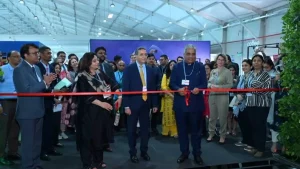

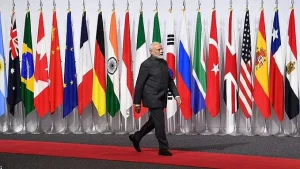
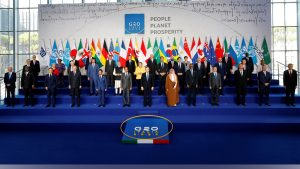

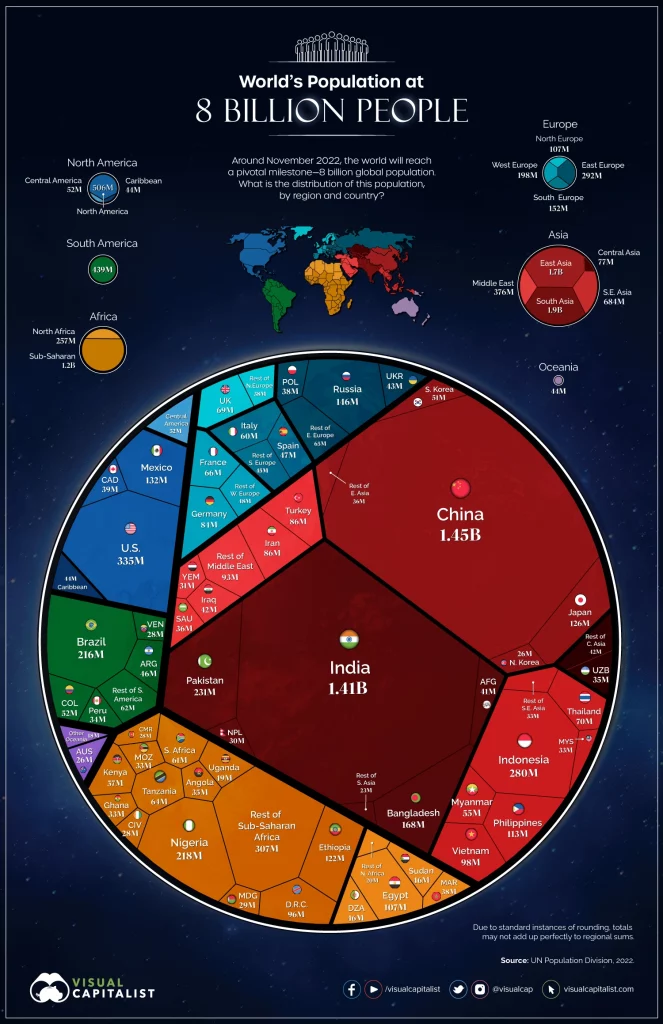
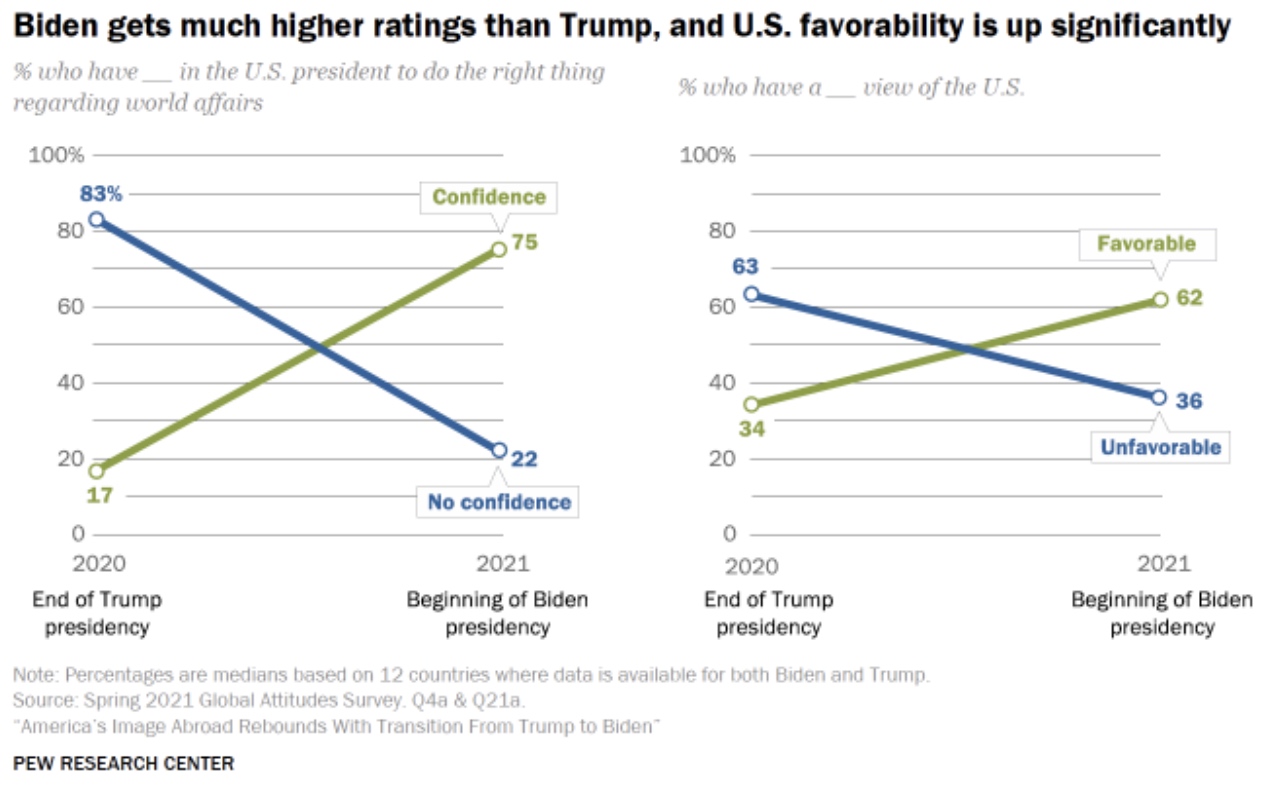
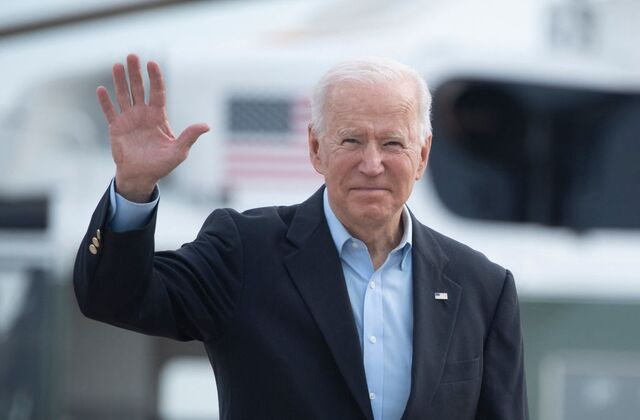
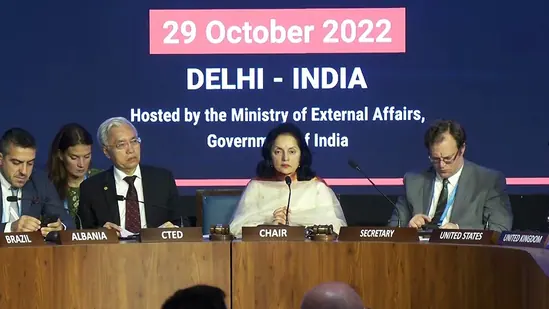
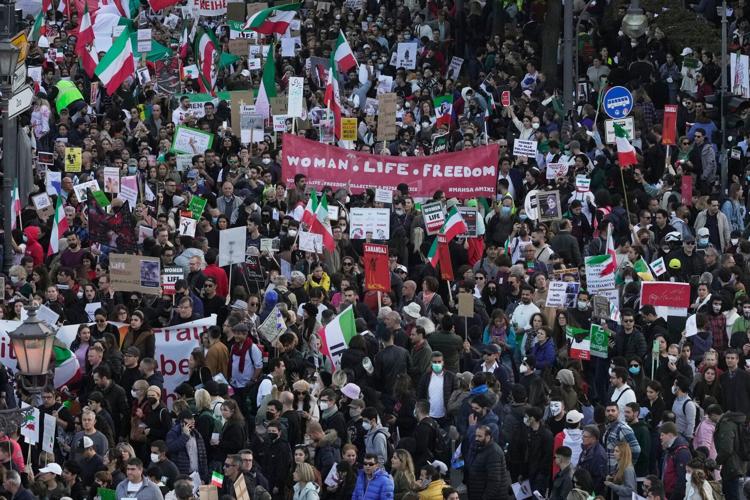 Iran’s security forces have dispersed gatherings in that country with live ammunition and tear gas, killing over 200 people, including teenage girls, according to rights groups.
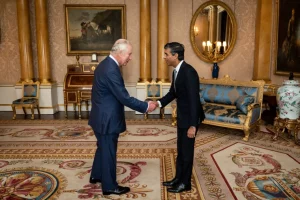 Sunak is the fifth British prime minister in six years, the third in less than two months. He is Britain’s first leader of South Asian descent, its first Hindu prime minister, and the nation’s first leader of color. He is the youngest prime minister of modern times.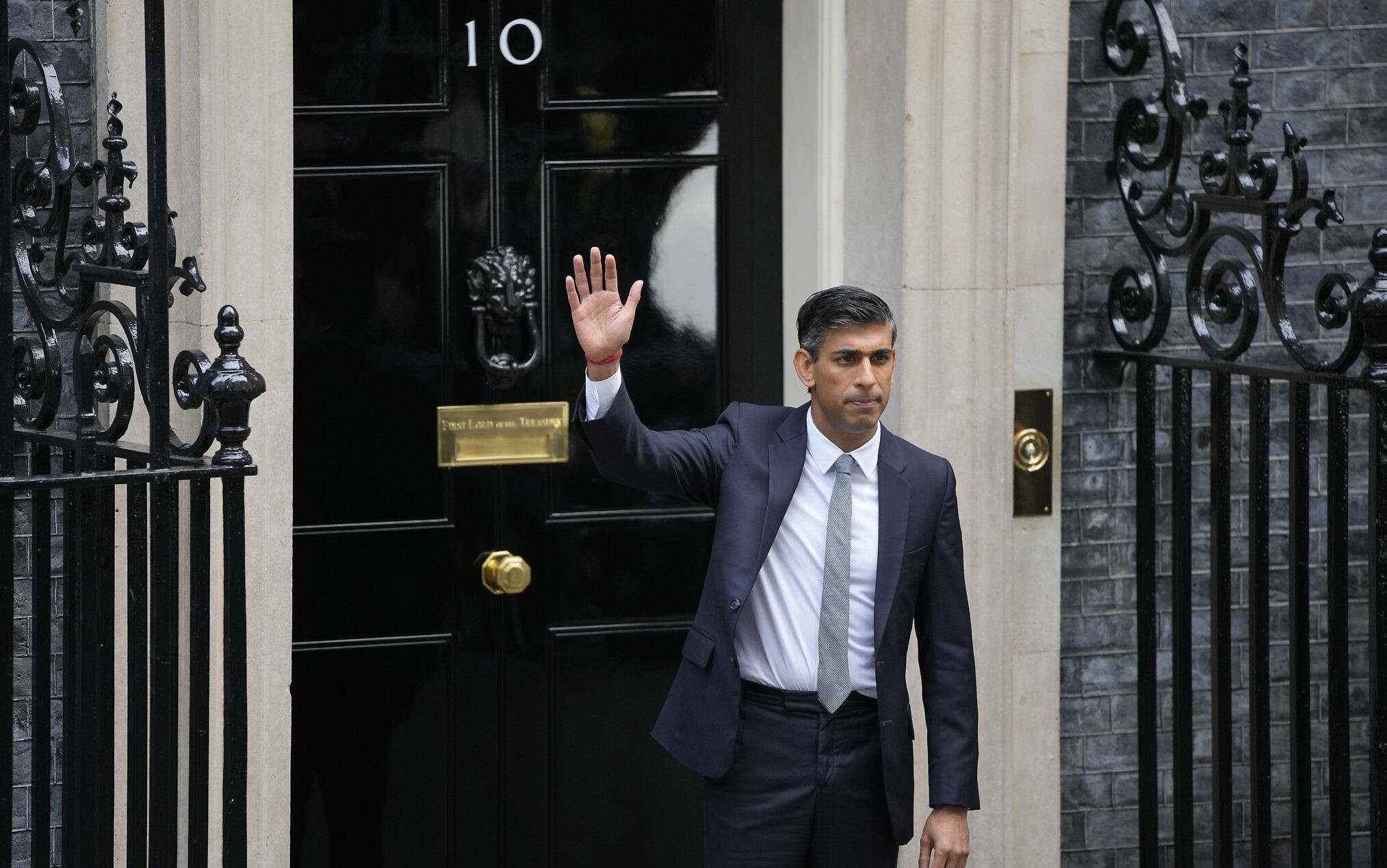
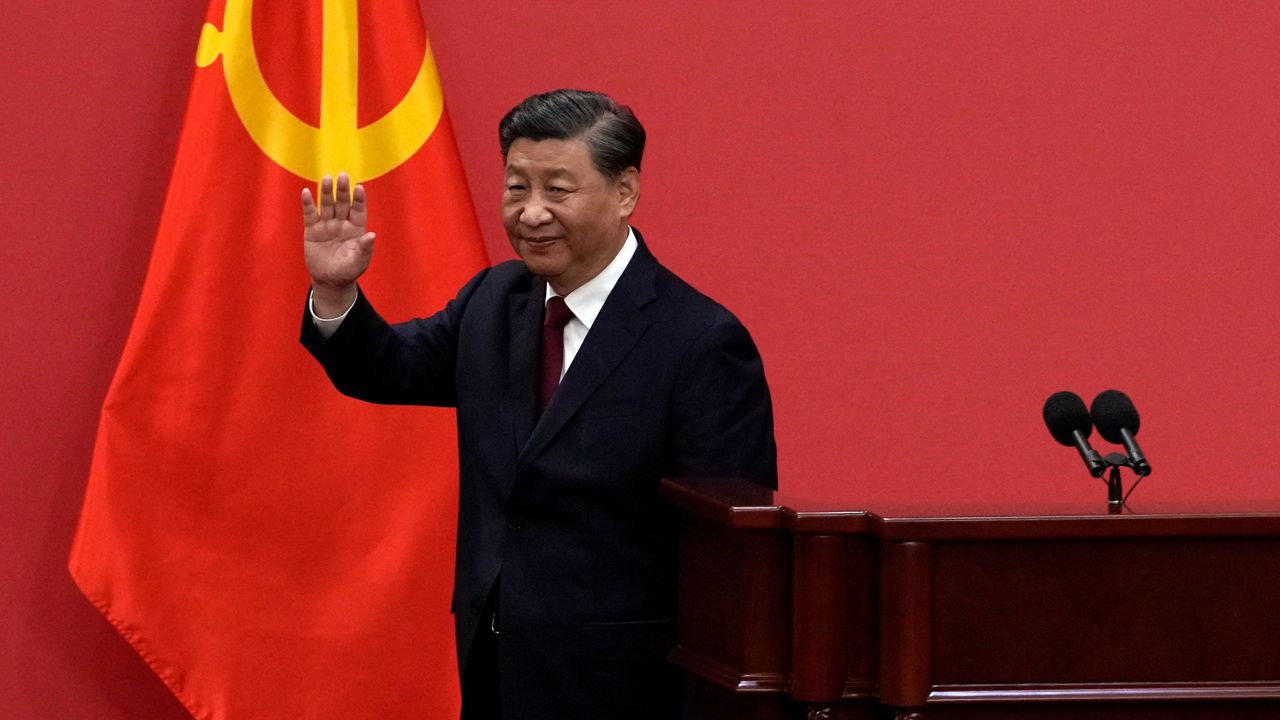 Xi says “the world system is broken and China has answers,” said William Callahan of the London School of Economics. “More and more, Xi Jinping is talking about the Chinese style as a universal model of the world order, which goes back to a Cold War kind of conflict.”
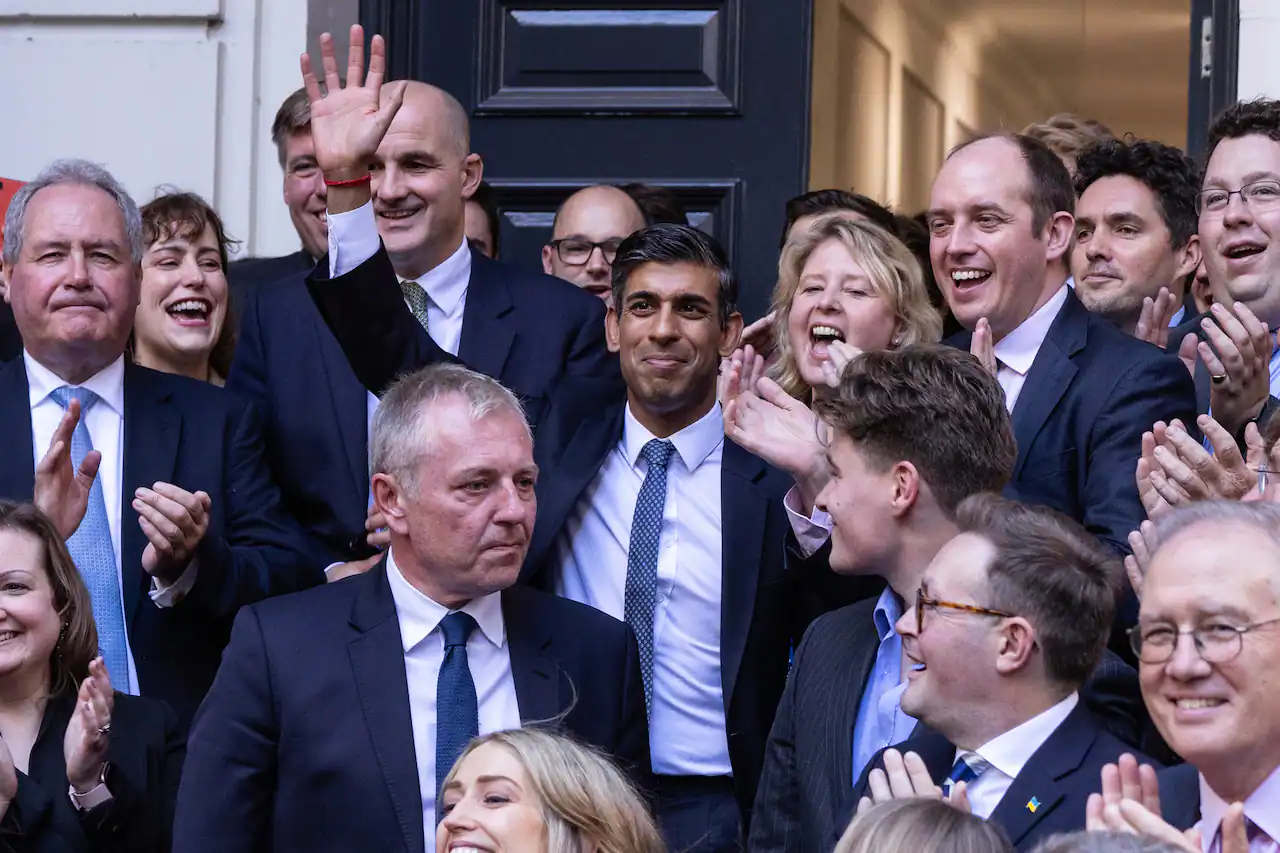 “This decision is a historic one and shows, once again, the diversity and talent of our party,” Ms Mordaunt said in a statement as she withdrew from the race just minutes before the winner was due to be announced. “Rishi has my full support.”
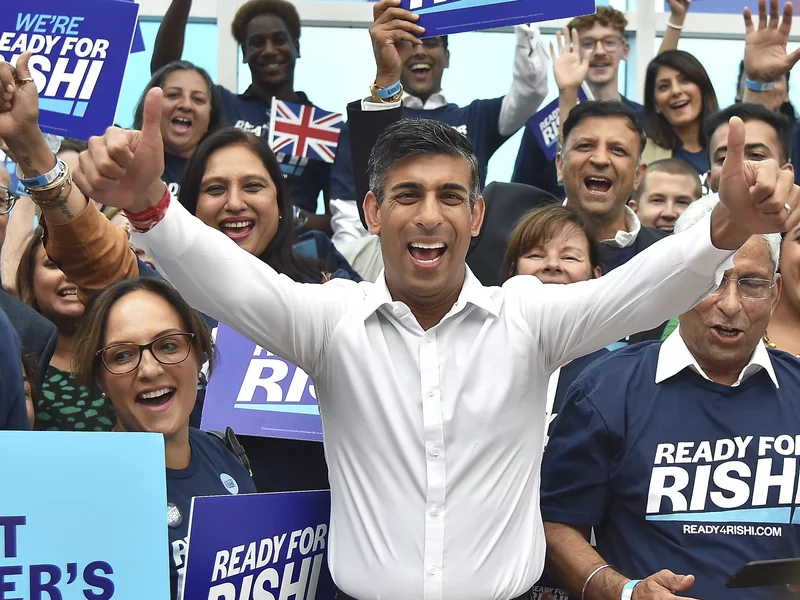 Bronwen Maddox, the chief executive of the London-based think tank Chatham House, says that one silver lining amid all the chaos of recent weeks is that it “has forced someone with economic competence to the top of the Conservative field, and it has also forced Labour, the main opposition party, to put together a platform based on a claim to financial coherence, competence, things that Labor hasn’t always been associated with in the past.”
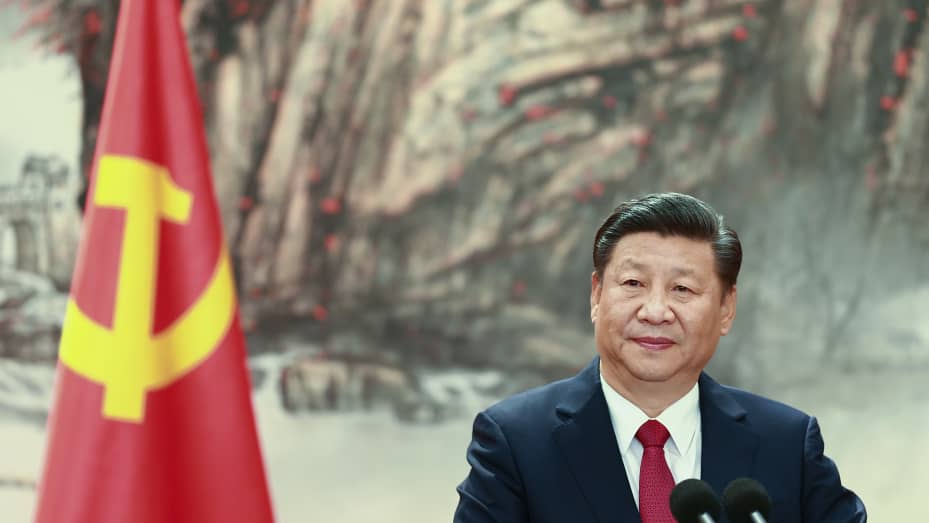 While some have resented XI’s trampling on what few freedoms Chinese citizens still enjoyed under the one party state, others say China’s various and acute challenges require that a “strong leader is needed to keep at bay the recipes for chaos and dysfunction,” Torigian said.
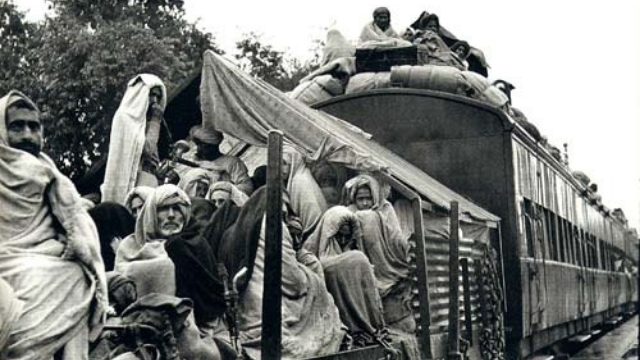 “We must not let the years erase the memory of the millions who were massacred. Recognizing the genocide strengthens the historical record, educates our fellow Americans, and lets would-be perpetrators know such crimes will not be tolerated or forgotten,” he added.
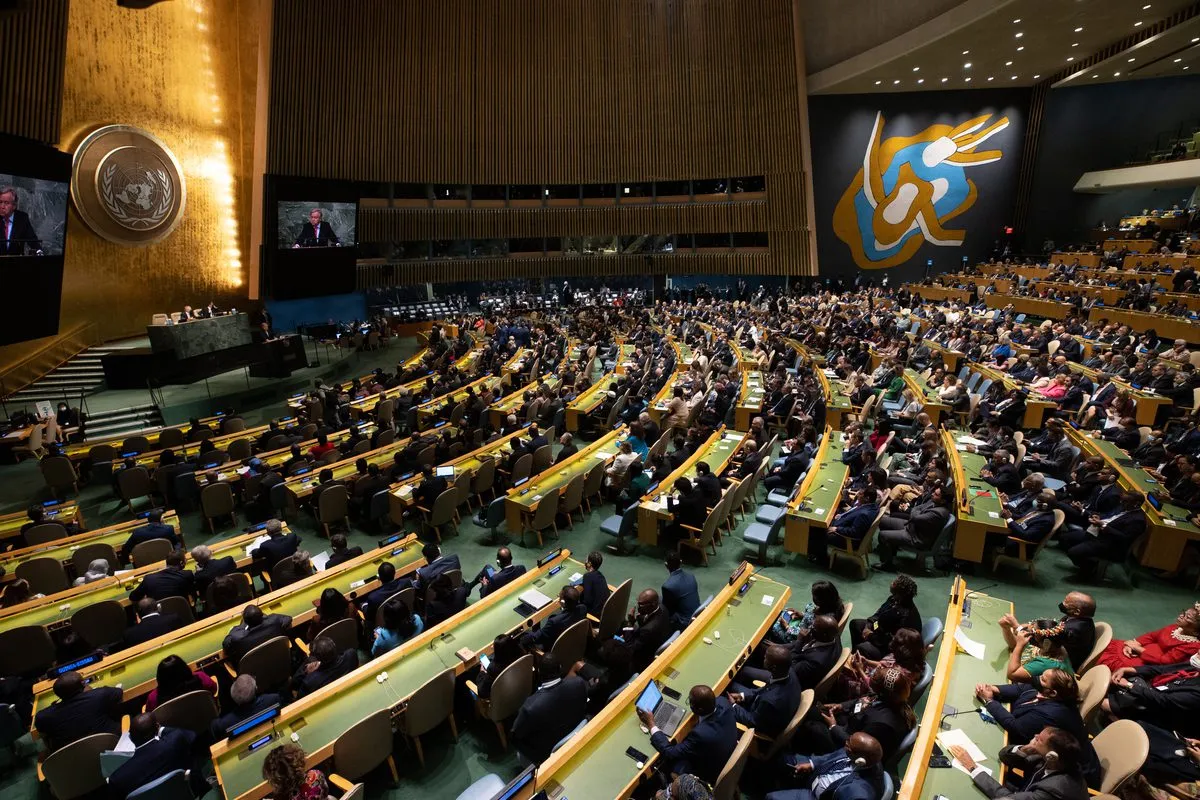 The UN resolution calls on the international community not to recognize any of Russia’s annexation claims and demands its “immediate reversal”. It welcomes and “expresses its strong support” for efforts to de-escalate the conflict through negotiation.
 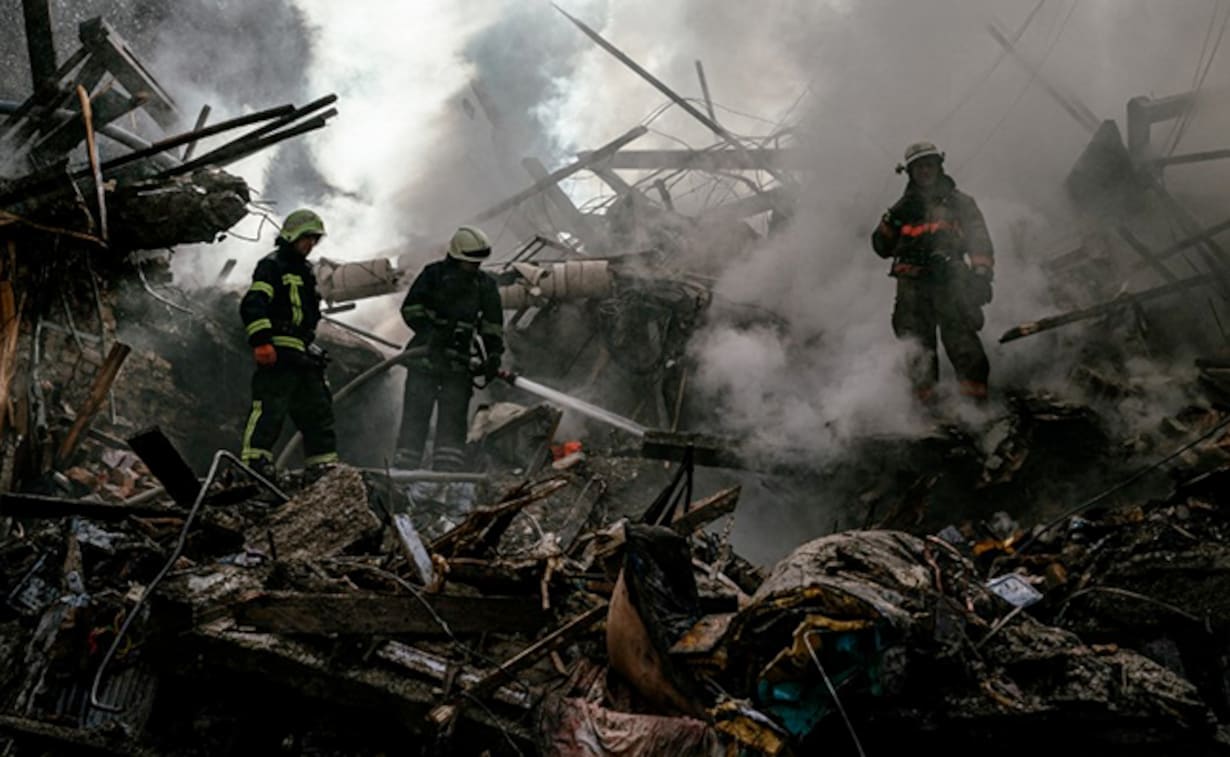 China abstained on Wednesday because it did not believe the resolution will be helpful, China’s Deputy U.N. Ambassador Geng Shuang said. “Any action taken by the General Assembly should be conducive to the de-escalation of the situation, to be conducive to the early resumption of dialogue and should be conducive to the promotion of a political solution to this crisis,” he said.
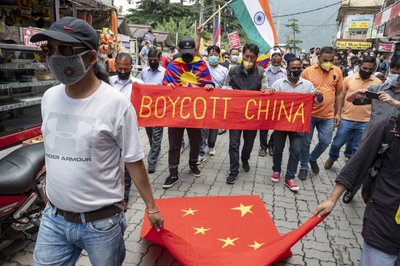 Western policymakers, however, will have to reckon with the factors that could limit the speed and extent of Indian alignment with countries such as the United States against China. For one, India prioritizes Chinese threats differently than do its partners. Even as the latter focus on maritime challenges in the Indo-Pacific, India will devote considerable attention and resources to meeting the Chinese and Pakistani challenge at its border. This continental imperative will shape India’s approach to other Indo-Pacific issues. For instance, New Delhi remains cautious about making statements about Taiwan with other countries out of a concern that they could provoke China into putting more pressure on the border or on restive Indian regions such as Kashmir and in the northeast of the country. Indian officials also do not want China to see their border dispute through the lens of U.S.-Chinese competition; Beijing’s decision to go to war with India in 1962 was motivated by its sense that New Delhi and Washington were colluding to undermine Chinese interests in Tibet.
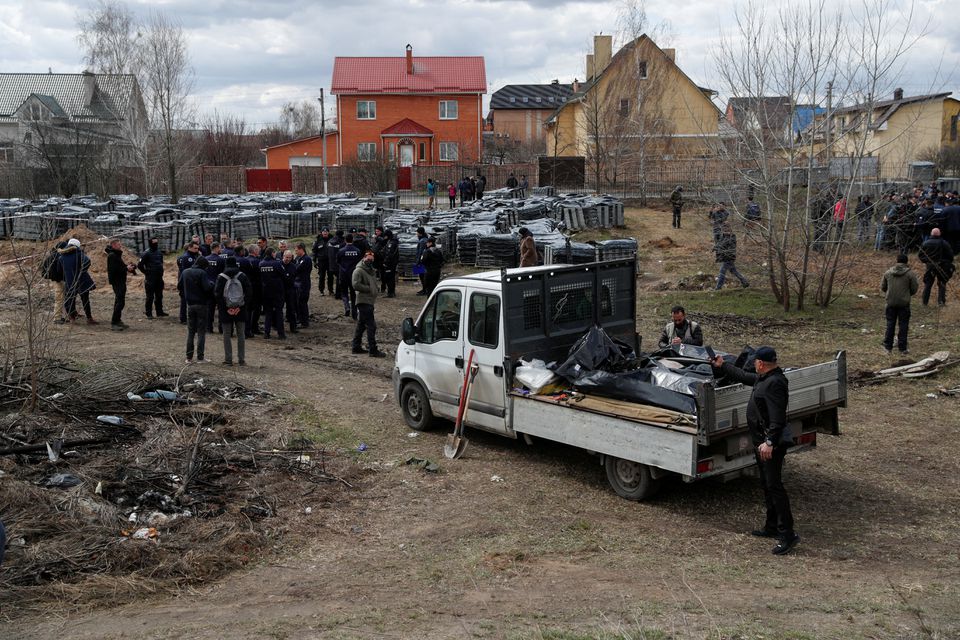 “The attitude of Russians toward Ukrainian culture heritage is a war crime,” he said.
  Another watershed moment was the adoption in 2016 of the so-called foreign NGO law, which imposed restrictions and gave police wide-ranging powers over overseas NGOs operating in the country.
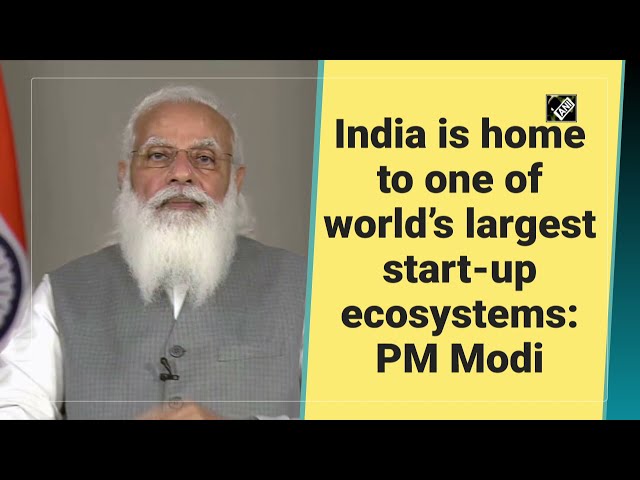 However, NY Times reported that “After India’s prime minister said that now is not the time for war, an increasingly isolated Mr. Putin threatened “more serious” actions in Ukraine while insisting he was ready for talks.”
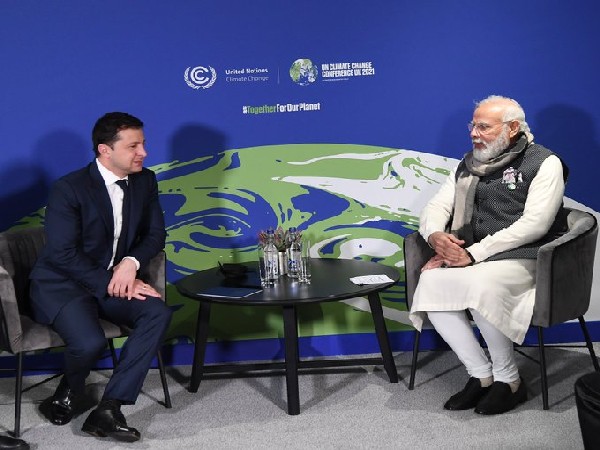 The prime minister underlined that endangerment of nuclear facilities could have far-reaching and catastrophic consequences for public health and the environment, the statement said.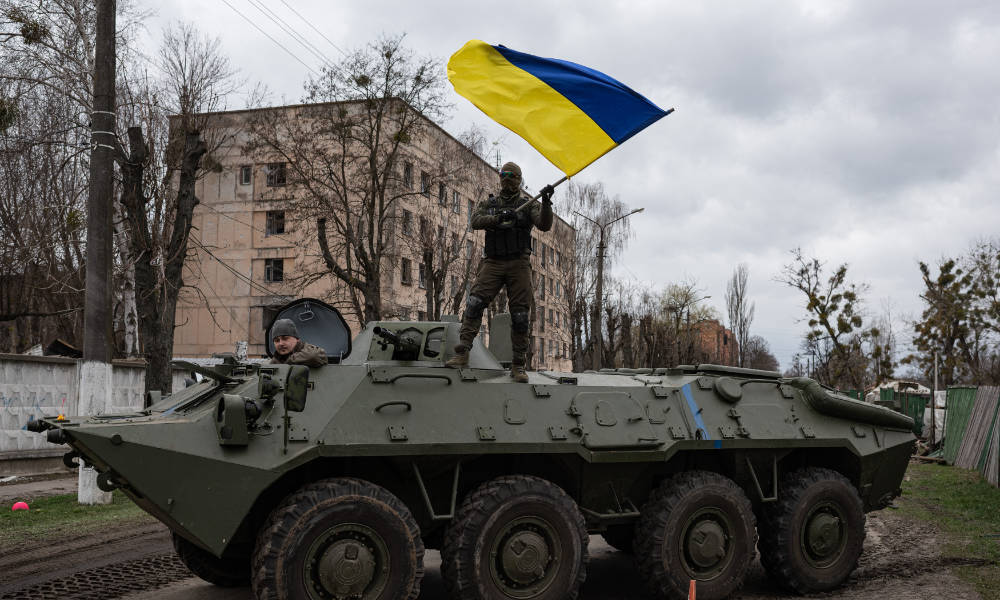
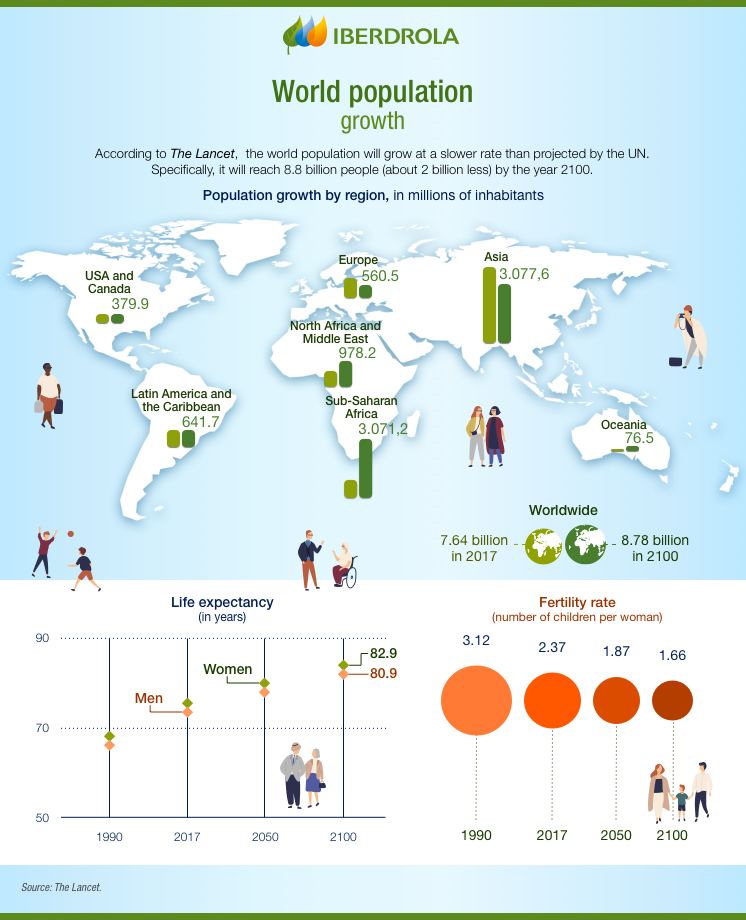
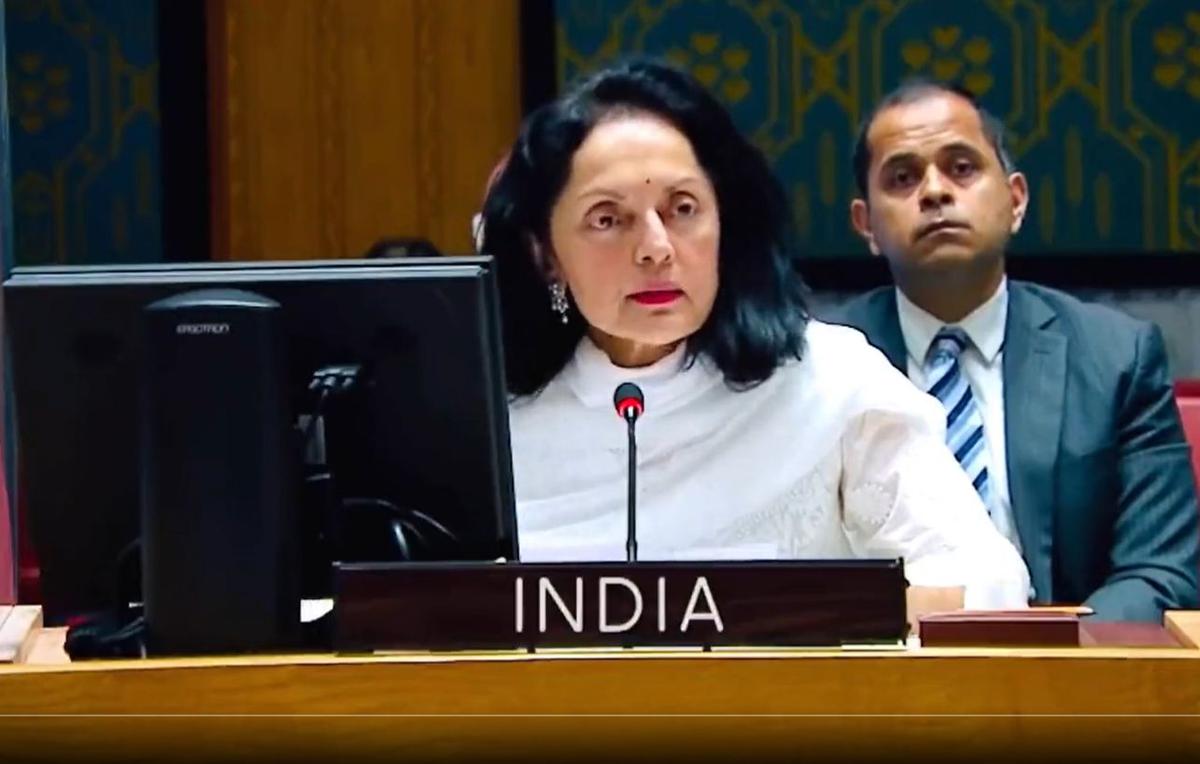 Referring to Modi’s remark to Putin on the sidelines of the SCO Summit in Uzbekistan’s Samarkand that “today’s era is not an era of war”, Kamboj said New Delhi sincerely hopes for an early resumption of peace talks to bring about an immediate ceasefire and resolution of the conflict.
 In a deeply divided environment, India knows that the cold calculus of diplomacy needs to be based on realism, pragmatism, and perceptions. Human behaviour is largely a derivative of perceptions, which, in turn, are based on experiential evidence. This, in turn, impacts expectations and finally, output.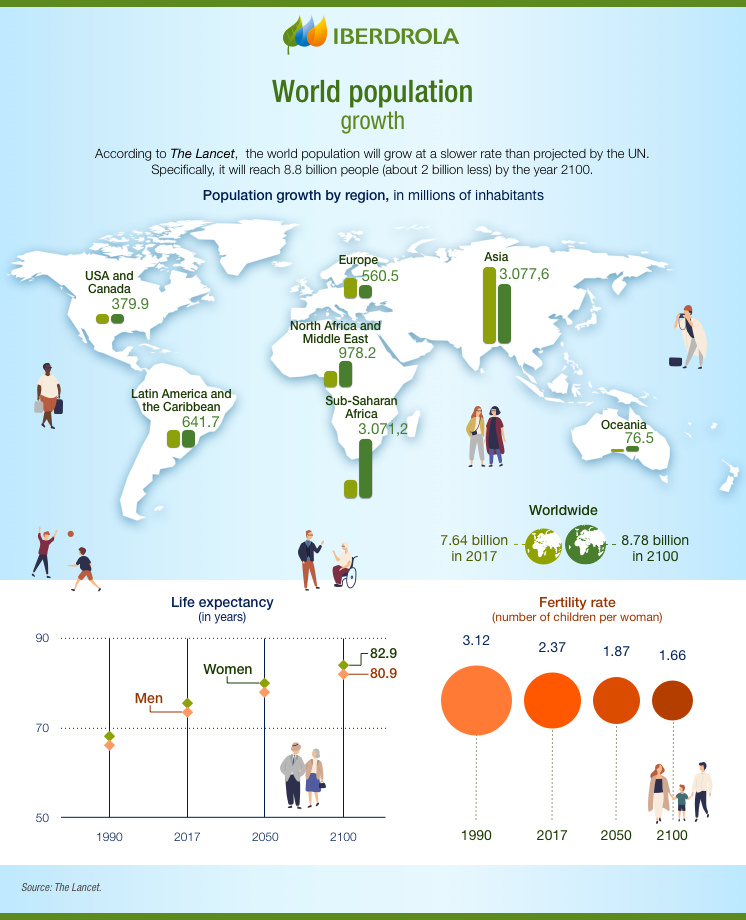
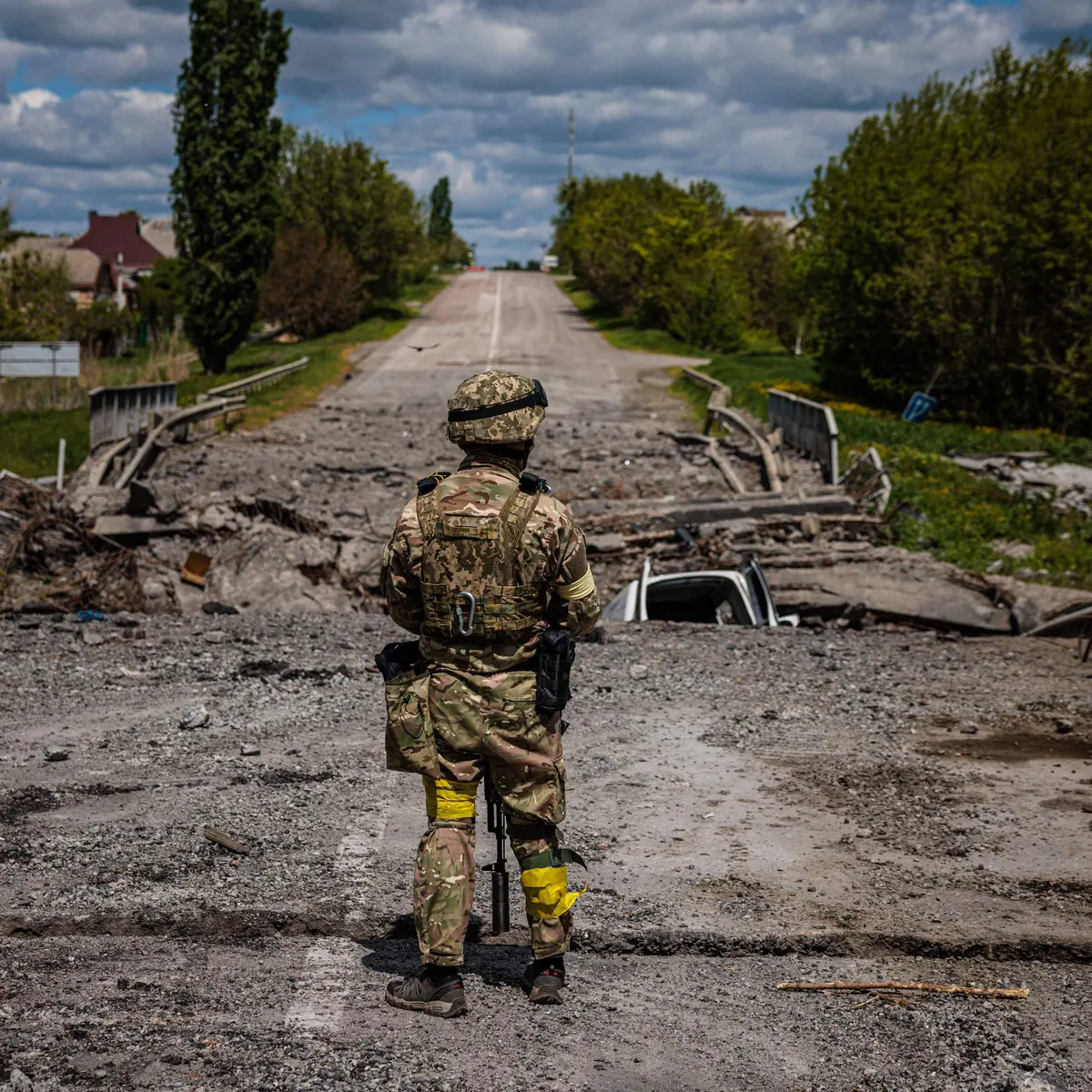 On Monday, Kremlin spokesman Dmitry Peskov said consultations were ongoing regarding the borders of the Zaporizhzhia and Kherson regions.
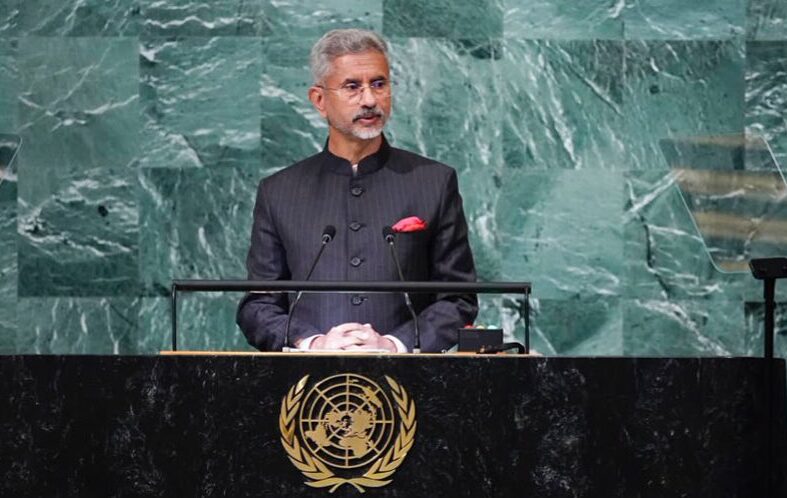 And of the significance of India’s 75th anniversary of Independence, he said India’s people are “rejuvenating a society pillaged by centuries of foreign attacks and colonialism” — packing in a pointed reference to also invasions from around the region.
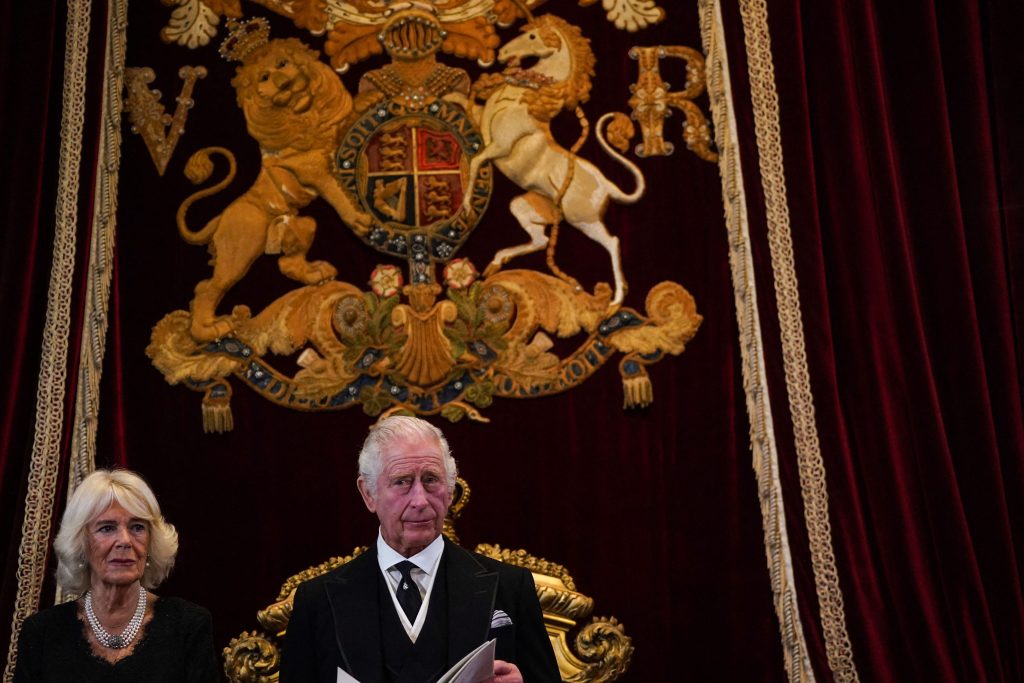
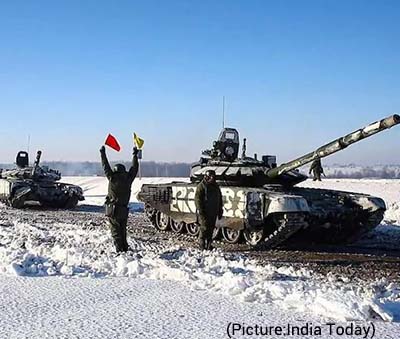 U.S. President Joe Biden said on Friday he was convinced Russian President Vladimir Putin had made a decision to invade Ukraine, and though there was still room for diplomacy, he expected Russia to move on the country in the coming days. Russia has repeatedly denied preparing to invade Ukraine.
 The shock to international stability could hit global markets
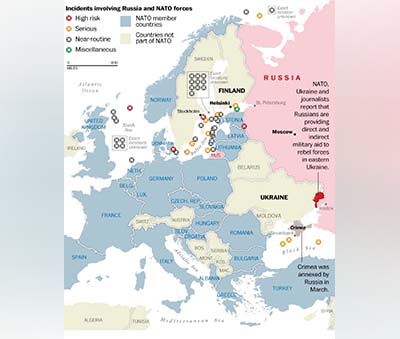 Russian cyberattacks have